Download Now
Home Blog Page 1469

Which States have benefited the most from introduction of GST?

1
Introduction of GST
Image Source - https://www.savethestudent.org/save-money/food-drink/the-students-ultimate-supermarket-guide.html

This article is written by Lokesh Vyas, of Institute of Law Nirma University. The article talks about the states which have benefited most from the introduction of Goods and Services Tax (GST).

Introduction

It is very difficult to accept change but it is the law of nature so a person cannot spare himself from change. The introduction of goods and services tax (GST) in Indian Taxation System was a huge step taken by the Indian government. Its advent caused a lot of hue and cry in the country. GST is described as an action without application of mind. Many people allege that it is a complex, vague and ambiguous. It is often argued that the procedure and implementation of GST are difficult for Chartered Accountants and other people from commerce, so expecting an individual to understand this would not only be inappropriate but also be unjust. The introduction of GST, even after getting criticised by academicians, scholars and, laymen has benefited some states.

To understand the benefits of GST to a particular state, first, we need to have the conceptual understanding of GST and how it works.

Conceptual Understanding of GST in India

The advent of GST is the end result of the step taken by Atal Bihari Vajpayee Government in 2000. After one and a half decade struggle finally on 1st July 2017 India had joined the league of countries that have GST. The One Hundred and Twenty-Second Amendment Bill of the Constitution of India, officially known as The Constitution (One Hundred and First Amendment) Act, 2016, finally introduced a national Goods and Services Tax in India from 1 July 2017.

GST is an indirect tax levied by both the Center and the State governments on the goods and services. It is levied from all the stakeholders starting from the manufacturer to final consumer.

Types of GST

In India goods and services tax is divided into four part as follows:-

1.) Center Goods and Services Tax (CGST)- It is levied by the central government.

2.) State Goods and Services Tax (SGST)- It is levied by the state government.

3.) Integrated Goods and Services Tax (IGST)- It is levied on inter-state trade or import and equivalent to both CGST and IGST.

4.) Union Territory goods and Services Tax (UTGST)- It is levied when the supply of goods and services take place in any of the 5 territories except Delhi and Pondicherry as they have been given the status of semi-state.

The Principle of GST

GST is known as a Consumption based tax because it works on the destination principle. According to this principle, the tax is levied in the place where the goods and services are finally consumed.

The GST Benefited States in India

To understand GST and its benefits, first, we need to understand the meaning of Input Tax Credit (ITC). Input tax credit is an essential feature of GST. It means that at the time of paying taxes on the sale, a person can reduce the tax that he has already paid on purchases, means the tax is only required to be paid on the additive value. Credits of input taxes paid at each stage will be available in the subsequent stage of value addition, which makes GST essentially a tax only on value addition at each stage. The final consumer will thus bear only the GST charged by the last dealer in the supply chain, with set-off benefits at all the previous stages.

This whole process describes a situation where the consumer will get the most out of GST. This concept of input rate is not foreign to Indian taxation System and already existed in India but now it exists with a wider scope. GST saves a person from the vicious circle of “Tax on Tax” and allows a person to pay tax only on the value that is an addition.

Types of the Indian States and the effect of GST

Although there is no mathematical formula to categorize Indian states yet generally states are categorized under two binary heads i.e. rich and poor. All Manufacturing states which have higher tax collection are generally called rich states because they produce more in the country like Maharashtra, Gujarat etc. on the other hand the poor states are those states which have the least production of good and services and whose tax revenue is low, resulting in the fact that they export the least e.g. Bihar.

All those states which are ahead in consumption and lagging behind in manufacturing, are said to be benefited most from the introduction of GST. GST is a single tax on the supply of goods and services which starts with the manufacturer and ends with the final consumer. It aims to create in India, a common national market.

Comparison between manufacturing states

As per the data released by the finance ministry for GST, there is a huge increase in the number of GST registration in Maharashtra, UP, Tamil Nadu and Gujarat. Most of them are voluntary registrations by small enterprises (see here). If the number of GST registrants are more, that state would get more revenue as against those states which have less GST registrants. This is just one part of the story. So here the comparison is between rich states vs. rich states or manufacturing state vs. manufacturing state. In this scenario, when the comparison is amongmanufacturing states which shows that the state with more GST registrants would have more revenue than the state with fewer GST registrations.

As per the data Maharashtra, Uttar Pradesh, Karnataka, Chattisgarh, Tamil Nadu and Odisha are top contributors of GST in first five-months of GST (till 30 November 2017) (see here). These data do not suggest that these are the states which have benefited most out of GST because they have not been comparatively analyzed with the low manufacturing states. The same data show that Mizoram, Manipur, Nagaland, Arunachal Pradesh are the lowest tax revenue earning states which again do not imply that these are the states that suffered the most.

Comparison between the highest earning and lowest earning states will not show the right result because there are a lot of factors that affect the tax revenue of any particular state e.g. population, industries, nature of the state etc. therefore the variables are not comparable.

Tax revenues of different states and the GST compensation
Name of the State Revenue from SGST between July and December 2016 (in crores) GST compensation for July to October. (in crores) Conclusion
Maharashtra 18701 834
  1. These data imply that states with higher compensation have suffered the most from GST whereas other manufacturing states like Maharashtra and Tamil Nadu suffered less as their GST collection is very high.
  2. These data suggest that Maharashtra and Tamil Nadu are not only manufacturing but also consumption states.
  3. Maharashtra, Gujarat, and Tamil Nadu witnessed the highest number of registration, this is one the reason their revenue from GST is highest.
Tamil Nadu 8739 632
Karnataka 7736 3271
Gujarat 7375 2282
Uttar Pradesh 5845 1520
Odisha 1896 1020
West Bengal 4346 1008
Bihar 1233 1746
Rajasthan 3156 1911

For compensation see here

For tax revenue see here

The Rich States vs the Poor States

The actual benefit or loss depends upon the factors of productions and consumption, means if a state is manufacturing or producing state it will benefit the least from the introduction whereas if a state is a consumption state, the introduction of GST will benefit it the most. GST is expected to benefit the poor states because they produce less and consume more and GST is a destination tax.

For example:- Before GST, if Maharashtra sold goods to U.P. only Maharashtra will get benefited because it gets both tax income and profit and at the same time U.P. gets nothing.

After the introduction of GST, both the states get benefits from a transaction because GST is a destination or consumption-based tax, therefore, U.P. (consumption state or where the goods/services are finally reaching) will get tax income and Maharastra will get profit.

Although both the states are getting some benefit under GST regime yet the producing or manufacturing state (i.e. Maharashtra in the above example) will get less than what it used to get under the previous regime.

The above-mentioned example explains the metric of calculating benefit or loss to any state.

Ideally, GST should be neutral to every state which means that neither should it benefit any particular state nor should it harm the revenue of any state. To ensure this neutral affect the central government has ensured the states to give compensation for initial five-years for the likely losses. The Central government has given a criterion i.e. the states that have tax revenue growth of less than 14% after the introduction of GST will be compensated by the center. (see here)

A final authoritative list to show the impact of GST on the states has not been revealed yet. But going with the conceptual understanding of Goods and Services Taxes it can be concluded that that Maharashtra, Gujarat, Karnataka, Tamil Nadu and Telangana will suffer the most by GST because they are the leading manufacturing states and account for 70 percent of the country’s exports (see here) but Maharashtra and Tamil Nadu are also consumption states so they’ll bear less loss when compared to other producing states. States like Assam, Bihar, Odisha, Jammu and Kashmir, and Uttar Pradesh who were more dependent on the center, and raise 40% or less of their total revenue on their own, will get more benefit from the introduction of GST (see here). This happens because GST is a more distributive indirect tax.

Moreover, states such as Delhi, Maharashtra, Tamil Nadu, and Karnataka which are less dependent on the center and generate a majority of their revenue on their own will get fewer benefits from GST when compared to their own data pre-GST regime.

States like Delhi, Punjab, Haryana, Maharashtra, Tamil Nadu and Karnataka earn the maximum revenue from their own taxes whereas states such as Jammu and Kashmir, Assam, and Bihar only get around 20% of their revenue from taxes. The latter kind of states will get benefit from GST as against those which are producing states. This difference is noteworthy because it implies the dependency of latter kind of states on transfers from the center, i.e. devolution of central taxes and grants (see here). Moreover, the low manufacturing states like Kerala and West Bengal are expected to benefit from the introduction of GST.

After the introduction of GST the dependency of these states on the center will decrease and thus they will become more self-sufficient.

Conclusion

Everything has two facades i.e. negative and positive and both should be taken into consideration before giving any conclusive opinion. Goods and Services Tax aka GST is still in its salad days in India, therefore, making a final and conclusive list of its benefit to states is not practical. GST is a conglomeration of various taxes. There are states like Bihar, Jammu and Kashmir, West Bengal, Kerala and Assam which have benefited from the introduction and there are states like Haryana, Gujarat etc which did not get as much benefit as consuming states. GST is a step in bringing about parity between manufacturing and consuming states but it does not intend to harm the former and benefit the latter. It will thus, take time to conclude the final effects of GST.

References

  1. GST collection highest in Maharashtra: State-wise GST collections till date, (https://www.indiatoday.in/education-today/gk-current-affairs/story/gst-collection-mop-up-maharashtra-1116473-2017-12-26)
  2. GST data reveals 50% increase in number of Indirect Taxpayers by Press Information Bureau, Government of India Ministry of Finance (http://pib.nic.in/newsite/PrintRelease.aspx?relid=175977)
  3. State’s GST tax base second highest after Maharashtra (https://timesofindia.indiatimes.com/city/chennai/states-gst-tax-base-second-highest-after-maharashtra/articleshow/62721308.cms)
  4. GST: Which States Will Benefit The Most? (http://www.supportbiz.com/articles/sales-and-marketing/gst-which-states-will-benefit-most.html)
  5. GST and the States: Sharing Tax Administration by A Sarvar Allam (https://www.gstindia.com/gst-and-the-states-sharing-tax-administration/)
  6. GST collection: Gujarat among top five states (https://timesofindia.indiatimes.com/city/ahmedabad/gst-collection-gujarat-among-top-five-states/articleshow/62140771.cms)
  7. GST: Tax must accrue to the state where services are consumed (https://www.gstindia.com/gst-tax-must-accrue-to-the-state-where-services-are-consumed/)
  8. GST collection highest in Maharashtra: State-wise GST collections till date (https://www.indiatoday.in/education-today/gk-current-affairs/story/gst-collection-mop-up-maharashtra-1116473-2017-12-26)
  9. Only 5 states account for 70% of exports, Economic Survey shows (http://www.business-standard.com/budget/article/only-5-states-account-for-70-of-exports-economic-survey-shows-118012900344_1.html)
  10. STATE OF STATE FINANCES by Mandira Kala Vatsal Khullar (http://www.prsindia.org/uploads/media/Analytical%20Report/State%20of%20State%20Finances%202018.pdf)
  11. A New, Exciting Bird’s-Eye View of the Indian Economy Through the GST by John Keats, “On First Reading Chapman’s Homer” (http://mofapp.nic.in:8080/economicsurvey/pdf/032-042_Chapter_02_ENGLISH_Vol_01_2017-18.pdf)
  12. Tamil Nadu earns 22% more under GST till December (https://timesofindia.indiatimes.com/city/chennai/tn-earns-22-more-under-gst-till-december/articleshow/62811431.cms)
  13. Gst was never one nation one tax, Tamil Nadu and Maharastra are only putting final nail in the coffin (https://www.firstpost.com/business/gst-was-never-a-one-nation-one-rate-tax-for-us-tamil-nadu-and-maharashtra-are-only-putting-final-nail-in-the-coffin-3774595.html)
  14. Economic Survey 2018: 5 states show the way with 70% of exports, enjoy higher standard of living (http://indianexpress.com/article/business/economy/economic-survey-five-states-show-the-way-with-70-of-exports-enjoy-higher-standard-of-living-union-budget-5044319/)
  15. Maharashtra has largest share in India’s export and GST base: Economic Survey (http://indianexpress.com/article/india/maharashtra-has-largest-share-in-indias-export-and-gst-base-economic-survey-5049622/)
  16. Union Budget 2018: States with higher exports show better standard of living, reports Economic Survey of India (https://www.financialexpress.com/budget/union-budget-2018-states-with-higher-exports-show-better-standard-of-living-reports-economic-survey-of-india/1036334/)
  17. State 6th in export of goods, services: Economic Survey by Sushil Manav (http://www.tribuneindia.com/news/haryana/state-6th-in-export-of-goods-services-economic-survey/536205.html)  
  18. West Bengal to gain from GST: Chief Commissioner (http://www.business-standard.com/article/pti-stories/west-bengal-to-gain-from-gst-chief-commissioner-115042700822_1.html)  
  19. Consumer states such as West Bengal and Kerala will benefit under GST: ICAI Indirect Taxes panel chief (https://timesofindia.indiatimes.com/city/mangaluru/Consumer-states-such-as-West-Bengal-and-Kerala-will-benefit-under-GST-ICAI-Indirect-Taxes-panel-chief/articleshow/55749989.cms)
  20. Economic Survey 2018: State-wise exports included for the first time (http://www.business-standard.com/article/pti-stories/india-s-external-sector-prospects-look-bright-survey-118012900398_1.html)
Download Now

Directors’ liability in cheque bouncing matters

0
Guidelines
Image Source - https://www.zuidema.nl/en/blog/four-things-you-can-do-when-a-meeting-becomes-unproductive/

In this article, Neitseizonuo Solo of Hidayatullah National Law University, Raipur discusses whether directors are liable if cheques issued by a company bounces.

Introduction

Cheques have become an important medium for business transactions as they provide proof of transactions. Due to the prevalence of cheques, lawmakers found it necessary to provide regulations for matters relating to the use of cheques, thus the Negotiable Instruments Act, 1881, was enacted.

Law Regarding the Bouncing of Cheques

Bouncing of cheques is the common terminology used to describe a situation where a person paid in the form of a cheque is unable to encash the cheque. It has been defined in Section 138 Negotiable Instruments Act, 1881, as any cheque drawn by a person in payment to another person, which is returned to the bank unpaid because there are insufficient funds in the account or the amount exceeds the prescribed limit. The person being paid is known as the payee or drawee and the person paying through cheque is known as the drawer or payer. Thus, it is due to the inability of the drawer to pay the amount which is owed to the payee.

Penalties

The penalties that can apply to a drawer when a cheque bounces are as follows:

  1. Imprisonment which may extend to 2 years.
  2. A fine double the amount which was supposed to be paid.

Conditions for Application of Section 138 of Negotiable Instruments Act, 1881

Certain conditions have been provided under this section and they are as follows:

  1. The cheque is presented to the bank within 6 months of it being drawn up or within the prescribed period of validity, whichever is earlier.

With Reference to RBI Guidelines

The RBI issued guidelines known as Payment of Cheques/Drafts/Pay Orders/Banker’s Cheques on 4th November, 2011 (available here) where it was prescribed that cheques must be presented before the bank within a period of 3 months instead of the 6 months prescribed in Section 138 of Negotiable Instruments Act, 1881. This may seem like a direct contradiction of this act at first glance but on a proper reading of the section, it is clear that it is intra vires. It is given in Section 138 that cheque may be presented within a limited prescribed period and whichever time period is shorter between 6 months and prescribed period, will be the one which is applicable. Thus the RBI guidelines will be followed and cheque must be given to the bank within 3 months. 

  1. The person encashing the cheque gives a notice to the person who drew up the cheque within 30 days of acquiring information that the cheque is unpaid.
  2. The drawer does not pay the amount after 15 days from such notice.

Whether the Directors of a Company are Liable for a Bounced Cheque of the Company

The directors of a company as per the Companies Act of 1956, are the people hired to manage and control the affairs of the company. They can be hired under the name of director or any other name as long as they fulfill the functions of a director as stipulated in their contract. Under Section 141(2)(a) of Negotiable Instruments Act, 1881, the definition of a director has been given as partner of the concerned company.

In Section 141 of the Negotiable Instruments Act,1881, the liability of directors has been given. It is provided that “…every person who, at the time the offense was committed, was in charge of, and was responsible to the company for the conduct of the business of the company, as well as the company,” thus even the directors of a company may be liable. Only people who were in direct charge of the company with the power to direct day-to-day ongoings of the company will be held to be liable. If a director was at the time of the offence, not responsible or in charge of the company, then he/she would not be liable even if the name director is attached.

Further, it has been provided in clause 2 that the directors, managers and any other people holding office by whose consent, connivance, negligence has caused the offence, he/she will be liable.

Exceptions to director’s liability

A director will not be liable for bouncing of cheques in the following circumstances:

  1. When the offence has occurred without his knowledge.
  2. When he has exercised all due diligence in order to avoid it.

Essentials for Holding a Director Liable

  1. When he is responsible for making decisions for the day-to-day workings of the company and the existence of mens rea does not need to be proved.
  2. At the time the offence occurs, the director fulfills the above function.

Vicarious Liability: In Which Cases Will it Apply

The directors, in this case, may be vicariously liable for the bouncing of cheques issued by the company. The offence under Section 141 of the Negotiable Instruments Act, 1881, is a criminal and the vicarious liability which arises under said section must be strictly used and interpreted as it is settled law that penal vicarious liability must be strictly construed by the courts. Thus vicarious liability of directors can only be invoked in certain situations, the principles of which have been given in the following decisions:

Certain Principles Laid Down in Regards to Cheque Bouncing Cases

In the case of SMS Pharmaceuticals v. Neeta Bhalla and Anr. (2005) 8 SCC 89, the court held the following:

  1. The complaint filed must specifically provide that the director was in charge of the company at the time the cheque was issued.
  2. The director of a company is not liable simply because they are a designated director, they must also be responsible for the running of the company.
  3. Signatory of the cheque is responsible and will be held liable

Strict Construction of Section 141

In the case of Saroj Kumar Poddar v. State (NCT of Delhi) (2007) 3 SCC 693, the court further reiterated that the provisions in Section 141 must be strictly construed and thus the complaint must specify the circumstances and substantiate the reasons why the director is to be held vicariously liable.

Liability of Directors

In the case of SMS Pharmaceuticals v. Neeta Bhalla (2007) 4 SCC 70, the court adjudged that when there are a large number of directors, only those directors who were in charge of the company at the time of the cheque being drawn up could be held liable. The other directors who had no part to play could not be held liable simply due to being called directors.

Liability of Managing Directors

In the case of K.K. Ahuja v. V.K. Vora & Anr., (2009) 10 SCC 48 the court held that in the case of Managing directors it can be assumed to be liable as by virtue of the office they are responsible for the day-to-day working of the company. This does not extend to directors and only those people who are in charge of the affairs of the company can be held liable.

When Director Can Escape Liability

In the case of Gunmala Sales Pvt Ltd v. Navkar Infra Projects Pvt Ltd Criminal Appeal Nos.2261-2265 OF 2014, the Supreme Court held that the directors will escape liability only when there is incontrovertible proof of their non-involvement in the proceedings of the company due to prolonged illness or resignation etc.

Issuing of Notices to Directors

In the case of Krishna Texport & Capital Markets Ltd. v. Ila A. Agrawal & Ors Criminal appeal No.1220 of 2009, the court held that separate notices to all the individual directors are not necessary. The court further held that when a notice is served by the company in question, the directors of the company will be aware of it. There is no need to lengthen the procedure without proper reasons.

From the above cases, the following rules for the application of Section 141 and 138 of the Negotiable Instruments Act, 1881, have been laid down as follows:

  1. A director is liable only when he/she is in charge at the time the cheque was drawn up, further the complaint must specifically hold the information to prove the director was responsible for the company.
  2. The Managing director of a company is liable as it is in the nature of his job to be responsible for the day-to-day working of the company.
  3. No separate notices to all directors are necessary, one to the company is enough.
  4. The provisions of Section 141 must be strictly constructed.

Defenses Available to Directors

  1. The accused director may take the defense that he/she was not in charge of the day-to-day activities at the time of the bounced cheque being issued.
  2. The accused director may take the defense of the exceptions provided in Section 138, i.e. he/she has had no knowledge of it or he/she had exercised all due diligence in order to avoid the cheque bouncing.
  3. The complaint has not been made in accordance with Section 138 or 141.

Quashing of Criminal Proceedings Under Section 482 of Code of Criminal Procedure

If a case is registered against a drawer unjustly under Section 138 of Negotiable Instruments Act, 1881, the drawer has the recourse to approach the High Court under Section 482 of Code of Criminal Procedure to quash the legal proceedings.

Director Must be Wrongly Arraigned

In the case of Gunmala Sales Pvt Ltd v. Navkar Infra Projects Pvt Ltd Criminal Appeal Nos.2261-2265 of 2014, the court held that in order for legal proceedings to be quashed it is necessary that the director in question has been wrongly arraigned.

In Cases Where Cheque Acts as Security

In the case of HMT Watches Ltd. v. Abida Crl. Appeal No;472 of 2015, the Supreme Court held that legal proceedings cannot be quashed by the court on the grounds that cheque is issued as a security.

How to File a Case if Cheque Bounces

In case a cheque issued by a company cannot be encashed by the bank than an individual may seek recourse after fulfilling the conditions given in Section 138. The complaint must be filed and registered in the Magistrate Court. An appeal can be filed in the Sessions Court. Section 142 of the Negotiable Instruments Act, 1881, provides the procedure for filing a complaint.

The procedure is as follows:

  1. A complaint must be made in writing by the payee.
  2. The complaint must be made within one month of serving notice and fifteen days of non-payment.
  3. No court inferior to the Metropolitan Magistrate or the Judicial Magistrate can try the case.

Calculation of One Month Period

In the case of Sadanandan Bhadran v. Madhavan Sunil Kumar AIR 1998 SC 3043, the court held that the one month period prescribed in Section 142(b) of Negotiable Instruments Act, 1881, is to be calculated after the expiry of 15 days from the date on which the notice is issued to the company in question.

No Complaint to be Entertained After One Month

In the case of N. Samant v. M/s. K.G.N. Traders, (1994) 3 Crimes 725 (Karnataka), the court held that no complaint can be filed after the expiry of the one month period prescribed in Section 142(b) of Negotiable Instruments Act, 1881.

Documents Required to File a Case

  1. An affidavit.
  2. A copy of the notice sent as well as the post receipt.
  3. The original cheque along with the memo of return from the bank.

Case Filed under Section 420 of IPC

It is permissible to file a complaint under Section 142 along with a criminal complaint under Section 420 of IPC. Under this section, it is provided that if any person by cheating, fraudulently induces delivery of property or “make, alter or destroy” any valuable security, they would be punished with imprisonment that may extend to 7 years and they shall also be liable for a fine.

Mens rea is necessary in the case of Section 420 of IPC unlike in Section 138 as the intention to cheat has to exist. Clear evidence must exist in this case in order to prove the existence of the intention to cheat at the initial stages of a cheque being issued.

Recovery of Money in Civil Suit

If the money is not recovered during the course of the case before the Magistrate or on appeal to Sessions Court, the aggrieved may file a separate Civil case for recovery of the amount under Order 37 of the Code of Civil Procedure 1908. The case will be in the nature of a summary suit which means that the defendant does not have a right to defend themselves until permission is granted by the court.

Conclusion

The laws regarding the bouncing of cheques have been pretty thorough in providing adequate means of attaining justice for the aggrieved. The directors of a company can even be held to be vicariously liable for the act of cheque bouncing. This increases accountability and encourages the growth of natural principles of law even in the corporate field.

References

  1. Liability of the director of a company in cheque bouncing cases, (https://blog.ipleaders.in/liability-of-the-director-of-a-company-in-cheque-bouncing-cases/)

Further Reading

  1. Dos and Don’ts in a cheque bounce case, (https://blog.ipleaders.in/cheque-bounce-dos-donts/)
  2. How To File a Case Against Cheque Bounce, (https://blog.ipleaders.in/how-to-file-a-case-against-cheque-bounce/)
Download Now

AIBE 2018 – Basics and One Month Preparation Strategy

0
AIBE 2018
Image Courtesy : https://www.cartoonstock.com/directory/b/bar_exam.asp

AIBE 2018 demands your immediate attention. With just one month left for the exam, it is time to devise a preparation plan that helps you achieve that ultimate accreditation to practice in the Indian courtrooms. 

Bar exams are the final real test after grueling years in law school. What’s worse? They can be extremely hard to crack. With bar exams like the New York Bar, California Bar being one of the toughest to pass around the world, with only 35% passing rate, in India we have our very own All India Bar Exam (AIBE) aimed at filtering the lawyers worthy of gaining the Certificate of Practice to appear before the courts.

In India as well, to officially practice law and become a licensed legal practitioner, you need to clear the bar exam before you can actually walk in those corridors wearing the coveted black gown. As opposed to contrary belief, the AIBE can be a tricky paper to attempt, and the passing rate is only close to 70%. I remember being highly stressed before writing AIBE as this was one single paper that all my five years of law school education depended on.

What good is a law degree if you cannot get a certificate to practice?

As AIBE for 2018 is soon approaching, I am sure there is equal amount of stress and curiosity among young graduates to ace this one final exam before officially becoming lawyers. Let us look at some of the basics of AIBE and then discuss the preparation strategies that can help you ace the dreaded exam easily.

Eligibility:

To take the bar exams this summer you have to fulfill dual criteria.

Firstly, all the candidates must have successfully completed their Three-Year LLB or Five-Year (Integrated) LLB programs from a Bar Council Recognized Institution only.

Secondly, eligible candidates need to enroll at their respective state bar associations and obtain a provisional certificate of enrollment by paying the requisite fees. The process takes approximately 30 days to 90 days (depending on which state bar association you want to enrol with), so if you have not yet enrolled then you should probably consider taking the exam next year.

Registration:

The registration for AIBE XII now closes on 15th May, 2018, 5:00 PM, after a recent extension. If you haven’t registered yet then you can visit this link and register immediately. Below is a list of documents required for registration:

  1. Self Attested Copy of a valid Address Proof
  2. Self Attested Copy of Passport Size Photograph
  3. Self Attested Copy of the Provisional Enrollment Certificate

All the documents need to scanned and uploaded on the website along with a bank payment receipt (SBI only) of INR 3650/- only.

Syllabus and Minimum Passing Score:

The syllabus includes all the BCI mandated courses and there is specific weightage assigned to each subject. The minimum score required to pass the Bar Exam is 40 and there is no ranking provided on the basis of merit. This means all students scoring 40+ will clear the bar exam and stand on the same pedestal. There will be no discrimination between a student scoring 41 and one scoring 99. You can check the syllabus and weightage here and you can also take a look at the preliminary preparatory materials provided by the bar council here and here. However, be well aware that the preparatory material was uploaded by the Bar Council in 2010 when the first AIBE was held and has not been updated to accommodate the subsequent pattern change of the question paper. Needless to mention that it’s an open book examination.

Preparation Tips and Strategies:

Since there is no merit based ranking and there is a specific weightage assigned for each topic, the bar exam becomes an exam for smart work and not hard work.

You can easily choose to leave out a few topics, focus on the main topics and just be updated about the topics with reasonably medium-high weightage.

What you will need to focus on is the fact that it is a three and a half hour exam and you have to answer at least 70-80 questions out of hundred with good accuracy to be safe. Let us see what all material can come handy to efficiently prepare for the exam.

Bare Acts – With around 20 bare acts, commentaries and a plethora of books and notes, it becomes a really tough call to decide what to take inside the hall to derive maximum benefit. Shuffling through a number of books, and looking up answers to each question in the bare acts can be extremely time consuming, and candidates must be on their toes (and fingers) throughout the entire duration.

Mocks and Past Year Question Papers – Another good strategy is to attempt a couple of mocks before the exam to get the look and feel of the exam. It is a Paper-Pencil objective type test where you need to put in your answers on an OMR sheet (just like CLAT). It is advisable to attempt a few mocks and time yourself beforehand to get the look and feel of the exam so that you don’t have to stress about any new thing on the D-Day.

If you’re interested in taking mock tests, here is a mock test series that not only has the past year question papers but also a number of mock tests that you can attempt from your phone!

MCQ Books – There is a bunch of material and books available offline which cater to the AIBE questions. I remember aspirants using heavy 1000 pages books for preparing for the exam, and solved hundreds of MCQs every day for each subject. However, I would not recommend being burdened by such extensive material, and to rely on simpler and more concise ones. One example of a good MCQ book is the one officially made available by the BCI. This black, almost 80 page book can be bought from the office of your State Bar Council, and should suffice as far as MCQ practice is concerned.

BarHacker – BarHacker is the go to option for all students who have chosen smart work over hard work, for AIBE. The only one week long course guarantees a 100% success rate, and even cashback for aspirants to do not manage to pass after using the course. With its uniquely designed concise list of materials, mock exams and previous years’ papers, and effective index to locate answers with ease, it is almost a cakewalk to pass AIBE after putting in just 20 hours with BarHacker.

HackSheets – No, it’s not what you think. AIBE is an open book exam and you are allowed to take any printed/handwritten material with you in the hall. What if instead of a suitcase full of books, you had few smartly designed and reliable sheets of paper that would help you locate the answers within seconds? The BarHacker course has these specific HackSheets, that help you achieve exactly that. With these hacksheets the job becomes so easy and quick!

Last but not the least, the Bar Council allows you to take a second and even third attempt of the test, so it’s better to not stress yourself. It’s just an exam after all. Talk to your seniors and get to know what helped them prepare for the exam. A recent aspirant has also written a review of the exam on her Facebook profile with some special mentions to the BarHacker so you can feel free to take a look at the review here.

The bar exam is a very comprehensive exam so all you need to do is be crystal clear with your concepts and enter the hall with a calm head and you will surely ace the test.

All the very best! See you in the courts!

Download Now

Indian Law Conclave 2018 @ Jagran Lake City University, Bhopal [June 29-July 1] – Register by May 20

0

About Indian Law Conclave

Indian Law Conclave is a three day National Conference to be held at Jagran Lakecity University, Bhopal from 29th June – 1st July, 2018.

The Conclave will have delegates from all over India who will engage in three days of rigorous learning, reflection and sharing of knowledge, skills, experiences and perspectives.

Focus areas of the Conclave would be Alternative Dispute Resolution Mechanism, Constitutional Law, Corporate Law, Cyber Law, Intellectual Property Law, International Law, and Maritime Law.

The event focuses not only on law students but also students and professionals from other disciplines as well keeping note of the fact that Law is of utmost importance in the day to day life of every citizen, irrespective of his or her chosen field of career.

Some of the notable events that’ll be taking place in the course of the conference are as follows

Formal events

  • Keynote Presentations
  • Paper Presentation Competition
  • Group Discussions
  • Entrepreneurship, Governance, and Leadership Bootcamps
  • Research Methodology Workshop
  • Social Media Bootcamp

Informal events

  • Open Forum
  • Cultural Night
  • Ethnic Fashion Show
  • Life Mapping Exercise
  • Music and Dance performances

A more detailed list of events can be found in the event agenda available at http://www.indianlawconclave.com/agenda.html.

Indian Law Conclave will be witnessing great speakers and famous leaders attending the Conclave to address the participants and the presenters.

The list of past speakers at some of our previous events includes the likes of the following

Shri Manohar Parrikar
Honorable Chief Minister of Goa
Honorable Former Union Minister of Defense, Government of India

Shri Arjun Ram Meghwal
Honorable Minister of State for Parliamentary Affairs and Water Resources, River Development & Ganga Rejuvenation, Government of India

Dr. Subramanian Swamy
Honorable Former Minister for Commerce, Law and Justice, Government of India

Dr. Shashi Tharoor
Honorable Former Minister of State for Human Resource Management, Government of India

Dr. Sanjay Paswan
Honorable Former Minister of State for Human Resource Management, Government of India

His Holiness Sri Sri Ravi Shankar
Founder, Art of Living

A complete list of past speakers can be found at http://www.indianlawconclave.com/past-speakers.html.

With dreams for success and promises for excellence, the Conclave will be held at Jagran Lake City University, Bhopal from 29 June to 1 July, 2018.

The last date to register for participation and presentation in the Indian Law Conclave 2018. is 20th May 2018.

For further details, you can visit indianlawconclave.com.

Got questions? We’re listening!

Drop a mail to [email protected], or call Mr. Anshuman Sahoo at +917895194740.

Download Now

Competition in the Electricity and Energy Sector in India – Are ‘Brighter’ Times Ahead?

0
Energy Sector in India
Image Courtesy : https://d1af89beukha9h.cloudfront.net/wp-content/uploads/2017/12/Energy-2-thegem-blog-default.jpg

India is set for a period of rapid demand and growth in the energy sector. Governments are winning elections just with the promises of complete electrification. Can this be achieved with the limited competition that still plagues this highly important space? Sarang Khanna, Researcher and Analyst at iPleaders, discusses the issues involving competition in the energy sector in India, with focus on electricity and its outreach.

Power is one of the most crucial components for economic and infrastructural growth of any country. India has an extremely diverse power sector with reliance on various sources of generation such as coal, oil, hydro, nuclear, wind, solar, etc. Naturally, the electricity demand in the country is increasing at a rapid pace which is bound to only shoot up in the years to come.

India ranks third in the Renewable Energy Country Attractiveness Index, and is becoming a popular destination to invest for foreign investors. In fact, the scope of the power sector is such, that between April 2000 and September 2017, the industry attracted US$ 12.3 billion in Foreign Direct Investment (FDI), accounting for 3.44 percent of total FDI inflows in India, according to a report.

The Government of India has also plans to provide electricity connections to over 40 million families in rural and urban areas by the end of 2018 under the Saubhagya Scheme plan. However, if we look at the practices and workings of the industry, we find that most of the sector is still Government controlled, with extremely limited private participation. The competition in this important sector is minimal, which is a hindrance in overall consumer welfare.

It was only after The Electricity Act, 2003 that there was introduction of competition in all segments of this sector. Before the 2003 Act came into existence, until 1991 the electricity sector was basically a monopolized sector claimed generally by the state. Administrative change expanded the supply of power and electricity to a bigger portion of the population.

The Electricity Act 2003 was enacted with the objective to introduce competition, protect consumer interests, and provide power for all. The Act provides for National Electricity Policy, Rural Electrification, Open access in transmission, phased open access in distribution, mandatory State Electricity Regulation Commissions (SERCs), license free generation and distribution, power trading, mandatory metering and stringent penalties for theft of electricity.

Yet, the competition in the energy, and also in the electricity sector, has been quite limited, and the reasons for which can broadly be attributed to policy and regulation  issues, structural issues, barrier to entry, abuse of dominant position, etc. Although, the sector is witnessing a significant shift in the way it operates, and more partners and officials are in high demand in this space that once had limited access so far. Having in-depth knowledge of energy laws and its regulations, can help young professionals spearhead the revolution and become change bearers in this evolving industry.

Let us try to look at the issues that have built up with situation in the electricity sector specifically, in what ways can it be overcome and allow more participation which will enhance accessibility and improve lives.

Understanding Electricity Processes At Large –

Generation (or production): Electricity is produced or created utilizing hydro, thermal, wind, atomic, and other renewable sources;

Transmission: After it is created, electricity is transmitted through high-power copper or aluminum transmission lines spread crosswise over geographic regions. Tremendous amount of power is exchanged and traded to high-voltage substations which then send lesser quantities to distribution substations.

Distribution: Electric power is conveyed by power or service administration lines from substations to clients including commercial enterprises, organizations, horticultural settings, and residential areas. There is further trading of power, which is also a vital segment as it serves to adapt up to the electricity deficiency in the nation.

Trading: It is essentially purchasing of electricity for resale. Electricity exchanging is a system used to meet fleeting deficiencies in electricity demands and guarantee overall resource optimization through the buying and resale of power by an authorized or licensed trader

Issues Pertaining to Competition in the Industry –

The limited number of private players working in the generation, transmission, and distribution markets shows the low level of competition in the segment. One of the reasons for this is the barriers to entry in the sector. Entrance of new firms in the electricity sector is thought to be damaged by the hindrances and barriers to entry postured by economies of scale required for generation, transmission and distribution, etc., furthermore because of regulation in the electricity tariff rates. On account of electricity supply, the technological advancements utilized frequently have high up front expenses and long resource lives.

This is the most valid in the transmission and distribution sectors which have high expenses, for example, the expense of building infrastructure like electrical cables, etc. These expenses can be considered responsible for the restraining infrastructure monopolistic environment in the transmission sector. The expenses being high in this segment makes the barriers to entrance considerably stronger. The electricity sector faces such competition issues as far as the generation, transmission and distribution end of the sector are concerned.

Upstream and downstream players are all usually coordinated and run by one firm rather than different autonomous firms. This closed  and regulated nature contributes towards instability in the competition and hampers the entrance of firms. Governments need to understand that permitting entrance of private firms would mean moving far from natural monopolistic model and easing way for new entrants and in turn benefitting the general consumer public. Thus, allowing effective competition has potential of regulating prices.

How To Achieve Fair Competition Practices in the Electricity Sector?

For buyers and consumers, increased competition means more decision making power, choices, and lower costs, enhanced quality, and expanded access to items. Producers also advantage through consumer benefit as businesses change in accordance with supply and demand means more profit, eventually. New firms and increased competition gives incentives to diminish expenses and upgrading development through innovation.

Let us look at some proposals that can effectively change the current scenario and  relax the entry to this restricted sector:  

Reducing Government Monopoly and Control Over Coal Allotments –

Auctioning can and must be considered as a viable technique for assigning coal blocks. Government ought to consider auctioning later on as selling the coal blocks will bring in competition to the sector. The government has, in fact, considered competitive bidding of coal blocks to ease competition.

In the electricity sector specifically, up till 2006, the Central and State governments controlled generation of nearly 57% and 32% respectively, while the transmission was 100% under the control of the government, according to this report by CCI and TERI. However, the scenario has witnessed a shift and made room for more private indulgence, but there is still a long way to go before electricity becomes a norm, rather than a luxury only accessible to a few.

Encouraging Private Mining –

Making strong steps towards empowering privatization of mining is important as more organizations will enter the business sector and this will increase the accessibility of coal as an asset for producing power.

Implementing Open Access –

Right now in the distribution segment, the networking of electrical cables supplying power to consumers are claimed and overseen by the state authorities. Other than making it difficult with respect to duty rates (how much is to be charged for the utilization of electrical cables, and how much for the supply of power), this also obstructs the execution of open access. Allowing open access from universal sources can be detrimental in increasing competition in this area.

Rationalising Tariffs –

Tariff rationalization is an essential to guarantee private investment in the sector.   There is an increased need to define the powers of the state governments in levying and controlling tariff.

At present, levy setting is finished by the SERCs at the command of the state government, despite the fact that an equation based tariff fixation mechanism exists. There is need to stick to the equation based tariff setting system that is based on the dynamics of  the market.

Misuse of the Authority Given to the State Government under the Electricity Act, 2003

Under the Electricity Act, appropriate state governments may indicate that a specific generating company might, in uncommon circumstances, operate and maintain any generating station as per the directions of the government.

This is a provision that has now turned into a standard norm, as opposed to being an exception. The government ought to take essential activities to alter its practices so that the law is used only as intended.

Certainly, there is a lot of scope for change and improvement in the power sector, and that change is clearly underway. Government policies are quickly adapting with evolving needs, to ensure more competition with relaxed entry and participation.

PSUs and other institutions need to be constantly updated with energy laws and competition laws. In addition, officials need help in order to adapt to these new changes. With FDI in the sector at an all time high, this is also a crucial time to establish yourself in an industry that is soon going to open its arms to more and more players. Keeping an eye and staying updated about the happenings in this sector is more important than it was before.

To ‘brighter’ future prospects!

Download Now

How law students contribute to the legal profession

0
Image Source - http://legaldesire.com

In this article, Aakarsh Singh discusses the contributions of Law Students in Legal Profession.

Introduction

The legal profession is full of challenges and hardships but it also contains elements of excitement and opportunities as it deals with society at large so it needs a constant effort from legal professionals for its upliftment and quality.

Judges, lawyers, and other judicial officers continuously work for expanding, interpreting and making every law accessible to a common man who does not know the fundamentals of a legal procedure.

There is one more group which does not affect the legal profession directly though. Their indirect contribution in the legal arena should not be overlooked and that group is of Law Students.

Life of Law Student in Law School

The students pursuing their five-year law degree course or three-year degree course are said to be law students. For a law student, doing well in academics isn’t enough. Extra-curricular activities like Debating, Mooting, Model United Nations, writing blogs or research papers hold equal relevance.

After doing all this law student though not directly but indirectly makes huge contributions to the legal profession.

In my law school, there are many seniors which being law student had done exemplary work thus made a significant contribution directly to the legal profession. A 4th year student in my school with our Criminal law teacher had published a book on IPC thus making his contributions in imparting knowledge to other law students and this same student had collaborated with another teacher of CLAT (Common Law Admission Test), had published another book named Clat Essentials and helped various CLAT aspirants on achieving admission in their desired law school.

Law Students contributes to the legal profession in many ways and some are discussed below:-

Participating in Debates

Law Students through participating in various debate competitions contributes to the legal profession. By participating in debate students develop confidence and overcome their fear of public speaking thus making themselves ready for arguing in courts especially in the High Courts and the Supreme Court in front of highly qualified judges and against well-learned opposing counsels.

Debating also helps a student in developing his rhetorics and analytical reasoning. Debating does not only makes one a good speaker but also teaches one to be patient and a good listener two of the most desired qualities of being a successful lawyer as it requires to listen to your opponent for rebuttals.

By participating in debates a law student becomes aware of various subjects which can be linked with law thus increasing the ambit of law. For example, Environment protection which was earlier was merely a moral duty of state or any individual but now it is part of Article 21 of the Indian Constitution.

Participating in Moot Court Competitions

To know how participating in moot court competitions, a law student contributes to the legal profession, firstly, we have to know what is Moot Court

What is Moot Court

Any law student will be familiar and must know what a moot court is because it is one of the first things a law student learns in law school. Basically, moot court is a mock trial which tests a law student skills which are required to become a lawyer.

But before the oral round, there is a herculean task of memo making that is making written pleadings about what a law student is going to argue in their oral rounds.

Framing arguments is not a piece of cake but it required an extensive research of weeks that is from various books, statutes and case laws. The facts given in a problem should be at fingertips of a participant thus training his memory which is a most potent tool of a lawyer as it is well known that a lawyer heavily depends on his memory. Memo making test the character of a law student like it tests his perseverance, attitude, concentration etc.

Contribution by Moot Court Participation

As already mentioned in the preceding paragraph by participating in moot court competition the true character of a law student is tested it means that those qualities of a law student are checked that are required to be present in a law student if he wants to be successful in the legal profession.

Moot court not only tests these qualities but also instills them into the participant. Through participating in moot court not only students learn how to argue in the courtroom, how to differ from the judge while respecting his authority and how to rebut the arguments forwarded by the opposing counsels by maintaining the decorum of the court. Any derogation from this may lead to contempt of court. The moot court instills discipline and teaches the code of conduct of law student and when they start their practice in real courts, they will be disciplined and make legal profession more coordinated and productive.

The moot court also teaches a law student about court etiquettes, manners, dressing style, the body language of a law student when arguing and it teaches to always be polite and calm when judges ask any questions or raise any query. This makes them ready for their practice in law.

Research during the memo making not only helps in academics but developing requisite concentration and habit which will be very important as researching skills is a backbone of the legal profession.

Participating in other activities like Model United Nations(MUN), Writing blogs or research paper and doing Internships

Participating in MUNs

It is imperative from the name only that it deals with United Nations. In this, various students who took part will be representing a nation who put forward their nation’s view on a particular topic, and it also has one Secretary which manages the proceedings. It also requires research and speaking skills and it makes student to take interest in various social and political issues not only at national level but at international level thus making them more aware and vigilant about what’s happening around the world thus increasing their knowledge base, as a result, increasing the quality of these future lawyers and judges. It also helps in comparing laws applicable in various countries for example If a student from India is representing England he will do research with respect to the law applicable in England. So, MUN enables a law student to be well-aware of basis laws applicable in other countries, it increases the quality of legal profession as it will include the best part of foreign laws also.

Writing blogs and Research Papers

Writing blogs or research paper improves one’s writing skills, concentration level, and researching skills. It shows that if a law student is not good in speaking because he has some medical disability so it is not like as it is the end of world for him because apart from being a lawyer or judge there are various other career options which are open for him if he has certain requisite skills, for example, writing skills he can be a professional blogger thus making law more accessible for general public who cannot easily understand the technical nature of a particular statute.

For example, The Central government last year had implemented Goods and Services act now apart from the person who studies tax like Chartered Accountant or tax attorneys but the general public would not know anything about GST a blogger can help them through his blog.

So, writing blogs and research articles not only beautifies Curriculum Vitae but also can help a law student to start a legitimate career in it thus making more reading material available for other law students, lawyers, judges and other legal professionals and making common man aware about the law in simple and lucid language.

Internships

Through internships, a law student directly contributes to the legal profession. An internship involves fieldwork. Moreover, it exposes a person to the practical aspect of law and a law student deals with the real problem, not hypothetical problems, as an intern, a law student works under lawyers, judges or legal firms which gives a law student to a level of exposure of the real legal world and the work done by the law student in their internship will help him to have a gist of professionalism which makes it little easier for him when he became a legal professional.

Organising various committees and Discussion groups

In law school, various committees and discussion groups are organized. In these groups, various topics related to current affairs legal or non-legal issues and an individual is allowed to speak on these issues which helps in forming his opinion on it. A lawyer must have an opinion on any topic which is related to his or her work and these discussion groups helps to form it.

Conclusion

As it is being discussed in detail how a law student can contribute to the legal profession while he or she is in a law school. We have also seen how by participating in various extra-curricular activities a law student not only benefit himself/herself but also indirectly contribute his or her part in legal profession thus increasing both quality and competitiveness in the legal field thus improving the legal profession altogether. Activities which are mentioned above are not exhaustive. There are many other ways through which a law student can contribute in the legal field like through participating in free legal-aid camps, teaching underprivileged children in their free time as doing social work is very important in the legal profession.


Download Now

All you need to know about Co-operative Banking System in India

1
Co-operative banking
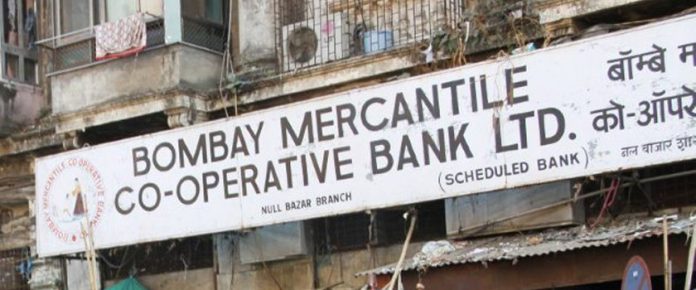
Image Source - https://www.moneylife.in/article/bombay-mercantile-coop-bank-mired-in-controversial-dealings-while-regulators-watch-silently-whistleblower-agitated-about-the-banks-future/47091.html

In this article, Param Veer Chahal, pursuing Diploma in Entrepreneurship Administration and Business Laws from NUJS, Kolkata discusses on the co-operative banking system in India.

In the modern technical sense, the birth of the cooperative movement and its applications in the economic field have been traced after the Industrial Revolution in England during the second half of the 18th and the first half of the 19th century. Cooperation, understood as an economic system today, was born as a peaceful reaction to the mercantile and industrial economic revolution. Now cooperation occupies a position of fundamental importance as a form of commercial organization in almost every country in the world.

Introduction

Cooperation means to live, think and work together to achieve a common goal through the cooperative principles. It provides a group of people with one or more common economic needs, voluntarily accepting to combine their human and material resources and to use them for mutual benefit, through a company / organization managed by the group in itself in the democratic line.

Subsequently, any organization formed by a group of people working together to achieve the goals for which it is formed through cooperative principles is called a cooperative society.

History of co-operative banks in India

The cooperative movement was started in India to encourage and promote savings and mortgage in order to help for the development of people with few resources, such as farmers, artisans and other segments of society. During the British Government, based on Sir Frederick’s recommendations, Nicholson (1899) and Sir Edward Law (1901), paved the way for the creation of credit unions in rural and urban areas. Under this law, only primary credit companies were allowed to register and without credit and federal primary credit union organizations were excluded.

After independence, during the first 3 years, i.e. until 1949, it was not possible to achieve significant development. It was mainly due to the problem created by the partition and the absence of a concrete program for national reorganization. However, the leaders of free India could see the importance of the cooperative movement for a successful democracy. The importance was given to strengthen the cooperative structure of the country and different provisions were made through a different five-year plan.

While the initial Five Year plans couldn’t shape up the co-operative banks to function, it was given greater importance from then on. The Sixth Plan established a points program for cooperative societies. Its goal was to transform the societies of primary peoples into polyvalent societies:

  1. Rebuild the policies and the cooperative so that it can generate the economic development of people
  2. Extend cooperation activities in the areas of food processing, poultry breeding, milk production, fisheries and many other related fields.
  3. Provide training and guidance necessary for the development of qualified and efficient personnel.

The Seventh Plan has also given more importance to the growth and expansion of cooperative societies to ensure public participation and achieve its main objective, that is, the movement towards social justice must be faster and must focus more on employment and the alleviation of poverty.

What are co-operative banks?

A cooperative bank is a financial entity that belongs to its members, who are both owners and customers of their bank. Cooperative banks are often created by people belonging to the same local or professional community who share a common interest. Cooperative banks generally provide their members with a wide range of banking and financial services (loans, deposits, bank accounts, etc.). Cooperative banks differ from the action bank by their organization, their objectives, their values ​​and their governance. In most countries, they are controlled by banking authorities and must comply with prudential bank regulations, which place them on an equal footing with shareholder banks. Depending on the countries, this control and supervision can be implemented directly by state or delegated entities in a cooperative federation or a central organization.

Characteristics of a co-operative bank

All cooperative banks share common characteristics as described below:

Customer Owned Entities

In a cooperative bank, the needs of the clients meet the needs of the owners, since the members of the cooperative bank are both, i.e. the customer and the owner. As a result, the cooperative bank’s first goal is not to maximize profits but to provide the best products and services available to its members. Some cooperative banks operate only with their members, but most of them also allow non-member customers to benefit from their banking and financial services.

Democratic Member Control

Cooperative banks are owned and controlled by members, who democratically elect the board of directors. Members usually have the same voting rights, in accordance with the cooperative principle of “one person, one vote”.

Profit Allocation

In a cooperative bank, a significant portion of annual profits, profits or surpluses are generally allocated to build up reserves. Part of this benefit can also be distributed to members of the cooperative, with legal and legal limitations in most cases. In general, benefits are allocated to members through the employer’s dividend, which is related to the use of cooperative products and services by each member, or through an interest or dividend, which is related to the number of shares subscribed by each member.

Co-operative banking in the Indian context

The structure of the cooperative bank in India is divided into a short-term structure and a long-term structure. Although the short-term structure is three levels, the structure of long-term cooperative banks is two-tier, as follows:

Short Term Co-operative structure

  • A state cooperative bank works at the highest level (i.e. it works at the state level).
  • The Central Cooperative Bank operates at an intermediate level (e.g. District Bank Cooperatives Ltd. District-level works)
  • Primary credit unions at the grassroots level (at village level)

Long Term Co-operative bank structure

  • State agricultural cooperatives and rural development banks (SCARDB) at the highest level.
  • Primary cooperative banks for agriculture and rural development (PCARDB) at the district or block level.

Part played by co-operative banks in India

Cooperative banks in India play an important role in rural financing. Even the activity of cooperative banks in urban areas has increased phenomenally in recent years due to the sharp rise in the number of popular cooperative banks. Cooperative banks should carry out some tasks, i.e. extend all types of credit lines to customers in cash and in kind, to anticipate consumer loans, extend banking services in rural areas, mobilize deposits, control the use of loans, etc. The needs of the cooperative bank are different.

Cooperative banks in India fund rural areas under:

  • Agriculture
  • Livestock
  • Milk
  • Nursery
  • Personal finance

Cooperative banks in India finance urban areas by virtue of:

  • Self-employment
  • Industries
  • Small-scale units
  • Home finance
  • Consumer finance
  • Personal finance

Types and functioning of Co-operative Banking System in India

Cooperative banks are small units that operate in urban and non-urban centres. They finance small debtors in industrial and commercial sectors as well as professional and salary classes. Regulated by the Reserve Bank of India, they are governed by the Banking Act of 1949 and bank laws (cooperative societies) operate in 1965. The structure of the cooperative bank in India is divided into the following 5 categories:

Primary Co-operative Credit Society

The primary credit cooperative society is an association of borrowers and non-borrowers residing in a particular locality. The company’s funds derive from the share capital and members’ deposits and loans from cooperative central banks. The debt powers of members and society are fixed. Loans are granted to members for the purchase of livestock, fodder, fertilizers and pesticides.

Central Co-operative Banks

These are federations of primary credit societies in a district and are of two types:

  • those that have membership only in primary societies and
  • those that belong to companies and individuals.

The bank’s funds consist of equity capital, deposits, loans and bank overdrafts of state-run cooperative banks and joint ventures. These banks provide loans to associated companies within the limits of the company’s debt capacity. They also perform all the activities of a stock exchange.

State Co-operative Banks


The state cooperative bank is a federation of the central cooperative bank and acts as custodian of the cooperative banking structure in the State. Its funds are obtained from the social capital, deposits, loans and overdrafts of the Reserve Bank of India. State-owned cooperative banks lend money to cooperative central banks and to primary companies and not directly to farmers.
Land Development Banks


The banks for the development of the territory are organized in 3 levels, that is to say; State, central and primary level and meet the long-term credit requirements of farmers for development purposes. They oversee state development banks, the main land development banks located in the districts and areas of Tehsil in the state. They are governed by the state government and the Reserve Bank of India. Recently, the supervision of banks for land development has been taken over by the National Bank of Agriculture and Rural Development (NABARD). The sources of financing of these banks are the obligations underwritten by central and state governments. These banks do not accept deposits from the general public.

Urban Co-operative Bank


The term Urban Cooperatives Banks (UCB), although not formally defined, refers to primary cooperative banks located in urban and semi-urban areas. Until 1996, these banks were authorized to lend money for non-agricultural purposes only. This distinction is not satisfied today. These banks traditionally focused on communities, localities and workplace groups. Basically, they lend to small borrowers and businesses. Today, its operating environment has greatly increased.

Functions of Co-operative Banks

Co-operative banks also perform the basic banking functions of the banking sector, but differ from commercial banks in the following aspects:


  • Commercial banks are companies under the Companies Act of 1956, or the public sector bank under a separate law from the parliament, while cooperative banks have been established under the laws of cooperative societies of different states.
  • The structure of the commercial bank is the banking structure while the cooperative banks have a configuration of three tiers, with the State Cooperative at the Apex level, the central / district cooperative bank at the district level and the primary rural Cooperatives.
  • Only some of the sections of the 1949 Banking Regulation Act (fully applicable to commercial banks) are applicable to cooperative banks, with the sole result of partial control by RBI cooperative banks.
  • Cooperative banks operate according to the principle of cooperation and not completely in the commercial parameters.

Conclusion

The concept of cooperation is as old as humanity and forms the basis for domestic and social life. Cooperation is just a group instinct in human beings that allows us to live with others, work with others and help each other in moments of stress and tension. Without cooperation, the social and economic progress would not be possible. It’s impossible for anyone civilization to thrive unless cooperation completes competition in human society, if there is one. This is because human beings have developed of group life and, therefore, naturally respond to group and social stimuli. Thus, the cooperative spirit is innate and intrinsic in human beings.

It is with this in mind that the current system of Co-operative banking has evolved itself over the years and is still in the process of getting better by adapting to the changing world scenario as well as catering to the needs of people at the national level.


Download Now

Role of directors in the Liquidation process

0
BarHacker: Professional Misconduct
Image Source - https://bit.ly/2lLIVyx


In this article, Brihan Madhav, pursuing Diploma in Entrepreneurship Administration and Business Laws from NUJS, Kolkata discusses on Corporate Insolvency Resolution Process.

Introduction

Before we begin a critical analysis of the various grounds on which the insolvency resolution process can be initiated, it would be necessary to get acquainted with some of the key terms in the project.

Going Concern

The first important concept we should be aware of is the ‘Going Concern’ concept. The Going concern concept is a fundamental concept that is followed while preparing the accounts and other financial papers of the company. The concept essentially states that the entity will be assumed to continue with the business and will not shut down or go into the process of liquidation in the foreseeable future.

This means that when the creditors lend money to the Company they expect that the Company will continue to function in the future and the company in due course of time will repay the debt that it has acquired. Next we come to terms such as insolvency, bankruptcy and liquidation. To a certain extent all these terms are interrelated. They are sometimes used interchangeably.

Insolvency

Every entity has assets and liabilities. Insolvency is a scenario in which the liabilities outweigh or outnumber the assets.

Let us take an example, imagine a company ‘A’ has assets worth INR 100 and liabilities worth INR 200. In this case the company has more liabilities than assets and it is difficult for the company to carry on day to day operation.

However, it is not compulsory that all insolvency should lead to a shut down or bankruptcy. It is very much possible that an insolvent company receives a cash influx or some other aid and is again in a position to carry out day to day activities.

Bankruptcy

Bankruptcy is a legal term. Insolvency sometimes may become very extreme and the people who head the firm may decide that there is no other option but to file for bankruptcy. The important aspect of bankruptcy is that bankruptcy option is available to both individuals as well as companies. Famous individuals such as President of America Mr Donald Trump have filed for bankruptcy.  An insolvent company files for bankruptcy. It is not automatically assumed to be bankrupt. The bankruptcy will be filed by a creditor or the company themselves.

So when bankruptcy is filed, the functioning of the company becomes the responsibility of the Official Receiver generally. They decide what actions have to be taken, what assets are to be sold and creditors are to be paid back in what ratio. Bankruptcy is not the end however and may come as a relief. Major companies such as General Motors and Kodak have filed for bankruptcy and have come back stronger eventually.

This means that essentially bankruptcy tries to provide the party filing a second chance and at the same time helps in paying of its debts.

Liquidation

Liquidation process is similar to bankruptcy but the effects are different. Unlike Bankruptcy the option of Liquidation is not available to an individual. Only a company can file for liquidation. The essential purpose of liquidation is to collect and as much money as possible so that the same can be paid to the creditors. When the liquidation process finishes the Company ceases to exist. Herein lies the biggest difference between Bankruptcy and Liquidation, while the first one tries to give a second chance to the individual or company involved, liquidation is the end game and the Company ceases to exist.

Insolvency and Bankruptcy Code, 2016

The Insolvency and Bankruptcy Code (hereinafter known as IBC) was passed in 2016. The cases of Bankruptcy were governed previously by Presidency Towns Insolvency Act, 1909 and Sick Industrial Companies Repeal Act, 2003 in addition to certain other provisions of the Companies Act.

It might be pertinent to note that the term ‘stakeholder’ has not been defined in the Code. The IBC is considered to be more creditor friendly in its operation.  Creditor has been defined in section 3(10) of the Code. A creditor is anyone who is the owner of a debt. There are two types of creditor

  1. Financial creditor as per Section 5(7) is a person who is the owner of a financial debt.
  2. Operational creditor as per Section 5(20) is, a person who is the owner of an operational debt.

Corporate Insolvency Resolution Process

The Corporate Insolvency Resolution Process can be initiated by either the financial creditor or the operational creditor.

By financial creditor

The financial creditor can initiate the process under section 7 of the IBC. It is an imperative condition of filing the application that the debt should not be less than INR 1 lakh. In a situation in which the company has defaulted the creditor can file an application. Default would typically mean that there has been a non-payment of and a certain amount has become due. It is not necessary that the amount of debt be ascertained by the authority in charge, they must simply inspect if a default has occurred or not.

Criteria that needs to be examined

  1. The Adjudicating Authority shall firstly examine if the default has taken place. This can be done through the records or the evidence that have been provided by the Financial creditor.
  2. The Adjudicating Authority will check if there exists any disciplinary proceeding pending against the resolution.
  3. The Adjudicating Authority will check if the application is complete.

If these conditions are not fulfilled the Adjudicating Authority may dismiss the application of the Financial creditor.

By operational Creditor

The procedure is slightly different when it comes to operational creditor. The operational creditor first has to send a demand notice to the debtor. There must be a demand for payment. The Operational debtor has 10 days’ time to respond to the notice or make the payment.

Under Section 9(1) if the Operational creditor has not received payment even after 10 days he can approach the Adjudicating Authority by filing an application for resolution process.

Criteria that need to be examined

  1. The Adjudicating Authority must check if the application has been filed in the correct format and the appropriate fee is attached.
  2. The Adjudicating Authority will check that there is no disciplinary proceeding is pending.
  3. The Adjudicating Authority will check if the operational debt has been paid.

Role of directors in the Liquidation process

As stated above, the director is perhaps the most important person as far as the decision of liquidation is concerned. Until bankruptcy/liquidation, the director thinks from the view of the shareholders, what would benefit them the most and what would give them maximum earnings and returns. However, on bankruptcy the Director has to think from the point of view of the creditors. This aspect has been kept in mind while setting up the IBC.

What needs to be kept in mind is that once the liquidation process begins, the objectives of the Company changes. While earlier the company was moving with the objective of earning maximum profits now the objective is to pay back most of the debts. Hence as soon as the liquidation process begins the Board of Directors stand suspended. This power is now shifted into the hands of the National Company Law Tribunal.

Before we understand the intricacies in such situation we should understand the concept of ‘twilight zone’. Twilight zone is the period between the time where there is no possibility of avoiding the prospect of liquidation and the start of the process of liquidation process. In India the twilight zone period generally extends to the period of 2 years before the date of liquidation. However, it must be kept in mind that the twilight zone has not been defined under the Act.

Simply put the directors are not absolved of responsibility for the decisions that were taken during the twilight zone. We must keep in mind that any action taken by the Director especially the risky decisions will affect the company in a sufficient way.  The major point of inspection that needs to be checked is whether a decision was taken with the intention of defrauding the creditors.

The liabilities of the Directors are essentially of two types:

  1. Punitive liability: this is the kind of liability that extends to actions such as defrauding and falsification of books of accounts.
  2. Disgorgement based liability: This is the liability that comes into existence due to wrongful trading.  Essentially it means that the Directors did not exercise due diligence while trying to reduce the loss for the creditors of the company.

If it is found by the Adjudication Authority finds that the directors have taken decisions with the intention of defrauding the creditor, then the Adjudication Authority has the power to pass an order to make the concerned parties personally liable for the contribution to assets of the debtor.

The important aspect of the decision is due diligence. If due diligence was not taken or the intention was to defraud then the Directors may be personally liable.

Another aspect of protection is perhaps provided in Section 45 of the Code. If it is found that under the relevant period that the assets were undervalued, then the Adjudication authority has the power to make the transaction void. The Adjudication Authority shall consider the property for undervaluation if

  1. Property was given as a gift from the corporate debtor
  2. Or a sale of asset for a consideration or price which is far less than its value

The possible defense that the Directors can take is that they exercised due diligence. If the directors have exercised diligence that an ordinary man of reasonable prudence would take. The NCLT will check if the director has taken due diligence while taking decisions.

Conclusion

The IBC has become the authority when it comes to the laws regarding laws of insolvency. The Act has replaced a lot of other acts. The IBC has given two ways of going for liquidation, one is for financial creditors and the other is for operational creditors. In either cases the amount of default does not matter but it is critical that the default occurred. If this condition is taken care of and the notice and complaint is filed in the proper format and the same is complete then the liquidation process should start.

Another important aspect of the IBC is the role of directors. There is shift of objectives when it comes to liquidation as far as the directors are concerned. While earlier it is to provide maximum returns to the stakeholders during liquidation the main objective is to minimize the loss for the creditors.

The directors must keep note of the twilight zone and the actions that have been taken place during the twilight zone. If the Directors commit fraud, wrongful trading or any other actions that are trying to defraud the creditors, they may be held personally liable. To avoid this the Director must exercise caution as that of a man of reasonable prudence would exercise.

It can be clearly seen that the IBC is made with the objective of creditors and paying them back for their debts given.

Download Now

Startup India – How to get Inter-Ministerial Board (IMB) certification for availing tax related benefits

2
Inter-ministerial board startup india


In this article, Agrima Tripathi, pursuing Diploma in Entrepreneurship Administration and Business Laws from NUJS, Kolkata discusses on whether startups need IMB certification to avail angel tax exemption.

Introduction

India is the world’s third largest startup ecosystem, witnessing the emergence of 3-4 new startups everyday which makes it the fastest growing startup base. A startup not only fulfills the entrepreneurial dream but also provides employment to millions of people and contributing in the growth of the nation.

One such initiative to promote innovation and entrepreneurship is launched by Government of India as “Startup India”. It was launched on January 16, 2016 by the Hon’ble Prime Minister of India Shri Narendra Modi. The startup India Action Plan aims at “accelerating the spread of the Startup movement by: Simplification & Handholding, Funding Support & Incentives, Industry-Academia Partnership and Incubation.” Through the launch of Startup India, the Government of India has taken measures to improve the ease of doing business and create an enabling and exciting environment for these startups.

What is a Startup?

According to the Notification, an entity to be considered as a start up, the following conditions must be fulfilled. (See here)

  1. The startup must have completed a period of seven years from the date of incorporation/registration. The duration is extended to ten years if the Startup is in the biotechnology sector.
  2. The entity is registered/incorporated as a private limited company, as a partnership firm, or as a limited liability partnership.
  3. The turnover for the entity for any of the financial years has not exceeded Rs 25 crore.
  4. The Entity to be considered as a Startup should not only work towards bringing innovation, development or improvement of products or processes or services but also should generate employment or creation of wealth.

If an entity is formed by splitting up or rebuilding of an existing business then it shall not be considered a ‘Startup’.

When entity shall cease to be a Startup?

The entity will not be considered as a Startup in the below mentioned scenarios:

  1. When an entity has completed seven years from the date of its registration/incorporation and ten years in case of startups in the biotechnology sector, or
  2. If the turnover of the entity exceeds Rs. 25 crore for any of the previous year.

Inter-Ministerial Board (IMB)

The startups need to have Inter-Ministerial Board (IMB) certificate to avail tax benefits. The Department of Industrial Policy and Promotion (DIPP) created the Inter-Ministerial Board to validate startups for the tax related benefits. The Inter-Ministerial Board comprises of the following members:

  • Additional Secretary, Department of Industrial Policy and Promotion, Convener
  • Representative of Ministry of Corporate Affairs, Member
  • Representative of Ministry of Electronics and Information Technology, Member
  • Representative of Department of Biotechnology, Member
  • Representative of Department of Science & Technology, Member
  • Representative of Central Board of Direct Taxes, Member
  • Representative of Reserve Bank of India, Member
  • Representative of Securities and Exchange Board of India, Member

Types of tax exemptions to recognized Startups

The IMB validates Startups for the below mentioned two exemptions:-

Section 80-IAC of Income Tax Act, 1961

A Startup to be recognised by DIPP should fulfil the eligibility criterias to apply to the Inter-Ministerial Board. For exemption on the profits and gains from business the following conditions mentioned below must be fulfilled:

  1. If the Startup is a private limited company or a limited liability partnership,
  2. If the incorporation of the Startup is on or after 1st April 2016 but before 1st April 2021, and
  3. If the products or services or processes are undifferentiated and have the potential for commercialization and significant incremental value for customers.

The tax exemption under Section 80-IAC is given for any three consecutive years out of seven years from the year of incorporation of startup.

Section 56 of Income Tax Act, 1961

A Startup recognized by DIPP being a private limited company shall be qualified to apply to the Inter-Ministerial Board to avail exemption from income tax on investments higher than fair market value made by angel investors provided the below mentioned conditions are fulfilled:

  1. The aggregate amount of paid up share capital and share premium of the Startup after the proposed issue of shares does not exceed ten crore rupees,
  2. The investor/proposed investor, who proposes to subscribe to the issue of shares of the Startup has:
      1. the average returned income of  more than or equal to twenty-five lakh rupees but not less for the preceding three financial years; or
      2. the net worth of more than or equal to two crore rupees as on the last date of the preceding financial year, and
  3. The Startup has got a report from a merchant banker stating the fair market value of shares.

Angel Tax

The Finance Minister Pranab Mukherjee announced the introduction of Angel tax to the Finance Budget of 2012. Taxation is the main barrier for many Startups and has forced many angel investors to wither away from providing financial support to the entrepreneurial dreams.

Section 56(2)(viib) of the Income Tax Act, 1961, or the Angel Tax was inserted by the Finance Act, 2012 to tax any capital raised by a closely held company which is above its Fair Market Value (FMV) as income from other sources, with Rule 11UA(2) stipulating  ways for determining the Fair Market Value.

The Startups which have a total investment including investments from angel investors not exceeding Rs 10 crore can seek for approval from the Inter-Ministerial Board (IMB) for exempting them from tax under Section 56 of the Income Tax Act, 1961.

The two methods to determine the Fair Market value under Rule 11UA (2) are as follows:

  1. Net Asset Value Method
  2. Discounted Free Cash flow Method

According to Section 56(2) (viib) of the Income tax Act, 1961 the Fair Market Value of the shares shall be:

  1. (i) The value as determined according to the method described under (Rule 11UA(2));

             Or

  1. (ii) The value as may be authenticated by the company which satisfy the Assessing Officer, based on the value, on the date of issue of shares, of its assets, including intangible assets being goodwill, know-how, patents, copyrights, trademarks, licences, franchises or any other business or commercial rights of like nature. Whichever is higher.

Analysing Section 56(2) (viib) of the Income tax Act, 1961

The reason why Angel tax causes threat to startups and investors is because it gives major discretionary powers in the hands of Assessing Officer. There are multiple reported incidents where entrepreneurs are bogged down by the questions of IT officials over the valuation of funding. While the intention is to curtail money laundering and check undisclosed income, the government, in its eagerness is likely to do more harm than good.

One Such incident why Startups and investors are praying for respite from Angel Tax is narrated below:

Aditya (Name changed) is a Bengaluru-based entrepreneur. He was asked to provide further details of the angel investments that he raised in the year 2014-2015. The funding raised by Aditya was Rs 1.5 crore but the Assessing Officer considered only Rs. 1 crore as an investment and the rest Rs 50 lakhs was considered as an income on which Aditya would have to pay 30% tax. An appeal can be made against this within 30 days of passing of an order. However, the founders would have to pay 20% of the fine for filing the appeal. Many entrepreneurs does not have this money in hand.

Section 68 of the Income tax Act, 1961- Added Fear

Section 68 of the Income Tax, 1961 states that if any sum is found credited in the books of an assessee which is maintained for any previous year, and the assessee gives no reason about the nature and source of the money or the reasoning offered by him is not reasonable in the opinion of Assessing Officer, the sum which is credited in the books of assessee may be charged as the income of the assessee for that previous year:

However, where the assessee is a company (not a company in which the public are substantially interested), the sum so credited consists of share application money, share capital, share premium or any such amount by whatever name called, any reasoning given by the assessee-company shall not be considered as satisfactory, unless —

  1. The person, who being a resident offers a valid justification as to the nature and source of the sum  so credited in his name in the books of such company records; and
  2. The Assessing officer finds the explanation mentioned above to be satisfactory.

Section 68 further states that nothing contained in the first proviso will apply to the person, if the sum credited in his name recorded therein, is a venture capital fund or a venture capital company as referred to in clause (23FB) of section 10.

Many startups, who have surpassed the blade of section 56(2)(viib), also have to deal with section 68, which again gives discretionary powers in the hands of the Assessing Officer in addition to the powers already conferred by  section 56(2)(viib).

Remedies Imposed

The government has taken certain measures to promote and foster the Startup environment in India. The Central Board of Direct taxes (CBDT) on 14th June,2016 has released a notification stating that a company registered as a “Startup” which is also recognized by the Department of Industrial Policy & Planning (DIPP), any amount raised from an Indian tax resident will be outside the scope of section 56(2)(viib).

Conclusion

The initiative taken by the Government of India is praiseworthy but it also needs to understand the ground realities and hardships the entrepreneur has to face in achieving his/her entrepreneurial dream.

The government should take measures to encourage domestic investors to financially aid the Startups rather than penalizing them. The tax authorities should not be able to demand justification if the valuation is based on prospective information and the Startup has a valid valuation report, which is in accordance with the law. Startups are a good way to generate employment and also fulfill the entrepreneurial dream.


Download Now

Right of minorities to set up and govern their own Educational institution

1
Minority
Image Source - https://brook.gs/3qkPncH

This article is written by Himani Singh, of Bhartiya Vidhyapeeth University. The article talks about the Right of Minorities to establish and govern their own Educational institution.

Introduction

Considering the factor of education and its need, the Constitution made certain provisions for the minorities to avail them with the benefit to establish and govern their own educational institution (Article 30) where they can help the student from their community to give some privilege and support their education.

Meaning of Minority institution

The term ‘minority’ isn’t defined in our Constitution. It is derived from the Latin word ‘minor’ and suffix ‘ity’ meaning in small number. In regards to the Kerala Education Bill, the Supreme Court noticed that while it was anything but difficult to state that the minority means a community which is numerically less than half (50%) isn’t in relation to the whole legislation. If it is a State law, a minority would be determined in relation to the number of inhabitants/citizen in the State. Minority under Article 29 and 30 would be determined according to the population of that State. As accordingly, it was held in regards Kerala Education Bill, that Christians, Muslims, and Anglo Indians would be minorities in the State of Kerala.

The word ‘linguist minority’ according to the purpose of Article 30(1) is one which must have separate spoken language and the language that does not have a distinct script. In India, there are various languages which are spoken but do not have any script of their own. But still, they are spoken by the individuals. To protect them, Article 30(1) was introduced in the Constitution of India. A linguistic minority must be considered in accordance with the language spoken by them and not according to the language which they want their youngsters to study.

The word ‘religious minority’ means ‘that the principal basis of the minority should be in adherence to one of the many religions and not a sector or part of the religion. Jains and Sikhs have been held to be counted as minorities based on religion within the meaning of Article 30(1) in the Union Territory of Delhi.

National Commission for Minority Educational Institution Act, 2004 has defined ‘minority’ as a community which is defined as according to the central government and ‘Minority institution’ as an educational institution which is administered and set up by the minority.

Protection of Interests of Minorities (Article 29)

  1. Every section of citizens of India residing in the territory or any part of India and having distinct script, language, and culture of their own must have a right to conserve the same.
  2. A citizen should not be denied admission into any educational institution which is maintained by the State or getting aid or supports out of State funds on grounds of religion, race, caste, language or any of them.

Rights of Minorities to establish and administer Educational Institutions (Article 30)

  1. All minorities should have right to set up and govern educational institutions according to their own choice.
  2. If the government is having an acquisition on any property of minority educational institution then the government should keep this in mind that a fixed price should be settled in a way that does not deter the rights minorities
  3. The State shall not, differentiate among any educational institution on the ground that it is under the administration of a minority whether in terms of a religion or a language.

Top 3 judgments on the Right given to Minority to Set Up and Govern their Educational Institutions

Refusal to give recognition or affiliation by the statutory authority without just and adequate grounds is a breach of Article 30(1)

In Managing Board of the Milli Talimi Mission Bihar and Ors. vs State of Bihar and Ors. 1984 (4) SCC 500 – The Supreme Court has clearly held that running a minority institution is a fundamental right and as important as other rights presented to the citizen of the nation. If the State Government declines to give acknowledgment or a university declines to concede affiliation to a minority educational institution without just and adequate grounds, the immediate outcome is to crush the very presence of the institution itself. In this manner, refusal to give recognition or affiliation by the statutory authority without just and adequate grounds is an infringement of the right ensured under Article 30(1) of the Constitution. (Here)

Appointment of Staff in Minority Institutions-

In State of Bihar vs Syed Raza, AIR 197 SC 2425 – It has been held that for the formation of the post in a minority institution for appointment earlier approval of the Vice-Chancellor isn’t important and the people so appointed would be qualified for allowing to help in view of Article 30(1) of the Constitution. Proviso (2) of Article 30 says that the State should not, in allowing aid to educational institutions, differentiating any educational institution on the ground that it is under the administration of a minority, regardless of whether it is based on religion or language.(Here)

Rights and obligations of private unaided institutions run by minorities

In the case of T.M.A. Pai Foundation vs the State of Karnataka, (2002) 8 SCC 481 AIR 2003 SC 355 -Supreme Court was not concerned with the rights of the aid of minority and non-minority institutions and limitation imposed by the states upon them but was concerned only with the rights and obligations of private unaided institutions run by minorities and non-minorities. (HERE)

National Commission for Minority Educational Institution

It was established on 11th November 2004 which later got replaced by the new act passed on December 2004. Its main function is to provide protection to an interest of minorities in terms of minorities educational institution. Functions of National Commission for Minority Education Institution –

  • Giving advice to state government and central government on any query related to the education of minorities.
  • Interfering in any proceeding related to deprivation or violation of the educational right of the minorities before the court.
  • Measures to protect the minority status and character of the institution.
  • Take decision for all questions concerning the status of any minority educational institution.
  • It recommends to the government to implement schemes for the minority educational institution

The National Commission for Minorities Educational Institutions Act, 2004

Under this certain provisions are laid down for the establishment and administration of the minority educational institution.

How to set up minority educational institution in India – Compliance to follow

(1) Any individual who wants to set up a Minority Institution may apply to the Competent Authority (it is under Sub Clause(ca) of 2, NCMEI, as an authority to grant NOCs for this purpose) to get no objection certificate and application should be made in the prescribed pattern (see here).

NOTE -Before submitting an application to the Commission, an application should be complete according to the prescribed form (see here)

(2) The Commission should:-

  • On the scrutiny of documents, affidavits or other evidence, if any;

The following documents are required:-

  • Applicant’s minority institution must be registered either as a trust under Public Trust Act, 1950 or it should be registered as a society under Societies Regulation Act, 1860.
  • If it is registered under society then the copy of society registration certificate should be attached with the application form.
  • If registered with Trust then Trust deed, then Association note/memorandum, Rules, and regulation with all the amendments should get attached.
  • An affidavit signed by the President or by the Secretary of the society or the trust should be attached.
  • If an individual run institution, an applicant must file an affidavit and should attach the copy of the affidavit for the concerning to the educational authority for running the minority educational institution.
  • Major parts of trust member of the managing committee of the society of applicants institution must be from the community of the applicant.
  • An application should be original and complete in all respect. It should be submitted with the copy of all the relevant documents and along with the five extra set of application should be submitted.
  • According to Section 10(2) of NCMEI, after availing the opportunity to be heard to the applicant, choose each application filed under Section 10(1) as quickly as possible and allow or dismiss the application, as the case may be.
  • Given that where an application is rejected, the Competent expert should impart the same to the candidate.

(3) Wherein the time of ninety days is given from the receipt of the application under Section 10 (1) gives no objection certificate:

The Competent authority/commission does not give such certificate; or

  • Where an application has been rejected and the same has not been informed to the individual who has applied for such certificate.
  • It should be regarded that the Competent authority has given a no objection certificate to the to the applicant.

After obtaining minority status certificate

  1. It can select its governing body in whom the organizers of the institution have belief, confidence, and certainty to lead and deal with the affairs of the institution.
  2. It can allot teaching and non-teaching staff.
  3. To concede the student of its own community. Non-minority students can’t be constrained upon it. Neither the policy of reservation on an admission of student can be enforced by the State nor can any quota or percentage of admission be cut out to be suitable by the State in a minority educational institution. But if the institution is accepting any financial support from the State at that point Sub-clause (2) of Article 29 of Constitution obligates the administration to admit a non-minority student to a reasonable degree.
  4. It can form a reasonable fee charge structure of its own.
  5. It takes action on bad behavior or conducts against any member of its staff.

The Supreme Court held in the Case of P.A. Inamdar vs State of Maharashtra [2006 (6) SCC 537] that:

  • The policy of reservation to admit students is not applicable to a minority institution.
  • The policy of reservation in terms of employment is not applicable to a minority institution.

Where to complain if the Competent Authority is disallowing your legitimate legal request for setting up a minority educational institution?

  • If any applicant is not satisfied with the order under Section 10(2) of refusal then he can file an appeal against the order of the Competent Authority given under Section 12A (1).
  • An appeal under Section 12A(1) should be filed within 30 days from the date of an order communicated to an applicant by the competent authority.

AICTE guidelines on Minority and Non-minority educational institution, Handbook 2018-19

There are certain guidelines which are provided by the AICTE. These guidelines are mandatory for all the colleges which come under AICTE whether it is Minority or Non-minority colleges. All the colleges which are under AICTE should follow certain guidelines which are given by AICTE for its colleges which are (as follows).

List of Minority Educational Institutions affiliated by AICTE

There are some 37 minority educational institution which comes under the AICTE and those colleges are listed (here).

Benefits available to Minority Institutions

There are, comprehensively, three advantages accessible to a minority educational institution that is not accessible to other institutions-

  1. Minority educational institutions don’t need to keep up a reservation in work or affirmations for SCs, STs, and OBCs as required to be done by other educational institutions.
  2. In respect of control over representatives, minority educational institutions have substantially more prominent power than other institutions. For example, in the selection of teacher and principals, the minority educational institution can have a choice advisory group which does exclude the university representatives. Thus, while in customary schools the headmaster ordinarily must be appointed based on seniority, minority administrations can choose a headmaster according to their own choice.
  3. In case of admission of the student, minority educational institutions can have a reservation of up to 50 percent for the student of their own community.

CONCLUSION

The idea to make the provision for minorities to protect their educational right is not inequality towards the privileged classes but it definitely gives the sense of security to the minority class people.

It is clear from the census that the minorities in India are not well-off when compared with the privileged class. Therefore, it is important to give the minorities certain legal rights, thus helping them uplifting their position in the society. The idea behind implementation of article 30 of the Indian Constitution is to provide the minorities with the Fundamental Right to establish and govern their own educational institution thus providing benefit to the people of their community.

The provision laid down under the constitution allowing the minority to establish and set up their own institution has been proved beneficial to the minority community in terms of educational growth e.g Jains are the minority community that has the highest literacy rate and the majority of their population is educated.

Download Now
logo
FREE & ONLINE 3-Day Bootcamp (LIVE only) on

How Can Experienced Professionals Become Independent Directors

calender
28th, 29th Mar, 2026, 2 - 5pm (IST) &
30th Mar, 2026, 7 - 10pm (IST).
Bootcamp starting in
Days
HRS
MIN
SEC
Abhyuday AgarwalCOO & CO-Founder, LawSikho

Register now

Abhyuday AgarwalCOO & CO-Founder, LawSikho