Download Now
Home Blog Page 1481

Termination of Employment Contracts- What are the rights available with an employee Post Termination

1
Image source: https://cutt.ly/Sz9PROc

In this article, Vishnu T.H, pursuing Diploma in Entrepreneurship Administration and Business Laws from NUJS, Kolkata discusses rights available with ex-employee post termination of employment contract.

Introduction

The wave of globalization hit India in the year 1991 which exposed the Indian economy to such varied markets that were not even thought of earlier. Today, almost 27 years later, the Indian economy is ripening due to the investments from different people and places. These investments have led to an increase in the flow of technical know-how and advanced skills into the Indian market. The changes that have taken place in the market conditions have led to changes in the relationship between the employer and the employee and this has further given rise to a different class of disputes between them. Prima facie, it is always felt that the employer is in a better bargaining position than the employee as the latter falls into the category dependent upon the former from a monetary point of view. This imbalance in position was felt by the legislature since the very beginning and it led to the sprouting of many laws to protect and safeguard the interest of the employees.This article traces the manner and grounds of termination of employment of employees in the next part and further discusses the rights available to the employee’s post-termination in the third part.

Termination of employment contract

The termination of the employment contract may take place in two ways:

  1. Either by the employee by way of resignation, or
  2. By the employer by way of discharge or dismissal.

Dismissal by the Employer against the Employee

Dismissal is a punitive action taken by the employer against the employee whereas discharge takes place when the employee is let go off by the employer due to inefficiency, redundancy, breach of employment contract, etc.

Although both blue-collar employees and white-collar employees can be dismissed and discharged, the termination of the former is governed majorly by the industrial disputes act and that of the latter is governed by the employment contract.

Termination of employment of a blue-collar employee

Section 2(s) of the Industrial Disputes Act, 1947 (“ID Act”) defines a blue-collared worker, or “workman” as “any person (including an apprentice) employed in any industry to do any manual, unskilled, skilled, technical, operational, clerical or supervisory work for hire or reward, whether the terms of employment express or implied.”

In case of a blue-collared employee, termination of employment has to take place only on the grounds that are provided for in the ID Act.

The ID Act provides for 3 types of termination:

  • Retrenchment: Under retrenchment, the employer has wide powers to terminate the employment of its employees for any reasons other than voluntary retirement, retirement upon reaching the age of superannuation, termination due to non-renewal of contract or termination due to ill-health.
  • Lay-off: Under lay-off, the employer is temporarily unable to assign work to the employees on account of shortage of raw materials, the breakdown of machinery, etc.
  • Closure: In case of a closure, the employer is on the verge of closing down his establishment and thus has to terminate the employment of the workmen who work there.

The above-stated grounds are governed by the government to a great extent and these grounds cannot be changed or modified by contracting out of it i.e. even in existence of a contract which provides for termination on some other ground or modification of one of the above-stated ground to an extent that it goes against the ID Act, the ID Act shall always prevail.

Termination of the employment contract of a white-collar employee

White-Collar Employees are those who are engaged in Office works. They are professionals with high skills and high education qualification.

In case of a white-collar employee, the termination of the employment contract is completely depended upon the provisions and clauses of the employment contract.

Grounds for the Termination

  • The employment contract usually includes all the necessary terms and conditions surrounding an event of termination including the grounds on which the employment can be terminated.
  • As opposed to blue-collar employees, the grounds for termination in case of white-collar employees can range from a simple ground like the inefficiency of the employee to a grave reason for the loss of confidence by the management.
  • As long as the employment contract is read, understood and accepted by the employee, the courts or tribunals cannot interfere with its contents. In most of the cases, the key grounds of termination are inefficiency, violation of confidentiality provisions and breach of the employment contract.
  • In case of inefficiency, the employment contract usually lays down the job description and the duties, which the employees are expected to perform along with performance standards specification the non-fulfillment of which may result in termination.
  • In addition to this, most of the employment contracts will have the certain requirement as to the fact that the employee is not allowed to give out any confidential information that he receives in the course of his employment as it may lead to an advantage to the competitors or in certain circumstances insider trading.
  • The employer is empowered to terminate the employment of any employee who breaches this provision.
  • The next ground, breach of employment contract, may be due to various causes such as providing misleading information, failure to conform with the company’s policy, etc.
  • Apart from these grounds, the employment contract may suggest many other grounds for termination because of which it becomes extremely essential for the employment contract to be drafted with utmost care and unambiguity.

Termination of employment contract due to misconduct

Termination of employment by reason of misconduct on the part of the employees, although not an express ground under the ID Act, is a common ground for both blue-collar and white-collar employees. This type of termination results out of the dismissal of the employee as a result of a misconduct on his part thereby making it a punitive action.

The Supreme Court in the case of Govinda Menon v. Union of India has identified misconduct as employee behavior that is “inconsistent with the discharge of duty” or that is “prejudicial to the interest or reputation of the employer.” In addition to this, under Schedule 1, Clause 14 (3) of the Industrial Employment (Standing Orders) Central Rules, 1946, misconduct can include willful subordination, theft fraud dishonesty, the taking or giving of bribes, negligence, habitual absence and disorderly behavior.

Thus, the ground of misconduct is wide enough for the employer to remove the bad apples from the basket of employees. Usually, in case of most companies or establishments, the Human Resource policy describes what constitutes misconduct.

Rights of the Employee post-termination of employment

During the course of employment, the employee enjoys a number of rights relating to his employment conditions, working hours, additional benefits, etc. However, the rights of the employee post-termination for his employment are not discussed much. This is major because of the reason already mentioned that the employer has a better bargaining power than the employee and in case of termination of employment, the employee is put in a very disadvantageous position with no source of income. Thus, it is very important to discuss the rights of the employee post-termination as well, as he is in a vulnerable position where the employer can exploit him.

Rights of the Employees

In the current scenario, the rights of the employees are implied by way of the procedure to be followed by the employer in case of termination of employment of an employee. The procedure that is laid down has certain requirements to be fulfilled by the employer, which the employee can claim as a right since its non-fulfillment will entitle him to sue the employer in the court of law. Following are the rights of the employee:

Right to receive a notice of termination of employment

  • When the employer wishes to terminate the employment of the employee, the employee has a right to receive 30-90 days of notice of the same or salary in lieu of the notice.
  • In case of the notice of termination of employment, the employee shall cease to be in employment with the employer from the date mentioned in the notice depending upon the notice period.
  • In case of salary in lieu of notice, the employer shall give the salary for 1 month or 3 months depending on the notice period and the employment comes to an end with immediate effect.
  • The notice must clearly mention the reason for termination of the employment and the arrangement made for the fulfillment of the remaining rights of the employee post-termination.

Right to be heard

  • When the employer wishes to terminate the employment of the employee, he must explain the ground for termination of the employment and give an opportunity to the employee to explain his position and show cause as to why he should not be dismissed or discharged.
  • This requirement is in consonance with the principles of natural justice under which the aggrieved party has a right to be heard. This opportunity of being heard that is given to the employee ensures that the termination is not out of proportion in comparison with the offence, misconduct, negligence, inefficiency, etc. alleged against the employee.
  • It is also important to ensure that the source of income of a person is not taken away from him without giving it a proper thought and without getting an explanation from both sides.

Right to have an inquiry conducted

In case of misconduct, inefficiency, violation of confidentiality provisions, etc. it will not be proper to terminate the employment without conducting an internal inquiry to understand the truth of the matter. Thus the employee has a right to have an inquiry conducted whereby the facts and circumstances shall be weighed and it shall be decided as whether there was the actual fault on the part of the employee or not.

Right to receive a severance pay

A severance pay is a payment received by the employee as a result of the termination of his employment contract with the employer. This includes the payment of the following:

  1. Salary in lieu of notice when notice is not given;
  2. The salary for days worked which remain unpaid;
  3. Encashment of unused paid leave;
  4. Payment of gratuity to an employee who has worked for more than five years as provided for in the Gratuity Act, 1972;
  5. Payment of 50% of the employee’s wages for up to 45 days where an employee employed for more than 1 year is laid off;
  6. Payment of compensation amounting to 15 days average pay for every year of continuous service;
  7. Payment of bonus for those employees who worked for at least 30 days in a financial year and earned up to Rs. 10,000 under the Payment of Bonus Act of 1965;
  8. Any other payment agreed to be paid on termination under the company policy.

The above-stated payment is more or less strictly applicable to a blue-collar employee and may differ for a white-collar employee depending upon his company’s policy.

Right to sue in case of illegal or unlawful termination

Whenever an employee is dismissed or discharged, the reason for the termination of employment must be just and reasonable. It must be strictly only on those grounds mentioned by the statutes or by the employment contract. However, if the employment is terminated on illegal grounds such as discrimination on the basis of gender, religion, caste, age, pregnancy, disability, etc. then the employee has a right to sue the employer as well as the establishment on the grounds of illegal or unlawful termination of employment.

An Employee can plead illegal termination in the following cases
  1. Violation of the state’s anti-discriminatory laws.
  2. Violation of employment or labour laws in India.
  3. If termination is viewed as a form of sexual harassment.
  4. If termination is understood as a retaliation against the earlier act of the employee against the employer. For example, an employee had filed a complaint in the past against the employer.

In case of a suit filed against termination of employment, the courts generally award monetary compensation and rarely interfere with the actual decision of the employer by reinstating the employee. However, reinstatement of employee happens most commonly in case of blue-collar employees whereby the employer violates the express provisions of the labour laws.

Conclusion

As is true for most of the situations, it can be observed that both the employers and the employees have rights to protect themselves when they are bound by a contract of employment. An employee has rights with respect to his working condition, working hours, maternity leave, etc. whereas the employer has a right to terminate the employment in a situation where he is put at a disadvantageous position due to the employee being in the employment of the establishment. In order to ensure that this right of the employee is not all pervasive, the employee is given protection in the form of certain rights post-termination. However, it is observed that the blue-collar employees are in a better position since strict statutes govern their termination whereas the white-collar employees are left to fend for themselves. Thus, it is of utmost importance for the legislators to come up with laws to provide protection to the white-collar employees as well against the whims and caprice of the employer.

 

Download Now

Funding options to raise capital for your business

0

In this article, Sunil Kumar Shaw, pursuing Diploma in Entrepreneurship Administration and Business Laws from NUJS, Kolkata discusses Funding options to raise capital for your business.

Introduction

Money is the lifeline of any business but how and when a company requires funding depends basically on:

  • The type
  • Nature, and
  • The objective of the business.

As the business of the company grows, the promoters/ founders require more capital to achieve company’s growth objectives such as:

  • Expansion of capacity
  • Increase in the marketing budget
  • R&D budget
  • New product development budget, etc.

A company may raise funds for different purposes as said above depending on the time periods which may differ from short term to long term. The total amount of capital needed by a company also rests on the type of company and business volume.

Funding options to raise capital for your business

Preparation for obtaining capital is the key and there are three vital elements to the preparation process, namely:

Business strategy and plan

A well-drafted Business Plan and strategy along with financing projections

is prerequisite and essential for a serious contemplation by any

institutionalized source of capital.

Effective liaising and networking

Effective liaising and networking with:

  • Investment bankers
  • Commercial Lenders
  • Professional advisers, and
  • Consultants who can assist and get the Business Proposal into the appropriate hands of the source of funding or financial institutions or banks.

Narrowing down & close follow-up

Often financing firms receive a number of business plans every year.

Therefore finding a way to increase the chance of getting approved for financing by the financial firm. Normally financing firms have certain investment preferences in term of companies for their investment portfolio. These preferences depend on the type of the company, products, and services, rates of return, geographic location, development stage and amount of capital needed.

Process for obtaining Capital

Raising of capital depends on the sources from where funds will be available and type of company.

Sole Proprietor and Partnership firm

The Sole proprietor and partnership have limited avenues for raising capital. They can obtain capital for their business by the following means:

  • Investment of own savings
  • Raising loans from friends and relatives
  • Arranging advances from commercial banks
  • Borrowing from finance companies

Private and Public company

The private and Public company can raise capital by a number of ways. To raise long-term and medium-term capital, a company has the following alternatives:

Issue of Shares

Companies may look for to raise capital by diluting ownership/equity (selling a certain amount of stake in the company) primarily in two ways:

  • Preferential Shares:

The company can allot shares to a selected group of investors. This way is often used by private equity firms who are looking for investment in their growing businesses.

  • Initial Public Offer:

Companies can make an “Offer for Shares” of the company in the arrangement of an IPO i.e. Initial Public Offering. So Company invites investors to become stakeholders in their company in return for capital.

The process involved in IPO

Underwriting

  1. Underwriting is a process by which companies raise capital through debt or equity. To issue IPO through a proper process to public underwriting are instrumental.
  2. The very first step in order to issue an IPO is to select and appoint an investment banker like Goldman Sachs, Credit Suisse and Morgan Stanley etc.
  3. Although in theory, a company may sell its shares on its own but in practice, investment bankers are very helpful and needful.

Various factors are considered by the investment bankers

  1. Amount of money that company need to raise
  2. Type of securities to be issued
  3. Other details and condition in the underwriting agreement

Filing with the SEBI

On behalf of the company, investment bank file a registration statement with SEBI. A registration statement contains information regarding offering and company information like management background, financial statements, where and how money is going to be utilized if any legal problems exist etc. SEBI ask for a cooling off period, in which SEBI investigate and verify the correctness of all material/information which has been furnished/disclosed. After SEBI approval of offering, a date (called effective date) is to be decided when the stock is to be made available to the public.

Role of SEBI

A company advertises its requirement for raising equity capital and the manner by which capital will be utilized. The process is monitored and regulated by Securities and Exchange Board of India (SEBI) and the various stock exchanges where shares of the company will get listed after their sale.

SEBI has laid down terms and conditions for raising capital through IPO route in ICDR Regulations. Small companies can also take IPO route subject to fulfillment of certain conditions.

Red Herring

During the period of cooling off, underwriter places the red herring. It is an initial prospectus which contains all the details/information regarding the company except the offer price and the effective date. The underwriter and company try to hype and build up interest in the public offer. With the red herring, efforts are also put wherein big institutional investors are aimed at (this also called dog and pony show).

As the effective date approaches, the underwriter and the company take a decision on the price of the public issue. Price of the offer depends on the company balance sheet, current market conditions and the success of the promotional activities which took place. At last, the securities are being sold on various stock markets and money is collected via IPO from investors.

How does IPO work in India?

Company files a registration declaration in accordance with regulation laid down by SEBI, the entire list of the declaration is reviewed by SEBI. This is followed by the prelude brochure proposed by the sponsor and then an authorized catalog before the share offering. The value and time of the IPO have determined afterward.

Applying for an IPO in India

When a firm proposes a public issue, it offers forms for submission which need to be filled by the shareholders and Public offers for shares can be bought for a limited time period only. The form should be duly filled and submitted by cash, cheque or demand draft before the closing date and in line with the prescribed guidelines.

Issue of Debentures

Companies often raise loans by issuing debentures. The rate of interest to be paid on debentures is fixed at the time of issuance and can be recovered by a charge on assets/property of the company, which provide the necessary security for payment. The company is held liable to pay the interest even if the company does not make a profit. Debentures are commonly issued to meet long-term requirements of business and it does not carry any voting right.

Obtaining a loan from banks (called Debt Capital)

Banks or financial institution are free to finance, technically feasible, and bankable projects undertaken by both private sector and public sector subject to fulfillment of the certain conditions as prescribed by Reserve bank of India.

Loans from the bank and financial institutions

Long term and short term loans may be obtained by companies from banks (PSU banks or private banks) and financial institutions such as:

  • Industrial Credit
  • Investment Corporation of India
  • Industrial Finance Corporation of India
  • State level other Industrial Development Corporations, etc.

These financial institutions can grant loans for a period up to maximum 25 years in accordance with RBI guideline.

Loans sanctioned must be covered by securities by way of mortgage of property of the company or shares, gold, etc. Loan from a bank is sanctioned based on various factors which involve the process of submission of the business plan and the valuation details of the company, project report and future growth prospect, balance sheet etc.

Loans from commercial banks

Capital required for renovation of plant and modernization of equipment and assets may be borrowed from commercial banks. Medium term loans can be secured from commercial banks against the security of assets or properties of the company. This kind of loan does not require any legal formality barring mortgaging of assets and properties.

Public Deposits

Companies can often raise funds by inviting their employees, shareholders or the general public and solicit them to deposit their savings with the company. The Companies Act allows this kind of deposits to be received for a time period maximum 3 years at a given time. By this process, public deposits can be secured by companies to fulfill their medium-term financial requirements.

Short-Term Capital

To raise short-term capital, companies may follow the methods and processes as given below:

Trade Credit

Companies can purchase Raw materials, spare parts, components on credit from different vendor or suppliers. In general Vendor or suppliers give credit for a time period of three to six months which provides a company short-term finance. This type of finance is available depends upon the volume of business.

Factoring

An amount which is due to a company from distributor or customer due to credit sale normally remains outstanding till the dues are received from the debtors. The book of debts may be allocated to a bank and in lieu of cash can be realized in advance from the bank. Therefore the responsibility of collecting the debtors is transferred to the bank provided a payment of specified charges as a commission to bank. This process of raising capital is known as factoring. The bank charge to be paid for the purpose of collecting is considered as the cost of raising funds.

Discounting bills of exchange

When the goods are sold on credit, bills of exchange are generally drawn for acceptance by the buyers of goods. In lieu of keeping the bills hold till the date of maturity, companies may discount it with commercial banks on payment of certain charges. The amount of discount is deducted from the value of bills at the time of discounting. The rate of discount charge is prescribed by the Reserve Bank of India (RBI) from time to time.

Bank overdraft and cash credit

This method is also very common and being adopted by many companies for fulfilling their short-term financial needs. Cash credit means a kind of arrangement whereby a commercial bank permits company to draw money as advances from time to time but within a certain limit. However, this kind of facility or arrangement is granted against the security of promissory notes bearing a second signature or security of goods in warehouse or stock or other financial instruments such as Government bonds etc.

Overdraft is a temporary facility provided by the bank in which it allows the company to overdraw from its current deposit account but within a specified limit. The overdraft facility is granted by the bank against the securities and the rate of interest is levied on cash credit and overdraft is relatively higher than the rate of interest on bank deposits.

Conclusion

As a responsible business owner or company should question themselves the amount of financial assistance they really require in order to meet business object.

Preparing a proper business plan for fundraising is essential to gain the confidence of the Banks. So it is prudent from the beginning with good corporate governance and tries to exercise fiscal discipline.

Debt capital would increase the liability of the company and mandate it to pay regular interest on the amount borrowed. On the other hand, raising equity capital would increase the number of stakeholder in the company thereby reducing or diluting the stake of each owner.

In order to achieve the delicate balance among the debt, equity and the requirement of the company, management should understand the process of obtaining capital financing.

References

[1] Master Circular- Loans and Advances – Statutory and Other Restrictions; dated 1st July 2015

https://rbi.org.in/scripts/BS_ViewMasCirculardetails.aspx?id=9902

[2] Section 56, 72, of the Companies Act, 2013 with Rule 18 and 19 of the Companies (Share Capital and Debentures) Rules, 2014.

[3] Bierman, Harold. The Capital Structure Decision. Springer, 2002.

[4] Downes, John, and Jordan Elliot Goodman. Finance & Investment Handbook. Barron’s Educational Series, 2003.

[5] IPO Meaning, Process, Recent IPOs, Factors considered. EduPristine dated 23rd July 2015;

https://www.edupristine.com/blog/initial-public-offer

[6] Methods of Raising Capital

https://archive.india.gov.in/business/starting_business/methods_raisingcapital.php .

[7]Funding Options To Raise Startup Capital For Your Business; https://www.profitbooks.net/funding-options-to-raise-startup-capital-for-your-business/

Download Now

Is flying drones in India legal?

0
drones

In this article, Subhadip Choudhary pursuing Diploma in Entrepreneurship Administration and Business Laws from NUJS, Kolkata discusses the legality of flying drones in India.

Unmanned Aerial Vehicles or drones can access decentralized airspace thereby reducing the work of the:

  • Agriculturists
  • Construction workers, and
  • Other civilians by providing them with aerial surveillance.

However, this technological revolution does not come without negative implications. With drones, it easy to violate the privacy and encroach upon the personal lives of people. Therefore, it is of utmost importance for the legislature to implement laws that will bolster the use of drones within the permissible limits.

A draft policy for operations of drones

Guideline 2 of the draft policy for operations of drones in 2016[1] defines drones or Remotely Piloted Aircraft System (RPAS) as:

A remotely piloted aircraft, its associated remote pilot station(s), the required command and control links and any other components as specified in the type design.

The office of the DGCA has shown interest in legalizing drones in India for commercial and recreational issues and has also drafted guidelines for the same.

According to the public notice issued by the office of the Director General of Civil Aviation [2], it is illegal and non-governmental agencies or organizations to fly drones in the Indian Civil Airspace.

Non-compliance with such notice by any individual or organization for any reason might land him in jail. However, with time the rules have been allayed and individuals are allowed to fly drones with prior permission from the respective authorities.

Buying and Selling of Drones in India

Even though it is illegal to fly drones in India but it is not illegal to sell them in India. Drones are easily available on online platforms and India is one of the largest sellers of drones [3]. Importing drones to India from foreign countries is restricted as per Notification No. 16/2015-2020 by the Ministry of Commerce and Industry [4]. Importing the same requires prior permission from the DGCA and license to import from the DGFT.

Registration of Drones

Drones are broadly considered to fit the definition of aircraft as defined under rule 3(7) of the Aircraft Rules’ 1937 [5]. Rule 30 specifies that only those aircraft which satisfy the following conditions can be granted a certificate of registration of:

  • Which are owned by citizens of India
  • Company or corporation having its registered office in India and whose principal base of operation is within India.
  • The Central Government or the State Governments or any governmental companies can get their aircrafts registered.
  • Any company having its registered office outside India can get its aircraft registered if the aircraft is to be leased to any person falling in the first two categories.
  • Any person who is not a citizen of India but owns an aircraft or drone can get it registered to run a business in India.
  • Any company or corporation registered outside India but carrying business within India can also get its aircraft registered.

Central Government can issue the certificate of Registration

Only the Central Government can issue the certificate of registration and specify the duration for which such certificate shall be valid. Rules 31 to 37A further describes the documents required and the process to get the aircraft registered [7]. The DGCA is empowered under rule 49, to issue a Unique Identification Number or type certificate to the aircraft owner [8].

Unmanned Aircraft Operator Permit

The procedure to get UIN is a cumbersome one where one needs the following:

  • Address
  • Identity proof
  • The purpose for which the UAF is to be used
  • UAF’s specifications and flight manual
  • Manufacturer’s maintenance guidelines.

The local police authorities will perform character verification of the user. Further permission from the department of telecommunications to use the particular radio frequency the UAF is required. After getting the drone registered, the owner needs to obtain the Unmanned Aircraft Operator Permit (UAOP).

The following documents need to be submitted to get the permit

  • Permission from either a civil or defense Air Navigation Service provider.
  • Permission from the landowner for taking off and land the drone.
  • Details of the remote pilot along with his training records.
  • Permission from the Bureau of Civil Aviation Security of India to ensure that there are no security issues.

Once the owner gets all the above permission, he will get a license to fly his drone for a period of 2 years.

Flight Limit

If the owner wants to fly his drone above 200 feet, he needs to obtain a permit from the DGCA. If the event gets canceled the DGCA needs to be informed. However, for recreational activities where the owner wishes to fly his drone below 200 feet, he needs to get permission from the local administration, i.e., from the municipal office.

Any organization, even educational institutions, need to obtain permission before they can conduct any drone-related activities. A person flying a drone without the required permissions will be committing crimes under sections 188, 287, and 336 of the Indian Penal Code, 1860.

Under this section, the intention of the offender in causing harm is of no relevance. The fact that the person has the knowledge of the order that he is disobeying is enough to get him convicted under the above sections.[9]

Flying a drone also attracts section 268 [10], which deals with public nuisance. According to the definition of public nuisance any person who acts or omits to do something in such a manner that causes common injury, danger or annoyance to the public or to the public in his vicinity or which might likely cause injury to any person, in general, enjoying any public right.

Besides, the above provisions using a drone might lead to criminal trespass and violation of privacy of people as because cameras might be attached to drones to click pictures of others against their will or it can be used to even bug them.

Flaws in the guidelines

It cannot be denied that the guidelines controlling the flying of drones had not been devised properly and not all the ramifications that are attached to the flying of drones both to the user and to the public at large have been considered. The rules more cater to the flying of manned aircraft at high altitudes rather than controlling the flying of UAFs at low altitude for the commercial and recreational purpose.

The guidelines restrict UAFs from flying in controlled airspaces. However, it aims to prevent the UAFs from colliding and causing harm. Flying drones at lower altitudes increase the risk of colliding with the landowners as well as other drones [11].

Indian courts have not yet received the opportunity to have a detailed inspection of the guidelines. According to the Indian judiciary, a person is allowed to use the airspace over his land till the limit that is necessary for the ordinary use and enjoyment of the land.

References

[1]http://www.dgca.nic.in/misc/draft%20circular/AT_Circular%20-%20Civil_UAS(Draft%20April%202016).pdf

[2]http://dgca.nic.in/public_notice/PN_UAS.pdf

[3]http://geoawesomeness.com/flying-drones-in-india/

[4]http://dgft.gov.in/Exim/2000/NOT/NOT16/Notification_No.16_(English).pdf

[5] Rule 3(7)[5], Aircraft Rules’ 1937.

[6] Rule 30, Aircraft Rules’ 1937

[7] Rules 31 – 37A, Aircraft Rules’ 1937

[8] Rule 49, Aircraft Rules’ 1937.

[9] Section 268, Indian Penal Code, 1860.

[10]http://carnegieindia.org/2017/03/10/civilian-drones-and-india-s-regulatory-response-pub-68218

[11] Lakshmanan v. Ayyasamy, (2011) 6 MLJ 544 (Mad. H.C).

Download Now

Family Businessmen Who Took Their Companies To New Heights

0
Image Courtesy - http://www.caribbean360.com/business/family-business-successful-or-explosive-samuel-rosenberg

In this article Aditya, Content Marketing Manager lists out the five family businessmen who took their companies to new heights

As per siliconindia.com, “India has the highest percentage of family businesses in Asia, accounting for 67 percent of the listed companies with market capitalization of more than $50 million.”

This survey points out that 663 out of 983 companies were family businesses which accounted for half of the corporate hiring. This directly means that family businesses in India account for 46.8% of the total market capitalization. In the same study, reports reflected that most of these family-controlled businesses have been delivering impressive returns on investment and investors have been willing to fund more such businesses.

However, what is it that has brought a boost in the family business sector?

As per a report by PWC, growth in the Indian economy between 2014 (GDP growth of 7.3%) and 2016 (GDP growth of 7.6%) is reflected in the growth of family business enterprises. 75% of those interviewed said that their business had grown over the last 12 months.

The reasons for such growth can be many. Right from the ways to venture out and bring additional capital to the family business, to bringing in the successor to the business. The past decade has seen an incredible integration of new and old generation coming together and implementing the best of marketing techniques, product ideas and law to take the family business to new heights.

For example, in my last article “How can you help your family business to go to the next level of growth” I had mentioned about how an able son after taking an online course could figure out why the tenders of the family business were not bringing favorable results. It was then when he changed his family business strategy and took it to new heights.

There are individuals who have taken their family business to heights and this article is nothing less than a tribute to them.

Here are some of the lesser acknowledged family businessmen who have done wonders with what was handed over to them by their forefathers:

Anand Burman, Dabur India

image courtesy – https://sites.google.com/site/whoamibymishilparmar/lesser-known-faces/anand-burman

Mr. Burman is the chairman of Dabur India. At the age of 60, he is the fifth generation of the Burman family handling this multi-million empire. Ever after getting a Ph.D. in pharmaceutical chemistry, Mr. Burman played a key role in setting up the company’s pharma division. He grew the consumer goods company and was eventually appointed as the company’s chairman.

Mr. Burman’s focus has primarily been to turn the business into a multinational empire. After he was convened the chairman, Dabur made its acquisition of Hobi Kozmetic, a Turkish Personal Care Group. It looks like after Dabur got on a spree to acquire other companies like Namaste Laboratories, Ajanta Pharma, etc. As per this report by the business world, Anand Burman has by been the best bid by the Burman family post their exit from Dabur Pharma. The revenues have hit an all-time increase of 30% ever since Mr. Burma took over in 2007.

Adi Godrej, Godrej Group


Image courtesy – https://www.celebfamily.com/business/adi-godrej-family.html

Even in his 70s, Mr. Godrej is still a prodigy when it comes to taking care of family business. Mr. Godrej is a perfect example of how to be a constant protagonist to keep the name of the company up and running, both nationally and internationally.

Under Mr. Godrej, Godrej Group has managed to come up with the maximum number of products in a plethora of markets. As per MBA Rendezvous, these products capture 40% of the market share which includes hair colors, almirah, refrigerators, locks, etc.

It is a known fact that after Mr. Godrej inducted himself into the family business, he has managed to bring in innovation and consistency in hierarchy, systematic management and channelized the process. Under his leadership, the Godrej Group has undoubtedly grown leaps and bounds.

Pawan Munjal, Hero MotoCorps

image courtesy – https://alchetron.com/Pawan-Munjal

Aged 52, Mr. Pawan Munjal has been the man behind turning Hero MotoCorp into a global company. Being the world’s largest motorcycle manufacturer, Hero MotoCorps saw a rise in the revenue of the company of about 48% after he joined.

A graduate of mechanical engineering from NIT, Kurukshetra, Mr. Munjal has played an instrumental role in bringing technological and managerial evolution in the company. If the reports are to be believed, in the year 2008 which casted a dry spell on the global market due to the global recession, Mr. Munjal passionately sailed Hero MotoCorp out of the crises and registered sales of over 4.4 million units.

If I were to go by my previous article titled What Can Lawyers Learn From Wolves, comparing qualities of wolves and what’s common between them and lawyers, Mr. Munjal would be termed a leader wolf as he has always managed to keep his pack ahead of everyone.

Rajan Nanda, Escorts Group

Image Courtesy – http://manavrachna.edu.in/excellence-award/

The chairman and joint managing director of the Escorts Group Mr. Nanda rose to fame between 2009 to 2011 when the sales jumped by 49%. Escorts Group was well-known to manufacture tractors and construction equipment from 1994.

Today, Mr. Nanda has managed to expand the company to new markets. The group now has links with many international firms, and are actively changing the company policies, hiring, and management to suit the international standards.

Arunachalam Vellayan, Murugappa Group

Image Courtesy – http://globalvillage.world/articles/asia-topics/india-asia/chennai/murugappa-group-path-to-success/

Mr. Vellayan is the executive chairman of the Murugappa is the fourth generation successor of the group. As per this report he is known to be the most aggressive of the lot. As per Mr. Ravichandran, director at Murugappa Board, “Earlier, the focus was on control. Now it’s about finding opportunities.”

Mr. Vellayan is passionate and farsighted. Under him, Murugappa Group acquired Godavari Fertilisers in Andhra Pradesh, GMR Sugars in Karnataka, Sabero Organics in Gujarat, an abrasives plant in Russia, and the world’s largest manufacturer of zirconia in South Africa. It also sold its confectionaries business to Korea’s Lotte, sanitaryware business to Spain’s Rocco, and most recently its mutual funds business to L&T Finance. Under him, the revenue grew by 64% from 2009 to 2011.

All of these individuals have made a massive difference in their industries, home groups, and family business. It is not just the background that matters, it is what they learn, experience and apply. Mr. Vellayan for that matter took some bold steps to build the Murrugan empire. He had to restructure his companies to bring them under one unit. However, that wouldn’t have been possible without him having a thorough knowledge of the business.

These issues do not only pertain to the biggies of the Indian commercial sector but also the small-scale family businesses. For example, one of our NUJS Diploma Course student’s family was engaged in chikan work in Lucknow, Uttar Pradesh. They had been exporting such dress material to various countries through an agent.

After taking our course and understanding the import-export laws, she realized that all it would take her is a clearance certificate and she could save the commission that the family provides to the export agent, which was a huge cut. After she did that, the family started making more profits. You can find a link to our course on import and export here.

A successful successor is someone who can take the family business to the new heights. A lot of knowledge, some innovation and immense respect to what’s been done so far can make anyone go a long way.

Who knows, you could be on the list next.

Download Now

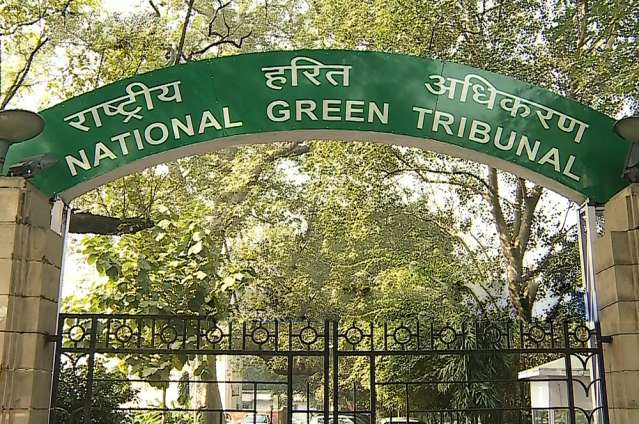
5 landmark NGT judgments that created history

1
NGT Judgments
Image Source - https://bit.ly/3t45Cvq

In this article, Gyandeep Kaushal pursuing Diploma in Entrepreneurship Administration and Business Laws from NUJS, Kolkata discusses 5 landmark NGT judgments that created history.

How National Green Tribunal came into force?

Article 21 of the Indian Constitution has been interpreted mean several things. One of such interpretations laid down by the court was that people do have a right to live in a healthy environment[1] right to have the enjoyment of quality of life and living[2] and right of enjoyment of pollution free water and air for full enjoyment of life.[3] Inspired from the constitutional provision under Article 21, the National Green Tribunal through the National Green Tribunal Act, 2010 (Act 19 of 2010) came into being. The objective of this forum was the expeditious disposal of cases relating to the conservation of forests, protection of environment and natural resources.

Benches of NGT

This Tribunal was established on October 10, 2010. The Tribunal is rather a recent creation of the Parliament. With its principal bench at New Delhi, the Tribunal has several other benches. Its Western Zone Bench is situate in Pune, Central Zone Bench in Bhopal, Eastern Bench in Kolkata while the Southern Bench is situated in Chennai. These zonal benches exercise jurisdiction over a specified geographical territory covering more than one state in any given zone. The NGT has requisite jurisdiction to hear environmental cases pertaining to a given number of enactments.

5 landmark NGT judgments that created history

Within the short span of 7 years, the Tribunal has given some landmark judgments that changed the course of environmental law and environmental protection in India.

Ms. Betty C. Alvares vs. The State of Goa and Ors. [4]

Even a Foreign National Can Approach the NGT

Facts and Issues

A complaint regarding various instances of illegal construction in the Coastal Regulation Zone of Candolim, Goa was made by a personal of foreign nationality. Her name was Betta Alvarez.

  • Before the case could be decided on merits the maintainability of the main application was challenged.
Objections

There were two objections:

  1. The first objection was that Betty Alvarez had no locus standi in the matter because she was not an Indian citizen and thus legally incompetent to file the petition under Article 21 because as a non-citizen, she has not been guaranteed any right under the Indian Constitution.
  2. The second objection was that the matter was barred by the law of limitation and should be dismissed. The case was initiated in the Hon’ble High Court of Bombay Bench at Goa in the form of a PIL but by an order dated Oct 23, 2012, the Writ Petition was transferred to the National Green Tribunal.

Judgment

  • Regarding the first and main objection by the Respondents in this matter, the Tribunal disagreed from taking a narrow view of the right guaranteed under Article 21 of the Constitution of India.
  • The Tribunal in bold terms stated that even assuming that the Applicant – Betty Alvarez is not a citizen of India, the Application is still maintainable as she had filed several other writ petitions and contempt applications before she filed the present application, in which she had asserted that the Respondents had raised some illegal constructions by way of which they were encroaching the sea beaches along with governmental properties.
  • Betty by her application sought the demolition of such illegal construction. When despite finding substance in the complaints of Ms. Betty Alvarez the concerned authorities did not take the requisite action, the Petitioner approached the High Court.
  • In order to answer the issue about locus standi, the court impressed on a plain reading of Section 2(j) of the National Green Tribunal Act, 2010, the very act by which the Tribunal has come into being. Interpreting this section, the Tribunal found that the word ‘person’ deserves to be construed in a broad sense to include an individual, whether a national or a person who is not an Indian citizen. The Court noted that going into the details of Betty’s nationality is not required.
  • The Court laid down in very bold terms that once it is found that any person can file a proceeding related to the environmental dispute, Ms. Betty’s application is maintainable without regards to the question of her nationality.

Almitra H. Patel & Ors. vs. Union of India and Ors. [5]

Complete prohibition on open burning of waste on lands

Facts and Issues

Decided less than a year ago, this case has been the single biggest landmark case dealing with the issue of solid waste management in India.

  • In this case, Mrs. Almitra Patel and another had filed a PIL under Article 32 of the Constitution of India before the Apex Court whereby the Petitioner sought the immediate and urgent improvement in the practices that are presently adopted for the way Municipal Solid Waste or garbage is treated in India.
  • The Tribunal found that the magnitude of the problem was gigantic because over a lakh tonnes of raw garbage is dumped every day and there is no proper treatment of this raw garbage which is dumped just outside the city limits on land, along highway, lakes, nalas etc.
  • The entire country generated over 133760 MT of waste every day as of 2012-2013 and this rate has been increasing with the passage of time.
  • The Tribunal noted the requirement of conversion of this waste into a source of power and fuel to be used for society’s benefit, taking into consideration the Principles of Circular Economy.

Judgment

  • The Tribunal after having evaluated every aspect of this problem issued over 25 directions.
  • The Tribunal directed every state and UT to implement the Solid Waste Management Rules, 2016 immediately and prepare an action plan in terms of the Rules within 4 weeks.
  • Further, the Tribunal Directed the Central Government, state governments, local bodies and all citizens to perform their respective obligations under the Rules without any delay.
  • Direction was issued to ensure proper segregation before processing of waste in energy plants. It mandated the provision of buffer zones around plants and landfills as required.
  • Absolute segregation has been made mandatory in waste to energy plants and landfills should be used for depositing inert waste only and are subject to bio-stabilization within 6 months.
  • The most important direction of the Tribunal was a complete prohibition on open burning of waste on lands, including at landfills.

Srinagar Bandh Aapda Sangharsh Samiti & Anr. v. Alaknanda hydro Power Co. Ltd. & Ors.[6]

In this case no fault liability principle invoked

Facts and Issues

  • Petitioner No. 1 and another filed a petition raising several issues seeking directions to the first Respondent, Alaknanda Hydro Power Co. Ltd. to compensate to the tune of INR 9,26,42,795 against the damage suffered by the members of the Petitioner Samiti in terms of life and property. The 2013 Uttarakhand floods which caused mass destruction of life and property is the backdrop of this case.
  • The case of the Applicants was that the first Respondent had dumped a huge quantity of ‘muck’ generated during construction of the Srinagar Hydro Electric Project without taking the prescribed measure to secure such much from the floods.
  • Due to heavy rains when the reservoir of the Project got filled, due to the opening of the gates of the dam, all the muck got carried to the villages resulting in huge loss to the life and property of members of the Samiti.
  • The Tribunal had to decide on whether the Respondent No. 1 was liable to pay the claimed compensation.

Judgment

  • The Tribunal reached the conclusion that damage to the property as alleged by the applicants was incurred as a result of flood water, which brought along soil and muck, entering residential premises.
  • There was contribution of Phyllite, which is a product generated by digging of tunnel and canal and through power house excavation downstream the barrage in question. Thus, clear contribution of the project could be noticed.
  • The Tribunal noted that although the 2013 Uttarakhand floods were the result of a cloud burst, the damage caused to the residential area was not the result of Act of God.
  • The muck was about 30 percent, which clearly was the footprint of Respondent No.1’s involvement in the damage. And even if it was an Act of God, the Tribunal saw the invocation of the ‘No Fault Liability’ under Section 17(3) of the National Green Tribunal Act, 2010 justified, which principle made the Respondent No. 1 liable to pay the claimed compensation along with Rs. 1 lakh each to the applicants along with costs.

This is one of those judgments, whereby the NGT has directly relied on the principle of ‘polluter pays’ and made a private entity liable to pay a compensation, making them subject to a code of environmental jurisprudence.

Samit Mehta vs. Union of India and Ors.[7]

In this case ‘Polluter Pays’ principle invoked

Facts and Issues

This case was held to involve questions of public importance and significance of environmental jurisprudence.

  • In this case, an environmentalist filed applications in relation to the damage caused to the sinking of a ship named M. V. Rak which was carrying huge amounts of coal, fuel oil and diesel.
  • As a result of the ship’s sinking close to the coast of south Mumbai, a thick film of oil was formed on the surface of the sea and large-scale damage was caused to mangroves and marine ecosystem.

Judgment

  • The Tribunal found that negligence could be attributed to Respondents 5, 6, 7 and 11 and elements of mens rea were to be found.
  • Said respondents hadn’t adhered to the principles of pre-voyage due diligence despite having sufficient time.
  • The sinking of the ship was the result of the negligence of the Respondents and upholding the principle of Polluter Pays, the Tribunal directed Respondents 5, 7 and 11 to pay environmental compensation to the tune of Rs. 100 crores to the Ministry of Shipping, GOI, which is one of the biggest compensation amounts ever paid by a private entity against environmental damage done.
  • Further, Respondent 6 was asked to pay a compensation of Rs. 5 crores.

Save Mon Region Federation and Ors. vs. Union of India and Ors.[8]

Victory for Birds, Massive Hydro Power Project Loses

Facts and Issues

  • In this case, an appeal was filed by an organization named Save Mon Region Federation along with a social activist against the grant of Environmental Clearance given to a INR 6,400 crore hydro project.
  • The said project was situated close to the wintering site for a bird named Black-necked Crane, which is a Schedule I species under the Wildlife Protection Act, 1972 and features in the ‘Threatened Birds of India’ a literature produced by the Appellants. Apart from the birds, the area was also home to several other endangered species such as the snow leopard, red panda, Arunachal macaque etc.

Judgment

  • The Tribunal very proactively suspended the Environmental Clearance granted to the Project.
  • The Tribunal Directed the EAC to make a fresh appraisal of the proposal for environmental clearance grant and asked the Ministry of Environment and Forest to make a separate study on the protection of the said bird.

References

[1] Rural Litigation and Entitlement Kendra, Dehradun and Ors. v. State of U.P. and Ors., A.I.R. 1985 S.C. 652.

[2] Chhetriya Pradushan Mukti Sangharsh Samiti v. State of U.P. and Ors., A.I.R. 1990 S.C. 2060.

[3] Subhash Kumar v. State of Bihar and Ors., A.I.R. 1991 S.C. 420.

[4] Misc Application No. 32/2014(WZ)

[5] MANU/GT/0150/2016

[6] Original Application No. 03 of 2014: MANU/GT/0101/2016

[7] MANU/GT/0150/2016

[8] MANU/GT/0150/2016


Download Now

How to report a Ponzi Scheme

0
ponzi scheme
Image Source - http://www.pulse.ng/gist/ponzi-scheme-twinkas-makes-wave-among-nigerians-as-mmm-fades-away-id6322118.html

In this article, Shivangi Sinha discusses how to lodge a complaint against Ponzi Scheme.

Investment fraud

Investments may have two faces:

  • Positive: Leading to development of an individual and the economy of the country.
  • Negative: Involving certain deceptive practices that scammers use to induce investors to make investing decisions.

A number of cases have been filed for a wide range of such deceptive practices. These scammers generally persuade innocent people to invest their money in stocks, bonds, real estates, or even currencies, by providing them false information.

Common investment frauds

Most common investment frauds include:

Pyramid schemes

A Pyramid scheme is a sort of a business structure wherein members are recruited by the scammers with a promise that they can turn their small investments into large profits within a short period of time. There is no sale of products or services, rather the existing member gets money by recruiting other new members.

Ponzi schemes

A Ponzi scheme is a business model wherein the proceeds of new investors are used to pay off returns to the earlier members. No investment is made in this scheme.

Pump and dump

In this scheme, the scammer generally buys the stock of a small company at a very low price but they fraudulently sell these stocks at an inflated price in order to make huge profits and then they vanish by dumping his shares.

Advance fee fraud scheme

In advance fee fraud schemes the investor is required to pay an advance fee in order to get a deal of making a significant share in a large sum of money and after receiving the fee amount the scammer becomes untraceable.

Offshore scams

In order to receive huge profits, the investors are asked invest certain sum of money in the offshore scheme. These are done in order to avoid tax.

Ponzi schemes

Ponzi scheme is named after Charles Ponzi of Boston, Massachusetts, the person who brought in the concept of paying out returns to the earlier investors with money received from new investors.

It was in the year 1919 when Ponzi decided to set up his own office in Boston. After some days, he got a letter from a Spanish company which had sent an international reply coupon (IRC).

Not having much idea about the IRC, made Ponzi curious to know more about it. After doing a long inquiry about the same, he found a loophole in the whole operating system of IRCs.

Origin of Ponzi scheme

The system of IRCs worked by exchanging this coupon for one or more highly expensive postage stamps Ponzi used his mind to make high profits by buying IRCs in one country and exchanging them for more and more expensive stamps in another country.

For a smooth working of his business, Ponzi appointed his agents in different countries and sent them some money, who would then, buy IRCs there and send it to him at the US, where he used to exchange them for expensive stamps which technically gave him worth much more than what he used to spend on buying them. This is how the whole racket worked.

An online finance company named Ezubao in 2016 cheated around 900,000 investors out of more than $7.6 billion. The finance company offered a number of fake investment products in return of up to 15 percent. But the investors received not a single penny rather, the whole amount was spent upon buying luxury cars, real-estates, and other items.

The Reserve Bank of India (RBI) launched Sachet (www.sachet.rbi.org.in ), a website from where anyone can get information about companies that are allowed to accept deposits. You will also be able to lodge complaints and share information about illegal acceptance of deposits by unscrupulous entities.

Identification of Ponzi Schemes

In order to avoid being a victim of such Ponzi schemes, it is important to identify them. The method and the technology used for these Ponzi schemes may differ from time to time and place to place, but all of them share a similar operational mechanism such as:

  • The investors are promised a high return on investments with a very low risk of return or a very consistent flow of returns are received regardless of the market conditions, or
  • It makes difficult for the investors to pull off their money.
  • These are generally an unregistered investment having a very secretive or very complex strategy and they do not generally send their regular performance statements or the reports of their investments to their clients.
  • These are some of the red flags of Ponzi schemes, as laid down by the U.S. Securities and Exchange Commission.

Difference between a Ponzi scheme and the Multi-level marketing

Ponzi Scheme Multi-level marketing
Ponzi scheme is a fraudulent scheme multi-level marketing is a marketing strategy
there is no actual sale of the product, rather there is fake investment scheme. it is usually used as a channel for selling products and accordingly, the commission is paid to the distributors at the multiple levels when the product is sold.
The strategy of Ponzi scheme is to earn the illegal profit by conducting the fraud. A multi-level marketing company is a simple marketing strategy to increase your network (also known as network marketing), and accordingly, you are paid commission based on your sale reports.

Legal consequences of indulging in Ponzi schemes

Punishment for such schemes are:

  • Imprisonment which can extend up to 10 years.
  • Fine not exceeding INR 50 crores.

The government of India had also constituted an Inter-Ministerial Group for identifying the loopholes in the existing framework for deposit-taking activities and to suggest administrative or legislative measures including formulation of a new law to cover all relevant aspects of deposit-taking.

According to the latest report, the Government has decided the punishment of imprisonment which should not exceed 7 years for those who are running unregulated deposits or Ponzi schemes.

In the US, after the Ponzi schemes are unraveled, a trustee is appointed to recover money as far as it is possible, to make payments to the creditors. Moreover, a lawsuit is also filed against the perpetrator behind the Ponzi scheme.

Sahara group

  1. The founder of Sahara group Subrata Roy was accused of duping investors of some $5.4 billion.
  2. Sahara channelized an investment option wherein the investors had deposited money in schemes launched by the Sahara India Real Estate Corp Ltd and Sahara Housing Investment Corp Ltd, which was illegal according to SEBI.
  3. The Supreme Court of India issued a non-bailable arrest warrant against Subrata Roy.

Saradha group scam

The Saradha group scam of 2013, around 1.7 million investors of a Ponzi scheme. When it collapsed it lost the US $ 5 billion which were collected by issuing redeemable bonds and secured debentures and promising incredulously high profits from reasonable investments.

The officials had attached properties worth INR 1500 crore, which was held in the name of the Saradha group chief Sudipta Sen and out of INR 2500 crore (estimated fraud amount), INR 541 crore had been returned to the depositors.

PACL

CBI arrested the founder of PACL Ltd for the alleged collection of about INR. 450 million from around 55 million investors across the country who had invested their life-saving in the schemes, which was termed as one of those Ponzi Schemes.

Regulatory purview on Ponzi schemes

The Prize Chits and Money Circulation (Banning) Act, 1978 was brought into force after the Reserve Bank of India constituted a Study Group under the Chairmanship of James S. Raj. The Chairman of Unit Trust of India.

Money Circulation, according to the Act, defined as under:

Any scheme, by whatever name called, for the making of quick or easy money, or for the receipt of any money or valuable thing as the consideration for a promise to pay money, on any event or contingency relative or applicable to the enrolment of members into the scheme, whether or not such money or thing is derived from the entrance money of the members of such scheme or periodical subscriptions.

The Act empowers the states to formulate their own rule and regulations to implement the law.

With the increase in the scams across the country. Humanity Salt Lake the NGO filed a PIL against the in-actions taken by the regulatory body, SEBI. The regulator responded that Banned Ponzi Schemes do not fall under the regulatory purview of SEBI. It is the concerned State Government, who is the regulatory authority. Even though, banned by the Central Legislation i.e. The Prize Chits and Money Circulation 1978 (Banning) Act, 1978. The State Government which is the enforcement agency of this law.

As per the Direct Selling Guidelines 2016 Framework, as unveiled by the Central Government for the states to regulate the sector. The direct sellers need to comply with certain guidelines in order to avoid them turning into a Ponzi scheme such as:

  • The direct sellers are prohibited from charging any sort of entry fee from the agents.
  • It also mandates firms to constitute a grievance redressal machinery for the protection of consumers’ interests and such others.

What should a victim of a Ponzi scheme do?

Being offered an opportunity to invest in a new investment scheme, after investing in such scheme if you realize that you have become a prey in a Ponzi scheme, then stop further investing in that scheme and if you have provided them your bank details, inform the same to your bank.

The Reserve Bank of India (RBI) has recently launched an online website named Sachet, to curb Ponzi schemes in its initial stage.

It is an initiate of the State Level Coordination Committee (SLCC), which is a joint forum formed in all States to facilitate information sharing among the Regulators i.e. RBI, SEBI, IRDA, NHB, PFRDA, Registrar of Companies (RoCs) etc. and Enforcement Agencies of the States including the Finance Department, Home Department, Law Department, Economic Offences Wing etc.

The objective behind its formation is to control and curb of the illegal and unauthorized acceptance of deposits by unscrupulous entities. Every company is guided by its own regulatory body which regulates its business conduct.

  1. Sachet allows individuals to file a complaint directly using that common platform, from where the regulator can process it.
  2. If an individual is not aware of the regulatory body under which the alleged Ponzi Company is covered, even they can lodge a complaint using the similar procedure provided therein.

Help your regulator

The most important step in controlling these Ponzi schemes is to help the regulator by providing information about the entities suspected to run Ponzi Schemes. This can be done, again by using the Sachet.

It enables the regulator to gather information regarding any unauthorized acceptance of deposit or money through different schemes by any entity and as soon as the information is provided there, it is immediately shared with the Regulatory Authorities, who can then take the actions.

The victim can also track the status of their complaints.

Procedure to file a complaint

A victim having a suspicion that an entity is running an unauthorized acceptance of deposits can lodge a complaint through the Sachet website, following a simple procedure:

  1. First of all, one should visit the Sachet website www.sachet.rbi.org.in.
  2. File a Complaint and fill the registration form with details.
  3. Choose the regulator under which the Ponzi entity might be covered, but in case you are unaware of the same, the tab of ‘Don’t Know the Regulator’, may be used.
  4. Next step is to upload the scanned copies of the documents.
  5. After completing the above steps a complaint number will be given to you with the details of the regulator concerned.
  6. You can also track the status of your complaint by using the ‘Track your Complaint’ option.

Recovery of money invested in the Ponzi scheme

The recovery of the money which is invested in Ponzi scheme is now possible. Under the Prevention of Money Laundering Act, certain provisions provide for the restitution of the duped investors’ assets from attached properties of offenders.

For instance, over INR 101 crore worth of bank balance has been attached in connection with the money laundering probe in the Speak Asia online marketing scam which came into limelight in 2001.

A criminal case has already been lodged against the firm including its officials and few others, under the provisions of the Prevention of Money Laundering Act.

The opinion of U.S securities and exchange commission

  • According to U.S. Securities and Exchange Commission, a Ponzi scheme is an investment fraud that involves the payment of purported returns to existing investors from funds contributed by new investors.
  • Bernie Madoff hit the market economy Ponzi scheme is considered to be the longest-running Ponzi schemes. For 20 long years, investors invested in his investment company and received huge returns on their investments and the fraud could get revealed during the great depression period, when there was a great economic crisis.

Conclusion

Be cautious if someone is trying to sell out his investment product with a huge return, be cautious that something might be fraudulent. Check out whether the investment is registered or not. Though, registration may not be necessary for all investments, take out the information about the investment which is being offered to know the reason why it is not registered?

Download Now

What Can Lawyers Learn From Wolves?

2
What can lawyers learn from the wolves?
Image Courtesy - http://www.city-data.com/forum/long-island/1492273-seeking-estate-wolf-lawyer.html

In this article Aditya Shrivastava, Content Marketing Manager at iPleaders offers some really interesting insights on what can lawyers learn from the wolves.

Human beings from a time immemorial have a tendency to compare themselves with animals. Be it India or Greece, mythology has played a tremendous role in creating god-like figures. From the Chinese horoscopes to social media apps, the tendency of human beings relating themselves to these innocent and, at times, wild creatures, has not changed.

Humans not only try to relate themselves with animals but they also try to relate human behaviour and profession with animal instinct. For example you might have seen general comparisons like being intelligent like an elephant, swift like a panther, notorious like a monkey, loyal like a dog and lazy like a cat. All of this has worsened with the superhero fantasies coming in the foreplay. Spiderman, Catwoman, Black Panther so on and so forth.

Although there is nothing wrong with the comparisons, however, I am a lawyer and I cannot help but argue. In my opinion, I wouldn’t want to be compared to a different species. I think that is equivalent to degrading the very genesis of the other species present around us. If I ask you today, can you be as loyal as a dog? It is humanly not possible to do so. Can you be as swift as a leopard? I challenge you to come even close to it. It is unfair that humans compare themselves with other majestic beings.

There is something we must do. We as human beings have an edge over all the other beings. We can observe and learn to become better. This is the only possible explanation to how and why human beings are probably better than the rest. We have evolved ourselves in a way that we can learn and become better at everything we do.

A couple of days ago my colleague and I were having a discussion about spirit animals. The discussion was too interesting. I went ahead and checked what my spirit animal is. It turned out I am a wolf! I started reading about it and realized that there is a lot to learn from the wolves, especially if you are a lawyer.

You might have heard about the wolves pack and a lone wolf. It can be easily compared to your law firm or your company or yourself. If you are a part of the pack, then you are given certain responsibilities and you are expected to fulfill them. Just like wolves, you are expected to contribute to the collective goal of the organization and strive hard to achieve it. As much as you are a part of the pack, you are also all by yourself like a lone wolf.

I would like to quote a phrase from a motivation speech by Fearless Motivation,The wolf on the top of the hill
 is never as hungry as the wolf climbing the hill. It’s not easy doing it alone. But if you keep going, stay true to yourself. It will be worth it in the end.” This holds true for lawyers too. There are certain lawyers and law firms who have made it to the top. If you keep striving towards your goal, you are bound to make it big.

So what can we learn from the wolves?

1. Wolves Are Relentless

Wolves are the most relentless species when it comes to pursuing their needs. Be it shelter, water, food or protection, they do not tend to take rest until they find them. This is a mindset that needs to be acquired as lawyers. We should work towards our goal relentlessly and make sure that we do not give up.

If you have watched the movie Jolly LLB, you’d be able to recognize the main character, Jolly. A novice to the law scenario, he works hard and wins an impossible case. If you think that is fiction, it’s not. A lot of juniors in litigation firms or who are assisting independent lawyers go to the court to appear or assist without any previous formal training. They are made to learn how to survive and make a place for themselves. Not just litigation, even in corporate practice, unless you are relentless and have a goal set to meet your deadlines, you won’t be made a part of the pack.

Imagine if you were a wolf who was carefully trained by a mother wolf. Won’t you be better at meeting your ends? Don’t you think if Jolly knew how to draft or he knew how criminal law works, wouldn’t he have conveniently avoided the obstacles? If you are relentless or are relentlessly striving towards becoming a lawyer, you can check out courses like these to provide you some direction.

2.  Wolves Are Fearless

If you are a Game Of Thrones fan, you might have noticed that the strongest support of the Starks are probably the wolves. Nymeria, Arya Stark’s direwolf, fearlessly saved her from King Joffrey. Bran’s direwolf saved him from an alleged assassin. Jon Snow’s direwolf, Ghost, fought to save Samwell Tarly and Gilly. When Nymeria was made to abscond, she left alone and fought against all the odds, ultimately leading a pack of gray wolves.

A lawyer’s life is full of such challenges. A friend of mine once told me about a certain judge who disposed of matters pretty quickly. However, the judge did not give two hoots about the self-esteem of the advocates appearing before his bench. His disregard towards one’s integrity was so strong that he would pass derogatory statements against the advocates in any way he would deem fit.

In a matter of two months, he had already referred over five advocates to the bar for disciplinary action. When my friend appeared before him with a partner of her firm, the judge left no stone unturned to mock the partner. After that one incident, going to that judge’s court was a nightmare for her. However, she fought the fear by appearing before that judge at every opportunity provided to her.

This is a minor incident. My best friend’s father started off as a corporate lawyer in Uttar Pradesh and eventually moved to Patna to start his criminal practice. His struggle is unmatchable. He started off by networking with individuals who weren’t all black and white. Once he became famous, he used to get calls at home warning him to take a case or bear the consequences. It was probably the worst fear someone could instill in him, however, he ensured that he fights them all and continues what he does. Today, he is one of the most celebrated lawyers in Patna.

The struggle of being a lawyer can be extreme, however, it depends on you whether you can be that wolf who can fight the worst of fears and come out victorious.

3. Wolves Never Look Back

This is one quality of wolves which is admirable.

A wolf never looks back and keeps marching towards his goal. There are a lot of circumstances in a lawyers career when they need to forget the past and keep marching towards betterment. The mistakes are inevitable. My friend, who used to work for reputed FMCG company, told me of an incident where in a certain decision of the high court, the company was directed to stop an advertisement with immediate effect.

My friend’s boss asked him to convey it to the marketing team. The marketing team was to send instructions to the advertising agency to stop airing the advertisement. As he boarded his flight back home, he dropped in a mail to the marketing team. After his flight landed, roughly about 3 hours later, he got a call from his boss to check whether he has conveyed it to the team or not, to which he answered in affirmative.

However, the next day the advertisement was aired on TV. He got a call from his boss again asking if he had called the marketing team to ensure that the advertisement was stopped. He replied saying he had mailed the team. His boss asked him to recheck. Turned out the phone went into airplane mode before the mail was sent. As a result, there was a contempt case filed against their company.

Incidences like these are regular. The question is what are you doing to overcome them? Are you deterred from such incidences and walking away? Or are you overcoming them like a wolf?

When I was going through a tough phase in college where my aspirations of becoming a journalist didn’t seem feasible anymore and my career in law wasn’t taking shape, I was in the middle of nowhere. I couldn’t see beyond “what a terrible mistake I have made”. I was on the verge of giving up my career.

It was then that I decided I needed to be better at my game. I started researching on what I could possibly do and landed on this course by NUJS Kolkata. I received good insights on what could I possibly do after my graduation and increased my knowledge. My approach towards my career was more focused and as a result, I got an offer from an MNC. I knew that my life changed for good.

So, when I read about the wolves, I realized that I am that lone wolf who has to climb up to reach the pack. I was hungry and relentless. I tried overcoming my fear and never looked back.

I leave it for you to decide. Can you be the wolf?


Download Now

Opportunities For Lawyers After The Implementation of GST

0
career opportunities for lawyers after GST
Image Courtesy - https://www.nrilegalservices.com/

In this article Aditya Shrivastava, Content Marketing Manager at iPleaders speaks about career opportunities for lawyers after the implementation of GST.

GST in India has caused quite a stir in the past year. While most of the professionals are worried about what is going to be the future of various services with the change in indirect taxation, others are busy training themselves on the current tax regime. There is no denying the fact that any change takes time to settle in and is uncomfortable in the first instance.

GST has far-reaching consequences. It is going to impact the way companies work and they will have to now work on changing their functions on various levels. Companies, startups, professionals, everyone is skeptical and equally scared about the pandora’s box that GST might prove to be.

However, a report by Economic Times has a different story to sell. The article titled, “Lawyers are smiling as GST set to fuel the litigation wave” has brilliant insights to offer as to how the current GST regime is all set to rocket the speed of tax law practitioners.

How can we conclusively say that the current GST regime is going to be beneficial for the lawyers?

As per a world bank report, GST is one of the most complex and highest tax regimes in the world. Currently, GST is applied in 4 slabs or brackets, which range from 5 to 28%. This sort of disparity is most likely to attract thousands of lawsuits. As per a report by Economic Times, India already has a backlog of 24 million cases. In May 2015, there were roughly 1 Lakh indirect tax cases pending in the courts alone. With the difference in levying the tax, requirement for cumbersome compliances and massive potential for state versus central or individuals versus state disputes, the tax cases are most likely to be on a rise.

It is undeniable that individuals keep fighting to get as much tax exemption as they can. For example in the McDonald’s case, it was contested for 12 years whether a soft serve should be considered as an ice-cream and attract duty or not, these are examples which reflect the struggle of individuals to avoid taxes. In an interview with Economic Times, Mr. Arvind Datar designated Senior Advocate at the Supreme Court of India said, The new regime will increase classification and valuation disputes as companies dispute which brackets they fall into or push to keep their valuations lower, legitimately or not.”

Our in-house expert Mrs. Komal Shah who has designed an online course for GST, keeping such opportunities in mind, says, “GST is not just complex but extremely unclear. The future has it that there will be innumerable disputes because of the interpretation issues of GST. The applicability of various tax slabs is going to only make the situation more grave. You can expect individuals to try their best to claim fully functional input tax credit and this will only lead to more disputes. Moreover, there still remains a lot of issues related to cross-border transaction or refund related transaction. Who is going to take care of that? CAs? Maybe! But for all the disputes they are going rush to the lawyers. ”

You can imagine, there are going to be 11 types of tax returns which need to be filled by any kind of taxpayer. There is a list of compliances that need to be followed by various companies like uploading details of purchases and sales, filing returns thrice in a year, securing a GSTIN, etc. All of this is a cumbersome process and will only result in better prospects for lawyers.

What are the law firms doing to tackle the situation?

Law firms in India are all set to tackle the new set of challenges that GST has in store. Mr. Sandeep Chilana, a partner at Amarchand and Mangaldas in an interview with Economic Times had said, “I absolutely expect more litigation, so we are increasing our team. The most impacted industry by GST is my industry. And we are obviously impacted positively.”  Another report by Livemint states how Jyoti Sagar Associates (JSA) sent Mr. Ashok Dhingra to Canada during winters to understand their goods and service tax to cope up with the new laws in India.

In the same article Mr. Rohan Shah, a partner at Economic Law Practice (ELP) calls GST, “a game changer.” The enactment of the new Act has made any lawyers knowledge of indirect tax redundant.

Prof. Nilima Panda, a tax law professor, agrees. On speaking to her over a call, she particularly emphasised on how the new law has made all the previous modules, books, research and case laws more or less ineffective and how she has to work each day to ensure that every new discussion, dialogue or any update related to GST is taught to the students.

Training the associates in the law firms seems to be a matter of great concern now. Where JSA made huge investments to retrain their team once GST came in full-fledged force, Lakshmi Kumaran and Sridharan (LKS) prepared by understanding GST of countries like the United Kingdom, Australia, Canada, etc.

While the law firms are bucking up to face the situation, what are independent practitioners, law students, indirect tax experts doing?

It remains a widely known phenomenon that law firms and companies have the required resources and time to get their base strong about any new enactment. While they are busy to ensure that they have a full proof plan to combat GST cases and remove the potential harms that can arise out of it, there is no data to understand how the independent practitioners or indirect tax experts are dealing with the situation.

Students of law schools are also extremely discontented, especially those who aim to make a career in tax law or are appearing for interviews. A student who is graduating in May 2018 confessed that she had to answer questions about GST in every interview, given the fact that she studied tax law prior to the implementation of GST she had a very limited idea and couldn’t fare well in the interview.

As per Prof. Nilima Panda, GST law is still evolving and there are reports that the GST council meets 3 times in a month to ensure that the governing law covers every aspect. However, that is a time taking the process and until then the resources to learn GST are very limited. “It will settle down in another 10 years, it will take time, but it will settle down.” says, Mr. V. Lakshmikumaran, Managing Partner at LKS, as per a report by Economic Times India.

Can you imagine what can happen in the next 10 years if you start reading about GST and its implications right now? What if I told you that although there exists next to no learning material on GST, I have found a course that teaches you GST online?

This online course has a comprehensive coverage of all that you need to know about GST. Right from the basics to the practical application of GST, you can know it all. I understand that it is tough to believe, and you might not trust me at the first go. You can download the free sample yourself here and see if it is worth giving a shot.

When all the law firms are planning to expand and are eagerly looking for lawyers with knowledge on GST to join their team, a little effort on your end shouldn’t really hurt, right?

To a bright career that is in store for you. All the luck.

Download Now

Aakritee Raj; 4th year student in New Law College, Bharati Vidyapeeth Deemed University (BVDU), Pune, on her experience of being a business law fellow with iPleaders

0

I am a fourth year student at New Law College, BVDU, Pune. My interests are in litigation and cyber law. I joined the business law fellowship with iPleaders since I believed that the academic education in the college wasn’t enough to brace me for the practical world and I was looking for more. But I had no idea what I was getting into!

The program has tremendously elevated my writing skills. It has been a very enriching experience. It has completely changed the way I used to write. I learnt that whatever we write needs to be practically relevant. I also learnt that if something needs to be explained in simple language, it must first be understood in depth. The topics that we were given were very specific and of a wide variety and this has increased my practical knowledge a lot.

My last internship was with Mr Mahesh Jethmalani. I thought that I would apply my newly acquired writing skill to use for one of his ongoing matters. My researching skills have also become more focused now and I know what and where to look for, while earlier, I didn’t know how to go about it. I got good guidance during the fellowship because of which I have a sense of what to include in an article and what to avoid. Because of this, I was able to impress Mr Jethmalani and other associates with my writing on that matter and got a one up against the other interns. When I was supposed to write an article in my college on a human rights issue, I was able to write very fast, in a couple of days, unlike before, when I took about a week to write a 2000 words article. My writing has become much more structured. I have written on a very wide variety of topics right from National Green Tribunal to Compliance rating mechanism in GST and this has increased my interest in a wide variety of topics. I want to go on with the fellowship since it is very engaging and I would want to continue improving and polishing my writing skills.

I would recommend people to apply for this fellowship since it gives practical knowledge which cannot be obtained just by attending the college. This is a very prestigious platform where you have people guiding you and you can guide other people – you can build relationships with other fellows. Given that blogging is very upcoming thing in the legal sector and that you would need researching and writing skills throughout your career, this is a great platform to start with. I would love to recommend this fellowship to all my friends and I keep telling them that if you have the time for development beyond the college, you should definitely go for it!

Download Now

How Trademark Registration is advantageous to your Business

6
drones

This article is written by team LegalWiz.

Trademarks are known as “Brand Name” more than its legal term. Any symbol, word, name, device, numerals or combination of both, which can be represented graphically can be registered as trademark under Indian Trademarks act, 1999. Registration under trademark grants you right to use the unique symbol which helps to distinguish the products in form of goods or services from others including the competitors. However, the Brand Name, which is registered with respect to services is known as the service marks.

A brand Name is that influences the decision making power of the consumers approaching the organisation with the reputation it holds. An ideal Trademark, through which an organisation will be known, can be the word or phrase that is easy to speak and remember. Regardless of the said character, it should not lose its uniqueness and distinctive character. The uniqueness shall be confirmed by the organisation in manner that it does not conflict with other registered trademarks or well-known brands. Apart from brand name registration, a logo can also be applied with the same application.

An entrepreneur or owner of business cautious to build a reputed brand in the industry should be aware of what are the benefits that a Registered Trademark can offer to your business to take a wise decision of making an application. Here are Top 10 benefits a Registered Trademark offers to your business!

To know more about Trademark Registration please visit

Benefits offered by Trademark Registration:

Exclusive Rights

A creator of the brand would wish to enjoy the exclusive right over it disallowing usage by third parties without his consent. A registered trademark fulfils your wish by offering the ownership of registered brand name and logo for all the products falling under the class(es) applied. Further, the owner can enjoy the sole title of the Trademark and can stop other from the unauthorised use of the Trademark under the same class where it is registered. It gives the right to sue the unauthorised user of the Trademark Registered. However, the rights are granted after issuance of registered certificate only under the class applied. The rights cannot be claimed for activities not covered by the applied class.

To know about documents required while registration please visit 

Benefits offered by Trademark Registration:

Benefits offered by Trademark Registration:

Creation of Goodwill and Trust

The established quality of your product and services are known by everyone through the trademark which establishes trust and goodwill among the customers in market. As the brand name is legally registered it creates a positive image among consumers which helps in creating permanent customers who are loyal and always opt for the same brand.

Set your products apart

It makes easy for customers to find your products using ® mark beside the brand name or logo. Trademark makes your product and identity of products distinct from that of the existing and foreseen competitors acting as efficient commercial tool to market the product. The logo will communicate your vision, quality or unique characteristic to the third parties, needless to say working as self-marketing tool.

Recognition of product’s Quality

A registered brand name or company logo gives recognition to the quality of the product. Customers attach the product’s quality with the brand name and this image is created in the market about the quality of a particular brand which helps in attracting new customers as they can differentiate the quality of a product by the logo/brand name.

Creation of Asset:

Registration of Trademark creates an intangible asset i.e. Intellectual Property for an organisation. Registered trademark is a right created which can be sold, assigned, franchised or commercially contracted. Also, the Trademark is an intangible asset which gives the advantage to the organisation. This intangible asset will form part of the financial statements of the owner and thus while transfer of business the value of goodwill can be encashed by the owners.

Use of ® symbol with brand name

Once the trademark is registered you can use the ® symbol along with your brand name or logo intimating that it is a registered trademark and no one can use the same trademark. It is exclusive of all types of usages as well as rights. Thus it is direct intimation to third parties regarding ownership of trademark. If someone else use the trademark then you can also sue the party if the trademark is registered.

Protection against infringement

Finding possibilities of unauthorised usage of your organisational reputation? A registered Trademark will ensure no competitor or other person can use the wordmark or logo registered by you under trademark. However, if in any case one uses it without the approval of the owner of trademark or make any deceptive use of same, the owner can get the legal protection under the Act and stop the person doing so.

Protection for 10 Years at negligible cost

Trademark registration is done on a very low maintainability cost. Once you register the trademark you have to just pay the maintenance cost and renewal cost which is after 10 years of registering the trademark. It is cost efficient and helps your organisation to create a unique image with legal protection of 10 long years at nominal cost.

 Global Trademark Registration

If one wants to register the trademark in countries other than India, the trademark registered in India can be used as basis of international registration. For any person willing to expand outside India, trademark registered in India can provide a good base along with the established Goodwill in other Country. The application for registration in other company is required to be made within prescribed time of application in India.

Attract Human Resources:

Young minds aspire to join big Brands as it acts as a magnet. It inspires the positive image of the organisation and thus candidates are attracted towards them easily. This reduces the cost towards hiring and related activities.

The benefits of the trademark registration are more than what it costs to be registered. Its value may not be calculated in monetary terms in short term but the market presence offered by registered trademark plays a huge role for the business growth. So, make an application for Trademark Registration on earliest before someone else registers it. Get hassle-free services from Team LegalWiz.in with assistance of experts. You can reach the team at 89806 85509 or [email protected].

Download Now
logo
FREE & ONLINE 3-Day Bootcamp (LIVE only) on

How Can Experienced Professionals Become Independent Directors

calender
28th, 29th Mar, 2026, 2 - 5pm (IST) &
30th Mar, 2026, 7 - 10pm (IST).
Bootcamp starting in
Days
HRS
MIN
SEC
Abhyuday AgarwalCOO & CO-Founder, LawSikho

Register now

Abhyuday AgarwalCOO & CO-Founder, LawSikho