Download Now
Home Blog Page 1513

Applicability of consumer protection laws in online transactions

0

In this article, Swathy Nair[1] & Swetha Nair[2] discusses the applicability of consumer protection laws in online transactions.

The cyber marketplace has evolved dramatically in recent years and consumer faith in such a complex and interactive atmosphere has become important. The cyber space has now become a huge platform for trade and commerce. E-Commerce is the buying and selling of goods and services over the internet. The extent of e-commerce has developed simultaneously with the advancement in networking facilities all over the world. The consumers have also been offered several advantages such as multiple choices, convenient delivery services, competitive prices etc, in the cyber world. From sale of goods and services, the lucrative trade opportunities offered on the online platform ranges to e-banking and online payments. Thanks to the expansion of internet, for the effective competition and the consumers’ convenience of entering into commercial transactions from home.

However, the sad reality is that, despite such advantages, trade and transactions in the cyberspace is inherently risky owing to the ambiguity in the laws governing such transactions. Adding to this is the inherent difficulty in organizing the cyber consumers.  The dilemma remains in the fact that our legal system does not cover the facets relating to the large but, often neglected domain of consumer rights in case of internet transaction. It is thus indispensable to strengthen the study of legislation on e-commerce and consumer rights.

There are concerns such as data privacy, online identity theft, and sometimes, the product ordered do not conform to the actual description. In such situations, the buyer is often left without remedy, because of jurisdictional other issues in cyber space.

Besides, it is not easy to pass legislation protecting the consumer rights in e-commerce, because of the consideration for preferential development in e-commerce, especially in developing countries like India. It is apprehended that such legislation may hinder the development of trade on the cyber platform due to hasty legislation.

This essay analyses this environment and tries to suggest how to adapt to the current scenario and reinforce fair practices, information disclosures, privacy and payment protection, consumer education and dispute resolution.

The ‘Cyber’ Market

The online medium offers different facilities through which commercial activities may be conducted. The online medium can be seen as a collection of different media united by common use of computer-to-computer communications at a distance. The forms of online communication that are significant to e-commerce are the World Wide Web, newsgroups and e-mail. The online marketing websites may be simple or elaborate and may allow less interactivity to the consumer. The simplest form of a marketing website is a page that presents the user with company’s name, some description of the products or services it offers and means of communicating with the company. The most advanced commercial sites allow consumer to purchase products online. In addition to maintaining its own website, a company may advertise its products or website on other websites.

Deceptive Marketing Practices

However, these are typically favourable to specific kinds of fraud; for example, chain letters and pyramid schemes which are quickly propagated through bulk email and pattern websites. Deceptive marketing practices that use online medium may use other communication media. A solicitation carried on internet through an email or a website often refers to sources of additional information in order to convince and persuade the user such as a telephone number or a contact address. Chance fraud is comparatively higher if the payment is made through an online mechanism. Most common types of online fraud are;

Pyramid schemes: In pyramid schemes, promoters collect payment from consumers for the right to recruit new participants, and to collect commissions for doing so. Nearly all participants in these schemes lose money[3]. Sometimes, these are operated as ponzi schemes, in which fees paid by participants in the lower pyramid are used to simulate earnings that are paid to earlier investors, thereby increasing the verisimilitude of the scheme[4].

Chain letters: Chain letter promise recipients that if they follow simple instructions such as small sums of money to four or five listed individuals, inserting one’s own name in the top name on the list, they will make fortune.

Bogus Business Opportunities: Internet communications are used to promote business opportunities that fall short of the claims made for them. This involves marketing of credit repair services, work at home schemes, franchises and online shopping programmes. Fraudulent credit repair schemes involve claims that seller can remove or can instruct the consumer how to remove accurate, non-obsolete negative information from the consumer’s credit report[5].

Magical Remedies: Several cases have been brought against promoters of purported cure for AIDS, impotency, hairsuitism, hyper-pigmentation, mood disorders and cosmetic products.

Items Paid for but never delivered: There are many cases in which the sellers or service providers accept payments for the goods and services, and then fail to deliver goods or perform service as offered. Recently, the case of Timtara.com was brought light, where the consumers were duped of their money; advance money was taken but the goods were never delivered.

Delivery of items not in conformity with description and substandard packaging: Recently, Maharashtra government’s legal metrology department registered a number of cases against the e-commerce giants Amazon and Flipkart for alleged violation of the Legal Metrology Act, 2009, and the Packaged Commodities Rules, 2011. The action was based on a number of complaints which alleged that the packages did not mention MRP of the Goods, the Weight, details of manufacturing, packing dates, contact details of makers or suppliers etc[6]. A similar case was alleged against the emerging online retailer Shopeclues.

There has been several incidents of the online shops delivering substandard or substantially different or misbranded products. For some websites such as Home shop18, in case of defect in goods or if products with substantial difference from the description are delivered, it must be notified within 48 hours in order to be eligible for return. Such conditions destroy all most all possibilities of return. These types of unilateral terms are unconscionable and unfair.

Investment and Security Scams: One common type of internet based security scam is the offer Phoney or overvalued investments. Ranging from traditional securities like stocks and bonds, to more esoteric investment opportunities involving anything from eel farms, cattle breeding, oil and gas drilling to online gambling and multi-level marketing programmes. Securities hawked over internet come in huge variety of shapes and sizes[7]. Sometimes false information is disseminated through newsgroups; chat sessions, online newsletters to manipulate the price of a security. False and misleading information is pumped to create spurious demand whereby the perpetrator dumps his holdings on unwitting buyers at huge profit. Offering of unregistered securities, illegal off-exchange futures, dispensing fraudulent investment advice, failure to comply with registration and disclosure requirement etc. are other examples of online misconduct relating to securities.

Spoofing: Spoofing involves online communications to impersonate another person or entity[8]. Several characteristics of the online medium make it easy to engage in this practice. The addressing scheme is virtual; domains names are handed out without any verification of the identity of the domain owner and communications are at a distance[9]. This involves the setting up of a website with a domain name similar to that of a well known company, but is different from the domain actually owned by the company, offering a product that the actual company sells and selling it to unsuspecting consumers.

Spamming: Spamming refers to the bulk unsolicited commercial email and making commercially oriented off topic newsgroup postings[10]. The first widely noted use of this marketing technique occurred in US in 1994, when a law firm in Phoenix, Arizona posted an advertisement in 1000s of newsgroups offering their services as immigration lawyers and the firm became instantly famous and widely reviled throughout the community of internet users for what was viewed as serious breach of internet etiquette[11]. Spamming is one of the major media through which business entities ‘trap’ their customers. On an everyday basis, we receive offers for availing credit cards and personal loans in easy steps, for opening trading accounts in investment companies with trading app and software for free, for free comparison of different insurance options and advice to save tax on payment of minimum amounts, free health insurance tips, free coupons to avail discounts on flight, cabs, movie shows and so and so forth. Though, these techniques are not inherently deceptive, to a great extent used as delivery mechanism for fraudulent solicitations and to manipulate consumer decisions.

Misleading Advertisement: We receive several emails offering free shopping for the first purchase from an online shopping Application or free ride for the first booking of online cab services. However, we may not get these offers, on the ground that the offer is not applicable to the purchased product or the kind of service we availed.

The growth in online commerce will definitely be followed by an increase in deceptive marketing practices[12]. Annual consumer losses from online deceptive marketing practices may amount to several billion dollars.[13] Similarly, merchants may also be the victims of online fraud. When a credit card thief makes unauthorized use of a consumer’s credit card number and the sale is made at a distance without signature verification, the merchant may be responsible for the full amount of the loss[14]. Deceptive marketing practices include both fraudulent and negligent misrepresentations. According to one definition, a misrepresentation is fraudulent if the maker knows or believes that the matter is not as he represents it to be.

Trader identity theft and phishing

Online identity theft is the practice of pretending to be someone else online. The objective can range from quite harmless activity to a criminal activity such as stealing customer’s personal information. It involves phishing or online fraud to get a person’s bank details for making financial gains.

On internet, there is sufficient opportunity for people to mimic legitimate business more convincingly, reach potential victims effectively, escape detection by maintaining identity, and ridicule enforcement officials by locating or relocating if detected, in remote jurisdictions which have no significant law or enforcement mechanisms.

Invasion on Consumer Privacy

The cyberspace and its capacity to collect and arrange vast amounts of information without the digital consumer even knowing this is an emerging threat to traditional privacy values.

Today transactions over the internet often require the consumers to divulge large amounts of personal information including credit/ debit card details and delivery details. Also the possession of such information gives e-business the opportunity to analyze it, discovering the trends and increasing the efficiency of their business dealings.[15] Consumers usually had no idea about the potential uses of such information, and as such had no idea as to the possible misuse of such information and the violation of their privacy that could happen.

The US which is one of most developed countries in terms of internet technology. In the US, the protection of the right of e-commerce consumers to privacy has been sought through the means of self-regulation by the e-commerce industry. The US mainly advocates mainly take advantage of industry self regulation to protect e-commerce consumer right to privacy[16]. However, its first real legislation on network in which the consumer interests are considered, came when it passed the Child Online Privacy Protection Act on October 21, 1998. The Act focuses on the protection of children’s privacy rights, which clearly provides provider obligations and penalties when the consumer is 13 years old. As the technique of ‘industry self –regulation has proved to be ineffective, there is increasing demands in US for more such legislation for ensuring consumer privacy.

Consumer Identity Theft in Online Banking

In fact Scams targeting internet banking has increased dramatically with the increase in the number of e-consumers to the bank. This fact will impact consumer trust in online banking[17]. If these crimes increase the public trust for online banking will decrease automatically, it is a dilemma for online banking activities where consumer identity theft frequently occurred then the identity will be used for committing cyber crimes such as cyber stocking harassment, unauthorised access to computer systems and non-accesses computer crimes[18]. However, the development in biometric technology is expected provide better protection of consumer identity. Biometric technology is an automated method of recognizing individuals on the basis of measurable biological and behavioural characteristics.

Deficient Services

It is quite common that, in e-wallets when users try to transfer money to bank accounts, it fails, and when a complained is filed though the consumer receives a message that it is rectified but this failure continues. The result of this is the freezing of money in the e-wallet. Sometimes, even though you receive a message that the money is transferred, it does not, in fact, reach the bank account, and after several days you receive a notification that the transaction is reversed. Most of the times, the consumer is left with the question of, whom to approach for the fixation of the problem.

Sometimes it happens in online shopping that, though the site ensures next day delivery or delivery within a specified date, thereby manipulating consumer decision to chose a particular product from a particular site over another, the company does not deliver the product within that period. They merely inform the consumer that an unexpected delay has occurred in transit. Similarly, often we find the parcel left at the doorsteps, or with the security or neighbours or in the office reception even if it requires our signature to complete the delivery by the carrier. It will cause a lot of discomfort and uneasiness if the products purchased are personal care or sexual wellness products, in addition to the risk of being lost.

Likewise, though most of the online retailers offer ‘easy’ return and cancellation, the process of refund is not ‘easy’, in fact. Many of the times, it takes weeks to process the request for refund and to initiate refund. There have been allegations of arbitrary denial of ‘return’ requests on the ground of non-compliance with the terms and conditions, which are most times, hidden, unnoticeable or misleading.

THE EXISTING LEGAL FRAMEWORK IN INDIA

It is in several cases not clear how existing regulatory mechanisms governing trade practices apply to online commerce. In the older paradigm of trade legislation and other rules of conduct designed to protect consumers from deceptive marketing practices apply with their full force, since the relevant transaction is a domestic one between the consumer and a domestic vendor[19]. But, when a consumer deals with an online vendor, the controls on deceptive marketing practices loose much of their efficacy; attempts to enforce the laws of the consumers’ jurisdiction face both legal and practical roadblocks and self regulatory mechanisms may be unavailable. When sellers make use of different kinds of online communication, regulation of online transactions ranges from difficult to impossible.

Though there is no specific mention in the consumer protection Act, it is argued that nothing in it precludes it application over internet transactions. On the other hand, the consumer Protection Bill, 2015, proposes to specifically include online transactions under its ambit. Similarly, it is also argued that the existing framework of Indian Contact Act, Sale of Goods Act and Hire Purchase Act is sufficient to deal with the new Challenges. But these legislations fail to deal with the complexities and technicalities involved in cyber transactions. Though it true that Banking Regulations Act, Banking Ombudsman Scheme and Various RBI circulars cover e-banking, these legislations do not regulate e-wallets through which huge amount of money transferred. Information Technology Act covers only commercial transactions between government through its functionaries and citizens. This is mainly aimed at implementing measures towards e-governance. In case or Fraud or cheating an aggrieved person can register FIR with the police.

Last year the advertising industry watch dog Advertising Standards Council of India upheld consumer complaints against 6 e-commerce giants namely, Amazone.com, Redbus.in, HolidayIQ.in, Xeroine Retailers and Portamart, Lenskart.com for violating ASCI Codes. [20]  However, unfulfilled and false offers of online shopping sites, manipulating consumer interest, continue without any hurdles and with impunity. Similarly, today, India does not have a comprehensive legislative protection of e-commerce consumers’ privacy, but consumers are more concerned with this issue than before.

MEASURES TO PROTECT CONSUMER RIGHTS

Consumers who participate in e-commerce should be afforded transparent and effective consumer protection that is not less than the level of protection afforded in other forms of commerce[21].

Governments and stalk holders must join hands to ensure such protection, and determine what modifications may be necessary for the existing legal framework to deal with the special circumstances of e-commerce, especially for the protection of vulnerable consumer groups such as children. It must be ensured that businesses do not make representations or omissions, or adopt any deceptive, misleading, unfair, fraudulent practice. This includes the general impression which is likely conveyed to consumers by the representation or practice as well as implied factual representations conveyed through features such as the good or services name, words, pictures, audio or video and the use of disclaimers that are hidden, hard to notice or to understand[22]. Online disclosures must be clear, accurate, easily accessible and noticeable so that consumers’ have sufficient information which will help them make an informed choice. Disclosures should be made in plain and easy to understand language. The product description and pictures in online shopping websites must correspond to the goods actually delivered.

Similarly, it must be ensured that online traders do not use unfair, unilateral and non-negotiable contract terms and that they do not miss represent or hide terms and conditions that may affect a consumer’s decision regarding a transaction. Most importantly, they should not adopt deceptive practices in collection and use of consumer’s personal data.

E-consumers like traditional consumers are entitled to the right to be heard, represent and redress. In order to secure this, it is important to make sure that the e-shopping sites or mobile applications do not restrict the consumers’ ability to make negative reviews or dispute charges and they are given ample opportunities to approach government agencies or other complaint bodies. The business should take into account the technological or special characteristics of a device or platform[23] while providing necessary information.

Advertising and marketing should identify the business on whose behalf the advertising or marketing is being conducted[24]. It should be ensured that the advertisements are consistent with the actual characteristics of goods and services and conditions of access and usage.

The choice of the consumers whether they wish to receive or not unsolicited commercial messages should be respected by the industry. They must develop effective and easy to use procedures which will help consumers to make this choice.

Dispute Resolution and Redressal

E-consumers should be provided with meaningful access to consumer justice. That is, fair, easy to use, transparent, and efficient methods of dispute resolution, including those for cross-border e-commerce disputes. Such system must provide remedy expeditiously and inexpensively. This should include access to alternative dispute resolution mechanisms and internal complaints handling. Internal complaints handling mechanisms means in-house dispute resolution platforms which will enable the consumers to informally resolve their complaints through direct dialogues between the consumer and the seller or service provider at the earliest possible stage.

Alternative dispute resolution mechanism should include online dispute resolution systems, to facilitate the resolution of claims over e commerce transactions with special attention to low value or cross-border transactions. Government should work towards ensuring that enforcement authorities, Consumer organizations and other self-regulatory authorities that handle consumer grievances are competent enough to take action, to obtain and facilitate consumer redress[25].

Consumer Competence through Education and Awareness

Governments should endeavour to educate consumers, government officials and the industry to foster informed decision making and fair disposal of consumer complaints. They must be made aware of the consumer protection framework that applies to online transactions, whether domestic or cross-border including their rights and obligations. Such awareness schemes should also aim at improving consumers’ digital competence through skill development training in digital technology. While designing such programmes the needs of different consumer groups should be taken into account.

Self- Regulation of Industry

Industry participants must put into place different kinds self-regulation aimed at controlling online deceptive marketing practices like,

  • Mandatory code of conduct applicable to online commercial activities.
  • Denial by legal businesses to give support to illegal conduct.
  • Third party certification systems.
  • Mechanisms for centralisation of complaints.

Trade associations can play an important role in bringing effective self regulatory mechanisms. The trade association that implement a code may secure compliance by expelling those who fail to comply with its membership. Those providers who lend services that are essential for the operation of a deceptive marketing scheme should take care not to lend support to such schemes. ISPs, operators of payment services, owners of online malls, and advertising agencies can chose not to facilitate deceptive and unfair marketing practices.

If third party certification becomes widely accepted, the absence of certification will have a stigmatising effect, which will in turn urge sellers to rise their standards in order to qualify for certification. However, regulatory supervision of such third parties is necessary in order to prevent abuse.

When transactions are made at a distance, the purchaser is unaware of the seller’s reputation. This problem can be rectified if there is a system that collects and centralises consumer complains about sellers. Such system can be effective, only if it is accessible through an open network at no cost to the consumer. This must also safeguard the privacy interest of the consumers complaining and should have tools to protect sellers from being unfairly stigmatised vexatious and malicious complaints.

CONCLUSION

Due to ease in transactions the number of e-consumers is growing at a high rate and within a very short period it will defeat the physical consumer. There are a number of ancillary Legislations, which indirectly protect ‘e-consumers’. However, it is the need of the hour to have a comprehensive legislation which will specifically and exclusively cover all aspects of online transactions. It demands a strict and user friendly law, which provides security at the time of transaction as well as protects the interests of the consumer post-transaction. The technological aspects of online transactions make it difficult to make such legislation for the protection of the digital consumers, since it involves jurisdictional issues and helps merchants to hide their identity; as such the myriad challenges in protecting the consumer right in e commerce can only be met through the collective action of various governmental agencies, business entities and other relevant stakeholders. However, not in all circumstances, the government and the traders would take care of the consumers’ rights. Consumers should be well aware of their rights and should assert and stand up for such rights.

References

[1] IV BSL, Roll No 4118, [email protected], 7030611709

[2] IV BSL, Roll No.4158, [email protected], 8408985938

[3] John Rothchild, ‘Protecting The Digital Consumer: The Limits of Cyberspace Utopianism’(1999) 74(893) Indiana Law Journal, 904.

[4] Tracy Wilkinson, ‘Pyramid Scheme Fever Scorches Albanian Society’, L.A. TIMES ( 3 February 1997)  A1.

[5] Rothchild(n.3), 906.

[6] PTI, ‘Cases against Amazon, Flipkart for flouting packaging norms’,  The Economic Times, (Oct 26, 2016)

[7]  Joseph J. Cella III & John Reed Stark, ‘SEC Enforcement and the Internet: Meeting the Challenge of the Next Millennium’ (1997), 52 BUS. LAW  815, 821

[8]  Rothchild,(n.3), 909.

[9] Id. at 910

[10] Id. at 911

[11]  See Dee Pridgen, ‘How Will Consumers Be Protected on the Information Be Protected on the Information Superhighway?, (1997)32 Land& Water L.Rev..237-40

[12] RESTATEMENT ( SECOND) OF TORT, § 526 (1965)

[13]  Ruthchild (n.3) 998,

[14]  Saul Handsell , Internet Merchants try to fight fraud in software purchases”, n.y Times , (Nov. 17 , 1997),D1

[15] Meirong Guo, “A Comparative Study on Consumer Right to Privacy in E-Commerce”,(2012) Modern Economy, 402-407.

[16] Ibid.

[17] Alan Davidson,The law of Electronic Commerce,1 (Cambridge University Press, Sydney,2009).

[18] Chuck Easttom and Det. Jeff Taylor, Computer Crime, Investigation, and The Law, 3 ( Course Technology, Boston, 2011).

[19] Ruthchild, Supra note 3, at 988

[20] Advertising Standards Council of India, January 2016 decision, ASCI https://www.ascionline.org./index.php/oct-2016.html

[21] OECD (2016), Consumer Protection in E-Commerce: OECD Recommendation, OECD Publishing, 10 Paris, http://dx.doi.org/10.1787/9798264255258-en.

[22] Id. at10

[23] Id at.13

[24] Id at11

[25] Id. At 17

Download Now

How to become a law professor in India

2
Family members under money laundering act

In this article, Raghav Ajmera of Shri Navalmal Firodia Law College, Pune discusses how to become a law professor in India.

Introduction

To know what to do and what to become in your life, the basic step is to know yourself. Knowing yourself will help you in determining your areas of interest. A person works throughout his/her life just to achieve his/her future goals or to have a stable and successful career. Career planning is just like a chess game where you have to think before moving. Each and every step is important. Career planning can guide you into what you want to do with your life and when you have planned about what to do then start preparing for it as soon as possible because more the knowledge more it gives benefits.

Career and Career Planning

When a person takes up an occupation or profession in his/her life for a significant period of time, with having opportunities for life. Career reflects yourself with respect to what your likes and dislikes are.

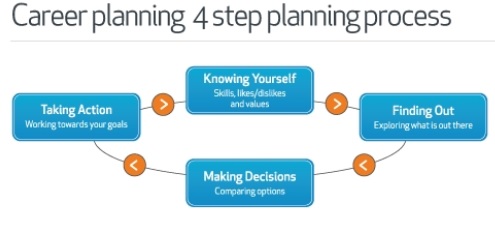
Career planning is the combination of organised planning and active management. Career planning is a four step planning process :

  1. Knowing yourself
    The phrase knowing yourself means where you are now, where you want to be, what are your areas of interest. After learning this you would be able to know where you want yourself to be.
  2. Finding out
    Once you have the idea about yourself that what are your areas of interest then you can easily find out what sort of occupational preferences you would be having.
  3. Making decisions
    After assessing yourself and finding out what kind of occupations would be suitable to you, the next step come is decision making that is choosing the right option which is perfectly suitable to you.
  4. Taking decision
    The next and final step of career planning is to take a final decision. After making all the decisions, make your plan put into action. Gather all the knowledge and skills you have regarding your interest and start preparing from the day itself.

Law as a career

A career in law may be challenging and personally fulfilling. In the earlier time law was a kind of family profession people have been following since generations in the same family but today the pattern is different. There are different perks of being a lawyer or choosing law as a profession. Teaching is a noble profession. Teaching the law field is not an easy job. To be a teacher in the subject of law you need to be very well versed with the constitution of India. The legal industry is expanding. Working in a law field requires attention to every small detail and hard work.
Law field doesn’t only mean doing litigation or being a judge. You can be a corporate lawyer, a law teacher or professor, high street solicitors. To succeed in the legal field you need to very logical, precise, descriptive, energetic, good oral skills and writing skills.

Teaching as a career

Being a teacher is not an easy task. Teacher is the person who teaches you what is good and what is bad. Like a candle in the absence of light gives us brightness the same way teacher in the career of a student shows them path. There are many qualities of a teacher which make them great and some of them are :

  • Shapes the lives of young people

Teacher is an important person in a student’s life. Whatever he does or he learns, he learns either from his parents or the teacher. Teacher has been an inspirational source to every human being. Every human being knows the value and importance of teacher. The main benefit of working as a teacher is that you are in the will to positively influence other’s mind in such a way that it will work accordingly to your positive mind. The person in the dominating position will follow you. This will help in shaping the lives of the youth.

  • Tradition and innovation

As a teacher you start to value both tradition and innovation. As a teacher you can innovate new things and possibilities and solve the issues around. The learning process is never ending.

  • Be a part of a challenging and rewarding profession

Seeing a student learning is not less than a reward and to make them understand about whatever you are teaching is not less than a challenge. Teacher throughout the world is shaping the students to become a bright one. A teacher’s teaching may make you a good human being and as every teacher says that there is no greater moment than seeing a student’s ‘Light Bulb Moment’.

  • Globally transferable and recognisable skills

The best thing any teacher has is their skills. The skills of teaching other people because teaching is an art as explaining someone something is not what anyone can do. It requires a good narrative skills and problem solving skills. The Australian teachers are in high demand across the globe. You cannot go and motivate anyone as easily as the teacher do.

A career in teaching law

Teaching law is not an easy object. Getting a job of a teacher to teach law is also not easy. To get a job as a teacher you need to be very brilliant, smart and bright. The law teaching is an attractive career with a handsome salary. May be this is because of getting good level of satisfaction as a teacher more than a lawyer. Teaching anyone is a good thing because to teach someone you yourself need to learn something and it makes your knowledge more stronger giving you more level of satisfaction. It also helps you in interaction with the new generation which will help you in learning new ways and techniques also the question raised by them which never occurred to you in the process of learning. A teacher plays an important part in spreading legal education in country.

  • How to find a good job?

Once every teacher was a student. To find a good job you need to find a big institution which may help you in recruiting. To get a good job you need to have a strong cv which one may make it strong in the college times by writing articles, editorials, participating in the moots, the debate competition, the seminars which will help in improving the speaking as well as the writing skills of any individual.

  • Right time to apply for law teaching job

Individuals who try to apply for the law teaching job having experience as a judicial clerkship are usually successful in getting the job. However people usually prefer to choose a law teaching job when they are done with paying their loan of law school. Getting a teaching job is not easy as it seems. Take an experience of 2 or 3 years of practice which is valuable but not more than that. Experience is a must thing to get any job.

How to become a law teacher

In order to be a law teacher you need to become a graduate first by enrolling yourself in an undergraduate course which may be a bachelor of art B.A. or bachelor of science B.sc. After which you should complete accredited law school program and earn a Juris Doctorate (J.D.) degree. Also during the law school you must participate in the several programs and activities which will help you in enhancing your skills. Next step is to pass the bar examination in whichever state you need to practice law. After which you’ll be appointed. Also a law teacher is a mentor which helps the law students how to excel in their career.

Undergraduate degree

To become a law professor you need to enroll in an undergraduate degree program. To be enrolled in the program the basic need is to have a proper education.

Choosing the course of study

While attending the college you must specialise a subject according to your area of interest. Choosing your course will help you in the future to become a teacher.

Internships

Teaching at government school

Students teaching internship program are very necessary for the student who is planning to have a career in teaching.The program of student teaching internship is for an entire school year. The intern is employed as a full time teacher who receives a salary plus benefits, and a mentor teacher from the school is provided to help observe, coach, and evaluate the intern. Students who are selected in the program gets a benefit of learning the skills of teacher so that it would help in future.

Teaching at law centers like Career launcher

This will help a lot to any person who is planning to have a career in teaching. This would be an addition to the CV. Teaching and teaching will give you lot and lot of experience.

LLM – Where to pursue from?

If you are planning to study LLM then you may get confused from where to pursue it both India and abroad is a good option. As we all know India is famous for its education program and its quality. India has following institution which can help you in doing LLM :

  1. National Law School of India University (NLSIU), Bangalore
  2. Acharya Nagarjuna University, Mumbai
  3. ILS Law College – Institute of Advanced Legal Studies, Pune
  4. University of Mumbai – Department of Law, Mumbai
  5. Sharda University, Greater Noida

If planning to do it from abroad, it will cost you very much as it would be very expensive. Some of the good abroad institution are as follows :

  1. Harvard Law school
  2. Oxford University
  3. University of cambridge
  4. Yale Law school
  5. Melbourne Law school
  6. University of Chicago Law school

How should one plan for cracking the UGC NET, Ph.D.

  • Know yourself and the study material

  • Note down your syllabus
  • Refer good books
  • Prepare notes
  • Try to teach someone
  • Time management (Before exams and during exams)

Criteria for recruitment as a law teacher in private institution

To be a law teacher you need to be eligible enough to be recruited. Every post has a eligibility criteria. The eligibility criteria to be appointed for the post of law professor are as follows :

Assistant professor of (Law) – The academic record of the candidate should be good with atleast 55% marks in the LL.M. Degree. The national eligibility test (NET) is mandatory to be cleared. The test is conducted by the CSIR, UGC.
The candidates who have been awarded the Ph.D. degree is exempted from the requirement of the minimum eligibility condition of NET. For the direct appointment of professors a Ph.D. degree is a mandatory qualification.

Requirement in NLUs

Professor of law

  • A scholar with a Ph.D. degree concerning the law subject to teach.
  • A minimum of 10 year teaching experience in universities/College.
  • A minimum score in Academic Performance Indicator based Performance Based Appraisal System (PBAS) of UGC.

Associate professor of law

  • A scholar with a Ph.D. degree in the concerned subject of law
  • A master degree in law with atleast 55% from any recognised university.
  • A minimum of 8 years of experience as an assistant professor in any university/college.
  • Contribution to educational innovation, design of new courses and curriculum.

Assistant professor of law

  • A master degree in law with at least 55% from any Indian university or an equivalent foreign university.
  • Minimum 4 years experience as an assistant professor with a Ph.D. degree.

Should law teachers be allowed to practice?

This has been a debatable question from years and yet no remarkable statement has been made regarding the same. There are several arguments which oppose and support the statement. The one group argues that the teacher practicing with teaching would not be able to teach perfectly as they would not be comfortable and the other groups says in support that they should be allowed to practice as they will provide qualitative and practical knowledge to the students. It is also mentioned that if the law teachers are not allowed to practice then they should be allowed to open a legal clinic or become a legal advisor to carry out some other work with the teaching.


Download Now

How should a law student prepare for UPSC civil services examination

6
UPSC

In this article, Ayushi Sunder of NALSAR discusses how should a law student prepare for UPSC civil services examination.

WHY CIVIL SERVICES?

Transforms one into an agent of change

Civil services offer one the opportunity to serve the society as an effective agent of change, when one feels disgusted by the lack of empathy and sensitivity by the powerful towards the nation. Entitled with the responsibility of policy execution, civil servants are given the chance to remove the existing infirmities and replace them with effective policies promoting welfare and betterment of population. The saying ‘Be the change you wish to see in the nation’ indeed holds true and inspires youth to join this coveted services.

This career entitles one to enormous power

Career in Civil services lands one into a position clouded by enormous power. The individual is given high degree of authority and his/her policies have a huge impact, and affect large chunks of population. Civil servants are the true brains that for behind the legal and administrative framework of the nation. It is this power and authority that attracts thousands of youthful individuals.

Civil Services bring you Prestige

Apart from the wonderful perks that accompany a job in civil services, one gains enormous prestige. He/she is treated with utmost respect and high regard. Such individual becomes the source of inspiration for many and is often deemed the ideal figure. In context of Indian Society, this is the most respectable job and anyone interning this career obviously attracts lot of attention.

Offers you Diversity of Opportunity

Civil services that offers diversity in opportunities like no other form of employment. During tenure as civil servant, one can choose from plethora of options and explore vastly mutated of departments. Such dynamic character of services enables sone to contribute significantly to the society’s betterment.

UNDERSTANDING CIVIL SERVICES

BASIC INFORMATION

  1. ACADEMIC ELIGIBILITY
  • It is mandatory for the candidate to posses a bachelor’s degree from any recognised educational institute or any other establishment that is recognised as a university in accordance with section 3 of the University Grants Commission.
  • Candidates who have appeared or are yet to appear for their final examinations also stand as eligible to apply.
  • Where the standard of the institution such as- Oxford/Harvard/Cambridge, from which the candidate has obtained his/her bachelor’s degree justifies his admission, the commission may consider forego the requisite of qualification of an eligible candidate.
  1. AGE LIMITS

Minimum age required is 21 years and the candidate shall not be older than 32 years as on 1st of August of the year in which candidate is applying.

GENERAL CATEGORY: 32 YEARS (if physically handicapped- 42 YEARS)

SC/ST: 37 YEARS (if physically handicapped- 47 YEARS)

OBC: 35 YEARS (if physically handicapped- 45 YEARS)

  • RELAXATION OF AGE LIMITS:

The prescribed upper age limit is relaxed for a period of :

  • 5 years, if candidate belongs to Scheduled Caste (SC)/Scheduled Tribe (ST)
  • 3 yeas, if the candidate belongs to Other Backward Classes (OBC)
  • 5 years, if the candidate has original domicile of the state of Jammu & Kashmir
  1. NUMBER OF ATTEMPTS
  • GENERAL CATEGORY has maximum of 6 attempts. If physically handicapped, then 9 attempts are available.
  • SC/ST candidates have unlimited attempts
  • OBC has 9 attempts.

PATTERN OF CSE

Entrance to this prestigious career takes place via a comprehensive examination termed as Civil Services Examination (CSE). Frequently named as Mother of all exams or Toughest examination of India, CSE takes into its ambit of syllabus ‘anything and everything under the sun’ – what this phrase actually refers to is that though an outline of syllabus is provided for reference, the syllabus of the examination is pretty vast and exhaustive. For the purposes of efficiency, this exam is conducted in 3 stages, namely:

PRELIMINARY EXAMINATION

  • This examination is mainly conducted for screening purpose and as a qualification for the mains. This examination consists of two mandatory papers. Each paper carries 200 arks and is objective in character, offering MCQs.
  • The aforementioned papers are recognised as General Studies- I and General Studies- II. Former paper tests General Knowledge of the candidate and his /her knowledge pool about the nation and regarding events of national-international significance. Latter paper tends to check the aptitude of the candidate by posing questions relating to numeracy, comprehension, decision-making and reasoning.
  • After the examination, Commission drafts a list of candidates who qualify for mains examination in accordance with the minimum qualification criterion of 33%.

MAINS EXAMINATION

A candidate’s rank in UPSC Civil Service Exam depends only on the mark scored in Main and Interview. The main exam has 1750 marks while interview has 275 marks.

Mains carry 1750 marks and are an important factor in determining one’s rank in the final results. This exam is subjective in character and consist of 9 papers in all. However, only 7 papers are considered for determining merit.

Papers of Indian Language and English are qualifying papers and are taken into account for final ranking. Each of these papers carries 300 marks and candidates are required to qualify each.

Rest of the 7 papers include:

  1. Essay for 250 marks.
  2.  Indian Heritage and Culture, History and Geography of the World and Society for 250 marks.
  3. Governance, Constitution, Polity, Social Justice and International relations for 250 marks.
  4. Technology, Economic Development, Biodiversity, Environment, Security and Disaster Management for 250 marks.
  5. Ethics, Integrity and Aptitude for 250 marks.
  6. Optional subject PAPER-1 for 250 marks.
  7. Optional subject PAPER- 2 for 250 marks

INTERVIEW

  • Candidate who qualify the mains as per prescribed criteria laid down by the commission receives a phone call by Commission for the final stage- interview, popular known as personality test. This test is conducted mainly to determine the candidate’s personal suitability for the services.
  • He/she is questioned by a board of competent and unbiased authorities about general interests of the candidate and attempt is made to make an assessment of candidate’s traits and qualities. Some characteristics that board always look forward to is vigilance, mental alertness, opinion formation, leadership traits, logical inclination, balance of judgement.
  • The personality test usually proceeds in the format of a purposive and cordial conversation and does not aim to test the knowledge of the candidates in specific regard.
  • Candidates are posed questions relating to their profile and bio-data and are also asked about their views on recent events of national and international significance. Candidates are subjected to questions that involve handling situations, to test their administrative and leadership qualities. Curiosity of the candidate to learn and explore is always appreciated. Interview carries 275 marks and is counted while calculating merit.

SERVICE OPPORTUNITIES

After the examination is over, Commission draws up a final list of selected candidates. The candidates are then allotted services in accordance with their ranking and preferences given. Following are the series that are offered under the label of Civil Services.

Group A Services

  • Indian Administrative Service
  • Indian Foreign Service
  • Indian Police Service
  • Indian P & T Accounts & Finance Service
  • Indian Audit and Accounts Service
  • Indian Revenue Service (Customs and Central Excise)
  • Indian Defence Accounts Service
  • Indian Revenue Service (I.T.)
  • Indian Ordnance Factories Service (Assistant Works Manager, Administration)
  • Indian Postal Service
  • Indian Civil Accounts Service
  • Indian Railway Traffic Service
  • Indian Railway Accounts Service
  • Indian Railway Personnel Service
  • Indian Railway Protection Force (Assistant Security Commissioner)
  • Indian Defence Estates Service
  • Indian Information Service (Junior Grade)
  • Indian Trade Service, Group ‘A’ (Gr. III)
  • Indian Corporate Law Service

Group – B Services

  • Armed Forces Headquarters Civil Service (Section Officer’s Grade)
  • Delhi, Andaman & Nicobar Islands, Lakshadweep, Daman & Diu and Dadra & Nagar Haveli Civil Service
  • Delhi, Andaman & Nicobar Islands, Lakshadweep, Daman & Diu and Dadra & Nagar Haveli Police Service
  • Pondicherry Civil Service
  • Pondicherry Police Service

A combined Preliminary examination is held for Indian Forest Service and Indian Civil Services.

WHERE LAW AND CIVIL SERVICES INTERSECT

OVERLAPPING OF LAW & PUBLIC POLICY

The two highly important domains overlap with each other when it come so formulating regulations for public. And this point of intersection creates a fertile pool for the law graduates to choose civil services was there career. Law is a major aspect of public policy. Legislations are required to prime policies, and ultimately it is the authority of law that makes a public policy enforceable. A law graduate can handle framing and implementation of public policy in much more efficient fashion for he.she knows the exact manner in which the legitimacy of the law is to be exploited in order to make public policy an effective instrument of maintaining public order and regulating population behaviour.

OPINION IS IMPORTANT

While drafting a policy, several opinions regarding objectives, structure, application, expectations of the policy are taken. Exhaustive discussions ad heated debates are witnessed in the process. however, what ultimately shapes the policy into a concretised framework is the intelligent opinion that will form the subject-matter of the policy. Individuals from legal background are extensively trained in logical analysis and opinion formulation. They are well-versed with the practice of tracing the pros and cons of a given issue and to logically analyse the circumstances. Their research is deep enough to dig out possible forms of future challenges and here can formulate the ideal opinion about any proposition. Premising policy on such informed and intelligent opinion results in concrete regulations that are highly effective and are error-free to a great extent.

ADMINISTRATION’S ESSENCE IS LAW

While framing the policy, thousands of factors have to be kept an taken into consideration. One of the most important factors is the legal framework of the area for which the policy is drafted, once again law graduates prove themselves better than individuals from non-legal background in analysing the situation to determine an accurate methodology for applying policy. For a policy to be executed, one needs prior thorough knowledge about the legal structure applicable to the area. Only a person informed enough about legal technicalities will be able to efficiently and smoothly operate a policy that lies well-within the legal boundaries.

DOUBTS ABOUT OPTIONAL

BUSTING THE MYTH

A common misconception among the youth is that one shall choose an optional subject that conforms to the below mentioned questions. However, what is to be understood is that ‘what is the best optional subject?’ may mean different to different individuals and may also vary as per the individuals’ background and interests.

Which is the most scoring optional?

First of all, there is no such thing called most scoring optional. Equipped with adequate and through knowledge followed by appreciable opinion-inclined answer writing fetches one decent marks. What may be a cakewalk for one person may be an Everest-climb for another. So it is advisable to stay away from such labelling of subjects and to choose as per individual requirements.

Which optional is the easiest to study?

A subject appears easy if a person is able to answer all questions from the domain. However, this is possible with in-depth study accompanied by good memory, which differs again from individual to individual. So, no optional can said to be the easiest. Also, every optional paper has standard as high as graduation level study of the subject, which is quite a tough task to undertake.

Which is the most popular optional?

Popularity is often determined by the numbers in which individual choose a particular optional. Often that optional which is opted for the most is considered the most popular subject. But popularity shall not be a criteria as when can never depict the challenges that he/she may face while studying the subject. If the candidate has no prior knowledge of the subject, that may complicate the procedure and will make the candidate susceptible to poor scores.

HOW TO CHOOSE

Following factors shall be taken into account while choosing an optional:

  • Easy availability of study material
  • Easy availability of Coaching
  • Size of syllabus
  • Interest in the subject
  • Knowledge of the subject
  • Ability to think about the subject via multiple points of view

LAW AS AN OPTIONAL

Who can opt?

A prevalent thought is that law being a highly specific subject, one shall opt for law only if he/she has legal graduation or comes from legal background. However, non-legal graduates can also opt for law.

Is it beneficial?

  • Syllabus of law optional overlaps with cereal studies, hence no thorough specific study is required.
  • Papers are application-based, therefore rote-memorisation is not needed.
  • Questions posed are generally related to current events. Therefore, one can answer by focusing on current affairs.
  • Syllabus in not very exhaustive and can be easily covered.

DIMENSIONS OF PREPARATION

APPROACH TOWARDS THE PAPER

As a law graduate, one has an edge of logical and analytical approach over the other. One shall exploit this to make full use of reasoning and fetch high scores. The papers, often pose questions that demand decision-making on part of the candidate. If one systematically figures out the positives and negatives, and premises his answers on reasonable grounds, he/she can produce concrete answers that satisfies the question adequately. Therefore, immense focus on answer-writing, both logically and legally, is required.

LEGAL DIMENSION

Questions if answered with appropriate and applicable sections and legal provisions brigs weight to the answer. It depicts search and knowledge on candidate’s part. Application of relevant laws solidify the answer and lays down concerts solutions the problem raised in the question. Therefore adding legal dimension is highly essential to score high.

MEMORY POWER

Though law papers are application-based and often involve practical problems, significance of memory while attempting a law optional paper cannot be ignored. In order to concretise the answers by adding legal elements to it, one needs to be well-versed with the relevant laws and provisions. Section numbers and case laws to support the answers have to be kept handy while answering application-based papers. Hence, it is recommendatory that candidates work on their ability to memorise the case names and legal provisions.

CONCLUSION

One can conclude on an optimistic note that law offers a great opportunity to excel in civil services. What one essentially needs is thorough knowledge and the right approach. If individuals keep themselves informed and well-updated, perform with a logical approach, he/she can come out with flying colours.

Explore more on how to crack civil services – Read the interview of civil services examination toppers who are students of law. (Source – Superlawyer)

Noor Shergill on cracking the civil services examination

Seema Pujani on cracking the civil services examination

Paramvir Singh on cracking the civil services examination

Abhishek Tripathi on cracking the UPSC exam

Abdaal Akhtar on cracking the UPSC exam

References:

http://www.clearias.com/upsc-syllabus/

https://www.civilserviceindia.com/civil-services-list.html

https://superprofs.com/upsc/reasons-why-civil-services-is-a-career/

https://iaskracker.com/selecting-the-right-optionals-for-ias-the-right-way/

https://www.iaspaper.net/how-to-choose-best-optional-subject-for-ias-upsc-exam/

http://www.insightsonindia.com/2013/10/10/how-to-choose-optional-subject-for-upsc-civil-services-mains/

https://byjus.com/free-ias-prep/taking-law-optional-upsc-mains-exam

Download Now

Startup India – Proposed Schemes and Incentives

4
Startup India

In this article, Leepakshi Rajpal discusses eight conditions for eligibility and eleven benefits of Startup India Scheme.

Introduction

Ever since the announcement of the startup India plan or programme launched by the Prime Minister, all the youth is going haywire for creating a startup and getting it funded by the government. The colleges are encouraging the students to build their own startups and forming cells within the college for the creation of new and fresh ideas that help transform the latest industry. The initial steps of this plan must be known before applying for the funding and the benefits of it too. Therefore, this blog tells you about the eleven benefits that the startup India plan offers and the eligibility criterion for availing those benefits.

How to Register for the Startup India Scheme

Incorporate your business

Incorporation of the business means that the business must be in existence in the very first place and only when you bring your business into existence, you can register your business then. The problem is that for Incorporation of the company you have to follow all the procedures of establishment, such as fill the forms INC-1 and others based on the type of company you want to incorporate. This step is an important step in the registration of the business under the Startup India Scheme.

Register With Startup India Scheme

When you begin something new, it is labelled as a startup for the first seven years after the incorporation, therefore to register the process is really simple and sober. You just have to go online to this link https://startupindia.gov.in/registration.php, and fill in all the required details so as to register your business or entity for the Startup India Scheme.

Documents to Be Uploaded

Once you are registering under the Startup India Scheme, you have to be very careful regarding the documents you upload. All the documents must be uploaded in the PDF format only and not in any other format including .doc and .docx. Therefore, be careful that any document you upload is in the PDF format only.

What all to be Included in Documents

There are certain necessary requirements of the Startup India Programme, that you need to anyhow upload, and again specifying that should be in the PDF format only.

  • A Letter of Recommendation is required  

A Letter of recommendation is a must while registering yourself and the reason is that someone qualified must recommend you, so that you are amongst the top few who can really do the work and whom the government should actually give the funding. Check whether you have a recommendation from the required people mentioned in the link given https://startupindia.gov.in/registration.php and then If it is there, go ahead and register yourself and If not, do get a recommendation letter from the required person.

  • Incorporation or Registration Certificate

Incorporation or Registration Certificate means that the certificate which identifies your entity’s existence. When you incorporate your entity, the certificate which you get for your incorporation is the one which registrar will give on the successful incorporation of your entity.

  • Description of your business in Brief

When you describe the business while registering for the Startup India Scheme you need to keep in mind that the government wants to know what your business is, so as to provide a funding under the scheme. So, once you provide a brief of what your business is while registering for the same, you provide details regarding the establishment of the business and the innovation of the business that you are carrying on and based on that the government will decide whether it will provide benefits under the Scheme or not.

Mention in the Registration form whether you want to avail tax benefits or not

While you register the details of the incorporation and the other details, also mention side by side that you want to avail tax benefits while registering for the Startup India Programme. therefore if you do not mention that specifically, then you may not be entitled to the benefit of the Startup India Scheme.

You must Self Attest your documents

The documents which are mentioned in the link given above should be self attested and make sure that they are not misrepresenting, cheating or committing a fraud because you can be held criminally liable then.

Get your Recognition Number

Once you register yourself successfully, then you will immediately get the recognition number for your startup or business entity. Which means that once the Recognition number is set then the certificate will be given, only after your documents have been carefully examined.

Eight Eligibility Conditions

So, this field has been inserted in the blog to make sure that you qualify for the benefits that this startup India plan offers. There are majorly 8 fields of eligibility that one must qualify for availing the benefits of this programme.

It must be an entity

  • Which is incorporated as a Private Limited company under the Companies Act, 2013 or
  • Be a registered partnership firm under the Indian Partnership Act, 1932 or
  • A Limited Liability Partnership under the Limited Liability Partnership Act, 2008.

Which means that it should be incorporated and should be in existence in accordance with either the Companies Act, 2013, or Indian Partnership Act or the Limited Liability Partnership Act, 2008.

Startup for a Period Of almost 7 Years or less

After the incorporation, a startup can be called a startup for a period of about 7 years and not more than that, therefore, any entity which is more than 7 years is the one which does not qualify as a startup.

Annual turnover Less than Rs. 25 crores

The annual turnover of the startup as defined and explained by the Companies Act, 2013 in any preceding financial year must not exceed Rs.25 crores.

Innovation and Development

The startup should not be any random startup but the one which is working towards innovation, development, deployment or commercialisation of the new products, processes or services driven by technology or intellectual property. Which means that the startup would not be a startup qualifying for the benefits of the startup India programme if its object mentioned in the MOA and the AOA does not focus on the innovation or on the development of the service that it is providing.

Aim of Commercialisation

The startup must also aim to commercialise-

  • A new product or service or process,
  • A significantly improved existing product or service or process that will create or add value for customers or workflow.

Which means that the startup should either bring up something new in the market or create a new version of something old, which will ultimately amount to some innovation.

It should not be engaged in illegal or unrequired practices

The startup must not be engaged in:-

  • Developing products or services or processes which do not have potential for commercialisation.
  • Undifferentiated products, services or processes.
  • Products or services or processes with no or limited incremental value for customers or workflow.
Must not be formed by splitting up

The startup must not be formed by splitting up, or reconstruction, of a business already in existence.

Should have proper certification

The startup has obtained certification from the Inter-Ministerial Board, setup by DIPPto validate the innovative nature of the business and following should be followed :-

  • It should be supported by a recommendation letter with regard to the innovation in the business, in a format specified by the DIPP, from an incubator established in post graduate college in India or
  • It should be supported by an incubator which is funded in the relation to the project from Government of India as part of any specified scheme to promote the innovation; or
  • It should be supported by the recommendation with regard to the innovation in the business in a format specified by the DIPP, and from an incubator recognised by the government of India, or
  • It should be funded by an incubation Fund/Angel Fund/Private Equity Fund/Accelerator/ Angel Network duly registered with SEBI that endorses innovative nature of the business; or
  • Be funded by the government of India as a part of any specified scheme to promote innovation, or
  • It should have a patent granted by the Indian Patent Trademark office in areas affiliated with the nature of business being promoted.

NOTE:- DIPP may publish a negative list of funds which are not eligible for the initiative of the startup India Programme.

Eleven Benefits Arising Out of the Startup India Programme

Once, you enrol yourself in this programme, you would definitely be wanting some benefits to derive out of it or the benefits may be the reason for you enrolling in the startup India programme which serves as the consideration to the ones enrolling.

Therefore some of the benefits that arise out of this plan are appended below:-

Simple Process

So, who amongst us does not want a simple life and simpler ways of life? Every one of us right? So, One of the major benefits for enrolling in this programme is the simple process of registration, therefore the startups would not face a problem as to the registration process is concerned because Government of India has formed a website as well as an app which can directly register the startup for this programme. Also any entity which is eligible to be called as a startup can be formed into a start up by filling a simple form, therefore it makes life easy.

Reduction in Cost

While we go from here to there doing a lot of expenses for setting up a startup, this feature of the startup India plan helps us to do the budget. The Government of India also provides for the list of patent and trademark registrars therefore, provides high quality intellectual property rights services. Also, while registering the innovation in your company, it provides 80% reduction in the total cost of registration of Intellectual Property i.e. in the filing of the patents. Therefore, it is a saving option available to the startups.

Easy Access to Funds

Most of us are generally confused in the beginning, as to how far the startup will go and where will it end up, therefore this benefit arising from this programme enables to get hands on access to funds. The Government of India has set up the policy of giving a Rs.10,000 Crore fund as venture capital to the startups. The government is also giving guarantee to the lenders to encourage banks and other financial institutions for providing venture capital.

Tax Holiday for 3 years

So, every one of us want to evade taxes because who wants a penalty on the earnings, right? There are people who illegally evade taxes and therefore, end up paying more than they ever save. Therefore, the government of India provides this exemption to the startups to evade the income tax for a period of three years from its incorporation and they also get the certification from the Inter ministerial Board, which certifies that they are exempted from giving income tax for a period of three years.

Apply for Tenders

It is usually a myth that tenders can be accessible to those who are more prominent in the market and can bid more, but this benefit arising out of the startup India plan can be a boost for the startups.This feature makes it possible for the startups to apply for the government tenders. They are exempted from the “prior experience/turnover” criterion applicable for normal companies answering to government tenders which means that now with this plan, startups can be a participant in the government tenders and are waived off with the previous requirement of the turnover or the experience.

R&D facilities

We all know how important a research and development cell is and especially in a startup where the innovation is on the peak and the idea is to bring something new in the market or create something new out of the old, the government of India, under this scheme of the startup India, decides to benefit the baby players in the market.It has decided to launch seven new research parks to provide facilities of research and development within the startups and help them grow connections and business overtime being a part of this programme.

No time consuming compliances

There are various compliances which have been simplified for the startups to save time and money.startups shall be allowed to self-certify compliance through the app which the government of India has launched this programme, with nine labour laws and three environmental laws in its list.

Tax Saving for Investors

As an investor, I would always want to save my tax. Generally, it is a myth that the people do not invest in the startups because they are sceptical about their performance in the market but through this programme of the startup India, people investing their funds or the capital gains in the venture funds set up by the government of India will get exemption from capital gains.

This will help startups to attract more investors. Therefore, even the People investing their capital gains in the venture funds setup by government will get exemption from capital gains. This way the startups will be able to gain reputation in the market as well as build trust amongst the investors.

Choose your Investor

Generally, there is no choice of choosing investors, therefore when this plan is introduced the startups now have an option to choose between the VC’s, giving them the liberty to choose their investors.

Easy Exit

A startup is always at a risk in the market and therefore it is always doubtful as to its existence in the market, keeping into consideration the competition another major companies in that sector itself. So, after this programme, in case the startup wants to exit, it can close its business within ninety days from the date of application of winding up.

Meet other entrepreneurs

When you are a startup, you always need to build on contacts and communications, therefore in order to build contacts in the market, government of India, has launched two startup fests annually both nationally as well as internationally, to enable various stakeholders of a startup to meet. This fest will provide huge networking opportunities to the startups and give them an opportunity to grow and rise in their own respective fields.

What Practical Problems Do startups Face?

There are certain problems that startups face while registering under the Startup India Programme.

What this means is that the startups that register themselves under the Startup India Scheme, are the ones that do not have completely new innovation or are not even new version of something old. So, the very purpose of Startup India Programme which was to ensure the new in being, was hit hard and therefore not much technological advancement was found in the Startups.

Corruption Involved due to the Human Intervention

Since, there is a lot of human intervention in the process of funding and that the funding procedure is not online, as a part of inherent feature, Corruption has still shown that it is very rampant in the Indian Society no matter how hard it tries to bring something new and innovative, corruption will destroy the purpose.

Market Problems

There are instances when the government through its intervention is trying to bring in the new startups into being, but the market already in existence is not yet ready for it. Therefore, a lot of problems are created in the market when suddenly so many startups arise.

The government said that the New VC’s could only fund the Startups

The government funded the VC’s on a condition that they would fund the new startups, however the VC’s are not ensuring so and because of which a lot of confusion and chaos has taken place in the process of funding.

Getting tax benefits under the scheme is not as easy as it sounds

The startup India Scheme offered the benefit of the tax exemption to a limit to all the startups under the scheme but what is happening is they are again classifying among the startups and not many startups have been able to successfully classify themselves under the heading of the tax exemption category, therefore one of the major reasons of they registering under the scheme is defeated, which does not encourage more startups to join the scheme.

Excessively High Valuation and Irrational Funding

This means that when the government comes up with something like this, it is able to do nothing but the valuation in the market becomes very high and the funding becomes irrational. Therefore, the funding which is nothing but the taxes paid by the citizen of the country goes into the bin.

Conclusion

So, now that you know the benefits and the eligibility criteria of the startup programme, I am sure you would love to be a part of it. So, what are you waiting for, get started with a startup and turn your future round the table. These benefits will give a huge rise not only to these startups but to the whole of economy and this step will take India to a greater rank of doing businesses in the world.

Download Now

How to get a license to set up a liquor store in Noida

0
liquor store in Noida

In this article, Ayushi Sunder discusses how to get a license to set up a liquor store in Noida. 

INTRODUCTION

Licensing of liquor, in general, refers to legal authorisation of sale and/or consumption of liquor quantities. However, on a closer look, one can identify the intricacies involved in this domain. Not only the licensing authority enshrines specific laws relating to issuance, suspension and cancellation of licenses that are exclusive to every state but the license itself is not general in its application but is highly context specific in its purpose. There exist licenses for:

  • Setting up of liquor business
  • Payment of duties
  • Installing new stores
  • Consumption of large quantities of alcohol in a private party

The aim of these licenses is to keep alcohol sale/consumption under check and mandates government approval in this regard to ensure strict monitoring.

THE LEGAL PROCESS

AWARD, ISSUE AND CANCELLATION OF LICENCES

  • Licenses for wholesale and retail vend of intoxicant are to be granted for excise year, extending from April 1 to March 31.
  • In special cases, licensees may be given with the sanction of the Excise Commissioner for special period.
  • In the event of loss of original license, a duplicate license can be issued for a fee of Re. 1

Persons to whom licences may be granted 

  • To person approved as suitable vendors.
  • Any person may be granted licence for vending country liquor or foreign liquor or both

Persons to whom licenses shall not be granted

  • Persons who have been convicted by a criminal court of a non-bilabial offence;
  • Former licensees who are in arrears to Government, or whose conduct has been found to be unsatisfactory, or who have been found guilty of any serious breach of the condition of their licences
  • Persons below the age of eighteen years
  • S. 34 and 35 provide for cancellation of licenses and grants the authority to cancel the license of any shop. However, in case it is desired that license may be continued, then it can be resettled under para 357, 359 and 375.
  • It is required by the holder of license for vend of intoxicant, that upon termination of license, he reports the remaining stock in his possession, to the collector. It is for the collector to prescribe the time limit within which the vendor shall dispose of his remaining stock.
  • Any intoxicant that, detected on the premises of the vendor, is found unfit for human consumption, shall be destroyed in accordance with the orders of the collector.

THE UTTAR PRADESH EXCISE LICENCE (TENDER-CUM-AUCTION) RULES, 1991

  • These rules apply and regulate the grant of licenses for sale of country liquor and foreign liquor under tender cum auction methodology.
  • A licence for retail sale of country liquor or foreign liquor shall be settled by tender-cum-auction system subject to the payment of bid -money for the shop or group of shops as consideration under section 30.
  • Settlement of licenses can be for lesser periods.
  • The licences will be granted in Form F.L. 5-A for retail sale of foreign liquor.
  • The power to fix number of shops and groups of shops shall lie with the Licensing authority.
  • The settlement of shops is to be made on date that is published under proclamation of auction issued by Excise commissioner in Form G-35-D.
  • The date and the time and place of auction, so fixed shall be notified by the Excise Commissioner in prominent newspapers to ensure effective communication.

Following are the requirements that need to be satisfied in order to be eligible to bid:

  • Production of Solvency certificate
  • Inclusion of name in consolidated list of solvency certificate holders
  • He shall not be a defaulter of excise revenue
  • He shall not be debarred from bidding in auction
  • Production of affidavit containing the particulars of his immovable and movable property along with the copies of documents of title to establish the ownership of property
  • A prospective bidder from outside the State will be allowed to participate in the auction subject to his production of a certificate from the Collector of the district in which he resides certifying that he is not a person convicted by a criminal court of a non- bailable offence and that he is not in arrears of Government revenues.
  • Excise Manual 374(4) – Before the auction proceedings for the day commence, the general conditions governing the auction shall be read out and explained to all present , so that competitors may clearly understand the conditions on which they bid.

Auction of shops

  • The licensing of retail sale of country liquor, foreign liquor and Bhang shall be done in separate segments of auction. Auctioning of licences shall be shop-wise. The shops may be auctioned in form of groups as may be decided by the licensing authority.
  • Submission of tenders-(1) The tender shall contain the following particulars and shall be submitted in a closed cover addressed to the Auctioning Authority:
    • Name of the tenderer or tenderers along with fathers name and address
    • Name of location of shop group or shops and kind of shops for which he has offered his tender
    • The basic licence fee, if any, for the shop or the group of shops in figures as well as in words

The tender shall be accompanied by the demand draft for a sum not less than ten percent of the entire sum offered including basic licence fee.

Auction procedure

  • The auction shall be presided over by the Licensing Authority.
  • Such proceedings shall be witnessed by the Excise Inspectors on Preventive Duty and by Tehsildar.
  • The officer conducting the auction may withdraw any licence or licences from the auction before the auction is commenced under instructions of the Excise Commissioner along with reasons for such action.
  • Bids shall not be accepted in amounts smaller than Rs. 100 upto Rs. 10,000 and all bids above Rs. 10,000 shall be accepted in multiples of Rs. 1,000.
  • The name of the person making the bid and the amount bid shall be recorder by the officer conducting the auction.
  • The signatures of the highest bidders along with this elf the two lowest bidders has to be obtained on the noise sheet.
  • Once the tender submissions are over, it is for licensing authority to consider bids and take decisions regarding them. Once finalised, no further negotiations or auctions can be reopened by the authority.
  • The final acceptance of any bid is subject to the sanction of Excise Commissioner which in its turn is subject to the decision of the State Government in appeal or revision, if any.
  • Every bid shall be deemed valid till the excise commissioner declares his final decision.
  • The license awarded in favour of auction purchaser shall take effect from April 1 and shall bind such purchaser to pay bid-money even though he might not have received the license.
  • Minimum guaranteed quantity (to be lifted by auction purchase) shall be declared by excise commissioner, in auction proclamation.
  • The licensee, apart from paying the bid-money is also required to pay the price of the intoxicants as fixed by Excise Commissioner or as prevalent at that time.
  • It is for licensee to ensure that sale is organised within minimum guaranteed quantity of the intoxicant for the excise year, before the expiration of the term of licence. In case of any balance quantity left, the same shall be declared by the licensee to the Licensing Authority on the next day.
  • In event of delay in the supplement of intoxicant, the licensee shall have no authority to claim damages or refund of bid-money. He cannot claim remission either.
  • A list of all sanctioned shops that are potential to effectuate a settlement shall be sent, in form of G-33A, to excise commissioner with a proposal of action.
  • For all settled shops, a statement has to be sent in form D-12 to excise commissioner within 30 days of auction and final decision shall be taken by him within a month’s time.

UTTAR PRADESH HOURS OF RETAIL SALE OF FOREIGN LIQUOR RULES, 1973

  • As prescribed by aforementioned piece of legislation, the timings for a licensed shop shall be From 10.00 a.m. to 10.00 p.m. “off” the premises in accordance with F.L.5.
  • A note is also appended towards the end stating that consumption of liquor by any person beyond half an hour after the closing hour, shall not be permitted under any given set of circumstances.

Conditions essential for maintenance of license

Following the procedure to obtain license does not put an end to the workload of the licensee. One has to ensure that all conditions essential for maintenance of license are met. For this purpose UP Excise Act, under s. 41, enshrines the general conditions that are to be observed after the issuance of license:

  • No substance shall be mixed with liquor in an attempt to increase its intoxicating impact.
  • The admixture with intoxicating drug of any other substance whatever by licensed drug vendors is strictly prohibited.
  • Reducing the strength of spirit by licensed vendors (of foreign spirit vendors) is strictly prohibited.
  • Licensed vendors be it wholesale or retail have to bear in mind that if the business is conducted under contract agreement, then they shall not diminish the strength of the liquor below prescribed limits.

Denatured alcohol, also called methylated spirits or denatured rectified spirit, is ethanol that has additives to make it poisonous, bad tasting, foul smelling or nauseating, to discourage recreational consumption’

  • No licensed vendor shall sell denatured alcohol below a strength of 50 degrees.
  • It is for a retail vendor to ensure that he is not in possession of denatured spirit that amounts to excess in accordance with the limits fixed by the collector.
  • In the event of retail liquor shops lying on or near the march line, the shops shale closed if the marching of troops so requires. Such closing of shops has to be arranged by tehsildar.

The shops as aforementioned are inclusive of 

  • Country spirit
  • Tari
  • Foreign liquor for consumption “on ” and “off” the premises
  • Foreign liquor for “off ” the premises

It is to be ensured that such shops are not to be opened on,

  • Republic day (January 26)
  • Independence day (August 15)
  • Gandhi Jayanti (October 2)
  • The first day of every month
  • Any other three days of a year as declared by the Collector in his district

In case of general or bye-elections being conducted in a territorial constituency, shops falling within the boundaries of such constituency or within a span of 8 km shall remain closed,

  • On the day of the poll
  • On two days immediately preceding the day of the poll.
  • All wholesale and retail vendors are required to maintain daily account of the ordinary limit of retail.
  • The collector may, if satisfied that representative of the deceased is fit to hold the deceased’s license, on the condition that any arrears due from the deceased licensee are recovered before the licence is so transferred, in the event of a licensee’s death, may continue the licence on the same terms to a representative of the deceased.
  • Wholesale vendors of country spirit under the contract system shall maintain accounts in the form prescribed in their licenses and shall submit to the Collector on the first of each month a copy of the account so maintained.
  • Retail vendors under the contract system shall maintain accounts in the form prescribed in their licenses.

LATEST VERSION

When it comes to nightlife and happening party scenes, in the NCR trio of Delhi-Gurgaon-Noida, the latter is often the less preferred place, partly due to safety issues and partly due to comparatively higher concentration of elite and party-loving masses of population in former two places.

  • With issuance of liquor licenses to 5 popular and much-frequented eateries in Noida, the hangout and entertainment quotient of the city will soon witness a great boost.
  • These licenses, issued in accordance with UP Excise Act permits serving of alcohol only from 12 noon to 12 midnight and allows the serving of ‘for sale in UP’ liquor only. Additionally, these permits tend to prohibit the sale of liquor that are marked for sale in areas that lie outside the prescribed territorial boundaries.
  • April 1 witnessed the hike in licensing fee and duty on country-made alcohol, beer and Indian made Foreign Liquor (IMFL)in accordance with the new excise policy of the Uttar Pradesh Government, approved by the state cabinet.
  • As per the amendments brought about, licensing fee on foreign liquor has been increased resulting in a hike of Rs26 per litre and the duty on cheap to premium category IMFL has not witnessed an increment technically but the premium to scotch categories has been raised by Rs 20 per litre.
  • Another latest policy change brought in this regard is that bars in Noida and other municipal corporation areas are now permitted to serve alcohol till 1in night as against the older timing of serving till 12 midnight.

Liquor is a commodity that demands extreme care and caution in its dealings, be it sale or consumption. License is a government approval that keeps this controversial commodity under check. Hence, it is always recommendatory that license issuance and maintenance shall be adopted as regulatory mechanisms for it not only ensures the legality of the dealings but also maintains efficient transactions, which contributes to the smooth operation of commercial sector.

Download Now

Should I be a corporate lawyer or a litigator?

0
separation

In this article, Janvi Ahuja discusses things to keep in mind before choosing between corporate and litigation practice areas.

Introduction

Legal education in India has been governed by Bar Council of India. Law is a diverse legal career option, which combines the theory with practice. Law has been a vital component in the successful integration of people, and has helped in functioning of our country. Studying law equips a student with a variety of skills, and makes them aware of the society and the regulatory organs. Law makes us realize two things,

  • The power law has on people’s life
  • And interpreting law effectively can mitigate loss of income.

Law as a career which teaches you to be correct and makes you a man of words. A law degree provides you with a variety of career prospect. It gives you an excellent springboard for future life. Law is a career which widens your thinking ability, and helps you to analyze in a most precise way. Law makes you to approach the task in a clear reasoned and precise way. Law is an internationally diverse career, which has intellectual challenges. It covers an essential part of our everyday living. It provides a great stimulus for those who are keen to know more about the legal framework in which we live in. It is often said that a Doctor is a life savior, but a doctor saves one life at a time where as a lawyer saves thousands of lives.

Pathways

A law degree opens a door to wide range of professions such as research, education, government Jobs, banking, finance and many more. If you want to work in a legal sector, law degrees boast clear postgraduate option to make your way for classification. Further law profession gets divided into two sectors which are popularly known as corporate firm and litigation.

Should I be a corporate lawyer or a litigator?

Choosing between litigation and corporate area is very difficult, but if you have aim in mind what to do, then this journey is going to simpler. Choosing between these two practice areas is an important decision because the practice area you choose can have major impact on your future. Most of the people make this choice before joining a law school. You need to think which field of law best suits you. Sometimes it happens that your first job at law school directs you where to go, and you move along the flow. This happens with a lot of young lawyers. Choosing a career is complicated but if you are determined to do something you achieve it, all you need is to think the best for you. It is better to choose then to take what is given. You should choose your career depending on your personality. Many lawyers never really want to go to the court, or want to keep it as minimal as possible. Whereas there are some people who enjoy the court proceedings, they love to argue in court, they are happy with the tension and stress that one gets from litigation. Some have skills to go to the court and litigate, and prove their point, others don’t. In litigation you need to be fast on your feet, and comfortable speaking extemporaneous, but also you need to be prepared for counter of the opponent. You need to memorize a lot of facts, and of course, speak and present well. If you cannot do those things, you aren’t likely to become much of a litigator. There are many people who choose corporate over litigation because of instant money but it is wisely said by Fali S. Nariman “don’t try to become someone; instead try doing something.”

5 Reasons why you should choose litigation

Litigation is a field where you explore yourself to get name and fame.

  1. Litigation gives you huge amount of money, in beginning you need to work hard but later you get the amount you demand.
  2. Lawyers are autonomous, they have liberty to make their own choice, to choose their clients to set fees, choose their own practice area.
  3. Prestige, for society a lawyer has been a hallmark of prestige, you get impressive degree and authority over others.
  4. A lot to learn, a litigator deals with practical problems of his client, they get to know the problems which people face at large.
  5. Litigators are placed/employed throughout the year and they do not have to worry for low economy, as it does not affect their work.

5 Reasons why you should not choose Litigation

Where there are benefits there are some limitations to it, every work is restricted to some limits which makes us to think why should we opt for that career

  1. It takes years to built a career in litigation, it is tough to move from place to place, it takes time to build a goodwill. Establish your name in the market.
  2. No money in the beginning
  3. No clients, as you are a beginner people have a difficulty to make a faith in you. Because you are not established, and the case is their part of life they can’t just let it go.
  4. Lots of hard work, you need to establish your name as an individual lawyer. To know who you are, to build an image you need to work hard, simultaneously give your time to clients, listen to their personal problems, handle their rudeness and manage their annoying phone calls.
  5. At the beginning there is no work, you need to search for work, to convince clients to have faith in you and give you their case.

5 Reasons why should you choose corporate practice

First, there are clear benefits to having a strong, unified company culture underlying your business’s operations

  1. A well established business, all you need to do is just work and give your best. You don’t need to built a business from the top, it is made and served to you.
  2. A corporate job gives you hefty sum of money from the beginning, you don’t need to worry for money if you are a corporate lawyer.
  3. In corporate there is assurance of job, your job is fixed if you work well, even if you are removed from a job you get a reasonable time to search a new one.
  4. In corporate you get good exemplary knowledge of business law, current business trends, legislative, and regulatory development.

5 Reasons why you should not choose corporate practice

Every field has some pros and cons, which makes it equally good and bad.

  1. In corporate field you do not get employed throughout the year, when there is low economy you there is less job availability. A law firm is stronger in strong economy.
  2. A lot less time and a lot much work, though you are paid a handsome money you are also forced with a huge burden, and with a deadline. You will have to work insane hours and often under immense pressure.
  3. You are under a control you are not allowed to make your own decisions, forced to work on the set guidelines.
  4. Desk work, one needs to sit in his cabin and work continuously, there is fixed place and fixed job.
  5. Formal work, and less interaction with colleague.

How much thought have you given to your future career

Every candidate passing out from college has a dilemma relating to the choice he is making. Now he is assailed with worries relating to the choice he has to make in order to progress well in the life. While choosing your career just think about it, where do you fit in. Litigation practice is a lucrative option prefered by those who already have some experience, with lawyers in their family to offer support. One who has patience and can be dedicated, has good speaking and convincing power and a faculty for critical analysis and articulation, can choose litigation as his field. Litigation is more of legal skills that transcends all practice areas. Whereas corporate in its purest sense probably refers to transactional based legal practice which also covers a number of area: real estate transactions; mergers and acquisitions transactions; security law; franchise law; entity formation and so on. If you are good at working for hours and can take work pressure then corporate law fits you. While choosing your career think about your interest and your capabilities. Identify your skills first. You need to evaluate one’s excellent communication skills. Keep strategic alliance rather than conflict, if economic and financial data holds interest, then corporate is more suitable. Corporate lawyer declare that the new age lawyers are opting for boardroom battles over courtroom battles. With opening of market, a spurn in capital market related activities, the further prospects look bright here.

What is your choice:

  • You have to like what you do! Do you enjoy the substance of the work in that field of law?
  • Keep in mind the lifestyle factors when picking your practice area. Some areas have a steadier and more predictable flow of work whereas others have a very unpredictable workflow.
  • Certain practice areas attract certain personalities more than others. You may not want to go into litigation, for example, if you do not deal well with aggressive personalities.
  • Take a look on your academic background. In which field you excel. If you have no financial or accounting background, corporate work may not be best option for you.
  • What are your future plans. Is this career helping you to achieve those plans?

Life as a Corporate Lawyer

It entails business and business related issues it deals with formation and operation of corporations and is related to commercial and contract law. This is a sector where corporate factors involve handling a wide range of legal issues for business, where corporate lawyer are involved in advising business on their numerous legal right. Corporate lawyers work in a law firm, where they council their clients and handle business transactions including negotiation, drafting, and reviewing of contracts and other agreements associated with the activities of the business, such as mergers and acquisitions, and divestitures; they also advise business clients on corporate governance. In addition corporate lawyers assist business clients with financial information.

Some lawyers choose corporate over litigation because they like working on business related issues. Other attorney who choose corporate have a habit or like working for hours. A corporate field gives you an exposure to a big law firm in a less time with a hefty money. But the hours of work compensate the money they receive. Normally a corporate lawyer has to work for 16+ hours a day, seven days a week, for weeks or months on end. The work of a corporate is much more sensitive than that of a litigant. In addition to this the work may be sometimes boring and tedious, and this can lead to burnout. A corporate job gives job security but at the same place the opportunity of growth is limited.

Corporate Fields

Practice area in corporate primary involves two requirements those are advice on compliance with various corporate governance for business functioning and advice on mergers and acquisition, restructuring, joint venture and business collaboration and tie ups. A corporate plays functions in both of these functions as an advisor and as a friend. In the nearest future, corporate law offers best projects considering that is significant demand and supply gamp. Other promising avenue is IPR law, Tax law, Competition law, Media law and real estate law.

How to design your CV if going for a corporate job

This template gives you an idea how to build your resume in a professional modern format, and to get prepared for your interview.

Download as a Word document here

Life as a litigator

Litigation is an ultimate legal method for settling controversies or disputes between and amongst person, organizations, states and government. In litigation process, a case called (lawsuit or suit) is brought before a court of law suitably empowered to hear a case and helps them to resolve the issue. Litigation involves writing, reviewing documents and arguments.

This is a promising career all it needs is your dedication and hardwork. It promises greater challenges and the greatest rewards. One needs to make a lot of efforts and to work hard at the beginning, but as it is said “hard work pays” a litigator gets payed on his demand, he has to travel a long journey but this journey brings him to a safe destination. This career needs a lot of patience and but then you are your own boss, you need to work for yourself and there is no one governing you. As a litigator you are able to slay in all economies, unlike corporate where fortunes can rise and fall with economy.

Fields

Litigation is a fields that also provides an exposure to Legal process outsourcing (LPO). This emerging field obtains greater heights comparing to other nations. To know more about it click here.

Deciding career in Civil or Criminal is based on one’s choice and capabilities. In civil 99% cases never reach trial; they are settled or dismissed by the court. You can be a litigation support director, litigation paralegal one who is a right hand for litigator, or a trial consultant, choice is yours.

How to design your CV if going for Litigation

This template gives you an idea how to build your resume in a professional modern format, to enter the litigation field.

Download a sample document here

Litigation vs Law Firm

Both are rewarding career in their own ways. A litigating lawyer’s life starts with no money and no work, then initially there is less of money and more work, gradually with time and efforts you earn goodwill, you have a name and fame in the market. Every litigating lawyer goes through this phase (unless you are with the lit department of an international firm). Whereas in a law firm you get everything prepared you just need to work on it.

There are both positive and negative to choose in corporate and litigation as your practice area. I can tell you though the riskiest area in this profession is corporate attorney. When a market for corporate lawyer becomes bad, the economy gets low. However litigation is also limited due to the fact it is so difficult to go in-house, which many lawyers want to do.

Mid way solution

What if you are not able to decide which path to choose there is always a mid way solution, where you don’t want to decide where to go you can opt for both. A general commercial litigation involves virtually every type of dispute in business context, including breach of contract, partnership dispute, business tort etc. For example Indian Law Office which is a law firm and provides service in litigation. In civil litigation (matrimonial related matters, labor and service matters, motor accident claims, IPR related matters, consumer related and other civil matters), in criminal and corporate matters.

References

Download Now

Buying a Yacht in India – Legal clearances and Tax considerations to keep in mind

2
yacht

In this article, Ayushi Sunder discusses Legal clearances and Tax considerations to keep in mind while purchasing a yacht.

BREAKING THE MYTH

One of the most popular misconceptions related to owning a yacht is that it is a statement of ultimate luxury and is exclusive to the rich and famous. 

However, what needs to be brought into thought process is that possessing a yacht is neither impractical nor impossible. Frequently deemed as a symbol of luxury, yacht is not just about class but comes in various sizes and models suited to one’s needs and requirements. Hence, one need not be a multi-billionaire to sail on waters.

IDENTIFYING THE YACHT

A yacht is a recreational boat, mainly used for leisure purpose. It is propelled by an engine or sails or both and is generally in the range of 40 to 100 feet, in length. The very initial step towards owning a yacht is to identify the type of yacht that one needs for there exists a vast multitude of varieties in which yachts are made available in the market.

Day sailing yacht

Also known as sailing dinghies, they are small (20ft in length) and are manufactured to suit the hourly or daily basis use and do not fit for overnight journeys.

Weekender yacht

Slightly larger in size (31ft) these boats operate in shallow waters and are streamlined to carry out journeys lasting for small durations such as 2 or 3 days. Weekenders, on a usual note, consists of a cabin with bed space.

Cruising yacht

Most commonly used, these yachts have intricate design-structures inclusive of docile handling qualities, interior space, good light-wind performance and on-board comfort. Cruisers are quite capable of taking on long-range passages of many thousands of miles and are usually preferred a family vessels.

Luxury sailing yacht

These yachts are sophisticated and luxurious boats and are highly automated with computer-controlled electric winches controlling the sails. These complex structures demand dedicated power-generation systems and often bring in comforts including- hot water, pressurised water systems, and refrigerators. With 33ft in length, assisting mechanisms such as- radar, echo-sounding and autopilot are common.

Racing yacht

Racing yachts try to reduce the wetted surface area. Modern designs tend to have a very wide beam and a flat bottom aft. Depending on the type of race, such a yacht may have a crew of 15 or more. Very large inshore racing yachts may have a crew of 30. At the other extreme are “single handed” races, where one person alone must control the yacht.

THE LEGAL EDGE

Given an extended coastline stretching over 5560 km supplemented with 11 major ports and numerous minor and intermediate ports, Shipping as a sector constitutes an imminent segment of national trade and commerce. Hence, the very commercialised and economically important character calls for certain legal sanctions that ensure proper regulation so as to effect efficient and smooth operation this domain.

DECLARATION OF ASSETS

This legal requirement applies to public servants and NGOs. In accordance with the Lokpal and Lokayukta Act, 2013, individuals falling under aforementioned categories lie under a duty to file their details regarding assets and liabilities. And under the Lokpal law are required to declare in case they own a yacht for the purposes of asset analysis.

FORMALITIES TO BE OBSERVED FOR REGISTRATION AS INDIAN SHIP

The general formalities that owner of the yacht, desiring to get it registered, have to follow include:

  1. A declaration of ownership in the format of one or the other prescribed forms for declaring the possession of the yacht.
  2. A certificate that carries the signature of the manufacturers of the ship accompanied by the details of the ship including the tonnage of the ship, time and place of manufacture.
  3. Before registering the vessel, the registrar is required to obtain approval of the Director General of Shipping, who is authorised to assign unofficial number to the vessel. Please add this as a separate heading.

APPROVAL OF DG OF SHIPPING

Approval of Director General of Shipping is subject to application. On receipt of application, DG, in his official capacity directs for an inspection of the vessel to be to be conducted.

However, prior to giving such direction for inspection, DG must satisfy himself of certificate updates and insurance guarantee by the owner. Once satisfied, DG allows survey of vessel and if fit, declares the vessel as seaworthy.

CERTIFICATE OF SURVEY

Once the registrar is satisfied that the proposed vessel possess sufficient potential to acquire recognition of an Indian ship, he then arranges for a survey of the ship in order to calculate the tonnage of the vessel for the purpose of issue of certificate of survey. This certificate is a highly document in this regard as is laid down by the following provision:

Section 220 of Merchant Shipping Act necessitates the issuance of a certificate of survey – No ship to carry passengers without a certificate of survey

  • It declares that no passenger vessel shall carry 12 passengers or more from any place/port in India to any place/port lying outside the territorial boundaries, unless a certificate of survey has been issued to such vessel applicable to the voyage on which the vessel is about to proceed.
  • In event of any ship attempting to leave port without such certificate, Customs collector or any other pilot on board are authorised to detain such vessel until a certificate of survey is issued to it.
  • After the aforementioned are completed, the Registrar issues a carving and marking note to the vessel.
  • On fulfilment of the preliminaries to registry, the Registrar finally lays down the details of the ship:
  1. Name of the ship and the port to which she belongs.
  2. Details contained in the Surveyors Certificate.
  3. Particulars respecting her origin as revealed in the declaration of ownership.
  4. The name and description of her registered owner
  5. Name of the Master, in the Registry Book. The Registrar issues thereafter to the owners a certificate of registry retaining the Surveyor’s certificate, builders certificate, instrument of sale by which the ship was sold, and the declaration of ownership.

PORT CLEARANCES

These are issued for the purposes of regulating the entry and exit of vessels. Be it a ship or yacht, the clearance is granted only when the documents of the vessel, carrying all the details of the ship and the documents of the officers are stated correctly by the administrative authority and in charge of the vessel. Port clearances also facilitate the maintenance of records of emigration and immigration.

RADIO LICENSE

For conventionally-equipped and Global Safety System (GMDSS) equipped vessels, full-term licenses are granted for a term of 4 years.

INSURANCE CERTIFICATE

It is a legalised document that takes into its ambit all sorts of damages and loss caused to the cargo during transit while insurance is implemented against an open marine policy. In some situations, the shipper may release a document which declares that shipment has been insured against a given open policy.

PURCHASE AGREEMENTS

Ensure yourself that the purchase agreement leaves you space open to cancel the deal in the event of vessel not making up to your expectations standards. Beware of ambiguous clauses in the agreement and ask for interpretation, if needed. In case the seller warrants the repair of deficiencies, stipulate a clause regarding that in the agreement. This eliminates the possibility of seller overlooking the repairs as satisfactory.

YACHT SURVEYORS

Before purchase, it is recommended that a report submitted by surveyor is used as prime source of information to base the decision of purchase. One should avoid taking advice from yacht brokers or others who have a conflict of interest. Another important consideration is to ensure that surveyor has sufficient time to perform his job and write a report. Avoid rushing through the decision on persuasion of a broker and provide surveyor adequate time.

PARKING THE YACHT

Appropriate parking place for yacht is important while purchasing one. A marina involves basin/dock supplemented with moors for yachts. Emplacement – Marinas may be situated near the brim of rivers connecting to larger water bodies.

ESTIMATION

Calculate the full cost of ownership, including depreciation, interest, insurance, dockage, fuel and repairs. Figure maintenance as an annual percentage over the period of ownership.

CONCLUDING THE DEAL

Solid homework and research is essential to acquire a clear and unambiguous understanding of available designs and their respective prices. One also needs to have a generous amount of knowledge regarding repairs and its costs. Hence, the core lies at how efficiently one can analyse and visualise the purchase in light of these facts.

Bon Voyage!

Sources:

Download Now

What are the documents required for getting an SME loan from the bank?

1
sme loan

In this article, Leepakshi Rajpal discusses the documents required for getting an SME loan from a bank.

Introduction

This article basically talks about the documents that are required for getting an SME loan from the bank. Before going into the details of the documents required let us look into the concept of the SME loan and what are its objectives and scope of the same. We must also know for what purpose it is taken.

An SME loan stands for the Small Medium Enterprise loan which means that it is the loan which is provided to the small or the medium enterprises so that there is credit flow in this sector as well. Therefore, this loan is provided basically for the credit flow of the enterprises which is either small or medium in nature and not any other enterprises. There are various difficulties that these sectors face, which can be solved or looked into with the help of these loans, therefore, these loans help them either recover from the losses that they have been suffering or help them expand and administer the enterprise that they have been running.

Further, we shall look into the concept of the objectives of the Small Medium Enterprise Loan and classification of the same which will be further followed by the primary objective of this article that is to provide the details of the documents that are required for the approval of an SME loan from the bank.

To whom is the SME loan provided?

SME stands for the Small Medium Enterprise loan as the name suggests it is meant to target the micro, small and medium enterprises but what are these? Let us look at them with a little detailing over them.

Microenterprises

Micro Enterprises are those enterprises which are engaged in the manufacturing of goods and services in which not more than 25 lakh rupees invested in the plants and machinery. If at all the microenterprise is a service sector enterprise then up to Rs.10 lakh will be invested in the equipment and not more.Therefore these enterprises are not huge scale enterprises which involve a lot of investment in the plants and the machinery.

Small enterprises

Small enterprises are those enterprises whose investment in the plants and machinery will range somewhere between Rs.25 lakhs to Rs. 500 lakhs, and where the small enterprise is a service sector enterprise then the investment in the plant and machinery will be in between Rs.10 lakhs to Rs.200 lakhs.

Medium enterprise

Medium Enterprise is an enterprise which the investment for the plant and machinery will be ranging between Rs.500 lakhs to Rs.1000 lakhs and if the medium enterprise is a service sector enterprise than the investment in the equipment will be ranging between Rs200 lakhs to Rs.500 lakhs.

Who can Apply for an SME loan

The businesses involved in the application of an SME loan are the:-

  1. Self employed individuals who are looking for expansion of their business
  2. Other private limited companies
  3. Proprietorship firms that apply for an SME loan to progress and excel in their business ventures.
  4. Partnership Firms also engage in the application of an SME loan in order to seek a long way in their respective business fields and establish warehouses and other things required.

Objectives of an SME Loan

A Small Medium Enterprise loan is given basically to accomplish certain tasks that are required for the efficient functioning of these small and medium enterprises. Therefore the discussion of the objectives of these is important so as to know what companies will qualify for the approval of such loans and benefits from the bank.

The objectives are as appended below:-

  1. To improve the credit flow to the SME sector, which means that the incoming and the outgoing of the money should be balanced in the industry, taking into account the impact of these SME into the economic flow. Therefore, these loans help in the maintenance of the credit flow into these small medium enterprises.
  2. To formulate norms or rules to the SME sector to ensure that the adequate and timely credit is available to the sector, which means that apart from maintaining it also takes up the responsibility of forming the rules and regulations according to which the SME sector will have the incoming and the outgoing of the credit into their enterprises.  
  3. The SME loan policy also provides guidelines to the branches offering credit to the SME sector and to formulate the norms of lending money to the SME sector, which means that this policy also helps the SME to take the loans from external sources i.e. other than the banks, therefore, guidelines are provided to the other sectors as to how much credit to lend and to also form the norms of lending.
  4. To devise an organisational structure to handle the SME credit portfolio in a focused manner, which means that to take into account every other detail of the credit inflow and outflow so as to maintain a portfolio regarding the same.

Documents Required For Getting an SME Loan Approved From the Bank

This part of the blog deals with the various documents required for the approval of the SME loan from the bank. The documents are divided into two categories, in which one is the normal document structure and the other is the Facility specific document. In the first one, all the documents that are general in nature and will be required by any bank to give approval to an SME will be mentioned and in the second category documents, only those documents will be mentioned which the SME wants it to be specific facility available to them.

General documents

This section of the documents list down those documents which every bank would require the SME’s to file and appear before them. Appended below are the lists of the documents along with the purpose of them being given or filed with the bank.

  • Application Form – the first form that should be filled in should be the application form which should contain all the necessary and mandatory fields filled in without which the application form would not be accepted. After the filing of the application form, the acknowledgement should be given to the customer regarding the reception of the application.
  • Self-Attested Copies of the Know Your Customer (KYC) Documents – These are the second kinds of documents that every bank will require to be given to them which means that these Know your customer copies contain all the documents that give proof regarding the name, age, gender, address proof and the other necessary details.

These documents include the Entity proof and for this, the customer has to give either the partnership deed or the certificate of incorporation or the shops and the establishment certificate which basically gives the proof of your legal existence and also the residential existence.

A copy of the PAN card of the entity is also to be given, or as otherwise provided the PAN of the directors, proprietors or partners are also to be given or if this is also not available then the PAN card of the guarantors or the security providers is to be given. This is to ensure transparency in the credit flow of the enterprise.

The third type of document that comes under the Know your customer documents is the address proof of the directors, proprietors, partners, directors, entity, security providers and the guarantors like the aadhar card.

Financial Documents

These documents are required to keep a check on the enterprise as to its well-being and to maintain transparency and efficiency in the working of the enterprise. These type of documents generally include the following:-

  1. Last three years audit/provisional financials which include the balance sheet, profit and loss sheet along with the schedules and notes to the accounts, tax audit reports and the statutory audit report. These documents are required in order to keep a check on the enterprise as to the frauds and the misrepresentation of the accounts and the balance sheet and also the ability to pay back the loan. Therefore, the submission of these documents become a vital part in the process of SME loan grant.Also, where the financials are provisional in nature VAT returns are also required to be filed, in order to ensure that the tax has been properly filed.
  2. Another document that is required under the same head is the Current year performance and projected turnover on the letterhead of the entity. This is to ensure that the enterprise is capable of paying back what it is taking and that it is not going into numerous losses.
  3. Last 1 year income tax returns of the borrowing entity along with the computation of the income and the copy of the acknowledgement and if at all it is filed online then the acknowledgement number of the same is required for the proof of such submission.The income tax returns of the borrowing entity is to be filed to ensure that there is no more credit on the company advanced until and unless there are no heavy dues on it of which it is incapable to pay.
  • Bank Statements not more than 45 days old

This document includes the bank statements for the last six months if the borrower is borrowing for the first time and twelve months in case of takeover proposals. In case of multiple banking, statements covering minimum 75% of banking turnover is to be provided. This is to ensure that the legal entity exists and is not mere fraud or misrepresentation in the name of the entity. This also means that the between the first and the second borrowing the enterprise should be at least 12 months old i.e. one year old, only then the bank will provide with the SME loan.

Other Facility Specific Documents

The other facility specific documents that the banks require are the documents which are to be given or submitted for deriving a special facility out of the funds of the SME loan. In such a case following are the documents that are to be submitted:-

  1. The contract agreements of the Letters of intent of the members of the enterprise and the order copies with the orders in hand along with the status which has to be guaranteed by the bank.
  2. Last three inland letter of credit transaction details for the ascending track record.
  3. The project report containing the cost of project, means of finance, the expenditure incurred and the other projections along with the justifiable details.
  4. In case of term loans the government approval for power, pollution, building plan along with the documentary proofs is also required.
  5. In again the case of term loans, the performance invoices of assets to be purchased, copy of allotment letter or conveyance deed in case of land, architectural certificate for the validation of the cost of the building to be constructed is also to be provided.

Things Banks considers before giving loan to an SME

1. Credit Rating

This means that the bank must consider the financial history of the company along with the credit financial reports, which include the public filings and the credit scores as well. So When the bank takes into consideration all such information, and the bank is satisfied that the company is reliable and pays all its dues on time, the banks give the loan and if not, then the SME has to again satisfy the bnnk as to its credibility and ability to pay back the loan.

2. Financial Standing

The company needs to provide for its financial standings to its bank which means that the annual financial returns are to be taken into consideration before the bank provides the loan to an SME.Therefore, when the bank is satisfied that the company will be able to repay the loan, the bank provides for the same.

3. Collateral

In most cases the bank requires the collateral as a form of security to be provided for the loan that the bank will be giving. This ensures that even if the company does not pay in nay circumstances, the bank is able to recover that money by selling the collateral that the SME will provide as a security.

4. Bank Relationship

Apart from these factors the banks also take into account the previous relationship of the companies with the banks.They take into consideration various factors such as the existence of accounts in their banks or the previous sponsors or relationship that has existed between the bank and the company.If the relationship between the company and the bank is that in the good terms then the bank can easily provide a loan.

5. Management Guarantees

In case of an SME wanting a loan, the management has to provide for the guarantee of the payment in written and therefore, on their guarantee the bank takes into account the various different factors and provides loan to an SME.

6. Low Earnings

In order to get a loan from the bank for an SME, you need to show low earnings because you want that loan for a progressive purpose and that if the company is already growing, why will the bank provide the loan?. Therefore it is necessary to show that the earnings are low but capable of returning the loan taken from the bank.

Conclusion

So, now that we know about SME loans, do not forget to attach these documents before applying for one. Do take care of the self-attested documents and how these documents make a difference, and then if your SME wants a specific facility then in addition to the general documents provide them too.

Download Now

How to get a license to set up a liquor store in Gurugram

1
liquor gurugram

In this article, Ruchika Daga discusses how to get a license to set up a liquor store in Gurugram.

What is a liquor licensing?

As the name suggests liquor license is a license for the service selling alcohol. A licensing process makes it possible for governments to enforce laws regarding the service of alcohol that would otherwise be difficult for the police. Liquor license is a legal authorization to serve alcohol. It is very difficult to acquire. If you have a legal issue related to acquiring or retaining a liquor license, it is too valuable a commodity to risk handling.

Kinds of liquor licenses

Restaurant Liquor License: It is the most common type of liquor license. It is known as the “all liquor license” because it mostly allows one to serve all kinds of alcohol.

Wine and Beer Liquor License: This is a common type of license it is different from the “Restaurant liquor license” because one is not permitted to sell stronger or harder alcohol.

Tavern Liquor License: This license is used for restaurants that serve alcohol and food both but have minimum of 50% of their sales solely based on liquor.

Server License: With liquor licenses for establishments, some jurisdictions also require individual servers to be licensed.

Excise policy of Haryana 2017-18

There are four major stakeholders in the excise policy of the State

  • The State government
  • Distillers and Brewers
  • Wholesale and Retail
  • Consumers and citizens of the State

It’s a major challenge to frame an excise policy which inscribes the concerns of all the stakeholders. The Excise and Taxation Department has to give due importance to the health of the citizens. Also, the department has also to ensure that revenue interests of the government are not compromised.

Therefore there should be a balance between the interests of all the stakeholders. Also, the department has to ensure that the Excise Policy has to be appealing enough for the participation of the private sector players like manufacturers and wholesalers and retailers. The Excise Policy should also aim at achieving the long-term objectives of breaking the cartels and dominance of liquor mafia, broad-basing the trade by facilitating more competition, simplifying the structure of supply of wholesale of liquor by giving wholesale licenses, establishing a system for allotment of retail outlets, imposing complete check on manufacture and sale of liquor, preventing evasion of Excise levies, plugging the leakage, optimization of revenue, creating ambience for legitimate and responsible drinking and providing good quality liquor at reasonable and affordable prices price to those who drink.

Maximizing government revenue to generate resources which can be utilized to finance developmental projects is always given high priority by the policy planners. However, when it comes to framing an Excise policy, social consideration also assume great importance. The Excise Policy for this year aims at providing stability in trade, catering to the growing requirement in a fast changing scenario and enhancing government revenue.

Increase in the VAT on liquor and rationalization of excise duty structure and to encourage consumption of low alcoholic content liquor as compared to hard liquor and providing incentives to the local manufactures and consideration of the concerns of all the key stakeholders are some of the notable features of the new Excise Policy.

Documents required for obtaining a license in Gurugram

  • Processing fee of INR 5000.
  • An affidavit stating details of the company or firm with sale figure all over India and Ex-distillery price (EDP).
  • Application in prescribed form (Annexure-1) duly signed by M.D./ Director Authorized/ Working Partner Authorized/President of the Society.
  • Details of brand applied for with the sale figures all over India and Ex-distillery price (EDP), expected MRP and various duties.
  • Product declaration of the brands applied.
  • ENA Certificate – neutral alcohol (double distilled) / Extra neutral alcohol.
  • TMC under TradeMark Act,1999 or registered TradeMark licence to the applicant agreement (not required for wine and beer), in case of Foreign TMC, the brand should be applied in India.
  • An Affidavit regarding genuineness of foreign TMC.
  • Copies of Excise Verification Certificate for sale verification.
  • Sale Verification Report
  • Certificate of sale figure & EDP from Excise Authority
  • Memorandum & Article Association of the company/ Partnership deed under the Partnership Act, 1932/Certificate of Registration in the Cooperative Society/Partnership Deed under Limited Liability Act, 2008.
  • Licence copy of Distillery/Brewery/Bottling Plant from where the brand is being manufactured/bottled.
  • Power of Attorney duly signed by authorized Director/MD/Appointment of Attorney by the applicant.
  • No Dues Certificate from Delhi Excise Department
  • Copy of Latest IT Return/ Copy of PAN Card/Copy of latest IT Assessment order/Copy of Income Tax Clearance Certificate.
  • An attested copy of the annual account and Balance sheet duly audited.
  • Personal Bond with Surety of Rs. 5 lakh.
  • List of Directors/partners/members of the company/firm/society or form-32 in case of change from MOA.
  • Board Resolution/Proof of Authorization in favour of applicant to apply for L-1 licence for the year 2012-13.
  • Photograph of MD/Applicant Director & Attorney
  • Name, address & photographs of each of the employees working at the BWH
  • Performance Report of the company issued by E.I.
  • Existing licence Affidavit
  • New licence Affidavit.

Procedure for getting licence for liquor in Gurugram

Step 1 – Invitation of bids is conducted

The detailed procedure regarding invitation of e-bids will be finalized by the ETC (FC) which shall be displayed on the website of the Department.

Step 2 – Security amount

Security amount should be (5% OF amount of bid). Successful bidder have to deposit 5% of the bid amount on the allotment day as the first part of security deposit. In case if he/ she fails to deposit the 5% of the bid amount on the date given his bid shall be cancelled and money deposited by him shall be forfeited and Such bidder shall be blacklisted for a period of five years. The allotment of Zone of vends shall be made freshly by e-bids in case of unallotted Zone of vends. List of successful allottees shall be displayed in the office of the Deputy Excise and Taxation Commissioner (Excise) of the respective district.

Step 3 – Documents submitted by successful allottee

Before the start of operation of vends in his/her Zone, the successful bidder shall file an affidavit and a certificate of solvency. Affidavit is must be on a non-judicial stamp paper value of which should be Rs.3/- in the format prescribed and He/she has not been convicted of any non-bailable offence by any criminal court or of any offence punishable under the Punjab Excise Act or the Opium Act, the Indian Power Alcohol Act, 1948 as applicable to Haryana or the Narcotic Drugs. The affidavit is required to know that he is not a defaulter or insolvent and has paid all past dues of excise revenue in Haryana. The failure to file the affidavit or solvency certificate prescribed or furnishing false affidavit is sufficient ground for cancellation of license.

Step 4 – Verification of documents

The verification of documents of the successful allottees shall be made before granting the license. The verification of documents submitted by the successful allottee will be made by the Excise Inspector of the respective circle and shall be signed by the Excise and Taxation Officer / Assistant Excise and Taxation Officer, before the license is actually granted.

Step 5 – Grant of licenses

The licenses will be granted by the Deputy Excise and Taxation Commissioner of the district on behalf of the Collector after the approval of the ETC (FC), Haryana. All licenses, whether for wholesale or retail sale, shall be granted subject to the some provisions of the Punjab Excise Act, 1914 and the Rules/ Instructions/ Policies framed from time to time as applicable to the State of Haryana

E-tendering for license

For the very first time, Haryana introduced e-tendering for allotment of retail outlets of liquor in the State. The participation fee for bidders was reduced from Rs 25,000 per vend (this was the rate when auctioning was done manually) to Rs 10,000 per vend.

Application or participation fee

Bidder shall have to deposit an application fee of Rs.60,000/- for each Zone. The participation fee is non refundable and non adjustable. The participation fee shall be deposited either through cash or demand draft in the office of DETC (Excise) of the district of his registration. A duly signed receipt would be issued by the office of DETC (Excise) in case of cash.

Earnest money: Each bidder has to deposit the Earnest Money along with his bids. The Earnest Money must be paid only in the form of bank draft. The demand draft will be payable in favour of Excise and Taxation Commissioner, Haryana. Earnest money would be refunded in case of unsuccessful bidders, unless it is forfeited.

No interest would be payable on the earnest money refunded. In case of successful allottee.

The amount would be adjusted with the security amount to be deposited by the allottee.

Minimum retail sale price for the year 2017-18

S.No. Liquor quarter pint
1. Country liquor 130 70
2. Imf
2.1 Foreign Liquor Bottled in Origin or in India
2.1.A Premium Brands & above Age spirits of comparable quality and Standards (Black Dog 18 Years & above, Chivas Regal 18 Years & above etc.) 3000
2.1.B Deluxe Brands: scotches and Spirits of 12 Years and above But less than 18 Years age or spirits of comparable quality and Standards (Black Dog 12 Years, Teacher etc.) 1800 1000
2.1.C Regular Brands: Scotches and Spirits of 8 Years & above but less than 12 Years Age and of comparable quality and standards.(Black Dog 8 Yrs , Teachers, Black & White, Old smuggler, Passport, Haig etc.) 1500 800
2.2 Super Deluxe Brands : (Antiquity Blue, McDowell’s etc.) 850 500
2.3 Deluxe Brands: (Antiquity Rare Whisky etc.) 700 400
2.4 Semi Deluxe Brand’s: (Signature Whisky, Smirnoff Vodka, Bacardi Rum, Blenders Pride etc.) 600 325
2.5 Premium Brands:

(Royal challenge, DYC Royal Stag, etc)

450 250
2.6 Semi Prestige Brands: (Mughal Monarch, 8 PM, Green Label, London Duet, Royal Arm, White Mischief Vodka, Romanov Vodka, Raffles, Blue Diamond Duet, Old Smuggler Rum, B R Gin) 300 160
2.7 Regular Brands: (AC Sek C, AC Extra Dry Gin, Director’s Special, Officer’s Choice, Bagpiper, Old monk) 260 140
2.8 Economy Brands: (Aristocrat, Bonnie Special, Hayward, Golden Border, Benson, etc.) 225 120

Penalty for non-maintenance of minimum rates

The retail sale license permitted will be automatically suspended or cancelled on detection of breach of provisions of maintaining minimum retail sale rates for the day of detection and two days following it. The vend shall be sealed by Excise department for this period with prior notice to Excise & Taxation Commissioner and Excise Collector. The sealing of the vend will be in addition to any other penal proceedings under the Law that may be initiated.

References

https://www.hg.org/services.html

https://haryanatax.gov.in/HEX/appmanager/HexPortal/HaryanaExcise

Download Now

When can MCD tow your vehicle and how can you release it?

1
MCD

In this article, Ruchika Daga discusses when can MCD tow your vehicle and how can you release it.

What is Municipal Corporation of Delhi (MCD)?

Municipal corporation is the second largest government body that governs eight districts of Delhi. It came into existence on April 7 1958. Prior to that Delhi municipal committee was the principal civil body of Delhi. It basically works for the development of local issues of Delhi like road issues, sewage cleanup etc.

MCD is divided into twelve zones across three municipal corporation

North Delhi

  • City
  • Karol bagh
  • Sadar Paharganj
  • Civil lines
  • Rohini
  • Narela

South Delhi

  • Central Delhi
  • South Delhi
  • West Delhi
  • Najafgarh

East Delhi

  • Shahdara South
  • Shahdara North

When can MCD tow your vehicle?

Towing and Traffic Rules

The following rules apply as per section 15 of Rules and Road Regulation, 1989.

  1. Vehicles are to be parked at parking spots only. A fine will be imposed if parked otherwise inappropriately thereby imposing a suitable fine.
  2. If someone parks his vehicle in between the road and cause inconvenience by being an obstruction and being a danger for the traffic in flow at or near a road crossing or on a footpath or far away from the edge of the footpath will be fined accordingly.
  3. If someone parks his vehicle near a traffic light or on the pedestrian crossing (which is meant for the pedestrians to cross the road) preventing the pedestrian to cross the road or obstructing another parked vehicle on wrong side of the road will be fined accordingly.
  4. No person can park his vehicle which will obstruct or be a hurdle for another parked vehicle or on wrong side of the road or near a bus stop, school/hospital entrance, blocking traffic sign or premises entrance or a fire hydrant.
  5. No person is allowed to park near a bus stop as it will cause inconvenience to the public to catch buses and also the bus drives to park their vehicle, or hospital entrance or premise entrances and causing trouble for public.

Section 127 and 201 of Motor Vehicle Act, 1988

  • If a motor vehicle is abandoned or unattended for 10 hours or more in a public place, so as to cause impediment or being a barrier to the free flow of traffic, it will be removed by a towing service or wheel clamping (practice of attaching wheel clamp to a vehicle) may be authorized by a police officer in uniform having jurisdiction for the same.
  • If an unabandoned, burnt or partially dismantled, unattended, wrecked vehicle which is creating a traffic hazard because of its position in relation to the public place or its physical appearance is causing impediment to the traffic, its immediate removal from the (public place) by a towing serving may be authorized by a police officer having jurisdiction.

Consumer towing rights

Rule of one hour

Vehicle must be parked for full one hour before being towed unless it is parked in a manner that interferes with an entrance or exit or is within fifteen feet in a fire lane. The curb of a fire lane must be painted red and be clearly labelled as “No Parking Fire Lane.

Release should be unconditional

If a vehicle owner encounters a tower removing his or her vehicle but the truck is not yet on a public road, the owner can demand the immediate and unconditional release of the vehicle. The law does not require the owner to provide a driver’s license.

Release Fee must be reasonable

If the tower releases a vehicle that has been illegally parked, the tower is entitled to no more than one-half his normal towing fee.

Ten-Mile Limit

A tower cannot take any vehicle to a storage lot that is more than ten miles from where it was parked.

Warning must be clearly posted

A tower must have written consent from the property owner or his agent, who must have waited one hour before calling the tow. Also, a sign not less than 17 inches by 22 inches in size should be displayed in plain view at all entrances to the property.
It should prohibit public parking and mention that vehicles will be removed at the expense of the owner, and post telephone number of the local traffic law enforcement.

One Day Maximum Storage Charge

If the appropriate fine are paid within the initial 24 hours of storage and the storage facility fails to comply or is not open during normal business hours, only then one day’s storage charge will be taken.

Reasonable Gate Fee

The gate fee charge for releasing a vehicle after normal business hours shall be half the hourly tow rate charged for initially towing the vehicle.

Penalty for Excessive Charges

A person who charges from the owner of the vehicle towing service or storage charge at an excessive rate is liable to the vehicle owner for four times the amount charged.

Towing Valid Permit (photos, records)

The tower must have a valid motor carrier permit and must make records and photographs of each tow available for law enforcement, and shall not share profits from towing with owners of property who call for a vehicle removal.

Credit Cards acceptance

The tower must accept credit cards in payment for towing and storage fees, which must be reasonable.

Duties of Municipal Corporation of Delhi

Taking picture of the vehicle is mandatory

It is mandatory for the police personnel to take a picture of the vehicle first beforing towing it away. Towing a vehicle without taking a picture would be illegal. This will also curb the corruption problem.

Vehicle can be taken to the designated place only

MCD cannot unload the towed vehicle at a place other than the towing company’s designated place for vehicle storage facility.

Vehicle to be released after fine has been paid

A vehicle storage facility may not refuse to release a vehicle in its possession to the owner of the vehicle or the owner’s agent, after the person pays the applicable fees, unless a law enforcement agency directed that vehicle should not be released, or release of the vehicle has been prohibited by an order of the court.

Reasonable care

MCD should take reasonable care while towing the vehicle so that the damage does not occur to it and it may remain in the same position as it was before towing.

Compensation for damages occurred in the course of towing the vehicle

There is no as such provision for compensation if any damage occurred to the vehicle in the course of towing it. When vehicles are towed it is because the person has broken the law.

How can you get your vehicle released from Municipal Corporation of Delhi

There are two Enforcement Agencies in Delhi for Regulation, Monitoring and Enforcing provisions of Motor Vehicle Act and Rules framed thereunder.

  1. Wing of Transport Department
  2. Traffic Police

To reclaim a vehicle, a fine is imposed between 3000-5000 thousand depending on two factors

  1. Weight of the vehicle
  2. Number of days it remains in MCD’s custody
  • Vehicle owners can pay their traffic challan and get their vehicle released on the spot, provided they pay the towing charges usually charged if vehicles are towed away as well.
  • The traffic challan receipt, as well as the towing charges receipt, will be given to the vehicle owner if he/she decides to get their vehicle released on the spot but it will be subject to them agreeing to pay the amount or else the regular process of challan and towing away the vehicle will be followed.
  • By sending a message to the WhatsApp number of Delhi Traffic Police and you’ll get a contact number to find out the whereabouts of your vehicle. This facility is available on WhatsApp number 8750871493,(a helpline launched by the Delhi Traffic Police). Apart from helping the person locate their towed away vehicle it also helps to see the shortest route to reach to it.

How to dispose of the challan?

  • By compounding
  • By disposal of the court

Compounding

  • The police officer compounds the challan on the spot by depositing the notified amount.
  • If you are challenged by the transport department the duty officer will compound your challan at any given day between 10:00am to 4:00pm on any working day.

Challan Disposal in the court

  • For disposal by the court the person itself have to appear in the court on the date and place specified in the challan.
  • If the person is guilty the court may impose penalties on the facts and circumstances of the case.
  • If you do not plead guilty you may be asked by the court to submit ground/documents basis of which you do not plead guilty. After hearing you and the challaning officer, the court will decide the case.

Is the MCD inspector authorized by law to tow away vehicle from the parking lot? If so, under which section of which act?

Yes, the MCD officials are authorized to remove articles encroaching on public place.

Under Section 320, 321 and 322 of DMC Act,1957.

Under section 320 – Prohibition of structures or fixtures that cause obstruction in streets.

  • No person shall, except with the permission of the Commissioner granted in this behalf, erect or set up any wall, fence, rail, post, step, booth or other structure whether fixed or movable or whether of a permanent or temporary nature, or any fixture in or upon any street or upon or over any open channel, drain, well or tank in any street so as to form an obstruction to, or an encroachment upon, or a projection over, or to occupy any portion of such street, channel, drain, well or tank.
  • Nothing in this section shall apply to any erection or thing to which clause (c) sub-section (1) of section 325 applies.

Under section 321 – Prohibition of deposit of things in streets.

  • No person shall, except with the permission of the Commissioner and on payment of such fee as he in each case thinks fit, place or deposit upon any street, or upon any open channel, drain or well in any street or upon any public place any stall, chair, bench, box, ladder, bale or other thing whatsoever so as to form an obstruction thereto or encroachment thereon.
  • Nothing in sub-section(1) applies to building materials.

Under Section 322 – Power to remove anything deposited or exposed for sale in contravention of this Act.

  • The Commissioner may, without notice cause to be removed any stall, chair, bench box, ladder, bale or other thing whatsoever, placed, deposited, projected, attached or suspended in, upon from or to any place in contravention of this Act.
  • Any article whatsoever hawked or exposed for sale on any public street or in other public place in contravention of this Act and vehicle, package, box or any other thing in or on which such article is placed.
Download Now
logo
FREE & ONLINE 3-Day Bootcamp (LIVE only) on

How Can Experienced Professionals Become Independent Directors

calender
28th, 29th Mar, 2026, 2 - 5pm (IST) &
30th Mar, 2026, 7 - 10pm (IST).
Bootcamp starting in
Days
HRS
MIN
SEC
Abhyuday AgarwalCOO & CO-Founder, LawSikho

Register now

Abhyuday AgarwalCOO & CO-Founder, LawSikho