Download Now
Home Blog Page 1548

All you need to know about dissolution of a partnership firm

1
partnership firm

In this article, Karan Singh of Jindal Global Law School discusses All you need to know about dissolution of a partnership firm.

Introduction

The Indian Partnership Act was enacted in 1932 and it came into force on 1st day of October 1932.[1]

Section 4 of the partnership firm Act 1932[2] defines partnership. It is the relation between persons who have agreed to share the profits of a business carried on by all or any of them acting for all.

Thus, the ingredients of this section is

  1. There should be a relation or contract
  2. Two or more persons should be there
  3. Should agree to share the profit of a business carried on
  4. Business must be carried on by all or any of them acting for all.

In a partnership firm, more persons are there. There should be minimum of 2 persons and maximum of 10 persons in the banking business and 20 in non-banking business to form a partnership firm.[3]

Profit and loss in a partnership firm are shared between all the partners. There is an agreement by which profit and loss are decided between the partners. A Partnership agreement can be of two types. It can be an oral agreement or written agreement among the partners. In a partnership firm, consent of all the partners is required and one can not transfer his own shares to the third person without the consent of other partners. Partnership business solely depends on trust and good faith among the partners.

Advantages of Partnership firm

  • Partnership business can be easily formed as it is a contractual agreement between the partners. Legal formalities are not that much and it can be easily formed through registration.
  • Management in a partnership firm is well managed. As all the partners take interests in the affairs of the business because of earning the profit.
  • The Risk in a partnership firm is minimum as it is shared by every partner of the firm. Every partner bear risk individually.
  • Due to more number of persons in a business, there is a large number of resources for the business.

Disadvantages of partnership firm

  • Partnership firm is always on a risk of loss of a partner. It does not exist for a long period of time. The death, insolvency of a partner can lead to the dissolution of a firm.
  • A wrong decision of one partner can lead to the loss of every other partner. So while working in a partnership firm, the wrong decision should be avoided at any costs.
  • Situations can occur where one partner does not agree with other partners. As in partnership firm, every partner has equal rights. This can cause a difficult situation for the business and mistrust can occur among the partners.
  • Partnership business has unlimited liability and anyone can be asked to pay off the debt even with his personal properties.

Dissolution of partnership firm

Section 39 of the Indian Partnership Act, 1932[4] defines dissolution of partnership firm. It defines the dissolution of partnership between all the partners of a firm is called the dissolution of the firm.

Dissolution of partnership firm is different from the dissolution of partners. Dissolution of the firm means to discontinue all the business activities within the firm. When the activities are stopped and the assets are used to pay off the debt it amounts to the dissolution of the firm. When a partner agrees to continue the same firm even after the retirement of a partner then it is called dissolution of partners and not firm. As the firm is still in process by the partner but the partnership between the partner is finished.

Dissolution of firm leads to the dissolution of partnership too. There is a contractual relationship among the partners which works with the firm. If the firm is dissolved then the partnership is also dissolved.

The Indian Partnership Act, 1932 defines dissolution in different ways. Section 40 to 44 states dissolution of partnership firm.

Dissolution of a partnership firm can be done in 2 ways:

  • Dissolution without the intervention of the court(section 40-43)
  • Dissolution by the Court (Section 44)

Dissolution without the Intervention of the court (Section 40-43)

Section 40 – Dissolution by agreement

A firm may be dissolved with the consent of all the partners or in accordance with a contract between the partners. The firm may be dissolved by the consent of all the partners or by entering into an agreement to dissolve the firm. This is one of the simple methods of dissolution of partnership firm and intervention of the court is not required in this.[5]

Section 41-Compulsory Dissolution

A firm may be dissolved by the following points:

  • Insolvency of partner: In case all the partners become insolvent or all the partners except one partner become insolvent then firm may be dissolved.
  • Unlawful business: in case any unlawful activities are happening in the business of the firm to be carried on or for the partners to carry it on in partnership, the firm may be dissolved. Unlawful activities like selling of drugs, trading with alien countries, dealing in illegal products etc.
  • For example, A, a resident of India and B a resident of China are partners. If war breaks out between the two countries then the partnership will become unlawful and hence it is dissolved automatically.[6]

https://lawsikho.com/course/diploma-companies-act-corporate-governance
Click Above

Section 42 – Dissolution on the happening of certain contingencies

This section focuses on the dissolution of the firm on happening of certain events. Dissolution of the firm can take place if the following events take place:

  • Expiry of fixed term: If the contract of a partnership firm is on a fixed term. Then, dissolution of that firm will take place on the expiry of that contract. when the contract expires dissolution will take place.
  • If the firm was formed for a certain number of task. Then on completion of that task, the firm ceases to exist. If the firm is constituted for a particular task then on completion of that task firm will dissolve, unless there is a contract or agreement.
  • Dissolution can also take place with the death of a partner. Dissolution of the firm can take place only when the other partner chooses too. If he wants to continue the firm even after the death of a partner then there will be no dissolution of the firm. Only the partnership will be dissolved.
  • When one of the partners or all the partners is insolvent then dissolution can take place. Even the insolvency of one partner can dissolve the firm.
  • Dissolution can also take place if any one of the partners resigns. If one partner thinks not to continue further then he/she can resign but this will also dissolve the firm.[7]

Section 43 – Dissolution by notice of partnership at will

Partner in a partnership firm can dissolve it by giving notice of dissolution to other partners. The notice should be communicated to the other partners as mentioned in the agreement and if not mentioned then a mode of communication should be reasonable. The notice of dissolution should not be in between any transaction and is a partner give notice of dissolution in between the transaction his notice should be held until the time the transaction is completed. The notice should be clear and should not be confusing in any sense. It should be properly communicated to the other partners.[8]

Dhulia-Amalner Motor Transport … vs Raychand Rupsi Dharamsi And Ors.[9] section 43 is explained in 3 points. It requires three things: (1) the giving of a notice, (2) the notice has to be in writing, and (3) the notice must express an intention to dissolve the firm. Unless these 3 things are complied with, the provision of section 43 of the Act would not come into operation at all.

Section 44 – Dissolution By the court

Dissolution of a firm can be done by suing the other partner and bringing the case before the court. The court may dissolve a firm on any of the following grounds:

  • When one of the partners becomes of unsound mind and is unable to continue further than in this case a suit may be brought up by the other partner to dissolve the firm. Unsoundness of a partner does not automatically dissolve the firm but it can be a ground for dissolution. It is not necessary that the unsoundness should be permanent.
  • If a partner has become permanently incapable of performing his duties as a partner then another partner can sue for dissolution of the firm. The Court may order for dissolution of the firm. Incapable to perform his duties can be due to any reason like going abroad for long time or imprisonment of a partner for a long time. As a partner won’t be able to perform his duties, the court will order for dissolution of the firm.
  • If there is any misconduct by a partner other than the suing partner due to which firm has suffered loss, then the court may order the dissolution of the firm. Misconduct or guilty of conduct which is likely to affect prejudicially the carrying on of the business. Then the other partner can sue the partner for misconduct which is the ground for dissolution of the firm.
  • Agreements are the most important document that all the partners must follow. If any partner breaches the agreement regarding the conduct of business then the other partner can sue him for breach of an agreement which is a ground of dissolution. The court may order for dissolution of a firm if a partner is found guilty of constant breach of the agreement and it becomes impossible to continue the business.
  • When a partner transfers whole of his share/interests to the third party for permanently then it can be a ground for dissolution of firm or has allowed his share to be charged under the provisions of rule 49 of Order XXI of the First Schedule to the Code of Civil Procedure, 1908 (5 of 1908) or has allowed it to be sold in the recovery of arrears of land revenue or of any dues recoverable as arrears of land revenue due by the partner.
  • If the firm is suffering from continuous loss, then the court may order for dissolution if there is no capital available for further growth.[10]

Section 45-Liability of partners after dissolution

Section 45 defines liability for acts of partners done after dissolution. The partner, in this case, continue to be liable as such to the third parties for any act done before the dissolution. Liability of a partner does not finish automatically, the liability of a partner finishes when all the event are finished that has been taken up before the dissolution of the firm until public notice is given of the dissolution. A Partner who dies or who is adjudicated an insolvent or a partner who retires from the firm is not liable under this section for acts done after the date on which he ceases to be a partner. Notice of dissolution can be given by any partner.[11]

Section 46 – Rights of partners to have business wound up after dissolution

After the dissolution of the firm, every partner is entitled to equal rights or according to the contract. All the partners are entitled to the property of the firm applied in payment of the debts and liabilities of the firm and to have the surplus distributed among the partners or their representatives according to their rights. These rights are given when winding up of the firm is taking place.[12]

Section 47 – Continuing Authority of partners for purposes of winding up

After the dissolution of the firm the authority of each partner to bind the firm continues so far as for being necessary to wind up the affairs of the firm and to complete the transactions begun but unfinished at the time of dissolution. This section focuses on the transactions that are unfinished until the time of dissolution. Partners have to finish all the transactions that are related to a 3rd party for the purpose of winding up the business. It also states that firm is not bound by the acts of a partner who has been adjudicated insolvent but this provision does not affect the liability of any person who has after the adjudication represented himself as a partner of the insolvent.[13]

Section 48- Mode of settlement of accounts between partners

This section defines all the modes in which the accounts can be settled among partners after dissolution.

The following rules shall be observed subject to agreement by the partners:

  • All the losses of the company including deficiencies of capital shall be paid out of profits first, then out of the capital and lastly if necessary by the partners individually in proportions to which they are entitled to share profits.
  • All the assets of the company including all the sums contributed by the partners shall be applied in the following manner:
  • In paying all the debts of the firm to the third parties
  • in paying each partner rateable what is due to him from the firm for advances as distinguished from capital
  • in paying to each partner rateable what is due to him on account of capital
  • The residue shall be divided among the partners in the proportions in which they were entitled to share profits.[14]

Section 49- Payment of firm debts and of separate debts.

Payment of Joint debts and separate debts due form any partner is explained in this section.

The property/assets of the firm shall be applied first in payment of the debt of the firm and if there is any surplus then of each partner shall be applied in payment of his separate debts or paid to him.

The separate property of any partner shall be applied first to the payment of his separate debts and then the surplus in the payment of the debts of the firm. [15]

Section 50 – Personal profits earned after dissolution

The provision of clause (a) of section 16(Personal profits earned by partners) shall apply to the transactions by surviving partner or by the representative of a deceased partner after the firm is dissolved on account of the death of a partner and before its affairs have been completely wound up.[16]

Section 51 – Return of premium o premature dissolution

Where a partner paid a premium on entering into partnership and the firm is dissolved before the expiration of that term due to death of a partner, then he shall be entitled to repayment of the premium or of a part as may be reasonable. The term upon which he became a partner and to the length of time during which he was a partner such part will be repaid as may be reasonable except the dissolution is mainly due to his own misconduct the dissolution is in pursuance an agreement containing no provision for the return of the premium or any part of it.[17]

Conclusion

In Indian Partnership Act, 1932 provisions are given by which a partnership firm can be dissolved before the court or outside the court. The grounds on which dissolution of firm takes place is written clearly in the act. The act is to make things clear and just in a partnership firm so that partners do not take advantage of each other. Act also help us to maintain a stable environment in the firm.


LawSikho has created a telegram group for exchanging legal knowledge, referrals and various opportunities. You can click on this link and join:  

https://t.me/joinchat/J_0YrBa4IBSHdpuTfQO_sA

Follow us on Instagram and subscribe to our YouTube channel for more amazing legal content 
 

References

[1] Section 1 -It shall come into force on the 1st day of October 1932, except section 69, which shall come into force on the 1st day of October 1933.

[2] Section 4, Indian Partnership Act, 1932

[3] Companies Act 2013

[4] Section 39, Indian Partnership Act,1932

[5] Section 40, Indian Partnership Act,1932

[6]  Section 41, Indian Partnership Act,1932

[7] Section 42, Indian Partnership Act,1932

[8] Section 43, Indian Partnership Act,1932

[9] AIR 1952 Bom 337, (1952) 54 BOMLR 294, ILR 1952 Bom 795

[10] Section 44, Indian Partnership Act,1932

[11] Section 45, Indian Partnership Act,1932

[12] Section 46, Indian Partnership Act,1932

[13] Section 47, Indian Partnership Act,1932

[14] Section 48, Indian Partnership Act,1932

[15] Section 49, Indian Partnership Act,1932

[16] Section 50, Indian Partnership Act,1932

[17] Section 51, Indian Partnership Act,1932

Download Now

The Doctrine of Dilution of Trademarks

1
Dilution

In this article, Karan Singh of JGLS discusses the Doctrine of Dilution of Trademarks.

 An image is not simply a trademark, a design, a slogan or an easily remembered picture. It is a studiously crafted personality profile of an individual, institution, corporation, product or service. –                                                                                      Daniel J. Boorstin 

Introduction

For better protection of trade marks for goods and services and for the prevention of the use of fraudulent marks, parliament repealed the 1958 Act and replaces it by the Trade Marks Act, 1999.Under Trade Marks Act, 1999 Trademark dilution was introduced. Trademark dilution is a trademark law concept giving the owner of a famous or well-known trademark power to forbid others from using the mark in a way that would lessen its uniqueness. To confuse the people, an unauthorised user makes similar marks of the famous trademarks. To stop this, Trademark Dilution is the concept to give power to the famous owner of the trademarks.

Dilution of a Trademark is a surface of Trademark infringement, where the owner of a well-known trademark has the power to prevent others from using their mark on the ground that it kills their uniqueness or lessen their reputation. Practically Speaking, No one has the right to copy a well-known trademark or to misuse the well-known trademark’s reputation. Instead, dilution protection aims to protect sufficiently strong and well-known trademarks from losing their singular association in the public mind with a particular product.[1]

The likelihood of confusion is the test that answers the question of whether the new user’s use or reproduction of a trademark creates a likelihood of confusion among consumers as to the source of the new user’s goods such that infringes the well-known user’s rights.

Thus, the doctrine of dilution comes directly in contact with consumers.

The famous case of ITC v Philip Morris Products SA & Ors.[2]

This case provides a good understanding of the trademark dilution cause of action in India. High Court while referring to section 29(4) of the Trade Marks Act, 1999 held a dilution cause of action established if the following essential elements are satisfied:

  1. The impugned mark is identical or similar to the well-known mark
  2. The well known or the injured mark has a reputation in India
  3. The use of the impugned mark is without due cause
  4. The use of the impugned mark amounts to taking unfair advantage of or is detrimental to the distinctive character or reputation of the registered trademark.

The use of “Namaste” logo by ITC on its cigarettes became the reason for ITC’s loss against Philip Morris. The High Court observed that not only use of Namaste logo alongside the Welcome Group trademark but also that the nonuse of such logo on the cigarette packs makes the trademark dilution claim raised by ITC nonsustainable.

The Court observed that ITC never used the mark on the cigarettes and that the fame of the ITC mark could not be extended to mid to high priced cigarettes; therefore the trademark dilution cause of action cannot survive.

There is a distinction between the judgment of Indian courts and US courts. Here the Indian court merely states that the marks should have a ‘reputation in India’ whereas in the US the mark must necessarily be famous. A Distinction needs to be made between a ‘famous’ mark and a mark with ‘reputation’. The reasoning behind is diluted rights being indeterminate in nature; the standard of fame required to claim them must be high as well. A mark which is not highly distinct cannot be diluted.

Doctrine of dilution in India

The Doctrine of Dilution was not present in the old law i.e. the Trade and Merchandise Marks Act, 1958, as is in the case of section 29(4) of the Trademarks Act, 1999 by which the doctrine of dilution has been first incorporated in a statute. But the doctrine of dilution was introduced by the court much before the Act having regard to internationally recognized status.

Section 29(4), Trade and Merchandise Marks Act, 1958

The trademark under 29(4) should be registered and should have a reputation in India. For the application of this section, the trademark should be well known and should have a reputation in India.[3]

As per section 29(4) of The Trade Marks Act, trademark infringement in the form of dilution will occur only when the person uses the mark which is:

  1. Identical or similar to the registered trademark which already has a reputation in India and
  2. Use is on different goods or services than those covered by the registration.

Infringement which is occurred if it is found the use of offending mark produces the following results:

  1. when the person takes unfair advantage of the reputed mark or mark having a distinctive character.
  2. when the mark is harmful to the distinctive mark or reputed mark.

As the court has already used the doctrine of dilution prior to the act. One of the famous cases, where court used the dilution prior to the act is Daimler Benz Aktiegessellschaft & Anr. v. Hybo Hindustan, in which the issue was with the mark BENZ along with a three pointed human being in a ring which the defendant used or his undergarment line. The High Court, in this case, granted the injunction to the plaintiff and stated that copying of mark such as Mercedes-Benz by anyone would result in the perversion of the trademark law in India. The court stated that [4]“Such a mark is not up for grabs—not available to any person to apply to anything or goods. That name is well known in India and worldwide, with respect to cars, as is its symbol a three-pointed star”.

This is the first case In India where the court restrained the defendant from using the plaintiff well-known trademark on the sole ground to avoid confusion or deception into a picture.

Exceptions to dilution of trademarks

The following shall not be actionable as dilution:

Any fair use, including a nominative or descriptive fair use, or facilitation of such fair use, of a famous mark by another person other than as a designation of source for the person’s own goods or services, including use in connection with–

  1. Advertising or promotion that permits consumers to compare goods or services; or
  2. Identifying and parodying, criticizing, or commenting upon the famous mark owner r the goods or services.
  3. All forms of news reporting and news commentary.
  4. Any mark which includes parodies, criticism or comments. The exception of parodies was used in Louis Vuitton Malletier S.A. v. Haute Diggity Dog[5], LLC, where the defendant manufacture apparels for dogs under the mark ‘Chewy Vuitton’ which was a parody the plaintiff famous brand ‘Louis Vuitton’ apparels. It was held by the court that ‘Chewy Vuitton’ did not dilute the trademark ‘Louis Vuitton’ because it was merely a parody of ‘Louis Vuitton’.

The Doctrine of Dilution In United States

 In United Sates, trademark rights are registered under “The Lanham (Trademark) Act”. This Act gives exclusive rights to seller or producer to register a trademark and to restrain his competitions from using that trademark.

The Lanham (Trademark) Act prohibits a number of activities including trademark infringement, trademark dilution, and false advertising. This Act is the primary federal trademark statute of law in the United States.

A trademark infringement is an unauthorized use or reproduction of a trademark that creates the likelihood of confusion in the mind of a consumer regarding the source of goods or services.

When the marks, products or services are similar, it is difficult to establish the “likelihood of confusion”. In a case in the United States where the plaintiff owned the trademark by the name “Slickcraft”, a company the use to sell boats for general family recreation. Plaintiff brought an action for trademark infringement against the defendant who used the mark named “sleekcraft” who also use to sell high-speed boats. The products served two substantially different markets. However, the court after applying the tests mentioned above stated that the use of sleekcraft was likely to cause confusion among consumers.

The Doctrine of Dilution in the United Kingdom:

In the United Kingdom, the registration of the trademark is under UK Trademarks Act 1994. Under this act “Likely to confusion” is an essential requirement for the finding of infringement under section 10(2) of the Act. This includes a likelihood of association that provides that if an identical or similar sign is used in conjunction with identical or similar goods for which a mark is registered then there is infringement if there is a likelihood of public confusion.

In cases, the court applies the three-part test. First, consider the identity similarity of the mark with the sign; second, analyze the concept of similarity between the respective goods and services; and third, determine whether there was a likelihood of confusion because of that similarity

In Decon Laboratories Ltd., v. Fred Baker Scientific Ltd[6] the issue was with the mark “Decon”. The defendant used to sell identical products that include the word “Decon”. This act of defendant was held to be infringing as the principal function of the word was to describe the product and they did not distinguish the defendant’s products from those of the plaintiff.

Section 10(3) of the Act provides that a registered trademark is infringed in the UK if a similar or identical mark is used which is too similar to those which are already registered, where the trade mark has a reputation and the use of the sign takes advantage. This section is actually focusing on dilution of the trademark.

Conclusion

The Doctrine of dilution is the power given to the well-known trademark owner. This doctrine will help in stopping the fraudulent activities that happen over time and to maintain the reputation of the companies. These well-known companies do help in the growth of GDP of our country and it is the duty of the government to protect these companies from other competition and other fraudulent activities. Section 29(4) is provided as a remedy independent of the infringement action. The Doctrine of dilution works on the discretion of the courts and the tests given by the courts. If the trademark infringes the tests given by the court then it is not allowed in the market to avoid confusion.

References

[1] http://www.bananaip.com/ip-news-center/itc-looses-trademark-dilution-battle/

[2] ITC LIMITED VS. PHILIP MORRIS PRODUCTS SA & ORS.2010 (42) PTC 572 (Del.)

[3] Section 29(4)(c) of The Trade Marks Act,1999

[4] AIR 1994 Delhi 239, 1994 RLR 79

[5] Louis Vuitton Malletier S.A. v. Haute Diggity Dog, 507 F.3d 252 (4th Cir. 2007)

[6] Decon Laboratories Ltd v Fred Baker Scientific Ltd And Another: CHD 28 FEB 2001w

Download Now

What is the punishment for participating in a Mob lynching?

0
lynching

In this article, Karan Singh of JGLS discusses the punishment for participating in a Mob lynching.

“Our country’s national crime is lynching. It is not the creature of an hour, the sudden outburst of uncontrolled fury, or the unspeakable brutality of an insane mob”–  Ida B. Wells

Introduction

Mob lynching is giving punishment to a person without any legal authority for any offence. This can be done by hanging or by beating. Mob Lynching is by a group of people of some community.

But what can be the reasons for mob lynching? It can be anything like religion or racism. In 2017 most cases of mob lynching is related to cow terror attack. This is the main reason for mob lynching recently. A recent report by Indiaspend, in the first six months of 2017, 20 cow terror attack has already happened. The attack included mob lynching, attacks by vigilantes, murder, harassment, assault, rape etc. In some attacks the victim was chained, beaten and stripped while in other the victim were hanged.[1]

India is experiencing too much of violence between different groups. The war between Muslim and Hindus can be a reason of this mob lynching. Even in Kashmir, mob lynching is common.

History

Lynching by mob is a punishment that was served in past. It was usually associated in the united states towards Blacks. Lynching acquired with violence against black in nineteenth century. Lynching began in 1880s and was common in the South America until the 1930s. Between this period, an estimated 2400 black men, women and children were killed by mob.

It was used as a punishment against slaves who tries to escape from their owners. Sometimes, whites who openly opposed slavery were the victims of lynch by mobs. After the 14th amendment to the Constitution blacks were given all the rights of citizenships.

List of crimes that promoted lynch by mobs during this period were gambling, quarreling, arguing with a white man, attempting to vote, unruly remarks, demanding respect, and acting suspiciously. Even they were not given chance to have a fair trial.[2]

Recent cases of mob lynching in India

October 9, 2015 (Udhampur truck attack): On basis of the rumors that slaughtered cows were being transported, Some Hindu extremists attacked a truck by throwing petrol bombs at it, leading to death of the truck driver.

March 2016 (Latehar district, Jharkhand): Two Muslim traders were taking their cattle to animal fair. Due to this reason mob lynched and hanged the traders.

April 5, 2016: Gau Rakshaks are a group of people who want to save cows. On April 5 Mustain Abbas was shot by Gau Rakshaks when he was returning back home after buying bulls.

September 8, 2016: In Jalpaiguri district, a man was lynched by mob on suspicion of stealing cattle.

April 1, 2017 (Rajasthan): On this day, mob attacked more than 15 people as they were transporting cows which resulted in the death of Pehlu Khan.

May 1, 2017 (Guwahati): Mob lynched 2 men in Assam after they suspected to be cattle thieves.

May 21, 2017 (Barmer, Rajasthan): One person was beaten to death in Loharwa village of Barmer district when two groups clashed over a land dispute.

May 31, 2017 (Jamshedpur): Mob beats 4 people to death on suspicion of kidnapping children. 3 more were lynched by the mob on the suspicion of being child lifters.

June 18, 2017 (Rajasthan): A CPI(ML) member-turned-activist was allegedly lynched to death in Rajasthan by government officials after he came to the rescue of women who were being photographed while defecating in the open.

June 23, 2017 (Nowhatta, J&K): Police officer Mohammed Ayub Pandith was lynched by an angry mob after he allegedly opened fire at a group of people who caught him clicking pictures near the mosque.

June 26, 2017 (West Bengal, Durgapur): On Saturday, barely two days before Eid, three Muslim youth were lynched in Durgapur village, West Bengal, by a mob of cow vigilantes over suspicion of cow theft. [3]

Most Recent Case in Kashmir

This is the most recent case of mob lynching in Kashmir. On 24th July 2017 has arrested 5 of the 12 persons identified to be a part of the mob.  Mohammad Ayub Pandith was the officer who was lynched by the mob. He was stripped and lynched by a mob outside the historic Jamia Masjid in Srinagar’s area.

The officer allegedly opened fire at a group of people who caught him clicking pictures near a mosque. Three people were injured in the firing. The deceased officer was making a video of stone pelting by locals and objecting to this, the mob attacked him. Officer opened fire through his service pistol in his own defence but the situation was out of control.[4]

Punishment for mob Lynching

As mob lynching is increasing day by day and this leading to the killing of innocent people. Is the punishment enough that is there or do we need some strict punishment to stop the lynching.

Punishment for mob Lynching is not specific. It all depends on the facts of the case. For example, If mob commits murder then it will fall under 302 of the IPC. Murder in any form whether by a lone killer or a seething mob will fall under section 302 of IPC.

Section 302 of Indian Penal Code: Section 302 of IPC defines punishment for murder. It states that whoever commits murder shall be punished with death, or imprisonment for life and shall also be liable to fine. This section can be applied to a mob if victim is dead by the

Section 304 of Indian Penal Code: Culpable Homicide not amounting to murder. Whoever commits culpable homicide not amounting to murder shall be punished with imprisonment for life, or imprisonment of either description for a term which may extend to ten years, and shall also be liable to fine.[6]

Section 307 of Indian Penal Code: Attempt to Murder. Whoever does any act with such intention or knowledge, and under such circumstances that, if he by that act caused death, he would be guilty of murder, shall be punished with imprisonment of either description for a term which may extend to ten years, and shall also be liable to fine and if hurt is caused to any person by such act, the offender shall be liable either to imprisonment for life, or to such punishment as is hereinbefore mentioned. When any person offending under this section is under sentence of imprisonment for life, he may, if hurt is caused, be punished with death.[7]

Section 323 of IPC Punishment for voluntarily causing hurt.—Whoever voluntarily causes hurt, shall be punished with imprisonment of either description for a term which may extend to one year, or with fine which may extend to one thousand rupees, or with both.[8]

Section 325 of IPC Punishment for voluntarily causing grievous hurt. Whoever, except in the case provided for by section 335, voluntarily causes grievous hurt, shall be punished with imprisonment of either description for a term which may extend to seven years, and shall also be liable to fine.[9]

These punishment which is provided above will only be applicable for a group of people in mob lynching. THese punishments have to be read with the sections provided below.

Section 34 of IPC. This section defines common intention. When a criminal act is done by several persons in furtherance of the common intention of all, each of such persons is liable for that act in the same manner as if it were done by him alone.

If a mob committed murder, then this section will make all the person that was part of the mob will be committed with the section of murder with this section.[10]

Section 141 of IPC: This section deals with unlawful assembly. An assembly of five or more persons is designated an “unlawful assembly”. If an assembly commits any wrong to anyone, they all will come under this unlawful assembly and will be prosecuted with the punishment.[11]

Section 149 of IPC: Every member of unlawful assembly guilty of offence commit­ted in prosecution of common object.—If an offence is committed by any member of an unlawful assembly in prosecution of the common object of that assembly, or such as the members of that assembly knew to be likely to be committed in prosecution of that object, every person who, at the time of the committing of that offence, is a member of the same assembly, is guilty of that offence.

If there is a common objective of a mob for example a mob with common object of punishing the cow traders will come under this section.[12]

Section 147 and 148 of IPC: In this section, rioting and its punishment is defined. Whoever is guilty of rioting, being armed with a deadly weapon or with anything which, used as a weapon of offence, is likely to cause death, shall be punished with imprisonment of either description for a term which may extend to three years, or with fine, or with both.[13]

Section 120B of IPC: criminal conspiracy If a group of people conspire to commit an offence punishable with death or imprisonment will be liable under this section.[14]

Situation in India:

As we know that, in India there is no specific law that deals with mob lynching. Mob Lynching is a serious crime and should not be taken lightly. Government should take steps to stop communal dispute and mob lynching by different communities. Union Home Minister assured that the centre would ask the state government to pursue the mob lynching cases at the earliest. But the home minister was not able to explain what steps government is taking to ensure security of citizens.[15]

But a new law is introduced to stop mob lynching by the government.

MUSUKA Manav Suraksha Kanoon:

As the mob lynching is rising there is a concern within the society. The concern by every citizen of India. Concern of not having a specific law against mob lynching, due to which the accused gets aways with the most heinous crimes. But the societies are coming together to make a new law against lynching. This law is called MUSUKA. The National Campaign Against mob lynching launched a draft law named MASUKA. Prakash Ambedkar, grandson of BR Ambedkar, and activist Tehseen Poonawalla drafted a law with Shehla Rashid, Shehzad Poonawalla and other members of National Campaign Against Mob Lynching (NCAML) in the presence of lawyer Sanjay Hegde, Professor Manoj Jha at the Constitutional Club today.

MSUKA is a law which is related to mob lynching only. It will define the word ‘mob’ and ‘lynching’. Lynching will be made a non-bailable offence. Life imprisonment may be given to convicts under mob lynching. The provisions for a time bound judicial enquiry which should not take more than six months. Also, the victims will receive compensation.[16]

Conclusion:

Mob Lynching should be stopped as it promotes violence, hatred, war etc. Lynching is not at all healthy for a country and its society. People should understand that every life is important. Killing someone on just a suspicion is not justified. Also, people should not take law in their own hands. Courts and police are there to give punishment. Using violence is not the option left. People can change the society even by speaking. “Raise your voice not your hand” if you want to change something in the society. More than that government should pass the new law, MASUKA which will bring legal and political minds together to try and find a solution. And by doing this, many lives can be saved in coming years. STOP MOB LYNCHING!

References

[1]https://www.newslaundry.com/2017/07/04/mob-lynchings-in-india-a-look-at-data-and-the-story-behind-the-numbers

[2] http://www.encyclopedia.com/social-sciences-and-law/law/crime-and-law-enforcement/lynching

[3]http://www.timesnownews.com/india/article/public-lynchings-that-shook-india-a-timeline/64250

[4]http://indianexpress.com/article/india/nowhatta-mob-lynching-jammu-kashmir-dysp-mohammed-ayub-pandith-killed-jamia-masjid-srinagar-4717934/

[5] Section 302, Indian Penal Code

[6] Section 304, Indian Penal Code

[7] Section 307, Indian Penal Code

[8] Section 323, Indian Penal Code

[9] Section 325, Indian Penal Code

[10] Section 34, Indian Penal Code

[11] Section 141, Indian Penal Code

[12] Section 149, Indian Penal Code

[13] Section 147, 148, Indian Penal Code

[14] Section 120B, Indian Penal Code

[15]http://caravandaily.com/portal/home-minister-at-loss-to-explain-govt-steps-taken-against-mob-lynching/

[16]http://indiatoday.intoday.in/story/national-campaign-against-mob-lynching-masuka-manav-suraksha-kanoon/1/996682.html

Download Now

Taxation on investments by an Indian resident in the shares of a Foreign Company

1
taxation

Like any other country, India is governed by its own taxation laws i.e. Income Tax Act, 1961. A person who is a citizen of India and has his source of income located within India will be taxable in India as per the provisions of Income Tax Act. But what if the source of income of a person residing in India is located outside India? Will he be taxable in India or outside India (where the source of income is located)?

This is a very general yet important question which needs to be answered and the answer lies within the Income Tax Act itself.  It may seem tricky at once but if we focus on the provisions mentioned in the Act and correctly interpret it we will get our answer. Now moving to the answer of the question I raised above, let’s take a situation:

A person who lives in India owns shares in a company which is located and incorporated outside India (Foreign company). Now the questions are: Will he be liable to pay tax on the earning received from those shares? Will he be taxable in India or outside India (where the foreign company is situated)? How the tax to be paid is calculated on such income?

Income from shares owned in a Foreign Company

Owning shares in a foreign company is an investment made by a person in order to earn from those shares. It is kind of a source of income whose earning will be taxed. Two types of income can be generated from owning shares:

  • Dividend received on shares

According to Section 4 of the Income Tax Act, income tax is chargeable on the “Total income” of a person and section 5 states that tax will be charged on the total income regardless of the source of the income. Section 10 of the Act provides us with a list of income which is not included in the total income to be taxed. Further, Section 10(34) states that income received by way of Tax dividend from an Indian company is not taxable under the Act. However, income received by way of dividend on shares of a foreign company is taxable. Hence, in the current situation, the person earning the dividend on the shares owned by him in a foreign company will be liable to be taxed under the head “Income from other sources” of Income Tax Act, 1961.

  • Income received from such shares by their transfer

Income received from shares by way of their transfer is covered under the head “Capital Gains” of Income Tax Act. According to Section 45 of the Act, any profits or gains arising from the transfer of the capital asset effected in the previous year shall be chargeable to income-tax under the head. Capital gain can be:

  • Short term capital gain – When a capital asset is sold within 36 months of its purchase (within 12 months in the case of shares or securities), income earned is short-term capital gain.
  • Long term capital gain – When a capital asset is held for more than 36 months (12 months in the case of shares and securities), income earned on the sale of that asset is long term capital gain.

Hence, income earned from the transfer of shares held by a resident of India in a foreign company will be charged under head “capital gains” and the amount of tax charged will depend upon the period within which it is sold after its purchase i.e. whether the gain short term or long term.

https://lawsikho.com/course/diploma-entrepreneurship-administration-business-laws
click above

Liability to be taxed in India or outside India

Section 5[1] of the Income Tax Act states that: The total income of any previous year of a person who is a resident includes all income from whatever source derived which is-

  • is received or is deemed to be received in India in such year by or on behalf of such person; or
  • accrues or arises or is deemed to accrue or arise to him in India during such year; or
  • accrues or arises to him outside India during such year:

Provided that, in the case of a person not ordinarily resident in India within the meaning of sub- section (6) of section 6, the income which accrues or arises to him outside India shall not be so included unless it is derived from a business controlled in or a profession set up in India.

Section 5(1)(c) makes it clear that a person who is a resident of India and is earning from a source located outside India will be liable to be taxed in India. In the present case, the source of income is the shares owned in a foreign company by the person who is a resident in India. Hence, the person will be liable to be taxed in India. As per the Section, his earning from shares will be included in his total income of the previous year regardless of its source.

Further, a person is said to be Resident of India[2] in any previous year if he:

  • is in India in that year for a period of 182 days or more; or
  • having within 4 years preceding that year been in India for a period of 365 days or more and is in India for a period of 60 days or more in that year.

Computation of Tax under the head ‘Capita Gains’

Section 48 of the Income Tax Act provides for the mode of computation of tax under the head “capital gains”. It states that:

The income chargeable under the head “Capital gains” shall be computed, by deducting from the full value of the consideration received or accruing as a result of the transfer of the capital asset the following amounts, namely:

  1. Expenditure incurred wholly and exclusively in connection with such transfer;
  2. The cost of acquisition of the asset and the cost of any improvement thereto.

Tax charged → Full value of the consideration received from the transfer of capital asset (subtracted by) expenditure incurred on such transfer (subtracted by) the cost of acquiring such asset and cost incurred on its improvement if any.

Double Taxation Avoidance Agreement (DTAA)

Besides focusing on the provisions of Income Tax Act, 1961 while calculating tax to be payable by an Indian resident whose source of income is Shares owned by him in a foreign company, one should also keep in mind the provisions of DTAA so that the person is not put in jeopardy by being taxed twice for the same income.

DTAA is a treaty signed between two or more countries with an objective to protect the taxpayers from being taxed twice for the same income. It applies to those situations where the taxpayer resides in one country but earn income in another country. It can cover either all source of income or can only be limited to certain sources. Currently, more than 80 countries are members to DTAA.[3]

India is also a member of DTAA and as per its provisions, a resident of India whose source of income is from outside India will get deduction on the payment of tax in the other country if he has paid the tax on the same income in India. In the present situation, the person is a resident of India and is earning income from the country other than India. If he pays tax on that income in the country from where he is earning that income, he will be exempted from paying tax on the same income or the tax paid in that country will be deducted while calculating total tax to be paid on that particular income in India. This will give him relief from being taxed twice on the same income. But this is applicable in the countries to which India is a member under DTAA.

Conclusion

A person who is a resident of India under Section 14 of the Income Tax Act will be taxable in India of his earnings whether received in India or outside India. While charging tax on an Indian resident, it is charged on the total income of that person regardless of whatever source it is derived from. So if a person is living in India who is earning from the shares owned by him in a foreign country will pay tax in India. One important point needs to be taken care of while taxing a person is that he should not be taxed twice for the same income (double taxed).


LawSikho has created a telegram group for exchanging legal knowledge, referrals and various opportunities. You can click on this link and join: 

https://t.me/joinchat/J_0YrBa4IBSHdpuTfQO_sA

Follow us on Instagram and subscribe to our YouTube channel for more amazing legal content 


References

[1] Section 5(1) of Income Tax Act, 1961

[2] Section 6(1) of Income Tax Act, 1961

[3]http://www.thehindubusinessline.com/opinion/columns/all-you-wanted-to-know-aboutdtaa/article8607732.ece [11      July, 2017; 05:30 PM]

Download Now

How to help child beggars in India?

2
child

In this article, Karan Singh of JGLS discusses How to help child beggars in India.

“A BEGGAR’S DREAM, A HELPING HAND”- BRADLEY B. DALINA

Introduction

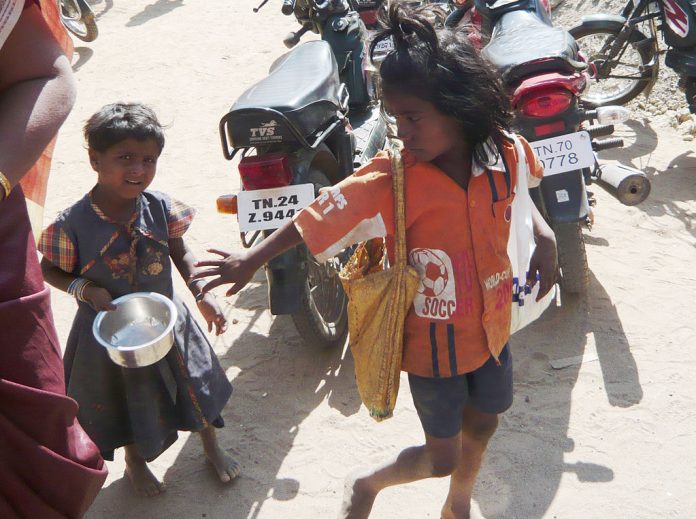
Do you know about 3,00,000 children are forced to beg by cartels? They are been drugged, beaten and forced to beg everyday.[1] This cartel is controlled by human trafficking cartels. And yes human trafficking cartel is a multi-million rupee industry. The money you give to the child beggars goes to these cartels and mafias. Every year 100s of children are brought from Bihar and Rajasthan and forced to beg on streets and in Indian railway.

Recently, the state government of Odisha has directed the Women and Child Welfare Department to rescue and rehabilitate the child beggars. The Odisha childline rescued 12 child beggars from different parts of the cities. 18 minors were also rescued from railway station, bus stand etc.[2]

We read so many news headlines where it is proved that behind all the child beggars it is either mafia or a racket is going on. But how to stop this thing from happening? A single person can’t stop this but if the government wants they can change this and children can have a further that they want.

In Andhra Pradesh, one person has taken these child beggars and provided these kids with everything. His name is J Rama Chandra Sarath Babu aka Sarath Babu former clerk in Indian Railways. He is the father of 120 children. Sarath Babu is running an ashram in Nellore district for the children who beg and steal on railway platforms since 1994. He not only educate them but also makes their lives better by providing food, shelter and basic necessities. How did he start all this? When he was employed in the Indian Railway, he could see children begging, stealing getting beaten by cops. He always wanted to do something for them but he could because he didn’t have that much money.

He got support from villagers and decided to give 4.5 acres of land to build this ashram. Today, child ashram is one of the good school in Nellore. Sarath is managing this ashram for the last 22 years with the help of donation. [3]

If you help others then others will help you. You should not avoid situations where a child begs in front of you. We all have seen a woman and a child. A woman with a child is a major draw and the chances of the people giving out money are more likely. But no-one knows the truth behind that sleeping child. Children are given a glass of milk in the morning because of which the child sleeps all day. This is not because of the milk, it is because of the drug that is mixed with the milk. Yes, a drug is mixed with the milk so that child sleep all day and woman can beg in peace. Crying baby for these persons is a nuisance.[4]

Causes of children crisis in India: One of the most famous NGO in Jaipur i-India explains the causes of this crisis. The following are the causes of child crisis:

Abuse: Many children run away from their house because of the abuse they experience. some children are beaten and sexually abused. Their homeless children can get further abused through exploitative child labour and prostitution. As per i-India, many of the abused children they encounter are traumatized and do not speak for months. They even take years to recover in the NGO whereas it may never heal on the streets.

Child Labour: In India, children work to earn money so that they can support their family. As young as 6 years old works on the streets or on the railway platforms. Even on railways children work on the platform. The Child Labour (Prohibition and Regulation) Amendment Act, 2016 states employing children (below 14 years) has been prohibited in all occupations and processes, with certain limited exceptions.

Gender Discrimination: In Indian Society, females are often get discriminated because of the liability of dowry. Parents often want a male child. Many girl children are aborted, abandoned or neglected by their parents which lead them on streets.  The literacy rate in India for the woman is only 38% because people in India think that girls place is at home and should not work.India is the most unequal for men and women.Because of gender discrimination, the girl child is forced to go into prostitution, or are forced to beg.

Homelessness: In India, children are homeless because of many reasons like poverty, or because many families in India are homeless. A Homeless child is a continuous threat of many risks. A single child is kidnapped by people who run this racket and these children are either forced to beg or are beaten by them.

Poverty: Poverty is the main cause of child beggars. Because of poverty they can’t go to a school or eat proper food. Because of poverty children tend to beg for their families or work as a child labour to earn some money. How can a child study when he doesn’t even have money to have food? According to a report, 224 million Indians live below poverty line.[5]

What can we do if we see a child beggars in Indian railway

There are too many ways to help child beggars in the Indian railway. You can help them through education, food, or providing shelter to them.

If you see a child beggar in Indian railway talk to the railway authority or to police about the child and take action. It’s better to do something than nothing. Children have heard about superheroes but haven’t seen one, be a hero for them so that their life can be changed. Children are god’s gift and they have all the rights to live peacefully. You can help them by supporting them financially or finding their families. Many NGO’s are available for helping these children who beg or steals on the railway. Do you know there is an app to save these children? People of India are working for them and you can support them by donating a certain amount of money. If you see a child beggar in Indian railway they follow these points:

  • Talk to railway authorities so that they can provide you nearby NGOs that can help.
  • Give the child to the NGO and if possible donate some amount to them for that child.
  • You can even talk to police and get help from them.
  • Some of the NGOs are provided below and the app for helping a child beggar is also provided:

App for child beggars

An app named Helping Faceless developed by Shashank Singh and Amol Gupta is using technology to fight human trafficking and kidnapping. You simply have to click a picture of the child and upload it on the app. With the help of the picture, a search process will start in order to match them with the previous record. If the match is found then the information will be forwarded to the non-profit organization who will help these children to connect with their families.

Their idea is simple, it is to give power in hand to people to help find missing children.

If you want to contact them click on this link https://docs.google.com/forms/d/e/1FAIpQLSdW0F_3UXBXD2aVYdujb1sSUD7VmFn48Tb0Eebw2IhRLd9Ksw/viewform.

Or you can mail them on [email protected].

This app is available only on Google play.

Some of the NGO that can help fight against the menace

  1. Child Ashram Children’s home initiatives for life Development. This Ngo was started by J. Rama Chandra Sarath Babu. His NGO as discussed earlier is situated in Nellore District, Andhra Pradesh. If you find any child begging on Indian Railway near Andhra Pradesh, you can contact them for the child safety. This NGO Is located at CHILD Ashram and School,

Gollapalem Village, North Amulur Panchayat & BO, Allur Mandal & SO, SPSR Nellore District, Andhra Pradesh – 524315, India.

Telephone number as provided is +91 9440375370 and you can write a mail at [email protected]. You can even visit their website, the link for the same is provided here http://www.childashramgp.com.

  1. Noble Cause Foundation: For a better cause. For a better world. This NGO was founded in the year 2014 by the inspirational words of Winston Churchill- “We make a living by what we get, but we make a life by what we give.” Today, Noble Cause Foundation is among the few NGOs of India that is working to improve the lives of people in society and with a mission to ensure health and dignity to the underprivileged.

This NGO is located at Noble Cause Foundation, 216, Sri Hari, First Floor, 14th Main, 2nd Cross, BSK 1st Stage, 2nd Block, Bengaluru – 560050

Telephone number: 080 60504070

Email: [email protected]

Website: www.noblecausefoundation.co.in

  1. CHETNA- Childhood Enhancement Through Training And Action. For them the only mission who are on the street homeless and are working. For them, these children are exposed to many threats and dangers including child labour, child trafficking, sexual abuse, extreme poverty, physical and mental abuse and homelessness. According to their statistics, a census of India carried out in 2011 found that the total number of children under the age of 18 involved in child labour is 23.8 million. 10.1 million of these children were aged up to 14.

According to United Nations Of the Rights Of Children, all children are born with fundamental rights:

  • The Right to Survival – to life, health, nutrition, name, nationality
  • Right to Development – to education, care, leisure, recreation, cultural activities
  • Right to Protection – from exploitation, abuse, neglect
  • Right to Participation – to expression, information, thought, religion

This NGO is located at CHETNA, 40/22 Manohar Kunj, Gautam Nagar, New Delhi

Telephone : +91–11–41644471, 41644470

E-Mail: [email protected]

Website: http://www.chetnango.org/contact-us/

  1. Ratna Nidhi Charitable Trust (RNCT): This NGO has a project called Safe Kids Foundation was set up in India in October of 2006. This project is for the kids to prevent childhood injury. Accidents kill 1.3 million children annually. Child beggars are the target group as they roam around roads and railway tracks. Safe Kids Foundation started working in the sphere of road safety by launching its First program ‘Walk This Way’ in October 2007. It educates both the school and non-school going children about Pedestrian safety thus spreading awareness of the hazards on the road and on railway tracks.

This NGO is located at Ratna Nidhi Charitable Trust, 5th Floor Vasant Vilas, 31, DD Sathye Marg, Mumbai – 400004 India

Ph: + 91 222 387 8930 / 23898930

Email: [email protected]

Website: http://www.ratnanidhi.org/contact-us/

  1. I-India: giving street children a future. I-India is a non formal street school to ensure that working children get at least a basic education. Community support is received by I-India. I-India also provide popular and practical vocational training where older children can learn skills while earning some money

I-India, 23 Mahatma Gandhi Nagar, DCM, Ajmer Road, Jaipur 302021, India

Tel: +91-(0)982-815-3317,  +91-(0)941-404-8817, +91-(0)141-235-2576

E-Mail: [email protected]

Web: www.i-indiaonline.com

6.Save the Children India: Save the Children works for children for their equality, equal education, equal nutrition, equal health, equal opportunities, gender equality and relief during natural disasters.

They have offices all over India. Mostly in all the states of India.

Address of the head office is provided:

Save the Children, Bal Raksha Bharat

1st & 2nd Floor, Plot No. 91, Sector – 44

Gurgaon (Haryana) – 122003, India

Tel: +91 124 4752000, 4752100

Email: [email protected]

Website: https://www.savethechildren.in

Conclusion

A single person can’t change everything but helping one child can make a difference. If everyone helps at least one child then in future the ratio of child beggars will be few. You can stop these rackets and mafia gangs who run these child beggars racket. Also, paying these child money means that you are supporting these rackets. Do not pay money to them, it is equal to destroying their lives. Help them a reasonable manner. DO NOT SUPPORT THESE HUMAN TRAFFICKING CARTELS.

References

[1]http://www.dnaindia.com/india/report-300000-children-across-india-are-forced-to-beg-by-cartels-report-2218856

[2]http://www.newindianexpress.com/states/odisha/2017/jul/03/drive-against-child-beggars-1623511.html

[3]http://www.indiatimes.com/news/sarath-babu-former-clerk-in-indian-railways-is-father-to-over-120-children-264454.html

[4]http://www.oneindia.com/india/the-begging-racket-of-bengaluru-and-the-mafia-behind-it-1830903.html

[5] http://www.newindianexpress.com/business/2016/oct/11/224-mn-indians-live-below-poverty-line-wb-1526883.html

Download Now

How can India benefit from making a law on asteroid mining?

0
asteroid mining

In this article, Jagriti Bharti of Amity Law School, Lucknow discusses the ways in which India can benefit by making a legislation on asteroid mining. 

Human population has exploded from 1.5 billion to more than seven billion over the last hundred years. The increase in the human population of the earth has also increased the consumption of the resources present on the earth by them with a drive of an ever increasing demand for resources in the future. To satisfy the ever increasing demand for resources, efforts like the recycling of the resources has been taken up by the communities. In a bid to fulfil the growing needs of resources underground minings or mining even at the bottom of the ocean has been tried till now. But the reserve of resources present of the earth is very limited and it may end up near in future leaving future generation washed out of the resources. Therefore, a new option for collecting resources has been found out i.e. mining resources from the ‘space’. The resources can be mined from the “Asteroids” present in the space.

DEFINITION OF AN ASTEROID

Asteroids are lumps of metals, rock and dust, sometimes laced with ice and tar, which are the cosmic leftovers from the solar system formation about 4.5 billion years ago.[1] In other words, asteroids are the minor planets which can neither be classified as a planet or as a comet. These are generally found in the direct orbit around the Sun which is also known as the inner solar system. There are hundreds to thousands of them present in the solar system ranging in size from few yards to hundred of miles. Small asteroids are more in number than the large ones but even a little house sized asteroids could contain metals (like iron, nickel, copper and most valuable of all water) possibly worth million of dollars. The mainly known asteroids are present in the Jupiter Trojans or in the asteroid belt formed between the orbit of Mars and Jupiter. All the asteroids are visible from binoculars except “Four Vesta” which can be seen with bare eyes.

Asteroids can be divided into three different classes based on their spectral type – a classification based on the analysis of the light reflected off of their surfaces. They are:

  • C type: These are most common types of the asteroids consisting of the 75% of known asteroid population. All carbonaceous asteroids fall under the C type category. They have high abundances of water bound up as hydrated clay minerals. These kinds of asteroids are extremely dark in nature with their reflection coefficient ranging from 0.03 to 0.10. Although, C type asteroids are of very less economic value since water is abundant on the Earth but it will be extremely helpful in expanding the human presence in the solar system.
  • S type: Mainly found in the inner asteroid belt, these kinds of asteroids contain iron and magnesium silicates. They are moderately bright asteroids having reflection coefficient ranging from 0.10 to 0.22. They have very little water but is more economical because of the elements present in them.
  • M type: M type asteroids contains nickel and iron in its purest form. Sometimes, stones are also found in these asteroids. The reflection coefficient of these asteroids ranges from 0.1 to 0.2.

Common types of asteroid by their composition

TYPE RESOURCES PURPOSE


Type C


Water + Metal + Organic compounds

Rocket propellants + other consumables at space missions + metal for 3D printing of hardware to use in space + making rubber or plastic or methane for rocket fuel or CO2 for plants.
Type S Iron + Platinum group metals Sell on earth for use on earth.
Type M Metals (nickel)  + including platinum group metals Manufacturing large hardware items in space for colonisation or larger missions and for sale on the earth.

Credit: https://www.spacelawresource.com/single-post/2017/03/03/The-Legality-and-Ethics-of-Mining-an-Asteroid

CONCEPT OF ASTEROID MINING

Asteroid mining may sound like a concept ripped from the Science fiction but various scientists and different space companies are trying to turn it into a reality. It is a process which involves extraction of various useful minerals from asteroids present in the space. Due to the accessibility of the asteroids in the space, Near Earth Asteroids (NEA’s – those asteroids that pass near the Earth) are particularly accessible subsets of the asteroids that provide potentially attractive targets for the resources to support space industrialisation. Materials extracted and processed from the NEA’s can be useful in various fields like agriculture, life support, precious metals etc.

“There are resources that support operation and human activity in space, there are resources that support manufacturing in space and then maybe there are resources that are important enough and valuable enough to bring those resources back to Earth,” says Chris Lewicki, president and chief engineer of Planetary Resources, a private space company focused on asteroid mining.[2]

The resources extracted from asteroid mining will not only appeal commercial outfits but also NASA as well by enabling a more affordable and more expansive human presence in space. But mining of asteroids is not an economically viable option as it seems to be because of the following reasons:

  • Expensive space travel
  • Expensive transportation of materials to space
  • Bringing resources back to earth is also very expensive

LEGALITY OF ASTEROID MINING

Till now going through the meaning of the asteroid and concept of asteroid mining we understood that it is a process of extraction mines from the asteroid present in the outer space. Now, the question arises – Is asteroid mining legal? The answer is ‘yes.’ Every country has laws its own laws of using their land and water present of the earth but all these laws are generally based on some or other kinds of treaties which support that law. These laws define the extent of the territory of land and water on which a country has its authority to use them their own way. The concept of asteroid mining is relatively new in the outer space. Not many countries have their laws regarding this newly evolved concept but its legality can be traced back from the Outer Space Treaty of 1967.

The Outer Space Treaty (1967)

The Outer Space Treaty is originally known as The Treaty on Principles Governing the Activities of States in the Exploration and Use of Outer Space, including the Moon and Other Celestial Bodies. It is considered as the “Magna Carta” of the International Space law. It was one of the most significant law-making treaties concluded in the second half of the 20th century. It was adopted by the UN General Assembly on December 19, 1966, and came into force on October 10, 1967.[3] This treaty was initially signed by the United States of America, United Kingdom and the Soviet Union. This treaty has received 99 ratifications and 25 signatures till 2008. India signed the Outer Space treaty on March 3, 1967, which got deposited on January 18, 1982.

According to the Outer Space Treaty, no country is allowed to place the weapons of mass destruction in the orbit of the Earth, Moon and any celestial body and also neither is subjected to weapon testing or military maneuvering on either of them. The treaty further suggests that no nation is subject to national appropriation by claim of sovereignty, by means of use or occupation or by any other means in the Outer Space including Moon and other celestial bodies.[4]

The Commercial Space Launch Competitiveness Act

The Commercial Space Launch Competitiveness Act is a bill signed by President Barack Obama of November 25, 2015, in order to encourage private space exploration by limiting governmental regulations till September 2023. It was a historic step taken by the President toward opening up the reaches of the solar system. Title IV of the Act allows citizens U.S. (including commercial entities) the explicit rights to own resources extracted from the space such as minerals from asteroids.

This created a misunderstanding in the international community regarding the legality of the title IV of the Commercial Space Launch Competitiveness Act. Article II of the Outer Space Treaty of 1967 states that no nation is allowed to claim ownership of any celestial body be it the moon, asteroid or any planet. Here, it can be clearly seen that “nations” are not allowed to own the celestial bodies. Title IV of the Act doesn’t contest that rule but rather classified that private companies can claim ownership over the resources they obtain from mining asteroids and other celestial bodies and therefore nullifying all the questions of the legality of the Commercial Space Launch Competitiveness Act.

As per the Outer Space Treaty (1967) and the Commercial Launch Competitiveness Act it is clear that asteroid mining is legal if done without disturbing other nations.

NEED OF NATIONAL SPACE LAW IN INDIA

The need of space laws in India can be understood from following points:

  • Reducing the load of government entities: India has a hold over the space sector only through government entities i.e. the Indian Space Research Organisation (ISRO). There is nil or very least outsourcing by the ISRO. If its starts distributing some of its work to private companies it can save its time and make its work cost effective. Outsourcing by ISRO will help in the creation of a private space industry ecosystem that will lead to greater bilateral, multilateral and transnational activity.
  • Deciding the quantum of damage owed: There is no Indian space law which can determine the quantum of damages which needs to be paid by India in case India has harmed another country with its ‘space debris’. This case arose when an international dispute introduced between India and Japan over the fall of space debris on one of the villages in Japan by an Indian satellite which was retracing back to the Earth. India is liable to pay for the damages caused by it because it is a signatory to the Convention on International Liability for Damage Caused by Space Objects, 1972. In the absence of any law, India is unable to decide the quantum of the damage created by it.
  • Exploring its dimension in space: India has its laws of land, air and water and in order to increase its space dimension it needs to have its own space laws apart from space research and development programmes.

BENEFIT TO INDIA FROM MAKING A LAW ON ASTEROID MINING

Mining of the asteroids is of great economica value because of the abundance of minerals present in it. But according to “Magna Carta” of the international space law i.e. the Outer Space Treaty, no nation is allowed to claim ownership of any celestial bodies but they can mine them and keep the mined resources with them. No country has made any law on asteroid mining till now except the US which has passed a bill in this regard. India is still far behind from others in making space law so, one can imagine how much time will it take to make laws on asteroid mining. But if India wants to use the resources extracted from the asteroid, it has to make laws regarding this to be on safer side. Given below are certain benefits which India will have if it makes laws of asteroid mining:

  • Responsibility of space debris

Mining leads to two things – minerals and debris. If mining is to be done of the asteroids it will certainly give useful resources as well as certain amount of space debris which needs to be cleaned by the country mining the asteroid. So, in future, in India mines the asteroid, the law on asteroid mining will help it determine the liability it has towards the space debris and the pollution created by it if any.

  • Extent of mining

We all must have heard about United Nations Convention on the Law of the Sea III (UNCLOS III) which is the base of the sea law in various countries. This convention defines the extent of the sea to which a country has an authority to use it for its own purpose. Similarly, asteroid law made by India may help other countries decide the extent to which India has the authority to mine a particular asteroid.

  • Resolving dispute

Disputes are inevitable and if profit is involved in any matter it becomes more happening. Asteroids are abundant in resources but are limited in number and in that only NEA can be mined to reduce the cost of mining. The demand is more and the reserve is less. In this case, every country will try to mine more and more which results in depletion of resources for others. This can sufficient cause for dispute between two countries. To resolve these kinds of dispute in future, India needs a law of asteroid mining.

  • Engaging private space industry

In India, ISRO is the only government organisation which has responsibility and authority of regulating space researches and launching missiles. If any law is made on the asteroid mining in India then it can outsource its work to private space companies regarding the establishment of mining stations in space which will help it remain in conformity with the articles of the Outer Space Treaty which states that no nation can own any celestial body.

References

[1] https://www.nasa.gov/content/goddard/new-nasa-mission-to-help-us-learn-how-to-mine-asteroids [July 24, 12:32 PM]

[2] https://www.scientificamerican.com/article/new-law-paves-the-way-for-asteroid-mining-but-will-it-work/ [July, 24, 02:16 PM]

[3] http://legal.un.org/avl/ha/tos/tos.html [July 24, 04:43 PM]

[4] Article II of the The Outer Space Treaty, 1967

Download Now

What are the laws against discrimination of Leprosy?

0
of leprosy

In this article, Himanshi Srivastava of Amity Law School, Lucknow discusses the laws against discrimination of Leprosy.

What is Leprosy (Hansen’s Disease)?

It is a severe chronic disease of skin and nerve damage of ears, arms and legs of the body. The disease is caused by bacillus (rod-shaped) bacteria called mycobacterium leprae.

In this disease people may experience:

  • Pain areas: the eyes or foot;
  • Skin: Loss of colour, lumps, small lumps, ulcers and redness;
  • Sensory: Reduction of sensation of touch, reduced temperature sensation;
  • Additional problem: Nerve injury, physical deformity, raising foot problem.

Leprosy is a disease which is spread since ancient times. It is one of the recorded oldest disease in history. According to WHO, the first ever known reference of leprosy is from 600 B.C.  It is common in countries like U.S.A, South California, Africa and other territories of U.S.

TYPES OF LEPROSY

According to Ridley-Jopling System. It has six- classification based on severity of symptoms:

  1. Intermediate Leprosy: A few flat wounds that sometimes can be heal by themselves and can appear to be more severe type.
  2. Tuberculoid Leprosy: A few flat wounds that can be big and numb, that can involve nerves, can heal on its own and is persistent.
  3. Borderline Tuberculoid Leprosy: Wounds similar to tuberculoid but smaller and more numerous, less nerve enlargement, revert to tuberculoid, or any advance form.
  4. Mid-borderline Leprosy: Reddish Plaques, moderate numbness, swollen lymph glands, may regress, and is persistent.
  5. Borderline Lepromatous Leprosy: Many wounds including flat wounds, raised wounds, raised bumps, plaques, and may persist,
  6. Lepromatous Leprosy: Many wounds with bacteria, hair loss, nerve involvement, limb weakness, doesn’t regress.

HOW DOES LEPROSY SPREAD?

It spreads through the contact with the mucus of an infected person. This usually occurs when the infected person sneezes or coughs. The disease isn’t highly contagious. But the constant contact with the untreated person can lead to contracting leprosy.

The bacterium responsible for leprosy multiplies very slowly. The disease has a time period (the time between infection and therefore the look of the primary symptoms) of up to 5 years. Symptoms might not appear for as long as twenty years.

Despite initial discovering mycobacterium leprae (the microorganism that causes leprosy) in 1873, leprosy analysis scientists still don’t completely perceive how leprosy is unfolded.

Most scientists believe that leprosy is spread from person to person in infected metabolism droplets.Whereas this might be a technique during which leprosy is spread, more than fifty percent of the those that develop leprosy have not confirmed contact with an infected person. Factors that will influence how leprosy is spread include:

  • Environmental conditions
  • The degree of susceptibility of the person
  • The extent of exposure.

How Is leprosy spread to household Contacts?

People who live within constant family as an individual with untreated leprosy|infectious disease have an eight-fold enhanced risk of developing the disease. this can be because of genetic factors concerning condition and/or prolonged intimate contact. It’s necessary to note that the partner is the least-at risk family member. The those who are at the best risk of leprosy transmission are:

  • Parents of someone with infectious disease
  • Children of someone with infectious disease
  • Brothers or sisters of someone with infectious disease.

Other attainable Modes of how leprosy is spread:

Leprosy can’t be spread from a mother to her unborn baby, and other people cannot get leprosy through sexual contact.

Why there should be the laws in our Country for Elimination of Discrimination against Leprosy?

In 2014, India had the largest number of latest leprosy cases globally (58%). From 2005 till 2014, the National leprosy Eradication Programme (NLEP) recorded a rate of 1.25 to 1.35 lakh new cases each year. A majority of those are youngsters, who are vulnerable with isolation and discrimination at a young age.

Although leprosy could cause irreversible disabilities, with medical advances, it’s currently a very curable disease. However, a serious obstacle is that the social stigma related to leprosy, and lots of persons affected by leprosy still be outcast from society. Another downside is that of Indian laws, which still directly and indirectly discriminate against persons tormented by leprosy.

In 2010, the United Nations General Assembly unanimously adopted a Resolution on the Elimination of Discrimination against persons tormented by leprosy, accompanied by Principles and tips listing out measures to boost the living conditions of such persons. In addition, the United Nations Convention on the Rights of Persons with Disabilities, 2007 (“UNCRPD”) promotes, protects and ensures the total and equal enjoyment of all human rights and basic freedoms by all persons with disabilities.

India has signed and sanctioned the UNCRPD, and is additionally a member of the United Nations General Assembly that unanimously passed the Resolution on the Elimination of leprosy. However, the Indian government has taken no action to modify or repeal any leprosy laws, or to eliminate discrimination against persons tormented by leprosy. this can be currently an urgent need, and is the focus of this report of the Law Commission.

Accordingly, along with its report and proposals on the issue, the Law Commission has prepared a model draft legislation, titled “Eliminating Discrimination Against Persons affected by leprosy (EDPAL) Bill, 2015”. This draft law contains principles of equity and equal protection before law that must be guaranteed to all persons affected by leprosy or members of their family. It also seeks to promote the social inclusion of persons affected by leprosy and their family members through affirmative action.

Background of the Bill of 2015

There are several laws that are still in India that discriminate against people affected by leprosy. These laws allow leprosy as a ground for divorce, discriminate against people affected by leprosy who resort to begging for support, bar them from contesting elections, provide for charging higher life insurance premium from them, stop them from travelling in trains, getting driving licences, etc. For an extended time, people and organisations operating within the field of leprosy were vocal about the requirement for repealing these discriminatory laws to finish the legal discrimination being faced by people affected by leprosy.

But it was The leprosy Mission Trust India (TLMTI) who struck while the iron was still red-hot! TLMTI has already identified 14 laws that discriminate against people affected by leprosy. In september 2014, the Modi government decided to repeal obsolete laws within the country. Seizing this chance, TLMTI took the issue of repealing discriminatory laws with the Law Minister of India, and had a series of conferences with the Law Commission of India. With TLMTI’s persistent awareness raising initiatives and lobbying, the Law Commission submitted its report for ‘Eliminating Discrimination against Persons affected by Leprosy’ (Report No. 256 dated april 7, 2015) to Mr D.V. Sadananda Gowda, Hon’ble Minister for Law and Justice, Government of India.

Justice A.P. Shah, Chairman of the Law Commission of India in his above-mentioned report, under para 1.8 states, “The 20th Law Commission took note of the commendable efforts of TLMTI in addressing the considerations of Persons affected by leprosy through its awareness and support initiatives”. TLMTI succeeded in creating the law makers of this country stay awake and notice of the injustice dispensed to people affected by leprosy.

LAWS FOR ELIMINATION OF DISCRIMINATION AGAINST LEPROSY

The Law Commission of India has submitted its Report No. 256 on “Eliminating Discrimination Against Persons affected by Leprosy” to the Union Minister of Law and Justice on 07.04.2015. The report additionally provides a model draft law to eliminate discrimination faced by Persons affected by leprosy.

The key aspects of the draft law are as follows:

  1. Repeal and amendment of certain laws: Besides the repeal of the Lepers Act, 1898, the Law Commission recommends the repeal of discriminatory provisions in various personal laws. It also recommends including persons affected by Leprosy among the list of persons eligible for legal aid under the Legal Services Act, 1987.
  2. Measures against discrimination: The Law Commission recommends that persons affected by leprosy and their family members must not be discriminated against in any institution. It also guarantees to such persons the right to access healthcare, adequate housing, education, employment and other such basic amenities.
  3. Land Rights: Persons affected by leprosy are usually made to relocate to “Leprosy Colonies” in India, but they do not have land rights, and are constantly under fear of eviction. The Law Commission recommends that title and ownership of property in Leprosy Colonies should be legalised, and if land rights cannot be given, alternative settlement options must be explored.
  4. Right to Employment: Many employers misuse existing employment laws to terminate services of persons who are diagnosed with Leprosy. The draft law prohibits the termination of employment of such persons solely due to their association with Leprosy.
  5. Educational and training opportunities: The Law Commission recommends that the draft law should ensure the admission of Persons affected by Leprosy and their family members in schools, colleges and other institutes, as educational qualifications are necessary to allow them access to employment opportunities.
  6. Appropriate use of Language: The use of the term ‘leper’ and similar terms carries negative connotation, hampers efforts for the inclusion of Persons affected by Leprosy into society, and affects their sense of dignity as human beings. The Law Commission recommends that the term ‘leper’ and other such terms in all government and private documents should be replaced with ‘persons affected by Leprosy’ or a similar term.
  7. Right to Freedom of Movement: The draft law ensures that persons affected by Leprosy are guaranteed the right of travel in public transport and the right to obtain a driving license.
  8. Concessions during treatment: The draft law seeks to provide relevant concessions and monetary benefits to persons affected by Leprosy who are undergoing treatment, for their travel, lodging during treatment and medicines.
  9. Social Awareness: Creating awareness regarding the cure and transmission of Leprosy is the best way to address the discrimination and stigma against persons affected by Leprosy and their family. The Law Commission recommends that awareness about the disease, its treatment and curability should be conducted through campaigns and programmes in schools, hospitals, government institutions and private establishments.
  10. Welfare Measures: The draft law imposes specific duties upon establishments to execute certain welfare measures to foster an environment for financial and social growth of persons affected by Leprosy and their families. It also creates Central and State Commissions to strictly enforce such measures, and provides for accountability measures in case of non-enforcement.

EDPAL Bill to EDPAL Act – The long journey


A Bill will become an Act only it’s passed by both the houses of the Parliament. No political party can oppose passing of EDPAL Bill. but during this age of vote-bank politics, which political party will show interest in an insignificant body, like people affected by leprosy, who cannot influence election results?
Even when EDPAL Bill is passed, its implementation is an uphill task. The responsibility to implement varied recommendations lies with different ministries and departments of the government, like Law and Justice, Health and Family Welfare, Social Justice and empowerment, Housing and urban poverty Alleviation, Labour and Employment, Panchayati rule, Railways, Rural Development and a number of different ministries and departments. Who will take the lead in lobbying for getting EDPAL Bill passed and implemented for the good thing about people affected by leprosy?

It is not as easy as we predict. As an example, Rajya Sabha Committee on Petitions had submitted its report (Hundred and thirty-eighth report) on action taken by government on observations/recommendations on a petition signed by Shri Ram Naik, former Union Minister of fossil oil and natural gas and 5 others, praying for integration and management of leprosy affected persons on 22nd November, 2010. There is specific time frame for each and every ministry/department to require action on each issue mentioned in the petition. Over four years later, we discover that no progress has been made.

Conclusion

Leprosy is one of the foremost misunderstood diseases of the world, it poses some distinctive challenges in its management and elimination. A careful examination of the theoretical and sensible approaches of the past will give important insights for the future. to reduce the burden, it’s important to develop a holistic and multi-pronged approach that has key policy changes, a public education campaign, sustainable livelihood programs, skill coaching workshops and bringing in alternative medical stakeholders to generate employment, determine interventions to dispel stigma and mainstream the affected people. Policymakers, health professionals, civil society and public health activists, every one of them has to act as a change agent through their mimetic, legislative and activists roles to win the war against leprosy.

Reference

Download Now

All you need to know about Nithari Serial Killings

0
nithari

In this article, Jagriti Bharti of Amity Law School, Lucknow gives an overview of the infamous Nithari case.

Nithari case is one of the most horrifying and gruesome cases of 2006. Nithari is a village situated in Noida (Delhi). This case involved the commission of heinous crimes like sexual abuse, murder, cannibalism and attempted necrophilia. The case grabbed headlines in media due to its brutal and rare nature of crimes. The case came to light after a continued series of disappearances of the children (both boys and girls) and teenagers from the Nithari village in the year 2005 and 2006. Investigation of this case ultimately lead to tracing of the bungalow of Moninder Singh Pandher and this caused the disappearance mystery of the Nithari village to unfold one step after the another.

Background

Year 2003

An abnormally high number of women and children were reported to be missing from Sector 31 of the Nithari village in Noida. The fact of women and children missing from the village predated Surinder Koli’s arrival as a domestic servant of Moninder Singh Pandher who was a businessman and the owner of the bungalow number D-5 located in Sector 31 of the Nithari village. Numerous missing reports were filed to the police by the families of the victim but no action was taken.

February 2005

14 year-old-girl named Rimpa Haldar went missing from 8 February 2005. Her parents made several attempts to register a missing report of her daughter with police but were unsuccessful.

March 2005

Some boys playing cricket found a hand in the plastic bag in the drain located behind D-5. The matter was informed to the police who declaring the hand as an animal carcass, asked the villagers to forget about the incident as nothing was wrong. This can be confirmed by the statements of prosecution witness 23[1] and 24[2] which are available as evidence in the court records.

Facts of the case

  • On 7 May 2006, a girl named Payal informed her father Nand Lal about her going to Moninder Singh Pandher bungalow but after that, she went missing. Her father went to search her in D-5 where Pandher lived with his servant Koli. Pandher was not in Noida that day and Koli denied knowing anything about Payal.
  • Nand Lal went to the police to register a complaint of his missing daughter but police refused to register his complaint. Tired of visiting police and Pandher for one month, he approached the then Noida SSP on June 2006 for help.
  • On the order of the SSP, police registered Nand Lal’s complaint of his missing daughter and started their investigation. Police were able to find the fact that Payal’s mobile phone was still in use and traced its location. Checking the call details of the Payal’s number lead them to Koli who called her a day before she went missing.
  • Police arrested Koli for further investigation but Pandher got him released soon. Police was not able to find out anything remarkable which could guide them to the whereabouts of Payal but the involvement of Koli in the case was evident.
  • Upset with the police’s investigation on the case, Nand Lal approached the court on 7 October 2006. The court ordered the police to investigate the case. On investigation, police discovered lots of plastic bags filled with human skeletons from the drain located behind the bungalow.
  • Bungalow owner Pandher and his servant Koli got arrested on 29 December 2006. More skeletons were excavated from the drain on 30 December 2006. Not much evidence was found against both the suspects.
  • Mere discovery of skeletons was not sufficient to prove them murders. But the discovery created a sensation in the whole country and people started demanding justice.
  • Investigation of the Payal’s case open up the facts of disappeared children and teenager of Nithari. Pressurised with the public rage, Uttar Pradesh government handed over the case to the CBI on 11 January 2007.

Koli’s Confession

CBI was unable to find any evidence against Koli even after 60 days of police custody. They applied to the Magistrate to have Koli’s confession recorded on 27 February 2007 stating that he was willing to confess. Koli’s confession was recorded by the magistrate. In his confession, Koli gave a detailed account of how he lured the victims (9 female children, 2 male children and 5 adult women) into the house, murdered them and attempted to have sex with inert bodies, chopped the dead bodies, eat their body parts and threw the remains in the drain at the back of the bungalow.

According to his confession, Koli was a servant at Pandher’s house. Pandher used to live alone in the bungalow and his family resided at Chandigarh. Apart from them, there was another domestic servant named Maya Sarkar, a gardener and two drivers employed by Pandher in his house. All the murders were done by Koli in the drawing room between 9 am to 4 pm. After each killing, he would carry the body upstairs to a bathroom and chop it into small parts. He would leave the bathroom in that condition and only after cooking some of the body parts and eating them, he would clean up the bathroom and drawing room.  It is very hard to believe that not once in any of the murder, neither Pandher nor any other person employed by him noticed all these things. None was tried as a witness at trial.

THE MINISTRY OF WOMEN AND CHILD DEVELOPMENT REPORT

In 2007, the WCD set up an expert committee to investigate the Nithari case. Their report is an indictment of Noida police and CBI’s investigation. Dr Vinod Kumar (the Chief Medical Superintendent, Noida) informed the committee that the surgical precision with which the bodies were cut create suspicion of organ trade. The WCD report casts doubt that organ trade can be the motive of the offence.

Observation of the Expert Committee

After going through the investigation report provided by the district authorities, the expert committee observed that the modus operandi and motive of the murder were not clear. Following are the observations made by the committee in the case:

  • No type and pattern of choice in the selection of the victim which is the hallmark of a serial killer.
  • Drain behind and at front of the house is not too deep and has stagnant water. Disposed bodies would have remained there. It’s strange that there was no complaint of foul smell due to decomposition.
  • Accused himself confessed that the murder was committed during the daytime. It’s strange that no one witnessed the disposal of the bodies.
  • To a body to get decomposed, it normally takes 3 years. Deaths were as recent as 2006 yet only bones and skull was found.
  • Torsos were disposed of separately by the accused which was discovered only after search carried out under the supervision of the CBI.

Suggestions of the committee

  • CBI should look into angles into organ trade, sexual exploitation, and forms of crimes against women and children.
  • Need to study records of organ transplant of all the hospitals of Noida to trace the donor and the recipient.
  • The discovery of more and more bodies creates a suspicion of involvement of some other person in the case. To know the motive and modus operandi of the case, the involvement of other persons needs to be investigated.

Judgment

The timeline of the Nithari case will give a better insight into the proceedings and judgement of the case till now-

Year 2006

December 29: Nithari case came into light with the discovery of skeletons from the drain located behind the bungalow number D-5 of Sector 31 in Nithari village of Noida. The owner of the house Moninder Singh Pandher and his servant Surinder Koli were arrested as the prime suspect.

December 30: More skeletons were discovered from the drain.

December 31: Two police constables were suspended for negligence in their duty.

Year 2007

January 3: Uttar Pradesh government suspended[3]

  • The then SSP ‘Piyush Mordia’ (Gautam Buddh Nagar district)
  • The then additional SP of Noida ‘Saumitra Yadav’.
  • Former circle officer ‘Sewak Ram Yadav’.
  • 6 suspended sub inspectors were dismissed.

January 5: Pandher and Koli were taken to Gandhinagar for extensive narco analysis test by U.P. police.

January 10: CBI took over the case for investigation.

January 11: First CBI team visits Nithari for investigation. 30 more bones found near Pandher’s bungalow.

January 12: Pandher and Koli interrogated by the CBI.

January 20: UP government filed a report to NHRC.

February 8: Pandher and Koli sent to 14 days of CBI custody by Special CBI court.

nithari
http://www.dailymail.co.uk/indiahome/indianews/article-2811938/No-rest-ghosts-Nithari-Surinder-Koli-faces-gallows-rape-murder-17-children-grieving-families-warn-vital-information-gruesome-organ-trade-die-him.html

Year 2009

February 13: Koli was awarded death sentence by the Special CBI court for rape and murder of Rimpa Haldar, one of the several victims.

September 10: Pandher and Koli were awarded death sentence by the trial court. The Allahabad High Court acquitted Pandher but confirmed Koli’s death sentence.

Year 2010

January 7: Supreme Court stayed the death sentence of Koli.

Year 2014

July 20: Mercy petition of Koli was rejected by the former President Pranab Mukherjee.

September 8: Court stayed Koli’s execution at 01 am at night. He was to be hanged on September 12 in Meerut jail.

September 12: The Supreme court extended the interim stay on execution of Koli till October 29.

October 28: The Supreme court bench headed by the CJI, H.L. Dattu rejected the review petition stating that the court did not commit any error in its judgement.

Year 2015

January 29: A division bench comprising CJ Chandrachud and Justice Baghel held execution of Koli’s death sentence. The reason stated by them was, “it would be unconstitutional in view of the inordinate delay in deciding mercy petition.”

The order came after a PIL filed by an NGO named ‘People’s Union for Democratic Rights whose contention was that the period elapsed in the disposal of Koli’s mercy petition was three years and three months and execution of death sentence would be in violation of Article 21 of the Constitution.

Year 2017

July 22: CBI convicted Pandher and Koli and said that the sentence will be pronounced on July 24.

July 24: Pandher and Koli awarded death sentence by CBI rape and murder in Pinky Sarkar case.

This is the eighth of the 16 murder cases in which the judgement has been delivered in Nithari case. Judgments on other eight cases are yet to be delivered. It has been almost eleven years since the case first came into light and families are still waiting for the justice…

 References

[1] http://www.indiaresists.com/wp-content/uploads/2014/11/Annexure-I-Evidence-of-PW-23.zip

[2]http://www.indiaresists.com/wp-content/uploads/2014/11/Annexure-II-Evidence-of-PW24.zip

[3]http://www.hindustantimes.com/india/timeline-nithari/story-CghmTmuSCYbSI2SJgNSNJN.html

Download Now

Everything you need to know about Contract of Guarantee

0
Contract of guarantee

In this article Karan Singh of Jindal Global Law School and Ria Verma, a student at Symbiosis Law School, NOIDA, discusses the Contract of guarantee in the Indian Contract Act, 1872.

The Indian Contract Act , 1872

Section 126 of Indian Contract Act defines Contract of guarantee. It defines a contract of guarantees a contract to perform the promise or discharge the liability of a third person in case of his default. [1]

The person who gives the guarantee is called “surety”. The person of whose default the guarantee is given is called the “Principal debtor”. The person to whom the guarantee is given is called the creditor.

Contract of guarantee can be of two types. It can be oral or written. However, for a contract to form in between the parties there should be meeting of minds that means all three parties should be privy to the contract. Contract of guarantee is a promise to answer for the payment of the debt that the principal debtor takes from the creditor or the performance of some duty. IN case the principal debtor fails who is in the first instance liable to pay or perform. Therefore, the primary liability to pay is of the principal debtor. Whereas, the secondary liability is of the Surety i.e. when the principal debtor fails to pay, the surety comes into role.

Therefore, the contract of guarantee is to indemnify if principal debtor fails to fulfil his promise. In this indemnify is not equal to the contract of indemnify in Section 124 of ICA.

Contract of guarantee

A contract of guarantee is precisely stated under Section 126 of the Indian Contract Act, 1872. According to this section, a contract of guarantee can be understood as a contract that requires an individual or a group of individuals to perform a promise made or to discharge their liability under the contract when the third party to the contract failed to fulfill their part of the promise. This guarantee can be oral or written. 

A contract of guarantee requires three parties: the principal debtor, the creditor, and the surety. The individual on whose non-payment the guarantee has to be given is the principal debtor or the borrower, the creditor is the individual who is given the guarantee and the surety is the individual who gives the guarantee.

Surety makes a promise to the creditor that on the principal debtor’s default, they will discharge the third party’s liability or fulfill the promise which was made by the principal debtor. Therefore, the surety gives assurance to the creditor for the principal debtor’s act.

It can be interpreted that the liability of the surety acts as collateral to the principal debtor’s liability. In case the principal debtor defaults, the surety is bound by a conditional promise to be held liable.

There are three essential features of a contract of guarantee:

  1. Consideration- It is an essential element of a contract of guarantee. The consideration can be monetary, a future act, personal property, etc. that largely benefits the principal debtor. 
  2. Not made in good faith- A contract of guarantee is not an uberrimae fides contract, that is, a contract made in good faith. But there is an obligation to disclose all the material facts to the surety so he can make an informed decision. Therefore, a guarantee obtained by concealment or misrepresentation is invalid. 
  3. Either oral or written- The contract can either be oral or written according to Section 126 of the Indian Contract Act, 1872. 

The Act seeks to protect the interest of all the three parties that are involved in a contract of guarantee with emphasis on the interests of the surety.

Difference between contract of guarantee and contract of indemnity

  • In contract of indemnity parties involved are 2 i.e. indemnifier and indemnity holder whereas in contract of guarantee there are 3 parties involved i.e. principal debtor, surety and creditor. In contract of guarantee there are 3 contracts, first is between principal debtor and creditor, second is between creditor and surety and third one is between surety and principal debtor.

However, there is no need to have three separate agreements between 3 parties. A single agreement can also make them parties to a contract of guarantee.

  • The nature of liability in the contract of indemnity is of the indemnifier i.e. The primary liability is of indemnifier. Whereas, the primary liability in a contract of guarantee is of the principal debtor and secondary liability is of surety.

Section 127 of Indian Contract Act

This section basically talks about the consideration in a contract of guarantee. The consideration for the surety’s promise may move from either the creditor or the Principal Debtor. The consideration may benefit the surety but it is not necessary that surety should receive any benefit from the consideration in contract of guarantee. This section speaks of the consideration i.e any benefit that is received by the principal debtor or creditor at the surety’s request.

The word “done” in this section is the past benefit to the principal debtor that can be considered as good consideration.[2]

Nature of liability of surety

As laid down in Section 128 of the Indian Contract Act, 1872, the liability of the surety is coextensive. It has the same extent as that of the principal debtor. It emphasizes the maximum degree as well as the scope of the surety’s liability.

Coextensive

‘Coextensive’ is an attribute to the word extent and refers to the amount or the quantum of the principal debt. This particular section only explains the ambit of the extent of surety’s obligation when no limit has been stipulated against the validity of the principal debtor’s obligation. 

The Section further explains how the surety may, however, in the agreement impose certain limits to the extent of his liability entering into a special contract. They can make a declaration and impose a certain limit or restriction to their liability. 

Unless it is expressly mentioned in the terms of the contract, neither can the surety be held liable by the creditor nor can he sue him, till the principal debtor makes a default. Therefore, the surety’s liability is secondary or peripheral in nature.

It is encouraging to take note of the fact that even before the Indian Contract Act, 1872 was enacted the Indian courts perceived the principle of co-extensiveness. In the case of Lachman Joharimal v. Bapu Khandu and Another (1869), the Bombay High Court explained how it is not binding on the creditor to extinguish his remedies before suing the principal debtor. On obtaining a decree against the surety, it may be upheld in a similar way as a pronouncement or a decree for any obligation of the party or any debt which has not been repaid.

Condition precedent to the surety’s liability

Where there is a condition precedent to the surety’s liability, he will not be liable unless that condition is first fulfilled. Section 144 is based on this principle to an extent. For example, when an individual gives a guarantee to undertake a task unless another individual joins as a co-surety, the guarantee will be invalid if another co-surety does not join the contract. 

In National Provincial Bank of England v. Brackenbury (1906), a guarantee was signed by the defendant. The defendant signed the contract on the condition that three more individuals would also sign the contract, as part of a joint and several guarantee. However, one of the three individuals did not sign the contract of guarantee. The Court held that no agreement took place since there was a condition to the contract that was not fulfilled. Hence, the defendant was held not liable. 

The extent of liability of surety

It is still a critical issue to measure the maximum extent of surety’s liability and to what extent it is being invoked presently. Herein the question is at what time the surety’s liability comes under scrutiny- when the debtor has not fulfilled their part of the promise of all the remedies that have been availed by the creditor against the debtor.

Is creditor bound to exhaust his remedies before suing the surety

The surety’s liability is not removed in case of the omission of the creditor in suing the borrower. The creditor does have to necessarily exhaust his remedies against the principal debtor before they sue the surety. They can still maintain a suit if no proceedings have been initiated beforehand against the borrower. However, the surety cannot be held liable until the contingency takes place.

Difficulties arise in interpreting the principle of co-extensiveness when the surety has guaranteed performing a contractual liability to make payments by way of installments to the creditor. 

Prominent case laws

The reference point for these difficulties was brought to light and elucidated in Lep Air v. Moschi (1973). In this particular case, the debtor did not make the payment in installments to the creditor who had performed their end of the contract. The contract was repudiated by the creditor. The issue here was whether the creditor could initiate proceedings against the surety at the time of repudiation for the amount entitled to the creditor under the contract, regardless of the fact that when the repudiation was accepted the debtor now had a secondary and not a primary obligation to pay damages. 

The surety had an obligation to observe the debtor’s performance of his contractual obligations, so on his default, the surety was obligated to make a payment to the creditor for the loss incurred to him. However, it was visualized in this case that the obligation of the surety and the debtor would be coextensive and no pronouncement could breach this basic principle.

The principle of co extensiveness was further enforced in the following cases of Bank of Bihar Ltd v. Damodar Prasad and Another (1968) wherein the Supreme Court explained how the sole condition required was to demand the payment pertaining to the principal debtor’s liability for the implementation of the bond. On the fulfillment of the condition and despite constant demands, both the principal debtor and the surety did not fulfill their end of the contract. 

The liability being co-extensive and immediate in nature made the surety liable to pay the whole sum in question. There was no delay and no anticipation for the remedies to be extinguished by the creditor against the principal debtor.

A similar judgment was held in State Bank of India v. Indexport Registered (1992), wherein the Supreme Court explained how the surety solely because of the creditor’s omission in initiating proceedings against the surety does not become free from their liability to pay the debt. It was reinstated that the creditor is not confined to having his remedies and a suit is still maintainable before suing the principal debtor. 

The Supreme Court explained how prima facie there can be proceedings against the surety despite the absence of demand and without proceeding against the principal debtor first. They explained the lack of any such prerequisite for the creditor to request payment from the principal debtor or sue him for not fulfilling his part of the promise and they can directly initiate proceedings against the surety unless it has been expressly stipulated in the contract.

In the case of Hukumchand Insurance Co Ltd v. Bank of Baroda (1977), the Karnataka High Court observed the nature and the incidents that occurred are the two main factors which decide the liability, the extent, and manner of the enforcement. Although the principal debtor and the surety’s liability arising from the same bargain, the two liabilities are not alike. These principles laid down were further reinforced in a number of cases. 

It is the choice of the creditor which remedy they find fit to pursue and neither the defaulter nor the surety can compel the creditor in any manner and advise them to take recourse to a particular remedy. It falls in the exclusive domain of the creditor.

In the case of State Bank of India v. G.J. Herman and others (1998), the Kerala High Court observed that the surety’s liability being joint and several, would not bind the creditor to initiate proceedings against the principal debtor or the other sureties in the contract. If such a direction would be binding, it would be a direct violation of the principle of co extensiveness. 

They are to be liable till the extent to which they stood guarantee and can face proceedings by the creditor. It is solely the discretion and the decision of the creditor against whom he wants to initiate the proceedings- the principal debtors or any of the sureties.

A suit against principal debtor alone

The creditor can initiate a suit against the principal debtor alone without initiating any proceedings against the surety. In Union Bank of India v. Noor Dairy Farms (1996), it was held that such a suit would be maintainable. The liability of the surety in a contract of guarantee is not absolved on the dismissal of a suit against the principal debtor. 

A suit against surety alone

A suit against the surety without initiating proceedings against the principal debtor has been held to be maintainable. In N.Narasimhaiah v. Karnataka State Financial Corporation (2004), the creditor showed sufficient reasons for not proceeding against the principal debt in his affidavit. A contract of guarantee was made enforceable by the terms stipulated against the guarantors severally and jointly with that of the principal debtor’s company. The Court held that the creditor has the option to sue the company and the surety as co-defendants or the surety alone.

Proceedings against surety’s mortgaged property

A financial corporation cannot take possession of the surety’s mortgaged property of the guarantor without prior notice. The corporation also cannot issue any public notice to sell the property without informing the surety. This is because the surety’s liability is secondary in nature and would arise only when the principal debtor fails to repay the amount. 

The property of the surety which has been offered as a security can be proceeded against without exhausting the available remedies against the principal debtor.

Death of principal debtor

In case of the death of the principal debtor, any suit against him would be void ab initio. However, the surety would not be discharged of his liability to pay the amount. 

In Orissa Agro Industries Corpn Ltd v. Sarbeswar Guru,(1985), it was held that the dismissal of the suit against the principal debtor, under Order 1 of Code of Civil Procedure, 1908 would not automatically absolve the surety of its liability. 

Surety’s right to limit his liability or make it conditional

The surety may put a restriction on the extent of his liability in the agreement. He can expressly declare his guarantee to a fixed amount and in such a case the surety cannot be liable for any amount beyond the fixed amount. 

The principal debtor owes a greater amount but it is not the responsibility of the surety to be responsible for even a single rupee more than what was stated in the agreement.  For example, in Hobson v Bass (1871) the surety expressly declared that “my liability under this guarantee shall not at any time exceed the sum of £250“. 

Surety’s Liability

Under section 128 of ICA, the liability of surety is co-extensive that of the principal debtor that means the surety is liable to the same extent as the principal debtor. For example if the principal debtor is not liable for debt for some reason, then surety is also not liable for the same.  Also, the principal debtor is discharged from his debt by the creditor for some reason then surety will be discharged too. This section depends on the contract as well. Therefore, the surety’s liability depends on the terms of the contract and is not liable to pay more than the principal debtor has taken.[3]

Example-  “A guarantees to B the payment of a bill of exchange by C, the acceptor. The bill is dishonoured by C. A is liable, not only for the amount of the bill, but also for any interest and charges which may have become due on it. A guarantees to B the payment of a bill of exchange by C, the acceptor. The bill is dishonoured by C. A is liable, not only for the amount of the bill, but also for any interest and charges which may have become due on it.”

The liability of the surety is joint and connected with the principal debtor. It is the choice of the creditor to recover the amount either from the principal debtor after his default or from surety. He may file a suit against both the principal debtor and the surety or may file a suit against the surety only or the principal debtor only.

In Bank of Bihar v Damodar Prasad[4] it was held that the creditor do not have exhaust all the remedies against principal debtor before suing the surety. It is the duty of the surety to pay the debt if principal debtor does not pay. The purpose of contract of guarantee is defeated if the creditor is asked to postpone his remedies against the surety. The liability of surety is immediate.

Continuing guarantee

Section 129 of ICA defines continuing guarantee. A guarantee which extends to a series of transactions is called continuing guarantee. It is not confined to a single transaction. In this guarantee, surety is liable to pay the creditor for all the transactions. However, it is very important to find out if the guarantee is a continuing one or not. [5]

Difference between continuing guarantee and simple guarantee

  • A continuing guarantee can be revoked by the surety any time either by the notice to the creditor or until the surety’s death. Whereas, simple guarantee can not be revoked in any circumstances.
  • In continuing guarantee, the transaction can go for long period of time therefore the surety will be held liable for long time as well whereas in simple guarantee the surety liability is over when the debt is paid or the performance is done.

To understand the nature of a guarantee, you must look at :

  • The intention of the parties as expressed by the language in the contract.
    • surrounding circumstances to see what was the subject matter which the parties examine.

Example of a continuing guarantee: A in consideration that B will employ C in collecting the rents of B’s zamindari, promises B to be responsible to the amount of Rs 5000 for the due collection and payment by C of those rents. This is a continuing guarantee.

Section 130 of ICA explains the revocation by notice. A continuing guarantee may be revoked anytime by the surety for the future transactions only by notice to the creditor.

The main ingredients in this section is :

  • As to future transactions
  • Notice to the creditor

Continuing guarantee extends to a series of transactions, surety has a right to withdraw such guarantee. As soon as the surety sends the notice of revocation to the creditor, the surety does not remain liable for any transaction that happens after he has given notice, However, the surety continues to remain liable for any transactions that has already taken place. if the mode of revocation by notice is mentioned in the contract, then notice must be given in that mode only and if no mode is given in the contract then the notice may be given in any form.[6]

Section 131 of ICA explains the revocation by death of surety.The liability for any transactions that took place prior to the death of the surety will be borne by his heirs. This contract could be implied from the circumstances.[7]

Discharge of Surety

Section 133 -139 explains all the circumstances in which surety is discharged. All these section can be called the rights of the surety as the surety will not be liable on the guarantee any more.

Contract of guarantee is a contract and can be discharged as a normal contract.

Section 133 of ICA explains discharge of surety by variance.

“Discharge of surety by variance in terms of contract.—Any variance, made without the surety’s consent, in the terms of the contract between the principal 1[debtor] and the creditor, discharges the surety as to transactions subsequent to the variance. —Any variance, made without the surety’s consent, in the terms of the contract between the principal 1[debtor] and the creditor, discharges the surety as to transactions subsequent to the variance.”

This section essentially the outcome of the general rule that is all the parties should be privy to the contract. It stated that when a amendment takes place in the contract without taking surety, the surety is discharged.  Surety cannot be bound to something for which he has not contracted.

For example: A becomes surety to C for B’s conduct as a manager in C’s bank. Afterwards B and C contract without surety’s consent, that B’s salary sell be raised. In this Surety that is A is discharged as A did not know about the contract between B and C.

Exception of this Section:

In this if the alteration is made in the agreement without the surety’s consent that is beneficial to the surety, the surety is not discharged. The alteration should be unsubstantial/immaterial, then surety is not discharged. In Anirudhan v The Thomco’s Bank Ltd it was held that the surety is not discharged as the contract between the principal debtor and creditor is beneficial to the surety.[8]

Section 134 – Discharge of surety by release of Principal Debtor

In this section states that if the principal debtor is release because of any contract between creditor and principal debtor or by any act or omission of the creditor, then the surety is released. This section is connected with the section 128 of ICA which says that the liability of the surety is co-extensive with that of principal debtor.  The reason for the discharge of surety is with the principal debtor that this release of the principal debtor extinguishes the principal obligation, to begin with.

In this section 2 types of release are mentioned.

  1. Express release: This is a situation in where an express contract between the credit and the principal debtor results in discharge/release
  2. Implied release: In the section the words “by any act or commission of the creditor, the legal consequence of which is the discharge of the principal debtor” refers to an implied release/discharge.

 The acts or omissions by this section are referred to in section 39, 53, 54, 55, 67 of ICA.

  1. Section 39- when a party to a contract has refused to perform or disabled himself from performing his promise.
  2. Section 53- when a contract contains reciprocal promises and one party to the contract prevents the other from performing his promise.
  3. Section 54- when a contract contain reciprocal promises such that one of them cannot be performed till the other has been performed.
  4. Section 55- When a party to a contract promises to do certain things at or before a specific time and fails to do any such thing within that time
  5. Section 67- If a promisee neglects to afford the promisor, reasonable facilities for the performance of his promise.[9]

Section 135– A contract between the creditor and the principal debtor without surety assent to

  • to make a composition/compromise with
  • promise to give time to
  • not to sue the principal debtor
  • discharges the surety

“To make composition with”- This essentially mean if the creditor makes any sort of compromise with the principal debtor with respect to the debt them surety will be discharged.

“Promise to give time to”- where the creditor extends time for the payment of debt without the consent of surety, then surety will be discharged.

“Not to sue the principal debtor”- If the creditor agrees with the principal debtor to not to ever sue against him, the surety will be discharged.[10]

Section 136– Where a contract to give time to the principal debtor is made by the creditor with a third person and not with the principal debtor, then the surety is not discharged.

For example- A agrees with B to supply 500 tons of steel in consideration of Rs 5 Lakhs. C stands surety to A . A agrees with D (B’s father) to extends the delivery date. C is not discharged as D is the third party and not the principal debtor.[11]

Section 137– Mere Forbearance on the part of the creditor to sue the principal debtor or to enforce any other remedy against him does not discharge the surety.

Mere forbearance means own its own. When creditor does not sue the principal debtor on its own then the surety is not discharged.[12]

Section 139– In this section consists of the following elements:

  • The creditor either does something which is inconsistent with the rights of the surety or omits to do his duty towards the surety
  • And because of this the eventual remedy of the surety that he had against the principal debtor is impaired(weakened) , the surety is discharged.

The object of this section is to ensure that no arrangement different from that contained in the surety’s contract is forced upon him. Duty of care is owned by the creditor.[13]

Section 140– The meaning of this section is that the surety steps into the shoes of the creditor after he has paid the guaranteed debt or performed whatever he was liable for. This right of the surety to step into the shoes of the creditor is known as the surety’s right of subrogation.

Automatic subrogation : Once the surety has paid the guarantee amount to the creditor. The surety is invested with this right automatically without any pre-conditions attached to it.[14]

Section 141– A surety is entitled to every security which the creditor has against the principal debtor at the time when the suretyship is entered into. Or if the creditor loses or parts with such security the surety is discharged to the extent of the value of the security. This section is applied even when the surety’s consent is not there. The words “if the creditor loses security” refer to deliberate action by the creditor and not a mistaken situation beyond the control of the creditor.

Extent of discharge: if the value of the security is less than the liability undertaken by the surety, then the surety must be held to be discharged to the extend of the value of the security and that he will still be required to discharged the liability which exceeds the value of security. However, if the value of the security given is in far excess of the liability, the surety must be held to be discharged wholly.[15]

Section 142– Guarantee obtained by misrepresentation. Any guarantee obtained by misrepresentation made by the creditor is invalid.[16]

Section 143– Any guarantee which the creditor has obtained by means of keeping silence as to a material circumstance is invalid.[17]

Section 144– Guarantee on contract that creditor shall not act on it until co-surety joins. Where a person gives a guarantee upon a contract that the creditor shall not act upon it until another person has joined in it as co-surety, the guarantee is not valid if that other person does not join.  Where a person gives a guarantee upon a contract that the creditor shall not act upon it until another person has joined in it as co-surety, the guarantee is not valid if that other person does not join.[18]

Section 145– In every contract of guarantee there is an implied contract of indemnity in between the surety and principal debtor. Principal debtor has to indemnify the surety later with the rightfully sum. The surety can sue the principal debtor for the guarantee amount as soon as his liability becomes absolute. The surety may recover all damages, all costs and all sums in accordance with section 125 of ICA.[19]

Co-sureties

Section 138– When one co-surety is released does not discharge other co-surety. A release by the creditor of one of them does not discharge the others neither does it free the surety so released from his responsibility to the other sureties.[20]

Section 146-This section defines co-sureties. Where 2 or more persons are co-sureties for the same debt or duty are liable as between themselves to pay each an equal share of the whole debt or of that part of it which remains unpaid by the principal debtor. contribution of all the co-sureties should be equal, if not mentioned in the contract. It should be according to the contract if the proportion is mentioned in the contract.[21]

Section 147– Co-sureties are bond in different sums are liable to pay equally as far s the limits of their respective obligations permit. For e.g.. – A, B and C are sureties for D enter into 3 several bonds. A in the penalty of Rs.10,000, B in that of Rs. 20,000 and C in Rs 40,000. D makes a default to the extent of Rs. 40,000. So, the liability of A will be 10,000 , B’s liability will be 15,000 and C’s liability will be 15,000 as well.[22]

Conclusion

The principle of co-extensiveness cannot be classified as a rigid principle. The exact degree and extent of the surety’s liability would be governed by the provisions mentioned in the guarantee on the actual constructed document and the parties have the freedom to impose certain restrictions towards the surety’s liability without deviating from the actual nature of the contract of guarantee.

The exact and precise extent will always be under the governance of the provisions of guarantee on how the document has been drafted and the parties enjoy the freedom to add restraints if any to the surety’s liability.

There have been conflicting issues regarding the issue of initiating proceedings, without extinguishing the remedies available in opposition to the principal debtor. The Supreme Court had the same stance in the Damodar Prasad case that the surety can be sued before other remedies are used. The Judiciary has restated this basic principle in many judgments and over the years have and continue to remove the pertinent ambiguities and issues regarding the scope of the surety’s liability. 

Each case has clarified the interpretation of the principle however, there is still a wide scope of improvement. The courts will continue to ponder and expound on the validity of the principle with respect to the nuances of the period.

LawSikho has created a telegram group for exchanging legal knowledge, referrals and various opportunities. You can click on this link and join:

https://t.me/joinchat/J_0YrBa4IBSHdpuTfQO_sA

Follow us on Instagram and subscribe to our YouTube channel for more amazing legal content

References

[1] Section 126, The Indian Contract Act

[2] Section 127, The Indian Contract Act

[3] Section 128, The Indian Contract Act

[4] Bank of Bihar v. Damodar Prasad AIR 1969 SC 297

[5] Section 129, The Indian Contract Act

[6] Section 130, The Indian Contract Act

[7] Section 131, The Indian Contract Act

[8] Section 133, The Indian Contract Act

[9] Section 134, The Indian Contract Act

[10] Section 135, The Indian Contract Act

[11] Section 136, The Indian Contract Act

[12] Section 137, The Indian Contract Act

[13] Section 139, The Indian Contract Act

[14] Section 140, The Indian Contract Act

[15] Section 141, The Indian Contract Act

[16] Section 142, The Indian Contract Act

[17] Section 143, The Indian Contract Act

[18] Section 144, The Indian Contract Act

[19] Section 145, The Indian Contract Act

[20] Section 138, The Indian Contract Act

[21] Section 146, The Indian Contract Act

[22] Section 147, The Indian Contract Act

LawSikho has created a telegram group for exchanging legal knowledge, referrals and various opportunities. You can click on this link and join:

Follow us on Instagram and subscribe to our YouTube channel for more amazing legal content.

Download Now

What is the punishment for spreading religious hatred on social media?

2
religious hatred

In this article, Karan Singh of Jindal Global Law School discusses the punishment for spreading religious hatred on social media.

The Purpose of religion is to control yourself, not to critics others. Dalai lama

Introduction

Religious hatred is a violence between different religious groups. Like we have racism which implies hate against someone’s race. Spreading religious hatred is very common these days. It can be through any mean like social media. In India, there have been many instances where religious hatred is turned into religious violence. Violence against Muslims in India or north-eastern is on rising. Social Media is a way to communicate a message to others. But some people make misuse of these social media by showing their hatred to other religion. In a world like this where groups are divided on the basis of religious makes hatred more for others.

In India, there are 9 religions in total. It is a land of different religions which are characterized by various religious practices.[1]People of India have a strong belief in religion as they believe that these religions add purpose to their lives. Indians are so much connected to religion that they can do anything for their religion. India is the 4th worst country for religious violence. Hurting someone’s religion is a crime in India. The Government of India does understand the sentiments of people of India that is why rules and regulation are setups so that no-one hurts the sentiments of other religion. Punishment is also given for people who spread religious hatred either in public or on social media.

In 1984, Supreme Court decided to forfeit all the copies of book ‘Vishwa Jtibas’. This book contained derogatory references to Prophet Mohammad which outraged the religious feelings of the Muslims. The Supreme Court ordered to forfeit all the copies of the book keeping in mind the interest of the people.

Recently, Supreme Court has warned about the religious sensibility in India. A bench of Justices Dipak Misra, A M Khanwilkar and M M Shantanagoudar stated that Insults to religion offered carelessly or without any intention to outrage the religious feelings of that class should not be charged with hurting religious.[2] The Bench was hearing a case against the cricketer in which he hurled the sentiments of Hindu religion. Dhoni was seen on the cover page of the magazine as Lord Vishnu, holding a shoe in one hand.

Telecom Minister Kapil Sibal said that India does not intend to censor all the online social networks but the rules and regulation should be followed. Since 19 internet social media including Google, Yahoo and Facebook have been targeted in criminal and civil cases lodged in New Delhi Courts. Mostly, the cases are related to religious hatred. However, the court is holding the companies responsible for the derogatory words used by their users on their platforms.

The court has warned all the Social media to have a regular check or otherwise they have to pass an order for banning all such websites.[3]

Position Of India

On Religious Hostilities, India Ranked Just Slightly Better Than Syria. India ranked fourth in the world in 2015 after Syria, Nigeria and Iraq in social hostilities involving religion. Interference from government and government restrictions on religion in India is high and is increasing every year. Government restrictions on religious practice in India was largely directed towards minorities. [4] In India, people tend to follow more religion than any other country. People of India is so connected with religion that sometimes they can insult other religions. Insulting another religion and showing hatred to other religion is very common in India. For that government has to interfere in between. Government has provided punishment so as to stop religious hatred.

A Facebook post can get you arrested

In our Constitution, a right to freedom of speech is given under Article 19(1)(a). It states that every citizen shall have the right to freedom of speech and expression. Protection of certain rights are given to every citizen but it does not mean that you misuse this right to hurt others religion. Article 19(2) defines all the exception when the freedom of speech ad expression won’t work.  Article 19 (1)(a) gives right of freedom of speech and expression subject to ‘reasonable restriction”. Reasonable restrictions can be for preserving public order, decency or morality.

Generally Speaking, article 19 gives right to freedom of speech but you can not speak against anyone religion as this can hurt our religion and can lead to indecency. And the government can make any law so as to preserve public order, decency, and morality.

There have been so many instances where people have shown hatred toward each other’s religion especially on social media like Facebook, Tweeter, etc.

People have landed in jail before of a Facebook post. Recently, Rahat Khan was arrested by UP police for a posting a Facebook post against the new UP CM Adityanath. In March 2015, a class 12th student was arrested for posting objectionable comments on UP minister Azam Khan.

In 2014, a man from Kerala was arrested for posting abusive comments and photos on Facebook about Prime Minister Narender Modi.

In November 2012, two girls were arrested for posting a question on her Facebook page questioning why this city was shut down for Shiv Sena leader Bal Thackeray’s funeral. One of them commented that the shutdown was out of fear, not respect. The second girl was arrested for liking the post.

They were booked under section 295(a) of the IPC for “hurting religious sentiments” and Section 66a of the IT Act.

This raised a question on whether there is a right of freedom of speech or not in India.

Know the Laws related to social media and religion

Section 153A of IPC

Section 153A of IPC states that whoever promotes enmity between different groups of religion and doing acts prejudicial to maintenance of harmony will face punishment. Whoever

  1. By words, either spoken or written or by signs or by visible representations or otherwise promotes religion disharmony or feelings of enmity, hatred or ill-will between different religious or
  2. Commits any act which is prejudicial to the maintenance of harmony between different religious and which disturbs or is likely to disturb the public tranquillity shall be punished with imprisonment which may extend to three years or with fine or with both.[5]

Section 295A of IPC

Deliberate and malicious acts, intended to outrage religious feelings of any class by insulting its religion or religious beliefs.

Whoever with deliberate and malicious intention of outraging the religious feelings of any class of citizen of India by words, or by signs or by visible representations insults to attempts to insult the religions or the religious belief of that class shall be punished with imprisonment of either description of a term which may extend to 3 years or with fine or with both.

This provision was introduced in 1927 as to protect the religious feeling which was hurt by a published a book called “Rangila Rasul”. The book contained the marriage and sex life of Prophet Muhammed. There was no provision against the insult of religion, so the publisher was released. But the published was killed later by Ilm-ud-din. The killer was honored and called Shaheed. The Indian Muslim demanded provision against the insult of religious feelings. Hence, section 295A was introduced by the government.[6]

Also, this provision was declared constitutionally valid in Ramji Lal Modi v State of UP, a five-judge bench of the supreme court upheld its constitutionality under Article 19. That means that now for making it unconstitutional, a seven-judge bench is required. To make it unconstitutional means you should have a strong and compelling reason.

Section 298 of the IPC

Any person uttering words etc with deliberate intent to hurt the religious feelings of any person will be punished under this section. Whoever, with the deliberate intention of wounding the religious feelings of any person, utters any word or makes any sound in the hearing of that person or makes any gesture in the sight of that person or places, any object in the sight of that person, shall be punished with imprisonment of either description for a term which may extend to one year, or with fine, or with both. [7]

Section 66A of IT Act

Section 66A of the IT Act states the punishment for sending offensive messages through communication services etc. Any person who sends any information which is offensive or any information which he knows to be false, but for the purpose of causing annoyance, inconvenience, danger, obstruction, insult, injury, criminal intimidation, enmity, hatred or ill will, persistently by making use of such computer resource or a communication device. This section is only through communication services like social media. This section provides punishment with imprisonment for a term which may extend to three years and with fine.

But this provision is scrapped by Supreme Court. As this section was unconstitutional. In 2015, Section 66A of IT Act was declared unconstitutional by the Supreme Court. The court struck down Section 66A of the IT Act for being “open ended, undefined, and vague”.[8]

Conclusion

Hate Speech on Social Media is the easiest way to show hatred toward other’s religion. But punishment that is given under the IPC makes it difficult. Showing hatred toward someone’s religion is not acceptable anywhere in the world. If the someone is following a religion then let we can’t stop them as the Constitution of India allows them to. Hate Speech can lead to many dangerous situations like rioting, war, strikes etc. We should not talk about anyone’s religion on Social Media. Instead SPREAD LOVE, NOT HATRED.

References

[1] http://www.mapsofindia.com/maps/india/religionsinindia.htm

[2]http://www.huffingtonpost.in/2017/04/21/stop-misusing-law-against-hurting-religious-sentiments-says-sup_a_22050257/

[3]http://www.ndtv.com/india-news/no-censorship-for-social-media-but-laws-must-be-followed-sibal-569120

[4]http://www.huffingtonpost.in/2017/04/13/on-religious-hostilities-india-ranked-just-slightly-better-than_a_22037994/

[5] Section 153(a) of Indian Penal Code,1860

[6] Section 295(a) of Indian Penal Code, 1860

[7] Section 298 of Indian Penal Code, 1860

[8] Section 66A of Information Technology Act

Download Now
logo
FREE & ONLINE 3-Day Bootcamp (LIVE only) on

How Can Experienced Professionals Become Independent Directors

calender
28th, 29th Mar, 2026, 2 - 5pm (IST) &
30th Mar, 2026, 7 - 10pm (IST).
Bootcamp starting in
Days
HRS
MIN
SEC
Abhyuday AgarwalCOO & CO-Founder, LawSikho

Register now

Abhyuday AgarwalCOO & CO-Founder, LawSikho