Download Now
Home Blog Page 1754

EU-Turkey Refugee Deal: Classic Shame Of International Law

0

This article is written by Aashish Yadav, a student of Campus Law Centre, Faculty of Law, University of Delhi and Karandeep Singh, a student of University School of Law and Legal Studies.


One in, one out

That is the objective of the EU-Turkey refugee deal which came into effect on 20th March 2016. The deal is applicable only to Syrian refugees. Since then, the official asylum channels to Europe for non-Syrians have been entirely cut off. As a result, tensions have been running high in the refugee camps in Greece as migrants are unsure about their future. There have been multiple reports of scuffles breaking out between Syrians and non-Syrians.

As per the deal, irrespective of nationality or urgency, all the asylum seekers landing on the European shores coming from Turkey are now being sent back to Turkey. The collective deportation of several hundred people every day is being carried out by Frontex, Europe’s border police, with Turkish assistance.

Debt-ridden Greece has been facing the highest influx of refugees trying to enter into Europe through the Aegean Sea route. Despite lacking both money and manpower, the major responsibility of implementing this deal has been thrust upon the Greeks. The EU has failed on its promise to send urgent aid to the Greek asylum authorities. Recently, the most senior Greek asylum official, Maria Stavropoulou, said that she would need a 20-fold increase in personnel to handle expected claims. The EU has promised to send 2,300 experts to Greece but only about 200 have arrived as of 10th April.

In theory, the people who will be deported under the deal will be the ones who will not get asylum in Greece as they are seeking asylum elsewhere or those, whose claims will be rejected anyway. However, human rights watchdogs and independent news sources have reported that everyone is being deported. This includes refugees who have been coming in every day in addition to the refugees who have not yet been granted asylum in Greece. Further, there are reports of deportation of refugees whose appeal hearings are still pending.

In the return of this deal, Turkey has been given monetary and political incentives – the EU has promised Turkey an aid package of over €6 billion and visa liberalisation for Turkish citizens. To carry out this deal, the EU has come up with the legal fiction of declaring Turkey a “safe third country.” According to news reports, Turkey has been sending refugees back to their home countries, which is in direct contravention of the policy of non-refoulement[1] – a legal principle stating that a refugee cannot be returned back to a place deemed unsafe for that particular refugee. Had the home country been safe, they would not have left from there.

According to a UNHCR report on 11th April 2016, of the approximate 10 million total refugees stranded in Turkey, 2.7 million are Syrians. Concerns have been raised regarding the Turkish capabilities to handle this crisis. Given the Turkish government’s dismal track record regarding human rights, it will have a hard time convincing the sceptics of its sincerity. Even after the EU aid is taken into consideration, which Turkey has termed “insufficient”, the refugee crisis still calls for major commitments from across the globe.

Declaring the EU-Turkey deal illegal, UNHCR has pulled their support from the major “detention centers” in Greece from where the refugees are being sent to Turkey. UNHCR has reasoned that expelling refugees collectively without hearing their individual applications is in direct contravention of established international law (Article 19, Charter of Fundamental Rights of the European Union)[2]. Further, according to the Geneva Convention[3] of 1951, it is completely illegal for a country to discriminate between refugees on the basis of race, religion or the country of origin.

The EU is now poised to deliver on its supposedly “generous” promise of granting asylum to one Syrian refugee every time they send one back from its shores. The endless waiting line- now rumoured to be 72000 strong, and the unacceptable living conditions of the camps reflects an EU policy that promotes a concern for welfare but is ultimately ineffectual. For the vanishing hopes of the empty handed – this deal represents nothing but another form of displacement backed by coercive border control, detention and illegal deportation measure. This denial of justice demonstrates a certain indifference of the EU, which till now has considered itself at the helm of international affairs.

A justice which is not just delayed but one that is too little and too late.

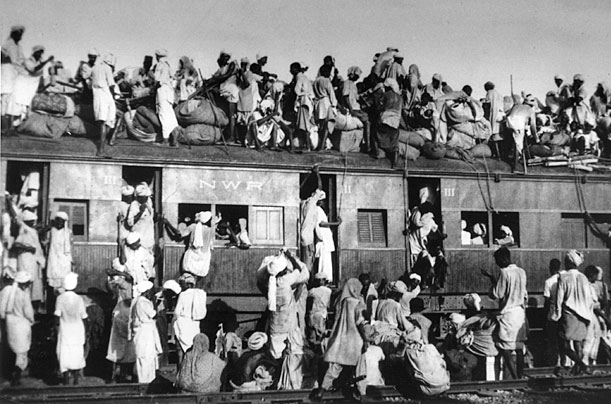
(Images are for representation purposes only)

Sources:

  1. The 1951 Refugee Convention- http://www.unhcr.org/3b66c2aa10.html
  2. Charter of Fundamental Rights of the European Union- http://eur-lex.europa.eu/legal-content/EN/TXT/PDF/?uri=CELEX:12012P/TXT&from=EN
  3. EU-Turkey statement, 18 March 2016- http://www.consilium.europa.eu/en/press/press-releases/2016/03/18-eu-turkey-statement/
  4. Factsheet on the EU-Turkey Agreement (Brussels, 19 March 2016)- http://europa.eu/rapid/press-release_MEMO-16-963_en.htm
  5. Syria Regional Refugee Response: Inter-agency Information Sharing Portal- http://data.unhcr.org/syrianrefugees/country.php?id=224
  6. UNHCR redefines role in Greece as EU-Turkey deal comes into effect- http://www.unhcr.org/56f10d049.html
  7. UNHCR on EU-Turkey deal: Asylum safeguards must prevail in implementation- http://www.unhcr.org/56ec533e9.html
  8. UNHCR expresses concern over EU-Turkey plan- http://www.unhcr.org/56dee1546.html
  9. EU-Turkey refugee plan could be illegal, says UN official- http://www.theguardian.com/world/2016/apr/02/eu-turkey-refugee-plan-could-be-illegal-says-un-official

[1] Article 33, Geneva Convention ’51Prohibition of expulsion or return (refoulement)

No Contracting State shall expel or return (refouler) a refugee in any manner whatsoever to the frontiers of territories where his life or freedom would be threatened on account of his race, religion, nationality, membership of a particular social group or political opinion.

[2] Article 19, Charter of Fundamental Rights of the European Union- Protection in the event of removal, expulsion or extradition : Collective expulsions are prohibited.

[3] Article 3, Geneva Convention ’51 – Non-discrimination : The Contracting States shall apply the provisions of this Convention to refugees without discrimination as to race, religion or country of origin.


Download Now

What Is The Legal Procedure For Trust Formation

1

In this blogpost Ananda Boga, Founder, Youthrise, Student of Diploma in Entrepreneurship Administration and Business Laws by NUJS ,writes about what is a private trust, what is a retirement trust, the advantages and disadvantages of trust formation and the difference between trust and will. 

178465_10151053083196106_2079640875_o

Introduction

The main objective of any person who wants to transfer his assets in his lifetime or after his death is to look after and protect their beneficiaries interests. These may include minors who until reach the age of 18, have no say in protecting their interests and a trust creation helps in making this happen. When there is more than one individual, say for instance the entire family that can fall under the category of beneficiaries, a private trust is set up. In other words, a trust is a transfer of property from one individual to another intended for the administration for the benefit of the owner and/or others. The person transferring the property is called the author or settlor of the trust. The trustee, on the other hand, is the person to whom the property is being transferred. The person who eventually gains the benefits is the beneficiary and that property itself is called the trust property. A settler must be a major and of sound mind. However, he/she can also be a minor with the consent of the Court. A trustee can be anyone who is over the age of 18 years, of sound mind and not insolvent. To administer the properties of the trust, however, he or she must be eligible to enter into a contract. An individual also has the right to reject his trusteeship.

Trusts are primarily created for property management purposes. Trust property can be both movable as well as immovable. If immovable, then the transfer of the property to the trustee must be via written and registered document, which has been signed by the settlor. When it comes to movable properties, there is no need for any written document. Delivery of the property to the trustee suffices.

During the time one is alive, he or she may create a trust for the benefit of old parents of the settler. Alternatively, a trust may be set up to benefit the minor children of the settler, disabled or handicapped siblings or for the settlor him or herself at an older age. On the death of the creator, the trust is used as a means to distribute the property amongst all the successors, for his or her spouse, children, disabled or handicapped siblings or for charity purposes.  For instance, a trust set up for the accumulation of money coming in and some capital for mentioned infant children. The collection of money that is incoming must be given to the infants upon their attaining an age mentioned and in the case of a female beneficiary, once they are married. Besides this, private trusts are also at times required to diminish heavy tax burdens.

Retirement trust

It is also the norm for many employers to set up retirement trusts in order to provide employees their retirement benefits. Many of these retirement trusts are also subject to be approved for tax exemptions. Once a Trust property is created, a trustee manages the trust and beneficiaries get the benefits.

For smaller families, separation, legal hurdles, old age, medical bills, financial planning for the future of children and being secure financially can all be looked after through private trusts.

Benefits of a trust for a family with a special child

Families that have a special child are the ones that benefit the most on creating a private trust. A child with special needs requires a lot of maintenance with regards to regular medical check-ups, monetary support and wealth preservation, especially when his or her parents are no longer around. A private trust will ensure that the parents required wishes are carried and executed efficiently. The objective of a private trust is no different with regards to a Muslim, despite having different laws.

Benefits of a trust for businessmen

For aspiring businessmen and entrepreneurs, a private trust ensures minimal disruption to the running of business processes. Without this, he or she runs a risk of claims that could potentially come from any of his or her clients which lead to him having to dip into his or her personal assets since there is no clear distinction made between his business and personal finances.

Procedure for formation of trust

In order to start a trust, firstly one needs to know the type of trust he wants to form. The types of trusts include revocable trust, irrevocable non-discretionary and irrevocable discretionary trust. A revocable trust, also often considered as an alternative to a will, is one in which the assets are not protected as they can be withdrawn from the trust at any time. The settler himself can be the beneficiary but is taxed at the slab rate. An irrevocable non-discretionary trust allows the settlor to have absolute control over the rules of the trust, giving him/her the power to allot the various assets in the proportions he chooses. He himself or his immediate family can be the beneficiary, but if he himself is the primary beneficiary, he is charged tax at a slab rate. Irrevocable discretionary trusts allow the trustees to decide which assets get allotted and in what proportions. The settlor can only decide who the beneficiaries would be.

Creation of a trust requires one to specify in exact terms what the trust property is, what the trust’s purpose is and who the beneficiaries will be. A law firm or banking institution can help set up a trust. On the trust document, along with the type of trust, the name of the settlor, trustees and the beneficiaries as well as the list of assets that the trust holds should be clearly stated. After having done this, one should know that the trust is a separate entity, which would require applying for a permanent account number (PAN) and bank account. The creator of the trust must gift his existing investments in the name of the trust. With regards to these investments, if the creator wishes to continue making these investments, instructions must be given to their bank to debit the trust account instead of their personal accounts. The trust can be registered, and the registration is only required if an immovable property is transferred to or bought through the trust. Trust documents can be made on plain sheets of paper and do not require to be made on stamp paper.

To set up a trust through trust companies, one would be looking at an expense of about Rs.5 lakh or more. To do so with a bank, one would be expected to pay between 0.5 to 5% of the asset cost. However, to set up through a lawyer, the expenses are charged on an hourly basis, depending on the individual lawyer’s fee.  The approximate recurring costs with regards to the annual maintenance fee vary according to the decided trust structure. Along with this, the corporate trustee fee, if any, also varies according to the decided trust structure.

Limitation of establishing a trust

Although creating a private trust is a popular option being beneficial to families of large numbers and various other situations, there are some limitations that one should consider. With regards to cost, the cost of setting up a trust differs across various states as stamp duty is paid according to the rate of each particular state. The success of a trust heavily relies on the rightful appointment of good trustees. Even one wrong choice of a trustee can pose great damage to the very objective of why the trust was formed. It is also difficult to draft a trust deed. If the objective of the text is not clear, it becomes difficult to execute or carry forward. In fact, a will is said to be less difficult to draft as compared to a trust deed.

Difference between a trust and a will

However, creating a private trust has greater benefits than just drafting a will. A trust deed is confidential and hidden from the media. There is no probate required for creating a trust and making modifications in the future is a lot easier with trusts as compared to wills. On creating a private trust for the distribution of assets during the lifetime of the creator, it gives him or her absolute control over the assets at least until their death. This can be achieved with more efficiency with a private trust as a will is only carried out post-demise.

Conclusion

In today’s world, trusts have a significant role to play and are also given recognition under the Hague Convention. The government, in a move to bring to life draconian laws, has announced a proposal for amendment of the Indian Trust Act, 1882. This amendment allows trusts to make investments in bonds and shares of companies that are listed.


Download Now

Structuring Advice For An Indian Entrepreneur For Receiving Foreign Direct Investment

0

In this blogpost, Aditya Manubarwal, Student,  Pravin Gandhi College of Law, Mumbai University, writes about what is a foreign direct investment, foreign direct investment in India and the ideal structure for a business to attract FDI.

IMG-20160414-WA0006 (2)

What is Foreign Direct Investment?

Foreign Direct Investment hereafter referred to as FDI, may be defined as ‘Investment from one country into another (normally by companies rather than governments) that involves establishing operations or acquiring tangible assets, including stakes in other businesses’.[1] FDI generally involves the transfer of factors such as technology, management, organizational skills, etc.[2] The most common methods of making FDI in a country include participation in joint ventures, merger and acquisition of existing businesses in the host country, re-investment of profits in the host country and the creation of a new subsidiary or manufacturing base in the host country.[3]

Foreign Direct Investment in India

In 2015, India overtook China and the United States of America and became the top global destination for FDI.[4] In India, 100% FDI is allowed in several sectors excluding a few such as Petroleum Refining by PSU (49%), Teleports (setting up of up-linking HUBs/Teleports), Direct to Home (DTH), Cable Networks (Multi-system operators (MSOs) operating at national, state or district level and undertaking upgradation of networks towards digitalisation and addressability), Mobile TV and Headend-in-the-Sky Broadcasting Service (HITS) – (74%), Cable Networks (49%), Broadcasting content services- FM Radio (26%), uplinking of news and current affairs TV channels (26%), Print Media dealing with news and current affairs (26%), Air transport services- scheduled air transport (49%), non-scheduled air transport (74%)Ground handling services – Civil Aviation (74%), Private security agencies (49%), Satellites- establishment and operation (74%), Public Sector Banking (20%), Private Sector Banking- Except branches or wholly owned subsidiaries (74%), Commodity exchanges (49%), Credit information companies (74%), Infrastructure companies in securities market (49%), Insurance and sub-activities (49%), Power exchanges (49%) and Defence (49% above 49% to CCS) and Pension Sector (49%) where FDI is allowed but with a cap. Moreover, FDI is completely prohibited in Lottery Business including Government /private lottery, online lotteries, etc., Gambling and Betting including casinos etc., Chit funds, Nidhi company, Trading in Transferable Development Rights (TDRs), Real Estate Business (other than construction development) or Construction of Farm Houses, manufacturing of cigars, cheroots, cigarillos and cigarettes, of tobacco or of tobacco substitutes, activities / sectors not open to private sector investment and services like legal, bookkeeping, accounting & auditing.[5]

Ideal Structure of a Business for Attracting FDI

In order to identify the ideal structure for attracting FDI, it is necessary to examine ease and permissibility of FDI in various structures:

FDI in Trusts:

According to the FDI Policy of India, FDI is not allowed in Trusts with the exception of Venture Capital Funds.[6]

FDI in Venture Capital Funds (VCFs):

In the case of VCFs, which have been set up as trusts, a non-resident entity or individual can invest in such a VCF with the approval of the Foreign Investment Promotion Board (FIPB). However, with regard to VCFs, which have been set up as incorporated companies under the Companies Act, non-resident entities or individuals can invest through the automatic route of the FDI scheme subject to regular guidelines and restrictions.[7]

FDI in Limited Liability Partnerships (LLPs):

FDI is allowed in LLPs but is subject to the following conditions:

  • FDI is allowed, albeit only through the approval route, for LLPs, which are operating in sectors where 100%, FDI is allowed through the automatic route and where there are no performance-related conditions.[8]
  • Moreover, LLPs with FDI are not allowed to operate in agricultural, media and real estate sectors.[9]
  • Indian Companies, which have FDI, can make downstream investments in LLPs with FDI only if both are operational in sectors where 100% FDI is allowed and where there are no performance-linked conditions.[10]
  • LLPs with FDI are not eligible to make any downstream investments.[11]
  • Foreign Capital participation in LLPs is allowed only by way of cash consideration, received by inward remittance, through normal banking channels or by debit to NRE/FCNR account of the person concerned, maintained with an authorized dealer/authorized bank.[12]
  • Investment in LLPs by Foreign Portfolio Investors (FPIs) and Foreign Venture Capital Investors (FVCIs) is not permitted. LLPs are also not permitted to avail External Commercial Borrowings (ECBs).[13]
  • When an LLP with FDI has a body corporate that is a designated partner or nominates an individual to act as a designated partner in accordance with the provisions of Section 7 of the LLP Act, 2008, such a body corporate should only be a company registered in India under the Companies Act, as applicable and not any other body, such as an LLP or a trust.[14] For such LLPs, the designated partner “resident in India”, as defined in the ‘Explanation’ to Section 7(1) of the LLP Act, 2008, would also have to satisfy the definition of “person resident in India”, as prescribed under Section 2(v)(i) of the Foreign Exchange Management Act, 1999.[15] The designated partners are responsible for compliance with all the aforementioned conditions and are also liable for all penalties imposed on the LLP for their contravention if any.[16]
  • Conversion of a company with FDI, into an LLP, is allowed only if the aforementioned stipulations are met and with the prior approval of FIPB/Government. [17]

FDI in Incorporated Companies

According to FDI Policy, Incorporated Companies can directly issue capital against FDI.[18]

Conclusion

In light of the aforementioned structures and the FDI policy relating to each of them, an Indian entrepreneur who wishes to attract and receive FDI should ideally incorporate a Company as it is the most direct and easy route, which is fraught with the least number of restrictions and regulations. He can receive FDI through the direct route in sectors where 100% FDI is allowed. Moreover, he can receive FDI even in sectors where 100% FDI is not allowed. Thus, an incorporated company is the most expedient and convenient option for such an entrepreneur.

[1] Lexicon.ft.com, Foreign Direct Investment Definition from Financial Times Lexicon (2016), http://lexicon.ft.com/Term?term=foreign-direct-investment (last visited Jan 29, 2016).

[2] Id

[3] Srijanee Bhattacharyya & Slaughter and May, Legal Regimes Governing Foreign Direct Investment (FDI) in Host Countries 3 (1 ed. 2012), http://www.a4id.org/sites/default/files/user/documents/FDI%20Legal%20Guide.pdf (last visited Jan 29, 2016).

[4] Santosh Tiwari, India is world No. 1 in FDI, PM Narendra Modi gets big booster shot, Financial Express, 2015.

[5] Makeinindia.com, FOREIGN DIRECT INVESTMENT – Make In India (2016), http://www.makeinindia.com/policy/foreign-direct-investment (last visited Jan 29, 2016).

[6] Para 3.2.4, Consolidated FDI Policy, 2015, Department of Industrial Policy and Promotion, Ministry of Commerce and Industry, Government of India

[7] Id, Para 3.2.3

[8] Id, Para 3.2.5 (a)

[9] Id, Para 3.25 (b)

[10] Id, Para 3.2.5 (c)

[11] Id, Para 3.2.5 (d)

[12] Id, Para 3.2.6 (e)

[13] Id, Para 3.2.5 (f)

[14] Id, Para 3.2.5 (g)

[15] Id, Para 3.2.5 (h)

[16] Id, Para 3.2.5 (i)

[17] Id, Para 3.2.5 (j)

[18] Id, Para 3.2.1

Download Now

Structuring Advise For An Entrepreneur Who Wants To Expand In SAARC Countries

0

In this blogpost, Aditya  Jain, Advocate, writes about how to proceed with regional economic co-operation, SAARC Preferential Trading Agreement and gives market advice to entrepreneurs.

aditya jain

Brief overview

Regional Co-operation amongst SAARC Countries has been a vastly debated topic in the past. The main purpose behind SAARC countries coming together was to establish a never-ending trade and investment link between these countries, which would eventually help all these countries to come together on this common platform for better economic development.

The best part in SAARC Countries namely, India, Bhutan, Nepal, Maldives, Sri Lanka, Bangladesh and Pakistan is that they are not averse to the goods being manufactured in any country, resultant of which these goods are readily sold amongst these countries owing to a mutual relationship of trust and goodwill.[1]

How to proceed with regional economic co-operation

The two aspects which are instrumental in setting up ties are Trade Liberalisation and Industrial Restructuring. Trade liberalization means putting in place such norms, which encourages an entrepreneur to freely switch between different countries, be it by way toning down regulatory compliances or by putting in his the idea and it is dealing on home turf only.[2]

SAARC Preferential Trading Agreement

This agreement was signed between SAARC Nations first in 1991 for better exchange of business and regional co-operation for better economic development. The basic principles underlying SAPTA are:

  • Overall reciprocity and mutuality of advantages so as to benefit equitably all contracting states, taking into account their respective level of economic and industrial development, the pattern of their external trade, and trade and tariff policies and systems.
  • Negotiation of tariff reform on the country wise basis.
  • Recognition of the Special needs of the Least Developed Member Nations and to cater and give them preferential in order to boost their overall confidence.[3]

Market advice to entrepreneurs

SAARC Nations are mostly regarded as Developing Countries across the world. Thus, opening up globally will have both its pros and cons. Let’s discuss some of them below:

Pros

  • One pro-globalization argument involves how, based on per capita GDP growth rates, developing countries become wealthier. A relationship between globalization and GDP was seen in the 1990s when developing countries had 5.0% annual growth compared to only 2.2% annual growth in economies that had been globalized for longer.
  • This correlation between globalization and annual growth demonstrates benefits to international trade, economic development.
  • Better Quality of life: Some of the different areas where advocates claim globalization benefits individuals include better access to external financings such as car and home loans
  • More opportunities for international travel and tourism.
  • More opportunities to work abroad due to liberal immigrant laws and foreign worker programmes.

Cons

  • Infant Industry Argument : If developing countries wish to diversify and start new industries, they may find it very difficult to compete against developed countries. This is because they don’t have economies of scale or experience.
  • Globalisation can reinforce a state of development. A developing country may have a comparative advantage in the production of pineapples; globalisation will encourage them to specialise in their production. However, this has drawbacks. Limits potential growth (low-income elasticity of demand for pineapples)
  • Economy unbalanced – fall in the price of pineapples could cause serious problems for the economy.
  • Free Movement of Labour- Free movement of labor may cause the highest skilled workers to leave the economy and get better jobs in developed countries.
  • Often globalisation has led to the exploitation of natural resources, such as cutting down the Amazon rainforest to increase grazing
  • With globalization, there is huge pressure on the working individuals of developed nations who are at the risk of their tasks being outsourced.

Structuring advice 

Once the decision has been made to do business abroad, the form of your overseas operation will be determined by your business objectives, available resources and other tax and legal considerations.[4] Keep in mind, however, that no single form may satisfy all of your company’s needs. To select the arrangement that is most compatible with your objectives, become familiar with the advantages and disadvantages of the principal forms of doing business overseas and the major legal issues arising from each one.[5]

Once the arrangement is identified as per your needs such as subsidiary, wholly owned or partially owned subsidiary, joint venture, partnership, etc., it is important to determine you’re ready to climb the mountain of paperwork involved in setting up contractual obligations. In drawing up the actual documents, carefully consider the structure of the relationship, the terms of the agreement and the scope and length of non-disclosure and non-compete clauses. These provisions and their enforceability will take on increased importance when complicated by distance and differences in legal systems.

Labor agreements should be reviewed for acceptability in both cultures. A traditional practice in one country may be discriminatory in another. Make sure you won’t get into trouble overseas by imposing international standards on local employees.

Establish and communicate your standards for international business activities. One way to do that is to establish a code of conduct based on the company’s values and objectives. This code should be distributed to all company employees, agents, and business partners. You can also print a pamphlet or an employee handbook, which provides more details and identifies instances when employees should seek further guidance from company lawyers, compliance officials or supervisory personnel. Compliance materials should be carefully written to take into account the company’s specific operations, practices, personnel, corporate, culture and history.

Conclusion

Thus, in order to expand your business in SAARC Countries, it is important for an entrepreneur to keep the above-mentioned points in his mind. Much focus should be laid on the aspect that an entrepreneur is still as his/her nascent stage of business, thus, cost effectiveness is an important aspect that he should keep in mind before expanding its operations abroad.

It is also important to reiterate here that SAARC Countries are mostly developing countries where customers are not averse to each other goods, and there is a general environment of trust of reliability.

[1] http://www.jns.ac.in/aws/SAARC%20Finance%20pdf.pdf

[2]https://books.google.co.in/books?id=KRxsrCVH_mUC&pg=PR18&lpg=PR18&dq=advice+for+entrepreneurs+in+saarc+countries&source=bl&ots=bc4ByXQ8tw&sig=LY2rLJLt2o4KtpSR3p7okle3iGI&hl=en&sa=X&ved=0ahUKEwjyr4-Cg9LKAhVVCI4KHaSkDYEQ6AEIITAA#v=onepage&q=advice%20for%20entrepreneurs%20in%20saarc%20countries&f=false.

[3] http://www.franchiseindia.com/entrepreneur/news/Women-entrepreneurs-of-SAARC-region-to-meet-in-Jaipur-2309

[4] http://sloanreview.mit.edu/article/the-entrepreneurs-path-to-global-expansion/

[5] http://www.kenaninstitute.unc.edu/bornglobal/files/kuemmerleW_2005.pdf

Download Now

Why Are Most Private Companies In India Incorporated In Bombay?

1

In this blogpost, Abhishek Nayak, Legal Counsel in a leading IT company, writes about, how Bombay emerged as the most important port of western India, investment policies and incentives.

477708_10150855571098019_1351488905_o   

“There is a pull effect of money – money attracts more money, and so it happened in Mumbai. It emerged as financial capital over time.”[1]

Introduction

Before focusing on the business benefits, which a private company can gain after incorporation, proper planning before the incorporation of the company is also very important because it has a long-term financial impact on the growth of the private company. Location of a private company office also plays an important role in shaping its future growth. Most of the private company’s preferred choice is Mumbai because of a variety of reasons. However in this article, some key factors have been described which are considered as important factors while setting-up or incorporating a company in Mumbai.

Mumbai is  located on the west coast of India and is one of the most densely populated city in India. Mumbai is well connected with other cities (both within and outside India) by various means of transport by air, water and rail. Mumbai is developed on the western coast of Arabian sea and has one of the biggest intra-city public transport networks  in India such as local trains, buses, monorails, metro, taxi, auto, etc.

How Bombay emerged as one of the most important ports of western India

Mumbai city has derived its name from the name of a goddess Mumba devi.[2] The geographical location of Mumbai port on the west coast made it economic hinge and trade window to the west. Mumbai city which we see today has been formed by joining of the seven islands, namely Colaba, Mazagaon, Mahim, Parel, Bombay Island, Worli and Old Woman’s Island.[3] After-independence, Mumbai expanded exponentially, and a number of suburban towns merged in Mumbai such as Borivali, Andheri, Malad, Thane and Bandra.

The growth story of Mumbai started in 1960; Mumbai erstwhile Bombay became the new capital of Maharashtra. Tall buildings, the Bombay Stock Exchange, broad roads and a boom in international trade changed the city’s status and brought Mumbai as the financial capital of the country.

The educational and economic progress of Mumbai began when the Britishers entered in India to do the trade. “During the mid-18th century, Mumbai emerged as an important trading town, with maritime trade contacts with Mecca and Basra. The first Indian railway train started between Mumbai and Thane in 1853.”[4] Bombay was renamed Mumbai on 6 March 1996. The port of Sopara (present-dayNala Sopara) was an important trading centre during the first century BCE, with trade contacts with Rome. Bombay emerged as one of the most important ports of western India, and later the financial centre of India.
Maharashtra took the initiative of country’s industrial development and still continues to attract the big chunk of investments, both domestic and foreign. Mumbai has established strengths in every sector including engineering, automobiles and auto components, chemicals, drugs and pharmaceuticals, textiles, information technology and biotechnology.[5] It offers world-class infrastructure, excellent educational facilities, quality trained manpower, a professional work ethic and a conducive business environment.[6]

Investment Policies and Incentives

The Government of Maharashtra has made several policy announcements in order to set up the right kind of business climate in Maharashtra, including Mumbai. These policy helps to motivate investors to invest, and their contributions help in overall development of the economy. [7]

More and more private companies prefer Mumbai for incorporation because of the favourable business environment, like:

  • Robust Infrastructure
  • Reliance and cost-effective telecom connectivity
  • National road network
  • National railway network
  • 34%(approx.) of India’s international passengers and cargo handled by state airports
  • India’s biggest container traffic is handled by JNPT in Maharashtra
  • Favourable business environment
  • State IT, SEZ policy
  • Big research labs
  • Platform for export and import of goods
  • Largest network of industrial areas —217 industrial complexes, with 125,000 acres (50,000 hectares) of land. Specialised parks for different sectors, including IT.[8]

Maharastra Govt. has offered varieties of tax incentives to boost industrial growth in Maharashtra, especially in Mumbai and as a result of which most of the entrepreneurs find Mumbai a better place to start a business. Major nationalized banks have their head office in Mumbai, which helps private companies in seeking and getting timely funds. Most of the traders come to Mumbai to do the trade because of a bigger segment of buyers and traders are in Mumbai.

Mumbai has the two largest Indian stock markets. The Reserve Bank of India and the Securities and Exchange Board of India’s head offices are located here.[9] Since Mumbai is India’s biggest trading centre business in forex has become very easy and buyers and sellers from around the world visit Mumbai to do business.

Mumbai also has many Special Economic Zones (“SEZ”). The main Advantages of SEZ Units is the promotion of industrialization and economic growth through sustainable development. SEZ units offer tax advantages, e.g. tax rebates, fiscal incentives and lands at subsidized rates.[10]

A major feature of Mumbai is that although it is the capital of Maharashtra and Maharashtrians form the dominant part of its population, it has managed to retain its composite culture– a mixture of religions, languages and customs. Whether you are from UP or Tamil Nadu or West Bengal or Kerala, you will find your culture strongly in evidence. [11]

“Mumbai’s location is eminently suitable for day-long trading across time zones. The time difference is three and a half hours with respect to Tokyo (Tokyo is ahead because it is to the east), four and a half hours with respect to London and nine and a half hours with respect to New York (London and New York are behind us).
At 6 pm in Mumbai, it is 1.30 pm in London, and 8.30 am in New York. Most people in the financial sector in Mumbai start work after 10 am (when it is 1.30 pm in Tokyo) and are at their desk till 6 or 7 pm. So the time zone is a perfect fit.”[12]

Still Mumbai can even become more attractive if it provides more residential accommodation and faster transport to the southern end of the city. A bridge across the harbour is one of the most effective means of achieving this. The government has started taking initiates to develop Navi Mumbai, which is a neighbour satellite city near Mumbai and started working on world-class infrastructure to attract more and more  business, including the development of Navi Mumbai International Airport. The flow of money and genuine efforts of the businessmen has helped Mumbai to retain its charm, and more and more private companies find this kind of business environment conducive for their business set-up.

[1]    https://www.quora.com/Why-did-Mumbai-become-the-financial-capital-of-India-and-not-Surat-or-Porbandar

[2]            https://en.wikipedia.org/wiki/History_of_Mumbai

[3]    http://www.indiatourismadvisor.com/mumbai.html

[4]    https://en.wikipedia.org/wiki/History_of_Mumbai

[5]    http://www.archive.india.gov.in/business/investment_incentives/investment_opp_mah.php

[6]          http://www.doingbusinessinmaharashtra.org/Investment_opportunities_in_Maharashtra.aspx

[7]             ((http://www.doingbusinessinmaharashtra.org/Investment_Policies_and_Incentives.aspx)

[8]             (http://www.doingbusinessinmaharashtra.org/Business_Climate_in_Maharashtra.aspx)

[9]    http://www.rediff.com/money/column/mumbai/20070427.htm

[10]           (http://business.mapsofindia.com/sez/advantages-units-india.html)

[11]  http://www.rediff.com/money/column/mumbai/20070427.htm

[12]  http://www.rediff.com/money/column/mumbai/20070427.htm

Download Now

Asylum Seeking in India – Legislation, Rights, Challenges and Process

0

Partition_of_Punjab,_India_1947

Asylum Seeking in India

An asylum seeker is a person who fled from their country (endangered) but is not accepted yet as a refugee. Refugees and asylum seekers are different.

United Nations High Commissioner for Refugees (UNHCR) maintains statistics and asylum seeking laws in South Asia which also covers India, Sri-Lanka and Nepal. These 3 countries are giving considerable space for asylum seekers from neighborhood. As per stats from UNHCR there are 200383 refugees in India and among them only 5381 are asylum seekers. (as on June 2015 data)

Asylum Definition

Protection or ​safety, ​especially that given by a ​government to ​people who have been ​forced to ​leave ​their own ​countries for ​their ​safety or because of ​war. [1]

Reference 1 – Cambridge Dictionary

Asylum Seeking Offer:

When it comes to apply asylum seeking in India is offering to considerable number of refugees however they are not the signatories of the 1951 Refugee convention.

Asylum Legislation & RSD:

India is with the help of government, NGOs and other stakeholders try to assist and find durable solutions for refugees. There is a considerable increase in number of people seeking asylum in India. India does not have national asylum legislation; UNHCR conducts registration of refugees and also give Refugee Status Determination (RSD).

In India foreigners are generally deals with

  • The Registration of Foreigners Act, 1939
  • The Foreigners Act, 1946
  • The Foreigners Order, 1948

Asylum Seekers Limitation:

These legislations generally governed the foreigners within the territory of India. Article 2 of the Registration of Foreigners Act, 1939 defines the foreigner “A person who is not a citizen of India”.

The other two legislations also used the same definition of foreigners. Both the Act and the order grant the Indian government to do following things.

  • Power to restrict the movement of foreigners.
  • Compulsory medical examinations.
  • Limit employment opportunities.
  • Control the ability to refoule and “return” refugees.

The refugee convention however bars all these actions. [2]

Reference 2 – www.ipcs.org

Refugee Rights & Privileges:

Indian government provides certain rights and privileges to the refugee but these are only conferred to certain groups.

Tamil Refugee:

Like in the case of the “ assassination of Rajiv Gandhi in 1991, Tamil refugees were encouraged to enter India even the Sri Lankan Tamil refugees are taken as refugees depending upon which party is in power in Tamil Nadu.

Tibetan Refugee:

The Tibetan refugee community was granted land to set up educational institution and other socially useful programmes, apart from the permission to set up a government in exile. [3]

Reference 3 – Lama, n 15, pp 36-37

Refugee Challenges:

There are further certain challenges faced by the refugees when seeking for asylum in India.

  1. Sustainable livelihood.
  2. Reliable community support networks.
  3. Access to specialized services for disorder people.

Asylum Seeking Problems:

UNHCR is trying to counter these problems and tries to fill the gaps in terms of protection. Poverty is the main problem for asylum seekers in India. Due to this they face discrimination from local communities and the society.

Asylum Seeking Support in India:

Indian government is trying to do betterment for asylum seekers who are about to claim refugee identification. India is supporting asylum seekers in many ways.

  • Improve situation for refugees faced in India.
  • Betterment of women, children, and elderly.
  • Survivors of sexual and gender based violence
  • Those with special needs.

Also considering adopting national refugee framework and accession to International refugee instruments. [4]

Reference 4 – www.unhcr.org/pages/49e4876d6.html

Asylum Seeking Process India:

UNHCR with the Indian Government will continue to build the positive understanding related to international refugees.

They both will further review the opportunities to

  • Incrementally provide direct refugee protection.
  • Share biometric data.
  • Run regular training sessions on RSD processes.
  • Inclusion vulnerable refugees in government social welfare scheme.

The office will continue to expand its outreach to the Indian public and engage more prominently with new civil actors, in order to increase refugee access to urban support mechanisms. [5]

Reference 5 – www.unhcr.org/pages/49e4876d6.html

Download Now

Know This Law School: NUALS

0
Know This Law School: NUALS

Next in line in the chain of posts on law schools is NUALS, Kochi, written by Raghul Sudheeh, Associate Editor in Bar and Bench who passed out from NUALS in 2011.

The National University of Advanced Legal Studies (NUALS) was established by Act 27 of 2005 of the Kerala State Legislature. While it was established in 2002 it was known as the National Institute for Advanced Legal Studies (NIALS) under the Cochin University of Science and Technology (CUSAT). Post the enactment of the NUALS Act; it has become an independent University like the other National Law Schools. NUALS is situated in Cochin; know as Queen of Arabian Sea.

1. Quality of Education

As far as the quality of education is concerned, it’s a mix of both good and bad. NUALS offers only a five year B.A. LL.B. (Hons.) degree programme. From the 2009 Admissions, the course is offered under the Choice Based Credit Semester System. There are some extremely good professors and extremely pathetic professors.

For some of the core courses, the industry experts come and take classes; which I have felt to be very useful rather than the lectures of a normal faculty. For eg; Civil Procedure Code and Land Laws for my batch was handled by a sitting judge of the Kerala High Court for the entire semester, who used to come to the campus early morning before going to the Court. He was hearing civil matters in the High Court mostly and had vast experience in that field. Even now he continues to teach at NUALS on a regular basis. There are so many other visiting faculties like him handling other core subjects.
Internal Exams are conducted on a regular basis and students will have to handle project presentations for every subject, but this does not make life tough at NUALS. You will get enough free time which you can utilise for co-curricular activities; there by you can manage to get the extra edge for your CV!

2. Recruitment

Recruitments are not that great as in the top NLU’s but it is slowly picking up. Until 2011 mid, NUALS never had a permanent campus. Post mid 2011, NUALS have moved totally to its permanent campus. With better infrastructure in place, it is certain that placements will improve.

Though there were lot of limitations, NUALS have had recruitment from almost all the top law firms and corporate houses. NUALS alumni’s have their presence at various places, including Amarchand, Trilegal, AZB, Khaitan, Wadhia Gandhy, L S, Desai & Diwanji, Phoenix Legal, KPMG, ICCI, Reliance, Delloitte, Vedantta, Siemens, IBM, etc.

NUALS alumnus Nikhil Narendran recently won The Travelling Fellowship Award (TFA. The the award gave Nikhil the opportunity to travel and work with several prestigious law firms in Europe and in the USA. Many top law school alumni’s may have achieved greater heights, but this is an indication that NUALSians are also slowly making it big in the legal fraternity.

Placements are never an assurance in NUALS. If you can put in an extra effort and utilise the resources and exposure that NUALS provides, you can manage to get a job for yourself. This is not a claim that I make, but what I tell from my experience. I never sat for the college placements as I was never inclined to the corporate or law firm sector; but I managed to find a job in which I was interested.

3. College Environment

Normally the college environment is pretty friendly and the first year students will have “friendly interaction” with seniors in the first few weeks of joining the college till the freshers’ party get over. Then you will find the seniors the most helpful people on the campus even more than the faculty; some even becomes your best buddies. I have seen always, seniors helping out juniors with the projects and even during exam time on the subjects.

NUALS is not at all a dead place in terms of extracurricular activities, this I can guarantee for sure. Round the year there will be cultural programmes and other events which will keep you busy. NAALAM and Altus Disputatio, which are the cultural fest and National Debate, NUALS hosts; have already earned a name for itself. <

NUALS hostel curfew time is 7 PM for girls and boys; which is often relaxed to 9 PM for the latter. NUALS at the end of five years is sure to give you some of the best moments in your life, again from my experience! You would love going back to those classes!

Until the NUALS new campus came up, the infrastructure was not that good. Currently it can boast of a permanent ten acre campus with all the necessary facilities. The classrooms and the campus are well built and maintained. The first phase of the campus is almost over and only few furnishing work is going on. Second phase of the campus construction has already begun. Library in NUALS is not something great but a pretty decent one. Justice V. R. Krishna Iyer has dedicated his whole library to NUALS and this is one advantage about the NUALS library. Hostels are also well built and maintained. The whole campus has wi-fi connectivity and ensures decent speed for surfing. NUALS subscribes to almost all the top online resources including Westlaw, Hein Online, SCC online database and Manupatra. There are enough sports facilities also to while away time at evenings and on holidays.

City

Above all, you will love travelling in and around God’s Own County-Kerala! There is lot to see in five years you spend there! You will fall in love with the backwaters, the hill station Munnar where NIshabd movie was shot, the Periyar wild life sanctuary, Varkala Kovalam beaches, etc… all these are just few hours away from Cochin, where NUALS is situated!

Download Now

Are Partners Required To Contribute A Minimum Capital In An LLP

0

In this blogpost, Dhiren Sehgal, Student, Jindal Global Law School, Haryana writes about what is limited liability partnership, what is the meaning of contribution and whether partners are required to contribute a minimum capital in an LLP

Dhirendre

What is limited liability partnership

Limited liability partnership,  this sort of a business entity has been recognized by the way of limited liability partnership act, 2008. This form of a business entity combines both company and partnership into a single business entity. In a limited liability partnership partners can’t be held liable for each other’s negligible conduct, this is where a limited liability partnership differs from an unlimited partnership. In a limited liability partnership partners’ liability is limited to the extent of their shares within the partnership, which is in a way similar to what the shareholders in a corporation enjoy in terms of limited liability. But in a limited liability partnership the partners enjoy the right to manage and enjoy decision making and management of the business directly , which is not the case with the corporate shareholders.

Limited Liability Partnership is overseen according to the LLP Agreement, however without such agreement the LLP would be administered by the structure given in the Schedule 1 of Limited Liability Partnership Act, 2008 which depicts the matters relative to common rights and obligations of partners or contributors of the LLP and of the limited liability partnership and its partners. LLP has a different lawful entity, at risk to the full degree of its assets , the obligation of the partners would be constrained to their agreed contribution in the LLP. Further, no partner would be obligated by virtue of the autonomous or unapproved activities of the other partners, hence permitting individual partner’s to be protected from joint liability made by another partner’s wrongful business choices or wrong doings.

https://lawsikho.com/course/diploma-entrepreneurship-administration-business-laws
Click Above

What does contribution mean

When we interpret the word contribution, it would mean to be ‘part or share.’ In the context of a limited liability partnership contribution would mean to be or could be termed as what a partner’s contribution is towards the limited liability partnership business or for the running or operation of the limited liability partnership business. In other words contribution in case of a limited liability partnership would mean the same as what share capital would mean in the case of a company. Therefore, in the scenario of a limited liability partnership, the contribution made by the partners can assist in judging of the ownership in the limited liability partnership.

Are partners required to contribute a minimum capital in an LLP

There is no necessity or compulsion to contribute a minimum capital for a partner, as per the Limited Liability Partnership Act, 2008 contribution is not a prerequisite for the formation of a limited liability partnership or for a partner to contribute a minimum capital to be a recognized partner in the limited liability partnership business. Also under the Act, a lot of flexibility has been offered to the partners by the way of the limited liability agreement through which the partners can brainstorm and decide the amount and form of contribution as per their respective comfort and convenience. However, the limited liability agreement must specify the contribution of the capital which is intended to be paid by all the members and the form in which it will be paid. As per the requirements enshrined under section 32(1) of the Limited Liability Partnership Act of 2008 the contribution can be made in the form of a tangible, movable or any form of immovable or intangible property or any other form of benefit to the limited liability partnership which can go on to include money, promissory notes and other agreements which can contribute cash or property and contracts for services performed or to be performed.

However the monetary value of the contribution of each partner is to be accounted for and is to be disclosed within the accounts of the limited liability partnership in any manner as may be prescribed in the agreement by the partners of the limited liability partnership. The valuation of the intangible contribution made by the partners shall be done and certified by a chartered accountant or a cost accountant who is practicing in nature or it can be certified by an approved valuer who belongs to a certified and maintained panel of the central government. Also, the monetary value of the contribution made by each contributor or partner has to be accounted for and is to be disclosed within the accounts of the limited liability partnership in the manner as prescribed in the agreement.

Also, whenever partner ceases to be a partner in the limited liability partnership, then, that partner is very much entitled to his share of contribution in the limited liability partnership. However if provided or mentioned otherwise then this entitlement isn’t guaranteed. The amount to be received on cessation of the partnership is to be equal to the amount of capital contribution of the former contribution made to the limited liability partnership. Similar to a partnership the contributors and partners in a limited liability partnership have the option to accrue and have interest on the contribution. However, there isn’t any limit prescribed under the act for the amount of interest to be paid to the respective partners by the limited liability partnership.

The capital contributed by the partners can be increased if you look at the provisions mentioned in the limited liability partnership agreement. However in order to increase your capital the requirements under the limited liability partnership act is very less, it only requires you to file form number 3 with the registrar of limited liability partnership in order to bring about an amendment in the particulars of the limited liability partnership agreement and also you’re required to pay the deficit or the difference amount in the fee payable on the increased capital or contribution and the fee paid earlier on the preceding capital or contribution and this has to be done through form number 3.

Similarly, the existent capital can be reduced as it can be increased, this also shall be done as per the provisions provided in the limited liability partnership agreement. This reduction can also be done by filling out form number 3 with the registrar of limited liability partnership in order to bring about an amendment in the particulars of the limited liability partnership agreement, and the payment of the regular filing fee is required according to the limited liability partnership act of 2008.


LawSikho has created a telegram group for exchanging legal knowledge, referrals and various opportunities. You can click on this link and join:  

https://t.me/joinchat/J_0YrBa4IBSHdpuTfQO_sA

Follow us on Instagram and subscribe to our YouTube channel for more amazing legal content 

 
Download Now

What Clauses Should You Check While Joining An Incubator

1

In this blogpost, Abhijeet Anand, Technical Sales Support Engineer,  Schlumberger, writes about, what is an incubator,  Strategic Features of an Incubators-Startup relationship and the important terms to be checked before signing the agreement with the Incubator

Abhijeet

Today, there are a number of start-ups growing every minute and so do the incubators are heading in the market with the same increasing proportion. The relation of start-up and incubator especially in the US is now very mature with some of the incubators having a great reputation among many where the chronology of a start-up getting into an a top 5 Incubators (sometimes also referred as accelerators, although there is a narrow gap among the two) is the same as for a student getting into the top 5 management schools in the US.

Understanding Start-ups and Incubators

However before jumping in the legal terms between Start-up and Incubators, it is extremely important to understand the difference the two. Start-up company or business is a venture by an entrepreneurial team (one or several) that is aimed at filling up the voids in the industrial eco-system through a scalable and sustainable business model with great growth potential. Incubators are organizations to help them find such business model, assist in making them scalable and support them with resources and services to accelerate its development. While entrepreneurs have limited time, knowledge and resources wherein many can be first time entrepreneurs or may be first business venture of any kind, the Incubators with a diverse pool of experts, experienced and knowledgeable people, provide start-ups the right kind of atmosphere, resources and guidance to accelerate its growth and make the business model scalable, marketable and sustainable.

Strategic Features of an Incubators-Startup relationship

The startup-Incubator relationship although may seem just as a mentor-mentee relation from outside, however, it does have a more definite implication in reality. Some of the main advantageous features include the following:

Motivation: The atmosphere of the incubators is inspiring and encouraging because it hosts several similar encouraged groups with successful examples.

Access to veteran advice: Been there, Done that. This is the most lucrative pool of knowledge resource available for startup founders. Access to this ensures non -repeatability of the same mistakes done in the past and skip to the bigger challenges seeing, the bigger picture.

Resource: Initially most of the startups are cash-crunched and require to work with the survivable resources. Pooling the resources in a startup conducive environment, incubators turn out to be the perfect for the early stage startups.

Connections: This is the one of the most aspects of incubator relationship as this ensures better market picture through better connections and media or marketing strategy.

Although all the above look very positive, there are several loopholes as well which can be mainly summarized into two:

Equity in the company: In lieu of all the resources and services provided to the startup, the incubator wants a portion of the same piece of bread that is shared among the founders i.e stake in the startup in the form of common stock and mostly not preferred stock. For them is a diversification of their investment risk into various startups and they will negotiate for the maximum equity up to 10% or may be higher in some cases.

Incubator is also a startup/company: Incubators also have the same DNA of an institution and run like a business. At times, the incubators may not even be serious with their own stuff and are in the race of being just another institution as in the case of a “bubble”. This calls for serious consideration from the startups to find the most appropriate incubator according to their needs and not just fit in. one important thought that must be borne by any startup before getting into an incubator is that Incubators are also a business and is there in the ecosystem to make money and not only do charity.

Important terms to be checked before the signing the agreement with the Incubator

Once all the hard work has been done by both the parties i.e. startups as in to research the most suited incubator in terms of their requirement and Incubators as in to select the most prolific startup which they can support better, the two have to get into an agreement detailing the terms and conditions for the relationship until the startup graduates and even beyond. This generally raised by Incubators are not paid much heed by the startups, however, could result in drastic consequences in future in case of disputes. The most important considerations which must be taken into account is detailed as under:

Information Rights: Incubators having been invested in the startups expect to stay informed of the major activity being executed by the startup including financing, acquisition offers, periodic financial reports of the company’s performance. These rights should be critically seen by the founders and a timeline defined. Preferably, such rights may hold good until series A funding and anything after that may hinder the future investments.

Approval rights: Incubators may require you to obtain written consent from them before entering key transactions such as selling the company, issuing securities to employees or founders through an option plan which was not on the table while signing this agreement. Generally, it shouldn’t be an obligation for the startup to take permission from Incubator. However, the latter should be in a state to advise the former for the correct action.

Anti-Dilution Rights: The shares issued to the Incubators should hold good until a major VC financing is received for which the amount should be agreed upon. Thus, in order to protect their rights, Incubator would include an Anti-Dilution Right such that the common shares issued to them are not diluted until that priced financing is obtained where the company issues “preferred stock”. The Anti-Dilution rights should stop at a priced VC financing of between $500k-$1 million and shouldn’t exceed beyond this limit as it would be (i) very aggressive than market terms, (ii) will certainly create problems for raising further funding. The other option, however not always conducive for the startups may be Weighted Average anti-dilution.

Preemptive Rights: Preemptive or pro-rata rights allows the incubators to purchase their pro-rata share in any future financings. This means that if they own 8% of the company at the time of signing this agreement, they can take 8% of your future financings, as long as they are willing to pay whatever price is set in that round. Startup founders at their sole discretion should negotiate this as this will only limit their freedom to have a broad spectrum of investors in the future.

Investment Rights: In addition to Anti-Dilution and Preemptive rights, some incubators with a strong investor component would typically include some form of additional investment such that they may be capable of purchasing an additional fixed $ amount of securities at a later date while also ensuring they maintain their ownership %.

Confidentiality Rights: This should generally be mutual responsibility and obligation to preserve the confidentiality of the information exchanged between the two parties. However, the startup must in specific ensure the confidentiality terms are well understood by them as most times it is the idea on which the startup work once they enter an Incubator.

Marketing terms: It should be clear from the terms of the public image of the startup, use of company logos, public statements, and publicity events. Incubators having a diverse experts panel would have terms inclined more to their interests, thus making it important for the startup founders to ponder on this point at the time of signing this agreement.

Conclusion

Incubators are definitely one of the incredible things in the eco-system for the startups. However, the success of the startup incubator relationship lies on the ground work done prior to establishing this by both of them individually. It must be clearly understood by the startup founders that Incubators as well are in the market to make money, protect their financial rights and thus would require the founders to sign agreements which have serious obligations. Entering into an Incubator, Startup must understand it’s rules and obligations and have a plan defined to meet them in future until it graduates from the Incubator as it may not only destroy the valuable relationship between the two institutions, the people associated but may also lead to expensive clean-up of the garbage created in the process. A final word of advice for the startups for entering into an Incubator “Find your weakness, understand your needs, research the options and go with your eyes and ears open”.

References:

  1. “Thinking of Joining an Incubator? Check Off These 5 Things First” published in The Entrepreneur on July 29, 2014.
  2. “5 Questions Every Startup Should Ask Before Choosing an Incubator”, as published in the Entrepreneur.
  3. “How to Evaluate a Startup Accelerator Offer”; Startup Lawyer.
  4. “Startup Accelerators: The Legal Terms”; Silicon Hills lawyer
  5. “Startup BluePrint Incubator Program Terms and Conditions”; PayPal and Blueprint Agreement.
Download Now

How To Start A Theme Park In India

3

In this blogpost, Amala Halder, Student,  Department of Law, University of Calcutta,Hazra, writes about the legal requirements to start a theme park.

IMG_3979

What is a theme park?

According to thefreedictionary.com-

A Theme Park is “An amusement Park designed around a central Theme, such as the world of future or divided into areas with different themes.”

Now that I knew what a theme park is, I started thinking of a “Central Theme” on which my theme park would be designed. Now I knew all I wanted is my theme park to offer something new to the City, something that the city wants but has never had.

As a bong I knew the single most important thing needed for survival and that was “Good Food.” I am a foodie myself, and I realized what really lacks in a city is our ability to link food with its heritage . So I came up with the concept of “WORLD FOOD PARK” where the central theme would be food but, it would have different zones allocated to different regions and their authentic cuisines. People would not only explore the food but also imbibe the culture of the concerned country. Sounds exciting? But before you start heading for your Sunday lunch, let me tell you I am still a long way to go.

Firstly, there has to be an incorporated body under which the amusement park can operate. I knew I needed to form a company first, and I opted for a Private Limited company. The name that we came up with was Themeit Private Limited (which was still subject to approval).

The structuring of a Private Limited Company

As per Section 2(68) of the Companies Act 2013, a private company means a company having a minimum paid up share capital of one lakh rupees or such higher paid-up share capitals as may be prescribed. Section 149(1) states of the said act that a private company shall have a minimum of two members . Keeping that in mind I proceeded for incorporating the company following the steps-

  1. Apply for Digital Signature Certificate of the proposed Directors.
  2. Obtain Director Identification Number for each Director. It is to be obtained by filling Form DIR
  3. Apply for a Name by submitting Form INC-1. The approval of the name has to be obtained from the Ministry of Corporate Affairs.
  4. Draft the Memorandum of Association and Article of Association.
  5. File Form INC-7 for registration of the Company.
  6. File form DIR-8 mentioning the particulars of the directors, secretary, managers, etc
  7. File form INC-22 containing the situation of the registered office.
  8. Obtain a Certificate of Incorporation and Corporate Identification Number from the Ministry of Corporate Affairs.

There are a few documents that are needed while filling up the forms. They are listed below.

The documents needed for incorporation

  1. For obtaining the Director Identification Number- proof of identity and proof of residence (PAN card, Voter ID Card)
  2. For filling up form INC-7- Stamped and signed copy of Memorandum and Article of Association.
  3. For filling of Form INC-22- Proof of registered office address, proof that the company is permitted to use the address as the registered Copies of utility bills.

After the formation of the Company I had to look for a place where the Theme Park could be built. I was lucky enough to find a decent 70 acres of sprawling landscape and water. Now that I had the land I needed to follow certain compliances in order to start the work on building the Theme park.

Compliances needed

  1. Clearance under Town and Country Planning Act issued by the Area Development Authority.
  2. Urban Land Ceiling Clearance issued by the Sub-divisional officer and District Land and Land Reforms Officer (DLLRO).
  3. Conversion of land (Clearance) & Mutation issued by Block Land and Land Reforms Officer of the Block and DLLRO of the District.

Having the right of erection on the plot our company having the deed of conveyance and mutation certificate may apply for a building sanction plan with the Kolkata Municipal Corporation along with the Building Plan Proposal Application Fees.

Licenses

Theme parks need licenses when it comes to starting of operations. As the main focus of my park was on food, the following licenses were a must-

  1. Health license and Food license from Kolkata Municipality.
  2. For pollution control, it is essential to obtain a No objection Certificate from the West Bengal Pollution Control Board. Consent of the DIC of some specified category.
  3. Amusement License from Kolkata Municipal Corporation.

Bank Account

Opening a bank account for a Private Limited Company was luckily pretty simple. The documents needed were-

  1. Certificate of incorporation.
  2. Memorandum and Articles of association.
  3. A copy of PAN allotment letter.
  4. A copy of telephone bill.
  5. Board resolution for opening current account,
  6. The latest list of Directors as per Bank’s format.
  7. Identity proof of all Directors and Authorized Signatories.

With this we soon had an account in the name of World Food Park fully functional.

Branding

Branding is extremely important when it comes to Theme Parks as it is meant for the masses. To create a brand means to give an identity to the thing that is created. The name I thought of –“World food Park” was a part of branding. The tagline I thought of was “Place where cuisine meets culture.”  The creation of a tagline to acts as a catch for the people, but it has to be relevant enough to the content and image of the park.

It is one of the most important steps for a Theme Park. Branding includes many steps-

  1. Decide on a brand name-

Deciding on a brand name for the Park is equally important as searching for a name for the Company. As it is the identity of the Park. The name “World Food Park” was but obvious as I wanted people to know what the park is all about the moment they heard the name.

  1. Make trademark application-

After selection of the Name a trademark application form TM-1 has to be filled and submitted. The estimated cost of the form is INR 3500. The form can be filled both online and offline. The e-filling is the easiest option.

  1. Checking of brand name-

On receiving the brand name, the Registrar would check whether some other brand with the same name exists.

  1. Publication in Indian Trade Mark Journals-

After checking, the brand name is published in the Indian Trade Mark Journals, and if no one raises opposition within 3 months, from the date of publication, the brand name proceeds for acceptance.

  1. Trademark registration Certificate-

If no opposition is raised in the aforesaid period, then the Registrar accepts the trademark application, and the Certificate of Registration is given under the seal of Trademark Registry.

The documents needed for branding

  1. A business registration concern.
  2. Identity proof of Directors of the company and address proof.
  3. An image of the brand logo in a standard size.

Even after all these technicalities the creation of a brand involves a lot of advertising. Though there are no specific legislations relating to advertising in the Country, the following laws are often referred to during brand promotions through advertising-

  1. Copyright Act 1957
  2. Cable Television Network Act.
  3. Indecent Representation of Women Act, 1986.

Apart from these, organizing competitions of food photography, blogging, and cooking and giving the winner one whole day free at the theme park can help in creating a buzz.Inviting celebrity chefs to spend a whole day at the park would really add zeal to the Park.

 References

In the completion of the assignment I have referred to-

Download Now
logo
FREE & ONLINE 3-Day Bootcamp (LIVE only) on

How Can Experienced Professionals Become Independent Directors

calender
28th, 29th Mar, 2026, 2 - 5pm (IST) &
30th Mar, 2026, 7 - 10pm (IST).
Bootcamp starting in
Days
HRS
MIN
SEC
Abhyuday AgarwalCOO & CO-Founder, LawSikho

Register now

Abhyuday AgarwalCOO & CO-Founder, LawSikho