

Download Now
Home Blog Page 1755

Writing to Win: A Few Simple Steps To Write Great Research Papers, Articles And Essays

3
Writing to Win: A Few Simple Steps To Write Great Research Papers, Articles And Essays


mathews-p-george

This ‘how to do whatever you want to do with your writing’ (like winning competitions and publishing articles in law journals) post on this blog is from my friend Mathews P. George, a reticent genius who happens to be my classmate and good friend. He has made it a habit to win every writing competition he writes for – from contract drafting, essay competition to legislative research – he has won them all. He earns a good sum from all these winnings too. What is surprising is the ease with which he does it. For him, it is all about being clear with the basics. He has also written in law journals et al, so he knows what he is talking about. After much persuasion, he agreed to share some of his secrets on a first taste of law – which is again, phenomenally well written. If you want him to keep writing on this space, please leave a comment below telling him you want him to write again! I need that support from my readers 🙂

How to write essays / articles/ research papers?

“Failures are stepping stones to success” – One is expected to learn from his mistakes and strive towards success. One can also learn from others’ mistakes and never repeat it in his / her life. In this post, I intend to discuss some tips / strategies which I have devised over a course of time. I hope this post will help you not to commit the mistakes that I had committed while writing for essay competitions and articles that I wanted to publish.

Choosing a topic:

Identifying a topic of your interest is very important. DO NOT randomly choose any topic. Choose a topic only after conducting the basic research. This research should inter alia try to address factors such as a scope for creativity, originality, relevance etc. I shall explain it with the help of an example. Consider choosing a topic “Jawahar Rozgar Yojna”. It was a developmental programme initiated by Government of India which has now been scrapped. It is irrelevant and leaves little scope for creativity and originality unless one presents an incisive analysis of empirical data and draws linkages with the extant developmental programmes. Are you really up for that?

Drawing up a schedule:

One should always be conscious of the time and the work at hand. Else, it will turn out to be a futile effort. Draw a schedule leaving ample scope for research, analysis, writing, proof-reading, discussion with batchmates / experts etc. One has to look at oneself and frame the schedule. Some are quick in writing. Some are not. In essence, by drawing a schedule and sticking to it, one should be able to overcome the proclivity towards “teenage procrastination”. This term refers to the tendency to procrastinate one’s tasks till the very end which will, most likely, adversely affect one’s output.

Research:

Research should always progress from the very basic level to the advanced level and not vice versa. Be very clear on your basics. Suppose you have decided to write about General anti-avoidance rule under the proposed Direct Taxes Code Bill. Your research should ideally start off from Wikipedia research and basic books on tax law. If you are not acquainted with the subject, feel free to consult your faculty. If your basics are not clear, your arguments are bound to be flawed.

Research skills become very important when one progresses to the advanced level. Learn to use Westlaw / Manupatra smartly. If you are well-acquainted with the research tips / syntax provided in their websites, you will end up achieving your objectives at a lesser time.

One should also look out for articles which coherently put forward arguments. DO not randomly read all the articles. You will end up wasting your time. Have a glance before embarking on reading any article. If you find them to be incoherent and illogical, discard them at once.

Analysis:

Always, try to give your own analysis on the topic. If you are not well-acquainted with the topic, consult an expert to make sure that your argument is tenable. Quite often, when one frames an argument, one fails to see the counter argument. In order to avoid this, try to come up with as many counter arguments as possible. Try to blunt these counter arguments. This will help one to tighten his / her arguments.

Writing:

When you sit down to write, try to make your write-up as simple as possible. One’s argument should be simple and direct. The reader, after reading your write-up, should not be forced to ponder around for your argument. It should be clear to him from your writing. After writing it, ask yourself – is the argument clear from what you have written? and then read it again looking for an answer to that question. It is safer to make it clear at the very beginning of your essay about its scope and objectives.

The essay should be well-structured. There should be logic and coherence inflow of both ideas and language. Both are equally important. Try to build up your argument step by step. For instance, try not to jump to step 4 from step 1. Make full use of online dictionaries if you don’t have the physical copy. Further, try to use the apt word for each situation. And it is equally important to be grammatically correct. As you progress, try to visualise the structure of your essay. Self-evaluate the flow of ideas and language. This will help you to correct mistakes as you progress.

It is also important to keep the target readership in mind. For instance, it will be counter-productive to write about gene patents when writing for a law review aimed at reaching out to the litigating lawyers. Writing a post for a blog is different from that of writing an essay / article. A post in a blog should be simple and succinct. On the other hand, an essay can elaborate and elucidate. When I wrote my first post for a blog, I wrote it as an essay. Expectedly, it drew genuine criticisms.

Proof-reading:

Try to proof-read it as a second person, as a reader. Make sure that the argument is clear. Don’t try to proof-read at one-go. When you read at one go, you tend to overlook the errors. Therefore, evaluate your essay over a period of time. You will be able to figure out more mistakes / incoherencies. If feasible, try to seek the help of your friend / expert for evaluation.

Formatting:

Make sure that the formatting is in consonance with the guidelines prescribed by the competition / law review. If you are not well-acquainted with them, leave ample time for it in your schedule. Quite often, last minute glitches spoil one’s efforts. Never let it happen. Else, you will be thoroughly disappointed.

Never forget :

Never forget the fact that you are expressing your personality through your write up. The reader will be seeing you through your write-up. Therefore, try to put in your best. If the piece is good, you will receive accolades. If not, the criticisms will be harsh. However, don’t be intimidated by criticisms. Try to learn from them. This is the learning period in our life. This is the time when one can afford to commit mistakes and learn from them at a lesser transaction cost!!

 

Download Now

Delhi Government’s Odd-Even 2 Rule: What’s new?

0

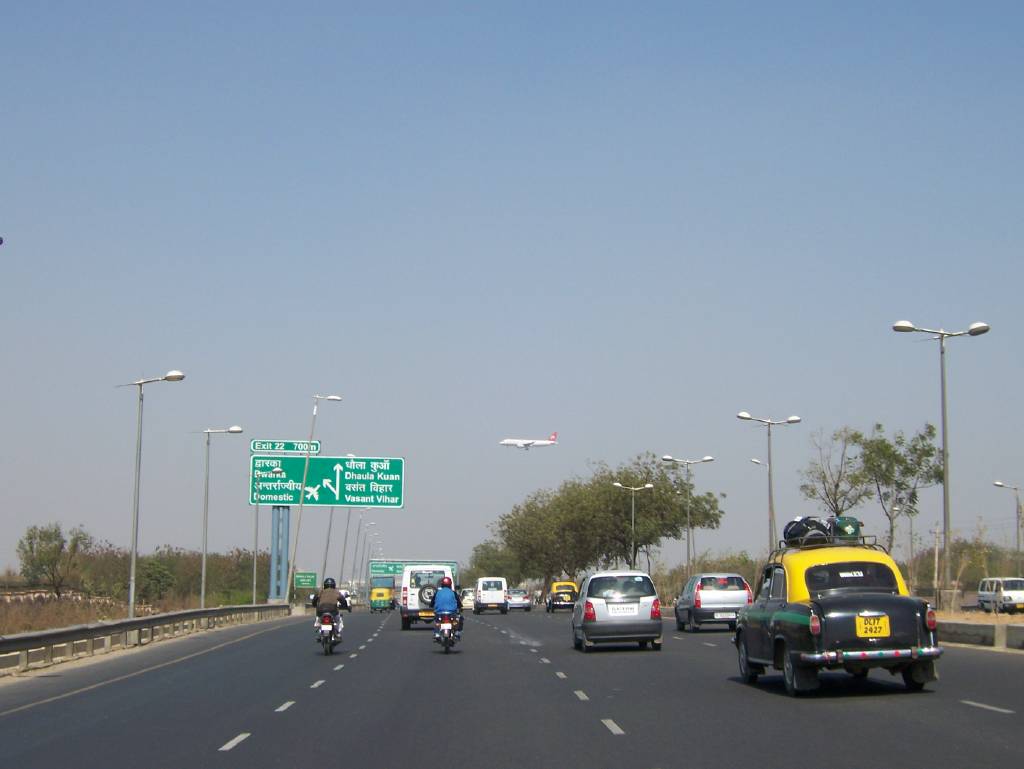
File-Gurgaon_Expressway

In this blogpost, Arjun Natarajan, a litigator, writes on Delhi government’s second edition of odd-even rule. Earlier, he had written on the first edition of this rule, which can be read by visiting http://blog.ipleaders.in/delhi-government-odd-even-rule-punishment-for-violation-of-rule/. Readers are requested to read this blogpost, in conjunction with the earlier blogpost. 

Time flies. January seems like yesterday, when Delhi’s streets were dotted with odd vehicles on odd dates between 1 January 2016 and 15 January 2016 and with even vehicles on even dates between 1 January 2016 and 15 January 2016. That was the first edition of odd-even rule, which was by virtue of a Notification dated 28 December 2015, issued by Government of National Capital Territory (NCT) of Delhi.

Here we are, in April. Odd-even rule is all set to return.

Government of NCT of Delhi’s recent Notification dated 11 April 2016, i.e., new odd-even Notification, is popularly called ‘odd-even rule – round 2’. It is available in English and in Hindi, on http://it.delhigovt.nic.in/writereaddata/egaz20167549.pdf. Do read it.

In this blogpost, I shall refer to this notification as ‘new odd-even Notification’. It comes into force on 15 April 2016 and it shall remain in force till 30 April 2016.

New odd-even Notification is largely the same as the earlier odd-even Notification. In this blogpost I intend to merely touch upon those aspects of new odd-even Notification which are different from Notification dated 28 December 2015, causing the first edition of odd-even rule.

What’s new?

Schedule to new odd-even Notification mentions 28 categories. Do take a look at the schedule, to get a complete understanding of the vehicles of the categories, as mentioned in the Schedule.

As per Schedule to new odd-even Notification, the exemptions which are relevant to us, in our capacity as people who drive on the streets of Delhi are the same as the ones in the earlier odd-even Notification, as detailed in my previous blogpost. However, new odd-even Notification additionally exempts vehicles carrying child/children in school uniform.

A car with an odd registration number can ply on an even date, if it is carrying a child or children, who is/are in school uniform/s. Similarly, a car with an even registration number can ply on an odd date, if it is carrying a child or children, who is/are in school uniform/s. Irrespective of whether the car is being driven by a man or a woman, if the car has a child or children, who is/are in school uniform/s, then, the car is outside the purview of new odd-even Notification.

The following officers could compound violations of the earlier odd-even Notification:

Officers of the rank of Head Constable and above of Delhi Police.

Officers of the rank of Head Constables and above of the Transport Department, Government of NCT of Delhi.

Officers or authorities as authorised by Divisional Commissioner, Revenue Department, Government of NCT of Delhi.

As per new odd-even Notification, officers or  as authorised by Divisional Commissioner, Revenue Department, Government of NCT of Delhi are also authorised to exercise the power under section 213(5)(e) of The Motor Vehicles Act, 1988 to launch prosecution under section 194 of the said statute, for the offences committed in violation of new odd-even Notification and they will be deemed to be officers of Transport Department, Government of NCT of Delhi, under section 213(1) of Motor Vehicles Act, 1988 and rule 123 of Delhi Motor Vehicles Rules, 1993, for these purposes.

Basically, if an offender is unwilling to compound the offence, then, officers or authorities as authorised by Divisional Commissioner, Revenue Department, Government of NCT of Delhi can initiate a criminal case against him.

Be that as it may, the reliance on section 194 of The Motor Vehicles Act, 1988 calls for attention. It would not be out of place to mention that, even as per the earlier odd-even Notification, violation of the same attracted a fine of Rs. 2000/- in terms of the provisions of section 194(1) of The Motor Vehicles Act 1988. Therefore, reliance on section 194 of The Motor Vehicles Act, 1988 is not a creation of new odd-even Notification. However, new odd-even Notification relies on the said provision, not only in the context of punishment, but also in the context of initiating a criminal case against an offender who is unwilling to compound the offence.

Section 194(1) of The Motor Vehicles Act, 1988, is as under:

“194. Driving vehicle exceeding permissible weight.(1) Whoever drives a motor vehicle or causes or allows a motor vehicle to be driven in contravention of the provisions of section 113 or section 114 or section 115 shall be punishable with minimum fine of two thousand rupees and an additional amount of one thousand rupees per tonne of excess load, together with the liability to pay charges for off-loading of the excess load.”

If we go only by the heading of section 194 of The Motor Vehicles Act, 1988, then, the said provision makes it an offence, to drive a vehicle which exceeds permissible weight. It is obvious that driving a car with a registration number ending with an odd digit, on even dates of a month, does not amount to exceeding permissible weight! The same applies in relation to driving a car with a registration number ending with an even digit, on odd dates of a month.

However, if I read the said provision closely, then, I came across the following two aspects:

Firstly, it deals with the offence of driving a motor vehicle or allowing it to be driven, in contravention of the provisions of section 113 or section 114 or section 115 of The Motor Vehicles Act, 1988. The said offence is punishable with minimum fine of Rs. 2000/-. This offence, visibly has nothing to do with the heading, i.e., “Driving vehicle exceeding permissible weight.”

Secondly, it deals with purely the offence of driving a motor vehicle exceeding permissible weight, or, allowing such a vehicle to be driven. The said offence is punishable with minimum fine of Rs. 2000/- plus an additional amount of Rs. 1000/- per tonne of excess load plus the liability to pay charges for off-loading of the excess load. This offence can directly be connected to the heading, i.e., “Driving vehicle exceeding permissible weight.”

For the purpose of new odd-even Notification as well as the earlier odd-even Notification, we can ignore the second aspect, as it deals with exceeding permissible weight. Hence, we are only concerned with the first aspect. As per new odd-even Notification, section 115 read with section 2(41) of The Motor Vehicles Act, 1988 is the source of exercise of power by the Lieutenant Governor of NCT of Delhi, to issue new odd-even Notification. Therefore, driving a car with a registration number ending with an odd digit, on even dates of a month, as well as, driving a car with a registration number ending with an even digit, on odd dates of a month, is in contravention of the provisions of section 115 of The Motor Vehicles Act, 1988. Thus, in terms of section 194(1) of The Motor Vehicles Act, 1988, the said act is punishable with minimum fine of Rs. 2000/-.

Similarly, officers or authorities as authorised by Divisional Commissioner, Revenue Department, Government of NCT of Delhi are also authorised to exercise the power under section 213(5)(e) of The Motor Vehicles Act, 1988 to launch prosecution under section 194 of the said statute, for the offences committed in violation of new odd-even Notification and they will be deemed to be officers of Transport Department, Government of NCT of Delhi, under section 213(1) of Motor Vehicles Act, 1988 and rule 123 of Delhi Motor Vehicles Rules, 1993, for these purposes.

On this note, I end this blogpost, hoping that odd-even rule – round 2 is more successful than the first edition of odd even rule.


Download Now

Shradha Agarwal; Innovator Of A Patented Product, On Why She Joined The NUJS Diploma Course And How It Is Helping Her Career

0

IMG_6582

Shradha Agarwal completed the NUJS diploma in Entrepreneurship Administration and Business Laws in 2015. She has done her BBA from J.D Birla Institute, Kolkata and has done a summer school course in International Business Law from London School of Economics.  She has also cleared her CA inter. She has innovated and patented a Liquid vegetable and fruit wash, which is being marketed by Emami Frank Ross.

We asked Shradha how the course helped her so far in her career and why she enrolled for this diploma course when she already had a BBA degree and was a successful entrepreneur with a patented product in her kitty.

She was very positive about her experience with the course. So, we decided to share it with you all as a success story. Over to Sharadha:

When I took up the course I was working on my product. I was doing a course in one of the premier institutes in Pune, where we came up with the idea of a wash for fruits and vegetables to get rid of pesticides, chemicals and other harmful substances from the surface level.

We pitched the idea to an eminent jury and won the competition. Now in order to make the product we did a thorough research. Two engineers, one scientist, me and my partner did the field research. We went to farmers and saw the farming practices. We even went to the cancer research institute in Hyderabad and spoke to the head of the institute there. He confirmed that it’s a major cause of worry these days as the accumulated pesticides inside the human body are one of the causes for cancer.

We had to work on the formula for almost a year, many formulas failed initially before we came out with the current patented formula.

My product has got picked up by Emami Frank Ross and is available in the market by the name of Rosscare Veg and Fru wash. My partner & I own the patent to the formula. I have my own the manufacturing unit and Emami Frank Ross markets it.

I realized it during this process, that when I’m doing work like this I would need to be clear about entrepreneurship laws. There are So many people involved; there are different things involved like patent laws, ownership Issues, Intellectual Property issues and I need to be aware about the laws related to all this.

Being a newbie I could be played around at many places, if I did not equip myself with the knowledge of law.

One of my friends from NUJS suggested the online NUJS Diploma course in Entrepreneurship, Administration and Business law to me. Since I was working on my product at that time I did not want to go in for a full-time course. I liked the course.

 Structure of this diploma course and the fact that it’s totally online.

I spoke to one of the co-founders of iPleaders Mr. Ramanuj Mukherjee and he cleared all my doubts about the course. I was convinced that this course would be beneficial to me and my expectations from the course are absolutely fulfilled.

Thanks to this course, now while Negotiating, making a contract or co-founder agreement I know what points to include. Knowing the basics have really helped. I knew the basics earlier also as I have done my CA. But this course was bang on it, to the point information. This makes it easy to refer.

When I’m documenting or making papers, I know I have an online resource to refer rather than just remembering it all. This aspect of the course really comes handy.

I personally liked the Module on intellectual property rights, as it’s directly related to my work.

In future I plan to continue innovating. I would like to join a company which facilitates me and gives space to innovate. This course would come handy then also, as where ever I go legal aspects would always be there.

I have mentioned this Diploma in my Linked profile and my CV. I have even recommended it to my friends and few of them have already taken up the course. Although any one can benefit from this course, I would personally recommend this   course to entrepreneurs, people planning to start up something and law students also.

Download Now

What is The Procedure For Registration of Society

3
registration of society

In this blogpost, Bhavneet Vohra, Student, Vivekananda Institute of Professional Studies, Delhi, writes about what is society, the procedure to register a society and the benefits of registering a society for an NGO.


What is a society?

Society in simple terms is a not- for- profit organization that is usually set up to do some good to the society and not for some personal interests. Any funds or profits that are earned by the society during a period of time should be strictly used for the purposes of the society only, which is for the purpose the society was setup. These funds or profits should not be distributed between the members of the society, as doing so will dissolve the sole purpose of setting up the not-for-profit organization.

A not-for- profit organization can be registered in any of the 3 ways which are as follows

  1. As a trust
  2. As a society
  3. As a non-profit company (Section 8 of the Companies Act, 2013)

Under Indian law, society is constituted for any literary, scientific and charitable purpose or for any other purpose which is already described in the Society Registration Act 1860. Some of the purposes for which the societies can be formed are as follows:

  1. For the promotion in the creative field or science, literature and fine arts.
  2. To spread instructions, rules and specific knowledge like in the political field
  3. For charitable purposes, military relief, or orphanages
  4. To set up libraries for reading purposes for the general public, or to set up museums and galleries for keeping paintings of various talented to provide them a platform to exhibit their talent.
  5. To set up community halls for various events for the public like weddings and processions.

(Section 20 of the Society Registration Act, 1870 includes all these purposes for the incorporation of the society)

According to the act in a society there must be a minimum of seven members, and there is no restriction on the maximum number of members a society can have.

For more info on this topic search http://techwelkin.com

What does an Incorporated Society refer to

An incorporated society is basically in simple terms is a group or organization that has been registered under the Society Registration Act, 1860 which provides it authority to run all its affairs legally. In a society like the company the members of the society are not personally liable for society’s debts, contracts and obligations. There are a large number of organizations that have got itself registered and have become incorporated societies.

Benefits of registering as a society

Usually, the incorporation of society is not so essential, but it is usually recommended that to maintain a separate legal existence it is better to get itself registered or incorporated as it provides many benefits and advantages to the society and moreover it allows the society to maintain an individual existence.

There are many benefits that are offered by the government to the not for profit ventures which are as follows:

One of an essential benefit that is offered to the not for profit ventures is tax benefits

Non-profit ventures are eligible for income tax benefits if they are set up for the charitable purposes and satisfy all the requirements of the Income Tax Act.

Some of the more benefits are:

  1. An incorporated society can lease, rent, buy and sell property, borrow money and enter contracts in its own name.  No member of the society can have personal rights or interests in any of the assets of the society.
  2. An incorporated society will continue as a separate entity even though its membership changes.

 For more info on this topic search  http://www.legalindia.com


Since we can clearly infer from the above facts that incorporation of society has many benefits and provides many advantages to the society or any other non-profit venture.

So to enjoy all these benefits all societies usually believe in getting themselves registered under the Society Registration Act, 1860 and to carry out all its operations legally.

We have seen above that what the benefits for the setting up a society are and what advantages are offered when it gets incorporated. But for this, we also need to know that how the non-profit ventures like societies and trusts generate funds and how does it pay for it costs.

  1. By generating revenues from its operations
  2. By raising funds through donations.

For setting up an organization, be it a profit venture or non-profit venture in every case we need to file some documents and do some paperwork to make it legally enforceable and have some proof of its legal existence.

What are the documents that are required for setting up the society

Though for setting up a non-profit venture we don’t have to file many documents and we don’t have to undergo many formalities, but still there are some important documents that are needed to be filed to maintain its individual existence which are as follows:

  1. Memorandum of association and rules and regulations
  2. Consent letters of all the members of the managing committee
  3. Authority letter duly signed by all the members of the managing committee
  4. An affidavit sworn by the president or secretary of the society on non-judicial stamp paper of Rs.20-/, together with a court fee stamp
  5. A declaration by the members of the managing committee that the funds of the society will be used only for the purpose of furthering the aims and objects of the society

These documents need to be certified by at least 3 members of the governing body and should be filled along with MOA..

  • Proof of identity and address of governing body members
  • Address of the registered office and consent
  • NOC of the owner of the registered office premises
  • A fee of rupees 50 is required to be paid

Some points that are to be kept in mind before the registration of the society which are as follows

  1. First, we would have to see that whether there any separate society registration act separately and specifically for our own state.

For example like if I want to start a society in Delhi then I would have to look whether there is any separate procedure or act for the registration of society in Delhi.

  1. If there is no separate Act, then law applicable to the whole center will be followed that is the Society Registration Act.
  2. We should investigate about the special rules that are applied by the state for the non-profit venture as they will also have to be followed.


Since we have covered all the relevant details and all the basic concepts of the non-profit ventures which are further categorized into societies, trusts or section 8 companies, we now need to look into that what steps we have to undergo and what procedure do we have to follow for the incorporation of the society.

What are the steps and procedure for the registration of a society

The procedure to incorporate a society can be described as follows:

Any seven or more persons associated for any scientific, literary or charitable purposes can apply for registration of society. No limit on a maximum number of persons is prescribed under the Society Registration Act.

Registration of society is undertaken by a basic document of Memorandum of understanding and Articles of Association with the specified rules and regulations. Such document consists of Name, occupation and address of all members and with the rights, power, duties and responsibilities of each member of the governing body.

The Memorandum of Association must mention the following items:

  • Name of the society
  • Address of the registered officer
  • Name, addresses, designations, and occupations of the members of the society.
  • Objective of the society
  1. Societies are registered by the association of at least 7 members. Each designated person will be elected by-election for 3 years at once or as specified by the society document.
  2. The objects and rules of the society are formed as per the Societies Act, and one shall contact the society of registrar to have more details towards the creation of bye-law (Memorandum of understanding and articles of association). Also, one can ask the Auditor, chartered Accountant, Lawyers, Attorney to help in the bye-law creation.
  3. No stamp paper is required for society registration. The governing body manages the society.
  4. As per the Societies Act, the Governing body meeting and Annual general meeting should be conducted. Even a foreigner can be a member of a society in India.
  5. The purpose and object of the society shall be literary, scientific or charitable purpose.
  6. After registration of society, one shall apply for pan card if required. each year the accounts have to be  submited to the Registrar of societies.
  7. Willfully providing false information or return or refusing or neglecting to send audited income and expenditure statement and information are offenses which can lead to fines or penalties.
  8. It should be noted that name of our society should not be kept identical to any other society’s name according to the Society Registration Act.

Sources

http://lawsikho.com/

Society Registration Act

http://www.ngosindia.com

Download Now

How Can A Indian Company Open A BPO In Philippines

1


In this blogpost, Aishwarya Wagle, Student, Government Law College, Mumbai, writes about the benefits of outsourcing and the procedure  to be followed to make an investment in a JV/ WOS abroad.

IMG_0865

Introduction

With the advent of globalization, a rising number of Indian companies are leaning towards outsourcing their work to other countries.  Outsourcing work, as an idea is not a novice, it has been there for a while but has been gaining popularity for various reasons over this last decade. Companies previously outsourced work to cut costs. But today other than cutting costs, it is also about reaping the benefits of strategic outsourcing such as reducing overhead, flexible staffing, increasing efficiency, and accessing skilled expertise.


Benefits of outsourcing

The one of the biggest benefits of outsourcing is that it will help your company gain a competitive edge in the market. Not only you provide your customer with best of services, but also increases your productivity while managing your in-house resources intelligently.  It also allows you more financial flexibility when there is uncertainty in demand. Offshore outsourcing has the benefit of running your business in a full-fledged manner even during off season and holiday months.

One of the major growth drivers of the Philippine economy today are the call centers which form a major portion of the business process outsourcing (BPO). Multinational corporations and companies run the majority of the call centers in the Philippines. Lately, however, even the local investors have started participating in the outsourcing boom.

To begin with, there are certain regulations prescribed by the Reserve Bank of India which need to be followed.

Indian parties cannot engage in real estate foreign investments, which do not include construction or development activities of towns etc. Since a BPO is not considered an illegal activity in the host country, the Indian company can invest in the outsourcing business. A BPO is not included in the Foreign Exchange Management (Current Account Transactions) Rules, 2000 so there should be no issue on that end either.

Investment by persons in India does not need any approval under the following cases:

  • Liberalized Remittance Scheme (LRS) by individuals up to USD 250,000 per annum
  • General permission for funds held in foreign currency accounts
  • Under Automatic Approval route not exceeding 400% of company’s net worth.

We fall under the third category, where an Indian party does not need prior approval from the Reserve Bank of India for making an overseas direct investment in a wholly-owned subsidiary or a joint venture (WOS/JV) abroad. The Indian Party should approach an Authorized Dealer Category – I Bank for effecting remittances towards such investment.

Under subsection 2(k) of the Foreign Exchange Management (Transfer or Issue of Any Foreign Security) (Amendment) Regulations, 2004, an Indian Party includes ‘a company incorporated in India or a body created under an Act of Parliament or a partnership firm registered under the Indian Partnership Act, 1932 making investment in a Joint Venture or Wholly Owned Subsidiary abroad, and includes any other entity in India as may be notified by the Reserve Bank: –

Provided that when more than one such company, body or entity make an investment in the foreign entity, all such companies or bodies or entities shall together constitute the ‘Indian party.”

There are certain criteria to be fulfilled to invest directly under the Automatic Route

  • The Indian Company can invest up to its prescribed net worth in a WOS abroad (as per last audited balance sheet) for any bonafide activity as permitted by the law of the host country. As the BPO is becoming a major industry in the Philippines, we will be permitted to invest in a subsidiary/JV in that field. In case, the financial commitment rise above USD 1 billion, prior approval of the RBI will be required.
  • We have to make sure that our FMCG company is not on Reserve Banks caution list or its list of defaulters to the banking system published and circulated by the Credit Information Bureau of India Ltd. (CIBIL)/RBI or any other credit information company which has been approved by the Reserve Bank. Also, we need to make sure that the company is not under investigation by the directorate of enforcement or any investigative agency or regulatory authority.
  • The Company has to route all transactions relating to the investment in the JV/WOS through only one branch of an authorised dealer bank which will be designated by the company itself. All transactions and communications in reference to the investment made will be reported only through this designated branch of an authorised dealer bank. In case, at a later stage, the company wants to change the Authorised Dealer, it will have to be done by means of an application in the form of a letter addressed to the Reserve Bank after obtaining a No Objection Certificate from the existing authorised

Procedure to be followed to make investment in a JV/ WOS abroad

The company has to follow a specific procedure to make an investment in a JV/WOS abroad. The company is required to fill up form ODI with the support of the documents mentioned therein, i.e., a certified copy of the Board Resolution, Statutory Auditors Certificate, and valuation report and approach the Authorised Dealer to make the remittance/investment. Share valuation in case of partial/full acquisition of an existing foreign company where the investment is more than USD five million, has to be done by a Category I Merchant Banker registered with the Securities and Exchange Board of India (SEBI) or an investment or Merchant Banker outside India registered with the regulatory authority of Philippines. In other cases where the investment is less than USD 5 million, the valuation can be done by a Chartered Accountant or a Certified Public Accountant.

The ODI form is available on the RBI website as an annexure to the Master Circular on Direct Investment by Residents in Joint Venture (JV) / Wholly Owned Subsidiary (WOS) Abroad’ dated July 1,2014. Authorized Dealers Category – I banks have to file Part I (Sections A to D), II and III of form ODI on-line in the Overseas Direct Investment Application with the Reserve Bank for allotment of UIN, reporting of subsequent remittances, filing of APRs, etc. AD Category –I banks would continue to receive the ODI forms in physical form from the Indian Company.

Per se there is no need for a prior registration with the RBI to make direct investments under the automatic route. A Unique Identification Number (UIN) is instantaneously generated after the online report of the first remittance in form ODI. The UIN allotment by the RBI does not constitute of an approval stamp given by the RBI for the investment made in the JV/WOS. When the RBI issues a UIN, it only signifies the taking on record of the investment for maintaining the database. The onus of complying with RBI and FEMA regulations rests with the Company.

Conclusion

These are more or less the requirements and criteria to be followed in India with regards to Reserve Bank and FEMA regulations. However, there are various other equally important aspects to be considered while setting up a BPO in the host country. Details like research based on equipment that you need to set up a call centre. From computers to dialing equipment etc. and technical know-how is very important. Even in the Philippines, you need to find the right call centre to depend on. Since they sub-manage your work and are very service oriented, you have to heavily depend on them to get your outsourced work done in a smooth manner. You have to make sure that your work in the host country needs to be well managed and relayed by the agents. For this, you need to express your wants and elaborate the terms of the processing to the people who will be in control in the Philippines.

Sources Referred to :


Download Now

How Should Bilateral Investment Treaties Impact Your Decision To Do Business In A Specific Country

0


In this blogpost, Ayush Jain, Student, Jindal Global Law School, Haryana, writes about what is bilateral investment treaties, its role and importance

965

What are Bilateral Investment Treaties

Bilateral Investment Treaties (or, BITs) are agreements between two countries which protect the investments made by investors from each state in the territory of the other. The basic purpose of a BIT could be said to reduce political risk by laying down certain protections as we can see from Article 6 of the United States Model BIT. Instead of listing down what generally these protections would consist of since this article is about how a BIT would impact my decision to do business in a specific country, hence, I would directly go on to list down the basic things which I would be looking for in a BIT. If a BIT can ensure security from political risks, rationality, fair and equitable treatment, access to international arbitration, transparency and non-discrimination, then that would act in favor of carrying out business in that particular state.

Role of BIT

BIT is mostly known to attract Foreign Direct Investments (FDI), however, disputable the statistics may be over how successful or unsuccessful has the process been, one thing that cannot be disputed is the motive behind drafting a BIT. Any BIT is designed keeping in mind the need to look into the concerns of the investors with respect to the political gimmicks and legal tangles. The question that might arise is why is there such emphasis given in the presence and framework of a Bilateral Investment Treaty. This could be settled by understanding the law of business. Business being a decision-making process involving financial transactions, there needs to be proper planning and math done behind the amount which one plans to invest, and the return on investment depends on the economic scenario. None of these can happen in the absence of proper risk management. Hence, the role of Bilateral Investment Treaties become a major factor when one thinks of investing in a foreign land. Pakistan and Germany were the first to enter into a Bilateral Investment Treaty in the year 1959 itself. Today there are around 3000 such treaties already. Hence, we understand the pace at which the importance of BIT is growing. Every investor demands these are basic necessities without which the risk factor is too big for anyone to proceed with.

Importance of BIT

Even though BITs are generally of standard form, but still there can be really important differences between two BITs. Hence, the framework becomes of great importance. In fact, we do not even need to look far ahead in order to understand this. India is a good example. As we might be aware, India is undergoing a draft model of Bilateral Investment Treaty as it wishes to promote FDI and our Prime Minister wishes to implement the Make in India scheme. Now the problem over here is that the draft that has come to light earlier is not one which would in any way attract FDI instead one which might scare the investors further. When I say that yes I would prefer investing in a country with a BIT, I do not mean any and every BIT but one which helps serve the purpose of it being made in the first place. The major criticism of India’s model of BIT is that it is not good enough to ensure investors’ confidence instead it portrays India to be more protective and conservative in nature. The importance of BIT came back into light in 2013 when Ethiad only made investments in Jet Airways after India and UAE entered into a bilateral investment treaty. This was, according to me, a very decent demand raised by the UAE investor before entering the Indian market, especially considering how stable India’s political scenario remains and how fast and corruption free are legal systems are. India had to carry the burden of cancellation of the 2G licenses and introduction of retrospective tax laws in 2012, claims of which continued to increase with White Industries (an Australian investor) successfully raised a claim against India for such actions of theirs. It rightly argued that by entertaining Coal india’s application to dismiss the allocations of the year 2002, it contravened the New York Convention and hence India had failed to act in accordance with certain legit expectations that White Industries had as an investor.

When I, as an investor, would not want to enter a market with such history and unhealthy business environment, it is only fair on our part to first bring about a fresh draft of the BIT which would remain true to the spirit of it being created and ensure investors are confident of India being a safe investment hub. If we see the US BIT, the investors are being provided with six major benefits which ensure that they feel safe and secure of their investment made in the US. The same include National Treatment and Most-Favored nation treatment, expropriation and compensation, transfers, performance requirements, dispute settlement and senior management and boards of directors. These act as such great investment incentives that would probably make me invest in the US even if I was not even considering doing so. Such needs to be the standards being set by India if they wish to ensure the success of Make In India scheme of our Prime Mister Shri Narendra Modi.

I cannot more emphasize on the importance of a Bilateral Investment Treaty which fits the purpose it is meant to serve. If I want to make an investment in another country, the fact that I am not well aware of their politics, law and order situation, dispute redress mechanism it is a Bilateral Investment Treaty that can give me assurance and clarity over what I am entering into.  If I may now list down what BIT usually contains, as without that it might remain incomplete, I would probably have the following:

(a) promotion of favourable conditions for investors;
(b) fair and equitable treatment of investors;
(c) national treatment standards, ensuring that investors of a contracting party receive treatment no less favourable than that accorded by the host country to the investments of its own investors;
(d) most favoured nation treatment, requiring the host state to treat foreign investments no less favourably than investments from any other third state;
(e) protection against expropriation and nationalisation; and
(f) the requirement to permit the free transfer of funds.

However, I still would say, these are not the a, b, c, d’s to be followed while drafting a BIT. Till the time the core principles are being served, that is a good enough, in fact, what is required.

Conclusion

BIT is the most appropriate tool used to promote FDI by seeking investors’ confidence. Free Trade Agreements (FTAs) even though is similar to BIT, but only eliminate discrimination and hence it can never act as a substitute for BIT. As an investor, BIT provides me protection while I invest in a foreign land. Hence, BIT definitely helps promote FDI, in providing an effective international arbitration for dispute settlement, and ensuring investor protection while both the investor and the country the investment is coming into benefits. I personally would feel much comforted and secure to invest in a country with a BIT than in one without it as in that case I would have to depend on that country’s legal system where I have put in my investment which we never know is free from political pressures and corruption or not. BIT would also remove the problems of change in political hands during the business being carried out and hence give stability to the investment and the environment there. To conclude I would say that BIT has the power to get the economy growing, improve the employment scenario and raise the standard of living of the people if used effectively and in the true spirit.


Download Now

How To Call An Extraordinary Meeting

0

In this blogpost, Aishwarya Wagle, Student, Government Law College, Mumbai, writes about what is an extraordinary general meeting, instances under which EGM is conducted, conditions for requisition of EGM and steps to be followed to convene an EGM.

IMG_0865

Under the Companies Act 2013, a meeting of the members other than an Annual General Meeting is termed as an Extra Ordinary General Meeting (EGM). To summon such a meeting is the privilege of the Board of Directors. However, S.100 makes provisions with respect to an EGM being held other where sub-section 4 of Section 100 of the Act binds the Board of Directors to call an EGM after receiving required requisition from members. The ingredients of a valid requisition and the power of requisitionists have also been stated in subsections 2, 3, 4, 5 and 6 of S. 100 of the Act respectively.

Instances when EGM is conducted

An extraordinary general meeting may be convened by the directors if some business of special importance requires approval from members and it cannot wait till the next annual general meeting. The Act itself provides instances where EGM will have to be convened by the Board to transact businesses which cannot wait till next AGM:

(i) The first auditor of a company,other than a Government company, shall be appointed by the Board of Directors within thirty days from the date of registration of the company. In the case of failure of the Board to appoint such auditor, it shall inform the members of the company, who shall within ninety days at an extraordinary general meeting appoint such auditor [Section 139(6)]

(ii)  In the case of a Government company or any other company owned or controlled, directly or indirectly, by the Central Government, or by any State Government, or Governments, or partly by the Central Government and partly by one or more State Governments, the first auditor shall be appointed by the Comptroller and Auditor-General of India within sixty days from the date of registration of the company. In case the Comptroller and Auditor-General of India does not appoint such auditor within the said period, the Board of Directors of the company shall appoint such auditor within the next thirty days. In the case of failure of the Board to appoint such auditor within the next thirty days, it shall inform the members of the company who shall appoint such auditor within the sixty days at an extraordinary general meeting [Section 139(7)]

(iii)  Any casual vacancy in the office of an auditor shall in the case of a company other than a company whose accounts are subject to be audited by an auditor appointed by the Comptroller and Auditor- General of India, be filled by the Board of Directors within thirty days, but if such casual vacancy is as a result of the resignation of an auditor, such appointment shall also be approved by the company at a general meeting convened within three months of the recommendation of the Board and he shall hold the office till the conclusion of the next annual general meeting [Section 139(8)].

Shareholders of the company have a right to requisition a meeting if they have completed the prescribed procedural and numerical requirements. The board is also legally bound to call an EGM if it receives a valid requisition for its members. If it does receive a valid requisitioning from the members with specific regard to any matter, it should affirmatively call for  an EGM to be held within  21 days of such receipt and should proceed to conduct the meeting within 45 days of receipt of such requisition. Neither are the reason for the resolution passed needed to be disclosed nor are the resolutions subject to judicial review. The Supreme Court has held in Life Insurance Corporation of India v. Escorts Ltd.[1] that when the state or an instrumentality of the state purchases shares of a company, it assumes the role of an ordinary shareholder, and there is no reason why the State as a shareholder is required to give reasons when it seeks change of management by a resolution like any other shareholder. The requisition to call an EGM must set out the agenda for the meeting and no other business than the agenda can be transacted in such a meeting (Ball v. Metal Industries Ltd.)[2] The Bombay High Court in Cricket Club of India v. Madhav Apte[3]that the refusal of the directors to hold an EGM when it has been validly requisitioned cannot be justified on the ground that the resolution passed at such a meeting would be contrary to the provisions of the Companies Act. However, the refusal of the directors to hold an EGM does not amount to an offence under the Companies Act, 2013. The only remedy available to the requisitionists is to call the meeting themselves and recover their expenses from the company.[4]

Conditions for requisition of an EGM

There are certain requirements to be fulfilled to requisition an EGM. In Queens Kurries& Loans Pvt. Ltd v Sheena Jose[5] it was held that in order to requisition a meeting, the requisitionists must hold not less than one-tenth of the paid-up capital of the company on the date of the deposition of the requisition. Under S.100 of the Act, in spite of the words ‘Such number of members of the company’ has been used in the plural, the requirements of the said section would be satisfied even if one member holding the requisite number of shares makes the requisition as it has been held in S. Vardarajan v Venkateswara Solvent Extraction Pvt. Ltd.[6]

In the case of a Company not having Share Capital, not less than one-tenth of the voting strength of the company should sign the proposal for the EGM. The requisitionists have to make the proposition for the EGM at least 21 days before the proposed date of the meeting by sending a notice by electronic mode (as permitted under the New Act) or in writing. The notice should specify the time and place of the proposed meeting and shall also mention the agenda. The meeting should be held at the Registered Office or the same city in which the registered office is situated and on a working day. The proposed resolution will be a Special Resolution, and all the requisitionists should sign the notice. The notice will be sent to all the members whose name is present in the Register of Members. It should also be noted that no further dividend can be declared at the EGM  once it has already been declared at the Annual General Meeting.

Inter alia, there have been changes in the Companies Act 2013 vis-à-vis the Companies Act, 1956. The section corresponding to Section 100 of the New Act corresponds to Section 169 and Regulation 48(1) of Table A of Schedule 1 of the 1956 Act. The provisions of Reg. 48(1) are now contained in S.100 sub-section 1.

Steps to be followed to convene an EGM

The following steps are to be followed in order to convene an EGM. Firstly, a board meeting should be convened after notice has been sent to all the directors to discuss inter alia the proposed resolutions to be passed at the EGM and to fix the time, date and venue for the same.

The next step should be to dispatch notices in writing or in electronic mode (now permitted under the New Act) giving at least 21 days notice. Subsections 4 and 5 of Section 101 deal with the details of sending such notice. The nature of concern of such meeting and any other information regarding the scope and implications of the decisions taken in this meeting should also be mentioned in the aforesaid notice.

Section 103 relates to the requisite quorum of the companies. The New Act Provides that in case of an adjourned meeting or of a change of day, time or place of meeting under clause (a), the company shall give not less than three days notice to the members either individually or by publishing an advertisement in the newspapers (one in English and one in vernacular language) which is in circulation at the place where the registered office of the company is situated. As provided by Section 104, all the members personally present at the meeting should elect a chairman among themselves by a show of hands. The poll should be in accordance with the Act.

Section 105 provides for the appointment of proxies. It states that a person who is appointed as a proxy should act on behalf of such members or a number of members (not exceeding 50). The New Act provides that the Central Government can a class or classes of companies that shall not be allowed to appoint another person as a proxy.

The next step is to vote. Voting is permitted by a show of hands unless a poll is demanded. The New Act provides for voting to be done through electronic means. It is to be ensured that the resolutions passed and the minutes should be prepared and signed within 30 days of the conclusion of the meeting. Once this is done the appropriate form needs to be filed with the Registrar of Companies.

[1][1986] 59 Comp. Cas. 548 (SC)

[2] 1957 SLT 124

[3][1975] 75 Comp.Cas. 574 (Bom.)

[4]Anantha R. Hegde v Capt. T. S. Khosla; [1996] 3 Co. Law Journal 333

[5][1993] 76 Comp.Cas. 821 (Ker.)

[6] [1994]  80 Comp. Cas. 693 (Mad.)

Download Now

Analysis Of The Case A.P.Tourism Development Corporation Limited v. Pampa Hotels Limited

0

In this blog post, Shivam Anand,  Student, DSNLU, Vishakhapatnam, writes about the role of the judiciary with respect to  the arbitration agreement.

download (46)

Scope of the Article

This article deals with the scenario where the question with respect to an arbitration agreement is raised. Special emphasis has been laid upon the case analysis of A.P.Tourism Development Corporation Limited v. Pampa Hotels Limited[1] and Konkan Railways Corporation Limited v. Rani Construction Private Limited[2]

Introduction

With the long pending cases in the courts in India and the fact that litigation comes at a cost of the lengthy time period and a huge amount of money, “Alternative Dispute Resolution” came as a silver lining for the homo sapiens. Though it’s on the verge of development and needs a lot of time to get into the nerves of Indian system yet with the pace of Indian judicial system, it’s surely has a scope in future.

Arbitration

In simple words “Arbitration” is one of the alternative dispute resolution systems where the two parties elect a neutral party to make a decision on behalf of them. In India, it’s being regulated by the provisions of Arbitration and Conciliation Act 1996.  Under Section 2 of the act “Arbitration” has been defined as any “Arbitration whether or not administered by permanent arbitral institution”. The arbitral tribunal which makes the arbitration decision may consist of a sole arbitrator or a panel of arbitrators.

Arbitration agreement

Under Section 7 of the Arbitration and Conciliation Act arbitration agreement is defined as “an agreement by the parties to submit to arbitration all or certain disputes which have arisen or which may arise between them in respect of a defined legal relationship, whether contractual or not.”[3] Thus, in recent times, many corporate bodies emphasize on an arbitration agreement along with the contractual agreement when they enter into business with some other entity which helps them to settle any sort of dispute which may arise between them related to their business transaction. Both the company entering into a business transaction through contractual agreement should have a legal existence. Now we have a scenario where there is an arbitration agreement entered into by two companies A and B, one of which is not incorporated at the time of the signing of the arbitration agreement (say B). But subsequently, B got incorporated within a year. The dispute arises, and A invokes the provisions of the arbitration agreement and notifies the B to opt for arbitration to settle their dispute. After the prescribed time period of 30 days to choose an arbitrator by the B, it fails to choose one, so A approaches the Hon’ble court to intervene and choose one arbitrator. A contends that the arbitration agreement is invalid as B wasn’t incorporated at the time of the signing of the arbitration agreement, so it has no legal validity. According to powers provided under the Act to the court in appointing an arbitrator, it has no liability to entertain contentious issues and its only obligation is to choose an arbitrator. This may be understood from the decision of the in Konkan Railways Corporation Limited v. Rani Construction Private Limited, where it observed that the Chief Justice or his designate does not perform the adjudicatory function under Section 11 of the Arbitration and Conciliation Act, 1996. Observing so, it held thus:

Section 11 did not require the Chief Justice or his designate to perform any adjudicatory function. All that the Chief Justice or his designate was required to do was to nominate an Arbitrator if a party to an arbitration agreement had failed to do so within the specified time after a requestan ex facie basis; no element of adjudication came into it.[4]

Thus with respect to the above-mentioned case, in case either of the party on the basis of an arbitration agreement moves to the court for the appointment of an arbitrator in case the other party fails to choose one within the prescribed period of time then the issue of the validity of the arbitration agreement if raised is of no concern to the court and it’s the only obligation is to choose an arbitrator. In the very same judgment, the apex Court further held as follows:

As we see it, the only function of the Chief Justice or his designate under Section 11 is to fill the gap left by a party to the arbitration agreement or by the two arbitrators appointed by the parties and nominate an Arbitrator. This is to enable the Arbitral Tribunal to be expeditiously constituted and the arbitration proceedings to commence. The function has been left to the Chief Justice or his designate advisedly, with a view .[5]

Thus in one of the landmark cases of A.P.Tourism Development Corporation Limited v. Pampa Hotels Limited the Supreme Court gave its verdict with respect to the question of “Whether the court has adjudicating power with respect to the validity of the arbitration agreement or has to appoint an arbitration as according to the request made by the party and put the ball in the court of the appointed arbitrator to look into the jurisdictional manner. With respect to the Section 16 of The Arbitration and Conciliation Act, 1996 the arbitral tribunal has the authority to look into the jurisdictional aspect and the scope of the authority of the tribunal. But in this case, one of the important aspects was that the validity of the arbitration agreement was in question as one of the parties did not have the legal existence at the time of the signing of the agreement. Already in Konkan Railways case, the court restricted the administrative role of the Chief Justice/Designate to appointing an arbitrator as per the agreed procedure when the parties reach out to the court, leaving all contentious issues including whether there was any arbitration agreement or not to be decided by the arbitrator. Hon’ble Supreme Court while making its decision said that

“Under Section 34(2) of the Companies Act, 1956 provides that from the time of the incorporation of the company as specified in the certificate of the incorporation, members who have subscribed to the memorandum of the company and other members are competent in exercising all the functions of an incorporated company. With reference to Section 149 of the companies act any contract that has been entered into before the date of which company as entitled can’t be any managing director of the company too. The scenario would have been completely different in case the agreement was entered into by the promoters of the company as such contract is secured by the Section 15(h) of the Specific Relief Act 1963 which reads as “when the promoters of a company have, before its incorporation, entered into a contract for the purposes of the company, and such contract is warranted by the terms of the incorporation of the company: Provided that the company has accepted the contract and has communicated such acceptance to the other party to the contract

Conclusion

Thus citing the judgment made in the case of S.B.P & Co. v. Patel Engineering Ltd.& Anr. [6]

The court made a “Prospective Overruling” (with respect to the fact that any judgment which is made prior to this would be disturbed putting a burden on the judicial system) that under Section 11 of the Arbitration and Conciliation Act 1996 Chief Justice/Designate will not have only administrative function but also judicial function. In the case of any contentious issue over the validity of the arbitration agreement with respect to which a party has reached out to the Hon’ble court, the same will have to be decided by the Chief Justice/ Designate subsequent to which the court will use its administrative function to choose an arbitrator. Thus, the court ruled that the judgment of the S.B.P case will be followed, the exception being that any appointment made before 26.10.2005 will be valid and in such circumstance the arbitrator will look into the question of the validity of the arbitration agreement. But after 26.10.2005 such adjudicating power lies in the hand of the Chief Justice/Designate. When one of the party after the prescribed period of 30 days fails to choose an arbitration after being notified by the other party to do the same and approaches the court and the question is raised over the validity of the arbitration agreement, then the same will be first decided upon by the court before appointing an arbitrator.

[1]2005 (4) Suppl. SCR 688

[2]AIR  2000(8) SCC 159

[3] Section 7 of Arbitration and Conciliation Act,1996

[4] http://indiankanoon.org/doc/51972963/

[5] Ibid. 2

[6] AIR 2005 (8) SCC 618]


Download Now

UNCLOS, CITES and IWC: Could International Court of Justice Put An End To Illegal Whaling By Japan?

0
A Quick Look At The UNCLOS, CITES and IWC: Could International Court of Justice Put An End To Illegal Whaling By Japan?

I wrote this article many years back on A First Taste of Law. Things have hardly changed and hence republishing this.

Is Public International Law any law at all? This staple debate from PIL and jurisprudence classes started since the time of Austin the positivist, may find a contemporary answer one of these days.

whales

The elaborate legal framework has been created to protect whales by the international community. There is even an International Whaling Commission in place to address disputes over illegal whaling. However, nothing seems to work – whales are poached year after year with impunity.

So what is wrong? Here are the options:
a) the law is bad
b) enforcement
c) lack of goodwill
d) all of these
Pick your choice. I am not going to break my head over this chicken and egg debate. However, I came across a piece of news I thought may be the beginning of the end in the illegal trade in whale products, and the poaching of this valuable, rare and beautiful mammal.
Japan is the biggest poacher of whales. Government of Japan issues permits to poach up to 1000 whales a year in the name of scientific research on whales. This is one of the legal juggleries that has been going on for years now despite a lot of protests. These days the protesters are even clashing with the ships poaching whales in the high seas.

killer-whales-591130_960_720
In any case, this time Australia, supported on principle by EU and US, has issued an ultimatum to Japan, stating that they will take Japan to International Court of Justice in Hague if they fail to stop illegal poaching and trading in whale meat under the garb of research. Japan has called this move on the part of Australia ‘unfortunate’ and said that their whaling activity is ‘legal’. Seems they are prepared to fight the case in International Court of Justice if need be.
For all those who want to see an end to this government sponsored absolutely unnecessary poaching of a valuable resource that in all senses is inherited by the whole mankind and are not restricted to the territory of one country, these developments are welcome. For one, even if Australia fails in its legal campaign in the ICJ on some technical ground or the other, this is going to generate unprecedented media attention and public opinion against whaling industry and Japanese governments policy with respect to whaling.
Secondly, it is highly unlikely that Australia will not succeed. To explain this statement, I should give a brief account of the international legal regime governing whaling.

minke_whale_exploitation
International Whaling Convention
The International Whaling Convention (IWC) was established to oversee the management of the whaling industry worldwide in 1946, right after World War II when the United nations was still in its formative stage, in response to the rapid decline in the population of whales from whaling. In 1986, the IWC instituted an indefinite ban on commercial whaling. This ban is still in effect, with certain exceptions. Norway have declared themselves exempt from the ban. No customary international law against whaling, if any, could be used against them either, as they would qualify as a persistent objector.
Japan does not claim any right to commercial whale trading and would not qualify for an exemption as Norway does. Countries such as Norway and Iceland sometimes even interpret the moratorium on whaling as a ban on unsustainable commercial whaling, as opposed to on commercial whaling itself. Japan has not been resorting to this argument so far, rather they have asserted that their whaling is for scientific research, and this is unregulated. Nevertheless, it will be very difficult for Japan to establish in court that their whaling activity is bona fide research and not commercial.
Australia has promised to present its case against Japan in the IWC very soon. What line of arguments (I mean substantial, not jurisdictional) both parties are likely to take in front of ICJ would be more or less clear at that stage itself.
Convention on International Trade in Endangered Species of Wild Fauna and Flora (CITES)
CITES is an international treaty that provides for protection of endangered wild animals and plant species and regulates international trade of the same. It is designed to promote the conservation of endangered species while allowing trade in certain wildlife. There are three categories of protection under the treaty. Species listed in Appendix I are threatened with extinction and would be affected by trade, therefore the commercial trade is strictly prohibited. All species of the ‘great whales’ are listed on Appendix I.
However, CITES provides for exemption as far as scientific research is concerned, and Japan will possibly benefit from the same especially because it made reservations at the time of signing the treaty with respect to whaling. Also, Japan’s whaling activity is not meant for international trade but domestic consumption. It may be difficult to use this Convention against Japan. This is so because CITES as a framework works better for protection of domestic species that live within the confines of a country, and not whales that can not be said to be living in any particular country but in international waters. As Japan primarily consumes whale products domestically and does not engage in international trade, it is difficult to prevent them under CITES.
United Nations Convention on the Law of the Sea (UNCLOS)

UNCLOS imposes a duty on nations that have signed this treaty (Including Japan) to conserve marine mammals and to follow the International Whaling Convention’s guidelines (even if they are not signatory). The duty imposed by UNCLOS is thought to be stronger than the obligations imposed under the International Whaling Convention.
Articles 87 and 116 of UNCLOS affirm that the nationals of all states are free to take living resources on the high seas, subject to their treaty obligations and to UNCLOS stipulations. However, protection of mammals is given a different status altogether in UNCLOS and whaling, therefore, can not be compared to fishing. In Article 65 of UNCLOS, it is envisaged that to protect marine mammals, coastal states and international organisations may prohibit, restrict or regulate catching of marine mammals, even in the high sea (Article 120).
The prohibition and resolutions of the IWC, therefore, have to be seen in light of these provisions. Also, historically Japan has considered IWC as the appropriate body for regulating whaling, which can be shown from records of earlier negotiations, sealing any way of arguing IWC is not the appropriate body under Article 65 of UNCLOS.
Conclusion: fate of mala fide scientific research
It seems that the case, if considered on merits, is going to turn on the point whether Japans whaling activity is free from all regulations as soon as they label it as scientific, especially when it is being alleged and widely challenged (and as asserted by Greenpeace, also documented) as mala fide. If ICJ agrees to look into the activities in order to determine whether it can be justifiably called scientific research, Japan will have a tough time proving their case.As the legal blog Opinio Juris observes, Japan has not been a party to a case in ICJ ever, till now – and its reaction over being taken to ICJ over whaling will be very interesting to watch.

Download Now

Aniruddha Bakshi, HR Head, On How NUJS Business Law Diploma Helped Him In His Career

0

918584830404

Aniruddha Bakshi is the HR Head with Shalimar group. An agricultural-based company, which is into manufacturing poultry

and aqua feed, fisheries, meat processing etc, headquartered in Kolkata. He is a BCS in Chemistry from IGNOU and MBA in HR from MIT Pune.

He completed the NUJS diploma in Entrepreneurship Administration and Business Laws in 2015. Over here he talks about his experience with the NUJS diploma course, and how it helped his career so far. Over to Aniruddha:

I started my career early. There were not many professional courses available then and I did not have much professional qualification because of the same. So I was always on the lookout of online courses which would help me enhance my knowledge.

While searching the internet I came across the advertisement of NUJS diploma in Entrepreneurship Administration and Business Laws. I was very impressed by the course content and syllabus. The NUJS tag was another major attraction. NUJS is one the top five law schools in our country and having a diploma trough them sounded like a good idea to me.

I even looked the internet for the profiles of iPleaders team and was convinced after reading about the co-founders and their expertise.

Since I had done my MBA in HR, I had a vague idea about the basic laws but this course has helped me strengthen my basics.

The module on corporate governance was very useful. Personally, I found this module to be very beneficial. Drafting is an integral part of my role and I handle this regularly at my work. The knowledge gained through this course on drafting is really helping me excel in this area of my work.

My future plan is to start up my own company in the field of HR and compliance matters one day. I’m sure this course and the knowledge gained through it would come handy then also.

I have mentioned this Diploma course in my CV and my LinkedIn profile. I have even had discussions around this diploma course in my interviews and I feel it had a positive impact on my employers.

I would be happy to recommend this course to anyone; rather I’ve already recommended it to few of my friends. Compared to other online courses of similar nature, I would say that it’s the best course available in India as of now. Personally, I feel people with a similar background like mine, in HR and compliance can benefit immensely from this course.

Download Now
logo
FREE & ONLINE 3-Day Bootcamp (LIVE only) on

How Can Experienced Professionals Become Independent Directors

calender
28th, 29th Mar, 2026, 2 - 5pm (IST) &
30th Mar, 2026, 7 - 10pm (IST).
Bootcamp starting in
Days
HRS
MIN
SEC
Abhyuday AgarwalCOO & CO-Founder, LawSikho

Register now

Abhyuday AgarwalCOO & CO-Founder, LawSikho