Download Now
Home Blog Page 1760

What Are The Disadvantages Of Compulsory Corporate Social Responsibility

0

15345-illustration-of-city-buildings-pv

In this blogpost, Sudhi Ranjan Bagri, Student, National Law Institute University, Bhopal, writes about what is corporate social responsibility and problems might arise in its implementation

Introduction

Corporate Social Responsibility has not been specifically defined anywhere. Though in its general meaning, it requires organizations to consider the company’s impact on society and the environment as they conduct business. Technically it is a good principle and is meant to benefit the society and also to take care of nature, but when its practicability is considered, there are a lot of problems which arise in its implementation, which the companies have to deal with. The blog would try to cover all those reasons which seem apparent to the author.[1]

Cost and Workload

The first and foremost point which goes against implementing the social responsibility is that the cost which is required for its proper implementation is very high. Further, at the initial stage, it requires a high labor workload. It requires for early planning and troubleshooting strategies, which usually require massive time and cost, thus would lay a burden on the company. The company has to make long-terms strategies which would have such impact on maximizing the benefit while taking care of its social responsibilities. Risk awareness as a result of the implementation has to be taken into consideration and monitored.[2]

Business Objective

Unlike public services which function to serve the public needs, the main aim of most of the private businesses is to maximize profit. Their main aim behind such incorporation thus makes it difficult to implement the social responsibility accounting system, as it requires a substantial amount of money. For example, it might happen that the policies and procedures, of a company, on disposal of chemical waste, is in accordance to the rules and regulation in that regard. However, it may not be sufficient to achieve the target of accommodating environmental and social needs.[3]

Staff Morale

The implementation process requires heavy workload, and this may deteriorate the morale of the staff working in a company. Logically thinking, if some employees have to work extra than their scheduled hours without getting any extra pay for the same, they would prefer to quit their job and would seek some other place to work. Thus, this will increase the labour cost of the company as they would be left with no other option than to recruit new staff and equip them with the necessary training, which would further be a burden on the capital of the company.[4]

Shareholder Interests

Proper implementation of corporate social responsibility requires a lot of changes to be made to many processes, which includes increased reporting. Companies usually hire some additional personnel to manage CSR initiatives. These require money, and thus the rivals in the market point out that the money spent on CSR comes directly from shareholders’ pockets, and that the company is thus taking steps which could hamper the interests of the shareholders. Elaine Sternberg, one of the most vocal opponents of the effects of CSR on shareholder profits, is of the opinion that CSR initiatives incur a great cost with the little measurable return.[5]

https://lawsikho.com/course/diploma-companies-act-corporate-governance
Click Above

Corporate Reputation

While many companies carry out CSR initiatives with the purpose of bolstering their public images, these initiatives can at times necessitate a company to release certain information which could have an opposite effect to what is intended. The incident which happened in the year 2003, is a good example of this. Coca-Cola, as part of CSR initiative, released a report which included information about chemicals found in its products. However, the report resulted in lowering the reputation of the company instead of increasing it because of the company suffered huge revenue loss. [6]

Competitive Disadvantages

Proper implementation of corporate social responsibility initiatives might require a company to makeshift in their working model, and this might turn out as an impediment to a business to operate.[7] For example suppose a Company X, which due to the CSR initiatives undertaken by them, before supplying its products subjects it to strict regulations on product quality and also maintains the employee working conditions, and incurs huge amount for all this, company Y on the other hand concerns itself only with the rules and regulation which are mandatory and doesn’t spend any amount on these extra initiatives. Thus, Company Y which is a competitor of Company X can operate at lower costs and turn out products more quickly.

Expenses

Another reason, which provides a possible explanation as to why companies object to participating in CSR, is the associated costs which are attached to it. While implementing corporate social responsibilities, the company need to pay for environmental programs; they have to provide their employee more training and also to take steps for efficient waste management programs.[8]

The problem, however, is that while investment usually pays off to the company, CSR, on the other hand, doesn’t usually play any role in increasing the capital strength of the company.

Shareholder Expectations

Another challenge which comes up is the possible negative perception of shareholders. Traditionally, companies had a primary focus on maximizing shareholder value, but now they must balance the financial expectations of the shareholders with the social and environmental requirements of other stakeholder groups. The willingness of the shareholders to invest in such companies may differ. Some shareholders might be willing to invest in companies which maintain and follow their corporate social responsibilities while others may not approve of the aforementioned expenses of operating under CSR guidelines.

Author’s comment

All factors which go against the compulsory corporate social responsibility have already been mentioned in the blogpost. In my view, the corporate social responsibility is a very good step but only if it is on the discretion of the companies, as making it compulsory would do more harm than good to the industries. The large companies and corporations can very well perform their responsibilities as they have sufficient capital to do so. However, the small companies don’t have such capital strength, and thus, they would not be able to perform their obligations. This might also happen that if CSR is made compulsory, the small scale companies might need to shut down their businesses because of the heavy burden which they have to bear from their capital. So, in my view, the Corporate Social Responsibilities should not be made compulsory and should be left to the option of the companies.


LawSikho has created a telegram group for exchanging legal knowledge, referrals and various opportunities. You can click on this link and join:  

https://t.me/joinchat/J_0YrBa4IBSHdpuTfQO_sA

Follow us on Instagram and subscribe to our YouTube channel for more amazing legal content 
 
 
References:

[1] http://www.ehow.com/info_8031857_disadvantages-corporate-social-responsibility.html

[2] See http://www.ehow.com/info_7950153_disadvantages-social-responsibility-accounting.html

[3]A. Abdullah, What Are the Disadvantages of Social Responsibility Accounting?, available at http://www.ehow.com/info_7950153_disadvantages-social-responsibility-accounting.html

[4] Ibid

[5] Supra 1

[6] K Evans, What Are the Disadvantages of Corporate Social Responsibility, available at http://www.ehow.com/info_8031857_disadvantages-corporate-social-responsibility.html

[7] Ibid

[8] See http://www.answers.com/Q/Advantages_and_disadvantages_of_corporate_social_responsibility

Download Now

Desertion As A Ground For Divorce

2

download (39)

In this blogpost, Sudhi Ranjan Bagri, Student, National Law Institute University, writes about what is desertion, concept and element of desertion, on which party does the burden of proof rely and the law relating to desertion in India. 

Introduction

“Desertion is not the withdrawal from a place, but from a state of things.”[1]

Halsbury’s Laws of India defines desertion as a ‘total repudiation of the obligation of marriage’.[2]The word desert literally means ‘to abandon or give up or forsake without any sufficient reason or intention to return’.[3]In a marriage, if one spouse leaves the matrimonial alliance without any sufficient cause he is said to be at ‘fault’.

Marriage is considered a sacrament and preserved as a social institution.[4]In olden times, it was believed that this special contract could be put to an end only when one of the spouses was guilty of an act which undermined the importance of this institution. This was the foundation of the fault based theory of marriage. In a bid to preserve this holy union, the society reprimands the guilty spouse and provides no remedy of divorce for him, thereby restricting the right to file for divorce to the spouse with the clean hands. The ambiguity and complexities of the law have been interpreted by the judiciary which attempts to render justice to the innocent party. In spite of this attempt, there is a scope for abuse and misuse of the law by the guilt spouse.

Concept and elements of desertion

Section 13(1) (ib) of the Hindu Marriage Act, 1955 deals with desertion as a ground for divorce and the explanation of the same reads: “The expression “desertion” means the desertion of the petitioner by the other party to the marriage without reasonable cause and without the consent of or against the wish of such party, and includes the willful neglect of the petitioner by the other party to the marriage, and its grammatical variations and cognate expressions shall be construed accordingly”. There are mainly four basic elements which are primarily to be satisfied to constitute desertion. The first two are to be present in the deserting spouse.

  1. The fact of separation (factum deserdendi)
  2. The intention to desert ( animus deserdendi)[5]

Desertion is a state which occurs only on the co-existence of both of these elements. If either of these two ingredients is absent, the petition for divorce on desertion fails.[6]The interesting phenomenon in desertion is that either of the elements can precede the other; however, desertion will result only when both coincide and form a union.[7] 

When a petition is filed, the first step is proving the fact of separation and the intention separately while the second step is to prove their union. It is fairly easy to prove the physical act of separation either from the conductor from the state of minds. The difficulty arises on proving the animus i.e. the intention for desertion. This intention is required throughout the period of desertion. The petitioner is expected to prove intention through conduct as a person’s mind cannot be read.[8]In this process, there are two ways in which the deserting spouse has an opportunity to misuse the position of law: 

There exist cases where the separation was consensual (like when the husband is on a voyage) with no animus to desert.[9]While separated, one of the spouses may develop the intention to bring an end to the cohabitation permanently on the expiry of the consensual period. With the separation and the consequent formation of intention, the act of desertion commences which the deserted spouse is expected to prove. The exact duration of supervening intention is difficult to prove thereby giving an edge to the deserting spouse, and the deserted spouse is in a worse off position as she had consented to something she could not object(like a husband leaving for a business trip).[10]

The quality of permanence in intention to leave the matrimonial home is one of the essential sub-elements in desertion which differentiate it from willful separation. If there is just temporary separation without the intention to leave permanently, there is no desertion.[11]

In this law, if a person decides to return just before the expiry of two years and claims to have no intention of permanent separation, the so deserted spouse will have no recourse in law

Apart from these elements in the deserting spouse, there are two other elements which have to be present in the deserted spouse:

  1. Absence of consent
  2. The absence of conduct which led to the other spouse leaving the matrimony.[12]

The deserted spouse filing the petition is the one who must sufficiently prove and provide evidence for his conduct showing unmistakably that the desertion was against his will.[13]Courts have held that it is not enough for the petitioner to show that he was unwilling that the respondent stays out rather he must have expressly declared his wishes to the deserting spouse or make it clear that the absence was against his wish.[14]With this burden on the deserted spouse, there arise times when illiterate, and submissive women cannot expressly convey their consent or rather lack it. This creates problems in discharging their burden of proof providing for the deserting spouse to take advantage of. If there is no proof of lack of consent, the consensual separation is not a matrimonial offence using volenti non fit injuria.[15]

It is additionally important to note that for a matrimonial relief on the ground of desertion, it is necessary to show the passage of the statutory period of two years and the same must be continuous.[16] Therefore, it can be illustrated that a deserting spouse has an opportunity to take advantage of the law right from the fulfillment of basic elements of desertion.

https://lawsikho.com/course/certificate-course-in-advanced-civil-litigation-practice-procedure-and-drafting
click above

Desertion as a continuing offence

The petition for divorce on the grounds of desertion can be filed only after a period of two years from the commencement of the co-existence of animus and the factum. Desertion is known as continuing offence as the element of permanence necessarily requires that the factum and animus must continue during the entire statutory period preceding the presentation.[17]If the spouse returns before the expiry of two years and then leaves again, the waiting period of two years commences all over again from the time he left again. If such period is interrupted, the broken periods may not be added together so as to establish a summed period of two years. The legislature provided this buffer period as a sort of cooling off period so that couples can rethink and reconsider their decision before ending the holy matrimony.[18]

Desertion is known as an inchoate offence as it continues from the day it commences to the day it is terminated by the conduct of the deserting spouse or by the presentation of the petition.[19]

It becomes a complete fault based matrimonial offence only when the deserted spouse files for divorce.

Keeping the intent of the legislature in mind, providing a period of two years is also problematic in a few ways. There may be instances where the deserting spouse may return within two years on reconsideration of his decision, but the law provides for recommencement of the additional period of two years on his departure again providing him with an opportunity to abuse the leeway provided for reconciliation. The legislature overlooks the consequence on the deserted spouse who is left without any support or maintenance. The trauma of being deserted for a period just less than two years might lead to the attitude of non-acceptance of the renewal of the marriage by the deserted spouse. The legislature might have good intentions in protecting the marriages, but it seems to be working out the assumption that the deserted spouse would always want the cohabitation to resume as soon as the deserting spouse returns. This presumption by the legislature provides the deserting spouse a chance to abuse the law.

Termination of desertion

As seen above, desertion as a ground for relief differs from other such as adultery or cruelty as in that offence the cause of action of desertion is not complete until the petition seeking relief is filed.[20]This means that through an act or conduct of the deserting spouse, the desertion can be put to an end. Desertion can come to an end in the following ways:

  1. Resumption of co habitation
  2. Resumption of marital intercourse
  3. Supervening animus revertendi or offer of reconciliation.[21]

Resumption of cohabitation and marital intercourse should be with the intention of permanency. The deserting spouse may return just before the completion of the statutory period or engage in intercourse with the deserted spouse only to leave again. In both these cases, the offence of desertion is terminated although the deserter has no real intention to resume cohabitation but merely seeks to forestall or defeat impending judicial proceedings.      When the offer of reconciliation is made, there lies an opportunity for misuse. Courts have said that unjustified refusal of the offer of reconciliation would not only terminate desertion but also reverse the process and “put the boot on the other leg “making the innocent spouse guilty of desertion now. This can be used by the deserting spouse for defense even when he has no intention of actual reconciliation.

Recognizing this loophole, the Courts have sought to restrict such abuse of this provision by laying down stipulations such as casual acts of intercourse are not to be considered as proof of resumption of the marital relationship. Additionally, the offer of reconciliation must be genuine and in good faith. There may be instances where the deserting spouse has given just cause for leaving the matrimonial home. In these instances, the deserted spouse cannot possibly be expected to subject herself to a risk of recurrence and should be allowed to refuse reconciliation. Under the Matrimonial Clauses Act, 1973, if parties resume cohabitation during the period of desertion with a view to effect reconciliation, but the same does not come about, desertion will not be terminated but the period during which parties lived together will be deducted. This should also be accepted by the Indian courts. They must do so by taking into account the facts and circumstances both prior and subsequent to the desertion and also determine whether the deserting spouse can be reasonably said to be ready and willing to resume the marital relationship.

Burden and problem of proof

The Court has held that the onus of proving desertion and all its elements rests on the petitioner as, ordinarily, the burden lies on the party which affirms a fact, not on the party which denies it. This principle accords with common-sense as it is “so much easier to  prove a positive than a negative”. However, the Courts are often faced with a problem of conflicting evidence, and it is difficult to decide which of the conflicting factual version given by the two spouses is correct. This is especially so since such cases occur within the privacy of the four walls of the house and in the absence of witnesses to corroborate evidence, the circumstances are hostile to the discovery of the truth. This translates into an advantage for the deserting spouse. Following the English Courts, the Supreme Court initially held that such proof must be beyond reasonable doubt. Eventually, the courts held that matrimonial offence may be proved on the preponderance of probabilities. However, there have been cases which have been decided on the beyond reasonable doubt standard thereby placing an immense burden on the innocent party to get relief and letting the deserter go scot free.

Due to the subjectivity and absence of any guidelines for the determination of desertion petitions, the discretion and prejudices play a huge role in the process. It is true that every case needs to be weighed according to the individual facts and background, however for consistency in dispensing justice; there is a need to introduce guidelines for the judges.

Conclusion

 In recent times, to ensure that divorce is granted the petitioner combines the charges of adultery and desertion. However, courts have held that if adultery is not proved the petition under desertion falls too. There has been no room provided for spouses who genuinely believe that the other has been adulterous and leave the matrimonial home. Desertion itself is not cruelty however it is difficult to draw a line between them, especially for constructive desertion. The contradictory pleas of cruelty and desertion always fail as there is a necessity to prove both of them separately.

Due to the patriarchal nature of Indian society, the courts have held that if a woman is working elsewhere, she is not fulfilling her marital obligations resulting in desertion. In addition, the deserted woman has a right to maintenance but no right to a separate residence in today’s day and age of perceived equality and social justice, to force a woman to resign her job merely because she is living away from her husband would result in cutting off her source of independence and subjecting her to beliefs that continue to confine women to patriarchal ideals. There also is a need to duplicate the English stand of deserted woman equity which recognizes a deserted woman’s right to reside in the matrimonial home because of her right to the consortium and the husband’s reciprocal duty to maintain her.

In conclusion, it can be said that desertion might be considered a fault-based ground for divorce, but there are ways that the guilty spouse can maneuver around the law and deny justice to the deserted spouse. There are two probable solutions to this problem: either to adopt a new legislation which tackles these opportunities of misuse or move towards the concept of irretrievable breakdown of marriage to provide no necessity for the deserting spouse to abuse the legal provision of desertion


LawSikho has created a telegram group for exchanging legal knowledge, referrals and various opportunities. You can click on this link and join:  
 
https://t.me/joinchat/J_0YrBa4IBSHdpuTfQO_sA

 
Follow us on Instagram and subscribe to our YouTube channel for more amazing legal content
 
References:

[1] Pulford v. P ulford (1947) 1 All E.R . 32.

[2] Halsbusry’s Laws o f India: Volume 26 (New Delhi: Butterworth’s, 2007) at 267.

[3] M. N. N., “Desertion” as a Ground for Divorce´ 83(7) University of Pennsylvania Law Review and American Law Register (May, 1935) at 906.

[4] Dr. G. Kameswari, “Divorce and Judicial Separation -Need for a Uniform and Progressive Law´ All India Reporter (2002) at 97.

[5] Dr. P. Diwan and P. Diwan, Modern Hind u Law (Codified and Uncodified) (12th edn.,Haryana:Allahabad Law Agency, 1998) at118.

[6] Rajini v. Ram swaroop (1995) 2 Civ LJ 74 (All). 

[7]Rajini v. Ram swar oop (1995) 2 Civ LJ 74 (All). 

[8] K. C .Sikroni v.Sarla Sikroni (1989) 2 HLR 356 (Raj). 10

[9] P ardy v. P ardy(1939) 3 All ER 779.

[10] S. M. Cretney, Principles of Family Law (2nd edn., London:Sweetand Maxwell, 1976) at105-106.

[11] Dr. Sir H. S. Gour, The Hindu Code: II (6th edn., Allahabad:Law Publishers Pvt. Ltd., 1998) at1082.

[12] Supra note 6 at 118.

[13] A. N. Saha, Marr iage and Divorce (5th edn., Calcutta:Eastern Law House, 1996) at 197.

[14] Dave Kantilal v. Bai Indumati  AIR 1956 SC 115.

[15] Supra note 8 at214.

[16] S. A. Desai, Mulla Hindu Law:II (17thedn., New Delhi:Butterworths, 1998) at 797

[17] Supra note 17 at 104.

[18] P. M.Bromley, Family Law (5thedn., London: Butterworths, 1976) at 254

[19] Supra note 6 at114-115.

[20] Supra note 19 at 780.

[21] Supra note 6 at 125.

Download Now

Why Do We Need More Women Entrepreneurs In India

0

download (38)

In this blogpost, Divyaish Kumar Srivastava, Student, Shri Harish Chandra P.G. College, Varanasi, writes about the reason why India needs more women entrepreneurs

Women entrepreneurs in India are less in number than male entrepreneurs, and that is a well-known fact. However, the fact doesn’t end here, studies and survey also point out that in terms of global scenario Indian women entrepreneurs are far behind other countries. Even though the changing mindset of the people in India has shown optimistic results but yet there is a lot to be done. The given diagram points to the fact:

Untitled 11

                                                                             Source : www.entrepreneur.com

As it can be clearly seen that India ranks at 29th position and hails far back from US, Canada, Australia and even is behind Uganda, Ghana and Tunisia and even fails to reach 20 score points and has 17 points which only puts India above the neighboring countries, Pakistan and Bangladesh. For the betterment of women entrepreneurs, there is a lot to be done in India. However, the question that arises here is what makes women entrepreneurs in India lead backwards in comparison to the world.

The problem can be understood in the following manner

  1. The Society: – Considering the fact that attitude towards women in India is evolving does not shade the reality that India is still traditionally a patriarchal society. This presents challenges for women entrepreneurs. For example- entrepreneurship requires strong skills to promote the business – and many women are uncomfortable promoting their skills as they fall prey to the old age tampering that women must put the needs of other on her own.
  1. Lack of assistance: – . Just like the male entrepreneurs the women to need assistance in business planning and arrangement of finance, the areas where they are not directly exposed to. When a woman’s small business begins to expand, a time comes when she needs to chart out a clear path of what her vision business is going to look like. Besides this family support is also a necessary need. Part of our social values state that women must devote time and attention to work and family life.
  1. Financing: – Not to sound like oxymoronic, Indian women are safe risk takers as compared to men. They prefer to make investments only to the extent they can pay off easily rather than going for an investment that could be described as over-confident. This amounts to most of them opting to self-finance their business out of their savings. But the modern scenario states that they should also look forward to investors and loans or grants. 

“India needs more women to become entrepreneurs. Fashion e-commerce companies like Myntra and Jabong are all-male. I think female sensibility is lacking, and India needs more of that. A lot of fashion commerce companies in the US have female co-founders.” These words were said in an interview with The Times of India by Kartik Hosanagar, teacher at Wharton Business School.

Why is there a need of more women entrepreneurs in India

An article on women entrepreneurs in India in the Forbes India website states the global position of Indian women entrepreneurs. It states that “In India, women comprise about 30 percent of corporate senior management positions, which is notably higher than the global average (24 percent). But in the overall workforce, India is one of the worst countries in the world — 113th out of 135 — when it comes to the gender gap. And women entrepreneurs constitute only 10 percent of the total number of entrepreneurs in the country.”

 The question why we need more entrepreneurs has good unobjectionable answers. Women leaders in India can be good to invest with because they control the vast majority of household spending. So if the business is of such a nature that it is wholly concerned with men, women are more likely to understand the customers in a better way.  Another quality that women possess is that they are often better at building long-term relationships than men. Lasting optimistic relationships benefit a business tremendously.  And these are not just mere facts, but they have proof hidden behind them.

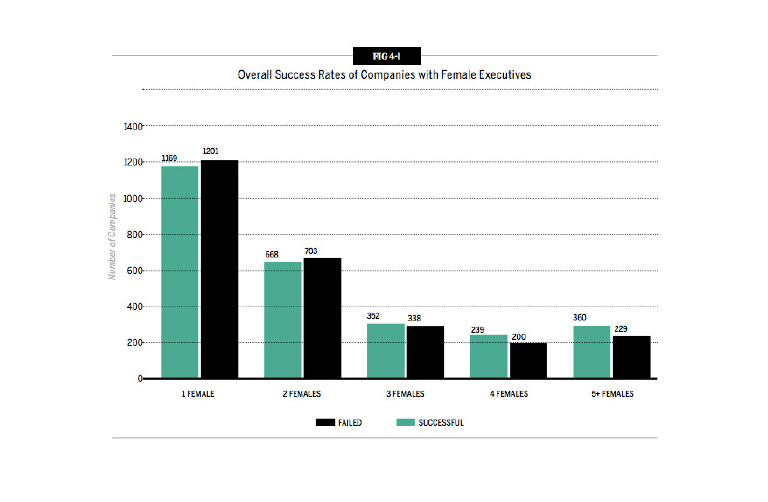
Statistics show that business startups with women as co-founders have a bigger success rate than those with only men.Untitled 11Source : forbesindia.com

From the above data, it can strongly be concluded that Indian women entrepreneurs, if given the same opportunity as global women entrepreneurs, they can prove to be a challenging factor before the world which would be a better standpoint keeping the Indian entrepreneurship in mind.

Download Now

All You Need To Know About Strikes And Lockouts

0

In this blogpost, Sonal Srivastava, Student, Amity Law School, Lucknow, writes about what are strikes and lockouts and the provisions relating to them in India.

Chapter V of the Industrial Disputes Act, 1947 deals with the provisions related to strikes and lockouts in industries, factories, companies, etc. it specifically deals with the provisions related to prohibition of strikes and lockouts, illegal strikes and lockouts and prohibition of financial aid to illegal strikes and lockouts. Chapter VI of the Act deals with the penalties for carrying out illegal strikes and lockouts.

In general, the meaning of lockout is the temporary stoppage of the work by the employer of the company as an outcome of industrial or labour dispute whereas strike means refusal to work by the employees.

Thus, the present article shall deal with various provisions on the same.

Prohibition of strikes and lockouts

According to section 22(1) of the Industrial Disputes Act, 1947, any person employed in a public utility service shall not go on a strike, in breach of contract unless he has given a notice of strike to the employer six weeks before the strike, within fourteen days of giving such notice, before the expiry of the date mentioned in the notice and during the pendency of any conciliation proceedings before a conciliation officer and seven days after the conclusion of such proceedings.

According to section 22(2) of the Act, no employer of any public utility service shall lock out any of his workmen unless he has given them six weeks prior notice before the lockout, within fourteen days of giving such notice, before the expiry of the date of lockout specified in any such notice or during the conciliation proceedings before any conciliation officer and seven days after the conclusion of such proceedings.

However there shall be no requirement of serving of notice when there is already a strike or lockout being carried out and notice shall be given in the manner prescribed in the act.

In the case of Indian General Navigation and Railway Co. Ltd v. Their Workmen[1], it was observed that when the blame attaches to both the parties’ i.e the employer and the workmen, then the burden of back wags that have elapsed shall be borne half and half by the parties.

Section 23 of the Act relates to the specific provisions of section 22 of the Act.

Illegal Strikes and Lockouts

According to section 24 of the Act, a strike or lockout shall be considered to be illegal if it is commenced in contravention to the provisions of section 22 and 23 of the Act; if it is continued in contravention of an order which is made under section 10(3) or (4 A) of section 10 A.

However where a strike or lockout is in existence when the matter is being referred to an arbitrator, then the continuation of such strike and lockout shall not be considered to be illegal.

Similarly, a lockout declared in consequence of an illegal strike or a strike declared in consequence of an illegal lockout shall not be considered as illegal.

Prohibition of financial aid to illegal strikes and lockouts

According to section 26 of the Act, no financial aid either directly or indirectly shall be provided for the furtherance of any illegal strike or lockout.

Penalties for illegal strike and lockouts

According to section 26 any workman who commences or continues an illegal strike shall be punished with an imprisonment of one month or a fine of 1000 rupees or with both.

Similarly, any employer who acts in contravention to section 24 shall be liable to same punishment.

According to section 28 of the Act, any person who acts in contravention to section 26 of the Act shall be liable to be punished with an imprisonment of six months or fine of 1000 rupees or with both.

Conclusion

The provisions for strikes and lockouts have been specifically laid down so that there is no monopoly at workplace and neither of the parties is met to injustice. It is upon both the parties to understand the mutual relations and both the parties should work in accordance with law and strikes and lockouts should be the remedy of last resort instead of being the first. Priority should be given to resolve the dispute without taking recourse to such actions.

[1] (1960) 1 TLLJ 13.

Download Now

An Overview Of Employment Contracts In India

0

download (37)

In this blogpost, Sonal Srivastava, Student, Amity Law School, Lucknow, writes about what are employment contracts, its features and what are the employment-related disputes in India.

The employer-employee relationship has always been a topic of legal discussion. It has constantly been evolved and witnessed many changes in the recent past and present. Several laws have been enacted to strike a balance in the relationship between employer and employee. These laws have broad ambit and include within their scope in all areas of the employer- employee relationship and are not merely restricted to contractual issues or workplace discrimination. Thus, the present Article intends to bring into light the various aspects of Employment Contracts in India.

What are employment contracts

A contract of employment is a bilateral agreement for the exchange of service and remuneration over a period of time. Employment contract is that form of contract for personal service which the courts recognize as expressing the social relationship of employer and employee, as opposed to the other relationships[1].

Essential features of employment contract

Like any other contract in India, an employment contract also consists of the following essential features- offer, acceptance, consideration, competent parties, legal object and free consent.

Offer or proposal– The term “proposal” has been defined in section 2(a) of the Indian Contract act, 1872 as follows-

“When one person signifies to another his willingness to do or to abstain from doing anything, with a view to obtaining the assent of that other to such act or abstinence, he is said to make a proposal.”

In I.B.P. Co. Ltd v. Ramashish Prasad Singh[2], an official of the appellant/defendant company, furnished information in the presence of some others that certain dealers were going to be employed by the I.B.P., one such being a dealer at a particular spot and encouraged the plaintiff/respondent that he being a local, a local man had better prospects for the job and satisfied the criteria laid down by the company for its illegibility. Such an assurance or information furnished by the official could not be termed to be a proposal or offer in the eyes of the law, ruled the Patna High Court.

Acceptance– Section 2(b) of the Indian Contract Act 1872, defines the term “acceptance” as follows-

“When the person to whom the proposal is made signifies his assent to the person making the offer, the proposal is said to be accepted. A proposal, when accepted, becomes a promise.”

The effect of acceptance being that it legally binds both the parties through the medium of the offer and its acceptance made by them.

Consideration– Section 2(d) of the Indian Contract Act, 1872 defines “consideration” as follows-

“When, at the desire of the promisor, the promisee or any other person has done or abstained from doing, or does or abstains from doing, or promise to do or to abstain from doing something, such act or abstinence or promise is called a consideration for the promise.”

According to section 10 of the Indian Contract Act, 1872, the presence of the consideration is one of the essentials of a valid contract and according to section 25; the general rule in India is “that an agreement without consideration is void.”

Competent parties– According to section 11 of the Indian Contract Act, 1872:

“Every person is competent to contract who is of the age of majority according to the law to which he is subject, and who is of sound mind, and is not disqualified from contracting by any law to which he is subject.”

Legal object– According to section 23 of the Indian Contract Act, 1872:

The consideration or object of an agreement is lawful unless-

  • It is forbidden by law, or
  • Is of such a nature that, if permitted, it would defeat the provisions of law; or
  • Is fraudulent; or
  • Involves or implies injury to the person or property of another,
  • Or the Court regards it as immoral, or opposed to public policy.

In each of these cases, the consideration or object of an agreement is said to be unlawful. Every agreement of which the object or consideration is unlawful is void.

Free consent– According to section 14 of the Indian Contract Act, 1872, consent is said to be free when it is not caused by-

  • Coercion, as defined under section 15, or
  • Undue Influence, as defined under section 16,or
  • Fraud, as defined under section 17, or misrepresentation, as defined under section 18,or
  • Mistake, subject to the provisions of section 20, 21 and 22.

Employment related disputes in India

With time, there has been a great deal of development in the industrial field which has called for the formulation of a coherent and approachable understanding of industrial relations. The industrial disputes are no more only subject to two classes- labour and employer but has evolved into a new class as ‘White Collar Employees’ who perform managerial, professional and administrative tasks as compared to ‘Blue Collar’ who are involved in manual labour.

The employment-related disputes can be classified under the following heads

  • Pre-Hire
  • During Employment
  • Termination
  • Post- termination

Pre- hire– The dispute between an employer and employee may arise even before the joining of an employee. These disputes generally arise when the employee has some discharge obligations towards his previous employer, and he has not properly terminated his contract with the previous employer before joining new employment. Sometimes the prospective employee has post-termination agreement such as an agreement to non-solicit, non-disclosure of information, etc with his previous employer and he or she may have breached that. In such kind of situations often the prospective employer is also dragged into litigation by taking the position that the new employer is encouraging and assisting him or her to do so.

The following scenarios may also give rise to pre-hire employment disputes[3] :-

  1. When the employer withdraws offer prior to employee’s joining.
  2. When the employee’s background check results are unsatisfactory, or the employee provides incorrect disclosures or misrepresents to the prospective employer.

Thus to reduce litigation risk, it would be helpful to get representation from the prospective employee either through an employment contract or otherwise that he or she shall not breach any post-termination agreement or conditions towards their former employer as a result of joining the employment with the new employer.

During employment– There may arise some disputes between the employer and employee during the course of employment, and such disputes are broadly classified into two heads of Employment- Related Disputes and Disputes Relating to Restrictive Covenants during Employment.

  • Employment related disputes cover misconduct, indiscipline by the employee, insider trading, indulging in criminal activities, under-performance, breach of terms of employment, which may at an end lead towards a dispute.
  • Restrictive Covenants during Employment- There are broadly two kinds of restrictive covenants in operation during the term of employment which are non-compete and non-disclosure of confidential information. Generally, the breach of non-compete restrictive covenant leads towards a dispute.

Termination– There are two types of termination- Voluntary and Involuntary. When an employee voluntary terminates employment either by resignation or retirement, then it is unlikely that there would be any issue unless the terms of employment contract provide to the contrary.

When an employer terminates the contract of employment due to misconduct by an employee or any other likely issue, then there is a standoff between employer and employee which has all the ingredients of a dispute and which is generally settled through resort to courts.

Post- termination– Modern day employment contracts give place to covenants restraining the employees from joining new employment even after the termination of previous employment.

A breach of post-termination employment contract often forces the employer to take advice on the legal recourse available to it.

Status of restrictive of covenants in India

Incorporation and subsequent enforcement of restrictive covenants in employment contract such as non-disclosure of information, non-solicitation agreement, non- competition agreements, etc has always been contentious issues in India as they are in conflict with the provisions of section 27[4] of the Indian Contract Act, 1872.

Non-Competition restrictions[5]– An agreement in restraint of trade has been defined as one in which a party agrees with any other party to restrict his liberty in future to carry on trade with other persons who are not parties to contract in such manner as he chooses.

Employers often tend to incorporate restrictive covenants in the agreement to protect their confidential information and trade secrets as well as their growing business. For any restrictive covenant to fall within the ambit of Section 27 of the Contract Act, the agreement has to be in restraint of trade. To determine whether a restrictive covenant in employment contract would be reasonable and valid or not, the courts have paid due regard to bargaining power of each party, reasonableness of restrictions set out in the covenant, time, place and manner of restriction etc.

Section 27 of the Contract Act has been applied in the context of (1) employer – employee contracts, (2) contracts with partners, (3) dealer contracts and (4) miscellaneous cases.

Non- solicitation of employees and customers[6]– A non-solicitation clause prevents an employee or a former employee from indulging in business with the company’s employees or customers against the interest of the company. For example, an employee agrees not to solicit the employees or clients of the company for his own benefit during or after his employment.

In Desiccant Rotors International Pvt. Ltd v.Bappaditya Sarkar& Anr,[7] the Delhi High Court allowed an injunction against the manager prohibiting him from soliciting Desiccant’s customers and suppliers to stand in effect. It is pertinent to note, however, that the Delhi High Court held that a marketing manager could not be deemed to possess confidential information and that his written declaration to that effect in his employment agreement was meaningless and thus rejected Desiccant’s claim to enforce the confidentiality obligations on the manager.

Non- disclosure of confidential information– The employee is required to take necessary steps to not disclose any confidential information till the time it is not necessary to do so under any law in force. He shall also comply to not disclose the confidential information with any other organization or company unrelated to its company.


Non- poaching agreements– This class of restrictive agreement is carried between two employers. This type of agreement essentially considers the case wherein two organizations/companies agree not to solicit or ‘poach’ the employees of their direct competitors. Non-poaching agreement per se does not contravene section 27 of the Contract Act as it does not restraint an employee from seeking and/or applying for any job/employment. What this class of agreement does instead is, it simply mandates that one competitor should seek the consent of the other before hiring that other competitors’ employee/s.[8]

Section 3 of the Competition Act, 2000, states that agreements which are anti-competitive in nature are banned. Thus, any non- poaching agreement which is anti- competitive in nature would be unlawful.

Possible ways to enforce restrictive covenants[9]

  1. Serve the employee with a legal notice.
  2. Seek enforcement of undertaking or encashment of cheque based on clauses of the agreement
  3. Initiate civil suit seeking injunction/specific
  4. Performance of contract as well as damages.

Conclusion

The employment contracts have come a long way in the modern industrial era. Any agreement which is anti-competitive or any agreement which restrains the prospective employee from practicing the profession of his choice or carrying out any trade activity is unlawful as well as immoral. Reasonable restrictions in employment contracts are valid and generally do not lead to any legal consequences. Thus, the presence of employment contracts ensures that all the terms and conditions of employment are specifically laid down and properly understood by both employer and employee.

[1] http://www.netlawman.co.in/ia/an-indian-perspective-on-employment-agreements

[2] A.I.R. 2006 Pat. 91.

[3]http://www.nishithdesai.com/fileadmin/user_upload/pdfs/Research%20Papers/Employment_Contracts_in_India.pdf

[4] Section 27 of the Contract Act provides that ‘every agreement by which anyone is restrained from exercising a lawful profession, trade or business of any kind, is to that extent void.’

Exception 1:Saving of agreement not to carry on business of which good will is sold – One who sells the goodwill of a business may agree with the buyer to refrain from carrying on a similar business, within specified local limits, so long as the buyer, or any person deriving title to the goodwill from him, carries on a like business therein, provided that such limits appear to the court reasonable, regard being had to the nature of the business

[5]http://www.nishithdesai.com/fileadmin/user_upload/pdfs/Research%20Papers/Employment_Contracts_in_India.pdf

[6]http://www.nishithdesai.com/fileadmin/user_upload/pdfs/Research%20Papers/Employment_Contracts_in_India.pdf

[7] Delhi HC, CS (OS) No. 337/2008 (decided on July 14, 2009)

[8]http://www.nishithdesai.com/fileadmin/user_upload/pdfs/Research%20Papers/Employment_Contracts_in_India.pdf

[9]http://www.nishithdesai.com/fileadmin/user_upload/pdfs/Research%20Papers/Employment_Contracts_in_India.pdf


Download Now

What Can Be Considered Contempt Of Court

1

download (36)

In this blogpost, Sudhi Ranjan Bagri, Student, National Law Institute University, Bhopal, writes about contempt under the Indian Constitution, Article 129 its object purpose, the procedure and the limitation period. 

Contempt under Indian Constitution

Article 129 and 215 of the Constitution of India is in the nature of empowering courts for the contempt. While Article 129 empowers the Supreme Court, Article 215, on the other hand, empowers High Courts to punish people for their respective contempt.  High Courts have been given special powers to punish contempt of subordinate courts, as per Section 10 of The Contempt of Courts Act of 1971.

Article 129

Article 129, of the Constitution of India, states that “The Supreme Court shall be a court or record and shall have all the powers of such a court including the power to punish for contempt of itself”.

Art.215: High Courts to be courts of record.—Every High Court shall be a court of record and shall have all the powers of such a court including the power to punish for contempt of itself.

Object

  • The jurisdiction regarding contempt is a special jurisdiction. It must be used to uphold the dignity of the courts and the majesty of law and to keep the administration of justice unpolluted.
  • Contempt jurisdiction must be exercised to uphold the dignity of the judicial system which includes within itself the dignity of courts and tribunals as well, which are entrusted with the noble task of ensuring delivery of justice.
  • The power of contempt is often invoked to ensure compliance with the orders given by the courts and in their execution, and for punishing those who are responsible for the lapses in the manner of compliance.
  • Another importance of this contempt power is to ensure the majesty of judicial institutions so that it may not be lowered, and also to preserve the functional utility of the constitutional edifice from being rendered ineffective.
  • Further, the availability of contempt jurisdiction provides efficacy to the functioning of the judicial forum and enables the enforcement of the orders on account of its deterrence effect on avoidance.[1]

Purpose of the Law of Contempt

Civil society is founded in the respect for the law. If everyone chooses to break the law, no civil society can exist at all. It is this respect for the law and the law-enforcing agencies that somewhat paradoxically ensures that freedoms recognized in the constitution.[2]

https://lawsikho.com/course/certificate-course-in-advanced-civil-litigation-practice-procedure-and-drafting
Click Above

Nature of the law of Contempt of court

Contempt proceedings are not like proceedings for the prosecution of criminals. It is a matter between the court and the contemnor and is a quasi-judicial proceeding.[3] The proceedings initiated therein are not tried as an adversarial litigation. Any person or any subordinate court, for that matter, which brings the matter of contempt into consideration, before the higher court, is only an informant and is not given the status of a litigant.[4]

Article 129 and 215 of the Constitution of India, do not confer any new jurisdiction or doesn’t vest any new powers on the Supreme Court or the High Courts. They merely recognize a pre-existing situation that the Supreme Court and the High Courts are the ‘courts of record’ by virtue of which they have inherent jurisdiction to punish for their contempt. It is not governed by any special or specific rules, and such is to be governed by the principle of natural justice.
The jurisdiction which is vested by these the two articles (Article 129 and Article 215) is inalienable, and thus cannot be taken away from the courts. However, this is not an absolute ban, and such powers can be taken away only by a legislative enactment in Constitution.

The provisions of the Contempt of Courts Act, 1971, are not in derogation but in addition to these two articles, and thus the Provisions of the Act cannot be used for limiting or regulating the exercise of jurisdiction contemplated under the said two articles.[5]

SCOPE

Where the order of the High Court had become final after being upheld by the Supreme Court, the Supreme Court, could not modify the said order in its contempt jurisdiction in spite of there being certain difficulties in the implementation of the said order.[6]
While dealing with an application for contempt, the court is really concerned with the question that, whether the earlier decision which has received its finality has been complied with or not. It would not be permissible for a court to examine the correctness of the earlier decision while exercising contempt jurisdiction. While dealing with the application of contempt, the court cannot traverse beyond the order, non-compliance of which is alleged. It cannot test correctness or otherwise of the order or give additional directions or modify or remove any direction.[7]

Initiation of Contempt Proceedings

Action for contempt is divisible into two categories, namely, that initiated suo motu by the court and that instituted otherwise than on the court’s own motion. The mode of initiation in each case would necessarily be different. While in the case of former, it is the court itself which must initiate by issuing a notice and in that of latter initiation can only be by a party filing an application. Proceedings have been initiated suo motu in many cases.[8]

Procedure to be followed

The procedure provided by the Contempt of Court Act, 1971 has to be followed in the exercise of the jurisdiction under article 129 and 215 of the Indian Constitution.[9]

Any individual can recourse to any of the following three options:

  1. He may place the information in his possession before the court and request the court to take action.
  2. He may place the information before the Attorney General and request him to take action.
  3. He may place the information before the Attorney General and request him to move the court.[10]

The direction to place the petition before the Chief Justice and not on the judicial side is applicable only to contempt actions intended to be taken by the court sou motu.[11]

The alleged contemnor is entitled to notice and opportunity of being heard before holding him guilty of contempt and passing an order of the sentence.[12]

Maintainability of Contempt Proceedings

For a contempt petition to be maintainable, the only condition that needs to be followed is that it must comply with the mandatory requirements of Section 15 of the Contempt of Courts Act, 1971.

Limitation

Section 20 of the Contempt of Courts Act of 1971 talks about the limitation period within which the actions have to be taken. It enumerates that the limitation period is a period of one year from the date on which the contempt is alleged to have been committed.[13]


LawSikho has created a telegram group for exchanging legal knowledge, referrals and various opportunities. You can click on this link and join:  

https://t.me/joinchat/J_0YrBa4IBSHdpuTfQO_sA

Follow us on Instagram and subscribe to our YouTube channel for more amazing legal content 
 
 
References:

[1] T.Sudhakar Prasad v. Govt. of Andhra Pradesh (2001) 1 SCC Para 22.

[2] J.R.Parashar vPrashant Bhushan (2001) 6 SCC 735. Para 12.

[3] Commissioner, Agra v. Rohtas Singh (1998) 1 SCC 349 Para 6,7,8.

[4] Supreme Court Bar association v. Union of India (1998) 4 SCC 409 Para 41.

[5] T.Sudhakar Prasad v. Govt. Of Andhra Pradesh (2001) 1 SCC 516 Para 9.

[6] State of Rajasthan v. Mohan Singh (1995)

[7] Director of Education, Uttaranchal v. Ved Prakash Joshi, (2005) 6 SCC 98 Para 7.

[8] Arundhati Roy, In re (2002) 3SCC 343.

[9] Pallav Seth v. Custodian (2001)

[10] P.N.Dutta v. P.Shiv Shankar (1988)

[11] Bal Thackrey v. Harish Pimpalkhute (2005)

[12] Deepak Kumar Prahladka v. CJ Prabha Shankar Mishra (2004)

[13] See http://www.legalserviceindia.com/article/l255-Contempt-of-Court.html

Download Now

Need For A Change: Juvenile Justice Act

0

download (35)

In this blogpost, Vernita Jain, Student, National Law Institute University, Bhopal, writes about the current Juvenile Justice Act and why does it need to be changed.

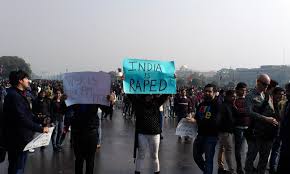
The biggest case till now that has resulted in one of the greatest uproar is the Delhi gang rape case of a girl named Jyoti. Jyoti, a girl aged 23, was brutally raped and then killed. The committers of this crime were appropriately punished leaving one. One of the culprits in this case was a 17-year-old boy who walked out of the court just because he was under the age which is considered appropriate to be punished.

The question that arises after this verdict is that whether our Juvenile Justice Act is justified to decide whether or not to punish a culprit based on their age? Is it justified to take the age factor the only parameter to give punishment?

According to me, the intention of the person and his capability to understand the nature and effect of his act should be the actual criteria in order to judge a person, not any age limit that law provides. It would be too unfair to the country if the committers of such heinous crimes are pardoned just because they did not fulfil the age criteria. There is a need to bring up a new juvenile law which considers not just the age, but also the degree of atrocity conferred. The greatest concern that is expressed in this article is that whether the characterization that is done on the basis of age is valid when the offence committed is same?

An Insight into the Juvenile Justice System of India

In India, Juvenile Justice Act, 2000 provides the age limit below which one could not be sent to jail, i.e., 18 years. However, such a provision was entered in order to confirm the rule of United Nation’s Convention on the Rights of the Child. Under the law, juvenile offenders who have committed heinous crimes (rape and murder) can only be sent to a ‘place of safety’ for a maximum period of three years.

A further amendment was brought in the year 2006 which was made in order to determine whether the culprit is to be put under Juvenile justice Act or not, his age at the time of committing an offence is to be looked into.

The amendment also made it clear that if a person is juvenile than under no circumstance, he could be kept in a police lock-up or lodged in jail.

A Juvenile can be defined as a child who has not attained a certain age at which he, as an adult person under the law of the land, can be held liable for his criminal acts.[1] In Indian law S. 82 of IPC prevents a child under the age of 7 years of age from being punished for any offence. Further, any person between 7 and 12 years of age who has not attained sufficient maturity of understanding to judge the nature and consequence of his conduct on that occasion cannot be held liable for an offence.[2]

Juvenile Justice Act in rest of the world

In the United States the age of juvenile varies from state to state. The lowest among them is 14 at which a youth is liable to get adult sentences for serious crimes

In the United Kingdom, the act named Youth justice and Criminal Evidence Act, 1999, lays down that a child between ages 10 and 18 are capable of committing a crime and will be tried in a separate court for youth.

Situation in India

Supreme Court dismissed petitions brought by the public demand by requesting the court that in the cases of Rape and murder, the age should be lowered to 16 years. Even the subsequent petition submitted by Subramanian Swamy who asked the judges to consider the mental and intellectual maturity rather than the age especially when the young are involved in a very heinous crime was dismissed.[3]

Even K.T.S Tulsi believes that due to the age bar many people are taking advantage of such a provision which results in a large number of children committing heinous crimes.[4] The Parliament needs to wake up to this as soon as possible and change the law, reducing the juvenile age. “The longer it takes, we allow more and more young criminals to get away and free to commit crimes again,” says Tulsi.

Rate in India

National Crime Records Bureau (NCRB) has declared that from within a decade, i.e., the period 2002 to 2012, India had witnessed an increase of 143 percent in the cases of rape committed by juveniles. Similarly, the number of the murders committed by juvenile witnessed an increase of 87 percent and the number of the kidnapping of women and girls by minor increased by 500 percent.[5]

The 17-year-olds are aware that they are juveniles and take advantage of the fact saying you cannot take us in for questioning etc. Though there has not been a rise in juvenile crime rates as such, there has been an increase in the severity of the crimes committed by juveniles”, says Himanshu Roy, Mumbai Joint Police commissioner.[6]

Rehabilitation in India

It is enshrined in the principles of international law that the state of remand homes in India is not very impressive. Rehabilitation is certainly an important aspect, but there is a need to protect the females of this country. Does such rehabilitation guarantee that the person after being released will not go back to committing any crime? It is very necessary that the present Juvenile Justice Act be amended. Violent crimes such as rape and murder should be included in the adult criminal system for the juveniles after a certain age.

It is high time that the justice system of this country realise that there is a need to provide justice to the “victims” and not the “criminals”. Our justice system always pays attention to the condition and age of the accused. What about the one who is actually the sufferer in this crime, the victim? If such concern was placed earlier, than Jyoti would have got justice. Which circumstances can be blamed? Can we say that because there was the presence of poverty, etc. the juvenile committed such a crime?

The answer is NO. When a juvenile is convicted of the crime committed by him, his mental maturity is what that should be considered, on the fact that he was fully conscious and aware during the commission of a crime.

It is very necessary that the justice system takes note of the two major things, i.e., Firstly, the law should be equal for everyone and anyone.  Secondly, this amendment is the only a way to protect children who are unfortunately caught in the web of adult crimes and also save the society” from all people with criminal instincts.

Conclusion

In the crimes such as rape, murder, etc. which totally destroys the victim’s as well as victims’ family’s morals. In the case of rape, India being a patriarchal society, the girl has to suffer a lot and pay for the deeds of others. The family of these victims have to pay for the act that is committed by other and not just for one or two years but for entire life.

In cases like these, the offenders should not be left out walk free in the society, especially after what they have put the other person through. Our law should be amended, and we should be inspired by the laws of the countries like U.K and USA, where a juvenile is also tried in a criminal court depending on the gravity of the offence committed by the minor.

Our Juvenile Justice Act needs to be amended in a way that in the case of heinous crimes juveniles must be tried as adults and ought to be given the same punishment. If we want to provide true justice to the victims and its relatives of such incidents, we will start with this little step to pave the way for wonders to happen. Justice delayed is Justice denied. To understand this very simple statement, it took all India, one barbaric rape case to question the Juvenile Justice system. After all, let’s remember, criminals do not fear life, they fear death. And death is an ultimate deterrent.

[1] Section 2 (k) of the Juvenile Justice (Care and Protection of Children) Act, 2000

[2] S. 83 of IPC.

[3] Dismissal of Subramaniam Swamy’s plea, NDTV,http://www.ndtv.com/article/india/amanat-case-board-dismisses-subramanian-swamy-s-plea-on-juvenile-accused-321836

[4] December 16 gang rape: Juvenile gets only 3 yrs. jail. Is the law good enough to handle such cases?,INDIA TODAY http://indiatoday.intoday.in/story/december-16-gangrape-juvenile-sentenced-to-three-years/1/305269.html

[5] Heinous crimes by minors on the rise, shows Ncrb data, http://www.ndtv.com/article/india/heinous-crimes-by-minors-on-the-rise-shows-ncrb-data-415367

[6]  8 Gang rapes in 8 months in Mumbai, TIMES OF INDIA, http://articles.timesofindia.indiatimes.com/2013-12-02/mumbai/44656705_1_rti-application-nirbhaya-case-shakti-mill

Download Now

All You Need To Know About Nidhi Companies

0

download (34)

In this blogpost, Sonal Srivastava, Student, Amity Law School, Lucknow, writes about what is Nidhi Company, what are the general restrictions, membership, deposits, loans, rules relating to directors and penalty for non– compliance.

According to section 406 of the Companies Act, 2013, “Nidhi” means a company which has been incorporated as a Nidhi with the object of cultivating the habit of thrift and savings amongst its members, receiving deposits from, and lending to, its members only, for their mutual benefit, and which complies with such rules as are prescribed by the Central Government for regulation of such class of companies. Thus, the present article intends to bring forth all the necessary provisions related to Nidhi Companies.

Incorporation and incidental matters         

According to rule 4 of Nidhi rules, 2014 a Nidhi company incorporated under the Act shall be a public company and shall have a minimum paid-up equity share capital of rupees five lakhs. Every company incorporated as a “Nidhi” shall have the last words “Nidhi Limited” as part of its name.

Requirements for minimum number of members, net owned fund, etc

According to rule 5 of the Nidhi Rules, 2014, every Nidhi shall within one year of its commencement shall ensure that it has minimum of two hundred members, net owned funds of ten lakh rupees or more and unencumbered term loan deposits of not less than 10% of the outstanding deposits and ratio of net Owned Funds to deposits of not more than 1:20.

Within 90 days from the close of the first financial year after its incorporation and where applicable, and the second financial year Nidhi shall file a return of statutory compliances in Form NDH-1 along with such fee as provided in the applicable rules.

Any failure to comply with the provisions of the said rules, the Nidhi shall not accept any further deposits and shall be liable to penal consequences as well.

General Restrictions

According to rule 6, no Nidhi company shall carry on the business of chit funds, hire purchase, leasing finance, insurance or acquisition of securities issued by any body corporate, issue preference shares or open any current account with its members, accept deposits from or lend to any person, other than its members, take deposits from or lend money to any body corporate, etc.

Share capital and allotment

According to rule 7, every Nidhi shall issue equity shares of the nominal value of not less than ten rupees each, no service charge shall be levied for the issue of shares and shall allot to each deposit holder, at least, a minimum of ten equity shares or shares equivalent to one hundred rupees.

Membership

According to rule 8, no Nidhi shall admit a body corporate or trust as a member. A minor shall also be not admitted as a member.

Deposits

According to rule 13,

  • Fixed deposits shall be accepted for a minimum period of six months and a maximum period of sixty months.
  • Recurring deposits- minimum period:12 months, maximum period: 60 months
  • The maximum balance in a savings deposit account at any given time qualifying for interest shall not exceed one lakh rupees at any point of time, and the rate of interest shall not exceed two percent of the rate of interest payable on savings bank account by nationalized banks.

Loans

According to rule 15, a Nidhi shall provide loan only to its members.

Rule relating to Directors

According to rule 17, a director shall be a member of Nidhi and shall hold office for a term up to ten consecutive years on the board of Nidhi. The director shall be eligible for re- appointment only after the expiration of two years of ceasing to be a director.

The director shall comply with the provisions of the rule.

Filing of Half- Yearly Return

According to rule 21, every company covered under rule 2 shall file half yearly return with the registrar in form NDH- 3 along with such fees as provided in Companies Rules, 2014 within 30 days from the conclusion of each half year.

Power to enforce Compliance

According to rule 23, for the purpose of enforcement of such rules, the registrar of the company may call upon any member of Nidhi for any information and may put the matter before Regional Director, who may upon giving an opportunity to be heard may decide the matter accordingly.

Penalty for non- compliance

According to rule 24, for any contraventions of the rules, any company, and all its members who are in default shall be punishable with a fine which may extend to five thousand rupees and in the case of continuance then five hundred rupees for each day of such contravention.

Conclusion

The purpose of Nidhi companies is to give growth and encouragement to small scale companies and inculcate in them the habit of savings and working for the benefit of their own members by way of lending, receiving deposits, etc

Download Now

What Is The Procedure For Revival Of Sick Company Under Companies Act

1

hammer-620009_960_720

In this blogpost, Sonal Srivastava, Student, Amity Law School, Lucknow, writes about what determines sickness and the procedure for filing an application for revival and rehabilitation of a sick company.

Chapter XIX of the Companies Act, 2013 deals with revival and rehabilitation of sick companies. It exclusively covers the provisions for the determination of sickness, application for revival and rehabilitation, appointment of interim administrator, committee of creditors, appointment of administrator, powers and duties of company administrator, scheme for revival and rehabilitation, sanction of scheme, implementation of scheme, winding up of company on the report of certain administrators, punishment for certain offences, assessment of damages against delinquent directors, etc. Thus, the present article shall deal with the certain provisions related to revival and rehabilitation of the sick companies in detail

Determination of Sickness

Section 253 of the Companies Act, 2013 talks about the determination of the sickness of a company. According to it any secured creditor of a company representing 50% or more of outstanding amount of debt, the company has failed to pay the debt within a period of thirty days of the service of the notice of demand or to secure or compound it to the reasonable satisfaction of the creditors, then any secured creditor shall file an application to the tribunal in a prescribed manner along with references of all such evidence for such default, non-payment, etc.

On the receipt of the application from the secured creditor, then the tribunal shall decide within sixty days on to the merit of the application that whether a company has become sick or not.

Once the tribunal is satisfied that a company has become a sick company, and it is in a position to repay its debts, within a reasonable time, it shall order the company to repay its debts.

On satisfaction, the tribunal shall give a reasonable time to the company to make payment of its debts.

Application for revival and rehabilitation

Section 254 of the Companies Act, 2013 talks about the application for revival and rehabilitation and according to which any company that has been determined as sick company under section 253 of the Act can make an application to the tribunal to order for necessary steps to be taken for its revival and rehabilitation and the application shall be accompanied by-

  1. Audited financial statements of the company relating to the immediately preceding financial year;
  2. Such particulars and documents, duly authenticated in such manner, along with such fees as may be prescribed.
  3. A draft scheme for revival and rehabilitation of the company in such manner as may be prescribed.

The application shall be made to the tribunal within sixty days from the date of determination of the company as a sick company by the tribunal under section 253 of the Companies Act, 2013.

Appointment of Interim Administrator

According to section 256 of the Act, as soon as an application is made under section 254 of the Act, the Tribunal shall fix a date of hearing and appoint an interim administrator who shall within 45 days of his appointment fix a meeting with the creditors of the company and prepare a draft scheme for revival and present it before the tribunal within sixty days from the meeting.

Where no draft scheme is provided the tribunal shall direct the interim administrator to take over the management of the business and where an interim administrator is directed to take over the management of the company, the director and the management of the company shall provide full assistance and cooperation to the interim administrator.

Committee of Creditors

According to section 257, an interim administrator shall appoint a committee of creditors such number of creditors as he may determine but shall not exceed seven and these members shall meet in all the meetings and the interim administrator may direct all the promoters, directors, key managerial personnel of the company to come in any meeting and furnish such information as is required and necessary.

Order of tribunal

On the date of hearing fixed by the tribunal, if the resolution is passed by the three-fourth members of the company that it is impossible to revive and rehabilitate the sick company or by adopting such measures the sick company shall be revived and rehabilitated, the tribunal shall pass such orders and where necessary may appoint a company administrator who shall discharge his functions as enumerated in the Act.

Scheme of Revival and Rehabilitation

A scheme for revival and rehabilitation shall be prepared by the company administrator as per the provision of section 261 and it shall include measures like financial reconstruction of the sick company, proper management of the sick company, amalgamation of the sick company with other company or other company with the sick company, takeover of the sick company by solvent company, sale or lease of a part of any assets, rationalization of managerial personnel, such other preventive measure as may be  necessary.

The scheme shall be sanctioned as per section 262 of the Act and shall be binding on the party and shall be implemented by the tribunal by taking all necessary steps.

Winding up of Company on the report of company administrator

As per the provisions of the section 263of the Act, the company shall be wound up if the scheme is not approved by the creditors and the administrator shall submit the report within fifteen days and the tribunal shall order for the winding up of the company.

Rehabilitation and Insolvency Fund

A fund shall be formed under section 269 of the Act which shall be called as the Rehabilitation and Insolvency Fund for the purposes of revival, rehabilitation, and liquidation of the sick companies.

Conclusion

Thus, the Companies Act provides exhaustive measures for the revival and rehabilitation of the sick companies and the tribunal is vested with powers to take all necessary measures for the revival and rehabilitation of the sick companies.


Download Now

Confessions Of A Co-Accused And Its Evidentiary Value (Critical Analysis Of Section 30 Of Evidence Act)

1

images (17)

In this blogpost, Sudhi Ranjan Bagri, Student, National Law Institute University, analysis section 30 of the Indian Evidence Act.

Introduction

Under the Indian Evidence Act, confession comes under the heading of admission, and that implies that confessions are a subset of admissions. However, surprisingly, the term “confession” has not been defined in the Act. Justice Stephen in defined confession as “an admission which is being made by a person who has been charged with any crime and such admission suggests the inference that he had committed the crime”.

In the case of Palvinder Kaur v. State of Punjab[1] the Supreme Court stated that, for any admission to be a confession, the person in such statement must either admit the guilt in terms or admit substantially all the facts which constitute the offence. The court further stated that a mixed up statement which contains some confessional statement will still lead to the acquittal of accused, and hence isn’t a confession.

However in the case of Nishi Kant Jha v. State of Bihar[2] the Supreme Court held that there was nothing wrong or relying on a part of the confessional statement and rejecting the rest. The court further stated that when there is enough evidence to reject the exculpatory part of the accused person’s statements, the Court may rely on the inculpatory part.

Theory

“30. Consideration of proved confession affecting person making it and others jointly under trial for same offence

When more persons than one are being tried jointly for the same offence, and a confession made by one of such persons affecting himself and some other of such persons is proved, the Court may take into consideration such confession as against such other person as well as against the person makes such confession.” 

Underlying Principle

When more than one person is jointly tried for the same offence, then in such cases the confession of one of the accused if found to be admissible as evidence, must be taken as a confession against all other accused persons who are being jointly tried.

Where the confession of one accused is accepted as evidence by the court, the other accused persons in the case don’t have opportunity to cross-examine such accused, and hence, this is entirely contradictory to the principle of jurisprudence according to which it is opposed to using a statement against a person without giving him the opportunity to cross-examine the person making the statement.

https://lawsikho.com/course/certificate-course-in-advanced-civil-litigation-practice-procedure-and-drafting
Click Above

In the case of Kashmira Singh v. State of MP[3], the accused Kashmira, Gurudayal who was the brother of Kashmira, Prithipal son of Gurudayal and one Gurubachan, a rickshaw puller in this case was being jointly accused of conspiracy and killing a child. The Supreme Court in this case issued some conditions which needed to be fulfilled before taking into consideration the confession of one of the accused against all others.

  • Joint trial: The person who is making a confession and the other accused persons are being tried jointly.
  • Same offence: All the accused are being tried for the same offence.
  • Confessions: The confession must affect the confessioner as well as the other accused persons.

Indian Law

  1. 30 of the Indian Evidence Act is in the nature of empowering the Court to take into consideration a confession made by one of the accused against the others when they are jointly tried. On one hand the confession, if is voluntary and is considered true and admissible by the court, of an accused is a very strong piece of evidence against himself, however on the other hand it is a weak piece of evidence against other co-accused.

In its strict legal sense, the confession of a co-accused does not come within the definition of evidence. The reason behind this is that the person who is making such confession hasn’t stepped into the witness box and that his testimony has not been subjected to cross-examination, thus such confession is, in reality, a type of ex-parte evidence against other accused persons.[4]

The proper approach, which needs to be adopted by the courts, is to gather together all the evidence against the accused and then to consider them and analyse them as to whether a conviction could safely be based on it while excluding the confession altogether from such consideration. If the conviction can be based on such evidence, then there is no need to bring up the confession, however in reality, instead of following the above-mentioned approach, the court may take up the confession in aid and use it to lend assurance to the other evidence, and thus secure itself to believe that without the aid of the confession, it would not be prepared to accept the other evidence[5].

While deciding the reliability which can be placed on by the court in the confessions by the co-accused, the Supreme Court has held in the case of Hari Charan Kurmi v. State of Bihar[6] that the confession of a co-accused cannot be treated as substantive evidence, and can be pressed upon only when the Court is inclined to accept other evidence, and feels the necessity of seeking an assurance in support of its conclusions deductible from other evidence.

In criminal cases, where evidence which are adduced are insufficient to prove a person guilty, such person cannot be held guilty relying on the confession of a co-accused. The presumption of innocence comes to his rescue and compels the court to render the verdict that the charge is not proved and accused is not guilty.

 May Take Into Consideration

The word “may” in this section is very important to interpret. The presence of this term indicates that such a confession cannot be said to be “evidence” in its technical sense and thus can only support a conviction. Rather, the section gives discretion to the Court either to use it against a co-accused or not to do so. The same was reiterated by Jackson, J. in the case of R. v. Chandra[7].

Evidentiary value of a confession U/S 30

The Supreme Court in the case of Pancho v. State of Haryana[8], held that confessions of a co-accused aren’t the substantive piece of evidence and that it can only be used to confirm the conclusion drawn from other evidences in a criminal trial.

The court further stated that the trial court cannot begin on the basis of the confession of the co-accused to form its opinion in a case. Rather, the courts must analyse all the evidence which are being adduced, and on being satisfied with the guilt of accused, might turn to the confession in order to receive assurance to the conclusion of guilt which the court has reached on the said evidence. Referring to previous apex court verdicts, the court said it is not obligatory to take the confession into account and that it is the discretion of the court.ENGLISH LAW

English law

Under the English and the Roman systems of law, a confession of a prisoner is not admissible against his accomplice hence Section 30 of Indian Evidence Act, makes a departure from the well-established principles of English law, and thus has been adversely criticised by judges and jurists alike.

Conclusion

On the whole, Section 30 has introduced an innovation of a serious nature and is capable of causing a miscarriage of justice, unless it is properly understood and applied. The Apex Court has in various cases held that this provision must be very strictly construed so as to avoid doing injustice. Justice Reilly once said, that the discretion which the courts have been empowered with by this provision must be exercised very cautiously and with the greatest caution and with care, so as to make sure that that its real intent is observed, and the probability of doing injustice can be removed.


LawSikho has created a telegram group for exchanging legal knowledge, referrals and various opportunities. You can click on this link and join:  

https://t.me/joinchat/J_0YrBa4IBSHdpuTfQO_sA

Follow us on Instagram and subscribe to our YouTube channel for more amazing legal content 


[1] 1952 SCR 94

[2] 1969 SCR (1)1033

[3] 1952 SCR 526

[4] Bhuboni Sahu v. King, AIR 1949 RC 247

[5] Kashmira Singh v. State of Madhya Pradesh, A.I.R. 1952 SC. 159

[6] A.I.R. 1964 S.C. 1184

[7] 2005 ABCA 186

[8] (2011) 10 SCC 165

Download Now
logo
FREE & ONLINE 3-Day Bootcamp (LIVE only) on

How Can Experienced Professionals Become Independent Directors

calender
28th, 29th Mar, 2026, 2 - 5pm (IST) &
30th Mar, 2026, 7 - 10pm (IST).
Bootcamp starting in
Days
HRS
MIN
SEC
Abhyuday AgarwalCOO & CO-Founder, LawSikho

Register now

Abhyuday AgarwalCOO & CO-Founder, LawSikho