Download Now
Home Blog Page 1784

The story of the Indian Pre-moot for the Vis Moots

0
corporate law moots

Did you know that there is a pre-moot of the Vis moots in India? This article was originally published in Gyancentral.com in 2012.

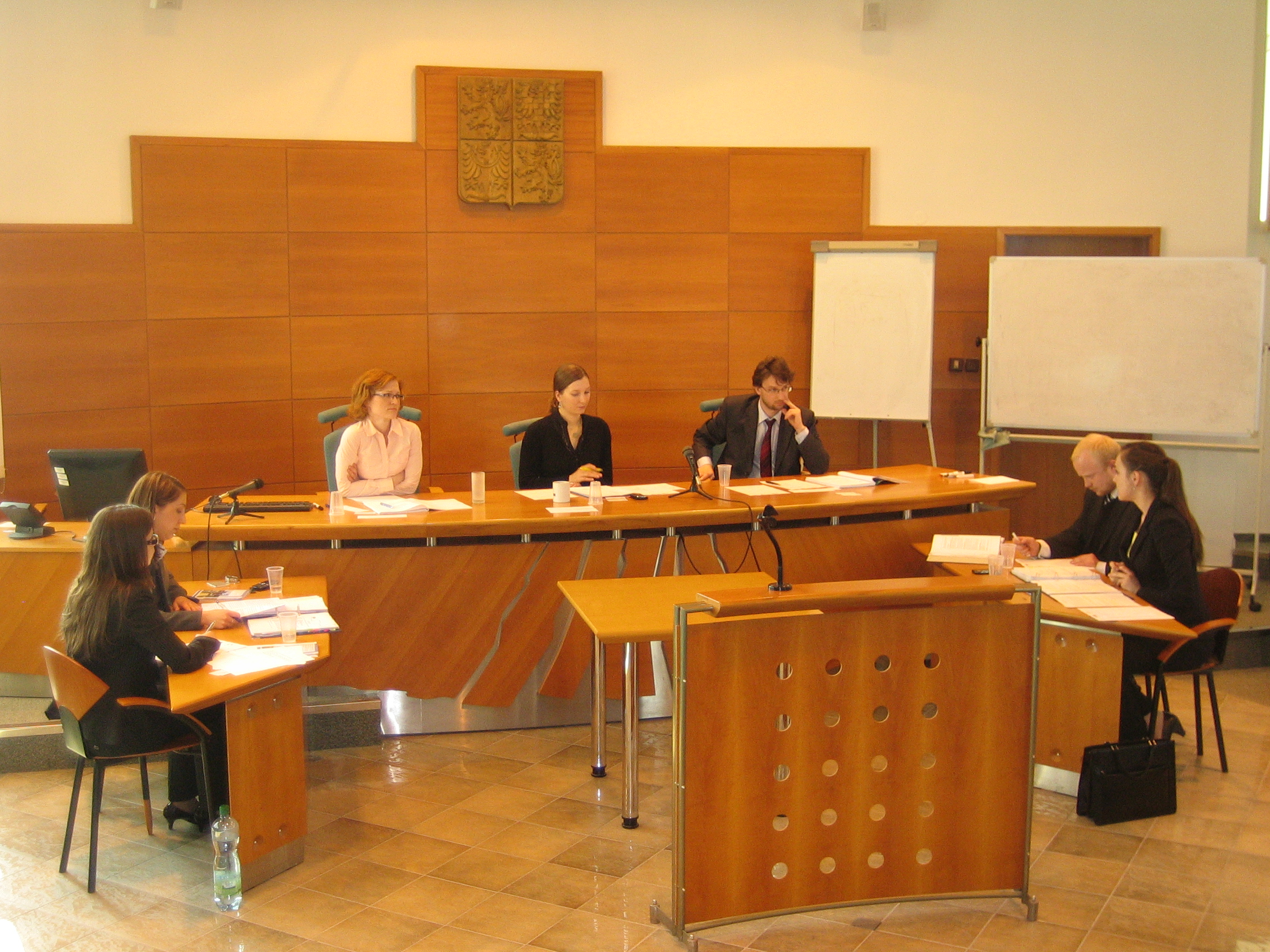
Willem_C._Vis_pre_moot_at_Palacky_University_of_Olomouc

Last weekend, I had the opportunity to visit NALSAR for the first time. I have visited a lot of law colleges and NLUs until now, for various reasons, but this was my first visit to NALSAR. The occasion was to judge a moot – a pre-moot for the Willem C. Vis CISG moot court competitions that are held in Vienna and Hong- Kong (in case you didn’t know, both the Hong Kong and Vienna version of the moots have a common moot problem, many common judges, and a shared mooting culture).

The invitation had come suddenly, and I almost decided to pass on it given the short notice. However, it turned out that the moot is suffering from an acute shortage of judges and may get cancelled for this reason – and I made up my mind to go. There was a reason behind this – I have a personal connection to this pre-moot.

I went for the Vis East, the Hong Kong version of the moot in 2010 – when I was in fourth year of law college. During the competition in Hong Kong I found that many of the teams I was facing had gone for several pre-moots before coming to Hong Kong.

What are pre-moots? A pre-moot is a moot organised on the same problem as the main moot, and is used as a testing ground and practice before the real moot. How is it to argue before a panel of arbitrators? How about testing out some intelligent but unusual arguments safely before judges? Would it help to get the experience of arguing the case again and again in several courts before many different judges so that you become aware of the areas in which you need to improve? Pre-moots open a world of possibilities and enhance performance. Most of the Indian teams that went on to win one Vis moot or the other did go for pre-moots in Europe, which should make it evident as to how helpful pre-moots can be with respect to preparing for the real moot.

Let me tell you what happened to me when I went for the Hong Kong moot. In India, people moot in a very adversarial way. The judges ask you hundreds of questions, interrupt you every half a minute if not more frequently and the arguments are often more like conversation with the moot court judge – who is being a unreasonable sceptic and you are trying to convince him. There are some less adversarial versions too, but usually your performance depends largely on your oratory skills, ability to handle questions and intricate knowledge of law. The presentation is entirely different from what is required in a Vis moot.

At Vis, a speaker may face two or three questions during the entire duration of his or her arguments. The speaker has to make a speech, making his case, which is rarely interrupted. Everyone’s arguments are usually pretty much the same, with novel arguments surfacing really rarely and not always rewarded. Knowledge of law is not tested beyond a low threshold and even taken for granted in most cases, unless in very advanced rounds or before unusual judges.

While practicing in India before seniors who have done Vis before, I completely missed the point. I prepared like I will prepare for an Indian moot – with deep legal research and unique arguments whereas what was more needed was a well-crafted speech. I needed to work on my presentation skills. By the time I realised the cultural difference between the moots I have been to earlier and this one, it was too late. Had I gone for any pre-moot, I could easily figure out these things much earlier and prepared accordingly. As I spoke to other Indian teams it seemed that almost all other teams were plagued by similar problems. Incidentally, that year no Indian teams broke to the quarterfinals in Hong Kong (it was won once by NUJS, my alma mater).

All over Europe, there are dozens of pre-moots for Vis teams. Another half dozen in the United states takes place every year. Even Japan has a pre-moot for Vis. Although Indian teams participate in large numbers in Vis, there was no pre-moot in India. This meant that if Indian teams wanted to benefit from a pre-moot, they had to travel to Europe in most cases. Of course, this is not very easy for most Indian teams, given that they already struggle to raise the money to go for the original event itself. I really felt that there should be an Indian pre-moot for Vis – after all how difficult is it anyway to organize one?

On my return, I mentioned this to the erstwhile Moot Court Committee Convenor and Co-convenor – Deepak Raju and Rukmini Das. Deepak mentioned it almost a year later to Shreya Parekh, a NALSAR alumnus who was then visiting NUJS on account of the Herbert Smith Corporate Law Moot. From the following discussion the first Indian Vis pre-moot was born with patronage of both NALSAR and NUJS students.

The pre-moot was held with a lot of glory in NUJS in its first year, and the winning team even received substantial prize money intended to cover their expenses for going for the actual moot. Law firm Bharucha and Bharucha, as well as some other sponsors came forward to make it happen. In 2012 the moot was held in NALSAR, for the second time. In that year, a team from NALSAR went on to win Vis West – a stunning feat.

In 2013, however, things became difficult as no sponsorship could be found and some sponsors backed out in the last moment making things very difficult for the organisers. Finding enough judges who have been to Vis moots in Hyderabad is not easy; hence a few of us were called in. I must say that the shortage of funding did not affect quality of the moot – it was a wonderful moot in terms of participation, quality of teams, interaction and knowledge sharing. This was possible due to the extremely passionate and dedicated team of the NALSAR students, comprising also of the winners of Vienna last time – Ridhdhi, Jagdeesh, Poorvi and others. While judging I took extensive notes on how to improve performance in mooting for the purpose of giving feedback to the participants, I will try and share some of those in this column with you soon.

10 teams participated in the pre-moot. The overall quality of speakers was extremely good – we can definitely look forward to some awesome performance of the Indian teams in Vis this time. The moot was won by NLU Delhi while the runner up was Symbiosis Pune.

I hope in the coming years the NUJS as well as NALSAR mooters will take the initiative to take the pre-moot to the next level. In fact, I would hope that more Law universities will come forward in future to host the pre-moot and help with organizing.

Download Now

Basic Mooting Mistakes that every beginner makes

0
mooting mistakes

This was originally published in Gyancentral.com in 2012, and now being republished here. Copyright belongs to Ramanuj Mukherjee.

The biggest mistakes that mooters make

As mentioned in my last week’s column, I was recently at the Indian pre-moot of the Willem C. Vis moots as a judge. I had promised in that column that I will share my extensive notes on the common mistakes made by mooters in general.

While mooting, it is quite difficult to understand what the judge is actually thinking, or experiencing as you proceed. However, as should be obvious, your key to doing well in the moot is in the mind of the judges. Often a judge has very different perspectives and priorities with respect to mooting as compared to the mooters themselves. Being aware of these priorities and perspectives can help you a great deal in mooting.

If you have ever mooted in your life, I don’t think I need to convince you any more about this. Without further ado, let me share with you some of the mistakes I saw in court after court, as otherwise intelligent and well prepared speakers massacred their chances of winning the court by making these mistakes.

Failing to give a roadmap

The judge doesn’t know what you are going to argue. As you go on speaking – he may not be able to follow the thread of your arguments. The best mooters inevitably present a roadmap at the beginning. They tell the judge how they are going to issue a certain issue – by breaking down the issue into elements. Debaters will be very familiar with this concept of a roadmap – but this is probably even more important in moots. You should give a roadmap of your entire speech, and then as you deal with each issue – you should again provide a roadmap. When you are done arguing, you should ideally again touch on the roadmap saying that you have argued so and so, thereby proving so and so.

Let me give you an example. Lets say you are arguing that the opponent was negligent in their conduct. You could say that

“My Lord, the defendant has been negligent in their conduct. Firstly, they forgot to wake up my client in the morning. I would argue that, one, this was breach of their contractual duty under Clause 15 of the contract, and two, that this was negligence under the laws of Schwaziland even in absence of any contractual duty. Now coming to the first leg of that argument, that the defendant had a contractual duty to wake up my client, I’d like to point out that …. ”

Giving a roadmap to the judge in this way helps him or her to follow your arguments. The more you do it, more likely that your arguments will be understood. If you fail to give a roadmap – that itself may be the end of your chances to win.

Answer questions directly

In any moot you’ll be asked questions. Sometimes judges want a question in affirmative or negative. Do not worry, just provide the answer the judge wants. Many speakers get defensive when asked a question and tries to be non-committal in their answer. Some folks even try to circumvent or avoid giving a direct answer to a question. This is terrible, the judge is going to hate you if you do that. If you think you know the answer – provide it. If you don’t know, admit it and apologise. Anything else is suicidal. Only a direct answer must be given. Never even risk sounding evasive.

Also, many speakers give the justifications before coming to the real answer. This amounts to testing the patience of the judge. Give the answer first, and then go on to justify it. If I say “Counsel, who woke up the claimants from sleep?” You just say the name of the person who did so. Maybe this fact weakens your argument, but that is no justification for not answering my question immediately and directly. Answer the question fair and square and then explain away the fact if you can do so. However, some speakers, instead of giving the answer, will start defending their position right away. This does not help at all. The rule is – first you clearly state you position in one sentence, and only then you go on to the reasons and justifications of why you assumed that position.

To be honest, this was a long standing problem with my communication style – that I didn’t answer questions directly, but went on to explain my answer before actually coming to it. I’d show the reasoning first, and then state my answer. This is the worst way of answering a question, and thankfully I learnt this while I was mooting. A large number of speakers suffer from this – mooting is your chance to cure this problem.

Stick to your gun

If you have decided to take a position, researched on it, and have enough reasons to support it, and finally you have blurted it out in the court – do not change it when I start questioning it. At least half a dozen speakers did this at the moot – when they would face tough questions, they would quickly shift their position and argue something else. Judges notice this, and hold it against you. If you have taken a stance, stand by it – even if it is trounced. If you are changing your stance, do it fairly – acknowledge that you are giving up that argument, move on to your next argument or next issue – do not try to pretend that you never argued it in the first place. Don’t try to distance yourself from the argument by being vague and ambiguous. It is quite obvious when you do that.

Sometimes, a speaker would argue the correct position of law, and when the judges will ask you some questions he would do an about turn. This is embarrassing for everyone, and shows tremendous lack of confidence.

Taking too much time to tackle real issues

Some of the teams in every moot displays surprising lack of understanding of priorities. Every moot problem has some real meaty issues, and some issues which are just peripheral. As a mooter, you have to argue everything, but come to the real meaty issues quickly. Do not waste your time arguing frivolities – which many mooters tend to do. Even when it comes to arguments – there are better ones and there are weak ones. Argue your strongest issues – no one has time to argue everything. Come to the strongest arguments in the biggest issues quickly – these are the issues which will decide if you are a winner.

In many courts, you’ll not be able to argue every issue. Sometimes all you get to argue is one argument as the judges start asking questions aggressively. Hence, be choosy about what you start to argue. Do not argue your weak arguments at all. Your innovative arguments are often best used in response to questions. Think well about the priority of issues and arguments.

Repetition

Do not repeat what you have already said unless it is necessary. Mooters who keep harping on the same facts too many times, or keeps going back to one argument again and again makes a judge frustrated. Repeat only when asked. Repeat also when you want to reinforce an argument, but do it very carefully. Your repetitions must not become too many and too boring. Anyway the time is less – use it to say something new.


My mooting mistakes: speaking round mistakes that you should never make

My mooting mistakes stopped for a while because I gave up mooting for a long time after my mooting efforts were severely disappointed in my 2nd year of college.  And of course, a big reason for these mistakes was that there was no systematic way of learning about how to avoid these mistakes. I was going to go through some major changes in my attitude and approach towards in my work in my 3rd year of law school, which will make mooting easier later on.

Not understanding what mooting is all about

What is a court all about? A lawyer stands before the judges, persuades the judge by showing that law is on his side and that his client deserves to win.  What matters most is whether you win the case for your client – proving or disproving one single point can clinch the case for you. Arguing the other points may not be so important then.

But that is not how moot courts work. Moot court is not about winning the case for you hypothetical client at all. It’s about displaying your skills before the judges. Even if you are unable to defend your hypothetical client in terms of law and arguments, you can win. You are awarded marks on basis of display of your knowledge, research, and most importantly, your ability to speak eloquently and somewhat rarely your ability to think on your feet. You are also judged on your ability to act and speak like a lawyer in court – mostly by addressing the court in the correct way.

It’s not just about arguments and legal knowledge

This is something which took me a long time to understand. You don’t win a moot court just by putting forward strong arguments. You need to play the part – that’s how it starts. You get the attention of judges, you please them, entertain them, surprise them, make them alert and curious – and that makes you win. It’s a mix of knowledge of law, masterful personal interaction and showmanship, effortless eloquence or an appealing style of speaking (think of a very good policy debater who is also very respectful) that makes one win moot courts.

When I worked on my first moot problem in NUJS intra-university selections, and I was speaking – there was this one point which was crucial to my arguments. So when the judges were ostensibly not agreeing with it, I kept arguing with them, trying to pursue – which didn’t work at all. They had heard and understood my argument, all that I was required to do was move on and argue the other issues. As I was thinking the moot court to be like a real court, I was like – “oh, if they are refusing to accept this point then I have no hope of winning this court! What is the point of arguing the next point now? I need to make them understand this one first.”

I focussed only on the legal knowledge and arguments part, and always failed to understand the importance of rest of the aspects. It didn’t work out for me and I felt that the whole system is arbitrary and random, when in reality the parameters I thought are relevant and the judges were judging me on were entirely different. This happened twice – once in my 2nd-year intra in NUJS, and once more when I was representing NUJS in a criminal advocacy moot in Cochin. In the second instance, not just me but the entire team got it wrong.

Funnily enough, more moot courts are decided not on basis of knowledge of law, but on the basis of which team sounds more “impressive”. Judges may not know the law you are arguing at all, in fact, that is most often the case – the judges did not research on those points of law for weeks, you did. If your opponents argue something wrong, judges may not be able to tell they are wrong. But the judges can always tell who is a confident, humble, persuasive speaker in all circumstances, and such a speaker will almost inevitably win.

If they lose a court, a lot of mooters tend to take refuge in the fact that the problem was one-sided (in favour of the opponent) and the judges did not appreciate the fact that a team was trying ‘harder’ to establish their case. It is very important to know that problems can very well be one-sided. Real life problems are often one-sided. The framers of the moot problem have no responsibility to ensure that the problem is a balanced one. Judges do not pay any importance to whether a problem is balanced. It is the job of a good lawyer to ‘present’ or ‘establish’ that the case is in his favour.

Hostile moot court judges

Hostile moot court judges who pretend to be unreasonable are quite common in Indian moots (and not at all in the international moots I have seen or heard about), especially in college internal selection rounds. Expect it. In most moots, you shall face nice and reasonable judges who are senior lawyers or judges from various courts, who would not go out of their way to make your life difficult. However, expect exactly that if the judge is a recent graduate or still a student. When a judge is being hostile, all you need to do is stay very calm, respond to him with great empathy and a lot of respect, without actually getting intimidated.

Persuade, don’t demand

Until now you have learnt to think in this way: This is my right. I am entitled to it. If I am refused, I am going to have my day in court. I shall go and claim it – show them how wrong the other party is and collect my dues. Well, the real court system doesn’t work like that. And the moot court is totally antithesis to this kind of an idea of justice you may have in your mind. Like I said earlier, it is anyway not about winning the case for your hypothetical client. You are supposed to persuade the judges, and not supposed to throw a rule, provision or a judgment and expect them to say “Yes counsel, we are bound by this, now what do we need to do?” It doesn’t matter whether they accept or don’t accept it anyway – all you need to do is be persuasive, give them your reasons and law, and communicate them effectively.

In the back of my mind, I was expecting judges to accept my submissions when I argued something which is clear and correct law. That is not how moot courts work. Once you have argued something, and you know the judges understood what you are saying, answer any questions coming your way and move on to the next issue as soon as possible.

In internal selection rounds for university teams, you may find some judges who repeatedly fire questions at you. They may be satisfied (or even impressed) if you answer tricky questions, and you will get a feeling that you can move on to the other points you have to make after answering those questions. However, in national and international moot courts, the manner in which you present your argument and your flow is very important. It is very important to carry your argument through. A basic structure you can follow is to a) begin with the two or three relevant facts in the problem that cause you to make the argument, b) make your assertion in one or two lines, c) explain the legal reasoning behind your assertion with supporting case law, and d) conclude/summarize your argument. If, in the process, you are interrupted by questions from judges, answer them and then get back to the above pattern.

Later on, I found a way to get around this problem: shock and awe. The judges are hearing the same arguments from team after team for hours. If you want the judge to be receptive and open to what you are saying, you better have something new to say. If you want the judges to sit up in their chair and listen to you with rapt attention, and accept – you need to shock and awe them. For this, you need to use law/ industry information or any practical information that has a huge implication on the case at hand, but judges are unlikely to know. Sometimes it can be a new approach to problems at hand too. If you are continuously trying to find material on a particular issue to establish your argument but you feel that you are hitting a wall, you could try tweaking your argument. That may lead you on to try a new/ unconventional argument.

For example, in one of my internal selections, we had an international law problem, where we were required to argue before the International Court of Justice against a decision of the United Nations Security Council. Most students were trying to argue on whether the ICJ had the power of judicial review over a Security Council decision. However, this was a tricky argument – although prior cases of the ICJ discussed the issue, they did not lay down a clear stance of the ICJ on the point. So, I tried to go deeper into the meaning of the SC resolution. I looked into some of the prior resolutions of the Security Council and argued that the SC had actually intended its resolution to be interpreted in an entirely different way (because the resolution was issued with respect to a specific issue at hand with the Security Council). I could easily establish this by going into the history of the SC resolutions. When I argued in this manner, I could easily avoid the argument on the tricky issues of whether the ICJ had powers of judicial review over a Security Council decision. The judges were very impressed, and one of them (who had framed the problem) also congratulated me during his feedback, stating that he had originally expected the problem to be argued in that manner when he had framed it. The point is that if the judges have not heard anything like it till now, they don’t know how to reject it or challenge it. This is how you turn the table – now the judge needs to think on his feet. By the time he will think of the weaknesses of your argument, you’ll probably wrap up your arguments and he’ll be left very impressed overall.  

Not carrying text of authorities I am relying on

This was the costliest mistake ever. Carry the bare acts, and every authority you are relying on to the court. Judges will pretend that they know nothing. Sometimes they don’t even have to pretend. Especially if you are arguing something counter-intuitive (something that may shock and awe, as I mentioned above), you must be able to establish it with valid authority then and there in the court room. Also, there’s a simple magic in supplying documents to the bench judging you – you start controlling how the court proceeds – you control the frame of interactions. In the best courts, you’ll be leading the interaction, and judges will react. Hostile or dominating judges will try to seize control from you; they will try to make you uncomfortable and unnerved, especially in intra-university rounds. A great way to prevent them from doing that is to take them out of familiar zone, give them documents they need to look at and think through – and mind that they don’t have time to read it, so you’ll tell them what it is about. You can have certain portions highlighted so that they can easily confirm what you are saying.

I made this mistake in my first ever moot court. I had this amazing argument – that was counterintuitive – the gist was that in divorce cases the standard of proof should be beyond reasonable doubt. I had Supreme Court judgments which stated so, but in later cases, smaller benches deviated from that. In any case, there was good scope to argue that the correct law is the standard applied by bigger benches since smaller benches could not overrule them. I even had articles from renowned jurists on this issue supporting my arguments, but I didn’t think it necessary to carry any of that to the court – since I had quoted relevant paragraphs in my memo and cited the judgments! Of course, the judges had not heard of this before I brought it up – while two judges were willing to listen, one of them was a know-it-all who couldn’t accept that there can be any law that he didn’t know. The result of this was that he thought I am misleading the court, refused to listen to me any further and threw me out of the court. A total disaster, for which I had only myself to blame. Lesson learnt is that for everything you say in court, you must be able to back them up with authority right there. I did this later on when I mooted again, with great results.

If you are interested in mooting, join the Mooting School.

Download Now

Major Mooting Mistakes – for advanced mooters

0

Here is some advanced material about mooting mistakes that every mooter needs to guard against. This was originally published in Gyancentral.com back in 2012.

mooting wisdom

Pay attention to procedural issues

Everyone comes well prepared on the substantive legal issues – but most often speakers do not have understanding of basic procedural issues. Lack of such understanding can affect arguments majorly. For instance, in the final hearing of arguments in an arbitration proceedings a new witness cannot be brought in – and if the judge is suggested such a thing to the speaker he expects the speaker to be point out that it is too late to do such a thing (this year’s Willem C. Vis CISG arbitration moot problem had an issue like this).

Body language, voice and demeanour – train for these

This has a lot of importance during a moot – more than most speakers understand. We communicate a lot more through non-verbal cues apart from what we convey through words. Bad body language is sign of a bad lawyer. A good speaker consciously or unconsciously has a good body language to go with the oratory skills. Good eye contact, positive and alert body language, confident voice makes a huge difference – it makes a judge sit up and listen. Before you and after you, probably a judge will listen to half a dozen speakers. Maybe he goes to a lot of moot courts and has been listening to a lot of speakers – what will make him pay attention to you? Quality of your arguments will of any use only when he is listening to you with an open mind – he will appreciate the nuances of your subtle arguments only when he is actively listening – not just bearing with your speaking. We speak with our entire body – not just our tongue. Be more persuasive in your body language; use some cadence as you speak – something that is not too fast and easy to follow. Train for that as well.

In some moots, especially foreign moots, a huge importance is placed on demeanour and body language. You must not make excessive hand gestures, or make rude comments about your opponent’s arguments. It is difficult to resist the urge of trouncing your opponent’s arguments and ridicule them – but it’s unacceptable to most people and will almost certainly make you lose a court. Make your argument, believe and act as if you are a friend of the court, trying to help the judges reach a fair decision. Never lie; never exaggerate facts that may come across as lie.

When the other speaker in your team is speaking, do not make faces and gestures – it is distracting for the judge. Just sit quietly and don’t do anything that may attract attention.  Pay attention when the other party is speaking. Do not appear to be amused or disinterested no matter how badly they may be performing. I sometimes came across teams which will laugh at the arguments of the other team – the other judges on the bench almost always held it against their team.

In moots like Vis, judges even notice your team co-ordination and organization skills. It is very distracting to be flipping pages constantly or looking into books while you are arguing.


Practice Timing

It is not just about how good your arguments are – you need to be able to argue them within a given time. Keep your arguments brief and precise – and expound about nuances of law only when questions are asked. Craft a speech, and time it. You should know which argument can be argued in how much time without interruptions. As you argue, you should display an awareness of your allotted time. This is highly appreciated.

Misleading the court

I have seen many speakers win a court simply by misleading the judges. However, if a judge figures out that you have been intentionally lying about things or misleading them, that is pretty much end of the court. The worst thing to do, especially, is lying about facts – because this is very easy to catch. Even the other team pay skilfully point it out to the judges.

On the other hand, it is common for some mooters to mislead the judges with false precedents in support of their argument. They may even rubbish an argument brought up by you simply by making up lies about how a case was decided. You better have a strategy to deal with such a situation. This is one of the reasons as to why people often prefer to argue as respondent in advanced rounds.

When in pressure – slow down

A lot of speakers simply speed up when they are put under pressure. If they are asked difficult questions, or questions they do not have clear answers to – they start to speak very fast. Speaking slowly with adequate gap between words is very important – but it is even more important to appear calm when you are in trouble. Slow down – it will give you more time to think. You can even pause for a few seconds to think. You can even say to the bench that you would like to take a few seconds to gather your thoughts. This will allow you to come up with a cogent and structures answer to the questions asked rather than a hasty stream-of-consciousness response.

Don’t tie your future to a weak argument

This is a surprisingly common mistake. While structuring arguments be aware of the arguments which are inherently weak. There would be an issue or two on your side where you are on weak grounds. When giving out your roadmap to arguments, do not tie all of your arguments to your weak arguments or weak issues. Try to ensure that even if your weak issues fail and the judges reject those arguments, at least some of what you are arguing will still stand.

Check if you are being heard

Sometimes a passive bench will lose track of what you are saying and almost fall asleep. Check if they are following your arguments. Be loud enough to be heard. If you see that the judges have lost interest in your arguments – reclaim their attention by doing or saying something dramatic. Make sure to take the judges along with your story as you proceed through arguments. If the judges understand and listen to your arguments, that’s half the battle won.

Move from one argument to another

Not all arguments will fly with the bench. When you see the sign that the bench does not like one of your arguments – do not press it too much. Do not waste too much of your time – move quickly to stronger and more interesting arguments. This is crucial – without this you’ll be just committing hara-kiri in court after court. Finding the flow and sync between arguments is decisive which an online course like this can drastically improve. It is a skill set that is usually developed during a long course of experience, and online content designed by best mooters can significantly cut down the time and effort.

Practice summarizing your arguments

Chances are high that you’ll be interrupted in one or two issues so much that you’ll not be able to issue the other issues at all. That is fine – all is well. However, the judges are going to ask you to summarize the rest of your arguments. At this stage, please do not start making full length arguments. Keep your composure, maintain a calm, regular speed and just provide the headlines of your arguments in very brief – the whole thing should not take more than a minute. Please practice summarizing before you go for a moot – because you’ll probably have to do it multiple times anyway.

Use storytelling techniques

The best mooters are often great story tellers. Learn story telling techniques, like use of analogy, intrigue etc. in your mooting speech. This ability can be learnt, though is rarely actively learnt by anyone. However, this ability really separates the people who are already there from the people who are still trying to get better.

Download Now

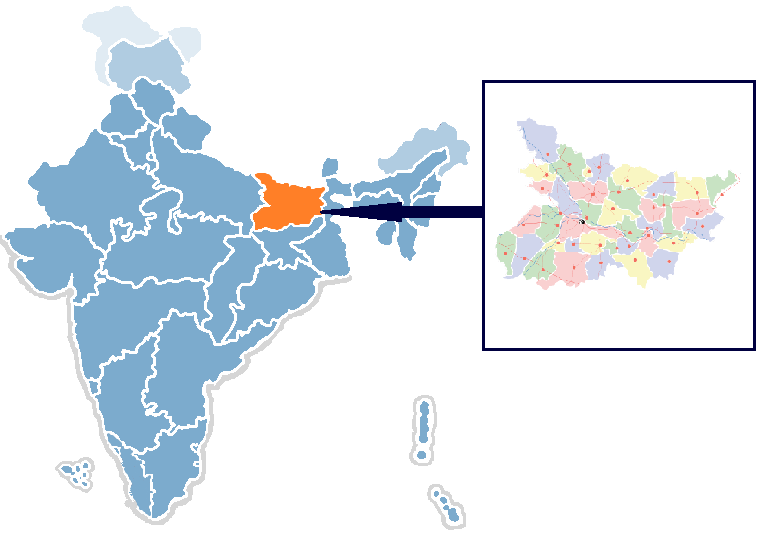
Know your Rights Under Bihar Right To Public Service Act, 2011

0

This article is written by Neeral Jain, a student of Chanakya National Law University.

INTRODUCTION

Right to Public Services enactment in India contains statutory laws which ensure time bound conveyance of administrations for different open administrations rendered by the Government to resident and gives instrument to rebuffing the errant open worker who is inadequate in giving the administration stipulated under the statute[1]. Right to Public Services enactment is a statutory law in India. The provisions in the enactment ensure time bound conveyance of administrations rendered by the Government to resident. The enactment is an instrument for rebuffing the errant open workers who are inadequate in giving the administration stipulated under the statute.  Right to Service enactment are intended to decrease defilement among the administration authorities and to expand straightforwardness and open responsibility[2].

Madhya Pradesh turned into the first state in India to establish Right to Service Act on 18 August 2010 and Bihar was the second to institute this bill on 25 July 2011[3]. Thereafter states like Delhi, Punjab, Rajasthan, Himachal Pradesh, Kerala, Uttarakhand, Haryana, Uttar Pradesh, and Jharkhand have presented comparative enactment for effectuating the privilege of administration to the citizens.[4]

India has witnessed an encouraging momentum of people that got united against the cause of corruption led by Anna Hazare. While this moment emphasized on an overarching regulating body like the Lokpal in the centre and Lokayuktas in the states, there are other legislations that also bring the changes that is felt closer at home.

The crusade on improving public service delivery mechanisms was started in 1997, where in a conference of Chief Ministers of various states and union territories presided by the then Prime Minister, it was decided that both the central and state governments would formulate a citizen’s charter[5].

The crusade on improving public service delivery mechanisms was started in 1997. A conference was conducted that was presided by the Prime Minister and Chief Ministers of various states and union territories was present. In the conference it was decided that both central and state government would formulate citizen’s charter.

In 2002, the Government of India under the aegis of Department of Administrative Reforms and Public Grievances set up a comprehensive website. While, this move was good in principle its implementation faced setbacks in terms of lack of will from the lethargic bureaucracy, lack of awareness, constant transfers of concerned officers as well as wrongful understanding of standards or norms relating to the service provided.

In 2005, the momentous Right to Information act was passed with the aim to make Indian governance more transparent.

Indian states have come a long way from the non-binding citizen charter to introducing legally binding legislations.  The legislation guarantees its citizen time bound delivery of select public services. In 2010, Madhya Pradesh was the first state under chief minister Shivraj Singh Chouhan to enact the Madhya Pradesh Lok Sewaon Ke Pradan Ki Guarantee Adhiniyam. The Thereafter 16 others states have adopted Right to Public services legislation.

Its been long that Bihar had been touted as India’s focal point of wasteful administration. Wild defilement, wastefulness and absence of straightforwardness in behavior of government issues had made subjects suspicious of and far off from the administration. The circumstance was surprisingly more terrible for the minimized, remote, uneducated and poorer segments of individuals. The improvement of such a disposition among citizens is undemocratic[6]. Be that as it may, with an adjustment in government in the state in 2005, in a state of harmony with an across the country expanding accentuation on great administration and government’s basic part being developed, Bihar is currently driving the path in inventive answers for citizens’ issues.

The Right to Service Act 2011, actualized on August 15, 2011, had made it required for the state government and its offices to stretch out administrations to individuals inside of a stipulated time outline. The Act as of now covers 30 administrations and 10 divisions. Authorities neglecting to meet the due date can confront punishments going from INR 500 to 5,000 also, rejection structure administration, in great cases. Data and Communication Technology devices have been used to make the procedure of usage and observing streamlined, debasement free, concentrated, and less work concentrated[7].

The essential segments of  ICT framework are Adhikar-administration conveyance, checking programming; systems for following applications; an Interactive Voice Reaction System wherein citizens will have the capacity to call a helpline-Samadhan-and get elucidations about their qualifications and administration secured under the Act, system for recording applications, track application status and join with Public Grievance Officers; there is likewise a procurement for on line applications and on line conveyance of administrations. Affirmation receipts are in a flash produced at the season of utilization accommodation, giving candidates with legitimate confirmation to guarantee redressal if there should be an occurrence of non-conveyance of administrations asked. Procurements for First and Second Appeals go about as security nets for the candidates and the punished Designated Public Officials.

THE BIHAR RIGHT TO PUBLIC SERVICE ACT, 2011

The RTPSA is simply one more approach to check defilement and to give administrations to all areas inside of a restricted time. In a matter of a year, individuals can apply for administrations online and get endorsements online as well.”

—    SHRI NITISH KUMAR

Bihar has 50 informed administrations. These incorporate administrations deals in Commercial Tax office, Human Resource Department (Scholarships, imprint sheets, college verifications), Registration, issue of all licenses (not just copy duplicates) in Transport Department and choice of application for determination of holding in urban areas in the Urban Development Department.

Understanding the significance of the Act during an era when debasement has gotten the creative ability of the whole country. The administration’s turn to check defilement through the Act has painted an unconventional picture, particularly in the residential communities of the state, where individuals are unconscious about the law. In any case, the escape clauses in the Act are being abused as well.

Some salient features of the act are[8]:

  • Bihar Right to Public Service Rules, 2011 introduced on August 15, 2011.
  • Time bound conveyance of advised administrations to subjects as a privilege.
  • Receipt for affirmation of use.
  • Individual Designated Public Servants made responsible for conveyance of administrations.
  • 50 administrations in 10 offices chose in the first stage.
  • Provision for first and second requests, and audit if there should arise an occurrence of postponement or refusal of administration.
  • Defaulting authorities to be punished INR 500 to 5000; distressed authority may request against punishment.
  • Adoption of ICT devices for usage and observing of the system: Adhikar programming created in-house.
  • Field level IT Managers, Assistants and Executive Assistants enlisted for overseeing the IT frameworks at diverse levels of organization.
  • Provision for tracking applications.

An extraordinary component of the Act, is that not just the assigned officers why should assumed convey administrations to individuals would be certain to demonstration in time-bound way, there would be an altered time allotment for re-appraising and also the exploring powers for arranging off the applications got at their level. Secondly, under the Act, even lower level workers should have the privilege to claim in the event of malevolent conduct by their seniors in government divisions. Third, the essential component is that the poor execution of officers is   noticeable in their Annual Confidential Report (ACR), an urgent record for future advancements is needed[9]. The checking on powers, might be at the largest amount of usage for the Act, this would likewise need to submit definite reports to the cell to be set up at BPSM through messages. The cell would keep an eye by 4 software engineers and an IT chief, whose assignment would be to produce writes about the premise of inputs gave by government workplaces. Senior BPSM authorities would dissect the reports for surveying the execution of the officers.

The successful utilization of innovation in observing the advancement of this eager enactment would be significant in observing how far it goes and how affective it gets over the long haul. The move has as of now made a significant shudder in the force hallways of Bihar. For degenerate authorities, it is frenzy time[10]. Some may challenge this as ‘hanging a sword over your head’ system, however has been  inot the right approach to realize the wanted changes. Then again, one must not overlook that Bihar is that state which has experienced maladministration, debasement and an overall population observation that the administration hardware simply doesn’t work for a really long time. For the Bihar government, this is best stride forward to introduce a time of highly required responsibility in the state.

A government hospital will have to issue a post-mortem report in three days, and the electricity department must repair a breakdown in an urban area within six hours. Caste, income and domicile certificates have to be issued within 30 days. Social security pension issues must be settled within 42 days, and educational institutes will have to respond  to requests for a scholarship scheme within 30 days from the date of  application[11].

The perennially tardy electricity department has been given a detailed timeframe for providing various services: power connection within 30 days, bill correction within 24 days, fuse repair within  four hours (urban) and 24 hours (rural), and power breakdown repair within six  hours (urban) and 36 hours (rural)[12].

SOME OF THE BENEFITS OF BIHAR RIGHT TO PUBLIC SERVICE ACT, 2011[13]

There are mostly three benefits of the Bihar Right to Public Service Act, 2011. Here are the following benefits:-

  1. Free-of-cost Tatkal Service

As indicated by a request issued by general organization office (GAD) on Dec. 27, 2013, three critical testaments – station, residential and wage—can be obtained inside of two working days from January 15, 2014, all through Bihar by appealing to under ‘Tatkal Service’ to the concerned circle officer (CO) under the Right to Public Service (RTPS) Act. These declarations are of extraordinary significance for adolescents, particularly those fitting in with reservation classes, in light of the fact that they need to submit them either while applying for occupation or at the season of meeting or joining into administrations. In the state level meeting held on December, 24 it was announced that, “Area level nodal officers and IT chiefs were given preparing about the new procurements identified with Tatkal administration and the progressions being made in “Adhikar” programming”.

For preparing the piece level officers in the locale, Bihar Prashasnik Sudhar Mission provided likewise duplicates of PowerPoint. DMs have been requested to guarantee that all fundamental data/registration relating to Tatkal administration are legitimately shown at the notification board at every circle and square office in the state. The circle officer of concerned circle was to be referred as ‘Lok Sewak’ under the procurements of RTPS Act to give the three testaments under the Tatkal administration. The circle officers can be fined or rebuffed in the event that he/she neglects to convey position, private and salary endorsements inside of two working days under the Tatkal administration. The game plan of issuing rank, private and pay testaments in ordinary course will, in any case, keep on running parallel obviously. Thus, the procurement of claim will likewise proceed obvious!

  1. Internal computerized processes to accelerate delivery of citizen services

In an offer to convey better subject administrations and look after straightforwardness, the Bihar government has chosen to make an Information Technology guide for all the administration divisions so that subject administrations could be set aside a few minutes. Land Revenue authorities have been coordinated to upgrade and digitize area records utilizing IT.

C.Penalty

Authorities neglecting to meet the due date could confront praiseworthy punishment of Rs 500 every day to a most extreme of Rs 5,000.

SOME OF THE DEFECTS OF BIHAR RIGHT TO PUBLIC SERVICE ACT, 2011


“This law comes into play only after submission of documents at if the officials don’t even accept your documents unless you bribe them?” no citation

There are mainly three defects in the Bihar Right to Public Service Act, 2011. These are the following defects.

  1. Public wary, officials reluctant

Low public awareness consolidated with wavering on some portion of the authorities implies that from each of the 22 locale of the state not many objections have been gotten under the RTS Act. The enactment accommodates a Right to Service Commission which has the forces of amendment against the requests of second re-appraising power. RTS Act is a work in advancement yet asserts that strides are being taken to connect with the general population by conveying the data booklets and leaflets. “A reason that we have gotten only a couple of grumblings under the RTS Act is that the commission is a third redressal body in the entire procedure and huge numbers of the protestations may be getting sorted out at the levels of the first and second investigative powers,” No citation

  1. Bribery still prevails

Low pay rates are not by any means the only motivator for an open authority to act corruptly and the general population components go well past the possibility of money related prize (OECD 2007). A generously compensated open division supervisor will have distinctive individual weights than a counter assistant or a government official and may at present be helpless to debasement. Motivating forces likewise exist on the non-government or “supply” side of a degenerate exchange. These have been depicted as an apparent need to, either, pay for advantages, for example, licenses or open lodging, or to pay to maintain a strategic distance from expenses, for example, charge or an administrative punishment (Rose-Ackerman 1998) or to level an apparent out of line acquisition process (OECD 2007). However, given that not everybody why should obliged pay expense or a fine resorts to pay off, ought to these cases be better considered as open doors for defilement? The time when they additionally provide a motivating force may show where aversion mediation may be successful, for example, where the impost is lopsided, out of line or capricious[14].

 This law comes into play only after submission of application. What if the officials don’t even accept your documents unless you bribe them? They usually point out one mistake or another in your application making you run from one end to another. Also, those who are supposed to look into your complaint already know that this racket is running and most of the time they are also a part of it. RTS is not an absolute solution to the menace of corruption. “The corrupt would still find means to extract money and the willing public would continue to pay them but the practice would definitely be reduced”, no citation

  1. Unaddressed deficiencies 

An online framework to direct the execution has been recently added. At present, the applications got at Suvidha Kendras in distinctive locale are observed by particular representative officials yet not all applications under the RTPS Act are made through.

Deficiency of staff is another issue which is yet to be dealt with. The very motivation behind acquainting the Right With Service Act is crushed when enough staff individuals are not there. The time-bound conveyance will just add to the weight of existing staff. Enrollment is a long drawn procedure and Bihar Government is currently employing more staff to convey general society benefits soon. On the other hand, individuals are not fulfilled by the grievance redressal as visualized under the Act. The fundamental thought process of any open welfare enactment is guaranteeing administrations to individuals without much bother. In any case, the Bihar RTS Act is prosecution inclined as the complainant should travel between various redrafting authorities and that too in the same office before coming to the proposed free commission.

CONCLUSION AND SUGGESTIONS

Understanding the significance of the Act during an era when defilement has gotten the creative ability of the whole country, Nitish Kumar says, “The RTPSA is simply one more approach to control debasement and to give administrations to all areas inside of a restricted time. In a matter of a year, individuals can apply for administrations online and get declarations online as well.” The administration’s turn to check defilement through the Act has painted a particular picture, particularly in the residential communities of the state, where individuals are ignorant about the law. Be that as it may, the escape clauses in the Act are being abused as well.

Arun Kumar Singh, Public Prosecutor and a senior JD(U) pioneer said in B&E that “The exertion in killing defilement through the Act is excellent. On the other hand, degenerate authorities have discovered certain lacunae and are conveying their work just in the time period imagined by the administration”.. However, there are some promising stories as well. In Muzaffarpur, 145 applications for distinctive administrations were discarded inside of a day, claims Bharat Dubeya, Director of the District Rural Development Agency (DRDA). Further he said that,” regardless of escape clauses, the locale headquarter is certain to convey its obligations taking a gander at the issues of the applicant. Work here is going smooth. There may be some lacunae, yet they will be killed soon.”. In another occurrence in Sitamarhi region of Bihar, some school understudies arrived at the workplace of the Superintendent of Police (SP) to grumble that their character endorsements were not being discharged by the concerned powers. The matter was dire as the understudies required the testaments inside of 4 days. At the point when SP Rakesh Rathi learnt of the circumstance, he guaranteed that the records were conveyed around the same time by 5pm. This was a significant case of an authority venturing into guarantee that sure procurements of the Act don’t breed untruthfulness amongst state authorities.

A special component of the Act is that not just the assigned officers why should gathered convey administrations to individuals would be certain to demonstration in time-bound way, there would be a settled time period for re-appraising and additionally the inspecting powers for arranging off the applications got at their level. Under the Act, even lower level representatives have the privilege to advance if there should be an occurrence of malicious conduct by their seniors in government divisions. Another significant component is that the poor execution of officers would be unmistakable in their Annual Confidential Report (ACR), a vital record for future advancements. The assessing powers, that might be at the most elevated amount of usage of the Act, would likewise need to submit nitty gritty reports to the cell to be set up at BPSM through messages. The cell would be kept an eye on by 4 developers and an IT administrator, whose undertaking would be to create gives an account of the premise of inputs gave by government workplaces. Senior BPSM authorities would dissect the reports for surveying the execution of the officers.

The powerful utilization of innovation in checking the advancement of this eager enactment will be essential to how far it goes and how affecting it gets to be over the long haul. The move has as of now made a significant vacillate in the force halls of Bihar. For degenerate authorities, it is frenzy time. Some may challenge this ‘hanging a sword over your head’ component is not the right approach to realize the wanted changes. On the other hand, one must not overlook that Bihar is that state which has experienced maladministration, debasement and an overall population discernment that the administration apparatus simply doesn’t work for a really long time. For the Bihar government, this is best stride forward to introduce a time of greatly required responsibility in the state apparatus.

[1] Bihar Right to Public Services Act, 2011

[2] The Uttarakhand Right to Service Act, 2011

[3] Himachal Pradesh Public Services Guarantee Act, 2011

[4] Madhya Pradesh Lok Sewaon Ke Pradan Ki Guarantee Adhiniyam, 2010

[5] Time-bound delivery of Public Services now a reality?!, Polity In India – India As An Evolving Polity, available at https://polityinindia.wordpress.com/tag/bihar-right-to-public-services-act/ , retrieved on 08/11/15.

[6] Citizens’ Right To Public Service, One World Foundation India, available at http://gad.bih.nic.in/Documents/GAD-BP-RTPS.pdf, retrieved on 08/11/15.

[7] Ibid 5.

[8] Citizens’ Right To Public Service, One World Foundation India, page no. 5, available at http://gad.bih.nic.in/Docu ments/GAD-BP-RTPS.pdf retrieved on 10/11/15.

[9] Policy-BIHAR: RIGHT TO PUBLIC SERVICE ACT, 2011, IIPM Editorial, 2012, available at http://best-blogonblogger.blogspot.in/2012/07/policy-bihar-right-to-public-service.html, retrieved on 10/11/15

[10] Ibid 9.

[11] Bihar govt guarantees citizens’ right to services, The  Indian Express, January   11, 2010, available at http://infochangeindia.org/governance/news/bihar-govt-guarantees-citizens-right-to-services.html, retrieved on 10/11/15.

[12] Ibid 8.

[13] Right to Public Services A Guide, S K Agarwal, Transparency Intercitizen India the coalition against corruption, available at http://www.transparencyindia.org/resource/books/rts.pdf, retrieved on 11/11/15.

[14] Causes Of Corruption In Public Sector Institutions And Its Impact On Development: Turning What We Know Into What We Do, available at http://unpan1.un.org/intradoc/groups/public/documents/un-dpadm/unpan049589.pdf, retrieved on 11/11/15.

Download Now

Supervision and freedom in law schools: are you ready?

0
law school freedom india

Freedom is a double edged sword. Freedom requires you to assume responsibiliy for your actions – and leaves you with no one to blame for unpleasant consequences and failure. This is being republished as where it was originally published back in 2012, Gyancentral.com, is now defunct.

law school freedom india

Most of us are not very good with our dealings with freedom. We are taught to obey as kids, and when freedom hits us from nowhere purely by circumstance, we do not know what to do with it. Rarely do we seek out freedom, though we almost always wish for it, from the safe distance of our bondage.

When India was a part of the British Empire, a major argument against independence of India forwarded by imperialists was that Indians will not be able to take care of their own interests. Law and order will be destroyed, and public administration system will fail. In words of Winston Churchill, “Power will go into the hands of rascals, rogues and freebooters. All Indian leaders will be of low caliber and men of straw. They will have sweet tongues and silly hearts. They will fight amongst themselves for power and India will be lost in political squabbles. A day would come when even air and water would be taxed.”

A lot of Indians didn’t agree with this. For them, political, financial and freedom was way more valuable than the ‘service’ of maintaining law and order and public administration provided by the British rulers. They thought that we do not need the British to lead in our public and political sphere – our own leaders can do that job very well. The task of building our own political, constitutional, financial and public administration systems was not easy. There were many conflicts between states, different sects and communities of people. The country sometimes faced failure of law and order and public administration in small scale for limited periods of time.

We have however paid that price happily in exchange of the the right to govern ourselves. We can celebrate our success, and we have no outsiders to blame for failures and disasters any more. If there is a famine or a communal riot, we can not blame the British rulers – as Indians always did in the pre-independence era.

If you are a student going to a college away from home for the first time – your situation is quite comparable. Most kids grow up in India under strict regulations and instructions from parents and other family members. Schools also maintain orthodox discipline – usually implemented with an iron fist. You study because your parents insist, you maintain discipline because you have no other option. In school, you follow hundreds of rules, some of them just ritualistic and rather meaningless, others necessary to maintain an acceptable order of things.

Now imagine living in another city, away from your parents – in a hostel, or in a rented accomodation with other students – which is very common for law students going to a good law school or college. Suddenly, you find yourself in the middle of a lot of freedom. There’s no one to watch over you and direct your every action. You can sleep late if you want to. You can wake up late. You can skip a meal if you want to. You don’t study if you don’t want to – no one will punish you for that unlike the times when you did not do your school homework. You can hang out with your friends all the time you want. If you bunk classes no one is there to stop. If you drink all night and miss classes the next day no one is probably going to yell at you.

However, you have the consequences at the end that you must face. If you didn’t eat and sleep well for a long time, your health will break down. Bad health will have a domino effect on everything else you do, it will slow down all your efforts to do well in life. If you don’t sleep enough, you’ll not have the energy required to do well in life. If you while away too much time on unproductive but pleasant activities, you’ll have no time to develop your knowledge and skills, or to build up yourself as a person. If you miss too many classes you may not be allowed to sit for the exams, and even if you are allowed, your performance may be ordinary. If you do not find the discipline in yourself to strive to be good in life, you will be mediocre and live a very ordinary life. Your potentials will never be fulfilled. These are the consequences.On the other hand, you have the rewards of doing good things.

The bad and good consequences together govern your actions once you grow up. There would be a point in your life, if it has not already come, when you transition from being a responsibility of other people to being responsible for yourself. At this point, your actions will not be governed by someone else – there would be no one else to immediately punish you for bad deeds and give immediate reward for good deeds. In fact no one will even tell you what is good and what exactly is bad – you must use your own judgment to decide what is good or bad for you. Your bad deeds or good work will be rewarded or punished – but by long term consequences. You would be alone in facing those consequences. You will have no one to blame for your failures – and that’s how youn start to take responsibility for your actions. That, my friend, is the first step of learning to be successful.

This is what we know as freedom – where you are free to decide if the evening will be better spent in the library or at a sheesha bar – and the consequences of the choice are yours too. The library over the bar is not an obvious choice, and sometimes it will be a better choice to go to the bar. What kind of people spend all their evenings in the library anyway? That does not sound like a person I would want to be. However, you must decide what is good for you and be prepared to face the consequences.

The freedom brings many dilemmas with it. Following someone elses orders is easier. Determining the path of your life, finding your true goals, discovering your own character, finding your confidence, developing valuable skills and seeking out knowledge from your experiences, training your will power and cultivating a strong desire to succeed is not as simple as following someone elses orders without going into the merits of the orders.

However, freedom gives you the opportunity to do all these. A person merely following someone elses order can never discover himself, nor can he build himself or herself up as a person no matter how wonderful achievements have been come across by following the orders.

Indian students usually encounter this freedom and responsibility in college for the first time. For most students, it turns out to be a major disaster. Health breakdowns are very common. Many students experience a cultural shock – especially the ones who have come from small towns and villages. Life seems to be unfair and values that have been held dear so far start to crumble. The freedom that was once craved for suddenly looks like a trap. Many students take to alcoholism and heavy smoking. Some others resist these for years. In my five years in college, I have seen numerous brilliant people ruining their lives due to drug adiction or alcoholism. Some of them later took responsibiliy for themselves, fought back and succeeded to build up their lives again, but many more didn’t.

The freedom is not just a friend, it is an enemy too. The double edged swords can hurt if you do not protect yourself from it. Then is it really worth it? Why not stay close to your parents, let them dictate what to do in life, and stay away from temptations? Many people do that too.

However, I would not ever do that. I embraced the freedom, and I recognized that it is for me to shape my life. I knew there will be trials and hardships, and wrong decisions on my part, but I knew this is the only way to grow. It took me a few years to find my feet in law school – but the struggle was worth it. The struggle helped me to be what I wanted to be – I was able to be th decider of my fate, I learned to be the captain of my ship.

I detest someone else dictating how I should live my life, and how I should go about my business. I have learnt to listen to and accept advice and criticism – but I decide how I want to live, and what kind of person I want to be. I learnt to take all important decisions of my life on my own, and I learned to accept the consequences. I decide if I would work in a job, or if I should start my own business –  not my parents. I decided if I want to specialize in international law or business laws –  maybe my teachers adviced me on that, but the decision had to be mine. I am free to decide, it is for me to suffer or enjoythe consequences, and I would not blame anyone else for the outcome.

That is a part of growing up. The earlier you take responsibility for yourself and embrace the freedom in its entirety, more significant is the headstart you get in the journey to become a complete person.

Academic freedom

There are very few things of significance we can achieve in life without this kind of freedom. Most truly wonderful outcomes are only reserved for the free people, and kept away from those who have not been able to abandone slavery. The relationship between academic success and academic freedom is one sparkling example.

In institutions where the syllabus is tightly defined, academic goals are laid down in great details, and all students are expected to learn the same answers to every question rarely produce academic work of any significance. Every student develop into a brick in the wall – their inputs as well as output is identical. This does little to take forward the province of human knowledge.

Great academic institutions recognize this, and provides academic freedom to the students and scholars. The students as well as researchers get to choose what they want to work on, they even decide the methodology. They get some flexibility to choose the subjects they want to study. Diversity of thought and actions is promoted. Discussions do not consist of precise questions and objective answers, but hypothesis, creative thinking, original theories, unique, even if faulted and challenged propositions. Questions are asked and answered by anyone. This creates the space where a body of new knowledge is developed. New methods of learning are found and practised.

Of course, this makes it much more difficult for the student. Wasn’t it great in school when you had exact text books to study from, and you knew the exact wordings of the ideal answer to a question? Scoring high marks was a matter of writing down the exact answer that was taught to everyone.

In the best colleges, this is not the order of things. It is acknowledged that there is no exact answer to questions that are worth working on. There can be many different brilliant answers. There can be mutiple ways to deal with the same problem. Sometimes, the answer to a question is not a statement, and just even more questions – high academia recognizes that. You as a student, have to learn to deal with it.

Suddenly, memorizing information is not enough – you need skills – of reasoning, writing, speaking, presenting information. Suddenly – you decide what is a good answer and what is bad – and the teacher may agree or disagree with you.

You must take responsibility, and you get to keep the credit or criticisms too – of your contribution. You have academic freedom, and it is upto you to make something out of it. You have to be original, you have to successfully convey your idea – and then stand up to be judged by your academic peers on very subjective scales.

That, too, is a part of growing up.

Download Now

Legality of Euthanasia in India

1

2755481069_1c5a62c98f_o

This article is written by Shrishti Debuka, a student of Jindal Global Law School.

INTRODUCTION

The recent 210th Law Commission report recommended that Section 309 of IPC which defines attempt to suicide be deleted from the code, this is mainly because parliamentarians were of the opinion that a person who wants to commit suicide is rather in need of care than punishment.

The debate regarding striking down of this section is not new, it has been in existence since the year 1994 where in the case of P. Rathinam v. Union of India 1994 AIR 1844, the Supreme Court held that section 309 was violative of Art. 21 (Right to Life) hence is unconstitutional therefore needs to be struck down. However, the same was overruled in the case of Smt. Gian Kaur v. State of Punjab 1996 AIR 946. Since, then there have been many bills, recommendations and cases which have indicated towards striking down of this section but it was never brought into application. But in recent days, since the time the Modi Government has come in to power this debate has again been brought to life.

While the parliament is still pondering over the question whether to repeal Section 309 or not, one also needs to consider as to what will happen to cases of Active Euthanasia and whether Parliament and judiciary will amend the law criminalizing active euthanasia?

ACTIVE VERSUS PASSIVE EUTHANASIA

In the historic case of Aruna Ramchandra Shanbaug v. The Union of India (2011) 4 SCC 454,  the Supreme Court of India had for the first time, laid down a clear distinction between ‘active’ and ‘passive’ euthanasia. Wherein the apex court had permitted passive euthanasia on a case – by – case basis but had completely criminalized active euthanasia. Having said that, one aspect which the judicial bench has completely overlooked is the distinction which can be drawn between the two based upon morality and economic benefit.

Passive euthanasia is when a physician reduces or eliminates the chances of survival for a patient by either turning off the life supporting system or depriving the patient of water and food. By doing so, the patient will lack necessary nutrients to keep him/her alive, which will eventually lead to death by starvation and dehydration. On the other hand active euthanasia occurs when physicians tend to prescribe morphine, or antibiotics which will kill the patient painlessly. Anyhow, either of the two methods will in the end lead to death of patient. But an important aspect which has completely been ignored is that active euthanasia in fact provides for a dignified death because it is quicker and painless. Whereas, though passive euthanasia is ethical it is rather slow and dreadful. Hence, depriving patients from food is inhumane and totally unacceptable. Therefore, in reality, though it is morally wrong to kill someone, it is equally wrong to allow someone to die by going through a period of long anguishing pain. Thus the point of euthanasia is for a patient to die with pride and harmony, therefore, active euthanasia is more appropriate in comparison to passive euthanasia.

Having laid this distinction the author is not trying to suggest that passive euthanasia should be criminalized and active euthanasia should be allowed, but instead is suggesting if former can be decriminalized, the same fate must befall upon the latter but with the only difference being that it must be allowed in cases where the patient is conscious and competent to give the consent required.

SUICIDE VERSUS ACTIVE EUTHNASIA

Therefore now it is important to draw lines between suicide and active euthanasia, which is based upon the rational that, though suicide is an act where one can take away his/her own life and active euthanasia is an instance where death is being administered by a physician, i.e. an assisted form of suicide. Secondly, if parliamentarians can decriminalize an act where a person is not terminally ill and is rather depressed then the same rule must definitely apply to a person who is in fact terminally ill.

However, In India though there is no law which governs euthanasia, by keeping an ill person alive for a prolonged period of time is a clear violation of Art. 21 which provides a right to dignified life. Having said that, a person has a right to live life with at least minimum dignity and if that standard is falling short of the minimum level specified then a person should be given a right to end his life under article 21.

CONCLUSION

Thus if certain guidelines are followed, it would help patients and their families to differentiate between fraudulent and consensual active euthanasia. The guidelines are as follows: One, if the patient was going through unbearable suffering. Two, a confirmation with regard to the fact that there was no alternative solution which could have been used. Three, at least two other independent physician was consulted regarding the patient’s situation and Four, the patient’s life was terminated in a medically appropriate manner. In short, doctors should not abuse the rights which come by virtue of euthanasia, by changing the right-to-die to a right-to-kill.

Lastly, from an economic point of view the amount of money which is being spent on these incurable and untreatable patients will only lead to shortage of medical and monetary resources. In fact many treatable patients because of this reason have to struggle to find medical facilities. The WHO report had mentioned that in India about 87% of total health expenditure is from private spending, out of which 84.6% is out-of-pocket expenditure. Further the World Bank in its annual report in the year 2002 with regard to India came up with some other startling observations that more than 40% of individuals who are hospitalized in an year borrow money or sell assets to cover the cost of health care as well as spend more than half of their total annual expenditure on health care. Thus stated, one cannot disagree with the fact that there is genuine need for active euthanasia with safeguards, definitive and unbiased protocols. Therefore Article 21, should also include ‘Right to die with dignity’

Download Now

Progress In Area Of Research And Development In Tax Incentive Globally

1


Determine the tax and the cost with a calculator

Nikita Hora, a final year student at O.P Jindal Global Law School. Working as Reporter and Communication Manager and Assistant Editor for iPleaders Blog.

Research and Development tax incentive is the reduction of the tax liabilities of the companies that are involved in the undertaking of R&D and innovation activities. Tax incentive lowers the cost of R&D hence stimulates the additional investment in innovation activities. Government plays a significant role in encouraging the R&D levels and expenditures.

The choice of R&D tax incentives will depend on country-level variables such as overall innovation performance, perceived market failures in R&D, industrial structure, size of firms and the nature of corporate tax systems.  As of today more than 20 OCED government is providing fiscal tax incentive to sustain business R&D, up from 12 in 1995 and 18 in 2014.

Economic and empirical analysis proved that research and development plays a key role in the economic growth of the country. It is considered that long term economic growth is driven when there is accumulation of knowledge-based factors of production that are R&D and human capital. This prevents the marginal return to physical capital from falling below the profitable levels. Empirical analysis affirms that R&D increases multi-factor productivity[1].

Tax incentives are beneficial for both the developed and developing countries. In the large countries tax incentive helps in increasing the rate of innovation and in the smaller countries it might help to facilitate the transfer of technology from abroad. As per the studies done by OECD the studies suggest that 1% increase in the stock of R&D leads on average rise in the output between 0.05% – 0.15%. The R&D intensity of countries and their growth performance tends to be correlated with the share of research financed by business[2].

REASONS FOR TAX INCENTIVE IN RESEARCH AND DEVELOPMENT

  • Seen as a crucial investment for the long term growth of economies

Multifactor productivity in OCED countries have been a major determinant of economic growth. R&D intensity of countries and their growth performance is correlated with the share of research financed by the business sector.

  • Contribute to national competitive

In the era of gloabalization multinational enterprise are increasingly internationalizing their R&D activities therefore it is becoming necessary for the government as well to be competitive in attracting the companies that spent huge amount in the R&D activities. Generous amount of R&D tax incentives makes a country relatively more attractive location for R&D investments than its competitors.

  • R&D activities are risky therefore R&D tax incentives gives ease to small firm and start up

The biggest hurdles with R&D investment is that they are likely to end up as a marketable new products or processes but mostly after the long – time and uncertain payback periods. Even it s very difficult for the financial institution to judge the quality of the R&D investment, because the outcomes are very uncertain and the firms are reluctant to disclose all the information. Therefore particularly the small firm and the start up faces credit constraints while they invest in R&D. R&D tax credit gives ease to the small firms and start up.

  • R&D activity generates “public” good

The major difficulty with R&D investment is the “knowledge spills over “ to the other firms and that too, to those organization that had not bear the cost of the investment over that research and development. When the investing firms are unable to capture all the benefits on their investment then automatically the company starts investing less on R&D and this even results in “social” optimization (the private rate of return of R&D would be lower than the social rate of return). The knowledge spills over risks contributes to the gap in R&D spending and the lowers the desirable innovations.

PARAMETERS OF THE R&D TAX INCENTIVES

For the accounting purposes, there are two parameters through which R&D tax incentives are involved. These parameters are

  1. Current expenditure
  2. Capital expenditure

While calculating current expenditure, R&D expenditure is included like wages and salaries of the research personnel and the cost of material used. Second way to treat R&D expenditure under current expenditure is to deduct from income in the year they are incurred.

Under capital expenditure, the R&D expenditure is treated like the cost of equipment and facilities. Therefore under capital expenditure, the taxpayer can depreciate over the useful life of an assets. There are two methods for depreciating the R&D expenditure. They are

  1. Declining balance
  2. Straight line

There are few countries for example U.S. that allows the taxpayer to switch over the declining method to the straight line method when the straight line method becomes more beneficial to the taxpayer in present value term.

It differs from country to country the way R&D expenditure is treated under capital expenditure. Some countries allows capital expenditures for R&D purposes to be written off in the year they are incurred, while the other countries require that capital expenditures be depreciated over their economic life (or some fraction thereof). Other things being equal, the net-of-tax cost of R&D will be lower in those countries that allow an immediate or accelerated write-off of expenditures on R&D facilities and equipment.

This clearly proves that current and capital R&D expenditure is treated differently in different tax jurisdictions. The R&D expenditures are usually spilt into current expenses and capital expenses by using the average proportion of 90% and 10% respectively. Capital expenses were then divided equally between machinery and equipment (5%), and buildings (5%). Furthermore, wages and salaries (a component of current costs) are assumed to represent 60% of total R&D expenditures. These proportions have been applied uniformly to all the tax jurisdictions examined.

DISCUSSION AT INTERNATIONAL FISCAL ASSOCIATION CONFERENCE, 2015

In the IFA Conference held this year one of the main topics for the discussion was “Tax Incentive on Research and Development”. There was an immense discussion about the issue that whether tax incentives are an effective tool for promoting R&D? Whether the government should direct subsidy will that be more transparent?

The panel discussed about the importance of neutrality and proportionality principles. Neutrality principle is when R&D credits are available to the all the taxpayers from a subjective point of view viz irrespective of whether the taxpayer can setup as partnership, companies and are individuals. The opinion was that R&D tax incentive should be neutral from a policy perspective as the idea has been to achieve spilt over effects on the economy of the country granting them incentives and that non – residents should also be given benefits and treated as par with residents.  Except India and South Africa, countries extend their R&D incentives to residents as well as Permanent Establishment (PE) of the foreigner enterprises. Australia is one of the exceptions that has enhanced the deduction for R&D restricted to the companies that are incorporated in Australia and wherein R&D has been specifically excluded from the non- discrimination article of tax- treaty.

If there is lack of coordination between the identical incentives and different taxpayers, it might result to “double R&D dipping” [3]especially in cross border situations.

Proportionality principle means that it is on the hand of the government to manage an effectiveness of incentives with positive spillover effects. This principle is important with the respect to coordination of R&D tax policy. It is necessary to have coordination between identical incentives and different taxpayers, between  input and output incentives and between R&D tax incentives and direct subsidies is also required. The penal came up with the suggestion that R&D framework should be one single policy within which all components needs to be consolidated.

The panel also raised the issues that each country needs to give right definition to R&D. It is considered as if the definition of the R&D tax incentives is too wide then it will lead to higher revenue losses but if the definition is too narrow then may loose it’s required effect.

In other phase of the conference there was a discussion about the “Patent Box”. The discussion was about the detailed structure of the Patent Box – such as qualifying the income, applicable tax rates, qualifying the taxpayer and intangibles and different approach to compute income under patent box regime.

The was immense discussion about the OECD’s work under BEPS, in respect of preventing harmful tax practices that deals with the Patent Box regime. OECD proposed ‘ modified nexus’ approach for limiting R&D incentives. The nexus approach approaches requires the IP regime only grant benefit in proportion to existing R&D expenditures incurred by the taxpayer. The nexus approach builds on the principles underlying existing R&D credits and other ‘front-end’ IP regime. The nexus approach also has provision of tracking and tracing of expenditure, IP assets and income. Lastly the ‘qualifying expenditure’ under nexus formula does not include cost incurred for outsourcing to related parties. Thus, the outsourcing to related parties reduces the nexus ratio by increasing overall expenditure.

In the conclusion, the remark given about the Modified Nexus approach is that it tackles harmful tax competition but it does not avoid the risk of double taxation.

WHAT IS PATENT BOX ?

There are many governments that encourage tax incentive in R&D with the aim to correct or alleviate the two markets failure. The market failures are “ underinvestment in innovation, secondly difficulty in finding the external finance in the highly uncertain nature of innovation.

Intellectual property (IP) assets such as trademark or brands, patent, copyrights are highly mobile therefore it is easy for the corporation to locate them away from the research activity that generate them. It is common practice of the multinational to locate their intangibles assets in the lower tax jurisdiction so that it can reduce their tax liabilities hence eroding the revenues of that country with the high tax regime. This phenomenon is called base erosion and profit shifting (BEPS).

Patent box was introduced as a safeguard for the IP tax regime for higher tax mobility of IP assets.  Patent box is the method where the companies benefit from lower effective taxes rates on profit derived from intellectual assets including – patent, know-how (such as formulas, processes and information acquired in the commercial, industrial and scientific field), trademark and eligible for legal protection, only if they require ongoing R&D expenditure for their development and maintenance. The IP regime grants an exemption from the local taxes and corporate taxes on the income derived from qualifying IP assets for an irrevocable (specific) number of years.

In 2001 France introduced patent box then 2003 its was Hungary then Netherlands and Belgium in 2007, followed by Spain and Luxembourg in 2008 and UK finally in the 2013. [4] In 2015 Italy had included Patent Box as one of the fiscal measures for supporting firms investment in R&D in its Budget Bill for 2015.

Patent Box can be considered as the new piece of legislation that is designed in such a that it helps the innovative profitable companies to reduce the burden of Corporation taxes and therefore incentivize them to keep their operation in their own countries. It is extended form of R&D tax credits. Tax Credits are provided for helping the companies to develop product is the countries similarly Patent box is a form of tax incentives for that companies that have successfully developed and innovate a product and is deciding where to locate its operations, Mostly the companies decides to exploits their inventions partly or wholly in the other jurisdiction as the tax breaks are comparatively appealing. Therefore by initiating the Patent Box regime the government wants to reverse this trend. In simple words Patent Box regime provides a lower tax rate on income from the exploitation of patented goods than for other income[5].

Patent box only applies to the only on the proportion of the taxable profit if a company’s trade. If the corporation is involved in more than one trade then Patent Box deduction for each trade will be calculated separately.

This regime incentivize both domestic and foreign manufacturers to set up manufacturing in a country that provides the advantage if lower tax rate on the profit derived from the intellectual property. There are large number of MNC that relocate their intellectual property sourced assets and manufacturing to foreign countries without previously having manufacturing activities in that country related to the intellectual property.[6]

The terms and regulations of a patent box will depend on the way drafter is trying to promote the patent box. For example in Italy, tax exemption is calculated on the income should be in proportion to the R&D activities actually performed by the taxpayer. It is then further adjusted according to the shares of profit generated by the IP asset when IP is directly used by the IP owners and advanced ruling is also required. The legislation also provides that profit earned from the sale of the IP will be also exempted but only in the cases where 90 % of the proceeds received are ploughed back into similar investment before the end of the second fiscal year following the relevant sale.

There are mainly three reasons for tax incentive. First, to incentive the location of intellectual assets currently held abroad by foreign -owned and domestic enterprises in the respective country. Second to avoid the relocation of assets abroad and third to support the investment in R&D.

The biggest challenge after even after implementation of the patent box regime was that whether the patent box will be likely to be effective and represent “value for money”. There were two questioned that still remains are that first whether it is possible to tackle the fundamental market failures of investment in innovation. Secondly in the long run there will be increase in the tax revenue stream or are prone to spur a tax competition that entails a race to the bottom that ultimately results in a fall in tax revenue for all the concerned countries. [7]

LIMITATION OF PATENT BOX

The nature of the patent box is an ex-post reward. It means that Patent box regime only applies to the successful innovators that already have monopoly on their inventions and are tend to receive the income from their innovations. This simply means that patent box regime does not foster experimentation per se hence risky activities still have high rates of failures and spill over effect. Therefore even after the implementation of the Patent Box regime there will be no foster in entrepreneurship, ensuring relocation and learning and frontier growth that involve immense R&D.

Secondly, the Patent box regime pushes the firm to focus on innovations that leads to outcomes that are susceptible to protection by IP rights. This distorts the choice of the firms to focus more on the applied research or products that are closer to the market. This does not result in productive growth enhancing strategy in the long run. There are several innovative firms that do not choose to seek any IP protection.

One of the limitations with the Patent box is that it is related to IP assets and large share of patents are held by a small number of large multinational corporations and skewedness in the patent distribution is likely to be exacerbated when focusing on the high- revenues patents. This simply means that patent box regime can be accrued by the MNCs and these are the firms that find ways if using patent box to shift profit across jurisdiction. For example it is difficult to calculate the income eligible for the tax breaks when firm directly uses IP as it is difficult to identity that the profit is generated by a single patent or multiple patents as they are often identified at different point in time and are used to produce a complex product the income flow will have to be imputed in the absence of an explicit price for the use of IP. This is the major difficulty where the tax authority shares the profit that might allow the firm to abuse the system to shift profits across the jurisdiction.

     BEPS ACTION 5: MODIFIED NEXUS APPROACH FOR IP REGIMES

There were few concerns that were expressed in the Patent box regime. Then Modified Nexus Approach came up with the solution such as the calculation of the qualifying R&D expenditure, transitional arrangements between regimes and time allowed for this through grandfathering provisions, and the tracking and tracing methodology for R&D expenditure that will determine whether it tax exemption qualifies. To reflect the concerned raise by the businesses, the government is planned to qualify expenditure within Modified Nexus Approach.

The Modified Nexus Approach is based on the elements, which seek to address the concerns that have been raised, whilst reinforcing the nexus approach, providing safeguards against profit shifting, and ensuring that there is equal treatment across all sectors and businesses of different sizes. These also aim to ensure that the approach to implementing new rules is consistent with existing OECD rules on the phasing out of harmful regimes.

WHAT IS MODIFIED NEXUS APPROACH?

Modified Nexus Approach is intended to ensure that, in order for a significant proportion of IP income to qualify for benefits, a significant proportion of the actual R&D activities must have been undertaken by the qualifying taxpayer itself. Accordingly, such up-lift needs to be restricted. It may only be granted to the extent that expenditure in the context of outsourcing and acquisitions has actually taken place, and it is in any case limited to a certain percentage of the qualifying expenses of the respective company: 30%. This percentage-based limitation relates to the overall amount of both outsourcing and acquisition.  costs. For the avoidance of doubt, acquisition costs and expenditures for outsourcing to related parties are not included in qualifying expenditures, but are taken into account in determining the limitation described in the preceding sentence [8].

The other suggestion by the OECD BEPS Action Plan 5 is that for the protection for the taxpayer from the existing regime, governments have decided to introduce grandfathering rules. Under such rules, all taxpayers benefiting from an existing regime may keep such entitlement until a second specific date (“abolition date”). The period between the two dates should not exceed 5 years (so the abolition date would be 30 June 2021). After that date, no more benefits stemming from the respective old regimes may be given to taxpayers.

The countries that are choosing to implement Modified Nexus needs to bring the applicable rules in line. This simply means once this rules are brought in line then no new entrants will be in existing regime, after the date that a new regime consistent with the modified nexus approach takes effect.

“New entrants” include both new taxpayers not previously benefiting from the regime and new IP assets owned by taxpayers already benefiting from the regime. Further, the new entrants are only those that fully meet all substantive requirements of the regime and have been officially approved by the tax administration, if required. New entrants therefore do not include taxpayers that have only applied for the regime.

When Patent Box was implemented then it had a limitation of reporting requirement, that is, what is the actual amount to expenditure in R&D activities. Therefore Modified Nexus approach as come up with the solution that there should be tracking and tracing of R&D expenditure. The tax authority and the government should be developed in order to implement the Modified Nexus Approach. Agreement will be needed on transitional provisions to enable companies to transfer IP from existing regimes into new regimes. Practical methodologies for identifying qualifying expenditure that companies and tax authorities will be used in recognising the particular issues regarding qualifying expenditure with respect to expenses incurred prior to the introduction of the Modified Nexus Approach. Failure to do so will mean that no tax benefit may be granted to those companies under the Modified Nexus Approach. Special rules will be developed for this time period to ease the tracking and tracing of such expenditure.

Lastly Under the Modified Nexus Approach the only IP assets that could qualify for benefits under an IP regime are patents and functionally equivalent IP assets that are legally protected and subject to approval and registration processes, where such processes are relevant. The Modified Nexus Approach explicitly excludes from receiving benefits marketing-related IP assets such as trademarks. The FHTP recognises the need for clarity on the definition of qualifying IP assets. The FHTP will therefore produce further guidance on this definition, addressing in particular the exact scope of IP assets, for example, the treatment of copyrighted software or innovations from technically innovative development or technical scientific research that do not benefit from patent protection, always provided of course that such assets have been developed with sufficient nexus.

HOW TAX INCENTIVES IN RESEARCH AND DEVELOPMENT SHOULD BE DESIGNED?

Government plays significant role in designing the R&D tax incentives. The government needs to define the following before coming up with ways it will give tax incentive in R&D.

  1. Target Group

Mostly tax  incentive are  neutral that is it is applicable to all the innovators without differentiating between the region, size of the company, sector or types of innovative activity. But then the government should design tax incentives that it would be beneficial to the particular group such as small and medium enterprise (SMEs). Government can explicitly limit the access to the tax incentives to the companies as per the profit they are earning in the financial year. Other way is to grant higher tax exemptions rates to impose upper limits on the tax credits that are mostly accessed to the large firms. The other method which government can use is to cash refunds for  companies that are making losses.

  1. Eligible Cost

The government should define the “ research and development” to that it could classify about the eligible and ineligible expenditures.[9] There are three approaches of defining eligible R&D. They are turn on wages, current R&D and current and capital R&D.

There are times when government extends their eligible expenditures to include the costs of acquisition of intangibles, such as patents, licenses, know-how, and designs. Therefore the more activities come under the ambit becomes deemed eligible and increases the potential incentive to promote innovation activities. On the other hand larger list increases significant cost on the government. The biggest hurdle that governments faces is that even after defining the expenditure cost there are many companies that tempt to manipulate activities to maximize their potential exemptions.

  1. Base Amount

There are two ways of identity the base amount. They are volume based and incremental assessment[10].

Volume based scheme corresponds to the entire expenditure spent on total eligible R&D in the last fiscal year. The volume-based approach imposes more revenue forgone for the government, but it minimizes the likelihood of firms engaging in opportunistic behavior by changing their R&D strategies to maximize tax gains.[11]It is also relatively easy to implement, although it has its own administrative challenges.

In the incremental assessment, the tax credit is calculated from the increase in R&D. So the fiscal authority establishes the tax amount and tax credit is calculated beyond that tax amount. U.S and Ireland uses incremental assessment approach.

There are countries that use hybrid schemes that involve the combination of both volume and incremental R&D as their eligible expenditure.

  1. Carry-Forward And Refund Option

If firms have no profits, they do not have any company tax obligation, and so cannot benefit from these scheme. Some countries allow firms to request a tax refund be paid in cash, while others allow it to be used in the future when the financial situation of the firm improves. The countries that follow this approach us Canada, France, Spain.

CONCLUSION

The Research and Development (R&D) is an important contributor to economy of any country and hence growth and sustainability of R&D vital for nations. As the pace of technology is accelerating and newer technologies and processes are becoming important, R&D is becoming a crucial factor in success of the companies and economies in a globalised and competitive world. Companies that consistently and persistently invest in R&D outperform others. Though R&D is generally undertaken by industry and academia, the government plays a key role in developing policies that foster R&D and its sustainability.

To encourage the positive externalities of domestic R&D spillover, governments should subsidize R&D activity. This article contends that we should take into account the effect of the tax system on incentives for investment in domestic R&D when designing that subsidy. We should also consider that effect when evaluating the merits of various tax systems and reform proposals. That process is, of course, dynamic. When a change in the tax system occurs, it likely requires an adjustment of the subsidy to keep the subsidy optimal.

Applying these principles in practice is challenging. Many of the questions that arise cannot be easily answered today, due to a lack of empirical evidence and uncertainty in quantifying both the value of spillovers and the effect of tax rules and subsidies on incentives. However, mapping out the required analytical stages and better understanding the co- dependency between the tax system and R&D investment incentives is undoubtedly useful for policy makers and for identifying questions for future research.


[1] OECD, 2001b

[2] OECD, Tax Incentives For Research And Development: Trends And Issues

[3] The practice of receiving compensation, benefits, etc. from two or more sources in a way regarded as unethical ; http://www.yourdictionary.com/double-dipping#AvxPzvLqlok8LP0X.99

[4] All of these regimes, including the Italian IP box, will need to be assessed against the substantial activities requirement set out by the OECD Forum on Harmful Tax Practices. The UK government has already announced that its current regime will be closed to new entrants as of June 2016 and phased out by 2021, and the current regime is likely to be replaced by a regime that complies with the OECD requirements.

[5]  See B. Knight & G. Maragani, It is Time for the United States to Implement a Patent Box Regime to Encourage Domestic Manufacturing, 19 Stanford Journal of Law, Business & Finance p. 39 (Fall 2013).

[6]  Countering Harmful Tax Practices More Effectively, Taking Into Account Transparency and Substance, the Organisation for Economic Cooperation and Development (OECD, 2014).

[7] Griffith, et al 2010.

[8] This does not change the effect of note 8 on page 51 of the 2014 Deliverable on Countering Harmful Tax Practices More Effectively (OECD, 2014).

[9] Frascati Manual (OECD 2002)

[10] Correa and Guceri 2013)

[11] (Correa and Guceri 2013)

Download Now

Issues And Criticism Of The Proposed Law On Crowdfunding In India

1

This article is written by Yash Lahoti,  a student of GNLU, Gandhinagar.

INTRODUCTION

There are a number of issues arising out of the proposed regulations on crowdfunding, one of the main concerns being the involvement of investors in crowdfunding. Investors who can be termed as ‘accredited’ are very few in number as compared to a large number of retail investors. Under the SEBI consultation paper, crowdfunding is defined as “solicitation of funds (small amount) from multiple investors through a web-based platform or social networking site for a specific project, business venture or social cause“. While it is possible to have multiple accredited investors interested in a particular project or start-up, it would be difficult to label investments made by accredited investors as ‘small amounts’ as all none of them will be interested in investing such small amount.

ISSUES SURROUNDING CROWDFUNDING

The higher entry barriers for retail investors, that being of knowledgeable in investments or at least have access to investment advice, along with being able to absorb losses on crowdfunded issues, only exacerbates the removal of the crowd from crowdfunding[1]. Restriction on retail investors to invest via crowdfunding and only allowing sophisticated investors is like allowing private equity through the internet, nothing unique except mode of buying. While crowdfunding in its truest sense is meant to engage with investors who would otherwise be unable to participate in regular capital markets, the high thresholds for accreditation or even for eligibility as a retail investor means that participation in crowdfunding would remain isolated from large sections of potential retail investors.[2]

Another issue is regarding quantum of investment through equity-based crowdfunding. Investments into crowdfunded companies are subject to the Companies (Prospectus and Allotment of Securities) Rules, 2014. Rule 14(2)(c) of these rules mandate that the size of each investment must not be less than Rs. 20,000. Following this rule, it is necessary that all the investor shall have to invest minimum Rs. 20,000. Suppose the requirement regarding investment by only sophisticated investor is quashed, then also it is quite doubtful whether all the retail investor will want to invest such amount in one crowdfunded company or not.

The proposed regulations advocate that accredited investors will have better resources and their expertise will help the start-ups run better. While this is undoubtedly true, this bring us to the question as to why such accredited investors, who operate within well-established networks would use crowdfunding mechanisms at all[3].

Another issue is regarding mandatory due diligence, background and regulatory checking by a crowdfunding platform. It is quite evident that any sophisticated investor will run a background check and due diligence on the company he is investing into, the mandatory due diligence will just increase the cost of the platform which finally will be charged by it as transaction cost and also will reduce the efficiency of the crowdfunding platform.

INVESTMENT BY QUALIFIED INSTITUTIONAL BUYERS

Regarding the investment by QIBs, it is highly doubted by the experts of the field that all type of QIBs[4] will invest in early stage ventures as it is not a very common practice.  The whole idea behind crowdfunding is to raise capital through small contributions from a large number of people. Putting a blanket restriction on entry of retail investor will have an adverse effect on the whole concept of crowdfunding. Though investing in start-ups is inherently risky, India should structure the crowdfunding process in a manner that any loss to small investors is small and bearable. While framing regulations to regulate crowdfunding, it needs to be borne in mind that the most likely investors in such issuances are small, unsophisticated individual investors who may be interested in investing small amounts in a new idea or business without exposing themselves to undue risks[5]. This protection may include limitation on maximum amount in proportion to the net income of the investor, Risk factors, investor education, additional checks and balances, etc. Such precautions will give confidence to small investors and encourage them to contribute in crowdfunding.

Also, as discussed before, QIBs will not be interested in investing in crowdfunding. The additional requirement regarding QIBs aggregate holds a minimum of 5% of the securities issued should be quashed as it will put an additional burden on the issuer.

CURRENT SECURITIES REGULATION REGIME

Under the current securities regulatory regime, Companies (Prospectus and Allotment of Securities) Rules, 2014 allows private placement offer only to 200 maximum. It is being argued by a few experts that the number of investors allowed should be raised for the success of the concept of crowdfunding.

One important issue, which might be remote at this point of time but needs to be cleared in the final draft of the Regulations, is regarding the fees charged by the crowdfunding platform. Given that the crowdfunding platforms will primarily derive their revenue from a listing fee, it is advisable for the market regulator to clear the air regarding the quantum of fees which will be charged by the crowdfunding platform in future to avoid difficulties such as, faced in setting entry load and trailer fees by SEBI in case of mutual funds.

Another issue which may create ambiguity in future is regarding crowdfunding platforms taken as intermediaries under securities market. From the consultation paper, it is not clear whether the crowdfunding platform on which the securities will be listed require registration as intermediaries under the SEBI Act and whether it will be covered under SEBI (Intermediaries) Regulations, 2008 or not. Under the said regulation, the definition of ‘intermediaries’ include “any other intermediary who may be associated with securities markets in any manner“. This broad definition can be applied in the case of crowdfunding platform also.

Section 12 of the SEBI Act states that “No … such other intermediary who may be associated with securities market shall buy, sell or deal in securities except under, and in accordance with, the conditions of a certificate of registration obtained from the Board …” By above given both the instances, it is clear that a crowdfunding platform is covered under the definition of intermediaries and will require mandatory registration.

If the fund is being raised by an issuer company, it is possible that the platform will be considered as intermediary dealing in security and will be required to follow norms given in the regulation such as, making disclosure, maintenance of books, appointment of compliance officer, ensure redressal of investor grievances, etc. which will increase the cost of compliance. This increased cost of compliance will be borne by the Issuer Company and investor as transaction fees, which will defeat the whole purpose of crowdfunding. It is necessary that SEBI clears out the air regarding crowdfunding platform being ‘intermediaries’ or not.

CONCLUSION

Using the Internet for raising funds can have its own issues. India has not reached the stage where it can deal with internet securities. Indian users are not fully aware of the dangers of the unsecured internet. This is why it is important to have robust data securities law in India. The lawmakers, while framing the regulations, should keep in mind that what kind of security features and IT policies should be put in place to make the crowdfunding.[6]

[1]Ibrahim, Darian M., Equity Crowdfunding: A Market for Lemons? (March 17, 2015). Minnesota Law Review, Forthcoming; William & Mary Law School Research Paper No. 09-292. Available at SSRN: http://ssrn.com/abstract=2539786

[2]Majumdar, Arjya B., Regulating Equity Crowdfunding in India – A Response to SEBI’s Consultation Paper (June 22, 2015). Available at SSRN: http://ssrn.com/abstract=2621488

[3]John Kay, Regulators will get the blame for the stupidity of crowds, Financial Times, March 25, 2014, available at http://on.ft.com/1m3XFhi (last accessed on 27th September 2015)

[4] include commercial banks, mutual funds, foreign institutional investors, public financial institutions, etc

[5]MajumdarArjya B., Regulating Equity Crowdfunding in India – A Response to SEBI’s Consultation Paper, SSRN Journal (2015).

[6]Pawha, Rupin and Pranjal, Prashant and Mohan, Ananya, Crowdfunding: Is India Ready?, Company Law Journal (2015)

Download Now

How an online diploma course is helping a practicing lawyer in helping the Startup community at Bhubaneswar and mentoring Friends and Relatives in their entrepreneurial ventures

0

IMG-20151117-WA0006

Sandeepan Mohanty is currently pursuing the NUJS diploma in Entrepreneurship and Business Law and has done B.A. LLB from Rajiv Gandhi National University of Law, Patiala. He is practicing in the Orissa High Court for last 2 years. Apart from this, he also offers advisory services to several startups based out of Bhubaneswar.

Over here he talks about his experience with the NUJS diploma course, and how it is helping his career. Over to Sandeepan


ON BEING INTRODUCED TO THE COURSE

I was a practicing lawyer at the time of joining the NUJS diploma in Entrepreneurship and Business Law. Many Startups were approaching me for advisory services. Even though Startup boom was catching up in Bhubaneswar, Orissa, but there was still a dearth of law firms or professionals in Orissa who were specializing in startup advisory. Since I was always inclined to ameliorate my contributions to the society by leveraging my knowledge of law, I thought what could be more apposite than offering specialized advisory and consultancy services to the small yet dynamic Startup ecosystem of my hometown. I was prompt to cash in on this opportunity and was quite determined to help my fellow entrepreneurs/startups build a robust market for themselves without the hassle of being exposed to a plethora of legal issues and impediments faced by them in doing business, which pose a potential hurdle in their journey of success. However, to bolster the quality of my services, I was looking for a virtual mentor who would be willing to offer me the requisite assistance and guidance throughout my endeavour. Interestingly, when I got to know about the diploma course being offered by iPleaders, I was thoroughly convinced that this course was not only apt in catering to my mentoring needs but would also provide me a comprehensive and specialized knowledge on startup related laws. In fact, opting for the diploma course is one of the best things that could have happened in my professional life.

ON STARTING MY OWN VENTURE- ‘THE STARTUP OKEELAW’

This course has played a major role in shaping my career graph. It has given me the fillip to expand the scope of contributing to the society as a lawyer. The course has helped me start my own startup consultancy firm by the name ‘THE STARTUP OKEELAW’. The firm focuses on offering specialized legal consultancy to a wide array of service and product based startups. The firm also provides a wide gamut of allied services including obtaining various IP (Intellectual Property) registrations and other regulatory and compliance support as well. Some of the notable clients include:-

8i Creations – A website strategy & UX consultancy and makers of accounting software

Kode Konductors – A mobile apps development. Graphic design and Web development service provider

SakRobotix Lab Pvt Ltd – a first of a kind venture in the field of educational robotics, embedded system, Machine vision, electronics & industrial automation

Eidolon Innovations Pvt Ltd – a one of a kind tech firm providing global solutions to the key areas like Defense, Space Technology Research and Efficient Renewable Energy

DropYou.com – A first of a kind bike rental service company operating in one of the most preferred tourist place named Puri at Orissa


ON HELPING FRIENDS AND RELATIVES BUILD A SUCCESSFUL BUSINESS

This course has been like a torchbearer in helping my friends and relatives build their business. With the help of the course, I was able to assist my school friends Mr. Rohit Pansari and Chetan Agarwal founded venture named ‘Qlivery’- a logistics support service provider focusing on last mile delivery domain. Apart from carrying out the documentation part, I now look forward to use this course to help them in their funding/investment activities. I feel proud to be associated with one of the most promising startups in the logistics sector based out at Gurgaon.

Qlivery (http://www.qlivery.com) ia a hyperlocal on-demand delivery services which uses a combination of technology & logistics to enable a person or business to get anything delivered at a time of their choosing. It connects customers and businesses to its network of on-demand helpers who purchase & deliver the requirements from any restaurant or store in the city. The motto – Qlivery will make your life more convenient by taking care of your shopping needs while you focus on more important things. From daily grocery to food from your favourite restaurant to medicines during an emergency or even the newest iPhone – we’ll get all of them to your doorstep in super quick time. Qlivery now handles 1000+ orders a day and is expanding at a rapid pace.

ON THE OTHER BENEFITS OF THE COURSE

One of the many USPs of this course is its customized and industry specific syllabi. The syllabus has been so meticulously designed that it provides a bird’s eye view of the entire gamut of laws involved in a Startup business in a flash. Moreover, the course is so strategically created and is so handy that when a client comes up with a particular issue requiring a more detailed approach, all I have to do is to look up for at that particular issue and I am ready with a pertinent solution.

Over the time, I have realized that this course has tremendously enhanced my drafting and negotiation skills. I have also been able to offer an entirely different level of services to my client be it advising them on the business structure to follow or be it mitigating their prospects of entering litigation by adopting better and effective drafting techniques.

The periodical webinars provided by the Course are also an add-on to the already rich with information modules. Webinars have helped me identify and update myself with various areas which keep cropping up now and then in the startup advisory space. These webinars have also made the course more interactive and have added an entirely different dimension to online learning.

More specifically, the module on ‘Raising Investment’ helped me a great deal in successfully advising a startup looking for seed funding.

I also benefitted a great deal from the module on arbitration and dispute resolution. As part of my practice and startup advisory work, I’m flooded with a variety of issues pertaining to the efficacy of arbitration mechanism and how to deal with arbitration matters that ultimately ends up at the Court of law. However, this course acts as a perfect primer on the subject and I have been able to leverage it to enhance the quality of my advisory services on these issues.

ON FINDING A PLATFORM TO NETWORK

Nevertheless, this course has provided me a wonderful opportunity to network with a battery of highly talented and successful legal professionals working in the startup space across jurisdictions. This course has helped me to reach out to one of the best in the business kind of professionals to affiliate with them and hire services being rendered by them in niche areas of law.  The iPleaders network makes it easier to approach the right kind of people from different fields.

Ipleaders club indeed is a wonderful source of mentoring for young and budding startup attorneys like us. Since, it has a wonderful network of lawyers around the country from different fields like patent attorneys, litigators etc., the peer mentorship networking concept gets a totally new dimension and interaction amongst the peer becomes smooth, easy and highly enriching.  I have personally used this service and found it very helpful.

OVERALL IMPRESSION

I am of the opinion that the course has catered to all of my needs in grooming myself to be a better transactional lawyer. I’m really impressed with the course structure and design and found all the modules to be very effective and insightful.

I would recommend this course to all the fresh graduates who intend to start their litigation career in smaller jurisdiction as compared to metropolitans but still fancy to be a transactional lawyer as well at the end of the day. This course is a must for such budding lawyers who though cannot afford formal full time training but need to be essentially trained on these aspects. This course will promisingly give a new dimension to their career.

Moreover, since the course is available online, it is easier to access it anywhere anytime and learn at one’s own pace and convenience.

Download Now

What are Payments Banks?

0

This article is written by Kritika Sethi,  a final year student at NALSAR University of Law, Hyderabad 

Reserve Bank of India recently gave ‘in-principle’ approval to 11 applicants who wish to set up ‘Payments Banks’ in India. The list of selected applicants include Aditya Novu Ltd, Reliance Industries Limited, Dilip Shangvi etc. It is a novel concept in the Indian Banking Sector. Also it is the first time when the private sector has been allowed to operate in the banking sector. Here is all one needs to know about them.

What are Payments Banks?

Such banks have been created to facilitate inclusive banking. It is a differentiated bank which has been allowed to accept deposits from the public. However, it has been barred from lending. Such banks have been created for increasing the reach of banking services in the country. Their primary function is the provision of banking services (savings account and remittance services) to, inter alia, migrant labour workforce, low income households, small businesses, and other unorganised sector entities.

The model has been created in such a manner that they are isolated from any risk. A mandatory investment of 75% of their deposits in government securities has been provided under the RBI Guidelines.

Background

The Reserve Bank had placed a policy discussion paper on Banking Structure in India – The Way Forward on its website in August, 2013. One of the innovative observations which were made in it referred to a need for differentiated banking in India. This necessitates setting up of differentiated banks, particularly for infrastructure financing, wholesale banking and retail banking.

In pursuance of the same, The ‘Committee on Comprehensive Financial Services for Small Businesses and Low Income Households headed by Dr. Nachiket Mor was set up to examine the issues pertaining to ubiquitous payments network and universal access to savings. It had recommended setting up of payments banks as a solution to the difficulties faced by the Pre-paid Instrument Issuers (like Airtel Money/ Vodafone M-Pesa). In addition, it suggested allowing them to switch to Business Correspondent.

RBI Guidelines on Licensing of Payments Banks has provided that these banks have to be established as a public limited company under the Companies Act, 2013. It is governed by RBI as the regulator of the banking sector due to the banking activities undertaken by it. In addition, other regulator’s guidelines/ regulations are applicable too due to the third party activities which it has been allowed to undertake. For eg: It has been allowed to distribute pension etc. Hence, IRDA’s, PFRDA’s etc regulations are applicable too.

Private entities have been allowed to establish a payments bank. This is the first time since the nationalisation in 1960s when private entities have been allowed to operate in the banking sector. However, promoters have to mandatorily contribute minimum 40% of its paid up capital in the first five years. It has been mandated to have a majority of Independent Directors in the Board of Directors, in order to balance the control with the promoters.

It can only accept deposits and provide remittance services to the depositors. It is not allowed to lend. It has to mandatorily invest minimum 75% of its deposits in government securities and maximum 25% in deposits with scheduled commercial banks. This has reduced the scope of its earning. It has to be primarily bank on technology for reducing its costs if it wants the venture to be commercially feasible. Foreign Shareholding has been allowed in consonance with the FEMA policy. However, it has been barred from accepting NRI deposits.

Such restrictions have been placed on these banks to insulate it from any kind of risk. At the same time, it is important to appreciate that these banks have been set up to deal with high volume low cost transactions. As a precautionary step, insulation of risk is required. It may be revised by RBI in due course of time.

At the international level, Vodafone’s M-Pesa in Kenya is considered to be the most successful mobile payment system. The banking services can be availed by only 20-25% of the population due to the high costs associated with such services. It was a major success in that country as its consumer base extended to more than 80% of the population. USSD services were made available to the consumers for transfer to another account, payment of bills etc.

Orange Money is another successful mobile payment system in the world. Its interoperability between its users in Cote d’Ivoire and Airtel users in Burkina Faso made it one of the successful cross border fund transfer systems.

In conclusion, it can be stated that payments bank is an innovative step in the Indian banking sector, the future of which only time can tell.


Download Now
logo
FREE & ONLINE 3-Day Bootcamp (LIVE only) on

How Can Experienced Professionals Become Independent Directors

calender
28th, 29th Mar, 2026, 2 - 5pm (IST) &
30th Mar, 2026, 7 - 10pm (IST).
Bootcamp starting in
Days
HRS
MIN
SEC
Abhyuday AgarwalCOO & CO-Founder, LawSikho

Register now

Abhyuday AgarwalCOO & CO-Founder, LawSikho