Download Now
Home Blog Page 1838

Fake profiles on matrimonial and dating websites: cyber law has an answer!

12
impersonation law online
Puneet Bhasin
impersonation law online
Puneet Bhasin

This article was written by Advocate Puneet Bhasin, a cyber lawyer and founder of Cyberjure Consulting. Over to Puneet.

In the cyber age the traditional love marriages and arranged marriages are replaced by online affairs and digitally arranged marriages. Cyberspace has made getting into relationships pretty easy. There are online dating websites and online matrimonial websites, where you simply fill in your partner requirements and get a list of prospective compatible matches. Most of these are paid services. The advent of relationships through the internet has changed the structure, functioning and sustainability of relationships in India. Cyberspace brings with it many dangers like anonymity and lack of personal contact, both of which are key ingredients to healthy relationships in the real world.

There are many instances of fake or misrepresented Facebook/social media profiles and matrimonial profiles on online portals. Posting incorrect information on age, religion or marital status are the most common problems in online marriage portals, as is lying about salary. According to informal estimates by a few divorce lawyers in my circle, nearly half of marital break-ups involve partners who met online and about seven cases out of every 10 that are of marriages arranged through matrimonial websites.

A big reason for this is Cyber Personation, which is made very  easy with the advent of online portals for relationships. People can write anything on their virtual profiles without scrutiny.

In May 2012, two men were arrested in Madurai for cheating women on online matrimonial websites with the promise of marrying them. Most of their victims were well-educated and working in the IT sector, while some were even living abroad. Their modus operandi was that they would make a very good online matrimonial profile and after establishing contact as a prospective bridegroom, they used to befriend the girls through social networking chats and the mobile.

Further, they used the magic voice option on the mobile phone to pose as parents of the groom. After gaining their confidence, they used to demand money from the girls and asked them to deposit the cash in bank accounts. After collecting the money, they used to disconnect all communication with the girls and create new profiles to attract further victims. Apparently they even blackmailed a few victims by taking semi-nude photographs of them through a webcam while chatting, to extract money from the girls.

There are many cases where people realize that they are the victims of this cyber crime after they are already married to such fraudsters, when it turns out that the online matrimonial profiles of their spouse had completely fake details.

However, there is legal recourse for victims of such cheating.

Section 66-D of the Information Technology Act, 2000 provides for punishment for cheating by personation by using a computer resource. This legal provision reads as under:

“Whoever, by means for any communication device or computer resource cheats by personating, shall be punished with imprisonment of either description for a term which may extend to three years and shall also be liable to fine which may extend to one lakh rupees.”

This provision envisages that if a person assumes the character or appearance which is not what he really is or passes oneself off as someone he really is not, especially with fraudulent intent, then the victim can file a complaint before the Adjudicating Officer under this provision. The victim can be awarded a fine of upto 1 lakh Rupees.

The Rules under the Information Technology Act provide that the Adjudicating Officer is required to hear and decide an application in 4 months, and the whole matter has to be decided in 6 months.

The online dating and matrimonial portals can also be held liable under the Information Technology Act as there are certain liabilities associated with “Intermediaries” under the Information Technology Act.

The Online Service Providers being “Intermediaries” can be held liable under Section 79 (3) (a) of the Information Technology Act, 2000 if:

the intermediary has conspired or abetted or aided or induced, whether by threats or promise or otherwise in the commission of the unlawful act.”

The matrimonial websites do promise suitable matches and keep emailing the same to the registered users, and also at times charge for specialized services of match making whereby they are presumed to have verified the credentials of the parties, thereby making them liable under the Information Technology Act, 2000.

Also, along with action under the Information Technology Act, it is advisable to simultaneously file an FIR under Section 415, 416, 417, 419 and 420 of the Indian Penal Code. All these sections deal with cheating and cheating by personation.

If you are a victim of such a cyber crime, then there is legal recourse available under the Information Technology Act against the fraudster and the Intermediary. You can directly file a complaint before the Adjudicating Officer, Ministry of Information Technology, Information Technology Act, 2000. The format for the complaint is below, and is required to be on a plain paper and submitted along with the fees payable, which is calculated on the basis of damages claimed by way of compensation. You can file this complaint on your own, without a lawyer being involved – but it is advisable to take help of a lawyer in the trial stage at least.

The real face behind the fake profile can be traced through the IP address or bank account details used to make paid profiles online.

 Complaint Format

THE GAZETTE OF INDIA

EXTRAORDINARY

Part II

Section 3, Sub-Section (i)

MINISTRY OF COMMUNICATIONS AND INFORMATION

TECHNOLOGY

(Department of Information Technology)

NOTIFICATION

New Delhi, 17th March, 2003

APPENDIX

PROFORMA FOR COMPLAINT TO ADJUDICATING OFFICER

UNDER INFORMATION TECHNOLOGY ACT

2000

I  1. Name of the Complainant

2. E-mail address

3. Telephone No.

4. Address for correspondence

5. Digital Signature Certificate, if any

II  1. Name of the Respondent

2. E-mail address

3. Telephone No.

4. Address for correspondence

5. Digital Signature Certificate, if any

III  Damages claimed

Fee deposited

Demand Draft No.____________dated __________Branch_______

IV  Complaint under Section/Rule/Direction/Order etc.

V  Time of Contravention

VI Place of Contravention

VII Cause of action

VIII Brief facts of the case


(Signature of the Complainant)


The fees payable is determined in the following manner:

  Every complaint of a matter to the Adjudicating Officer shall be accompanied by Application fee of Rs. 50/- and fee towards damages claimed by way of compensation from the contraveners, payable by a bank draft drawn in favour of “Adjudicating Officer Information Technology Act” at Mumbai, Maharashtra, calculated on the basis on the rates provided below.

I. Damages by way of compensation Fee
a. Upto Rs.10,000 10% ad valorem rounded off to nearest next hundred
b. From 10001 to Rs. 50000 Rs. 1000 plus 5% of the amount exceeding Rs. 10,000 rounded off to nearest next hundred
c. From Rs. 50001 to Rs. 100000 Rs. 3000/- plus 4% of the amount exceeding Rs. 50,000 rounded off to nearest next hundred
d. More than Rs. 100000 Rs.5000/- plus 2% of the amount exceeding Rs. 100,000 rounded off to nearest next hundred
II. Fee for Every Application Rs.50/-


The Complaint along with the fees in case of jurisdiction being Mumbai, is required to be submitted to: Adjudicating Officer, c/o Directorate of Information Technology, 7th Floor, Mantralaya, Madam Cama Road, Hutatma Rajguru Chowk, Nariman Point, Mumbai – 400021




Download Now

Digital Legacy: What would happen to your social media profiles when you would die?

2
impersonation law online
Puneet Bhasin

This article is written by Puneet Bhasin, founder of CyberJure and an advocate specializing in cyber law litigation.

A legal dilemma if not included in the Will

Phishing law in India
Puneet Bhasin

The concept of property has undergone plethora of changes, with the emergence of social networking platforms. The photos we share, the posts we make are our digital property. Every person now-a-days has a part of himself online, and the family and friends would want to preserve this legacy too after a person is no more. We have a lot of memories stored online which our loved ones would want to preserve. Digital assets also include music, films, email accounts and computer game characters.

In a very recent case of Toronto based Alison Atkins, the sixteen years old lost a long battle with colon disease. Her sister had a technician crack her password protected Mac Book Pro, as her family wanted to access her digital remains like her facebook, twitter, yahoo and hotmail accounts, which were her life line during her illness. Alison had pictures poems and messages written on these inline forums which her family wanted to preserve.

However, accessing Alison’s accounts without her authorization was an act of unauthorized access and punishable by law.

Under the Information Technology Act, 2000, it is a violation of Section 43(a) and Section 43(b) of the Act.

These provisions read as under:

Section 43: If any person without permission of the owner or any other person who is in charge of a computer, computer system or computer network,-

(a)  accesses or secures access to such computer, computer system or computer network

(b)  downloads, copies or extracts any data, computer data base information from such computer, computer system or computer network including information or data held or stored in any removable storage medium.

-shall be liable to pay damages by way of compensation to the person so affected.

The unauthorized use of Alison’s passwords violated the website terms of use and provisions of cyber laws too. None of the service providers allowed the Atkins family to recover her passwords and access her accounts as that would amount to a violation of her privacy. The attempts of the Atkins family to recover the digital remains of their daughter fell apart as facebook and all the other service providers started to block them out.

The digital era adds a new complexity to the human test of dealing with death. Loved ones once may have memorialized the departed with private rituals and a notice in the newspaper. Today, as family and friends gather publicly to write and share photos online, the obituary may never be complete.

But families like the Atkinses can lose control of a process they feel is their right and obligation when the memories are stored online—encrypted, locked behind passwords, just beyond reach. One major cause is privacy law. Current laws, intended to protect the living, fail to address a separate question: Who should see or supervise our online legacy?

In 2009, Facebook began to allow family members to either delete or “memorialize” the accounts of the deceased. In a memorialized account, the people on a person’s existing friend list can still leave their comments and photos with the account of a dead person. But nobody has permission to log in or edit the account. However, this could also lead to cases of cyber defamation where there could be defamatory posts made, and the family is not authorized to delete or edit them.

The only solution to this is that digital legacy must be included in wills, and people should leave clear instructions about what should happen to their social media, online accounts and other digital assets after their death. If we make our wishes clear now as to whether we want our digital legacy to be closed down or preserved, it becomes much easier for loved ones to comply with our wishes.

Please leave a comment below if you want Puneet to write more often, and you can even suggest topics. Her LinkedIn profile is here.

Download Now

Online banking frauds in India: How to recover lost money using Information Technology Act, 2000?

12
Online banking frauds

The cyber space is increasingly used by organized criminal groups to target credit cards, bank account and other financial instruments for fraudulent transactions. Online fraud is considered to be third amongst economic crimes prevalent in India according to Global Economic Crime Survey 2011, conducted by Price House Water House Cooper, which reveals the propensity of such crimes in India.[1] The major forms of cyber fraud includes online auctions, internet access services, work at home plans, payment methods using debit/credit card, phishing etc.

Banking frauds methods

Most of the online banking frauds are conducted either through phishing, stealing of banking information or through cloning of credit/debit cards. In phishing, a fraudster will send an email pretending to be sent from the bank to the victim asking for their personal details including banking information like PIN code or banking user name and password on some pretext or the other. Once the person reveals such crucial information, the fraudster may withdraw or transfer the money from the account of the victim. In most cases, due to lack of awareness, people fall for the traps of such fraudster and looses huge sums of amount.

A selected study of banking frauds revealed that the fraudsters mostly apply the following tactics to defraud innocent people:

  • Stealing of the original credit/debit cards and using the cards at shopping merchants (POS purchases)
  • Cloning/duplication of credit/debit card
  • Phishing scams where the information has been revealed by the customer himself
  • Leakage of PIN/credit card/debit card numbers by the handlers of such information/payment gateways/banks (voluntary or involuntary like hacking, physical intrusion, data breach)
  • Usage of stolen/duplicate/cloned mobile SIM card to receive one time password (OTP) of mobile/net banking and transaction made using such information

Responsibilities and liabilities of banks

Nabbing a cyber fraudster who might have committed the offence sitting at a distant location possibly on a foreign shore will be difficult for a common person. What are the legal recourses that can be taken to recover the lost amount? But what happens when the bank or other intermediaries like telecom companies fails to provide adequate security measures to protect the customer from illegal and fraudulent transfers? What happens when there is a lapse on the part of the banks and other intermediaries during such fraudulent transaction?

https://lawsikho.com/course/diploma-cyber-law-fintech-technology-contracts

Generally intermediaries are not liable for the offence committed by the users or third parties using their network or system. However, they might be liable for non-compliance of due diligence requirements under the law.  A body corporate handling sensitive personal data (which includes financial information such as bank account, credit card or debit card or other payment instruments, password)  and stores such information in a computer, is required to  maintain reasonable security practices and procedures to protect such data. If due to negligence of the body corporate in handling such sensitive personal data causes wrongful loss to such person, the body corporate is liable to pay adequate damages as compensation to such person.

Now days, most banking functions have moved to core banking system and a large number of transactions are made using internet banking, mobile banking or use of debit/credit cards. A significant number of urban and semi-urban customers of the banks use debit/credit cards for their every day purchases through e-commerce sites or withdrawal of money through ATMs. The banks are in possession of sensitive personal information of their customers including account numbers, PIN, credit/debit card numbers and other financial information of the customer in an electronic form. The banks are responsible for protection of such information from unauthorized usage through maintaining reasonable security procedures laid down in different rules and regulations issued by RBI and other bodies. Some of the important rules and guidelines which govern maintenance of reasonable security standards for banks include, Master Circular –   Know your Customer (KYC) norms, Anti-Money Laundering standards, Combating of financial terrorism, Obligations of banks under Protection of Money Laundering Act, 2002 and  by RBI and other international standards for information technology security (ISO standards).

Breaches in data security by the banks and telecom operators

Some of the common breaches in security procedures by banks and telecom operators include:

  • Non-compliance of KYC norms of customers by banks. Most of the proceeds of the fraudulent transactions are transferred either in “mule accounts” (accounts of innocent persons are used to transfer money in promise of payment of a certain percentage) or in accounts where the identity of the customers cannot be verified. Such accounts are generally created by using either apparently fraudulent documents or no proper documents as such.
  • Non-compliance of KYC norms by the telecom operators while issuance of duplicate SIM card. In a large number of cases, the fraudster has obtained a duplicate SIM card of the victim’s mobile, which was later used to receive one time password or make mobile banking transaction. Due to issuance of duplicate SIM card, the victim’s original SIM will get disabled and he will not be able to receive transaction messages.
  • Non installation of CCTVs or non-working of CCTVs in banks, ATMs which is a necessary security procedure for banks
  • No mechanism to identify and flag suspicious transaction patterns
  • Failure to notify the customer of suspicious transactions (either through SMS or email) on a live basis

How to recover lost money through fraudulent bank transfers under Information Technology Act?

One can file an application before the Adjudicating Officer appointed under Section 46 of Information Technology Act, 2000 claiming breach of reasonable security procedures by the bank. An analysis of selected cases ordered by the Adjudicating Officer in the state of Maharashtra revealed that the banks and telecom operators in most cases have failed to maintain reasonable security procedures, including non-compliance of KYC norms, Anti-money laundering guidelines, and automatic suspicious transaction monitoring facilities. As per Section 43A of Information Technology Act, 2000 the banks and other intermediaries who have failed to maintain reasonable security procedure must pay adequate damages as compensation to such person to cover the loss. The Adjudicating Officer has the power to adjudicate in the matters where the claim does not exceed Rs 5 crores. The bank must prove that they have maintained reasonable security procedures to prevent such fraudulent acts. In case the bank fails to prove that they have maintained reasonable security procedure, the Adjudicating Officer who has the powers of a Civil Court, may order the bank to pay damages as compensation to the victim.

How to file a complaint in the state of Maharashtra:

  • Application must be made in a specified format (Download form)
  • Application must be accompanied by an application fee of Rs 50 along with appropriate fees as per the amount of compensation claimed (rates provided below) by a Demand draft drawn in the name of Adjudicating Officer Information Technology Act” payable at Mumbai.

Compensation claimed

Fee

Upto Rs.10,000 10% ad valorem rounded off to nearest next hundred
From 10001 to Rs. 50000 Rs. 1000 plus 5% of the amount exceeding Rs. 10,000 rounded off to nearest next hundred
From Rs. 50001 to Rs. 100000 Rs. 3000/- plus 4% of the amount exceeding Rs. 50,000 rounded off to nearest next hundred
More than Rs. 100000 Rs.5000/- plus 2% of the amount exceeding Rs. 100,000 rounded off to nearest next hundred


  • The application must be made to Adjudicating Officer, c/o Directorate of Information Technology, 7th Floor, Mantralaya, Madam Cama Road, Hutatma Rajguru Chowk, Nariman Point, Mumbai – 400021

 

LawSikho has created a telegram group for exchanging legal knowledge, referrals and various opportunities. You can click on this link and join:  

https://t.me/joinchat/J_0YrBa4IBSHdpuTfQO_sA

Follow us on Instagram and subscribe to our YouTube channel for more amazing legal content 


[1] Shreya Roy, Online Fraud 3rd Most prevalent Economic Crime in India: Survey, The Financial Express, Mar,19,2012, available at  http://www.financialexpress.com/news/online-fraud-3rd-most-prevalent-economic-crime-in-india-survey/889457/ .

Download Now

Institutional Trading Platform (ITP): An alternative way of raising capital for SMEs and start-ups

0

Business Graph with arrow and coins showing profits and gains

It is a perennial problem for entrepreneurs and startups to find suitable investors for their company. To simplify the process, in October 2013 SEBI allowed small and medium enterprises (SMEs) to enlist their specified securities in the Institutional Trading Platform (ITP) of stock exchanges without having to announce initial public offering (IPO). This gives SMEs and startups wider visibility and will allow them to raise capital through trading of specified securities without having to go through the lengthy and complex IPO process. Moreover, the ITP will give angel investors, venture capital firms and other investors to invest their money in a more secured and transparent manner and granting them easier entry and exit mechanism for such investment. Live trading on the BSE ITP platform started from 11 February 2014.

However this process is not open for all SMEs and startups, only certain startups which meet certain regulatory and financial criteria will be eligible for listing.

Who are eligible for listing?

  • Any SME or startup which is a public company and who does not have any securities listed on any of the recognised stock exchanges in India and meets the following:
    • Regulatory criteria – The company, board of directors and promoters of the company is not a wilful defaulter or a sick company which has been referred to Board for Industrial and Financial Reconstruction in last five years or a winding up petition against the company has been admitted by a court or regulatory action has been taken by RBI, IRDA, SEBI or Ministry of Corporate Affairs in last five year.
    • Financial criteria – The revenues of the company does not exceed 100 crores in any of the previous financial years, or paid up capital of the company is not more than 25 crores.
    • Past funding criteria – The company has received investment of atleast 50 lakh rupees in equity shares from venture capital fund, alternative investment fund, angel investor or other categories of investors/lenders or received finance from a merchant banker for its working capital needs or project finance needs in last three years or a registered merchant banker or a qualified institutional buyer has invested atleast 50 lakh rupees in equity shares and their shares will be locked-in for a period of 3 years from the date of listing or a specialized international multilateral agency or domestic agency or a public financial institution has invested in the equity capital of the company.
    • Exchange criteria (BSE SME ITP) – The company must have minimum net tangible asset of rupees one crore or the net income of the company is not less than rupees 50 lakh. There is no change in the promoters of the company in last one year from the date of filing of application. In case the company has received investment from a merchant banker, the merchant banker must submit a due diligence certificate in a specified format.
    • Other criteria – The company should not be more than 10 years from the date of incorporation and it should have audited financial statement for the previous financial year.

How to list specified securities?

  • The company should apply to the ITP in a specified format stating all the mandatory disclosures about the finances, assets, promoters and other necessary disclosures.
  • The application need to be accompanied by other specified documents (See Detailed checklist of documents to be submitted for listing).
  • The draft and the final disclosure documents need to be approved by the board of directors and must be signed by the Managing Director and the Chief Finance Officer or any other person who heads the finance function of the company.
  • The disclosures will be published in the website of the stock exchange for a period of atleast 21 days. However, this disclosure is much simpler and less onerous than in an IPO and has minimal regulatory intervention.
  • The stock exchange may grant in-principle approval to such listing. When a company has received in-principle approval for listing of such securities, such company will be deemed to have waived of from following the rule 19(2)(b) of Securities Contracts (Regulation) Rules, 1957 for the limited purpose of listing on ITP.
  • The stock exchange may grant approval for listing of the securities in the ITP if the application complies with the regulations and have prior approval as needed under the bye-rules of the company.
  • Once the approval is granted by the ITP, the company and the ITP will enter into a listing agreement.
  • The listed companies must compulsorily sign with both the central depositories – National Securities Depository Ltd (NSDL) and Central Depository Services Ltd (CDSL).

Conditions for raising capital

  • Once a company has listed its securities in the ITP, it can neither issue securities to the public in any manner nor can it call for an initial public offering (IPO).
  • The company is permitted to raise capital through private placements or rights issue. In case the articles of association of the company does not provide for such options, the company need to amend its AoA in a suitable manner.
  • The securities will be transacted only in dematerialised format (demat) and minimum trading lot on ITP will be 10 lakh rupees and have a tick size of one rupee.
  • The promoters of the company must hold not less than 20 percent of the post listing capital and such stake holdings of the promoters cannot be diluted (locked-in) for a period of three years from the date of listing.

Private placement

  • If a company wishes for private placement of its securities, it has to take in-principle permission of the stock exchange, approval of the shareholders of the company, disclosures to be made in an explanatory statement to the shareholders and complete the allotment within two months of obtaining such approval.
  • The statement of disclosures must include the following:

(i) the purpose for private placement;

(ii) identity of allottees;

(iii) whether allottee is a promoter or belongs to the promoter group and if

not the relationship between promoter and allottee;

(iv) nature of securities being issued;

(v) price at which the security is being issued.

  • The explanatory statement of disclosures made to the shareholders must be send to the stock exchange atleast fifteen days prior to the general body meeting where the approval of such private placement will be sought for.
  • The price of securities issued through a private placement will not be less than the higher of either of the following:
    • The book value of equity shares as per the last audited financial statement (provided it is not older than six months)
    • The value of shares as determined by an independent auditor or a registered merchant banker

Rights issue

  • The company can make a rights issue without an option for renunciation of rights.
  • If a company wishes for private placement of its securities, it has to take in-principle permission of the stock exchange,
  • The company has to send letter of offer to the shareholders through registered post or speed post or through electronic mail and must also publish such notice in the website of the company and the stock exchange.

Exit

The exit mechanism under the ITP is simpler in comparison with delisting from the main board of the stock exchange. A company may exit the platform by taking approval of the shareholders through a special resolution and the approval of the stock exchange where the securities are listed. The company will have to exit the ITP in case: the securities are listed for more than 10 years, the company has paid up capital of more than 25 crores, generated revenue worth 300 crores or has market capitalisation of more than 500 crores. The stock exchange can terminate the listing of a company if it has violated the listing agreement, failed to file period filing with the stock exchange or has failed to comply with the corporate governance norms for more than one year.


Download Now

In what cases would special laws against organized crime such as M.C.O.C.A. apply?

0
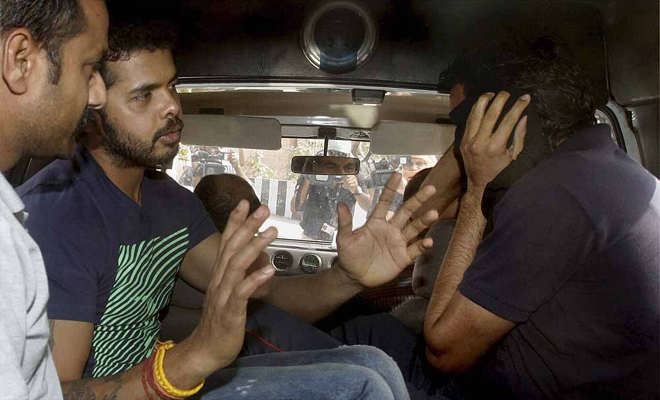
Sreesanth was arrested under MCOCA

 Maharashtra Control of Organized Crime Act, 1999 is a law enacted by Maharashtra to combat organized crime and terrorism. Organized crime has emerged as a serious threat for the state and the society. It erodes national wealth and encourages social evils like illegal trade of narcotics, kidnapping, collection of protection money etc.  Criminals make a great use of wire and oral communications while commissioning of crime. The interception of such communications to obtain evidence against them was becoming necessary and if at all they were caught then police needed to have more powers to hold them back into custody. The legal framework, that is the penal and procedural laws and the adjudicatory system, are found to be rather inadequate to curb or control the menace of organized crime by the well financed and very organized mafia organizations. Therefore the government decided to enact special laws with stringent and deterrent provisions to control organized crime which led to creation law laws such as the Maharashtra Control of Organized Crimes Act.

What is organized crime?

Organized crime means any continuing unlawful activity by an individual, singly or jointly, either as a member of an organized crime syndicate or on behalf of such syndicate, by use of violence or threat of violence or intimidation or coercion, or other unlawful means, with the objective of gaining pecuniary benefits, or gaining undue economic or other advantage for himself or any person or promoting insurgency.[1]

Like the recent case of spot fixing, it is speculated that the money of underworld mafia is involved. According to the police the accused persons were acting on command of people like Dawood Ibrahim Kaskar and Chota Shakeel who have a continuous past record of organized crimes, provisions of MCOCA have been invoked against the accused.[2]


What crimes come under M.C.O.C.A.?

1)      Committing offence of organized crime which results to death.

2)      Being a member of organized crime.

3)      Aiding or Abetting or knowingly facilitating the commission of organized crime or helping in preparation of such acts. For eg– Communicating or handing over documents, passing and publishing of information or documents which is helping in commission of organized crime.

4)      Giving shelter or concealing any member of organized crime.

5)      Holding or looking after any property derived or obtained from commission of organized crime or property in possession on behalf of organized crime.

There has to be a “continuing unlawful activity” by individual or a group neither as a member of an organized crime syndicate or on behalf of such syndicate. To consider an act a continuing there are conditions which needs to be fulfilled. Firstly, it has to be a cognizable offence punishable with imprisonment for three years or more.[3] Second, more than one charge-sheet must have been filed before a competent court within the preceding period of 10 years and the court must have taken cognizance of such offence. Due to the peculiarity of this law it is necessary to sustain the charges against at least one of the accused in order to sustain the charge of conspiracy against the remaining accused, who might have acted on his or her behalf.[4]

It was generally considered that assisting means helping with finances but the help does not necessarily means monetary but it could be ‘any’ kind of assistance to the criminals responsible or helping in commission of organized crime.[5]

How to decide whether M.C.O.C.A. has to be applied  instead of other laws-

(1)   M.C.O.C.A, generally, deals with prevention and control of criminal activity by organized crime syndicate or gangs within India. Its aim is to minimize the unlawful activities done by organized criminal groups.

(2)   Its emphasis is on crime and pecuniary benefits arising from it. Activities which benefit or favours monetarily but could extend up to insurgency. Generally, it is about the cases of spoken or written words or any other form of visual representation.

(3)   Unlawful activity as defined in M.C.O.C.A. need not be terrorist attack or insurgency.

(4)   It punishes for promoting insurgency but not insurgency per se.


[1] 2(1)(e) Maharashtra Control of Organized Crime Act, 1999

[3]  Section 2 (1)(d), Maharashtra Control of Organized Crime Act, 1999.

[5] 2(1)(a)(iii), Maharashtra Control of Organized Crime Act, 1999.

Download Now

How to handle Cheque Bouncing – Indian Laws

1
Will this cheque bounce?

This article was written by Hardik Daga while he was interning at iPleaders.

What to do if a cheque given to you bounces

According to the Section 138 of the Negotiable Instrument Act, a person whose drawn cheque has been dishonoured is liable and shall be made to pay fine which is double the amount written in the cheque or should be imprisoned for two years or both. This means that the person who wrote a cheque and then dishonored it for any reason (insufficiency of funds, stop payment order etc) can be punished under the criminal law for his action. If you have money stuck in a bad debt, then if a cheque was issued to you – then you can use this as a threat to recover your dues.

Steps which should be taken when cheques bounce

1) The cheque has to be presented to the bank within a period of 3 months (earlier it was 6 months) from the date on which it is drawn or within the period of its validity, whichever is earlier.

2) The holder of cheque should send a notice to the drawer mentioning the dishonoring of the cheque by the bank within 30 days after cheque has been dishonored.

3) The drawer has 15 days to repay the amount and if he fails to do this then holder has to take a civil action within a month.

The drawer will only be liable when he has legally enforceable liability or debt to pay to the holder. If the cheque is drawn for donation or to the charitable organization then it won’t come under dishonoring of a cheque. Even application amount paid for shares falls in this category.

Earlier, if the signature mismatched or some alterations were made in the cheque, it didn’t fall under the ambit of willful dishonor of cheque but in a recent judgment of the Supreme Court it was held that dishonouring of a cheque due to a signature mismatch with the one submitted as a specimen to the bank could make drawer pay a hefty fine or get him prosecuted.[1]

Sometimes the name of the drawer is not clear on the cheque and also there is no mention of address of the drawer. Holder may contact the bank on which cheque is issued and request the bank to provide him drawer’s contact information.

The Bombay High Court has ruled that bank cannot prosecute borrowers under the stringent anti-cheque bouncing law if blank post-dated cheques issued by them as collateral security are dishonoured.[2]

What if a cheque issued by a company or LLP bounces?

Under Section 141 of the Negotiable Instrument Act if a cheque issued by a company or LLP bounces then every person, who at the time the offence was committed, was in charge of and was responsible to the company or LLP for the conduct of the business shall be deemed to be guilty of the offence and will be tried under Section 138. The word ‘in charge’ of means the person who is in overall control of the day to day conduct of the business. The very fact that they (MDs and directors) have signed a cheque is enough to prosecute or fine them for the act.

What can be the defence of a company official against a case of cheque bouncing?

A senior official of the company who is tried under Section can take a defense that he had no knowledge of this act or was diligent while exercising his duty and he could not have done anything to avoid it.

According to the recent Judgment of the Supreme Court a managing director is prima facie in charge of and responsible for the company’s business and affairs and can be prosecuted for offences by the company. Directors can be prosecuted only if they were in charge or had a hand behind the act. Similarly, company cannot be held liable if one of its branch issues a cheque and it is dishonoured.[3]

Other officers of a company cannot be made liable under sub-section (1) of section 141, they can be made liable only under sub-section (2), by looking into their position and duties into the company and their role in regard to the issue and dishonor of the cheque, disclosing consent, convenience or negligence. For E.g. Signatories who hold the responsibility to look after the transactions made by the companies by cheques.


Download Now

Email scams- Legal Recourse for Indian victims of email scams

2
impersonation law online
Puneet Bhasin
This article was written by Advocate Puneet Bhasin, who is the founder of Cyberjure Legal Consulting.
Phishing law in India
Puneet Bhasin
Cyber space has certain distinct features like anonymity which make it a very dangerous arena. However, this sense of anonymity is not really true as every person and activity on the internet can be traced, but a layman does not have the knowledge to take recourse to the same when he is a victim of a cyber crime.Email scams are the most commonly committed cyber crimes in India. Gullible people fall prey to these scams which offer great monetary gains. An Email scam is a hoax distributed in an email form which is designed to deceive and defraud the email recipients for monetary gain.The most common types of Email scams are as follows:

1.      Dating Scam: This is a very charming scam that purports to tug at the strings of your heart but end of the day leaves your wallet empty. These scams originate from random chats on online dating or matrimonial portals where email ids are exchanged for further correspondence. Also in many cases there are emails soliciting for a date by a very beautiful and charming woman that are sent to all email ids that would seemingly belong to men. Responding to such emails lead to exchange of photographs and sharing of personal data along with flirting and building an emotional bond. However, it ends with the scammer being in severe need for money for treatment after an accident or to visit the online lover. However, once the money is transferred all correspondences from the scammers end cease. In many cases they are actually Nigerian men who purport to be beautiful women and solicit men for dates, and that’s why this is a type of Nigerian email scam.

2.    Phishing Emails: These emails are all over cyber space. They purport to have been sent by a Bank and have a link which directs you to a webpage which carries the logo and feel of the Bank’s website. They require the recipient to update his records immediately otherwise his accounts would be frozen. Most people panic on receiving such an email and enter their online banking passwords and sensitive data on the webpage. Thereafter, the scammers make unauthorized withdrawals from the victim’s bank accounts. The latest is an email from RBI which asks the recipient of the email to secure his bank account details with RBI, requiring him to mention all the banks in which he has his accounts along with the net banking details, credit card numbers including the secret three digit CVV number.

3.    Inheritance Scam: These emails mention that the name of the recipient matches that of the relative of a millionaire who has died intestate abroad. If a victim responds positively to this email, he will receive very genuine looking transfer documents for the property along with a bill for the legal fees that would have to be incurred for the transfer. Once the victim transfers the money, he will never hear from the scammer again.

4.    Lottery Scam: This is among the most common types of email scams, where a victim receives an email informing him that he has won a big lottery and he has to pay a certain amount of money as transaction costs to claim the prize money.

5.     Extortion scam: This is a very interesting type of email scam. In email scams, the scam emails are sent out to millions of people. These scam emails are threatening in nature and demand security money. They will typically say that I am watching you, and I know your wife and child also, if you don’t pay beware the consequences. The next email would mention that you think I am not serious, but I have been following you, you wore a white shirt and blue trousers today. Now in reality this is just a psychological play to create fear in the mind of the victim. If you just clearly think, then from all the men who receive that email many would have a wife and child, and most men wear white shirts and blue trousers. It’s a game of probability.

In 2012 a 32 year old man from Indore was arrested for allegedly duping a student from Kandivili of Rs. 1.2 Lakhs through an email lottery scam. The Mumbai Cyber Police cracked this case and apprehended the culprit.

If you are a victim of such a scam, then there is legal recourse under the Information Technology Act, 2000.

Section 66-D of the Information Technology Act, 2000 provides for punishment for cheating by Personation by using a computer resource. This legal provision reads as under:

“Whoever, by means for any communication device or computer resource cheats by personating, shall be punished with imprisonment of either description for a term which may extend to three years and shall also be liable to fine which may extend to One Lakh rupees.”

A victim can initiate legal action against such scammers. The first step would be filing a complaint with the Cyber Crime Cell to trace the offenders and thereafter a Complaint should be filed with the Adjudicating Officer under the Information Technology Act, in order to initiate legal proceedings against the offenders. In many cases the offenders are Indian citizens only, who pretend to be foreign nationals in the emails.

Always remember, that if something sounds too good to be true, then it probably is. Never volunteer your credit card details, net banking details, PAN card numbers or any other sensitive personal data to any unknown person in cyber space however, credible it may appear to be.

It is always better to be safe in cyber space. However, if you are a victim of such scams, you do have legal recourse to recover your money.

[email protected]

www.cyberjure.com

Download Now

Banker’s Legal Guide to dealing with Phishing scams in India

2
impersonation law online
Puneet Bhasin

This article is written by Puneet Bhasin, a cyber law expert from Mumbai. She regularly assists banks in dealing with Phishing scams and we asked her to share her experience, and she wrote this guest post for our blog. Over to Puneet.

Online banking revolutionized banking transactions, whereby money could be transferred at a single click. It has been a  time saver and has been an extremely convenient method to undertake commercial transactions. However, it has lead to a slew of litigation against banks. With online banking came phishing emails.

Phishing emails in these cases are those emails which purport to have been sent by the bank and have the look and feel of a legitimate email from a bank. They require the user to enter their username and password to reconfirm their accounts, invariably threatening that if such confirmation is not made immediately the account would be frozen. In many cases these emails are spoofed also whereby a third party sends an email using the email id of the bank, and this can be easily identified by reading the complete header of the email.

Many users panic on receiving such an email and immediately give out their personal sensitive data like banking passwords to third parties purporting to be representing the bank.  They realize that they have been duped only when money is drawn out by such third parties from their bank accounts.

There has been a slew of litigation against banks whereby, the victims of phishing scams file complaints against the banks under the Information Technology Act, 2000.  The grounds on which such complaints are filed is Section 43, Section 43A and Section 72 A pf the Information Technology Act.

Section 43 of the Information Technology Act deals with Unauthorised Access, and the Complainant in most cases alleges violation of Section 43 (a) which is accessing or securing access to a computer, computer system or computer network without permission of owner or person in charge. However, banks have a very strong legal defence to this because the unauthorised access is by a third party who sent the phishing email and not the bank. The banks on receipt of any information from a online banking services user that his account has been wrongfully debited, must ask him if he responded to any email asking for his password and must ask him to submit documentary proof of that email to the bank. If the user admits that he has replied to such phishing email, the bank must require him to submit a letter to the bank to that effect in order to enable the bank to freeze his account, whereby further unauthorised money transfer should not happen from his account.  The bank should intimate the user by an official letter to file a complaint with the cyber crime cell, and the bank should also file  an FIR against the beneficiary account holders in whose accounts the money has been unauthorisedly credited. This is important to prove the proactive efforts of the bank in a litigation by a victim against the bank under the Information Technology Act.

Phishing law in India
Puneet Bhasin

Section 72 A of the Information Technology Act reads as under:

 Punishment for Disclosure of information in breach of lawful contract.- Save as otherwise provided in this Act or any other law for the time being in force, any person including an intermediary who, while providing services under the terms of lawful contract, has secured access to any material containing personal information about another person, with the intent to cause or knowing that he is likely to cause wrongful loss or wrongful gain discloses, without the consent of the person concerned, or in breach of a lawful contract, such material to any other person shall be punished with imprisonment for a term which may extend to three years, or with a fine which may extend to five lakh rupees, or with both.”

The main contention of the complainant would be that the bank has access to his password and misused it. However, as per RBI norms all banks have 128 bit encryption of passwords and the bank does not have any access to the same.

The Complainants in most cases attempt to bring the bank within the definition of an “Intermediary” under the Information Technology Act,; however, the exceptions to intermediary liability under Section 79 of the Information Technology Act, 2000, apply to a bank in this case because of the following reasons:

1. the function of the bank  is limited to providing access to a communication system over which information made available by third parties is transmitted or temporarily stored.

2. the bank does not-

(i) initiate the transmission,

(ii) select the receiver of the transmission, and

(iii) select or modify the information contained in the transmission
(c) the bank observes due diligence while discharging his duties under this Act and also observes such other guidelines as the Central Government may prescribe in this behalf.

The banks are required to maintain ISO 27001 standards because they handle confidential and sensitive personal data of users of their services.

In brief, the banks need to undertake the following steps in order to be able to succeed in any litigation against them:

1. They should provide a handbook to the online banking services users at the time they apply for such services. The handbook should mention directions for safe use of online banking and should also contain complete information about phishing emails and scams, including information on how users can protect themselves from such phishing attacks.

2. The Online Banking Services Application should have an Indemnity clause, whereby the user indemnifies the bank.

3. The Terms and Conditions of Online Banking should contain Indemnity clauses with respect to password of the user, online transactions and use of bank’s services.

4. There should be a security tips page which warns users of phishing emails each time they log in for online banking.

5. There should be cyber security and cyber law compliance panel. This panel should comprise of cyber security experts who should ensure that proper cyber security measures are always in place and the cyber lawyer in the panel should ensure that the online banking user agreement clauses  are up-to-date to restrict the bank’s liability in an environment where new cyber crimes get added each day.

6. The online user should be made to agree to indemnify the bank with respect to his usage of his password and online banking transactions with each log in.

7. There should be a well drafted Privacy Policy whereby the bank’s liability is reduced to a negligible level.

8. The cyber security and cyber law compliance panel should send emails on a routine basis to all users of online banking about the latest cyber crimes and safe guard measures. This helps show the banks active role in prevention of cyber crimes and shows the bank in positive light in cyber crime litigation against the bank.

9. The Online Banking Services Agreement should have a well drafted Alternative Dispute Resolution Clause. This clause is very important as it helps preserve the image and reputation of a bank, which can get damaged when the bank is accused in such matters involving litigation.

10. The bank should actively follow-up the case investigation after filing the FIR.

In the current scenario most cases where the victim in phishing scams files a complaint against the bank manages to succeed in getting compensated for his losses.

These are a few guidelines which can help a Bank succeed in litigation faced by them due to phishing scams.

This article was written by Puneet Bhasin, a cyber law expert from Mumbai. She is a founder of Cyberjure and you can contact her on [email protected]

Download Now

National Sports Bill: Cure for current controversies?

0
Jay Sayta

The author Jay Sayta is a fourth year law student at the WB National University of Juridical Sciences Kolkata and runs http://glaws.in/, India’s first and only website on gambling laws. The author has written extensively on the issue of gaming laws and has been quoted as an expert in the field by leading national newspapers.

Amidst the brouhaha about the IPL betting controversy and the Supreme Court’s remarks on the need to clean-up corruption in sport administration, it is surprising that most commentators in India have not stressed on the need to have a comprehensive framework to regulate sporting bodies, which are often run as per whims and fancies of its office-bearers.

Jay Sayta
Jay Sayta

Ever since the Supreme Court decision in Zee Telefilms & Another v. Union of India (2005) which ruled that BCCI and other sports bodies in India do not fall within the definition of ‘state’ under the Indian constitution, sports associations in India are functioning like an ‘old boys club’ with a select few office-bearers making arbitrary decisions and acting with absolute impunity. Fair trade regulator Competition Commission of India (CCI) had recently fined BCCI Rs. 52.24 crores for monopolistic and anti-competitive practices. CCI had also reprimanded Hockey India for not separating its role as a sports regulator and organiser of commercial events. The BCCI matter is now pending in appeal before the Competition Appellate Tribunal and its operation has been stayed and BCCI continues to act in a high-handed manner with complete disregard for basic norms and procedures.

The reason for the complete opacity of sporting bodies is that there is no Central legislation to compel disclosures and govern the election process. The power to make laws on sports and recreation traditionally vests with the state legislatures under the Indian constitution.

Only few states like Rajasthan, Uttar Pradesh and Himachal Pradesh have enacted ‘Sports Acts’ for their respective states. However, even the legislations for these states only require registration of state sports associations with the registrar of co-operative societies and mandate certain basic requirements for election of office-bearers. There is no requirement for making disclosures to the public at large or for creation of a comprehensive framework to govern sports bodies.

The National Sports Development Bill, 2013 proposed by the Union government seeks to cure many maladies plaguing sporting bodies at present.  Drafted by a select committee of eminent sportspersons headed by Justice (retired) Mukul Mudgal, the Bill was proposed after an earlier version of the Bill was considered insufficient by the Union Cabinet in 2011.

The Draft Bill proposed to give effect to various International conventions on sports, suggests important measures to ensure that sporting bodies are governed in a fair and transparent manner. First, it provides for compulsory registration of National Sports Associations or Federations with the Central government. Only registered sporting associations would be entitled to use the word ‘India’ or ‘Indian’ in International sporting events.

Further, all National Sports Federations would be compelled to publish annual audited accounts and a report on annual achievements on its website every year.  Additionally, all registered sports federations are required to comply with requirements prescribed in the Draft Bill in matters of election of office-bearers: for instance fair and transparent elections for positions in Sporting Bodies will have to be conducted at least once every four years. Additionally, all office-bearers will have to mandatorily retire at the age of seventy. This will prevent the practice of many office-bearers holding life time positions in sporting bodies. The Draft Bill also envisages representation of at least twenty five per cent sportspersons in the decision making bodies of National Sporting Federations. The sportspersons are to be nominated by an Athletic Advisory Council to be constituted by the National Sports Federations as per rules prescribed by the Central government.

Again, office-bearers against whom criminal charges have been framed would not be eligible to contest elections and every office-bearer would be allowed to hold a position for only two successive terms (However the office-bearer can re-contest elections after a four year cooling off period). The Draft Bill also envisages creation of an Appellate Sports Tribunal to adjudicate any disputes regarding Sports Federations and to oversee the functioning of sporting bodies. The Appellate Tribunal is empowered to cancel registration of sporting bodies who do not comply with requirements of the Bill relating to elections, transparency and disclosures.

However one of the most important provisions of the Bill is bringing all National Sporting Federations within the ambit of the Right to Information (RTI) Act.  Only information relating to doping tests, health and fitness of athletes and selection procedure is exempt from disclosure. This provision will ensure that all contracts and tenders awarded by Sporting Federations are open to public scrutiny making it easier to punish acts of corruption and mismanagement of funds.

It is thus clear that the passage of the National Sports Development Bill would be an important measure to ensure some amount of transparency and probity in the conduct of sporting bodies. However it is unlikely that the proposed legislation will be passed sometime in the near future as important politicians cutting across party lines are office-bearers of BCCI and other sporting bodies and would consider any regulation as an encroachment of their personal fiefdom.  Perhaps continued public pressure and suggestions by an activist judiciary would be the only way to ensure that the proposed reforms see the light of day.

The author is a fourth year student of the WB National University of Juridical Sciences Kolkata and runs http://glaws.in/, India’s first and only website on gambling laws. The author has written extensively on the issue of gaming laws and has been quoted as an expert in the field by various media houses.

Download Now

Jet-Etihad Deal and its Competitive Concerns

1

Jet-Airways-Etihad

The article is written by Akansha Mehta.

There remains many more hindrance in the way of the Rs 2,060 crore Jet-Etihad Deal as despite getting a clearance from the Competition Commission of India (CCI) vide order dated 12/11/2013, three weeks later an appeal has been filed in the Competition Appellate Tribunal (COMPAT) against the CCI’s decision. This post focuses on the composition of the deal and the reasoning given by the CCI while approving it.

According to the Government notification (S.O. 480E dated 04.03.2011) in case of an acquisition where one enterprise acquires the shares, voting rights or assets of another enterprise have either, in India, the assets of the value of more than INR 15 billion or turnover more than rupees 45 billion, or, in India or outside India, in aggregate, the assets of the value of more than USD 750 million, including at least INR 7.5 billion in India or worldwide turnover of more than USD 2.25 billion, including turnover of at least INR 22.5 billion (approx. USD 500 million) in India, such an acquisition shall be deemed to be a combination whose regulation shall be according to the Act.

The proposed combination in the case of Jet-Etihad relates to acquisition of 24% equity stake and certain other rights in Jet by Etihad. Etihad is a company incorporated in the United Arab Emirates (UAE) which is the national airline of UAE. It is wholly-owned by the Government of Abu Dhabi and is primarily engaged in the business of international air passenger transportation services. While Jet is a listed company incorporated in 1992 under the provisions of the Companies Act, 1956 and is primarily engaged in the business of providing low cost and full service scheduled air passenger transport services to/from India. The combined value of assets and turnover of the parties met the threshold requirements for the purpose of Section 5 of the Act and therefore their regulation were to be done according to the Competition Act, 2002.

The consequence of acquisition of 24% equity stake by Etihad shall be that it will have the power to nominate two out of six shareholder directors, including the Vice Chairman, in the Board of Directors of Jet which shall amount to be a significant participation in the managerial affairs of Jet. With a view to achieve the purported objective of enhancing their airline business through joint initiatives, the parties also entered into a Commercial Co-operation Agreement (CCA). Under the CCA, the parties agreed that- they would frame co-operative procedure in relation to (i) joint route and schedule coordination; (ii) joint pricing; (iii) joint marketing, distribution, sales representation and cooperation, Etihad would recommend candidates for the senior management of Jet.

It was observed by the CCI that the effect of these agreements including the governance structure envisaged in the CCA establishes Etihad’s joint control over Jet, more particularly over the assets and operations of Jet. In order to assess the effect of this control, the CCI primarily analysed the effect of the proposed combination on those services that were offered by both the parties.

The Acquirer (i.e. Etihad) is the national airline of Abu Dhabi, primarily offering international airline services to and from Abu Dhabi, and between other international destinations using Abu Dhabi airport as the transit hub. Whereas, Jet is a listed Indian company offering both domestic and international air transportation services. Jet is stated to offer services between different call points in India to 20 destinations abroad.  It was observed that Etihad will not be operating in Indian domestic air transportation services i.e. air transportation between two airports located within India. Therefore, the proposed combination is not likely to raise any competition concern in the said sector. In this context the Commission observed that the relevant market to assess the effect of the proposed combination is the market for international air passengers.

While assessing the impact of the proposed combination on the international air passengers CCI observed that India-UAE passenger traffic consists of approximately 3.5 million origin and destination passengers per year. Out of this, Jet has only 20 percent share and Etihad carries only 5 percent of the market. Jet and Etihad provide overlapping services in 9 nonstop markets between India and UAE. The market share of Jet and Etihad combined in all these nine nonstop markets is below 36% andthey face intense competition from other airlines serving the same routes. The Commission observed that Indian passengers flying to these destinations are fare sensitive therefore any tendency to raise fares by them on such routes will not be profitable for the airlines.

There are 38 routes to/from India to other destinations where Etihad and Jet fly and there is at least one competitor on the route. Of these, on only 7 routes Jet Etihad have a combined market share of greater than 50 percent. Of these 7 routes, on 3 routes either Jet or Etihad has a market share of less than 5 per cent. For instance, on the Bombay (BOM)-Brussels (BRU) route, Jet has a market share of 72.90% and Etihad has a market share of 3.30%. On the Ahmedabad (AMD)-BRU route Jet has a market share of 83.10% while Etihad has a market share of 2.61%. Thus, post transaction change in market share is marginal for the combined entity and the deal does not alter the competition dynamics.

Considering these facts and the assessing the other relevant factors as mentioned in Section 20(4) of the Act, the CCI stated that the proposed combination is not likely to have appreciable adverse effect on competition in India. An appeal has been filed in the COMPAT against this order of the CCI on the ground that the CCI failed to carry out an assessment of the appreciable adverse effect on competition and placed all passengers and indeed the entire airline industry into a grave risk of suffering irreparable damage and permanently eliminating competition. This appeal might have some standing as   through his minority order Member Anurag Goel also stated that the proposed combination is likely to cause an appreciable adverse effect on competition within the market of international air passenger transportation from and to India.


.


Download Now
logo
FREE & ONLINE 3-Day Bootcamp (LIVE only) on

How Can Experienced Professionals Become Independent Directors

calender
28th, 29th Mar, 2026, 2 - 5pm (IST) &
30th Mar, 2026, 7 - 10pm (IST).
Bootcamp starting in
Days
HRS
MIN
SEC
Abhyuday AgarwalCOO & CO-Founder, LawSikho

Register now

Abhyuday AgarwalCOO & CO-Founder, LawSikho