The Hon’ble Supreme Court of India has through its various decisions, laid down a bunch of guiding principles that hold conspicuousness in determining whether a company director is liable to be prosecuted for the offence charged or otherwise. This article focuses on the case of Shiv Kumar Jatia Vs. State (NCT of Delhi) (Criminal Appeal No. 1263 of 2019) for which the Supreme Court had given its decision on August 23, 2019. Through this case, the Court has emphasised the standards and variables that should be investigated while discovering the culpability of the director of a company. Three criminal appeals were filed in the High Court of Delhi and the same stands disposed of by the supreme court’s order.
The Honourable Court held that criminal proceedings should be quashed against the Managing Director of the Company when the allegations are vague and there were no allegations of an active role in the incident with criminal intent. Let’s have an elaborate view of this case. The judgement starts with the statement “Leave granted” which means that the court has admitted the petition and would hear it as an appeal.
Facts of the case
Initially, an FIR was filed on October 19, 2013, with the R.K Puram Police Station under Section 308 of the Indian Penal Code (Attempt to commit culpable homicide) due to the receipt of information that Gaurav Rishi who was admitted to Fortis Hospital, located at Vasant Kunj had fallen down from stairs at the Hyatt Regency, New Delhi. The investigation proved that there were no ingredients for the said offence. After which the appellants – Aseem Kapoor and Shiv Kumar Jatia who were registered as accused No.4 and accused No.2 respectively, along with 6 others were charged for offences committed under Section 336/338 read with Section 32 of IPC 1860 and Section 4 of Cigarettes and Other Tobacco Products (Prohibition of Trade and Commerce, Production, Supply and Distribution) Act 2003. Hotel Hyatt Regency, New Delhi is run by a publicly listed company, Asian Hotels (North) Limited (“Asian Hotels”).
On investigation, it was revealed that Gaurav, the injured, had fallen down from the terrace of the 6th floor to the 4th floor of the hotel – Hyatt Regency. Gaurav had joined two US Nationals namely, Ms Rebecca and Ms Margarita at the hotel where the three of them were having food and wine in the club that is on the 6th floor of the hotel and frequented the terrace for smoking. There is an executive lounge on the 6th floor where all three of them were sitting and used the terrace adjacent to it for smoking. It was found that Gaurav fell from the 6th floor of the terrace to the 4th floor of the hotel and in the process, injured himself.
According to the prosecution, the terrace was dark and without light. However, the terrace permitted the guests for smoking which was a mistake on the part of the hotel management for allowing guests to access an area that was not safe. The reply from the office of the Deputy Health Officer of the South Delhi Municipal corporation obtained through an RTI alleged that no health trade licence was granted to the hotel for the said terrace on the 6th floor.
It has to be noted that Mr Shiv Kumar Jatia and Mr Aseem Kapoor had filed petitions under Section 482 of the Code of Criminal Procedure, 1973 before the High Court of Delhi, in order to get the proceedings initiated against them to be quashed by the court. However, the Court ordered that it was not proper to quash the proceedings against them, following which the said persons challenged the same order of the Delhi High Court before the Supreme Court.
List of appellants
Shiv Kumar Jatia is the Managing Director of M/s Asian Hotels (North) Limited which runs the Hotel Hyatt Regency. He is the only non-independent Executive Director of the Company.
Apart from Mr Shiv Jatia,
Aseem Kapoor who is the general manager of the Hyatt Regency and looks after the day-to-day affairs of the hotel;
P.R Subramanian who is the lodging licence holder;
Lt. Col. Deepak Khanijou (Ret.) who is the Director of Security;
Mr Karan Lal, the front office manager;
Pawan Kumar Singh – Assistant manager, food and beverages; and
Amit Ghildiyal, the food and beverages trainee;
were also named in the charge sheet.
Observation
From the investigation, it was proven through the Medical reports that Gaurav was not in an inebriated state at the time of the fall. This meant that he fell off the terrace just because of his negligence. Although it was dark on the terrace and there was no light, the Managing Director cannot be held liable only on the ground of his professional capacity. It is common and basic knowledge that smoking on a dark terrace at night is not a wise idea, beyond that whoever does so is liable for his own actions and cannot blame another person for the negligence on their part in case of injury or accident that might happen.
Judgment
The Supreme Court took into consideration the fact that Mr Jatia was not present in the country on the day when the incident took place. The allegations were made against the company and the other staff members who were present at the premises as they were discharging their respective duties in association with the day-to-day activities allocated to them. Also, it must be noted that the licence of the hotel was not obtained in the name of the managing director. At this juncture only one point is clear is that Mr Jatia is unnecessarily being named in the charge sheet just because he is the one who chairs various meetings, instrumental in taking decisions and authorises important documents in his executive capacity.
The Supreme Court with reference to the decision in the case Sunil Bharti Mittal v. the Central Bureau of Investigation brought to light the fact that in order for a person to be accused just because of his executive position as a Director, Managing Director or Chairman of a company,
there must be
Necessary evidence to prove the person’s role in the act along with criminal intent.
Direct nexus of the criminal intent with the accused.
The Court further placed reliance upon its judgement in the case of Maksud Sayed v. State of Gujarat & Ors. where the Court held that the penal code does not contain any provision which provides punishment explicitly for the vicarious liability of directors, and even if it did, the complainant must make requisite allegations by upholding the vicarious liability provision in the right stance.
The Delhi High Court’s order was further quashed by the Supreme Court which held that the Managing Director need not be held liable because Gaurav had the fall from the terrace only on account of his own negligence and the Managing Director of a hotel cannot be accused merely on grounds of him being the person in charge at the time of the occurrence of the incident. While setting aside the Delhi High Court’s Order the Apex Court stated that since the allegations made against the managing director are vague in nature, it constitutes good ground for quashing the proceeding under Section 482 of the Criminal Procedure Code, 1973, as was held in the case Sharad Kumar Sanghi v. Sangita Rane.
Analysis
The current judgment gives confidence to the long-standing law that has developed over the course of the years in consonance with the liability of the Directors. Under criminal law, for the indictment of a director when a company perpetrates an offence that is contrasted from one circumstance to another, cardinal standards of criminal justice require ‘mens rea’ as a fundamental element for the indictment of the offender.
‘Mens rea’ refers to criminal intent. The literal translation from Latin is “guilty mind.” ‘Mens rea’ refers to the state of mind statutorily required in order to convict a particular defendant of a particular crime, the lack of the same negates the crime situation under any given circumstance. Therefore, for any offence committed by a company in which no allegation regarding “negligence with criminal intent” attributable to the director is made out in the charges levelled, the prosecution against the director must fail.
Conclusion
This decision of the Supreme Court on the imputation of Criminal Liability on the Managing Director in the case of Shiv Kumar Jatia v. State (NCT of Delhi) perceived that criminal liability requires consideration of ‘mens rea’. By requiring that actual negligence that is on the part of the Director be proved compulsorily as a pre-condition for holding a director liable, the court has endeavoured to provide protection to Executive Directors from taking the fall on behalf of the company for an act in which they have no relation with just on account of their executive status.
Students of Lawsikho courses regularly produce writing assignments and work on practical exercises as a part of their coursework and develop themselves in real-life practical skills.
LawSikho has created a telegram group for exchanging legal knowledge, referrals, and various opportunities. You can click on this link and join:
This article is written by Shraileen Kaur, a law student at ICFAI University, Dehradun. In this article, the author discusses in detail the Law Commission of India’s historical evolution, composition, powers, concerns, limitations, and reports as well as recommendations by the Law Commission of India.
The law is one of the most dynamic elements in society. As society advances, social structures change, and the need for changes in the laws arises. To meet this demand, a think tank is needed that can do legal research, recommend laws, and provide reports on the prevalent situation. On the international level, we have the International Law Commission headquartered in Geneva, Switzerland. It was founded by the charter of the United Nations General Assembly (UNGA) of 1947 under Article 13(1)(a). At the national level, we have the Law Commission of India, which acts as a think tank for the government of India on legal aspects of Indian society. The Law Commission of India is an advisory body that provides recommendations for improvising legal statutes. The Law Commission of India is responsible for the legal reforms introduced in India.
The Law Commission of India comprises some of the greatest minds in India in the field of law. On one hand, the Commission checks the arbitrary nature of the executive and, on the other hand, the Commission also provides recommendations to the legislature for new as well as existing laws. However, the Law Commission of India is only an advisory body, and the recommendations provided by the Commission are subject to the approval of the Government of India.
Law Commission
The Law Commission of India is an executive-level advisory body that was established by the government of India. The Law Commission of India is neither a constitutional body nor a statutory body. The Commission is an ad hoc body that is constituted to achieve a desired goal or objective of improvising the legal system in India. The Law Commission of India is composed of certain legal experts, advocates, judges, as well as professors. The Commission is headed by a retired judge. The Commission carries out the function of advising the Indian government by doing legal research and suggesting legal reforms depending on the prevalent situation. The commission is established under the Ministry of Law and Justice for a fixed time period, normally 3 years.
It is to be noted that the Law Commission of India is not defined under the Indian Constitution. However, it is constituted as a part of the implementation of Article 39A of the Constitution of India, which was included by the Constitution (Forty-second Amendment) Act of 1976. Article 39A of the Constitution of India obliges the state to –
ensure that the legal system functions to promote justice based on equal opportunity for all;
shall offer free legal assistance through appropriate legislation or programs;
to guarantee that no citizen is deprived of the opportunity to get justice due to a lack of resources or other impediments.
The Commission had Justice Balbir Singh Chauhan as its last chairman. He served as the chairman of the 21st Law Commission of India till August 31st, 2018. The tenure of the 21st Law Commission of India expired on August 31st, 2018. Later on, the Government of India established the 22nd Law Commission for a period of 3 years starting on February 21, 2020. However, since the inception of the 22nd Law Commission of India, it has been a part of the news as it does not have a chairman or members appointed.
Recently, the Supreme Court of India asked the Ministry of Law and Justice the reason behind so much delay in the appointment of the Chairman and members of the 22nd Law Commission of India. In a reply to the Supreme Court of India, Minister of Law and Justice Kiren Rijiju stated that, as per the Constitution of India, no time frame has been drawn for the appointment of the Chairman and members of the Law Commission of India. Advocating the unnecessary delay, the Minister of Law and Justice stated that it is important for the Law Commission of India to represent members of all sections of society.
Historical evolution of the Law Commission of India
The history of the Law Commission in India dates back to British rule. Initially, the First Law Commission of India was established by the East India Company under the Charter Act of 1833. The Commission had Lord Thomas Babington Macaulay as its chairman. It was constituted in the year 1834. The four other members of the First Law Commission were as follows-
Charles Hay Cameroon (Distinguished British jurist)
John Macleod (a physiologist who devoted his knowledge to diverse topics)
George William Anderson (the then-official governor of Bombay)
F. Millet (Additional member of the Commission other than the 3 members representing the 3 main provinces, namely, Bombay, Calcutta and Madras)
Before independence, a total of four law commissions were established by British rule. The First Law Commission after independence was established for three years in 1955. The history of the Law Commission of India can be divided into two parts- pre-independence as well as post-independence.
Pre-independence Law Commission of India
During British rule, the territory of British India was governed by two sets of rules and regulations –
Local laws – These laws were prevalent in the Indian region even before British rule. The local laws were made on the basis of the then-prevalent social norms, centuries-old customs as well as traditions.
English laws – English laws were the laws made by the Britishers to extend their power and authority in the Indian territory. The prime objective of the introduction of these laws was to increase the control exercised by British rule and squeeze out the wealth of Indians.
However, these two sets of laws were criticised by the administrative authorities and lawmakers for the following reasons:
Due to different sets of laws effective in the same territory, the administration of the territory became difficult leading to chaos and disturbance.
Several times, both the local and English laws would contradict each other, showcasing a lack of uniformity.
To solve these problems, the British officials came up with the solution that there was a need for a commission that could look into the situation and suggest the required changes for better administration and maintenance of peace. Following this, a commission was set up to advise the British government on legal matters and help in bringing uniformity to the laws. Hence, a law commission was set up in the year 1834 by the Charter Act of 1833.
To fulfil the objectives of their formation, the commission was given the power to interpret the laws and introduce changes in both the local and English laws for the maintenance of law and order.
Other than the First Law Commission, India had 3 other law commissions before independence, which have been discussed here below-
First Law Commission of India (Pre-independence)
The First Law Commission of India before independence was established in 1834 under the chairmanship of Lord Thomas Babington Macaulay. This Commission is given credit for –
The introduction of the penal code, which later came to be known as the Indian Penal Code, 1860. The penal code by the First Law Commission of British India was introduced on May 2, 1837.
The introduction of Lex Loci (the law of the place). It is considered the basis of the power and authority of English law exercised by Britishers in India. It was introduced by the Law Commission on 31 October 1840.
Second Law Commission of India (Pre-independence)
Year of establishment
1853
Tenure of the Commission
3 years – 1853 to 1856
Chairman of the Commission
Sir John Romilly
Members of the Commission
7 members commission, including the chairman. Sir Lord JervisSir Edward RyanR. LoweJohn MacleodCharles Hay CameroonT. E. Ellis
Reports by the Commission
The Second Law Commission of British India contributed to the legal reforms through the following reports – Penal Code, 1860 was formed based on the Penal Code of 1837 introduced by the first law commission of British India. Introduction of the Code of Civil Procedure in 1859. Introduction of the law of limitation in the year 1859. Introduction of the Code of Criminal Procedure in 1861.
Third Law Commission of India (Pre-independence)
Year of establishment
1861
Tenure of the Commission
3 years – 1861 to 1864
Chairman of the Commission
Sir John Romilly
Members of the Commission
Initially, when the Third Law Commission of British India was constituted, there were merely 5 members in the Commission, namely – Justice WillsSir Edward RyanR. LoweJohn MacleodSir W. ErleLater on, the Commission underwent a drastic change in its members, and the new commission was comprised of -Justice W. M. JamesSir Edward RyanR. LoweJohn MacleodJustice HendersonHowever, before the tenure of the Commission expired, Justice Henderson was replaced by Justice Lush. Justice Lush served as a member of the third law commission of British India till its expiration.
Reports by the Commission
The Third Law Commission of British India contributed to the legal reforms through the following reports – Introduction of a code that amended various then prevailing laws regarding inheritance. However, the introduced legislation was for Indians only, with an exception provided for people from the Hindu and Muslim communities. Suggested changes to the Code of Criminal Procedure, 1860. These suggestions were later on adopted by the competent authorities. The Third Law Commission of British India also contributed to the legal reforms through the introduction of several drafts. Some of these drafts are as follows – Draft for the Negotiable Instruments Law was introduced in the year 1867. Draft regarding the Contract Laws, introduced in the year 1866.Draft for the introduction of laws on Evidence in 1868. Draft for the introduction of Transfer Laws on property in the year 1870. Draft for the Insurance Code in 1871.
Fourth Law Commission of India (Pre-independence)
Year of establishment
1879
Tenure of the Commission
3 years – 1879 to 1882
Chairman of the Commission
Sir Whitley Stokes
Members of the Commission
The Fourth Law Commission of India is one of the smallest constituted law commissions in India, having only 3 members, including the chairman of the commission, Sir Whitley Stokes. The other two members of the Commission are as follows – Sir Charles Turner Raymond West
Reports by the Commission
The Fourth Law Commission of British India contributed to the legal reforms through the following reports – Introduction of a code that amended various then prevailing laws regarding negotiable instruments. Suggested major changes to the Code of Criminal Procedure, 1882, as well as the Code of Civil Procedure, 1882. These suggestions were later on adopted by the competent authorities. Introduction of the following codes – Code of Trusts Law, 1882Code on Transfer of Property and Easements, 1882
Post-independence Law Commission of India
After the independence of India, it faced numerous problems ranging from external threats to internal peace, along with one of the largest populations living in poverty. Hence, reforms and the introduction of new laws were the need of the hour.
Before independence, English laws were prevalent in India along with local laws based on customs and traditions. The English laws were made with the objective of dominating the local population as well as extending colonial control. The local laws were orthodox in nature and were considered to be a hindrance to the growth and development of the nation.
So, to combat the situation, reforms in the legal system were introduced. The prime objective of the post-independence legal reforms was to improve the Indian legal system and make it efficient enough to nurture future needs. After independence, the laws were introduced, keeping in mind the public welfare.
Hence, Article 372 of the Constitution of India was introduced, which states that all the laws that were in effect before the commencement of the Constitution of India will remain in effect until the laws are either repealed or replaced. Law commissions were also set up to keep this process of replacing as well as repealing laws smooth.
So far, there have been numerous law commissions have been established after the independence of India. The law commissions established after independence are as given below –
First Law Commission
The First Law Commission of independent India was established in the year 1955. The details regarding this law commission are mentioned below –
Tenure of the law commission
3 years – 1955 to 1958
Chairman
Motilal Chimanlal Setalvad (First Attorney General of India)
Objective of formation
Introduction of law reforms in India
Number of reports presented by the commission
14
The First Law Commission of independent India presented the following reports –
S. No.
Name of the report
Presentation date
Liability of the State in Tort
11 May 1956
Report suggesting the introduction of the Sales Tax
Report mentioning the advice that high courts should sit on benches at different places in a state for proper delivery of justice to the public at large.
1 August 1956
A report stating the British statutes which will be applicable to India even after independence.
Changes being proposed for civil appeals to the Apex Court involving a certificate of fitness
1971
Answers to a few queries posed by the Code of Criminal Procedure Bill, 1970
1972
Suggestions concerning the offences related to the social and economic spheres.
1972
The idea to broaden the definition of ‘public servant’ to include anyone related to public examinations
1972
The idea of incorporating agricultural income into overall income
1972
Liability for injuries brought on by vehicles in hit-and-run incidents
1972
Estate taxes applied to items acquired after the demise of the owner.
1972
The Pensions Act of 1871‘s impact on retired public servants’ ability to bring a pension lawsuit
1972
A suggestion to charge interest on fees under Sections 34 and 35 of the Code of Civil Procedure, 1908, as well as the rate of interest following the decree
1973
Suggestions to make changes in the Code of Civil Procedure, 1908
1973
Other statutory provisions regarding the notice of suit beyond Section 80 of the Civil Procedure Code of 1908
The Eighth Law Commission of independent India was established in 1977. The details regarding this law commission are mentioned below –
Tenure of the law commission
3 years – 1977 to 1979
Chairman
Justice Hans Raj Khanna
Number of reports presented by the commission
10
The Eighth Law Commission of independent India presented the following reports –
S.No.
Name of the report
Year of Presentation
As a basis for divorce, irretrievable breakdown of the marriage
1978
Restriction on practice following appointment as a permanent judge: A proposal
1978
A report suggests amending the Indian Evidence Act, 1872. The suggestion was to make certain statements admissible if they are made by the witnesses before the inquiry commissions or any other statutory authority.
1978
Report suggesting Amendment in the Disciplinary jurisdiction mentioned under the Advocates Act, 1961
Report on the issue of any injury incurred while in police custody.
1985
Eleventh Law Commission
The Eleventh Law Commission of independent India was established in 1985. The details regarding this law commission are mentioned below –
Tenure of the law commission
3 years – 1985 to 1988
Chairman
Justice D.A. Desai
Number of reports presented by the commission
18
The Eleventh Law Commission of independent India presented the following reports –
S.No.
Name of the report
Presentation Year
Report suggesting the formation of an All India Judicial Service like that of the Union Public Service Commission.
1986
Report on the Training of Judicial Officers.
1986
Report on the performance of the Tax Courts since its inception.
1986
Report on the progress of the Gram Nyayalaya
1986
Report on the procedure for appointment to lower courts
1986
Recommendation for the establishment of a new forum for judicial appointments.
1987
A proposal to grant victims of motor vehicle accidents access to a special forum under the Motor Vehicle Act of 1939
1987
A roadmap for workforce planning in the judicial system
1987
Introduction of a forum for national harmony in labour dispute resolution.
1987
Decentralisation of justice administration – Cases concerning Higher Education Institutions.
1988
Report on the cost of litigation in India with reference to free legal aid.
1988
Litigation policies and strategies for public and government entities.
1988
Report on Mediation as an alternative to adjudication.
1988
Allocating resources for infrastructure services in the Judiciary
1988
A new perspective on the pendency of the High Court cases.
1988
A report on the spectrum of benami transactions
1988
A new perspective on the working of the Apex Court.
1988
The responsibility of the judicial process in administering justice.
1988
Twelfth Law Commission
The Twelfth Law Commission of independent India was established in 1988. The details regarding this law commission are mentioned below –
Tenure of the law commission
3 years – 1988 to 1990
Chairman
Manharlal Pranlal Thakkar
Number of reports presented by the commission
12
The Twelfth Law Commission of independent India presented the following reports –
S.No.
Name of the report
Presentation Year
Recommendation on the removal of several Workmen’s Compensation Act of 1923 provisions that had flaws.
1989
Report on the conditions of women in judicial custody.
1989
Eliminating discrimination against women in matters concerning guardianship and custody of minor children and explicitly defining the Welfare Principle
1989
Proposal – To lessen the difficulty and ease the suffering of neglected women, children, and parents, it is necessary to amend the provisions of Chapter IX of the Code of Criminal Procedure, 1973.
1989
Statutory Protection for Pavement and Slum Residents
1990
Need for developing legislative and administrative measures, including the Ombudsman’s office, to ease hardships brought on by excessive delays in resolving beneficiaries’ Provident Fund claims
1990
Conflicts between High Court Decisions and Central Laws: Foreclosure Procedures and Resolution
1990
Concessional sentencing for offenders who voluntarily choose to enter a guilty plea without engaging in negotiations
1991
Need to amend Order V, Rule 19A of the Code of Civil Procedure, 1908, relating to service of summons by registered post with a view to foreclosing likely injustice
1991
It is urgently necessary to change Order XXI, Rule 92(2) of the Code of Civil Procedure in order to fix a problem that undermines the legislature’s good intentions and causes unfair treatment to debtors who wanted to gain from them.
1991
The legislation has to be changed so that courts have the authority to reopen criminal revisional applications and criminal cases that have been dismissed for default in presence.
1991
Legislative measures to prevent the abuse of small depositors
1991
Thirteenth Law Commission
The Thirteenth Law Commission of independent India was established in 1992. The details regarding this law commission are mentioned below –
Tenure of the law commission
3 years – 1992 to 1994
Chairman
Justice Kamal Narain Singh
Number of reports presented by the commission
10
The Thirteenth Law Commission of independent India presented the following reports –
S.No.
Name of the report
Presentation year
Public Sector Enterprises and Article 12 of the Constitution of India
1992
Disputed judicial judgments involving the Code of Civil Procedure, 1908
1992
Report to repeal numerous central acts introduced before independence
1993
Suggestions regarding the introduction of amendments in the Specific Relief Act, 1963
1993
Suggestions regarding the introduction of Section 373A concerning the Sale of Women and Children
1993
Removal of certain deficiencies in the Motor Vehicles Act, 1988
1994
Suggestions regarding the introduction of amendments to the Code of Civil Procedure
1994
Report for the regulation of Inter-Country Adoption
1994
Report on admiralty jurisdiction
1994
Report regarding crimes in custody
1994
Fourteenth Law Commission
The fourteenth law commission of independent India was established in 1995. The details regarding this law commission are mentioned below –
Tenure of the law commission
3 years – 1995 to 1997
Chairman
Justice K. Jayachandra Reddy
Number of reports presented by the commission
3
The Fourteenth Law Commission of independent India presented the following reports –
S.No.
Name of the report
Presentation year
Suggestions regarding the introduction of amendments to the Code of Criminal Procedure, 1973 (Act No. 2 of 1974)
Report on the analysis of the Code of Civil Procedure (Amendment) Bill, 1997
1998
Examining how the Income-Tax Appellate Tribunal, Customs, Excise as well as Gold (Control) Appellate Tribunal, and Central Administrative Tribunal operate
1998
Report on the need of reforms regarding laws on election
1999
Report suggesting major changes needed in the Hire-Purchase Act, 1972
1999
Report on the Patents (Amendment) Bill introduced in 1998
1999
Report on the Bill to Forfeit Property from Corrupt Public Servants
1999
Report suggesting changes in the Amendment of Army, Navy and Air Force Act
1999
Introduction of The Biodiversity Bill, 2000 – Need of the hour
2000
Report on the analysis of the prevalent laws on rape in India
2000
Proposed reforms to Hindu Law regarding Women’s property rights
The Sixteenth Law Commission of independent India was established in 2000. The details regarding this law commission are mentioned below –
Tenure of the law commission
3 years – 2000 to 2003
Chairman
Justice B.P. Jeevan Reddy (from 2000 to 2001) Justice M. Jagannadha Rao (from 2002 to 2003)
Number of reports presented by the commission
11
The Sixteenth Law Commission of independent India presented the following reports –
S.No.
Name of the report
Presentation year
Analysis of a bill on laws related to foreigners introduced in 2000.
2000
Introduction of a bill suggesting changes in arbitration and conciliation.
2001
Protection of Informants and Disclosure in view of the interest of the public
2001
Suggestions for changing a number of laws, both civil and criminal
2001
Report concerning the law related to arrest
2001
Amendments to the University Grants Commission Act of 1956 and the Advocates Act of 1961 are also proposed for the laws governing legal education and professional training in India.
2002
A continuation of the General Clauses Act of 1897 with particular emphasis on the admissibility and codification of foreign assistance in statutory interpretation
2002
Report suggesting Amendment in Section 106 of the Transfer of Property Act, 1882
2002
Report suggesting Amendment in Section 6 of the Land Acquisition Act of 1894
2002
Extending the ambit of Article 20(3) of the Indian Constitution by including the Right to Silence
2002
Report on examination of the Indian Evidence Act, 1872
2003
Seventeenth Law Commission
The Seventeenth Law Commission of independent India was established in 2003. The details regarding this law commission are mentioned below –
Tenure of the law commission
3 years – 2003 to 2006
Chairman
Justice M. Jagannadha Rao
Number of reports presented by the commission
16
The Seventeenth Law Commission of independent India presented the following reports –
S.No.
Name of the report
Presentation year
The Proposals for the Establishment of High Courts’ High-Tech Fast-Track Commercial Divisions
2003
Report on Death Penalty Execution Procedure and Related Issues
2003
Proposal for Environmental Courts
2003
Administration of Funds Raised for Disaster Relief
Report proposes revisions in the fee structure of the courts
2004
Stamp duty verification and arbitration award registration
2005
Elimination of frivolous litigation
2005
Report on transnational Law, Conflict of Laws, and Statute of Limitations
2005
Report on Medical Care for Accident Victims, People in Emergency Situations, and Expectant Mothers
2006
Contract provisions that are unfair (procedural and substantive)
2006
Report concerning the introduction of The Judges (Inquiry) Bill, 2005
2006
Report on the Appointments to the Public Prosecutor’s Office
2006
Trial by the Media: Criminal Procedure and Free Speech (Amendments to the Contempt of Court Act, 1971)
2006
Witness Protection Programs and Witness Identity Protection
2006
Medical Care for Terminally Ill Patients (Protection of Patients and Medical Practitioners)
2006
Eighteenth Law Commission of India
The Eighteenth Law Commission of independent India was established in 2003. The details regarding this law commission are mentioned below –
Tenure of the law commission
3 years – 2006 to 2009
Chairman
This commission had 2 chairmen with different tenures. Justice M. Jagannadha Rao (2006 – 2007)Justice Arunachalam R. Lakshmanan (2007 – 2009)
Number of reports presented by the commission
33
The Eighteenth Law Commission of independent India presented the following reports –
S. No.
Title of the report
Presentation year
Proposed changes to Section 304B of the Indian Penal Code
2007
Analysis of the Code of Criminal Procedure (Amendment) Act of 2005 revised Section 438 of the Criminal Procedure Code of 1973.
2007
Magistrates’ courts that handle matters involving unpaid checks quickly
2008
Suggesting that the L. Chandra Kumar case be reviewed by the bigger bench of the Supreme Court of India
2008
There can be no introduction of Hindi as a required language in the Supreme Court.
2008
S. P. Gupta v. Union of India: Reconsideration of Renowned Judges Cases I, II, and III
2008
Indian Civil Marriage Laws: A Strategy to Address Some Issues. A plan to update and harmonise the regulations governing marriage and divorce filing.
2008
The Hindu Succession Act, 1956, Explanation to Section 6 is being changed to include oral division and familial agreements in the definition of “partition.”
Changes to the Code of Criminal Procedure relating to the restitution of complaints
2009
Uniformity in the retirement age for tribunal chairs and members, such as the National Green Tribunal and the Railway Claims Tribunal, etc.
2009
Legal reforms are implemented to stop traffic accidents
2009
Recommendations for Speedy Justice
2009
Highlighting the rights and obligations of surrogacy couples as well as the regulatory obligations for clinics employing assisted reproductive technology
2009
There have been proposals to establish four regional Supreme Court benches in Delhi, Chennai or Hyderabad, Kolkata, and Mumbai. Additionally, it advocated for keeping the constitutional bench in Delhi alone.
2009
A proposal to make Supreme Court rulings statutory in order to stop bigamy caused by conversion to Islam.
The development of a statute to recompense the victims as well as the inclusion of acid assaults on the Indian Penal Code’s list of specific offences.
2009
Ratification of the Hague Convention on the Civil Aspects of International Child Abduction is required (1980).
2009
Another basis for divorce is the irretrievable breakdown of the marriage.
2009
Suggestion for changing Section 2 of the Divorce Act of 1869 to allow divorcing non-domiciled Christian wives who are estranged from their husbands.
2009
The decisions of the Supreme Court are essential for enhancing the situation of the impoverished.
2009
Resolution of civil disputes via Alternate Dispute Resolution
2009
Family law legislation for Indians who are not residents is proposed.
2009
Maximum costs that may be assessed in lower civil courts.
2009
These were some of the reports by the Law Commission of India post-independence.
Significance of the Law Commission of India
The Law Commission of India has been a prominent pillar in the development of the nation. The significance of the Law Commission of India has been discussed here below –
Keeping a check on implementation
It is a fact that simply making laws to combat a situation is not enough. Implementation of the law plays a prominent role. There must be a body that, from time to time, checks whether the laws are being implemented by the respective administrative authorities or not. It also needs to check whether the laws are actually benefiting the public on the ground or not. A body is needed to check the flaws present in the laws that are in effect. This body also provides suggestions regarding repealing as well as replacing laws.
In India, all these tasks are done by the Law Commission of India.
On-ground body of law
The Law Commission of India acts as an on-ground body of law under the Ministry of Law and Justice. The commission works on the ground as well as ensures that law and order are maintained in society. It ensures that justice is delivered to the public at large.
Enforcement of fundamental rights and directive principles of state policy
The Constitution of India does not explicitly mention the establishment of any law commission. However, according to Article 39A of the Indian Constitution, there has to be an authority that can look after the promotion and enforcement of fundamental rights and directive principles of state policy. The Law Commission safeguards fundamental rights and directive principles of state policy by suggesting the required changes in the laws by its principles.
Authority for replacing and repealing outdated laws
Society is dynamic in nature. It keeps on changing from time to time. To keep up with the new social changes, laws also need to be updated. The Law Commission acts as a capable authority that can suggest changes in the legal system. It advises repealing, amending or replacing the existing laws to meet the changing social needs.
The procedure for the constitution of the Law Commission of India
The procedure for the constitution of the Law Commission in India is quite simple. The power to form a law commission is in the hands of the Central Government. After the expiration of the law commission, the Central Government can establish a new law commission by a resolution. As soon as the resolution is passed by both the houses of Parliament (Lok Sabha and Rajya Sabha) for the formation of a law commission, it is sent to the President for his or her assent. After the President has given his assent, the Central Government has the power to appoint the chairman of the new commission.
According to the recently seen trend, a former judge of the Supreme Court holds the position of the chairman of the newly formed law commission.
Composition of the Law Commission of India
The Central Government has the power to appoint the chairman and other members of the law commission. A law commission mostly consists of numerous legal experts like professors of law, judges of the High Court or Supreme Court, or any distinguished lawyer. A law commission mostly consists of the following members –
Chairman (Since the establishment of the Law Commission only 1 chairman has been appointed at a time.)
One permanent member
A member to be appointed as Secretary
Part-time members (Number of part-time members is not fixed. In general, there are 6 part-time members)
However, this composition of the law commission is not binding to the Central Government. The composition of the law commission is entirely at the discretion of the Central Government. For instance, in the 21st Law Commission of India, the composition was as such –
A chairman appointed as a full-time member
Full-time members which also include a member secretary (4 in number)
Ex officio chairman – (2 in number) – Secretary of the department of legal affairs and secretary of the legislative department
Permanent members (Maximum of 5 members)
This composition of the law commission in India is divided into 2 departments namely – The research staff and the administrative staff. As the name suggests, the research staff has the responsibility to constitute a research panel and carry out the research regarding the required laws. On the other hand, the administrative department of the Law Commission of India looks after the administrative work of the commission.
The term of the law commission is fixed for 3 years and after extensive research, it provides suggestions to the Ministry of Law and Justice.
How does the Law Commission of India function
The Law Commission of India works on an issue in 2 cases –
If the Central Government advises the commission to research an issue. For instance, recently the Minister of Law and Justice Kiren Rijiju replied to the question of when will the Uniform Civil Code be applicable to the whole of India. To this, the Minister replied that as of now, there are no plans to do the same and the matter has been sent to the Law Commission to check if there is a need for the Uniform Civil Code or not.
The Law Commission also has the power to take suo-moto cognizance (on its own motion) to work on a particular issue.
The working of the Law Commission is divided into 2 parts –
Administrative work
Research work
The staff of the Law Commission is divided into 2 parts, consisting of secretarial staff doing administrative work and a research panel including legal experts holding different ranks under the Government of India with versatile experience doing research on the issues.
The procedure followed by the Law Commission
For an issue to be researched, it must first be raised in a meeting which is held at the law commission office. A detailed discussion is held on the issue raised.
Once the issue is selected after the discussion, it is given to the members of the research panel as per their experience and requirements on the research issue. The distributive method is used to check the consensus of the staff of the law commission.
After the positive response in the consensus, an outline of the issue is formed, which comprises the main issue and the remedies that can be used to combat it.
This outline is then sent to the other authorities, departments, and institutions to know their point of view. At this stage, suggestions are invited by the concerned authorities. This step ensures that the Law Commission of India covers the widest possible section of society within its ambit.
Once all the recommendations by the general public as well as the legal community have been received, an in-depth analysis is done.
After this, an introduction is prepared for the report in an organised manner. This introduction was written by the chairman of the commission. The introduction can also be written by either the member secretary or any other member of the commission as a part of delegated authority by the chairman.
Later on, the introduction is scrutinised in the meetings by the commission.
After the report is finalised, the procedure for the draft is initiated. Along with the report, a draft of the suggested bill or amendment is attached.
Once the draft is made by the legal team of the commission, it is attached to the report and sent to the central government.
Significant reports and recommendations by the Law Commission of India
As of now, there are a total of 277 reports submitted by the Law Commission of India. Some of these reports and recommendations are as follows –
185th report by the Law Commission of India on the review of the Indian Evidence Act, 1872
After a thorough examination of the former reports by the commission, it asserted the following recommendation –
The Indian Evidence Act, 1872, was the focus of a report on the review by the Sixteenth Law Commission in 2003. Nevertheless, the Law Commission had already filed a report about the Indian Evidence Act, 1872, which wasn’t taken into consideration. Later on, all the reports of the Law Commission on the Indian Evidence Act, 1872 were compiled and reviewed under the 185th report by the Law Commission.
Despite the Law Commission’s agreement that the document’s definition covered everything, it opted to widen its scope in light of recent developments in technology and the law. The Commission stated that although consideration must be given to the validity of computer-generated evidence and the parties would have knowledge of the privacy concerning their computer system, it should be treated similarly to other records.
The Law Commission advised that, particularly in light of the Supreme Court’s ruling in Kamta Devi v. Poshi Ram (2001), it was not necessary to specifically include DNA as a kind of evidence under the Act.
Following its decision in State of U.P v. Ramesh Prasad Mishra (1996), the Supreme Court directed that statements determining the cause of the criminal intent be made admissible in court. It was advised under Section 32(1), which addresses the declaration of death,
The Law Commission suggested adding Section 53A to enhance women’s safety in the workplace. A group of specialists is there to reinforce the provision’s emphasis on relying on the evidence. To assist the court in making decisions based on the facts, the Commission recommended hiring more such medical professionals. These professionals will deal with stenography, international law, footprints, fingerprints, and other evidence.
If evidence is admitted, the Commission may advise amendments to Section 10 of the Indian Evidence Act, 1872. The Commission suggested changing the phrase ‘with reference to’ to ‘in furtherance of’ to widen its ambit.
The Commission clarified Section 13 of the Act to put an end to the debate around it.
After analysing Section 23 of the Act, certain modifications were suggested. When interpreted in conjunction with Section 126, Section 23 states that statements to which both parties have agreed to be presented as evidence are excluded. The Commission suggested that –
Upon mutual agreement between the parties, such evidence may be allowed.
Even after being impacted by the acts of the arguing parties, the third party cannot produce such evidence.
Evidence admission becomes crucial in determining whether an agreement existed or in addressing the issue of latency.
Section 24 of the Indian Evidence Act, 1872 addresses confessions gained through coercion, inducement, or assurance. The Commission proposed expanding this Section to include justifications for rejecting confessions obtained using such methods as coercion, violence, and torture.
Concerned about the discrepancy between Section 63‘s definition of secondary evidence and clause (b) to clause (g) of Section 65, the Commission stated that it wanted to clarify this issue. These provisions were found to be acceptable in court despite not falling under the purview of secondary evidence. So it suggested amending Section 63 to remove the contradiction.
The Commission proposed amending Section 90 and supplementing it with Section 90A, which will deal with issues relating to documents that are older than 20 years. Consequently, an assumption about the documents could be raised in court. As a result, the court may make an assumption and continue the proceedings in circumstances where the records could not be authenticated.
The Law Commission advised changing Section 112 of the Act, which deals with the paternity presumption of the child so that DNA would be properly recognized in the Indian Evidence Act of 1872.
The Law Commission also looked at Section 27, which addresses the applicability of any significant information. The Commission recommended the following:
Section 27 of the Act should create a restriction on Section 26.
Section 27 should act as an exception to Section 25 of the act.
It is necessary to substitute the word ‘or’ for the comma in the phrase “from a person accused of any offence, in the custody of the police officer” in order to make Section 27 an exception to both sections, i.e., sections 25 and 26.
Section 27 should be rewritten to eliminate statements obtained through incentive, threat, or other means, as stated in Section 24 of the Act.
200th report by the Law Commission of India on Media trial
The Law Commission of India submitted the 200th report on the Media trial in 2006. It advocated a statutory restriction on the media’s ability to report any information that would be harmful to the rights of the accused in any criminal matter.
From the time of the arrest until the conclusion of the investigation and trial, basically, till the verdict has been announced, the media is not permitted to report certain details as mentioned in the report. The Law Commission states that the newspaper articles that are reported have a negative impact on the entire judicial process. So, in order to prevent criminal contempt of court, the statutory restriction should be implemented.
The Commission also suggested changing certain provisions of the Contempt of Courts Act, 1971. The Law Commission also suggested giving the High Court the authority to order electronic or print media to suspend reporting on any criminal matter.
244th report of the 20th Law Commission of India on electoral disqualifications
This report was submitted to the Ministry of Law and Justice in the year 2014. This report by the law commission deals with two issues, namely –
Electoral disqualification of candidates who have a criminal background.
Consequences of submitting false affidavits
Some of the significant suggestions made by the report are as follows –
The adoption of appropriate legislation would actually aid in reducing the criminalisation of politics because, generally, existing legislation is ineffective and leads to extensive legal proceedings and fewer convictions.
It is essential that the procedures involving the different levels of conviction are properly carried out in order to minimise the criminalisation of politics. As a result, appropriate precautions should also be introduced.
The Commission also recommended the following changes to the process of formulating charges –
If accusations are brought against any member of Parliament or Legislative Assembly who is currently in office, the matter must be concluded as early as possible. A timeframe of one year for such cases is also recommended.
If charges are drawn in less than a year following the applications for an election are scrutinised, the candidate will not be disqualified. The disqualification charges will not be dismissed except in cases where the person is acquitted by the court or served the term of 6 years, whichever is earlier.
There should be measures in place to avoid the exploitation of laws as well as remedies in the event of a lack of redress.
The MP or MLA in question will lose their eligibility after a year if the lawsuit is not settled within that time.
Additionally, the MP or MLA’s income and other perks, as well as their right to vote in the State Legislative Assembly or Parliament, respectively, would be suspended.
The charges against the concerned person will be implemented retrospectively.
The following amendments must be made to the Representation of the People Act, 1951 regarding the recognition of false affidavits as a basis for disqualification –
A person who files false affidavits would be found guilty on the grounds of disqualification.
The commission suggested increasing the duration of the sentence, from a duration of at least six months to a duration of at most two years.
Additionally, daily sessions should be undertaken with a one-day break to allow for the raising of complaints regarding nomination papers. There should be an interval between the final nomination filing date and the date of scrutiny.
Filing a false affidavit should be considered a ‘corrupt practice’ under the Act.
255th report of the Law Commission of India on electoral reforms
The Law Commission of India submitted its report on electoral reforms in 2015 to the Ministry of Law and Justice. The issue of electoral reforms was raised by the Ministry of Law and Justice to the 20th Law Commission. The suggestions by the 255th report are as follows –
Expenditure on elections
The Commission’s first concern was the extension of the time frame for the candidate’s election-related expenses from the day of election notification to the day of result declaration. At first, it was from the nomination date to the results announcement date.
Also, the commission suggested amending Section 182(1) of the Companies Act of 2013, which mandates that a political party receive a donation from the company’s funds at the annual general meeting rather than the board of directors.
The introduction of a new Section 77A would make sure that the concerned candidates or the authorised agents establish an account in which they must disclose the specifics of any individual contribution obtained by the party from any source. The source excludes the government and businesses, as well as any payments made by the entity after the date of notification of voting.
The commission recommended including a new Section 78A that requires the District Election Officer to upload the expense reports submitted by each candidate contesting elections under Section 78.
A new section will be added that would penalise violations of Section 182 of the Companies Act, 2013 and 29B of the Representation of the People Act, 1951, when it comes to accepting contributions from individuals or groups who are not allowed. If found guilty, the fine would be charged at a rate of five times the amount.
Political party regulations
Section 29A(5) of the Representation of the People Act, 1951, which deals with the regulation of political groups, is to be modified. By agreeing to this change, the parties pledge to refrain from inciting violence for political purposes and to treat all individuals equally regardless of their class, caste, gender, ethnicity, creed, sex, or place of residence.
Chapter IVC, which will deal with the “Regulation of Public Parties,” would be included. It would also include, with some changes, the suggestions provided by the Law Commission in its 170th Report.
The same part should also add Section 29R, which will legally require a political party to be deregistered if it has lost repeatedly in state and parliamentary elections for the preceding ten years.
Recommendations for the 10th Schedule of the Constitution of India
The Law Commission also suggested amendments to the Indian Constitution’s Tenth Schedule that would give the head of state or Governor the authority over the matter of defection-based disqualification depending on the situation. The Election Commission of India’s recommendations must be followed by the President and the Governor.
Providing more power to the Election Commission of India –
The Law Commission suggested amending Article 342 of the Indian Constitution to ensure that members of the Election Commission of India receive fair safeguards in the event of a dismissal procedure.
It established a new method for selecting the composition of the Election Commission of India. The Law Commission’s findings mandated the formation of a collegium of three members, which included the Prime Minister, the Chief Justice of India, as well as the Leader of the Opposition in the Lok Sabha. The President would be consulted before this collegium made the final selections for the Election Commission. Seniority will be taken into consideration when choosing the members unless the collegium deems the senior candidate unqualified for the role.
In addition to the Lok Sabha and Rajya Sabha Secretariats established under Article 98 of the Constitution of India, a new sub-clause 2A was to be introduced to Article 324 of the Constitution to create an independent, autonomous, and permanent Directorate for the Election Commission of India. It was anticipated that this action would increase the neutrality of the Election Commission of India.
There are numerous recommendations regarding elections and anti-defection given by the Law Commission of India. Some of these recommendations are –
Advertisements and promotion by political parties
To avoid deceptive political advertising, laws requiring the disclosure of all essential details were to be mandated by law in all mediums of communication. The word ‘disclose’ in this context has two meanings: first, it helps people understand the material; second, it helps maintain account of all interactions between the contender and the press. The Representation of the People Act of 1951 was to be amended to add a section that would encompass the entire procedure.
Restrictions on opinion polls
The prohibition on opinion polls offering any election-related information 2 days (48 hours) before the date of voting is only applicable to cinematography, television, or other electronic media. Print media as well as Section 126(1) are not included in this restriction. Consequently, it has to be changed to prevent any publication or publicity about anything concerning the election.
There are several reasons why it is important to regulate opinion polling activities.
To make sure that the general population is informed of the credibility of the polling methodologies.
It is crucial to educate the audience on the expertise of the group conducting the poll.
To inform the general public of the fact that opinion poll projections are not conclusive and may change in the future.
Mandating voting – The Law Commission believed that making voting mandatory would not be the best course of action. It offered a variety of justifications for not putting this requirement for mandatory voting into effect, including increased costs, the difficulty of doing so, and others.
Right to rejection and the option of ‘None of the above’
The Law Commission opposed the inclusion of the ‘none of the above’ (NOTA) option on the ballot. According to the Commission, the goal of NOTA is to ensure effective administration, which can also be accomplished by enacting new laws that affect how politics is conducted.
Petitions on elections
Part-VI of the Representation of the People Act, 1951, which addresses ‘disputes concerning elections,’ has received numerous amendment proposals. These consist of:
‘Election benches’ are being extended in each High Court. It shall be chosen by the Chief Justice of the concerned High Court, and all cases involving elections under the Representation of the People Act of 1951 will fall under its purview.
It should be easier, clearer, and more accessible to convey the petitions.
262nd report by the Law Commission of India on the death penalty
This report was presented by the 20th Law Commission of India, which recommends the abolition of the death penalty.
The Commission stated that all cases should be exempt from the death penalty, except for those involving waging war or acts of terrorism. It has been noted that the deterrent effect of the death sentence is comparable to that of life in prison. Three of the nine members of the commission had a different opinion on this matter. They pushed for the avoidance of the death penalty.
In this report, the doctrine of ‘rarest of the rare’ instances was also covered. The Commission held that applying the death sentence in the rarest of rare circumstances does not guarantee that there won’t be a mistake in the delivery of justice.
The commission, therefore, concluded that the authorities should consider removing the death sentence, barring cases of terrorist activity and waging war.
Contribution of the Law Commission of India to national development
In India, the Law Commission plays a very important role in preserving the public interest. It aids in the creation of effective governmental policy. While it serves as an advisory body, on the one hand, it also condemns government actions and policies that do not benefit the general population.
In the event that a public policy has a flaw, it identifies the flaw and offers solutions. Additionally, the freedom to pursue issues on one’s own initiative is advantageous in situations where no one is present to complain about certain flawed legislation. The commission’s recommendations have been accepted even by the Supreme Court. The Apex Court has frequently accepted and implemented the commission’s suggestions.
The Law Commission of India’s output determines the speed of legal reform in the judicial system. According to data provided by Ajit Prakash Shah, the 20th Law Commission’s chairman, almost 45 percent of the commission’s proposals have so far been either executed or turned into legislation. Despite its theoretical independence, the Law Commission falls under the purview of the Ministry of Law and Justice. The Law Commission’s recommendation is not legally binding.
Whether the suggestions are adopted or rejected depends on the Ministry of Law and Justice’s discretion. There are a number of sound recommendations that are currently included in our legal system. The Law Commission is the driving force behind the fast-track courts, commercial courts, electoral changes, and various tribunals.
The Ministry of Law and Justice has received a number of significant recommendations from the Law Commission of India regarding the need to reform the Indian legal system. The following are some of the crucial suggestions submitted to the ministry:
Fast track courts
In the years 2003 and 2009, the Law Commission recommended the establishment of fast-track courts due to the soaring case backlog and justice delays. According to the 213th report issued in 2008, magistrates’ courts should be established with specialised technological advancement. A significant portion of the backlog cases at that time was attributable to check bounce proceedings under Section 138 of the Negotiable Instruments Act, 1881. The Commission suggested in its reports that the Central Government should give the state governments instructions on how to set up fast-track courts across the nation. For quick case resolution, the 11th Finance Commission of India suggested the establishment of a total of 1734 fast-track courts across the nation.
Regional benches of the Supreme Court
The establishment of an additional bench of the Apex Court of India was advocated by the 11th Law Commission of India in its 125th report of the year 1988. The length of the journey made by the litigant, who was from the northeastern regions and southern states of the Indian territory, was used as justification for the establishment of the regional courts. As the majority of appeal cases from high courts reach the Supreme Court, the establishment of regional appellate courts in the eastern, western, and southern regions of India will serve as an efficient approach for the plaintiffs to save time and money. Initially, this recommendation was not accepted by the Apex Court. Later on, in 2019, Shri Venkaiah Naidu, the Vice President of India, accepted the recommendation made by the Law Commission of India that the Supreme Court should be divided into two components: a constitutional bench to be seated in Delhi and other appellate benches to be established in four regions around the nation, namely the south, west, east, and the capital region.
Promotion of the alternate dispute resolution mechanism for clearing civil cases arrears
In its 213th report from 2008, the Law Commission of India advised that the alternate dispute resolution process be activated for the timely resolution of civil matters. The ADR processes of arbitration, mediation, and conciliation provide for case resolution outside of the court of law, which decreases the burden of the courts. To resolve issues more quickly, the commission also recommended the creation of Lok Adalats and the introduction of administrative tribunals at the village and block levels. The 221st report from 2009 also suggested urging the parties to use ADR as a means of expediting the resolution of civil disputes.
Amendments in the Code of Criminal Procedure, 1974
The Law Commission of India has contributed to the legal reforms in India by suggesting several changes to the Criminal Procedure Code, 1974 in different reports. Some of these suggestions are listed below –
The Law Commission of India suggested in its 141st report in the year 1991 to amend Section 256 of the Criminal Procedure Code, 1974 which allows a dismissed case to be reopened in the justifiable absence of the plaintiff in cases where the defendant was found not guilty.
The prosecution’s interests should not be harmed by the acquittal of the defendant on the basis of the plaintiff’s absence, according to Section 482, which was proposed to be changed.
The Law Commission suggested changing Section 437 of the Criminal Procedure Code, 1971 in its 154th report in 1996. In a related report, the Commission recommended the addition of Section 436A for the release of jail prisoners awaiting trial.
A change to Section 309 was also requested since it was determined that adjournments affect the time and expenditures of the courts and that the party asking for the adjournment must pay the costs, which should be paid to the opposing party under the provisions of the section.
Shortcomings in the Law Commission of India
Although the Law Commission acts as an advisory body that looks for the flaws in the legal system, this does not mean that the Law Commission of India is itself free from all the shortcomings. There are numerous shortcomings, even in the Law Commission of India. Some of these lacunae are as follows –
Advisory body
The Law Commission of India is merely an advisory body. It cannot pass legislation or regulate. This makes the Law Commission of India merely a puppet of the Central Government. The same is evident from the prevalent scenario where the Central Government failed to constitute the composition of the 22nd Law Commission of India despite its establishment 2 years back.
However, in 2021, when the Supreme Court of India received a Public Interest Litigation (PIL) for making the Law Commission of India a ‘statutory body’, the Apex Court issued a notice for the same to the central government. As of now, no action has been taken by the central government.
Theoretical independence
Numerous legal experts have pointed out that the Law Commission of India is an autonomous body only on paper. In reality, the same does not exist. The Law Commission of India works “under” the Ministry of Law and Justice; hence, it ceases to act as an independent body.
Extensive decision-making process
The Law Commission of India is criticised for its unnecessary timeframe for taking a decision. The process of making a report is also very long, which makes it unfit in the 21st-century fast-growing world. Hence, it can be said that the Law Commission of India needs to make numerous changes in its administrative department for better outcomes.
Lack of technological advancement
The Law Commission of India lacks technology. Even today, the commission works with pen and paper and follows the same orthodox methods of research and examination, making it obsolete. Hence, the introduction of reforms in the Law Commission of India is the need of the hour.
Inadequacy of staff
The capability of the staff of the Law Commission of India is questionable. Certainly, there are numerous administrative officers and legal experts who constitute the staff of the commission. However, the efficiency of the staff is not up to the mark. There is a need to include psychologists as well as sociologists as members of the law commission to suggest recommendations based on the prevalent social scenario and the general public’s response.
Also, instead of retiring judges, the composition of the law commission should have current Supreme Court judges with jurisprudential experience serving as its full-time officeholders.
Conclusion
The contribution of law commissions in India is irreplaceable. Despite the fact that it is merely an advisory body, it acts as a backbone of the reforms in the Indian legal system. From helping the government to make fair public policies and laws to ensuring the proper delivery of justice, the law commission has worked efficiently. Even before independence, the credit for the introduction of legal reforms was given to the Law Commission of India. It has played a pivotal role in the transformation of the Indian judicial system. It not just corrects the flaws in the decisions taken by the government but also analyses what the needs of future generations are and how the Indian legal system contributes to them.
However, the problems faced by the Law Commission of India need to be addressed on a war footing. The commission has been facing issues of independence as they are working under the executive, which ultimately works on the advice of politicians and other pressure groups. The executive umbrella is not helping the Law Commission of India in its administration but rather raising the issues of transparency and accountability. Even the appointment of the members of the Law Commission of India has been criticised by the general public for advocating favouritism. It is alleged that the members of the Law Commission of India are appointed by the Central Government, which uses the members as a weapon to get the desired results. Not just this, even the funds are one of the biggest hindrances to the efficiency and effectiveness of the Law Commission of India. In India, as per the figures for the 2022–23 budget, only 0.1 percent of the budget amount goes to the Ministry of Law and Justice. Out of which, hardly a pea-sized amount goes to the Law Commission of India. Rather than increasing, the amount for the budget allocation has been decreased by 16 percent from the 2021-22 budget. It’s also necessary to address the issue of how many of the commission’s suggestions have actually been implemented. After the adoption of the legislation by Parliament, the government must re-establish the Law Commission of India and grant it statutory standing.
The Law Commission of India has been operating effectively to modify the laws despite several problems it faces. These problems are acting as obstacles to the efficiency of the commission. Hence, both the government and the Law Commission of India need to work together with cooperation and coordination for the interest of the public at large.
The Law Commission of India will operate smoothly and produce excellent results as soon as the aforementioned problems are completely resolved.
Frequently Asked Questions (FAQs)
What did the infamous 71st report of the Law Commission of India state?
The 71st report of the Law Commission of India suggested amending the Hindu Marriage Act, 1955 to add an irretrievable breakdown of marriage as a new reason for awarding divorce among Hindus. It suggested adding a new section in the Act stating ‘The Hindu Marriage Act, 1955 – Irretrievable Breakdown of Marriage as a Ground for Divorce.’
The Law Commission of India has discussed in depth the drawbacks of the irretrievable breakdown theory in the fourth chapter of the 71st report. The following are the two primary objections covered in the report:
The procedure for divorce will be simple as a result. It will enable the couples, or even just one of the spouses, to end the marriage for their personal gratification.
It will give the accused person (spouse) the opportunity to benefit from his own mistake by terminating the marriage and separating from the partner.
What recommendations were made by the Benami Transactions Report by the Law Commission of India?
The Law Commission of India has taken up the issue of the prohibition of Benami transactions in response to a reference made on the topic by the Central Government in Letter no. 2462/72/Adv. F, issued on December 20, 1972, by the Minister of Law and Justice to the then Chairman of the Law Commission of India. After reviewing the prevalent circumstances at that time and addressing this reference, the Law Commission’s 57th Report made suggestions on ‘Benami transactions’.
The following are the key suggestions:
The Law Commission recommends that the law should deny the benami nature of financial operations without criminalising them.
The law should specifically state that the real owner of the land is the Benamidar once it is delivered to Benami.
In addition, the Law Commission advised exclusions in a few circumstances, such as where purchases were made by the trustees for the beneficiaries of the trust or by Karta for himself and other members of the joint Hindu family.
Moreover, the Law Commission of India suggested that the law should be operated prospectively and that the legislation must not apply to transactions made in the past because those transactions might have been made with the understanding that the rightful owner could always make the claim of his legal protections against the Benamidar in accordance with the law.
What is the stance of the Law Commission of India on the Uniform Civil Code?
According to the Law Commission of India, a uniform civil code is not essential nor desirable at this time. The Law Commission has placed more emphasis on eradicating prejudice against women within groups than on pursuing uniformity in family matters between social groups.
In response to a query from the Central Government on June 17, 2016, the Law Commission of India, headed by Justice B.S. Chauhan, whose tenure ended in August 2018, released a Consultation Paper on Reforms in Family Law. The central government asked the Law Commission to ‘examine issues in relation to the uniform civil code’.
According to the Law Commission of India, it has made an attempt to comprehend, recognize, and finally advise appropriate legislative solutions that would eliminate discriminatory elements under the family laws.
Elaborating its stance on the Uniform Civil Code, the Law Commission of India stated that –
“While the diversity of Indian culture can and should be celebrated, specific groups, or weaker sections of the society, must not be dis-privileged in the process. Resolution of this conflict does not mean the abolition of difference. This commission has therefore dealt with laws that are discriminatory, rather than providing a uniform civil code, which is neither necessary nor desirable at this stage.”
Students of Lawsikho courses regularly produce writing assignments and work on practical exercises as a part of their coursework and develop themselves in real-life practical skills.
LawSikho has created a telegram group for exchanging legal knowledge, referrals, and various opportunities. You can click on this link and join:
This article is written by Adhila Muhammed Arif, a student of Government Law College, Thiruvananthapuram. This article seeks to explain the concept of direct democracy, its different forms or instruments, pros and cons of direct democracy, and its application in the modern-day world.
Most countries in modern times practice democracy by electing people who can act as their representatives, who can make important decisions and draft policies, and take appropriate legal and political actions. But when democracy was first introduced in Rome and Greece, it was practiced differently. Every citizen had the chance to directly engage in the decision-making process instead of indirect participation through elected representatives. While the practice of direct participation of citizens, or direct democracy, is outdated, there are certain elements of it that still have a place in today’s world.
Let us first look at the definition of direct democracy.
Definition of direct democracy
Direct democracy essentially refers to a political setup allowing the public to directly vote on important political matters such as those concerning the Constitution, legislation, and treaties, instead of participating in such processes through their elected representatives. This is the antithesis of the system of representative or indirect democracy. A popular example of direct democracy in today’s world is Switzerland. Unsurprisingly, it is rare to find direct democracy as a form of government in this modern age due to the impracticability of engaging the entire population in legal and political processes.
Forms of direct democracy
The most common forms of direct democracy are referendums and citizen’s initiatives.
Referendums
A referendum is a mechanism by which a citizen can vote on a legal issue, which may bind or may advise the governmental body that refers to the issue to be voted upon.
The votes will have the effect of accepting or rejecting the government’s proposals or decisions or even ratifying or repealing a provision.
A popular example of a referendum is the Brexit of the United Kingdom, which is regarding whether the UK must exit the European Union. This took place on January 31st, 2020. This was one of the most talked about referendums in the history of international politics. The referendum resulted in the UK leaving the EU after almost 52% of the votes were in favour of Brexit.
The Catalan independence referendum is another example of a referendum in Catalonia that was a part of the controversial Catalonian independence movement that started in the 19th century. The referendum that was held in 2017 was in favour of independence. But there were debates and controversies regarding the legitimacy of the results, as certain findings pointed towards irregularity in voting. According to the European Commission, which is the EU’s executive body, this referendum was illegal. Thus, to date, this referendum has not been implemented, unlike the Brexit referendum.
Citizen’s initiative
It essentially refers to a direct vote, whether it is binding or advisory, on a specific legal issue that is initiated by the people.
It usually leads to the making of a new law or a constitutional amendment.
A citizen’s initiative is usually in the form of a petition that contains signatures.
For instance, the European Union has a Citizens’ Initiative Forum that enables and assists EU citizens to hold initiatives. The European Citizens’ Initiative was introduced by the Lisbon Treaty of 2007. One such initiative was the “Minority Safe Pack”, which was for protecting cultural and linguistic minorities. Another successful initiative was “End the Cage Age”, which proposed banning cages for animals such as farmed rabbits, quail, ducks, geese and so on.
However, direct democracy cannot be restricted to these two instruments. There are other notable forms of direct democracy, such as abrogative referendums and recall votes.
Abrogative referendum
This instrument is used in Italy and it allows people to vote on repealing a law that has been enacted by parliament.
It is similar to a referendum due to its abrogative characteristic. Yet, it is in the form of a referendum as it is essentially in the form of a public petition.
Recently, in the month of June 2022, an abrogative referendum was held in Italy, which proposed to repeal certain decrees or articles that regulated the functioning of the judicial system. The referendum, however, did not meet the minimum requirement of turn-out.
Recall vote or recall elections
In certain constituencies, citizens are allowed to remove an elected representative from his post.
It is an excellent mechanism to check the efficiency of elected public officials.
We know that direct democracy is the antithesis of representative democracy or indirect democracy. So let’s discuss the major differences between the two.
Difference between direct and indirect democracy
Direct democracy, or pure democracy, is essentially a system in which citizens can be directly involved in the decision-making process without mediation from elected representatives. In an indirect democracy or representative democracy, people have limited autonomy in the decisions and policies formulated. They can only elect representatives who will in turn make such important decisions.
Direct democracy can be used as a form of government in countries with less population. But it will not be effective in countries with large populations. Hence, countries with large populations choose representative democracy. For instance, if we implement direct democracy in India, it will most likely fail. Most factions of our population do not get adequate access to information that is needed to decide on an important policy matter. As a fairly large country with a large and diverse population, India spends thousands of crores on every major election. Incorporating elements of direct democracy will only increase expenses even more. Moreover, frequent elections and referendums will cause fatigue among the masses.
The different forms of direct democracy are mainly referendums, citizen’s initiatives, abrogative referendums, and recall elections. An indirect democracy can be in the form of federalism, a unitary system, a presidential or parliamentary system, or a mixed variation of such forms.
Advantages of direct democracy
Promoting participation in politics
One of the positive aspects of direct democracy is that it encourages citizens to be more aware of the political situation in their nation and also allows them to participate in the decision-making process.
More autonomy for ordinary citizens
Direct democracy benefits citizens as it gives them more autonomy or control over the policy-making process, whereas, in an indirect democracy, the citizens have their autonomy limited to electing their representatives. The autonomy given by direct democracy allows citizens to not have to fully depend on their elected representatives as proxies, which is known as popular sovereignty,
Transparency
Direct democracy allows citizens to have a transparent relationship with their government. It allows them to express their preferences on important political matters freely. The government will also be forced to let citizens have access to crucial information that influences the decision-making process.
Democracy in its purest form
The concept of democracy in itself is centred around giving the power to make decisions to the general public. In indirect democracies, democracy is practiced by appointing ministers and members of the legislature through elections, which allows citizens to be involved in the decision-making process indirectly. Though this is convenient, it does not achieve the “rule of the people” in its truest sense. This is, however, possible by practising indirect democracy. This is why direct democracy is also known as “pure democracy.”
Forces the government to enact important laws
Through elements of direct democracy, citizens can suggest and push the legislature to amend the already existing laws or implement new laws pertaining to issues that concern them. It is likely that the legislature may hesitate to deal with or be unaware of crucial issues that impact the general public. Direct democracy is a doorway for the citizens to push the government to attend to their needs.
Prevents unexpected changes in the law
Through referendums, governments can propose laws or amendments to the citizens, upon which they can cast their votes. With this, they will not find any unexpected changes in the law and they can also have a say in the law-making process.
Now, let’s also look at the demerits of this system.
Disadvantages of direct democracy
The irrationality of the voters
Most voters may vote irrationally, without considering or weighing all the positive and negative aspects of a certain policy. It is very likely that many voters will be led by their emotions instead of making a decision based on facts. This is most likely to happen if the proposed policy touches upon sensitive issues like minority rights, reservation, abortion, arms control, and so on. This is one of the major flaws in practising direct democracy.
Polarisation
Using instruments of direct democracy can also lead to polarising opinions on controversial issues by stripping off their nuances. This is likely to lead to instability in the country’s political climate.
Harms the rights of minorities
Another thing that direct democracy could compromise is the rights of minorities. Instruments of direct democracy are capable of giving effect to the shallow interests of the dominant communities, which can undoubtedly marginalise the oppressed communities even more.
Coherence of policies and lack of accessibility to information
A major hurdle that impacts the effectiveness of direct democracy is the availability of information to the public. The accessibility of adequate and credible information is critical to citizens when casting a vote on an important policy matter. It wouldn’t be surprising if certain interest groups fueled propaganda and spread misinformation amongst the public. Another obstacle is the ability of the public to fully comprehend the proposed solutions or laws. In many situations, it is likely that a layman will find it difficult to fully make sense of the complexities of the proposed policies to vote on them.
Higher expenses
Democracy in itself is an expensive affair as the holding of regular elections takes up a lot of time, resources and funds. The practice of voting on policy matters is likely to add more burdens to the economy of a democratic country. Even the voters might become reluctant to participate if such events keep happening.
Shifting responsibilities from politicians to the common folk
Practising direct democracy defeats the purpose of appointing elected representatives. It is the members of the legislative organ that must take appropriate decisions and draft policies. However, direct democracy shifts this responsibility onto the voters who elect them in the first place.
Lobbying by the elite
Another major disadvantage posed by direct democracy is that it gives opportunities for the elite or the influential upper class of society to meddle with the policies of the country. The ones with the most monetary and social capital will be able to fulfil their selfish interests through the instruments of direct democracy.
Now, after viewing the advantages and disadvantages of direct democracy, let us move on to see how in the 21st-century direct democracy is used as a form of government in Switzerland.
Direct democracy in Switzerland
History of democracy in Switzerland
Prior to the French Revolution, Switzerland was made up of 13 Cantons, which is the equivalent of 13 states. Each Canton exercised sovereignty in internal matters, whereas the Swiss Confederation exercised power over foreign or international matters. The Diet, which is the modern equivalent of a Parliamentary Assembly, consisted of the representatives or agents of each Canton. The Diet met at one of the Cantons on an irregular basis to deliberate on important issues concerning public policy. Such decisions, however, were never legally binding on each Canton unless they were unanimously taken. This gives us an insight into how there was no centralised agency that imposed its power on each Canton. The Swiss Confederation was simply a loose alliance of the Swiss Cantons, where the Swiss Cantons possessed more power and autonomy.
After the French invasion, Switzerland was reorganised to form a centralised government that controlled the Cantons. Due to the massive public outrage, the French government was forced to switch to a federal structure. In 1848, a Federal Constitution was drafted, though the country was still referred to as the Swiss Confederation, and this remained in force till 1874.
In 1999, they adopted a new Constitution, which is still in force to this day. It officially marked the country as a federation. There is a proper distribution of powers between the Federation and the 26 Cantons. Each Canton has its own Constitution.
Instruments of direct democracy in Switzerland
Since the year 1848, Switzerland has been implementing its two instruments of modern direct democracy, which are the referendum and the citizen’s initiative. Swiss voters can initiate any proposal for new legislation or even a constitutional amendment, and it gets implemented if it receives widespread support. Through a referendum, a proposed law is referred to the electorate, which can vote upon it. An ancient instrument of direct democracy in Switzerland is the Landsgemeinde, which is only practised in 6 Cantons at present. This refers to an open town meeting that allows every adult male to speak, make laws on his own and elect officers.
Direct democracy is, however, not limited to Switzerland. There are other countries that use direct democracy as a form of government but to a lesser extent.
Other modern examples of direct democracy
Sweden
Consultative referendums: A consultative referendum can be initiated on any legal or political matter, but it is merely advisory. It can only be initiated by the parliament at its discretion.
Constitutional referendums: First, 1/10th of the members have to demand a referendum. If 1/3rd of the parliament’s members approve the referendum, it can be initiated during the general election. The final decision rests with the parliament. If the referendum says yes to the amendments, the parliament has no choice but to go forth with the amendments. However, if the referendum says no to the amendments, they still have the discretion to go forth with the amendments.
Uruguay
Rejective referendum: This referendum is to reject a law passed by the legislature during the previous year. But it cannot be initiated on financial subjects such as tax imposition. It can be initiated by 25% of the electorate.
Legislative initiatives: Like the rejective referendums, it can be initiated by 25% of the electorate, which has the effect of proposing a law.
Constitutional citizens’ initiatives: This is to propose constitutional amendments that require the initiation of at least 10% of the electorate. It is binding if approved by at least 35% of the electorate.
Latvia
Constitutional referendums: These are referendums that are mandatory if passed by at least half of the voters. They are mandatorily initiated by the parliament after proposing constitutional amendments.
European Union treaty referendums: Such referendums are to make changes to the relationship between Latvia and the European Union. The parliament has the discretion to initiate it and it is adopted if approved by a majority of the voters.
Citizens’ initiatives: It can be on any legal matter, excluding budget and finance laws, mobilisation, declaration of war, treaties, and emergencies. It is in the form of a petition to the President, and it must be initiated by at least 1/10th of the electorate. It is binding if approved by the majority.
Dissolution referendums: It is initiated by the President to dissolve the legislature. The Parliament is dissolved if more than half the votes favour the dissolution, and if not the President gets dismissed.
Ghana
Referendums on changing regional boundaries: It is mandatory and is adopted if passed by 80% of the voters, with 50% turnout being compulsory.
Constitutional referendums: These are initiated mandatorily and are passed only if approved by 75% of the voters, with at least 40% turnout.
Referendums on other matters: These are only initiated at the discretion of the legislature and they may bind if passed by 70% of voters, with at least 35% turnout.
Botswana
Constitutional referendums: These are referendums that are mandatory if passed by a simple majority of the voters.
Historical examples of direct democracy
Athens, Greece
The city of Athens in Greece was known for practising direct democracy around 600 BC. In this city, citizens did not depend on elected representatives to decide on the bills drafted by the legislature and the executive organs but instead voted on them directly as individuals. However, not all individuals were given this right. Only adult males were allowed to participate in this process, excluding women, foreign residents, and slaves. The Athenians undoubtedly took pride in their democratic setup.
Rome, Italy
The city of Rome in Italy is another historical example. Around 509 BC, elements of direct democracy were adopted in the political system of Rome. The citizens of the Roman Republic exercised their rights to make, pass, and even veto laws.
Direct democracy in India
Recall elections
We can see the implementation of this instrument in certain states in India, such as Uttar Pradesh, Bihar, Uttarakhand, Maharashtra, Himachal Pradesh, Jharkhand, and Chattisgarh at Panchayat levels to remove the Sarpanch. This instrument is exercised by an initiative from the citizens, carrying at least a certain minimum number of signatures, which varies from state to state and is submitted to the Collector.
We can also witness its implementation at the municipal level in the states of Madhya Pradesh, Chhattisgarh, Bihar,Jharkhand and Rajasthan.
It is also noteworthy that there were attempts to implement this system for the Members of the Union Legislature and the State Legislatures. This was first introduced as a Constitution (Amendment) Bill by C. K. Chandrappan in the Indian Parliament in 1974, receiving the support of Atal Bihari Vajpayee. However, the bill was never passed. There was also a private member’s bill, the Representation of the People (Amendment) Bill, 2016, which was introduced by Varun Gandhi in the Indian Parliament in the year 2016. Like the Amendment Bill of 1974, this bill too never saw the light of day.
Referendum
There is no mention of a referendum in the Indian Constitution. It is neither explicitly allowed nor disallowed. A referendum in India will not be legally binding. However, referendums have taken place in India.
Sikkim referendum: In 1975, a referendum to abolish the monarchy in Sikkim was successfully passed. This led to the proclamation of Sikkim as an Indian state.
Kashmir plebiscite (referendum):
Ever since the India-Pakistan partition, the Kashmir region has always been a conflict zone.
The resolution proposed a 3-step method to deal with this conflict. The first step was the withdrawal of tribesmen and Pakistani nationals from the region. The second was to get India to reduce its force in the region, and lastly, to hold a plebiscite. However, this commission failed in 1949.
In 1953, our then Prime Minister, Jawaharlal Nehru, proposed the idea of holding a plebiscite as a method of resolving this conflict. But this never became a reality.
Goa status referendum: This referendum was held in January 1967 to decide the fate of Goa, whether it should be a separate territory in India or whether it must become a part of the state of Maharashtra. The people of Goa voted for the region to be a Union Territory, which subsequently became a state in 1987.
Alternatives to direct democracy
The purpose of implementing direct democracy is to have an effective mechanism to check the power of the elected representatives. However, it can be impractical to implement it for various reasons, as mentioned above. So let us look at the possible alternatives to direct democracy.
The following are the alternatives to direct democracy:
Bicameral legislature
In many parliamentary democracies, there is only one house of the legislature. Having a second house of the legislature provides an effective balance to the power of elected representatives of the legislature. For instance, the second chamber of the legislature, referred to as the Rajya Sabha, consists of experienced and renowned personalities from various fields who can provide different insights while deciding on important policy matters.
Opinion polls
As an alternative to a referendum, opinion polls can be held among the masses in order to know where the public stands on crucial political and legal matters. The legislature can consider public opinion while deciding on important policies.
Strengthening other organs of the state
One of the best ways to ensure a balance in the power of the legislature or elected representatives is to ensure that the other organs, the judiciary and the executive, are not overpowered or overshadowed by the legislature. The Constitution of a democratic regime must provide equal standing for all organs of the state. This is an effective check on the power of the legislature.
Conclusion
Direct democracy is undoubtedly the truest and purest form of democracy. Unlike indirect democracy, it offers citizens more autonomy and bridges the gap between the elected government and the electorate. However, direct democracy does come with a cost. It is an expensive affair, and engaging in it causes inconvenience to the masses. Apart from that, it is also likely to fuel propaganda and lead to polarisation. Although certain parts of India participate in direct democracy through recall elections, a widespread systemic application of direct democracy has very slim chances of being successful in a country like ours.
Frequently Asked Questions
What is the difference between direct democracy and indirect democracy?
In a direct democracy, citizens can be directly involved in the decision-making process without mediation from elected representatives. In an indirect democracy or representative democracy, people elect representatives who will in turn make important decisions, laws, and policies.
Why is direct democracy referred to as pure democracy?
Direct democracy represents the real will of the people, and there are no middlemen like elected representatives, hence it is also known as pure democracy.
What form of democracy does India follow?
India follows an indirect or representative form of democracy. Though direct democracy is not recognized by the Indian Constitution or by any law of the land, there have been instances of direct democracy at the level of Panchayats in the form of recall elections.
Students of Lawsikho courses regularly produce writing assignments and work on practical exercises as a part of their coursework and develop themselves in real-life practical skills.
LawSikho has created a telegram group for exchanging legal knowledge, referrals, and various opportunities. You can click on this link and join:
This article is written by Monesh Mehndiratta, a law student at Graphic Era Hill University, Dehradun. Order 5 of the Code of the Civil Procedure deals with summons that has to be issued within seven days of the institution of a plaint or suit. This article explains the essentials, objects, and mode of service of summons. It further provides various rules of summons.
“Hi. Could you please come here?” This is what I do when I have to call somebody. What do you do?
Whenever we want to call someone to be present somewhere, we either call them in person or through another person, or we connect with them over a phone call. This is what every person does. But have you ever wondered, what a court does when it has to call a person in the court or make his/her presence. Obviously, it cannot make a phone call directly or go to that person. Then how does a person get to know that he has to be present in court on a so-and-so date? It’s definitely a good question to think about, isn’t it?
Wait, you need not think much. The answer lies in the article itself. By the end of this article, you will be able to clear all your doubts. Well, whenever a court has to make sure of the presence of a witness or any other person involved in any case in any manner, it sends an official notice to that particular person. This official notice or document directs a person to be present in the court on a particular day before a judge is called a summon. The court sends this through a court officer or any other person entitled by the court to do so.
Now, you may be wondering what is mentioned in that document. What are the requirements for a summons? What will happen if someone rejects or does not appear after a summons is served? Do not worry. All of these questions will be answered one by one in this article. The Code of Civil Procedure, 1908, gives a proper procedure related to summons. This article explains the meaning, objective, essentials, and modes of service of summons. It further discusses the scenario when a person refuses or objects to the summons served to him.
Meaning, object and essentials of summons
If we try to understand the legal recourse in the case of a civil suit, then the first step leading to a civil suit is a dispute over a particular matter or property. This gives rise to a cause of action followed by identification of the parties, i.e., plaintiff and defendant. This is followed by the identification of the subject matter over which the dispute has arisen. The jurisdiction of the court is determined along with the value of the suit/plaint. After considering the jurisdiction and valuation of plaint, a plaintiff files a suit or plaint in a civil court. The most important step comes after the institution of a suit, which is the issuance of summons within seven days of the institution of the plaint, after which a defendant is under an obligation to submit a written statement within 30 days. This is followed by further proceedings and arguments.
The importance of summons lies in the fact that when a plaintiff files a suit, the defendant must be informed about the suit that has been filed against him so that he can be heard and the procedure of fair trial is followed. The document which is sent by the court to the defendant to inform him about the suit filed against him is known as a summon.
The word ‘summon’ has not been defined anywhere in the code. The definition of summons as given by the Oxford dictionary states that, “a document which is issued from the court of justice and calls upon a person to whom it is directed, to be present before a judge or court for a specific reason is called a summon.” Issue and service of summons are given under Order 5 of the Code.
Objective of summons
The following are the objectives of summons:
It is important to inform a person about any legal action that has been taken against them.
It gives an opportunity to the defendant to present his case and side of the story.
The basis of summons lies in the maxim “Audi Alteram Partem”, which means to hear both sides.
It further helps in following the principles of natural justice and ensures fair proceedings and trial.
It helps in ensuring the presence of either a witness or accused or any other person who is involved directly or indirectly in a suit before the court.
To produce the necessary documents.
Essentials of summons
The essentials of a summon are given under Order 5, Rules 1 and 2 of the code. These are:
Every summon must be signed by the judge or any other officer whom he appoints to do so on his behalf.
It must be sealed properly.
The court will not issue any summons to the defendant if he has appeared before the court at the time of the institution of the plaint.
After summons are issued, the defendant is required to file written statements within 30 days. If he fails to do so, he has to provide reasons, and if the court is satisfied, it can extend the time period to file written statements to not more than 90 days.
Another essential element of summons is that every summon must be accompanied by a copy of the plaint.
The format of a summons must be according to the prescribed form given in Appendix B of the First Schedule under the code.
Contents of summons
Rule 5 to Rule 8 of Order 5 under the code gives the content of summons. A summon must contain:
Information, whether it is issued for settlement of issues or final disposal of the suit. According to Rule 5, the court of small causes can only issue a summons for the final disposal of a suit and nothing else.
It must contain the date and day fixed for the appearance of the defendant, considering the factors like the residence of the defendant, time, etc., so that he can get a reasonable time and opportunity to appear before the court.
It also contains the list of necessary documents that a defendant is required to produce in court.
If the summons is issued for final disposal, it must direct the defendant to produce witnesses on his behalf to support his side.
Summons to defendants
According to Rule 1 of the Order, whenever a lawsuit is instituted by a plaintiff, the defendant has to file a written statement within 30 days of the issuance of the summons to him. If he fails to do so and furnishes an appropriate reason, the court, after consideration, may extend the time up to 90 days. However, the court will not issue any summons if the defendant was present at the time of the institution of the plaint and has admitted the claim of the plaintiff. Section 27 of the Code further provides that a summons must be issued to the defendant when the suit is instituted to appear before the court and answer the plaint in the form of written statements.
Section 28 mentions the condition where the summons issued to a defendant has to be sent to a different state or jurisdiction where he resides. In such a situation, the court will send the summons to the court having jurisdiction in that particular area, and then the said court will perform duties as if the summons had been issued by it. It will further return the record of its proceedings to the court that originally issued the summons. If there is any difference in language between the summons issued and the records, the records will be translated into Hindi or English and then sent along with the summons.
Appearance of defendant
According to Rule 3, if summons has been issued to the defendant, he may appear before the court in the following ways:
He may appear himself in person or,
Through his pleader, who will answer all the questions on his behalf or,
by a pleader along with another person to answer all the questions.
The court, however, has the power to call defendants at any time to appear personally before the court if there are reasons to do so.
Exemption from appearance
The code provides certain provisions that mention the people who are exempted from appearance in the court on the issuance of a summons and the necessary conditions. These are:
Section 132 provides that any woman who cannot be compelled to appear in public due to the customs and other manners followed, will not be asked to appear before the court. This does not mean that she will not be arrested if required in civil proceedings. This will only happen if the code provides for any such exemption provision.
Section 133 further gives the list of particular people who are exempted from appearing before the court personally. This includes:
The President of India
Vice-President
Speaker of house
Union Ministers
Supreme Court judges
Governors of states and union territories
Speakers of state legislative assemblies
Chairman of the state legislative council
States’ Ministers
High Court judges
Any other person on whom Section 87B is applicable.
According to Rule 4 of Order 5, a person will be exempt from appearing before the court if:
He does not reside within the local limits of the court’s jurisdiction or
He lives in a place that is more than 50 miles or 200 miles away from the court.
Mode of service of summons
This is one of the most fundamental and important rules of law that states that a party must be given a fair chance to represent himself, and this is only possible if he has been served with fair and reasonable notice of legal proceedings stating the legal action taken against him. This will also give him the opportunity to defend himself and present his case.
One of the major causes of delay in justice or pendency in cases is the service of summons. The defendants or people to whom the summons are issued may avoid it or ignore it, which results in a delay in proceedings, leading to a delay in justice. The Law Commission and the makers of the law felt a need to make certain amendments with respect to the service of summons and their modes of service. The code gives several modes of service of summons, which are discussed below in detail.
Personal or direct service
This mode of service of summons is simple. In this mode, a copy of the summons is issued to the concerned person or his agent or any other person on his behalf, and the person receiving the summons must acknowledge the same. It is the duty of the officer serving summons to ensure and make an endorsement with regard to the summons served that states the time and manner of service, the name and address of the person receiving the summons, and witness to the delivery of the summons.
Rules 10 to 16 and Rule 18 of the order deal with personal or direct service. While serving summons through this mode, the following principles must be taken into consideration:
The service officer must try to serve the summons to the defendant or his agent.
If the defendant is not present at his place of residence and there is no agent, then it must be served on any adult male or female member of the family living with him on his behalf.
If a suit is related to the business or work of a person who does not reside within the territorial jurisdiction of the court, then it may be served to the manager or agent of that business or work.
In the case of a suit on immovable property, if the defendant is not found, then the summons may be served on any person or agent who is in charge of such property.
If a suit involves two or more defendants, then the summons must be issued to each of them.
Service by the court
Rule 9 of the Order deals with the service of summons by court. It provides that if a defendant resides within the jurisdiction of the court, then the summons must be served to him by the court officer. It can also be served by post, fax, message, email service, approved courier service, etc., but if the defendant does not live within the jurisdiction, then it must be served by the officer of the court within whose jurisdiction he resides.
In the case, summons are served by Registered post acknowledgment due (RPAD), the court will assume the valid service of summons is complete even if there is no acknowledgement slip. If a person refuses to accept it, the court may treat it as a valid service. The Supreme Court, in the case of Salem Advocate Bar Association v. Union of India (2005), directed the high courts to make appropriate rules or guidelines to ensure that the provisions of summons are implemented properly without any abuse of power or process of law.
Service by plaintiff
According to Rule 9A of the Order, the court may permit the plaintiff, on his application, to serve summons to the defendants. He has to deliver the copy of the summons which is sealed and signed by the judge or any other officer appointed by the judge to do so, and also make sure that the defendant summons acknowledges the service. If the defendant refuses to acknowledge the service or if it cannot be served personally, the court will re-issue the summons and serve it to the defendant.
Substituted service
Substituted service means a mode of service of summons that is adopted in place of ordinary service of summons. There are two modes of substituted service as given under Rules 17, 19 and 20 of the Order. These are:
If the defendant or his agent refuses to acknowledge or sign the receipt of the summons, or if the officer serving the summons reasonably believes that the defendant is not present at his residence and will not be found within a reasonable time, and moreover if there is no agent to receive summons on his behalf, he may affix the copy of the summons on the door or any conspicuous part of his house.
In this case, the serving officer has to make a report stating the reasons for affixing the summons, the circumstances, the name and address of the person who helped him and the witnesses to affixing the summons.
The court can declare that the summons has been issued if it is satisfied with the report of the officer.
If the defendant is deliberately avoiding service and the court has a reason to believe so, it may affix the summons in some conspicuous place in the court and house of the defendant where he used to reside, carry on business or work for somebody.
In the case of Yalllawwa v. Shantavva (1997), the Supreme Court held that this mode of service of summons is not an ordinary mode and must not be used normally. It must only be used in exceptional cases and treated as the last option.
According to Rule 20, if a court orders to advertise the summons in the newspaper, then it must be done in a local newspaper where the defendant lived, had a business, or worked. This service is an effective option to serve summons even if the defendant is not reading the newspaper (Sunil Poddar v. Union Bank of India, 2008).
Before issuing the summons through this mode of service, the court must give the defendant a reasonable time to appear before the court. In another case, State of Jammu and Kashmir v. Haji Wali Mohammad (1972), the Supreme Court held that if a summon does not fulfil the requirements of Rule 19 of Order 5 under the Code, then such service of summons is not in accordance with the law.
Service by post
The Code earlier provided that the summons could be served through the post as well and was given under Rule 20A of the Order, but this provision has been repealed by the Amendment Act of 1976.
Service of summons in special cases
Rules 21–30 provide the mode of service of summons in special cases.
If the defendant resides in another state or outside the jurisdiction of the court issuing the summons, the court may send the summons to another court in whose jurisdiction the defendant resides to serve it on him.
According to Section 29 of the code, if any foreign summon has to be served, then it must be sent to the court in the territories where the code applies, and they will further serve the summons as if it had been issued by them.
If the summons has to be served in presidency towns like Calcutta, Madras, and Bombay, then it may be sent to the Small Causes Court of that particular jurisdiction.
If the defendant does not live in India and has no agent then according to Rule 25, the court can serve the summons by way of post, fax, email or any other appropriate means. The other way of serving the summons to such sovereign country where the defendant resides is either by a political agent or through the court of that country, which has powers and authority to serve the summons as given under Rule 26 of the order.
If the defendant is a public officer, a railway officer, or a servant of the local authority, then the summons can be served through the head of their departments.
If the defendant is a soldier, airman, or sailor, then the summons can be sent through their commanding officer.
If the defendant is a convicted prisoner, then the summons can be served through the officer in charge of the prison.
In case, the defendant is a company or a corporation, the summons may be served to the secretary, director, or principal officer of the company or through post to the address where such company carries on its business or at its registered office.
If the defendants are partners in a firm, then it must be served to any one of the partners, but if the partnership has dissolved before the suit has been instituted, then every partner must be served the summons.
The court issuing the summons also has the power to substitute it with a letter of request, which will contain the same contents and information as the summons. This will be done for any person depending upon the position or office held by such a person.
Refusal and objections to summons
There are instances where a defendant refuses to accept the summons or accepts it but refuses to sign the acknowledgment or objects to the summons being issued. This leads to a delay in the proceedings of the suit. To deal with such situations, the code has provided certain safeguards.
Refusal of summons
According to Rule 9 of the Order, if the defendant refuses to accept the summons, it is deemed that the summons has been served on him. Similarly, when he or his agent refuses to sign the acknowledgement, the court will assume that he has refused to take delivery of the summons and treat such summons as duly served. This was also mentioned in the case of Puwada Venkateswara v. Chidamana Venkata (1976).
Objection to service of summons
In the case of Bheru lal v. Shanti lal (1984), the court held that if there are any objections to the summons served, they must be raised as soon as possible and at the earliest. If it is not done at that stage, then the court assumes that the defendant has waived off this opportunity.
Conclusion
Order 5 of the Code of Civil Procedure, 1908 specifically deals with the issue and service of summons to the defendant. It provides various rules related to the issuance of summons and their modes of service. All of these have been discussed in detail in the article. It also provides the scenario as to what will happen if a person refuses the summons. The defendant has also been given the opportunity to raise the objections to the summons if any at the earliest or else it will be waived. But there are many instances where the defendants tend to avoid or ignore the summons. This further results in delays in court proceedings and the pendency of suit. The law makers and the courts must look into this issue in order to solve the problem of the pendency of cases in our country.
Frequently Asked Questions (FAQs)
What is the difference between Order 5 and Order 16 of the code?
Order 5 of the Code particularly deals with the issuance of summons to defendants, while Order 16 deals with summons to witnesses.
Who is an agent or pleader in a civil suit?
An agent is a person who either expressly or impliedly acts on behalf of another person called a principal. In a civil suit, he is allowed to speak on behalf of another person for whom he is the agent. While the word ‘pleader’ has been defined under clause 15 of Section 2 of the code. He is the person who pleads or appears in court on behalf of his client and includes a vakil, an advocate, and an attorney of the High Court. He acts as counsel for his client and also advises him to make the right decisions.
Rule 4 of the order provides the procedure for the appointment of a pleader in a civil suit. It prescribes that a pleader can be appointed by a document in writing, which is known as a vakalatnama or vakalat patra. This document is signed by the party for whom he is appointed or by his recognised agent under the code or by any other person who has been authorised by him to do so.
Order 3 of the code deals with agents and pleaders. The following persons are considered as agents under the code:
A person with power of attorney,
A person who carries trade or business for the parties or on their behalf,
A person appointed by the government to either prosecute or defend on behalf of foreign rulers,
A person authorised to act on behalf of the government.
How does a defendant appear before the court?
He may appear before the court in the following ways:
He may appear himself in person or,
Through his pleader who will answer all the questions on his behalf or,
By a pleader along with another person to answer all the questions.
What is the penalty if a person fails to comply with the summons?
The court under Section 32 of the code can impose a penalty on the person who was served the summons but failed to comply with it. The court may:
Students of Lawsikho courses regularly produce writing assignments and work on practical exercises as a part of their coursework and develop themselves in real-life practical skills.
LawSikho has created a telegram group for exchanging legal knowledge, referrals, and various opportunities. You can click on this link and join:
This article has been written by Alankrita Singh of NUSRL, Ranchi and Tarini Kalra.
It has been published by Rachit Garg.
Table of Contents
Concept and Purpose
Article 32 of the Indian Constitution gives the right to individuals to move to the Supreme Court to seek justice when they feel that their right has been ‘unduly deprived’. The apex court is given the authority to issue directions or orders for the execution of any of the rights bestowed by the constitution as it is considered ‘the protector and guarantor of Fundamental Rights’.
Under Article 32, the parliament can also entrust any other court to exercise the power of the Supreme Court, provided that it is within its Jurisdiction. And unless there is some Constitutional amendment, the rights guaranteed by this Article cannot be suspended. Therefore, we can say that an assured right is guaranteed to individuals for enforcement of fundamental rights by this article as the law provides the right to an individual to directly approach the Supreme Court without following a lengthier process of moving to the lower courts first as the main purpose of Writ Jurisdiction under Article 32 is the enforcement of Fundamental Rights.
Dr Ambedkar stated that:
“If I was asked to name any particular article in this Constitution as the most important- an article without which this Constitution would be a nullity— I could not refer to any other article except this one. It is the very soul of the Constitution and the very heart of it and I am glad that the House has realized its importance.”
To know more about right to constitutional remedies in brief, please refer to the video below:
Nature of Writ Jurisdiction
The nature of Writ Jurisdiction provided under this Article is discretionary. There are five important factors for guiding this discretion.
Factors Guiding the Discretion
Meaning
1. Locus Standi
Right to bring an action or to be heard before a court.
2. Alternative Relief
Remedies sought in a lawsuit in various or alternative forms.
3. Res Judicata
A case that has been decided.
4. Questions of the Fact
An issue that involves resolution of a factual dispute or controversy.
5. Laches
A defence to an equitable action, that bars recovery by the plaintiff because of the plaintiff’s undue delay in seeking relief.
Types of Writs
There are five types of Writs as provided under Article 32 of the Constitution:
1. Habeas Corpus
Meaning
It is one of the important writs for personal liberty which says “You have the Body”. The main purpose of this writ is to seek relief from the unlawful detention of an individual. It is for the protection of the individual from being harmed by the administrative system and it is for safeguarding the freedom of the individual against arbitrary state action which violates Fundamental Rights under Articles 19, 21 & 22 of the Constitution. This writ provides immediate relief in case of unlawful detention.
When Issued?
Writ of Habeas Corpus is issued if an individual is kept in jail or under a private care without any authority of law. A criminal who is convicted has the right to seek the assistance of the court by filing an application for “writ of Habeas Corpus” if he believes that he has been wrongfully imprisoned and the conditions in which he has been held falls below minimum legal standards for human treatment. The court issues an order against prison warden who is holding an individual in custody in order to deliver that prisoner to the court so that a judge can decide whether or not the prisoner is lawfully imprisoned and if not then whether he should be released from custody.
Important judgments on Habeas Corpus
The first Habeas Corpus case of India was that in Kerala where it was filed by the victims’ father as the victim P. Rajan who was a college student was arrested by the Kerala police and being unable to bear the torture he died in police custody. So, his father Mr T.V. Eachara Warrier filed a writ of Habeas Corpus and it was proved that he died in police custody.
Then, in the case of ADM Jabalpur v. Shivakant Shukla [1] which is also known as the Habeas Corpus case, it was held that the writ of Habeas Corpus cannot be suspended even during an emergency (Article 359).
While deciding whether Habeas Corpus writs are civil or criminal in nature, it was held in Narayan v. Ishwarlal [2] that the court would rely on the way of the procedures in which the locale has been executed.
This writ has been extended to non-state authorities as well which is evident from two cases. One from the Queen Bench’s case of 1898 of Ex Parte Daisy Hopkins in which the proctor of Cambridge University detained and arrested Hopkins without his jurisdiction and Hopkins was released. And in the case of Somerset v. Stewart wherein an African Slave whose master had moved to London was freed by the action of the Writ.
Circumstances when the writ of Habeas Corpus cannot be issued:
The detention is lawful.
The case is being prosecuted for failure to comply with a legislative or judicial mandate.
A competent court authorized the detention.
The jurisdiction of the court on detention is ultra vires.
2. Quo Warranto
What does the writ of Quo Warranto mean?
Writ of Quo Warranto implies thereby “By what means”. This writ is invoked in cases of public offices and it is issued to restrain persons from acting in public office to which he is not entitled to. Although the term ‘office’ here is different from ‘seat’ in legislature but still a writ of Quo Warranto can lie with respect to the post of Chief Minister holding a office whereas a writ of quo warranto cannot be issued against a Chief Minister, if the petitioner fails to show that the minister is not properly appointed or that he is not qualified by law to hold the office. It cannot be issued against an Administrator who is appointed by the government to manage Municipal Corporation, after its dissolution. Appointment to public office can be challenged by any person irrespective of the fact whether his fundamental or any legal right has been infringed or not.
The court issues the Writ of Quo Warranto in the following cases:
When the public office is in question and it is of a substantive nature. A petition against a private corporation cannot be filed.
The office is created by the State or the Constitution.
The claim should be asserted on the office by the public servant i.e. respondent.
Important Case Laws
In the case of Ashok Pandey v. Mayawati [3], the writ of Quo Warranto was refused against Ms Mayawati (CM) and other ministers of her cabinet even though they were Rajya Sabha members.
Then in the case of G.D. Karkare v. T.L. Shevde [4], the High Court of Nagpur observed that “In proceedings for a writ of quo warranto, the applicant does not seek to enforce any right of his as such nor does he complain of any non-performance of duty towards him. What is in question is the right of the non-applicant to hold the office and an order that is passed is an order ousting him from that office.”
The Writ of quo warranto was denied by the court in the case of Jamalpur Arya Samaj v. Dr D. Ram [5]. The writ was denied on the ground that writ of quo warranto cannot lie against an office of a private nature. And also it is necessary that office must be of substantive character. Whereas in the case of R.V. Speyer [6] the word ‘substantive’ was interpreted to mean an ‘office independent to the title’. Also in H.S. Verma v. T.N. Singh [7], the writ was refused as the appointment of a non-member of the state legislature as C.M. was found valid in view of Article 164(4) which allows such appointment for six months.
Circumstances when the writ of Quo Warranto cannot be issued
The writ of Quo Warranto cannot be issued for any private organization or person.
The writ of Quo Warranto cannot be issued for any body or an organisation that does not fall under the definition of “State” as defined under Article 12.
Absence of alternative remedy cannot be a ground for issuing a writ of Quo Warranto.
In the case of Bharati Reddy v. The State Of Karnataka(2018), the Hon’ble Supreme Court held that a writ of quo warranto cannot be issued based on assumptions, inferences, or speculations concerning the fact of accomplishment of qualifying conditions. There must be an establishment of the fact that a public officer is abusing lawful powers not vested to him within the public authority.
3. Mandamus
Writ of Mandamus
Writ of Mandamus means “We Command” in Latin. This writ is issued for the correct performance of mandatory and purely ministerial duties and is issued by a superior court to a lower court or government officer. However, this writ cannot be issued against the President and the Governor. Its main purpose is to ensure that the powers or duties are not misused by the administration or the executive and are fulfilled duly. Also, it safeguards the public from the misuse of authority by administrative bodies. The mandamus is “neither a writ of course nor a writ of right but that it will be granted if the duty is in nature of public duty and it especially affects the right of an individual, provided there is no more appropriate remedy” [8]. The person applying for mandamus must be sure that he has the legal right to compel the opponent to do or refrain from doing something.
Conditions for issue of Mandamus
There must rest a legal right of the applicant for the performance of the legal duty.
The nature of the duty must be public.
On the date of the petition, the right which is sought to be enforced must be subsisting.
The writ of Mandamus is not issued for anticipatory injury.
Limitations
The courts are unwilling to issue the writ of mandamus against high dignitaries like the President and the Governors. In the case of S.P. Gupta v. Union of India [9], judges were of the view that a writ cannot be issued against the President of India for fixing the number of judges in High Courts and filling vacancies. But in Advocates on Records Association v. Gujarat [10], the Supreme Court ruled that the judges’ issue is a justiciable issue and appropriate measures can be taken for that purpose including the issuance of mandamus. But in C.G. Govindan v. State of Gujarat [11], it was refused by the court to issue the writ of mandamus against the governor to approve the fixation of salaries of the court staff by the Chief Justice of High Court under Article 229. Hence, it is submitted that the Governor or the President means the state or the Union and therefore issuance of mandamus cannot take place.
Important Judgements
In Rashid Ahmad v. Municipal Board [12], it was held that in relation to Fundamental Rights the availability of alternative remedy cannot be an absolute bar for the issue of writ though the fact may be taken into consideration.
Then, in the case of Manjula Manjori v. Director of Public Instruction, the publisher of a book had applied for the writ of mandamus against the Director of Public Instruction for the inclusion of his book in the list of books which were approved as text-books in schools. But the writ was not allowed as the matter was completely within the discretion of D.I.P and he was not bound to approve the book.
In the case of Binny Ltd. & Anr v. V. Sadasivan & Ors (2005), the Hon’ble Supreme Court laid down the scope of mandamus. It stated that a writ of mandamus is not applicable against any private wrong. It can be issued only when any public authority exercises its duty unlawfully or refuses to perform its duty within the ambit of the law.
In the case of Ramakrishna Mission v. Kago Kunya (2019), The Supreme Court ruled that where a contract is of private nature or has no connection with any public authority, it does not fall within the purview of the writ of mandamus.
In the Hari Krishna Mandir Trust v. State Of Maharashtra (2020), the Hon’ble Supreme Court held that the High Courts are obligated by law to issue Writs of Mandamus in order to enforce a public duty.
4. Certiorari
What does Writ of Certiorari mean?
Writ of Certiorari means to be certified. It is issued when there is a wrongful exercise of the jurisdiction and the decision of the case is based on it. The writ can be moved to higher courts like the High Court or the Supreme Court by the affected parties.
There are several grounds for the issue of Writ of Certiorari. Certiorari is not issued against purely administrative or ministerial orders and that it can only be issued against judicial or quasi-judicial orders.
When is a writ of Certiorari issued?
It is issued to quasi-judicial or subordinate courts if they act in the following ways:
Either without any jurisdiction or in excess.
In violation of the principles of Natural Justice.
In opposition to the procedure established by law.
If there is an error in judgement on the face of it.
Writ of certiorari is issued after the passing of the order.
Important Judgements on writ of Certiorari
In Surya Dev Rai v. Ram Chander Rai & Ors., the Supreme Court has explained the meaning, ambit and scope of the writ of Certiorari. Also, in this it was explained that Certiorari is always available against inferior courts and not against equal or higher court, i.e., it cannot be issued by a High Court against any High Court or benches much less to the Supreme Court and any of its benches. Then in the case of T.C. Basappa v. T. Nagappa & Anr. [13], it was held by the constitution bench that certiorari maybe and is generally granted when a court has acted (i) without jurisdiction or (ii) in excess of its jurisdiction. In Hari Bishnu Kamath v. Ahmad Ishaque [14], the Supreme Court said that “the court issuing certiorari to quash, however, could not substitute its own decision on the merits or give directions to be complied with by the court or tribunal. Its work was destructive, it simply wiped out the order passed without jurisdiction, and left the matter there.” In Naresh S. Mirajkar v. State of Maharashtra [15], it was said that High Court’s judicial orders are open to being corrected by certiorari and that writ is not available against the High Court.
Circumstances when the writ of Certiorari cannot be issued:
It is a writ directing a lower court to stop doing something which the law prohibits it from doing. Its main purpose is to prevent an inferior court from exceeding its jurisdiction or from acting contrary to the rules of Natural Justice.
When is the writ of Prohibition issued?
It is issued to a lower or a subordinate court by the superior courts in order to refrain it from doing something which it is not supposed to do as per law. It is usually issued when the lower courts act in excess of their jurisdiction. Also, it can be issued if the court acts outside its jurisdiction. And after the writ is issued, the lower court is bound to stop its proceedings and should be issued before the lower court passes an order. Prohibition is a writ of preventive nature. The principle of this is ‘Prevention is better than cure’.
Important Case Laws
In case of East India Commercial Co. Ltd v. Collector of Customs [16], a writ of prohibition was passed directing an inferior Tribunal prohibiting it from continuing with the proceeding on the ground that the proceeding is without or in excess of jurisdiction or in contradiction with the laws of the land, statutes or otherwise. Then in the case of Bengal Immunity Co. Ltd [17], the Supreme Court pointed out that where an inferior tribunal is shown to have seized jurisdiction which does not belong to it then that consideration is irrelevant and the writ of Prohibition has to be issued as a right.
Circumstances when the writ of Prohibition cannot be issued:
A writ of prohibition cannot be issued when a subordinate or a tribunal court is acting within the ambit of its jurisdiction.
A writ of prohibition cannot be issued in the situation of a mistake of a fact or law.
A writ of prohibition is not allowed for administrative authorities discharging administrative, executive or ministerial functions.
When can the Supreme Court dismiss a writ petition under Article 32 of Indian Constitution
Under Article 32, the Supreme Court can dismiss a writ petition in the following circumstances:
Non-filing of the writ in compliance with the court hierarchy
If a person files a writ petition in the Apex Court and the court dismisses his writ, the individual cannot file the writ petition again in another Court. But if a person files a writ petition in the high court and the court refuses his petition, he has the right to appeal against the decision of the Supreme Court under the principle of Natural Justice.
Principle of res judicata
Res Judicata is defined under Section 11 of the Civil Procedure Code, 1908. It is the Latin phrase for “a matter decided.” It means that a subsequent suit cannot be filed on the same cause of action and the same dispute by the parties to the suit. The principle of Res Judicata is based on three maxims:
Nemo debet lis vaxari pro eadem causa (no man should be vexed twice for the same cause)
Interest republicae ut sit finis litium (it is in the interest of the state that there should be an end to litigation)
Res judicata pro veritate occipitur (a judicial decision must be accepted as correct)
In the case of Daryao And Others vs The State Of U. P. And Others(1961), the Supreme Court ruled that the principle of res judicata will be applicable and even though article 32 is a fundamental right, any legal provision that overrides any fundamental right or any provision under law shall be found unconstitutional.
If the petitioner is found to have committed a substantial misrepresentation of key facts, the Supreme Court may dismiss the petition at any stage.
In the case of Shri K. Jayaram & Others v. Bangalore Development Authority & Others (2021), the Supreme Court held that the concealment of key information is a misuse of the legal process, depriving the appellant from the exceptional, equitable, and discretionary relief from Writ Courts.
Availability of alternative remedy
If the petitioner has another remedy, he must seek it rather than filing a writ petition. In the case of State of U.P. & Anr v. U.P. Rajya Khanij Vikas Nigam S.S and Ors (2008), The Hon’ble Supreme Court ruled that the petitioners must seek a suitable alternative remedy before filing a writ case.
Inordinate delay
In the case of D. Gopinathan Pillai v. State Of Kerala & Anr (2007), the Hon’ble Supreme Court held that inordinate delays cannot be accepted unless they are justified with reasonable, satisfactory, adequate, and suitable reason.
Malicious petition
If the petition submitted to the Supreme Court is found to be malicious or futile, the Supreme Court may dismiss it under Article 32.
Part III of the Indian Constitution deals with fundamental rights. Article 32 is a fundamental right in itself. Violation of fundamental rights can be relieved by the filing of a writ petition under Article 32 to the Supreme Court or under Article 226 to the High Court. Writs are public law remedies. The rights granted to citizens through fundamental rights as outlined in Part III of the Constitution are a safeguard against state misconduct. Article 12 defines the word “State,” which includes the following:
The Government and Parliament of India, i.e. the Union’s Executive and Legislature.
Each state’s government and legislature, i.e., the executive and legislative branches of government.
All local or other authorities in Indian territory.
All local and other authorities controlled by the Government of India.
In the case of Ajay Hasia v. Khalid Mujib(1981), under Article 12, the term “local authority” refers to a unit of local self-government such as a municipal committee or a village panchayat.
In the case of Kishor Madhukar Pinglikar vs Automotive Research Association (2022), the Hon’ble Supreme Court held that the presence of some aspect of public duty or function does not automatically constitute a body as a “state” under Article 12.
Suspension of fundamental rights
The six Fundamental Rights outlined in Article 19 are immediately suspended when a declaration of national emergency is made, in accordance with Article 358. The 44th Amendment Act of 1978 included two restrictions on the application of Article 358, namely:
When the national emergency is proclaimed owing to war or foreign invasion, rather than an armed rebellion and the six fundamental rights outlined in Article 19 be suspended.
At the times of emergency, Article 32 will be suspended.
The fundamental rights are merely suspended in their enforcement under Article 359, not their totality. During the emergency, the rights outlined in Articles 20 and 21 cannot be suspended.
Recent developments under Article 32 of Indian Constitution
The Supreme Court ruled in Shashidhar M. v. Poornima C (2019) that writ petitions for recalling directives in Special Leave Petition (SLP) are not maintainable.
In the case of Skill Lotto Solutions Pvt Ltd. v. Union Of India (2020), the Hon’ble Supreme Court held that “Article 32 is an important and integral part of the basic structure of the Constitution. Article 32 is meant to ensure observance of rule of law. Article 32 provides for the enforcement of fundamental rights, which is the most potent weapon.”
In the case of Sharad Zaveri vs Union Of India (2022), the Hon’ble Supreme Court ruled that not all conflicts involving places of worship may be taken before the Supreme Court under Article 32.
Key differences between Article 32 and Article 226 : a tabular representation
Article 32
Article 226
1.Article 32 is a fundamental right in itself. The Supreme Court cannot refuse to consider any petition under Article 32.
1.Article 226 has discretionary powers to High Court within judicial principles to consider any petition.
2.Under Article 32, writ petitions are issued to enforce fundamental rights.
2.Under Article 226, writ petitions can be issued to enforce fundamental rights or for any other purpose.
3.During the time of emergency, Article 32 is suspended.
3.During the time of emergency, Article 226 cannot be suspended.
4. Orders passed under Article 32 will supplant orders passed under Article 226.
4. The orders passed under Article 226 cannot supplant orders under Article 32.
5. Article 32 has territorial jurisdiction over the entire country of India.
5. Article 226 has limited territorial jurisdiction.
Status of writs in other countries
United States
Writs are a residue of the English common law system in the United States. All Writs Act, a United States federal legislation that was first codified in the Judiciary Act of 1789 extends subject matter jurisdiction to U.S. federal courts as long as their issuance is necessary or appropriate in aid of the court’s respective jurisdictions and agreeable to the usages and principles of law. In the modern era, the All Writs Act is applied when a legislative scheme is incomplete or ambiguous, casus omissus. Prerogative writs also called extraordinary writs or extraordinary remedies are issued by a judge exercising uncommon or discretionary power. The writs of habeas corpus, certiorari, mandamus, quo warranto, and procedendo are forms of prerogative writs. There are several further types of writs, including writs of execution and body attachment. Writs, however, are no longer vital in criminal cases because there are other ways to get the same relief under the Federal Rules of Appellate Procedure. The Federal Rules of Civil Procedure have also abolished a number of writs, including the writ of error, in civil matters.
England and Wales
The writs are issued on behalf of the applicant in the name of the Crown, who is the nominal plaintiff. Besides from habeas corpus, prerogative writs are discretionary remedies that have been recognised in England and Wales since 1938. The amended Civil Procedure Rules of 1998 abolished the writs of quo warranto and procedendo and renamed the certiorari as quashing orders, mandamus as mandatory orders, and prohibition as prohibiting orders.
Conclusion
The constitutional remedies provided to the citizens are the powerful orders with immediate effect. And the writs are mostly invoked against the state and are issued when PILs are filed. The Writ Jurisdictions which are conferred by the Constitution though have prerogative powers and are discretionary in nature and yet they are unbounded in its limits. The discretion, however, is exercised on legal principles. Therefore, the first essential on which the constitutional system is based in the absence of arbitrary power. Hence, the decision must be taken on the basis of sound principles and rules and should not be based on whims, fancies or humour. And if a decision is not backed by any principles or rules, then such a decision is considered arbitrary and is taken not in accordance with the rule of law.
Frequently asked questions (FAQs)
Who may file a petition under Article 32?
Any person may file a writ petition under Article 32 whose fundamental right has been violated.
What are the 5 writs of Article 32?
The 5 types of writs are habeas corpus, mandamus, quo warranto, certiorari and prohibition.
Why Article 32 is considered the most important Article in the Indian Constitution?
Article 32 is considered the most important Article in the Indian Constitution as it is the guarantor and the defender of Fundamental Rights in the Indian Constitution.
Students of Lawsikho courses regularly produce writing assignments and work on practical exercises as a part of their coursework and develop themselves in real-life practical skills.
LawSikho has created a telegram group for exchanging legal knowledge, referrals, and various opportunities. You can click on this link and join:
This article has been written by Kritika Sethi and Somya Vyas from WeVaad. It is a legal tech company that provides services including, online dispute resolution, agreement drafting, online consultation, litigation tracking software, find a lawyer, etc.
Arbitration as an alternative dispute resolution mechanism is prospering all around the world as well as in India owing to the benefits that this mechanism brings to the table. This mechanism has grown a lot in the country and is constantly improving to provide better and faster dispute resolution to parties. Arbitration is governed by the essential legal document called the ‘Arbitration Agreement’ which forms the very base of the arbitration proceedings in any dispute between the parties. Rules governing arbitral proceedings, mode of appointment of an arbitrator, etc. are governed by the arbitration agreement. Arbitration ensures party autonomy, but as freedom comes with restrictions, Arbitration and Conciliation Act, 1996 (“Arbitration Act”) imposes some restrictions and conditions on the parties.
There is ambiguity surrounding the contours of an arbitration agreement, for eg: what constitutes a valid arbitration agreement, does an arbitration agreement necessarily need to provide the procedure for conducting the arbitration in detail, etc. To clear out this ambiguity regarding an arbitration agreement, it is advisable to understand the prerequisites of an arbitration agreement generally as well as according to the Arbitration Act.
This article will give the reader an insight into the alternative dispute resolution mechanism; arbitration and arbitration agreement along with what constitutes an arbitration agreement in the true sense with special reference to the Mahanadi Coalfields Ltd. v IVRCL AMR Joint Venture (Civil Appeal No 4914 of 2022) decided by the Hon’ble Supreme Court of India.
What is arbitration
Arbitration is one of the most used mechanisms of alternative dispute resolution (“ADR”). The various mechanisms of ADR are mediation, conciliation, negotiation, arbitration and lok adalats. All of these offers easier and faster out-of-court dispute resolution.
Arbitration as defined in the Arbitration Act under Section 2(a) means any arbitration whether or not administered by a permanent arbitral institution. Arbitration can be voluntary or even ordered by a court. Arbitration proceedings are headed by an arbitrator/arbitral tribunal which is also the decision maker and passes the arbitral award.
Process of arbitration : Online Dispute Resolution (ODR) as a breakthrough in the realm of arbitration
The process of arbitration is based upon the arbitration agreement and commences when the arbitration notice is served on the other party under Section 21 of the Arbitration Act. Thereafter, an arbitrator is appointed for conducting the arbitration. At last, the arbitral award is passed which is binding on both parties. Throughout the process of arbitration, the confidentiality of the parties is ensured which makes it more trustworthy for the parties. There are two types of arbitrations conducted in India – ad hoc arbitration and institutional arbitration. The former refers to the arbitration wherein the procedure has not been predetermined and the same is decided as and when the need arises. Institutional arbitration is arbitration wherein the arbitration is conducted in accordance with the rules formulated by that particular institution.
Online Dispute Resolution leverages technology to provide a convenient and cost-efficient mode of dispute resolution. WeVaad is an online dispute resolution platform that conducts arbitrations/mediations/conciliations on its platform under its respective rules. Under WeVaad Arbitration Rules, an arbitration proceeding is completed within 45-90 days depending upon the quantum of claims involved in the matter. Further, under its Rules, the process is completely confidential and includes limited court intervention, these factors make the process of online dispute resolution both cost and time effective which is needed the most.
Arbitration is usually used in contractual disputes, some disputes are arbitrable, and some disputes cannot be referred to arbitration. While the Arbitration Act does not elucidate the same, the different courts in India have propounded tests on the basis of which the arbitrability of any dispute can be assessed.
What is an arbitration agreement
An arbitration agreement is the very foundation of any arbitration proceeding. If there is no arbitration agreement the parties will not be able to resolve their disputes through arbitration. The arbitration agreement is defined under Section 2(b) of the Arbitration Act as ‘arbitration agreement means an agreement referred to in Section 7’, the arbitration agreement is explained under Section 7 of the Arbitration Act as –
(1) In this Part, “arbitration agreement” means an agreement by the parties to submit to arbitration all or certain disputes which have arisen, or which may arise between them in respect of a defined legal relationship, whether contractual or not.
Under the Arbitration Act, an arbitration agreement can be in a form of an arbitration clause in the original contract attested by the parties or in a form of a free-standing agreement separately signed by the parties. The undisputed condition for an arbitration agreement is that the agreement shall be in writing and oral promises will not be considered an arbitration agreement. An arbitration agreement will be considered in writing if the same is contained in a legal document that is signed by both parties or is contained in an exchange of letters, telex, telegrams, or some other modes of telecommunications including electronic telecommunications providing a record of the agreement.
It can also include an interchange of various statements of assertion and protection in which the existence of an arbitration agreement is alleged by one of the parties and is not denied by the other party as in this case silence means agreeing.
The Arbitration Act has clearly defined what can come under the meaning of an arbitration agreement and that an arbitration agreement is not restricted to a legal document but shall be in written form. An arbitration agreement as defined above is an agreement or promise between the parties to settle the dispute out of court using the alternative dispute resolution mechanism called arbitration. It is important to note that once the parties give their consent for arbitration it becomes obligatory to first refer the dispute to arbitration and the said dispute would not be maintainable before a court.
Arbitration clause and arbitration agreement
Arbitration clauses and arbitration agreements have one foundational difference but have the same objective which is to settle the dispute through arbitration. An arbitration clause is inserted in the original agreement which is signed by both parties but the act comes within the definition of an arbitration agreement if the contract is in written form and the reference is such as to make that arbitration clause a part of the contract. An arbitration agreement essentially is a separate agreement entered into by the parties to refer and resolve disputes through arbitration.
An arbitration clause can prove to be more convenient than a separate arbitration agreement as the process of entering into an agreement will not be repeated in the case of an arbitration clause which is the opposite of an arbitration agreement.
Principles outlined in the Mahanadi Coalfields case
In this case, the Hon’ble Supreme Court outlined what exactly will be interpreted as an arbitration agreement and is it the words that are necessary or the meaning and the effectiveness those words hold to render it an arbitration agreement. The bench comprising of Hon’ble Justice DY Chandrachud and Hon’ble Justice AS Bopanna observed that plain use of words like ‘arbitrator’ or ‘arbitration’ in an arbitration clause will not be considered to be a valid arbitration agreement if that particular clause demands or anticipates an additional and renewed consent from the parties to refer the dispute to arbitration.
In the present case, the issue arose deriving from clause 15 of the contract between Mahanadi Coalfields Ltd. and IVCRL AMR Joint Venture labelled ‘Settlement of Disputes/Arbitration’ which specifically talked about avoiding litigation and settling disputes at the company level and approaching the Court of Law as the last preference, but nothing was mentioned about referring the dispute to an arbitral tribunal except for inserting a plain term arbitration in the title of the Clause 15. Clause 15 of the contract is attached below for a better understanding of the readers:
“15. Settlement of Disputes/Arbitration:
15.1 It is incumbent upon the contractor to avoid litigation and disputes during the course of execution. However, if such disputes take place between the contractor and the department, effort shall be made first to settle the disputes at the company level. The contractor should make request in writing to the Engineer-in-Charge for settlement of such disputes/claims within 30 (thirty) days of arising of the case of dispute/claim failing which no disputes/claims of the contractor shall be entertained by the company.
15.2 If differences still persist, the settlement of the dispute with Govt. Agencies shall be dealt with as per the Guidelines issued by the Ministry of Finance, Govt. of India in this regard. In case of parties other than Govt. Agencies, the redressal of the disputes may be sought in the Court of Law.”
The bench referred extensively to the judgment passed in Jagdish Chander vs Ramesh Chander (2007) 5 SCC 719 and outlined that though there is no specific or express format of an arbitration agreement but there are some essentials the most important being that the language and words used in the arbitration agreement shall divulge a grit to refer the dispute to arbitration and not just a mere probability to go for arbitration. In case there is a mere probability then no valid or binding arbitration agreement exists between the parties which is the foundation of arbitration, and only the use of terms like arbitration or arbitrator will not constitute a valid arbitration agreement if it requires fresh approval from the parties.
The Hon’ble Bench observed that such types of clauses or agreements are a mere indication of the hope that the parties may refer the dispute to arbitration and there is just a possibility that the parties may consider going to arbitration when the dispute arises but a further agreement and discussion would be required for the same and thus this will not pass as an arbitration agreement as it is not binding in nature and the parties are not surrendering to arbitration which is one of the essentials of any arbitration agreement. This can be referred to as an agreement to approach arbitration and enter into an arbitration agreement in the near future.
An arbitration agreement is one through which the intention of the parties can be clearly gathered to enter into a binding arbitration agreement and referring the disputes that arise to an arbitral tribunal and both the parties are equally willing to be bound by the arbitral award and consider it as the final and binding decision. Even if the words like arbitration, arbitral tribunal or arbitrator is not inserted in any clause or agreement but an obvious intent is indicated and it consists of all the essential factors of an arbitration agreement, it will also be considered a valid arbitration agreement.
It was also noted by the Hon’ble Court that if in any case, the clause relating to dispute resolution comprises of terms or phrases, anything which purposely and explicitly rules out any of the attributes of arbitration or if in any case anything that can significantly detracts from an arbitration agreement. For instance, if in an arbitration agreement there is an authority that can decide a claim without even hearing to the parties and the authority is biased towards one of the parties or the award passed is not final and binding in nature and there is no restriction whatsoever to approach the civil court if the parties are not satisfied with the arbitral award will not be considered as a valid and functional arbitration agreement.
Further, the Hon’ble Court observed that there is no valid arbitration agreement between the parties as through clause 15, the determination to go to arbitration cannot be derived rather it only refers the dispute to the company level dispute resolution. The present clause did not indicate any intention of the parties to refer the dispute to arbitration.
Conclusion
Arbitration as a dispute resolution mechanism can prove to be a boon for commercial contracts where time is of the essence not just in the performance of the contract but also in the resolution process in case a dispute arises. While the court interference under the Arbitration Act has been limited over the years, fundamental principles of the arbitration agreement and adherence to party autonomy provide grounds for challenge to the arbitral award. Accordingly, clarity on the prerequisites of an arbitration agreement assumes significance.
Additionally, as ODR offers an alternative to the current ADR mechanisms, it has been accepted and suggested by the Government and the Judiciary for its adoption for faster dispute resolution. NITI Aayog in its report released in 2021 suggested that wide implementation of ODR in India has the potential to add up to Rs. 1,99,000 crores to the GDP every year. Further, current and retired Hon’ble Supreme Court judges including, Hon’ble J. Ramana, Hon’ble Indu Malhotra and Hon’ble D. Y. Chandrachud have become the biggest proponents of ODR. In fact, Hon’ble Chandrachud observed that “The strength of Online Dispute Resolution (ODR) is founded in the concepts of decentralization, diversification, democratization and disentanglement of the entire justice delivery mechanism” All of these modes can be resorted to, provided that the fundamental of arbitration in India are adhered to.
Students of Lawsikho courses regularly produce writing assignments and work on practical exercises as a part of their coursework and develop themselves in real-life practical skills.
LawSikho has created a telegram group for exchanging legal knowledge, referrals, and various opportunities. You can click on this link and join:
This case summary is written by Gurkaran Babrah, a first-year law student at Symbiosis Law School, Noida and Pragya Agrahari of Amity Law School, Lucknow.
It has been published by Rachit Garg.
Table of Contents
Introduction
Golaknath v. State of Punjab is one of the landmark cases in Indian legal history. A number of questions were raised in this case. But the most important issue was whether the parliament had the power to amend the fundamental rights enshrined under Part III of the Constitution of India or not. The petitioners contended that the parliament has no power to amend the fundamental rights whereas the respondents contended that the constitution-makers never wanted our constitution a rigid and Non-flexible one. The court held that the parliament cannot amend Fundamental Rights. This ruling was overturned in Kesavananda Bharati vs Union of India 1973. In this, the court held that the parliament can amend the constitution including fundamental rights but the parliament cannot change the basic structure of the constitution.
Significance of Fundamental laws
Fundamental rights are the primary rights, the demand of which laid the foundation of the Indian Nationalist Movement and the Indian National Congress. They are the necessary rights that shape the personalities of human beings and provide protection to minorities, backward classes, and other weaker sections. A person, with all his fundamental rights provided, can chalk out his own life in his own manner. Justice Hidayatullah aptly said that “the protection of the fundamental Rights is necessary so that we may not walk in fear of democracy itself.” It is necessary to preserve the ideals of democracy.
Our Constitution has tried to keep these Fundamental Rights in the safest place possible, out of the reach of Parliament. Any legislation of Parliament which seems to infringe on the fundamental rights of the people will be declared void by the court. The Constitution has declared them ‘justiciable’ so that anyone whose fundamental rights have been infringed by the state can take recourse to the court. They are also given preference over the Directive Principles of State Policy, which are non-justiciable in nature, and it is provided that the fundamental rights cannot be abridged for the purpose of enforcing the Directive Principles of State Policy.
The Court in this case has noted the importance of fundamental rights through various precedents:
In other cases, they were described as ‘transcendental’, which means that even a unanimous bill cannot come into existence if it abrogates fundamental freedoms.
Important legal questions involved
Conflict between Article 13(2) and Article 368
Article 13(2) contains the provision which forbids the state from making any law in contravention of the fundamental rights as provided in Part III of the Constitution. Any such law which takes away or abridges the people’s basic fundamental rights would be ‘void’. On the other hand, Article 368 empowers Parliament to amend any provision of the Constitution. But in the opinion of Justice Hityadullah, Article 368 cannot be amended by Parliament so as to empower itself to make amendments to fundamental rights as it will go against Article 13(2) of the Constitution.
As per the dissenting judges, Article 368 has the power to amend all the provisions of the Constitution, which also includes fundamental rights. For the purposes of Article 13(2), an amendment is not a ‘law’, so it cannot be tested under this Article.
In this case, the majority was of the opinion that the cases of Sajjan Singh and Shankari Prasad were erroneous decisions as they gave precedence to the amending power of Parliament over fundamental rights. Fundamental rights cannot be abridged or taken away by way of amendments to Article 368. Article 368 was subject to judicial review and the word ‘law’ under Article 13(2) includes an amendment, and any amendment violating the fundamental rights would be void. Although the definition of law in Article 13(3)(c) does not expressly mention‘ amendments’ in a wider sense, it is included in it. Hence, Parliament has no power to amend any provisions of Part III of the Constitution.
Various appeals were filed before the Supreme Court in regard to the constitutionality of this Act, but before these appeals could be heard, this amendment was passed by the government. After this, the constitutionality of this amendment has been challenged before the Supreme Court in the case of Sri Shankari Prasad Deo v. Union of India (1951), where it was held totally valid. There were various grounds for contention, but the primary ground was that the amendments made under Article 368 of the Constitution were liable to be tested under Article 13(2). But the Court rejected this contention and held that “there was a clear demarcation between ordinary law made in the exercise of legislative power and constitutional law made in the exercise of constituent power, and in the context of Article 13, “law” must be taken to mean rules or regulations made in the exercise of ordinary legislative power and not amendments to, the Constitution made in the exercise of constituent power; in consequence, Article 13(2) did not affect amendments made under Art. 368.”
But in the Golaknath case, the majority was of the opinion that this case was wrongly decided.
Validity of the 17th Amendment Act
The Constitution (Seventeenth Amendment) Act, 1964 amended Article 31A and extended the definition of ‘estate’ to include ryotwari and agricultural lands. Moreover, the Ninth Schedule was also amended by inserting two more Acts, that is, the Mysore Land Reforms Act, 1961 and the Punjab Security of Land Tenures Act, 1953. This amendment saved the two Acts from being declared unconstitutional on the grounds that they are inconsistent with the fundamental rights (Articles 13, 14 or 31) provided under Part III of the Constitution. The validity of this Amendment Act was challenged in the case of Sajjan Singh v. State of Rajasthan (1965) and was held to be valid. The Court in this case has declared that Parliament had the power to amend fundamental rights.
Parliament’s amending power
The majority, in this case, was of the opinion that Parliament has no power to amend the fundamental rights, keeping in mind their significance in a democratic state and the limitations of the amending power which can be misused by Parliament. In the words of the then Chief Justice of India, Subba Rao, “The fundamental rights are given a transcendental position under our Constitution and are kept beyond the reach of Parliament.”
In regard to the power of Parliament to amend fundamental rights, the Court stated that:
The word ‘law’ in Article 13(2) refers to laws made in the exercise of legislative power and not the constitutional law made in the exercise of constitutional power.
Article 13(2) and Article 368 both were widely phrased and therefore, harmonious construction should be done so that one should be read in respect of the other. In this case, Article 13 must be read subject to Article 368.
As per Justice Hidayatullah, fundamental rights were not within Parliament’s giving or taking. They were secured to the people by Articles 12, 13, 32, 136, 141, 144 and 226. Parliament is not the same as the Constituent Assembly but only a constituted body which should bear allegiance to the Constitution. It is not within the scope of the power of Parliament to change the fundamental parts of the Constitution. Only amendments made by Parliament which do not abridge or take away the fundamental rights were valid.
Differences in amending fundamental laws and other legislations
The only difference between constitutional law and ordinary law can be said to arise from the fact that constitutional laws are generally amendable under a process that, to varying degrees, is more difficult or elaborate. Despite the claim that Article 368 is a complete code in respect of the procedure of amendments, various provisions of the Constitution like Articles 4, 11 and 169, show that the amendment can be done by opting for the ordinary law-making procedure. A constitutional amendment is also passed by the two Houses of Parliament and is assented to by the President like ordinary legislation, with the only difference being that in the case of a constitutional amendment, sometimes a special majority or special majority and ratification of states is required. The Case, in this context, also quoted the view of the famous legal jurist, Sir Ivor Jennings, who has stated that there is a clear separation between constitutional law and the rest of the law and it must never be forgotten. Moreover, ordinary legislation must always conform to the fundamental laws.
Whether amendments are included in the definition of law
The definition of law as per Article 13(3) of the Constitution includes any ordinance, bye-laws, rules, orders, regulations, customs, usages, notifications, etc, but it neither excludes nor includes ‘constitutional amendments’ in its definition. But in this case, it was held that, in the wider sense, the term ‘law’ includes constitutional amendments.
Identification of Parties (including `the name of the judges)
PETITIONER: I.C GOLAKNATH & ORS
RESPONDENT: STATE OF PUNJAB
DATE OF JUDGEMENT:27/02/1967
BENCH: RAO, K. SUBBA (CJ), WANCHOO K.N, HIDAYATULLAH. M, SHAH J.C, SIKRI S.M, BACHAWAT R.S, RAMASWAMI V, SHELAT, J.M, BHARGAVA, VASHISHTH, MITTER, G.K, VAIDYALINGAM C.A.
Summary of Facts
The family of Henry and William Golaknath were in possession of over 500 acres of farmland in Jalandhar, Punjab. Under the Punjab security and Land Tenures Act, the government held that the brothers could keep only thirty acres each, a few acres would go to tenants and the rest was declared surplus. This was challenged by the family of Golaknath in the courts. Further, this case was referred to the Supreme court in 1965. The family filed a petition under Article 32 challenging the 1953 Punjab Act on the grounds that it denied them their constitutional rights to acquire and hold property and practice any profession (Article 19 (f) and (g) and to equality before the protection of the law (Article 14). They sought to have the seventeenth amendment – which had placed the Punjab Act in the ninth schedule – declared ultra vires (beyond the powers). Golaknath. I.C v State of Punjab is one of the landmark cases in Indian history. With its ruling, in this case, the court developed jurisprudence around what is known as the doctrine of basic structure. The court in 1967 ruled that the Parliament can not curtail any of the fundamental rights enshrined under the constitution of India.
Issues before the Court
The issue which came before the court was whether the parliament has the absolute power and the power to amend the fundamental rights enshrined under the constitution or not?
Contention of the parties
Petitioner’s arguments
The petitioner argued that the constitution of India was drafted by the constituent assembly and it is of permanent nature. No one can change or can try to bring change in the Constitution of India.
They argued that the word “amendment” in question only implies a change in accordance with the basic structure but not altogether a new idea.
Further, the petitioner contended that the fundamental rights enshrined under part III of the constitution cannot be taken away by the parliament. They are the essential and integral part of the constitution without which Constitution is like a body without a soul.
The petitioner also argued that Article 368 of our Constitution only defines the procedure for amending the Constitution. It does not give the power to the parliament to amend the Constitution.
The last thing on which the petitioner argued before the court was that Article 13(3)(a) in its definition of “law” covers all types of law i.e. statutory and constitutional etc. And by virtue of Article 13(2), which says that the state cannot make any law that takes away the rights mentioned under Part 3, any constitutional amendment which takes away the Fundamental Rights will be unconstitutional and invalid.
Respondent’s arguments
The respondent contended before the court that constitutional amendment is a result of the exercise of its sovereign power. This exercise of sovereign power is different from the legislative power which parliament exercises to make the laws.
Our Constitution makers never wanted our constitution to be rigid in its nature. They always wanted that our Constitution to be flexible in its nature.
The object of the amendment is to change the laws of the country as it deems fit for the society. They argued that if there won’t be any provision for amendment then, it would make the Constitution a rigid and non-flexible one.
They further argued that there is no such thing as basic structure and non-basic structure.
All the provisions are equal and of equal importance. There is no hierarchy in the constitutional provisions.
Important case laws referred
Sri Shankari Prasad Singh Deo v. Union of India (UOI)
Facts of the case
Various legal questions were raised in petitions as to whether the Constitution (First Amendment) Act, 1951, passed by Parliament, which inserts Articles 31A and 31B into the Constitution, is ultra vires and unconstitutional. Political parties in power, commanding the majority of votes in several state legislatures and Parliament, carried out certain agrarian reforms in U.P., Bihar, and other states, by enacting legislation which can be referred to as the Zamindari Abolition Acts. Various aggrieved zamindars attacked the validity of those Acts in courts of law, being in contravention of fundamental rights. While appeals against the orders of various high courts were pending in this court, the Union Government brought forward a Bill to amend the Constitution, which was passed by the requisite majority as the Constitution (First Amendment) Act, 1951, and it put an end to litigation and remedied defects in the working of the Constitution.
Issues involved
Whether the Constitution (First Amendment) Act, 1951 is ultra vires?
Judgement
It was held that Articles 31A and 31B, as inserted by the Constitution (First Amendment) Act, 1951, seek to apply to the same certain class of laws already passed by the combined operation of Article 13 read with other relevant articles of Part III. The new Articles were essentially amendments to the Constitution. Parliament alone had the power to enact them.
Sajjan Singh v. State of Rajasthan (1965)
Facts of the case
Various legal questions were raised in petitions as to whether the Constitution (Seventeenth Amendment) Act, 1964, passed by Parliament was ultra vires. This Amendment Act includes various acts passed by the State Legislature into the Ninth Schedule and hence protects them against any imposition in contravention of Articles 14, 19, and 31 of the Constitution. The Ninth Schedule consists of acts which cannot be challenged in the courts, that is, judicial review cannot be done in their case. Most of the acts were related to agricultural lands and property. Including the Acts which were otherwise contravening the provisions of the Constitution, Parliament tried to save these acts from any judicial intervention. Therefore, it was contended that the judicial review that forms part of the basic structure was violated.
Issues involved
Whether changing the fundamental part of the Constitution comes under the purview of an amendment within Article 368?
Judgement
The Supreme Court in this case held that this amendment is covered under the purview of Article 368 and Parliament is empowered to amend any part of the Constitution as per Article 368. It was also upheld that Article 13 only applies to ordinary legislation and not to constitutional amendments. On the question of whether Parliament could amend the fundamental rights or not, it was held that Parliament was empowered to amend any part of the Constitution, including the fundamental rights.
Judgement (Ratio and Obiter)
In this case, at that time the supreme court had the largest bench ever. The ratio of the judgment was 6:5, the majority favouring the petitioners. The CJI at that time and with other justices (J.C. Shah, S.M. Sikri, J.M. Shelat, C.A. Vaidiyalingam) wrote the majority opinion. Justice Hidayatullah agreed with CJI Subba Rao and therefore he wrote a separate opinion. Whereas Justices K.N. Wanchoo, Vishistha Bhargava and G.K Mitter they all wrote single minority opinion and justices R.S. Bachawat & V. Ramaswami wrote separate minority opinions.
The majority opinion of Golakh Nath shows scepticism in their minds about the then-course of the parliament. Since 1950 the parliament has used article 368 and have passed a number of legislations that had in one or another way violated the fundamental rights under part III of the constitution. The majority had doubts that if Sajjan Singh remained the law of the land, a time can come when all fundamental rights adopted by our constituent assembly will be changed through amendments. Keeping in view the problem of fundamental rights and fearing that there can be a transfer of Democratic India into totalitarian India. Therefore, the majority overruled Sajjan Singh & Shankari Prasad.
The majority said that the parliament has no right to amend the fundamental rights. These are fundamental rights are kept beyond the reach of parliamentary legislation. Therefore, to save the democracy from the autocratic actions of the parliament the majority held that parliament cannot amend the fundamental rights enshrined under Part III of the Constitution of India The majority said that fundamental rights are the same as natural rights. These rights are important for the growth and development of a human being.
Critical Analysis of the Judgement
Fundamental Rights are considered to be necessary for the development of human personality. These rights are the rights that help a man to figure out his/her own life in the manner he/she wants. Our constitution has given us fundamental rights which also include the rights of minorities and other backward communities. According to the Constitution, Parliament and the state legislatures in India have the power to make laws within their respective jurisdictions. But, this power is not absolute in nature. The Constitution rests with the judiciary and the power to adjudicate upon the constitutional validity of all laws also rests with the judiciary.
If a law made by Parliament or the state legislatures violates any provision of the Constitution, the Supreme Court has the power to declare such a law invalid, unconstitutional or ultra vires. This check notwithstanding, the founding fathers wanted the Constitution to be an adaptable document rather than a rigid framework for governance. They wanted it to be a flexible document that can adjust or adapt itself according to the changing situations.
Parliament was invested with the power to amend the Constitution. Article 368 of the Constitution gives the impression that Parliament’s amending powers are absolute and encompass all parts of the document. But the Supreme Court has acted as a brake to the legislative enthusiasm of Parliament ever since independence. With the intention of preserving the original ideals envisioned by the constitution-makers, the apex court pronounced that Parliament could not twist, damage or alter the basic features of the Constitution under the pretext of amending it. The phrase ‘basic structure’ itself cannot be found in the Constitution. The Supreme Court recognised this concept for the first time in the historic Kesavananda Bharati case in 1973.
The basic structure of the constitution consists of:
Supremacy of the Constitution;
Secular character of the Constitution;
Demarcation of power among the legislature, executive, and judiciary;
Integrity and unity of the nation;
A democratic and republican form of government; and
The sovereignty of the nation.
These are the elements of the basic structure of the constitution. The parliament has the right to amend anything but it can not amend or change any of the fundamental elements of the basic structure. The majority believed that the parliament was drawing power of amendment from article 368 whereas this article only provides the producer of an amendment. The majority said that the power to amend an article of the constitution is under article 248. The minority’s opinion was that if the decision came in favour of the majority then the constitution will become rigid. And if the parliament will not have the power of amending the constitution then the constitution would become static. In accordance with the minority opinion, the procedure of Article 368 very much corresponds to the legislative process but it is different from ordinary legislation.
The judgement provided the prospective overruling of the law. The decision to overrule the earlier judgements was an important, smart and reasonable move by the judiciary of the country. This doctrine of the prospective ruling said that the effects of the law will only be applicable on future dates or future judgements. Past decisions will not be get affected by it. There was a reason why the majority chose the doctrine of the prospective ruling.
These reasons were:
They wanted to avoid multiple litigations which could have followed after this judgment.
The majority also chose this to save the nation from the chaos of retrospective action.
They also wanted to reduce the negative effect of this judgement which could have led to invalidating the previous constitutional amendments.
This was in order to minimize the negative impact of the judgment invalidating the earlier constitutional amendments.
Another reason why the majority went for prospective overruling was that since the decision, in this case, was that the parliament has no right to amend the fundamental rights, therefore, every previous amendment will be invalid and unconstitutional.
Conclusion
The Golakh v. the State of Punjab was one of the important cases in India’s history. The judgement of this case came at a very crucial time. It came when democracy was suffering from the start of what later became the “darkest decade” of India. This judgment helped to stop the parliament from showing its autocracy. The majority bench was afraid of the deterioration of the soul of the constitution. This judgement forbade the parliament from causing any damage to the fundamental rights of the citizens by implementing a law that had the effect of suppressing the autocracy of the parliament.
The judgment was focused on protecting the fundamental provisions which are equal to the fundamental or natural rights of mankind and no government can take it. Golaknath is a kind of victory of the “rule of law” because it made it clear that even the lawmakers are not above the law. This case reinforced the faith of the citizens that the law is supreme, not the one who makes it(Parliament), neither who implements it (Executive) and nor the one who interprets it (Judiciary).
But there‘s nothing perfect in this world. The same goes for this judgment. The judgement of Golaknath is not a perfect judgement. One of the biggest flaws was that the judge granted rigidity to the constitution. The court said if there has to be an amendment then it has to be through a constituent assembly. Secondly, the court only protected the fundamental rights from the absolute power of the parliament but it could have protected all the fundamental features of the constitution. They did not use the opportunity in a way they could have used. Due to these kind of problems in the judgement it was overruled to some extent in another landmark judgment in the case of Kesavananda Bharati v Union of India 1973. To read more about Kesavananda Bharati v Union of India 1973 refer to the link given below.
Students of Lawsikho courses regularly produce writing assignments and work on practical exercises as a part of their coursework and develop themselves in real-life practical skills.
LawSikho has created a telegram group for exchanging legal knowledge, referrals, and various opportunities. You can click on this link and join:
Through the pandemic, the world has witnessed the malpractices carried out by pharma industries regarding the production & distribution of medicines that are essential for survival. These Drug companies make a lot of profit from their medicines. With the COVID-19 pandemic, the companies embarked on a race to earn even more profits because there was a huge demand for vaccines. While millions suffered, these companies focused on creating strategies to earn revenue.
When the pandemic hit the world in March 2020, most countries first weaponized themselves with N95 masks. However, soon they witnessed that these masks were in scarcity because of their limited supply and limited accessibility. Further, the companies started to fight over patent rights. Along with this began the demand and supply tussle which just made the medicines essential for treating COVID-19, even more, costlier because world trade was not happening according to the principles of equity. Basic economics states that the demand and supply must be in equilibrium for better market conditions, But due to drug companies trying to have monopoly rights and curtailing competition in the market, this was not possible.
To deliver the mRNA to cells the Germany Company BioTech with its partner Pfizer of the United States have used their vaccine candidate BNT162 SARS CoV-2 which employs the use of lipid nanoparticle technology. To produce the SARS-CoV-2 Spike protein the lipid nanoparticle is injected into the patient. Then it travels to the cells after which this coronavirus protein triggers an immune response which leads to the production of the antibodies. It was in phase 3 of the clinical trials. BioNTech claimed several patents relating to the pertinent vaccine technologies wherein it included the claims “over mRNA structure, formulations and manufacturing and relies on trade secrets and confidential know-how to protect the aspect of MRNA manufacturing technologies.”
Remdesivir case
In 2020, Remedesivir was one of the several drugs which were leading in the treatment of COVID-19. In March 2020, the pharmaceutical giant Gilead received the “orphan drug” status which allotted it unfair monopoly power as it means it has the special rights granted a patent on treatments for a disease that affects fewer than 200,000 people in the U.S. But soon this number changed and the public outcry was the only reason that the company asked for a waiver of its status.
India & South Africa on 02nd October 2020 went ahead with a proposal for waiver of “certain provisions of the TRIPS agreement for the prevention, containment and treatment of COVID-19.” This was done primarily to address the issue of shortage of production of essential items during the virus and to reduce the high costs & also to consider the uncertainty for the scale of manufacturing and the supply that would be ultimately needed by the countries around the world to contain the virus. The main idea behind such a proposal was that each country must have the right to produce and try to make vaccines during the pandemic. But the opposing pharma companies argue that this is a shortcut for their competitors to get their hands on the expensive technologies for which they would have normally had to wait or ask for permission as per governing laws of the particular countries & this would not be feasible because the materials used were still in short supply and it takes years to build the resources need to develop the vaccines. It is shocking to understand that out of 8.6 billion doses of vaccines there have already been 6 billion doses purchased by pre-ordering by high and middle-income countries which leaves out the low-income countries. However, in the context of wavering the IPR rights, the decision of the members was to waive off Sections 1, 4, 5, and 7 of Part II of the TRIPS agreement for at least three years from the decision date i.e. from 2021.
Even the European Union in June 2021 had called for the “temporary waiver of intellectual property rights for COVID-19 health products,” and had supported the need to cooperate with the private sector to ensure more production and more reach to other countries. The EU opined that the world should ensure three things: firstly, to make sure that there is discipline in the export restrictions, secondly, there is an increase in production levels and thirdly there is clarity towards the TRIPS agreement concerning compulsory licensing. It was said that “the role of intellectual property is not limited to incentivizing the development of vaccines and treatments. Intellectual property should also play an important role in enabling equitable access to COVID-19 vaccines and therapeutics.”
However, things were not easy for the developing countries which had backed India & South Africa regarding the patent waiver because for six months the developed economies around the world were reluctant to agree on this aspect. The countries were the United States, United Kingdom, Switzerland, Japan, Norway, Canada, Australia and Brazil and this was also acknowledged by the European Media Director of Human Rights when Andrew Stroehlein contended, “throttling vaccine production globally by blocking TRIPS waiver… is a scandal that affects us all.”
Compulsory licensing
The term ‘Compulsory licensing’ means when the regime without taking the consent of the patent holder allows someone else to produce the patented product or process or allow to use of such patented product for invention. Therefore, it allows the regimes of developing countries to go for “generic versions of the patented treatments either through domestic production or foreign imports.” Hence, the regimes need not negotiate with the patent holders before they grant compulsory licensing.
For years pharma companies were not looked at with scrutiny. However, it was soon observed that they were indulging in malpractices by using “evergreening and thicketing” techniques to get patents on their products and create monopoly rights. This led to a sharp incline in the price of its products, limited its supply and didn’t promote competition in the market. During the COVID-19 pandemic, the entire world was shaken but it was the pharma companies that were still relatively better off because they were able to make more profits. The WTO had even tried to encourage the big companies to transfer technologies to the other small firms in different countries but the big pharma companies were very reluctant towards this idea and refused to respond. The question one should ask is whether we will ever witness large corporations to be human-friendly rather than just profit friendly?
Students of Lawsikho courses regularly produce writing assignments and work on practical exercises as a part of their coursework and develop themselves in real-life practical skills.
LawSikho has created a telegram group for exchanging legal knowledge, referrals, and various opportunities. You can click on this link and join:
This article is written by Gautam Badlani, a student at Chanakya National Law University, Patna. This article examines the provisions and judicial decisions relating to Order 12, Rule 6 of the Code of Civil Procedure, 1908. This article also highlights the evidentiary value of admissions in reference to the relevant provisions of the Indian Evidence Act, 1872.
It has been published by Rachit Garg.
Table of Contents
Introduction
The principle of admission originated in the common law system and has been incorporated in the civil as well as criminal limb of the Indian judicial system. Admissions lead to the minimisation of litigation and speedy disposal of cases. It ensures fast, simple and inexpensive justice. The Code of Civil Procedure (hereinafter CPC) also incorporates this principle and confers discretionary power on the Court to pass a decree based on the admissions made by the parties.
Order 12 Rule 6 plays a significant role in minimizing litigation and enabling speedy justice. This article points out the pivotal role played by this provision in enabling the courts to make orders and pass judgments based on admissions. In a recent landmark judgement of Karan Kapoor vs Madhuri Kumar (2022), the Court held that by virtue of this provision, the courts can pass a judgement based on clear and categorical admissions by the parties.
Evidentiary value of admission
CPC does not define the expression “admission”. Section 17 of the Indian Evidence Act defines admission as a statement made in the oral, documentary or electronic form suggesting an inference to a fact-in-issue or relevant fact.
It is pertinent to note here that Section 23 of the Indian Evidence Act lists the circumstances under which an admission will not be relevant in civil cases. The Section provides that if an admission is based upon an express condition that evidence of such admission shall not be given or where the admission is arising out of such circumstances from which the court can infer that the parties had agreed not to give evidence of it, the admission will not be relevant in civil cases.
Section 58 of the Indian Evidence Act provides that where a fact has been admitted by the parties or their agents, there would be no requirement to prove such facts. However, the proviso to the Section states that the Court has a discretionary power to require such admitted facts to be proven by means other than such admission.
Thus, a fact admitted by the parties need not be proved and the court can presume such facts to be true. The only case where a fact would not be relevant in civil cases is where the parties had expressly or impliedly agreed that evidence of such fact shall not be given. It is pertinent to note here that where the parties have admitted any fact, they cannot be permitted to deny it at a later stage. In the case of Steel Authority of India Ltd. v. Union of India (2006), it was held that once the workmen had admitted that they worked for a contractor, they cannot alter their stand at a later stage.
Order 12 CPC
Order 12 of CPC deals with admissions. Rule 1 provides that a party can admit the case of the other party, entirely or partially, by giving a notice. The notice should be in writing.
Under Rule 2, a party may issue a notice to the other party to admit or refuse to admit any document. The opposite party has to admit the document within 7 days of the service of notice. If the party on whom the notice is served refuses or neglects to admit the document, the onus of bearing the cost of proving the document will be on the refusing or neglecting party.
If a notice of admission has been issued by one party and the other party does not specifically deny the document or does not admit it in his pleading or reply, it will be deemed that the document has been admitted. The only exception is where the opposite party is a disabled person.
Order 12 Rule 3A confers the power on the court to call upon any party to admit a document and to record the admission or denial of the party.
The proviso to Rule 4 clarifies that admissions made by virtue of a notice under a particular proceeding cannot be used against the party making the admission in any other proceedings relating to any other suit.
However, where a party issues a notice to admit such documents which are not necessary, the costs arising out of such notice will be borne by the party giving the notice.
Order 12 Rule 6 CPC
Under Order 12 Rule 6, the Courts have the power to make a judgement in regards to any oral or written admission made by the parties at any stage of the proceedings. Such admission may be made in the pleading or otherwise.
In the case of Uttam Singh Dugal & Co.Ltd v. Unied Bank Of India & Ors (2000), the Apex Court had observed that under Order 12, Rule 6, the Court has the jurisdiction to pass a judgment in the favour of the plaintiff on the basis of an admitted claim. However, it is pertinent to note, that the scope of this provision cannot be limited to such a degree that the plaintiff becomes entitled to claim a favorable decree on the basis of a plain admission by the defendant.
It is pertinent to note here that the Rule provides that the court “may” pass a judgement or order based on the admission. Thus, it is clear that the legislative intent is to confer a discretionary power on the Court and judgement based on admission cannot be claimed as a matter of right. The legislative intent is further clarified by the proviso to Order 8, Rule 5. The proviso provides that even where a fact has been admitted by an admission, the Court has discretionary power to require the admitted fact to be proved by any other means.
Landmark judgments
Karan Kapoor v. Madhuri Kumar (2022)
In the landmark case of Karan Kapoor v. Madhuri Kumar (2022), the two-judge Bench of the Supreme Court explained the legislative intent behind introducing the provision of Order 12 Rule 6.
Facts
The appellant in this case was a tenant on the property of the respondent. The two entered into a lease agreement for a period of 24 months which was further extended for a period of 11 months. However, the tenant continued to keep the occupation of the premises even after the expiry of the term of the extended lease agreement.
Subsequently, legal proceedings were initiated against the appellant. The appellant contended in his written statement that after the expiry of the term of the extended lease agreement, the respondent had approached him and made an offer for the sale of the title of his property. The sale agreement was subsequently executed between the parties and it was agreed that the outstanding accrued rent would be adjusted in the sale agreement.
The respondent then filed an application under Order 12, Rule 6 and contended that while the defence taken by the appellant relating to the sale agreement was sham, he had admitted to the tenant-landlord relationship and the rate of rent.
The Trial Court relied on the admissions made by the appellant and granted a degree of specific performance in the favour of the respondent and directed the appellant to deliver the position of the concerned property to the respondent. This decision of the Trial Court was upheld by the High Court and an appeal was made before the Supreme Court.
Arguments
The appellant contended that the existence of a sale agreement between the parties was a triable issue and where the issues placed for the Trial Court are triable, the Court should not proceed with the passing of a decree under Order 12 Rule 6.
The Trial Court failed to appreciate the fact that where a judgment is passed on the basis of an admission, any remedy based on merits is permanently denied to the appellant.
The respondent, on the other hand, contended that admissions made either in the pleadings or before the Court at the time of hearing of the case are admissible under Section 58 of the Indian Evidence Act. That’s where the respondent has a prima facie case, the Court is empowered to issue a decree under Order 12 Rule 6.
Judgement
The Apex Court noted that the power under Order 12 Rule 6 should be exercised only where the admission of documents or facts is clear, unambiguous and categorical.
The legislative intent behind providing such a discretionary power to the Court was that where certain admissions are made by one party and the other party admits such admissions and where the court is satisfied with the nature of the admission, the court can pass a judgement or decree based on such admission.
The Court held that the defense taken by the opponent in the present case needed to be decided by a full-fledged trial. Whether the defence was plausible or not was a matter of trial and an opportunity to lead evidence must have been provided to the parties.
The admissions made in the present case were neither clear nor categorical and therefore the judgment of the Trial Court was liable to be set aside.
Himani Alloys Ltd v. Tata Steel Ltd. (2011)
Facts
In the case ofHimani Alloys Ltd v. Tata Steel Ltd. (2011), the appellant had admitted the liability of a certain amount at a meeting held between the representatives of the appellant as well as the respondent.
The respondent had filed an application before the Court under Order 12 Rule 6 for passing a judgement based on the minutes of the meeting.
The single judge Bench of the High Court passed an order in favour of the respondent and an appeal to such order was subsequently dismissed by the Division Bench. Thereafter, the appellant challenged the judgement before the Apex Court by means of a special leave petition.
Judgment
The court held that a judgement can be based on the admission contained in the minutes of the meeting.
The only prerequisite is that the admission should be categorical in nature and the party should have deliberately and consciously made the admission with the intention of being bound by it.
However, in this case, the Court had allowed the appeal and had set aside the order of the High Court on the ground that the minutes of the meeting stated that the figures were only tentative and were to be verified by both the parties in the next meeting.
In such a scenario, the Court could not have regarded such discussion as an admission.
Monika Tyagi & Ors. v. Subhash Tyagi @ Moolraj Tyagi
Facts
In the case of Monika Tyagi & Ors. v. Subhash Tyagi @ Moolraj Tyagi (2021), the petitioners had filed a suit claiming mesne profits, recovery of possession and injunction, temporary as well as permanent, against the defendants.
The petitioners pleaded that despite repeated requests, the dependents had not vacated the suit premises and continued to enjoy illegal occupation of the concerned property.
Subsequently, the petitioners preferred an application under Order 12 Rule 6 claiming that the defendants had admitted in their written statement that they became the owner of the concerned property through adverse possession.
Arguments
The petitioners contended that even though the defendants had stated in their written statement that they obtained the ownership of the concerned property through adverse possession, none of the essential ingredients required for obtaining adverse possession had been contended by them.
The defendants, on the other hand, contented that they had not admitted title to the property in the written statement.
The defendants submitted that the discretionary power of the Court under Order 12 Rule 6 can be exercised only where the admissions concerned are categorical and unequivocal.
As the admissions in the present case were not clear and concise, the Court could not exercise its discretionary power and the decree could be awarded in the favour of the plaintiff only on the appreciation of the evidence.
Judgement
The Court relied on its earlier judgment of Rajeev Tandon v. Rashmi Tandon (2019) where a coordinate Bench had held that if the pleadings of the defendant do not disclose any material particulars and the pleas are vague and unsubstantiated, a decree under Order XII Rule 6 can be passed.
The high court also referred to the case of P.P..A. Impex Pvt. Ltd. v. Mangal Sain Mittal(2009) where it was held that where the defense is in the nature of moonshine, the suit should be some summarily dismissed by applying the provisions of Order XII Rule 6.
The Court came to a conclusion that when entertaining an application and the Order XII Rule 6, the Court should examine the essential averments of the written statement and determine whether the defence is in the nature of moonshine or not.
In the instant case, the defendants had not acquired the possession of the concerned property through wrongful dispossession of the owner. An essential ingredient to prove adverse possession, that is, the ingredient of hostile possession had not been pleaded by the defendants. No specific date of the commencement of adverse possession had been disclosed in the written statement.
Hence, the defence taken by the defendants was a complete moonshine and the application under Order 12 Rule 6 was allowed.
Conclusion
Rule 6 confers a discretionary power on the court to pass a decree based on the admission made by the parties without determining any questions raised by the parties. However, the remedy under this Rule cannot be claimed as a matter of right as this provision is enabling and discretionary in nature. A judgement based on admissions can be passed at any stage of the proceedings.
While decrees and orders based on admission lead to speedy justice and save the precious time of the court, the courts must give due regard to the fact that such orders are not based on the merits of the case and therefore this discretionary power must be exercised in a judicious conspicuous manner.
Frequently Asked Questions (FAQs)
What is the difference between admission and confession?
A confession is a statement made voluntarily by the accused person admitting his guilt. Admission, on the other hand, relates to the acknowledgement of the existence of a fact-in-issue or relevant fact.
A conviction can be based solely on a confession but an admission cannot be a ground for conviction in itself and requires coraborative evidence.
This article is written by Kishita Gupta, a United World School of Law, Karnavati University, Gandhinagar, graduate. This article discusses about the advance tax mechanism under the Income Tax Act, 1961, along with a discussion on the penalties and how advance tax can be filed.
We are all aware that taxes collected by the citizens amount to the most significant share of the revenue for the government. Also, it is not a hidden fact that tax collection is not a new practice but has been followed since ancient times when kings used to levy taxes on the citizens of their kingdoms. Therefore, for the Indian Government as well, the collection of taxes is very significant for the Indian economy. One such tax is the advance tax. In this article, the author has attempted to discuss various aspects of advance tax in India.
What is advance tax
Let us begin with a little introduction to advance tax. As the name implies, an advance tax is a tax that must be paid for the income earned in a specific financial year in advance. The Income Tax Act of 1961 governs the payment of advance tax. The Act’s Sections 207 to 219 deal with the obligation to pay advance tax by the deadline in order to prevent any repercussions, while Sections 234A, 234B, and 234C deal with the fines that may be incurred for failure to do so. As noted above, advance tax is paid in the year in which the individual earns that income. This is why it is also known as the “pay as you earn scheme.”
Each assessee shall estimate his income and tax liability for any prior year in line with the provisions of Section 207 of the Income Tax Act of 1961, and the income tax so estimated shall be paid in advance in the manner specified by Section 211 of the Income Tax Act of 1961.
The advance tax enables the government to receive a steady flow of income throughout the year, preventing it from having to postpone making any expenditures until the end of the financial year. This strategy helps the government function.
When is an individual liable to pay advance tax
The requirement to pay advance tax arises under Section 208 whenever any taxpayer’s income tax amount is Rs. 10,000 or higher. The assessees must calculate their current income and pay the corresponding advance tax. Except in cases where the Assessing Officer has given notice, there is no requirement to submit an estimate or statement of income to the Assessing Officer. Residents who do not have any income subject to taxation under the heading “profit and gains of business or profession” and those who are 60 years of age or older are the only ones exempted from paying advance tax. For the purpose of determining the tax liability, the secondary higher education cess and the education cess must also be taken into account.
Those who choose the presumptive scheme under the Income Tax Act must pay the full amount of their advance tax on or by March 15th, as started with the Financial Year 2016–17.
For business
The advance tax must be paid in full by one installment on or before March 15 for taxpayers who chose the presumptive taxation scheme under Section 44AD. They can also choose to pay all of their outstanding taxes by March 31. Small firms are eligible for the programme, which assumes that their annual revenues would be 8% of their turnover or gross revenues. The business revenue should be estimated at 6% of the turnover if the gross receipts/turnover were received via account payee bank draft, account payee check, or electronic clearing system. The amount determined thereafter becomes the business’s final taxable income, and the advance tax will have to be paid on this amount.
For professionals
The presumptive taxation scheme under Section 44ADA also applies to independent professions like doctors, lawyers, and architects, among others. They must pay their entire advance tax liability in one installment by the deadline of March 15th. Alternatively, they can pay the total sum by March 31.
What are the due dates for payment of advance tax
For individual or corporate taxpayers
According to Section 211 of the Income Tax Act, an individual or corporate taxpayer who has not chosen the presumptive taxation scheme for a business or profession that is covered by Sections 44AD or 44ADA, respectively, must pay the advance tax by the following deadlines:
Due date of payment of installment
Amount payable as advance tax
Either on June 15th or before that
15% of the advance tax.
Either on September 15th or before that
45% of the advance tax, after subtracting the amount paid in the previous installment.
Either on December 15th or before that
75% of the advance tax by subtracting the amount paid in the previous installment.
Either on March 15th or before that
100% of the advance tax, after subtracting the amount paid in the previous installment.
For small business taxpayers
Small business taxpayers are required to pay their whole advance tax on or before the 31st of March of each year. Depending on how they received their business revenue for the year, the taxes should be estimated at 6% or 8% of that revenue.
Note: There may be a situation where there has been the issuance of a notice of demand under Section 156 of the Income Tax Act in accordance with a decision made by the Assessing Officer pursuant to Section 210‘s subsections (3) or (4). In such a case, if the notice is served after any of the due dates specified above, on a case-to-case basis, the appropriate part or, if required, the whole of the amount of the advance tax which is specified in such a notice shall be payable on or before each of those dates which fall after the date of service of the notice of demand.
Interest paid for advance tax
Section 234A – delay in filing of advance tax
Income tax returns for a financial year must be submitted within the deadline set forth for citizens each year. An individual will be charged this interest if they file their return after the deadline or do not file it at all.
Now, if an individual fails to file their taxes or misses the deadline, they may find themselves in one of these three situations:
First is where they owe the Income Tax Department money for unpaid taxes.
Second is in situations where the IT department will reimburse the tax if the individual qualifies for it.
Last situation is where the taxes were paid on time and there are no further taxes owing or refunds anticipated.
If any individual falls into category ‘2’ or ‘3,’ they probably don’t need to worry too much about paying their taxes late because, in these two cases, interest might not be charged. However, their assessing officer may still have to decide to add interest if he deems it necessary.
But please note that an individual will land in trouble if they have unpaid taxes that are still owed and they failed to file their returns by the deadline. On the unpaid tax balance, that individual will be charged simple interest at a rate of 1% every month or a portion of a month. This interest will be calculated from the applicable due date for the individual to file their return for the relevant financial year to the day that they actually file their return.
The period beginning on the day immediately following the deadline for filing the income tax return is when interest under Section 234A is assessed. Interest is charged up until the moment the income tax return is submitted. When the assessee has not provided a return, interest is charged up to the date the assessment is completed in accordance with Section 144 of the Income Tax Act.
Following the deduction of any advance tax, TDS/TCS, or self-assessment tax paid by the taxpayer, interest is applied to the amount of tax due by the taxpayer.
The following formula is used to calculate interest for late income tax return filings under Section 234A:
(Net tax due) x (number of months) x (1% monthly)
Note: The net tax liability at the closing of the financial year, after adjustments, is the net tax outstanding. The term “months” refers to the interval between the deadline and the actual date of filing returns.
Section 234B – defaults in payment of advance tax
Under Section 234B, interest is levied in the following two circumstances:
In a case where the taxpayer has failed to pay the advance tax under Section 208 even though he is required to do so; or
In cases when the taxpayer’s advance tax payment under Section 210 is less than 90% of the total tax due.
Interest under Section 234B shall be applicable in each of the aforementioned situations. On the assessed tax less the advance tax, interest is charged at 1%. A partial month is rounded up to a complete one. Additionally, the amount used to calculate interest is rounded down so that any fraction of a hundred is discarded.
Section 234C – deferment of advance tax
According to Section 234C of the Act, an assessee who fails to pay advance tax payments as required by Section 208 of the Act must pay interest. The assessee is obligated to pay simple interest at a rate of 1% per month for a period of three months on the amount of the shortfall established in connection to the due dates for advance tax payments.
Interest will be assessed against taxpayers (other than those who choose the presumptive taxation option under Section 44AD or Section 44ADA) in the following cases:
If Interest to be paid is less than the percentage of advance tax payable
Due date
12%
June 15
36%
September 15
75%
December 15
100%
March 15
Section 234C will not be applied if the underestimation or failure to estimate any of the following incomes led to the shortage of advance tax in any installment.
In the case of earnings from lotteries, crosswords, and other games of chance.
In cases of capital gains.
In the case of income earned from a new business.
In the case of a domestic company’s dividend income of more than Rs. 10,000.
Additionally, the assessee pays the tax due on the aforementioned income. Additionally, the assessee must pay the advance tax by March 31 or, if none is payable, by the succeeding installments’ due date.
Ways in which advance tax can be paid
Physical/offline mode
An individual can make their tax payment over the counter or through Real-Time Gross Settlement (RTGS) or National Electronic Funds Transfer (NEFT) at their bank branch. Using the Make Payment Offline service, one can download a Challan Form/Mandate Form in order to pay the challans that are already generated and saved under the Generated Challans tab. In the case of the payment of advance tax, an individual needs to move forward with the payment within 15 days of the CRN’s generation date or by March 31st of the current fiscal year, whichever comes first.
The individual will receive a confirmation message on both the mobile number and email address that they entered with the e-Filing portal after successful payment. The status of a successful payment will also be reflected in the payment history along with the CIN that the bank will supply after the payment is confirmed.
Correction of the error made during the payment
The bank branch taking tax payments is permitted to alter the challan data in the instances of the following errors and within the time frames specified below:
Errors made
Period from the deposit of challan
Amount of tax
7 days
Assessment year
7 days
Major head code
3 months
Minor head code
3 months
PAN of the taxpayer
7 days
Nature of payment
3 months
Note: The individual must get in touch with their jurisdictional assessing officer and request a correction if they have failed to submit a request for challan correction within the time frame specified above. Only under particular conditions are the banks permitted to make the changes. These conditions are discussed below:
Banks are not supposed to make the corrections in the taxpayer’s name.
Minor head corrections cannot be made at the same time as the assessment year.
A correction in the Permanent Account Number (PAN) or Tax Deduction and Collection Account Number (TAN) is only permitted if the name in the old PAN or TAN matches the name mentioned in the updated PAN or TAN.
Only if the updated amount matches the amount of tax received by the bank under the original challan.
One can only make corrections once for a particular field. They will not get multiple chances to make corrections to the same field.
There is either a complete correction of all the requested fields or there will be rejection, so remember that if even one of the fields fails the correction criteria, the entire request will be rejected.
Online mode
If you do not wish to pay the advance taxes by physically visiting the bank branch, the government of India also gives taxpayers an option to pay their advance taxes online. The following procedure needs to be followed by an individual:
Check out the option of an e-payment facility on the Income Tax Department’s website.
Then one needs to choose the correct ‘Form’ in order to make an advance tax payment. For individuals, it is ITNS 280.
After that, one needs to click on the correct code option for advance tax. The code number applicable in this case would be 100.
Then the option to fill out the personal details of an individual, which include PAN, name, address, email address, phone number, etc., will be required to be filled out.
After completing the above procedure, click on the ‘Proceed’ tab. Then the website will be redirected to the payment gateway, where the individual can opt for the payment option of their convenience.
Next step is to make the payment.
Lastly, the individual will receive the receipt of payment, which is known as “Challan 280” on a new tab of the browser. It is recommended to save a copy of the receipt of the payment made, as it will be needed at the time of filing the Income Tax Return.
Correction of the errors made during payment
If a taxpayer needs to make changes to the challan details, they must get in touch with their jurisdiction’s assessing officer. An assessing officer (AO) is assigned to each taxpayer for the purpose of evaluating their income tax returns and related matters.
Through the “Know Your AO” page on the e-filing system, you can find the jurisdictional assessing officer. The data is accessible using a mobile-based OTP. As an alternative, one can find their jurisdictional evaluating officer by logging into their e-filing account and visiting “profile settings-My profile-PAN data” on the e-filing portal. Once the individual identifies their jurisdiction’s evaluating officer, they need to go to them in person at their workplace and ask them to remedy the challan’s mistakes. They must submit a letter in the appropriate format and include a copy of the challan.
Important Forms for the filing of advance tax
The form that needs to be properly filed on the specified due dates is Challan No. ITNS 280. The requirements for filling out Challan No. ITNS 280 includes the following:
PAN card details of the individual.
Details of the assessment year for which the advance tax has to be paid.
Lastly, correctly select the payment method.
Judgments on advance tax
Commissioner of Income Tax v. M/S. Hindustan Bulk Carriers (2002)
The time for which interest is due under Section 234B is in question in the current case before the Honourable Supreme Court of India. Three different categories of violations are covered by Sections 234A, 234B, and 234C. Interest is assessed for failure to provide a return of income under Section 234A. When a return of income for any assessment year submitted in accordance with subsection (1) or subsection (4) of Section 139, or in response to a notice submitted in accordance with subsection (1) of Section 142, is submitted beyond the due date or not at all, a penalty is imposed. The interest under Section 234B, to which the current cases are related, is triggered by failures to pay advance tax.
The Supreme Court ruled that when an order under Section 245(D)(4) is passed, followed by the quantification under its sub-section (6), interest must be levied on interest chargeable under Section 234B for the period starting on the first day of April following the relevant financial year until the date of the Commission’s ruling at the applicable rate.
Aop of Sanjaybhai R. Patel and 11 Ors. v. Assessing Officer (2004)
The Gujarat High Court held in this case that sections 234A, 234B, and 234C of the Income Tax Act do not give the Settlement Commission the authority to lower or waive the interest that is due.
Kwality Biscuits Ltd. v. Commissioner of Income Tax (2000)
In this case, the Karnataka High Court ruled that where a corporation pays the Minimum Alternate Tax (MAT), Sections 234B and 234C fines do not apply. It concluded that the provisions relating to advance payment of tax were not applicable because the exercise of computing income under Section 115JA can only be done at the end of a financial year. This is because the assessee won’t be able to ascertain whether or not Section 115JA is relevant until accounts are audited and balance sheets are generated. In opposition to this judgment, the respondent petitioned the Supreme Court for special leave. On April 26, 2006, the Supreme Court issued a non-speaking order dismissing the petition inCIT v. Kwality Biscuits Ltd. (2006).
This case has since been referenced in several arguments. On the other hand, several courts disagreed with the Karnataka High Court and ruled against the assessee in this case.
Jindal Thermal Power Company Limited v. Deputy Commissioner of Income Tax (2006)
In another ruling, the Karnataka High Court set aside its previous ruling made in Kwality Biscuits and declared that Section 115JB is a self-contained code regulating the MAT obligation of firms. As a result, those companies are responsible for paying penalties under Sections 234B and 234C of the ITA which fall behind on the payment of advance tax.
Commissioner of Income-Tax v. Zuari Agro Chemicals Ltd. (2005)
This case was before the Bombay High Court to decide on a substantial question of law that whether, based on the facts and the circumstances of the case, the assessee had underestimated the advance tax payable by him by filing a statement under Section 209A (now omitted), thereby reducing the amount payable in either of the first two installments and therefore liable to pay interest under Section 216 of the Income Tax Act.
With regards to the question of law, the Court observed that an assessee is not required to estimate his current income when submitting a statement under Section 209A(1)(a) of the Tax Code. He determines the advance tax based on the assessee’s total income reported in the return of income or, if higher, the assessed income. However, when the current income is expected to be higher than the income on which tax is being calculated for him and the amount of advance tax so payable by him is expected to exceed 33.33%, such an assessee is required to send an estimate of the current income and the advance tax payable by him on the current income to the income-tax officer before the last advance tax installment is paid under Section 209A(4).
Director of Income Tax, New Delhi v. Mitsubishi Corporation (2021)
In this recent ruling by the Supreme Court of India, the issue related to an assessee’s obligation to pay interest on short payments of advance tax due to the payer’s failure to comply with the Income-tax Act of 1961 regulations by failing to deduct tax at the time of payment.
The Income Tax Appellate Tribunal (ITAT) upheld the appeals and determined that the respondent was not responsible for paying interest under Section 234B when tax at the source was deducted from a payment made to the respondent. The appellant brought a case against the ITAT’s decision before the High Court. However, the High Court denied the appeals and upheld the ITAT’s decision on August 30, 2010. The Appellant has filed a petition with the Supreme Court because he is not happy with the decisions of the ITAT and the High Court.
The Court observed that for failing to pay advance tax, as specified in Section 234B, there is a need to pay interest. While the term ‘assessed tax’ under Section 234B refers to tax deducted or collected at source, the pre-conditions of Section 234B, namely the obligation to pay advance tax and the non-payment or short payment of such tax, must first be met before interest can be assessed while taking the assessed tax into account. Therefore, when interpreting the meaning of Section 234B, the Income Tax Act’s Section 209, which deals with the computation of advance tax payable by the assessee, cannot be disregarded.
Conclusion
The discussion on the fundamentals of paying advance tax comes to an end with the conclusion that the “pay as you earn” scheme is a good way for the government to operate because it enables the receipt of a steady source of revenue throughout the year rather than receiving all tax payments at once, which allows expenses to be incurred. Thus, we, as citizens of India, must do our duty towards our nation with utmost loyalty by paying our taxes; otherwise, we will have to bear the penalties as we have discussed in the article.
Frequently Asked Questions (FAQs)
Are NRIs liable for the payment of advance tax?
Yes, an NRI is required to pay advance tax if their income earned in India exceeds Rs 10,000.
Are senior citizens who earn a pension and interest income, liable to pay advance tax?
No, senior citizens who do not have a business or profession are exempt from the advance tax.
Why do I need to make advance tax payments?
Advance tax payments are advantageous to the government as well as the person or entity making them. It offers a consistent stream of revenue to the government throughout the entire year. From the standpoint of the person or organisation, it lessens the year-end stress of paying taxes all at once. If advance tax is not paid, the taxpayer may be subject to interest charges under income tax law. Therefore, advance tax payments should be made on time.
Does Section 234A apply to revised returns?
Yes, due to the increase in income in the revised return, Section 234A applies to any increased tax obligations. The first return is replaced by the revised return. However, Section 234A must be paid if the revised return contains additional tax.
Students of Lawsikho courses regularly produce writing assignments and work on practical exercises as a part of their coursework and develop themselves in real-life practical skills.
LawSikho has created a telegram group for exchanging legal knowledge, referrals, and various opportunities. You can click on this link and join:


























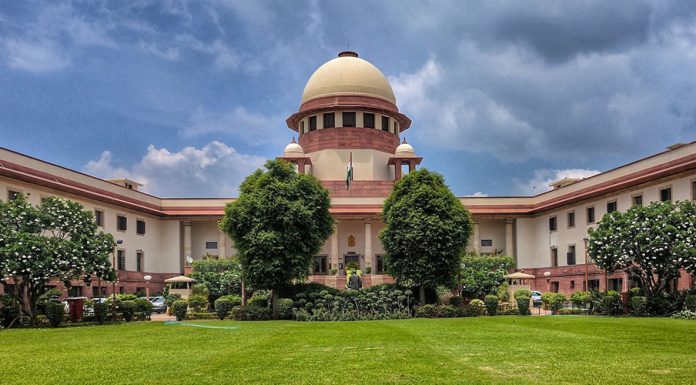







 Allow notifications





