Are you compassionate towards animals? Would you like to contribute towards making an impact in animal welfare? Do you want to seek a meaningful career that aligns with your passion for animals? Apply for the Ahimsa Fellowship and pursue compassionate outcomes through advocacy. India’s first ever fellowship program in animal welfare is back with its second cohort and applications are closing very soon!
Ahimsa Fellowship aims at mentoring and training young individuals from across India to attain proficiency in animal welfare advocacy. The curriculum of the program has been curated with inputs from leading experts in the field of animal welfare and the social sector. Ahimsa Fellows will work to render assistance to the State Governments and District Administration and law enforcement agencies for the enforcement of animal protection laws.
A comprehensive 9-month leadership training program has been designed to bolster the capacity of fellows to emerge as effective animal advocates. It offers a unique learning opportunity for advocates, activists and persons inclined towards animals to learn how to protect animals through law enforcement and advocacy.
The Ahimsa Fellowship is powered by People For Animals and People For Animals Uttarakhand. It is supported by Ahimsa Trust, Humane Society International – India, Mercy For Animals – India, Miranda House (University of Delhi) and Kaivalya Education Foundation.
Eligibility Criteria
– Graduation degree in any discipline
– Good communication skills [English and a regional language(desirable)]
– Passion for animal welfare/animal rights
– Persistence, lateral thinking, innovation and being a team player
– Between 22 and 35 years old
– Be available to attend the full 9-month duration of the program
– Indian National
We Offer
Mentorship with the best experts in the field of animal welfare
Enrolment in National Academy of Legal Studies and Research (NALSAR), University of Hyderabad’s One Year Advanced Diploma in Animal Protection Laws
Stipend
Travel and accommodation to New Delhi or any other venue for mandatory contact classes and field work.
Experiential learning
Peer learning
Placement Opportunities to build a career in animal advocacy
Application Process
Selection to the Fellowship is highly competitive. Candidates are required to fill a detailed application form. Based on the quality of the answers submitted in the form, applicants will be shortlisted for a phone-interview. Final selection of Fellows involves an interview with the selection committee.
Visit ahimsafellowship.org to know more and apply for the Ahimsa Fellowship.
Last Date to Apply: 10 September 2022 Merit-based Selection.
According to Collins Dictionary, Escalation is explained as a Soar in Premiums or policy benefits in line with agreed factors such as Standard of living, inflation, and Prices of Raw Materials. In a commercial contract, a bid is obtained after estimating the costs of labour and material that will be incurred in the future. These costs might, however, fluctuate for causes outside the control of either party. Unexpected pricing changes like this have the potential to undermine the entire basis of the agreement that the parties agreed to, which might result in contract dissatisfaction and eventual contract termination. An escalation provision is inserted into the contract to prevent this from happening and accounts for any potential future changes in labour and material costs.
What is an escalation clause
Escalation Clause or Escalator Clause is a Clause of the contract defining an alteration in Costs, and remuneration in the occurrence of specified changes in circumstances such as a great rise in the prices of Raw Materials, fossil fuels, or the increasing cost of standard of living. The Escalation Clause is a Clause in a Contract provision that vouch for any specified reversal in the agreed price that has been determined by the two consenting parties on a particular factor beyond the control of either party that is in turn affecting the agreement value. Because of fluctuating prices, it has become a standard practice to insert an escalation Clause in the Contract in Sectors that largely depends on Specified raw Materials.
If the price of Equipment, Raw materials, plant and Machinery, work Force and labour, increases beyond the point of 5% or 10%. The Clause authorizes the contractor to yield higher returns for the contract. An Escalation Clause is recommended when a Settled price is quoted for the contract and also when a cost-plus contract is entered into. Escalator Clauses or as commonly used as Price Escalation Clause when dealing with inflation or price rise or Material Escalation Clause when dealing with Raw Materials, fossil fuel are frequently common in sectors of construction and Real Estate wherein unexpected costs are secured due to Fluctuations in the prices for raw materials, fuel, workforce, and labour during the course of the Contract.
Purpose of an escalation clause
Allow Buyers or Sellers to Commit to Long term Contracts
The escalation Clause allows People to commit to long-term contracts, without being Concerned about the changes in external circumstances that could interfere with their long-term goals.
The escalation Clause will ensure that contracts remain fair
Escalation Clause is made between parties of the contracts so that the contract remains fair and updated based on the external Criteria.
Key elements of an escalation clause
The Typical Escalation Clause has the following Basic Elements:
The amount one is willing to increase the offer to compete with other bids;
The original amount one offered to pay for the property; and
The most one is willing to spend.
Issues addressed by an escalation clause
An Escalation Clause looks straightforward, but the devil is in the details. Regardless of the details worked out between the parties, practically all escalation provisions handle the following issues:
What is the Contract’s original agreed value?
How much will the price be escalated above or De-escalated below any other costs or competing bids?
In the event of numerous offers, what is the highest price that the original party will agree to or be compelled to pay?
Escalator clause in real estate sector
An escalator provision in a purchase agreement is expected in real estate contracts. The condition in this application states that if any further offers are received, the potential buyer will boost their first offer. This provision would frequently include a limit on how high the rise may go.
Illustration: a potential home buyer offers to purchase a house at a price of Rs.3,00,000 but includes an escalator clause that they will increase their offer to beat out any other higher offers by Rs.50,000. The clause also outlines the cap of Rs.6,50,000, which means that buyers will only increase their offer up to Rs.6,50,000. If another offer came in at Rs.6,48,000, the terms of the clause wouldn’t allow the buyer to add even Rs.5,000 because that would take the price beyond the cap of the escalator clause.
Escalation clause in construction business
Contract escalation provisions in the construction business refer to the cost of the project’s materials. Expenses that exceed what was initially agreed upon may be passed on to the project’s owner. It has been common practice in large-scale and long-term construction projects to use these types of provisions for many years. These sorts of provisions have been utilized for years in long-term and massive building projects. Because building material costs have been constantly rising in recent years, many contractors are increasing including escalation clauses in all sorts of projects.
Commercial mixed-use complexes, single-family residences, and apartment buildings are examples of these.
One of the key causes driving up construction material prices is the global building boom, particularly in Asian Countries.
Another issue is connected to the environment since the loss of forest lands has driven up timber prices.
Transporting building supplies is extremely costly, especially when gasoline costs are high. With these possible price swings, escalation clauses are essential in the construction business.
Mitigating material price escalation
Before a contract has even been signed or agreed upon, material price escalation can be reduced. Contractors can reduce this risk by including language defining a deadline by which their bid proposal must be approved in order to be considered genuine. With this strategy, the contractor submitting a bid might revise it to reflect price changes after the allotted period of time has elapsed. Contractors should be wary of any bid instructions or RFP papers that explicitly forbid price increases or mandate that bids be valid for a predetermined amount of time. Furthermore, as soon as feasible, pricing can be locked in (or “bought out”) to prevent material price escalation, but owners must be ready to permit contractors to bill and be paid for these commitments when they are made. To that end, if the contractor can identify the commodities with the greatest price fluctuation, it could be an option to purchase and store those goods in advance, if the owner is ready to provide the necessary cash flow.
Benefits of incorporating an escalation clause
Escalation clauses provide benefits and drawbacks for parties looking to buy real estate. If for no other reason than to stay relevant, investors add an escalation clause in their initial offer. The power of an escalation clause to keep a prospective buyer in the race, however, is particularly significant. Escalation clauses are essentially rebuttals to the most recent offers, and choosing one over the other might be the difference between getting the property of one’s dreams and not.
In addition to the obvious advantages, including an escalation clause in real estate agreements has the following additional advantages:
Escalation clauses are common in real estate contracts, and when used properly, they may provide purchasers who are interested in the subject property piece of mind by preventing them from overpaying.
If the language is adequate, the phrase ought to raise the offer just enough to close the sale without going overboard.
The sellers benefit greatly from this clause since, in the correct conditions, they are nearly always certain of receiving a better offer.
Escalation clause real estate contracts provide peace of mind for buyers who want the subject property.
Sellers may take bids with an escalation clause more seriously, offering the advantage to anybody prepared to include one.
Prospective buyers won’t be excluded from discussions or neglected in the event they give one.
Pitfalls of incorporating an escalation clause
While an offer must have an escalation clause, it is not without drawbacks. In particular, an escalation clause compels potential purchasers to put all of their cards on the table; as an investor, it is by no means a good thing. Inserting an escalation clause or, more significantly, a limit in the offer like specifying the highest sum one is ready to pay.
In addition, while a seller could value the candour, it practically guarantees that it won’t be able to negotiate a lower price. Additionally, a badly thought-out escalation clause might harm the bottom line. Yes, it could aid in the ability to close a sale, but at what cost? If people are not attentive, this provision could force them to pay far more for a property than they ought to have.
There are a few drawbacks to escalation clauses in real estate contracts besides revealing the sum investors are ready to pay:
By including them, they minimize one of an investor’s biggest advantages: bargaining power. There is less flexibility to negotiate profit margins when a provision that exposes the amount someone is willing to pay is included.
Despite the progress the real estate sector has made, many individuals still don’t understand what an escalation clause is. This clause’s inclusion, for instance, can be unclear to a listing agent, which could lead to delays.
The presence of escalation clauses may deter certain sellers. They are typically created with the initial goal to undercut incoming bids, even if they are most likely accepting of the concept of investors paying more. The presence of an escalation clause can occasionally interfere with bank evaluations.
Although it’s uncommon, some sellers choose not to deal with an escalation clause.
When no escalation clause is incorporated in a contract
It is a fundamental tenet of arbitration (under the Arbitration and Conciliation Act 1996) that the arbitrator gets his power from the terms of the contract and that an award passed in violation of those terms is invalid and subject to be set aside. There are, however, a number of situations when the contract does not contain an escalation provision and the contract is prolonged past the completion date for reasons that are not the contractor’s fault. As a result, the contract extension causes losses for the contractor, who is therefore entitled to damages, including an increase in the cost of labour and supplies. The issue that arises in such a case is whether the arbitrator can grant an increase in the cost of materials and labour in absence of any clause for escalation in the contract.
In a recent case of Union of India (UOI) vs. Varindera Constructions Ltd. and Ors. The Apex Court, in a special leave petition, reversed the rulings of the division bench, Single Judge, and arbitral tribunal and held that an arbitrator cannot award escalation fees in the presence of a provision that forbids them. However, there are many factors to consider when expounding upon other situations dealing with the interpretation of escalation charges in contracts. If the delay is not the contractor’s fault and there is no escalation provision in the agreement, the arbitrator has the authority to award escalation fees.
“Escalation, in our opinion, is a typical and usual occurrence coming out of the gap of time in this inflationary era in fulfilling any contract of any sort,” it was decided in this case. The arbitrator determined that there had been an escalation in this case through statutory wage revision, therefore he came to the judgment that allowing escalation under the claim was justified The Corporation was responsible for the delays’ effects, including an increase in statutory wages, once it was determined that the arbitrator had the authority to rule that the FCI’s actions caused a delay in the contract’s execution. Therefore, in our judgment, the arbitrator was qualified to consider this issue,”. The Supreme Court addressed this in the case of Food Corporation of India vs. A.M. Ahmed and Co. and Ors.,.
Without quoting Section 70 of the Contract Act specifically, it is evident that the Hon’ble Supreme Court has applied the principle enshrined in this provision of the Contract Act, which stipulates that when a party has worked for another party non-gratuitously, then the party who has received a benefit from such work must compensate the party that has done such work. Compensation, in this regard, would have to necessarily include price escalation.
The Hon’ble High Court of Delhi has laid down another connected principle in this regard in the case of National Highways Authority v. HCC Ltd., reported at (2014) 211 DLT 656, where the Hon’ble Court, while applying the principle of contra proferentem, held that a price escalation clause must be interpreted against the employer and unless there is a specific exclusion, the clause on price escalation must be interpreted to include all incidences of price escalation.
With the judicial precedents mentioned above in mind, as well as the legal principles they articulate, contractors must be aware of their rights concerning price escalation, even in cases where their contracts are silent on the subject or are vague as to what specific instances of price escalation they cover. The aforementioned principles will undoubtedly apply in most, if not all, situations as most government contracts are standard form contracts or are created by the government. Additionally, given that many project execution delays are invariably caused by problems that are not the contractors’ faults, the contractors should use their legal options to request price escalation
Ethics of an escalation clause
When an offer containing an escalation clause is received, sellers might take the following actions to safeguard their interests:
First, be aware that bids with escalation clauses are a possibility; the decision to accept or reject such an offer rests with the seller.
Understand the offer price, including the maximum amount it may be.
Select a course of action when there are several bids; sellers may decide to accept one, reject them all, or submit a counteroffer. The escalation clause may be waived by the seller if they decide to establish a fixed price for the property.
Be aware that accepting an offer with an escalation clause results in the creation of a buy and sale agreement. Before signing the agreement, confirm that the proper price is stated on it.
Even though purchasers can utilize the escalation clause to their advantage, they should be aware that this could lead to a bidding war and that their offer could not be withdrawn.
Buyers will have to rely on the other agent since they won’t be able to examine rival bids to determine how much money is being offered.
If a buyer files an offer with an escalation clause, the buyer’s agent is responsible for informing the seller’s agent of the clause’s existence. Otherwise, it can go unnoticed. The buyer is not required to get confirmation of the second-best offer.
Judgements surrounding an escalation clause
Tarapore and Company vs. Cochin Shipyard Ltd., Cochin, and Ors., reported at AIR 1984 SC 1072
FACTS OF THE CASE: The appellant and the respondents entered into a contract for the construction of Building DOCK of Contract entered into between the parties, any dispute shall be referred to the Sole Arbitrator. During the implementation of the works contract. disputes arose between the parties in respect of a claim for compensation on account of the increase in the cost of imported pile-driving equipment and technical know-how cost. The arbitrator held that the appellant was entitled to compensation for the increase in the cost of imported pile drawing equipment and technical know-how cost.
ISSUE OF THE CASE:
Does M/s Tarapore & Co.’s demand for payment from Cochin Shipyard Ltd. for increased costs of imported pile driving equipment and technical know-how fees fall under the provisions of the General Conditions of Contract that the two parties engaged in?
Are Messrs. Tarapore & Co. entitled to compensation for the increase in the price of imported pile driving equipment and technical know-how fees to be paid to them by Cochin Shipyard Ltd. if the answer to question 1 is yes under the terms of the relevant contract? If so, how much is it?
JUDGEMENT OF THE COURT:
If rates initially given by the contractor become irrelevant as a result of future price inflation.
The Apex Court decided that the agreement would become odious to the degree that the factual circumstances upon which the agreement was established by the Parties cease to exist.
In this case, the contractors’ request for reimbursement for the additional costs incurred as a result of price increases could not be denied based only on the contract’s lack of a price escalation provision.
P. M. Paul vs. Union of India reported at AIR 1989 SC 1034
FACTS OF THE CASE: The Contractor (Appellant) and the respondent entered into a contract for the building’s construction. A disagreement occurred about the transfer of site. The
Respondent claimed that the appellant had given up on the labour and violated the terms of the contract. Since the contract called for the resolution of disputes by Arbitration. An issue was raised in an appeal to this Court by an arbitrator, The Arbitrator made an award following a site inspection. The respondent who felt wronged by the decision filed a petition. And disputed the similarity. There was a claim that the arbitrator had gone above his authority by granting a sum of Rs. 2 lakhs as escalation fees and expenses
ISSUE OF THE CASE:
Setting aside Award
Whether the arbitrator has misconducted himself or proceeding
Adjudicating upon matter not subject matter of adjudication-Legal misconduct.
JUDGEMENT OF THE COURT:
The Honourable Supreme Court awarded a contractor reimbursement for losses brought on by increases in the cost of labour, materials, and transportation throughout the course of the prolonged contract.
Although there was no escalation provision in the parties’ agreement. The Supreme Court established the rule that, in the event of a price increase, the lack of a price escalation provision in the contract would not be fatal if the reason for the completion delay was unrelated to the contractor.
K.N. Sathyapalan (Dead) by Lrs. vs. State of Kerala and Ors. As reported in 2007 (5) ALT 17 (SC)
FACTS OF THE CASE: With regard to the building work, the appellant and the State of Kerala entered into a contract. Due to disagreements between the parties, arbitration was requested for this situation. Under Section 30 of the Act, the State of Kerala filed a petition asking for the award to be overturned. The State of Kerala filed an appeal with the Kerala High Court after its plea was denied, feeling vindicated. The appellant in this case presented claims under 12 distinct headings, yet the arbitrator only granted a small number of claims. Although the whole decision in the appellant’s favour had been contested in the memorandum of appeal, the objections were only raised in relation to a small number of claims. A preliminary objection was made in the appeal that the arbitrator chosen had been dismissed for severe misconduct, and Kerala State claimed that under the circumstances, the arbitrator’s decision lacked jurisdiction.
ISSUE OF THE CASE:
The arbitrator had no authority to continue with the arbitration after his suspension or retirement
whether the claimant was entitled to compensation for the losses suffered by him on account of price escalation of materials
relating to losses suffered by him on account of the non-availability of a suitable dumping yard for dumping excess
JUDGEMENT OF THE COURT:
The Apex Court observed that the parties would be bound by the terms agreed upon in the contract, but if one of the parties to the contract is unable to fulfil its obligations under the contract which has a direct bearing on the work to be executed by the other party.
The Arbitrator is vested with the authority to compensate the second party for the extra costs incurred by him as a result of the failure of the first party to live up to its obligations.”
The aforementioned are some of the important Supreme Court rulings that have altered the body of law surrounding price escalation in contracts without express clauses to that effect. When fulfilling their contractual duties, certain specialist contractors who were tied to fixed-price building contracts would incur significant losses, especially when delays occurred due to circumstances beyond their control. Through these cases, it can be seen that the courts have taken into account several factors when awarding compensation to the contractors, including the contract’s terms, the parties’ intentions, the inability to perform due to unavoidable circumstances, additional work completed by the party, and the contractor’s calculation of the claim.
Conclusion
When escalation clauses are employed by their customers, real estate brokers are required to abide by a certain code of ethics as well as other rules. The agent must, among other things, advance the interests of the client. They must also operate fairly and honestly toward everyone involved, gather all relevant information, and reveal it to the client. The interests of the buyer and the seller are obviously at odds with one another, therefore as long as their acts are just to the other party, the representatives of each party are responsible for safeguarding the interests of their own customers. It is crucial to realize that the right to determine whether or not there was a breach in the first place does not include the right to determine the number of damages resulting from the violation. It is a grave injustice to allow a contracting party to decide whether or not there was a breach of the contractual requirements. The number of damages that the defaulting party must pay might be deemed an exempted subject. Misinterpretation of such pertinent sections may result in serious unfairness to an aggrieved party and, eventually, may lead to abuse of powers by the authority holding such rights.
It is rather typical for parties to bring some claims during proceedings that may be outside the scope of their contract, notwithstanding the contractual limitations on arbitration proceedings. contract’s scope, despite the contractual limitations on arbitration. Among the most frequently asserted claims is the “escalation charge,” which is a financial Escalation cost/charge awards or rejections under an agreement that is frequently controlled by specific terms specified by the parties. But when the parties to a contract do not intend or foresee such a clause, issues might arise. However, despite these dangerous circumstances, courts have remained committed to dispelling doubt and providing essential clarification. The concept of “delay” is important, and the measurement of damages is dependent on the degree of delay. But if one of the contractual parties is granted the authority to assess the other contracting party’s violation, then immediately contravenes the dictum “Nemo judex in causa sua,” which states no person can be a judge in his own cause.
Students of Lawsikho courses regularly produce writing assignments and work on practical exercises as a part of their coursework and develop themselves in real-life practical skills.
LawSikho has created a telegram group for exchanging legal knowledge, referrals, and various opportunities. You can click on this link and join:
This article is written by Shiwangi Singh, a law student from Banasthali University. This article talks about the booming industry of Non-Fungible Tokens (NFT), and how it is backed by a brilliant decentralised system of blockchain providing transparency to all the users and providing exclusive ownership rights to the owner of digital assets. It also deals with the legality of NFTs in India and the possibility that they may be supported by Indian legislation in the future by analysing the advantages and benefits that they offer.
It has been published by Rachit Garg.
Table of Contents
Introduction
Non-Fungible Tokens (NFTs) have been in tremendous use in recent years. Their use has exploded just because of the convenience they offer to everyone. This new development has boomed at such a fast pace that now everything like our drawings, photos, videos, GIFs, music, gaming items, selfies, and even a single tweet tweeted by us can be turned into an NFT, which can be further traded online using cryptocurrency. This form of crypto asset has exploded in popularity, and the sales of NFTs have surged up to $25 billion in 2021.
Seeing the recent surge in the usage of NFTs and blockchain technology, it is essential for us to know the basic functioning of these new technologies. Our country possesses a lot of interest in cryptocurrency, which is making India a front runner in the non-fungible token space. From common man to celebrities, everyone is talking about digital money, digital tokens, etc.
What is an NFT
NFT, non-fungible tokens, are unique digital tokens that function in a blockchain network. Blockchain is the underlying technology on which cryptocurrencies work. When we talk about converting our work into NFTs, it means we are converting it into a digital asset or digital token, which could be termed tokenisation. This tokenisation could be anything from a JPG file to music to a tweet; all these things could be converted into an NFT. It is any digital collectible that can hold value, and this value is based on what someone is offering to pay for it. Therefore, the demand for that digital asset sets its price.
Anything that can be converted into a digit asset can be termed an NFT. NFTs are gaining massive popularity now because they give people an excellent way to exhibit and sell their digital artwork. NFTs have gained huge investments since the time they came into use back in 2015. NFTs are backed by a brilliant backbone that is blockchain. NFTs work on blockchain, giving their users complete ownership of a digital asset.
For example, if a sketch artist gets his or her digital asset converted into an NFT, what he is actually getting is proof of ownership that he or she is the exclusive owner of that artwork. This ownership is powered by blockchain. Those who understood the real profit regarding NFTs at an earlier stage made significant profitable investments.
An NFT is a digital asset that has a unique identification code and metadata that differentiates it from a fungible token.
Characteristics of an NFT
Non-fungible means it is non-replaceable or non-exchangeable, which signifies the unique value that every single NFT holds. Each token is unique and it cannot be exchanged for something exactly alike.
For example –
Jack Dorsey, the billionaire founder of Twitter, recently converted his first-ever tweet into an NFT, which was later sold for $2.9 million. This action signifies that no other NFT is the same as this one, resulting in its uniqueness.
A digital artwork was auctioned at Christie’s. This NFT was purchased for a whopping $69 million. It was a trailblazing moment for advocates of NFTs.
NFT is not replaceable. It is only one type of copy in the world which indicates that no other thing holds the same value as that one particular item. For example – when we try to buy a book, we get to choose one copy for ourselves from millions of copies that got printed, which means you can buy any copy of that book, and it would be the same. It would be of the same price, contain the same contents, there would be no difference among them. But now, if we consider that one piece of the book which you were reading where you highlighted your important points, added your essential notes, now this piece of book holds a different value. This particular copy is not like the other million copies. If one decides to convert this copy into NFT, then it would hold a distinguished value. One can obtain a digital token of this copy, that would give exclusive rights of ownership over this particular piece of the book.
The word ‘token’ in NFT signifies that one has the exclusive right of ownership of an item. It is a kind of agreement that tells us that we own something and shows our belongingness to that item. This kind of ownership can be tracked by everyone in the public, it is transparent. A token is riding on the blockchain, this transparency of ownership is only available because of the blockchain.
A token proves the ownership of a unique, distinguished item by converting it into an NFT.
NFTs are digital assets based on blockchain technology and traded through the use of cryptocurrency.
Unlike downloading pictures and screenshotting them, people are willing to spend on NFTs only because it allows the buyer to own the original item, it contains built-in authentication, which serves as proof of ownership.
NFTs are transferable, they can be transferred from one individual to another over the blockchain. It is available for sale and purchase and can be traced and retraced whenever one wants to.
What is a blockchain
A blockchain is a kind of database but very different from other databases. A blockchain is a chain of blocks where each block contains some information. The world’s largest cryptocurrency market, Bitcoin, is powered by blockchain.
Features of a blockchain
The most significant and key nature of blockchain is that it is decentralised and has a shared nature. It means whenever a transaction is done, or let’s say a bitcoin transaction takes place, then it is transmitted to a network of peer-to-peer computers scattered around the world. Every single user present on the network can view all the details of the transaction and see who is the actual owner of a digital asset, it provides a very transparent environment where everything is visible to all the users.
For example – when in today’s time we do an online transaction from our bank account to another person’s bank account, all the transaction process is done at the bank level. The bank gives confirmation of the money sent from the sender’s account and then confirms the money received at the receiver’s end. This whole process stands only at a bank level, and no one else could see it. This type of system is known as a ‘centralised way of banking’, which offers no transparency to its users.
In a blockchain environment, when transactions are completed, they get added to a block on the blockchain. These blocks are then chained together, creating a long history of all transactions that are permanent.
Blockchain is accessible to a network of computers, which are called nodes. These computers can view the blockchain at any given point in time and can track each and every transaction that gets added to it. This is why we say that the data on a blockchain is immutable, it cannot change.
In a blockchain as the information is shared with each and every node, so whenever one node faces any error in its data or if someone tries to tamper with the blockchain by compromising one of the nodes, then all other nodes would serve as reference points and would prevent tampering of information.
In the private sector, various companies are exploring blockchain to improve its effectiveness and trying to re-invent their processes and workflows to add value to their service delivery systems. 56 percent of Indian businesses are opting for the path of blockchain, making it part of their core business. The National Informatics Centre in India has established a Centre of Excellence (CoE) in blockchain technology, which operates as a coordinated, interoperable blockchain ecosystem around the nation. This makes it easy for the government to test-run projects before rolling them out for public interfaces.
By seeing the robust use of blockchain technology, it can be implied that it has a great future and that it will be our future technology. Many business enterprises, as well as the government, are considering applying this technology to improve monetary transactions with security. It would boost the growth of the economy digitally and make it more transparent and authentic.
Famous platforms for NFTs
Rarible – It is one of the most popular platforms to buy NFTs. It is an open marketplace where sellers can create NFTs and buyers can buy those NFTs from the sellers.
Foundation – It is a type of platform where when an artist wants to post their artwork, they have to receive invites or ‘upvotes’ from fellow artists or creators to post their art.
OpenSea.io – This is a peer-to-peer platform where one can start to post their works by just creating an account on it. Different categories of art forms can be browsed and chosen from after that.
India has not yet passed any law regulating the NFT. The task of creating strong NFT laws is currently underway. According to some of the research, it is found that the Indian government and public sector have upheld and supported blockchain-based enterprises in which a huge portion of the world population has taken part. This digital world may experience a change after the enactment of the Banning of Cryptocurrency & Regulation of Official Digital Currency Bill, 2019. Section 3 of this Bill has clearly stated that no person shall mine, generate, hold, sell, deal in issue, transfer, dispose of, or use cryptocurrency in the territory of India.
The draft of the Bill defines ‘cryptocurrency’ as any information or code or number or token, which is not a part of any official digital currency and is generated through cryptographic means holding a digital representation of value that can be exchanged with or without consideration, that might involve risk of loss or an expectation of profits or income in a business, or stores a value or a unit of account and is used in any financial transaction or investment, but is not limited to investment schemes.
It also defines ‘digital rupee’ as a form of currency that is issued digitally by the Reserve Bank and that is approved by the Central Government to be legal tender.
It defines ‘miner’ as a person who is engaged in the mining of a cryptocurrency.
‘Mining’ means an activity that is focused on creating a cryptocurrency and providing validation for the transaction of cryptocurrency between a buyer and seller of cryptocurrency.
This Bill was drafted to ensure the legal status of virtual currency in India. However, it was not presented before the parliament nor was it discussed among the members of the parliament.
The Indian Budget of 2022 has proposed to impose a withholding tax on the transfer of virtual digital assets that would include both NFTs and cryptocurrencies. It would be effective from July 1. A tax deduction at source is also proposed, but it will still be too early to see how this taxation system would work.
Case law: Internet and Mobile Association of India v. Reserve Bank of India (2020)
This case was brought forward in the Supreme Court of India, where the Apex Court stated that the circular which was issued by the Reserve Bank of India is illegal and the process to enforce such a circular should be made unenforceable.
Issue of the case
In the following case, the Internet and Mobile Association of India was the petitioner and the Reserve Bank of India was the respondent. The petition sought clearance on the jurisdiction of the RBI, whether it has the authority to disallow the trade of virtual currency and impose a ban on it.
Background of the case
On the 6th of April, 2018, the Reserve Bank of India issued a circular which passed an order for the prohibition of trading in virtual currencies by banks and other entities. It further stopped the bank from providing any sort of service, either to an institution or an individual, by using virtual currencies.
The Bank stated its concern that enormous use of virtual currency trading may lead to unexpected hacking of data, which would result in terrorist attacks, money laundering, etc. There were certain services that RBI directed the banks not to deal with, which were regarding clearing, giving loans against virtual currencies, maintaining the accounts, registering, trading, settling, accepting the virtual currency as collateral, opening accounts on exchanges, and selling, purchasing, or transferring such virtual currencies.
This particular circular was challenged by the Internet and Mobile Association of India, which filed a petition before the Supreme Court regarding these issues. However, earlier in 2013, traders and holders of virtual currencies were cautioned regarding the legal risks and issues that are involved with such trading.
The petitioner sought clearance from the court regarding whether the Reserve Bank of India is authorised to pass an order to the banks regarding the stoppage of trading in virtual currencies.
Argument by the Petitioner
The petitioner mentioned that the RBI is not authorised to cancel trading in virtual currencies or cryptocurrencies, and also claimed that the ban imposed by the RBI was nothing but a misunderstanding made by it. It cleared the concern regarding cryptocurrency or virtual currency and stated that it is not a kind of currency note or coin but a store of value or medium of exchange and had no serious threat issues regarding the hacking of data.
Argument by the Respondent
The respondent countered the first contention made by the petitioner and stated that it has the jurisdiction to direct banks regarding the cancellation of trading in virtual currencies because it is a mode of digital payment. Therefore, the RBI holds the power to control the same.
Regarding the second contention that cryptocurrency or virtual currency is not a kind of currency note or coin but a store of value or medium of exchange, RBI stated that a virtual currency is a stainless digital currency that is used for trading, since the cryptocurrency is independent and immune to government interference.
Judgement
The bench was held by Justices Rohinton Fali Nariman, S. Ravindra Bhat, and V. Ramasubramanian.
The judges held that the RBI is vested with a huge amount of powers and plays a crucial role in uplifting the economy of India, but in this case, they are not able to show any kind of damage that could be suffered by the usage of virtual currency. Therefore, the Court held that the guidelines issued by the RBI that directed the banks to stop dealing or providing services to the entities trading in cryptocurrency are unenforceable.
The judgement came in favour of the petitioner, which is the Internet and Mobile Association of India. Therefore, the guidelines which were mentioned in the circular issued by the Reserve Bank of India were declared illegal and hence unenforceable. With this judgement, the businesses that were involved in cryptocurrency came back to their normal functioning, and trading in cryptocurrency was restored. The Court also struck down the circular issued by the RBI but didn’t clearly state anything regarding the legality of virtual currencies, whether they are legal or illegal, and as there has been no legislation regarding the same, therefore, virtual currencies remain unregulated in India.
NFTs’ future in India
As of now, NFTs are not legally valid in India, but soon we might have laws and regulations regarding NFTs. It will encourage enthusiasts to actively trade in NFTs. Non-fungible tokens will definitely have a great future in India with the developing laws and regulations. As far as we have learned, blockchain technology offers us much faster and cheaper cost-effective transactions across the globe. People have grown to trust this new method of blockchain and are starting to learn about its importance gradually. The future business world will grow with the help of blockchain, as it is very cost-effective. NFTs are getting popular among common men and celebrities. Famous entities have been launching their own NFT collections in recent times. These significant impacts mean that we can soon start trading through NFTs and get more valuable insights.
Thus, the NFT community will gain speedy momentum once the Indian government formulates specific laws and regulations for its validity. The NFT market is getting wider, and the digital economy will be boosted by the new entrants in the market for NFT and other digital assets.
Relevance of Copyright Act, 1957 in NFT
Whenever someone purchases an NFT, the owner does not get the copyright to the registered piece of NFT at that very instant. Section 19 of the Copyright Act 1957, states that if someone wants to transfer his or her copyright, then it would require a written sale contract declaring explicit assignment of copyright to be present. Therefore, the buyer cannot have full ownership until the owner specifically transfers their rights.
The difference between purchasing original artwork and an NFT is that the original copyright in the case of an NFT does not get quickly transferred to the new buyer of the NFT. When an NFT is purchased, the owner does not get the copyright to the original piece of art. They are unlikely to enjoy copyright protection just because they store their data backed by blockchain technology. They are not classified as original works or derivative works under intellectual property law. However, the works for which NFT is created may enjoy copyright protection.
Section 2(d) of the Copyright Act, 1957, defines the ‘author’ of the work as one who has created the work. He or she is considered the sole owner of the work unless the work is shared by a co-author, which implies both of them jointly owning the work, or if the work was created by a person or entity just because he or she was paid for it, or was created under employment. In such a case, the commissioner or the employer owns the work.
Section 14 of the Copyrights Act, 1957, provides exclusive rights of ownership to the owner, which also includes the right to mint the NFT of the work. Minting means converting a digital file into an NFT backed by blockchain technology.
The ownership of the NFT lies with the one who mints it. Therefore, it is not necessary that the owner of the NFT be the author of the work. However, minting an NFT of works that someone else has the right to use will essentially amount to stealing the works and will be considered an infringement of copyright. Therefore, before minting an NFT it is crucial that the person who is minting an NFT should hold the right to do so, either by being the author of the work or by obtaining the copyright over the work, or by obtaining the specific rights to mint the NFT.
It should be noted that digital artwork is also artwork, as it has always been, and copyright owners and their licensees are the only ones who should be creating NFTs based on copyrighted artwork.
Copyright laws treat NFTs the same as any other traditional artwork. Whenever a new artwork is created by an artist, he acquires the copyrights that signed him as the owner. By having those rights, he can create copies of his work and distribute or prepare other works originating from his main work as a derivative. Therefore, we can say that a copyright owner has the exclusive right to create an NFT based on an original piece of artwork.
Legal validity of ‘smart contract’
A copyright can be obtained for works like original literature, drama, music, artistic works, cinematographic films, and recordings of sound as per the Copyright Act, 1957. We can’t interpret from above whether an NFT would qualify as a work that can be copyrighted in India. Even though a video clip or a sound recording that can be converted into a digital asset can be copyrighted, other things like a GIF, a picture, or a tweet that can also form digital assets might not qualify as work capable of being copyrighted. Therefore, there is a need to expand the scope of copyright laws in India.
For a legal contract to be valid, an offer, acceptance, and consideration are the essential elements under the Contract Act. The smart contract contains the offer and acceptance components, but the consideration component may be problematic. Most of the time, payment is done through cryptocurrency in a smart contract, but as mentioned earlier, due to the legal status of cryptocurrency in India, it is difficult to state whether a smart contract would be considered legal or not.
Securities Law
As there is no formal or legal structure of legislation for NFTs, there is no proper categorisation of NFTs under the Securities Contract Regulation Act, 1956(SCRA). Section 2(ac) of the SCRA defines the term ‘derivative’ as “a contract whose value is derived from the prices of the underlying securities”. Trading in NFTs would be illegal in India if they were considered a derivative, because then they cannot be traded on virtual platforms as per Section 18a of the SCRA. Derivative contracts are considered legal only when they are exchanged on a recognised stock exchange. In such a case, the platforms where NFTs are exchanged must apply to the Central Government for recognition as a stock exchange.
Collective Investment Schemes (CIS)
CIS are commonly called as ‘investment funds’, ‘mutual funds’ or simply ‘funds’ where money is pooled together with that of other investors and spread over the whole range of assets within the fund. The qualities of an NFT and the rights granted to a token buyer shall determine if it is a type of financial instrument.
Money laundering in NFTs
This malicious practice is more prevalent in the world of art, where criminals purchase an art piece with the illegally obtained money and later sell that NFT at a higher rate, which in turn gives them white money. In this way, they escape the regulations and law and conceal their criminal activities.
Money laundering means concealing the origin of illegally obtained money to make the source of money untraceable. It is easy for criminals to put their ill-gotten money into art pieces, simply because of the fact that the value of art is fundamentally subjective. Transactions in the NFT world also provide anonymity and privacy to criminals. However, the transparent blockchain technology makes it easier to detect and accurately estimate the amount of laundered money in NFTs. By proper law enforcement, money laundering needs to be monitored meticulously by marketplaces and curbed out of these virtual world transactions. Changes to the Antiquities and Art Treasures Act of 1972 and the Prevention of Money Laundering Act of 2002 will be necessary if NFTs become lawful in India.
FEMA Regulations
The assets that are transferred via NFT, whether physical or digital, will be subject to the Foreign Exchange Management Act 1999 and regulations that are involved in cross-border transactions. Although it is unclear, NFTs can be categorised as ‘intangible assets’ and governed under the software and intellectual property parts of the FEMA regulations. The main issue arises from pinpointing the location of an NFT, which may cause NFT holders and exchanges to circumvent FEMA restrictions entirely.
Tax levied on NFTs
All virtual digital assets, including NFTs, are subject to a 30% tax levied by the government. The 2022-2023 Budget has clearly mentioned that it would levy 30 percent I-T plus cess and surcharges on transactions dealing with virtual currencies.
Conclusion
Non-fungible tokens are an evolution in the world of cryptocurrencies. NFTs have become a potent force for change, as they provide a tamper-resistant blockchain that stores all the information and provides the authenticity of ownership. It removes the intermediaries in the process of the transaction and represents a transparent report of all the transactions done in the form of blocks on the blockchain network. NFTs can be used to represent individual’s rights to property and identities.
NFTs have been a trailblazer over the past year because they are new, exciting, and generate massive price tags. Being backed by blockchain technology, the parties involved in NFT transactions are able to maintain anonymity and privacy. People get a chance to conceal themselves from the regulatory authorities and try to disobey the law.
NFTs are the most recent type of crypto asset with a very important future. In India, it holds some risks because it has no legal status here. The legalisation of NFTs is necessary for the better trading of NFTs in India.
Frequently Asked Questions
What is the difference between an NFT and Cryptocurrency?
NFT
Cryptocurrency
It stands for a non-fungible token, which implies it is non-replaceable and non-exchangeable.
Physical money and cryptocurrencies are ‘fungible’ which means they can be traded or exchanged for one another.
The value of all NFTs is different, each has a digital signature, which makes it impossible for NFTs to be exchanged for or equal to one another.
They are equal in value and are identical to each other in terms of the value they hold.
For example – one NBA top shot clip holds one single distinguished value in NFT. It would not be equal to any other NBA top shot clip.
For example – one dollar is always worth another dollar and one bitcoin is always equal to another bitcoin.
What is the similarity between cryptocurrency and NFT?
The only similarity that cryptocurrency and NFT hold is that they are both backed up by blockchain technology.
Students of Lawsikho courses regularly produce writing assignments and work on practical exercises as a part of their coursework and develop themselves in real-life practical skills.
LawSikho has created a telegram group for exchanging legal knowledge, referrals, and various opportunities. You can click on this link and join:
The words “contract” and “agreement” are often used interchangeably. However, they are two distinct terms with different conditions for implementation. Black’s Law Dictionary defines an agreement as “a mutual understanding between parties about their relative rights and responsibilities.” An agreement, although not as formal as a contract, creates obligations and responsibilities for the two parties. Agreements take significantly less time to draft and enforce, in comparison to general contracts. Therefore, in certain cases, where time is of the essence, parties tend to prefer agreements over general contracts. Agreements, depending on their requirement, can be of various types. Two important types of agreements are Master Service Agreement and Service Level Agreement.
A Master Service Agreement is the base contract between two parties that provide a detailed list of all the terms that govern present as well as all future transactions and agreements. However, a Service Level Agreement is a specific agreement that is contracted between a service provider and a client or service user.
Master Service Agreements
A Master Services Agreement through its contract allows both parties to clearly understand and state the major points and expectations laid down by either party during the agreement process. The agreement contains information and specifies the generic terms present in the contract, such as the payment conditions, intellectual property rights and ownership, dispute resolution and remedies, and warranties. It can also contain information on business ethics, facility and use of infrastructure, and other terms that may be crucial for the successful working of present and future agreements.
Master Service Agreements set the foundation and outline for any long-term contractual relationship. It is both flexible and ongoing as it allows for future negotiations and transactions. It is generally used in fields that are open-ended and provide support to an organisation such as the marketing sector, finance sector or human resources. In the oil and gas industry, for example, a master service agreement would clarify the contractual obligations between companies engaged in services such as drilling, exploration, and production.
The main goal while drafting a master service agreement is to simplify the negotiation process and provide clarity and understanding between the parties. The agreement lays out the terms and conditions and what conditions each party must fulfill and comply with in order to complete their side of the agreement. One of the main aims of using a master services agreement is to make the process of contracting and negotiations faster as well as simplify any future transactions and contracts.
Advantages of Master Service Agreements
Faster than standard contracts
Creating contracts between two parties can be a lengthy and time-consuming process. Coming to a proper agreement between two parties quickly benefits both parties, especially in business deals. A Master Service Agreement lays down the main terms and conditions of the agreement between the parties and provides both parties with the information and clarity they need to fulfill their part of the contract. This process is significantly faster than drawing up a standard contract.
Provides for dispute resolution
Even if not opting for a standard contract, a Master Service Agreement still puts an agreement in place which clarifies the faulting party in case of any dispute. This process is both time and money-consuming as it clarifies who the faulting party is as well as the remedies and damages to be claimed by the other party rather than opting for litigation which is both an expensive and lengthy option.
Acts as a blueprint
A Master Service Agreement can be used as a blueprint for establishing future contracts. The Master Service Agreement acts as a template that provides the essential details that both parties can focus on while negotiating future deals and transactions.
Main elements of Master Service Agreements
A master service agreement has three main elements to consider:
Responsibilities and obligations
A master service agreement lists the general responsibilities and obligations both parties must comply with in order to fulfill their side of the agreement. These points are the basic foundations of any future negotiation and transaction.
Potential disputes
A master service agreement provides for any potential dispute arising from any non-performance of contracted obligations and provides for remedies and clarification regarding non-performance and prevents any litigation or legal intervention.
Flexible nature
A master service agreement is normally used for long-term contractual relationships, especially between businesses. Therefore, they are required to be open-ended and flexible to allow for future negotiations and specific contracts based on the foundation provided by the master service agreement.
Service Level Agreements
A service level agreement is a specific contract between the service provider and the service user or customer that provides information about the service that is being provided to the client and what they should expect from the service provider. A service level agreement is generally used when a company signs up new clients for a particular service. For example, the terms and conditions provided by internet service providers and the customer or service user is a type of service level agreement. Service Level agreements provide information about a particular service from defining the particular service to identifying formal conditions in case of termination of service.
Advantages of Service Level Agreements
Protects contracting parties
Service Level Agreements provide information and set a concise standard, thus ensuring that both the customer and the service provider are aware of the responsibilities and conditions they need to comply with for fulfilling their side of the agreement. Setting clear and concise guidelines about the agreement ensures that the service user and service provider have accurate expectations from each other.
Providing recourse
The Service Level Agreement sets down clear obligations and responsibilities for both contracting parties. It also lays down the recourse available in case of any fault or non-fulfillment of responsibility. Without having a service level agreement, it remains vague and unclear for both parties with respect to the consequences of non-fulfillment of the agreement as well as the recourses available against the defaulting party. The service level agreement provides transparency to the agreement between the parties as it clarifies the expectations and responsibilities of both parties and also lays out the consequences of non-adherence to those expectations and responsibilities.
Provides accountability
The Service Level Agreement provides accountability to the service user as well as the service provider as the agreement lays down the responsibilities of the parties as well as the consequences of non-adherence to those responsibilities, thus providing accountability for the service committed to at the time of drawing up of the agreement.
Types of Service Level Agreements
There are essentially three main types of service level agreements
Customer Service Level Agreement
This type of service level agreement is also called an external service agreement and is generally between a business or service provider and the customer or service user. It provides clarity about the service to be received by the service user as well as conditions and standards for the services. It also provides information about the responsibilities of both the parties as well as lays down any consequences and methods of revoking the agreement in case of non-fulfillment and non-adherence to the terms and conditions set in the contract.
Internal Service Level Agreement
This type of service level agreement is generally between internal departments of an organisation, for example, between the marketing and sales departments of a company. An internal service level agreement between these two departments would be to ensure their monthly goals are met by agreeing upon certain responsibilities to ensure maximum sales through marketing.
Multi-Level Service Level Agreement
This type of service level agreement is generally used when there are multiple service users or multiple service providers. For example, incorporating the customer service team in the sales department in order to encourage customer retention can be done using multi-level service level agreements as there is now more than one service provider.
General inclusions in Service Level Agreements
Agreement Summary
A service level agreement contains a summary of the service to be provided, the receiver of the service and how to measure the success of the service provided.
Party goals
A service level agreement contains attainable future goals that can be attained for the service user and clarifies any future expectations from either party.
Description of requirements for goal achievement
Service Legal Agreement also contains a description of the steps required by each party to achieve the goals. This section provides clear information about what the individual responsibilities and expectations of the contracting parties are in order to fulfill their obligations.
Reporting procedure
Service Legal Agreement also includes the step for reporting any problem faced after entering into an agreement as well as mentions the person to whom the problem is to be reported as well as provides guidelines for the reporting process.
Consequences
In case of non-fulfillment or non-adherence to the terms and conditions of the agreement, the service legal agreement provides for the consequences of the same. It lays what sort of consequences or compensation is to be given by the defaulting party. This avoids the lengthy and expensive process of litigation as it already clarifies the damages and consequences in case of default of the agreement.
Termination clause
The Service Legal Agreement contains conditions under which either party could terminate the agreement for a better one. The termination clause allows for the parties to end the agreement without any consequences or non-adherence to the terms and conditions of the agreement.
A Service Legal Agreement is essential in protecting the interests of both of the contracting parties and ensuring that they maintain a good working relationship with each other. Being transparent about the standards of the service to be expected as well as any expectations and future goals and defining the consequences of failing to meet those expectations ensures a positive contractual relationship between the parties involved in the agreement.
Difference between Master Service Agreement and Service Level Agreement
A master service agreement and a service level agreement are often confused with each other, but they are two very different types of agreements.
A master service agreement is an agreement between two parties that provide clear and concise information about the terms and conditions that would influence the contractual relationship between the two parties and provide the foundation for setting up future negotiations and contracts which follow the basic outline of the master service agreement set by both the parties. This makes it possible to negotiate future clauses. Master Service Agreements include specific information about generic terms such as intellectual property ownership, business ethics, payment conditions, etc. This type of service agreement is generally flexible in order to accommodate any future negotiations and contracts based on the master service agreement. For example, companies can streamline and simplify general contracts for ongoing projects such as software developing by incorporating a master service agreement.
However, a Service Level Agreement is generally a type of agreement drawn up between service user and service provider. It is more detailed in comparison to a master service agreement, as it only deals with one specific service being provided by the service provider to the consumer. While a master service agreement provides a base agreement which acts as a blueprint for future negotiations and contracts, a service level agreement is a comprehensive agreement that defines the type of service to be provided to the customer as well as lays down the prerequisite conditions for termination of the agreement.
Conclusion
In conditions where it becomes important to enter into working relationships, or business deals immediately, general contracts can pose a hindrance as they take a lot of time to draft and require constant revisions. On the other hand, agreements take significantly lesser time to draft and can impose obligations and responsibilities on both parties. Therefore, a Master Service Agreement provides a base agreement that can be modified and revised as per future requirements while still imposing terms and conditions on both parties. It prevents parties from relying on the time-consuming process of litigation by clarifying the responsibility of the defaulting party.
A Service Level Agreement is a type of agreement that only deals with a particular service between the service provider and the user. It is more specific than the master service agreement but focuses only on the particular service. It is most commonly for agreements between telephone service providers and consumers, internet service providers, etc.
Students of Lawsikho courses regularly produce writing assignments and work on practical exercises as a part of their coursework and develop themselves in real-life practical skills.
LawSikho has created a telegram group for exchanging legal knowledge, referrals, and various opportunities. You can click on this link and join:
This article is written by Kishita Gupta, a graduate of the United World School of Law, Karnavati University, Gandhinagar. This article discusses in detail various elements related to the Minsk agreements, which were signed between Russia and Ukraine in the years 2014 and 2015.
“War never changes. The Romans waged war to gather slaves and wealth. Spain built an empire from its lust for gold and territory. Hitler shaped a battered Germany into an economic superpower. But war never changes.” – Fallout intro
The tensions between Ukraine and Russia have not been hidden from the world for quite some time now. These tensions are not new and haven’t arisen suddenly between the two countries. The beginning of the Russian-Ukrainian War in March 2014, which was sparked by Russia’s takeover of Crimea and intervention in Donbas, occurred eight years ago. The incursion culminated in a violent battle in April 2014 between Ukrainian forces, local ‘separatists,’ and Russian ‘volunteers,’ who were sporadically assisted by regular Russian military forces. Then, by mutual consent, the two countries signed the Minsk Agreement I in 2014 and the Minsk Agreement II in 2015. The signing of the February 2015 Minsk II Agreement, which confirmed peace terms meant to end the conflict in far more detail than the September 2014 Minsk I Agreement did. However in February 2022 again the war broke out between the two countries where the Minsk Agreement came into the limelight. This is why it is important for us to know what these two agreements are and their significance. Therefore, this article will cover all the aspects relating to the two Minsk agreements.
Why are the Minsk agreements currently in the news
The President of Russia, Vladimir Putin, made two significant pronouncements in the days prior to the Russian invasion of Ukraine. First, Russia was the first UN member state to recognise the Donetsk and Luhansk provinces in eastern Ukraine as independent republics. And second, the Minsk agreements from 2014 and 2015, which sought to halt the separatist war in the area, have long since expired.
The Minsk agreements, which were signed in 2014 and 2015 by Ukraine, Russia, the Organisation for Security and Co-operation in Europe (OSCE), and representatives of the self-declared republics, were meant to put an end to the ongoing conflict in the Donbas region in southeast Ukraine. Even world leaders like Angela Merkel, François Hollande, and Vladimir Putin publicly endorsed the final product.
As is well known, Minsk did not lead to peace. Despite the accords, there was a fluctuating level of severity to the military operations in eastern Ukraine. Russia and Ukraine each laid the responsibility for their failure to comply, on the other.
What are the Minsk agreements
The many agreements agreed upon by the Trilateral Contact Group members are collectively referred to as the Minsk agreements. Additionally, the heads of the military units in charge of specific Luhansk and Donetsk regions have signed each document. The Minsk Protocol (5 September 2014), the Minsk Memorandum (19 September 2014), and the “Package of measures for the implementation of the Minsk Agreements” (12 February 2015 – hereinafter referred to as the Minsk Agreement II) are the three key documents that make up the Minsk agreements.
Minsk Agreement I (2014)
Russia’s dual strategy led to the Minsk Agreement I. The regular armed forces offensive in Donbas was one thing, but diplomatic ties with major European powers (Germany and France), who together with Ukraine started the Normandy framework in June 2014, were quite another. This broad agreement, which consists of 12 brief points, was mostly forced on Ukraine by Russian influence. As there were grave worries that Moscow intended to build a land corridor connecting the Ukrainian territory it had captured with Crimea that had been annexed, the main priority of both the Western and Ukrainian parties was to contain the Russian onslaught. Particularly concerned about an unchecked escalation of the conflict, were Germany and France.
This led to a compromise document that defined the fundamental guidelines for conflict regulation, but it was immediately subjected to various interpretations by the parties. Security concerns, including the truce, the establishment of a safety zone, the removal of heavy equipment and foreign militants, and the installation of the OSCE observer mission, were of the utmost importance to Ukraine and should be completed first in order to freeze the conflict.
Before any security duties could be fulfilled, Russia had to fulfil its political obligations regarding dialogue, decentralisation of authority in Ukraine, an act introducing special status for “certain districts of the Donetsk and Luhansk oblasts,” and local elections held in these regions. Moscow planned to formalise the Donbas autonomy, in which Kyiv assumed nominal sovereignty but Russia retained actual power. The main commitments for the “separatists” were safety assurances, amnesty, and a hostage exchange.
Given that Russia was explicitly considered a guarantor of the accord rather than a party to the conflict, the treaty represented a significant political victory for Moscow. The recognition of DPR and LPR should be prevented from resulting in Ukraine’s achievement since its leaders, Alexander Zakharchenko and Igor Plotnitsky, signed the agreement without specifying their respective roles. In the discussions that followed, the fundamentals of the ceasefire, the removal of heavy equipment from the conflict zone, and the introduction of the observer mission were outlined (in the memorandum signed on September 19, 2014). A change that hurt Ukraine was that the observer mission’s coverage area now included the areas on both sides of the front line rather than the Russian-Ukrainian boundary.
Elements of the Minsk Agreement I
The 2014 Agreement consisted of the following points:
The use of weapons must cease immediately bilaterally.
OSCE’s inspection of the non-use of weapons regime
Decentralise power, for example by passing the Ukrainian Law on the Temporary Status of Local Self-Government in Some Areas of the Donetsk and Luhansk Regions (Law on Special Status).
Ensuring OSCE verification and continuous monitoring of the Ukrainian-Russian State Border, as well as the creation of a secure zone along the Ukrainian and Russian Federation Border.
Release of all hostages and others who have been unlawfully detained immediately.
Adopt legislation that forbids the prosecution and punishment of individuals in relation to the activities that occurred in specific Donetsk and Luhansk regions of Ukraine locations.
Continuation of inclusive national dialogue.
Take measures to improve the humanitarian situation in Donbas.
To ensure that early local elections are held in specific areas of the Donetsk and Luhansk regions in compliance with the law of Ukraine on the temporary status of local self-government (Law on Special Status).
Removal of militants and mercenaries from Ukraine’s borders, along with illegal military equipment and formations.
Adoption of a plan for the restoration of Donbas’s economy and the restart of the region’s essential operations.
Providing guarantees for personal security for the participants of the consultations.
But the Agreement failed to stop the war, as there were frequent violations by both countries.
Minsk Agreement II (2015)
After yet another limited Russian offensive in Donbas, the Minsk II Agreement was reached. This was more specific, but also more favourable to Russia and the ‘separatists’. The original agreement’s successor, known as Minsk II, was hammered out at a summit held at the city’s Independence Palace in February of the following year, mediated by French President Francois Hollande and German Chancellor Angela Merkel, and attended by Russian President Vladimir Putin and Ukrainian President Petro Poroshenko.
Elements of the Minsk Agreement II
It contained the following 13 points:
The immediate and total cessation of hostilities in certain areas of the Donetsk and Luhansk regions of Ukraine, as well as rigorous compliance with the cessation of hostilities
Withdrawal of all heavy weapons by both sides at an equal distance.
To ensure that the OSCE effectively monitors and verifies the ceasefire regime and the removal of heavy weaponry.
To start constructive discussions about Donetsk and Luhansk’s interim self-government in accordance with Ukrainian law and to recognise their unique status by a parliamentary resolution.
By enacting a law that forbids the prosecution and punishment of individuals in connection with the events that occurred in specific areas of the Donetsk and Luhansk regions of Ukraine to ensure pardon and amnesty.
To ensure the release and exchange of all hostages and others who have been wrongfully detained
To ensure that everyone in need has humanitarian assistance.
Define the procedures for the full restoration of social and economic links, including social transfers like pensions and other payments.
Full restoration of state border control by the Ukrainian government across the entire war zone
Removal of all foreign military forces, military equipment, and mercenaries from Ukrainian soil under OSCE supervision.
Carrying out constitutional reform, including decentralisation, in Ukraine in preparation for the implementation of a new Constitution.
Elections to be held as per Ukrainian standards
Strengthen the efforts of a Trilateral Contact Group that includes OSCE, Russia, and Ukraine representatives.
How was it more favourable to Russia than Ukraine
It introduced a timeline for the political process including the special status of some Donbas regions.
Despite not having control over them, it required Ukraine to reinstate social security payments for people living in the occupied territory.
The agreement said that resuming Ukrainian rule over the seized border areas would be contingent on both the acceptance of the separatists and the fulfillment of political changes, including the decentralisation of government and conducting elections in the occupied Donbas.
The Donbas ‘autonomy’ was granted a number of rights, including the ability to establish ‘people’s militias’, negotiate cross-border agreements with Russian territories, and control local power structures.
The fact that the consensus agreement was supported by a special resolution of the UN Security Council was a testament to Russia’s diplomatic achievement.
The Minsk Conundrum
The main differences over Minsk II relate to how the points should be put into practice and how Russia’s position in the war should be understood.
Russia is not subject to any duties under the Minsk agreement. Moscow describes itself as a mediator to aid in a settlement between Ukraine and the Donetsk and Luhansk People’s Republics.
While Russia denies having any military presence there, Ukraine claims that the Minsk agreement’s point 10 regarding the evacuation of “all foreign armed forces” relates to Russia.
Another area where Russia and Ukraine disagree is the sequence in which political and military actions should be taken. Russia contends that the withdrawal of military hardware should occur before elections in the separatist republics, but Ukraine insists on the opposite.
Ukraine views this as a breach of the Minsk agreement because more than 720,000 residents of the Donetsk and Luhansk regions have acquired Russian citizenship as a result of Russia’s 2019 adoption of a simplified passport system.
Ukrainian officials contend that providing special status to the Donetsk and Luhansk regions is impractical since Ukrainian law considers these territories as being occupied by Russia.
Additionally, Russians asked that neutrality clauses be incorporated into the Ukrainian constitution to prevent the country from applying for the North Atlantic Treaty Organisation (NATO) membership. However, Ukraine rejected the request, which is a major factor in the 2022 war.
Non-implementation of the Minsk agreements
Numerous obstacles stand in the way of the Minsk Agreements’ implementation as well as efforts to mediate the Ukraine conflict in general. A very small percentage of the agreed-upon steps have actually been put into action, despite some modest victories in agreements and decisions that have been signed using the Minsk framework. The Minsk Agreements’ signatories made promises, and additional decisions were reached, but no concrete actions have yet been taken to fulfil those promises.
Specific technical difficulties cause some implementation barriers, while document flaws themselves cause other obstacles. However, implementation and progress in negotiations are mostly hampered by broad geopolitical factors, which reduce the political space in which the parties can operate. These reverberate in the ongoing discussions in Minsk and take the form of conflicts over the dialogue’s structure, the parties involved in the conflict, and the nature of the conflict itself. Additionally, as the parties are politically constrained in their decision-making, it reduces the room for actual talks. The lack of political momentum hasn’t done much to convince the parties to carry out and abide by the agreements on the ground.
In conclusion, the conflicting sides breached the ceasefire agreement and blamed one another for starting the battle. The conflict area was constantly covered in heavy weapons. On occasion, both sides employed rocket launchers. The provisions of the agreements, which were meant to allow for the social and economic reintegration of separatist-controlled Donbas with the rest of the nation, were not put into effect by Ukraine because doing so would result in the political and economic consolidation of the self-declared republics. The isolation of Donbas accelerated its demise. On the other hand, the two areas were not entirely abandoned by the Ukrainian government. The state would have been compromised if its territorial integrity had been damaged.
Conclusion
Even though both countries signed various Minsk agreements as peace accords, peace couldn’t be brought. The Russian invasion of Ukraine in February 2022 is a result of the poor implementation of the Minsk Agreement. Regardless of how the current negotiations between both nations turn out, it is already evident how important the current situation will be to the process based on the lessons acquired from putting the Minsk agreements into action.
Frequently Asked Questions (FAQs)
Which countries signed the Minsk agreements?
The 2014 and 2015 Minsk agreements were signed by Russia and Ukraine as a peace accord for the war that was going on between the two countries at that time.
Why has the Minsk Agreement come to light now?
The 2015 Minsk peace agreement was essentially wrecked by Vladimir Putin’s decision to recognise Donetsk and Luhansk as independent rebel regions in eastern Ukraine on Monday night. This is the reason for the sudden limelight of the Minsk agreements.
Students of Lawsikho courses regularly produce writing assignments and work on practical exercises as a part of their coursework and develop themselves in real-life practical skills.
LawSikho has created a telegram group for exchanging legal knowledge, referrals, and various opportunities. You can click on this link and join:
This article is written by Vishwa, a student of SRM School of Law, Tamil Nadu. It seeks to elucidate the classification and types of cyber crimes, and their punishments prescribed under the Indian Penal Code, 1860 and the Information Technology Act, 2000. It also discusses various case laws relating to all types of cyber crimes.
It has been published by Rachit Garg.
Table of Contents
Introduction
Computers and the internet are arguably the most influential inventions the world has ever seen. Computers multiplied the speed of humans to accomplish any task. On the other hand, the internet revolutionalised our connectivity to each other. The introduction of computers and the internet have transformed our lives so tremendously that we can not imagine our daily lives without them now.
Nevertheless, like every coin has two faces, computers and the internet have numerous cons which can adversely affect the peace and stability of human lives. Technology is vulnerable to misusage. Its advantages and disadvantages largely depend on the person using it. Cyberspace (which is the virtual space connecting various computer systems) is susceptible to allowing anyone to access the lives of others without their consent or knowledge. To a large extent, it conceals the true identity of cybercriminals and prevents them from being punished for their crimes.
The impact of cyber crimes is similar to that of conventional ones; however, cyber crimes involve a lot of intricacies relating to jurisdiction, the identity of the criminal, etc. Cyberspace is a space vulnerable to different interesting varieties of crimes. To know what cyber crimes are, let’s dive into this article.
What are cyber crimes
Cyber crimes are crimes that involve criminal activities done through cyberspace by devices connected to the internet. At times, cyber crimes are also called ‘computer crimes’. Most cybercriminals commit cyber crimes with mainly three motives- monetary, personal, or political.
Though cyber crimes do not physically affect anyone, they tend to seriously harm the reputation, finances, and privacy of the targetted persons. Further, another crucial characteristic of cyber crimes is the determination of jurisdiction. Since the identity of the cybercriminal can be completely erased and mostly stays concealed in cyberspace, it is very difficult to identify him/ her. Also, cybercriminals may launch cross-border cyber attacks. For instance, a person situated in a country that prohibits pornography may access pornographic content that is located on a computer in a country where it is not banned at all. In such cases, it is very difficult to determine the liability of the person.
As far as India is concerned, the term cybercrime is not defined under any legal provision. However, different types of cyber crimes are illustrated under the Information Technology Act, 2000 (hereinafter referred to as ‘the IT Act’.) Further, certain provisions of the Indian Penal Code, 1860 (hereinafter referred to as ‘the IPC’) are applicable to various cyber crimes also. These cyber crimes-related legal provisions under the IT Act and IPC apply to different types of cyber crimes, though their specific names are not mentioned therewith.
Classification of cyber crimes
Thanks to the expanding cyberspace, various types of cyber crimes are committed worldwide. The major objective of committing such crimes is to gather confidential data from people and use it for monetary, political, or personal motives.
Generally, almost all cyber crimes can be classified under three heads, depending on the groups they are targetted at. The heads are:
cyber crimes against individuals,
cyber crimes against organizations, and
cyber crimes against society at large.
Different types of cyber crimes that fall under the above-mentioned categories are explained below.
Cyber crimes against individuals
Generally, ordinary individuals are the most vulnerable targets of cybercriminals. This is due to various reasons like lack of information, guidance, and cyber-security. As per a recent report published by Norton, 44% of individuals consider themselves as ‘worthwhile targets’ for hackers.
The following are some of the main cyber crimes committed targeting individuals.
Cyberbullying
The term cyberbullying is not defined under any Indian law. However, in general parlance, cyberbullying refers to bullying someone by threatening, harassing or embarrassing the victim using technology digital device. Generally, cyberbullying includes the following activities on the internet:
Humiliating/embarrassing content posted online about the victim of online bullying,
Hacking social media accounts
Posting vulgar messages on social media
Threatening the victim to commit any violent activity
Child pornography or threatening someone with child pornography
In India, a whopping amount of almost 85% of children experiences cyberbullying. There are no specific provisions that deal with cyberbullying. Section 67 of the IT Act is the closest legal provision relating to cyberbullying. It penalises anyone who transmits obscene materials in electronic form. The punishment for such transmission is imprisonment for a term which may extend to five years and a fine which may extend to ten lakh rupees.
Also, Section 66E of the IT Act provides the punishment for violating any person’s privacy through the internet. Under this section, any person who intentionally violates anyone’s privacy by transmitting, capturing or publishing private pictures of others shall be punished with imprisonment up to three years imprisonment or a fine of up to three lakhs.
Further, Section 507 of IPC provides that any person who threatens anyone through anonymous communication shall be punished with imprisonment for up to two years.
One of the prime cases in which cyberbullying was discussed was Shreya Singhal v. Union of India(2015). In this case, the Hon’ble Supreme Court struck down Section 66A of the IT Act. The said Section dealt with the transmission of objectionable messages via a computer resource. The court held that the said Section was a violation of Article 19(1)(a) of the Indian Constitution, which deals with citizens’ right to freedom of speech and expression. The court further held that other legal provisions like Sections 66B and 67C of the IT Act and several Sections of the IPC were sufficient enough to deal with cyberbullying.
Cyberstalking
Browsing anyone’s internet history or online activity, and sending obscene content online with the help of any social media, software, application, etc. to know about that particular person is called cyberstalking. Cyberstalkers take advantage of the inconspicuousness provided by the internet. They are generally not detectable by the victim, as it is very easy for cyberstalkers to open spam accounts just to stalk any person; once the stalker deletes the account, his/ her identity completely vanishes.
In India, in the year 2020, the state of Uttar Pradesh witnessed the highest number of cyberstalking incidents against women and children, with around 11 thousand registered cases.
Section 67 of the IT Act punishes cyber stalkers who send, cause to send, or publish obscene posts or content on electronic media with imprisonment of up to three years and a fine.
Section 354D of IPC deals with stalking. But it is relevant to cyberstalking as well. Under the Section, any cyber stalker is punishable with imprisonment up to three years and a fine.
Cyber defamation
Cyber defamation means injuring the other person’s reputation via the internet through social media, Emails etc. There are two types of Cyber defamation: libel and slander.
Libel: It refers to any defamatory statement which is in written form. For instance, writing defamatory comments on posts, forwarding defamatory messages on social media groups, etc. are a part of cyber defamation in the form of libel.
Slander: It refers to any defamatory statement published in oral form. For instance, uploading videos defaming someone on YouTube is a part of cyber defamation in the form of slander.
Punishment for Cyber defamation is provided under Section 67 of the IT Act; whoever publishes or transmits a defamatory statement about a person shall be punished with 2 years imprisonment and a fine up to ₹25000.
Phishing
Phishing refers to the fraudulent practice of sending emails under the pretext of reputable companies to induce individuals to reveal personal information, such as passwords, credit card numbers, etc., online. Phishing refers to the impersonation of a legitimate person and fraudulently stealing someone’s data. Through phishing attacks, cybercriminals not only exploit innocent individuals but also spoil the reputation of well-known companies.
Section 66C of the IT Act penalises any offender committing phishing-related activities. It provides that anyone who fraudulently uses an electronic signature, password or any other unique identification feature of any other person is punishable with imprisonment of up to three years and a fine of up to rupees one lakh.
Cyber fraud
As the name suggests, cyber fraud refers to any act of fraud committed with the use of a computer. Any person who dishonestly uses the internet to illegal deceive people and gets personal data, communication, etc. with a motive to make money is called a cyber fraud.
Examples of cyber fraud include sending emails containing fake invoices, sending fake emails from email addresses similar to the official ones, etc.
There is no specification for cyber fraud. But Section 420 of IPC which deals with cheating applies to cyber fraud also. Punishment for cyber fraud under Section 420 of IPC is imprisonment of up to seven years with a fine.
Cyber theft
Cyber theft is a type of cybercrime which involves the unauthorized access of personal or other information of people by using the internet. The main motive of the cyber criminals who commit cyber theft is to gather confidential data like passwords, images, phone numbers, etc. and use it as leverage to demand a lumpsum amount of money. The unauthorized transmission of copyrighted materials, trademarks, etc. over the internet is also a part of cyber theft. Cyber thefts are committed through various means, like hacking, email/ SMS spoofing, etc.
Yahoo!, Inc. v. Akash Arora (1999), which was one of the initial cases related to cyber theft in India. In this case, the defendant was accused of using the trademark or domain name ‘yahooindia.com,’. The Court ordered a permanent injunction under Order 39 Rules 1 & 2 CPC in this case.
Under the IT Act, data theft is defined under Section 43(b) as downloading, copying, or extracting any data, computer database or information from such computer, system, or network without the permission of its owner. Punishment for cyber theft (specifically, identity theft) is provided under Section 66C of the IT Act. The punishment for the same is imprisonment of up to three years and/or up to Rs 2 lakh fine.
Spyware
Spyware is a type of malware or malicious software, when it is installed it starts accessing and computing the other person’s device without the end user’s knowledge. The primary goal of this software is to steal credit card numbers, passwords, One-Time Passwords (OTPs), etc.
Punishment for spyware is provided under Section 43 of the IT Act. It states that if any person damages the computer, system, etc. of any other person without his/ her permission, he/ she shall be liable to pay damages by way of compensation to the person so affected.
Cyber crimes against organizations
The cyber crimes mainly targeting individuals may help cybercriminals get only a meagre amount of ransom, depending on the financial status of the targeted individuals. On the other hand, cyber-attacking large companies or organisations can help them get their hands on extremely confidential data of both private and public institutions or entities. Cyber attacks on organizations are generally launched on a large scale to get a lump sum amount of ransom. Since such attacks drastically damage the companies’ daily operations, most companies try to resolve them as fast as possible. The following are the kinds of cyber crimes launched targeting organizations.
Attacks by virus
A computer virus is a kind of malware which connects itself to another computer program and can replicate and expand when any person attempts to run it on their computer system. For example, the opening of unknown attachments received from malicious emails may lead to the automatic installation of the virus on the system in which it is opened. These viruses are extremely dangerous, as they can steal or destroy computer data, crash computer systems, etc. The attackers program such malicious viruses to get hold of organisations’ official or confidential data. The illegally retrieved data is then used as leverage to extort ransom from the organisations.
There are no specific provisions as to virus attacks in India. Nevertheless, Section 383 of IPC, which deals with extortion, is applicable to virus attacks. The Section states that whoever intentionally puts any person in fear of any injury to him or anyone else, and dishonestly induces the person so put in fear to deliver to any property or valuable security, or anything signed or sealed which may be converted into a valuable security, commits ‘Extortion’. The punishment for extortion under Section 384 of IPC is imprisonment for up to three years, or fine, or both.
Salami attack
It is one of the tactics to steal money, which means the hacker steals the money in small amounts. The damage done is so minor that it is unnoticed. Generally, there are two types of Salami attacks- Salami slicing and Penny shaving. In Salami slicing, the attacker uses an online database to obtain customer information, such as bank/credit card details. Over time, the attacker deducts insignificant amounts from each account. These sums naturally add up to large sums of money taken from the joint accounts invisibly.
Any person convicted of a Salami attack shall be punished under Section 66 IT Act with imprisonment up to three years or a fine up to 5 lakhs or maybe both
Web Jacking
Web Jacking refers to the illegal redirection of a user’s browser from a trusted domain’s page to a fake domain without the user’s consent. By using the method of Web Jacking, people visiting any well-known or reliable website can be easily redirected to bogus websites, which in turn lead to the installation of malware, leak of personal data, etc. Web jackers intend to illegally collect confidential information of users by enticing them to click on any link which may seem genuine at the first glance.
There are no specific provisions dealing with web jacking under any Indian law. However, it can be punished under Section 383 of IPC, which primarily deals with extortion. The punishment for web jacking under Section 383 of IPC is imprisonment of up to three years or with a fine, or both.
Denial of Service Attack
Denial of Service Attack or DoS, is a cyber attack on computer devices or systems, preventing the legal users or accessors of the system from accessing them. The attackers generally attack systems in such a manner by trafficking the targeted system until it ultimately crashes. DoS attacks cost millions of dollars to the corporate world, as it curbs them from using their own systems and carrying out their activities. The attack may be also used to incorporate ransomware into corporate systems.
Cyber attackers who launch DoS in India are punishable under Section 66F of the IT Act, which deals with cyber terrorism. As per the said Section, any person who disrupts the authorised access to a computer resource or gets access to a computer resource through unauthorised means or causes damage to a computer network is liable for imprisonment which may extend for life.
Data diddling
Data diddling is a cyber crime which involves the unauthorized alteration of data entries on a computer. It may be done either before or during the entry of such data. It is generally committed by way of computer virus attacks. At times, to conceal the alteration, the altered data is changed to its original data after retrieving the required information. Usually, the strategic or statistical data of large companies.
In India, data diddling is an offence under Section 65 of the IT Act. The said Section provides that knowingly or intentionally concealing, destroying, altering or causing another to conceal, destroy, or alter any computer source code used for a computer, computer programme, computer system or computer network is punishable with imprisonment of up to three years or with fine of up to two lakhs.
Cyber crimes against society at large
Apart from the cyber crimes committed targeting individuals in society, various other cyber attacks are launched against the community at large. Such cyber crimes may be aimed either against any particular section of society or the entire country. The following are a few types of cyber crimes against the community at large.
Cyber pornography
As per Merriam-Webster Dictionary, pornography is the depiction of erotic behaviour (as in pictures or writing) intended to cause sexual excitement. Accordingly, cyber pornography refers to using the internet to display, distribute, import, or publish pornography or obscene materials.
Under the IT Act, provisions as to cyber pornography are given under Section 67 of the IT Act. It states that the following activities are punishable with imprisonment of up to 3 years and a fine of up to 5 lakhs:
Uploading pornographic content on any website, social media, etc. where third parties may access it.
Transmitting obscene photos to anyone through email, messaging, social media, etc.
Cyber terrorism
Cyber terrorism means using cyberspace to hurt the general public and damage the integrity and sovereignty of any country. The IT Act defines cyber terrorism under Section 66F as any acts done by a person with the intent to create a threat to the unity, integrity, sovereignty and security of the nation or create terror in minds of people or section of people by way of disrupting the authorised access to a computer resource or getting access to a computer resource through unauthorised means or causing damage to a computer network.
Cyber terrorism is generally carried out in the following ways:
Hacking government-owned systems of the target country and getting confidential information.
Destructing and destroying government databases and backups by incorporating viruses or malware into the systems.
Disrupting government networks of the target nation.
Distracting the government authorities and preventing them from focusing on matters of priority.
The punishment for cyber terrorism as provided under Section 66F of the IT Act is imprisonment of up to 3 years and/or up to Rs 2 lakh fine.
Cyber Espionage
According to Merriam-Webster Dictionary, espionage is “the practice of spying or using spies to obtain information about the plans and activities especially of a foreign government or a competing company.” Similarly, cyber espionage refers to the unauthorized accessing of sensitive data or intellectual property for economic, or political reasons. It is also called ‘cyber spying’.
In most cases of cyber espionage, spies in the form of hackers are deliberately recruited to launch cyber attacks on the government systems of enemy nations to stealthily collect confidential information. The cross-border exposure of sensitive data related to any country can continue as long as it stays undetected. The information gathered through cyber espionage is then used by the gathering country to either combat or launch military or political attacks on the enemy country.
Generally, the following data are gathered through cyber espionage:
Military data
Academic research-related data
Intellectual property
Politically strategic data, etc.
Though cyber espionage has serious consequences, unfortunately, there are no specific provisions related to it under any Indian law. However, cyber spies may be punished under Section 120A of IPC, which deals with criminal conspiracy. It provides that when two or more persons agree to do, or cause to be done, –
an illegal act, or
an act which is not illegal by illegal means, such an agreement is designated a criminal conspiracy.
The punishment of criminal conspiracy is provided under Section 120B of IPC as a death sentence, imprisonment for life, and rigorous imprisonment for at least 2 years.
Further, any Indian who abets cyber espionage against India can be also punished under Section 121 of IPC, which deals with waging, attempting, or abetting waging war against the Government of India. The punishment prescribed for the same is the death sentence, imprisonment for life, and a fine.
Conclusion
Cybercrime is a massive threat to any country. It has the threatening potential to trigger national unrest, financial crisis, the shutdown of services, etc. In 2020 alone India witnessed a whopping number of fifty thousand registered cyber crimes. These cyber crimes adversely affect the lives of thousands of innocent individuals, companies, and governments. Also, several cyber attack cases go unreported due to a lack of awareness or infrastructure.
Cyberspace is a wonderful space to stay connected, no matter how physically far people are. However, it is also a grey area when it comes to the enforcement of cyber laws. There are multiple challenges involved in legislating and implementing cyber laws because of the dynamic nature of cyberspace. Nevertheless, the government must strive to spread cyber-awareness to people to help them steer away from cyber-attacks and stay cyber-safe.
Frequently Asked Questions (FAQs)
Can a person be legally punished for watching pornographic content?
No, watching pornographic content in India is not legally punishable, as long as it does not involve child pornography and is watched privately.
Is there any software to detect spyware?
Yes, there are various anti-malware software and diagnostic tools that can be installed in computers to detect spyware.
Students of Lawsikho courses regularly produce writing assignments and work on practical exercises as a part of their coursework and develop themselves in real-life practical skills.
LawSikho has created a telegram group for exchanging legal knowledge, referrals, and various opportunities. You can click on this link and join:
This article is written by Hardik Nanda Sawant a former student of Certificate Course in IBC and is currently working in Kotak Mahindra Bank as an Assistant Manager. This article has been edited by Ojuswi (Associate, Lawsikho).
The IBC, 2016 has been instrumental in inculcating the discipline with which the promoters and the boards run the day-to-day affairs of the corporate debtor, emphasizing good corporate governance practices, making them answerable to the authorities for the financial decisions they take in the best interest of the stakeholders. The prime objective of the Code is to ensure the resolution of the corporate debtor with liquidation only as a matter of last resort and that under no circumstances the law is to be referred to as a recovery mechanism.
Before getting into details, let’s first know the basics as to what led to the Enactment of the “Insolvency and Bankruptcy Code, 2016” (hereinafter referred to as the ‘Code/IBC’) in the first place. The Bankruptcy Law Reforms Committee (BLRC) which was formed under the guidance of the Ministry of Finance on 22nd August 2014 and headed by Mr. T.K. Viswanathan (Former Union Law Secretary and the Secretary General of the Lok Sabha), presented its report on 04/11/2015 stating the conditions of the erstwhile Bankruptcy laws prevailing in the country back then. The wordings in the Report are quoted as follows:
“The Current state of the Bankruptcy Process for the firms is a very fragmented process. The Powers of the Creditors and Debtors are provided for in the Separate Acts. Given the conflicts of interests between the Creditors and Debtors in the Insolvency resolution, the chances for consistency and efficiency in Resolution are Low when rights are separately defined. The Cases that get decided at Tribunals/Board for Industrial and Financial Reconstruction (BIFR) often come for review to the High Courts of the States. This gives rise to Two kinds of problems in the implementation of the Resolution Framework:
Lack of Clarity of Jurisdiction
Problems of multiple Judicial Fora.
The uncertainties that these issues bring with them show up in the case laws on matters of Insolvency and Bankruptcy in India. Such an environment gives us poor outcomes.
This calls for a deeper Redesign of the Entire Resolution Process, rather than working on strengthening any one single piece out of it.”
The BLRC report further went on to emphasize that:
“Speed is the Essence for working and effective implementation of the Bankruptcy Code”, for two reasons:
While the ‘Calm Period ’can help an organization to continue operations as a Going Concern, without the full clarity of ownership and control significant decisions cannot be made. Any delay in the process would straightaway lead to the liquidation of the company’s assets.
The Economic value of the assets of the Corporate Debtor (CD) tends to go down as time passes as the assets suffer from fast Depreciation or Erosion of Value in these cases.
As far as Creditors’ viewpoint is concerned, a good realization of the assets can be obtained if a firm continues as a Going Concern.”
The Introduction of this Code paved the way for a streamlined, time-bound resolution process by incorporating a controlled regime empowering the Financial Creditors with a Right to Vote in and as part of the Committee of Creditors. The Code stands strong with the help of 4 Key Pillars, which are:
The Adjudicating Authority i.e. National Company Law Tribunal (hereafter NCLT) and the National Company Law Appellate Tribunal (hereafter NCLAT) as Appellate bodies;
The Insolvency and Bankruptcy Board of India (IBBI), a dominant supervisory body for the Regulation of the Code;
The Insolvency Resolution Professionals, who are the backbone of the Profession, have a significant role to play in the liquidation of the Assets;
Information Utilities, which maintain the Financial Records of the Corporate Debtor.
An important factor that proved to be beneficial was the Government’s Resolve to tackle the Non-Performing Assets Crisis through the Enactment of this Code, and that the Government has been alive to the problems and has amended the Law time and again to suit the Needs of the future.
A brief on the case study
The Landmark case that we are talking about here is the “Swiss Ribbons Pvt. Ltd. and Anr. Vs. The Union of India and Ors” which deals with the Constitutional Validity of the “Insolvency and Bankruptcy Code, 2016” (hereinafter referred to as the ‘Code/IBC’) that was challenged by applying through 10 separate Writ Petitions including a Special Leave Petition and a combined Order was reserved and passed by the Hon’ble Supreme Court of India on 25th January 2019.
It was in this particular case that the Apex Court Pressed on the Constitutional Viability of our newly formulated Insolvency Law all over again. The Supreme Court, while rejecting the Arguments which challenged the validity of the Code, gave a well-deserved upper hand to the Legislative intent of the Law. The Court upheld the Preamble of the Code stating that the law does not intend to encourage Liquidation of the Assets of the Corporate Debtor in any manner and treats it as a solution of last resort only in the case where the CD does not receive any feasible resolution plan or if the plan gets dismissed by either the COC or the NCLT itself. The Court also advised that the Code or its pillars should not be used as a Recovery mechanism whatsoever.
The Hon’ble Court put the Last Nail in the Coffin while passing this Judgement stating that,
“The Defaulter’s Paradise is lost and, in its place, the economy’s rightful position has been Regained.”
Heads of arguments that were contested in the petitions
Order for the establishment of circuit benches, appointments of the members of the NCLTs/NCLATs, and concerned ministries responsible for providing assistance to the tribunals – be as per the rulings of Madras Bar Association Vs. Union of India
The Petitioners in our case of Swiss Ribbons Pvt. Ltd. contended that the Lone Seat of NCLAT, as an Appellate Tribunal, at New Delhi, was not in line with the order of the Apex Court in Madras Bar Association Vs. Union of India (hereinafter referred to as MBA) where the Court decided that it is unreasonable to expect the aggrieved parties to travel to apply their right to Appeal, hence the court, in an attempt to reduce the hardship, directed the Centre to establish a bench in the Jurisdiction of every High Court or at least a Circuit bench in every state to efficiently render remedy to the Distressed within 6months of the Order so passed.
The case precedent, MBA, also highlighted the issues relating to the constitution of the NCLT and NCLATs, the constitution of the Select Committee, and the qualifications of the Technical Members. The Apex Court further directed the Centre (Union) to rectify the differences in the number of executive and judicial members appointed to the Select Committee which was two Judicial and three Executive members and held that this issue was already considered under Section 412(2) of the Companies (Amendment) Act, 2017 which shall result into equity in their numbers.
The Court in its Order also addressed the issue of who should provide the required Assistance to the Tribunals and directed the Union of India to adhere to the guidelines in Letter and Spirit of the previous order given in this regard. It was pronounced that the Aid to the Tribunal should only be extended by the Ministry of Law and Justice and not by any other Ministry or Department of the Government for that Matter.
The differential treatment of the financial and operational creditors and its constitutional validity
It was argued that the treatment given to the Financial and Operational Creditors in the Code was unjust, discriminating, and does not conform to Section 14 of the Constitution. The Hon’ble Court in this case examined the 2015 Report by BLRC in detail with the related regulations and judgments and reserved the fact that classification between the types of Creditors depends on the nature of their Debt, their Competency in the Financial Terms, and the adequacy of the evidence required by them to initiate the Insolvency Process against the CD. The court while observing the following points held that the differential treatment does not form the basis for discrimination and is in conformity with Article 14 of the Constitution:
Most Financial Creditors (hereinafter referred to as FCs), Banks, and Financial Institutions are Secured Creditors whereas Operational Creditors (OCs) are Unsecured. The payments meant for Goods and Services purchased or sold or even the Workmen’s Compensation do not require Mortgage Financing.
The Nature of loan Agreements with the FCs is different from the agreements for the supply of Goods and Services made with the OCs. FCs provide Finance on a Terms Loan or for Working Capital purposes to help run the companies as a going concern and/or Set up a new business and support its operations.
The Number of FCs is generally less but the Contracts they enter into with their Debtors involve large sums of Money whereas it is exactly vice versa for the Operational Creditors.
Deals with the FCs involve Repayment Schedules and Debt Covenants as part of their Financing Agreements, which if violated, may result in a complete recall of the Debt in question, failing which may further result in the CD getting dragged into Insolvency Courts. It is not the case with the Operational Creditors.
In addition to checking the financial viability of CDs they are dealing with, FCs can also review their Credit Scores periodically to ensure their viability; they may also request the restructuring of loans if they perceive any financial stress coming up or at the request of the CD. Again, this is due to the ambition and power of OCs citing their dependence on the CD.
A ’Claim’ gives rise to a ‘debt’ only when it becomes ‘due’; a ‘default’ occurs only when a ‘debt’ becomes ‘due’ and ‘payable’, but is not paid by the Debtor. This is the reason why FCs need to ‘prove’ the default and OCs can merely ‘claim’ the sums owed to them and are at the Mercy of decisions of CoC as their Claim shall be considered only if it exceeds 10% of the total Debt of the CD.
Allowance for withdrawal of the applications filed under Secs 7,9 or 10: Section 12A of the Code upheld
In order to withdraw an application filed by any of the parties under sections 7,9 or 10 of the Code, the Committee of Creditors must approve it with a 90% majority as stipulated in section 12A. This high threshold for Withdrawal has been contested on the basis that it allows the CoC to dominate the proceedings of the committee while exercising a large extent of powers and can reject the proposal for withdrawal if 90% of all the voters present in the Meeting vote against the same.
Nevertheless, Section 60 of the Code undermines the CoC’s dominance in such a way that if the CoC rejects the Valid and Viable Resolution Plan, the NCLT and even the NCLAT have the authority and power to set that decision aside, balancing the powers and maintaining the Constitutionality of the Code.
Resolution professional : administrative or quasi-judicial powers?
In this well-known Writ Petition, it was also contested that the Resolution Professional seems to be having Quasi-judicial powers as against the recommended Administrative or the role of a Facilitator. On examination of Regulations 10 through 14 and 35A of the IBBI (CIRP) Regulations, and held that the Resolution Professional acts as a ‘Facilitator’ in the Resolution Procedure and is under continuous Supervision of the CoC and the Tribunal; it also reiterated the fact that the Resolution Professional is subjected to be replaced by Approval of 2/3rds of the Voting majority of the CoC in the event where the Committee is not satisfied by the Services of the Resolution Professional during the process.
The challenge against the constitutionality of Section 29A of the code: eligibility to be a bonafide resolution applicant to present a viable resolution plan
The Provisions under Section 29A of IBC which deals with the Eligibility/Disqualifications of Resolution Applicants have been a contentious matter right since the inception of the Code. The issue raised in the Court was that the provision so laid down in the Code treats unequal with equals and that a Good Management cannot be lumped in favour of the Bad Erstwhile Managers due to whom the Corporate Debtor is in trouble in the first place.
A Complete Ban on the Promoters of the Corporate Defaulter to act as the Resolution Applicant without Exceptions for eligible and efficient Promoters would render the Section Controversial leading to further delays in the CIRP Processes.
The Bench, rejecting the Plea in this regard, held that the Ban does not restrict to mere malfeasance and also that the ambit of the proviso includes the categories of persons who have fallen foul to the law in some way and persons who are unable to pay their debts even in the grace period allowed, hence being prohibited from buying assets of the CD whose debts they have wilfully defaulted upon or haven’t been able to pay. This applies not only to Resolution Applicants but also to the Liquidation Proceedings.
The Court further clarified the definition of the ‘Related Party’ which was also contested in one of the petitions stating: that the mere fact that somebody happens to be a relative of the ineligible person cannot be a reason good enough to keep him/her out from being a potential Resolution Applicant if he/she is otherwise qualified. The Court is of the View that the persons who act jointly or in concert with others are connected with the Business Activity of the Resolution Applicant; this being said, the persons categorically mentioned under the head ‘Related Persons’ need to have a connection with the business activity of the Resolution Applicant.
Implications of the case and the way forward
Before the orders passed in the case of Swiss Ribbons, two more such contentious cases, also challenging the validity of the Code, were decided upon by the Hon’ble Supreme Court and the Code has been amended accordingly. The IBC, 2016, despite having its shortcomings, is still an effective part of Indian Legislations so far and it also facilitated the enhancement of a new form of Profession and a sought Career Choice for young Advocates giving employment opportunities in the area.
The Third Amendment which amended 8 Sections of the Code was ratified in the Parliament on 5th August 2019 after Deliberate considerations by the Court and the Law Makers on the matter. On the other hand, while pronouncing the judgments in the Essar Steel Case or Arcelor Mittal India Pvt. Ltd. Vs. Satish Kumar Gupta and Ors, the court acknowledged the Intent of the Code being that of a Speedy Resolution and, simultaneously observed also that the word ‘mandatorily’ is not in conformity with Articles 14 and 19 of the Constitution of India. The Court maintained that the Ordinary Resolution Process should be completed within the time limit stipulated under amended Section 12 (330 Days) failing which, the CD in question shall be subject to Liquidation, more time will be granted only in Exceptional Cases.
The 4th Amendment made was on 13th March 2020, wherein in 11 sections were amended and a New Section was added this time – Section 32A which provided a Conditioned rather than Absolute Protection to new Promoters from being accountable and responsible for Hidden Liabilities or Legal Malfeasance which did not come into light while under CIRP. This new provision aids in a conducive environment for the Hassle-free resolution of the CDs.
Conclusions
In the erstwhile Controversial “Ease of Doing Business Report”-2020, India climbed to 63rd position from the previous mark of 77, out of total 190 Countries, and further, as a result of the successful Roll-out of our Insolvency and Bankruptcy Code, 2016, under Insolvency Regime Parameter of the same report, India marked and Exponential Growth from 108th to 52nd Position. The Code consolidated India’s Pre-existing, Obsolete, Laggard Laws. Bringing the much-needed change in the prevalent Insolvency Regime of the country at the time, which was plagued by the mushrooming of Non-Performing Assets (NPAs) with less or no recoveries for the Creditors was Necessary.
In this instance, the case of Swiss Ribbons Pvt. Ltd. and Anr. V. Union of India and Ors, which solidifies the Foundation and Intent of the Code to safeguard and prioritize the best interests of the Economy, the Creditors, and also the Corporate Debtor in various circumstances in a highly systematic manner is a rather Applaudable Achievement. The Law-changing decisions made by the Hon’ble Supreme Court of India followed by the 4 rounds of Amendments brought by the Legislature paved the way to form a new Foundation for the Code. The SC focused on its objective of Resurrecting the Corporate Debtor and the vital role that it plays in the Economy by eliminating laxity caused by Bad Debts.
The System of Checks and Balances has to be implemented in a Balanced Manner with the Primary Objective of enhancing Economic Growth rather than slowing down the same while doubting its Constitutional Efficiency. The Judgments of Swiss Ribbons and Essar Steel-ArcelorMittal resulted in Successful Resolutions and Settlements in pre as well as post Insolvency situations. To add the Cherry on the Cake, the Government has been quick in addressing the issues regularly as the Code hits any such Roadblocks and helps keep pace with problems faced by the Business World.
‘Ease of Doing Business’ Reports of World Bank, 2020
Students of Lawsikho courses regularly produce writing assignments and work on practical exercises as a part of their coursework and develop themselves in real-life practical skills.
LawSikho has created a telegram group for exchanging legal knowledge, referrals, and various opportunities. You can click on this link and join:
During the 15 century like the other European countries, even the English wanted to trade with the Indians and the Far East Asian countries. Their desire to trade directly began to grow even further after gaining victory over the Spanish Armada in 1588. In September 1599 under the chairmanship of Lord Mayor and with the help of a group of merchants known as the Merchants Adventurers an association or a company was formed to trade directly with the East (India, China, Persia, and Indonesia). This company was formed to compete with the Dutch and to fight against the attempts of the Portuguese to monopolise the spice trade. On 31 December Queen Elizabeth granted the company a Royal Charter which allowed the governor and the company exclusive rights to trade with the East Indies. The company formed was named the East India Company or the Honourable East India Company or the East India Trading Company and informally it was known as the John Company ( For future the East Company is also referred to as The Company in this project.). The East India Company was linked with the monarchy, one of the shareholders being Queen Elizabeth. The Charter gave authority to the company to traffic and trade freely into and from East Indies; in the countries and part of Asia, Africa, and America; from different places, islands, ports, cities, town, and creeks of Asia and Africa or any region beyond the Cape of Bona Esperanza presently known as the Cape of Good Hope to Straits of Magellan. The goal of the East India Company was to stop the predominance of the Dutch in the Indies which is present-day Indonesia. Even though they could not attain their goal they created a strong foothold in the Indian Subcontinent and started lucrative trade of raw cotton, silk, calicoes, indigo, and spices. In 1612 with the defeat of the Portuguese fleet by Captain Best in Swally near Surat the influence of the Portuguese in India declined and in January 1613 the East India Company built their first factory in Surat with the permission of the Mughal Emperor.
Charter Of 1600
The Charter of 1600 was the founding charter of British Rule in India although no one in England ever dreamed that the subcontinent of India would be under their control. This Charter was granted by Queen Elizabeth to the East India Company on 31 December 1600. One of the main goals of this Charter was to meet the competition which was set up by the Portuguese and the Dutch. All the necessary provisions required for the constitution of the government within the laws of any territory were mentioned in this Charter. This also permitted the company to traffic, build factories and promote British trade and commerce in Africa, America, and Asia. Under this charter, the company also received certain legislative power which was very limited and restricted in scope and character. They were authorised to make reasonable laws and impose reasonable punishment on both criminal and civil cases. The punishment provided by the company for the infringement of law could only consist of fines, forfeiture, and imprisonment, no harsh punishment such as capital punishment could be prescribed by the company. Thus cases of serious crime such as murder were often referred to the Company’s authorities in England for advice as they could not be dealt with by the company laws. The punishments provided by the company had to be in accordance with the laws and customs of England. This was done to maintain good governance within the company.
Provision under the Charter Of 1600
The duration of the charter was for a period of 15 years and the same could be revoked by providing a notice of 2 years if the trade carried out by the company did not appear profitable.
The charter allowed the company to have exclusive trading rights in the regions of Asia and Africa.
Their geographical jurisdiction was confined to the region of Asia, Africa, and America.
No British subject was permitted to carry out trade within this area i.e. eastward to the Cape of Good Hope up till the Strait of Magellan without a licence from the company.
Unauthorised traders were subjected to forfeiture of ships and goods.
The affairs of the company must be conducted in a democratic manner.
All the members of the company were to form a ‘General Court’ and the general court was to annually hold a meeting to elect a Governor and 24 directors to form the ‘Court of Directors’ who looks after the management of the affairs of the business. The governor and the director of the Court of Directors were to hold their post for a period one. The General Court had the authority to remove the governor or the directors before their period of expiration and elect new members to fill the vacancy for the remaining year.
Shortcomings of the Charter Of 1600
The legislative powers conferred on the company were limited and restricted
The company did not have any authority to adequately deal with cases of serious crime
The charter did not refer to the territorial governance of any territory. Thus no territorial powers were conferred on the company.
Thus under this Charter, the East India Company with its official title as “ The Governor and company of merchants of London trading into the East Indies” was incorporated in England which settled its constitution, powers, and privileges. The limited legislative powers granted to the company under this charter were of great historical importance and further developments on these powers gave rise to Anglo Indian Codes.
Charter of 1909
After passing the charter of 1600 the company was developing at a fast pace. The trade of the East India Company was also bringing a lot of profits to the country. Thus within a span of 8 years King James, I renewed the charter of the company on 31 May 1609. While the charter was renewed along with the prevalent powers certain new changes were brought to the existing Charter.
The monopoly of trade was made indefinite in area eastward to the Cape of Good Hope up till the Strait of Magellan
Unlike the charter of 1600 where 15 years life span was put on the charter. This charter does not have any time limit as to the tenure of the Company.
In cases where the company harms the interest of the British. The tenure of the Company would be terminated with a notice of 3 years
From the period of 1609 to 1657 the company received several Charters from the British Crown but none of them changed the fundamental constitution of the Company. Most of these Charters were permission granted by the Crown for the shipping of silver and gold bullions ( gold or silver of the highest level of purity) on which the company’s trade depended.
Charter of 1657
Under the Charter of 1625, a new trading company was formed called the Courteern Association or the Asada Company. This company was sent to break the monopoly of the East India Company in India. In 1657 the 1609 charter was renewed by Lord Oliver Cromwell. Under this charter lord Cromwell United the East India Company with the Courteen Association and other temporary ventures along with different stocks of the East India Company to form a single joint-stock company.
Charter of 1661
From the Charter of 1600 to the present charter the East India Company had spent 60 years in the subcontinent of India. During this period The East India Company started dabbling in Indian politics by taking advantage of disunity among the local kings. The East India Company started assisting the local kings to expedite the internal conflicts that were already prevalent in the land. By doing this the company started gaining the confidence of the local kings who further helped them expand their trade. They were also awarded land in Surat and Madras where they built their factories and fortified them. For the sake of governance of these regions where the factories were established they required judicial power which was not time-consuming.
Another problem faced by the company was that they did not have the proper authority to punish the people or natives who were a part of the company but they were trading and residing within their territory of the company settlements. Thus they put forth various proposals before the Crown to provide a legal instrument that would help them have better control over the regions under their jurisdiction and also so they could penalise the interlopers (lawbreakers).
Through the factories set up by the company, they started generating a lot of income which was quite beneficial for the British fund. Thus the crown felt it was very necessary to provide the company with facilities and power to expand and grow their income. The dependence of the growth of income was based on the legal adjudication system.
Keeping all this in mind the Charter of 1661 was issued by King Charles II on the 3rd of April 1661. This charter was also called the Judicial Charter as it was the first step of establishing a judicial court in India. Under this Charter King, Charles II broadened the authority of the company by providing the company with law-making powers and other additional powers such as to coin money, punish lawbreakers, etc.
Provision under the Charter of 1661
Appointment of officers
Under this Charter, the company was allowed to appoint a Governor, Council, and different officers for the administration of justice and governance over all subjects and workers of the Company.
Judicial administration
Under this Charter, the company was given authority to the Governor and Council to adjudicate and execute the following matter in accordance with the English Law
Cases concerning the company
Matters within the jurisdiction of the company
All cases of civil and criminal nature including cases of capital offences unlike the Charter of 1600 that could not hear matters concerning capital punishment.
This Charter also authorised the Governor and Council to hear matters of all inhabitants within the company’s settlement whether they were Indians, Englishmen, or Europeans on contrary to the Charter of 1600 which allowed the company to look into matters concerning the cases of servants of the company.
This Charter also provided certain directions to the Governor and Council saying that cases of all inhabitants residing within the settlement of the company must be judged according to the English including the cases of Indian habitants residing within the settlement of the company.
Punishment
Under the Charter of 1600 the company was allowed to pass simple punishments such as fine and imprisonment but under the Charter of 1661 the Governor and council were not only enabled to hear all civil and criminal cases but they could also award any kind of punishment including the death penalty. It is important to note that all aforementioned judicial powers conferred on the company are to be exercised only by the Governor and Council are chosen by the company. In the absence of the Governor, the Chief Factor and the council would come to power and it was their duty to either send the offenders to a place where there was a Governor or to England for trial.
Security
This charter authorised the company to maintain the armed forces, weapons, and fighters ship for self-protection.
Right to administration
The Charter gave complete administration in the hands of the company. They could administer factories, cities, or colonies under their control. To take care of black market traders who interfered in the trade monopoly, the company was authorised to send the offenders to England for trial.
Shortcomings of the Charter of 1661
The Charter of 1661 did not separate the judiciary from the executive. Here the Governor and Council were both the judiciary and the executive.
Under the Charter, the Governor and the members of the council who were looking at the administration of the country were merchants and not lawyers. Thus the judicial administration of the company was in the hands of laymen.
As the Governor and the members of the Council were laymen they did have much knowledge of English law therefore they could not provide justice properly. Since they lacked knowledge of English law they had no other option but to decide the cases of both Indians and Englishmen based on common sense and sense of justice.
This Charter also looked at cases concerning the Indian inhabitants in accordance with English law. Thus Indians felt the usages of their laws and customs could not be protected.
Formation of Madras Presidency
In the year 1665 Miss Ascentia Dawes who was residing in Madras agency was charged for the murder of her slave girl. The Agent in Council of Madras did not have jurisdiction to try the case; thus referred the case to the company authority in England for advice. The Company authorities who were investigating the case realised that through the Charter of 1661 the case could be heard in Madras only if the status of agency of Madras could be raised from Agency of Madras to Presidency of Madras and the status of agent to that of the governor. This step was necessary because under the charter of 1661 the Governor and the Council were authorised to hear all types of civil and criminal cases including cases of capital offence like murder. Therefore in 1665, the Agency of Madras became the Presidency of Madras. The company then directed the case to the Governor and Council court of Madras where the case was tried by the Governor and Council with help of the jury and an unexpected verdict of non-guilty was awarded to Miss Dawes.
Charter of 1668
Originally the Islands of Bombay were a part of the indigenous Empires like the Shilahara Dynasty and the Kingdom of Gujarat. In 1534 the Islands of Bombay were acquired by the Portuguese from the Sultan of Gujurat Sultan Bahadur. This made them the first Europeans to acquire the Islands of Bombay. The Portuguese king King Afonso IV transferred the ownership of the Islands of Bombay as a dowry to King Charles II for marrying his sister Princess Catherine of Braganza in the year 1661. Then later in 1668 King Charles II transferred the ownership of the islands to the East India Company for an annual rent of 10 £ (pounds). This ownership was transferred to East India Company by providing them with a new Charter which was called the Charter of 1668. The Charter provided the company with the power to make laws and ordinances in accordance with English laws for the good governance of the Islands. They were also allowed to impose any kind of punishment to make sure that the law was being observed in the land. The power for the enactment of laws was in the hands of the General Courts or their Court of Committees and the laws had to be listed under the Company seal before their publication. This Charter also provided permission to the company to establish Courts of Justice who would decide on the action, suits, and causes. They were also instructed under the Charter to hold proceedings similarly similar to those which are established and used in England. The Company started exercising the powers granted to them in the Charter of 1668. They also started enacting the laws for the Government of Bombay and these framed laws were brought into Bombay in 1670.
This Charter contained the fullest power of governance and thus with the Charter of 1668 the status of the East India Company began to change from being a trading company towards becoming a territorial sovereign region.
Charter of 1677
The general opinion at the time was against the East India Company. The public criticised the Company for misusing and abusing the rights given to them. The most prominent allegation was that the company failed to give the crown the penalties collected in the East Indies. In response to these allegations, the crown gave the Company Rights, Liberties, and Franchise of all the penalties that they collected. The debts held by the company were waived (except customs). They were also given the right to mint currency in Bombay and all other areas in the East Indies. This currency was not to bear the name of any of the existing currencies under the Crown’s command.
Charter of 1683 and 1686
Under the charter of 1600, the East India Company got exclusive trading rights in India but the rights of the company were being informed by other British traders. The crime of piracy on the high sea was rampant. To deal with this problem a court having jurisdiction to deal with traders and pirates was needed to be formed therefore the Charter of 1683 was given by King Charles II to the company. The Charter of 1683 authorised the company to establish Courts of Admiralty. The Court of Admiralty had jurisdiction to hear and decide all mercantile and maritime cases concerning persons within the Charter limits of the company. Under this Charter, the company was to hear all cases relating to forfeiture of ships, piracy, trespass, injuries, and wrong. The court was to consist of a person who learned in civil law and two merchants who would be appointed by the company and would decide cases in accordance with the rules of equity and good conscience and laws and customs of merchants. It was authorised to settle its procedure but it had to follow the orders of the British Crown in relation to its procedures.
The Charter of 1686 which was granted by James II in April repeated the provisions of Charter 1683 with certain modifications. The Charter of 1686 empowered the company to execute martial law to defend their ships from trespassers. The company could also appoint naval officers and maintain naval forces.
Court of admiralty in Madras
On 10 July 1686, the Court of Admiralty was established in Madras. John Grey was appointed the judge along with two other Englishmen to assist him. On 22 July 1687 Sir John Biggs, a professional lawyer who learned in civil law was appointed judge advocate of the court. This was the first time separation between executive and judiciary power took place where the judiciary was in the hands of the Admiralty Court and administration was in the hands of the Governor and Council. The jurisdiction of the admiralty court was not only confined to mercantile and maritime cases but was also extended to civil criminal cases.
Court of admiralty in Bombay
The Court of Admiralty in Bombay was established in the year 1684. The jurisdiction of the admiralty court of Bombay was similar to that of Madras. In the admiralty court of Bombay, Dr. St. John was the Judge Advocate of the admiralty court of Bombay. Since the admiralty court of Bombay could not cover all civil cases the court of Judicature was established where Dr St. John was the Chief Justice of the court.
Charter of 1687
There were various reasons for the granting of the Charter of 1687. One of the major reasons was the house levied by the Madras government. The Presidency of Madras consists of two townships, the WhiteTown where all the Englishmen resided and the Blacktown where all the natives resided. The residents of Blacktown opposed the house tax levied by the government. To solve this problem the company set up a corporation of the natives and some Englishmen through the Charter of 1687 which was issued by the East India Company. The corporation of Madras was established in 1688 which consisted of a Mayor, 12 Aldermen, and 60 or more Burgesses. The mayor and 3 senior aldermen were to be servants of the company and the remaining nine aldermen could be of any nationality. 30 of the 60 Burgesses were to be heads of several castes. The mayor had a tenure of one year but if the behaviour of the mayor was inappropriate the Governor and Council, aldermen and burgesses could terminate his services and the aldermen could remain in office for their lifetime or up till they resided in Madras. The members of the first Madras Corporation were appointed by the Charter where the Governor of Madras was appointed as the first mayor, 3 Aldermen were company servants and 29 Burgess were caste men nominated by the company.
Along with the corporation, Mayor’s Court was also established in Madras; it was also called the Court of Record. The mayor and 3 aldermen were called ‘justice of the peace.’ Since the justice of the Mayor Court were laymen and had no knowledge of law the Charter made provision for the appointment of a law expert who called ‘The Recorded’ to assist and provide guidance to the court. The mayor’s court had jurisdiction of hearing civil cases up to the value of 3 Pagodas and criminal cases of less severity. All the civil cases more than 3 Pagodas and criminal cases where the offender was to be sentenced to lose a life or limb were to be appealed to the Court of Admiralty. The Mayors were allowed to punish such corporal punishment, imprisonment, and fine only after the year 1712 could the mayor’s court could provide death sentence in cases of native but not in cases concerning the Englishmen.
Since the Governor and Council had complete control over the mayor’s court there was no separation between the executive and judiciary. The judges of the mayor court were laymen and had no knowledge of English law therefore cases were resolved based on common sense and sense of justice which resulted in the decision being nonuniform and inconsistent. The judges of the Mayor’s Court were not honest, impartial and could be easily tempted.
Charter of 1693 and 1698
Through the Charter of 1600, the East India Company got exclusive rights to trade in the East Indies. By the end of 1690, the merchants who were excluded from this right started developing feelings of dissatisfaction. Thus they formed an association called ‘ The new company’ to resolve this problem. In 1691 both the old company (East India Company) and the new company raised their arguments in front of the parliament. In order to resolve the dispute, the parliament tried to reach a compromise where they decided to increase the capital of the old company but limit the amount of stock held by each shareholder. Shortly after receiving the privileges from the parliament the company inadvertently failed to pay taxes, which were imposed on the joint-stock company. Due to which they forfeited their Charter and a new Charter was granted to them in the year 1693. The Charter of 1693 stated that privileges granted to the East India Company would be revoked if the company did not follow the regulations imposed on them. Further supplementary Charters were introduced which added Seven hundred forty-four thousand to the present capital of the company but the limited amount of stocks held by individuals to £10,000 (pounds).
In the meantime, the new company had successfully challenged the monopoly of the company in the parliament. In turn, the parliament granted trade permission to the other merchants in the East Indies but the East India Company ignored this resolution made by the parliament. In 1698 King William II issued a Charter which made attempts to regulate trade in the East Indies. Lord Montagu, the chancellor of the Exchequer, by putting the monopoly of the trade in the East Indies for auction made arrangements for the government to borrow two million pounds. All the individuals and corporations that offered money were provided with subscriptions and these subscribers were united together to form the ‘ General Society ‘; each member of the society was granted permission to trade in the East Indies. This General society later became a joint-stock company called ‘English Company’. The old company (East India Company ) in the name of John Du Bois, its treasurer held a stake of £ 315,000 in the new company. Thus it was allowed to continue trading since it became a part of the General Society. The East India Company also received a parliamentary act, which allowed them to trade as a corporation until the government loan was paid. In 1702 through a three indenture drawn between the two companies and Queen Anne, a scheme of equalising the capital of two companies and combining their stocks was agreed upon. It was also decided that a joint board of directors would be appointed which would enable both the companies to trade together. 1709 the East India Company surrendered its Charter and the English Company became ‘The United Company of Merchants of England Trading In The East Indies’. Since a new Charter was introduced the company has to follow the guidelines of the Charter of 1698.
Charter of 1726
Before 1726 judicial administration in the East India Settlement was not of a high order. There was no separation between the judicial and executive powers. The judicial system in all the settlements of the East India Settlements was not uniform; the courts received authority from the East India Company and not the British crown. The courts were supposed to use English law but they were unable to do so because they were laymen and had no knowledge of the law. Cases related to testamentary and intestate succession did not fall in the jurisdiction of any of the courts in the East India Settlement. Due to the amounts present on the Indians, most of the workload fell on the Crown’s Privy Council.
Due to the increase of trade and commerce of the East India Company in the Indian presidency towns (Bombay, Madras, and Calcutta) concentration of wealth began to take place which in turn increased the population of these towns. In order to maintain law and order in these towns and to bring about a uniform judiciary system, the Charter of 1726 was introduced by King George I on 24 September 1726.
Main provision of charter of 1726
Establishment of corporation
According to the Charter of 1726 the three presidencies of Madras, Bombay, and Calcutta had to form a corporation. The corporation was to consist of a Mayor and nine Aldermen. Both the Mayor and seven Aldermen had to be natural-born Britain subjects and the other two Aldermen could be subjects of friendly Prince or State. The First Mayor and the Aldermen would be nominated by the Charter and thereafter the nomination of the mayor would be done by the Aldermen and the retiring Mayor on an annual basis amongst the Aldermen. The Aldermen could continue in office throughout his life or as long as he lived in the presidency town. The vacancy among the Aldermen was filled by the Mayor and the Alderman from the inhabitants in the particular presidency town. The Governor and the Council had the power to dismiss or remove any aldermen based on a reasonable cause against him. The Alderman also had the privilege to appeal his dismissal by the Governor and Council to the King Council ( the Privy Council of the British Crown).
Establishment of mayor court
According to the Charter of 1726 the mayor court was to be established in each presidency town. The members of the Mayor Court included the Mayor and the Aldermen of the Corporation of the Presidency Town. The quorum was constituted by the Mayor or the Senior Aldermen along with two other Aldermen. The Mayor Court was to be the Court of record. Under the Charter of 1726, the Mayor Court could hear all civil cases arising in the Presidency Town and its subordinate factories. The appeals of the Mayor Court would be heard by the Governor and Council in cases for less than 1000 pagodas and the appeals from the Governor and Council were heard by the King in Council (The Crown’s Privy Council) in England for cases over the value of 1000 or more Pagodas. Under this the Mayor’s Court also had jurisdiction to hear cases of testamentary succession, to issue letters of administration to legal heirs of the deceased or his principal creditor, or to any other person who the court finds fit. The Mayor’s Court was also given further powers to provide Probates of wills of the deceased and to punish any person guilty of contempt. As the Charter no law was mentioned in the Charter the English law was used to govern both the natives and Englishmen and the Mayor’s Court was to function on the same procedure as followed in England.
The Governor and Council were to appoint a Sheriff who was the officer of the Mayor’s Court. His tenure was for a period of one year. On the written complaint provided by the plaintiff, the court issues the summons by directing the sheriff to order the defendant to appear in court on a set date and time fixed by the court. If the defendant doesn’t comply with the orders of the court, the court would issue a warrant directing the sheriff to arrest the defendant and present him before the court. The court could grant release to the defendant on bail or security. Warrants of execution were issued by the Court to the implementation of judgements. On receiving the warrant the sheriff was to implement its judgement.
Justice of peace and administration of justice
Under the Charter of 1726, the justice of peace were the Governor and the five senior members of the Council. The justice of peace could hear petty criminal offences and punish and arrest offenders. Three justices of peace were to form a Court of Record and had the power over the Court of Oyer and Terminer and Gaol Delivery. This was the first time English ideas and procedures of criminal justice were introduced in India. The session of the court was held four times a year, for the trial of all offences except the offence of high treason committed within the Presidency and subordinate factories. These were to be heard with the help of a jury. The procedure of the courts has to be similar to the procedure of similar courts in England.
Legislature
For the better governance of the presidency towns the Governor and Council of each presidency town were given powers to make their own bylaws, rules, and ordinance. Punishment could be provided for the breach of any bylaw, rules, and ordinances. Any punishment prescribed and bylaws, rules, and ordinance made were to be agreeable to reason and the English law. Approval and confirmation by the Court of Directors of the company in England was needed for the implementation of bylaws, rules and regulations made and punishment prescribed.
Merits of the Charter of 1726
Uniform judicial system was introduced in all the three presidency towns of Calcutta, Bombay, and Madras.
Royal courts were introduced in India i.e. the Mayor’s Court. Under this charter, the court was to derive its authority from the Crown and not the East India Company. Since it derived authority from the British Crown the Englishmen and court in England considered the decisions of the court in India as equally authoritative.
The Charter of 1726 introduced the system of appeal from India to the Privy Council in England. Wherever the Indian law was deficient the Privy Council used the English. Thus introducing the English law in India.
The Charter attempted to separate the judiciary from the executive. The judges of the Mayor’s Court were not appointed by the Governor and Council. The Governor and Council could dismiss the aldermen on reasonable grounds but the aldermen could challenge the decision in the Privy Council in England.
The Charter made provision for the establishment of a local legislature in each presidency where laws could be made keeping in mind the needs of the local people.
Demerits of the Charter of 1726
Attempts to separate the judiciary from the executive was not totally successful for the following reasons:
The Governor and Council could dismiss the aldermen on reasonable grounds and the aldermen could challenge this decision in the Privy Council but this privilege was only on paper.
Appeals from the Mayor’s Court were to be heard by the Governor and Council and the decision of the Governor and Council was final for cases less than 1000 Pagodas.
The Governor and five senior council members were justices over peace who power over the criminal jurisdiction.
The justice system was in the hands of laymen and professionals as the people judging the cases had no understanding of the law.
In cases where both the plaintiff and the defendants were natives, the Mayor’s Court had no jurisdiction.
Indians did not have adequate representation in the Mayor’s Court since out of the nine Aldermen only two Aldermen were natives.
Difference between Mayor’s court in Charter of 1687 and 1726
Charter of 1687
Charter of 1726
In the charter of 1687, the Mayor’s Court received its authority from the Company
In the Charter of 1726, the Mayor’s court received its authority from the Crown.
In the Charter of 1687, the Mayor’s court was only functional in Madras
In the Charter of 1726, the mayor’s court was established in all three presidency towns (Madras, Bombay, and Calcutta)
In the Charter of 1687, the Mayor’s Court had jurisdiction over both criminal and civil cases. No such provision was present in the Charter of 1687
In the Charter of 1726, the Mayor’s court only had jurisdiction over civil cases. The Mayor’s court also had jurisdiction over testamentary succession.
In the Charter of 1687, the appeals of the Mayor’s court were made to the Court of Admiralty. The Charter of 1686 had no provision for a second appeal.
In the Charter of 1726, the appeal of the Mayor’s court was to be made the Governor and Council and the second appeal was to be made to King-In- Council of England.
In the Charter of 1687, the Mayor’s court provided provision for Recorder ( a legal expert ) to provide assistance to the judges of The Mayor’s Court.
In the Charter of 1726, the Mayor’s court quorum of judges consisted of laymen
In the Charter of 1687, the Mayor’s court constituted of a Mayor and 12 Aldermen out of which at least three were to be Englishmen and others could be of any nationality
In the Charter of 1726, the Mayor’s court constituted of a Mayor and 9 Aldermen out which 7 were to be Englishmen and the other 2 Aldermen were to be natives of the presidency towns
Conflict between the mayor’s court and the governor and council
For the first time in India, a judicial system was set up which was independent of the executive. The Governor and Council who were responsible for the administration over the president towns were not happy with this arrangement. On the other hand, the judges of the Mayor’s Course who were not law experts committed blunders by not paying heed to the religious sentiments of the natives. This angered natives who then resorted to the Governor and Council for help. In the Madras Presidency, the hatred escalated to such an extent that the natives requested the authority of the Company to exempt them from the jurisdiction of the Mayor’s Court. The Governor and Council sided with the opinions of the natives and created an atmosphere that was not conducive for the existence of the Mayor’s Court.
Charter of 1753
After the granting of the Charter in 1726 many conflicts arose between the Governor and Council due to which a lot of confusion and chaos was created in the East India settlement. Taking account of it the company requested the Crown to provide a new Charter to introduce suitable amendments in the Charter of 1726. In September 1746 in the Battle of Madras, the Madras Presidency came under the control of the French. Due to which the functions of the Madras Corporation which was in the Charter of 1726 was stopped. In 1749 when the British again gained control over the Presidency of Madras a new charter was granted by King George II to the company to establish Madras Corporation again. The company officials took this opportunity to bring about necessary changes to the Charter 1726 to remove all of the disadvantages present in the Charter. The new charter was granted by King George II on 8 January 1753. After containing the following changes the Charter was made available to all three presidency towns (Bombay, Madras, and Calcutta).
Changes introduced to the Charter of 1753
Organisation of mayor’s courts
Under the Charter of 1726 the Mayor was appointed by the Aldermen. The Mayor filled the vacancy among the Alderman and the remaining Aldermen were filled by the members of the town. This system of appointments was changed in the Charter of 1753. Under this Charter, the Governor and Council had the power to appoint the Aldermen and the Mayor. While appointing the Mayor a panel of names of two Aldermen was to be submitted to the Governor and Council. Among the two names sent the Governor and Council would select one name for the office of the Mayor.
Jurisdiction of the mayor’s court
Under the Charter of 1726 the jurisdiction of the charter was uncertain which became one of the important causes for the conflict between the Mayor’s Court and the Governor and Council. In the Chart of 1753 attempts were made to bring about certainty in the jurisdiction of the Mayor’s Court. Under the Charter of 1753, the Mayor’s Court was given expressive rights to hear cases against the Mayor and aldermen, but under such a situation the parties of the dispute were not allowed to sit as Judges of the Court. Similarly, they were also to hear suits against the East India Company. The Charter of 1753 also clearly instructed that the Mayor’s Court had no jurisdiction in cases concerning native citizens unless both the parties agree to submit the case in front of the Mayor’s Court.
Deposits of money by the suitors
Under the Charter of 1753 it was expressly stated that the money provided by the suitors was to be deposited to the Government and not the Courts.
Court of request
Under the Charter of 1753 new court was established at each Presidency town. This court was called the Court of Request. The Court of Request could hear civil cases up to the extent of 5 Pagodas and the cases exceeding the limit of 5 Pagodas were to be heard by the Mayor’s Court. The purpose of the Court of Request was to provide cheap and quick redressal to the poor. The Court of Request sat on a weekly basis. It constituted 8 to 24 Commissioners who were to be elected by the Governor and Council and every year half the Commissioners were to retire and these vacant places were to be filled by other Commissioners by ballot method. Three commissioners were to sit by rotation once a week. The jurisdiction of the courts extended to all citizens including the natives in the presidency towns. The establishment of this court helped to save both time and money.
Court established under Charter of 1753
In accordance with the Charter, courts were established in each presidency town.
Court of request: They were given jurisdiction of civil cases up to 5 Pagodas.
Mayor’s Court: Jurisdiction of civil cases more than 5 Pagodas
Court of Governor and Council: They acted as justices of peace and were permitted to hold quarterly sessions to hear criminal cases. They also heard appeals from the Mayor’s Court.
Privy Council or King-in-Council: They were empowered to hear appeals from the court of governor and council. They could also decide on all civil cases of a sum of 1000 Pagodas or more.
Merits of Charter of 1753
After the Charter of 1726 unrest was created among the natives who believed the Mayor’s Court was imposed on them. This problem was solved by the Charter of 1753. The Charter of 1753 expressly stated that in the case of the natives the Mayor’s Court had jurisdiction when both the plaintiff and the defendant agreed to submit the case in front of the court. It increased the jurisdiction of the Mayor’s Court and includes cases against mayor aldermen and the Company
In order to help the poor inhabitants of the presidency, the Court of Request was established which provided quick and cheap justice to poor litigants with small claims
Demerits of the Charter of 1753
The Charter of 1753 made the judiciary subservient to the executive. The appointment of Mayor and Aldermen was given to the Governor and Council and they already had to dismiss them from their post.
The judges of the Mayor’s Court were expected to give judgements by using English law and English procedures but the Charter of 1753 made no provision for law experts thus the Mayor’s Court was forced to appoint company servants as judges who were laymen.
Charter of 1774
The Regulation Act of 1773 gave the British Crown the authority to establish a Supreme court at Calcutta through the issuance of a Charter. On 26th March 1774 King George I granted a Charter of justice to the company for the establishment of The Supreme Court of Judicature at Calcutta. The powers of the 1774 charter superseded the powers of the 1753 Charter thus bringing about the abolishment of the Mayor’s court in Calcutta. The Supreme Court of Judicature came into existence on the 22nd of October and began its functions in January 1775. This was the first attempt made by the Crown to bring about an independent and separate judiciary system in India.
The Supreme Court was composed of Chief justice and three Puisne judges (regular judges). The member of the Supreme Court had to be a barrister in Law for not less than five years standing. The Charter also made provisions for the appointment and removal of judges as well as for the jurisdiction, powers, and functions by the Regulation act of 1773. The first Chief justice of the Supreme Court was Sir Elijah Impey and the first puisne judges of the supreme court were Robert Chambers, Stephen Caesar Lemaitre, and John Hyde who were appointed by the king. The Supreme Court was like the Court of Record; it had civil, criminal, admiralty, and Ecclesiastes jurisdiction. The Supreme Court was a court of equity; it had the authority to administer justice but it had to function in the same manner as the High Court of Chancery in Great Britain. The Supreme Court also had the power to regulate and make rules for its proceedings and the modification, approval, and rejection of these rules was done by the King-in-Council.
The selection of the Sheriff was done by the Governor and Council. The Governor and Council selected the Sheriff out of three nominees from the Supreme Court. The duty of the Sheriff was to execute the orders of the court and also to detain in prison any person committed to him by the court.
The Supreme Court had the power to appoint subordinate officers based on necessity but the salaries of these officers required the approval of the Governor l-General and Council. The Supreme Court also had the power to regulate the Court fees with permission of the Governor-General and Council. The supreme court controlled and supervised the work of the Court of Request, Court of Collector, quarter sessions, Sheriffs, etc. They also had the authority to issue writs of certiorari, mandamus, error of procedendo to these courts.
Jurisdiction of Supreme Court under the Charter of 1774
Civil jurisdiction
The Supreme Court had civil jurisdiction in civil matters relating to the East India Company, Mayor, and Aldermen of Calcutta. While in Bengal, Bihar, and Orissa matters related to his Majesty’s subjects and British subjects fell under the jurisdiction of the Supreme Court. The Supreme Court also had jurisdiction over all persons who were directly or indirectly employed by the company and the subjects of his Majesty. The Supreme Court also had jurisdiction in cases where the person is residing in India, the inhabitant of Bengal, Bihar, and Orissa, if they signed or made a contract with his Majesty’s subjects but the amount of the cause of action involved must be exceeding Rs. 500.
Criminal jurisdiction
In the town of Calcutta, Factory and factories subordinate to Fort Williams the Supreme Court was made the Court of Oyer, Termination and Gaol delivery where it could hear cases of treason, murder, felonies, trespass, and other crimes and misdemeanours. The Supreme Court didn’t have any jurisdiction over residents inhabiting the regions Calcutta, Bengal, Bihar, and Orissa but it was empowered to hear and judge all crimes, misdemeanours, or oppressions committed by the subjects, servants of His Majesty residing in these provinces. The Supreme Court did not have any jurisdiction to hear matters of the Governor and Council unless in classes of treason and felony. The Supreme Court also had powers to suspend the executive capital punishment and send it for recommendation to the British Council. The Governor and Council and the Supreme Court had immunity against being arrested except in the cases of treason and felony.
Ecclesiastical jurisdiction
The Supreme Court had ecclesiastical jurisdiction over British subjects residing in Bengal, Bihar, and Orissa. It had to apply ecclesiastical law prevailing in the Diocese of London.
Admiralty jurisdiction
The Supreme Court was a court of admiralty for the regions of Bengal, Bihar, and Orissa. Its jurisdiction was the same as the Courts of Admirable in England. It could hear all cases relating to civil and maritime crimes and crimes committed on the high seas and offshores of Bengal, Bihar, and Orissa. These cases could be heard with help of a petty jury consisting of British subjects residing in Calcutta.
Equity jurisdiction
The supreme court was a court of equity; it was conferred with full responsibility to administer justice quickly and arbitrarily according to the rules and proceedings of the English High Court of Chancery. Similar to the Court of Chancery in England the Supreme Court also had the authority to listen to cases without being bound by the technicalities of law and could administer justice by principles of justice, equity, and good conscience.
Writ jurisdiction
The Supreme Court has the authority to supervise, control, and issue writs of certiorari, mandamus, and error of procedendo to subordinate courts. These subordinate courts include the Court of Request, the Court of Collector, Quarter Sessions, Sheriffs, etc. The Supreme Court was given this power of issuing writs to effectively control the Subordinate Court and other company authorities who were engaged in the administration of justice in the regions of Bengal, Bihar, and Orissa.
Appeals
CIVIL CASES: Under Civil cases appeals could be filed from the Supreme Court to the King-In- Council with permission of the Supreme Court for subject matters in dispute exceeding the monetary value of 1000 Pagodas. The petition seeking permission must be filed within 6 months after the delivery of the judgement
CRIMINAL CASES: Under criminal cases appeals can be heard from the Supreme Court to the King-In-Council with the permission of the Supreme Court but the Supreme Court also has complete authority to reject or accept permission of such appeals.
King-In-Council also had absolute discretion to admit or refuse any appeal from the Supreme Court.
Charter of 1784
East India Company had a monopoly to trade with the East Indies but they did not receive this monopoly for free. To maintain this monopoly, the East India Company had to pay the Crown yearly an amount of £ 400,000 but due to the Bengal famine in 1768, the Anglo Mysore war, and the corruption present in the company, the Company fell into a financial crisis and almost at the verge of bankruptcy. The Crown did not want to see such a profitable company fall in ruins therefore the British Government felt the need to revive which was done with help of the Regulating Act of 1773 that would regulate and supervise the activities of the East India Company. Because of the various flaws present in the Regulating Act of 1773, a new Charter was provided to the British Parliament which was called the Pitt’s India Act of 1784. This Charter was named after the youngest prime minister William Pitt. The objective of this Charter was to rectify the drawbacks of the Regulating Act of 1773 and to place the administration of the company under the supervision of the British Government.
Key provision of Charter of 1784
Monopoly of trade
Under the Charter of 1784 similar to the Charter of 1600 The East India Company continued its monopoly on the entire region from the East of Cape of Good Hope up to the West of the Strait of Magellan.
Control of company
In the regulation act of 1773 the court of directors had control over both the commercial and political affairs of the company. While in Pitt’s India Act change was bought in the control mechanism of the company. The Pitt’s India Act divided both the commercial and political affairs of the company into 2 parts and a new body was formed to deal with the political, civil, and military affairs of the company. This body was called the Board of Control which consisted of 6 members. They included The Chancellor of the Exchequer, The Secretary of State, and four members of the Privy Council who were appointed by the king. The president of the Board of Control was the Secretary of State. The Board of Control also had the power to direct and supervise all operations of the civil, military government or revenues of the British possession of India. While in the meantime the Court of Directors only dealt with the commercial affairs of the company. Thus through this Charter, a dual form of government was formed for the administration of India.
Alteration in the governor-general and council
The Regulation Act of 1773 laid the foundation for the establishment of the central administration in India. Under the act, the Governor of Bengal was made the Governor-General and the Governors of Madras and Bombay were to report to the Governor-General. An Executive Council of four members was also created to help the Governors. Under the Regulation Act, to pass any law, the required minimum votes of at least two members of the executive. Thus under the Regulation Act, the Governor had very limited powers. This was changed by the Charter of 1784. Under the 1784 Charter, the composition of the executive was reduced from 4 to 3 and one of the members was to be commander-in-chief of the king’s army in India. This was done to strengthen the powers of the Governor-General so that the Governor-General could pass any resolution even with the help of one member of the Executive Council. This Charter also gave the Governor-General the power to cast a vote and veto power.
Territory
For the first time under the charter the territories of the East India Company were called the British possessions of India. It also gave the British government supreme control over the affairs of the company and the administration of India.
Charter of 1793
The Charter of 1793 was passed in the June of 1793 by the British parliament. The main purpose of the Charter of 1793 was to extend the rule and trading rights of the East India company by another 20 years. Thus giving them possession of all territories in India. Through the charter, the British Government also recognised the political functions of the company. They made it clear that the ruling rights that were given to the company were on the behalf of the crown and not of their own accord.
The financial provisions on the charter allowed the company to increase their dividend to 10%. There was also a clause in the charter that stated that the company after paying all the necessary payments ( interest, dividend, salaries, and such.) from the Indian Revenue had to pay an additional 5 lakhs British Pounds to the Crown.
Along with the financial provisions the charter also granted administrative provisions to the company over the Indian territories. The charter extensively increased the powers of the Governor-General. He was now allowed to disregard the opinion of his council under special circumstances. This right was first given to Lord Cornwallis and was now extended to all his successors as well as the other governors. A regular code of regulations was formulated for Bengal which was to be used for the internal governance of Bengal. This code introduced to the Indians the concept of civil law. The regulations included all rights of property and person, of the Indian people. It also bound the courts to award judgements and directives per the rules included. The charter also reorganised the courts, redefining their jurisdictions. The revenue department was relieved from its jurisdiction functions thus getting rid of Maal Adalats ( Revenue courts in each district. Presided over by the collector who was in charge of all revenue matters.).
Changes were also made to the Home Government. The first-named Commissioner was named the President of The Board of control. The salaries of all the staff were also henceforth to be paid by The Company and not the State Exchequer. This was to be paid from the Indian Revenue ( Part of the necessary expenses mentioned above). The charter also made the approval of the Crown compulsory for the appointment of the Governor-General, Governors, and the Commander-in-Chief. Travel restrictions were put on the senior officials. Leaving the Indian territories without prior approval was considered an act of resignation. The Company was also given the right to grant trading licenses to both individuals and Company employees who wished to trade in India. This paved the way for the opium trade with China in the latter years.
William Wilberforce, a politician, suggested the addition of two additional clauses which were rejected at the time.
They were as follows:
Declaring that the purpose of the British Rule would be to bring moral and spiritual upliftment to India.
Permitting teachers and missionaries in India to fulfil the same.
Charter of 1813
Due to the Napoleon Bonaparte Continental System, the British traders were having a hard time. Hence they wanted a part in the British Asian market which had opened. This was also not possible as The East India Company had a trading monopoly in India and China. This caused unrest among the mercantile community. The Charter of 1813 extended the rule of The East India Company in India. This came with changes. One of the biggest changes was that the monopoly of the Company in India was ended. This was with an exception to the Tea trade and the Opium trade. The act also made provisions for the local government to collect taxes from people under the supreme court Jurisdiction. The Company’s dividend increased by another 0.5% thus making it 10.5%. The charter also gave Indian courts jurisdiction over British citizens living in India. The charter also made provisions on the cultural front. The clauses related to the permission to be granted to missionaries and teachers which were denied in the previous charter were now passed. The missionaries were granted permission to spread Christianity and also obtained permission for setting up the seat for the Bishop of British India with his headquarters in Calcutta. A grant of 1 lakh rupees was decided for the revitalisation of Indian literature, propagation of science, and education of the Indians under their rule. The charter further solidified the existing control of the British government on India. This was also the first time the Indians were introduced to the concept of Education as a responsibility of the state.
Charter of 1833
The 1830s was a period of reforms in Europe. The Rights and Dignity of Man were topics that were being discussed quite strongly at the time. It was a period of liberalisation. Keeping to the trend The House of Commons was aggressively making reforms by passing Bills such as the Slavery Abolition Act of 1833, Factory Act 1833, etc. The Charter passed in 1813 which gave The East India Company control over the Indian territories was coming to an end. The sentiments of the mercantile community at the time were against the Company. They believed that the Company only existed due to the favouring behaviour of the Parliament and must be abolished. Conflicting opinions at the time existed. One party believed that India must be brought under the direct control of the Crown. They also believed that the Council of the Governor-General in India must have both Indian and British representation. The other believed that the aforementioned changes were excessively radical and unnecessary. They argued that the British public cared more for Britain and less for the general affairs of India. The representatives of the Company argued that the Indians weren’t mature enough to take part in governance. To the advantage of the latter, the information of the details of the executive work of India was exclusively available to Company workers. Thus making manipulating the House of Commons relatively easy. A culmination of this discussion gave the Charter of 1833
The. Charter extended the rule of the Company by another 20 years and brought about several changes to the Home Government. The East India Company was converted from a commercial body to an administrative body. Thus had to cease all their business activities barring the China Trade and Tea Trade for which their permissions were renewed. The licensing system that was adopted in 1813 was replaced by the method of scrutiny of all Europeans who wanted to enter India. Thus allowing free entry without any disorder.
The Central Government of India also saw changes. The position of Governor-General in Council of Bengal was upgraded to Governor-General of India. Thus making it the most powerful legislative position in India. The Charter also established the position of Law member, who was to assist the Governor-General and his Councillors. He was to sit in on meetings that were concerned with lawmaking. He had no say in executive matters and functioned only as a consultant for legal matters. In addition, the charter gave the Governor-General the right to establish the Indian Commission of Law which took charge of all the courts and police institutions in India. They had the power to inquire about their rules, jurisdiction and make reports on the same. Thus centralising the legal system.
There were also changes made to the Presidencies. The Government of Bombay and Madras lost their legislative powers and were brought under the Governor-General. All financial matters were also brought under the power of the Governor-General thus revoking the power of the Governors of creating new offices. The Bengal Presidency was split into the Fort William and Agra Presidency. Section 87 of the Charter stated, “ no native of the British territories in India, nor any natural-born subject of his majesty therein, shall by any reason only by his religion, place of birth, descent, colour or any of them be disabled from holding any place, office or employment under the company”. Thus making it possible for Indians to hold positions in the administrative offices in India. There was also provision made for the abolition of slavery in India. With the increase in the number of British citizens and the spread of Christianity, the Charter made provisions for the appointment of the Bishop of Bombay and Bishop of Madras.
All in all, it can be said that the charter of 1833 officially declared India as a colony of the British Empire.
Charter of 1853
With the change in the governance policies in India, problems began occurring in both the legislative and the administrative systems. The previous charter changed the position of Governor-General in Council of Bengal to the Governor-General of India. This change caused administrative issues in Bengal. There were also territorial changes that occurred in India after the 1833 charter. The Sind and Punjab regions were annexed along with other regions. The term of office mentioned in the Company’s previous charter was almost up and the Crown had decided to extend their term. The Company appointed two committees in 1852 to survey the affairs of the Company in India and based on these reports the Charter of 1853 was drafted and passed. The charter renewed the legislative control of the Company on the Indian territories and the rights they had over the revenue from the same. But the commercial privileges that they had enjoyed through the previous charters were not renewed. Thus ending the monopoly that the Company had held over the Tea Trade and the China Trade.
The charter brought about multiple changes in the legislative system. For the first time, executive functions were separated from the Governor-General’s legislative functions. A six-member Legislative Council, called the Indian Legislative Council, was created. Thus the Governor-General’s Executive Council and the Governor-General’s Legislative Council were created. These Councils were to follow the same functioning principles as that of the British Parliament. The Legislative Council could discuss and question the decisions of the Executive Council. While the right to veto bills that were passed by the Legislative Council in its legislative capacity was vested with the Executive Council. The Charter also decreed that the Salaries of the members, officers and staff of the Board of Control though set by the British Government would have to be paid by the Company. The Law member who was, according to the previous charter, considered only a consultant to the Governor-General in Council was now made a full member of the Governor-General’s Executive Council. The Council was also to include members from each Province. These members would have to be civil servants with over ten years of experience.
The Charter also made changes to the Court of Directors. The Court of Directors was reduced from 24 to 18. 6 of these members were to be appointed by Royal approval. Their ‘Power of Patronage’ was dissolved and appointments were to be made after a fair competitive examination. The candidates were to face no discrimination on grounds of caste, religion or creed. This scheme was to be implemented and supervised by the Macaulay Committee. The Court was given the power to create a new Presidency. They were also allowed to make changes to the existing state boundaries to accommodate the newly acquired states. In answer to the issues that arose in the Bengal Presidency, provision was made for the appointment of a new Governor for Bengal. Until this was finalised the Chartered permitted the Court of Directors to give the Governor-General authority to pick a deputy for the same. In addition, The Charter also empowered the British Empire to appoint a Law Commission in England who could monitor the drafts and reports of the Indian Law Commission.
Unlike the previous charters that had always mentioned a tenure of 20 years, this charter had no specified period.
The Charter of 1853 on a whole laid the foundation for the end of the rule of the East India Company in India. Paving the way for the Home Government to take over after the 1857 mutiny. The start of fair competition for civil service positions gave Indians a chance to enter into government positions. The separation of the Executive and Legislative Councils introduced to the Indians the concept of a democratic parliamentary government system. One of the biggest flaws in the Charter was that there were no Indian representatives in the Legislative Council.
Suggestions
Before the establishment of the judicial system in India, justice in India was based on local laws which were delivered by religious or village heads. Due to regional and religious diversity in India. The country neither had a standard legal system nor a standard administrative system. This though giving the British a chance to invade the country also posed to be a problem for their governance. They tried to solve this problem by forming administrative bodies called presidencies having a judicial system to maintain law and order but these courts gave judgement based on their knowledge and a foreign code of conduct. Thus making judgements unfair. The charter acts that provided the powers and governing powers to the presidencies were different for each. Thus due to differences in executive power, the British felt the need for a standard legal system. They codified the existing practices and customs into one document and then enacted them as laws thus paving way for our modern judicial system These documents were coded by the law commission under the charter 1833 First commission codified the Indian penal code as we know today, second commission codified the civil procedure code, law of limitation, criminal procedure code and also completed the penal code Third commission drafted the contract law, negotiable instruments law insurance law, evidence law and property law. It also revised the criminal procedure code. The Fourth commission codified negotiation instrument, transfer of property and easement law and trust law. Like the laws, the court structure in India had its origin in the British rule. Through the regulating act 1773 and the Charter Act of 1774, the first supreme court was established in Calcutta Madras and Mumbai. But through the High Court Act 1861 Supreme Courts were abolished and High Courts were established in their place in the region’s of Calcutta Madras and Mumbai. They were also given the status of High Courts in the respective province. Under the government act of 1935 federal courts were set up. This court adjudicated and resolved any conflicts that arose between the high courts of different provinces. They also settled points of law that were in doubt. After independence, the constitution of India also followed a similar hierarchy which had the Supreme Court at the apex which replaced the Federal Courts of India followed by the high court which replaced the Provincial Court and by various other Courts below the High Court. Another important concept that we got from the British was a fair and impartial system where the judiciary was independent of other organs or states.
Thus through the study and evolution of the Charters, we can understand the evolution of the judiciary system and administrative system, the importance of separation of powers and also understand the need for rule of law and a defined set of uniform laws.
Conclusion
The Indian subcontinent had always been a region of great abundance but they had never been prominent foreign traders. The British being avid traders at the time saw potential in the Indian Market. Thus they began the process of acquiring it. The first step they needed was to combat the mercantile force of the Portuguese and Dutch who had already made their mark in the Indian market. For this purpose, the charter of 1600 was passed to establish the East India Company which would be the sole British trader in India. The charter of 1609 confirmed the rights provided in the previous charter and added a 15-years tenure. Upset by the 48-years monopoly With the charter of 1625, the mercantile community formed a new trading company called Courteern Association or the Asada Company. In the charter of 1657, this company was merged with the East India Company to form one joint-stock company, under the pretence of bringing more profits to the Crown. From one ethnicity the Indian subcontinent was split into many kingdoms and princedoms. There was also chaos among these states as they were in a constant state of conflict. The British saw this as an opportunity and entered the chaos by taking sides thus gradually entering the good books of the various rulers. In this manner, they acquired parts of Madras and Surat. The Charter of 1661 gave them governance rights in their factory and surrounding areas. They also began creating an administrative mark by forming the Madras Presidency. The charter of 1668 turned them from a mere trading company to territorial sovereigns. In the charters of 1683 and 1686, the Admiralty courts were established to curb piracy. The Charters of 1693 and 1698, allowed other traders to trade in India alongside the East India Company by the formation of the United Company. The Mayor’s Court that was formed in the charter of 1687 was further improvised in the Charter of 1726. Which was further improvised in 1753. The regulation Act was passed in 1773 to regulate the Company, thus creating grounds for the formation of the Supreme Court of India in the Charter of 1774. The Charter of 1784 gave the Pitt’s India Act which was in gist improvisation of the Regulation Act of 1773. Through the charters of 1793 and 1813, the Company’s monopoly was extended and their political functions were acknowledged. In the Charter of 1833, the monopoly of the East India Company was finally ended. They were gradually being changed from a commercial entity to an administrative entity. Thus officialising India as a British Colony. The Charter of 1853 was the last Charter that was granted to the East India Company as they made way for the rule of the British Government in India. This Charter also allowed the provision of civil servant positions in the Indian Government. The Charter also made provisions for the First Indian parliament by separating the Executive Council and the Legislative Council.
References
bibliography
V.D. MAHAJAN, MODERN INDIAN HISTORY, EIGHTEEN EDITION, S.CHAND, JANUARY 2016.
DR KALASH RAI, HISTORY OF COURTS, LEGISLATURE & LEGAL PROFESSION IN INDIA, SIXTH EDITION, ALLAHABAD LAW AGENCY, JANUARY 2016.
SUMIR SHARMA THE HISTORY OF CONSTITUTION OF INDIA: THE CHARTER ACTS DURING THE COMPANY RULE IN INDIA 1773-1858,(INDEPENDENTLY PUBLISHED )
A COLLECTION OF CHARTERS AND STATUTES RELATING TO THE EAST INDIA COMPANY, EYRE AND STRAHAN, NOVEMBER 2009
PRELIMINARY PAPERS RESPECTING THE EAST INDIA COMPANY’S CHARTER, 1833. (1833). UNITED KINGDOM: J. L. COX AND SONS.
Students of Lawsikho courses regularly produce writing assignments and work on practical exercises as a part of their coursework and develop themselves in real-life practical skills.
LawSikho has created a telegram group for exchanging legal knowledge, referrals, and various opportunities. You can click on this link and join:
GATT extends to the General Agreement on Tariffs and Trade, a global exchange arrangement that appeared in the year 1947, soon after the subsequent universal conflict, because of the Bretton Woods Agreement. It is a multilateral lawful understanding which was endorsed by 23 countries. It was ordered to reinforce the monetary recuperation which pointed toward growing world exchange, by abrogating those exchange boundaries, like diminishing tax, share, endowments, and so forth. There are three primary arrangements made in such a manner, which are:
When it’s with regards to the tax, all the parts countries are considered equivalent.
Restriction on the number of imports and products is precluded yet dependent upon specific exemptions.
Special arrangements are made to energize the exchange of emerging countries.
All through the lengthy term, modifications have been compromised to the understanding. GATT persisted till 1994, after which it was replaced by WTO and the total number of contracting parties (part nations) was 123.
GATT and its success
GATT was momentary with a restricted domain of activity, yet its prosperity of more than 47 years in running and getting the advancement of a lot of international exchange is indisputable. Ceaseless decreases in taxes alone aided spike exceptionally high paces of world exchange development during the 1950s and 1960s — around 8% per year by and large. Furthermore, the force of exchange advancement guaranteed that exchange development reliably dominated creation development all through the GATT period, a proportion of nations’ expanding capacity to exchange with one another and to receive the rewards of exchange. The surge of new individuals during the Uruguay Round showed that the multilateral exchanging framework was perceived as an anchor for improvement and an instrument of financial and exchange change.
Things were not pleasing, as time elapsed new problems appeared. The Tokyo Round during the 1970s was an attempt to handle a part of these yet its achievements were limited. This was a hint of problematic occurrences to come.
GATT’s accomplishment in reducing duties to such an inferior level entered with the advancement of monetary downturns during the 1970s and mid-1980s drove circumstances to devise different types of protection for areas encountering expanded unknown rivalry. Elevated paces of nonworking and uniform manufacturing plant terminations pushed legislatures in Western Europe and North America to look for separate market-offering courses of action to prospects and to vacate on sponsorships to keep up with their hands-on agrarian business. Both of these advancements devalued GATT’s believability and viability.
The issue was not simply a crumbling exchange strategy climate. By the mid-1980s the General Agreement was no longer as applicable to the real factors of world exchange as it had been during the 1940s. For a beginning, world exchange had become undeniably more mind-boggling and significant than 40 years prior: the globalization of the world economy was in progress, exchange administrations — not covered by GATT rules — were of significant premium to an ever-increasing number of nations, and worldwide speculation had extended. The development of administrations exchange was additionally intently attached to additional expansions in world product exchange. In different regards, GATT had been viewed as needing.
For example, in horticulture, provisions in the multilateral framework were intensely taken advantage of, and endeavours at changing rural exchange met with little achievement. In the materials and dress area, an exemption for GATT’s typical disciplines was haggled during the 1960s and mid-1970s, prompting the Multifibre Arrangement. Indeed, even GATT’s institutional construction and its question settlement framework were causing concern.
These and different variables persuaded GATT individuals that another work to support and broaden the multilateral framework ought to endeavour. That work brought about the Uruguay Round, the Marrakesh Declaration, and the production of the WTO.
All you need to know about WTO
WTO represents the World Trade Organization, which is the sole worldwide body concerned about the arrangements of cross-country exchange, situated in Geneva, Switzerland. Essentially, there is an arrangement called WTO understanding, which is properly marked and haggled by part countries of the world and affirmed in their parliaments.
In the genuine sense, WTO is, where the legislatures of part nations endeavour to determine their exchange issues, experienced by them during the exchange with different nations. The association helps the maker of labour and products bargain in any reasonable way, to complete their business all through the world. It is pointed toward changing exchange, to serve every one of the countries, yet it likewise forces specific boundaries, for example, to give insurance to purchasers or stop the spreading of weakness.
Key differences between GATT and WTO
The points are given underneath to clarify the distinction between GATT and WTO exhaustively:
GATT indicates an international multilateral agreement, approved by 23 countries to promote global exchange and annihilate cross-country exchange obstacles. In reality, WTO is an international organization, which replaced GATT and manages the guidelines of global exchange between parts countries.
While GATT is a basic understanding, there is no institutional presence, yet has a little secretariat. Then again, WTO is a long-lasting foundation alongside a secretariat.
The participating nations are called contracting parties in GATT, though, for WTO, they are named part countries.
GATT responsibilities are momentary, and following 47 years the public administration can settle on a decision to regard it as an exceptionally durable responsibility or not. Then again, WTO commitments and obligations are durable, since the absolute starting point.
The importance of WTO is more comprehensive than that of WTO as the principles of GATT are involved just when the business is made in commodities. Rather than, WTO whose regulations are appropriate to administrations and parts of shielded innovation alongside the developments.
GATT arrangement is multilateral, yet the plurilateral arrangement is added to it later. Conversely, WTO arrangements are simply multilateral.
The enactment is permitted to proceed in GATT, while the equivalent is beyond the domain of possibilities on account of WTO.
The question settlement arrangement of GATT was slower, less programmed, and powerless to tie-ups. In contrast to the WTO, whose question settlement framework is exceptionally successful.
Principles of the trading system governing GATT and WTO
The WTO arrangements are extended and complex since they are lawful texts covering a wide scope of exercises. They manage agribusiness, materials, apparel, banking, broadcast communications, government buys, modern principles and item security, food sterilization guidelines, licensed innovation, and considerably more. These standards are the establishment of the multilateral exchanging framework.
Trade without discrimination
Most-leaned toward country (MFN): treating others similarly Under the WTO arrangements, nations can’t typically segregate between their exchanging accomplices. Award somebody an exceptional blessing, (for example, a lower customs obligation rate for one of their items) and you need to do likewise for any remaining WTO individuals.
This standard is known as most-inclined toward country (MFN) treatment (see box). It is imperative to the point that it is the primary article of the General Agreement on Tariffs and Trade (GATT), which administers the exchange of merchandise. MFN is additionally a need in the General Agreement on Trade in Services (GATS) (Article 2) and the Agreement on Trade-Related Aspects of Intellectual Property Rights (TRIPS) (Article 4), albeit in every arrangement the guideline is dealt with somewhat in an unexpected way. Together, those three arrangements cover each of the three virtual spaces of exchange dealt with by the WTO.
A few exemptions are permitted. For instance, nations can set up an international alliance that applies just to products exchanged inside the gathering — oppressing merchandise from outside. Or then again they can give emerging nations uncommon admittance to their business sectors. Or then again a nation can raise hindrances against items that are viewed as exchanged unreasonably from explicit nations. Furthermore, in administrations, nations are permitted, in restricted conditions, to segregate. In any case, the arrangements just grant these exemptions under severe conditions. As a general rule, MFN implies that each time a nation brings down an exchange boundary or opens up a market, it needs to do much for similar labour and products from all its exchanging accomplices — regardless of whether rich or poor, frail or solid.
Public treatment
Treating outsiders and local people similarly Imported and privately created merchandise ought to be dealt with similarly — essentially after the unfamiliar products have entered the market. The equivalent ought to apply to unfamiliar and homegrown administrations, and unfamiliar and neighbourhood brand names, copyrights, and licenses. This standard of “public treatment” (giving others similar treatment as one’s nationals) is likewise found in all the three primary WTO arrangements (Article 3 of GATT, Article 17 of GATS, and Article 3 of TRIPS), albeit by and by the rule is dealt with somewhat contrastingly in each of these.
Public treatment just applies once an item, administration, or thing of licensed innovation has entered the market. In this way, charging customs obligation on an import isn’t an infringement of public treatment regardless of whether privately delivered items are not charged an identical expense.
An overview of liberal trade
Bringing down exchange obstructions is one of the clearest methods for empowering exchange. The obstructions concerned incorporate traditional obligations (or taxes) and measures, for example, import boycotts or portions that limit amounts specifically. Different issues, for example, formality and conversion scale approaches have been examined every once in a while.
Since GATT’s creation in 1947-48, there have been eight rounds of exchange arrangements. A 10th round, under the Doha Development Agenda, is currently in progress. At first, these zeroed in on bringing down taxes (customs obligations) on imported products. Because of the arrangements, by the mid-1990s modern nations’ levy rates on modern merchandise had fallen consistently to under 4%. However, by the 1980s, the arrangements had extended to cover non-levy hindrances on products, and to the new regions like administrations and protected innovation.
Opening business sectors can be valuable, however, it additionally requires change. The WTO arrangements permit nations to present changes steadily, through “moderate progression”. Emerging countries are generally given longer to satisfy their commitments.
Trade consistency that both GATT and WTO have been subjected to
Here and there, vowing not to raise an exchange boundary can be just about as significant as bringing down one, because the guarantee gives organizations a more clear perspective on their future chances. With steadiness and consistency, the venture is supported, positions are made and customers can completely partake in the advantages of a contest — decision and lower costs. The multilateral exchanging framework is an endeavour by state-run administrations to make the business climate steady and unsurprising.
Need to promote fair competitions
The WTO is in some cases portrayed as a “deregulation” foundation, however, that isn’t precise. The framework permits taxes and, in restricted conditions, different types of assurance. All the more precisely, it is an arrangement of rules devoted to open, reasonable and undistorted contests.
The principles of non-segregation — MFN and public treatment — are intended to get reasonable states of exchange. So too are those on unloading (sending out at underneath cost to acquire a piece of the pie) and appropriations. The issues are intricate, and the standards attempt to set up what is reasonable or unreasonable, and how states can react, specifically by charging extra import obligations determined to make up for harm brought about by unjustifiable exchange.
A considerable lot of the other WTO arrangements expect to help reasonable contests: in horticulture, licensed innovation, administrations, for instance. The settlement on government acquisition (a “plurilateral” arrangement since it is endorsed by a couple of WTO individuals) stretches out rivalry rules to buy by a large number of government elements in numerous nations, etc.
Empowering advancement and monetary change under WTO
The WTO framework adds to advancement. Then again, agricultural nations need adaptability in the time they take to execute the framework’s arrangements. Also, the actual arrangements acquire the prior arrangements of GATT that take into consideration extraordinary help and exchange concessions for non-industrial nations.
More than 3/4 of WTO individuals are agricultural nations and nations experiencing significant change to showcase economies. During the seven-and-a-half-long stretches of the Uruguay Round, more than 60 of these nations executed exchange progression programs independently. Simultaneously, agricultural nations and progress economies were considerably more dynamic and persuasive in the Uruguay Round agreements than in any past round, and they are significantly more so in the current Doha Development Agenda.
Toward the finish of the Uruguay Round, agricultural nations were ready to assume a large portion of the commitments that are expected of created nations. In any case, the arrangements gave them change periods to conform to the newer and, maybe, troublesome WTO arrangements — especially so for the most unfortunate, “least-created” nations. A pastoral choice taken on toward the finish of the round says good nations ought to speed up carrying out market access responsibilities on merchandise sent out by the most un-created nations, and it looks for expanded specialized help for them. All the more as of late, created nations have begun to permit obligation-free and quantity-free imports for practically all items from least-created nations. In all of this, the WTO and its individuals are as yet going through a learning interaction. The current Doha Development Agenda incorporates emerging nations’ interests in the challenges they face in executing the Uruguay Round arrangements.
Conclusion
The primary reason for the execution of GATT was to expand cross-country exchange in the world and to build up financial adequacy, after the subsequent universal conflict. It is the establishment of the WTO, that made open exchange between countries yet, in addition, kept up with certain obstructions to serve all.
Students of Lawsikho courses regularly produce writing assignments and work on practical exercises as a part of their coursework and develop themselves in real-life practical skills.
LawSikho has created a telegram group for exchanging legal knowledge, referrals, and various opportunities. You can click on this link and join:
If you are a fan of Taylor Swift (Defendant), I am sure you must be aware of the ongoing copyright infringement lawsuit on one of her biggest hits “Shake it Off”. The suit was filed by Sean Hall and Nathan Butler (Plaintiffs), the songwriters of 3LW’s 2001 track “Playas Gon’ Play” claiming that Swift copied elements from their song in her 2014 hit. The case was initially filed in 2017 which was dismissed on the ground that the lines for which the claim is made are “short phrases that lack the modicum of originality and modicum of creativity required for copyright protection.” However, Plaintiff appealed and now the case is pending before the Ninth Circuit Court of Appeals and is headed for a jury trial. This article would lay down a detailed legal analysis of both the songs as per the copyright law and also the validity of the Plaintiff’s claim.
The dispute
Hall & Butler claim that Swift copied elements from their song’s chorus and put them in the chorus of her song in the lines, “and the players gonna play, play, play, play play and the haters gonna hate, hate, hate, hate, hate”. Their song contains the lines “playas, they gonna play” and “haters, they gonna hate”. Initially, when the case was in the District Court, they claimed that the lyrics of their chorus were unique, original, and met the bar of minimal creativity and they are the ones who popularised these phrases. However, such a claim was rejected on the ground that the phrases are unoriginal and ‘too banal’ to be accorded copyright protection. On appeal, the Plaintiffs amended their claim and now their claim is based on the sequence and arrangement of the words in the lyrics of the chorus. They claim that such an arrangement is creative enough to be accorded copyright protection and that Swift has copied such elements in her song.
As the issue at hand concerns only the lyrical similarities, I will restrict my analysis to that aspect leaving other musical components like key, melody, tempo, harmony and chord progression.
How similar are the lyrics in each song
The only lyrics that are remotely similar to each other in both the songs feature the words “players” and “haters”.
Are these lyrics original or creative enough to be granted copyright protection? Usually, short phrases or lyrics are not subject to copyright protection the only exception being if the phrase is not common or is creative. However, in such cases, the level of creativity and the evidence to establish such creativity increases significantly. The perfect and most popular example of this would be the 1979 Federal district case, Brilliant v. W.B. Productions, Inc., where two phrases are in dispute, “I may not be totally perfect, but parts of me are excellent” and “I have abandoned my search for truth and am now looking for a good fantasy” were held to be protectable under copyright law. The Court adjudged that these phrases were concise, clever and culturally relevant, thereby satisfying the “creative” component of originality.
‘Players’ and ‘Haters’ are terms that have been used incessantly in American Pop culture and the Plaintiffs were not the first ones to come up with that. Some songs which use these terms have been listed below:
Haters gonna hate Players gonna play We don’t care about what people say
These are only some of the songs that use the common phrases “Players gonna play” and “haters gonna hate” that are disputed in this case. Numerous other songs use various versions of ‘haters’, ‘players’, and ‘what people say’ in the lyrics with similar sequences and arrangements. And just stating human behaviour in the lyrics does not even make it creative. Thus, these phrases are unoriginal with no creative expression whatsoever. The choruses of both the songs use unoriginal phrases just with a little structural change. While Swift’s chorus has a repetition of the words ‘players’ and ‘haters’ 5 times, Hall & Butler have inserted ‘they’ between ‘playas’ and ‘haters’ in the chorus. There is no element of originality or creativity here and both are essential for copyright protection.
Legal analysis
Copyright is a bundle of rights that protects the expression of original ideas. Needless to say, both parties have copyright over their songs. However, copyright does not protect short phrases especially if the phrases are short, not creative and unoriginal. To explain further, take the example of the phrase, “that’s what people say” from Swift’s Shake it Off itself. Frank Sinatra in “That’s Life”, recorded in 1966, sang “That’s life, that’s what people say”. In 2002, Lone Star Ridaz used the phrase, “sick beats” in their song, “SPM – City of Houston” which is used in Swift’s song as well. Thus, short phrases that are unoriginal are not subject to copyright protection.
As we can see apart from the lyrics “players gonna play” and “haters gonna hate”, the two songs are completely different in all the other aspects. Now, we shall analyse whether the lyrics in dispute are a subject matter of a copyright infringement lawsuit.
Basic principles of copyright law
Originality
If a work is an independent creation of the author and meets the basic requirement of the “modicum of creativity”, then the work is deemed to be original. It is pertinent to note here that originality is not synonymous with novelty. To be accorded the status of original work, the work need not be “new”. It could be an inspiration from some previous work and if the author adds a minimal amount of his own creativity to it, that particular work becomes his original creation.
Expression of idea
Only the creative expression of an idea is protected by copyright law. One cannot have a copyright over the idea itself. The reason behind this is that Copyright law incentivises creativity by offering the authors some kind of reward for their creative expression and its object is to promote such expression on a greater level. If copyright is granted over an idea, it will lead to monopolization of that idea and that is the opposite of what the law’s intention is. Therefore, only the creative expression of the idea is protected.
Fixation
Only when work is fixated on a stable tangible medium is when copyright granted for such work. For example, photography, painting, cinematograph film, etc.
These are the most crucial basic concepts revolving around the subject matter of copyright and are common to most jurisdictions across the world. We will be applying each of these principles to the instant case to analyze whether any copyright infringement claim is even possible.
Both the songs definitely are a creative expression of an idea fixed in a tangible medium and are original creations of the respective authors. But, as I discussed in detail in this article earlier, the lyrics in question are unoriginal and copyright law does not protect short phrases especially if they are unoriginal. With respect to other aspects of the song, the melody, the key, the whole composition, chord progression, key and beats, the songs differ substantially. And therefore, there can be no copyright infringement claim in the instant case in my opinion.
Progress
However, at this juncture, the motion for summary judgment has been denied by Michael Fitzgerald J. In Hall v. Swift, the main argument that the Plaintiffs put forth in the proceedings was that though the phrase in question might be unoriginal and the elements are in the public domain, their sequence and arrangement is unique and creative and therefore, protected by copyright law. And the reason for the denial of summary judgement by the Hon’ble judge in his words was, “there are still numerous factors, analyzed by Defendants’ same experts, that do not eliminate the possibility that there is still a genuine dispute as to the potential substantial similarity between the lyrics and their sequential structure as framed by Plaintiffs….. In other words, it is not proper for this Court to resolve on summary judgment what is essentially simply a battle of the experts.” Thus, the motion for summary judgement was denied as in the Hon’ble judge’s opinions, facts related to substantial similarity are still a dispute.
Now, let us analyse Plaintiff’s argument and whether it holds good. Plaintiff claims that the sequence and arrangement of the lyrics in their song is a creative expression and this particular expression has been copied by Swift. Let us do a comparative analysis of both the songs’ lyrics in question:
HALL & BUTLER
SWIFT
Playas, they gonna play And haters, they gonna hate Ballers, they gonna ball Shot callers, they gonna call
Cause the players gonna play, play, play, play, play And the haters gonna hate, hate, hate, hate, hate Baby, I’m just gonna shake, shake, shake, shake, shake I shake it off, I shake it off Heartbreakers gonna break, break, break, break, break And the fakers gonna fake, fake, fake, fake, fake Baby, I’m just gonna shake, shake, shake, shake, shake I shake it off, I shake it off
First, I have already established that the lyrics in question are unoriginal public domain phrases used by many artists in the American pop culture (another similar example in Pendleton v. Acuff-Rose Publications, Inc.). Now the only question that remains is whether Hall & Nathan’s arrangement of such public domain phrases is creative enough. Let us roughly translate what the lyrics convey:
Hall & Butler’s chorus
Players, they are going to play
And haters they are going to hate,
Ballers, they are going to ball,
Shot Callers, they are going to call
In my opinion, the arrangement and sequence of Plaintiff’s lyrics do not reach that low bar of a modicum of creativity. Here, I would like to draw an analogy to one of the things that copyright protection does not extend to – facts. However, if it is a compilation of facts and it is arranged in such a way as to reach that low bar of creativity, copyright protection might be accorded to it. But, as we have seen in the Feist case, the details in the telephone directory were arranged in alphabetical order, a most commonplace practice, and thus, copyright protection was not accorded. Similarly, in this case, one of the things that copyright protection does not extend to is short unoriginal phrases, but they can be a subject matter of copyright if arranged creatively and this is in question.
However, such an arrangement by Hall & Butler as I have established in the musical analysis section has been used in various versions by different artists in their songs. And just inserting “they” between ‘players’ and ‘haters’ does not make the lyrical arrangement creative enough to reach the bar of a modicum of creativity. And even if for a moment I consider that Plaintiff’s arrangement is a creative expression, Swift’s lyrical arrangement also then amounts to creative expression by that logic as the test of substantial similarity is not met. In Swift’s song the words ‘play’, ‘hate’, ‘shake’, ‘break’ and ‘fake’ with respect to their subjects in each line are repeated 5 times followed by the phrase “I shake it off” repeated twice. Thus, Plaintiff’s arrangement and Swift’s arrangement in their respective songs are substantially dissimilar.
But we need not even discuss substantial dissimilarity because the phrases as well as the sequence and arrangement of the words in those phrases are both unoriginal and are elements of the public domain [“Fool get a clue by Digital Underground (1996)”, “Dump, Bust, Blast by E-40 (1998)”]. And therefore, the copyright infringement claim of the Plaintiffs falls apart for this very reason.
Conclusion
In my opinion, the case shouldn’t head to a jury trial at all. And in light of the fundamental essence of copyright law coupled with well-established precedents, Swift is most probably going to win this case. However, these types of decisions set up bad examples for upcoming artists. The litigation process of a copyright infringement lawsuit is very expensive and time-consuming and such decisions are a hindrance in the creative journey of various artists which will be a concern for them in their efforts to establish their music careers. Copyright law intends to promote creativity and incentivise it, and the decisions in lawsuits should be taken keeping that objective in mind. Even legal and music experts have criticized this decision as a “bad decision” and one that “makes copyright law look absurd”. It would be really interesting to see how this case unfolds.
Students of Lawsikho courses regularly produce writing assignments and work on practical exercises as a part of their coursework and develop themselves in real-life practical skills.
LawSikho has created a telegram group for exchanging legal knowledge, referrals, and various opportunities. You can click on this link and join:























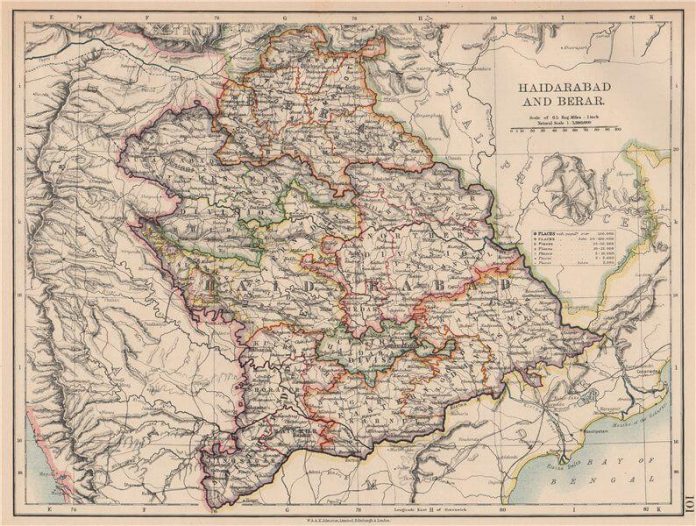









 Allow notifications





