This article is written by Monesh Mehndiratta, a law student at Graphic Era Hill University, Dehradun. This article provides the need, historical background and features of the Kigali Amendment. It further describes the position in India along with its impact.
The Kigali Amendment is an amendment made to the Montreal Protocol, which is an international agreement focusing on the issue of depletion of the ozone layer. After coming into force in 1998, the Montreal Protocol has gone through various changes and amendments. The Kigali Amendment was the 8th such amendment in the agreement and came into force on 1st January 2019. Since the agreement of the amendment was signed in Kigali, which is the capital of Rwanda, the agreement and hence the amendment were named so. The purpose of the amendment was to focus on the reduction in the consumption of hydrofluorocarbons (HCFs). In this article, we are going to discuss the background of the amendment, its features, impact, and position in the country.
The Montreal Protocol
It is a multilateral agreement aimed at a reduction in the substances that lead to ozone depletion and the preservation of the ozone layer. The ozone layer is a layer in the stratosphere of Earth and controls the UV rays from entering the surface. However, there has been a hole in this layer, which has damaged it, and as a result, harmful UV rays are entering the surface. The substances that increase ozone depletion are known as ozone-depleting substances (ODS). These include halons, chlorofluorocarbons, carbon tetrachloride, etc.
The scientists discovered a hole in the ozone layer over Antarctica and said that the gases and chemical substances used in refrigerators, air conditioners, aerosols, etc. have resulted in the hole through which ultraviolet radiation, or UV rays, enter the atmosphere of Earth and reach people. This causes skin diseases and cancer.
The United Nations and its member countries realized the need to control such substances and preserve the ozone layer from depleting. They signed the Vienna Convention for the Protection of the Ozone Layer in 1985, as a result of which the countries decided to adopt and adhere to the Montreal Protocol, which banned such substances from being used. Every country that decided to be a member of such a convention had to follow the protocol.
Features of the Montreal protocol
The objective of the protocol is to reduce the consumption of ODS in a specified period to achieve the goal of the preservation of the ozone layer from further depletion.
It gives different rules and regulations along with different periods for developed and developing countries.
The members of the protocol include all the countries in the United Nations and European Union.
Countries in both groups are bound by the protocol and commitments.
The parties to the protocol, the governance body, and the technical group meet once a year to discuss the success, impact and loopholes of the protocol.
It is the first protocol to be ratified by all the countries of the world and members of the United Nations.
Ozone Secretariat is the highest authority with its office in the headquarters of the United Nations Environment Programme (UNEP) located in Nairobi.
The important provisions of the protocol are as follows:
Article 2 deals with the controlling measures that every country needs to follow.
Article 3 deals with the calculation and impacts of control measures.
Article 5 mentions the situation in developing countries. India is a party to this treaty under Article 5.
Article 7 places an obligation to report the necessary data.
Article 8 deals with the conditions and consequences of non-compliance.
Article 10 provides the technical assistance and multilateral funds to successfully apply and follow all the rules and measures.
Following are the substances that have been banned and recognized as ODS in the protocol:
It has undergone a lot of amendments and revisions.
Member countries of the Montreal Protocol
As per the reports, 197 countries are members of the protocol. Some of these countries that have successfully phased down the production and consumption of ODS (like halons, chloro fluoro carbons, carbon tetrachloride, etc.) and implemented the protocol are:
Algeria
Argentina
Armenia
Austria
Belgium
Canada
Central African Republic
China
Costa Rica
Cuba
Egypt
European Union
Finland
Germany
Greece
Hungary
Iceland
India
Indonesia
Japan
Ukraine
USA
The Kigali Amendment
Background
With the ratification of the Montreal Protocol, various substances falling under the category of ozone-depleting substances were recognized and banned. This increased the usage of hydrofluorocarbons, or HFCs, as a replacement for chlorofluorocarbons in refrigerators, air conditioners, aerosols, etc. HFCs are another kind of organochlorine compound which are manufactured as CFCs and were used as their alternative. They do not have any role to play in the depletion of the ozone layer, which results in global warming. It was discovered that the HFC is a major greenhouse gas which results in global warming and increases the temperature of the earth quickly. Thus, it was necessary to curb its usage in order to protect people from global warming and harmful UV rays.
This need was felt by the United Nations, and so the meetings of the parties were conducted. In 2016, 197 countries in Kigali, the capital of Rwanda, decided to sign an agreement to amend the Montreal Protocol and insert HFCs in the category of ODS. As a result, it came into effect on 1st January 2019. The objective of the amendment was to reduce the consumption of HFCs and decrease it by 80-85% until 2045. This will limit the rise in temperature by 0.5 degrees Celsius till 2100. It also reduces and controls global warming and its consequences for living beings. Its importance can also be realized from another treaty, the Paris Agreement, which also focuses on limiting the use of greenhouse gases and their effects.
Scope of the Kigali Amendment
It is a binding agreement which means that all the countries who have signed or ratified the agreement are bound to adhere to all the rules and regulations laid down in it.
The countries are expected to fulfill and accomplish their targets as provided under the agreement.
Once a country has ratified the agreement. It assumes legal obligations as the intention of the agreement is to create rights and obligations in international law.
The agreement also supports technologies and substances that are used as an alternative to ODS and are cost effective and environmentally friendly.
As per the reports and data of 2022, 136 countries have ratified the Kigali amendment.
Features of the Kigali Amendment
It is an agreement that is binding on all the countries that ratified it. In the case of non-compliance, there are measures that such countries need to follow.
It provides different targets for different countries depending upon their nature, whether they are developed or developing.
It takes into consideration the varying situations, technological and scientific approaches, types of machineries and economy of the country while deciding the target.
It works on the principle of common and equal but differentiated responsibilities to be given to every country. This is similar to that followed by the Montreal Protocol.
The multilateral funds have been kept and provided to all the countries belonging to different categories to mitigate and adapt to the amendment as per the needs of their countries.
The review of all the technologies, success, and impact of the amendment, along with the products and their energy, will be conducted by the Technology and Energy Assessment Panel (TNEP).
The scope of the amendment extends to all the countries that have signed the amendment and are part of the groups created in the amendment.
Actions taken to control the depletion of the ozone layer
In order to decrease the production and consumption of substances leading to the depletion of the ozone layer, the amendment divided the countries into 3 groups and gave them a target to come up with alternative technology and substances but stopped using ODS. The countries are divided as:
Group 1 – consists of developed countries like the European Union countries and countries led by the US. The phasedown for this group had to start by 2019 and reduce 15% of the total consumption by 2036.
Group 2 – it consists of developing countries like China, Brazil, etc. which will start the phasedown by 2024 and reduce their consumption by 20% till 2045.
Group 3 – it also consists of developing countries, but these are the hottest areas, and so the phase down will start by 2028 to reduce consumption by 15% till 2047. The countries included in this category are Pakistan, India, Iran, Saudi Arabia etc.
It has also set up TNEP to test all the alternative technologies and substances suggested by the countries before their production and usage. Also, the executive committee has been asked to provide the guidelines in order to finance the phase down of production and consumption of HFCs, and countries will be helped by way of extra financial support.
Significance of the Kigali Amendment
It provides a clear and definite timeline for every country to meet their target.
It helps in preventing the consumption and manufacturing of HFCs.
The greatest significance of the Kigali Amendment lies in the implementation of the Paris Agreement.
Paris Agreement
It is a result of the United Nations Framework Convention on Climate Change (UNFCCC) and a multilateral agreement signed in order to reduce greenhouse gases to reduce global warming and prevent unnecessary change in the climate due to man-made reasons. The agreement was signed on 22 April 2016 by 195 countries that are members of the UNFCCC. The objective of this agreement is to reduce the rise in temperature below 2 degrees Celsius above pre-industrial levels and develop the strategy and mechanism to support countries with adverse climatic conditions having a bad impact on the health of their people and other living beings. The agreement also puts an obligation on the developed countries to offer a helping hand to their neighbouring countries and other developing countries in terms of finance or technology.
The agreement provides that the emission of carbon dioxide be reduced to 20% along with a 20% reduction in market shares of renewable energy. After 5 years, various countries have submitted their reports and data as to the implementation and effect of the Paris agreement. It can be seen that China has the highest percentage of greenhouse gases and did not adhere to the agreement followed by the United States of America. Despite the Kigali agreement, which plays a major role in implementing the Paris agreement as it provides the mechanism, targets, and strategies to be used by the countries in order to control greenhouse gases and their effects, only a few countries have complied with all the terms of the agreement. These are India, Bhutan, Philippines, Ethiopia, Morocco, etc.
Position of the Kigali Amendment in India
The cabinet under the leadership of Prime Minister Narendra Modi approved the ratification of the Kigali Amendment, adopted at the 28th meeting of the parties in 2016. It was decided to implement all the strategies by 2023, after discussing them with the necessary stakeholders. It was concluded that India would proceed with the phase down in 4 steps:
10% reduction in consumption of HFCs by 2013,
20% reduction in 2037,
30% reduction by 2042 &
85% reduction by 2047.
The strategies and the schemes to achieve the target will be implemented together with other ongoing schemes of the government with a view to maximizing the socio-economic gains apart from environmental gains. The aim of the government is to opt for alternatives to HFCs and other non-HFCs products to be manufactured by great minds. This will also help in the employment and recognition of various inventions and developments made in this regard by the future scientists and great minds of the country as it promotes domestic innovation.
India has also signed the Paris Agreement, which is related to the Kigali Amendment as both focus on similar issues to resolve the problem of greenhouse effects and reduce global warming. It has followed all the terms and conditions of the agreement and has taken various measures in this regard. Some of these are:
National solar mission – this aims at promoting the ecologically sustainable growth of the country and addresses the problem of energy security in the country.
Bharat Stage (BS) VI norms – the government has given specific standards to control the emissions of harmful gases in order to check and control air pollution in the country.
National Wind-Solar Hybrid Policy 2018 – the purpose of this policy is to build wind-solar hybrid systems to convert the energy into an effective source so that it can be efficiently utilized.
The Kigali Amendment has made a positive impact on the country and its workers, especially in the industrial sector, which is majorly responsible for emitting harmful gases through chimneys. The regulations and the strategies opted by the Indian government to control the production of HFCs have restricted industries from using such substances in their products. Moreover, this agreement paved the way for new innovations and creations and helped young minds showcase their potential in finding alternatives to such harmful substances.
The current Prime Minister, Narendra Modi, also announced the Atma Nirbhar Bharat Abhiyan in the country to encourage the citizens and young minds to become independent and self-reliant. He is helping them to work on new innovations by way of funds if it is useful. This campaign has further helped in achieving the goals set out in the Kigali Agreement because the young scientists are motivated to find ways and technologies to develop alternatives to ODS and produce such alternatives. Thus, these measures and others help in controlling and reducing the consumption of such gases, which increase the greenhouse effect and global warming, leading to unnecessary heating of the earth’s surface.
Impact and global aspects of the Kigali Amendment
The Kigali Amendment had a huge impact on the production of ozone-depletion substances as it completely banned such products and also gave various other measures to be followed by every country that has signed the amendment. The countries have been given a period during which they have to accomplish their targets of reducing the consumption of such substances and come up with other alternatives. One such alternative that was used by the countries was HFCs, which was later found to be harmful for the environment and hence, banned by the amendment.
After the enforcement of the agreement, many countries that were already facing the issues due to global warming and greenhouse effect had immediately ratified it. But the major countries, like China, the USA, India, etc., did not do so. They gradually and slowly realized the importance of controlling global warming and, hence, ratified it. Currently, the member countries are satisfied with the agreement and are working to accomplish their respective targets. But the major drawback is that they are finding it difficult in coming up with different strategies and substances in place of those that have been banned. The various committees of UNEP are trying their best and working towards collecting the data about the implementation of the agreement and also helping the member countries by funding them financially.
However, it also provides the opportunity for scientists and manufacturing companies to innovate and invent other substances in place of those that have been banned from being used as coolants in refrigerators and air conditioners. As a consequence, scientists suggest that hydrofluoro olefins can serve the purpose of being used as an alternative in refrigerators and air conditioners. Thus, it can be said that the agreement has made various countries conscious of the environment and its protection.
Challenges ahead
The Kigali Amendment has been successful in cutting down on the production and consumption of HFCs, which are tested as harmful for the environment as they increase global warming and greenhouse effects. But even this amendment faces certain challenges. The three main challenges that need to be addressed in the Kigali Amendment as soon as possible are:
Some countries have failed to accurately collect the data and statistics about the estimation of production and consumption of HFCs. These products are easily manufactured, so companies prefer them. Due to corruption, companies indulge in illegal manufacturing as the substances are banned from being used and manufactured in each country. With inaccurate estimation, the target set by the agreement is not accomplished.
Another challenge is to meet the needs of alternative substances to be used as coolants. The agreement has paved the way for new alternatives to be used in refrigerators and air conditioners. Manufacturing companies find it difficult to come up with such alternatives and technologies. Scientists are trying to find the solution and have suggested hydrofluoro olefins (HFOs) be used in place of HFCs after their successful testing and verification.
One of the major concerns of countries is the funds to develop the technology for the production of such alternatives. The Executive Committee and other funding committees of UNEP are helping the countries to solve this problem. But this still serves as the major challenge in the successful implementation of the agreement.
Conclusion
The Kigali Amendment was made in order to fulfill the urgency of having a mechanism to reduce the HFCs, which were used as an alternative to other ozone-depleting substances. Though it is not one of those substances, it contributes to global warming by increasing the effect of greenhouse gases. The United Nations felt the need for the amendment as a result of which it was passed at the 28th meeting of the members in 2016 in Kigali, the capital of Rwanda, and was named so. This amendment recognised HFCs as ODS under Annex F of the Montreal Protocol, which means that no country can now manufacture or use them in any form. The amendment has played a major role in the successful implementation of the Paris Agreement which has similar objectives. Thus, it can be concluded that the amendment was the need of the hour and, because of this, the countries are under a check not to use any of the banned substances and complete the target in order to make the environment healthy.
Frequently asked questions (FAQs)
Is the Montreal Protocol legally binding?
The protocol as universally ratified has a time-bound binding framework, which makes it a binding agreement.
What is the impact of the Montreal Protocol on India?
It is a multilateral agreement aimed at a reduction in the substances that lead to ozone depletion and the preservation of the ozone layer. Article 5 of the protocol recognises India as one of its signatories, and so multilateral funds are given to fulfil the purpose. In India, its implementation is seen and checked by the Ministry of Forests, climate change and environment. It has also established Ozone cells and passed the Ozone Depleting Substances (Rules and Regulations), 2000, making it clear that India is working to accomplish all the objectives of the protocol.
What is the Kigali Amendment and how many countries have ratified it?
The Kigali Amendment is an amendment made in the Montreal Protocol to focus on the reduction in the consumption of hydrofluorocarbons (HCFs). As per the reports in 2017, currently, 121 countries and countries belonging to the European Union have ratified the amendment, which includes India.
What are the implications of the amendment?
The industries in India have to try and find substitutes for HFCs and invest in R&D. They can also opt to buy the technologies and patented substances of other companies who have been able to find alternatives to such substances, for example, hydro fluoro olefins (HFOs). This will also force industries and companies to use eco-friendly materials in the production of their goods and products, making them environmentally friendly. However, the negative impact is that there will be an increase in the production cost of the product as a result of which the buyer has to suffer.
Students of Lawsikho courses regularly produce writing assignments and work on practical exercises as a part of their coursework and develop themselves in real-life practical skills.
LawSikho has created a telegram group for exchanging legal knowledge, referrals, and various opportunities. You can click on this link and join:
This article has been written by Oishika Banerji of Amity Law School, Kolkata. This article provides an overview of the Unlawful Activities (Prevention) Act (UAPA), 1967 which is an Act to provide for the more effective prevention of certain unlawful activities of individuals and associations.
The Unlawful Actions (Prevention) Act, 1967 (hereinafter ‘UAPA’) is designed to make illegal and terrorist activities that threaten India’s integrity and sovereignty, punishable by nature. It gives the Central Government, wide authority to designate organisations as terrorist organizations and to prescribe punishments for those who participate in such related activities. The Act was enacted to ease the process of prevention of certain illegal activities by persons and organisations, as well as matters related to them. The Act was amended by the Parliament in 2019 and the same was notified on August 8, 2019. The most notable alteration brought about by the amendment was that it changed Section 35 of the Act and provided the Central Government with the right to declare someone a ‘terrorist’ under Schedule IV. Individuals were not covered under the head of ‘terrorists’ prior to this amendment since only organisations were identified in that way.
This article provides insight and a detailed analysis of the Act that continues to remain at the top of debates and discussions in democratic India.
UAPA, 1967
The Unlawful Activities (Prevention) Act, 1967, has its origins in colonial times when the Criminal Law (Amendment) Act was passed in 1908. The objective was broad and clear as it aimed to detain freedom fighters using the newly modified Act, which for the first time added the term ‘unlawful association.’ Even after independence, the Nehru government preferred to exploit the Act’s provisions to silence anyone who opposed the government or the land reforms they wanted to implement. Not only the Centre, but also the states enacted their own detention legislation, such as the Preventive Detention Act of 1950, and many Supreme Court judgments, such as AK Gopalan v. State of Madras (1950) and Romesh Thapar vs State of Madras (1950), came flooding in to support the fundamental rights’ sanctity.
Despite the fact that the Act has been in force since 1967, the UAPA Amendment Act of 2004 was the first to add a dedicated Chapter to criminalise terrorist actions (Chapter IV). Following that, revisions to the statute were made in 2008 and 2013. Terrorist actions were principally dealt with under the now-repealed Terrorist and Disruptive Activities (Prevention) Act, 1987 (‘TADA’) and the Prevention of Terrorism Act, 2002 (‘POTA’) prior to the drafting of UAPA. The constitutional legitimacy of both TADA and POTA has been challenged several times throughout the years.
These challenges were primarily based on the fact that the Union lacked the legislative authority to implement these laws. The legitimacy of TADA, for example, was questioned in Kartar Singh v. State of Punjab (1994) on the grounds that it dealt with the subject of ‘public order,’ which was within the legislative jurisdiction of states. Despite this, the Court maintained TADA’s legality. The Supreme Court determined that ‘public order’ included issues of lesser gravity, whereas more serious threats covered by TADA came under the Union’s national defence domain. In PUCL v. Union of India (1996), a similar challenge was made against POTA, which was also rejected by the Apex Court on similar grounds. The UAPA, on the other hand, has never been called into question on the basis of legislative competence.
On several instances, for example, the Court has examined specific portions of the aforementioned statutes. In Sri Indra Das v. State of Assam (2011), the Supreme Court struck down Section 10 of the UAPA and Section 3(5) of the TADA, both of which made simple participation in a banned organization illegal. The Court decided that interpreting these provisions literally would place them in violation of Articles 19 and 21 of the Indian Constitution. This was in keeping with the Court’s prior ruling in Arup Bhuyan’s case (2011), which stated that ‘merely belonging to a banned organization does not render a person a criminal until he resorts to violence, incites others to violence, or causes public disorder by violence or incitement to violence.’
The UAPA regime’s bravado is demonstrated by the state’s own official statistics. Between 2016 and 2019, the National Crime Records Bureau (NCRB) provided that a total of 4,231 FIRs were filed under various provisions of the UAPA, with 112 cases resulting in convictions. While the number of acquittals is minimal (187), the pendency rates reveal the true situation. The pendency rate for police investigations is quite high, averaging 83%, implying that charge-sheets are filed by the police in roughly 17% of all cases brought up for inquiry. The rate of pendency at the trial level is 95.5 percent on average, meaning that less than 5% of trials are finished each year, indicating the causes for long periods of detention without charge.
Scope and applicability of UAPA
It extends to the whole of India.
Every individual shall be punished under this Act for any act or omission that is in violation of its provisions and for which he is found guilty in India.
Any person who commits an offence punishable under this act outside of India shall be dealt with in accordance with the provisions of this Act as if the act had been done in India.
This Act’s provisions also apply to:
Citizens of India and those from other countries.
People who work for the government.
This Act also applies to those aboard ships and planes registered in India.
Importance of UAPA, 1967
The Unlawful Acts (Prevention) Act, 1967 aims to prevent illegal activities in India. Its principal goal is to give authorities the power to deal with acts that threaten India’s integrity and sovereignty. The UAPA,1967 was enacted to make it easier to prevent certain illegal activities by persons and organisations, as well as matters related to them.
UAPA was passed for the first time in 1967. The statute stems from a recommendation made by a committee created by the National Integration Council to look into the subject of ‘national integration and regionalization’ in order to impose ‘appropriate constraints.’ The Constitution (16th Amendment) Act of 1963 was passed in response to the committee’s findings, imposing reasonable restrictions on the exercise of some fundamental rights, including:
Freedom of Speech and Expression.
Right to assembly peacefully.
Right to form associations and unions.
In order to enable the implementation of these restrictions, UAPA was introduced and enacted in the year 1967.
Features of the UAPA, 1967
According to Section 15 of the Act, the Central Government has the authority to designate any person as a ‘terrorist’ if he or she is discovered to be involved in any type of terror activity that is likely to pose a danger to India’s sovereignty or integrity.
Companies and organisations found to be involved in any type of illegal or terrorist activity would be held liable under Section 22A of the Act.
After obtaining approval from the designated authority of the state where such an incident has occurred, the Act enables any inspector rank officer of the National Investigation Agency to investigate any type of unlawful activity as provided under Chapters IV and VI of the Act.
The Investigating Officer has also been given the authority to conduct raids, and if a seizure is made, he must notify the state’s designated officer within 48 hours after the raid.
In the event that any property or cash is suspected of being used for terrorist activities or by a terrorist organization, the investigating agency has the authority to seize the cash or property and deliver it to the designated officer within 48 hours.
If a person identified as a terrorist fears that the law may be used against him, he or she has the right to file an appeal with the Home Ministry, which must respond within 45 days.
The individual may also appeal to the review committee, which will be composed of retired/current judges and secretaries of the Central Government.
If an individual believes he or she has been wronged, he or she may file a complaint with the high court or the Supreme Court.
The Act defines a terrorist act as one that occurs within the scope of any of the treaties specified in the Act’s Schedule.
The UAPA was not a terror law between 1967 and 2004. In December 2004, Parliament added a provision to the bill dealing with the punishment of terrorist acts.
More revisions to the UAPA were enacted in 2012 and 2019 to broaden its reach.
Terrorism, money laundering for terror financing, and the classification of groups and people as terrorists are now covered by the UAPA.
How did UAPA become a terror law
The Terrorist and Disruptive Activities Prevention Act of 1987 (TADA) was India’s first anti-terror legislation. TADA was created with the goal of defining and combating terrorist activity. It was enacted in the aftermath of the assassination of Indira Gandhi and terrorism in Punjab. The Prime Minister at the time was Rajiv Gandhi.
TADA’s application in the aftermath of the 1993 Bombay explosions and other terror operations drew harsh criticism from human rights organisations and political parties.
The Manmohan Singh government repealed POTA in 2004 before amending the UAPA to make it India’s primary terror statute.
The UAPA (Amendment) Act, 2019
The Unlawful Activities (Prevention) Amendment Act, 2019 was enacted by the Parliament on August 2. It soon gained the President’s approval on August 8th, 2019. The Unlawful Activities (Prevention) Act of 1967 underwent a number of amendments thanks to the Amendment Act, which was passed by Parliament. The main adjustment was made to Section 35 of the 1967 Act.
The UAPA (Amendment) Act, 2019, included a contentious revision that broadened the definition of “terrorists” under the Act. Under Sections 35 and 36 of Chapter VI of the parent legislation, the Central Government revised it in 2019 to identify persons as ‘terrorists’ if it believes that the individual is involved in terrorism. Once the person is so categorized, their name will be added to Schedule 4 of the Act.
Sajal Awasthi is the primary petitioner in the two cases that have been brought thus far against the Amendment Act, namely, Sajal Awasthi v. Union of India (2019) and Association for Protection of Civil Rights v. Union of India (2019). Both petitioners had essentially made the same objections to the proposal. Both petitioners’ main contention is the fact that a person can be labelled as a terrorist without any court review and even before a case is started, unjustified. They contended that the Amendment Act violates the Constitution’s rights to life (Article 21), free speech (Article 19), and equality (Article 14).
According to the Awasthi petition, the provision’s lack of specific criteria upon which one may be labelled a terrorist constitutes a violation of the right to equality. The clause is, therefore, ‘manifestly arbitrary.’ According to the notion of evident arbitrariness, a law is plainly arbitrary and incompatible with the right to equality if it is made without a sufficient guiding basis and is excessive or disproportionate in nature.
Awasthi further asserts that the amendment violates the right of dissent, which is an integral part of freedom of speech. To emphasise the value of free expression and the related freedom to dissent, they cited the rulings in Romesh Thappar v. State of Madras (1950) and Maqbool Fida Hussain v. Rajkumar Pandey (2008).
The Amendment has been heavily criticised since it grants the Union Government broad and unlimited authority to arrest people without going through the proper channels. The Supreme Court declared in the infamous Justice KS Puttaswamy v. Union of India (2018) case that the right to life and personal liberty (Article 21 of the Indian Constitution) can only be abridged if the due process is followed properly. Article 20 of the Indian Constitution refers to the internationally recognised principle of ‘Presumption of Innocence’ or ‘Innocent till Proven Guilty,’ which does not apply to the designated terrorist under UAPA.
Overview of the chapters of the Unlawful Activities (Prevention) Act (UAPA), 1967
The UAPA, which was first adopted in 1967, was revised in 2004 and 2008 to be modelled after an anti-terror statute. It departs from standard legal procedures, establishing its own ‘extraordinary’ regime in which constitutional safeguards for the accused are reduced to nothing or non-existent. Regular bail is subject to the judge’s satisfaction that no prima facie case exists, and the term of detention is expanded, extending the period of incarceration prior to which default bail cannot be given. Bail is nearly impossible in this situation. Apart from bail, the dilatory trial procedures result in long durations of pre-trial detention for those accused of serious terror offences. In other words, regardless of the outcome of the case, anyone accused under UAPA is automatically sentenced to prison. The UAPA, 1967 is composed of 53 sections spread over seven chapters and three schedules. The different chapters and the subject matters they are concerned with have been listed hereunder:
Chapter I: Preliminary provisions
Chapter II: Unlawful associations
Chapter III: Offences and penalties
Chapter IV: Punishment for terrorist activities
Chapter V: Forfeiture of proceeds of terrorism or any property intended to be used for terrorism
Chapter VI: Terrorist organisations
Chapter VII: Miscellaneous.
Chapter I: Preliminary provisions
Chapter I, comprising two provisions, provides an introduction to the UAPA, 1967 by laying down its extent, application and list of defined terms that have been time and again used in the entire legislation. The list of essential definitions that the reader needs to be aware of while studying this legislation has been provided hereunder:
Terrorist Act: Section 2(k) read with Section 15 of the UAPA, 1967, whoever, by means of criminal force, overawes, detains, kidnaps, or abducts any person with the intent to threaten or likely to threaten India’s unity, integrity, security, or sovereignty, or with the intent to strike terror in the people or any section of the people in India or in any foreign country by using bombs, dynamite, or other explosive substances or inflammable substances or weapons, overawes, detains, kidnaps, or abducts any person and threaten to kill or injure such person is said to have committed terrorist acts.
Unlawful Activity: As per Section 2(o) of the UAPA, 1967, unlawful activity implies any action made by an individual or organisation whether by committing an act or by words, either spoken or written or by signs or by visible representation or otherwise:
Is intended, or supports any claim, to bring about, on any ground whatsoever, the cession of a part of the territory of India, or
Disclaims, questions, disrupts, or is intended to disrupt the sovereignty and territorial integrity of India; or
Which causes or is intended to cause disaffection against India.
Unlawful associations: The term ‘unlawful associations’ under Section 2(p) signifies any associations;
Which has as its goal any illegal activity, or which encourages or assists people to engage in illegal activity, or whose members engage in illegal activity;
Which has as its goal any activity punishable under Sections 153A or 153B of the Indian Penal Code, 1860 or which encourages or supports anyone to engage in such activities, or whose members engage in such activities.
In this regard, it is to be noted that the second point will not be applicable in the state of Jammu and Kashmir.
Chapter II: Unlawful associations
Chapter II is spread over Sections 3 to 9 and deals solely with unlawful associations. While we have had an idea about the term ‘unlawful association’ previously under Section 2(p), Chapter II provides a detailed insight into the concept. The provisions and their subject matter have been discussed hereunder:
Section 3 (Declaration of an association as unlawful): The declaration of an association as unlawful is to be done by the Central Government by means of a notification in the Official Gazette. The declaration is to be subjected to the public interest as the provision expressly mandates that the Central Government should not disclose any fact that it considers to be against the public interest to disclose.
Sections 4 and 5 (Dealing with the Tribunal): The concept surrounding the Unlawful Activities (Prevention) Tribunal has been spread over Sections 4 and 5 of the Act of 1967. The Central Government may establish, as and when necessary, a tribunal known as the Unlawful Activities (Prevention) Tribunal, consisting of one person chosen by the Central Government, by the announcement in the Official Gazette. For the purpose of conducting an inquiry under this Act, the Tribunal shall have the same powers as a civil court under the Code of Civil Procedure, 1908, when deciding a case. The Consolidated Fund of India will cover all expenses incurred in connection with the Tribunal. Any proceeding before the Tribunal will be treated as a judicial proceeding under Sections 193 and 228 of the Indian Penal Code, 1860, and the Tribunal will be treated as a civil court under Section 195 of the Code.
The period of operation and cancellation of notification are discussed under Section 6 of the Act.
Section 7 (Central Government’s power to prohibit the use of funds of an unlawful association): One of the secure ways of prohibiting the encouragement of unlawful associations is by means of curbing funds they use for their activities and maintenance. The Central Government has, therefore, under Section 7 of the Act of 1976 been vested with the power to make inquiries if it thinks that any person has custody of any amounts of money, securities, or credits that are being used or are intended to be used for the purpose of the unlawful association. Any order made with respect to this provision is to be carried out expressly in the form of writing.
Section 8 (Central Government’s power to notify places used for the purpose of an unlawful association): Under Section 8, where an association has been declared unlawful by a notification issued under Section 3, by means of notification, the Central Government can notify places used for the purpose of an unlawful association.
Section 9 (Procedural prescription): Adoption of civil procedure as provided under the Code of Civil Procedure, 1908 is to be followed for the disposal of applications under this Act.
Chapter III: Offences and penalties
The UAPA Act, 1976 is known for its draconian list of penalties and punishments, along with offences that have been very much in force in recent times due to frequent use of the Act in events that were thought to have ignited contribution towards unlawful activities under the legislation. Section 14 of the Act categorizes every offence under the legislation as cognizable in nature. A cognizable offence under the Code of Criminal Procedure, 1973 implies a case in which a police officer may arrest without a warrant for the same.
The difference between ‘penalties’ and ‘punishments’ need to be cleared for the readers of the fact that the Act prescribes both under Chapter III. Punishments have been dealt with separately under Chapter IV as well. While both the terms seem alike, punishment stems from typical misbehaviour, whereas penalties are consequences of breach of a rule of law.
Penalty for being a member of an unlawful association, etc. (Section 10):
Shall be punishable with imprisonment for a term which may extend to two years, and shall also be liable to fine.
If a person continues to be associated with such an unlawful association and results in the death of any person, then he shall be punishable with death or imprisonment for life, and shall also be liable to a fine. In any other case, he shall be punished by imprisonment for a duration of not less than five years but not more than life along with a fine.
Penalty for dealing with funds of an unlawful association (Section 11): Shall be punishable with imprisonment for a term which may extend to three years, or with a fine, or both.
Penalty for contravention of an order made in respect of a notified place (Section 12): Shall be punishable with imprisonment for a term which may extend to one year, and shall also be liable to fine.
Punishment for unlawful activities (Section 13): Shall be punishable with imprisonment for a term which may extend to seven years and shall also be liable to a fine. Assistance in unlawful activities shall result in imprisonment for a term which may extend to five years, or with a fine, or both.
Chapter IV: Punishment for terrorist activities
Section 15 to 23 of Chapter IV of the UAPA, 1976 lays down punishment for terrorist activities which may range from raising funds for terrorist acts, conspiracy, and organising terrorist camps to that recruiting any person or persons for a terrorist act, harbouring, etc.
Section 15 of the Act defines ‘terrorist act’ as any act intended to undermine or likely to threaten India’s unity, integrity, and security, including economic security, or sovereignty, as well as any act intended to incite terror in the general public or a specific group of the general public in India or any foreign country. The list of punishments prescribed for a terrorist act and associated activities has been enlisted hereunder:
Punishment for the terrorist act (Section 16): Punishable with death or imprisonment for life, and shall also be liable to fine.
Punishment for raising funds for a terrorist act (Section 17): Punishable with imprisonment for a term which shall not be less than five years but which may extend to imprisonment for life, and shall also be liable to a fine.
Punishment for conspiracy, etc (Section 18): Punishable with imprisonment for a term which shall not be less than five years but which may extend to imprisonment for life, and shall also be liable to fine.
Punishment for organizing terrorist camps (Section 18A): Punishable with imprisonment for a term which shall not be less than five years but which may extend to imprisonment for life, and shall also be liable to fine.
Punishment for recruiting any person or persons for the terrorist act (Section 18B): Punishable with imprisonment for a term which shall not be less than five years but which may extend to imprisonment for life, and shall also be liable to fine.
Punishment for harbouring, etc (Section 19): Punishable with imprisonment for a term which shall not be less than three years but which may extend to imprisonment for life, and shall also be liable to fine.
Punishment for being a member of a terrorist gang or organisation (Section 20): Punishable with imprisonment for a term which may extend to imprisonment for life, and shall also be liable to fine.
Punishment for holding proceeds of terrorism (Section 21): Punishable with imprisonment for a term which may extend to imprisonment for life, and shall also be liable to fine
Punishment for threatening witness (Section 22): Shall be punishable with imprisonment which may extend to three years, and shall also be liable to a fine.
Punishment for offences by companies, societies or trusts (Section 23): Punishable with imprisonment for a term which shall not be less than seven years but which may extend to imprisonment for life and shall also be liable with a fine.
Chapter V: Forfeiture of proceeds of terrorism or any property intended to be used for terrorism
Spread over Sections 24 to 34, Chapter V of the UAPA, 1967, deals with forfeiture of proceeds of terrorism or any property intended to be usedd for terrorism. The authority to carry out forfeiture of any proceeds is vested on the Central Government as laid down under Section 24A of the 1967 Act. The detailed list of sections and their contents have been briefly stated hereunder:
Proceeds of terrorism (Section 24): The provision states that ‘proceeds of terrorism’ shall include any property intended to be used for terrorism.
Powers of investigating officer and designated authority and appeal against an order of designated authority (Section 25): Any kind of representation of proceeds of terrorism if presumed by investigating and officer and designated authority, can be seized provided prior approval in writing of the Director-General of the Police of the state in which such property is situated, is taken.
Court to order forfeiture of proceeds of terrorism (Section 26): In cases where the property is seized or attached on the grounds that it is the proceeds of terrorism and the court upholds the decision in this respect, it may order forfeiture of such property.
Issue of show cause notice before forfeiture of proceeds of terrorism (Section 27): The person from whom the property has been seized on grounds of the same being proceeds of terrorism, shall be served with a show cause notice before such action is carried out by designated authorities.
Appeal (Section 28): Anyone who is not satisfied with a forfeiture order issued under Section 26 has one month from the date they received the order to file an appeal with the high court that has jurisdiction over the court that issued the order they are dissatisfied with.
Order of forfeiture not to interfere with other punishment (Section 29): The court’s forfeiture order made pursuant to this Chapter shall not preclude the imposition of any other punishment that the person affected thus is subject to.
Claims by a third party (Section 30): The designated authority before whom the property is delivered must conduct an investigation into any claim or objection that is made in response to the seizure or attachment of any property pursuant to Section 25 on the grounds that the property is not subject to seizure or attachment.
Powers of Designated Authority (Section 31): The Designated Authority, working in accordance with the terms of this Chapter, shall have all the civil court’s authority necessary to conduct a thorough and impartial investigation into the problem at hand.
Certain transfers to be null and void (Section 32): When a property mentioned in a Section 25’s order or Section 27’s notice is transferred by any means following the issuance of the order or notice, the transfer is disregarded for the purposes of the proceedings under this Chapter, and if the property is subsequently forfeited, the transfer is deemed to be void.
Forfeiture of property of certain persons (Section 33): If a person is suspected of committing an offence under Chapter IV or Chapter VI, the court has the discretion to order that any or all of his properties, whether movable or immovable or both, be attached during the course of the case if they haven’t previously been attached under this Chapter.
Company to transfer shares to government (Section 34): When a company’s shares are forfeited to the Central Government or the state government, depending on the circumstance, in accordance with this Chapter, the company is required to immediately designate the Central Government or the state government, depending on the circumstance, as the transferee of those shares.
Chapter VI: Terrorist organisations
Spread over Sections 35 to 40, Chapter VI of the 1967 Act discusses terrorist organisations. Provisions have been briefly discussed hereunder:
Denotification of a terrorist organization (Section 36): Everything associated with Section 36 is to be carried out by the Central Government.
Review committees (Section 37): Committee consisting of a Chairperson and such other members not exceeding three and possessing such qualifications as may be prescribed, is to be formed by the Central Government and is to be recognised and reviewed by committees.
Offence relating to membership of a terrorist organisation (Section 38): A person commits a crime related to participation in a terrorist organization when they claim to be affiliated with or associate themselves with one with the objective of furthering their actions.
Offence relating to support given to a terrorist organisation (Section 39): A person is said to have committed the offence relating to support given to a terrorist organisation if he does the following things:
Has intention of furthering the activities of a terrorist organization, invites support for the same, or
Who, with the intent to support a terrorist organization’s activities, arranges, manages, or aids in the organization or management of a meeting that is known to support the terrorist organization’s activities.
A person who speaks at a meeting with the objective of promoting the activities of a terrorist group or soliciting support for the group.
The offence of raising funds for a terrorist organisation (Section 40): A person is said to have committed the offence of raising funds for a terrorist organisation, who, with the intention of furthering the activity of a terrorist organisation has invited another to provide money, or receive money or other property, or provide money for the purpose of terrorism.
Chapter VII: Miscellaneous
Chapter VII of the UAPA, 1967 deals with a set of provisions that have not been discussed in other chapters of the Act, for the fact that they could not be categorised under a particular head. Spread over Sections 41 to 53, some of the significant provisions have been discussed in brief hereunder:
Power to delegate (Section 42): Section 42 provides a decentralised system in which the UAPA can be implemented effectively. Hence, comes the power to delegate which is vested on the Central Government to delegate its authority to the state governments as and when it deems fit.
The procedure of arrest, seizure, etc (Section 43B): The procedure laid down under this provision is just and fair and is accused friendly just like other criminal legislations based in India.
Any officer who detains a person in accordance with Section 43A must promptly tell him of the reason(s) for the detention.
Every individual detained and item confiscated in accordance with Section 43A must be sent right away to the officer in charge of the closest police station.
When a person or item is forwarded to an authority or officer pursuant to subsection (2), they are required to take any expedient action that may be required to comply with the Code’s provisions.
Protection of witnesses (Section 44): UAPA has highlighted the need for protecting witnesses under Section 44. If a court determines that a witness’s life is in danger as a result of an application made by the witness in a proceeding before it, by the public prosecutor regarding the witness, or on its own initiative, it may take whatever steps are necessary to protect the witness’ identity and address for reasons that must be documented in writing.
Cognizance of offences (Section 45): Section 45 mandates taking prior sanction by the Central Government by any court taking cognizance of an offence recognised under UAPA, 1967. This indeed shows excessive interference of the executive in the functioning of the legislature and judicial oversight. This very provision also contributes in making UAPA sound draconian by nature.
UAPA, 1967 and freedom of speech : a jigsaw puzzle
Although the term ‘democracy’ is very much prevalent in the nation, it is not permitted to be used moderately. In light of the current state of the nation, abiding by this term could result in fines or rigorous imprisonment. UAPA seeks to curb illegal activity taking place in the nation. Any illegal actions promoted against the Indian sovereign are prohibited by the statute. Although this legislation was designed to protect the security of the state, administration has been noticed to have abused the same, which in turn results in violations of numerous fundamental and legal rights granted by the Indian Constitution.
Books are frequently outlawed, peaceful demonstrations are often suppressed, artistic freedom is often curtailed, and social media expression is also prohibited because doing so could result in an arrest under this legislation. The freedom of the press is another crucial freedom that this legislation restricts, leading to the arrest of prominent journalists for publicly criticising the government’s policies or any other similar topics. The Kashmir dispute is one of the topics where this behaviour is used specifically. Journalists who attempt to cover Kashmir for the public are accused of sedition and other anti-national offences. This is a serious problem that requires immediate attention.
Recent issues UAPA’s implementation is creating on the Freedom of Speech and Expression in India
UAPA has generated debate over Freedom of Speech and Expression since 2019. With the exception of the situations described in Article 19 (2), the Indian Constitution ensures Freedom of Speech and Expression. In a recent modification, the government gained the authority to restrict people’s Freedom of Speech and Expression under the guise of combating terrorism. This is especially true in the state of Jammu and Kashmir and in states with large Maoist populations, such as Madhya Pradesh and Chhattisgarh. It has been observed that the government frequently violates citizen’s right to Free Speech and Expression by placing restrictions on it rather than by defending it.
Use of Section 39 of the UAPA, which punishes someone for aiding terrorist operations anywhere in the country with a fine or a jail sentence of up to 10 years or both, has become a freshly baked problem. With this provision in place, the administration, especially in the state of Chhattisgarh, is branding innocent activists, journalists, and other political organisations as terrorists for merely upholding the fundamental rights of every member of the community. These individuals are unable to report crimes or exercise their right to free expression without being accused of supporting the Naxals and being prosecuted under the aforementioned law.
The Freedom of Speech and Expression as guaranteed by Article 19(1) of the Constitution is directly restricted by the amended Section 35 of the Act. According to the clause, Indian government may add any group to the UN charter’s Chapter 7 that it deems to be a terrorist organisation. This gives the government the authority to restrict people’s Freedom of Speech and Expression.
Freedom of press and its standing in the UAPA – Freedom of Speech and Expression fiasco
The freedom of the press is also being violated by the UAPA legislation, and this is especially true in the state of Jammu and Kashmir where there are many insurgency operations. Under this excuse, the government has the opportunity to accuse any journalist or local news outlet of supporting the terrorists, which results in restrictions on their freedom. Particularly in this state, journalism cannot be practised freely by the press. The government has frequently shut down the internet, detained prominent politicians under the guise of fighting terrorism, and restricted their right to free speech. Independent journalists who cover these topics are likewise forbidden from working in their line of work. Under this Act, numerous journalists are targeted, even if they only tweet. All journalists who practise their profession in the state are subject to the legislation since the terms of the Act are divergent and ambiguous enough to be included the same.
The state of Chhattisgarh, where a sizable Maoist community resides, is witnessing the same problems. There are restrictions on the press’s ability to report freely, and those who do so face consequences. The state’s Chief Justice has also written to the administration about this matter, stressing that no journalist should be prevented from using his right to free speech in order to expose violations of human rights or the current circumstances.
Concern of civil servants on the fiasco surrounding UAPA and the Freedom of Speech and Expression
To reduce governmental interference with personal freedom of speech and expression, a group of former civil officials has appealed to the Supreme Court to “declare an overarching ‘fundamental structure principle’ of the Constitution preserving Freedom of Speech and Expression.” In the statement, which was supported by 108 former bureaucrats, it was stated that the removal of Section 124A from the Indian Penal Code, 1860 (IPC) while maintaining the criminalization of “unlawful activities” under the UAPA would significantly benefit the Union Government and the party currently in power at the central level.
State governments are currently free to bring cases against individuals for crimes under the IPC, including sedition under Section 124A. The Union Government is not compelled to provide approval. States that are not governed by the national political party may occasionally use Section 124A to charge supporters of the national party with sedition (as recently happened in Maharashtra). At the central level, the ruling party is helpless to stop such prosecution.
The UAPA, on the other hand, gives the state governments no authority. It states that no court may recognise a crime involving illegal activities without the prior approval of the Central Government. If Section 124A of the IPC is repealed, only the Union Government will have the authority to bring legal action against persons who spread unfavourable viewpoints about the government. This gives the Union Government a strong motive to repeal Section 124A under the guise of defending human rights while actually enhancing its capacity to draconically restrict freedom.
UAPA 2019 Amendment and hope for a brighter future
The UAPA amendment gives the government the right to violate an individual’s fundamental rights to free expression, dignity, dissent, and reputation. The burden of proof to refute the accusations falls on the person, not the government, and anyone could be labelled a terrorist at the government’s choice. The 2019 revisions to the Act violate Articles 14, 19(1)(a), and 21 of the Constitution, and the legislature has no right to take away a citizen’s fundamental rights because they constitute a fundamental component of the Constitution.
The term ‘terrorist’ was previously primarily used to describe organisations that supported and funded specific acts of terrorism, but recent amendments to Section 35(9) of the Act allow the government to label any individual as a terrorist without having to prove their innocence. To comply with laws, this section requires appropriate attention and modifications.
Due to the journalist’s opinions and criticism of the government, the government has started taking measures against them and accusing them of being terrorists under UAPA. The Freedom of Speech and Expression is violated by this conduct, hence it should be restricted.
Certain aspects of the newly modified UAPA, 2019, are incompatible with the nation’s legal system. In order to combat terrorism, this Act gives the government the authority to enact indirect restrictions on the right to freedom of dissent, however these provisions have unintended consequences that restrict the exchange of ideas within society. As a result of this law, numerous journalists are put on trial and ordered to retract their views on certain contentious topics just because the government believes that doing so would encourage hatred without providing any supporting evidence.
The state of Jammu and Kashmir is where the major effects can be seen. After Article 370 was repealed, the government gained control over the state. Many residents there, particularly journalists, are being tried under UAPA and being prevented from exercising their Right to Free Speech as provided by Article 19(1) of the Constitution.
For more information on this topic, you can have a read here.
Recent judgments on the UAPA, 1967
Three landmark decisions affecting the Unlawful Activities (Prevention) Act of 1967 (UAPA) were handed down in 2021.
The first is the regular bail granted to three student activists in the Delhi riots case of 2020, namely, Asif Iqbal Tanha, Devangana Kalita, and Natasha Narwal, after the Delhi High Court found that the police had tried to build a case on inferences and conjectures and had failed to show that their accusations were prima facie true.
The second concerns Mohammad Irfan Gaus and Ilyas Mohammad Akbar’s acquittal by a special NIA court in Nanded, Maharashtra, in a nine-year-old UAPA case for lack of evidence. Both of them were suspected of being part of a broader LeT-led terror plot targeting politicians and the media.
The third case is the Karnataka High Court’s award of default bail to Muzamil Pasha and others, involving 115 Muslim men among 350 who were jailed following rioting and police shooting in 2020. The Court took issue with the fact that the police were given a 90-day extension to file a charge sheet without giving the accused notice or an opportunity to be heard. While these decisions are encouraging, they also serve as a reminder that thousands of people continue to suffer under the UAPA’s arbitrary regime.
K.A. Najeeb v. Union of India (2021)
The Supreme Court concluded in Union of India v. K A Najeeb (2021) that, despite the UAPA’s restrictions on bail, constitutional courts can nevertheless grant bail if the accused’s fundamental rights have been violated. The accused had been detained at Najeeb for more than five years. The Court found that the rigours of UAPA bail limitations “will melt down where there is little chance of a speedy trial and the duration of detention already served has exceeded a substantial portion of the stipulated sentence.”
The Delhi High Court carried this logic a step further in Asif Iqbal Tanha v. State of NCT (2021), saying that courts should not wait until the accused’s right to a speedy trial has been completely revoked before releasing them. Courts should have foresight, especially in situations involving hundreds of prosecution witnesses and a trial that would take years to complete. Courts should adopt the Najeeb principles.
However, the differing outcomes in cases like Asif Tanha and Mohammad Gaus highlight the disparity in access to legal remedies like those provided by Najeeb. Mohammad Gaus indicated that he was unaware that the NIA had filed an appeal and obtained a stay against his bail decision in the Supreme Court after he was freed on ordinary bail in July 2019. Even when accused persons have access to legal counsel, UAPA jurisprudence frequently leads to outrageously unjust conclusions, such as the Supreme Court’s recent home arrest decision in Gautam Navlakha v. NIA (2021). The Supreme Court ruled that home arrest was judicial custody, but it refused to recognise Navlakha’s days in house arrest as custody for the purpose of granting him default bail. In a related case, the Supreme Court’s vacation bench recently ruled that the Delhi riots bail judgments should not be considered precedent until the state’s appeal against the judgments is resolved.
Bikramjit Singh v. The State Of Punjab (2020)
In the case of Bikramjit Singh v.State of Punjab (2020), decided on 12.10.2020, a three-judge bench comprising Hon’ble Justices KM Joseph, Navin Sinha, and Rohinton F Nariman declared that it is a fundamental right granted to an accused person to be released on bail once the conditions of the first proviso to Section 167(2) of the Code of Criminal Procedure, 1973 (CrPC) are met.
According to Section 167 (2) of the Criminal Procedure Code, 1973, an accused person’s imprisonment cannot be extended beyond the statutory time limit for the conclusion of the investigation. The statutory period to conduct the investigation and file the charge sheet/final report in cases involving crimes punishable by life imprisonment or death is 90 days. Nonetheless, under UAPA, the maximum sentence is 180 days. The Supreme Court declared default bail to be a basic right while hearing a plea in a UAPA case.
“We must remember that we are dealing with an accused’s personal liberty under a statute that levies harsh penalties.”The right to default bail, as correctly held by this Court’s judgments, is not merely a statutory right under Section 167(2) of the Code, but is also a part of the procedure established by law under Article 21 of the Indian Constitution, and is thus a fundamental right granted to an accused person to be released on bail once the conditions of Section 167(2) are met,” the Court said.
Thwaha Fasal v. Union of India (2020)
Thwaha Faisal v. Union of India (2020) was an appeal from a Kerala High Court decision issued on January 4, 2021. The release granted to Thwaha Faisal by the NIA Court was revoked by the High Court, and he was ordered to return to jail. The defendant was charged under the UAPA for purported ties to the banned CPI (Maoist). Possession of particular literature, the creation of “cloth flags,” and participation at certain gatherings were all used as evidence against them. They were not accused of committing any violent crimes or of providing material support to any terrorist organization. The High Court, on the other hand, took the charges as evidence that the accused were “protagonists” of the CPI (Maoist), had strong ties to those who, in turn, had close ties to the CPI (Maoist), and that the literature in their hands included “seeds of fostering secessionist ideology”.
The Court began its examination by reading Sections 38 and 39 of the UAPA closely. The two-judge panel points out that the condition of “association,” the gravamen of the crime, involves a desire to enhance the terrorist organization’s activities. This is true for Sections 38 (which defines the notion of membership in terms of association) and 39 (which defines the concept of membership in terms of an organisation that provides examples of association, such as the organising of meetings). Thus, a prima facie case under the UAPA would not be made out without evidence showing the accused’s conduct was committed with the goal of furthering the organisation’s objectives.
The Supreme Court’s interpretation of the UAPA, in this case, is similar to the recent decisions of Delhi and Bombay High Courts. This approach can be summarised as follows: “given the UAPA’s strict restrictions and the near-impossibility of obtaining bail, if individual liberty is not to be completely absorbed by anti-terror law’s imperatives, courts must apply two principles”, namely,
The UAPA’s definitional terms must be construed strictly and narrowly. This is what the Delhi High Court did in Asif Iqbal Tanha’s case when it came to the definition of “terrorism,” and what the Bombay High Court did in Iqbal Ahmed Kabir Ahmed’s case when it came to Section 20 of the UAPA. The same has been carried out by the Supreme Court in Thwaha Faisal’s case.
Individualised, factual, and particularistic allegations must be made in the charge sheet. Inferences and supposition cannot bridge the gap between what a person is accused of and what actually happened. This is well demonstrated in the analysis of the Thwaha Faisal ruling.
Shortcomings of the UAPA, 1967
The Unlawful Activities Prevention Act, enacted in 1967, is India’s primary anti-terror statute. The terror statute has recently come under fire, with some judges ruling that the UAPA’s application is arbitrary. In a number of cases, the courts have granted the benefit of the doubt to a number of defendants while highlighting concerns about the UAPA. However, the death of Stan Swamy, a Jesuit priest and campaigner who died in jail after waiting for bail for nine months at the age of 84, has refocused attention on the UAPA. The grounds which make the discussed legislation controversial include:
The UAPA’s most heinous feature, which makes it even more heinous, is that a person arrested under it can be held for up to 6 months (or 180 days) without even submitting a charge sheet. In contrast, and to emphasise the gravity of the situation, it should be noted that under ordinary criminal law, this term is only restricted to three months (90 days), after which the detained individual is entitled to bail. Bail is difficult to be granted under the terror law. The pre-charge sheet custody period is increased from 90 to 180 days.
The UAPA limits the right to bail and requires the court to rely on police documents to presume the accused’s guilt.
The UAPA has a terrible conviction rate. According to data provided to Parliament by the Union home ministry in March this year, 2.2 percent of cases filed under the UAPA between 2016 and 2019 resulted in court convictions.
Room for alternative solutions
There is an urgent need for clarification on whether the Unlawful Activities (Prevention) Act, 1976 complies with India’s Constitution, the international agreements it has made, its adversarial legal system, and whether the Supreme Court correctly determined the legality of the law’s annoying and abusive bail pre-conditions. Although the Act was created with a goal in opposition to what we now see, over time it has turned into a lethal tool for suppressing dissent and has been utilised by governments to justify nefarious intentions under the tired cliche of ‘process set by law.’ The judiciary should not shrug off its prime responsibility of acting as a check on the excesses of the government when it comes to the administration of UAPA, 1976 and leave the common man to suffer the arbitrariness of the executive.
Conclusion
Terrorism is unquestionably a global threat, and terrorist organizations continue to target India even today. As a result, the need for anti-terrorism legislation was recognized, and different laws were implemented. The Unlawful Activities (Prevention) Act, 1967 is one of the foremost laws in India which was originally enacted to impose reasonable restrictions on associations that proved to be involved in such activities which are declared by the legislation. The Act has indeed been the centre of several debates because of its abusive nature and lack of a proper mechanism for backup. The Union has not yet submitted a response to the current legal challenge to the 2019 Amendment Act, so it is only in the preliminary stages. The situation is slated to serve as an excellent proving ground for the scope of the government’s discretion in anti-terror laws. Nevertheless, considering the nature of the challenge and previous critiques of the legislation as draconian, it is fair.
Students of Lawsikho courses regularly produce writing assignments and work on practical exercises as a part of their coursework and develop themselves in real-life practical skills.
LawSikho has created a telegram group for exchanging legal knowledge, referrals, and various opportunities. You can click on this link and join:
This article is written by Monesh Mehndiratta, a law student at Graphic Era Hill University, Dehradun. This article provides an insight on the martial law in Ukraine, changes in the legislature and other functionalities and its provisions.
It has been published by Rachit Garg.
Table of Contents
Introduction
The temporary substitution of military authority, where the military is given the power to decide the rules and regulations for civilians of a particular country, is known as the implementation of martial law. It is generally invoked due to war, rebellion, or internal aggression. The provisions and imposition of martial law depend on the constitution of a country. When the legislature is ineffective in controlling the aggression in the country and fails in its duty to maintain peace, the power is given to the military and its authorities for the same. In this situation, the force, not the police, is responsible for maintaining law and order and the safety of the people. Ukraine Russia’s aggression is an ongoing concern in the world today. As a consequence of all the internal irregularities, the President of Ukraine has imposed martial law in the country. The article gives the instances where martial law was invoked in Ukraine and the changes in the functionaries due to this, along with its effect on the civilians.
History of Martial Law in Ukraine
The imposition of martial law in Ukraine is the result of the Constitution of Ukraine, the law on the legal status of martial law and various presidential decrees passed from time to time in the country. The previous law on the legal status of martial law was enacted in 2000 and was signed by President Leonid Kuchma. However, it was amended several times in 2003, 2008, 2010, 2012, and 2014. The legislature and the President felt the need to adopt a whole new law on this matter.
As a result of the discussion and need, a new Bill on martial law was presented in Parliament by then President Petro Poroshenko, who gave his assent to the Bill and it was adopted by the Verkhovna Rada of the country. The President also declared that the law will come into force by passing a decree for any offence resulting in internal aggression or in case a truce is violated. For the successful implementation of the new law, the cabinet ministers decided to devise a plan to introduce the measures and provisions of the law into the regime. In order to curb military intervention for a longer period, the executive created several divisions in each sector and department. For example, the Ministry of Social Policy would also operate the Divillion for Anti-terrorist operation zone and its social adaptation and the retired servicemen of the country for their help and guidance during such an intervention. Another such division was created in the Ministry of Health for medical help and care during anti-terrorist operations and emergencies in the country.
Legislative relief measures during Martial Law
During the imposition of martial law in the country, the decision-making power with respect to legislation, peace and safety of people, maintaining law and order and rules for the working of other functionaries is given into the hands of the military authorities and the forces. In order to protect the citizens during martial law in Ukraine, several measures have been taken. These are discussed below.
Relief measures in the Civil Code
In 2022, an amendment was made to the Tax Code of Ukraine along with amendments to other legislative acts to tackle the implementation of martial law in the country. The changes were also introduced in the Civil Code, where it was stated that during the period of martial law and after 30 days of its cancellation, the various borrowers who have taken any loan will be exempted from their liability to pay the money if they are unable to do so or fulfil their agreements. They are also exempted from any kind of penalties and are subject to write-off by the lenders.
There has been an increase in the limitation period given in the statute during martial law, which also extends to the surety and other procedures.
Changes in consumer credit law and enforcement proceedings
The changes in consumer credit law are the same as the changes in the civil code, where a borrower is exempted from their obligation to pay back the sum and the penalty if he is incapable of doing so. Due to the Ukraine-Russia crisis, some measures have been taken in the enforcement proceedings as well. These are:
Such enforcement proceedings will be suspended.
Replacement of a recoverer is not allowed if the person is from the Russian Federation or any entity registered therein.
The transactions from the seized accounts are allowed and the terms of procedures are extended during the period of martial law.
The territories that have been occupied due to military aggression by Russia, will not have any enforcement proceedings.
Mortgages
The mortgagees during the martial law and after 30 days of its cancellation are not allowed to foreclose any collateral with any person. No person can be evicted or thrown out of the residential place or building that has been mortgaged or for which there is a decision from the court on the foreclosure, during such a period of martial law.
Banking laws during Martial Law
There has been an amendment in the Laws on Banks and Banking activities which classifies banks as insolvent during martial law and 4 months after its cancellation. The board has passed various resolutions providing limits on the withdrawal of cash from FX accounts in the country. These are as follows:
UAH 100,000 – withdrawal from any foreign account.
UAH 100,000 – withdrawal from foreign exchange accounts.
UAH 100,000 – withdrawal from hryvnia accounts abroad.
UAH 100,00 – withdrawal from hryvnia accounts in the country.
The National Bank of Ukraine has imposed certain restrictions on cross-border transactions for the payment of some specific goods that have been listed as critical goods and whose amount does not exceed UAH 400,000. It has also decreased the period for the settlement of export transactions from 365 days to 90 days.
The banks have a right to carry out expenditure transactions on the accounts where the money has been deposited in the form of cash after recognizing the sources of funds after the cancellation of martial law in the country.
During martial law, the banks will not establish the source of funds where a person is depositing cash in his/her account which exceeds the financial limits laid down by the bank.
They also have the authority to freeze the accounts and the money deposited if there is any suspicion that the money has been deposited for any illegal purpose or terrorist activity.
Impact on work during Martial Law
During martial law, every department is affected, and so is the work. The employer-employee relationship is affected the most when we talk about working conditions, as the job is no longer permanent and many businesses collapse due to the financial crisis. The Parliament in Ukraine enacted the law “On Organizing Labor Relations during Martial law” which came into effect on March 24, 2022, and set principles and rules for the labor conditions and restrictions on their constitutional rights. The analysis of such a law reveals that it is favorable to employers rather than employees. The changes in the working patterns and the effect on work during martial law can be discussed as:
Entering into agreements
During martial law, the parties to a contract have the right to opt for any kind of agreement, whether oral or written, while before the implementation of martial law, written agreements were the only options available.
The probationary period is generally not applicable to certain workers that are temporary, like disabled workers, pregnant women etc but during martial law, it can be applied to every worker.
The employers have also been given a remedy to go for a fixed term agreement with an employee which is available otherwise.
Working conditions
The employers have the authority to send their employees to another job without taking their consent.
A two-month notice period, which was mandatory otherwise, is not applicable during martial law because of the change in the working conditions.
There has been an increase in the working hours from 40 hours per week to 60 hours per week for full-time workers and 24-36 hours per week to 50 hours per week for part-time. No wages will be given for overtime.
The starting and ending of the daily shift are to be determined by the employer which was earlier decided by the trade unions.
Workers enjoying certain privileges are no longer given those advantages. For example, a woman with kids, after taking her consent can be ordered to do heavy work or work during the night.
The employer cannot restrict or limit the salary of the employee. However, he may delay it if caused by invasion or other hostilities.
Termination and suspension
The employer can terminate the employee without giving any prior notice and consent from the trade union for the dismissal of the employee is not a requirement.
The employer agreement can be suspended by the employer. It works on the following two conditions:
There was no job for the employee,
The employee cannot fulfill the obligations and carry on its duties due to invasion.
The compensation in such conditions is imposed on the country invading or carrying out military aggression in the country.
Collective bargaining agreements are also suspended during this period.
Employers are under the obligation to adhere to the legislative guarantees for employees for their duties related to admission to the military services like conscription, medical examination etc. The employers have to retain their jobs and the average earnings. If the employee is not able to submit the required documents showing his military service, the employer cannot dismiss him for absence.
Instances where Martial Law was imposed in Ukraine
After the passage of modern law on the legal status of martial law in 2015 and the declaration by the then President that it shall be imposed by passing a decree, martial law has been imposed 2 times till now in Ukraine. The first was imposed in 2018 and then in 2022. The reason for the imposition of martial law both times is the same, i.e., invasion by the Russian Federation. The two instances are discussed as:
In 2018, as a consequence of increasing tension with the Russian Federation and the incident of capturing the three navy vessels of Ukraine in the Kerch Strait, the President initiated the passing of a decree for martial law for 60 days, but after the discussions in the emergency session, it was decided to pass the decree for 30 days. During such a period, people belonging to Russia were prohibited from entering the territory. A report shows that people belonging to the age group of 16-60 years from Russia were not allowed to enter Ukraine, as stated by the State Border Guard Service of Ukraine. The specific territories under martial law were those on the Russia-Ukraine border, the Moldova-Ukraine border, and the coasts of the Black Sea and the sea of Azov. However, the decision of the President to introduce martial law was criticized on the ground that it affected the 2019 elections of the President due to restrictions on the Constitution by martial law and that he did not realize to impose such a law when other heinous military interventions had already been made since the invasion by the Russian federation in 2014.
In 2022, martial law was again introduced in the country as a result of the invasion by Russia and increasing tension between the two, which resulted in the disruption of peace and harmony in Ukraine along with loss of life and property. President Vlodomyr Zelensky declared that people in the age group of 18-60 years are prohibited from leaving the country, and they also started the general mobilization of people and all reserve forces. A curfew was also declared to expose the Russian invaders. All the national news channels were merged into one channel, and the activities of all the eleven political parties of opposition were suspended. The invasion is a result of the Ukrainian revolution of dignity in Russia and the status of Crimea and Donbas as territory of Ukraine in 2014. This gave rise to eight years of conflict between the two, including the annexation of Crimea by Russia in 2014 and aggression in Donbas.
Analysis
The law on the legal status of martial law in Ukraine has been enacted to protect the country from the disruption of peace and harmony and loss of life and property if the legislature fails to do so in the circumstances of war, internal aggression, and rebellion. The introduction of martial law restricts various constitutional rights of the people and affects the way of life in the country. It gives the decision-making power to the military authorities along with the maintenance of peace and order to the forces rather than the police. Many times, it is beneficial for the country. However, it might lead to dictatorship and military coup.
The enactment of martial law in Ukraine is based on its Constitution as it provides for the introduction of such a law if necessary. After the enactment of the law in 2015, the decree for martial law has been passed twice, in 2018 and 2022. The first imposition of martial law in 2018 was criticized on the grounds that it was delayed. Both times, the reason was the tension between Ukraine and Russia and the loss of life and property due to this. The President signed the decree in February 2022 to introduce martial law in the country. As per the reports, he has signed yet another decree extending the period of martial law for another 90 days till August as the aggression with Russia continues. This shows that the situation is still not peaceful in the country and there is a danger of war.
Conclusion
It can be concluded that martial law becomes necessary in times of emergency due to war, rebellion, internal aggression, or invasion by any other country. However, there must be some measures and reliefs to check the power of the military during the period of martial law. If the powers are not checked, it might lead to a military coup. Ukraine has taken certain measures and relief for its people to protect them in such a situation. The current position of martial law reveals that it has been extended for another 3 months till August. This means that the circumstances are not in the country’s favor and there is a fear of war.
Frequently asked questions (FAQs)
What is martial law?
According to the U.S. Department of Justice, it is the substitution of military services and authorities on a temporary basis with the aim of having civilian rule in the country. It is generally introduced in emergencies due to internal aggression, war, or rebellion. In 2018, the President of Ukraine imposed martial law for 30 days, and then in 2022. The former President of the Philippines also imposed such a period in 2017. In the U.S. it has been declared 68 times till now.
What would happen if someone breached martial law?
If someone does not adhere to the rules and regulations made by the military authorities during the period of martial law, he will be tried in court. If the courts were not working, then the military tribunals would punish him for the same.
What are the challenges faced by local and international employers during the period of martial law in Ukraine?
Businessmen in Ukraine and employers started to shift their businesses to other parts of the country where the situation was under control. But not every business or company can be relocated. Moreover, the western regions of the country were attacked by the missiles, and the production sites of many companies were destroyed. The country faced a financial crisis due to which many employers dismissed their employees and staff, and people lost their jobs and sources of income.
Students of Lawsikho courses regularly produce writing assignments and work on practical exercises as a part of their coursework and develop themselves in real-life practical skills.
LawSikho has created a telegram group for exchanging legal knowledge, referrals, and various opportunities. You can click on this link and join:
This article is written by Divya Raisharma, an undergraduate law student at Government Law College, Mumbai. This is an exhaustive article on the right to health. It covers the history, jurisprudence, essentials, international standards pertaining to the right to health, the forums it is recognised on, the obligations cast on the nations by the ICESCR (International Convention on Economic, Social, and Cultural Rights), and India’s stand on the right to health.
It has been published by Rachit Garg.
Table of Contents
Introduction
Health is an integral part of our life and directly linked to survival. ‘Survival of the fittest’ is a rule of nature. Coming into the modern human civilization, what people sought was quality of life. But even the quality of life depends on the condition of our health. Therefore, the right to health is a universally recognized principle. The right to health refers to every person’s right to achieve good health. Through this right, a person is entitled to access to healthcare, medical awareness, a better standard of living, clean and sanitary water, foodgrains, etc.
What is the right to health
As per the World Health Organisation (WHO), “health is a state where a person has achieved physical, mental, and social well-being”. They distinguish health from the common understanding of it being a mere absence of disease or infirmity. The World Health Organisation envisions the right to health to be “a basic right of every person where they achieve the highest attainable form of health”. It is vital that the right to health is available to people without distinction being made on their race, gender, political leanings, or social or economic conditions.
The United Nations (UN) envisions the right to health on the same parameters as the World Health Organisation. The Universal Declaration of Human Rights (UDHR) recognises the right to health in Article 25. It states every person has a right to a living standard which is satisfactory to the health and well-being of the person and their family. This right includes access to foodgrains, clothing, shelter, health care, social service, and security of the right to health during a loss of work, sickness, widowhood, old age, or lack of livelihood in circumstances beyond their control.
History and jurisprudence of the right to health
The history of the right to health can be seen in the pages of the era of industrialisation. The Health and Morals of Apprentices Act, 1802 (also known as the Factory Act, 1802) and the Public Health Act, 1848 of the United Kingdom were one of the first steps to legislate public health and create some rights for health. Like the United Kingdom, many other countries domestically made laws regarding public health governance. Countries like Spain even included the preservation of public health as the state’s responsibility in their Constitution and the right to health.
In the international sphere, the diplomatic discussions on the formation of the World Health Organisation were the foundation for the right to health. It was articulated in the Constitution, 1946 of the World Health Organisation, which defined health and stated that the attainment of the highest form of health is a fundamental right to all. The Universal Declaration of Human Rights recognised the right to health in Article 25 of the declaration. It was again recognised in Article 12 of the International Covenant on Economic, Social and Cultural Rights, 1966.
Essentials of right to health
A healthcare system is made up of public health and healthcare facilities, healthcare goods and services, as well as programmes. As per the General Comment no. 14 of the Committee on Economic, Social and Cultural Rights, the right to health contains the following essential elements, the application of which will depend on the prevailing conditions in the state party:
Availability
The state must make provision for a functioning and adequate healthcare system for the public and individuals throughout its territories. The precise nature of the healthcare system may vary. Still, it must necessarily include safe water, sanitation facilities, medical infrastructure, trained medical professionals, and essential drugs.
There must be no discrimination in access to healthcare. It must be accessible to all, especially vulnerable and marginalised communities.
Physical accessibility
The area of access to healthcare must be in a safe and physically reachable place. The area must be safe and physically reachable even for women, children, vulnerable and marginalised communities, adolescents, older persons, persons with disabilities, persons with HIV/AIDS, and rural area residents.
Affordability
Healthcare should be affordable for all. It must follow the principle of equity. The principle of equity dictates that healthcare expenses must be somewhat proportionate to the income level of the person so as to not induce poverty due to medical debt. Poor households must not be disproportionately burdened with healthcare expenses compared to richer households.
Information accessibility
A person has the right to:
Look for,
Receive, and
Convey
information and ideas concerning health. Information about health must be accessible to all.
Quality
Healthcare must be of good quality. It must be appropriate as per the scientific and medical standards. For example, trained medical professionals, safe and potable water, scientifically approved hospital equipment, etc.
Acceptability
Healthcare must be respectful of medical ethics and culturally appropriate. It should have respect for the culture and be sensitive to gender and life-cycle requirements.
International standards with respect to the right to health
International law, treaties, and conventions have set a specific work standard for the right to health.
Universal Declaration of Human Rights (UDHR), 1948
As per Article 25(1), every person has a right to a standard of living satisfactory to the health and well-being of the person or their family.
This right will include:
Access to food and clothes,
A house,
Health care,
Necessary social services, and
The right to security.
If the person is facing –
Unemployment,
Sickness,
Disability,
Widowhood,
Old age,
Or other lack of livelihood in circumstances beyond their control.
International human rights treaties
International Covenant on Economic, Social and Cultural Rights, 1966
The states shall make all efforts to remove discrimination against women in health care.
The states should make all efforts to ensure equality between men and women in terms of treatment and access to health care.
The states must also ensure appropriate care concerning pregnancy, confinement, and the postnatal period. Such care must include adequate nutrition and free services during pregnancy and lactation.
Convention on the Rights of Persons with Disabilities, 2006
The parties to the convention are to recognise the right to health of persons with disabilities.
The states shall ensure gender-sensitive health care services for persons with disabilities.
The states shall ensure that the health professionals are providing to persons with disabilities the quality of care as given to others.
The states shall raise awareness of human rights, respect, autonomy, and needs of persons with disabilities by way of ethics and training in public and private health care.
The states shall ban discrimination against persons with disabilities in health insurance and life insurance.
The states shall prevent discriminatory denial of health care, health services, or food and fluids by reason of disability.
The states shall:
Give persons with disabilities the same range, quality, and standard of free, affordable health care as given to others;
Provide health care needed by the persons with disabilities specifically because of their disabilities;
Provide services designed to minimise and prevent further disabilities; and
Establish health care services in close proximity to the communities.
International Convention on the Protection of the Rights of All Migrant Workers and Members of Their Families, 1990
The states must recognise the right to the health of children.
The states must ensure no child is deprived of his right to health.
The states must take measures to abolish harmful traditional practices dangerous to the health of children.
States must promote and encourage international cooperation to realise the right to health.
The states must take appropriate measures to:
Diminish child and infant mortality;
Ensure the availability of health care, especially primary health care, to all children;
Combat malnutrition and diseases;
Readily available technology for combating malnutrition and diseases;
Provision of nutritious food and safe, drinkable water;
Make certain of the availability of appropriate prenatal and postnatal healthcare for mothers;
Develop preventive health care;
Provide guidance for parents;
Provide family planning education and services;
Secure information, support, and access to education;
Child health and nutrition
The advantages of breastfeeding,
Hygiene,
Environmental sanitation, and
The prevention of accidents.
Other universal standards
The Constitution of the World Health Organisation
The right to health was first recognised in the Constitution of the World Health Organisation. The right to health is said to be the enjoyment of the highest attainable standard of health without distinction of race, religion, political belief, economic or social condition.
Each state party of the convention shall take measures to
Ensure persons involved in the management of hazardous and other wastes take the necessary steps to prevent pollution;
Ensure persons involved in the management of hazardous and other wastes minimise the effect of pollution on human health; and
Require that information as per Annex V A to state the consequence of the proposed movement on human health.
Article 13: Transmission of Information
When an accident occurs during the transboundary movement or disposal of hazardous wastes or other wastes, the state must ensure it informs the other states of the accident; if such an accident is likely to risk human health and the environment in such other states.
The states must ensure access to health care for HIV/AIDS patients.
The states must, through the provision of healthcare and education, increase the capabilities of women and young girls to protect themselves from HIV/AIDS.
The states must protect women’s rights to health by eliminating discrimination and violence faced by them.
Standards for specific demographic
United Nations Rules for the Protection of Juveniles Deprived of their Liberty, 1990
Juveniles have the right to facilities and services that meet all health and human dignity requirements.
Detention facilities must ensure that every juvenile receives food suitable to satisfy the standards of dietetics, hygiene, and health standards.
Clean drinking water should be available at any time.
Every juvenile shall receive adequate medical care.
Personnel of detention facilities should make certain of the full security of the health of juveniles. They should take immediate action to secure medical attention whenever required.
ILO Convention No. 182: Worst Forms of Child Labour Convention, 1999
The detainer must not cause the death or gravely endanger the health of a prisoner of war in its custody by any unlawful act or omission.
No prisoner of war should face physical mutilation or medical or scientific experiments not carried out in their interest.
Prisoners of war must be protected against acts of violence.
Article 15 – Maintenance of prisoners of war
The power detaining prisoners of war has to provide free of charge medical attention required by their state of health.
Article 17 – Questioning of prisoners of war
Physical or mental torture must not be inflicted on prisoners of war to force information from them.
Prisoners of war who are unable to confirm their identity due to their physical or mental condition must be handed over to medical services.
Article 20 – Conditions of evacuation
During an evacuation, prisoners of war must be supplied with sufficient food, portable water, and necessary medical attention.
Article 22 – Places and conditions of internment
Prisoners of war should be confined in hygienic places.
Article 25 – Quarters
Prisoners of war should not be placed in quarters which are prejudicial to their health.
Article 26 – Food and drinking water
The basic daily food rations must be such that to:
Keep prisoners of war in good health and
Prevent weight loss or nutritional deficiencies.
Prisoners of war must be supplied with sufficient drinkable water.
Article 29 – Hygiene
The detaining power has to take all necessary measures to keep camps sanitary and to prevent epidemics.
Prisoners of war must be provided with water and soap for personal use and laundry.
Article 30 – Medical attention
Every camp must have an adequate infirmary for the use of prisoners of war.
Prisoners of war shall be provided with an appropriate diet.
Prisoners of war suffering from serious diseases or who need hospital care should be admitted to a military or civilian medical unit.
Blind and disabled prisoners of war must be given special facilities for care and rehabilitation.
The detaining power must bear the cost of treatment.
Article 31 – Medical inspections
Health checkups and inspections of prisoners of war shall be held at least once a month.
Article 32 – Prisoners of war engaged in medical duties
When prisoners of war from the profession of physicians, surgeons, nurses, dentists, etc., are made to exercise medical duties by the detaining power, they must be treated the same as the medical personnel of the detaining power. They shall also be exempted from labour.
Article 46 – Transfer of prisoners of war
The detaining power has to give sufficient food, drinking water, and necessary medical attention to the prisoners of war during transfer.
Article 49 – General observation
The detaining power may use prisoners of war as labourers who are physically fit while maintaining good physical and mental health.
Article 51 – Working conditions
Prisoners of war must be given suitable food and working conditions.
Article 52 – Dangerous labour
No prisoners of war must be employed for any labour or dangerous nature.
Article 54 – Occupational diseases
Prisoners of war who contract diseases due to or in the course of work shall receive all care they require.
Article 55 – Medical supervision of labour of prisoners of war
The fitness of prisoners of war should be verified at least once a month by way of medical examination.
Prisoners of war who aren’t capable of working should be allowed to appear before medical authorities. On medical recommendation, a prisoner of war may be exempted from work if unfit for work.
Article 130 – Grave breaches
Wilfully causing great suffering or serious injury to the body or health of prisoners of war is a grave breach.
Geneva Convention (IV) relative to the Protection of Civilian Persons in Time of War, 1949
Article 3 – Conflict of a non-international character
Wounded and sick shall be treated with care.
Article 14 – Hospitals and safety zones
The parties may establish hospitals and safety zones in their own territory and, if needed, in occupied areas.
Article 16 – Wounded and sick
The wounded, sick, infirm, and expectant mothers shall be the object of particular protection and respect.
Article 18 – Protection of hospitals
Hospitals should not be attacked. They shall at all times be respected and protected by the parties to the conflict.
Article 20 – Protection of hospital staff
Persons engaged in the operation and administration of civilian hospitals shall be respected and protected.
Article 23 – Consignments of medical supplies, food, and clothing
Each Party shall allow the free passage of all consignments of medical and hospital supplies; and essential food, clothing, and tonics for children under fifteen.
Article 38 – Medical attention
Protected persons shall receive medical attention and hospital treatment to the same extent as the nationals of the state concerned.
The occupying power undertaking shall ensure that the removals are effected in satisfactory hygiene, health, safety, and nutrition conditions.
Article 55 – Food and medical supplies
The occupying power has to ensure the food and medical supplies of the population.
Article 56 – Hygiene and public health
The occupying power is responsible for ensuring and maintaining the occupied territory’s medical establishments, medical services, public health, and sanitation. Medical personnel shall be allowed to do their duties.
Article 76 – Treatment of detainees
Protected persons accused of offences should enjoy food and hygiene sufficient to keep them in good health.
Article 81 – Medical attention
Protected persons should receive medical attention as required by their state of health.
Article 85 – Accommodation
The detaining power is to take every measure to ensure that protected persons are accommodated in hygienic places.
In all cases where a protected person is accommodated in an unhealthy area, they shall be removed to a more suitable place as soon as possible.
It must be hygienic and clean.
Article 91 – Treatment
Every place of internment shall have an adequate infirmary under a qualified doctor.
Maternity cases and internees suffering from serious diseases or who require hospital care must be admitted to an institution where adequate treatment can be given.
Internees should not be prevented from getting medical examinations.
Treatment shall be free of charge.
Article 92 – Medical inspections
Medical inspections of internees shall be made at least once a month.
Article 95 – Labour
No internee should be made to perform tasks for which he is physically unsuited, in the opinion of a medical officer.
The detaining power shall take entire responsibility for working conditions, medical attention, and ensuring that all employed internees receive compensation for occupational diseases.
Article 100 – General discipline
The disciplinary regime in places of internment shall not include regulations imposing any physical exertion dangerous to internees’ health.
Article 120 – Escape
Special surveillance for internees who escape or attempt to escape should not affect the state of their health.
aArticle 125 – Essential safeguards
Internees awarded disciplinary punishment shall be allowed to exercise and to stay in the open air for at least two hours daily.
They shall be allowed to be present at the daily medical inspections.
They shall receive the required medical attention and, if necessary, shall be moved to an infirmary or a hospital.
Article 147 – Grave breach
Wilfully causing serious injury to the body or health of persons protected by the Convention is a grave breach.
Protocol Additional to the Geneva Conventions of 12 August 1949, and relating to the Protection of Victims of International Armed Conflicts, Protocol I, 1949
It is prohibited to subject the persons described in this Article to any medical procedure not indicated by the state of health of the person concerned and which is inconsistent with generally accepted medical standards that would apply to others.
Any willful act or omission that gravely endangers the physical or mental health of the persons described in this article is a grave breach of this Protocol.
Any willful act or omission that violates any of the prohibitions in paragraphs or fails to comply with the requirements of paragraph shall be a grave breach of this Protocol.
It is prohibited to carry out on such persons:
Physical mutilations;
Medical or scientific experiments; or
Removal of tissue or organs for transplantation, except when it’s in conformity with the above paragraph.
Article 55 – Protection of the environment
During the war, care shall be taken to protect the natural environment from widespread, long-term, and severe damage. Such care extends to warfare, which is likely to harm human health.
Article 75 – Fundamental guarantees
Violence to the health of any person is prohibited at any time and in any place whatsoever:
Article 85 – Breach of protocol
Acts causing death or serious injury to health will be considered a grave breach if done willfully and violates the convention.
Protocol Additional to the Geneva Conventions of 12 August 1949, and relating to the Protection of Victims of Non-International Armed Conflicts, Protocol II, 1949
Violence to the health of any person is prohibited at any time and in any place.
Article 5 – Persons whose liberty has been restricted
The persons whose liberty is restricted shall, to the same extent as the local civilian population, be provided with food and drinking water and be afforded safeguards as regards their health and sanitation.
Any unjustified act or omission shall not endanger their physical or mental health.
It is prohibited to subject the persons described in this Article to any medical procedure that is not indicated by the state of health of the person concerned, and which is inconsistent with generally accepted medical standards that would apply to others.
Article 9 – Protection of medical personnel
Medical personnel shall be protected and given all help they require.
Article 11 – Medical units
Medical units shall be protected. They shall not be attacked.
Article 17 – Prohibition on the forced movement of civilians
The civilian population’s displacement must be carried out under satisfactory conditions of shelter, hygiene, health, safety, and nutrition.
Right to health recognised in international forums
The International Convention on the Elimination of All Forms of Racial Discrimination: Article 5(e)(iv)
Obligations on states toward the right to health as per the International Covenant on Economic, Social and Cultural Rights
General obligation as per the Convention
The obligations of the state with respect to the right to health can be distinguished as follows:
Immediate obligations
The States must execute obligations such as the guaranteeing exercise of the right to health without discrimination and taking steps towards the full realization of Article 12. These obligations must be given immediate effect. There must be deliberate, aimed, and serious steps taken for the fulfilment of these obligations.
Progressive realisation of obligations
The other kind of obligation is subject to progressive realization. Not all rights can be realised immediately, but the States are expected to show every possible effort to protect and fulfil the right to health. It is also important that progressive measures are only to be taken unless the state can justify retrogressive measures. They need to prove that the retrogressive measure was introduced only after carefully considering all alternatives and that the state is within its rights with reference to the totality of rights provided by the Covenant in the context of the state’s maximum available resources.
Core minimum obligations
The Committee on Economic, Social, and Cultural Rights has specified the following core minimum obligation on the states:
Providing access to health facilities, goods, and services on a non-discriminatory basis, especially to vulnerable or marginalized groups;
Providing access to nutritional and essential food;
Providing access to shelter, housing, and sanitation;
Providing an adequate supply of safe, drinkable water;
The provision of essential drugs;
Adoption of a national public health strategy and plan of action; and
All health facilities, goods, and services are distributed equally.
Comparable priority obligations
The Committee also confirms that the following are obligations of comparable priority:
Ensuring reproductive, maternal, and child health care;
Providing immunisation against major infectious diseases;
Taking measures to prevent, treat, and control epidemic and endemic diseases;
Providing education and access to information concerning the main health problems in the community; and
Providing necessary training for health personnel, which includes education on health and human rights.
Specific obligations
As per general comment no. 14 of the Committee on Economic, Social and Cultural Rights, there are three specific obligations of the States towards the right to health:
The obligation to respect
The obligation to respect requires the states to refrain from interfering directly or indirectly with the right to health.
That includes and is not limited to refraining from:
Denying or limiting equal access to all;
Putting unreasonable restrictions on the distribution of safe drugs;
Enforcing discriminatory medical care policies;
Marketing of unsafe drugs;
Limiting access to contraceptives;
Supporting scientifically and medically unsound practices;
Misrepresenting health-related information; and
Unlawfully polluting air, water, or soil.
The obligation to protect
The obligation to protect requires the states to prevent third-party interference in the right to health.
The obligation includes and is not limited to:
Ensuring equal access to healthcare provided by third parties by means of legislation or other such government measures;
Cracking down on illegal and unsafe medical practices done by third parties;
Preventing third parties from coercing women to undergo harmful cultural practices, such as female genital mutilation;
Protecting the interest of vulnerable or marginalised groups of society;
Ensure that health professionals provide care to persons with disabilities with their free and informed consent;
Ensure that privatisation does not threaten the availability, accessibility, acceptability, and quality of healthcare facilities, goods and services; and
Ensure no artificial shortage of medicine is due to third-party interference in the supply chain.
The obligation to fulfil
The obligation requires the states to adopt appropriate legislative, administrative, budgetary, judicial, and promotional measures to realize the right to health.
This obligation includes and is not limited to:
Domestic and legal recognition of the right to health;
Integration of the right to health in the national political system;
Adopting a national health policy;
Immunisation programmes against infectious diseases;
Public healthcare infrastructure;
Proper training programmes for medical personnel;
Adequate allocation of funds for public health;
Awareness campaigns on diseases;
Provision of affordable health insurance; and
Counselling on issues such as HIV/AIDS, alcoholism, etc.
International obligations
The States have an obligation to-
Take steps towards the full realisation of the right to health;
Respect for the enjoyment of the right to health in other countries;
Prevent third parties from violating the right to health in other countries;
Facilitate access to essential health facilities, goods, and services in other countries;
Make sure that the right to health is given due attention in international agreements;
Make sure that their actions as members of international organisations take due account of the right to health;
Protect the right to health by influencing the lending policies, credit agreements, and international measures of these institutions;
Provide international medical aid,
Provide for the distribution and management of safe water, food, medical resources, financial aid, and other such resources to marginalised groups; and
Not impose embargoes or similar measures that restrict the supply of adequate medicines and medical equipment to another state.
India and the right to health
The right to health receives a warm welcome in India. India has taken many steps to ensure the right to health is available to its citizens. To support the right to health by statute, the courts have given it legal recognition through fundamental rights. The government, in its endeavour to integrate the right to health into the system of the nation, has made policies supporting the right, allocated a percentage of the budget for the required support framework, and has ministries dedicated to public health.
Right to health and the Constitution of India
The right is promoted and protected by the Constitution of India in various manners. Its glimpses can be seen in the Directive Principles of State Policies, the fundamental duty of protecting and improving the environment, the Union List, the State List, the Concurrent List, the XI Schedule, the XII Schedule, and the fundamental right to life and personal liberty.
Directive Principles of State Policy
Under Chapter IV of the Constitution, the Directive Principles of State Policy (DPSP) have the ideals of the right to health under:
Article 38: Promotion of the welfare of its people and elimination of inequalities in facilities;
Article 39(e): Protecting the health and strength of people from abuse;
Article 39(f): Giving children facilities and opportunities to develop in a healthy manner;
Article 41: Providing public assistance in cases of sickness and disability;
Article 42: Ensuring just and humane conditions of work;
Article 47: Raising the nutrition levels, improving the standard of living, and considering the improvement of public health as the state’s primary duty; and
Article 48A: Protecting and improving the environment.
Fundamental duty
Just as international conventions have put the supply of safe water and the prevention of pollution as obligations of the States towards the right to health, the Constitution of India has also put a similar fundamental duty on its citizens. As per Article 51A, protecting and improving the environment is a fundamental duty. Safe water, a sanitary environment, and a non-polluted climate are essential to the right to health. Protecting and improving the environment is an essential action plan.
The achievement of the right to health depends on the progress of its various components, such as working conditions, quality of healthcare, quality of medical personnel, and vulnerable section’s access to healthcare resources. Such subject matters are divided by the Constitution among the Central Government, state governments, panchayats, and municipalities in the form of lists in Schedules VII, XI and XII.
Union list
The Union List contains subject matters under the control of the Centre government. Among these subject matters, the ones having an impact on the right to health are:
Participation in international conferences, associations, and other bodies;
Implementation of decisions made at international conferences, associations and other bodies;
Treaties and agreements with foreign countries;
The implementation of treaties, agreements, and conventions with foreign countries;
Port quarantine;
Seamen’s and marine hospitals;
Quality standards of goods which are to be
exported out of India, or
transported from one State to another;
Labour and safety regulations for mines and oilfields;
Regulation and development of inter-State rivers and river valleys to the extent to which they are under the control of the Union by law;
Scientific or technical education institutions financed by the government of India are declared to be institutions of national importance;
Union agencies and institutions for –
(a) professional, vocational or technical training, or
(b) special studies or research;
Determination of standards for research, scientific, or technical institutions;
Duties of excise on tobacco and other goods manufactured or produced in India, including medicinal preparations containing alcohol or opium, Indian hemp and other narcotic drugs and narcotics;
Taxes on services;
Taxes on the sale or purchase of goods (excluding newspapers) during inter-state trade or commerce; and
Taxes on the consignments of goods in inter-state trade or commerce.
State list
The State list contains subject matters under the control of the state governments. Among these subject matters, the ones having an impact on the right to health are:
Public health and sanitation;
hospitals and dispensaries;
The production, manufacture, possession, transport, purchase and sale of intoxicating liquors;
The welfare of the disabled and unemployable;
Water supply;
Irrigation, canals, drainage, embankments, water storage, and water power;
Taxes on the entry of goods into a local area for consumption, use, or sale therein;
Taxes on goods and passengers carried by road or on inland waterways; and
Taxes on professions, trades, callings, and employment.
Concurrent list
The Concurrent list contains subject matters under the control of the state and centre governments. Among these subject matters, the ones having an impact on the right to health are:
Adulteration of foodstuffs and other goods;
The welfare of labour, including conditions of work, provident funds, employers’ liability, workmen’s compensation, invalidity and old-age pensions, and maternity benefits;
Education, including technical education, medical education, and universities; and
Medical profession.
11th Schedule
The 11th Schedule contains subject matters under the control of the panchayats. Among these subject matters, the ones having an impact on the right to health are:
Minor irrigation, water management and watershed development;
Drinking water;
Poverty alleviation programme;
Health and sanitation, including hospitals, primary health centres, and dispensaries;
Family welfare;
Women and child development;
Social welfare;
The welfare of the weaker and vulnerable sections, and in particular, of the Scheduled Castes and the Scheduled Tribes; and
Public distribution system.
12th Schedule
The 12th Schedule contains subject matters under the control of the Municipalities. Among these subject matters, the ones having an impact on the right to health are:
Economic and social development planning;
Urban poverty alleviation;
Water supply for domestic, industrial and commercial purposes;
Public health sanitation, conservancy and solid waste management;
Slum improvement and up-gradation;
Safeguarding the interests of the weaker sections of society; and
Urban forestry, protection of the environment, and promotion of ecological aspects.
Fundamental right
The Constitution of India does not officially recognise the right to health as a fundamental right. But the judiciary, by its interpretation, has recognised the right to health as a fundamental right under Article 21. Article 21 is the fundamental right to personal life and liberty.
The right to personal life and liberty includes:
The right to a livelihood;
The right to a life of human dignity;
The right to better standards of living; and
The right to medical aid.
Ministry of Health and Family Welfare
The Ministry of Health and Family Welfare was established under the Government of India. The ministry is responsible for health policy and all health-related government programmes. It has organised successful immunisation programmes against diseases, such as the polio vaccine campaign, the COVID-19 vaccination drive, etc.
It has various medical bodies under its control, some of them being:
There are also health departments under various of the state government’s ministries.
Budget
The government of India allocates a budget to be spent on various sectors in India. The government allocates a specific budget to the health sector every year. In the budget for 2022, the allocation on ‘medical and public health’ saw a hike of 16% compared to the budget for 2021. The government is focusing on building a resilient, sustainable, and inclusive healthcare ecosystem. The National Telemental Health Programme, the Ayushman Bharat Digital Mission (ABDM), and the creation of aspirational districts were major announcements for progress in the health sector.
National Health Policy
The National Health Policy was made to guide the approach toward the health sector. Its primary aim is to inform, clarify, strengthen, and prioritise the role of the government in shaping health systems. It takes into account India’s commitment and responsibilities toward the right to health.
India’s stand on the right to health: does the right to health fall within the ambit of Article 21
The Supreme Court of India interpreted the right to health as a fundamental right under Article 21 in the case of Bandhua Mukti Morcha v. Union of India(1984). In this case, referring to the directive principles of state policy and health, the Court observed that the non-binding effect of the directive principles should not be used as a shield. The government ought to make efforts to implement these principles. Hence, taking this into account, the Court interpreted that the right to health comes under Article 21.
In the State Of Punjab & Ors v. Mohinder Singh Chawla (1996), the Court reaffirmed the right to health as integral to the right to life. The court also stated that the government has a constitutional obligation to provide health facilities.
In the State Of Punjab & Ors vs Ram Lubhaya Bagga (1998), the matter for consideration was the entitlement to reimbursement of medical expenses of government employees and pensioners. The Court decided that the government’s refusal to pay an amount spent to save one’s life (for example, medical expenses) curtails the right to life. The Court also said that the government is obligated to improve public health.
There have been even more subsequent judgments from various high courts and the Supreme Court, which have upheld the right to health in India. These judgments have established a strong jurisprudence.
Conclusion
Health is wealth. As easy as it is to spend it away, it is much harder to store it well. It must be the unsaid duty of society and the government to support and help people flourish in this commodity of theirs. But in a society of inequality, inequality in health is not much of a surprise. And in the event of the COVID-19 pandemic, it is much more true than it has ever been. The right to health does not have much grass root presence in many parts of the world, especially in politically sensitive regions. It is naive to say that people around the world are not tortured, or that every person sleeps with a full belly. The inclusive nature of the right makes it more than ever an urban myth. Though the international and legal backing received by it is a step taken towards a healthy society, a lot of work needs to be done to make it omnipresent.
Frequently Asked Questions (FAQs)
What is the right to health?
It is the right to the highest attainable standard of health for all.
Do humans have the right to health?
As per many international conventions and some country-specific statutes, humans have a right to health. International conventions, such as the International Covenant on Economic, Social and Cultural Rights, and international human rights treaties have recognised or referred to the right to health and its elements, such as the right to medical care.
What type of right is the right to health?
The right to health is an inclusive right. It includes:
The right to control one’s body and health,
The right to not be subjected to torture,
The right to a healthy environment,
The right to information, etc.
It is also dependent on the realisation of other human rights, such as:
the right to equality,
the right to access safe drinking water,
the right to food,
the right to healthcare, etc.
Does medical insurance come under the right to health?
Medical insurance makes healthcare accessible to people by covering their medical expenses. It is an integral tool for people to access their right to health; hence, it comes under the right to health.
Are nations required to work towards the right to health?
Yes, the nations are required to work towards the right to health and fulfil their obligations as per international conventions and their domestic laws, if any.
Which countries have universal healthcare?
The United Kingdom, Australia, Canada, France, Switzerland, and 28 other countries have a universal healthcare system.
Do people have the right to health against private hospitals?
In India, citizens have the fundamental right to health. Fundamental rights are not directly available against private parties, but the government can make rules and regulations against private parties to satisfy the fundamental rights citizens have.
Students of Lawsikho courses regularly produce writing assignments and work on practical exercises as a part of their coursework and develop themselves in real-life practical skills.
LawSikho has created a telegram group for exchanging legal knowledge, referrals, and various opportunities. You can click on this link and join:
This article is written by Vandana Shrivastava, an undergraduate student at the Institute of Law, Nirma University. The article analyses the notion of constitutional law and the principles and functions therein with a primary focus on the Preamble, Fundamental Rights, Directive Principles of State Policy, and the nature and structure of the Constitution.
Whenever a person first learns about the Constitution of India, there is always a statement attached to it- “The Constitution is a living document.” But why is it called so? Any Act or law which is inconsistent with the Constitution becomes invalid. It makes one wonder how the Constitution is so powerful and what makes the Constitution so supreme that anything not in accordance with it holds no value anymore. This article discusses the meaning of the Constitution, its importance from different perspectives and the intricacies associated therewith. It also elaborates upon the fundamental content of the Constitution- the Preamble, the Fundamental Rights, the Directive Principles of State Policy, the Writs, and its nature and structure.
The term “constitution” is a French term and refers to the set of fundamental rules and regulations that govern the functioning of a nation-state or any other organization. A state’s constitution is the supreme law of the land and thus requires higher standards of legitimacy and integrity. It outlines a state’s fundamental principles, administrative structures, procedures, and fundamental rights of individuals while defining the directions for a state’s development.
“Constitutional law” is concerned with the interpretation and implementation of the Constitution and its underlying principles. It forms the basis for individuals’ access to particular fundamental rights, inter alia the right to life, the right to privacy, the freedom to move, and the right to vote. It lays down procedural conditions that must be met before a governmental entity can intervene with an individual’s rights, liberties, or property. Constitutional law also deals with subjects such as judicial review, fundamental duties, and the power to make laws, among other things. The Supreme Court of India has played a prominent role in interpreting the Constitution and the terms used therein and has, thus, contributed immensely towards constitutional law research. This contribution firstly defines the term ‘Constitution’, its scope, nature, and functions in a state. Further, the contribution analyses the principles of the constitution of India, including the preamble, fundamental rights and duties. The contribution also analyses the DPSP from the perspective of socialistic, Gandhian, and other principles, and concludes with an analysis of the structure and nature of the constitution of India.
What is a Constitution
Albert Venn Dicey, a constitutional theorist and a British Whig jurist, interpreted the term “Constitution” asconsisting “of all rules which directly or indirectly affect the distribution or the exercise of sovereign power in the state, including all rules which define the members of the sovereign power, all rules which regulate the relations of such members to each other, or which determine the mode in which the sovereign power, or the members thereof, exercise their authority.” Thomas M.Cooley interpreted the expression “constitution” as “the body of rules and maxims in accordance with which the powers of sovereignty are habitually exercised.”
Modern constitutions incorporate their fundamental principles, ideologies, and governmental structure to clearly define their idea of democracy. It also confers fundamental rights upon its citizens and the general public within its territorial jurisdiction. A constitution is, thus, the most superior legislation that cannot be altered arbitrarily by conventional legislative reform. The substance and character of a constitution, as well as the manner in which it connects with the legal and political order, differ significantly between countries, and therefore, there is no standard and firm interpretation of a constitution.
Nonetheless, any commonly acknowledged broad definition of a constitution would characterize the term as a collection of fundamental legal regulations that:
Has a binding nature on the states.
Enlist the government structure and functions of the institutions,
Lay down political principles and fundamental rights of a citizen,
are constructed on the pervasive public legitimacy,
Have a rigid nature, and
Enhancing the international norms of a democratic social structure in respect of participation and human rights is a negligible prerequisite.
Scope of Constitutional Law
The function and authority of the institutions within the state as well as the interactions between citizens and the state come under the scope of constitutional law. The law of the constitution must thus be understood within the sociopolitical atmosphere in which it functions, since a constitution is a sentient, evolving organism that, at any given time, will symbolize the political and ethical ideals of the individuals it regulates.
Nature of Constitutional Law
Constitutional laws can be both written and unwritten. Written constitutions, such as the Indian Constitution, act as the supreme law of the land. They are superior to all laws in force in a country at any point of time, so much so that a law which is in derogation of the constitution would be repealed. In the case of unwritten and flexible constitutions, the hierarchy between the constitution and ordinary laws ceases to exist. The most appropriate instance of the same is the Constitution of the United Kingdom. The Parliament of a country has the power to make amendments to the constitution through ordinary laws, empowering ordinary laws with the same status as that of the Constitution.
Functions of the Constitution
It has the authority to proclaim and determine the political community’s boundaries. The political community’s boundaries will encapsulate territorial boundaries, i.e., the state’s geographical borders, as well as its claims to any other territory or extraterritorial rights, and also personal boundaries, i.e., the definition of citizenship. Therefore, a constitution commonly differentiates between individuals who are part of the polity and those who are not.
It can proclaim and characterize the political community’s character and competence. It commonly prescribes the state’s foundational principles as well as the position of the state’s sovereignty. The functions of the different constitutions are mentioned as follows:
The French Constitution stipulates that “France is an indivisible, secular, democratic, and social Republic,” and that “National sovereignty belongs to the people, who exercise it all through their representatives and through referendums.”
The Indian Constitution stipulates in its Preamble, “We the people of India, having solemnly resolved to constitute India into a Sovereign Socialist Secular Democratic Republic.”
The Ghana Constitution stipulates that the “sovereignty of Ghana lies with the people of Ghana, in whose name and for whose welfare the powers of government are to be exercised.”
It demonstrates the national community’s identity and values. Constitutions, as nation-building mechanisms, may identify the national flag, national anthem, and other symbolism, as well as make assertions about the nation’s principles, history, and identity.
It defines and declares citizens’ rights and responsibilities, mostly as a part of the fundamental rights. These essentially include the fundamental civil liberties necessary for a free and democratic society. For instance, equal protection of the law, freedom of thought, speech, association, and assembly; freedom of religion, due process of law and freedom from arbitrary arrest. Certain constitutions go far beyond the basic essentials to incorporate social, economic, and cultural rights, as well as minority community-specific collective rights. Some rights, such as the right to be free from torture and physical abuse, may apply to both citizens and non-citizens.
It creates and administers a community’s political institutions, outlining the various government institutions, as well as their composition, authority, and responsibility, and the inter-relation among them. The legislative, executive and judicial institutions of a state are incorporated in almost all constitutions. There may also be a metaphorical head of state or institutions to assure the legitimacy of the political process, for instance, an election commission, and institutions to assure people in power’s accountability and transparency. Institutional provisions commonly contain mechanisms for democratic allocation, amicable transfer of authority, and restraint and removal of individuals who exploit authority or have forfeited the public faith.
It has authority in cases where sovereignty between different tiers of government or sub-state entities is divided or shared. The constitution provides for the allocation of power between provinces, regions, and other sub-state entities. Many constitutions establish federal, quasi-federal, or decentralized systems. These can be geographically demarcated or defined by the cultural or linguistic communities. Geographical demarcation can be seen in federal states like Argentina’s constitution, the Indian constitution, and the Canadian constitution. Cultural or linguistic communities defined can be found in Belgium’s constitution, which formulates autonomous linguistic communities in addition to geographical regions.
It can proclaim a country’s official religious identity and set boundaries across sacred and secular institutions. This is particularly meaningful in countries where religious and national identities are intertwined or where religious law has customarily regulated personal status and the adjudication of conflicts among citizens.
It can constrain states to specific social, economic, or development aspirations. This could, perhaps, take the structure of judicially binding socio-economic rights; politically enforceable directive principles; or other declarations of commitment or purpose.
Legal, political, and societal structures and their intersection within the constitution
Constitutions, as legal, political, and social instruments, exist at the crossroads of legal, political, and societal structures. A constitution “marries power with justice,” ensuring that authority is exercised in a reasonable manner while preserving the rule of law and restraining arbitrariness in the exercise of power. It is the supreme law of the nation, and it establishes the requirements that conventional legislation should achieve.
Generally, the constitution endeavours to embody and mould society in different ways. It could be done by articulating the people’s communal identity and objectives or by proclaiming similar principles and values. These elements are most commonly seen in preambles and introductory pronouncements, but they can also be included in oaths and mottos, as well as on flags and other symbols instituted by the constitution. Other substantive constitutional provisions, such as those outlining socio-economic rights, cultural or linguistic policies, or education, might also fall under these social instruments.
A country’s decision-making structures are specified by the constitution, which recognises the supreme power of the text and distributes authority in a way that contributes to prosperous decision-making. The political elements outline how state institutions, i.e., parliament, executive, courts, head of state, local governments, independent organisations, and other institutions are incorporated, what authorities they have, and how they function.
Need for the constitution and Constitutional Law
Constitutions around the world ensure “the fair and impartial exercise of authority,” as well as “a harmonious and stable society; protection of individual and community rights; and promotion of appropriate resource management and economic growth.” Simply put, a constitution empowers lawful authorities to function in the public interest through the administration of key problems and the prevention of arbitrary power of leaders who otherwise would abuse their position. This is based on the principle of constitutionalism, which governs the legitimacy of government actions and requires the government to abide by the law of the land.
Without implementation and adherence to the law of a state, even the finest constitution cannot achieve all its goals on its own. Nations that have successfully established and maintained constitutional governments have typically been at the cutting edge of scientific and technological advancement, economic dominance, cultural growth, and human well-being. Conversely, nations that have failed to sustain constitutional government have generally struggled or failed in the past in terms of growth potential.
The constitution and constitutional law can be analogised with a basketball game between two teams. A match would hardly be impartial if the team in control of the ball could rewrite the law and choose its referee. One team always wins, while the other will eventually lose or quit playing entirely. Similarly, if rules were made up by the ruling party, faction, or group, and they were unmatched and unchecked by the power of the law, there would emerge a situation of chaos and disorder.
A democratic constitutional system can assume the role of the rules of a game while its protectors, such as a constitutional court of law, serve as the referee. They ensure that everyone has an equal opportunity to participate in the “political game.”
Constitutionalism is the absolute opposite of authoritarianism in this sense. Authoritarianism is a form of government in which the ruling authority is in charge of its laws. Many tyrannical states have existed throughout history that has not been governed by any higher law that imposes limitations on how they rule, such as defending citizens’ fundamental rights or ensuring their accountability to the people. Therefore, authoritarians rule for their own interests or for the benefit of a privileged minority who support the ruling class, rather than for the benefit of all citizens.
People opting for democratic constitutional government are opting out of despotism and the instability that comes with living under rulers who can act at their own will. They’ve decided that certain rights, beliefs, norms, institutions, and procedures are too fundamental to be left to the whims of those in power and that they should be enshrined in a way that makes them enforceable by the government. People in such a society live under a government with universal principles founded on broad public acceptance and are immune from the rulers’ arbitrary conduct.
Indian Constitution : a bird’s eye view
Background
After India gained independence from British colonial rule, the Constitution’s framers, i.e., the Constituent Assembly, aimed to create a sustainable model of governance that would effectively benefit the country while maintaining a people-centric approach. The foresight and creative leadership of the Constitution’s founding fathers have bequeathed upon the country an unparalleled constitution that has stood as a model for the country for the past seven decades. The country owes its democratic system’s achievement to the Indian Constitution’s architecture and the institutional mechanisms imbibed therein.
On November 26th, 1949, the Constituent Assembly of India adopted the Constitution. However, it came into effect on January 26th, 1950. The Chairman of the Drafting Committee, Dr. B.R. Ambedkar, is largely regarded as the Indian Constitution’s architect owing to his immense contributions to the same. The Indian Constitution is a proclamation of the will to create India as a sovereign, socialist, secular, and democratic republic. It is, in essence, a promise to the citizens to provide them with socio-economic and political justice, individual liberty, equality, freedom of thought, expression, belief, religion, and worship; equal justice and opportunity; and to enhance fraternity among all, ensuring the dignity of the individual and the unity of the nation. Dr. B. R. Ambedkar expressed the underlying expectations that underpin the numerous pledges in clear terms:
“Our object in framing the constitution is two-fold: to lay down the form of political democracy and to lay down that our ideal is economic democracy; and also to prescribe that every government, whatever is in power, shall strive to bring about economic democracy….”
The Constitution
The Indian Constitution establishes a framework for political, economic, and social democracy. It emphasises the Indian people’s commitment to declaring, ensuring, and accomplishing numerous national objectives in a free and democratic manner. It is more than a legal document. It is a mechanism that leads the nation toward realising the people’s goals and expectations by adjusting and adapting to changing demands and circumstances. The constitution’s essence is to make India, or Bharat, a Union of States, and to provide the people with equality before the law and equal protection under the law. The Constitution is also attentive to the interests and aspirations of those in a disadvantageous position in society and frames policies aimed at the upliftment of the underprivileged sections.
In both content and spirit, the Indian constitution is peculiar. The following are the key elements of the Indian Constitution:
It is the lengthiest written constitution in the world.
It stipulates a blend of rigidity and flexibility.
It formulates the structure of a cooperative federal system with the features of a unitary system.
It stipulates a parliamentary form of government.
It establishes the judiciary as an independent institution.
It confers single citizenship on its people.
It also stipulates emergency provisions (National Emergency, Financial Emergency, and State Emergency).
Preamble: We The People of India
The Constitution’s Preamble is centred on Pandit Jawaharlal Nehru’s “objective resolution,” which was drafted and introduced by him and adopted by the constituent assembly. The Preamble to the Indian Constitution incorporates and expresses the Constitution’s fundamental values, philosophy, and aspirations. The significance of the Preamble has been summed up eloquently by Pandit Thakur Das Bhargava, a member of the Constituent Assembly:
“The Preamble is the most precious part of the constitution. It is the soul of the constitution. It is the key to the constitution… It is a jewel set in the constitution… It is a proper yardstick with which one can measure the worth of the constitution.”
The Preamble of the Constitution provides an insight into the conscience of the framers and demonstrates the ultimate aim for which the various provisions in the Constitution were created. The following are the functions of the preamble:
It reveals the Constitution’s source.
It specifies the date on which the constitution takes effect.
It outlines the rights and liberties that the Indian people desired for themselves.
It enumerates the salient features of the Constitution.
It establishes the government’s nature.
Preamble and Indian Constitution
The issue of whether or not the preamble is a part of the constitution has been debated in several cases. A judicial interpretation has given clarity to resolve the issue.
Re Berubari Union Case
In the Re Berubari Union Case (1960), the nine-judge bench of the Supreme Court of India deliberated on this issue. The Hon’ble Justice Gajendra Gadkar delivered the judgment, and the Court observed that the preamble is not a part of the constitution. However, it is a key to the mind of the framers of the constitution and reveals their intentions.
Kesavananda Bharti v. State of Kerala
Thereafter, the issue came up before the thirteen-judge constitutional bench of the Supreme Court in Kesavananda Bharti v State of Kerala (1973). The Court held that the Preamble of the Constitution is considered part of the Constitution and it does not lay down a binding obligation or any restriction but is pertinent in the interpretation of statutes and provisions of the Constitution. With regard to amendments, the phrase “amendment of this Constitution” in Article 368 implies that any addition or alteration to any of the Constitution’s provisions made within the wide curvature of the preamble is required to bring out the Constitution’s basic objectives.
Minerva Mills v. Union of India
After the Kesavananda Bharati case, the five-judge constitution bench was constituted in the case of Minerva Mills v. Union of India (1980) to determine whether the Preamble could be amended or not. The Hon’ble Justice Y.V. Chandrachud wrote the majority judgment and observed that any positive amendment in the Preamble can certainly be made. The Preamble crystallizes the notions that serve as the foundation of the Constitution. The Court held that the 42nd Amendment breathes a new breath into constitutional philosophy. By amending the Preamble to include the terms “socialist” and “secular.” It merely expressed what the Constitution already provided. The Preamble can, thus, be amended using the procedure outlined in Article 368 of the Constitution.
S.R. Bommai v. Union of India
In the case of S.R. Bommai v. Union of India (1994), the majority judgment of the nine-judge bench laid down a novel application of the Preamble under the Constitution. The Court concluded that the Preamble identifies the constitution’s basic structure and that any proclamation made under Article 356(1) is subject to judicial review if it violates the constitution’s basic structure. The Supreme Court concluded that a proclamation made under Article 356(1) that contradicts any of the basic qualities enumerated in the Constitution’s Preamble is certain to be declared unlawful.
Fundamental Rights
Part-III of the Constitution of India confers fundamental rights and freedoms to the citizens and also non-citizens of India. The objective of Fundamental Rights is that some basic rights, such as the right to life, liberty, freedom of speech, freedom of faith, and so on, should be regarded as inviolable under all circumstances and that the shifting majority in the legislatures of the country should not have a free hand in interfering with fundamental rights. The fundamental right is often re-called the Magna Carta of India. The Fundamental Rights enshrined in Articles 14 to 32 are classified into six parts:
The Right to Equality is paramount in India. It enables all citizens to enjoy equal privileges and opportunities. The objective of this right is to establish a rule of law in which all citizens are treated equally before the law. It has five provisions (Articles 14 – 18) that provide equality before the law or legal protection to all Indian citizens, as well as outlaw discrimination based on religion, race, caste, sex, or place of birth.
Equality Before Law
Article 14 of the Indian Constitution guarantees that all citizens will be equal before the law. It stipulates that everyone will be equally protected by the laws of the state. No individual is above the law. It means that if two persons commit the same crime, both of them will get the same punishment without any discrimination.
No discrimination based on religion, race, caste, sex, or place of birth.
Article 15 of the Constitution prohibits discrimination against citizens based on religion, race, caste, sex, or place of birth. This is essential to promote social equality. Every Indian citizen gets equal access to retailers, restaurants, public entertainment venues, and the usage of wells, tanks, and roadways. The state, on the other hand, has the jurisdiction to make special provisions or exemptions for women and children.
Equal opportunity in public employment
All citizens are entitled to equal opportunity in aspects of employment or appointment to public services under Article 16 of the Constitution. In respect of employment in the public sector, there shall be no discrimination on the grounds of religion, race, caste, sex, place of birth, or residency. Employment will be based on merit. However, the exercise of these rights is subject to some restrictions. Special provisions can be made for the reservation of posts for citizens belonging to Scheduled Castes (SC), Scheduled Tribes (ST) and Other Backward Classes (OBCs).
Abolition of Untouchability
Article 17 has rendered demonstrating untouchability in any form a punishable offence. This provision seeks to improve the social status of Indians who have previously been looked down upon and pushed at a distance owing to their caste or profession. However, it is unfortunate that, despite constitutional restrictions, this social evil persists today.
Abolition of Titles
All British titles bestowed on British loyalists during the British Colonial era, such as Sir (Knighthood) or Rai Bahadur, have been abolished since they established artificial distinctions under Article 18. The practice of conferring titles in this way is against the principle of equality before the law. The President of India, on the other hand, can bestow civil and military honours on people who have done distinguished service to the country in many disciplines. Civil awards like the Bharat Ratna, Padma Vibhushan, Padam Bhushan, and Padma Shri are given out, as well as military medals like the Veer Chakra, Paramveer Chakra, and Ashok Chakra.
Fundamental Right to Freedom
A true democracy’s fundamental key feature is freedom. The “Right to Freedom” is a collection of six freedoms that our constitution guarantees to Indian citizens. Article 19 of the Constitution provides for the following six freedoms:
(b) Freedom to assemble peacefully and without arms under Article 19(1)(b);
(c) Freedom to form associations, unions and cooperative societies under Article 19(1)(c);
(d) Freedom to move freely throughout the territory of India under Article 19(1)(d);
(e) Freedom to reside and settle in any part of India under Article 19(1)(e); and
(f) Freedom to practise any profession or to carry on any occupation, trade or business under Article 19(1)(g).
The purpose of guaranteeing these freedoms is to establish and preserve an environment conducive to democratic functioning. The State, however, is entitled by the Constitution to place certain reasonable constraints on each of them.
The fundamental right to livelihood, against arbitrary arrest, exploitation, and child labour
Right to life
Article 21 of the Indian Constitution provides that no one’s life or personal liberty can be taken away from them except as per the procedure established by law. It assures that no one’s life or personal liberty can be forcibly taken without a judicial order. It ensures that no one can be punished or imprisoned solely on the basis of an authority’s whims. They may only be penalised for breaking the law.
Protection against arrest and detention in certain cases.
Under Article 22 of the Constitution, an arrested person has various rights. According to the constitution, no one can be arrested or held in custody without first being informed of the justification for their detention. They have the right to consult with and be represented by an attorney of their choice. Within twenty-four hours of being arrested, the accused must be brought before the nearest magistrate.
Prohibition of traffic in human beings and forced labour
Under Article 23 of the Constitution, human trafficking and other types of forced labour are prohibited. Both citizens and non-citizens have access to this right. It protects the individual not only against the state but also from private individuals. The state, on the other hand, may impose mandatory service for public purposes such as military service or social service.
Prohibition of employment of children in factories, etc.
Article 24 of the Constitution makes it illegal to employ minors under the age of 14 in any factory, mine, or other hazardous occupation. However, it does not prevent them from working in any non-harmful capacity.
Fundamental Right to practise and propagate religion
India is a multi-religious state. Hindus, Muslims, Sikhs, Christians, and other religious communities also reside in our country. Every person’s freedom of conscience and the right to practice and propagate any religion are guaranteed under Article 25 of the Constitution. It also gives every religious institution the freedom to govern its own religious affairs. Every religious denomination has the legal right to set up and administer religious and charitable organizations. Each religious community is also free to acquire and administer its movable and immovable property for the promotion of its religion. Our Constitution states that no religious education can be offered in any educational institution that is completely supported by the state.
Fundamental Right to establish educational and cultural education (Minority Rights)
India is an enormous country with a multicultural environment, method of writing, and linguistics. People are passionate about their native languages and culture. Our constitution under Article 29 and Article 30 provides the requisite protection to ensure that their culture and language are preserved and promoted. Minorities are permitted under the constitution to establish and manage their educational institutions. It further stipulates that the state would not discriminate against any educational institution that receives financial help because it is administered by a minority group. These rights guarantee that the state will support minorities in the conservation of their language and culture. The state’s ideal is to maintain and perpetuate the country’s multicultural heritage.
Fundamental Right to constitutional Remedies
Fundamental rights empower the citizens of the country and individuals who are not Indian citizens with certain rights which are fundamental to the existence of a person in a democratic society. However, merely conferring a set of rights is insufficient; they need to be safeguarded against any infringement. The Right to Constitutional Remedy ensures that any infringement or encroachment upon fundamental rights is prevented and defended. The Right to Constitutional Remedies, according to Dr Ambedkar, is the Constitution’s “heart and soul.” It allows citizens to approach the High Court or the Supreme Court for the restoration of any fundamental right that has been violated. Thereafter, the designated court might issue an order or instruction to the government on how to enforce these rights.
Under the right to constitutional remedies, five types of writs can be granted under Articles 32 and 226 of the Indian Constitution. The High Court may exercise its jurisdiction under Article 226 of the constitution, while the Supreme Court may exercise jurisdiction under Article 32 of the constitution. The writs are classified into as Habeas Corpus, Mandamus, Certiorari, Prohibition and Quo Warranto.
Habeas Corpus
The term “habeas corpus” means “to have the body of.” The court has the authority to summon any person who is being detained for such detention’s legality.
Mandamus
The term “mandamus” literally means “we command.” It is employed by the Court to direct a public official to perform the work required by them under the law. This writ can also be issued against a public body, an inferior court, a corporation, a tribunal, or a government.
Certiorari
The term “certiorari” literally means “to be certified.” A higher court is empowered to review a lower court’s or a government authority’s judgment for judicial review.
Prohibition
This writ is issued by a court to restrict or prohibit the lower courts, tribunals, and other quasi-judicial authorities from acting beyond their legal authority.
Quo Warranto
The term “quo warranto” literally means “by what authority or warrant.” It authorizes the Court to examine the legality of a person’s claim to a public office.
Directive Principle of State Policy
Directive principles express constitutional directives which influence the political organs of the State to secure certain social, political, or economic goals of a “transformative” character. Part IV of the Constitution, ranging from Article 36 to 51 of the Indian Constitution, lays down the Directive Principles of State Policy (DPSPs), which outline the goals and objectives to be pursued by the states in the country. This aspect of the Constitution is drawn from the Irish Constitution. The Indian Constitution’s notion of a welfare state can only be realized if states endeavour to put DPSPs into practice with a strong sense of moral responsibility. The primary goal of implementing the DPSPs is to establish a benchmark of achievement for the legislature and administration, as well as local and other authorities, against which their success or failure can be measured. The DPSP can be classified into three principles: socialist, Gandhian, and liberal.
Socialistic Principles
The DPSPs reflect social principles and direct the state to carry out the following endeavours:
Article 38 – Promote the welfare of society by securing a social order permeated by justice;
Article 39 – Protect the right of an adequate means of livelihood, ensure the equitable distribution of material resources of the community for the common good, prevent of concentration of wealth and means of production, equal pay for equal work for men and women, preserve the health and strength of workers and children against forcible abuse, provide opportunities for the healthy development of the child;
Article 39A – Promote equal justice and ensure free legal aid to the poor;
Article 41– Secure the right to work, educate, and public assistance in cases of unemployment, old age, sickness and disablement;
Article 42 – Formulate provisions for just and humane conditions for work and maternity relief;
Article 43 – Secure a living wage, a decent standard of living, and social and cultural opportunities for all workers;
Article 43A – Take steps to secure the participation of workers in the management of industries;
Article 47– Ensure that the level of nutrition and the standard of living of people improve public health.
Gandhian principles
These principles reflect the programme of ideology propagated by Gandhi throughout the national movement. The DPSP, reflecting Gandhian principles, directs the State to make the following endeavours:
Article 40 – Promotion of village panchayats and endow them with the necessary powers;
Article 43 – Promotion of cottage industries on an individual and cooperative basis;
Article 43B – Promotion of the functioning of cooperative societies;
Article 46 – Promotion of educational and economic interests of SCs, STs and other weaker sections;
Article 47– Prohibition of the consumption of intoxicating drinks and drugs;
Article 48 – Prohibition of the slaughter of cows, calves, and other milch and draught cattle, and to improve their breeds.
Liberal-Intellectual principles
The DPSP reflecting Liberal-Intellectual principles direct the State to make the following endeavours:
Article 44 – Formation of a uniform civil code for all;
Article 45 – Provision of early childhood care until 6 years of age;
Article 48 – Organization of agriculture and animal husbandry on modern scientific lines;
Article 48A – Protection and improvement of the environment and safeguard of forests and wildlife;
Article 49 – Promotion of the monuments, places and objects of artistic or historic interest;
Article 50 – Creation of the principle of the separate judiciary from the executive;
Article 51– Promotion of international peace and security.
Relation between Part III and Part IV of the Constitution
Fundamental Rights are justiciable, but Directive Principles are not. For this reason, the latter is essential. The principles are crucially significant in the nation’s governance. The distinction is made because, while the State could promptly protect political and civil rights under “fundamental rights,” it could only assure economic and social justice through the period as the economy evolved and the transformation of society occurred. Though the latter subset of rights could not be deemed justiciable, the State was nonetheless obligated to do everything possible to take a holistic approach when enacting laws.
Constitutional structure : separation of power
The Indian Constitution contemplates the separation of powers among the state’s organs while also ensuring a harmonious relationship between them. The Constitution’s overriding authority has been made applicable to all state organs. The Legislature, the Executive, and the Judiciary are all creations of the Constitution, and they all derive their existence from it. The Constitution establishes and limits their powers, limits their responsibilities, and governs their interactions with one another and the general public. Each organ has been clearly expressed in terms of purpose, intent, and activity areas in which there is very little space for ambiguity or uncertainty. If there is any uncertainty, it is determined on the anvil of the Constitution, which expressly states that all organs must live harmoniously.
Every organ is accountable to the citizens in one form or another as custodians of the nation’s interests. The Indian Parliament has been given a pre-eminent place in the constitutional structure as the supreme representational and legislative body. The Legislature, on the other hand, must adhere to certain constitutional obligations and operate within the confines of a written constitution. The Legislature is accountable to the citizens via elections; the Executive is accountable to the citizens through the provision that it is collectively responsible to the prevalent House of the Legislature; and, in a sense, the Judiciary is accountable to the citizens because its sole responsibility as the custodian of the citizen’s rights is to defend the Constitution.
Constitutional nature: Federal and Unitary
The question whether the Indian Constitution is federal or unitary has always been a bone of disagreement. As a fusion of federal and unitary characteristics, the Indian constitution is both federal and unitary. According to D.D. Basu, India’s Constitution is neither entirely federal nor unitary, but rather a hybrid of the two. It’s a unique type of union or composite. It is frequently described as quasi-federal. Therefore, we may reasonably conclude that it is predominantly federal with some unitary characteristics.
The history of Indian federalism and India’s centralized structure never ceases to amaze most scholars. The Indian Constitution stands out in terms of distinctiveness because of this unique blend of the two. The Indian constitution was crafted in such a way that it ensured the junction of federal and unitary features. Even though the Indian Constitution does not specifically mention the word “federalism,” it has incorporated federal characteristics such as the separation of powers between the Centre and the States, an independent judiciary, and a written constitution. Despite the countless debates and ideas by several constitutional scholars and jurists contesting the Indian Constitution’s federal structure.
In the case of S.R. Bommai & Ors v. Union of India (1994), the Supreme Court of India concluded that the Indian Constitution, unlike the United States Constitution, is not wholly federal. The Court further observed that the states in the United States were sovereign and had the right to preserve their independent status, making them resilient and eventually leading to the construction of an indestructible union. In India, the Parliament, on the other hand, relinquishes the right to create a new state within the legal framework, downsize an existing state, change the name of an existing state, and even limit executive and legislative power by modifying the constitution.
Federal Features of the Indian Constitution
The distribution of powers between the centre and states
Written Constitution
The rigidity of the Constitution
Supremacy of the Constitution
Independent Judiciary
Unitary Features of the Indian Constitution
A single central all-powerful
Government Flexibility of the Constitution and Administration
Single Citizenship
Integrated judiciary
Emergency Provisions
Frequently Asked Questions (FAQs)
Whether the Indian Constitution a written Constitution?
Yes, the Indian Constitution is a written Constitution, containing 395 Articles and 12 Schedules, and therefore, it fulfills this basic requirement of a federal government. In fact, the Indian Constitution is the most elaborate constitution in the world.
When was the Indian Constitution adopted, and when did it come into effect?
On November 26th, 1949, the Constituent Assembly of India adopted the Constitution. However, it went into effect on the 26th of January, 1950.
Whether the Preamble is a part of the Constitution of India or not?
Yes, the Preamble is part of the constitution. In the Kesavananda Bharati case, the 13-judge bench held it as a part of the Constitution.
Whether the Indian constitution is unitary or federal in nature?
The Indian Constitution is neither wholly unitary nor wholly federal. It is a combination of both, called Quasi-federal.
Conclusion
People strengthen the constitution in the same way that it strengthens them. The architects of the Indian Constitution understood that no matter how beautifully written or thorough a Constitution is, it will be meaningless unless it is implemented and lived by the proper people. It is the prime reflection of the democratic status of India as a country, and therefore, abidance and honor of the Constitution is essential to maintain democracy.
Students of Lawsikho courses regularly produce writing assignments and work on practical exercises as a part of their coursework and develop themselves in real-life practical skills.
LawSikho has created a telegram group for exchanging legal knowledge, referrals, and various opportunities. You can click on this link and join:
This article has been written by Nikunj Arora of Amity Law School, Noida. This article provides a detailed overview of the methods of redemption of debentures, along with the meaning and characteristics of debentures, which is a long-term funding option for a company, as defined under the provisions of the Companies Act, 2013 and the associated rules.
A company’s primary source of financing is its share capital. It is possible to raise capital by issuing shares. Shareholders of a company are the people who own the company’s shares. As such, they are the owners of the company and are its owners. It is possible that the company will require additional funds for a prolonged period of time. There is no way it can issue shares every time. Each organization, regardless of size, needs funds for a variety of business activities. To ensure smooth operation, capital must be sufficient, depending on the company’s appetite. Some companies issue debentures when raising capital, especially if they need long-term capital. Companies use various methods to raise capital, but debentures are one of the most popular.
Having depleted its equity, the company will need to seek financing from external sources through the use of External Commercial Borrowings (ECB), debentures, bank loans, and public fixed deposits. The Memorandum of Association of a company shall also include the provisions for borrowing powers of the company. The company would not be able to meet its long-term financial needs with the funds just by issuing shares. Debentures are, therefore, a popular means of raising long-term capital by companies. Hence, the company can raise loans from the public, and there is the possibility of dividing the loan amount into units of small denominations that can be sold to the public by the company.
Essentially, each unit is referred to as a debenture, and the holder of the unit is referred to as a debenture holder. Consequently, the company receives a loan for the amount raised. Debentures are one of the main instruments and methods used by companies to raise loan capital. Debentures are similar to a certificate of loan or a loan bond proving the company’s obligation to repay a specified amount with interest. Debentures do not become share capital for a company, but they become part of its capital structure. This article discusses the meaning of debentures and the methods of redemption of debentures.
Overview of debentures
Meaning of debentures
A debenture is a debt obligation that originates from the Latin word “debere”, which means to borrow. Debentures are written documents that acknowledge debts on behalf of a company under the common seal of the company. In this contract, the company agrees to repay the principal after a specified period or at intervals at its option and to pay an interest rate that will be fixed for a particular period. A bond is another term used in the same context in companies. Bonds are instruments for acknowledging debt. Bonds were traditionally issued by the government, but today non-governmental and semi-governmental organizations are also issuing bonds. It is now common practice to use the words debentures and bonds interchangeably.
In addition to specifying the redemption date, the debenture also specifies the interest rate and the method of payment. Recent technological advances and new instruments have accelerated the development of the Indian capital market, and the current economic climate enables debentures to contribute significantly to corporate finance. When compared with the issuance of preferred shares, bonus shares, equity shares, and rights issues, debentures are one of the most popular ways of raising capital. Section 2(30) of the Companies Act, 2013 (hereinafter referred to as Act), provides the authority for companies to issue bonds or debentures. Debentures are considered to be debt instruments that can be secured as well as unsecured by establishing a fee against the assets of the company. Companies may issue debentures as long-term unsecured bonds if they agree to repay them at a later date. In the event that the company cannot pay either the interest or the principal at maturity, the creditors of the company can request a liquidation of the company in order to recover their money by selling its assets.
A company may issue debentures that can be converted into shares completely or partially at redemption under Section 71 of the Act. At a general meeting, a special resolution must be passed to approve the issuance of debentures with an option to convert them into shares, wholly or partially. A debenture that carries a right to vote is prohibited under this Section.
Characteristics of debentures
The following are the characteristics of the debentures:
The company issues it in the form of a certificate of indebtedness. The charge is generally attached to the assets or undertakings of the company. The redemption date is usually set in advance.
The holders of debentures are creditors of the company and have no claim to the company’s ownership.
Due to the fact that debenture holders are not the owners of the company, they do not have any rights over the company’s administration and management.
A debenture holder does not have to worry about the company’s profits or losses because they get a fixed rate of interest every year regardless of the company’s financial position.
As debentures typically attach to the assets of the company, in the event of liquidation and the company’s inability to repay the debt, the debenture holders might also be able to sell the company’s property via the legal process to recover their money.
A commitment is given to debenture holders that the company will repay their principal amount along with the interest.
No debenture holder has the right to vote at the company’s meetings.
There is no risk for debenture holders to lose their money when a company is in wind-up since the company begins by repaying its debentures as required by law.
Redemption of debentures
In the process of redemption of the debentures, the company pays back the debt raised in the form of debentures. The company has to fix a maturity period for the debentures. As a result, the holders of debentures are repaid their investment at a price either equal to or above their face value at maturity. When the debentures are issued, the company must adhere to all terms and conditions described in the prospectus.
Companies that issue debentures shall create a debenture redemption reserve account out of profits available for dividend payments and the amount credited to the account may not be used by the company except for the redemption of debentures. The company must establish a Debenture Redemption Reserve in accordance with the following conditions, as per the Companies (Share Capital and Debentures) Rules, 2014 (hereinafter referred to as Rules):
To create a Debenture Redemption Reserve, the company must use its profits available for dividend payments;
Before debentures begin to be redeemed, the company shall establish a Debenture Redemption Reserve equal to at least 50% of the amount raised through the issuance of debentures.
According to Rule 18(7)(c) of the Rules, each company that is required to establish a Debenture Redemption Reserve shall either invest or deposit, as appropriate, on or before the 30th day of April in each year, a sum not less than 15% of the number of its debentures maturing during the year ending on the 31st day of March of the following year, in any of the following methods:
In a deposit account at a scheduled bank that is not subject to any charge or lien;
The second option is to invest in unencumbered securities of the Central Government or a State Government;
The last option is unencumbered bonds issued by any other company which has been notified under Section 20(f) of the Indian Trusts Act, 1882.
Investments or deposits made as above shall serve only to redeem debentures maturing at the end of the year described above. The amount remaining invested or deposited, shall not fall below 15% of the number of debentures maturing at the end of the year.
The Debenture Redemption Reserve must be established in respect of the non-convertible portion of the debenture issued in the case of partly convertible debentures.
Debenture Redemption Reserve funds may not be used for any purpose other than the redemption of debentures by the company.
If a company fails to redeem the debentures on the date of their maturity or, in any case, fails to pay interest on the debentures on its due date, then an application can be made by any or all of the debentures holders or debenture trustees to the Tribunal. The Tribunal may, after hearing the parties concerned, direct the company to redeem the debentures forthwith on payment of principal and interest due. A decree for specific performance may be used to enforce a contract with the company to purchase and pay for its debentures.
Advantages of redemption of debentures
In addition to the many advantages of issuing debentures, one of them is that the cost of raising money through debentures is lower than that of raising money through equity, due to the cost of equity being higher. A company can also benefit greatly from the redemption of its debentures. The following are some of these advantages:
The company has reduced its operating costs by a significant amount.
Assuring that the solvency ratio remains at a satisfactory level
Optimize the utilization of idle or excess resources within a company to achieve a maximum return on investment
In a scenario when the interest rate on debentures is higher than the market interest rate, it may be advantageous for the company to rebalance its balance sheet by reducing its expensive external liability.
Sources for the redemption of debentures
Whenever a company issues debentures, it commits to redeeming them with respect to their terms. Any of the following resources can be used by the company to redeem its debentures upon maturity:
Any sale proceeds received from the sale of fixed assets.
As a result of taking advantage of the company’s profits.
The company purchased its own debentures in order to finance its growth
Out of fresh issues of debentures or shares that were issued on a regular basis
As a result of converting the debentures into shares or new debentures that may or may not have the same coupon rate as the old debentures.
From the company’s part capital, which is a small share of the capital.
Methods or modes of redemption of debentures
Value at the time of redemption
To ensure the interests of debenture holders and the company are not at risk, the Companies Act, 2013 grants the issuing company multiple options for redeeming the debentures. When the company redeems its debentures, it can redeem them at a value that has been predetermined when the debentures were issued. Debentures can be redeemed at several different values, such as:
At par: In this case, the debentures have a face value equal to their redemption value.
At premium: In such a scenario, a higher redemption value is assigned to the debentures than their face value. The redemption value can, for example, be Rs. 110 or 120 per debenture if the face value is Rs. 100.
At discount: Debentures are redeemable for less than their face value in this case. For example, debentures with a face value of Rs 100 can be redeemed for Rs. 90 or 80 per debenture, as agreed when the debentures were issued.
Methods of redemption of debentures
It is the issuing and redeeming of debentures that makes debentures functional in an organization. A debenture is a certificate acknowledging the debt that is issued under the seal of the organization. A debenture is redeemed by paying its principal back to its holder. Therefore, debt obligations for debentures are discharged when debentures are redeemed. The redemption of debentures can be accomplished in a variety of ways, each with its own accounting method. In general, they fall into the following categories:
Redemption by payment in lump sum
There are many options for redeeming debentures, including this type. In comparison to other redemption methods, this method is simpler. A lump sum redemption occurs when debenture holders receive their promised amount on a specific date. The lump sum is the total principal amount of all debentures whose redemption occurs without a premium or discount. Whenever debentures are issued and redeemed for a lump sum, a fixed date is given. A debenture agreement will indicate this date as the maturity date. However, the organizations have the option of paying the debentures before maturity as well. Before the payment is made, the organization has a clear idea of the amount and the date. Therefore, it is possible to manage the resources properly.
The holders of these debentures are paid their agreed value in a single one-time payment under this redemption method. Payment will be in accordance with the agreement at the time of issuance of the debentures. The company may be able to meet its commitments on time with funds set aside under the Debenture Redemption Reserve (DRR) by making appropriate investments and arranging its finances.
Redemption of debentures in instalments
The company also agrees to redeem its debentures through instalments, which must be paid in accordance with the agreement at the time of issuance. A regular schedule of payments may or may not be agreed to at the time of debenture issue. By redeeming debentures through such a mechanism, the company is relieved of the burden of raising ad hoc amounts at maturity.
Every year, a portion of the debentures is redeemed. In most cases, the drawings determine which debentures need to be paid in which year. This is accomplished by placing slips indicating the number of debentures to be redeemed, and then taking out at random the number of slips equal to the number of debentures to be redeemed. It is called ‘Redemption by Drawings’. Debentures are usually redeemed based on the number of years they have been issued divided by the total amount of debentures issued. In accordance with the terms of the issue, holders of debentures whose slips have been taken out are repaid at par or at a premium. The redemption under this method is subject to the requirement of creating a debenture redemption reserve equal to 50% of the total amount of the debentures.
Redemption by purchasing the debentures through open market
The redemption of debentures can also be accomplished through open market purchases. In this way, the company is able to redeem its shares at a discounted price, which would have a positive impact on its bottom line. A company can redeem its own debentures by purchasing them in the open market if its articles of association enable it to do so. Purchase of the debentures serves the following purposes:
In order to earn more profits at a later date, this can be used as an investment which can then be sold at a higher price at the time of sale
The debenture liabilities will be cancelled if the debenture rate is higher than the current rate of interest in the market.
It is a special requirement for a company to redeem its shares by purchasing them on the open market. The Articles of Association authorize the company to purchase its own debentures on the open market. This procedure is followed by the company, especially when the debentures of its own company are available for sale at a discount on the stock market and they wish to purchase them. Furthermore, they may wish to purchase it in order to save the interest that would otherwise have been payable on these bonds. The company may either cancel or keep alive the debentures purchased from the stock market for future issuance. These debentures are held as an investment in the company’s own debentures. Unless the Board of Directors passes a resolution, the cancellation cannot occur.
The company may follow these two options after purchasing debentures on the stock market:
The company can purchase the debentures for cancellation in the first option. An order of cancellation can only be revoked by the Board of Directors.
Secondly, the company keeps the debentures alive so they can be issued in the future, rather than cancelling them. These debentures are kept by the company as an investment in its own debentures.
There will be no premium payable on the redemption of the company’s own debentures when the company purchases them for immediate cancellation and such debentures are redeemable at a premium. In this way, the company will be able to realize a capital profit from these debentures. It is not always the case that the company cancels its debentures, but sometimes it keeps them as investments. Companies usually do this when they have surplus funds. Thus, they prefer to invest the funds in their own company rather than in another company. The following are the possible reasons which may explain this:
Company debentures are listed on the market at a lower price than their nominal value (face).
It allows them to save interest otherwise due on such debentures.
For the purpose of keeping these debentures alive and reselling them in the future.
In terms of the redemption of debentures by this method, the Securities and Exchange Board of India (SEBI) provides two basic guidelines. The following are listed:
The obligation to create the Debenture Redemption Reserve (DRR) applies only to non-convertible debentures and non-convertible portions of partly convertible debentures.
There will be a DRR of at least 10% equal to the nominal value of the outstanding debentures in the unlisted company.
Redemption by conversion of debentures into shares or new debentures
Debentures are most commonly redeemed by converting them into equity shares or preference shares or even into new ones. There is no limit to the number of new debentures that are issued, and the coupon rate can either match or be higher or lower than that of the existing debentures. In order to provide adequate information to the shareholders of the company about the impending addition to their share capital or the new long-term liabilities of the company, the company must mention the term ‘convertible’ as a prefix to the debentures on their balance sheet. The following is the procedure of conversion:
There should be an option for conversion in the articles of association of the company.
The Board of Directors shall hold a meeting and pass the Board Resolution for the Conversion of Compulsory Convertible Debentures (CCDs) into Equity Shares, together with the notice of the General Meeting for approval by the shareholders of the company.
A special resolution for converting CCDs into equity shares should be passed at the general meeting of the shareholders of the company. A special resolution must be accompanied by an explanation pursuant to Section 62 of the Companies Act, 2013. All necessary information regarding the conversion should be included in the statement.
The Form-MGT-14 must be filed with the Registrar of Companies, within 30 days of passing a Special Resolution.
The holders of compulsorily convertible debentures receive a letter of option. The Company Secretary is required to verify the consent of the debenture holders at the time of conversion.
Following this, the company needs to receive a valuation report in order to proceed with the conversion process.
In the event that a special resolution is passed, the allotment of a share should take place within twelve months of the date of the resolution. Based on the valuation report, the price of the share is determined.
In accordance with Form SH-1, share certificates must be prepared and issued.
Holders of shares are issued share certificates, and their names are entered in the Register of Members.
The list of allottees, board resolution, special resolution, valuation report, and board resolution is required for the return of allotment of PAS-3.
Redemption of debentures by sinking funds
Debenture Redemption Funds, also known as Sinking Funds, are funds created by appropriating some profits for the redemption of debentures at maturity, then investing the amount appropriated in investments. Sinking funds, or Debenture Redemption Funds, are created to invest money set aside from profits every year outside the business. The company uses the fund to invest or buy insurance policies. It is reinvested in the fund again after the income is received from the said investments or policies. Upon redemption, investments are sold or policies are surrendered to obtain the funds needed to pay off the debenture holders. Sinking funds can be divided into two types:
Cumulative sinking fund: Sinking funds of this type reinvest interest earned on investments into new sinking funds. In other words, the amount invested will be equal to the annual surplus appropriation plus interest earned on previous investments.
Non-cumulative sinking fund: Sinking funds of this type do not reinvest the interest earned on their investments. Therefore, the number of investments will be equal to the annual budget only, and the interest earned on investing in sinking funds will be transferred to the P&L account.
Understanding Debenture Redemption Reserve
Companies in India that issue debentures maintain a Debenture Redemption Reserve (DRR). By doing so, investors will be protected from the possibility of a default by the company. Furthermore, DRR ensures that sufficient funds are available for debenture holders to meet their obligations. The company’s DRR funds shall be used exclusively for debenture redemptions. It is important to understand that a Debenture Redemption Reserve (DRR) consists of two components. Initially, a portion of the company’s profits should be set aside. As a next step, the profit will be allocated. This process is called the earmarking of funds when this process is carried out. As a result, sufficient profits are available to repay debentures. As a second component, the company must invest funds in order to maintain liquidity.
Below is a list of companies that are exempt from maintaining DRRs:
Public Financial Institutions:
An institution whose paid-up capital is at least 51% owned by the government is known as a public financial institution (PFI). For example, Life Insurance Corporation of India (LIC), Infrastructure Development Finance Company Limited (IDFC), Industrial Credit and Investment Corporation of India Limited (ICICI), etc.
All India Financial Institutions:
The Reserve Bank of India (RBI) supervises All India Financial Institutions (AIFI). For example, the Export-Import Bank of India (Exim Bank), National Bank for Agriculture and Rural Development (NABARD), Small Industries Development Bank of India (SIDBI), etc.
Housing Finance Companies:
HFCs are those companies which are registered under National Housing Bank (NHB).
The Reserve Bank of India Act, 1934 specifies a list of scheduled banks.
Listing companies:
Companies listed on one of the Indian stock exchanges, the BSE or NSE, are called Listed Companies.
Exception:
If an unlisted NBFC or HFC issues debentures publicly, a DRR should be created.
Conclusion
Debentures are one of the most important sources of funds for a company in the long term. Upon receiving money, the holder must return it to the holder within a specified time period. The redemption of a debenture refers to the process of returning the sum invested by the holder of the debenture. Thus, it is imperative that the company select the sources and method of redemption with great care. It is a large amount of money that has to be paid to the holders of debentures. It is therefore important for the company to plan the redemption at the time of issuance. Debentures are redeemed as part of normal business operations for companies and have to be redeemed in accordance with the Companies Act, 2013, and associated rules. Debentures are redeemed when the company pays their amount. In the event of redemption of debentures, the liability associated with them is discharged. It is necessary to provide sufficient funds to redeem debentures, so prudent companies reserve funds from profits and accumulate these funds. A company must fulfill the redemption of its debentures in order to avoid penalties.
FAQs
Is it possible for the company to invest in the DRR?
Yes, a company may invest debenture redemption reserves to earn interest or profit by investing them in notified securities. Debentures must be redeemed with the income generated from such investments.
After the debentures have been redeemed, how are excess DRR treated?
A company’s Capital Reserve must be credited with any excess DRR after redeemed debentures.
How else do companies redeem their debentures?
The company can redeem debentures in addition to the above methods by taking out an insurance policy or by creating a sinking fund.
What is the purpose of issuing debentures by companies?
A debenture is a long-term liability issued by a company to raise capital. Since equity is more expensive than debt, issuing debentures can reduce capital costs. Debentures are also redeemed over a long period of time, so the company has adequate time to meet its obligations.
Do debentures require interest payments?
Yes, every year, the company must pay interest on its debentures from its profits, which is considered to be an operating cost. The Companies Act, 2013 penalizes companies for failing to make timely interest payments to debenture holders.
Students of Lawsikho courses regularly produce writing assignments and work on practical exercises as a part of their coursework and develop themselves in real-life practical skills.
LawSikho has created a telegram group for exchanging legal knowledge, referrals, and various opportunities. You can click on this link and join:
This article is written by Mrinal Mukul, a student at O.P Jindal Global University, Haryana. This article seeks to elucidate the characteristics of a company and why it is called an artificial person created by law.
It has been published by Rachit Garg.
Table of Contents
Introduction
The establishment of a company as an artificial entity is recognized by law as a legal person with rights and obligations. This means that the company is seen as a separate entity from its participants. It is possessed by at least one shareholder and supervised by at least one director. This separate legal personality means that the company has perpetual succession. A company is not affected by the shareholders’ death, disability, bankruptcy, or dissent. Its existence ended when it is wound up pursuant to the Companies Act, 2013. Shareholders can come and go in the life of the company like an artificial person and are minimally affected by these changes. Shareholders’ liability is limited to the value of the shares they hold. If the company fails to perform its obligations, it shall not sell off the shareholders’ personal property to pay off the debts of the enterprise.
Furthermore, a company is an artificial person created by law. It is not a human being, but it acts through human beings. Companies are called legal persons because they can enter into a separate contract, or they can possess properties in their own name, sue and get sued by the other parties, etc. So many different features a company possesses in the whole process. However, companies are called artificial persons since they are intangible, invisible, existing in the contemplation of law. Companies can also enjoy rights and are well versed in performing other duties.
A company is considered a separate legal person from its members, but even though the company is deemed as an individual entity, it cannot act on its own because it is an artificial person. Hence, it can act through natural people who form the company, and these people are considered the actual beneficiaries of the profit or loss that the company bears.
What is a company
The word ‘company’ comes from Latin (com = with or together; panis = bread) and originally referred to a group of people who eat together. In the past, businessmen used holiday parties to discuss business affairs. Today, business affairs have become more complex and cannot be discussed at holiday parties. Therefore, the company form of organisation has become more and more important. A company is often referred to as an association of like-minded individuals formed to conduct a business or an enterprise. A company is a corporation and legal entity whose status and personality are distinct and independent from its members. It is called a corporation because the people composing it are made into one body by incorporating it according to the law. The word ‘corporation’ comes from the Latin ‘corpus,’ which means ‘body’.
Therefore, a ‘company’ is a legal entity created by a process other than natural birth. For this reason, it is sometimes referred to as an artificial legal person. As a legal entity, a company can enjoy many of the rights of an individual and assume many liabilities of a natural person. An incorporated company owes its existence to either a Special Act of Parliament or Company Law. Public corporations such as Life Insurance Company of India, SBI, etc., were established under the Special Acts of Parliament. In contrast, companies such as Tata Steel Ltd. and Reliance Industries Ltd. were established under the Company Law, i.e., The Companies Act 1956, which is being replaced by the Companies Act, 2013. Legally, a company is an association of natural and artificial persons established under the laws of a country.
Section 2 (20) of the Companies Act, 2013 defines a company as incorporated under this Act or any previous company law. A company performs its day-to-day activity as per the Companies Act, 2013, which states that a company is a legal entity that an individual or different individuals establish to gain profit through their commercial activities.
Different kinds of companies can be registered under The Ministry of Corporate Affairs. Some are as follows: –
Public Company: It is defined under Section 2 (71). It is a voluntary association of several members with a separate legal entity whose liability is limited to their shares. Laws, rules, and regulations govern all activities of such companies.
Private Company:Section 2 (68) defines a company with a minimum paid-up share capital of one lakh rupees or more, which comes under a private company. Everyone is considered an employee of a company with the benefit of limited liability. Therefore, private companies are those whose Articles of Association restrict the transfer of shares and prevent the public from taking up shares.
One-Person Company:Section 2 (62) of the Companies Act, 2013 defines a One-Person Company. Furthermore, members of a company are nothing more than subscribers to its memorandum of association or its shareholders. Therefore, One Person Company is actually a company with only one shareholder as its member.
Limited Liability Partnership: Such companies enjoy the advantages of corporations and partnership firms. It is easy to integrate and manage with limited liability to the owner.
Nature and characteristics of a company
The most crucial feature of a company is that it is a separate legal entity and, in several cases, limited liability of its members. There are several characteristics of a company that deals with the rights, obligations, duties, and powers as discussed below:
Corporate personality
A legally established company has a corporate personality, conducts transactions in its own name, has its own seal, and its assets are separate from those of its members. Therefore, it can own property, incur debts, borrow money, have bank accounts, hire people, enter into different contracts, and sue or be sued in the same manner as individuals. Its members are its owners, but they can also be its creditors. Shareholders cannot be liable for the company’s actions even if they hold nearly all of the share capital. Shareholders are not the company’s agents and therefore cannot bind the company by their actions.
The company does not hold its assets as an agent or fiduciary for its members, and they cannot exercise their rights or be sued for accountability. Therefore, ‘incorporation’ is the act of establishing a legal entity as a juristic person. Juristic persons are defined by law; they have obligations and other actions under the law. In other words, a company is like a natural person but can only carry out its actions within the law through a designated person.
Based on Salomon v. Salomon and Co. Ltd(1897), the Court held that a company has its own independent character and is distinctive from its members, so investors cannot be held responsible for the organization’s demonstrations, even though he holds the whole offer capital. The company has its own corporate personality and is separate from its members.
Voluntary association
A company is characterized as a voluntary association because it can be formed by individuals or groups of people. Mainly in all cases, companies are formed for profit-making purposes except Section 8 of the Companies Act, 2013 (NGO). Profits are generally divided between the shareholders or saved for the future purpose of expansion of a company.
A company as an artificial person
A company is called an artificial person by the law. It is called a legal person because it can enter into a contract, own property in its own name, sue and be sued by others, etc. In essence, it is not human, but it acts through human beings. It is called an artificial person because it is invisible, intangible, and exists only in the vision of the law. It can have rights as well as obligations.
In the case of Union Bank of India v. Khader International Constructions and Others (2001), the question before the Court was whether the company has the right to sue as an indigent person (poor) under Order 33, Rule 1 of the Civil Procedure Code 1908. The Order permits those in need can file a suit under the Code if they cannot afford legal fees. In this case, the appellant refuted the company’s assertion, which sought permission to sue as an indigent person. The point of contention is that the appellant being a public limited company, is not a “person” within the meaning of Order 33, Rule 1, which refers only to a natural person and not to any juristic person.
The Supreme Court ruled that the term “person” referred to in Order 33, Rule 1, Code of Civil Procedure, 1908 includes any company, association, or corporation as an individual, whether incorporated or not. The Court held that the word “person” must be given its meaning in the context in which it was used, and being a benevolent provision, it was to be given an extended meaning. In essence, a company can file a suit as an indigene or poor person.
A company is not a citizen
Section 2(1)(f) of the Citizenship Act, 1955 defines that a legal person is not a citizen and does not include a company or association, whether incorporated or not. So, from the Act, it is clear that a company cannot be a citizen. In the case of The State Trading Corporation v. Commercial Tax Officer (1963), the Court held that the word “citizen” can only refer to a natural person and none other than that. Therefore, a company cannot claim citizenship to invoke fundamental rights under the Constitution of India.
In the case of Rustom Cavasjee Cooper v. Union of India(1970), the Supreme Court ruled that if legislative measures directly affect companies of which the petitioner is a shareholder, he may apply on behalf of the company if any impugned action has violated their rights. In this case, the Court dealt with the application under Article 32 of the Indian Constitution. Circumstances in which the director is a shareholder of the company and has been granted relief. Therefore, it should be noted that an individual’s rights are not lost because he is a shareholder of the company.
In another case Bennet Coleman Co. v. Union of India(1973), the Supreme Court stated that “it is now clear that the fundamental rights of shareholders as citizens will not be lost when they associate to start a company. If their fundamental rights as shareholders are affected by government measures, their rights as shareholders will be protected. The reason is that shareholder rights are equally and necessarily affected if the rights of the company are affected.”
Separate legal entity
A company is treated as a separate legal entity from its member under the Companies Act, 2013. Therefore, the company will only be liable for the acts of a company except for any unlawful act done by the shareholders or directors of the company.
The famous case of Salomon v. Salomon and Co. Ltd(1897), recognized the principle of a separate legal entity of a company which states that a company has its own separate existence from its members. Thus, this concept protects the shareholders from being personally liable for the company’s wrongs and its obligations. In other words, unlike the partnership, the liability of its members of the company is limited, which means that if a company commits any wrong, then the members of the company cannot be held liable for those wrongs.
The Supreme Court held in the case of Tata Engineering Locomotive Co. Ltd. v. State of Bihar and others(1964),that the corporation is a natural person and has its own existence. The entity of a member is entirely distinct from its members as it has its own seal and name, and the liability of shareholders is limited to the amount of capital invested by them. However, the reality is that being an artificial person, the company cannot do its act itself, which means individuals always carry on the business. In such a scenario, the courts lift the company’s corporate veil to identify the individuals who have done the fraudulent activity.
Perpetual succession
A company can end by winding up, and other factors like the death of a person or retirement will not affect the company’s existence. Perpetual Succession means that the membership of the company may change from time to time, but this does not affect its continuity. A company’s membership may change because a shareholder has sold/transferred his shares to another person, or his shares are transferred to his legal representative after his death, or because he has lost his ceases to be a member under some other provisions of the Companies Act. Thus, perpetual succession refers to the ability of a company to maintain its existence through the succession of new individuals who step into the shoes of those who cease to be members of the company. An example could be that, during the war, all members of a private company were bombed at a shareholder’s meeting, but the company survived. All this will not affect the company’s existence.
Limited liability
The liability of a company can be limited by its guarantee or shares. The liability of the shareholders is limited to a certain guaranteed amount mentioned in the memorandum, payable only in the event of liquidation and losses suffered by the company. Whereas on the other hand, a company limited by shares is when members’ liability is limited to the unpaid amounts or shares they hold.
Having limited liability for business debts is one of the main advantages of doing business under the corporate form of organization. The company owns its assets as a separate entity and is bound by its liabilities. Members’ responsibilities as shareholders extend to their contributions to the company’s capital up to the nominal value of the shares they hold but are not paid up. Members, even as a whole, neither are the owners of the company’s undertakings nor are they responsible for their debts. In other words, shareholders are obliged to pay the balance due on their holdings when called upon (if any), even if the company’s liabilities far exceed its assets. This means that the liability of the member is limited.
A simple example is when a company employee is caught engaging in illegal environmental activities. Damage claims can threaten the company. The court can go after the company’s assets, but not the owners, for damages. The exception is when the owner becomes aware of illegal activity and allows it to continue.
Transfer of shares
A public company is completely free to transfer its shares, whereas there are certain restrictions in a private company. In a one-person company, the transfer of shares is not allowed.
Section 56(4) of the Companies Act 2013 requires a company to notify the depositary of the details of the distribution of securities in a timely manner when securities are transferred through the depositary. A depository participant will be liable under Section 447 if the shares are fraudulently transferred. The capital of a company is divided into parts called shares. Shares are movable and freely transferable under certain conditions, so no shareholder is permanently or necessarily associated with the company. Members can sell their shares on the open market and cash out their invested funds. This provides liquidity to members (as they are free to sell their shares) and ensures the stability of the company (as members do not withdraw funds from the company). Stock exchanges provide reasonable opportunities to buy and sell stocks. Currently, in most of the listed companies, the shares can also be transferable via Electronic mode, i.e., through Depository Participants in dematerialized form instead of doing as a physical transfer.
Separate property of a company
As we already know, a company is a separate legal entity established by law, and a company is distinct from its members. Therefore, the company has independent ownership and can own, enjoy and dispose of real estate on its behalf.
Just like ordinary people, a company can own real estate and assets in its own name without having to acquire assets on behalf of shareholders. Therefore, it is said that a company can own separate property, so the company does not require shareholders to own property. Unlike a partnership firm and a proprietorship firm, the assets that a company owns are considered different from those owned by the shareholder, a member of such a company. For example, if a company owns a factory, it does not mean that the person who is the controlling shareholder owns the factory. Ownership of that particular factory is solely with the company, and the factory can only be used, pledged, sold, leased, transferred, and disposed of by the company itself. The shareholder has no rights over the factory as he may have rights over property owned by a partnership, Proprietorship Concern.
In the case of R.T. Perumal v. John Deavin And Anr. (1958), it was stated that no member should claim ownership of any company’s property during the association’s existence or dissolution. A company cannot even have an insurable interest in the company’s property.
Piercing the corporate veil
The Companies Act 2013 contains provisions in Sections 7(7), 251(1), and 339 that lift the corporate veil and reveal the real forces of action. Section 7(7) deals with penalties for incorporation by providing false information, Section 251(1) deals with punishment for making a fraudulent application for removal of a company name from the register of companies, and Section 339 deals with punishment for fraudulent conduct of business during winding up.
The assets and liabilities of the company remain entirely its own, and it is not the assets and liabilities of its members because of the corporate veil between the two. Moreover, the corporate veil comes down when the companies get incorporated, and their existence cannot be denied the minute the corporations come into existence. So, it is not a question that the corporate veil never existed because if we say this, then it means that the company never existed. The court only pierces the corporate veil if somebody is trying to evade the law.
The Supreme Court, in Subhra Mukherjee v. Bharat Cooking Co. Ltd (2000), where the Government acquired the Coal mines of a Company under the Coal Mines (Nationalization) Act, 1973, it was later found that the Company sold a coal mine to the wife of one of the Directors. The Supreme Court lifted the corporate veil from the Company, found the deal bogus, and ruled that the mine remained the Company’s property.
In Premlata Bhatia v. Union of India (2004), it was stated by the Court that the shareholders could not ask for the veil to be lifted for their own purposes. In this case, the premises of the store are assigned to individual licensees by license. She set up a completely private company to which she transferred the premises without government approval. She cannot eliminate the illegality by saying she and her Company are virtually the same person.
Capacity to sue as a company and get sued
A company can sue and be sued on its behalf and even sue its members. It also has the right to seek damages if publishing a defamatory incident about the company affects its operations.
To sue means to bring legal action against (someone) or to bring a suit in court. All legal proceedings against the company shall be brought in its name. Likewise, a company can bring action against anyone in its own name. When the company is harmed, the company has the right to sue such a person. Therefore, the company has the right to sue for damages in libel or slander on a case-by-case basis.
In the case of Abdul Haq v. Das Mal (1910), Das Mal was an employee of the company and was not paid for several months, so he sued the director. The Court ruled that the appeal was against the company, not its directors or members.
A company can enter into a contract to conduct business on its behalf. Since the company is not the trustee of its shareholders, the shareholders cannot enforce the contracts entered into by the company because he is neither a party to the contract nor entitled to any benefit from it.
All of this means that a company that is a legal entity separate from its members can contract to conduct business in its own name. A shareholder cannot enforce an agreement made by his company; he is not a party and has no right to benefit from it because the company is not a trustee of its shareholders. Likewise, shareholders cannot be sued on contracts made by his company. The distinction between a company and its members is not limited to the rules of privity but pervades all contract law. Therefore, if a director fails to disclose a breach of his duties towards his company, and as a result, a shareholder enters into an agreement with the director on behalf of the company, the shareholder would not enter into the agreement if he disclosed it. The shareholder cannot rescind the contract.
Limitation
A company cannot exceed the powers set out in its Memorandum of Association. The Memorandum of Association defines the powers of the company and defines the purpose of the company. In order to perform its operations without these limitations and constraints, the Memorandum of Association confers sufficient powers in most cases. However, once powers are established, it cannot override those powers without first amending the Memorandum of Association. Actions beyond the powers conferred by the company’s Memorandum of Association are ultra vires and are therefore deemed invalid.
Termination of existence
A company is legally established within its life cycle, continues to operate in accordance with the law, and is ultimately dissolved in accordance with the law. A company as an artificial juridical person does not die naturally. It is created by the law, conducts affairs under it, and is finally eliminated by the law. The existence of a company usually ends as a result of winding up. However, in order to avoid winding up, companies sometimes resort to strategies such as restructuring, reorganization, and mergers. In essence, a company is a voluntary association with limited liability capital divided into transferable shares, a separate legal entity, and a common seal of perpetual succession.
Conclusion
When the law treats a company as a separate person who is independent of its members and runs its business, there are many benefits. First, the company’s obligations and responsibilities are its own, not those of its participants. Second, companies can sue and be sued in their own name. In addition, the article clarifies why a company is considered an artificial person established by law. It has no hands, legs, or heart. A company’s existence arises when it is formed and registered under the Companies Act. After appearing, it can complete all business tasks as a human merchant. It can open his bank account. A company can buy and sell any asset in its own name. The company obtains the loan in its own name. It can sell its own stock in the market. There are several advantages to why companies are considered an artificial person.
Frequently Asked Questions (FAQs)
How does a company acquire the status of legal personality?
Ans. The company has the status of a legal person from the date of performing all the formalities prescribed by law. For example, as per the law, they can carry out acts of individuals and can be associated with a legal relationship.
What shows that a company has a legal personality?
Ans. If your company is a legal entity, it has legal capacity. This means a company can make decisions, take on debt, and strike deals. A company may also own assets and property—for example, company assets such as trucks and equipment.
What is a Memorandum of Association?
Ans. The (MOA) defines the relationship between a company and its shareholders. It is an essential document of the company because it sets the goals of the company. It also contains the powers within which a company can act.
Students of Lawsikho courses regularly produce writing assignments and work on practical exercises as a part of their coursework and develop themselves in real-life practical skills.
LawSikho has created a telegram group for exchanging legal knowledge, referrals, and various opportunities. You can click on this link and join:
This article is written by Satyaki Deb, a B.A.LL.B.(Hons.) student from the Department of Law, Calcutta University. This article provides an exhaustive overview of the Constitution(92nd Amendment) Act, 2003 and its related concepts from an analytical viewpoint.
It has been published by Rachit Garg.
Table of Contents
Introduction
Language is something that is crucial to our form of expression as human beings. If that form of expression or language fails to get recognised, then that language will forever be cursed to the shadows along with the people practising the same. The people whose mother tongues fail to get recognised at par with other major languages shy away in public from speaking their own mother tongues and this, in turn, hastens the decay of the unrecognised languages. The Constitution (92nd Amendment) Act, 2003 attempted to address this situation to some extent by the addition of four languages namely- Bodo, Dogri, Maithili and Santhali to the Eighth Schedule of the Indian Constitution and officially recognising them.
What is the 92nd Constitutional Amendment
The Constitution (92nd Amendment) Act, 2003 ushered in four languages namely- Bodo, Dogri, Maithili, and Santhali into the ambit of the Eighth Schedule. The Eighth Schedule of the Indian Constitution contains the languages that the Union of India recognises as official languages. There was a lot of demand to include various languages in this Eighth Schedule of the Indian Constitution. To pay heed to this demand, the then Deputy Prime Minister of India Lal Krishna Advani introduced the (One-Hundredth Amendment) Bill, 2003 (Bill No. 63 of 2003) on 18th August 2003 in the Lok Sabha or the Lower House. This Bill originally sought to add only the Bodo language under the domain of the Eighth Schedule.
Later on, during parliamentary discussions, while this Bill was being debated, Lal Krishna Advani proposed to amend this Bill in order to include three more languages under the umbrella of the Eight Schedule, namely- Dogri, Maithili, Santhali. This proposed amendment was accepted by the honourable members of the House and the Bill got passed on 22nd December, 2003 in the Lok Sabha, or the Lower House and on 23rd December, 2003 in the Rajya Sabha, or the Upper House in the same form as passed by the Lower House. While the Bill was being passed in the Lok Sabha, a formal amendment was made to the short title of the Bill by virtue of which ‘One Hundredth’ was replaced by ‘Ninety Second’. So, the Bill came into force with the assent of the President of India on 7th January, 2004 and came to be known as the Constitution (92nd Amendment) Act, 2003.
What is the Eighth Schedule in the Indian Constitution
Every Schedule in the Indian Constitution deals with various topics and the Eight Schedule contains the list of languages officially recognised by the Union of India. At present, the Eighth Schedule to the Indian Constitution contains 22 languages. But originally there were only 14 languages. Eight more languages were added by subsequent amendments. The 14 original languages and the added eight other languages mentioned in the Eighth Schedule of the Indian Constitution are as follows:
Assamese,
Bengali,
Bodo (added by the Constitution (92nd Amendment) Act, 2003),
Dogri (added by the Constitution (92nd Amendment) Act, 2003),
Significance of the Eighth Schedule to the Indian Constitution
It is pertinent to understand the significance of the Eighth Schedule to the Indian Constitution in order to fully comprehend what it means for a language to be present in this Schedule and the constitutional amendments done so far in order to add more languages to the original list of languages in this Schedule.
India is a land of diversity with hundreds of languages being spoken. It is practically impossible to officially recognise all of these languages. Now, the obvious question that arises is why is it practically impossible to recognise all languages used in India by her people? The answer lies in the privileges enjoyed by the languages present in the Eighth Schedule to the Indian Constitution. Being mentioned or added in this Schedule signifies two things mainly, viz:
Firstly, the language is a developed language and developed enough to be used in multiple domains. Added to this, another significance that has come up off late on top of this is that the Government of India is under an obligation to take active steps for the development of these languages so that they can grow in richness and can become effective tools for communication of knowledge in this modern world.
Secondly, it is to be noted that two articles in the Indian Constitution have been mentioned in the Eighth Schedule viz, Article 344(1) (’Commission and Committee of Parliament on official language’) and Article 351 (’Directive for development of the Hindi language’). As a matter of corollary, these two articles also mention the Eighth Schedule in the wordings of their provisions. So, it becomes very important to understand what these articles envisage. They are briefly discussed below:
According to Article 344(1) of the Indian Constitution, “The President shall, at the expiration of five years from the commencement of this Constitution and thereafter at the expiration of ten years from such commencement, by order constitute a Commission which shall consist of a Chairman and such other members representing the different languages specified in the Eighth Schedule as the President may appoint, and the order shall define the procedure to be followed by the Commission.”
In other words, this Clause (1) of Article 344 of the Indian Constitution provides for the making of a Commission by the President of India five years from the commencement of the Indian Constitution that is from 26th January, 1950 and thereafter form such Commission with an interval of ten years as in 1955, 1965, 1975 and so on. The purpose of this Commission shall be to use the different languages mentioned in the Eighth Schedule and use the same for the enrichment and progressive uses of Hindi for the official purposes of the Union. Thus, the forms, styles, expressions, vocabulary of the different languages mentioned in the Eighth Schedule will be used to promote the progressive use of Hindi and enrichment of that language. Needless to say, the different languages mentioned in the Eighth Schedule will flourish too as they enrich the Hindi language.
According to Article 351 of the Indian Constitution, “It shall be the duty of the Union to promote the spread of the Hindi language, to develop it so that it may serve as a medium of expression for all the elements of the composite culture of India and to secure its enrichment by assimilating without interfering with its genius, the forms, style and expressions used in Hindustani and in the other languages of India specified in the Eighth Schedule, and by drawing, wherever necessary or desirable, for its vocabulary, primarily on Sanskrit and secondarily on other languages.”
In other words, the provisions of Article 351 read with Article 344(1) clearly show that the Union of India has been duty bound to work on the enrichment and development of the different languages mentioned in the Eighth Schedule. A language grows and flourishes with increased usage, state patronage and assimilation with other languages and the different languages mentioned in this Eighth Schedule get these privileges by virtue of the provisions of Article 344(1) and Article 351 of the Indian Constitution.
Criteria for addition of languages to the Eighth Schedule of the Indian Constitution
In order to avoid arbitrariness and inequality, it became paramount to develop some criteria based on which languages can be added to the Eighth Schedule of the Indian Constitution from time to time. The first attempt in this direction was by the formation of the Pahwa Committee in 1996 under the Chairmanship of Sri Ashok Pahwa, Secretary (OL), MHA. As a follow up measure, the Mohapatra Committee was formed in 2003 under Sri Sitakant Mohapatra. This was a committee of linguistic experts and they were tasked to formulate some objective criteria based on which examination for the purposes of addition of more languages to the Eighth Schedule can be made. This Committee submitted its report in 2004. But unfortunately, there was gross divergence of opinion regarding the objective criteria formulated and submitted by the Mohapatra Committee. The magnitude of divergence of opinions was so widespread that despite several inter ministerial meetings happening and committees being formed, no objective criteria could be finalised upon till date.
At present, due to the failure of the Pahwa Committee and Mohapatra Committee and other related factors, no criteria for addition of languages to the Eighth Schedule have been laid down so far. The Government of India is aware of the sentiments of the people whose languages have still not been added and based on various considerations such as evolution of dialects into languages, widespread use of a language etc. in the future more languages will surely be added to the Eighth Schedule of the Indian Constitution by constitutional amendments.
Analysis of the 92nd Constitutional Amendment
After the 21st Constitutional Amendment Act, 1967 and the 71st Constitutional Amendment Act, 1992, there came another amendment to the Eighth Schedule to the Indian Constitution by the 92nd Constitutional Amendment Act, 2003 by virtue of which four more languages were added to this Eighth Schedule.
To date, despite vehement demands of addition of many more languages like “(1) Angika, (2) Banjara, (3) Bazika, (4) Bhojpuri, (5) Bhoti, (6) Bhotia, (7) Bundelkhandi (8) Chhattisgarhi, (9) Dhatki, (10) English, (11) Garhwali (Pahari), (12) Gondi, (13) Gujjar/Gujjari (14) Ho, (15) Kachachhi, (16) Kamtapuri, (17) Karbi, (18) Khasi, (19) Kodava (Coorg), (20) Kok Barak, (21) Kumaoni (Pahari), (22) Kurak, (23) Kurmali, (24) Lepcha, (25) Limbu, (26) Mizo (Lushai), (27) Magahi, (28) Mundari, (29) Nagpuri, (30) Nicobarese, (31) Pahari (Himachali), (32) Pali, (33) Rajasthani, (34) Sambalpuri/Kosali, (35) Shaurseni (Prakrit), (36) Siraiki, (37) Tenyidi and (38) Tulu” no further additions have been made to the languages of the Eighth Schedule.
Addition of languages by the 92nd Constitutional Amendment and its necessity
It is only natural that if we do not practise a language or feel shy to converse in it, that language gradually withers away into extinction. Mother tongues are very significant parts of our lives, especially for the minorities like tribal people. So, in order to protect and help in the development of the languages of Bodo, Dogri, Maithili and Santhali, they were added to the Eighth Schedule of the Indian Constitution by the 92nd Constitutional Amendment Act, 2003. Each of these languages have been briefly discussed below:
Bodo
Bodo is the language that is spoken in the north eastern states of India like Assam, Meghalaya and also in some areas of Bangladesh. It is a Tibeto Burman branch of the Sino Tibetan language and has several dialects. It can be written in Latin, Devanagari and Bengali scripts and is related to Dimasa, Tripura and Lalunga languages.
Dogri
Nearly two million people speak this Indo Aryan Dogri language. Mostly, this language is spoken by people in the Jammu region of Jammu and Kashmir, in northern Punjab, Himachal Pradesh, certain areas of Pakistan occupied Kashmir, Pakistan, etc.
Maithili
More than 34.7 million people, mostly residing in northern India and Nepal speak this Indo Aryan language. Presently, the script followed is the Devanagari script but in the past Mithilakshar script was also in use. It is one of the largest spoken languages in India and is the second most widely used language in Nepal.
Santhali
More than 6.2 million people speak this language in India, Bangladesh, Nepal and Bhutan. In India, it is mainly spoken in the states of West Bengal, Bihar, Orissa, Jharkhand, Assam and Tripura. This Santhali language is related to Ho and Mundari languages and is a language in the Munda subfamily of Austro-Asiatic languages. Santhali is presently written in the ‘Ol Chiki’ script created by Pandit Raghunath Murmu in 1925.
Other amendments by the 92nd Constitutional Amendment
It is a common misconception that there were no other provisions in the 92nd Constitutional Amendment Act in 2003 other than the addition of the four languages of Bodo, Dogri, Maithili and Santhali. But the following provisions were also a part of the amending Act, viz-
Amendment of Article 270- In Clause (1) of Article 270, the words “articles 268 and 269” were replaced by “articles 268, 268A and 269”. Later on, by the Constitution (One Hundred and First Amendment Act), 2016, “articles 268, 268A and 269” has been substituted by “articles 268, 269 and 269A”.
Amendment of Seventh Schedule- By this constitutional amendment, “Entry 92C -Taxes on services” was added to List I or the Union List. Later, this Entry 92C was omitted by the Constitution (One Hundred and First Amendment Act), 2016.
Conclusion
In a country as diverse as India, it is very unfortunate that only 22 languages are officially recognised by the Government of India by placing them in the Eighth Schedule of the Indian Constitution. Since the 92nd Constitutional Amendment Act in 2003, almost two decades later, no further additions have still been made to the Eighth Schedule despite vehement demands of inclusion of about 38 other languages. The failure to even formulate any objective criteria for the addition of languages in the Eighth Schedule is indeed a sorry state of affairs. Hopefully, more languages will soon get official recognition by being added to the Eighth Schedule of the Indian Constitution.
This article is written by Abhinav Rana, from the University School of Law and Legal Studies, GGSIPU Dwarka and Nishka Kamath, a student of Nalanda Law College, University of Mumbai. This article explains the concept of judicial review along with its importance, scope, features, and functions, inter alia. It also discusses the grounds of judicial review in great detail. Moreover, the limitations of judicial review are discussed in great detail.
Table of Contents
Introduction
Law plays an important role in today’s society. People have given up on their rights and entered into a contract with the government in return of which the government gave them protection against the wrong. This is known as the Social Contract Theory given by Hobbes. In this phase of Rule of Law, the law without justice can become arbitrary and can be misused. So to keep check and balance on the power of each organ of government we have further adopted Judicial Review. Judicial review is the process by which the court declares any law which goes against the constitution as void. We have adopted this feature from the United States Constitution. But it took a lot of years to fix this feature in our constitution. Judiciary has played an important role in this regard. Judicial Review can be of Constitutional Amendments, Legislative actions and of Laws made by the legislature. In this research paper, we will discuss the history, growth, features and types of Judicial Review with Indian case laws.
In India, there are three organs of government namely Legislature, Executive and Judiciary. The Legislature performs the function of making the laws, the Executive executes/implements the laws and the Judiciary keeps a check on both the organs specified above and makes sure the laws being made and implemented are not ultra vires to the Constitution of India. To make these organs work in their specified limits our constitution has the feature of Separation of Power. Article 50 of the Indian Constitution talks about the separation of power.
This concept is not followed in the strict sense as compared to the USA from where it has been adopted. The concept of Judicial Review has been adopted from the American Constitution. The Judiciary has the power to set aside any law passed by the parliament if it intervenes in the Constitution of India. Any law passed by the legislature that contravenes the Constitution can be made null and void by the Judiciary. Under Article 13(2) of the Constitution of India, any law made by the parliament that abridges the right conferred to the people under Part 3 of the constitution is void-ab-initio. The power to interpret the Constitution of India to its full extent lies within the Judiciary. It is the protector of the Constitution of India. Power of Judicial Review is vested in many articles such as 13, 32,131-136, 143, 226, 145, 246, 251, 254 and 372.
Article 372(1) talks about Judicial review of the pre-constitutional laws that were in force before the commencement of the Constitution of India.
Article 13(2) further talks about any law made by the parliament after the commencement of the constitution shall be declared null and void by the Court.
The Supreme Court and High Court are said to be the guarantors of Fundamental given by the constitution. If any person’s Fundamental right is violated he/she can approach the court under Article 32 or Article 226 of the constitution.
Article 251 and 254 states that if there is any inconsistency between the union and state law, the law of union shall prevail and the state law shall be deemed void.
Why would you ask?
This is because of the principle of separation of powers. Separation of powers, also referred to as the system of checks and balances, is the doctrine of Constitutional law under which the three branches of the government, i.e., the executive, the legislative, and the judiciary, are kept separate. Thus, each branch has distinct powers and is usually not allowed to exercise the powers of the other branch. So, in a situation wherein the judiciary cannot substitute for the role of the executive or the legislature, it must not step into the shoes of the executive or legislature.
Judicial Review is in the news because of the order passed by the Supreme Court permitting a floor test in the Maharashtra Assembly. An issue was raised in this case as to “Whether the court can have the authority to review the decision of the Governor?”, to which senior advocate Dr. A.M. Singhvi contended that the court has the authority to exercise its power of judicial review to determine the Governor’s satisfaction while commanding a floor test.
Another instance of judicial review is the recent verdict passed by the Supreme Court of the United States in the case of Dobbs v. Jackson Women’s Health, which overturned Roe v. Wade (1973) on abortion laws.
History of Judicial Review
The word judicial review at a very early instance came before the court in Dr Bonham Case. In this case, Dr Bohnam was forbidden to practice in London by the Royal college of physicians as he was not having a license for the same. This case is also known for the violation of Principals of Natural Justice as in this case there is Pecuniary bias. As Dr Bonham is fined for his without a license, practicing the fine would be distributed between the king and the college itself.
Afterwards, the word judicial review was summarized in Marbury V. Madison, 1803. In this case, the term period of President Adam belonging to the federalist party came to an end and Jefferson the anti-federalist came to power. On his last day, Adam appointed the members of the federal party as judges. But when Jefferson came to power he was against this. So he stopped Madison the secretary of state, from sending the appointment letter to the judges. Marbury, one of the judges, approached the Supreme Court and filed a writ of mandamus. Court refused to entertain the plea and first opposed the order of the legislature i.e Congress and thus the US Supreme court developed the doctrine of judicial review.
Why the judicial review is important
Judicial review is significant for the reasons mentioned as under:
It averts the tyranny of executives.
It safeguards the fundamental rights of the citizens.
It is crucial for shielding the independence of the judiciary.
It is an absolute necessity for maintaining the supremacy of the Constitution.
It also helps in intercepting the misuse of power by the legislature and the executive.
It aids in maintaining the equilibrium between the centre and the state, thus keeping a federal balance.
Scope of judicial review
Judicial review is not absolute, as some situations need to be met in order to demur against any law in the Supreme Court or the high courts, i.e., a law can be questioned only if:
The law violates the fundamental rights that are enshrined by the Constitution.
The law infringes upon the provisions listed in the Constitution.
The enacted law goes beyond the capacity or power of the official(s) in charge that enacted it.
Features of Judicial Review
Power of judicial review can be exercised by both the Supreme Court and high courts:
Under Article 226 a person can approach the high court for violation of any fundamental right or for any legal right. Also, under Article 32 a person can move to the Supreme Court for any violation of a fundamental right or for a question of law. But the final power to interpret the constitution lies with the apex court i.e Supreme Court. The Supreme Court is the highest court of the land and its decisions are binding all over the country.
Judicial Review of both state and central laws:
Laws made by centre and state both are the subject to the judicial review. All the laws, order, bye-laws, ordinance and constitutional amendments and all other notifications are subject to judicial review which are included in Article 13(3) of the constitution of India.
Judicial review is not automatically applied:
The concept of judicial review needs to be attracted and applied. The Supreme Court cannot itself apply for judicial review. It can be used only when a question of law or rule is challenged before the Hon’ble court.
Judicial review is not suo motu
The Supreme Court or the high court for that matter do not use their authority to conduct a judicial review by a suo motu action. However, such power is utilised when there is a question of law that comes before the courts or during the court proceedings when any such incident occurs or such conditions arise as to where the law is in question.
Principle of Procedure established by law:
Judicial Review is governed by the principle of “Procedure established by law” as given in Article 21 of the Indian Constitution. The law has to pass the test of constitutionality if it qualifies it can be made a law. On the contrary, the court can declare it null and void.
Functions of judicial review
Judicial review has two vital functions, namely:
Of making the actions of the government legitimate, and
To secure the Constitution from any undue encroachment by the government.
Judicial review can be done by whom?
Judicial review is interpreted as the doctrine under which executive and legislative actions are examined by the judiciary. In India, even though we have the principle of separation of powers for the different organs of the government, i.e., the executive, the legislative, and the judiciary, the judiciary is entrusted with the authority to review the actions of the other two organs.
In India, judicial review can be done by the High Courts as well as the Supreme Court. The powers of judicial review are delegated to the courts under Article 226 and Article 227 of the Constitution of India, as far as the High Courts are concerned, and in Article 32 and Article 136 with regard to the Supreme Court.
Judicial review of ordinances
Article 123 and 213 of the Indian Constitution gives the president and the governor of the state to pass an ordinance. An act of ordinance by the president or governor is within the same restrictions as which are placed on parliament which makes any law. This power is used by the president or governor in exceptional conditions only. The power should not be used mala fide. In a report published by the House of People, it was submitted that till October 2016 president has made 701 ordinances. Through the ordinance, it was held that Rs.500 and Rs. 1000 notes will cease to be liabilities from 31st December 2016.
In the case of AK Roy v. Union of India (1982) 1 SCC 271 it was held that the president’s power to pass an ordinance is not a subject of Judicial Review.
In the case of T. Venkata Reddy v. State of Andhra Pradesh (1985) 3 SCC 198 it was held that just like legislative power cannot be questioned, the ordinance made on the ground of motive or non-application of mind, or necessity cannot be questioned.
Judicial review of Money Bill
Article 110(3) of the constitution of India states that whenever a question arises for whether a bill is a money bill or not the decision of the speaker of Lok Sabha shall be final.
In the present scenario, a “money bill” is beyond the power of Judicial Review.
Article 212 of the constitution of India provides that the Courts cannot inquire proceedings of the Legislature on the ground of any alleged irregularity of procedure.
Article 255 of the constitution of India provides that the recommendation and previous sanction are matters of procedure only.
In the case of Mangalore Ganesh Beedi Works v. State of Mysore AIR 1963 SC 589, it was held that the appellant was liable to sales tax under coinage act which was changed by coinage amendment act, 1955. So the contention was that as it enhanced the tax the bill should be passed as a money bill and as it was not passed as a money bill the tax should be held as invalid.
The Supreme Court held that the coinage amendment act 1955 substituted new coinage in place of old coinage and thus it was no tax.
By the way of obiter dicta, it was observed as if it would be a tax serving bill then also it was out of the proceedings of judicial review.
Grounds for Judicial Review
Constitutional Amendment
Judicial Review in this phase is done for all the constitutional amendments done by the authority. All those amendments which are in violation of Fundamental Rights are declared void and it is held to be unconstitutional. All the judicial review for the constitutional amendments can be traced in history. We have already seen in the above-mentioned case laws that the constitutional amendments were challenged and all those against the constitution are declared unconstitutional and held void. We can trace the marks of judicial review of the constitutional amendment in these cases: Shankari Prasad V. Union of India; Sajjan Singh V. State of Rajasthan; I.C. Golaknath V. State of Punjab; Kesavananda Bharti V. State of Kerala; I.R Coelho V. State of Tamil Nadu. All these cases are discussed in detail above in this paper.
Illegality
Lack of jurisdiction
If an administrative authority has no right to perform a particular act, any purported action of such a right will be, as a matter of course, void and non-existent in the eyes of the law. Say for instance, if a minister has no power to revoke a licence, an order of revocation passed by him will be ultra vires and lack jurisdiction, as held in the case of R. vs. Minister of Transport (1934).
Further, in the case of Rafiq Khan vs. State of U.P. (1954), it was held that the Panchayat Raj Act, 1947 did not give the Sub-Divisional Magistrate the authority to modify the order of conviction and sentence passed by a Panchayat Adalat. The order passed by the Panchayat Adalat could either be quashed altogether or have the jurisdiction of the Panchayat Adalat revoked. The Magistrate upheld the conviction of the accused in respect of one of the offences only and quashed the conviction in respect of the other offences. So, the Allahabad High Court subdued the conviction relating to the other offences via issuing a writ of certiorari.
A court may review an administrative action on the grounds that the authorities exercised jurisdiction that they did not have originally. This review may be done on the following grounds (inter alia):
That the rules under which the administrative authority is composed and is exercising jurisdiction, are in itself unconstitutional.
That the authority is not properly made in accordance with the rules and regulations or the laws.
That the authority has mistakenly made a decision upon a jurisdictional fact, hence, might have assumed jurisdiction not belonging to the authority.
That there were some crucial preliminary terms that were conditions precedent for the exercise of the jurisdiction but were disregarded.
That the administration/officials were inept to assume jurisdiction in respect of the subject matter, areas and parties.
Excess of jurisdiction
It is mandatory that each and every administrative authority must exercise its power within the purview it is entrusted with, i.e., it must not exceed the boundaries and govern everything by staying confined to the four corners of the law. In case the power is exceeded, such an action will be deemed to be ultra vires and therefore void.
In one case [County Council vs. Attorney General (1902) AC 165], a local authority had the power to operate tramways, but this authority began to operate a bus service, thus acting ultra vires and therefore void. Pertaining to the facts of the case, an injunction was applied for and duly granted by the Court.
Abuse of jurisdiction
This ground basically means that there should not be an act done in bad faith (mala fide actions), but authority must always exercise its discretion for the reason it is allotted to them and must act in good faith (bona fide actions).
In the case of Pratap Singh vs. State of Punjab, AIR 1964, SC 72, a civil surgeon applied for a leave preparatory to his retirement and was granted such a leave, which was withdrawn later. He was placed under suspension and a departmental inquiry was ordered against him, which led to his dismissal from the post of civil surgeon. Here, a petition was filed asserting that such an act was performed at the behest of the Chief Minister, who wanted to settle a score with him since the time he had denied engaging in any illegal activities with the Minister. The Hon’ble Supreme Court, after scrutinising the facts and situations, quashed the order as it was mala fide in nature.
Abuse of jurisdiction may, inter alia, occur in some of the instances as under-
Malfeasance in office/improper purpose
Administrative power cannot be used for the purpose for which it is not allotted. In Attorney-General vs. Fulham Corporation, the administration was entitled under the law to set up warehouses for the non-commercial use of local occupants. The corporation then agreed to open a laundry on a commercial basis. The corporation was held to have acted ultra vires the law.
A mistake apparent on the face of the record
A mistake is proclaimed to be obvious when one can establish such an inference just by analysing the record without having to rely upon any other information.
In Syed Yakoob vs. K.S. Radhakrishnan (1963), the Hon’ble Supreme Court stated that there was a seemingly obvious legal mistake on the face of the record where the outcome of the law recorded by an inferior tribunal is as follows:
Is founded on a blatant misinterpretation of the appropriate statutory provisions,
Is in ignorance of it,
Is in disregard of it,
Is particularly premised on rationales that are wrong in law.
Consideration of extraneous material
In exercising power, the person in authority or the authorities must pay heed to all the appropriate circumstances and dismiss insignificant circumstances.
In R vs. Somerset County Council, ex p Fewings (1955), the local authority decided to put a ban on stag hunting on the property inhabited by the council and assigned it for recreational purposes. The Court of Appeal accepted that, in some situations, there could be a rightful ban on stag hunting. In this case, animal welfare and social considerations were relevant to take into account.
Mala fide management of power
When a decision taken by the decision-maker is taken dishonestly with a certain ulterior motive in his/her mind, such a person may be said to have acted in bad faith.
In R vs. Derbyshire County Council, ex p Times Supplemets (1991), the local education authorities were under a task to call the attention of qualified persons to fill the vacancies of a certain post(s). The articles published in that newspaper (The Times) were read by a large number of potential applicants, but despite being aware of this fact, the Council decided to halt advertising such vacancies in the paper, and thus, the papers were sought for judicial review. The Derbyshire County Council reached a verdict that the educational council had taken such a decision not on the basis of educational grounds but motivated by a malicious desire for retaliation; and thus, the educational council has acted in bad faith, i.e., with mala fide intentions.
Fettering discretion
An authority may act ultra vires,i.e., beyond its capacity in times when a certain power to, say, adopt a policy, is exercised without effectively giving it a thorough thought about it, which means it does not actually exercise its discretion at all.
The same was held in the case of H Lavender & Sons vs. Minister of Housing & Local Government (1970),wherein the local planning authority denied permission to Lavender to take extra sand and gravel from a high-grade agricultural land. Aggrieved by the decision, an appeal was made to the Minister of Housing and Local Government, but the appeal was dismissed as the Minister of Housing and Local Government was convinced to do so by the Minister of Agriculture, stating that such land must be conserved for the purpose of agriculture. This decision was set aside by the Court as the Minister, even after having the capacity to object, reached a decision based solely on the opinions of another Minister. Here, the Minister of Housing and Local Government did not have an open mind on Lavender’s appeal, and thus, fettered his discretion.
Failure to exercise jurisdiction
If any administrative authority is entrusted with power by law (even though discretionary), the person(s) in power or the authority must implement it in one way or the other. A failure to exercise discretion may arise, inter alia, in the following five circumstances, namely:
A decision of the administrative authority shall be considered irrational in matters when-
It does not have the authority of a law.
It is not based on evidence.
It is based on a consideration that is irrelevant and extraneous.
The decision of the authorities is so whimsical, twisted, arbitrary, absurd and unfair that no rational person can reach a conclusion which has been reached by the authorities.
It is so irrational that it may be done in bad faith or maliciously.
Procedural impropriety
Procedural impropriety needs a ‘fair procedure’ to be followed in every administrative action. The fair procedure would include
Rule against bias
It means no person should be a judge in their own cause (nemo judex in causa sua).
Rule of fair hearing
The rule of fair hearing states that no person should be condemned unheard (audi alteram partum).
Moreover, procedural impropriety also comprises the failure to observe regulations laid down in statutes along with the failure to observe the basic common rules of natural justice, as stated above.
In the classic case of Ridge vs. Baldwin (1963), there is a revelation of judicial insistence on the fairness of the procedure notwithstanding the kind of authority deciding a question. The Chief Constable of Brington, Mr. Ridge, was dismissed from his duty following charges of conspiracy to pose a hindrance in the path of justice. In spite of the fact that the allegations imposed upon Ridge were proven false, the judge made comments which were critical of Ridge’s conduct. Thereupon, Ridge was dismissed from the force. He was not even invited to attend the meeting wherein the conclusion to remove him from work was reached, even though he was given the chance to appear before the Committee which inferred the previous decision. Ridge then made an appeal to the Home Secretary, which was dismissed. Ridge then sought a declaration on the grounds that the rules of natural justice were violated and that the Home Secretary went beyond his powers, i.e., ultra vires, while dismissing the appeal. This case law is of significant importance as it pinpoints the linkage between the right of an individual to be heard and the right to know the charges brought against the individual.
Proportionality
Proportionality means that the administrative authority must not be more drastic than it ought to be to seek the desired outcome. Proportionality is sometimes explained by the expression ‘taking a sledgehammer to crack a nut’. This doctrine endeavours to balance means with ends. Proportionality shares space with ‘reasonable restrictions’.
In Chairman, All India Railway Board vs. Shyam Kumar and Ors. (2010), the Apex Court had defined the proportionality test as the “least injurious means” or the “minimal impairment test” for protecting the fundamental rights of citizens and guaranteeing a fair equilibrium between the individual rights and interests of the public.
While reviewing the action of an administration on the doctrine of proportionality, the court generally considers the following points:
Whether the relative merits of varied objectives or interests are properly evaluated and balanced in a just manner?
Whether the actions under consideration were, in the situations, extremely restrictive or inflicted a needless burden?
In Sardar Singh vs. Union of India (1991), an Army Jawan who was serving in the Indian Army was granted leave. While proceeding to his hometown, he purchased 11 bottles of sealed rum and one bottle of brandy from the army canteen, even though he was authorised to carry only 4 bottles. In the Court Martial Proceedings initiated against him on those grounds, he was sentenced to undergo rigorous imprisonment for 3 months and was dismissed from his service. The Supreme Court withheld the award of punishment granted to the appellant. It further held that the action taken against the appellant was arbitrary and the penalty was severe.
The doctrine of proportionality is an important principle as it authorizes the courts to check the possible abuse of discretionary power by the executive. In this doctrine, the court has to ascertain whether the action taken was seriously needed as well as whether it was within the purview of courses of action that could otherwise be interpreted.
Types of judicial review
As famously classified by Justice Syed Shah Mohamed Quadri, there are three major categories of judicial review. They are as follows:
Reviews of legislative actions
This type of judicial review insinuates that the laws enacted by the legislature are in accordance with the laws laid out in the Constitution. This has been a topic of discussion in numerous Supreme Court cases, of which the following are the most noteworthy:
Shankari Prasad case
InShankari Prasad vs. Union of India (1951), a challenge was made to the First Amendment Act of 1951 on the grounds that the ‘Right to Property’ was restricted. The Supreme Court denied such an argument and stated that this could not be executed since the fundamental rights under Article 13 cannot be curtailed.
Sajjan Singh case
In Sajjan Singh vs. State of Rajasthan (1965), the existence of the Constitution under the 17th Amendment Act of 1964 was in question. The Court eradicated the position in the Shankar Prasad case (discussed above) and held that the constitutional amendments made under Article 368 are not within the ambit of judicial review by the courts.
Golakh Nath case
In I. C. Golaknath & Ors vs. State Of Punjab & Anrs. (1967), there was a challenge made to three constitutional amendments, namely- the first (1951), fourth (1955) and seventeenth (1964). The Hon’ble Supreme Court asserted that Parliament has no authority under Article 368 to change the Constitution or to take away or restrict fundamental rights.
Keshavananda Bharati case
In Keshavananda Bharti vs. State of Kerala (1973), a challenge was made to the 24th (1971) and 25th (1971) Constitutional Amendments. A 13-bench judge was formed to attend the case, and with a 7 : 6 ratio, the Court deduced that:
Article 368 of the Constitution provides the President with the power to bring about changes in the Constitution.
Ordinary laws and constitutional amendments are not the same thing.
The core structure of the Constitution cannot be toppled with or amended by the Parliament.
In Minerva Mills Ltd. vs. Union of India (1980), clauses (4) and (5) of Article 368, which were inserted by the 42nd Amendment (1976), were struck down by the Apex Court on the grounds that these clauses destroyed the basic structure of the Constitution.
Review of administrative actions
This is yet another mode to achieve constitutional discipline over the administrative agencies while exercising their authority. A point must be noted that the judicial review of administrative actions of the Union of India as well as the state governments and their officials comes under the ambit of the meaning of state.
Review of judicial decisions
This type of review is implemented to rectify or revamp amendments in previous findings or pronouncements by the judiciary itself. This sort of review was evident in the following cases, inter alia:
Golaknath case and Minerva Mills case
These cases are discussed in detail above.
Bank Nationalisation case
In Rustom Cavasjee Cooper vs. Union of India (1970), popularly known as the Bank Nationalisation Case, the Supreme Court ruled that the Constitution assures the right to compensation, i.e., to an identical sum of money for property that was acquired by compulsion.
Allied principles of judicial review
Principle of comity
As per the principle of comity, all the state authorities should support the functions of each other that are important to enable authorities to perform their duties in a responsible way as per the rules and values of the Constitution.
Principle of subsidiarity
By virtue of the principle of subsidiarity, public functions and powers should be applied at a level where they can be undertaken properly and in a responsible way. For instance, political questions can be better determined by the political authorities, policy matters can be better established by the legislative branch, whereas judicial matters can be regulated in a finer way by the judicial branch.
Principle of contextuality
In the principle of contextuality, the law needs to take into consideration the context in which it is to be applied. Such action is performed for verifying that the role of law attains its duty as an indicator of social engineering in society.
Principle of proportionality
On account of this principle, the courts exert their power of judicial review to determine if there is a harmony between the limitation on the right and the lawful end sought to be accomplished. As a part of this principle, there are three measures applied by the court, they are-
Examining the means
The courts scrutinise the means adopted by the administrative authority. Thus, it inspects whether the ways adopted by the administrative authorities are within the purview of their power, the least onerous, and reasonably connected to the end.
Examining the end
Following the above procedure, the court then delves into the ends, in terms of whether they are legalised, and within the capacity of the officials.
Examining the balance between means and end
Finally, the courts consider whether there is an equilibrium between the means and the end.
Constitutional provisions for judicial review
Articles
Provisions
Article 13
Declares that laws that are unstable with or in derogation of Fundamental Rights shall be null and void.
Article 32
Ensures the right to move the Supreme Court for the enforcement of fundamental rights and entrusts the Apex Court with the power to issue directions or orders, or writs.
Provides an authority to the President to seek the opinion of the Apex Court on any question of law or fact and on any pre-constitutional legal matters.
Article 226
Certifies the high courts with the power of judicial review and to issue directions or orders or writs for the enforcement of fundamental rights or other objectives.
Article 227
Entrusts the high courts with the authority of superintendence over all courts within their respective territorial jurisdiction (except military courts and tribunals).
Discusses the subject matter upon which laws can be made by Parliament and by the Legislatures of States (i.e., the Union List, State List, and Concurrent List).
Deduces the hegemony of the central laws in situations where there is a dispute between the central and state laws. Thus, the central law shall prevail over the state law, and the state law will be considered void.
Deals with the continuance in force of the pre-constitutional laws.
Procedure for judicial review in India
In India, judicial review is headed by the principle of ‘Procedure established by law’ as stated under Article 21 of the Constitution of India. If the law passes the test of constitutionality, it can be said to be legislation. Conversely, the court has the power to declare the law null and void.
Limitations of judicial review
There are certain limitations on the exercise of power when it comes to judicial review by the high courts and the Apex Court. In fact, when the judiciary oversteps its boundary and intrudes into matters that are authorised by the executive, it is termed judicial activism; whereas, when power is exploited further, it can lead to judicial overreach. Below are some of the limitations of judicial review:
General limitations
Restricts the functioning of the government
The scope of judicial review is limited, both in terms of availability and function. Here, the role of the court is to perform a review on the method through which an outcome was deduced so as to determine whether such a finding is defective and must be rescinded, instead of re-making the ruling in question or investigating the merits of the decision deduced. In short, it is only allowable to the degree of determining whether the method of reaching the inference was properly adhered to or not. It is not a decision in itself.
Violation of limits set by the Constitution
When it overrides any previously established law, it violates the limits of power put forth by the Constitution. Here, the legislative powers that are exercised by the Constitution are said to be erred.
Concept of separation of power not observed
The concept of separation of functions is followed rather than that of separation of power. Additionally, the concept of separation of powers is not strictly adhered to. Although, a system of checks and balances has been introduced, thus entrusting the judiciary with the power to overturn any unconstitutional laws passed by the legislature.
Sets a precedent
The judicial opinions of a judge once taken in a particular case would serve as the basis for deciding another case, thus acting as a precedent.
Selfish motives and influences
Judicial review can prove to be detrimental to the local public as there are chances of the judgment being influenced by personal or selfish motives. This can lead to causing damage to the public at large.
Frequent interference by the court has a negative effect on the local public
Repeated court interventions can undermine the confidence of people in the integrity, quality, and efficiency of the government.
Lack of the capability to overrule administrative decisions
The court lacks the ability to repudiate the decisions taken by the administrative authorities. If a review of an administrative ruling is authorized, the decision of the court would be substituted, thus regarded to be a shortcoming due to inadequate knowledge.
Judicial activism and judicial self-restraint
There is quite a discourse on whether there should be a line drawn between judicial activism and judicial self-restraint.
Doctrine of Strict Necessity
The doctrine of strict necessity states that the court must rule on constitutional matters only if strict necessity requires it to do so. Thus, constitutional questions will not be determined in a wider manner than required.
Constitutional limits and limitations on judicial review
The Hon’ble Supreme Court enjoys a privileged position that empowers it with the authority to review the legislative enactments legislated by Parliament and the state legislature. This power empowers the court with a powerful means for judicial review. There are several provisions in the Constitution of India (as discussed above) that provide for judicial review. The court has the duty to determine the unconstitutionality (if any) of the law enacted by the legislature and to rightly comprehend the provisions and objectives of the Constitution.
In L. Chandra Kumar vs. Union Of India And Others (1997), a question was raised as to ‘Whether the exclusion of the jurisdiction of the high court through Article 323 A (2)(d) and 323 (b) was in opposition to the doctrine of judicial review, which basically was a primary feature of the Indian Constitution?’ The Court, while arriving at a decision, took several references like the Administrative Tribunals Act, along with the Sampat Kumar Judgement and the debates of the Constitutional Assembly. The Court, after carefully scrutinizing each and every event, reckoned that judicial review is indeed a basic feature of the Constitution of India. Moreover, the Court also considered the opinions of Dr. B. R. Ambedkar, who was the Chairman of the Drafting Committee of the Constitution, on Article 25 (present Article 32), where he asserted that this Article is the very soul of the Indian Constitution. Further, the seven-judge Constitutional Bench also stated that “the power of judicial review over legislative action vested in the High Courts under Article 226 and in the Supreme Court under Article 32 of the Constitution is an integral and essential feature of the Constitution, constituting part of its basic structure.”
Implied limitations on the exercise of the power of judicial review
Locus Standi
Considering the principle of ‘locus standi’, a petition under Article 32 of the Constitution can only be filed by the individual(s) whose fundamental or legal rights have been violated, however, relaxation has been given by the courts via the formation of the concept of Public Interest Litigation (PIL). Thus, if a decision which is contemplated to be patently bad is challenged, the courts ought not to protest in evaluating the act on the grounds of locus standi.
Res Judicata
As per the principle of res judicata, there should be finality to binding verdicts of the court of competent jurisdiction and no party should be irked with the same litigation a second time. Thus, if a petition has been filed in a court that gets dismissed, the same petition cannot be filed in the same court on the exact foundation.
Unreasonable delay
The remedies granted under Articles 32 and 226 of the Constitution must be sought within a reasonable time unless the reason for the delay is persuasive and acceptable. Due to this limitation, the court will decline to exercise its jurisdiction in matters of parties who have come to seek justice after a reasonable delay and are guilty of laches.
Regardless, a point must be noted that there is no fixed period for laches, thus, every case will be decided based on the facts and contentions of the party(ies) to the case.
Exhaustion of alternative remedies
This limitation is not strictly imposed, however, as stated in the case of Y. Theclamma vs. UOI (1987), the Supreme Court dictates that all the possible remedies must be sought by the petitioners before resorting to Article 32. The reason behind such a limitation is that the writ jurisdiction is not meant to dodge statutory procedures but only be used as an extraordinary remedy in situations where all other remedies are ill-suited.
Exclusion of judicial review
Meaning of exclusion of judicial review
Exclusion of judicial review refers to those circumstances wherein the powers of the high courts and the Supreme Court to exercise writs are excluded. It can be said to be the restrictions/limitations imposed on the power of the courts to review the actions of a public body (including the executive and the legislature).
How is the exclusion of judicial review carried out?
The exclusion of judicial review is carried out by Article 74(2) of the Constitution of India, and then there is the ouster clause. The ouster clause has provisions that do not provide for appeals or revision. It makes the judgement or act of the authority to be final and binding. This clause also avers that once an order is passed, it may not be called upon for questioning in any court. Thus, it may exclude the jurisdiction of the court entirely.
Indian scenario on the exclusion of judicial review
The position of India on matters of judicial exclusion is quite similar to that of the United States. There is a charter of fundamental rights guaranteed under the Constitution in written format, and such rights can be reduced by the theory of administrative finality.
In India, all three organs of the state, i.e., the legislature, the executive, and the judiciary, obtain power from the written Constitution, and the organs must act within the limitations of such powers.
Constitution of India (COI) and the exclusion of judicial review
The judiciary has been allotted the task of ascertaining what powers are conferred on which branch of the government, thus being the interpreter of the Constitution. It is also presented with the power of judicial review under Articles 32 and 226, which is not only an important part of the Constitution but also its basic structure, as held in the case of SP Sampath Kumar vs. UOI (1987) by Justice Bhagwati, relying on the Minerva Mills case.
A note must be taken that despite the written Constitution, the fundamental rights (Articles 12 to 35) and the constitutional remedies (Articles 32, 226, 227, and 136), the legislature still has the propensity to exclude judicial review in certain fields, namely:
Express or implied exclusion,
Total or partial exclusion,
Conditional or qualified exclusion, or
Unconditional or unqualified exclusion.
Provisions of the Constitution excluding judicial review
Article 53
Under Article 53 of the Constitution, the executive power of the Union is vested in the President.
Article 72
Under Article 72 of the Constitution, the President shall have the power to grant pardons or suspend punishments and such a power cannot be truncated by any court.
Article 74 (1) and (2)
Under Articles 74(1) and (2), there shall be a Council of Ministers at the head to help and educate the President, and the President shall work in consonance with such advice. However, the question of whether any and if so what, advice was given to the President by the Ministers shall not be investigated by any court.
Article 77
Under Article 77, the conduct of any business of the government shall not be a subject of suspicion.
Article 77 and 78
Under Articles 77 and 78, there is a prohibition of judicial review to give ample freedom for the exercise of executive power.
Article 80
Under Article 80, the composition of the Council of States is exclusively left to the discretion of the President.
Article 103
Under Article 103, on the grounds of Article 102, the decision on questions as to disqualifications of members shall be vested in the President and such rulings shall be absolute.
Article 161
Under Article 161, the power of the Governor to grant pardons, suspend punishments, etc., cannot be truncated by any court.
Article 361
Under Article 361, the President, Governors, and Rajpramukhs are excused from legal proceedings in a court of law with respect to the acts performed during the term of office.
Further, the exercise of the power of the President or the Governor cannot be subjected to judicial review based on merits, as held in the case of Swaran Singh vs. State of UP (1998).
Moreover, the courts cannot issue any guidelines in matters of such interests as held in the case of Maru Ram vs. UOI (1981).
Besides, the court cannot ask the President or the Governor to list reasons for backing the order passed by them as stated in the case of State of Punjab vs. Joginder Singh (1990).
Exceptions for the exclusion of judicial review
The power of judicial review will be exercised in cases where the exercise of power is-
Arbitrary,
Discriminatory,
Mala fide, or
When material facts were not brought to the notice of the President or the Governor.
In such cases, the action can be set aside and instructions can be issued to pass a new ruling in compliance with the law.
Ouster clauses
An ouster clause can be defined as an effort of the legislature to preclude the actions or rulings of any public authority from being questioned before the courts. Such clauses are formed in order to signal to the decision-makers that they may perform without any fear of intrusion from the court. There are two main types of ouster clauses, which are discussed below.
Types of ouster clause
Partial ouster or time limit clause
Unlike the total ouster clause, which eliminates judicial review completely, a partial ouster or time limit clause provides a certain time period, after which no remedy shall be attained. These types of clauses are generally quite efficacious unless the public authority has acted with mala fide intent.
The partial exclusion of the judiciary was given consent in the case of Sampath Kumar vs. UOI. In this case, it was held that the decision of the administrative tribunal can be excluded from judicial review by the high court if the tribunal constitutes a ‘judicial element’. In order to completely preclude judicial review, an appeal procedure has to be established, but this is not very much appreciated in the Indian continent as it is believed that judicial review cannot be barred completely even if there were other remedies in cases where the tribunals used powers that were ultra vires.
Total ouster or finality clause
Total or finality clause means the decision by any agency ‘shall be final’. In simple words, it means the decision of the judge or tribunal is final and cannot be challenged by any court.
In the case of Shri Kihota Hollohon vs. Mr. Zachilhu and Others (1992),a reference was made to a statement by Professor Wade that said “Finality is a good thing, but justice is better”. He also made an observation that many statutes render that some decisions are “final” and that these provisions act as a bar to any appeal, but such provisions do not hamper the operation of judicial review as the courts forbid them to act in such a way. Thus, the normal effect of the finality clause is to not give rise to any further appeals.
Further, in the case of Union of India and Anr. vs. Tulsiram Patel and Ors. (1985), the Hon’ble Supreme Court was dealing with Article 311(3) of the Constitution, which attaches finality to the order of the disciplinary authority regarding whether it was reasonably practicable to hold an inquiry or not. The Court made an observation that the ‘finality’ clause did not preclude jurisdiction, be that as it may, but it suggested that the jurisdiction is bounded by certain grades.
The legal issue associated with the ouster clause
The main legal issue with the ouster clause is ‘whether it is truly feasible to eliminate the jurisdiction of the courts by the use of carefully drafted laws?’
A professor in Singapore by the name of Thio Li-ann has observed that “courts generally loathe ouster clauses as these contradict the rule of law whereby judges finally declare the legal limits of power and also as the individual’s ultimate recourse to the law is denied. Hence, courts try to construe these strictly to minimise their impact. In so doing, they may be going against the grain of parliamentary will.”
A note must be taken that the ouster clause does not effectively debar judicial review of errors of law that have an impact on the jurisdiction of the authority in the process of making decisions. In the case of Regina vs. Medical Appeal Tribunal ex parte Gilmore; Re Gilmore’s Application: CA 25 Feb (1957), Lord Alfred Denning stated that he finds it very “well settled that the remedy by certiorari is never to be taken away by any statute except by the most clear and explicit words. The word ‘final’ is not enough.” And in Anisminic Ltd. vs. Foreign Compensation Commission (1968), it was stated that this type of clause is for making the “decision final on the facts, but not final on the law. Notwithstanding that the decision is by a statute made ‘final,’ certiorari can still issue for excess of jurisdiction or for error of law on the face of the record.”
Thus, it can be deduced from the above cases that judicial review can not be eliminated by the courts in cases where there was an excess of jurisdiction or if there was an error of law in attaining an inference/judgement.
Judicial self-restraint
What is judicial restraint or judicial self-restraint
Judicial restraint, also known as judicial self-restraint, is a theory of judicial interpretation that encourages judges to limit the exercise of the power vested in them. In simple words, the courts must render the law and not intrude in the policy-making process. The judges, too, should make an attempt to decide cases on the grounds of-
The primary intent of the writers of the Constitution.
The precedents, i.e., the past verdicts in previous cases.
Moreover, the policy-making process must be left to others and should not be intervened in by the court.
In judicial restraint, the courts ‘restrain’ themselves from implementing new policies at their discretion.
The necessity of judicial restraint
Judicial restraint is necessary due to the following reasons:
Judicial restraint aids in maintaining a balance between the three branches of the government, that is-
The executive,
The judiciary, and
The legislature.
The laws established by the government in the legislature are sustained.
It shows earnest respect for the separation of problems from the government.
It allows the legislature and the executive to comply with their obligations and job responsibilities thereof without reaching into their area of work.
By leaving the process of policy-making to the policymakers, judicial restraint marks respect for the democratic form of government.
Landmark judgments on judicial restraint
State of Rajasthan vs. Union of India (1977)
In this case, the Court rejected a petition on the basis that it had the involvement of a ‘political question’. Being involved would mean moving into the political domain, and thus, the Court would not go into the matter.
S. R. Bommai vs. Union of India (1994)
In this famous case, the judges opined that in specific circumstances, political elements are predominant and there is no possibility of judicial review. The exercise of power, as stated under Article 356 of the Constitution, was a political issue and therefore there was no need for judicial intervention. The Court asserted that it is challenging to develop norms that are judicially manageable for analysing political decisions, and if the courts intervene, then they would be entering into the political domain and thus impugning political wisdom, which they must stay away from at all costs.
Almitra H. Patel vs. Union of India (2000)
In this case, the Court, on the issue of whether directions should be issued to the Municipal Corporation pertaining to making Delhi neat and clean, expressed that it was not for the Supreme Court to instruct them as to how to execute their most basic tasks. Thus, the Court can only instruct the municipal authorities to perform functions prescribed under law.
Current scenario of judicial review in India
Not long ago, the Supreme Court of India denied agreeing to the Central Vista project as a unique case needing ‘heightened’ judicial review. The Court stated that the government had the discretion to construct policies and have an error in it thereof as long as the Constitutional guidelines are being adhered to.
With the elimination of the locus standi principle, suo moto cases and Public Interest Litigations (PILs) have granted the judiciary the power to meddle in matters relating to the well-being of the general public even when the offended party did not raise any objections.
The way forward
Judges, especially in a country like India, have potent judicial powers in their hands. Most importantly, they have the power of judicial review. This is why it is crucial for the judiciary to not only avert abuse and misuse of power but also to cease exploitation and unjust activities.
Furthermore, there should be a clear deliberation on judicial activism and the proper use of PILs, in order to make sure that such tools are not used for political motives. The judiciary needs to scrutinise why a particular writ or PIL was filed in cases where a constitutional remedy is sought. The CAA, or the abrogation of Article 370, was opposed in the Hon’ble Supreme Court for gaining a political agenda. This is why when such cases reach the judiciary for review, they should be carefully scrutinised as to whether there is an ulterior motive or if it is against the betterment of the common people.
Moreover, many a time, NGOs are puppets of political parties or of those who are backed up by international countries or communities wishing nothing but ill for the sovereignty of the country, thus, it is high time the courts look through the transparent glass doors and carefully examine the motives of parties seeking such remedies.
Another polemic issue on the interpretation of the Constitution occurred when the constitutional power to appoint the Chief Justice of India (CJI) was taken away from the President by the Hon’ble Supreme Court. Such acts must undergo careful judicial scrutiny.
Conclusion
Here in India we have adopted the concept of Separation of power so we cannot assume the power of judicial review in full extended form. If the courts presume full and arbitrary power of judicial review it will lead to the poor performance of work by all the organs of government. So to keep all the functions work properly each has to work in its provided sphere. In India, we have the concept of judicial review embedded in the basic structure of the constitution. It helps the courts to keep a check and balance upon the other two organs of government so that they don’t misuse their power and work in accordance with the constitution.
The function of judicial review is one of the most powerful systems in the Indian Constitution. This doctrine absolutely has its roots in India and has an explicit sanction in the Indian Constitution.
The process of judicial review functions as a guardian of the Constitution and also safeguards the fundamental rights enshrined under the Constitution. Moreover, it also distributes power between the union and the states and clearly defines the functions of every organ functioning in the nation. We have developed the concept of judicial review and it has become the part of basic structure in case of Minerva Mills V. Union of India. So, at last, it is correct to say that judicial review has grown to safeguard the individual right, to stop the use of arbitrary power and to prevent the miscarriage of justice.
Some FAQs on judicial review
What is judicial review a decision about?
Judicial review is a sort of court proceeding where the legitimacy of a ruling/verdict or act performed by a public authority is examined by a judge. This is to say, it is a challenge to the manner in which a ruling has occurred rather than the rights and wrongs of the inference reached.
What is the difference between judicial review and appeal?
Judicial review is not statutory, whereas appeals are statutory.
Only public bodies are subjected to judicial reviews, whereas appeals are applicable to both- private and public bodies.
In judicial review, the court scrutinises only the manner in which a decision was taken, whereas, in an appeal, the court examines the rulings made by inferior courts to determine whether such a decision was correct or not.
What are some possible remedies available in judicial review?
The remedy in a judicial review is discretional. So, even if a public authority has operated in an illegal manner, the court may decline to issue any remedy if such an act was committed in the interest of the public. There are a few possible remedies, inter alia in judicial review proceedings, namely-
Quashing Orders
It reverses any judgement or rolling or action under review, making it lawfully void.
Mandatory Orders
It coerces a public authority to perform a particular act, for instance, to revive a decision within a specific time period.
Prohibiting Orders
It prohibits or restricts a public authority from making a decision.
Declarations
It is a declaration of what the law is, in cases where there is a clash.
Damages
Such orders are those that order a public authority to pay for damages. Nonetheless, such a remedy is only functional when some other legal remedy is also sought.
Can a judicial review decision be appealed or curtailed?
Thus, it is implied to ensure that the person receives fair and just treatment and not for ensuring that the ruling attained by the authorities is appropriate in the eyes of the Court.
Can a judicial review be overruled or rescinded?
There was a clause added by the 42nd Amendment of 1976, inter alia, to Article 368, placing a constitutional amendment beyond judicial review. Further, in the Kesavananda Bharati case, the Court reached the hypothesis that judicial review is the ‘basic feature’ of the Constitution and cannot be eliminated by any authority.
References
MANUPATRA
SCC ONLINE
INDIAN KANOON
LEGAL SERVICES INDIA
THE HINDU ARTICLES
BAR AND BENCH BLOG
LIVE-LAW EDITORIALS
Students of Lawsikho courses regularly produce writing assignments and work on practical exercises as a part of their coursework and develop themselves in real-life practical skills.
LawSikho has created a telegram group for exchanging legal knowledge, referrals, and various opportunities. You can click on this link and join:
The article is written by Tejaswini Kaushal, a student at Dr. Ram Manohar Lohiya National Law University, Lucknow. This article seeks to elucidate the difference between two of the most prominent forms of governmental structure across the world, monarchy, and democracy.
Every country has a certain form of governmental body, commonly referred to as the government. It was done in order to uphold the law and establish rules and regulations. Many governing systems throughout the globe are founded on specific factors, including geography, religious convictions, and political allegiances, that are ruled differently. Common types of government, like monarchies and democracies, are frequently at odds with one another because their laws and regulations run counter to one another. The oldest type of government is a monarchy, in which a person serves as the head of state for life and obtains his position by inheritance, passed down through a dynasty. In earlier times, the monarchy was most common, and a single individual was granted supreme authority to rule over everything. However, people ultimately learned that if all the authority is handed to one individual, he or she may dictate and abuse his or her position instead of addressing issues. This idea gave rise to the notion of democracy, in which the populace elects its leaders. Since these two forms of governmental structures are the most common across the world, it is essential to differentiate between them to better comprehend their pros and cons.
Features of a democracy
A democracy is a system of government in which citizens elect the government.
In a democracy, individuals chosen by the public must have the final say in all decisions.
A free and fair election must be the foundation of democracy, with the incumbents having a reasonable chance of losing.
Each adult citizen must have one vote in a democracy, and each vote must have a single value.
A democratic government operates within the bounds of citizens’ rights and constitutional legislation.
Features of a monarchy
A monarchy is this system or type of government, and a monarchy is a nation that is ruled by a monarch.
A king or queen is in charge of a kingdom or empire. He/She enjoys absolute power.
The monarch’s authority is constrained by the constitution in a constitutional monarchy. However, the monarch in an absolute monarchy enjoys unrestricted power.
The Monarchs are not accountable to the people and can’t be put out of power in a democratic manner if the public is dissatisfied.
Constitutional monarchy as a form of democracy
A form of monarchy in which the monarch exerts their power in line with a constitution and is not the sole decision-maker is known as a constitutional monarchy. A constitutional monarchy is, hence, referred to as a democratic monarchy. A constitutional monarchy has a strong element of dual legitimacy because the monarch and parliament must support each other in order to form or dissolve a government. The monarch is under the control and regulation of a constitution.
This concept has gained much support from philosophers from earlier times, and one such thinker was Georg Wilhelm Friedrich Hegel. One of the most absurd claims in Hegel’s Philosophy of Right, in the opinion of many interpreters, is made at its apex: constitutional monarchy is rationally justified with a hereditary basis of succession. The status of Hegel’s claim that constitutional monarchy is the most reasonable form of governance in the modern world is at the heart of many key questions surrounding the interpretation of the Hegelian political theory. Although Hegel’s analysis of constitutional monarchy in the Philosophy of Right cannot be limited to an ahistorically rational or merely historical account of European political life, it does show us how highly he regarded the thought of a constitutional monarchy.
Difference between monarchy and democracy
Definition of monarchy and democracy
Democracy
As per Merriam-Webster, democracy is “a government in which the supreme power is vested in the people and exercised by them directly or indirectly through a system of representation usually involving periodically held free elections”.
Monarchy
As per Merriam-Webster, monarchy is “an undivided rule or absolute sovereignty by a single person” or “a government having a hereditary chief of state with life tenure and powers varying from nominal to absolute”.
Meaning of monarchy and democracy
Democracy
A democracy is a system of governance in which citizens elect the government. When a nation’s government is chosen by its population through electoral processes, it is said to be a democratic state. The elected candidate then governs the country alongside the other branches of the government. Democracy is, therefore, called a “government of the people, by the people, for the people”.
Monarchy
A monarchy, on the other hand, is a system of governance in which a single person has all the authority. A state of monarchy is one in which kings and queens rule the nation. They may expand their authority in several ways, including through the legislative, executive, and judicial branches. The hierarchy wins the position since it’s possible that his family formerly governed the country, i.e., the authority to control a nation is passed down via a dynasty and not by means of elections.
Nomenclature of monarchy and democracy
Democracy
‘Democracy’, as a term, has Greek origins, where ‘dēmos‘ means ‘people’ and ‘kratos‘ means ‘rule’, It means ‘rule by the people’.
Monarchy
Monarchy, on the other hand, is also derived from the Greek language. It’s derived from monarkhiā or monarkhos, which was converted to the term “monarch.” It is an anglicised meaning of ‘alone’ in Greek.
Origin of monarchy and democracy
Democracy
Greece is where the idea of democracy first emerged. The Ancient Greeks, who developed a direct system of government in Athens, coined the term “democracy.” Athenian Democracy is frequently referred to as the world’s first recorded democracy.
Monarchy
In the Middle Ages and the Ancient World, monarchy was the most prevalent type of governance. In the long run, especially post the 20th century, people have tended to choose democratic forms of administration. However, there are currently 45 independent states with monarchies, including 16 Commonwealth countries, with Elizabeth II serving as head of state.
Types of monarchy and democracy
Democracy
Direct democracy and representative democracy are the two main kinds of democracy. In a representative democracy, people vote for representatives who subsequently enact policy proposals, whereas, in a direct democracy, the people make policy decisions without the help of any intermediary or representation.
Monarchy
Different types of monarchies exist today, including subnational, absolute, Commonwealth Realms, constitutional, and semi-constitutional monarchies. A subnational monarchy is a region with an inherited ruler that is subject to a larger national government that may be monarchical or republican in structure. A form of governance known as an absolute monarchy is one in which a single individual has hereditary control over all aspects of the government and exercises absolute, dictatorial power. Furthermore, a Commonwealth realm is one where Elizabeth II is the monarch and head of state of a sovereign state within the Commonwealth of Nations, where each state has its own independent government. Constitutional monarchies are those having a distinct head of state in charge of the executive and a ceremonial monarch. On the other hand, semi-constitutional monarchies are those with a ceremonial monarch but with a significant executive or legislative power remaining in the hands of the royal family.
Constitution
Democracy
In a democracy, there always exists a written or unwritten constitution that governs all the actors of the state. The democratic state is governed by its constitution, which is a collection of principles or precedents. It is significant because it is a set of laws and regulations that give the people control over the government and safeguard a nation’s founding ideals, including the protection of individual freedom.
Monarchy
The presence of a constitution depends upon the type of monarchy. There is no constitutional governance in an absolute monarchy, and the king and queen have complete authority over their subjects. On the other hand, in a constitutional monarchy, the monarch (the king or queen) and a constitutional government like parliament shares political authority. A monarchy of this kind is distinct from an absolute monarchy since it has an unwritten or written constitution in place. Countries governed by constitutional monarchies today include the United Kingdom, Belgium, Norway, Japan, and Thailand.
Process of election of a ruler in a monarchy and democracy
Democracy
A democracy is a form of government that involves the conduction of proper elections as a process to elect a ruler. The nation, therefore, is headed by a ruler chosen by the people.
Monarchy
On the other hand, a monarchy is headed by a monarch who is a descendant of the contemporary ruling family. It follows a system of dynasty-succession instead of elections.
Nomenclature of the head of the state
Democracy
The posts of President or Prime Minister are frequently bestowed upon democratically elected representatives.
Monarchy
Titles such as king, queen, emperor, raja, khan, sultan, duke, duchess, etc. are frequently bestowed upon monarchs.
Control
Democracy
In a democracy, the elected representatives function under the guidelines of a written or unwritten constitution and are bound by the law. They are regulated and restricted to ensure their accountability and service motive. The elected representatives, therefore, do not enjoy absolute control or unqualified powers regarding the functioning of the government.
Monarchy
In a monarchy, the rulers are treated as being above the law and have complete control of the states’ affairs without any restrictions or checks on their functioning.
Decision-making authority in a monarchy and democracy
Democracy
A democracy is a system of administration in which the populace directly or indirectly impacts the decision-making process of the government. The laws, rules, and regulations are created by the elected representatives on behalf of the people and for the benefit of the people. The leader is accountable to the people for his acts since he was chosen by them, and if they so choose, they may also criticise or challenge his policies.
Monarchy
In a monarchy, on the other hand, the Kings and Queens create the laws. They act as the sole decision-making authority. Laws are made without the participation of the public.
Decision-making process in a monarchy and democracy
Democracy
In a democracy, the government takes the majority of the decisions, keeping in mind the suggestions of the citizens of the nation. The decisions are taken ensuing a long and lengthy process of debate and deliberation, which ensures that the decisions taken are made for the greater good and with the approval of the majority of the nation. This ensures well-conceived and well-planned decisions.
Monarchy
The decisions in a monarchy are taken solely by the monarch with disregard for the public’s opinion and wants. This may lead to ill-conceived and careless decisions due to a lack of debate and deliberation.
Prime focus of decision-making
Democracy
In a democracy, it would appear that the government makes significant decisions while keeping in mind the interests of the nation’s citizens. Hence, all decisions are focused on public welfare and are undertaken without taking into account the difficulties of the rulers but the benefits of the common public.
Monarchy
In a monarchy, the king makes decisions based on his preferences and comfort. His need for comfort and peace may overpower his prime motive of public welfare and service.
Accountability of the government in a monarchy and democracy
Democracy
In a democracy, the main characteristics are that the government is answerable to the people and that they can even challenge its policies. The citizens of the nation have the power to hold the elected officials responsible. Elections are thus held, and if representatives fail to live up to public expectations, they lose their ability to rule.
Monarchy
In a monarchy, the monarch is not answerable to the nation’s people, and the people cannot question his actions. The Kings and Queens are treated as being above the law. If people are unhappy with the way a king or queen is running their country, they cannot force them out of office.
Bestowal and protection of Civil Rights
Democracy
Regardless of colour, religion, or other personal traits, civil rights are promises of equal social opportunity and legal protection. The state’s authority must grant and guarantee civil rights. In a democracy, there is always a provision for fundamental civil rights and their protection. For instance, in India, as civil rights have been enshrined in the Fundamental Law of the Land and are upholdable in a court of law, the rights guaranteed by the Indian Constitution are fundamental.
Monarchy
In a monarchy, no provision for the bestowal and protection of civil rights may be there. For instance, in England, the English Bill of Rights established a constitutional monarchy in which the king or queen serves as head of state but has legal restrictions placed on their authority. In this system, the people were bestowed individual civil rights, and the king was unable to rule without the approval of Parliament.
Freedom of speech and expression in a monarchy and democracy
Democracy
People are allowed to express themselves to their liking, create assemblies and engage in activities as per their wishes, subject to only a few restrictions. Further, there is the freedom to comment on public policy in a democratic government. They have the authority to criticise the government and can modify the policies as they see fit.
Monarchy
People in a monarchy system of government are not allowed to express themselves in several manners if the royal authority bars them. This significantly reduces their civil rights and freedoms. Furthermore, there is generally no freedom to criticise the monarchy or any laws enacted by the monarch.
Right to equality in a monarchy and democracy
Democracy
In a democratic society, all are considered equal. Therefore, all citizens are treated equally under the law and cannot be subjected to discrimination under any circumstances. For instance, in India, Article 14 to Article 18 of the Indian constitution guarantees the right to equality. Thus, on Indian soil, the State cannot exclude anyone from the rule of law or refuse them equal protection of the laws based on their religion, race, caste, sex, or place of birth.
Monarchy
People are not treated equally in a monarchy system of government, and there may be forms of discrimination meted upon them. It may be done on economic, social, racial or caste-based parameters and results in oppression and denial of opportunities to certain segments of the public.
People’s involvement in a monarchy and democracy
Democracy
For the welfare of the populace, regulations, laws, and rules are made by elected representatives in a democratic system, keeping in mind the opinions, needs, and wants of the public. It ensures that the general public also has a say in the laws that will govern them.
Monarchy
In a monarchy system of government, the Kings and Queens create the laws. The general population has no input into the creation of these laws. This system is more or less arbitrary.
Oppression by the state in a monarchy and democracy
Democracy
In a democracy, the rulers do not victimise the populace and, if they do, they also take severe action for the benefit of the populace, i.e., all actions are for the welfare and wellbeing of the public. Yet, if the state makes the people suffer a loss or detriment, it is done for the greater long-term good of the people only.
Monarchy
The public is frequently victimised and oppressed by the monarch under a monarchy since no one may dispute the monarch’s decisions. The monarch may oppress the citizens of his nation to fulfil his own motives and reeds, say levy heavy taxes on essential commodities, not for public investment but for self-pleasure.
People’s satisfaction in a monarchy and democracy
Democracy
People’s satisfaction with democracy is higher since representatives of the government that were democratically elected do not oppress the populace. Citizens feel empowered to express their opinions and exercise their rights.
Monarchy
Tyrannical authority may result in the oppression of the populace. Since monarchies do not engage in an electoral government and do not ensure civil rights and liberties to people, people’s satisfaction is lower.
Expression of criticism in a monarchy and democracy
Democracy
In a democracy, the government is open to criticism and consistently seeks suggestions and constructive criticism to improve its functioning and increase the welfare of the public. Any elected ruler has to answer questions that are raised towards him. People are free to express their opinions on policies, have the power to modify existing policies, and can criticise the government.
Monarchy
In a monarchy, the monarch is not open to both suggestions or criticism with regard to his or her decisions. There might even be a backlash or imposition of penalties for those who raise any questions with regards to royal decisions or policies. Hence, the expression of criticism by people in a democracy may be restricted by the rulers as and when it suits them.
People’s feedback in a monarchy and democracy
Democracy
In a democracy, the people of the nation are the only ones who can hold elected officials accountable. Hence, the public’s feedback on government functioning and efficiency is respected and upheld. As a result, elections are held, and if the candidates fall short of the public’s expectations, they are removed from office.
Monarchy
In a monarchy, the kings and queens are above the law and cannot be removed from office by the people if they are unhappy with the way things are being run. The public’s feedback on government functioning and efficiency is ignored and not given appropriate consideration.
Global popularity
Democracy
Democracy is still regarded as the most effective type of government. Democracy is the most popular form of governance globally. A report by the Pew Research Centre, conducted over 38 nations across the globe, says that when it comes to the future of democracy, there are good reasons to be both calm since representative democracy is viewed as a very or rather effective form of government by more than half of the respondents in each of the polled countries.
Monarchy
Although monarchies are still present in some parts of the world, they are not a very popularly accepted and embraced form of government in present times. The elimination of a rival system that might be hostile to an incoming system, hostility to undemocratic and hereditary institutions, the perception of monarchy as antiquated or outmoded, and opposition to a specific monarch or dynasty are some of the reasons for the abolition of monarchy in present times.
Examples of a monarchy and democracy
Democracy
The USA, France, and India are a few countries where democracy is practised.
Monarchy
Middle Eastern nations like Saudi Arabia and the United Arab Emirates (UAE) are a few examples of those under monarchical control.
Summary of difference between monarchy and democracy
S. No.
Basis
Democracy
Monarchy
1
Definition
Democracy is “a government in which the supreme power is vested in the people and exercised by them directly or indirectly through a system of representation, usually involving periodically held free elections.”
Monarchy is “undivided rule or absolute sovereignty by a single person” or “a government having a hereditary chief of state with life tenure and powers varying from nominal to absolute”.
2
Meaning
A democracy is a system of governance in which citizens elect the government.
A monarchy is a system of governance in which a single person has all the authority.
3
Nomenclature
‘Democracy’, as a term, has Greek origins, where ‘dēmos‘ means ‘people’ and ‘kratos‘ means ‘rule’, It means ‘rule by the people’.
Monarchy is an anglicised meaning of ‘alone’ in Greek (derived from monarkhiā or monarkhos).
4
Origin
The Athenian Democracy, which originated in Greece, is frequently referred to as the world’s first recorded democracy.
Monarchy originated in the Middle Ages and in the Ancient World, it was the most prevalent type of governance.
5
Types
Two: Direct democracy and representative democracy.
Five: subnational, absolute, Commonwealth Realms, constitutional, and semi-constitutional monarchies.
6
Constitution
In a democracy, there always exists a written or unwritten constitution that governs the actors of the state.
The presence of a constitution depends upon the type of monarchy. There is no constitutional governance in an absolute monarchy. On the other hand, a constitutional monarchy has an unwritten or written constitution in place.
7
Process of the election of a ruler
It involves the conduction of proper elections as a process to elect a ruler.
It is headed by a monarch who is a succession of the contemporary ruling family.
8
Nomenclature of the head of the state
President or Prime Minister.
King, queen, emperor, raja, khan, sultan, duke, duchess, etc.
9
Control
Elected representatives function under the guidelines of a written or unwritten constitution and have regulated control.
The rulers have complete control of the states’ affairs without any restrictions.
10
Decision-making authority
It is in the hands of the elected representatives and is approved by several levels of government. Public opinion is taken into consideration as well.
The Kings and Queens create the laws. They act as the sole decision-making authority without the participation of the public.
11
Decision-making process
The government takes the majority of the decisions, keeping in mind the suggestions of the citizens of his nation and after a long and lengthy process of debate and deliberation. This ensures well-conceived and planned decisions.
The decisions are taken solely by the monarch with a disregard for the public’s opinion and wants. This may lead to ill-conceived and careless decisions due to a lack of debate and deliberation.
12
Prime focus of decision-making
The government makes decisions to ensure the welfare of the public.
The king makes decisions based on his preferences and comfort.
13
Accountability of government
The government is answerable to the people, and they can even challenge its policies.
The monarch is not answerable to the nation’s people, and the people cannot question his actions.
14
Bestowal and protection of Civil Rights
There is always a provision for fundamental rights and their protection.
No provision for the bestowal and protection of civil rights may be there.
15
Freedom of speech and expression
People are allowed to express themselves to their liking, create assemblies and engage in activities as per their wish, subject to only a few restrictions.
People in a monarchial system of government are not allowed to express themselves in several manners if the royal authority bars them.
16
Right to equality
All citizens are treated equally under the law and cannot be subjected to discrimination under any circumstances.
There may be forms of discrimination meted upon people.
17
People’s involvement
Regulations, laws, and rules are made by elected representatives in a democratic system for the welfare of the populace, keeping in mind their needs and wants.
The Kings and Queens create the laws and the general population has no input in the same.
18
Oppression by the state
The rulers do not victimise the populace and, if they do, they also take severe action for the benefit of the populace.
The public is frequently victimised and oppressed by the monarch under a monarchy since no one may dispute the monarch’s decisions.
19
People’s satisfaction
People’s satisfaction with democracy is higher since representatives of the government that were democratically elected do not oppress the populace.
Since monarchies do not engage in an electoral government and do not ensure civil rights and liberties to people, people’s satisfaction is lower.
20
Expression of criticism
In a democracy, the government is open to criticism and consistently seeks suggestions and constructive criticism to improve its functioning.
In a monarchy, the monarch is not open to both suggestions or criticism with regard to his or her decisions.
21
People’s feedback
People’s feedback is respected and if the candidates fall short of the public’s expectations, they are removed from office.
People’s feedback on the functioning of the government is not respected and the monarch cannot be removed from office by the people if they are unhappy with the way things are being run.
22
Global Popularity
Democracy is regarded as the most effective type of government and is the most popular globally.
It is not a very popularly accepted and embraced form of government in the present times.
23
Examples
USA, France, and India
Saudi Arabia and the United Arab Emirates (UAE).
Criticism of democracy
An unstable and chaotic government gets formed. The government and its policies are open to criticism from a wide range of political parties. In certain cases, this results in the country’s reelection and the demise of the ruling party. The government becomes unstable as a result.
A sluggish, ineffective government gets formed. The most frequent flaw in democracy is how slowly it operates. Long-lasting discussions and debates in Parliament are a necessary part of the decision-making process. Decisions are not made for a very long period.
The lack of ability to lead and govern in most politicians is another demerit. Every person has the right to voice their concerns in a democracy. As a result, everyone and everything in the world is focused on individual interests rather than shared ones. This occasionally results in the selection of government candidates who are incompetent and unfit to lead.
The role of money and increased corruption in a democracy is also responsible for ruining the democratic character of a nation. The cost of setting up protests, town hall meetings, and speeches is high. Election results determine which of these candidates can raise the most money for the party.
Criticism of monarchy
Critics of the monarchy contend that the government only grants control of the entire country to a small group of people, completely erasing the people’s voice. The public is not permitted to freely interfere with the creation and application of legislation. If the monarch is egotistical and self-centred, they worry. Even though the situation is bad for the people, they are unable to change it.
Some opponents claim that the kings receive all the amenities from the Sovereign Grant, including the maintenance of their royal residences.
A king will hold power for many years because their reign only ends with death or abdication. There is no way for the populace to stop a bad ruler from doing wrong. Unlike a democratic system of administration, where citizens have a choice of who they desire to lead their nations.
Another aspect is constitutional or hereditary monarchies. There is a line of succession, and the next ruler will come in line. Whether or whether he or she possesses traits that might make a future leader of the state. They also said that someone should not automatically inherit the right to rule a country just because they were born into it.
Monarchy results in bad governance. In a monarchy, there is only one ruler who rules the country, and the people have no authority to overthrow him. if he is not acting as anticipated.
It gives one person a lot of power. Despite the fact that they always have the ultimate say. Even if they have counsellors to help them, the rulers always have the final say. However, once a choice has been made, it cannot be questioned.
Lack of checks and balances exists in a monarchy. The ruler doesn’t answer to anyone, so they only make decisions based on what they need rather than what the populace wants.
Conclusion
Various governmental structures govern different countries. The monarchy was the most popular form of government before the 20th century, but as time went on, people began to learn about other types of government, such as democracy. As soon as people began to fight for their rights and refused to submit to the monarchy any longer, it quickly became the most popular form of government. The monarchy continues to rule 45 independent countries today. A monarchy is a type of administration in which the king is chosen by hereditary succession rather than by popular vote. No one may challenge or question his policies, and he is not held accountable for his acts. Democracy, on the other hand, ensures accountability and reliability. In view of these facts, it becomes clear why democracy is a much more popular form of government over monarchy.
Frequently Asked Questions (FAQs)
What is a democracy?
A democracy is a system of governance in which citizens elect the government. The elected candidate then governs the country alongside the other branches of the government. Democracy is, therefore, called a “government of the people, by the people, for the people”.
What is a monarchy?
A monarchy is a system of governance in which a single person has all the authority. They may expand their authority in several ways, including the legislative, executive, and judicial branches. The authority to control a nation is passed down via a dynasty and not by means of elections.
What is the major difference between monarchy and democracy?
The political structure of a monarchy is founded on the sovereign control of a single king. On the other hand, a democracy is a political system in which the people directly or indirectly decide on laws, policies, leaders, and significant governmental initiatives.
What are the various types of monarchy?
Subnational, absolute, Commonwealth Realms, constitutional, and semi-constitutional monarchies are the various types of monarchies.
What are constitutional and absolute monarchies?
There is no constitutional governance in an absolute monarchy, and the king and queen have complete authority over their subjects. On the other hand, in a constitutional monarchy, the monarch (the king or queen) and a constitutional government like parliament share political authority. A monarchy of this kind is distinct from an absolute monarchy since it has an unwritten or written constitution in place. Countries governed by constitutional monarchies today include the United Kingdom, Belgium, Norway, Japan, and Thailand.
Which are some democratic nations?
The United States of America, France, and India are only some of the many countries where democracy is practised.
Which are some examples of the monarchy?
Middle Eastern nations like Saudi Arabia and the United Arab Emirates (UAE) are some good examples of monarchy in the present time.
Students of Lawsikho courses regularly produce writing assignments and work on practical exercises as a part of their coursework and develop themselves in real-life practical skills.
LawSikho has created a telegram group for exchanging legal knowledge, referrals, and various opportunities. You can click on this link and join:








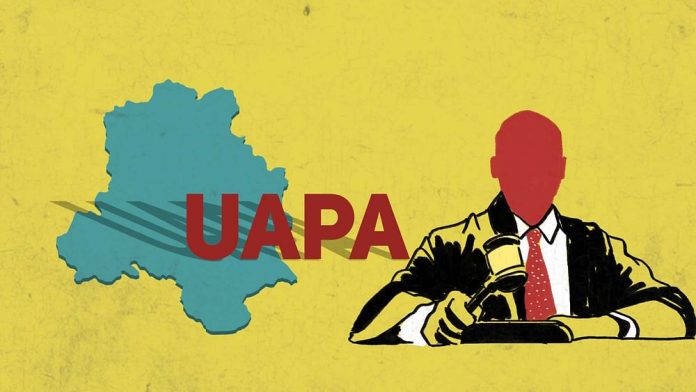





























 Allow notifications





