Download Now
Home Blog Page 278

Analysis of sound marks as non-traditional trademarks

0

This article is written by  Raksha Yadav studying at ISBR Law College, Banglore pursuing a Diploma in Law Firm Practice: Research, Drafting, Briefing, and Client Management. This article has been edited by Ojuswi (Associate, Lawsikho). 

This article has been published by Sneha Mahawar.

Introduction 

In our daily lives, we all use mobile phones and all the different brands have a default tone, whenever any person listens the tone immediately recognizes the brand. Sound is the most common way for the advertisement and is considered intellectual property which is protected by the trademarks. Trademarks are unique marks that are represented graphically. Sound marks are the emerging trend of the trademark and it is recognized as non-traditional trademarks. The registration of trademarks will help to build brand value and grant exclusive rights to the owner. 

Previously only the words, symbols, and logos are recognized as trademarks but nowadays any specific smell, colour combination, or unique sound can also be registered as a trademark. It was difficult to get the trademark registration of sound marks but the Trademarks Act 1999 has added the provisions for the registration of the non-traditional trademarks in 2017. But before registration, the sound must prove its distinctiveness. Sound can be either fanciful or arbitrary. 

This article talks about the recognition of sound marks as non-traditional trademarks, different kinds of trademarks, registration for traditional trademarks compared to non-traditional trademarks, and other aspects of non-traditional trademarks, especially vis-a-vis sound marks.

Trademarks at glance

Trademarks are those intellectual properties that denote some kind of signs, logos, names, and colours. Trademarks are legally registered under the name of an individual, company, or organization and protected by intellectual property rights. 

In India, the trademarks are governed by the Trademarks Act 1999. According to the act, trademarks are the marks that are capable of graphical representation and which differentiate the goods and services of every individual. It also includes the shapes, packaging, and colour combination of the goods.

The act provides provisions for the registration process of the trademarks and the protection or prevention of the infringement of trademarks. The registration grants an exclusive right to the owner of the goods and services. The acts also provide the legal rights of the owner and the penalties for the infringement of the trademarks and the damages which occur due to the infringements.

Infringement is unauthorized or inappropriate use of the registered trademarks without the prior permission of the owner. It is a violation of intellectual property rights. When any third party copied the registered trademarks for publication, or use for trade purposes it is an infringement of trademarks and the rightful owner of the trademark has a legal right to file a civil suit against the person who infringes(called as defendant) his or her rights. The act of infringement by the defendant is not accidental and it creates confusion among the customers.

If someone is willing to use the registered trademark legally they can enter into a licensing agreement with the owner. A licensing agreement is a contract between two parties under which the owner grants his permission to use the trademarks.

Different kinds of trademarks

There are different types of trademarks such as traditional or non-traditional trademarks. The traditional trademarks are some words, logos, symbols, etc. These can be service trademarks, product, collective, or certification trademarks, and non-traditional trademarks are any sound, smell, or colour.

Service trademarks

Any specific word or logo which identifies the services of goods. It specifies the source of the services like Google and Facebook.

Product trademarks

It represents the source of any products and goods. It differentiates the products from others. Some famous product trademarks are Apple, Coca-Cola, and Nike.

Trade name

It does not denote any products or services whereas it represents any company or organization. A trade name recognizes any specific entity like Walmart, Microsoft, or Starbucks.

Collective trademarks

It indicates the particular union, organization, or association. Collective marks are owned by any organization to represent the membership. Some examples of collective trademarks are CA (Chartered Accountant), and CPA(Certified Public Accountants).

Certification trademarks

The certificate marks guarantee the customers about the quality, accuracy, and characteristics of the goods and services like- Woolmark, ISI mark

Non-traditional trademarks

Nowadays, a new category of trademarks came into existence under which existing types do not fall. It is a non-traditional trademark also known as non-conventional. It can be a sound, smell, taste, or motion. The non-conventional trademarks do not belong to existing trademarks therefore it is difficult to register them because the graphical representation is required for the registration.

  1. Colour marks: It is non-conventional trademarks where colour is used to identify a unique product or service like Tiffany’s blue, and Cadbury’s purple.
  2. Shape marks: A shape or packaging of particular goods and products is registered as trademarks such as Coca-cola bottle shape, Ornamental lamps
  3. Smell marks: It is a recent trend of a trademark, a smell is also registered as a trademark. E.g – Fragrance or perfume
  4. Sound marks: Nowadays the use of sound for promoting any goods or services. It is an essential way of advertising products. A unique sound can be registered under trademarks. Sound can easily influence the consumers and any person easily identifies the brand name by only listening to sound. With the evolution of digital media, various brands are using sound to promote their products and services. Such as the default tone of Nokia mobiles, the theme song of the National Stock Exchange, four-note bell sound of Britannia industries.

Recognition of sound marks as a non-traditional trademark

Sound marks are non-traditional trademarks and earlier it was very difficult to register sound marks under the provisions of the trademark due to some technical advancements but after the commencement of Trademark rules 2017 the registration process became simple and easy and it was recognized as non-traditional trademarks.

In 2008 Yahoo Yodel was the first sound mark that was granted registration in India and the corporate jingle of the ICICI bank was the first Indian entity registered for a sound mark.

Need for protection

Trademarks are used to identify a unique sign, symbol, word, or name of any goods and services and provide legal protection to the particular brands and their lawful owner. Sound is the trending non-traditional trademark. It makes the consumer recognize the brand name. It easily differentiates an individual’s products from the competitors. And listening is more effective than writing or seeing anything. An individual can protect the sound mark by registering under the Trademarks act 1999. The protection can protect from infringements and the misrepresentation of the goods and services of the lawful owner. The infringement of the trademarks damages the brand value and customer’s trust.

Protection of sound marks helps the owner to create the brand value of goods and services in the market which enhances the goodwill, business value, and net worth of the entities. It also helps in creating assets for the business and establishing a relationship between the customers and the business which expands it in different regions.

Criteria for the protection

The graphical representation is an important aspect before registering the trademarks but for non-conventional trademarks, the graphical representation is very difficult. As per the recent provisions of Trademarks Rules 2017, rule 26(5). For the registration of the sound marks, the application must consist of a sound clip and the duration does not exceed 30 seconds and it must be submitted in an MP3 format. The sound must have a distinctive character. Earlier in 2017 for the registration of the sound mark, the graphical representation was the only document that was very difficult to read and it also created lots of barriers in the registration process. 

Registration procedure

  • Before registration, the applicant must prove the distinctiveness of the sound.
  • The applicant applies for the registration to the office of the registrar of trademarks.
  • In the application, it must mention that the application is for the registration of sound marks.
  • A 30-second clip in an MP3 format must be added with the application.
  • If the registrar found any objection in the application he may ask the applicant for clarification and ask for required documents such as the written description of the sound, the graphical representation, and the MP3 clip on any electronic device.
  • Once the registrar examines the application and does not find any objection to sound marks then it will be registered and protected.

Test of distinctiveness

The term “Distinctiveness” states the quality or characteristics which differentiate any person or anything from one to another. And trademarks are uniquely identified symbols, shapes, logos, or any word. Distinctiveness is an essential aspect of the registration of any trademark either traditional or non-traditional; both only get the registration when it clarifies the test of distinctiveness. The non-traditional trademarks are very difficult to determine the distinctiveness. If the sound, smell, or colour are distinctive it will get registration and protection under the trademark. Various jurisdictions emphasize the distinctiveness of all kinds of trademarks. The Canadian Trade Marks Act states that trademarks that are distinguished in nature are distinctive marks. Similarly, Russia, France, Germany, and the UK consider distinctiveness as a fundamental principle for the registration of trademarks. The Trademark Act 1999 also restricts the registration of those trademarks which lack distinctiveness. 

The distinctiveness of trademarks can be the basis of the following:

Fanciful

This is the highest and strong spectrum of distinctiveness. It does not belong to any existing meaning. The owner himself invented it or created it to attract the consumers such as Google or Kodak. Organizations regularly establish distinctive trademarks solely to represent their products or services. These symbols have no other relevance.

Arbitrary

The trademark has the existing meaning but it does not have any connection with the goods or products. These marks are fundamentally distinctive, and courts grant them stronger trademark protection. It is distinguished from the actual meaning of it like- Apple company or Amazon kindle. These types of trademarks also have a strong perspective to be registered.

Suggestive

It identifies the goods or services which are rendered by the owner. The consumers have the hint to recognize the goods or services like- redbus, galaxy tablets. Compared to the fanciful and arbitrary these trademarks have less quality of distinctiveness but somehow, they will get the registration. A suggestive mark suggests or indicates a good or service, but the ultimate meaning of the trademark requires some creativity. These marks are unique and entitled to protection, even if it is less distinctive than arbitrary or fanciful marks.

Descriptive

It defines itself as the nature or purpose of the goods and services, therefore, it is not considered eligible for the registration but in certain exceptional cases, it might get the registration. A very good type of descriptive mark is “Coca-Cola,” which refers to a cola beverage created with coca plant ingredients.

Generic

The term which is commonly used can not acquire the distinctiveness status. These are the original name of the goods or services like- phone or milk. It is not considered eligible for protection or registration. Generic marks are ineligible for trademark protection since they cannot identify the source of a particular product or service.

If the trademark becomes generic by the common use or it is not performing an essential performance of the trademarks then the registration may have become invalid. The name should be unique.

Conclusion

Trademarks protect the individual’s work from copying. The trademark act grants protection from infringements and damages. Several enactments had been done in the provisions of the trademarks. It is necessary to modify the existing laws as time changes the law also needs to be changed. With the advancement in technology and modes of communication, sound marks have become the trend to register as a non-traditional trademark. Similar to all other traditional trademarks it is also protected by the law and the owner has exclusive rights to it. It is also giving rise to other non-traditional trademarks such as smell, and colour.

References


Students of Lawsikho courses regularly produce writing assignments and work on practical exercises as a part of their coursework and develop themselves in real-life practical skills.

LawSikho has created a telegram group for exchanging legal knowledge, referrals, and various opportunities. You can click on this link and join:

https://t.me/lawyerscommunity

Follow us on Instagram and subscribe to our YouTube channel for more amazing legal content.

Download Now

Difference between legislative and executive

0

This article is written by Ms. Sushree Surekha Choudhury from KIIT School of Law. The article gives a descriptive overview of the legislative, and the executive and the differences between the two.

It has been published by Rachit Garg.

Introduction 

Right from secondary education, we have been taught about the three pillars of democracy i.e., the legislature, the executive, and the judiciary. Media is often considered as the fourth pillar of a democracy. The legislature, executive, and judiciary have been working in coordination and cooperation towards a common goal, i.e., upholding the values of democracy, equality, sovereignty, and integrity of the nation. While there is a clear separation of power between the three, meaning they work independently without any interference from the other two, there remains a mechanism of checks and balances. This is to ensure from time to time, the effective functioning of each division and ensure credibility and justice. The legislature has been entrusted with the responsibility of making or formulating laws. The executive implements these laws and the judiciary ensures that these laws are upheld in the nation with utmost transparency and honesty. Thus, the judiciary is essentially entrusted with upholding justice. The legislature and executive come with minute but significantly different functions and powers. While the theoretical framework suggests that there is a separation of powers between the three, experts believe that in reality, the separation is a blur. In this article, the author will distinguish between the legislative and the executive.

What is the legislative

Described in the Constitution of India under Part V, Chapter II (union legislature) and Part VI, Chapter III (state legislature), the legislative wing or the legislature refers to the branch of government which includes the Parliament and the State Legislatures. India follows a bicameral legislature or bicameralism at the central level, which means that there are two houses of Parliament at the centre. These houses are called Lok Sabha (House of People) or the lower house and Rajya Sabha (Council of states) or the upper house. Any bill that gets introduced at these houses must be approved by both houses followed by the President’s assent to become a law. This is the process by which when completed, a bill becomes law and this is how the legislature makes laws. At the state level, six states follow bicameralism, namely, Bihar, Maharashtra, Karnataka, Uttar Pradesh, Andhra Pradesh, and Telangana. The remaining states and the Union Territories (except the ones governed by the Central Government directly) have adopted unicameralism. This means, that all these states and union territories have a legislative assembly. A legislative assembly function mutatis mutandis to the Lok Sabha. It is also known as the Vidhan Sabha. The six states with bicameralism have a legislative council alongside a legislative assembly. A legislative council is the upper house of the state legislature and is also known as the Vidhan Parishad.

Union legislative

The union legislature has been well defined under Part V, Chapter II of the Constitution. The general provisions, as enumerated in Articles 79-98 speak about the Parliament, its constitution, its composition, the manner of election of members, etc. Let us understand this in detail.  

Formation and composition of the Parliament

  1. A Parliament is formed as per Article 79 of the Constitution and it consists of the two houses – the Council of States (Rajya Sabha) and the House of People (Lok Sabha), headed by the President.
  2. Article 80 speaks about the composition of the Council of States or Rajya Sabha. The Upper House consists of 238 members representing states and union territories who are members of the Legislative Assembly elected by proportional representation with single transferable voting and 12 other members who are nominated by the President from experts in the fields of literature, science, art, and social service. This filling of seats is done in accordance with the Fourth Schedule of the Constitution. 
  3. Article 81 specifies the composition of the House of People or Lok Sabha. The Lower House consists of 538 members who are elected directly from their constituencies. It further consists of 20 members to represent the union territories. These 538 members are divided in equal ratios as per the population of each state to ensure proportional representation to each state, but only those states are given the representative privilege in the lower house of Parliament whose population exceeds 6 million as per the immediately preceding census. Re-adjustments are made after every new census, as per the provisions of Article 82.
  4. Chairman and Deputy Chairman are appointed for the Upper House. The Vice-President of India becomes the Ex-officio Chairman and the Deputy Chairman shall be appointed from the existing members. This is done according to Article 89 of the Constitution. 
  5. Speaker and Deputy Speaker are appointed for the Lower House of Parliament from among the existing members. Such an appointment is made according to Article 93 of the Constitution. 
  6. The Chairman and Deputy Chairman of Rajya Sabha and the Speaker and Deputy Speaker of Lok Sabha’s appointment, their salaries, removal or resignation is done as per the provisions of the Constitution.
  7. A Secretariat is established for the Parliament following the provisions of Article 98 of the Constitution. 

Duration, dissolution, and sessions of Parliament

  1. The duration of houses of Parliament is mentioned in Article 83 of the Constitution. The Lower House, as it is a permanent house, shall not be dissolved. Rather, one-third of its members expire every two years. As for the Upper House, it shall be dissolved after the completion of 5 years. It will automatically be deemed dissolved after the completion of 5 years. It can also be dissolved earlier if deemed fit and necessary. However, there is an exception to this general rule – the “Proclamation of Emergency.” If an emergency is declared in the nation, the dissolution of the Upper House can be extended for one year and as soon as the emergency ceases to exist, it must be dissolved within 6 months.  
  2. Sessions of Parliament are summoned by the President from time to time as per provisions of Article 85 with at least a difference of 6 months between two sessions. The President can prorogue the houses and he can also dissolve the Lok Sabha. 
  3. The President can address one or both the Houses of Parliament. He can also send messages to them regarding any bills pending in either house or in any other matter to be taken into consideration. Provisions for this have been articulated in Article 86 of the Constitution. The President also makes a special address to the Houses of Parliament after the commencement of its first session, as per Article 87 of the Constitution. 

Qualification of members of Parliament

new legal draft

Mentioned below are provisions of Article 84 of the Constitution which speaks about the qualifications required to become a member of Parliament. These are as follows: 

  1. He/she must be a citizen of India,
  2. Subscribes an oath or affirmation as per Schedule III, before a competent authority,
  3. The age requirement to become a member of the upper house is 30 years or above and that for the lower house is 25 years or above,
  4. Any other qualification as may be prescribed. 

Disqualification from membership of Parliament

Article 102 speaks about the grounds on which a person can be termed disqualified to be a member of Parliament. Those grounds are as follows:

  1. If he/she holds any office of profit under the Union Government or any other State Government
  2. If he/she has been declared to be of unsound mind by a competent court
  3. If he/she is an undischarged insolvent
  4. If he/she is not a citizen of India
  5. If he/she has obtained citizenship of any foreign state or shows allegiance to any foreign state
  6. If he/she is disqualified as per the Tenth Schedule of the Constitution.

Introduction and passing of bills

  1. A bill can originate in either house of the Parliament except for money bills and other financial bills which are only introduced in the Lok Sabha. An ordinary bill is passed only when it is approved by both the Houses of Parliament with or without the recommended changes. A bill pending approval does not lapse because of prorogation of houses of Parliament or on the dissolution of the Lok Sabha if it is pending in Rajya Sabha. However, if a bill is pending approval in Lok Sabha and Lok Sabha is dissolved, the bill lapses too. These provisions are enumerated in Article 107 of the Constitution. 
  2. A money bill can only be introduced in the Lok Sabha, as per provisions of Article 109. It is then sent to the Rajya Sabha for its recommendation where the bill can be retained for up to 14 days beyond which it shall be deemed to have been passed. Lok Sabha, however, is not bound by these recommendations and can pass the money bill with or without implementing those recommendations. 
  3. Finally, when a bill is passed in both houses of Parliament, it is then sent to the President of India for his assent as per Article 111 of the Constitution. In the case of an ordinary bill, the President either assents it or sends it back to the houses for reconsideration with certain recommendations. The Houses may then send it back to the President with or without implementing those recommendations and the President now must assent to it. 

Powers, privileges, and immunities of the members of Parliament 

The members and committees of Parliament enjoy certain parliamentary privileges, and immunities and are vested with some powers. These are enlisted under Article 105 of the Indian Constitution. They are mentioned as follows:

  1. Freedom of speech

The members of Parliament are vested with absolute freedom of speech inside the Parliament. It is different from the freedom of speech guaranteed to citizens of India under Article 19(1)(a) since unlike for citizens, it is not bound by reasonable restrictions under Article 19(2) for members of Parliament. However, this power is limited to the Parliament and parliamentary discussions and is not extended outside the houses of Parliament. This power must be exercised with adherence to the provisions of the Constitution.

  1. Freedom from being arrested 

A member of Parliament shall not be arrested and no legal proceedings shall be initiated against him or any lawsuit is instituted against him while he enjoys his seat as a member of Parliament. He/she shall also not be put behind bars while the houses are in session. He/she shall not be held liable for anything said or done and votes made in a parliamentary session and no legal proceedings shall be entertained against the same.  

  1. Freedom from being a witness

A member of Parliament shall not be asked to appear before any court of law as a witness in any case. They enjoy this immunity and are thus exempted from appearing as witnesses.

  1. Rule-making power

Both the houses of Parliament have complete autonomy in making rules and procedures for conducting the business of each house. It shall not be interfered with by anyone else in power outside the house. These rules are in accordance with Article 118 of the Constitution.

  1. Publication rights

Members of Parliament can make publications as a part of their parliamentary privilege, for matters relating to the Parliament and parliamentary discussions. These publications must be made under parliamentary authority. No member shall be held liable or legal proceedings be instituted against him/her for any publication made under this parliamentary privilege. 

The members of Houses also have the right to take down, delete or omit portions of any publications made relating to their house, in any report, article, publication, or news. 

  1. Right to punish for contempt

If any member of Parliament gives any misleading statement about the House of Parliament or any outsider commits contempt of Parliament by publishing anything misleading about the members of Parliament or assaulting any member or making comments about a member’s character or creating a disturbance of any other kind shall be punished by the Parliament for its contempt. A member can be punished by suspension of his/her membership or punishment of any other kind. Outsiders can be punished with imprisonment or fine or any other kind of punishment as the Parliament may deem fit and proper. 

  1. Internal affairs

The Parliament enjoys complete autonomy in running its everyday business, resolving internal issues, and managing internal affairs in a way they deem necessary. It shall not be interfered with by anyone from the outside. However, all of this must be in consonance with the provisions of the Constitution. 

State Legislative 

The Union Legislature has been well defined under Part VI, Chapter III of the Constitution. The general provisions, as enumerated in Article 168-177 speak about the state legislature, its Constitution, its composition, the manner of election of members, etc. Let us understand this in detail.

Formation and composition of the state legislatures

  1. A state legislature is formed as per Article 168 of the Constitution and it consists of the Governor, there is a Legislative Assembly for every state, and for the state of Bihar, Maharashtra, Karnataka, Uttar Pradesh, Andhra Pradesh, and Telangana, there shall also be a Legislative Council. 
  2. Once formed, a Legislative Council cannot be dissolved. It can however be abolished. States, where a Legislative Council is already present, can be abolished if deemed fit and proper, by a similar manner of voting and special majority. A resolution for abolition is presented to the Legislative Assembly of the state, as per provisions of Article 168 of the Indian Constitution.
  3. India has adopted a bicameral legislature. Just as there are two houses of Parliament at the Centre, the states are at volition to adopt bicameralism too. Provisioned and empowered by Article 169 of the Indian Constitution, states can create a Legislative Council.
  4. Article 171 of the Indian Constitution describes the composition of the Legislative Council. It states that the states which have a bicameral legislature shall have one-third members as that of the Legislative Council of that state.

Further, for these members, the manner of election is as follows:

  • One-third shall be elected by electorates of local authorities
  • One-twelfth shall be elected by university graduates of the state
  • One-twelfth shall be elected by the teaching population of the state who teaches secondary level education or higher
  • One-third shall be elected by the members of the Legislative Assembly and the rest of the members are nominated by the governor of the state.  

Therefore, the composition of the Legislative Council is 1/3rd members of the Legislative Assembly. In no case shall the total number of members in the Council be less than 40 members.

  1. Members elected to the Legislative Council are called Members of the Legislative Council (MLC) whose term of office is of six years. State Legislative Council is a permanent body and one-third of its members retire every two years, as provided under Article 172(2) of the Constitution of India.
  2. Chairman and Deputy Chairman are appointed to the Legislative Council by the existing members. This is done according to Article 182 of the Constitution. 
  3. A Speaker and Deputy Speaker are appointed for the Legislative Assembly from among the existing members. Such appointment is made according to Article 178 of the Constitution. 
  4. The Chairman and Deputy Chairman of Rajya Sabha and the Speaker and Deputy Speaker of Lok Sabha are appointed, salaried and removed or resigned as per the provisions of the Constitution.
  5. A Secretariat shall be established for the state legislatures following the provisions of Article 187 of the Constitution. 

Duration, dissolution, and sessions of state legislature

  1. The duration of the Houses of the state legislature is mentioned in Article 172 of the Constitution. For the Lower House, as it is a permanent house, it shall not be dissolved. Rather, one-third of its members expire every two years. As for the Upper House, it shall be dissolved after the completion of 5 years. It will automatically be deemed dissolved after the completion of 5 years. It can also be dissolved earlier if deemed fit and necessary. However, there is an exception to this general rule – the “Proclamation of Emergency.” If an emergency is declared in the nation, the dissolution of the Upper House can be extended for one year and as soon as the emergency ceases to exist, it must be dissolved within 6 months.
  2. Sessions of the state legislature are summoned by the Governor from time to time as per provisions of Article 174 with at least a difference of 6 months between two sessions. The Governor can prorogue the houses and he can also dissolve the Legislative Assembly. 
  3. The Governor can address one or both the houses of state legislatures. He can also send messages to them regarding any bills pending in either house or in any other matter to be taken into consideration. Provisions for this have been articulated in Article 175 of the Constitution. The Governor also makes a special address to the houses of the state legislature after the commencement of its first session, as per Article 176 of the Constitution. 

Qualifications of Members of Legislative Council (MLC)

As has been provided under Article 173 of the Indian Constitution, the following are the mandatory prerequisites/ eligibility criterion for membership in the Legislative Council:

  • He/she must be an Indian citizen
  • He/she must have attained an age of 30 years or above
  • Any other eligibility criteria as may be prescribed by the State Government from time to time

Disqualifications of Members of Legislative Council (MLC)

Mentioned below are the grounds on which Members of Legislative Council can be disqualified:

  • He/she must not be holding an office as a Member of Parliament
  • He/she must not hold any office of profit under Government of India or any State Government, with certain exceptions
  • He/she must not be an undischarged insolvent
  • He/she must not be declared to be of unsound mind by any competent court or authority
  • He/she must not have obtained foreign citizenship/ nationality
  • He/she must not be disqualified by any other criteria as has been laid by the Parliament

Introduction and passing of bills

  1. A bill can originate in either house of the state legislature except for money bills and other financial bills which are only introduced in the legislative assembly. An ordinary bill is passed when it is approved by the houses of the state legislature with or without the recommended changes of the Legislative Council. A bill pending approval does not lapse by reason of the prorogation of houses of state legislatures or on the dissolution of the Legislative Assembly if it is pending in the Legislative Council. However, if a bill is pending approval in the Legislative Assembly and it is dissolved, the bill lapses too. These provisions are enumerated in Article 196  of the Constitution.
  2. A money bill can only be introduced in the Legislative Assembly, as per provisions of Article 198. It is then sent to the Legislative Council for its recommendation where the bill can be retained for up to a period of 14 days beyond which it shall be deemed to have been passed. The Legislative Assembly, however, is not bound by these recommendations and can pass the money bill with or without implementing those recommendations. 
  3. Finally, when a bill is passed by the state legislature, it is then sent to the Governor of the respective state for his assent as per Article 200 of the Constitution. In the case of an ordinary bill, the Governor either assents it or sends it back to the houses for reconsideration with certain recommendations. The Houses may then send it back to the Governor with or without implementing those recommendations and the Governor now must assent to it. 

Powers, privileges, and immunities of the members of state legislatures 

Members of state legislatures are vested with a similar set of powers, privileges, and immunities as has been granted to members of Parliament. Enlisted under Article 194 of the Constitution, these powers, privileges, and immunities are as follows:

Freedom of speech

The members of state legislatures are vested with absolute freedom of speech inside the houses of the legislature. It is different from the freedom of speech guaranteed to citizens of India under Article 19(1)(a) since unlike for citizens, it is not bound by reasonable restrictions under Article 19(2) for members of the state legislature. However, this power is limited to the houses and discussions therein and is not extended outside the houses of the state legislature. This power must be exercised with adherence to the provisions of the Constitution.

Freedom from being arrested 

A member of the Legislative Assembly or Legislative Council shall not be arrested and no legal proceedings shall be initiated against him/her or any lawsuit be instituted against him while he enjoys his seat as a member of the legislature. He/she shall also not be put behind bars while the houses are in session. He/she shall not be held liable for anything said or done and votes made in a session of a house of the legislature and no legal proceedings shall be entertained against the same.  

Freedom from being a witness

A member shall not be asked to appear before any court of law as a witness in any case. They enjoy this immunity and are thus exempted from appearing as witnesses.

Rule-making power

Both the Houses have complete autonomy in making rules and procedures for conducting the business of each house. It shall not be interfered with by anyone else in power outside the house. These rules are in accordance with Article 208 of the Constitution.

Publication rights

Members can make publications as a part of their privilege, for matters relating to the Houses of state legislatures and discussions therein. These publications must be made under the authority of the legislature. No member shall be held liable or legal proceedings be instituted against him/her for any publication made under this privilege. 

The Members of Houses also have the right to take down, delete or omit portions of any publications made relating to their House, in any report, article, publication, or news. 

Right to punish for contempt

If any member gives any misleading statement about the Houses or any outsider commits contempt of state legislature by publishing anything misleading about the members or assaulting any member or making comments about a member’s character or creating a disturbance of any other kind shall be punished by the respective house of the state legislature for its contempt. A member can be punished by suspension of his/her membership or punishment of any other kind. Outsiders can be punished with imprisonment or fine or any other kind of punishment as the legislature may deem fit and proper. 

Internal affairs

The Houses enjoy complete autonomy in running their everyday business, resolving internal issues and managing internal affairs in a way they deem necessary. It shall not be interfered with by anyone from the outside. However, all of this must be in consonance with the provisions of the Constitution.

What is the Executive 

Described in the Constitution of India under Part V, Chapter I (Union Executive) and Part VI, Chapter II (State Executive), it is the branch of government which implements laws made by the Legislature. It consists of the President of India, the Vice-President of India, the Council of Ministers headed by the Prime Minister, the Attorney-General of India at the Centre and the Governor, the Council of Ministers headed by the Chief Minister, and the Advocate-General for the states. The conduct of the business of the Union and that of the states are made in the name of the President (at Centre) and the Governor (for States). The Council of Ministers headed by the Prime Minister aids and advises the President and the Council of Ministers headed by the Chief Minister aids and advises the Governor. Together they run the governance of states and the Union as a whole and they also implement the laws made by the state legislatures in the particular state and laws made by the Parliament of the Union of India.

Union Executive

As has been elaborated under Part V, Chapter I of the Constitution, the Union Executive consists of the President, Vice-President, and Prime Minister along with his Council of Ministers. Their powers, functions, and manner of an election have also been enumerated in this part. They are:

President

Mentioned below are the functions, powers, and duties of the President of India:

  1. Article 52 of the Constitution states for the election of a President for India. He is vested with all the executive powers of the Union. He is the Supreme Commander of Defence Forces. These executive powers are vested to him under Article 53 of the Constitution.  
  2. The President of India is elected by the members of Parliament and members of state legislative assemblies with proportional representation among different states according to the population of those states, through an electoral college. These provisions are in accordance with Article 54 and Article 55 of the Constitution. 
  3. The President of India holds office for a tenure of 5 years as per Article 56 of the Constitution unless he resigns or is impeached. He can also continue to hold office longer than 5 years till the successor takes office. Article 57 states that a President can also be re-elected. 
  4. Qualifications for becoming a President of India (Article 58):
  • He/she must be an Indian citizen,
  • He/she must be of 35 years or above, 
  • He/she must be eligible to be a member of the Lok Sabha.
  1. Disqualifications for becoming a President for India is that a person is not eligible for the post of President if he/she holds any office of profit under any government authority or local bodies, is an undischarged insolvent, or has committed any offence.
  2. Impeachment of the President is a process followed as per Article 61 of the Constitution if the President is charged to have violated the Constitution. This charge shall be levelled by either House of Parliament. It shall be done in the following manner:
  • A resolution has to be passed by a house of Parliament with one-fourth of members signing it, post a 14 days notice period
  • The resolution has to be passed by a two-thirds majority 
  • Investigation is to be conducted. If the levelled charges are proven and a resolution is passed further with a two-thirds majority, the President shall be impeached from his office. 
  1. The President is vested with powers to grant pardons, and suspend/ remit/ commute sentences for certain offences. This special privilege is granted to him under Article 72 of the Constitution.
  2. A Council of Ministers, headed by the Prime Minister is also formed to aid and advise the President, as per Article 74 of the Constitution. 
  3. The President conducts the business and affairs of the Union of India as per the provisions laid down under Article 77 of the Constitution.  

Vice-President 

Mentioned below are the functions, powers and duties of the Vice-President of India:

  1. There shall be appointed a Vice-President for India as per Article 63 of the Constitution. Article 64 says that he shall be the Ex-officio Chairman of the Council of States. 
  2. The Vice-President is elected by the members of both the Houses of Parliament by a system of Secret Ballot through proportional representation and a single transferable vote, as per Article 66 of the Constitution.
  3. He shall not hold any office of profit under any government and shall be a citizen of India.
  4. As per Article 67, a Vice-President holds office for a term of 5 years unless he resigns or is removed from office by a majority vote and resolution passed by the houses of Parliament. He can also hold office for a period of more than 5 years till his successor resumes office. 

State Executive

The State Executive whose provisions are mentioned in Part VI, Chapter II of the Constitution, consists of Governors for each state, aided by a Chief Minister appointed for that state along with his Council of Ministers. These provisions are

  1. There shall be appointed a Governor for each state as per Article 153 of the Constitution. One person can also be appointed as a Governor for more than one state. The Governor is vested with the executive powers of the state as per Article 154 of the Constitution.
  2. The Governor is appointed by the President of India as per Article 155 of the Constitution. He holds office for a term of 5 years as per Article 156 of the Constitution. He can continue till his successor takes office. He can also resign or be removed before his tenure is completed. 
  3. For becoming a Governor, a person must be an Indian citizen and must have completed an age of 35 years as has been laid under Article 157 of the Constitution. He must not be holding any office of profit. 
  4. The Governor is vested with powers under Article 161  to grant pardons, commute sentences or suspend/ remit sentences in certain cases.
  5. Article 163 speaks for the formation of a Council of Ministers headed by the Chief Minister to aid and advise the Governor in conducting business and managing affairs of the state under Article 166 of the Constitution. 

Difference between the roles of legislative and executive branches of the government 

The legislature and the judiciary differ significantly in their roles, duties, powers, functions, and responsibilities. Some of the significant differences are as follows:

Criteria LegislativeExecutive
Composition Parliament (Lok Sabha and Rajya Sabha) and State Legislature (Vidhan Sabha and Vidhan Parishad).President, Vice-President, Prime Minister, Council of Ministers at centre and Governor, Chief Minister, Council of Ministers at each state.
FunctionMake laws.Implements laws made by the legislature. The executive is accountable to the legislature.
CommitteesParliamentary committees aid and advise the legislature. The executive is not bound by those committees.
International treaties Parliament does not have the power to sign and ratify international treaties. The executive is vested with the power to sign and ratify international treaties.
Dissolution of Lok SabhaLok Sabha is dissolved when the ruling party loses the majority.The President dissolves Lok Sabha on the advice of the Prime Minister. 
Ordinances Have to be presented within 6 weeks of commencement of Parliament. The President can promulgate ordinances if the Parliament is not in session.
Question hour The Parliament can ask questions to the executive ministers during the question hour.Ministers have to answer the questions asked by them by the members of Parliament. 

Separation of Powers 

It is the concept of non-interference and independence. Indian democracy implements the doctrine of Separation of Powers in a manner such that it is divided into legislature, executive, and judiciary and all the branches work independently while coordinating with one another. The Doctrine states that no branch of government shall intervene in the affairs of the other branches. The Legislature is entrusted with making laws, the Executive’s task is to implement these laws and the Judiciary upholds justice and preserves these laws. While India theoretically follows the doctrine of Separation of Power, the truth of this implementation is always debated. Many experts believe that branches of government interfere in each other’s matters and there is no true separation of powers in India, under the veil of checks and balances. For instance, the executive is accountable to the legislature, and the legislature exercises financial control over the executive. The ministers are also bound to answer the questions raised to them by the MPs in question hour. However, the interference is not absolute and hence it is believed that the doctrine is respected since the essence of the doctrine is that no other organ of government must perform the functions entrusted to another organ. All three branches have different sets of rules and powers and each branch performs the function that they are entrusted with. 

Benefits of implementing the doctrine of Separation of Powers

  • Decentralisation of powers
  • Reduces corruption
  • Deconcentration of powers in hands of few
  • Abuse of power
  • Step-wise systematic procedure of governance
  • Effective governance
  • Information symmetry
  • Greater good and public interests upheld
  • Independence of judiciary
  • Upholds values of democracy

In the landmark judgment of Indira Gandhi v. Raj Narain (1975), the doctrine of Separation of Powers was discussed and it was stated by the Court that India follows the doctrine in a broader sense. 

Mechanism of checks and balances 

This mechanism is prevalent between the Executive and the Legislature. The Legislature monitors the functioning of the Executive through this mechanism of checks and balances. Under this mechanism, the Legislature exerts some control over the Executive, in the form of financial control and political control, in the following manner:

  • The Legislature appoints the President and Vice-President by means of electoral representation. 
  • While implementing laws made by the Legislature, the Executive must first seek permission from the Legislature to do so.
  • Budget presented by the Executive needs to be approved and granted by the Legislature. This is how the Legislature exerts financial control over the Executive. 
  • The executive owes collective responsibility to the Lower House of Parliament.
  • The members of Parliament have the right to ask starred and unstarred questions to the council of ministers to which they must reply, to the starred questions- orally and to the unstarred questions- in a written manner. 
  • The Legislature can issue motions of no-confidence or adjournment of the Executive if it deems fit and necessary to do so. 

Thus, the Legislature always keeps a keen eye on the executive and its functioning in order to ensure proper implementation of laws, efficient governance, and uphold the greater good of the public for whom the laws are made. 

Conclusion 

India, being a democratic republic follows the doctrine of separation of powers between its organs of governance, i.e., the Executive, the Legislature, and the Judiciary. Though all of them are together entrusted to uphold the values embedded in our Constitution, they work independently even while coordinating and cooperating with one another. This independence ensures effective administration and fair functioning of the nation. The difference between the Legislative and Executive is that minute that it tends to look like one unit from afar due to the constant checks and balances that the legislature operates on the executive, yet their functions differ significantly. One is entrusted with making laws and policies while the other is supposed to implement those policies and laws in a proper and effective manner. Debates around the independence of these organs are thus always prevalent.

Frequently Asked Questions (FAQs)

Who is the head of the Government of India?

The Prime Minister of India is the head of the Government of India.

What is the work of the Council of Ministers?

It is only on the aid and advice of the Prime Minister along with his council, that the President takes important decisions. Similarly, the Governor takes decisions and conducts business with the aid and advice of the Council, headed by the Chief Minister.

What does it mean by collective responsibility?

The executive organ of government owes collective responsibility to the legislature. This means that through a system of checks and balances, the legislature supervises the work of the executive and the executive is accountable and answerable to the legislature.

What powers can the legislature perform over the executive?

The legislature exerts legislative powers over the executive, in the form of political powers and financial powers. The President and Vice-President are elected by Parliamentary voting. To approve and grant a budget, the executive needs it to be granted by the legislature, hence the financial control. The members of Parliament can also ask questions to the ministers in the question hour and the ministers shall thus, be answerable.

What is the prime advantage of a parliamentary form of Government?

The prime advantage of a parliamentary form of Government is that the executive is responsible and answerable to the legislative. This is known as collective responsibility of the executive (Council of Ministers) to the legislative. Collective responsibility is described under Article 75 of the Indian Constitution.

Between which organs of government is the mechanism of checks and balances prevalent?

The mechanism of checks and balances is prevalent between the legislature and the executive.

Which organ of Government has the power to sign foreign treaties?

Only the executive has the power to sign foreign treaties. The legislative cannot do so. 

References 

  1. https://unacademy.com/content/upsc/difference-between/legislative-vs-executive/
  2. https://testbook.com/ias-preparation/difference-between-legislative-and-executive/ 
  3. https://prepp.in/news/g-41726-parliamentary-control-over-executive-indian-polity-upsc-notes 
  4. https://www.ncsl.org/research/about-state-legislatures/separation-of-powers.aspx 
  5. https://www.thenewsminute.com/article/three-pillars-democracy-lie-159234 
  6. https://byjus.com/free-ias-prep/difference-between-legislative-and-executive/ 
  7. https://indiankanoon.org/doc/936707/ 

Students of Lawsikho courses regularly produce writing assignments and work on practical exercises as a part of their coursework and develop themselves in real-life practical skills.

LawSikho has created a telegram group for exchanging legal knowledge, referrals, and various opportunities. You can click on this link and join:

https://t.me/lawyerscommunity

Follow us on Instagram and subscribe to our YouTube channel for more amazing legal content.

Download Now

Article 355 of the Indian Constitution

0

This article is written by Shraileen Kaur, student of ICFAI University, Dehradun. In this article, the author discusses in detail about the history, scope, concept, significance, application and character of Article 355 along with the role of federalism in proper implementation of Article 355 enshrined in the Constitution of India.

It has been published by Rachit Garg.

Introduction

The Constitution of India has always been recognized for advocating federalism. This federalism is different from the standard definition of federalism. The ‘Indian Federalism’ is known for maintaining an equilibrium between the centre and the states regarding the distribution of powers. For better governance, each organ has been allotted a specific area of jurisdiction. The distribution of power under the Indian Constitution condemns unreasonable encroachment into the sphere of another.

There are numerous doctrines that the judicial system in India recognizes dealing with the distribution of powers between centre and state such as the Doctrine of Repugnancy, Doctrine of Distribution of Powers, Doctrine of Severability, as well as Doctrine of Pith and Substance. However, in exceptional circumstances, the union is empowered to intervene in the sphere allotted to the state. One such intervention is elaborated under Part XVIII of the Indian Constitution which deals with provisions related to the emergency. Such interventions are deviations from the standard idea of federalism. 

Recently, an appeal to invoke Article 355 of the Indian Constitution was raised in connection to the Birbhum case of West Bengal. In the district of Birbhum, post the elections certain unscrupulous agents initiated violence leading to the loss of lives and property. However, despite the appeal by the people, Article 355 was not invoked. This article discusses the historical background, application, and scope of Article 355 of the Indian Constitution. 

Historical Background of Article 355

Initially, Article 355 of the Constitution of India was introduced as Article 277A in the Draft Constitution. Article 277A was not a part of the draft constitution in 1948. It was introduced through an amendment. 

In 1948, Article 277A of the draft constitution stated – 

It shall be the duty of the Union to protect each state against external aggression and internal disturbances and to ensure that the government of each state is carried on following the constitutional provisions.

While the discussions and debate on the draft constitution were in progress, the Chairman of the Drafting Committee of the Indian Constitution, Dr. Bhim Rao Ambedkar introduced Article 277A before the drafting committee. On 3 September 1949, this article was introduced with the prime objective of clarifying the intervention of the centre in the domain of the state. Such intervention must be used only in exceptional circumstances like an emergency, it shall not be arbitrary and must arise out of the obligation imposed by the constitution on the union. 

The Union was required under the Draft Article to defend states from external aggression as well as internal turmoil and to ensure that states operate in accordance with the Constitution.

During the debate on Article 277A, one of the members of the assembly pointed out that – 

The term ‘internal disturbance’ showcases ambiguity. It should be replaced with a term illustrating specificities such as ‘internal insurrection or chaos’. Specificity in the words of the constitution is a mandate which will help in preventing the unreasonable and arbitrary intervention of the union in the affairs of the state. 

Another member of the drafting committee emphasised the finer use of the conjunction. Under the draft article, the phrase ‘external aggression and internal disturbance’ have been used. However, the members suggested replacing ‘and’ with ‘or’. It will act as a safeguard and ensure that appropriate measures are taken if either situation arises. 

In favour of Article 277A, several members recommended having such powers even in other scenarios which are different from emergency situations.

After a detailed discussion and several debates, the suggestion and recommendations related to the draft were rejected. However, the actual draft article was approved by the constituent assembly on 4 August 1949. 

Purpose and scope of Article 355 of the Indian Constitution 

Article 355 of the Indian Constitution states about – 

The duty of the Union to protect every State against external aggression and internal disturbance and to ensure that the Government of every State is carried on in accordance with the provisions of the Constitution.

Even though this article has rarely been used, it is viewed as a tool to justify the implementation of emergency under the provisions of emergency. Two words stand out in this context: “internal disturbance” and “armed rebellion.” While Article 352 enables the centre to declare an emergency in the event of an armed rebellion, such a declaration cannot be issued in the event of an internal disturbance. So, according to the Supreme Court, Article 355 does not give the centre the authority to declare an emergency because of trivial internal disturbance without any armed rebellion and cannot rationalise a declaration of emergency under Article 352, nor can such disruption explain issuance of a proclamation under Article 356, unless it negates or prevents the State from carrying out its government in accordance with the provisions of the Constitution.

Advocating Article 355 in the constituent assembly, the chairman of the assembly, Dr. Bhim Rao Ambedkar stated the purpose of Article 355 as – 

“If the union is to intervene in the administration of state affairs, as we propose to sanction the union by virtue of draft Articles 277, 278, and 278-A, it must be by and under some mandate which the Constitution imposes upon the union. The invasion must not be an incursion that is incessant, arbitrary, and unauthorised by law. Therefore, in order to make it evident and unambiguous that draft Articles 278 and 278-A are not to be deemed as a wanton invasion by the Union upon the authority of the state, we propose to incorporate draft Article 277-A4 in the constitution of India .”

Outlining the role of Article 355 and Article 356, Dr. B R Ambedkar observed that – 

“We should anticipate that such articles will never be used and will remain a dead letter. If at all, they are brought into operation, I trust the President, who has all of these powers, will take all necessary safeguards before suspending provincial governance.”

However, the scope of measures anticipated for the execution of the obligation under Article 355, have shifted gradually but dramatically. The general framework has transitioned from the perspective that these operations should be limited to the case of emergencies, including those mentioned in Part XVIII of the Indian Constitution, to the presently prevalent perception that the centre can take any legally enforceable or constitutionally guaranteed action to discharge its duty. 

Considering the scope of Article 355 of the Indian Constitution, it is not confined merely to the events of internal disturbance and external aggression in different states. The same was stated in the case of H. S. Jain v, Union of India.

  1. H. S. Jain v. Union of India (1996)

In this case, a question was raised regarding the declaration of emergency in the state of Uttar Pradesh. In Uttar Pradesh, a state emergency was reimposed under Article 356. The ground for the reimposition of state emergency was the lack of any credible procedure for the formation of a democratic government post the elections of the legislative assembly. 

The Court held that by implication of Article 355 enshrined in the Indian Constitution, the Union was required to make sure that a new Legislative Assembly was formed by upholding the constitutional provisions. The statutory obligation imposed on the centre is to make sure that the administration of every State is conducted in conformity with the provisions of the constitution. Also, the democratic process was adopted to consider other options for forming a majority government in the state of Uttar Pradesh.

Considering the facts and circumstances of the case, the court observed that even though there had been a constitutional obligation to explore the available alternative, no alternate options were considered prior to the declaration of state emergency under Article 356. The declaration issued under Article 356 was thus overturned. It was also determined that the Article 355 mandated the central government to make sure that the state governments were carried on in conformity with the constitutional provisions, however, the same was not conformed with.  

Furthermore, several commissions also opined a similar view on the scope of Article 355. Some of these commissions are – 

  1. The Sarkaria Commission was formed in 1988 for examining the centre-state relations under Articles 245 to Article 293 in Part XI ‘Relations between the Union and the States’ of the Indian Constitution. 
  2. A National Commission was formed to review the working of the constitution in 2002. 
  3. The Punchhi Commission was formed in 2010 to review the Centre-State Relations (Article 245 to 293) under Part XI ‘Relations between the Union and the States’ of the Indian Constitution.

Application and character of Article 355 of the Indian Constitution

new legal draft

The application and character of Article 355 of the Constitution of India can be summed up under 2 major heads – 

Justification of executive action taken in response to Articles 352 and 356 

The reasoning provided by Dr. Ambedkar for the inclusion of Article 355 in the Indian Constitution is as follows – 

 “The Constitution of India is federal in character, and therefore the States have been delegated sovereign power within their own domain as well as plenary powers to ensure peace, order, and democratic governance for themselves with the exception of provisions allowing the Union to override any legislation passed by the States; it is therefore essential to provide that any incursion into the domain of the states, as permitted by Article 356, is carried out in fulfilment of an obligation imposed on the Union by the Constitution, otherwise such intrusion would be a wanton, arbitrary, as well as unauthoritative act. Article 355 has been explicitly included in Part XVIII, titled ‘Emergency Provisions’ for this reason.”

State of Rajasthan v. Union of India (1997)

During the hearing of the case, the then Chief Justice of India, Mirza Hameedullah Beg stated that – 

The initial portion of Article 355 which mentions the duty of the centre towards every state to provide protection from external aggression as well as internal disturbances would be the umbrella part covering the provisions of the declaration of emergency according to Article 352. This article includes only under grave and imminent danger under its ambit. 

The next portion of Article 355 states that it is the duty of the union to ensure that each state’s government is functioning in accordance with the constitutional provisions. This portion of Article 355 shall be the umbrella part covering the emergency proclamation under Article 356 of the Indian Constitution. 

The potential repercussions of this umbrella theory were that, while Article 355 establishes an obligation of the centre on the states, this obligation was seen as justifying the use of emergency intervention under Articles 352 and 356. Therefore, the theory failed to consider any other intervention as a substitute for this obligation.

Anticipating the judicious application of Articles 352 and 356, giving way to numerous alternate powers and obligations

The Constitution (44th Amendment) Act, 1978 replaced the phrase ‘internal disturbance’ with armed rebellion under Article 352 of the Indian Constitution. However, the 44th amendment did not make any changes under Article 355 of the Indian Constitution. The 44th amendment had widened the scope of Article 355 due to which it can not only include Article 352 and 356 under its ambit but also other provisions for the proclamation of emergency.  

S.R. Bommai v. Union of India (1994)

In this case, Judge P. B. Sawant opined that –

Article 355 is a rationale for the actions to be taken under Articles 356 and Article 357. It is not an autonomous authority for interfering with the structure and function of the State Legislature. However, It was also stated that ‘internal disturbance’ has a broader meaning than ‘armed rebellion’ and thus, while a declaration of emergency under Article 352 can only be issued in the event of an armed insurgency, such a declaration cannot be issued for internal disruptions caused by several other conditions.

Furthermore, it was noted that a pronouncement in accordance with Article 356 of the Indian Constitution cannot be approved except when the internal disturbance creates certain circumstances in which the State government cannot function in conformity with the Constitutional provisions. 

Notably, it was determined that trivial internal disturbances, which do not include armed rebellion, can neither defend a pronouncement of emergency under Article 352 nor can these kinds of disturbances recognize the implementation of the declaration of emergency under Article 356. It can only be done if the State government is prevented from carrying out its responsibilities in consonance with the Constitutional provisions. 

Henceforth, the last portion of Article 355, is no more solely a rationale for intervention under Article 356 but it also gives effect to autonomous powers and obligations. Article 355 places an obligation on the Centre and it also gives it the power to do all the necessary actions and use whatever measures are rationally essential to hold that duty effectively. As a result, the procedures outlined in Articles 352 and 356 should only be employed as a final measure in extreme cases. 

This implies that Article 355 is not simply a provision regarding emergency though it exists in Part XVIII Emergency Provisions and serves a purpose there, it is also an integral component in the broader federal architecture of the Constitution of India.

Role of federalism in implementation of Article 355 of the Indian Constitution

The term federalism has not been expressly mentioned in the Constitution of India. Hence, according to the Indian Constitution, the Indian Union is not expressly a federation. However, there are numerous articles and parts of the Indian Constitution that mention federalism in the Union of India. Some of these articles and parts are as follows – 

  1. Article 1 “India, that is Bharat, shall be a Union of States.”
  2. Article 245 to 263 – Part XI – “Relations between the Union and the States”
  3. Article 264 to Article 298 – Part XII – “Finance, Property, Contracts, and Suits.”

In the above-mentioned articles, the sphere of central government and state government is demarcated. Both the governments have been allocated a specific area for governance where they hold sovereignty in terms of power and authority. However, it is subjected to reasonable intervention by the central government in exceptional circumstances. The rationale behind giving these powers to the union is stated as – 

Given the country’s cultural pluralism, tolerance, and diversity, it is the duty of the Union to maintain India’s sovereignty and solidarity, as well as to make sure that the country’s obligation as a secular, democratic republic enshrined in the constitution of India is preserved in the States.”

The powers granted to the union are not absolute. There are several restrictions associated with it. These restrictions have been introduced keeping in mind the distinguishing features of the Constitution of India such as federalism, democratic governance, delegation, and decentralisation of powers.

Indian federalism acts as a facilitator for proper functioning of Article 355

Granville Austin, an American historian who helped in drafting the Indian Constitution, introduced the term ‘cooperative federalism’. He called this federalism the founding stone of the Indian Constitutional system. Cooperative federalism is nothing but an arrangement in a federal structure. It presumes that no government has been granted absolute sovereignty and independence in the sphere allotted to them.

During a debate in the constituent assembly, when arguments were raised against the centre-state relations and distribution of power not just in the context of Article 355 but the constitution as a whole, Dr. Ambedkar replied – 

“When it comes to the relationship between the Centre and the States, it is important to remember the fundamental idea that underpins it. The core concept of Federalism is that the legislative and executive powers are divided between the Centre and the States by the Constitution itself, not by any law passed by the Centre. The States are not reliant on the Centre for legislative or executive authority under our Constitution. In this regard, the Centre and the States are on an equal footing. As I already stated, the Constitution divides legislative and executive authority between the Centre and the Units, which is the essence of federalism.”

Even the Supreme Court in Re: Under Article 143 of the Indian Constitution (1965) ascertained that – 

The essence of federalism is the adequate allocation of limited powers among different organs of the government i.e., legislature, executive, and judiciary. The superiority of the law is necessary for the survival of a federal union because it protects the complex division of powers from being destroyed or harmed by the parliament. It meets the specific needs of states who would like to join together but are unwilling to give up their distinctiveness in the process.

Hence, the standard federalism with an Indian touch to it, not just facilitates and justifies Article 355 but also the constitution as a whole. 

The Union acts as a guardian protecting the state in need

Article 355 of the Indian Constitution mandates the Union to protect the states from internal disturbances and external aggression. The union needs to check whether the government of every state is working in accordance with the provisions mentioned in the constitution. If the union has been empowered to protect the states, it must also be provided with certain other powers from the constitution to efficiently execute their duties. 

Several times, it has been argued that the provisions of emergency under Articles 352 and 356 are enough to perform the duty of the union. However, there are certain counter arguments regarding the powers of the union. It states that the nature of Part XVIII ‘Emergency Provisions’ have specified some situations, not all the scenarios. Whenever a specified situation occurs, the provisions of emergency empower the President of India to undertake specific elements of the power vested in the Union or the State that would otherwise not vest in him.

The emergency that is specified under the ‘emergency provisions’ are as follows – 

  1. A situation of a grave emergency wherein the security and integrity of the Union of India or any part thereof is threatened either by war or external aggression or armed rebellion. (Article 352 – National Emergency)
  2. A situation of state emergency involving the breakdown of constitutional machinery in a particular state. It includes a state where the government in that state cannot be carried on in accordance with the provisions of this constitution. (Article 356 – State Emergency)
  3. A situation of ‘external aggression’ or ‘internal disturbance’. Such a situation is not serious enough to be included under the ambit of Article 352 as well as Article 356. However, The situation calls for immediate action by the union, the power for the same has been mentioned under Article 355 of the Indian Constitution. 
  4. A situation where there is a threat to the financial stability for credit of the Union of India or any part thereof. (Article 360 – Financial Emergency)

Henceforth, from the above-mentioned four scenarios, it can be deduced that the occurrence of any one of the stated events will lead to instability and threat to the security of India. As a result, the Emergency provisions seek to revoke the standard demarcation of rights and duties enshrined in the constitution to pave the way for an even more effective and concentrated structure capable of dealing with critical events.

Supplementary powers to the Union by virtue of Article 355 of the Indian Constitution

Article 355 provides several powers in addition to the power to the union to check the state’s administration. 

Power of the Parliament to legislate on the matters mentioned in the state list

The Indian Constitution authorises the Union to enact legislation on any matter mentioned under the State List of the VIIth Schedule. It includes all such matters that it considers necessary in the interest of the nation. Thus, the Union may use Article 249 to enact laws on matters that will assist it in maintaining proper governance of the states in financially difficult instances, such as local municipal authorities under Entry 5.

According to Article 249, the Parliament has the authority to legislate for the whole or any part of India’s territory in relation to any matter on the State List. Such legislation can be considered valid only if it is backed by at least two-thirds of the members of the Council of States who are present and voting. The council of States must affirm that enacting laws on that subject are necessary for the national interest. Additionally, if Article 249 is read with Article 251, It states that if a disagreement arises between a legislation enacted by Parliament under Article 249 and law passed by a state assembly, the Union law shall take precedence to the extent of the contradiction or repugnancy. This has been reaffirmed by several courts through the doctrine of repugnancy.

Power to legislate regarding defence and armed forces

The central government has the power to enact laws regarding the deployment and upkeep of armed troops in a State in aid of the civil power under Entry 2A of the Union List of the VIIth Schedule. Also, despite the fact that Entries 1 and 2 in the State List grant power to the states to make laws on matters related to public order and police, they are subjected to the Union List Entry 2A. 

Several commissions, including the National Commission to Review the Working of the Constitution, believe that the obligation of the union under Article 355 is to provide protection to the States against any foreign invasion or internal disturbance can be carried out through legislation enacted under these entries.

For instance, the Central Reserve Police Force Act of 1949 and the Border Security Force Act, 1968. Under these acts, the Union is empowered to intervene in the domain of the state to fulfill its obligations under Article 355. 

Financial support by the union to the states whenever in need

According to Article 275 of the Indian Constitution, the Parliament has the power to provide financial support to the states whom it considers in need. The power granted to the Union under Article 275 is in line with Article 355 of the Indian Constitution.

The ultimate decision regarding the grant of financial assistance lies in the parliament. If the parliament after analysing the current situation of a particular state decides to provide financial support to a particular state, it can do so. The parliament can give an adequate amount of money, as it deems fit for the situation. 

Relation Between Article 355 and Article 356

According to Article 356 of the Constitution of India, the Union has the power to take over the government of any state in case of failure or breakdown of constitutional machinery in a state. This article is also known as ‘President’s Rule’. 

As per the Article, 2 grounds are mentioned on which President’s rule can be proclaimed – 

  1. Article 356 authorises the President to issue a declaration if he believes that a scenario has arisen wherein a state’s government cannot be carried out in full compliance with the provisions of the constitution.
  2. According to Article 365, when a state refuses to comply with or abide by any direction from the centre, the President may declare that a condition has arisen in which the state’s government cannot be executed in accordance with the provisions of the constitution.

Post the imposition of the president’s rule, the President will be granted with certain powers to normalise the situation. However, these actions have the scope of judicial review. 

As Article 355 is said to provide power to other articles of the constitution, it also provides power to Article 356 of the Constitution of India. Article 356 can only be proclaimed if the governor of the state is satisfied with the unfavourable situation and he sends the report of the same to the president.

Case Laws related to Article 355 of the Indian Constitution 

Sarbananda Sonowal v. Union of India (2005)

In this case, questions were raised on the validity of the Illegal Migrants (Determination by Tribunals) Act, 1983. The Act was introduced as a solution to the problem of illegal migrants in the state of Assam. Under this act, the Union was empowered to detect as well as deport illegal migrants who were residing in Assam. The Apex Court after considering the facts and circumstances of the case held that – 

There was a scenario that amounted to foreign hostility and civil unrest. As a result, it was remarked that it has become the responsibility of the government at the central level to take all steps necessary to defend the State of Assam from external aggression and internal disturbance, as stipulated in Article 355 of the Indian Constitution. However, after a thorough examination of the provisions of the Illegal Migrants (Determination by Tribunals) Act, 1983, it was decided that the Act as well as the Guidelines promulgated under it “override the constitutional authority embedded in Article 355 of the Constitution,” according to which the Union of India is obligated to protect each state against external aggression or internal disturbance. The Act was found to be ultra-wires because it violated Article 355 of the Indian Constitution.

Naga People’s Movement of Human Rights v. Union of India

In this case, the question was raised on the validity of the Armed Forces (Special Powers) Act, 1958 (AFSPA). Under this act, the Union is granted the power to send the centrally governed armed forces to help the forces of the state in any area which is designated as a ‘disturbed area’. 

The Supreme Court upheld the validity of the Armed Forces (Special Powers) Act, 1958 (‘AFSPA’). It stated that the legislature is competent to make laws on this subject under Entry 2A of the Union List of the VIIth Schedule. 

The Apex Court further observed that the provisions of the Armed Forces (Special Powers) Act, 1958 were enacted to empower the union to discharge its duty in accordance with Article 355 of the Constitution of India. This will prevent the declaration of state emergency under Article 356 by protecting the states from the escalation of situations that are grave in nature such as the breakdown of constitutional machinery or internal disturbances. 

Conclusion 

Since the adoption of Article 355 in the constitution of India, it has evolved from being a validatory provision for union intervention to genuinely being a facilitator and protector of the state from ‘internal disturbances and external aggression’. Initially, Article 355 was presumed to be a weapon in the hands of the union government for justifying the unreasonable encroachment into the domain of the state. Such intervention was in conjunction with the grave situations of emergency. Hence, the validation given by emergency provisions enshrined under the Indian Constitution in Part XVIII in Articles 352 to 360 was complementary. It has advanced to include other union activities that are not done in place of constitutional provisions of emergency but are undertaken to avoid specific imminent danger from deteriorating to the point where emergency response is a mandate. 

For a considerable time period, Article 355 has been used as a political tool by several political parties to enhance their powers unethically. The mechanism established for the declaration of an emergency by the President was not fulfilled and was abused. One such instance is the unnecessary and unconstitutional enhancement of the constitutional limit on how long an emergency can last. It has been violated in both Punjab as well as the then state of Jammu and Kashmir. However, there are several other such incidents throughout history where the provisions of the constitution are brutally abused. Considering the same, The Constitution (42nd Amendment) Act, 1976 as well as the Constitution (44th amendment) Act, 1978 was introduced. 

Additionally, the Indian Judicial System also intervened and resorted to the solution for the violations of the constitution. Hence, the need of the hour is to keep a check on the distribution of powers between the Union and the States for maintaining the balance of powers. 

Frequently Asked Questions 

Article 355 of the Indian Constitution is viewed from 2 different angles by the Indian courts, what are these?

Article 355 of the Constitution of India is from two different angles by the courts in India. The angles are as follows: 

The angle of law and order where the state has exclusive powers to make laws in matters of public order and police.

The angle of justification of emergency where the intervention by the union in state matters is justified.

Article 355 is contemplated under which part of the Constitution of India?

Article 355 is contemplated under Part XVIII ‘Emergency Provisions’ from Article 352 to Article 360 of the Constitution of India. 

Who has the power under Article 355 to invoke the emergency?

Under Article 355, the Union i.e., the government at the central level has the power to invoke an emergency. 

References


Students of Lawsikho courses regularly produce writing assignments and work on practical exercises as a part of their coursework and develop themselves in real-life practical skills.

LawSikho has created a telegram group for exchanging legal knowledge, referrals, and various opportunities. You can click on this link and join:

https://t.me/lawyerscommunity

Follow us on Instagram and subscribe to our YouTube channel for more amazing legal content.

Download Now

Health Insurance Portability and Accountability Act (HIPAA)

0

This article is written by Michael Shriney from the Sathyabama Institute of Science and Technology. This article discusses HIPAA, its history, purpose, common HIPAA offences, prohibitions, and components. It contains privacy entities covered by this Act, what information is protected, and the procedures required to ensure HIPAA by the US Department of Health and Human Services. The Act also addresses penalties, permissible uses, disclosure of the act, and FAQs.

This article has been published by Sneha Mahawar.

Introduction

The Health Insurance Portability and Accountability Act (HIPAA) is a federal law that is adopted as United States legislation that offers data privacy and security protections for protecting medical information. This Act has been implemented by cyber attacks on health insurers and providers, including several health data breaches and ransomware attacks. On August 21, 1996, President Bill Clinton signed the federal law. HIPAA overruled state laws governing the security of medical information, except when state law was judged harsher than HIPAA. This Act is important legislation in the United States healthcare business. It controls the privacy and security of health information. The government agency in charge of developing rules for implementation in the United States Department of Health and Human Services (HHS). 

In other words, the goal of this act is to safeguard patients’ personal data from public access. The aim of this act is to help in the prevention of patients’ information from being misused. The Act has been amended several times since it was first enacted. The following are the HIPAA objectives:

  • Privacy of health information
  • Security of electronic records
  • Administrative simplicity 
  • Insurance portability

Diagnoses, treatment information, medical test results, and prescription information, as well as national identification numbers and demographic information such as birth dates, gender, ethnicity, and contact information, are considered to be protected health information under HIPAA. The Act preserves the confidentiality, integrity, and availability of Protected Health Information (PHI), but it also establishes restrictions on PHI disclosures. If any HIPAA provisions are violated, the violators will face financial penalties. This Act is also punishable by criminal penalties. It is not a valid defence to claim ignorance of the HIPAA breaches.

new legal draft

History of HIPAA 

  • The Health Insurance Portability and Accountability Act (HIPAA) was enacted by Congress in 1996. HIPAA is a medical privacy and security law that many people are aware of. 
  • However, HIPAA’s first goal was to set standards for transferring electronic health data and to enable people to transfer and maintain health insurance after changing or losing jobs. HIPAA did not have national privacy protections for medical information until 2003. All of the safeguards were based on state laws.
  • The HIPAA Privacy Rule, HIPAA Security Rule, and HIPAA Enforcement Rule were issued and enacted by the US Department of Health and Human Services (HHS). Under HIPAA, the Department of Health and Human Services (HHS) released the first national data privacy and security rules in 2003. 
  • The security rule establishes guidelines for protecting electronic PHI. Individuals have rights to their protected health information under the Privacy Regulation Information (PHI). It explains how entities covered by HIPAA can be used and disclosed PHI.  
  • Compliance, investigations, and possible punishments for infringement of the HIPAA Privacy and Security Rules may be addressed by the enforcement rule. The HIPAA regulations are enforced by the Office for Civil Rights (OCR), which is part of the Department of Health and Human Services.
  • In 2009, President Barack Obama signed the Health Information Technology for Economic and Clinical Health (HITECH) Act into law. The HITECH Act is a part of the American Recovery and Reinvestment Act (AARA) under Title XIII. Medical privacy was under control between 2003 and 2009. Electronic medical records have begun to take the place of paper records.
  • Patients began to communicate with their doctors through email and internet portals. Prescriptions are now being processed electronically at pharmacies. The HITECH Act provided financial incentives for healthcare providers and insurers to continue transferring to electronic medical records. It also addressed privacy and security concerns associated with the electronic transfer of health information, such as unauthorised access and data breaches.
  • The HIPAA Omnibus Rule was released by the HHS Office for Civil Rights in 2013. The HIPAA privacy, security, and enforcement rules were significantly altered by the Omnibus Rule. Many parts of the HITECH Act had been implemented. The Breach Notification rule was modified and finalised. It also included modifications to the HIPAA Privacy Rule that were enforced by the Genetic Information Nondiscrimination Act of 2008 (GINA).

Purpose of HIPAA 

  • In 1996, the Act was first introduced. The law allows employees to keep their health insurance coverage even while they are between jobs.
  • The Health Insurance Portability and Accountability Act (HIPAA) covers specific types of health information, not only health information.
  • Examples of specific types of health information or records containing health information: 
    • Genetic information
    • Health information in school records is identifiable information about individuals maintained by the federal government.
    • Certain alcohol and drug substance abuse records, and 
    • Information relating to medical research.
  • Because HIPAA establishes a set of criteria from which states might develop or create stricter regulations to safeguard health information, it also covers states that may adopt their own laws to protect health information. 
  • The law also obliged healthcare organizations to set up procedures to protect patient data in order to prevent healthcare fraud, but the rules for doing so took years to complete. 
  • HIPAA also established numerous new standards to increase healthcare efficiency, encouraging healthcare organizations to adopt the standards in order to decrease paperwork. 
  • HIPAA was necessary to employ code sets in connection with patient identities in order to facilitate the effective movement of healthcare data between healthcare organizations and insurers, as well as to streamline eligibility checks, billing, payments, and other healthcare activities.
  • The act also prohibits interest on life insurance loans from being deducted from taxes, establishes group health insurance obligations, and standardizes the amount that can be saved in a pre-tax medical savings account.
  • The Health Insurance Portability and Accountability Act (HIPAA) is also known as Public Law 104-191. Its main objective is to guarantee continuous health insurance coverage for people who leave or change employment.
  • The Act must also reduce the cost of healthcare in the long run by establishing a standard for the electronic transmission of administrative and financial processes. Tackling misuse, fraud, and waste in health insurance and health care delivery, as well as enhancing access to long-term care services and health insurance, are among the other objectives.

What are the entities covered under HIPAA

The Health Insurance Portability and Accountability Act (HIPAA) does not cover all health information. Neither applies to everyone who has access to or uses health data. Only covered entities and their business associates are entitled to HIPAA.

Covered entities

The Act describes three categories of covered entities:

This entity is compensated for providing health care. Providers include doctors, dentists, hospitals, nursing homes, pharmacies, urgent care clinics, and other entities that offer health care for a fee. Only if they communicate health information electronically in accordance with covered transactions must they comply with HIPAA. As a result, HIPAA covers the vast majority of providers.

This entity is responsible for covering the cost of medical care. The following are some instances of HIPAA-covered health plans: Most other businesses include health insurance firms, health maintenance organizations, employer-sponsored group health plans, government-funded health plans such as Medicare and Medicaid, and most other businesses.

  • Health care providers

This entity is compensated for providing health care. Providers include doctors, dentists, hospitals, nursing homes, pharmacies, urgent care clinics, and other entities that offer health care for a fee. Only if they communicate health information electronically in accordance with covered transactions, must they comply with HIPAA. To perform services such as processing claims and receiving payment, most providers provide information electronically. As a result, HIPAA covers the vast majority of providers.

  • Health plans

This entity is responsible for covering the cost of medical care. The following are some instances of HIPAA-covered health plans: Most other businesses include health insurance firms, health maintenance organizations, employer-sponsored group health plans, government-funded health plans such as Medicare and Medicaid, and most other businesses.

  • Health care clearing houses

This entity processes data so that it may be sent across covered entities in a standardized format. Clearinghouses frequently operate as a middleman between health care providers and insurance companies, which means they rarely interact directly with consumers. A clearing house, for example, may accept information from a doctor and convert it to a standard coded format that can be utilised for insurance purposes.

Business associates 

Healthcare providers, healthcare plans, and healthcare clearinghouses are only a few of the industry’s entities.  People and corporations are hired or contracted by covered entities to execute a variety of services. On behalf of a covered entity or another business associate acting as a subcontractor, a business associate develops, receives, stores, or transmits protected health information. 

Legal, accounting, consulting, management, administrative accreditation, data analysis, data transfer, billing, benefits administration, practice management, repricing, and other services can be performed by business associates for a covered organization. Business associates do not interact with patients. They must abide by the terms of the contracts they enter into with covered entities. They are directly liable for HIPAA security rule violations and several HIPAA privacy rule provisions. It may be subject to audits and penalties by the Department of Health and Human Services.

Sub-contractors

Under HIPAA, a subcontractor that generates, stores, or transfers protected health information on behalf of a business associate bears the same legal obligations as the business associate. Subcontractors undertaking work for a business associate are subject to privacy and security-related legal obligations. In addition, rather than the covered entity, it would be bound by a contract with the business associate.

Hybrid entities

As part of its business, a hybrid company conducts both HIPAA-covered and non-covered activities. A major business that offers its employees a self-insured health plan may choose to be regarded as a hybrid organization. When a company chooses to be recognized as a hybrid entity, only the portion of the company that is a covered entity and has a health care component is entitled to a component. Hybrid companies must guarantee that the health care component does not disclose protected health care components to another non-covered component of the company. They must also keep digitally protected health information safe.

Information to be protected in HIPAA

The HIPAA Privacy Rule protects any individually identifiable health information that a covered organization or business associate holds or transmits. The information can be stored in any media, including digital, paper, or oral. PHI consists of, but is not limited to, the following:

  • Name, address, birth date, social security number, biometric identifiers, and other personally identifiable information of a patient.
  • A person’s past, current, or future physical or mental health situation.
  • Any treatment supplied to an individual and information concerning the past, present, or future payment for the care provided to the individual that identifies the patient or information that may reasonably be used to identify the patient.

PHI does not include the following: 

  • Employment records, including educational information, and other records subject to or violated by the Family Educational Rights and Privacy Act (FERPA); and 
  • De-identified data, which means data that does not recognise or provide information that identifies an individual and has no restrictions on its use or disclosure.

Common violations of HIPAA

Any demographic information that may be used to identify a patient is considered to be protected health information (PHI). PHI includes information such as names, dates of birth, addresses, phone numbers, email addresses, social security numbers, insurance ID numbers, health care records, and full-face photographs. Data breaches are one of the most prevalent reasons, that can result in HIPAA violations and fines. Here are a few examples of data breaches and related HIPAA violations:

  • The laptop has been stolen or lost.
  • A phone that has been stolen or lost
  • A USB device that has been stolen or misplaced
  • Malware attack
  • An assault with ransomware
  • Hacking
  • Breach of a business associate
  • Breach of an electronic health record
  • Workplace break-in transmitting protected health information to the inappropriate patient/contact communicating protected health information outside of the office.
  • Posts on social media.

Uses and disclosures, inadequate security precautions, the minimum required rule, access restrictions, and notification of privacy practices are all typical HIPAA breaches.

When PHI is breached, the Department of Health and Human Services (HHS) requires a report to be made on the breach reporting portal. Individuals affected by the incident must also be informed in compliance with the regulatory guidelines, according to the HIPAA Breach Notification Rule. The above-mentioned violations could be linked to the loss of HIPAA-protected health information in some way (PHI).

Prohibiting HIPAA violations 

The most essential thing to remember is that there are common HIPAA law violations that can be avoided by implementing an effective compliance program tailored to the needs of a company. Selecting a legal solution that is appropriate for that individual is not a simple check-the-box process. However, a person tailors a HIPAA compliance program to the needs of the specific organization to prevent the danger of these common HIPAA breaches and determine the program’s strength and protection.

Components of HIPAA 

HIPAA is divided into five sections or titles:

  1. HIPAA Health Insurance Reform (Title I):

Individuals who leave or change employment have their health insurance coverage protected under Title I. It also makes it illegal for group health plans to refuse coverage to anyone who loses or changes employment. It also forbids corporate health plans from denying coverage to people with certain diseases or previous conditions, as well as imposing lifetime coverage limitations.

  1. HIPAA Administrative Simplification (Title II):

Title II requires that the US Department of Health and Human Services (HHS) develop national standards for the processing of electronic healthcare transactions. It also requires that healthcare organisations maintain highly secured access to patient data and comply with HHS privacy laws.

  1. HIPAA Tax-Related Health provisions (Title III):

Title III contains tax rules as well as medical care guidelines.

  1. Application and enforcement of Group Health Plan Requirements (Title IV):

Title IV goes into further detail on healthcare reform, including provisions for those with pre-existing conditions and those who want to keep their coverage.

  1. Revenue offsets (Title V):

Title V contains rules on company-owned life insurance and the income tax status of persons who renounce their US citizenship.

HIPAA Title II, often known as the Administrative Simplification provisions, pertains to HIPAA compliance. Title II covers the following compliance requirements:

  • National Provider Identifier Standard

Individuals, businesses, health plans, and healthcare providers all require a 10-digit National Provider Identifier number or NPI.

  • Transactions and Code Set Standard

To file and process insurance claims, healthcare organizations must use a standardized electronic data interchange (EDI) system.

  • HIPAA Privacy Rule

This rule, formally known as the Standards for Privacy of Individually Identifiable Health Information, provides national standards for the protection of patient health information.

  • HIPAA Security Rule

Patient data security is governed by the Security Standards for the Protection of Electronic Protected Health Information.

  • HIPAA Enforcement Rule

This rule outlines the criteria for HIPAA compliance infraction investigations.

HIPAA is enforced by the HHS Office for Civil Rights, which conducts audits and can levy penalties for violations. Violations of the Act can be extremely expensive to healthcare organisations.

Privacy rule of HIPAA 

  • HIPAA’s Privacy of Individually Identifiable Health Information Guidelines, often known as the HIPAA Privacy Rule, were developed as the first national standards in the US to secure individuals’ personal or protected health information (PHI). 
  • The regulation was established by the Department of Health and Human Services to limit the use and disclosure of sensitive PHI. 
  • It aims to preserve patients’ privacy by forcing doctors to submit a record of all entities to whom they disclose PHI for billing and administrative purposes, while still enabling necessary health information to flow via the right channels. 
  • This rule ensures that people have the right to receive their personal PHI from HIPAA-covered healthcare providers upon request. Organizations that are designated HIPAA-covered enterprises are subject to the HIPAA privacy rule.
  • It also necessitates the creation of a contract between protected businesses and HIPAA business associates that imposes specified protections on the PHI that the business associates use or disclose.

Uses and disclosures that are permitted under HIPAA

This regulation specifies when a covered entity may use or disclose an individual’s protected health information (PHI). There are two circumstances under which use or disclosure is permitted: 

  • If the privacy regulation expressly authorizes or demands it. If the covered entity uses the data or transmits it to another covered entity; and
  • This regulation allows it, as long as the owner of the information grants written permission.

Privacy rule penalties

  • Under this privacy rule, anybody who is a victim of a healthcare data breach and fails to offer patients access to their PHI faces a fine from the Office of Civil Rights. For various violations of HIPAA, there are four categories:
  • Unknowingly breaching HIPAA is punishable by a fine of $100 per violation, with a maximum fine of $25,000 per year for repeat offences.
  • The fine for breaching HIPAA without good cause is $1,000 per violation, with a maximum yearly fine of $100,000 for repeat offences.
  • The penalty for willful HIPAA violations that are not addressed within a certain time period is $10,000 per violation, with a maximum yearly penalty of $250,000 for multiple offences.
  • The penalty for willful disregard of HIPAA and failure to cure the violation is $50,000 per violation, with a maximum yearly penalty of $1.4 million for repeat violations.
  • If a covered entity or individual obtains or discloses PHI in violation of the HIPAA Privacy rule on purpose, they can be fined up to $50,000 and sentenced to up to one year in prison. 
  • If the HIPAA Privacy rule is breached under false pretences, the penalty can be increased to $100,000 and up to ten years in prison.

Security rule of HIPAA

The security rule, also known as the security requirements for the protection of electronically protected health information, provides national criteria for safeguarding patient data that is kept or transferred electronically. It is based on the cyber security framework developed by the National Institute of Standards and Technology. The HIPAA security regulation is enforced by the OCR, and it aims to find a balance between patient security and the growth of health technology. The regulation specifies the installation of physical and technical measures to guarantee the secure transmission, storage, and receipt of PHI.

Omnibus rule of HIPAA

The HIPAA Omnibus rule updates the HIPAA privacy, security, and enforcement regulation in order to accommodate HITECH Act statutory amendments. The most significant changes to the HIPAA privacy and security regulation since it was initially adopted were made with this rule. The following are the modifications:

  • It modifies the breach notification rule for unsecured PHI and establishes more objective standards for determining a health care provider’s liability after a data breach;
  •  It modifies the rule to strengthen the privacy protections for genetic information; 
  • It enhances the protection of Personal Health Information (PHI) in terms of privacy and security;
  • It lays out OCR’s data privacy and security enforcement strategies, which have been updated for the electronic health record age and are required by the HITECH Act.
  • It extends the breach notification rule to vendors of EHRs and EHR-related systems; 
  • It specifies that when patients pay cash, they can direct their provider not to share data about their treatment with their health plan; 
  • It establishes new limits on how data is used and disclosed for marketing and fundraising purposes; it prohibits the sale of an individual’s health information without their permission 
  • It makes it easier for parents and others to give permission to share information about their children’s health information.
  • It simplifies an individual’s capacity to authorise the use of their health information for research purposes; and 
  • It enhances penalties for noncompliance based on the amount of carelessness, with a maximum penalty of $1.5 million per violation.

What are the requirements needed to enforce HIPAA by the U.S. Department of Health and Human Services (HHS)

  • The HIPAA enforcement rule allows the United States Department of Health and Human Services and the Office for Civil Rights to investigate HIPAA violations and apply Civil Monetary Penalties (CMP). 
  • HIPAA rules can also be enforced by state attorneys general. Under HIPAA, people do not have a private right of action and cannot sue for an infringement. 
  • OCR begins the enforcement process by investigating suspected HIPAA Privacy or Security Rule breaches. They react to individual complaints, although many HIPAA violations are discovered through other means, including audits. 
  • Following an investigation, OCR can settle an issue by ruling that there is no violation and entering into a resolution agreement with the responsible party, or by determining that the party is in violation and applying sanctions.
  • Any penalty money collected by HHS is transferred to the US Treasury. HIPAA prohibits individuals from suing. Under the Act, they do not have the right to sue. However, the Act does not prohibit states from enacting additional safeguards.

An inquiry by the Department of Health and Human Services investigating a complaint:

Individuals who are aware of a suspected HIPAA violation can submit a civil rights complaint with the HHS Office. A complaint must be filed by following the criteria as follows to consider an investigation:

  • If the complaint is about a potential infringement of a privacy rule, the activity must have happened after April 2003. If the complaint is about a potential infringement of security regulations, the activity must have happened after April 2005.
  • A person who is subject to HIPAA must register a complaint against a person, organization, or other entity. Something must be claimed in the complaint that would violate HIPAA guidelines.
  • Individuals have 180 days from the time they become aware of a possible violation to register a complaint. A potential infringement of a privacy rule, the activity must have happened after April 2003. If the complaint is about a possible infringement of security regulations, the activity must have happened after April 2005.
  • A person who is subject to HIPAA must register a complaint against a person, organization, or other entity. Something must be claimed in the complaint that would violate HIPAA guidelines.
  • Individuals have 180 days from the time they become aware of a possible violation to register a complaint.
  • If the officer’s civil rights feel the complaint has validity, the agency will contact both the complainant and the covered agency to try to reach a mutual agreement. Some cases may be submitted to an administrative law judge for a hearing.

Penalties covered under HIPAA 

HHS sets fines for HIPAA violations based on the culpability of the perpetrator for violations that occurred after 2009. For breaches of the same HIPAA requirement, the minimum penalty varies, but the maximum penalty is $1.5 million per year.

The four tiers of civil penalties are as follows:

  1. Unknowing indicates that the covered entity was unaware of the offence and would not have been aware if reasonable diligence had been used. The penalty for an unknowing violation is $100-$50,000 for each violation. There is also a total civil monetary penalty of $1,500,000 for breaking an identical provision during a calendar year.
  2. The reasonable cause indicates that the covered entity would have known about the breach if it had exercised reasonable diligence. There is also a reasonable cause penalty of $1,000-$50,000. There is also a total civil monetary penalty of $1,500,000 for breaking an identical provision during a calendar year.
  3. Wilful neglect corrected indicates that the covered entity violated HIPAA on purpose or with reckless indifference but fixed the breach within 30 days of discovery. This is punished by a fine of $10,000 to $50,000 for each offence. A total civil monetary penalty of $1,500,000 is also imposed for violating an identical provision within a calendar year.
  4. Wilful Neglect-Uncorrected indicates that the covered entity willfully violated HIPAA or acted with reckless indifference but did not fix the violation within 30 days of discovery. This is punished by a fine of at least $50,000 per offence. A total civil monetary penalty of $1,500,000 is also imposed for violating an identical provision within a calendar year.
arbitration

Conclusion

The Health Insurance Portability and Accountability Act is known as HIPAA. The Kennedy-Kassebaum Act was approved by the 104th United States Congress and signed into law by President Bill Clinton on August 21, 1996. This Act prevents the disclosure of sensitive or confidential patient information without the patient’s consent or knowledge. The HIPAA Privacy Rule was developed by the US Department of Health and Human Services to execute HIPAA’s obligations. A subset of information covered by the privacy regulation is protected under the HIPAA Security Rule. Covered business associates, subcontractors, and hybrid entities are some of the entities required by the Act. They assist in the development and implementation of processes that safeguard the privacy and security of protected health information. It is sent, received, processed, or shared. This restriction applies to all types of PHI, including written, oral, and electronic. Only the minimum standard of health information is required to be shared or utilised for business purposes.

FAQs

Why are there separate privacy and security rules?

The security rule is a subset of the privacy rule because the privacy rule specifies the situations in which it is permissible to reveal PHI, while the security rule specifies the procedures necessary to protect electronic PHI against unauthorized uses, modifications, and disclosures. It’s also important that the privacy regulation only applies to covered entities, and business associates must follow the security rules as well.

Why do patients want to access their health data?

Due to healthcare professionals’ heavy workloads, they are likely to make errors when updating patient records. Patients may take responsibility for their health and transfer their records to another provider if they want to avoid having to repeat tests to establish diagnoses that already exist by allowing them access to their health data and seeking corrections when data is wrong or missing. In cases of suspected Medicare fraud, patients may also want to consult a medicare fraud lawyer for legal advice.

What else does the patient benefit from HIPAA?

Under HIPAA, there are few safeguards to protect PHI. Data is frequently stolen in order to commit identity theft and insurance fraud, which has a financial impact on patients in the form of personal loss, higher insurance premiums, and higher taxes. Healthcare spending per capita increased by more than 10% each year during the 1980s and 1990s. However, partially as a result of the limits put in place to comply with HIPAA, annual growth in health care spending per capita is currently less than 5%.

References 


Students of Lawsikho courses regularly produce writing assignments and work on practical exercises as a part of their coursework and develop themselves in real-life practical skills.

LawSikho has created a telegram group for exchanging legal knowledge, referrals, and various opportunities. You can click on this link and join:

https://t.me/lawyerscommunity

Follow us on Instagram and subscribe to our YouTube channel for more amazing legal content.

Download Now

Sustainability of cross-border mergers and acquisitions

0

This article is written by Muskan Khandelwal pursuing an M&A Bootcamp. This article has been edited by Ojuswi (Associate Lawsikho). 

This article has been published by Sneha Mahawar.

Abstract 

Cross-border mergers and acquisitions offer a once-in-a-lifetime chance to accelerate globalization and economic growth since they are strategic and beneficial to both parties involved. Nevertheless, mergers and acquisitions have their own set of challenges, such as layoffs, negative environmental effects, foreign laws and taxation, and cultural barriers, to name a few. As a result, it’s much more critical to determine whether they provide a long-term development model i.e., sustainability.

This article uses case studies to interpret the significance and sustainability of mergers and acquisitions both globally and in India.

Introduction 

The terms ‘merger’ and ‘acquisition’ refer to the process of merging two companies or assets via a series of financial agreements such as tender offers, asset purchases, and management acquisitions.

People are seen to apply the phrases ‘mergers’ and ‘acquisitions’ identically, despite the fact that the two phrases have distinct connotations.

The phrase ‘acquisition’ refers to the process of taking over a business and establishing new ownership. The term ‘merger’ refers to when two companies of about equal size join forces to progress as a unified force rather than independently. When both CEOs agree to combine their interests in respective firms, a merger might also entail an acquisition arrangement.

Cross-border mergers

With the narrowing of the world, cross-border mergers are on the rise. Furthermore, India is steadily improving its ease of doing business ratings and is increasingly becoming a preferred commercial location. The expansion of cross-border mergers has been aided by such a favourable economic climate.

Meaning

In simple terms, a cross-border merger is the merging of two firms that are situated in separate nations, leading to the formation of a different/new company. An Indian firm combining with a foreign corporation or vice versa is known as a cross-border merger. An entity (another firm) from another nation can buy a corporation in one country. The local business might be private, public, or government-owned. Cross-border mergers and acquisitions occur when two or more companies combine or are acquired by foreign investors.

Management and power over the merged or acquired firm will be transferred in the process. In aspects of a merger, the assets and liabilities of two corporations from two distinct nations are merged into a new legal entity, whereas in terms of a Cross border acquisition, the assets and liabilities of a domestic corporation are transformed into those of a foreign company (foreign buyer), and the domestic company is immediately associated.

Laws govern cross-border mergers in India

The Ministry of Corporate Affairs has recognized Section 234 of the Companies Act, 2013 as the legal foundation for cross-border mergers in India. This took effect on April 13, 2017, putting the notion of the cross-border merger into practice.

In India, cross-border mergers are governed by the following laws:

  • Companies Act, 2013 SEBI (Substantial Acquisition of Shares and Takeovers) Regulations, 2011 
  • Foreign Exchange Management (Cross Border Merger) Regulations, 2018 
  • Competition Act, 2002 Insolvency and Bankruptcy Code, 2016 
  • Income Tax Act, 1961 
  • The Department of Industrial Policy and Promotion (DIPP) 
  • Transfer of Property Act, 1882 
  • Indian Stamp Act, 1899 
  • Foreign Exchange Management Act, 1999 (FEMA) 
  • IFRS 3 Business Combinations

Types of cross-border mergers

Horizontal, vertical, market expansion or marketing/technology related concentric, product extension, conglomerate, congeneric, and reverse mergers are the most common. In the Companies Act of 2013, Section 234 of the Act, the notion of inbound and outbound mergers was also included.

Inbound M&A

A foreign corporation merges with or buys an Indian company in this procedure.

E.g., Ranbaxy was acquired by Daiichi. Here, Ranbaxy is an Indian company that was acquired by Daiichi, a foreign company. 

Outbound M&A

An Indian corporation merges with or buys a foreign company in this procedure. 

Tata Steel, for example, acquired Corus. Tata Steel is an Indian company, acquiring a foreign company, Corus.

arbitration

Cross-border mergers and their impact on the sustainability of businesses  

Globalization’s new paradigm

Trompennars and Asser (2010) proposed that the idea of mergers and acquisitions and strategic alliances may be used to expand the entire world. Even during the financial crisis of 2008/2009, more ‘share for share’ agreements were proposed and implemented. 

Cross-border transactions are those in which two countries are engaged in a deal in which one of the sides provides an alluring promise of worldwide market expansion. This type of contract entails numerous legal and cultural complexities, such as a thorough understanding of foreign market dynamics and management bias in order to efficiently integrate the companies.

A typical example of a cross-border merger is the 1987 merger of Swedish Asea and Swiss Brown Boveri Inc. The resulting company grew to become the world’s largest supplier in the $50 billion electric power business. Furthermore, the corporation went on to establish 850 subsidiaries. In addition, almost 1,80,000 people were discovered working in nearly 140 nations.

In the present era, businesses have realized that they must function within a business environment that is characterized by interconnectedness rather than independence or sole dependence. Employees are either integrated into the new environment or laid off as a result of mergers and acquisitions. Due to the rigors of buying and selling, even the buyer can go bankrupt. However, there is a benefit to the mergers and acquisitions strategy.

Mergers and acquisitions, according to Calipha et al. (2010), are the most common mode of future expansion and building long-term value.

It is well known that numerous newly amalgamated enterprises outperformed their predecessors, particularly where they were able to bear evolutionary forces. The fact that mergers and acquisitions are strategic alliances that regulate development by sharing risk makes them an attractive prospect.

According to Rosinski, some authors believe there are primarily three ways for achieving expansion: organic growth, alliances, and mergers and acquisitions. Some argue that there were primarily five approaches to increase the order of cultural risk in order to expand internationally: greenfield venture, international strategic alliance, global joint venture, overseas acquisition, and finally, cross-national merger.

Knowledge, resources, human resources, technology, and, most crucially, access to the local enterprise at a lower cost are all acquired through cross-border mergers and acquisitions. (Sonenshine & Reynolds, 2014). Furthermore, owing to cross-border mergers, there are significant prospects of globalization and a significant change in the company’s internal strategies.

Even if the rate of success is one-third, according to Trompenaars and Asser (2010), certain companies have had success rates greater than that. Despite the fact that there are multiple kinds of deals available, such as joint ventures, real estate deals, and so on, the purchaser frequently chooses mergers and acquisitions. A regulatory difficulty or a failure to resolve pending agreements might be the cause.

The research was conducted by Harvard Business School and the CFOs of Bain and Company. The failure to build shareholder value, when earnings are less than the cost of capital, was presented as the fundamental reason for failure.

Rosinski reported a stunning success in 2003. Unilever bought Bestfoods for about $25 billion in the 2000s. The transaction was one of the twenty largest mergers and acquisitions in the world that year. The major reason for the achievement was that the firms’ cultural differences were recognized.

If we seek to understand the rate of success of mergers and acquisitions, we may look at two of the most famous cross-national cases: Dutch Shell (1907) and Unilever (1930). It’s simpler to explain why when one sees them.

The smaller nations possessed the majority of the shares in both circumstances. Aside from it, two head offices were formed to deal with day-to-day difficulties and run operations. Furthermore, there was the least amount of government intrusion.

According to Rosenbloom (2002), the measurable value of the deal and the number of cultural barriers or execution risks are the two most essential criteria that make mergers and acquisitions preferable.

Is cross-border mergers and acquisitions a threat to business sustainability

Cross-border mergers and acquisitions have been the most crucial phenomenon in the global market in the past two decades. In the global economy, exuberant mergers and acquisitions may be a potent weapon for development and survival. However, 70% of agreements fail to close internationally, according to statistics.

In the European zone, financial trade and liberalization in the European Union (EU) and the European Monetary Union (EMU) have contributed significantly. Cross-border mergers and acquisitions are a one-of-a-kind worldwide phenomenon in terms of finding inexpensive assets, saving money on taxes, developing new technologies, growing, diversifying, and so on.

However, like with every calculated decision, benefits come with risks. As numerous enterprises have discovered to their detriment, not all regimes provide the same level of legal safety as they would have assumed in their native countries. Notwithstanding the potential advantages of cross-border transactions, some organizations are wary of extending their footprints, preferring to keep a little portion of their riches at home rather than risk losing a bigger portion abroad.

Market assessment, regulatory review, cultural fit, and deal structure evaluation are the main obstacles that develop as a result of the general concerns that arise during such transactions. The following are some of the unique issues that occur with such transactions and become a threat to the sustainability of the business:

  • Tax systems that are complicated
  • Legal procedures in a foreign nation may be complex and differ from those in one’s own country.
  • The other nation may have strict labour regulations, as well as significant duties to interact with labour unions and work for councils.
  • Variations in attitude and cultural differences may lead to more complex talks.
  • A potential clash between the nations’ regulatory and/or taxing frameworks.
  • In the jurisdiction of the target firm, there are political hurdles and government involvement.
  • If the target supplies a critical public service or a large number of employees, there may be implied political hurdles.
  • Due to the difference in the legal landscape, a significant rise in operational expenses might make the purchase less lucrative in the long term.

The take-off for global expansion has frequently exposed businesses to a slew of difficult and perplexing obstacles that need meticulous navigation. 

These obstacles that pose a threat to sustainability could include: 

  1. political considerations and their implications; 
  2. legal and regulatory compliance challenges; 
  3. cultural and communication barriers; 
  4. labour and employment issues; 
  5. tax and accounting issues; 
  6. post-closing integration challenges; and 
  7. antitrust and anti-competition concerns.

Case study: Promising M&As

Despite the numerous drawbacks, certain mergers in the past appeared to be promising, such as the recent merger of Zee Entertainment Enterprises Limited (ZEEL) and Sony Pictures Network India (SPNI), the two largest media conglomerates in India.

The two corporations have taken a step closer to a multibillion-dollar merger. Sony Pictures Entertainment put $1.575 billion towards the acquisition. The grand merger was completed in 2021 when the Board of Directors approved a non-binding term sheet with Sony Pictures Network India (SPNI). A non-compete agreement had been signed by the parties involved.

In the year 2021, the second biggest profitable merger in India was between Vodafone and Idea. The combined company is worth $23 billion. Despite the fact that the acquisition created a telecom behemoth, the two businesses pushed Reliance Jio and the pricing war began. The Idea-Vodafone India merger was a success, with Vodafone owning 45.1 percent of the merged company and Aditya Birla owning 26 percent. Vodafone India owns the rest of the company.

The Arcelor Mittal merger in 2006 is the third example of a great merger. Mittal Steel had made an initial proposal of $23 billion for Arcelor, which was later upped to $38.3 billion. Steel output in the worldwide market grew by 10% as a result of the agreement.

Promising mergers that were never able to form a functioning organization

Even if the above instances appear to be positive, there have been promising mergers that failed to form an effective organization.

The merging of HDFC and Max Life, for starters. This merger began in 2016 and lasted through the year 2017. Max Life is India’s fourth-largest private insurance firm. It is a joint venture between Max Financial Services and Mitsui Sumitomo Insurance Company, a Japanese firm that has a 26% share in the company globally. HDFC Standard Life Insurance was a previously unlisted joint venture between (HDFC) Housing Development Financial Corporation Limited, which held 61.5 percent of the shares, and Standard Life Aberdeen PLC, which held 35 percent of the merger of Standard Life and Aberdeen Asset Management, with the remaining shares held by others.

The intended merger was not permitted by the relevant authorities and the Insurance Development Authority of India, which resulted in the collapse (IRDAI). A merger between an insurance firm and a non-insurance company is likewise prohibited under Section 35 of the Insurance Act.

The planned merger between IDFC and Shriram Finance in 2017 was the second most well-known failure. A merger between a non-banking financial institution (NBFI) and an infrastructure firm was suggested. Shriram Limited, a publicly-traded company at the time of the merger, had an ownership pattern of 33.77 percent held by promoters, 5.58 percent held by domestic institutional investors, and 5.58 percent held by foreign institutional investors (22.42 percent). 

Dynasty Acquisitions Ltd (FPI) and Piramal Enterprise Limited are two of the investors. Shriram Group is a conglomerate based in India. Shriram Capital is the holding company for Shriram City Union Finance Ltd and Shriram Transport Finance Company Ltd, both of which are publicly traded. The primary reason for the deal’s collapse was that some of IDFC’s investors requested a 60% premium because they were afraid of losing their swap holdings.

The third instance is of Reliance Communication and Aircel combined. In the year 2016, the merger was started. Reliance Communication Ltd is a listed corporation in which the Promoter and Promoter group own 59 percent, Foreign Institutional Investors own 10.09 percent, Domestic Institutional Investors own 9.84 percent, and others own 27.07 percent. Aircel was owned by two companies, Maxis Communications and Sindhya Securities & Investments, which held a 74 percent and a 26 percent interest in the company, respectively.

The collapse was caused by strong opposition from creditors and the China Development Bank, as well as strong opposition from the National Company Law Tribunal (NCLT). Furthermore, the process was exceedingly time-intensive, and lastly, the tax levy was extremely exorbitant.

Steps that could be followed for sustainability

An effective and sustainable cross-border transaction needs careful planning, rigorous due diligence, and meticulous pre and post-deal execution by the executives. The following are some of the points that executives and transaction participants should think about during a cross-border merger and acquisition:

  • Ensure that the transaction thesis and objectives guide the whole M&A process.
  • Adapt the negotiation approach and playbook as needed to avoid global difficulties.
  • Preventing handoff misses by combining pre-deal due diligence with pre-close preparatory activities.
  • The agreement arrangement should be such that it achieves the key objectives.
  • Mention the entire integration scope, method, and plan for accomplishing both start and end-state objectives openly.
  • Customize a worldwide integration program that includes representatives from both the target and the acquirer for key work streams and regions/countries.
  • Pay great attention to detail-oriented pre- and post-close integration planning, with dependencies and essential paths clearly stated.

Conclusion

Despite various disadvantages, businesses choose to pursue mergers and acquisitions. Following an acquisition, organizations find it simpler to manage day-to-day activities such as planning, staffing, controlling, directing, forecasting, and so on.

Experienced and knowledgeable and experienced businesses are first and foremost capable of handling the deal, which leads to optimal synergy and sustainability as they improve their negotiating skills and gain a better grasp of the target. However, cross-border mergers and acquisitions might have considerable difficulties due to local regulations, taxation, and cultural differences and thus, might not be sustainable.

It has become difficult for some Indian companies to repay their borrowed capital. The same is true of the prerequisites for starting a business.

To compete against the big shot corporations in this competitive environment, mergers and acquisitions are necessary. Only a handful of them goes on to be huge successes. The majority of the transactions are predatory in nature and begin when the purchasing business performs very well. Therefore, it is concluded that cross-border mergers and acquisitions are sustainable only when the purchasing business performs well and knows how to handle the merged company. It varies from company to company, but an overall analysis demonstrates that if the management of the company is done effectively and efficiently then the business is likely to sustain. 

References


Students of Lawsikho courses regularly produce writing assignments and work on practical exercises as a part of their coursework and develop themselves in real-life practical skills.

LawSikho has created a telegram group for exchanging legal knowledge, referrals, and various opportunities. You can click on this link and join:

https://t.me/lawyerscommunity

Follow us on Instagram and subscribe to our YouTube channel for more amazing legal content.

Download Now

Brief about the Solicitors Qualifying Examination (SQE)

0
success stories

This article has been published by Sneha Mahawar.

What is the SQE

The SRA launched the SQE, a new centralized exam for solicitors, in September 2021. The SQE will eventually replace the GDL and the LPC. Instead of being a course, it consists of a number of exams that must be taken in two phases. The SRA anticipates a protracted period of transition if you began your legal education before September 2021.

In accordance with the new system, an aspiring solicitor must:

  • possess a degree or an equivalent credential (such as a degree apprenticeship) in any subject and successfully complete Stages 1 and 2 of the SQE;
  • two years of qualifying completed work experience; and
  • meet the character and suitability standards of the SRA.

It will be advantageous to have a legal background to pass the SQE assessments, even though the SRA has not stated that the degree-level qualification must be in law. For graduates who did not study law, an SQE preparation course will be offered.

Following the SQE route, law graduates will become qualified solicitors in five to six years, compared to five to seven years for apprentices and non-law graduates.

Why alter the path to becoming a solicitor

The SRA asserts that it is challenging to guarantee that all aspiring solicitors are evaluated to the same standard given the number of organisations currently involved in the process. The SQE will ensure consistency and high standards across the board and put an end to the idea that one route to qualification is preferable to another by requiring all trainee solicitors, regardless of the route they take (be it a law degree, non-law degree, or law apprenticeship), to sit the same qualifying exam.

The SRA also thinks that by lowering the cost of study, the SQE will make the legal profession more accessible (in comparison with the GDL and LPC.)

The SQE pattern

The SQE is divided into SQE1 and SQE2 and will be graded on a pass/fail basis. Kaplan will offer assessments, and the two companies will collaborate to use Pearson’s extensive network of testing facilities throughout England and Wales. The exam will be conducted several times a year.

SQE1 ought to be taken following graduation. Two exams totalling 180 multiple-choice questions each are used to assess practical legal knowledge. The first exam covers the following topics: 

  • Tort
  • Contract
  • Business law and practice
  • Dispute resolution
  • The legal system of England and Wales
  • Constitutional and administrative law and EU law and legal services

The topics covered in the second section of SQE1 are: 

  • Wills and administration of estates
  • Property practice
  • Solicitors accounts
  • Trusts
  • Land law
  • Criminal law and practice.

This initial round of exams will be completed on a computer in a single assessment window, so they must all be completed in one sitting. The only time restriction is that SQE1 must be completely passed before attempting SQE2, though.

However, the SRA anticipates that the majority of graduates will pass SQE1 before beginning their main period of work experience. The two years of qualifying work experience can be taken at any point during the SQE.

SQE2 measures legal practicality. The test is spread out over five days and consists of 16 practical exercises with written and oral components. All throughout, ethics and professional behaviour are evaluated. SQE2 evaluates the following skills:

  • Advocacy 
  • Legal research 
  • Legal writing 
  • Legal drafting 
  • Legal case analysis
  • Client interview and attendance note/legal analysis

Criminal litigation, dispute resolution, property practice, wills and intestacy, probate administration, and business organisation rules and procedures are the practice contexts.

You are only permitted to retake the exams (SQE1 and SQE2) three times, and each attempt must be made within a six-year period.

What does “qualifying work experience” entail

The work experience component of the SQE qualification is known as Qualifying Work Experience or QWE. It gives aspiring attorneys a chance to develop some of the “competences needed to practise as an attorney.”

After completing their studies, LPC graduates would seek out a two-year “training contract” at a law office or other legal setting. In terms of proving your ability to practise, the SQE approach’s qualifying work experience is comparable to what the training contract element was.

Students must finish two years of full-time QWE to become qualified as solicitors through the SQE route. This may involve roles as a paralegal or in a law clinic but is not limited to those. Work periods completed during QWE must be rooted in legal work rather than being purely administrative or non-legal in nature.

One of the following experts must certify and confirm your qualifying work experience as well:

  • The Legal Practice Compliance Officer (COLP).
  • An English and Welsh solicitor from the company where you completed your QWE.
  • Another English and Welsh nominee who is from outside the organisation but has firsthand knowledge of your work.

Cost of the SQE 

The cost for taking both SQE assessments was $3,980 when implemented in September 2021 includes: 

  • SQE1 – a fee of £1,558 for the two exams that each have 180 questions and assess the candidate’s functional legal knowledge.
  • SQE2 costs £2,422 and consists of written and oral tasks that assess both practical legal knowledge and skills. These tasks include advocacy, client interviews (with written attendance notes/legal analyses), legal research, legal writing, legal drafting, and case and matter analysis.

Both SQE1 and SQE2 put ethics and professional behaviour to the test.

The expenses are in line with the £3,000–£4,500 range specified in the SRA’s initial fee range estimates for 2018. Costs associated with training are not included in the fees; they depend on a candidate’s preferences.

Features of the SQE 

  • The new SQE’s ability to let prospective solicitors study at their own pace is one of its main advantages. Part-time or full-time classes can be taken over a range of time periods to prepare students for the two SQE assessments, SQE1 and SQE2. Depending on their circumstances, students can also choose to work full or part-time while pursuing their education.
  • Another benefit that many find appealing is that those who must work for pay while completing the SQE can apply that work toward their QWE as long as it is completed in a setting that is appropriate.
  • Another reason why the SQE is a much more flexible option for many trainee solicitors is the fact that these two years QWE can be obtained at up to four organisations and doesn’t need to take place over the course of one continuous 24-month period.
  • Candidates must complete practical, work-based experience in the legal industry as part of the QWE component of the SQE. However, the range of potential responsibilities allows for a wide range of interests, including working at a law firm, a charity, or a legal clinic, to name a few.

References

https://www.sra.org.uk/sra/news/press/2020-press-release-archive/sqe-final-design-costs/


Students of Lawsikho courses regularly produce writing assignments and work on practical exercises as a part of their coursework and develop themselves in real-life practical skills.

LawSikho has created a telegram group for exchanging legal knowledge, referrals, and various opportunities. You can click on this link and join:

https://t.me/lawyerscommunity

Follow us on Instagram and subscribe to our YouTube channel for more amazing legal content.

Download Now

SQE as a great opportunity for Indian lawyers

0

This article has been written by Oishika Banerji of Amity Law School, Kolkata. This article discusses SQE as a great opportunity for Indian lawyers. 

It has been published by Rachit Garg.

Introduction 

A person who is currently practising law in their home country is eligible to do so in the UK via the Qualified Lawyers Transfer Scheme (QLTS) until September 2021. However, the SQE has since taken the place of the QLTS, and an Indian lawyer wishing to practise in the UK must now qualify it.  

Lawyers are no longer restricted to the jurisdiction in which they were educated and qualified due to recent advances and globalisation trends in the legal profession. Today, there are ambitious lawyers in the world’s leading commercial and legal centres. Therefore, a crucial element and useful aspect of the legal services and advice offered by a lawyer is their understanding of the local cultural, economic, political, and social norms of each jurisdiction. 

Indian lawyers qualifying SQE can practice in England as well as in India and subsequently can migrate to UK, provided that suffice their interest. Let us therefore be well-acknowledged with the possible opportunities that SQE holds in store for Indian lawyers, precisely. 

Dual-qualified English Solicitor and why become one?

Dual-qualified English Solicitor signifies being a lawyer in the most significant jurisdiction in the world with an open economy, which will transform how you operate and what you can do for yourself, your business, and your clients. Why to become so have been provided with a list hereunder: 

  1. English solicitor is more than just a title you may add to your resume or CV. It is a symbol of distinction on a global scale. English law has had a substantial impact on the international development of legal and regulatory systems due to its historical dominance in maritime trade.
  2. Additionally, the training and certification process in England and Wales is highly recognised abroad.
  3. It is interesting to note that the majority of attorneys seeking to qualify as dual-qualified English solicitors do not intend to practise law in London. Instead, they prefer to remain in their home country and make use of the knowledge, skills, and credentials they have acquired by becoming English solicitors. Hence flexibility also exists. 
  4. Clients nowadays are searching for attorneys and law firms that give a one-stop solution, are able to offer a deep understanding of their clients’ businesses, the continuity and confidentiality of a full-service practice, and the resources necessary to meet all of a client’s business and legal needs. Therefore, it is clear that dual-qualified lawyers have a competitive advantage over their peers in a world where competition is on the rise and can, as a result, provide clients with a much more comprehensive service.

Why join the Roll of Solicitors in England and Wales? 

In accordance with English and Welsh Law, solicitors represent and assist their clients. A wide range of legal operations are performed by solicitors, ranging from commercial law, probate, conveyancing to that of family law, civil and criminal litigation, and arbitration.

  1. Expanding the range of job options available in the legal industry.
  2. Improving their marketability, reputation, and professional standing in their country of origin.
  3. Providing clients with a greater range of legal services (whose preference today is to use a one stop-shop for their legal needs).
  4. Advising existing clients on English law-related issues.
  5. Working in London as a solicitor.
  6. Increasing revenue by means of attracting more clients and getting more business.

Benefits of practising as an English Solicitor

  1. Your professional profile is elevated to the highest, most prestigious level when you become an English solicitor. 
  2. You will be able to take on work that is only available to people with the qualification, working on a variety of national and worldwide issues. 
  3. Being a licenced English solicitor will open doors for you, whether you decide to work in a prestigious law company in London or stay in your native country and advance your legal career there.
  4. You will be well-equipped with critical perceptions and guidance on the factual and legal elements of conducting business across numerous jurisdictions when combined with your chosen specialisation. 
  5. Because you will be able to offer solutions and guidance on issues that only someone with your training and qualification can, this might mean the difference between a company operation making a profit or going bankrupt.
  6. English law qualifications are crucial for providing clients with a worldwide approach to meeting their legal service needs because English law continues to be the most popular option of law for international trade, maritime law, and dispute resolution.

SQE requirements for Indian students

If you’re an Indian  student, in order to qualify as a solicitor in England and Wales, you’ll need to:

  1. Hold a degree in any subject or an equivalent qualification (such as an apprenticeship) or work experience.
  2. Complete two stages of assessment, SQE1 and SQE2.
  3. Complete two years of qualifying work experience (QWE).
  4. Satisfy the Solicitor Regulation Authority’s (SRA) character and suitability requirements.

Degree-level experience

If you have a degree or equivalent qualification from outside the UK, you can take the SQE if your qualification is:

  1. Shown to be equivalent to either a UK degree or equivalent UK qualification through a UK National Information Centre (ENIC) statement of comparability, or
  2. An accredited qualification at level 6 (or above) of the European Qualifications Framework.

Equivalent experience if you do not have a degree

  1. If you can demonstrate work experience that is equivalent to a UK degree, you can take the SQE even if you do not have a degree.
  2. With significant work-based learning, this would be an acceptable level of general education and learning (level 3 equivalent of the Regulated Qualifications Framework).
  3. Applications for equivalency will be evaluated individually.

Indian lawyers can have work experience outside the UK for qualifying SQE

  1. The two-year qualifying work experience (QWE) can be completed anywhere in the world as long as a solicitor from England and Wales certifies it as meeting SRA requirements.
  2. QWE can be done at a maximum of four separate organisations, including:
  • Law firms.
  • Legal clinics in academic institutions.
  • Law centres.
  • Other appropriate organisations.
  1. There will be no minimum length of time for placements.
  2. Before becoming eligible to become a solicitor, the job experience does not have to be finished all at once. Candidates may earn experience as they advance through their schooling; provided that it is approved, this experience may involve paralegal or summer internship work.
  3. Candidates should think about whether a placement will provide them enough time to develop the skills they need to have validated and approved.

The SQE gives aspirational attorneys access to the key, resulting in dual-qualified attorneys who are future-proof, client-focused, and knowledgeable about other cultures. The decision to invest in your legal career and learn the abilities of a “modern-effective lawyer” is ultimately yours.


Students of Lawsikho courses regularly produce writing assignments and work on practical exercises as a part of their coursework and develop themselves in real-life practical skills.

LawSikho has created a telegram group for exchanging legal knowledge, referrals, and various opportunities. You can click on this link and join:

https://t.me/lawyerscommunity

Follow us on Instagram and subscribe to our YouTube channel for more amazing legal content.

Download Now

Tips on passing the SQE

0

This article has been written by Oishika Banerji of Amity Law School, Kolkata. This article lays down the possible tips that can turn out to be useful for the purpose of passing the SQE. 

It has been published by Rachit Garg.

Introduction

The new centralised method for becoming a solicitor in England and Wales is the Solicitors Qualifying Examination (SQE), which is being phased in. The Legal Practice Course (LPC) route to practice was subsequently supplanted by it. The Qualified Attorneys Transfer Scheme (QLTS), the test that lawyers from foreign jurisdictions must complete in order to become qualified solicitors in England and Wales, serves as the foundation for a large portion of the SQE. 

Every competitive examination comes with a set of challenges and anxiety leading to asking and searching for tips to successfully sail through the same. Placed hereunder are not only a list of tips but also some connected questions relating to the SQE. 

Should I worry about SQE because it is new?

You can find solace in the fact that the SQE is built on a tried-and-true format that functions based on the QLTS if you are concerned about being the first to participate in it. The SRA has determined that the format it is built on does indeed function, despite the fact that it is a newly centralised method of becoming a solicitor.

How hard will the SQE be?

This actually depends on how each person sees things. To satisfy the level of a newly qualified solicitor, it is intended to be fair and uniform for everyone (it is higher than traditional routes to qualification). You must make sure that the method you select for the SQE satisfies the necessary standards and works best for you because there are numerous adaptable ways to study for it.

How long will the SQE take to complete?

The assessment is offered across two days and lasts about 10 hours in total.

Some colleges provide distinct SQE1 preparatory courses for non-legal graduates or integrate SQE1 preparation within their law degrees, however this is not compulsory. For instance, BPP offers the Postgraduate Diploma in Law (PGDL) to help graduates who are not lawyers pass SQE1. It takes eight months to finish the course. 

How long will it take to prepare for the SQE?

  1. Give yourself 9-12 months to prepare for the exams (both SQE1 and SQE2). 
  2. A typical timeline that can be anticipated for the majority of candidates would be to commence studies 5 to 6 months before SQE1, devoting approximately 15 to 20 hours per week to this before preparing for and attempting SQE2 that immediately follows SQE1.
  3. Some candidates may decide to extend their studies over a longer period of time of perhaps 12 to 18 months.
  4. For SQE2, it is advisable that candidates should study for approximately 15 to 20 hours per week over a 3 to 4 month preparation period. Some candidates may allow themselves more time to prepare for the SQE2 exam, typically this can be up to 8 months.

How can I get a structured study plan and the necessary study tools?

It is important to focus on the SQE in two stages, SQE1 and SQE2, because you will first need to pass SQE1 before you can attempt SQE2.

new legal draft

SQE1 preparation 

In this stage, focus should be on Functioning Legal Knowledge (FLK). 

  1. SQE1: Preparation stage one

Understand the format and style of the multiple choice questions and how best to approach them. Two multiple choice tests of 180 questions each will be present.

  1. SQE2: Preparation stage two

At this stage of study, focus will be on substantive and procedural law.

  1. SQE1: Preparation stage three

You will start working on learning and building a deeper understanding of the topics covered in the evaluation at this point.

  1. SQE1: Preparation stage four

The last thing you need to learn for SQE1 is how to apply the law to actual factual situations.

SQE2 preparation

In this stage, the focus should be on Practical Legal Skills (PLS). The stages are the same as that explained above. For detailed information refer to this link

Do I have a better chance of passing SQE2 after completing the qualifying work experience (QWE)?

  1. With or without prior legal job experience, you can take the SQE2 at any time. But logically, it makes sense to have some high-quality QWE that would help you with your talents and give you more confidence.
  2. Where you work will determine a lot. Before commencing the work, certain city firms may require you to complete both parts, while others will prefer you have some professional experience. There is no one right or incorrect strategy.
  3. A crucial point to keep in mind is that while many claim that law may be “crammed” for an exam, abilities do require time to develop.

What counts as legal work experience to qualify?

  1. You must have two years of work experience in order to successfully finish the SQE. You can finish the two years with up to four different placements; you are not required to locate one for the entire period. This is a fantastic approach to learn about what it’s like to work in a real law workplace while gaining useful skills and experience.
  2. Even while training contracts at the major legal firms are difficult to come by, there are still options for obtaining relevant practical experience.
  3. Examples of legal work experience:
  • Voluntary work at a law firm
  • Working as a paralegal or shadowing a similar role
  • Working at a law clinic – this could be at university
  • Training contract 
  • Completing a placement – for example as a sandwich degree.
  1. You can complete your work experience before, after, or concurrently with the SQE. However, the test will be simpler for you if you have more information and practical abilities.

Tips to pass the SQE exam?

Some of the generalised tips for passing the SQE exam have been laid down briefly hereunder, you can always have your own set of tips for the same. 

Availing offered course 

To help students completely prepare for the SQE and lower the likelihood of needing to retake it, several postgraduate preparatory courses are being developed. The University of Law, QLTS, and BPP are just a few of the organisations that provide full and part-time SQE1 and SQE2 preparatory courses.

What to look for in a good course for SQE

  1. Looking after the cost of course is important. The price varies depending on the supplier, but it’s crucial to know what you’ll get and how it will help you pass.
  2. To determine how they will prepare you and whether it is the best approach for you to learn, find out what course materials they provide. Does it involve using practice sheets, videos, or textbooks?
  3. You’ll have a decent chance of passing with their assistance because of the provider’s experience; for instance, the QLTS School has years of experience preparing students for tests like the LPC.
  4. Quality needs to be checked as well. After all, it’s usually helpful to have a second perspective from a doer. While the SQE is new and forthcoming, the companies providing the training programmes are not. Try to get the opinions of persons in law who have experienced a comparable process with a provider.

Preparing independently vis a vis outside help

  1. It is important to carefully evaluate how you will prepare for the SQE because it can take law graduates between 9 and 12 months and 15 to 20 hours per week of study to be fully prepared for both levels of the SQE. Although it’s not required, taking a prep course will help you be prepared and increase your chances of passing.
  2. With the right resources accessible in the future, it might be possible to independently prepare for the SQE. But for now, it is advised to stick with a provider because they have the finest tools and assistance to give for your SQE journey.

Focus on legal research, writing and knowledge 

Prior to beginning legal work experience, students often complete Stage 1, commonly referred to as SQE1, which focuses on legal research, writing, and knowledge. This stage attempts to assess your practical knowledge of law, specifically your ability to apply that knowledge to actual situations. Reading journals, news articles, books, short memos are all contributory towards development of legal research, writing and knowledge related skills for an SQE applicant. Passing SQE 1 is therefore easier. Aim should be towards it first. 

Work on core legal skills through a series of oral and written assessments

Through a series of oral and written assessments, Stage 2, often known as SQE2, examines your fundamental legal abilities. This will concentrate on the practical abilities required to become a solicitor, including interviewing, contract writing, legal drafting, and more. You can work on drafting skills by means of being aware and well acknowledged with possible clauses that need to be included in the same depending on the nature of the contract. When it comes to oral and written assessment:

  1. Practising speaking in front of the mirror at frequent intervals, can be a good way to excel.
  2. Written assessments can be made handy by appearing for a series of mock tests. 

Preparation factors that need to be considered

In order to determine how much time you can and should devote to studying for the SQE tests, you must evaluate your specific situation as well as your past and present knowledge of English Law in general and legal practice in particular. Here are some questions to think about:

  1. What are your timelines?
  2. Do you have your employer’s support (such as time-off in the weeks before the SQE assessments)?
  3. How much time can you commit each week?
  4. Do you have any practical experience (such as paralegals, legal executives and legal apprentices)?
  5. If you are a foreign lawyer, are you qualified in a common law jurisdiction? Do you have experience in English law? How good is your English?
  6. How do you learn?
  7. What are your other commitments (anything not coming under the preparation ambit)?

Students of Lawsikho courses regularly produce writing assignments and work on practical exercises as a part of their coursework and develop themselves in real-life practical skills.

LawSikho has created a telegram group for exchanging legal knowledge, referrals, and various opportunities. You can click on this link and join:

https://t.me/lawyerscommunity

Follow us on Instagram and subscribe to our YouTube channel for more amazing legal content.
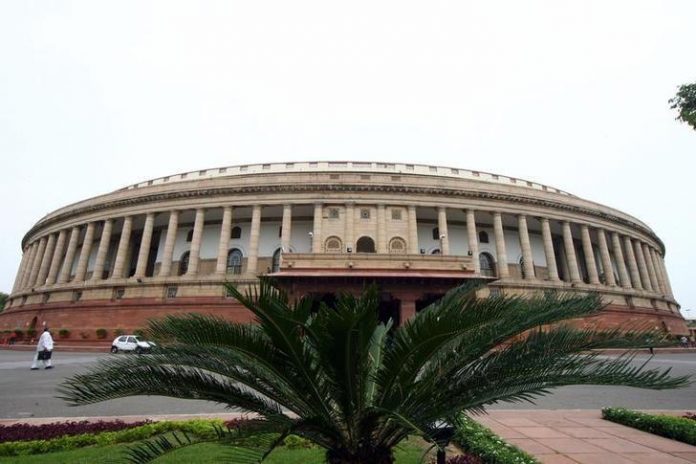
Download Now

What is social justice

0
Independence of judiciary

This article is written by Divya Raisharma, an undergraduate student at Government Law College, Mumbai. This article talks about social justice, the history behind it, the evolution it has gone through, its principles, the methods available, its presence in the Indian Constitution, social movements, and careers one can pursue in social justice.

It has been published by Rachit Garg.

Introduction

Social justice is closely related to the concepts of socialism and revolutionary communism. Originated during the Industrial Revolution, It consists of principles of Equality, Equity, Access to resources, and Human rights. Social justice can be achieved by people through protests, riots, activism, etc. People can work for social justice by taking up social work, victim advocate, community developer, and such other professions. The governments work toward social justice by integrating it in governance, laws, policies, etc. Many governments establish a dedicated social justice ministry. India tries to achieve social justice through its dedicated Ministry of Social Justice and Empowerment, subsidy schemes for marginalised communities, articles having social justice underlined in the Constitution, and movements such as the farmer’s protests.

Defining social justice 

  1. As per the United Nations, “Social justice may be broadly understood as the fair and compassionate distribution of the fruits of economic growth.”
  2. As per the National Association of Social Workers, “Social justice is the view that everyone deserves equal economic, political and social rights and opportunities. The key and defining elements in every definition of social justice are fairness and equality.”

History and evolution of social justice 

Income inequality during the 19th century’s Industrial Revolution gave birth to the concept of social justice. Even with the emergence of Industries, the problem of unequal distribution of wealth and resources among rich and poor remained the same. Hence, at the start, the concept of social justice was focused only on the unequal distribution of income among individuals. 

But, the Industrial revolution brought along a pandora box of issues – such as poor working conditions, low wages, poor safety, sanitary living conditions, etc. As a result, a new wave of revolution was witnessed in society. Various movements, such as labor unions, feminist movements, social welfare, and movements against racism, aimed to achieve social justice and also lead towards the formation of an egalitarian society. Social justice was used as the base principle in these movements. 

Later, in the modern period, social justice expanded its scope. Social justice is now relevant in every interaction between humans among themselves or with society. Earlier, the concept of equality was the main aim of any social justice movement. But now, social justice takes into account the systemic disadvantages faced by the marginalised communities and aims for equity instead of equality. Hence, the major difference between the two periods is that during the Industrial Revolution, the aim was to achieve the same treatment for all, and in the modern period, the aim is to give such a level of tailored treatment so as to bring everyone on the same level. 

Understanding social justice 

Social justice is the pillar of socialism. It is also found in some religious teachings and observed as a way of life. 

Social justice may be executed by favouring certain disadvantaged groups or by taking away or restricting the upper hand enjoyed by a privileged group. It is essential to identify the target demographic. Race, nationality, sexual orientation, gender, caste, religious affiliation, and income level are some basic demographics considered. 

Principles of social justice 

Social justice has the underlying principles of:

Equity

In a fair and just society, the disadvantages faced by a person due to their identity or background should not in any way deter their progress in comparison with others. An ideal society would take into account these disadvantages faced by such persons and take an extra step to reduce these disadvantages. It would also give them such an amount of support and opportunity so as to be able to compete with their other peers. 

Equity can work in two ways such as either by: 

(a) giving extra support to the marginalised community to achieve a level field between them and others, or 

(b) to restrict the privilege experienced by the privileged communities so as to level the field between them and the marginalised communities. 

The following illustration can best explain this:

Three people are trying to see over the fence. One of them is tall and can see over the fence without any box to stand on. The second person, who is a foot shorter than the fence, is given a one-foot long box to stand on. The third person is very short and hence is given a tall box enough to see over the fence. This unequal distribution of boxes as per the needs of individuals showcases the concept of equity. 

Access to resources / equality

It would not be wrong to say that the kind of resources a person has access to can make or break their career, education, and even life. Unequal access to resources has always been a hindrance to social equality. Access to resources (such as education, infrastructure, healthcare, etc.) is dependent on one’s social, economic, or political status. Even the quality of the resource accessed is dependent on the privilege enjoyed by the user. For example, a person residing in a city has access to better quality healthcare as compared to a person residing in a village or town.

Hence, social justice envisions access to the same level of quality resources for every person. 

Participation

new legal draft

This principle calls for citizen participation in matters concerning themselves. It is also an essential principle of democracy. Citizens should actively participate and be a part of the solution. The idea of this principle is when a group of homogenous people make decisions on matters concerning the society, it fails to consider problems faced by others and also the views of other groups. As a result, other groups hardly get the benefit or experience additional disadvantages. 

Human Rights

Human rights are one of the core fundamentals of social justice. Human rights are recognised nationally by the countries and internationally by organisations such as the United Nations (UN) and the International Criminal Court (ICC). Human rights are at its core foundation in an ideal fair and just society. Human rights must be accessible and enforceable. Human rights which people cannot be enforced on violation are just words on paper. In a socially just world, human rights are merged into the system. Human rights should be upheld and respected by the social institutions, government, and judiciary.  

Social justice and how it applies to the functioning of the government

Social justice is relevant in governance and public policies as it is socially, politically, economically, and morally significant. Social justice is a vital element to be taken into account by the government during the framing and execution of public policies, rules, regulations, and laws. Governance is a great way to implement social justice on a broader and deeper scale. Governments must make the extra effort and try to imbibe the principle of social justice in every and all decisions of theirs. 

Many governments in various countries have a concerned department of social justice, such as the Ministry of Social Justice and Empowerment of India. This department is entrusted with the welfare and social justice of marginalised communities. They also have a say in governance and oversee the integration of social justice into government policies. 

Schemes promoting social justice in India are:

The government also takes up social justice initiatives by way of:

  1. Taxation laws with the progressive and proportional tax system (Eg. The Income Tax Act, 1961).
  2. The government subsidy schemes for the promotion of scheduled caste and scheduled tribe communities.
  3. Infrastructure development in underdeveloped areas (Eg. Pradhan Mantri Gram Sadak Yojana).
  4. Anti-discrimination laws (Eg. Protection of Civil Rights Act, 1955).
  5. Minimum wages policies (Eg. Minimum Wages Act, 1948).
  6. Uplifting living standards of the poor by way of Slum Rehabilitation [Eg. Maharashtra Slum Areas (Improvement, Clearance and Redevelopment) Act, 197]
  7. Reservation at educational institutions or official government positions for weaker sections, etc. [Article 15(4), Article 16(4) and Article 16(5)]

Social justice methods

There are various ways to work towards the attainment of social justice. The path to undertake depends on the person and his ideology.

The path can be one of – 

  • Peace such as:
    • Peaceful protests 
    • Social campaigns 
    • Activism 
    • Governance

or otherwise of,

  • Violence such as:
    • arms revolution,
    • riots,
    • terrorism,
    • threats, etc.

 Peaceful method

Peaceful protests, social campaigns, and activism

Using peaceful protests, social campaigns, and activism, a group can spread awareness about an issue and bring public attention to their opinions. Peaceful methods facilitate discourse among the people, the protestors, the concerned decision-making authorities, and society. This helps to bring forth more varied opinions and leads to the peaceful fulfilment of social justice in society. Peaceful protests, social campaigns, and activism are encouraged in a just, tolerant, and civilised society.

An individual can also work towards social justice by: 

  • Educating themselves on the issue,
  • Organising local community groups, 
  • Volunteering, 
  • Donating to an organisation working towards social justice, 
  • Voicing their opinions, 
  • Supporting the marginalised community financing by giving them business, etc.

Governance

By way of governance, the government can establish a social justice system. If not, then at least a system having social justice as its feature and effect of functioning. Governance is a way to smoothly and peacefully attain social justice on a large-scale operation. The impact of such governance can evidently be seen in society. 

Violent methods

Though the social justice as per the perpetrators’ ideology is somewhat achievable for them by way of violent methods, it leads to more injustice, crime, and instability in the society. This nullifies any positive effects the said achieved social justice might have had on society. It can also lead to contempt against the said social justice.  Violent methods taint social justice movements’ image and wash every peaceful advocate’s effort down the drain. 

Social justice and the Indian Constitution

The Constitution of India has ingrained the spirit of social justice in its articles. This has facilitated the lawmakers and judiciary to give a social justice interpretation to laws. Social justice and equality are complementary to each other. Social justice and equality are one of the features of the preamble. 

Social justice is also complementary to the socialist features of the Constitution and the Indian economy. The ‘welfare state’ concept in the Constitution is a step toward social justice. Many Directive Principles of State Policy embody the principle of social welfare, equality, and social justice. Some of them are –

Fundamental rights also are made in view of social welfare, such as – 

Well known social justice movements 

Black Lives Matter (BLM)

This movement was started in the United States of America (USA). It was triggered by the event of George Floyd’s death, a black man who was choked to death by two white police officers. This movement was against the systemic racial discrimination and violence faced by the black community. The movement encompassed issues of social, judicial, economic, and political discrimination faced by the black community throughout their lives and in every aspect of their lives. It also brought forth the effects of white supremacy in systems across the world. This movement brought forth a massive number of people across the world to protest, on the street and on social media, in solidarity with the movement. It is one of the essential movements toward racial inequality and social justice.

MeToo Movement

#MeToo movement was founded to bring awareness of sexual violence faced by people. It is a social justice movement that succeeded in bringing the rampant sexual violence in the society into the limelight and driving suitable changes in society and policy to address the issue. It was also a solidarity movement by survivors of sexual violence to support and give courage to each other. It resulted in many coming forward with their story and naming their abusers. This was one of the most impactful movements in the feminist movement. 

Fridays for Future Movement

Also known as the ‘School strike movement for climate’, It is an international movement against climate change. In support of this movement, school students skip Friday classes to participate in protests and awareness movements to demand action from political leaders against climate change. It was started by the student activist ‘Greta Thunberg’ who staged a protest outside the Swedish Parliament. It gained international traction, and many students skipped classes to protest peacefully. This is a significant movement in social justice and environmental activism.

Farmer’s protests

Farmer’s protests in India started against the three farm laws introduced by the government. TAs per the farmer leaders, the farmer’s community’s concerns were the effect these laws would have on the Minimum Selling Price (MSP) and the Agriculture Produce Marketplace. The three farm laws did not include the safety net of MSP, and the entry of private players could disband the mandis. The fear of dominance of big corporate houses was also a matter of concern. The farmers organised themselves into groups and came on the streets demanding the removal of the farm laws. . Farmers from every part of the country led this protest and even gained international support. This movement led to the establishment of dialogue between the farmer community and the Union Government, and later on to the withdrawal of the laws.

Nirbhaya Movement

The horrific gang-rape incident in the national capital shook the country with anger. Many people went on candle march to call for justice for the victim and strict punishment for the rapists. The public demanded a safer world for women and harsher laws on crimes against women. India has one of the highest rates of crime against women. The pressure from the public and international community led to widening the definition of rape, stricter punishments, and the creation of new offences in the Indian Penal Code, 1860.

Career in social justice

People with a passion for social justice can pursue it even as a profession. Some of the many career options available are:

Victim advocate

Victim advocates are one of the front-line supporters for a victim of crime. They act as emotional and legal support for the victims and their families. Their duties are:

  • Assisting in medical care procedures.
  • Assisting with the suit against the perpetrator.
  • Helping the victims to secure compensation.
  • Informing victims about their legal rights.
  • Crisis Intervention.
  • Providing resources and referrals, etc.

Social worker

Social workers are considered the first and foremost point of contact for the victims. A social worker is directly in contact with the community and hence, is easily accessible. They are the backbone of the social justice system. 

They help in:

  • Connecting with professionals, 
  • Spreading awareness
  • Leading community-driven programs
  • Identifying people in need
  • Helping people in coping up with everyday problems
  • Provision of resources and referrals, 
  • Filling out administrative paperwork, 
  • Filing a police complaint, etc.  

They work in various spheres of social issues. 

Social workers can be seen working in:

  • hospitals, 
  • schools, 
  • mental health facilities, 
  • community development organisations, 
  • adoption agencies, 
  • not-for-profit organisations, etc.  

Lobbyist

Lobbyists work for their organisation and try to influence the legislation to represent their interests. The client for a lobbyist can be an organisation, a corporate house, and even a labour union. A social justice career pursued by a lobbyist is when they advocate for social interests. Mostly, not-for-profits use a lobbyist to represent their interest in a political decision. A lobbyist can help in achieving social justice by advocating representation of marginalised communities’ interests. For example, a lobbyist working on persuading the members of legislation to pass a ‘free healthcare for all’ bill in the parliament. 

Journalist

Journalists are an integral part of the social justice system. They find social issues faced by a section of people, do in-depth research, and bring attention to them. They are the primary data provider on social justice issues, which people use as a reference for case studies. A journalist starts discourse on such issues and brings forth the viewpoint of marginalised communities. They are also in a position to demand social justice from the government and society. Many journalists make a difference in society by telling stories of unheard voices.  

Conclusion 

We all dream and strive to live a better world. A world that is fair, just, and peaceful. This dream can be attained in a society that is based on the social justice principle. For this, systemic and ideological changes are needed. Changing our economic, social, moral, educational, and government institution system to one based on social justice is a step forward. However, the realisation of it seems impossible.

Frequently Answered Questions (FAQs) 

What is social justice?

Social justice is the ideology of a society that is fair, just, and equal to all, irrespective of their identity or background.

Why is social justice needed?

Due to the evident existence of racism, homophobia, class discrimination, caste discrimination, misogyny, unequal treatment, and other forms of discrimination faced by marginalised communities, social justice is needed. Social justice is necessary to make a fair, just, and equal world for all. 

When did social justice originate?

Social justice originated in the 19th century during the Industrial Revolution.

How did social justice originate?

Social justice originated to remove the unequal distribution of income and wealth among people. It came into being to address the income inequality issue.

When is social justice day celebrated?

The UN has declared 20th February as the Day of Social Justice.

How can one achieve social justice?

One can achieve social justice through peaceful methods such as protests, social campaigns, activism, etc., or through violent methods such as arm revolution, riots, terrorism, threats, etc.

How does the government help in achieving social justice?

Government helps to achieve social justice through governance, integrating social justice in the system, government rules, policies, laws, etc. 

Is social justice present in Indian law?

Social justice is present in provisions of various laws and the Constitution of India. Provisions towards women empowerment, empowerment of backward classes, abolition of slavery, creation of a welfare state, etc., are forms of social justice.

References 


Students of Lawsikho courses regularly produce writing assignments and work on practical exercises as a part of their coursework and develop themselves in real-life practical skills.

LawSikho has created a telegram group for exchanging legal knowledge, referrals, and various opportunities. You can click on this link and join:

https://t.me/lawyerscommunity

Follow us on Instagram and subscribe to our YouTube channel for more amazing legal content.

Download Now

Importance of SQE in practising as a solicitor in England and Wales

0

This article is written by Amulya Bhatia.

It has been published by Rachit Garg.

Introduction

Let me give you two scenarios and you decide which one sounds more realistic.

A mother tells her child to wash the dishes by 9 pm and the child listens to his mother.

Or, a mother tells her child to wash the dishes and tells him that if he does so by 9 pm, she will cook his favourite meal for dinner. The child clearly has an incentive to complete the task given and therefore, does so.

More often than not, we may find ourselves in the same spot as the child. It is no surprise that the child is more likely to wash the dishes when an incentive follows. Similarly, it is human instinct to want to reap benefits from all of our actions; whether it is the simple task of cleaning our room, going to college every day, or life-changing decisions such as giving the Solicitor Qualifying Examination. An incentive, benefit, or any kind of positive result becomes a driving force and I’m here to tell you what is going to be your driving force to sit for the SQE.

What is the SQE and why was it introduced?

The new and standardised route to becoming a qualified solicitor, the Solicitor Qualifying Examination, was introduced due to growing concern of the Solicitor Regulatory Authority about how aspiring solicitors are being prepared for solicitor’s practice. The SQE replaced the existing route to become a solicitor by introducing an all-new method wherein the applicants are examined on the same parameters. 

Since the SQE was only introduced in September 2021, it is natural for the applicants to be worried about the challenges that come their way while preparing for the examination. However, before understanding and tackling the difficulties associated with SQE, let me tell you why this examination is so important and how it will help you in the present as well as the future. 

How is SQE a better mode of examination than the previous route?

The route to becoming a qualified solicitor was changed to SQE and the changes brought in themselves are incentive enough for many solicitor aspirants. These are mentioned as follows:

  1. Nothing in this world is free and such is the case with entrance examinations as well. One of the major barriers for people to become a solicitor in England and Wales was the cost of qualifying along with the risk of investing and not being successful. The SQE is slightly more affordable than the earlier route to becoming a qualified solicitor.
  2. Qualifying work experience is a requirement to become a qualified solicitor and the SQE has made it much more flexible, now that the two years of QWE can be spread among a maximum of four organisations.
  3. The SQE is also a more standardised form of examination, while in the earlier model of examination, different universities were to examine the applicants. Even though the exams were similar, they were not managed by a single governing body. As a result, the SQE seems rather fair.

Why should you give the SQE?

We know that the SQE is a new and standardised way to become a qualified solicitor. Additionally, we also know why SQE is more beneficial than the previous method of becoming a solicitor. Let’s dive right into the impact the SQE has on your life as a student, and a legal professional and how it may amplify your legal career. The following are some benefits of giving the SQE:

  1. We know that London is said to be the hub of many business negotiations and a prominent forum for dispute resolution. It offers a friendly platform for all industries. Additionally, English Law is recognised as a dominant law of business, and giving the SQE gives you the opportunity to pursue the same
  2. Recent trends of globalisation are demonstrations of why lawyers should no longer be confined to their own jurisdiction and expand their horizons in terms of knowledge internationally, beyond their jurisdiction. In order to meet the international demand, lawyers must have the working knowledge and experience not just in their own jurisdiction, but also in other jurisdictions. The SQE can help lawyers increase their knowledge about international law.
  3. With levels of competitiveness skyrocketing in the 21st century, clients today demand results, and their expectations are much higher in terms of effective and cost-efficient results. They expect their lawyers to make things happen while protecting their interests. Having a dual qualification allows lawyers to offer much more comprehensive advice to their clients. 
  4. The title of an English solicitor is one that is recognised globally and is considered a mark of excellence. Additionally, the training and education process in England and Wales is also respected and that enhances their profile, reputation, and marketability in the legal world.
  5. Law is one such profession that is required in every aspect of life. As a result, the international expansion of law firms has seen a rapid rise in the last five years. Due to such expansion, law firms are often looking for employees who shall be able to handle international matters and are well-equipped or on their feet with international law. SQE thus helps in increasing one’s employability in not just England and Wales, but also in their home country due to the skills acquired through SQE.

Skills developed through SQE and how those skills amplify your career

When a child gets to eat his favourite meal in return for doing the dishes, he is at a two-fold advantage. Firstly, the child is given an incentive or a benefit. Secondly, the child is also learning skills such as responsibility and independence through the task of washing the dishes. Similarly, while one can reap extraordinary benefits and amplify their legal career through SQE, there are multiple skills that you shall learn through the course of preparing for this examination and these skills are sure to help you in the long run. 

The SQE as a new form of examination is designed in such a way so as to work on your academic as well as practical knowledge of the subjects. While reading can help you pass the first exam in SQE, your ability to apply that knowledge in real-world situations will help you get through the second exam. In the process of preparing for SQE, you learn intricate details about most of the important subjects in the legal world. Additionally, you also develop skills such as negotiations, legal writing, legal drafting, client interviewing, oral communication, and much more. The SQE focuses on your all-around development to become a qualified solicitor and teaches you skills that don’t just help in passing the exam, but also expand your legal career. Moreover, the examination also judges you on ethics and professional conduct which is beneficial, no matter what you end up pursuing. 

I’m sure all these benefits have gotten you amped up to sit for the SQE. But there is still a long way to go so tighten up you seatbelts and begin with the preparation.


Students of Lawsikho courses regularly produce writing assignments and work on practical exercises as a part of their coursework and develop themselves in real-life practical skills.

LawSikho has created a telegram group for exchanging legal knowledge, referrals, and various opportunities. You can click on this link and join:

https://t.me/lawyerscommunity

Follow us on Instagram and subscribe to our YouTube channel for more amazing legal content.

Download Now
logo
FREE & ONLINE 3-Day Bootcamp (LIVE only) on

How Can Experienced Professionals Become Independent Directors

calender
28th, 29th Mar, 2026, 2 - 5pm (IST) &
30th Mar, 2026, 7 - 10pm (IST).
Bootcamp starting in
Days
HRS
MIN
SEC
Abhyuday AgarwalCOO & CO-Founder, LawSikho

Register now

Abhyuday AgarwalCOO & CO-Founder, LawSikho