Download Now
Home Blog Page 281

Charter of Fundamental Rights

0

The article has been written by Ananya Bose, a student at Hidayatullah National Law University. The article discusses extensively the contents and the evolution of Charter of Fundamental Rights of the European Union.

It has been published by Rachit Garg.

Introduction 

Ten years after the European Union (EU) institutions enacted the Charter of Fundamental Rights, it was incorporated into European constitutional law and thus got a legal force by the Treaty of Lisbon. Before that, the charter gained the status of solemn proclamation and was used as persuasive authority in the European court of justice as well as the European court of human rights. However, with the recent developments, the future of the charter is the subject of political debates. They, with a related agreement known as the European Convention on Human Rights, are sure to generate a lot of discussions. The charter has been used to codify the already existing rights acknowledged by the European court of justice and thus is strengthened by this very fact. The manner and the act of codification are going to set an example for the rest of Europe outside the EU as well as the world. 

What is the Charter of Fundamental Rights 

The European Union’s Charter of Fundamental Rights enshrines the fundamental rights of all European Union citizens (EU). It was created to offer uniformity and clarity to the rights that had been established at various times and in various methods in the different EU Member States.

The Charter contains an entire range of civil, economic, political as well as social rights based on the following existing conventions and laws:

  1. Already acknowledged fundamental rights and freedoms in the European Convention on Human rights.
  2. Longstanding safeguards of rights that exist in the common law and constitutional law of the UK and the other EU Member States are examples of the constitutional traditions of EU Member States.
  3. The Community Charter of Fundamental Social Rights of Workers
  4. The Council of Europe’s social charter 
  5. Along with these, other international charters and conventions, the EU is part of, were also taken into consideration.

The Charter got its legal force or in other words, became legally binding on all the states after the Treaty of Lisbon was signed in December 2009.

The European Union (Withdrawal) Act 2018 did not contain the Charter of Fundamental Rights of the European Union. As a result, the Charter no longer applies to the United Kingdom.

History and background of the Charter of Fundamental Rights

The importance of the people of Europe and the human dimension in the development of the European Union, which was already reflected in the provisions of the Treaty of Amsterdam and the creation of the area of freedom, security, and justice, was reflected in the formulation of the European Union’s Charter of Fundamental Rights. The European Council, meeting in Cologne from June 2 to 4, 1999, resolved to codify European citizens’ rights, stating that “the protection of basic rights is a foundational principle of the Union and an integral requirement for her legitimacy.”

In the case of Costa v. Enel(1964) it was found that the law which was enacted by the Italian government to nationalise their electricity industry was not in line with the european law also known as Treaty on Functioning of the European Union.This landmark decision established the notion of EU law supremacy, which establishes the EU as a separate source of law that cannot be overruled by domestic legislation.It was considered by the scholars that if the european law was to prevail over the domestic, this might lead infringement of rights granted by the Constitution. This point had to be taken into consideration while drafting the charter.

Drafting of the Charter of Fundamental Rights

For drafting, the council formed to draft the charter chose to use a more open method rather than the usual diplomatic negotiation. A body composed of representatives of the Heads of State and Government and the President of the Commission, as well as members of the European Parliament and national parliaments’ was given responsibility, with observers from the European Court of Justice. Individual professionals, as well as representatives from the Economic and Social Committee and the Committee of the Regions, were asked to speak. The drafting was supposed to be finished in time for the European Council summit in Nice in December 2000.

The council of members elected Roman Herzog as its chairman who was at that time the president of Germany. The discussions were made public and the texts were available online as well as maximum transparency was maintained. Inputs regarding the texts and suggestions were taken from the representatives of different institutions like the Council of Europe, and the European Court of Justice. The debates were open and occasionally heated, but they never went stale because Roman Herzog was determined to reach an agreement to make the draft text acceptable to all member states, which explains the compromise character of several sections and their careful drafting. 

Adoption of the Charter of Fundamental Rights

The Charter is also one of the world’s most up-to-date codifications of fundamental rights. It includes all of the traditional protections of basic rights, as well as those found in the European Convention on Human Rights, but goes further. The Charter also protects rights and ideas, such as economic and social rights, that are derived from national constitutional traditions, European Court of Justice precedent, and other international accords. In addition, the Charter safeguards so-called “third-generation” basic rights, such as an explicit right to data privacy, bioethics protections, and the right to good administration.

There has been a unique process used in the development of the charter. The open method has been used significantly rather than the usual diplomatic method.

The Convention’s participation of such a high number of members of national and supranational parliaments demonstrated how crucial the Charter is for the process of bringing the European Union closer to the people right from the start. The Lisbon Treaty advances the process by introducing significant changes that boost the European project’s democratic legitimacy. As a result, we can call the Lisbon Treaty a “Treaty of Parliaments.”

Even though it was not legally binding at that time it played an important role in decisions by the courts. The EU institutions bound themselves to the charter and followed it in word and spirit.

There were many debates related to the legal status of the charter when it was not legally binding by legal experts. The institutions in Europe tried to implement the charter in their day-to-day legislative process. Though initially, there were some hesitations regarding the implementation of the charter in court, later, the courts have cited the charter and used it as a persuasive source in many decisions.

On September 26, 2000, the proposed Charter was finalised. The Convention formally accepted the document on October 2nd and forwarded it to the President of the European Council. The European Union’s Charter of Fundamental Rights was then presented to the  Biarritz  European Council (12-13 October) before being proclaimed by the Nice European Council on 7 December 2000. Some Member States objected to it being included in the founding treaties. Others, such as the European Parliament, wanted the Charter to have full legal effect.

The Parliament of Europe kept pushing for the charter to have binding legal force. As a result, the Charter text was incorporated in the proposed Constitution for Europe prepared by the Convention for the Future of Europe in 2004. It was not until the treaty of Lisbon which was signed in 2007 that the charter got its legal binding in December 2009.

It took almost ten years for the countries to accept the charter and make it legally binding upon themselves. Ten years of hope, a few setbacks, and some difficult discussions.

new legal draft

Contents of the Charter of Fundamental Rights

Civil and various political rights have been included in the first three chapters. Human dignity has been given a superior position. Everyone in the EU has the right to life as well as the right to mental and physical dignity. No one shall be subjected to inhumane treatment such as slavery, torture, and forced labor. The other chapter that is on freedom contains a long list of different rights such as freedom of expression and information, freedom of assembly and association, freedom of the arts and sciences, the right to education, the right to choose an occupation, and the right to work, the right to conduct a business, the property right, the right to asylum, the right to liberty and security, to respect for private and family life, and to personal data protection, the right to marry and start a family, freedom of thought, conscience, and religion. Equality rights have been mentioned in a different chapter and it covers the right of equality before the law, respect for all cultures and communities and diversity, gender equality, rights of the minor, and the care and respect for the elderly.

It was more challenging to write the chapter on unity. The differences emerged within the Convention between the southern countries, which were committed to affirming and enshrining economic and social rights, and the northern countries, which preferred to leave these issues to the formalised dialogue between management and labour. Countries like Britain and Ireland did not want the right to strike and form trade unions to be included in the charter, however, both the rights were included. It has been worded generally and doesn’t try to go beyond the basic already existing rights like Workers’ rights to information and consultation within the company, collective bargaining, and action, access to placement services, protection in the event of unjustified dismissal, fair and just working conditions, prohibition of child labor and protection of young people at work, protection of family life and reconciliation of family and professional life through maternity leave and parental leave. However, though rights like access to social security benefits have been mentioned in the convention there is no mention of the right to social security. Similarly, the right to housing and employment is not there. There is also a mention of environmental rights, good health care availability for all as well consumer protection rights. However, they are subject to laws made in each country and hence remain widely unequal and diverse. 

The rights of the citizens who are the members of the countries in the European Union like the right to vote and also the right to stand as a candidate in elections of the European Parliament and their local elections. The right to public governance by the Government’s institutions and bodies, including the right to refer cases of gross incompetence to the Union’s Ombudsman, access to European Parliament, Council, and Commission documents, petitioning the European Parliament, and receiving protection from the diplomatic and consular authorities of any Member State in countries where their Member State is not represented.

There is also provision for non-citizens of the Union residing in the EU countries, however, their rights are restricted to the right of freedom and movement only and not the entire set of rights. 

An entire separate chapter has been dedicated to the right to justice. The right consists of the basic justice principles like that of remedy before an unbiased court of law for everyone whose freedom as well as rights mentioned in the laws have been violated. The right to not be punished for the same offence and the presumption of innocence and the right to defend have also been added to this charter. 

Though it has some inadequate provisions as well as some overthought and more cautious laws due to the contentions of different countries in the EU with different laws and cultures, it represents a coherent entity.

There are chapters and articles in the Convention. The following are the six chapters: 

  • Dignity
  • Freedoms
  • Equality
  • Solidarity
  • Citizen’s rights
  • Justice

Dignity

This contains Articles 1 to 5:

  1. Human dignity – Every citizen has the right to live their dignity.
  2. Right to life – The right to life is guaranteed to everyone, and the death sentence is prohibited.
  3. Right to integrity of the person – Medical permission and the restriction of certain genetic techniques are examples of this.
  4. Prohibition of torture and inhuman or degrading treatment or punishment. – No one should be subjected to inhumane behaviour.
  5. Prohibition of slavery and forced labour – Trafficking is prohibited under this.

Freedoms

Articles 6 to 19 are concerned with freedoms:

  1. Right to liberty and security. – one of the most important rights i.e of liberty, freedom and security.
  2. Respect for private and family life.
  3. Protection of personal data – Data should be processed fairly, for specific objectives, and on the basis of permission or another legally permissible basis.
  4. Right to marry and right to found a family – marriage has been made a legal right in accordance with the national laws of each country.
  5. Freedom of thought, conscience and religion –This encompasses the freedom to openly declare one’s religious convictions as well as the freedom to alter one’s religious beliefs.
  6. Freedom of expression and information.- Everyone has the right to express themselves freely and obtain information about the events and people.
  7. Freedom of assembly and of association – trade unions can be formed.
  8. Freedom of the arts and sciences – Academic freedom is included in this.
  9. Right to education – parents can teach their children different religious beliefs according to their convictions.
  10. Freedom to choose an occupation and right to engage in work – Non-EU citizens with the right to work in the EU should be able to work under the same circumstances as EU citizens.
  11. Freedom to conduct a business. – Everyone has the right to start a legal business and run it.
  12. Right to property – Property encompasses everything of one’s things, not only land and/or dwellings. Intellectual property is included in this.
  13. Right to asylum.
  14. Protection in the event of removal, expulsion or extradition – This includes the ban of deporting someone to a nation where they may be tortured (or other degrading or inhuman treatment).

Equality

Articles 20 to 26 are about equality and discrimination:

  1. Equality before the law. – Everyone, rich or poor , black or white is the same in the eyes of law and court.
  2. Non-discrimination – Discrimination on the basis of sex, race, colour, ethnic or social origin, genetic characteristics, language, religion or other belief, political opinion, membership in a national minority, property, birth, handicap, age, or sexual orientation is prohibited.
  3. Cultural, Religious and linguistic diversity – the government and the citizens shall be respected.
  4. Equality between men and women – This does not preclude beneficial efforts that benefit women who are underrepresented (in a workplace for example).
  5. The rights of the child – When a governmental or private authority makes a decision on behalf of a child, the kid’s best interests must be the top consideration. Unless it is in the child’s best interests, children have the right to retain a regular personal interaction with their parents.
  6. The rights of the elderly – To live a life of dignity and to participate in social and cultural life. The elderly of the country shall have a right to live life with dignity and precipitate in events of the country.
  7. Integration of persons with disabilities.- People with special needs shall be treated with respect and helped at all times.

Solidarity

  1. Workers’ right to information and consultation within the undertaking – In instances covered by EU legislation, employees (or their representatives) must be consulted (for example, transfer of undertakings).
  2. Right of collective bargaining and action – Employers and employees both have the right to form collective bargaining agreements and make collective decisions in order to safeguard their interests (for example, to take strike action).
  3. Right of access to placement services – free placement services should be available to assist people to look for work. Placement facilities should be provided for free to the people looking for work and they should be assisted.
  4. Protection in the event of unjustified dismissal. – In the event of unjustified dismissal , there shall be a grievance redressal process for the worker.
  5. Fair and just working conditions – This includes the rights to safe working conditions, a workweek limit, rest breaks, and yearly leave.
  6. Prohibition of child labour and protection of young people at work -Except in exceptional circumstances, the minimum age for working cannot be lower than the minimum age for leaving school.
  7. Family and professional life – Pregnant employees and parents on maternity or parental leave are among those who are protected.
  8. Social security and social assistance.
  9. Health care- in accordance with the provisions of national legislation
  10. Access to services of general economic interest – This enables member governments to provide more support to underserved areas.
  11. Environmental protection –The EU’s plans should be sustainable.
  12. Consumer protection – The customers or the consumers shall be protected from the malpractices used by the companies or the sellers.

Citizens’ rights

  1. Right to vote and to stand as a candidate at elections to the European Parliament.
  2. Right to vote and to stand as a candidate at municipal elections – everyone had the right to stand as a candidate and vote for their candidate in the local elections held in the member countries of the European Union.
  3. Right to good administration – This includes the right to participate in any decision that has a negative impact on you, the right to view your file, and the State’s (or decision-making body’s) need to provide reasons for its actions. This means that EU institutions should react to citizen requests in the citizen’s native language.
  4. Right of access to documents –  citizens of the country have the right to access any document held by the institutions in the EU.
  5. Ombudsman –  Any company or person who may find any corruption  or malpractice in government institutions may contact competent authority.
  6. Right to petition – any EU citizen or company can petition the European Parliament.
  7. Freedom of movement and of residence.- Everyone residing in the country including the citizens as well as the non- citizens shall be entitled to move freely in the territory.
  8. Diplomatic and consular protection – You are entitled to protection/assistance from another EU member state if you are outside the EU and in a nation where your country does not have an embassy or consulate.

Justice

  1. Right to an effective remedy and to a fair trial – This includes a right to legal aid if you are considered to be in need of assistance.
  2. Presumption of innocence and right of defence – According to the law, everyone is deemed innocent until proven guilty, and anybody accused of a crime has the right to a defence.
  3. Principles of legality and proportionality of criminal offences and penalties – This includes forbidding retroactive crimes and penalties (i.e., you cannot be penalised for an offence that was not an offence at the time it was done) and ensuring that punishments are proportionate to the severity of the crime.
  4. Right not to be tried or punished twice in criminal proceedings for the same criminal offence. – Similar to laws in India , no one shall be punished as well as tried for the same offence they have already been punished for.

Need for the Charter of Fundamental Rights

The Charter is one of the most recent and modern codified documents of fundamental rights in the world. It not only contains the basic and the fundamental rights and freedoms of the citizens but also goes beyond it. It is a document which contains all the personal rights and liberties that the citizens of the European Union country enjoy. It has the force of law and is legally binding over the governments and the citizens of the countries. 

Another important document on human rights is the European Convention on Human rights which was adopted in 1950 and got its force in 1953. This Convention needs to be ratified before joining the EU. However, the Charter of fundamental rights contains the cultural and economic rights also which are not mentioned in the  European Convention on Human rights.

By making basic rights more visible and explicit for citizens, the Charter increases their protection. 

The European Commission devised a plan in 2010 to monitor and guarantee that the Charter’s rights and freedoms are effectively implemented.

The Charter aims to promote and protect the rights of its citizens. 

In the modern days, when there is grave invasion of human rights in many countries, such charters should be taken as an example in forming national level human right laws. The Charter of Fundamental rights not only inspires the rest of Europe to develop better human rights but the entire world.

The Convention and National Law 

Now that the Convention has a legal force, the countries while implementing an EU law need to do so according to the rights mentioned in the charter. 

Let’s take the example of Ireland to understand, where the charter of fundamental rights directly applies.

The Charter may be relevant in the following conditions in Ireland:

  • The Oireachtas is working on legislation to implement an EU Directive. EU Directives are EU rules that only take effect once national legislatures have implemented related legislation. This implies that each member state may interpret the Directive differently, or may fail to properly translate the Directive’s basic laws.
  • The right to move freely in the country is involved.
  • There is a European arrest warrant against a person.
  • If a person is an EU worker and based on this status he/she avails a health or social benefit.

In case an EU law has not been followed in the country, the following remedies are available :

  • The European Commission can take the matter to the court of justice of the European Union ( CJEU).
  • Any citizen can also refer to the courts of the country as well as CJEU.

Which countries adopted this Charter

The charter has been adopted by all the members of the European Union and applies to the citizens of these countries. 

The countries are as follows: Austria, Belgium, Bulgaria, Croatia, Republic of Cyprus, Czech Republic, Denmark, Estonia, Finland, France, Germany, Greece, Hungary, Ireland, Italy, Latvia, Lithuania, Luxembourg, Malta, Netherlands, Poland, Portugal, Romania, Slovakia, Slovenia, Spain, and Sweden.

Conclusion

The charter needs to be a reality that works in practice and not just on paper. There needs to be an understanding among the people and the institution about how the charter complements the national systems and institutions on fundamental rights. There should also be an effort made toward the fact the charter doesn’t replace the national fundamental rights laws and systems. 

For the proper implementation of the charter at the level of agencies and institution, steps like establishing systems to ensure that any infringement of basic rights is recognised and reported, as well as that the dangers of such violations are brought to the notice of the agency’s major bodies as quickly as possible, establishing a frequent discourse on basic rights problems with civil society groups and relevant international organisations, a reference to the Charter should be given while drafting code of conduct of duties of the staff etc should be considered. 

Everyone concerned, in their specific areas of responsibility, should respect and bring life to the Charter: the European Parliament, Council, and Commission in the EU legislative process, national authorities when implementing and applying EU law, and national courts when making decisions that are in any way related to EU law.

The human rights institutions and the European institutions for fundamental rights located in Vienna play an important role in the implementation of the charter. Their expertise and research should be used to raise awareness in the arena of human rights. 

Frequently Asked Questions (FAQs) 

When did the European Union’s Charter of Fundamental Rights take effect?

On December 7, 2000, the European Union’s Charter of Fundamental Rights was signed. However, it was not until some years later that it became legally binding. It went into force on December 1, 2009.

What is the difference between the Charter of Fundamental Rights and the European Convention on Human Rights?

The charter of fundamental rights is more extensive than the ECHR. It contains everything that the ECHR contains along with cultural and economic rights.

What is the objective of the European Union’s Charter of Fundamental Rights?

It defines the rights, liberties, and freedom of the citizens of the  European Union.  

References 


Students of Lawsikho courses regularly produce writing assignments and work on practical exercises as a part of their coursework and develop themselves in real-life practical skills.

LawSikho has created a telegram group for exchanging legal knowledge, referrals, and various opportunities. You can click on this link and join:

https://t.me/lawyerscommunity

Follow us on Instagram and subscribe to our YouTube channel for more amazing legal content.

Download Now

Is vape legal in India

0

This article is written by Mohammad Sahil Khan of Dr. Ram Manohar Lohiya, National Law University, Lucknow. The article deals with the working mechanism of vape, the risks associated with vaping and the laws pertaining to vaping in India and abroad.

It has been published by Rachit Garg.

Introduction

Vaping regulations are quite dynamic and vary from country to country. Countries like Japan have declared e-cigarettes illegal which has led consumers to shift towards heating tobacco as an alternative to e-cigarettes. Other countries such as the United Kingdom have placed strict restrictions and have some licensed devices for medicinal purposes. Brazil, Uruguay, Singapore and India are some of the countries that have completely banned the use of e-cigarettes citing them to be addictive and having the tendency to destroy the country’s youth. The United States of America and the United Kingdom have allowed the sale of e-cigarettes with certain strict regulations such as limiting advertising of vaping, buyer and seller both should be aged 18 or more and limiting the usage to a certain fixed limit. In India vaping is illegal and was completely banned in 2019.

What is vaping and how does it work

Vaping has become a sort of trend amongst smokers in recent years. Vape is commonly referred to as an e-cigarette (touted as a healthier alternative to regular cigarettes), it is a device which heats up the liquid such as nicotine or other flavours which are later consumed in the form of vapours by inhaling. Pens, e-cigarettes and hookahs are some of the vaping devices that are used for the purpose of inhaling vapours. 

There are many devices that are used for the purpose of vaping such as pens, e-cigarettes, hookahs, etc. However, the basic components in each of the devices remain unaltered and they work in a similar manner. The tobacco content is heated till it becomes a vapour or an aerosol that a person inhales. The various components of vaping machines are:

  • Mouthpiece– The mouthpiece is the component which is put in the mouth and contains vaping liquid which has nicotine, flavours and other addictive substances. There is an absorbent material that is saturated with vaping liquid that is subsequently placed in a small cup and is eventually inserted into the mouthpiece. 
  • Atomizer– Atomizer is a metal coil whose chief function is to turn vaping liquid into a form of fine mist which can be inhaled. Some vaping devices have a cartomizer as well which is an atomizer with a cartridge and it is used for vaping juice in one component.
  • Battery– A battery is a necessary component in a vaping device because it provides power to heat elements in an atomizer. Usually, the battery used is a rechargeable lithium-ion battery and it is dangerous as it can catch fire. 
  • Sensor– A sensor is an indicator that points out when the element that has to be inhaled has become activated. It is also used for activating the heater when the vaping substance is inhaled through a mouthpiece. 
  • Solution– Solution is that component which contains the inhaling substance such as nicotine or other flavours. Some of the vaping devices contain propylene glycol as a solution to turn liquid into an aerosol which can be inhaled. 
  • Cartomizer– Cartomizer consists of an atomizer surrounded by a poly foam which acts as an e-liquid holder. Cartomizer consists of three coils and with each coil the amount of vapour produced increases. After e-liquid has been utilised and when it starts to taste burnt, the cartomizer is discarded.  
  • Clearomizer– Clearomizer is useful in monitoring e-liquid levels in vaping devices. 

Risks involved in vaping

E-cigarettes were introduced as an alternative to smoking tobacco cigarettes believing that it would not be as dangerous to health as smoking normal tobacco cigarettes, but is it true? Vaping has become quite frequent among teenagers, reports have suggested that one out of nine high school students in the United States vape daily. With regard to India, the sales of e-cigarettes saw a massive spike; in 2014 the sales of e-cigarettes were 1.6 million units but in 2019 it has gone up to 3.3 million units. The question still remains what actually are the risks involved with vaping.

Dangerous chemicals in e-cigarettes

The Centre for Disease Control and Prevention has stated that e-cigarettes do contain fewer toxic chemicals in comparison to tobacco cigarettes and that is why it is believed that it is a good alternative to prevent smoking conventional cigarettes. It does not mean e-cigarettes are free of any dangers, the inhaled vapours of aerosol contain nicotine, carbonyl compounds, heavy metals and other cancer-causing agents. The chemicals contained in vaping have been found to be addictive and thus, it has the potential to make people addicted to vaping. Various research and reports have suggested that vaping can cause breathing problems among people of all ages; be they smokers or non-smokers. World Health Organization, British Medical Association and United States Surgeon General, have issued warnings against e-cigarettes. 

Effects of vaping on brain development

The nicotine part in e-cigarettes enters into the bloodstream after being absorbed by the lungs of an individual. The entry of e-liquid into the blood is quite dangerous because when it happens hormonal shift is caused as nicotine stimulates the adrenal glands to release epinephrine hormone, commonly known as adrenaline; which in turn activates the central nervous system and leads to increased breathing, heartbeat and blood pressure. This entire process leads to the activation of reward circuits (part of the brain associated with pleasure activities) in the brain and as a result, dopamine (a hormone that makes an individual sense pleasure) is released, which in turn demands more reward and thus leads to a loop of addiction. Apart from this, nicotine affects the prefrontal cortex, whose primary function is decision making, judgement and other related functions. These are extremely dangerous signs as most teenagers nowadays are addicted to vaping and thus, this addiction prevents the development of their brain and it leads to the development of mood-related disorders. 

Lung problems

Vaping has been considered a safer option as compared to regular cigarettes but that does not mean it does not affect physical health. Coughing problems, breathing difficulties, weight loss and nausea are some of the common symptoms that have been found among people who are indulged in vaping. Some of the elements of cannabis are used in heating up vape which ultimately results in the inhaling of such substances which eventually leads to lung problems. 

Gum disease

new legal draft

Vaping can cause a lot of oral issues because of the harmful contents that it carries. It has been found that Nicotine, which is one of the essential ingredients involved in vaping, can reduce blood flow towards the mouth and the nutrients that reach the mouth also get diverted and as a result, the overall health of the gums goes down and it leads to an invitation to a pandora of oral diseases. 

Addiction

Vaping was considered to be an alternative to regular cigarettes and it was believed that it can even help smokers to reduce their regular consumption of cigarettes and eventually lead them to quit smoking. However, studies and reports have indicated in other directions stating that vaping has caused people to opt for some other stronger drugs. This problem of switching to stronger drugs and also getting addicted to vaping is quite prevalent in adolescents because it has been found that the brain grows till the age of 25 and when we learn something neural networks are formed in the brain. Addiction is also a form of learning and that is why adolescents get addicted to vaping more. 

Nicotine is present as an e-liquid in many vaping devices and it is quite harmful because of its addictive nature. Nicotine is a substance that stimulates dopamine and sends signals to the brain to release more dopamine because it gives pleasurable experiences and as a result, the consumer develops a craving for smoking and gets addicted to vaping. Nicotine affects neurotransmitter Acetylcholine, because of nicotine, the consumer already gets the acetylcholine and as a result, the brain stops producing acetylcholine (involved in functions of muscle movement and memory function) which affects the regular functions performed by the neurotransmitter acetylcholine and the consumer gets dependent on nicotine for the purpose of attaining acetylcholine and leads the individual towards the path of addiction.

Laws which regulate vaping in India

Prior to 2019, there was a lack of regulation on e-cigarettes. Cigarettes and other Tobacco Products Act, 2003 (COTPA), and Drugs and Cosmetics Act (DCA), 1940 were the primary acts which regulated the sale of tobacco products but e-cigarettes were not covered under them and as a result, e-cigarettes were not regulated. So, in an attempt to regulate such products, a health circular was given out by the Ministry of Health and Family Welfare in 2018 whose main aim was to advise State and Union Territories to prohibit online/offline sale, manufacturing, distribution, trade, import and advertisement of ENDS (Electronic Nicotine Delivery System) including E-cigarettes within their jurisdiction. Later, Delhi High Court held that such an advisory is not binding and therefore; the regulation of e-cigarettes was not carried out as per the circular.

Vaping was banned in India through the Prohibition of Electronic Cigarettes (Production, Manufacture, Import, Export, Transport, Sale, Distribution, Storage and Advertisement) Act, 2019. The objective of the Act is to prohibit the manufacture, production, export, import, storage, distribution and advertisement of electronic cigarettes. However, even before the act came into force; many state and union governments had already imposed a ban on e-cigarettes. 

Ban on e-cigarettes in India and its consequences

There were certain reasons cited by the government for imposing a complete ban on e-cigarettes which are as follows:

  • E-cigarettes failed in their motive of reducing smoking habits of people and rather than acting as an alternative; e-cigarettes in itself became a source of addiction, especially among teenagers. People who had started vaping became more prone to developing an addiction to other drugs as well.
  • The government stated that e-cigarettes also contain nicotine and it is not a safer alternative to regular cigarettes.
  • E-cigarette solution is inhaled after heating the e-liquid and it contains a lot of intoxicants that can lead to some severe diseases as it contains certain carcinogenic substances such as Nickel, Radon, and Asbestos.
  • The government felt that if vaping is legalised then there is a risk of initiating tobacco to non-smokers.
  • ICMR had put out a white paper in which they stated that e-cigarettes can have adverse effects, ranging from damage to DNA, the formation of cancer cells to other neurological and cardiovascular disorders.

Essential features of Prohibition of E-cigarettes Act, 2019

  1. Prohibition of E-cigarettes Act, 2019 prohibits the production, manufacturing, sale, transportation, import, export, advertisement and storage of e-cigarettes and if an offender is found, he or she will be punished with a fine up to one lac rupees or imprisonment extending up to a year or both. If the offence is subsequently repeated then in that case punishment will be increased from one year to three years along with a fine which will be up to five lac rupees. 
  2. If a person is knowingly involved in the storage of electronic cigarettes and gives out his space or premise for the purpose of storing e-cigarettes; then he will also be treated as an offender and would be sentenced to imprisonment for a maximum term of six months or a fine up to one lac rupees or both.
  3. If the involvement of a company is found in the offences mentioned under the act, then in such circumstances; every member of the company who was in charge of the business activities of the company would be held liable.
  4. Once the Court procedure is completed, the stock of e-cigarettes which was seized would be disposed of as per provision XXXIV of the Code of Criminal Procedure, 1973

Owing to health risks and recommendations of the Indian Council of Medical Research, the government of India decided to completely ban vaping. The ban was precautionary and was a proactive move from the government considering the fact that the Indian Council of Medical Research had heavily stressed the harmful effects of e-cigarettes. 

Though the ban is a stringent and positive step in discouraging people to get involved in such harmful activities, it has its own consequences. Like every other banned substance in India, e-cigarettes have found their way to the black market. E-cigarettes are quite easily and cheaply available in these markets. Since there is a blanket ban, sellers have the discretion to sell substandard quality e-cigarettes which further increases the risk of aggravating the health of individuals. 

Regulations for vaping abroad

The laws and regulations mentioned above vary from country to country, even in a country there are various regional laws related to vaping; which means that vaping might be legal in one region of the country but in some other regions of the same country it might be illegal. It is important to look at the regulations placed by various countries in order to have a general consensus in the world regarding vaping. 

United States of America

The Food and Drug Administration has the federal authority to regulate vaping and products related to it. After 2016, FDA had gained the power to do so but FDA had refrained from creating a generalised standard system for e-cigarettes and also e-liquids (nicotine, glycerol, propylene glycol, etc). However, now some states have imposed bans related to sales of vaping products. Further, in September 2020, FDA started reviewing Premarket Tobacco Applications (an application that has to be reviewed and approved by the FDA, prior to any tobacco product legally entering in the markets of the USA); while also signalling that flavoured products will not be authorised without any extraordinary evidence. 

The vaping bans that have been imposed in the United States have been at local and state levels, rather than at the national level. Only a few cities such as San Francisco have imposed a blanket ban on all vaping products. The fact that there is no generalised standard system for imposing a ban on e-cigarettes and vaping products shows that despite FDA having the authority; it has not shown keen interest in imposing a complete ban on vaping. 

United Kingdom

The United Kingdom has taken a soft stance toward banning e-cigarettes, rather they have essentially encouraged vaping in place of regular cigarettes because smoking creates a costly burden for the UK’s National Health Service and the country believes that if smokers will switch to e-cigarettes, it would reduce the health problems that smokers face. However, this does not mean that the government promotes vaping, in order to ensure the safety of the consumers, there are certain regulations in place:

  1. E-cigarette tanks can not have a capacity of more than 2 ml.
  2. Restricting the maximum volume of nicotine-containing e-liquid for sale in one refill container to 10ml. Apart from this, e-liquid to nicotine strength should not exceed more than 20mg/ml.
  3. There is a requirement that vaping and products related to it must be notified and also published by the Medicines and Healthcare Products Regulatory Agency.
  4. Certain ingredients like caffeine and taurine are banned from being used as flavours in vaping.
  5. It is a requirement that nicotine-containing products or their packaging should be tamper-evident and child-resistant.

Russia

In Russia, selling vapes is subject to age and location-based restrictions. For example, in order to consume e-cigarettes, individuals should be 18 years of age or above, apart from that there are restrictions on vending machines selling e-cigarettes. Advertisement and promotion of vaping are completely prohibited in Russia and the use of e-cigarettes in public transport is also prohibited, except in long-distance passenger ships where there are separate cabins made for the purpose of vaping. 

France

As per European regulations, the maximum amount of nicotine in vaping devices is restricted to 20mg/ml. Additives like vitamins in e-liquids are prohibited in France. Apart from that, vaporising products need to be registered with the French Agency for Food, Environmental and Occupational Health and Safety before being sold in the market. The manufacturers and importers have an obligation to submit information regarding characteristics to the competent authorities before being introduced to the market.

Germany

Germany is known as a smokers’ paradise and it is no surprise that they did not introduce any kind of regulation or ban on vaping up till now. But, recently Germany has adopted the draft Tobacco Duty Modernisation Act (2021). The act seeks consumer behaviour in the tobacco market. The objective of the act is to adjust tobacco duty rates, apart from that improving public health and protecting minors is the key area. The draft aims at taxing e-cigarettes and other tobacco-heated products. With this legislation, e-cigarettes would be considered like normal cigarettes and will be taxed accordingly. The taxation system will be applicable by 1 July 2022; which will be evaluated in terms of the volume of the substance in millimetres (EUR 0.16 from 1 July 2022).

Way forward

Looking at the stance of all these countries, it seems that a complete ban on vaping is still far away. Vaping was introduced in 2007 and its market has been expanding ever since. Countries like UK, France and Germany have adopted regulatory measures as far as vaping is concerned; while on the other hand countries like the USA, Russia and India are not in favour of vaping citing public health concerns. Asian countries completely differ from the views of European countries and rather than regulating vaping, most Asian countries have imposed a blanket ban. 

Although European countries are not imposing a blanket ban, it can be seen that of late, they have also adapted regulatory mechanisms to prevent e-cigarette addiction, which is a testament to the fact that vaping is indeed quite dangerous for health. The fact that many studies and reports have suggested that e-cigarettes lead consumers towards consuming other hard drugs proves that regulating vaping won’t help and there is a need for a stringent ban on vaping to prevent any harm caused by vaping. 

In context to what India has done, banning is not enough because then these devices and substances find their way through the black market; so it is pertinent to look after this aspect and prevent any sale of e-cigarettes and other vaping devices.  

Conclusion

North America and Europe are the continents that favour vaping and they have lenient laws and regulations regarding e-cigarettes and products related to vaping. On the other hand, Asia, South America and Oceania are the continents that have an extremely hard stance on vaping and some of the countries have even imposed a blanket ban. Africa is the only continent which has not clearly defined any laws and regulations pertaining to vaping so there is an ambiguity regarding their stance on vaping.

Overall, it is difficult to know whether vaping is actually a good alternative to regular cigarettes because of the contrasting results in the United States and the United Kingdom but one thing is certain, teenagers are the ones who are severely affected by vaping and there are severe physical and mental health effects on teenagers and therefore; there is a need for effective regulation regarding the sale of vaping related products and also the contents involved in vaping should have a prescribed limit and it must be ensured that consumers are not exceeding the specified limit. 

As far as India is concerned, it seems that India will continue its hard stance on vaping to prevent people from getting addicted to it, especially teenagers. However, while doing so the government should ensure that vaping and e-cigarettes do not find their way through the black market and the ease of accessibility of these substances should be restricted.  

Frequently Asked Questions (FAQs)

Are e-cigarettes a safer option as compared to regular cigarettes?

Some reports have suggested that it contains less tobacco content than regular cigarettes but it has also been found that vaping leads people to get involved with strong drugs.

What are the health effects of vaping?

Vaping can cause lung problems, and it can affect brain development, especially among teenagers. 

Is vape legal in India?

No, vaping in India is completely illegal.

Are there any laws related to vaping in India?

Vaping in India is completely illegal and was banned in 2019 by the Prohibition of E-cigarettes Act, 2019.

References

  1. https://www.redvape.com/blog/vaping-laws-around-the-world/
  2. https://vaping360.com/learn/countries-where-vaping-is-banned-illegal/
  3. https://www.gov.uk/guidance/e-cigarettes-regulations-for-consumer-products#:~:text=The%20requirements%3A,no%20more%20than%2020mg%2Fml
  4. https://edition.cnn.com/2019/09/17/health/vaping-us-uk-e-cigarette-differences-intl/index.html
  5. https://www.gale.com/open-access/vaping
  6. https://nida.nih.gov/sites/default/files/drugfacts-vaping-devices.pdf
  7. https://www.fda.gov/tobacco-products/products-ingredients-components/e-cigarettes-vapes-and-other-electronic-nicotine-delivery-systems-ends
  8. https://tobaccocontrol.bmj.com/content/26/4/440
  9. https://vapekit.co.uk/blog/worldwide-regulation-of-the-vaping-industry-ultimate-guide/

Students of Lawsikho courses regularly produce writing assignments and work on practical exercises as a part of their coursework and develop themselves in real-life practical skills.

LawSikho has created a telegram group for exchanging legal knowledge, referrals, and various opportunities. You can click on this link and join:

https://t.me/lawyerscommunity

Follow us on Instagram and subscribe to our YouTube channel for more amazing legal content.

Download Now

Section 149 IPC

0
Section 120A

This article is written by Simran Mohanty, a student of Fairfield Institute of Management and Technology affiliated with Guru Gobind Singh Indraprastha University, New Delhi. The article discusses Section 149 of the Indian Penal Code, 1860 with the help of various judicial precedents.

This article has been published by Sneha Mahawar.

Introduction

Section 149 is provided in Chapter VIII of the Indian Penal Code,1860 which describes all the offences against public tranquillity. This Section, in particular, deals with the liability of every member of an unlawful assembly guilty of an offence committed in furtherance of a common object. Courts have construed that this provision creates joint liability or vicarious liability in an offence committed by members of an unlawful assembly.

Section 149 IPC in brief

When a person is attacked by a group of persons, it is difficult to establish the part played by each and every member during the commission of the offence. In such cases, all the accused persons can be charged with Section 149. The crux of this provision is that every member of an unlawful assembly sharing a common objective will be liable for the offence committed by the group. They would also be guilty if they knew that an offence was likely to be committed and actively participated in it. Say, for example, A, B and C grabbed Z to keep hold of him whereas D and E thrashed Z with bamboo sticks. Here even though A, B and C were not beating Z like D and E but they will all be liable under Section 149 of the Indian Penal Code, 1860 because all the accused had the common object of physically assaulting the victim.

Thus, this provision was enacted in order to maintain the tranquillity of the society and prevent the offenders who actively participate in the commission of an attack on innocent people by making them liable under Section 149 by the virtue of common object.

Origin of Section 149 IPC in the British Era

The history of Section 149 of the Indian Penal Code, 1860 can be traced back to Colonial times. The current Indian Penal Code, 1860 is based on the British era’s Draft Penal Code which was also called the Macaulay Code. The Draft Penal code did not have a provision like that of Section 149 but it did prescribe 5 years of imprisonment for rioting. When the Indian Penal Code of 1860 was enacted by the British, Section 149 was inserted to suppress any revolt by the people of India against the British.  In the 19th century, Britishers saw that the thirst for freedom was ignited among the Indians and they had started to unite against the oppressive British rule. This irked the Britishers and they subsequently used Section 149 actively to suppress the revolters and detain them so that the general public would be scared to raise their voice against the oppression. Thus it can be inferred that the original use of the said provision was oppressive in nature but after India gained independence, the courts have given strict interpretation to the statute so as to prevent any wrong convictions in the name of the common object.  

Nature of offence defined under Section 149 IPC

Initially, the Hon’ble Supreme Court was of the view that the aforesaid Section creates a specific and distinct offence. This was held in Lalji and Ors v. State Of U.P (1989).  But almost three decades later in Vinnubhai Ranchhodbhai Patel v. Rajivebhai Dudabhai Patel (2018), a larger bench of the Hon’ble Supreme Court of India held that this provision is not a separate offence rather it creates vicarious liability for all the members having a common object in an unlawful assembly to commit a crime. Many courts have observed that Section 149 has its foundation in constructive liability.

Ingredients of Section 149 IPC

To convict the person under Section 149 the following needs to be satisfied:

1. There must be an unlawful assembly.

2. Any member of the unlawful assembly must have committed an offence

3. The offence committed must be in furtherance of the assembly’s common objective or the members must have knowledge about the happening of the offence. 

According to the judgement passed by the Hon’ble Supreme Court in Vijay Pandurang Thakre v. State of Maharashtra (2017), for application of Section 149, there must be active participation of the person in the offence with the necessary criminal intention or share the common object of the unlawful assembly otherwise, the person cannot be held liable under the said Section.

Unlawful assembly under Section 141 IPC

Section 141 of the Indian Penal Code,1860 defines unlawful assembly which is an important element to establish joint liability of the members under Section 149 of the said Act. According to Section 141, if five or more persons have the following common object-

1. to overawe by criminal force

      (a) the Central Government, or the State Government, or the Legislature, or

      (b) any public servant in the exercise of lawful power;

2. to resist the execution of law or legal process;

3. to commit mischief, criminal trespass, or any other offence;

4. by criminal force—

     (a) to take or obtain possession of any property, or

     (b) to deprive any person of any incorporeal right, or

     (c) to enforce any right or supposed right;

5. Use criminal force to compel any person—

     (a) to do what he is not legally bound to do, or

     (b) to omit what he is legally entitled to do. 

Whether an overt act on the part of every member is necessary

In Yunis v. State of MP (2002), the Supreme Court of India held that even though there has been no overt act committed by one of the eight accused, still he was liable under Section 149 of IPC by virtue of being present at the place of commission of the crime. On the contrary, the same Court in the case of State of MP v. Mishrila (2003) stated that where the person is standing back without any participation in the commission of the offence, then merely his presence won’t attract Section 148. Hence, the court held that the person is not a member of the wrongful assembly and their conviction was impermissible.

Common object 

The Apex Court in the case of State Of Maharashtra v. Kashirao and Ors (2003) stated that “the meaning of the word ‘object’ means the purpose and, in order to make it ‘common’, it must be shared by all.” The Court further went on to say that a common object may be formed by express agreement mutually, but that is not necessary. By analysing the said judgement we can say that the members of the unlawful assembly should share the same purpose with the necessary criminal intention so as to constitute a common object.

Thus, the object is the goal that the members of the assembly set out to accomplish.

If all of the members have the same goal and the object is shared by all of the members, also they are in agreement on how to achieve it, then it will be construed as the common object of the unlawful assembly.

‘Common object’ with respect to Section 149 can be understood by breaking the provision into the following two parts-

Part A: ‘If an offence is committed by any member of an unlawful assembly in prosecution of        the common object of that assembly’ 

Part B: ‘The members of that assembly knew to be likely to be committed in prosecution of that object’

In the prosecution of the common object of that assembly

It means the act is done in order to carry out the common object of the unlawful assembly. In Satbir Singh v. State of Uttar Pradesh (2009), the Supreme Court strictly interpreted the expression ‘in prosecution of the common object’ as ‘‘in order to attain the common object’.

The aforesaid expression does not mean ‘during the prosecution of the common object of the assembly’ rather it means that the offence committed was immediately in nexus with the common object of the assembly.

In Vithal Bhimshah Koli v. State of Maharashtra (1982), the members of the unlawful assembly split themselves into groups to simultaneously attack the victim and even though they did not meet in one place before committing the crime, the attack seemed quite organised. Considering this fact the Supreme Court said that even if the common object was not developed at the initial stage, it may develop on the spot and will still be constituted as a common object. Whereas in Suratlal v. State of Madhya Pradesh (1982), one of the accused diverged from the initial plan of just thrashing the victim instead he pulled out a knife and stabbed the victim. The Court held that since the initial plan which was mutually decided by the members was to not cause any fatal injury to the victim and it was only that one accused who made a sudden decision of killing the victim. Therefore, the accused who killed the victim was liable and not the rest of the members since the common object was not to kill.

When there are many persons at a crime scene, it becomes difficult to make them liable for offence. Therefore, establishing a common object is very crucial for making the members of the assembly liable for an offence.

The members of that assembly knew to be likely to be committed in prosecution of that object

The word ‘knew’ in the aforesaid expression implies something more than “possibility” and cannot include within its ambit that the accused ‘might’ have known about the commission of the act. An offence committed to achieving the common object would generally be the offence that the members of the assembly knew was likely to be committed. This was observed by the Court in Gangadhar Behera v. State of Orissa (2002). 

In  Rajendra Shantaram Todankar v. State of Maharashtra (2003), the Court stated that when an act is committed and the members of the assembly had knowledge of the possibility of offence in the prosecution of the common object, the members will be vicariously liable under Section 149. The knowledge of the commission of the offence though difficult can be inferred from the circumstances such as the background of the incident, the motive, the nature of the assembly and arms carried by the members of the assembly, their common object, and the behaviour of the members soon before, at or after the actual commission of the crime.

Difference between part A and part B of Section 149 IPC

In the case of Chanda and ors v. State of Uttar Pradesh (2003)  the Supreme Court differentiated both the parts of the Section.

The first part of the Section states that the offence must be committed with a view to accomplishing the common object. For the offence to fall under the first part, the offence must have an immediate or direct connection with the common object of the unlawful assembly of which the accused was a member.

Whereas for the offence to fall under the second part the court held that the offence should be such that the members knew it was likely to be committed. 

Identification of the common object

In Vinnubhai Ranchhodbhai Patel v. Rajivebhai Dudabhai Patel (2018) the Court said that the identification of the common object can be derived by assessing the mental state of the members of the unlawful assembly. There is no hard and fast rule but most likely the mental state can be deduced by the circumstantial evidence and by judging the nature of the assembly.

For example, if a group of people gather in a public place late at night with dangerous weapons and attack someone, then any member of the unlawful assembly would be a fool if he did not realise that their actions can cause fatal injuries.

Punishment under Section 149 IPC

As discussed earlier in the Article, Section 149 does not define a distinct offence. Therefore punishment under Section 149 would be the same as the offence committed. Even for the purpose of classifying the offence as bailable/non-bailable or cognizant/non-cognizant, it will be in accordance with the offence committed For example, if the offence committed by the unlawful assembly is rioting which is punishable under Section 147 of the Indian Penal Code, 1860 then all the members of the unlawful assembly in prosecution of the common object responsible for rioting will be punished with imprisonment which may extend to two years or fine or both. 

Difference between Section 149 and Section 34 IPC

The parameter of distinction between Section 34 and Section 149 of the Indian Penal Code, 1860 can be inferred by the plain reading of both sections. Where in Section 149 the liability is based on ‘common object’, in Section 34 the liability is based on ‘common intention’. In order to attract Section 34 of the Indian Penal Code, 1860  several persons must do an act as well as have the intention of doing the said act. The provision won’t apply where several persons intend to do an act but some of them diverge from the original object and commit an entirely different act. In such a case section 149 may be applied by carefully scrutinising the facts of the case.

Recently, the Apex Court has explained the difference between both of the terms in Rohtas v. State of Haryana (2020). In this case, the victim was on his way to an agricultural plot, when the appellant with three other accused persons started inflicting blows, on the victim’s body using axes causing serious injuries to his legs, hand, and head. Meanwhile, another group of persons also started thrashing the victim and even threatened to kill him. The Court observed that even though both the sections create vicarious liability on the members of the group, there are some crucial differences between the two of them. While Section 34 requires active participation and a prior meeting of minds, liability under Section 149 is created by virtue of membership in the unlawful assembly. The Court further said that ‘common intention’ is usually inferred indirectly from the act of the members.

Below is the summarised difference between the two provisions: 

Section 34 IPCSection 149 IPC
Common intention is not defined anywhere in the statute.For the purpose of Section 149 common object is defined under Section 141 of the IPC
This section is under Chapter II of the IPC which deals with general exceptions.This section comes under Chapter VIII of the IPC which deals with offences against public tranquillity.
There is no requirement for the minimum number of persons to share a common intention.Section 149 requires that there should be a minimum of 5 or more persons.
The basis of liability is common intention.The basis of liability is common object.
Active participation of the members in the commission or the planning of the act must be there.The Common object can be established if the persons are members of an unlawful assembly.

Section 302 read with Section 149 IPC

Section 302 of the Indian Penal Code describes the punishment for murder. When a group of people has a common object to kill another person, they can be charged under Section 302 read with Section 149. The issue raised in the case of   Nanak Chand v. State of Punjab (1955) before the Supreme Court of India was whether there could be a conviction for the offence under Section 302 simplicitor when the charge was for the offence under Section 302 read with Section 149 of IPC. It was held that since there when there is no separate charge for the offence under section 302 only and the charge was made under Section 302 read with 149 of the IPC, the conviction for the offence under Section 302 would not be maintainable. 

The constitutional bench in Willie Slaney v. State of Madhya Pradesh (1955) clearly explained regarding when an accused can be convicted under Section 302 simpliciter when the initial charge was under Section 302 read with 149 of the IPC. The bench said that even though the charge is under Section 302 read with Section 149 but the facts state that there has been a fatality due to the act committed by a particular accused. During trial the evidence confirms that the particular accused’s act was responsible for the death of the victim, then he could be convicted under section 302 separately even if there was no separate charge against him.

Recently, on 18 January 2022 in the case of Mohd. Shoaib @ Chhutwa v. State (2022) the Delhi High Court said that there needs to be a clear finding with regards to the nature of the unlawful common object to convict an accused under Section 302 read with Section 149 of the IPC and if there is no such finding, then just the presence of accused would not be sufficient to prove the common object. to. Thus, conviction under Section 149 read with Section 302 cannot be based on vague evidence and general allegations. 

Therefore, by analysing the above judgements it can be concluded where a murder has been committed by any member of the unlawful assembly, the rest of the members cannot be charged under Section 302. Section 302 read with Section 149 shall be applicable when the common object of the assembly was to kill the victim.

Misuse of Section 149 IPC

Whenever there is the presence of more than 5 persons at a crime scene, the prosecution mechanically invokes Section 149 of the Indian Penal Code, 1860 read with other provisions of the IPC. This has led to abuse and misuse of the statute. In one of the cases, a person was convicted under Section 149 for murdering a person. Later on in the appeal, he was acquitted because he had just revealed the location of the victim to the mob who killed the victim. If the Court had not analysed the facts carefully then an innocent might have served in Jail for an offence he did not commit. This section was inserted by the Britishers in the pre-independence era and therefore did not take into account that villagers often carry agricultural equipments like axes with them for work and sometimes it so happens when an incident occurs in a village, they get charged under Section 149 because they were armed. Therefore, unfair to them because of infringement of their right to life and liberty under Article 21 of the Indian Constitution.  

Recently the Karnataka High Court in the case of Santhu @ Santhosh Poojary v. State Of Karnataka (2020) said that “It is high time for the investigating agency to conduct a proper investigation whenever the provisions of Section 149 are invoked along with the other provisions of IPC to ensure that there should not be any violation of fundamental rights guaranteed to the citizens under Articles 14, 19 and 21 of the Constitution of India and also to ensure that innocent people should not be implicated. While invoking the provisions of Section 149 of IPC, the investigating agency shall confirm after investigation as to whether such persons really committed an offence along with the other co-accused, if any. Otherwise, the rival/jealous/motivated/interested parties are eager to implicate innocent people, sometimes with the influence of local politicians also.”  The court further went on to say that the Court should act as societal parents and analyse the evidence properly before convicting anyone while dealing with prosecution under Section 302 read with 149 of the IPC. When one of the accused has committed the alleged offence then the other members of the unlawful assembly should not unnecessarily be punished with imprisonment for life, without there being any contribution of other members with the common object besides, such members can be punished separately for minor offences under Sections 143, 147,148,323,341 and 504 etc. of Indian Penal Code, 1860.  

Relevant case laws with respect to Section 149 IPC

Vinubhai Ranchhodbhai Patel v. Rajivbhai Dudabhai Patel (2018)

Facts

On 11.07.1992,  an incident occurred in the village of Nana Ankadia leaving three persons dead and five persons injured. The charge sheet was filed against 15 accused.

Issue raised

The issue raised before the Hon’ble Supreme Court was in relation to the scope of Section 149 of the IPC

Held

The Hon’ble Supreme Court observed that for examining the liability of the accused under section 149, first, the Courts need to analyse the provision. The court stated that there are two components that need to be kept in mind by the prosecution and the courts for analysing Section 149. The components are as follows

  1. The amplitude and the vicarious liability created under Section 149; and
  2. the facts which are required to be proved to hold an accused vicariously liable for an offence.

Mahendra Singh v. State of Madhya Pradesh (2022)

Facts

In this case, the complainants were attacked with lathi and farsa by 19-20 persons on their way back from a village. The attackers abused and assaulted them. The High court upheld the Trial Court’s conviction under section Section 325 read with Section 149 of IPC. The appellant then appealed to the SC that out of the 20 accused persons in the charge sheet, 17 were acquitted and the 3 accused were convicted under Section 325 read with Section 149.

Issue raised

Whether the accused was rightly convicted under Section 149 even though the charges were formed against less than 5 persons?

Held 

The bench quashed the order of the High Court that convicted the accused under Section 325 read with Section 149 and gave the reasoning that for conviction under Section 149 there must be 5 or more persons but it is not necessary that five or more persons should be brought before the court and convicted. Thus, the charge under Section 149 would be maintainable even though it was against less than 5 persons and other accused could not be identified but in total, they should be more than 5 persons. However in the present case, there were no unidentified accused and only three persons were convicted under section 149, so the charge cannot be maintainable.

Taijuddin v. State of Assam and other (2021)

Facts 

In this case, the victim was attacked in his own house by a mob due to a land dispute armed with lathis, spears, daggers, etc. The victim ran and tried to hide in someone else’s home to save himself from the mob but was unsuccessful and eventually killed by the mob. One of the accused appealed against his conviction in the Apex Court.

Issue raised

If a person reveals the location of the victim to the killers, will he be vicariously liable under Section 149 of the Indian Penal Code, 1860?

Held

The Supreme Court of India held that a person cannot be held liable under Section 149 merely because he revealed the hide of the victim who was subsequently killed. The Court observed that it cannot be presumed that the said person shares the common object with other accused who killed the victim. The court further went on to say that The Court must guard against the possibility of convicting mere passive onlookers who did not share the common object of the unlawful assembly. Its obvious that one person cannot be brave enough to conceal someones hide out from a  group of armed persons Hence, Taijuddin was acquitted.

Conclusion

The provision creates vicarious liability for the members of the unlawful assembly in prosecution of a common object which means that every person would be held liable irrespective of the fact whether he has caused injury to the victim or not because they were a member of an unlawful assembly and an offence was committed according to their common object. This provision is very crucial in making members of an unlawful assembly liable for the commission of an offence but sometimes there have been cases where innocent people have been charged under this Section. Owing to the language of the statute, the prosecution sometimes invokes Section 149 as a procedural law diverging from its substantive nature. Therefore, it is not justified for the individuals in an assembly who were mere spectators in the offence to be equally punishable with the accused who committed serious crimes. This has been recently addressed by the courts and they interpreted the provision in a strict manner so as to prevent the conviction of any innocent.   

Frequently Asked Questions

  1. If some members diverged from the original common object and committed an aggravated act, then will all the members be liable for the act?

No, all members won’t be liable for the aggravated act of some members who diverged from the original common object.

  1. Can a person be convicted under section 149 if he got engaged in a free fight?

A person cannot be convicted under section 149 in case of a free fight.

  1. Offence under Section 149 is triable under which court?

It will be triable by the court in which the offence committed by the unlawful assembly will be triable.

  1. Is Section 149 compoundable or non-compoundable?

It is non-compoundable.

References 


Students of Lawsikho courses regularly produce writing assignments and work on practical exercises as a part of their coursework and develop themselves in real-life practical skills.

LawSikho has created a telegram group for exchanging legal knowledge, referrals, and various opportunities. You can click on this link and join:

https://t.me/lawyerscommunity

Follow us on Instagram and subscribe to our YouTube channel for more amazing legal content.

Download Now

Workmen’s Compensation Act, 1923 : Theory of notional extension under the Employees Compensation Act

0
Employees Compensation Act, 1923

This article is written by Lokesh Bagra a Management Trainee HR, Deendayal Port Authority pursuing a Diploma in Labour Employment and Industrial Laws for HR Managers. This article has been edited by Ojuswi (Associate Lawsikho). 

This article has been published by Sneha Mahawar.

Introduction

The Employees Compensation Act,1923 is the first social security measure undertaken in India to provide workmen and their dependents relief for injury by accident resulting in either death or disability. According to the theory of notional extension of employment, a fictitious employment extension is a presumptive or imaginary extension of an employee’s working time under certain circumstances in order to enjoy temporary benefits under various laws by the employer. The employer is liable in certain circumstances for the injury caused to his workers even when he is away from the premises at the time of the accident. The objective of the article is to enlighten the reader with a detailed understanding of the Theory of Notional Extension through various case laws, important sections of the act and the Doctrine of Added Peril.

Applicability of Act 

 The Act applies to factories, mines, plantations, transport, establishment, construction works, railways, other hazardous occupations and employment as specified in Schedule II. Establishments which are covered under ESI Act, 1948, are kept outside the purview of this Act because the same benefit is provided under ESI Act, 1948 for disablement and death to the workmen and their dependents.

Eligibility

Every worker (including those employed through a contractor) who suffers any injury due to an accident arising out of and in the course of his employment, shall be entitled to compensation under this Act. There is no wage limit for a worker for becoming eligible for compensation under the Act. However where the monthly wage of a worker is more than Rs.4, 000 is taken to be only Rs.4, 000 for calculating compensation either in case of death or permanent total disablement.

Section 2 (1) (m) of the workman Compensation Act defines wages as any privilege or benefit which is capable of being estimated in money, other than a travelling allowance or the value of any travelling concession or a contribution paid by the employer of an employee towards any pension or provident fund or a sum paid to an employee to cover any special expenses entailed on him by the nature of his employment.

Benefits included in the wages are – 

  1. Free accommodation;
  2. Cleanliness allowance;
  3. Overtime pay;
  4. Benefits in the form of food and clothing;
  5. Bonus;
  6. Dearness allowance;
  7. Value of any other concessions, benefits or privileges capable of being estimated in money.

Section 3 Employer’s Liability for Compensation – A workman is entitled to receive compensation from the employer in the following circumstances:-

A. In case of an accident;

B. In case of occupational disease;

C. The said accident or disablement has arisen out of and in the course of employment

In Indian News Chronicle v. Mrs Lazarus, an employee during the course of his employment had to frequently go to the heating room from a cooling point and died because of pneumonia. The court stated that the injury was caused by an accident in the instant case and isn’t considered to be a physical injury as the injury caused was because of his nature of work and concluded that the heir of the deceased employee will be entitled to compensation of Rs 3,500 as the deceased was drawing Rs. 150 per month and in accordance with the schedule IV of the workmen’s Compensation Act. 

 In C. Manjamma & Anr. Versus The Divisional Manager The New India Assurance Co.Ltd. 2022, the deceased employee was 30 years of age; he was engaged as a driver on the auto-rickshaw; and he expired while on duty because of cardiac arrest, which he suffered due to the strain and stress of his job. In this case, the judgement passed by the High Court of Karnataka and Labour Officer and Commissioner for Workmen’s Compensation had awarded compensation in the sum of Rs. 4,15,960/-(Rupees four lakh fifteen thousand nine hundred sixty) together with interest @ 12% per annum to the wife and mother of the deceased workman. This award of the Labour Officer and Commissioner for Workmen’s Compensation was challenged in the apex court and after examining the facts of the case the honourable supreme court restored the judgement passed by the High Court of Karnataka and award of the Labour Officer and Commissioner for Workmen’s Compensation.

Conditions under which the employer is not liable to pay compensation

  1. if any injury not emanating in the total or partial disablement of the workman for a period exceeding three days;
  2. in respect of any injury not causing death, by an accident which is directly attributable to –

(i) the workman having been under influence of drink or drugs, or;

(ii) the willful disobedience of the workman to an order expressly given, or to a rule expressly framed, for securing the safety of workmen, or;

(iii) the willful disobedience to the instructions by the workman of the safety guard or any other device which he knew to have been provided for the purpose of securing the safety of the worker.

Rights of workmen under this Act 

  1. Section 3 – To receive compensation for disablement and death resulting from personal injury caused by accident or occupational disease arising out of and in the course of employment.
  2. Section 6 – To apply to the commissioner for review half – monthly payment if his condition deteriorates.
  3. Section 10 – To apply to the commissioner for determining the claim and the amount of the commissioner if the employer denies the claim, or determines an inadequate amount of compensation.
  4.  Section 30 – Can appeal to the High Court against the Commissioner’s order, if he feels aggrieved by any of the orders.

The concept of notional extension 

The doctrine of notional extension is a theory that prescribes that compensation is to be paid to the workers in case of an accident during the course of employment, but the actual cause of adopting this theory was to include within its scope, the injury and danger originated due to employment but not necessarily at the workplace, during working hours or while coming or going to the place of work.

What is arising out of employment

The words ‘arising out of employment’ was defined in the case, that “during the course of employment, If the accident had occurred on account of a risk which is an incident of the employment; the claim for compensation must succeed unless, of course, the employee has exposed himself to do an added peril by his own imprudence”.

The case of Ramrao Zingraji Shende vs Indian Yarn Manufacturing Company clearly enunciates the meaning of “arising out of employment”

The appellant Ramrao was working in the Indian Manufacturing Company, Akola i.e., the Respondent’s concern. On November 11, 1979, while he was working on the machine, he met with an accident and sustained injuries to two fingers of his left hand as both the fingers were crushed in the machine. 

The respondent resisted the claim of compensation on various grounds. The respondent specifically submits that the appellant is not entitled to any compensation as he disobeyed the express orders displayed on the notice board.

Under Workmen’s Compensation Act no exemption is given for mere negligence or carelessness. The Act makes no exception in favour of serious and willful misconduct, except in the shape of drunkenness and the like which it specifically mentions in the provision to Section 3 Consequently the test to determine the employer’s liability must always be whether the accident arose “out of and in the course of the employment” and whether the workman has added peril to his employment to which the employer had given no sanction”.

In the above case, it was concluded that the appellant met with an accident arising out of employment and the respondent is liable to pay the claimed compensation as per Workmen’s Compensation Act, 1923

Position of notional extension in India 

Notional Extension in India is all about the monetary benefit to the injured worker under the Employee State Insurance act 1948 and Workman compensation act, 1923. 

“The theory says the worker is travelling for the job and the work is to be included in the course of employment.

 In the case of R.B. Moondra And Co. vs Mst. Bhanwari And Anr. help in understanding what exactly the theory of notional extension is and how it is actually practised in India. Also, this case has highlighted that not only the dependents including the wife of the worker even after re-marriage are eligible for compensation. In the above-quoted case truck driver after the permission of his employer went inside the tank of the truck to check the source of the petrol leak, for which he lighted a matchstick inside the tank and this gave rise to fire leading to accident-causing burn injuries and ended up with the death of the truck driver.

Since the case does not fall within the purview of Section 14 Workmen’s Compensation Act, 1923 hence the commissioner appointed under the act shall have no jurisdiction to award compensation to the workman against the insurance company.

Initially, the wife of the worker was debarred from claiming compensation after re-marriage because she no longer remained a dependent, but the court held that there is no such rule that after remarriage widow of the deceased would not be considered as a dependent. Under Section 21 Hindu Adoptions and Maintenance Act, 1956, a “widow” remains a dependent within the meaning of that section as long as she is not remarried.  On the other hand, dependent as per Section 2 (d) Workmen’s Compensation Act, 1923 is not restricted due to the mere fact that she has remarried and cannot claim compensation under the Act.

new legal draft

The doctrine of added peril

The term “added peril” means the workmen have done an act that is not mentioned in the service contract and such an act will result in danger to the workmen. If the workmen in the course of his employment while performing the duty does an act which is not needed to be done by him and involves excess danger and results of any damage caused to him, the employer will not be liable to pay compensation also the doctrine of added peril is a defence to the employer. 

 The Doctrine of Added Peril can be better understood by the following cases: 

Case 1 : Tamil Nadu Civil Supplies Corporation, Ltd. v. S. Poomalai, 1994 

Held – The phrase “arising out of employment” refers to more than just the nature of the job. It refers to employment in general, including its nature, conditions, and benefits responsibilities as well as its occurrences.  If a worker is injured as a result of any of these circumstances, when transported into a zone of special danger, the injury would be one that arises “out of the blue.” employment.’ To put it another way, if the disaster occurred as a result of a risk that could have been avoided, unless there is an incident of employment, the claim for compensation must be successful. Of course, the worker has put himself in jeopardy due to his own carelessness Act.

Case 2 : R. B Moondra & Co. v. Mrs. Bhanwari And Another, 1970

Held -The meaning of the term ‘added peril,’ and how it applies to cases arising under the Workmen’s Compensation Act, which states that if the act to which the worker is subjected While the task that worker was conducting was within the scope of his employment. It makes no difference whether the conduct was performed with greater or lesser neglect. It was necessary for the circumstances.

It is normal for the worker to have petrol on hand for cleaning grease off his hands, the use of which is not expressly or implicitly forbidden, and as a result, the accident was caused by his work.” As a result, this case establishes that the workman’s activity, no matter how careless or reckless, stems from whether it falls within the scope of his responsibilities as an employee.

Conclusion

The Notional extension theory is considered a “friendly concept” for employees because it provides compensation benefits during the period of employment and to dependents in case of the death of an employee. The court has given a liberal interpretation to provide aid to employees applicable only to limited sections of the society such as those working in factories, mines, and industries considering their social and economic conditions with a motive to provide justice to the weaker sections of the society. 

It also includes the penalties provided, or the review of the injury caused to the employees, the medical examination to be done of employees after the practical injury occurred and also cases of delay in payment of compensation thus, this proposition is complete in itself and it also favours justice to the depriving sections of the society. In India, the Workmen’s Compensation Act, 1923 and Employee State Insurance Act, 1948 have adopted this principle of doctrine, as well as the judiciary, has adopted the same principle in various case laws.

References


Students of Lawsikho courses regularly produce writing assignments and work on practical exercises as a part of their coursework and develop themselves in real-life practical skills.

LawSikho has created a telegram group for exchanging legal knowledge, referrals, and various opportunities. You can click on this link and join:

https://t.me/lawyerscommunity

Follow us on Instagram and subscribe to our YouTube channel for more amazing legal content.

Download Now

Property rights of women in India

0
Laws every woman must know

This article is written by J Jerusha Melanie, a student of SRM School of Law, Tamil Nadu. This article seeks to elucidate the various property rights of women in India in accordance with respective religions and the landmark judgments that led to its recognition. 

It has been published by Rachit Garg.

Introduction

Women across the globe have struggled for ages to have rights over family properties. In various societies, the philosophy behind frowning upon the thought of giving property rights to women was that they do not permanently stay in their birth family. Once married, they move into their marital families and become a part of it. So, only the male members had rights over their family properties. However, women’s property rights have significantly evolved in the past couple of decades. Let’s try to understand women’s property laws and their rights in India. 

Property rights of women under Hindu Law

The Hindu Succession Act, 1956 and Hindu Women’s Right to Property Act, 1937 govern Hindu women’s property rights in India. The Hindu Women’s Right to Property Act, 1937 predominantly dealt with the property rights of Hindu widows. It allowed a Hindu widow to receive an equal share in her intestate husband’s property as her sons. However, it failed to address the issues pertaining to the property rights of women as a whole; also, it did not give coparcenary rights to Hindu women. 

The Hindu Succession (Amendment) Act, 2005 (hereinafter referred to as the 2005 Amendment) introduced upon the recommendations of the 174th Law Commission Report, made certain magnificent changes to the 1956 Act, which are discussed further. It is a breakthrough toward getting rid of gender inequality in India. 

The following are the Hindu women’s property rights in India, as provided under the Hindu Succession Act of 1956;

Coparcenary interest

Before knowing the interest of a Hindu woman over any coparcenary property, it is pertinent to first understand its meaning. A coparcenary property refers to any intestate ancestral property acquired by the members of a Hindu Undivided Family (HUF). Before the 2005 Amendment, only three male lineal descendants (son, grandson, and great-grandson) constituted the body of coparceners and were entitled to acquire any coparcenary property. This meant that women had no interest in the coparcenary property since they could not be coparceners. For instance, a son of a coparcener received a share in the coparcenary property, but his sister didn’t. 

However, the 2005 Amendment amended Section 6 of the Hindu Succession Act of 1956 (hereinafter referred to as the 1956 Act) and eradicated the age-old discriminatory practice of keeping women out of the coparcenary system. Section 6(1) of the 1956 Act provides that in any HUF governed by Mitakshara law, the daughter of a coparcener shall by birth become a coparcener in her own right, just as a son of a coparcener. 

So, now, a daughter of a coparcener is also a coparcener in a HUF.

Equal coparcenary rights

Section 6 of the 1956 Act vests equal rights and liabilities on both the sons and daughters of a coparcener. Section 6(1) provides that the daughter of a coparcener:

  • Has the same rights in the coparcenary property as she would have had if she had been a son;
  • Has the same liabilities in respect of the coparcenary property as that of a son. 

Share in coparcenary property

Section 6(3) of the 1956 Act provides that the interest of a deceased coparcener in the property of a HUF shall devolve by testamentary or intestate succession. The devolution shall take place in such a way that:

  • The daughter has the same share as that of a son; 
  • The share of a pre-deceased woman coparcener shall be allotted to her surviving child in the same way as she would have received if she had been alive; 
  • The share of a pre-deceased child (son or daughter) of a pre-deceased woman coparcener shall be allotted to his/ her child in the same way as he/ she would have received if she had been alive. 

Full ownership  

Under Section 14 of the 1956 Act, every Hindu woman has full ownership right over any moveable or immovable property she possesses through acquisition. She may have acquired it before or after her marriage in any of the following ways: 

  • Inheritance 
  • Partition
  • In lieu of maintenance or its arrears
  • Gift from any relative or non-relative
  • Own skill or exertion 
  • Purchase or prescription 
  • Stridhana, etc. 

So, section 14 of the 1956 Act gives any Hindu woman the right to use her property without consent or permission from her husband, father, etc. She can freely transfer her property and use the money gained from such transfer in any way she wants. 

The right to full ownership also allows any Hindu woman the right to dispose of her property through intestate or testamentary succession. This is reaffirmed under Section 30 of the 1956 Act. It previously allowed only Hindu males to dispose of their property by way of a will. However, thanks to the 2005 Amendment, now Hindu females have the same right.  

Right over son, father and husband’s property

Section 8 of the 1956 Act provides the general rules as to the devolution of any intestate Hindu male’s property. It states that the heirs specified in class I of the Schedule are firstly entitled to receive shares of the deceased male. 

The following are the class I Heirs:

  • Son; daughter; widow; mother; son of a pre-deceased son; daughter of a pre-deceased son; son of a pre-deceased daughter; daughter of a pre-deceased daughter; widow of a pre-deceased son; son of a pre-deceased son of a pre-deceased son; daughter of a pre-deceased son of a pre-deceased son; widow of a pre-deceased son of a pre-deceased son; son of a pre-deceased daughter of a pre-deceased daughter; daughter of a pre-deceased daughter of a pre-deceased daughter; daughter of a pre-deceased son of a pre-deceased daughter; daughter of a pre-deceased daughter of a pre-deceased son.

The distribution of such shares takes place as per the rules provided under Section 10 of the 1956 Act, as mentioned below:

Rule 1- The intestate’s widow, or if there is more than one widow, all the widows together shall take one share. 

Rule 2- The surviving sons and daughters and the mother of the intestate shall each take one share. 

Rule 3- The heirs in the branch of each pre-deceased son or each pre-deceased daughter of the intestate shall take between them one share. 

Rule 4– The distribution of the share referred to in Rule 3—

(i) among the heirs in the branch of the pre-deceased son shall be so made that his widow (or widows together) and the surviving sons and daughters get equal portions, and the branch of his predeceased sons gets the same portion;

(ii) among the heirs in the branch of the pre-deceased daughter shall be so made that the surviving sons and daughters get equal portions.

So, Sections 8 and 10 of the 1956 Act clearly specify that daughters, widows, and mothers have sufficient right over the property of their intestate fathers, husbands, and sons, respectively. 

Sections 8 and 10 of the 1956 Act also clarify that a sister, who is one of the class II  heirs,  has right on her brother’s property only in the absence of his class I heirs.  

Further, a daughter’s marriage is no restriction on her rights over her father’s property. She has the same rights over the property as her brothers.

A divorced woman is entitled to receive maintenance or alimony from her husband after the divorce. However, she is not entitled to a share of his property if he dies intestate.  

Right over daughter, mother, and wife’s property

Section 15 of the 1956 Act deals with the general rules as to the devolution of property of an intestate Hindu woman. It provides that the devolution shall take place-

  • Firstly– upon the sons and daughters (including the children of any pre-deceased son or daughter) and the husband;
  • Secondly– upon the heirs of the husband;
  • Thirdly– upon the mother and father; 
  • Fourthly– upon the heirs of the father; and
  • Lastly– upon the heirs of the mother.

So, Section 15 of the 1956 Act elucidates that daughters, mothers, and husbands have rights over the property of their intestate mothers, daughters, and wives, respectively. 

Property rights of women under Christian Law

The Indian Succession Act, 1925 (hereinafter referred to as the 1925 Act) deals with Christian women’s property rights in India. One of the best aspects of this Act is that it does not discriminate against women in any manner. It considers both male and female children as lineal descendants and entitles their equal share in the intestate parents’ property. It also provides similar rights to widows and widowers over the property of their spouses. 

Before getting into the property rights of Christian women in India, let’s understand the meaning of two terms- lineal descendants and kindred. Section 23 of the 1925 Act defines kindred or consanguinity as the connection or relation of persons descended from the same stock or common ancestor. In simple terms, kindred refers to distantly related persons. Lineal consanguinity is defined under Section 25 of the 1925 Act as descending in a direct line from the other. For example son, grandson great-grandson, great-great-grandson, and so on may be the lineal descendants of any person. 

The 1925 Act provides no exclusive provision for a Christian widow’s right over her deceased intestate husband; it varies depending on the existence of any lineal descendants of her husband, as discussed below.

Right of a widow when left with or without lineal descendants or kindred

Section 33 of the 1925 Act elucidates how an intestate male’s property will devolve if he left behind a widow with or without lineal descendants or kindred. It states that if the intestate male has left behind-

  • A widow and any lineal descendants, one-third of his property shall be the widow’s and the remaining two-thirds shall be his lineal descendants;
  • A widow, no lineal descendants, but persons kindred to him, one half of his property shall be the widow’s and the remaining one half shall be the kindred’s;
  • Only the widow, then his entire property shall be his widow’s. 

Further, under Section 35 of the 1925 Act, a husband (widower) has the same rights in respect of his intestate wife’s property in a way similar to that provided for the widow under Section 33. 

Right of daughter in intestate father’s property

Section 36 of the 1925 Act provides that the property belonging to the lineal descendants after deducting the widow’s share shall be equally divided among them. 

So, Section 33 read with Section 36 of the 1925 Act impliedly clarifies that a daughter has an equal share as that of a son in intestate father’s property.  

Property rights of women under Muslim Law 

Property rights are very complex under Muslim law. The concept of inheritance under it has four features:

  • The Koran specifies precise shares to certain persons;
  • The residue goes to the agnates (an agnate is a person related wholly through males either by blood or by adoption); in their absence, it goes to the uterine heirs (uterine heirs are the persons descended from a common mother but by different husbands);
  • Maximum one-third of any Muslim’s property can only be given away in the form of a will;
  • Rights of inheritance begin only on the death of the person. 

There are broadly two schools of thought in Muslim law- the Sunni and Shia. The Sunni school predominantly operates in India. It has four sub-schools, which are Hanafi, Shafi, Maliki, and Hanbali. The majority of Muslims in India follow the Hanafi school of thought.

Under the Hanafi school, there are seven categories of heirs (three principals and four subsidiaries). The principal heirs are Koranic, Agnatic and Uterine heirs. The subsidiaries are the successor by contract, the acknowledged relative, the sole legatee, and the state. 

Given below are the Koranic heirs:

  • Heirs by affinity- Husband and wife
  • Blood relations- Father, Grandfather, mother, grandmother, daughter, son’s daughter, full sister, consanguine sister, uterine brother, and uterine sister. 

The Koranic property rights of Muslim women include: 

  • A widow has the right to receive one-fourth share of her husband’s property if she has no children. 
  • A widow has the right to receive a one-eighth share of her husband’s property if she has children.
  • Female heirs get half the share of their parent’s property compared to what the male heirs receive. 
  • A single daughter has the right to receive half the share of her parent’s property. However, in the case of more than one daughter, all the daughters get two-thirds of the share. 

Property rights of women under Parsi Law

The 1925 Act applies not just to the Indian Christians, but also to Parsis in India. The Indian Parsi women’s property rights are dealt with under Chapter III of the 1925 Act.

Dealing with the division of intestate’s property, Section 51 of the 1925 Act lays down the same rules for the property of both Parsi men and women in India. It states that if the Parsi woman/ man dies intestate leaving behind- 

  • A widow/ widow and children, they shall receive equal shares in the property; 
  • Only children, they shall receive equal shares in the property;
  • One or both parents, along with the widow/ widower and/ or children, the parent (or each parent) shall receive a share equal to half the share of each child.  

So, Parsi daughters and wives have the right to equal shares in the property of their intestate fathers and husbands, respectively.  

Section 50 of the 1925 Act deals with the general principles of intestate succession and provides that if the widow or widower of any relative of the intestate remarries during the lifespan of the intestate, then he/ she shall not be entitled to get any share in the intestate’s property.  At the outset, these rights are not gender-discriminatory. However, on a closer inspection, one can find a few instances of unfairness. For example, a widow of a predeceased son who died childless has no share in the intestate’s property (Section 53(a) of the 1925 Act).  

Landmark cases on recognition of property rights of women in India

Through the following cases, let’s understand the judicial journey of how the battle of recognizing women’s property rights in India was finally won. 

Mary Roy v. State of Kerala (1986)

In this case, Mary, a Christian widow staying at her father’s house in Travancore was harassed and forced by her brothers to evacuate the property. As she had no other place to go, she refused to leave the house. Her refusal led her brothers to hire some goon to threaten her. The contention of the brothers was that the property belonged to them according to the Travancore Succession Act, 1916 (the Act). They relied on Section 24 of the Act which stated that a widowed mother has a life interest in the property and that a married daughter who received Stridhan has no right to it. 

Mary’s case against her brothers to get equal rights on her father’s property was denied by the Lower Court. However, the High Court ruled in her favour and held that she has equal rights over the property. 

Nevertheless, even after getting her right acknowledged, the harassment of her brothers did not stop. So, she approached the Supreme Court under Article 32 of the Constitution of India challenging the constitutionality of Section 24 of the Act.  

Upholding Mary’s rights, the Supreme Court held that- 

  • Section 24 of the Act violates Article 14 of the Constitution of India
  • No personal law is above the Constitution of India;
  • Any Act that invalidates the provisions of the Constitution of India is void; 
  • The Indian Succession Act, 1925 will apply in the present case, instead of the Act; 
  • One-third of the father’s property will be Mary’s. 

This case proves to be one of the breakthrough decisions relating to the equal rights of Indian Christian sons and daughters on the father’s property. 

Madhu Kishwar & Ors. v. State of Bihar & Ors. (1996)

In this case, the constitutionality of certain provisions of the Chota Nagpur Act, 1908 was challenged. It was contended that the provisions favoured males belonging to the Scheduled tribes in the succession to property. The court held a few of the impugned provisions unconstitutional; however, it also held that the tribals, who are governed by their customs and the custom vary from people to people and religion to religion, codified Hindu Law does not apply to them. 

Prakash v. Phulavati (2016)

In this case, the respondent (Phulavati) had initially filed a partition suit before the Trial Court in 1992, after her father’s death. She claimed 1/7th share in the properties that her father acquired from his mother. While the suit was still pending, the Hindu Succession (Amendment) Act, 2005 was made effective. The Amendment gave coparcenary rights to the daughters as well. Phulavati used the opportunity; she amended her previous claim as per the 2005 Amendment. The Trial Court only partly allowed her suit. 

Following the Trial Court’s order, Phulavati approached the High Court stating that she, being a coparcener as per the 2005 Amendment, has share equal to her brothers in the father’s property. The appellant (Prakash, Phulavati’s brother) contended that the 2005 Amendment will not apply in the present case, as the father died prior to 2005. The High Court ordered in Phulavati’s favour and allowed the retrospective effect of the 2005 Amendment. 

Aggrieved by the High Court’s decision, Prakash approached the Supreme Court. Finally, the Supreme Court overruled the High Court’s decision and held that the 2005 Amendment will not apply to any partition which was effected before its enactment. 

Danamma v. Amar Singh (2018)

In this case, the appellants were the two daughters of Late Shri Gurulingappa Savadi and his widow, Sumitra. The couple also had two sons, Arun Kumar and Vijay. Amar Singh, the son of Arun Kumar, filed the partition suit claiming a one-fifteenth share in Savadi’s property. His claim was based on the fact that the property was in the possession of the two sons and the widow. He contended that the two daughters were not the coparceners, as they were born prior to the enactment of the Hindu Succession Act, 1956 as amended in 2005 (the Act). Following the Trial Court’s decision favouring Arun Kumar, the appellants approached the High Court challenging the decision. The High Court upheld the Trial Court’s decision, following which the appellants approached the Supreme Court. 

The Supreme Court, however, held that Section 6 of the Act has a retrospective effect on the devolution of coparcenary property. Daughters are coparceners, irrespective of whether the father died before or after the 2005 Amendment. Ultimately, the contended was equally divided into five shares, one each for the two sons, two daughters, and the widow. 

Hence, this case established the retrospective effect of the Act on the coparcenership of women with regards to the father’s date of death.   

Vineeta Sharma v. Rakesh Sharma (2020)

In this case, the appellant’s father died in 1999. She had three brothers and a widowed mother. One of her brothers died unmarried in 2001, after which she filed a suit claiming coparcenership and one-fourth share in her father’s property. But, the High Court rejected her claim stating the fact that her father died before the 2005 Amendment. 

The High Court’s decision brought confusion to the retrospective effect of the 2005 Amendment because of the two previous contradicting decisions in the cases  Danamma v. Amar Singh (2018) and Prakash v. Phulavati (2016). 

Clarifying this chaos, a three-judge bench of the Supreme Court led by Justice Arun Mishra gave a landmark verdict on the 11th of August, 2020. The bench upheld its decision in the case of Danamma v. Amar Singh and overruled Prakash v. Phulavati. It held that a daughter is considered a coparcener by birth, irrespective of whether her father is alive or not. Further, the retrospective effect of the 2005 Amendment was also upheld and well-settled in this case.  

Conclusion 

The world is changing. Gone are the days when patriarchy ruled women’s rights and wishes. Women are becoming more independent than ever before. Thanks to education and technology, today women need not rely on the age-old tradition of Stridhan to satisfy their post-marital needs. And that’s why Stridhan is slowly disappearing from the face of modern Indian societies. The eradication of the archaic tradition is empowering women to be entitled to property rights similar to that of their male counterparts. The recent judicial developments in the recognition of property rights of Indian women that we discussed above are a positive movement towards a gender-equal India. Let’s hope we achieve it soon. 

Frequently Asked Questions (FAQs)

Does a Hindu woman have the right over her father’s property?

Yes, a Hindu woman has rights equal to that of her brothers over her father’s property. 

Can a Hindu woman be a coparcener?

Yes, a Hindu woman is a coparcener as per the Hindu Succession (Amendment) Act, 2005. 

Which law applies to the succession of properties of any Buddhist, Jaina or Sikh in India?

The Hindu Succession Act, 1956.     

References 


Students of Lawsikho courses regularly produce writing assignments and work on practical exercises as a part of their coursework and develop themselves in real-life practical skills.

LawSikho has created a telegram group for exchanging legal knowledge, referrals, and various opportunities. You can click on this link and join:

https://t.me/lawyerscommunity

Follow us on Instagram and subscribe to our YouTube channel for more amazing legal content.

Download Now

Article 72 of the Indian Constitution 

0

This article has been written by Mehernaz Contractor of Siddharth Law College, Mumbai. This article provides a detailed overview of Article 72 of the Indian Constitution. It deals with the pardoning powers of the President.

It has been published by Rachit Garg.

Introduction 

The human mind is prone to error and can sometimes make mistakes. Judges of courts are no exception to this. They can make an error while delivering a judgment. Justice may not be properly served due to such decisions. The power of pardon can protect people on whom injustice has been done. Pardoning power is entrusted to a superior authority other than the judicial administration so that a flawed judicial process can be corrected. A death sentence or life imprisonment is a much bigger punishment, and no innocent person should suffer from it. A person should not be kept in prison much longer than what is required because that can not only harm the person but also the community.

During British rule, the power of pardon was vested with the British government. Previously, pardon, an act of mercy, was contained in Section 295 of the Government of India Act, 1935. After the Indian Constitution came into force, the power of pardon is contained in Article 72.

Pardoning powers of the President : Article 72 of the Indian Constitution

Pardon is defined as the power exercised by the executive authority to save a person from punishment. Pardoning powers are vested with the President under Article 72 of the Indian Constitution. Article 72 states that the President has the power to grant pardons, reprieves, respites, or remissions of punishment or to suspend, remit or commute the sentence of any person. Only the rarest of the rarest cases are looked upon by the President. The President should not exercise his powers in a malafide or an arbitrary manner. The President must examine the evidence of the criminal case and then decide whether he should grant a pardon. 

The power of pardon can be exercised by the President on persons convicted of an offence and not on persons under trial. Pardoning power can be exercised by the President as stated below:

  • Pardon can be granted after the person is convicted.
  • Pardon can be granted during the pendency of an appeal to a higher court, but a sentence cannot be suspended during the pendency of an appeal to the Supreme Court. 

The President must look at various factors while considering the mercy petition, such as:

  • Age of the prisoner
  • Period of imprisonment undergone and remaining period
  • The health of the prisoner
  • Interests of society
  • Prison record
  • The seriousness of the offence

When can the President use his Pardoning Powers 

The President shall have the power to grant pardon to any person convicted of any offence in all cases:

  • Where the punishment was given by a Court Martial
  • Where the sentence is a death sentence
  • Where the punishment is for an offence which is related to a matter which can be decided by the executive power of the Union

The President cannot act as per his wishes while granting a pardon. He must be guided by the Home Minister and the Council of Ministers before taking any decision. The President must act on the advice provided by the ministers under Article 74 of the Constitution. 

Advantages of pardoning power of the President

There are several advantages of pardoning the power of the President, such as:

  • An innocent person may be saved from the punishment if justice was not properly served to him.
  • Errors or mistakes can be corrected in the judicial process.
  • To suspend a punishment if the President considers the punishment as unduly harsh.
new legal draft

What are the types of pardons that can be granted under Article 72 of the Indian Constitution 

Five types of pardons can be granted under Article 72 of the Indian Constitution, as stated below:

Pardon  

When the person is granted a pardon by the President, the conviction, sentence, and all the restrictions on him are removed. After being granted pardon, it appears that there was no criminal record on the person, and he is free to live in society.

Commute 

When the President uses this power, one form of punishment is substituted with another. For example, rigorous imprisonment can be commuted to simple imprisonment. The conviction will stay on the record of the accused.

Respite 

When the President uses this power, the type of punishment is reduced to a lesser sentence due to some special circumstances of the convict, such as physical disability or pregnancy of the offender.

Reprieve 

When the President uses this power, the punishment or the sentence is delayed for a temporary period. It is done so that the President can have time to decide about pardoning the sentence.

Remission 

When the President uses this power, the type of punishment remains the same, but the period of punishment is reduced. Rigorous imprisonment of ten years can be reduced to five years under this power.

Judicial review of the pardoning power of the President

Judicial review means the power of the court to review the functions of the executive and legislative administration. The pardoning powers of the President are subject to judicial review by the court so that the President does not make a decision that is irrational, arbitrary, or unreasonable. This was discussed in brief in the case of Maru Ram v. Union of India (1980). The Supreme Court in the case of Mansukhlal Vithaldas Chauhan v. State of Gujarat (1997) held that courts do not have the power to correct the administrative decisions. It merely reviews how the decision was made. The power of judicial review is very limited. The President cannot be asked to state the reasons for which the decision has been made. The President should not exercise his power beyond his authority. 

The procedure for filing a mercy petition

The following procedure must be followed while filing a mercy petition with the President:

  1. The convict is allowed to file a mercy petition within seven days after the date on which the Superintendent of Jail informs him about the dismissal of the appeal or special leave to appeal by the Supreme Court.
  2. The petition is presented to the President, after which the President seeks the advice of the cabinet ministers. The ministers take the advice of the state concerned. 
  3. The President’s pardon is subjected to judicial review. The court cannot interfere with the decision of the President if the President’s decision was not arbitrary or unreasonable. 

Delay in the disposal of mercy petition

The President should not take much time to decide on the petitions. The Supreme Court in the case of Devender Pal Singh Bhullar v. State (NCT) of Delhi (2013) held that if there is undue delay in the disposal of the petition which is not caused by the accused’s fault, then the court can interfere in the decision of the petition and can convert the death sentence into life imprisonment. But this does not apply in the cases of terrorists. This thing got reversed in the case of Yakub Memon v. State of Maharashtra (2013). The pardoning power of the President is a constitutional duty, and it must be exercised within a reasonable amount of time. 

Headliner cases where the President used his pardoning power 

There are several instances where the President has used his pardoning power as stated below:

  1. Govindasamy was sentenced to death for the murder of his uncle, aunt, and three cousins over a property dispute. His mercy petition was rejected three times, but in 2009 his death sentence was reduced to life imprisonment by the President.
  2. Bantu, a resident of Uttar Pradesh raped and killed a five-year-old girl. He was awarded the death sentence by the High Court and has been on death row since 2008. His mercy petition was accepted by the President in 2012.
  3. Piara Singh, Sarabjit Singh, Gurdev Singh, and Satnam Singh had killed 17 people at a family function. They were awarded death sentences for offences of attempt to murder, murder and criminal conspiracy. The President reduced the death sentence to life imprisonment with a condition that they will not be granted remission during their imprisonment. 
  4. Shobhit Chamar was given the death sentence for killing six members of his landlord’s family, including two children. His mercy petition was rejected twice by the President. But his mercy petition was considered for the third time due to his old age. The President commuted his sentence with a condition that he would not be granted parole during his imprisonment.
  5. Dharmendra Singh and his brother Narendra Singh killed five members of a family and assaulted a girl. Narendra Singh had failed to assault the girl while she was coming back from school, so he conspired with his brother to kill all the members of the family. Their mercy petitions were accepted by the President.

Conclusion 

The pardoning power is a constitutional power vested with the President and must be exercised with care. This power is subjected to judicial review under the courts. The pardoning power is to be utilized under special circumstances when the President feels that the court made some errors in giving its judgment. The President accepts mercy petitions upon proper consultation and advice from the Council of Ministers. The President cannot exercise this pardoning power according to his wishes or his own whims and fancies. 

Frequently Asked Questions (FAQs) 

What are the pardoning powers of the President?

Answer. The President under Article 72 of the Indian Constitution shall have the power to grant pardons, reprieves, respites, remissions, or commute the sentence of any person where such punishment is a death sentence, the punishment given by Court Martial or punishment is for an offence for which the executive power of the Union is exercised.

If the President grants a pardon to a death sentence in India, can that decision of the President be challenged by someone? Can that case be reopened in the Supreme Court?

Answer. Even though the pardoning power of the President is subject to judicial review, the decision of the President cannot be challenged by anyone. The President is under no obligatory duty to answer on what grounds his decision was made. The case can be reopened in the Supreme Court if it is found that the President has used his pardoning power arbitrarily or unreasonably.

On what grounds can the President of India pardon a sentence given by a Court? Is it not ‘ justice denied’ if this is done without a strong reason?

Answer. No grounds or guidelines are mentioned in the pardoning powers of the President. The President is considered the executive head of the Union, so he can exercise his powers by taking reasonable factors in mind. Justice is not denied as the President is not randomly exercising his pardoning powers. He does that in consultation with the Home Minister and council of ministers.

Should the power to pardon be limited or abolished?

Answer. No system is free from errors, and so by providing pardoning powers the mistakes or errors can be corrected. This pardoning power should be limited so that the President cannot misuse his powers.

Is the pardoning power of the President of India a judicial power or an executive power?

Answer. The pardoning power of the President is contained in Article 72 of the Indian Constitution. This Article is contained under Part V: the Union of the Constitution which is titled the Executive. Also, the President is the executive head of the Union, so this pardoning power is executive power.

Is the power of the President of India under Article 72 a discretionary power or does he need to act as per the advice tendered by the council of ministers?

Answer. The President cannot exercise his pardoning power as per his wish. He must take into account the advice given to him by the Council of Ministers. If he is not satisfied with the advice of the Union ministers, he sends back the file for reconsideration to the ministry after which the recommendations of the ministry are again sent to the President.

Why does the Constitution of India give pardoning power to the President?

Answer. The President is considered a superior authority as he is the executive head of the Union, and he is not involved in the judicial process. He can make unbiased decisions based on the socio-economic conditions of the accused so he has been given the pardoning power by the Constitution of India.

References 


Students of Lawsikho courses regularly produce writing assignments and work on practical exercises as a part of their coursework and develop themselves in real-life practical skills.

LawSikho has created a telegram group for exchanging legal knowledge, referrals, and various opportunities. You can click on this link and join:

https://t.me/lawyerscommunity

Follow us on Instagram and subscribe to our YouTube channel for more amazing legal content.

Download Now

Distributive justice

0

The following article has been written by Ishani Samajpati, pursuing B.A. LL.B. (Hons) under the University of Calcutta. This article offers a detailed insight on the concept of distributive justice as well as the various theories and significance of it.

This article has been published by Sneha Mahawar.

Introduction

A fair and just society fulfils the need of equality, fairness and proper distribution of goods, wealth and services for everyone so that the society runs smoothly. The area of moral philosophy that considers the proper distribution is known as distributive justice. It is also a type of social justice since it concerns equal access to resources and equal rights and opportunities.

In other words, distributive justice is a kind of social justice which seeks to ensure just and proper distribution of not only goods, wealth and services but also of rights and opportunities.

In a society with limited resources, the issue of fair allocation is challenging as well as an issue of multiple debates and contentions. Here, distributive justice acts as a key ethical principle which applies to the provision of social goods. It also involves the evaluations of the fairness of the allocation of  resources and the desirable outcomes across people.

What is distributive justice

Distributive justice is concerned with the measurements that should be used to allocate the resources of the society. It also decides fair distribution of the burdens and benefits of social cooperation among persons with various needs and claims. 

According to Aristotle, distributive justice implies that the state should divide or distribute goods and wealth among citizens according to merit.

Distributive justice includes issues such as affirmative actions such as recruitments and promotion in government actions, admission to public educational institutions, seats in legislature, welfare, free education and other goods and opportunities and they are distributed amongst the members of the society.

The goods that one might possess include the following:

  • Economic goods such as incomes and property.
  • Opportunities for development such as healthcare, sanitation, education, clean water for drinking.
  • Recognitions in the society such as honour, job promotions and social status.

The state should distribute goods, resources and wealth to the people depending on various aspects and distributive norms.

In the presence of enough goods, opportunities and status for everyone in the society, issues of distributive justice are less likely to arise.

Scope of distributive principles

The distributive principles vary according to the different criterias or areas in the following manner:

  • Subject matter relevant to distributive justice (The subject matter may include goods, services and opportunities like income, wealth, jobs, welfare, utility, etc.)
  • Nature of the recipients of the distribution such as individual persons, groups of persons, any reference classes, minority groups etc.
  • The basis of the distribution (equality or maximisation according to individual characteristics)

The topic of distributive justice gained more prominence after the realisation that the laws and policies framed by any specific government affects the distribution of resources and opportunities, specially in terms of the economic benefits and burdens. 

The practical application of distributive justice theory is to provide moral guidance for the allocation of resources and the distribution of benefits and burdens in society as well as the political processes and structures that affect the allocation and distribution.

The basic principle of distributive justice is that equal work should produce equal outcomes and some people should not accumulate a disproportionate amount of goods.

Principles of distributive justice

In his book Global Distributive Justice: An Introduction, the author Christopher Armstrong has distinguished between general distributive justice and principles of distributive justice. According to him, distributive justice is the method by which the benefits and burdens of the lives of individuals are shared between members of a society as a whole. Whereas, the principles of distributive justice dictate how these benefits and burdens ought to be shared or distributed throughout the society.

Societies with limited resources face the question of how those benefits ought to be distributed or the resources to be allocated. The common solution to this question is to distribute resources in a reasonable manner so that each individual receives a ‘fair share.’ 

American social psychologist and researcher Morton Deutsch, in his book Distributive Justice: A Social-psychological Perspective, distinguished three basic principles that people endorse as fair depending on the particular social goals that are relevant to a particular relationship or social context.

There are various principles of distributive justice. They vary according to the perspectives of the thinker. The various principles of distributive justice are as follows:

Equality

One of the simplest principles of distributive justice is equality. It states that irrespective of their contributions, all members of the society should be given an equal share of the rewards. Allocation of the resources should be absolutely equal. 

It is also referred to as ‘Strict Egalitarianism’ which states that all human beings should be morally equal and  resources should be equally distributed and everyone should have equal access to goods, services and opportunities.

Need

Need-based principle of distributive justice states that everyone should not get the same share because everyone’s needs are not the same. Those in greatest need should be provided with the resources to meet those needs. The allocation of resources should be based on the individual needs and not on equality.

Merit

According to this principle, distribution of resources should be based on what an individual deserves and not on what an individual needs or deserves. The merit-based distribution, by default, advocates for unequal allocation of resources. It rewards hard work and punishes trouble-maker.

Contribution

The distribution of resources should be proportional to the individual contribution. The resources to be allocated should be based on the contributions they make. This principle of distributive justice is similar to the merit-based allocation of resources.

Proportionality

This principle is also similar to the principle of merit or contribution. It is based around the concept that equal amounts of work produces equal outputs. If two individuals perform equal amounts of work for equal time, according to the proportionality principle of distributive justice, they are entitled to equal amounts of resources and should be allocated to acquire the same amount of goods accordingly. 

Equity

The equity principle of distributive justice is a combination of merit, contribution and proportionality principle. This principle states that the outcomes of the individuals should be based on their inputs and they are entitled to the allocation of resources accordingly. 

Just like the need-based principle of distributive justice, the principle of equity also clearly supports an unequal distribution of resources.

But the only difference is that it states that the ratio of any individual’s inputs to outcomes should be equivalent to the persons with whom the contribution of the individual is being compared. In simple words, individuals with equal contributions should be treated equally and unequals should be treated unequally.

Power

The power-based principle states that the individuals with more power are entitled to receive more resources, goods and opportunities than those with lower or no power.

This principle openly supports unequal distribution of resources in a way harmful to society. There will be a tendency by the powerful and influential individuals to use and exploit resources based on the power and influence they have in the society.

Responsibility

The responsibility-based principle states that individuals with more goods, opportunities and resources should share with those who have less.

The responsibility-based principle of distributive justice gives rise to the question of how one can incur an obligation to help another just because one is in a better position.

Based on this principle, the government also compels the individuals by means of taxation from those who have more in order to assist those who have less.

Theories of distributive justice

Theories of distributive justice specify the meaning of just distribution of goods and fair share of resources among members of society. The main theories behind distributive justice are enumerated below. 

Rawls’ theory of distributive justice

The most simple approach, in regards to the theories of distributive justice, was made by the Twentieth century American political philosopher John Rawls in his books A Theory of Justice and Political Liberalism. His theory of justice is one of the best-known modern conceptions of distributive justice. The basic tenets of his theory are as follows:

Justice as fairness

In his book “A Theory of Justice”, John Rawls introduced a concept of justice as fairness. He held that an adequate amount of justice cannot be derived from utilitarianism, which promotes “the greatest amount of happiness for the greatest number of people”.

The doctrine of justice as fairness consists of two main principles. They are liberty and equality. Equality is subdivided into 

  • fair equality of opportunity; and 
  • the difference principle.

This doctrine is appropriate for the forms of government which neglects the basic rights and interests of the minority.

Two principles

In his books “A Theory of Justice” and “Political Liberalism”, Rawls further provides a precise interpretation of his two principles of justice. According to him:

  • Each person has an equal claim to equal basic rights and liberties including equal political liberties, which is compatible with for all. Only those liberties which are compatible for all are to be guaranteed their fair value.
  • Social and economic inequalities should satisfy two conditions of fair equality of opportunity and the greatest benefit of the least advantaged members of society.

Fair equality of opportunity

  • Each person should have equal rights in society and basic liberties. The rights and liberties should be compatible with all.
  • Social and economic liberties should be distributed in such a way so that it becomes the greatest benefit to the least-advantaged.
  • Liberties should be present in the offices and positions. They should be open to all under the condition of fair equality of opportunity.

The difference principle

The difference principle is influenced by the varying nature of wealth in any economy. In any society, every individual does not own the equal amount of wealth which leads to the difference. Hence, distributive justice should aim to balance the difference of wealth between varying individuals.

Inequalities in the allocation of goods are only permissible if they are used to the benefit of least advantaged members of the society.

Veil of ignorance

  • Rawls imagined a hypothetical situation consisting of a group of individuals completely unaware of their social and economic needs and ignorant of their origin, i.e. the places they come from.
  • The group of people are also ignorant of their basic needs and the requirements for a “good life”.
  • Rawls termed this situation as the “veil of ignorance”. Situated behind this, the group of people cannot be influenced by self-interested desires to benefit some social groups.
  • This will ensure fair distribution and proper allocation of resources.

Dworkin’s theory of distributive justice

Ronald Dworkin, an American philosopher, provided one of the most detailed theories to Rawls’ challenge. Dworkin termed his theory as ‘Resource Egalitarianism.’ His theory is often identified as one of the earliest theories in the luck egalitarianism. Contrary to Rawls, Dworkin presented his key principles in terms of distinctions between ‘ambitions’ and ‘endowments’. 

Equality of opportunity and luck egalitarianism

Apart from the economic distribution of material goods and services, the proper and fair distribution of opportunities is also important to people. 

John Rawls also described his Difference Principle with a principle of equality of opportunity. To combine any market distributive mechanism, distributive justice theorists often explain from the perspective of some form of equality of opportunity among the general population. 

Equality of opportunity is different from ‘equality of outcome’ in case of strict egalitarianism, which is a concept of radical equality. Strict egalitarianism dictates that the resources should be allocated equally to each individual, often on grounds of morality.  

In contrast to this, the luck egalitarianism maintains that inequalities in the society are unfair or unjust. But, when the inequalities are the responsible choices of the individuals, they are fair or just. 

Luck egalitarianism is interpreted, brings forth a theory of distributive justice which states that the basic purpose of equality is to provide compensation for the inequalities and balance them in the society, especially those inequalities caused due to the undeserved bad luck such as being born with poverty, having difficult family or financial circumstances, having a fatal accident or suffering from illness.

Luck egalitarianism is also known as the ‘level playing field’ since it elevates the role of equal opportunity by distribution. In this way, inequalities are only just when they flow from one’s choices or from factors for which one can reasonably be held responsible.

Equality of resources

According to Dworkin’s theory, equality of resources is an egalitarian method of distribution of resources. The mechanism and intention behind this distribution method, as illustrated by Dworkin is that it “distributes or transfers resources among them until no further transfer would leave their shares of the total resources more equal”.

It treats the abilities of individuals and external resources as arbitrary and does not make any adjustments for their preferences. 

Contrary to Rawls’ theory, Dorkin’s approach is more ‘ambition- and endowment-insensitive’ . In this case, the distinction between sensitivity of ambition recognises differences due to varying ambitions. On the other hand, sensitivity of endowment recognises differences that arise due to the varying endowments.

Initial resources

According to Dworkin, inequalities that are caused due to voluntary and individual choices are acceptable. But if the inequalities result from disadvantages, they should be eliminated.

However, initial equality of resources is not enough for providing individual justice. Here, the luck factor comes into play. One may fare better than another because of luck while the other person may not succeed because of not being favoured by luck even if everyone starts from the same position.

In this case, the unsuccessful person should be provided with a helping hand to achieve the same position as the successful one by proper allocation and fair distribution of resources. 

Fortune

Dworkin has held people responsible for the results of their choices regarding matters which they can control but do not choose to control. On the contrary, they are not responsible for matters beyond their control. 

Furthermore, Dworkin has coined two terms “option luck” and “brute luck” regarding matters which are beyond the controls and distinguished between them. According to him, option luck is “a matter of how deliberate and calculated gambles turn out”. On the other hand, brute luck is “a matter of how risks fall out that are not in that sense deliberate gambles”

Individuals are responsible for the outcomes of the option luck, but not of brute luck.

Talents

Dworkin has explained that the problem of achieving egalitarian justice varies due to natural differences in individual talent.

The main reason why the varying talents create a problem in equal distribution  is that because of the inequality of talents, equality of resources is disturbed. This difference arises solely because of arbitrary differences in talents and not due to any other factors.

Welfare-based principles: Utilitarianism

Welfare-based principles are concerned with the idea of the moral importance of welfare of people. Equality of resources, liberty, distribution and allocation are termed as derivative concerns in welfare-based principles. The factors are relevant only if and so far they affect the welfare of the members in the society. All distributive questions are settled entirely depending on how the distribution affects welfare.

Utilitarianism is one of the relevant distributive theories in case of welfare-based principles. However, the proponents of this theory focus more on ‘utility’ rather than ‘welfare’.  

Jeremy Bentham is considered to be the historical father of utilitarianism. According to him, 

  • Pleasure was the only thing with intrinsic value.
  • All other things are of importance insofar as they contribute to the experience of pleasure or the avoidance of pain. Actions are right if they cause pain and alternatively, they are wrong if they cause pain.
  • His successor, John Stuart Mill, broadened this theory of intrinsic value to include happiness, or fulfilment. 

Utilitarianism holds that the maximisation of happiness ultimately determines what is right and what is wrong. It must examine a number of factual issues in order to determine for themselves which economic system will be the best to promote social well-being and happiness.

Libertarian principles: Nozick’s theory of justice

Robert Nozick, a renowned American philosopher, became famous for his book Anarchy, State and Utopia written in response to John Rawls’ A Theory of Justice. In the very beginning of his book, he proclaimed that “individuals have rights, and there are things no person or group may do to them (without violating their rights)”

Natural rights and individual inviolability

Nozick took inspiration from 17th century English philosopher John Locke’s ‘theory of natural rights’ and 18th century German philosopher Immanuel Kant’s ‘individual inviolability’  to explain his theory. According to Nozick, individuals have their natural rights which cannot be violated or infringed upon and no one can violate them to achieve, in this case, for the welfare of other people in the society, as proposed by John Rawls, is immoral.

Minimal state and limited government

Libertarianism advocates for minimal government interference. According to this theory, there should be no government regulations, no state-owned property, no welfare schemes but the police, laws and court system may be present. 

According to Nozick, “the minimal state is the most extensive state justified.” and if the state seeks a greater role rather than the narrow function of providing protection against force, theft, fraud and enforcement of contracts, it is crossing the boundary and violating individual rights.

Boundary crossings

Nozick’s theory hints at a bigger problem regarding how the state could possibly be justified to make the citizens pay taxation, follow rule of law and whether it is a violation of natural rights.

Nozick has termed the limit of interference as boundary crossing. Crossing the line and infringing upon an individual’s personal freedom is only permissible with consent. This is the Anarchist view.

According to an Anarchist, because of the inviolability of individuals, no state can be justified.

Entitlement theory

Nozick analysed extensive tax collection as forced labour. Individuals acquire their holding through their labour, and each person’s possession of self-ownership should be enjoyed by them. This is known as Nozick’s entitlement theory which assures property rights as well as individual rights.

Distribution based on merit

Nozick totally disregards Rawls’ theory of “justice as fairness” as according to him, it causes inequality in terms of the average gains made by individuals since less-endowed get more than the deserving talented ones. Hence, distribution should be based upon merit.

The significance of distribution procedures and outcomes

The different principles of distributive justice targets different goals and outcomes. The main aim behind distributive justice is to help any society to function effectively. To achieve this, it is important to look after the well-being of its members.

Different targets of different principles

The principles of distributive justice such as equality targets to make individuals equal in all terms and opportunities. Whereas, the principle of equity motivates one to be rewarded for one’s productivity. Lastly, need-based principles seek to ensure everyone’s basic and essential needs, reducing the probability of criminal and political violence. 

Central criterion of distribution

The principles of distributive justice completely contradict one another. Hence, any one of the principles is considered as the central criterion of distribution. Depending on the principle adopted, an economic system is characterised by equality, competition, or social welfare.

Difference of opinion of distribution procedures and outcomes

Some thinkers are of the opinion that the final outcome defines the success of the principle of distribution, while others think that the rules followed in determining that distribution is important rather than the outcome. The procedures used to the distribution may be unjust, while the outcome may result in fair allocation of resources. Similarly, a fair procedure may end up in an unfair distribution of resources. Others are also of the opinion that in case of distributive justice, both the procedure and outcome are equally significant.

Importance of distributive justice

The sole purpose of distributive justice is not to achieve any particular result of distribution, but to ensure a fair distribution and equal allocation of resources. Distributive justice is gaining more importance day by day.

  • Distributive justice provides a philosophical and moral guidance to ensure social justice and bring equalities among individuals.
  • According to the theory of relative deprivation, a sense of injustice is aroused when individuals believe that they are deprived of essential things and basic rights to sustain life, the individuals, together, by forming a group may start to challenge the system giving rise to such a state of affairs. Distributive justice prevents such turmoil in the society by ensuring fair distribution and proper allocation of resources in the society.
  • The difference principle allows the greatest benefits to the least advantaged which allows the least advantaged social group to prosper.
  • Distributive justice targets towards balanced empowerment eg. economic empowerment, political empowerment, social empowerment of women etc.
  • By means of distributive justice, the reservation policy in India was framed in order to give special preference to the sections of societies or the communities which were earlier deprived of equal opportunity for centuries. For example, reservation to SC/ST communities, Other Backward Classes (OBCs), Transgenders, Persons with Disability, etc are all based on distributive justice.

Criticisms of distributive justice

The main criticism of distributive justice is that there is no need to achieve further equal distribution of resources since all human beings are born with the basic rights. Further, there is no specific principle to direct the allocation of resources which is the main notion of distributive justice.

  • Distributive justice fails to achieve social justice properly due to the lack of specific guidelines and directions. 
  • While distributive justice is a form of social justice, sometimes it may conflict with social justice as a whole due to different targets. Distributive justice targets to achieve the welfare of an individual. whereas,  social justice is related to the welfare of a social group. 
  • There is no specific theory or principle of distributive justice, which might create conflict in different social justices. For example,the feminists rights are sometimes in conflict with transgenders’ rights. Again, the rights of the trangender often conflict with the rights of the LGBTQ communities. 
  • The whole notion of distributive justice can be very confusing and complex sometimes. This phenomenon can also be best explained in the Indian social perspective where the complex question arises whether a rich and affluent person from SC/ST community should continue to use the benefits of reservation based on caste and whether a poor person from an upper caste is entitled to reservation based on economic situation.
  • According to libertarian scholars, distributive justice is just an illusion and it is never possible to ensure ‘equal shares for all’.
insolvency

Relevance of distributive justice in current times

Global distributive justice, by the application of difference principle would help to eradicate the differences between the riches and the poors.

According to Beitz, an American political theorist, the global economic inequality can be solved through the use of global distributive justice. This can be done by extending the views of Rawls’ in an international perspective.

Beitz held the view that money and resources should be transferred up until the point where individuals across the globe have equal schemes of basic liberties and primary goods.

Equality is the fundamental principle of distributive justice and it helps all members of a particular society to have equal rights and consideration on resources.

Proper attention is being given to ensure fair allocation of distributive effects of economic development policies in modern times.

Distributive justice in Indian scenario

Modern Indian legal system is closely based on the British common law system where the Western ideas of justice and fairness are deeply embedded. Even during the British Raj, in 1933, British Prime-Minister Ramsay Macdonald started the ‘Communal Award’ which provided separate electorates for Muslims, Sikhs, Indian Christians, Anglo-Indians, Europeans and the Dalits. 

Post-independence, the concept of distributive justice in Indian jurisprudence has been ingrained in  The Constitution of India . Article 14 of the Indian Constitution guarantees equality before law and states that every person is ‘equal before the law’.

The reservation system in India is one of the best examples of distributive justice. Though the applicability of it is highly debatable in recent times, at the beginning, the reservation system was started to eradicate the social gaps between  various castes and also to bring the secluded tribes into the mainstream society by means of reserving their places in every sphere.

The first backward classes commission after independence is known as Kaka Kalelkar Commission. By the recommendation of this Commission, the Indian government ensured the rights of the various scheduled castes and tribes.

In 1979, the Mandal Commission was formed to identify various socially socially or educationally backward classes in India. Based on the report of this commission, the government ensured another additional 27% of government positions for Other Backward Classes (OBCs). This implementation led to violent protests but was finally confirmed by the Hon’ble Supreme Court in the case of Indra Sawhney v. Union Of India And Others (1992).

The huge debates regarding the due process of law in cases like A.K. Gopalan v. The State Of Madras (1950) and Maneka Gandhi v. Union of India (1978) was sourced from distributive justice by which the freedom and equality has been ensured by the Constitution of India.

Conclusion 

Distributive justice not only plays a significant role in providing a moral guidance of the allocation of resources and fair distribution of goods and opportunities but also ensures that they are performed properly by influencing the rules, regulations and policies of the government.

Distributive justice gains more prominence in a society with unequal division of resources. The necessity of distributive justice and its various principles are also the subject matters of debates and controversies.

The various principles of distributive justice such as equity, equality, need, proportionality, contribution, responsibility etc., besides being relevant in the context of distributive justice, also play a significant role in various issues under social justice.

Irrespective of the theories behind it, the main notion of distributive justice is that fair distribution and equal treatment is a matter of giving individuals what they deserve in any civilised society should be implemented for a better society.

Frequently Asked Questions (FAQs) on distributive justice 

  1. What is the main role of distributive justice in society?

Distributive justice concerns the principles appropriate for assessing the distribution of social benefits and burdens,  particularly wealth, income, status and power.

  1. What is the difference between retributive and distributive justice?

Retributive justice ensures justice by means of providing punishment to the offender whereas distributive justice focuses on removing the inequalities in society by concentrating on fair allocation of resources. 

  1. What is the most relevant theory of distributive justice?

John Rawls’ theory of distributive justice is considered to be the most relevant theory.

  1. What is meant by distributive fairness?

Distributive fairness is defined as the perceived fairness of how costs and incentives are distributed across the members in a group, community or society.

References 


Students of Lawsikho courses regularly produce writing assignments and work on practical exercises as a part of their coursework and develop themselves in real-life practical skills.

LawSikho has created a telegram group for exchanging legal knowledge, referrals, and various opportunities. You can click on this link and join:

https://t.me/lawyerscommunity

Follow us on Instagram and subscribe to our YouTube channel for more amazing legal content.
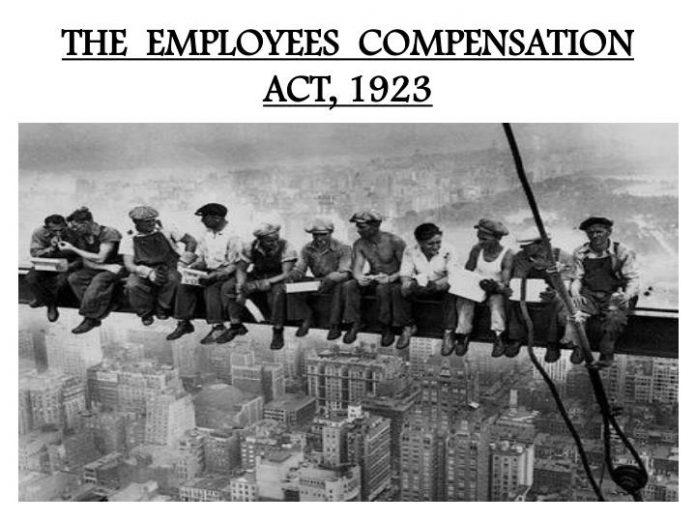
Download Now

Environmental legislation

0
Criminal laws for Environment

This article is written by J Jerusha Melanie, a student of SRM School of Law, Tamil Nadu. This article seeks to exhaustively explain the meaning, importance, principles, and components of environmental legislation. It also provides a brief account of various Indian and international environmental legislations. 

It has been published by Rachit Garg.

Introduction

The environment consists of the air we breathe, the plants and animals around us, the land on which we stand, the water that quenches the earth’s needs, and much more. It is everything that surrounds us. Hence, it probably isn’t wrong to say that we humans are nothing without a protected environment. However, as we know, pollution in recent times is taking a toll on the environment. As we look around, the failure to protect the environment is evidently retaliating against us in the form of deadly diseases and unfavourable living conditions. To prevent the environment from falling apart further, the government takes measures in the form of environmental legislation. Let’s get to know all about it. 

What is Environmental Legislation 

Environment legislation is the collection of laws promulgated to specifically govern various aspects of the environment like air, water, forest, wildlife, etc. 

The French L’ordonnance des Eaux et Forets or the Ordonnance et Forest passed during King Lous XIV’s reign under the direction of Jean-Baptiste Colbert in 1669 is one of the earliest known environmental legislations. The King passed it as a preventative measure against widespread exploitation of French forests, which was feared to impact warship construction. 

Environmental legislation may be either national or international. National environmental legislations are in the form of Acts, Rules, Regulations, etc. In the international arena, it is concise in Conventions, Treaties, Protocols, etc. 

Components of Environmental Legislation

The component-specific promulgation of laws is important to identify and tackle specific issues to the environment. Unspecific laws are vague, hence raising confusion and letting environmental offenders escape through legislative loopholes. There are various components based on which any environmental legislation is framed; the components are as follows: 

  1. Food management

Food is one of the necessities of living. In the absence of a legally regulated system, the production and management of food may go haywire. Mismanagement of food may result in catastrophic effects on the food sustainability in the country. Food-related environmental legislation (often called “food laws”), regulates the harvest, storage, trade, and distribution of food. Such legislation is also required to establish minimum safety standards relating to varied aspects of food management. 

The Food Safety and Standards Act, 2006 (FSSA) is the key food-management law in India, laying down various scientific standards for food articles regarding its production, storage, distribution, sale, etc. It established the Food Safety and Standards Authority of India (FSSAI), an autonomous statutory body function under the Ministry of Health & Family Welfare, Government of India. The FSSAI strives to implement the FSSA in the best possible manner. 

  1. Waste management

Waste management is the process by which the waste generated by various sources like households and industries is managed, from its genesis to removal from the environment. It involves garbage collection, segregation, transportation, storage, and processing. Based on the ability to naturally break down, waste is classified as biodegradable and non-biodegradable. Unattended non-biodegradable wastes remain in the ecosystem for a prolonged period, causing serious damage to the environment. So, it is pertinent that the government come up with robust waste management laws to systemise waste generation and disposal. 

Most waste management legislation supports the ‘3 R’s’ concept representing “Reduce, Reuse, Recycle”. Various other legislation also aims to create waste management awareness among citizens.  

In India, waste management is governed by the Ministry of Environment, Forest and Climate Change. The major waste management legislation in India includes the Hazardous Wastes (Management, Handling, and Transboundary Movement) Rules, 2008, E-Waste (Management and Handling) Rules, 2011, and Plastic Waste (Management & Handling) Rules, 2011, among others.

  1. Water reserve

Water, the elixir of life, is as important for non-consumption purposes like irrigation as it is for internal consumption. Though it is a renewable resource, the rising climate change phenomena have disturbed the desired pattern and amount of rainfall. So, the water reservation and distribution is one of the key areas addressed by environmental legislation, to ensure it is available to satisfy the present and future needs of every citizen. Facilitating the availability of adequate contamination-free potable water is also crucial in preventing the spread of water-borne diseases. Establishing a proper water drainage system is another aspect dealt with by water-related legislation. The Water (Prevention and Control of Pollution) Act, 1974 is one of the prime water-related legislation in India. 

  1. Pollution control

The rise of pollution in recent times has pushed governments to rapidly promulgate effective national pollution control legislation. Generally, such legislation focuses on aspects like effluents or emission control, the use of environment-friendly materials, etc. 

  1. Mining

Mining affects both the present and the future generations since underground-occurring minerals and coal are non-renewable resources. So, stringent mining-related environmental legislation is required to not just achieve sustainable development but also control pollution. The key mining legislation in India is the Mines and Minerals (Development and Regulations) Act, 1975.   

  1. Flora and fauna

Environmental legislation governing the flora and fauna has economic, cultural, recreational, and ethical importance. Nevertheless, its significance to the ecosystem supersedes everything else. Robust wildlife and forest protection legislation aims to safeguard the natural habitat of the wildlife by maintaining the forest cover, creating protected areas, and restricting unwarranted human activities within it. The Wildlife Protection Act, 1972 and Forest (Conservation) Act, 1981 are two of the prime environmental legislation for wildlife and forest in India. 

new legal draft

Need and importance of Environmental Legislation

The basic reason why we need environmental legislation is that our reckless activities are inversely affecting the environment we live in. Looking around, it is no secret that pollution is on a high rise. The more we are industrially developing the more we are hurting the environment. The hurt environment is in turn harming us, humans. 

Look at the following statistics. The per capita carbon dioxide emission in India has mounted from 0.39 metric tons in 1970 to 1.87 metric tons in 2019. Methane emissions in India have increased almost 30% since the 1990s; similarly, nitrous oxide emissions have grown by more than 40% since 2000. At the same time, the number of deaths attributable to air pollution in India has risen from 1.33 million in 1990 to 1.66 million in 2019. That’s just a tiny instance of the impact of our environment-degrading activities on ourselves. 

The life of human beings depends upon ecological balance and environmental protection. Any environmental destruction directly or indirectly affects us. Unless the rate at which our environment deteriorating activities is reduced, the consequences are going to be severe, enormous, and irreversible. 

This is why stringent checks and regulations are needed on human activities that may affect the environment even slightly. Environmental legislation aims to do exactly the same. It is vital to restrict citizens from doing certain environment-harming activities and punish the ones who irresponsibly violate the restrictions. 

Principles of Environmental Legislation

Most environmental legislations are drafted based on the six general principles of environmental law as elucidated below: 

  1. Polluter Pays Principle

This Principle is also popularly called ‘Extended Producer Responsibility’. As the name suggests, it means the one who pollutes must be held liable to reverse it. It was first described by Thomas Lindhqvist for the Swedish Government in 1990 and then popularised by the Organisation for Economic Co-operation and Development (OECD). OECD defined the principle as, “a concept where manufacturers and importers of products should bear a significant degree of responsibility for the environmental impacts of their products throughout the product life-cycle, including upstream impacts inherent in the selection of materials for the products, impacts from manufacturers’ production processes itself, and downstream impacts from the use and disposal of the products.” 

The Polluter Pays Principle holds the polluter liable to pay both the damages for the pollution caused and the cost of reversing or repairing it. 

In India, the principle was initially defined and applied in the case of Indian Council of Enviro-Legal Action v. Union of India (1996). In this case, the consequences of the effluents released from the chemical industries situated within the limits of a tiny village named Bichhri village in Rajasthan were contended. Defining the Polluter Pays Principle, the Court held,  “The polluter pays principle demands that the financial costs of preventing or remedying damage caused by pollution should lie with the undertakings which cause the pollution, or produce the goods which cause the pollution.” The Respondents, in this case, were ultimately directed to pay for the remedial measures required to clean the affected areas. 

  1. Public Trust Doctrine

The Public Trust Doctrine was developed by the ancient Roman Empire. It states that certain resources like rivers, air, seashore, forests, etc. are reserved exclusively for public use, and that the state is required to maintain them for the reasonable use of the public. Such resources must not be subject to private ownership, as they are ‘gifts of nature and equally important to all the citizens. 

The doctrine primarily establishes that the state is the trustee and the citizens are the principles of the public resources. As trustees, the state must protect the resources for the enjoyment of the general public rather than authorise their use for private ownership or commercial purposes. 

The doctrine imposes the following three types of restrictions on the state: 

  • The property must not only be used for a public purpose, but it must also be available for use by the general public; 
    • The property must not be sold, even for fair cash equivalent, and
    • The property must be maintained for particular kinds of uses, such as navigation, recreation, fishery, etc. 

One of the classic examples of the doctrine in the case of M.C. Mehta v. Kamal Nath (1996). This case became the precedent for the application of the Public Trust Doctrine in India. In this case, the then Minister of Environment and Forests, Kamal Nath had leased to and allowed Span Motels Pvt. Ltd., a company with which he had personal ties, to encroach a forest land near River Beas. The encroachment was meant for an ambitious project named Span Club. The construction activities near the riverside caused devastating floods and loss of ₹ 105 crores. Declaring Kamal Nath’s action as a violation of the Public Trust Doctrine, the Supreme Court held that the Himachal Pradesh Government committed patent breach of public trust by leasing the ecologically fragile land to the Motel management. The impugned lease was cancelled and set aside. Further, the Court also held that the Public Trust Doctrine is a part of the law of the land.  

  1. Precautionary Principle

This Principle provides that as a preventative measure, any developmental activity must be stopped and prevented if it causes or appears to cause any irreversible damage to the environment. It also states that the state must strive to anticipate, prevent, and find an alternative method to do the developmental activity that may cause environmental damage. Further, the principle lays the onus of proof on the developer to prove that the developmental activity is not detrimental to the environment in any possible way. 

The Precautionary Principle was held as a part of the states’ environmental law in the case of Vellore Citizens’ Forum v. Union of India (1996) the release of untreated effluents from tanneries into agricultural fields, waterways, etc. was questioned. Applying the Precautionary Principle, the Supreme Court ordered the closure of the tanneries till the setting up of required pollution control devices.

  1. The Doctrine of Intergenerational Equity

This Doctrine provides that the present generation has a moral obligation to manage the earth and the resources on it in a way that will not endanger the aesthetic and economic welfare of future generations. It emphasises that both the present and the future generations of humans hold the earth in common. 

The Doctrine of Intergenerational Equity concerning environmental law gained much momentum in the Filipino case of Oposa v. Factoran Minors Oposa (1993), wherein it was held that the present generation can file a class suit for or on behalf of the future generations.

  1. Sustainable development 

Sustainable development refers to the act of satisfying the developmental needs without utilising or degrading the natural resources more than what is required. It was defined in the Brundtland Report released by the United Nations in 1987 in the following way: “Sustainable Development is a development that meets the needs of the present without compromising the ability of future generations to meet their own needs”. The principle restricts the over-exploitation of natural resources. 

  1. Principle of Strict Liability

The Principle of Strict Liability, in environmental law, refers to the liability of any person keeping hazardous substances on his premises if such substances escape from his premises and cause any harm or damage. 

However, the liable person may exit from his liability by citing any of the following exceptions: 

  • Plaintiff’s fault;
  • Act of God;
  • Act of a third party, or
  • Consent of the plaintiff. 

This Principle was introduced in the landmark case of Rylands v. Fletcher [3 H.L. 330 (1868)]. 

Constitutional provisions on Environmental Legislation in India

Initially, the Constitution of India contained no specific provisions for environmental safeguards. Nevertheless, the 42nd Constitutional (Amendment) Act, 1976 introduced various environmental law-specific constitutional provisions. These provisions are divided among the parts of Fundamental Rights, Fundamental Duties, Directive Principles of State Policy, and the Seventh Schedule of the Constitution of India, as explained below; 

  1. Article 21 of the Constitution of India

Article 21 of the Constitution of India deals with the Right of Life of citizens. It provides that “no person shall be deprived of his life or personal liberty except according to procedure established by law”. 

In the landmark case of Maneka Gandhi v. Union of India (1978), it was held that the fundamental right to live in a healthy environment is enshrined in Article 21 of the Constitution of India. 

  1. Article 48A of the Constitution of India

Article 48A of the Constitution of India was introduced by the 42nd Constitution (Amendment) Act 1976 as a Directive Principle of State Policy (DPSP). It states that The State shall endeavour to protect and improve the environment and to safeguard the forests and wildlife of the country”. 

  1. Article 51A(g) of the Constitution of India

Article 51A(g) of the Constitution of India imposes the Fundamental Duty on citizens to protect and improve the natural environment including forests, lakes, rivers and wildlife, and to have compassion for living creatures”. 

  1. Article 246 of the Constitution of India

Article 246 of the Constitution of India provides the 7th Schedule, under which there are three Lists, namely the Union List, State List, and Concurrent List. These Lists contain the subject matters on which the Union, state, or both governments have the exclusive powers to make laws respectively. Certain environmental legislative powers are under all the three Lists as enumerated below: 

  1. List I- Union
    1. Entry 52: Industries, the control of which by the Union is declared by Parliament by law to be expedient in the public interest
    2. Entry 53: Oilfields, mineral oil resources, petroleum and petroleum products, and other liquids and substances declared by Parliament by law to be dangerously inflammable.
    3. Entry 54:  Mines and mineral development to the extent to which such regulation and development under the control of the Union are declared by Parliament by law to be expedient in the public interest.
    4. Entry 55: Labour and safety in mines and oilfields.
    5. Entry 57: Fishing and fisheries beyond territorial waters. 
  2. List II- State
    1. Entry 6:  Public health and sanitation; hospitals and dispensaries.
    2. Entry 14: Agriculture, including agricultural education and research, protection against pests and prevention of plant diseases.
    3. Entry 18:  Land (rights in or over land, land tenures including the relation of landlord and tenant, and the collection of rents), transfer and alienation of agricultural land, land improvement, agricultural loans,  colonisation.
    4. Entry 21: Fisheries.
    5. Entry 23: Mines and mineral development (subject to the provisions of List I concerning regulation and development under the control of the Union).
    6. Entry 25: Gas and gas works.
  3. List III- Concurrent 
    1. Entry 17A: Forests.
    2. Entry 20A: Population control and family planning.

Environmental Legislation in India

Laws about the environment existed in India for a very long time. However, those laws were quite simple, owing to the environmental awareness of people. Modern-day environmental legislation is centred more around regulating the practices affecting the environment than creating environmental awareness. 

The following are a few of the environmental legislations in British and post-Independence India:

  1. British India
    1. The Shore Nuisance (Bombay and Kolaba) Act, 1853
  • The Act is the earliest legislation on water pollution in India;
  • It aimed to regulate the discharge of industrial waste into the coasts of Bombay and Colaba.
  1. The Indian Fisheries Act, 1897
  • The Act aimed to prohibit the usage of poison and explosives to kill fish. 
  1. The Indian Forest Act, 1927
  • This Act was legislated for the British to get unrestricted timber to satisfy their developmental needs;
  • It classified forests into reserved forests, protected forests, and village forests.  
  1. Post-Independence India
    1. General 
      1. The Environment (Protection) Act, 1986
  • The Act aims to be comprehensive legislation for the protection and development of the environment;
  • It was introduced following the United Nations Conference on the Human Environment held in Stockholm in 1972;
  • It gives powers to the Central Government to establish authorities to tackle specific environmental issues in the country.
  1. Hazardous Waste (Management and Handling) Rules, 1989
  • It regulates the generation, transport, storage, treatment, disposal, and transport of hazardous waste in India; 
  • It also prohibits the cross-border transportation of hazardous waste.
  1. The Air (Prevention and Control of Pollution) Act, 1981
  • The Act aims to monitor and reduce air pollution in India by establishing regulatory boards at various levels.
  1. The Public Liability Insurance Act, 1991
  • The Act mandates insurance to provide quick relief to anybody affected while handling any hazardous substance. 
  1. The National Environment Tribunals Act, 1995
  • Various environment tribunals were established under this Act for the speedy disposal of environmental cases. 
  1. The Biodiversity Act, 2002
  • This Act provides for equitable benefit sharing from the utilisation of traditional knowledge;
  • It emphasises the involvement of local communities in sustainable development and the protection of biodiversity. 
  1. Forest and Wildlife
    1. The Wildlife Protection Act, 1972
  • It provides for the formation of advisory boards at various levels; 
  • It enlists various species under six schedules, depending on the degree of protection required;
  • It provides five types of protected areas: Sanctuaries, National Parks, Conservation Reserves, Community Reserves, and Tiger Reserves.
  1. The Forest (Conservation) Act, 1980
  • It aims to the forest cover, and the flora-fauna of the country; 
  • It prohibits the conversion of forests into agricultural or grazing land. 
  1. Water 
    1. The Water (Prevention and Control of Pollution) Act, 1974
  • It aims to control and prevent water pollution;
  • It establishes pollution control boards at various levels.
  1. The Coastal Regulation Zone Notification, 1991
  • The Notification was issued under the Environment (Protection) Act, 1986
  • It categorises Coastal Regulation Zones and imposes specific restrictions on them.
  1. Air  
    1. The Air (Prevention and Control of Pollution) Rules, 1982
  • The Act aims to prevent and control air pollution in India by setting up regulatory boards at various levels;
  • It also provides for the declaration of ‘air pollution areas’ for specific air pollution control. 

International Environmental Legislations

Environmental issues do not know boundaries. These issues do not just concern a particular country; its impact has a domino effect on first, the neighbouring countries, and then, the entire earth. The transboundary influence of environmental problems makes it imperative for all the nations to join hands to agree upon common solutions and implement them in their respective states. This is done through international environmental conventions, treaties, and protocols. A few of the important international environmental legislations are explained below. 

  1. Declaration of the United Nations Conference on the Human Environment (1972)

The Declaration of the United Nations Conference on the Human Environment (1972) is also called the Stockholm Declaration. Being the first UN declaration on the international environment, it is also sometimes referred to as the Magna Carta on the human environment. It aimed to put forward the importance of environmental preservation and make nations take initiative for it.  

It has 26 principles dealing with specific aspects like sustainable development, preventative measures, international cooperation, national environmental policy-making, etc. 

The Stockholm Declaration laid the foundations of subsequent international environmental legislations like the Convention on International Trade in Endangered Species of Wild Flora and Fauna, 1973. 

As a result of being a participant in the Stockholm Declaration, the Indian government passed various environmental legislation like the Water (Prevention and Control of Pollution) Act, 1974, the Environment (Protection) Act, 1986, etc. 

  1. Rio Declaration on Environment and Development (1992)

The Rio Declaration on Environment and Development, or the Rio Declaration, is also known as the Earth Summit. It was adopted at the United Nations Conference on Environment and Development (UNCED) in 1992. 

It has 27 principles dealing with various rights and obligations of member States regarding sustainable development and environmental preservation. It underlined the need for sustainable development in all countries, irrespective of the level of development they are at. It also established the concept of intergenerational equity concerning the environment.    

  1. Kyoto Protocol (1997)

The Kyoto Protocol to the United Nations Framework Convention on Climate Change, or the Kyoto Protocol, was adopted aiming to reduce greenhouse gases emission in 41 countries along with the European Union. The goal was to reduce the levels of carbon dioxide (CO2), methane (CH4), nitrous oxide (N2O), perfluorocarbons (PFCs), hydrofluorocarbons (HCFs), and sulfur hexafluoride (SF6) 5.2% below to 1990 levels during the commitment period of 2008-2012. The principle of “common but differentiated responsibilities” was the basis of the Kyoto Protocol. 

This Protocol was adopted for a second commitment period (2013-2020) by the Doha Amendment, held in Doha, Qatar, in 2012.  

Conclusion

The environment is the basis of our survival. Every harm that we do to it hits us back like a boomerang. Environmental protection is strictly the need of the hour. Countries must resolve to make their environmental legislation loophole-free, not to mention the pressing need to efficiently enforce the laws. Nevertheless, no legislation can be effective if we, the citizens, fail to do our part. Let’s be responsible citizens for the nation and strive to protect the environment by adopting a sustainable lifestyle. After all, shouldn’t we be the guardians of our home, the earth?  

Frequently Asked Questions (FAQs)

  1. Where was ‘Sustainable Development’ defined for the first time? 
  • The Brundtland Report
  1. What is Agenda 21? 
  • It is a non-binding action plan for sustainable development released by the United Nations in 1992, as an outcome of the Rio Declaration. 

References 

  1. https://www.nios.ac.in/media/documents/333courseE/23.pdf
  2. https://www.mondaq.com/india/waste-management/624836/environment-laws-in-india
  3. https://www.conserve-energy-future.com/environmental-law-and-its-components.php
  4. International Law and Environmental Protection | Law column
  5. Kyoto Protocol | History, Provisions, & Facts | Britannica
  6. Everything you need to know about the Stockholm Declaration – iPleaders
  7. The concept of polluter pays and its potential in India – iPleaders
  8. History of Environmental Law – Law Times Journal
  9. S7.pdf (mea.gov.in) 

Students of Lawsikho courses regularly produce writing assignments and work on practical exercises as a part of their coursework and develop themselves in real-life practical skills.

LawSikho has created a telegram group for exchanging legal knowledge, referrals, and various opportunities. You can click on this link and join:

https://t.me/lawyerscommunity

Follow us on Instagram and subscribe to our YouTube channel for more amazing legal content.

Download Now

Civil Rights Movement

0
Famous cases

This article is written by J Jerusha Melanie, a student of SRM School of Law, Tamil Nadu. This article presents an exhaustive elucidation of the history and the outcome of the Civil Rights Movement in USA.

It has been published by Rachit Garg.

Introduction

Discrimination promotes hatred. Hatred kindles anger. Anger leads to resistance. Resistance often paves the way for liberation. It is the hope of being free of discrimination that makes people protest. The Civil Rights Movement in the United States of America is one of its classic examples. It is a story of how a multitude of people from various races fought their way to break free from the clutches of racial and colour-based discrimination and got their civil rights acknowledged by the world. Let’s dive into the story. 

What was the Civil Rights Movement 

In short, the US Civil Rights Movement was a widespread campaign against racial discrimination and slavery of African Americans in the 1950s and 1960s. Following the American Civil War (1861–1865), the Fourteenth (1868)  and Fifteenth Amendments (1870) to the Constitution of the United States (1787) technically granted them certain fundamental civil rights and blanket protection from slavery. However, their struggle to ensure federal protection of the rights continued, until it gained powerful momentum in the 1950s. 

History of the Civil Rights Movement in USA

The genesis

The genesis of this Movement dates back to 1787 when the Constitution of the US was adopted. Though it sought to vest everyone with equal rights, it gave no civil rights like the right to life or liberty to the enslaved African Americans. Voting rights were restricted to the property-owning white males; further, other civil rights like the right to own land were often denied based on race and gender. 

The so-called ‘free Blacks,’ who were the small portion of non-slave African Americans, were often subjects of racial discrimination and segregation. The enslaved African Americans often resolved to resist their oppression through minor, non-violent protests and petitions to the government. However, there was a long way to go for substantial improvements in their social status in the US. 

The demand for voting rights

new legal draft

The first half of the Nineteenth century saw widespread movements to expand voting rights to non-property-owning white males. This fueled African Americans to demand their voting rights as well. The demands were projected in the form of massive slave rebellions. Nevertheless, they were shut down by various oppressive laws. For instance, the Nat Turner Slave Revolt of 1831 was suppressed by passing laws prohibiting the education, movement, and assembly of slaves. 

In the 1830s, despite the attempts to suppress anti-slavery activities, a substantial number of African-Americans had freed themselves from the clutches of their masters. The freed slaves, along with a few whites who supported anti-slavery sentiments, formed the American Anti-Slavery Society under the leadership of William Lloyd Garrison in 1833. 

The denial of citizenship claims

Unfortunately, the pro-black American protests met a severe setback in 1857. The Supreme Court of the US rejected the African American citizenship claims in the landmark case of Dred Scott v. John F.A. Sandford (1857). Further, it declared unconstitutional the Missouri Compromise (1820), which had proclaimed free all the people residing in the territories West of Missouri and North of latitude 36°30′. 

The American Civil War (1865-70)

Meanwhile, the anti-slavery proponent Abraham Lincoln became President of the US in 1861. This prompted 11 Southern pro-slavery states to secede from the Union and form the Confederate States of America (also known as the Confederacy) in 1860-61. The attempt to secede was strongly condemned by President Lincoln. He called the seceding states to either return to the Union or have their slaves set free. None of the states returned. So, President Lincoln issued the Emancipation Proclamation in 1863. What followed the Proclamation was arguably one of the bloodiest wars in American history- the American Civil War (1861-65). The War witnessed the defeat of the Confederacy and the invalidation of the secession. 

The Reconstruction period (1865-70)

Following President Lincoln’s victory, the US witnessed the long-awaited reconstruction period. It was during this period that the Constitution of the US experienced various amendments called the Reconstruction Amendments to abolish slavery and grant certain civil rights to former slaves. These amendments were:

  • Thirteenth Amendment (1865): It abolished slavery and involuntary servitude, except as a criminal punishment.  
  • Fourteenth Amendment (1868): It granted citizenship and equal civil and legal rights to African Americans and former slaves. 
  • Fifteenth Amendment (1870): It guaranteed citizens the right to vote, irrespective of race, colour, or previous servitude. 

Nevertheless, the Amendments barely helped the slaves in the Confederate states, as the white leaders of the region enacted new laws to bring back racial segregation and discrimination. Also, in the infamous landmark case of Plessy v. Ferguson (1896), the Supreme Court of the US held that “separate but equal” facilities for African Americans did not violate the Fourteenth Amendment. The decision was widely condemned as there was ample evidence showing that the facilities provided to African Americans were inferior to those provided to Whites. So, the movements against racial and gender discrimination feebly continued till the early twentieth century. 

The rise of resistance

Anti-discriminatory movements gained momentum during the early twentieth century. For instance, a Harvard University graduate and scholar, W.E.B. Du Bois formed the National Association for the Advancement of Colored People (NAACP) in 1909 along with various African American leaders. The NAACP worked and continues to work to eradicate colour-based segregation and discrimination by instituting lawsuits and publicizing incidents of racial prejudice. 

One of the prominent cases instituted by the NAACP is the case of Brown v. Board of Education (1951). In this case, the segregation of schools based on colour was challenged. Rejecting its own decision given in the Plessy v. Ferguson case, the Supreme Court of the US unanimously rules that racial segregation in public schools violates the Fourteenth Amendment of the Constitution of the US. It condemned the act of providing separate facilities for Whites and African Americans. This case arguably laid the foundation for the Civil Rights Movement. The series of events that followed this case constitute the US Civil Rights Movement. 

Key events of the Civil Rights Movement in USA

Montgomery Bus Boycott (1955)

The Montgomery bus boycott was a mass agitation against the bus system of Montgomery, Alabama. The event kickstarted when Rosa Parks, an African American woman, was jailed for refusing to give her bus seat to a White passenger. The refusal violated the local laws, which stated that African American passengers must be seated in the back, while Whites sat on the front seats.  

What followed was a massive 381-day bus boycott organized by a newly formed Montgomery Improvement Association (MIA). The boycott resulted in Reverend Dr Martin Luther King Jr. being chosen as the head of the MIA. He soon became the face of the US Civil Rights Movement. His way of agitation was influenced by the Gandhian concepts of nonviolent resistance.

The boycott went on till 1956 when the Supreme Court of the US held the segregated bus system a violation of the Fourteenth Amendment of the Constitution of the US. 

Greensboro sit-in (1960)

The Greensboro sit-in was another non-violent protest against the system of segregated lunch counters in Greensboro, North Carolina. The sit-in was demonstrated by four students of the North Carolina Agricultural and Technical State University and organized by the Congress for Racial Equality. After buying certain merchandise, they sat at a general merchandise store, Woolworth’s dining area, and requested service at the counter. However, their orders were refused by the waitstaff as the lunch counter was meant for the whites alone. The police arrived at the counter upon the call of the manager; however, they declared themselves helpless to take action as the four students were paying customers. The incident was instantly publicized by the media persons, who timely arrived on the spot upon the intimation of an anti-racist white local businessman named Ralph Johns. 

The extensive media coverage resulted in the heavy condemnation of segregation, expressed through the widespread non-violent sit-ins demonstrated by thousands of students all over the country. The demonstrations turned out to be quite a success, as the segregated lunch counter system was completely abolished in Woolworths within months.

The Freedom Rides (1961)

The Freedom Rides were the bus journeys embarked on by anti-segregation activists to test the effectiveness of the US Supreme Court’s ban on interstate bus travel imposed in 1946. Their occupation of the “Whites only” seats led them to face extreme violence; the riders were beaten and buses were set on fire in South Carolina and Alabama. The Freedom Rides continued until US Attorney General Robert F. Kennedy ordered the Interstate Commerce Commission to stricter enforcement of the segregation ban.  

March on Washington for jobs and freedom (1963)

The March on Washington was a peaceful political protest held in Washington, D.C. by various civil rights activists against racial discrimination in matters relating to employment. It also non-violently pressurized the President John F. Kennedy-led federal government to pass the proposed civil rights legislation. The march attracted over 2.00,000 protesters and was led by Martin Luther King Jr. himself. It was during this march that he gave his famous speech “I Have a Dream” to intensify the morale of the protesters. 

The Birmingham Campaign (1963)

The Birmingham campaign was a non-violent protest by the Southern Christian Leadership Conference (SCLC). The campaign led by Martin Luther King Jr. and the local black leaders in Alabama aimed to bring national attention to the segregated public facilities in Birmingham. The protesters tried to peacefully attack the system of segregation by demonstrating sit-ins at libraries and lunch counters, kneel-ins at churches, etc. The demonstrators also boycotted a few businesses that hired only the White and maintained segregated toilets. 

After turning the peaceful protest into an intense confrontation between the protesters and the local police, the local government obtained an injunction order from the state court against the protesters. Nevertheless, the protesters disobeyed the order and continued the campaign. 

This led to King being arrested and imprisoned. It was during this imprisonment that King penned the notable “Letter from Birmingham Jail” on the margins of a newspaper. The letter was his response to a statement published by eight clergymen in Birmingham against the protesters. The campaign was called off by the demonstrators as a result of a compromise between them and the local government. 

Freedom Summer Project (1964)

Freedom Summer was a peaceful project organized by the Student Nonviolent Coordinating Committee (SNCC) and the Congress of Racial Equality (CORE) to boost  African American voters in Mississippi. The project involved the forming of Freedom Schools to educate African Americans on history and politics. 

Poor People’s Campaign (1968)

The Poor People’s Campaign was another nonviolent effort to get economic justice for the economically backward people in the US, irrespective of their race or colour. It was organized by Martin Luther King Jr. and the SCLC. The protestors set up various protest camps on the Washington Mall and stayed there for six weeks. Different from the previous campaigns, the Poor People’s Campaign was focused on improving the civil rights of people of all races in the US, not just African Americans. Unfortunately, King was assassinated during this campaign, on April 4, 1968. 

Result of the Civil Rights Movement in USA

After decades of struggle, the immediate and most notable effect of the US civil rights movement was the signing of the following laws: 

The Civil Rights Act of 1964

In a nutshell, the Civil Rights Act (1964) was what the racially discriminated and segregated people in the US hoped for since the beginning of the Civil Rights Movement. It was the prime civil rights legislation in the US. It was proposed by President John F. Kennedy in 1963 and signed by President Lyndon B. Johnson on July 2, 1964. 

The Act aimed to finish off discrimination and segregation on the basis of race, sex, religion, colour, or national origin. It provided equal access to public places and employment-related matters. It empowered federal law enforcement agencies to prevent racial discrimination. 

The signing of the Civil Rights Act was a huge challenge to the government, pro-segregation leaders opposed the integration of African Americans. Also, the constitutionality of the Act was challenged and upheld by the Supreme Court of the US in the case of Heart of Atlanta Motel v. U.S. (1964). 

The Voting Rights Act of 1965

The Voting Rights Act of 1965 aimed to safeguard the citizens of the US against racial discrimination in voting. It was signed by President Lyndon. The Act prohibits the state and local governments from imposing any rules that may deny the voting rights of any citizen on the basis of colour, race, etc.  

The Fair Housing Act, 1968

The Fair Housing Act of 1968 aims to prohibit the discrimination of people on the basis of race, colour, religion, etc. in matters relating to housing. It criminalises the refusal to rent, mortgage, or sell housing on the basis of various discriminatory parameters. The Act was signed by President Lyndon. 

Timeline of the Civil Rights Movement inUSA

The following is a brief timeline of the US Civil Rights Movement: 

  • 1831 – Nat Turner slave revolt
  • 1857 – In the case of Dred Scott v. John F.A. Sandford, the Supreme Court of the US rejected the African American citizenship claims.
  • 1861 –  Abraham Lincoln became the 16th President of the US
  • 1860 – 61- the Secession of the Confederacy 
  • 1863 – Issue of Emancipation Proclamation by President Lincoln
  • 1961 – 65 – the American Civil War
  • 1865 – 70 – the Reconstruction Period
  • 1865 – the Thirteenth Amendment 
  • 1865 – the assassination of President Abraham Lincoln
  • 1868 – the Fourteenth Amendment 
  • 1870 – the Fifteenth Amendment  
  • 1896 – In the case of Plessy v. Ferguson, the Supreme Court of the US held that “separate but equal” facilities for African Americans did not violate the Fourteenth Amendment. 
  • 1951- In the case of Brown v. Board of Education, the Supreme Court of the US unanimously held that racial segregation in public schools violates the Fourteenth Amendment.
  • 1955 – Montgomery Bus Boycott
  • 1960 – Greensboro sit-in
  • 1961- Freedom Rides
  • 1963 – March on Washington for jobs and freedom
  • 1963 – Birmingham Campaign
  • 1963 – The assassination of President John F. Kennedy 
  • 1964 – Freedom Summer Project 
  • 1964 – Lyndon B. Johnson became the 36th President of the US
  • 1964 – The passing of the Civil Rights Act of 1964
  • 1968 – Poor People’s Campaign
  • 1968 – The assassination of Martin Luther King Jr.
  • 1968 – The passing of the Fair Housing Act of 1968

Objective of and need for the Civil Rights  Movement in USA

Eradicating racial segregation and discrimination was at the heart of the US civil rights movement. Its purpose, in the early stages, was to establish equal civil rights for African Americans. However, as years passed by, the apparent leader of the movement, Martin Luther King Jr. realised that civil rights were denied to various other sections of the people of the US, like women, the economically depressed, and people of different races. The Movement took a sharp turn to focus on all the people whom the US government ignored to safeguard. 

Nevertheless, it is pertinent to note that the US civil rights movement of the 1950s and 1960s was merely an extension of the Africa Americans’ struggle for equal civil rights that began after the adoption of the Constitution of the US. 

Though certain key events like the Montgomery bus boycott kindled it, the failure of the Reconstruction period was the actual spark to the Movement. 

Eminent leaders of the Civil Rights Movement in USA

The following are a few of the renowned leaders of the US Civil Rights Movement. 

Dr Martin Luther King Jr.

King is arguably the face of the US Civil Rights Movement. He was born in 1929 and was a Baptist minister and social activist who led the movement from its beginning in the 1955 Montgomery bus boycott till he breathed his last breath in 1968. He succeeded in boosting the morale of huge gatherings of protestors through his excellent oratory skills, the best example of which is his famous “I Have a Dream” speech in 1963. King’s way of protesting was inspired by the Gandhian principles of nonviolence. His leadership was elemental to the success of the US civil rights movement. Albeit his achievements, he was assassinated while staying at a hotel to support a sanitation workers’ strike in 1968. 

Rosa Parks

Rosa Louise McCauley Parks, or Rosa Parks, was an American seamstress until she became a celebrated civil rights activist after the Montgomery bus boycott. The aftermath of the boycott proved to be a blessing and a curse on her. Though she became a hero among the activists and protestors, she had to lose her job and constantly received death threats. Rosa died of natural causes in 2005, at the age of 92. 

W.E.B. Du Bois

W.E.B. Du Bois was an American author, sociologist, and civil rights activist. He greatly contributed to the US Civil Rights Movement by creating the NAACP which led and continues to work for Americans’ civil rights. He penned the book, The Souls of Black Folks, expressing the evils of the segregation system. 

Mary White Ovington

Mary White Ovington was an American activist who co-founded the NAACP. She combined her civil rights activism with women’s suffrage. She wrote several books about African Americans and their culture. Some of her works include Half a Man (1911), Status of the Negro in the United States (1913), Portraits of Color (1927), etc.  

Thurgood Marshall

Thurgood Marshall was civil rights activist and lawyer who rose to fame after arguing in the landmark case of Brown v. Board of Education (1954) in which the Supreme Court of the US held the concept of “separate but equal” unconstitutional. He initially served as a staff lawyer and then as chief of the Legal Defense and Education Fund in the NAACP. 

Conclusion 

The story of the Civil Rights Movement in the US narrates the struggle and victory of non-violent resistance over brutal discrimination. But even after over four decades, can we say that the movement was completely successful? Looking at the recent happenings in the US, one cannot affirm it. Recent FBI reports show that 29% of the hate crimes committed in the US in the year 2020 were aimed at African Americans. Hardly can anyone forget the heartwrenching murder of George Floyd. 

Has the US civil rights movement achieved its goals? Well, as far as the recognition of African Americans’ civil rights is concerned, the movement has succeeded in laying down various legislation for that. However, brutalities based on race, colour, sex, religion, etc. continue to prevail in the US. 

So, the Movement that originated from Rosa Parks’ resistance virtually ended in the late 1960s, but apparently, there’s a long way before it ends in its truest sense. 

Frequently Asked Questions (FAQs)

  1. What is a ‘Jim Crow’ law? 
  • In the history of the US, any law that supported or encouraged racial segregation in the southern regions between the Reconstruction period and the commencement of the US Civil Rights Movement is called Jim Crow law. 
  1. When did the American civil rights movement end? 
  • It ended in 1968 after the signing of various civil rights legislation.  
  1. What was the American Civil War?
  • The American Civil War was fought between the northern states of the US and 11 southern pro-segregation states (known as the Confederate States of America). The War prolonged from 1861 to 1865.     

References 


Students of Lawsikho courses regularly produce writing assignments and work on practical exercises as a part of their coursework and develop themselves in real-life practical skills.

LawSikho has created a telegram group for exchanging legal knowledge, referrals, and various opportunities. You can click on this link and join:

https://t.me/lawyerscommunity

Follow us on Instagram and subscribe to our YouTube channel for more amazing legal content.

Download Now

Board meetings

0

This article is written by Tejas Pardeshi studying at Indian law society Pune, 2nd year BA.LLB pursuing a Diploma in M&A, Institutional Finance and Investment Laws. This article has been edited by Ojuswi (Associate Lawsikho). 

This article has been published by Sneha Mahawar.

Introduction

In India, if any companies want to enter into a transaction related to a Merger and Acquisition then the company shall fall a specific procedure laid down in The Companies Act 2013 (CA) with adherence to Companies (Compromises, Arrangements, and Amalgamations) Rules, 2016 (CAA). This analysis aims to examine the role of Board meetings and also highlight their relevance during the mergers and acquisitions process.

Merger

When two or more companies come together and combine into one single new company it is known as a Merger. There are four major types of mergers: conglomerate, congeneric, horizontal, and vertical. The companies decided to enter into the merger for reasons such as expanding their reach, expanding into new segments, or gaining market share. 

Acquisition

When a company purchases all or most of the shares to gain control over the company it is known as Acquisition it often happens as major big companies acquire small minor companies such as startups. The acquirer gains control and decision-making power of the acquired company. Companies often acquire another company for reasons such as economies of scale, diversification, greater market share, increased synergy, cost reductions, or new niche offerings. 

The procedure of a board meeting

Before the board meeting

The company needs a few conditions to complete before calling the board of meetings. This part is concerned with what these conditions are as per Section 230(3) of CA 2013 and Rule 6 of Companies CAA Rules, 2016. There is a specific format given for the Notice for calling a meeting which shall be in accordance with Form No. CAA.2. The Notice shall be sent individually to each of the creditors or class of creditors and all members or class of members and the debenture-holders of the company individually at the address registered with the company. 

The notice of the meeting to the creditors and members shall be accompanied by a copy of the scheme of compromise or arrangement and a statement disclosing the following details of the compromise or arrangement, a copy of the valuation report if any, and explaining their effect on creditors, key managerial personnel, promoters, and non-promoter members. In addition, the debenture holders and the effect of the compromise or arrangement on any material interests of the directors of the company or the debenture trustee. The notice shall be sent by the Chairperson appointed for the meeting, or, if the Tribunal so directs, by the company (or its liquidator), or any other person as the Tribunal may direct.

The first step of formatting the notice is done so the company shall send this notice. As per Section 230(3) of CA 2013 notice calling for a meeting to consider the proposal of mergers and or amalgamations should be sent to all the creditors or class of creditors and all the members or class of members and the debenture holders of the company, individually at the address registered with the company. In addition, the Central Government, the Income-Tax authorities, the Reserve Bank of India,  the Securities and Exchange Board of India, the Registrar, and the respective stock exchanges, the Official Liquidator are also to be notified of the same. It is important that notice is sent to the Competition Commission of India, and other sectoral regulators or authorities, which are likely to be affected by the compromise or arrangement. This is specifically said as per Section 232(1) of CA 2013 read with section 230(5) of CA 2013.

Now the registered address of receivers might not be the same or updated in company records so for the information of receivers. The Company shall publish an advertisement for the Board meeting in the Newspaper. It shall be anyone English Newspaper, any vernacular newspaper having wide circulation in the State in which the registered office of the company is situated. Even in some cases, the Tribunal may direct any newspapers. The content of the advertisement shall be the notices in Form No. CAA. 2 of Companies CAA Rules, 2016. It shall specify the time within which copies of the compromise or arrangement shall be made available to the concerned persons free of charge from the registered office of the company. In the case of a listed company, a copy of the notice and other documents shall be placed on the website or sent to SEBI and the stock exchange where the securities of the companies are listed, for placing on their website.

When the notice is ready it needs to be sent as per Rule 6(2) of the Companies CAA Rules 2016, by the chairperson appointed for the meeting. The Chairperson of the meeting shall be a person appointed by the Tribunal; it is not necessarily the Chairman of the company. The powers of the Chairperson would be very similar to the powers of a Chairman of any company meeting. He will decide on issues raised and generally take all decisions for the peaceful and orderly conduct of the meeting. Rule 5(c) of Companies CAA Rules 2016, provides that the Tribunal may decide “fixing the terms of his appointment including remuneration” of the Chairperson.

The notice can be sent through hand delivery, by registered post, speed post, by courier, by hand delivery at the office of the authority, or by electronic means. Detailed information refers to service of notice is in part of Rule 35 of Companies (Incorporation) Rules, 2014.

arbitration

During the board meeting

The meeting starts with a quorum. Although the rules do not specify what constitutes a quorum for the meeting. It is the power given to the Tribunal to decide on sending notice for the meeting to the minimum number of persons present, as required by  Section 103 of CA 2013, which incidentally applies only to a meeting of members and not creditors. This is decided depending upon the number of members or creditors under each of the classes which are required to be given notice. Tribunal is also at the liberty to decide as to when this might not be followed in the interest of justice and fair play. 

Further, the quorum could be different for the different meetings directed to be called, and depending on the persons who are required to attend like members or class of members or creditors or class of creditors. Rule 5(d) of the Companies CAA Rules, 2016, the Tribunal shall give such directions as it may think necessary inter alia in respect of the fixing the quorum. Thus the Tribunal has the power to fix the quorum for a meeting.

The members of the meeting can vote As per Rule 9 of the Companies CAA Rules, 2016 physically, via postal ballot, electronic means or through proxies. The other concern is the procedure for allowing a proxy to a member. Rule 10 of the Companies CAA Rules, 2016, deals with proxy in the context of compromise or arrangement. It provides a few conditions for permission to a proxy. A proxy shall be in the prescribed form duly signed by the person entitled to attend and vote at the meeting. It shall be filed with the company at its registered office not later than 48 hours before the meeting. 

No person shall be appointed as a proxy who is a minor. The proxy of a member or creditor blind or incapable of writing may be accepted if such member or creditor has attached his signature or mark the in the presence of a witness. The proxy of a member or creditor who does not know English may be accepted if it is executed in the manner prescribed in the preceding sub-rule and the witness certifies that it was explained to the member or creditor in the language known to him, and gives the member’s or creditor’s name in English below the signature. The proxy obtained should be proper in law. If these specific conditions are not fulfilled then the proxy can be considered void and uncountable.

The most crucial part of the ongoing meeting who can raise Objections to the merger or amalgamation. Only a  person holding not less than 10% (Ten Percent) of shares of the company is eligible to make an objection. CA 2013 has ensured that flimsy objections by persons holding a few shares cannot object and delay the process of merger or amalgamation. Also, a person who has outstanding debt amounting to not less than five percent of the total outstanding debt as per the latest audited financial statement can object. For objecting the notice is to be sent as per section 230(5) of CA 2013 are required to submit their representations(Objection) to the Tribunal within thirty days from the date of receipt of such notice. In case such authorities fail to make representation within the thirty days, it shall be presumed that they have no representations to make on the proposals.

At the meeting of the creditors or class of creditors or members or class members, if a majority in number representing three-fourths in value of such persons, present and voting agree to the compromise or arrangement contained in the Scheme, then such approved scheme goes to the Tribunal for its approval.

The above said is the standard procedure for the conduct of board meetings during mergers and amalgamation. However, Rule 5(d) of the Companies CAA Rules, 2016, provides the Tribunal has the powers to determine the procedure to be followed at the meeting or meetings, including voting in person or by proxy or by postal ballot, or by voting through electronic means. Thus the meeting will be conducted as per the directions of the Tribunal.

After the board meeting

After the conduct of the board meeting As per Rule 14 of the Companies CAA Rules, 2016. The Chairperson of the meeting (or where there are separate meetings, the Chairperson of each meeting) shall, within the time fixed by the Tribunal, submit a report to the Tribunal on the result of the meeting in Form No. CAA.4. If no time has been fixed, within three days after the conclusion of the meeting, submit a report to the Tribunal on the result of the meeting in Form No. CAA.4.

Conclusion

As the Board of the meeting seems a very small part of the procedure during the merger and acquisition, it plays a crucial part in the procedure. The compliance regarding the Board meeting needs to be done appropriately as laid down in the law so the transaction can be successful. One wrong step can harm the whole transaction, as it is the initial step of the transaction. 

References


Students of Lawsikho courses regularly produce writing assignments and work on practical exercises as a part of their coursework and develop themselves in real-life practical skills.

LawSikho has created a telegram group for exchanging legal knowledge, referrals, and various opportunities. You can click on this link and join:

https://t.me/lawyerscommunity

Follow us on Instagram and subscribe to our YouTube channel for more amazing legal content.

Download Now
logo
FREE & ONLINE 3-Day Bootcamp (LIVE only) on

How Can Experienced Professionals Become Independent Directors

calender
28th, 29th Mar, 2026, 2 - 5pm (IST) &
30th Mar, 2026, 7 - 10pm (IST).
Bootcamp starting in
Days
HRS
MIN
SEC
Abhyuday AgarwalCOO & CO-Founder, LawSikho

Register now

Abhyuday AgarwalCOO & CO-Founder, LawSikho