Download Now
Home Blog Page 290

Section 153 and 153A IPC, 1860

0
Mischief

This article is written by Vedika Goel of OP Jindal Global University, Haryana. This article provides a detailed analysis of Section 153 and 153A of IPC,1860 which attempts to punish those who provoke or spread any form of riots or religious enmity.

It has been published by Rachit Garg.

Introduction

The Constitution of India guarantees certain basic fundamental rights to its citizens. The most instrumental is the right to life, the right to equality and the right to freedom of speech and expression as provided under Article 21, Article 14 and Article 19 respectively. However, it is equally important that such rights are not misused by the citizens. For this particular reason, the legislation has various laws that not only act as safeguards to any potential misuse of these fundamental rights but also ensure harmony among different cultural and ethnic groups. The Indian Penal Code, 1860 (IPC) provides for various provisions in the form of restrictions or penalties. Section 153 and 153A of the IPC strive to punish those who spread any form of religious enmity under the umbrella of the right to freedom of speech and expression. 

This article will discuss the essentials, functions as well as the punishments provided under these provisions along with a detailed analysis of the various judgements that have been passed by the judiciary regarding the scope and nature of Section 153 and 153A IPC.

Hate crimes in India

Hate crimes, as the name suggests, consists of those criminal acts that are solely motivated by bias, hate or discontent towards a particular group or community. The root cause of such hatred is mostly religious, ethnic, and racial differences between different groups. However, hate crime is usually done against a community at large and therefore the outcome of this crime can be grave and extremely destructive. India, also known as the hub for cultural diversity, has groups and communities belonging to various religions, castes, races, creeds and even languages.  India has witnessed religious differences right from partition to the present day. The Godhra riots during partition, Muzaffarnagar riots, Baduria riots in Bengal are clear examples of the presence of hatred, disharmony, and enmity among various religious groups.The rising number of religious riots that India was witnessing made it necessary for the legislation to intervene and bring out certain laws that could criminalise such offences. 

Nature of the offence under Section 153 IPC

Section 153 IPC states that whoever deliberately or wantonly causes or provokes any riot through illegal means and knows that such provocation may cause the offence of rioting is liable to be punished under this provision.The most interesting aspect of this provision is that one cannot escape punishment even if the riot is not committed.This means that it places liability even if the consequence of such provocation does not directly result in rioting. As per Section 1 of the Criminal Procedure Code,1973, an offence can be classified as cognizable and non-cognizable. 

While a cognizable offence allows the police officer to arrest the accused without a warrant, a non-cognizable offence, on the other hand, allows the police officer to do so only after taking the necessary permission from the court. Moreover, cognisable offences mainly pertain to offences of serious nature, and non-cognizable offences usually consist of private wrongs that are less serious in nature. Accordingly, since the offence committed under Section 153 is of a serious nature, it is classified as a cognisable offence wherein the accused can be arrested without a warrant.

new legal draft

Liability under Section 153 IPC

Section 153 IPC prescribes the punishment of this offence in two parts. Firstly, if the provocation results in a riot being committed, the person will be entitled to a punishment of one year or a fine or both. Accordingly, it is considered as a bailable offence and can be tried by any magistrate. Secondly, if the riot is not committed, then the person will be entitled to a  punishment of 6 months or a fine or both. Similar to the first part, the offence is bailable, however, it can be tried only by a magistrate of first class. Therefore, the first step to determining the liability of the person under this provision is to see the outcome of the provocation. Accordingly, once this is determined, the liability under this section can be imposed upon the person.

Case laws under Section 153

To understand the scope and nature of Section 153 IPC, it is important to have a clear understanding of the court’s interpretation of this provision. This section will deal with important cases that have come up before the courts in India under Section 153 IPC.

Aroon Purie v. HL Verma & Anr. (1998)

In this case, the complainant, a practising advocate from Bombay was a devotee of Chatrapati Shivaji, who was believed to be an incarnation of God, who Bombay,was sent to the Earth in order to protect and propagate the “Sanatah Hindu Dharma”. Further, it was alleged that in 1991, a popular magazine called ‘India Today’ had initiated a debate on the topic of ‘secularism’. The debate invited participation from some prominent figures. 

Aroon Purie, the petitioner, chaired the above debate. It was alleged that one of the accused had made some derogatory remarks in the debate that caused a lot of opposition among the supporters of Shivaji. Accordingly, the petitioner argued that such remarks attract the offence committed under Section 153 IPC. The petitioner also argued that it was merely chairing and collating the views expressed by different personalities and thereby had no hand in causing this opposition. 

The Court laid out three essential ingredients of Section 153 IPC as follows:

  1. The act committed must be illegal in nature
  2. Such an illegal act must be done with a mala fide intention
  3. The offence of ‘rioting’ must be the outcome of such an illegal act

Therefore, keeping in mind the essential ingredients of Section 153 IPC, the Court agreed with the contentions of the petitioner and ruled that merely presiding over the debate that is on the subject of ‘secularism’ cannot be deemed as an illegal act. Further, even publishing of the debates by the editor cannot amount to an illegal act. The Court once again reiterated that even though the remarks were malignant, it still cannot attract the offence of Section 153 since publishing of speeches as well as presiding over a speech cannot be considered as an illegal act. Therefore, the judgement is crucial as it places strong emphasis on the crucial ingredients of section 135 IPC. 

Dr. Anbumani Ramadoss v. State of Tamil Nadu (2021)

In this recent case, a statement given by a petitioner had caused communal tension, leading to severe destruction of property. The communal tension had ultimately caused a riot. The statement expressed a certain sense of dissatisfaction with the current government as it had not taken any action on a certain issue.The court ruled in favour of the petitioner and held that merely expressing dissent with the government for not taking necessary measures on certain elements does not mean that the person who makes such a statement intends to provoke or cause a riot among the communities.Therefore, this recent judgement once again reiterates the nature as well as the scope of Section 153 IPC.

Section 153A of IPC 

Section 153A IPC attempts to punish those who engage in promoting any kind of enmity among different groups on the basis of religion, caste, race, place of birth or residence, or even language. The provision puts a liability on those who-

  1. Spread enmity in the form of words (spoken or written), visual representations, and signs with the intention of causing disharmony, hatred or disturbance among people belonging to different groups, religions, castes or communities.
  2. Spread disharmony and disturb the public tranquillity of the people belonging to different racial and religious groups.
  3. Aid in the organising of certain movements, drills that encourage as well as train the participants of such movements to use criminal force and violence upon people belonging to other racial and religious groups and communities.

Nature of Section 153A

Since Section 153A imposes criminal liability upon those who spread enmity and disharmony between different groups of people through words, statements, and even through violence or criminal force, the offence made out under this section is undoubtedly grave and of a serious nature.  Accordingly, the offence committed under Section 153A is a cognisable offence, thereby allowing the police officers to arrest the accused without a warrant. Further, the offence is non-bailable in nature wherein the accused is tried by the magistrate of the first class.

Section 153A and Section 295A IPC

While Section 153A IPC was added during the British era itself, the legislation also introduced Section 295A IPC by the Criminal Law Amendment Act,1927 to broaden the scope of such offences. It is important to note that Section 295A and Section 153A go hand in hand. This means that the two provisions interact with each other and the offences enlisted under these sections are interlinked. 

Section 295A states that those who insult or attempt to insult any religious sentiments of any particular group by way of gestures or words are liable to be punished under this offence. 

The only difference between the two sections is that while Section 295A criminalises those who offend or insult any religious group or a religion, Section 153A IPC, on the other hand, criminalises creating enmity between two different groups and not just within a single group as in the case of Section 295A IPC.

Essentials of Section 153A of IPC

In order to understand the essential ingredients of Section 153A IPC, it becomes necessary to carve out some important case laws that sketch the ingredients of Section 153A IPC.

Ramji Lal Modi v. State of UP (1957)

In this case, the Court clarified that to constitute an offence under Section 135A, the statements, words, or actions  must be malfide and cannot be unintentional. Therefore, mens rea is an essential ingredient of Section 153A IPC. Further, in the case of Manzar Sayeed Khan v. State of Maharashtra, the Court reiterated and held that the prosecution must prima facie establish that the accused had the mens rea to cause enmity between different classes of people.

Azizul Haq Kausar Naqwi v. State of Uttar Pradesh (1980)

Additionally, the judgement of the Allahabad High Court, in this case, made it clear that if the words or statements are mild and of a dignified nature and do not result in hurting or insulting the deeper religious sentiments of any group or community, the offence of Section 153A is not committed.

Bilal Ahmed Kaloo v. State of Andhra Pradesh (1997).

In this case, the court stated that to attract the offence of Section 153A IPC, it is important to clearly check whether the alleged enmity is caused between two different groups. Therefore, the mere mentioning of a religious community while inciting the religious sentiments of one community cannot constitute an offence under Section 153A IPC.

Amish Devgan v. Union of India (2020)

In this recent 2020 judgement, the Supreme Court clarified the scope as well as the essential ingredients to constitute an offence under Section 153A IPC. In this case, the Court interpreted the scope of the term ‘public tranquillity’ under Section 153A IPC and held that the term must be read in conjunction with the term ‘public order’. Therefore, this means that normal and routine issues of law and order cannot come within the ambit of public tranquillity and therefore, cannot constitute an offence under Section 153A IPC. The Court also stated that it is important that misuse and abuse of this provision is prevented at all costs.

Therefore, keeping in view the above judgements of the court, the essential ingredients of Section 153A can be summarised as follows:

  1. The words, statements, or signs must cause enmity, hatred, and disturbance of harmony between different racial, religious, and language groups.
  2. The alleged enmity must be caused among two or more communities. The mere mention of the other community is not sufficient to attract punishment under Section 153A IPC.
  3. The presence of mens rea, i.e., the person must have the intention of causing enmity and disharmony between different groups and communities of people.
  4. The words, spoken or written, must be of a serious nature and must directly hurt the deep religious sentiments of the group or community.
  5. Public tranquillity is synonymous with the term ‘public order’. This means that disturbance of routine issues of law and order does not attract this offence. 

Punishment under Section 153A

Considering the serious nature of this offence, the accused shall be entitled to a punishment of imprisonment that may extend upto three years or fine or both. However, an interesting point to note is that in cases where the offence is committed in a place of worship, the same punishment may extend up to five years or fine or both.

Conclusion

India, being a sovereign, socialist, secular, and a religious country, is home to the most diverse groups and communities. Accordingly, the constitution also guarantees a plethora of fundamental rights to its citizens. However, the constant misuse and abuse of these rights was an alarming call for the legislation to step in and create certain safeguards. Religious differences and hatred among various groups is not uncommon in a country that is popular for its diversity. 

Therefore, laws like Section 153, 153A and even Section 295A are targeted towards achieving ‘unity in diversity’. Moreover, it is a well known fact that freedom that is guaranteed cannot be absolute. Therefore, certain restrictions are necessary to achieve balance and to ensure that freedom is not misused in any way. Introducing religion specific laws is undoubtedly a welcome move. However, certain loopholes are still present in these sections. 

For instance, the section remains silent on the reasonability factor. In simple words, it does not define the essential ingredients of enmity. For this exact reason, the courts have been flooded with numerous trivial cases on religious issues. While the courts have continuously discussed the scope of these sections, it is important that the legislation passes an amendment that addresses the scope of absolute enmity by clearly stating the exceptions for the same. This will be a step forward in fixing the existing loopholes in these sections.

Frequently Asked Questions (FAQs)

1. What is the main difference between Section 153A and Section 295A IPC?

While Section 295A criminalises those who offend or insult any religious group or a religion, Section 153A IPC, on the other hand, criminalises creating enmity between two different groups and not just within a single group as in the case of Section 295A IPC.

2. Is intention a necessary requirement to constitute an offence under Section 153A IPC?

It has been clarified by the court in various judgments that possessing a mala fide intention is a necessary requirement to constitute an offence under Section 153A IPC. prosecution must prima facie establish that the accused had the mens rea to cause enmity between different classes of people.

3. Can a person escape liability even if the outcome is not rioting under Section 153 IPC?

As per the provision, a person cannot escape punishment even if the riot is not committed.This means that it places liability even if the consequence of such provocation does not directly result in rioting. 

References

  1. https://www.scconline.com/DocumentLink.aspx?q=JTXT-0000025037
  2. https://copyright.lawmatters.in/2012/04/criminalisation-of-speech-promoting.html.
  3. https://www.livelaw.in/top-stories/153a-ipc-intent-public-tranquility-supreme-court-166979.
  4. https://theleaflet.in/right-to-offend-and-hurt-distinguishing-between-objectionability-and-illegality-part-ii/.
  5. https://www.lawtendo.com/indian-kanoon/ipc/section-153

Students of Lawsikho courses regularly produce writing assignments and work on practical exercises as a part of their coursework and develop themselves in real-life practical skills.

LawSikho has created a telegram group for exchanging legal knowledge, referrals, and various opportunities. You can click on this link and join:

https://t.me/lawyerscommunity

Follow us on Instagram and subscribe to our YouTube channel for more amazing legal content.

Download Now

Right to be heard : an analysis

0

This article is written by Satyaki Deb, a B.A.LL.B.(Hons.) student from the Department of Law, Calcutta University. This article provides an exhaustive overview of the children’s right to be heard from an analytical viewpoint.

It has been published by Rachit Garg.

Table of Contents

Introduction

Growing up as children in this mean and hard world is not a smooth experience for a majority of children. They lack the full autonomy of adults and till date are hardly taken seriously even in matters directly concerning them. What is grossly missing is the awareness that children too have human rights just like adults and one such key right is the right to be heard and taken seriously in accordance with their age and maturity. It is indeed true that it is the children who can change this world if given the chance and it is worth fighting for a world where due attention is paid to the views of the children in matters affecting them.

A child’s right to be heard

Article 12 of the United Nations Convention on the Rights of the Child (UNCRC) envisages the provision of a child’s right to be heard and taken seriously. According to this provision- 

“1. States Parties shall assure to the child who is capable of forming his or her own views the right to express those views freely in all matters affecting the child, the views of the child being given due weight in accordance with the age and maturity of the child.

2. For this purpose, the child shall in particular be provided the opportunity to be heard in any judicial and administrative proceedings affecting the child, either directly, or through a representative or an appropriate body, in a manner consistent with the procedural rules of national law.”

The above two paragraphs portraying a child’s right to be heard, can be boiled down into the phrase- ‘participation of children’ where participation means a continuous process of children’s expression and ongoing involvement in the outcome of different matters that concern them at various levels. It requires the adults to share key materials and have conversations with the children out of mutual respect and that their views be fully considered in good faith based on their age and maturity. 

The right of children to be heard is one of the core values of the UNCRC and is considered one of the four key principles of the Convention. Infact, this right is so crucial and larger than just a right in itself that it should be considered in the interpretation and implementation of all other child rights such as the ‘right to non-discrimnation’, ‘the principle of having the best interest of the children’ and ‘the right to survival and development’.

When was the child’s right to be heard first recognised

The right to be heard, along with other child rights, was recognised in the United Nations Convention on the Rights of the Child (UNCRC) and then adopted by the UN General Assembly on 20th November,1989 at a time when the world was not yet ready to listen to the views of the children even in matters directly related to them. 193 states were a party to this convention and 191 countries signed the CRC. More than three decades down the timeline, the culture of listening seriously to the views of children is not yet widespread and unfortunately even unacceptable in most places. 

Importance of a child’s right to be heard

When a child gets to exercise his right to be heard, then it is not only beneficial for the child but also uplifts the family of the child, the society, the school of the child, and even the state and democracy. The importance of a child’s right to be heard and taken seriously in matters directly concerning them are as follows:

Participation promotes personal development

Most children, especially the children of developing and poor countries, spend their entire childhoods where their ideas, thoughts, views and decisions concerning them either get rejected immediately or ridiculed by adults. Especially the marginalised and poor children who face the brunt of a dictator adult family or society. But when children see that adults are taking them seriously and implementing their ideas in matters linked with them, it goes a long way in boosting their morale, self-esteem, cognitive abilities, social values and people skills, thereby leading to an overall personal development.

Participation promotes better decision making and results

There is a saying that we should never judge a man before walking a mile in his shoes. This popular adage can be modified with respect to a child to become- ‘Never judge a child unless you have walked a mile in his shoes.’ This is because adults mostly do not have a comprehensive picture of what goes on in the minds of a child, what burdens weigh on their tiny shoulders and what monsters hide beneath their beds tormenting them. This lack of insight into the children’s lives leads the adults into taking ineffective decisions in matters of legislation and policies concerning them. A child’s perspective in matters related  to him or her is going to serve the child the best. Afterall, when the goal is always to do what is best for the child, there is absolutely no logic in keeping the children’s views on the sidelines. Inclusion of children’s perspectives leads to more relevant, relatable, effective and sustainable decisions and outcomes in matters concerning them. 

Participation leads to better protection of children

new legal draft

It is extremely unfortunate that historically most children have been kept in the dark and are actively silenced about their rights. This type of system serves the child abusers the best for then the children do not realise that they are being wronged and that they have the right to a better childhood. Encouraging the children to speak up to people with necessary authority and providing mechanisms to ameliorate their cursed situations make the exposing of abusers and child rights violations a lot easier. Participation of children leads to them being aware that they are entitled to certain inalienable core human rights. And when they are aware they speak up more about the same and then adults can take better actions in protecting them in families, schools, child homes etc. 

Participation prepares the child for development in civil society and promotes tolerance and respect for others

Adults who are against the children’s right to be heard refuse to realise one crucial thing that suddenly at the age of eighteen, one cannot grow up. Growing up is a process. When the children see that their views matter, their thoughts are being implemented in matters concerning them, it teaches them a lot of core values necessary in a human being. They start believing in themselves, they learn to address their insecurities properly, they grow tolerance towards contrary opinions and ideologies, they learn decision making and negotiating etc. Thus, the participation of children leads to the building of a more humane and civil society.

Participation promotes accountability and transparency

The existence of rights is not enough unless the same is corroborated with awareness of the said rights. So, when children are made aware of their rights and they get to exercise their right to be heard, the government machinery at different levels becomes forced to be accountable. Politicians can fool us as long as the citizens remain oblivious. But with wider participation of children in policy making in matters concerning them, political promises will be required to be fulfilled, resources need to be allocated better- in general participation of children will lead to better accountability and transparency.

Arguments against a child’s right to be heard

Even though the right of children to be heard has been recognised internationally, there is a section of people who are opposed to children having the right to be heard. It is very important to address their arguments or concerns. They are stated as follows:

Lack of maturity, experience and competence of children

It is often argued that children simply lack the requisite skills to know what is best for them. But most people forget that growing up is a process. At different stages of childhood, different levels of competency are achieved by the children that remain grossly underutilised with the blanket argument that kids lack maturity, competence and experience. Provided that children are provided with sufficient information and mechanisms to express their views and ideas, they indeed can decide what is best for them. Adults must consider subjectively what the children are saying instead of rejecting their voices outright simply because of their youth.

Children must learn responsibilities before enjoying rights

Some people are of the view that children must know, understand and carry out their responsibilities before they get to claim their rights. It must be realised that toddlers and children cannot be denied rights until they can do duties because the best way to teach kids about responsibilities is to respect their rights. When the children will see that they are being heard and taken seriously in matters concerning them, they will learn to respect and value the ideas of others too.

If children are granted the right to be heard, their childhood will get messed up

The right to be heard is not an obligatory right. It in no way forces a child that he or she must participate and because of such compulsion the childhood may be destroyed. On the contrary, the right to be heard of the child is a right that encourages and teaches a child to make better decisions, and helps in the coping with situations like parental conflicts and divorces, friendship decisions etc. In reality, studies have shown that when children get to exercise their right to be heard, they have a more meaningful childhood because then they become an integral part of the decision-making process, thereby directly improving the nature and quality of their childhood.

If children are granted the right to be heard, they have less respect for parents and elders

This is one of the most misunderstood notions that if the views of the children are given importance, it will lead to erosion in their respect for their parents and elders. Most disputes happen between parties because both parties are busy in putting forward their viewpoints. Nobody wants to listen because nobody was listened to. So, from their childhood, when children see that they are being heard, they will learn to hear too. Moreover, no one is disputing that respecting parents, elders are important. The same has been recognised in Article 29 of the UNCRC where stress has been given on teaching children respect for parents. To solve this impasse, if children are taught that their views matter and are important but it is not the only view that is important, then it will be a win-win situation where children will enjoy their right to be heard while learning to respect their parents too. So, when children know that they alone do not have a voice or say in matters concerning them, they will definitely learn respect for parents and elders along the way. On the other hand, adults who in their childhood were never listened to should train themselves to be sensitive about the voices of the children instead of being adamant and trapped in a vicious cycle of stifling the voices of children because of their youth.

Children’s right to be heard is a western concept thrust upon other countries

It is very demeaning that a basic human right of a child can be tagged as a western concept in an attempt to reduce its significance. The UNCRC had hundreds of signatories and later on, it was ratified by many more. This international recognition of child rights was not orchestrated by western countries but was accepted by many other countries of their own accord. A look into the history of various countries all over the world shows that children used to play a defining role in their childhoods. So, the notion that the child’s right to be heard goes against the conservative ideals of other countries is nothing but a misconceived agenda to suppress the child’s right to be heard, which is hatched and propagated by perverts and child abusers.

Legal analysis of Article 12 of the convention of the rights of the child (CRC)

In order to fully comprehend the dimensions of this very fundamental human right to be heard of the child, it is pertinent to analyse the provision of Article 12 envisaging the same from a surgical and analytical perspective.

Legal analysis of Article 12 para 1 of the CRC

Para 1 of Article 12 of the UNCRC goes as follows: “States Parties shall assure to the child who is capable of forming his or her own views the right to express those views freely in all matters affecting the child, the views of the child being given due weight in accordance with the age and maturity of the child.” It can be analysed as follows: 

Assuring the right of the child to express views

The use of the word ‘assure’ in the statement of para 1 of Article 12 is extremely significant. It means that the government of the states are under a duty to form policies, laws and regulations which will implement the right to be heard for all children. It is noteworthy to mention here that children with disabilities, marginalised children, and minority children mostly do not get to exercise this fundamental right to be heard. Governments must make special additional provisions in the laws and regulations to accommodate them. This solemn duty of the government applies to children as individuals, to specific groups of children and children collectively.

  1. Children as individuals should be heard in judicial and administrative proceedings, in parental separations or divorces, in medical treatments, etc.
  2. Children as specific groups such as girls, minority children, marginalised children, children with disabilities, children from indigenous communities etc. need to be heard before laws, regulations and policies concerning them are put into force.
  3. Children collectively as a constituency should be heard in matters that affect all the children as a whole such as National Plans of Action (NPAs), Poverty Reduction Strategy Papers (PRSPs), access to healthcare, or protection from all forms of violence, etc.

Every child is competent to form his or her views

This right to be heard is not meant for only a particular age group or class of children. On the contrary, this fundamental human right applies to all children without exception who are “capable of forming his or her views”. It is pertinent to point out at the earliest that it is not the burden of the child to prove his or her competence. The government must work on the presumption that the child is competent to form his or her own views. As a matter of corollary, it is not necessary for the children to comprehensively understand the issue before forming views. They need to have a simple understanding only to form a view on the matter. It is established that children from a very tender age can form their views even when they cannot express the same in words. What is simply necessary is an adult with a sensitive heart who cares enough to respect the view of the child.

The right to express views freely

The child must be able to “express those views freely”. It will be futile for a child to have the right to be heard if he or she is too scared to express his or herself freely or is manipulated or is under coercion or undue influence from adults to speak their tongue. It should also be remembered that the right to be heard is not a duty. The child can even refuse to express his or her views and that should be respected. Moreover, the children should be given relevant information and a safe space so that they can express their views freely without fear of judgement, punishment or criticism.

The right to express views on all matters related to them

The right to be heard should not have any subject restrictions. Instead, the child should be able to express his or her views “in all matters affecting the child”. This is important because every decision making process has an impact on the child and in this way, any matter from the family level to the international level affecting the child, is a matter of legitimate concern. The UNCRC also believes in a wide interpretation of the term “in all matters affecting the child”. Thus, the children should be heard sincerely in all matters affecting them.

The obligation to consider the child’s view as per his or her age and maturity

The children’s right to be heard has one qualifying condition i.e. the views of the child should be given weightage as per their age and maturity. Age does not imply the level of maturity for many young kids have higher levels of maturity mostly because of the unique hardships they have faced. The child must be informed of the implications of his choices and matters at stake so that he or she can make an informed decision. Most importantly, if it is not possible to comply with the child’s decision then the child should be explained the reasons for the same. So, giving due regard to the evolving maturity of the children, their views should be heard and taken seriously.

Legal analysis of Article 12 para 2 of the CRC

Para 2 of Article 12 of the UNCRC goes as follows: “For this purpose, the child shall, in particular be provided the opportunity to be heard in any judicial and administrative proceedings affecting the child, either directly, or through a representative or an appropriate body, in a manner consistent with the procedural rules of national law.” It can be analysed as follows:

The right to be heard in judicial or administrative proceedings

The UNCRC has emphasised that the children have the right to be heard in every judicial proceeding affecting them such as custody proceedings, adoption proceedings, cases related to destitute and unaccompanied minors, refugee and asylum children etc. In fact children victims of sexual and other abuses and children in conflict with the law should also be heard in their judicial proceedings. Moreover, the children also have the right to be heard in administrative proceedings related to education, health, environment, living conditions, or protection that affect them. In case, alternative dispute mechanisms such as arbitrations, mediations or negotiations are happening affecting the children, they have the right to be heard in those proceedings too.

The right to be heard directly or by means of a representative body

The children should be given the option of being heard directly or through a representative body. But it is always preferred that the children, who can form their views, are heard directly. In the cases where procedural laws of a country require the representation of a child by another person, extreme caution should be used to figure out that it is indeed the view of the child that is being conveyed accurately by the representative and not the view of the parents or guardians.

The exercising of the right to be heard in a manner consistent with national procedural laws

This last part of para 2 of Article 12 of the CRC must not be misunderstood to mean that the right to be heard of the children can be suppressed or rendered moot by procedural rules of national law. On the contrary, the government of a nation is encouraged to make necessary adaptations to the country’s procedural laws to accommodate this fundamental right to be heard of the children.

Link of Article 12 with other provisions of UNCRC

No right can be read in isolation and Article 12 of the UNCRC is no exception. It needs to be read in conjunction with other provisions of the UNCRC. They have been so linked and discussed as follows: 

General principles

The Committee on the Rights of the Child (CRC) decided that Articles 2, 3, 6 and 12 shall not be limited to child rights but shall be construed as general principles in relation to the implementation of all other rights.

Article 12 and Article 2 of the UNCRC

Article 2 of the UNCRC envisages the provision of ‘the right to non-discrimination’. The right to be heard of the children must not be dependent on their caste, creed, gender, background, place of birth etc. Special attention needs to be paid so that the girl children, marginalised children, children of sex workers, refugee children, etc. get the same encouragement and platforms to express their views on matters affecting them.

Articles 12 and Article 3 of the UNCRC

Article 3 of the UNCRC envisages the provision of ‘primary consideration of the best interests of the child.’ According to Article 3, every executive, judicial, legislative, administrative and private bodies dealing with decisions affecting children must act in the best interest of the child. In other words, the interest of the child should always be prioritised. So, listening to the views of the child under Article 12 should be an integral part of the decisions made in the best interests of the child under Article 3. This is very important because decisions made without hearing the children’s views can never be in their best interests. 

Articles 12 and Article 6 of the UNCRC

Article 6 of the UNCRC envisages the provision of the ‘right to life, survival and development.’ Participation of children in the decision making process under Article 12 helps in the growth and development of a child. It inculcates competence and confidence. Children cannot be magically expected to make the right decisions from the day they hit eighteen years of age. Instead, if the children are taught how they can make decisions for themselves from childhood, their life and development will be much better. Government must ensure means to ensure wider participation of children in the decision making processes under Article 12 so that their inherent right to life under Article 6 is fully visualised.  

Civil rights and freedoms

The right to be heard under Article 12 can be fully realised only when it is read holistically with other civil rights and freedoms envisaged in the UNCRC.

Article 12 and Article 13 of the UNCRC

Article 13 of the UNCRC envisages ‘the right to expression’ and people often confuse it with the right to be heard under Article 12. These two rights, though prima facie appear to be the same, embody different rights in reality. Article 13, in its right to expression, means the right of the child to have and express opinions without any restrictions from the government. 

Thus, there is a passive duty on the government to steer clear in the expression of opinions of the children subject to reasonable restrictions under Article 13(2). On the contrary, Article 12 is all about the right to be heard but only in matters affecting the children directly and it imposes an active duty upon the government to make special accommodations so that the children can be heard seriously in matters directly affecting them. 

Article 12 and Article 14 of the UNCRC

Article 14 of the UNCRC envisages ‘the right of children to freedom of thought, conscience and religion.’ As children grow up, based on their evolving maturity, children should be able to exercise their right to be heard under Article 12 and choose their own beliefs, ideas or religions without any emotional or moral coercion.

Article 12 and Article 15 of the UNCRC

Article 15 of the UNCRC envisages ‘the right to freedom of association and peaceful assembly.’ Children can form better opinions and views when they mix in groups and form associations. Children should have safe spaces where they can freely exchange their views with other children without external coercion or undue influence. So, the government should take active steps to promote child-led initiatives, associations etc. so that the children can express views under Article 12 together and pursue implementation of their rights together. But children should be kept at bay from groups associated with military outfits or specific political regimes.

Article 12 and Article 16 of the UNCRC

Article 16 of the UNCRC envisages the provision of ‘protection of privacy’. The right to privacy is a fundamental human right and besides adults, children are also entitled to this basic right. It is very important because children are vulnerable in nature and if the privacy of the children is not protected, then the children will never be able to express their views under Article 12 freely for the fear of punishment or retribution will coerce them into expressing the opinions of adults.

Article 12 and Article 17 of the UNCRC

Article 17 of the UNCRC envisages the provision of ‘access to appropriate information’. It is pertinent to remind here that the best interest of the child should always be prioritised under Article 12. And it is needless to say that only a well-informed decision can be in the best interest of the child. So, in order to facilitate the participation of children under Article 12 it is very important that children get information that affects them easily in child friendly formats.

Evolving capacities and the exercise of rights

Article 12 and Article 5 of the UNCRC

Article 5 of the UNCRC envisages the provision of ‘parental guidance and the child’s evolving capacities’. Age and maturity do not necessarily go hand in hand. Maturity gradually evolves within a child mainly based on the environment they are growing up in and daily circumstances. Parents and legal guardians need to respect the evolution of mental maturity within the children and with growing maturity, more weightage should be given to the views of the children as per the provision of Article 12.

Implementation of Article 12 of UNCRC

The measures necessary to effectively implement Article 12 of the UNCRC are as follows:

  1. The governments should enact proper legislation, amend old laws and make special legal accommodations so that the children’s right to be heard under Article 12 is well established as a right of all children without exceptions.
  2. The setting up of NGOs and independent human rights bodies should be encouraged to facilitate raising awareness about the right to be heard of children and support children in getting their voices heard on proper platforms.
  3. The government should encourage the establishment of proper training facilities for the professionals working with child rights so that they can do better in their daily advocacy for child rights.
  4. Proper standards should be set to which the progress or extent of children’s participation in matters affecting them can be measured with proper data and independent research.
  5. Awareness should be raised about the children’s right to be heard in a sufficient manner so as to do away with the deep-rooted adult beliefs that whenever children speak their minds they are being rude or disrespectful to elders and that they can never contribute meaningfully to a just decision.

Children’s right to be heard in India

India ratified the UNCRC on 11th December 1992 and in the early years of this century enacted the Commissions for Protection of Child Rights Act, 2005  as a sign of commitment towards enforcing child rights. This Act came into force on 5th February 2007. In this Act, ‘child rights’ have been defined under Section 2(b) as the rights which include the child rights adopted in the UNCRC and later ratified by the Indian government. This definition adopted by the Indian government, by the use of the word ‘includes’, shows that India wishes to enforce a wider dimension of child rights than envisaged in the UNCRC. As a matter of corollary, it is clear that India has already declared the right to be heard as a child right under Section 2(b). Moreover, by virtue of this Act, the National Commission for Protection of Child Rights (NCPCR) has been set up to safeguard the rights of the children.

Furthermore, on 26th April 2013, the Indian government adopted the National Policy for Children (NPC) to facilitate better enforcement of child rights in the country and needless to say that the children’s right to be heard is included in the same.

One of the key safeguards introduced by the Indian government by various legislations for effective enforcement of child rights is that there can be no waiver of child rights under any conditions. An example of this can be found in Section 3(ix) of the Juvenile Justice (Care and Protection of Children) Act, 2015 which expressly makes the waiver of any child rights impermissible or invalid. Thus, it can be concluded that the child’s right to be heard cannot be waived just like other fundamental rights in our constitution.

Also, to safeguard the dignity and rights of the child victim, the Protection of Children from Sexual Offences Act, 2012 (POCSO) has provisions which provide for a child-friendly platform at every stage of the legal process. Inter alia this ensures that the child has a friendly environment to express his or her views freely, thus exercising his fundamental right to be heard.

Moreover, to ensure that the voices of the children are heard in matters affecting them, the concept of Makkala Panchayats (children’s panchayat or village council) and Makkala Anche Pettige (Children’s Post Box) have been introduced in various Indian villages.

Conclusion

It has been almost close to three decades since India ratified the UNCRC in 1992. The progress made so far in the implementation of child rights is indeed praiseworthy. Para 2 of Article 12 has been stressed a lot in various Indian laws and regulations by which children are heard in administrative and judicial processes in child-friendly setups. Even around the world, more importance is given to para 2 than para 1 of Article 12. But other than judicial and administrative proceedings affecting the children, hardly any importance is given to the views of the children in other matters. At the personal level, overprotective and over-possessive parents and guardians especially the conservative countries refuse to give due importance to the views of the children. Children speaking their minds is still considered a sign of disrespect and thus considered worthy of no attention or a condescending laugh at the best. Serious awareness needs to be raised among children, parents and legal guardians that the right of the child to be heard is a fundamental right of all children in all matters affecting them as per their maturity. 

References

  1. https://archive.crin.org/en/guides/users-guides/guides-practitioners/guide-ngos/right-be-heard.html
  2. https://www.haqcrc.org/pdf/childrens-right-to-be-heard-in-judicial-processes-india/
  3. https://www.ohchr.org/en/instruments-mechanisms/instruments/convention-rights-child

Students of Lawsikho courses regularly produce writing assignments and work on practical exercises as a part of their coursework and develop themselves in real-life practical skills.

LawSikho has created a telegram group for exchanging legal knowledge, referrals, and various opportunities. You can click on this link and join:

https://t.me/lawyerscommunity

Follow us on Instagram and subscribe to our YouTube channel for more amazing legal content.

Download Now

All about the Human Rights Commission

0
Human rights

This article has been written by Sujitha S, pursuing law at the School of Excellence in Law, Chennai. This article tries to study the structure and functions of the Human Rights Commission in India and its role in the promotion of human rights.

This article has been published by Sneha Mahawar.

Table of Contents

Introduction

“When the fundamental principles of human rights are not protected, the center of our institution no longer holds. It is they who promote development that is sustainable; peace that is secure; and lives of dignity.” — Former UN High Commissioner for Human Rights Zeid Ra’ad Al Hussein

Indian culture is a reflection of the integration of many ethnicities and religions. As a consequence, the protection of human rights is complicated by the huge size and population, as well as the rich culture of the country. To address the wide range of human rights violations, there’s a pressing need for an independent body to govern them in the country. In the early 1990s, this need for bolstering human rights institutions was recognized by the international community. Subsequently, on October 12, 1993, India founded the National Human Rights Commission, a statutory and non-constitutional body for the promotion and preservation of human rights. The  National Human Rights Commission of India has been in existence for more than 28 years now. Though their functions and powers are hampered by several additional restrictions, they play a considerable role in protecting against human rights violations. With this context in mind, the article covers the activities of India’s human rights commission.

Evolution of Human Rights Commission

Pressure from the international community

The Indian government showed minimal attention to local human rights and civil liberties organisations until the early 1990s. Their reports, requests, and petitions on human rights violations were received with absolute silence, particularly in light of anti-insurgency operations in Kashmir, Punjab, and northeastern regions. Amnesty International and Asia Watch’s critical publications have increased international awareness of these human rights violations. The Indian government, on the other hand, could not continue to ignore international human rights criticism, which accused the government of tolerating abuses by allowing leniency to security forces and effectively approving human rights violations. As a result of pressure from the international community, the need for the government to form an independent structure for safeguarding human rights gained momentum.

Establishment of human rights commissions

In 1990, the Parliament of India established certain similar commissions, including the National Commission for Scheduled Castes and Tribes, the National Commission for Women, and the National Commission for Minorities,1992. Eventually, the Indian government recognised the need to create an independent agency to promote and safeguard human rights. India’s commitment to the effective implementation of human rights laws under national and international treaties is shown in the establishment of an autonomous National Human Rights Commission. The Commission was the first of its sort in South Asia and one of the few in the field during the early 1990s. 

The Commission was established on October 12, 1993, under the Protection of Human Rights Act (1993). In addition, eighteen Indian states have established their own human rights commissions to address abuses occurring inside their borders. The Act covers a wide range of topics, including its purpose and powers, as well as its composition and other relevant issues. While the National Human Rights Commission guarantees specific rights to individuals, the State Human Rights Commission directs the state to deliver certain economic and social rights to its citizens. The term “fundamental” denotes that these rights are inherent in all human beings and that they are fundamental and necessary for each individual.

Relevant International framework

Since India has ratified the International Covenants on Civil and Political Rights and the International Covenant on Economic, Social, and Cultural Rights, the rights guaranteed in the Constitution must comply with them. The Supreme Court is responsible for the enforcement of fundamental rights under Article 32, while the High Courts are responsible under Article 226. Although India has long sought institutional remedies to its human rights issues, it is doubtful that India would have established a national human rights commission in the absence of international pressure, norms, and participation.

National Human Rights Commission

Composition of the National Human Rights Commission

Chapter II of the Protection of Human Rights Act deals with the constitution of the Commission.  According to  Section 3, the Commission will comprise of

  • A chairperson who has served as the Chief Justice of the Supreme Court; 
  • One member who is or has served as a Supreme Court Judge; 
  • One member who is or has served as the Chief Justice of the High Court; 
  • Two members to be appointed from among those with knowledge of or practical experience in human rights issues.
  • Ex-officio members of the Commission include the Chairpersons of the National Commission for Minorities, the National Commission for Scheduled Castes and Scheduled Tribes, and the National Commission for Women.
  • A Secretary-General will serve as the Chief Executive Officer of the Commission and will exercise the powers and perform the tasks that the Commission may assign to him.

Appointment and removal of members of the National Human Rights Commission

The rules for appointment to the National Human Rights Commission are set forth in Sections 2, 3, and 4 of the Protection of Human Rights Act. On the recommendation of a committee consisting of the Prime Minister of India (Chairperson), the Home Minister of India, the Chairman of the Opposition in the Lok Sabha, the Chairman of the Opposition in the Rajya Sabha, the Speaker of the Lok Sabha, and the Deputy Chairman of the Rajya Sabha, the President of India appoints the Chairman and members of the National Human Rights Commission. The chairman and other members serve for five years or until they reach the age of 70, whichever comes first. After their tenure, the chairperson and members are no longer eligible for employment with the central or state governments.

The Chairperson or any other member of the commission may be removed from office by an order of the President on the basis of misbehaviour or incapacity if the Supreme Court, following an investigation, reports that the Chairperson or any other member should be removed on any such ground. The chairperson may be removed on other grounds if

  • he is adjudged insolvent, 
  • he is engaged in any paid employment outside the duties of his office during his term of office. 
  • he has become incompetent to continue his office, 
  • he has been declared a person of unsound mind by a court, or 
  • he has been found guilty and sentenced to imprisonment for an offence which, in the opinion of the President, involves moral turpitude.

Divisions of the National Human Rights Commission

There are six divisions in the NHRC. These have been assigned with specialised tasks, and they collaborate and coordinate with each other for the same. They are

The Administrative Division

The Secretary-General oversees this division, which is led by a joint secretary and supported by a director, under-secretaries, and section officers. This division is responsible for the administrative, staffing, establishment, and cadre concerns of the Commission’s employees and officers.

The Law Division

The registrar is in charge of the law division. The division assists the Commission in receiving and processing human rights violation petitions. The law division is in charge of the complaint investigation. When a complaint is received by the Complaint Registry (CR) division, it is separated or divided into fresh and urgent complaints after being assigned a diary number.

The Training Division

The division was established to spread information and direct attention to training various agencies and NGOs, as well as civil society, in order to increase awareness of human rights through the organisation of human rights training programmes. A Chief Coordinator leads this division. A senior research officer and other secretarial staff assist him.

The Policy, Research and Project Division 

When the Commission determines that a particular issue is of public importance based on its proceedings, debates, or other means, it is changed into a project/program that is handled by this division. It also conducts and fosters human rights research and hosts seminars, workshops, and conferences on relevant topics.

The Investigation Division

When the Commission requests an independent investigation, it is handled by the Investigation Division, which is supervised by a Director General of Police officer. The Division also aids the Commission in investigating complaints, reviewing police and other official reports, and investigating allegations of custodial violence or other offences.

The Information and Public Relations Division

This division, which is led by an Information and Public Relations Officer who also serves as the editor of the Human Rights Newsletter, broadcasts information about the Commission’s work through electronic and print media. This division is in charge of the Commission’s homepage and periodicals.

Functions of the National Human Rights Commission

  • Investigate human rights violations or negligence by a public official, either proactive or reactively.
  • Visiting a jail or any other center under the jurisdiction of the state government where people have been apprehended or held for treatment, reformation, or protection and rehabilitation in order to evaluate the prisoners’ living conditions and give suggestions.
  • Appraisal of the safeguards provided by or under the Constitution or any current legislation for the protection and advancement of human rights, as well as recommendations for their successful implementation.
  • Analyse the causes that hinder the enjoyment of human rights, including acts of terrorism, and provide recommendations for appropriate remedies. Establish and foster research projects at colleges, universities, and other professional fields.
  • Evaluation of the safeguarding of human rights protection and safety provided by or under any representation;
  • The conditions or challenges that limit the implementation of human rights in the country are evaluated and reviewed on a regular basis.
  • Encourage human rights education among all parts of society, as well as knowledge of the defence mechanisms available to safeguard these rights, through publications, the media, conferences, workshops, seminars, and other activities. 
  • Any view, approval, recommendation, or report on any issue involving the promotion and preservation of human rights should be directed to the government. 
  • Prepare monthly reports on the actual position of human rights in general, as well as other particular issues in the country;
  • Assistance to the government on situations involving human rights violations and strategies for preventing them;
  • Collaborate with the United Nations and other UN-affiliated organisations, as well as regional and national institutions in other countries with expertise in human rights protection and promotion;
  • Participation and assistance in developing and implementing human rights education and awareness programmes for teaching and research, as well as participation in their implementation in schools, colleges, universities, and other professional fields;
  • Increase public knowledge of human rights and attempt to combat all types of prejudice by raising public awareness, particularly via correct information and awakening human rights education, and by utilising all media outlets;
  • Perform any additional tasks that it deems beneficial to the promotion and protection of human rights.
  • To adjudicate in court proceedings involving human rights problems with the permission of the court.

State Human Rights Commission

Composition of the State Human Rights Commission

The Protection of Human Rights Act, 1993 mandates the establishment of a state-level Human Rights Commission. A State Human Rights Commission can investigate violations of human rights in matters covered under the Seventh Schedule’s state list and concurrent lists under the Constitution. According to the Human Rights (Amendment) Act, 2006, it has three members, one of whom is the chairperson. A former Chief Justice of a High Court shall serve as chairperson. The remaining members should be: 

  • A sitting or retired judge of the High Court of the state or a District Judge having at least seven years’ experience as a District Judge.
  • A person with relevant expertise or knowledge in the field of human rights.

Appointment and removal of members of the State Human Rights Commission

  • On the recommendations of a committee headed by the Chief Minister, the Speaker of the Legislative Assembly, the Home Minister of the state, and the Leader of the Opposition in the Legislative Assembly, the Governor of the state chooses the chairperson and other members. 
  • In the event that the state establishes a legislative council, the chairman and leader of the opposition would also be members of the committee. 
  • The chairperson and members serve for five years or until they reach the age of 70, whichever comes first. They are not eligible for any further employment with the state government or the central government when their term ends.
  • However, subject to age restrictions, the chairman or a member of the commission may serve another term. 
  • The members may only be dismissed by the president, not the governor, for the same reasons as the NHRC.

Functions of the State Human Rights Commission

  • Investigate a complaint of human rights violation or negligence by a public servant, suo moto, or on the basis of a petition brought to it by a victim or any person acting on his behalf.
  • With the consent of the court, intervene in any case involving any claim of human rights violation.
  • Visit any jail or other body under the administration of the State Government where people are incarcerated to examine the inmates’ living conditions and provide recommendations.
  • Examine the protections for the protection of human rights established by or under the constitution of any legislation now in force, and provide recommendations for their effective implementation.
  • Examine the reasons that obstruct the enjoyment of human rights, including acts of terrorism, and provide recommendations for appropriate remedies.
  • Conduct and promote human rights research.
  • Promote human rights literacy and understanding of the measures available to defend these rights among diverse segments of society.
  • Support non-governmental organisations and institutions that operate in the field of human rights.
  • Perform any other tasks it deems necessary for the advancement of human rights.

Filing and admission of complaints : an overview

Filing of complaints

One of the primary functions of the NHRC is to address complaints. A complaint concerning human rights infringements can be filed by any individual, group of individuals, or organisation. The Commission keeps track of the complaints it receives and assigns them a number. Members are presented with these complaints.  The Commission may request more information and affidavits in support of the accusations made. 

Admission of complaints

If the Commission determines that the complaint is devoid of merit, the complaint may be dismissed. The Commission directs additional inquiry or investigation if a complaint is admitted. The Commission also requests the state governments to provide reports or views. Following that, a thorough note on the case’s contents is drafted and presented to the Commission. When the Commission decides to take up a case, its members or the investigative section can conduct an investigation. If an infringement of human rights or negligence by a public official is discovered during the investigation, the Commission may propose that criminal charges be brought against the responsible parties.The Commission might also propose to the concerned state that the victim or family members be granted prompt relief. The Commission may also go to the Supreme Court or the appropriate High Court to have its orders and instructions carried out.

Complaints related to the armed forces

If the allegations include the army, the Commission requests a report from the central government. If the Commission is satisfied with the government’s report, it will not pursue the issue further. If the Commission is dissatisfied, it will offer recommendations to the government. Within three months, the central government must advise the Commission of its actions in response to the suggestion.

Investigation wing

The Commission has its own investigation committee, led by the  Director General of Police, to look into human rights violation charges. In conducting an inquiry, the Commission may use the services of any officer or investigating agency of the government. During several investigations, the Commission has also involved non-governmental organisations.

Types of complaints 

The types of complaints usually accepted include

  • Deaths in the custody of the police and the courts
  • Fake encounters between the police, army, and paramilitary forces   
  • Unlawful detention, extortion and intimidation by the police
  • Cases not being registered
  • Failure to safeguard the lives and property of residents by the police
  • Failure to undertake thorough investigations
  • Refusal of essential facilities in prison
  • Atrocities and restriction of access to village tanks, wells, and water sources against Dalits
  • Bonded or forced labour

Other human rights bodies

S. No.Name of the bodyAmbitObjectiveThemes
1National Commission for Women NationalAddressing concerns about women’s rights violations and providing recommendations to the government on policy regarding women.Rights of the women
2National Commission for Minorities NationalDevelopment of general policy and planning, coordination, assessment, and review of the legislative framework and development programmes for minority populations.Rights of the minorities
3National Commission for SC/ST NationalProtection of Scheduled Castes, Scheduled Tribes, and Anglo-Indian minorities from exploitation in order to develop and preserve their social, educational, economic, and cultural interests.Rights of Scheduled Tribes and Scheduled Castes
4National Commission for Protection of Child RightsNationalPromotion, and protection of children’s rights, notably those enshrined in the United Nations Convention on the Rights of the Child, 1989, which India signed in 1992.Child rights
5Chief Commissioner for persons with disabilitiesNationalProtection and promotion of the  economic, social, educational, and cultural interests of disabled persons.Rights of persons with disabilities

Role of the Human Rights Commission in the promotion of human rights

Raising human rights awareness and education

The Commission has promoted environmental rights, children’s rights, women’s rights, and the  rights of victims of honour killings. Further,  NHRC stepped up recently during the coronavirus outbreak to safeguard and promote the human rights of virus-affected persons. The National Human Rights Commission also worked hard to spread human rights education throughout the country. The National Human Resource Development Council, the National Council for Educational Research and Training, and the National Council for Teacher Education are all working together in this regard. The NHRC developed resources for education at all grades of schooling in partnership with various government institutions. The Commission is also working with the University Grants Commission (UGC) on the establishment of university-level human rights courses. The Commission’s adoption of an integrated human rights framework has been a significant step forward in the field of human rights education.

Dismissal of human rights complaints

The National Human Rights Commission receives and processes multiple human rights complaints. The high rate of clearance of human rights complaints by the NHRC may be attributed to the fact that the commission was fully staffed during the years. The very purpose of a governmental body lies in the redressal of grievances.  Thus, by addressing the cases registered, the primary goal of enabling the protection of human rights against their violation is discharged. 

Protection of rights of marginalised people

The rights of Adivasis, manual scavengers, the elderly, the disabled, and other disadvantaged are preserved through projects across the country. It also takes disaster-related relocation into account. The Commission was the first to take action against manual scavenging in 1996-97. In 2000-2001, the Commission recommended that the National Policy for Rehabilitation and Resettlement of Project Affected Families be amended. The National Human Rights Commission has advocated that the Land Acquisition Act, 1894 include measures for the settlement of those displaced as a result of land acquisition for such projects.

Similarly, the Commission stressed the need for assisting those who are harassed or discriminated against because of their disability. The Commission has also taken on the task of promoting and protecting the economic and social rights of those displaced by natural disasters. For instance, it took suo moto notice of the situation following the terrible cyclone that hit Orissa in October 1999. The favourable outcomes of its participation in Orissa set the stage for a similar action by the Commission in the aftermath of the devastating earthquake that struck Gujarat in January 2001, destroying major portions of the state.

Review of legislations

The Commission performed adequately in the field of evaluating laws and treaties. It has made comments on approximately twenty Acts, Bills, or ordinances with human rights ramifications, including anti-terrorism laws, armed forces special powers, few provisions of the Indian Penal Code, 1860 and Criminal Procedure Code, the Police and Prisons Acts, women’s and children’s rights, bonded labour, Dalit and Adivasi rights, health and education issues, refugees, and the right to information.

Major human rights cases 

The Gujarat riots

The National Human Rights Commission has taken notice of media reports regarding a mass grave being discovered in Lunawada village in Gujarat’s Panchmahal district. In this case, the Commission requested a report from the State Government and the CBI. During the months of February and March 2002, communal violence on a large scale was reported in Gujarat. Approximately 3,000 members of the minority Muslim community were killed, and the property was damaged. The Gujarat state government and police failed to take enough precautions to avoid violence and to give protection, security, and justice to Muslim minority community victims. What can be done in instances where people are massacred in collusion with the state? Is the NHRC empowered to investigate this incident of grave human rights violations on its own? Indeed, the NHRC launched an independent investigation into these incidents and ordered the state administration to report on the steps taken to restore calm in Gujarat. The Commission also moved the Supreme Court of India on behalf of the Gujarat riot victims.

Punjab mass cremation case

The National Human Rights Commission awarded each victim of the Punjab Mass Cremation Case, Rs. 1.75 lakh as damages. A total of 1051 victims received compensation. The bodies of these people were incinerated by state authorities in contravention of cremation guidelines for unidentified corpses, according to the Commission. According to the Commission, the conduct violated the deceased’s dignity and offended the emotions and sentiments of their relatives, who would have wanted to perform their funeral rites. The Punjab government was ordered to deposit Rs. 18,39,25,000/- within three months for distribution to the relatives.

This is a horrifying case of serious human rights violations, in which the Punjab police have incinerated a significant number of human bodies. The Supreme Court submitted this case to the NHRC. The Commission held the Punjab government liable and responsible for the deceased’s right to life being violated. On March 8, 2006, the Commission granted compensation to 38 additional people.

Orissa starvation deaths case

The NHRC was notified of reports of starvation-related deaths in the Orissa districts of Koraput, Bolangie, and Kalahandi. In a similar case, the Indian Council of Legal Aid and Advice and others filed a Writ petition before the Supreme Court of India under Article 32 of the Constitution on December 23, 1996. The Supreme Court of India declared on July 26, 1997, that the petitioner can approach the NHRC since the issue is pending with them and they are likely to make a decision. Recognizing the gravity of the situation, the Commission moved promptly and developed an interim measure for a two-year term, as well as requested that the Orissa State Government form a committee to investigate all issues of the land. It also named a special rapporteur to oversee relief and reconstruction efforts.   

In January 2004, the Commission organized a conference with renowned experts on the subject to explore concerns linked to the right to food. The Commission has authorised the formation of a Core Group on the Right to Food, which will advise on concerns brought to it and identify relevant programmes for the Commission to implement. In the context of India, this judgement clearly establishes that economic, social, and cultural rights are recognised equally as civil and political rights before the courts and the Commission.

Encounter death cases in Andhra Pradesh

The Andhra Pradesh Civil Liberties Committee (APCLC) filed a complaint with the National Human Rights Commission (NHRC) over encounter deaths in which police killed persons suspected of being members of the People’s War Group. The deaths were allegedly caused by armed militants resisting custody, but the Andhra Pradesh Civil Liberties Committee insisted on extrajudicial executions that amounted to unjustifiable and unprovoked murders. They released details on 285 such incidents. The NHRC investigated six incidents involving the deaths of seven persons and, for the first time in India, issued guidelines in 1997 outlining the procedure for encounter deaths.

Refugee cases in Arunachal Pradesh

The Commission filed a writ petition under Article 21 of the Constitution to enforce the fundamental rights of around 65,000 Chakma Hajong tribals. In this incident, the Kaptain Hydel Project displaced a huge number of refugees from former East Pakistan in 1964. These displaced Chakmas sought refuge in India’s north-eastern states, especially Assam and Tripura. In this matter, there were two key issues: (1) Granting of citizenship; and (2) fear of persecution by some sectors of Arunachal Pradesh’s inhabitants. Two distinct NGOs addressed the NHRC about these two problems. In this case, the Commission argued in court that the issue of leave notices by the All Arunachal Pradesh Students Union (AAPSU) to Chakmas and attempts to execute them looked to be supported by the Arunachal Pradesh police. The state government purposely delayed the resolution of the case by failing to provide the appropriate answer to the NHRC, and in fact, through its agencies, aided in the displacement of the Chakmas from the state.

Following the hearing, the Court ordered the government of Arunachal Pradesh to protect the lives and personal liberty of the Chakma people living in the state. This decision is especially significant since it dispels any ambiguities about the applicability of fundamental rights to refugees. According to this judgement, foreigners are entitled to the protection of Article 21 of the Indian Constitution, which guarantees their right to life and liberty. Thousands of innocent Chakma refugees from AAPSU have been protected owing to the Commission’s timely action.

Silicosis deaths in Madhya Pradesh

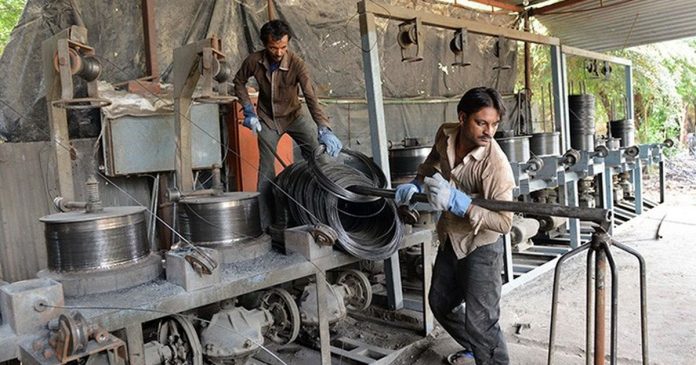
The National Human Rights Commission voiced genuine concern about the deaths of tribals from Alirajpur tehsil in Jhabua District, Madhya Pradesh, who died of silicosis/silicotuberculosis while working as labourers in the quartz crushing plants of Godhra, Gujarat. The Commission became aware of this tragedy after reading a news article in the Indian Express on September 19, 2007, titled “Death Stalks Godhra Again, in the Form of Silicon Dust.” According to the findings, these tribals were exposed to silica dust during work and received no protection. According to the research, roughly 200 tribals have died in the previous four years and that those labourers who returned to their communities in Jhabua and died of silicotuberculosis there were not compensated because they lacked documentary proof to process compensation claims.

Following a review of the report, the Commission instructed that it be given to the Gujarat and Madhya Pradesh Chief Secretaries, as well as the District Collectors of Panchmahal and Jhabua, for a factual report within four weeks. A team from the Investigation Division was also dispatched by the Commission for a spot investigation.

Challenges faced by human rights bodies

Structural challenges

Composition

The Act stipulates that three of the five members must be former judges, however, it is unclear if these judges must have a track record of human rights activity, expertise, or qualifications in the field. The Act is ambiguous about the other two members, just stating “persons with knowledge and expertise of human rights.” As a result, commissions are frequently used as retirement communities for judges, police officers, and officials with political influence.

Limitation on time

Human rights commissions are prohibited from investigating an incident if the complaint is lodged more than one year after the event. As a result, a substantial portion of valid grievances gets ignored.

Inability to deal with armed forces

State human rights bodies are unable to request information from the national government, therefore denying them the authority to probe armed forces under national jurisdiction. Even the National Human Rights Commission’s powers in relation to armed forces human rights violations have been limited to requesting a report from the government (without the ability to call witnesses) and then offering recommendations.

Practical challenges

Delay in filing

The majority of human rights commissions have less than the required five members. This hampers the ability of commissions to respond to complaints quickly, especially as the number of complaints continues to rise.

Scarcity of resources

Another major issue is a lack of resources, or rather, resources that are not being used for human rights-related tasks. Large portions of commission funding go to office expenditures and member maintenance, leaving disproportionately modest amounts for other critical areas like research and awareness programmes.

Over-burden

Most human rights commissions have difficulty in receiving a deluge of complaints. The National Human Rights Commission received approximately 74968 complaints in 2020. State human rights bodies are also struggling to deal with the growing number of complaints.

Bureaucratic shortcoming

As most of the members of commissions come from government departments—either on deputation or after retirement, the internal environment is generally similar to that of any other government institution. Complainants often find it difficult to acquire documents or information about the progress of their case due to strict hierarchies. The presence of security guards, battalions of peons, and office attendants create obstacles for common people to speak with officials about their complaints in person.

Way ahead

Enforceability of decisions

The influence of human rights commissions will be considerably boosted if the government makes its recommendations immediately enforceable. This will save time and energy since commissions will no longer need to issue notifications to government agencies to execute the recommendations, or alternatively, go through a time-consuming legal process to force the government to comply. Commissions must also have clear and well-defined authorities to pursue government agencies that provide fraudulent information. This will help to avoid many incidents resulting from the influence of departmental agencies, especially those involving the police department.

Inclusion of armed forces

Human rights violations are common in places where insurgency and internal divisions are present. Allowing commissions to investigate allegations against the military and security forces in an impartial manner merely exacerbates the problems and promotes cultures of amnesty. Instead of the existing system, where the National Commission is limited to requesting reports from the national government, it is critical that commissions have the ability to call witnesses and documents.

The right choice of members

Since positions of non-judicial members are increasingly being occupied by ex-bureaucrats, the argument that commissions are more like government extensions than independent watchdog organisations gains momentum. Commissions must include society’s human rights advocates as members if they are to play a significant role in society. Many activists may provide the Commission with knowledge and first-hand experience of current trends in the human rights movement.

Recruitment of staff

Human rights commissions must build an independent body of professionals with relevant expertise. The existing system of responding to people on deputation from various government ministries is insufficient since history has shown that most have limited knowledge and comprehension of human rights issues. This issue may be solved by hiring specifically trained and competent personnel to help eliminate the backlog of complaints.

Police complaints commission 

Human rights bodies spend a good deal of time investigating complaints about police misconduct. Perhaps it’s time to consider developing a new organisation dedicated only to the monitoring of police.   For example, the United Kingdom has an Independent Police Complaints Commission; South Africa has an Independent Complaints Directorate, and several Brazilian regions have Police Ombudsmen offices that deal solely with police complaints.

While it may seem obvious that these solutions will assist in increasing quality, the problem is persuading the government to approve these and other innovative ideas.

Conclusion

The above discussion clearly demonstrates that the Commission has done an efficient job in protecting and promoting human rights during the course of its 28-year history. The number of human rights cases being registered is increasing, but the number of cases pending is also increasing. This can be attributed to legal, infrastructural, and administrative problems at the Commission. To overcome the aforementioned obstacles, the National Human Rights Commission must be given additional authority. The Commission should be given judicial supervision powers, comparable to those granted to the Supreme Court under Article 136 of the Constitution. The Commission should be given powers regarding its contempt so that officials who disobey the Commission’s recommendations and directives can be penalised and held accountable. Every financial year, a separate budget/fund shall be released in the name of the NHRC. Its infrastructure must be completely technologically driven.

Overall, it would be an effort to introduce a human rights framework and substantial obligations to legislative procedures, creative policy-making, and programmes executed at both the national and state levels. Its major contribution to the protection and promotion of human rights in India and the concerned states has evaporated, leaving behind the expected role of investigating alleged violations, examining public inquiries, exercising jurisdiction, determining whether there is a need for providing direction and assistance to governments, and raising awareness about human rights education among lawmakers, academicians, stakeholders, and students, as well as the general public. Furthermore, hosting human rights-related seminars, workshops, and conferences has been beneficial to the strengthening of our country’s human rights jurisprudence. It may be stated that the NHRC cannot function properly without the cooperation of government stakeholders, other groups, and the general public.  So the effective teamwork of NGOs, stakeholders, legal experts, academicians, and the general public can lead to the effective functioning of the human rights commissions. 

FAQs

Who was the first chairman of the NHRC?

Justice Shri Ranganath Misra

Are human rights defined in the Protection of Human Rights Act, 1993

Yes. As per Section 2 of the Protection of Human Rights Act, 1933, “human rights” are defined as the rights to life, liberty, equality, and dignity of the individual enshrined in the Constitution or embodied in International Covenants and enforceable by Indian courts. The International Covenant on Civil and Political Rights and the International Covenant on Economic, Social, and Cultural Rights were both endorsed by the United Nations General Assembly on December 16, 1966.

What procedures does the Commission apply to investigate complaints

While investigating complaints of human rights violations, the Commission may request data or a report from the Central Government, any State Government, or any other authority or organisation subordinate to it within such period as it may specify; provided, however, that if the data or report is not received within the period fixed by the Commission, it may proceed to investigate the complaint on its own. In case, if the Commission is satisfied that no more investigation is required, or that the required steps have been initiated or taken by the concerned authority after receiving the  data or report, it may not proceed further with the complaint and notify the complainant accordingly.

What measures does the Commission have after the investigation

  1. If the investigation reveals a public servant’s violation of a human right or negligence in preventing a violation of a human right, the Commission may propose to the responsible government the start of criminal proceedings or other action against the concerned person or parties.
  2. Make an application to the Supreme Court or the High Court for any required directives, orders, or writs.
  3. Recommend to the responsible Government that the victim or members of his family be granted such immediate interim remedies as the Commission deems appropriate.

Is it possible to file a complaint in any language

They might be in Hindi, English, or any other language included in the Constitution’s Eighth Schedule. It is assumed that the complaints would be self-contained. There is no payment for filing a complaint. When it is deemed essential, the Commission may request further documents and affidavits in support of claims. Telegraphic objections and complaints sent by FAX or e-mail may be accepted at the Commission’s discretion. Complaints can also be filed using the Commission’s mobile phone number.

What types of complaints does the Commission not consider

The Commission does not normally consider the following types of complaints:

  1. In the case of incidents that occurred more than a year prior to the filing of the complaint;
  2. In cases where there is a pending lawsuit;
  3. Vague, anonymous, or pseudonymous cases;
  4. Concerning questions of service matters.

What is the National Commission for Human Rights expert panel

The expert panel is nothing but a committee formed by the commission, comprising persons having expertise on the subject matter, for the assessment required. For example, the National Commission for Human Rights (NHRC) has organised an 11-member expert committee, which includes Public Health Foundation of India President Dr. K S Reddy and activist Maja Daruwala, to analyse the influence of the COVID-19 outbreak on human rights, particularly those of the marginalised and vulnerable.

Who is the present chairman of the NHRC

Arun Kumar Mishra

References


Students of Lawsikho courses regularly produce writing assignments and work on practical exercises as a part of their coursework and develop themselves in real-life practical skills.

LawSikho has created a telegram group for exchanging legal knowledge, referrals, and various opportunities. You can click on this link and join:

https://t.me/lawyerscommunity

Follow us on Instagram and subscribe to our YouTube channel for more amazing legal content.

Download Now

Foreign Currency Convertible Bonds

0

This article is written by Shruti Jha pursuing a law firm Bootcamp. This article has been edited by Ojuswi (Associate Lawsikho). 

This article has been published by Sneha Mahawar.

Introduction

Companies running short of finances to conduct the operational activities seek out the options available to them in the Indian market. The most popular ways to raise funds are through the issue of share capital, debentures, bonds, or other financial aids such as external commercial borrowings, etc. External commercial borrowings are the kind of financial aid that a company or institution seeks to bring in fresh investment by raising funds in foreign currencies outside India. One among these external commercial borrowings is foreign currency convertible bonds (FCCBs). 

Generally, a bond means a fixed-income investment that represents a loan made by an investor to a borrower, usually corporate or governmental. Bonds get secured by the collateral or physical assets of the issuing company/ borrower. In a very strict sense bonds cannot be converted into equity shares and there is no flexibility in converting such bonds into shares. But FCCBs though being bonds could be convertible. This article attempts to explain what exactly an FCCB is, its features and other nuances

What is FCCB

A Foreign Currency Convertible Bond is a kind of external commercial borrowing and as the name suggests the funds are raised in foreign currency through these bonds, specifically outside India. These funds are borrowed funds. These bonds are also convertible bonds, unlike the usual bonds which are non-convertible. These bonds could be converted into equity shares on the option of the investor/bondholder after the expiry of a fixed time period.

This means that FCCBs are like the bonds which make regular interests (also known as coupons) and principal payments, and these bonds give the bondholder the option to convert their bonds into stocks/equity shares.

The nature of the FCCB is hybrid as it is typically a mix of both debt and equity. Hence, it is also called a Hybrid instrument. Typically, FCCB is equity-linked debt & could be converted into stocks after a specific period. Generally, the specific period for the FCCB is around five years but could be more or less upon the option of the issuing company.

It is the discretion of the investor or bondholder whether to convert the bonds into equity or take back the loan amount along with interest upon the expiry of the specific period. Hence, FCCB could be retained as a bond or with pre-determined price or exchange rates to convert into equity.

Conversion prices are the pre-determined price or exchange rates that are agreed upon at the time of getting into the whole borrower and investor arrangement. Generally, these prices are dependent upon the issuing company and the market structure of the period the bond would be converted in. If the price of the stock is below the conversion price at the time of the conversion, then the bond will not be converted.

An interesting fact about FCCB is that they are listed and traded in the foreign stock exchanges and are issued only in foreign currency with a fixed rate of interest. The interest payment is called coupons and the loan amount is called the principal. The FCCBs are issued in a foreign currency and which has a fixed interest rate that is lower than the rate of any other debt instrument which is non-convertible. So, comparatively, FCCB would be a considerable choice for issuing companies as the rates are lower.

The nature of FCCB is the same as that of the convertible debentures in India. Just like convertible debentures could be converted into equity shares FCCB can also be converted into equity shares. The only difference between convertible debentures and FCCBs is that convertible debentures are issued only in India whereas FCCBs are issued outside India only. Hence, the scope of jurisdiction of FCCB is wider than the scope of the convertible debentures.  In simple words, it is clear that the FCCBs are issued only to the non-residents of India in foreign currency and shall be subjected to conversion at the expiry of the specific date of the bond. 

How does a Foreign Currency Convertible Bond work

A foreign currency convertible bond (FCCB) is a convertible bond that is issued in foreign currency only, which means the principal repayment i.e., redemption amount and the periodic interest/coupon payments will be made in the very same foreign currency. 

In simple words, these bonds could only be issued to a country outside India, which means the currency that follows the arrangement is foreign i.e., the payment of the interest or the wholesome loan amount is to be made in the foreign currency only, rather than making it in rupees. At the time of the conversion, the exchange rates are the determining factor as to what could be the value of the bond and is it par with the face value of the equity shares.

In case an investor doesn’t want to convert his bonds then he’d be paid back the principal amount along with the rate of interest this wholesome amount is known as redemption price.

Let’s understand this by way of an example:

Suppose there’s an Indian company ABC ltd, which is interested in raising its funds. Considering all the factors it opines that as the interest rates are low why not borrow the funds through an entity outside India. The most ideal instrument is the FCCB. Supposedly there is a Mr.Spongebob who lives in Washington DC, USA. He is interested in the shares of the company and has been keeping tabs on its operations. He wants to invest in the company to have fruitful returns. If ABC Ltd. issues FCCB in the foreign stock exchange for a period of five years, Mr. Spongebob can buy these bonds in the USD. Now after observing the operations of the company closely in these five years it would be the discretion of Mr.Spongebob whether he wishes to be part of ABC or not. Mostly he would opt to be part of the company only if he could practically see that the dividend of the company is higher than the coupon rate. In this case, the returns would be higher but in case the dividends are much lower than the coupon rate, then converting would do no good to Mr. Spongebob and hence he would get redemption upon the exchange rates at that point in time.

Salient features of the FCCBs

  • FCCB is an unsecured instrument
  • It has a fixed rate of interest
  • The investor has an option for conversion into a fixed number of equity shares of the issuing company
  • Interest/ coupon and redemption price are to be payable in foreign currency
  • FCCB shall be denominated in any foreign currency

Participants for FCCB

The participants required during the process of issuance of FCCB are:

Issuer, Local legal advisor, Local accountants, Local custodian, Lead Manager, Depository bank, Overseas legal advisor, Escrow bank

Eligibility for a company to issue FCCBs

To be eligible to issue FCCB the company needs to compliant with the regulations as follows:

Benefits to issuing company and investor

The benefits to the issuing company by the issue of FCCB are listed below:

  • The Coupon rate is low- as it is a hybrid instrument the investor is at the advantage in both cases.
  • No credit ratings assessed by the rating agencies are required
  • Immediate equity dilution
  • Less time consuming comparatively with other instruments
  • Favourable in the exchange rate which results in the reduction in the cost of debt

The benefits to the investor by the issue of FCCB are listed below:

  • Advantage of both debt and equity – the investor at the start could invest through the bonds and later if the dividends are more can convert into the equity shares.
  • The fixed coupon rate of payment.
  • Low tax liability.

Drawbacks to issuing company and investor

The Drawbacks to the issuing company by the issue of FCCB are listed below:

  • If the stock market is in a negative cycle, the demand for FCCB would be low.
  • The ownership dilutes when the bonds are converted into equity.
  • If the currency exchange rate is changed it will be a loss to the company.
  • If not converted need to pay back.

The Drawbacks to the investor by the issue of FCCB are listed below:

  • The credit risk is subjected to the exchange rate at the time of conversion or redemption.
  • If the company goes bankrupt, repugnant face value at maturity will no longer be plausible.
  • Investors have no control over established conversion and prices.

Conclusion

From the above text, it is safe to say that FCCBs seems to be a win-win situation for both, the buyer/bondholder and the issuing company. Generally, Foreign investors buy FCCBs because they have an option to convert their bonds into shares at a fixed price, apart from earning fixed interests and pocketing a quick gain as a result. Conversion prices are usually set at a premium to the prevalent market prices, as it is assumed that the prices of the stock would always continue to rise. Companies consider this as “free money” which they would not be liable to repay, as the bonds would inevitably get converted into equity. But in cases when the investor doesn’t want to convert the share, the fairy tale ends and the low-cost option to raise funds doesn’t remain so low-cost anymore.

References


Students of Lawsikho courses regularly produce writing assignments and work on practical exercises as a part of their coursework and develop themselves in real-life practical skills.

LawSikho has created a telegram group for exchanging legal knowledge, referrals, and various opportunities. You can click on this link and join:

https://t.me/lawyerscommunity

Follow us on Instagram and subscribe to our YouTube channel for more amazing legal content.

Download Now

24th Constitutional Amendment, 1971

0

This article is written by Sujitha S, from the School of Excellence in law, Chennai. This article deals with legal implications of 24th Constitutional Amendment with relevant judgments. Further, it focuses on the aspect of amenability of the Constitution in the light of Articles 368 and 13 of the Constitution.

It has been published by Rachit Garg.

Introduction

The Constitution defines the powers of the state’s major organs, granting Parliament and state legislatures the authority to legislate in their respective jurisdictions. This power, however, is not absolute and is subject to judicial review by the courts. The judiciary has the authority to determine the Constitutional legality of legislation, and it can even overturn any statute that is in violation of the Constitution. As a result of the courts’ power, the Constitution’s provisions become sacred, undermining the main intention of the Constitution’s writers to make it a flexible and dynamic document rather than a rigid system of government.

This is why the Constitution itself offered the legislatures a counter-weapon in the shape of the power to amend the Constitution (Article 368), to make the Constitution consistent with prevailing realities. This authority, however, is not absolute, and a check was put on legislatures by making the court the watchdogs of the legislature’s altering powers. The 24th Constitutional Amendment traces its own judicial relevance in light of this power. The purpose of this Amendment was to overrule the Supreme Court’s ruling in I. C. Golaknath v. State Of Punjab (1967) which stated that Parliament could not restrict fundamental rights in any way. The Indian press criticised the 24th Amendment as having an extremely broad scope and questionable Constitutionality. Jurists and all of the core members of the Constituent Assembly at the time were also opposed to the Amendment. In 1973, the case of Kesavananda Bharati v. State of Kerala, the Supreme Court confirmed the Constitutionality of the 24th Amendment.

Historical background

Prior to Golaknath’s case: Shankari Prasad’s case

The power of Parliament to amend the Constitution, notably the chapter on citizens’ fundamental rights, was challenged in the Sri Sankari Prasad Singh Deo v. Union Of India (1951). Many legislations dealing with land reforms and tenancy issues were established after Independence, and their Constitutional legitimacy was disputed. The land reform legislations were declared unconstitutional by the courts because they infringed on the basic right to property granted by the Constitution. Such a decision made a mockery of the legislature’s legislative authority, which they had assumed to be unlimited. In response to the unfavourable verdicts, Parliament included these laws under the Constitution’s Ninth Schedule by the First and Fourth amendments (1951 and 1952, respectively), thus removing them from judicial scrutiny. The prime concern has been whether Part III of the Constitution can be altered to weaken or eliminate any fundamental right. Since 1951, many changes to the Fundamental Rights Act have limited the scope of certain of these rights to some extent. The Supreme Court concluded that a Constitutional amendment will be permissible even if it abridges or takes away any basic rights since it is not a law under Article 13(2).

Sajjan Singh v. State Of Rajasthan case (1964)

The legality of the Constitution (17th Amendment) Act of 1964 was questioned in this case. By including some other land purchase activities in the 9th Schedule, this amendment harmed the right to property under Article 19(1)(f). A question similar to that expressed in Shankari Prasad’s case was also raised in this instance. The Supreme Court upheld the majority decision in Shankari Prasad’s case, holding that the term “amendment of the Constitution” refers to changes to all of the Constitution’s provisions, i.e., Article 368 applies to all portions of the Constitution.

I. C. Golaknath & Ors v. State Of Punjab (1967)

In Golaknath’s case, the subject of legislatures’ amending authority, as defined by Article 368, was questioned once more. The Constitution (Seventeenth Amendment) Act, 1964, which reinserted some state legislation in the Ninth Schedule, was challenged on Constitutional grounds. The majority in the case of Shankari Prasad and Sajjan Singh found that the Parliament had no jurisdiction to change Part III of the Constitution, to take away or abridge basic rights as of the date of this decision, thereby overruling the previous decisions of Shankari Prasad and Sajjan Singh. In this judgement, Chief Justice Subba Rao took the unusual opinion that Article 368, which contains provisions linked to Constitutional revision, only sets out the method for revising the Constitution. The power to amend the Constitution was not granted to Parliament by Article 368. The ability to amend, which is a constituent power of Parliament, emerged from previous provisions in the Constitution (i.e., Articles 245, 246, 248) that granted it the authority to create laws (plenary legislative power). As a result, the Supreme Court decided that Parliament’s amending and legislative powers were substantially the same and that every change to the Constitution must be regarded as a law in the sense of Article 13(2) of the Constitution.

The majority opinion used the concept of implicit constraints on Parliament’s ability to alter the Constitution to support its decision. This viewpoint argued that the Constitution places a high value on basic rights and that the people of India, in giving themselves the Constitution, reserved these rights for themselves, as stated in Article 13(2) of the Constitution. Due to the structure of the Constitution and the nature of the liberties provided under it, Parliament could not amend, restrict, or degrade fundamental freedoms. They pointed out that Parliament might call a Constituent Assembly to modify the fundamental rights if required.

Consequences of the verdict

The judgement in Golaknath’s case resulted in a direct power struggle between the legislature and the judiciary. The ruling regime lost a lot of support in the legislative elections since it didn’t keep its promises. Due to the power struggle, the administration introduced a bill to restore parliament’s primacy, but it was eventually dropped due to political pressures. But, eager to demonstrate its supremacy, Parliament presented two significant lines of legislation, one relating to bank nationalisation and the other to the de-recognition of Privy Purses, both under the guise of ensuring equal distribution of wealth and resources. Both of the Parliament’s actions were overturned by the Supreme Court. The core issue had now switched to the relative importance of directive principles and fundamental rights. This resulted in a political position unprecedented in Indian history. In showing their dominance, the judiciary and Parliament were at odds. For the first time in India’s history, the Constitution was used as a campaign topic. Many amendments were passed in 1971 and 1972 to establish parliament’s sovereignty over the Constitution.

24th Constitutional Amendment (1971)

The principle of implicit restrictions on parliament’s power was recognised, and legislative supremacy was reduced to some extent. Parliament enacted a slew of Constitutional revisions in order to demonstrate its supremacy. On November 5, 1971, the Constitution (Twenty-Fourth Amendment) Act was approved. The purpose of this Amendment was to overrule the Supreme Court’s ruling in I.C. Golak Nath v. State of Punjab, which stated that Parliament could not restrict Fundamental Rights in any way. Parliament does not have the authority to abolish or limit Constitutional privileges, according to a Special Bench of 11 justices. The government argued that this ruling would prevent it from successfully implementing the Directive Principles of State Policy, which in some situations amounted to an infringement of fundamental rights. Articles 13 and 368 of the Constitution were amended by the 24th Amendment, allowing Parliament to freely amend the Fundamental Rights.

Any law that was incompatible with the Fundamental Rights was declared unConstitutional under Article 13. The Supreme Court concluded in Golak Nath that the term “law” covered Constitutional amendments; as a result, any Constitutional modification that infringed the Fundamental Rights was declared unConstitutional. As a result, Parliament would be unable to limit Fundamental Rights by Constitutional modifications. The mechanism for amending the Constitution is outlined in Article 368. Any Constitutional modification could only take effect under the original Constitution if two requirements were met: first, two-thirds of the members of each House of Parliament voted in favour of it; and second, it obtained the President’s consent, which he might withhold.

The following modifications were made as a result of the amendment:

  • ‘Nothing in this Article shall apply to any amendment of this Constitution made under Article 368,‘ according to a new clause (4) inserted to Article 13.
  • Article 368’s marginal header was changed from ‘Procedure for amendment of the Constitution’ to ‘Power of Parliament to amend the Constitution and Procedure, consequently.’
  • Notwithstanding anything in this Constitution, Parliament may, in the exercise of its Constituent Power, amend by way of addition, variation, or repeal any provision of this Constitution in accordance with the procedure established forth in this Article,’ was added to Article 368.
  • By changing the words ‘it shall be presented to the President who shall give his assent to the Bill and thereupon’ to ‘it shall be presented to the President for his assent and upon such assent being given to the Bill,‘ the President was made obligated to give assent to any Bill amending the Constitution.
  • Article 368 was also given a reassuring clause (3), which said that “nothing in Article 13 shall apply to any amendment made under this Article.”

Need and importance of the 24th Constitutional Amendment Act

As explained previously, the Supreme Court overruled, by a small majority, its own prior judgements affirming Parliament’s authority to change all components of the Constitution, including Part III related to basic rights, in the Golak Nath case. As a result of the ruling, Parliament is deemed to lack the authority to revoke or limit any of the fundamental rights guaranteed by Part III of the Constitution, even if it becomes necessary to do so in order to carry out the Directive Principles of State Policy and achieve the goals set forth in the Constitution’s Preamble. As a result, it is deemed essential to specifically state that Parliament has the power to amend any provision of the Constitution so that the provisions of Part III are included in the amending power. The legislation attempted to adequately revise article 368 for the purpose, making it explicit that article 368 provides for Constitutional amendment as well as procedures for doing so. The Act further stipulates that when a Constitution Amendment Bill is offered to the President for his assent after being passed by both Houses of Parliament, he should do so. It also proposes changing Article 13 of the Constitution to make it inapplicable to any constitutional modification made under Article 368.

The 24th Constitutional Amendment holds considerable importance in

  • Citizens’ rights, freedoms, and immunities;
  • the scope of judicial power that can assist citizens in asserting their inherent and basic rights against state action;
  • the Constitution of India’s absolute authority over the three organs of the government; and,
  • the scope of legislative power envisioned in the Constitution of India.

Constitutional validity with reference to Kesavananda Bharati case 

This is a watershed moment in India’s Constitutional amendment history. All of the judges agreed that the 24th amendment is Constitutional since Article 368 grants the ability to change all or any of the Constitution’s provisions. The majority of judges found that the ruling in Golaknath’s case was erroneous and that Article 368 provided enough opportunity for amendment. Seven judges were of the opinion that the basic framework could not be changed. M.K. Nambiar and other counsels used the word ‘basic structure’ for the first time when arguing for the petitioners in the Golaknath case, but it wasn’t until 1973 that the notion appeared in the language of the Supreme Court’s ruling.

The basic structure principle was articulated, and the ability to alter was deemed to be channelled and constrained. This theory was supported by Khanna J. and the other six judges. The remaining six judges were of the opinion that parliament had absolute authority. So, with a 7:6 majority, the Supreme Court concluded that those portions of the Constitution that give it meaning cannot be modified or amended. Out of 13 judges, only six judges agreed that fundamental rights are part of the Constitution’s basic structure and so cannot be amended. So, by a 7:6 majority, the Supreme Court ruled that basic rights are amendable in general.

In regard to the Constitution’s amendability, it was determined that the Constitution is amenable to the degree that it does not impair the document’s basic structure. However, this decision did not specify what constitutes the Constitution’s basic structure. The judges provided their own examples and listed a number of them, although this list was not considered comprehensive. The case of Keshavananda demonstrated that the Indian Parliament is not sovereign and that its authority is channelled and restricted rather than absolute.

Impact of the 24th Constitutional Amendment

In 1971, legal expert V. G. Ramachandran wrote in the Supreme Court Cases Journal that “the 24th and 25th Amendments were “not ‘tinkering’ with the Constitution. It is a veritable slaughter of the Constitution”.The general public paid little attention to the 24th Amendment at the time of its implementation as they were preoccupied with heated relations between India and Pakistan as a result of the ongoing Bangladesh Liberation War, which subsequently led to the Indo-Pakistani War of 1971. Indira Gandhi brought the 24th Amendment as the first of a series of measures to consolidate her authority and establish one-party rule. It was followed by a series of Constitutional amendments aimed at weakening the judiciary and strengthening Parliament’s authority. The 25th, 38th, and 39th Amendments were the most prominent, culminating in the 42nd Amendment in 1976 during the Emergency, which made the most substantial changes to the Constitution in history. The Act was enacted in line with Article 368 of the Constitution, and it was approved by more than half of the state legislatures, as required by Clause (2) of that article.

The 24th Amendment was largely reversed in 1973 when the Supreme Court ruled in Kesavananda Bharati v. The State of Kerala that Congress could not modify the Constitution’s “basic structure.” In this decision, 11 justices ruled that Parliament’s amending powers did not extend to some basic or important provisions of the Constitution. The question of what forms the basic structure was not fully resolved since each judge had a different perspective on which Articles are included in the ‘basic framework.’ The Supreme Court cases of Indira Gandhi v. Raj Narain (1975) and Minerva Mills v. Union of India (1980) have added to the ‘basic structure,’ although neither judgement comprehensively explains or sets forth the doctrine’s tenets. Both Articles 13 and 368 have been amended and are still in effect. However, the Courts have worked hard to ensure that these Articles do not compromise the Constitution’s basic structure.

Conclusion

Following the verdict in the Election Case(1975), the Supreme Court emphasised that the Constitution contains a few aspects that are so fundamental to it that it cannot exist in its original sense without them. Such traits cannot be changed. Appalled by this judgement, Parliament enacted the 42nd Constitutional Amendment, which amended Article 368, thereby giving the president near-absolute power. The legality of the 42nd Constitutional amendment was contested in Minerva Mill’s petition. The amendment was ruled unConstitutional by all five judges. This judgement also found that the revised Article 31 is null and unConstitutional and that fundamental rights and directive principles are in harmony and cannot be in contradiction with one another. Waman Rao’s case (1981) also affirmed Minerva Mill’s verdict that the changes to Article 368 adding Cls. 4 and 5 are null and void. In this judgement, it was also decided that any legislation added to the 9th Schedule after the Keshavanand Bharti decision is subject to judicial review.

The balance of legislative power among the constituents is extremely significant in a federal Constitution, and the parliament has been granted the authority to modify such a vital component. The power of amendment is widely seen as a pertinent one granted to parliament. It is, in a way, the foundation of the Constitution. Subsequently,  the Supreme Court confirmed the 24th Amendment Act’s Constitutionality, stating that Parliament has the authority to limit or eliminate any of the Fundamental Rights, while also establishing the new notion of the “basic structure of the Constitution. As a result, the 24th Amendment strengthened Parliament’s capacity to amend the Fundamental Rights.

Reference


Students of Lawsikho courses regularly produce writing assignments and work on practical exercises as a part of their coursework and develop themselves in real-life practical skills.

LawSikho has created a telegram group for exchanging legal knowledge, referrals, and various opportunities. You can click on this link and join:

https://t.me/lawyerscommunity

Follow us on Instagram and subscribe to our YouTube channel for more amazing legal content.

Download Now

National Commission for Protection of Child Rights (NCPCR)

0

This article has been written by Naveen Talawar, a student at Karnataka State Law University’s law school. The article talks about the rights of the child, instruments to protect children’s rights, and the National Commission for Protection of Child Rights, its role, functions, etc.

It has been published by Rachit Garg.

Introduction 

In civilizations all around the world, childhood has long been linked with innocence, freedom, joy, and play. It is a time when, having avoided the rigors of development, there is no feeling of obligation or commitment. Children are delicate beings who must be protected from life’s harsh realities. As a result, adult-child connections, particularly parent-child relationships, are stated to provide ‘care and protection,’ serve the child’s ‘best interests’, and support their ‘needs of survival and growth’ daily.The adult is assumed to be responsible for the child’s care and development as the guardian.

The National Human Rights Commission (NHRC) has endeavoured to continually focus on the rights of children from its inception in October 1993. Despite substantial provisions in the Indian Constitution for the survival, development, and protection of children, as well as regulations to defend their interests, including the fact that the Government of India had ratified the Convention on the Rights of the Child, children throughout the nation, particularly those from the poor section of the society, were vulnerable, and their human rights were regularly violated.

Child rights – an overview

A child, according to the Indian Census, is someone under the age of fourteen. The Universal Declaration of Child Rights defines a child as “any human being under the age of eighteen years unless the majority is acquired earlier by the legislation applicable to the child.” The declaration allows each nation to set its age limit for children based on its laws. However, in our country, several child-related regulations review the age restriction at various levels. 

  1. The Indian Penal Code (IPC) 1860, for example, recognizes minors under the age of seven and children with mental disabilities under the age of twelve (Section 83 IPC). 
  2. Article 21A of the Indian Constitution considers the ages of six to fourteen,
  3.  The Child Labour (Prohibition and Regulation) Act, 1986, fourteen years, and 
  4. The Juvenile Justice (Care and Protection of Children) Act, 2000, eighteen years, etc.

History of child rights 

Children were previously assumed to be small-adults, and the notion of children’s rights was unheard of. In the 1840s, France pioneered the notion of special protection for children. France created regulations in 1841 to protect children at work and to guarantee their right to education. The relevance of children’s rights was first recognized after World War I. On February 28, 1924, the International Save the Children Union endorsed the Declaration of the Rights of the Child at its fifth general session. This report was presented to the League of Nations, which approved the ‘Geneva Declaration’ on September 26, 1924, stating that “Humanity must do its best for the child.” 

The League of Nations eventually evolved into the United Nations. The Geneva Declaration analyzed children’s well-being in five chapters and recognized their rights to growth, support, relief, and protection, as well as adult responsibilities. For the first time, the Geneva Declaration acknowledged and affirmed the existence of special rights for children, as well as adults’ obligations towards children. Based on the work of Polish physician Janusz Korczak, the ‘Geneva Declaration’ was the first international Human Rights declaration to particularly address the rights of children.

Rights of a child 

Our Constitution protects and emphasizes the right of all children, regardless of color, caste, or creed, to live with dignity and uniqueness and to serve their society and nation. The following are some of a child’s basic rights:

  1. Survival Rights: It covers a child’s right to food, housing, and medical treatment, among other things.
  2. Developmental Rights: It refers to a child’s right to develop and maximize his or her abilities and strengths. They have the right to play, have leisure, acquire an education, and access information.
  3. Participation Rights: It entails the ability to express oneself and engage in all parts of life in one’s community with other members of society. 
  4. Protection Rights: It ensures that the child is safe from anti-social behaviours such as child abuse, child labour, and mental and sexual harassment.

Instruments to protect Children’s Rights 

To protect children’s rights, several conventions, treaties, laws, and charters have been established at the national and international levels. The following are the legal frameworks that apply:

1. Constitution of India

Children’s vulnerability and right to protection are recognized in the Indian Constitution. Following the concept of protective discrimination, it assures Article 15 special attention to children through important and distinctive laws and policies that defend their rights. The Constitution’s Articles 14, 15, 15(3), 19(1)(a), 21, 21A, 23, 24, 39(e), 39(f), and 45 underline India’s commitment to the protection, safety, security, and well-being of all its citizens, including children.

2. Commissions for Protection of Child Rights (Child Rights Act, 2005) 

The Act requires each state and union territory to establish National and State Commissions for Child Rights Protection (NCPCR and SCPCRs). The following are the functions and powers of the National and State Commissions:

  1. Examine and assess the legal safeguards for children’s rights provided by or under any legislation, and provide recommendations for their effective implementation. 
  2. Prepare and submit reports to the central government on the efficacy of these safeguards. 
  3. Investigate violations of children’s rights and, if necessary, recommend legal action. 
  4. Regularly review policies, programs, and other acts affecting children’s rights in light of treaties and other international instruments. 
  5. Creating awareness of children’s rights among diverse segments of society  
  6. Create Children’s Courts to expedite the trial of crimes against children or violations of their rights. 
  7. Encourage the state and local governments to designate a Special Public Prosecutor for each Children’s Court.

3. Juvenile Justice (Care and Protection of Children) Act, 2015

The Juvenile Justice (Care and Protection of Children) Act of 2015, which replaces the Juvenile Justice (Care and Protection of Children) Act of 2000, is a comprehensive piece of legislation. It enhances provisions for both Children in Need of Care and Protection and Children in Conflict with the Law by addressing their developmental needs and adopting a child-friendly approach to adjudication and disposition of matters in the best interests of children, as well as their ultimate rehabilitation through various institutions established under the Act. The Act includes a variety of new child-related offences that are not effectively addressed by existing legislation. Illegal adoption, corporal punishment in child care facilities, child terrorist organizations, crimes against handicapped children, and child kidnapping and abduction are only a few instances. 

The Juvenile Justice Board and the Child Welfare Committee have specific authorities, functions, and responsibilities under the Act. After conducting a preliminary review to determine if they should be prosecuted as adults, the Juvenile Justice Board can transfer severe offences committed by children to a Children’s Court.

4. Protection of Children from Sexual Offences (POCSO) Act, 2012

The POCSO Act of 2012 enhances legal protections for children against sexual exploitation and abuse. A separate bill addressing sexual attacks against children has been adopted for the first time. Several parts of the IPC currently concern sexual offences. The IPC does not cover all sorts of sexual attacks on children and does not differentiate between adult and child victims. 

The Act defines five different categories of sexual abuse of children. The Act criminalizes penetrative sexual assault, aggravated penetrative sexual assault, sexual assault, aggravated sexual assault, sexual harassment, and using a juvenile for pornographic purposes. Under the Act, aiding or attempting to aid in the commission of these acts is also prohibited.

5. Right of Children to Free and Compulsory Education Act (RTE Act), 2009

The Constitution (Eighty-sixth Amendment) Act of 2002 introduced Article 21A of the Indian Constitution, making it a Fundamental Right for all children aged six to fourteen years to receive free and compulsory education in the manner determined by the state. Every child has the right to a full-time elementary education of satisfactory and equitable quality in a formal school that meets certain essential norms and standards, according to the Right of Children to Free and Compulsory Education Act of 2009, which represents the consequential legislation envisaged under Article 21A.

6. The Child and Adolescent Labour (Prohibition and Regulation) Amendment Act, 2016

In July 2016, Parliament passed the Child Labour (Prohibition and Regulation) Amendment Act. This Act amends the 1986 Child Labor (Prohibition and Regulation) Act, broadening the extent of the law’s prohibition on child labor and hardening the penalties for offenders. The Child and Adolescent Labour (Prohibition and Regulation) Act, 1986, was revised in 2017 to include all of this Act’s provisions.This Act prevents children from working in any activity, save in the family business or as an artist in the audiovisual entertainment sector, and it also prohibits teenagers from working in dangerous jobs and procedures. It has strengthened the penalty for hiring minors and made child labor a criminal offence.

7. United Nations Convention on the Rights of the Child (UNCRC)

The Convention on the Rights of the Child (CRC) was approved by the United Nations General Assembly in 1989, and most developed and developing countries, including India, have ratified it. The Convention establishes requirements for all States parties to follow to protect the best interests of children and specifies the fundamental rights of children. Ratifying countries agree to be legally bound by the Convention’s terms. 

They report on their efforts to comply with the Convention’s requirements regularly to an expert Committee on the Rights of the Child. Child rights, according to the UNCRC, are basic rights and freedoms that should be granted to all individuals under the age of 18 regardless of race, color, gender, language, religion, opinions, origins, money, birth status, aptitude, and so apply to everyone everywhere.

Article 16 of the Convention reads, “No child should be subjected to arbitrary or unlawful interference with his or her privacy, family, or communication, nor to unlawful attacks on his or her honor and character.” It is recognized that a child has a legal right to be protected from such interference or attacks.

According to Article 40 of the Convention, the privacy of a child accused of violating the law must be protected at all stages of the procedures. In 2005, the Indian government accepted the UNCRC’s two Optional Protocols on the involvement of juveniles in armed conflict and the sale, prostitution, and pornography of children. The Indian government is strengthening its national policies and procedures to protect children from these dangerous forms of abuse and exploitation.

National Commission for Protection of Child Rights  (NCPCR)

The Commissions for the Protection of Child Rights Act, 2005, a Parliamentary Act passed in December 2005, established the National Commission for the Protection of Child Rights (NCPCR) as a statutory body in March 2007. The main objective of the NCPCR is to protect, promote, and defend children’s rights across the country. The Commission’s objective is to guarantee that all laws, policies, programs, and administrative processes are in line with the Indian Constitution and the United Nations Convention on the Rights of the Child’s perspectives on child rights. The Commission envisions a rights-based approach to national policies and programs, as well as smart responses at the state, district, and block levels that take into consideration each region’s distinct qualities and capabilities.

Composition of the Commission 

The National Commission for the Protection of Children’s Rights is mandated by Section 3 of the Act, and as a result, the Central Government shall create a body to be known as the National Commission for the Protection of Children’s Rights by notification. The commission’s members are as follows:

  1. A Chairperson who is a prominent leader who has worked constantly to improve the welfare of children; and 
  2. Six members, at least two of whom must be women, will be nominated by the Central Government from among individuals of eminence, talent, honesty, status, and experience in the following fields: 

(i) education; 

(ii) child health, care, welfare, or development; 

(iii) juvenile justice or the care of neglected or marginalized children or children with disabilities;

(iv) the abolition of child labor or the protection of children in distress; 

(v) child psychology or sociology; and 

(vi) child laws.

Role of NCPCR

The NCPCR believes that addressing child rights necessitates child participation. As a result, the Commission encourages children to engage for them to enjoy their rights and privileges. Every move taken by the Commission encourages children to participate. During its state visits, the Commission, for example, emphasizes the need of listening to children in public hearings. When children are nervous and demand more privacy, the Commission has kept a space where they can speak freely and comfortably. When contacting such children, a response is given, and the problem is addressed in the best interests of the child following an inquiry, while the institutions are dealt with firmly.

The Commission has the authority to examine complaints and take action on its own in matters involving, for example, violations of children’s rights and non-application of legislation intended for their protection and development. The Commission will investigate and assess the legislative measures in place to protect children’s rights, as well as provide suggestions for their successful implementation. If required, it will suggest amendments, examine complaints, or take Suo moto notice of instances involving constitutional and legal rights abuses for children.

The Commission’s mission is to ensure proper enforcement of child rights and effective implementation of laws and programs affecting children by investigating complaints and taking Suo moto cognizance of matters involving deprivation of child rights, non-implementation of laws providing for children’s protection and development, and non-compliance with policy decisions, guidelines, or instructions aimed at their welfare, as well as announcing relief for children.

Functions of NCPCR 

The NCPCR’s functions are provided under Section 13 of the Act as follows: 

  1. Examine and evaluate the safeguards provided by or under any existing legislation for the protection of children’s rights, and make recommendations for effective implementation.
  2. Report on the operation of those safeguards to the Central Government on an annual basis and at such other intervals as the Commission deems appropriate. 
  3. Inquire into violations of children’s rights and urge that legal action be taken in such circumstances.
  4. Examine all factors that prevent children from exercising their rights as a consequence of terrorism, communal violence, riots, natural disasters, domestic violence, HIV/AIDS, trafficking, maltreatment, torture and exploitation, pornography, and prostitution, and make recommendations for appropriate remedies. 
  5. Investigate and recommend appropriate remedial actions for children in distress, marginalized and impoverished children, children in conflict with the law, juveniles, children without relatives, and children of prisoners who require particular care and protection.
  6. Examine existing policies, programs, and other activities relevant to children’s rights, as well as treaties and other international instruments, and make recommendations for their successful implementation in the best interests of children. 
  7. Research on children’s rights and encourage others to do so. 
  8. Promote child rights literacy across various segments of society and enhance understanding of the safeguards available to defend these rights through publications, media, seminars, and other accessible techniques.
  9. Investigate complaints and pay attention to issues such as i. Deprivation and violation of children’s rights. ii. Failure to uphold laws intended to protect and develop children. iii. Failure to adhere to policy choices, rules, or instructions intended at easing difficulties for and safeguarding the welfare of children, as well as giving relief to such children or reporting concerns to appropriate authorities.
  10. Any additional functions it deems essential for the promotion of children’s rights, as well as any other matters related to the aforementioned function.

Additional functions according to the 2006 NCPCR Rules

  1. Analyze current law, policy, and practice to determine conformity with the Convention on the Rights of the Child, conduct inquiries and provide reports on any element of policy or practice affecting children, and provide child rights commentary on any new legislation; 
  2. Present yearly reports on the efficacy of such safeguards to the Central Government, as well as at such other intervals as the Commission considers appropriate;
  3. Official investigations should be done when children or a concerned individual on their behalf have expressed concern. 
  4. Ensure that the Commission’s work is directed directly by children’s views and priorities; 
  5. Promote, respect, and careful consideration of children’s viewpoints in its work and that of all government agencies and organizations dealing with children;
  6. Develop and spread information on children’s rights; 
  7. Gather and evaluate information on children; 
  8. Encourage the inclusion of children’s rights in school curricula, teacher training, and child-care worker training.

Reporting any abuses of children’s rights to the NCPCR 

Investigating allegations of child rights violations is one of the Commission’s key tasks. The Commission is also charged with looking into severe cases of child rights abuses and conditions that prohibit children from enjoying their rights.

  1. eBaalNidan, an online complaint management system: The eBaalNidan online complaint management system was designed by the Commission expressly for registering concerns about violations of children’s rights. Anyone or any group can file a complaint about free online.
  2. Using the e-box from POCSO: Under the Protection of Children from Sexual offences (POCSO) Act of 2012, it is a simple, straightforward, and confidential way to report any occurrence of sexual assault. It is prominently featured on the NCPCR website’s home page, where the user can access it by pressing the POSCO e-box button.
  3. Other possibilities: Personal complaints can be made in person at the Commission’s office, by phone, by letter, or by email.

Conclusion 

The NCPCR is vital to the preservation, promotion, and defense of children’s rights in the country. The Commission’s mandate is to ensure that all laws, policies, programs, and administrative processes are in line with the Child Rights perspective as enshrined in the Indian Constitution and the United Nations Convention on the Rights of the Child. The Commission envisions a rights-based approach to national policies and programs, as well as nuanced responses at the state, district, and block levels, which take into consideration each region’s distinct qualities and capabilities. It seeks a better integration into communities and households to reach every child, and it expects that the field’s experiences will influence the help it receives from all levels of government.

FAQ’s [Frequently Asked Questions]

1.What are the provisions relating to the protection of the rights of children under the constitution of India?

The Indian Constitution recognizes children’s vulnerability and right to protection. Following the notion of protective discrimination, it guarantees Article 15 special attention to children through significant and different laws and policies that protect their rights. Articles 14, 15, 15(3), 19(1)(a), 21, 21(A), 23, 24, 39(e), 39(f), and 45 of the Indian Constitution emphasize India’s commitment to the protection, safety, security, and well-being of all its residents, especially children.

2. What is the NCPCR’s composition? 

Section 3 of the Commissions for the Protection of Child Rights (CPCR) Act of 2005 specifies the membership of NCPCR. The members of the commission are as follows:

a Chairperson who is a prominent leader who has worked tirelessly to enhance children’s welfare; and six members, at least two of whom must be women, who shall be nominated by the Central Government from among individuals of eminence, talent, honesty, status, and experience in the following fields: 

  1. education;
  2. child health, care, welfare, or development;
  3. juvenile justice;
  4. the prohibition of child labor or the protection of children in distress; (v) child psychology or sociology; and
  5. child laws.

3. What are the powers and functions of the National and State Commissions? 

The National and State Commissions have the following functions and powers:

  1. Prepare and submit reports to the central government on the efficacy of these safeguards. 
  2. Investigate violations of children’s rights and, if necessary, recommend legal action. 
  3. Regularly review policies, programs, and other acts affecting children’s rights in light of treaties and other international instruments. 
  4. Creating awareness of children’s rights among diverse segments of society  
  5. Create Children’s Courts to expedite the trial of crimes against children or violations of their rights. 
  6. Encourage state and local governments to designate a Special Public Prosecutor for each Children’s Court.

References 

  1. https://ncpcr.gov.in/ 
  2. https://garph.co.uk/IJARMSS/Nov2014/11.pdf 
  3. https://hcommons.org/ 
  4. https://nhrc.nic.in/sites/default/files/ChildrenRights.pdf 
  5. https://www.nluo.ac.in/ 
  6. http://epgp.inflibnet.ac.in/

Students of Lawsikho courses regularly produce writing assignments and work on practical exercises as a part of their coursework and develop themselves in real-life practical skills.

LawSikho has created a telegram group for exchanging legal knowledge, referrals, and various opportunities. You can click on this link and join:

https://t.me/lawyerscommunity

Follow us on Instagram and subscribe to our YouTube channel for more amazing legal content.
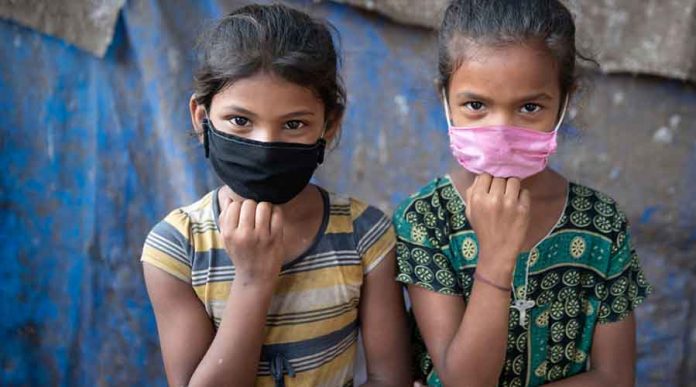
Download Now

All about Section 304 IPC

0
Section 120A

The following article has been written by Ishani Samajpati, pursuing B.A. LL.B. (Hons) under the University of Calcutta. This article contains a detailed discussion of Section 304 IPC which lays down the punishments to be awarded for ‘culpable homicide not amounting to murder’.

This article has been published by Sneha Mahawar.

Table of Contents

Introduction

Section 304 is one of such important yet little-known sections which lays down the detailed directions for punishments to be awarded to anyone guilty of ‘culpable homicide not amounting to murder’ (Section 299 of IPC).

Chapter XVI of IPC deals with such offences where the human body is affected or the offence costs an individual’s life and the punishments to be awarded in such cases. Section 304 of IPC provides the punishments for one of such offences of culpable homicide not amounting to murder.

This article seeks to give an exhaustive view of Section 304 of IPC through the following paragraphs along with a few of the relevant case laws. Before that, for the sake of clarity, a brief discussion of homicide and its classification, culpable homicide, murder and the distinction between them is enumerated below.

Homicide and its classification

Apart from natural death, it is also classified in another five categories. They are – 

  1. death caused by accident 
  2. commitment of suicide or being abated to commit suicide 
  3. conduction of homicide (where one individual causes the death of another) 
  4. undetermined death when the cause of the death cannot be ascertained, and 
  5. pending when the cause and nature of death is yet to be determined. 

The term ‘homicide’ has been derived from two Latin terms – ‘homo’ meaning man and ‘cida’ meaning killing. Therefore, homicide means the killing of an individual by another. Homicide is further classified into two types:

Lawful homicide

Lawful homicides include homicides which involve ‘justifiable’ and ‘excusable’ homicides. Examples include performing homicide in self-defense, executing an individual under the death penalty, killing under euthanasia in countries where it is legal etc.

Unlawful homicide

Unlawful homicides include those homicides which are illegal in the eyes of law in a civilised society. Two of the most common unlawful homicides include:

  • Culpable Homicide
  • Murder

Definition of culpable homicide according to IPC

The term, culpable homicide, has been defined in Section 299, the very first Section under Chapter XVI of IPC. The offence of culpable homicide is committed when an individual causes death to another intentionally or by an act with the knowledge that the act is likely to cause death.

According to Section 299 of IPC, an individual commits the offence of culpable homicide when:-

  • That individual does an act which causes another individual’s death intentionally.
  • That individual causes any ‘bodily injury’ which results in the death of another.
  • That individual acted with the intention to cause death; or with the knowledge that the act may amount to death but without intention.

Murder : definition in IPC

The definition of murder has been provided in Section 300 of IPC. It is the gravest form of offence committed. According to Section 300, a murder is a type of culpable homicide where the death is caused intentionally or a bodily injury is caused with the intention to cause death.

Public Prosecutor v. Suryanarayana Moorty (1912) 

In this one of the earliest cases, a sensitive question of whether an offence is to be categorised under culpable homicide or murder was decided.

Facts of the case

The public prosecutor, representing the government appealed against Suryanarayana Murthi, who was acquitted against the charge of murdering a girl, Rajalakshmi.

The accused took out considerable insurance on Appala Narasimhulu. In order to obtain those large sums of money, he decided to kill him. The accused asked Appala to meet at his brother-in-law’s house and gave him sweetmeat mixed with poisons containing arsenic and mercury. Appala, on the other hand, ate a portion and threw the rest of it after realising. 

Rajalakshmi, the accused’s niece and daughter of the brother-in-law, a girl of 8 or 9 years of age, took the thrown away sweetmeat without the knowledge of the accused. She then shared it with another child.  While Appala recovered, the two children died from poisoning.

Two accounts of this incident were presented to the Court. One was that Rajalakshmi asked the accused for sweetmeat. The other account was that Rajalakshmi took the remaining sweetmeat thrown away by Appala without the accused’s knowledge. The Court accepted the second account as true.

Issue of the case

While the accused was awarded transportation (relocation to a secluded place, especially to the Andaman Islands as punishment during British Rule) for an attempt to murder Appala Narasimhulu, the main issue was to decide whether the accused was guilty of murdering the children or was guilty of committing culpable homicide.

Observations

The Madras High Court held that the accused had the intention to cause death undoubtedly.

The question of whether the accused is guilty of murdering Rajalakshmi or not is based on inferences drawn from the presented facts.

The Court held that at the time of eating, the accused was absent from the scene. He could have prevented Rajalakshmi from eating if he was present. However, the mixing of poison with sweetmeat was the main reason from which death was caused. So the accused is not absolved from the responsibility. 

It was also discussed and widely debated whether his offence falls under Section 299,  Section 301 of IPC which deals with culpable homicide causing the death of another person other than whose death was originally intended or under Section 302. 

But since the accused originally intended to cause death, it was held that the accused was liable for the murdering of the children even though he only intended to kill Appala.

Judgement

The order of acquittal of the charge of murder by the Sessions Judge was set aside. The accused was convicted under Section 302 of IPC instead of Section 304. However, the accused was not sentenced to death but was awarded ‘transportation for life’.

Differentiation between Murder and Culpable Homicide as illustrated in IPC

Both the cases of murder and culpable homicide involve the killing of any individual. Hence, for any accused to be tried under either of these, one common essential is DEATH. The basic differences between them are as follows:

SubjectMurderCulpable Homicide
Sections in IPCMurder has been defined in section 300 of IPC.Culpable homicide has been defined in section 299 of IPC
Degree of offence committedMurder is considered to be the gravest offence committed and falls under ‘culpable homicide of 1st degree.’Culpable homicide usually involves offences of two different degrees. They are culpable homicide of 2nd and 3rd degree respectively. 
Knowledge and IntentionThe offence of murder consists of intention while the presence of knowledge is obvious.The offence of culpable homicide is committed either with both knowledge and intention or with only knowledge but without any intention. 
PunishmentPunishment for murder has been defined under Section 302 of IPC. Punishment includes the death penalty or life imprisonment with a fine.Punishment for murder has been defined under Section 304 of IPC. Punishment includes life imprisonment and fine or rigorous imprisonment depending on the gravity of the offence.
CategorisationAll offences under murder fall under the category of culpable homicide.Culpable homicide has a broader ambit and all culpable homicides are not murders.
ExplanationIf an individual commits the an act which causes death to another or any bodily injury which causes death with prior preparation, it is considered murder since the intention is to kill and not out of sudden provocation or wrath.Culpable homicide is the act where an act by an individual causes a death or a bodily injury which causes death without premeditation, in an unplanned conflict, or in an unplanned outburst of rage as a result of someone’s provocation or instigation. 

“All murders are culpable homicide, but all culpable homicides are not murders.”

In any specific case, it is first examined whether a culpable homicide amounts to murder or not. While the culpable homicide is the ‘genus’ and the murder is the ‘specie’. Hence, it can be inferred that “all murders are culpable homicide, but all culpable homicides are not murders”. 

This statement has been reiterated in several cases by the Supreme Court of India.

State of Andhra Pradesh v. Rayavarapu Punnayya & Another (1976) 

The Supreme Court of India in this case stated that the distinction between ‘murder’ and ‘culpable homicide not amounting to murder’ “has vexed the courts for more than a century”. It was also stated that ‘culpable homicide’ is genus and ‘murder’ is the specie. All ‘murder’ falls under the category of culpable homicide’ but the vice-versa is never true.

Facts

  • There were factions between three major communities namely Reddys, Kammas and Bhatrajus in Rompicherla village.
  • A clash, political in nature, took place between two communities namely Reddys, supporting Congress and Kammas, supporting Swatantra Party in the Panchayat election of 1954. A member of Kamma community was murdered and nine from the Reddy community were prosecuted for the murder.
  • In another incident, the deceased, Sarikonda Kotamraju, leader of the Bhatrajus, had a meeting with his party-men to protect themselves from the aggressions of the opponents in the cattle shed belonging to one of the partymen. The opposition members blocked the wall.
  • The deceased went to the police station with the owner of the cattle shed (PW 1) to lodge a report on July 22, 1968.
  • The deceased, PW1 & PW2, boarded a bus on the next day and the accused persons also boarded the same house after some time. On seeing the accused persons, the PW1 saved himself.
  • The deceased, a man of 55 years, requested the accused persons to leave him but they started beating him mercilessly. He became unconscious and succumbed to his injury which was grievous in nature. He gave a dying declaration to the Judicial Magistrate.
  • The trial judge convicted the first two of the accused persons under Section 302 and under Section 302 read with Section 34, IPC and sentenced them to life imprisonment.
  • The High Court, on appeal, altered the conviction under Section 304, Part II, IPC and sentenced each of them to ‘five years rigorous imprisonment’.

The State appealed in the Apex Court after obtaining special leave.

Issue

The first accused (Respondent 1) died during the pendency of the appeal. The decision of whether another accused should be tried under offence of murder or culpable homicide was to be decided.

Observations of the Supreme Court

The Apex Court held that the fact the attack was premeditated or planned earlier is incorrect. 

The injuries sustained by the deceased were also of compound nature. The death was due to “shock and haemorrhage due to multiple injuries” which was caused by the accused. 

Judgement

The Apex Court opined that the High Court passed an erroneous order by altering the convictions and that the accused should be sentenced to life imprisonment.

Rampal Singh v. State Of U.P (2012)

In this case, the Supreme Court also held the same opinion regarding the distinction between murder and culpable homicide.

Facts

  • Ram Kumar Singh, the deceased and Rampal Singh, the appellant both served in the Army as Lans Naik. 
  • The deceased came to his village on leave from Agra, his posting. 
  • He erected a Ladauri on his vacant land. Rampal Singh broke the constructed Ladauri and started throwing garbage. 
  • The deceased again came to his village on leave. 
  • Before returning, they were chatting with relatives where Rampal Singh, the grandson of the deceased’s uncle, was also present.
  • The deceased asked him the reason for demolishing his Ladauri and throwing garbage. 
  • The heated discussion resulted in an altercation. They started grappling and the deceased threw him on the ground.
  • The appellant announced his intention to shoot the deceased and the deceased remarked as to whether the appellant had the courage to shoot him, which was confirmed by his wife at the Court. 
  • After this, the appellant shot with his rifle and escaped. 
  • After primary treatment at the village, he was taken to the army hospital where he died.
  • The accused was charged with the offence of murder under section 302 of the IPC.

Issue

The issue before the Supreme Court was to decide whether the offence was murder under Section 302 of IPC or culpable homicide amounting to murder after sudden provocation under Section 304 (Part I) of IPC. 

Observations of the Hon’ble Supreme Court

The Apex Court once again reiterated its decision as held in the case of State Of Andhra Pradesh vs Rayavarapu Punnayya & Another that “the ‘culpable homicide’ is genus and ‘murder’ its species. All ‘murder’ is ‘culpable homicide’ but not vice-versa.”

The Court further held that there was a heated exchange of words between them as well as a provocation on the part of the deceased. 

Hence, the appellant was provoked to shoot his rifle which resulted in the death of the deceased. 

Judgement

The offence of the appellant was altered from Section 302 to Section 304 Part I and was awarded rigorous imprisonment of ten years along with a fine of Rs 10,000/-

Types of Culpable Homicide under Section 304 of IPC

To determine the level of punishment, in accordance with the gravity of the crime committed, the IPC divides three degrees of culpable homicide respectively. The first degree comes under Section 300 and Section 302 while the rest two degrees of culpable homicide falls under Section 304 (Part I) & (Part II) of IPC respectively : 

  1. The gravest and most serious form of culpable homicide has been defined in Section 300 as ‘murder’. This is also termed as the ‘culpable homicide of the first degree’. 
  2. The second is termed as ‘culpable homicide of the second degree’. This is the culpable homicide which amounts to murder. This is less grave compared to the first degree. It is punishable under Part I of Section 304. 
  3. The ‘culpable homicide of the third degree’ is the least graver type of culpable homicide. This is the culpable homicide which does not amount to murder. The punishment awarded here is the lowest among the three degrees. It is punishable under Section 304 (Part II) of IPC.

Reg. v. Govinda ( 1876)

This is one of the early cases which precisely defined the difference between murder and culpable homicide amounting to murder.

Facts

In this case the accused, an 18-year-old man, had kicked his 15-year-old wife, kept a knee on her chest and struck her several times with a fist on her face. This act produced ‘extraversion of blood’ on her brain and the wife died. 

The Session Judge found the accused guilty of murder and sentenced him to death.

Issue

The issue before the Bombay High Court was to decide whether the accused was guilty of murder or of culpable homicide.

Observations of the Court

Justice Melvill was of the opinion that the offence amounts to culpable homicide, and not murder since there was an intention to cause death and the bodily injury was not sufficient to cause death ordinarily. 

Hence, it was held that the bodily injury was not sufficient to cause death and further the act was not committed with the intention to cause death. Hence, the accused was liable to culpable homicide not amounting to murder.

Judgement

The accused was ordered to be convicted under culpable homicide not amounting to murder, and was sentenced to transportation (relocation to a secluded place as punishment during British Rule) for seven years.

Punishments according to Section 304 of IPC

According to the IPC, Section 304, as mentioned beforehand, explains punishments for ‘culpable homicide not amounting to murder’. 

Section 304 of IPC can be separated into two parts: Section 304 (Part I) and Section 304 (Part II). The level of punishment is different and is given accordingly considering the gravity of the crimes committed.

Section 304 (Part I) IPC

A person who has committed a crime falling under the category of ‘culpable homicide not amounting to murder’ is to be awarded a punishment of life imprisonment or imprisonment of a term extending up to ten years and a fine. The act of crime has to be committed with both intentions along with knowledge.

Section 304 (Part II) IPC 

It lays down that an act which causes death is committed, or the act itself is committed with an intention to cause death or a bodily injury which ‘is likely to cause death’ is to be punished with imprisonment of the term extending up to ten years or fine or both imprisonment of ten years and fine altogether. Furthermore, it must be maintained that the act has been committed with the knowledge that it is likely to cause death but without any intention to cause death or any bodily injury resulting in causing death.

It can be specified that Section 304 of IPC stresses two factors namely knowledge and intention to determine the amount of punishment. If an act is committed with both the intention and knowledge, Section 304 (Part I) of IPC awards a punishment of imprisonment for life or imprisonment for ten years and a fine.  On the contrary, if it is committed with knowledge but without intention, under Section 304 (Part II) of IPC, a person shall be sentenced to a term of imprisonment of ten years or a fine or with both ten years imprisonment and a fine.

Classification of Offences under Section 304 of IPC 

The classification of offences under both the Part I and Part II of Section 304 of IPC are: 

Cognizable 

Section 2(c) of CrPC lays down the definition of cognisable offences. A cognizable offence is such an offence where a police officer may arrest an individual without any arrest warrant or without the orders of the Magistrate. The arrest is to be made in accordance with the First Schedule of CrPC or any other relevant law in force.

A cognizable offence is serious in nature.

Non-bailable 

Non-bailable offences refer to those serious and grave offences where an accused person, arrested and taken into police custody cannot be released on bail by the police. The Investigating Officer should provide the accused to the Judicial Magistrate within 24 hours of arrest. The accused can file an application for bail and it can only be granted by the Court at its own discretion by the Judicial Magistrate with a bail bond, i.e. an amount of money against the freedom of the individual until the trial.

Some non-bailable offences include offenses such as Rape, Murder, Dowry Death, Attempt to murder, and Kidnapping.

Non-compoundable 

Section 320 of CrPC provides a detailed list of offences which have been termed as compoundable offences, meaning that a compromise can be sought between the complainant and the accused. Apart from these, the rest offences are termed as non-compoundable. Here, either the State or State elected officials such as police files complaints and it is not officially possible to enter into any compromise.

Triable by Court of Session 

The offences as mentioned in Section 304 of IPC can be tried by a competent Court of Sessions under Section 9 of CrPC.

insolvency

Relevant case laws relating to Section 304 of IPC

There exists a catena of judgments and orders relating to Section 304 of IPC. A few of the important cases are discussed below. However, the discussion cannot be made exhaustive considering the vastness of the number of cases.

Harendra Nath Mandal v. State of Bihar (1993)

Facts

This was an appeal, where the appellant was convicted under Section 304 (Part I) of IPC and the High Court sentenced him to two years of rigorous imprisonment for two years. The appellant along with two others, Sitaram Mandal and Tribhanga Mandal were charged under Section 307 read with Section 34. They had also been charged under Section 379 of IPC for theft of paddy.

The appellant along with two others was harvesting paddy. The Prosecution Witness 9 (PW 9) and his brother protested because, apparently, the appellants were harvesting paddies from their land. The appellant assaulted the PW 9’s brother with a tangi. The three persons were charged with murder and theft of paddy.

Harendra Nath Mandal and Sitaram Mandal were convicted by the Session’s Judge under Section 307 read with Section 34 of IPC and sentenced to rigorous imprisonment for seven years and five years respectively. 

They appealed to the High Court where one of the accused died during the pendency. The appellant was convicted under section 304 Part I of IPC.

Issue

The issue before the Supreme Court was to decide whether the appellant can be tried under Section 304 of IPC.

Observations of the Court

The Court held that Section 304 Part I of the IPC, in which the accused was convicted, does not create or define any offence. Rather, Section 304 lays in detail the punishments to be awarded for culpable homicide not amounting to murder. Further, Section 300 defines murder along with the exceptions.

Judgement

It was held that for holding an accused guilty and punishing under Part I & Part II of Section 304, a death must be caused under any of five exceptions mentioned in Section 300 of IPC.

Kedar Prasad v. State of Madhya Pradesh (1992) 

Facts

The accusations of this case were based on the dying declaration of the deceased.

The deceased, Altaf, was attracted to a commotion. When he reached the spot, he saw a woman was beaten and asked to stop. 

The three accused, Kedar Prasad, Ramlal and Rambali in turn, started giving blows to the deceased. Kedar Prasad, one of the accused, gave a fatal blow on the head of the deceased which resulted in his death. The other accused person injured the deceased with a spear on his knee and arm.

Kedar Prasad and Ramlal were convicted under Part I of Section 304 of IPC and sentenced with rigorous imprisonment of five years. The three also were convicted under Section 323 of IPC.

Issue

The issue before the Court was to decide whether the appellants can be convicted under Section 304 (Part I) of IPC.

Observations & Judgement

Based on the dying declaration, the Court decided that the fatal blow given in the head by Kedar Prasad was the sole reason behind the death. Hence the court confirmed his conviction and sentence. 

However, the conviction of Ramlal was altered under Section 324, IPC.

Mirza Ghani Baig v. State of Andhra Pradesh (1996) 

Facts

In this case, according to the dying declaration of the deceased, the husband came home in a drunken state and the wife offered him food. After having food, the husband set the deceased wife ablaze by pouring kerosene.

The brother-in-law and sister, after hearing cries, saved the accused and took her to the hospital where she died.

The lower court convicted him and awarded punishment under section 302 of IPC.

Issue

The issue before the Court was to decide whether the accused should be convicted under Section 302 of IPC.

Observation

It was observed that there was no evidence that the accused was harassing his wife for dowry or having an unhappy married life. It was further held that even though the accused was in a drunken state, and he had the knowledge that his act would be dangerous to the life of the deceased, he had no intention. Though he was responsible for the death of the deceased, he is guilty under Section 304 Part II of IPC and not under Section 302.

Judgement

The accused was convicted under Section 304 Part II of IPC and was sentenced to rigorous imprisonment of five years.

S.D. Soni v. State Of Gujarat (1990)

Facts

Here, the deceased wife informed her parents that she was not happy in her marital life and wrote a letter informing her parents that she was being ill-treated by her husband, inlaws and other relatives. In the meantime, the wife was found dead in her matrimonial house.

It was informed to the Court that there was a suicide note found under the pillow of the wife and the medical officer also concluded it to be a suicidal death.

The accused was convicted under Section 302 of IPC by the Trial Court and was sentenced to life imprisonment. On appeal, the High Court found him punishable under Section 304 Part II of IPC and punished him with rigorous imprisonment.

Issue

Both the appellant and the State of Gujarat appealed challenging his conviction and to convict him under Section 302 of IPC. It was to be decided by the Apex Court the section under which he is to be convicted.

Observation

The Supreme Court held that the suicide theory was invented as a defence and also to mislead the Court. It was further held that the deceased did not die by taking any substances which may cause her death.

The guilt of his husband was inferred based on ‘circumstantial evidence’ since no direct evidence was found to establish whether it was suicide or murder. Since he was aware of the situation of his wife and had knowledge, he was held guilty under Section 304 (Part II).

Judgement

The Apex Court upheld the decision of the High Court and convicted him under Section 304 Part II of IPC and awarded him rigorous imprisonment of five years

Randhir Singh Alias Dhire v. State Of Punjab (1981)

Facts

In this case, the accused Randhir Singh hit the deceased Mohan Singh with a blow of kassi. The deceased immediately fell on the ground. He died while being rushed to the hospital. The accused was convicted under Section 302. According to the autopsy report, one of the injuries caused to the deceased was sufficient to cause him death. 

The appellant was convicted under Section 302, and Section 302 read with Section 34, IPC. respectively by the Sessions Judge and sentenced with life imprisonment. 

In an appeal, the Division Bench of the High Court of Punjab & Haryana confirmed the conviction and the sentence.

Issue

The issue was to decide whether the offence falls under the ambit of murder since there was no premeditation.

Observation

The Supreme Court held that the appellant was a college student and there was no premeditation. It was further held that the appellant must have the knowledge that his injury is likely to cause death. Hence his offence falls under the category of Section 304 Part II of IPC.

Judgement

The conviction of the appellant was altered from Section 302 to Section 304, Part II, IPC. The appellant was given five years of rigorous imprisonment instead of life imprisonment.

The distinction between Section 304 (Part I) and (Part II) of IPC 

An elaborate explanation of Sec 304 of IPC has been precisely provided by the High Court of Gujarat in the case of Rameshkumar Shankarlal Shah v. State Of Gujarat in 2016.

Rameshkumar Shankarlal Shah v. State Of Gujarat (2016) 

The facts, issues, observations and the order of the case are as follows:

Brief facts of the case 

A writ application under Article 226 of the Constitution of India was filed to quash an FIR under Sections 304, 120B read with 114 of the IPC.

The petitioner along with two co-accused purchased land on 13th May, 2014. Thereafter, the accused no 1 applied for an electric connection to Central Gujarat Electricity Company to shift High Tension Electric Line over the property and made the required payment.

On 19th July, 2014, due to some excavation work, the excavated soil was dumped in a part of the land. The dumped soil formed a big heap.  Another person was passing through the land with his cattle. When he climbed the heap of soil, he came into contact with the High Tension Electric Line and was electrocuted.

An FIR was registered for the offence punishable under Sections 304, 120B read with 114 of the Indian Penal Code and the applicant was sought to be prosecuted based on such accusation, for the offence of  ‘culpable homicide not amounting to murder’ which is punishable under Section 304 of the IPC. 

Issue of the Case 

The issue before the Hon’ble High Court of Gujarat was to be decided whether the offence amounts to ‘culpable homicide not amounting to murder’ and whether the accused can be tried under Section 304 of the IPC.

Observations of the Court 

Justice J.B.Pardiwala of the Hon’ble High Court of Gujarat provided a concise explanation of Section 304 through the order. He held that: “A plain reading of the above Section makes it clear that it is in two parts. The first part of the Section is generally referred to as “Section 304   Part ­I”, whereas the second part as “Section 304, Part­ II”.”

It was also mentioned that if a bodily injury likely to cause death is done intentionally and the victim dies, it would fall under  Part I. Subsequently if such an injury is caused with the knowledge that it may result in death but without the intention of causing death. “A person who intentionally causes bodily injury with the knowledge that such an act is likely to cause death must   necessarily be a person who does an act with the intent to cause bodily   injury likely to result in death.” 

Order 

It was held that the accused persons cannot be tried under Sec 304 and the application to quash the FIR was allowed.

Detailed discussions of elements of Section 304 of IPC with some relevant case laws 

Section 304 of IPC have also been applied in the following circumstances. They are discussed below with relevant case laws:

Spur of the moment  

It literally means an impulsive act which is done without any premeditation or without any further planning done earlier.

Manjeet Singh v. State of Himachal Pradesh (2014) 

In the case of Manjeet Singh v. State Of H.P, Jai Pal, a person involved in the taxi business, went to hotel Apsara to inquire from the manager Budhi Singh regarding the booking of his taxi by some passenger. He found the accused Manjeet Singh drinking liquor. On asking him about the whereabouts of the manager, the accused started verbal abuse followed by physical assault. Jai Pal’s companions, whom he met on the road, came to inquire about him.

The accused, on being instigated by his friends, shot Carbine which left one of Jai Pal’s companions dead while being rushed to the hospital.

The accused was not held guilty under Section 302 but under Section 304 (Part II) of IPC and sentenced to seven years of rigorous imprisonment and a fine of Rs 5,500/-. The Court also affirmed conviction and sentences for the offence under Section 324, IPC and Section 27 of the Arms Act passed by the Trial Court.

  • Alteration of charges from Section 302 to Section 304 (II): 

Considering the gravity of the situation and the nature of offence, sometimes the charges are altered at the discretion of the Court after considering necessary facts and circumstances.

 Kalu Ram v. State of Rajasthan (1999)

In the case of Kalu Ram v. State of Rajasthan, the convictions of the accused were altered by the Supreme Court of India after careful examination of facts.

The accused, Kalu Ram, kept two wives in two different places. It was costly for him and he burnt one of his wives, Vimla to death.

It was admitted that he approached his wife in a drunken state and asked for her ornaments. When she refused, he poured kerosene and lit a matchstick but later frantically poured water to save her.

Hence, it was held that he was probably not aware of such grave situations. The offence from first-degree murder was altered to culpable homicide not amounting to murder.

Thus, the convictions were altered from Section 302 to Section 304 (Part II).

  • Exceeded right of private defence under Section 304 (Part I):  

The IPC guarantees the right of private defence from Section 96 to Section 106. However, if an act exceeds the right of private defence, it will attract convictions under Section 304 (Part I) of IPC.

Furthermore, the right to self-defence cannot be used as a defence in the Court of Law if it exceeds certain quanta.

Suresh Singh v. State of Haryana (1999)

In the case, Suresh Singh v. State of Haryana, the appellants Suresh Singh and Mohinder Singh were convicted under Section 302 while another accused Chander Pal was convicted under Section 304 (Part I).

The appellants killed Mahipal by giving blows to different body parts. The accused were also injured but to a minimum extent compared to the deceased.

Hence it was held that the accused persons had exceeded the right of private defence. Charges of all the accused were altered to Section 304 (Part I).

Self-defence must arise 

If the accused sustains nominal injuries while the deceased receive grievous injuries, it is held that the accused was the aggressor under Section 304 (Part I).

Murali v. State of TamilNadu (2000)

In the case of Murali v. State of TamilNadu, the deceased was stabbed in the stomach by the accused. The deceased had bought 2/3rd share in the well and the pump set belonging to the accused. He further dragged the deceased to the house and assaulted him to death. After some time he opened the door with a bloodstained knife and escaped.

The Supreme Court held that he was guilty under Section 304 (Part I) and stated, Right of private defence undoubtedly, a defence available to an accused but the Court while dealing with the defence, ought to act with proper circumspection and caution….”

Sudden scuffle during the course of altercation – Alteration of Section 304 (I) to Section 300 (II) 

If an individual creates a sudden sight in a small scuffle and it subsequently results in death or any bodily injury causing death, it should fall under Section 300 (II) and not Section 304(Part I)

Sukhdev Singh v. Delhi State (Govt. Of Nct Of Delhi) (2003)

In the case of Sukhdev Singh v. Delhi State (Govt. Of Nct Of Delhi), an altercation regarding the parking of a scooter followed by scuffle took place between the accused and Devender Singh, the deceased. The accused fired a pistol and shot him dead, leaving one injured.

The Supreme Court of India concluded that no reasonable person would be so provocative to lose self-control and fire a pistol. Hence the conviction should be altered to Section 300 (Part II) instead of Section 304 (Part II). 

Rash and negligent act with knowledge and likelihood of its dangerous consequences 

If a person commits a ‘despicable aggravated offence’, he is liable to punishment under Section 304 (Part II) instead of  Section 304A of IPC dealing with death caused by negligence.

Alister Anthony Pareira v. State of Maharashtra (2012)

In Alister Anthony Pareira v. State of Maharashtra, a car ran into a pavement killing seven persons and causing injury to another eight persons near Bandra, Mumbai. The appellant, Alister Anthony was driving the car. He was convicted under Section 304 (Part II) along with Section 338 and Section 337 of IPC. He was found to be under the influence of liquor. 

The Apex court concluded that the High Court was quite considerate for convicting under Section 304 (Part II) where seven persons were killed helplessly.

Death in custody

If a police officer assaults or tortures a prisoner in police custody and as a result of the prisoner succumbs to death, the conviction should be held accordingly to Section 304 (Part II) of IPC.

Along with framing a list of guidelines to be maintained for an individual in police custody, the Court also held the same in the landmark case of Shri DK Basu v. State of West Bengal (1997).

A comparative analysis between Section 304 and Section 304A of IPC

While Section 304 of IPC deals with the punishments to be awarded for the offences of culpable homicide not amounting to murder, Section 304A deals with the deaths caused by negligence. Several judgments by many of the High Courts and that of the  Hon’ble Supreme Court have reinstated the transparent distinction between Section 304 and Section 304A of IPC. 

A noteworthy case, in this regard, is the case of Mahadev Prasad Kaushik v. State of U.P. & Anr (2008) where the Apex Court discussed the distinctions between Section 304 and Section 304A of IPC from paragraphs 26 to 29 of the Order:

  • Section 304A does not create a new offence. Rather, it deals with homicidal death by rash or negligent acts. It defines those offences which do not fall in the category of offences as specified in Sections 299 and 300 of IPC.
  • It was further held that unlike Section 304, where there is either ‘knowledge’ or both ‘knowledge’ and ‘intention’, there is no involvement of both ‘knowledge’ and ‘intention’ in the case of Section 304A.
  • Section 304A deals with those offences where the rash and negligent act has caused the death of another person.

The Hon’ble Supreme Court ruled, “There is thus the distinction between Section 304 and Section 304A.”

Critical analysis 

The fine line of difference between murder and culpable homicide is often confusing while determining the quantum of punishment in case of an offence committed. To ensure fair trial and justice, the difference must be properly comprehended.

If the true scope, meaning and applicability cannot be comprehended by the Court minutely in case of an offence,  it may fail to ensure justice.

Concluding remarks

To determine an offence, it is of great importance to determine whether it falls under ‘murder’ or ‘culpable homicide’. If the offence is further determined to be under culpable homicide, there comes the responsibility to determine whether it amounts to murder or not and whether there was any presence of knowledge and intention or both. 

While theoretically, it is easy to distinguish, in real-life scenarios, it is not as easy to determine and distinguish them. To ensure justice, the keywords of the relevant sections should be focused on properly.

Frequently Asked Questions (FAQs) on Section 304 of IPC

Which offence is defined under Section 304 of IPC

Section 304 of IPC itself does not define any offence but details the punishment to be awarded for the offence of culpable homicide not amounting to murder. The offence of culpable homicide has been defined under Section 299 of IPC and murder in Section 300 of IPC.

What is the difference between culpable and non-culpable homicide

Culpable homicide is the unlawful killing of human beings either with both knowledge and intention or with knowledge but without intention. 

Non-culpable homicide is the killing done mostly in self-defense or consensual killing, i.e. killing an individual with his or her own consent, such as in cases of euthanasia, assisted suicide or mercy killing, though the legality of consensual killing is still widely debated in India.

When does culpable homicide amount to murder

In short, ‘First Degree Murder’ is the culpable homicide amounting to murder. First-degree murder is the offence committed with the sole intention of causing death to an individual. The gravest form has been defined under Section 300 of IPC and its punishments under Section 302 of IPC.

Does mercy killing or euthanasia in India come under the ambit of culpable homicide

The legal position of mercy killing is still vague in India. The Supreme Court for the very first time in the case of Aruna Ramchandra Shanbaug vs Union Of India & Ors (2011) legalised passive euthanasia and held the right to die as important as the right to life provided under Section 21 and it does not amount to culpable homicide.

What are the essential ingredients of Section 304 of IPC

The essential ingredients of Section 304 of IPC are:

  • There must be a death caused to an individual in question.
  • The death caused either should be with both intention and knowledge or with knowledge but without intention.
  • The punishment of the offence is decided accordingly.

Is it possible to get bail under Section 304 of IPC

Section 304 of IPC is non-bailable. However, an individual may approach the Court and it can only be granted by the Court at its own discretion by the Judicial Magistrate with a bail bond.

What are the punishments awarded in Section 304 of IPC

Depending on the severity of the offences, the punishments awarded under Section 304 of IPC are life imprisonment, life imprisonment up to ten years and a fine or both life imprisonment up to ten years and a fine. However, Section 304 of IPC does not award the death penalty.

Which Court is competent to try offences under Section 304 of IPC

The offences under Section 304 of the IPC is triable in the Court of Sessions.

References


Students of Lawsikho courses regularly produce writing assignments and work on practical exercises as a part of their coursework and develop themselves in real-life practical skills.

LawSikho has created a telegram group for exchanging legal knowledge, referrals, and various opportunities. You can click on this link and join:

https://t.me/lawyerscommunity

Follow us on Instagram and subscribe to our YouTube channel for more amazing legal content.

Download Now

What do you need to know about HDFC and HDFC bank merger

0

This article is written by Bhupender Palustya pursuing a Diploma in M&A. This article has been edited by Ojuswi (Associate Lawsikho). 

This article has been published by Sneha Mahawar.

Introduction

The deal between HDFC Ltd and HDFC Bank has been working since 2014. These entities already have an agreement whereby HDFC Ltd will sell a portion of its home loans to the HDFC Bank every quarter. 

On 4th April 2022, The Board of Housing Finance Firm Housing Development Finance Corporation Limited (HDFC Ltd) approved the proposal to merge its subsidiaries and associates with HDFC Bank. As per the announcements made by entities, HDFC Ltd and HDFC Bank will merge. One entity will be dissolved as HDFC Ltd. After this announcement Share Prices of HDFC Bank Ltd and Housing Development Finance Corporation Limited gained the rate of 1656 rupees and 2680 rupees respectively. According to HDFC Bank, this merger needs to complete all the transactions and approvals from statutory authorities, various regulations, shareholders, and creditors under applicable laws. So, as the complexity involved in the deal and all subsidiaries of HDFC Ltd will fold into the HDFC bank that requires many regulatory permissions. The merger will take 15 to 18 months; this deal is likely to be completed by the end of 2023.

 This attempts to analyse HDFC Ltd and HDFC bank Merger deals. This article aims at discussing the benefits, details and other aspects of the deal.  

Some basic details of the merger            

As competition increases intensively this merger is likely to have major implications for the financial sector. As per the Transactional strategy, Housing Development Finance Corporation Limited (HDFC Ltd) the biggest Housing Finance company in India will be merged into HDFC Bank Ltd the largest private bank in India. where HDFC Ltd has Rs 5.3 trillion worth of Assets Under Management(AUM) and Rs 4.45 trillion worth of market cap HDFC Bank Ltd has Rs 8.35 trillion worth of market cap. The entity will get the strength of a combined balance sheet of 18 trillion (18 lakh crore) and a net worth of 3.3 trillion (3.3 lakh crore). Around 9 million homes were provided or financed by Housing Development Finance Corporation Limited in the journey of 45 years. 

While this merger will provide a large customer base to sell the products, HDFC bank will get leverage of distribution of their products across urban, semi-urban, and rural areas. After the merger Shareholders of HDFC Ltd. Will own around 41 % of HDFC Bank Ltd., and HDFC Ltd shareholdings will be extinguished in HDFC Bank Ltd.   

How does this merger be beneficial to both the HDFC Bank and HDFC Ltd

  • This merger may reduce the proportion of unsecured loans provided by HDFC Bank.
  • The merger of HDFC Ltd and HDFC Bank Ltd will be beneficial for both entities. The combination of both entities provides strength to HDFC Bank by adding to the dominating position of HDFC Ltd in the housing finance sector. By improving the scalability, distribution, and cross-sell of products (like housing finance and banking).
  • The announcement of this merger gives a positive impact on share prices and this shows that people have a belief in this merger to invest. It will help the company to increase profitability.
  • Since the 2018 Infrastructure Leasing and Financial Services (IL&FS) crisis RBI pushing (NBFCs) to work as a bank, thus this merger became necessary to HDFC ltd and give an advantage over the competition.
  • Operating a non-banking financial company (NBFC) with around a net Sale turnover of 50 crores becomes a challenge and by this merger, HDFC Bank will get help to build its housing loan portfolio. By adding to this HDFC Bank gets a strong base in the real estate market which provides a secured asset class with low risk.
  • Overall this merger will become beneficial for both the entities by creating increased scale, comprehensive product offering, balance sheet resiliency, and the ability to drive synergies across revenue opportunities, operating efficiencies, and underwriting efficiencies.
  • For the HDFC Bank portion of home loans increased from 11 percent to 33 percent in its total book. This would make HDFC India’s 2nd largest bank. 

Will merger result in cost optimization

In the long run, this merger will help to cut down the cost of loan pricing, cost of operations, and cost of operation of establishments. But this will take a while of 4 -5 years. Initial years would be difficult for the merged entity. The finance of HDFC bank Ltd may not look good in the initial 2-3 years. Amount of statutory reserves will increase, housing finance comparatively has a low yield, and the club of housing finance book with loan book makes a net margin of four percent which may affect Bank’s finance. 

Indian Private sector banks need to scale latent demand for credit in the Indian economy, there will be a great boom in the coming decade. The merger of NBFCs with the Bank will be the additional credit for both. The merger of HDFC and HDFC Bank can be a win-win situation for both companies by getting cheaper franchises and funds.   

How this merger will be beneficial for shareholders

Shareholders of HDFC limited will get the premium the bank trades at to the holding company. The big loan base provided by this merger will act as a natural shield for asset quality. The asset quality is not disturbed due to diversifying loan books. 

The merged entity will provide more scalability, down costs of funds will make available the mortgage business, HDFC Bank gets loan servicing process of HDFC, and an increase in share prices will directly benefit the existing shareholders of both entities. After the merger existing shareholders of HDFC Ltd. Will own around 41 % of HDFC Bank Ltd., and HDFC Ltd shareholdings will be extinguished in HDFC Bank Ltd. Every existing shareholder of  HDFC Ltd will get 42 shares in HDFC Bank for 25 Shares held by them in HDFC. This merger may also boost Shareholder’s value by strengthening the balance of both companies.    

What does this merger mean for the depositors

There are two types of fixed deposits (FD) in HDFC Ltd a) Automatic Renewal and b) Non- Automatic Renewal. In automatic renewal, the Fixed Deposit will automatically be renewed at the operable rate of interest on the maturity date for the same tenure. In Non- Automatic Renewal the matured amount of Fixed Deposit is transferred to the FD holder’s Bank Account. 

Change occurs by merger.

The Individuals who have an automatic renewal of the Fixed Deposit with HDFC Ltd. Can either withdraw the money or renew FD with HDFC Bank at the interest rate offered by the bank. The interest rate of HDFC bank has been lower than the rate of HDFC Limited.

  • When an individual invests in Fixed Deposits for below 2 crore rupees for a tenure of 66 months then HDFC Ltd will offer the interest rate of 6.55%. where for the same tenure and amount HDFC Bank will offer only a 5.6% rate of interest.     
  • When Senior citizens invest in Fixed Deposits for below 2 crore rupees for a tenure of 66 months then HDFC Ltd will offer the interest rate of 6.80%. where for the same tenure and amount HDFC Bank will offer only a 6.35% rate of interest.
  • HDFC Ltd offers an additional 0.05% if individuals renew FD through the online automatic renewal.    

Therefore, if somebody renews the FD with HDFC Bank he will get lower than what he got with HDFC Ltd. But there will be more safety in HDFC Bank of deposits and interest under the DIGC (Deposits Insurance and Credit Guarantee Corporation). 

What does this merger mean for the borrowers

There will be no impact on the term and condition of the loan which was taken from HDFC Ltd and if any individual wants to take a loan from HDFC Ltd the Term and Conditions remain the same. However, after the merger of HDFC Ltd and HDFC Bank Ltd is approved, then the interest rate of home loans will be revised. Currently, HDFC Ltd provides home loans at 6.70% to individuals who have a 750 credit score, if an individual has a below credit score threshold then the interest rate will be between 6.80% to 7.30%. For women borrowers, HDFC Ltd provides home loans at 6.70% for those with a 750 credit score, if they have a credit score which is below the threshold then the interest rate will be between 6.75% to 7.25%. 

So, after the merger, the rate of interest on home loans may be revised. HDFC Bank may mandate the customers of HDFC Ltd to update their KYC and NACH by submitting post-dated. This will ensure auto- debit Installments of home loan EMIs easily.     

Morgan Stanley Capital International (MSCI) index may include the merged entity 

Morgan Stanley Capital International India Index acts as an indicator of the soundness of the Indian capital market. As of 2021 MSCI Index weightage of the financial sector is 26.21 %. MSCI Index India is used by Foreign Investors who want the international market to invest their funds. By MSCI Index Foreign Investors want to know more about the stability and volatility in the prices of shares. In other words, the number of funds that a foreigner will invest in an Indian share will be directly dependent on the stock’s weightage on the MSCI Index. Strong growth opportunities in the infrastructure sector in India in the next decade will directly boost the growth of the financial sector, mainly the housing sector. This boost directly impacts the growth of the merged entity positively. Hence, the merged entity will be included in the Indian MSCI Index. 

Conclusion

This article demonstrates why HDFC Ltd and HDFC Bank are choosing to merge. What benefits do they receive as a result of the process? The purpose of this study is to see how this merger will impact the companies, how the amalgamated entity gets benefits from this merger, and what it means to depositors, borrowers, and shareholders. So, as we concluded that an amalgamated entity will be more secure for depositors, borrowers also get benefits, and the last belief of shareholders shows that this merger will be beneficial. The success of a merger is shown by elements like the company’s market growth, shareholder’s interest, and corporate growth. Hence by this study, we can say this merger will be beneficial to enhance all these elements.  

References


Students of Lawsikho courses regularly produce writing assignments and work on practical exercises as a part of their coursework and develop themselves in real-life practical skills.

LawSikho has created a telegram group for exchanging legal knowledge, referrals, and various opportunities. You can click on this link and join:

https://t.me/lawyerscommunity

Follow us on Instagram and subscribe to our YouTube channel for more amazing legal content.

Download Now

 Industrial Disputes Act, 1947 

0
compensation definition
Image Source - https://bit.ly/2qgWbOe

This article is written by Kartikeya Kaul, a first-year student pursuing B.A.LLB. from Symbiosis Law School, Noida. This is an exhaustive article dealing with the Industrial Law, Industrial Disputes and Industrial Relations: The Industrial Disputes Act, 1947.

Table of Contents

Introduction

Industrial Disputes Act, 1947 is the Act that regulates the labour laws as it concerns all the workmen or all the people employed on the Indian mainland. It came into force on 1 April 1947. The capitalists or the employer and the workers always had a difference of opinion and thus, it leads to lots of conflicts among and within both of these groups. So, these issues were brought to the attention of the government and so they decided to pass this Act. This Act was formed with the main objective of bringing peace and harmony to industrial disputes between parties and solving their issues in a peaceful manner. 

Scope and Object 

This is an Act made for the examination and settlement of industrial disputes, and for different purposes too. This Act centers around any industry carried on by or under the authority of the Central Government, or by a railway organization or concerning any such controlled industry as might be indicated for this benefit by the Central Government. 

Main features of the Act 

This Act furnishes us with specific guidelines and guidelines in regards to the works committee for both the businesses and all the workmen to advance measures for good working relations and comprehension among the workmen and the businesses later on, and to end that, it additionally vows to resolve any material difference in views of opinion in regard to such issues.

Definition of Industrial Dispute 

Industrial dispute implies any distinction of conclusion, contest, injury between the business and the representatives, or between the laborers and bosses, or between the labourers or workers itself which is all concerned with the work or non-business terms or terms of business dependent on the terms of state of work of any person.

Workman

The expression “workman” signifies any individual (counting a student or apprentice) who works in an industry who needs to do any manual, skilled/unskilled, incompetent, specialized, operational, administrative, supervisory and so forth work for contract or reward, regardless of whether the terms of business are communicated or inferred, and for motivations behind any procedure under this Act in connection to an industrial dispute, incorporates any person who has been expelled, released or saved regarding, or as an outcome of the case, or who’s rejection, release or conservation has prompted that dispute, however, does exclude any such individual- 

  • who is dependent upon the Air Force Act 1950, or the Army Act 1950, or the Navy Act 1957;
  • who is employed in the police administration or as an official or other representative of a jail;
  • who is employed primarily in an administrative or managerial limit.

An individual, being underemployed in a supervisory limit draws compensation surpassing Rs. 10000 for every month or activities, either by the idea of the obligations to the workplace or by reason of forces vested in him, works fundamentally of an administrative sort. 

Lay-off 

Layoff or “Cutback” signifies the refusal or lack of power to refuse, disappointment or failure of a business by virtue of lack of coal, power or crude material, etc. or the aggregation of stocks or the breakdown of apparatus to offer work to a workman whose name is on the muster rolls of his industrial foundation and who has not been retrenched. 

Closure 

This implies the shutting down of a part of an establishment or an entire place of employment.

Authorities under the Act 

Section 3: Works board of trustees 

If there should be an occurrence in any industrial foundation wherein one hundred or more workers are employed in a day or in the previous year, the concerned government may be a general or an exceptional offer require the business to do in the endorsed way, a works advisory group comprising of delegates of representatives and workers occupied with the foundation so that the quantity of agents of workers on the Committee will not be not exactly the quantity of agents of the business. The delegates of the workers will be picked in the recommended way from among the workers occupied with the foundation and in counsel with their worker’s guild, assuming any, enrolled under the Indian Trade Unions Act. 

It is the obligation of the works advisory group to advance proportions of verifying and saving great and serene relations between the businesses and the workers and the end that, to finalise upon the issues of their normal intrigue or attempt to make any material contrast out of perspectives in such issues. 

Section 4: Conciliation Officer

The fitting government may, by seeing in the authority, name such people as it believes fit to be conciliation officials, delegated of the obligation of intervening and advancing the settlement of industrial audits. 

An appeasement official might be designated for a predetermined zone or for explicit industries in a predefined region or for at least one explicit industry and either for all time or for a constrained period. 

Section 5: Boards of Conciliation

  1. The reasonable Government may as an event emerges by notice in the Official Gazette speak to a Board of Conciliation for advancing the settlement of an industrial contest. 
  2. A Board will incorporate an administrator and 2 or 4 unique individuals, as the Government thinks fit. 
  3. The administrator will be an independent individual and along these lines, different individuals will be people delegated in equivalent numbers to speak to the party to the case and any individual selected to speak to a gathering will be designated on the proposal of that party: 
  • Given that, if any gathering neglects to make a suggestion as previously mentioned inside the endorsed time, the fitting Government will select such people if it thinks they’re fit to speak to that party. A Board, having the recommended majority, may act despite the nonattendance of the administrator or any of its individuals or any opening in its number, given that if the appropriate Government tells the Board that the administrations of the executive or of some other part have been stopped to be accessible, the Board will not Act till a substitute director or part, by and large, has been designated. 

Section 6: Courts of Inquiry 

  • The proper Government may as an event emerges,  by notice in the official journal comprise a court of value for enquiring into some other issue seeming, by all accounts, to be associated with or applicable to an industrial contest.                                                           
  • A court may comprise of one free individual or number of such autonomous people as suitable Government may think fit and where a court comprises of at least two individuals, one of them will be named as the executive chairman. 
  • A court, having the endorsed majority, may dispute the nonappearance of the executive chairman or any of its individuals or any kind of vacancy in its number. 

Section 7: Labor Court 

  • The proper Government may, by warning in the official journal, add to at least one industrial councils for the settling of industrial disputes and identifying with any issue, regardless of whether indicated in the subsequent calendar or the 3rd schedule. 
  • A court should comprise of just a single individual designated by the appropriate government. 
  • An individual will not be equipped for arrangement as the directing official of a council except if he is, or has been a judge of the high court or has been a vice president labour commissioner (central) or joint chief of the state work office, having a degree in law. 

Anand Bazar Patrika v. Their Employees 

This case was between the Anand Bazar Patrika Pvt. Ltd, the appellant and between the workers, the respondent. This issue was about a person, Gupta, who’s retirement was against the service conditions of the company. The court also held the decision against the appellant that Gupta was a workman on the day of his retirement and thus, the award was given against the appellant. 

Awaz Prakashan Private Ltd. v. Pramod Kumar Pujari 

In the case Awaz Prakashan Private ltd. vs Pramod Kumar Pujari, the appellant was running a printing press and was publishing newspapers by the name of ‘Awaz’. So, as per the words of the appellant, he said that he closed the publication and stopped the printing of the newspaper and thus he retrenched the workman from services as of 1st July 1989. The responded contended that his retrenchment was not complying with the provisions in the Industrial disputes Act, 1947. 

Section 7-A: Tribunals 

The reasonable government may, by warning in the official newspaper, establish at least one industrial courts for the mediation of industrial disputes identifying with any issue, regardless of whether indicated in the subsequent calendar or the third schedule. A council will comprise of one individual just to be selected by the corporate Government. 

An individual will not be equipped for the arrangement as the managing official of a Tribunal except if: 

  • He/she has been a judge of the high court or has been one. 
  • a vice president work official (focal) or joint magistrate of the state work office, having a degree in law. 

Minerva Mills Ltd. Bangalore v Their Workmen 

Two disputes of the Minerva Mills Ltd, Bangalore between the management and the workers and two disputes of Mysore spinning and manufacturing co. limited, also between the management and the workers were referred to the said industrial tribunal 10 (1) c of the Act for adjudication, several other disputes were also referred to the tribunal. Till 15th June 1952, it was seen that only 5 out of 22 disputes were referred to it when the period of one year expired. In the four disputes which are concerned, the tribunal had only framed the issues and not Actually proceeded to record any evidence.

Lipton Ltd. case 

In the Lipton limited case, the appellant company was incorporated in the United Kingdom, with most of its stores from London, of groceries and tea, which included 10% of its business there. Its operations in India were carried out by a branch with its head office in Calcutta, and the business there consisted mainly of the sale of ‘packaged tea’  throughout all of India. The Delhi office of its Indian branch controlled the workmen of Punjab, Delhi, Rajasthan, and Uttar Pradesh but had no connection with the other side of the business.

Jurisdiction 

The appropriate government may appoint to assessors to the case and may give its decision in the court as they may seem fit. 

Delay in filing appeal 

If there are delays in filing appeal the case of a person may become weaker. 

Appeal

Appeal can be made to Labour court, district court, tribunal or national tribunal.

Section 7-B: National councils 

The government at the centre may, by warning in the official gazette comprise at least one national industrial Tribunal for the settling of industrial disputes which, in the assessment of the government at the centre, including inquiries of national significance or are of such a nature, that industrial foundations arranged in more than one state are probably going to be keen on, or influenced by, such disputes. 

  • A national council will comprise of just a single individual that will be named by the government at the centre. 
  • An individual will not be equipped for arrangement as the directing official of a national council, except if he is or has been a judge of the High Court. 
  • The government at the centre may, if it thinks so fit select two people as assessors to encourage national council in the procedure before it. 

Section 7-C: Disqualifications for the managing workplaces of work courts, tribunals and national tribunals

No individual will be designated to, or proceed in the workplace of the managing official of a work Court, council or national court if – 

  • He isn’t an autonomous individual. 
  • He hasn’t achieved the age of 65 years. 

Reference of Industrial Dispute

Where the proper government is of the conclusion that any industrial question exists or is caught, it might whenever by request recorded as a hard copy- 

  • Allude the contest to a board for advancing settlement thereof. 
  • Allude any issue having all the earmarks of being associated with or pertinent to the question to a court for enquiry.
  • Allude the contest or any matter seeming, by all accounts, to be associated with, or pertinent to the question, in the event that it identifies with any issue indicated in the subsequent schedule, to a work Court for mediation.
  • Allude to the question or any issue seeming, by all accounts, to be associated with, or pertinent to, the contest whether it identifies with any issue determined in the subsequent timetable or the third calendar, to a council for arbitration. 

Constitutional legitimacy of Section 10 

Where any industrial question in connection to which the government at the centre isn’t fit, the government alludes to national court at that point despite anything contained in this Act in reference to Sections 15, 17, 19, 33A, 33B, 36A to the reasonable government in connection with such contest will be understood as a source of perspective to the central government yet, spare as previously mentioned and as generally explicitly given in this Act, any reference in some other arrangement of this Act to the suitable government in connection to that case will mean a reference to the state government. 

Section 10-A: Voluntary references to disputes to the discretion 

There any industrial case exists or is captured and the business and the workman consent to allude the question to mediation, they may whenever before the contest. It has been alluded to under Section 10 to a work Court or council or national court by a composed understanding, allude to the question to discretion and the differential to be such an individual or people (counting the managing officials of a work Court or council or national council) as a judge as might be determined in the assertion understanding.

Section 11: Procedure, Powers and Duties of Authorities  

Notice to enter premises 

An appeasement official or an individual from the board, may with the end goal of an investigation into any current or captured industrial dispute, in the wake of giving sensible notice, enter the premises involved by any foundation to which the question relates. 

Production of documents before Tribunals 

An appeasement official may implement the participation of any individual with the end goal of assessment of such individual or call for and review any archive which he has ground for considering to be important to the industrial question.

Cost

The council, national council or work courts, all things considered, will have full capacity to decide by who and whom and to what degree and subject to what conditions, assuming any, such expenses must be paid, and to give every single essential bearing for the reasons previously mentioned and such expenses may, on application made to the fitting government by the individual entitled, can be recovered by that legislature in a similar way as an arrear of land income. 

Granting of adjournments

A bench of judges in the national tribunal, courts, labour courts, tribunals will grant the adjournment notice to the respective parties.

Powers of the Tribunal

Each board, court, work court, council and the national council have the power will have similar forces vested in a common court under common court of procedure, 1908, when attempting to document a suit, in regard of the accompanying issues specifically 

  • Authorizing the participation of an individual and inspecting him on vow 
  • Convincing the creation of reports and material objects 
  • Giving commissions for the assessment of witness 

In regard of such different issues as might be endorsed; and each request or examination by a board, court, work court, council or national court, will be esteemed to be a legal proceeding inside the Sections 193 and 228 of the Indian penal code (45 and 1860).

Fixation of wage structure

He who draws compensation and works of supervisory limit, he draws compensation surpassing 1600 for each month or Activities, either commonly of obligations connected to him by the workplace or by the power vested in him, works basically of an administrative sort. 

Retirement age on account of industrial workers

Retirement of the workman on arriving at the time of superannuation if the contract between the business and the worker comprises of a stipulation for that sake. 

Incentive Payment Scheme

Incentives are given to those who are wrongfully terminated of the services.

Jurisdiction to decide the dispute in respect of closure of factory

Courts can also resolve disputes in the cases of closure of factory based on all of the right facts as regardless of the closure of the factory as an individual or a party’s right must be served. 

Power of the Tribunal to interfere with the Action taken by the management 

Tribunal can also interfere with anything wrong done by the management only under court supervision. 

Award of Industrial Tribunal 

The award of the tribunal should only be in writing and only be signed by the presiding officer. 

Power of Labour Court 

The labour court may by the notification given in the official gazette, shall decide industrial disputes by adjudication according to the second schedule. 

Finding of fact by Labour Court

A labour court can also find the facts by formal investigation. 

Power of High Court to issue a writ against decisions of the Tribunal

High court can also issue a writ against decisions of the tribunal if an official appeal is made. 

Special leave under Article 136 of the Constitution against the decision of the Industrial Tribunal

Special leave petition means any person who wants to be heard in the case of any tribunal/national tribunal verdict. 

Section 11-A: Powers of Labor Courts, Tribunals and National Tribunals to give appointment alleviation if there should arise an occurrence of release or expulsion of workers 

Intensity of work courts, councils and national courts to give fitting help on account of release of workers. Where an industrial case identifying with release and expulsion of a workman in labor court, council, court or national council and on account of settling procedures, the court, the court or the national council, by and large, in the event that they imagine that the release or rejection of the workman was treacherous, it might, by its reward, put aside request of remuneration or do a legitimate restoration of the workman on such terms and conditions. 

Section 12: Duties of Conciliation Officers 

Conciliation Proceedings and settlement 

The conciliation official will to achieve a settlement in the case, immediately, research the question and all issues influencing the benefits and the correct settlement thereof and may do every single such thing on the off chance that he considers as qualified for the reason to carry the gatherings to a reasonable and agreeable settlement. 

Power of Government to make a reference 

In the event that, on the thought of the report is alluded to, the suitable government is fulfilled that there is a case for reference to a board, so it might make the reference. At the point when the concerned government doesn’t make any reference, it will record it and convey it to the concerned gatherings in this way. 

Submission of report by Conciliation Officer 

The report ought to be submitted within 14 days inside the beginning of the assuagement procedures or inside a shorter period as may be fixed by the proper government. 

Section 13: Duties of Boards 

Where a case has been alluded to a Board under this Act, it will be the obligation of the board to attempt to achieve a settlement and for this the board will, and doing this immediately, examining every one of the issues of the question influencing the benefits and the settlement thereof and may do every such thing fit to instigate the gatherings to go to a reasonable and legitimate settlement of the dispute.

Section 14: Duties of Courts 

A court will ask into the issues alluded to it and report it subsequently in the administration usually inside a six months time span from the initiation of its request. 

Section 15: Duties of Labor Courts, Tribunals and National Tribunals 

At the point when an industrial contest has alluded to a working court, council or national court for mediation, it should hold its procedures quickly and will, inside the predetermined period broaden and should present the honour to the fitting government.

Parties to make available all relevant papers for the proper decision of a dispute

All the parties have to provide the relevant papers for proof, as then only it will give proper decision of the dispute. 

Jurisdiction and Powers of Tribunal and Court

At the point when an industrial contest has alluded to a working court, council or national court for mediation, it should hold its procedures quickly and will, inside the predetermined period broaden and should present the honour to the fitting government.

Modification of pleadings

Pleadings can be modified as and when required. 

Discharge or Dismissal of a workman

When the issue has been reported to the court, labour court, tribunal, national tribunal regarding the unfair discharge or dismissal of the workman, the court or the tribunal can award the reinstatement of the workman into the establishment.   

Limitation on power to make award

The powers of the courts can give an award to the parties who deserve the award if anything wrong has been done with them.

Power of High Court to interfere with the award

If the party tries to file a complaint in the high court, the award can be given to the party whoever the judge feels worthy and they will be obliged to perform it. 

Power of Tribunal to grant interim relief

When an issue or dispute regarding the industrial dispute has been referred to the labour court, tribunal, national tribunal for referring, and after proper referring done by the respective courthouse, it could provide an award to the party if it’s satisfied that discharge or dismissal was not justified. Also, if it thinks fit, it may also provide relief to the workman and also the award of lesser punishment.

Section 16: Form of report and award

The report of a board or court will be recorded as a hard copy and will be marked by every one of the individuals from the board or court, all things considered: gave that nothing in this Section will be regarded to stop any individual from the board or court from recording any moment of the contradiction from a report or from any suggestions made in that. 

Section 17: Publication of report and award

Each report of a board or court together with any moment of difference recorded therewith, every mediation grant and each grant of a work court, council or national council will be distributed in a manner by which the suitable government thinks fit, inside a time of 30 days from the day of its receipt by the proper government. 

Section 17-A: Commencement of award – Enforceability of award

An honour (counting the assertion grant) will get enforceable on the expiry of the 30 days from the date of its distribution under Section 17 given that: 

  •  if the reasonable Government is conclusion, regardless of any place the honour has been given by a Labor Court or council with respect to an industrial question to which it is a party; or 
  •  if the Central Government is of opinion, regardless of any place the reward has been given by a National court, that it’ll be inexpedient on open grounds contacting national economy or social equity to offer impact without limit or any piece of the reward, the appropriate Government, or in light of the fact that the case could likewise be, the Central Government could, by notice in the Official Gazette, pronounce that the reward will not be enforceable upon the termination of the previously mentioned time of thirty days. 

Production of award

Where any announcement has been made concerning a reward, the appropriate Government or the Central Government could, inside ninety days from the date of production of the honor in Section 17, make a request dismissing or altering the honor, and will, on the primary possible possibility, lay the honor related to a copy of the request previously 

the get together of the State, if the request has been made by a state government, or before Parliament if the request has been made by the Central Government. 

Section 17-B: Payment of full wages of workman pending procedures in higher Courts 

Where regardless, a working court, council or a national council by its reward, coordinates the restoration of any workman and the business inclines toward any procedures against such grant in a high court or a preeminent court, full wages last drawn by him, comprehensive of any support stipend acceptable to him under any standard if the workman had not been utilized in any foundation during such period and an oath by such workman had been recorded with that impact in such Court.

Provided that where it is demonstrated to the satisfaction of the High Court or the Supreme Court that such workman had been utilized and had been getting satisfactory compensation during any such period or part thereof, the Court will arrange that no wages will be payable under this Section for such period or part, as the case may be.

Section 18: Persons on whom settlements and grants are authoritative 

People bound by settlement 

A settlement landed at by understanding between the business and the labourer generally than in course assuagement continuing will tie on the parties to the understanding. 

Reasonableness of settlement 

A discretion award that has become enforceable will tie on the parties who alluded the question to assertion. 

Intensity of the Tribunal to include other vital and legitimate parties 

All the pertinent parties to the industrial question and the various parties are likewise added who are significant to the case and on the off chance that they don’t have an appropriate case, they won’t be recorded. 

Obligation of beneficiaries and successors and so forth 

At the point when the party in the above case is a business, his beneficiaries, successors, or allocates in regard to the establishment to which the question relates. 

Restricting the nature of the award 

The intervention award will be enforceable and will tie on those parties to the understanding whose case was alluded to assertion. 

Persons employed on the date of dispute and persons who subsequently become employed

All people making out of labourers who were utilized in the establishment at the very latest the day of the case are altogether alluded to. 

Section 19: Period of Activity of settlements and awards 

Time of Activity of awards 

A settlement will come into activity on such date as is settled upon by the parties to the question, and if no date is settled upon, on the date on which the update of the settlement is marked by the parties to the contest. 

Audit of Activity of award 

An award will, subject to the arrangements of this Section, stay inactivity for a time of one year from the date on which the award gets enforceable, given the reasonable government may diminish the said period. 

Res Judicata and Section 19(6) 

An award will be inactivity for 1 year from the date on which the award gets enforceable, subject to the arrangements of this Section. Be that as it may, despite the activity time frame, the award will be proceeding to tie for more than 2 months from the date the individual party has pulled out of their goal to end the award.

End of the award 

No notice given by the above Section will have an impact except if it is given by the party speaking to most of people bound by the settlement or award or all things considered.

Section 20: Commencement and finish of procedures 

Conciliation Proceedings 

An appeasement continuing must be started on the date of which a notice of strike or lockout has been given to the placation official or on the date of the request alluding the question to the board, all things considered.

Conclusion of Conciliation procedures 

A Conciliation Proceeding is said to be finished up when: 

  • When is settlement is landed at, when a reminder of the settlement is marked by parties to the question. 
  • At the point when no settlement is landed at, when the report of the placation official is gotten to the suitable government or when the report of the board is distributed under Section 17
  • At the point when a reference is made in the court, work court, tribunal or national tribunal under Section 10 during the pendency of the appeasement gatherings. 

Discretion and settling procedures 

Procedures before a referee under Section 10A or under the watchful eye of a working court, tribunal or national tribunal will be regarded to have started on the date of the reference of the case for discretion or mediation. 

Section 21: Certain issues to be kept private 

They will not be remembered for any report or award under this demonstration any data got by a conciliation official over the span of request as to a worker’s organization or as an individual business which isn’t accessible generally than through the proof given under the steady gaze of such official, board, court. 

Strikes and Lock-outs 

Section 22: Prohibition of Strikes and lock-outs 

Denial of Strike

No utilized individual can go to a strike in open utility in rupture of agreement without giving the business the earlier notice of the strike. 

Notice of Strike 

  • Notice of strike must be allowed inside about a month and a half, after gave, inside a half year before striking. 
  • Which means of the expressions “inside about a month and a half before striking” and “inside fourteen days of giving such notice”
  • An individual can’t go on a strike inside a half year of the past strike or inside 14 days of going on such a strike.

During the pendency of conciliation procedures

Before a conciliation official and seven days after the finishing of such proceeding.

Denial of lock-out 

Without giving them notice of the lockout or as hereinafter gave, inside about a month and a half of lockout or inside 14 days of giving such notice or any expiry of the lockout in any such notice previously mentioned or during the pendency of any placation procedures previously and appeasement official and seven days after the appeasement of such procedures.

Section 23: General preclusion of strikes and lock-outs 

In breach of contract 

No worker will go into a strike in rupture of agreement and no labourer will proclaim a lockout- 

  • During the pendency of mollification procedures before aboard and 7 days after the finish of such procedures. 
  • During the pendency of procedures before a tribunal, national tribunal or a working court and two months after the finish of such procedures. 
  • During the pendency of assertion procedures before a mediator and two months after the finishing of such procedures. 

Comparison between Section 22 and 23 

Matters secured by the Settlement 

Section 22 discussions about how the workers can’t go to a strike dependent on the earlier notification given to the business inside the organization, etc while Section 23 discussions about the general forbiddance in which we cannot go for a strike on the off chance that we have an earlier case pending. 

Section 24: Illegal strikes and lock-outs 

Discipline for unlawful strikes 

Any worker who does an illicit hit it culpable with detainment, up to a term for one month or a fine of which might be up to Rs. 50 or both. 

Section 25: Prohibition of money related guide to unlawful strikes and lock-outs 

No individual will purposely exhaust or apply any cash in the immediate facilitation of help of any illicit strike or a lockout. 

Lay-off and Retrenchment 

Section 25-A: Application of Sections 25-C to 25-E 

  • To industrial establishments in which under fifty labourers on a normal for every working day have been utilized in the previous schedule month. 
  • To industrial establishments which are of a regular character wherein work is performed just discontinuously. 

Section 25-A(2) 

On the off chance that the inquiry emerges if the industrial establishment is of regular character or in which work is performed just irregularly, the choice of the fitting government is then last. 

Section 25-B: Definition of continuous service

(1) a working man will be aforementioned to be in persistent help for a period in case he’s, for that period, in continuous assistance, just as administration which might be hindered on record of ailment or approved leave or a mishap or a strike that isn’t unlawful, or a lock-out or a stop of work that isn’t a direct result of any deficiency with respect to the worker; 

(2) any place a working man isn’t in nonstop assistance inside the that methods for statement (1) for a time of 1 year or half a year, he will be esteemed to be inconsistent help under a business – 

(a) for a time of 1 year, if the working man, during a time of twelve schedule months going before the date regarding which estimation is to be made, has, in reality, worked under the business for at the very least – 

  • one hundred and ninety days on account of a working man utilized subterranean in a mine; and 
  • two hundred and forty days, in some other case; 

(b) for a time period of half a year, if the working man, during a time of six schedule months going before the date regarding which count is to be made, has all things considered work under the business for at least – 

  • ninety-five days, on account of a working man, utilized subterranean in a mine 
  • 120 days, in the other case. 

Clarification-  For the reasons for condition (2), the number of days on which a worker has really worked under a business will remember the days for which: 

(i) he has been laid-off under an understanding or as reasonable by standing requests made under the Industrial Employment (Standing Orders) Act, 1946 (20 of 1946), or under this Act or under the other law relevant to the business establishment; 

(ii) he has been inert with full wages, earned in the earlier years; 

(iii) he has been missing a result of brief impedance caused incidentally emerging out of and inside the course of his work; and 

(iv) on account of a female, she has been on maternity leave; in this manner, notwithstanding, that the general time of such maternity leave doesn’t surpass twelve weeks. 

Section 25-C: Right of workers laid-off for pay 

Lay-off remuneration 

Right of workers laid-off for pay.- Whenever a working man (other than a badli worker or easygoing worker) whose name is borne on the summon moves of an industrial establishment and who has finished at least one year of persistent assistance under a business is laid-off, regardless of whether endlessly or irregularly, he will be paid by the business for all days all through that he’s along these lines laid-off, besides such week by week occasions as could intercede, remuneration that will be up to 50% of brimming with the basic wages and dearness stipend that may have been because of him had he not been subsequently laid-off: giving if all through any time of a year, a representative is in this manner laid-off for more than forty-five days, no such pay will be expected in regard of any time of the lay-off once the end of the initial forty-five days, if there’s a consent with that impact between the worker and in this manner the business: Provided further that it will be legal for the business regardless falling among the previous precondition to conserve the working man as per the arrangements contained in Section 25F whenever once the expiry of the initial forty-five days of the lay-off and when he does as such, any remuneration paid to the workman for having been laid-off during the first year could likewise be set out against the payment due for conservation. 

Badli Workman 

“Badli workman” signifies a workman who is utilized in an industrial establishment in the spot of another workman whose name is borne on the muster rolls of the establishment, yet will stop to be viewed in that capacity for the motivations behind this Section, on the off chance that he has finished one year of persistent assistance in the establishment. 

Section 25-D: Duty of a business to keep up muster rolls of workmen 

Obligation of the business is to make muster rolls of their workmen. Despite that workmen in any industrial establishment have been laid off, it will be the obligation of the business to keep up the reasons for the part a muster roll and to accommodate the creation of passages in that by workmen who may introduce themselves for work at the establishment at the delegated time during typical working hours. 

Section 25-E: Workmen not qualified for pay in specific cases 

Any elective business 

On the off chance that he will not acknowledge any elective work in a similar establishment from which he has been laid-off, the creation of passages in that by workmen who may introduce themselves for work at the establishment at the designated time during typical working hours. 

Industrial establishment 

In the event that he doesn’t speak to himself at the establishment at the delegated time during typical working hours, at any rate, one time a day. 

Section 25-F: Conditions point of reference to conservation of workmen 

No workman utilized in any industry who has been in persistent assistance for at least one year under a business will be saved by that business until-

Degree of Tribunal’s Jurisdiction 

The workman has been given one month’s see in writing demonstrating the purposes behind conservation and the time of notice has terminated, or the workman has been paid in lieu of such notice, compensation for the time of the notice. 

Right of boss to redesign his business 

In India, courts have given the privilege to individuals to rearrange their business, given that they don’t do this with the ulterior goal of deceiving representatives. 

Terms within probation 

In the occasion, the business isn’t happy with the presentation of the representative during probation, the business is allowed to fire the administrations of the worker before the probation time frame subject to the notice time frame, assuming any, recommended in the representative’s letter of organization approach. 

Work for 240 days in a schedule year 

Each worker who has worked for 240 days in a schedule year in a production line, is permitted to leave for a couple of days with the wages. 

Conservation Compensation and Gratuity 

According to tip Act worker who has finished ceaseless, 5 years administration is qualified to get tip @ 15 days compensation for per finished year of administration. In the event of death of a representative while in administration, there is no arrangement to pay Retrenchment Compensation to the lawful beneficiaries of them perished. 

Restoration of a saved workman 

The courts don’t structure reestablishment in instances of illicit end or conservation. Sometimes, courts request payment in lieu of the conservation, though now and again conservation is requested with a full or a portion of back wages or network administration. 

Clubbing of administrations 

The administrations are generally clubbed together for the reason. 

Status of Service 

Status in the administration will be dictated by the date of request of arrangement to the administration. 

Restoration with full back wages of a conserved workman 

Ever industrial workman argues under the steady gaze of the official courtroom that after the end of his administration, he couldn’t locate some other productive business. On this declaration itself, the weight of evidence shifts upon the business/the board to demonstrate that the workman has been in beneficial work during the period he had been rendered jobless. Without evidence of beneficial work of the workman, the workman gets qualified for back wages if the end has been seen as awful in law.

In any case, in the very idea of things there can’t be a restraint equation for awarding alleviation of back wages. It would rely upon the carefulness of the Tribunal. Full back wages would be typical standard and the party questioning it must set up the conditions requiring takeoff. 

In Hissar Central Co-usable Bank Ltd. versus Kali Ram, 2004(1) LLJ 232 SC, the Supreme Court clarified the foundation for deciding award of back wages if there should be an occurrence of restoration. It has been kept that instalment of down wages would rely upon, other than productive business or non-work of worker, factors, for example, nature of charge, degree of association and making misfortune manager. 

State claims 

The state’s claims can play a major role in the decision of retrenchment of the workmen. 

Reinstatement with notional incrementations

If the national tribunal, tribunal, national courts find that the dismissal or discharge of the workman was unjust, then the courts can order the reinstatement of the workman and that too with nominal increments if it feels like.

Fresh Plea 

A fresh plea may also be filed in the court for the purpose of retrenchment.

Distinction between Section 25-F and 25-FFF 

Section 25 F discusses Conditions to point of reference to conservation of workmen. No workman utilized in any industry who has been in nonstop help for at least one year under a business will be saved by that business and Section 25 FFF discusses remuneration to workmen if there should be an occurrence of shutting down of undertakings. 

Section 25-FF: Compensation to workmen if there should be an occurrence of the move of undertakings 

Where the proprietorship or the executives of an undertaking is moved, regardless of whether by understanding or by Activity of law, from the business in connection to that undertaking to another business, each workman who has been in constant assistance for at least one year in that undertaking preceding such move will be qualified for notice and pay as per the arrangements of Section 25F, as though the workman had been saved: Provided that nothing in this Section will apply to a workman regardless where there has been a difference in managers by reason of the exchange, if-

  • the administration of the workman has not been hindered by such move; 
  • the terms and states of administration material to the workman after such move are not at all less ideal to the workman than those relevant to him preceding the exchange; and 
  • the new manager is, under the details of such a move or something else, lawfully subject to pay to the workman, in case of his conservation, remuneration on the premise that his administration has been nonstop and has not been hindered by the exchange. 

Section 25-FFF: Compensation to workmen if there should arise an occurrence of shutting down of undertakings 

Pay to workmen just if there should arise an occurrence of shutting down of undertakings.- 

Where an undertaking is shut down in any capacity whatsoever, each workman who has been in nonstop assistance for at least one year in that undertaking preceding such conclusion will, subject to the arrangements of sub-Section (2), be qualified for notice and pay as per the arrangements of Section 25F, as though the workman had been saved: as long as any place the endeavour is shut down by virtue of inescapable conditions outside the ability to control of the business, the remuneration to be paid to the workman under (b) of Section 25F will not surpass his normal compensation cash for 3 months. A defence- An undertaking which is shut somewhere near reason only of-

  • money related challenges (counting budgetary misfortunes); or 
  • amassing of undisposed of stocks; or 
  • the finish of the time of the rent or permit conceded to it; or 
  • for a situation any place the venture is occupied with mining Activities, fatigue of the minerals in the region in which such tasks are continued; will not be considered to be shut down because of inescapable conditions outside the ability to control of the business. 

Conclusion Compensation and Ex gratia instalment 

Where an undertaking is shut down in any way, shape or form, each workman who has been in ceaseless assistance for at least one year in that undertaking preceding such conclusion will, subject to the arrangements of sub-section (2), be qualified for notice and remuneration as per the arrangements of Section 25F. 

Legality of Section 25-FFF 

Section 25 – FFF of the Industrial disputes Act, 1947 talks is sacred as it secures the interests of the workmen by giving remuneration to the workmen after the conclusion of the establishment. 

Section 25-G: Procedure for Retrenchment 

Where any workman in an industrial establishment, who is a resident of India, is to be saved and he has a place with a specific classification of workmen in that establishment, without any understanding between the business and the workman for this benefit, the business will commonly conserve the workman who was the last individual to be utilized in that classification, except if for motivations to be recorded the business saves some other workman. 

Alleviation in the event of unjustified conservation 

End of a worker dependent on illicit alleviation will give that representative the help of restoration.

Industrial establishment 

Every one of these methods are followed in an industrial establishment wherein the individuals are utilized and pursue these guidelines as needs be. 

Locale of the High Court

Conservation has more to it than only end of work by a business. There are a large group of lawful arrangements which oversee the act of conservation. 

“the end by the business of the administration of a workman under any conditions, generally than as a discipline dispensed by method for disciplinary activity, yet does exclude- 

(a) deliberate retirement of the workman, or 

(b) retirement of the workman on arriving at the time of superannuating if the agreement of work between the business and the workman concerned contains a stipulation for that sake; or 

(b) end of the administration of the workman because of the non-evacuation of the agreement of work between the business and the workman concerned on its expiry or of such agreement being ended under a stipulation for that sake contained in that; or 

(c) end of the administration of a workman on the ground of proceeded with sick wellbeing. 

Section 25-H: Re-work of conserved workmen 

Where any workmen are saved and utilized takes into his utilize any people, he will, in any way be recommended, give an open door 2 to the conserved workmen who are residents of India to offer themselves for re-business and such saved workman] who offer themselves for re-work will have inclination over different people. 

Section 25-J: Effect of Laws conflicting with this Chapter 

(1) The arrangements of this Chapter will have an impact despite anything conflicting therewith contained in some other law including standing requests made under the Industrial Employment (Standing Orders) Act, provided that where under the arrangements of some other Act or rules, requests or notices gave thereunder or compelled or under any award, agreement of administration or something else, a working individual is qualified for focal points in regard of any issue that are more ideal to him than those which he would be entitled under this Act, the working individual will, in any case, be qualified for a ton of positive advantages in regard of that issue, despite that he gets benefits in regard of different issues under this Act.

(2) For the expulsion of questions, it is therefore proclaimed that nothing contained in this Chapter will be esteemed to influence the arrangements of some other law for the time being compelling in any State to the extent that that law accommodates the settlement of industrial disputes, anyway the rights and liabilities of businesses and workmen in so far as they identify with lay-off and conservation will be resolved as per the arrangements of this Chapter. 

Exceptional arrangements identifying with Lay-off, Retrenchment and Closure in Certain Establishments 

Section 25-K: Application of Chapter V-B 

  1. The arrangements of this Section apply to an industrial establishment (not being an establishment of regular character or work being performed irregularly) in which not more than one hundred workmen were utilized on a normal for each working day for as long as a year. 
  2. On the off chance that an inquiry emerges whether an industrial establishment is of an occasional character or whether work is performed in that just discontinuously, the choice of the proper Government consequently will be conclusive. 

Section 25-M: Prohibition of lay-off 

  • No workman (other than a badli workman or an easygoing workman) whose name is borne on the muster rolls of an industrial establishment to which this Chapter applies will be laid-off by his manager aside from the one with the earlier consent of the fitting Government or such authority as could likewise be determined by that Government by notice inside the 
  • Official Gazette (hereinafter in this Section referenced as the predetermined position), acquired on an application made for this sake, except if such lay-off is because of deficiency of intensity or to regular catastrophe, and on account of a mine, such lay-off is expected additionally to fire, flood, overabundance of inflammable gas or explosion.
  • An application for authorization under sub-Section (1) will be made by the business in the endorsed way expressing unmistakably the purposes behind the expected lay-off and a duplicate of such application will be served simultaneously on the workmen associated with the recommended way. 
  • Any place the working individual (other than badli workmen or easygoing workmen) of an industrial foundation, being mine, have been laid-off under sub-Section (1) for reasons of fire, flood or abundance of inflammable gas or blast, the business, in connection with such establishment, will, inside a time of thirty days from the date of the beginning of such lay-off, apply, inside the recommended way, to the suitable Government or the predetermined expert for consent to proceed with the lay-off. 
  • Where an application for authorization under sub-Section (1) or sub-Section (3) has been made, the proper Government or the predefined authority, in the wake of making such enquiry as it might suspect fit and once giving a sensible possibility of being heard to the business, the workmen concerned and the people inspired by such lay-off, may, having respect to the validity and sufficiency of the explanations behind such lay-off, the interests of the workmen and each option important elements, by request and for motivations to be recorded in writing, allow or decline to give such consent and a reproduction of such request will be conveyed to the business and furthermore the workmen. 
  • Where an application for authorization under sub-Section (1) or sub-Section (3) has been made and the proper Government or the predefined authority doesn’t convey the request giving or declining to give consent to the business inside a time of sixty days from the date on which such application is made, the authorization applied for will be esteemed to have been allowed on the termination of a similar time of sixty days. 
  • A request for the appropriate Government or the ideal authority allowing or declining to concede authorization will, subject to the arrangements of sub-Section (7), be conclusive and official on every one of the parties in question and will remain viable for one year from the date of such request. 
  • The reasonable Government or the ideal authority could, either all alone movement or on the application made by the business or any workman, audit its request giving or declining to concede authorization under sub-Section (4) or allude the issue or, all things considered, cause it to allude to a Tribunal for arbitration: Provided that where a reference has been made to a tribunal under this subSection, it will pass an award inside a time of thirty days from the date of such reference. 
  • Where no application for authorization under sub-Section (1) is made, or where no application for consent under sub-Section (3) is made inside the period determined in that, or where the authorization for any lay-off has been can’t, such lay-off will be considered to be illicit from the date on which the workmen had been laid-off and the workmen will be qualified for any or all advantages under any law for the time being compelling as though they’d not been laid-off. 
  • Even so, something contained inside the former arrangements of this Section, the suitable Government may, on the off chance that it is fulfilled that inferable from such uncommon conditions as mishap in the establishment or on the other hand the demise of the business or structure, it is essential so to do, by request, direct that the arrangements of sub-Section (1), or, all things considered, sub-Section (3) will not matter in connection to such an establishment for such period as may be determined in the request. 
  • The arrangements of Section 25C (other than the second stipulation thereto) will apply to instances of lay-off referenced in the Section.

Clarification –

For the reasons for this Section, a workman will not be esteemed to be laid-off by a business if such manager offers any elective work (which in the assessment of the business doesn’t require any exceptional ability or past mastery and might be finished by the workman) inside a similar establishment from which he has been laid-off or in some other organization having a place with a similar boss, arrange in a similar town or town, or arrange inside such good ways from the establishment to which he has a place that the exchange won’t include undue hardship to the working individual having respect to the realities and conditions of his case, given that the wages which would typically have been paid to the working individual are offered for the decision arrangement conjointly.

Section 25-N: Conditions point of reference to conservation of workmen

Conditions point of reference to the conservation of workmen- 

No workman utilized in any industrial business, who has been in persistent help for at least one year, under a business will be saved by that business until: 

  • The workman has been given three months see in writing demonstrating the purposes behind conservation and the time of notice has lapsed, or the workman has been paid in lieu of such notice, compensation for the time of notice; 
  • The earlier consent of the proper government or such authority as might be determined by that government by notice in authentic paper has been gotten on an application made for this sake. 

Section 25-O: Procedure for bringing down an undertaking

  • A business who expects to shut down his undertaking of an industrial establishment will, in the endorsed way apply for earlier consent at any rate 90 days before the date on which the planned conclusion is to get powerful, to the suitable government, expressing obviously the aim of conclusion and the purposes behind the proposed conclusion of the undertaking and will likewise be served all the while on the workmen of the establishment in a recommended way. (nothing in this subsection applies to undertaking taking every necessary step of building streets, channels, dams, bridges, structures and other development work. 
  • An application for the consent of conclusion of the undertaking is given to the suitable government by the business, the government makes legitimate enquiry and the sensible opportunity to be heard by the business, representatives/workmen and every one of the people keen on the conclusion may, the sensibility and legitimacy of their point is viewed as remembering the interests of the overall population is remembered in addition to all other important variables, the award or refusal is given to the business dependent on the entirety of this by the proper government. 
  • At the point when an application has been submitted to the proper government inside 90 days, and the suitable government doesn’t give the letter of award or refusal inside 60 days, it is regarded to be allowed after the termination of 60 days. 
  • The last request of the government allowing or denying of the conclusion of the undertaking is conclusive and will tie the entirety of the parties and it will stay in power for a whole year. 
  • The gave government may likewise survey the award or refusal offer, in view of its own movement or an application, put together by the workman or allude to a tribunal or mediation. 
  • At the point when the use of conclusion had not been made by the business inside the period determined, at that point the authorization would be rejected by the fitting government and on the off chance that despite everything they go on with the conclusion, at that point the conclusion would be viewed as illicit, however, all the workmen will be given all advantages under the law until further notice in power as though the undertaking hadn’t shut. 
  • Despite anything contained in the previous arrangements of this Section, the suitable government may, on the off chance that it is fulfilled that inferable from such uncommon conditions as mishap in the undertaking or passing of the business or the like it is essential so to do, the arrangements of this Section will not matter in connection to such undertaking for such period as might be determined in the request. 

Retention in service

Where an undertaking is allowed to be shut down or where authorization for conclusion is esteemed to be in all actuality, each workman who is utilized in that undertaking preceding the date of use for consent under this Section, will be qualified for get remuneration which will be equal to fifteen days’ normal compensation for each completed year of constant service or any part thereof more than a half year. 

Legality of old Section 25-O 

The alterations made in Section 25-O by the Orissa Ordinance 3 of 1983, Section 3 (w.e.f. 21-2-1983) identify with Section 25-O before its substitution by the Central Act 46 of 1982, Section 14 (w.e.f. 21-8-1984).

Defendability of corrected Section 25-O 

A business who expects to shut down his undertaking of an industrial establishment will, in the recommended way apply for earlier consent at any rate 90 days before the date on which the proposed conclusion is to get viable, to the proper government, expressing unmistakably the aim of conclusion and the purposes behind the planned conclusion of the undertaking and will likewise be served all the while on the workmen of the establishment in an endorsed way. (nothing in this subsection applies to undertaking taking the necessary steps of building streets, waterways, dams, bridges, structures and other development work. 

Section 25-P: Special Provision as to controlling of undertaking shut down before initiation of the Industrial Disputes (Amendment) Act, 1976

Unique arrangements as to restarting the undertaking shut down before the industrial disputes (revision) Act, 1976. On the off chance that the suitable government knows about any undertaking of an industrial establishment to which this Section applies and is shut down before the beginning of industrial disputes (change) Act 1976- 

  • That such undertaking was shut down dependent on unavoidable conditions outside the ability to control the business. 
  • That there are potential outcomes of restarting the undertaking 
  • It is important for the recovery of the workmen utilized in such an undertaking before its conclusion or for the upkeep of provisions and services fundamental to the life of the network to restart the undertaking or both. 
  • The restarting of the undertaking won’t bring about hardship to the business and workmen, in any connection to the undertaking, it might, in the wake of allowing a chance to manager and workmen, direct, by request distributed in the official periodical, that the undertaking will be restarted inside such time as might be indicated in the request. 

Section 25-Q: Penalty for lay-off and retrenchment 

Any business who contradicts any arrangements of Section 25M and Section 25N will be rebuffed with detainment for a term of a half year or would be charged a fine of Rs. 5000 or both. 

Section 25-R: Penalty for conclusion 

  1. Any business who shuts down an undertaking without following the arrangements of the above Sections will be culpable with detainment for a term which may reach out to a half year or a fine which might be of 5000 rupees or both. 
  2. Any business who negates, a request declining to allow consent to shut down an undertaking under the above Sections will be culpable with detainment for a term which may broaden up to 1 year or a fine which may expand up to 5000 rupees, or with both, and where the contradiction is proceeding with one, with a further fine which may expand up to 2000 rupees for consistently during which the repudiation proceeds after the removal. 

Unfair Labor Practices 

Unreasonable work practices are those practices which are finished by the businesses, representatives or the workmen which are unscrupulous or unlawful in nature and they could likewise be deserving of law. Such activities ought to be kept away from by the businesses, representatives and workmen no matter what. 

Section 25-T: Prohibition of out of line work practices 

No business or a workman or a trade union, regardless of whether enlisted under trade unions Act 1926 or not, will not submit any uncalled for work practice. 

Section 25-U: Penalty for submitting unreasonable work practices 

Unfair Labor Practices 

Unreasonable work practices are those practices which are finished by the businesses, representatives or the workmen which are untrustworthy or unlawful in nature and they could likewise be deserving of law. Such activities ought to be stayed away from by the businesses, representatives and workmen no matter what. 

Out of line work practices with respect to managers and trade unions of businesses; 

With respect to businesses and trade union of managers-

(1) To meddle with, control, or pressure, workmen in the activity of their entitlement to arrange, structure, join or help a trade union or to take part in deliberate activities for the motivations behind aggregate bartering or other common guide or security, in other words.- 

  • Compromising the workmen with release or expulsion, on the off chance that they join a trade union; 
  • Compromising a lockout or conclusion if a trade union is sorted out. 
  • Conceding compensation to increment workmen at significant times of trade union association, with the end goal of undermining the endeavours of the trade union at associations. 

(2) To overwhelm, meddle with or contribute support, budgetary or something else, to any trade union, in other words, 

  •  A business taking an Active enthusiasm for sorting out a trade union of his workmen. 
  •  A business demonstrating incompletely or giving support to one of a few trade unions endeavouring to compose his workmen or to his individuals, where such a trade is certifiably not a perceived trade union. 

(3) To set up business supported trade unions of workmen. 

(4) To energize or dishearten enrollment in any trade union by suppressing any workman, in other words,

  • releasing or rebuffing a workman since he asked other workmen to join or organize a trade union; 
  • releasing or expelling a workman for participating in any strike (not being a strike which is esteemed to be an illicit strike under this Act; 
  • Changing the position rating or workmen due to trade union activities; 
  • Declining to advance workmen of higher posts because of their trade union activities; 
  • Giving outlandish advancements to certain workmen with the end goal of making conflict among other workmen, or to undermine the quality of their trade union; 
  • Releasing office-bearers or Active individuals from the trade union by virtue of their trade union activities.

(5) To release or expel workmen- 

  • By method for exploitation 
  • Not in accordance with some basic honesty, however in the colourable of businesses rights. 
  • By erroneously ensnaring a workman on a criminal case on bogus proof or on composed prove. For plainly bogus reasons.
  • On false or exaggerated charges of nonattendance without leave 
  • In absolute negligence of the standards of national equity in the direction of household enquiry or with undue flurry. 
  • For the wrongdoing of a minor specialized character, without having any respect to the idea of the incomplete unfortunate behaviour or the past record or service of the workman, along these lines prompting a disappropriate discipline. 

(6) To cancel crafted by a standard nature being finished by workmen, and to give such work to contractors as a proportion of breaking a strike. 

(7) To move a workman mala fide starting with one spot then onto the next, under the pretence of following administration strategy. 

(8) to demand individual workmen, who are on an individual strike to sign a decent direct bond, as a precondition to enable them to continue working. 

(9) to demonstrate preference to a labourer or indicating them somewhat to one lot of workers paying little heed to the legitimacy. 

(10) To utilize workmen as “badlis”, casuals or alternates and to proceed with them in that capacity for a considerable length of time, with the object of denying them of the status and benefits of the changeless workmen. 

(11) To release or oppress any working man for recording charges or affirming against a business in any request or proceeding concerning any industrial question. 

(12) to enrol a workman during a strike which isn’t an illicit strike. 

(13) Failure to actualize award, settlement or understanding. 

(14) To enjoy acts of power or brutality. 

(15) To decline to deal altogether in accordance with some basic honesty with the perceived trade unions. 

(16) Proposing or proceeding with a lock-out esteemed to be illicit under this Act. 

Unfair work practices with respect to workmen and trade unions of workmen 

  • To prompt or actively bolster or impel any strike to be considered illicit under this Act. 
  • To pressure workmen justified to self-association or to join a trade union or to avoid joining any trade union, in other words
  • for a trade union or its individuals to picketing in such a way that non-striking workmen are physically suspended from entering the work environments; 
  • to enjoy Acts of power or brutality or to hold out dangers of terrorizing regarding a negative mark against non-striking workmen or against administrative staff.

(3) For a perceived union to decline to deal by and large in compliance with common decency with the business. 

(4) To enjoy coercive activities against the confirmation of a bartering agent. 

(5) To arrange, energize or induce such types of coercive actions as willful, “go-moderate”, hunching down on the work premises subsequent to working hours or “gherao” of any of the individuals from the administrative or other staff. 

(6) To organize showings at the habitation of the businesses or the administrative staff individuals. 

(7) To instigate or enjoy obstinate harm to boss’ property associated with the industry. 

(8) To enjoy Acts of power or savagery or to hold out the dangers of terrorizing against any workman so as to keep him from going to work.

Penalties

Section 26: Penalty for illicit strikes and lock-outs 

  • Any workman who proceeds, starts, or Acts generally in encouragement of a strike which is unlawful under this Act, will be culpable with detainment for a term which may reach out to as long as a half year or a fine which may stretch out up to 60 rupees, or with both.
  • Any business who starts, proceeds or Acts in encouragement of a lock-out which is illegal under this Act will be culpable with detainment for a term which may reach out to multi-month, or a fine which may stretch out to 1000 rupees or with both.

Section 27: Penalty for affectation, and so on

Any individual who actuates or affects others to partake in, or generally acts in assistance of a strike or lockout, which is unlawful under this Act, will be culpable with detainment of a term which may stretch out to a half year, or a fine which may reach out to 1000 rupees or both. 

Section 28: Penalty for giving money related guide to unlawful strikes and lock-outs

Any individual who exhausts or applies cash in direct facilitation or backing of any unlawful strikeout lockout will be culpable with detainment for a term which may reach out to half a year, or a fine which may stretch out to 1000 rupees or both. 

Section 29: Penalty for break of settlement or award 

Any individual who submits a break of a term of any settlement or award, which is authoritative on him under this Act, will be culpable with detainment for a term which may reach out to a half year, or with fine, or with both, and where the rupture is proceeding with one, with a further fine which may stretch out to 200 rupees for consistently during which the break proceeds after the conviction for the first] and the Court attempting the offence.

Section 30: Penalty for unveiling secret data

Punishment for unveiling secret data.- Any individual who wilfully uncovers any such data as is alluded to in Section 21 in negation of the arrangements of that Section will, on protest made by or in the interest of the trade union or individual business influenced, be culpable with detainment for a term which may reach out to a half year, or with fine which may stretch out to one thousand rupees, or with both. 

Section 30-A: Penalty for conclusion without taking note 

Any business who shuts down any undertaking without consenting to the arrangements of the above Section will be culpable with detainment for a term which may reach out to half a year, or a fine which may stretch out to 5000 rupees or both. 

Section 31: Penalty for different offences 

(1) Any business who contradicts the arrangements of Section 33 will be culpable with detainment for a term which may stretch out to a half year, or with fine which can be one thousand rupees, or with both. 

(2) Whoever repudiates any of the arrangements of this Act or any standard made under that will, if the same punishment is somewhere else given by or under this Act for such contradiction, be culpable with fine which may stretch out to 100 rupees. 

Miscellaneous

Section 32: Offense by organizations and so on 

Offence by organizations, and so on.- Where an individual submitting an offence under this Act is an organization, or other body corporate, or a relationship of people (regardless of whether fused or not), each chief, administrator, secretary, operator or other official or individual worried about the administration thereof will, except if he demonstrates that the offence was submitted without his insight or assent, be considered to be liable of such offence.

Section 33: Conditions of service, etc.to stay unaltered 

During the pendency of any such continuing in regard of an industrial question, the business may, as per the standing requests material to a workman worried in such case or, where there are no such standing requests, as per the particulars of the contract, regardless of whether express or suggested, among him and the workman- 

  • adjust, concerning any issue not associated with the question, the states of service pertinent to that workman preceding the initiation of such continuing; or 
  • for any unfortunate behavior not associated with the contest, or release or rebuff, regardless of whether by rejection or something else, that workman: Provided that no such workman will be released or expelled, except if he has been paid wages for one month and an application has been made by the business to the authority before which the procedure is pending for endorsement of the action taken by the business. 

During the pendency of 

During the pendency of any such continuing in regard of an industrial case, the business may, as per the standing requests appropriate to a workman, worried in such question or where there are no such standing offers, as per the terms of the contract, regardless of whether express or suggested, among him and the workman- 

  • Modify, concerning any issue associated with the contest, the states of service pertinent to that workman before the initiation of such continuing 
  • For any wrongdoing not associated with the question, or release or rebuff, regardless of whether by rejection or something else, that workman: gave that no workman will be released or expelled, except if he has been paid wages for one month and an application is made to the business by the authority before which the procedure is pending for endorsement of the action taken by the business. 

Protected workman

Despite anything contained in the above sub-section, no business will, during the pendency of any such continuing in regard to an industrial case, make any move against any ensured workman worried in such question 

  • By changing, to the preference of such ensured workman, the states of service relevant to him preceding the beginning of such procedures. 
  • By releasing or rebuffing, regardless of whether by rejection or something else, such secured workman, spare with the express authorization in writing of the authority before which the proceeding is pending. Like, with the end goal of this sub-section, a “secured workman”, in connection to an establishment, implies a workman who, being an individual from the official or other office carrier of an enlisted trade union associated with the establishment, is perceived all things considered as per rules made for his benefit. 

Dismissal for misconduct

For any unfortunate behaviour associated with the case, release or rebuff, regardless of whether by expulsion or something else, any workmen engaged with such question, spare with the express authorization in writing of the authority before which the proceeding is pending.

Also, for any expulsion not associated with the question, release or rebuff, regardless of whether by rejection or something else, that workman: Provided that no such workman will be released or expelled, except if he has been paid wages for one month and an application has been made by the business to the authority before which the procedure is pending for endorsement of the action taken by the business. 

Adjustment in states of service 

Adjust, in respect to the issue not associated with the case, the states of service relevant to that workman preceding the beginning of such continuing. By modifying the bias of such ensured workman, the states of service relevant to him preceding the initiation of such procedures. 

Suspension of workmen before acquiring consent 

For any offence associated with the question, release or rebuff whether, by expulsion or something else, any workmen worried in such contest, spare with the express consent in writing of the authority before which the proceeding is pending. 

Jurisdiction of Tribunal under Section 33 

Prima facie case 

Kanan Devan Hills Produce Co. v. Industrial Tribunal, Ernakulam 

Fair inquiry

A fair inquiry should be set up without any unfair means or practices. 

Domestic enquiry-

Section 33(1)(b) 

For any unfortunate behaviour associated with the case, release or rebuff whether by expulsion or something else, any workmen worried in such question, spare with the express authorization in writing of the authority before which the proceeding is pending. 

Jurisdiction of the Tribunal to allow endorsement under Section 33(2) 

During such pendency of any such continuing in any such industrial question, the business may, as per the standing requests material to a workman in such case or where there are no such standing requests, as per the provisions of the contract, regardless of whether express or suggested, among him and the workman-

  1. Modify, as to any issue not associated with the question, the states of service appropriate to that workman preceding the initiation of such continuing. 
  2. For any wrongdoing not associated with the contest, or release or rebuff, regardless of whether by expulsion or something else, that workman: gave that no workman will be released or expelled, except if he has been paid wages for one month and an application has been made by the business to the authority before which the procedure is pending will be pending for endorsement of the Action taken by the business. 

Regularisation of daily wages 

The wages have to be regularised irrespective of the pendency of proceedings only if the worker hasn’t done something wrong. 

Jurisdiction under Section 33 after the publication of award

In accordance with the provisions of this Act, the award may be given to the party as per the appropriate provisions of the government.

Permission or approval no bar to reference under Section 10

(refer to above Section 10)

Application for approval of the Action taken

When an application is given to a conciliation officer, they should give the approval of the Action taken within three months of giving the application. 

Section 33-A: Special provision for adjudication as to whether the conditions of service etc. changed during the pendency of proceedings

During the pendency of proceedings

When an employer fails to comply with the provisions of Section 33 before the conciliation office, any employee aggrieved by such contravention may make a complaint. 

Adjudication under Section 33-A

The conciliation officer should take into account in initiating in, and promoting the settlement of, such industrial dispute 

Award under Section 33-A

The arbitrator, labour court, tribunal, national tribunal will look into the matters after the receipt of such complaint, will look into it for adjudication and will submit its award to the appropriate government for adjudication and the provisions of this Act shall be applied accordingly. 

Section 33-B: Power to move certain procedures 

The fitting government may, by request in writing and the reasons expressed in that, pull back any procedure under this Act, pending under the watchful eye of a working court, tribunal and national tribunal. 

Section 33-B: Recovery of money due from an employer 

Recovery certificate 

If the suitable government is satisfied by the money that is due, it shall issue a certificate of that amount to the collector in which they would issue a certificate of that amount based on the land revenue. (Section 33-C)

Who can make an application

When a workman has his money due under a settlement or an award from an employer, he can send a representative without prejudice authorised in writing on his behalf, or also in the case of death of the worker, make an application to the suitable government so that the employer pays his dues. 

Jurisdiction of the Labour Court under sub-Section (2) 

Without prejudice, any tribunal or national tribunal under the appropriate government may transfer the proceedings to the labour courts specified for the disposal of such government by providing notice in the official gazette. 

Money or benefit capable of being computed in terms of money

For the purposes of considering money as a benefit, the labour court may consider all the evidence available and then shall determine the award after submitting a report to the labour court.

Limitation period for making application

An application has to be made within 3 months. 

Application under sub-Section (2) 

An application can be made to the suitable government for the recovery of money that is due.

Labour Court as specified by the appropriate Government

A matter can be brought up to the labour court and be passed on to them by the appropriate government. 

Section 34: Cognizance of offences 

  1. No court will take the insight into any offence culpable under this Act or of the abetment of any such offence, save money on objection made by or under the authority of the suitable government. 
  2. No court substandard compared to that of the metropolitan officer or a legal justice of the five star will attempt any offence culpable under this Act. 

Section 35: Protection of people 

  1. No individual declining to partake or keep on participating in any strike or lockout which is illicit under this will, by reason of such refusal or by reason of any action taken by him under this Section, be dependent upon ejection from any trade union or society, or to any fine or punishment, or hardship of any privilege or any advantage to which he or his legitimate delegates would somehow or another be entitled, or be at risk to be put in any regard, either straightforwardly or in a roundabout way, under any incapacity or at any detriment as contrasted and different individuals from the union or society, anything despite what might be expected in the guidelines of a trade union or society in any case. 
  2. Nothing in the standards of a general public or a trade union requiring the settlement of disputes in any way will apply to any procedure for authorizing any privilege or exclusion verified by this Section, and in such continuing the common court may, in lieu of requesting an individual who has been ousted from enrollment of a trade union or society to be reestablished to participation request that he be paid out of the assets of the trade union or society such entirety by method for remuneration or harms as the Court might suspect just. 

Section 36: Representation of parties 

  1. A workman who is a party to a contest will be qualified for being spoken to in any proceeding under this Act by- 
  • Any individual from the office or the workplace conveyor of an enrolled trade union of which he is a part. 
  • Any individual from the official or other office carrier of an organization of trade unions to which the trade union alluded to in the above provision is partnered. 
  • Where the labourer isn’t an individual from any trade union, by any individual from the official or any office conveyor of any trade associated with, or by some other workman utilized in, the industry wherein the specialist is utilized and approved in such a way as might be endorsed. 


  1. A business who is a party to the case will be qualified to be spoken to in any proceeding under this Act by – 
  • An official of a relationship of bosses of which he is a part. 
  • Any individual from the official or other office bearer] of a league of trade unions to which the trade union alluded to in the above provision is partnered; 
  • Where the labourer isn’t an individual from any trade union, by any individual from the official or other office carrier of any trade union associated with, or by some other workman utilized in, the industry wherein the specialist is utilized and approved in such way as might be endorsed. 

Section 36-A: Power to expel challenges 

  1. In the event that, in the assessment of the suitable any trouble or uncertainty emerges with regards to the elucidation of any award or settlement, it might allude to address to such work court, tribunal or national tribunal as it might suspect fit. 
  2. The work court, tribunal or national tribunal will to which the inquiry is alluded will, in the wake of giving the parties a chance of being heard, choose such question and its choice will be conclusive and official on the entirety of the parties. 

Section 36-B: Power to exclude 

Where the fitting government is fulfilled in connection to any industrial establishment or undertaking or any class of industrial establishment or undertakings carried on by a branch of that government that sufficient arrangements exist for the examination and settlement of industrial disputes in regard to workmen utilized in such establishment or undertaking or class of establishments or undertakings, it might, by notice in the official periodical, excluded, restrictive or genuinely such establishment or undertaking or class of establishment or undertakings from all or any arrangements of the Act.

Section 37: Protection of action taken under the Act 

No suit, arraignment or other lawful continuing will lie against any individual which is done in compliance with common decency or expected to be done incompatibility of this Act or any standards made thereunder. 

Section 38: Power to make rules 

  • The fitting government may, subject to the state of past distribution, make rules to offer production to this Act. 
  • In preference and without bias to the sweeping statement of the previous power, such rules may accommodate all or any of the accompanying issues, to be specific – 
    • The forces and systems of conciliation officials and sheets, courts, labour courts, tribunals, national tribunals including rules as to bringing of witnesses, the generation of archives pertinent to the topic of a request or examination, the number of individuals important to frame a majority and the way of accommodation of reports and awards. 
    • The type of assertion understanding, the way where it might be marked by the parties, the way wherein it might be marked by the parties, the way wherein a notice might be given under sub Section 3A and 10A, the intensity of the referee named in the discretion understanding and the methodology pursued by him. 
    • The arrangement of assessors in procedures under this Act. 
    • The constitution of complaint settlement experts in settlement 9C in Section 38, the way where industrial disputes might allude to such experts for settlement, the system to be trailed by such experts in the procedures in connection with disputes alluded to them and that period inside which such procedures will be finished. 
    • The constitution and the elements of and documenting of the opportunities in works advisory groups, and the system to be trailed by such councils in the release of their obligations. 
    • The recompenses allowable to individuals from courts and sheets and managing official of work courts, tribunals and national tribunals and to assessors and witnesses. 
    • The minstrel establishment which might be dispensed to a court, board, work court, tribunal or national tribunal and the pay rates and stipends payable to individuals from such establishments. 
    • The way where the individual by and to whom notice of strike and lockout might be given and the way in which such notification will be imparted. 
    • The conditions to which parties could be relevant to be spoken to by legitimate practitioners in procedures under this Act under the steady gaze of a court, work court, tribunal or national tribunal. 
    • Some other issue which is to be or might be endorsed. 
  • Rules made under this Section will give that a repudiation will thereof be culpable with a fine not exceeding fifty rupees. 
  • All guidelines made under this Section will, at the earliest opportunity after they’re made, be laid before the state lawmaking body or, where the proper government is the government at the centre, before the two places of parliament. 
  • Each standard made by the government at the centre will be laid, when might be after it is made, before each place of parliament while it is in session for an all-out time of thirty days which might be undermined in one session or in at least two progressive sessions, and if, before the expiry of the session promptly following the session or the progressive sessions aforementioned, the two houses concur in making any adjustment in the standard, or the two houses concur that the standard ought not be made, the standard will from thereon have impact just in the changed frame or be of no impact, by and large; along these lines, nonetheless, that any such alteration or revocation will be without preference to the legitimacy of anything recently done under the standard. 

Section 39: Delegation of forces 

The fitting government may, by notice in the official periodical, direct that any power exercisable under this Act or rules made thereunder will, in connection to such issues and subject to such conditions, assuming any, as might be indicated toward the path, be exercisable moreover 

  1. Where the fitting government is the government at the centre, by such official or authority subordinate to the government at the centre or by the state government or by such official or authority subordinate to the state government, as might be indicated in the warning. 
  2. Where the fitting government is a state government, by such official or authority subordinate to the state government as might be indicated in the warning. 

Section 40: Power to correct Schedules 

  • The proper government may, on the off chance that it is of assessment that it is practical or vital out in the open enthusiasm to do as such, by warning in the official newspaper, add to the main calendar any industry, and on such notice being given, the primary timetable will be considered to be corrected as needs be. 
  • The government at the centre may, by warning of its official journal, add to or modify or alter the subsequent calendar or the third timetable and on any such notice being given, the subsequent calendar or the third timetable, by and large, will be done to be revised in like manner. 
  • Each such notice will, at the earliest opportunity after it is given, be laid before the assembly of the state, if the notice has been given by a state government, or before the parliament, if the notice has been given by the government at the centre. 

Conclusion 

Thus, this was the Industrial Disputes Act which was passed by the government of India in 1947. This Act ensures peace and harmony among all the industrial establishments, and if any conflict arises, the provisions in the Industrial Disputes Act helps in solving the issue in a systematic manner in which all the parties are satisfied and every decision made is fair and just.

References


To brace your knowledge on GST, please Click Here.


Students of Lawsikho courses regularly produce writing assignments and work on practical exercises as a part of their coursework and develop themselves in real-life practical skills.

LawSikho has created a telegram group for exchanging legal knowledge, referrals, and various opportunities. You can click on this link and join:

https://t.me/lawyerscommunity

Follow us on Instagram and subscribe to our YouTube channel for more amazing legal content.

Download Now

Wildlife Protection Act, 1972

0
Wildlife Protection Act
Image Source: https://rb.gy/gl7xom

This article is written by Gursimran Kaur Bakshi, a student at the National University of Study and Research in Law, Ranchi and J. Suparna Rao from Ramaiah Institute of Legal Studies. This article analyses the Wildlife Protection Act, 1972, and how it has impacted the development of wildlife protection in India. 

Table of Contents

Introduction 

Every year, Earth Day is celebrated on 22nd April. This year the world celebrated the 51st Earth Day with the theme Restoring our Earth.’ India too celebrated this day. But in this same year, the news of how poaching of wildlife animals has doubled during the lockdown in India was also reported. This makes the theme truly realistic as it shows that we have lost touch with mother earth. 

The Supreme Court of India in T.N. Godavarman Thirumulpad v. Union Of India (2012) referred to a quote, “The universe along with its creatures belongs to the Lord. No creature is superior to any other. Human beings should not be above nature. Let no one species encroach over the rights and privileges of other species.

This quote was referred to for a reason. It was to emphasize the quintessential importance of preserving and conserving the environment and its components. Nature is the creator and the destroyer. 

According to Charles Darwin, only the fittest is meant to survive. As a creator, nature exists through the flora and fauna in an ecosystem to sustain life. However, in the last few decades, mankind has introduced changes that are detrimental to the existence of both flora and fauna. 

These are mostly artificial changes that have certainly interfered with nature’s way of working. It has resulted in climate change, modification in the natural habitats of the animals, and pollution due to deforestation to name a few. 

Earlier, there were boundaries existing between human civilization and that of flora and fauna. But the unnatural changes in the environment have now diminished that boundary resulting in human-wildlife conflict. That is the reason why wildlife animals are now often found wandering outside their habitat. This is because humans have hampered the equilibrium that existed. 

Let’s understand the laws that impact the protection and conservation of wildlife in India. 

Protection of wildlife in India

In India, wildlife conservation and protection are maintained under the Wildlife (Protection) Act, 1972 (‘The Act’). The Act is a product of the times when environmental jurisprudence was rapidly developing in India with due credit to judicial activism. 

The Act was enacted keeping in mind that all previous laws such as the Wild Birds and Animals Protection Act, 1912 were insufficient. The current Act is comprehensive and covers all the gaps that were present in the earlier laws. 

However, there are still substantive gaps existing in the present law. There is a vacuum between the theoretical law and its practical implementation. Further, the objective of the Act has also been diluted due to bureaucratic interference. 

Overview of the Constitutional framework on wildlife protection 

The Constitutional framework for the protection of wildlife, forest, and environment are present under Article 21 of the Constitution of India. The right to life includes the right of living in a clean and healthy environment. 

Article 48A of the Directive Principle of State Policy puts a non-binding obligation on the state to protect and conserve the environment and to safeguard forest and wildlife. Article 51A(g), too, puts a non-binding obligation on the citizens to protect the forest, wildlife, rivers, and animals of the country. 

These obligations have been fulfilled by both the central and the state governments by adding the term ‘forest’ under Entry 17A and protection of wildlife and birds to Entry 17B of the Concurrent List by 42nd Constitutional (Amendment) Act, 1976

There is a set of laws that concerns itself with environmental protection and wildlife which are:

Some popular wildlife sanctuaries in India

  1. Corbett National park, Uttarakhand
  2. Ranthambore National park, Rajasthan
  3. Bandipur National park, Karnataka
  4. Keoladeo Ghana National park, Rajasthan
  5. Nagarhole National park, Karnataka
  6. Sariska National park, Rajasthan
  7. Kaziranga National park, Assam.

Overview of the Wildlife Protection Act, 1972

The Act is a small piece of model legislation that only covered birds and animals specified as per the Schedule present under the Act. It gave the State Governments the power to protect and preserve animals and birds as per Section 3. Section 3 also prohibited the capturing, killing, selling, buying, possessing of the animals including their plumage (feathers). 

Section 4 granted an exemption to Section 3, only when the state government was of the opinion that the above-mentioned measures are in the interest of scientific research. A person can then be granted a license subjected to further restrictions if any. 

Another exception was available under Section 3. The exception allowed a person to kill or capture animals and birth in self-defence of himself, or other, or in the self-defence of property. 

The Wildlife Protection Act protects all kinds of animals from amphibians to birds, mammals, and reptiles under Section 2(1). The definition is exhaustive and can accommodate a variety of animals within the scope of protection. The Act extends protection to specified plants that cannot be destroyed and damaged without the approval of the government. 

Important provisions of the Wildlife Protection Act, 1972

Preliminary

Section 1

This Act is named ‘Wild Life Protection Act, 1972’. This Act has been accepted by all the states and it is applicable to the whole of India.

Section 2

This section gives definition of the following words.-

  1. ‘Animal’-  According to this section the word animal includes mammals, reptiles, amphibians, birds and their eggs.
  2. ‘Animal article’- Refers to any article or object made from a wild animal wherein the whole body or a particular part of them has been used. This does not include vermin(wild animals that are harmful to crops, game or farm animals or carry various infectious diseases).
  3. ‘Board’- The advisory board constituted for the wildlife protection and as mentioned in sub-section (1) of section (6).
  4. ‘Captive animal’- Any animal which is kept or bred in captivity, which is described in Schedule 1; Schedule 2Schedule 3; and Schedule 4. It can also be described as animals which live under human care.
  5. ‘Chief wildlife warden’- It is the statutory authority that heads the wildlife department of a state.
  6. ‘Circus’- It refers to the establishment where animals are made to perform and various tricks are performed on them.
  7. ‘Closed area’- Area which is declared closed for hunting and where hunting is prohibited. It is described in sub-section (1)  of Section 37 of Wildlife Protection Act, 1972.
  8. ‘Collector’- It is a person who is the chief officer in charge of the revenue administration of a district.
  9. ‘Commencement of this Act’- The commencement of the provisions of the Wildlife Protection Act in the state.
  10. ‘Dealer’- Refers to any person who is engaged in the business of buying and selling animal articles, captive animal, trophy, uncurled trophy.
  11. ‘Director’- It refers to a person who has been appointed as the Director of Wildlife Preservation, described in sub-section (1) of Section 3.
  12. ‘Forest Officer’- Refers to the forest officer appointed for the wildlife protection, as described under clause 2 of Section 2 of Wildlife Protection Act, 1972.
  13. ‘Government Property’- It refers to any property belonging to the government or is in possession of the government, and as described in the provisions of Section 39 of the Wildlife Protection Act,1972.
  14. ‘Habitat’- Any land, water, vegetation which is a natural home of the wild animals.
  15. ‘Hunting’- It includes poisoning, killing, trapping any wild animal or making an attempt to do so. It also includes driving any animal for any particular purpose, injuring any wild animal or any of their body parts or killing the eggs of reptiles and birds, or disturbing the nest or eggs of the reptiles or birds.
  16. ‘Land’- It refers to canals, creeks and other various water channels, rivers, lakes, reservoirs, either artificial or natural.
  17. ‘License’- It refers to any license which has been granted under this Act.
  18. ‘Livestock’- It includes cows, buffalos, donkeys, goats, camels, sheep, pigs, mules, yaks,  bulls, horses and also their young ones.
  19. ‘Manufacturer’- Means anyone who makes or manufactures articles made of wild animals.
  20. ‘Meat’- It includes blood, bones, flesh, fat, eggs, sinew, other than vermin, it can be either cooked or raw, of a wild animal.
  21. ‘National park’- Means an area declared by the government as a national park for the protection of animals, as described under section 35 or section 38, or under sub-section (3) of section 66. 
  22. ‘Notification’- Notification given by the government for the establishment, maintenance of the wildlife sanctuaries, national parks or any notification published in the Official Gazette.
  23. ‘Permit’- It refers to permission granted under this Act or any provisions or rules of this Act.
  24. ‘Person’- It includes any person and also a firm.
  25. ‘Prescribed’- It refers to anything prescribed by rules under this Act.
  26. ‘Recognised zoo’- It refers to the zoo prescribed under section 38.
  27. ‘Reserve forest’- The area which is declared as reserved for forest by the State Government under this Act, as described under section 20 of  The Indian Forest Act, 1972. 
  28. ‘Sanctuary’- Means an area which has been declared as sanctuary and as described under section 26(A), or section 38 or sub-section (3) of the Wildlife Protection Act,1972.
  29. ‘Specified plant’- Refers to any plant which has been specified to be protected and as described under Schedule 4 of this Act.
  30. ‘State Government’- Administrator of that union territory appointed by the President under Article 239 of Indian Constitution.
  31. ‘Taxidermy’ – It refers to preserving the dead animals, or any body part partly or wholly in the form of trophies, or skins, rugs, specimens in mounted form by the process of taxidermy or antlers, feathers, teeth, masks, eggs, nests, rhinoceros horns in the form of trophies.
  32. ‘Uncured trophy’- Refers to trophies which have the mounted body part of the wild animal or wild animal wholly, which includes freshly killed animal, mask or other animal product which has not undergone the taxidermy process.
  33. ‘Vehicle’- Means anything which is used as conveyance in the land, water or air and which includes buffalo, camel, donkey, bullock, horse, mule and elephant.
  34. ‘Vermin’- Refers to animals which are dangerous to the crops, farm animals or animals which carry various kinds of diseases, as described in Schedule 5 of this Act.
  35. ‘Weapon’- It refers to any instrument which is capable of killing or proves to be dangerous for the life of wild animals such as bows, arrows, ammunition, firearms, explosives, hooks, nets, traps, knives, snares.
  36. ‘Wild Animals’- This refers to any animal which is of wild nature as compared to other species of animals and includes any animal which is specified in Schedule 1, Schedule 2, Schedule 4 or Schedule 5 wherever it is found.
  37. ‘Wildlife Warden’- It means any person appointed by the advisory board members and as specified in Section 4 of this Act.
  38. ‘Zoo’- A licensed dealer who kept captive animals for the public exhibition but not for circus or any other purpose, it can be either stationary or mobile.

Director of Wildlife and Chief Life Warden

Director of wildlife preservation 

  • The Central Government is empowered to appoint the Director of Wildlife Preservation under Section 3
  • The Director shall be subjected to general or specific directions by the Central Government. 
  • The Central Government can also appoint any other officers as it may be deemed necessary.

Chief Wildlife Warden

  • The State Government is required to appoint the Chief Wildlife Warden, Wildlife Wardens, and Honorary Wildlife Wardens under Section 4 respectively. 
  • The Chief Wildlife Warden will be subject to the general or special directions of the State Government. 

Power of delegation of the Director of wildlife preservation and Chief Wildlife Warden

  • The respective persons in position, such as the Director and the Chief Wildlife Warden, are supposed to report it to the respective governments.
  • They are empowered under Section 5 to delegate their powers with the prior approval of their governments and by order in writing. 

Constitution of the National Board for Wildlife

The Wildlife (Protection) Amendment Act, 2002, added Section 5A for the Constitution of the National Board for Wildlife (‘The Board’). 

Composition of the Board

  • The Prime Minister is the chairperson of the National Board of Wildlife. 
  • The Board is to be constituted within three months of the amendment in the Act. 
  • The function of the Board, as specified under Section 5C, is to promote the conservation and development of wildlife and forest. 
  • It can also frame policies and advise the central and the state governments on ways and means of promoting wildlife conservation and effectively controlling poaching and illegal trade of wildlife and its products. 

Duties of Board

  • The Board is supposed to publish a status report at least once in two years on the condition of wildlife conservation in the country. 
  • The Board is required to make recommendations on the setting up of and management of national parks, sanctuaries, and other protected areas where certain activities are prohibited. 
  • The Board can declare protected areas under the Act as sanctuaries and national parks under Section 18 and Section 35 respectively. 
  • The Board can delegate its duties to the Standing Committee under Section 5B(1).  

Constitution of the State Board for Wildlife

  • The Act also establishes a State Board for Wildlife under Section 6 with the Chief Minister of the State as its Chairperson and the Administrator, as the case may be, in the Union Territory. 
  • The Board includes ten persons to be nominated by the state government from amongst eminent conservationists, ecologists, and environmentalists including at least two representatives of the Scheduled Tribes.
  • The National Board is also supposed to nominate ten persons at the central level. 

About the procedure and duties of the State Board 

  • The State Board is required to meet at least twice a year under Section 7
  • They are under an obligation to advise the state government to formulate policies for the protection and conservation of wildlife and specified plants under Section 8.  
  • They are also required to advice for the selection and management of areas to be declared as protected areas.
  • Further, they have to advice in matters relating to the amendment under the Fourth and Fifth Schedule of the Indian Constitution, including measures to be taken for harmonising the needs of the tribals and other forest dwellers.  

Grant of permit for special purposes under Wildlife Protection Act, 1972

Section 12 

This section states that permission for hunting can be granted for special purposes. Under this section, it will be lawful for the Chief Wildlife Warden to grant permission for hunting by giving an order in writing and collecting the prescribed fee from that person so that he may be entitled for hunting for special purposes. Provided that such a permit should be granted with previous permission of the Central Government or State Government. Such special purposes are given below-

  1. For the purpose of education.
  2. For scientific research such as shifting of a wild animal to different habitats to observe the scientific changes in them.
  3. For scientific management such as to maintain the healthy population of any kind of particular species.
  4. For collecting the specimens of various kinds from the animal body so as to display it in a museum or any such similar institutions.
  5. For collecting the snake venom for manufacturing various kinds of medicinal drugs.

Cancellation or suspension of license under Wildlife Protection Act, 1972

Section 13

This section states that the Chief Wildlife Warden or any such authorised officer can cancel or suspend the license of a person, by general or special order of the State Government in writing and also provide such valid reasons for the suspension or cancellation of the license.

Scheduled species under Wildlife Protection Act, 1972

The Wild Life (Protection) Act, 1972 has been divided into six schedules. Each schedule gives a varied form of protection. Schedule 1 and Schedule 2 provide absolute protection to the wild animals and for the violation of such provisions the penalty charged is very high. While in Schedule 3 and Schedule 4 animals are protected here but the penalty charged is low. Schedule 5 states the list of animals which can be hunted and Schedule 6 states the list of specified endemic plants which are prohibited for cultivation and planting.

Schedule 1 

Part 1

It contains the following animals namely Andaman wild pig, cheetah, black buck, Indian gazelle, Indian Bison or Gaur, golden cat, hoolock, gangetic dolphin, fishing cat, clouded leopard, chinese pangolin, dugong, Indian elephant, hispid hare, golden cat, desert fox, caracal, desert fox, panther, musk deer, pallas’s cat, pygmy hog, Indian wild ass, marbled cat, slow loris, rhinoceros, snubfin dolphin, tibetan wild ass, tibetan wolf, nilgiri tahr, red panda, leopard cat, wild buffalo, shapu, rusty-spotted cat.

Part 2

It contains the following amphibians and reptiles namely Peacock marked soft-shelled turtle, crocodiles, Indian egg-eating snakes, logger head turtle, golden gecko, terrapin turtle, yellow monitor lizard, green sea turtle, leathery turtle, hawksbill turtle, ganges soft-shelled turtles, audithia turtle, gharial, large bengal monitor lizard, water lizard, pythons.

Part 2 (A)

It contains the following fishes namely Whale shark, himantura fluviatilis, urogymnus asperrimus, rhynchobatus djiddensis, anoxypristis cuspidata, glyphis gangeticus, pristis microdon, glyphis glyphis, carcharhinus hemiodon.

Part 3

It contains birds namely Bengal florican, large falcons, Andaman teal, black-necked crane, swiftlets, monal pheasants, white winged wood duck, large falcons, Great Indian bustard, mountain quail, peafowl, tibetan snow cock, white-eared pheasants, pink-headed duck, great Indian hornbill, narcondam hornbill, tragopan pheasant, fish-eating eagle, siberian white crane, white-bellied hereon, hill myna, vultures, kalij pheasant, tibetan eared pheasant.

Part 4

This contains the list of crustacean and insects namely comic oakblue, cornelian, sapphires, hedge blue, sophisa Chandra, helcyra hemin, admirals, butterfly, tigers, crow black spotted, crow blue spotted, lycaenops, orchid, dillpa morgiana, family pieridae, polydorus coon sambilana, delias samaca, cyllogenes janetae, erebia annada, lethe Europa tamnua, papilio elephenor, symbrenthia silana, polydorus nevilli, colias dubi ,lethe ramdeva, elymnias peali, polydorus coon sambilana, polydorus hector, aporia harrietae harrietae, ypthima doherryi persimilis etc.

Part 4 (A)

This contains the list of coelenterates namely orange pipe coral (Tubipora musica), reef building coral which includes all scleractinians, fire coral which includes all millepora species, black coral which includes all antipatharians, sea fan which includes all gorgonians.

Part 4 (B)

It includes list of mollusca such as tudicla spirallus, cypraecassis rufa,  cassis cornuta, tridacna maxima, nautilus pompilius, conus milneedwardsi, tridacna squamosal.

Part 4 (C)

It includes Echinodermata sea cumber which includes all holothurians.

Schedule 2

Part 1

It includes bonnet macaque, Bengal porcupine, common langur, assamese macaque, stump tailed macaque, ferret badgers, wild dog or dhole, pig tailed macaque, Himalayan crestless porcupine, chameleon, Himalyan newtor salamander, spiny tailed lizard.

Part 2

It includes species of  beetles and other animals namely stichophthalma nourmahal, enispe cycnus, family amathueidae, discophora dea deadites, faunis sumens assama, amathuxida amythaon amythaon, aemona amathusia amathusia, discophora lepida lepida, family carabidae, gopala pita, acrocrypta rotundata, bimala indica, amara brucei, broscosma gracile, family cucujidae, family danaidae, cucujus bicolor, halpe homolea, amblypodia aenea, charana jalindra, horage onyx, lampides boeticus, everes kala, nacaduba ancyra, mahathala ameria, pratapa deva, rapala icetas, spindasis lohita, tajuria sebonga, tajuria thyia, civets (all species of viverridae Malabar civet), common fox, flying squirrels, king cobra, red fox, weasels, Indian cobra, rat snake, sloth bear, jungle cat, marmots, Himalayan black bear, olivaceous keelback, sperm whale, otters, martens, Himalayan brown bear, checkered keelback snake,jackal, common fox, dog faced  water snake, grey jungle fowl, Russel viper, mongooses, varanus species excluding yellow monitor lizard.

Schedule 3

This schedule includes the list of following animals- barking deer, wild pig, chital, sambar, hegdeer, nilgai, hyaena, gorals.

Schedule 4

This schedule includes Indian porcupine, birds other than those which appear in other schedules, polecats which includes vormela peregusna, mustela putorius, five striped palm squirrel, babblers, hedge hog, flamingos, buntings, finches, bulbuls, falcons, bustard qualis, fairy bluebirds, chloropsis, egrets, comb duck, ducks, coots, drongos, cormorants, doves, cranes, cuckoos, darters, curlews, megapodes, flowerpeckers, mannikins, flycatchers, magpies, geese, lorikeets, goldfinch and allies, larks, grebes, kingfishers, gerons, junglefowl, ibises, jacanas, iorars, minivest, owls, pigeons except the blue rock pigeon, starlings, pelicans, partridges, blue jays, pelicans, pipits, stone curlew, spurfowls, plovers, storks, sandgrouses, stilts, swans, thurushes, sunbirds, snipes, oystercatchers, orioles, nightjara, mynas, starlings, tree pies, weaver birds, woodpeckers, amilidae, wrens, viperidae, elapidae, hydrophidae, uropeltidae, typhlopidae, butterflies and moths, freshwater frogs, tortoise, three-keeled turtle, polytrema sinensis, tarucus ananda, polytrema discreta, euthalia lubentina, pelopidas assamensis, mollusca.

Schedule 5  

This schedule includes rats, common crows, mice, fruit bats, jackal, bats.

Schedule 6

It includes blue vanda, red vanda, pitcher plant, kuth, beddomes cycad, ladies slipper orchids, pitcher plant.

Sanctuaries under Wildlife Protection Act, 1972

Section 18 

This section deals with the declaration of the sanctuary. The sanctuaries are declared by the State government. They have the authority to declare any area as a sanctuary by an official notification any area as wildlife sanctuary, provided that area is not already a reserve forest or have territorial waters. Any area to be declared as a sanctuary should have adequate floral, zoological significance, and adequate ecological, faunal significance for the proper protection and preservation and also for developing proper environment for wild animals.

Section 19

Under section 19 the collector has to determine the nature, extent of a right of any person in or over the land which has been declared as a wildlife sanctuary. He has a right to inquire into the interference of any person with the land which has been reserved as wildlife sanctuary.

Section 21

The notification which has been issued by the state government shall be published in all regional languages by the collector in every town or village, specially in the neighbourhood of the area comprising therein so as to specify the restrictions and limitations of the wildlife sanctuary. It also gives a chance to any other person claiming right over the property to present before the collector within two months from the date of such proclamation. The claim made by such a person must be in written form and should contain the necessary details, the amount, compensation details, if any, claimed in respect of such claim of property.

Section 22

The collector after publishing such notice, should enquire on such claimant. It should ensure that such a person who is claiming on the property which has been declared as wildlife sanctuary has actual right on it and the claim preferred before him was presented according to the section 21 of the Wildlife Protection Act. This can be ascertained from the evidence presented by such a person or from the records of the State Government.

Section 23

Section 23 talks about the powers of the collector which he may exercise during the due course of enquiry. The collector has an authority to send any official or to himself enter in or upon any land for the purpose of investigation, demarcate and make maps of the same.it has power to approach civil court for the trial of suit.

Section 24 and Section 25 

Under this section, the collector has to pass an order by rejecting or either by admitting the claim of a person claiming right over a property which has already been declared as the National Park or Sanctuary or Zoo. He can admit or reject the claim either in whole or in part. If the claim is accepted by the collector in whole or in part he shall exclude such land from the list of restricted areas or the areas which has been declared as wildlife sanctuary, or collector may pass an order to proceed to acquire such land by the agreement between the owner of the land and government has agreed to surrender his or her rights upon such property and compensation for the same can be paid, or can allow use of such land by the owner of the land within the limit of sanctuary with the consultation of the Chief Wildlife Warden. The collector may provide compensation in form of money or partly in property with the consent of court or with the consent of claimant.

Section 27 

This section talks about the restriction in the sanctuary.

  • It states that no person shall enter or reside in the limits of the sanctuary other than the public servant who is on duty, any person who has taken a permission from Chief Wildlife Warden or any authorised officer who has taken the permission to reside within the limits of the sanctuary, any person who has a lawful right over the immovable property within the limits of the sanctuary, any person who is passing by the sanctuary through a highway and also the dependents of the authorised officer, dependents of the person having right over immovable property, or the dependents of a person who is staying within the limits of the sanctuary.
  • It states that any person who resides within the limits of the sanctuary is bound to not commit an offence, if it is found that any kind of offence is done against the Act, such a person is bound to help in finding the offender, he or she is bound to report the death of any wild animal and also to take the charge of such an animal until the Chief Wildlife Warden takes the charge thereof, such a person is bound to extinguish any fire in such sanctuary of which he has knowledge or wherein a reasonable man could have known, such a person is also bound to assist the forest officer or chief wildlife warden or police officer in investigation of the offence.
  • No person herein concerned shall molest any wild animal and should not be causing any damage, destroy, move or alter the boundary of the wildlife sanctuary.

Hunting and poaching are prohibited under the Act with exceptions 

The Act prohibits hunting of wild animals specified in Schedules I, II, III, and IV including Indian Elephant, Indian Lion, Snow Leopard, Tiger, and Great Indian Bustard to name a few under Section 9. However, the ban on hunting is not absolute and it can be permitted in certain cases under Section 11

Hunting under Section 11

  • Wildlife animals protected under Schedule I of the Act can be hunted only by the permission of the Chief Wildlife Warden. Only if that animal proves to be dangerous to the life of the human being or is so disabled or diseased as to be beyond recovery. 
  • The Chief Wildlife warden can permit, by an order in writing and on his satisfaction with reasons, that the animal cannot be captured, tranquilised, or translocated in such a manner as to cause minimum trauma to the animal. 
  • Capturing the animal to be kept in captivity has to be done only when the Chief Wildlife Warden is satisfied that the animal cannot be rehabilitated.     
  • Wildlife animals under Schedule II, III, and IV can be hunted by the permission of the Chief Wildlife Warden or the authorised officer if that animal has become dangerous to human life or property (including standing crops on any land). 
  • The animal can also be hunted, if it is disabled or diseased as to be beyond recovery. The same process has to be followed by the Chief Wildlife Warden to permit the hunting of animals or a group of animals for the specified reason in the specified area.
  • Section 11 also allows the hunting or wounding of any wild animal in bodily defence only if it has to be done in good faith and that harmed animal will be the government’s property. But claiming defence should not preclude the person’s liability under the Act if he was committing an offence under it. 

Hunting under Section 12 is permitted  

  • Apart from these, the Chief Wildlife Warden can permit hunting for the purpose of education, scientific research, and scientific management to a person who has fulfilled the requisites under Section 12 including the payment of prescribed fees. 

Hunting rights of scheduled tribes under Section 65

  • Section 65 protects the hunting rights of the scheduled tribes in the Union Territory of the Andaman and Nicobar Island which shall not be affected by any provision under the Act. 

Under Section 39 hunted animals to be government property

  • Any animal held captive or hunted under any provision of this Act or under Section 11 or Section 29(1) or Section 35(6), or are found dead or killed by mistake will belong to the state government. 
  • But this shall not include vermin. Vermin are pests that cause nuisance and the central government has the authority to declare any wildlife as vermin under Section 62.
  • Any animal trophy, article, or uncured trophy or meat derived from the animals referred above will also belong to the government.  
  • If the animal is hunted in a sanctuary or national park declared by the central government, then that property shall belong to the central government under Section 39(1).

Under Section 51 on the violation of laws under Wildlife Protection Act, 1972

  • Under Section 51 of the Act, any violation of the laws and rules as specified under the Act will lead to imprisonment which may extend to three years, and a fine which may extend to twenty-five thousand rupees.
  • Any offence against the wildlife animals protected under Schedule I or Part II of Schedule II would lead to imprisonment for a minimum of three years and a minimum fine of ten thousand rupees. 
  • Further, if the meat of any such animal as specified in the above category, or animal article, trophy, or uncured trophy derived from such animal, this will also be punishable as same as above. 
  • Lastly, if the offence relates to the hunting of animals in a sanctuary or a National Park, this will also be punishable as the same as above. 
  • Subsequent violations will result in the punishment for a maximum of three years and a minimum fine of twenty-five thousand. 
  • The Court, trying the accused persons in the above offence, can order the state government to forfeit any of the materials made out of the wildlife animal. The license of the person can also be seized. 

The recognition of protected areas under Wildlife Protection Act, 1972

  • The Act categorises certain areas as protected areas in the form of sanctuaries and national parks under Section 18 and Section 35 respectively. 

Sanctuaries as a protected area 

  • Under Section 18, the State Government can declare a certain area as a sanctuary, if it has adequate ecological, faunal, floral, geomorphological, natural, or zoological significance, for the purpose of protecting, propagating or developing wildlife or its environment. 
  • Currently, there are 566 wildlife sanctuaries existing in India. 
  • Recently, Ramgarh Wildlife Sanctuary was declared as the 52nd wildlife sanctuary by the state government of Rajasthan and the National Tiger Conservation Authority (‘NTCA’). 
  • For the purpose of declaring a sanctuary, the area must not be a reserve forest or territorial waters and a visiting permit can be given for the purpose of scientific research, tourism, photography, and transacting lawful business with the person residing in the sanctuary. 

On the rights of persons affected

  • The rights of the persons affected when the government acquires land for the purpose of establishing a sanctuary will be dealt with by the collector appointed by the State Government. 
  • The collector is supposed to publish a notification in the regional language and any person having objection can file the same in writing and within two months of such proclamation as specified under Section 21
  • The Act further allows the collector to inquire on the objections which he may accept or reject, based on his finding. 
  • Once the objections are rejected, the collector is required to go forth on the proceedings to acquire the lands in pursuance of his powers under the Land Acquisition Act, 1894 (as amended in Right to Fair Compensation and Transparency in Land Acquisition, Rehabilitation and Resettlement Act, 2013).

National parks as a protected area 

  • Under Section 35, the State Government can declare an area as a national park based on its ecological, faunal, floral, geomorphological, or zoological importance. That area may also be a sanctuary.  
  • The State Government shall vest the land rights of that area but cannot alter its boundaries without the prior approval of the national wildlife board. 
  • No person has the right to destroy or damage the forest produce or divert the wildlife habitat of any animals in the national park. 
  • Currently, there are 104 national parks recognised and existing in India under the Act.  
  • The state government can declare an area as a National Park by official notification if it finds that such an area is by reason of its ecological, faunal, floral, zoological association deems fit for the purpose of establishing a national park and developing wildlife therein or its environment. The notification should declare the limits of an area which has to be declared as National Park.
  • When an area is to be declared as National Park shall apply for the investigation and determination of claims with respect to the area concerned. When the period for claims has elapsed and if any claim has arisen in relation to the land in question have been disposed of by the State Government, then all rights over the area which has to be declared as national park will be vested in the State Government.
  • The alteration of the boundaries of a National Park cannot be made unless there is a resolution passed by the state legislature.
  • No person should destroy or damage or exploit or remove any species of wildlife in the National Park except he or she has the permission granted by the Chief Wildlife Warden. Chief Wildlife Wardens can grant such permits to the concerned person only when the State Government is satisfied that such destruction, damage or exploitation is necessary for improvement, maintenance of the wildlife in the National Park.
  • The livestock grazing is not allowed within the limited area of the National Park. There is an exception to this rule, only the person who has the permission to enter such a National Park and he or she is using such an animal as a vehicle, then the permission is granted for the livestock grazing.

Central Government’s power to declare the National Tiger Conservation Authority

  • The Central Government has the power to declare an area as a sanctuary or national park under Section 38, provided that the requirements of Section 18 are fulfilled. 

Under Section 38K

  • The central authority for the conservation of tigers known as the NTCA (National Tiger Conservation Authority) can also be declared by the government under Section 38K

Under Section 38L

Under Section 38O

  • The functions and powers of NTCA as specified under Section 38O include approving the Tiger Conservation Plan made by the state government under Section 38V
  • The Wild Life (Protection) Amendment Act, 2006, added Section 38V which talks about the tiger conservation plan and allows the state government in consultation with the NTCA to declare a particular area as a tiger reserve. 
  • NTCA has to lay down normative standards for tourism activities including guidelines for project tiger. 
  • It has to ensure that the protected areas including tiger reserves and areas linking one protected area to another are not diverted for ecologically unsustainable uses.

Under Section 38U

  • A Steering Committee is also to be constituted under the Act for the purpose of the state governments to monitor, protect, conserve tigers and co-predators under Section 38U.
  • The Steering Committee shall be headed by the chief ministers of the respective states and the state Minister-in-charge of the wildlife as the vice-chairperson. 

Under Section 38V

  • Section 38V deals with the tiger conservation plan. The plan is to be prepared by the state government. It includes staff development and a deployment plan for the proper management of a tiger reserve. 
  • Tiger reserves shall also include core or critical tiger habitats areas of national parks and sanctuaries. It may also include buffer and peripheral areas as well.  
  • The plan must ensure the protection of tiger reserves, ecologically compatible land uses in the tiger reserves, and other areas linking the protected areas for the purpose of ensuring livelihood concerns of the local people and providing site-specific habitat inputs for an increase in tiger population. 

Under Section 38X

  • Section 38X allows a State Government to establish a tiger conservation foundation within the state to facilitate and support the working of the tiger conversation. 
  • To facilitate the ecological, social, and cultural development of the tiger reserves and to promote eco-tourism.

Central Zoo authority under Wildlife Protection Act, 1972

Zoos play a vital role in the preservation of wild animals. Section 38A to 38J establishes central zoo authority in India with the objective to conserve biodiversity, particularly animals as per the National Zoo Policy, 1998 and the National Zoo Rules, 1992 (as amended in 2009).

Under Section 38A

  • Section 38A allows the Central Government to establish a central zoo authority with the chairperson, member-secretary, and ten other persons as its members. 
  • These members shall be appointed by the Central Government. 

Under Section 38B

  • The chairperson and the other ten members shall hold the office for three years and they can send their resignation letter to the central government under Section 38B.
  • The Central Government can remove the chairperson and other members from the office, if they become insolvent, get convicted, becomes or are declared as of unsound mind, and refuses to act.

Function and procedure of the zoo authority 

  • The authority is supposed to recognise and derecognise a zoo and assess the functioning of zoos under Section 38C
  • The recognition of a zoo takes place as per the conditions laid down under Section 38H.
  • It also has to ensure the coordination of training of zoo personnel in India and outside. 
  • The authority is required to lay down the minimum standards for housing, upkeep, and veterinary care of the animals in zoos.
  • The authority has the right to regulate its own procedure under Section 38D.

Trade and commerce under Wildlife Protection Act, 1972 

Section 39 

This section says all the wild animals are Government Property. It states-

  • wild animals other than vermin, also wild animals which are found dead, or killed by mistake, Trophy or uncured trophy or other animal article or meat derived from the wild animal, ivory imported to India or any article made by such ivory, any vessel, weapon, trap, tool used to hunt the wild animal in the Zoo shall be the property of the State Government and in case of a National Park or Sanctuary then such will be the property of the Central Government.
  • Any person who possesses any Government property, within the time of 48 hours should return it to the nearest police station or authorised officer.
  • No person shall without the prior permission of the Chief Wildlife Warden acquire or keep anything in his possession or control, transfer such property by way of gift or sale, destroy or damage such government property.

Section 43

This section talks about the regulations in the trade and transfer of the animals. It states-

  • A person who doesn’t have the certificate of ownership, shall not in any case sell or offer to sell by the way of sale or by the way of gift any wild animal which are specified in Schedule 1, Schedule 2, they shall not make any article containing part or whole of any animal part or body, should not be involved in the process of taxidermy except when they have the permission from the Chief Wildlife Warden.
  • If any person is shifting from one state to another and acquires by transfer any animal article, trophy or any uncured trophy from the state in which he used to reside earlier. Such transfer should be within 30 days reported to the Chief Wildlife Warden or any authorised officer whose jurisdiction the transfer has effected. No person who does not possess the ownership certificate should involve in any act of transfer of any animal or animal article or any uncured trophy.
  • While issuing the certificate the Chief Wildlife Warden should do a proper enquiry, shall investigate to whom the earlier ownership certificate belongs to and then issue a fresh certificate in the name of the new owner. Also he or she may affix the identification mark on the body of the animal or uncured trophy or animal article.

A summarized version of the provision is provided hereunder:

  • No person shall have the possession, control, custody, sell or offer for sale animals including the trophy or uncured trophy, article, salted or dried skins of such animals belonging to Schedule I or Part II of Schedule II, without the prior permission of the chief wildlife warden of the state under Section 40.
  • Animals belonging to Schedule I or Part II of Schedule II are termed as scheduled animals as per Section 49A(a).
  • An exception to Section 40 is Section 40(A) where the Central Government, by notification, may allow the same without a declaration. 
  • If persons are in possession of the animals, animal articles, or trophies, before the commencement of the Act, they must declare it to the chief wildlife warden within 30 days the number and description of animals.
  • No person can acquire, receive, possess, custody, or keep in control of any scheduled animal after the 2003 Amendment.
  • Any person inheriting the same shall also make a declaration within 90 days to the Chief Wildlife Warden under Section 40(2B).
  • A lawful possession under Section 40 can also be acquired as per Section 42 by the Chief Wildlife Warden. A certificate of ownership will allow the person to keep the animals in custody or in possession. However, the sale or transfer of the animals even after the certificate of ownership is prohibited under Section 43 without proper authorisation from the Chief Wildlife Warden.
  • A person who has acquired the license cannot capture, control, or take possession of the animal, animal article, uncured trophy, or trophy if a declaration has not been made under Section 44(2). A licensee cannot offer for sale or transport the animals.  
  • Further, no person can commence a business as a manufacturer or dealer of any animal trophies or articles derived from the scheduled animal under Section 49(B).

Prevention of offence under Wildlife Protection Act, 1972

  • The authority to arrest, enter, search, and detention rests with the Director, Chief Wildlife Warden, Forest Officer, and police officer, not below the rank of sub-inspector under Section 50.
  • The authorises can require such persons to produce for the purpose of inspection any animal, animal article, trophy, specified plant, etc. 
  • They can stop and research any vehicle or conduct an inquiry by entering upon a premise or land and seize any captive animal, article, trophy, or uncured trophy, etc. Any person detained shall be taken to the Magistrate. 
  • The power to issue an arrest warrant, compel the attendance of witnesses, receive and record evidence is given to any officer, not below the rank of an Assistant Director of Wildlife Preservation or an officer not below the rank of Assistant Conservator of Forests authorised by the State Government. 
  • This section deals with the power of entry, search, arrest and detention. It states-
    • Notwithstanding with anything contained under any other law in force in the country if any authorised officer or the Director or any other person authorised by him or any other person authorised by the Chief Wildlife Warden or by Chief Wildlife Warden himself or any forest officer or any police officer who is not below the rank of sub-inspector has certain reasonable grounds that any person has committed any offence against this Act-
    1. Can ask such person to produce the required documents or any licence, permit for the inspection of the captive animal, plant or part or derivative of any animal under his control, trophy, uncured trophy, animal article, meat, any specified plant
    2. Can stop any vehicle or vessel for the required search or inquiry of any land, vehicle, premises, any baggage or any other things of such kind in his possession
    3. Can seize any such animal article, vehicle, vessel, weapon, captive animal, meat, trophy, wild animal, uncured trophy, plant or any part of it unless such authorised person is satisfied that person who has committed crime against this Act will appear and answer any charge which is preferred against him. If the fisherman residing within 10 kms of a Sanctuary or National park uses a boat not used for commercial fishing, in the territorial waters in the sanctuary or national park, no such boat will be seized.
    • Any authorised person can order to stop any activity done by a person without any ownership certificate or licence or any permit, provided that according to this Act the permit or licence is required for such act. It is even lawful for the authorised officer to detain any person, to arrest such person unless if he satisfies the officer arresting him that he will duly answer any summons or proceedings which may be taken against him.
    • Any person detained or the things which were seized in the course of exercising the power by any authorised officer, shall be produced before the Magistrate to be dealt in accordance with the law.
    • Any person who has been suspected of acting unlawfully under this Act, if fails to produce the required documents, permit or licence or fails to prove his innocence shall be guilty for an offence under this Act.
    • Where any uncured trophy, wild animal, meat, plant or any derivative of it has been seized by authorised officer, such authorised officer can arrange the sale of the same and will acquire and use the proceeds as may be prescribed under this Act. If it was proved that such property does not belong to the Government then such sale proceeds will be given to the owner.
    • If any person approaches any authorised officer for prevention or detection of an offence, such assistance must be provided by the authorised officer.
    • No person who is below the rank of Assistant Director or Wildlife Chief Warden shall have the power to issue the warrant, to compel any person to produce any document, to receive any evidence or to issue a search warrant.

Cognizance of offences under Wildlife Protection Act, 1972

Section 55

This section states that no court should in any case take the cognizance or knowledge of any offence committed against this Act on the complaint of any other person than the Chief Wildlife Warden or any other person authorised in his behalf by the state or the Director of the Wildlife Protection or any other person authorised on his behalf or any person who has been given a notice of 60 days to make a complaint of the alleged offence to the Central Government or State Government or any authorised officer therein.

Forfeiture of property derived from illegal hunting and trade

In the Wildlife Amendment Act of 2002, a new chapter was incorporated which is Chapter 6(A). This chapter states that if any person or any group of persons or any trust acquired any property from illegal hunting or prohibited trade of wild animals under this Act the property would be forfeited by the State Government by the authorised officer. Such forfeiture of the property by the State Government can be done by the procedure established by law and by taking necessary steps such as investigation, search or survey of any property, place, people or documents. If it was found that only a part of property was acquired illegally, such a person would be given a chance and will be asked to pay the fine which is equivalent to the market value of the property.

Current status of wildlife development under Wildlife Protection Act, 1972

Project tiger conservation

Project Tiger Conservation was launched in 1973 to ensure and maintain the population of Bengal tigers. The project tiger is still ongoing with the help of the Ministry of Environment, Forest, and Climate Change. 

It allows for the adoption of a conservation plan as specified under Section 38V by the state government for the protection of tiger reserves and their specific habitats. This is for maintaining their population. It is also to maintain ecologically compatible land used in tiger reserves including the linking of it with other protected areas to name a few.

India along with the Kingdom of Bhutan, Bangladesh, Russia, Cambodia, China, Indonesia, Lao, Malaysia, Myanmar, Thailand, Vietnam, and Nepal also entered into the St. Petersburg Declaration to save the remaining tigers in the wild who are on the verge of imminent extinction.

Further, the NTCA in collaboration with the Wildlife Institute of India has published a document ‘Connecting Tiger Populations for Long-term Conservation’ under which:

  • Thirty-two tiger corridors have been identified for managing tiger movements.
  • These corridors help in streamlining the infrastructure projects and at the same time include mitigation measures for the safe passage of tigers.

The Eco-friendly Measures to Mitigate Impact of Liner Infrastructure Report is based on ‘development without destruction’ and allows for mainstreaming biodiversity at every stage of the development process. 

This could have been possible by making suitable changes in various legislations such as the Forest Conservation Act, 1980; Coastal Regulation Zone Notification 2011; Forest Rights Act, 2006 and the Environment Impact Assessment Notification of 2006 (as amended in 2009). All of these legislations are in consonance with the objectives under the Wildlife Protection Act, 1972. 

Project elephant

Project elephant is a central scheme that was launched by the central government in 1992. It proposed a National Elephant Conversation Authority under it to extend financial assistance to states for the protection and conservation of elephants. 

They are included in Schedule I of the Act. Project tiger has also implemented the Monitoring the Illegal Killing of Elephants (‘MIKES’). Certain elephant corridors were also identified under the 2010 Report of the Elephant Task Force under the Ministry of Forest, Environment, and Climate Change. Total 88 corridors were identified under the Act.  

The Courts have also come forward for the protection of elephant corridors. In a landmark judgment of A. Rangarajan v. UOI (2018), the Court ordered the Tamil Nadu government to close all the illegal resorts in the Nilgiri hills within 48 hours as around that area, the main elephant corridor is there.  

Conservation reserves and community reserves as protected areas added by the 2003 amendment 

There has been a continuous amendment in the Acts such as the 2003 Amendment that extended the concept of the protected area beyond the sanctuary and national park to include conservation reserves and community reserves under Section 36A and Section 36C respectively. 

Conservation and community reserves are referred to as buffer zones and migration corridors which are established in between the protected areas such as the national parks and sanctuaries. Currently, there are 97 conversation reserves and 214 community reserves respectively. Recently, in 2020, Tillari in Maharashtra was declared as a conservation reserve. 

This was proposed in the National Wildlife Plan (2002-16). The centrally sponsored scheme (Integrated Development of Wildlife Habitats) was based on the principle of ecocentrism which is nature-centric and allows the human interest to be harmoniously balanced with non-human needs. Protected areas are important and have been globally accepted within the planning approach for the protection of wildlife and conservation of biodiversity.

Wildlife corridors  

Recently, India’s first urban wildlife corridor is being planned between New Delhi and Haryana. The corridor is near the Asola Bhatti wildlife sanctuary to provide safe passage to wildlife animals such as leopards and other animals. 

Wildlife corridors hold a lot of importance in India as these are connected with the protected areas and allow the movement of animals without interfering in human settlement. Often animals in the southern region travel from the protected reserves to other places in search of water. 

In such cases, wildlife corridors play a major role such as the Mudahalli Elephant Corridor is connected with the Sathyamangalam Tiger Reserve which usually faces drought during summers. Because of this, many mammals migrate to Karnataka and Kerala forests in search of water. But because of the corridor, the movement of animals did not interfere with the human population. 

That is why wildlife corridors are important to minimise human-wildlife conflict. 

Improvements needed in the Wildlife Protection Act, 1972

Issues of poaching and illegal trading persist 

The issue of illegal poaching and trading has not been effective as it is still prevalent in many parts of India such as the smuggling of ivory tusk in Karnataka and Odisha. According to the World Wide Fund (‘WWF’) for Nature’s wildlife trade monitoring network (TRAFFIC), the demand for wildlife doubled during lockdown since people took up trading in wildlife as an alternative source of income. There was also an increase in the demand for meat consumption.

In states like Karnataka, Andhra Pradesh, and Jharkhand, Pangolin may become an extinct species as there is an alarming increase in the seizure of its scale and meat. 

Using animal skin has been a constant threat to wildlife in India. During the lockdown, since a lot of people took up trading, the use of animal skin such as that of Leopard increased too. In Jammu, the Wild Life Protection Department seized leopard skin and other body parts. Leopard is protected under Schedule I of the Wild Life Protection Act.

Recently, in Odisha, more than 10 leopard skins were seized in three different districts. In the last year, more than 26 leopards have been poached. In one decade, 150 leopards have been poached and hunted across Odisha and their skin and bones have been traded for money in the international market. 

The Act does not cover obligations under CITES

Further, the government has recently approved the Char Dham project which is in conflict with the objective of the Act. The Act does not cover India’s obligation under the Convention on International Trade in Endangered Species of Wild Fauna and Flora (‘CITES’). The CITES is an international treaty that regulates the trade of wildlife species so that their survival is not endangered. 

Moreover, the government on 11th June 2020, passed an advisory granting amnesty to individuals in possession of exotic life specifies protected under CITES. Exotic live species under CITES are those animals or plants that have moved from their original location to a new one. Since then, the trafficking of exotic live species has increased drastically. According to the Smuggling in India Report 2019-2020, there is a considerable increase in the smuggling of endangered and exotic fauna from different parts of the world to India. This is unfortunate. 

Freshwater fish species remain threatened

According to the International Union for Conservation of Nature’s (‘IUCL’) Red List, freshwater fish species are currently declining in India. But they are still not at the edge of extinction. The contributors to that are pollution, decreasing water levels, and the loss of river habitats since fisheries experts are not consulted before building dams in India. 

Great Indian Bustard remains endangered

Great Indian Bustards (‘GIB’) are dying in the different sanctuaries because of collisions with windmills and overhead cables. Recently, as reported by the Gujarat government in the last year no GIB has been spotted in the Kutch Bustard Sanctuary

Consistent decline in the population of migratory birds 

India’s bird population is sharply declining including that of migratory birds according to the State of Birds’ Report 2020 by 80%. The population of migratory birds is declining because of contractual farming and constant inference in the birds’ habitats. Migratory shorebirds, gulls, and terns have declined the most and this could be a long-term decline. Some resident water birds such as swamphens, coots, and storks have declined too. 

The Act does not address issues relating to climate change 

Further, the law is not updated to accommodate climate change-related concerns and rapidly rising sea levels in the Sundarbans region of India and Bangladesh.  

Wildlife development versus economic development 

The impact of the act has not been very consistent especially, in recent years where the focus of the government has tremendously shifted to aggressive development whereas, the idea was to follow sustainable development by fulfilling the needs of the present without compromising the needs of the future generation. 

The recent policies of the government or the existing acts too reflect the same notion. For instance, the power of the collector to acquire the land under the Act is the same as that in the Land Acquisition Act, 1894. 

The amended act named the Right to Fair Compensation and Transparency in Land Acquisition, Rehabilitation and Resettlement Act, 2013, allows the government to acquire land without the required social impact assessment, in urgent cases. 

Section 40 of the 2013 Act deals with a situation where the government acquires land for the purpose of national security or defence purposes, or any natural calamity or emergency. Even though this provision might not directly impact the working under the Wildlife Act, it does anyway dilute the power of the collector. 

The 2013 Act also allows for the government to acquire land of the Scheduled Caste and Scheduled Tribes.  

Further, the national wildlife board has cleared certain infrastructural projects such as a railway line through the Kawal Tiger Corridor in Telangana and the railway expansion through the Bhagwan Mahavir Wildlife Sanctuary and the Mollem National Park in Goa. 

The Supreme Court came down heavily on the government for giving the clearance for the railway expansion in Goa. The Court’s Central Empowered Committee constituted to study whether the clearance should be given or not has termed that the area has a fragile ecosystem. And the railway expansion will destroy it.

These wildlife clearances without proper environmental impact assessment are directly attributed to bureaucratic interference.  

Case laws 

  • State of Bihar v, Murad Ali Khan, Farukh Salauddin (1988) is a case that dealt with poaching and hunting of elephants for the smuggling of ivory tusks where the court observed that the “largest single factor in the depletion of the wealth of animal life in nature has been the civilised man operating directly through excessive commercial hunting”. 
  • In Balram Kumawat v. UOI (2003), the court re-emphasised that the act puts a complete ban on the trade of African elephant ivory and there cannot be a legitimate claim of violation of the right to freedom of trade under Article 14 and Article 19(1)(g) since the ban is a reasonable restriction under Article 19(2).
  • Sansar Chand v. State Of Rajasthan (2010) highlighted the detrimental effect legal trading and commerce of wildlife has caused to the environment and the same is not effectively curbed despite the prohibition under the Wildlife Act. These organised crimes are transnational because there is apparently no trade taking place within India but the same is smuggled outside India to meet the demands of other countries such as poaching of tigers for the Chinese medical industry. 
  • In Mahaveer Nath v. UOI (2019), the constitutional validity of Sections 9 and 11 was challenged on the ground that the restrictions mentioned under those Sections deprived the petitioner of his right to livelihood. 
  • The petitioner is a member of the Nath/Sapera community who is deprived to carry out the vocation of snake charming for his livelihood except on certain days where snakes are worshipped. This community was referred to as “barefoot conservative educators” to highlight their vital role in sensitizing people to reptiles. 
  • The petition was challenged on the ground that Section 9 has resulted in the prohibition of keeping of snakes and thus, it violates the fundamental right to trade under Article 19(1)(g) and Article 21 of the Constitution. The Court observed that Article 19(1)(g) is not an absolute right but a qualified right and reasonable restrictions can be imposed on the same for the general welfare of the public.

Conclusion

The Act is comprehensive and covers almost every aspect of protecting and conserving wildlife. The law’s exhaustiveness is reflected from the fact that it allows for the establishment of numerous committees and authorities that would exercise powers with specific goals such as the Tiger conservation authority. It also allows for the delegation of powers. 

But with such division of powers to different authorities at times create the issue of accountability since the powers are dispersed. Too many committees and authorities tend to dilute the objective of the act the more power gets divided the better chances of failure in monitoring it arises. 

The need is to have a strong regulatory framework at the centre that can create checks and balances within the sub-framework. Because just making different committees and assigning work to different authorities will not lead to wildlife conservation unless the implementation of the Act gets better. There is also a strong system needed for the protection of animals from hunting and poaching. 

References


Students of Lawsikho courses regularly produce writing assignments and work on practical exercises as a part of their coursework and develop themselves in real-life practical skills.

LawSikho has created a telegram group for exchanging legal knowledge, referrals, and various opportunities. You can click on this link and join:

Follow us on Instagram and subscribe to our YouTube channel for more amazing legal content.

Download Now
logo
FREE & ONLINE 3-Day Bootcamp (LIVE only) on

How Can Experienced Professionals Become Independent Directors

calender
28th, 29th Mar, 2026, 2 - 5pm (IST) &
30th Mar, 2026, 7 - 10pm (IST).
Bootcamp starting in
Days
HRS
MIN
SEC
Abhyuday AgarwalCOO & CO-Founder, LawSikho

Register now

Abhyuday AgarwalCOO & CO-Founder, LawSikho