Download Now
Home Blog Page 300

Blue-collar crimes : types, causes and penalties

0

This article is written by Michael Shriney from the Sathyabama Institute of Science and Technology. This article talks about the types of blue-collar crimes, including the factors that affect them and the laws that control them, along with the distinction between blue and white-collar crimes.

This article has been published by Sneha Mahawar.

Introduction

Blue-collar crimes are those which relate to violent activities such as murder, sexual assault, and armed robbery. It also involves nonviolent actions such as prostitution, unlawful gambling, and so on. They are generally simpler to identify. The real culprits are those who have been identified and observed by the public. Blue-collar crime is not a legal word, although it is frequently used to compare unlawful activity with white-collar crime. Blue-collar crimes are those that are more likely to be committed by individuals of lower economic classes in society. 

In the current times, blue-collar crimes are those that are seen to be caused by passion, fury, or other emotions rather than those that are professionally planned and performed. Blue-collar crimes are those that cause bodily harm or property damage. Burglary, property crimes, theft crimes, sex crimes, assaults, and drug crimes are some few examples of the types of blue-collar crimes that can be committed. This article takes the readers through several types of blue-collar crimes, as well as the factors that affect them and the laws that govern them.

Blue-collar crimes

Blue-collar crimes refers to criminal activities that are more likely to be performed by people of lower socioeconomic classes in society, such as those that cause direct injury to another person or property of someone else. This is in contrast to white-collar crime, which is often done by members of higher socioeconomic classes who are more likely to be given the chance to commit such crimes. It is a type of informal classification with no legal force. It involves whatever offenses are most quickly accessible for a person to perform, those that are largely motivated by passion rather than those that take considerable thinking.

Blue-collar crimes involve crimes against the person, property crimes, and numerous types of criminal offences such as prostitution, gambling, and drug abuse. Blue-collar crimes are those that create immediate and highly visible harm to society, and as a result, they are typically punished far more quickly and harshly than white-collar crimes. Furthermore, people of lower socioeconomic classes cannot typically afford high-quality legal representation, therefore they face significantly harsher penalties than white-collar offenders. Individuals of higher socioeconomic classes are absolutely prepared to commit blue-collar crimes, and they do so on a regular basis. However, most of these crimes are done by lower economic groups, who have fewer intentions to commit white-collar crimes including bank fraud and money laundering, which is how these classifications came.

Categorisation of blue-collar crimes 

The categorisation of blue-collar crimes. They are as follows:

Crimes against a person

Any crime done against an individual is considered as a crime against a person. Any crime committed against a person is, by definition, a crime against society. This is the fundamental concept behind penal legislation. Crime against a person may include violence or threat against other person, such as homicide, robbery, rape, causing grievous and severe injuries, and violent assaults, along with other things. It is a bodily harm or threat to a person or any other action done against a person’s will. These acts are carried out without the consent of the person against whom the offence is done or the victim of such offence.

Crimes against property

Burglary, theft, motor vehicle theft, burning, and other crimes against property entail the stealing of assets belonging to others. Housebreaking is the most common type of property crime. It is more commonly committed by those from the lower socioeconomic classes. It has frequently been seen that people working as domestic workers, waste pickers, street vendors, and so on are involved in the commission of any such crime. Crimes affecting another person’s ownership rights are crimes against property. It involves the stealing of property and money but does not contain a threat or use of force against the victim.

Victimless crime

This category includes criminal offences and violations of laws where there are no evident victims, a contradiction, such as prostitution, gambling, and drug misuse. It has frequently been seen that people from the lowest sections of society, owing to a lack of knowledge and awareness, engage in drug smuggling in search of better living conditions which becomes an unbreakable habit for them. Similarly, girls may be used for human trafficking and prostitution. This might be owing to their personal financial need or to any other compelling factor. It is an unlawful crime since there is no victim and no third party is harmed. Only the criminals or consenting adults are involved. It is sometimes referred to as crimes against the state that do not cause harm to society.

Juvenile delinquency

The word juvenile delinquency refers to the criminal behaviours carried out by minors. Various legal systems have specified certain processes to deal with minors engaged in illegal crimes, such as juvenile detention centres. There are a number of viewpoints on the causes of crime, most of which may be applied to the causes of youth crime. Youth criminality, which seems to be a form of crime, requires more public attention. It is also known as a violation of law by a child. It is unethical and illegal behaviour done by a person under the age of 18, i.e. a minor, rather than an adult.

Impact of blue-collar crimes

Blue-collar crime is a nuisance and a threat to a nation, society, or even a community, and it causes public discomfort and suffering among the general public. Crimes of this sort are done to gain something by paying or engaging in acts that are illegal under the law. Criminal activities are increasing on a daily basis, with the primary goal of scaring people or discouraging social activities, establishing terror in society or destroying peaceful lives. The violent character of a person might be related to the family, region, or religion to which he belongs, giving rise to the violent character. The media also plays a significant influence in the development of violence among people. The financial and emotional costs of crime in society are usually high. When a crime is committed, it affects not just the sufferers but also those who are not directly affected, causing a state of tension and anxiety among the society as a whole.

Causes of blue-cross crimes

In criminology, blue-collar crimes refer to any crime committed by people of the lowest social classes. These are simple to detect, yet people are more frightened of them. Blue-collar crimes are much more sensational, putting additional pressure on police as a result of public fear.  The following are some of the factors that lead to blue-collar crimes:

Lack of education

The goal of education is not just to educate individuals, but also to build the ethical and moral skills required for a nation’s growth. Education is a system that aims to develop moral values in people. Due to a lack of education, individuals may be unable to distinguish between morality and unethically wrong acts. The relationship between education and crime, on the other hand, maybe more difficult, since it is mostly determined by how education changes the different possibilities provided to offenders in various illegal enterprises. Offenders who commit property crimes are more likely to start at a young age, due to the fact that lack of schooling and lawful training are not barriers to such activities, and youth have legal employment options, although the pay for their job is generally very low.

Lack of social awareness

There are many persons who are not educated in the usual view but are educated enough to avoid engaging in such unethical behaviour. An unlawful behaviour might also be the result of a lack of social awareness. Moral education is impossible to implement in a culture that is given to the people. People in rural areas are uneducated, and there is a lack of awareness camps in such areas as compared to other divisions. They are the majority of those who commit blue-collar crimes. because they are underpaid in comparison to city incomes Because of a lack of awareness and knowledge, especially education, slum regions in cities are becoming increasingly attractive to blue-collar crimes.

Lack of employment

Employment is an unavoidable requirement for a person’s existence. Due to a lack of job, an individual may become irritated and engage in unethical behaviour. The main reason is to remind people to fulfill their daily responsibilities. Because of the unsustainable population problem, it is impossible to employ everyone, and the majority of people stay unemployed. Unemployment may be a trigger for blue-collar crimes as unemployment and crime have an extremely close relationship. Blue-collar crimes are mainly committed by young males from poor backgrounds in order to meet their basic needs and also due to a lack of employment.

Lack of basic amenities

Food, housing, hygiene, education, and other basic necessities are essential for a person’s well-being, and a lack of these amenities may psychologically influence the occurrence of blue-collar crimes. They may not be the direct causes of blue-collar crimes, but they are the most common secondary causes. It is critical that people receive the services they require at the lowest possible cost. Currently, cities have become a place to live for billions of people, which adds up to more than half of the world’s population. One-third of them live in slums. In the developing world, the majority of people live in temporary shelters. They face a number of difficulties, including a lack of proper shelter, food, education, health care, and other basic requirements.

Deprivation of executive initiatives

This is the duty and responsibility of the particular government and public administration to investigate and address citizens’ concerns, as well as to organise measures that are required for the development of society’s poor. Lack of development efforts and programmes may be an indirect cause of the initiation of blue-collar crimes.

What are the legal penalties for a blue-collar crimes

Misdemeanors are the most common type of blue-collar crimes. In simple terms, these offences are not as terrible as other types of crimes such as murder or drug trafficking. Misdemeanor offences are punishable by a criminal fine and a brief period of imprisonment, usually ranging from a few days to less than a year. Fines for criminal offences are usually set at $1,000, however this varies from state to state. Some blue-collar crimes, on the other hand, might result in serious criminal charges. Repeat offenders, the employment of a dangerous weapon in the commission of the crime, and/or crimes that result in serious physical damage to the victim are examples. It’s important to remember that the seriousness of the penalties for criminal misdemeanor charges might vary depending on the type of offence.

Drug trafficking under the Narcotic Drugs and Psychotropic Substances Act, 1985

The following are some of the laws that apply to drug trafficking offences committed by blue-collar criminals under the Narcotic Drugs and Psychotropic Substances Act, 1985 (NDPS):

Except for medicinal and scientific uses and as permitted by the government, this legislation prohibits the cultivation, manufacturing, transportation, export, and import of all narcotic drugs and psychotropic substances. If a person is caught distributing narcotics for the second time, the statute provides for severe punishment, including the death penalty. The act also allows for the imprisonment of anyone in restricted areas as highly vulnerable for more than two years.

  1. Cultivation of opium, cannabis, or coca plants without a license is punishable by imprisonment for up to ten years and a fine of up to one lakh rupees under Sections 16 (Coca), 18(c) (Opium), and 20 (Cannabis).
  2. Sections 17, 18, 20, 21, 22 dealt with the production, manufacture, possession, sale, purchase, transport, import inter-state, export inter-state, or use of narcotic drugs and psychotropic substances, which are punishable by a rigorous imprisonment of up to 6 months or a fine of up to Rs. 10,000, or both for a small quantity. 

A quantity greater than a small quantity but less than a commercial quantity, punished by rigorous imprisonment up to ten years in prison and a fine of up to one lakh rupees.  

Commercial quantity is punished by imprisonment for 10 to 20 years and a fine of Rs. 1 to 2 lakhs.

  1. Section 23 deals with the import, export, or transhipment of narcotic narcotics and psychotropic substances, which are punishable by a rigorous imprisonment of up to 6 months or a fine of up to Rs. 10,000, or both for a small quantity. 

A quantity greater than a small quantity but less than a commercial quantity, is punished by rigorous imprisonment up to ten years in prison and a fine of up to one lakh rupees.  

Commercial quantity is punished by imprisonment for 10 to 20 years and a fine of Rs. 1 to 2 lakhs.

  1. Section 24 deals with external dealings in NDPS, that is, engaging in or managing a trade in which narcotics are purchased from outside India and given to a person outside India, which is punished by a 10 to 20 years of rigorous imprisonment and a fine of Rs. 1 to 2 lakhs (Regardless of the quantity)
  2. Section 27 deals with the consumption of narcotics such as cocaine, morphine, and heroin, which is punished by imprisonment for up to a year or a fine of up to Rs. 20,000, or both. 

Consumption of other drugs is punished by imprisonment for up to six months or a fine of up to Rs. 10,000, or both.

Laws under the Indian Penal Code,1860

The following are some of the provisions under the Indian Penal Code,1860 that penalise crimes committed by blue-collar criminal activities:

Kidnapping

When a person engages in the kidnapping of another person or a person from their legal guardian, they are penalised for a term of imprisonment which may extend to seven years as well as a fine under Section 363 of the Indian Penal Code, 1860.

Robbery

When a person engages in robbery, he or she is punished with harsh imprisonment for a term that can extend to ten years, as well as a fine and also, if the robbery occurs on the highway between sunrise and sunset, the imprisonment will be increased to 14 years under Section 392 of the Indian Penal Code, 1860. Under Section 393 of the Indian Penal Code, 1860, attempted robbery was punished by imprisonment for a term up to seven years, plus a fine.

Rape

Section 376 of the Indian Penal Code, 1860, states that rape is punished by imprisonment for a period of not less than ten years, with the possibility of life imprisonment, as well as a fine.

Assault

Assault is punished by imprisonment for a period of three months and a fine of up to 500 rupees under Section 392 of the Indian Penal Code, 1860.

Dacoity

Section 395 of the Indian Penal Code, 1860, dealt with the punishment for dacoity, which was punished by imprisonment for a term of up to ten years and a fine.

Murder 

Section 302 deals with murder punishment; anybody who commits murder is punishable by life imprisonment or death, as well as a fine.

Human trafficking

Section 370 deals with buying or disposing of any person as a slave, which is defined as whoever imports, exports, removes, buys, sells, or disposes of any person as a slave or accepts, receives, or detains any person against their will, shall be punished with imprisonment for a term that may extend to 7 years, as well as a fine.

Prostitution

Sections 372 and 373 deal with the buying and selling of minors for the purpose of prostitution. Whoever sells, hires, or disposes of a minor under the age of 18 with the goal of employing her in prostitution and forcing her to have an illegal intercourse with any male person is punished by imprisonment for up to ten years and a fine.

Deadly weapons

Section 144 deals with whoever is armed with a deadly weapon able to cause death and is a part of an unlawful assembly, which is punished by up to two years in prison, a fine, or both.

Hit and run

Sections 279, 304A, and 338 deal with penalties for hit-and-run accidents.

  1. Section 279 deals with rash driving; any person who drives a vehicle rashly on a public road negligently enough to endanger human life or cause harm is punished by up to 6 months in jail or a fine of up to 1000 rupees, or both.
  2. Section 304A states that anybody who causes the death of a person through a rash or careless act is punished by up to two years in prison or a fine, or both. For example, a drunken man driving a car rashly and causing an accident that results in death is penalised under this Section.
  3. Section 338 makes it a crime to cause serious harm to others by threatening their lives or personal safety is punished by up to two years in prison or a fine, or both.

Battery 

  1. Section 350 dealt with the intentional use of force by one person against another, i.e. criminal force. For example, poisoning someone’s drink.
  2. Section 352 deals with the punishment for battery, which is punished by three months in jail or a fine of Rs. 500, or both. 

Difference between blue-collar and white-collar crimes

SubjectsBlue-collar crimesWhite-collar crimes
Class of peoplePeople from a lower social class commit blue-collar crimes.People from the upper social class commit white-collar crimes.
Identification of crimesBlue-collar crimes are easy for the general public to understand, detect, and witness.While-collar crimes are difficult to understand by the public.

Punishments 
For most blue-collar crimes, the punishment is either jail time or probation.For most white-collar crimes, the punishment is paying a fine.

Types of workers
Blue-collar crimes are called after the lower-class blue-collar workers who commit them.White-collar crimes are called after white-collar workers from a higher social class, such as doctors and lawyers.
Physical involvementThey physically harm or injure the victims or their property.They do not physically harm or injure the victims or their property.
Threat or violenceThey use threats or violence to get whatever they want from people.They don’t use threats or violence, instead rely on fraud and misrepresentation.
ComparisonIt is much more serious than white-collar criminality.It isn’t much worse when compared to white-collar crime.
Penal proceduresIt’s easily penalised, and it’s easy to prove.Punishment and proof are difficult to achieve.

Examples 
Blue-collar crimes include crimes like armed robbery, sexual assault, burglary, and drug misuse.While-collar crimes include crimes like wage theft, misappropriation, copyright infringement, and identity theft.

Motive 
They are dramatic and emotional as they have grudges against certain people.Their goal is to make money.

Difference between blue-collar and green-collar crimes

Subjects Blue-collar crimesGreen-collar crimes
Meaning Blue-collar crimes are those committed against humans.Green-collar crimes are those perpetrated against the environment and animals.
Nature This crime is committed against humans or their resources.This is a crime against nature and the earth’s resources.
IntentionThis crime is performed with the aim to damage or injure others.This crime is committed with the intention of causing harm to nature and the environment.
Commission of crimeThis crime is committed for revenge or psychological gain.This crime is committed for personal gain.
Classes of people This type of crime is committed by persons from lower socioeconomic classes.This type of crime is committed by persons of all socioeconomic classes.
Punishments The punishment for blue-collar crimes is the severe of any type.Green-collar crimes are severely punished, but not as harshly as blue-collar crimes.
Examples Blue-collar crimes include crimes like theft, robbery, shoplifting etc.Green-collar crimes include crimes like deforestation, killing of fish, pollution and illegal logging.

Recommendations for curbing blue-collar crimes

  • Criminals are more prone to conduct crimes that are swift and personal in nature, such as stealing.  Blue-collar criminals face harsh penalties such as jail sentences or a fine.
  • It involves physical labour, such as digging or performing manual labour with one’s hands.
  • All lower-income persons should receive an education so that they can get government positions that will allow them to meet their fundamental needs.
  • Encouraging schools and colleges to perform social awareness programmes in order to properly develop students’ character.
  • The government or a non-governmental organisation must execute certain efforts to supply basic necessities as well as good employment opportunities.

Conclusion

Blue-collar crimes are defined as crimes done by persons from lower social levels. The type of crime committed by an individual is determined by the opportunities available to him. White-collar employees, on the other hand, are usually well paid as they engage in specialised and highly trained positions where they do not need  to perform physical labour such as digging or doing manual labour with their hands. Generally, every crime committed against a person is a crime committed against society, and that’s the foundation on which the penal system functions. The term ‘blue-collar’ is commonly used to describe tasks that offer a significant degree of physical labour. This word is most commonly used to describe jobs with low pay and low skill levels. however, does not apply to every blue-collar crimes. In crimes like assault, robbery, and murder, the criminal approaches the victim immediately. Physical force is more commonly used in blue-collar crimes, but in the corporate sector, victim identification is less clear and reporting is difficult by a mentality of corporate secrecy to safeguard shareholder value.

Blue-collar workers are not required to do the same duties as white-collar workers.  Blue-collar workers are more likely to commit crimes that are quick and personal in character, such as robbery, sexual assault, prostitution, and drug abuse, rather than carefully planned crimes. It is sometimes referred to as street crimes since these crimes involve bodily injury or attack, the threat of bodily harm, or other actions taken against the victim’s will.

References


Students of Lawsikho courses regularly produce writing assignments and work on practical exercises as a part of their coursework and develop themselves in real-life practical skills.

LawSikho has created a telegram group for exchanging legal knowledge, referrals, and various opportunities. You can click on this link and join:

https://t.me/lawyerscommunity

Follow us on Instagram and subscribe to our YouTube channel for more amazing legal content.

Download Now

Futures contract : all you need to know

0

This article has been written by Nikunj Arora of Amity Law School, Noida. This article provides a detailed analysis of futures trading and futures contracts in India, along with a general overview of stock and index futures and legal provisions associated with them. 

This article has been published by Sneha Mahawar.

Introduction

On December 20, 2021, in a move believed to stem rising prices, the Securities & Exchange Board of India (SEBI) published an order stating the banning of the futures and options trading in paddy, wheat, mustard seeds and derivatives of them, soybeans and derivatives of them, crude palm oil, and green gram.

Again, as part of the National Stock Exchange (NSE)’s, futures and options (F&O) segment, the NSE has banned the trading of three stocks, including PSU stocks Bharat Heavy Electricals Limited (BHEL), Punjab National Bank (PNB), and PSU metal stock Steel Authority of India (SAIL), from February 11, 2022, because they exceeded 95% (as per the NSE) of the market-wide position limit. Future trading has always been in the news due to some reason or the other. Thus, as a part of the ‘financial derivatives’, the futures market plays an essential role.

Generally, a futures contract is an agreement between two parties to buy or sell a certain asset at a specific price and quantity at a future date. The delivery date signifies the future date when the asset will be paid for and delivered. In futures contracts, the buyer is known as holding a long position. It is said that the seller of a futures contract has a short position. Commodities, stocks, currencies, interest rates, and bonds can all be underlying assets for a futures contract. Such contracts are traded on recognized exchanges. This exchange serves as a mediator and facilitator between the parties to the contract. The exchange requires that both parties put in advance a nominal margin as part of the contract.

Various exchanges offer rate, commodity, and currency derivatives. For example, when you purchase a futures contract of Tata Motors, the underlying asset will be the Tata shares. A similar scenario could emerge if you were to purchase a Nifty futures contract, with its underlying asset being the Nifty Index. There shall be a correlation between the two. Therefore, if the value of Nifty is going up, then the price of Nifty futures contracts is also considered to be moving in the same direction. As a result, if the index moves up by 100 points, we can also expect the price of the Nifty futures to move in a similar direction.

Overview of futures contract 

What is a futures contract

A futures contract is a financial instrument in which a buyer (the one holding a long position) and a seller (holding a short position) agree on terms of the contract.  Under such circumstances, the buyer agrees to acquire a derivative/index at a specific date in the future at a specific price.

When the contract’s price changes over time relative to the price at which it was traded, the trader gains or loses money. Respective stock exchanges monitor every contract they settle.

Futures contracts are derivatives in nature because their value is determined by an underlying asset. Individuals or institutions can buy commodities at today’s rates and receive them at a specified future date by trading these contracts. Keeping track of the market price of the traded commodity by delivery date allows investors to post profits.

Contracts for futures have an expiration date, but they need not be held until that date. Cancellation is allowed at any time during the tenure. Generally, futures contracts have two positions: 

  1. one short position which requires delivery on a predetermined date, and
  2. the other long position which requires acceptance on that same date.

The expiration dates of contracts can also be specified. Taking an example of a situation where a trader trades gold futures, such trader may see contracts for gold futures for February, April, June, August, October and December. To mitigate inflation for the specified tenure while also making a profit, the trader can purchase a contract for delivery in October if the trader believes gold prices will increase in September or October.

Nature of a futures contract

In general, a futures contract exists for a finite period, after which it is either settled in cash or done through delivery. On the other hand, most of them (though not all), spot instruments that are used as the underlying base for futures contracts are perpetual. As underlying spot instruments, futures also serve several economic functions.

Futures contracts are standard forms, but specific details vary according to the type of commodity involved. They specify the quality and quantity of the asset concerned. Buying and selling commodities at a predetermined price are both binding on both the buyer and seller.

What is a derivative

You need to be familiar with derivatives trading before you can understand futures trading. As discussed above, a derivative is a financial contract between two or more parties as long as the underlying asset, index, or security is agreed upon. A common derivative is a futures contract, a forward contract, an option, a swap, and a warrant. The purpose of derivatives is either to mitigate risk or to assume risk and reap rewards.

The value of derivatives is determined solely by the value of the underlying principle of security. Derivative investments are typically considered advanced investments.

Locks and options are the 2 classifications of the derivative instruments. Contracts with lock terms (swaps, futures, or forwards) bind the parties to those terms for the duration of the contract. Stock options, for example, are a type of option product that allows a holder to buy or sell an underlying asset at a predetermined price at or before the option’s expiration date, but not the obligation to do so. Derivatives are based on assets, but owning one is not the same as owning that asset.

In India, the Reserve Bank of India (RBI), SEBI and Forward Markets Commission (FMC) have the authority to regulate and permit derivatives instruments.

A major responsibility of the RBI is to regulate the derivative instruments, including but not limited to interest rate derivatives, foreign exchange derivatives, and credit derivatives. Further, under the Reserve Bank of India Act, derivatives are defined for regulatory purposes.

What is futures trading

Futures trading is speculating on or protecting against, the future value of a wide range of assets, such as stocks, bonds, and commodities. There is a high potential for high returns when trading futures, but there is also a high risk attached with it.

Futures trading involves making speculations about whether a commodity’s price will increase or decrease in the future. Essentially, futures trading involves taking advantage of price fluctuations for profit, meaning that a commodity is bought at a low price and sold at a higher one. Unlike manufactured goods, commodities are traded in the primary sector of the economy.

There are two types of commodities: soft commodities (coffee, wheat, sugar) and hard commodities (gold, silver, oil).

From an investor’s perspective, investing in futures can provide some diversification to your portfolio, if you understand the way they work and how they might fit into your portfolio. The question here arises how futures trading differs from other financial instruments?

Futures are derivatives, so their value depends on that of another derivative. Thus, they have no intrinsic value. Unlike other financial instruments, the contract has an expiration date and lasts for a defined period.

In contrast to a futures contract, which has a fixed duration, a stock represents the equity in a company or an organisation and can be held for a comparatively longer duration. The direction of the market and timing is, therefore, crucial when it comes to trading futures. The most important difference by which futures trading differs most from other financial instruments is in terms of how ‘leverage’ is used.

Therefore, we understand that futures contracts are used to invest in derivatives. Typically, only a small amount is required in advance for an investor to initiate a contract of this kind. The initial margin required to begin the contract is a percentage of the total value. Exchanges set margin requirements and maintenance values for contracts. Futures markets are distinguished from other financial instruments by this factor. 

How to buy and sell a futures contract

In essence, a futures contract works the same way as a cash market purchase or sale, except that the buyer does not take immediate delivery.

Index futures (explained below) also mimic the movement of a stock price by moving their level up or down. Indexes and stock contracts are quite similar to shares, so it’s quite similar to trading stocks.

Buying

Whether in the derivatives sector or the stock market, a trading account is a prerequisite, and another requirement is money. However, the derivatives market has its own set of requirements.

Unless you are a day trader using margin trading, you will have to pay the entire amount of the shares purchased in the cash segment. In other words, you have to pay the exchange or clearing house the full amount.

Margins money is the term for this upfront payment. In addition to reducing risk, it helps maintain the integrity of the market. A futures contract can be purchased once these requirements are met. Orders need only be placed with the broker, who will specify the details of the contract such as the expiry month, contract size, etc. To do so, you simply need to give the margin money to the broker. The broker will then contact the exchange on your behalf.

If you are a buyer, the exchange will connect you with a seller, and if you are a seller, it will connect you with a buyer.

The following points highlight the main provisions of how to buy a futures contract:

  • The first step is to get the trading account.
  • Secondly, the arrangement of the margin money.
  • Deposit the margin money with the respective broker, who then passes it to the exchange.
  • The next step is to place the buy/sell order with the trader.
  • The exchange shall then match the order if the buyer/seller is available at a given price.

The settlement

A futures contract does not offer immediate delivery of the assets. The contract is settled after settlement. The expiration of the contract is usually the date of settlement. Most traders, however, decide to settle the contract before it expires.

The following two methods of settlement are available for stock futures:

Expiration date (on expiry)

If the contract expires at the end of its term, the price of the contract is settled based on its closing price.

For example, A futures contract consisting of 200 shares of XYZ Ltd. (“Company”) has been purchased by you and expires in October, and the company’s shares were trading at Rs 1,000 at that time. Suppose the company closes in the cash market for Rs 1,050 on the last Wednesday of October. At that price, your futures position will be settled. If you settle your share at Rs 1,050 and you bought it for Rs 1,000, you shall receive a profit of Rs 50 per share, or Rs 10,000. Margin adjustments are made according to your account balance. Whenever you receive profit, it will be added to your margins deposited previously. On the other hand, losses are deducted from margins if they are substantial.

Before the expiration date

Futures contracts do not have to be held until their expiration date. Many traders gain access to the market before the expiration of contracts. If you have made any profits or losses, they will be adjusted against the margins you have deposited until you choose to terminate the arrangement.

Alternatively, you can purchase an opposing contract to nullify your contract. In this scenario, your profits or losses will be returned to you once your position has been squared off, adjusted for the margins that you have deposited.

The settlement of index futures contracts is cash-based. Alternatively, this can be done on or before the expiry date of the contract.

How to trade futures

The NSE and the Bombay Stock Exchange (“BSE”) are two Indian stock exchanges that provide trading in futures. Here are some instructions on trading futures in India;

Understanding the working

Unlike stocks and mutual funds, futures are complex financial instruments. A first-time investor in stocks can find trading futures a challenge. When you make your first trade in futures, you will need a thorough understanding of how futures work and the risks and costs involved.

Knowing the risk

In futures trading, one can also lose money while trying to make profits. The first step to investing in futures is knowing your risk appetite. Make sure you know how much money you can afford to lose and whether you will be able to maintain your current lifestyle without it.

Trading strategy

Choosing your trading strategy is critical. Understanding and researching futures can guide your decision. You can simulate the trading process on a simulated trading account, which is available online, once you have a basic understanding of futures trading.

The trading account

You need a trading account if you want to trade futures. Before you open an account, make sure you perform a thorough background check.

The margin money

Following this, the money needs to be paid to the broker, who will then deposit it with the exchange. It is held by the exchange throughout your contract. You will be required to pay extra margin if the margin money increases during that time frame.

The order

Your broker can then proceed with the order. As with buying stock, a broker places an order for you. To place a trade, you will need to provide the broker with certain information, including the size, the number of contracts you want, the strike price, and the maturity date.

Settlement

Future contracts must then be settled. They may be settled at expiration or before expiration. It is the delivery obligation associated with a futures contract that constitutes a settlement. When it comes to an equity index or interest rate futures, delivery is conducted based on cash received. When it comes to agricultural products, physical delivery might be done, but when it comes to equity indexes, delivery is done based on cash received.

Features and basics of a futures contract

  • In India, the Forward Markets Commission (FMC) regulates futures markets. As a governing body, this organization is responsible for matters such as granting or denying recognition to any commodity or market engaged in forward dealing.
  • A futures contract can be used for many different types of assets, such as commodities, currencies, and indices.
  • As opposed to forward contracts, a futures contract is standardized. For example, if one’s contract stipulates that it applies to 1000 barrels of oil, they will have to fix their price according to that unit. You would have to sell or purchase a hundred separate contracts to lock in a price. Buying or selling a thousand contracts of this type is the only way to lock in a million barrels of oil. Moreover, futures traders can calculate the price that a stock or its index will likely achieve in the future.
  • By analyzing their current future prices, future contracts can determine the future demand and supply of shares.
  • The margin trading mechanism of futures makes it possible for those with insufficient funds to trade and participate in trades. Instead of paying the entire physical value, a smaller margin can be used.
  • Both speculators and hedgers use futures contracts. Hedgers and producers are those who create or purchase underlying asset hedges. In addition to guaranteeing the price of the commodity, these individuals assure its sale or purchase. Additionally, speculators are those who wager on the price movements of the underlying asset by using futures.

Types of future traders in a futures contract

Participants in the futures contracts can be categorized into two types: Hedgers and Speculators.

Hedgers

As a general rule, hedgers use futures to reduce the effects of adverse price movements in the underlying commodity. To hedge, we rely on the fact that cash prices and futures values tend to move in tandem.

Business or individual hedgers often deal in cash commodities at one point or another. Consider an example where a food processor company that cans corn deals in cash commodities. If corn prices go up, the farmer or corn dealer must be compensated more. To protect against higher corn prices, the processor can take on corn futures contracts equal to the quantity of corn he anticipates buying to hedge his risk exposure. Due to their tendency to move together, cash and futures prices will be in sync if corn prices rise enough to offset losses in cash corn.

Speculators

Speculators make up the second-largest group of players in futures contracts. Traders and investors make up this group. They also are referred to as locals or independent floor traders. Individual floor brokers or brokerage firms carry out trades themselves.

In comparison to other investments, futures can offer the following important advantages to speculators:

  • Faster money: In general, futures prices tend to change more quickly than real estate or stock prices, so a trader who has good judgment can make more money faster in the futures market. In contrast, poor judgment in the futures market might lead to greater losses than would be the case in other types of investments.
  • Leverage: They involve a great deal of leverage. Usually, 10%-15% of the underlying contract’s value is put up as a margin, and the trader is allowed to ride the full value of the contract as it varies.

Performance bonds are not down payments on underlying contracts but are instead performance bonds. On those rare occasions when delivery is made, the actual value of the contract is exchanged. Unlike the stock investor, the commodity futures investor does not have to put up 50% of the full contract value as a margin. In addition, there is no interest due to the margin difference.

  • Smaller commissions: The investor pays commissions on futures trades after the position is liquidated, and they are small compared to other investments.
  • Quick trade: Many commodities are broadly traded and are liquid. By executing trades quickly between the moment a decision to trade is made and the moment that trade is executed, adverse market movements can be reduced. 

Advantages and disadvantages of a futures contract

Advantages of a futures contract

The following are the advantages:

Easier than stocks 

It is easier to short-sell futures than stocks. Additionally, more types of investments are available.

Pricing

A futures contract’s price is determined by using the current spot price and adjusting it for the risk-free return rate until expiration and the costs of storing the commodity until it is delivered to the buyer.

High Liquidity 

Due to the high liquidity of futures markets, investors can easily switch positions without incurring high transaction costs.

Greater leverage

Unlike a typical brokerage account, futures trading can provide a greater amount of leverage.

Easy for hedging

An easy way to hedge positions. Business or investment portfolios can be protected from downside risks if they hold a strategic futures position.

Regulation

As with the stock market, futures are regulated by stock exchanges and clearing corporations. 

Disadvantages of a futures contract

The following are the disadvantages and the risks attached:

Price fluctuations

You may be required to provide more cash to cover your broker’s maintenance margin if your position moves against you. Furthermore, underlying assets don’t have to move very far for you to be forced to put up more money when you use a lot of leverage. The trade can be turned into an average trade.

Future uncertainty

There is also the risk that futures traders cannot predict the future. A farmer, for example, might agree to sell corn in the fall, but if a natural disaster destroys his crop, he will need to buy an offset contract. A natural disaster might have wiped out your crop, and the corn price probably rose much higher, resulting in losing a huge amount of money. Furthermore, investors cannot predict all potential changes in demand and supply.

The expiry

A futures contract expires after a particular period. Although you may have been right in your speculation that gold prices will rise, you may wind up with a negative result if the contract expires before that time. 

Stock futures and index futures

Stock futures 

In stock futures, which is a financial contract, an individual stock is an underlying asset. In a stock futures contract, both parties agree on a price prior to the future date for buying or selling a specified quantity of shares. Standard specifications are standardized for each contract, such as market lot, expiration date, unit of quotation, tick size, and method of settlement.

As a result of adding the current spot price and carry costs, the theoretical price of a futures contract is calculated. Demand and supply of the underlying stock have a great deal of influence on the price of a futures contract. A futures contract will generally trade at a higher price than the spot price for its underlying stock. 

Unless the dividend is not expected until the expiration of the futures contract, the cost of carrying is the interest cost of a similar position in the cash market. There are many ways in which stock futures can be used by investors. Stock futures can be used by investors for long-term positioning. They are highly leveraged. This allows them to take large positions with a small investment.

Index futures

Over some time, a stock index measures changes in the prices of a group of stocks. An industry or company size is chosen as the basis for selecting stocks. Indices represent a segment of the market or the entire market, allowing price movements to be tracked.

In the case of the BSE Sensex, the index comprises 30 liquid and fundamentally sound companies. In addition to being market leaders, these stocks are subject to any changes in the economy or industries through their prices on the BSE.

The indices also offer futures contracts. Futures contracts allow traders to profit if the indices do well.

Index futures have the following characteristics:

  • The lot size on these contracts is the same as on stock futures.  
  • Due to the abstract nature of indices, transactions cannot be settled by actually purchasing or selling the underlying assets themselves. Stock futures are the only ones that can be settled physically. The settlement of an open position in index futures can thus be accomplished by conducting a transaction opposing it on or before the expiration date.

Legal provisions of futures contract

As with all contracts, futures contracts are governed by the Indian Contract Act of 1872, which compiled common law principles into one statutory document. The Act gives parties to a futures contract the opportunity to execute their rights and responsibilities.

Depending on the SEBI Act, 1992 not all commodities are appropriate for trading in futures. It is determined by the SEBI that a commodity can be traded as a futures contract only if demand and supply conditions are right

This means that there must be a large volume and marketable surplus. There should be no regulatory or other bodies that impose restrictions on the supply, distribution, or price of the commodity involved in futures contracts. According to the Act, commodities must also be volatile so that futures price risk can be hedged. Hedging facilities would be needed as a result.

A homogeneous commodity is also required, or, otherwise, its standard can be stipulated. It has already been established in this article that a futures exchange requires a standard since futures are standardized contracts. The SEBI Act requires that the commodity must be storable, otherwise, arbitrage is impossible, and the spot and futures markets cannot be connected.

Conclusion

The key to successful futures trading techniques is to increase profits, reduce losses, stay rational, keep emotional balance, and not lose your emotional equilibrium.

To achieve success in a futures trading career, you need to know how to think ahead and perceive market fluctuations before they occur. Being ahead of the curve means being able to predict future events.

All traders, speculative or otherwise, find futures trading attractive. Since futures markets are more mature, they are efficient and transparent. Short selling is easier due to high liquidity. Assets are rarely delivered in physical form. Dealing is easier due to low commission and execution costs. If you are inexperienced, however, you can incur a huge loss if you do not learn how to invest in the future.

Day trading futures is a great option for day traders, and it requires fewer capital resources than stock trading. Moreover, futures markets are not designed for day trading. In addition to diversifying your portfolio, futures contracts are a great way to invest in the future.

 References

  1. https://economictimes.indiatimes.com/markets/commodities/news/sebi-bars-launch-of-new-derivative-contracts-for-wheat-few-other-commodities/articleshow/88383282.cms?from=mdr
  2. https://www.livemint.com/market/stock-market-news/sail-pnb-bhel-among-stocks-under-f-o-ban-on-nse-today-11644545467037.html
  3. https://upstox.com/learning-center/futures-and-options/what-is-futures-trading/
  4. https://zerodha-common.s3.ap-south-1.amazonaws.com/Varsity/Modules/Module%204_Futures%20Trading.pdf

Students of Lawsikho courses regularly produce writing assignments and work on practical exercises as a part of their coursework and develop themselves in real-life practical skills.

LawSikho has created a telegram group for exchanging legal knowledge, referrals, and various opportunities. You can click on this link and join:

https://t.me/lawyerscommunity

Follow us on Instagram and subscribe to our YouTube channel for more amazing legal content.

Download Now

Trademark search report: a guide

0

This article has been written by Vedika Goel.

It has been published by Rachit Garg.

Introduction

A trademark search report is a comprehensive guide that encompasses all the details about the trademark one is looking for. A trademark search report becomes useful when a company, or even an individual, or any entity, is looking to gain information about the availability or similarity of any trademark that already exists in the market or any comparable mark. This helps in assisting the owner in developing their brand name or logo and, consequently, in submitting their trademark applications. A trademark search report acts as a guiding tool and is therefore the first step required before submitting a trademark application. It is a simple guide and is easy to use and understand. It displays the result based on the product description and showcases information on the availability of the mark in the listed classes. It also shows the status of the trademarks as cancelled, pending, abandoned, or expired. Interestingly, a trademark search report can also be used as evidence in trademark infringement suits.

The Importance of a Trademark Search

A lot of entrepreneurs spend considerable time deciding on their brand names. It is important, therefore, that such people perform thorough research before the brand name is finalised. Conducting a trademark search, therefore, becomes the first step for any brand launch or trademark registration as it enables such brands to avoid infringing trademark rights of third parties. Without conducting a proper trademark search, one may register a mark that might not be accessible or might cause confusion with another similar mark. This leads to companies and individuals getting burdened with costly legal proceedings or disputes that could have simply been avoided if a trademark search had been conducted properly. Not only this, but individuals and companies may also incur huge cost implications on account of all the costs incurred on advertising, marketing, brand development, etc. Therefore, by using the results of the trademark search, one can easily use more time to alter or modify their product before it is registered. This can also help the company or individual from wasting their resources, time, and money on a mark that already exists or might not actually be available for registration in the market. Moreover, with the flourishing of the Indian market with new brands, the first aim of every brand owner is to gain exclusivity not only in their brand names but also in the minds of customers. Therefore, to gain that exclusivity, the brand owner must register their trademark, and in order to do so, a trademark search becomes critically important.

How to Effectively Conduct a Trademark Search and Generate a Search Report?

The Controller of Patents, Design in a Trademark, vide notification dated January 13, 2011, introduced free trademark public search on IPO’s official website so that the public could conveniently access information regarding other trademarks. The public search of trademarks displays results of all the trademarks that have been with the five trademark registries, namely Mumbai, Ahmedabad, Kolkata, New Delhi, and Chennai. Along with displaying the registered trademarks, interestingly, it also displays the results of those trademarks that are still in the process of registration. This is important to consider since trademark law considers prior usage of a trademark even if it is not yet registered. So, one can now effectively conduct a trademark search using the Indian Trademark database provided by the Government of India. This step-by-step guide will help us understand how one can effectively conduct a trademark search.

Step 1:

Login into the Indian Trademark database by going to the link https://ipindiaonline.gov.in/tmrpublicsearch/frmmain.aspx. This database is completely free, and one can easily conduct their search in the Trademark Registry of India using the above-mentioned link.

Graphical user interface, application

Description automatically generated
Source: https://www.indiafilings.com/trademark-search

STEP 2:

Now, one must select the search type. For this, it is important to understand the three search types, namely Wordmark, Vienna, and phonetic. 

Wordmark

  • This consists of searching using the name of the product or service, its class, or its description. Once this category is selected, one can use the keywords of the proposed trademark. For instance, “Pepsi,” “Crocin,” etc. 
  • The search can be conducted using any prefix-“starts with,” “contains with,” or “match with.” Accordingly, if one selects “starts with,” it will show all the trademarks that start with the entered name. If one starts with the name of the full trademark, it can be quite beneficial. However, if no similar results are displayed, then one can try breaking the words and starting the search again. “Contains with” will give the trademarks that contain the entered name. This type of search is known to be more comprehensive than starting with and matching with However, it is also the slowest of the three. Lastly, “match with” will give all the trademarks that match exactly with the entered keyword. This option is particularly useful if one knows the exact trademark and wants a quicker result.
  • Once the wordmark and prefix options are selected, the user then needs to choose the class. There are 45 classes in total, wherein each class is distinct in respect to the goods and services it encompasses. One needs to check the class in which their product or service falls. Class 1-1,34 deals with goods and 35-45 deals with services. This is in accordance with the Nice Classification. For example, musical instruments belong to class 15, clothing and footwear belong to class 25, and so on. After the class is selected, clicking on the search button will display the results of the search and generate a search report. It is important to note that Indian trademark searches are limited to one class at a time. For instance, this image shows the result when the word “stayfree” was entered. The results show all the trademarks that are registered with this wordmark.
Text

Description automatically generated with low confidence
Source:https://ipindiaonline.gov.in/tmrpublicsearch/tmsearch.aspx?tn=257924380&st=Wordmark

Vienna: 

Under the Vienna code classification, one can conduct a search for their brand logos, i.e., it helps in generating information about similar artistic representations. This type of search only applies to marks that have certain visual elements. India, being a member of the Vienna Convention, adheres to the international classification of the figurative elements in a trademark. Accordingly, when a trademark application that contains such figurative elements is filed in India, the mark is first sent for the Vienna Codification so that one can easily search for it at a later stage. To perform the search under the Vienna Code, one has to enter the six-digit Vienna Code, after which the results will show all the marks that contain the device. One can select the Vienna Code Classification option from the database to check the code according to the category.

Phonetic: 

This is used to generate searches for words that are phonetically similar. This basically means that it searches for similar-sounding trademark words. Phonetic search is conducted in the same manner as Wordsearch except that no prefix option will be displayed. It is ideally preferable to perform this search even after one performs a search through a wordmark.

Step 3:

Once the categories are filled in and all the results are displayed, the user can access the search report by clicking on the “show details” option. The search report will look like this:

Table

Description automatically generated
Source: https://ipindiaonline.gov.in/tmrpublicsearch/tmsearch.aspx?tn=257924380&st=Wordmark.

Therefore, one can clearly see all the necessary details regarding the existing trademark in the market. It also shows the validity of the trademark, status, date of registration, and owner information, along with a description.

Conclusion

A trademark search is crucial to determining the registrability of your brand name or trademark. A simple three-step search can help you save excessive litigation and infringement costs that one can otherwise incur if this search is not effectively carried out. Prior searching can help one know whether similar brand names, logos, or marks already exist in the market. The search report generated from the Indian trademark database is organised as well as easy to read and interpret. One can easily understand the results of the trademark search report to gain an understanding of whether one can go ahead and register their trademark without any future risks. Most trademark attorneys will always advise their clients to conduct a preliminary search of their brand names before investing financially and committing to bringing their brand to market.Once this basic research is done by the client, the lawyers can step in and assist their clients in performing a more expansive search. However, one must bear in mind that trademark search through the Trademark Registry’s database is not the only source as a large number of marks are not even filed for registration. Therefore, it is crucial that one also looks at other platforms such as the MCA (Ministry of Corporate Affairs Website) and various common law databases such as Google and other search engines to ensure that one does not overlook any similar trademark that has already been registered. A complete trademark search can potentially help large companies reduce risks pertaining to legal suits for trademark infringement that are usually costly. Therefore, a trademark search report is vital, and it is important that one fully understands how it

References

  1. https://ipindiaonline.gov.in/tmrpublicsearch/frmmain.aspx.
  2. https://www.mondaq.com/india/trademark/518682/how-to-conduct-trademark-search-in-india.
  3. https://www.indiafilings.com/trademark-search.
  4. https://www.upcounsel.com/trademark-search-report.
  5. https://www.zatalyst.com/trademark-search-public-india/.

.

Download Now

Consumer Protection Act, 2019

0
Consumer Protection Act

This article is written by Abanti Bose, studying at Amity University Kolkata, India. The article discusses in detail the objectives, essential provisions, changes incorporated and landmark case laws under the Consumer Protection Act, 2019.

This article has been published by Sneha Mahawar.

Introduction

Consumer protection is the practice of safeguarding buyers of goods and services against unfair practices in the market. It refers to the steps adopted for the protection of consumers from corrupt and unscrupulous malpractices by the sellers, manufacturers, service providers, etc. and to provide remedies in case their rights as a consumer have been violated.

In India, the protection of the rights of the consumers is administered by the Consumer Protection Act, 2019. The Consumer Protection Act, 2019 was introduced to replace the Consumer Protection Act, 1986. The new Act contains various provisions which incorporate the challenges faced by modern and technology-dependent consumers. The Act also contains various provisions for the protection and promoting the rights of the consumers. 

Meaning of the word ‘consumer’

A consumer is an individual or group of individuals who purchase goods and services for their own personal use and not for the purpose of manufacturing or resale. Section 2(7) of the Consumer Protection Act, 2019 defines a consumer as any person who buys goods or services in exchange for consideration and utilises such goods and services for personal use and for the purpose of resale or commercial use. In the explanation of the definition of consumer, it has been distinctly stated that the term ‘buys any goods’ and ‘hires or avails any services’ also includes all online transactions conducted through electronic means or direct selling or teleshopping or multi-level marketing.

Need for the Consumer Protection Act, 2019

The Consumer Protection Act, 2019 was enacted by the Indian legislature to deal with matters relating to violation of consumer’s rights, unfair trade practices, misleading advertisements, and all those circumstances which are prejudicial to the consumer’s rights. The intention of the Parliament behind enacting the Act was to include provisions for e-consumers due to the development of technology, buying and selling of goods and services online have considerably increased during the last few years.

The Act seeks to provide better protection of the rights and interests of the consumers by establishing Consumer Protection Councils to settle disputes in case any dispute arises and to provide adequate compensation to the consumers in case their rights have been infringed. It further provides speedy and effective disposal of consumer complaints through alternate dispute resolution mechanisms. The Act also promotes consumer education in order to educate the consumer about their rights, responsibilities and also redressing their grievances.

Objective of the Consumer Protection Act, 2019

The main objective of the Act is to protect the interests of the consumers and to establish a stable and strong mechanism for the settlement of consumer disputes. The Act aims to:

  1. Protect against the marketing of products that are hazardous to life and property.
  2. Inform about the quality, potency, quantity, standard, purity, and price of goods to safeguard the consumers against unfair trade practices.
  3. Establish Consumer Protection Councils for protecting the rights and interests of the consumers. 
  4. Assure, wherever possible, access to an authority of goods at competitive prices.
  5. Seek redressal against unfair trade practices or unscrupulous exploitation of consumers.
  6. Protect the consumers by appointing authorities for timely and sufficient administration and settlement of consumers’ disputes.
  7. Lay down the penalties for offences committed under the Act.
  8. Hear and ensure that consumers’ welfare will receive due consideration at appropriate forums in case any problem or dispute arises.
  9. Provide consumer education, so that the consumers are able to be aware of their rights.
  10. Provide speedy and effective disposal of consumer complaints through alternate dispute resolution mechanisms.

What are consumer rights under Consumer Protection Act, 2019

There exist six rights of a consumer under the Consumer Protection Act, 2019. The rights of the consumers are mentioned under Section 2(9) of the Act, which are as follows:

  1. The right of a consumer to be protected from the marketing of goods and services that are hazardous and detrimental to life and property.
  2. The right of a consumer to be protected against unfair trade practices by being aware of the quality, quantity, potency, purity, standard and price of goods, products or services.
  3. The right of a consumer to have access to a variety of goods, services and products at competitive prices.
  4. The right to seek redressal at respective forums against unfair and restrictive trade practices.
  5. The right to receive adequate compensation or consideration from respective consumer forums in case they have been wronged by the seller.
  6. The right to receive consumer education.

What are unfair trade practices under Consumer Protection Act, 2019

Section 2(47) of the Consumer Protection Act, 2019 defines the term ‘unfair trade practices’ which include:

  1. Manufacturing spurious goods or providing defective services.
  2. Not issuing cash memos or bills for the goods purchased or services rendered.
  3. Refusing to take back or withdraw the goods or services and not refunding the consideration taken for the purchase of the goods or services.
  4. Disclosing the personal information of the consumer.

Changes incorporated in Consumer Protection Act, 2019

The changes that were incorporated with the enactment of the Consumer Protection Act, 2019 are:

  1. The District Commissions will have the jurisdiction to entertain complaints where the value of the goods, services or products paid as consideration to the seller does not exceed 50 lakh rupees. 
  2. State Commissions will have the jurisdiction to entertain complaints where the value of the goods, services or products paid as consideration to the seller exceeds 50 lakh rupees but does not exceed two crore rupees.
  3. The National Commission will have the jurisdiction to entertain complaints where the value of the goods, services or products paid as consideration to the seller exceeds two crore rupees.
  4. The Act further states that every complaint concerning consumer dispute shall be disposed of as expeditiously as possible. A complaint filed under this Act shall be decided within the period of three months from the date of receipt of notice by the opposite party in the cases the complaint does not require analysis or testing of the goods and services and within a period of 5 months, if it requires analysis or testing of the goods and services.
  5. The Consumer Protection Act, 2019 also facilitates the consumers to file complaints online. In this regard, the Central Government has set up the E-Daakhil Portal, which provides a convenient, speedy and inexpensive facility to the consumers all over India so that they are able to approach the relevant consumer forums in case of any dispute arises.
  6. The Act lays down the scope for e-commerce and direct selling.
  7. The Consumer Protection Act, 2019 lays down provisions for mediation and alternative dispute resolution so that the parties are able to dispose of the case conveniently without going through the trouble of litigation.
  8. The Consumer Protection Act, 2019 contains provisions for product liability, unfair contracts and it also includes three new unfair trade practices. In contrast, the old Act just stated six types of unfair trade practices.
  9. The Act of 2019 acts as the advisory body for the promotion and protection of consumer rights.
  10. Under the Consumer Protection Act, 2019 there is no scope for selection committees, the Act authorises the Central Government to appoint the members.

Therefore, with the changes in the digital era, the Indian Parliament enacted and brought the Consumer Protection Act, 2019 in force to include the provisions for e-commerce as digitalization has facilitated convenient payment mechanisms, variety of choices, improved services, etc. 

Essential provisions of Consumer Protection Act, 2019

The essential provisions of the Consumer Protection Act, 2019 are:

Consumer Protection Councils

The Act establishes consumer protection councils to protect the rights of the consumers at both the national and state levels.

Central Consumer Protection Council

Under Chapter 2 Section 3 of the Consumer Protection Act, 2019 the Central Government shall establish the Central Consumer Protection Council which is known as the Central Council. It is an advisory body and the Central Council must consist of the following members;

  1. The Minister-in-charge of the Department of Consumer Affairs in the Central Government will be appointed as the chairperson of the council, and
  2. Any number of official or non-official members representing necessary interests under the Act.

The Central Council may meet as and when necessary, however, they must hold at least one meeting every year. The purpose of the Central Council is to protect and promote the interests of the consumers under the Act.

State Consumer Protection Councils

Every state government shall establish a State Consumer Protection Council known as the State Council having jurisdiction over that particular state. The State Council acts as an advisory body. The members of the State Council are:

  1. The Minister-in-charge of the Consumer Affairs in the State Government will be appointed as the chairperson of the council, 
  2. Any number of official or non-official members representing necessary interests under the Act, and
  3. The Central Government may also appoint not less than ten members for the purposes of this Act.

The State Councils must hold at least two meetings every year. 

District Consumer Protection Council

Under Section 8 of the Act, the state government shall establish a District Consumer Protection Council for every district known as the District Council. The members of the District Council are:

  1. The collector of that district will be appointed as the Chairperson of the District Council, and
  2. Any other members representing necessary interests under the Act.

Central Consumer Protection Authority

The Central Government shall establish a Central Consumer Protection Authority which is known as the Central Authority under Section 10 of the Consumer Protection Act, 2019, to regulate matters relating to violation of the rights of consumers, unfair trade practices and false or misleading advertisements which are prejudicial to the interests of the public and consumers and to promote, protect and enforce the rights of consumers. The Central Government will appoint the Chief Commissioner and the other Commissioners of the Central Authority as required under the Act.

The Central Authority must have an ‘Investigative Wing’ under Section 15 of the Act to conduct an inquiry or investigation. The investigative wing must comprise of the Director-General and the required number of Additional Director-General, Director, Joint Director, Deputy Director and Assistant Director possessing the required experience and qualifications to carry out the functions under this Act.

Functions and duties of the Central Authority

The functions and responsibilities of the Central Authority are laid down in Section 18 of the Act which includes;

  1. To protect and promote the rights of the consumers as a class and to prevent violation of consumer rights,
  2. To prevent unfair trade practices,
  3. To ensure no false or misleading advertisements regarding any goods or services are promoted,
  4. To ensure no person takes part in false or misleading advertisements,
  5. Inquire or investigate in cases of violation of consumer rights or unfair trade practices.
  6. File complaints before the National, State or District Commission as the case may be,
  7. To review matters relating to the factors hindering the enjoyment of consumer rights.
  8. To recommend the adoption of international covenants and best international practices concerning consumer rights 
  9. Promote research and awareness of consumer rights.
  10. Lay down necessary guidelines to prevent unfair trade practices and protect the interests of the consumers.

Furthermore, the Central Authority also has the power to investigate after receiving any complaint or directions from the Central Government or of its own motion in cases where there is an infringement of consumer rights or unfair trade practices are carried out. And if the Central Authority is satisfied that infringement of consumer rights or unfair trade practices has occurred then it may:

  • Recall the goods or services which are hazardous and detrimental to the consumers,
  • Reimburse the prices of the goods and services to the consumers, and 
  • Discontinue the practices that are prejudicial and harmful to the consumers.

Under Section 21 of the Act, the Central Authority is authorised to issue directions to false and misleading advertisements which may extend to ten lakh rupees. While determining the penalty of the offence the Central Authority must keep in mind factors such as; the population affected by the offence, frequency of the offence and gross revenue from the sales of such product. The Central Authority can also direct search and seizure for the purposes of this Act and in that case the provisions of the Criminal Procedure Code, 1973 will apply. 

Consumer disputes redressal commission

The state government shall establish a District Consumer Disputes Redressal Commission, known as the District Commission in each district of the state under the Consumer Protection Act, 2019. The District Commission shall comprise of a President and not less than two members prescribed by the Central Government. 

Section 34 of the Act authorises the District Commission to entertain complaints where the value of the goods or services paid as consideration does not exceed one crore rupees. The complaint relating to goods and services can be filed to the District Commission by the consumer, recognized consumer association, Central Government, Central Authority, State Government, etc. 

Section 36 states that all the proceedings before the District Commission shall be conducted by the President and at least one member of the commission.

Mediation

Chapter 5 Section 74 of the Consumer Protection Act, 2019 states that a Consumer Mediation Cell shall be established by the Central Government at the national level and every state government shall establish Consumer Mediation Cell exercising within the jurisdiction of that state. The mediator nominated to carry out the mediation shall conduct it within such time and in such manner as may be specified by regulations.

Section 75 of the Act talks about the empanelment of the mediators. It states the qualifications, terms and conditions of service, the procedure for appointing, and the fee payable to the empanelled mediators. 

It is the duty of the mediator to disclose certain facts such as; any personal, financial or professional in the result of the consumer dispute, the circumstances giving rise to their independence or impartiality and any other necessary information for the protection of consumer rights.

Product liability

Under Section 83 of the Act, a product liability action may be brought by a complainant against a product manufacturer, product service provider or product seller. 

Liability of product manufacturer

A product manufacturer will be held liable in a product liability action under the  following circumstances:

  • The product contains manufacturing defects.
  • The product is defective.
  • There is a deviation from manufacturing specifications.
  • The product does not conform to the express warranty.
  • The product fails to contain adequate information for proper usage.

Liability of product service provider

A product service provider will be held liable in a product liability action under the  following circumstances:

  • The service provider will be responsible when the service provided by them is faulty or imperfect.
  • There was an act of negligence on their part.
  • The service provider failed to issue adequate instructions and warnings for the services.
  • The service provider failed to conform to the express warranty or terms and conditions of the contract.

Liability of product seller

A product seller will be held liable in a product liability action under the  following circumstances:

  • They altered or modified the product which resulted in being detrimental to the consumer.
  • They failed to exercise reasonable care in assembling, inspecting or maintaining such product
  • They exercised substantial control over the product which resulted in causing harm to the consumer.

Exceptions to product liability

There are certain exceptions to product liability action mentioned in Section 87 of the Act, such as;

  • The product was altered, modified or misused by the consumer,
  • A consumer cannot bring product liability action when the manufacturer has given adequate warnings and instructions for the use of the product,
  • The manufacturer would not be liable in case of a product liability action for not warning about any danger that is commonly known to the general public.

Offences and penalties under Consumer Protection Act, 2019

The offences and penalties listed under this Act are mentioned as follows.

  1. Punishment for false and misleading advertisements: Under Section 89 of the Act any manufacturer or service provider who promotes false or misleading advertisements will be punished with imprisonment for a term that may extend to two years and with fine that may extend to ten lakh rupees.
  2. Punishment for manufacturing, selling, distributing products containing adulterants: Under Section 90 of the Consumer Protection Act, 2019 any person who sells, manufactures, distributes products containing adulterants shall be penalised in case of the following circumstances;
  • If the adulterated product does not cause any injury to the consumer then the term for imprisonment will extend to a period of six months and fine which may extend to one lakh rupees,
  • If the product containing adulterant causes injury not amounting to grievous hurt then the term for imprisonment will extend to a period of one year and fine which may extend to three lakh rupees,
  • If the product containing adulterant causes injury amounting to grievous hurt then the term for imprisonment will extend to a period of seven years and fine which may extend to five lakh rupees,
  • If the product results in causing death to the consumer then the term for imprisonment will be for a period of seven years which may extend to life imprisonment and fine not less than ten lakh rupees.
  1. Punishment for manufacturing, selling, and distributing spurious products: Section 91 states that any person who sells, manufactures, or distributes spurious products shall be punished for such acts.

How do consumers benefit from Consumer Protection Act, 2019

The Consumer Protection Act, 2019 is a significant piece of legislation brought as it is beneficial for the consumers. The Act widens the scope of protection regarding the rights and interests of consumers. 

  1. Unfair contracts: The Act introduced ‘unfair contract’ under Section 2(46) of the Act, which includes contracts requiring excessive security deposits to be given by the consumer for the performance of contractual obligations. However, the inclusion of unfair contracts in the Act would enable the consumer to file complaints in such cases and would also keep the fraudulent businesses in check.
  2. Territorial jurisdiction: The Act enables the consumers to file complaints where the complainant resides or personally works for gain thus it would benefit the consumers in seeking redressal for their grievances when their rights have been violated.
  3. False and misleading advertisements: The Act defines the term ‘false and misleading advertisements’ and also lays down strict penalties for such acts or omissions.
  4. Product liability: The term ‘product liability’ has been defined by this Act, which states that it is the duty of the product manufacturer, service provider or seller to compensate for any harm caused to a consumer by such defective product manufactured or service provided to the consumer.
  5. Mediation and alternative dispute resolution: The Act enables the consumer to opt for mediation and alternative dispute resolution mechanisms for speedy and effective settlement of consumer disputes.
  6. E-filing of complaints: The Act also facilitates e-filling of the complaints and seeking video conference hearings by the Commission. Thus, providing convenient means for the consumers to voice their grievances.

Landmark case laws

Horlicks Ltd. v. Zydus Wellness Products Ltd. (2020)

In this case, both parties are manufacturers of nutritional drinks, however, Zydus advertised a television commercial trivialising the products of Horlicks Ltd. The commercial was being telecasted in various languages including English, Tamil and Bengali. Therefore, the Delhi High Court relied on various judgments on misleading advertisements, disparagement and law governing the publication of advertisements on television and held that the advertisement is disparaging as it does not provide any concrete proof regarding the quality of the product. Further, electronic media leaves an impression on the minds of the viewers thus, these types of advertisements would not only be detrimental to the consumers but also the complainant would suffer irreparable damage. 

A famous judgement relied on by Delhi High Court while deciding this case is Pepsi Co. Inc. v. Hindustan Coca Cola Ltd., 2003 where the Delhi High Court held that there are certain important factors that are to be kept in mind in case of disparagement which are; manner of the commercial, intent of the commercial and storyline of the commercial.

Veena Khanna v. Ansal Properties & Industries Ltd, NCDRC (2007)

In this case, the complainant offered to purchase a flat from the respondent which the respondent agreed to deliver on 1.6.1999 through a letter. However, the flat was not constructed within the specified date and hence it was not delivered. For such deficiency in services, the complainant demanded the refund of the deposited amount with interest at the rate of 18% pa which was refused by the opposite party. 

The National Commission observed that due to delays in construction and delivery of possession it is quite difficult for a consumer to purchase a flat at market price. The National Commission stated that it is the duty of the State Commission to direct the builders to deliver the possession of the flat as soon as it is completed and the complainant should be awarded suitable compensation for the delay in construction. The complainant just claimed the refund amount before the State Commission, but the case was pending before the commission for five years and during that time there was a tremendous rise in the market prices of the immovable property. The National Commission further stated that it was the duty of the State Commission to direct the respondents to deliver the possession of the flat or any other flat of equivalent size to the complainant with appropriate compensation, due to the delay in delivering the possession within the specified time. Or, adequate compensation ought to have been provided to the complainant so that they could purchase a new flat of the same size at the prevailing market rate in that same locality.

Sapient Corporation Employees v. Hdfc Bank Ltd. & Ors. (2012)

In this case, a consumer complaint was filed by Sapient Corporation Employees Provident Fund Trust against HDFC bank Ltd. The complainant claimed that OP-Bank has committed deficiency of services by debiting the account of the Complainant. The court in this case held that there was no deficiency of service on the part of OP-bank and the arguments contented by the complainant are baseless. A behaviour that conforms to the direction of regulatory authority cannot be said to be negligence or service deficiency.

Conclusion

The Consumer Protection Act, 2019 is a modified piece of legislation that offers the consumers a great variety of benefits and rights to protect them from unfair trade practices, false or misleading advertisements, etc. The Act enables the consumers to seek alternative dispute resolution mechanisms and mediation so that the parties can opt for speedy and effective settlement of consumer disputes. The scope of e-filing of complaints and e-consumers in the Act portrays forward-thinking in part of the legislature. Furthermore, the Act also introduced new terms such as product liability, unfair contracts, etc. thereby widening the scope of protection of consumer rights and enabling the consumers to file complaints when their rights have been violated under the Act.

Thus, the inclusion of the provisions in this fills up the lacunae in the Consumer Protection Act, 1986. The enactment of the Act was paramount and it changed the ambit of protecting the rights of consumers in the country. 

References


Students of Lawsikho courses regularly produce writing assignments and work on practical exercises as a part of their coursework and develop themselves in real-life practical skills.

LawSikho has created a telegram group for exchanging legal knowledge, referrals, and various opportunities. You can click on this link and join:

https://t.me/lawyerscommunity

Follow us on Instagram and subscribe to our YouTube channel for more amazing legal content.

Download Now

Novation of contract : what you need to know

0

This article is by Shivi Khanna, a student of School of Law, Sushant University, Gurugram. This article is an attempt to examine the concept of novation covered under Section 62 of the Indian Contract, 1872 and to look at the kinds of novation, and elaborating on how novation as a means of discharging a contract works. Some real-life applications of the same have been explained through case laws and important clauses.

This article has been published by Sneha Mahawar.

Introduction

According to Section 2(h) of the Indian Contract Act, 1872, (hence referred to as the Act), any agreement which is enforceable by law is a contract. A contract is formed between two or more parties with the intention to enter into a legal relationship, in exchange for a certain consideration, and with their free consent. Free consent means that the parties must be competent to contract; there must be a lawful object and consideration; and the contract must not be expressly declared to be void under the law. After a contract has been made, the contracting parties must each fulfil their respective obligations as mentioned in the contract. Once the parties carry out their obligations, the object of the contract is fulfilled and thus their liability comes to an end. When the object of the contract is completed, the contract is then said to be discharged. However, the parties fulfilling their contractual obligations and discharging the contract is not the only way to discharge a contract. Other methods of discharging a contract include:-

  • Performance (Section 3167 of the Act)
  • Impossibility of Performance (Section 56 of the Act);
  • By Agreement (Section 6267); and
  • Breach (Section 39 and 73).

Section 62 of the Indian Contract Act, 1872, covers the concept of novation. When the parties to the contract decide that they want to discharge the contract through novation, it means that they want to substitute the existing contract with a new one.

Novation under Section 62 of the Indian Contract Act, 1872

Section 62 is based on the principle – those who create something can also put an end to it. Section 62 of the Indian Contract Act, 1872, states that when the contracting parties want to discharge a contract, then they can: substitute a new contract in place of the old one; or rescind it or alter it. Lord Selborne has expanded on what the novation of a contract entailed in the case of Scarf v. Jardine (1882). According to him, novation is when a new contract replaces an already existing one, either between the same parties or between different parties. The key point is that a new contract takes the place of the old one, and as a result, the old contract is discharged.

Lord Selborne gives the example of novation in the case of the dissolution of a partnership firm. The partners intending to continue the business and the partners wanting to leave come to an agreement regarding wholly discharging the liabilities of the business. If the continuing partners want to take over the assets as well then they need to notify the creditor. The creditor must consent to accept the new liability in place of the old one and in exchange the partners will pay him for that consideration.

The following scenarios are examples of novation:-

  1. In the case of loan: For example, there is a contract between ‘X’ and ‘Y’, where ‘X’ is supposed to pay a certain amount of interest on the money loaned to him by ‘Y’ within a stipulated time period. Consequently, ‘X’, ‘Y’ and ‘Z’ enter into a new agreement, whereby, ‘Z’ will pay off the interest that ‘X’ owes to ‘Y.’ Here, a new debt is contracted between ‘Z’ and ‘Y’ in place of the old contract.
  2. In the case of mortgage: For example, ‘P’ owes 50 lakh rupees to ‘Q.’ Subsequently, ‘P’ and ‘Q’ make a new agreement, where ‘P’ mortgages his flat to worth about 25 lakhs in place of the original 50 lakhs he owed in debt. This new arrangement becomes a new contract and discharges the old one.

However, it should be noted that there should not have been a breach of contract in the existing original contract. Moreover, the contract must be valid and enforceable. For instance, in the case of Shanker Lal Damodhar v. Ambalal Ajaipal (1964) AIR 1946 Nag 260, an old mortgage agreement was substituted with a new one. However, due to the fact that the new mortgage was unenforceable because it was not registered, the parties were still bound by the original mortgage agreement.

It is also important to note that there must be mutual consent between the parties to substitute the old contract with a new one. For example, ‘A’ owes Rs. 300 to ‘B.’ On the other hand, ‘B’ owes Rs. 300 to ‘C.’ ‘B’ decides to make an arrangement where ‘A’ would pay the Rs. 300 he owes directly to ‘C’ instead of ‘B.’ However, ‘C’ does not consent to this arrangement. Therefore, a new contract is not made because in the existing contract between ‘B’ and ‘C’, the latter has not agreed to substitute the old contract with the new one. Thus, ‘B’ continues to owe Rs. 300 to ‘C.’

What constitutes a good novation

The following was held in the case of Lata Construction v. Rameshchandra Ramniklal (2000).

Facts – The defendants resided in Libya and commissioned the appellants to construct a flat in India for the defendants to settle in. They entered into an agreement for the same. The defendants made the due payment and asked for possession of the flat, however, the appellants did not comply on the ground that the flat was not ready. When the defendants returned from Libya they found that the flat was locked and had a plaque on it which read ‘Indira Joshi.’ Consequently they entered into a fresh agreement where the appellants would compensate the defendants through monetary means. However, the appellants did not honour either of the agreements.

Issue – Were the old rights in the old contract completely extinguished and substituted by a new contract?

Decision –  It was held that when only a part of the contract is changed, and the new contract is so inconsistent with the old contract such that they cannot stand together, then there is no good novation.

Can novation be brought about unilaterally

The following was held in the case of CITI Bank N.A. v. Standard Chartered Bank (2004).

Facts of the case – The Reserve Bank of India found that there was a collusion between brokers and certain banks and financial institutions – amounting to malpractice and irregularity in the securities market. The three main parties involved were – CitiBank, Standard Chartered Bank, and Canbank Financial Services Ltd.

Issue involved in the case – Whom does the liability fall on?

Judgment of the Supreme Court– There was no evidence to show that there was a tripartite agreement under which the liability was to fall on a third party. It was held that both the contracting parties must consent to substituting the old contract with a new one. Where only one of the parties tries to unilaterally bring about novation, there is no good novation.

Elements of novation

Novation has the following elements:-

  1. There must be mutual consent between the parties.
  2. There must not have been a breach in the original contract.
  3. The new contract must be valid and enforceable.
  4. After novation the old contract gets discharged and no longer binds the parties.

Purpose of a novation agreement

Novation entails the replacement of an old contract with a new contract, or the replacement of the original parties with a new third party. Generally, novation is carried out because going through the discharge procedure for the original contract and going on to draw up a new contract is quite cumbersome and time-consuming. Novation allows one to edit or modify the original agreement to suit the needs of the parties by adding or subtracting the previous terms and conditions. When one of the original parties wants to leave and have their respective liabilities discharged, bringing in a third party to replace them becomes more convenient. 

Therefore, in the case of debts or loans, novation becomes a suitable option. For example, the original debtor can pass on the debt to a third party with the creditor’s consent. And all three parties have to be in agreement and sign the novated agreement. Another case is when a partnership firm dissolves. The departing partner can extricate himself relatively easily through novation, and his rights and responsibilities can be taken over by a new incoming partner or by the remaining original partners. However, even in the case of a partnership firm’s dissolution obtaining the consent of the firm’s creditors is a mandatory step.

It should be noted that there is a certain degree of risk associated with novation. The creditor in the aforementioned examples needs to be relatively sure that the third or new party who is undertaking the liabilities of the original party will be able to complete them. The risk is attached to the part where the creditor will no longer be able to hold the original party liable once the contract is novated.

Who should sign a novation agreement

There are three parties that sign a novation agreement:-

  1. The original party whose liabilities will be discharged after the novation.
  2. The third party or new party who undertakes the liabilities of the original party after the novation is complete.
  3. The creditor or counterparty whose consent is also necessary to go through with the novation, whether it is with respect to the replacement of parties or modification of terms.

Parties usually opt for novation in the following scenarios

  • Debt – ‘X’ owes a certain amount of money in debt to ‘Y.’ ‘X’ is ultimately unable to repay the debt. As a result, a third party ‘Z’ agrees to replace ‘X’ as the debtor and pay the debt to ‘Y.’ ‘Y’ as the creditor gives his consent. Thus, the three opt for novation and ‘X’ is absolved of his liability of paying the debt. Meanwhile, ‘Z’ takes on the liability of paying off the debt to ‘Y.’
  • Takeovers in business deals – a takeover is when one company acquires the majority stake in another company. Novation is used in takeovers when the parties need to be replaced.
  • Sales in the context of business – when the parties need to be replaced novation is used.
  • Dealing in securities in financial markets – when dealing with derivatives in the securities market novation is used in the purchase of securities through an intermediary.

How does novation work

Novation involves the transfer of contractual liability from the original party to a third party. Mutual consent between the parties to go through with the novation is an essential ingredient. Generally, novation takes place when the performance of the contract is impossible and is one of the methods to discharge a contract. Therefore, once a contract is novated, the original parties can no longer be held liable to carry out the obligations stipulated by the original contract. The third party takes on the contractual duties in the novated contract and cannot implicate the original party whose liabilities have been discharged.

One key principle has been established in the landmark judgment of Commercial Bank of Tasmania v. Jones (1893). In this case, the late James Boney had provided a guarantee to the appellants to pay back a sum of money advanced to George Andrews Wakeham. The appellants wanted the executors of James Boney to pay off the sum he had guaranteed for George. It was held that just because the original party cannot be held accountable for his contractual obligations with respect to the novated contract, it does not mean that there is a covenant not to sue him at all.

The aftermath of novation may also bring in an indemnity clause where the parties agree to indemnify each other with respect to losses caused by the actions of the other party in relation to the agreement.

Kinds of novation

There can be two kinds of novation in contract law:-

Change of parties

The concept of change of parties can be seen in the scenario where there is a creditor ‘A’ and a debtor ‘B.’ The original contract between ‘A’ and ‘B’ is substituted with a new contract where ‘A’ as the creditor agrees to have ‘C’ pay off the debt in place of ‘B.’ In this way the old contract between ‘A’ and ‘B’ comes to an end, replaced by the new contract between ‘A’ and ‘C.’ This kind of novation is seen the most frequently when a new partner is introduced to an existing firm. Another case is when a partner retires, the liabilities of the old firm are done away with, and with the approval of creditors a new firm is established. Once again it is very important that parties to the original contract consent to the substitution of a new one in its place. In the novated contract, at least one or more parties must be new and they must undertake the relevant obligations under the new contract.

Substitution of new agreement

In a novated contract, by the mutual consent of the parties, an old contract is substituted by a new one. Once the novation is complete, the old contract is discharged and requires no performance. However, this is on the condition that the original contract must be unbroken i.e. there should not have been any breach.

A new contract cannot be substituted in a case where the old contract has already been breached. This principle was highlighted in the landmark case of Koyal v. Thakur Das Naskar (1887). Here, the plaintiff had lent out Rs. 1173 on a bond, and wanted to recover the amount. However, the stipulated time for repaying the bond passed. As a result, the plaintiff compromised and agreed to receive Rs. 400 in cash and the balance Rs. 700 through instalments. Ultimately, the defendant failed to pay back the amount in the original bond or Rs. 400. The plaintiff then sought recourse in approaching the court for recovering his money based on the original bond. The Calcutta High Court observed that the contract was indeed discharged, but not by novation. The plaintiff had the right to sue for breach of the original contract.

Novation and financial markets

Novation also takes place during the buying and selling of securities in the derivatives market. When selling securities in the derivatives market, the owners prefer to transfer their securities to the buyers via an intermediary i.e. the clearinghouse. Therefore, to understand it in simple terms, the securities pass from the hands of the owner (seller) to the intermediary and finally to the buyer. The intermediary acts as the middleman and takes the role of the counterparty. Therefore, the intermediary also bears the risk of one of the parties defaulting on their obligations.

This novation ensures that the process of buying and selling securities is both simpler and more secure. The parties do not have to face hurdles such as determining the creditworthiness of the other party as  long as the intermediary bears the counterparty risk. The only danger in this type of transaction is if some problem comes up with the intermediary, such as insolvency, fraud etc. However, these types of problems cropping up with intermediaries is not a common occurrence and they are usually reliable.

Novation and mergers and acquisitions

Novation also finds application in mergers and acquisitions. For example, two companies ‘A’ and ‘B’ sign an agreement together to buy and sell certain goods, respectively, and therefore, develop a buyer and supplier relationship. They can have a novation that stipulates that if ‘B’ sells, merges or transfers its business to another company or sells, merges or transfers away part of its business to another company, then the newly emerging company after the merger or acquisition will fulfil the contractual obligations of company ‘B’. Here, it means that the new company will continue to supply goods to company ‘A’ as per the original contract.

Case Laws

Dadri Cement Co v. Bird and Co (P) Ltd (1974)

Facts  of the case – In this case, there was a contract of sale of property. The parties intended to enter into a new arrangement by substituting the agreement, deed of pledge, and the power of attorney. The substitution allowed the old arrangement to be replaced by the new one.

Issue involved in the case – Would this amount to novation?

Judgement of the Court – The Delhi High Court was of the opinion that this amounted to novation. Therefore, the old arrangement became inoperative and the old contract was discharged (not enforceable).

Andheri Bridge View Coop Housing Society v. Krishnakant Anandrao Deo (1991)

Facts of the case – In this case, a contract was made concerning a housing project. The contract stipulated that the land had to be free of encumbrances. However, a problem cropped up as the parties were unable to remove hutment occupations on the land. Therefore, they had to leave the old site and move to a new site where the price rate was higher.

Issue involved in the case– Would the previous contract with respect to the old site be discharged?

Judgement of the Court – The Bombay High Court applied the principle of novation to this case. It was held that replacing the old site with the new site amounted to novating the old contract with a new one.

Narendra Kumar Brijraj Singh v. Hindustan Salts Limited (2001)

Facts of the case – In this case, the petitioner applied for a job of a certain pay scale on the basis of an advertisement. He was hired but at a lower pay scale than the proposed price in the advertisement. The petitioner did not raise any objection at the time and accepted the post. Later, he tried to claim the original pay scale.

Issue involved in the case – Can the petitioner avail the old pay scale?

Judgement of the Court – The petitioner’s attempt failed and he was not allowed to do so by Gujarat High Court. The principle of novation was applied – the old payscale had been substituted by the appointment and acceptance of the new (lower) pay scale.

BGR Mining and Infra (P) Limited v. Singareni Collieries Co. Limited (2012)

Facts of the case – In this case, the occurrence of major landslides obstructed the extraction operation of coal, and this adversely affected a contract of engineering relevant to the same. Therefore, in light of the disaster, the petitioner was allotted a new area for coal extraction. Even though the new area was smaller than what he was allotted before the landslide, the petitioner accepted it and did not raise any objection.

Issue involved in the case – Was the previous contract with respect to the old area discharged?

Judgement of the Court – The Court held that the original contract was discharged, thus, valid tenders could be offered for the original area.

Important clauses with respect to contract of novation

The following clauses are important elements of a contract of novation:-

  • Definitions – defining the terms in a contract that the parties must adhere to while interpreting the contract.
  • Name of the parties – the particulars of the contracting parties.
  • Details of the third party – the third party’s rights and obligations.
  • Effective Date clause – novation essentially means the substitution of an old contract with a new one. Therefore, the ‘Effective Date’ clause specifies the date from which the new contract will be coming into effect i.e. the date from which the new contract will become binding on the parties.
  • Release Clause – once the agreement has been novated, the new contract takes effect and becomes binding and enforceable on the contracting parties. The old contract gets discharged and the parties are no longer under the obligation of performance. The Release Clause specifies the date from which the original contracting parties are released from the old contract.
  • Obligations, duties, liabilities of the parties – liabilities that the parties must fulfil as per the terms of the contract.
  • Representations – any representations or warranties made by the parties.
  • Any arising costs/fees – costs or fees arising during the judicial/court process.
  • Effects of novation agreement – the substituting of a new contract would undoubtedly bring changes in terms of the parties or the contract itself which would have an impact on the transaction.
  • Jurisdiction – which law and courts will apply to the contracting parties.
  • Counterparts – the party which continues to be part of the agreement, for instance, creditors.

How to draft a novated contract

Drafting a novated contract is not that different from drafting a standard contract. The new contract which is taking the place of the original contract must be valid and enforceable. Moreover, there must not have been a breach of the original contract before the novation was made. The contract of novation has the generic clauses of a standard contract, such as, details of the contracting parties (name, address etc), jurisdiction, definitions, and arising fees/costs. The important clauses to take note of are the effective date clause, release clause, effect of novation agreement.

The main advantages of novation are:-

  • Instead of terminating the original contract and then going through the process of making a new one, through novation even if the parties change the content of the contract remains the same. Novation makes changing the parties more convenient.
  • When two parties want to change or modify some terms of the agreement, they can accomplish this through novation.

Effect of novation upon arbitration

In S.K Sharma v. Union of India (2009), the contracting party was forced to sign the agreement under coercion. However, the arbitration clause under the original agreement did not become invalid. The settlement agreement between the parties was inconsequential, as the nature of dispute was such between the parties that it could be solved through arbitration.

Novation vs Assignment

The following characteristics distinguish novation from the assignment:-

Factors NovationAssignment
ValidityOn the other hand, novation requires mutual consent of all parties to the agreement.Assignment is possible as long as a notice is sent to the other party.
Accountability In a novation, all the rights and obligations of the original party are transferred to the third party.Hence, as has already been mentioned, the third party cannot compel the original party to perform contractual duties as stipulated by the agreement. This is because in novation the original party is absolved of all liabilities and the third party is the one who agrees to bear said liabilities in the former’s place.In an assignment there is only a partial transfer i.e. only the rights and benefits are transferred to the third party.

Pros and cons of novation

Pros Cons 
More convenient than discharging the original contract and then going about drawing up a fresh contract.Frequently used in debts, mortgages, loans and dissolution of partnerships.Requires the consent of all parties, therefore, it cannot be imposed unilaterally.There is a certain risk factor for the creditor as he needs to be certain that the incoming party/third party will fulfil the liabilities he undertakes. The creditor cannot hold the original party responsible after the novation is complete.

Pros and cons of assignment

Pros Cons 
Assignment is less cumbersome than novation. Assignment does not stipulate that there must be consent from all parties. As long as a notice is sent the assignment is valid.The third-party only gains the benefits through assignment. Therefore, the original party can still be held accountable to fulfil his contractual obligations.

Novation vs Rescission

Rescission Novation
In simple terms, rescission is when the contract is terminated or cancelled by the parties. This means that the parties are no longer bound by their respective contractual obligations.On the other hand, novation is when an old contract is replaced by a new one. Novation is a convenient way of modifying or editing the previous contract, by changing some of its terms or the parties involved. One of the original parties might be absolved of their obligations but a third party would replace them and take up said obligations.

In Unikol Bottlers Ltd v. Dhillon Kool Drinks (1995), the original contract had a clause that allowed the parties to terminate the contract. The parties then made a supplementary contract to postpone the termination. It was held that this did not amount to the novation of contract.

Novation vs Alteration

Alteration Novation 
Alteration is when some terms of the original contract are modified or changed with the consent of all the parties. Novation is the substitution of an old contract with a new contract. In alteration, the parties to a contract do not change. Novation has the scope to have the original party replaced with a new third party.

In Union of India v. Tantia Construction (P) Ltd (2011), there was a contract to construct a rail overbridge. However, an alteration was made to the overbridge’s design which was equivalent to a substantial alteration in the original plan itself. The alteration was significant enough to convert the entire plan into an entirely new project. The alteration did not fall within the increase or decrease clause of the original contract. It was held that the government was not entitled to invite new tenders for the same, and also had to pay the contractor for the work already done. The contractor could not be compelled to do a new project at the old rates.

Conclusion

Novation is covered under Section 62 of the Indian Contract Act, 1872. It is a convenient and simplified process that allows contracting parties to modify the terms of the original agreement and replace the old contract with a new one. Novation also allows the parties the option of keeping the terms of the contract the same while changing the parties by binding a third party to the original contract. Novation is one of the methods for discharging the original contract. Novation is most frequently found in cases of debt, loan, mortgage, merger and acquisitions, and business transactions. Novation is also seen in the financial and derivatives market.

References


Students of Lawsikho courses regularly produce writing assignments and work on practical exercises as a part of their coursework and develop themselves in real-life practical skills.

LawSikho has created a telegram group for exchanging legal knowledge, referrals, and various opportunities. You can click on this link and join:

https://t.me/lawyerscommunity

Follow us on Instagram and subscribe to our YouTube channel for more amazing legal content.

Download Now

The doctrine of implied powers

0

This article is written by Michael Shriney from the Sathyabama Institute of Science and Technology. This article discusses implied powers, including those related to the President, the Constitution, Congress, along with some examples, as well as case laws and the distinctions between enumerated and implied powers.

his article has been published by Sneha Mahawar.

Introduction

The doctrine of implied powers is most commonly used in the United States of America. It is a power granted to the political authority to apply this doctrine that is not expressly stated in the United States Constitution. The government would be able to employ the ‘necessary and proper’ clauses to meet the country’s fundamental and expanding needs. 

These implied powers are required for every particular governing body to function properly. In other words, the doctrine of implied powers refers to federal government powers that go beyond those powers defined in the Constitution, such as the declaration in the Constitution that Congress has the power to “make all laws necessary and proper for carrying into execution” the powers are enshrined in Article I of the United States Constitution. Article I of the United States Constitution states the many departments of the United States government, such as the federal government and the United States Congress, as well as the ideas of separation of powers between branches of government, the process by which laws are enacted, and the powers that congress possesses.

According to Black’s Law Dictionary, implied power is “a political authority that is not named but exists nonetheless since it is required to take out an expressed power.” Implied powers must be considered in the same way as officially conferred powers. When it is necessary and proper for the governing body to implement or create any laws for the benefit of the country, implied powers are exercised. Implied powers must only be held by and granted to the governing authority, such as the President or Congress or the Federal government.  

The doctrine of implied powers

The term implied powers refers to a government’s abilities and powers that aren’t expressly listed in the US Constitution but are assumed to apply in all or certain circumstances. This principle of implicit powers differs from the definition of express powers, which have been the powers that are described in detail in the Constitution and other documents. The doctrine of implied powers, as well as the implication of the question that arises in this context, are assumed to be valid, which is a widely debated topic in American politics. As an example of implied power, Congress passed laws on national health care based on the Constitution’s authority to collect taxes for the common defence and general welfare, which are meant to protect the rights of the United States. Section 18 of the United States Constitution establishes implied powers in Clause 18 of Article 1. Implied powers, according to the US federal government, are those that Congress exercises that are not officially granted to it by the Constitution but are deemed ‘necessary and suitable’ for successful execution by legally authorised authority.

This doctrine would be inapplicable in any other case in which the express power could be exercised without acquiring any other power. Even if implied powers are not executed or expressed in the requirements of legislation, they are found to be valid. When the situation is clear and does not imply the presence of any implied power, it cannot be done by using other grounds or justifications.

Establishment of the doctrine of implied powers

The necessary and proper clause grants Congress the power to enact any law necessary and suitable for carrying out the prior authority’s power, as well as all other powers granted by the Constitution to the Federal Government. McCulloch v. Maryland (1819) is one of the first and most significant Supreme Court decisions on federal power. The Supreme Court held that the Congress possesses implied powers evolved from those stated in Article I, Section 8. The necessary and proper clause allowed Congress to establish a national bank. The Clause  implies that the legislation approved by it must satisfy two independent demands i.e. it must be necessary to the exercise of some authority delegated to the federal government, and it must also be proper.

The interpretation of these two terms has been a point of controversy since the 1790s. During the early republic, the First Bank of the United States’ legality was at the centre of the debate over the clause’s interpretation. When the Bank was initially suggested in 1790, James Madison and Thomas Jefferson argued that it was not allowed by the Necessary and Proper Clause because the term “necessary” should be defined to include only measures that are actually necessary to the exercise of other federal powers. Secretary of the Treasury Alexander Hamilton, on the other hand, supported the Bank, arguing that the term “essential” should be taken to include any rule that is useful or convenient.

The issue of the Bank’s constitutionality did not reach the Supreme Court until 1819 when the judges gave their judgement in McCulloch v. Maryland. On March 6, 1819, President Abraham Lincoln signed the American Revolution into law. When the Supreme Court decided on the McCulloch case, it was a turning point. The Congress, according to Maryland law, has the ability to establish a federal bank. The states do not have the authority to tax financial institutions. While the Supreme Court has addressed the definition of “necessary” in a number of decisions over the years, it has paid significantly less attention to the definition of the term ‘proper.’ Both words are still being debated. This case served as the foundation for the implied power doctrine.

McCulloch v. Maryland, 1819

Facts of the case

The Second Bank of the United States was authorised by Congress in 1816. The state of Maryland enacted laws to tax banks in 1818. The cashier at the bank’s Baltimore branch, James W. McCulloch, refused to pay the tax. The Appellate Court held that the Second Bank was unconstitutional because the federal government was not given approval under the Constitution to establish a bank.

Issues involved in the case

The question is whether Congress has the right to establish the bank and whether the Maryland law violates congressional authorities.

Judgement of the Court 

The United States Supreme Court decided that the Congress had the authority to establish the bank and that Maryland was a state that could not impose taxes on federal government instruments used to carry its constitutional functions. The federal government cannot be taxed by the states since it lacks the authority. Marshall held in favour of the federal government, stating that the central government had more authority than the states and that states could not tax one element of the federal government without first identifying their power. The Supreme Court determined that federal law had supremacy or power over state laws and that states wouldn’t interfere with federal authorities.

Implied powers of Congress

When Congress established the First Bank of the United States in 1791, President George Washington requested Treasury Secretary Alexander Hamilton to defend the decision over the objections of three constitutional convention members. Hamilton stated that any government’s constitutional responsibilities implied that the government had the right to utilise whatever powers were required to carry out those tasks. Hamilton went on to claim that the Constitution’s general welfare and necessary and proper clauses provided the document the flexibility that its authors desired. President Washington, convinced by Hamilton’s reasoning, passed the banking legislation into law. Chief Justice John Marshall invoked Hamilton’s 1791 justification for implied powers in upholding a statute adopted by Congress that established the Second Bank of the United States in 1819  as a judgement in McCulloch v. Maryland case.

Article I, Section 8, Clause 18, which grants Congress, implied power to enact legislative framework. Article I, Section 8, Clause 18, states that “To make all laws which shall be necessary and proper for putting into execution the foregoing powers, and all other powers vested in the Government of the United States, or in any department or officer thereof, by this Constitution.” This so-called ‘Necessary and Proper Clause’ or ‘Elastic Clause’ offers Congress powers that are thought to be important to exercise certain powers mentioned in Article I, although not being officially listed in the Constitution. The Constitution of the United States Congress has maintained its implicit power to establish a national bank, a federal minimum wage, a military draft and in some situations, gun control legislations.

The following are the expressed powers that include:

  1. Declare war: Congress has exclusive power to declare war under the Constitution. The executive power should be limited so that Congress is given the implied power to declare war. In Article I, Congress is given the authority to declare war and federalise state militaries.
  2. Levy taxes: The federal government has stated that Congress has the authority to charge taxes. wherein Article I grants Congress broad specified power to levy and collect taxes. It is an implied power granted by the elastic clause in the Revenue Act of 1861, which established the country’s first income tax statute.
  3. Regulate commerce: According to the commerce clause of the United States Constitution, Congress has the authority to regulate interstate and international commerce. There is limited power to control commercial commerce between residents of one state and residents of another state. Congress has the authority granted by the United States Constitution to regulate trade with foreign nations, among many states, and with Indian tribes.
  4. Mint currency: The United States Constitution gives Congress numerous rights, including the power to issue money, sometimes known as the currency power. These are the powers that are expressly declared. Additional powers are implied or interpreted from the text of the expressed powers. It is indicated that Congress has the authority to establish mints and pay workers to operate them.
  5. Control immigration: The federal government’s unqualified and full power to control immigration, naturalisation, and associated foreign affairs, is vested in Congress.  If there is no general power to restrict immigration, then many federal immigration restrictions become unlawful, regardless of whether they violate individual rights.
  6. Establish bankruptcy legislation: Congress must enact legislation governing the allocation of a debtor’s property and the cancellation of his debts. The authority provided to Congress by the Constitution to enact bankruptcy laws. Article I specifically states that bankruptcy legislation must be uniform. Article I, Section 8 of the United States Constitution enables Congress to enact uniform rules governing bankruptcy across the United States.
  7. Punish counterfeiters: The Congress might have the power to impose penalties for counterfeiting United States securities and current coins. This Article I of the Constitution empowers Congress to penalise people who violate the law by creating or issuing counterfeit legal currency. The penalty for counterfeit is up to 12 years in jail or a fine of up to $250,000.
  8. Create a national post office: Congress has the authority to establish a national post office. Article I, Section 8, Clause 7 has been interpreted to provide Congress the stated power to designate postal routes and construct or establish post offices, as well as the implied power to transport, deliver, and control the mail of the United States.
  9. Provide patents: Article I, Section 8, Clause 8 empowers Congress to encourage the growth of science and useful arts by granting writers and inventors exclusive rights to their own writings and discoveries for a certain period. the authority to set regulations governing how individuals should safeguard their creative works and innovations to Congress. Congress has the authority to grant and protect patents.
  10. Organise federal courts (except the Supreme Court):  Except for the Supreme Court, which has the authority provided by Congress, organise federal courts. Judicial review is an implied power, not an express one granted to the courts. Congress has the authority to create lower courts to the Supreme Court, and in the end, Congress established the United States District Courts.
  11. Raise armies: Congress has the express authority to raise and support armies, as well as the implied authority to choose an American flag for such troops to use. Congress has the authority to establish and support armies, but no allocation of funds for that purpose shall be for more than two years.
  12. Govern Washington, D.C.-  Congress has the authority to govern Washington, D.C. The federal district is responsible for the jurisdiction of the US Congress, according to the US Constitution. Washington, D.C. serves as a State while also serving as a city and a country. Thus Congress has the power to regulate and govern them.
  13. Acquire lands for federal use: Congress has the authority to buy land for government use. The federal and state governments have the authority to acquire land for public purposes. Thus, federal legislation empowers the government to acquire private land for public use in exchange for fair compensation to the owner.
  14. Enact the necessary and proper clause: Article I, Section 8, Clause 18 declares that Congress has the power to enact all laws necessary and suitable for carrying out the foregoing duties and all other powers given by this Constitution to the government of the United States or any department or official thereof.

In addition to these expressed powers, the United States Congress has established the following implied powers:

  • Create a national bank: The right to open a bank is not expressly provided in the Constitution. Congress has the authority to create national banks as implied power. By providing banking services and stability, national banks play an important role in the country’s financial system.  Banks also support business service that allows for the safe storage of deposits and lending.
  • Establish a federal minimum wage: Another example of Congress using its implied power is its interpretation of the same Commerce Clause to support the enactment of the first Federal Minimum Wage Act in 1938. Both Congress and state governments have the ability to use implied powers to accomplish social change. Minimum wage rules provide a minimum amount of salary that firms are compelled to pay to certain covered employees.
  • Establish a military draft: There is always controversy over the military draft, but they are still legally enforceable. The mandatory military draft law was designed to carry out Congress’s express Article I power to provide for the common defence and general welfare of the United States. It is an express power of Congress to raise an army, suggesting the power to organise military drafting if required.
  • Create gun control laws in some cases: Congress has passed rules regulating the sale and ownership of guns since 1927, as it is controversial to employ implied powers.  While such legislation may appear to be in conflict with the Second Amendment  to safeguard the freedom to keep and bear arms. As justification for implementing gun control legislation, Congress has frequently emphasised its express power to regulate interstate commerce guaranteed to it by Article I, Section 8, Clause 3, known commonly as the “Commerce Clause.”

The exercise of Congress’s implied powers is frequently controversial, and the Supreme Court is called upon to determine whether Congress is acting within its lawful authority.

Types of delegated powers

Delegated powers are those that are assigned to different divisions of the federal government. They are classified into three types: expressed powers, implied powers, and inherent powers. All three are essential for the government’s functioning.

Express powers

The expressed powers are those that the federal government has been granted by the Constitution. They are also known as enumerated powers or delegated powers. Expressed powers include the ability for Congress to tax, declare war, and regulate international trade. Expressed powers cannot be used to favour one state over another. The goal of expressed powers is to restrain the national government by specifying what it may and cannot do. 

Implied powers

The implied powers of Congress are founded on the necessary and proper clause, commonly known as the elastic clause. The Constitution does not expressly grant implied powers. This is a constitutional provision that allows Congress’s authority to enact any legislation necessary to carry out its expressed powers. The elastic clause, which is a highly discussed issue, which is used to justify laws established under the implied powers doctrine. It refers to the powers and authorities that a government branch has when it is not stated in the Constitution, but these powers are suggested and applied only when there is an emergency or when the state’s welfare is at risk.

Inherent powers

Inherent powers are those that assist the government to take actions that are required to carry out essential duties efficiently. A country’s inherent powers are granted by being a federal state. These powers, which allow the government to implement acts necessary to efficiently attain important responsibilities that are not expressly stated in the Constitution. These powers are vested by the President of the United States and the United States Congress. Eminent domain, police, taxes, immigration control, land acquisition, and insurgency suppression are all examples of inherent powers.

Implied powers of the federal constitution

Federalism is the basic structure upon which the American system is built, and it delegates authority to both the National and state governments. Implied powers are critical because they demonstrate how extremely necessary powers that are not specifically expressed but assumed and proven to be needed to our government. In the United States federal government,  it is stated in Article I of the United States Constitution, which grants Congress the authority to regulate interstate trade. An institutional framework that establishes two largely independent levels of government, each having the ability guaranteed by the national constitution to act directly on behalf of the people. The powers of the federal government are expressly stated in the Constitution. Article I of the United States Constitution grants Congress the authority to enact laws that they deem necessary and proper for carrying out their constitutional duties. The tenth Amendment to the Constitution states that powers which are not delegated to the federal government are maintained by the states or the people. All persons born in the United States are granted citizenship, equal protection, and constitutional protections under the law as a result of a constitutional fourteenth amendment.

Implied powers of the President

The President of the United States possesses both express and implied powers, similar to Congress. The President, unlike Congress, cannot invoke the Necessary and Proper Clause to limit implied powers. The President’s implied powers are difficult to define, although they frequently include: issuing executive orders, imposing domestic and international sanctions, sending soldiers overseas which is permissible only on a short-term basis without Congress’s permission, and dismissing appointed officials. The exercise of presidential implied powers, like Congress’s, may be difficult and occasionally falls into a legally questionable area.

Implied powers in the Constitution

In 1787, the United States Constitution was signed. There were many changes occurring in the globe, and in anticipation of such developments, the framers of the Constitution granted the federal government some implied powers.The government performs on the express powers granted by the constitution, while some implied powers are clear and understandable. The ability of Congress to build an army, for example, involves the power to organise a military draft if necessary. Many examples of implied authority, on the other hand, are derived from a very particular expressed power as outlined in the Constitution. This Section is frequently referred to as the Elastic Clause, referring to the proclaimed flexibility of congressional authority and the need for Congress to be prepared to adjust to the country’s demands.

Congress can argue that additional powers are required for the effective functioning of the country under the Necessary and Proper Clause, even if they were not originally contained in the Constitution. After all, considering the number of amendments added to it and the presence of the Necessary and Proper Clause with the intention that the function of government would vary over time, the individuals who drafted the Constitution plainly meant it to be a historical document.

Indian perspective on the doctrine of implied powers 

In Bidi, Bidi Leaves & Tobacco Merchants’ Association v. State of Bombay, 1962, often known as the ‘tobacco merchants’ case. This case was decided by a five-judge panel. This decision establishes the real scope of implied power doctrine, which may  be used to interpret it. Thus, the significance of this Doctrine comes into play when it is observed that a Statute imposes a duty on an Authority, and that duty or power cannot be discharged or exercised unless some ‘other’ power is assumed to exist, and in the absence of such ‘other’ power, the Statute’s obligation becomes impossible to fulfil. The Hon’ble Supreme Court, cautioned about the applicability of the Doctrine of Implied Powers in the Tobacco Merchants Case, stating that “the doctrine of implied power can be invoked where the information provision of the Act would become impossible of enforcement without the said power.” 

The interpretive technique ‘casus omissus,’ which means case omitted, is used to explain the idea of implied powers. “A circumstance that is not covered by a statute or contract and is thus regulated by case law or new judge-made law.” Thus, the Doctrine of Implied Powers does not address scenarios or situations that have been left out of the legislation; rather, the Doctrine of Implied Powers exclusively addresses situations in which an express provision could not be given effect without assuming something. On the other hand, ‘casus omissus’ refers to a circumstance in which a condition has been fully left out of the legislation and there is nothing specified in the statute to address the stated situation. As a result, there is a small but noticeable border between the Doctrine of Implied Powers and ‘casus omissus.’

Caution in invoking the doctrine of implied power

The term implied power refers to a power that exists in expressed power but is not mentioned specifically as implied power. Without express power, implied power cannot be exercised. The Latin maxim ‘Quando lex aliquid concedit concedere videtur et illud sine quo res ipsa ease non potest’ refers to the doctrine of implied powers. It indicates that “whoever grants a thing is deemed also to grant that without which the grant itself would be of no effect.”

The Hon’ble Supreme Court warns about the applicability of the doctrine of implied powers in the Tobacco Merchants case, stating that “the doctrine of implied power can be invoked where without the said power the material provision of the Act would become impossible of enforcement.” Thus, this doctrine cannot be invoked under any circumstances. The establishment of some alleged power can only be ruled valid if the express clauses of a statute cannot be enforced. The doctrine of implied powers would not apply in any other situation when the expressed power might be used without establishing any other power. 

The seriousness of the issue or the immediacy of the situation can never be used to invoke the doctrine of implied powers. When the legislation itself is unambiguous and does not imply the presence of any implied power, stating additional grounds or justifications will not satisfy. In order to come to this conclusion, the legislation must be studied as a whole.

Another case law to support the concept that when it comes to the powers of governments in general, there is less emphasis on limiting power is the situation in Indian Express Newspapers v. Union of India, 1986. The Supreme Court refused to accept an implied power for the Lieutenant Governor of a Union Territory to administer property that would have impacted specific private interests. An Act called the Working Journalist Act of 1955 was challenged. This Act was meant to control the working conditions of those engaged in the newspaper industry. The Court ruled that the Act was legal. The legislation was established in order to promote the working circumstances of women in the newspaper business, therefore establishing reasonable limitations on the rights protected by Article 19(1)(a) is necessary.

Examples of implied powers

Declaring war, collecting taxes, managing trade, printing money, keeping immigration under control,  implementing bankruptcy legislation, punishing counterfeiters, and creating a national postal service are a few of the government’s implied powers. The United States government has exercised implied powers in a variety of ways throughout its history. The government has passed the following laws in order to control business, collect taxes, organise an army, and construct post offices, to mention a few:

  • The Internal Revenue Service (IRS) was established by the United States government to collect taxes.
  • The right to regulate trade was used to establish the minimum wage.
  • The Air Force was formed as a result of its ability to mobilise armies.
  • The commerce clause is used in the regulation of guns.
  • The commerce clause is often used to prohibit job discrimination.
  • Tobacco and alcohol regulation is covered under the commerce clause’s implied powers.
  • The 14th Amendment later supported the development of the American Disabilities Act (ADA) under the commerce clause.
  • The government can utilise the ability to collect taxes clauses to penalise tax evaders.
  • The provision prohibiting mail fraud is based on the provision establishing post offices.
  • The capacity to recruit and sustain armies is used in the construction of the draught.
  • The provision for the general welfare and tax collection is used in legislation on universal health care.

Difference between enumerated and implied powers

Implied powerEnumerated power
1.Implied powers enable the federal government to carry out responsibilities defined by enumerated powers.Enumerated powers are those expressly provided to the federal government by the Constitution.
2. These are not expressly stated, but are implied by the use of the enumerated powers.These are particularly mentioned in the Constitution.
3.These powers are not written in the Constitution.These powers are written in the Constitution.
4.This power is dependent on the listed powers.This power is independent of implied powers.
5.These are the powers that are not listed but are suggested.These are the powers listed in the Constitution.
6.This implied power does not have to be present in a statute.This express power must be present in a statute.
7.Unless there is an emergent necessity for the country, the governing authorities are not bound by implied power.The authorities of the government are unavoidably bound by their declared power.
8. This is otherwise known as the ‘necessary and proper clause’ or ‘elastic clause’.This is otherwise known as expressed power.

Difference between inherent and implied powers

Inherent powersImplied powers
1.The inherent powers are those that national governments have historically supported and basically exercised.The implied powers are those required by the national government to carry out the expressed powers.
2.The inherent power is a power that the President and Congress exercise regardless of the fact that it is not expressly granted by Article II, Section 1 of the United States Constitution.Implied authority is one that Congress exercises regardless of the fact that it is not expressly granted under Article I, Section 8 of the United States Constitution.
3.The inherent powers laws are enacted and justified under the Vesting Clause.The implied powers laws are enacted and justified under the Elastic Clause.
4.It allows governments to take the steps required to carry out important duties in an effective manner.It empowers governments to enact any legislation deemed necessary and suitable for the effective exercise of its enumerated powers.
5.In order to exercise their inherent powers, inherent powers might go beyond implied powers.The implied powers are required to carry out just the express powers.
6.The president’s inherent powers are those that are stated in the constitution.The implied presidential powers are those found in statutes and laws.
7.Controlling immigration, establishing international relations, and so on are examples of inherent powers.Draft soldiers, regulating nuclear power, and so on are examples of implied powers.

Difference between delegated and implied powers

Delegated powersImplied powers
1.The powers entrusted to the national government by the Constitution are referred to as delegated powers.Implied powers are those that can be derived from enumerated powers.
2.Powers specifically granted to one of the branches of the national government by the Constitution.Powers are derived from expressed powers that enable congress to carry out its duties.
3.Delegated powers are those that are expressly stated in the constitution.Implied powers are those that the Congress can claim as being necessary to carry out delegated powers.
4.This power has the ability to command multiple branches of the federal government.This power executes the instructions given by the delegated power.
5.The three types of delegated powers are expressed power, implied power, and inherent power.Implied power is a type of delegated power.
6.Those expressed, implied, and inherent are delegated powers provided to the national government by the constitution.Those delegated powers of the national government are implied by the expressed powers that are necessary and proper to carry out the expressed powers
7.Delegated powers include the ability of Congress to mint money and the President to function as commander-in-chief.Congress establishing an air force is an example of implied powers.

Conclusion

The article finishes with a short explanation of the implied power doctrine, which is a suggestion utilised by the federal government to follow specific powers in the Constitution and provide the Congress with the authority to carry them out. For example, if Congress has the authority to coin money, it is assumed that Congress also has the authority to establish mints and pay workers to administer them. These are reasonable assumptions based on the stated powers. In one simple line, the federal government may be described; these are reasonable assumptions based on the expressed powers. This power, often known as the ‘necessary and proper’ clause or ‘elastic clause’, grants Congress powers that aren’t expressly stated in the Constitution but are thought to be required to carry out the powers granted in Article I. The doctrine of implied powers is applied where there is a need for the government to pass laws for the benefit of the country and people, that is not expressly stated in the constitution or any other legislation.

References


Students of Lawsikho courses regularly produce writing assignments and work on practical exercises as a part of their coursework and develop themselves in real-life practical skills.

LawSikho has created a telegram group for exchanging legal knowledge, referrals, and various opportunities. You can click on this link and join:

https://t.me/lawyerscommunity

Follow us on Instagram and subscribe to our YouTube channel for more amazing legal content.

Download Now

Cyber crime laws in India

0
Cybercrime

This article has been written by Nikunj Arora of Amity Law School, Noida. This article provides a detailed overview of cyber crime and the related laws in India, along with the types of cyber crimes and the importance of cyber law. The article also gives a brief overview of cybersecurity. 

It has been published by Rachit Garg.

Introduction

According to a general cyber law definition, Cyber law is a legal system that deals with the internet, computer systems, cyberspace, and all matters related to cyberspace or information technology. Cyberspace law covers a wide range of topics including aspects of contract law, privacy laws, and intellectual property laws. It directs the electronic circulation of software, information, and data security as well as electronic commerce. E-documents are given legal recognition under cyber law. Moreover, the system provides a structure for electronic commerce transactions and electronic filing of forms. To put it simply, it is a law that deals with cyber crimes. As e-commerce has increased in popularity, it has become important to ensure there are proper regulations in place to prevent malpractices.

There are many different laws governing cybersecurity, largely depending on each country’s territorial extent. The punishments for the same also vary according to the offence committed, ranging from fines to imprisonment. The Computer Fraud and Abuse Act of 1986 was the first cyber law that was ever to be enacted. It prohibits unauthorized access to computers and the illegal use of digital information.

Internet usage has increased, and so has cyber crimes. There are several stories of cyber crimes in the media today ranging from identity theft, cryptojacking, child pornography, cyber terrorism etc. In cyber crimes, the computer is used either as a tool or a target, or both, in order to commit unlawful conduct. In our fast-moving digital age, there has been a phenomenal surge in electronic commerce (e-commerce) and online stock trading, leading to more cyber crimes.  

Overview of cyber crimes and cyber law

What is cyber crime

Any criminal activity that involves a computer, networked device, or any other related device can be considered a cyber crime. There are some instances when cyber crimes are carried out with the intention of generating profit for the cybercriminals, whereas other times a cyber crime is carried out directly to damage or disable the computer or device. It is also possible that others use computers or networks to spread malware, illegal information, images, or any other kind of material.

As a result of cyber crime, many types of profit-driven criminal activities can be perpetrated, such as ransomware attacks, email and internet fraud, identity theft, and frauds involving financial accounts, credit cards or any other payment card. The theft and resale of personal and corporate data could be the goal of cybercriminals. 

In India, cyber crimes are covered by the Information Technology Act, 2000 and the Indian Penal Code, 1860. It is the Information Technology Act, 2000, which deals with issues related to cyber crimes and electronic commerce. However, in the year 2008, the Act was amended and outlined the definition and punishment of cyber crime. Several amendments to the Indian Penal Code 1860 and the Reserve Bank of India Act were also made.

Types of cyber crimes

The following are considered to be types of cyber-crimes:

Child pornography or child sexually abusive material (CSAM):

In its simplest sense, child sexual abuse materials (CSAMs) include any material containing sexual images in any form, wherein both the child being exploited or abused may be seen. There is a provision in Section 67(B) of the Information Technology Act which states that the publication or transmission of material depicting children in sexually explicit acts in an electronic form is punishable.

Cyberbullying:

A cyberbully is someone who harasses or bullies others using electronic devices like computers, mobile phones, laptops, etc. Cyberbullying refers to bullying conducted through the use of digital technology. The use of social media, messaging platforms, gaming platforms, and mobile devices may be involved. Oftentimes, this involves repeated behaviour that is intended to scare, anger, or shame those being targeted.

Cyberstalking:

Cyberstalking is the act of harassing or stalking another person online using the internet and other technologies. Cyberstalking is done through texts, emails, social media posts, and other forms and is often persistent, methodical, and deliberate.  

Cyber grooming:

The phenomenon of cyber grooming involves a person building a relationship with a teenager and having a strategy of luring, teasing, or even putting pressure on them to perform a sexual act. 

Online job fraud:

An online job fraud scheme involves misleading people who require a job by promising them a better job with higher wages while giving them false hope. On March 21, 2022, the Reserve Bank of India (RBI) alerted people not to fall prey to job scams. By this, the RBI has explained the way in which online job fraud is perpetrated, as well as precautions the common man should take when applying for any job opportunity, whether in India or abroad.  

Online sextortion:

The act of online sextortion occurs when the cybercriminal threatens any individual to publish sensitive and private material on an electronic medium. These criminals threaten in order to get a sexual image, sexual favour, or money from such individuals.

Phishing:

Fraud involving phishing is when an email appears to be from a legitimate source but contains a malicious attachment that is designed to steal personal information from the user such as their ID, IPIN, Card number, expiration date, CVV, etc. and then selling the information on the dark web. 

Vishing:

In vishing, victims’ confidential information is stolen by using their phones. Cybercriminals use sophisticated social engineering tactics to get victims to divulge private information and access personal accounts. In the same way as phishing and smishing, vishing convincingly fools victims into thinking that they are being polite by responding to the call. Callers can often pretend that they are from the government, tax department, police department, or victim’s bank.. 

Smishing:

As the name suggests, smishing is a fraud that uses text messages via mobile phones to trick its victims into calling a fake phone number, visiting a fraudulent website or downloading malicious software that resides on the victim’s computer. 

Credit card fraud or debit card fraud:

In credit card (or debit card) fraud, unauthorized purchases or withdrawals from another’s card are made to gain access to their funds. When unauthorized purchases or withdrawals of cash are made from a customer’s account, they are considered credit/debit card fraud. Fraudulent activity occurs when a criminal gains access to the cardholder’s debit/credit number, or personal identification number (PIN). Your information can be obtained by unscrupulous employees or hackers.  

Impersonation and identity theft:

A person is impersonated or exposed to identity theft when they make fraudulent use of an electronic signature, a password, or any other unique identifier on another person’s behalf.

Prevention of cyber crimes

As per the recommendations of the International Maritime Organization (IMO), the cyber-attack risk must be approached using the following framework: 

  • The first step is to define the roles and responsibilities of the personnel responsible for cyber risk management. 
  • The second step is to identify the systems, assets, data, or capabilities that will put the operation at stake if disrupted. 
  • To protect against a potential cyber event and to maintain continuity of operations, it is important to implement risk-control processes and contingency plans. 
  • It is also important to develop and implement measures to detect a cyber-attack as quickly as possible. 
  • Preparation and implementation of plans to restore critical systems for continued operations by providing resilience. 
  • Finally, identify and implement measures to be taken to backup and restore any affected systems. 

The following can be the strategies can be used to prevent cyber crime:

Analyze your risk exposure: 

In order to adequately prepare for a cyber attack, you must assess the threat and give due consideration. Companies should consider the following: 

  • They should consider all areas where they are susceptible to cyberattacks and any operational vulnerabilities resulting from them.   
  • A vulnerability assessment of all systems is necessary to identify those that are critical to the business, to understand the potential exposures each has, and to assess the impact of any cyber-attack on business continuity. 
  • IT systems and operational technology systems should be checked by businesses.  

Preventive measures: 

It is recommended that businesses adopt national or international technical standards that provide a high level of protection. These general prevention measures are recommended for companies that currently lack the necessary technical or financial capabilities. The following is the list of preventive measures:

  • Applying multiple layers of defence, beginning with physical security, followed by management policies and procedures, firewalls and network architecture, computer policies, account management, security updates and finally antivirus applications. 
  • Implementing a principle of least privilege, which restricts information and access to only those set of people who needs to know that particular information. 
  • Implementing network-hardening measures, assuring patch management is sufficient and is proactively reviewed. 
  • Securing critical systems by utilizing technology such as protocol-aware filtering and segregation. 
  • Ensuring that removable devices are encrypted and that any USB used with any other device is tested for viruses. 
  • Furthermore, in order to prevent the negative impact of a cyberattack from further escalating and restoring business operations, it is important to develop business continuity plans, identify key personnel, and implement processes. 
  • Additionally, organising frequent training and awareness sessions for all employees can also help.
  • Compliance audits of third-party service providers will also be beneficial.   

Cyber crime laws in India

In terms of cybersecurity, there are five main types of laws that must be followed. Cyber laws are becoming increasingly important in countries such as India which have extremely extensive internet use. There are strict laws that govern the use of cyberspace and supervise the use of information, software, electronic commerce, and financial transactions in the digital environment. India’s cyber laws have helped to enable electronic commerce and electronic governance to flourish in India by safeguarding maximum connectivity and minimizing security concerns. This has also made digital media accessible in a wider range of applications and enhanced its scope and effectiveness.

Information Technology Act, 2000 (IT Act):

Overview of the Act:

It is the first cyberlaw to be approved by the Indian Parliament. The Act defines the following as its object:

“to provide legal recognition for transactions carried out by means of electronic data interchange and other means of electronic communication, commonly referred to as electronic methods of communication and storage of information, to facilitate electronic filing of documents with the Government agencies and further to amend the Indian Penal Code, the Indian Evidence Act, 1872, the Banker’s Book Evidence Act, 1891 and the Reserve Bank of India Act, 1934 and for matters connected therewith or incidental thereto.”

However, as cyber-attacks become dangerous, along with the tendency of humans to misunderstand technology, several amendments are being made to the legislation. It highlights the grievous penalties and sanctions that have been enacted by the Parliament of India as a means to protect the e-governance, e-banking, and e-commerce sectors. It is important to note that the IT Act’s scope has now been broadened to include all the latest communication devices.

The Act states that an acceptance of a contract may be expressed electronically unless otherwise agreed and that the same shall have legal validity and be enforceable. In addition, the Act is intended to achieve its objectives of promoting and developing an environment conducive to the implementation of electronic commerce.

The important provisions of the Act

The IT Act is prominent in the entire Indian legal framework, as it directs the whole investigation process for governing cyber crimes. Following are the appropriate sections:

  • Section 43: This section of the IT Act applies to individuals who indulge in cyber crimes such as damaging the computers of the victim, without taking the due permission of the victim. In such a situation, if a computer is damaged without the owner’s consent, the owner is fully entitled to a refund for the complete damage.

In Poona Auto Ancillaries Pvt. Ltd., Pune v. Punjab National Bank, HO New Delhi & Others (2018), Rajesh Aggarwal of Maharashtra’s IT department (representative in the present case) ordered Punjab National Bank to pay Rs 45 lakh to Manmohan Singh Matharu, MD of Pune-based firm Poona Auto Ancillaries. In this case, a fraudster transferred Rs 80.10 lakh from Matharu’s account at PNB, Pune after the latter answered a phishing email. Since the complainant responded to the phishing mail, the complainant was asked to share the liability. However, the bank was found negligent because there were no security checks conducted against fraudulent accounts opened to defraud the Complainant.

  • Section 66: Applies to any conduct described in Section 43 that is dishonest or fraudulent. There can be up to three years of imprisonment in such instances, or a fine of up to Rs. 5 lakh.

In Kumar v. Whiteley (1991), during the course of the investigation, the accused gained unauthorized access to the Joint Academic Network (JANET) and deleted, added, and changed files. As a result of investigations, Kumar had been logging on to a BSNL broadband Internet connection as if he was an authorized legitimate user and modifying computer databases pertaining to broadband Internet user accounts of subscribers. On the basis of an anonymous complaint, the CBI registered a cyber crime case against Kumar and conducted investigations after finding unauthorized use of broadband Internet on Kumar’s computer. Kumar’s wrongful act also caused the subscribers to incur a loss of Rs 38,248. N G Arun Kumar was sentenced by the Additional Chief Metropolitan Magistrate. The magistrate ordered him to undergo a rigorous year of imprisonment with a fine of Rs 5,000 under Sections 420 of IPC and 66 of the IT Act.

  • Section 66B: This section describes the penalties for fraudulently receiving stolen communication devices or computers, and confirms a possible three-year prison sentence. Depending on the severity, a fine of up to Rs. 1 lakh may also be imposed.
  • Section 66C: The focus of this section is digital signatures, password hacking, and other forms of identity theft. Thi section imposes imprisonment upto 3 years along with one lakh rupees as a fine. 
  • Section 66D: This section involves cheating by personation using computer Resources. Punishment if found guilty can be imprisonment of up to three years and/or up-to Rs 1 lakh fine.
  • Section 66E: Taking pictures of private areas, publishing or transmitting them without a person’s consent is punishable under this section. Penalties, if found guilty, can be imprisonment of up to three years and/or up-to Rs 2 lakh fine.
  • Section 66F: Acts of cyber terrorism. An individual convicted of a crime can face imprisonment of up to life. An example: When a threat email was sent to the Bombay Stock Exchange and the National Stock Exchange, which challenged the security forces to prevent a terror attack planned on these institutions. The criminal was apprehended and charged under Section 66F of the IT Act.
  • Section 67: This involves electronically publishing obscenities. If convicted, the prison term is up to five years and the fine is up to Rs 10 lakh.

Positive and negative aspects of the IT Act

This legislation contains the following benefits:

  • Several companies are now able to conduct e-commerce without any fear because of the presence of this Act. Until recently, the development of electronic commerce in our country was hindered primarily due to a lack of legal infrastructure to govern commercial transactions online.
  • Digital signatures are now able to be used by corporations to conduct online transactions. Digital signatures are officially recognized and sanctioned by the Act.
  • Additionally, the Act also paves the way for corporate entities to also act as Certification Authorities for the issuance of Digital Signature Certificates under the Act. There are no distinctions in the Act as to what legal entity may be designated as a Certifying Authority, provided the government’s standards are followed.
  • Furthermore, the Act permits the companies to electronically file any of their documents with any office, authority, body or agency owned or controlled by the appropriate government by using the electronic form prescribed by that government.
  • It also provides information on the security concerns that are so crucial to the success of the use of electronic transactions. As part of the Act, the term secure digital signatures were defined and approved, which are required to have been submitted to a system of a security procedure. Therefore, it can be assumed that digital signatures are now secured and will play a huge part in the economy. Digital signatures can help conduct a secure online trade.

It is common for companies to have their systems and information hacked. However, the IT Act changed the landscape completely. A statutory remedy is now being provided to corporate entities in the event that anyone breaches their computer systems or network and damages or copies data. Damages are charged to anyone who uses a computer, computer system or computer network without the permission of the owner or other person in charge.

However, the said Act has a few problems:

  • Section 66A is considered to be in accordance with Article 19(2) of the Constitution of India since it does not define the terms ‘offensive’ and ‘menacing’. It did not specify whether or not these terms involved defamation, public order, incitement or morality. As such, these terms are open to interpretation.
  • Considering how vulnerable the internet is, the Act has not addressed issues such as privacy and content regulation, which are essential.
  • A domain name is not included in the scope of the Act. The law does not include any definition of domain names, nor does it state what the rights and liabilities of domain name owners are. 
  • The Act doesn’t make any provision for the intellectual property rights of domain name proprietors. In the said law, important issues pertaining to copyright, trademark, and patent have not been addressed, therefore creating many loopholes.

Indian Penal Code, 1860 (IPC): 

If the IT Act is not sufficient to cover specific cyber crimes, law enforcement agencies can apply the following IPC sections:

  • Section 292: The purpose of this section was to address the sale of obscene materials, however, in this digital age, it has evolved to deal with various cyber crimes as well. A manner in which obscene material or sexually explicit acts or exploits of children are published or transmitted electronically is also governed by this provision. The penalty for such acts is imprisonment and fines up to 2 years and Rs. 2000, respectively. The punishment for any of the above crimes may be up to five years of imprisonment and a fine of up to Rs. 5000 for repeat (second-time) offenders.
  • Section 354C: In this provision, cyber crime is defined as taking or publishing pictures of private parts or actions of a woman without her consent. In this section, voyeurism is discussed exclusively since it includes watching a woman’s sexual actions as a crime. In the absence of the essential elements of this section, Section 292 of the IPC and Section 66E of the IT Act are broad enough to include offences of an equivalent nature. Depending on the offence, first-time offenders can face up to 3 years in prison, and second-time offenders can serve up to 7 years in prison.
  • Section 354D: Stalking, including physical and cyberstalking, is described and punished in this chapter. The tracking of a woman through electronic means, the internet, or email or the attempt to contact her despite her disinterest amounts to cyber-stalking. This offence is punished by imprisonment of up to 3 years for the first offence and up to 5 years for the second offence, along with a fine in both cases. 

A victim in the case Kalandi Charan Lenka v. the State of Odisha(2017) has received a series of obscene messages from an unknown number that has damaged her reputation. The accused also sent emails to the victim and created a fake account on Facebook containing morphed images of her. The High Court, therefore, found the accused prima facie guilty of cyberstalking on various charges under the IT Act and Section 354D of IPC. 

  • Section 379: The punishment involved under this section, for theft, can be up to three years in addition to the fine. The IPC Section comes into play in part because many cyber crimes involve hijacked electronic devices, stolen data, or stolen computers.
  • Section 420: This section talks about cheating and dishonestly inducing delivery of property. Seven-year imprisonment in addition to a fine is imposed under this section on cybercriminals doing crimes like creating fake websites and cyber frauds. In this section of the IPC, crimes related to password theft for fraud or the creation of fraudulent websites are involved.
  • Section  463: This section involves falsifying documents or records electronically. Spoofing emails is punishable by up to 7 years in prison and/or a fine under this section.
  • Section 465: This provision typically deals with the punishment for forgery. Under this section, offences such as the spoofing of email and the preparation of false documents in cyberspace are dealt with and punished with imprisonment ranging up to two years, or both. In Anil Kumar Srivastava v. Addl Director, MHFW (2005), the petitioner had forged signed the signature of the AD and had then filed a case that made false allegations against the same individual. Due to the fact that the petitioner also attempted to pass it off as a genuine document, the Court held that the petitioner was liable under Sections 465 and 471 of the IPC.  
  • Section 468: Fraud committed with the intention of cheating may result in a seven-year prison sentence and a fine. This section also punishes email spoofing.

Furthermore, there are many more sections of the IT Act and the Indian Penal Code, which pertain to cyber crimes, in addition to the laws listed above.

Even though there are laws against cyber crime in place, the rate of cyber crime is still rising drastically. It has been reported that cyber crime in India increased by 11.8% in the year 2020, which accounted for reporting around only 50,000 cases. Cyber crime is one of the toughest crimes for the Police to solve due to many challenges they face including underreporting, the jurisdiction of crime, public unawareness and the increasing costs of investigation due to technology.

Certain offences may end up being bailable under the IPC but not under the IT Act and vice versa or maybe compoundable under the IPC but not under the IT Act and vice versa due to the overlap between the provisions of the IPC and the IT Act. For example, if the conduct involves hacking or data theft, offences under sections 43 and 66 of the IT Act are bailable and compoundable, whereas offences under Section 378 of the IPC are not bailable and offences under Section 425 of the IPC are not compoundable. Additionally, if the offence was the receipt of stolen property, the offence under section 66B of the IT Act was bailable while the offence under Section 411 of the IPC was not. In the same manner, in respect of the offence of identity theft and cheating by personation, the offences are compoundable and bailable under sections 66C and 66D of the IT Act, whereas the offences under Sections 463, 465, and 468 of the IPC are not compoundable and the offences under sections 468 and 420 of the IPC are not bailable.  

In Gagan Harsh Sharma v. The State of Maharashtra (2018), the Bombay High Court addressed the issue of non-bailable and non-compoundable offences under sections 408 and 420 of the IPC in conflict with those under Sections 43, 65, and 66 of the IT Act that is bailable and compoundable. 

Information Technology Rules (IT Rules):

There are several aspects of the collection, transmission, and processing of data that are covered by the IT Rules, including the following:

Another requirement under Rule 12 is that service providers, intermediaries, data centres, and corporate bodies inform CERT-In within a reasonable timeframe of cybersecurity incidents. As a result of the Cert-In website, Cybersecurity Incidents can be reported in various formats and methods, as well as information on vulnerability reporting, and incident response procedures. In addition to reporting cybersecurity incidents to CERT-In in accordance with its rules, Rule 3(1)(I) of the Information Technology (Guidelines for Intermediaries and Digital Media Ethics Code) Rules, 2021 also requires that all intermediaries shall disclose information about cybersecurity incidents to CERT-In.

Companies Act, 2013:

A majority of the corporate stakeholders consider the Companies Act of 2013 to be the most pertinent legal obligation to properly manage daily operations. This Act enshrines in law all the techno-legal requirements that need to be met, implementing the law as a challenge to the companies that are not compliant. As part of the Companies Act 2013, the SFIO (Serious Fraud Investigation Office) is entrusted with powers to investigate and prosecute serious frauds committed by Indian companies and their directors.

As a result of the Companies Inspection, Investment, and Inquiry Rules, 2014 notification, the SFIOs have become even more proactive and serious in regard to this. By ensuring proper coverage of all the regulatory compliances, the legislature ensured that every aspect of cyber forensics, e-discovery, and cybersecurity diligence is adequately covered. Moreover, the Companies (Management and Administration) Rules, 2014 prescribe a strict set of guidelines that confirm the cybersecurity obligations and responsibilities of corporate directors and senior management.

Cybersecurity Framework (NCFS):

As the most credible global certification body, the National Institute of Standards and Technology (NIST) has approved the Cybersecurity Framework (NCFS) as a framework for harmonizing the cybersecurity approach. To manage cyber-related risks responsibly, the NIST Cybersecurity Framework includes guidelines, standards, and best practices. According to this framework, flexibility and affordability are of prime importance. Moreover, it aims at fostering resilience and protecting critical infrastructure by implementing the following measures:

  • A better understanding, management, and reduction of the risks associated with cybersecurity.
  • Prevent data loss, misuse, and restoration costs.
  • Determine the most critical activities and operations that must be secured.
  • Provides evidence of the trustworthiness of organizations that protect critical assets.
  • Optimize the cybersecurity return on investment (ROI) by prioritizing investments.
  • Responds to regulatory and contractual requirements
  • Assists in the wider information security program.

Using the NIST CSF framework in conjunction with ISO/IEC 27001 simplifies the process of managing cybersecurity risk. Moreover, NIST’s cybersecurity directive also allows for easier collaboration in the organization as well as across the supply chain, allowing for more effective communication.

Why cyber crime laws in India

Just like the other countries, our country is too concerned about the issue of cyber security and related crimes. Particularly in India, there are a growing number of cyber security concerns, and its responsibility to resolve them is of critical importance. It has recently been revealed that the government is losing nearly R. 1.25 lakh crore per annum to cyber-attacks overall, according to an Economic Times analysis of cyber crime.

According to another study published by Kaspersky, the number of attacks in India increased from 1.3 million to 3.3 million from the first quarter of 2020 till the end of that quarter. A total of 4.5 million attacks were recorded by India in July 2020, which was the largest number recorded so far. In July 2021, In violation of the Reserve Bank of India’s directions on the storage of payment system data, Mastercard Asia/Pacific Pte Ltd (Mastercard) was banned from onboarding new domestic customers. A cyber security policy, however, does not offer an adequate method of preventing the hazards posed by the internet, and the most effective means of confronting these threats is through training. There are significant resources that the government must dedicate to safeguarding important data assets. Cyberlaw needs to be updated to incorporate the latest legal and technological developments and to address the challenges posed by the rapid development of technology.

Importance of cyber crime laws

The following points can highlight the importance of cyber laws:

  • An important goal of any cyber law is to prosecute those who undertake illegal activities using the internet. To effectively prosecute these types of crimes, such as cyber abuse, assaults on other websites or individuals, theft of records, disrupting every company’s online workflow, and other criminal activities, significant efforts should be undertaken, and hence, which is where cyber laws come into the picture.
  • In the cases involving a violation of cyber law, the action is taken against the individual on the basis of his location and how was he involved in that violation.
  • Prosecuting or retracting hackers is the most important thing since most cyber crimes are beyond the reach of a felony, which is not a crime.
  • The use of the internet is also associated with security concerns and there are even some malicious individuals who want to gain unauthorised access to the computer device and commit fraud using it in the future. Hence, all rules and cyber laws are designed to protect internet businesses and internet users from unwanted unauthorized access and malicious cyber-attacks. There are a variety of ways in which individuals or associations can take action against others who commit criminal acts or break cyber laws.

Need for cyber crime laws in India

Cyberlaw is of particular importance in countries such as India, where the internet is used widely. In order to protect both individuals and organizations against cyber crime, the law was enacted. The cyberlaw allows other people or organizations to take legal action against someone if that person violates and breaks the provisions of the law.

Cyberlaw may be required in the following circumstances:

  • Due to the fact that all the transactions associated with stocks are now executed in demat format, anyone who is involved with these transactions is protected by cyber law in the event of any fraudulent transactions.
  • Almost all Indian companies have electronic records. A company may need this law to prevent the misuse of such data.
  • As a result of the rapid development of technology, various government forms are being filled out electronically, such as income tax returns and service tax returns. Anybody can misuse those forms by hacking government portal sites, and thus, cyberlaw is required under which legal action can be taken.
  • Shopping today is done through credit cards and debit cards. Unfortunately, some frauds perpetrated by means of the internet clone these credit cards and debit cards. The cloning of a credit or debit card is a technique that allows someone to obtain your information via the Internet. This can be prevented by cyberlaw as under Section 66C of the IT Act, there is 3-year imprisonment along with a fine up to one lakh rupees if anyone tries to make use of any electronic password fraudulently or dishonestly.
  • Business transactions are typically carried out by means of digital signatures and electronic contracts. The misuse of digital signatures and electronic contracts can be easily accomplished by anyone involved with them. Cyberlaw provides protection against these types of scams.

Cyber crime and security

Cybersecurity can be defined as the collection of technologies, processes, and practices that are intended to prevent networks, devices, programs, and data from being attacked, damaged or accessed by unauthorized persons. Alternatively, cyber security may also be referred to as information technology security.

Several types of organizations, including government, military, corporations, financial institutions, and medical facilities use computers and other devices to process, store, and process extremely large amounts of data. Many of those records contain sensitive data including intellectual property, financial information, personal information, etc. for which unauthorized access or exposure could have negative repercussions. There is a growing area of cyber security dedicated to protecting the systems for processing and storing sensitive information that organizations send over networks and to other devices. Thus, cybersecurity is the field dedicated to securing this sensitive information as well as the systems by which such information is transmitted or stored. With the number of cyber attacks and the sophistication of those attacks moving up, companies and organizations, especially those that are tasked with safeguarding sensitive data, (including attacks pertaining to national security, health information, or financial information), there must be steps taken for ensuring the security of their proprietary business and personnel data.

Cyber security strategies

It is also extremely important for an organisation to develop and build an effective cybersecurity strategy. The following must be included in cybersecurity strategies:

Ecosystem:

The ecosystem of an organisation needs to be strong in order to prevent cyber crime. Generally, an organisation’s ecosystem has 3 components, i.e, automation, interoperability, and authentication. By developing a safe and strong system, the organisation would be likely to protect these components and could not be attacked by malware, attrition, hacks, insider attacks, and equipment thefts.

Framework: 

A framework for compliance with security standards is an assurity that can help to ensure that these standards are adhered to. Updating infrastructure is made possible as a result of this. Furthermore, it also facilitates collaboration between governments and businesses.

Open standards: 

Enhanced security against cyber crime is a direct result of open standards. Through open standards, both businesses and individuals can easily implement proper security measures. These standards will also facilitate a greater level of economic growth and a broader range of new technologies.

IT mechanisms: 

A variety of IT measures or mechanisms are available that can be beneficial. In the fight against cyber crime, it is essential to promote these measures and mechanisms. End-to-end protection measures, association-based protection, link-based protection, and data encryption are a few of the measures.

E-governance: 

It is possible for the government to provide services online through e-governance. E-governance, however, is not taken advantage of in many countries. Cyberlaw should focus on advancing this technology to give citizens greater control.

Infrastructure: 

As part of cybersecurity, protecting the infrastructure is one of the most crucial steps. This applies especially to the electrical grid as well as data transmission lines. Cyber crime is often perpetrated against outdated infrastructure. 

Differences between cyber crime and cyber security

There is more to cybersecurity than just a set of guidelines and actions designed to prevent cyber crime. Ultimately, cyber-security aims to prevent hackers from finding and exploiting vulnerabilities in government and corporate networks, and therefore to make life difficult for them to do so. By contrast, cyber crime, compared to traditional crime, tends to focus more on preserving the privacy of individuals and their families while engaging in online activities.

Here is a list of the differences between cyber security and cyber crime that you should know about:

  • Types of crime: The type of crime in cyber security is defined by those crimes in which a computer program, hardware, or computer network serves as the main target of an attack if it is compromised. On the other hand, cyber crime is concerned with a specific person or group of people, along with their data, as the main targets. 
  • Victims: Secondly, there are also differences in the types of victims in these two fields. Governments and corporations are the primary targets in cyber security while, in cyber crime, victims can range from individuals, families, organizations, governments, and corporations.
  • Subject matter: Both of these fields are studied in different disciplines. Information technology, computer science, and computer engineering are the fields that cover cybersecurity. Code writing, networking and engineering are used to enhance network security. In contrast, cyber crime falls under the criminological, psychological, and sociological categories. It refers to a theory of how crime occurs and how it can be prevented.

Conclusion

With the advancement in technology, disturbing elements are appearing on the dark web that is disturbing. The Internet has become a tool of evil deeds that are exploited by intelligent people for evil motives and sometimes for financial gain. Thus, at this point in time, cyber laws come into the picture and are important for every citizen. Due to the fact that cyberspace is an extremely difficult territory to deal with, some activities are classified as grey activities that cannot be governed by law.

In India as well as across the globe, with the increasing reliance of humans on technology, cyber laws need constant up-gradation and refinement to keep pace. There has also been a significant increase in the number of remote workers as a consequence of the pandemic, which has increased the need for application security. There is a need for legislators to take extra precautions to keep ahead of the imposters so that they can act against them as soon as they arise. It can be prevented if lawmakers, internet providers, banks, shopping websites and other intercessors work together. However, ultimately, it is up to the users to participate in the fight against cyber crime. The only way for the growth of online safety and resilience to take place is through the consideration of the actions of these stakeholders, ensuring they stay within the confines of the law of cyberspace.

References

  1. https://probono-india.in/blog-detail.php?id=218
  2. https://www.appknox.com/blog/cybersecurity-laws-in-india
  3. https://www.meity.gov.in/content/cyber-laws
  4. https://www.myadvo.in/blog/what-is-the-cyber-law-in-india/
  5. https://cybersecurityventures.com/hackerpocalypse-cybercrime-report-2016/
  6. https://www.clearias.com/cybercrime/
  7. https://blog.ipleaders.in/cyber-crime-and-cyber-security-an-overview/#Relation_between_Cyber_Crime_and_Cyber_Security
  8. https://digitalguardian.com/blog/what-cyber-security 
  9. http://www.proind.in/blog/cyber-laws-in-india-and-information-technology-act-all-you-need-to-know/ 
  10. http://www.bhagininiveditacollege.in/pdf/2020/march/27/Dr%20Rachna%20Mahalwala%20-B.Com%20Ist%20year%20of%20Business%20Law%20Case%20Studies%20as%20per%20selected%20IT%20Act%20Sections%20Related%20to%20Offences.pdf 

Students of Lawsikho courses regularly produce writing assignments and work on practical exercises as a part of their coursework and develop themselves in real-life practical skills.

LawSikho has created a telegram group for exchanging legal knowledge, referrals, and various opportunities. You can click on this link and join:

https://t.me/lawyerscommunity

Follow us on Instagram and subscribe to our YouTube channel for more amazing legal content.

Download Now

Detailed analysis of the Australian Cartel Case involving ANZ, Deutsche Bank and CitiGroup

0

This article has been written by Bikramjit Chatterji.

It has been published by Rachit Garg.

Introduction

In June 2018, ANZ, Deutsche Bank and CitiGroup were prosecuted for knowingly being concerned in cartel conduct. This case began when ANZ decided to raise 2.5 billion dollars’ worth of shares through institutional investors in August 2015. Senior Executives of CitiGroup, Deutsche Bank and JP Morgan had a discussion about what to do with the remaining unsold shares. There were about 790 million dollars’ worth of shares or 1/3rd shares which managed to stay unsold which was highly unlikely. However, it was only ANZ, Deutsche Bank and CitiGroup who were prosecuted because JP Morgan was the one who blew the whistle against this case of insider tradingThis case seemed like a really important case in the history of Australia because this was the first time an Australian Bank was involved in criminal cartel charges. This was Australia’s biggest white collar criminal case and the Australian Competition and Consumer Commission (ACCC) is the one who has brought charges against these financial giants, their clients and their current and former executives. This matter led to a two-year investigation by the Australian Competition and Consumer Commission (ACCC). This article talks about the various ways in which market manipulations take place and how they can be prevented. It also highlights the ways in which India can prevent something like this happening in their soil.  

Brief History About The Banks  

  1. History of ANZANZ is one of the four major banks in Australia with the likes of the Commonwealth Bank, National Australia Bank (NAB) and Westpac sharing the same mantle. The ANZ Bank had actually been founded in 1951 after two banks: Bank of Australasia and the Union Bank of Australia, which were established in the year: 1835 and 1837 respectively decided to merge with each other. However, the current corporate entity of ANZ was established on 1st October, 1970 when ANZ merged with the English, Scottish and Australian Bank (ES&A) and it was the biggest bank merger at that time. As of this moment, Australian operations make up most of ANZ’s business, with it dominating in commercial and retail banking. ANZ along with its subsidiaries provide employment to about 51,000 employees and serve around 9 million customers worldwide. In Australia alone, the bank serves around six million customers operating out of their 570 branches. 
  2. History of Deutsche BankDeutsche Bank was founded in Berlin in the year 1870 as a specialist bank which mainly concentrated on financing foreign trade and promoting German exports. It actually played a huge part in developing Germany’s industries as their business model focused on providing finance to mostly industrial customers. The bank’s statute was adopted on 22nd January, 1970 and on the 10th of March, 1870, the Prussian Government granted Deutsche Bank their banking license. 
  3. History of CitiGroupCitiGroup or earlier known as City Bank of New York was actually chartered by the state of New York on 16th of June, 1812 with 2 million dollars in capital. Initially serving a group of only New York merchants, the bank opened for business on 14th September of that same year. Later, the name of the bank was changed to The National City Bank of New York after it joined the new U.S National Banking System in the year 1865. Subsequently, it became the largest American bank by the year 1895 and it also became the contributor of the Federal Reserve Bank of New York in the year 1913 and the very next year, it opened its first overseas branch in Buenos Aires, Argentina. 

What is a Cartel?  

A cartel is an organization created by either formal or informal agreement between a group of investors or traders from the stock market to regulate the supply of a specific security or stock or asset to manipulate the price for their own benefit. A cartel is mostly formed to eliminate competition and control the price to churn bigger profits in the future. Tactics used by cartels mostly include: 

  1. Reduction of Supply – Decreasing the supply of a specific asset or security to control and manipulate the price of it on a later date. 
  2. Price Fixing –  Fixing the price of an asset or security by controlling major shares of that asset. 
  3. Collusive Bidding – Jointly bidding against or for a security or asset. 
  4. Market Carving – Cartel members may collectively agree to break up a market into regions or territories and not compete in each other’s territory.  

 Facts about the Case

This case began when ANZ decided to raise 2.5 billion dollars’ worth of shares through institutional investors in August 2015. Senior Executives of CitiGroup, Deutsche Bank and JP Morgan had a discussion about what to do with the remaining unsold shares. There were about 790 million dollars’ worth of shares or 1/3rd shares which managed to stay unsold which was highly unlikely. However it was only ANZ, Deutsche Bank and CitiGroup who were prosecuted because JP Morgan was the one who blew the whistle against this case of insider trading. However this case seemed like a really important case in the history of Australia because this was the first time an Australian Bank was involved in criminal cartel charges. This was Australia’s biggest white collar criminal case and the Australian Competition and Consumer Commission (ACCC) is the one who has brought charges against these financial giants, their clients and their current and former executives. They have been accused of flooding the market with new shares and stopping the price from falling at the same time. This is a classic case of market manipulation because as the number of shares increases, the price of the shares must go down. This happens due to simple economics where if the demand is lower than the supply, then the price of the product/service must fall. But what these three banks did jointly is, they decided to buy up all the shares and make sure that the price of the shares don’t go down creating a delusion for investors to invest in the stock. Their end game was to sell the stocks on a later date when they would have successfully made a profit on their initial investment leading to a huge cash out with the banks walking away with millions in profit and a substantial drop in the share prices resulting in the average retail investor to lose out on their invested amount, life savings or worse.    

 Charges against the Companies

The charges for companies involved in criminal cartel charges is a maximum of 10 million dollars or three times the total benefits that have been earned, whichever is higher and these are reasonably attributable for the commission of the offense. However, the ones who were prosecuted were former ANZ senior executive Richard Moscati who was one of the six high-profile bankers who were charged for allegedly forming a cartel which they did to manipulate the share prices of the four banks in 2015. On the other hand, Citigroup Global Markets Australia and Deutsche Bank AG were also facing a combined 12 criminal charges on the basis of anti-cartel laws. ANZ was also facing three charges for aiding and abetting the contravention of the anti-cartel laws. However later, the charges against Richard Moscati and ANZ were dropped and it’s not clear as to why it happened. After the charges were dropped, the focus of the case shifted on John McLean and Itay Tuchman of Citigroup Global Markets Australia and Michael Ormaechea and Michael Richardson of Deutsche Bank AG.

For individuals, the maximum sentence is up to 10 years in prison or a fine up to $420,000 or both.    

Effects of the Case

After this case came to light, several countries and financial experts started following this case very closely as a scam of this scale was the first to happen, especially with three banks involved in the scam. However ,this was not the first time CitiGroup was involved in a scandal or manipulating the financial market for their own benefit. CitiGroup had been caught up in several scandals in the past.

What is Market Manipulation?

Market Manipulation refers to the method with which the price of securities and assets can be artificially increased or decreased. The reason why it is artificial is because the manipulators try to skew the supply and demand to change the price of the securities for their benefit. While supply and demand of an asset can change at any point of time because of other fundamental analysis factors, including news announcements, earning reports and investors decision process, manipulation of the securities market mostly involves illegal means such as spreading false news, trying to influence price quotes or posting fake orders. Market manipulation can be explained with the help of a case law: Montgomery Street Research Wash Trading Lawsuit where in late 2014, the Securities and Exchange Commission (SEC) brought an enforcement action against an equity firm Montgomery Street Research. The firm’s owner allegedly manipulated the market for a publicly traded stock for which he was soliciting investors. After a company hired Montgomery to assist in two private placement offerings, the firm owner allegedly engaged in wash trading, which involves the near-simultaneous purchase and sale of a security to make it appear actively traded, without any actual change in ownership of the securities. 

The SEC alleged that Montgomery conducted approximately 100 wash trades where the sell order came within 90 seconds of the buy order for the securities. The price and quantity of securities bought and sold was nearly identical for all buys and sells, says the SEC. The stock was otherwise rarely traded.Thomas Krysa, an Associate Director of Enforcement at the SEC, explains that wash trading obscures whether there is truly market interest in the stock: “Wash trading is an abusive practice that misleads the market about the genuine supply and demand for a stock.” Utilizing wash trading, the SEC says that Montgomery Street Research raised more than $2.5 million from investors. 

Examples of Market Manipulation 

  1. Churning Churning refers to the practice where a trader places a buy and sell order at the same time. This is done so that the trade volume goes up and it looks like more people are buying the stock. This increases the interest of the other investors, making them want to buy the stock, in turn increasing the price. 
  2. Painting the TapePainting the Tape refers to a practice where a group of traders create activities or rumors to increase the price of the stocks. 
  3. Wash TradingWash Trading refers to the practice of selling and reselling the same security to generate false activity and in turn increase the price. 
  4. Bear RaidingBear Raiding refers to the practice of selling or short selling a stock heavily to decrease the price of the stock.  
  5. Cornering Cornering refers to a practice where a single trader or a group of traders buy majority of the stocks of a particular company to control the supply of that stock which in turn helps them to set the price of the stock as and when they desire. 
  6. Insider TradingInsider Trading refers to the illegal practice of insiders of a company who have access to confidential information misusing it to buy or sell stocks of their own company to avoid losses or make quick profits. Often they even sell this information to people looking to buy insider information for a good sum of money to help them make a quick profit or avoid heavy losses.  

What can India do to prevent this from happening in India?

So how can India prevent a scam of this scale in its financial market? To battle this, in 2019, the Reserve Bank of India (RBI) came out with guidelines to prevent misuse of price sensitive information by participants. The Reserve Bank of India made sure that no one is able to undertake any action so as to manipulate the calculation of a benchmark rate or reference rate. However, if any party is caught misusing price sensitive information, they will be denied access to the markets in one or more instruments for a period that may not exceed 1 month at a time.  The Reserve Bank of India also said that this new guideline would not apply to banks or the Central Government if it is for the furtherance of monetary policies, fiscal policies or public policy objectives. This can lead to market manipulation and banks getting away with financial frauds as they can disguise their wrongdoings as policies for furtherance of monetary policies, fiscal policies or public policy objectives. However, this can be avoided by the Securities Exchange Board of India by:

  1.  Regulating stock exchanges and other intermediaries in the stock market such as brokers, sub-brokers, merchant bankers, venture funds, mutual funds, FII, etc.
  2.  Educating the investors about malpractices in the market and making them aware of their rights and duties.
  3. Ensuring that the market has systems and practices that make transactions safe and this they have achieved through a screen-based trading system, dematerialization of securities, T+2 rolling settlement and framed various regulations to regulate intermediaries, issue and trading of securities, corporate restructuring, etc., to protect the interests of investors in securities. 
  4.  Grievance Redressal Mechanism which answers to the grievances of investors against intermediaries and listed companies.

But even after so many policies and checks and balances, there will always be someone or a group of people who will be able to outsmart SEBI. For those situations, the regulatory body will have to be prompt and quick on their toes to identify and take action when such discrepancies come to light.

Conclusion

Finally, Australian authorities had withdrawn the cartel lawsuit against Citigroup, Deutsche Bank, ANZ and several former executives over a $1.8 billion share issue, a staggering amount which could have resulted in this case being the biggest white collar criminal trial in India. After nearly fighting in packed courtrooms for 4 years, the federal prosecutors said that there was no evidence leading to a reason for conviction. But the fate of several top executives hangs in the balance with the former treasurer of ANZ being sacked. On the other hand, Citigroup Global Markets Australia and Deutsche Bank AG were also facing a combined 12 criminal charges on the basis of anti-cartel laws. ANZ was also facing three charges for aiding and abetting the contravention of the anti-cartel laws. However later, the charges against Richard Moscati and ANZ were dropped and it’s not clear as to why it happened. After the charges were dropped, the focus of the case shifted on John McLean and Itay Tuchman of Citigroup Global Markets Australia and Michael Ormaechea and Michael Richardson of Deutsche Bank AG. For individuals, the maximum sentence is up to 10 years in prison or a fine up to $420,000 or both. To make sure that such a thing doesn’t happen on Indian soil, in 2019, the Reserve Bank of India (RBI) came out with guidelines to prevent misuse of price sensitive information by participants. The Reserve Bank of India made sure that no one is able to undertake any action so as to manipulate the calculation of a benchmark rate or reference rate. However, if any party is caught misusing price sensitive information, they will be denied access to the markets in one or more instruments for a period that may not exceed 1 month at a time. However the Reserve Bank of India also said that this new guideline would not apply to banks or the Central Government if it is for the furtherance of monetary policies, fiscal policies or public policy objectives. This can lead to market manipulation and banks getting away with financial frauds as they can disguise their wrongdoings as policies for furtherance of monetary policies, fiscal policies or public policy objectives. 


Students of Lawsikho courses regularly produce writing assignments and work on practical exercises as a part of their coursework and develop themselves in real-life practical skills.

LawSikho has created a telegram group for exchanging legal knowledge, referrals, and various opportunities. You can click on this link and join:

https://t.me/lawyerscommunity

Follow us on Instagram and subscribe to our YouTube channel for more amazing legal content.
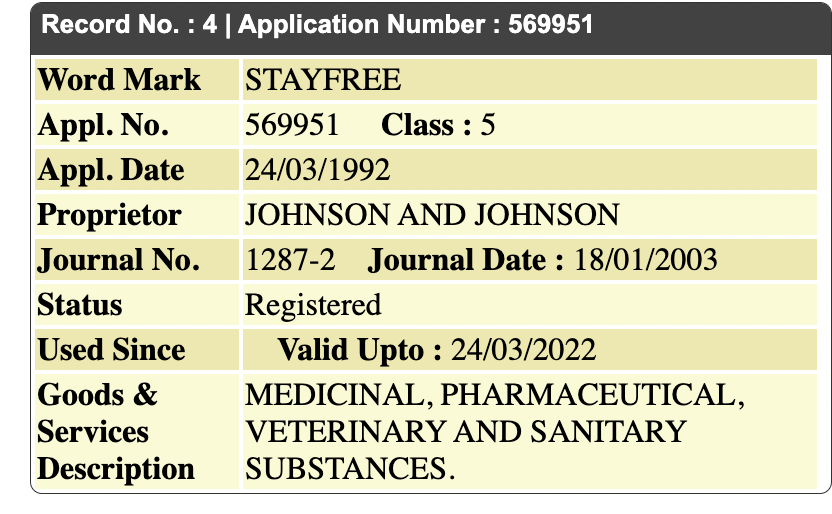
Download Now

Employee Bond Agreement

0

This article has been written by Nandini Mukati of SLFJPS, National Forensic Sciences University, Gandhinagar. This article provides detailed information about employee bond agreements, the need for such agreements and their enforceability with relevant case laws. 

It has been published by Rachit Garg.

Introduction

An employee bond agreement is a document that sets out the terms of a labour contract between an employer and an employee. This is meant to protect both the parties and provide standard terms to which they can agree either orally or in writing. The following discussion will briefly outline some of the key points contained within such agreements and how they are useful to employers.

What is an Employee Bond Agreement                

An employment bond is a document that includes all the terms and conditions of employment that have been agreed upon by both the employee and the employer. This type of contract agreement or bond usually specifies the minimum employment period and conditions, such as salary, job profile, and designation.

It is a legally enforceable agreement between an employee and his or her employer that if the employee leaves the company before the agreed-upon term, the employee will have to pay a certain amount to the company. This agreement is usually made when a new employee joins the company.

Need for the Employee Bond Agreement

When it comes to employing personnel, company bond rules are extremely crucial. An employment bond agreement is the fundamental contract between a corporation and an employee that outlines parameters for training and employer expenses in exchange for a specified time of work. An employee bond is a legal agreement that serves as legal proof that the employee accepted the company’s terms and conditions of employment and that if he or she disobeys the company’s policies in the future, appropriate legal action can be taken against the employee or the employee can be warned for not following the company’s policies.

Many sectors have made signing employment bonds a requirement. These agreements may contain the following information:

  • Rights of employees.
  • Employees may be subject to restrictions when they leave a company.
  • Penalties for leaving a firm before the bond period has expired.

In Sham Singh v. the State of Mysore (1972), the State of Mysore agreed to pay for his education expenditures in the United States of America in exchange for a bond. The condition for receiving such money was that he serve the State Government for at least 5 years after completing his studies. Another provision of the bond specified that if the student was not hired within six months of his return from the United States, the State of Mysore would be believed to have waived its right to claim his services. In the event of a bond breach, the Student was required to reimburse the Government for all expenses paid, plus interest. Requesting that employees sign bond contracts has become a well-known strategy for reducing employee churn. However, the law prohibits such contracts from being legally enforced. 

Employees are also aware of the situation. Which leads us to the most important question: “Do employment bonds work?” Companies can withhold critical collateral from employees under the guise of an uncompleted contract. Among them are full and final settlement and a letter of relief. Employees understand the value of a relieving letter, which may compel them to complete the bond time. Only a few will bargain with their new employer; nonetheless, they would like to avoid it if at all possible.

In the case of Superintendence of Company v. Krishan Murgai (1980), it was found that in a contract of restraint of trade, one party places a restriction on the other’s future liberty to carry on his trade, profession, or business in whatever manner and with whomever he chooses. A contract of this sort is initially void. But if it can be demonstrated that it is necessary from both the parties’ and the community’s standpoints, it becomes binding and valid. Such interests are valid since they protect the employer’s interests while causing no undue hardship to the employee, who will be paid a wage or pay for the period in question.

Conditions for a valid Employee Bond Agreement

  • The first condition is that the employee must have spent a significant period of time with the company. An employer cannot force an employee to work for him for a long period of time. The acceptable time period would fluctuate on a case-by-case basis depending on the firm and field of employment. To avoid being arbitrary or inappropriate, the length of the employee bond should be determined by taking into account the employee’s position, growth rate, replacement availability, and other criteria. An employee bond that enforces an excessive duration of mandatory work will be considered forced labour, subject to Article 23  under the Indian Constitution.
  • Second, in the event of a contract breach and termination, the compensation paid by the employee must be reasonable that it compensates the employer adequately, and not excessively, for the costs incurred as a result of the breach. In M/s Sicpa India Limited v. Shri Manas Pratim Deb (2011) and Satyam Computer Services Limited v. Ladella Ravichander (2011), the Delhi High Court and the Andhra Pradesh High Court, respectively, held that the employer’s compensation was excessive when compared to the costs of the recruitment process, training the employee, and hiring a replacement.

Is Employee Bond enforceable

Debate on the enforceability of an Employee Bond Agreement

The fundamental argument against the enforcement of employment bonds is that it violates the right to free trade. Employees who are dissatisfied with the clause say that it infringes on their freedom to practice a lawful profession, trade, or business under Article 19(1)(g) of the Constitution and Section 27 of the Indian Contract Act. This argument, however, falls flat because it conflates an employment connection with a non-compete agreement. The main difference between the two is that the former merely requires the employee to pay a monetary penalty if his or her contract is terminated prematurely, while the latter requires the employee to refrain from working for any other similar firm that competes with the employer. An employee bond cannot be viewed as a breach of either Article 19(1)(g) of the Constitution or Section 27 of the Indian Contract Act, as the employee’s ability to follow his or her trade or profession after cessation of employment is not impeded.

Legal perspective

The Employee bond agreement is a wonderful example of the Indian Contract Act of 1872. The employee cancelling the contract before the contract’s agreed-upon time period expires would be a breach of employment bonds.

The Calcutta High Court considered the scope of Section 74 of the Indian Contract Act in the context of a trainee in Subir Ghosh v. Indian Iron and Steel Company(1976). A condition in the contract required the trainee to serve the company for a given period of time and to pay a defined sum of money in the case of a breach. The High Court ruled that because the agreement provided for the payment of liquidated damages, it was unnecessary to allege or establish damages, and therefore, the management could sue to recover the liquidated damages.

The contractual condition in the employment agreement in Toshniwal Brothers (Pvt.) Ltd. v. E.swarprasad and Others (1996) required the employee to pay compensation to the employer if he left his position within three years. When the employee left his employment after fourteen months, he broke the contract. The Madras High Court ruled that the employer did not have evidence that he suffered losses as a result of the employee’s premature employment termination because the contract had an express employment bond clause. The employee was required to pay the compensation stipulated in the employment contract. Employee bonds are thus, prima facie enforceable under law, provided the other requirements of a valid contract are met, such as free consent, competent parties, legitimate object, lawful consideration, and not being specifically declared void.

Availability of remedies in case of  violation of an Employee Bond Agreement

According to Section 74 of the Indian Contract Act 1872, if a contract stipulates that a sum or penalty be paid in the case of a violation, the party complaining of the breach is entitled to obtain that sum or penalty from the defaulting party. The employer would file a complaint about the breach, and the defaulting party, the employee, would be responsible for paying the contract’s agreed compensation. 

If a question relating to the availability of any remedy for violation of employee bond agreement arises, the answer is the Gujarat High Court’s important judgement in the case of Sushilaben Indravadan Gandhi and Another v. New India Assurance Company Limited and Others (2019). In this case, Dr. Alpesh Gandhi, the late husband of the appellant, Mrs. Sushilaben Indravadan Gandhi, had signed a contract with the Rotary Eye Institute on May 4, 1996, quoted “Contract for Services as Honorary Ophthalmic Surgeon at Rotary Eye Institute.” The insured, the Institute, had purchased a “Private Car B” insurance from the New India Assurance Company Limited (the respondent), for which the Institute had paid an additional premium or had an endorsement of IMT-5 (the Insurance Policy). That insurance policy also provided for unnamed passengers other than the insured, who fell under the purview of the Workmen’s Compensation Act of 1923 and were entitled to 100 percent compensation in the event of death. The deceased, who was riding in a mini-bus owned by the Institute, suffered serious injuries and subsequently died as a result of the bus driver’s incompetent and irresponsible driving.

As a result, the Appellant filed a petition with the Motor Accidents Claim Tribunal under Section 166 of the Motor Vehicles Act, 1988, seeking compensation from the respondent, the Institute, and the minibus driver. The Tribunal found that the deceased’s employment arrangement with the institute was a “Contract for Service.” As a result, the deceased was not an employee of the institute. Therefore, the Tribunal ordered the respondent, the institute, and the mini-bus driver to pay Rs. 37,63,100/- in compensation, with interest at the rate of 8% per annum. Dissatisfied with the Tribunal’s decision, the respondent filed an appeal with the Gujarat High Court, which relied on the Insurance policy’s limitation of liability clause, which relieved the respondent of any liability to a third party because of the death occurred while the person was working for the respondent.

Alternatives to violation of an Employee Bond Agreement

Work-life balance

There’s an old theory that says you should get the most hours out of your employees. Employees may opt to work for another company if they have a better work-life balance. As a result, it’s a good idea to design policies that allow people to be effective at work while simultaneously fulfilling their personal obligations.

Structure the salary

Subtract a certain amount from the employee’s annual paycheck. If the sum is significantly higher, the employee may be forced to complete the term.

Compensation

According to the poll, compensation is a major determinant of attrition rates. The employer can pay the personnel at or above industry standards. In terms of expenditures, the increased wage will be far less than the cost of hiring and training new staff.

Growth Path

The number one reason people leave one employer for another is to pursue greater career opportunities. Employers must let employees see their progress more clearly as the modern workforce becomes increasingly impatient. Reducing attrition rates creates a clear and realistic growth path for all employees.

Leadership

There’s an old adage that “people leave managers, not jobs.” TinyPulse did a survey that corroborated this. According to the report, people choose jobs where they have enough freedom to accomplish their job and are constantly happier. Micromanagement, as a result, is a costly endeavour that should be avoided as much as possible.

Sample of an Employee Bond Agreement

This agreement made at _________ [PLACE] on the day of __________, 20___, between [employer’s name], a Company registered/ a corporation incorporated in [country-name] ,having its primal office at _______________________________[address], hereinafter referred to as the Employer and Mr./Ms._____________[EMPLOYEE NAME] , Indian Inhabitant/s / Non Resident Indian/s, currently residing at _____________ [name of city/address] hereinafter referred as Employee. The employee shall be bound to agree and abide by all the terms and conditions specified hereinafter and all other rules that may be framed by the employer periodically during the employment period of the employee. 

Employee’s job title / position : ___________________

Job location : ___________________

Duties and Responsibilities: As a [job role], the employee requires to perform the following duties and responsibilities: (1)— (2)— (3) — (4)— (5) any other duties that may arise periodically, or assigned to the employee, and is related to the employment of the employee Probation The first 3 months of employment shall be considered as the probationary period. Salary Scale (on monthly basis) : 

Basic : 

General Allowance : 

Medical : 

Educational Allowance: 

Vacation : 

During the employment period, an amount of ____ weeks per annum shall be entitled to the Employee as the vacation Working Schedule: Normal working days: , Days off: ,Working Hours:  Performance Reviews Performance reviews shall be conducted at least once a year and the written performance appraisal will be provided to the employee, followed by the review process and the discussion on every aspect of the assessment. 

Disputes: In case of any disputes regarding the employment, that cannot be amicably settled, shall be referred to the [name of the legal authority of the city] 

Termination: Either party may terminate this agreement upon the successful completion of the probationary period by giving a written notice of month to the other party. Any amendments made to the terms and conditions mentioned here, shall not be considered valid unless mutually agreed in writing and signed by both the Employer and the Employee. The employing company and its internal rules and regulations shall be governed if any terms and conditions are not specifically covered under this agreement. 

In witness whereof and acknowledging the acceptance of the foregoing, the Employer and Employee affix their signatures hereto. 

EMPLOYER ________________                                         EMPLOYEE ________________

COMPANY NAME                                                          [Name of employee]______________

TITLE: [TITLE NAME]_____________ 

Dated:  ______________ 

Mistakes to avoid while drafting an Employee Bond Agreement

  1. The term of the bond should not be unduly long.
  2. The payment bond cannot be more than the amount spent on the employee’s training and grooming.
  3. If you must take legal action, ensure you have sufficient proof of training and maintenance expenditures.
  4. Include a confidentiality clause that legally protects the company’s trade secrets if the employee leaves.
  5. Some companies make agreements with their employees that reward them with a lump sum payment if they decide to leave. It’s critical to realise that these agreements aren’t legally enforceable, and employees commonly disregard them.

Conclusion

The employee bond agreement is deemed reasonable because it is required to preserve the employer’s interests. However, the restrictions placed on the employee under the contract must be “fair” and “necessary” in order to preserve the employer’s interests; otherwise, the bond’s validity may be questioned. It considerably aids the firm in reducing losses resulting from frequent staff vacations. By enforcing the employment bond, the employee cannot be forced to work for any company. The only remedy accessible to the employer in the event of an employee breach of contract is to acquire an appropriate compensation sum. 

References


Students of Lawsikho courses regularly produce writing assignments and work on practical exercises as a part of their coursework and develop themselves in real-life practical skills.

LawSikho has created a telegram group for exchanging legal knowledge, referrals, and various opportunities. You can click on this link and join:

https://t.me/lawyerscommunity

Follow us on Instagram and subscribe to our YouTube channel for more amazing legal content.

Download Now

What is COMCASA

0
International law

This article is written by Shivi Khanna, a student of School of Law, Sushant University, Gurugram. This article is an attempt to understand COMCASA, its intricacies and its functions. The Agreement’s impact on India after its signing in 2018 is also examined.

It has been published by Rachit Garg.

Introduction

Taking into account the complex geopolitical situation with respect to international relations, navigating sensitive sectors such as defence and national security can be challenging. The US had come up with the General Security of Military Information Agreement (GSOMIA) as a measure to meet this challenge of building an efficient defence network with its allies. The Communications Compatibility and Security Agreement or COMCASA (hence referred to as the Agreement) is the successor of the GSOMIA and is India-specific. 

The COMCASA is merely one agreement in the chain of agreements that the US has come up with to build on its interest in the Asia-Pacific region. The BECA (Basic Exchange and Cooperation Agreement) and LEMOA (Logistics Exchange Memorandum of Agreement), are examples of the other agreements the US uses to tie up with its military partners. The main purpose of COMCASA is to facilitate military relations, communications and the exchange of valuable technologies. When it comes to maintaining diplomatic relations, the intricacies of each partner, such as the culture, history, language, etc. need to be taken into account.

Background of the COMCASA

As the successor to GSOMIA, the COMCASA in its inception was targeted toward India and was signed on September 6th 2018. The signing representatives of India and the US were Union Defence Minister Nirmala Sitharaman, India’s External Affairs Minister Sushma Swaraj, US Secretary of State Michael Pompeo and Secretary of Defence James Mattis, respectively. 

At the time of signing in 2018, the two signatories to the Agreement – India and US – issued a joint statement, that COMCASA would:

  • Make India’s access to its US-origin defence systems and platforms more efficient and easier to use.
  • Sensitive information with respect to national security would remain confidential and protected.
  • Communications between the two countries’ militaries would become more optimised, including the setting up of hotlines between the diplomatic and external affairs departments of both countries.
  • Furthermore, any data generated from the processes facilitated by the COMCASA would be sufficiently restricted. Transfer of this sensitive data to any other source would not be permitted without India’s consent.

The Agreement also paved the way for India to purchase certain weapons, such as combat drones, from the US military. The US also gained a certain degree of confidence in selling the defence systems to India after signing the Agreement. At the same time, there was also a guarantee that sensitive information connected to national security would not be leaked out beyond the two parties to the Agreement. The platforms facilitated by COMCASA also allow secure communication with other countries using US-origin platforms and systems.

Factors that delayed the signing of the COMCASA

The following factors led to hesitancy or delays before the signing of the COMCASA in 2018:-

  • US restrictions on Iranian crude oil The US had been imposing sanctions on countries that have dealings with Iran, with the goal of reducing the large number of countries that purchase Iranian crude oil to nil. On the other hand, India had been using Iranian crude oil regularly, and it was one of the primary pillars of India’s energy market. With the unyielding attitude of the US towards Iran, and India’s concerns with respect to its national energy security, there was a significant amount of diplomatic friction. This friction over the Iranian oil issue became one of the obstacles to the signing of the COMCASA. It must be understood that the COMCASA would proceed to tie the two countries for the next ten years, hence, the signing of the COMCASA was definitely not a light matter.
  • US restrictions on Russian missiles – The US also imposed sanctions on countries dealing with Russia. Around the time of signing the COMCASA, India was also parallelly in discussion with Russia regarding the purchase of the S 400 defence missile system. Moreover, India had been a long-term ally and partner of Russia since the time of Prime Minister Jawaharlal Nehru. Ultimately, India had to consider its position in the context of its existing allies and partners, and the demands of the US. Weighing the gains and losses at the time also became a source of hesitancy for India on whether to go ahead and sign the COMCASA with the rigid US.
  • Third party access to Indian data – One of the most important concerns and a major obstacle to the COMCASA was the heavy scepticism regarding the guarantee of confidentiality promised by the US. This is because the COMCASA would entail the exchange of sensitive military information and its leakage to a third party or any other unscrupulous source would lead to a threat to national security. The COMCASA had the potential to be both – an opportunity or a pitfall. The COMCASA opened up an incredibly advantageous opportunity for India to expand its global network, update its backward military technology and establish its presence in the global arena as a partner recognised by the US. However, the COMCASA also opened up a backdoor into India’s database, leaving a hidden danger in case the data was leaked to India’s opponents.

Foundational agreements other than COMCASA

The foundational agreements (including COMCASA) form the foundation or rather the bedrock of the US-India defence partnership. These agreements cover different facets of the military cooperation between India and the US, however, they also share many common points, such as the need for confidentiality, and are tailor-made to fit the Indian scenario. In order to understand the role and functions of COMCASA, it is also important to examine the functions and inter-linkages it has with the other foundational agreements.

Now, let us have a look at each of the foundational agreements. 

What is GSOMIA

The GSOMIA or the General Security of Military Information Agreement was signed between India and the US on 17th January 2002. The main objective was to regulate and promote the exchange of sensitive military information between the two countries. The COMCASA is the successor to the GSOMIA and contains  more in-depth provisions to facilitate and regulate communications between the India and American militaries.

What is LEMOA

The LEMOA or the Logistics Exchange Memorandum of Agreement is a version adapted from the original LSA or Logistics Support Agreement. Both, the LEMOA and COMCASA have been adapted from their original templates to fit in with the Indian scenario. The LEMOA was signed on 29th August  2016, two years before COMCASA. The LEMOA was also the first of the foundational agreements to be signed.

Logistical tasks such as refuelling and resupplying are crucial aspects of any military activity or exercise. The LEMOA facilitates the process of providing logistical support from one military ally to another. Supplies include the basics such as food, water, clothing medicine etc. Similar to the COMCASA, the LEMOA caters specifically to India. Therefore, the task of providing logistical support to each other falls to the Indian and US militaries, respectively. Instead of dealing with this exchange of strategic supplies and resources on an ad-hoc or case-by-case basis, the LEMOA has given a formal structure and integrity to the process, which includes the payment aspect. India does have a history of supplying the US military from time to time, therefore, this Agreement is not a deviation or some conspiracy by the US to subtly concert India into a supply base as has been alleged by interest groups.  Unlike the airforce and army, the navy has a higher need for refuelling and resupplying. The LEMOA has, therefore, allowed the navy to become relatively more unfettered and stable in fulfilling its objective of protecting national security.

What is BECA

The BECA was signed on October 27, 2020 and became the last agreement to be signed among the 4 foundational agreements. The BECA or Basic Exchange and Cooperation Agreement is an Agreement between the US Department of Defence and the Indian Ministry of Defence. The BECA focuses on the exchange of unclassified information obtained from satellites, such as nautical maps, aeronautical charts, gravity fields, etc. Moreover, there are also provisions for the exchange of classified information which is used by weapons such as missiles and combat drones. This exchange of classified information is also protected from leakage to a third party. Through the BECA, India can gain access to hardware and software from the US, for instance, the necessary technology and data for controlling certain missile systems.

Similarities between the COMCASA, GSOMIA, LEMOA and BECA

The four foundational agreements – GSOMIA (2002), LEMOA (2016), COMCASA (2018) and BECA (2020) are agreements which are India-specific and regulate the military cooperation between India and the US. The usual trend for the past few decades has been the US preferring to sign military cooperation agreements with North Atlantic Treaty Allies (NATO allies), and major powers in the Asia-Pacific region such as South Korea, Australia, etc.

The four foundational agreements cover a wide array of factors with respect to military cooperation and communication. They cover exchange of information, military technologies, cooperation, communications, logistics, etc. It is due to the existence of these agreements that India and the US can be formally called ‘defence partners.’ These agreements also formally and legally bind the two countries to their obligations to each other as per the terms of the agreements.

Maintaining confidentiality and preventing leakage of intelligence is a universal feature of the agreements. The agreements also lend some legitimacy to allow the US to act more freely in the Asia-Pacific region with the pretext of keeping China in check.

Difference between the COMCASA, GSOMIA, LEMOA and BECA

  • The COMCASA is an agreement focused on technology and communication of real-time information, most used in defence and national security sectors.
  • The GSOMIA was signed before the COMCASA and was signed between India and the US in 2002. It deals with military intelligence exchange between the US and India.
  • The LEMOA is focused on the logistics aspect and cooperation of the countries’ militaries.
  • The BECA is focused on the exchange of geographical and satellite information.

What is COMCASA : an overview

The COMCASA is one of the many milestones on the long road to further developing India-US relations as partners and military allies. In a way, the COMCASA has become the bedrock upon which the militaries of the two countries can securely exchange and communicate sensitive information. Improving national security, capturing international criminals, pirates, smugglers, etc. in an efficient way through communication and cooperation, are some of the advantages of the COMCASA. The COMCASA from its date of signing in 2018 is supposed to be valid for a decade, i.e. its term lasts till 2028.

The COMCASA essentially creates a net that makes it easier to capture crucial, sensitive information in real-time by providing a safe and efficient platform for communication between allies (India and US). The applications of COMCASA have been tested through joint military exercises between India and US. The legal implications of COMCASA give the two countries the confidence to share sensitive information and also increase the trust and cohesion between their respective forces. The main advantage of the technology supported by the COMCASA is the fact that it allows real-time transfer of data between parties, improving combat strategies, facilitating strategic and tactical decisions, and improving battle awareness. The key factor in this Agreement is ‘interoperability’ between Indian and US militaries promoted through the use of sensitive communication technology and platforms.

The COMCASA and associated technologies have wide ramifications when examined in light of national security. For instance, if the US was to discover the entry of international war criminals into India through the borders, then the US could effectively pass on this intelligence to the Indian forces through these technologies.

The US platforms for exchanging encrypted information include – C17, C130, and P81. Obtaining real-time intelligence via the US channels is also significant to India, as it allows the latter to monitor and keep in check its neighbours such as China and Pakistan.

Significance of COMCASA

The following aspects highlight the importance of the COMCASA in simple terms :

  • With the rapid development of military technology and weapons, it has become essential for India to keep up with the times and foreign competitors. To ensure national security and prevent its defence from crumbling in the face of foreign threats, updating its technical arsenal has also become a necessity for India.
  • Promoting appropriate cooperation and communication between India and its defence ally US, especially with respect to joint military endeavours, is one of the main objectives of the COMCASA. Improving the ‘interoperability’ between the two countries’ militaries is conducive toward increasing efficiency and effectiveness.
  • The needs for updated technology and systems is especially true when it comes to the significance of sensitive information. The COMCASA is an avenue through which the Indian military can access real-time information on its neighbours (Pakistan and China) through the US platforms. The COMCASA also affords opportunities for India to communicate with partner countries such as Japan, Australia through the US’ platforms.
  • The guarantee of confidentiality is accorded legal protection through the COMCASA. Therefore, India does not need to be too reticent in availing the benefits of the technologies and platforms of the US as the latter cannot share this information with a third party without India’s consent. US military platforms available to India under the COMCASA include – C-17, C-130, etc.
  • On the other hand, the COMASA also allows the US a degree of security when providing India with access to its military technology and systems. As defence and military are inherently sectors which hold national importance, the US would not have been comfortable with allowing India to avail their technology and know-how without ensuring sufficient security and benefits for itself.
  • However, the COMASA does not mandate that India must acquire and buy military equipment only from the US. For instance, if India decides to purchase military equipment from another country in the future, this does not mean that the US can impose restrictions or bans on India with respect to the COMCASA. India had already ensured full access to the available military products from the US before it signed the COMCASA. Therefore, the US cannot hold the COMCASA as leverage over India and avail undue benefits.

Important clauses of the COMCASA 

As COMCASA is an important strategic and military agreement between the two countries, in-depth information is not available to the general public. However, like other international agreements, it essentially has to have the following clauses :

  • Preamble – talks about the objective of the agreement, a summary of the intentions of the parties in signing the agreement.
  • Details of the parties – here the parties are India and the US.
  • Date of effect – the date from which the agreement comes into force and becomes binding on the parties.
  • Confidentiality clause – any sensitive military information belonging to India that the US comes across during the exchange of information, technology and communication cannot be leaked to a third party without India’s consent.
  • Obligations of parties – the specific duties and liabilities of the parties (India and US) with respect to the agreement.
  • Effect of the agreement – the intended effect of the agreement on the respective sectors mentioned in the agreement, communication and technology, with respect to the parties.

Effect of COMCASA on India

India has retained a reserved character, often opting for a wait and see approach when confronted with anything controversial or progressive. Indeed, the COMCASA has been a controversial step for the Indian Government and has been the object of criticism from various interest groups. The conservative stance adopted by India is in part also a colonial legacy. A legacy that can also be seen to have influenced India’s choice to opt for non-alignment during the Cold War. The decision to sign the COMCASA is a somewhat bold move, in that India is finally actively and aggressively attempting to carve out its place in the complex international arena. The COMCASA draws India closer to the US in a military alliance but also poses the risk of alienating Russia. The COMCASA – is both indicative of the changing progress of India on its path to becoming a developed nation, and also a sign of the increasing pressure it faces in the highly competitive geopolitical diplomatic scenario.

Besides playing a role in enhancing the defence mechanisms of India, the COMCASA also has other effects which influence major strategic sectors :

  • Creating a stronger bond and partnership between India and the US.
  • India’s taking on a more progressive, wider outlook with respect to its international relations with other countries, such as those countries also using US-origin platforms (Japan, Australia etc.).
  • The initiatives and plans to get into co-production of high-end technologies between the two countries.
  • India’s possible advancement in the field of nuclear power through support from the US.
  • Keeping neighbours like China and Pakistan in check.
  • Establishing India’s presence in the international arena, and developing a wider array of connections through US channels.

The final and overall impact of the COMCASA can only be objectively and holistically judged when the term of the Agreement comes to an end in 2028. However, currently, at the time of writing this article, there seem to be no major problems.

Possible concerns with respect to COMCASA 

The following concerns have been raised with respect to the COMCASA between India and the US :

  • Various interest groups in India raised objections to the US having such a large influence on India’s defence sector. COMCASA was viewed as an infringement on Indian sovereignty.
  • The US has an influence on India’s decisions with respect to nuclear powers. This is also a major concern.
  • Due to historical and other considerations, the conservative nature of Indian stakeholders and interest groups led to a lot of protest and scepticism against the signing of the COMCASA. The internal political strife was one of the negative influences of the COMCASA. 
  • Despite guarantees and assurances, the risk of having sensitive information with respect to India’s military, leaked to third parties has always been a major concern.
  • There is also a very real danger of the US secretly infiltrating India’s military systems and gaining access to strategic information.
  • Developing such close ties with the US could also impact the military and trade deals that India already has with countries like Russia and Iran, respectively.

Future prospects after signing COMCASA

Since the time of the Obama administration, the US has been focused on stirring up the Asian geopolitical field as a major player. The signing of the GSOMIA or the General Security of Military Information Agreement in 2002, and roping in India into the Defence Technology and Trade Initiative, the US has step-by-step laid the foundation for further cooperation with India. One of the core reasons behind the 4 foundational agreements – including BECA, LEMOA and COMCASA is to check Chinese expansion and ambition.

However, despite the mutually beneficial agreement, where both India and US draw benefits from COMCASA, there are also undercurrents below the seemingly flawless cooperation. The US has imposed sanctions on India in the past due to the latter’s trade of oil with Iran. There is also the awkward position of India as an important defence partner of Russia while building stronger relations with the US on the side.

This is in a way a gradual process that the US has engaged in to get India more comfortable with such bilateral cooperation. The COMCASA is just one of the milestones on the US road to consolidating the position of its allies and military network, whereas India as a developing country also benefits from the arrangements.

Important developments after signing of the COMCASA

The COMCASA’s main objective is to enhance the ‘interoperability’ between the militaries of both countries. As mentioned before, the COMCASA provides the medium and technology for cooperation and communication between both countries. This cooperation can be seen in the form of joint exercises, combined efforts towards humanitarian aid, etc.

Since the signing of the COMCASA in 2018, the following developments have taken place:

  • In September 2019, the 15th iteration of Youth Abhyas was held in Washington, USA.
  • In November 2019, the first tri-service bilateral exercise – ‘Tiger Triumph.’
  • Increased communications and consultations with armed forces and officials of Japan, Australia, USA.
  • Indian navy’s participation as part of UNAFRICOM’s Cutlass Express exercise.
  • India and the US have also made efforts towards cooperating in developing joint Africa peacekeeping forces.

Exchanging intelligence, technologies, military hardware and building tacit cooperation between the countries’ militaries is due to the diplomatic policy of the US about increasing its strategic presence in the Indo-Pacific. This policy of the US is also in line with India’s needs, as the presence of the US is a significant deterrent to Chinese aggression. 

Contrast in the way the US and India approach military technology

The US has always taken a more rigid and strict approach when it comes to safeguarding its military technology, to maintain the strategic and tactical advantage when it comes to its military technology. Toward this end, the US has adopted the method of enacting strict legislation to control the outflow and leakage of classified information. The US assigns a certain level of security classification depending on the nature, strategic importance etc. of the intelligence, establishments and entities under it. 

If an official does not possess the corresponding security clearance then it is impossible for them to gain access to restricted information and files. When officials with a higher level of security clearance find it necessary to share information with those people who are at a lower level, the former must be careful about measuring their words and not revealing more information than they are meant to. Overall, the US defence and security sector prioritises the safeguarding of sensitive information. On the other hand, India does not have a history of taking stringent measures when it comes to safeguarding its military technology.

The way forward 

In order to deal with the increasingly volatile relations between India and its neighbours (China and Pakistan), the COMCASA has been a key instrument in tightening the bonds between India and the US as ‘defence partners.’ The subsequent signing of the BECA in 2020 was also influenced by the turbulence at Galwan Valley.

However, the US restrictions and scruples when it comes to India’s ties with allies like Iran and Russia continue to be an arena for diplomatic negotiation and compromise. Questions regarding India’s sovereignty and conservative character are very much relevant with respect to the current scenario. Moreover, the signing of the COMCASA in 2018 and the signing of the BECA in 2020 show a positive trend toward India opening up and expanding its avenues with respect to cooperation, as well as solidifying its national security measures.

Conclusion

As a region that can be regarded as a melting pot of cultures, ethnicities, trade, commerce and politics, ever since the last few decades, the Indo-Pacific region has grown in strategic importance. The defence partnership between the US and India is also due to the US’ recognition of the significance of the Indo-Pacific region and all the possibilities it holds for the future. The threat of China’s expansion has also led to India and the US jumping on the same bandwagon. Although building deeper ties with the US, especially in a sensitive sector such as that of national security, the Indian government has faced a lot of opposition, the signing of the COMCASA is indeed a sign of progress. 

The COMCASA is symbolic of India shifting away, no matter how minutely, from its conservative and closed-off political character. Partnering with the US has also opened the gateway to forging deeper connections with other key players in the international geopolitical arena, such as Australia and Japan. Gaining access to the wide intelligence database of the US and the real-time information has also bolstered India’s defence technology which had been relatively lagging behind the rest of the developed countries. Although leakage of sensitive information outside India and the US is a concern, the COMCASA serves as the greatest guarantee in assuring India that its information is protected. Depending on the policies and development of international relations henceforth, the COMCASA may just be the start to even greater cooperation and partnerships, with a complex and wide scope.

References

  1. https://www.shaan.academy/blog/communications-compatibility-and-security-agreement-comcasa
  2. https://thediplomat.com/2018/09/comcasa-another-step-forward-for-the-united-states-and-india/
  3. https://theprint.in/defence/the-3-foundational-agreements-with-us-and-what-they-mean-for-indias-military-growth/531795/
  4. https://www.jstor.org/stable/48636718?read-now=1&refreqid=excelsior%3Aa13125e4c77d9d21ced3edf4ab5cdb1d&seq=10 

Students of Lawsikho courses regularly produce writing assignments and work on practical exercises as a part of their coursework and develop themselves in real-life practical skills.

LawSikho has created a telegram group for exchanging legal knowledge, referrals, and various opportunities. You can click on this link and join:

https://t.me/lawyerscommunity

Follow us on Instagram and subscribe to our YouTube channel for more amazing legal content.

Download Now
logo
FREE & ONLINE 3-Day Bootcamp (LIVE only) on

How Can Experienced Professionals Become Independent Directors

calender
28th, 29th Mar, 2026, 2 - 5pm (IST) &
30th Mar, 2026, 7 - 10pm (IST).
Bootcamp starting in
Days
HRS
MIN
SEC
Abhyuday AgarwalCOO & CO-Founder, LawSikho

Register now

Abhyuday AgarwalCOO & CO-Founder, LawSikho