
Download Now
Home Blog Page 307

All you need to know about a Power Purchase Agreement

0

This article is written by Vihanka Narasimhan, currently studying law at Jindal Global Law School, O.P. Jindal University. This article attempts to explain the concept of power purchase agreements in India and around the world. A comprehensive understanding of the subject matter, historical significance, legal provisions, advantages and limitations of power purchase agreements have also been discussed in this article.

This article has been published by Sneha Mahawar.

Introduction 

Electricity is an essential element for the socio-economic development of a country. It is crucial for every institution, be it a business, a school, an office or a hospital; all of them having different energy needs. For example, a hospital may not require as much energy as a factory. It is in these situations that the use of power purchase agreements can be seen to bridge the gap between the demand for and availability of electricity. Such a demand is met with large capital contributions by private companies that pose as a consumer and the government who is a supplier. Traditionally, the agreement between these parties results in a power purchase agreement. In a nutshell, a power purchase agreement can be simply understood as a legal contract between an electricity generator and a power purchaser.

Definition of a Power Purchase Agreement

A power purchase agreement which is also known as a PPA can be defined as a long-term electricity supply agreement between two parties, usually between a power producer and a customer who can be a consumer or trader of that electricity. The agreement stipulates conditions such as the amount of electricity to be supplied, the negotiated prices for the time period, accounting formalities, and penalties for non-compliance among many other things. A power purchase agreement is a bilateral agreement which makes it inclined to variability in each case as it is tailored to the needs of the customer. Generally, electricity can be supplied physically (physical power purchase agreement) or on a balancing sheet (virtual power purchase agreement). The motive of this agreement is to protect the consumer from market price hikes resulting from energy, ultimately resulting in reduction of investment costs associated with planning or operating. The provider on the other hand benefits from a study flow of financial income. In India, central and state utility power purchase agreement’s contractual terms last for 25 years, whereas nascent private power purchase agreements are around 5-10 years. The following is how a purchase agreement starts:-

“This Power Purchase Agreement (PPA) is executed on___ (date), ___(month),____ (year) at < location> between _________ Authorized representative of Purchaser < i.e. Government Organization, PSU and Offices > (detail address), (hereinafter referred to as “Purchaser”) AND M/s (Name of Power Producer) (CIN No. ______________), a company incorporated under the Companies Act, 1956/2013 having its registered office at _________________ (detail address) (hereinafter referred to as “Power Producer” which expression shall, unless repugnant to the meaning or context hereof, be deemed to include its successors and assigns). The Purchaser and Power Producer are each individually referred to as a “Party” and collectively as the “Parties”.”

Reasons to enter into a Power Purchase Agreement

There can be many reasons that urges a business to enter into a Power Purchase Agreement. The most common ones have been listed below:-

  1. For a business, management of energy can prove to be very tedious either due to a lack of expertise or limited resources. In such a scenario a business can opt to enter into a power purchase agreement as the next best alternative to investing and managing energy. The businesses with energy requirements are commercial and industrial customers with little to no technical expertise. 
  2. A business can only be successful when financial aspects are taken into consideration with the future in perspective. In such a scenario a business can opt to enter into a power purchase agreement as a safeguard against energy price hikes in the future and even result in a study supply of energy for renewable energy projects.
  3. A business can have an agenda to shift towards a cleaner source of energy. This change may arise out of environmental consciousness or simply as a tool for fulfilling a business’s Corporate Social Responsibility (CSR) criteria. In the case of the latter, it is generally targeted towards clients, employees, shareholders, banks and governments for gaining goodwill.
  4. A business is run on profits and power purchase agreements are financial drivers. A business might consider entering into a power purchase agreement to mitigate potential business risks arising out of energy needs and may even help reduce the financial burden by saving on energy bills.

Types of Power Purchase Agreements

There are mainly two types of power purchase agreements. They have been discussed below:-

Physical Power Purchase Agreement

A physical power purchase agreement can be defined as a contract that allows the purchase of power or energy from a particular energy generator (also known as the seller) to a purchaser of that energy (also known as the buyer). In such an agreement, the buyer is entitled to the physical delivery of (or title to the) electricity through a source which is known as a grid. In general, physical power purchase agreements are entered into from anywhere between 10 and 20 years. The agreement stipulates various terms and conditions of sale of energy between the buyer and the seller such as the amount, charges, payment and termination of the power supplied. In a nutshell, a physical power purchase agreement is basically a long-term contract between the buyer and seller of the energy wherein the seller is held liable for the risks involved in owning and operating the system which provides energy. Such a system can be either on the buyer’s property (on-site) or off-site. It is essential to note that physical power purchase agreement can be of two types: –

On-site Power Purchase Agreements

Power purchase agreements are considered to be “on-site” in a situation wherein the source of energy production equipment is installed on a buyer’s location. In this case, the seller is responsible for the funding, installment, operation and maintenance of such equipment and the buyers merely act as a host to such equipment whilst availing its benefits. For example, in case a business agrees to set up solar panels on its site of operation. This would aid the buyer to obtain protection against increasing energy prices which is definite to happen in the future and also help in obtaining fixed energy prices for the duration of the contract in exchange for equipment setup.

Off-site Power Purchase Agreements

Power purchase agreements are considered to be “off-site” in a situation wherein the source of energy production equipment is not installed on a buyer’s location. They however can be physical in the sense that the source of energy is supplied from the seller’s facility located in a nearby area in accordance with the contract. This type of agreement is useful, particularly for businesses which do not have the resources to install and employ the equipment required to produce energy. Further, it is suitable for businesses who wish to have various energy options to choose such as solar, wind or thermal.

Virtual Power Purchase Agreement

Virtual power purchase agreement is alternatively known as a financial power purchase agreement. As the name suggests, it can be described as a financial contract between the buyer and the seller by the means of exchanging a fixed-price cash flow for a variable-priced cash flow and renewable energy certificates (RECs). This type of power purchase agreement does not include the physical delivery of power and is rather sourced from traditional channels. Basically, the power is sold on the wholesale electricity market at a defined location and the buyer fulfils his energy on the basis of providing a fixed price (which is agreed upon between the buyer and the seller) for each unit of power produced.

Comparison between Physical Power Purchase Agreement and Virtual Power Purchase Agreement

From the above discussion, one can figure out that both the physical and virtual power purchase agreement provides businesses with many benefits with regards to cost-effectiveness and energy efficiency, sometimes also being eco-friendly in nature (in case of use of renewable energy), it is, however, crucial to note that there is a key difference between both of them. They have been elaborated in brief in the table below:-

BasisPhysical Power Purchase AgreementVirtual Power Purchase Agreement 
Type of AgreementIt is physical in nature and is hence a purchase agreement.It is financial in nature and is hence a monetary agreement.
SuitabilityIt is most suited for businesses that have a concentrated electricity load.It is most suited for businesses that have a distributed electricity load.
LocationThe location of the business is a significant criterion as it is essential for the buyer to be located near the source of the energy facility.The location of the business is not a significant criterion as this method can be used to source energy with the aid of traditional channels.
Additional costsThere may be an initial cost of setting up involved in a situation where the buyer decides to install the power equipment on-site for energy consumption. The buyer bears no setup cost as the contract is financial in nature.
RisksOnly one source of energy is available which can prove to be disadvantageous in case there are technical issues with the source equipment.It is possible for the business to observe wholesale power prices to expect a fall into negative values during periods of low demand.

Historical background of Power Purchase Agreements in India

In India, the inception of power purchase agreements started with the amendment of the Electricity Act of 1910. The amendment took place sometime around the time India underwent the process of globalisation which required the country to open its gates to the foreign market. The Indian government observed that the electricity sector started to become a subject to privatisation and foreign investment and introduced an incentive that provided a five-year tax holiday for new projects in the power sector and a guaranteed 16% return on foreign investment. This, however, was unsuccessful as most companies struggled with achieving closure for their energy projects, despite having obtained most of the other required clearances. Apart from this, the incentive was a massive failure as there were major delays finalising power purchase agreements and even if the projects were approved the cost of energy estimated for the projects were sky-high.

In order to tackle all these problems, the government introduced the electricity bill in the year 2000 which allowed for major changes in form of delicensing generation and permitting power trading. The main aim of the Bill was to encourage power reform by providing the states flexibility in terms of allowing them to choose models which they deemed was suitable. Another aim here was to ensure that the market is competitive. This was achieved by setting up Power Trading Corporation (PTC) which at the time was visualised as a medium where power could be traded wherein PTC purchased power from mega power projects and sold it to different states. The government took this step to ensure that there was no monopoly in the sector and as a provision to permit others to acquire licences and trade in power. The government had aspired to add 100,000 MW of power capacity in the next 12 years which at that time was equivalent to would be equal to the total power produced in the last 53 years.

The aim however proved to be too ambitious and it was decided that in order to achieve the set target, the encouragement of the private sector to contribute towards the power sector was necessary. This decision led to the present legislation of ‘the Electricity Act, 2003’ which was passed on 10th June 2003. The Act aimed at introducing competition to the power sector by allowing de-licensing of thermal generation, open access in transmission, open-access of the distribution network in phases, multiple licensing in distribution zones and de-licensing of rural electricity supply. Basically, this Act aided in the delicensing of generation of power in India by opening the market of electricity generation to private players opening the gates to power purchase agreements.

Legal provisions of Power Purchase Agreements in India

In India, electricity is a ‘concurrent’ subject that comes under the purview of Entry 38 List III implying that the power sector is handled by both the state and the central governments, allowing for enactment rights to both governments in this regard. The central government usually takes care of the policy framework while the state governments concentrate on specific issues. Currently, the power sector is being governed by the Electricity Act, 2003 which has been described as “An Act to consolidate the laws relating to the generation, transmission, distribution, trading and use of electricity and generally for taking measures conducive to the development of electricity industry, promoting competition therein, protecting the interest of consumers and supply of electricity to all areas, rationalization of electricity tariff, ensuring transparent policies regarding subsidies, promotion of efficient and environmentally benign policies, the constitution of Central Electricity Authority, Regulatory Commissions and establishment of Appellate Tribunal and for matters connected therewith or incidental thereto.” Section 49 of the Electricity Act, 2003 deals with an agreement for the purchase and supply of electricity. Further, the government after abolishing Section 5 of the Electricity (Supply) Act, 1948 has made it mandatory in the current provision for all State Electricity Boards (SEBs) to unbundle into separate generation, transmission and distribution entities. As per Electricity Act, 2003 state electricity board has to be unbundled and make it into three companies that are recognised under the Companies Act, 2013. They can engage in the generation, distribution and transmission of power.

Essential clauses to take care of while drafting a Power Purchase Agreement

It is very evident from the discussion up until now that power purchase agreements have become a huge deal in the Indian ecosystem which calls for a meticulously drafted power purchase agreement. The following are some of the essential elements that are bound to be included in a power purchase agreement: –

Definitions

Power purchase agreements are highly complex in nature. This makes it essential that all the terms specified in the agreement have been defined in a simple language for mutual understanding of all the parties involved. This is mainly done so as to avoid confusion or any sort of complication with respect to the arrangement. Most of the power purchase agreements contain ‘Definitions and Interpretations’ as the first clause, this however can also be attached in the annexure to make the document brief and easy to understand.

In a power purchase agreement, the following can be treated as examples: –

““Power Purchase Agreement” or “PPA” : The PPA is the Power Purchase Agreement entered between the REPD and NDMC for the purchase of the power generated by the Project and purchased from the REPD by the NDMC.

“Unit Commercial Operation Date (UCOD)” : shall mean the actual commissioning date of the respective Unit(s) of the Project where upon the REPD starts supplying power from the Project to the Delivery Point

“Metering point” : metering is to be conducted at the Delivery Point where the power, provided by the REPD for purchase by the NDMC

Length of the agreement

The determination of the length of the agreement is crucial while getting into a power purchase agreement. They are usually long-term commitments spanning approximately from 15-25 years between the parties involved. This clause will provide details with respect to the agreement’s date of commencement, tenure of the agreement, provision in case of early termination, and survival.

In a power purchase agreement, the following can be treated as an example: –

“This Agreement shall be valid for a term commencing from the Effective Date until the Expiry Date (“Term of Agreement”), unless terminated earlier pursuant to Article ____. Upon the occurrence of the Expiry Date, this Agreement shall, subject to Article ___, automatically terminate, unless mutually, extended by all the Parties on mutually agreed terms and conditions, at least ninety (90) days prior to the Expiry Date, subject to the approval of the Electricity Regulatory Commission.”

Fulfilment of subsequent conditions

When a buyer and a seller enter into a power purchase agreement, generally in order for the commencement of the said agreement it is mandatory that certain conditions are fulfilled by the buyer as well as the seller. These conditions are to be fulfilled in a stipulated period which is usually 12 months or more. The conditions vary from agreement to agreement due to its flexible nature. The most common conditions are obtaining all permits, getting approval from the government, sending notices to the contractor, etc. In case of non-compliance by either party, damages have to be paid as compensation to the other party. Apart from this, it is crucial to note that this clause also includes any amendments and/or joint responsibilities of the buyer and the seller which would be subject to legal consequences in case of non-fulfillment.

“Satisfaction of conditions subsequent by the Seller

The Seller agrees and undertakes to duly perform and complete the following activities at the Seller’s own cost and risk within ____ months from the Effective Date:

[List of activities] 

Satisfaction of conditions subsequent by the Procurer

The Procurer agrees and undertakes to duly perform and complete the following activities at the Procurer’s own cost and risk within ____ months from the Effective Date:

[List of activities]”

Power supply

This is indisputably the most important part of the agreement. Basically, the person who is selling or producing the power grants permission to the buyer to make use of it in accordance with the PPA. Further, this clause also specifies the type of power purchase agreement the involved parties are entering into. It can vary from being an on-site PPA, off-site PPA or even a virtual PPA. 

In a Purchase Power Agreement, the following can be treated as an example: –

“Commencement of Supply of Power to Procurer 

According to the terms of this Agreement, the Seller is responsible for supplying power up to the aggregated contracted capacity by the scheduled delivery date, which is [DATE]. The Seller and the Procurer may, however, mutually agree to begin supplying power in stages beginning on the Revised Scheduled Delivery Date.

The Seller shall give the Procurer at least ____ days written notice of the date on which it intends to commence supply of power.”

Charges for Available Capacity and Output 

It is important to keep in mind that the charging process is a pass-through agreement. A pass-through arrangement can be understood as an arrangement between the contracting authority and service provider for a fixed rate in accordance with the employer’s contribution rate. If this amount varies, the service provider can recover the amount of any increase from the contracting authority through an adjustment to the contract price. In a nutshell, the availability fee can be seen on the basis of availability of power in the power plant and on the other hand, the variable charge can be seen on the basis of the amount of power delivered. The purchaser wants guarantees for long-term output from the project and so the producer will levy an availability charge, which typically is the minimum that it will be paid, provided that the plant can be shown to make sure power is available.

In a power purchase agreement, the following can be treated as an example: –

Allocation of Generation Capacity

The Seller shall provide ___ % of the Power Station’s Net Capacity to the Procurer as per the terms of this Agreement. 

Availability 

The Seller must adhere to the provisions of the relevant Law relating to Availability, including, in particular, the provisions of the Code relating to declarations of Availability and related matters.”

Details on Billing and Payment

This clause in the power purchase agreement provides clarity with regards to details involving the payments and billings arising out of the agreement. The clause covers contents such as the mode of payments, the cycle of billing, delivery of bills, payments that have already been made (prepayment) and/or due date to make payments in the future (deferred payments). This clause can further also provide for a provision which discusses the charges arising out of fluctuation in the prices and/or any additional charges to be paid.

In a power purchase agreement, the following can be treated as an example: –

General

For the commencement of supply, the Procurer shall pay the Seller the monthly Tariff Payment, consisting of Tariff for each Contract Year, calculated in accordance with this Article ___ and Schedule ___, on or before the Expiry Date. All Tariff Payments by the Procurer shall be in Indian Rupees.

Delivery of Monthly Bills/Provisional Bills

The Seller must provide the Procurer with a signed Monthly Bill for the preceding Month no later than ten (10) days into the following Month. If the Monthly Bill for the previous Month is released after the tenth (10) day of the following Month, the Due Date for payment of that Monthly Bill will be extended by thirty (30) days.”

Force Majeure

Force Majeure can be understood as the non-completion of a task due to unexpected or unforeseen circumstances or situations like a war, terrorist attack, pandemic, etc. In such a situation, there is no need to pay damages for delays resulting from events which are beyond one’s control.

In a power purchase agreement, the following can be treated as an example: –

“Force Majeure 

‘Force Majeure’ means any event or situation, including those mentioned below, that completely or partially prevent or unavoidably delays an Affected Party from performing its obligations under this Agreement, but only if and to the extent that such events or circumstances are beyond the Affected Party’s rational control, directly or indirectly.

[LIST OF ACTIVITIES]”

Change of Law 

In India, energy laws are subject to constant change. It is essential to keep in track the change of law as it may lead to an impact on tariff and it will also serve as a guide in such a scenario for making adjustments and providing relief to the parties involved.

“Change of Law

“Change of Law”  refers to any of the following incidents occurring after the date that is seven (7) days prior to the Bid Deadline and resulting in any new recurrent or non-recurring expenditure by the Seller or any income to the Seller:

[LIST OF INCIDENTS]”.

Termination of Agreement

Finally, there should be a clause providing for the termination of the agreement. Such termination can happen at the end of the term of the agreement or in the middle due to some default by one of the parties. The main objective of the clause is to lay grounds for termination is to give a mutually decided remedy to the defaulting party within a given time frame or to seek compensation for specific performance.

In a power purchase agreement, the following can be treated as an example: –

“Events of Default and Termination

Seller Event of Default: 

A Seller Event of Default is described as the occurrence and continuation of any of the following events unless they are caused by a Force Majeure Event, a violation by Procurer of its obligations under this Agreement, or a Procurer Event of Default:

[List of events]” 

Procurer Event of Default 

The occurrence and the continuation of any of the following events, unless any such event occurs as a result of a Force Majeure Event or a breach by the Seller of its obligations under this Agreement or a Seller Event of Default, shall constitute the Event of Default on the part of defaulting Procurer:

[List of events]”.

A power purchase agreement also consists of other clauses such as clauses regarding dispute resolution, obligations of the parties, metering, liability and indemnification, insurance, warranties of the parties, the relationship of the parties and other miscellaneous things. It is very important to understand that there is no fixed format for a power purchase agreement and the ones discussed above are some of the standard clauses which almost all kinds of agreements irrespective of their purpose have in common.

Advantages of Power Purchase Agreements

Predictability

In most of the cases, power purchase agreements provide long-term price security as these agreements usually last from 15-25 years. For this long tenure, a business does not have to anticipate any risk which may rise out of price hikes in power. This makes the future cost in this realm fixed and hence predictable.

Clean and green business

Apart from ensuring predictability and cost-effectiveness, power purchase agreements can also be eco-friendly in nature. This can happen in cases where the power consumed by the business is renewable in nature, i.e., produced with the help of solar panels, wind turbines, etc. It can further help a business achieve Corporate Social Responsibility (CSR) towards the governments and shareholders whilst collecting goodwill.

Cost-effectiveness

It is a known fact that the cost of energy is closely relative to the cost of production. This implies that energy would lead to an increase in power. Keeping in mind that power purchase agreements usually last from 15-25 years and the power industry is highly volatile (due to supply and demand, reservoir levels, reserve power, charges etc.), the buyer is signing up cost saving in the long run.

Limitations of Power Purchase Agreements

Fall in energy prices

The power industry is highly volatile and power purchase agreements usually last from 15-25 years which is a long period of time. This makes us consider the possibility wherein the future price of the energy which is being traded in the market falls below the price which the buyer and the seller have mutually agreed on. Such a situation can lead to monetary loss and eventually lead to setbacks with respect to the business competitors. In order to mitigate such a risk, periodic reassessments should take place mutually between the buyer and the seller.

Forecasting consumption requirements

The power needs of a business are determined by analysing the price, demand, supply, etc. in the market from the past over a period of time. Probability calculated from all the relative factors can either be right or wrong making it highly unreliable. Moreover, it is highly difficult to understand the subtleties of energy consumption of their operations. In order to mitigate such a risk, negotiation of tools such as delivery of energy according to load, flexibility, or flat contracting may help.

Non-Compliance

In a power purchase agreement, just like any other contract, there are usually two parties involved, the buyer and the seller. This leads to the possibility of default on one of the parties’ ends. In order to mitigate such a risk, the agreement should have set provisions on non-compliances for a quick resolution.

Termination of a power purchase agreement

A power purchase agreement is a long-term agreement and usually lasts anywhere from 15 to 25 years. After the successful term, the buyer and seller have to plan for the next step in alignment with market conditions, business prospects, energy costs, etc. Generally, on the termination of a power purchase agreement, the buyer and the seller have three options which are as follows: –

  1. Negotiate the PPA’s terms (usually in the form of a slightly higher rate) which would lead to a continuation of the partnership between the buyer and the seller.
  2. Purchasing the energy equipment from the seller and installing it at the buyer’s facility.
  3. The conclusion of the partnership between the buyer and the seller would lead to the dismantling the setup used during the power purchase agreement.

Conclusion

The energy industry is booming in India with the Central Electricity Authority (CEA) predicting for the country to have an energy surplus of 6.4 percent and a peak surplus of 8.2 percent in the financial year of 2022. In context to this, a power purchase agreement can prove to be an indispensable tool to add value to one’s business as it enables one to get ahead of his/her business competitors, make smart investment choices and strategizing with regard to future risks and establishing a sense of your commitment towards sustainability and eco-friendliness. In order to fully reap the benefits of power purchase agreements, it is essential to meticulously analyse and negotiate the terms and conditions before signing the agreement to avoid complications and confusion which may lead to termination or payment of damages. In conclusion, power purchase agreements are not merely legal contracts between a power provider and a power purchaser but a business opportunity with a potential for high returns.

References


Students of Lawsikho courses regularly produce writing assignments and work on practical exercises as a part of their coursework and develop themselves in real-life practical skills.

LawSikho has created a telegram group for exchanging legal knowledge, referrals, and various opportunities. You can click on this link and join:

https://t.me/lawyerscommunity

Follow us on Instagram and subscribe to our YouTube channel for more amazing legal content.

Download Now

All you need to know about a Master Service Agreement

0

This article has been written by Anindita Deb, pursuing a course in BBA.LLB. from Symbiosis Law School, NOIDA. The objective of this article is to exhaustively list out the features, elements, and need for master service agreements, with additional informational resources one needs while drafting a master service agreement. Furthermore, a sample of a master service agreement has also been attached to help the readers get a reference in case they are looking to enter into such an agreement and need help with drafting.

This article has been published by Sneha Mahawar.

Introduction 

The Master Service Agreement (MSA) is one of the most common types of contractual agreements used in open-ended relationships or situations where one company must work on a particular project or several particular projects with another company. These types of agreements have obvious advantages over the more traditional project-specific contract. In fact, Master Service Agreements are intended to be incorporated into project-specific contracts that are addendums or statements of work to the agreement itself, allowing them to be executed concurrently with or after the Master service agreement. 

A master service agreement’s goal is to speed up the contracting process. It should also make future contract negotiations easier. Contracts like these are useful in industries where there are a lot of transactions between the service provider and the customer, and each one may have its own statement of work. A Service Level Agreement (SLA) is another name for a Master Service Agreement (MSA). 

Further in the article, the author has discussed every piece of knowledge one needs to be acquainted with when it comes to master service agreements. Keep reading the article to find out more. 

Purpose of a Master Service Agreement

Master Service Agreements are frequently used by businesses to make contract negotiations easier. This agreement allows both the companies to spend time discussing the deal’s terms, after which they can start working on the tasks outlined in the contract. Consumers and employees can still work through issues if the companies don’t have a Master Service Agreement, but there are major concerns that the contract will be jeopardised. Having a master service agreement in place before signing a contract allows businesses to concentrate on their specific contractual matters, such as the time frame and price, for when the contract actually arises. 

The majority of the time, master service agreements are complicated. Companies won’t have to deal with the pressure of time if there isn’t a specific contract being discussed. They will be able to identify and address any potential issues in this manner.

Once a company has gone through the Master Service Agreement negotiation process once, it will be aware of the types of concerns and issues that may arise. This is advantageous because the company will be aware of future issues and will be able to address them when drafting the next Master Service Agreement.

Need of a Master Service Agreement

When moving quickly from one contract to the next, many small businesses use cut-and-paste provisions, also known as contractual templates. There may be an unexpected opportunity for a partnership, or a potential customer wanting to see an out-of-the-box service right away. Companies do not have to deal with any issues arising from poorly written contracts when implementing a master service agreement. As a result, Master Service Agreements assist businesses in reducing their risk of litigation and avoiding contractual disputes. Because technology, operating environments, and markets are always changing, businesses must keep an eye on their Master Service Agreements and make changes as and when needed.

When two businesses make a deal, one party does not want to be held accountable for the other’s mistakes. The Master Service Agreement guarantees that if one party makes a mistake, the other will cover all such financial losses. Because it will not be held liable, the other party is free of financial obligations. In legal terms, this is known as indemnification.

In some cases, one party will assume complete responsibility. It will sign a Master Service Agreement that holds the party fully responsible for any mistakes, even if they are made by the other party. This party will also cover the legal fees for its Master Service Agreement partner. It also agrees not to sue its business associate.

The other factor is risk allocation. When businesses agree to a Memorandum of Understanding, the new agreement may have an impact on existing contracts. Insurance contracts are particularly important. A Master Service Agreement protects the parties by laying out the risks that each company assumes. It will also determine who will be in charge of each group throughout the project’s lifespan. Dispute resolution is easier with a Master Service Agreement. The parties are already familiar with the terms and can quickly determine who is at fault.

Advantages of a Master Service Agreement

The advantages of a master service agreement can be categorised under three main heads, which are mentioned hereunder.

A master service agreement covers the entire relationship

The Master Service Agreement governs the entire relationship between the service provider and the customer, including all contract-related issues. It is advantageous to have such an agreement in place before beginning a long-term relationship.

Time-saving

It provides a framework for negotiating agreements quickly. A Master Service Agreement still protects both parties because an agreement is in place. When a disagreement arises, the Master Service Agreement determines who is to blame. The two businesses are less likely to sue because checking the document is simple. This saves both time and money.

A master service agreement makes a good blueprint

The Master Service Agreement also has the benefit of being a good blueprint. It’s simple to duplicate a Master Service Agreement that a company likes. Each deal will be unique, but a good Master Service Agreement can serve as a model for future negotiations. The parties have more time to focus on more important aspects of the discussion, such as the project’s cost and timeline.

Where can Master Service Agreements be used

In both government and commercial work, these types of agreements are very common. They’re also frequently seen on the consumer side. Your telephone company’s master service agreement is an example of a master service agreement. You enter into a monthly service agreement with the company, and the company specifies the conditions for its maintenance tasks.

Difference between a contract, an agreement, and a Master Service Agreement

The terms ‘agreement’ and ‘contract’ are frequently interchanged, but they are not interchangeable. An agreement, according to Black’s Law Dictionary, is “a mutual understanding between parties about their relative rights and responsibilities” It also states that this is an agreement that creates legal obligations between parties. A Master Service Agreement is also defined as a legal document that brings together two signing parties’ separate but similar agreements.

It is not easy to come up with a rigid answer as to which agreement or contract will be the best fit for your company, but you should have in mind a few clauses to be added which are essential to your company. Agreements are also not considered as formal as contracts, and they aren’t as enforceable. Contracts, on the other side, are legally enforceable as well as binding, but they must adhere to certain standards. You can easily draw up an agreement, whereas contract negotiations can take months to complete.

Hence, a lot of companies prefer Master Service Agreements due to the very reason that the parties have the discretion to negotiate any terms and conditions that rise up in the future much faster per deal. A Master Service Agreement normally outlines the business relationship and its implications in simple terms and places more focus on aspects like product warranties, dispute resolution system, the liability of parties, payment terms, and intellectual property. It is also possible for several Master Service Agreements to include terms like geographic locations if the parties to the agreement are located in different states or countries. 

Master Service Agreements are widely used in the fields of marketing, financing, or human resource, as one party gets the support that is open-ended to another. After a Master Service Agreement is in place and deals are negotiated or services are introduced, companies frequently write agreements such as a contract or a project schedule to define what the specific service area is according to the Master Service Agreement.

Drafting a Master Service Agreement

When a company decides to draft a master service agreement to meet the terms and conditions set out between the other party and itself, the following things must be kept in mind during the process of negotiation and drawing up the final draft of the agreement. 

What all aspects should be covered in a Master Service Agreement

When drafting an MSA, it’s important to remember to include the following four items:

  • Any and all responsible issues that either party may encounter.
  • The work that both companies will do in collaboration.
  • The responsibilities that the other firm is required to meet.
  • The work that you must do as a company or organization.

Both parties will be able to honour their side of the master service agreement if the details are listed. Because the business world is full of potential problems, deciding on potential issues ahead of time is essential. A master service agreement could be derailed by something as simple as a third-party vendor going bankrupt. Such potential downsides must be anticipated by the two companies involved in the agreement. Some of those downsides or pitfalls that both companies might face are listed below:

  1. Delivery and installation: When a product ships, the master service agreement should specify who is responsible for the initial setup.
  2. Background checks: Any demands for prospective hires who would like to work on the project should be listed in the master service agreement.
  3. Expected costs: The parties should agree on the estimated cost of participating in the product’s development.
  4. Means of payment: One party should inform the other as to when it will pay, how often it will pay, and for how long a period of time the payments will continue.
  5. Insurance: All insurance coverage and expenses will be handled in accordance with the parties’ agreement. Any setback in the MSA, if they fail to fulfil the terms of insurance, will result in problems and potentially could also go to the point of litigation.
  6. Security: Both companies must agree on who will safeguard their project or product and who will pay for it.
  7. Escrow: The organisations will decide whether one of them will put money in a trust and, if so, under what conditions the other will be able to earn it.
  8. Project management: If neither side decides who is in charge, things could go wrong. Thus, it’s crucial to establish who’s in charge.
  9. Liabilities and tax responsibilities: In the event of an incident, the master service agreement must specify which company will bear the risk. Otherwise, they’ll face a dispute over who’s to blame. Once the taxes have been determined, the two companies must decide how they will split the tax expenses.
  10. Legal venue: Which court’s jurisdiction will cover the dispute resolution procedure, in case there is any disagreement between the parties. 
  11. Clauses for termination of the agreement: Businesses break up on a regular basis. The master service agreement outlines how the parties should proceed in the event of corporate divorce.

Documents needed to register a Master Service Agreement 

When a company is going forward to register a Master Service agreement at the office of the Registrar of companies or registering online, the hard or soft copy of the following documents in the respective processes should be kept handy:

  • Government ID proof parties
  • Incorporation certificate of the parties
  • Address proof of the parties
  • The financial statements of both the parties for the past year. 

Common risks that come along with a Master Service Agreement

Even though a master service agreement plays a vital role in bringing down the legal issues during the negotiation process, it is needless to say that the nature of any agreement is that it will, at some point in time or the other, invite some common risk or disputes if the agreement is not properly drafted and is explicitly clear on all the terms. Such disputes might include:

  1. The parties tend to put the blame on each other for any injury or death caused to employees unless it is clearly mentioned in the agreement as to who will compensate for such losses. 
  2. Unless clarified in the agreement, property disputes between parties can also arise. 
  3. If the parties do not respond to requests for updates by another party in a timely manner, it leads to a communication failure. 
  4. A dispute may also arise if the deadlines are not being met by any party.
  5. Another cause for dispute can arise due to the mode of payment that differs from the mode mentioned in the agreement. This is one of the most frequent causes of conflict.
  6. Performance or service issues also lead to serious conflicts between parties. If a product does not meet the standards and goals set out in the agreement by the parties, the parties accuse each other of causing flaws in the degraded product.
  7. If there are defects in a product, it causes a setback on the revenue generation and gives rise to disputes between parties. 
  8. If there are unauthorised charges, it leads to suspicion by one party on the other. 

What terms and conditions are usually included with a Master Service Agreement

A master service agreement should include all the aspects that have been mentioned above, those are the very terms of the agreement. In addition to that, it is important to ensure that the terms of the agreement are futuristic in nature with the view of the issues or conflicts that might arise between the parties. The functions and duties of both parties must be mentioned clearly in the agreement so as to avoid any future discrepancies. 

Dispute resolution under a Master Service Agreement

While the vast majority of Master Service Agreement disputes are resolved before or shortly after the start of litigation, they are occasionally litigated to the end. This means that a large number of MSAs are being drafted ineffectively. Litigation is more than just a failure of the relationship; it is also a failure of the Master Service Agreements to adapt the relationship to changing circumstances or provide an effective procedure for resolving irreconcilable issues without judicial intervention.

Termination of a Master Service Agreement

The Master Service Agreement should specify a clear end date for the project, as well as for any ongoing obligations, such as warranties, which must be clearly defined. Early termination, on the other hand, is one of the most litigated situations when one of the parties has either failed to perform or has failed to make regular payments. It is not uncommon for the parties to end up in court as a result of their failure to act in accordance with the agreement’s early-stage conflict resolution terms. Unfortunately, many master service agreements are written in such a way that the only option is termination. This frequently results in a situation in which one party owes a large sum of money and the other is left with a partially completed project that is worthless in its current state. If significant funds have already been spent, the friction between the parties is amplified. All too often, at this point in the dispute, the animosity between the two parties prevents the project from being completed.

Sample of a Master Service Agreement

As mentioned earlier, master service agreements are advantageous due to the reason that they serve as a good template for drafting future agreements. Most of the clauses and terms and conditions covered under a master service agreement are almost similar, few clauses are changed or altered here and there for every new agreement, according to the requirements of every new agreement to be drafted between parties. Given below is a sample template of a master service agreement to give you a glance of what a Master Service Agreement looks like and what all is usually included within. 

Master Service Agreement

This Master Service Agreement (hereinafter referred to as the “Agreement”), is made on the effective date [Date]

By and Between

The Company [Company Name], (hereinafter referred to as the “Company”), having its principal place of business at [Address of the company], and;

The Client [Client Name], (hereinafter referred to as the “Customer”), having its principal place of business at [Address of the client]

The Company and the Customer are collectively referred to as “Parties” and “Party” individually

WHEREAS, the Company is undergoing the business of [Business Description of the company]

AND WHEREAS, the Client wishes to avail the services from the Company

NOW, THEREFORE, in consideration of the mutual promises and covenants contained herein the Parties hereby agree as follows:

Terms and Conditions

1. Services

The Company shall provide the necessary services [List of Services] to the Customer and shall perform them in a prompt manner to have the final product delivered.

2. Pricing

For the performance of the services, the Customer shall pay the Company an amount of [Amount] after the services are rendered.

3. Term

The project will start on the effective date [Date] and will continue for a period of [Number of years/months]. The Company agrees to complete or achieve the following milestones during the Agreement period:

[Mention the milestones]

4. Termination

This Agreement shall be subjected to termination, once the services are rendered to the customer. It can be terminated anytime by any of the Parties in writing. 

5. Representations and Warranty

The Company represents and warrants to enter into this Agreement and provide the services. The Company further agrees and represents that the services rendered are not owned by anyone else without the Company’s knowledge. If the Company does not have any authority, the Company shall have to repay the damages with respect to the project. 

6. Confidentiality

It is agreed upon by both the Parties that any materials and information provided to each other shall be strictly confidential. Both the Parties further agree that any business secrets or confidential information shall not be disclosed to any third parties without written consent.

7. Indemnification

The Customer agrees to indemnify the Company against any claim, damages, cost, loss, expense, or any kind of liability arising by the indemnities in connection with any claims, demands, arising out of this Agreement.

8. Limitation of Liability

Neither Party shall be liable to the other for indirect, special, or consequential damages arising out of this Agreement hereunder, including but not limited to loss of profits or equipment, or other costs.

9. Arbitration

In the event of any dispute arising in and out of this Agreement between the Parties, it shall be resolved by Arbitration. There shall be [Number of Arbitrators] Arbitrators which shall be appointed by [Party Name]. The venue of Arbitration shall be [Venue/Location of Arbitration] and the seat shall be [State]. The Arbitrators’ decision shall be final and will be binding on both the Parties.

10. Miscellaneous

  1. Notice: All the approvals notices required hereto by either of the Parties shall be deemed to be given and delivered by international courier or registered email respectively. 
  2. Severability: In the event, any provision of this Agreement is deemed to be invalid or unenforceable, in whole or part, that part shall be severed from the remainder of this Agreement, and all other provisions shall remain in full force and effect as valid and enforceable.
  3. Governing Law: The Parties agree that this Agreement shall be governed by the laws of [the name of the State]. In the event the Parties do business in different states, this Agreement shall be governed by the laws of [the name of the State].
  4. Entire Agreement: The Parties acknowledge that this Agreement sets forth and represents the entire agreement between both the Parties. If the Parties are willing to change/add/modify any terms, they shall be in writing and signed by both Parties.

Acceptance and Signature

IN WITNESS THEREOF, the Parties agree to the terms and conditions set forth above as demonstrated by their signatures as follows:

Customer                                                                                                                    

Signature

Assign signer 1

Name

Assign signer 1

Date

Assign signer 1

Company

Signature

Assign signer 2

Name

Assign signer 2

Date

Assign signer 2

Note- This sample is only for reference and understanding, parties can add additional clauses and conditions according to their respective needs and expectations from each other. 

Using Master Service Agreements with clients

It is likely that you might face some resistance from your client when you’re presenting them with a master service agreement. It is possible that your client might be unfamiliar with the concept of a Master Service Agreement. Given below are some steps you can take to make the process seem easier to your client:

  • Explain to your client that it is just like a contract. If they have concerns, explain to them that it protects both of you.
  • Be clear as to what aspects are covered within the agreement, and demonstrate how it protects your client and yourself. 
  • Try to keep the agreement as short as possible. Clients are not willing to read long contracts and agreements and it is likely to scare them away. Using a master service agreement template will help you reduce the unnecessary words in your agreement. 
  • Send the agreement in a timely manner and before you start working on any service mentioned to avoid any legal action. 
  • Collect signatures and keep copies of the agreement securely. 

Conclusion

Master service agreements are a game-changer in terms of legality for just about any continuing working relationship. They create a negotiating process template and point of reference that effectively removes the need to create a new service agreement for each action taken by the parties. MSAs function by establishing specific governing key terms and conditions while also allowing for additional changes and adjustments. MSAs enable each party involved to move quickly and respond to a changing business landscape by actively having to lay a basic legal framework for the future of a business relationship.

However, it is important to keep in mind that each and every requirement should be exhaustively covered in the agreement. If this is not done with caution, it results in conflict between parties and your master service agreement will end up creating more problems than it had sought out to resolve in the first place. Hence, make sure that the negotiation process is carried out effectively and demand by both the parties is taken into consideration, only then draw up the final draft of the master service agreement. If all the steps are taken appropriately by both parties to the agreement, a master service agreement can prove to be very useful in being both cost and time effective. 

References


Students of Lawsikho courses regularly produce writing assignments and work on practical exercises as a part of their coursework and develop themselves in real-life practical skills.

LawSikho has created a telegram group for exchanging legal knowledge, referrals, and various opportunities. You can click on this link and join:

https://t.me/lawyerscommunity

Follow us on Instagram and subscribe to our YouTube channel for more amazing legal content.

Download Now

All you need to know about patent search in India

0

This article has been written by Rashi Chandok.

This article has been published by Sneha Mahawar.

Introduction

A patent search is the first and crucial stage in the process of patent registration in India. Before you understand how to do a patent search online, it is important to know what is a patent.

There are various platforms available for patent search that are free of cost or have paid subscriptions. To know more about these platforms read this article. 

What is a patent search

Before we understand the concept of patent search, we must first understand the patent. A patent refers to a right granted by the government to the applicant or the inventor of an invention. The right shall exclude others in the market from making, selling, offering for sale, or importing the patented product(s) or process(s). 

One of the essential conditions to be fulfilled for patent registration is a novelty i.e. the invention must be unique across the world. 

A patent search gives you an indication of what information is accessible in the public domain regarding the proposed invention. It will assist in identifying and comparing matching or relevant patent or non-patent documents in order to determine the patentability of the proposed invention.

Importance of a patent search

The main aim of a patent search is to notify the applicant, the inventor, about the patentability. The word ‘patentability’ means that an invention qualifies all the necessary requirements i.e. novelty, non-obviousness, and industrial use.

How does a patent search helps in determining the patentability

  • The chance of patent granted increases,’
  • Get clarity to draft a patent claim in a patent application, 
  • Keep track of similar patents and the status of the patent filings.
  • It helps in increasing the scope of a patent.

How to do a patent search

There are various platforms available online for patent search, few are free of cost and others have paid subscriptions. The Indian government has its own IP India Patent Search website which has a huge database of patents registered in India. Steps to be followed: 

Step 1: Understand the concept of patent search

Hopefully, the concept of patent search is clear now. It is important to set your goals and know what you are looking for. 

Lets understand the difference between Patent Searching and Prior Art Searching. The purpose of the patent search is to tell you, the inventor, about the patentability of your invention. Whereas, prior art searching is a little intense and comprehensive search about the subject matter of the invention. 

Step 2: Invention disclosure

Till now you must have realized that patent search is a complex task and it is highly advisable to take the help of an Expert. Therefore, it is important that your Patent Attorney must understand the invention before they conduct a patent search.

Step 3: Identifying key features

Once the invention has been disclosed, you should list down main key features of the invention. This step makes the search simpler. Spending time identifying critical characteristics allows us to ensure that we cover all elements of the idea without duplicating work.

Don’t attempt to be too creative when recognising features. Use normal language and only discuss the most crucial aspects of the innovation. There is no restriction here; you can use complete sentences to adequately identify each major trait as needed.

Step 4: Search engines

Patent database sites provide several options for patent search. Any of these can be used for the search depending on the purpose or demand. Almost every National Patent Office has its own website where you may search for patents like IP India Patent Search.

As you may see in the above picture, IP India is a government website like USPTO having data related to patent applications. It is free of cost, however, it is difficult to use and slow. 

Another website that has complete patents data and is ideal for patent search is QuickCompany.

Requisite information for patent search

Anybody that has any of the following information can search for patent or patent status:

  • Application Date
  • Title
  • Abstract
  • Complete Specification
  • Application Number
  • Patent Number
  • Applicant Number
  • Patent Number
  • Applicant number
  • Applicant Name
  • Inventor Name
  • Inventor Country
  • Inventor Address
  • Filing office
  • PCT Application Number
  • PCT Publication number

Types of patent search

There are five types of searches anyone can perform and they are as follows:

Freedom to Operate Search (FTO)

This type of search is also known as right to use or clearance search. Generally, this type of search is performed before the invention launches in the commercial market to avoid infringement. 

An FTO analysis is constrained to patents that are active or registered, it does not include patents that expired or are abandoned. Further, the FTO search covers patent applications as well as issued patents to ensure that the proposed product or process does not infringe on any other patent.

For instance: If someone is planning to launch a product in India, it is a good idea to do a patent search in India first. The search can assist in locating any potentially enforceable Patents in Indian territory. By doing a patent search in India, one can learn about the legal status of potentially enforceable patents on Indian territory.

Patentability/ Novelty search

It is one of the most common types of patent search and helps the inventor in understanding that the invention comes within the scope of patentable subject matter. It is generally performed by a professional before, during the development of the invention, or prior to filing the patent application.  

There are various techniques to conduct a patentability search and are as follows:

  • International Patent Classification (IPC)
  • Keyword search
  • Assignee Search
  • Application ID Search

State of the art search 

It is the broadest kind of search among the other types of patent search. A state-of-the-art search is simply a market survey that is carried out to determine the presence of similar technologies in the market. This search also yields results about rivals and reflects the technological development in the subject of interest.

Finally, by identifying the trend of existing products or processes in the market, this search aids in minimizing the excessive expenditure of money on inventions with no prospective market.

Patent/Technology landscape analysis 

It is an advanced version of a state-of-the-art search and requires a deeper understanding of the evolution of technology, significant players, existing and forthcoming rivals, and changes in the chronological trend.

In other words, it involves doing a thorough search and analysis of Patent data in a specific object-oriented way in order to gain insights from Patent search data relevant to a technology domain.

Validity/Invalidity search 

This type of search is performed after the patent is granted. The goal of this search is to evaluate whether or not a patent issued for an invention is legitimate in contrast to previous art that was published prior to the date of filing of the patent application.

Patent invalidity/validity searches are often undertaken during infringement litigation or to mitigate the risk of infringement.

A patent validity search is a search undertaken to validate the claims of a patent. On the other hand, if the search is undertaken to invalidate the claims of a certain invention, it is referred to as a patent invalidity search. The technique for both searches is the same, but the outcome is determined by the objective of the search. 

Conclusion

After reading this in-depth article, it can be concluded that patent search is a strategic decision and the search depends on the subject matter of the invention. 

Individuals can do their own searches on the free patent search databases mentioned above; nevertheless, patent search service is a very complicated topic, and critical judgments involving large future patent expenditures are dependent on the search for patents. 

As a result, it is always ideal to hire a highly competent professional for the search, one that has a great blend of Technical, Analytical, and Patent expertise. 


Students of Lawsikho courses regularly produce writing assignments and work on practical exercises as a part of their coursework and develop themselves in real-life practical skills.

LawSikho has created a telegram group for exchanging legal knowledge, referrals, and various opportunities. You can click on this link and join:

https://t.me/lawyerscommunity

Follow us on Instagram and subscribe to our YouTube channel for more amazing legal content.

Download Now

All you need to know about patent claims

0

This article has been written by Rashi Chandok.

This article has been published by Sneha Mahawar.

What is a patent claim

A patent claim is said to be the heart of a patent application. It defines the boundary and subject matter of the patent that is sought to be protected. The claim describes the elements or aspects of the invention that the patentee can prevent others from creating, using, or selling against his or her permission. 

A claim cannot be too extensive since the applicant cannot get a patent for something that their invention cannot achieve. An applicant does not want the claim to be too limited since they do not want to lose complete protection for their invention.

To make a successful application or patent claim, it is important to conduct a detailed patent search. It helps to understand the similarities and differences between other patent applications and their own inventions. 

Importance of a patent claim

As discussed above, a patent claim is an essential part of the patent application. It states the exclusive rights after the grant of patent and tells all other third parties what is or not permissible as far as invention is concerned. 

In a patent registration application, a patent claim from a legal standpoint is used to specify the extent of a patent’s legal rights once the patent has been issued. Each patent specification must contain one or more patent claims that define the scope of the invention for which protection is sought.

Generally, patent claims are given at the end of a patent application. As per Section 10(4)(c) of the Patents Act, 1970 every specification must end with a claim or claims that explains the scope of the invention that needs to be protected. 

In addition to extensive explanations, diagrams, flow charts, or graphical representations of the invention would further enhance and support the claims stated in an application.

Essential parts of patent claims

A patent claim comprises three parts and they are as follows:

Preamble

It is the initial part of a patent claim and states the category of the invention, like, an apparatus, article, composition, method, or process  There are various kinds of categories like device, process, method, composition, apparatus, or article. While patent claim drafting one should keep two things in mind:

  • To maintain consistency in the title of the invention, for instance, the process to make medicine.
  • The preamble must have the main objective of the invention for which it is patented, for instance, the cure of a disease.

Transitional phrases

Transitional phrases refer to the phrases that connect the preamble of a claim to the components mentioned in the claim (which explains the functioning of an invention). In other words, transitional phrases connect the prologue to the invention’s parts. 

The terms ‘comprising’ and ‘consisting of’ are two of the most prevalent transitional phrases. 

  • The word ‘comprising’ is seen as a broad and open-ended term, 
  • Whereas ‘consisting of’ is regarded as a closed phrase since it restricts the scope of the claim to the components specifically mentioned.

The body

It provides a detailed description of the claims. Also, it attempts to interlink and describe the relationship between the components of the invention. It must not simply enumerate the various components of the invention. Instead, the body must seek to establish the link between the invention’s numerous components.

Tips to draft a patent claim

  1. The claim must be specific and not general, unclear, speculative, or hypothetical.
  2. The description must back up the claims (fairly based on the description).
  3. Each assertion should be a single phrase that is well-written.
  4. A full specification’s claim(s) must pertain to a single invention or a series of innovations connected together to constitute a single inventive concept, and they must be clear, short, and reasonably based on the content disclosed in the specification.
  5. Each assertion should be specific and should not be repeated.
  6. Only claims are granted rights, not any matter mentioned in the entire specification.
  7. Claims determine the bounds of legal protection and serve as a barrier to innovation.

Types of patent claims 

A patent claim can be of following types:

Dependent and Independent claims 

A dependent claim refers to a claim that elaborate the features or limitations of the invention. The scope of a dependent claim is more specific and may include secondary characteristics of the invention.

An independent claim is a claim that stands alone and contains all of the restrictions required to define an invention. In simple words, the basic characteristics of an invention are covered by independent claims. It might be followed by further claims that specify distinct components of an invention.

Mean plus function claim 

The mean plus function claim explains the purpose of a particular feature of the invention. We can state the element in a claim in the form of steps to perform a function in a mean-plus-function claim. Further, the claims are wide enough to include all of the materials or structures described in the application.

It is also known as a “step plus function” claim and is typically used in combination with an independent claim if the specifications for the invention enable the use of mean plus function language. Thus, a mean plus function claim aims to specify the functions provided by the invention’s structures or components.

Composition claim 

When a chemical innovation is being patented, a composition claim is usually included. It is like a device claim, describing the chemical ingredients utilized to construct a method or a substance.

Method claim

These claims are intended to patent a unique approach or procedure that provides us with the desired or ideal outcome. Methods of analysis, methods of preparation, methods of treatment, and so on are examples of frequent patent claims.

Usually, transitional phrases like “comprising” or “comprising the steps” are used to explain method claims.

Apparatus claim

It explains a device or a network of systems found in the invention. In short, this claim outlines the invention’s components. An apparatus claim, unlike a mean plus function claim, does not address the functioning or processes of the invention. Rather, it defines the equipment or device from which the invention is made.

Other special claims

Beauregard claim

A Beauregard claim is commonly used in patents for claims relating to software and software-related technologies. Several instructions that a computer programme may process are included in the preamble of a Beauregard claim. 

Furthermore, these claims are primarily concerned with establishing the operation of the program rather than the composition of the software.

Jepson claim

The preamble of a Jepson claim describes a statement pertaining to the prior art, which is followed by claims that represent an improvement over the prior art. In brief, it elaborates on the point of the uniqueness of the invention in comparison to previous art in a specific arena. Jepson claims are most common under US patent law.


Students of Lawsikho courses regularly produce writing assignments and work on practical exercises as a part of their coursework and develop themselves in real-life practical skills.

LawSikho has created a telegram group for exchanging legal knowledge, referrals, and various opportunities. You can click on this link and join:

https://t.me/lawyerscommunity

Follow us on Instagram and subscribe to our YouTube channel for more amazing legal content.

Download Now

Regulating microfinance in India

0

This article is written by  Raksha Yadav pursuing a Diploma in Law Firm Practice: Research, Drafting, Briefing, and Client Management.  This article has been edited by Ruchika Mohapatra (Associate, Lawsikho). 

This article has been published by Sneha Mahawar.

Introduction

The term ‘Microfinance’ itself defines its meaning. It is a banking facility that is provided to unemployed persons and any individuals or groups who have inadequate income from their current earning sources to suffice for their day-to-day expenses.

Microfinance is a service that also includes microcredit which provides credit to its poorer clients. Though microcredit and microfinance are often used interchangeably, there are some differences. Under microcredit, financial assistance is given to the clients but in microfinance loans and other services such as insurance, saving accounts are provided to the borrowers. Therefore, microfinance has a broader meaning than microcredit.

Many entrepreneurs have innovative ideas and plans but they do not have sources of finances and taking loans from the market is full of risks and challenges and few people prefer to invest their capital into new startups whereas, microfinance provides a source to entrepreneurs who are willing to start their own business with low capital and allows small businessmen to take loans for their business safely or ethically. It helps the people to develop the sources of their livelihood or provide employment to the other person. To develop the nation and contribute to the economy of the country it is required to develop small businesses at the local level. It is in developing countries such as Uganda, Indonesia, Serbia, and Honduras that most of the micro-financing services seem to be occurring. And according to the World Bank, there are 500 million people who are getting benefits from microfinance services.[1] In India, there are several institutions for microfinance.

Types of microfinance

The different types of microfinance are the following:

  1. Joint liability group
  2. Self-help group
  3. The Grameen Bank Model
  4. Rural cooperatives

Joint liability group or JLG

JLG is a group of 5-10 persons who take loans for agriculture and their operations. Under this group, every person is liable for their credits. The group  can invest loans for various purposes under this.

A self-help group or SHG

It is a formal or informal group of 10 to 20 members. These members are small entrepreneurs who have the same background and work on similar activities. Under this type, the interest rate is low and for women, it is fixed.

The Grameen Bank Model

The Grameen model starts with two people but later the numbers will be increased when the loan will have been paid. Under this type of structure, the field manager or a unit manager communicates with the families living in the villages. This system aims to develop the rural area and financially independent the backward classes.

Rural cooperatives

The size of rural cooperatives is 70 to 80 members in every group and all the members approach financial institutions together. The main purpose of this is to lend the loans for agriculture purposes.

History of Microfinance

Microfinance is financial services like saving accounts, insurance funds, and credit that are provided to the poor and low-income people to raise their earnings and living standard in society. The concept of microfinancing has been traced to the middle of the 1800s after theorist Lysander Spooner had written about the benefits which entrepreneurs and farmers were getting from small credit thus, rising above the poverty line. Independently to Spooner, Friedrich Wilhelm Raiffeisen founded the first cooperative lending banks to support farmers in rural Germany. A Nobel prize winner, Muhammad Yunus introduced the concept of microfinance in the form of the Grameen Bank of Bangladesh. Later on, the National Bank for Agriculture and Rural Development (NABARD)  adopted this concept in India. Muhammad Yunus is also known as ‘Father of Microfinance.

A few features of microfinance are mentioned below

  1. It provides loans to the people who live below the poverty line without security.
  2. The members of self-help groups can also enjoy microfinance.
  3. NGOs decide the terms and conditions for the poor people.
  4. The main purpose of microfinance is to generate income
  5. And the tenure for a loan is short.

Importance of microfinance

Assistance to poor people

The main purpose of microfinance is to provide financial support to poor people or low-income persons. It has a wide range of finance. Those people who can not avail of loans from the normal banking system can easily get them from microfinance as there is a less complex system compared to the banks. It allows them to get the loans at a cheaper rate.

Poverty

India is a developing country where there is a constant rise in the number of unemployed people and also in the number of startups being established each year. Most startups fail due to issues with regard to ideas or finance, and it is in these circumstances that microfinance provides loans to new entrepreneurs and small businesses. It aims to generate employment and contribute substantially to the economy of the country.

Women empowerment

Self-help groups are the best option for women to enable them to start their work easily. It also provides financial freedom to women. 50% of self-help groups are formed by women only. It helps make women socially and economically strong.

Personality development

When any person starts his own business, lots of skills have been developed such as leadership, cooperation, and facing challenges.

Contribution to society

Microfinance helps to begin a new business which creates an earning source for many persons and it also contributes to creating an employment opportunity.

Microfinance institution

The institutions which provide microcredit or microfinance are a boon to the borrowers who do not avail of loans from the bank. It supports the lower section of society, especially women to come forward and start their businesses. The top microfinance companies of India are listed below-

Microfinance CompanyLoan amountInterest rate
Equitas Small FinanceUp to 25,000More than 25,00024% p.a23% p.a
ESAF Microfinance & Investments (P) LtdRs.1000- Rs.1 Lakhs22%-26% p.a
Fusion Microfinance Pvt. LtdRs.3000- Rs.60,00021%-21.5% p.a
Annapurna Microfinance Pvt LtdRs.1500- Rs.25 lakhs18% -26%p.a
Arohan Financial Services LtdRs.11000- Rs.50,00020.70%-21.25% p.a
BSS Microfinance LtdRs.8000-Rs.60,00025% p.a
Asirvad MF LtdRs. 2498-Rs.45,00021.70%

Regulation of microfinance

In 2010, in a tragic incident that took place in the state of Andhra Pradesh,  57 microcredit debtors committed suicide which create a huge crisis in the microfinance sector. In 2012 at the Lok Sabha, ‘The Micro Finance Institutions (Development and Regulation) Bill, 2012’ was introduced. It provides a framework for microfinance development and its regulations in the country. The Reserve Bank of India formed the Malegam Committee under the chairmanship of Y.H. Malegam introduced Andhra Pradesh Microfinance Ordinance 2010 which aims to restrict such incidents and low rates for repayment but it caused  a huge loss for the microfinance sector. A sub-committee of Malegam gave recommendations to the Reserve Bank of India which were accepted. Microfinance Institutions (Development &Regulation) Bill 2011 was introduced in May 2012 in Lok Sabha. The main highlights of the bill are the following:

  1. The Reserve Bank of India has the authority to regulate microfinance and set limits on the lending rates and provide guidelines for microfinance institutions.
  2. This Bill has also provided for the RBI to manage the MicroFinance   Development Fund which can be used for loans, refinance, and investment of microfinance institutions.
  3. To monitor the microfinance sector at the central level, state, and district level it is necessary to set up councils and committees.
  4. It is required to create a grievance redressal mechanism.
  5. The RBI has proposed to lift the interest cap from a microfinance institution and all the microloans should be issued on the common rules and regulations.

Almost 10 years after the Malegam Committee Report of 2011 that helped establish micro-finance as a legitimate asset class, the Reserve Bank of India (RBI) released its Consultative Document on Regulation of Microfinance in the year 2021. As per the RBI’s proposal, the Microfinance loans for households or an annual household income should mean collateral-free. The maximum limit for rural is Rs 1,25,000 and for urban or semi-urban areas the limit is Rs 2,00,000.

As a result, the RBI policy covering microfinance activities of MFIs covers only 30 percent of all the MFIs in India, so the remaining 70 percent are not restricted by policy measures such as loan caps and lender limit norms. Despite the fact that some NBFCs and MFIs have scaled up and have low expenses, the lending rate for microcredit remains high. This blog looks at the key issues in the consultation paper.

In its recent proposal, the RBI hopes to stop the restriction that borrowers can borrow only from two lenders. It has been argued that the current two-lender rule prevents over-indebtedness and makes loan tracking easier. The RBI proposes to do away with the interest rate cap on microfinance loans. Setting interest rates for NBFCs and MFIs has created an unintended benchmark for the industry, even if banks are able to achieve economies of scale by having lower costs of funds.

RBI has mooted capping the payment of interest and repayment of principal for all outstanding loan obligations of the household as a percentage of the household income, subject to a limit of a maximum of 50%. All the entities have to permit the borrowers to repay weekly, fortnightly, or monthly installments as per their choice and there can be no prepayment penalty.

Conclusion

Microfinance is a financial tool for individuals or groups of people who have low income or no income, who can approach microfinance institutions for a loan. This facility reduces the barriers for all the people who are willing to start their own business at their rules but either they do not have the proper source to raise capital from the market or the investors hesitate to invest in the startups. The banking system puts huge interest rates on loans sometimes which causes huge losses for the person. The Reserve Bank of India is the authority to regulate microfinance in India and it puts a lower interest rate on microfinance loans.

According to my findings in India, there are a large number of young people who are unemployed despite the fact that they have the option to obtain loans from microfinance institutions and begin working. It is preferable to be an employer rather than an employee.

References


Students of Lawsikho courses regularly produce writing assignments and work on practical exercises as a part of their coursework and develop themselves in real-life practical skills.

LawSikho has created a telegram group for exchanging legal knowledge, referrals, and various opportunities. You can click on this link and join:

https://t.me/lawyerscommunity

Follow us on Instagram and subscribe to our YouTube channel for more amazing legal content.
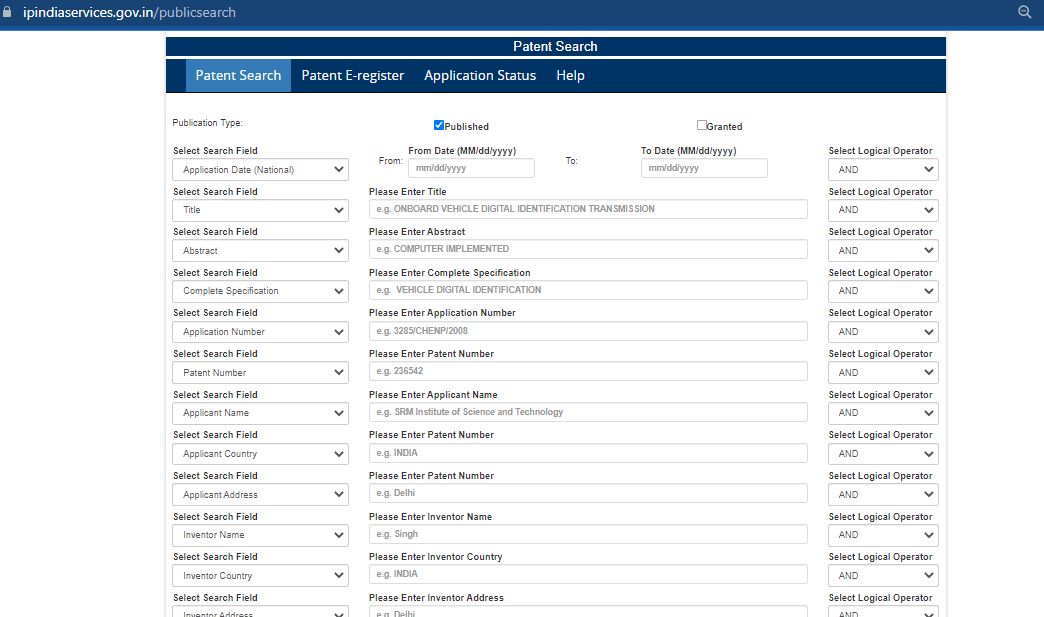
Download Now

All you need to know about bank frauds in India

0
Whistle blowing policy

This article has been written by Oishika Banerji of Amity Law School, Kolkata. This article discusses bank frauds in India thereby throwing light to a frequently recognized offence under Indian laws. 

This article has been published by Sneha Mahawar.

Table of Contents

Introduction 

A competent banking system is required for any country’s economic growth and development. With a plethora of economic variables at play, both at the national and global levels, the banking sector’s role has evolved significantly over time. This allowed the financial sector to explore new prospects and expand its reach beyond a country’s territorial extent. The banking industry underwent huge revolutionary transformations in tandem with the enormous shift of trade and commerce. These reforms include the entry of new private sector banks, the introduction of information technology (such as the use of NEFT and Smart Cards), and modifications to capital adequacy standards, among others. These changes have improved the banking sector’s efficiency and productivity tremendously. While India’s banking sector continues to develop in terms of overall revenue and profits, the amount of money lost to bank fraud is increasing. The Reserve Bank of India and bank management are both concerned about this. These bank robberies appear to be novel in terms of their method of operation and are rather large in scale. This unfavourable trend in the financial system results in not just losses for banks, but also a deterioration of their trust.  This article provides its readers with an idea about bank frauds in India thereby throwing light on the legal mechanisms governing the same. 

What is a bank fraud

Bank fraud is a purposeful act of omission or conduct by any person in the course of a banking transaction or in the bank’s books of accounts, which results in unlawful temporary gain to any individual or otherwise, with or without any monetary loss to the bank. The losses incurred by banks as a consequence of fraud are equal to the combined losses incurred as a consequence of offences such as robbery, dacoity, burglary, and theft. Unauthorized credit facilitates are extended for illegal gratification such as cash credit allowed against pledge of goods, hypothecation of goods against bills, or against book debts.

“‘Fraud’ denotes a false statement made knowingly or without trust in its truth, or recklessly careless, whether true or untrue,” according to Lord Herschell. In the case of  Derry v. Peek (1889), he had opined that a false statement made by someone who does not believe it to be genuine is referred to as a fraudulent misrepresentation.

Pledging of fictitious items, inflating the value of goods, hypothecating commodities to several banks, fraudulent removal of goods with the knowledge and connivance of or ignorance of bank employees, and pledging of goods belonging to a third party are all common methods of operation of bank frauds. Goods hypothecated to a bank are found to contain obsolete stocks packed in between good stocks and cases of shortage in weight are not uncommon.

Components of a bank fraud

Any fraud conducted by a bank employee or in conjunction with a borrower has two key components, namely,

  1. First, there is the subjective intention, and 
  2. There is the objective opportunity. 

In a bank, conditions must be constructed such that a person who wants to commit fraud does not have the chance to do so. An examination of instances surrounding banking frauds reveals the following four primary aspects that are responsible for the commission of bank frauds:

  1. Active participation of the personnel, both managerial and clerical, either independently or in collusion with outsiders.
  2. Failure of bank employees to adhere to properly set out instructions and procedures.
  3. External elements defrauding banks by forging or manipulating checks, drafts, and other financial instruments.
  4. There has been increasing cooperation of business people, senior bank executives, public servants, and powerful politicians to cheat banks by bending the rules, flouting laws, and tossing banking standards to the wind.

Classification of frauds

The RBI’s Master Directions on Frauds – Classification and Reporting by commercial banks and select FIs (Updated as on July 03, 2017)  provides different categories of offences that constitute fraud, putting specific reliance on the Indian Penal Code, 1860. The classifications are provided hereunder:

  1. Misappropriation and criminal breach of trust.
  2. Fraudulent encashment through forged instruments, manipulation of books of account or through fictitious accounts, and conversion of property.
  3. Unauthorised credit facilities extended for reward or for illegal gratification.
  4. Negligence and cash shortages.
  5. Cheating and forgery.
  6. Irregularities in foreign exchange transactions.
  7. Any other type of fraud not coming under the specific heads as above.

Risks possessed by fraudulent activities on banks 

  1. Banks are exposed to a variety of dangers. A successful bank is one that can consistently avoid these risks while still generating considerable profits. Risk mitigation is only possible if hazards are properly identified, as well as the reasons for their occurrence and the potential damages they may produce. 
  2. Credit risks, market risks, operational risks, moral hazards, liquidity risks, business risks, and systematic risks are the key categories of risks that any bank faces. The Reserve Bank of India (RBI) cautioned that the banking industry is under significant stress in its bi-annual Financial Stability Report (FSR) issued on June 30, 2018, citing increasing bad loans and a surge in bank fraud, among other difficulties. 
  3. All of this, according to the RBI, can cause India’s economy to suffer. Public Sector Banks’ (PSB) average bad loans accounted for 75% of their net assets in March 2018. These problematic loans are reducing bank profitability and capital situations, putting India’s largest banks’ viability in jeopardy.

Bank frauds in India

In the case of Pradeep Kumar And Another v. Postmaster General And Others (2016), the Supreme Court of India had opined that individual employees are capable of being dishonest and committing fraud or wrongdoings on their own or in cooperation with others. Such activities of bank/post office workers, when done in the course of employment, bind the bank/post office at the instance of the person who is damnified by the bank/post office officers’ fraud and illegal conduct. Thus, post offices, banks are vicariously liable for fraud, wrongs by employees during their employment.  

Cheque frauds, deposit account frauds, purchase bill frauds, hypothecation frauds, loan frauds, frauds in foreign currency transactions, and inter-branch account scams are all examples of bank frauds. The failure of supervisory employees to follow established systems and processes is a major source of fraud. Unscrupulous constituents conduct frauds by taking advantage of authorities’ weakness in enforcing the Reserve Bank of India’s (RBI) time-tested safeguards. In its central office, the RBI has established an investigation unit. It is manned by an ace investigator with extensive expertise. The bank team delves into the core causes of bank fraud and offers comprehensive prevention recommendations. The RBI conducts in-depth analyses and research into the commission of bank frauds and makes recommendations for fraud prevention measures.

To maintain depositors’ interests and public trust, a good banking system should have three key features which are provided hereunder: 

  1. A society that is devoid of deception,
  2. A tried-and-tested best practice code, and
  3. An in-house method for resolving pressing grievances. 

In India, all of these criteria are either absent or severely weakened.

Fraud by insiders

On 19th February 2022, the Central Bureau of Investigation (CBI) had charged ABG Shipyard Ltd and its then Chairman and Managing Director Rishi Kamlesh Agarwal, as well as others, with defrauding a consortium of banks led by State Bank of India of over Rs 22,842 crore. In addition to Agarwal, the agency has named the former Executive Director Santhanam Muthaswamy, Directors Ashwini Kumar, Sushil Kumar Agarwal, and Ravi Vimal Nevetia, as well as another company ABG International Pvt Ltd, for alleged criminal conspiracy, cheating, criminal breach of trust, and abuse of official position in violation of the Indian Penal Code, 1860 and the Prevention of Corruption Act. This recent bank fraud case is a classic example of fraud by insiders. Bank frauds are commonly carried out by its internal members for it becomes easy and smooth for the latter to rob the former while being equipped with adequate information about the same. 

Rogue traders

A rogue trader is a high-ranking insider who is ostensibly authorised to invest large sums of money on behalf of the bank. This trader secretly makes increasingly aggressive and risky investments with the bank’s funds, and when one investment fails, the rogue trader engages in further market speculation in the hope of making a quick profit to cover or hide the loss. Unfortunately, when one investment loss follows another, the expenses to the bank can quickly mount into the hundreds and millions of rupees resulting in a grave loss for the bank. 

Fraudulent loans

Taking out a loan is one of the methods to get money out of a bank, and it’s a behaviour that bankers would be happy to encourage if they knew the money would be repaid in full with interest. A fraudulent loan, on the other hand, is one in which the borrower is a business entity managed by a dishonest bank officer or an accomplice, and the money is lost when the borrower files bankruptcy or disappears. The borrower might even be a non-existent organisation, with the loan serving as a front to cover a large-scale bank robbery. Based on the recommendations of an Internal Working Group constituted by the Bank, a framework for dealing with loan frauds was put in place vide circular dated May 7, 2015.

Wire fraud

Wire transfer networks, such as the international interbank fund transfer system, are appealing targets since a transfer is difficult or impossible to reverse after it has been done. Rapid or overnight wire transfers of large sums of money are commonplace because these networks are used by banks to settle accounts with one another. While banks have put checks and balances in place, there is a risk that insiders will try to use fraudulent or forged documents claiming to request a bank depositor’s money be wired to another bank and often an offshore account in some faraway foreign country.

Forged or fraudulent documents

Banks like to count their money precisely, thus every cent must be accounted for, hence forged documents are frequently used to mask other frauds. A document declaring that an amount has been obtained as a loan, withdrawn by an individual depositor, transferred, or invested might therefore be useful to a criminal who wants to hide the minute detail that the bank’s money has been stolen.

Theft of identity

Depositors’ personal information has been known to be disclosed by dishonest bank employees for use in identity theft and fraud. The information is then used to get identity cards and credit cards in the victim’s name and personal details.

Demand Draft (DD) fraud

The Bunko Banker is generally one or more dishonest bank workers that commit DD fraud. They take a few DD leaves or DD booklets from the stock and use them as normal DDs. They understand the coding and punching of a demand draft since they are insiders. These demand drafts will be produced without debiting an account and will be payable in a faraway town/city. It will be cashed at the payment branch after that. It’s just another DD for the paying branch. This type of fraud will only be uncovered when the head office does branch-by-branch reconciliation, which typically takes at least 6 months. By that time, the funds are no longer recoverable.

Fraud by others

From the name itself, it stands clear that fraud by others signifies those outside the financial institution but are interested in earning profit illegally by exercising fraudulent activities in targeted banks. 

Forgery and altered cheques

Cheques are often tampered with to modify the name in the cheque in order to deposit cheques intended for someone else or the amount on the face. Rather than tampering with a genuine check, some fraudsters also try to counterfeit a depositor’s signature on a blank cheque or even print their own cheques drawn on other people’s accounts, non-existent accounts, or even supposed accounts held by non-existent depositors. Before the cheque may be rejected as invalid or for lack of cash, it will be deposited in another bank and the amount is extracted.

Stolen cheques

Some fraudsters get access to facilities that handle significant numbers of cheques, such as a mailroom or post office, or the offices of a tax authority (which receives a high number of cheques), or a company payroll, or a social or veterans’ benefits office (which receives a huge number of cheques) (issuing many cheques). Forgers cherish stolen blank cheque books because they may sign as if they are the depositor.

Accounting fraud

Often firms have been known to utilise false bookkeeping to overestimate sales and revenue, inflate the value of the company’s assets, or declare a profit while the company is operating at a loss in order to conceal major financial issues. These altered documents are then used to solicit investment in the company’s bond or security offerings or to submit fake loan applications in the last effort to raise funds to stave off the eventual collapse of an unproductive or mismanaged business.

Bill discounting fraud

Essentially a confidence trick, a fraudster utilises a corporation to garner confidence from a bank by posing as a legitimate, lucrative customer. To provide the impression of being a desirable customer, the corporation employs the bank to collect money from one or more of its consumers on a regular basis. These payments are always paid because the consumers in issue are complicit in the scam and actively pay all of the bank’s invoices. 

Cheque kiting

Cheque kiting takes advantage of a system in which money is made accessible immediately after a cheque is placed into a bank account, even if the money is not taken from the account on which the cheque is drawn until the cheque clears. A cheque is cashed, and the money is placed into another account or withdrawn by writing further cheques before the bank receives any money by clearing the cheque. The initial deposited check is frequently discovered to be a counterfeit check. On a daily basis, some offenders have switched checks between multiple banks, using each to offset the deficiency from a prior check.

Credit card fraud

Credit card fraud is a common method of stealing from banks, businesses, and customers. A credit card is made up of three polyvinyl chloride plastic sheets. The core stock refers to the card’s centre layer. These cards are of a certain size and include a lot of information embossed on them. However, credit card theft may take many forms. It is expected that when e-Commerce, m-Commerce, and internet capabilities become more widely available, fraudulent financial freaking by means of credit cards would rise dramatically. White plastics are the name provided to counterfeit credit cards.

Fraudulent loan applications

Individuals using false information to disguise a credit history full of financial issues and unpaid debts, as well as organisations employing accounting fraud to overestimate revenues in order to make a hazardous loan appear to be a solid investment for the bank, are all examples of fraudulent loan applications. Some companies have overextended themselves by borrowing money to fund expensive mergers and acquisitions and overstating assets, sales, or income to look solvent despite being severely financially strained. The consequent debt burden has bankrupted huge corporations, such as Parmalat, an Italian dairy behemoth, and exposed banks to significant losses from bad loans.

Phishing and Internet fraud

Phishing works by sending forged emails imitating an online bank, auction, or payment site. The email takes the user to a forged website that looks like the original site and subsequently tells the user to update his or her personal information. The stolen information is subsequently utilised in various crimes, such as identity theft and online auction fraud. Several malicious “Trojan horse” programs have also been used to eavesdrop on internet users while they are online, stealing keystrokes or personal data and sending it to third-party websites.

Booster cheques

A booster cheque is a forged or bad check used to make a payment to a credit card account in order to “blow out,” or increase the amount of credit available on otherwise legal credit cards. The bank credits the amount of the check to the card account as soon as the payment is made, even if the check has not yet been cleared. Before the fraudulent check is discovered, the offender goes on a shopping spree or takes out cash advances until the card’s newly increased allowable limit is reached. The initial check then bounces, but it’s too late by then.

Impersonation and theft of identity

Identity theft is on the rise. The fraud involves getting information about a victim and then using that information to apply for identification cards, accounts, and credit in that person’s name. A birth certificate may often be obtained with just a name, parents’ names, date, and place of birth. Each document received is then used as identification to get other identity documents. Standard identifying numbers issued by the government, such as social security numbers, PAN numbers, are also beneficial to identity thieves. Unfortunately for the banks, identity thieves have been known to take out loans and then flee with the money, happy to have the incorrect people accused when the bills default.

Money laundering

Money laundering has been around since the days of Al Capone. Money laundering has subsequently come to refer to any scheme that conceals or hides the real source of finances. The surgeries are carried out in a variety of ways. One variation involves buying securities (stocks and bonds) for cash, putting them in a safe deposit box at one bank, and using a claim on those assets as collateral for a loan at another. After then, the borrower would default on the debt. The securities, on the other hand, would retain their full value. The transaction simply helps to conceal the monies’ original source.

Forged currency notes

At the personal level, paper cash is the most common means of money transaction, however, checks and drafts are also widely employed in the business. The term ‘bank note’ is defined under Section 489A of the Indian Penal Code, 1860. If currency note forgery is effective, it has the potential to provide the forger with a fortune while simultaneously destroying the nation’s economy. A currency note is constructed of a special paper with plastic covering bonded on both sides to preserve the ink and anti-counterfeiting technology from harm. These notes also include security threads and watermarks. However, the majority of individuals are unaware of these facts.

Stolen payment cards

A phone call from a credit card issuer asking if the person has gone on a spending spree is often the first indication that a victim’s wallet has been stolen. The simplest form of this theft involves stealing the card itself and charging a number of high-ticket items to it in the first few minutes or hours before it is reported as stolen. A variation of this is to duplicate only the credit card numbers rather than taking the card itself and then utilise the numbers in online scams.

Duplication or skimming of card information 

This can take many forms, from a dishonest merchant copying customers’ credit card numbers for later misuse or a thief stealing the information using carbon copies from old mechanical card imprint machines to the use of tampered credit or debit card readers to copy the magnetic stripe from a payment card while a hidden camera captures the numbers on the face of the card. A fraudulent card stripe reader would record the contents of the magnetic stripe, while a covert camera would take a glimpse at the user’s PIN. The data from the fake equipment would then be used to create duplicate cards that could be used to make ATM withdrawals from the victims’ accounts.

Frauds assisted by digital technology 

Except for those in rural and distant locations, most bank offices have been digitised to provide efficient and quick service. As computerisation in Indian banks is still relatively new, there haven’t been many computer-related scams in banks that have been in discussion. However, in western nations, a high number of cybercrimes in the financial industry are regularly recorded. It is necessary to investigate the nature of such crimes in order to create effective prevention measures. Normally following types of frauds are committed: 

  1. Cyber crooks create spy software in order to crack passwords. They hack into banks’ computer systems and modify data to transfer money from other people’s accounts.
  2. Computer viruses are developed by malicious individuals who get access to a computer system via email. These viruses corrupt data saved on computers and cause the entire system to slow down. It is frequently said that anti-virus software firms develop viruses in order to sell their product in the market.
  3. Hackers are computer professionals who steal passwords and get access to sensitive data kept on computers. They have no qualms about ‘rendering’ government agencies, including military bases, in order to carry out their malicious plan to destroy and mutilate data contained in computer systems. Such crimes are typically undertaken not for financial gain, but to obtain mental joy from the pain of others.
  4. Wiretapping is a crime in which a person taps the wire of a bank’s ATM to take money from another person’s account. The fraudster connects a wireless microphone to the telephone connection linking the ATM to the bank’s computer and wiretapping signals, while a client is using the ATM. These signals are later on utilised for withdrawing money.

Law and policy related to bank frauds

Both the Reserve Bank of India and the Government of India can devise a number of ways to combat the threat of banking fraud. These techniques can only be effective if they support the creation of a more effective financial system. In reality, inside the banking system, fraud is one of the areas that need rapid attention. 

Banking fraud is not recognized as a distinct offence under the Indian Penal Code, 1860. Depending on the facts of each instance of banking fraud, different provisions of the Indian Penal Code, 1860 are invoked. This demonstrates that there is now no separate legislation dealing completely and specifically with banking frauds. Banking fraud, in general, is a type of white-collar crime done by unscrupulous individuals who cleverly exploit gaps in the present banking system and procedures. Banking fraud can be simply defined as an action including a combination of civil and criminal components that harms the public interest, public money, and the state exchequer.

The Indian Contract Act, 1872

The term ‘fraud’ is defined under Section 17 of the Indian Contract Act, 1872. Any of the following activities undertaken by a contracting party, their connivance, or their agent with the purpose of deceiving or encouraging another party or their agent to join into the agreement are considered fraud. The situations leading to fraud have been provided hereunder:

  1. The assertion as fact of something that is not true by someone who does not believe it is true.
  2. The deliberate hiding of a fact by someone who knows or believes it.
  3. A commitment made with no intention of following through.
  4. Any other conduct that is designed to deceive.
  5. Any act or omission that is expressly declared fraudulent by the law.

Ingredients of fraud

  1. There should be a suggestion as to a fact.
  2. The fact suggested should not be true.
  3. The suggestion should have been made by a person who does not believe it to be true,and
  4. The suggestion should be made with intent either to deceive or to induce the other party to enter into the contract.

Punishment for fraud

  1. The penalty for perpetrating fraud is non-compoundable, as it includes both a fine and a period of imprisonment. Online fraud has increased as technology has progressed, and as a result, committing fraud has become a serious legal infraction.
  2. Fraud is punishable under Section 447 of the Companies Act of 2013. About 20 sections of the Act are dedicated to exposing frauds committed by an organisation’s/directors, entity’s auditors, key managerial staff, and/or corporate officers. 
  3. If a person is found guilty of fraud under Section 447, he may be sentenced to jail for a period ranging from six months to ten years.

Remedies available to the aggrieved party against fraud

In the event of a fraud, the plaintiff has two options:

  1. The plaintiff has the right to retract, or terminate, the contract and seek reimbursement for his/her losses.
  2. Confirm the contract and file a lawsuit against the defendant for damages. (For example, when the asset’s value has dropped).

The defendant’s malevolent or criminal intent can be proven depending on the facts and circumstances of the case. The defendant can then face criminal proceedings, which might result in fines or perhaps a prison sentence for the defendant.

The Indian Penal Code, 1860

Even though ‘fraud’ is not defined explicitly in the Indian Penal Code, 1860, provisions for cheating (Sections 415 to 420), concealment (Sections 421 to 424), forgery (Sections 463 to 477A), counterfeiting (Sections 489A to 489E), misappropriation (Sections 403 to 404), and breach of trust (Sections 405 to 409), sufficiently cover the same. 

Legal remedies and punishment for the offence of fraud 

Cheating

Section 419 of the Indian Penal Code, 1860 provides an imprisonment of either description for a term which may extend to three years, or with fine, or with both, as the deterrent for the offence of cheating.

Offence of cheating is cognizable and non bailable. The trial is done by a magistrate of first class. FIR or Application can be filed under Section 156(3) and in case of private complaint under Section 200 of the Code of Criminal Procedure, 1973.

Concealment 

Section 421 of the Indian Penal Code, 1860 provides that dishonest or fraudulent removal or concealment of property to prevent distribution among creditors will be accompanied by imprisonment of either description for a term which may extend to two years, or with fine, or with both.

The offence is non-cogniz­able, bailable, triable by any Magistrate and compoundable by the credi­tor who are affected thereby with the permission of the court.

Forgery 

Section 465 of the Indian Penal Code, 1860 provides an imprisonment of either description for a term which may extend to two years, or with fine, or with both, for the offence of forgery.

Counterfeiting 

Counterfeiting of bank notes or currency notes under Section 489 A of the Indian Penal Code, 1860, can cost the offender with an imprisonment for life, or with imprisonment of either description for a term which may extend to ten years, and shall also be liable to fine. The RBI Master Circular on the same can be referred here

Misappropriation 

Section 403 of the Code of 1860 lays down provision for dishonest misappropriation of  any movable property which shall be punished with imprisonment of either description for a term which may extend to two years, or with fine, or with both.

Breach of trust 

Section 406 of the Indian Penal Code, 1860 provides punishment for criminal breach of trust which ranges from an imprisonment of either description for a term which may extend to three years, or with fine, or with both.

The Information Technology Act, 2000

The Information Technology Act of 2000 was adopted by the Indian government to make ways for punishment and penalties for computer-related frauds. In the case of unauthorised acts committed in respect of another person’s computer system, such as access, downloads, or making copies of the information or data stored, the introduction of a computer contaminant or computer virus, damages to the computer or its system, etc., Section 43 of the said Act provides for hefty damages up to rupees ten lakhs payable by the offender to the person affected. Furthermore, the aforementioned Act makes tampering of computer source documents and hacking computer systems punishable by up to three years imprisonment.

Efforts extended by RBI

Frauds, deceptions, robberies, and other types of crimes at banks are a source of concern. While banks bear the main responsibility for fraud prevention, the RBI has been counselling banks on significant fraud-prone sectors and the precautions required to avoid fraud on a regular basis. The Reserve Bank has also been sending information to banks about sophisticated scams that were not previously disclosed so that institutions might put in place the required protections/preventative measures through suitable processes and internal inspections. Banks are also being given information on unethical borrowers and linked parties who have committed bank fraud so they should be cautious when dealing with them. To help with this continuing process, banks must provide detailed information concerning frauds and the actions taken in response to them to the RBI.

  1. Chapter III of the Master Directions on Frauds-Classification and Reporting by commercial banks and select FIs (Updated as of July 03, 2017) introduces the Central Fraud Registry (CFR) based on the Fraud Monitoring Returns, to be filed by banks and select FIs. The same has been made available, along with updates, to which banks have been allowed access through user-ids and passwords. CFR is a searchable database that is accessible over the internet. The practice of giving Caution Advice (CA) on paper has now been phased out. However, CAs will be given as and when needed for frauds, including attempted frauds with systemic implications. Banks should make full use of CAs/CFRs for rapid fraud risk detection, control, reporting, and mitigation. Banks should also put in place suitable systems and procedures to ensure that the information in CA/CFR is used in credit risk governance.
  2. Chapter VI of the aforementioned RBI Circular provides a guideline for reporting frauds to police/CBI. When dealing with incidents of fraud or embezzlement, banks should be driven not just by the desire to recover the funds as quickly as possible, but also by the public interest and the need to ensure that the perpetrators are brought to justice.
  3. Chapter VIII of the Master Direction lays down a set of three guidelines to be adopted for the purpose of filing complaints with law enforcement agencies in cases of bank fraud. 
  1. When a bank detects fraud, it is obligated to quickly file a report with the appropriate law enforcement agency. There should ideally be no delay in submitting complaints with law enforcement authorities since delays can result in the loss of relevant ‘reliable’ papers, non-availability of witnesses, borrowers absconding, and the money trail becoming cold, in addition to asset-stripping by the fraudulent borrower. 
  2. It has been found that banks lack a central location for submitting CBI/police complaints. As a result, banks have a non-uniform method to report complaints, and the investigating agency must deal with many levels of authority inside the institutions. This is one of the most common causes for complaints getting converted into FIRs taking so long. As a result, banks are required to appoint a nodal point/officer to file all complaints with the CBI on behalf of the bank and to act as a single point of coordination and remedy for complaints with flaws.
  3. The bank’s complaint to law enforcement authorities should be correctly written and should always be verified by a legal professional. Banks have also been located filing complaints with the CBI/police on the basis of borrowers’ deception, theft of money, diversion of funds, and so on, without categorizing the accounts as fraud and/or reporting the accounts to the RBI. As such circumstances are inherently grounds for categorizing an account as fraudulent, banks should classify such accounts as frauds and report them to the RBI.

Well known bank frauds in India

The number of financial scams in the country has increased as the number of digital transactions is on a rise. According to data provided by the Reserve Bank of India (RBI), India had an average of 229 banking frauds each day in the fiscal year 2020-21, with less than 1% of the total amount recovered. In FY21, there were 83,638 incidents of banking fraud in India, with a total value of Rs 1.38 lakh crore. According to statistics released by the RBI in response to a Right to Information (RTI) request submitted by India Today, only Rs 1,031.31 crore has been recovered so far. However, the figures for FY21 reflect a little improvement over FY20, when India had an average of 231 financial frauds each day. In FY20, there were 84,540 scams reported. A total of Rs 1.86 lakh crore was implicated, of which Rs 16,197 crore was recovered.

Bank of Maharashtra scam: Rs 836 crore

The Bank of Maharashtra was allegedly accused of sanctioning numerous credit facilities to SiddhiVinayak Logistics Limited’s drivers without their knowledge between 2012 and 2014. The corporation misappropriated the loan funds and did not use them for the purpose for which they were approved. In connection with the Rs 836-crore bank fraud case, the CBI had arrested a Bank of Maharashtra officer, Padmakar Deshpande, and the director of a Surat-based private logistics business, Siddhi Vinayak Logistics Limited.

Syndicate Bank Scam: Rs 1,000 crore

Nine persons were detained, including a former Syndicate Bank chief executive officer, for allegedly creating 386 accounts in three Syndicate Bank branches in Rajasthan and ‘defrauding’ the bank of Rs 1,000 crore by using fraudulent cheques, letters of credit, and life insurance policies.

ICICI Videocon scam: Rs 1,875 crore

Videocon group MD Venugopal Dhoot, ICICI Bank CEO Chanda Kochhar, and her husband Deepak Kochhar were accused of creating errors in loans sanctioned by the ICICI bank to the group in 2012. The ICICI Bank approved loans of Rs 1,875 crore to the Videocon Group and its subsidiaries. The vast majority of these loans were shown to be in direct breach of banking rules and ICICI Bank standards.

Rotomac Pens scam: Rs 3,695 crore

Bank of India, State Bank of India, Union Bank of India, and IDBI were among the 14 banks implicated in the Rotomac Pens scam. Rotomac’s promoter, Vikram Kothari, was accused of defrauding seven banks of Rs 3,695 crore. He was discovered to have misused loans of Rs 2,919 crore from seven banks, with a total outstanding sum of Rs 3,695 crore, including interest. Vikram Kothari was arrested by the CBI for the alleged offences. 

PMC scam: Rs 4,355 crore

The Reserve Bank of India revealed in September 2019 that PMC Bank had reportedly constructed false accounts to disguise around Rs 4,355 crore in loans to Housing Development and Infrastructure Limited, which was near bankruptcy at the time.

ABG Shipyard scam: Rs 22,842 crore

In 2001, ABG Shipyard reportedly borrowed money from a group of banks led by ICICI Bank, IDBI Bank, and later SBI. Over a five-year period, the business was accused of stealing Rs 22,842 crore. According to the CBI, ABG Shipyard’s account was deemed a non-profitable asset (NPA) in 2013.

Bank of Baroda foreign exchange scam: Rs 6,000 crore

Loopholes in the remittance laws were used in the money laundering fraud to transfer unlawful money back from overseas in the Bank of Baroda foreign exchange scam. Scammers sent money to Hong Kong under the guise of advance payments to merchants. Employees of different institutions, notably Oriental Bank of Commerce and Bank of Baroda, were accused of being involved in the Rs 6,000 crore scandal.

Bribe for Loan scam: Rs 8,000 crore

UCO Bank, Bank of Maharashtra, and Canara Bank were among the banks implicated in the bribe for a loan scam of Rs 8,000 crore. The CBI detained Chartered Accountant Pawan Bansal for allegedly making arrangements between the Syndicate Bank and major firms in order to secure hefty loans. The scheme was determined to be well-oiled, with bribes paid to the heads of public sector banks and financial organisations in exchange for loans. Bansal was accused of striking arrangements with these institutions for loans totaling over Rs 8,000 crore.

Kingfisher scam: Rs 10,000 crore

Vijaya Mallya was accused of owing more than a dozen Indian banks over Rs 10,000 crore after his airline, Kingfisher Airlines Ltd, went bankrupt in 2013.

Nirav Modi PNB scam: Rs 14,000 crore

Nirav Modi, a diamond merchant, and his uncle Mehul Choksi were accused of defrauding Punjab National Bank of approximately 14,000 crores, reportedly with the aid of certain bank employees, irresponsible bank management, and inadequate bank auditing.

Preventive measures that can be adopted to curb bank frauds

Almost every aspect of life has changed dramatically in the twenty-first century. Technology has promised humanity enormous progress, with computerization serving as a wellspring of new age wisdom and a slew of innovative, rapid, and efficient financial services. However, this facility introduced hazards to a variety of banking activities, necessitating well-defined and timely preventative actions. Computer automation, which provides a plethora of services, is susceptible to various security/precautionary procedures to protect against its inherent weaknesses, and RBI, in outlining the activities, recommends preventive vigilance steps to be done to avoid such risks. The ways in which fraud can be effectively averted have been provided hereunder: 

Recruitment and selection

The correct people with the proper credentials and abilities should be hired by bank authorities to look after its functioning. Qualifications, experience, performance, efficiency, and reputation should all be considered when selecting officials. Staff at all levels should get adequate training.

No undue reliance

There should be no excessive dependence on the bank’s personnel. Explanations should not be taken at face value. Agents, clerical employees, and officers should be shifted from branch to branch on a regular basis to avoid entrenched interests.

Basic honesty

No bank official should think of accepting presents and bribes from the borrowers with the belief that everything is safe and nothing would go wrong. A borrower’s financial situation and dealings should be closely monitored if he or she invites bank officials to drinks and dinners too frequently or sends them gifts.

Private lives of staff

Staff members’ personal life should be scrutinized, no matter how tough that may be. A staff member who is a frequent borrower or lives beyond their means may be the one to let the bank down in the end.

Supervision and audit

The authorized officer should check the books and records on a regular basis. Without warning, the godowns should be examined. A bank branch audit is also required.

Routine 

The bank’s system, routines, and processes must all be followed meticulously. The instructions manual and circulars are the results of the head office’s extensive expertise with persons and problems over a lengthy period of time.

Vigilance

The term vigilance refers to a state of alertness or watchfulness. This is a mental condition that affects both rank and file personnel. The management job of vigilance is essential. Preventive vigilance should ensure the following:

  1. The firm is planned and run in accordance with the corporate goal, using correct systems and processes.
  2. Transactions are allowed and assessed correctly.
  3. Assets are protected and obligations are managed, reducing the risk of losses due to anomalies or fraud.
  4. Accountability and recordkeeping ensure that information is thorough, accurate, and timely.
  5. Finally, bank officers cannot afford to be sluggish, complacent, or careless in the performance of their jobs.

Unscrupulous parties

Accepting new clients, particularly debtors, should be done with caution by the bank. Customers who have been observed engaging in questionable practices or who have been accused of fraud should be avoided. It is in the bank’s best interests to adopt the adage “once bitten, twice shy.”

Danger signals

Pay special attention to accounts where the debt total is frequently close to the sanctioned limit or the withdrawal limit. When borrowers’ checks begin to bounce for reasons such as “exceeds arrangement” or “effect not cleared present again,” or when the account’s turnover is low and securities are charged, bank staff must be on the lookout.

Conclusion 

Banks are the engines that propel the financial sector’s activities and an economy’s growth. With India’s burgeoning banking industry, bank fraud is on the rise, and fraudsters are getting more clever and cunning. While it is impossible for banks to operate in a fraud-free environment, proactive measures such as risk assessments of operations and policies can assist them to mitigate the risk of fraud-related losses. As a result, the time has come to address the banks’ security concerns on a priority basis. Poor hiring procedures and a lack of adequate employee training are common issues that banks are encountering, along with overworked employees, weak internal control systems, and low compliance levels among bank managers, offices, and clerks. However, technology may help governments, regulatory bodies, and banks battle the increasingly sophisticated form of fraud by means of proactive forensic data analysis and data mining techniques.

References 


Students of Lawsikho courses regularly produce writing assignments and work on practical exercises as a part of their coursework and develop themselves in real-life practical skills.

LawSikho has created a telegram group for exchanging legal knowledge, referrals, and various opportunities. You can click on this link and join:

https://t.me/lawyerscommunity

Follow us on Instagram and subscribe to our YouTube channel for more amazing legal content.

Download Now

Improving India’s Right to Education Act : addressing the thematic debates

0
Legal rights and status

This article has been written by  Ifra Jan and Karmanye Thadani.

This article has been published by Sneha Mahawar.

Introduction 

“Education is the great engine of personal development. It is through education that the daughter of a peasant can become a doctor, that the son of a mineworker can become the head of the mine, that a child of farm workers can become the president of a great nation. It is what we make out of what we have, not what we are given, that separates one person from another.”

-Nelson Mandela

While the content of social science and literature textbooks makes for political debates, the very access to schooling remains a huge issue for large sections of the Indian masses. Lack of education adversely affects economic development and also gives rise to anti-social elements.

Position in International Human Rights Law

Article 26 of the Universal Declaration of Human Rights (UDHR) states-

“Everyone has the right to education. Education shall be free, at least in the elementary and fundamental stages. Elementary education shall be compulsory. Technical and professional education shall be made generally available and higher education shall be equally accessible to all on the basis of merit.”

While the UDHR, being a declaration, constitutes “soft law” not being as binding, several conventions giving its provisions more teeth, being “hard law” also exist and uphold the right to education.

In the same vein, Article 13 of the International Covenant on Economic, Social and Cultural Rights (ICESCR), its longest provision, and Article 14 uphold this right, especially in primary education.

The Committee on Economic, Social, and Cultural Rights (CESCR) is a body of 18 independent experts that monitors the implementation of the International Covenant on Economic, Social and Cultural Rights by its State parties. In the twenty-first session of the Committee on Economic, Social and Cultural Rights held on 8 December 1999, it upheld this right to be accessible to all, irrespective of income or geography.

Article 10 of the Convention on the Elimination of All Forms of Discrimination Against Women (CEDAW) upholds this right for the female gender and Article 28 of the Convention on the Rights of the Child for children. The constitution of UNESCO expresses the belief of its founders in “full and equal educational opportunities for all”.

The United Nations Millennium Declaration, in Article 19, mandates states to ensure that “children everywhere, boys and girls alike, will be able to complete a full course of primary schooling and that girls and boys will have equal access to all levels of education”.

History of the Right to Education in India

The theme of access to education for the masses resonated throughout the nationalist movement. Mahatma Gandhi made the same demand but dropped it on being told that universal elementary education could be made possible by the colonial government only from liquor proceeds!

After independence, while the Right to Education was sought by some members of the Constituent Assembly to be included as a fundamental right, it was eventually included as a Directive Principle of State Policy, which is of a non-justiceable nature, under Article 45, which reads-

“The State shall endeavour to provide, within a period of ten years from the commencement of this Constitution, for free and compulsory education for all children until they complete the age of fourteen years.”

In 2002, the 86th amendment was introduced, which inserted Article 21A of the constitution-making the Right to Education within the age bracket of 6 to 14 years a fundamental right, though, within the ambit of statutory provisions introduced by the State. Article 45 was also amended, to now read the following- 

“The State shall endeavour to provide early childhood care and education for all children until they complete the age of six years.”

Subsequently, in 2009, new legislation, the Right of Children to Free and Compulsory Education Act, popularly known as the Right to Education (RTE) Act was introduced in this regard, which has substantially increased enrolment, but there are serious debates relating to the same.

Debates surrounding the RTE Act and authors’ stand

  1. 25% Reservation for Economically Backward Children in Private Schools: Is It a Step in the Right Direction?

The authors do believe that it is a positive step, so long as it is honestly implemented and the government bears the costs in its entirety, including that of textbooks, uniforms, etc. Those arguing that economically backward children would suffer from a complex should respect the right of the children and their parents to make their own decisions. Free market economists like Milton Friedman also promoted the idea of education vouchers, i.e. giving economically backward parents monetary support for having their children admitted to private schools. In any case, P12 education is technically not a for-profit business in India (not debating whether it should be), and even if were to become one, when private corporations have to abide by corporate social responsibility norms in India (not debating their desirability), there is no harm in asking schools to educate poor children without bearing any expense.

  1. No Detention till Class VIII: Was It a Good Idea?

Too many children moved to Class VIII without even remembering their multiplication tables or really grasping the concepts. The rollback of this ridiculous provision was indeed a good initiative according to the authors.

  1. Extensive Infrastructure-Oriented Recognition Norms Challenging for Low Budget Private Schools.

Extensive infrastructure norms for recognition (rather than focusing on learning outcomes) are leading to low-budget private schools shutting down, while government schools not meeting the norms continue to function with indefinite time to meet the same. Unfortunately, despite economic right-wing intellectuals making appeals to ease the license raj on low budget private schools, suggesting making amendments to the RTE Act, since 2014, no steps have been taken in this direction, though low budget private schools often provide low-cost, relatively good quality education to the poor, even in places with no government schools, and the right to run a school is a fundamental right under Article 19(1)(g) of the constitution as per the Supreme Court in the landmark TMA Pai case.

Yes, the Modi government at the centre has emulated a good practice followed by the Gujarat government when Modi was Chief Minister wherein his government focused on learning outcomes more than infrastructure norms in the state RTE Rules to ease regulations for education entrepreneurs, and now, the centre has amended the RTE Rules making it compulsory for all states to do so, but why can’t all those stifling infrastructure norms only for private schools be considerably eased? The authors believe they must be.

  1. Exclusion of the Age Group of 0-6 Years from the Act

The formative years of children’s development lie in early childhood care and pre-nursery education, which the authors believe just cannot be conveniently overlooked.

  1. Exclusion of Minority Schools

Mention must also be made of what the authors believe to be an inappropriate Supreme Court verdict which exempted only unaided minority schools from the 25% quota for the economically backward, but that was a judgment against the then Congress-led UPA government, which, despite being accused of appeasing minorities, did not, at least in this case, seek any such exemption.

Even after the verdict, then Union HRD Minister Kapil Sibal had actually requested minority schools to abide by the quota, despite having not being required to do so by the Supreme Court. Indeed, economically backward children, including from minority communities themselves, should have access to education in good quality minority schools as well, nor should regular schools not under any religious banner have to meet more regulations.

  1. The regulatory body for the Act being a toothless tiger 

The RTE Act has placed its monitoring on the National Commission for Protection of Child Rights (NCPCR) and its counterparts in the states, the State Commissions for the Protection of Child Rights (SCPCRs), constituted under the Commissions for the Protection of Child Rights Act, 2005. Its objective is to safeguard child rights (their mandate includes a host of issues like child labour, children on railway platforms, children in juvenile justice homes, health concerns of children, children in reality shows, etc.), the responsibility of monitoring the Right to Education Act, giving it the same powers in this regard as it has under the same statute under which it has been constituted. These powers amount to conducting investigations and forwarding the matter to the concerned executive or judicial authorities as also carrying out academic surveys concerning child rights. Its powers also encompass receiving complaints of child rights violations (and in this context, any violation of the RTE Act) or taking suo moto cognizance of them and making policy recommendations as to statutory modifications in this field. It may also organize public hearings at the request of some voluntary organisation and only when the concerned executive departments have failed to take up due action, but the result of such hearings can evidently be challenged in a court of law. However, the NCPCR cannot castigate any bureaucrat for incompetence in complying with the directives.

The NCPCR received 2,850 complaints regarding the RTE Act as was revealed under a query as of March 2012. However, it has been able to resolve just 692 cases, or just 24% of the entire lot, by now. From 1st April 2010 to 31st March 2011, the NCPCR resolved only about 54% of the cases, and from 1st April 2011 to 16th March 2012, only about 6%!

Mr. Umesh Gupta, who filed the RTI application and with whom the authors had the fortune of interacting with in person, was quoted in a news report as saying — “Not only is the data shocking, but the numbers actually denote the lowering efficacy of the NCPCR in monitoring the proper implementation of the RTE Act over the two years.”

As per a staff member of the NCPCR who was interviewed by one of the authors in person in August 2012, an estimated 60-70% of the grievances related to government schools failing to meet infrastructure norms laid down under the RTE Act or there being no school in a certain area (though when the same author met Mr. Umesh Gupta later, he denied this, saying that most complaints are admission-related), and getting these problems solved clearly takes time, ranging across a few months, and the work of having these schools built or infrastructure norms met in existing schools is not carried out by the NCPCR itself but other education-related government bodies. While low-budget private schools need more liberty from the red tape, government schools (essential in a developing country like ours) need more answerability, which can’t come if the regulatory body is a toothless tiger.

An interview of a former NCPCR insider who got featured in the magazine ‘Governance Now’ in 2013 still demonstrated problems in the RTE division of the NCPCR even if the figures revealed by Mr. Umesh Gupta’s RTI query in 2012 might have improved. Strengthening the NCPCR should concern the present government as it is willing to rejuvenate the RTE Act, not only in the context of education but even other child rights issues, which would require synchronization between the Ministry of Women and Child Development and the HRD Ministry.

In the context of admission-related complaints in government schools, sometimes the bureaucrats in the concerned government bodies (such as in the context of Delhi, the Directorate of Education, Delhi, and the Municipal Corporation of Delhi) don’t give timely responses to the NCPCR. He stated that the NCPCR had requested for inquiries to be instituted against those incompetent bureaucrats by the concerned departments. However, the NCPCR is incapable of taking action against them.

In conclusion, the NCPCR as a body (and this also equally applies to the SCPCRs) can have significant efficiency only if it has more authority to implement its decisions and reprimand government officers for non-compliance by way of fines and by having that non-compliance included in their reports to be considered for their promotions. The Central Information Commission (CIC) has that power with reference to monitoring the RTI Act, and the CIC has played a significant role in taking on all political parties on the issue of black money. Till the NCPCR is given such authority, it sadly just remains a toothless tiger!

With these bottlenecks removed, the RTE Act can be an even more effective instrument for empowering our future generations!

*She is a spokesperson of the Jammu and Kashmir National Conference.

**He is the president of the Citizens’ Foundation for Policy Solutions (CFPS), a Delhi-based public policy think-tank.

The views expressed in this article are in their personal capacities.

References


Students of Lawsikho courses regularly produce writing assignments and work on practical exercises as a part of their coursework and develop themselves in real-life practical skills.

LawSikho has created a telegram group for exchanging legal knowledge, referrals, and various opportunities. You can click on this link and join:

https://t.me/lawyerscommunity

Follow us on Instagram and subscribe to our YouTube channel for more amazing legal content.

Download Now

All about a collective bargaining agreement in India

0

This article is written by Adhila Muhammed Arif, a student of Government Law College, Thiruvananthapuram. This article seeks to elucidate the concept of collective bargaining and its agreement in India, its requisites, its types, and the laws concerning it. 

It has been published by Rachit Garg.

Introduction 

The term collective bargaining refers to the process of negotiation that takes place between workers or labourers and their employers on the terms of their contracts. In most instances, the labourers are represented by a trade or labour union. This is usually done in order to achieve certain demands and rights of the labourers, namely those pertaining to working hours, salaries, working conditions, etc. This form of industrial dispute resolution has been revolutionary for labour relations in the Indian industries, both private and public. This is because conflicts in the area of commerce and business are inevitable and it is not practical to resolve all such disputes through courts. Hence, collective bargaining has become a suitable alternative to adjudicate industrial disputes. 

What is collective bargaining 

Definition

According to Article 2 of the Collective Bargaining Convention, 1981 (No. 154) of the International Labour Organisation, “collective bargaining extends to all negotiations which take place between an employer, a group of employers or one or more employers’ organisations, on the one hand, and one or more workers’ organisations, on the other, for 

(a) determining working conditions and terms of employment; and/or

(b) regulating relations between employers and workers; and/or

(c) regulating relations between employers or their organisations and workers or workers’ organisations”.

In the case of Ram Prasad Viswakarma v. Industrial Tribunal (1961), it was observed that before collective bargaining was introduced, labourers found it very difficult to negotiate the terms and conditions of their contracts. With the arrival of trade unions, collective bargaining became the norm. It became more convenient as employers only had to negotiate with the representatives of the labourers instead of engaging with every individual labourer. 

In the case of Bharat Iron Works v. Bhagubhai Balubhai Patel (1976), it was observed that collective bargaining is a part of the modern-day concept of the welfare State. It must be practised in a healthy manner in which there is mutual cooperation between the employers and the employees. Negotiation between the management and trade union helps in reaching a settlement regarding various issues. 

Aims of collective bargaining 

The following are the aims and objectives of collective bargaining: 

  1. Upholding industrial democracy 
  2. Ensuring equality and justice for socially and economically backwards groups
  3. Protecting the working class from exploitation
  4. Meeting the legitimate expectations of labourers regarding the work they have undertaken 

Advantages of collective bargaining 

The following are the advantages of collective bargaining: 

  • Being a part of a group helps employees to voice their demands and negotiate better with their employers. It is harder for employers to dismiss the demands of a unified large group of employees or a trade union in comparison with individual employees. 
  • It helps to improve the workplace conditions for employees. 
  • It makes the rights and obligations of both employers and employees clear. 

Disadvantages of collective bargaining 

The following are the disadvantages of collective bargaining: 

  • It is a long complicated process as the union of employees and the employers go back and forth while negotiating. It is time-consuming and requires both parties to take time off of their work. 
  • Another issue that stands as a hindrance to the effectiveness of this process is the presence of multiple trade unions in India. Sometimes the interunion rivalry gets in the way of negotiating for better working conditions. 
  • Most trade unions are also backed by or associated with a political party. Oftentimes, it is the decision of the party that influences the trade union’s demands. 
  • There is no way to determine which union represents the employees. 

Indian statutes and case laws recognizing collective bargaining

Industrial Disputes Act, 1947

This Act was enacted for the purpose of governing the investigation and settlement of industrial disputes. According to Section 18 of the Act, any settlement other than a conciliation, which is arrived at through an agreement by an employer and his employees shall be binding on them. This essentially means that Section 18 recognises industrial dispute settlement through collective bargaining. 

In the case of Karnal Leather Karamchari Sanghatan v. Liberty Footwear Company (Regd.) and Ors. (1990), the Supreme Court laid down that the Industrial Disputes Act, 1947 was enacted for the purpose of securing social justice by means of collective bargaining. The court further stated that arbitration comes within the purview of statutory tribunals. The workers involved must be aware of what is presented before the arbitrator and must be able to share their arguments and claims before him. Even though it is the labour union that helps to resolve the disputes, the labourers must be involved in the process and suggest remedies.

Trade Union Act, 1926 

This Act deals with the registration, rights, liabilities and immunities of a trade union. The most important function of a trade union is to regulate the relationship between an employer or management and its employees. 

In the case of D.N. Banerjee v. P.R. Mukherjee (1952), Justice Chandra Shekhar Aiyer observed that due to the increased importance of capital and labour in the modern-day world, they have organised themselves into groups to settle disputes. This is based on the theory that unity is strength and collective bargaining is a result of that. 

The Industrial Employment (Standing Orders) Act, 1946

‘Standing Order’ in this Act is defined in Section 2(g) as the rules related to matters such as classification of workmen, attendance, conditions of granting leaves, manner of intimation to workers about work and wage-related details, etc. As per Section 3 of the Act, the employer must first submit the draft of the standing order to the Certifying Officer, and must also conform to the model set for the standing order as far as possible. After that, the Officer forwards copies of the draft to the trade union or to the workmen. If there is no trade union for seeking objections, the officer must give both the parties an opportunity of being heard and then certify the standing order with necessary modifications and send its copies to both parties. Here, it is apparent that the certifying officer acts as the negotiator and the process of framing a standing order involves both employer and employees. This provision essentially employs the method of collective bargaining. 

The Constitution of India, 1950

Several provisions enumerated in the Indian Constitution, particularly the fundamental rights and the directive principles of state policy justify the concept of collective bargaining. Firstly, Article 19 of the Indian Constitution allows every Indian citizen to form an association, which in turn covers the right to form a trade union as well. In Article 43 A, the state is permitted to make laws that encourage workers to take part in the management. 

Stages of collective bargaining 

The following are the stages that the process of collective bargaining typically goes through: 

Forming a union

As per Section 9A of the Trade Unions Act, 1926, the minimum number of employees to constitute a trade union is seven. Though registration of a union is not compulsory, it definitely comes with its advantages such as providing adequate representation for workers, using funds for specific purposes, immunity from civil suits, etc. 

Making a charter of demands

In this stage, either the union or the employer may initiate the proceedings of collective bargaining. The trade union then drafts a charter of demands through several discussions conducted among all of its members. 

Negotiation

The negotiations begin with the submission of the charter of demands. Generally, it is the union that formally presents proposals for changes in the existing labour agreements in the initial meeting. Then, the management gets the opportunity to present counter-proposals. This keeps going on until they can form an agreement. When it becomes impossible for them to reach an agreement, a third party may be appointed as a mediator or an arbitrator. 

Forming an agreement 

Once a negotiation becomes successful, the management and the union form a written agreement. This agreement is called a collective bargaining agreement. 

Strikes 

In case the negotiation process fails, the union may declare a strike. As per Section 22 of the Industrial Disputes Act, public utility sector employees must provide six weeks’ notice of a strike, and may strike fourteen days after providing such notice. Neither the management nor the union is permitted to take any industrial action while the conciliation is pending, and not until seven days after the conciliation proceedings conclude, or two months after the legal proceedings conclude. 

Conciliation 

The conciliation process begins when the conciliation officer receives a notice of strike. There are two alternatives that can be taken in this step. As per Section 4 of the Act, during the cooling-off period, the state government may appoint a conciliation officer for investigating, mediating and promoting settlement. As per Section 5 of the Act, the second alternative is that the state government may appoint a Board of Conciliation and it shall be composed of a chairman and either two or four members. Strikes are not organised during the process of conciliation as per Sections 22 and 23 of the Act. Section 20 of the Act provides that this step ends with a settlement or a reference to an industrial tribunal or labour court, and sometimes no settlement is arrived at. 

Arbitration or adjudication by industrial tribunals or labour courts 

In case of failure of the conciliation process, the parties could go for either a voluntary or compulsory arbitration, and the recommendations of the arbitrator may be binding on the parties. Section 7A of the Act provides for a labour court or industrial tribunal within a state to adjudicate such disputes. Section 7B of the Act provides for the constitution of national tribunals to resolve disputes involving questions of national interest. The employer and the employees may refer the case by a written agreement to a labour court, industrial tribunal or national tribunal for adjudication or arbitration. 

Collective bargaining agreements

A collective bargaining agreement is essentially a legal agreement in written form between an employer and a trade or labour union representing the employees. It is the agreement that forms after the process of negotiation between the employer and the union or the workmen. It is an important stage in the process of collective bargaining that the employer and the union reach when the negotiation becomes successful. 

Types of collective bargaining agreements

In India, there are mainly three types of collective bargaining agreements, which are listed below: 

Bipartite or voluntary agreement 

Bipartite agreements are those agreements or settlements formed in voluntary negotiations in the process of collective bargaining. As per Section 18 of the Industrial Disputes Act, such agreements are binding on the parties involved. 

Settlement 

A settlement commonly refers to an agreement of tripartite character as a third party is involved in arriving at it. This is the agreement that is arrived at by the employer and the employees with the help of a conciliation officer. If during the process of conciliation, the conciliation officer feels that there is a possibility of reaching a settlement, he withdraws it himself. After that, the parties examine the terms of the agreement and report back to the officer within a specified period. 

Consent award 

When a dispute is pending before a compulsory adjudicatory authority, the parties can still negotiate between themselves. The agreement that is formed as a result of such a negotiation shall also be incorporated into the authority’s award and it gains a binding force. 

Elements of a collective bargaining agreement

When trade unions and employers enter into collective bargaining agreements, such agreements enumerate the various clauses that govern the relationship between the employees represented by trade unions and employers. The following are some of the clauses that can be found in a collective bargaining agreement: 

  • Duration of the settlement 
  • Settlement terms with respect to matters like wages, benefits, leaves, working hours, rest hours, allowances, concessions, etc
  • Conditions with respect to strikes 
  • Obligations of the employees
  • Obligations of the management
  • Penalties for non-compliance with the agreement
  • Dispute resolution 

Conclusion 

To conclude, collective bargaining agreement is an essential step arrived at by the employer and the employees involved in the process of collective bargaining. This is the first resort that employers and unions go to for resolving disputes. It is formed as a result of a successful negotiation of voluntary nature. This helps in resolving disputes without the help of the courts or tribunals and makes the task of negotiating with employers simpler and more efficient. 

References 


Students of Lawsikho courses regularly produce writing assignments and work on practical exercises as a part of their coursework and develop themselves in real-life practical skills.

LawSikho has created a telegram group for exchanging legal knowledge, referrals, and various opportunities. You can click on this link and join:

https://t.me/lawyerscommunity

Follow us on Instagram and subscribe to our YouTube channel for more amazing legal content.

Download Now

All you need to know about a consulting agreement

0

The article is written by Ansruta Debnath, a law student at National Law University Odisha. This article focuses on consultation agreements, their types and the provisions that must be included in a standard consultation agreement.

It has been published by Rachit Garg.

Introduction

A consultation agreement is an agreement that is formed between a person who is looking for a particular consultancy service and between firms or persons who offer such services. It involves a client and a consultant. An agreement lays down the details of the service for which consultancy is being done as well as the method through which the consultancy service will be executed. 

Consultancy can be done in various aspects like finance, marketing, strategy, environment, governance etc. Consultancy basically involves providing expert opinions on various areas as mentioned before for a fee. This is beneficial because of the increasing diversification of streams and the expected levels of professionalism and specialization in all of them.

The most important clauses of consulting agreement

Consultation agreements are subjective, and they must meet the needs of all parties concerned. However, some provisions must and should be inserted to ensure that the agreement’s fundamentals are not tainted by ambiguity. This will ensure not only an attractive agreement to all parties involved but will also showcase the due diligence capabilities of the party drafting the agreement.

Identification of parties involved

A consultation agreement will involve a consultancy firm or a person providing consultation services and a prospective client. The identifying information about these two parties should be included in the agreement at the very beginning. Identifying information includes a person’s/firm’s name, office or home address, and contact information such as a cell phone number, office number and email address.

Description of work or statement of work or scope of services

From the very beginning, parties must be clear as to the description of the service for which the agreement has been formed and the expectations involved. The contract’s description outlines the project’s scope as well as the contract’s purpose. The description usually answers multiple questions, including what kind of work the consultant will do, what the company wants, and what kind of problem needs to be solved. The consultant’s approach to meeting the company’s needs is also described in this section.

Sometimes, this clause can cover the scope of services and refer to a separate document called the Statement of Work. This works when the consultation will occur for a myriad of work. In that case, the main agreement can be used to outline the scope of the agreement between the involved parties while the Statement of Work would specifically give details of a specific work as and when required. That implies, that multiple Statements might be used with a single consultation agreement, thus, promoting efficiency.  

Timeline or timeframe

A consultation agreement must clarify the time frame within which the agreement would be in force. A consulting contract’s timetable section specifies the project deadline as well as any agreed-upon dates for completing deliverables or critical activities. This section also covers the ramifications of the consultant’s late work, as well as when the project will be considered complete and the acceptance criteria for that completion. A pre-established timeline, thus, clarifies whether the consultation services are going to be short-term, long-term, or for a particular or more than one project. Further, the timeline also outlines the expected milestones that will be achieved in the course of the consultation service.

Rights and obligations

The rights and obligations of both parties should be clearly defined so that in cases of dispute, the resolution of the same can occur for maximum efficiency. The rights and obligations in the consultation agreement would be that of an employer-independent contractor relationship. 

Ownership or proprietary rights 

This clause is extremely important to a consultation agreement. This outlines a specific type of right with respect to the intellectual property that is created during the course of the consultation service. The ownership section specifies whether the client or the consultant will own the rights to the completed work. Generally, any work completed is “work for hire” and wholly owned by the customer in this portion of contracts dealing with various sorts of property, such as creative work, intellectual property, or copyrights.

While the new intellectual properties created during the course of consultancy service are generally the property of the client, the consultant must also have developed certain intellectual properties for providing such services to multiple clients over a period of time. These might include data, processes, models etc. These properties should also be adequately protected for the sake of the consultant through this clause.

Fees, expenses, compensation and payment schedule

The fees of the service and expenses that the consultant might have to undertake should be clearly outlined in this clause so that they can be adequately compensated by the client. Sometimes, certain expenses are considered to be within the fee itself and thus separate compensation by the client is not required. Such details should be articulated beforehand to prevent any ambiguities in the future. 

Methods of communication

Clear channels of communication should be established from before. This will prevent unnecessary hassle and will aid in the success of the consultancy service. 

Governance model

It is a method through which the people at authoritative positions in the consultation firms would hold themselves accountable to their stakeholders, which in this case, are the clients. Outlining the governance model in the contract itself will assure the client of the quality of service being provided.

Guidelines for escalation

During the course of a project, a variety of issues may develop, and it is highly suggested that every organisation have an escalation process in place. Critical issues include areas and activities that, if not done, will cause a major project milestone to be missed, budget overruns to occur, project delivery to be delayed, and other client obligations to be broken. To ensure that vast repercussions don’t occur, these issues should be escalated by documentation and sent to higher authorities within the governance model. 

Outlining the method of escalation also increases the trust of the client in the consultant.

Confidentiality

The confidentiality provision spells out the conditions under which the consultant must maintain confidentiality. Because consultants may learn a client’s trade secrets while working for the company, this condition is vital. The confidentiality clause usually spells out the legal ramifications for a consultant who divulges any secret information.

Non-compete

After the project is completed, a non-compete clause prevents you from competing with your clients’ firm to offer similar products or services. The non-compete clause may also state whether or not the consultancy firm is permitted to work for the client’s customers or competitors. Sometimes, instead of only a non-compete clause, a separate non-compete agreement may also be drawn and referred to in the consultation agreement as an attachment. 

Enforceability

The enforceability clause ensures that the contract’s legal components remain in effect if any part of it is found to be invalid or unlawful. This clause safeguards the parties involved from arbitrary terminations or disputes. 

Warranty

It is assumed that a project will be finished with integrity and that the final result would be covered by some form of warranty. Most consultation agreements should include a warranty clause, especially if the client refuses to proceed unless the consultants provide a warranty. Furthermore, violating a warranty will necessitate the payment of damages.

Liability and limitation of liability

The consultants generally take liability for the services they perform. At the same time, they cannot be expected to undertake unlimited liability. For that, the limitation of liability comes into play. Thus, a good consultation agreement always outlines the liabilities and the limitation of liabilities of all the parties involved. 

Indemnification

In English law, “indemnity” refers to a commitment to protect someone from the consequences of their actions. The promise to indemnify could be explicit or assumed based on the facts of the case. The “indemnifier” is the person who provides the indemnity, and the “indemnity-holder” or “indemnified” is the person who is protected by it. In most consultation agreements, the clients are the indemnifier and the consultants are the indemnified.

Dispute Resolution

If a dispute arises, a good contract will always include a process for resolving it. While litigation is an age-old tradition, parties are urged to use alternative conflict resolution procedures such as arbitration, negotiation, conciliation, or mediation due to the increasing pressure on the judiciary and the ease with which they can be resolved. 

Cancellation

If a project or client relationship doesn’t go as planned, it’s a good idea to have an exit strategy in place. For example, consultation agreements may specify that in case of non-payment of fees or expenses by time, the agreement might be terminated. Prior notice must be given to the other party so that they also have a chance to rectify their mistake. Abrupt termination of service is not recommended at all as that is not the best practice and might lead to the ruining of reputation. 

Cancellation terms also help when the clients feel that their objectives are not being adequately fulfilled by the consulting firms. Placing cancellation and termination clauses within the first and original contract itself also extends a sense to the client that the other party is willing to make themselves accountable when they don’t perform up to expectations. 

Signature and dateline

Signatures of the parties involved at the end of the agreement convert the latter into a legally binding contract and indicate the formal acceptance of the parties to its terms. The date is also important, which shows the time from when the contract started.

Things to keep in mind while drafting a consulting agreement

Do’s

The following are the do’s while drafting and signing consultation agreements:

  1. The agreement should be comprehensive. If not, then certain fundamental clauses, as mentioned above should be there at the very least.
  2. There should be a meeting of mind before the agreement is signed.
  3. Negotiation should be done as much as possible to ensure that both parties have adequate rights and that no party is exploited.

Don’ts 

The following are the don’ts while drafting and signing consultation agreements:

  1. The agreement should not be signed before it has been properly reviewed. 
  2. It is advisable to not make any assumptions about terms not explicitly stated.

Pros of consulting agreements

The pros of consultation agreements are as follows:

  1. Helps in clearing ambiguities and outlining expectations for maximum efficiency and quality of work
  2. A set timeline can be determined
  3. Establishment of professional policies 
  4. Financial and budget issues can be agreed upon beforehand 
  5. There is scope to establish contingencies 
  6. Accountability is maximum

Cons of consulting agreements

The cons of consultation agreements are as follows: 

  1. Too much of a comprehensive and watertight agreement can create non-flexibility issues in the future. There should always be scope for flexibility.
  2. It is impossible to ascertain accurately the costs that might be incurred in the future and the client may agree to pay more than was necessary.

A sample consulting agreement

Sample consultation agreements are widely available for the benefit of everyone who wants to draft a consultation agreement for an impending consultation project. These samples contain certain provisions which are a must for all consultation agreements. Apart from those, the contracts can be amended and sub-clauses added or removed to cater to individual needs.

The following is a sample consultation agreement-

Disclaimer: Mentioned below is just a sample consultation agreement. The agreement may differ as per subject-matter and requirements of the clients. 

CONSULTING AGREEMENT

This Consulting Agreement, dated effective _____________, 201___ (this “Agreement”), is made and entered into by and among ___________________ [name of the company] (the “Company”) and [name of consultant] (the “Consultant”).

ARTICLE 1: SCOPE OF WORK

1.1 Services. 

The Company has engaged a Consultant to provide services in connection with the Company’s [summary of the project or business of the Company]. The consultant will [summary of the services Consultant is to provide], and such other services as described in Exhibit A (collectively, the “consulting services”).

1.2 Time and Availability. 

The consultant will devote _______ hours per month in performing the services for the Company as stated herein. Consultant shall have discretion in selecting the dates and times it performs such consulting services throughout the month giving due regard to the needs of the Company’s business. If the Company deems it necessary for the Consultant to provide more than ________ hours in any month, Consultant is not obligated to undertake such work until the Consultant and Company have agreed on a rate of compensation. [The time devoted can be hours per day, per week, or per year. The Company may also elect to pay a flat monthly fee regardless of hours, but the Company should be cautious of this approach.]

1.3 Confidentiality. 

In order for the Consultant to perform the consulting services, it may be necessary for the Company to provide the Consultant with Confidential Information (as defined below) regarding the Company’s business and products. The Company will rely heavily upon the Consultant’s integrity and prudent judgment to use this information only in the best interests of the Company.

1.4 Standard of Conduct.

In rendering consulting services under this Agreement, the Consultant shall conform to high professional standards of work and business ethics. Consultant shall not use time, materials, or equipment of the Company without the prior written consent of the Company. In no event shall Consultant take any action or accept any assistance or engage in any activity that would result in any university, governmental body, research institute or another person, entity, or organization acquiring any rights of any nature in the results of work performed by or for the Company.

1.5  Outside Services. 

Consultant shall not use the service of any other person, entity, or organization in the performance of Consultant’s duties without the prior written consent of an officer of the Company. Should the Company consent to the use by Consultant of the services of any other person, entity, or organization, no information regarding the services to be performed under this Agreement shall be disclosed to that person, entity, or organization until such person, entity, or organization has executed an agreement to protect the confidentiality of the Company’s Confidential Information (as defined in Article 5) and the Company’s absolute and complete ownership of all right, title, and interest in the work performed under this Agreement.

1.6  Reports. 

Consultant shall periodically provide the Company with written reports of his or her observations and conclusions regarding the consulting services. Upon the termination of this Agreement, Consultant shall, upon the request of Company, prepare a final report of Consultant’s activities.

ARTICLE 2: INDEPENDENT CONTRACTOR

2.1 Independent Contractor. 

The consultant is an independent contractor and is not an employee, partner, or co-venturer of, or in any other service relationship with, the Company. The manner in which Consultant’s services are rendered shall be within Consultant’s sole control and discretion. The consultant is not authorized to speak for, represent, or obligate the Company in any manner without the prior express written authorization from an officer of the Company.

2.2 Taxes. 

Consultant shall be responsible for all taxes arising from compensation and other amounts paid under this Agreement and shall be responsible for all payroll taxes and fringe benefits of Consultant’s employees. Neither federal, state, local income tax, nor payroll tax of any kind, shall be withheld or paid by the Company on behalf of the Consultant or his/her employees. Consultant understands that he/she is responsible to pay, according to law, Consultant’s taxes and Consultant shall, when requested by the Company, properly document to the Company that any and all federal and state taxes have been paid.

2.3 Benefits. 

Consultant and Consultant’s employees will not be eligible for, and shall not participate in, any employee pension, health, welfare, or other fringe benefit plan of the Company. No workers’ compensation insurance shall be obtained by Company covering Consultant or Consultant’s employees.

ARTICLE 3: COMPENSATION FOR CONSULTING SERVICES

3.1 Compensation. 

The Company shall pay to Consultant _________ per month for services rendered to the Company under this Agreement. The monthly compensation shall be paid on the first of the month following the month the services were provided. The monthly compensation shall be paid regardless of the number of consulting hours provided by the Consultant in a particular month. [Another option is to pay hourly and require monthly time documentation. The monthly compensation would be reduced by the hourly rate for the number of hours less than the devoted hours.]

3.2 Reimbursement. 

The Company agrees to reimburse the Consultant for all actual reasonable and necessary expenditures, which are directly related to the consulting services. These expenditures include, but are not limited to, expenses related to travel (i.e., airfare, hotel, temporary housing, meals, parking, taxis, mileage, etc.), telephone calls, and postal expenditures. Expenses incurred by the Consultant will be reimbursed by the Company within 15 days of the Consultant’s proper written request for reimbursement.

ARTICLE 4: TERM AND TERMINATION

4.1 Term. 

This Agreement shall be effective as of _________, 201__, and shall continue in full force and effect for ____ consecutive months. The Company and Consultant may negotiate to extend the term of this Agreement and the terms and conditions under which the relationship shall continue.

4.2 Termination. 

The Company may terminate this Agreement for “Cause,” after giving the Consultant written notice of the reason. Cause means: (1) Consultant has breached the provisions of Article 5 or 7 of this Agreement in any respect or materially breached any other provision of this Agreement and the breach continues for 30 days following receipt of a notice from the Company; (2) Consultant has committed fraud, misappropriation, or embezzlement in connection with the Company’s business; (3) Consultant has been convicted of a felony; or (4) Consultant’s use of narcotics, liquor or illicit drugs has a detrimental effect on the performance of his or her employment responsibilities, as determined by the Company.

4.3 Responsibility upon Termination.

Any equipment provided by the Company to the Consultant in connection with or furtherance of Consultant’s services under this Agreement, including, but not limited to, computers, laptops, and personal management tools, shall, immediately upon the termination of this Agreement, be returned to the Company.

4.4 Survival. 

The provisions of Articles 5, 6, 7, and 8 of this Agreement shall survive the termination of this Agreement and remain in full force and effect thereafter.

ARTICLE 5: CONFIDENTIAL INFORMATION

5.1 Obligation of Confidentiality. 

In performing consulting services under this Agreement, Consultant may be exposed to and will be required to use certain “Confidential Information” (as hereinafter defined) of the Company. Consultant agrees that Consultant will not and Consultant’s employees, agents, or representatives will not use, directly or indirectly, such Confidential Information for the benefit of any person, entity, or organization other than the Company, or disclose such Confidential Information without the written authorization of the President of the Company, either during or after the term of this Agreement, for as long as such information retains the characteristics of Confidential Information.

5.2 Definition. 

“Confidential Information” means information not generally known and proprietary to the Company or to a third party for whom the Company is performing work, including, without limitation, information concerning any patents or trade secrets, confidential or secret designs, processes, formulae, source codes, plans, devices or material, research and development, proprietary software, analysis, techniques, materials, or designs (whether or not patented or patentable), directly or indirectly useful in any aspect of the business of the Company, any vendor names, customer and supplier lists, databases, management systems and sales and marketing plans of the Company, any confidential secret development or research work of the Company, or any other confidential information or proprietary aspects of the business of the Company. All information which Consultant acquires or becomes acquainted with during the period of this Agreement, whether developed by Consultant or by others, which Consultant has a reasonable basis to believe to be Confidential Information, or which is treated by the Company as being Confidential Information, shall be presumed to be Confidential Information.

5.3 Property of the Company. 

Consultant agrees that all plans, manuals, and specific materials developed by the Consultant on behalf of the Company in connection with services rendered under this Agreement, are and shall remain the exclusive property of the Company. Promptly upon the expiration or termination of this Agreement, or upon the request of the Company, Consultant shall return to the Company all documents and tangible items, including samples, provided to Consultant or created by Consultant for use in connection with services to be rendered hereunder, including, without limitation, all Confidential Information, together with all copies and abstracts thereof.

ARTICLE 6: RIGHTS AND DATA

All drawings, models, designs, formulas, methods, documents, and tangible items prepared for and submitted to the Company by Consultant in connection with the services rendered under this Agreement shall belong exclusively to the Company and shall be deemed to be works made for hire (the “Deliverable Items”). To the extent that any of the Deliverable Items may not, by operation of law, be works made for hire, Consultant hereby assigns to the Company the ownership of copyright or mask work in the Deliverable Items, and the Company shall have the right to obtain and hold in its own name any trademark, copyright, or mask work registration, and any other registrations and similar protection which may be available in the Deliverable Items. Consultant agrees to give the Company or its designees all assistance reasonably required to perfect such rights.

ARTICLE 7: CONFLICT OF INTEREST AND NON-SOLICITATION

7.1 Conflict of Interest. 

Consultant covenants and agrees not to consult or provide any services in any manner or capacity to a direct competitor of the Company during the duration of this Agreement unless express written authorization to do so is given by the Company’s President. A direct competitor of the Company for purposes of this Agreement is defined as any individual, partnership, corporation, and/or other business entity that engages in the business of [define business – substantially similar to what is provided in Section 1.1] within _____ miles of the [facility, headquarters, etc.].

7.2 Non-Solicitation.

Consultant covenants and agrees that during the term of this Agreement, Consultant will not, directly or indirectly, through an existing corporation, unincorporated business, affiliated party, successor employer, or otherwise, solicit, hire for employment or work with, on a part-time, consulting, advising, or any other basis, other than on behalf of the Company any employee or the independent contractor employed by the Company while Consultant is performing services for the Company.

ARTICLE 8: RIGHT TO INJUNCTIVE RELIEF

Consultant acknowledges that the terms of Articles 5, 6, and 7 of this Agreement are reasonably necessary to protect the legitimate interests of the Company, are reasonable in scope and duration, and are not unduly restrictive. Consultant further acknowledges that a breach of any of the terms of Articles 5, 6, or 7 of this Agreement will render irreparable harm to the Company, and that a remedy at law for breach of the Agreement is inadequate, and that the Company shall therefore be entitled to seek any and all equitable relief, including, but not limited to, injunctive relief, and to any other remedy that may be available under any applicable law or agreement between the parties. Consultant acknowledges that an award of damages to the Company does not preclude a court from ordering injunctive relief. Both damages and injunctive relief shall be proper modes of relief and are not to be considered as alternative remedies.

ARTICLE 9: GENERAL PROVISIONS

9.1 Construction of Terms. 

If any provision of this Agreement is held unenforceable by a court of competent jurisdiction, that provision shall be severed and shall not affect the validity or enforceability of the remaining provisions.

9.2 Governing Law. 

This Agreement shall be governed by and construed in accordance with the internal laws (and not the laws of conflicts) of the State of [governing law].

9.3 Complete Agreement. 

This Agreement constitutes the complete agreement and sets forth the entire understanding and agreement of the parties as to the subject matter of this Agreement and supersedes all prior discussions and understandings in respect to the subject of this Agreement, whether written or oral.

9.4 Dispute Resolution. 

If there is any dispute or controversy between the parties arising out of or relating to this Agreement, the parties agree that such dispute or controversy will be arbitrated in accordance with proceedings under American Arbitration Association rules, any such arbitration will be the exclusive dispute resolution method under this Agreement. The decision and award determined by such arbitration will be final and binding upon both parties. All costs and expenses, including reasonable attorney’s fees and expert’s fees, of all parties incurred in any dispute that is determined and/or settled by arbitration pursuant to this Agreement, will be borne by the party determined to be liable in respect of such dispute; provided, however, that if complete liability is not assessed against only one party, the parties will share the total costs in proportion to their respective amounts of liability so determined. Except where clearly prevented by the area in dispute, both parties agree to continue performing their respective obligations under this Agreement until the dispute is resolved.

9.5 Modification. 

No modification, termination, or attempted waiver of this Agreement, or any provision thereof, shall be valid unless in writing signed by the party against whom the same is sought to be enforced.

9.6 Waiver of Breach. 

The waiver by a party of a breach of any provision of this Agreement by the other party shall not operate or be construed as a waiver of any other or subsequent breach by the party in breach.

9.7 Successors and Assigns. 

This Agreement may not be assigned by either party without the prior written consent of the other party; provided, however, that the Agreement shall be assignable by the Company without Consultant’s consent in the event the Company is acquired by or merged into another corporation or business entity. The benefits and obligations of this Agreement shall be binding upon and inure to the parties hereto, their successors and assigns.

9.8 No Conflict. 

Consultant warrants that Consultant has not previously assumed any obligations inconsistent with those undertaken by Consultant under this Agreement.

IN WITNESS WHEREOF, this Agreement is executed as of the date set forth above.

Signed and delivered for and on behalf of 

(Place for signature)

Client Name:

Address: ______________________ 

Signed and delivered for and on behalf of 

(Place for signature)

Consultation Firm Name:

Director Name or Authorised person Name ______________________

Designation ______________________

Address ______________________

Conclusion

It can be concluded that it is extremely beneficial for clients and consultants to establish rights and responsibilities in a consultation agreement prior to the start of a consulting project. With the shifting landscape and dynamics of the consulting sector, there is a clear need to move away from rigid agreements and toward agreements that are considerably more flexible. Simultaneously, a balance must be struck to ensure that both sides profit fairly from the agreement.

References

  1. Key Elements of a Consulting Contract
  2. 12 Essential Elements of a Consulting Agreement – Part 1
  3. What Should Be Included in a Consulting Agreement?
  4. 7 Things a Consultant Needs in a Consulting Agreement | LegalVision
  5. Consulting Agreement: 7 Types Of Consultants That Can Help You
  6. Sample Consulting Agreement | Ag Decision Maker 

Students of Lawsikho courses regularly produce writing assignments and work on practical exercises as a part of their coursework and develop themselves in real-life practical skills.

LawSikho has created a telegram group for exchanging legal knowledge, referrals, and various opportunities. You can click on this link and join:

https://t.me/lawyerscommunity

Follow us on Instagram and subscribe to our YouTube channel for more amazing legal content.

Download Now

All about women directors under Companies Act, 2013

0
Companies-Act

This article is authored by Akash Krishnan, a law student from ICFAI Law School, Hyderabad. It discusses in detail the provisions regarding the appointment of women directors in both national and international legal regimes, the impact of having a woman director on the governance of the company and the punishment for not appointing a woman director on the board of the company.

This article has been published by Sneha Mahawar.

Introduction

Women have played a pivotal role in the growth and development of the country since time immemorial. From running the household to running the nation, they have done it all. The only thing that was lacking was the involvement of women in companies by giving them major positions like a position on the board of directors. This situation was addressed in the Companies Act, 2013. According to the provisions of this Act, every company has to mandatorily appoint a woman director and the failure to abide by this condition attracts penal provisions as well.

To understand the involvement and impact of women having managerial roles in companies on the corporate governance policies of the company, we first need to understand the meaning and scope of the term corporate governance.

Corporate governance

Corporate governance can be defined as a set of rules, practices or processes that are used to control and direct the functions of an organisation. The objective of corporate governance practice is to create a balance between the interests of the company and its stakeholders, i.e., the shareholders, management, customers, financers, the community at large, etc. Good corporate governance practices ensure that ethical business practices are being followed by an organisation. Corporate governance is measured on four parameters, i.e., accountability, transparency, fairness, and responsibility.

The responsibility to ensure good corporate governance practices is on the board of directors as they are the decision-making authority of any company. They are entrusted with the authority to decide upon all important aspects relating to the proper functioning, growth and development of the company. The role of independent directors is also important for corporate governance as they are in a better position to align the interests of the stakeholders to the company and take an unbiased stance regarding managerial decisions.

There are 4 essential parts of corporate governance. They are also referred to as the 4 Ps of corporate governance. These include:

Purpose

Includes the reason for which the organisation was formed, its objectives and plans in the long run.

People

Includes all the stakeholders, i.e., the shareholders, management, customers, financers, the community at large etc.

Process

Includes how the management and functions of the organisation are being conducted.

Performance

Includes the performance of the organisation and the impact it has on society.

Directors and board of directors of a company

Section 2(10) of the Companies Act defines the term board of directors as a collective body of the directors of the company. The term director has been defined under Section 2(34) of the Companies Act as a director appointed to the board of a company. By reading these two definitions it can be understood that the exact meaning or scope of either of these two terms have not been provided under the Companies Act.

Directors

Directors as an agent of the company

The relationship between a company and its directors was discussed in the case of Ferguson vs. Wilson (1866). Herein, it was held that since a company can act only through its directors, a principal-agent relationship is established between the company and its directors.

Directors as trustees of the company

In Ramaswamy Iyer vs. Brahmayya and Co. (1966), the Madras High Court held that directors of a company act as the trustees of the company and any default by the director in furtherance of his duties would attract the same liabilities as of that of a trustee.

Directors as organs/limbs of the company

In Gopal Khatian vs. State (1969), the Calcutta High Court went on to hold that the directors are the limbs and organs of a company and as a natural person is liable for the actions of his limbs and organs, a company will also be liable for the actions of its directors.

Board of directors

In Bath vs. Standard Land Co. Limited (1932), the bench held that the company is a body and the board of directors act as the brain of that body. In Daimler Co. Ltd. vs. Continental Tyre and Rubber Co. Limited (1916), it was held that the state of mind of the company directly depends on the state of mind of the board of directors.

Every company to have a board of directors

Section 149 of the Companies Act states that every public company should have at least 3 directors on its board and every private company should have at least 2 directors on its board. The maximum number of directors in a board cannot exceed 15 directors.

Independent directors

Section 149(4) of the Companies Act states that every listed public company should have at least one-third of its total number of directors as independent directors. The following qualifications have to be met for appointment as an independent director:

  1. The individual should not be a managing or a whole-time director of the company.
  2. The individual should not be a promoter of the company.
  3. Neither the individual nor the relatives of such an individual should have a pecuniary relationship/interest in the company.
  4. Neither the individual nor the relatives of such an individual should be or had been an employee of the company.
  5. The individual should be a person of integrity.
  6. The individual should have sufficient skill/expertise in the area of business of the company.

International legal regime on the involvement of women in managerial positions

Countries having reservations for women in top-level management

Norway

In 2002, the Government of Norway issued a direction to all the private listed companies stating that there should be at least 40% women representation on their board of directors. The deadline to achieve this target was set as 2005. However, after the deadline was crossed, the women representation in boards of private listed companies remained at 24%. This led to the introduction of legislation making the 40% threshold limit mandatory to all private listed companies and penal provisions were added in cases of non-compliance. The threshold limit of 40% was achieved in the country by 2009.

Spain

In 2007, the Spanish Government passed the Ley de Igualdad, i.e., the Gender Equality Act under which all public companies and all IBEX-35 quoted firms having more than 250 employees had to mandatorily ensure that there was at least 40% women representation on their board of directors within a period of eight years, i.e., by 2015. Meeting this threshold limit was mandatory for obtaining any form of Government Contracts.

Iceland

In 2010, the Iceland Government issued a notification that all publicly owned and public limited companies having more than 50 employees should ensure that there should be at least 40% representation of each sex, i.e., male and female on their board of directors.

Finland

The Finnish Corporate Governance Code that was enacted in 2008 mandated that every listed company in the country should have at least one male and one female director.  

Countries having proposed legislation for having reservations for women in top-level management

France

The French Government had released a Quota Bill in 2011 wherein all listed companies in the country were to mandatorily have at least 20% women representation within three years of the passing of the Bill and 40% women representation within the next three years. For non-listed companies, the Bill mandated at least 20% women representation within three years of the passing of the Bill and 40% women representation within the next six years. This Bill was recently passed by the lower house of the French Parliament in May 2021 with the aim of achieving the set quotas by 2030.

Netherlands

The Dutch Government has passed a Draft Bill in 2020 under which both public and private companies, irrespective of their status of listing, had to ensure that they have at least 30% women and male representation on their board of directors.

Countries that are following an alternative approach

The United States of America

The Securities and Exchange Board of the USA has not specified any quota or reservation limits for the inclusion of women in managerial positions. However, they have focused on the need for inclusion of women in the board of directors and have made it mandatory that every company should make disclosures regarding the process of nomination of the directors and the ideology/selection criterion being followed by the nomination committee for ensuring gender diversity in the board of directors.

Australia

The Australian Government had issued several Corporate Governance Recommendations on Diversity and guidelines to ensure Gender Balance Performance and Reporting. According to these recommendations and guidelines, every company in the county has to mandatorily disclose information regarding the number of women directors that are present on their board of directors and the steps taken by the company to ensure gender diversity.

Indian legal regime on the involvement of women in managerial positions

Appointment of a woman director

According to Section 149(1) of the Companies Act read with Rule 3 of the Companies Appointment and Qualification of Director) Rules 2014, the appointment of a woman director has been made mandatory for the following companies:

  1. Listed companies.
  2. A public company having a paid-up share capital of ₹100 crores or more or having a turnover of ₹300 crores or more.

When should the woman director be appointed

There are multiple scenarios and time limits that have been prescribed for the appointment of a woman director. These scenarios have been enumerated below:

ScenarioThe time limit for an appointment
If the company is a listed company6 months from the date of incorporation of the company
If it is a public company having a paid-up share capital of ₹100 crores or more or having a turnover of ₹300 crores or more6 months from the date of incorporation of the company
If the Company existed before the commencement of the Companies Act1 year from the date of commencement of the Companies Act 2013
Intermittent vacancy for the position of a woman directorWithin three months from the date of the vacancy or in the next board meeting, whichever is later.

Duties of a woman director

The duties of a woman director are similar to the general duties and responsibilities of the other directors that have been provided under Section 166 of the Companies Act. Some of the duties have been enumerated below:

  1. The director should act in accordance with the article of the company.
  2. The director should act in accordance with the best interests of the company and all the stakeholders.
  3. The director should take due care and perform their duties with diligence.
  4. The director should not try and gain any undue advantage due to their position in the company.
  5. The director is prohibited from assigning their office to any person.

If the director acts in contravention of any of these duties then the director can be punished with a fine of ₹1,00,000 (one lakh) which may extend to ₹5,00,000 (five lakh).

Penalty in case of non-appointment of a woman director within the specified time

It is pertinent to note that there is no specific provision that provides punishment for the non-appointment of a woman director. Therefore, the general penal provisions under the chapter will be applicable in this case.

Section 172 of the Companies Act states that both the company and every officer of the company can be punished with a fine of at least ₹50,000 (fifty thousand) which may extend to ₹5,00,000 (five lakhs) in case of any contravention of the provisions regarding appointment of directors.

In Soumag Electronics Limited vs. the Deputy Registrar of Companies (2016), the Madras High Court while dealing with a petition regarding the failure to appoint a woman director within the specified time limit held that the failure of the company to appoint a woman director attracts the penalty under Section 172 of the Companies Act and imposed a fine of ₹50,000 on the company and its officers.

Conclusion

The world today is shifting from the age-old patriarchal approach. The inclusion of women in top-level management, political roles, armed forces, etc is a bold statement in this regard. There are multiple dimensions that women will bring to the board. This includes aspects of emotional intelligence, a self-branding attitude, confidence, etc. The inclusion of women will not only pave the way for better corporate governance in the organisation but also promotes the ideology of gender diversity.

References


Students of Lawsikho courses regularly produce writing assignments and work on practical exercises as a part of their coursework and develop themselves in real-life practical skills.

LawSikho has created a telegram group for exchanging legal knowledge, referrals, and various opportunities. You can click on this link and join:

https://t.me/lawyerscommunity

Follow us on Instagram and subscribe to our YouTube channel for more amazing legal content.

Download Now
logo
FREE & ONLINE 3-Day Bootcamp (LIVE only) on

How Can Experienced Professionals Become Independent Directors

calender
28th, 29th Mar, 2026, 2 - 5pm (IST) &
30th Mar, 2026, 7 - 10pm (IST).
Bootcamp starting in
Days
HRS
MIN
SEC
Abhyuday AgarwalCOO & CO-Founder, LawSikho

Register now

Abhyuday AgarwalCOO & CO-Founder, LawSikho