Download Now
Home Blog Page 32

Pre-incorporation contracts 

0

This article is written by Adv. Devshree Dangi and it talks about the pre-incorporation contracts and their enforceability under various Indian laws. This article lays down the provisions of the Specific Relief Act, 1963, the Indian Contract Act, 1872 and the Companies Act, 2013 regarding pre-incorporation contracts in India while also talking about the law of agency and its significance in pre-incorporation contracts. It discusses some of the important judgments from the Supreme Court and the High Courts. It also provides some of the important clauses of pre-incorporation contracts. 

Table of Contents

Introduction

Before even starting the process of creating a company, there are several crucial steps that one may have to complete before the actual registration of the legal entity. Managers and promoters usually consider obtaining contracts or setting up finances or services vital to future business. It is done to ensure that when the company is legally formed it starts to operate efficiently. 

However, this poses the legal questions regarding the positions of such contracts that were made before the formation of the company. Some of the legislation such as the Specific Relief Act, 1963, the Indian Contract Act, 1872 and the Companies Act, 2013 gives the pre-incorporation contracts a legal recognition to some extent. 

However, there are specific conditions laid down under the provisions of the said laws regarding the enforcement of the pre-incorporation contracts against the company. Until the company is legally incorporated, the promoters are responsible and liable for the contracts. Once the company is formed and registered, it has the right to adopt or ratify the contracts made prior to its incorporation. 

Meaning of pre-incorporation contracts 

A pre-incorporation contract is an agreement that promoters enter into before the incorporation of the company. At this time, the company has not yet been formed and, consequently, it can be considered that it does not yet exist. For the company to be formed, it has to be incorporated as per Section 7 of the Companies Act, 2013 and registered as a company with the Registrar of companies under the provisions of the Companies Act, 2013 to make it a legal entity. 

Still, promoters tend to arrange important related factors such as securing contracts, raising capital, leasing property, hiring personnel, obtaining licences, and protecting intellectual property and commitments for the company to operate smoothly in the future. 

These contracts, however, are normally regarded as legally void since the company is not a legal entity yet. However, through legal statutes, such as the Specific Relief Act,1963, the contract once signed can always be implemented once the company has been incorporated so that the initial agreements which were entered are adhered to. 

Background of pre-incorporation contracts

In the course of company formation, pre-incorporation contracts are legal agreements entered before the formation of the company. They are used in making various necessary agreements, which are important in the setting up of the company. 

Initially, these contracts posed an issue since, under common law, a company that has not been formed could not enter into contracts on its behalf. This remained a problem for promoters especially when they had to look for funds and make initial investments before the company had been established. At first, these contracts were considered invalid and could not be enforced by law. 

Development of corporate laws concerning pre-incorporation contracts 

Corporate laws in India have evolved enough to effectively handle the challenges posed by pre-incorporation contracts. The Companies Act, 2013 and earlier Acts like the Companies Act, 1956 brought provisions that permit companies to adopt and ratify formal contracts and agreements arrived at before the companies’ incorporation. This evolution was intended to reduce the existing difference between the legal rules and the real-world requirements for promoters. 

Furthermore, the Specific Relief Act, 1963 has been helpful to some extent since it grants relief for the enforcement of contracts made before incorporation in certain circumstances, which will be further explained later in this article. This Act evolved from early common law that largely considered such contracts as unfair and unenforceable and provided the legal basis for considering such contracts as enforceable. 

Legal provisions regarding pre-incorporation contracts

The Indian legal system provides various statutes about pre-incorporation contracts. Here is a detailed examination of the relevant provisions: 

Specific Relief Act, 1963 

Section 15(h) of Specific Relief Act

This Section provides the remedy for the specific performance of a contract, under which a party is required to fulfil the contractual terms without any compensation in the form of money or otherwise. 

For a contract to be enforceable under this section, the company ought to have been formed, but the contract that was entered should have been assumed by the company when it was formed. Simply, the contracts entered into by the promoters are legally enforceable under this Section if they are adopted by the concerned company post-incorporation.

Notice of adoption should also be given to the contracting party in which it affirms the company’s legal obligations as per the contract. This enables the company to ratify contracts entered into by promoters before the company’s formation, where the contract is beneficial to the company, and where the adaptation has been properly notified. 

Section 19(e) of Specific Relief Act

This provision also brings the right of specific performance for the third party. It permits a third party to sue on a pre-incorporation contract that was incorporated in the company’s articles of association (AOA) and which the company accepted after it was formed. This provision was an exception to the general common law rule that a contract formed before incorporation was unenforceable. 

Thus, by including the said contracts in the articles of association, and formally adopting them, the companies will be able to formally validate and enforce the said agreements, thus guaranteeing third parties legal certainty. 

Companies Act, 2013 

Section 35 of Companies Act

This provision gives promoters the liability for any statements that are considered false in the prospectus and that would lead investors to subscribe to the company’s securities. If such statements are deemed to be false or misleading, the allotment of securities may be considered null and void, and promoters may suffer losses, including legal claims for damages or compensation. This section is very useful in safeguarding shareholders’ interests and ensuring that pre-incorporation contracts are accurately reflected in the corporate documents. 

Section 447 of Companies Act

This Section provides that if fraud is brought to light while a company is winding up, and it involves the incorporation or promotion of the company, promoters as well as other officers or directors are deemed liable for the fraud. It protects the company against fraudulent transactions that may have taken place before the company was incorporated and also ensures that the promoters who engage in fraudulent activities can be held responsible.

Indian Contract Act, 1872 

Section 10 of Indian Contract Act

This Section provides a specification of the various aspects of the formation of a contract. It states that a contract is valid and legally enforceable only if it is made with free consent, lawful consideration, and lawful object. It also notes that any agreement held as being void by the law cannot be subjected to enforcement. 

This provision lays the foundations for standard provisions that govern all contracts, including pre-incorporation contracts. It provides for the condition to be met by such contracts concerning basic contractual terms. 

Section 23 of Indian Contract Act

According to this Section, the consideration of an agreement is lawful unless the consideration is prohibited by law, fraudulent, injurious to the person or property of another, or tending to immoral or against the public policy. It provides that contracts entered prior to incorporation cannot violate the legal requirements and the public policy and are thus effective in determining legal and ethical contractual rights. 

Section 196 of Indian Contract Act

This Section allows the confirmation of an act carried by one person on behalf of another that he is authorised to act. Simply, this provision allows a person to approve an act done on their behalf by somebody else, even when that person is not authorised to do so. Once their act is approved by the person on whose behalf the act was done, it will be treated as if it was authorised from the beginning. 

In that sense, it means that a company can approve contracts entered before its creation after formation. 

However, this ratification process must cover all the contract terms and not just some parts of the contract. This provision enables companies to confirm and implement pre-incorporation contracts hence enabling contracts made before the formation of the company to be implemented after the creation of the company. 

Section 230 of Indian Contract Act

This Section provides significant support to the idea that an agent, (promoter) cannot create or compel contracts on behalf of a principal (company) that has not been formed yet. 

This principle implies that the contracts made before the formation of the company are not automatically enforceable against the company once it is formed unless affirmed. They establish the need to formally incorporate such contracts to give them force and effect that they are enforceable against the company. 

Thus, these provisions altogether provide regulation of the pre-incorporation contracts in the framework of Indian legislation, underlining the necessity of adoption and confirmation to guarantee enforceability and to safeguard all parties’ rights. 

Role of promoters in pre-incorporation contracts

In accordance with Section 2(69) of the Companies Act, 2013 a “promoter” is any person that is stated as such in the prospectus or included in the company’s annual return according to Section 92. It also embraces any person who directly or indirectly has power to do the management of the company’s affairs as a corporate body, share holder, a director or in any other capacity. Furthermore, any person whose counsel or directions is availed by Board of Directors is also taken to be a promoter in so far as he is not only lending a professional service.

Where pre-incorporation contracts are concerned, the role of promoters is critical since they represent an entity that is yet to be incorporated. The role of promoters is to secure some of the prerequisites for the future operation of the company like; signing of contracts, leasing of facilities, obtaining finance and acquiring essential resources. However, given the legal fact that a company cannot hold a contract at this stage, the promoters usually sign those contracts in their individual capacity.  

Legal provisions regarding a pre-incorporation contract as well as the liabilities of promoters are fairly outlined in Sections 15(h) and 19(e) of the Specific Relief Act, 1963. According to Section 15(h), an agreement may be entered into on behalf of a company before the company comes into existence and the company can then ratify the agreement after it has come into existence. 

Section 19(e) permits such contracts to be enforced against the company if the company confirms the contract after having been formed. Promoters (on behalf of the as yet non-existent company) will typically enter into these contracts though they remain personally liable for the contracts where the yet to be company does not adopt or ratify the contract once incorporated. 

Therefore, these provisions allow the courts to uphold pre-incorporation contractual agreements, since promoters acting for the corporation do so with the capacity to have the company’s actions ratified.

However, it is for, and on behalf of the company that it will be the choice of the company to adopt or affirm such contracts as soon as it will be incorporated. Nevertheless, promoters are held legally responsible for the pre-incorporation contracts unless discharged by the third party or the ratification substitutes the promoter’s liability. 

Responsibilities of promotors

Besides, promoters also have legal responsibilities which includes:

  • Providing the company with a proper structure to start business ventures. 
  • Promoters have fiduciary responsibilities, including acting in good faith, as well as exercising care when dealing with the company’s affairs to avoid conflicts of interest. 
  • This is important in their duty to assist people to move from the business idea stage to a legally recognized and formal business. 
  • It is the duty of the promoters to disclose any information that is material to the decision of an investor, failure to which the promoters will be held liable for any losses to the company or shareholders.

Types of pre-incorporation contracts

Contracts binding on the promoters

These are agreements that are enforceable against the promoters. They are made at a time when the intended company has not yet been established but when the persons making the agreements are involved in forming the company. These contracts are entered into for the proposed company with it being a party in the same. However, since the proposed company was not a legal entity yet, its promoters are personally held responsible instead. 

That is, for example, if the promoters enter into a lease agreement for office space for the future company, promoters will be liable for the obligations listed in the lease until the company is incorporated and approves the lease agreement. But if the company does not take up these responsibilities then the promoters are legally bound to third party claims.

Contracts subject to ratification by the company

Some of the contracts entered prior to incorporation are intended to be conditional and can be regarded as a subsidiary to the subsequent ratification by the company. These agreements are made based on the condition that, on the incorporation of the company, it will be bound by this contract and will take over the obligations agreed on herein. 

For instance, where promoters enter into a purchase agreement for operating equipment that is necessary for the company, the agreement may contain a provision that the agreement will afterwards be approved by the company after its formation. These remedies are the promoter’s duties shift to the company upon its ratification of the contract and promoters are astoundingly free from several contractual obligations. Ratification is often completed by way of a formal resolution or other steps by the company.

Contracts that cease to exist upon incorporation

Some contracts entered into before incorporation are drafted in a manner that they dissolve as soon as the company is formed. These contracts are usually short-term contracts or even preliminary contracts intended to be replaced by a formal contract when the company is formed. 

For instance, contractual arrangements which promoters enter into to organise a company for the provision of services vital at the formation stage may be unwound once the company is incorporated, and new contracts are entered into between the company and the service providers. It is a common practice that when entering into an incorporation, these contracts are brought to an end and as such, the promoters are not held liable for the terms of the agreement.

Doctrine of agency in pre-incorporation contracts

The doctrine of agency is one of the crucial concepts in contract laws under which a person/party, called an agent, works on behalf of another. With regards to pre-incorporation contracts, this doctrine bears a lot of weight to establish the capability of legal enforcement as related to contracts made by the promoters of the company but in the name of a company that is yet to be formed. 

Understanding the doctrine of agency 

According to the doctrine of agency, an agent is authorised to act on behalf of the principal and the principal shall be liable for the actions of the agent if such actions are within the purview of the agency. The agent’s authority can be:

  • Actual authority: As specified by the principal. 
  • Implied authority: In that arising from the circumstance or business relationship between the agent and the principal. 
  • Apparent authority: When such actions by the principal make a third party reasonably understand that the agent represents the principal. 

As in most agency scenarios the agent enters into contracts on behalf of the principal with the third parties where the agent has authority to do so. 

Application to pre-incorporation contracts 

In the context of the contracts made before the incorporation of a company, promoters are said to be the agents for the company regardless if it has not been incorporated yet. But, under the ambit of common law as well as the Indian Contract Act, 1872, such an entity cannot be said to have come into existence as a legal entity unless the company has first been incorporated.

As a result, a company cannot be a principal in an agency relationship before its incorporation, which presents quite a few issues, a few of which are discussed as follows:

Non-existence of principal

One major issue with pre-incorporation contracts is that when the contract is made, the company which would act as the principal doesn’t exist or is not legally formed. Thus, there is no such entity to be held responsible for the obligations arising out of the contracts during their execution. According to the doctrine of agency, an agent exercises powers that he holds on behalf of a principal who forms a legally recognizable entity. 

The company does not legally exist until it is officially incorporated and therefore it cannot act as a principal in a contract. Hence while the promoter is legally able to enter into contracts in the name of the yet-formed company, in reality, the promoter is acting without a legal principle. This position tends to give rise to legal complexities because in most cases the promoter is unable to legally commit on behalf of an entity that is yet to be formed. 

Therefore the contract will be seen as technically void where the company is concerned unless the company entered into, adopted or ratified it later. It also means that, for third parties dealing with the promoter, enforcement difficulties abound because the company cannot be liable or accountable for an undertaking entered into prior to its incorporation. 

Ratification after incorporation 

Since the company does not exist at the time of entering the pre-incorporation contract it cannot be bound. Thereby the only possibility of fulfilling the pre-incorporation contract is after ratification by the company. This process of ratification is central to an appreciation of how pre-incorporation contracts are viewed under the Doctrine of Agency and the Indian contract law. 

Doctrine of ratification

Ratification is a legal process whereby a company approves a contract that was entered into by promoters before the company was formed. For ratification, the company must affirm the contract once it is incorporated. This means that the company must sign the contract or formally accept the contract’s provisions and be legally liable for them. 

This process, therefore, entails making this acceptance known to the other party to the contract to signify that as far as the company is concerned it wants to be entitled to all the rights and assume all the obligations provided under the agreement. 

Upon the contractual approval by the company, the company becomes legally liable for contractual obligations that were formerly a promoter’s duty. This action also serves to free the promoter from any legal responsibility that may be bound to the contract since the company is now directly answerable to the contract provisions. This is important as it transfers risk from the promoter to the company to shield the promoter from any legal consequences of the contract. 

Section 196 of the Indian Contract Act, 1872 explains the doctrine of ratification where an act has been done and the person on whose behalf it has been done is not aware of it or has not agreed to it. This Section plays a vital role in any pre-incorporation contracts since it gives legal weight to actions that have been taken by the promoters on behalf of the company while it was still forging into existence. 

From this Section, one is able to deduce that a company can ratify an act done by its promoters before its incorporation though this ratification has to encompass the whole contract and cannot be partial. This means that the company has to approve the whole contractual relationship in its entirety as it is, without approving only a particular clause or part of the overall contract. 

The ratification must, however, be clear and should be communicated to the other contracting party in order to bind the company by the legal contract and to avoid scenarios whereby the company is overlooked by the other party on the conditions of the contract. 

Therefore, post-incorporation ratification enables a company to accredit pre-incorporation contracts and take liability for the said contracts. It needs express agreement and notification to the party concerned, and as Section 196 of the Indian Contract Act, 1872 says, it has to be to the extent of the entire contract. This makes it possible for the company to ascertain and support contracts entered into by promoters to give the company a means of assuming contractual obligations previously undertaken by the promoters. 

Promoters as fiduciaries 

Pre-incorporation contracts can often involve the promoter as a fiduciary of the new company that he is incorporating. In this capacity, they have to always serve the company’s interests and not be involved in any self-serving behaviour. This fiduciary relationship further complicates the application of the doctrine of agency because:

  • Duty to disclose: Promoters must fully disclose their interest in any contracts entered prior to the incorporation of the firm and more importantly the contracts have to be reasonable. 
  • Liability for breach: In cases where the promoters behave in a manner that is not in the best interest of the company or involved in self-serving actions are also subject to legal remedies by way of breach of fiduciary duty. 

Judicial interpretation in India 

There are many cases where the Indian courts have discussed the applicability of the doctrine of agency in regard to pre-incorporation contracts. The general legal rule is that a company cannot be held legally liable to honour a pre-incorporation contract unless it specifically adopts the contract. 

The English case Kelner vs. Baxter (1866) LR 2 CP 174 is frequently referred to in India, where it was held that a company cannot affirm an agreement made prior to its incorporation because the company did not exist at the time of making the contract. Thus, the promoters were held personally liable for it. 

Newborne vs. Sensolid (Great Britain) Ltd. (1954) 1 QB 45 is another case where the court stated that an unincorporated company cannot be a party to a contract further confirming the principle that promoters may be held personally liable for the contract unless the company confirms the contract after its incorporation. 

In the case of Weavers Mills Ltd., Rajapalayam vs. Balkis Ammal and Ors. (1967), the question of law arose regarding consideration in pre-incorporation contracts before the Madras High Court. The case also revolved around the enforceability of pre-incorporation contracts and the legal responsibility of the company in connection with such contracts. 

The facts of this case involved a contract that was made by the promoters of Weavers Mills Ltd. before the company was legally formed. When the company was incorporated, there was a controversy as to whether the terms of the pre-incorporation contract could be enforced. The court brought into perspective the earlier case of Kelner vs. Baxter (1866), where it was settled that no company can be held liable for a contract entered into before it came into existence.

However, the court went on to explain that under the Indian law, there may be circumstances when after the incorporation of the company it could approve the pre-incorporation contract or opt for novation whereby the company is in a position to assume the contract. In this case, the court examined whether ratification or specific performance can be sought under the legal provisions of India.

The judgement, while accepting the principle established in Kelner vs. Baxter (1886), also acknowledged that in case a company takes advantage of entering into a pre-incorporation contract after the incorporation, it will be deemed to have ratified it and therefore it can be enforced. According to the post-incorporation events and actions indicating ratification, the court declared that the contract in question would be enforceable against the company.

In the case of Seth Sobhag Mal Lodha and Ors. vs. Edward Mills Co. Ltd. and Ors. (1969), the Rajasthan High Court dealt with legal questions relating to pre-incorporation contracts as well as contractual duties and responsibilities of promoters in a company that is yet to be formed. 

The Rajasthan High Court cited some principles enunciated in Kelner vs. Baxter (1866), which included the rule that a company could not be bound by such contracts entered into before its incorporation since it did not exist at the time the contract was made. The promoters, therefore, would be personally liable for such contracts unless the contract was ratified after the formation of the company.

It was reiterated by the court that any individual who enters into a business venture with the intention to carry out business on behalf of a firm, which has not been established yet, is legally liable for any contractual commitments unless they are formally affirmed after the formation of the firm. 

This case is another illustration in the jurisprudence of India where Kelner vs. Baxter (1886) established the legal position concerning the liability of the promoters in pre-incorporation contracts. The judgement noted the difference between the contracts made by promoters for and on behalf of the company and affirmed that without ratification the company is not legally responsible.

It can be concluded that the doctrine of agency in the context of pre-incorporation contracts highlights the complexities involved when promoters act on behalf of a company that does not yet legally exist. While the general rule is that a company cannot be bound by pre-incorporation contracts, the company can adopt the contract after incorporation through ratification. 

Until such ratification, promoters may be personally liable for the contracts they enter into. Understanding this doctrine is essential for promoters and legal practitioners to navigate the legal intricacies of pre-incorporation agreements.

Liability in pre-incorporation contracts

Liability of promoters 

Promoters are usually the people who undertake the responsibility of forming a company such as making contracts that will be essential in future business activities. However, the most important issue that tends to emerge when it comes to pre-incorporation contracts is issues related to the liabilities of the promoters in the event that they enter into contractual agreements for and on behalf of a company that has not yet been incorporated. 

Personal liability 

For the simple reason that the company doesn’t exist when the contract is made, it cannot be a party to the contract. Therefore, depending on the specific terms of the contract, the promoter may be legally responsible for the fulfilment of the obligations under the contract. The promoter can be made legally liable for any infringement of the contract or anything that happens due to a lack of company formation at the onset of the contractual agreement. 

The legal stance applicable to the liability of the promoter in relation to the pre-incorporation contracts is however quite different and depends on whether the contract was confirmed or not by the company. It is, therefore, important to understand the dynamics as far as defining the promoter’s obligations as well as evaluating the position of third party stakeholders. 

On non-ratification 

In case a company does not ratify a pre-incorporation contract, these two aspects are raised: the status of the promoter and his personal liability. In such cases, the promoter remains legally responsible for the contract responsibilities. 

This principle has its foundation in the idea that if the company does not take the opportunity, or even recognise the contract after incorporation as its own, then it is the promoter’s duty to meet the obligations stipulated in the contract. The rationale for this lies in the fact that the lack of ratification means the company has not taken any legal responsibilities for the third party which has been involved in the contract. 

The fact that the promoter will be liable personally in this regard underscores the fact that there is a need to safeguard the interests of the third party who relied on the contract when he entered it with the expectation that it would be upheld. These rules align this position with practices identified by various jurisdictions with regard to the specific rules and enforcement mechanisms in place. 

On ratification by the company

When a company confirms an agreement entered into before its incorporation, the company takes over that agreement and is bound by it. Ratification procedures normally involve the company expressing its acceptance of the entered contract and agreeing to undertake the responsibilities of a promoter. 

Under various common law principles including the United States, the ratification of an anti-incorporation contract eliminates the liability of the promoter for the contract if the ratification is clear and covers all provisions of the contract. 

But in the case of India, the legal position of such persons is slightly different. The Specific Relief Act allows for the promoter’s contracts to be ratified but does not specify the degree to which this impacts his/her personal legal responsibility. 

Since there is a lack of specific statutory provisions, the existence of doubt about whether the promoter is completely discharged from any personal responsibility upon ratification persists. The courts may take several factors into consideration, including the motives of the promoter, and his or her bona fide conduct. The principle of novation whereby a new contract supersedes the former contract between the company and the third party may also come into play. 

In other words, although ratification in general tends to shift the contractual responsibilities of the promoter to the company, the latter’s exposure may only be eliminated if there is an unmistakable undertaking ousting the promoter of liability. 

Exclusion of liability 

To reduce the exposure of the promoters to liability and risk, he indulges a specific clause in the contract to the effect that promoters shall in no way be personally liable for the contract and further that the contract is subject to incorporation of the company at a subsequent date. However, this does not always spare the promoter from liability, this happens in the event that the company neglects to approve the contract after its formation. 

Post-incorporation liability of the company

When the company is incorporated it gains the rights to accept or ratify contracts that were entered before the incorporation process; these are referred to as the pre-incorporation contracts. According to the jurisdiction, there is a middle ground between the act of adoption and ratification. 

Adoption 

Preferred under American jurisprudence is the notion of adoption rather than ratification. Pre-incorporation contract refers to a contract intended to be effective when the company was not formed and this shows the intention of the company to be bound by the contract as soon as it was formed. 

The adoption takes place when the company agrees to the terms of the contract or when the company has openly approved the contract. Nevertheless, adoption does not have the effect of placing the company under the obligation arising thereunder from the date of the making of the contract; the adoption is only prospective. 

Under Indian law

Under Indian laws, the Specific Relief Act, 1963 in Sections 15(h) & 19(e) permits the ratification and performance of pre-incorporation deals. This means that ratification by the company makes the contract effective against it as though it was a party to the contract from the start. 

The ratification has to be based on the terms of incorporation and should not be beyond the power of the company. Indian laws provide for a general principle that holds that the contract must not be injurious to the carrying out of the objects of the company as formulated in the memorandum of association. 

Under English law

English law has a more rigorous stance on this issue in general, it does not approve pre-incorporation contracts. The rule of persona ficta (fictitious person) is adhered to in this regard which means that the company, as the agreement was entered, cannot be deemed to have become a party to the accord. 

As for the situation when the contract was concluded between the promoter and the counterparty, novation is necessary to transfer the obligations and rights under the contract to the newly formed company. 

Enforceability of pre-incorporation contracts

As discussed earlier, pre-incorporation contracts are contracts made before the formation of a company usually by the promoters of the said still-forming company. In these contracts, the company is a party despite not being in existence yet, resulting in several legal issues being raised because of it.

The enforceability of such contracts depends completely on the fact whether the company decides to adopt or ratify the contract after its incorporation. If the company confirms the contract, then it assumes all rights and responsibilities of the contract and therefore, it becomes as valid as if the company had been in existence when the contract was signed.

However, while the company has not adopted the contract, the promoter continues to be legally responsible instead since they were the one who signed a contract on behalf of a company that is not yet in existence. In case the company denies ratification of the contract after its incorporation, the law may require the promoter to fulfil the requirements of the contract or otherwise face legal consequences.

Some jurisdictions permit a company to ratify pre-incorporation contracts in specific ways (which may be incorporated into the company’s articles of incorporation), but these are usually exceptional scenarios. Most of the time, for such contracts to be enforceable, there are clear post-incorporation actions that the company is expected to take to implement them. This process underlines the fact that promoters should be careful when entering into contracts before incorporation.

In conclusion, it may be stated that pre-incorporation contracts are enforceable when the company affirmatively adopts them and the promoter remains legally responsible for contracts signed on behalf of the company until such time. 

Remedies and enforcement mechanisms 

As to the enforcement of the pre-incorporation contracts and the remedies open to the parties to the contract, it will depend on whether the contract has been assumed or taken over by the company after its incorporation. The legal perspective depends on the company’s behaviour and the law of the country where the contract is being implemented. 

Enforcement against promoters

If a company fails to adopt and ratify or refuses to adopt and ratify a pre-incorporation contract after incorporation, the third party to the contract may seek legal redress against the promoters of the company. 

Because the company was not in operation when the formation of the contract occurred, it cannot be blamed for the pre-incorporation contract. Thus, the promoters who undertook business on behalf of the company before its incorporation may perhaps be held legally responsible for performing the contractual duties. 

In such situations, the third party can approach the court for relief of breach of contract against the promoters. Remedies available may include: 

  • Damages: It means that the third party can seek monetary damages for any loss that he or she may have suffered because of the failure of the promoter to perform the contract. 
  • Specific performance: If monetary compensation is insufficient, the third party may approach the court to get an order directing the promoter to perform in accordance with the contract. Specific performance is an equitable remedy that orders the promoter to perform their contractual obligations. 

Enforcement against the company

Thus, once the company has incorporated, and it decides to adopt or ratify the pre-incorporation contract then the subsequent contract becomes enforceable against the company as if it was a party to a specific contract. The ratification of the contract by a company indicates that the company has agreed to be bound by the terms of the contract as well as take full responsibility for all the obligations in the contract. 

For the third party, the remedies available include: 

  • Enforcing contract terms: The third party can claim the performance of the contract provisions from the company. These include any products, services, or responsibilities that are stated in the contract. 
  • Damages: The third party is also provided with the legal recourse to seek compensation in the event that the company is found to have breached the terms of the agreement. Such damages would be assessed depending on the change of the third party’s position, as a result of the breach. 
  • Specific performance: Similar to enforcement against promoters, the third party may also seek an injunction for mandatory performance if damages are insufficient to remedy the loss incurred. The court may force the company to stick to the agreement of the contract. 

Novation as an enforcement mechanism

Novation is a process where a new contract is drafted and formed under the conditions of which the company takes the position of the promoter. The new contract has to be signed by all the stakeholders including the original third party and the newly incorporated firm. Novation can act as an effective mechanism for enforcement in cases where the ratification of the pre-incorporation contract is impossible. 

Key aspects of novation 
  • Agreement of all parties: It is important to note that any novation cannot take place without the consent of the other parties involved. It is important that the third party understands and accepts the company’s willingness to undertake the contractual obligations. 
  • Transfer of rights and obligations: Novation shifts the rights and responsibility from the promoter to the company. This new contract will act as the legal framework for the relation and the performance requirements. 
Equitable remedies 

Equitable remedies like estoppel or restitution may also be sought to treat matters concerning pre-incorporation contracts. These remedies are designed to prevent unjust enrichment and ensure fairness:

  • Estoppel: In the event that an organisation enjoys the benefits of a pre-incorporation contract without adopting or ratifying it, the court may apply estoppel to bar the company from denying the existence of such a contract. Estoppel makes it impossible for the company to gain more than the other party while at the same time refusing to perform contractual duties. 
  • Restitution: Under the restitution, the court may order a return of any benefits gained by the company under the contract to the third party. The purpose of this remedy is to avoid unfair gains by the company to the detriment of the third party. 
Jurisdictional variations

Various places may contain specific legal procedures for the enforcement of pre-incorporation contracts. For instance, South African laws (Section 21 of the Companies Act, 2008) may permit deemed ratification, if no action is taken within the stipulated times under the contract. These provisions are meant to ensure that third parties’ rights are protected as much as companies are shielded against such risks. 

Therefore, it can be as deduced that the enforcement of pre-incorporation contracts entails many legal avenues such as the personal liability of promoters, company adoption and ratification of contracts, novation, and the availability of equitable remedies. 

The specific approach varies depending on activities assumed after incorporation of the applicable legal rules and regulations as well as the specific terms of the contract made. These considerations are extremely helpful in comprehending the various subtle aspects of the law that arise within relations between promoters and third parties regarding pre-incorporation contracts.

Company cannot be sued on pre-incorporation contracts

A company is not legally liable for a pre-incorporation contract entered into on its behalf by its promoters. This is a fundamental principle stemming from the fact that the company did not legally exist at the material time and has no legal recourse for such contracts.

In the case of English & Colonial Produce Co. Ltd. (in re:), (1906) 2 Ch 435 (CA), a solicitor was instructed by the promoters of the company to prepare the registration documents, and associated costs were incurred. Though, this is so that when the company was incorporated later it was found that the company was not bound to compensate for those services and expenses. 

The court held that as the company was not in existence when the solicitor was furnishing the above-mentioned services the company was not in any way liable for the expenses incurred. 

This case serves to explain the relatively fundamental rule that initially, a company that has not yet been incorporated cannot be taken to court or held legally responsible for commitments assumed in pre-incorporation contracts, for it was not a juridical person at the time of the signing of the contracts.

Company cannot sue on pre-incorporation contracts

Likewise, a company cannot in effect or be bound by such pre-incorporation contracts by adopting or affirming them after the incorporation of the company. The general reason for this rule is that the contract was entered into without the company’s knowledge or approval, and as such the company is not legally capable of claiming rights or enforcing its rights as per a particular contract.

In Natal Land and Colonisation Co vs. Pauline Colliery Syndicate (1903), the proposed company sought an agreement from its landlord for leasing the mining rights in coal. Following the incorporation of the company, an attempt to enforce the lease agreement was made. 

Nevertheless, the court stated that the company could not assert the contract, as it was not a signatory when the contract was formulated. The principle here is that the company, which has no legal entity during the formation of the contract, cannot in effect, take on or enforce contracts made prior to its formation.

These cases underscore the legal limitations placed on companies regarding pre-incorporation contracts. They highlight the importance of understanding the legal boundaries of contract liability and enforcement when dealing with agreements made before a company’s official formation.

Risks involved in entering pre-incorporation contracts

Lack of legal standing for the company

A company that is not yet incorporated has no legal personality and therefore cannot be held to contracts entered into on its behalf. This ensures that once the company is formed it cannot be legally bound by or made to benefit from any agreements made before it was formed. 

For instance, in the case of English and Colonial Produce Co. (1906), the company was not made liable for the cost deposited in another’s hand, which was a solicitor who had prepared the documents and facilitated the registration of the company. This means that parties to such contracts lack the option of seeking recovery of their costs or performance for the inability to enforce or be held liable.

Personal liabilities of promoters

Promoters who enter into contracts on behalf of a company that has not yet been formed may incur personal responsibility if the company fails to endorse or approve the contract after formation. This risk occurs because the company is not formed by these contracts as legal obligations on the formation of the business. 

For instance, if a promoter enters into a lease agreement for the company prior to the formation of the company and later the company decides not to go with the agreement then the promoter is liable legally to pay for the lease agreement. This can lead to huge losses in terms of money and legal losses to the promoter.

Difficulty in enforcing contracts

The enforcement of these contracts can also pose a challenge because the company was not a legal entity when the contract was entered into. This lack of standing implies that as a matter of incorporation, these agreements cannot be imposed on the company. 

As seen in Natal Land and Colonisation Co vs. Pauline Colliery Syndicate (1903), the company was unable to compel the performance of a lease that was entered into by promoters before the formation of the company. This makes enforcement of the pre-incorporation contracts complex hence legal cases and litigation to determine the legality of the contracts and their terms.

Uncertainty of contract terms

The terms of pre-incorporation contracts may not be favourable to the company when the company is still being incorporated. As the objectives of the company or the business environment change, it might realise that the previous agreements entered into do not benefit the company. 

Such a misalignment can lead to uneconomical use of the resources or even disagreements over the terms of the contract. For instance, if the company changes its focus towards a specific area of business, it may realise pre-incorporation contracts are not suitable or useful to it, thus resulting in some disagreements and negotiations.

Potential for disputes 

A pre-incorporation contract is usually followed by a dispute concerning its legal enforceability as well as the terms of the contractual terms since adopting them is not compulsory for the company. The disputes that may be encountered in business relations can be on matters like performance of the contract, breach and non-performance, and areas of responsibility. 

The resolution of these disputes will similarly consume time and money that the company cannot afford especially in relationships with third parties. The likelihood of such disagreements is one of the reasons why negotiation and documentation of pre-incorporation agreements should be done with a lot of precaution to avoid future legal battles.

Tips for drafting pre-incorporation agreements

While drafting a pre-incorporation agreement, one must ensure that every clause is well formulated in such a way that the responsibilities of the parties and their privileges together with the liabilities are well elaborated. Here are the descriptions of some of the essential clauses that a pre-incorporation agreement should include: 

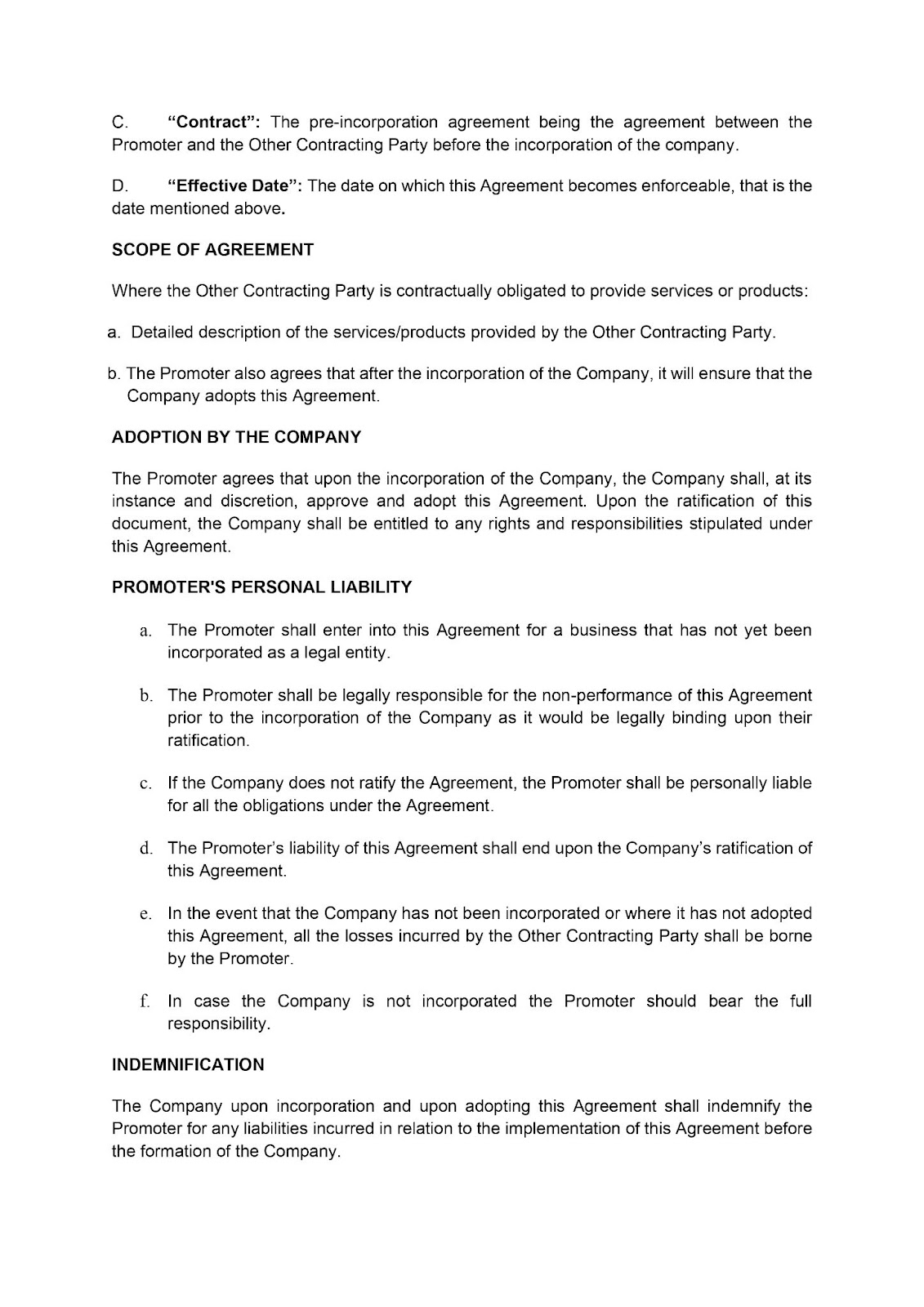
Definitions clause 
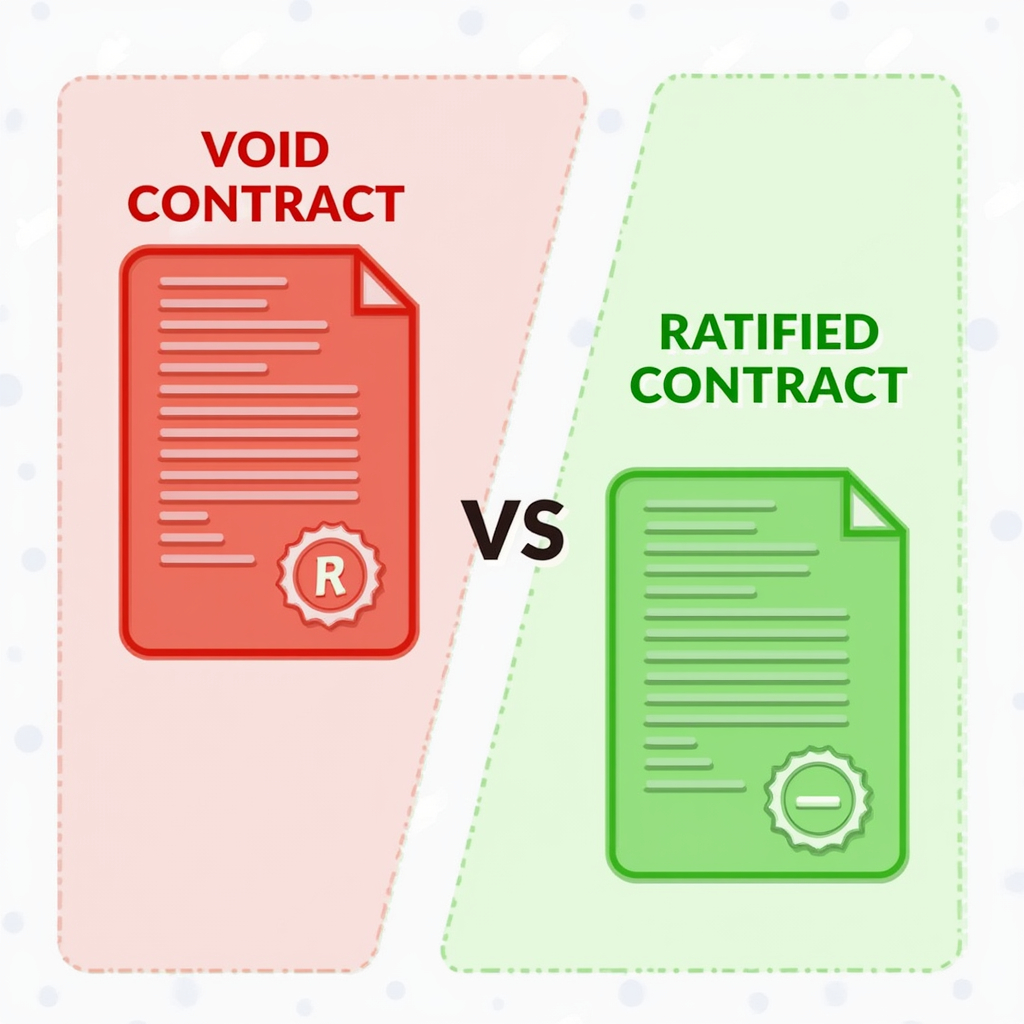
Before the details of the contract are explained, the two parties should agree on some terms that are used throughout the contract. Specifically, while terms such as ‘‘promoter’’, the person or persons who establish the company, and ‘‘company’’, the corporate body that has not been formed, are recognised in the legislation, such terms and other terms that are used in the legislation but may have different meanings in other contexts must be defined. 

The definitions should also include other such words as “contract: the pre-incorporation agreement of the parties”, and “effective date: the date upon which this contract takes effect”. Their clarification will help in disentangling and having clear grounds for interpretation of these terms. 

Identification of parties clause 

In this clause, there should be clear mention of the involved parties in the agreement. The other contracting party could be a physical person or an artificial juridical person while the promoter hereby acting on behalf of the future company has to be explicitly named with his contact details. 

This is to avoid any complications with regard to legal responsibilities and liabilities in the pre-incorporation stage. The identification of parties also underlines that the promoter is acting on behalf of a company that has not been incorporated yet. 

Objective/recital clause 

The recital clause contains an explanation of the need to enter into the particular agreement. It should state that the promoters are in the process of incorporating a company and that the intention of the agreement is to secure the services of the other party for some services or products that will be of benefit to the envisaged company. 

This clause expresses the purpose of the contract and establishes the relation of that contract to the future business entity as the reason for such a contract formation. 

Scope of agreement clause

This clause goes further to define the duties and responsibilities of each of the contracting parties in the contract. It should describe the other party’s service or product offering and the precise role of the promoter. 

The clause aims to define the extent of the agreement to avoid misunderstandings of the parties’ respective duties by detailing their liability during the pre-incorporation period. These obligations should be enumerated in the contract in a systematic format to minimise the chances of a legal battle in the future. 

Adoption by the company clause 

After the incorporation of the company, it can choose to ratify the pre-incorporation contract. This clause entails that while the promoter signs the agreement, the agreement will be novated to the company as soon as it is formed. 

To assume the contractual rights and responsibilities the company has to complete the contract through a legal procedure, such as a board of directors’ decision. The adoption clause works in a manner that the company is not compelled to accept the contract but can decide to adopt it. 

Promoters’ personal liability clause 

Therefore, since the company has not been formed in law when it enters the agreement, the promoter is principally responsible for any contract liabilities. This clause should expressly limit the promoter’s liability; the promoter will be legally responsible for the contract until it is assumed by the company. 

It should also make it clear that on adoption, the promoter ceases to be liable and the company takes over such liability. It aids in shielding this promoter from protracted responsibility since the risk is shifted to the company after it has been incorporated. 

Indemnification clause 

The indemnification clause seeks to cover any loss, claims, or damages which the promoter may incur for performing the contractual terms before incorporating the company. It should state that upon entering into the contract the company will protect the promoter in respect to the liabilities accorded to the company during the pre-incorporation time. This clause gives the promoter confidence that the company will take responsibility for all losses in the course of the agreement. 

Non-liability of the company clause

This clause should indicate that where the company does not wish to adopt the pre-incorporation contract, then it cannot be made to perform the contractual obligations provided under the agreement. 

The corporation, once formed, is not liable for any steps taken by the promoter so long as it does not expressly ratify the contract. This shields the company from any legal implications that may arise from conduct before the incorporation of the business. 

Contingency clause 

A contingency clause specifies the next steps if the company is not incorporated or has not signed a contract within a particular time frame. It should provide for the circumstances under which this contract will be terminated and the promoter will still be bound with liabilities of the company for failure to form the company within a specified time. This clause is useful to minimise the legal risk and the party has clearly stipulated in this rule of how the execution of the agreement will take place if the company is not incorporated successfully. 

Intellectual property rights (IPR) clause 

If the agreement entails the development of new intellectual property within the course of the pre-incorporation period, then this clause provides for the transfer of ownership of the IP to the company once it has been formed. As for the specific intellectual property, the nature of the intellectual property rights, patents, trademarks or copyrights should be described and the IPR are to be transferred to the company after incorporation. This minimises the chances of the promoter owning valuable IP that is supposed to belong to the company. 

Stamp duty and costs clause 

The purpose of this clause is to determine who is to be held responsible for payment of any stamp duties, taxes, or legal fees that may be charged on the contract. In most cases, the promoter incurs the above expenses before incorporation. 

The clause should provide that the expenses in question are to be incurred by the promoter in the pre-incorporation stage but may be shifted to the company where the latter has assumed the contract. The costs ought to be divided in advance to avoid controversy in the future. 

Termination clause 

This clause specifies the circumstances under which the agreement can be brought to an end before or after the incorporation of the company. It should clarify that it can be cancelled if the company has not been incorporated by a particular time or if both parties agree that the contract should be void. It also provides a possibility of mutual termination of the cooperation if the business goals and objectives set are not met. 

Governing law and jurisdiction clause

This clause specifies which country’s or state’s laws will govern the contract and which courts will have jurisdiction over any disputes. In pre-incorporation contracts, it’s essential to clarify the legal framework that will apply, as different jurisdictions may have different rules regarding the personal liability of promoters. By specifying governing law, both parties are aware of the legal standards that will apply in case of a dispute.

Confidentiality clause

Since many matters will be discussed and communicated before the incorporation of the business, there is a need to include a non-disclosure clause with reference to trade secrets, ideas, plans and other matters that are sensitive in nature. 

It should make the parties have the obligation to keep all the information shared between them as confidential even after the agreement to ensure that the trade secrets and other such details are not divulged to other people. 

Force majeure clause 

This clause is important as it covers situations where either party is unable to perform their obligation because of certain events that are not within their control, for example, flood, war, or legislation. The force majeure provision protects both parties since none of them can be penalised for non-performance triggered by forces beyond his or her control. 

Entire agreement clause 

The entire agreement clause removes any confusion regarding whether any prior communications or discussions outside the formation of the pre-incorporation contract are part of the legal agreement between the parties. It supersedes any other oral or written agreements to do with the subject matter. This clause is pertinent, particularly to disputes that may be attributable to earlier negotiations, agreements or pacts that failed to be their totality or accurately reflected in the new contract. 

Execution and signature clause 

The last clause should also specify how the performance of the contract by the parties should be done. It must specifically show that while the promoters are entering into the agreement, they do so in their individual capacities but for the proposed company. It is also imperative to include spaces for the signature of the parties involved, the date, and any witness who is involved in the signing of the contract for the contract to have legal endorsements. 

According to these specifications in the contract, it is easier to come up with a legally acceptable pre-incorporation agreement that will adequately capture the needs of the involved parties. 

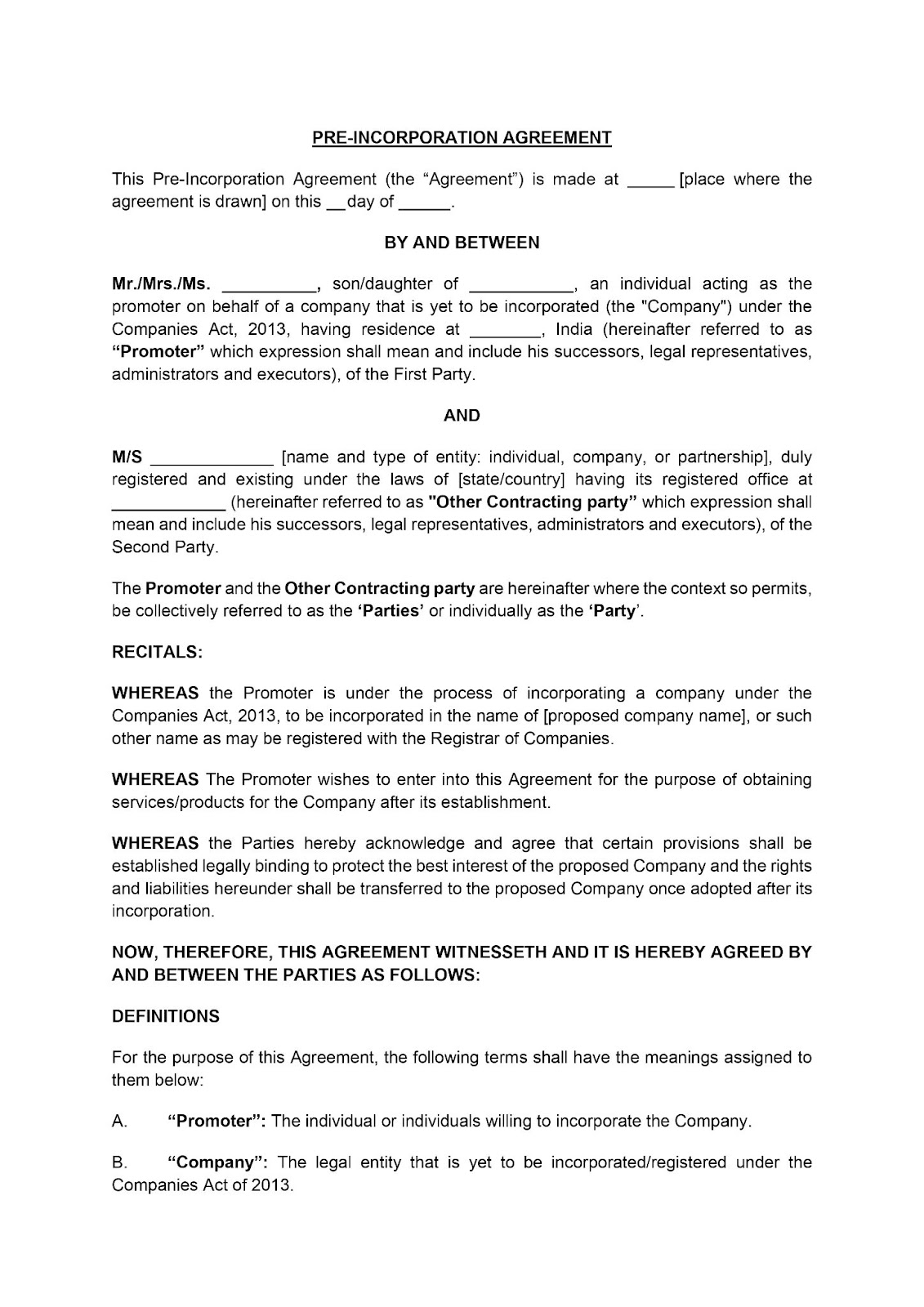
Sample of pre-incorporation contract

Given below is a sample of a pre-incorporation contract that drafts all the above clauses for a better understanding of the readers. This agreement is a promoter of a yet-to-form company and some other corporate body. 
Important judgments

Vali Pattabhirama Rao vs. Sri Ramanuja Ginning and Rice Factory (1983)

Facts

In this case, the appellants contracted with Sri Ramanuja Ginning and Rice Factory Private Limited. The controversy came up when the company performing the contract failed to proceed as agreed by the parties and the appellants resorted to seeking legal remedies. The contract in question was entered into by the company’s representatives before it was incorporated. This led to difficulties because under Indian law a company can not enter into a contract before its incorporation since it has no legal personality. 

The promoters of the company had agreed to the contract anticipating that it would transform into a legally binding agreement soon after forming the company. However, since the contract had been signed before the inception of the company, the issue of whether this pre-incorporation contract can be enforced or not, was another pivotal issue in the case. 

Issues 

  • To what extent the contract that had been made before the incorporation of the company by the promoters was legally binding. 
  • The effect of whether or not the company, once incorporated, had ratified or adopted the pre-incorporation contract. 
  • Whether the promoters be held personally liable for the obligations of the contract if the company fails to ratify the agreement after incorporation.

Judgment

Specifically, as regards to the first issue, the court stated that pre-incorporation contracts cannot be enforced as contracts binding on the company since the company does not have a legal personality until it is incorporated. Such contracts can’t be adopted after incorporation unless the company does so willingly. According to the case, the court has rejected the fact that the company has ratified the contract post-incorporation. 

Further, the judgement illuminated that where a company does not adopt or ratify it, the promoters who carried the pre-incorporation contract may be held legally responsible. The promoters had not ensured a shift towards the adoption of the contract by the company; hence, they had no excuse for being let off the hook. 

This ruling highlighted the need to follow legal formalities in pre-incorporation business agreements as these contracts do not legally bind the company and promoters may be held personally liable. 

Commissioner of Income-Tax vs. L.N. Dalmia (1993)

Facts

In this case, the Punalur Paper Mills Ltd. (PPM) in Kerala, headed by A & F Harvey Ltd. and its associates, were experiencing certain financial problems; no dividends were made in the period 1964-1968. These shares were bought by the assessee from these companies at Rs. 32 per share. As far as the control of PPM was concerned the assessee had control over it by March, 1969. 

The assessee sold 7,505 shares to Laxminiwas and Co. (Export) Pvt. Ltd., which was not formed at the time of the said transaction, at Rs. 25 per share which resulted in a loss of Rs. 7 per share. The Income-tax Officer reduced the claim disallowing the loss saying that the above-stated transactions were only sham. 

The case presented several questions pertaining to the authenticity of transactions prior to incorporation as well as the appropriate handling or allowance for expenses before incorporation. The Appellate Assistant Commissioner and Tribunal permitted the addition of interest to the cost of acquisition and later allowed the loss as a short-term capital loss. 

 Issues 

  • Whether the Tribunal was wrong in holding the share sale to Laxminiwas and Co. (P. ) Ltd as valid as a bonafide company even after the sale took place during its pre-incorporation stage. 
  • Whether the judgement of the Tribunal was wrong when they concluded that the share sale was not a sham or unreal transaction. 
  • Whether such a conclusion of the Tribunal that there was no proof of a higher market price than Rs 25 for the shares legally infirm? 
  • If the Tribunal has erred in allowing the capitalization of Rs. 1,46,501 interest for calculating short-term capital loss. 
  • Whether the law was correctly applied in the manner that the Tribunal permitted a short-term capital loss of Rs. 3,00,811 being allowed on the sale of shares? 

Judgment 

The pre-incorporation contracts cannot be binding on a company as a rule since they do not have the effect of law before the incorporation of the company. In this case, the Tribunal had held that the transactions of sale of shares which were made before the inception of Laxminiwas and Co. (Export) Pvt. Ltd. were validly ratified by the company subsequently. However, the contracts entered before the incorporation of a company are said to be void ab initio and cannot be given legitimacy by mere ratification of the company once it is formed. 

In order to ensure that a company is legally responsible for such contracts, promoters have to accept personal responsibility to ensure the contract is novated to the company once it is incorporated. Since there was inadequate substantiated evidence in regard to the terms of the contract and of the company’s articles of association in this case, the Tribunal’s decision to confirm the transaction was questioned. 

Also, the court noted that the Income-tax Officer had correctly assessed the break-up value of unquoted shares while the Tribunal had made generic valuation references. On the issue of capitalization of interest on borrowed funds used for share acquisition, the court agreed with this conclusion that where a company borrows funds to acquire shares the interest should not be capitalised to the cost but allowed as a deduction under “other source” and hereby reversing the Tribunal’s decision to capitalise the interest. 

Asian Hotels Ltd., Bhikaji Cama Place vs. D.D.A. (1998)

Facts

In this case, the Delhi Development Authority (DDA) advertised a plot of 20000 sqm of land near Bhikaji Cama Place, New Delhi. The auction took place on September 9, 1980, to which Shri C L. Jhunjhnuwala had bid for Asian Hotels Ltd which was in the process of formation. 

The highest bid was made by Jhunjhnuwala who offered Rs. 4.36 crores for the proposed company, and an earnest money deposit of Rs 1.09 crores was paid, with the receipt marked as Ex. D-3. A bid form Ex. D-2 stated that the proposed company was promoted by Jhunjhnuwala with the names of the directors provided within. 

The company was formally established, and incorporated on November 13, 1980. On November 17, 1980, the plaintiff notified the DDA of the incorporation and sought an extension of time for the payment on account of the delay in the arrangement for an interest-free loan from Indian promoters living abroad. 

The DDA provided such relief up to the date that is the third of January, 1981. The payments of Rs. 2.05 crores and Rs. 1.22 crores were made in January 1981 and the physical possession of the plot was handed over on January 21, 1981, but the actual lease deed was yet to be executed. The perpetual lease deed was executed on July 24 1982. 

The plaintiff filed a suit on January 7, 1983, claiming recovery of the amount paid under protest asserting that it was the company though it was not in existence at the time of the auction but participated in the bid and therefore entitled to the allotment. The main argument was that the highest bid was done in the name of the company and there was no reason why the transfer of the plot should be affected by delay in the incorporation of the company. 

Issues 

  • Whether the suit has been instituted and the plaint has been signed and verified by a competent person to do so including the promoter or his authorised agent. 
  • To what extent the plaintiff, through its promoter, is entitled to pray for a refund of Rs. 10,90,000/- said to have been paid on account of an unearned increase, as claimed by the defendant (DDA) for the reasons mentioned in the plaint. 
  • If issue No. 2 has been found in favour of the plaintiff, further questions arise whether the plaintiff, represented by its promoter, would be entitled to interest in the amount. And, if so, what rate of interest is applicable and for what period. 
  • What if through his promoter, the plaintiff is deprived of an opportunity to file the present suit and claim for a refund of the amount said to have been paid on account of an unearned increase for the reasons stated by the defendant in the written statement now in this case. 

Judgment 

The judgement discussed the legal issue that arose concerning a pre-incorporation contract wherein the other party to the contract was Shri C. L. Jhunjhunwala, a promoter of a private limited company with an interest in purchasing a hotel plot from the DDA. Even though the company was not incorporated at the time the bid was being offered. The court upheld the existence of the contract since the DDA started accepting payments from the newly incorporated company. 

The court further pointed out that where parties’ pre-incorporation contracts are made, the contracts are valid for ratification by the company post-incorporation as is the rule in many jurisdictions. DDA demanded an extra amount of Rs. 10,90,000/- towards “unearned increase”, which was held baseless as no violation of contractual terms was committed and hence no unlawful transfer of premise was made. 

Therefore, the court decided to provide the refund with interest at the rate of 10% per annum instead of the accused 18%. This case demonstrates the need to uphold pre-incorporation agreements especially where the parties perform on the basis of the agreement that was made before the incorporation of the company. 

Lindsay International Pvt. Ltd. vs. Laxmi Niwas Mittal (2017)

Facts

In Lindsay International Pvt. Ltd. & Ors vs. Laxmi Niwas Mittal & Ors (2017), the petitioners were Lindsay International Pvt. Ltd. that carried out a pre-incorporation agreement concerning the sale of shares to Laxmi Niwas Mittal. The petitioners accused the company of fraud and misrepresentation of financial positions. The contract was entered into before the incorporation of the company and therefore there is a question of whether or not the agreement is legally binding. 

Issues

  • Whether the contract was made and entered into before the formation of the company could be binding either on the company itself or on the respondents. 
  • Whether the respondents lied about the material facts concerning the financial position of the company. 
  • Whether the promoter could be made to take personal responsibility for any contract entered into before the formation of the company. 

Judgment

The court was of the view that contracts entered before the incorporation of the company are not valid until such has been ratified by the company after formation. Since the company had not ratified the contract it was legally invalid and unenforceable against the respondents. In relation to fraud and misrepresentation, the petitioners were deemed by the court to have presented insufficient proof or evidence to back their claims. 

The court also emphasised the fact that promoters cannot be taken as being personally responsible for pre-incorporation contracts unless there are particular undertakings to that extent. The case was dismissed, and as for the petitioner, their compensation claim was dismissed as well. 

Thus, it can be stated that the judgement established the following points:

  • Pre-incorporation contracts: In pre-incorporation contracts, the agreement is usually void regardless if the agreement terms were reasonable, though the agreement can be ratified by the company later once it has been established. 
  • No fraud established: The respondents were not found guilty of fraudulent misrepresentation by the court since they failed to provide enough evidence to prove their allegations. 
  • Promoter’s liability: Personal liability of promoters may only be based on express agreement or where there exists an express ratification of pre-incorporation contracts subsequent to the formation of the company.

Conclusion 

Essentially, entering into pre-incorporation contracts is crucial when establishing corporate undertakings in India because their enforcement and ratification have legal backing. The Companies Act, 2013 permits the regulation of such contracts after the formation of a company while the Indian Contract Act, 1872 guarantees that they are legal. 

The Specific Relief Act, 1963 supplements this by providing remedies for the enforcement of these agreements as well as breaches of the same. Together, these laws enable the change of status from pre-incorporation agreements to business operational contracts once incorporated, with safeguards or interests of all the interested parties as well as limiting the liability of the promoters. Recognition and implementation of these provisions remain vital in the pursuit of efficiency and legal non-tolerance in business ventures.

Frequently Asked Questions (FAQs) 

How does a company ratify a pre incorporation contract under Indian law?

Section 15(h) of the Specific Relief Act, 1963 provides for the ratification of pre-incorporation contracts by a company. A company can formally accept the pre-incorporation contracts, usually through a board resolution after its incorporation. Furthermore, it has the option of entering into a fresh contract with similar terms also known as novation. 

Whether these contracts entered by promoters are valid or binding to the company?

No, pre-incorporation contracts are not automatically binding on the company because the company did not exist at the time of the contract. However, such contracts can become binding once the company formally adopts or ratifies them through novation. Until then, the promotors are personally liable for such contracts.

What happens to the pre-incorporation contract if the company is not formed as planned?

If the company was not formed or incorporated as planned, the pre-incorporation contract may cease to be enforceable depending on the terms of the contract as well as the circumstances. In the case that the contract includes a ‘survival clause,’ it means some terms contained in the contract, for instance, those to do with confidentiality or manners of dispute resolution, will remain valid even if the formation of the company is invalid. 

What if a promoter breaches his/her duties under a pre-incorporation contract? 

The other parties may demand to be compensated through the award of damages, specific performance, or rescission of the contract. For instance, if a promoter is supposed to bring capital into the venture and declines to bring it into their capital, then the others can take legal action to recover the capital. 

Can the contract signed before the incorporation provide for a particular mode of dispute resolution? 

Yes, it is possible to come to a pre-incorporation contract, where the details of the particular dispute resolution procedure can be stated. However, it is important to know that such clauses can be prohibited or require some form of compliance with the law. For instance, if the contract provided that the dispute must be referred to arbitration then the parties must agree on the rules of arbitration and the arbitrator. 

Is it legal to enter into a pre-incorporation contract with the aim of evading regulatory provisions? 

No, regulatory requirements cannot be evaded through a pre-incorporation contract as it is only an agreement entered between the shareholders prior to the incorporation of a company. If a company participates in activities that fall under the purview of a regulatory body, then the company has to abide by those regulations even if they were outlined in the pre-incorporation contract. 

Is it possible to also include provisions for exit strategies? 

Indeed, provisions concerning the exits of the company are also allowed to be included in a pre-incorporation contract such as a buyout or initial public offering (IPO) in the pre-incorporation contract. For instance, the contract may set out the circumstances in which a shareholder may compel the company to redeem his or her shares or the manner in which an IPO may be undertaken. 

References


Students of Lawsikho courses regularly produce writing assignments and work on practical exercises as a part of their coursework and develop themselves in real-life practical skills.

LawSikho has created a telegram group for exchanging legal knowledge, referrals, and various opportunities. You can click on this link and join:

https://t.me/lawyerscommunity

Follow us on Instagram and subscribe to our YouTube channel for more amazing legal content.

Download Now

Separation of powers

1

This article is written by Richa Goel, Priyanka Sharma, Tejaswini Kaushal and it is further updated by Jaanvi Jolly. In this article, the doctrine of separation of powers and its ideological development has been traced starting from Aristotle to Montesquieu. The three major postulates in the theory have also been discussed. It also analyses the applicability of the doctrine in India and other countries. Additionally, the merits and the demerits of the doctrine have been demarcated.

Table of Contents

Introduction 

…there is no liberty if the powers of judging are not separated from the legislative and executive.”  -Montesquieu 

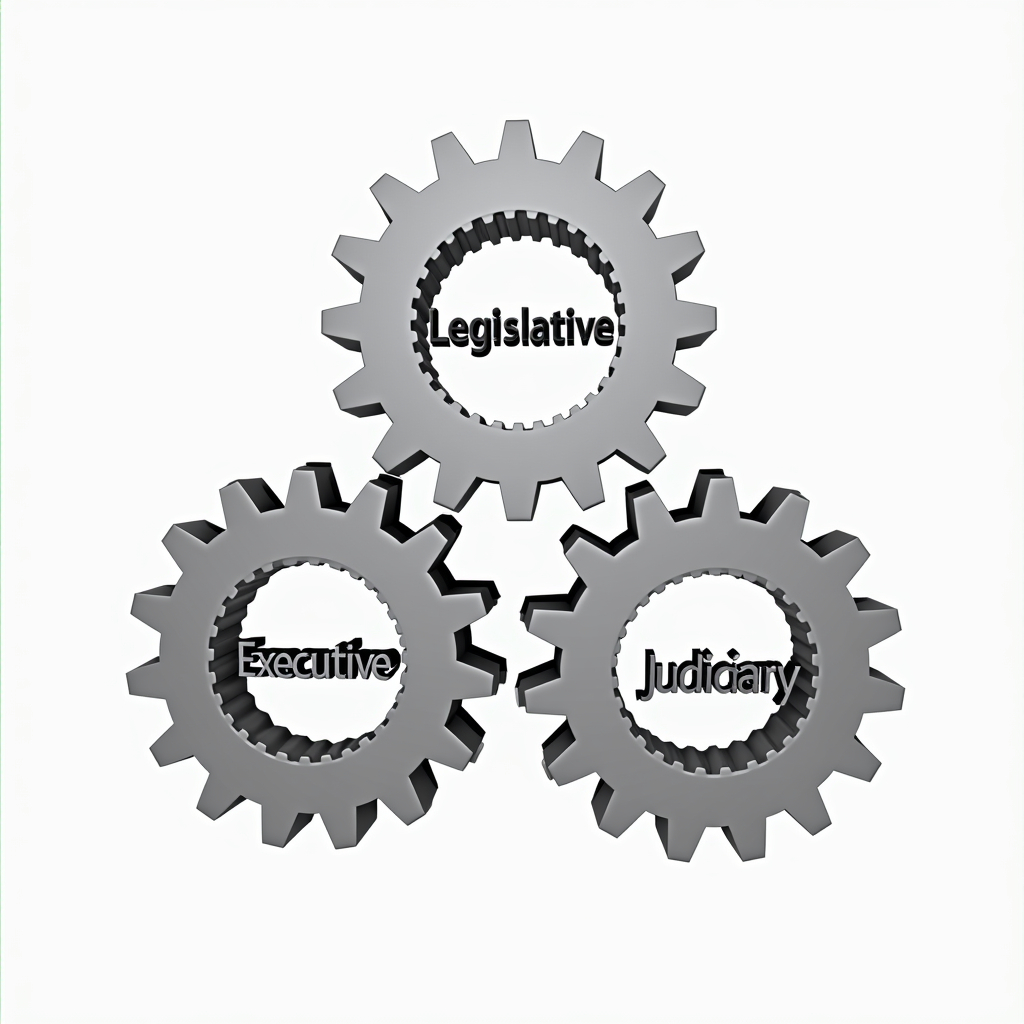
The separation of powers is a prerequisite for the efficient administration of federal democratic states. According to the doctrine of separation of powers, the state power is divided into three different branches- legislative, executive, and judiciary. Each branch has its own independent power and demarcated responsibility. This separation is essential to ensure that  one branch does not interfere with the working of the other two branches. 

Basically, it is the rule that every State Government should follow in order to enact a law, implement the law, and to check its validity. If this principle is not followed then there will be more chances of misuse of power and corruption. However, adhering to the doctrine will reduce the chance of enacting a tyrannical law as the legislature will be aware that it will be checked by another branch. It aims at the strict demarcation of power and tries to bring exclusiveness to the functioning of each organ.

In India, functions are separated from powers rather than the other way around. The idea of the separation of powers is ideologically followed in India, unlike in the United States. Although the theory of separation of powers is not expressly recognised in the Constitution in its absolute form, the Constitution does provide provisions for a fair division of duties and authority among the three branches of government.

Meaning of separation of powers

The definition of separation of powers is given by different authors as follows:

Wade and Phillips provide three elements of the idea of separation of powers:

  • That one branch of government should not carry out the duties of another, such as giving ministers legislative authority;
  • That one branch of the government should not exert control over or interfere with another branch’s performance of its duties, such as when the judiciary is separate from the executive branch or when ministers are not answerable to Parliament ;
  • That the same individuals should not serve in more than one of the three branches of government, such as sitting as Ministers in Parliament .

Richard Benwell and Oonagh Gay define the idea as, “Separation of powers refers to the idea that the major institutions of state should be functionally independent and that no individual should have powers that span these offices.” 

Marchamont Nedham, writing under Cromwell’s Protectorate in 1656, stated that separation of power requires separation of legislative and executive powers into different “hands and persons.”

In general, the meaning of separation of powers can be categorised into three features:

  • A person forming a part of one organ should not form part of another organ.
  • One organ should not interfere with the functioning of the other organs.
  • One organ should not exercise the function belonging to another organ.

The separation of powers is based on the concept of “trias politica”. This principle visualises a tripartite system where the powers are delegated and distributed among three organs outlining their jurisdiction each.

The doctrine of separation of powers in a rigid sense means that when there is a proper distinction between three organs and their functions and also there should be a system of check and balance. 

The doctrine of separation of powers in a broad sense means that when there is no proper distinction between three organs and their functions, however a broad division is in place.

Historical development of separation of powers

Aristotle 

Aristotle was a Greek philosopher and one of the disciples of Plato. His most notable work was ‘Politics’. However, it was in his work titled ‘Nicomachean Ethics’ that he discussed the correct way of life and the appropriate form of government to fulfil that correct way of life. He states that one must live life virtuously and the government structure which enables such life must be preferred.

The specific details of the ideal government structure are explored in Aristotle’s “Politics,” a work divided into eight books. The third book addresses the concept of what we now refer to as the separation of powers. In the fourth book, titled “The Best Regime,” Aristotle aims to outline the form of government that governs most effectively while avoiding tyranny. Aristotle evaluates different types of government such as monarchies, aristocracies, and democracies and their respective advantages and shortcomings. He discusses the importance of balancing the interests of different social classes and ensuring that political power is distributed in a way that prevents any one group from dominating unjustly.

Polybius 

Polybius was one of the first theorists who deliberated upon the idea of separation of powers. His contribution to the idea of separation of powers was highlighted by Scott Gordon in his book about checks and balances. His most important and renowned work was ‘’The Histories”’. This was an account of the Roman empire. He was a hostage in Rome for about 17 years, during which he understood the depth of the system of governance present in the state. In his books, the development of the Roman setup from the 5th century BC to the fall of the Roman empire was traced. He believed that the Roman Constitution was an ideal, from which the others should try to learn. While the term “separation of powers” was nowhere mentioned in the work of the thinker, his broad ideas based on the analysis of the Roman system, nevertheless, were the foundation stones for the development of the theory.

John Calvin

He did not provide an explicit theory of separation of powers, however, he did provide his ideas on governance wherein different authorities were granted different areas of activity.

He presented three components of the government:

  1. The Magistrate: who is the protector or the guardian of the laws.
  2. The Laws: as governed by the magistrate.
  3. The people

Calvin preferred a form of aristocracy or rather a blend of democracy and aristocracy. Generally, an aristocracy is understood to be a state where power is concentrated in the hands of the wealthy, but as per Calvin in the truest form, it is a form of government where there is the rule by the best. He believed that in a democracy, there was always a fear of the power going into the hands of the worst of men, as he was aware of the man’s fallen condition. This idea along with his detest towards totalitarianism served as a predecessor to the development of Constitutional governments where the people decided who the best are that will go to them. He also was against monarchy as he thought that the government in the hands of many is better than the government in the hands of a few.

John Locke

The following were the ideas propounded by John Locke in relation to the ideas of separation of powers:

  1. The idea of the social contract: The origin of the state as per Locke can be found in the social contract. He proposed that as a result of the social contract among the individual, the government came into being. This government is duty bound to protect the individuals natural rights. This concept focuses on the authority of the government in the consent of the people which acts as a foundation for creation of a system of checks and balances.
  2. The idea of limited government: As per Locke’s vision, the government was to provide only a few functions. His idea of limited government was an essential aspect in the foundation of the concept of separate power and functions being allotted to different branches of the government. This would avoid the concentration of power in any single branch.
  3. The idea of division between legislative and executive: While the actual idea of separation of powers between the different branches was not discussed by Locke explicitly. He did differentiate between the legislative and executive functions formed by the state. He envisioned that while the legislative branch should be responsible for formulation of laws, the executive should be responsible for implementation of those laws. Therefore, the idea of separate Arenas of functioning was clearly present in his thoughts.
  4. The idea of checks and balance: As per Locke,, the primary function of the government was the protection of the natural rights of the citizens including life, liberty, and property. He propounded that the government must be accountable to the people, and therefore a system of checks and balances must be put in place. His idea of limited government and insurance of accountability to the people supported development of the principle of separation of powers.

While the explicit idea of separation of powers per se, did not find mention in Locke’s work. Nevertheless, his ideas of government accountability to people, distinct roles of the legislative and the executive, indeed contributed to the development of the doctrine of separation of powers.

Montesquieu’s theory on separation of powers

“There would be an end of everything where the same man or the same body exercise the three powers” -Montesquieu

The term “separation of powers” or “trias–politica “ was initiated by Charles de Montesquieu, who was a French scientist. He articulated this principle scientifically, accurately and systemically in his book “Esprit des Lois” (The Spirit of Laws) which was published in the year 1785. He discovered that when power is concentrated in the hands of a single person or a group of people, a despotic government emerges. To avoid this predicament and to limit the government’s arbitrary nature, he argued that the three organs of the state, the executive, legislative, and judiciary, should have a clear distribution of power.

In the “Spirit of Laws”, the quintessential work of Montesquieu, is a short chapter titled “The Laws”, which establish political liberty with regard to the Constitution. Hearing this we find the classical theory of separation of powers, which is an everlasting doctrine which has modelled the form of the present nation states. The division of the government into three branches that is the legislative, the executive and the judicial where in each of them remain independent of the other is a chief principle of the modern day Federal Constitutions. 

The doctrine of separation of powers presents a dual aspect. The first is a negative one. It implies non-encroachment in the sphere of each other and positively, it connotes the maintenance of independence and integrity of each of the branches.

The popularity of the work, “Spirit of Laws” has a dual cause. Firstly, the momentum of the era of renaissance coupled with the rise of liberalism presented a ripe condition for new and progressive political doctrine. Secondly, the introduction of new concepts of liberty and nation states had to be established on some form of government structure. This structure was provided by Montesquieu wherein he separated the legislative from the executive waters and placed the rock of judiciary between them. 

He intended to check the tyrannical exercise of power by rulers in monarchies. He sought to provide a check upon the power that various organs held. Montesquieu’s model of separation of powers states that in every governmental set up, we find three different powers. 

The first being a legislative power by virtue which the prince or the magistrate in act the laws, the second is the executive power by which the decisions about peace or war, sending or receiving of Ambassador establishment of public security and safety against invasions is decided and by the third, that is the judicial power, he punishes the criminals and determines the dispute arising between individuals. 

Where the executive and the legislative powers are found in the same person or the same body of people, it creates a condition of absence of liberty. This is because there is an apprehension that the monarch or the Senate would enact tyrannical laws and execute them in a tyrannical manner. Further, if the judicial power is not separated from the legislative or the executive power, then the life and liberty of the people would be exposed to arbitrary control. Head and the judge would be the legislator, and in case “ it is joined by the executive power, the judge might behave with violence and oppression”.

He is a believer in supremacy in political liberty. This ideal is found in moderate governments, wherein there is no abuse of power. To prevent this abuse of power the model of checks and balance has to be instilled in a state. Therefore, he deciphered a link between a state with separation of powers, presence of political liberty and the system of checks and balances.

Montesquieu’s ideal state was interpreted by subsequent theorists as a state where the powers are frequently mixed. However, the departments are separate. He proposes the power of the executive to assemble and probe the Parliament . The general executive power to restrain the encroachment of the legislature, the power of the legislature to investigate executive conduct. Therefore, it does not pronounce the performance of all the legislative functions by one body and all the executive functions by another rather he wanted to create a grand coordinate department, having to do in general with making the laws and others with execution of them, but at the same time, each arm with defensive auxiliary powers. This further is the aspect that in order to keep a check on the power, we required departmental independence and not complete functional separation.

The paradigm shifting impact of Montesquieu’s work is reflected by the statement of Justice Holmes. He says that the “Spirit of Laws” has had dazzling success, and since then probably none has done as much to remodel the world as any product of the 18th century, which burned so many forests and sowed so many fields.

Constitutional status of separation of powers in India

Article 50 of the Constitution of India talks about the separation of the executive from the judiciary, however, as being a Directive Principle of State Policy, it is not enforceable. In the case of Divisional Manager, Aravali Golf Club vs. Chander Hass (2007),  the court has stated that if there is a law, the judges can certainly enforce it. However, the judges cannot create a law and seek to enforce it. This is because under the Indian Constitution, we have adopted a broad scheme of separation of powers according to which one organ of the government should not interfere into the domain of the other.

Although strict separation of powers is not followed in India like the American Constitution, the system of check and balance is followed. However, no organs are to take over the essential functions of other organs which is the part of the basic structure, not even by amending and if it is amended, such amendment will be declared as unconstitutional.Going through the provisions of the Constitution of India one may be ready to say that it has been accepted in India. Under the Indian Constitution:

LegislatureParliament  (Lok Sabha and Rajya Sabha)State legislative bodies
ExecutiveAt the Union level- PresidentAt the State level- Governor
JudiciarySupreme Court, High Court and all other Subordinate Courts

Three organs in Separation of Powers

Legislative

The primary function of the legislature is to enact laws, which reflects the will of the State and underpins the autonomy of its governance. It plays a crucial role in the functioning of the executive and judiciary by setting the legal framework within which these organs operate. The legislature is considered the foremost of the three branches of government because lawmaking is fundamental to the execution and application of laws. The Parliament  is empowered to legislate on any matter, provided it conforms to the Constitution. The judiciary may give advice and suggestions to the legislature about the framing of new laws and amendment of certain legislation but it cannot overtake the function of the legislature.

The legislature is the primary law making body, however, every law, once passed by both the houses of the Parliament  or the house of the State Legislative Assembly and State Legislative Council, wherever it is present, has to obtain the consent of the President or the governor, respectively in order to become an Act. Therefore, the process of a bill to an act attains finality only when the President gives assent to it as per Article 111 of the Constitution. Here also we see a collaborative role of the legislature and the executive.

At the central level in India, the Parliament  is the primary law-making body, while State Legislative Assemblies and Councils perform this role at the state level. These bodies debate and shape the laws that address national and regional needs. Additionally, the legislature has the authority to amend the Constitution, subject to the special majority requirement outlined in Article 368.

The members from the legislature, either the Rajya Sabha or the Lok Sabha are selected to be a part of the council of ministers, which is the executive body responsible to aid and advise the President. The council of ministers who are responsible to advise the executive head of the state are collectively responsible to the Lok Sabha. Any government would only be in power till the time the house of the people retains their confidence in them.

While the legislature is the main body responsible for creating laws, there are instances where the President can exercise legislative powers. For example, under Article 123, the President can issue ordinances during Parliamentary recesses or emergencies. Similarly, at the state level, the Governor can also enact ordinances under specific circumstances.

Executive

This organ is tasked with implementing, executing, and enforcing the will of the state as defined by the constituent assembly and the legislature. The executive branch serves as the administrative arm of the government and is often referred to as the “mainspring” of governance. If the executive branch falters, it can disrupt the balance and functionality of the entire government. In a narrower sense, the executive includes the head of state, advisors, departmental heads, and their respective ministers.

In India, the executive is led by the President and is supported by the council of ministers, who are headed by the Prime Minister . Chapter I of Part V of the Indian Constitution addresses the executive branch of government. Unlike the American Constitution, which explicitly states that executive power is vested in the President, the Indian Constitution, under Article 53(1), similarly vests executive power in the President at the central level and in the Governor under Article 154(1) at the state level. However, the Constitution does not include specific provisions regarding the vesting of legislative and judicial powers in distinct organs, as it does for the executive.

The President of India, as the head of the executive, is elected by an electoral college consisting of the members of both houses of Parliament  and the legislative assemblies of the states, effectively making the legislative branch responsible for this election. Additionally, the President can be impeached for violating the Constitution, with charges being initiated by either house of Parliament  according to the procedure outlined in Article 61. If a resolution for removal is passed by a special majority in both houses, the President can be removed from office. Thus, the legislature not only elects the head of the executive but also has the authority to remove them. 

Similarly, the Vice President of India, who serves as the ex-officio Chairman of the Rajya Sabha according to Article 64, is elected by the members of both the Rajya Sabha and the Lok Sabha, which collectively constitute the Parliament  or legislature. The Vice President can be removed from office by a resolution passed by a simple majority in the Rajya Sabha, with the approval of the Lok Sabha, as per Article 67. In cases where disputes arise concerning the election of the President or the Vice President, Article 71 mandates that the Supreme Court will investigate and resolve such disputes, with its decision being final. This illustrates the interaction between the executive and the judiciary.

India operates under a Parliamentary form of government characterised by a close relationship and coordination between the legislature and the executive. Although executive power is constitutionally vested in the President, the real executive authority lies with the Prime Minister  and the Council of Ministers. The President serves primarily as a nominal head of state. According to Article 74(1) of the Constitution, the President must act in accordance with the aid and advice of the Council of Ministers, led by the Prime Minister. The President also appoints the other ministers on the advice of the Prime Minister. Further, as per Article 75, the council of ministers is appointed by the President on the advice of the Prime Minister  and they would hold their office during the pleasure of the President.

If we analyse carefully it is clear that doctrine is not accepted in a rigid sense in india. The executive is a part of the legislature and the executive is accountable for its conduct to the legislature and also it derives its authority from the legislature.

Judiciary

It refers to those public officers whose responsibility is to apply the law framed by the legislature to individual cases by applying the law legislated by the Parliament . The Indian judiciary is a key pillar of the Indian government, responsible for interpreting the law, ensuring justice, and upholding the Constitution. It operates independently of the executive and legislative branches, ensuring a balance of power within the federal structure of India

In the Indian system, we have an hierarchy of courts starting from the lower judiciary to the Supreme Court of India. They have been given the task of adjudication of disputes whenever they arise, these can be either civil disputes or criminal offences. While the statutes or legislations are made by the legislature, their actual implementation and resolution of conflicts arising in their implementation are dealt with by the judiciary. Further, the conflict between the citizens and the state or between two states or between centre and the state are also adjudicated upon by the judiciary. In that sense it acts as the balancer of rights in the society.

Our Constitution is based on the doctrine of separation of powers and even though the judiciary is a self-sufficient and an independent organ, some interference of the executive and the legislature can be seen under the Constitution as a measure of checks and balances.

Article 124, which provides for the establishment of the Supreme Court states that it is the Parliament  who has the power to prescribe the number of judges for the Supreme Court at the beginning of the Constitution. This number was seven along with the chief justice, but now by the Supreme Court Number of Judges) Amendment Act 2019, the number has been increased to 33 excluding the chief Justice of India.

As per Article 124(2) the official appointment of every judge of this Supreme Court is done by the President, and in case a judge decides to resign, he addresses his resignation to the President.

The salary, privileges and allowance of the judges are determined by the law made by the Parliament. This power of the Parliament cannot be used to create a variation in situation which is disadvantageous for the judges after they have been appointed as per Article 125.

The High Court under Article 226  and Supreme Court under Article 32 are given the writ jurisdiction. Further by the doctrine of judicial review according to which any law passed by the legislature can be declared void by the judiciary if it is inconsistent with the fundamental rights provided by the Constitution. 

The independence of judiciary is also ensured by provisions which provide the judiciary the power to perform the administrative actions including formulation of regulations, issuing directions to subordinate courts and framing the rules regulating their own procedure. Further, to ensure independence the Constitution prohibits the discussion on the conduct or working of the judiciary in the Parliament  except where impeachment proceedings are ongoing. 

So it is presumed from the provisions of the Constitution that India being a Parliamentary form of government does not follow the absolute separation. There is an amalgamation of the powers where the connections between the different wings are inevitable and it can be drawn from the Constitution itself. Every organ performs all types of functions in one or other form subject to the check and balance by other organs. All three organs are interdependent because India has a Parliamentary democracy. This does not mean that it is not accepted in India, it has been accepted up to a certain extent.

Functional overlap among organs of the government

In the case of Ashwini Kumar vs. Union of India (2023) the Supreme Court acknowledged the fact that the classical theory of separation of powers as was envisaged by Montesquieu, which, in the present day forms, the bedrock of the American setup is the inspiration for the Indian Parliamentary democracy. In our country, the executive and the legislative in terms of the powers and functions are linked and there is often an overlap of the person they consist of.

The Indian Constitution provides a division of the powers, roles and functions between the organs of the state. The legislature executive and the judiciary. All of these branches are bound by their boundaries and limits as fixed by the Constitution in order to prevent any transgression by any of them into the powers functions in the rules following within the domain of the other.

Instances of law making by the judiciary

Honourable Chief Justice of India Subba Rao, in the case of I.C. Golaknath vs. State of Punjab (1967), stated that “the expression declared is wider than the words found or made while declare means to announce in opinion, whereas the latter involves the process while the former expresses the result the law declared by the Supreme Court is the law of the land to deny this power to this Court on the basis of some outmoded theory that the Court only find law but does not make it is to make ineffective. The powerful instrument of justice placed in the hands of the highest judiciary of this country.”

MP Jain in his article, ‘the Supreme Court and the fundamental rights’ stated  that the idea that the judges only declare the law and do not make it has been discarded even in Britain and there exists a general consensus of opinion that new laws are created by the judiciary. That is to say, wherever a court applies and establishes rule or principle to a new situation or a set of facts, new law is being created. 

Under Article 142, the Supreme Court has been granted extremely wide powers which can be used to do complete justice in any case where the laws are found to be inadequate for the grant of relief. The Court makes its jurisdiction under Article 142 of the Constitution. 

A very pertinent example of the court using this power is in the case of irretrievable breakdown theory. This ground for dissolving a marriage has not been expressly provided by the state is Hindu marriage act or the special marriage act. Nevertheless, in appropriate situations, the Court may grant divorce to the parties to the marriage using its extraordinary powers provided under Article 142. 

Similarly, in the case of Vishakha vs. State of Rajasthan (1997), where the Apex Court provided directions in the area of protection from sexual harassment at workplace, till the vacuum is filled by a legislation. 

Further, in the case of Vellore citizens welfare forum vs. Union of India (1996), the Supreme Court recognised the principles of ‘sustainable development’, the ‘precautionary principle’ and the ‘polluter pays principle’ by which they became a part of Indian law. In the case of M.C Mehta vs. Union of India (1986), which is also known as the ‘oleum gas leak case’, the doctrine of ‘absolute liability’ was devised by the Apex Court to deal with the situations where the hazardous industries are built, which ends up causing death and damage to the citizens due to a mishap. 

Legislative authority to punish in case of breach of privilege

Either house of the Parliament  or the State Assembly have been granted specific rights and immunities by the Constitution. In case any of such immunity is violated, either by the member or a stranger, it is said that they have committed an offence of ‘breach of privilege’. The Parliament  and the State Assembly have the power to formulate their own regulations on the procedure for privilege motion as well as on the possible punishment for the said offences. Some of the examples of breach of privilege are publication of secret sessions, speaking, or gross writing about the character of members, disseminating, manipulative, reports of house proceedings, etc.

A set of rules has been formulated under the rules of procedure and conduct business in Lok Sabha and the rules of procedure and conduct of business in Council of states. 

Article 122 and Article 212 of the Constitution provide that the validity of the proceedings of the Parliament  or the legislature of the state shall not be called in question in any court on the ground of alleged irregularity of procedure. These provisions provide protection to the Parliamentary process from any judicial intervention. Thereby in punishing the member or any stranger of the breach of privilege, the legislature performs some sort of judicial functioning.

Tribunals and other quasi-judicial organisations of the executive carrying out judicial functions

The principle of judicial independence and separation of powers are intertwined and have been held as part of the basic structure of the Constitution. Article 323A which provides for the establishment of administrative tribunals by the Parliament  to adjudicate disputes related to recruitment and condition of service of persons appointed to public services was added by the 42nd Constitutional Amendment. The Central Administrative Tribunal set up in 1985 now has 17 benches and exercises original jurisdiction in matters related to recruitment and service of public servants. Article 323B, which was also inserted by the 42nd Constitutional Amendment empowers the Parliament and the state legislature to set up tribunals to adjudicate disputes relating to taxation, industry and labour, rent and tenancy land reforms, etc.

This aspect of excessive ‘tribunalisation’ is often criticised as being against the doctrine of separation of powers. It is seen as an encroachment of powers by the Parliament .

In the case of Roger Matthew vs. South Indian Bank Limited, (2019), the Court stated that the lack of judicial dominance in the appointment process of the presiding offices of the tribunal contravenes the doctrine of separation of powers. It is an encroachment on the judicial domain. Further, as the executive is itself a party in most of the litigation before these forums, it cannot be allowed to be a dominant participant in the appointment process to the tribunals.

Checks and balances under the Indian Constitution

The aspect of checks and balances is the essence of the doctrine of separation of powers. It is often misconceived that separation of powers would essentially imply an absolute walled division between the organs with no scope of communication or interference. However, the true meaning of separation of powers can only be understood along with the doctrine of checks and balances. 

Every organ has been demarcated its own area of jurisdiction, nevertheless, any abuse of power or exercise in excess of its powers can be checked by the other organs to ensure a smooth functioning of the polity. So, while every organ works in its own sphere, it also has a corresponding duty to keep a check on the working of the other organs. Some aspects of the Indian policy which reflect the doctrine of checks and balances are discussed below.

Basic structure doctrine as a check on amending power of the Parliament 

The amending power of the Parliament  under Article 368 is very wide. However,  it has been subjected to the restrictions of the ‘basic structure’ as devised in case of  Kesavananda Bharati vs. State of Kerala (1973). In this case, it was held that the Parliament  can amend any part of the constitution including the fundamental rights, but it cannot amend the basic structure of the constitution. In case it amends the constitution in violation of the basic structure then such amendment will be declared as unconstitutional by the Apex Court. The question, what constitutes the basic structure has not been exhaustively enumerated by the Supreme Court. These elements have been discussed by the court in various cases. . 

Role of the Parliament  in removal of judges

The appointment of the judges to the High Court and the Supreme Court is made by the collegium system which is developed through a series of judgements. However, the process of their impeachment is provided by the Constitution. The judge of a Supreme Court or a High Court can either resign from his office by writing a letter to the President, but he cannot be removed from his office unless the President passes an order after an address by both the houses of the Parliament . 

The procedure for the impeachment of the judges is provided under Article 124 of the Constitution on the ground of proved misbehaviour or incapacity. The procedure for investigation and the proof of the misbehaviour or incapacity of the judge is prescribed by the Judges Inquiry Act 1968.

Firstly, a notice of motion for presenting an address to the present for removal of the judge has to be provided. In case it is initiated by the Lok Sabha, it is to be signed by a minimum of 100 members and in case of Rajya Sabha by a minimum of 50 members of that house. 

Next, the Speaker or the Chairman, that is the presiding officer of the house, may after consideration, admit or refuse to admit the motion.

Once the motion has been admitted, a committee of three members constituted by the presiding officer. The three members are to be selected as follows:

  1. Chief Justice or other judge of the Supreme Court 
  2. Chief Justice of High Court
  3. Distinguish jurist

After the investigation by the committee, the report will be submitted to the presiding officer and is thereby led before the respective house in case the judge has been adjudged guilty. 

The motion for removal along with the report will be taken up for consideration by the house and in case the motion is adopted as per the Constitution, an address for the removal of the judge will be presented.

Authority to enact an ordinance that carries the same weight as a law passed by the State legislature or the Parliament 

In a democracy as a general rule, the legislature, either the centre or the state has been given the power to legislate laws. However, in certain contingencies, the President and the governor which form the part of the executive have also been given some legislative powers under Article 123 and 213. This power can be exercised by the President, where either of the two houses of the Parliament  is not in session and thereby lawmaking via the usual route of Parliamentary deliberation is not available. The ordinance can be made on any subject on which the Parliament  has the power to legislate in light of the seventh schedule. The importance of the ordinance was felt in cases where an action requires immediate action, and the President is satisfied about the urgency of the situation. 

Even this ordinance is subject to the approval of the Parliament  within six weeks of reassembly. In case it is not approved, it will cease to exist.

Members of the legislature serve as the leaders of various ministries

The members of the Lok Sabha, are elected by the general elections and the members of the Rajya Sabha are elected by indirect elections in the State Assemblies. They all form a part of the legislature. Whichever party forms the majority in the Lok Sabha the leader of such a party becomes the Prime Minister . The Prime Minister  works along with his Council of ministers who are also chosen from either house of the Parliament . Therefore, a few members of the legislature also become the part of the executive, resulting in a clear overlap of personnel. This also clarifies the position making the executive answerable to the legislature. The strictest interpretation of separation of powers is incongruent with such set up.

Legislature can dissolve the government with a no confidence motion

A motion of no confidence is passed by the Parliament  to showcase to the head of the state that the elected Parliament has lost its confidence in the present government. This vote of no confidence is usually introduced by the opposition party to make the incumbent government prove its majority on the floor of the house. This motion can only be moved in the Lok Sabha. If the motion is supported by a minimum of 50 members of the Parliament , the Speaker is duty bound to allot a date to discuss the motion.

This is an element of the collective responsibility of the executive to the legislature. The Prime Minister  and the Council of ministers can only hold their office till the time they retain the confidence of the Lok Sabha and in case of failure, they are obligated to resign.

Power of the Parliament  to impeach the President

Impeachment refers to the process by which a person is removed from a position of power. The process of impeachment of the President is provided under Article 61 of the Indian Constitution ordinarily the term of the President is five years. However, he can be removed prior to that on the ground of violation of the Constitution.

Under the Indian Constitution, either house of the Parliament  can initiate the charges of impeachment against the President. The charge must be signed by at least one fourth member of the house initiating it, and the President must be given a notice of 14 days. The charges are then sent to the other house for  investigation. The President has the right to appear before the investigating house. The motion for the removal, if passed by 2/3rd majority has the effect of removing the president from the office. In India, no President has been impeached yet. The process of impeachment also acts as a check on the executive by the legislature.

Council of ministers who aid the Executive head are selected from the legislature 

The members of the executive are selected from the Parliament. These members of the Parliament  also act as the ministers of various different heads like finance, external affairs, etc. Under the Constitution of India, the President has to act as per the aid and advice of the Council of ministers which is headed by the Prime Minister .

Therefore, in effect, the Council of ministers are actually the members of the legislature and the President has to exercise his powers, except as otherwise provided by the Constitution, in line with the advice given by these Council of ministers.

Judicial review to examine executive action

Judicial review is the tool developed by the judiciary to check the constitutionality of any legislative or executive action. in case any such action is violative of the basic structure of the Constitution that act or action is liable to be declared invalid or  unconstitutional. 

Justice P. N. Bhagwati, in the case of Minerva Mills ltd. vs. Union of India (1980) stated that, “ it is for the judiciary to hold the Constitutional values and to enforce the Constitutional limitations, that is the essence of the rule of law. The exercise of powers by the government, whether it be legislative or executive or any other authority, be by the Constitution and the law.

The administrative decisions in India can be brought under view of judicial review on the following grounds:

  1. Jurisdictional error, wherein the administrative authority has exceeded jurisdiction or excise any power without jurisdiction
  2. Irrationality, the exercise of administrative authority must be reasonable and not arbitrary
  3. Procedural impropriety, every procedure provided must be compliance with the natural justice principles
  4. Proportionality, every action must be taken in proportion to the goal. It seeks to achieve. For example, a sledgehammer must not be used to crack a nut.

Basic structure of the Constitution cannot be amended by the Parliament 

The tussle between the Parliament and the judiciary was nowhere more express, then, in the case of the power of the Parliament  to amend the fundamental rights. In the case of IC Golak Nath vs. State of Punjab (1967), the Apex Court had wrongly stated that the fundamental rights cannot be amended by the Parliament. However, in the landmark case of Kesavananda Bharati vs. State of Kerala, (1973), the Supreme Court stated that the Parliament has the amending powers to modify or amend even the fundamental rights. However, it cannot make any changes to the basic structure of the Constitution. Interestingly, what constitutes the basic structure was not exhaustively laid down and had to be decided by the judiciary on a case to case basis. The Apex Court has played a proactive role in enumerating various features of the Indian Constitution, which would come under the basic structure and can thereby not be amended by the Parliament . 

Therefore, while the Parliament  is the Supreme law making body of the country, the basic structure doctrine enunciated by the Supreme Court acts as a check on the abuse of this power by the Parliament .

Appointment of the judges of the Supreme Court and the High Courts

In India, the appointment of the judges to the Supreme Court and to the various High Court is guided by the collegium system. Whenever vacancy is expected to arise, the Chief Justice of India, initiates the proposal for the recommendation of the appointment of the judges.

Opinion of the Chief Justice of India, for appointment of the judge of the Supreme Court is formed in consultation with the collegium of four other senior most judges of the Apex Court. The opinion of the Chief Justice and the four judges must be transmitted to the Department of Justice, Ministry of Law and Justice, who would put the recommendations to the Prime Minister  and then it is him who will advise the President in the matter of appointment. 

Once the appointments are approved by the executive and the President signs the warrant of appointment, the Secretary to the Government of India in the Department of Justice informs the Chief Justice of India about the same. 

Here and it is clear that while the primary recommendations for appointment come from the judiciary itself, nevertheless, there is a requirement of the executive seal on the decision.

Power of executive to commute sentences, reprieves, respites, or pardons to convicted persons

The adjudication of various disputes and crimes falls within the exclusive ambit of the judiciary. The courts are duty bound to decide the cases on merits and award sentences of punishment as per the gravity of the crime. Once the accused has been sentenced by the court he has the option to approach the President or the governor for the reprise, despite commutation or pardon of sentence.

These powers of the President and the governor are found under Article 72 and Article 161 of the Constitution, respectively. 

Here, we see that while the awarding of sentences is the power of the judiciary, nevertheless, the executive organs have been given the power to sideline the decision of the courts. 

Matters related to money bills

A financial bill can only be introduced on the recommendation of the President as per Article 117 of the Constitution. While the legislature has the power to make an act or amend the provision on any subject matter, matters specifically mentioned under Article 110 require a pre-recommendation by the president. Additionally. The power of the President to send the bill for reconsideration to the Parliament is not available in case of a money bill. 

This implies that once the money bill has been passed by the Lok Sabha and the Rajya Sabha, the President is required to either give his assent to the bill or withhold ascent, but he cannot send it back, but reconsideration. on a practical note as a money bill comes within the ambit of financial bill and can only be introduced on the recommendation of the President. Therefore, on the final stage of granting assent, the aspect of withholding the assent rarely occurs. 

Important and relevant case laws

In Re Delhi laws case (1951)

In case the validity and the limit upon delegation of power. Although in India we have recognised the separation of powers doctrine, however the process of delegation of power has blurred the divisive lines between the three organs. To clarify the position, the question of delegation of powers was referred to the Apex Court by the President under Article 143 of the Constitution.

The judges agreed that in the modern state setup, the delegation of some power by the legislature is inevitable, as in view of the multiple problems and differing situations present in the country, one comprehensive all inclusive legislation cannot be formulated by the legislature. The need to leave some gaps which could be filled in as per the situations is essential. Therefore if the policy has been laid down in the Act broadly, the details can be formulated by the delegated authority.

Justice Kania, broadly concluded three points:

  1. Legislation is the primary function of the legislature and in normal circumstances only that body should perform such function.
  2. In some circumstances there legislative powers may be delegated by the legislature, when the power is only ancillary to and necessary for the full and effective powers.
  3. These powers cannot be abdicated in favour of any other body which results in creation of a parallel legislature.

However, when it is expressly provided that one organ shall not perform functions of the other, then it is prohibited. In the Delhi laws case, it was stated that the legislature should exercise all the powers of legislation only in extraordinary circumstances like when Parliament  is not in session or emergency. We can say that the legislature is created by the Constitution to enact the laws.

I.C. Golaknath vs.  State of Punjab (1967)

In this case the question arose whether the Parliament  can curtail or nullify the fundamental rights granted to the citizen by the Constitution?

Herein the right to property was alleged to be violated by the Punjab government by bringing in the Punjab security and the Land Tenures Act, 1958. The Act provided a land ceiling limit of 30 standard acres and the land in excess of the limit had to be forgone. Herein the Court decided in favour of the petitioner’s right to property and the Act was declared to be unConstitutional. 

This case was very important as prior to this the amending power of the Parliament was considered supreme. However after this case, the amending power was curtailed by the pronouncement of the Apex Court.

In relation to the doctrine of separation of powers it was stated that the Constitution brings in actuality the distinct Constitutional entities i.e namely, the Union territories, Union and State. It also has three major instruments namely, judiciary, executive and legislature. It demarcates their jurisdiction minutely and expects them to exercise their function without interfering with others functions. They should function within their scope.

If we go through the Constitutional provision, we can find that the doctrine of separation of powers has not been accepted in a rigid sense in India. There is personnel overlapping along with the functional overlapping. 

The Supreme Court can declare any law framed by the legislature and executive void if they violate the provisions of the Constitution. Executive also has an impact on the functioning of the judiciary as they appoint the judges and Chief justice. 

Indira Nehru Gandhi vs. Raj Narain (1975)

In this case the validity and the Constitutionality of Article 329A was in question which was added by the 38th Constitutional amendment. This provision sought to take the election dispute related to the office of the Prime Minister out of the view of judicial review by the Apex Court. The Court stated that the judicial review is a part of the basic structure of the Constitution, and it cannot be meddled with by the Parliament . 

It was further held that In our Constitution the doctrine of separation of powers has been accepted in a broader sense. Unlike in the American and Australia Constitution where a rigid principle of separation of powers applies. 

Justice Chandrachud also expressed his views by stating that, “The political purpose of the doctrine of separation of powers is not widely recognized. No provision can be properly implemented without a check and balance system. This is the principle of restraining which has in its precept, innate in the prudence of self- preservation, that discretion is better than its valour.”

Rai Sahib Ram Jawaya vs. The  State of Punjab (1955)

In this case, the books which were approved for the schools in Punjab were prior to the independence prepared by various publishers, and out of them, the government selected a few. After independence, the government took up the task to prepare the reading material on specific subjects without inviting any publishers or writers. For other subjects, only one single text was approved. Further the proposals were only accepted from the authors and from the publishers. 

This legislation was challenged from the ground that the actions of the executive were ultra wires as they did not have any legislative backing and the executive health overreached its functions. So the issue was whether the executive required special legislation to do such an act.

The Court finally held that although the Constitution provides for a broad separation of powers between the three branches. In the modern state due to the complexity of the nature of work, some overlap is bound to arise. Further, the Court also stated that there is no strict separation of powers provided by the Indian Constitution. In the present era, the executive needs to fulfil the duty of social welfare and therefore every action of the executive need not be backed by any proper legislation. 

In this case, Justice Mukherjee observed that, “In India, this doctrine has not been accepted in its rigid sense but the functions of all three organs have been differentiated and it can be said that our Constitution has not been a deliberate assumption that functions of one organ belong to the another. It can be said through this that this practice is accepted in India but not in a strict sense. There is no provision in the Constitution which talks about the separation of powers except Article 50 which talks about the separation of the executive from the judiciary but this doctrine is in practice in India. All three organs interfere with each other’s functions whenever necessary.”

University of Kerala vs. Council of Principal’s, Colleges, Kerala (2010)

In the case, Justice A.K. Ganguly presented his views on the doctrine of separation of powers. it was stated that the doctrine of separation of powers entails the holding of individual liberty and the rule of law if the power is concentrated in one authority, that would obviously promote tyranny. 

He stated that the origin of the doctrine can be traced back to Aristotle, who provided for a three organ system, first being the deliberative, second the magisterial and third the judicial. 

This doctrine seeks to preserve human liberty by avoiding the concentration of power in one person. The doctrine of separation of powers or the division of authority is broken into the fabric of the American Constitution. However, in no modern state a rigid or a complete practice of separation of powers is possible. The legislative, executive and judicial functions are bound to overlap as the powers that the three organs exercise are coextensive.

In England, this doctrine has not been given a Constitutional status. However, in several judgements, the essence of the doctrine has been acknowledged wherein it has been stated that in the absence of a statute, judges are virtually lawmakers.

In the Indian Constitution, no express incorporation of the doctrine of separation of powers can be found. Under Article 53(1), the executive power of the union is said to be vested in the President and similarly the executive power of the state is vested in the Governor under Article 154. However, as far as the judicial and the legislative powers are concerned, no such vesting clause is found.

Under our Constitution, the executive head is vested with legislative powers in some extraordinary instances. For example, the ordinance making powers granted under Article 123, and Article 213 to the President and the governor respectively. Further as per Article 103 and Article 192, the legislature has been granted the power to exercise some judicial functions. Further under Article 145, 146, 227 and 229, the judiciary is also granted certain legislative and executive powers. Further, by the setting up of the tribunal, the executive also exercises quasi-judicial powers. These tribunals are very similar to a court and decide the disputes between the parties. The legislature, that is the Parliament, also has the power to decide upon impeachment of the judges under Article 124 and 217 and in respect of contempt of legislature under Article 194.

Bhim Singh vs. Union of India (2010)

In this case the Apex Court stated that India is a modern Parliamentary democracy there is no strict prohibition upon the overlapping of functions within the three branches of the government. However, there is a prohibition on exercise of functions of another as it would result in doing away with the Constitution accountability. Where accountability is preserved, the principle of separation of powers is said to be preserved. Each branch of the government must be conscious that it respects the institutional division among the branches. By the Constitution, what is required is not only that the right decisions must govern the citizens, but also that those right decisions are made by the right institutions. This legitimacy of the source grants the legitimacy to the resultant legislation, policy decision or court adjudication.

In the Indian context abroad, demarcation of areas of operation has been made under the Constitution among the three organs. The Indian judiciary is tasked with the duty to determine whether the limitations have been transgressed and ensure that the Constitution is not violated. The government is duty bound not to overstep their Constitutional limits and violate the basic structure of the Constitution. By the doctrine of judicial review, the quotes have to examine the legality and validity of the legislation or a particular government action on the lines of the Constitution and are not there to question the wisdom or the merits of the decision of the government. 

Ashwini Kumar Upadhyay vs. Union of India (2023)

In this case, a writ petition was filed by the advocate Ashwini Kumar Upadhyay before the Supreme Court under Article 32 of the Constitution. In the petition, he urged the Court to pass a writ of mandamus to the Parliament, to raise the minimum age of marriage for women to 21 years from the existing 18 years in order to bring it at par with the minimum age of marriage for men and set a uniform marriage age. The three judge bench headed by the honourable Chief Justice of India, Dr. D.Y.Chandrachud, stated that the Supreme Court cannot issue a writ of mandamus to the Parliament on this issue and it was within the jurisdiction of the legislature to consider the matter. Thereby establishing the separation of powers between the different organs.

The Court further stated that,“We must defer to Parliament. We can’t enact law here. We should not perceive that we’re the exclusive custodian of the Constitution. Parliament is also a custodian.”  Consequently, the petition was dismissed.

Supriyo @ Supriya Chakraborty & Anr. v Union of India (2023)

This case was related to the issue of legal recognition of same-sex marriages in India. One of the contentions put forth by the petitioners was that, The Special marriage Act 1954 is violative of Articles 14, 15, 19, 21 and 25 of the Constitution of India as it does not provide for the solemnisation of marriage between the same sex  or LGBTQ couples. Further, they contended that the words, “husband” and “wife” under the Act, be replaced by other gender neutral terms like “party” or “spouse”.

The Apex Court stated that, it does not have the power to either strike down the constitutional validity of the Special Marriage Act or read words into the Act due to its “institutional limitations”, the reading of words into the provision of the Act and other allied laws like The Indian Succession Act 1925 and Hindu Succession Act 1956 would amount to judicial legislation. The Court further stated that in the exercise of its power of judicial review, the court must stay clear of matters, specially those which impinge on policy, as that falls exclusively within the legislative domain.

Implications of separation of powers 

The doctrine of separation of powers seeks to prevent the centralization of power in one hand. As history has repeatedly demonstrated, centralisation of power in one or a few hands can lead to disastrous outcomes. 

The application of this principle makes the government liable, accountable, and answerable to its citizens for its actions, thereby aiding in the promotion and protection of human rights. This eliminates one of the most serious weaknesses of other forms of administration, such as monarchy or dictatorship, in which the king is not accountable to his people. 

When applied, the principle creates a balance of powers inside the government, in which each of the government’s bodies’ functions are kept in check by the others while remaining independent of one another. This assures that the laws are just, fair, and adhere to the natural justice ideal. Furthermore, because it is independent of the other departments, the court can administer equitable justice. Democracy is flawed without separation of Powers.

Global application of separation of powers

Separation of powers has been accepted and adopted across the globe. The United States has embodied the doctrine in its Constitution in the true sense. The theory of separation of powers in various aspects has been included in certain other Constitutions around the world, for example, the Australian Constitution, Sri Lankan Constitution, the French Constitution, et cetera, which have been discussed below in detail.

United States of America

The concept of separation of powers is quite specifically stated in the US Constitution. It gives Congress, which consists of the Senate and the House of Representatives, legislative authority. The President has executive authority, and the Supreme Court and any further Federal Courts that Congress may establish have judicial authority, just like in india. The Constitution specifically outlines the President’s powers, and he is elected in a separate election for a fixed term of four years. He is tasked by the Constitution with ensuring that the country’s laws are faithfully carried out. Unlike India, where the President is the ‘de jure’ head, the American President is both ‘de jure’ and ‘de facto’ head.

The President has the authority to nominate and dismiss the executive officers known as the Cabinet, who are in charge of the major state departments. This is done to maintain the separation between the executive and legislative branches of government. Neither the President nor any of his secretaries may be members of the Congress, and any member of the Congress may join the government only after resigning from his membership.

The President is normally irremovable from office, but the Senate has the power to remove him through the process of impeachment if he commits high crimes and misdemeanours such as bribery or treason. Even in India, the President can be impeached by the Parliament  on the grounds of violation of the constitution.

The President of the United States is responsible for nominating a candidate to fill the vacancy. However, this nomination is submitted to the Senate and is further referred to the Senate judiciaryCommittee. The nomination is then debated on the Senate floor. Senators discuss the nominee’s qualifications and the potential impact on the Supreme Court. The full Senate votes on the nomination. This process of appointment of judges stands in absolute contradiction to the Indian system of the collegium system. In India, the Parliament  has no role in the appointment. Further in the india system the initiation of appointment is from the collegium unlike the american system of initiation coming from the president.

However, once nominated, the Supreme Court’s judges are not subject to the authority of either Congress or the President. But they too could be impeached like the Indian judges.  

United Kingdom

Like the United States, the United Kingdom does have a concept of separation of powers; however, it exists in the country more on an informal note. The United Kingdom has adopted more from Black Stone’s “mixed government” with checks and balances doctrine. 

The United Kingdom does not have a written Constitution and it works in the spirit of constitutionalism, therefore, we don’t find a formal division of powers. Nevertheless, any Act of Parliament  that grants any power in violation of the concept may be deemed unconstitutional. The Parliament  continues to have undisputed authority, and as a result, the Crown rules through ministers who are elected by and answerable to the Parliament . The aspect of answerability of the ministers to the Parliament  is a common element between India and U.K.

The Act of Settlement, 1700, effectively cemented the judiciary’s independence. The Supreme Court operates with its powers separated from those of Parliament . The Constitutional Reforms Act of 2005‘s Section 61 outlines the structure for judicial appointments. Commission responsible for choosing judges for the Supreme Court and the Court of appeals. Thus, the Constitutional Reforms Act of 2005 has generally ensured the independence of the court.  

The three branches continue to significantly overlap and are not properly divided. Administrative tribunals rather than regular courts handle many issues that emerge during the course of government. In India as well, we have seen an increase in tribunalisation, in matters of administrative disputes etc. However, by preserving key components of “fair judicial procedure“, the impartiality of the tribunals is kept intact. 

Senior justices have frequently stated that a division of powers is the foundation of the British Constitution. It cannot be emphasised enough how deeply rooted in the separation of powers the British Constitution is while being mostly unwritten. 

Australia

The separation of powers in Australia is achieved by the partition of the Australian organs of government into the legislative, executive, and judicial branches. According to this theory, laws are created by the legislative, implemented by the executive branch, and then interpreted by the court. The word and its use in Australia are a result of the Australian Constitution’s language and structure, which draws its inspiration from democratic ideas ingrained in the Westminster system, the idea of a ‘responsible government’, and the American interpretation of the separation of powers. 

The Australian political system does not always exhibit a strong separation of powers, however, as a result of the Westminster system’s norms. The executive is required to be chosen from the legislative and must uphold its trust, resulting in a fusion between the two. Even in the Indian framework, the executive, i.e, the Council of Ministers are selected by the legislature and therefore, the former are responsible to the latter.

The Parliament , the executive government, and the judiciary are the respective headings of the first three chapters of the Australian Constitution. Parliament serves as the legislative branch of government. Ministers and the departments and agencies they oversee make up the executive branch. Judges and courts make up the judicial branch of government. Each of these chapters starts with a section that vests the applicable power of the Commonwealth to the proper people or organisations. On the other hand, responsible governance, in which the legislative and the administration are essentially one, is a feature of the Constitution. However, there is a lot of overlap in terms of both individuals and activities because the ministry (executive) is chosen from and answerable to the Parliament  (legislature). However,  the distinction between the judiciary and other organs is clearer.

Canada

In Canada, the separation of powers is a fundamental principle of governance designed to ensure that the different branches of government operate independently and check each other’s powers.

The executive branch is headed by the Prime Minister , who is the leader of the Federal Government, and includes the Cabinet, composed of ministers responsible for various government departments and agencies. The legislative branch consists of the Parliament  of Canada, which is bicameral, comprising two houses: the House of Commons and the Senate. The House of Commons is elected by the public, while Senators are appointed. Like the Indian polity, the executive must obtain legislative approval for its policies and budget. The Prime Minister  and Cabinet are drawn from the elected members of the House of Commons and must maintain the confidence of this house to remain in power. The legislative branch can hold the executive accountable through mechanisms like question periods, debates, and votes of no confidence. Similar to the Indian mechanism,  laws passed by Parliament  can be challenged in court, and the judiciary has the authority to strike down laws that are unconstitutional. According to the Supreme Court of Canada, the Constitution of Canada’s core value is judicial independence. When it comes to carrying out their responsibilities and making decisions, the courts are separate from the elected branches. Therefore, the Canadian system has numerous similarities with the Indian set up. 

France 

In France, the principle of the separation of powers is embodied in its constitutional framework and reflects the need to maintain a balance between the different branches of government. The French system combines elements of both presidential and Parliamentary systems, and the separation of powers is designed to ensure that each branch operates independently while providing checks and balances on one another. 

In France, the principle of the separation of powers is embodied in its constitutional framework and reflects the need to maintain a balance between the different branches of government. The French system combines elements of both presidential and Parliamentary systems, and the separation of powers is designed to ensure that each branch operates independently while providing checks and balances on one another. Appointed by the President, the Prime Minister  is the head of government and is responsible for running the day-to-day operations of the government, implementing laws, and setting domestic policies. The Prime Minister  leads the Council of Ministers, which is composed of various ministers responsible for different government departments.

Like Prime Ministers in many parliamentary democracies, the French presidents have supreme executive authority and significant policy making powers. At the same time, French presidents also serve as the head of state, are popularly elected, and cannot be voted out of office by Parliament . Unlike India where the President is elected by the electoral college, the French President is directly elected by the people. However, the President appoints the Prime Minister  in both the jurisdictions which have the popular support of the legislature as  the Prime Minister  and the Council of Ministers must retain the confidence of the National Assembly to stay in power.

The legislative, the executive branch, and the judiciary are the other three separate branches that make up the French government. The laws are made by the legislature. These laws are carried out by the executive branch. The executive branch can, however, use its veto power to block the passage of a particular statute. This is a method of controlling the legislature. Additionally, the judiciary has the authority to judge whether a law approved by the legislature is Constitutional. If a President or judge isn’t carrying out their responsibilities properly, the legislative branch has the authority to have them removed. The legislative branch gives its approval to the judges chosen by the executive branch.

Merits of doctrine of separation of powers

The theory of separation of powers in its strictest form is considered undesirable and unworkable. As a result, it is not entirely acknowledged in any nation on earth. However, its importance resides in emphasising the checks and balances that are required to avoid abuse of the vast executive powers.

It creates a system of checks and balances

One aspect of the theory of separation of powers is checks and balances. According to this characteristic, each organ has certain checking abilities over the other two organs in addition to its own power. The inter-organ relationships are governed by a system of checks and balances during the process. The separation of powers thesis was good in principle. When it was attempted to be utilised in actual life circumstances, however, various flaws became apparent in practice.

For instance: in the Indian setup, this can be seen, wherein the Apex Court has been granted the power of judicial review to check the constitutionality of the legislations passed. 

It protects the rights and liberty of the citizens

According to the doctrine of the separation of powers, an individual’s freedoms and rights are protected, and they are shielded from various types of dictatorship and oppression.

For instance: in the Indian set up, the Supreme Court has been vested with the writ jurisdiction under the blanket of constitutional remedy as mentioned under Article 32 of the Constitution. According to this Article, the Apex Court can issue writs in the nature of Habeas Corpus, Mandamus, Certiorari, Prohibition and Quo Warranto in case of violation of fundamental rights by the State. Thereby, the judiciary acts as the guardian of life and liberty.

Enhanced government efficiency

As authority is divided across government agencies, these agencies learn in-depth information about the issues they are responsible for and improve their effectiveness. The tasks required in governance are sometimes too many for one branch of the government to handle. Therefore, the division of powers aids in lightening the strain on each individual branch of government.

For instance: The broad outline and agenda of the proposed legislations are introduced by the legislature. The in-depth discussion and formulation of the specific provisions is carried on by the specific committees and the actual implementation of such legislations is carried on by the executive.

It encourages order in governance

Each of the three branches of the government is given a certain set of responsibilities. Each person would have to do their part solely if the concept were to be strictly followed. This guarantees that the state is run in an orderly manner

For instance: The sphere of legislating laws belongs to the legislature. The sphere of implementation of those legislations belongs to the executive. The sphere of adjudication of disputes that arise after the implementation belongs to the judiciary.

It prevents abuse of authority

The separation of powers is an excellent safeguard against the abuse and haughtiness of power. Because various departments are given varying degrees of authority, the emergence of a dictatorship is prevented. The idea is sound in that it can restrain tyranny on the part of those in authority. The idea makes sure that too much authority is not centralised in one branch of the government. By doing this, the desire to misuse authority is avoided.

For instance: when an emergency is proclaimed under Article 356 of the Constitution by the President on the aid and advice of the council of ministers, such proclamation has to be approved by the Parliament  for it to remain in continuity within one month. Further, the grounds of proclamation of such emergency is also susceptible to the power of judicial review. Both of these provisions ensure that the authority is not abused by any organ of the governance.

It aims to achieve judicial independence

The idea of judicial independence holds that the judiciary ought to be separate from the other arms of the government. In practically every Constitution, the judiciary is granted the authority to decide all Constitutional problems and the authority to deem the actions of the other branches of government null and invalid. The idea of the separation of powers contributes to bolstering the judiciary’s independence in carrying out its duties.

The judicial system is the guardian of the rights of the people provided under Part III of the Constitution. Therefore, it is very essential that the judiciary place its role independently without any undue influence. The most important aspect to ensure judicial independence is by reducing the executive impact on the appointment process. In the Indian system, it is the collegium which has the primary role in the appointment of the judges of the Supreme Court and the High Court. For unless the motion for the removal of a judge is in action in the Parliament , there can be no discussion on the conduct of the judges in any of the houses.

Contemporary problems in the application of Separation of Powers

The principle of separation of powers has been adopted by the majority of the nations. That has not made the idea protected from critique. It has often been labelled as an undesirable idea in addition to it  being impossible. 

As per Sabine, “Montesquieu was guilty of oversimplification. He united his theory to a hasty and superficial analysis of the Constitutional principles of liberty.” 

According to Finer, it is useless to rigorously apply the doctrine of the division of powers to contemporary circumstances. 

The following arguments have been used to refute the doctrine of separation of powers.

Question of workability of the doctrine of Separation of Powers

It hasn’t been discovered that concentrating one sort of power in one organ alone is conceivable in practice. In addition to being a body that makes laws, the legislature also has oversight responsibilities for the executive, which is an administrative entity. The judiciary has some rule-making authority in relation to the process and procedure in the courts, in addition to performing judicial duties.

This notion is not entirely achievable. The legislature also has some judicial duties, while the executive plays a little part in rulemaking. The legislature, for instance, carries out judicial actions like impeachment.

Separation of powers causes administrative challenges, which is number three. Making the government’s organs cooperate, coordinate, and live in harmony becomes challenging. Modern governments must “coordinate” their powers rather than strictly separate them in order to function effectively.

Increase in incidents of deadlocks 

The division of powers might result in impasses and ineffective government operations. It could lead to circumstances where each organ engages in combat and becomes stuck with the other two organs.

The division of powers can occasionally cause rivalry, mistrust, and conflict amongst the several branches of government. It might cripple the government while causing discord and uncertainty. As a result, even in times of emergency, the government frequently makes poor judgments. The principle of the separation of powers, in Finer’s words, “throws governments into alternate phases of coma and convulsion.” According to a different academic, “division of powers equals confusion of powers.”

Power inequality

Although this theory is founded on the equality of powers assumption, this premise has flaws. While the administration is most powerful under a presidential system, the legislature, which represents the people, is most powerful in a Parliamentary one.

Separation of powers is one of the factors that contribute to liberty, but it is not the only one. Liberty also heavily depends on people’s minds, perspectives, political awareness, customs and traditions, basic rights, the rule of law, the independence of the judiciary, economic equality, and other factors.

Could upset the balance of power

As it carries out several crucial tasks, the government has become stronger. It is necessary to offer welfare to the people in addition to solving problems and managing crises. All of this has increased the executive’s authority and thrown off the balance between the three branches of government. Not so much the “division” of authorities as their “fusion” is necessary for planning, security, and welfare.

As a result, the theory of separation of powers in its strictest definition is seen as undesirable and unworkable. As a result, it is not entirely acknowledged in any nation on earth. However, its importance resides in emphasising the checks and balances that are required to avoid abuse of the vast executive powers.

Conclusion

Power corrupts and absolute power tends to corrupt absolutely” – Lord Action. 

This statement is as true today as it has been historically. The doctrine of separation of powers is a reality of contemporary democratic societies. This doctrine is important not only for the effective working of the state and various branches of the government but also to avoid any despotic use of power. 

In my opinion, the criticisms stated above are mainly due to an erroneous understanding of the idea enunciated by Montesquieu. What he envisaged was the separation of executive, legislative and judicial powers. He wanted that these three powers must not be placed in the same body. This idea is very well represented in the Indian set up. Whenever the question is asked, ‘who is the lawmaking body of the nation?’ The answer unambiguously is, the legislature. Similarly the answer to the question about the repository of executive and judicial powers is, the executive and the judiciary respectively. It is no one’s argument that the primary law making functions performed by the judiciary the legislature is the body adjudicating disputes between individuals or entities. Indubitably, we do find some features of law being given to the executive (ordinance making power) or features adjudicators or punitive powers given to the legislature (breach of privilege proceeding).

As far as the question of one organ having some control over the other, for instance, removal of the judges or the impeachment of the President by the legislature, these are considered only a method of checks and balances which indeed formed the bedrock of the doctrine of separation of powers. The ultimate aim of the principle has always been to prohibit and prevent the tyrannical or arbitrary exercise of powers and thus the mechanism of checks and balances only seeks to serve that purpose.

Frequently Asked Questions (FAQs)

Has China included separation of powers in their government set up?

”We must never follow the path of Western ‘constitutionalism,’ ‘separation of powers,’ or ‘judicial independence’, these were the words of Xi Jinping, the Chinese president. The Chinese communist party leads everything from the Party, government, military, civilian, and academic, east, west, south, north, and centre. Further the amendment to Article 1 of the Constitution which in effect removed the two term limit for the President and the vice President was seen as a move to further the position. The fact that it’s a country with only ‘one party’ system, furthers the fact that the country and its leadership does not believe in separation of power.

How does the United Kingdom maintain a separation of power without a written constitution?

In the UK, the major offices and institutions have evolved to achieve balance between the Crown (and more recently the Government) and Parliament . The system resembles a balance of powers more than a formal separation of the three branches, or what Walter Bagehot called a “fusion of powers” in The English Constitution.

Therein the various functionaries of the government are closely linked. The Prime Minister  is both the head of the executive and usually the leader of the majority party in the legislature.The UK’s Constitution is based on a combination of laws passed by Parliament , historical practices, and court decisions. The executive branch has a significant influence on the legislative branch.

References


Students of Lawsikho courses regularly produce writing assignments and work on practical exercises as a part of their coursework and develop themselves in real-life practical skills.

LawSikho has created a telegram group for exchanging legal knowledge, referrals, and various opportunities. You can click on this link and join:

https://t.me/lawyerscommunity

Follow us on Instagram and subscribe to our YouTube channel for more amazing legal content.

Download Now

How can AI assist lawyers in improving productivity

0
AI

This article has been written by Prasad Khasnis pursuing a Personal Branding Program for Corporate Leaders from Skill Arbitrage.

This article has been edited and published by Shashwat Kaushik.

Introduction

Artificial intelligence has been present for a long time but was only available for researchers and scientists as it required technical knowledge and high-end computer systems. With the advent of tools like ChatGPT and Gemini, the general public can now access the power of AI by just chatting with it.

Many professionals have embraced AI, particularly the tech-savvy and the first adopters, in the last two years. Now that many different tools have been introduced, more professionals like doctors, managers, lawyers, and students have started using AI.

What is artificial intelligence (AI)

Artificial intelligence (AI) is a captivating field in computer science that delves into the creation of intelligent machines. It involves training computer systems with vast amounts of information and data, empowering them to retrieve meaningful insights and assist users in various ways. AI systems are not mere static entities; they possess the remarkable ability to continuously learn and evolve through their interactions with users.

At the core of AI is the concept of machine learning. Machine learning algorithms enable computers to identify patterns and relationships within data without being explicitly programmed to do so. This allows AI systems to make predictions, recommendations, and decisions based on the information they have processed.

One of the most significant applications of AI is in the realm of natural language processing (NLP). NLP enables AI systems to understand and respond to human language. This has led to the development of virtual assistants like Siri, Alexa, and Google Assistant, which can engage in conversations, answer questions, and perform tasks based on verbal commands.

AI is also making significant strides in the field of image recognition. AI-powered image recognition systems can identify objects, faces, and scenes in images with remarkable accuracy. This technology has applications in various domains, such as security, healthcare, and autonomous vehicles.

Another exciting area of AI research is robotics. AI-powered robots are becoming increasingly sophisticated, capable of performing complex tasks and interacting with the physical world. These robots have the potential to revolutionise industries such as manufacturing, healthcare, and space exploration.

The potential of AI is vast and far-reaching. As AI systems continue to learn and evolve, they will likely transform numerous aspects of our lives. From healthcare to transportation, education to entertainment, AI has the potential to make our world more efficient, convenient, and interconnected.

However, it is essential to acknowledge the ethical considerations surrounding AI. As AI systems become more powerful, it is crucial to ensure that they are used responsibly and in accordance with human values. We must address concerns about privacy, bias, and the potential for job displacement.

By approaching AI development with a thoughtful and ethical mindset, we can harness its immense potential while mitigating potential risks. Together, we can create an AI-powered future that benefits all of humanity.

Types of artificial intelligence

There are two broad types of artificial intelligence:

Weak AI aka narrow AI

These systems are built to solve a specific problem or provide a specific service. They cannot solve or provide input to problems outside their built-in scope. Most of the AI available now is a form of weak AI.

Examples of weak AI:

  • Face recognition.
  • Text to speech.
  • Playing different games, etc.

Strong AI

These systems mimic the intelligence of the human brain. They can learn on their own and, hence, keep expanding their knowledge. Strong AI is still under research and no tool has been developed yet for public use.

Where can AI assist lawyers?

AI provides innumerable benefits for lawyers, some of which are listed below.

  1. Time-saving through automation

AI can be used to automate repetitive tasks that end up taking a lot of time from humans. Thus, lawyers can focus on more important aspects of their day-to-day work. AI can also help in creating chatbots that can answer specific repetitive client queries.

  1. Research of vast data

AI systems, with their large amount of computing power, can read through vast sets of data, find patterns, and do comparisons and summarization. For example, AI can research numerous laws, acts, and related court cases, analyse them, and create a summary of the important points. This research can help lawyers use them to solve critical client cases.

  1. Improved data analysis

AI can find patterns within data sets that humans can miss out on, hence improving correctness. AI can create charts to convert data into visualisations that humans can relate to and derive meaningful insights from. For example, AI can help in judicial analytics by analysing previous related cases and hearings.  

  1. Document management

AI can transcribe, review, and draft complex legal documents, reducing the time and efforts of lawyers while ensuring correctness and ensuring that important points are not missed, thus reducing human error. 

  1. Predictive analysis

AI can be used in predictive analysis by analysing existing open cases with similar past cases, arguments, and witnesses presented and predicting the success of winning the case. It can also provide suggestions for improvements.

5 AI Tools for Lawyers

  1. ChatGPT Pro version

ChatGPT is a generative AI tool from OpenAI that is based on the format of interactive chat. ChatGPT can help lawyers create legal documents, for example, contracts, case briefings, etc. Note: ChatGPT may use very elaborate language and may give false or unverifiable statistics.

  1. LawBotPro

Rare Labs, which creates AI bots, has launched LadwBotPro. It is a bot for legal questions and queries based on the format of a simple chat. LawBotPro can help with case analysis, consultation on legal issues, client counselling, etc.

  1.  Manuputrachat. 

Manuputra has one of the largest databases and has incorporated AI and machine learning (ML technologies. It can assist in researching law cases, acts, articles, etc. The main features are legal research, contract management, compliance management, litigation management, etc.

  1. Kira Systems

Kira Systems uses AI and machine learning (ML) technologies for contract analysis and review. Its main use cases are M&A due diligence, deal points, compliance, and lease abstraction.

  1. KonProz GPT

KonProz GPT is specifically built for Indian professionals in the legal, taxation and regulatory fields. It can help lawyers and other professionals with predictive analysis and provide strategies for litigation and negotiation.

Use of AI in legal profession in India

The Indian judicial system has been making efforts to use AI. AI can be used to aid judges in various aspects like review, research, taking input on possible judgements, etc.

Following are a few of the initiatives taken for the use of AI in the Indian judicial system:

SUVAS – Supreme Court Vidhik Anuvaad Software

The Supreme Court of India, in a press release dated November 25, 2019, launched SUVAS. As per the release, the “Official Multilingual Mobile App. of the Supreme Court of India, developed with the technical consultation of the National Informatics Centre will also be launched. It will be available for download on the website of the Supreme Court and will provide authentic real-time access to case status, the display board, daily orders, judgements, office reports, circulars, and several other useful pieces of information for lawyers and litigants and citizens.  This app., as of now, will be available in English, Hindi, and six regional language scripts.”

E-courts

E-Court India, an initiative of the Supreme Court of India, was launched in 2007 to provide better access to justice and to make the judicial system more transparent and efficient. The E-Court website serves as a centralised platform where citizens can access information about court cases, orders, and judgements.

The E-Court platform offers a range of features and services that make it easier for individuals to navigate the legal system. These include:

  • Case Status and Tracking: Citizens can check the status of their cases, track their progress, and view the next hearing date. This feature helps litigants stay informed about the proceedings and avoid unnecessary visits to the court.
  • Electronic filing: E-Court allows lawyers to file cases and documents electronically, reducing the need for physical submissions. This not only saves time and effort but also promotes efficiency in the judicial process.
  • Online payments: Individuals can make court fee payments and other charges online through the E-Court portal, providing a convenient and secure payment option.
  • Court Orders and judgements: The E-Court website provides free access to court orders and judgements, making it easier for citizens to understand the legal framework and precedents related to their cases. This transparency promotes accountability and allows for better decision-making.
  • Virtual hearings: During the COVID-19 pandemic, E-Court played a crucial role in enabling virtual hearings. This helped ensure uninterrupted access to justice while minimising the risk of physical interaction.

The E-Court initiative has had a significant impact on the Indian judiciary. It has improved the efficiency of the judicial process, reduced the pendency of cases, and provided greater transparency and accessibility to citizens. The platform has also played a vital role in promoting digital literacy and enabling legal professionals to adapt to technological advancements.

Overall, E-Court India has transformed the way legal services are delivered in India, bringing the judiciary closer to the people and ensuring a more equitable and accessible justice system.

AI Takes Legal Action: Delhi Gets the First Pilot Hybrid Court ,

The Delhi court has launched a hybrid court in pilot mode at Tiz Hajari Court, inagurated by Justice Manmohan. It’s a speech-to-text platform aimed at aiding in recording evidence. This platform aims at reducing the time of judiciary officials, including stenographers, and optimising costs.

Justice Manmohan said during the inauguration, “As a chief justice, the biggest problem that I face is that all judges are requesting a large number of stenographers, and there is not enough pool available.” With the introduction of speech-to-text AI solutions, this challenge would be addressed.

Challenges of using AI

While using AI in the legal profession can have many benefits, it also has its own set of challenges. AI is still relatively new compared to other fields of study in computer science. Some of the challenges are listed below:

Lower adoption

The law profession and its practitioners are generally not the earliest adopters of technology; they would like to continue the old-fashioned way. Moreover, there is no guidance from a competent authority, and AI adoption is relatively low.

Privacy and data protection

There needs to be a large amount of data to train AI models to make them effective. There is a question of privacy, as many legal cases are sensitive in nature. The decision on which data can be used for AI models is still unresolved. Further computer systems are prone to hacks; misuse of data by employees or other individuals raises concerns over privacy.

Ethical challenges

All AI models are trained on historical data and are thus prone to bias. This bias raises ethical concerns about the data analysis that AI provides and its use in the complex law structure of Law.

Intellectual property rights

One of the major concerns is the novelty, uniqueness, and ownership of AI-generated content with respect to property rights, trademarks, and patents. Since there are no clear guidelines, it is leading to confusion on these issues.

Expensive

AI systems are inherently expensive to build, right from the cost of expertise required to high-end hardware requirements, the cost of data and the cost of training the models. Most big companies are investing in building large language models (LLMs) because they have the financial muscle. Others can take these generic LLLMs and train them for specific uses.

Future of AI in legal profession

Regulatory framework

A regulatory body needs to be constituted specifically to govern the use of AI in the judiciary. This body should come up with clear guidelines and a framework to apply AI. It should also clearly specify areas where AI assistance will not be acceptable.

Data protection regulations

Currently, India has the Indian Digital Personal Data Protection Act 2023 to ensure data protection for individuals. However, a more robust data protection act should be enacted to specify which type of data can be used for modelling AI systems for legal use. 

Intellectual property regulations

The rapid advancement of artificial intelligence (AI) has sparked a global debate about the ownership of AI-generated content. As AI becomes increasingly sophisticated, it is becoming more difficult to determine who should hold the intellectual property (IP) rights to the content and creations produced by AI systems.

Currently, intellectual property (IP) and patents in India are governed by three main acts:

1. The Trade Marks Act, 1999:

  • This act protects trademarks, service marks, and trade names.
  • It does not specifically address the issue of AI-generated content.
  • However, it could potentially be applied to protect AI-generated trademarks or service marks that are distinctive and capable of identifying the goods or services of a particular source.

2. The Patents Act, 1970 (amended in 2005):

  • This act provides protection for inventions, including processes, machines, and products.
  • While it does not explicitly mention AI, it can be interpreted to cover AI-related inventions.
  • For example, an AI-powered system that invents new drugs or materials could potentially be patented under the Patents Act.

3. The Copyright Act, 1957:

  • This act protects original works of authorship, including literary, dramatic, musical, and artistic works.
  • It does not explicitly address AI-generated content, but it could potentially be applied to protect AI-generated works that meet the criteria of originality and creativity.
  • For example, an AI-generated poem or song could potentially be copyrighted under the Copyright Act.

In addition to these three main acts, there are a number of other laws and regulations that could potentially be relevant to AI-generated content in India.

For example, the Information Technology Act, 2000, governs the use of computers and the internet in India. This act could potentially be used to regulate the creation and distribution of AI-generated content.

The Consumer Protection Act, 1986, protects consumers from unfair trade practices. This act could potentially be used to protect consumers from AI-generated content that is misleading or deceptive.

Another challenge is that AI systems are constantly learning and evolving. This means that the content they generate can change over time. This raises questions about whether the IP rights to AI-generated content should be fixed at a specific point in time or whether they should be subject to change as the content evolves.

To address these challenges, more structured and robust IP regulations are needed. These regulations should provide clear guidelines on who owns the IP rights to AI-generated content and how these rights can be protected. They should also take into account the unique characteristics of AI-generated content, such as its dynamic and evolving nature.

By establishing a clear and comprehensive framework for IP rights in AI, we can encourage innovation in the field of AI and ensure that the creators of AI-generated content are fairly compensated for their work. This will help to foster a healthy and vibrant AI ecosystem and promote the responsible development and use of AI technologies.

Conclusion

AI holds a lot of promise for lawyers in reducing their efforts and time, helping in drafting legal documents, and addressing common questions from clients. Further, many companies are investing in building specific AI advances for lawyers during the next few years. 

Lawyers can use the currently available and upcoming tools while addressing the  challenges and concerns that people have regarding AI. Overall, the next wave will be driven by AI and ML and it is up to us how we best make use of these new technologies.

References

  • https://bhattandjoshiassociates.com/aritificial-inteligence-ai-in-legal-profession/
  • https://www.linkedin.com/pulse/use-ai-legal-profession-india-sanjay-jain-wtzbf?trk=public_post#:~:text=AI%20tools%20assist%20lawyers%20in,clauses%20and%20extracting%20relevant%20information.
  • https://www.barandbench.com/columns/artificial-intelligence-in-context-of-legal-profession-and-indian-judicial-system
  • https://www.akaike.ai/resources/the-rise-of-gen-ai-in-law-the-indian-supreme-court-gets-a-technology-makeover
  • https://www.livelaw.in/law-firms/law-firm-articles-/artificial-intelligence-legal-landscape-zeus-law-data-protection-chat-gpt-249692
  • https://www.linkedin.com/pulse/ai-powered-legal-automation-process-india-balaji-n
  • https://www.legalserviceindia.com/legal/article-631-impact-of-artificial-intelligence-on-indian-legal-system.html
  • https://blog.ipleaders.in/ai-to-replace-lawyers-a-critical-analysis/
  • https://marutitech.com/top-12-legal-ai-tools/
  • https://chatgpt.com/
  • https://lawbotpro.com/
  • https://www.manupatrafast.com/?t=desktop
  • https://kirasystems.com/
  • https://konprozgpt.com/
  • https://main.sci.gov.in/pdf/Press/press%20release%20for%20law%20day%20celebratoin.pdf
  • https://services.ecourts.gov.in/ecourtindia_v6/
  • https://timesofindia.indiatimes.com/city/delhi/ai-takes-legal-action-delhi-gets-first-pilot-hybrid-court-heres-how-it-will-work/articleshow/111875546.cms
  • https://www.meity.gov.in/writereaddata/files/Digital%20Personal%20Data%20Protection%20Act%202023.pdf
  • https://www.ipindia.gov.in/

About the Author:

Prasad Khasnis is a Founder, CPO, CTO @Stealth and student of Skill Arbitrage. You may want to follow him on LinkedIn

Download Now

Section 43B of Income Tax Act, 1961

0
Tax on shareholders income

This article is written by Danish Ur Rahman S. This article exhaustively explains everything about Section 43B of the Income Tax Act, 1961. This article talks about the basics of deductions, methods of accounting, and their impact on claiming deductions and all other aspects of Section 43B of the Income Tax Act. It also focuses on the concept of allowing deductions on expenses only on actual payment of such expenses.

Introduction 

Taxation is the most complex but also the most important subject in the field of law. Taxes are the primary revenue for the government to carry out its functions. The sovereign authority, in case of India, the government, has the right to impose tax on any person for any financial transaction. There are various kinds of taxes like income tax, Goods and Services Tax (GST), sales tax, customs tax, electricity duty, capital gains tax, etc., and the government has the right to make any law concerning any procedure to impose taxes. 

This article deals with deductions and their mode of claiming. The claiming of deductions is determined by various factors, like the method of accounting by the taxpayer. Section 43B of the Income Tax Act, 1961 (hereinafter mentioned as “Act, 1961”), provides that deductions for certain expenses can be allowed only when such expenses are paid, irrespective of the method of accounting employed by the taxpayer. Section 43B was enacted by the legislature to curb irregular and unlawful deductions for expenses that were not even paid. 

This article will focus on all the aspects of Section 43B, its general rule, practical aspects, judicial interpretation, and exceptions in detail. Let us first understand what is meant by deduction in taxation. 

What are deductions

Deductions are one of the most ancient concepts in the field of taxation law. The concept of deductions has been followed by people from time immemorial. As we all know, payment of taxes to the government is mandatory, and no one can escape without paying the taxes to which he or she is liable to pay. Just like any other country, the people in India also want to reduce their tax liability in one way or another. Deductions are one of the most important and common ways of reducing the actual tax liability of a taxpayer. Deductions or tax deductions normally refer to claims made before the government to reduce a taxpayer’s tax-paying liability. 

Deductions are the amount that can be deducted from a person’s total tax amount payable to the government which eventually reduces his tax liability. Deductions are used by taxpayers to deduct some of the important expenses that they spend in their lives. 

Normally deductions are used by the taxpayers while they file tax returns at the end of their applicable respective year, wherein they subtract some expenses as deductions from their total tax liability. The time of incurring such expenses can vary according to the audit method of the taxpayer. 

The time of deductions also varies according to the audit method of the taxpayer. Some taxpayers deduct expenses from their total tax payable and eventually reduce their tax liability even before they pay for those expenses. This created a problem because even before the payment was made for an expense, the taxpayers deducted those expenses from their tax liability and paid less taxes than they had to pay. Section 43B is one of the best solutions to solve this problem. 

Why deductions are used while computing income tax in India

Tax deductions refer to claims made by a taxpayer to deduct certain amounts, from his or her tax liability, arising from various expenses and investments. Generally, if a taxpayer has incurred certain expenses, then he is entitled to deduct those expenses from his total gross income based on which he is entitled to pay taxes according to the applicable tax rates, and that would eventually reduce the taxpayer’s tax liability. Some of the most important and common kinds of deductions include expenses relating to Public Provident Funds (PPF), Bank Fixed Deposits (FDs), Senior Citizen Savings Schemes (SCSS), Home Loan EMIs, Mutual Funds, other investments, life insurance premiums, registration fee or duty, stamp duty, retirement savings plan, paid house rents, educational expenses, healthcare expenses, charitable contributions, etc.

It is to be noted that tax deductions and tax exemptions are used to lower a taxpayer’s overall tax liability, but they are two completely different concepts. Tax deductions are certain expenses incurred by a taxpayer to reduce his income tax liability by deducting certain expenses or investments from the amount for which income tax has to be paid according to the applicable tax rates. Whereas, tax exemptions mean a complete relief or complete forgiveness from paying tax for any particular income or an amount. Both tax deductions and tax exemptions are used by the government to encourage taxpayers to be involved in certain financial and social transactions. Both of these important concepts can be best understood with the help of examples. 

Illustration: A social worker X, who runs a business, regularly donates some money to charitable institutions and certain disaster relief funds, X is exempt from any taxes in these transactions. Thus, X can be said to have tax exemption on the amount that he spends for charity. Similarly, teacher Y, who gets a salary from a teaching school, pays life insurance premiums for her and her family, and she can deduct these expenses from paying insurance premiums from her total tax liability. Thus, Y can be said to have tax deductions on the amount that he spends on insurance premiums or any similar expenses. 

In both of these hypothetical situations, the government wants the wealth of the taxpayers to be used in different kinds of financial transactions. For example, the government wants the taxpayers to participate in certain programs to provide deductions, and similarly, the government wants the taxpayers to invest or spend money on certain sectors to provide tax exemptions.  

Kinds of accounting method

The kind of accounting method for computing the purpose of computing the tax liability of a taxpayer plays a vital role with respect to the taxpayer’s ability to claim deductions. Generally, two kinds of accounting methods are commonly used in India, and they are listed as follows. 

  1. Cash method of accounting; and
  2. Mercantile or accrual method of accounting.

In cash-based accounting, transactions are recognized by the accounting system when cash is actually received or actually paid, while in an accrual accounting method or a mercantile accounting method, the accounting system records a transaction when the right to earn income is established or when expenditure is committed.

Section 43B of the Act, 1961 was enacted to curb the practices of claiming unlawful and unreasonable deductions without actual payment of the expenses through the help of mercantile or accrual methods of accounting.

Section 43B of the Income Tax Act

Deductions under Section 43B of the Act, 1961 are completely different from the deductions provided under other provisions of the Act, 1961. In most of the other provisions of the Act, 1961 that deal with deductions, the deduction is for certain expenses incurred by the taxpayer to which he can claim deductions.

However, the deductions under Section 43B of the Act, 1961 are mostly liabilities on the part of the taxpayer who is obliged to pay for the expenses that are mentioned in Section 43B. Section 43B of the Act, 1961 deals with the allowing of certain deductions on certain expenses only when such expenses are paid by the taxpayer and not when they have been incurred as per the accounting methods of the taxpayer. Thus, Section 43B states that certain deductions are to be allowed only on actual payment of the expenses for which the deduction is claimed. Moreover, Section 43B only focuses on expenses that are statutory liabilities imposed by the government.

Section 43B of the Act, 1961 was not present during the inception of the Act, 1961, 1961, it was originally inserted by the Finance Act, 1983 and it is one of the most important provisions regarding deductions in the Act, 1961. 

Deductions covered under Section 43B

Section 43B allows deductions for certain expenses that are listed below only when such expenses are paid. Most of these expenses are statutory liabilities that have to be paid by the taxpayers who are liable for paying those expenses under the respective statutes. There are two most important objectives of Section 43B, first, to prevent unlawful or unreasonable deductions by the taxpayers who claim deductions for the expenses without actually paying for those expenses. Second, to mandate certain taxpayers to discharge their statutory liabilities for which those taxpayers are liable. For example, employers are statutorily liable for making contributions to the social security schemes of their employees. The expenses for which deductions are allowed only on actual payment under Section 43B of the Act, 1961 are listed as follows. 

  1. Expenses relating to tax: Any sum or amount paid, by a taxpayer by way of tax, cess, duty, or fee, or by whatever name called, to the government, under any law for the time being in force is covered under Section 43B of the Act, 1961. Under Section 43B, the taxpayer can claim deductions for these taxes, cess, duties, etc., while computing income for any previous year only when these taxes, cess, duties, etc., are paid in that previous year. 
  2. Expenses relating to employer’s contribution: Any sum or amount paid by a taxpayer as an employer by way of contributions to a provident fund gratuity fund superannuation fund, or any other fund that has been established for the welfare of employees is covered under Section 43B of the Act, 1961. The employers can claim these contributions as deductions while computing their income for a previous year only when such contributions are paid in that previous year. 
  3. Expenses relating to payment of bonus or commission: Any sum or amount referred to in clause (ii) of sub-section (1) of Section 36 is covered under Section 43B of the Act, 1961. Section 36(1)(ii) deals with any sum paid to an employee as a bonus or commission for services rendered. The person who is paying such a bonus or commission can claim deductions for the same while computing his income for a previous year only when such bonus, or commission is paid to the employee by the employer.
  4. Expenses relating to payment of interest to a financial institution: Any sum or amount payable by the taxpayer as interest for any loan from any public financial institution, or a state industrial investment corporation, a state financial corporation is covered under Section 43B. The person who is paying such interest can claim deductions for the interest paid while computing his income for a previous year only when such interest is paid in that previous year.
  5. Expenses relating to payment of interest to financial company: Any sum or amount payable by the taxpayer as interest for any loan from a deposit-taking non-banking financial company (NBFC) or systemically important non-deposit-taking non-banking financial company is covered under Section 43B of the Act, 1961. The person who is paying such interest can claim deductions for the same while computing his income for any previous year only when such interest is paid in that previous year. 
  6. Expenses relating to payment of interest to banks: Any sum or amount payable by the taxpayer as interest for any loan from a scheduled bank or a cooperative bank (other than a primary agricultural credit society or a primary cooperative agricultural and rural development bank) is covered under Section 43B. The person who is paying such interest can claim deductions for the same while computing his income for any previous year only when such interest is paid in that previous year. 
  7. Expenses relating to the payment of wages for authorised leave: Any sum or amount payable by a taxpayer as an employer instead of any authorised leave to his employee is covered under Section 43B of the Act, 1961. The employer can claim this amount as a deduction while computing his income for a previous year only when such contributions are paid in that previous year. 
  8. Expenses relating to the payment to Indian Railways: Any sum or amount payable by a taxpayer, for the use of railway assets, to the Indian Railways department is covered under Section 43B of the Act, 1961. The taxpayer who is paying the amount to Indian Railways for the use of railway assets can claim deductions for the same while computing his income for any previous year only when such amount is paid to the railways in that previous year.
  9. Expenses relating to the payment to micro and small enterprises: Any sum or amount payable to any micro and small enterprises by a taxpayer who has a business relationship with these enterprises is covered under Section 43B. The taxpayer who needs to pay to micro and small enterprises during business can claim deductions for the same while computing his income for any previous year only when such amount is paid to the small or micro-enterprises in that previous year.

Conditions for claiming deductions under Section 43B

Section 43B of the Act, 1961 is just like any other provision in the Act that allows deductions for certain expenses incurred by the taxpayers. However, Section 43B imposes a mandatory condition to claim deductions under Section 43B. The condition is that, if a taxpayer wants to claim deductions for the expenses listed under the provisions of Section 43B, the deductions can be allowed only when the expenses are actually paid. If the taxpayer records in his books that he has incurred certain expenses, but has not actually paid them, he cannot claim the deductions for those unpaid expenses. 

Certain deductions are to be made only on actual payment under Section 43B 

Section 43B states that “certain deductions are to be made only on actual payment.” The Section states that a deduction that is otherwise allowable under the Act, 1961 in respect of certain expenses, that are listed in Section 43B, shall be allowed only in computing the income of a previous year in which such sum is actually paid. This concept enshrined under Section 43B of the Act, 1961 can be best understood with the help of the following examples. 

Illustration: Consider a business owner who pays property tax to the government in addition to income tax. He is entitled to deduct the property tax amount that he has paid to the government from his income while computing his income for the purpose of income tax. However, though he is entitled to deduct the property tax from his income, he is required to satisfy the condition of Section 43B of the Act, 1961 before claiming the deduction for the property tax that he paid. The main condition under Section 43B of the Act, 1961 is that the business owner should have actually paid the GST amount to the government before claiming a deduction for the same. 

For example, if a person has paid a property tax amount of Rs. 250,000 for the year 2016-2017, and if he follows the accrual or mercantile method, he can compute the property tax as a deduction for the year 2016-2017 before he has actually paid the property tax to the government. However, under Section 43B of the Act, 1961, the business owner can claim that property tax as a deduction for the year 2016-2017 only when he has paid that property tax in the year 2016-2017. It is also important to note that deductions are often claimed when income is calculated for any previous taxable year to calculate the overall tax liability of a taxpayer.

Illustration: Consider another example wherein an employer has to pay contributions for provident funds for his employees. The employer is entitled to deduct the contributions he paid for the provident funds of his employees from his income to reduce his income tax liability. He can claim that deduction even before contributing for provident funds through mercantile accounting by stating that he has incurred those expenses and thus he is entitled to that deduction. 

If the employer wants to deduct the contribution for provident funds of his employees for the year 2016-2017 by stating that he has incurred those expenses, he cannot just deduct those contributions from his income, under Section 43B, he is entitled to deduct those contributions for provident funds only if he paid those contributions in the year 2016-2017. Merely reflecting the expenses of contributing for provident funds in the book of accounts of the employer does not entitle him to claim deductions for the same just because he is using an accrual or mercantile method of accounting. He is entitled to claim such deductions only when he actually pays that contribution. 

Situations when Section 43B of the Income Tax Act can be used

Section 43B of the Act, 1961 cannot be attracted in all the situations where deductions are allowed with respect to the expenses listed under Section 43B. Section 43B will be attracted only when the tax or duty or any other statutory liability has been claimed as a deduction but the said tax or duty or any other statutory liability has not been actually paid. 

In the case of A.W. Figgis & Co. Ltd vs. Commissioner of Income Tax (2002), the assessee did not claim any amount spent for the payment of sales tax as a deduction, however, the assessing officer disallowed any such tax or duty under Section 43B. The Calcutta High Court held that when the assessee has not claimed any amount of sales tax as a deduction, the issue of disallowing any such tax or duty under Section 43B is erroneous. Thus, Section 43B will be attracted only when any amount is claimed as a deduction but the amount is not actually paid.

Similarly, in the case of Commissioner of Income Tax vs. India Carbon Ltd (2003), the Gauhati High Court stated that the provision of Section 43B will not be attracted when the assessee has not claimed any amounts, collected by it as the State Sales Tax and the Central Sales Tax, as deductions.

In the cases of Commissioner of Income Tax vs. Dinesh Mills Ltd (2008), the Gujarat High Court explained the situations where Section 43B will be attracted to disallow deductions for certain expenses. The High Court in these cases held that Section 43B would be applicable only in cases where any duty, tax, cess, etc., are collected by an assessee, but not paid to the government entitled to receive such tax, cess, or duty, and yet claimed a deduction from the taxable income. 

Moreover, it is important to note that Section 43B will be applicable from the date it became effective. For example, in the case of Commissioner of Income Tax vs. Office of the Official Liquidator (2009), the Gujarat High Court held that Section 43B is not applicable for the assessment year 1983-1984 because the said Section has been applicable from the effective date of 01-04-1984. In this case, a tax tribunal disallowed deductions of municipal tax and cess as deductions under Section 43B for the years 1983-84, the Gujarat High Court held that the tribunal was wrong in disallowing municipal tax and cess under Section 43B of the Act, 1961.

Similarly, in the case of Srikakollu Subba Rao & Co. and Ors vs. Union of India and Ors (1988), the Andhra Pradesh High Court stated that the originally enacted Section 43B was effective from 01-04-1984 and thus the provision is operative for and from the assessment year 1984-1985. Therefore, it cannot be contented that Section 43B is applicable to expenditures or before 01-04-1984.

Scope and effect of Section 43B of the Income Tax Act

The scope of Section 43B of the Act, 1961 is quite limited. The section deals with certain deductions of certain expenses to be allowed only on actual payment of such expenses. Departmental Circular No 372, dated 8-12-1983 elaborated the scope and effect of Section 43B of the Act, 1961. The circular stated that Section 43B had been enacted by the legislature for disallowance of unpaid statutory liability. If a person has a liability under a statute, and when he satisfies that liability, he can claim deductions for the same while filing his tax returns. 

However, when a person does not pay the statutory liability but claims deductions by only reflecting that expense in his books through his method of accounting, Section 43B would come into play. For example, if a person A is liable to pay Goods and Service Tax (GST) in addition to paying income tax, he can claim deductions when he has paid the GST to the government. However, if he just reflects that he has incurred the expense of paying GST in his books but has not made the actual payment, then he cannot claim a deduction for the same by virtue of Section 43B.

In simpler terms, under the mercantile accounting system or accrual accounting system, income and expenditure are calculated and added based on accrual and not based on actual payments or receipts. This impact of the mercantile accounting system on deductions can be best understood with the help of an example. 

Illustration: Consider an example of a utility company, the cost of electricity that the utility company has used to power its operations will be included in its books or in any of its accounts, which it uses as proof while filing tax returns, but the electricity cost hasn’t yet been paid for. The utility company should prepare a journal book to record the cost of the electricity as an expense incurred in this case. The company would claim deductions for that accrued expense without making any actual payment for the same, and similarly, through the accrual method or accounting, many taxpayers claim deductions for the expenses for which they have not paid any actual payments. 

Therefore, the scope and effect of Section 43B extend to allowing deductions concerning certain expenses only when such expenses are paid. If any expenses listed under Section 43B are not paid but have been accounted for in the taxpayer’s books of account, then such expenses cannot be claimed for deductions. 

Objectives of Section 43B of the Income Tax Act   

Section 43B of the Act, 1961 was enacted primarily for two objectives. 

  • To allow deductions for certain expenses only when they are paid and not when they are accounted for in the taxpayer’s book of accounts which is used for filing tax returns.
  • To compel the taxpayers to pay or discharge their statutory liability to claim deductions for the same. 

During the 1970s and 1980s, several instances came to notice of the Revenue Department wherein taxpayers did not pay or discharge their statutory liability, such as employer’s contribution to provident fund, excise duty, Employees’ State Insurance Scheme, etc., for a very long period of time, which extended to even years. However, for the purpose of filing their tax returns, the taxpayers claim the aforesaid statutory liabilities as deductions even before they are actually paid, and this was possible because many businesses followed mercantile or accrual methods of accounting. Moreover, many taxpayers dispute these liabilities and do not discharge the same, and even undisputed liabilities were also not discharged for some reason or the other. 

The Revenue Department in the Finance Act, 1983 enacted the revolutionary provision Section 43B in the Act, 1961 to curb this unlawful practice by Indian taxpayer budgets. Section 43B provided that the deductions, for any amount payable by the taxpayer by way of any tax, duty, or cess under any statute or any sum payable by the taxpayer as an employer by way of contribution to any social security scheme like the provident fund, superannuation fund, or gratuity fund, shall be allowed in computing the income of a respective year only when such expenses for which the deduction is claimed is paid in that respective year. 

Reasons for enacting Section 43B of the Income Tax Act

The journey of Section 43B of the Act, 1961 started with the Finance Minister’s Budget Speech for the year 1983-1984. The Finance Minister first introduced Section 43B of the Act, 1961 while explaining the provisions of the Finance Bill, 1983. He stated that the objective of enacting Section 43B is to curb the activities of certain taxpayers who did not fulfil their statutory liability of paying tax, excise duty, employer’s contribution to PF of an employee, etc., for long periods that extended up to years but claimed deductions from their income in that regard on the ground that they have incurred the statutory liability. 

In the case of Allied Motors (P.) Ltd vs. Commissioner of Income Tax, Delhi (1997), the Supreme Court of India stated that the objective of enacting Section 43B of the Act, 1961 is to prevent taxpayers from claiming deductions for statutory liabilities even without discharging those liabilities. Thus, even though a taxpayer has incurred an expense specified under Section 43B, the objective of Section 43B states that he should not be allowed deductions for those expenses unless he has actually paid for those expenses. 

In the case of Shree Pipes vs. Deputy Commissioner of Income Tax (2007), the court held that Section 43B was enacted with the object of seeing that liability towards tax or any other statutory liability is paid or discharged before the taxpayer’s claim to its deduction is allowed. The Rajasthan High Court further stated that Section 43B is a charging provision and it has to be strictly construed, and the restriction on claim to deduction described under Section 43 is for calculating the total taxable income of a taxpayer and is part of the machinery legal provision for effective implementation of the taxing legislation. 

In the case of Bharat Earth Movers vs. Commissioner of Income Tax (2000), the Supreme Court of India stated that the original addition of Section 43B in the Act, 1961 was to curb unreasonable and unlawful claiming of deductions based on the mercantile system of accounting, wherein deduction is claimed for a statutory liability even before the statutory liability is actually paid.  

Certain amendments and their respective inclusions in Section 43B were held ultra vires and unconstitutional, and the same were removed thereafter. For example, clause (f) of Section 43B was challenged as it did not fall under the purview of Section 43B. In the case of Exide Industries Ltd and Anr vs. Union of India and Ors (2007) and The South Indian Bank Ltd. vs. Commissioner of Income Tax (2014), the High Courts stated that leave encashment, mentioned in clause (f) of Section 43B, was neither a statutory liability nor a contingent one to be included in Section 43B. Therefore, the High Courts stated that Section 43B(f) has to be struck down as unconscionable, arbitrary, and de hors the Supreme Court’s decision in the case of Bharat Earth Movers vs Commissioner of Income Tax (2000).

There are other instances wherein the Indian Courts have added and excluded certain objectives under the purview of Section 43B of the Act, 1961 based on the changing facts and circumstances of the financial situations of the country. Some examples where the courts have included and excluded certain deductions from the purview of Section 43B are discussed briefly below in this article. 

In the case of Commissioner of Income Tax vs. Popular Vehicles & Services Ltd.(2010), the Kerala High Court stated that the gratuity fund is maintained for the welfare, and benefit of the employees, and the payment of the premium by the employer was to the fund operated by the Life Insurance Corporation (LIC) which is used for the payment of gratuity to the employees. Thus, the High Court of Kerala stated that the premium paid for the gratuity fund maintained by the LIC by the employer is under the purview of Section 43B of the Act, 1961. Thus, the employer cannot claim deductions for the payment of premiums for the gratuity fund maintained by LIC for his or her employees without making an actual payment towards the fund. 

In the case of Commissioner of Income Tax vs. MotiLal Padampat Udyog Ltd (2015), the retrospective effect of the amendment that included cess or fee under the purview of Section 43B was pleaded. Section 43B of the Act, 1961 was amended by the Finance Act, 1988, and in the amendment, the words “cess or fee by whatever name called” were included in Section 43B. The petitioner in this case pleaded before the court that the amendment of Section 43B by the Finance Act should have a retrospective effect. The Allahabad High Court stated that the amendment was made with effect from 01-04-1989 and this explicit effect date cannot be negated and the amendment cannot be given any retrospective effect. 

In the case of M/s. Shasun Chemicals and Drugs Ltd. vs. Commissioner of Income Tax-II, Chennai (2011), the Madras High Court stated that Section 43B requires the assessee as an employer to pay the sum payable by him by way of contribution to any PF or gratuity fund or superannuation fund or any other fund that has been established for the purpose of welfare of its employees and the same is covered under the purview of Section 43B of the Act, 1961.  

There are certain cases where the courts have explicitly stated that certain deductions or expenses will not come under the purview of Section 43B of the Act, 1961. For example, in the case of Kerala State Electricity Board vs. Dy Commissioner of Income Tax (2010), the Kerala High Court stated that Section 43B of the Act, 1961 shall not be included in the case of Electricity Board in respect of electricity duty collected by the board according to the duty under Section 5 of the Kerala Electricity Duty Act, (1963). If certain legislations are strong enough to force a person to fulfil the obligations imposed by it, Section 43B has no scope in it. In this case, Section 5 of the Kerala Electricity Duty Act, 1963, sets up certain procedures which force a person to fulfil the liability imposed in that legislation and he cannot claim deductions without payment of that electricity duty.

Similarly in the case of Commissioner of Income Tax-8 vs. Ovira Logistics Pvt Ltd. (2015), the Bombay High Court stated that Section 43B of the Act, 1961 does not contemplate liability to pay service tax before the actual receipt of the funds in the book of accounts of the assessee. 

Important amendments to Section 43B of the Income Tax Act

Section 43B was inserted in the Act, 1961 in the year 1983 by the Finance Act, 1983 and it underwent various amendments thereafter by the Parliament according to the financial circumstances of the country. Some of the important amendments of Section 43B of the Act, 1961 are discussed below under this portion of the article.

Bonus and commission payments were not under the purview of Section 43B before 1-4-1989. However, in the Direct Tax Laws (Amendment) Act, 1987, Section 43B was amended with effect from 1-4-1989 so as to include bonus and commission payments under Section 43B. Section 36(1)(ii) of the Act, 1961 deals with the payment of bonuses or commissions to employees, and the same was included in the purview of Section 43B. Thus, the payments of bonuses or commissions to the employees are allowed as deductions while computing the income for a respective year only when such bonuses or commissions are paid by the employer to the employee in that respective year. 

Another important amendment concerning Section 43B was done in the year 1990 and this amendment widened the scope and effect of Section 43B. The amendment was done by issuing the Departmental Circular no. 572 dated 3-8-1990 and the amendment came into force on the same date. 

By the amendment, the scope of Section 43B was extended to include the payment of interest to any state financial corporation or state industrial investment corporation. Under this amendment, any sum payable as interest on any borrowing or a loan from any state industrial investment corporation or any state financial corporation shall be allowed as a deduction for any respective year only when such interest is paid to those corporations in that respective year. The interest paid to any state industrial investment corporation or any state financial corporation shall not be allowed as a deduction if such interest is not actually paid before the due date of filing the income tax return. 

Interpretation of Section 43B of the Income Tax Act 

Interpretation of statutes is one of the most important subjects that is intrinsically connected to taxation laws. Taxation laws should be interpreted in a completely different manner from other kinds of laws like civil law or penal law. On a perusal of the wording of Section 43B, it is clear that the Section starts with a non obstante clause, a kind of clause used in legislation. The word “notwithstanding” is also a non obstante clause. A non obstante clause basically means that it controls the functions of other provisions of legislation. Moreover, a non obstante clause will always have an overriding effect over other provisions.

Thus, keeping this in mind, if we examine the exact words of Section 43B, it is clear that the intention of the legislature behind enacting Section 43B is that the deduction concerning any tax or duty or any other liability under a statute would be allowed in computing the income for a respective year under Section 28 of the Act, 1961 only when payment of such tax or duty or any other liability under a statute is paid. 

The intention of the legislature behind Section 43B provides that irrespective of the previous year(s) in which the liability to pay was incurred by the taxpayer, the deduction for such payment will be allowed only when actual payment is made. Thus, even in the mercantile basis of accounting, where the assessee has accrued certain liabilities like tax or duty, etc., which he is liable to pay, and for which the assessee has the right to obtain deduction, however, given Section 43B, the assessee would not be entitled to obtain deduction merely on accrual of the liability to pay, but the assessee would be entitled to obtain deduction only on actual payment of such tax or duty. 

Moreover, the explanation under Section 43B clearly states that the assessee will not be eligible for deductions for certain expenses under Section 43B on actual payment of such expenses if he has already claimed deductions for those expenses through the accrual method of accounting. Thus, Section 43B of the Act, 1961 is clear that the taxpayer should not be entitled to get the benefit of deductions twice for the same expense, i.e., at the time when the actual payment is made, and also at the time when the liability arises or is incurred. 

In the case of Lakhanpal National Ltd. vs. Income Tax Officer (1986), the Gujarat High Court held that the mere perusal of the language of Section 43B, states that the deduction of the amount as mentioned in clauses (a) and (b) of the Section would be allowed in the previous year if such amounts are paid in that previous year. Moreover, the court stated that “there is no scope for any doubt or error of thought that such sum can be allowed as deduction while computing the income in the previous year in which the assessee actually pays such sum.” Moreover, in the case of Commissioner of Income Tax vs. Cadila Chemicals Private Limited (1998), the Gujarat High Court stated that there is no merit in reconsidering the reasoning provided in the case of Lakhanpal National Ltd. vs Income Tax Officer (1986).

Nature of Section 43B of the Income Tax Act

Some scholars and commentators state that the provisions under Section 43B are penal in nature and thus they require to be interpreted in a literal sense instead of giving the provision a liberal interpretation. Moreover, Section 43B should be interpreted because its operative field is only the specified four sectors, namely, tax, cess, duty, or fees. In the case of Tamil Nadu Minerals Limited vs. The Joint Commissioner of Income Tax (2019), the court stated that since Section 43B is penal in nature, it should be interpreted strictly and not liberally by the courts. 

In the case of Commissioner of Income Tax vs. Bharat Petroleum Corporation Ltd. (2001), the Bombay High Court held that the customs and excise duty paid, and added to the closing stock of the relevant assessment year are allowed as deductions and the same can be deducted from the income. The court further stated that, in such a case, Section 43B will not be applicable for such deductions, because actual payments have already been made during the respective relevant assessment year. 

Therefore, the above judicial precedents make it clear that the assessee can claim deductions for any expenses only when such expenses are actually paid, and moreover, when such deductions are claimed even without any actual payment for the expenses, the assessee cannot claim deductions for the same expenses when they are actually paid. In simpler words, Section 43B prohibits any taxpayer from benefiting twice. 

Constitutionality of Section 43B of the Income Tax Act

Many writ petitions were filed before the High Courts and the Supreme Court, under Article 226 and Article 32 of the Indian Constitution, respectively, to challenge the constitutional validity of Section 43B of the Act. However, the provisions of this Section are not considered unconstitutional. In the case of Mysore Kirloskar Ltd vs. Union of India (1986), the High Court of Karnataka stated that the provisions of Section 43B are constitutional.

In the case of Srikakollu Subba Rao & Co and Ors. vs. Union of India and Ors (1988), the constitutionality of Section 43B was challenged before the Supreme Court of India through a special leave petition. The Supreme Court by dismissing the special leave petition stated that the provisions of Section 43B of the Act, 1961 are not ultra vires to the Indian Constitution. Similarly, in the case of Mohan Aluminium Pvt. Ltd vs. Income Tax Officer (1988), the Supreme Court dismissed writ petitions filed under Article 32 of the Indian Constitution challenging the vires of Section 43B of the Act, 1961. 

In the case of Hitech (India) Pvt. Ltd. Tico Machines Pvt. Ltd vs. Union Of India & Ors. Tico Machines (P) (1996), certain provisos and explanations of Section 43B of the Act, 1961 were challenged before the High Court of Andhra Pradesh. The Andhra Pradesh High Court stated that the explanation provision to Section 36(1)(va) and the two provisos to Section 43B of the Act, 1961, even though they provide for disallowance of the employer’s contribution to the employees’ state insurance fund, contribution to provident fund, and the payment of employees’ contribution to the gratuity fund and any other contributions for the welfare of the employees after the due dates in the relevant Acts are not violative of Article 14 – Right to Equality of the Indian Constitution. 

In Escorts Ltd vs. Union of India and Ors (1991), the retrospectively inserted Explanation 2 of Section 43B by the Finance Act, 1989 was challenged before the Supreme Court of India. The Supreme Court stated that the retrospectively inserted Explanation clause is not ultra vires to the Indian Constitution as the same removes a loophole and is neither arbitrary or discriminatory, and is also not violative of any fundamental rights under the Indian Constitution.  

Section 43B is supplementary to Section 145

Section 43B is an important provision in the Act, 1961 which regulates the unlawful claiming of deductions by many taxpayers. However, Section 43B itself is not an exclusive provision providing for the deduction of any item of expenses that is otherwise not allowable under any other provisions of the Act. The bare perusal of Section 43B shows that the provision deals with the deductions that are otherwise allowable under the other provisions of the Act. Section 43B only lays down certain conditions and requirements for eligibility for deduction of certain expenses which are anyway allowed by other provisions of the Act, 1961.

Section 145 of the Act, 1961 states that profits or gains of any business or an income from any profession can be computed in either cash accounting method or mercantile (accrual) accounting method. Section 43B is an exception to Section 145 because, Section 145 allows deductions to expenses of an assessee irrespective of the method of accounting, but Section 43B makes a deduction inadmissible unless the expense for which the deduction is claimed is actually paid. 

Thus, in the case of Commissioner of Income Tax vs M/s Kerala Solvent Extractions Ltd. (2008), the Kerala High Court stated that Section 43B is only supplementary to Section 145 of the Act, 1961. The High Court of Kerala also added that Section 43B is only an additional condition for the allowance of deductions that are otherwise allowable under the other provisions of the Act, 1961. 

No double deduction is possible under Section 43B of the Income Tax Act

Another important feature of Section 43B of the Act, 1961 is that it prohibits double allowance of deduction to a taxpayer for the same expense incurred by the taxpayer. Explanations 1, 3, and 3A of Section 43B prohibits the double deduction of a particular amount for any respective assessment year. These explanation clauses are clarificatory in nature. The provision of Section 43B declare that where deductions that are already allowed in computing the business income of any previous assessment year under Section 43B, the assessee shall not be entitled to any deduction again under Section 43B on the grounds that the expenses, for which deductions are claimed, are actually paid in any other assessment year. Expenses where double deductions are not allowed under Section 43B are listed as follows.  

  1. Any sum referred under clause (a) of Section 43B as tax, duty, cess, or fee or clause (b) of Section 43B as a contribution to any provident fund, etc., that has already been allowed as deductions for any previous assessment year; or
  2. Any sum referred under clause (c) of Section 43B as commission or bonus to an employee for the services rendered or under clause (d) of Section 43B as interest on any loan or borrowing from any state financial corporation, or state industrial investment corporation or any Private Finance Initiative, etc., that has already been allowed as deductions for any previous assessment year; or
  3. Any sum referred under clause (e) of Section 43B as interest on any loan or borrowing from any scheduled bank or a co-operative bank other than a primary co-operative agricultural and rural development bank or a primary agricultural credit society etc, that has already been allowed as deductions for any previous assessment year.

Summary of Section 43B of the Income Tax Act

The below table summarises the provisions of Section 43B of the Act, 1961 to properly understand the concept prescribed in the provisions of Section 43B.

Sl. NoContentSummary
1.ProvisionSection 43B of the Act, 1961. “Certain deductions to be on actual payment
2.ObjectiveSection 43B was enacted with an objective to prevent unlawful and unreasonable deductions. Taxpayers by using mercantile accounting method claimed deductions on certain expenses even though the expenses were not actually paid. To curb this practice, the legislature inserted Section 43B into the Act, 1961.
3.Payments CoveredOnly payments for expenses that are prescribed under Section 43B are allowed for claiming deductions on actual payment of such expenses.
4.Payments that are eligibleThe payment for the expenses prescribed under Section 43B can be claimed as deductions only when such payments are actually paid.
5.ExemptionsAny payments that are made through a cash accounting method normally does not come under the purview of Section 43B of the Act, 1961. Moreover, any other expenses that are not explicitly prescribed under Section 43B will also be exempted.
6.Impact on accountingSection 43B of the Act, 1961 will compel the taxpayers to properly use the cash accounting method and will allow deductions only on actual payment and not accrual of expenses as used in the mercantile method of accounting.
7.Relevancy of assessment yearsIf certain deductions for the expenses listed under Section 43B are claimed for a particular assessment year, then such deductions will be allowed under Section 43B only when such expenses are paid in that assessment year. 

Conclusion

Under the Act, 1961, the government has set up various safeguards and scrutinization in order to prevent tax evasion and illegal claiming of deductions. From the information gathered in this article, it is clear that Section 43B of the Act, 1961 is one such safeguard established by the government to prevent unlawful claiming of deductions. The revenue of the government is completely based on its ability to impose and collect taxes, if the government is unable to properly manage the process of imposing and collecting taxes, the economy of the country would collapse. It is important for the government to impose correct tax liability to applicable taxpayers and to allow deductions to certain taxpayers who deserve those deductions. 

Section 43B of the Act, 1961 empowers the government to allow deductions on expenses only when such expenses are paid. The government, with the help of Section 43B of the Act, 1961 prevents unlawful and unreasonable claims of deductions and double deductions. In this article, we discussed the constitutionality of Section 43B and the interpretation of the provisions of Section 43B by the courts. This article primarily focused on the need and objective of Section 43B and it also discussed the practical aspects of Section 43B.

Frequently Asked Questions (FAQs)

Are fees included under the purview of Section 43B of the Income Tax Act?

Fee is not similar to tax as the imposition of tax and fee has different objectives. Tax is levied upon almost every other person, however, in the case of fee, it is levied only to a specific group of people for a specific purpose. Courts, in many cases, have held that fee is not similar to tax and thus, it would not come under the purview of Section 43B. For example, in the case of Commissioner of Income Tax vs. Udaipur Distillery Co. Ltd (2004), the Rajasthan High Court held that since the fee is distinct from tax, the same is not subject to the application of Section 43B of the Act, 1961. 

Courts in several cases have held that fees do not come under the purview of Section 43B of the Act, 1961. For example, various High Courts in the cases of Commissioner of Income Tax vs. G. Soman (2010) and Commissioner of Income Tax vs. Sh. Jagdish Prasad Gupta (2019), held that fees do not attract the provisions of Section 43B and thus they can be claimed as deductions even before they have been actually paid.

How does Section 43B affect the payment of contributions by the employer to the social security schemes of the employees?

If an employer pays any contribution to any fund like the provident fund, ESI fund, maternity fund, or any other fund established for the social welfare of the employees, it is considered as an expense for the employer which he could deduct from total taxable income thereby reducing his taxable income. Section 43B contemplates that any payment with regard to expenses defined under Section 43B will be allowed as deductions only when such expenses are actually paid. 

Therefore, an employer must first pay his contributions to the applicable social security funds on behalf of his employees in order to claim those contributions as deductions. If an employer does not pay any contribution to any of the social security funds under Section 43B(b) but claims deductions for the same, he cannot do so by virtue of Section 43B.

What is the significance of clause (h) of Section 43B of the Income Tax Act?

Clause (h) of Section 43B was recently enacted to protect the rights of micro or small enterprises. Many taxpayers, by using the accrual method of accounting, claimed deductions for the sum payable to micro or small enterprises without making payment to them. Basically, taxpayers do not pay the amount liable to be paid to micro and small enterprises, but they claimed deductions for the same because they showed these payable amounts as expenses through the accrual method of accounting which made them eligible to claim deductions for the expenses payable to micro and small enterprises even before they make the actual payments. 

Therefore, in order to protect the rights of micro and small enterprises, Section 43B(h) was enacted. Under Section 43B(h) the taxpayers will be eligible to claim deductions on the amount payable to micro and small enterprises only when they actually pay the payment to those enterprises. 

Are there any recent amendments in the Budget 2024 with respect to Section 43B?

Yes. The Finance Act, 2023 (Act 8 of 2023) made the most recent amendment on Section 43B, and the amendment inserted a new clause (h) which allowed deductions for expenses paid to micro and small enterprises only when such expenses are actually paid to the micro and small enterprises. This amendment was aimed to protect the micro and small enterprises who didn’t receive their payments.

References


Students of Lawsikho courses regularly produce writing assignments and work on practical exercises as a part of their coursework and develop themselves in real-life practical skills.

LawSikho has created a telegram group for exchanging legal knowledge, referrals, and various opportunities. You can click on this link and join:

https://t.me/lawyerscommunity

Follow us on Instagram and subscribe to our YouTube channel for more amazing legal content.

Download Now

Section 194C of Income Tax Act, 1961

0
save taxes

This article is written by Shweta Singh. It provides in detail what Section 194C of the Income Tax Act, 1961 is, along with its essential features. This article also elaborates on the compliance procedure, and what are the consequences for not fulfilling the requirement as provided under Section 194C of the Income Tax Act, 1961.

Introduction 

Understanding laws and rules regarding taxes may get complicated, more so if it is related to provisions like Section 194C of the Income Tax Act, 1961. This Section holds immense importance for companies, individuals as well as contractors as it requires or mandates the deduction of tax at source, which is commonly known as TDS. The tax deducted at source (TDS) is applicable to payments made to contractors and subcontractors. 

Therefore, it becomes important for every individual or company, along with contractors or sub-contractors who enter into transactions with each other, to ensure effective compliance with tax laws and avoid penalties. In order to make the provision of Section 194C of the Income Tax Act, 1961, easy to understand, it has been explained in simple terms, outlining the object of Section 194C, its importance, and its application. 

The scope of this Section and the types of transactions covered under this Section are also explored in depth. Whether it is a businessman or an independent contractor, the rate at which the TDS has to be deducted, the timelines in which it should be deducted, the procedural requirements, and the consequences for noncompliance are the important factors that become crucial for avoiding penalties. Before understanding the provisions of Section 194C in detail, it becomes essential to have a basic understanding of what is meant by income tax and the basic principles regarding TDS.

Meaning of income tax 

Income tax is a tax that is levied on the income earned by any individual, including companies. The income upon which the earner has to pay tax includes wages, salaries, profits, rents, and other kinds of earnings or compensation. 

Income tax forms one of the most significant sources of revenue for the government. Such revenue collected through the income tax is then used to finance various public services and development projects, such as improving and building infrastructure. 

The income tax regime in India is governed by the provisions contained under the Income Tax Act, 1961. All the rules and regulations that are required to be followed with respect to income tax are provided in this particular legislation. This legislation is administered by the statutory body known as the Central Board of Direct Taxes (CBDT). This statutory body is responsible for the effective implementation and enforcement of the income tax rule and policy. 

Meaning of tax deducted at source (TDS)

TDS is one such method that is used by the Indian Government to collect tax on the income earned by an individual right from the very source from where it is earned or originated. For the purpose of fulfilling the requirement of provisions related to TDS, the payer of an income, such as an employer or a company, has to deduct a specified percentage of tax before paying such income to the recipient. 

The deducted amount is then required to be remitted to the government. Such remitted amounts constitute part of the revenue generated by the government through various means. This mechanism of deducting tax at source assists in the timely recovery of tax, thereby reducing the incidences of tax evasion.

Every individual or company that is covered by the income tax regulations is required to deduct TDS and declare it under the prescribed categories as specified under the Income Tax Act. There are different categories under which a TDS has to be deducted, and every such category is provided through several sections of the Income Tax Act. Each section outlines distinct transactions and procedures for deducting TDS.

Chapter XVII of the Income Tax Act provides provisions related to taxes deducted at source under various categories. These provisions are contained from Section 192 to Section 206AA

What is Section 194C of Income Tax Act, 1961

Section 194C provides that for any payment made to a contractor or subcontractor for doing any work or supplying labour for doing any work, the person or entity making such payment shall deduct a certain percentage of tax at the time of crediting such payment to the account of the payee or at the time of payment, whichever is earlier.

Section 194C of the Income Tax Act is concerned with the deduction of taxes on payments made to resident contractors and subcontractors. However, just like with the majority of the tax laws in India, there are certain complexities and conditions that surround the TDS deduction rules under Section 194C.

For the purpose of making the provision of Section 194C easy to understand, the following headings have attempted to provide an in-depth analysis of the essential features of Section 194C along with the procedural requirement and pre-requisites for the deduction of TDS on the payments required to be made to the contractor or subcontractors under the contract entered into by the parties. 

The detailed analysis is provided with the intent to make the reader fully aware of the application of this Section in order to be compliant with the requirement of deducting tax at source. Thereby minimising the risk of getting penalised due to improper and failure to deduct tax.

Applicability of Section 194C

Section 194C is applicable to all businesses, organisations, and individuals who are responsible for paying contractors and subcontractors. Section 194C(1) of the Income Tax Act provides that “Any person responsible for paying any sum to any resident (hereafter in this section referred to as the contractor) for carrying out any work (including supply of labour for carrying out any work) in pursuance of a contract between the contractor and a specified person” shall deduct an amount at the time of the payment of the money for the work done or services provided. So from the above-mentioned provision, it is clear that the requirement of Section 194C applies to:

  1. “Any person” responsible for paying any sum;
  2. “Contractor,” who has carried out any work;
  3. Specified categories of “work’ for which the TDS has to be deducted;
  4. “A contract,” which contains details regarding the type of work and the amount to be paid and deducted as TDS;
  5. “Specified person” who is eligible to deduct TDS in accordance with the provisions of Section 194C of the Income Tax Act.

The above-mentioned categories to which Section 194C applies also form an essential ingredient of this Section. Hence, it becomes important to discuss each of these elements to understand the proper application of TDS under this section.

Any person

According to Section 194C(1), “any person” who is responsible for paying a sum of an amount to a contractor for the work done by him shall deduct a TDS. The term “person”, denotes an entity that has a contract with a contractor who will work in exchange for payment. This term is defined under Section 2(31) of the Income Tax Act, 1961. According to this Section, the term ‘persons’ includes:

  • Government entities,
  • Local authorities,
  • Corporations,
  • Companies,
  • Co-operative societies,
  • Trusts,
  • Government universities or deemed universities,
  • Other organisations that are not specified in this Section.

In the case of Commissioner of Income Tax vs. Cargo Linkers (2008), the Delhi High Court decided upon the issue of what constitutes a “person responsible” as provided under Section 194C of the Income Tax Act. In this case, the assessee was a partnership firm that was responsible for receiving freight for the shipment of goods through the airlines preferred by their customers. The firm would pay these amounts to the airlines or its general sales agents. As compensation, the firm would then receive a commission from the airlines.

The assessee challenged an assessment order and appealed to the Commissioner of Income-tax (Appeals) (CIT(A)) on the grounds that its sole function is to move goods for exporters and to earn a commission from the airlines for the shipment it arranges for such exporters. It was further contended that it is not the “person responsible” for making payments pursuant to Section 194C of the Income Tax Act, 1961.

The CIT(A) accepted the plea of the assessee on the grounds that the company was not required to deduct tax at source and that there was a reasonable cause for not doing so. The revenue then preferred an appeal to the Income Tax Appellate Tribunal, Delhi Bench, which also dismissed the appeal. The learned tribunal agreed that the assessee merely played the role of an agent between the exporters and the airlines, and the contract was inherently between the exporters on the one hand and the airline on the other hand. 

The Hon’ble Delhi High Court concurred with the view of the tribunal and held that the principal question was to identify as to what kind of contract was entered into between the parties. The court agreed with the contention that the contract was not between the assessee and the airline but between the exporter and the airline. As a result, the assessee cannot be termed the ‘person responsible’ for deducting tax at source under Section 194C of the Act.

Contractor and subcontractor

A contractor is any person or company who signs an agreement with a payer to provide certain services, which could be in the form of labour or materials. On the other hand, a sub-contractor is a person hired by the contractor to perform some of the responsibilities agreed in the contract between the contractor and the payer.

For instance, in a case where a firm employs a contractor for the construction of some structure and the contractor engages a subcontractor for the purpose of doing electrical or plumbing work. In this particular situation, the provision of Section 194C shall be applicable to both the contractor and subcontractor.

Section 194C provides that in case a contractor appoints a sub-contractor for a part of the contracted work, then the TDS shall be deducted from the amount paid to the sub-contractor. This deduction is therefore the responsibility of the contractor. However, if the sub-contractor produces a certificate from the assessing officer to the effect that TDS is not required on his income, then the contractor is not allowed to deduct TDS on such payments.

In the case of Manish Dutt, Mumbai vs. Department of Income Tax (2010), the assessee was involved in the business of dubbing, and he had a studio with dubbing tools and professional artists. In some cases, when the assessee’s own studio was not available, the assessee outsourced the dubbing business to other studios. In one instance, they paid ₹1,60,000 to a studio called ‘Ninety Degrees’ for dubbing services. The assessee considered this payment to have been made to a sub-contractor under a contract and thus deducted tax at source at the rate of 2% as per Section 194C.

However, the Assessing Officer disagreed, considering the payment made to be rent for studio usage. Therefore, as per the officer, the tax deduction should have been at 20% in accordance with Section 194-I of the Income Tax Act, 1961. Since the assessee failed to make the tax deduction at a proper rate, the Assessing Officer disallowed the deduction of TDS on ₹1,60,000 as a studio hire charge under Section 40(a)(ia) of the Income Tax Act, 1961.

The Income Tax Appellate Tribunal held that by utilising both the equipment and artist, the assessee had been deemed to have outsourced the services of Ninety Degree Studio. The arrangement between the assessee and Ninety Degree Studio evidently reflects that the work had been performed by employing a subcontractor. 

Thus, the Tribunal held that Section 194C shall be applicable, and therefore the assessee was correct in deducting TDS at 2% on the payment made to Ninety Degree Studio as required by Section 194C. The Tribunal considered the payment of such an amount as a payment made for subcontracted work.

What constitutes “work” under Section 194C

Every person who pays a sum to a resident contractor “for carrying out any work (including supply of labour for carrying out any work)” is required to deduct tax at source from such payment under Section 194C. Therefore, with a view of ascertaining the very meaning of Section 194C, it becomes necessary to find out what kind of work falls within the scope of the word ‘work’ as envisaged under this Section.

The term “work” is defined under Section 194C(7)(iv) of the Income Tax Act, 1961. It includes:

  1. “Advertising; 
  2. Broadcasting and telecasting, including the production of programmes for such broadcasting or telecasting;
  3. Carriage of goods and passengers by any mode of transport other than railways;
  4. Catering;
  5. Manufacturing or supplying a product according to the requirement or specification of a customer by using the material purchased from such customer, but does not include manufacturing or supplying a product according to the requirement or specification of a customer by using material purchased from a person other than such customer.” 

The activities that are specifically excluded from the scope of the term “work” as per Section 194C preamble are manufacturing or supplying a product according to the requirement or specification of a customer by using the material purchased from a person other than such customer.

In the case of Associated Cement Company Ltd. vs. Commissioner of Income-Tax Bihar (1993), the assessee had contracted a labour provider for the loading and unloading of goods. The question that arose in the decision was whether the assessee had to deduct tax at the source from the consideration made to the contractor. 

The Supreme Court noted that the expression “any work” in the subsection is wide and cannot be restricted to the meaning of a “works contract,” which has a different statutory connotation in the context of tax law. The term clearly encompasses supplying labour to perform work, and this means that “works” for these purposes is not confined to work contracts. 

The court observed that the term “works” is very broad and it encompasses any work that organisations referred to in Section 194C can have carried out through a contractor, including the supply of labour under such contracts.

Unfortunately, the Supreme Court ruling was initially misinterpreted by the revenue authorities and some high courts. The CBDT, interpreting the ruling, believed that the term “work” should cover all types of contracts. As a result, it issued Circular No. 681 on March 8, 1994, to the effect that Section 194C would be attracted in the case of transport, labour, service, advertising, broadcasting, telecasting, material, and works contracts. This interpretation resulted in several writ petitions being filed in the various High Courts.

In the meantime, the Finance Act, 1995, amended Section 194C, which came into effect on July 1, 1995, by adding Explanation III, which specifically included:

  • Advertising,
  • Broadcasting and telecasting, including the production of related programs,
  • Carriage of goods and passengers by any mode of transport other than railways,
  • Catering.

However, in the case of M/S. Birla Cement Works vs. the Central Board of Direct Taxes & Ors (2001), it was clarified by the Supreme Court that contracts related to transport are not covered by Section 194C. 

The court further clarified that the earlier decision of this court in the case of Associated Cement Company Ltd vs. Commissioner of Income-Tax Bihar (1993) had not been interpreted correctly by the CBDT. It was clarified that the above-mentioned case was related to deductions made on payments for loading and unloading and not transport contracts. Therefore, the interpretation of the CBDT was not correct. 

Therefore, the Supreme Court held that the phrase ‘carrying out any work’ as specified under Section 194C did not include the transport of goods. Consequently, the circular issued by the CBDT that addressed contracts related to contracts was held to be invalid. The court, however, clarified that Section 194C would cover the carriage of goods only from July 1, 1995, because of the new amendment.

Contract

As specified by Section 194C of the Income Tax Act, 1961, TDS has to be deducted by the specified person while making the payment to the contractor for the work done in accordance with the contract. Therefore, in order to decide whether and how much TDS needs to be deducted, the existence of a contract is crucial. The TDS can only be deducted for the payment made as per the valid contract. 

The contract as mentioned under Section 194C of the Income Tax Act involves two parties. One is the payee who is responsible for deducting the TDS, and the other is the contractor to whom the payment is made.

The particular contracts to which Section 194C applies are works contracts (contracts related to a particular work required to be done), labour contracts (contracts related to the providing of labour for a particular work to be done), or composite contracts (have features of both works and labour contracts). 

This Section does not apply to the sale of goods contracts. In other words, contracts that are executed solely for the purpose of the purchase of goods are not covered by Section 194C. However, if such a contract contains an element of work, then in such a case, the provisions of Section 194C will be applicable to it.

It is a well-known fact that works contracts are covered under Section 194C of the Income Tax Act, 1961. However, the fact that whether a particular agreement is a work contract or a contract of sale has been in constant debate between the taxpayers and the tax department. 

The Supreme Court of India had, on various occasions, been called upon to decide upon this controversy. One such case in which the Supreme Court, through its decision, ended the debate concerning when a contract will be considered a work contract or a contract of sale is the case of the State of Himachal Pradesh vs. Associated Hotels (1972).

In this case, the Supreme Court recognised the difficulty encountered by various courts in deciding upon the issue of when a contract can be regarded as a contract for work and labour or a contract of sale. This difficulty arises even more, especially if it is a composite contract that involves the elements of both a work contract and a contract of sale. 

The court, in this case, observed that the main difference between both contracts lies in the purpose for which the contract was signed. Therefore, a contract of sale is mainly signed for the purpose of transferring both ownership and possession of a good to the buyer. The main purpose behind a work contract or a labour contract involves the delivery of the work and does not focus on the transfer of the goods. 

However, there may be times when materials may be used for the purpose of fulfilling the work and the ownership of the materials might be transferred to the other party, but that does not make such a contract a contract of sale. 

The court further clarified that, on the other hand, a mere transfer of a property does not make it a contract of sale. In certain cases, materials may be employed for the performance of the work specified in the contract, and as a result, ownership in the material is transferred to the other party; such a transfer would not make the contract a contract of sale. 

Therefore, it becomes essential to identify the intention of the parties at the time of signing the contract. In certain situations, parties may enter into separate agreements for work and for the sale of materials, making the transaction divisible into two parts: one for work and one for sale. 

In order to determine the essential nature of a contract, it becomes important to ascertain the dominant objective behind it. If the dominant objective of a contract is transferring goods as chattels, then it would be a contract for sale, and therefore such a contract shall not be covered by Section 194C of the Income Tax Act, 1961. 

While the main purpose of the contract is to accomplish certain work even though the usage of materials is involved in the process, then in that case the contract would be a works contract and the provisions of Section 194C shall be applicable.

For instance, if a person wishes to renovate their office and hires a contractor to paint and polish, wherein the contractor provides his/her own materials, this is a works contract, as the parties’ intention is not the supply of materials but the accomplishment of the work. Thus, Section 194C would apply. 

But if a person needs to purchase uniforms for employees and arranges with the supplier to deliver uniforms as per some set standards and specifications, the main goal is the acquisition of goods. In this case, Section 194C would not apply because the agreement is a contract of sale, in whichever form the specifications are given.

Specified persons

As per the provisions of Section 194C, TDS has to be deducted for the work done in accordance with the contract between the contractor and a specified person. The term ‘specified persons” has been defined under Section 194C(7)(i) of the Income Tax Act, 1961. According to this Section, “specified person” means:

  • The Central Government or any State Government; or
  • Any local authority; or
  • Any corporation established by or under a Central, State, or Provincial Act; or
  • Any company; or
  • Any cooperative society; or
  • Any authority constituted in India by or under any law engaged either for the purpose of dealing with and satisfying the need for housing accommodation or for the purpose of planning, development, or improvement of cities, towns, and villages, or for both; or
  • Any society registered under the Societies Registration Act, 1860, or any law corresponding to that Act in force in any part of India; or
  • Any trust; or
  • Any university established or incorporated by or under a Central, State, or Provincial Act and an institution declared to be a university under Section 3 of the University Grants Commission Act, 1956; or
  • Any Government of a foreign State, a foreign enterprise, or any association or body established outside India; or
  • Any firm; or
  • Any person, being an individual or a Hindu undivided family or an association of persons or a body of individuals if such person:
  1. Does not fall under any of the preceding sub-clauses; and
  2. Is liable to audit accounts under clause (a) or clause (b) of Section 44AB during the financial year immediately preceding the financial year in which such sum is credited or paid to the account of the contractor.”

Specific time at which the TDS shall be deducted

As per the provisions of Section 194C(1), the person responsible for the payment of any sum of money shall deduct TDS at the following time, whichever occurs earlier:

  1. at the time of crediting such sum to the contractor’s account.
  2.  at the time of payment thereof in cash or by issue of a cheque or draft or by any other mode.
  3. At the time when an amount is credited to another account, like a “suspense account” or any similar account in the books of the person making the payment.  It should be noted that as per the provisions of Section 194C(2), even if the payment is not directly credited to the payee’s account but to any other account, the law treats it as if the payment has been credited to the payee’s account.

Rate at which TDS shall be deducted

The TDS rates as provided under Section 194C(1) are as follows:

  1. A 1% TDS rate applies to payments made to a contractor who is an individual or a Hindu Undivided Family (HUF).
  2. A 2% TDS rate applies to payments made to any other type of contractor.
Nature of paymentTDS rate if PAN is availableTDS rate if PAN is not available
Payment made to individual1%20%
Payment made to HUF1%20%
Payment made to any other person2%20%
Payment made to transpotersNIL20%

Tax is to be deducted at these rates without adding the surcharge, education cess, or secondary and higher education cess. However, if the recipient’s PAN is not provided, tax must be deducted at a rate of 20% as per Section 206AA.

Can TDS be deducted at a lower rate

According to Section 194C of the Income Tax Act, the contractors or sub-contractors can file an application to the Assessing Officer (AO) for the deduction of tax at source at a lower rate. If the Assessing Officer (AO) is satisfied after assessing the income of the contractors and sub-contracts, he may order a TDS deduction at a lower rate. 

He may also order for not deducting any TDS  and may issue a certificate to that effect (lower rate or nil TDS certificate). After such an order has been passed by the AO, the contractors or sub-contractors may then furnish such a certificate to the deductor to claim the benefits.

When is TDS under Section 194C not deductible

Section 194C has made it compulsory for the persons specified therein to deduct tax on payments made to the contractor for the work delivered by him. However, there are specific exemptions where TDS is not required under this section:

  • No TDS is required in cases where the payment or the credit made to a contractor under a single contract does not exceed Rs 30,000. 

For instance, a small business owner hires a contractor to paint their office building. The total contract amount is twenty-five thousand rupees. The TDS on this payment need not be deducted as the payment made under this single contract is below Rs 30,000.

  • If the aggregate of the payment made or credited in the account of the contractor during the financial year is less than Rs. 1 lakh, then it is not required to deduct TDS from the payer. 

For example, there is one company that, for the purpose of maintenance services, hires a contractor. In the course of the services provided by the contractor, the company makes several payments. The company had paid Rs. 20,000 in January, Rs. 35,000 in March, and then Rs. 40,000 in June. 

The aggregate amount paid to the contractor by the company for the financial year amounts to Rs. 95,000. Since the total amount is less than Rs. 1,00,000, the company is not liable to deduct TDS on such amounts. 

  • If an amount is paid or credited by an individual or a Hindu Undivided Family (HUF) to a contractor for purely personal expenses, then the provisions of Section 194C shall not be attracted.

For instance, if a person hires a contractor to do some repair work on his residential building, no TDS shall be deducted if the recipient uses the building for personal purposes and not for any business or professional activity.

  • TDS is not required under certain circumstances when a payment or credit is made to a contractor for plying, hiring, or leasing goods carriages. More particularly, the contractor should not own more than 10 goods carriages at any point in the financial year, and the contractor must furnish a declaration in writing with his PAN to the person making the payment. This exemption is meant to help relieve the burden placed on small transport companies and avoid placing TDS on their income, provided they fall under the specified guidelines.

Procedure for deducting TDS under Section 194C

When deducting TDS under Section 194C, the person responsible for making the payment or crediting any sum to a contractor or sub-contractor must comply with specific reporting requirements. This includes furnishing particular details to the prescribed income-tax authority or an authorised person. The information must be provided in the prescribed format and within the stipulated time frame as outlined under Rules 31 and 31A of the Income Tax Rules, 1962.

As per the provisions of these rules, the payee is required to furnish the certificate of tax deducted at source along with the quarterly statement in Form No. 16A and Form No. 26Q, respectively. The due date for furnishing the certificate and statement is provided in the below-mentioned table:

Quarters Due date of filing TDS ReturnDue date for TDS certificate
1st Quarter (April to June)31st July15th August
2nd Quarter (July to September)31st October15th November
3rd Quarter (October to December)31st January15th January
4th Quarter (January to March)31st May15th June

Consequences of not complying with the requirements of Section 194C

The Act provides that entities are to deduct tax on any payment made to contractors for their services. If it fails to do so, the payer is liable to penalties. Further, if a contractor fails to show proof of TDS deducted from the payments he/she receives, then there may be a problem at the time of income tax return, and he/she may have to pay additional taxes or face penalties. If a payer does not deduct TDS on payments to contractors, the penalties and consequences may vary depending on the amount involved and the specifics of the contract. 

Non-compliance with the TDS legislation on payments made to contractors and subcontractors attracts penalties, as well as charges on interests under the Income Tax Act, 1961. Such penalties are as follows:

  1. If TDS is not deducted or paid by the due date mentioned in Section 139(1) of the Income Tax Act, such deduction shall be disallowed under Section 40(a)(ia) of the act.
  2. The deductor will be considered in default and must pay interest as per Section 201(1A):
  • If tax was not deducted when required: interest will be charged at a rate of 1% per month or part of the month beginning on the date on which the tax ought to have been deducted until the date on which it will actually be deducted.
  • If tax was deducted but not deposited: interest will be charged at 1.5% per month or part of the month from the date of deduction until the date the tax is actually deposited.
  1. The deductor is also penalised under Section 234E if he fails to furnish the quarterly TDS return in Form 26Q within the prescribed time. The fee is Rs. 200 per day for each day the failure continues, but the said fee will not exceed the total TDS amount. This late fee must be paid before the return is filed with the relevant authority.

In the case of Shri Mohmed Shakil Mohmed Shafi vs. Income Tax Officer, Sabarkantha (2021), the Income Tax Appellate Tribunal (Tribunal) held that non-compliance with Section 194C(7) should not lead to disallowance under Section 40(a)(ia) of the Income Tax Act. 

In this case, the total tax assessment that was finalised was with a total income of Rs. 9,15,737. Thereafter, the reassessment order was passed by the Income Tax Commissioner because the tax was not deducted at the source on a freight payment of Rs. 10,63,995. 

The Assessment Officer completed the reassessment and disallowed the freight payment on the grounds that providing the transporter’s PAN was not sufficient to comply with the provisions of Section 194C. Consequently, as a result of non-compliance the transport expenses claim of Rs. 10,63,995 was denied. 

The assessee aggrieved by such a decision appealed before the Commissioner of Income Tax (Appeals) (CIT (A)). The CIT (A) dismissed the appeal due to non-compliance of Section 194C(7). Thereafter, the assessee filed an appeal against the order of dismissal to the Tribunal. 

The Tribunal observed that the Assessment Officer neither questioned the validity of the evidence produced by the assessee nor verified the expenses as provided in the profit and loss account. The Tribunal further observed that the disallowance was ordered solely on the basis of non-compliance with Section 194C(7). 

The Tribunal relied on cases like Soma Rani Ghosh, Kolkata vs. Assessee (2016), and Commissioner Of Income Tax vs. M/S Sri Marikamba Transport Company (2015), wherein it was established that “if the assessee complies with the provisions of Section 194C(6), no disallowance u/s 40(a)(ia) of the Act is permissible, even there is a violation of the provisions of Section 194C(7) of the Act.

Again in the case of M/S. Quippo Oil & Gas Infrastructure Ltd. vs. Acit, New Delhi (2020), the Income Tax Appellate Tribunal (ITAT) Delhi held that disallowance under Section 40(a)(ia) of the Income Tax Act was not reasonable due to the fact that there was due compliance with provisions of section 194C(6) even though there was a violation of provisions of section 194C(7).

Conclusion 

The provisions of Section 194C of the Income Tax Act, 1961, are enacted with the objective of ensuring proper compliance with tax laws on payments made to contractors and subcontractors. Section 194C requires the deduction of tax at source, and such a requirement helps in preventing tax evasion and promoting due collection of tax. 

For the purpose of fulfilling the requirement of this provision, it is important for both the payer and the contractors to understand the applicable tax rates, exemptions allowed, and penalties for non-compliance. Compliance with the requirements provided in this section is essential for avoiding any legal issues regarding the contractual transaction between the parties. Meeting the compliance requirement of Section 194C not only achieves legal requirements but also ensures the performance of contracts and promotes transparency.

Frequently Asked Questions (FAQs)

What are the duties of a contractor or sub-contractor as provided for under Section 194C?

Contractors or subcontractors need to furnish his or her PAN and other relevant details to the payer for the correct TDS. Furthermore, in case the total value of the contract exceeds Rs. 1 crore, they have to get their tax audit done and provide the report to the payer.

How to calculate TDS for composite work under Section 194C?

In the case of a composite contract, as provided in Section 194C, wherein both goods and services are involved, TDS is deducted from the total consideration received for both. The rate of TDS to be deducted depends on the nature of the work done as per Section 194C. The separate value of goods and services cannot be used for TDS calculation.

What documents are required to deduct tax at the source under Section 194C?

While deducting TDS under Section 194C that is applicable to the payment made to the residential contractor for the work done, the following document is required:

  • Contractor PAN card;
  • Contract or agreement, if entered into between the parties for the purpose of executing the work as specified under Section 194C;
  • Invoice;
  • Challan, which is evidence for the deposition of the TDS amount to the government treasury;
  • TDS certificate.

What are the special considerations by the government on section 194C applicability?

The government has established certain special considerations regarding the applicability of Section 194C:

  • In the case of the government contract, the TDS rate under Section 194C is 2%.
  • The government may grant a certificate of no deduction of TDS in cases where the contractor is a resident and the value of the contracted amount does not exceed ₹ 1 crore.
  • A lower TDS certificate can be applied for and obtained by contractors who are eligible.
  • Section 194C does not apply to certain payments, for instance, those made to transporters for the transportation of goods.

How can TDS be deposited with the central government?

The person who has to make a deduction of tax from the contractor’s amount has to deposit the tax with the Central Government through a challan within the prescribed period. These deposits can be made at all branches of the RBI, SBI, and other PSBs of India.

What is a TDS certificate and various types of TDS certificates?

A TDS certificate refers to a document that signifies the amount of tax that has been deducted by the payer from the payment made to an individual or company. There are four types of TDS certificates. They are as follows:

  • Form 16: This is used for the salaries paid during the year.
  • Form 16A: This is used for payments other than salary payments.
  • Form 16B: This is used for the sale of property.
  • Form 16C: This is used for payments related to rents.

Is a written contract required for the application of Section 194C of the Income Tax Act?

No, a written contract is not required for the application of Section 194C of the Income Tax Act. even if the agreement takes place verbally, Section 194C shall apply.

Whether a payment made to supply of labour be covered under Section 194C of the Income Tax Act?

Yes, as per the provisions of Section 194C, TDS shall be deducted from the payments made for the service of supplying labour for the completion of certain works. However, payment made to the company giving recruitment services shall be deemed as payment for service and shall be covered under Section 194J of the Income Tax Act.

References 


Students of Lawsikho courses regularly produce writing assignments and work on practical exercises as a part of their coursework and develop themselves in real-life practical skills.

LawSikho has created a telegram group for exchanging legal knowledge, referrals, and various opportunities. You can click on this link and join:

https://t.me/lawyerscommunity

Follow us on Instagram and subscribe to our YouTube channel for more amazing legal content.

Download Now

How to send a legal notice

21
legal notice

This article is written by Shreyanshi Maheshwari, and further updated by Isha Garg. This article talks about how to draft a legal notice and its reply along with its contents, procedure of filing, and formats of different legal notices. It also discusses in detail what is a legal notice and its purpose.

Introduction 

In everyday life, there are numerous instances when an individual or an organisation needs to take a legal action against another individual or organisation. These situations can arise from various disputes, such as consumer complaints, property disputes, cheque bounce, divorce, eviction from property, and many more, all of which fall under the umbrella of civil law. It is neither expected nor legally permissible for an individual to take the law into their own hands. Instead, they must pursue legal remedies through lawful means.

Before initiating a civil suit, it is essential for an individual to notify or warn the opposing party of their intention to take legal action. This notice serves as a potential opportunity in resolving the dispute amicably or avoiding the need for court intervention. It also upholds the opposing party’s constitutional right to be informed and to prepare defence. This approach aligns with the principles of natural justice embedded in the Constitution, ensuring that all the parties are treated fairly and given due process before legal proceedings are undertaken. It is based on the principle “audi alteram partem” which means “to let the other side be heard.” Therefore, serving a legal notice upon the opposite party becomes a legal as well as moral duty upon the party seeking the remedy. 

Legal notices are a common tool used by individuals or organisations to assert their legal rights and request specific actions from the recipient. Thus, we will explore the concept of legal notices and how to draft them.

What is a legal notice

A legal notice is a formal written document sent by a person or an entity concerning some grievance. A legal notice usually outlines the sender’s description of events, an account of the incident, the remedy sought, the law relied upon for seeking the remedy, and a warning of action.

It is drafted based on legal terms and conditions that require the recipient to formally acknowledge their acceptance. It is a significant first step in the litigation process and is sent before filing a lawsuit to inform an opposite party that legal action will be taken if certain conditions are not met. These notices are often used to address grievances about private or personal issues. 

It is given as a final warning to the recipient, indicating that the sender has specific grievances that have not been adequately addressed by the recipient. Sending a legal notice helps in resolving disputes amicably without engaging in costly and time consuming lawsuits. For instance, the sender could propose taking specific actions, making due payments, or engaging in mediation or arbitration. 

Legal notice under some statutory provisions

A legal notice is generally filed in civil cases. In the criminal cases, there is no requirement to file a legal notice because, in criminal cases, offence is the public wrong and legal action is brought by the state against the individual who committed the offence. In criminal matters the state holds the supreme authority. However, if you plan to file a civil suit against the government or public officer, you must first serve a legal notice to the government and only after doing so, can you proceed with filing a civil suit against the government. 

Similarly, under Section 138 of the Negotiable Instruments Act, 1881 serving a legal notice to the drawer of the cheque is mandatory. However, for other civil matters, if there is no express provision provided under the respective law then it is not compulsory but it is advisable to send legal notice as it protects one’s constitutional right of being informed.

Significance of filing a legal notice

There may be certain situations where you feel uncertain about how to begin legal action in order to resolve the matter. Filing a legal notice can be a new beginning to your litigation journey. There are various aspects due to which filing of legal notice is mandatory:

Adherence to legal requirements

In many legal matters, such as recovery of debt, enforcement of contract or any other matters, serving a legal notice is a mandatory requirement before initiating a suit before a court of law. For example, in civil cases where the government is a party, sending a notice under Section 80 of the Code of Civil Procedure, 1908 (hereinafter referred to as ‘CPC’) is mandatory. Similarly, under Section 138 of the Negotiable Instruments Act, 1881 (hereinafter referred to as the NI Act, 1881), in cases of cheque dishonour, sending a legal notice within a specific time frame is compulsory.

Opportunity for resolution

Sending a legal notice serves as a formal warning or demand, providing an opportunity for the receiver to resolve the issue cordially, or comply with the demand, so that litigation can be avoided. This can save time, money, and resources for both parties.

Documentation and record keeping

Through a legal notice, we can create a formal record of the dispute or demand, which can later on be used as an evidence in the court of law to show that an aggrieved party tried to solve the dispute amicably before pursuing legal action.

Protection of legal rights

Sending a legal notice indicates the sender’s intention to file a lawsuit to resolve the issue, prompting the other party to potentially respond so that he can save himself from the court proceedings. It safeguards the sender’s rights by formally notifying the recipient. This can help in preventing defences such as lack of knowledge. It also protects the rights of the receiver by giving an opportunity to resolve the dispute through mutual settlement.

Generally, serving a legal notice is not mandatory in all civil cases. Its requirement depends on case to case and on parties involved. However, in practice, advocates often serve legal notices before initiating all civil cases. Despite this common practice, it is legally required to serve a legal notice only in the cases where suit is against the government or the public officer. The purpose of serving a legal notice is to give credibility to the claims of the sender by explicitly outlining all the liabilities of the recipient.

Important points to keep in mind when drafting a legal notice

Drafting an effective legal notice is the most important part of any civil proceeding and can also be a valuable skill in generating income. Therefore, before drafting a legal notice, a person needs to keep some points in mind. To ensure a well defined legal notice, following points should be considered:

  • Identify the purpose of the legal notice: Firstly, a person should identify the specific reason for issuing the legal notice. This might involve demanding payment of a debt, addressing a breach of contract, or issuing a warning in case of defamation or property disputes. Clarifying the purpose will assist in framing the content clearly and concisely.
  • Gather essential information: Gather all the essential information that will form the basis of the legal notice. This will typically include:
  1. Full name, residence, contact details of both the sender (the person issuing the legal notice) and the receiver (the person against whom the notice has been issued).
  2. Specific dates relevant to the dispute, the amount involved, details of contracts and any other pertinent information related to the dispute or claim.
  • Consult relevant laws: Examine the relevant laws to the matter in dispute. For example, if the notice has to be issued under Section 138 of the NI Act, 1881, a person needs to ensure that the content and timing of the notice comply with the requirements of that section. This may involve researching statutes and regulations to understand the legal framework.
  • Use clear and professional language: Ensure that the notice is composed in clear, concise, and professional language. Avoid emotional and abusive language or threats. Focus solely on the facts and legal requirements.
  • Send the notice through appropriate channels: Use a reliable method to send the notice, such as a registered post with acknowledgement due or courier with delivery receipt. Retain a duplicate of the notice and the delivery receipt for your records that may be used in court proceedings.

Content of a legal notice

.          

Here is a general format and content guide for drafting a legal notice:

Date

A legal notice must be dated. It can be placed on either the right or left side of the letterhead, depending upon the chosen writing style.

Name and address of the receiver

A legal notice must be sent to the correct address and directed to an appropriate person to avoid any confusion. The initial step is to accurately identify the recipient. For example – In case of proprietorship, the notice must be sent directly to the proprietor himself. Similarly, in disputes related to companies, the notice must be sent to both the company and the relevant director or authorised representative of the company at the company’s registered address.

If an entity does not have a separate legal entity then the legal notice must be sent to its representative. For instance, in the case of a partnership firm, the notice must not be sent to the firm, rather it should be sent to the partners. 

In the case of Hindu Undivided Family (HUF), the notice is sent to the HUF and its Karta, the head of the family because HUF is one person in the eyes of law.

In the case of a suit filed against the government, according to Section 80 of the CPC, 1908, the legal notice is to be delivered to the Secretary, Collector of the District or the public officer at his office address.

Subject of a legal notice

It is a brief and concise statement that summarises the primary reason for sending the legal notice. It helps in capturing the core issue or dispute and stipulates what the notice is about, giving the receiver a clear and precise understanding of the dispute.

In statutory notices, it is compulsory to mention the subject of the legal notice, whereas there is no such compulsion in the notices that are sent voluntarily. However, it is advisable to mention the subject in all types of legal notices.

Body of the notice

It is the crucial part of the legal notice where the sender elaborates the facts and circumstances that led to dispute between both of them. A legal notice usually begins with the opening words “under instructions from my client Sri./Smt._____son/daughter/wife of______resident of_____, I hereby serve you a legal notice”. Afterwards following paragraphs should be set out:

  • The relevant and incidental facts leading to the dispute. 
  • The grievance which is the cause of issuing a legal notice.
  • The redressal required from the opposite party.
  • Mention the consequence of not complying with the notice.

The main object behind serving a notice is to clearly outline the beginning of the dispute that prompted its issuance. An advocate must effectively present the facts and circumstances in coherent and chronological order so that the party in fault (receiver of the notice) to whom the legal notice is sent can quickly grasp the nature of the legal notice. The notice must be drafted in such a way that it strikes a balance between being easily understood by a layman while maintaining its legal rigour. 

Each fact must be stated explicitly with corresponding dates clearly enumerated. The facts should be logically presented in order to provide a comprehensive background, which enables the recipient to identify the cause of action arising from the act or omission in question.

Tip: If any specific amount is mentioned in the legal notice, make sure that it is mentioned both in numbers and words. For example, Rs. 5000 (five thousand only).

The next step after mentioning the facts of the dispute is to mention the grievance of the case.

Grievance 

A grievance typically involves a perceived violation of rights, breach of contract, non-payment of dues, failure to perform a duty or any other wrongful act, or omission by the recipient that has caused harm or loss to the sender. It should be articulated in a precise and understandable manner, providing enough information to make the recipient aware of the issue and the potential consequences of non compliance. 

Relief sought

After the grievance, an aggrieved party needs to mention a relief which he seeks from the opposite party. The opposite party must clearly explain the following two things:

  • The expectation of the sender towards the recipient of the legal notice.
  • How does the sender want the grievance to be resolved by the opposite party?

An aggrieved party requests for damages under the following categories:

  • Actual damages
  • Remote damages
  • Damages for loss of reputation
  • Damages for mental agony etc.
  • Time period for compliance

The legal notice must include the time frame within which the opposite party has to respond, or take action upon the legal notice. It will be based on one of the theories of natural justice that a certain time limit must be given to the other party. In case of statutory notices, the time frame is mentioned in the relevant section itself.

For example: Under Section 80 of CPC, 1908, a time frame of two months is provided, after which an aggrieved party may file a suit. Similarly, under Section 138 of the NI Act, 1881, 15 days notice is provided to pay the amount of cheque. However, for non statutory notices, there is no legal framework. The time frame is decided as per the volition of an advocate.

Concluding the notice

While concluding the legal notice, the sender should warn the recipient that he must follow the instructions within the prescribed time limits, to avoid the threatened legal action that can be taken against him. Furthermore, it should be mentioned that if the recipient fails to comply with the demands mentioned in the legal notice within the specified time, then the sender, on behalf of his client, will initiate legal proceedings. It should also be stated that a copy of the said legal notice has been kept by the sender for future legal action. Finally, the legal notice is signed by the sender. 

Process of drafting a legal notice

The use of usual words which are also written in a very casual way also contains legal significance and has legal consequences about which we may have no clue. Thus while preparing a legal notice we should be very cautious about the language that we use and also be very careful not to admit any fact, which may not be true or bonafide, which may be taken later on in the court of law. After sending a legal notice you cannot make any changes to it and at times, even you cannot negate the statements and information stated in the legal notice.

Step 1

Looking for an advocate with good drafting skills when looking for an advocate. A legal notice can be in any of the Indian languages but mostly English is preferred over the other languages. The notice should be addressed to the opposite party against whom you want to file a complaint or to whom you want to sue.

Step 2

When consulting with your advocate, give the detailed information including the names of the parties, the address of the parties, dates of the transaction done or to be transacted, problems or issues faced by you and any previous attempts of communication etc.

Step 3

The advocate then carefully considers the matter through the information given and then proceeds as follows: In the course of the conversation with you, the advocate raises and makes necessary and pertinent points of the conversation and in the process may seek for any additional information if any.

Step 4

The advocate then begins with drafting of the legal notice in legal language mentioning the purpose of giving the notice, all the previous correspondences by the sender to the addressee regarding the grievances of the sender and then gives 15 days or 30 days’ time for the addressee to resolve the matter in hand by negotiating and performing the required action.

Normally, lawyers on behalf of the sender of the notice depending on their grievances focus on the action to be taken in the mentioned time frame to fulfil the demand or seek a response.

Step 5

The legal notice is then signed by both the advocate and the client and then notice is sent through a registered post acknowledgement due. It is also ensured that the acknowledgment is retained. In normal practice, the advocate keeps a duplicate of the notice with him/her.

Step 6

While it is expected that the opposing party will respond to the notice upon receiving it, it is a common practice for the advocate to follow up with a call after a few days.

Demonstration of  legal notice

Step 1

Here is a specimen of the letterhead for an advocate who is issuing a legal notice. The letterhead should be precise and professional, it must contain the address of the office of an advocate and his contact details, allowing the opposite party to contact the advocate if desired. All the details including the date on which the legal notice is issued, the name, address and contact details of the person to whom the legal notice is issued is to be stated.

A legal notice should be served through a registered post acknowledgement due or through a courier. There is no formal procedure for issuing a legal notice. Therefore, the notice can also be tendered personally to the opposite party, as long as the opposite party is willing to receive it and sign an acknowledgment of its receipt. However, there is no compulsion to send a legal notice through a registered post acknowledgement due. or a courier only. The reason it is preferred to send it through registered post acknowledgement due. is that the receiver acknowledges the receiving of the notice on the registered post acknowledgement due. card which is then returned back to the sender, therefore, it becomes a document of proof as it regards the opposite party having received or receives the legal notice.

Now, getting into the notice the first paragraph should be “Under the instruction of my clients _______ residents of _______. I have to address you as under-”.  Generally, this format is followed but there is no hard and fast rule to follow this format only. You can also follow a different system.

For example- I am concerned for my client _______ who is a resident of _______ and accordingly, I have the privilege of addressing you upon his/her instructions.

Step 2

It is good practice to start every paragraph in the notice with the wording “My client(s) state”. It will ensure that the opposing party clearly understands that the statements in the notice reflect the client’s exact wordings and that they are not concocted or fabricated by the advocate. When this phrase is prefixed before every paragraph, the opposite party understands that the client is instructing the advocate specifically to state such statements in the notice and the opposite party understands that whatever the advocate is saying is based upon the client’s instruction so that the reputation of the advocate is not tarnished in front of the opposite party and helps in inviting the settlement.

The notice that is being discussed in the example here is a notice that is been issued by the landlord to the tenant for the purpose of recovery of rent, that is, the tenant has defaulted in making the payment of rent, therefore, the landlord is issuing a statutory notice to the tenant calling him to make payment of a specific period which the landlord should be constrained to pursue civil remedies before the civil courts.

You can see the contents of the notice below and know how to draft a legal notice and  what language is to be used while drafting, but one thing that you all need to keep in mind while drafting is that you always have to use the  prefix “My client(s) state” before every statement of yours.

Step 3

A key element of a notice is to clearly state what you are seeking from the opposite party. This should be stated in the last paragraph. While concluding the last paragraph, you instruct/intimate the opposite party that the opposite party has to do so and it should be done within the specified period of time failing which the sender will be constrained to avail the civil remedies.

In the legal notice, the time limit in which the receiver has to respond is an important aspect. You have to fix a specific time limit within which the opposite party has to act, because if the opposite party does not act within the specified time limit then it gives you an excuse to pursue legal action and it gives you a cause of action. Therefore, a specific number of days must be indicated. Preferably it should be 30 days because it gives the opposite party ample time to act and respond to the notice, or should he abide by or fulfil the contents of the notice.

You can also frame the last paragraph differently, that is, if in the event you are issuing the notice for the purpose of inviting a settlement than you can always state in the last paragraph that ‘you are hereby called upon to settle the matter amicably or that you are hereby called upon to meet me in the office’ or something of that sort for the purpose of settlement and it’s not always necessary to give the opposing party an ultimatum. You can also ask/invite the opposite party for a settlement. It will not affect your ability to pursue legal remedies in case the notice fails.

Step 4

Subsequently, you must sign the notice as an advocate. This part of the notice is also very important and in this, you have to clearly state that you are issuing the notice under the instructions of your client and you have to obtain the signature of your client. This serves as an estoppel, preventing a client from later claiming that the notice was issued without his consent because quite often this happens if the advocate has faulted somewhere then the client alleges against the advocate and files a complaint even before the consumer forum for deficiency in service. Therefore, if the client’s signature is taken then it prevents the client from saying that he did not read the contents of the notice. If the client can’t read English, then it is advisable to have the contents of the notice read and explained to them in a language they are comfortable with.

Sample formats of legal notice

Advocate name

Office address

Designation

Contact no:

Ref. No.________

Date: ________

registered post acknowledgement due.

To,

1- _______________

2- _______________

Subject: Legal notice under Section ____of _____ the Act, _____.

Dear Sir/Madam,

Under instruction and on behalf of our client _______ son of _______, resident of _______, I do hereby serve upon you with the following notice under section ___ of the _______ Act

1- That my client ______________.

2- That since ______________.

3- That on ______________.

4- That my client filed a demand notice ______________.

I therefore through this notice call upon you ______________.

A copy of this legal notice is retained in my office for further necessary action.

Name of the advocate

Notice under Section 138 of the NI Act, 1881 regarding dishonour of cheque

To,

Sh.(Name & Address)

________________

Sub:- Legal notice under Section 138 of the Negotiable Instruments Act for dishonour of cheque due to insufficient funds.

Dear Sir/ Madam,

Under instructions and authority of my client M/s. ________, with their office located at _________, I hereby serve you the following demand notice pursuant to Section 138 of the Negotiable Instruments Act, 1881 

  1. That your business entity M/s _______ had purchased from my client goods (name and brief description of goods) vide their invoice bearing no. ___ dated ________ for Rs._______
  2. On delivery of goods above mentioned, you issued a cheque bearing no. (cheque number)____ dated __________drawn on ____(name of branch of bank)__bank for an amount of Rs. _____ in favour of my client, towards discharge of your legally enforceable liability.
  3. That when the aforesaid cheque was presented by my client M/s. ____ for encashment through their bank, the cheque was dishonoured and returned unpaid by your bank on____(date of return of cheque) with the remark or reasons “insufficient funds” or any other reason (specify the remark or reason mentioned by the bank).
  4. My client further states that upon receiving information of the dishonour of cheque, my client immediately contacted you through phone call or whatsapp message and informed you about the same.
  5. In response to our client’s call, you sent a message dated ____ requesting him to redeposit the cheque again with the same bank, assuring that it would be cleared this time.
  6. Based on your assurance, my client redeposited the aforementioned cheque with your bank, however, this time again,  the cheque was dishonoured and returned unpaid by the bank due to lack of funds in the account.
  7. That thereafter in spite of repeated phone calls and personal visits by the representative of our client to your office, you failed to make the payment of the cheque amount due to our client.
  8. That on account of the above mentioned facts, you are liable to be prosecuted as per the provision of Section 138 of the Negotiable Instruments Act, 1881 as amended up to date under which you are liable to be punished with imprisonment which may extend to two years or with fine which may extend to twice the amount of cheque or with both.
  9. I hereby this notice on behalf of my client calling you to pay the amount of Rs.________ being the principal amount of the cheque along with the interest @ ____ per annum from the date of date of receipt of notice till the payment of actual amount of money within a period of 15 days, failing which my client shall be constrained to initiate appropriate legal proceedings against you under the Section 138 of the Negotiable Instruments Act, 1881, at your risk as to cost and consequences. 
  10.   A copy of the said legal notice has been reserved in my office for record and future course of legal action.

This is without prejudice to any other legal rights and remedies available to our client for the aforementioned purpose.

Date:………

Yours sincerely,

Name of the Advocate.

Legal notice by the purchaser for specific performance of contract

registered post acknowledgement due

……………………………..

……………………………..

……………………………..

Date ………………………

To,

…………………………..

………………………….

………………………….

Dear Sir/Madam,

Re: Legal notice for sale of house no. ………, situated at …………………………..

  1.  You had agreed to sell the house no.…………….., located at ……………………………………………… to me vide an Agreement for sale dated ………………….. executed between both of us and pursuant to clause …………. of the said Agreement for sale, the Deed of Conveyance, must be executed within …………………. months from the date of said agreement.
  2. I hereby notify you that I, the undersigned …………………. have been and remain ready and willing to perform my side of contract, provided you fulfil your obligations under the agreement. I therefore request that you complete the transaction within……(mention number of days)… .days from the date of this notice. Failing which, I will proceed to file a suit against you for specific performance of the said agreement for sale along with claim for damages and costs of proceedings. with damages and costs.

Yours sincerely,

Name of the advocate

…………….

Notice by vendor to complete the purchase of immovable property

………………………………..

Advocate

………………………………..

………………………………..

Date ………………………….

To,

………………………..

……………………….

………………………..

Re: Sale of House No. ……………., situated at …………………………………

Dear Sir,

Under instructions from my client Shri ………………….. etc. residing at …………………………………………………… I have to state as under:-

  1. My client had entered into an agreement for sale dated …………… with you for sale of house No. …………, situated at …………………………………. for a consideration of Rs. ……….. and in terms of clause………….. of the said Agreement, the said transaction is to be completed within ………. months from the date of the said agreement.
  2. My client was and is still willing and ready to execute a sale deed in your favour or in favour of any person as you may direct in accordance with the terms of the said agreement, but the same was not done for reasons of your own.
  3. I hereby request that you arrange for the execution of the deed of conveyance entered between both of you , upon payment of the remaining consideration, on or before the ______date as stipulated in the agreement. Failure to do so would cancel the agreement and forfeiture of earnest money paid. However, this is without prejudice to my client’s right to seek recovery of all costs, damages, losses and expenses incurred by him by reason of your default due to non performance agreement. 
  4. Yours sincerely,

Name of the advocate………

Notice under Section 80, the Code of Civil Procedure, 1908 against the government or public officer

……………………………..

Advocate

……………………………..

……………………………..

Date ……………………….

To,

Shri ……………………

Medical Superintendent,

………………….. Hospital,

…………………..

Re: Legal notice under Section 80 of the Code of Civil Procedure, 1908

Dear Sir/ Madam,

Under instructions and on behalf of my client Shri ……………. resident of ………………….. I hereby issue the following notice:

  1. On or about ………(date of incident)………………….. you were the Medical Superintendent of …………………(name of the hospital). hospital. ………………….. and also you were also the head of the Deptt. of surgery of the same hospital.
  2. Shri ……………. was admitted to the said ………………. Hospital on …………….(date on which she was admitted).….. for a surgical operation for removal of stones in the kidneys under your care and supervision and ……………. was fixed the date of operation of the said Shri ………………
  3. During the operation of Shri………, you were personally present in the operating theatre and conducted the procedure with the assistance of junior doctors. 
  4. After removal of stones, you negligently, carelessly or willfully left a large piece of cotton inside the patient’s body while stitching, resulting in severe pain for which you prescribed medicines during various follow up visits.
  5. When my client continued to experience pain and inadequate treatment, he went to ………………….. and consulted Dr. ……………… at ………….. Nursing Home on ..(write date of visit) ……………… who identified the presence of a foreign object around the kidney due to which infection was caused. My client subsequently went through another operation on …..(date of second operation) at …..(name of hospital), where the cotton was removed and he was relieved from pain. 
  6. Due to negligence and the resulting complications, my client, Shri …………, endured significant physical and mental suffering and incurred huge expenses for treatment related to the retained cotton. 
  7. Therefore, my client demands damages amount to Rs………  from you ………. as compensation for physical and mental sufferings through which he went for treatment expenses, and Rs. ……………. therefore demands from you Rs. ………….. as damages for physical and mental suffering, Rs. ………………….. as expenses incurred by him in the operation and treatment, Rs. ………………. as expenses incurred by him in transport, hotel, etc. totaling Rs. ……….. and I hereby serve a notice upon you that if the aforesaid amount is not paid, then ………(name of the sender)………….. will, on the expiry of two months from the date of service of this notice, file a suit against you for the recovery of Rs. …………… as damages and expenses incurred by him, at your entire risk as to cost and consequences.
  8.   A duplicate of the said legal notice has been kept with me in my office for record and for future course of action.

Yours sincerely,

…………………..

Advocate

Legal notice for breach of trust

By Advocate……(name and office of advocate)……….

Date:……….

To:…………(name and address of the receiver)……..

Re: Legal notice for breach of trust

Dear Sir/ Madam

Under instructions and on behalf of my client Shri ……………. resident of ………………….. I hereby serve you a legal notice as follows:

  1. That my client is a …………. entity/individual engaged in business of ……..operating in the name of M/s…………. On or about …..(date)…., my client entrusted you with…………(mention properties, funds, any documents etc.) for the purpose of ……………….(mention the purpose for which the particular thing was entrusted). It was clearly mentioned and agreed by both of you that it would be handled with due care and in accordance with the terms and conditions mutually agreed upon.
  2. That in contrast to terms and conditions of the agreement, you have intentionally breached the trust by …….(state the specific acts or omissions which led to breach of trust such as misappropriation, misuse or failure to return back etc). Such actions caused mental agony, loss and damage to my client.
  3. Through this notice, you are hereby called upon to: 
  • Immediately desist from………..(mention wrongful actions done by the receiver of the notice).
  • Restore or return the entrusted property/funds/confidential information/ to my client into original form.
  • If return or restoration of goods is not possible then compensate my client with an amount equal to the value of the said property.(mention the estimated amount).
  1. Kindly note that if you fail to comply with the notice within (mention the number of days) from the date of receipt of the notice, my client will be compelled to begin appropriate legal proceedings against you in the competent court, holding you liable for all costs and consequences. My client reserves all rights to file civil as well as criminal proceedings for breach of trust and for specific performance against you in the competent court of law.
  2. A copy of the said legal notice has been kept in my office for record and future reference.

Yours sincerely,

Advocate…….

Legal notice for divorce

By Advocate……(name and office of advocate)……….

Date:……….

To:…………(name and address of the spouse)……..

Re: Legal notice for divorce

Dear (recipient’s name)

Acting under instructions and on behalf of my client ……(client’s name)………. resident of ………………….. I hereby serve you with a legal notice as follows:

  1. That my client, married to you on…..(date)…. as per (mention the law applicable on the parties like Hindu law, Muslim law or the Special marriage Act, 1954). The marriage was solemnised in the presence of family members and friends and is registered under the appropriate authority. 
  2. That my client made his best efforts to maintain the sanctity of the marriage, there have been many instances that have led to irreconcilable differences between you and my client. (write down the instances which led to differences between the parties for example: 
  • Desertion: (describe the duration and nature of the desertion).
  • Cruelty: (mention the type of cruelty to which your client is subjected to like mental or physical cruelty. Also mention the specific acts that constituted the act of cruelty, with dates).
  • Adultery: (Mention the details of adultery and the circumstances which made the client believe that his spouse is engaged in adultery).
  • Any other specific grounds or reasons that have caused the marriage to break down.
  1. In the light of the above mentioned facts my client no longer wishes to continue this marriage due to the mental harassment caused to him. Thereby, through this notice, you are hereby called upon to mutually agree to dissolve the marriage by filing a joint petition for divorce before the competent court of law, in accordance with the Section 13B of the Hindu Marriage Act, 1955 (in case Hindu law is applicable). 
  2. If you fail to respond to this legal notice within (mention number of days) from the date of the receipt, my client shall be compelled to initiate legal proceedings for divorce before the competent court of law without further reference to you. In such a case, you shall bear all costs, expenses and consequences thereof.
  3. Additionally, my client seeks an amicable resolution of all matrimonial related issues, including: 
  • Custody of child, if any
  • Division of joint assets of husband and wife
  • Maintenance and alimony
  • Any other relief deemed necessary.
  1. That my client reserves all rights to pursue any other legal remedies available under the law to protect his/her interest.
  2. A copy of the said legal notice has been kept in my office for record and future course of action.

Yours sincerely,

Advocate.

Legal notice against a company for manufacturing a damaged product 

By Advocate……(name and office of advocate)……….

Date:……….

To,

The Manager/ authorised representative

Company’s name and address

Re: Legal notice for delivering damaged product/manufacturing defective product

Dear Sir/ Madam

Under instructions and on behalf of my client Shri ……………. resident of ………………….. I hereby serve you a legal notice as follows:

  1. That my client …………., purchased a (name of the product) from your company through your company through your online shopping portal/retail outlet on (date of purchase). The details of the purchase are as follows:
  • Order number/ invoice number:
  • Date of purchase:
  • Description of the product received:
  • Amount paid:
  • Mode of the payment:

Upon receipt of the product on (mention date), it was product was damaged/defective in the following manner:

(Give the detailed description of the damage, defect, issue with the product.)

(Add photographs/ videos of the damaged product, the packing and any other relevant documents available for your reference.)

  1. That my client promptly contacted your customer service department and talked to one of the executives on the date……………and lodged the formal complaint (mention the complaint number) requesting a replacement/refund/repair of the damaged product. However, despite multiple follow-ups, there has been no satisfactory resolution of the issue from your end.
  2. That your company’s failure to deliver a product that is free from defects and is in merchantable quality constitutes a breach of statutory warranties under the Consumer Protection Act, 2019 and other relevant laws. Furthermore, your company’s negligence towards addressing my client’s grievance amounts to unfair trade practices and deficiency of service. 
  3. That, through this notice you are hereby called upon to:
  • Replace the damaged/defective article with a new product free from defects and should of merchantable quality.or
  • Provide a full refund of the amount paid by my client, along with additional costs incurred, such as shipping charges or platform fees (if any).
  • Compensate my client for the mental agony, inconvenience and financial loss suffered due to delivery of damaged or defective product.
  1. That in case you failed to comply with the notice within (mention the number of days) from the date on which this notice has been received, my client shall be constrained to begin appropriate legal proceeding before the competent consumer forum. In such an event you will be liable for all costs, expenses and consequences thereof.
  2. A copy of the said legal notice has been kept in my office for record and future course of action.

Yours faithfully,

Advocate….

Reply to the legal notice

An advocate is responsible for regularly drafting legal notices and preparing responses to those received by their clients. The reply to a legal notice usually follows the same format with a few additions. These additions focus on the client’s version of the events in question.

Replying to a legal notice is not as common as drafting a legal notice because as a practice, the receiver of the legal notice generally resolves the matter amicably or they end up before the court and initiate legal action. There is a need to file a reply to a legal notice when the legal notice is vexatiously drafted and also threatening in nature.

Contents of reply to the legal notice

It is similar to the contents of legal notice. However, it must contain additional details and paragraphs about the nature of legal notice received etc.

The body of the reply to the legal notice

Replying to a legal notice includes the elements of both replying to a plaint and drafting a notice. The reply typically starts by stating the basic details of the legal notice received for example, the date and the details of the entity on whose behalf the notice is sent, stating that all the events described in the notice are false and concocted. Generally, the reply starts with preliminary objections and then proceeds to the reply on merits, addressing each point and the paragraph specifically. This approach resembles the drafting of a written statement or rejoinder.

Concluding the reply to a legal notice 

Once the entire body of the reply to a legal notice is drafted then the sender of the reply to a legal notice lays down the instructions for the entity who receives the reply to the legal notice. 

Now that we have understood the essentials of drafting a legal notice, let’s understand some other related aspects: when to send a legal notice and what would be the best ways of doing so.

When to send a legal notice

There are numerous reasons for which you can send a legal notice to a person or an entity. However, the most common ones are:

  • Complaints against employee: Notice to the employee for violation of the HR policies, sexual harassment at the workplace, leaving the job without handing over the resignation letter, violation of any provision of the employment agreement, etc. 
  • Consumer disputes: Notice to a company for manufacturing faulty products or providing services regarding same, faulty services, false advertisement, etc. 
  • Property Disputes: It includes mortgage, delayed possession delivery by the builder, eviction of the tenant, the partition of family property, etc.
  • Cheque bounce: Notice to the drawer of the cheque for dishonour of cheque due to insufficient or no amount in the bank account. 
  • Personal matters: Notice in case of personal disputes such as divorce, maintenance of wife, child, sick or old parents, custody of child, restitution of conjugal rights etc.

Section 80 of the CPC

Section 80 of the CPC puts a legal mandate that notice must be served to the government or public officer before filing a lawsuit against them in court of law. It provides that notice of 2 months must be served upon them prior to initiating a suit if one wants to initiate a legal action for any act claimed to be done by such a public officer during the course of his official duty. The main reason behind this is to give the Secretary of State or the public officer a chance to re-evaluate his legal position and to offer some kind of compensation without going to a court of law.

To whom notice should be addressed

  • In case of a suit against the central government, the legal notice should be addressed  to a secretary to that government.
  • In case of suit against the state government, the notice should be addressed to the secretary of the government or the collector of the district.
  • In case of a suit against the government of Jammu and Kashmir, the notice should be addressed to the chief secretary of that government.
  • In case of a suit against the central government where the suit is related to the railway, then it should be addressed to the general manager of the railway. 

In Bihari Chowdhary and Anr. vs. State of Bihar and Ors. (1984), the Apex Court held that “The object of the Section is the advancement of justice and the securing of public good by avoidance of unnecessary litigation”.

Details to be mentioned in the legal notice under Section 80

  • Name
  • Description
  • Place of residence of the sender of the notice
  •  Statement of cause of action. 
  • The relief claimed by the sender of the notice. 
  • Summary of the legal basis for the relief claimed.

The notice should also contain a statement that the legal notice has been delivered or left at the office of the government or the public officer in accordance with Section 80. 

Section 138 of the Negotiable Instruments Act, 1881

In the case of a dishonour of cheques, it is compulsory to serve a legal notice to the issuer of the cheque within 30 days from the date of dishonouring of cheque. If no amount of cheque is received within 15 days of receipt of a legal notice, then the aggrieved party can initiate a legal proceedings within 30 days from the date of expiry of notice period.

In cases where the issuer of the cheque does not pay the amount of cheque even after serving the legal notice then the drawer is said to commit an offence under Section 138 of the NI Act. The drawer of the cheque that has been dishonoured, may be punished with imprisonment of 2 years or fine that may extend to twice the amount mentioned in the cheque.

In the notice, you must include specific details about the transaction for which the cheque was issued, information about the cheque itself, details regarding dishonour of cheque including reasons, etc. through a lawyer. Notice should be signed by both the lawyer and the payee. Notice should be sent through registered post acknowledgement due.

Best ways to send legal notice

  • Though, it is possible to draft a legal notice on your own, however, it is advisable to consult a lawyer so that he may help in drafting an effective legal notice.
  • Make sure that the notice is drafted in the lawyer’s letterhead.
  • Prefer a colour printout of the notice containing the lawyer’s firm name, if any is available.
  • Always keep two copies of the legal notice, one with you and one with your lawyer.
  • Post the notice in an envelope having the name of the firm of the lawyer.
  • Client’s and lawyer’s signature is a must in the notice.

Conclusion

Drafting a legal notice is a crucial step in asserting one’s legal rights and initiating a formal process of communication before instituting a suit in a court of law. A legal notice is a formal legal document that is being prepared by an advocate for his client. Though it is not compulsory to send legal notice before the filing of a suit, it is still considered as a very important document in the course of any legal proceedings as in most of the cases actual disputes or issues get resolved even without going to the court of law by merely serving the notice. The effectiveness of a legal notice largely depends on the advocate’s drafting skills, particularly how they present the issues clearly, and how he drafts the issues involved in a presentable manner for the receiver.

To achieve this, it is important to adhere to a clear format, presenting all relevant facts, legal grounds, and demands in clear and precise language, including the correct identification of parties, factual account of events and relief sought. By following these guidelines, one can draft and send a legal notice effectively which efficiently communicates their position, protects their interests, and promotes a resolution without costly and time taking process.

Frequently Asked Questions (FAQs)

How is a legal notice different from a court notice?

Legal notice acts as a warning to the opposite party sent through an advocate on behalf of the client. It gives a chance to the other party to rectify their mistake in the given time frame so that legal proceedings can be avoided. However, the court notice is directly sent from the court to the other party to appear before the court for a hearing unlike a legal notice, it’s not a warning; rather; it’s a summon.

Can I draft and send a legal notice without hiring an advocate?

Yes, you have the right to send a legal notice on your own. However, consulting a lawyer ensures that the notice adheres to legal standards and correctly applicable laws.

Is it mandatory to respond to a legal notice?

Generally no, as it does not carry the same importance as a court summon but there are consequences that a person may face:

  • It helps in making a strong case 
  • The court may presume that all the claims and demands are accepted by the receiver.
  • Lost opportunity to resolve dispute amicably out of the court.

References


Students of Lawsikho courses regularly produce writing assignments and work on practical exercises as a part of their coursework and develop themselves in real-life practical skills.

LawSikho has created a telegram group for exchanging legal knowledge, referrals, and various opportunities. You can click on this link and join:

https://t.me/lawyerscommunity

Follow us on Instagram and subscribe to our YouTube channel for more amazing legal content.

Download Now

Substance abuse prevention: a criminal law analysis with respect to India

0

This article has been written by Sanskar pursuing a Diploma in Advanced Supreme Court Practice and Litigation: Drafting, Procedure and Strategy PLUS Comprehensive Training to Crack the Advocate on Record Examination from LawSikho.

This article has been edited and published by Shashwat Kaushik.

Introduction 

The use of substances is one of the most significant and far-reaching issues that affect society and human beings in general within the aspects of health and the criminal justice system. The Indian law relating to substance abuse incorporates several statutes and continued rules, majorly dealing with prevention, control, and rehabilitation of addicts. Pursuant to the objective of the present article, an explorative analysis of substance abuse prevention under Indian criminal law shall entail an assessment of legal provisions, enforcement frameworks, and stakeholders’ involvement.

Liquor and medication use involves the improvement of a reliance and the unfriendly, perilous usage of psychoactive substances. As a result, there are numerous effects of substance abuse on society, affecting personal, familial, community, and organisational levels. It also presents numerous difficulties for antisocial health, safety, and policing measures. The government of India has put in place legal measures that can be described as comprehensive to deal with substance use, including prevention, control, and treatment.

The legal perspective on substance abuse in India

The legal system regulating substance abuse in India is the NDPS Act, which was enacted in 1985 to combat the menace of drugs and psychotropic substances. This all-encompassing law governs the production, distribution, supply, possession, transportation, storage, administration, consumption, import/export, and interstate transfer of narcotic drugs and psychotropic substances. Moreover, some other state laws and policies also exist with regard to the NFPS Act that deals with specific regional concerns and enforcement mechanisms.

This legislation is the Narcotic Drugs and Psychotropic Substances Act, 1985, also referred to as the NDPS Act. The NDPS Act is thus the backbone or foundation of the Indian law itself in regards to substance abuse. This is to manage and coordinate the affairs of narcotic drugs and psychotropic substances so as to eradicate the misuse of these substances while promoting their orderly and legal use in the medical and scientific fields.

Narcotics Control Bureau (NCB)

The Narcotics Control Bureau (NCB) is the apex coordinating agency of the Government of India for drug law enforcement in the country. It is responsible for enforcing the provisions of the Narcotic Drugs and Psychotropic Substances (NDPS) Act, 1985, and other related laws and international conventions.

The NCB is headed by a Director General, who is an Indian Police Service (IPS) officer of the rank of Director General of Police (DGP). The NCB has its headquarters in New Delhi and has regional offices in Mumbai, Chennai, Kolkata, and Guwahati. It also has sub-zonal offices in various cities across the country.

The NCB is responsible for coordinating drug law enforcement efforts at the national level and working closely with state governments, other law enforcement agencies, parastatal organizations, and institutions within the central government. It also plays a vital role in fulfilling India’s obligations under various international treaties on drug control, such as the Single Convention on Narcotic Drugs, 1961, and the Convention on Psychotropic Substances, 1971.

The NCB has a wide range of functions, including:

  • Investigating drug trafficking cases
  • Conducting raids and seizures of illicit drugs and drug-related assets
  • Arresting and prosecuting drug traffickers and offenders
  • Coordinating with state governments and other law enforcement agencies to combat drug trafficking
  • Providing training and capacity building to law enforcement personnel on drug law enforcement
  • Conducting public awareness campaigns on drug abuse and illicit drug trafficking
  • Cooperating with international law enforcement agencies and organizations to combat drug trafficking and promote international drug control efforts

The NCB plays a crucial role in combating drug trafficking and drug abuse in India and is committed to ensuring the safety and well-being of the citizens of the country.

Provisions for control and regulation

It is very clear that according to the provisions of the NDPS Act, any cultivation, production, manufacture, sale, purchase, storage, use, consumption, or interstate movement of narcotic drugs and psychotropic substances both within the country and outside India for any purpose other than medical or scientific purposes with a license or permit is prohibited. 

Punishments and penalties

Penalties under the Act include severe imprisonment or fines for particular crimes, making it relative to the extent of the event or the amount of the material. For example, simple possession would receive less severe consequences than a larger amount used for business purposes, which sometimes is as severe as death.

Preventive measures

The NDPS Act also contains provisions for preventive measures of check and balance of the activities being carried out by the persons involved in drug trafficking. It involves the authorisation of agencies to seize properties that result from the sale of bhang and to apprehend individuals who are deemed to be involved in the sale of banned substances.

Enforcement mechanisms

Let us now turn to the last of the five pillars of the country’s strategy for preventing substance abuse—enforcement of the legal framework. In India, authorities like the Narcotics Control Bureau, various state police teams, and Customs and Excise officials are responsible for implementing the NDPS Act and the related laws.

Investigative and enforcement powers

The NCB has powers in the investigation of drug-related offences, search and/or raid and seizure of narcotic drugs and psychotropic substances and arresting of offenders. It also works with international organisations to fight the drug barons who transverse borders in their operations.

Prevention and rehabilitation

Of equal importance is the element of prevention and rehabilitation, which is a hallmark of the strategy to be employed in combating substance abuse. In India, the legal provisions are more aligned in favour of preventive approaches and judicial rehabilitation to treat the substance dependency problem’s cause and help those who have developed dependency issues.

Prevention strategies

The prevention measures aim to diminish the risks associated with the use of narcotic drugs and psychotropic substances by risky populations with the help of information, educational, and organisational activities.

Awareness campaigns

Law-making bodies, with the cooperation of non-governmental organisations, community centres, and groups, periodically initiate and implement campaigns for public awareness of substance abuse, penalties for drug offences, and related disorders.

Educational programs

Schools are one of the more proactive subgroups in combating substance abuse through the introduction of drug education into the curriculum as well as the implementation of programs that inform students about the dangers of drug use.

Community engagement

Local efforts are targeted to engage the local communities in order to prevent substance abuse. Such programs may cover such aspects as community sensitisation programs, self-support groups, and activities that advocate for abstinence from drug use.

Rehabilitation programs

Rehabilitation services are aimed at restoring an addicted person and introducing necessary changes to prevent relapse to reinstate him in society’s functioning.

De-addiction centres

De-addiction centres are rehabilitation facilities that provide medical and psychological interventions for people with SUDs. These centres offer detoxification services in addition to counselling and rehabilitation services to patients.

Counselling and support services

Thus, counselling services remain an essential part of the treatment as they help to assist people who are recovering from substance abuse. A support group and counselling by fellow patients can also give the individual someone to turn to and to motivate.

Vocational training and social reintegration

Sheltered employment and other skills development are usually components of rehabilitation, meaning that individuals can get jobs that lead to financial independence. Next, social reintegration programs incorporate the reintegration into society of the offenders and attempts by the offender to reintegrate into society and repair relationships with families.

Challenges and recommendations

However, several factors remain intact, which affect the corrupt and efficient prevention and control of substance abuse in India. To manage these issues, an anti-social behaviour strategy should be a complex approach that engages legal, policy, and community strategies, among others.

Challenges

Resource constraints

The social institutions, such as the police and the rehabilitation centres lack resources to combat substance abuse adequately due to poor financing, personnel, and facilities.

Coordination and collaboration

Substance abuse prevention requires a collective effort of different agencies and stakeholders, as well as proper coordination of the various elements of prevention. Inefficiency arises when there is inadequate integration of the efforts since the goals become disunited.

Stigma and discrimination

Prejudice and prejudice in persons using substances may deny treatment and other services they require. Certainly, a change in societal attitude is equally important for a successful rehabilitation process, so such an approach is reasonable.

Recommendations

Strengthening enforcement and capacity building

Strengthening the capacity of police through training and the provision of funds as well as infrastructure can help in increasing drug law enforcement. Continuing education courses for policemen and members of the customs bureau, together with the judiciary, help them upgrade their knowledge concerning drug offences.

Promoting coordination and collaboration

There must be ways to increase cooperation and integration between the police, healthcare facilities, schools, and other organisations that work in this sphere so that they can provide a united approach to the problem.

Enhancing public awareness and education

Increasing information in prevention campaigns and educational systems are some of the ways through which one can prevent the use of substances. Ensuring the engagement of media, educational institutions, and community groups adds more impact to such efforts.

Improving access to rehabilitation services

Fewer people may engage in substance abuse if awareness of rehabilitation services such as de-addiction centres, counselling services, and support groups is vailable. There is a need to guarantee that these services are cheap, accessible, and de-stigmatised.

Legislative and policy reforms

Stakeholders, including policymakers, healthcare professionals, law enforcement agencies, and advocacy groups, play a crucial role in ensuring the effectiveness of drug laws and policies in addressing emerging challenges. Regular checks and assessments of the existing regulatory framework are essential to identify gaps and areas for improvement. Harmonising drug laws and policies across different jurisdictions can help create a consistent and comprehensive approach to drug control. This harmonisation process should involve thorough research, consultation with experts, and a commitment to evidence-based decision-making.

Preventive measures that have gained the attention of legislators and policymakers include:

  1. Reduction of harm impacts: This involves implementing strategies to minimise the adverse consequences associated with drug use, such as promoting harm reduction services, providing access to clean syringes, and educating individuals about safer drug use practices.
  2. Reduction of the criminal implications of minor offenses: Decriminalizing or reducing the penalties for minor drug offenses can help prevent individuals from facing harsh punishments for nonviolent and low-level drug offenses. This approach prioritises rehabilitation and treatment over incarceration, which can lead to better outcomes for individuals and communities.
  3. Increased emphasis on rehabilitation: Shifting the focus towards rehabilitation and treatment services aims to provide individuals struggling with addiction the support they need to recover. This can include access to evidence-based treatment programs, counseling, and support groups. By investing in rehabilitation, society can help individuals break the cycle of addiction and rebuild their lives.

These preventive measures, along with comprehensive and harmonised drug laws and policies, can contribute to a more effective and humane approach to drug control. By prioritising harm reduction, reducing the criminal implications of minor offences, and emphasising rehabilitation, stakeholders can work together to address the challenges posed by drug use in a way that promotes public health, safety, and social well-being.

Conclusion

Other areas where the elements of the framework apply to self- and peer substance abuse prevention are among the most sensitive areas of education that cannot be overlooked or addressed using single strategies only. The legal system of India has laid down a comprehensive framework to check and monitor the use of narcotic drugs and psychotropic substances with the help of the NDPS Act. However, the prevention or reduction of substance abuse requires ensemble efforts by the police, the court, and other related departments.

References

  • Narcotic Drugs and Psychotropic Substances Act, 1985.
  • Narcotics Control Bureau (NCB) guidelines and reports.
  • Government of India initiatives on substance abuse prevention and rehabilitation.
  • Various state laws and policies related to substance abuse.
  • Non-governmental organization’s contributions to public awareness and educational programs on substance abuse.
Download Now

Section 134 of Trade Marks Act, 1999

0

This article is written by Shamim Shaikh. This article especially focuses on Section 134 of the Trade Marks Act 1999, discusses how cases of trade mark infringement should be handled, examines the jurisdictions of courts, and examines the practical implications of these provisions on trade mark issues. This article also includes the protections that are available to the involved parties in the cases under Section 134 of the Trade Marks Act, 1999.

Introduction

In today’s fast-growing world, trade marks, which identify any brand, have become valuable assets, and this is statutorily protected by the Trade Marks Act, 1999, It falls under the Department of Industrial Policy and Promotion (DIPP) within the Ministry of Commerce and Industry. Trade mark law has evolved more significantly over the past centuries, and has a long history. It began with the introduction of the first trade mark law in 1889, before that, the Indian trade mark laws were governed by the common law, with the case often decided on the basis of Section 54 of the Specific Relief Act, 1977

At the same time, it is important to note that the formal ownership was recognised by the declaration under the Registration Act, 1908. The Trade Marks Act, 1999 has evolved from earlier laws, like Trade & Merchandise Marks Act, 1958, which replaced the  Trade Marks Act, 1940. The Trade Mark Law, 1999 aimed to modernise trade mark laws in India by providing comprehensive provisions for the registration, protection and enforcement of trade marks.

Legal framework

In India, the Trade Marks Act 1999, is a comprehensive legal piece that governs the registration, protection, and enforcement of the trade marks in India. This Statute outlines the procedure for obtaining trade mark rights, and a detailed process for trade mark registration, covering application procedures, examination, publication, and opposition. The statute defines trade mark infringement and remedies like injunctions, damage and accounts of profits for the aggrieved party. 

Additionally, it establishes an Appellate Board for appeals against Registrar decisions and prescribes penalties for offences like falsification, false representation and other fraudulent activities. Overall, the Trade Marks Act of 1999, is like a set of rule books that helps businesses protect trademark owner’s rights on their symbol, unique name, or logos, which they use to stand out from others. 

Section 2(zb) of the Trade Marks Act, 1999, defines a “trade mark” as a mark that gives a unique identity to a business or services and provides the legal protection to keep this mark distinct from others. A trade mark can be a name, sign, symbol, logo, or combination of these elements. 

For example; an arrow from A to Z in the Amazon logo, the three stripes of Adidas, or “R” in the circle indicates registered trademarks etc. 

Importance of trade mark

Having a trade mark can enhance the business’s commercial value by creating customer loyalty through a strong brand. It also can help to increase product sales and provide a greater market presence. Through trade mark registration businesses can protect their brand names from any misuse. Brand names like Amazon and Facebook have become familiar to customers and have established a strong presence in their minds. When businesses develop a unique identity then they can pursue their creative ideas with confidence. A strong brand attracts loyal customers which can help to increase our sales.

Detailed explanation Section 134 of Trade Marks Act, 1999

Section 134 of the Trade Marks Act 1999, is a very important provision of the Indian law that addresses the jurisdictional aspect for filing legal suits related to trade mark infringement and passing off. This provision outlines where and how cases related to trade mark infringement can be filed and which courts have the authority to handle these cases. This provision also confirms that the courts are managing these with the right expertise. 

Trade mark cases can be pretty complicated because they involve rules about brand names and logos. The district courts are better equipped and have expert judges having a better understanding of these rules. Since trademark issues can impact businesses and their reputations, it becomes important to handle such cases with the right level of authority and knowledge. District courts are higher-level courts that can deal with these important issues properly. Section 134(1) of the Trade Marks Act 1999, is divided into three clauses, each addressing different aspects of trade mark-related suits.

Suit for infringement of trade mark

Section 134(a) for the infringement of a registered trade mark specifies that any suit for the infringement of a registered trade mark must be filed in a District Court and cannot be brought before any lower court.

Imagine that you have created a new brand called “Magic Shoes” and designed a unique logo. Someone else starts using something similar to the same brand name, such as “Magical Shoes” along with a similar logo that is capable of creating confusion among the consumers, this would be considered trade mark infringement. For such an infringement you can go to the District Court. 

Thus, trade mark infringement is a violation or breaking of the rules that protect the owners from unauthorised use. These rules established clear boundaries that no one else can play with these Magic shoes without having the consent of the owner. 

Section 29 of the Trade Marks Act 1999, addresses the infringement of registered trade marks by outlining several key scenarios where unauthorised use constitutes infringement. Key elements for infringement of a trade mark for which one can directly knock on the doors of the court are when the parties-

  1. Confuse the consumer with similar goods/services: According to Section 29(1), If someone uses a trade mark that closely looks exactly similar or identical to a registered trade mark without the owner’s permission. The use is for the same or similar products or services as that of the other part, then this is considered trade mark infringement.

For example: suppose a local shoe store starts selling shoes under the name “Adibas”, which closely resemble the famous brand “Adidas”. There is a slight difference between the spellings. Selling similar sports shoes would clearly confuse people because of the direct similarity in appearance, pronunciations and products.

  1. Creating confusion about the origin of the goods or services: As per Section 29(2), if a mark is used in a manner that looks the same as or similar to a registered trade mark in a way that could confuse consumers about the origin of the product/ services or make them think there is a connection to the registered brand.

For example: let’s say a small coffee shop opens under the name “Starbucks cafe” which could mislead people into believing it is associated with the well-known coffee chain “Starbucks”. Even though the spelling is slightly different, it could lead consumers to wrongly assume a connection between the two brands.

  1. Automatic assumption of confusion: Section 29(3) said that when someone uses a trade mark that is exactly the same as the registered one for identical goods/services, the law presumes there will be confusion, without the need for additional proof.

For example: If a local electronic store sells mobile phones under the brand name “Apple” with the same logo as the globally recognised Apple Inc., it automatically creates confusion. In this situation, Apple does not need to prove that customers are confused, as the law assumes it because of the direct copy.

  1. Unfair advantage of reputed trade marks: Section 29(4), deals with the situation where the trade mark is famous, and someone uses it in connection with different goods or services, exploiting its reputation to gain an unfair advantage or harm the trade mark’s distinctiveness.

For example: If a person opens a clothing store under the name of Coca-Cola Apparel”. Even though Coca-Cola is a beverage and not a clothing brand, using this famous name could mislead people or unfairly capitalise on the brand’s popularity, thus constituting infringement.

  1. Labelling, packaging or advertising: Section 29(6) covers instances where a trade mark is used without permission in product packaging, advertising, or sales materials. Unauthorised use in these contexts also amounts to infringement.

For example: A company selling perfumes uses a logo similar to “Chanel” on their bottles, packaging, and advertisements. Even though the perfumes are not produced by Chanel, the use of a similar logo to mislead customers violates trade mark rights.

  1. Spoken use: Section 29(9) clarifies that the infringement is not limited to visual representations; it can also occur through spoken words. Using a registered trade mark verbally without permission in advertisements or promotions is considered an infringement. 

For example: If a radio ad for a local electronics store claims to sell “Sony” television without authorisation from the company, this verbal use of the trade mark “Sony” would also constitute infringement, even though it is not written down or visually represented.

When we look at the protection from the infringement of a trade mark in the Indian context, the Trade Marks Act of 1999, provides various ways to protect a trade mark. By understanding and using these methods, anyone can safeguard their brand names and logos. To make this easier to understand, this provision has divided these protections into two broad categories i.e., direct and indirect infringement.

Direct trade mark infringement 

It happens when someone uses your registered trade mark without your authorization and it can lead to legal consequences. For it to be qualified as infringement, your trade mark must be officially registered, as the law only protects those trade marks that are registered. Infringement is not just about using the exact same trade mark, it can also occur if someone uses a mark that is so similar to yours that it could mislead or create confusion in people’s minds. 

For example,  if the consumer mistakenly believes that the infringing mark is associated with the owner’s brand, this potential confusion is enough to establish infringement, even if the actual confusion has not happened yet. 

Furthermore, the unauthorised use of your trade mark must be related to goods and services that fall within the same category as those covered by your registered trade mark. This means that if someone has infringed the trade mark of the same product or services that are directly competing with or related to your own, it could be considered infringement. The law prevents others from benefiting from the reputation and goodwill that your trade mark has already built in their marketplace.

Indirect trade mark infringement 

Indirect trade mark infringement is not explicitly mentioned in the Act but it is recognised under the common law principles. It holds liable not only the direct infringer but also those who induce or contribute to the infringement. There are two types of indirect trade mark infringement:

Contributory infringement

It is situational infringement. One is when a person knows about the infringement and the other is when a person intentionally helps that person to continue doing the infringement.

For example: Imagine Alex is selling pirated copies of popular movies at a local market. Sam runs a booth next to Alex’s and notices that Alex’s DVDs are illegal copies. Rather than reporting Alex or asking him to stop, Sam helps Alex by giving him a table to display his DVDs. In such a situation Sam will be equally liable for the infringement as he helped Alex.

Vicarious liability

Vicarious liability happens when a person can control the actions of someone who is breaking the law and receiving financial benefits from that illegal activity, and is aware of the wrongdoing while also contributing to it. This means they can be held responsible for the illegal actions of another person because they had the power to stop it but didn’t and they profited from it.

Vicarious Liability is indirectly mentioned under Section 114 of the Trade Marks Act 1999. It states that if a company commits an offence under the Act, every person responsible for the company shall be held liable, except those who acted in good faith without knowing about the infringement.

For example: Emily owns a popular ice cream shop. Christ, one of her employees, started using a famous candy brand’s logo on homemade ice cream cones, even though Emily knows the logo is trade marked and Christ doesn’t have permission to use it. 

Since Emily benefits from the sale of the ice cream cone, controls Christ and knows about the trade mark infringement, she can be held responsible for the illegal use of the trade mark under vicarious liability 

Relating to any right in a registered trade mark 

Clause (b) is similar to clause (a) but this clause mainly focuses on the rights related to the registered trade mark. Trade mark rights like who owns the trade mark, and who is allowed to use it are dealt with here. Another important issue about how the trade mark can be used or shared. The clause (b) ensures that any important issues about the rights to a trade mark are taken to a District Court that can handle them well and make a fair decision.

Passing off 

Clause (c) of Section 134 under the Trade Marks Act 1999 talks about passing off. Passing off arising out of the use by the defendant of any trade mark which is identical with or deceptively similar to the plaintiff’s trade mark, whether registered or unregistered. It shall be instituted in any court inferior to a district court having jurisdiction to try the suit. 

This provision explains where you should file a case if someone pretends to be you by using a trade mark that is the same as or very similar to yours, this situation is called passing off. Passing off happens when someone uses a brand name, logo, or symbol that looks like yours to trick people into thinking their goods or services are from you. It is simply copying your style to fool customers. This clause ensures that when you are dealing with the cases of passing off you need to go to the district court that can handle such important and complex issues. 

Who can file a suit under Section 134

The eligibility to file a lawsuit for trade mark infringement under the Trade Marks Act 1999, is primarily granted to two categories of individuals. 

Registered proprietor

Imagine you have started a YouTube channel called “Epic Youtuber” and created a logo for the same. You have registered the logo as your trade mark, which means you are the registered proprietor or the owner of that logo. 

Thus, the registered proprietor or owner is the person or an individual that officially owns a trade mark. This registration gives them the exclusive right to use the trade mark for their products or services.

Rights and responsibility of the registered proprietor

  • Section 28(1) of the Trade Marks Act 1999, gives the exclusive rights to the owner. That means the registered trade mark can be used only by the owners and prevented from using it without permission. This protects their brand and avoids confusion in the mark.
  • If someone uses the trade mark without permission, the registered proprietor or owner can file the lawsuit under Section 134(1) in the District Court or any Higher Court but not in a lower court than the District Court. 
  • Section 29 of the Trade Marks Act, 1999 outlines the various acts that constitute an infringement of a registered trade mark, and the registered owner can seek remedies against such acts.
  • The registered owner can get legal remedies like stopping the unauthorised use (through an injunction), receiving damages for losses and even claiming profits made by the infringer under Section 135 of the Trade Marks Act 1999.

Registered users

The registered users are those individuals or entities who are given permission by the registered owners to use that trade mark under Section 49 of the Trade Marks Act 1999. This relationship is established through a formal agreement between registered proprietors and registered users, which outlines the terms and conditions under which the trade mark can be used.

Rights and responsibilities of registered users

  • Section 28 of the Trade Marks Act 1999, gives the exclusive right to the registered users to have the rights to use the trade mark in accordance with the terms set out in their licensing agreement with the registered proprietor or owners. This includes the right to use the trade mark for specific goods or services as defined in the agreement.
  • Section 53 of theTrade Marks Act 1999, grants the registered users the right to initiate legal proceedings against unauthorised use or infringement of the trade mark, similar to the registered proprietors and this provision allows them to protect their interest. This provision allows the firms to maintain the trade mark as long as the registered users and partners from the original firm remain involved. 

However, this provision does not allow the person who is allowed to use the trade mark but is not officially registered as the user does not have the right to start the legal case if someone else uses the trade mark without permission. 

  • If the registered trade mark is infringed by using an identical mark for identical goods or services then the court under Section 29(3) shall presume it is likely to cause confusion.

Jurisdiction of suit for infringement

In civil law, knowing the right place to file a lawsuit is crucial. In India, the rules for filing lawsuits in trade mark cases have changed significantly over time, thus reflecting the evolving nature of intellectual property rights enforcement. The Trade Marks Act 1940, was the first law in India that allowed a person to take legal action if someone used their trade mark without permission.

Section 134 (2) of the Trade Marks Act, 1999, confirms the jurisdiction of the courts i.e,. where you can file a lawsuit if your trade mark has been infringed. This provision says that you do not have to file the case where the infringement happened, you can file it in the District Court in the area where you live, where you run the business or where you work. This rule is meant to make it easier for the trade mark owners to talk about the person filing the case, it includes both the registered owner of the trade mark or anyone else who is legally authorised to use it.

Section 134 also clarifies that the purpose of including the term ‘person’ in subsection (2) is to make the reader understand that the term person covers both the registered owners of the trade mark and the registered users. By including both, the law ensures that both can take legal action. If either of them believes their trade mark rights are being violated, they can take legal action. This way, the law covers all parties involved in a trade mark, making sure that everyone who has a stake in the trade mark can defend it.

With the introduction of the Trade and Merchandise Marks Act, 1958, the legal rules changed a little. Section 105 of this Act continued to require that lawsuits be filed in District Courts, but it also clarified that these courts must have the right to hear the case according to Section 20 of the Civil Procedure Code (CPC). This means that the jurisdiction of the District Court was determined by the CPC’s provision on where a lawsuit could be filed. 

The current law governing the trade marks in India is the Trade Marks Act 1999. Section 134 of this Act exclusively deals with the jurisdiction of filing the suit. It specifies that trade mark infringement suits can only be filed in a district court and not in any lower court. Additionally, the suit can be filed in a district court within the local limits where the plaintiff resides, carries on business or personally works for gain. This is an additional option for filing suit beyond the requirements of Section 20 of the Civil Procedure Code, 1908. 

Relationship between Section 20 of the Civil Procedure Code 1908 and Section 134 of the Trade Marks Act 1999

When it comes to determining the jurisdiction of filing a lawsuit in India, Section 20 of the Civil Procedure Code and Section 134 of the Trade Marks Act 1999 are closely connected. Both provisions lay down the basic guidelines for where you can file a civil lawsuit.

According to this section, anyone can file a lawsuit in a court that has local jurisdiction over:

  • The place where the defendant (the person being sued) lives, works or does business
  • The place where the cause of action (reason of the lawsuit) fully or partly took place.

However, Section 134(2) of the Trade Marks Act 1999, provides an additional option for the plaintiff to file the suit in the District Court or the High Court within whose local limits:

  • The plaintiff actually and voluntarily resides or carries on business or personally works for gain.
  • This is in addition to the option provided under Section 20 of the Civil Procedure Code, 1908.

Both the provisions of Section 20 of the Civil Procedure Code, 1908  and Section 134 of the Trade Marks Act 1999, guide where a lawsuit can be filed in India. Typically, it can file the suit in a court where the defendant lives, works, or where the issues happened. However, Section 134(2) of the Trade Marks Act offers an extra option, you can file the suit in a district court or high court where you, as the plaintiff, live, work, or do business. This gives more flexibility in choosing where to file their case.

Relevant case laws

Indian Performing Rights Society Ltd vs. Sanjay Dalia & Anr. (2015)

The Supreme Court in the case of Indian Performing Rights Society Ltd vs. Sanjay Dalia & Anr. (2015) pointed out that Section 134(2) was created to make it easier for plaintiffs to take action without being discouraged by long distance. This case dealt with the issue of jurisdiction concerning the filing of suits for copyright infringement and trade mark violation and specifically interpreting Section 62 of the Copyright Act, 1957 and Section 134(2) of the Trade Marks Act, 1999.

The lawsuit was filed by the Indian Performing Rights Society Ltd, (IPRS) in Delhi High Court against Sanjay Dalia, who is the owner of a cinema hall in Mumbai, accusing him of using music without obtaining the necessary licences. However, the defendant Sanjay Dalia argued that the case should be handled by Mumbai Court as Mumbai is the place where the cause of action took place.

Thus, both the Single Bench and the Division Bench of the Delhi High Court upheld the objection of Sanjay Dalia and ruled that the suit should have been filed in Mumbai, as that was where the primary business operations and cause of action were situated. Dissatisfied with this judgement, IPRS decided to appeal the ruling to the Supreme Court.

Judgement

The Supreme Court in this case emphasised the interpretation of Section 62 of the Copyright Act 1957, and Section 134 of the Trade Marks Act 1999. The court recognised that these provisions grant the ability to file the lawsuit in the jurisdiction where the plaintiff conducts their businesses or lives regardless of where the cause of action occurred. This interpretation was in alignment with the objective of making it easier for the plaintiff to seek justice, especially if pursuing cases in distant jurisdictions would be challenging.

The ruling of this case necessitates for the lower courts for the careful consideration of jurisdictional issues in trade mark and copyright infringement cases in the future. The court should strive to establish a clear and consistent framework that balances the plaintiff’s right to choose a forum with the defendant’s right to a fair trial. The case has significant implications for the jurisdictional framework governing trade mark and copyright infringement suits in India. While this judgement enhanced the plaintiffs’ access to justice, it also raised concerns about increased litigation and the need for clarity in judicial interpretations. Moving forward, a balanced approach would be essential in upholding the rights of both plaintiffs and defendants in the intellectual property arena.

The court identified four scenarios for jurisdiction based on the location of the plaintiff’s office and the cause of actions:

  1. Sole office: If the plaintiff operates from a single office, they may file a suit at that location, even if the cause of action occurred elsewhere.
  2. Principal and subordinate offices: When a plaintiff has both a principal office and a subordinate office and the cause of action arose at the principal office, the suit must be filed at the principal office, not the subordinate office.
  3. Principal Office and cause of action at subordinate Office: if a plaintiff’s principal office is in one location but the cause arose where the subordinate office is situated, the suit should be filed at the subordinate office’s location
  4. Cause of action at a Different Location: if the cause of action occurs at a place distinct from both the principal and subordinate offices, the suit must be filed where the cause of action took place.

Advance Magazine Publishers Inc vs. M/S Just Lifestyle Pvt Ltd, (2011) 

In the case of Indian Performing Rights Society Ltd vs. Sanjay Dalia and Anr. (2015), the court referred to the earlier decision in Advance Magazine Publishers Inc and Anr. vs. M/S Just Lifestyle Pvt. Ltd. (2011). In this case, Vogue India filed a lawsuit for trade mark infringement.

It has a registered office in Mumbai where its magazines are processed and published and sued for trade mark infringement. It argued that having a branch office in Delhi allowed them to file lawsuits there under Section 134 of the Trade Marks Act 1999. To support this, they applied to amend their plaint under Order 6 Rule 17 of the CPC. Under this provision, Vogue India claimed that their magazine was sold and distributed to subscribers in Delhi, making the Delhi court the appropriate venue. However, the High Court denied this amendment application, ruling that merely having a branch office in Delhi was not sufficient for the jurisdiction; it needed to be shown that the act was the actual cause of actions that arose in Delhi.

Later, the Division Bench of the Court overturned the Single Bench’s decision and approved the amendment request. This ruling was then challenged in the Supreme Court through a Special Leave Petition. Mr. T.R. Andhiarujina, representing the appellant, argued that Section 62(2) of the Copyright Act and Section 134 of the Trade Marks Act grant special rights that take precedence over the Code of Civil Procedure, 1908 and other laws. According to him, Section 20 of the Code of Civil Procedure, 1908, mandates filing a case where the defendant resides or where the cause of action arose, does not apply here. Instead, Section 62(2) and Section 134 are concerned with where the plaintiff resides or conducts business, not where the cause of action arose. 

Andhiarujina argued that the Delhi High Court had misinterpreted the relevant laws and that the convenience of the defendant should not dictate where a case is filed. He pointed out that the High Court had overlooked important precedents. To support his argument, he cited the case of Exphar Sa & Anr vs. Eupharma Laboratories Ltd & Anr (2004), where the Supreme Court ruled that the jurisdiction for filing a suit depends on where the cause of action arises and not merely where the plaintiff’s office is located. The Supreme Court emphasised that the convenience of the plaintiff alone cannot determine jurisdiction, and the place of infringement or the cause of actions should be the basis for filing a suit. This case established rules on where a lawsuit should be filed in 2004 itself but was not considered in the new ruling.

Judgement

In this Judgement of the court cited other important cases such as M/S Dhodha House vs. S.K. Maingi (2005) and Dabur India Ltd. vs. K.R. Industries (2008) along with some other Delhi High Court judgements like Intas Pharmaceuticals Limited vs. Allergan Inc. (2006), Smithkline Beecham plc and Another vs. Mr. Sunil Singhi And Another (2001), Caterpillar Inc. vs. Kailash Nichani And Ors (2002). With all these cited judgements, the plaintiff supported his argument that he has the right to file a lawsuit in the location where they conduct business, even if the cause of action did not happen there. These rulings collectively emphasised that as long as the plaintiff has a business presence in the chosen location, they can file the suit there, without the need for the infringement or legal issue to have taken place in that specific area. This legal principle gives plaintiffs flexibility in choosing a convenient court for their cases.

Burger King Corporation vs. Swapnil Patil & Ors. (2023)

This case, widely known as the Burger King Corporation case, involved Burger King taking legal action against multiple defendants for allegedly infringing on the company’s trade mark by operating fraudulent websites and faking people into applying for fake Burger King franchises, causing financial damage to both the companies and its customers.

The Delhi High Court had earlier granted an injunction against several illegal domain names used by the defendants. However, the defendants continued their operation by creating two new mirror websites: www.burgerkingfoodindia.com and www.burger king franchise india.co.in. These websites offered fake franchises and collected money in a similar manner along with the specific bank account details. 

Judgement

The court acknowledged that the problem of online infringement is constantly evolving, with fraudulent websites often reappearing in different forms after being taken down. This situation calls for a flexible and proactive legal strategy.

To address this issue, the court issued a “Dynamic Plus Injunction”, which allows the plaintiffs to protect both their existing trade mark and future creation without needing to return to court every time a new fake website appears. This move simplifies the enforcement process and prevents further piracy.

The court also directed the Ministry of Electronic and Information Technology (MEITY) and Internet Services Providers (ISPs) to take immediate action by blocking the fraudulent websites. Additionally, they are required to monitor and swiftly address any future infringing websites. In a crucial step, the court directed Canara Bank to freeze the bank account linked to the fraudulent activities. This step is essential to prevent further financial damage to the consumers and to halt the operations of the defendants.

Finally, the court allowed Burger King to file affidavits against any new infringement websites that might emerge, thereby providing ongoing protection for their trade mark and reducing the risk of further fraudulent activities in the future.

By allowing Burger King to file affidavits against new infringement websites as they appear, the court ensured ongoing trade mark protection, significantly reducing the risk of future fraudulent activities. This reflects the need for proactive legal strategies under Section 134 of the Trade Marks Act, 1999, which focuses on flexible jurisdiction to address trade mark infringement. The Delhi High Court ruled that either Section 20 of the Civil Procedure Code 1908, or Section 134 could be invoked to determine jurisdiction in trademark cases. The Court emphasised that these provisions complement each other rather than exclude one another. 

Ultra Home Construction Pvt. Ltd. vs. Purushottam Kumar Chaubey & Ors. (2016)

This case was filed before the Delhi High Court, which was challenging the decision of the Single Bench judge of the Delhi High Court. The single bench judge dismissed the plaintiff’s suit on the grounds of lack of territorial jurisdiction. 

In the case of Ultra Home Construction Pvt. Ltd. vs. Purushottam Kumar Chaubey & Ors. (2016), the ultra home construction (plaintiff) filed a lawsuit against Purushttam Kumar for the infringement of their trade mark “AMARPALI”. Ultra Home Construction Pvt Ltd. is engaged in the real estate sector and operates various businesses such as residential and commercial property developments and a hotel in Deoghar, Jharkhand under the name of Amrapali Clark-Inn.

The dispute arises when the defendant Purishottam Kumar launched a residential project in Deoghar called “AMBAPALI GREEN” which the plaintiff argues is deceptively similar to their trade mark “AMRAPALI GREEN”. Ultra Home Construction claims that this similarity could confuse the public and damage their business and trade mark reputation. 

Judgement

Single Bench Judge stance 

The single Bench Judge of the Delhi High Court dismissed the case at a very early stage and ruled that the court did not have territorial jurisdiction. This decision was influenced by the Supreme Court’s precedent in the case of Indian Performing Rights Society Ltd. vs Sanjay Dalia, which emphasised that the jurisdiction should be based on where the cause of action arose or where the defendant operates, not just where the plaintiff’s office is located.

The judge observed that the alleged infringement occurred in Deoghar, Jharkhand, where the plaintiff also runs a hotel, suggesting that the plaintiff was doing business there. Therefore, the judge concluded that the case should be filed in Deogarh rather than Delhi. Thus the plaintiff argued that the judge misunderstood the Supreme Court’s ruling and that the case should have been transferred to the appropriate court instead of being dismissed outright.

Division Bench of Delhi High Court Judgement

The Division Bench in this case applied the Jurisdictional Guidelines mentioned in the Indian Performing Rights Society Ltd vs. Sanjay Dalia and Anr. (2015). The plaintiff has its principal office in Delhi and a subordinate office in Deogarh, where the cause of action arose. Thus, the court concluded that the plaintiff could only sue in Deogarh and not Delhi.

The court also clarified that Sanjay Dalia’s case did not conflict with Dhodha House. These two cases rather offered a more refined interpretation of jurisdictional principles. The court in the Sanjay Dalia case acknowledged the observation made in Dhodha House and refined the application of jurisdictional rule to ensure consistency without negating the earlier decision. It confirmed that the specific guidelines provided in Sanjay Dalia were in harmony with the principles established in Dhodha House.

In this judgement, the court clarified how Section 134 governs jurisdictional questions in trade mark infringement cases, emphasising a balanced approach that considers both plaintiffs right and defendants convenience. It serves as a precedent for future cases regarding territorial jurisdiction under trade mark law in India.

Conclusion

Section 134 of the Trade Mark Act 1999, clarifies that, when the registered trade mark is infringed, meaning someone uses your trade mark or a similar one without permission, the law clearly states that any legal action or lawsuit against such infringement cannot be filed in just any court. It must be brought before a district court or a higher court with the authority to handle such cases. Section 134 of the Trade Marks Act 1999, is very crucial in enforcing trade mark rights in India by providing a clear framework for filing suits related to trade mark infringement. This ensures that cases are heard in courts with the proper jurisdiction and expertise.

The interpretation of the legal provisions should aim at preventing misuse and ensuring fairness. If the court accepts the interpretation of filing a suit based on the jurisdiction of where the cause of action took place, it could result in several issues. For example, in the case of Indian Performing Rights Society Ltd. (IPRS), the plaintiff was seeking the right to file their lawsuit in Delhi, where they conduct business, even though the alleged infringement occurred in Maharashtra. This interpretation would mean that plaintiffs could compel defendants to appear in courts located far from where the plaintiff resides or conduct business. Such a scenario could lead to undue harassment of defendants by forcing them to travel long distances for legal proceedings. Therefore, it is crucial to interpret laws in such a way that prevents such misuse and ensures fairness.

Enforcing trade mark rights not only protects the interests of individual owners and users but also contributes to a fair and competitive marketplace, fostering innovation and consumer trust. As trade mark laws continue to evolve, it is essential for courts to clarify the rules and make judicial interpretations that address emerging challenges, ensuring strong protections for trade marks in India. 

Frequently Asked Questions (FAQs)

What is the difference between a registered proprietor and a registered user?

Both registered proprietors and registered users have the rights under the Trade Marks Act 1999, the registered proprietors hold the exclusive ownership and broader legal authority over the trade mark. On the other hand, the registered users have rights that are based on the conditions of the agreement. This agreement between the owner and the user limits the control and scope of use. 

Are there any exceptions to the court hierarchy for suits under Section 134? 

Trade mark suits usually have to be filed in District Court, but Section 134(2) of the Trade Marks Act gives an exception. This allows plaintiffs to file the suit in a District Court where they live or do business instead of only where the defendant lives or where the issues happened, as stated in Section 20 of the CPC. This provision is more flexible for plaintiffs.

What are the consequences if the infringement suits are filed incorrectly?

Filing a lawsuit in the wrong court can lead to dismissal for lack of jurisdiction, causing delays, extra cost, and potentially impacting the plaintiff’s ability to quickly address the issues.

What do you mean by the mischief rule?

Mischief rule is a principle of statutory interpretation used by courts to determine the meaning of a law based on its purpose and the problem it was intended to address.

References 


Students of Lawsikho courses regularly produce writing assignments and work on practical exercises as a part of their coursework and develop themselves in real-life practical skills.

LawSikho has created a telegram group for exchanging legal knowledge, referrals, and various opportunities. You can click on this link and join:

https://t.me/lawyerscommunity

Follow us on Instagram and subscribe to our YouTube channel for more amazing legal content.
Download Now

Eve teasing 

0
Eve teasing comaplaint

This article is written by Shivani Verma, and further updated by Shreeji Saraf. This article aims to provide an in-depth view of the problem of eve teasing. It also focuses on other important aspects like the causes of eve teasing, what impact it has on women and the legal frameworks that are present for this issue. Additionally, it lays down the psychological reason behind eve teasing and the precautions one can take to avoid the act of eve teasing.  

Introduction 

Women all around the world are the daily victims of the act of eve teasing or sexual harassment in one way or the other. Eve teasing can be referred to as a type of Sexual harassment for women. Strangely women have to face these kinds of offences at workplace even. The Supreme Court has even enumerated certain guidelines related to the sexual harassment at work place. The form in which eve teasing can take place or constitutes verbal and physical acts. These acts can even take the form of casual touch, whistling, humming a song etc. This act is often considered as a gender based crime. It’s really sad to notice an increase in these types of crimes on a daily basis in a world where countries are developing and people are educated.

What is meant by eve teasing 

An act of eve teasing is said to have taken place when an unfavourable or inappropriate comment is directed at a woman in a public place. Public places would consist of public vehicles, streets, malls, etc. The meaning of eve-teasing has not been described or mentioned in the Indian laws. From this, it can be inferred that it is holding the woman who is the victim herself accountable. 

Eve teasing can be defined as when any act of physical violence or sexual harassment takes place on women either verbally or through vulgar signs. The term eve teasing can also be taken into account as harassment of women. In South Asia, eve teasing is used as a substitute term or word for sexual harassment of women that takes place in public places by men. 

Eve teasing meaning in Hindi

In Hindi eve teasing is known as “chheda-khaanee” or “छेड़-खानी”. 

History behind eve teasing

During the 1970’s, the problem of eve teasing received public and media attention. In the later period, more and more women started becoming independent. They often started going to places of work, colleges, etc., which meant that they were no longer accompanied by males, which was considered as a norm in the traditional society. 

There was a growing concern about the social issue of eve teasing, which was growing at an alarming rate. There was an urgent need, and the Indian government felt that it was extremely important to take strict measures to stop these acts of eve teasing. To address this, they enacted both judicial as well as law enforcement methods in that favour. Various attempts were made to make the police aware and understand the importance of why there was a need to make these acts stop. 

Steps taken by police

Some of the initiatives that the police officials took to curb the acts of eve teasing were that women officers started to dress as common people so that the offenders would not be able to recognise them, and in case they attempted committing eve teasing, such officers would take action against them. In certain states, the police also took several other measures in this regard. The police set up dedicated women’s helplines in various cities, and special police cells and various police stations were staffed with women.

Due to fear of reprisals and exposure to public shame, many cases are left unreported. In the year of 2008, a boy who was 19 years of age was grabbed for making obscene and vulgar comments to the females who were passing by. As a result, the Delhi Court passed an order that instructed the youth to give out 500 handbills outside schools and colleges, as a form of punishment for his indecent conduct.

Steps taken by State Governments

Due to changing public opinion against this practice, a lot of women came forward to report about this issue in this period. But in some cases, these incidents became more grievous. There was a rise in the number of cases related to acid throwing, because of which states like Tamil Nadu declared it a non-bailable offence. 

The number of women’s organisations increased at an alarming rate. Reports related to bride burning increased during 1970. To change the lenient attitude of people towards offences related to women, many laws were implemented, such as the Delhi Prohibition of Eve teasing Bill, 1984.

A case was reported in 1998 where a female student, Sarika Shah died. This resulted in the implementation of some tough laws to counter this issue. Four men were assaulted by a female student of Maharaja Sayajirao University because they had made some vulgar and obscene comments about a girl who was residing in the SD hotel. 

Legal provisions related to eve teasing

Bhartiya Nyaya Sanhita, 2023

The Bharatiya Nyaya Sanhita, 2023 (BNS) (which replaced the Indian Penal Code, 1860) contains several provisions to protect women against gender-based crime. The commission of those acts or any conduct which harms or injures the pride or dignity of women are dealt with by sections of BNS. Section 296  and Section 79 of BNS (earlier, it was Section 294 and Section 509 of IPC, respectively) are two sections related to this.

Section 296 of Bhartiya Nyaya Sanhita, 2023 

If there is any commission of an act in a public place which is obscene in nature like singing, reciting or uttering any obscene song or word, and the occurrence of such acts leads to annoyance for any other person, it will amount to an offence as per Section 296 of BNS. The mentioned Section makes it mandatory for the offender of such acts to be punished. 

The prescribed punishment for such offence as per this Section is imprisonment which may extend up to 3 months, or a fine extended up to the amount of thousand rupees or both. This Section does not mention any specific gender as the offender or the victim, so both males and females can either be the victim or the offender. The penalty that is to be imposed will depend on how serious the offence is. It is a cognizable and bailable offence, and it can go for trial before any magistrate.

Section 79 of Bhartiya Nyaya Sanhita, 2023

If any person commits any act, expresses any such word or displays or uses any such gesture with an intention to cause injury to the dignity or modesty of women, then such person shall be punished under Section 79 of BNS. This section is also referred to as the eve teasing section.

After going through this Section, any person can conclude that the main intention behind the legislature for introducing this provision or Section was to protect the dignity of women, and if anyone commits such an act that results in the injury of the modesty of women, shall be punished. 

This Section provides the punishment for an offence under this Section, which is imprisonment, which may extend to three years and a fine. The penalty that is to be imposed will depend on how serious the offence is. 

The offence under this section is cognizable and bailable in nature. This section can be tried by any magistrate. However, it should be kept in mind that this Section will be applicable only if there is an intention on the part of the offender to insult or hurt the modesty of a woman. 

Vishakha guidelines related to eve teasing

It was in 1997 when the Hon’ble Supreme Court laid down the Vishaka guidelines in the case of Vishaka vs. State of Rajasthan (1997). These guidelines made it mandatory for organisations, be it public or private, to set up a mechanism where sexual harassment complaints could be entertained. It was these guidelines that ensured that such a type of environment is established at the workplace which is safe for the women working in that particular office or organisation. These guidelines were implemented to ensure the safety of women in the workplace. 

When this incident took place, during that time, there were no laws that existed that would ensure the safety of women at workplaces. No proper legislation existed that would punish the offender who was involved in the acts of eve teasing and sexual harassment. Most of the offenders used the laws that existed at that time to their advantage. 

After this incident, many groups of women took to the streets to express their concern and regard for the existence of laws that would ensure their safety at the workplace and punish the offender. They demanded proper legislation that would stop the abuse and mistreatment that women faced in the workplace. There was an increase in the number of crimes against women, and the urgent need for new rules or laws was considered extremely important. 

The court, while laying down the Vishaka guidelines for the first time, referred to the Convention on Elimination of all Forms of Discrimination against Women (CEDAW). The guidelines even laid down that it was the duty of the employer to ensure that awareness is spread regarding the safety of women and rules relating to sexual harassment. Guidelines not only laid down these but even stated that a safe work environment should be created and ensured by the organisation for its female employees or workers.

In Vishaka vs. State of Rajasthan (1997), the Supreme Court provided us with guidelines on the acts that would amount to sexual harassment. These acts include:

  1. Either directly or indirectly, if there is unwelcome sexually determined behaviour,
  2. If there is any type of physical contact or advances,
  3. If any person calls for or dictates for sexual favours,
  4. It includes sexually coloured remarks,
  5. Any other type of physical, verbal or non-verbal conduct which is of sexual nature will amount to sexual harassment.

Sexual Harassment of Women at Workplace (Prevention, Prohibition, and Redressal) Act, 2013

By implementing and enforcing the Vishaka Guidelines, the Supreme Court ensured and mentioned that workplaces and people who are in higher authority or positions have a responsibility to maintain the dignity and equality of the women working there. The workplaces and institutions were asked to follow three key requirements, i.e., prohibition, prevention and redress. 

The Sexual Harassment of Women at Workplace (Prevention, Prohibition, and Redressal) Act (also known as the POSH Act), was enacted in the year 2013. The main objective of the Act was to ensure that women in the workplace do not have to face any type of sexual harassment. If any woman faces any type of sexual harassment, this Act also gives a right to the women of civil remedy. 

In the case of State of Maharashtra vs. Abrar Noor Mohammad Khan (2022), the victim was a 16-year-old girl, and she filed a complaint against a boy who belonged to her neighbourhood under Sections 354, 354D, 504 and 506 of IPC (presently Section 74, Section 78, Section 352 and Section 351 respectively) and under Section 12 of the Protection of Children from Sexual Offences Act, 2012 (POCSO). The accused was charged with passing comments to the victim and addressing her as an “item” in the comment. The boy had even pulled the hair of the girl, which clearly indicates that he had the intention to outrage the modesty of the girl. 

The court further added that in order to bring a case under the POCSO Act, it is essential to establish that she is a child as per the definition mentioned under Section 2(d) of the POCSO Act. Thereafter, the court obtained the birth certificate of the victim, from where it was clear that she was a minor and a child as per the definition. The convict was punished under Section 354 of IPC and Section 12 of the POCSO Act. 

Legal redress

The old IPC has now been replaced with the Bharatiya Nyaya Sanhita, 2023. Thus, victims can seek recourse under Section 296 of the BNS, 2023 which states that a man will be held guilty if he makes a girl or a woman target of obscene gestures, remarks etc. However, The law does not provide us with a definition of eve teasing. 

As per the provisions of Section 294 of BNS (earlier Section 292 of the IPC, 1860), if a person displays or views any pornographic or obscene pictures, books or papers to a female, that offender shall be punished with a fine of Rs. 5,000 and imprisonment which shall extend up to 2 years. If the offender has committed this offence the second time, he will be liable for imprisonment of up to 5 years along with a fine of up to Rs. 10,000.

The punishment against sexual harassment has been made an expressed offence under the provision of Section 75 of BNS (earlier Section 354A). Sexual harassment can be defined any act any unwelcome sexual behaviour which could compass from misconduct to the most serious type offence. As per the provisions of this Section the offender shall be punished with imprisonment, which shall extend up to 3 years and a fine or even both. 

Furthermore, Eve Teasing (New Legislation) 1988 was also proposed by the National Commission for Women (NCW). It was aimed at serving as a base for gender-based legislation to protect women from eve teasing and sexual harassment. However, it was not enacted. The Sexual Harassment of Women at Workplace (Prevention, Prohibition and Redressal) Act, 2013 is a law that was inspired by the previously mentioned legislation. It provides for the protection of female workers from various forms of sexual harassment, including eve teasing, in the workplace. 

Types of eve teasing

Before 2013, the scope of the law on sexual harassment was narrow. Earlier, it included Section 294, Section 354 and Section 509 of the Indian Penal Code, 1860 (presently Section 296, Section 74 and Section 79 of BNS, respectively). But after the passing of the Criminal Law (Amendment) Act, 2013, it also includes disrobing under Section 76 of BNS (earlier Section 354B of IPC), Voyeurism under Section 77 of BNS (earlier Section 354C of IPC) and Stalking under Section 78 of BNS (earlier Section 354D of IPC).

Types of eve teasingSections of BNSDetails Punishment Classification of offence 
Obscene acts and songsSection 296If there is any commission of an act by any person towards another in a public place which is obscene in nature like singing, reciting or uttering any obscene song or word and the occurrence of such acts leads to annoyance for any other person will amount to an offence Imprisonment that shall be extended up to a maximum period of 3 months or with a fine which may extend up to rupees thousand or both.Bailable and cognizable offence.
Outraging the modesty of a womanSection 74If any person assaults or uses criminal force against a woman and does this intentionally in order to outrage the modesty of a woman.Imprisonment that shall be of a minimum of 1 year but may extend up to a maximum period of 5 years and a fine.Non-bailable and cognizable offence.
Insulting the modesty of a woman Section 79 If any person commits any act, expresses any such word or displays or uses any such gesture with an intention to cause injury to the dignity or modesty of women, then such person shall be punished Maximum 3 years imprisonment and fine.Bailable and cognizable offence.  
Sexual harassment Section 75If any individual shows any pornographic material to a woman that is against her will or the offender passes any negative comments or asks for a sexual offence, this offence that the offender has committed shall amount to sexual harassment.Imprisonment that shall be of a maximum of 3 years or a fine or both. In case of sexually coloured remarks, the punishment is 1 year of imprisonment or a fine or both.Non-bailable offence and cognizable offence.
Disrobing Section 76If any person attempts to use any criminal force against a woman with the intention either to disrobe her or compel her to be naked, then he will be held accountable under this section.Imprisonment of a minimum of 3 years but it can be extended up to 7 years and a fine.Non-bailable and cognizable offence.
Voyeurism Section 77If any person spies on another person who is engaged in either intimate behaviours, acts of undressing, sexual activity, or any acts that are considered private in nature, then he will be held liable under this Section.Minimum 1 year imprisonment but can extend to 3 years and a fine.For subsequent conviction, the punishment shall be of a minimum of 3 years imprisonment but can extend to 7 years and a fine.Bailable offence.In case of a subsequent offence, it is non-bailable and cognizable in both cases.
Stalking Section 78If a man follows or contacts a woman despite several indications of disinterest by her, then he committed an offence under this Section. It can be both physically and electronically.Maximum 3 years imprisonment and a fine.For subsequent conviction, the imprisonment shall be up to 5 years.Bailable offence.In case of a subsequent offence, it is non-bailable and it’s cognizable in both cases

Further, there are also other special legislations like the POSH Act, which specifically punishes sexual harassment under certain specified circumstances, as discussed above. However, BNS being a general Penal Code, provides for such offences of eve teasing in general. 

Public response

After the rise of eve teasing cases in 2002, organisations and movements like Nirbhay Karnataka (also known as Fearless Karnataka) spread across India. Nirbhay Karnataka is a type of coalition between many individuals and groups including Alternative Law Forum, Blank Noise, Maraa, Samvada and Vimochana, which organised various public awareness campaigns, including projects like Take Back the Night. The Black Noise project was started in 2003. In 2008, a programme to fight eve teasing was also hosted.

A steering committee was introduced by the Department of Women and Child Development to arrange and assemble the city for the Commonwealth games that was to be held in 2010. A great initiative was taken up in Mumbai when it introduced a separate special compartment for women where they could travel without any fear of eve teasing and the compartment was named the ‘Ladies Special’. Even in metros separate coaches had been introduced for women. 

Eve teasing faced a lot of criticism from the media and social media websites like Facebook. There have been a lot of movements on the same, including the #MeToo movement that covered both the sexual assault victims and the eve teasing victims. #MeToo movement was the one where awareness about the issue of sexual harassment was spread. It helped many women to come out and share their horrible experiences regarding the same.     

Eve teasing as a civil wrong or criminal wrong

The act of eve teasing is contemplated as a civil wrong as it has been noticed that this act not only causes a physical injury but also causes mental harm and injury to the victim. This act has been considered a trespass, an intrusion or invasion into the right to privacy and dignity of women. At the same time several provisions have also been mentioned in the Bharatiya Nyaya Sanhita, 2023, that describe eve teasing. 

Eve teasing is basically an attitude or a mindset that is depicted by a particular set of behaviours. In the case of Dy. Inspector Gen. of Police vs. S. Samuthiram (2012), the Apex Court states that eve teasing is a conduct that also attracts penal action, but this is only seen in one state, which is the state of Tamil Nadu, as they have a specific legislation to deal with it, namely the Tamil Nadu Prohibition of Eve-Teasing Act, 1998

In 1998, a woman died due to eve teasing which led the government to bring an ordinance which is known as the Tamil Nadu Prohibition of eve teasing Ordinance, 1998. The government holds the view that eve teasing is an evil that needs to be eliminated from society, so the State Government of Tamil Nadu enacted the particular Act. This act provides the definition of eve-teasing. 

According to this Act, eve teasing means that a person whose conduct is of such a nature that in turn tries to outrage the modesty of the woman and such an act even tends to cause fear in the mind of the woman or even cause nuisance assault or force used against the women then this will be known as eve teasing. The scope of eve teasing was broadened by including places like educational institutions, temples, places of worship, bus stops, roads, railways, etc. Eve teasing would be considered a crime if it happens at one of these mentioned places. Hence, it can be said that eve teasing is a civil wrong as well as a criminal offence. 

Eve teasing as violation of the right to privacy

The act of eve teasing is also considered constitutionally immoral because it violates an individual’s right to privacy by interfering with her personal life. It is also a violation of the fundamental right to life that is provided to us by Article 21 of the Indian Constitution because it not only affects the dignity of a woman, but it also affects her self-respect.

Effects of eve teasing

Plight of women

The outcome that a woman has to face because of the problem of eve teasing is devastating. It not only affects their emotional well-being but can also cause emotional trauma to the person. This often leads or results in their low self-esteem, and they are scared to go out in public places. Women don’t feel safe going out in the public. In addition to this, women set certain boundaries, like they avoid working late at night. In this way, restrictions are put on their freedom. Women also change the way they dress themselves.  

Impact on society

There is an ongoing concern with the increase in eve teasing activity. Society half of the time puts an easy target on women and clearly specifies that they are to blame for these actions. They treat this act as harmless and no seriousness is shown towards these acts. The mindset that people have regarding this issue needs to be changed. As a society strict actions should be taken and this is a serious matter and not a matter of joke. It in turn harms the dignity of the women.

Eve teasing can, in the worst-case scenarios, become the first step to many of the heinous crimes. The female may start with being eve teased before it turns into crime like acid attack, rape, kidnapping, etc. It starts with small steps and actions, like eve teasing, stalking, mild harassment and then increases to a much larger scale when not stopped in time. For example, when a male approaches the female and the female in return starts threatening the male, this hurts the male ego. As a consequence of this, the perpetrator then starts following this female and may end up kidnapping that female or worse. 

There have been several attempts or efforts in the sphere of making laws but its proper implementation also should be taken into account. An awareness needs to be spread on the issue of eve teasing and, on the other hand, people need to be educated on important topics like consent is an important factor, gender equality, etc. Making an environment and society where women are safe and respected.

Psychology behind eve teasing

Any woman who steps out of the house in some way or other is at the risk of facing the problem of eve teasing. Be it any place like movie halls, public transportation, workplaces, roads etc., in one way or the other, any form of eve teasing takes place. In certain situations, when men have asked a particular female about their phone number, and they don’t get it, this hurts their male ego. For example, at a party, a girl has gone with her group of friends to celebrate something, and many times it has happened that men approach the girl and ask them for their number. Men even try to talk to them but when they don’t get any response in return. It seems to happen that their pride has been hurt, and in their ego, they try to threaten the women. This could lead to an act of eve teasing.

This problem of eve teasing is becoming more common in today’s society because one of the major reasons being people having a lack of knowledge or education. Gender inequality still exists in the present society and can even be one of the reasons behind it. 

Taking into account the present time, it has been that cinemas and TV shows have a great influence and impression on people’s minds and it has been observed that under such impression or influence, men seem to have treated women as their personal objects or commodities. 

Illustration in popular culture

Showcase in movies where a boy at first tries to flirt with the female which is accompanied by the song and in turn the girl surrenders herself to the boy, it often instigates young men to follow it as an example. Even the term roadside Romeo was also used in the film Roadside Romeo (2007). 

It is also depicted in popular culture that if a girl is in trouble and is teased by boys then the hero comes and fights with them to save the girl. These kinds of illustrations are displayed in Bollywood movies like Kabir Singh, Animal, Main Tera Hero, etc. 

Eve teasing complaint

The person who has been the victim of the act of eve teasing should immediately approach the police station that is near to her or the women’s police station to lodge the FIR (First Information Report).It would be pertinent to note that in case FIR is lodged the victim is provided with a copy of the same. On the other hand, the victim also has a right and a responsibility to take the copy of the FIR after it is registered.

Since the victim is a woman, she can also ask the police to come to her home and make further inquiries regarding the incident. The victim can also call 100 (police control room) or 1091 (women’s helpline number) at the time of the incident. 

For better protection of women and assault victims, a provision of zero FIR has been introduced, as per which the police officials cannot deny the registration of FIR even if the concerned matter doesn’t fall within the jurisdiction of the police station. With the provision of zero FIR, later on, the complaint can be transferred to the police station in which the appropriate matter falls. Section 173 of Bharatiya Nagarik Suraksha Sanhita (BNSS) (earlier it was covered under Section 154(1) of the Code of Criminal Procedure, 1973) covers the provision of zero FIR. This concept was introduced in the cruel case of Nirbhaya gang rape in Delhi in 2012 and it was under the guidance and direction of the Justice Verma Committee. 

Eve teasing complaint letter

A letter can be written to the police superintendent or any officer in charge of the Police station against eve teasing in the concerned area. A  sample complaint letter is given as follows:

To, 

Superintendent of Police

New Delhi-110052

Sub: Complaint letter against eve teasing in the town

Respected Sir,

I am Shivani Verma from the Ashok Vihar area. Recently, there have been a lot of incidents of eve teasing in our area by local men. Those men usually use vulgar words against the women or pass indecent comments. Women feel insecure in our area. Yesterday, this happened to my neighbour who was coming back from her college. Please think about this because this problem is increasing at an alarming rate.

So, here I am requesting you to allocate more police force in this area and take strict action against this issue.

Yours Sincerely,

Shivani Verma.

The victim can then also attach their contact details in the letter or even add any evidence (photo and otherwise) to make it even more convincing. For those wanting to report anonymously, emails would be better but even letters can do that. They just have to either mention in the letter they want to remain anonymous or post it without adding much detail about themselves. 

Other than that, eve teasing complaint letter can be written to an editor of a newspaper. Following is the sample for the complaint letter:

The Editor,

The Times of India,

J.P. Road, 

Delhi

Date: 5 September 2024

Sub: Problem of eve teasing is increasing at an alarming rate in our city.

Sir,

I am writing this letter to express my deep concern regarding the problem of eve teasing in our city. While commuting school girls and college-going girls feel very insecure. Rowdy boys often pass indecent comments due to which girls have to feel embarrassed.

The problem of eve teasing is not only restricted to some places but this problem is everywhere on roads, on buses, trains, auto-rickshaws etc. After the implementation of so many laws still, girls are not safe in our city. There should be frequent patrolling by the police in the public areas.

An active role should be played by society in order to curb the evil of eve teasing. If any eve teaser tries to tease a girl then people should immediately come forward and help her. With the help of people, this problem can be solved easily and efficiently. I hereby request the concerned authority to look into this matter and do the needful. 

Thanking You.

Yours truly,

Shivani Verma.

Online complaint

The online complaint can be registered with the help of several women’s helpline numbers and email IDs that are available online. Contact details for online complaints of eve teasing and other gender-based crimes through the National Commission for Women are given below:

Type of ContactContact detail
24/7 Helpline number7827-170-170
NCW Complaint & Investigation Cell email ID[email protected]
NCW Legal Cell email ID[email protected]
NCW RTI Cell email ID[email protected]
NCW NRI Cell[email protected]
NCW North East Cell[email protected]
Central Social Welfare Board -Police Helpline 1091/ 1291, (011) 23317004 

How to stop eve teasing

The offender of the acts of eve teasing must be made aware of the outcome of his acts. These acts can be stopped by way of making people educated about the laws that exist in this regard. In this aspect the technology can be of great help in reducing the number of cases, the person can set SOS numbers of the close ones on his/her phone. 

If an individual knows different ways to save and protect themselves in these kinds of situations then the cases of eve teasing can be reduced. The different ways to protect oneself can include self-defence training, an individual can carry tools like pepper spray, pocket knives, one can share their live location with their family members through apps which exist. Through these apps the live location of the person is shared for the whole day and they can know where that individual is. 

Strict, stern and harsh laws should be enacted and enforced so that a person does not even think of committing such types of offences. The government can impose a high amount of penalty for the offenders of eve teasing. Many countries like UAE provide a stern punishment for such acts and the prescribed punishment is one year of imprisonment with a fine of Dh 100,000 (22,82,855 in Indian rupees) to deter people even thinking about committing such acts.

Investigation in eve teasing cases

Once the victim files an FIR regarding eve teasing at the nearest police station, an investigation into the incident is started almost immediately. It would be preferable if the victim first contacts the women’s helpline number i.e., 1091 for help. This is assuming that the victim will feel more comfortable since she would be addressing the issue to a woman over the phone. After the FIR has been registered in the police station the victim or the complainant shall be given a receipt of the same. 

Precautions or measures to stop eve teasing

People should be taught about gender equality and made aware of it. They should be taught how to respect a woman and not to do any such act that causes harm or derogates the dignity of a woman. Further, women should be acquainted with self-defence since it comes in handy in such situations. Women should carry pepper spray, pocket knives or any such safety things with them if they are travelling late and alone. They should avoid taking dark and desolate streets at night. 

There are certain measures or actions that the government and the people can also take. They can spread awareness related to what is eve teasing. This can be done through posters. There are more steps that can be taken like adding more street lights on the roads and gardens, making patrolling of police more common in high crime areas of the cities, etc. Even people taking a proactive stance in situations where others are eve teased instead of ignoring it would help lessen such cases a lot.

Many women are still scared to report the issue of eve teasing. There is a high need for change in the attitude and behaviour of men because the way a woman dresses cannot lead to such acts of men. The education system should be incorporated with such knowledge and values that teach morals to the people. There are laws for eve teasing that exist; proper implementation and enforcement should be regulated so that there is a decrease in the number of cases against women. 

Eve teasing statistics

The National Crime Record Bureau (NCRB) provides us with crime statistics for 2023. The total of crimes against women was recorded to have increased from 3,71,503 cases in 2020 to 4,45,256 cases in 2022. The statistics of acid attack cases that were reported in India in 2002 was about 202 and 71 cases of attempted acid attacks. In 2023, 28 thousand complaints were received regarding crimes against women. 

Relevant case laws

State of Kerala vs. Hamsa (1988)

In the case of the State of Kerala vs. Hamsa (1988), the accused was winking his eyes inappropriately at a woman and it was noticed by other people present there. This act was insulting to her modesty. The court held that even if those gestures were not noticed by any other people except the woman, it would still amount to an insult to her modesty as she had no intention to reciprocate these actions. The accused had, therefore, committed an offence and was held liable under Section 354 IPC (Section 74 of BNS) since he was also caught holding the arms of the woman which was an obvious act of assault to outrage her modesty.

Mrs. Rupan Deol Bajaj vs. Kanwar Pal Singh Gill (1995)

In the case of Mrs. Rupan Deol Bajaj vs. Kanwar Pal Singh Gill (1995), the Supreme Court held that to ascertain whether the modesty of a woman was outraged or not will depend solely upon the action of the offender. This is the ultimate test to establish an offence under IPC (now BNS). The action should be capable of shocking the sense of decency of a woman. Keeping this view in mind, the act of Mr Gill by slapping Mrs Bajaj on her posterior amounted to outrage at her modesty because this act was not only abusive to the normal sense of feminine decency but also an insult to the dignity of a woman.

Santha vs. State of Kerala (2005)

In Santha vs. State of Kerala (2005), the court held that if a man exposes his private organs to a woman in an indecent way, uses obscene words with the intention that the words would be heard by the woman or tries to show her his obscene drawings, then he will be held liable under Section 509 IPC (Section 79 of BNS).

Emperor vs. Tarak Das Gupta (1925)

In Emperor vs. Tarak Das Gupta (1925), the accused posted a letter to an English nurse with whom he was not acquainted. The letter contained indecent overtures. The court held that the accused intended to insult the modesty of the nurse and was thus held liable.

Sabyasachi Dutta vs. State of West Bengal, (2023)

In the case of Sabyasachi Dutta vs. The State of West Bengal, (2023) the Calcutta High Court repealed all the proceedings that were ongoing against the petitioner and stated that the case does not consist of sufficient substantial evidence. If the proceedings are allowed it would amount to misuse of the legal process. In this particular case the court even cited the judgement of Tarkeshwar Sahu vs. State of Bihar (2006) which was laid down by the Supreme Court. In the above mentioned case certain essential conditions that were required to be proved to constitute an offence under Section 354 IPC (Section 74 of BNS) was cited. It was stated that culpable intention is one of the important factors. It is not necessary that there would always be a reaction on the part of the women in such cases but it does not mean it is decisive. Any individual who has used any kind of criminal force to outrage the modesty of women has committed the offence.  

Conclusion

The problem of eve teasing is still prevalent in our society, and this issue has become of grave concern now. Laws should be enacted, implemented and enforced properly. There should be mechanisms which ensure that laws are being enacted and followed strictly. 

Police officials should take immediate and stern steps regarding this issue whenever the complaint has been lodged at the respective police station. This issue of eve teasing has become one of the alarming issues and strict action should be taken against it. Although there are punishments laid down in the Indian laws, it should be considered as one of the serious offences. 

Frequently Asked Questions(FAQs)

What is the mentioned punishment of eve teasing?

The punishment for eve teasing is 3 months of imprisonment or a fine or both. This punishment is mentioned under Section 296 of BNS. If there is an occurrence of any acts or any of the words spoken in public which are obscene in nature, it shall be dealt with according to Section 296 of BNS. The mentioned Section makes it mandatory for the offender of those acts to be punished.

Is the problem of eve teasing becoming a social issue?

The problem of eve teasing is becoming a social issue and more of a concern even. This issue has an impact on women of all ages.  This act of eve teasing can even lead to some severe crimes like rape, assault etc. There should be stricter laws that need to be implemented. 

What are some examples of eve teasing?

Some of the examples of eve teasing are passing inappropriate comments, staring, stalking, etc. These acts of eve teasing can even lead to an increase in the severe crimes like sexual harassment, assault, rape, acid attacks, etc. 

How can one prevent themselves from the act of eve teasing?

Any person who is the victim of eve teasing can raise their voice if the indecent act takes place in public places. Awareness should be spread about the issue and, in severe cases, one should immediately dial the police helpline number. 

What are the forms of eve teasing?

There are basically two forms of eve teasing namely verbal and non-verbal.  The verbal form would include passing vulgar comments, sexually coloured remarks etc and the non verbal would include stalking, whistle blowing, gestures which are obscene in nature etc. 

What are the effects of eve teasing?

Victims of eve teasing face not only physical pain only but also emotional and mental trauma. These victims often try to limit themselves like not travelling at night and in certain cases families even tend to put restrictions on them.

References 


Students of Lawsikho courses regularly produce writing assignments and work on practical exercises as a part of their coursework and develop themselves in real-life practical skills.

LawSikho has created a telegram group for exchanging legal knowledge, referrals, and various opportunities. You can click on this link and join:

https://t.me/lawyerscommunity

Follow us on Instagram and subscribe to our YouTube channel for more amazing legal content.
Download Now

Parole in India

0
Image source - https://bit.ly/3oG18Zk

This article is written by Kishita Gupta and further updated by Kanika Goel. This article provides a comprehensive analysis of the concept of parole by underlying its origin, its theoretical foundation and the laws applicable upon parole in India. The author through this article has also provided a distinction between parole and its interlinked concepts such as bail, probation and furlough. Further, this article provides a note on the merits and demerits of parole by citing various incidents of its misuse. 

Introduction

Parole is considered as a crucial concept of any criminal justice system. Derived from the French phrase “je donne ma parole”, the term parole means “a word of honour.” It is a conditional release granted to the convict based on their good behaviour, it allows the individual to leave the prison temporarily and reintegrate into society. 

Allowing parole to a prisoner grants him a sense of liberty and freedom even before his period of sentence ends. It is a process which acts as a catalyst for the reformative theory of justice. By allowing parole, a chance for social and mental reformation is granted to the prisoner which brings a little normalcy in his life. Even though parole is granted with an intention to provide a chance of rehabilitation and reformation to the convict, there arises a lot of incidents where it is seen that the liberty and freedom gained through parole get abused and misused.

The Indian criminal justice system involves a lot of laws which deal with social reformation by providing penal provisions. However, we are still in need of a unified central legislation dealing entirely with the concept of parole and the procedure to grant parole. 

The present article specifically deals with such laws and the approach of judges while taking up such issues. It focuses on the detailed analysis of the concept of “parole” by giving emphasis on its various definitions as given by various jurists and scholars while also highlighting the role of the judiciary and state authorities in the proper functioning of the system of parole. Let us understand and have an in-depth analysis of parole while dealing with all its ancillary concepts.

Meaning of parole

As defined in the Black’s Law Dictionary, parole is “a conditional release of a prisoner, generally under the supervision of a parole officer, who has served part of the term for which he was sentenced to prison.” 

It is  appropriate to mention that the released prisoners stay under the supervision of the parole officers and, hence they derive benefit from it because tight monitoring is needed when a prisoner is reinstated back into society after a certain period of sentence. The very basic idea behind awarding parole has always been that remaining behind the bars breaks the ties of the prisoners with their societal relations and hence it becomes important for a released prisoner to acquire living skills. Parole as a concept in turn allows a prisoner to maintain his family ties while serving the parole period.

Usually in India, parole is granted to a prisoner who has served a significant term of his sentence in prison.

Definitions of parole

A parole may simply be understood as a process of conditional release of an offender for the purpose of his reformation and reintegration into the society. However, various definitions of parole are mentioned below in order to create a better understanding of the concept:

  • According to the dictionary of Merriam Webster, parole is considered a “conditional release of a prisoner serving an indeterminate or unexpired sentence.”
  • As per the dictionary of Cambridge, parole is defined as a “permission for a prisoner to be released before their period in prison is finished, with the agreement that they will behave well.”
  • According to Britannica dictionary, a parole is a “permission given to a prisoner to leave prison before the end of his sentence usually as a reward for behaving well.”
  • An eminent sociologist, J. P. Gillin defined the term parole as “the release from a penal or reformative institution, of an offender who remains under the control of correctional authorities in an attempt to find out whether he is fit to live freely in the society without any supervision.”

Origin of parole

The positivist school of law has laid down the foundation of the concept of parole. A criminal reformer of this school, Samuel G. Howe was the first person who used the term ‘parole’ to denote a process of giving freedom to people to act as per their choice of behaviour. According to him, if a convict keeps on working illegally by committing crimes in order to have personal gains by causing wrongful loss to others, he becomes unfit to live in a peaceful society and hence, becomes liable to be punished. 

The concept of parole derives its origins from military law when interim release was granted to prisoners of war in order to reintegrate them back into their families with the condition of returning when the time period of parole was over. However, with the advent of time, parole drew a space in the criminal justice system of India by allowing inmates of prisons to reintegrate into society.

However, it has always been considered that rehabilitation is the basic human right of any convict. In order to provide such a chance to a convict, the state authorities started releasing convicts of lesser serious crimes for a certain period to enable them to reform and reintegrate into the society. This came up to be called the concept of parole.

Theories behind parole

There are numerous theories which form the basis of the concept of parole and provide a rationale behind introducing such a concept. Though these theories derive their foundation from the English law, they find their relevance in the Indian criminal justice system as well. Some of the major theories are listed and explained below:

Custody theory

Custody theory states that when a person in prison is released on conditions of good faith and for his transition into a better person for the society, he is kept under the supervision and control of some authority. The control or the custody of the released inmate of the prison remains with the state which has the duty to monitor and observe the individual’s behaviour and to make sure that all the conditions of his parole are complied with. 

This theory faced very little criticism since the released inmates from the prison could be reintegrated into the society under the controlled process and there remained a balance of freedom and control.

Grace theory

Given by Justice Cardozo, this theory by its name gives a clear indication that grace and mercy are the foundation of granting parole and not the right of the prisoner. Under this theory, the release of prisoners is done out of a merciful act of the state in order to reduce the agony of the prisoner. Such parole is considered as a gift of the state to the released inmates, though levying a discretionary power upon the authorities to grant parole.

Contract theory

Since parole is considered as a conditional release, a parolee is usually asked to sign a form which mentions the conditions of his parole. This signing of the form acts as the basis of this theory. 

The authority making the form and the parolee act as the parties to the conditional form of release. Such conditions levy accountability upon the parolee to adhere to those conditions because he is the signing party to the contract. There arises a formal agreement between the state and the parolee.

Theory of exhausted rights 

When a prisoner is granted parole on the basis of this theory, he is bound by the limited and suspended rights as per the discretion of the state. As per theory, when a person is released from the prison, he agrees to some limited rights but once the conditions of the parole are abided by, the rights become fully exercisable and restored. The sole aim of this theory is the rehabilitation of the prisoner in the society where he experiences certain conditional rights.

Objective behind parole

There have been instances when the Indian courts have stressed upon the purpose of allowing parole to the convicts which also can be considered the objectives behind awarding parole to any jail inmate. 

In the case of Charanjit Lal vs. State and Ors. (1985), the Delhi High Court stated that it is evident that release on parole is designed to afford some relief to the prisoner in certain specified contingencies, for instance, illness or death of member of his family or marriage of the prisoner himself or any member of the family etc.” 

This statement is proof that a prole is awarded to allow a convict to rejoin his family for some specific reasons as listed above in this case and this forms as one of the objectives behind allowing parole. 

Parole serves as a method of rehabilitation for a convict and a process of correction and reformation. The major objectives behind awarding parole are:

  • It serves as a motivating factor for a prison inmate by allowing him to mould the way of living his life. 
  • It enables a parolee to maintain his family ties, helps in becoming an example of a reformed person for other jail inmates.
  • It provides him the liberty and freedom to an extent while being on parole.

Who is eligible to be released on parole

As per Clause 11 of the Parole/Furlough Guidelines. 2010 (hereinafter referred to as the “Guidelines”), the following eligibility criteria are to be considered while granting parole to a convict:

  • In order to be released on parole, a convict must have served at least one year of his jail term excluding the period of any sort of remission. 
  • The convict to be released must have shown constant and uniform good behaviour while serving the jail term.
  • The convict should not have committed any crime while he was serving any previous parole period.
  • There must be a gap of at least six months between two parole periods.
  • The convict to be released on parole is expected to adhere to all the conditions of the parole and hence, it is also taken into account that he must not have violated any parole conditions while being on previous parole.

When can a parole be refused

Awarding parole is a discretion which lies with the prison authorities or the state authorities. As mentioned in the former heading, there are certain conditions to be followed in order to make a convict eligible for parole. On the other hand, as per Clause 12 of the Guidelines, parole can be refused to the following categories of convicts:

  • Any convict whose release would result in a national threat and would pose a danger to the society. A convict against whom a serious criminal case lies pending becomes ineligible to be released on parole.
  • Escaped prisoners are not eligible to be released on parole.
  • A foreign prisoner is not eligible to be released on parole.
  • A parole can be refused to a convict who is serving a sentence for committing a heinous crime such as murder, rape or any crimes against the state such as sedition.

In the case of Kesar Singh Guleria vs. State of Himachal Pradesh (1984), the High Court of Himachal Pradesh opined that the release of a prisoner is dependent on the fact that whether has been seen as a notorious criminal or a person posing no substantial risk to the society. If a prisoner belongs to the former category, the state or the jail authorities can opt for not awarding parole to him. However, if a prisoner showcases satisfactory behaviour, he should be released on parole so that he may continue to maintain his family and societal ties.

Procedure to be followed while awarding parole

As a part of the standard protocol, when a jail inmate requests parole from the jail authorities, the Superintendent of the jail is expected to obtain a report from the police station which made the arrest of the convict who requested parole. 

The report, along with additional documents such as a medical certificate (in the case of illness as a justification for parole), and the Superintendent’s recommendation, is submitted to the Deputy Secretary, Home (General), State Government, who makes the final decision on the application. 

In some states, the application is referred to the Inspector General of Prisons along with the police report and recommendation, who then consults it with the District Magistrate. The final decision of awarding parole always lies with the State Government along with the consultation of the District Magistrate.

Laws governing parole in India

India currently lacks a central legislation that directly governs the subject matter of parole. Hence, the procedure and the entire system for granting parole is governed by the parole guidelines under the purview of the Prisoners Act, 1894 and the Prisoners Act, 1900

However, even though the concept of parole does not find space in a particular legislation, it still becomes important to decipher the provisions of the Bharatiya Nyaya Suraksha Sanhita, 2023 (hereinafter referred to as ‘BNSS’) which covers parole entirely and makes parole an integral part of the Indian criminal justice system.

Parole under Bharatiya Nyaya Suraksha Sanhita

Section 473 of the BNSS (earlier Section 432 of the Code of Criminal Procedure, 1973) talks about the suspension and remission of sentences by the appropriate government. However, as the provision specifically mentions the suspension of the sentence which is not the same as the concept of parole, it can be said that BNSS does not govern the system of granting parole in India. As stated by the Supreme Court in the case of Sunil Fulchand Shah vs. Union of India (2000), parole does not amount to suspension of sentence.

Due to the lack of a unified legislation governing parole in India, every state has its own rules and laws in order to regulate the system of granting parole to prisoners. Each state has its own guidelines and prison manuals which deal with the process and other conditions of parole. 

Unlike, Chapter 224 of the Code of Crimes and Criminal Procedure, 1948 in the United States of America and the Criminal Justice Act, 2003 in the United Kingdom, there is no codified law in India which discusses the issues pertaining to parole and the power to decide issues on parole derives mostly from the judgements and the foreign statutes.

Types of parole in India

Custody parole or emergency parole

Custody parole is provided in emergency situations. All the convicted persons except foreigners may be considered eligible to be released on parole for two weeks. However, it is important for the jail authorities to analyse the reasons before granting parole to a convict. These reasons may include any family emergency such as the death of a family member, or the marriage of the parolee’s son or daughter. But, in any case, an emergency or a custody parole cannot be extended beyond a period of 14 days.

The Superintendent of jail grants parole, which is subject to verification of the circumstances from the concerned police station. Depending on the offence committed by the prisoner and his behaviour during his stay, the authority approving emergency parole will determine whether to give parole under police escort or with a condition to report daily to the local police station. 

Before a prisoner is released on parole, the responsibility to bear the costs of a police escort would lie with the prison authorities. However, in an extreme situation such as the death of the prisoner’s wife or children, he can be granted another term of emergency parole which may last for 1 year as well.

Regular parole

In contrast to custody parole, a regular parole is usually granted to those jail inmates who have served at least one year of their term of sentence. The maximum period of a regular parole is one month and not beyond. The reasons behind awarding a regular parole to a prisoner include:

  1. Instances of serious illness of his immediate family members; or 
  2. The death of any of his family members; or 
  3. His wife giving birth to a child; or 
  4. when a calamity has caused serious harm to his family, etc. 

However, these are not the only factors for which a prisoner can be awarded parole and the discretion always rests with the jail authorities.

Distinction between parole and furlough

Even though parole and furlough are usually considered interchangeable concepts for both being the forms of conditional release, there lies a few differences between the two. The difference between the two is presented in a tabular form below:

Basis of distinctionParole Furlough

Eligibility
Parole is awarded to the convicts who are serving comparatively shorter jail terms.Furlough is granted to those prisoners who are serving longer periods of jail terms.
Granting authority A parole is granted by the Divisional Commissioner.A furlough is granted by the Deputy Inspector of Prison.
DurationMaximum duration of a parole period is one month.Furlough cannot be granted for more than fourteen days.

Limitation
There is no limit upon the times for which a parole can be granted except that there should be a gap of at least six months between two parole periodsThere is a limit on the number of times for which a furlough can be granted

Distinction between parole and bail

The table shown below lists down the differences between bail and parole.

Basis of differenceParoleBail
Definition Parole is considered as a conditional release of a prison inmate before the completion of the entire sentence on account of his good behaviour. Bail, though not defined under BNSS, is the temporary release of an accused during the trial on furnishing of the security or the bail bond.
Duration Duration of parole depends upon the circumstances of the parolee and the crime for which the parolee was sentenced to prison term.An accused released on bail continues to be on bail until the completion of his trial or till the time the conditions of his bail bond are modified or revoked.
Eligibility As already stated previously, a parole is usually granted to the prisoners who have served a significant portion of their jail sentence. However, the prisoners accused of heinous and serious crimes such as murder and rape are not eligible for the grant of parole since they pose a threat to the society.Any accused person except those sentenced for the crimes such as murders or rapes can be granted bail in usual cases.
Conditions At the time of awarding parole, the jail authorities pose certain conditions upon the parolee which includes not leaving the territory, not engaging in any illegal or criminal activity, showcase of good behaviour and regular reporting to police etc. These conditions are necessary to be fulfilled and adhered by the parolee while he is released on parole.An accused who is released on bail has to abide by certain conditions of the bail bond such as regular appearances in court, travel restrictions, not getting involved in any criminal activity etc.
Granting authority Depending upon the state and jurisdiction, a parole is granted either by the court or the jail authorities with prior permission of the state.The authority to grant bail in India lies with any appropriate court.
Purpose The sole purpose of granting parole to a prisoner is his rehabilitation and reintegration into the society.The prime purpose of releasing an accused person on bail is to allow him to live a normal life while his trial continues. However, the grant of bail does not absolve the accused from court appearances and he is required to attend the court proceedings.
Nature of processParole is not entirely a judicial process but majorly an administrative process where the decision-making lies with the state or the jail authorities at times.In contrast to parole, bail is a fundamental right of an accused and hence, even though the discretion to grant bail lies with the court, an accused person can apply for bail in the pursuance of the exercise of his fundamental right under Article 21.
Governing laws in IndiaParole is not governed by any unified central legislation in India. Resultantly, every state has its respective parole guidelines and prison manuals which govern the process of parole in that respective state.Bail in India is governed by the Bharatiya Nyay Suraksha Sanhita, 2023.

Parole and probation

What is probation

Probation is a non-custodial method of correction by which a person convicted of an offence is released on account of his good behaviour and admonition but remains under the control and supervision of the probation officers. Probation also allows a convict to reintegrate into the society once he is released and complies with the orders of the probation officers. 

In India, unlike the lack of unified legislation for the grant of parole, probation is governed by the Probation of Offenders Act, 1958 along with the provisions of the BNSS.

Difference between parole and probation

In most cases, parole and probation are often confused as interchangeable concepts. There lies certain distinguishing factors between the two which are enumerated below:

  • Where on one hand, parole is a conditional and temporary release of the prisoners as mentioned by the granting authorities, probation as mentioned under the Probation of Offenders Act, 1958 is granted to the offenders who showcase good behaviour during the term of their sentence and hence, they are released into the society under the supervision of the probation officers.
  • Where parole is just a temporary release of the convicts or the prisoners, probation is considered as a result of the judgement given by the court.
  • With respect to the laws governing the concepts of parole and probation, India lacks a unified and codified set of rules or laws to govern the system of parole, whereas, the grant of probation is governed by the provisions mentioned under the Probation of Offenders Act, 1958 and the BNSS.
  • Where on one hand, parole is considered only a mode of release and not an alternative to the punishment given to the convict, probation constitutes an alternative method of punishment which replaces the sentence pronounced by the court.
  • Probation is granted as a part of the judgement delivered by any appropriate court. However, parole is mostly administrative in nature and usually decided by the state authorities including the District Magistrate or the Secretary to the Home Ministry of State.

Is parole a right of a prisoner

Even though parole is counted as one of the rights of a prisoner by a number of international organisations, it is still not recognized as a right in India. In India, the discretion to award parole lies with the state or the jail authorities and hence, a prisoner cannot claim parole as a matter of his right. For example, the European Court of Human Rights has created extensive jurisprudence on the subject of parole, as some justices feel that an irreducible life sentence (life without the possibility of parole) would be in violation of the norm of human dignity.

A recent Supreme Court decision in Ashfaq vs. State of Rajasthan (2017) sheds some light on the laws applicable upon parole in India. The court in this case observed that parole is the conditional release of a prisoner based on good behaviour and the need that the prisoner report to the authorities on a regular basis. It is simply a postponement of his sentence for a period of time, with the severity of the punishment remaining unchanged.

In the case of Natia Jiria vs. State of Gujarat (1984), it was observed that though no prisoner has a legal right to furlough, the regulations apply to all prisoners equally, thus when one prisoner is granted furlough, it cannot be denied to another.

It was held in the Kesar Singh Guleria case that the most important consideration that the releasing authority will always keep in mind is that the right to be released on bail or furlough, as the case may be, upon fulfilment of the other conditions is not lost simply because the prisoner is unable to post a security bond or surety bond due to his financial situation.

Advantages and disadvantages of granting parole

As with every other concept, parole has its own merits and demerits. Let us have a glance at the advantages and disadvantages of granting parole.

Advantages of parole

  • Parole serves as a process of rehabilitation and reformation of a prisoner. It aims to provide the jail inmate with a sense of liberty while being on parole and helps the parolee to maintain social ties as well. 
  • As Indian prisons are overcrowded and overburdened with the number of convicts, granting parole to the eligible prisoners not only lessens the overcrowding of the prisons but also helps the jail authorities to provide better facilities to the remaining inmates.
  • When a parolee exhibits good behaviour while being on parole, it acts as an exemplary situation for other jail inmates and encourages them to showcase similar behaviour. This helps in increasing their social responsibility.

Challenges in granting parole

  • Even when a prisoner is released on parole, he still remains a convict. This is a common perspective which a released parolee faces and hence, lacks societal acceptance.
  • Showcasing similar types of behaviour in every situation becomes a task for a parolee. A parolee released on the account of his good behaviour may even prove to be a notorious criminal once he is released.
  • Even though the grant of parole would reduce the overcrowding of prisons, the burden upon the supervision officers and jail authorities would increase as they will have to ensure that enough resources are available for the prisoners who are reintegrated back into society.

Misuse of parole

Indian courts, while dealing with the concept of parole, have many a time dealt with the matters of its misuse as well. A few of these cases are discussed below:

  • In Sidhartha Vashisht @ Manu Sharma vs State, NCT Of Delhi (2007) commonly known as the Jessica Lal murder case, it was observed that the accused in this case was found socialising in violation of the parole conditions while he was granted parole for the specific reason of his grand mother’s death. The request for parole came out to be a fabricated one and hence, an instance where the accused misused the parole granted to him.
  • In another recent case, Parahlad Kumar alias Raj Kumar vs. State of Himachal Pradesh (2021), the High Court of Himachal Pradesh while dismissing the petition of the petitioner stated that, the petitioner proved to be a habitual offender and has been misusing the liberty and freedom provided to him by the means of parole and hence, a prisoner who disregards and misuses the award of parole by committing an offence again is not eligible to be released on parole.

The court also stated that the crime committed by the petitioner had serious effects on the society as a whole and hence, the petitioner could not be awarded anything but sympathy. 

  • As mentioned before as well, the case of Saibanna vs. State of Karnataka (2005), dealt with the issue of a lady who was murdered by her husband and subsequently, he was sentenced to life imprisonment. In this case, the convict was released on parole for one month and during his parole period, he murdered his second wife as well and assaulted his minor child on the assumption of his wife cheating him. 

This reflects the fact that the convict while on parole misused the liberty granted to him and the court counted it as one of the “rarest of the rare” cases.

Penalty for misuse of parole

For every crime committed, the convicted person suffers a punishment. Similarly, if a parolee misuses the liberty and freedom granted to him in the form of parole, he can be jailed for up to two years in accordance with Section 262 of Bharatiya Nyaya Sanhita, 2023 (previously Section 224 of the Indian Penal Code, 1860). This penalty has been imposed in order to create a deterrence in the minds of the parolees for not committing any other crime while they are on their parole.

Effect of COVID-19 on parole

Coronavirus resulted in life-threatening effects on the survivor’s health such as various respiratory diseases, diabetes, hypertension, various cardiovascular diseases etc. Resultantly, prisoners across the nation started applying for bail extensions and paroles because they found themselves at the risk of contracting the lethal disease. 

In view of this, the Supreme Court of India issued an order in 2020 directing states and union territories to release prisoners on parole as soon as possible, taking into account the nature of the crime committed.

Prisons in India have always been overcrowded and unhygienic and this became a factor for the prisons to serve as the hotspots of the virus. The Supreme Court of India, while considering this issue, advised for a system which could help in identification of the eligible parolees. According to the rule, convicts must be released based on the seriousness of the crime they have committed or the length of time they must serve their sentence. 

When considering the primary cause of this problem, namely the disease, it’s important to consider the prisoners’ age as well as the fact that some of them may be suffering from underlying illnesses that put them in danger of contracting the virus. They can be released if they meet certain conditions, like the gravity of the crime they committed, the severity of the penalty, and so on. Furthermore, the ruling did not require the state to provide the parolees with necessary transfer facilities.

The Supreme Court in the case of National Alliance for People’s Movements and Others vs. the State of Maharashtra (2020) dealt with the question of whether inmates were entitled to emergency parole as a right and it was determined that because there was no “sanction of law traceable either to a legislation of the competent legislature, or to an order having the force of law which the executive has authority to make, or to a law declared by the Supreme Court binding on all inmates.”

Response to Supreme Court’s order by different states  

Over 22,000 prisoners were released by the states in an initial response to the SC’s order on the pandemic as per the report released by the Commonwealth Human Rights Initiative. A lot of states issued orders in response to the Supreme Court’s order of consideration of releasing prisoners on parole in light of the Covid-19 pandemic. 

The High Powered Committee appointed by the union territory of Jammu & Kashmir advised the Jammu & Kashmir High Court that “a person who has been convicted in one case and has served more than ten years in prison (eight years and five months in the case of a woman), except in cases involving militancy, the Narcotic Drugs and Psychotropic Substances Act, 1985, the Protection of Children from Sexual Offences Act, 2012 or crimes against women, acid attacks, or foreign nationals, can be considered for special parole.

Analysing the “unique circumstances” of a nationwide lockdown, the Allahabad High Court and the Rajasthan High Court disregarded the requirement that each offender post two surety bonds before being released on parole, stating that “the purpose of the order of parole shall be frustrated.” 

The High Court of Rajasthan also upheld the classification of convicts to determine the eligibility for granting parole on the basis of the severity of the crimes committed by them.  The Rajasthan High Court recently in Manu vs. State of Rajasthan (2021) dismissed a Public Interest Litigation (PIL) petition seeking to extend the benefit of parole to murder convicts, stating that the High Powered Committee is to frame the necessary policy for the release of prisoners on parole due to the Covid-19 pandemic in accordance with the Hon’ble Supreme Court’s directions.

The UP High Power Committee advised the court to extend the bail of 14,854 under-trial prisoners to keep in view the situation of the pandemic. On June 9, 2020, the High Court of Madras revoked the parole orders of 11 convicts who were released from jails following an order by a coordination bench dated March 26, 2020, to decongest prisons in the wake of the Covid-19 outbreak.

The Bombay High Court quashed and set aside the orders of the Superintendent of Kolhapur Central Prison denying three applicant convicts parole, stating that the amended parole rule, which states that convicts with a maximum sentence of more than 7 years may be considered for release on emergency parole if they have returned to prison on time on their previous two releases, is only applicable if the convict has returned to prison on time on the previous two releases. This order was later reiterated in Milind Patil vs. the State of Maharashtra (2020)

In another matter, Faruk vs. the State of Maharashtra (2020), it was observed that unless the High Court of Bombay has clearly stated that the parole period will not be extended beyond that time, the authority must proceed on the assumption that the parole period would be automatically extended.

A full bench of the Bombay High Court in the case of Pintu vs. the State of Maharashtra (2020) has ruled that a prisoner convicted under the Protection Of Children From Sexual Offences Act, 2012 is not entitled to the benefit of emergency (Covid-19) parole as per a Government notification dated May 8, citing the High Court’s decision in Sardar s/o. Shawali Khan vs. The State of Maharashtra & Anr (2020).

An order passed by the Supreme Court extended the parole of A. G. Perarivalan, who was convicted for the assassination of former Prime Minister Rajiv Gandhi, for a week and ordered the state of Tamil Nadu to provide aid for his medical tests. 

In the case of Pradeep vs. the State of Delhi (2020), the full bench of the Delhi High Court held that there should be no distinction between the convicts released on parole granted by the jail authorities and those who were granted parole by the court. Further, the High Powered Committee of the Delhi High Court met on 6th May 2021 to discuss affirmative and effective steps to prevent the outbreak of Covid-19 inside jails and to ensure social distancing inside prisons by identifying and determining the class or categories of prisoners who can be released on interim bails or paroles once again, in light of the recent surge in Covid-19 cases.

It’s worth noting that the Supreme Court ordered the high­ powered committee of the states to release all of the detainees who had been released previously under the Supreme Court’s order dated March 23, 2020, as soon as possible, subject to certain circumstances (in addition to considering fresh release).

Approach of the judiciary in parole cases

Time and again, there have been many cases which have been proof of how the Indian judiciary approaches the matters of parole. A few of the cases where the concept of parole was observed by the Indian courts have been enumerated as follows:

Krishan Lal vs. State of Delhi (1975)

In this case, The Supreme Court while stressing upon the concept of parole, stated in its own words that, parole acts as a method of rehabilitation and a mode to check the tendency of the prisoner’s criminal mind to commit the offence again. 

In this case, even though the appellant was young in his career and it was his first time that he committed some offence, he still did not deserve any sympathy and the ultimate decision to grant parole to a jail inmate lies with the jail authorities. It becomes very important to observe the prisoner’s behaviour in jail before giving him a leap of hope in the form of parole.

Saibanna vs. State of Karnataka (2005)

In this case, a lady was murdered by her husband and subsequently, he was sentenced to life imprisonment. After his imprisonment, the convict was released on parole for one month and during his parole period, he murdered his second wife as well and assaulted his minor child on the assumption that his wife was cheating on him. 

The Supreme Court opined that there can be no two perspectives on the safety of society and the rights of victims. In no case, the rights of the society and especially the victim can be superseded by the rights of a prisoner or an accused. If the rights of an accused would be given priority over the rights of the victim and society as a whole, it would rather result in false sympathy towards the accused.

Dinesh Kumar vs. Govt. of NCT of Delhi (2012)

The Delhi High Court in this case struck down Clause 26.4 (which deals with the eligibility of the prisoner to obtain parole) of the Parole/Furlough Guidelines, 2010 stating that it was violative and infringed Articles 14 and 21 of the Indian Constitution. However, the court also emphasised that there must be strict conditions attached while considering the cases of parole where the convict is sentenced for the crimes such as murders, rapes, dacoity etc.

Election Commission of India vs. Mukhtar Ansari (2017) 

In this case, the Delhi High Court in its own words opined that, “a free and fair election is the basic structure of the Constitution, but no candidate has a legal right to canvas for himself de-hors the other statutory restrictions. When a person in custody fills up a nomination for candidature, he does not get a vested right to be released for canvassing. He runs the risk of being not released on bail to canvas for himself. Though the fact that an accused is contesting the election and is required to canvas for himself may be a relevant factor for grant of bail, however that is not the only consideration.”

The court emphasised upon the fact that when an accused is granted bail is not the same as when he is granted custody parole. Both concepts cannot be a substitute for each other and hence, parole cannot be granted for a longer duration of time.

Sanjay Kumar Valmiki vs. State of NCT of Delhi (2020)

In this case, the Delhi High Court reiterated the words of the Apex Court that, “parole is a discretionary remedy whereas furlough is a salutary right and can be granted if the conditions prescribed therein are fulfilled.” While drawing a comparison between parole and furlough, it was clearly stated that a parole is usually granted in situations of urgency. However, a furlough is granted to the convict if he meets the prerequisites as laid down by any state authority.

Is parole period considered a part of the jail term

While providing the answer to this issue of whether the parole period counts as a part of the convict’s sentence, the Supreme Court has expressed its views time and again in various matters. In the case of Smt. Poonam Lata vs. M.L. Wadhawan (1987), the Supreme Court stated that “it must be decided that the duration of release has to be disregarded in computing the period of confinement.” 

However, the Supreme Court in the case of Sunil Fulchand Shah vs. Union of India (2000), mentioned that “a temporary release of the person detained does not change his status because his freedom and liberty have not been entirely restored.” The judgement given by the Apex Court in the Poonam Lata case was overruled by the bench in this case by emphasising on the fact that parole is nothing but a temporary release from the prison and hence it cannot be deducted from the actual term of the sentence issued to the convict in any case.

In the Home Secretary (Prison) vs. H. Nilofer Nisha (2020), the Supreme Court unequivocally opined that “the issuance of remission or release is not a right conferred on the prisoner. It is a privilege that the prisoner can get if he or she meets specific requirements.”

Conclusion 

Parole is unique among all the rehabilitative measures used in the criminal justice system since it is not a right like bail, but rather a suspension based on the promise of good behaviour. Penal laws in India originate from a time when stringent and deterrent punishments were inflicted upon the wrongdoers with the thought that those kinds of punishments would be more effective in preventing the commission of crimes. 

As a result, concepts like parole have been difficult to accept. Furthermore, because this idea is absent from the BNSS (earlier the Code of Criminal Procedure, 1973), it was argued that when society began to modernise and recognize the necessity for liberal expression of the procedural law, separate states and Union Territories might come up with their own parole legislation. 

With the advancement of time, as the society moves ahead with a liberal approach to inflict punishment upon the convicts, parole as a concept would help the Indian criminal system to ensure effective rehabilitation of the convicts. However, India is still in need of a unified and codified central legislation on the subject matter of parole so that a common procedure and guidelines are laid down to ensure the smooth functioning of the authorities for granting parole.

Frequently Asked Questions (FAQs)

What factors are observed by the authorities while granting parole?

While deciding to grant parole, the jail authorities or the state authorities keep in mind the following factors:

  1. The nature of the offence committed by the parolee in question;
  2. His behaviour while in custody;
  3. The term of his sentence in jail, and 
  4. The possibility of him reintegrating into the society. 

However, the ultimate decision to grant parole is a discretion that lies with the authorities and hence, the above-mentioned factors do not serve as the blanket factors to determine the award of parole.

What is the usual duration of parole?

As there is no fixed duration for which a parole is granted, in most cases, it depends upon the circumstances of the parolee and the crime for which the parolee was sentenced to prison term.

Can the authorities deny parole to a prisoner?

Yes, the authorities can deny granting parole to a prisoner for reasons such as they have an apprehension that the parolee may commit other crimes while serving the parole period and become a danger to the public safety or that the parolee does not follow the conditions of the parole imposed upon him while granting him parole.

What are the general grounds for awarding parole in India?

The grounds for awarding a regular parole to a prisoner in India include:

  1. Instances of serious illness of his immediate family members; or 
  2. The death of any of his family members; or 
  3. His wife giving birth to a child; or 
  4. When a calamity has caused serious harm to his family, etc.

References


Students of Lawsikho courses regularly produce writing assignments and work on practical exercises as a part of their coursework and develop themselves in real-life practical skills.

LawSikho has created a telegram group for exchanging legal knowledge, referrals, and various opportunities. You can click on this link and join:

https://t.me/lawyerscommunity

Follow us on Instagram and subscribe to our YouTube channel for more amazing legal content.

Download Now
logo
FREE & ONLINE 3-Day Bootcamp (LIVE only) on

How Can Experienced Professionals Become Independent Directors

calender
28th, 29th Mar, 2026, 2 - 5pm (IST) &
30th Mar, 2026, 7 - 10pm (IST).
Bootcamp starting in
Days
HRS
MIN
SEC
Abhyuday AgarwalCOO & CO-Founder, LawSikho

Register now

Abhyuday AgarwalCOO & CO-Founder, LawSikho