
Download Now
Home Blog Page 33

How to create a strong e-commerce marketing strategy

0
E-Commerce

This article has been written by Nisha Sharma pursuing a Startup Generalist & Virtual Assistant Training Program from Skill Arbitrage.

This article has been edited and published by Shashwat Kaushik.

Table of Contents

Introduction

Indeed, it is essential for any e-commerce business to come up with a good marketing strategy for their aspiration to grow and prosper in this competitive digital environment. This well-designed plan can not just bring potential customers but can also retain them as lifetime buyers, leading to continuous growth and increased profitability. This article will look at the key elements and best practices needed to create a successful e-commerce marketing plan. There are going to be actionable insights and useful tips on how to optimise the website for search engines, make use of social media platforms, and run personalised email campaigns in order to enhance the online presence, reach out to the target audience, and increase sales.

This article will discuss why it is important to use analytics to understand customer behaviour and preferences and how this can be used for targeted marketing. We are going to learn how engaging content can help customers connect with the brand emotionally, which in turn increases their trust and creates loyalty.

We will also elaborate on how important mobile optimisation is as well as strategies for ensuring a seamless shopping process on any device. Regardless of whether one is a beginner or wants to improve what is already there, this reference guides through all the intricacies involved in e-commerce promotion while getting one’s venture ready for sustainable growth.

By the end of this article, you will have a comprehensive understanding of the essential elements that make up a robust e-commerce marketing strategy and be equipped with the tools and knowledge needed to implement these strategies effectively. Let’s dive in and unlock the potential of your online business.

Before we conclude this article, we shall find out all the key components that form a strong strategy used in e-commerce marketing by gaining enough tools and information to successfully utilise them. Let’s get started to unleash the capabilities of your online business, if you have one.

What is e-commerce marketing

Global e-Commerce
YoY Change Global e-Commerce

Graphs showing global retail e-commerce sales in 2023 totaled $6.31 trillion, up 10.4% YoY

E-commerce marketing is a dynamic and multifaceted realm within the digital landscape, encompassing a myriad of strategies aimed at driving traffic to online stores, fostering conversions, and forging enduring customer loyalty. In essence, its purpose is to transform passive product observers into passionate product advocates or, in some cases, brand ambassadors.

The tactics employed in e-commerce marketing are as diverse as the channels through which they are executed. Search engine optimisation (SEO), with its focus on enhancing a website’s visibility in search engine results pages (SERPs), plays a crucial role in attracting organic traffic. Content marketing, through the creation and distribution of valuable, engaging, and informative content, aims to capture the attention of potential customers and nurture their interest in the brand.

Social media marketing leverages the power of various social media platforms to connect with customers, build relationships, and promote products or services. Email marketing, with its ability to deliver personalised messages directly to the inboxes of subscribers, offers a direct line of communication with customers and is highly effective in driving conversions.

Pay-per-click (PPC) advertising allows e-commerce businesses to place targeted ads on search engines or other websites, paying only when a user clicks on the ad. Affiliate marketing involves partnering with other websites or individuals to promote a brand’s products or services in exchange for a commission on each sale generated.

Influencer marketing, by tapping into the influence of popular social media figures, helps brands reach a wider audience and build credibility. These promotional techniques, when used singly or in combination, can significantly impact e-commerce marketing campaigns.

The ultimate objectives of e-commerce marketing extend beyond mere traffic generation. They encompass enhancing customer interaction, fostering engagement, and, ultimately, driving sales and business expansion within the digital ecosystem. By aligning marketing strategies with these objectives, e-commerce businesses can unlock their full potential and achieve sustainable growth in the competitive online marketplace.

What’s the difference between e-commerce and digital marketing

The following table explains briefly the nitty-gritty of e-commerce and digital marketing and how they are intertwined and yet different from one another.

E-commerceE-commerce refers to the buying and selling of products or services online and involves the transfer of money and data to complete the financial transaction electronically. E-commerce businesses take different forms and sizes. When it comes to forms, they can be as follows:Business-to-Consumer (B2C): A transaction between a business and a consumer. A typical example is buying shoes from an online retailer like Walmart, Target, or Sephora.
Business-to-Business (B2B): Businesses mainly transact with each other online. This includes companies like Hubspot, Slack, and Microsoft.
Consumer-to-Consumer (C2C): Sales between buyers and sellers on platforms like eBay and Amazon are involved. One example is selling things on Facebook Marketplace or Craigslist.
Direct-to-Consumer (DTC): Examples of this are companies that offer subscription-based services such as Netflix or Dollar Shave Club.
Consumer-to-Business (C2B): Business buyers buy products or services from individual customers who are in a retail business, like photographers who in turn sell stock photos on iStock or influencers offering marketing services.
Business-to-Government (B2G): These are transactions between enterprises on the internet and governments, such as selling legal software to municipal councils or even social security packages to the same groups.
Consumer-to-Government (C2G): In order to enable online payment using government websites, e.g., utility firms, there are cases where firms sell their products or services directly to the government.
In terms of size, an e-commerce business can be either an enterprise, mid-market, small business, or startup. The buyers of the e-commerce business enjoy the benefits of product accessibility anytime, flexibility in terms of location, a wide range of choices, and speedy purchase. The sellers bear low costs, low or no overhead, no excess stocks, keep up with the current trends, and low cost promotion.
Digital marketingDigital marketing is the act of promoting and advertising a brand with the aim of creating a nexus between the offerings of their products or services and the demands of prospective customers.The process of digital marketing includes:Set goals. Draw up a budget to create a timetable. Investigate the audience. Make a plan for every channel.Put it into action and check for effectiveness.Make adjustments if necessary.
Types of Digital Marketing:Search Engine OptimizationContent MarketingSocial Media MarketingEmail MarketingMobile MarketingPaid Media PromotionAffiliate Marketing
Benefits of Digital Marketing:Assist brands in reaching their target audience with the right message in a timely manner. 
Systematic and planned targeting leads to increased brand awareness and greater customer engagement.
Consistent publishing of relevant content frequently helps in speedy brand expansion.
maximises audience reach.
Personalised branding through social media and email marketing.
Multiple channel options at the same time.

What is an e-commerce marketing strategy

Global e-commerce sales are expected to reach $6.9 trillion in the year 2024 (an increase of 9.56% from total e-commerce retail sales of $6.31 trillion in the year 2023), and the same is projected to reach $8.91 trillion in the year 2027.

Global eCommerce Revenue

Image Source

With the focus on the above graph, we can reflect that this data would not be possible if there had not been a strong marketing strategy behind every e-commerce business. 

So, what is an e-commerce marketing strategy?

The strategy that helps the e-commerce business promote their brand to gain recognition, reachout, and retention, resulting in selling products and services online by adopting different digital marketing tactics, is known as e-commerce marketing strategy. Hence, an effective e-commerce marketing strategy aims at drawing in prospective customers, turning them into buyers, and holding them in order to thrive in the marketplace. In brief, an e-commerce marketing strategy integrates some digital methods to enhance sales done online.  

Briefing a few tactics: Search Engine Optimization (SEO) entails optimising the site so that it ranks higher and becomes more visible in search results. Content marketing involves initiating valuable information, such as blog posts, videos, or even infographics, so as to attract viewers. Social media marketing is promoting and selling products through social media platforms like Facebook, Instagram, Twitter and Pinterest for promotion purposes and to attract visitors. In email marketing,  emails are sent to targeted audiences, whether they contain new products or special offers to encourage customers to shop again. In Paid Promotion, Pay-Per-Click (PPC) ad uses sponsored content that is seen by more people. Affiliate marketing involves working with associates who advertise the goods, and influencer marketing aims to increase sales by relying on people who direct others to merchandise.

We are going to elaborate on the above in addition to a few more in the article.

Benefits of implementing an e-commerce marketing strategy

When companies implement an e-commerce marketing strategy, they enjoy so many benefits.

  • There is the possibility of reaching out to many people at once through the internet and the ability to capture new prospects globally. This can be done via Search Engine Optimisation (SEO), which helps in increasing one’s ranking on the search engine results page (SERP), hence attracting more visitors who are not paid for, i.e., organic visitors.
  • Assists advertisers target their message more specifically. Tools such as email marketing, social media advertising, and pay-per-click (PPC) ads, among others, enable businesses to make their communication appeal to different groups, increasing their participation and conversion rates.
  • It generates quantifiable outcomes and analytics. While e-commerce platforms and marketing tools provide information about consumer behaviour, campaign outcomes, and purchasing patterns, such data helps companies rethink their approaches by pinpointing where they may have gone off track through advertising or other modes of promotion, thus enabling them to make more informed decisions aimed at raising their returns on investments (ROI).
  • Improving the customer experience is one of the key benefits of a good e-commerce marketing strategy. Through delivering individualized suggestions, seamless navigation, and prompt and responsive feedback, businesses are able to gain trust and confidence from customers, resulting in repeat purchases and further brand advocacy.
  • Geography does not confine e-commerce companies from scaling and being flexible in their online business. By adapting e-commerce marketing plans to meet different markets, products, or even lifestyles, this guarantees that there will be continuous growth that sustains the enterprise in light of changing currents within the internet arena.

Creating time-tested, strong marketing strategies for e-commerce success
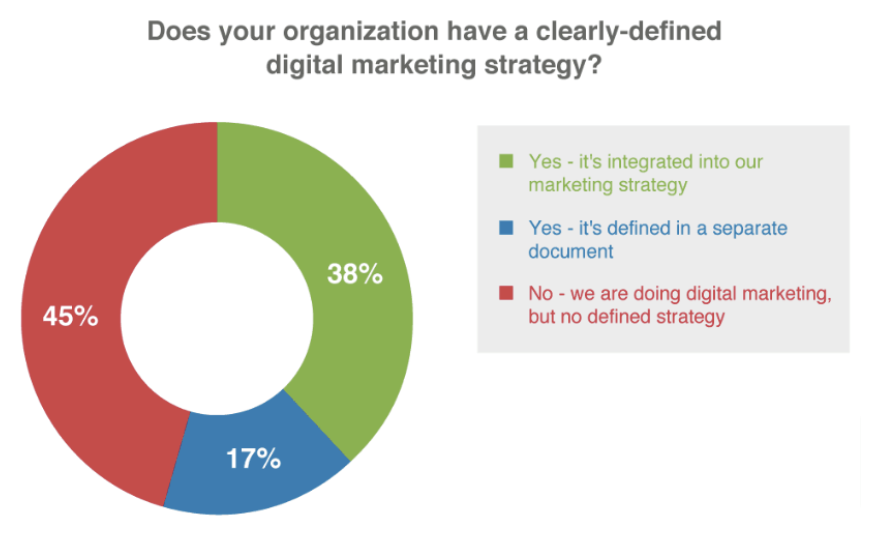
      Does your organization have a clearly-defined digital marketing strategy?Image Source

There is a huge inquisitiveness in people to learn individual marketing strategies, but they fail to develop a coherent plan without realizing that cohesiveness among several strategies helps to achieve continuous results.

Follow these four steps to develop an e-commerce marketing strategySteps to develop an e-commerce marketing strategy

  1. Outline your goals. Identify broad one-year goals, such as increasing site traffic, doubling return visits, or product line expansion. Be specific about your goals, e.g., 1,000 visits a month.
  2. Identify your target market. Specify the demographics of your desired customers, using age, gender, location, income, and interests. If you have an audience, use surveys. Otherwise, use research to identify their characteristics.
  3. Research your competitors. Examine websites of competitors, product details, and their marketing strategies. Employ Ahrefs SEO tool to identify their sources of traffic. To avoid being left behind due to market fluctuations, ensure that you monitor the activities of your competitors.
  4. Determine pricing and positioning. Ensure your prices align with what your ideal customers are willing to pay in order to prevent them from considering you to be too expensive. Place your products in the right position based on information about your rivals.

Improve your website’s visibility through robust SEO

SEO

A report by Backlinko says that the #1 organic result is 10x more likely to receive a click compared to a page in the #10 spot, and the below graph demonstrates that SEO is the highest-converting e-commerce traffic channel.

Considering SEO to boost online visibility is an enriching marketing strategy for e-commerce. Around 43% of e-commerce traffic comes from organic Google search results. Below are some steps that can be followed in order to make use of SEO to increase the online visibility of an e-commerce site and boost its traffic.

Keyword research

Keyword Research

Photo by Growtika on Unsplash

On-page SEO

  • There should be a unique title tag as well as a meta description for every single product page.
  • The product descriptions should be detailed, keyword-rich, and free from plagiarism.
  • Ensure that the URLs are keyword-rich and without numbers or irrelevant characters.

Technical SEO

  • Increase the speed of your website in order to provide a better user experience and enhance its search ranking.
  • Ensure that the site is available across all platforms with responsive design and is mobile-friendly.
  • Install an SSL certificate (HTTPS) to protect your website.

Content marketing
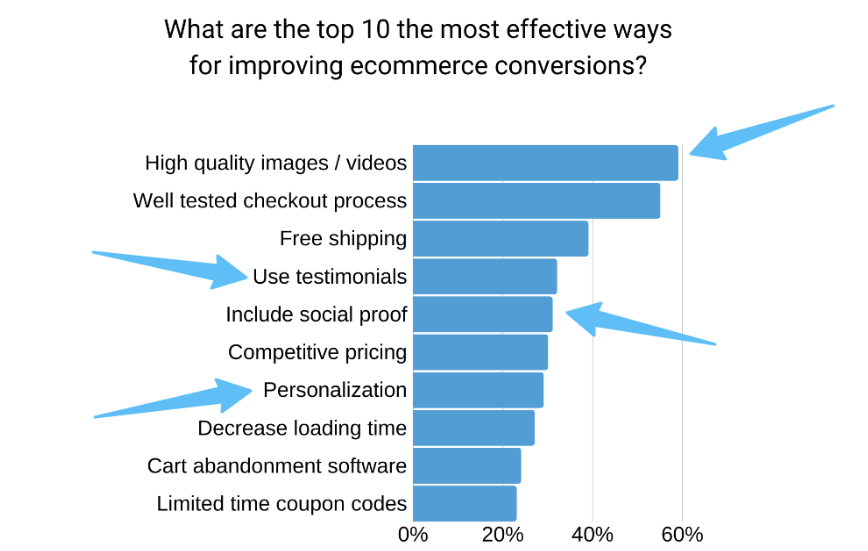
Effective ways for improving conversion

Image Source

  • Ensure having a section for blogs and articles that are optimized with keywords.
  • Exploit the benefits of including buying guides, product comparisons, and how-to tutorials.
  • Let your visitors leave reviews and ratings for your products.

Link building

Link Building

Image by Parveender Lamba from Pixabay

  • You can make use of internal links to facilitate navigation on the site and distribute page rank.
  • Guest blogging, influencer marketing, and partnerships help in acquiring backlinks.

Local SEO

  • Claim and enhance your Google My Business listing.
  • Motivate clients to give ratings.
  • Apply local keywords to your content for it’s visibility on the SERP.

Analytics and monitoring

  • Utilise Google Analytics and Google Search Console in order to maintain track of the performances.
  • Observe and act on the keyword rankings, traffic sources, and user behavior.
  • Constantly optimize your SEO strategy based on data.

Social media integration

  • Adding social media buttons to every product page encourages easy sharing of product information.
  • Encouraging customers to share their experiences with the products creates user-generated content, which enhances SEO.

How SEO wo

Image Source

Utilise these SEO strategies to enhance online visibility, attract more organic traffic, and eventually increase sales on your e-commerce website.

Get involved through content marketing

Content Marketing

Image by Tumisu from Pixabay

Content marketing is prevalently used in e-commerce businesses to attract, engage with, and retain customers. Content like blogs, articles, product descriptions, videos, podcasts, and many more aims to educate people about the product or services, create brand recognition, promote consumer interaction, and raise money for the business. There are several key techniques for a good content marketing strategy.

Customise content to Sales Funnel Stages
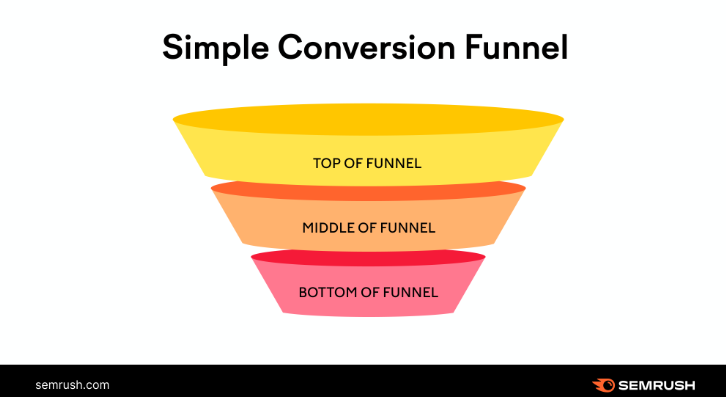
Sales Funnel Stages

Image Source

  • TOFU means the starting point for sales experience. In this stage, sellers provide information about their goods to potential customers by means of blog posts and videos that are educational. At least they try to make people interested in what they offer before buying it later. 
  • According to MOFU, sellers should provide systematic product comparisons and detailed case studies so that buyers may evaluate their products without any problems. 
  • A call-to-action can encourage people to buy products at BOFU, which is often the last but not least stage in converting visitors into customers who make purchases online.

Publish buying guides and FAQs

  • Develop comprehensive buying guides to enable shoppers to make purchases wisely.
  • Include frequently asked questions (FAQs) to build trust and credibility.

Videos as favourite fontent

  • Video content is the favourite of the content types among the audience, as 52% of the marketers acknowledge video gets the best ROI.
  • Features and benefits can be shown via product demonstrations and instructional videos.
  • Utilise customer feedback and recommendation videos to build trust.
  • Use live streaming and sharing on social media to engage with real time audience.
  • Share footage from behind the scenes and promote content that is user generated.
  • Develop seasonal campaigns and revise strategies as per the performance.

Create and embed interactive content

  • Use infographics, e-books, newsletters, whitepapers, case studies, and more to create dynamic and memorable content to boost user participation as well as brand loyalty.
  • Use augmented reality in your content to provide an impressive visual experience with the products.
  • Use quizzes, surveys, and interactive videos to increase customer participation.
  • Social proof can be used as an important tool to gain trust of prospects.

Provide comparative analysis

  • Render comparison pages so that potential buyers compare your products with competitors.
  • Emphasise distinctive advantages to help people make correct choices.
  • Develop trust and loyalty through open and impartial comparisons that sway customers towards buying your products.

Encourage involvement of different stakeholders

  • Conduct live chats through social channels like Instagram, Facebook, YouTube, etc. to generate awareness about the brand and product(s).
  • Conduct podcasts and webinars talking about the product or service, its benefits, and how it can add value to consumers’ lives.
  • Providing original content continually can attract new visitors, serve as value additions to the existing ones, and keep them engaged for retention and repeat purchases.
  • Brainstorming with the team to discuss the strategy of the content can enhance the quality of the content being served.
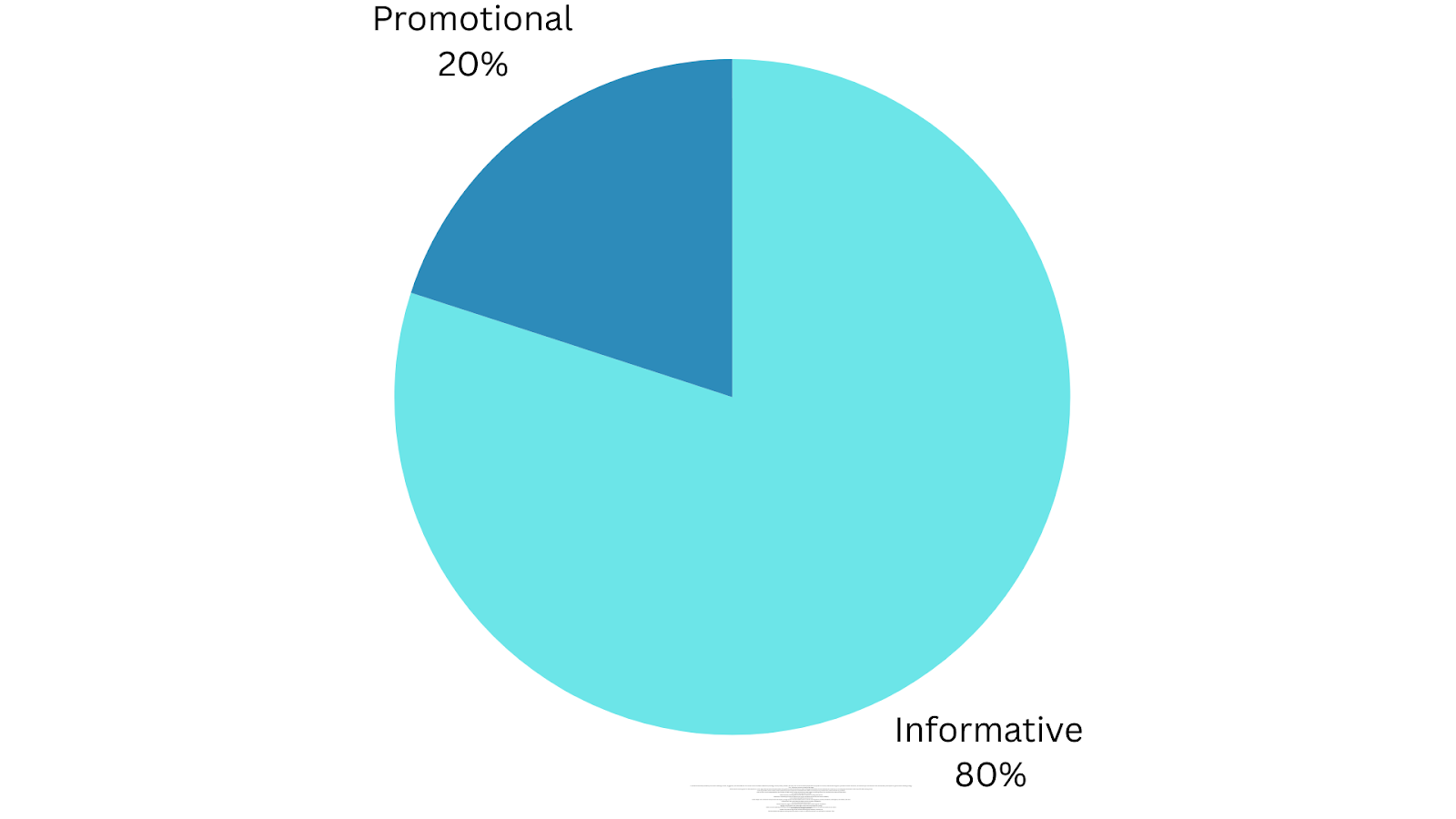
Pareto's Rule

Pareto’s 80/20 rule leads us to the wisdom that 80% informative and 20% promotional content can help in creating relevant, intriguing, and unique content.

  • User feedback tools can be used to collect questions, thoughts, and topics from your audience. Heatmap tools can be used to identify the behaviour of visitors in different parts of your website and create content accordingly to catch their interest.

Implementing such content marketing strategies can help e-commerce businesses generate impressions that can be long lasting for them in terms of results in different forms.

Harness the power of social media marketing

Social Media Marketing

Image by Gerd Altmann from Pixabay

Leveraging social media marketing as an e-commerce marketing strategy can significantly enhance your online presence, engage customers and drive sales. Here’s how you can effectively use social media marketing for your e-commerce business:

Choose the Right Channel

  • Understand what online preferences and behaviors are typical for the people you want to reach.
  • Consider using media such as Facebook, Instagram, Pinterest and TikTok, each of which has strengths in its own way.
  • Instagram really shines when it comes to visual content but Pinterest is great for using product pins to attract traffic.

Generating engaging content

  • Product features are put on the spot with appealing explainer videos and images of high quality.
  • One good way to create trust among the members of the community is by driving people to come up with their own content.
  • For instant interaction and promotions, make use of Instagram Stories and Facebook Live.

Utilise influencer marketing

The Influencer Marketing Benchmark Report 2024 says that more than 85% of marketers find influencer marketing effective.

Influencer Marketing

Image Source

  • Collaborate with influencers who share the same principles as your brand.
  • Leverage the power of influencers when trying to make the visibility and credibility of products better recognised.
  • Ensure an authentic and uncontrived feel for the influencer’s recommendations.

Run targeted ads

  • Customise audiences by employing demographics, interests, and behaviours.
  • Devise retargeting strategies aimed at visitors and users of the website content.
  • Send targeted product reminders to escalate sales.

Engage with your audience

  • Give and respond to feedback, comments, and messages to make connections strong and grow community.
  • In order to maintain active followers, create interactive content such as polls, quizzes, or contests.

Offer exclusive promotions

  • Offer some special discounts or promotions for your social media followers.
  • Announce some flash sales so as to encourage immediate purchases.

Analyze and optimise

  • Use social media analytics tools to track engagement, reach, and conversion metrics.
  • Analyse top-performing content to continuously improve strategy.
  • Develop a posting content calendar that aligns with audience interests and A/B test new ad formats.

One can improve the awareness focused on his or her e-commerce business, create a personal touch aimed at customers’ interaction, and improve the sales level by using social media marketing efficiently.

Reaching out the prospects creating automation fuAutomation Funnels 

Developing an automation funnel for a successful e-commerce marketing strategy passes through different phases and each of them has its own software for improving efficiency and outcomes. Here is the whole process and common funnel applications:

Awareness

  • Consistently post and schedule content across social media platforms using tools like Buffer, Hootsuite, or Sprout Social. 
  • For those new subscribers, establish your brand presence and share valuable information by using automated email series from Mailchimp, HubSpot, or ActiveCampaign.

Consideration

  • You can automatically score leads based on how they interact with your web site and emails by making use of customer relationship management (CRM) systems such as Salesforce, HubSpot CRM, or Zoho CRM.
  • Based on user behaviour and preferences, personalise email content automatically using Mailchimp, HubSpot, or Klaviyo.

Conversion

  • Tools like Klaviyo, Omnisend, or the inbuilt features of Shopify can be used to send automatic reminders to customers who have not purchased the items that were added to their cart, including providing them a reason for purchasing.
  • Google Ads, Facebook Ads, or AdRoll enable the delivery of personalized ads to your site visitors autonomously.

Retention

  • Keep clients engaged by using tools such as Mailchimp, HubSpot, or Klaviyo for automating feedback requests and thank-you emails.
  • Employ Smile.io, LoyaltyLion, or Yotpo software to control loyalty points through reminders for rewards and supply special terms of offers to loyal clients.

Analytics and optimisation

  • Data collection and reporting can be automated with tools such as Google Analytics, HubSpot, or Mixpanel in order to track the performance of campaigns.
  • Set up automated A/B testing for email subject lines, content, and ads using software like Optimizely, VWO, or Mailchimp for continuous improvement in results.

These automation tools allow the smooth management and growth of contacts, the lead conversion process, and customer retention, hence supporting a consistent growth and increase in ROI for your e-business.

Email marketing is evergreen

Email Marketing

Image by Ron Hoekstra from Pixabay

With about 4.3 billion people using email every day and 60% of them stating that emails influence their purchase decisions, email marketing is a very effective strategy to nurture leads, drive conversions, and increase customer retention for e-commerce businesses, with the lucrative benefit of being cost-effective. Through email marketing, for every $1 spent, there’s a return of $36, which concludes that it generates the ROI, which is 1.5 times more than SEO and 18 times higher than PPC.

It has been found that 76% of consumers get frustrated after receiving generalised communications from brands. Email marketing helps in approaching prospects with a personal touch. Email marketing tools like Mailchimp, Klaviyo, Drip, Omnisend, ActiveCampaign, SendinBlue, GetResponse, AWeber, ConvertKit and Mailerlite can play an empowering role in the growth of e-commerce businesses. Below are some ways of achieving email marketing implementation effectively:

Lead capture and segmentation

  • You should consider putting the opt-in forms in the right areas on your site to gather emails.
  • Based on demography, behaviour, geography, and interests, categorise email subscribers into buyer personas according to what they bought.
  • Write messages that can be personalised for different groups in your target market.

Welcome series

  • While sending welcome emails to new subscribers, make sure you start by introducing your brand and the main products.
  • New subscribers should be provided with immediate rewards, like exclusive deals, freebies, discounts, coupon codes, or content.

Educational and nurturing content

  • Develop drip campaigns with email sequences that are automated for educational content.
  • Make sure the customers are informed about the products, industry trends, and problem-solving techniques.

Promotional campaigns

  • Make email messages personalised using customers’ choices and behaviours.
  • Use discounts, promotions, and timed deals, including flash sales, as incentives.

Abandoned cart recovery

  • It’s been found that around 70.19% is the average cart abandonment rate. Send automated emails with reminders containing pictures of products as well as checkout links. 
  • Give rewards, such as free shipping or discount codes, to encourage purchases.

Customer feedback and reviews

  • When the user buys something, follow up with a thank-you note requesting their opinion and feedback.
  • Use support mechanisms that improve belief, such as the user’s testimonial and online comments.

Cross-selling and upselling

  • Recommend related or complementary products to customers using their purchase history and browsing behaviours.
  • Develop email campaigns in which bundled products are featured at lower prices to increase the value of orders and grow total sales volumes.

Automated customer support

  • Videos and pictures that are captivating should be used to elaborate on features of products.
  • Foster community trust by encouraging user-generated content.
  • Reward repeat customers by conducting customer loyalty programs.
  • Real-time interaction and promotions are possible through Instagram Stories and Facebook Live.

Personalisation and dynamic content

  • Apply segments of interactive content to craft customised emails that include information such as subscriber names, locations, or even past transactions.
  • Utilise mail triggers according to certain actions or behaviours, such as email clicks, website visits, and the period during which a product was last purchased.

Analytics and optimisation

  • Observe important parameters in email campaigns, such as open rate, click rate, conversion rate and revenue.
  • Running A/B tests on content, titles and calls to action (CTAs) helps  enhance effectiveness of email strategies.

Businesses can use email marketing in e-commerce to engage with customers in real time, increase revenue and maintain lasting relationships with them.

Reachout to interested customers by retargetingRetargeting

Retargeting is an effective strategy in e-commerce marketing aimed at tapping and converting idle clientele formerly exposed to your webpage or interested in the goods you sell. This is how you should employ retargeting strategies for improving the e-commerce performance of your business:

Understand Retargeting Basics

  • Use cookies and tracking pixels from Google ads and Facebook ads on the website.
  • Segment visitors based on their actions, like the items they viewed, added to the cart, or the particular pages they visited.

Create compelling retargeting ads

  • Keep showing ads for products viewed by customers when they visited your website.
  • Ensure the items have strong and unique visual representations.
  • Add CTAs like “Shop Now” or “Buy Today.” This has an HTML element, but it is not written in a valid way.

Offer incentives

  • Emphasise discounts or promotions.
  • Present a waiver of shipping fees or discounts on shipping rates.
  • Prompt for urgency in shopping.

Utilise multiple channels

  • Make use of the Google Display Network and other advertising services.
  • Use retargeting methods on platforms such as Facebook, Instagram, or Twitter.
  • Deliver personalised messages via email to users who have shown an interest.

Frequency and timing

  • Make sure that potential customers get just enough valuable information.
  • Once a customer has abandoned their cart, do not wait for more than a few days to follow up with an advertisement that immediately shows up.

Measure and optimise

  • CTR, conversion rates, and ROAS can be monitored using analytics tools.
  • Ad creatives, copy, and offers can be tested.
  • Based on performance insights, targeting, creatives, and offers can be optimised.

Maintain brand consistency

  • It is important that advertisements are a true reflection of your brand.
  • Every ad should have distinct advertising pages as a way of enhancing interactivity and conversion rates.

Address customer concerns

  • Ads should include customer ratings, reviews, and security badges, which can help boost their conversion likelihood by fostering trust among potential customers.
  • Increase the likelihood of conversion among potential customers while trying to create a trusting environment.

These retargeting strategies can work for you to recapture the interest of potential customers, encourage them to return to your site and ultimately increase your e-commerce sales.

Confirm the mobile optimisation

Mobile Optimization

Mobile users should be a priority in optimising e-commerce marketing since much online shopping occurs using such devices. Let us now look at what you need to do to ensure that your website is responsive and has all the necessary features for seamless shopping.

Responsive web design

  • Verify that the site changes according to the scale of the screen in either portrait or landscape orientation.
  • Enhance graphic elements and multimedia output to feature high-speed results and respect sharpness or clarity.

Simplified navigation

  • To easily move from one place to another on handheld devices, you should have collapsible menus.
  • Ensure that you have a big search box that can easily be seen if you want to get information quickly.

Fast loading times

  • Employ WebP for compression when dealing with pictures.
  • CSS, JavaScript and HTML need to be compressed into small sizes.
  • Content delivery networks (CDNs) and browser caching ought to be used to hasten content delivery.

Mobile payment options

  • Make the checkout process simpler by reducing the number of steps and enabling automatic completion.
  • Provide multiple mobile payment options, such as credit and debit cards,  Apple Pay, Google Pay, and other digital wallets.

User experience (UX) optimisation

  • Create touch interfaces that have buttons that are appropriately sized.
  • To make it easy to read, large fonts and high-contrast colours should be used.

Mobile-specific features

  • Customise user experiences by using location-based services.
  • Activate push notifications for promotions and updates.

Optimise for mobile SEO

  • Check whether the device is optimised for better search results.
  • Make sure Accelerated Mobile Pages (AMP) are available for faster mobile experiences.

Test and iterate

  • Administer a number of usability tests on different types of mobile gadgets.
  • In order to have different elements with A/B testing, one must supply mobile-friendly live chat choices.
  • It’s essential to employ analytic tools for tracking mobile-user behaviour in order to pinpoint areas where enhancements may be made.

Mobile app development

  • Crafting an app that is specialised for mobile devices will provide consumers with personal satisfaction.
  • Key among the features should be customised item suggestions and easy ordering of things that have been bought before.

Customer support for mobile users

  • Provide options for live chat that are mobile friendly.
  • Make customer support easily accessible through the phone, email, and social media.

Mobile optimisation enables customers to purchase merchandise and services simply across all devices, thereby boosting connection levels in your online store and enhancing revenue.

Voice search optimisation

Voice Search Optimization

More consumers turn to voice assistants like Siri, Google Assistant and Alexa to search for products and make purchases, increasing the significance of voice search optimization for e-commerce businesses. Here is how you can use voice search for e-commerce marketing purposes:

Understand voice search behavior

  • Make the content better by using conversational enquiries along with long-tail keywords.
  • Begin with searches starting with “why,” “when,” “what,” “who,” “how,” and “where.”
  • Improve ranking by aligning with user intention when it comes to content.

Optimise content for featured snippets

  • Use scheme marking to help search engines understand your content.
  • Respond to customers’ questions directly and straightforwardly.
  • Improve customer experience with thorough explanations.

Focus on local SEO for voice search

  • Utilise local dialects and keywords to pull in local voice searches.
  • Improve Google My Business listings by using specific location, product and service information.

Create conversational content

  • Create FAQs written in a conversational manner to help sort out some basic questions.
  • Make blog posts that respond to customer queries and give insights about products.

Improve site speed and mobile optimisation

  • Make sure fast loading times are achieved on both desktop and mobile platforms.
  • Utilise responsive design for improved usability and increased user satisfaction.

Use long-tail keywords

  • Put natural long-tail keywords into product descriptions, blog posts, and content.
  • Examine voice search patterns to identify appropriate long-tail keywords.

Leverage structured data markup

  • Employing structured data marking will give you detailed information on the products.
  • Applying local business schemas will help you be more visible when using local voice search queries.

Monitor and analyse performance

  • To track voice search performance, use Google Analytics, Google Search Console and SEO tools.
  • Optimise based on insights and data that stem from user behaviour.

Optimise for conversational AI platforms

  • Google Analytics, SEO tools, and Google Search Console are the tools that can be used to monitor how well a website is ranking for voice searches.
  • Improvements should be made by using the information obtained from studying user behaviours.

Stay updated with voice search trends

  • Stay tuned for the latest developments in voice search technology.
  • Study your competitors’ moves and adjust your tactics in order to remain competitive.

By applying these strategies for optimising voice search, you will enhance your e-commerce marketing, thus making it easier for people to find your products during searches and attracting a wider spectrum of online buyers who make use of voice assistants in shopping.

Paid media promotion

Paid Media Promotion

PPC (Pay-Per-Click) advertising is a highly effective e-commerce marketing strategy to enable businesses to drive targeted traffic to their websites and increase sales by paying only when someone clicks on their ads. Here’s how to leverage PPC advertising for your e-commerce business:

Understand PPC basics

  • Use social media channels, including Google Ads, Bing Ads, Facebook Ads, Pinterest Ads and Instagram Ads.
  • Get familiar with different ad types like search, display, shopping and remarketing ads.
  • Match different types of ads with business objectives so as to improve performance during campaigns.

Conduct keyword research

  • Tools such as Google Keyword Planner, Ahrefs, or SEMrush to search relevant keywords.
  • For higher targeting potential with less competition, focus on long-tail keywords.
  • To improve conversion rates, closely align search queries to user intent.

Create effective ads

  • Create appealing headlines incorporating primary keywords.
  • Make small ads that give prominence to product advantages and finish with powerful CTA.
  • It is necessary to improve engagement rates and conversion rates using site links, callouts and structured snippets.

Optimise landing pages

  • Make sure the landing pages confirm the advertisement content and key words.
  • Enhance page load times, optimize mobile navigation features and simplify pages for accessibility.
  • Utilise direct CTAs that spur sales while lowering bounce rates.

Budget and bid management

  • Establish PPC campaign budgets depending on the marketing goals.
  • Opt for bid tactics: manual CPC, automated bidding, or else target CPA.
  • As the performance metrics change, amend bids to ensure proper use of resources.

Targeting and segmentation

  • Age, gender, and location may be some of the distinguishing factors of the target market.
  • Conduct retargeting campaigns to re-engage with users who visited your website.
  • For creating customised ads, segment the audience according to their previous behaviour.

Monitor and analyse performance

  • Monitor KPIs, including CTR, conversion rates, CPC and ROAS.
  • Use A/B tests to try different ad creatives, headlines, and landing pages.
  • Always check performance reports for trends and opportunities for optimization.

Optimise campaigns

  • Keep off-topic searches away with the help of negative keywords.
  • Discover the right time to show ads.
  • Choose suitable locations and develop geo-targeting strategies.

Leverage shopping ads

Google Shopping is among the best eCommerce marketing strategies in 2024. These ads are so impactful that it’s been recorded that businesses attract nearly 85% of all clicks on Google Ads and Google Shopping campaigns.

Leverage Shopping Ads
  • Enhance product feeds by using the right titles, images, prices, and descriptions.
  • Google Shopping ads generate 76.4% of retail search ad spend. Make use of this in order to be easily found in search results.
  • Use dynamic retargeting to display personalised ads that feature items viewed by the visitor before.

Stay updated

  • Stay tuned for PPC platform updates and new feature releases.
  • Observe the industry norms and keep up with the trends in competitive campaigning.
  • Modify strategies to reflect shifts in consumer behaviour and market dynamics.

So, direct traffic and conversions, targeted advertising, cost-effectiveness, and immediate impact are some of the key benefits of PPC in e-commerce. You can utilise these PPC advertising strategies to generate targeted traffic for your e-commerce site, thereby increasing brand awareness and boosting sales.

Affiliate marketing

Affiliate Marketing

In affiliate marketing, for the purpose of upscaling sales, an individual or business may collaborate with other individuals or organisations (also referred to as affiliates) who advertise their products and get paid for each purchased item or performed activity. It has been observed that 81% of brands use affiliate marketing. Here are some tips on how to start using affiliate marketing effectively in your web shop.

Set up an affiliate program

  • Opt for a partner advertising platform such as ShareASale, CJ Affiliate, or Rakuten Marketing.
  • If necessary, apply plugins intended for WordPress, such as AffiliateWP.
  • Formulate a compelling commission structure that is either anchored on sales percentages or fixed sums. 
  • Specifically, detail program needs, including payment timing and advertising guidelines.

Recruit affiliates

  • Recognize appropriate affiliates, including bloggers, influencers, or industry professionals.
  • Present them with an appealing proposition emphasizing the benefits of the offer.
  • Post your offer on affiliate networks for increased chances of getting more partners.

Provide marketing materials

  • Create banners and graphics that affiliates can use on websites and social media.
  • Give direct links that lead to distinct products for easy promotion.

Track and manage performance

  • Tracking tools should be used to monitor clicks, conversions and sales.
  • Affiliates should be updated on their performance and improvement areas regularly.
  • Fraudulent practices should be detected and prevented to maintain credibility.

Motivate and support affiliates

  • For high performers, competitive commissions and bonuses are available.
  • Affiliates can get support from the provided training resources, like webinars.

Compliance and ethics

  • Ensure that your affiliates comply with the FTC disclosure requirements.
  • Observe affiliate content for the purpose of keeping the brand consistent and honest.

Analyse and optimise

  • Use metrics like average order value, conversion rates and ROI to measure the success of affiliate program.
  • Feedback from affiliates should be taken care of for continuous improvement.

Build relationships

  • Build a forum or social media group to share experiences and tips.
  • Have constant communication with affiliates to foster engagement and teamwork.

Diversify affiliate channels

  • Collaborate with bloggers, YouTubers and social media influencers for diverse content.
  • Partner with coupon and deal websites to attract price-conscious shoppers.
  • Collaborate with email marketing affiliates to expand audience reach.

Monitor competitor programs

  • Study your competitors’ affiliate programs to understand their approaches.
  • Refine your own program in order to stay competitive and appealing to affiliates.

You can create a successful affiliate marketing program that drives traffic, increases sales and enhances your brand’s visibility in the e-commerce space by adopting these strategies.

Conclusion

Any organization that intends to excel in the e-commerce industry must come up with a strong marketing strategy for selling goods and services online or through any platform that uses electronic communication. These types of strategies must combine several aspects, such as search engine optimization (SEO), content marketing, social media interaction and tailor-made client satisfaction approaches. Search engine optimization increases visibility on search engines, bringing organic traffic, while content marketing is about building brand authority and developing trust with customers. Through social media platforms, it is possible to reach out to customers and create a community where customer loyalty is built.

Personalization improves the quality of customer service by adapting to the needs of an individual and using data generated insights, making marketing efforts more specialized, increasing their efficiency for better customer loyalty. Consistence analysis and improvement of these techniques help in adaptation to shift trends in markets and consumer behaviors.

A powerful marketing strategy for e-commerce can easily be expanded to enable business growth and allow for smooth entry into new markets. It makes purchases and ROI better, as it also helps in the development of strong bonds with customers that last for a long time and facilitates the return of customers as well as referrals. The businesses can attain long-term development, increase brand passion and stay ahead of competition in the online space.

References

Download Now

Austin’s theory of sovereignty

0

This article is written by Anubhav Garg and further updated by Shefali chitkara. This article covers a thorough analysis of the theory of sovereignty which was given by John Austin. It also covers the relevance of this theory considering the political and legal system of our country. The article begins with the brief about the father of this theory, John Austin. It further discusses the analytical or positive school of law and also covers the origin, significance, and criticism of this theory. 

Introduction

Sovereignty is a system wherein there is a supreme and independent authority to run the nation. It is that component of the state that differentiates it from other political authorities because in a sovereign state, there is only one supreme authority. It means that the state is not dependent on any other state or any other international organisation. The Roman empire can be considered as a historical point from where the analysis of sovereignty started. At that time, the jurists made a “Theory of Imperium” and found that the source of law is ‘the will of the prince’. This theory was then gradually developed along with the power of the state and its functions. 

From Hobbes and Bentham, the juristic idea behind this theory reached John Austin and he made an exact terminology and enunciated the “Theory of sovereignty”. 

In the words of Austin, “Law is the command of a sovereign backed by the sanction”. This definition has formed the basis of the theory of sovereignty. It mentions three essential components of this theory i.e., command, sovereign and sanction which have been discussed below. In the words of Austin, if a superior human receives habitual obedience from a group of people in a given society, that superior becomes sovereign in the society, and that society is known to be a political and independent society. 

Let us now look at the brief about John Austin before dealing with the theory of sovereignty. 

A brief about John Austin (1790- 1859)

John Austin, who was born in the United Kingdom is known as the father and the founder of the analytical school of law. He has written a famous book named “Province of Jurisprudence Determined” and is also known for the theory of sovereignty and legal positivism. He was initially in the army for five years and was also a part of the Chancery Bar of the United Kingdom. 

He was appointed as a professor of jurisprudence and taught jurisprudence at the University of London. He also spent two years in Germany and studied ancient Civil law and Roman law and this eventually helped him frame his ideologies regarding the Positive school of law. He taught and worked for the government in various posts. Unfortunately, he died in the United Kingdom in 1859. 

Analytical or positive school of law vis-a-vis sovereignty 

The analytical school of law challenged the natural law theory and stated that laws originated from a sovereign authority and are not based upon moral principles. This school emerged in the 19th century after the natural law theory lost its significance. It tried to differentiate between how the law currently exists and how it should be in a true sense. The analytical school was originally founded by Jeremy Bentham. This was further developed by John Austin who gave the theory of sovereignty which is a part of the analytical school of law. Bentham and Austin are often regarded as the founders of the analytical school of law. Other scholars who made contributions in advancing the analytical school or positivist school of law are Sheldon Amons, Sir Williams Markby, Holland, Salmond and Hart. 

There are four principles of the analytical school of law. These are:

  • Law is a product of human will,
  • Every law consists of command, sovereign and sanction,
  • Analytical school focuses on positive law, and
  • Law is separate from morality. 

Jeremy Bentham also emphasised on the significance of sovereignty and command in his theory. However, Bentham’s theory in analytical school placed less emphasis on sanctions unlike John Austin. Further, Austin’s theory of law also distinguished between the “Laws properly so called” and “Laws improperly so called”. Proper laws are those which are imposed by the person in authority and improper laws are those which are imposed by analogy and not sanctioned by the state. Proper laws are further divided into three types- human laws, god’s laws and positive laws. He also divided improper laws into two types- laws by analogy and laws by metaphor. 

Theory of sovereignty

Sovereign is a state which is independent. Sovereignty is taken from a Latin word “Supernus” which means supreme. Sovereignty is an absolute independence in matters of citizenry unlike the earlier rule of colonial powers. If a country is sovereign, it is free to choose for itself on how to be governed, whom to make rulers and the overall policies regulating the internal and external matters. 

If a nation is sovereign, it resists external control and pressure over a country. For example, India is a sovereign nation as has been clearly indicated in the Preamble of our Constitution as well. The countries which are sovereign are expected to act independently and make policies in the interests of the people and not as per any external foreign pressure. 

John Austin defined law as “A command of the sovereign backed by the sanction”. On the basis of this understanding of law, he developed his theory of sovereignty. According to his theory, the law is the command of the sovereign and not any moral principles. His theory was based on the premise that if a determinate human superior receives habitual obedience from the people in a society, he is considered as sovereign and the society is political and independent. The legitimacy of law is derived from the command of the sovereign and not through the adherence of any moral values. This theory is also known as the absolute theory or monistic theory or non-pluralistic or single theory of sovereignty. 

The three essential components in this definition which are mentioned above have been explained and critically analysed below.

Command

It is a desire of the sovereign to his subordinates or the general public. Some commands by the sovereign could be laws and some are not laws. Laws can be distinguished from other commands in their generality as per John Austin. The command given by the superiors on the parade grounds and obeyed by the troops are not laws but only the command of the sovereign. 

According to the definition of command given by Austin, the supreme power lies with the sovereign. It implies that it is the absolute authority which is not subject to any control. This somewhat opposes the constitutional framework of democracy that is currently prevailing in India which suggests that people are supreme. The definition given by Austin implies that the sovereign is politically superior but that is not true in democratic nations. John Austin failed to consider the laws made in the form of statutory instruments and those made by the judges as precedents. This in turn can negatively  impact the growth of jurisprudence, economy, society in general and other institutions of our country.  

Sovereign

He is the individual or the body of individuals who commands the general public or his subordinates but is himself not liable to obey any other individual. In his definition, John Austin had tried to convey that the individual who is the sovereign is not accountable to any other individual and everyone has to follow the directions and commands of the sovereign. 

Further, Austin had also tried to convey that the powers given to the sovereign are not divisible. He is the one who can make, execute and administer the laws within his State. This is again opposing and contradicting the idea of democracy and principle of federalism.

Absolute and indivisible sovereign

According to the theory, sovereignty is absolute and indivisible. The powers given to the sovereign are inalienable and it cannot be divided among other authorities in a nation. It can also not be transferred to any other foreign authorities.

Punishment/ Sanction

The word “Sanction” has been taken from Roman law. It has been defined by Salmond as “The instrument of coercion by which any system of imperative law is enforced”

It can be said that sanction is that force which is used upon an individual when that individual fails to obey the commands of the sovereign. John Austin’s definition of sanction sounds autocratic as it is defined as a use of physical force by the state in order to surpass the individuals who have not obeyed the directions of the sovereign. This element further  suggests that there is no room for participation by the people of the nation in the matters of the government which is sovereign. 

In the current scenario, people not only obey laws out of fear of sanctions but also out of morality and responsibility. There is a mutual understanding between the State and the people. In India, which is a diverse country, there could be no absolute monarch. In the book written by Austin titled “Province of Jurisprudence Determined”, he admitted that “His philosophies are very objective and separates the law from morality, ethics, values or any other social norm and it sees the law as it is and not as it ought to be”. It is clearly visible that Austin ignored few essential components like voluntary obedience of law, mutual understanding and respect while defining the law.

This theory is considered as unique since it separated law from ethics, morality, justice and values. Austin was appreciated for the simplicity and spontaneity in his work. However, it was also criticised by other schools of law. This theory was formulated at the time of great legislative reforms in England which was also appreciated. 

There are two other elements reflected in the theory of sovereignty apart from the above-mentioned elements. These are:

Validity of law

According to the theory of John Austin, the  law is the command of the sovereign and not any moral principles. The validity of law is derived from the command of the sovereign and not through the adherence of any moral values.

Jurisdiction

Another essential element is the territorial scope of the powers of the sovereign. According to the theory, a sovereign can exercise the authority over all individuals within its jurisdiction and sovereignty can operate within a particular nation and its defined jurisdiction. 

Implications of the theory of sovereignty

There are few implications of the theory of sovereignty regarding the understanding of law and the nature of political authority. These are as follows:

Association with legal positivism

Legal positivism is that theory of law that emphasises on the conventional nature of law and the idea that all the laws are made by legislators. The theory of sovereignty is associated with legal positivism. The theory of sovereignty has also separated the law from morality and the components of the legal system like judicial precedents and legislative enactments. It denied the dependence of law on moral principles. 

Further, it had emphasised on the authority of the sovereign as a source of legal validity. Likewise, legal positivism has rejected the morality of laws and focused on the creation and enforcement of the laws in the society. It can also be said that legal positivism has stood in contrast with the theory of natural law. Positivists have even argued that the laws are derived from the organs of government like legislature and courts instead of ethical principles.

John Austin had emphasised much on the separation of law from morality. It was argued that though, law may have moral content but it is not necessarily moral. Sovereign is the source of validity of law and not any moral or ethical values. John Austin defined law keeping it separate from morality, values and other social norms. 

Legal duty to obey the sovereign

Legal duties arose from the commands of the sovereign. Every individual has a duty to obey the laws as they are backed by the threat of sanctions. The idea of duty is related to the concept of coercion and the duty to obey the sovereign is fundamentally based on the threat of those sanctions instead of any moral imperative.

Indivisible powers of sovereign

There is an insistence on the indivisibility of powers of the sovereign because it has crucial implications on the organisations of the political power. Any attempt to divide the power of a sovereign among other organs in a nation undermines the theory of sovereignty. 

Habitual obedience by the people

The authority of the sovereign is maintained by the continuous obedience of the directions of the sovereign by the people. If people stop obeying the sovereign, the authority no longer remains sovereign. It acted as an empirical component in Austin’s theory because the existence of sovereignty is dependent on the observable patterns of behaviour.

Significance and impact of Austin’s theory in modern Indian politics and legal society

The theory has proved to be significant and has left a positive impact on the jurisprudence of our country. It acted as a base for the growth of legal positivism and a support for several other theorists like Herbert Lionel Adolphus Hart. HLA Hart’s theory was based on the critique of John Austin’s theory. Hart’s theory was also centred on legal sanctions but Hart’s theory removed the sovereign and allowed the theory to advance through secondary sources. 

Austin had also offered insights on the mechanism through which law operates as a tool of social control by studying the role of commands, sanctions and sovereignty. It has even provided clarity on legal subjects and various legal theories. Further, it has provided a framework for understanding the relationship between law and power and the nature of legal authority.

Criticism of Austin’s theory of sovereignty 

After analysing the theory of sovereignty, its implications and the significance, the following criticism can be drawn for this theory. 

Absolute, unrestricted and indivisible powers of the sovereign

It can be inferred from Austin’s theory of sovereignty that no sanction can be imposed on the sovereign and he is supreme authority over other individuals or groups of individuals. The sovereign has all the powers to control his subordinates and everything is dependent solely on his wishes. Since a single body is acting as a sovereign, there can be political instability and he can become vulnerable to foreign attacks.

This theory makes the sovereign completely absolute but this is practically not possible. Even the monarchs earlier were subjected to certain codes of conduct and were not completely immune from their actions.

It seems that Austin favoured monarchy by giving the absolute powers to the sovereign. Sovereign is not made liable to obey the orders of any individual and others are obligated to obey all his demands and commands. 

The theory also mentions that the powers of the sovereign are not divisible and the sovereign only has the power to make, execute and administer the laws. 

In the case of Golak Nath vs. State of Punjab (1967), Chief Justice Subba Rao clearly stated that the separation of power is an important and uncompromisable provision in the Indian Constitution. He stated that the three organs of the government have to exercise their functions keeping in mind certain encroachments assigned by the Constitution. The Constitution demarcates the jurisdiction of all the three organs minutely. It further expects them to be exercised within their respective powers without overstepping their limits. All the organs have to function within the spheres allotted to them by the Constitution. No authority is supreme under the Constitution of India. The Constitution of India is sovereign and all the authorities must function under the supreme law of the land i.e. the Constitution.

Thus, it can be clearly inferred from the above facts that the theory formulated by Austin is not suitable to the modern Indian political and legal system because it can lead to political instability and a lot of chaos. 

Continuous obedience by the people

John Austin presumed that the sovereign will command and people will obey but the same is not true in today’s time. It has also been presumed that people are perfectly politically educated. Individuals who feel that the sovereign is fit, will obey him voluntarily; those who feel that the sovereign is not fit, will obey him in fear of sanction and those who are confused, will obey him out of custom.

This does not exist in today’s time because if people feel that the government is unfit, they will criticise and protest against the government. For instance, the marches against the government when the Indira Gandhi government imposed emergency in 1975. Further, it cannot be presumed that the people of India are politically educated because one-third of the population of the country cannot read and write. This is also because of the reason that people are not aware about politics and the government. 

Thus, the presumption of continuous and habitual obedience by the people which is the most essential element of the theory of sovereignty cannot prevail in the modern political and legal system of India. 

It does not give room to the ideas of democracy, constitutionalism and separation of power

In the words of Austin, only those commands are laws which are given by the sovereign. In India, the Supreme Court can declare any law as not valid if the provisions of the Indian Constitution are violated by the legislature. For example, as per Article 13 of the Indian Constitution, the Supreme Court can declare any law as invalid if it violates the rights enshrined under Part III of the Constitution. The Supreme Court acts as the protector of our Indian Constitution. However, according to John Austin, courts are the secondary sources of law and they are under the sovereign. John Austin did not consider customs as the source of law. Other personal and customary laws like law of the merchants, law of the church, Muslim law and Hindu law were also not considered as law by John Austin. Thus, he did not consider the common law system which is a part of many nations’ legal setting. 

Thus, the theory of sovereignty was considered incompatible with the current legal and social system of India because it did not take into consideration the idea of democracy, separation of power and constitutionalism.

No consideration to human elements and other fundamental values of the Indian Constitution

John Austin ignored the human elements like cooperation and basic understanding between the State and people of that State. It has also ignored the fundamentals like equality, freedoms, and liberty that are essential to any democratic nation. 

It further did not consider the principles and provisions enshrined in the Preamble and the Constitution of India. India is a “Union of States” as mentioned under Article 1 of the Indian Constitution and the States of India are integrated and autonomy of the individual is preserved. This theory has not taken the same into account. This theory supported the idea of having a sovereign authority and giving absolute powers to a single authority as opposed to a democratic system like ours.

Ignorance of international law

Every country is required to follow international laws because violating the same is not good for a nation’s overall socio-economic well-being and it can lead to a crisis in a country and also restrictions in terms of imports and exports. But, the theory of sovereignty does not give any consideration to international laws or relations and gives the sovereign the supreme power of the land. 

Thus, from the above facts, it can be said that this theory is not practically applicable in the modern era of globalisation considering the influence of international organisations like the United Nations Security Council (UNSC), International Monetary Fund (IMF), United Nations Human Rights Commission (UNHRC), etc. 

Ignored the idea of popular sovereignty

This theory is against Rousseau’s concept of general will and therefore, is also against the idea of democracy. Rousseau believed that legitimate laws are based on the general will of the people and this will actually remind the government leaders that they depend on the people for their authority. 

However, according to the theory of John Austin, the sovereign is superior and every other individual is subordinate to him. John Austin had ignored popular sovereignty and gave all the power to the sovereign instead of giving it to the people.

Absence of sovereignty with the determinate person in a federation

The theory is against the principle of federalism as all the powers are given to the sovereign unlike what happens in a federal State where power is given to different levels of government by our Constitution and ultimately vests in the people instead of the President or any other single individual. 

Not applicable to England

As per John Austin, the king of the Parliament in England is sovereign. However, even the king himself has to consider the general will of the people and he is not the only source of power. The people are the true source of power in England. Thus, the assertion given by John Austin was incorrect.

This theory has been criticised by Sir Henry Maine with few other jurists who believed that sovereignty does not reside in the determinate human superior. 

Conclusion

Austin’s theory of sovereignty or command theory highlights that law is the command of supreme power whose orders must be followed by every individual in the society. Further, if people do not follow the sovereign’s orders, they will have to face the sanctions. It can be said that this theory of sovereignty is not much relevant in today’s time as it does not take into consideration multiple things like separation of power, democratic government and International law. India’s vast culture, diversity and growing demands of the youth also resist the applicability of this theory as young people often want participatory democracy and transparency and with sovereignty, everything would be in the hands of a sovereign.

However, this theory has definitely helped in the evolution and growth of jurisprudence and law. It has also served as a reminder of the challenges that are involved while understanding the concept of sovereignty. Austin was one of those jurists who was able to articulate law with much simplicity and clarity. This has opened a way for other jurists like HLA Hart to evolve their work in the modern day legal system. It can be said that this theory has served as a foundational concept in legal philosophy which offered a systematic and analytical approach in understanding law and its nature. 

Frequently Asked Questions (FAQs)

Who is John Austin?

John Austin was an English jurist and had written a lot of famous books including the “Province of Jurisprudence Determined” (1832). He is the father of the analytical school of jurisprudence and legal positivism. He had given a famous theory of sovereignty which is exhaustively discussed in this article. 

Who is the founder of the theory of sovereignty?

John Austin is known as the father and founder of the theory of sovereignty.

What is meant by the term “Sovereignty”?

Sovereignty refers to the state of independence and autonomy to take decisions and elimination of any other external or foreign control in the matters of the state.

What are the three main elements in the theory of sovereignty?

The three major essentials in the theory of sovereignty as given by John Austin are command, sovereign and sanction.

Who is the father of utilitarianism?

Jeremy Bentham is known to be the father of utilitarianism. His core belief was, “it is the greatest happiness of the greatest number that is the measure of right and wrong”.

Which was the famous book of Jeremy Bentham on jurisprudence?

The famous book written by Jeremy Bentham was “Limits of Jurisprudence defined”.

What are the features of sovereignty as per John Austin?

According to Austin, sovereignty is absolute, permanent, universal, inalienable, indivisible and exclusive with the sovereign. Further, the obedience to sovereign is habitual and continuous. 

Who is sovereign as per John Austin?

Any determined human superior is sovereign whose commands are abided by his subordinates. In a civilised society, the state is the sovereign and there must be habitual obedience by the majority of the people to a sovereign. 

References


Students of Lawsikho courses regularly produce writing assignments and work on practical exercises as a part of their coursework and develop themselves in real-life practical skills.

LawSikho has created a telegram group for exchanging legal knowledge, referrals, and various opportunities. You can click on this link and join:

https://t.me/lawyerscommunity

Follow us on Instagram and subscribe to our YouTube channel for more amazing legal content.

Download Now

Inevitable accident under Law of Torts

0

This article was written by Shruti Somya and further updated by Pragya Pathak. This article discusses the defence of inevitable accidents under the law of torts in detail, including its meaning, history, examples, landmark judgements and conceptual analysis. 

Table of Contents

Introduction 

The law of torts has evolved from its existence with time. ‘Tort’ has been defined by Fraser as an infringement of a right in rem of a private individual that results in a right to compensation where a suit arises at the behest of the person injured because of such infringement. Inevitable accident is the defence of the tort law, as it acts as a prevention to defend a person from a tortious action. Some examples of tortious actions are battery, trespass, defamation, and negligence, to name a few.

Inevitable accident is a defence under tort when a negligent act takes place. The acts of negligence result in payment of damages, which is a punishment in torts that are usually in the form of liquidated damages. When an action, that is considered negligent, takes place in an unexpected or inevitable manner, the defence of an inevitable accident comes into the picture. The defences are predominantly counterclaims that are employed by the defendants in a case. These counterclaims are known as ‘general defences in torts’. There are many defences in the law of tort. Some of these are acts of God, nuisance, inevitable accidents, etc. This article deals with the defence of inevitable accidents and the conceptual understanding of the same. It also delves into the meaning, history and important judgments that have shaped the landscape of inevitable accidents under tort law in India and abroad.

Inevitable accident

Meaning

The dictionary meaning of ‘inevitable’ is something that cannot be avoided or evaded. If we look at this combination of words, distinctively, we see that the term ‘inevitable’ refers to a situation that could not be prevented under any circumstances, no matter how stringent and adequate the precautionary measures are. A situation cannot be avoided where it is inevitable, although it was done with proper conduct and exists without any malicious intention. 

The term ‘accident’ is an unexpected event that leads to some sort of harm or injury that is unforeseeable or unfathomable. In general, people are expected to be vigilant only for the scenarios that are reasonable. All care and caution are possible to a reasonable limit. Beyond that limit, if the scenarios become unreasonably overarching, then even such care and caution can fail. This is the viewpoint carried by Lord Dunedin in the case of Fardon vs. Harcourt Rivington (1932). In simple terms, the law demands us to be careful in our actions so that others are not harmed by our acts. This care, here, is just a normal precaution. It is not an extreme overstepping.

Let us understand this with an illustration. Suppose, A is travelling to another city carrying firearms on a horse. He should be reasonable enough to be prepared for any casualty related to the firearms. So, the packaging should be done correctly so that it can be delivered safely to its destination. However, if the horse gets upset and starts to run or jump because of some miscreants on the road, there seems to be nothing that A can do in this situation. He can, at best, try to control the horse. Now, during this, if the horse jumps and the cartel of firearms slips from the carriage and is found by a madman who shoots himself, would A be liable? 

A did take all care and caution and yet, there was this unexpected incident that led to a chain of events. For all the events in the chain, A cannot be held liable. When the plaintiff will prove negligence, A can easily and successfully take the defence of an inevitable accident.

Inevitable accident as a defence

The very first thought that comes to mind, after listening to the phrase “inevitable accident” is a road accident, as was the case in the above-discussed illustration. But, in law, an inevitable accident is a general defence in the law of tort, and not just an accident. The inevitable accident, which is also known as unavoidable accident, says that a person cannot be held liable for an accident which was not foreseeable despite all care and caution taken from his side. The law states that a high degree of precaution is not required and reasonable care is sufficient. 

To understand the concept of an inevitable accident, let us look at other relatable examples. If A was driving a car and he was in his senses and took all due care but suddenly, due to mechanical part failure, his car loses balance and hits a passer-by. In this case, the driver would not be liable as he took all precautions from his side. Here, it is pertinent to note that such accidents were unavoidable even after precautions were taken. 

The instances of act of god can also be sometimes classified into inevitable accidents. It can be understood from another example. If A was driving a car with all the reasonable care from his part and, suddenly, due to heavy rain and storm, the road collapsed and A’s car hit many pedestrians. In this case also, the driver would not be liable since the situation was completely out of his hand. Thus, It is to be seen by the court of law, while adjudicating such a case, what kind of inevitable situation is being talked about. To ensure that justice is being served, it is necessary to make a careful observation as to whether there was really no scope of care by the defendant. Also, it is equally important to see whether the case of negligence has really been made in a situation or is it only an imposition by the plaintiffs.

Sir Frederick Pollock has defined an inevitable accident as, “not avoidable by any such precautions as a reasonable man, doing such an act then could be expected to take.” It is always a part of the litigations involving personal injury, where the harm is caused without any fault of the parties involved. This defence of inevitable accident is used by a person where one party establishes that there has been a case of prima facie negligence and, thereafter, the defendant is endowed with the onus to prove an inevitable accident, the manner in which an accident took place and how that accident was inevitable. It has to be inclusive of the details that are proving the claims of the defendant, like how there was a loss of control of the vehicle and how, despite any proper care and precaution, the particular accident was impossible to be avoided.

This is a defence used by a defendant when the doctrine of inevitable accident is enforced in case of lack of malicious intent on the part of the defendant when negligence is claimed by the plaintiff in a case. 

Historical evolution of inevitable accident

The beginning of inevitable accidents as a defence under the law of tort came up in situations involving trespass. Trespass has been defined by the Black’s Law Dictionary as “an unlawful act that harms the person or property of another person, but more specially, where a person is entering the physical personal property of a person”. It is an intentional tort, which means that this tort can only be committed when a person has the intention. This is where the defence of an inevitable accident helped those who, in fact, did not have an intention of committing the tort of trespass and yet ended up committing it. This defence became even more important because at that time, a tort of trespass was actionable irrespective of whether the person committing such an act had an intention to commit it or not.

For example, if A finds his goat to be missing and looks for it, and finds it in the property of B, A may go inside the land to get the goat. In this case, B can claim trespass and hold A accountable, even though A did not have the intention of trespassing. The courts of law decided to give leeway to the defendants in such a case. The defendants had to essentially prove that it was an inevitable or unavoidable occurrence. It was a matter where the defendant had the onus of proving the absence of fault.

The above was an old rule regarding the applicability of this defence. At present, this onus has been shifted from the shoulders of the defendant. This is because now, it has become the requirement of the plaintiff to prove the presence of negligence on the part of the defendant. This is opposed to the defendant proving the presence of negligence, in the past.

Relationship between inevitable accident and negligence

To understand the defence or doctrine of an inevitable accident, we also need to understand the relationship between negligence and an inevitable accident. According to Winfield, “Negligence is a breach of a legal duty to care in the form of a tort and which results in damages to the plaintiff that are not desired by the defendant”. In case of negligence, therefore, a defendant has a legal duty of care that gets breached and, due to this breach on the part of the defendant, the plaintiff suffers damages. The determination of whether the defendant had such a duty is decided by the court of law on the basis of the facts and circumstances of each case.

While the burden of proving that the accident was inevitable lies on the defendant, the burden of proof to show that the act of negligence has been committed by the defendant lies on the plaintiff. An inevitable accident is, thus, a consequence of the claim of negligence. In simple terms, negligence claimed by any plaintiff has a few exceptions which can be exercised by the defendants to be absolved of the alleged negligence. These exceptions are actually the defences that can be taken by the defendant, which are contributory negligence, an act of god (vis major) and an inevitable accident.

For the defendant to use the defence of an inevitable accident, it is necessary to show two things. Firstly, there should be no intention on the part of the defendant to positively supplement the accident and, secondly, the collision could not have been avoided with reasonable care. The defendant can clearly deny any responsibility but it is more difficult to satisfy the authorities. The most prominent defence used by the defendant is that there was an unanticipated blackout just before the crash. In that case, the defendant has to prove that there was a sudden medical illness. The examples given under inevitable accidents here revolve mostly around road accidents because this defence is mostly taken by the defendants in case of road accidents. 

However, we can take another example that pertains to a different scenario. Ishan, a defendant, loved gardening and kept pots beside the terrace railing and surrounded the same with a net to prevent the pots from falling down from the second floor where he lived. One day, one of the pots fell from the terrace because the net was bitten by a rat, resulting in a hole that was not visible to the eye. This pot fell on a dog who got enraged and bit a neighbour of Ishan, Mr. Kishan, who happened to be passing by the dog. Mr. Kishan sued Ishan citing that Ishan had been negligent in his conduct but Ishan can validly take the defence of an inevitable accident because all the essentials of this doctrine are being satisfied in this case. These essentials have been further discussed for a better understanding.

Relationship between inevitable accident and act of God

Inevitable accidents and acts of God are defences under law of torts. They are similar in the sense that they protect the defendant from any legal liability arising out of a tort committed by him/her. Another point of similarity is that they also result in damage or injury to the plaintiff for which, however, tortious liability cannot be put on such tortfeasors for causing such damage. However, they are conceptually very distinct from each other.

Inevitable accidents arise from legitimate actions where due precaution is taken, yet it results in damage. It is important that there was proper care undertaken, otherwise it becomes a negligent act for which there is no defence from imposing liability. In the case of an act of God, there is no means by which an action could become negligence. This is because the action that causes damage, in the case of the act of God, is simply beyond any humane power. The earthquakes, floods, landslides, etc., are some situations that naturally arise and one human being or a group  cannot be made responsible for the damage caused because of such natural disasters.

Essentials of inevitable accidents

When a defendant is using the doctrine of an inevitable accident, there are some essentials that need to be taken care of for the successful application of this doctrine. It can be categorised into three parts. Let us delve into the same, below–

  • Firstly, there has to be an accident i.e., an unavoidable incident;
  • Secondly, it should be unfathomable and unavoidable even if a person has used all the possible skills, care and caution;
  • Thirdly, as a consequence of this, there should have been suffering, damage, injury, hurt, or harm to a person but which has not been caused by another person who has properly exercised all caution and has not been negligent.

Types of inevitable accidents

In general terminology, inevitable accidents can be categorised into two types, which are mentioned below–

  • Accidents that are caused due to the intervention of forces beyond human power; and
  • Accidents that are partially or totally caused due to any act committed by a human being.

Exceptions to the defence of inevitable accident

There are certain special situations where a defendant is incapable of using the defence of an inevitable accident. These instances are the exceptions or can be referred to as limitations to this defence which are discussed as under:

Trespass

The defence of an inevitable accident is not applicable in case of a situation of trespass. Trespass is where an unauthorised person enters into the property of another person. The defence is inapplicable to ensure that the defendant does not bear the burden of proof but the plaintiff does.

Strict liability

The principle of strict liability is where a person has a serious burden of liability in the strictest sense and no derogation is possible by claiming carelessness, etc. Any situation that causes serious harm to others cannot be averted by any reasonable care and caution hence, an inevitable accident is not an available defence in these situations.

Foreign landmark judgements on inevitable accidents

George Brown vs. George K. Kendall (1850)

In this case, both the plaintiff and defendant owned dogs. One day, their dogs started fighting and, to separate them, Kendall started smacking a stick. Even though Brown was conveniently distant from the site of the dogs’ fight, he approached Kendall’s back when the dogs began approaching him. Kendall, being unaware of his advance, raised the stick and hurt Brown. Brown got severely hurt and brought a motion of violence and assault against Kendall. Kendall pleaded the defence of an inevitable accident before the court of law. 

In this case, the Supreme Judicial Court of Massachusetts gave a judgement that was inclined towards Kendall, who took the defence of an inevitable accident. It disregarded the claim of negligence made by the plaintiff and favoured the defendant.

Holms vs. Mather (1875)

In the landmark case of Holms vs. Mather (1875) L.R. 10 Ex. 261, a man, the plaintiff in this case, was walking on the road. The defendant’s servant was driving a carriage with the horses on the same public road. Because of the barking of a dog on the road, the horses got startled and became unmanageable. During this, the mud was splashed across the plaintiff’s dress and eyes which injured her. The plaintiff made the claim of negligence on the part of the defendant but the court ruled against the plaintiff. 

It reasoned that this accident was inevitable in nature and the defendant could not possibly know the consequences of a situation that is not foreseeable. In the general parlance, the court observed that we should be ready for such small encounters of mischief. This is so because reasonable care on the part of others is not always sufficient to prevent such occurrences.

Stanley vs. Powell (1891)

In the landmark case, the plaintiff and the defendant were a part of the shooting party that was involved in the activity of shooting pheasants. The defendant aimed and shot to kill a pheasant but the shot missed and injured the plaintiff’s eye by bouncing from a tree. The plaintiff claimed negligence on the part of the defendant. However, the Queen’s Bench Division ruled that the accident could not have been averted by the defendant even by exercising any type of precaution.  It was held that there was no negligence on the part of the defendant and that there was no absence of reasonable care and precaution on the part of the defendant.

National Coal Board vs. JE Evans & Co. (Cardiff) Ltd. (1951)

In this case, the tort of trespass was an issue. An electric cable was laid down by the plaintiff’s predecessors on the county council’s land. The county council was not aware of the same and, when the county council employed a few workers to excavate the land, this electric cable got damaged. The plaintiffs filed a suit. The defendants in this case pleaded for an inevitable accident. They claimed that they had absolutely no way to find out about the cable. The court held that the defence of the inevitable accident was correctly pleaded and favoured the defendants in the decision.

Chow-Hidasi vs. Hidasi (2011)

In this case, the plaintiff is the wife and the defendant is the husband. Both husband and wife were travelling along a mountain road. The defendant was well aware of the slippery road; so, he took all the precautions. He was travelling below 100 kmph, but somehow the car lost its balance. The defendant pulled the emergency brakes which could not stop the car and the car hit the near barrier, injuring the plaintiff. 

The plaintiff sued the husband stating that he was rashly driving and did not take the precautionary measures. The defendant took the pleading of an inevitable accident. The court accepted the defence stating that the car lost control because of the mechanical failure which was totally out of the scope of the defendant.

In this case, the Supreme Court of British Columbia decided in the favour of the defendant and stated that it was not a situation of negligence but an inevitable accident and, thus, dismissed the action made by the plaintiff. Therefore, the defence of an inevitable accident was accepted by the court. 

​​Efstathios Ch. Constantinides Ltd., Kentriki Insurance Ltd. vs. Andrea Papayianni (2015)

In the case of Efstathios Ch. Constantinides Ltd, Kentriki Insurance Ltd v. Andrea Papayianni, Case No. 1249/08, (2015), the defendant was driving a car on the road and, suddenly, he had a cardiac arrest. Due to this sudden arrest, he hit a passer-by and on-looker. The matter went to the court and the defendant pleaded the defence of an inevitable accident. To support his side, he even presented the court with his medical history of cardiac arrest. But the District Court of Limassol gave the rule against the defendant. The Hon’ble judge stated that the defendant could not prove that the arrest was sudden at the time of the accident which was a necessary element for the plea of inevitable accident.  

Secondly, the defendant was well known for his health condition of cardiac arrest. He should have not taken the risk of driving. Therefore, the accident was not unforeseeable and could have been avoided. By driving with his serious illness, therefore, it is unfathomable when a cardiac arrest would occur resulting in an accident. He ruled, thus, that he should be held liable for the accident.

Indian landmark judgements on inevitable accidents

Padmavati & Ors. vs. Dugganaika & Ors. (1975)

In this case, there was a jeep that gave a lift to two strangers. After they got into the jeep, unfortunately, the right tyre of the front side got detached because the bolt connected to the axle gave way. Both the strangers got serious injuries, and one of them succumbed to those injuries. The defendants claimed that it was an inevitable accident. Also, they got into the jeep voluntarily, which attracts the principle of ‘voluntary non-fit injuria’. The High Court of Karnataka noted that this kind of technical defect cannot be foreseen with the help of regular checks of the vehicle. Therefore, the defendants were not found liable by the court.

S. Vedantacharya and Anr. vs. Highways Department of South Arcot and Anr. (1986)

In the present case, a bus fell into a stream because the trough it was passing from, collapsed and a passenger died because of the same. The Highway Department made the argument that this was an unavoidable event which was not foreseeable as the trough was found to be in an upright condition a day before by the engineers and, also, it had been raining for two weeks. 

The Madras High Court had accepted the defence of an inevitable accident but the Apex Court reversed the judgement and held that the Highway Department would be liable for this negligence as there were no precautionary measures to ensure safety in such events by strengthening the trough against any weather-oriented problems. It was decided by the Supreme Court of India in the favour of the plaintiffs observing that even though an inevitable event has taken place, the liability still lies with the defendant because of lack of exercise of precaution. 

Shridhar Tiwari vs. Uttar Pradesh State Road Transport Corporation (1987)

In this case, there was a bus ‘X’, belonging to the defendant, that had to apply brakes to prevent a cyclist that suddenly appearing before the driver of the bus, ‘X’. It was also a rainy day which is why the roads were also wet. At the time when brakes were applied by the driver of the bus ‘X’, there was another bus in the picture, ‘Y’, coming from the opposite direction. The rear part of the bus ‘X’ hit the front part of the bus ‘Y’ in the process of applying brakes. It was found that this accident was the only result of the sudden appearance of the cyclist. Otherwise, the buses were driven at moderate speeds; hence, there was no carelessness. The High Court of Allahabad decided that the defendant corporation is not liable as this was a case of inevitable accident.

A. Krishna Patra vs. Orissa State Electricity Board & Ors. (1998)

In this case, a couple was walking on the streets of Orissa when the wife met with a dangerous accident by coming into contact with a live conductor lying on the road, naked. She was rushed to the hospital where she died. The petitioner, her husband, claimed compensation of Rs. 1,00,000 from the Orissa State Electricity Board stating that the mishap was exclusively due to negligence on the part of the Electricity Board. Proper care and caution were not taken, hence, the board should be held liable for the compensation. 

The Electricity Board argued that the incident was an inevitable accident. The incident was out of their control. Soon after, an electrical inspector was appointed to examine the status of the conductor and the reason for its fall. Surprisingly, the electrical inspector showed a different picture of the case. The live conductor had outlived its age. It has already been more than 30 years and was very weak. The reason for the fall was its ageing and has become mechanically unsound, therefore, dangerously fatal if it comes into contact with any living being. The police investigation report also stated that the death of the woman was due to electrification. 

After analysing the facts, it was concluded that the incident was not an inevitable accident. A mandatory due care was not taken in this situation. The electricity board has not examined the conductor from time to time. This accident could have been avoided by regular inspection of the conductors and the wires. We can see that all the elements necessary to prove negligence are present. The Electricity Board should be held liable for the death of women. But the Electricity Board pleaded the defence of an inevitable accident which was rejected by the court and compensation was awarded for Rs. 50,000 to the defendant. 

Assam State Co-operative Marketing & Consumers’ Federation Ltd. vs. Anubha Saha & Ors. (2001)

In the case of Assam State Co-operative Marketing and Consumers’ Federation Limited Vs. Anubha Saha and Ors. AIR 2001 Gau 18, the plaintiff is the landlord and the defendant is the tenant of the landlord. The defendant requested the landlord to repair the electrical wiring of the premises that was rented out. It was brought to the notice of the plaintiff that the wiring was defective and needed repair, but the plaintiff did not get the repairs done. Eventually, there was an accidental fire in the premises. The plaintiff filed a suit to claim compensation for the damage to the premises, from the tenant. The court decided that there was no negligence on the part of the defendant. The court observed that this was a clear case of an inevitable accident, hence, the defendant will not be liable to pay compensation to the plaintiff.

National Insurance Co. Ltd. vs. Swaran Singh & Ors. (2004)

In this case, there was an accident that took place from a vehicle insured by the insurance company and the people injured through this vehicle demanded compensation from the insurance company. It was argued that this was not a foreseeable event and, thus, there is no liability on the shoulders of the company. The Apex Court of India held the company liable and made a distinction between an accident and an inevitable accident. It highlighted that it will not be accepted that liability is tried to be avoided by any party on technical grounds like unclear policy conditions. It also stated that negligence and accident can co-exist and this was a case of accident, not an inevitable accident. If the court accepted the arguments made by the insurance company, all accidents would become inevitable accidents and all liability would be prevented which is correctly levied.

Conclusion 

Inevitable is not only a helpful defence for the drivers where a road accident has occurred but also in many other cases where the claim of negligence is made and an accident occurs which is beyond the control of a person. Negligence means an absence of any type of care and caution. In an inevitable accident, a person exercises all the care but, still, it is not possible to prevent such an occurrence because it is out of the hands of the defendant.

There is a major difference in different types of defences that can be taken in case a claim of negligence comes up in a court. There is also a visible clarity on how this defence can be pleaded in a court of law. The defendant only has to prove that there could not have been any alteration in his act to avoid the incident and the total incident was not intentional. However, if the defendant can not prove his act and the court finds that the act could have been avoided then the defence will not be available. The courts have been lenient and inclusive about this defence and have ensured that on the basis of natural law as well, this defence is not denied without looking at the basis of the claim.

The judgements show that the jurisprudence observed by the courts in most of the landmark judgements on inevitable accidents, primarily focuses on not letting the defendant bear the burden of commission of a wrongful action, which was out of the control of that person.

This defence of inevitable accident has elevated and enhanced the concept of negligence and has also prevented any wrongful decisions showing that it is not always the case that an accident occurred so it must be the fault of the doer of the act.

Frequently Asked Questions (FAQs)

What do you mean by inevitable accident defence/doctrine?

The doctrine of inevitable accident is a defence that protects the defendant against the claim of negligence made by the plaintiff. If the defendant could not have prevented an accidental situation from taking place despite using all the possible care, caution and skill, then it is practically impossible to prevent the injury, harm or damage caused by such an accident. It is one of the three defences available to any person in the shoes of a defendant in a case, which are, contributory negligence, act of god and inevitable accident.

What is the difference between an inevitable accident and contributory negligence?

Negligence, which results in damage to a person, takes place when a person does not exercise the duty of care that he or she is bound to exercise. A defendant being alleged of negligence can protect himself/herself by claiming the defences of inevitable accident and contributory negligence, depending upon the situation. 

The defence of contributory negligence comes into the picture, when the defendant is only partially responsible for the harm caused to the plaintiff and the plaintiff has also been irresponsible, contributing to the negligence that took place. In case of an inevitable accident, as we already discussed in the article, there has to be an accidental and inevitable situation that resulted in a damage or injury to a person, even after taking all due care. The said inevitable accident shall be that one which was impossible to prevent such an event, even though all the possible care and precautions were exercised by the tortfeasor.

What is the difference between an inevitable accident and the act of God?

Both of them are defences that are aimed at preventing any tortious liability to the defendant. In the case of the act of god or force majeure, the situation causing harm to a person is directly caused due to an act of God, which means something that happened beyond any human intervention or control. Examples of the ‘act of god’ or vis major are earthquakes, floods, landslides, etc. An inevitable accident is an unavoidable situation that takes place, despite all the care and precaution taken by the defendant. It is different from vis major on the point that the doer or alleged tortfeasor is the person himself/herself whose acts were impossible to be prevented from happening.

Which law covers inevitable accidents that defend a person for the commission of this tort?

Inevitable accidents are covered under the common law of torts. India has taken up the common law approach in respect of inevitable accidents as opposed to the civil law approach. This is the reason why India also acknowledges the law of torts. The British followed common law and also helped in the codification of the Indian Penal Code, 1860, which punished all the torts. However, torts are also majorly governed by the judicial precedents related to different torts, to understand the course of action in such cases.

References


Students of Lawsikho courses regularly produce writing assignments and work on practical exercises as a part of their coursework and develop themselves in real-life practical skills.

LawSikho has created a telegram group for exchanging legal knowledge, referrals, and various opportunities. You can click on this link and join:

https://t.me/lawyerscommunity

Follow us on Instagram and subscribe to our YouTube channel for more amazing legal content.

Download Now

Section 8 of Trade Marks Act, 1999

0

This article is written by Sakshi Kuthari. This article discusses in detail the provision of Section 8 of the Trade Marks Act, 1999 and its related provisions under the said Act. This article further discusses the Nice Classification and the purpose of Section 8 as well. 

Introduction 

In order to carry on any trade, it is necessary for it to gain recognition in the commercial world. For this purpose, it is required by the trader to adopt any mark, symbol, letter, word, or any combination of these items. It will distinguish the trader’s goods from those of the other. Such a mark or other symbol as used by a manufacturer or trader is called a “Trade mark”. The Trade Marks Act, 1999 (hereinafter referred to as the “Act of 1999”) has evolved for recognising the proprietary rights of a trader to use a mark for his goods or services. Section 6 of the Act of 1999 constitutes prima facie evidence of the record of trade marks. 

Under Section 3 of the Act of 1999, the appointment of Registrar takes place, becoming responsible for maintaining the register. As per Section 8 of the Act of 1999, in the Register of Trade Marks, the Registrar classifies the goods and services in alphabetical order and in the prescribed manner and in this article we shall discuss in detail about the same.

Each class of trade marks represents different categories of goods and services. They are arranged in such a way to conduct trade mark research and avoid trade mark infringement. At the time of registration of trade marks, this numerical classification determines the use of goods or services in the industry, acting as an identifier to the mark. It helps to select the correct category of goods or services and classify them for a trade name. The services are identified from the numerical index. The division of these service operations are indicated in headers along with their explanatory notes. The trade mark applicant also gets the right to protect their trade mark under different classes. 

In this article, we will be discussing in detail Section 8 of the Act of 1999, that is, the procedure for publishing an alphabetical index of classification of goods and services with the help of Section 7 of the Act of 1999 and the Trade Marks Rules, 2002.

Publication of alphabetical index

Section 8(1) of the Trade Marks Act of 1999 

It is provided under Section 8(1) that the Registrar may publish an alphabetical index in the Trade Marks Register to classify goods and services. This classification has been discussed in Section 7 of the Act of 1999. To get the trade marks registered, Section 7(1) provides that the international classification of goods and services under the Nice Agreement shall be followed by the Registrar to classify them.

International (Nice) Classification of Goods and Services for the Purposes of Registration of Marks

The Nice Diplomatic Conference took place on 15 June, 1957. In this conference, the International (Nice) Classification of Goods and Services for the Purposes of Registration of Marks was brought into effect. The countries parties to this Agreement have a special union within the Paris Union for the Protection of Industrial Property. They adopted and applied the Nice Classification for getting the trade marks registered. All the countries party to this  Agreement are under an obligation to apply this classification for getting the trade marks registered. It may be in the form of a principal or subsidiary classification. When the trade marks get registered, the said classification is used for the purpose of documentation and publication.

The Nice Classification applies to those countries as well, who are not parties to the Nice Agreement. The list of goods and services classification was done by the World Intellectual Property Organization (WIPO). The said classification is in an alphabetical order consisting of a list of 34 classes. The goods and services classified in the Nice Agreement. After some time, it got expanded to comprise of 11 classes covering services, which were listed in an alphabetical order. 

At present, there are 93 countries parties to the Nice Agreement. Apart from them, there are 71 more countries and three organisations that also use the Nice Classification. India is a party to the Nice Agreement. On 07 June, 2019, India became the 88th member country. Let us now discuss some of the important articles of the Nice Agreement in relation to Section 8 of the Act of 1999:

  • Article 1(2): To get the trade marks registered, this article provides that the goods and services shall be classified in a list of classes and shall have explanatory notes. There shall be an alphabetical order of goods and services classified.
  • Article 1(4): The classification of goods and services shall be done in English and French languages. The text in both of these languages is considered authentic.
  • Article 1(7): This article provides that the goods and services classified alphabetically shall be in a serial number opposite to each good or service.
  • Article 2(4): If a term is already existing in the list, it would not affect the rights related to any term used priorly.
  • Article 3(3): The Committee of Experts shall be a competent authority for making the changes in the list of classifications of goods and services.

Section 8(2) of the Trade Marks Act of 1999

Section 8(2) of the Act of 1999 provides that in case the classification as provided under Section 8(1) of the Act of 1999 is not specified in the list, in that case the Registrar shall classify the goods or service as per Section 7(2) of the Act of 1999. Section 7(2) of the Act of 1999 provides that the Registrar shall, in case of an ambiguity, decide the case and the Registrar’s pronouncement shall be final.

Classification of goods and services for the purpose of Section 8 of Trade Marks Act, 1999

Section 7(1) of the Act of 1999 makes it clear that India follows the international classification of goods and services under the Nice Agreement.  In India,  The Trade Marks Rules, 2002 in its Fourth Schedule provides the same classification. The said Schedule classifies a list of goods and services according to the Nice Classification. 

The list of goods and services provided in this Schedule provides a means by which the general content of numbered international classes can be classified easily and quickly. Class 1 to 34 provides the list of goods and Class 35 to 45 provides the list of services. Let us now discuss these classes in detail:

Classification of goods

  • Class 1: The use of chemicals in industry, science, photography, etc.
  • Class 2: Paints, colourants, preservatives, etc.
  • Class 3: Bleaching preparations and other substances for laundry use; cleaning; polishing; etc.
  • Class 4: Industrial oils and greases; lubricants, etc.
  • Class 5: Pharmaceutical, veterinary and sanitary preparations, etc.
  • Class 6: Common metals and their alloys; metal building materials; transportable buildings of metal, etc.
  • Class 7: Machineries and its tools.
  • Class 8: Hand tools and its related tools, etc.
  • Class 9: Instruments used in the field of science, survey, electric, photography,, signalling, etc.
  • Class 10: Surgical and veterinary apparatus, artificial limbs, eyes and teeth, etc.
  • Class 11: Use of instruments to light, heat, generate steam, cook, refrigerate, dry, ventilate, etc.
  • Class 12: Apparatus used for locomotion.
  • Class 13: Firearms; ammunition and projectiles; explosives; fire works.
  • Class 14: Metals and their alloys.
  • Class 15: Instruments used for music.
  • Class 16: Goods made from paper and cardboard, etc.
  • Class 17: Goods made from gum and rubber, etc.
  • Class 18: Leather and imitations of leather, and goods made of these materials, etc.
  • Class 19: Building materials, (non-metallic), non-metallic rigid pipes for building, etc
  • Class 20: Items of furniture made with wood, etc.
  • Class 21: Items of household, kitchen, etc.
  • Class 22: Sacks and bags items, etc.
  • Class 23: Use of threads and yarns in textile.
  • Class 24: Textile goods.
  • Class 25: Clothing and footwear items.
  • Class 26: Embroidery items
  • Class 27: Matting items.
  • Class 28: Gaming products.
  • Class 29: Poultry items.
  • Class 30: Beverage items.
  • Class 31: Products of agriculture, horticulture, etc. and grains not included in other classes, etc.
  • Class 32: Beers, mineral and aerated waters, and other non-alcoholic drinks, etc.
  • Class 33: All types of alcoholic beverages except beers.
  • Class 34: Tobacco, smokers’ articles, matches.

Classification of services

  • Class 35: Services in the field of advertisement, business management and administration, official functions.
  • Class 36: Insurance services, all types of financial, monetary and real-estate affairs.
  • Class 37: Services provided for construction of business, also repair and installation work.
  • Class 38: Telecommunication services.
  • Class 39: Transport services and travel arrangement, Goods packaging and storage.
  • Class 40: Treatment of services.
  • Class 41: Educational services and also providing training, Entertainment services, Sports and cultural activities.
  • Class 42: Providing services in the field of science and technology.
  • Class 43: Providing services for food and drinks.
  • Class 44: All types of agriculture, horticulture and forestry services, and hygienic and beauty care for human beings or animals.
  • Class 45: Providing legal services and security services for the purpose of protecting both people and property, providing personal and social services to meet the demands of the individuals.

Important considerations while applying for registration of a trademark

For the purpose of getting a trade mark registered, an application can be filed by either claiming use of the trade mark in India or on a proposed to be used (intent to use) basis. In case the application is filed on an intent to use basis the proprietor of the trademark should have a bona fide intent to use the mark in the future. Section 47(1) of the Act of 1999 provides that if there is no usage of the trademark within five years from the date of registration, the trademark registration is subject to cancellation on the grounds of non-usage.

A trade mark should be registered only with respect to the goods on which it is actually being used, and not all the goods coming under the class of that good.  It is because it poses problems for infringement action either at the time of registration of trade mark or when the advertisement of trade mark is done to the general public. In any legal proceeding relating to a trade mark the Tribunal shall admit evidence on the usages of the trade concerned and of any relevant trade mark or trade name or get up legitimately used by other persons. 

Conclusion

At the time of getting a trade mark registered it is necessary that there is a correct classification of goods and services. The Nice Classification of goods and services give a fine structure to the intellectual property rights for getting the trademarks registered. To classify the goods and services, it is a universally accepted standard system. 

Each class contains a list of pre-approved terms. If an applicant uses one of them, he/she can be sure of the fact that the Registrar will accept the application without any further delay. The classification of these above-mentioned classes of goods and services shall be in an alphabetical order as provided under Section 8 of the Act of 1999. The Registrar is under an obligation to classify them alphabetically in the register.

Frequently Asked Questions (FAQs)

Who is responsible for registration of trade marks?

The Registrar of Trade Marks is the responsible authority for getting the trade marks registered. He also settles the opposition proceedings and reviews his own decisions.

What is the Trade Marks Register?

It is provided under Section 6 of the Act of 1999. This register provides all the details of the registered trademarks that shall be entered in this register. In this Register, the names, addresses, description of the proprietor, etc. shall be mentioned. The registrar has full control and management of the Register of Trade Marks.

Where is the Trade Marks Register kept ?

The Trade Marks Register is kept at the head office of the Trade Marks Registry.

References


Students of Lawsikho courses regularly produce writing assignments and work on practical exercises as a part of their coursework and develop themselves in real-life practical skills.

LawSikho has created a telegram group for exchanging legal knowledge, referrals, and various opportunities. You can click on this link and join:

https://t.me/lawyerscommunity

Follow us on Instagram and subscribe to our YouTube channel for more amazing legal content.

Download Now

Imposition of an interim moratorium prior to corporate insolvency resolution process : All you need to know

0
CS+LLB

This article has been written by Bhanwati  pursuing a Diploma in Law Firm Practice: Research, Drafting, Briefing and Client Management course from LawSikho.

This article has been edited and published by Shashwat Kaushik.

Introduction

A moratorium is one of the key concepts in the Insolvency and Bankruptcy Code (IBC) and the Corporate Insolvency Resolution Process (CIRP). In the Insolvency and Bankruptcy Code of 2016, the term “moratorium” is not defined, but according to the code, its main aim is to pause debt collection actions by creditors, giving them a reasonable time for renegotiating their contract. During this period, both the creditor and the debtor cannot pursue any legal action. This legal pause is defined as a moratorium.

Definitions

According to the Black’s Law Dictionary, a moratorium is the temporary legal cessation of work temporarily until the resolution of the problem, such as debt or other activities.

Under the law

The Adjudication Authority (AA) imposed a moratorium according to Section 14(1) of IBC (The Insolvency of the Bankruptcy Code 2016. This include:

  1. No new legal proceeding or the continuation of existing legal proceedings can be taken against the debtor, nor can any judgements or orders by courts and tribunals be enforced.
  2. The debtors cannot use, sell, transfer, collateralise, or dispose of their assets or rights.
  3. No action can be taken regarding the debtor’s property security interests, including the SARFAESI ACT, 2002.
  4. No owner or lessor can recover any property that is in the debtor’s possession.

In the case of Shiv Kumar Tulsian and another vs. Union of India (1990), the Supreme Court of India provided a significant interpretation of the term “interim moratorium.” The court defined an interim moratorium as an authorised postponement or suspension of debt payment for a specific period. This legal measure is typically implemented to offer temporary relief to debtors facing financial difficulties and prevent immediate enforcement actions by creditors.

The interim moratorium serves as a crucial tool in managing debt crises and safeguarding the interests of both debtors and creditors. It allows debtors to gain some breathing space, enabling them to reorganise their finances, explore restructuring options, and negotiate more favourable repayment terms. By temporarily halting debt payments, the interim moratorium prevents creditors from taking immediate legal actions such as asset seizures or bankruptcy proceedings. This provides an opportunity for debtors to work towards a sustainable solution while protecting their assets and maintaining their business operations.

The Supreme Court recognised the importance of balancing the rights of debtors and creditors in granting interim moratoriums. The court emphasised that the grant of an interim moratorium should be carefully considered and subject to specific conditions and safeguards. These conditions may include the submission of a viable debt restructuring plan by the debtor, the provision of security by the debtor to protect the interests of creditors, and regular monitoring of the debtor’s financial situation to ensure compliance with the moratorium’s terms.

The interim moratorium acts as a bridge between the immediate financial crisis and the long-term resolution of debt issues. It provides debtors with an opportunity to stabilise their financial position, negotiate with creditors, and develop a feasible repayment plan. By granting interim moratoriums, the court facilitates a structured approach to debt resolution, promoting economic recovery and minimising the negative impact of financial distress on both debtors and creditors.

In summary, the Supreme Court’s definition of an interim moratorium as an authorised postponement of debt payment in Shiv Kumar Tulsian and another v. Union of India (1990) underscores the significance of this legal measure in addressing debt crises. It allows debtors to gain temporary relief, preventing immediate enforcement actions by creditors and facilitating a more sustainable resolution of debt issues. The court’s interpretation ensures a balanced approach that protects the interests of both debtors and creditors while promoting economic recovery and financial stability.

Aim of insolvency code

The main aim of the Insolvency Code is to protect the value of the insolvency estate from those who might decrease it. It also ensures that the proceedings are conducted in a proper and fair manner.

The key principles of the Insolvency Code and the collective nature of insolvency proceedings are collective, meaning the interests of all creditors are protected during the moratorium period. This relaxation period protects and secures the value of the assets during the corporate insolvency resolution process. According to the legislature, moratorium provisions make the estate stress-free, allowing it to entirely focus on resolving its insolvency in the case of Lanco Infratech Limited through its interim Resolution Professional vs. Isolloyd Engineering Technologies Limited (2017).

According to Section 14 of the Insolvency and Bankruptcy Code (IBC) of India, once the Corporate Insolvency Resolution Process (CIRP) commences, an automatic moratorium is imposed. This moratorium prohibits any legal action against the debtor’s estate, including any lawsuits, foreclosures, or debt collection activities. The purpose of this moratorium is to provide a breathing space for the debtor to reorganise its finances and negotiate with its creditors.

Once the CIRP begins, the interim resolution professional (IRP) assumes control over the debtor’s estate. The IRP is a licensed professional appointed by the insolvency professional agency (IPA) to oversee the CIRP and ensure that it is conducted in a fair and transparent manner. The IRP’s duties and responsibilities include:

  • Assessing the debtor’s financial condition and viability.
  • Preparing a resolution plan for the debtor, in consultation with the creditors.
  • Negotiating with the creditors to reach a consensus on the resolution plan.
  • Overseeing the implementation of the resolution plan.
  • Distributing the proceeds of the resolution plan to the creditors and other stakeholders.

The IRP is also responsible for protecting the interests of all stakeholders in the CIRP, including the creditors, the debtor, and the employees. The IRP must act in a fair and impartial manner and must avoid any conflict of interest.

The automatic moratorium and the appointment of the IRP provide a structured and orderly framework for resolving corporate insolvency in India. The CIRP aims to maximise the value of the debtor’s estate for the benefit of all stakeholders and to prevent the liquidation of viable businesses.

The Adjudicating Authority (AA) has the authority to accept or reject the CIRP application within 14 days of its filing under Sections 7(4), 9(5) and 10(4) of the IBC.

Third-party interests

Under Section 227 of the Insolvency and Bankruptcy Code (IBC), the Central Government holds the authority to appoint Financial Service Providers (FSPs) to oversee the liquidation process of companies undergoing insolvency proceedings. This specific section aims to safeguard the interests of third parties involved in the liquidation process and ensure their assets are protected.

During the interim moratorium period, which commences from the date of the insolvency commencement order, no third-party funds, property, or other assets are included in the insolvency resolution process. This means that the assets of third parties, such as creditors, suppliers, and customers, are not subject to the control of the insolvency resolution professional or the liquidator appointed to oversee the insolvency proceedings.

The Central Government carefully selects the FSPs based on their qualifications, experience, and track record in handling complex financial transactions. These FSPs are responsible for taking care of the assets of third parties during the liquidation process. They work closely with the liquidator to identify, secure, and manage third-party assets to ensure they are not inadvertently affected or compromised during the insolvency proceedings.

The FSPs play a crucial role in protecting the rights and interests of third parties involved in the liquidation process. They work to ensure that third-party assets are not used to pay off the debts of the insolvent company and that any distributions made during the liquidation process are fairly and equitably allocated among the various stakeholders.

Overall, Section 227 of the IBC serves as a safeguard for third-party interests during the liquidation process. It ensures that the assets of third parties are protected and managed responsibly by qualified and experienced FSPs appointed by the Central Government. This provision helps maintain confidence in the insolvency resolution process and encourages the participation of third parties in the liquidation of insolvent companies.

Corporate insolvency resolution process (CIPR)

In Chapter II of Part III, under Section 12 of the IBC, the CIRP can be initiated by the creditor or the debtor themselves. There are strict deadlines for CIRP, binding every step from the filing of the application to the completion of the process. In Part III under Section 96 of the IBC, the code refers to the period from the filing of the application until the application is accepted, during which no legal action can be taken against the debtor.

As per Section 80(1) of the IBC, when a debtor files the Fresh Start, an interim moratorium begins from the day of filing. According to a 2021 IBBI Research Initiative, the total time for completing the process is typically 180, including 90 days extended, as provided under Section 12(1) of the IBC. During this process, the moratorium takes effect, imposing a legal ban on actions against the estates and ensuring the continuous essential supplies needed to run the company.

After the application is submitted and accepted, an interim moratorium process takes place for 30 days. The main aim of this process is to form the Committee of Creditors (CoC). Once the committee is formed, it must conduct a meeting to decide on the interim resolution process. They will either approve of the continuation of an interim resolution professional or appoint a new resolution professional, which requires 66 percent of the majority vote.

The CIRP is managed entirely by resolution professionals. The debtor’s operations continue, and with the approval of the CoC, the resolution plan is submitted to the adjudicating authority for final approval. The CIRP must be complete within the 330 days, which include the extension time period, as stipulated under  Section 12(2) of the IBC.

Case laws

SMBC Aviation Capital Limited vs. Go Airlines (India) Limited (2023)

This case is the most highlighted case, which showed the loopholes in the Indian insolvency laws. There is a conflict between the lessors and the airline. GoFirst Airline filed the application under Section 10 of the IBC for voluntary insolvency. Some of the aircraft lessees terminate their lease agreements to claim the leased planes after filing the application in court.

During the case, the NCLT stated that “there is no provision in the IBC that grants the NCLT the power to impose an interim moratorium.” Under Section 14(1) of the IBC,the NCLT admitted the application but it did not address the merits of the interlocutory application (IA).

Section 14 of the IBC only provides for an absolute moratorium on the corporate debtor. To impose a moratorium, the NCLT previously used the inherent powers under Rule 11 of the National Company Law Tribunal Rules, 2016 (NCLT Rules).

Ms. Sangita Arora vs. ifci Ltd. (2021)

This case raised the issue before the appellate tribunal regarding whether the application under Section 96 of the IBC should be considered filed on the date it is e-filed or the date it is officially registered and numbered by the registry.

The appellant, a personal guarantor, provided a personal guarantee to IFCI Bank to secure loan money for the debtor and Supertech Limited. IFCI filed for insolvency under Section 95 of the IBC against the appellant on the date of June 2, 2021 and the application was registered on August 9, 2021.

PNB Housing Finance Ltd. (PNBHFL), another financial creditor, filed a similar application under Section 95 on July 24, 2021 and it was registered on August 2,2021.

In the IFCI application, the order appointed a Resolution Professional (RP). The appellant appealed to the National Company Law Appellate Tribunal (NCLAT). Referencing the case Krishna Kumar Basia vs. State Bank of India, 2022 , the appellate tribunal clarified that the e-filing date of the application will be considered rather than the date of registration by the registry.

Committee of Creditors of Essar Steel India Limited Through Authorised Signatory vs. Satish Kumar Gupta & Ors. (2019)

In the case of Committee of Creditors of Essar Steel India Limited Through Authorised Signatory vs. Satish Kumar Gupta & Ors. (2019), the court scrutinised the word “mandatory” within the context of the Insolvency and Bankruptcy Code (IBC). The court deemed the use of the word “mandatory” as problematic and suggested its removal. This suggestion stemmed from the concern that the word “mandatory” could be interpreted as arbitrary under Article 14 of the Constitution of India, which prohibits discrimination and guarantees equality before the law. The court reasoned that the strict interpretation of “mandatory” could unreasonably restrict the fundamental right of an individual to conduct business, as enshrined in Article 19(1) of the Constitution.

In the IBC, the Corporate Insolvency Resolution Process (CIRP) plays a crucial role in addressing corporate insolvency. Generally, the CIRP should be completed within 330 days from the date of filing the application, including any extension granted during legal proceedings. However, the court acknowledged that exceptional circumstances, such as delays attributable to the adjudicating authority (AA) or the National Company Law Appellate Tribunal (NCLAT), could extend the CIRP beyond 330 days. These exceptional extensions serve as a safeguard to ensure that the CIRP is conducted fairly and justly, without compromising the rights of stakeholders.

Nevertheless, the court emphasised that the 330-day limit should be strictly adhered to in the absence of exceptional circumstances. This emphasis stems from the understanding that prolonged CIRP proceedings could have detrimental effects on the company’s operations, stakeholders, and the overall economy. If the CIRP is not completed within the 330-day timeframe or any justifiable extension granted, the company will be deemed to have entered liquidation. Liquidation involves winding up the company’s operations and distributing its assets among creditors, effectively ending the company’s existence as a going concern.

Nui Pulp And Paper Industries Pvt Ltd vs. Roxcel Trading Gmbh (2019)

The NCLAT gave the interim order of the third-party interest in its assets, preventing the  corporate debtor and its directors from selling and mortgaging them. This restriction will remain in place until the application is rejected or accepted by the court. The creditors feared that the corporate debtor might plan to transfer the interests to another party. Therefore, the NCLT has the inherent power under Rule 11 of the NCLT to impose an interim moratorium.

Conclusion

In summary, an interim moratorium is an important element of IBC and CIRP. It provides a legal purse for debt collectors actions, allowing the creditors and debtors some time to renegotiate their agreement. The moratorium ensures that insolvency proceedings are conducted properly and fairly, as well as protecting the value of the insolvency estate and the interests of the creditors. The process is managed by resolution professionals, who have to follow strict deadlines and rules. Several key case laws give direction for future insolvency proceedings. have highlighted the importance and application of the interim moratorium.

 References

Download Now

Section 194 and 194A of Income Tax Act, 1961

0

This article is written by Nikunj Arora, and further updated by Danish Ur Rahman S. This article provides a detailed overview of Sections 194 and 194A of the Income Tax Act, 1961, along with the applicable Income Tax Rules, 1962. This article also discusses some important terms and the forms that taxpayers have to fill out under these Sections. 

Table of Contents

Introduction

Assessees are required to pay income tax on their total income for the previous year, as per the Income Tax Act, 1961. Due to the fact that most returns are generally filed at the end of the financial year, it may be difficult for an assessee like you to pay the full amount by the due date. 

Thus, in order to resolve this difficulty, the concept of tax deducted at source (hereinafter referred to as TDS) was introduced in the year 1922, wherein, instead of paying the full tax amount due to the government at a single time in a year, the tax due is paid in part throughout the year, preferably at each month. The main purpose behind introducing TDS is to simplify the collection of income taxes as it eases the burden of the assessees by preventing them to pay huge amount of taxes at a single time. Moreover, it also ensures a continuous flow of revenue to the government. 

Tax deduction at source is provided by the Central Board of Direct Taxes (CBDT) on various occasions in order to ease the burden of assessees. A “deduction” means that the tax due on an income is deducted on your behalf by the payer, prior to the income being credited or paid to you. 

Section 192 to 206AB of the Income Tax Act provides for the provisions of TDS. A deduction at source is not allowed for all types of income, but only for those that are specifically listed under the Income Tax Act. This article specifically focuses on the provisions of Sections 194 and 194A of the Income Tax Act.

Sections 194 and 194A of the Act play a vital role under the concept of TDS for certain incomes. Section 194 of the Act talks about deducting TDS from the income derived from dividends. Section 194A of the Act talks about deducting TDS from the income derived from specific interests. Before delving into the concept of TDS with respect to dividends and special interests, it is primarily important to know about the basics of TDS which will be discussed further in the article below.  

Definition of tax deducted at source

Normally, income tax is paid by a taxpayer on his or her income and most of the time people pay their income tax to the government only after they receive their income from their employer or from their business. However, there exists one of the most important exceptions wherein the income tax is deducted by the government before any income is received by the taxpayer and that exception is the “TDS”.

TDS is the amount deducted by a person as income tax who is responsible for the payment of dividends, salaries, rents, educational fees, interests, etc. before such payment is made to any other person to whom such dividends, salaries, rents, educational fees, interests, etc., is to be paid. The tax which is deducted before the payment of the income is known as “TDS”. The payment of dividends, salaries, rents, educational fees, interests, etc., is an income to the person to whom such payment is being made. 

The person who is deducting the tax before the payment of the income is known as the “deductor” and the person whose income is deducted with tax before the payment of such income is known as the “deductee”. The TDS is paid by the deductor to the government.

The tax that is to be deducted at source should be as per the income tax rates for the respective fiscal year as prescribed by the government. It is to be noted that the person deducts the taxes before paying the income. In simpler words, TDS is the amount of income tax deducted before the payment of income. 

Moreover, the TDS can be claimed back by the government if the amount of income for that respective fiscal year does not go beyond the amount where it becomes taxable. For example, a person is a salaried employee with a Rs. 40,000 salary per month and his salary is deducted with TDS at the standard rate of 10% every month. The person can claim all the deducted TDS at the end of the year when he files IT returns because his total income for that year is under no tax slab. This concept can be best understood with the help of an illustration. 

Suppose a taxpayer with the name A runs a factory and he has to give salary to his employees. B is one of his employees. B has to be paid the sum of Rs. 40,000 as his salary. According to India’s new tax regime, a standard rate of 10% of TDS is to be deducted from a person’s salary irrespective of the amount of income from the salary. 

In this case, the TDS for B would be Rs. 4,000 which will be credited to the government by A, and the remaining Rs. 36,000 will be provided to B. If B’s salary amount for the entire amount is under taxable slab then the TDS would get adjusted according to the total tax payable by B. However, if B’s salary amount for the entire year is under no tax slab, then all the TDS deducted for that fiscal year would be credited to B’s account after he files his income return. 

Objective of using tax deducted at source

TDS is one of the most influential and innovative practices in the Indian taxation system. It is useful in many ways. TDS has certain very important objectives for which it was introduced by the Department of Revenue under the Ministry of Finance. The following are some of the most important objectives of using TDS in the Indian taxation system:

  1. TDS reduces tax collector’s burden: One of the most important features of TDS is that it reduces the burden of the tax collectors. Since tax is collected by a person who is responsible for paying income of a taxpayer, TDS reduces the burden of that person since it would be difficult for him to collect the huge amount of taxes in a single time instead of collecting in intervals which is more convenient.
  2. TDS reduces the taxpayer’s burden: TDS is automatically deducted without any action from the taxpayer. It makes things easier for the taxpayer as he is no longer required to scrutinise his taxation transactions at the end of every fiscal year. Moreover, since TDS is deducted at a flat rate (a rate which is uniform for a set of things, for example, TDS for the income paid to freelancers is deducted with TDS at a flat rate of 10%), it reduces the burden of the taxpayer as he or she is not required to pay huge amounts of income taxes at a single time. 
  3. TDS creates stable revenue for the government: TDS is deducted every month from a person’s income. It creates a stable revenue or income for the government when compared to income tax which is received only once in a year which would make it difficult for the government to do its basic functions due to lack of revenue. 
  4. TDS helps in preventing tax evasion: The most important feature of TDS is that it prevents the taxpayers from the practices of tax evasion which affects the inflow of government’s revenue negatively. TDS helps the government to keep a check on the taxes paid by the taxpayers of the country and thereby preventing tax evasion. Moreover, TDS brings transparency between the government and the taxpayers. 

Incomes deducted as TDS under Sections 194 and 194A

Sections 194 and 194A of the Income Tax Act talk about deducting tax at source for certain incomes by the person who is paying that income. For example, if a person A is paying income in any form to B specified under Sections 194 and 194A, then A is required to deduct TDS before paying that income to B. The income that is required to be deducted with TDS under these Sections is explained as follows: 

  • Section 194 of the Act states that TDS is to be deducted by the principal officer of a company who is paying an income as dividends to a shareholder of the company at a flat rate of 10%.
  • Section 194A of the Act states that TDS is to be deducted by the person who is paying income to any person by way of interest other than ‘interest on securities’ at the effective rates in force.
  • Section 194A requires any person, other than an individual or a Hindu Undivided Family, to deduct TDS on income paid by way of an interest. However, when an individual or a Hindu Undivided Family’s revenue goes beyond one crore rupees in case of business and fifty lakh rupees in case of profession, the individual and the Hindu Undivided Family is required to deduct TDS on income paid by them by way of interest. 
  • Certain exceptions are provided under Section 194A wherein other income, by way of interest, from other kinds of interests are exempted from deduction of TDS. 

Section 194 of the Income Tax Act, 1961

According to Section 194 of the Income Tax Act, the principal officer of an Indian company (or a company which has made the prescribed arrangements for the declaration and payment of deemed dividend in India) is required (before making any payment of dividend to a resident) to deduct tax at source from the amount of dividend at the prescribed rate. 

However, the tax deduction is not required, if on such payment, the payer company is subject to dividend tax under Section 115-O. In other words, if dividend tax is applicable under Section 115-O of the Act, TDS under Section 194 is not required. TDS under Section 194 is required only when dividend tax under Section 115-O is not applicable.

The table given below pinpoints when Section 115-O (or Section 194) is attracted.

Dividend (other than deemed dividend under Section 2(22)(e)Deemed dividend under Section 2(22)(e)
Dividend distribution up to March 31, 2018 Dividend tax under Section 115-O applicable (no TDS under Section 194)Dividend tax under Section 115-O not applicable (TDS under Section 194 is required) 
Dividend distribution on or after April 1, 2018Dividend tax under Section 115-O applicable (no TDS under Section 194)Dividend tax under Section 115-O applicable (no TDS under Section 194)

When a domestic company pays a dividend to a resident shareholder according to Section 2(22)(e), the principal officer is responsible for deducting the tax. On dividends considered under this Section, the TDS rate is 10%. However, there shall be no surcharge, for health and education. It is imperative to note that Section 115-O does not apply to dividends covered by TDS. 

For the period between April 1, 2003, and March 31, 2018, tax can only be deducted under Section 194 for deemed dividends under Section 2(22)(e). The tax deduction under Section 194 does not apply to dividends (normal or deemed) as of April 1, 2018.

In simpler words, Section 194 of the Act mandates a company, through its principal officer, to deduct income tax as TDS at the flat rate of 10% from the amount of the dividend given to the shareholders of the company before making payments of the dividends to those shareholders. 

Important concepts under Section 194

Principal officer

Section 2(35) defines a company’s “principal officer” as:

  • the secretary, treasurer, manager or agent of the company; or 
  • any person connected with the management of the company upon whom the assessing officer has served a notice of his intention of treating him as the principal officer thereof.

In Income-Tax Officer vs. Joseph and Ors (1971), the Kerala High Court stated that unless the assessor serves him with a notice of the intention to treat him as a principal officer, a managing director cannot be treated as the principal officer of a company, so long as he is not handed a notice of such intention by the assessor.

Indian company

A company incorporated under the Companies Act, 1956 is considered an Indian company under Section 2(26) of the Act. The following are also included: 

  • The company must be formed under one of the laws applicable to companies formerly in force in any part of India other than the state of Jammu and Kashmir and the Union territories;
  • Corporations created by or under federal, state, or provincial legislation;
  • A body or institution that has been declared a company under Section 2(17) by the Board;
  • Any company formed and registered in Jammu and Kashmir pursuant to the laws of the state;
  • Any company incorporated and registered under any law applicable to the Union territories of Dadra and Nagar Haveli, Goa, Daman and Diu, and Pondicherry. 

Unless otherwise stated, a company, corporation, institution, association or any other corporate body will only be considered a company if its registered office is located in India. 

Arrangement for declaration and payment of dividends in India

According to Rule 27 of the Income Tax Rules, 1962, a company must satisfy three requirements cumulatively in order to be counted as a company with “arrangements for declaration and payment of dividends within India”, as defined in Section 194:

  • Share register: At its principal place of business in India, the company should regularly maintain its share register for all shareholders starting on April 1 of any assessment year.
  • General meeting: For the purpose of passing the accounts and for declaring dividends relating to the corresponding previous year, the general meeting should be held only within India.
  • Dividend payable: Shareholders should be entitled to the dividends, if any, only within the Indian territory. 

When should tax be deducted

For a company that has made arrangements to declare and pay dividends within India, or a company that pays dividends within India, the principal officer of the company is required to deduct the tax due on dividends at the rates in effect. In the following circumstances, tax is deductible as early as possible:

  • Before any dividend is paid in cash; or 
  • Before issuing a dividend check or warrant; or
  • Before providing any payment or distribution to a shareholder of any dividend, within the meaning of Section 2(22).

In the case of Commissioner of Income Tax vs. Hindustan General Industries Ltd (2000), the Delhi High Court held that under the provisions of Section 194 of the Act, TDS from a dividend is to be deducted, in case of cash, before any payment is provided in cash, and in the case of cheque or by dividend warrants, before such cheque or dividend warrant is sent to the recipient. 

Deposit of tax

Taxes are payable to the Central Government in the following manner:

  • Regardless of the assessment year or the financial year for which the tax is to be paid, each corporate assessee and all other assesses, who are subject to compulsory audit under Section 44AB, must make electronic payments of tax via internet banking service offered by authorised banks, on or after March 31, 2008. They are also able to pay their taxes electronically by credit or debit card through the internet.
  • If tax is deducted on the last day of a given month, tax should be deposited within seven business days of that date. It is possible, however, to deposit tax deducted during the month of March by April 30 following the end of the financial year.
  • A challan (ITNS 281) must be used to deposit the TDS.
  • The deductor is required to submit Form No. 26B electronically under digital signature prior to filing a claim for refund of TDS paid to the credit of the Central Government under Chapter XVII-B.  

Issue of certificate

The person deducting taxes from dividends must issue a TDS certificate through Form No. 16A within 15 days of filing. Even if the tax is paid by the payer of income, the recipient of the income must receive a certificate in Form No. 16A within the stipulated time. The following deductors shall produce TDS certificates in Form No. 16A by downloading them from the TIN website:

  • Any deductor (including a government deductor who deposits TDS in the Central Government account through the book entry), if tax is deducted on or after April 1, 2012, and
  • Any company (including a banking company), if tax is deducted on or after April 1, 2011.

Taxpayers can download Form No.16A from the TIN website in order to issue TDS certificates. 

Amendments in Section 194

The shareholder can enjoy tax exemption on his or her dividends if he or she receives a dividend from a domestic company, up to the assessment year 2020-2021. At that time, domestic companies were required to pay dividend distribution tax (DDT). The Finance Act 2020, however, has abolished DDT for the companies, and consequently, investors are now taxed on dividend income.

The investors are taxed on their dividend income only if the dividend is distributed after April 1, 2020. In this situation, all shareholders are taxed for their dividends, and they will be responsible for paying dividend taxes. There will be no requirement that the companies pay DDT.

Earlier, DDT was applied to dividends paid by an Indian company to its shareholders on or before 31 March, 2020. Dividend distributions by the Indian company were not subject to withholding taxes, regardless of whether the recipients were corporations, pass-throughs, or individuals. Such dividends were additionally taxable at 10% for specified Indian residents (plus surcharges and cess).

Now, DDT is no longer applicable to Indian companies paying dividends; instead, the company should withhold tax at source from the dividend payment on behalf of the recipient since the recipient is now subject to tax. Withholding tax is deducted from dividends paid to resident shareholders at a rate of 10%, and it is deducted from dividends paid to non-resident shareholders at a rate of 20% (plus applicable surcharges and cess). 

It is to be noted that there are no further significant amendments with respect to Section 194 after the amendment in 2020-2021. The Finance Act, 2023 does not make any amendments in the aforementioned provision; however, the Finance Act, 2024 adds sub-clause (f) of clause (22) of Section 2 in its purview that is to be applicable from October 1, 2024. This new sub-clause was also added by the same Act, which shall read as: “any payment by a company on purchase of its own shares from a shareholder in accordance with the provisions of Section 68 of the Companies Act, 2013 amends.

Applicability 

Since Section 194 is not the only provision for the purpose of TDS under the Act, it is important to know the applicability of Section 194A. The provisions of Section 194 are attracted only for certain situations and they are discussed in detail below in this article. 

The provisions of Section 194 of the Act, 1961 apply to both actual and deemed dividends. Deemed dividends are used by taxpayers to reduce their tax liability wherein the company who is responsible for paying dividends does not pay the dividends, instead to any other financial transaction similar to payment of dividends for the discharge of dividends without paying any taxes.

In the case of Ravindra D. Amin vs. Commissioner of Income Tax (1993), the Gujarat High Court held that a deemed dividend defined under Section 2(22)(e) of the Act would come under the purview of Section 194. The high court also observed that the amount made by a closely-held company to their shareholder in satisfaction of a decree of a court and debited to the account of the shareholder as a loan is a deemed dividend and the same is covered under the purview of Section 194.

As we have just discussed, Section 194 of the Act is not the sole legal provision that deals with the TDS of certain incomes. Section 194 deals only with TDS with respect to dividends. The provision mandates the principal officer of a company to deduct a standard rate of 10% of income tax, from the dividends that are distributed to the shareholders of the company, before making the dividend. Moreover, Section 194 is not applicable to all the shareholders and all the dividends.

In the case of Principal Commissioner of Income Tax vs. India Gelatine & Chemicals Ltd (2015), the Gujarat High Court stated that the payment of dividends to the non-resident shipping company for the shares they hold under Section 172 of the Act is not applicable to the provisions of Section 194 of the Act. 

Similarly, in the case of Commissioner of Income Tax (TDS), Mumbai vs. Oberoi Constructions Pvt. Ltd (2016), the Bombay High Court held that when an amount is not taxable, TDS cannot be deducted for the same. In this case, certain amounts were held as not taxable by appellate authorities and court, the Bombay High Court held that TDS for such amounts shall not be deducted. 

Section 194 is not applicable for the deductions of TDS from all kinds of dividends. Some kinds of dividends are exempted from the provisions of Section 194. Dividends issued or received under Section 115-O of the Act do not come under the purview of Section 194 of the Act. The issuer of a dividend who is issuing a dividend under Section 115-O is not required to deduct tax at source under Section 115-O. 

In the case of Godrej & Boyce Manufacturing Co. Ltd vs. Deputy Commissioner of Income Tax, Mumbai (2017), the Supreme Court of India stated that the dividend income under Section 115-O is an exception to the provisions under Section 194 and thus, when a dividend is issued under 115-O, there is no liability on part of the issuer of dividend to deduct TDS from such dividend. 

Nature of tax deducted at source (TDS) deducted from dividends

The TDS is deducted under Section 194 on the basis of any payment of dividends to a shareholder and not on the basis of whether the shareholder is liable to pay tax for that dividend. Section 194 of the Act states that irrespective of whether or not any tax is liable to be paid by the assessee, if he is entitled to any dividend, be it real or deemed, on his shareholding in any company, the company is required to deduct a flat rate of 10% income tax as TDS. 

The company has nothing to do with the shareholder’s dividend amount and the TDS deducted from it, nor will it get any credit for the same after it had deducted TDS from its shareholder’s dividend amount and paid to the treasury. However, the assessee would get a credit, for any amount so deducted through TDS, under certain conditions.

Principal officer responsible for deducting tax deducted at source

The liability and responsibility to deduct tax as TDS from the amount of dividends to be payable to the shareholders have been imposed upon the principal officer of the company under Section 194 of the Act. The term principal officer is defined under Section 2(35) of the Act and it includes secretary, treasurer, manager or agent of the company or any other individual connected with the administration and management functions of the company upon whom the Assessing Officer has served a notice of treating him as the principal officer. 

In the case of Income Tax Officer vs. Joseph and Ors (1971), the question of whether a managing director of the company should be held as principal officer under Section 194 arose before the Kerala High Court. The high court stated that the terms “the treasury, secretary, manager or agent” do not include the managing director of a company. The manager and managing director are two different entities under the Companies Act, 1956. 

The high court finally concluded that unless the assessing officer had served a notice on the managing director of treating him as the principal officer, a managing director of a company cannot be treated as a principal officer under Section 194 of the Act. 

Exemption/relaxation from TDS

The following are certain exceptions to Section 194:

Section 197 of the Income Tax Act, 1961

Where the recipient applies to the assessing officer in the prescribed form, Form No. 13 must be filed by the recipient. They can request a certificate from the assessing officer authorising the payer to deduct tax at a low rate or no tax.

As per Section 197 of the Income Tax Act, the tax deduction at source can be equal to zero or at a lower rate of tax. If the TDS is likely to be deducted on certain receipts, the assessee with that TDS will have to make a request to the TDS Assessing Officer who has jurisdiction over his/ her/ its case to receive the benefit. 

In Form No 13, the assessee/deductee can apply for a certificate for zero or low TDS deductions on their receipts. The correct filing of the prescribed form and submitting all the required details along with it will help avoid any delays. 

For the Assessing Officers, the Commissioner of Income Tax (CIT) has issued certain guidelines to streamline the process of handling applications received under Section 197 and disposing of the same within a stipulated deadline in accordance with the Citizens’ Charter. 

As a result of these guidelines, the Assessing Officer is required to make a decision on applications under Section 197 within 30 days after receiving them which are complete in all respects. In general, the intent behind Section 197 is to strike a delicate balance between ensuring the taxpayer has cash available and realising government dues as soon as possible.

Form 15H or 15G 

Form 15

Deductees with income that is lower than the taxable limit may use Form 15H or 15G to avoid TDS. Individuals who are claiming certain receipts without deduction of tax can make a declaration under Sub-section (1C) of Section 197A of the Income Tax Act, if they are sixty years of age or more. Here are a few things to remember:

  • It is only possible to submit Form 15H by individuals over the age of 60 years;
  • There should be no estimated tax for the previous assessment year. Therefore, he paid no tax for the previous year as his income did not reach the taxable limit;
  • You will be required to submit form 15H to banks if the interest from one branch is more than Rs. 10,000/- per year.
  • All deductors to whom you have extended a loan should receive this form. Suppose you have deposited Rs. 1,00,000 at three branches of the SBI bank. It is your responsibility to submit Form 15H to each branch. It should be submitted before your first notice of interest is received. Though not mandatory, it will prevent the deduction of TDS. In the event of a delay, the bank will deduct the TDS and issue the TDS certificate.
  • If you earn interest on loans, advances, debentures, bonds, or any type of interest income other than interest on bank deposits, you must file Form 15H.
Form 15G

Under the provisions of sub-section (1) and (1A) of Section 197A of Act, an individual or person (other than a company or a firm) can declare certain receipts without deducting tax. Here are a few things to remember:

  • Form 15G can be submitted by individuals younger than 60 years of age and by Hindu Undivided Families.
  • The points and factors that apply to Form 15H will also apply to Form 15G, except that Form 15H is only applicable to senior citizens.
  • Fixed deposit interest should be reported on Form 15G prior to receipt of interest. 

The proviso of Section 194 of the Act provides exemption from deducting TDS from the dividends given to certain shareholders. Most of the shareholders who are exempted from TDS are insurance companies that have invested in companies and receive dividends in return. The following are the shareholders who are exempt from TDS for the dividends they receive under Section 194.

  1. The Life Insurance Corporation of India which was established under the Life Insurance Corporation Act, 1956. No dividends shall be subject to TDS for any shares owned by them.
  2. The General Insurance Corporation of India or any of the four companies formed under the schemes framed under Section 16(1) of the General Business (Nationalisation) Act, 1972. No dividends shall be subject to TDS for any shares owned by them.
  3. Any other insurer or insurance company. No dividends shall be subject to TDS for any shares they own.

Mode of distribution of dividends

Dividends can be paid by the companies to their shareholders through various methods. Section 123 of the Companies Act, 2013 states that any dividend payable by a company to its shareholders can be made in cash, cheque, or warrant sent through a post to the registered address of the shareholder. However, irrespective of how dividends are paid, the TDS liability under Section 194 of the Act is applicable only when dividends are paid by the approved method.

In the case of Income Tax Officer vs. Joseph and Ors (1971), the Kerala High Court stated that the liability under Section 194 to deduct TDS before paying dividends to the shareholders is applicable only when such payment of dividends by the company to the shareholders happens in an approved manner. 

Section 194A of the Income Tax Act, 1961

In Section 194A of the Income Tax Act, provisions are dealt with regarding TDS on interest other than on securities. In the event that interest (other than interest on securities) is paid to a resident, taxes are due under Section 194A. 

As a consequence, the provisions of Section 194A do not apply when the payment of interest is made to a non-resident. TDS can also be deducted on payments made to non-residents, however, it is mandatory in such a case to deduct the tax in accordance with Section 195 of the Act.  

This Section, therefore, becomes applicable when “interest other than interest on securities” is paid and the deductee is a resident. There are, however, a number of conditions that apply to this application. It is further noteworthy that this Section places responsibility on the deductor, rather than on the deductee.

Any person, (not being an individual or a Hindu undivided family), who is responsible for paying to a resident any income by way of interest other than income chargeable as interest on securities, is required to deduct income-tax thereon at the rates in force at the time of credit of such income to the account of the payee or “interest payable account” or “suspense account” or at the time of payment thereof in cash or by the issue of a cheque or draft or by any other mode, whichever is earlier.

In M/S Solar Automobiles India (P.) Ltd. vs. Deputy Commissioner of Income Tax (2011), the Karnataka High Court stated that tax is to be deducted at sources even where due to losses, no interest is paid by the assessee to its creditors but credit entry of interest is made.

In Commissioner of Income Tax vs. S.K. Sundararamier & Sons (1997), the Madras High Court stated that the deduction of tax is to be made from gross interest and not net interest payable after mutual set off between parties.

Important concepts under Section 194A 

Below are some of the most important definitions for the purpose of proper understanding of Section 194A.

Interest

Since Section 194A mandates the person responsible for paying interest as an income to another person except an individual or a Hindu Undivided Family to deduct income tax as TDS at the applicable rate for that respective year, where such payment of interest is done. It is important to know the correct definition of interest for Section 194A.

Section 2(28A) of the Act defines “interest” as an interest payable in any manner in respect of any money borrowed or debt incurred (including a deposit, claim or other similar right or obligation) and includes any service fee or other charge in respect of the money borrowed or debt incurred or in respect of any credit facility which has not been utilised.”

In the case of A and M Agencies vs. Commissioner of Income Tax and Ors (1999), the Madras High Court stated that Section 2(28A) defines interest to refer, not only interest payable on any money borrowed, but it also includes any service fee in respect of such borrowing, the amount of penalty paid by the assessee agent to whom goods have been supplied by the principal.

Damages for any tort cannot be considered as interest under the definition provided under Section 2(28A) of the Act. In the case of G.D.A. vs. Dr. N.K. Gupta (2002), the National Consumer Disputes Redressal Commission held that Section 194A could not be invoked for deducting TDS on the amount, if the amount paid is in the nature of damages for handing over of the possession of the flats or delay in construction, because none of these amount has the nature of interest as defined under Section 2(28A). 

In the case of Beacon Projects P. Ltd vs. Commissioner of Income Tax Kerala (2015) and Principal Commissioner of Income Tax vs. M/S. West Bengal Housing (2019), the Kerala High Court and Calcutta High Court respectively stated that the payments made in these cases does not qualify the definition of interest as defined under Section 2(28A) and thus, the appellant did not have the obligation to deduct TDS under Section 194A on the amount paid by him.

In another case, the assessee filed a special leave petition before the Supreme Court by alleging that the amount paid to the investors is not covered under Section 194A and you should not be liable to deduct TDS. The Supreme Court of India held that the payments made to the investors, who invested in the company through debts, is an interest under the definition of Section 2(28A). The court dismissed the special leave petition filed by the appellant and stated that he was liable to deduct tax at source under Section 194A for the payments paid to the investors.

Person responsible for paying

The first words of the Section 194A start with the “person responsible for paying,” wherein the provisions of Section 194A states that the person who is responsible for paying interest as an income should deduct income tax as TDS at the applicable rates for the respective year before paying such interest. 

The phrase ‘person responsible for paying’ under Section 194A should be read in conjunction with Section 204 of the Act. The meaning of person responsible for paying is described under clause (iii) of Section 204, and it states that, “the expression “person responsible for paying” means in the case of credit, or, as the case may be, payment] of any other sum chargeable under the provisions of this Act, the payer himself, or, if the payer is a company, the company itself including the principal officer thereof.”  

So, basically the person responsible for paying means the person who is responsible to pay the interest amount to the person who is entitled to that interest. 

In the case of Shital N. Shah and Others vs. Income Tax Officer (1990), the Madras High Court stated that Section 204 of the Act makes it clear as to who the “person responsible for paying” is under the provisions of Section 194A. The high court stated that under Section 204, if the payer is a corporation, then the corporation itself including the principal officer thereof will be the “person responsible for paying” under Section 194A.

In the cases of In Re Kranti Kumar Saxena vs. Unknown (2002) and State of Madhya Pradesh vs. Parwatibai (2002), the Madhya Pradesh High Court stated that for the purposes of deducting TDS on payment of interest on compensation for compulsory land acquisition, the “person responsible for paying” would be the Land Acquisition Collector or the Land Acquisition Officer, and not the executing court. A Land Acquisition Collector is a government officer who is appointed by the government to govern and regulate the land acquiring process of the government; the powers and functions of a Land Acquisition Collector are discussed under the Land Acquisition Act. The high court stated that the Land Acquisition Collector would be the person responsible for deducting TDS from the payment of interest payable on compensation on compulsory land acquisition.

At the time of credit of such income to the account of the payee

The phrase “at the time of credit of such income to the account of the payee” under Section 194A refers to the time as to when the pay should direct TDS from the interest payable as income to the payee. 

In the case of Commissioner of Income Tax, Bangalore and Anr vs. Century Building Industries P. Ltd (2007) and Union Bank of India vs. Additional Commissioner of Income Tax (2019), the Supreme Court stated that the exact meaning of the phrase “at the time of credit of such income to the account of the payee” is that whenever interest is paid to the account of the payee, the payer is liable to deduct TDS from such interest at the tax applicable rates for the respective years.

Payee

It is important for us to know the meaning of “payee” because the deduction of TDS from the income by way of interest is deducted from the income of the payee. The word “payee” under Section 194A is the recipient of the income whose account is maintained by the person, paying the income by way of interest, i.e., the payer or the person responsible for deducting TDS under Section 194A. 

In the case of UCO Bank vs. Union of India & Ors (2014) , the fixed deposit was established in the name of the Registrar General. The funds that are in the custody of the court are reflected in the account, and the Registrar General is not the recipient of the amount credited to that account. The Registrar General is not even the recipient of the interest paid to the account. 

Therefore, it was held by the Delhi High Court that the Registrar General is not a payee under the purview of Section 194A. Thus, the interest amount which is to be paid to the account of the Registrar General does not attract the provisions of Section 194A and thus the same cannot be deducted with TDS.

Nature of Section 194A

The nature of the Section 194A was clearly stated by the Bombay High Court in the case of Rupesh Rashmikant Shah vs. Union of India and 8 Ors (2019). The Bombay High Court stated that the provision for TDS for the interest paid under Section 194A is not a charging provision. It merely makes TDS on payment of the same, which is an income to the payee. 

If the payee has no tax liability for such income, the liability to direct tax by the payer does not arise. The Bombay High Court stated in exact words as “…In other words, provision of deducting tax at source cannot govern the taxability of the amount which is being paid.

Requirements of Section 194A

The main requirement under Section 194A of the Act is that the payer who is liable to deduct TDS on interest should not be an individual or a Hindu Undivided Family. Additionally, the TDS must be deducted only from the “interest” amount payable to the payee. 

In the case of Southern Brick Works Ltd. vs. Commissioner of Income Tax (1984), the Madras High Court stated that in order to attract the obligation to detect TDS under Section 194A, a simple credit of the interest to the account of the creditor is enough. 

Adjustment of short deductions

The person responsible for making the payment at the time of making any deduction, increases or reduces the amount to be deducted under Section 194A for the purpose of adjusting any excess or deficiency arising out of any previous deduction or failure to deduct during the financial year.

When Section 194A is not applicable

By virtue of Section 194A(3) and 197(IC), tax is not deductible in the following cases:

  • Where the aggregate amount of interest credited or paid (or likely to be credited or paid) during the financial year does not exceed a specified amount;
  • Where interest is credited or paid to any banking company, co-operative bank, public financial institution, the Life Insurance Corporation, the Unit Trust of India, an insurance company or a co-operative society carrying on the business of insurance, or notified institutions;
  • Where interest is credited or paid by the firm to its partner(s);
  • Where interest is credited or paid by a co-operative society (other than a co-operative bank) to its members (i.e. interest on time deposits to its members holding on share or to any other co-operative society);
  • Where interest is credited or paid in respect of deposits under the schemes of Post Office (Time Deposits), Post Office (Recurring Deposits), Post Office Monthly Income Account, Kisan Vikas Patra, National Savings Certificates VIII Issue and Indira Vikas Patra;
  • Where interest is credited or paid in respect of deposits (other than time deposits made on or after July 1, 1995) with a banking company or interest to non-members on deposits with a co-operative  bank;
  • Where interest is credited or paid in respect of deposits (by non-members) with a primary agricultural credit society or primary credit society or co-operative land mortgage bank or co-operative land development bank;
  • Where interest is credited or paid by the Central Government under different provisions of the direct taxes;
  • Where the interest is paid (or, up to May 31, 2015, credited) on compensation awarded by the Motor Accidents Claims Tribunal if the amount of payment or the aggregate amount of such payment does not exceed Rs. 50,000;
  • Income paid/payable by an infrastructure capital company/fund or public sector company in relation to zero-coupon bonds;
  • Interest paid or payable by an offshore banking unit on deposits (or borrowing) made on or after April 1, 2005, by a person who is resident but not ordinarily resident in India; and
  • Interest referred with respect to special purpose vehicles in Section 10(23FC).

How is tax deducted under Section 194A

Section 194A requires the following people to deduct TDS from interest:

  • Those other than individuals or Hindu Undivided Families (HUFs). Banks, cooperative societies, post offices, etc., are included in this category;
  • This category may also cover individuals or HUFs whose total sales, gross receipts, and turnover from the business or profession carried on by them exceed the monetary limits specified in Section 44AB during the previous financial year (financial year preceding the year in which the income is credited to the deductee).

When tax needs to be deducted at source

TDS must be deducted where the amount of interest paid or credited to the payer/deductor, or that is likely to be paid or credited within a financial year, exceeds INR 40,000 and the payer is:

  • An institution of banking or a banking company;
  • Co-operative society engaged in the business of banking;
  • Post office (under a central government-framed and notified scheme).

Partnership firms are not subject to the provisions of Section 194A relating to the interest they pay or credit to their partners. Therefore, the firm in this case does not have to deduct taxes from interest payments to partners.

The following are a few other instances where tax cannot be deducted:

  • Interest paid to any bank or cooperative operating as a bank, including a cooperative land mortgage bank covered by the Banking Regulation Act, 1949;
  • All interests are paid to any financial corporation that is established by the federal, state, or provincial governments;
  • An interest payment to the Life Insurance Corporation of India under The Life Insurance Corporation Act, 1956;
  • Payment of interest to a Unit Trust of India established under The Unit Trust of India Act, 1963;
  • The interest which is paid to any company or a co-operative society engaged in the business of insurance;
  • Interest payable to any other institutional, association, or body or class of institutions, associations, or bodies notified by the Central Government on or before 31 March 2021;
  • The interest paid or credited by a cooperative society to its members (other than a cooperative bank) or to any other cooperative society;
  • The rate of interest credited or paid by the Central Government on deposit notifications;
  • The interest is credited or paid on deposits held at primary agricultural credit societies, primary credit societies, cooperative land mortgage banks, or cooperative land development banks; 
  • Under any provision of the Income Tax Act or the Wealth-Tax Act, 1957, the Central Government credits or pays interest;
  • A zero-coupon bond whose issue date is on or after the 1st of June 2005 and whose coupon rate is paid or payable by an infrastructure capital company, infrastructure capital fund, infrastructure debt fund, public sector company, or scheduled bank.
  • Special purpose vehicle interest is paid to a business trust according to Section 10(23FC) of Income Tax Act.

When is tax be deducted at a lower or NIL rate

Similar to Section 194, under Section 194A, tax can also be deducted at a lower or NIL rate, provided the following conditions are satisfied:

  1. Declaration under Section 197A using form 15G/15H; and
  2. Submission of Form 13 application under Section 197.

Declaration under Section 197A using form 15G/15H

The recipient must submit a declaration to the payer under Section 197A along with his/her PAN in order to deduct tax if the following conditions are met:

  • Persons other than companies or firms are recipients.
  • Tax on total income of the previous year (PY) is NIL.
  • The total income for the year is not greater than the exemption limit , which can vary based on age of the individual. For someone below 60 years, the basic exemption limit is of INR 25,00,000 while for senior citizens (aged between 60 to 80 years), the exemption limit is of INR 30,00,000. For people of 80 years or above age (also called super senior citizens), the basic income exemption limit is Rs 50,00,000.
  • A similar declaration must be submitted in duplicate on Form 15G. Form 15H shall be for senior citizens. Investors can submit the declaration under the Senior Citizens Savings Scheme, 2004 (SCSS).
  • In addition, the nominees of SCSS investors can also present the declaration upon payment after the death of the depositor.
  • A bank shall not deduct tax from interest payments upon receiving a declaration (subject to conditions).

Submission of Form 13 application under Section 197

Section 197 allows the recipient to request a certificate to be issued to the Assessing Officer, authorising the deduction of income tax at a lower rate (or a tax-free deduction) if certain conditions are met

  • Applications can be filed at any time before taxes are actually deducted. The certificate cannot be issued to a recipient who does not possess a PAN;
  • Applicants should receive a certificate with a piece of advice. The certificate will be mailed directly to the person who pays income, on plain paper;
  • Retrospective certification is not available;
  • Copy of such a certificate may be provided by the recipient to the person paying the income for lower/no deductions at source.

Rate of tax deducted at source

The following tax rates are in effect:

  • When the PAN is furnished, interest is credited at 10%; and
  • The interest rate if the PAN is not provided is 20% according to Section 206AA of the Income Tax Act. PAN of the deductee should be mentioned in any correspondence and document which is exchanged between the deductor and deductee.

The above rates do not include surcharges, education cess, or secondary and higher education cess (SHEC). So, the basic tax will be deducted at the source. The following table explains about the threshold of certain financial institutions with respect to Section 194A:

S.noInstitutions that deduct TDSRate of TDSThreshold Amount
1.Banking institutions (when PAN is shared)10%Rs. 10000
2.Banking institutions (when PAN is not shared)20%Rs. 10000
3.Financial institutions (with PAN)10%Rs. 5000
4.Financial institutions (without PAN)20%Rs. 5000

Interest for compulsory compensation 

As we have discussed earlier, under Section 194A of the Income Tax Act, a person who is liable to pay interest to another person as income must deduct income tax as TDS from that interest amount at the applicable rate for that respective year. Section 194A provides with all the situations wherein the interest paid as an income should be deducted with TDS, and it also provides all the situations wherein the interest paid as an income should not be deducted with TDS. 

If the compensation which is to be paid to the land owner is outstanding, then interest at the applicable rates should also be awarded to the land owner for the outstanding compensation amount. 

The main question that arises in this situation is whether the interest at the outstanding compensation comes under the purview of Section 194A of the Income Tax Act. Tuhi Ram vs. Land Acquisition Collector and Anr. (1991) is the first case to answer this question. The Punjab-Haryana High Court stated that interest received from outstanding compensation for the compulsory acquisition of land or agricultural land is an income and is thus, eligible for taxation. 

The Punjab High Court held that under the provisions of Section 194A, at the time of payment of such interest to the account of the payee, in this case, the land owner, the authority or the person who is liable to pay the interest is required to deduct TDS at applicable rates for that respective rates under the Section 194A.

In the case of Baldeep Singh vs. Union of India and Anr. (1992), the Punjab-Haryana High Court confirmed that the person responsible for paying the income by way of interest on compensation for land acquisition is the Land Acquisition Collector. Since the Land Acquisition Collector has the compensation money in his possession and is responsible for making such compensation money as income to the land owner. The TDS for any interest on such compensation has to be deducted by him before making such interest to the land owner, whose land is acquired by the government.

The case of Tuhi Ram vs. Land Acquisition Collector (1991) was reaffirmed by the Supreme Court of India in the case of Bikram Singh and Ors vs. Land Acquisition Collector and Ors (1996). However, the Supreme Court observed that Section 194A of the Income Tax Act has no application for the purpose of deducting TDS on the interest payable on compensation for compulsory acquisition of land. 

In this case, it was that the Land Acquisition Collector’s action was justified in providing compensation to the land owners without deducting any income tax as TDS. With this view, the Supreme Court of India affirmed the decision of the Punjab High Court, however, the court prevented the application of Section 194A concerning interest on compensation for compulsory land acquisition.

The Supreme Court in the case of Bikram Singh vs. Land Acquisition Collector (1996), held that the provisions of the Section 194A are not attracted in the cases of compensation amount along with interest because the same is not an income, but is a revenue receipt and thus, TDS cannot be deducted under Section 194A.

Similarly, in the case of Raghubhir vs. Union of India (2003), the Delhi High Court held that the interest received on delayed payment of the compensation for compulsory land acquisition was a revenue receipt exigible to tax and Section 194A has no application over such interest amount. In both of these cases, the Delhi High Court relied on the case of Bikram Singh vs. Land Acquisition Collector (1996).

Deduction to be made from gross interest

Section 194A of the Act postulates that the TDS is to be deducted on the gross interest amount at the time of credit or payment of the interest amount and not on the net interest amount. Gross interest is the amount of interest liable to be paid without any exclusions. For example, gross interest may not include the amount which will be excluded from it as a service fee or in the name of interest handling charges. Net interest amount is the actual amount which is credited to the account of the person to whom such interest is to be paid. 

In the case of Commissioner of Income Tax vs. S.K. Sundararamier & Sons (1997), the Madras High Court held that the expression ‘interest’ can only refer to gross interest, and it cannot refer to net interest in the context of paying off the income as interest by the person responsible for deducting the tax on such interest under Section 194A.

Only payment of interest covered 

Section 194A of the Act is attracted only when income by way of interest is paid to the payee and such interest is deducted with TDS. It is important to note that Section 194A attracts only when the payment is made for interest. 

In the case of M/S The LIC Employees Co-operative Bank Ltd. vs. The Assistant Commissioner of Income Tax (2018), the Madras High Court held that the assessee cooperative society carrying on the business of banking with the approval of the Reserve Bank of India could not be held liable to tax on the interest paid to their members under Section 194A, because the interest paid by the cooperative bank to its members is not the interest described under Section 194A.

The payment made by the chit company to its members is not attracted under the purview of Section 194A. In the cases of Commissioner of Income Tax vs. Sahib Chits (Delhi) (Pvt.) Ltd. (2009) and Panchajanya Chits Pvt. Ltd vs Assessee (2016), the Delhi High Court and the Bengaluru Income Tax Appellate Tribunal (ITAT) respectively held that the amounts paid to the subscribers by the company are not interest and thus the chit company is not required to deduct TDS from those interest amounts under Section 194A.

Similarly, in the case of Commissioner of Income Tax vs. Cargill Global Trading Pvt. Ltd. (2011), the Delhi High Court held that the amount paid by the assessee to their customers are mere discount charges and not interest, and thus, they should not be held liable under Section 194A.

Individuals not liable to deduct tax at source 

Section 194A of the Act explicitly excludes individuals and Hindu Undivided Families from the liability of deducting TDS for the interest amount paid by them. Thus, if an interest is paid by an individual or Hindu undivided family, then such interest will not come under the purview of Section 194A of the Act.

In the case of M.L. Family Trust and Ors. vs. State of Gujarat and Anr (1993), it was observed by the Gujarat High Court that the beneficiaries were individuals. Since the status of the trustees who are paying interest is that of individuals, the high court held that Section 194A could not be applicable in their case. Thus, they should not be held liable to deduct TDS from the interest paid by them.

In the case of Income Tax Officer vs. Arihant Trust and Others (1994), the Madras High Court held that a trust is normally treated as an individual under Section 161(1) of the Act and, thus, it should also be treated as an individual under Section 194A. The high court held that a trust cannot be given the status of an individual in one provision and have a different status in another provision. 

This is because the status fixed for the purpose of assessment in one provision cannot be altered for the purpose of another provision. The Madras High Court held that since individuals are exempted from the liability of directing TDS under Section 194A, the trust and the trustees cannot be brought under the purview of Section 194A.

In the case of Commissioner of Income Tax-XVII vs. Food Corporation of India (2008), the Delhi High Court held that the tribunal was correct in finding that the assessee is not required to deduct TDS for the interest paid by him because the assessee is an individual, and individuals are exempted from the liability of Section 194A.

Penalty 

Non-compliance with the provisions of Section 194A of the Act can attract penalties. Both the tax authorities and the courts can impose penalties when the provisions of Section 194A or not followed by the assessee. In the case of The Commissioner of Income Tax (TDS) vs. M/S Muthoot Bankers (2011), the parent company paid interest to its subsidiary company without deducting TDS under Section 194A. The Kerala High Court imposed a penalty upon the parent company for non-compliance with Section 194A of the Act. In the same case, the Kerala High Court held that violation of the provisions of Section 194A attracts the penalty under Section 271C of the Act. 

When should TDS be deposited/ Time limit for depositing TDS

It is mandatory that tax deducted from April to February be deposited on or before the 7th of the following month. March taxes must be deposited on or before 30th April.

For example, if the taxes are being deducted on April 25, then you should be depositing them by May 7. On the other hand, if taxes are being deducted on March 15, then you should be depositing them by April 30.

Interest for delay in payment of tax deducted at source

According to Section 201 of the Act, anyone subject to deducting tax at source who fails to do so, or anyone who fails after deducting the tax to pay it to the credit of the government, shall be liable to simple interest at the following rate:

  • From the date on which such tax was deductible to the date on which such tax is deducted, interest will be charged at 1% per month or part of a month on the amount of such tax. An interest rate of 1.5% shall be levied on the amount of such tax for each month or a partial month from the date of deducting such tax until the date of paying such tax to the government. As a result, interest will be charged 1% on delayed deductions and 1.5% on delayed payments after deductions.

Section 201 of the Act was amended in the Finance Act, 2022 to provide that if the Assessing Officer has treated the assessee as a defaulter, then the assessee must pay the interest in accordance with that order. It was further amended in Finance Act, 2024, as per which the term “a person resident in India, at any time after the expiry of seven years” is to be substituted with “any person, at any time after the expiry of six years” in sub-section (3) of Section 201. Another such substitution was for the words “under the proviso” with “under the first proviso” under the same sub-section.

Tax deducted at source (TDS) return

The government must be informed by any deductor who deducts tax at the source. Details must be supplied in the prescribed manner to the government. The government must receive these details on a quarterly basis. Each deductor is required to submit quarterly TDS returns in the prescribed form detailing the tax deducted by them. A non-government deductor must file a TDS return quarterly on the dates listed below in the following table:  

Sl.noQuarterly periodDue date before
1.January-MarchMay 31
2.April-JuneJuly 31
3.July-SeptemberOctober 31
4.October-DecemberJanuary 31

Disallowance of expenses while computing business income due to non-deduction of tax at source U/S 194A

Section 40(a)(ia) provides for a 30% disallowance for any sum payable to a resident that is subject to TDS when computing income chargeable to tax under the head “Profits and gains of business or profession”. There is no payment of the tax deducted during the year if the payment is not made on or before the due date for filing a return of income under Section 139(1).

As a result, the expenditure will be deductible during the year in which that expenditure is incurred if the tax is deducted during the year and paid on or before the due date for filing the return.

It should be noted, however, that any payment disallowed by the foregoing provision will be allowed as a deduction in computing the income for the year in which the tax has been deducted. Even if the assessee does not deduct the tax at source from a payee’s compensation, no disallowance shall be made if the following conditions are fulfilled:

  • The recipient has submitted his tax return.
  • The income above has been taken into account in such a return.
  • A tax return was filed for the income he declared in the return, and he has paid this tax.
  • In Form No. 26A, the taxpayer has obtained a certificate, with respect to the deductions, from a Chartered Accountant and provided it to the Income-tax Department electronically. 

In Merilyn Shipping & Transports, Visakhapatnam vs. Addl. CIT (2012), the Special Bench stated that the provisions in Section 40(a)(ia) of the Act should apply only to amounts payable at the end of a financial year, and not to amounts that had actually been paid without the deduction of tax at the source during the previous year. 

In the case of CIT vs. Vector Shipping Service (P.) Ltd. (2013), the Allahabad High Court affirmed the decision of the Special Bench in Merilyn Shipping that the amount should be payable rather than paid during the year to be disallowed under Section 40(a)(ia) of the Act. 

Conclusion

According to the Income Tax Act, a person’s annual income is subject to taxation if it exceeds their total income. Various methods are available for discharging the tax obligation under the Act, such as TDS, tax collected at source (TCS), advance tax, self-assessment tax, and tax on regular assessment. Tax deductibility means that persons making payments of income are required to deduct tax (at specific rates) from such payments and only pay the net amount.

During the applicable period, the deposited tax (called TDS) will be credited to the national treasury. Form 16 or 16A will be issued by the payer to the payee, and the payee will be credited for TDS so that his tax liability is reduced accordingly. 

Basically, the provisions are merely a means of collecting income taxes and detecting tax evasion through effective control and information. A TDS certificate is generated through the TIN central system and is downloaded from the TIN website that features an individual TDS certificate number for all deductors (including government deductors). 

TDS, as we have just discussed above, is a very important concept because it is one of the well-established and well-functioning taxation practices. It helps both the taxpayer and the government. It prevents the taxpayers from paying huge amounts of tax at a single time which could burden the financial part of their day-to-day life. 

It aids the government as it brings a constant flow of tax revenue to the government, which would cease without the help of TDS. Some incomes are deducted with TDS at the rates applicable for the respective year, however, after the assessment year of 2020-2021, most of the incomes are deducted with TDS at the flat rate of 10%.

Frequently Asked Questions (FAQs)

What are the requirements for deducting TDS under Section 194?

Certain requirements should be followed before deducting TDS under Section 194 of the Income Tax Act. First, only companies that are paying dividends to their shareholders alone can deduct TDS from the dividends before paying such dividends. Deduction of TDS under Section 194 is only done for dividends. And finally, only the principal officer of a company paying dividends should deduct TDS.

What happens to the tax so deducted at source?

The taxes so deducted as TDS under Sections 192 to 206AB shall be paid to the government by the respective deductor of such TDS. In our case, the TDS collected on dividends under Section 194, and the TDS collected on specific interests under Section 194A will be paid to the government.

How can individuals prevent TDS deduction on their interest income?

Not all income coming from interests is deducted with TDS by the persons responsible for paying interest. Section 194A requires TDS to be deducted only on certain payments on interest and not on all interests. Taxpayers have various ways under the Income Tax Act to prevent TDS deduction on other interest incomes.

How can taxpayers ensure compliance with Section 194A?

Section 194A is the taxing section and thus, it shall be strictly complied with. Any non-compliance with Section 194A can attract penalties and fines under the Income Tax Act. Taxpayers can ensure compliance with Section 194A by properly auditing their payment of interest and using software that could help deduct TDS automatically before paying such interest. 

References

  • Direct Taxes Ready Reckoner, by Vinod K. Singhania. 
  • Commentaries on Income Tax Law, Chaturvedi and Pithisaria’s Income Tax Law, Volume VI and VII.

Students of Lawsikho courses regularly produce writing assignments and work on practical exercises as a part of their coursework and develop themselves in real-life practical skills.

LawSikho has created a telegram group for exchanging legal knowledge, referrals, and various opportunities. You can click on this link and join:

https://t.me/lawyerscommunity

Follow us on Instagram and subscribe to our YouTube channel for more amazing legal content.

Download Now

Procedure for copyright registration under Indian Copyright Act, 1957

2
copyright registration
Image source - https://bit.ly/3abEAsS

This article is written by Srishti Kaushal and further updated by Sakshi Kuthari. This article discusses in detail the procedure for copyright protection, the need and importance of copyright registration. It provides a list of documents required for copyright registration and persons who are eligible for copyright registration. It explains in detail the judgements relating to copyright registration.

Table of Contents

Introduction 

What if you write a new book? It is a literary masterpiece that can fetch you a lot of money, but you are scared and wonder what would happen if on releasing it, people copy it and sell it under their name? What do you need to do to prevent this and protect your rights?

The answer is easy. You need to get your work registered with the Registrar of copyright. Copyright is a right given by the law to the creators of original work in the areas of literature, drama, music, art etc. A registered copyright legally protects your work and prevents its unauthorised usage.

Between 2023 and 2024, there were around 36,000 copyright applications that were received by the Intellectual Property Office. This is notably less than the approximate number of 45,000 copyright applications that were finally disposed of. This discrepancy shows that the office has taken the initiative to streamline the process of copyright registration. To avoid the disposal of copyright applications, you must understand the requirements for copyright registration and what the process entails. 

In this article, we will understand the types of work you can obtain a copyright for, the people who are entitled to get a copyright for a piece of work, the essential documents you must have when you are trying to get a copyright and the procedure involved in the copyright registration process. It also provides instructions for filing copyright registration through an online mode.

Before we discuss the procedure pertaining to copyright registration, let’s have a brief overview of the term ‘copyright, followed by an idea as to why registering a copyright becomes essential. 

Meaning of copyright

The expression ‘copyright’ is a unique kind of intellectual property. The right which a person acquires in a work, which is the result of his intellectual labour, is called his copyright. The primary function of copyright law is to protect the fruits of a man’s work, labour, skill or test from being taken away by other people. Copyright according to Black’s Law Dictionary is the right in literary property as recognised and sanctioned by positive law. 

It is an intangible, incorporeal right granted to the author or the originator of certain literary or artistic production whereby he is invested for a specified period with the sole and exclusive privilege of multiplying copies of the same and publishing and selling them.

Need for copyright registration 

From the above discussion, the meaning of the term ‘copyright’ is clear. Now, let’s understand what exactly registration of copyright means. In simple layman’s language, copyright registration is securing the work of the creator, thereby granting legal protection. This registration gives exclusive rights to the creator of the work. The exclusive rights and strict legal protection that the creator gets from the registration are the foremost reasons for registering a copyright. 

Copyright registration protects, recognises and encourages the labour, skill and capital of the creator. The Hon’ble Supreme Court in Eastern Book Company & Ors. vs. D.B. Modak & Anr. (2007) held that the object of the Indian Copyright Act, 1957 is to protect the author of the copyright work from an unlawful exploitation of his work by others. It is pertinent to note that this object is the most fruitful when the copyright is registered.

It gives the copyright owner the right to stop others from exploiting the work without the consent of the owner of the copyright. After a copyright is registered, it presents a balance between the interests and rights of the author and that of the public in protecting the public domain. 

Let us now understand the procedure of copyright, from the filing of copyright registration application online to get the same entered in the register of copyrights and all the other relevant provisions pertaining to the procedure of registration of copyright. 

Procedure for registering a copyright

Let us explore how you can register your original work with the copyright registrar under Chapter X of the Copyright Act, 1957 (hereinafter referred to as Act of 1957) and Rules 69 to 74 of the Copyright Rules, 2013. Once we are clear with the steps of applying for copyright registration online, we will discuss the essential documents needed for registration and who is entitled to get it registered using copyright.

It is pertinent to note that, in the early period when people were not well aware of the technology and online procedures, a person interested in registering a copyright, could also file the essential documents physically at the head office of copyright in New Delhi or post it to the New Delhi Office, however, presently the most feasible way of registering a copyright, is through submitting an online application form. 

Instruction for filing copyright registration form online

Copyright registration can be done by filing the copyright registration form online. The instructions are as follows: 

  1. The copyright applicant enters a valid user-id and password to log in;
  2. In case the copyright applicant is not registered, then “Click on NewUser Registration”;
  3. For future use of the note down user-id and password;
  4. Once the applicant has logged in, then he/she should click on to link “Click for online Copyright Registration”;
  5. In the below-mentioned steps, the online “Copyright Registration Form” is to be filled:
    1. Form XIV should be filled. Then, press the SAVE button to save the details entered and press Step 2 to move to the next step;
    2. The signature of the copyright applicant is to be scanned in 512 KB and should be kept ready for uploading;
    3. Then the statement of particulars should be filled up. Following that press the SAVE button to save the details entered. Next, press Step 3/4 to move to the next step;
    4. The applicant should then fill up the “Statement of Further particulars”. This form is applicable for “literary/ dramatic, musical, artistic and software” works. Then press the SAVE button to save the details entered. After that press Step 4 to move to Next Step.
    5. By means of the Internet Payment gateway, the payment is done.
  6. Once the form is submitted successfully, a Diary Number is generated. (Please note it for future reference).
  7. The artistic work is uploaded in pdf/jpg format, sound recording work is uploaded in mp3 format and literary/ dramatic, music and software work is uploaded in pdf format. The pdf format should be less than 10 MB.
  8. Lastly, take a print of 1 hard copy of the “Acknowledgement Slip” and  a print of 1 hard copy “Copyright Registration Form”, and post it to this address:

Copyright Division

Department For Promotion of Industry and Internal Trade

Ministry of Commerce and Industry

Boudhik Sampada Bhawan,

Plot No. 32, Sector 14, Dwarka, New Delhi-110078

Email Address: copyright[at]nic[dot]in

Telephone No.: 011-28032496

Essential documents required to complete the procedure of copyright registration

Before we discuss the procedure which you must follow if you want to get your work registered under the Act of 1957, we must look into the essential documents that you require for smooth registration. 

Though there are some special requirements for different kinds of work, broadly the essential requirements are:

  • 3 copies of the work if the work is published;
  • If the work is not published, then 2 copies of manuscripts;
  • If the application is being filed by an attorney, then special power of attorney or vakalatnama signed by the attorney and the party;
  • Authorization in respect of work, if the work is not the work of the applicant;
  • Information regarding the title and language of the work;
  • Information regarding the name, address and nationality of the applicant;
  • Applicant must also provide his mobile number and email address;
  • If the applicant is not the author, a document containing the name, address and nationality of the author, and if the author is deceased, the date of his death;
  • If the work is to be used on a product, then a no-objection certificate from the trademark office is required;
  • If the applicant is other than the author, a no-objection certificate from the author is required. In this case, an authorization of the author may also be required;
  • If a person’s photo appears in the work, then a no-objection certificate from such a person is required;
  • In case the publisher is not the applicant, a no-objection certificate from the publisher is required;
  • If the work is published, the year and address of the first publication are also required;
  • Information regarding the year and country of subsequent publications;
  • If a copyright is for software, then source code and object code are also required.

At this point, it is pertinent to note that, once a copyright is registered, a register is kept for maintaining the details of the same. Let’s have a look at the below-mentioned provisions that are relevant for understanding the registration procedure of copyright, in its entirety.

Register of copyrights

In order to maintain complete information pertaining to the works that have been copyrighted, a register of copyright is maintained, by the Registrar. According to Section 44 of the Act of 1957, there is a register of copyrights kept at the Copyright Office. The register of copyrights contains names or titles of works and the names and addresses of authors, publishers, and owners of copyright and such other particulars as may be prescribed. The intention behind the enactment of this section is not to make registration compulsory or mandatory for the purpose of enforcement of copyright. It is not obligatory for an author to get the copyright registered under Section 44 for the purpose of acquiring the rights conferred by it. It only raises a presumption that the person shown in the registration is the actual author.

Rule 69(1) of the Copyright Rules, 2013 provides that the register of copyright shall be kept in physical and electronic form in six parts, namely:

  • Part I: Literary works other than computer programs, tables and compilations including computer databases and dramatic works;
  • Part  II: Musical works;
  • Part III: Artistic works;
  • Part IV: Cinematograph films;
  • Part V: Sound recordings;
  • Part VI: Computer programs, tables and compilations including computer databases.

Rule 69(2) of the Copyright Rules, 2013 provides that the register of copyright shall contain the particulars specified in Form – XIII of the First Schedule of Copyright Rules, 2013.

Entries in the Register of copyrights

It is to be noted that in order to get the name of the copyright entered in the register of Copyrights, an Application under Section 45(1) of the Act of 1957 can be made. The aforementioned section provides that the author or publisher or the owner of the copyright or other person interested in the copyright in any work may make an application to the Registrar of copyrights for entering particulars of the work in the register of copyrights. 

Section 45(2) of the Act of 1957 provides that when the Registrar of copyrights receives an application in respect of any work, he may, after holding such inquiry as he deems fit, enter the particular work in the register of copyrights.

Rule 70 of the Copyright Rules, 2013 provides details relating to the application for registration of copyright. They are as follows:

  • Rule 70(1): Form- XIV shall be filled by the applicant, for the purpose of registration of copyright. For updating any details in the register, Form-XV shall be filled.
  • Rule 70(2): Application for registration of copyright must relate to a single work only and should be submitted along with the fee specified in the Second Schedule of Copyright Rules, 2013.
  • Rule 70(3): Every application must be signed only by the applicant, who may either be the author or the right-holder. In case, an application is filed by the copyright owner, it shall be accompanied by a No-objection Certificate.
  • Rule 70(4): Every application to register an unpublished work must be accompanied by two copies of the work.
  • Rule 70(5): Every application to register a computer programme must be accompanied by both the source code and the object code.
  • Rule 70(6): Every application for the registration of an artistic work that is used or capable of being in connection with any goods or services must include a statement to this effect. Additionally, the application must be accompanied by a certificate from the Registrar of Trade Marks, as referred to in Section 3 of the Trade Marks Act, 1999, confirming that no trademark identical to or deceptively similar to the artistic work has been registered under that Act in the name of anyone other than the applicant, or that no such application has been made by anyone other than the applicant.
  • Rule 70(7): Every application for the registration of an artistic work that can be registered as a design under the Design Act, 2000, must include an affidavit stating the following:
  1. The work has not been registered under the Design Act, 2000; and
  2. The work has not been applied to an article through an industrial process and reproduced more than fifty times.
  • Rule 70(8): Application can be submitted to the Copyright Office either in person, by post, or through the online filing facility available on the Copyright Office’s website.
  • Rule 70(9): The applicant must notify all individuals who claim an interest in the copyright subject matter or dispute the applicant’s rights.
  • Rule 70(10): If no objection to the registration is received by the Registrar of copyrights within thirty days of receiving the application, and the Registrar is satisfied with the accuracy of the provided details, the Registrar will record the particulars in the register of copyrights.
  • Rule 70(11): If the Registrar of copyrights receives any objections to the registration within the specified timeframe, or if the Registrar is not satisfied with the accuracy of the application details, they may, after conducting an inquiry deemed appropriate, record the particulars of the work in the register of copyrights as they may consider necessary.
  • Rule 70(12): The Registrar of copyrights must provide an opportunity for a hearing before rejecting any application for the registration of a work.
  • Rule 70(13): The registration process is considered complete only when a copy of the entries in the register of copyrights is signed and issued by the Registrar of copyrights or by a Deputy Registrar of copyrights to whom such authority has been delegated.
  • Rule 70(14): The Registrar of copyrights shall, as soon as possible, send a copy of the entries in the Registrar of copyrights to the relevant parties, wherever practicable.

Indexes

Section 46 of the Act of 1957 provides that the Copyright Office shall also maintain indexes of the register of copyrights as prescribed. Rule 72(1) of the Copyright Rules, 2013 states that the Copyright Office shall maintain the following indexes, both in physical and electronic formats, for each section of the register of copyrights:

(i) a General Author Index;

(ii) a General Title Index;

(iii) an Author Index for works in each language; and

(iv) a Title Index for works in each language.

Rule 72(2) of the Copyright Rules, 2013 states that each index shall be organised alphabetically in card format.

Form and inspection of the register

Section 47 of the Act of 1957 provides that the Registrar of copyrights shall at all reasonable times be open to inspection, and any person shall be entitled to take copies of, or make extracts from, such register or indexes on payment of such fee and subject to such conditions as may be prescribed.

Rule 73 of the Copyright Rules, 2013 provides that the register of copyrights and its indexes shall be accessible for inspection by any person during reasonable hours, in the manner and under the conditions specified by the Registrar of copyrights. 

Rule 74(1) of the Copyright Rules, 2013 provides that any individual may obtain copies of or make extracts from the register of copyrights or its indexes by paying the fee prescribed in the Second Schedule, subject to supervision arranged by the Registrar of copyrights.

Rule 74(2)  of the Copyright Rules, 2013 provides that upon receiving an application and payment of the fee specified in the Second Schedule, the Registrar of copyrights shall provide a certified copy of the entries in the register of copyrights and its indexes.

Register of copyrights to be prima facie evidence of particulars entered therein

Section 48 of the Act of 1957 states that the register of copyrights shall serve as prima facie evidence of the details recorded within it. Documents that are certified by the Registrar of copyrights and bear the seal of the Copyright Office, and which purport to be copies of any entries or extracts from the Register, shall be admissible in court as evidence without the need for further proof or production of the original.

Correction of entries in the Register of copyrights

Section 49 of the Act of 1957 provides that the Registrar of copyrights may, under prescribed circumstances and conditions, amend or modify the Registrar of copyrights by:

  1. Correcting any errors in  names, addresses, or other details; or
  2. Rectifying any other mistakes resulting from accidental slips or omissions.

Rule 71(1) of the Copyright Rules, 2013 provides that the Registrar of copyrights may, either on their own initiatives or in response to an application from an interested party, amend or alter the register of copyrights for entries specified in Section 49 of the Act of 1957. Before making such changes, the Registrar shall, whenever feasible, provide the affected person with an opportunity to contest the proposed amendment or alteration and will notify them of the changes made.

Rule 71(2) of the Copyright Rules, 2013 additionally provides that the Registrar of copyrights shall rectify entries in the register of copyrights following an order issued by the Copyright Board based on an application made by the Registrar under Section 50 of the Act of 1957.

Rectification of register by High Court

Section 50 of the Act of 1957 provides that the High Court, upon application by the Registrar of copyrights or any aggrieved party, may order the rectification of the Registrar of copyrights by:

  1. Including any entry that was wrongfully omitted from the register;
  2. Removing any entry that was incorrectly made or remains in the register; or
  3. Correcting any errors or defects in the register.

Entries in the Register of copyrights to be published

Under Section 50A of the Act of 1957 it is provided that the Registrar of copyrights shall publish every entry made in the register of copyrights, as well as any corrections made under Section 49 and rectification order under Section 50, in the Official Gazette or in such other manner as he may deem fit.

Till now, it is clear how an applicant can submit an application for copyright registration through online mode, followed by the after steps of the registration of copyrights, like an entry in the register of copyrights, its indexes, inspection and correction. 

Till now, we have discussed the detailed provisions of registration of copyright, now let’s understand a very crucial point while we decide whether we should get our copyright registered, i.e., the works that can be registered using copyright.

Overview of what work can be registered using a copyright

Section 13 of the Act of 1957 enumerates a class of works in which copyright subsists. According to Section 13(1) of the Act of 1957, the following are the works in which copyright subsists:

  1. Original literary, dramatic, musical and artistic works;
  2. Cinematograph films; and
  3. Sound recordings.

According to Section 2(y) of the Act of 1957, “work” means any of the following works, namely:

(i) a literary, dramatic, musical or artistic work;

(ii) a cinematograph film;

(iii) a sound recording.

So, Section 2(y) of the said Act includes the following six kinds of works:

Type of workDescription
Literary work [Section 2(o)]A “literary works” means any work enumerated under Section 2(o) of the Act of 1957. 
Dramatic work [Section 2(h)]A “dramatic work” means any work enumerated under Section 2(h) of the Act of 1957.
Musical work [Section 2(p)]A “musical work” means any work enumerated under Section 2(p) of the Act of 1957. 
Artistic works [Section 2(c)]An “artistic work” means any work enumerated under Section 2(c) of the Act of 1957.
Cinematograph films [Section 2(f)]A “cinematograph film” means any work enumerated under Section 2(f) of the Act of 1957.
Sound recording [Section 2(xx)]A “sound recording” means a work enumerated under Section 2(xx) of the Act of 1957.

Some illustrations of copyright in literary work which cannot be registered

Illustration Description
No copyright in a wordA single word cannot be a subject of copyright. 
No copyright in script formThe ownership of copyright does not always exist in the person who came up with the concept (screenplays or scripts), instead, it exists in the person who puts the concept into action.
Commonplace information not copyrightableWhen matter is taken out of common information available to all, there can be no copyright in such a work.
Judicial pronouncements and law reports of judicial proceedingsThe reproduction or production of the judgements or orders would not constitute an infringement of copyright. 
Historical worksHistorical works are not copyrightable per se. 
New editions of existing workFor the purpose of creating a copyright in a new edition, there must be evidence of labour skill and capital investment to give a new face to the existing work.
No copyright exists in work done during the course of employmentSection 17(b) and (c) of the Act of 1957 relates to “work for hire”. It provides In the absence of a written agreement, the employer is considered the original owner of the copyright where an author creates a work while under the employment of service or apprenticeship.

Who can register a piece of work with registrar of  copyrights

If you made a new painting using your mind and talent, can anyone get a copyright for it? Of course not. Let’s see who is legally entitled to get a copyright for his/her work. 

The following people are entitled to submit an application to get a copyright and then subsequently get it registered if they wish to;

AuthorThe author of the work is:Either the person who actually created the work, orIf made during the scope of employment, then the employer. This is considered as ‘work made for hire’.Such an author is legally allowed to get a copyright for his/her work.
Owner of exclusive rightsThe copyright law can grant a person exclusive rights to control and use and distribution of an original work. These rights include:the right to reproduce or make copies of the original work;the right to distribute copies of the work;the right to publicly display the work;the right to perform the work; and the right to alter the work and make derivatives of the original work.
Copyright claimantThis is either:The author; orA person or an organisation that has obtained ownership rights from the author through a written contract, will, etc.
Authorised agentThis refers to any person authorised to act on behalf of either:The author; orThe copyright claimant; orThe owner of an exclusive right.

It must also be mentioned here that there is no age bar for getting a copyright and a minor is also entitled to register a copyright. This is because copyright law recognises creativity and understands that age cannot be a restriction on creativity. Also, in case the work is created by two or more people then the creators of the work are co-owners unless they have agreed otherwise.

Is the registration of copyright mandatory

Registration of copyright is optional, and not mandatory. It is not a prerequisite condition for claiming copyright in a work. Copyright emanates from the moment of the creation of works. There is no section in the Act of 1957, to the effect that the author can have no right or remedy unless the work is registered. The Hon’ble Allahabad High Court in Nav Sahitya Prakash And Ors. vs. Anand Kumar And Ors. (1980) held that the registration of copyright only raises a presumption in favour of the person shown as the author therein. No provision in the Act of 1957 deprives an author of his rights thereunder merely for non-registration of his right.

The Hon’ble Bombay High Court in Asian Paints (I) Ltd. vs Jaikishan Paints & Allied Products (2002) held that under Sections 46 & 48 of the Act of 1957, registration is optional and not compulsory. 

Consequences of not registering a copyright

Although registration of copyright is not mandatory, however, non-registration of copyright debars the copyright owner from claiming some extended benefits as compared to a registered copyright owner. If a copyright is not registered, no person can be stopped from exploiting the work of the author. If the copyright is not registered the author does not have the right to prevent alteration, destruction and other actions that may damage the reputation of the author. A person whose copyright work is registered gets the following benefits as compared to a non-registered owner. They are as follows:

  1. A non-registered copyright work cannot be used as a public record at the time of claiming copyright;
  2. At the times when legal disputes arise, a non-registered copyright cannot be used to serve as evidence in court that the work is protected by copyright;
  3. A person whose copyright is not registered cannot file a suit for copyright infringement and be eligible for statutory damages and the fees of the attorney;
  4. Non-registered copyright does not provide legal protection so as to ensure that the creator’s work is preserved and documented for the life of the copyright, hence, not protecting the intellectual property of the creator;
  5. An author’s work which is not registered, cannot prevent their work from being copied or used without their permission;
  6. In case a copyright is not registered, it wastes the author’s time and money in the long run, as it eliminates the need for a court to determine the validity of the claim.

Thus, creators and owners of copyrights should consider registering their copyrights to ensure that their rights are protected.

Conclusion

The procedure for registration of copyright under the Act of 1957, plays an important role in protecting the rights of creators by legally recognising their work. It not only safeguards the rights of copyright owners but also promotes creativity. Creativity is the most essential requirement to enable progress in society. Encouraging creativity enables the economic and social development of a society. Copyright protects the creativity of people and becomes a source of motivation for artists, authors, etc. 

Registering your work with the Registrar of Copyrights provides you with the right to reproduce it, the right to adapt the work, the right to paternity and the right to distribute the work. Though it looks easy, the copyright registration process is a lengthy but important process which can take up to 10 to 12 months. It is always advisable to get your copyright registered. 

It serves as prima facie evidence in legal disputes, making it easier to enforce rights. Once your copyright is registered, it becomes much easier to move to the court and get the person who illegally copied your work punished. To provide adequate protection to copyright holders, the Copyright Act, 1957 provides under Section 63 of the Act of 1957, imprisonment for not less than six months and may extend to three years and a fine of not less than Rs. 50,000 and may extend to Rs. 2,00,000 in case your right is infringed by someone.

Frequently Asked Questions (FAQs)

What is the fundamental objective of copyright protection?

The foundation Indian Copyright Law, which is of English origin and provenance has a moral basis and is based on the Eighth Commandment, “Thou Shalt not Steal” (as held by the Hon’ble Supreme Court in R.G. Anand vs. M/S. Delux Films & Ors. (1978). The fundamental objective of both the Indian and English copyright laws has always been the protection of the fruits of a man’s skills, labour, and effort from appropriation by others.

By what mode should an application for copyright registration be submitted?

An application for copyright registration can be submitted, either online, by post, or in person.

Is a no objection certificate (NOC) mandatory under proviso of Section 45(1) of the Act of 1957, for obtaining a copyright registration of artistic works relating to goods and services?

The Hon’ble Delhi High Court in Mohd Ershad Sole Proprietor Ek Agencies vs. Registrar Of Copyrights & Ors. (2022) observed for a person to obtain registration of copyright of an artistic work which is being used or is capable of being used in respect of any goods and services, the no-objection certificate (NOC) is mandatorily required to be obtained under proviso of Section 45(1) of the Act of 1957.

Can multiple copyright works be registered in one application?

No, each application should be for a single work only.

What happens if someone objects to copyright registration?

The Registrar of Copyrights will consider the objections and may hold an inquiry before proceeding with the registration.

Does copyright apply to titles and names?

Copyright generally does not cover titles, names, short word combinations, slogans, brief phrases, methods, plots, or factual information on their own. Moreover, copyright does not extend to ideas or concepts. To be eligible for copyright protection, a work must be original.

What is the effective date of registration of copyright?

Copyright registration is effective on the date the Copyright Office receives all the required elements in acceptable form. The time the Copyright Office requires to process an application varies, depending on the amount of material the office is receiving.

What is the duration of copyright protection?

Chapter V of the Act of 1957 provides for the term of copyright protection. It subsists for the lifetime of the author (in the case of literary, artistic, dramatic, and musical work) until sixty years from the beginning of the calendar year following the year in which the author dies.

What is the doctrine of fair dealing?

The doctrine of fair dealing is the use of copyrighted material without the permission of the author. A person has a right to use a copyrighted work if it does not amount to infringement. A fair dealing with a literary, dramatic, musical or artistic work for the purpose of research or review, whether of that work or any other work shall not constitute a copyright infringement . Under Section 52 (1)a) of the Act, 1957, the provision for fair dealing has been mentioned.

References

Download Now

Enforceability of clickwrap agreements in India : All you need to know

0

This article has been written by Bhavisha Manish Ramrakhyani, pursuing a Diploma in International Contract Negotiation, Drafting and Enforcement from LawSikho.

This article has been edited and published by Shashwat Kaushik.

Introduction

With the exponential rise of the virtual economic system these days, online agreements have developed into inextricably being woven into electronic commerce. Of these, the most popular are clickwrap agreements, which may be stated as one of the most pervasive features in decreasing transaction prices while working on digital structures. Clickwrap agreements are majorly used in software program licenses, online offerings, and e-commerce, where the user has to click a button or check a box to show his consent to the stipulations. This paper examines the enforceability of clickwrap agreements in India, citing laws, case precedence, and practical implications for businesses and consumers.

Enforceability

Clickwrap agreements take their name from the process that users engage in when they “click” on a button indicating their acceptance of the terms and conditions. In contrast to browsewrap agreements in which terms are just made available to the user, in the context of a clickwrap, the terms specifically demand some positive action from the user. This distinction is significant in a determination of its validity as it is taken to constitute an unambiguous expression of acceptance.

Legal framework governing clickwrap agreements in India

Information Technology Act, 2000

The Information Technology Act, 2000 (IT Act) serves as the primary statutory regulation governing electronic contracts in India. Notably, Section 10-A of the IT Act holds significant importance in this regard. It addresses the validity of electronic contracts by specifying essential elements that must be present for a legally valid contract.

According to Section 10-A, an electronic contract is considered valid if it fulfils certain fundamental requirements. Firstly, there must be an electronic pact that constitutes an offer. An offer is a proposal made by one party to another, expressing a willingness to enter into a contract on specific terms. In an electronic contract, this offer can be made through electronic means such as email, website forms, or e-commerce platforms.

Secondly, there must be acceptance of the offer. Acceptance is the act of agreeing to the terms of an offer, thereby creating a legally binding agreement. In an electronic contract, acceptance can be signified through various electronic actions, such as clicking on an “Accept” button, downloading a software program, or performing an act in accordance with the terms of the offer.

Thirdly, there must be lawful consideration. Consideration refers to the exchange of value between the parties to a contract. In an electronic contract, consideration can take various forms, such as the exchange of money, goods, services, or promises. It’s essential that the consideration be lawful and not prohibited by law.

Furthermore, Section 10-A also recognises electronic signatures as legally valid under certain conditions. An electronic signature is any electronic method used to authenticate a document, such as a digital signature or a scanned signature. The IT Act provides a legal framework for the use of electronic signatures, ensuring that they have the same legal effect as traditional handwritten signatures.

It’s worth noting that the IT Act, including Section 10-A, has been instrumental in promoting the legality and enforceability of electronic contracts in India. This has facilitated the growth of e-commerce and digital transactions, enabling businesses and individuals to engage in contractual relationships electronically.

The Contract Act, 1872

The Contract Act of 1872, an indispensable piece of legislation, provides the foundation for contracts and agreements in India. To ensure a binding contract, certain elements must be present: free consent, a lawful object, and lawful consideration. Click-wrap agreements, prevalent in the digital age, are not exempt from these requirements.

Section 2(e) of the Act defines a contract as “every promise and every set of promises, forming the consideration for each other, is an agreement.” This definition holds true for both traditional paper-based contracts and modern click-wrap agreements. Click-wrap agreements, often encountered during online transactions and software downloads, require the user to indicate their consent by clicking an “I agree” button or a similar action.

While click-wrap agreements offer convenience and efficiency in the digital realm, they are subject to the same legal requirements as their paper-based counterparts. The parties involved in a click-wrap agreement must provide their free and genuine consent, without any coercion or undue influence. The object of the contract must be lawful, and the consideration exchanged between the parties must be legal and valuable.

It’s crucial for individuals and businesses entering into click-wrap agreements to understand their rights and obligations. Carefully reviewing the terms and conditions before clicking “I agree” is essential to ensure that the agreement aligns with the parties’ intentions and complies with the legal framework.

The Contract Act of 1872 serves as a guiding principle for both offline and online contracts, ensuring fairness, transparency, and enforceability. By adhering to the principles of free consent, lawful object, and lawful consideration, click-wrap agreements can be legally binding and effective in the digital landscape.

Enforceability of clickwrap agreements: judicial perspective

Indian courts, over time, have accepted the enforceability of Clickwrap agreements. There has been a catena of judgements wherein courts in India have recognised and validated Clickwrap agreements by drawing a similarity between Clickwrap agreements and a traditional form of contract. Some of the important case laws are given as follows:

Trimex International FZE Limited, Dubai vs. Vedanta Aluminium Limited

In the famous 2010 case of Trimex International FZE Limited, Dubai vs. Vedanta Aluminium Limited, India, the Supreme Court ruled on the validity of e-contracts. In the case, there was a dispute between a Dubai-based company, Trimex International FZE, and an Indian Company, Vedanta Aluminium Limited, regarding the supply of bauxite. Trimex has contended that a series of emails exchanged between them formed a legally binding contract.

The main question before the court was whether these email exchanges would amount to a valid and legally executable contract under Indian law. SC ruled that an e-contract does indeed stand valid and enforceable if it meets the basic requirements of a contract as provided under the Act.

The court explained that the IT Act, 2000 itself gives legal recognition to electronic records and signatures, and therefore the contracts entered into online are valid contracts. Its judgement reiterated that the medium through which a contract is made will not invalidate it if elements of a valid contract exist.

The case was an important precedent for the enforceability of electronic contracts, including the clickwrap agreement, in India. It signalled that the judiciary acknowledged new commercial practices and the need to evolve traditional legal jurisprudence for the digital era. Clarity and confidence were given to businesses involved in electronic transactions by making it very clear that properly constituted electronic agreements are legally binding and also enforceable.

Karnataka Power Transmission Corporation Ltd. vs. M/s. Deepak Cables (India) Limited (2014)

The case of Karnataka Power Transmission Corporation Ltd. vs. M/s. Deepak Cables (India) Limited is very crucial for explaining the enforceability of e-contracts in India, heard by the Karnataka High Court. The dispute involved a contract for the supply and installation of cables. The agreement with its terms and conditions was brought to the notice and accepted through electronic means.

The main issue faced in the court was whether the acceptance of the contract terms through electronic mode was legally valid. The Karnataka High Court has maintained that an electronic contract is enforceable but that the basic requirements for a valid contract under the Indian Contract Act, 1872, have to be satisfied. These would include the lawful offer and acceptance, the intention to create legal relations and lawful consideration.

The court elaborated that the intention of the parties to enter into a binding agreement is of prime importance. In the case at hand, it was established beyond doubt through e-mail correspondence exchanged between Karnataka Power Transmission Corporation Ltd. and M/s. Deepak Cables that there was an intention to be bound by the terms of the contract. The IT Act of 2000 recognises electronic records and digital signatures, and thus the court held that the validity of such agreements is further strengthened.

This case becomes important because it reiterates the legality of e-contracts in India, including those created through clickwrap agreements, against the backdrop of such a scenario. The cases show that as long as digital contracts meet requirements developed for traditional paper-based arrangements, courts are prepared to enforce them. This judgement thus becomes most important for any business entity operating in cyberspace, as it affirms legal validity for agreements created and accepted electronically.

Elements necessary for enforceability

For making click-wrap agreements enforceable, the following elements should be cautiously considered:

Clear and conspicuous terms

Terms and conditions must always be presented in a clear and conspicuous manner, permitting review by users prior to acceptance. Courts have attacked agreements where terms were buried in long documents or presented in a misleading manner.

Affirmative action

Affirmative action—requiring users to click “I Agree”—means explicit consent on the part of the individual. This feature is what characterises clickwrap agreements versus browse wraps and is what validates such agreements.

Opportunity to review

The user must be given the opportunity to review the terms and conditions prior to accepting. Hyperlinking must be clear and conspicuous so that users can in fact review the text prior to a decision being made.

Case studies: enforceability in action

HDFC Bank Ltd. vs. Kumar & Ors. (2016)

The Delhi High Court’s decision in HDFC Bank Ltd. vs. Kumar & Ors. 2016 had significant implications for the enforceability of clickwrap agreements in India. Clickwrap agreements are electronic contracts formed when a user clicks “I Agree” or a similar button to accept the terms and conditions of a service or product. These agreements are commonly used in online banking, e-commerce, and software licensing.

In this case, HDFC Bank, one of India’s largest banks, had included a clickwrap agreement in its online banking services. The agreement contained various terms and conditions, including liability limitations, dispute resolution procedures, and data protection policies. Kumar, an HDFC Bank customer, challenged the enforceability of certain terms, arguing that he had not read or understood them before clicking “I Agree.”

The Delhi High Court held that clickwrap agreements are valid and enforceable in India, provided that certain conditions are met. These conditions include:

  1. Notice and consent: The user must be given clear and conspicuous notice of the clickwrap agreement before they click “I Agree.” The notice should be displayed in a prominent location on the screen and should be easy to understand.
  2. Opportunity to review: The user must be given a reasonable opportunity to review the terms and conditions of the clickwrap agreement before they click “I Agree.” The agreement should be presented in a legible and accessible format.
  3. Affirmative consent: The user must affirmatively consent to the terms and conditions of the clickwrap agreement by clicking “I Agree” or a similar button. The button should be clearly labeled and should not be placed in a misleading or confusing manner.
  4. Written record: The clickwrap agreement should be stored in a durable and accessible format, such as a PDF file or a screenshot. This record will serve as evidence of the user’s consent.

The Delhi High Court also held that clickwrap agreements are not automatically invalidated if the user does not read or understand the terms and conditions. However, the court noted that a user’s lack of understanding may be a factor in determining whether the agreement is enforceable in a particular case.

The HDFC Bank Ltd. vs. Kumar & Ors. 2016 decision has had a significant impact on the use of clickwrap agreements in India. Businesses that use clickwrap agreements should ensure that they comply with the conditions outlined by the Delhi High Court to ensure that their agreements are enforceable.

Thus, the court’s scrutiny rested on whether such a clickwrap agreement entered into by the customer with the company, requiring him to click a button for acceptance of the terms and conditions, sustained a valid contract. The Delhi High Court held this said clickwrap agreement to be good in law and, hence, fully enforceable, whereby the explicit act by itself manifested in an unequivocal acceptance under the rubric of clicking “I Agree.”. It reasoned that this affirmative action, coupled with the opportunity given to the user for reviewing the terms before acceptance, satisfied the requirements of Section under the Indian Contract Act, 1872.

The court also explained that the IT Act of 2000 legally recognised electronic records and digital signatures; hence, it cannot rule out the clickwrap agreements. This judgement made it totally clear that for the enforceability of clickwrap agreements, there must be a clear and conspicuous presentation of terms and the user’s affirmative consent.

What is important in the present case, considering the precedent value, is that it has clearly held that clickwrap agreements are enforceable in India. On the other hand, the courts have clearly endorsed digital contracts. This hence underpins the requirement of obtaining consent from the user and the need for a business to make sure that there is transparency and clarity in displaying terms and conditions through online transactions.

DLF Ltd. vs. Manmohan Lowe, 2017

The case of DLF Ltd. vs. Manmohan Lowe (2017) decided by the Delhi High Court, comes as a critical example with regard to the enforceability of clickwrap agreements in the Indian legal framework. DLF Ltd., one of the most prominent real estate developers, had introduced in its online residential property booking process what is known as a “clickwrap agreement.” Customer Manmohan Lowe challenged the compulsoriness of the terms and conditions he had agreed to by clicking on the “I Agree” button in the online booking process.

The court had to decide whether the clickwrap agreement passed the tests for a valid contract under Indian law. The Delhi High Court validated the clickwrap agreement by ruling that with every click on the “I Agree” button, the customer clearly and explicitly gave his consent to the terms and conditions of the agreement. It was noted that such an agreement was presented to the customer after allowing him to view the terms.

The IT Act, 2000, has also been referred to, under which legal recognition to e-contracts and e-signatures was accorded by the law, thereby further strengthening the validity of clickwrap agreements. The court, in its judgement, elucidated that enforceability depends upon the clarity and conspicuousness of the terms and affirmative action on the part of the user.

The ruling supports the stand of the judiciary that clickwrap agreements are enforceable in so far as they fulfil the essential elements of a contract—offer, acceptance, and intention to create legal relations. It provides legal strength in India to an electronic agreement and imparts useful lessons to businesses to legally bind their online contracts. This case assures both consumers and businesses that the legitimacy of electronic transactions facilitated through clickwrap agreements is based on law.

Challenges and considerations

Even though clickwrap agreements may generally be enforceable, there are some problems associated with them. These include:

Unfair terms and consumer protection

In clickwrap agreements, the unfair and unconscionable terms must not disadvantage the consumer. The Consumer Protection Act, 2019, empowers the consumer to challenge unfair terms in a contract, thereby striking a balance between the two parties: businesses and consumers.

Transparency and clarity

Terms and conditions should be clear and transparent in their presentation, meaning that businesses cannot bury their terms contractually; otherwise, such an agreement would be voidable since the courts uphold informed consent.

Problems of evidence

It can be very problematic, though, to prove their existence and to prove that acceptance in litigation disputes. Evidence problems, however, can be overcome if proper records of such acceptance between the user and the website are maintained.

Types of clickwrap agreements

Software licences

One of the purposes that the clickwrap agreement is put to use is by software companies that require the provision of licenses to their software products. To conclude the agreement, users must accept the terms prior to software installation.

E-commerce transactions

E-commerce platforms adopt the clickwrap method of binding users to terms and conditions prior to finishing a purchasing process. This application protects the platform and complies with policies.

Online services

Online service providers, including social media platforms and cloud service providers, use the clickwrap method of securing user acceptance of their terms of service, privacy policies, and usage guidelines.


Conclusion

Clickwrap agreements have very much become central to the digital landscape, offering a streamlined way to secure user consent. In India, the enforceability of clickwrap agreements originates from the IT Act of 2000, whereas the Indian Contract Act is from 1872. Judicial precedents also reinforce their validity, further providing basic criteria for the contract formation to be met. Businesses must ensure their presentation is clear, affirmative action, and transparent in order to be enforceable.  With the evolving digital economy, clickwrap agreements will continue to form an important tool for online transactions without the rigours of the law coming in the way of user convenience.

References

Download Now

IPR in agriculture

0
IPR

This article is written by Soumyadutta Shyam. It delves deep into the subject of intellectual property rights and its application in the field of agriculture. The article also discusses in detail the need for intellectual property rights in agriculture and the different forms of IPRs and their relevance in the agricultural sector. It further analyses the legislations that exist in India for plant protection along with the criticism of the same.

Introduction

Like innovation and ingenuity in other fields of work is protected, innovation and ingenuity in the field of agriculture also needs to be safeguarded. Thus, the safeguard of intellectual property (IP) law has also been extended to agricultural products. Similarly, certain rights have also been bestowed upon plant breeders and farmers in respect of the new varieties of plants or cultivars they develop.

Over the last few decades, the protection of intellectual property has been expanded to a broad variety of subject matters including information, materials and commodities in respect of food and agriculture. Generally, IP laws like patents, plant breeder’s rights, preservation of plant varieties and farmer’s rights and geographical indications are deemed very important in agriculture.

The agricultural scientists are comparatively unaware of IP issues because their main focus has always been the free delivery of technology to users, particularly farmers. However, with the growth of global trade, where national governments are entering into bilateral agreements for tackling IP issues to promote trade, agricultural scientists must also look into managing their intellectual properties. Let us first discuss in detail what exactly is IP and how it is needed in the agricultural sector.

What is intellectual property

Intellectual property rights (IPR) are rights regulating the use of creations of human intellect. Patents, trademarks, copyright, industrial designs, geographical indications, plant breeder’s rights etc. are all examples of intellectual property. The aim of IPR is to prohibit third parties from exploiting safeguarded subject-matter without express permission of the proprietor  for a specific term as prescribed by law. 

IPR can be defined as legal rights over innovative and original ideas. Intellectual properties are the product of the human mind and are crucial in case of trade and commerce. The rationale behind the protection of intellectual property rights is to safeguard and recognise creative ideas.

Intellectual property is different from intangible property, as ownership over intellectual property only exists only for a specified period of time. In addition, there is also an ethical element in intellectual property as it involves issues like rights of the creator over their intellectual property, equitable sharing of benefits and access to knowledge. They secure the rights of the creators by recognising their mental labour as well as permitting them to maintain property rights on their creations.

IPR encourages inventions that boost the social, economic and scientific evolution of the society by motivating the innovators and permitting them to earn profits out of their innovations. It facilitates fair trade and protects the proprietary rights of the creators.

The World Intellectual Property Organisation (WIPO) and the Trade Related Aspects of Intellectual Property Rights (TRIPS) have played a crucial role in the global recognition of IPR. Now, let us discuss how IPR became relevant in the field of agriculture and whether there is any need for the same.

Need for intellectual property rights in agriculture

Initially, IP law did not apply to the agricultural sector. However, recently, the situation has changed. Now, agriculture is seen as an industry where research and development is extremely important to attract investment. Therefore, intellectual property rights have been slowly extending to agriculture as well.

Earlier patent laws did not provide protection to inventions related to plants, agricultural produce, agricultural or horticultural methods in any country. However, this changed in 1930 when a special type of patent was introduced by the Plant Patent Act, 1930 in the United States of America (US) for vegetatively propagated materials. Before 1970, patent protection to plants was generally denied because of non-conformity of plant invention with the statutory requisites of patentability.

One of the main arguments against patenting plant breeder’s products, including those that were artificially modified, was that it was not the outcome of an inventive process. They lacked creativity, that is the chief requirement for granting patents and therefore, they were not deemed as inventions. They were considered products of nature with minor human intervention. Besides, IPR protection for agricultural products was also stalled as it was believed that agricultural products lacked industrial applicability.

By the first half of the 20th century, agriculture in the US and Europe became commercially less significant. Thus, governments reduced their contribution to the development of agriculture and stopped distributing seeds to the cultivators. This resulted in the growth of private seed industries. This growth was diminished by the characteristic of seeds that could be reused for many generations of cultivators, once bought. This opportunity resulted in the initiation of legal safeguard for plant varieties. 

Novel varieties of plants are grown after many years of selective inheritance of traits that produce improved yields, better quality and increased resistance of such plant varieties. This led to an increase in agricultural productivity in various regions of the world. 

As the procedure of plant breeding is lengthy and costly, it is impossible to have continued breeding endeavours until there is an opportunity for incentive for the investment in time and labour. This necessitated legal protection for plant breeding and innovation in the agricultural sector. 

The importance of geographical indication (GI) for agricultural products can be understood from the fact that many agricultural products like certain varieties of teas, oranges, bananas, rice, wheat, coffee etc. are associated with the region in which they are grown. In a competitive agricultural food market, GI-label can ensure more local, genuine and high quality food products. This also gives farmers a chance to market their products and earn more profits. Geographical indication for agricultural products also has the potential to boost the local economy. 

There are various types of intellectual property rights that can be utilised to safeguard intellectual property in the agricultural sector. They are as follows:

  • Plant breeder and farmers rights,
  • Geographical indication,
  • Trademarks on agricultural products,
  • Trade secrets of agricultural products,
  • Rights of biological diversity.

Among these many types of intellectual properties, different aspects of agriculture are protected. Let us briefly discuss the international IP laws protecting agricultural products at a global level before diving into each IPR and their relevance in detail. 

Protection of plant varieties under international law

The safeguarding of the rights of plant breeders together with farmers has obtained recognition in several countries. These countries have realised the significance of providing protection to new variation of plants not just for the advancement of agriculture in their nation as also for safeguarding the interests of plant breeders. 

The word breeder has been defined under Section 2(c) of the Protection of Plant Breeders’ and Farmers’ Right Act, 2001 as a person, group of persons, farmers or any institution who have bred, evolved or developed any variety of plant. Plant breeders’ rights are rights bestowed on them in the form of sole authority on the propagating materials e.g., seeds, cuttings, divisions, tissue culture as well as harvested materials e.g., cut flowers, fruit, foliage etc. of a new variety for a fixed duration. 

They are aware of the issues that might arise as a result of the recognition of the rights of breeders and especially of the restrictions that the needs of the public welfare can have on the implementation of this kind of right. They consider it very important that such issues should be resolved according to clearly defined principles.

Trade Related Aspects of Intellectual Property Rights (TRIPS)

TRIPS, as previously stated, mostly deals with the industrial intellectual properties. In this, it also briefly covers plants and animals as a subject of patent protection. Sub-paragraph (b) of paragraph 3 of Article 27 in Section 5 (Patents) in Part II of the TRIPS agreement mentions the provision in relation to safeguarding of plant varieties, which reads as follows:

3. Members may also exclude from patentability:

(b) plants and animals other than micro-organisms and essentially biological processes for the protection of plants and animals other than non-biological and microbiological processes. However, Members shall provide for the protection of plant varieties either by patents or by an effective sui generis system or by any combination thereof. The provisions of this paragraph shall be reviewed four years after the date of entry into force of the WTO Agreement.

Therefore, based on this provision, the members of the World Trademark Organisation (WTO) have to take steps for safeguarding the rights of plant breeders and farmers, as also to fuel the propagation of novel species of plants.

UPOV International Convention for the Protection of New Varieties of Plants, 1991

Another international legislation that promotes Ip protection for plants varieties is the UPOV International Convention for the Protection of New Varieties of Plants, 1991 (hereinafter referred to as ‘UPOV Convention’), which was drafted by the International Union for the Protection of New Varieties of Plants (UPOV). It has also played an important role in protecting plant breeders’ rights to save, use and exchange seeds. 

The basic purpose of this convention is to provide an efficient system for plant variety protection. At present 76 nations are members of the UPOV Convention. The main objective of this convention is to recognise and to ensure to the breeder of a new plant variety or to their successor rights over the said variety, which it successfully does so. 

Article 4 provides that citizens of a member nation and legal entities having their registered offices within the territory of a member nation shall, in relation to the grant and protection of the breeders’ rights within the territory of another member nation enjoy the same treatment as is accorded or may hereafter be accorded by the laws of each such other member  nation to its own citizens or legal entities. They shall abide by the conditions and formalities in respect of breeders’ right enforced on the citizens of the said other member nation.

Article 5 lays down that the breeders’ right shall be granted only when the variety is new, distinct, uniform and stable. The grant of the breeders’ right shall not be dependent upon any additional conditions provided that the variety is designated as a denomination in accordance with the provisions of Article 20

The applicant must comply with the formalities provided for by the law of the contracting party with whose authority the application has been submitted and the requisite fees has been paid.

Article 14 bestows the following rights on a breeder in respect of the propagating material of the protected variety:

  • Production or reproduction,
  • Conditioning for the purpose of propagation,
  • Offering for sale,
  • Selling or other marketing,
  • Exporting,
  • Importing,
  • Stocking for any of the above for any of the above purposes.

Based on these international laws and treaties, most of the IP laws in India have developed to what we see them as today, especially the IPR relating to plant varieties and other agricultural commodities. 

Legislations for plant protection in India

The prompt for the commencement of the plant variety protection scheme in India was the duty laid down on all member countries of the WTO, particularly in Article 27.3(b) of the TRIPS agreement for some sort of protection for intellectual property in case of plant varieties. 

Plant variety property (PVP) was also considered important from the standpoint of commercial breeders, farmers and furtherance of food security. This led to the enactment of the Protection of Plant Varieties and Farmers’ Rights Act, 2001, which we will discuss further in the article along with the other legislations that protect agricultural goods and commodities in India.

Protection of Plant Varieties and Farmers’ Rights Act, 2001

This Act acknowledges the contributions of both commercial plant breeders and farmers in plant breeding activity and seeks to implement the TRIPS agreement in a way that favours the socio-economic interests of all stakeholders including private sector, public sector, research institutions and farmers. Let us discuss further about the objectives behind the implementation along with the rights established in this legislation.

Objectives of Protection of Plant Varieties and Farmers’ Right Act, 2001

The Protection of Plant Varieties and Farmers’ Right Act, 2001 was enacted with the following aims:

  • To provide for the institution of an efficient scheme for safeguarding of plant varieties, the legal rights of farmers and plant breeders as well as to boost the development of new varieties of plants;
  • To safeguard the rights of the farmers in relation to their contribution made towards the conservation, improvement and providing plant genetic resources for the development of new plant varieties;
  • To safeguard plant breeders’ rights to seek funding for research and development, both from the public as well as private sector, for the development of new plant varieties to attain increased agricultural growth in the nation;
  • To aid the growth of the seed industry in the nation that will confirm the supply of good quality seeds and planting resources to the farmers;
  • To ensure compliance with Article 27(3)(b) of the TRIPS agreement and to take necessary measures for safeguarding the rights of plant breeders and farmers.

Rights under Protection of Plant Varieties and Farmers’ Right Act, 2001

Plant breeders’ rights

According to Section 28(1) of the Act, a breeder of a registered plant variety has the exclusive right to produce, sell, market, distribute, import or export the variety. A breeder also has the prerogative to authorise any person to produce, sell, market or otherwise deal with the variety registered under this Act.

Farmers’ rights

Section 39 bestows certain rights on the farmers who breed new varieties of plants. They are as follows: 

  1. A farmer who has bred or developed a new variety will be eligible for registration and other safeguards in a similar mode as a breeder of a variety under this Act;
  2. The farmer’s variety will be eligible for registration if the application includes declarations as mentioned in Section 18(1)(h) of the Act;
  3. A farmer who is involved in the preservation of land races and wild varieties of crop plants and their development by selection will be eligible in the stipulated form for accreditation and incentives from the gene fund;
  4. A farmer will be considered to be qualified to preserve, use, sow, exchange, share or sell his farm products as well as the seed of a variation safeguarded in this Act in a similar way before this Act became effective.
Researchers’ Right

Section 30 confers on researchers’ the right to conduct any experiment or research on any plant variety. The researchers’ also have the right to use a plant variety as an initial source for developing or creating another new variety.

Other important provisions 

For statutory authority 

Section 3 of the Act, provides for the institution of a body termed as the Protection of Plant Varieties and Farmers’ Rights Authority. It will consist of a chairperson and fifteen members. The chairperson must have expertise in the subject of plant varietal research or in the affiliated subject of agricultural research or agricultural development. 

Meanwhile, Section 8 provides for the general functions that the authority will perform. The authority will be obligated to foster steps that it deems appropriate for the upliftment and propagation of novel varieties of plants and safeguard the rights of the farmers and breeders. As per this Section, the authority shall also take steps for:

  1. The registration of extant and new plant varieties conditional upon such provisions and stipulations and in the way as may be directed;
  2. Developing characteristics and documentation of the plant varieties;
  3. Establishing mandatory cataloguing centres for all variation of plants, seeds and germplasm;
  4. Making sure that seeds of the varieties registered in accordance with this Act are obtainable for the farmers and stipulating mandatory licensing of those species if the breeder of such species or any other person having the right to develop that species in conformance with this Act does not provide for production and trade in the mode as stipulated;
  5. Gathering statistics in relation to plant varieties, seeds and germplasm for collection and publication;
  6. Making sure that the register is maintained.
Application for registration 

Section 16 of the Act states the persons who can make an application for registration. It can be presented by:

  1. A person asserting to be the breeder of the variety;
  2. An heir of the breeder of the variety;
  3. A person designated by the breeder of the variety in relation to the right to make such application;
  4. A farmer or collection of farmers or community of farmers asserting to be the breeder of the variety;
  5. A person approved in the stipulated form mentioned in clauses (a) to (d) of this Section to prefer application on his behalf;
  6. A university or publicly financed agricultural institute asserting to be the breeder of the variety.

The application can be presented by any person either individually or jointly. Meanwhile, Section 14 lays down that a person designated in Section 16 can forward an application to the registrar for the registration of:

  1. A plant variety that is of such genera and species as described in subsection (2) of Section 29
  2. A plant variety which is an extant variety as per Section 2(j) of the Act;
  3. A plant variety which is a farmer’s variety as per Section 2(l) of the Act.

The registerable varieties of plants are covered under Section 15, which provides the terms for registration of a new variation. In order for a novel variety to be registered in conformance with this Act, it must be novel, distinct, uniform and stable. As per this Section, a new variety shall be considered to be:

  • Novel, if at the time of filing the application for registration for protection, the propagating or harvested material of such variety has not been sold or otherwise disposed of by or with the consent of its breeder or his successor for the purpose of use of such variety in India, earlier than one year, outside India. In case of trees or vines earlier than six years or in other cases, earlier than four years, before the date of filing such application. 

However, a trial of a new variety which has been sold or otherwise disposed of shall not affect the right to protection. Further, the fact that on the date of filing the application for registration the propagating or harvesting material of such variety has become a matter of common knowledge other than through the aforesaid method shall not affect the criteria of novelty of such variety.

  • Distinct, if it is evidently distinguishable by at least one important characteristic from any other variety whose existence is a matter of common knowledge in any country at the time of submitting the application.
  • Uniform, if subject to the variation that may be expected from the specific features of its propagation it is adequately uniform in its essential characteristics.
  • Stable, if its essential features remain unaltered after continued propagation or in case of a specific cycle of propagation at the end of each such cycle.
Gene fund 

Section 45 provides for the institution of the National Gene Fund. In the fund there shall be credited:

  1. The benefit sharing accepted in the recommended method from the breeder of a variety or a derived species registered in accordance with this Act, or growing material of that variety or derived species, as it may be;
  2. The yearly fee to be paid to the authority through royalty in conformance with Section 35(1);
  3. The remuneration credited in the gene fund as per Section 41(4);
  4. The contribution from a national and international organisation and other sources.

The gene fund will in the recommended form be applied for meeting:

  1. A sum payable through benefit sharing  as per Section 26(5);
  2. The reimbursement to be paid as per Section 41(3);
  3. The expense for aiding the preservation and maintainable use of genetic assets including ‘in situ’ and ‘ex-situ’ reserves and for reinforcing the ability of the Panchayat in achieving such preservation as also sustainable utilisation;
  4. The expense of the scheme regarding benefit sharing formulated as per Section 46.
Power of authority to make order for compulsory licence in certain circumstances

Section 47 states that after the expiry of three years from the date of issue of a certificate of registration of a variety, any person interested may make an application to the authority asserting that the reasonable requirements of the public for seeds have not been complied with or not available at a reasonable price and request for the grant of a compulsory licence to undertake production, distribution and sale of the seeds or other propagating material of such authority.

Infringement

Section 64 deals with violation of the right of the breeder. It states that a person who is not the actual breeder of the cultivar or a licensee of that cultivar if trades, imports or produces such species, will commit a violation of the rights of the breeder.

Penalties

Section 70 states that the punishment for making use of false denomination to a variety registered in accordance with the enactment will be imprisoned for a period that will not less than less than 3 months but may extend to 2 years or with fine that will not be less than 50,000/- rupees but can extend to 5,00,000/- rupees or both.

Meanwhile, Section 71 provides the punishment for trading variety with deceptive denomination will be imprisonment for not less than 6 months and may extend up to 2 years or with fine that will not be less than 50,000/- rupees but can extend to 5,00,000/- rupees or both.

Biological Diversity Act, 2002

The word “biological diversity” is generally used to describe the number and variety of living organisms on the planet. Biological resources need to be used sustainably and responsibly. Recently, IPR protection has been afforded to biological diversity. 

The crucial effect of IPR, particularly patents, on biodiversity is that the rights of nations on their genetic assets gives rise to direct or indirect misappropriation of biological or genetic assets, specifically, the traditional knowledge, that has been termed ‘biopiracy’. However, if the biodiversity of an area is not safeguarded, it can also result in adverse effects, specifically in the sector of agro-biodiversity. This can include displacement of indigenous or traditional crops.

The utilisation and economic application of genetic resources has given rise to financial gains to both the developing and developed nations. But, when enjoying the gains, it is vital to decisively regulate the application of IPR on biological and genetic resources as advancement is dependent upon the same. Thus, it is also significant to efficiently share the gains among the users and providers of these biological assets.

In India, the Biological Diversity Act, 2002 brought in to protect the biological diversity of India, which included both plants and animals. In the context of agriculture, this Act allows benefit sharing of different biological resources including different varieties of seeds and plants while also protecting the plant varieties of India from being stolen abroad and monopolised at the cost of the farmers and plant breeders.

Let us dive further into this legislation by discussing its objectives and the rights given to the researchers and farmers. 

Objectives of the Biological Diversity Act, 2002

The Biological Diversity Act, 2002 was enacted by the Indian Parliament with the following objectives:

  • To regulate access to biological resources of the nation with the aim of securing equitable share in benefits arising out of the use of these resources and awareness relating to biological resources. This includes plants that may be used in agriculture as well.
  • To preserve and sustainably utilise biodiversity.
  • To respect and safeguard knowledge of local communities.
  • To ensure sharing of benefits with local people as preservers of biological resources and holders of knowledge relating to the utilisation of these resources, which may or may not include traditional methods and techniques of agriculture.
  • To preserve and develop the areas of significance from the perspective of biological diversity by proclaiming them as biodiversity heritage areas.
  • To safeguard and rehabilitate the endangered species.
  • To involve the institutions of self-government in the scheme of enforcement of this Act through the institution of committees.

Rights under the Biological Diversity Act, 2002

Researchers’ rights

Section 5 states that if collaborative research projects are approved by the Central Government and are formulated in accordance with the policy guidelines prescribed by the Central Government, they are exempted from the provisions Section 3 and 4

In other terms, it means that they can undertake biodiversity related research and transfer the results of the research and transfer the results of the research related to biological resources occuring or acquired without the approval of National Biodiversity Authority (NBA). These biological resources can include agricultural plants or products and the research on them to determine the results produced from different plant varieties. 

Rights of local communities

The Act also gives importance to the rights of local communities over biological resources. This is especially for the communities that have been using the said biological resources for generations and have gathered traditional knowledge regarding the same. 

Section 21(3) of the Act states that when a biological resource or knowledge was a result of access from a specific individual or group of individuals or organisations, the NBA may direct the amount, which may be paid by way of benefit sharing, to be paid to such individuals or organisation as per the terms of any agreement and such manner as it deems fit.

This benefit sharing can include the information regarding the plants, how they are grown and maintained as well as their usage. 

Other important provisions 

National Biodiversity Authority

Section 8 provides for the establishment of the National Biodiversity Authority (NBA) by the Central Government to regulate the use and transfer of biodiversity resources at the national level. The NBA shall comprise of a chairperson, eight ex officio members and five non-official members. 

Meanwhile, Section 18 of the Act mentions the functions of the National Biodiversity Authority which are given as follows: 

  • To regulate the activities relating to access to biological diversity, permissions in respect of transfer of results of biological research occurring or acquired from India, application for intellectual property for invention based research or information on a biological resource and to issue guidelines for access to biological resources and for fair and equitable benefit sharing.
  • The authority is also competent to grant permissions to making applications for patents connected with biological research in foreign countries.
  • The authority may advise the Central Government on issues relating to preservation of biodiversity, sustainable use of its components and equitable sharing of benefits arising out of use of Biological resources.
  • To advise the State Government on selection of areas of biological diversity.
  • To oppose the grant of intellectual property rights on any biological resources acquired from India in any other country. This includes patenting any method of agriculture used in India or even registering or using any plant variety commonly found in India without permission of the authority or the Central Government. 
Central Government to prepare strategies and plans for the conservation 

Section 36 states that the Central Government shall develop strategies, plans and programmes for the preservation and sustainable use of biological diversity including steps for identification and observe areas rich in biological areas resources, promotion of in situ and ex situ conservation of biological resources, incentives for research, training and public education to increase awareness with respect to biodiversity. 

They also have the responsibility to integrate the preservation and sustainable use of biological diversity into relevant sectoral or cross-sectoral plans, programmes and policies. The Central Government can also use research in agro-biodiversity to plan strategies for boosting agricultural productivity, including introduction for more efficient and scientific methods of agriculture, modified plant varieties, efficient pesticides and herbicides, etc. 

Geographical Indication of Goods (Registration and Protection) Act, 1999

Geographical indication (GI) denotes an indication or sign that identifies such goods as agricultural commodities, natural commodities as produced in a specific geographical location. Geographical indications are marks connected with commodities originating from a particular country, region or locality where the characteristics of the product are mainly ascribable to its geographical origin. 

Many geographical indications relate to agricultural commodities. Some famous examples are Darjeeling tea and Basmati rice. These agricultural products are produced using traditional knowledge and are connected with a specific region and can be protected as GI. In case of GI, commercial benefits can be accrued only when the name of a place becomes connected with an agricultural commodity. 

Basmati rice, a unique cultivar of rice, is cultivated in the lower reaches of Himalayas. The matter became disputable when it was realised that an US company has discovered the molecules that give the signature aroma to the rice. Therefore, basmati rice was farmed in the US in green houses. The specific seed produced by biotechnology was patented in the US. 

The Indian Government raised the issue with the US Patent Office and was able to prevent the patenting of a geographical indication. The US Government also supported India on the Basmati rice issue. 

However, India could not get assistance from WTO on the matter of infringement of geographical indications law in respect of patenting of a geographical indication name. The cause for this was, India did not have its own law for registration of geographical indications, thus, WTO was of no assistance. 

Therefore, Geographical Indications of Goods (Regulation and Protection) Act, 1999 (hereinafter referred as the ‘GI’ Act) was enacted in India with the aim to safeguard GI in respect of agricultural commodities, natural commodities or manufactured commodities originating in a particular country, region or locality. 

In India, Darjeeling tea is registered as a GI under this Act, along with many other agricultural products like Nagpuri oranges, hathei chilli from Manipur, Gobindobhog rice from West Bengal, etc. As per Agricultural and Processed Food Products Export Development Authority (APEDA), India has 229 registered food and agricultural GIs up to the year 2024.

Protection provided to agricultural commodities

Since agricultural commodities can also be registered as GI, the provisions of this Act are equally applicable to the agricultural goods. Some these provisions are discussed as follows:

Definitions

Section 2(1)(e) states that ‘geographical indication’ in regards to goods, denotes an indication which identifies such goods as agricultural goods, natural goods or manufactured goods as originating, or manufactured in the territory of a country, or a region or locality in that territory. 

The quality, reputation or other characteristic of such goods is essentially attributable to its geographical origin and in cases where such goods are manufactured goods one of the activities of either the production or of processing or preparing of the goods concerned takes place in such territory, region or locality, as the case may be.

Meanwhile, Section 2(1)(f) states the definition of ‘goods’, which refers to any agricultural, natural or manufactured goods or any goods of handicraft or of industry and includes food stuff.

Producer

Section 2(1)(k) states that ‘producer’ in respect of goods means any person who –

  1. If such goods are agricultural goods, produces the goods and includes the person who processes or packages such goods; 
  2. If such goods are natural goods, exploits the goods;
  3. If such goods are handicraft or industrial goods, make or manufacture the goods.

It also includes any person who trades or deals in such production, exploitation, making or manufacturing, as the case may be of the goods.

Other important provisions 

Registration of particular goods and area

Section 8 sets out that a geographical indication may be registered in respect of any or all of the goods, comprised in such class of goods as may be classified by the registrar and in respect of a country, or a region or locality in the territory of a country, or a region or locality in that territory, as the case may be. This includes agricultural products and food that may be dignified in the speciality of some place and have its origin in the same locality. 

The classification shall conform to the international classification of goods. The registrar may publish in the stipulated manner an alphabetical index of classification of goods. Where any question arises regarding classification of goods or the determination of the definite area it shall be determined by the registrar whose decision in the matter shall be final.

Application for registration

Section 11 provides that any association of persons or producers or any organisation or authority established by or under any law for the time being in force representing the interest of the producers of the goods to file an application for registration accompanied by the prescribed fee. 

The application shall contain a statement, the class of goods, the geographical map, the particulars regarding the appearance of the geographical indication and a statement containing the particulars as may be directed. 

Other forms of Intellectual Property law in agriculture

Patent

A patent is a right bestowed on a person who has created a novel and useful product or an advancement of an existing product or an innovative procedure of making a product. It includes the sole right to produce the new product or manufacture a product in accordance with the invented method for a defined term. Patents can be useful to protect the intellectual property for new agricultural tools, equipment, machinery, fertilisers, pesticides etc. 

Patents in India are regulated by the Patent Act, 1970. This Act has been modified thrice since 1995 in 1999, 2002 and 2005 to ensure compliance with its obligation under TRIPS. Most of the people in India depend on agriculture and related activities for a living. 

The Patent Act has been strictly enforced specifically in generating different research technologies and inventions. As per the Indian Patent Act, 1970 and the subsequent Patent (Amendment) Act, 1999 and 2002 patents would be applied mostly for agricultural equipment and machinery or the methods for the development of agricultural chemicals. 

Techniques in agriculture or horticulture, like plant varieties or plants to make them resistant to diseases or to boost their economic importance or that of their commodities as such did not comprise patentable subject matter under the earlier patent law. 

Prior to 2004, for inventions in respect of chemical processes i.e, biochemical, biotechnological and microbiological processes and substances meant for use or capable of being used as drug or food, patent was not granted to the substance but for the process used by the manufacturer. After the Patent (Amendment) Act, 2005, inventions connected to agrochemicals have become patentable.

Trade marks

As one may already be familiar with, trade marks are marks that help the consumers of a product or service recognise its originating manufacturer as well as quality based on the said origin. The trademarks used in trade and business can also be utilised for both agricultural and industrial commodities. 

For example, trade marks can be used to advertise agricultural products like seeds, seedlings, fertilisers, manure, etc. Even agricultural products like fruits and vegetables can be sold under recognised agricultural brands. Furthermore, certification marks like Agamrk also act as a certification for the quality of goods since they signify that the agricultural products have met the standards set by the government.

The key aim of a trademark is to set aside the goods and services of one enterprise from the other, prohibiting the sale or marketing of deceptive products. This kind of safeguard prevents the unauthorised use of commercial marks. In India, trade marks are regulated by the Trade Marks Act, 1999.

Trade secrets of agricultural products

Trade secret protection can be utilised by the agricultural field to safeguard information or techniques, for example, unique methods of crossbreeding to produce hybrid plant varieties. 

In countries like the US, there are distinct statutory laws regarding trade secrets. As opposed to patents, protection of trade secrets is not time bound, as well as there is no duty to reveal the inventive or origin ideas to society. Although, the demerit of such safeguard is that it is lost at the point it is figured out independently by an unrelated party.

Trade secrets also have a key role in agriculture and its related branches to safeguard the development of hybrids, procedures involved in various biotechnology based commodities, special techniques related to various agricultural products, identification of special genes, etc.

Traditional Knowledge

Traditional knowledge refers to the practices, skills, knowledge and instructions that have been passed from generation to generation within a particular community. Such knowledge also includes agricultural practices, methods of water conservation, organic fertilisers and knowledge of weather patterns as well as soils.

Article 8(j) of the Convention on Biological Diversity (CBD) imposes an obligation on all member states to respect, preserve and maintain knowledge, innovation and practices of indigenous and local communities.

WIPO defines traditional knowledge as know-how, skills and practices that are developed, sustained and passed on from generation to generation within a community, often forming parts of its cultural and spiritual identity.

The Patents (Amendment) Act, 2005, was passed with the objective of safeguarding the indigenous communities. It imposes a duty on the patent applicants to reveal the origin of the biological resources involved in their inventions. If the patent is related to the knowledge available to the indigenous communities, it can be regarded as anticipated. Section 3(p) of the Patent Act also declares traditional knowledge or any invention based on it as non-patentable in nature. 

The utilisation of traditional knowledge in protecting crops, storage of grains and other land based activities has existed in India for a long time. However, progress in scientific knowledge and development of practices based on use of agro-chemicals have gained popularity, substituting traditional practice, specifically in the resource endowed agricultural sector.

The Indian Council of Agricultural Research (ICAR) under National Agricultural Technology Project (NATP) has initiated a project on ‘collection, documentation and validation of indigenous technical knowledge (ITK)’ in June, 2000. The purpose of the project was to gather information about traditional practices related to agriculture and allied sectors.

At present, there is a need to collect and gather knowledge about traditional practices in agriculture as well as to provide comprehensive IPR protection to traditional knowledge and practices in agriculture.

Challenges of Intellectual Property Rights in agriculture

Just as everything in the world, the application of IPR in agriculture also faces many challenges, especially in India. The evolution of technology and its transfer has several effects on the farmers, researchers and organisations engaged in the Indian agricultural sector. Some concerns of ethics in diffusion of technology and food safety arise due to this technology development and transfer.

One of the chief concerns is if intellectual property research should be linked with agriculture, as almost 60% of the population are engaged in agricultural activities. Concerns relating to IPR in agriculture must be resolved by law makers at both the national and international level. 

The heredity of genetic characteristics differs across various species, where, for instance, natural out-crossing in cross-pollinated species results in loss of genetic purity. Moreover, genetic information is only economically viable to the degree that the technological mix is also available. 

Plant breeders are eager to earn benefits from their research investment. Breeders are unable to recover their investment because of the exorbitant cost of high yielding varieties (HYV), Indian farmers are hesitant to adopt these technologies. IPRs generally impose restrictions on farmers’ capacity to replant, exchange or trade these varieties of seeds. The seed industry needs to be better funded. 

The aim should be to make sure that research is geared towards the requirements of poor farmers. Public sector varieties should be able to compete with private sector varieties. Further, this is a sector in which nations should contemplate using competition law to deal with the high degree of concentration of the private sector. 

IPR protection may decrease the rate of diffusion of agricultural technology. The impediment diffusion is due to uncertainty, risk and lack of awareness regarding new technology. In these cases, the extent of technical complexity or novelty may also be a reason for lack of diffusion. There are also concerns about dominance of private sector companies in agriculture and allied industries. It is high time to encourage public sector investment in agricultural resources. 

Creating awareness among farmers regarding their intellectual property rights over the new varieties of crops and cultivars they develop is vital. Using new technology in agriculture will be convenient only if the farmers have sufficient information about the modern technology.

During the green revolution, there was success only in a few states. It did not totally substitute traditional cropping patterns. An important issue is if farmers with small land holdings will accept HYVs.

In developing nations like India, farmers lack sufficient legal awareness. This means most farmers are unaware about the IPR protection available to agricultural resources. Therefore, educating farmers about their intellectual property rights in relation to the new cultivars developed by them is crucial. 

While, IPR legislation in India should be in compliance with International treaties, it should provide special safeguards for small farmers and innovators. Having a robust law safeguarding the rights of plant breeders and farmers is crucial to ensuring food security, both at the national and international level. 

Merits and demerits of IPR protection in agricultural sector

While IPR has its own challenges as it is applied in the agricultural sector, there are certain advantages and disadvantages it brings for the farmers, plant breeders and anyone working in the said sector. Let us understand these merits and demerits of the IPR protection in Indian agriculture. 

Merits

IPR protection has a major role in the growth and development of the agricultural sector. So, let us see what merits helped facilitate this growth as we have witnessed:

  • If sufficiently protected by IPR, progress in agricultural sciences can improve food security.
  • Progress in plant breeding and biotechnology have transformed agriculture and has led to increased private sector and public sector investment in the agricultural sector.
  • IPR protection aids growth and innovation in the agricultural sector.
  • Geographical Indications and Trademarks help in marketing and advertising agricultural products.
  • IPR protection enhances research funding for gene technology in agriculture.

Demerits

Every pro has its cons and so is the case for IPR in agriculture, which is discussed as below:

  • IPR protection favours multinational companies and thus hampers equitable access to agricultural technology.
  • There are concerns about the safety of Genetically Modified Organisms (GMO). There are concerns about its impact on human health and the environment.
  • The creation of sterile seeds from genetically modified plants prevents farmers from re-using the seeds for future crops.
  • IPR protection in the agricultural sector has led to biopiracy in some cases. Biopiracy is the misappropriation of genetic resources of farming from indigenous communities.

Conclusion

A large portion of the global population is dependent on agriculture and related activities for a living. The significance of these IPR and safeguarding innnovative ideas in agriculture has been realised both nationally and internationally. However, the contention between inadequate legal validation of farmer’s rights as well as community rights and preservation of biological variation may have adverse effects on agriculture and global food security.

To summarise, we can say that the IPR regime in India needs to improve as far as legislation and implementation of laws are concerned. The requirement at present is that policy makers should modify and amend the IPR laws in such a way that it sufficiently defends the interests of farmers, scientists and also safeguards the interests of larger sections of the society. IPR laws in agriculture should be in line with methods of improving enforcement, benefit sharing, equity and justice. 

Frequently Asked Questions (FAQs)

Is there any scope of copyright in agriculture?

While recipes and formulas for herbicide or manure or even techniques of agriculture can be written down, there is no actual recognised creativity in the written portion of the same. Thus, there is no scope of copyright in agriculture.

What is WIPO?

The World Intellectual Property Organisation (WIPO) is an organisation under the United Nations (UN). The main purpose of this organisation is to foster the safeguarding of intellectual property, through cooperation among the nations and in association with international organisations. The convention founding WIPO was ratified at Stockholm on July 14, 1967. It has its headquarters in Geneva, Switzerland.

What are high yielding varieties?

High yielding varieties (HYV) seeds are of greater quality than ordinary seeds. These seeds produce a better yield than regular seeds. These seeds are usually highly productive and disease resistant.

What is the ‘propagating material’ of plants? 

In respect of plants, ‘propagating material’ refers to any plant or its component or any part of it including a selected seed which is capable of regeneration into a plant.

References


Students of Lawsikho courses regularly produce writing assignments and work on practical exercises as a part of their coursework and develop themselves in real-life practical skills.

LawSikho has created a telegram group for exchanging legal knowledge, referrals, and various opportunities. You can click on this link and join:

https://t.me/lawyerscommunity

Follow us on Instagram and subscribe to our YouTube channel for more amazing legal content.

Download Now

Contingent contract

1
Image source: https://bit.ly/2WMIVvb

This article is written by Abhay Pandey and further updated by Upasana Sarkar. This article deals with contingent contracts under Indian Contract Act, 1872. It deals with the various components and conditions of contingent contracts. It also gives a detailed list of the advantages and disadvantages of using contingent contracts. It also gives a precise definition of wagering and conditional contracts and how they are different from contingent contracts.

Table of Contents

Introduction

Contracts can be of various types, as laid down in the Indian Contract Act, 1872. It also states which contracts are enforceable in the court of law and which are not. While reading this Act, we will get to know about different types of contracts, which can be distinguished based on various factors. Two of them are absolute contracts and contingent contracts. A contract is considered contingent only when there is some specified uncertain event that may or may not happen in the future. A contingent contract is dependent on the occurrence or non-occurrence of that event. The condition mentioned in the contract should be collateral to the contract. It must not be part of the consideration specified in it. 

The performance of contingent contracts solely depends upon the completion of such conditions, after which the task is performed by the promisor. But it is not so in the case of an absolute contract. In these contracts, there is no necessity for the presence of any condition for its performance like those of contingent contracts. So, in other words, we can say that a contingent contract acts as a security against future mishaps, as in these types of contracts, the promisor is compelled to do his duty only when the collateral conditions are fulfilled as mentioned in the contract that has been previously consented by the parties.

Meaning and concept of contingent contract under Indian Contract Act

Section 31 of the Indian Contract Act, 1872, defines the term ‘Contingent Contract’. This section expressly states that it is a contract to perform something or not to do something as stated in the contract only when the collateral conditions as mentioned in such contract are fulfilled. In this kind of contract, two important points must be noted. One is that the conditional nature of the contract must be collateral to it. Another one is that it must not form a part of the consideration.

Illustration:- In case a contract is made between A and B, where A contracts to pay B a certain sum of money if B’s house is burnt. It is a condition. The payment of the amount to B by A is contingent on the house being destroyed by fire. If B’s house is not burnt by fire, then no liability occurs on the part of A to pay that amount to B. Since the destruction of B’s house by fire is the collateral condition of the contract, the non-occurrence of such an event prevents B from claiming the amount from A.

Main components of a contingent contract

The main components of a contingent contract are laid down in the Indian Contract Act under Section 31, which are as follows-

A valid contract must exist for either doing something or abstaining from doing something

A contract entered into between the parties is considered valid if they have made the contract by following the provisions of Section 32 and Section 33 of the Indian Contract Act. Section 32 mainly deals with contingent contracts where a future uncertain event needs to occur, and unless and until that event has happened, it will not be enforceable in a court of law. Section 33, on the other hand, says the complete opposite. It mainly deals with such incidents where such an event must not occur, and only when that future event becomes impossible it will be enforceable in the court of law, and not before. Contingent contracts are usually made where parties agree to take risks.

Illustration: If a contract is made between P and Q, where P promises to pay Q a certain sum of money if a certain ship does not return. In case the ship sinks due to a thunderstorm or any other natural calamity, this contingent contract can be enforced.

Performance of the contract must be conditional

The performance of a contract which is conditional in nature must be performed by the promisor as soon as the condition that needs to take place has happened. That condition must be uncertain in nature. If that condition is fulfilled in the future, then the promisor must fulfil the terms of the contract, which are contingent upon the occurrence or non-occurrence of the event.

Illustration: X promises Y to take him on a holiday trip if Y passes the exam with 80% marks. Therefore, X will be liable to take Y on a trip only when Y gets 80% or above in his exam.

Condition must be collateral on a future uncertain event

The condition must be collateral in nature. In other words, the happening or non-happening of the event should be collateral to the contract, that is, it should exist independently, otherwise, it cannot be enforced.

Illustration: X promises Y to deliver him 20 copies upon payment of Rs. 2000. This contract is not a contingent contract since there is no uncertain condition present in that contract. The payment of Rs. 2000 acts as a consideration in this contract. Here, the delivery of the copies depends on the event, which is a consideration and not a collateral condition.

Future events should not be at the discretion or under the control of the promisor

The future event should not depend upon the mere will of the promisor. The event must not be under his control or wish. The contingency should not at all be dependent on the promisor. It should be a totally futuristic and uncertain event. In case such a condition is under the control or will of the promisor, it will not be considered as a contingent contract. 

Illustration 1: M promises to pay N an amount of Rs. 10 lakhs if N goes abroad to study on 1st January, 2025. This is a contingent contract. Going abroad to study is totally a futuristic and uncertain event and is not merely M’s will.  

Illustration 2: X and Y enter into a contract where X promises Y that he will give him Rs. 50,000 in case X does not marry A. In his case, the future event is at the discretion of the promisor. Hence it will not be considered as a contingent contract. 

Key features of a contingent contract 

Some of the important key features of contingent contracts that one needs to know while studying about contingent contracts are as follows-

  • Obligations of the contracting parties: It is the duty of the parties to the contract to fulfil it. There must be two parties present, of whom one is the promisor, and another is the promisee. While making the contingent contract, both parties must understand the terms and conditions in the same way, and their objectives must align with each other like other contracts.
  • Enforcement of the contract: Before the enforcement of a contingent contract, it must be seen that all the legal requirements are present in it that a valid contract requires. In the absence of those elements of contracts, it will not be possible to frame a contingent contract. Therefore, it is important to understand that the performance of a contingent contract depends on a certain specified event. So the presence of all the elements in the contract is important for enforcing a contingent contract.
  • Effect of the contract: As stated above, all contingent contracts are dependent on the occurrence or non-occurrence of some particular event which must be mentioned in the clauses of the contract and must have been agreed to by both parties. Accordingly, the parties will be liable to either fulfil the contract or not to perform it. So in case a specific act or event does not happen or has happened, which is not in accordance with the provisions of the contract, then the parties are not obligated to perform their respective duties.
  • Specified event: The event specified in the contract must not be something more important than the contract itself. Its occurrence must be independent in nature and should not depend on anyone’s will or desire.
  • Possibility of performance: This is also an important feature of a contingent contract. The agreement made between the parties will cease to be valid in case a particular event is impractical, illegal, or so uncertain that it is impossible to predict its outcome.
  • Legality of the contract: Depending on the particular terms and conditions framed, contingent contracts may have different legal consequences. Like those of any other contract, in a contingent contract also, it is the duty of the parties to see that both of them must accept the conditions made between them in the same sense and that they are competent enough to understand those terms as stated in it.

Enforcement of contingent contract

The provisions that deal with the enforcement of contingent contracts are stated under Sections 32, Section 33, Section 34, Section 35 and Section 36, which are as follows- 

Enforcement of contract contingent on the happening of an event

The first condition of the contingent contract is mentioned under Section 32 of the Indian Contract Act, 1872, which deals with the enforcement of contingent contracts based on the happening of a future uncertain event. The enforcement of this contract is dependent on the occurrence of that incident. If it does not take place in accordance with the condition mentioned in the contract or it becomes impossible to occur for some reason, there is no obligation on either of the parties to carry out the contract.

Illustration: X promises to pay Y Rs. 100,000 if he marries Z, who is the most beautiful girl in their locality. This is a contingent contract. But Z dies in an unfortunate car accident a few days after this contract was made. Since the event is no longer possible, the contract becomes void.

Enforcement of contract contingent on an event not happening

The second condition of the contingent contract is mentioned under Section 33 of the Indian Contract Act, 1872, which deals with the enforcement of contingent contracts based on the non-occurrence of a future uncertain event. In this case, since the contingent contract needs to be executed on not happening of some particular event, the promisor is liable to perform his part only when the future event does not take place. If the contrary happens, the promisor cannot be made liable for performing his promise.

Illustration: X promises Y to pay him Rs. 20000 if his farm does not produce 100 kg apples. But the rain was insufficient that year which prevented the production of 100 kg apples. Therefore, X will have to pay as a part of the contingent contract.

When a contract is contingent on the future conduct of a living person

The third condition of the contingent contract is mentioned under Section 34 of the Indian Contract Act, 1872, which deals with the conduct of a living person. This section expressly states that the occurrence of an event that is dependent or under the control of any person’s action would be deemed to have become impossible if such person does any act which makes the performance of such condition postponed for an indefinitely long period of time.

Illustration: X promises Y to gift him a brand new car on the condition that he has to marry Z. In the meantime, Z runs away with A and marries him. So the marriage between Y and A becomes impossible, as Z is now already married to A. Although it is possible that A may die and that Z afterwards marries Y but since the event is postponed for an indefinitely long period of time, it will be deemed as impossible.

Contracts contingent on an event happening within the fixed time

Section 35 (para 1) of the Indian Contract Act, 1872, discusses the enforcement of a contingent contract on the happening of an event within a fixed time. In this kind of contingent contract, the promisor promises to perform his obligations if a future uncertain event takes place within a particular period of time.

Illustration: M promises N to supply certain materials that will come via certain ships before 1st August, 2025. If the promise is fulfilled, N promises to pay M the money. In this case, the contract becomes void if the ship sinks or does not come back within the fixed time.

Contracts contingent on an event not happening within the fixed time

Section 35 (para 2) of the Indian Contract Act, 1872, discusses the enforcement of contingent contracts on the non-happening of an event within a fixed time. In this kind of contingent contract, the promisor promises to perform his obligations if a future uncertain event does not take place within a particular period of time or it becomes impossible.

Illustration: A contract was made between M and N. As per the contract, M promised N to pay a certain amount of money if a certain ship does not return before 1st August, 2025. In case the ship burns before the given time, which also will make it impossible to return, the contract in such a situation can be enforced by law since the return is impossible.

Contract contingent on an impossible event 

Section 36 of the Indian Contract Act, 1872, deals with the sixth condition of the contingent contract. It talks about contingent contracts of impossible events. If two parties enter into a contingent contract where the happening of such a future event is impossible, then such agreement will be considered void, notwithstanding whether they had knowledge about it or not at the time when they entered into the contract.

Situations when a contingent contract becomes void

There are certain situations under which a contingent contract becomes void, which are as follows-

  • Firstly, as per Section 32, in case the event on which the contingent contract is dependent becomes impossible to perform, the contract would automatically become void.
  • Secondly, as per Section 34, in case the event on which the contingent contract is dependent becomes impossible due to certain actions of a person. It is because the action of the person prevented the occurrence of the event. Therefore, the contract will be considered void in such cases. 
  • Thirdly, as per Section 35, in case the event on which the contingent contract is dependent does not occur within a specific time, or in case the uncertain event that ought not to have occurred before the fixed time period takes place, the contract will become impossible, and it will be considered void.

Illustration: A contract is made between two parties, where Subh is the promisor, and Rony is the promisee. Here, Subh promises to sponsor a trip for Rony, if he can make a talk show with his favourite actor within a year. So the time duration is within that year. The contract becomes void when his favourite actor dies within the year.

  • Fourthly, as per Section 36, in case an agreement is made contingent on the happening of an impossible event, then such agreement is void, whether the impossibility of the event is known or not to the parties at the time when the agreement was made.

Illustration: Rohini enters into a contract with Payel, where Rohini promises Payel to pay Rs. 5000 if the Sun rises in the west instead of the east. This agreement entered into by them is a void one because such an incident can never take place. 

When are contingent contracts used

Contingent contracts are mostly helpful for people who are involved in businesses. The provisions of contingent contracts help them to manage risks and uncertainties present in the course of business operations. It is also useful in those situations where negotiation between parties results in a deadlock. In those situations, they enter into a contingent contract which will be beneficial for both of the parties and protect them from future happenings. Certain situations when a contingent contract is used as it seems beneficial are as follows-

  • Insurance: Insurance agreements are one of the most important contingent contracts as they cover various incidents that occur in the day-to-day lives of the people. Insurance is a way by which a party tries to secure its assets in case of some unknown mishap. If any uncertain future event occurs, liability will be taken by the insurer. It is the duty of the insurer to compensate the other party who has entered into the agreement for monetary security and protection during some specific mishap like a car accident, property damage, and others. Insurance that is mostly helpful for people includes Health Insurance, car insurance, property insurance, and others.
  • Contracts of employment: Contracts made between the employer and employee for the purpose of employment are known as employment contracts. There might be some contingent clauses in that agreement relating to the performance of an employee. It includes giving incentives like bonuses or stock options contingent upon completing a specific target set previously by the employer or for staying with the company for a specified period of time.
  • Real estate transactions: Real estate transactions mean agreements made for the purchase of real estate. A Purchase and Sale Agreement (PSA) is very beneficial for a business for establishing the terms and conditions of a transaction that will take place between the buyer and seller. It may contain certain contingent provisions relating to financing, successful inspection, and upon the fulfilment of which the contingent contract will be executed.
  • Mergers and acquisitions: In the case of mergers and acquisitions also, the parties normally try to enter into contingent contracts, where payment is made on the basis of particular targets or benchmarks as has been previously set by the parties as per the clauses of the contract. As soon as the target is achieved, it is the duty of both buyer and seller to come in contact with one another to clear all the payments.
  • Contracts of construction: Contingent contracts are also used for construction purposes, where payment depends on the completion of a particular project, construction of certain buildings, or certain other conditions. Generally, the wages of the workers are paid upon the completion of certain construction as specified in the contract.
  • Event planning and partnership agreements: In the case of event planning, there are certain contingency clauses like the inclusion of a specific number of guests must be present, the venue must be selected from their catalogue, and many others. Similarly, a contingent agreement is also made between the partners of a firm or a company to share the assets and profits after the end of a financial year.
  • Contracts dealing with research and development: The research and development sector uses various types of contingent clauses in its agreements for tying payments for project goals. Thus, contingent contracts are useful in this area also.
  • Contracts of indemnity, warranty and guarantee: These contracts also use contingency clauses. Contracts of warranty and guarantee are mostly used when a supplier does not have a relationship with a counterparty. In the case of Chandulal Harjivandas vs. CIT (1966), it was held by the Supreme Court that all contracts of insurance and indemnity are contingent contracts.

How is a contingent contract different from a wagering agreement

A wagering agreement is such an agreement where one party promises to pay a fixed amount of money to another party on the happening of an uncertain future event, and the other party will pay the same to the first party in case the event does not happen. In such circumstances, no party knows the actual outcome of the agreement. Either of the parties can win, and the other party will lose the game. These agreements are those agreements that are not enforceable in a court of law as they have been declared void.

A wagering agreement is absolutely void under Section 30 of the Indian Contract Act, 1872, unlike contingent contracts, which are considered to be valid by law. For instance, in a cricket match, if a challenge takes place between two parties, where X, one party, challenges Y, another party, that he is sure that team A will win the match. On hearing that if Y accepts this challenge and states that if team A wins the cricket match, he will pay X an amount of Rs. 1000, and if not, X will pay him Rs. 1000. If X accepts Y’s proposal, then such agreement will be termed as wagering agreement. 

The differences between contingent contracts and wagering agreements are as follows-

FactorsContingent contractsWagering agreements
Definition A proper definition of a contingent contract is given in Section 31.Though Section 30 deals with wagering contracts, no proper definition of wager is present under that Section.
NatureAll contingent contracts are not always wagering in nature. It may or may not be wagering agreements.All the wagering agreements are considered to be contingent in nature.
Reciprocal promiseContingent contracts entered into may or may not have reciprocal promises.Wagering agreements are those agreements where there are always reciprocal promises.
Validity of an agreement Unlike wagering agreements, contingent contracts are enforceable in a court of law, and so they are valid contracts.Wagering agreements are considered to be void agreements under the Indian Contract Act.
Key element of the agreementThe condition that a future uncertain event will occur is collateral to the main purpose of the contract.For wagering agreements, future events are not collateral but an essential factor or key element of an agreement.
Interest of the partiesInterest of the parties in the subject matter of the contract is an important factor. The real interest of the parties is on the happening or non-happening of an event. The real interest of the parties is on winning or losing the bet amount and not on the happening or non-happening of an event.
Game of a chanceThe contingent contracts are not a game of chance.The wagering agreements, on the other hand, are a game of chance.
Mutuality of loss and gainWhen the parties enter into a contingent contract, it is made on the basis of the doctrine of mutuality of loss and gain.In a wagering agreement, either of the parties can gain, and the other will lose. So it is a game of losing and gaining.

How is a conditional contract different from a contingent contract

Contingent contracts and conditional contracts, though, seem similar, but they have slightly different characteristics. Conditional contracts are those contracts whose performance is conditional upon the fulfilment of a specific event. Conditional contracts may include following types of conditions-

  • Precedent condition: There are various contracts where there is a certain condition present that either or both parties have to fulfil before further proceeding with the contract. That condition is known as a precedent condition.
  • Subsequent condition: There are various contracts where the contract terminates automatically due to the occurrence or non-occurrence of certain events as mentioned in the contract. Such a type of condition is known as the subsequent condition.
  • Concurrent condition: Concurrent condition means that in the contract, there is a certain condition present that both parties have to fulfil simultaneously with the performance of the contract, as it is binding on them.

In the case of conditional contracts, conditions that need to be fulfilled are certain, i.e., bound to happen, which is not the case with contingent contracts, as such conditions may or may not happen. The mere addition of certain conditions in the contract does not make it a contingent contract, the condition stipulated must fulfil the essentials of a contingent contract. Hence, it can be said that all contingent contracts are conditional contracts, but not vice versa. 

Advantages of using contingent contracts 

The advantages of using a contingent contract are as follows-

  • Balancing the interest of all the parties: Opinions of different parties to a contract might vary later. So at that time, it might cause problems in the contractual relationships between the parties. Hence contingent contracts help parties to align their interests.
  • Minimising the risk: It also acts as an important advantage of contingent contracts. Therefore, contingent contracts help them to minimise their risk.
  • Flexibility: Contingent contracts also provide flexibility to the parties entering into a contract. Since it helps avoid the termination of contracts or disputes resulting from unanticipated events, it is considered more flexible than other kinds of contracts.
  • Scope of negotiation: In the case of absolute contracts, there is no scope for renegotiation. But if the parties enter into a contingent contract stating certain conditions, it often helps them to revise by making necessary adjustments or sub-agreements.
  • Avoiding litigation: The occurrence of uncertain events often leads to various disputes among the parties that ultimately lead to litigation. Contingent contracts reduce the probability of conflicts by describing precisely what needs to be done in case of such uncertain events.
  • Cost-effectiveness: These contingent contracts are also useful for organising or arranging a business as they involve less upfront investment than conventional contracts. So it is a cost-effective method. 

Disadvantages of contingent contracts

The disadvantages of using a contingent contract are as follows-

  • Complex in nature: One of the disadvantages of contingent contract is that it is complicated in nature.
  • Risk of non-performance: There is also a risk of non-performance in a contingent contract as there is an uncertainty in the occurrence or non-occurrence of an event. Therefore, there are chances of breach of a contract.
  • Lack of information: It is essential for both parties to have the same information, otherwise, one party will be in an advantageous position than the other. So the party having valuable information has a greater chance of winning. This lack of information about other parties might lead to an imbalance of power and can cause loss to those parties.
  • Poor measurement criteria: Poor measurement criteria of occurrence or non-occurrence can create a problem in the completion of a contingent contract.

Important judicial pronouncements

Frost vs. Knight (1872)

In this case, the defendant promised to marry the plaintiff on the death of his father. While the father of the plaintiff was still alive, he married another woman. Therefore, by marrying another woman, the defendant clearly portrayed his intention not to fulfil his promise. It was held by the English Court that it had become impossible that he should marry the plaintiff and so she was entitled to sue him for the breach of contract.

Harbaksh Singh Gill And Ors. vs. Ram Rattan And Anr. (1988)

In this case, respondent no. 2 agreed to sell his half of the property to respondent no.1 and also pay an amount at a rate of 3% per year if the litigation suit for the division of property is not settled in 1 year. The execution of the sale deed took place a month after the partition of the property and the separation of the vendor’s share in it. Respondent No. 2 consented to sign the agreement of sale along with respondent no. 1. But when the application of the plaintiff for partition was dismissed, respondent no. 2 refused to finalise the deal and demanded his earnest money back. The appellants refuted the plaintiff’s claim and argued that specific performance against them could not be required because they bought the property. 

The Punjab and Haryana High Court observed that it was not the vendor’s fault as he tried to seperate the share but failed to do it. The court refused to consider it a contingent contract stating that when the performance of the contract is not dependent on the happening of some collateral event, it is an absolute contract. So it must be performed unconditionally. It was held by the court that the vendee could only file an injunction suit restricting the sale of that vendor’s property to somebody else in future.

Nemi Chand and Ors. vs. Harak Chand and Ors. (1965)

In the case of Nemi Chand and Ors. vs. Harak Chand and Ors. (1965), it was observed by the Rajasthan High Court that Section 32 of the Indian Contract Act, 1872 (ICA) states that a contingent contract to do or not do anything depends on the happening of an uncertain future event, and till then, the contract cannot be enforced. 

The Rajasthan High Court heard the contention of both parties and observed that it is the responsibility of the party to try the matter and file a plea, not only on the question of law but also on the question of fact. They cannot say that it is the court’s responsibility to try such a case suo moto

It was also declared that the impugned contract was a contingent contract by the High Court of Rajasthan. It was stated by the court that a contingent contract to do or not do something is dependent on the occurrence of an undetermined future event. The court also stated that if the party does not want to try the matter, then it is not the responsibility of the courts to consider the case suo moto.

Nandkishore Lalbhai vs. New Era Fabrics Pvt.Ltd.& Ors. (2015)

In this case, a contract for the sale of land was executed. The contract was made for selling that land to a factory on the condition that it would be done only if the labour unions agreed to the sale and the change of land use was approved by the competent authority. Both parties consented to the contingent agreement that was made between them to sell the land afterwards. 

The Supreme Court, while dealing with this case, found that later when they decided to sell it, none of the conditions were satisfied that were mentioned in the contract. It was because neither the labour union nor the competent authority gave their assent to the sale of the land. Thus, the contract was not enforceable against the seller.

Conclusion

Contingent contracts are used mainly where risks are involved or with some future goals. It is not like absolute contracts. Contingent contracts require the fulfilment of conditions before their performance. Its performance also depends on the occurrence or non-occurrence of a future event. So most of the time, these contracts are unable to be performed as occurrence or non-occurrence of an event does not happen within the estimated time frame as thought by the parties. However, contingent contracts are very helpful for various business agreements and legal contexts. Contingent contracts are useful in insurance contracts, contracts of indemnity or guarantee, or for negotiations. Generally, contingent contracts are not used while making normal contracts.

Frequently Asked Questions (FAQs)

What are the universal constraints present in contingent contracts?

Some of the universal constraints present in the contingent contracts are as follows-

  • It must be mutually consented to by the competent parties in good faith on reasonable grounds.
  • There must be proper clarity and specificity in a contingent contract.
  • The condition must be something that must have the possibility to occur or else the contract will lose its validity.

What are the essential components of a contingent contract?

The various essential components of a contingent contract are as follows-

  • The performance of the contract is based on conditions.
  • The conditions must be collateral in nature.
  • Based on the occurrence or non-occurrence of an event.
  • The occurrence or non-occurrence of the future event should not be dependent on the desire of the promisor.

Whether insurance contracts are contingent contracts or not?

Insurance contracts are also contingent contracts as the individuals who have taken subscription under their insurance policy will have to compensate them only when the subject matter, whatever they have insured, is either lost or damaged.

References


Students of Lawsikho courses regularly produce writing assignments and work on practical exercises as a part of their coursework and develop themselves in real-life practical skills.

LawSikho has created a telegram group for exchanging legal knowledge, referrals, and various opportunities. You can click on this link and join:

https://t.me/lawyerscommunity

Follow us on Instagram and subscribe to our YouTube channel for more amazing legal content.

Download Now
logo
FREE & ONLINE 3-Day Bootcamp (LIVE only) on

How Can Experienced Professionals Become Independent Directors

calender
28th, 29th Mar, 2026, 2 - 5pm (IST) &
30th Mar, 2026, 7 - 10pm (IST).
Bootcamp starting in
Days
HRS
MIN
SEC
Abhyuday AgarwalCOO & CO-Founder, LawSikho

Register now

Abhyuday AgarwalCOO & CO-Founder, LawSikho