Download Now
Home Blog Page 336

Causes of crime

0

This article is written by Athira R Nair, a student of the School of Law, Christ University, Bangalore. This article aims at shedding light on the various types of crime, their causes, and measures to curb them.

This article has been published by Sneha Mahawar.

Introduction 

Crime is essentially an act that is punishable by law. It doesn’t occur owing to a single cause but is an extremely complex happening that is influenced by the culture of the place in which it takes place. For the same reason, many activities that are deemed illegal in one country are legal in another. A case in point would be alcohol consumption which is illegal in Muslim countries but legal everywhere else. With changes in culture, people’s outlook towards what constitutes crime changes too. Owing to this, there can be various causes of crime that change based on the nature of the crime, the time and place of its occurrence, and the like.  As a result, criminalization and decriminalization of various phenomena is an ongoing process. 

Causes of crime

Poverty

Poverty is one of the main reasons for crime. Countries with high rates of economic deprivation tend to witness higher crime rates than other countries. Since people do not have the means to secure a living in the right ways, they invest their time in criminal activities since they are not only an easy means to get what they want but also do not require any other prerequisite talents. The ever-increasing divide we are witnessing between the rich and the poor can also be attributed to more and more of the poor looking to crime as a means for living. Not being able to earn and sustain themselves leaves people so frustrated that they resort to illegal means to sustain themselves and their families. According to the data collected by National Crime Records Bureau, theft is one of the most common crimes in India. All in all, the wealth inequality and insufficient means to acquire a living in an honest way is driving the poor in India towards a life of crime.

Peer Pressure

It is an established fact that peer pressure plays a significant role in the lives of all teenagers and young adults. That is a phase of life where people tend to look up to their friends and believe what they do is the right or rather ‘hip and happening’ thing to do. So, peer pressure compels them to join the bandwagon. The lack of wisdom and experience these people have just added fuel to the fire. As a result, many individuals in their youth subconsciously get drawn to vices like alcohol consumption and smoking just by looking at their peers. The problem goes out of hand when this peer pressure does not stay restricted to alcohol and cigarettes but extends to other illegal activities involving drugs that have the potential to become an addiction and subsequently ruin their lives.

Drugs

Crime and drug abuse are closely related. A person under the influence tends to indulge in criminal activities that they may have not indulged in otherwise. The main problem arises when they get addicted to the drugs and believe they require it to sustain themselves. In such a situation, drug addicts are ready to go to any extent to procure these illegal substances. According to the data collected by the National Institute on Drug Abuse, which is a wing under the National Institute of Health in the United States of America, over 70,000 people succumbed to drug overdoses in America, in the year 2019 alone. These figures are alarming. Under the influence of drugs, people feel the urge to do things that are not only illegal but also have the potential to ruin and at times even end their lives. 

Politics

The interrelation between politics and crime is overlooked many times. This is problematic as many people have engaged in criminal activities while dealing with political issues. There are umpteen politicians with a criminal record. Additionally, there have been quite a few politicians in developing countries who have also been associated with violent crimes and murders. So many youth members of parties are often given weapons and instructed to handle matters violently during conflicts. Any political dispute, however insignificant, usually leads to rampant violence involving mobs. This not only exposes youth to criminal activities but also puts the lives of various citizens at risk. So, an unstable political situation in a country leads to an exponential increase in the crimes that take place there.

Religion

Even today, unfortunately, various divides and issues of society can be attributed to religion. Despite it being a basic human right, many people are deprived of practising their own religion. This leads to a feeling of resentment in the minds of believers. Moreover, there have been an awful lot of cases involving crimes over different schools of thought too. Innocent lives have been lost in this war over ideological concepts that have existed since time immemorial. This is an extremely sad state of affairs considering that it is already the 21st century and human beings have progressed so much in other areas. There are a huge number of crimes committed by religious fanatics while they try to further their cause by propagating their religion or at times try to establish their religious superiority over other faiths by resorting to destruction and vandalism.  

Background

Oftentimes the background and family conditions of a criminal can be attributed to the reason behind their crimes. When people believe that they are responsible to provide for their family and they are unable to do so owing to lack of opportunities, lack of education or other such issues that handicap them, they resort to crime. This is a sad state of affairs as in such situations it is highly likely that the criminal would have refrained from engaging in criminal activities had there been sufficient means for them to sustain themselves and provide for their family. This issue does not lead to crimes such as theft alone but also motivates people to commit gruesome acts that put their freedom and lives at risk just so they can make a good amount of money through bribes or ransoms that can be used for their family’s sustenance. 

Society

In today’s times, money is one of the most important aspects of everyone’s life. The meaning of money is not restricted to the amount of wealth in a person’s bank account but is instead also attributed to their societal status, worth, and even values. As a result of this, people value money more than their relationships and happiness. What other people think of a person is more important to them than how they feel. Even schools and universities do not teach children how to be happy and satisfied in life but instead teach them how to make more money, which indirectly attributes wealth to worth. A case in point would be people in awe of students who study and take up professions in the fields of science as opposed to art as conventionally, they have chances of earning more. As a result, people earning less feel unworthy and are compelled to indulge in a life of crime so as to make more money and feel more worthy.

Unemployment

The lack of employment opportunities is an issue faced by developing and developed countries alike. A huge portion of the youth of today are unemployed and as per a report by the Confederation of Indian Industry, the youth employment rate is ever-increasing. According to the data recorded by the Centre for Monitoring Indian Economy, the unemployment rate in our country is ever increasing. Naturally, this leaves the youth frustrated as despite spending a lot of time and money on their education they still find it tough to get a good job. This leads to a feeling of resentment towards the system in the minds of many youngsters who then rebel and resort to crimes early on in their lives. 

Unequal rights

Deprivation is another significant contributor to the increasing crime rates. People resort to notorious activities when they are deprived of their basic rights since that impedes their means to obtain a livelihood in a conventional and honest way. They have limited options and are already at a disadvantaged position in society that they choose to make money and sustain themselves through hook or crook. This usually involves them engaging in criminal activities. 

Unfair justice system

The flawed justice system is another major contributor to crimes. When people believe that they are not given their due and are unfairly treated by the system itself, they harbour feelings of resentment towards it and start to rebel. This involves them engaging in criminal activities and doing the opposite of what is expected of them. People try to get justice for themselves when they feel like the state is not going to do the same and tend to commit various acts of crime in their journey to avenge themselves and get what they believe they deserve. Many innocent people resort to crimes when they are wrongly proven to be guilty in the Courts owing to a lack of trust in the system.

Different types of crimes 

Any act that is in violation of the law is a crime. There are various types of crimes. Though not exhaustive, criminologists group crimes into a few categories mentioned below. 

Personal crimes

Personal crimes or crimes against persons refer to those crimes that are perpetrated against an individual. They include murder, homicide, rape, aggravated assault, robbery, and other such violent acts. 

Property crimes

Property crimes refer to crimes that include theft but do not involve bodily harm. Some examples include arson, larceny, burglary, theft, etc. Here, the victim is not physically affected but is indirectly affected by harm or loss to their property. 

Hate crimes

These refer to crimes against an individual which are fuelled by prejudices against the said individual’s race, gender, religion, caste, creed, disability, ethnicity, sexual orientation, and other such distinguishing factors usually associated with one’s heritage. 

Victimless crimes

Victimless crimes or crimes against morality refer to illegal acts which are not aimed at a specific individual. Here, there are no complainants. Victimless crimes include gambling, administering illegal drugs, prostitution, and the like which are immoral but do not harm any individual per se. Such crimes are also known as consensual crimes as the violators here willingly engage in illegal acts knowing it is against the law. The word consensual crime is preferred by most over victimless crime as the offenders are said to be victims in these cases as their acts harm themselves. 

White-collar crimes

Crimes committed by people who have a respectable position in society and are economically and socially well placed in the course of their occupation are called white-collar crimes. Some examples would be embezzling, tax evasion, insider trading, violating tax laws, and the like. Such crimes, though not gruesome, are still extremely detrimental to society and have a great potential to cause economic consequences like a recession in no time.  

Organized crimes

Organized crimes refer to crimes that involve the sale of goods and services which are unlawful by a structured group like a mafia. This would include drug cartels, smuggling of weapons, prostitution, and even money laundering. Needless to say, organized crime has various negative impacts on both society and the economy. 

Theories of causation of crime 

The different types of crimes and the various reasons attributed to their occurrence are not exhaustive. Crime is caused due to a multiplicity of factors that are ever-changing. That said, there are certain theories that have risen which attempt to ascertain the causation of crime. They include biological, economic, psychological, political, and sociological theories. 

Biological theories

The interaction of various biological factors can be attributed to the occurrence of criminal matters. These biological factors refer to neurological, psychological, hereditary, and even biochemical elements that lead to crime. Conventionally, crime is always regarded as an outcome rising from various social aspects. However, in the past decade, there has been ample proof suggesting that genetic and biological factors contribute significantly to criminal behaviour. 

Economic theories

Given the assumption that all human beings engage in rational behaviour, it is mind-boggling to see the crime rates in industrialized economies go through the roof. Many social researchers were of the opinion that crime is heavily influenced by economic factors like employment, education, financial conditions, and the like. It is one of the most common side effects of social exclusion. Criminals with the background of industrial employees engaging in manual work choose that way of life due to the lack of both education and jobs in the market. Crime is heavily influenced by wages and the employment status of the people in question. Economists were of the opinion that educational programmes are the efficient way to combat the issue of rising crime in a world full of depleting jobs and wages. All economic models of crime focus on deterring effects and the interrelation between work and crime. They conclude that the main reason for a crime could be attributed to rampant unemployment. 

Psychological theories

Psychological theories of crime are extremely complex in nature. They focus on the personal relations of the criminal. These theories try to demonstrate the evolution of offending from when the offender was a child to when they become an adult. Psychologists are of the opinion that offensive behaviour is akin to unfriendly behavior. A case in point would be reckless driving, administering drugs, intoxication, and the like. So, they use theories and systems evolving from observations of unfriendly behavior to analyze and study crime. To deal with criminal tendencies they resort to motivational approaches that induce thoughtfulness and good decision-making. Since psychology entails a scientific study of human behavior based on data, various factors that influence crime were said to be bad upbringing, broken families, parents indulging in crime themselves, and personality disorders.

Political theories

All methods of crime are said to be in accordance with one political philosophy or the other. So, all orientations of crime are the consequence of some political theory. Social disputes and governmental relations are important constituents of crime. People with different and sometimes conflicting political theories tend to associate crime with different factors. For instance, radical extremists may be of the opinion that crime is an act of resistance to oppression whereas liberals are of the opinion that criminals are misguided [people reacting poorly to faulty social institutions. 

Sociological theories

Sociological theories can be further divided into three theories namely strain theory, social learning theory, and control theory. 

Strain theory

The strain theory suggests that people resort to crime as a reaction to excess negativity in them owing to stress or strain. They are so overwhelmed with cynical emotions that they use crime to reduce their burden. A case in point would be criminals stealing to improve their financial stability, a criminal causing injury to others as a result of being raised in an abusive household, consuming illegal drugs to numb side effects of mental illnesses caused by stress, and the like. Crime may also be an impulsive act aimed at avenging oneself. 

Social learning theory

This theory suggests that criminals learn to engage in criminal activities through people in their social circles like friends, family, acquaintances, etc. So the basic idea here is that one does not resort to crime independently but crime is a consequence of their association with others. Peers have a huge influence on people and hence indirectly lead them down the wrong path. 

Control theory

Crime is taken for granted in this theory. All criminals are said to have certain desires that they can accomplish much more easily by resorting to crime as compared to any other legally acceptable method. An example would be stealing money as opposed to working. People would prefer to steal as that would give them the same amount of money but minus the effort. So, control theorists believe that there is no specific reason for crime and it only occurs because it is the most convenient way for some people to get what they want. 

Measures that can be taken to curb criminal activities 

Given that in today’s world crime isn’t restricted to something poverty-stricken people engage in but is something people of all backgrounds do, it is important to formulate techniques and curb crime altogether before it gets out of hand. The government plays a significant role here. They ought to execute effective and efficient crime prevention techniques in their capacity as a leader of the people so as to ensure there is harmony in society. Despite there being stringent legislation like the Indian Penal Code (1860) and other such enactments formulated to curb crime, the number of crimes reported in India is increasing every year as per the data collected by the National Crime Records Bureau. Though it seems effective, by these figures one can ascertain that stringent punishments alone aren’t sufficient to create fear in the minds of criminals and deter them from engaging in criminal activities. So, a reevaluation of the government’s efforts to curb crime is the need of the hour. Some measures that can be taken to curb criminal activities are mentioned below.

Speedy justice system

Justice delayed is justice denied. Though not specifically provided for in the Indian Constitution, the right to speedy justice is implicit under Article 21 of the Constitution which provides for the protection of the life and personal liberty of the citizens of India. It is high time that the Indian justice system is evaluated. The excessive backlog of cases and inevitable delay of justice to the victims has led to people losing faith in the system. Even a ghastly case like the Nirbhaya case (2017) took about 8 years to punish the culprits and bring justice to the victim despite being fast-tracked. One of the foremost reasons for this delay is the principle the legal system is based on- “innocent until proven guilty”. This gives criminals the opportunity to get away with their crimes and if convicted, even then appeal for a review and further prolong the process. This unfortunate situation not only encourages criminals to engage in crime but also worsens the blow for victims of crime.

The first step to be taken so as to speed the justice system should be the appointment of a sufficient number of judges. The inadequacy of judges in India is the foremost reason behind the pending cases in Courts. This was also noted by the bench of judges in the case of Ramachandra Rao vs State of Karnataka (2002). Additionally, Fast Track Courts have to be set up at the earliest. This was one of the recommendations mentioned in the Report of the Eleventh Finance Commission which was released in the year 1998. Apart from plugging the vacancies of the judges, the working days and annual vacations of judges in all Courts have to be reviewed too. 

Creation of job opportunities 

As already mentioned before, unemployment and criminal tendencies are correlated. Criminals often engage in unlawful acts because their economical means to survive otherwise are insufficient. In studies assessing the correlation between crime and unemployment, it was established that unemployment leads to a rise in property crime and not violent crimes. From this, one can ascertain that the criminals here indulge in criminal activities as a means to survive. So, creating job opportunities would work as an efficient deterrent to crime in such scenarios.

Overcoming economical inequalities

It is an established fact that the divide between the rich and the poor is ever increasing. The rich seem to be enjoying luxurious lives that are constantly improving while the poor still find it hard to get access to basic necessities and amenities they require for their survival like clean water, food, shelter, and the like. Given that studies have indicated that the poor then resort to petty criminal offenses so as to survive, the government ought to step in and reduce such economical inequalities through initiatives. Bridging the gap between the rich and the poor would not only reduce the negatives classism brings with it but would also ensure that all citizens have a means of survival and do not have to resort to any unlawful activities for the same. 

Formulating provisions for cybercrimes

Post the coming of the internet, everything has shifted online. Though there are umpteen perks to this, it also means that cyberspace is now a new, easy and accessible domain for criminal activities. So, virtual violence is on the rise. It is high time the government formulates effective provisions to protect citizens in the virtual space too. For this, dysfunctional cyber security cells aren’t sufficient and there need to be legitimate legislative provisions formulated. 

Raising awareness among the people

The people should be made aware of their rights and remedies. Alongside this, all the youth should be educated not only on how to be good citizens but also on how to steer clear from online offenses and avoid being victims of crimes. Furthermore, the faith of the people in the justice system should be restored by improving the system and also educating people on the approach they should take when faced with a crime so they can report it the right way and ensure they get justice. Criminals will also be deterred from engaging in criminal activities if the people they target are well equipped to handle the situation. 

Promoting harmony among religions

India is a secular country in which all religions are equal in all aspects. Despite this, there are numerous instances of prejudice against certain religions and ethnic groups. The government has failed to address this and take the necessary action. This could lead to various problems in the upcoming years. To do away with that, the government ought to be neutral while enacting laws and ensure that the rights of all citizens are safeguarded irrespective of the religion or ethnic group they belong to. A society in which all the citizens live in harmony will most certainly have reduced crime rates. 

Penalising white-collar criminals 

White-collar crimes refer to non-violent crimes committed by individuals, businesses or even the government which are financially motivated. Corruption is a cognate form of white-collar crime. It is still rampant in India despite the enactment of the Prevention of Corruption Act (1988) which was later amended to the Prevention of Corruption Act (2018). Corruption, in simple terms, refers to the misuse of power by government officials so as to facilitate their illegitimate private gain. It has various detrimental effects on the whole country. For starters, it stunts the growth of the economy by discouraging investment and modifying the composition of government spending to the disadvantage of the public. Unfortunately, corruption and other white-collar crimes aren’t given as much importance by the government as compared to other crimes. This is problematic as it sets a dangerous precedent and may lead to increasing cases of money laundering, bank thefts, and the like. Despite the enactment of the Fugitive Economic Offenders Act (2018), little has been done to penalise offenders like Vijay Mallya and Nirav Modi. The government ought to be more enterprising in this regard and take charge by penalising all the white-collar criminals at the earliest.

Conclusion 

Crimes in India, be it property crimes, violent crimes, or even cybercrimes, are on the rise in India. They have various causes that range from biological factors to even political and sociological factors. The government plays an important role in curbing crime. Two important things that would help in crime prevention are education and instilling morals in people from their childhood. 

References 


Students of Lawsikho courses regularly produce writing assignments and work on practical exercises as a part of their coursework and develop themselves in real-life practical skills.

LawSikho has created a telegram group for exchanging legal knowledge, referrals, and various opportunities. You can click on this link and join:

https://t.me/lawyerscommunity

Follow us on Instagram and subscribe to our YouTube channel for more amazing legal content.

Download Now

Smoke ban in New Zealand

0
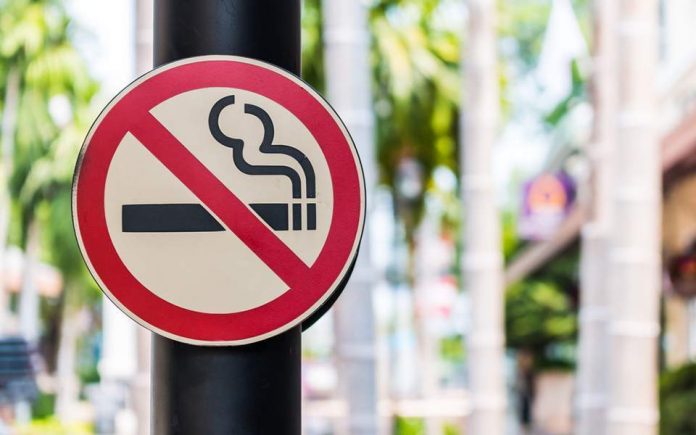
Image Source: https://bit.ly/315su4B

This article is written by Jagriti Sanghi, an Advocate practising in the Courts of Telangana. This article deals with the potential benefits of New Zealand’s smoke ban and compares the law with other countries including India.

​​Introduction 

Cigarettes are one of the leading causes of preventable deaths around the world. In the United States alone, cigarette smoking causes more than 480,000 deaths each year. Tobacco smoke introduces not only nicotine but also over 5,000 chemicals into one’s lungs, blood, and organs, including several carcinogens (cancer-causing compounds). Smoking, in addition to the established cancer risks, causes a slew of other chronic (long-term) health issues that necessitate continuing attention. In a courageous attempt to prevent cigarette addiction, the New Zealand government has introduced a law to ban cigarette sales to younger generations throughout their lifetime.

The need for tobacco control in New Zealand

Tobacco smoking has been identified as one of the leading causes of preventable deaths in New Zealand with almost 5,000 people dying each year. Although smoking rates have been steadily declining for years, with only approximately 11% of persons smoking presently and 9% smoking every day, the Government believes that without a push, it would take decades for the country’s smoking percentage to reach below 5%. Moreover, Indigenous Maori continue to have a considerably higher daily rate, at 22 per cent. A separate committee would have to be established underneath the Government’s initiative to help prevent smoking in the Maori community. Each year, more than 600 Maori die prematurely as a result of smoking-related ailments, and this loss, along with the addiction that preceded it, erodes economic, social, and cultural welfare, as well as stifles Maori development ambitions and chances. 

Initial stages of reform

Smoking rules were initially introduced by the New Zealand government in 2011, following a recommendation from the New Zealand Parliament’s Maori Affairs Select Committee. Since then, the smoke-free movement has urged successive governments to adopt a master plan for achieving the goal of a Smoke-free New Zealand by 2025 which would have a smoking prevalence of less than 5%. The New Zealand Government released a discussion document with a potential action plan for Smoke-free 2025 in April 2021. The document listed two comprehensive strategies that would help in building a smoke-free population. To begin, it proposes drastically limiting the retail availability of smoked tobacco products and eventually eliminating sales. Second, it suggests that essentially all nicotine be removed from cigarettes and tobacco, making them far less addictive. Consultations for the document were closed in May 2021 and the New Zealand government announced that a new plan would be introduced in the coming year which would limit the sale of cigarettes in the country.

Previously, as part of the Smoke-free 2025 plan, various tax measures were introduced to discourage people from purchasing cigarettes. In New Zealand, a pack costs around NZD 30, or just over $20, second only to neighbouring Australia, where wages are significantly higher. According to New Zealand’s Associate Health Minister Dr Ayesha Verrall, the tax regime was ‘punishing those people who are addicted to cigarettes even more.  She also believed that “the tax measures tend to place a higher burden on lower-income people, who are more likely to smoke.”

New Zealand’s proposed tobacco control law

As per the proposed law, people aged under 14 at the time of the law will never be able to legally purchase tobacco throughout their lifetime. From the time it takes effect, the Act will effectively raise the smoking age every year in perpetuity. New Zealand’s legal smoking age is 18, which means that anyone born after December 31, 2004, will never be able to smoke tobacco products legally throughout their lives if the law takes effect on January 1, 2023.

The legislation will also include steps to discourage the sale and consumption of cigarettes by elderly New Zealanders, which will be phased in overtime to allow the community to adapt. Tobacco products are now sold by over 8,000 stores in New Zealand, but under new restrictions, that number will be reduced to just 500. Only low-nicotine cigarettes will be offered to people who aren’t restricted under the legislation by 2025. This includes intentions to limit design measures aimed at increasing the attractiveness and addictiveness of smoked tobacco products, such as requiring only smoked tobacco products with very low nicotine levels to be manufactured, imported, distributed, and sold by authorised merchants. The laws aim to make cigarettes no longer addictive and reduce the number of young people who begin smoking. Application of the new laws would make New Zealand’s tobacco industry the second most regulated one, right behind Bhutan which has enforced a complete ban on cigarettes.

The proposed legal amendments

​​As per the Smoke-free Aotearoa 2025 Action Plan document submitted by the Office of the Associate Minister of Health, the document mainly aims to amend the Smoke-free Environments and Regulated Products Act 1990 to further restrict access and availability of smoked tobacco products and reduce their appeal and addictiveness. :

  1. According to Section 55 of the Smokefree Environments and Regulated Products Act 1990, It is currently illegal for a manufacturer or importer to offer for sale or export any smoked tobacco product containing “harmful constituents” exceeding any limits prescribed by regulations, as determined by any tests so prescribed. However, because constituents of smoked tobacco products that aren’t “harmful” in and of themselves can contribute to the item’s attraction and addictiveness. It is proposed that the legislation mandates that only constituent-compliant smoked tobacco products be manufactured, imported, or offered for sale or supply and that any smoked tobacco product containing constituents exceeding any limits prescribed by, or any features or constituents prohibited by the Act or regulations, becomes illegal.
  2. Under Sections 40 and 41 of the Smokefree Environments and Regulated Products Act 1990, it is currently an offence to sell, deliver or supply regulated products to people younger than 18 years old. The committee proposed a system that provides a cut-off date of birth, whereby it would be unlawful to sell smoked tobacco products to people born after a particular date.
  3. Although the major parts of the plan may be passed through amendments, some parts would require practical implementations by various organizations and committees.

Potential benefits of the new changes

According to analysis, the action plan’s initiatives are likely to fulfil the Smoke-free objective for Maori males and non-Maori males and females in 2025, as well as come close to meeting the goal for Maori females (5.6 per cent in 2025 and 3.3 per cent in 2026). This contrasts with a business-as-usual approach, which would see Maori achieve a smoking prevalence of 5% by 2061. These recommendations are expected to result in a gain of 558,000 Health Adjusted Life Years (HALYs), resulting in savings of $5.25 billion in future health spending and a further $5.88 billion in enhanced productivity (income to New Zealanders). Smoking-related fatalities account for a large fraction of the life expectancy discrepancy between Maori men and Maori women and non-Maori. To close the life expectancy discrepancy between Maori and non-Maori, the smoke-free target must be met. Furthermore, the overall volume of smoked tobacco marketed in New Zealand is steadily falling and will drop quickly once low-nicotine tobacco restrictions are implemented.

Criticism of the proposed change

Concerns have been raised regarding the economic impact of the proposed changes regarding the sale of tobacco products. The Government has specified that it would not compensate for the losses caused to persons due to the change in the law, which has caused further discontent. According to Mr Sunny Kaushal, the chairman of the Dairy and Business Owners Group which acts as the representative body for more than 5000 corner stores, “We all want a smoke-free New Zealand,” he said. “But this is going to hugely impact small businesses. It should not be done so it is destroying dairies, lives and families in the process. It’s not the way.” He noted that the tobacco tax rises had already created a black market that gangs were exploiting, and the problem was only going to become worse. He claimed that smoking was already in decline in New Zealand and would eventually fade out on its own.

Some parties have criticised the plan, claiming that lowering nicotine levels in goods will disproportionately affect low-income individuals, who will have to buy more cigarettes and smoke more to get the same dose. A growing illegal market for tobacco has also been cited as a source of concern. “Evidence shows that the volume of tobacco goods being smuggled into New Zealand has increased dramatically in recent years, and organised criminal gangs are involved in large-scale smuggling“, the Government said in its initial suggestions. There have been apprehensions among the sellers stating that the changes were being led by academicians and that the concerned stakeholders were not consulted.

Tobacco control in other countries

​​Internationally, Bhutan has the strongest rules against smoking tobacco. Bhutan’s Tobacco Control Act, 2010 bans the sale, cultivation, distribution and promotion of tobacco products but does allow limited imports for personal consumption. Individuals may import up to either 800 cigarettes, 1,200 bidis, 150 cigars or 750 grams of other tobacco products each month after paying the 100 per cent sales tax on Indian products plus the 100 per cent customs duty for third-country imports. However, this ban was temporarily lifted during the surge of COVID-19 cases to curb the infections that smugglers can bring along with tobacco across the porous southern border with India.

In a similar move, Costa Rica in 2012 passed strict smoking legislation wherein it has also been reporting high compliant rates to the ban. The law in the country prohibits lighting up in taxis, buses, trainers, public buildings, bars, casinos and workplaces. Smoking is also banned from all enclosed public-access buildings, and no separate “smoking areas” are allowed. It has acceded to the World Health Organization’s urge to reach tobacco-control goals in most countries.  

Other countries that have taken a strong step towards tobacco control include Malaysia, Uruguay, Colombia etc. There have been several steps for tobacco control in India also. In many public places and workplaces, including medical, academic, and government buildings, as well as on public transportation, smoking is fully prohibited. Indian law which requires 85% per cent of the tobacco product cover to be warnings, the Court held in Health for Millions Trust v. Union of India (2018).

Conclusion

The proposed changes in New Zealand will still need to pass through the legislative process, but would ideally not face any challenges. As per the current scheme the legislative amendments would be introduced in 2022 and the age limit restrictions would be introduced in 2023. As envisioned by the New Zealand government, one can only hope that the law becomes a motivation for all other countries to adopt strong health laws that would be beneficial for their people. 

References

  1. https://blogs.bmj.com/tc/2021/05/05/new-zealand-government-proposes-world-leading-action-plan-to-achieve-smokefree-2025-goal/
  2. https://www.parliament.nz/resource/en-NZ/49DBSCH_SCR4900_1/2fc4d36b0fbdfed73f3b4694e084a5935cf967bb
  3. https://www.npr.org/2021/12/09/1062610621/new-zealands-plan-to-end-smoking-a-lifetime-ban-for-youth
  4. https://www.nytimes.com/2021/12/09/world/asia/new-zealand-smoking-ban.html
  5. https://abcnews.go.com/Health/wireStory/zealands-plan-end-smoking-lifetime-ban-youth-81645578
  6. https://globalnews.ca/news/271458/5-countries-with-strict-smoking-bans/
  7. https://www.huffpost.com/entry/new-zealand-cigarette-ban-for-life-2004_n_61b19774e4b089ee1c2f6166
  8. https://www.stuff.co.nz/national/politics/127230008/government-to-ban-tobacco-sales-to-young-people-for-their-lifetime-in-firstever-smokefree-generation
  9. https://www.health.govt.nz/system/files/documents/information-release/cabinet_paper_smokefree_action_plan_2025.pdf
  10. https://www.tobaccocontrollaws.org/legislation/country/india/summary#:~:text=The%20law%20prohibits%20the%20sale,other%20forms%20of%20smokeless%20tobacco.&text=The%20sale%20of%20tobacco%20products%20is%20prohibited,under%20the%20age%20of%2018.
  11. https://www.bbc.com/news/world-asia-59589775 

Students of Lawsikho courses regularly produce writing assignments and work on practical exercises as a part of their coursework and develop themselves in real-life practical skills.

LawSikho has created a telegram group for exchanging legal knowledge, referrals, and various opportunities. You can click on this link and join:

https://t.me/lawyerscommunity

Follow us on Instagram and subscribe to our YouTube channel for more amazing legal content.
Download Now

Landmark sedition cases in India

0
Sedition
Image Source - https://rb.gy/r9tgdn

This article has been written by Oishika Banerji of Amity Law School, Kolkata. This article provides a detailed analysis of landmark sedition cases in India. 

This article has been published by Abanti Bose.

Introduction 

The most important thing to remember about sedition law is that this statute was enacted during a period when we were dominated by a foreign imperialist conquering force. The Britishers’ primary goal was to deny the inhabitants of this country their rights, especially the freedom to voice their opinions. Interestingly, whilst sedition was included in Lord Macaulay’s original draft of the Indian Penal Code, 1860 (IPC), it did not make it into the final version when it was passed in 1860. When Section 124A was amended in 1898, it changed the perception surrounding sedition. The first sentence defines the offence of sedition as inciting or attempting to incite emotions of dissatisfaction with the government. Sedition is still a rare crime when compared to other crimes (it accounts for less than 0.01 per cent of all IPC crimes). However, some areas of India are becoming sedition hotspots. With 37 sedition charges each, Assam and Jharkhand account for 32% of all sedition cases between 2014 and 2018. The authorities in Jharkhand have charged several categories of demonstrators with sedition. More than 3,000 people were charged with sedition in January last year, for opposing the Citizenship Amendment Act (CAA) in 2019 and more than 3,300 farmers were prosecuted with sedition in 2019 for protesting about land conflicts. The present article highlights the top 10 sedition cases majorly focusing on 2019-2021, that have attracted the attention of the nation as a whole. 

Landmark sedition cases in India

The first lawsuit to address the legitimacy of Section 124A was Ram Nandan vs. State of Uttar Pradesh (1958). Section 124A of the IPC, according to the Allahabad High Court, was ultra vires in character and violated Article 19(1)(a) of the Constitution. The constitutional validity of Section 124-A was further challenged before a Supreme Court Constitution Bench in Kedar Nath Singh v. State of Bihar (1962), with the argument focused primarily on the fact that Section 124-A conflicted with Article 19(1)(a) of the Indian Constitution. The Supreme Court ruled that no crime of sedition is established under Section 124-A unless the remarks, said or written, have the potential to cause disruption or disturbance of public order through the use of violence, thereby overruling the decision of the Allahabad High Court. There is no offence unless the statements are likely to cause violence. 

Following this decision, the Supreme Court ruled in 1995 in Balwant Singh And Anr vs State Of Punjab (1995) that merely raising slogans such as “Khalistan Zindabad,” “Raj Karega Khalsa,” and so on did not constitute sedition because there was no evidence or record that any violence occurred despite the slogans being raised in a public place. This legal stance has been reaffirmed several times, including in the cases of Bilal Ahmed Kaloo v. State of Andhra Pradesh (1997) and Common Cause v. Union of India (2018). In all of these cases, the Supreme Court instructed the courts to use caution while using sedition accusations. The courts were instructed to adhere to the principles set down in the Kedar Nath case. It was reiterated that sedition charges cannot be brought just for criticising the government or its policies.

Kishorechandra Wangkhemcha v. Union of India (2021) : sedition and its constitutionality

Senior Advocate Colin Gonalves had petitioned before the Supreme Court of India, arguing that the Apex Court’s judgment in Kedar Nath Singh v. State of Bihar (1962) should be reconsidered. In response, a three-judge bench of the Supreme Court, consisting of Justices UU Lalit, Indira Banerjee, and KM Joseph, issued a notice in a suit seeking to declare Section 124-A of the Indian Penal Code as unconstitutional and invalid. Three more petitions were marked to be considered alongside Kishorechandra Wangkhemkcha’s on July 16, 2021, by a three-judge bench comprising of CJI Ramana, Justice Bopanna, and Justice Roy. Retired Major General S.G. Vombatkere, Aamoda Broadcasting Company Pvt. Ltd., and Editors Guild of India, respectively, have filed challenges against Section 124A. The Editors Guild’s appeal also exposes how Section 124A is increasingly being used to intimidate journalists.

Facts of the case 

Two journalists, namely, Kishorechandra Wangkhemcha, hailing from Manipur, and Kanhaiya Lal Shukla of Chattisgarh, have been charged with sedition over their posts and cartoons on social media sites. They have filed a writ petition contesting the constitutionality of Section 124A of the Indian Penal Code, 1860 which criminalises and punishes sedition. For comments and posts on Facebook, Kishorechandra Wangkhemcha had three FIRs filed against him under Section 124A. The remarks and postings chastised the Manipur government for handling a situation at Manipur University, referred to the Chief Minister of Manipur as an “agent of the Prime Minister,” and criticised lawmakers and their family members for making anti-Schedule Tribe sentiments. Kanhaiya Lal Shukla posted cartoons on Facebook that depicted fake encounters by the police.

The points laid down in the petition

  1. The petitioners argue that Section 124A violates Article 19(1)(a) of the Indian Constitution, which guarantees an individual the right to freedom of speech and expression. Section 124A, they claim, does not impose a reasonable restriction. As a result, it is exempt from the limitations on freedom of speech and expression imposed by Article 19(2).
  2. The petition further points out that the precedent set in Kedar Nath Singh v. State of Bihar (1962) is no longer valid. Because of the socio-economic circumstances in 1962, appropriate restrictions of the type outlined in Section 124A may have been warranted. Alternative laws involving safety, security, and public order have been established since then, rendering Section 124A obsolete.
  3. The petitioners further pointed out that the provision’s ambiguity allows for arbitrary implementation and abuse. This is incompatible with the freedoms provided by Article 19(1)(a).

Wangkhemkcha’s claims, in this case, have been supported by three intervention applications. The intervenors are third parties who want to be heard by the Court in the interest of justice but do not want to become parties to the case. They are:

  1. Mr Sashi Kumar, a distinguished journalist, is the first intervenor, arguing that the ambiguous language of Section 124A has been misapplied to label criticism against the administration as sedition. He claims that the goal of the sedition statute was not to penalise dissent, citing the Constituent Assembly and early Parliamentary Debates.
  2. The second intervenor, legal professor Dr Sanjay Jain, provided an overview of sedition legislation in different nations to assist the Court in analysing the statute in light of current events. He claims that since Section 124A was created by a colonial authority to suppress anti-colonial activities, it has to be revisited. 
  3. The Foundation for Media Professionals, the third intervenor, raises similar arguments concerning the provision’s pre-constitutional character.

The Supreme Court will decide if Section 124A of the Indian Penal Code, 1860, which criminalises sedition, is unconstitutional, hence the matter is pending before the Apex Court.

Vinod Dua v. Union of India (2021)

Activities that are intended or have the potential to cause disruption or disturbance of public peace by resorting to violence, according to the Supreme Court of India, are to be criminalised. Based on the facts of this case, the Court concluded that the words used by Vinod Dua may best be described as expressions of disapproval of measures taken by the government and its officials for the current crisis to be resolved swiftly and efficiently. They were not created to incite others or demonstrate a proclivity for causing trouble or disturbing public peace through the use of violence.

Facts of the case 

Mr Vinod Dua, in his YouTube programme The Vinod Dua Show, allegedly made unsubstantiated and odd charges on March 30, 2020, by saying the following facts at 5 minutes and 9 seconds of the video: 

  1. Narendra Modi has utilised fatalities and terror incidents to obtain votes. 
  2. He says that the government does not have adequate testing facilities and that he has made inaccurate comments concerning the availability of Personal Protective Kits (PPE) and that there is insufficient information on them at 5 minutes and 45 seconds into the video. 
  3. He went on to say that shipments of ventilators and sanitisers were only prohibited on March 24, 2020.

Mr Vinod Dua, according to the F.I.R., generated terror among the population by making such false allegations. The FIR also stated that the programme would merely stir up public dissatisfaction, resulting in panic and individuals disobeying the lockdown to come out and stockpile supplies, which is completely unneeded. The rumours were distributed to induce fear or anxiety in the general public or any portion of the general public, to induce anybody to commit an offence against the state or public calm.

Supreme Court’s observations

The FIR filed against journalist Vinod Dua for his YouTube presentation about communal rioting in Delhi was dropped by a bench of Justices UU Lalit and Vineet Saran of the Supreme Court of India, on 3rd June 2021, who upheld citizens’ freedom to criticise the government in the present case of Vinod Dua v. Union of India (2021). The observations made by the Apex Court have been listed hereunder: 

  1. A citizen has the right to criticise or comment on the actions of the government and its officials as long as he does not incite people to violence against the government established by law or with the intent of causing public disorder. Sections 124A and 505 of the IPC must be invoked only when the words or expressions have a pernicious tendency or intention of causing public disorder or disturbance of law and order.
  2. The assertions ascribed to Dua that the Prime Minister utilised fatalities and terror attacks to get votes, or that the Prime Minister won votes through acts of terrorism, were not stated during the talk show. There are no such claims in the real translation, and no objections were filed that the translated version was wrong in any manner. The petitioner did claim that India’s airstrikes on Balakot, Pathankot, and Pulwama were exploited as political events to attract votes, but no claims against the Prime Minister were made, as mentioned in the F.I.R.
  3. Migrant workers in large numbers were migrating back to their hometowns/villages as of March 30, 2020. Given the circumstances, there would be some concern regarding the shelter and food that would be supplied to them along the way. If Dua made certain remarks on his talk show on March 30, 2020, before the matter was taken up by the Supreme Court, he would be within his rights to claim that as a journalist, he was addressing subjects of major importance so that enough attention might be given to the current difficulties. The petitioner cannot be accused of propagating misleading information or rumours.
  4. The testing facilities to assess and monitor the spread and effect of the pandemic, at least in the early phases of the surge, were not precisely appropriate, given the magnitude of the country’s population. If the petitioner makes any comments concerning testing facilities, PPE Suits, N-95 masks, or ply masks in that light, the comments in the first two sections must be nothing more than an assessment of the circumstances at the time.

Rajat Sharma v. Union of India (2021) : Farooq Abdullah’s Article 370 comment

In an interview last year, Farooq Abdullah had remarked “whatever they are doing at LAC in Ladakh is all because of the abrogation of Article 370, which they never acknowledged,” I am hopeful that Article 370 would be reinstated in J&K with their help”. Abdullah had talked on “restoring Article 370” with “China’s support,” according to Rajat Sharma and Neh Srivastava’s petition. Abdullah previously stated in an interview with The Wire that the Kashmiri people do not feel or want to be Indian, and would rather be dominated by the Chinese. According to the petitioners, this saying amounted to a seditious act and therefore they had claimed punishment under Section 124-A of the India Penal Code, 1860 for Mr Abdullah. The petitioners further claimed that Abdullah was persuading people in Jammu and Kashmir “to join China” based on a comment made by BJP spokesperson Sambit Patra, who had said that “people in Jammu and Kashmir do not feel that they are Indians.”

Apex Court’s observation

The bench of Justices Sanjay Kishan Kaul and Hemant Gupta, of the Supreme Court of India while deciding on the present case of Rajat Sharma v. Union of India (2021) imposed a cost of Rs. 50,000 on petitioners for filing a “publicity interest litigation” seeking the initiation of proceedings against former J&K Chief Minister Farooq Abdullah for his “pro-China” comments regarding the abrogation of Article 370 of the Indian Constitution. The bench went ahead to observe that it is not possible to call, expressing a point of view that differs from a decision made by the Central Government, as seditious. There was nothing in the statement that the Apex Court considers insulting enough to justify a court’s proceedings to be initiated.

Toolkit case : State v. Disha A. Ravi (2021)

The arrest of climate activist Disha Ravi and the issuance of non-bailable warrants for two individuals in the Greta Thunberg toolkit case had sparked outrage across the country. The three activists were accused of working with a pro-Khalistani organisation to develop a toolkit to “defame India throughout the world on the matter of three agrarian legislation.” Many opponents have alleged that the toolkit, which was initially posted by Swedish teenage climate activist Greta Thunberg on February 4, 2021, is proof of the Khalistani conspiracy against India. The same day, Delhi Police filed an FIR against the toolkit’s designers, and Google was asked for the email addresses of people engaged in posting and modifying the document, which was hosted on google docs.

Prosecution case

The applicant/accused allegedly started a WhatsApp group called “International Farmers Strike” and invited selected people to join. In addition, she erased the group conversation from her phone in an attempt to eliminate the vital evidence tying her to the toolkit. She also sought to keep her identity hidden so that no legal action could be taken against her, according to the prosecution evidence. She was also accused of using the backing of worldwide youth icon Ms Greta Thunberg to give separatist forces a global platform.

Opinion of the Delhi High Court and the Sessions Court 

The issue before the Delhi High Court was whether the applicant/accused Disha was just engaged in peaceful dissent and protest against the agricultural acts, or whether she was truly engaged in seditious activity while demonstrating against the stated legislation?

  1. In each democratic nation, citizens are the conscience guards of the government. They cannot be imprisoned just because they disagree with the government’s policies. Differences of opinion, disagreement, divergence, dissent, and even disapprobation are recognised as appropriate means for infusing objectivity into governmental programmes.
  2. While elaborating on a healthy democracy, the Delhi High Court stated that an informed and assertive population, as opposed to an apathetic or meek public, is undeniably a hallmark of a healthy and vigorous democracy.
  3. During their social interaction, any individual with questionable qualifications may engage with a lot of others. People dealing with such people, whether ignorantly, innocently, or fully aware of their questionable qualifications, cannot be painted with the same colour as long as the engagement/interaction continues within the four corners of the law.
  4. The Sessions Court went on to say that the applicant/accused had already been interrogated in police custody for over 5 days and that restricting her liberty further based on a broad and sweeping charge would be neither rational nor legitimate. As a result, the Court concluded that the applicant accused deserved to be released on bail, subject to the posting of a personal bond of Rs 1 lakh with two sureties, subject to the following conditions:
  1. She must continue to cooperate with existing investigations and join them when summoned by the IO,
  2. She must not leave the country without the authorization of the Court,
  3. She must meticulously attend at each level of the proceedings before the Court is involved to avoid obstructing or delaying the proceedings.

Patricia Mukhim v. State of Meghalaya (2021)

In 2020, 25 unidentified boys assaulted children playing basketball in Block 4, Lawsohtun, with iron rods and sticks, prompting Patricia Mukhim to write on Facebook the following things: 

  1. “Conrad Sangma, CM Meghalaya, what happened yesterday at Lawsohtun where some Non-Tribal youth playing Basketball were assaulted with lethal weapons and are now in Hospital, is unacceptable in a state with a Government and a functional Police Force.
  2. The fact that such assailants and troublemakers have never been apprehended and, if apprehended, never punished according to the law, which implies that Meghalaya has long been a failed state.
  3. We hope this isn’t another instance that gets lost in the shuffle. We want to see something done. There is no sense of community among criminal groups. They must be dealt with in accordance with the law. Why should our non-tribal brethren in their incite state continue to live in constant fear? Those who were born and raised in this state have the same right to name it Meghalaya as the indigenous tribes.”

Following this, the Headman and Secretary of Dorbar Shnong, Lawsohtun, Shillong, filed a complaint alleging that the Appellant’s Facebook comment incited communal hostility and might lead to a communal clash. The Appellant in return had filed a petition in the High Court of Meghalaya for quashing the FIR. The High Court, however, by its judgment dated 10.11.2020 dismissed the said petition.

Apex Court’s observations 

The Supreme Court of India’s division bench comprising Justices L. Nageswara Rao and S. Ravindra Bhat has quashed the criminal case filed against Shillong Times Editor Patricia Mukhim under Sections 153 A, 500, and 505(1)(c) of the Indian Penal Code, 1860, stating that citizens’ free speech cannot be stifled by involving them in criminal cases unless such speech has the potential to affect public order. The observations of the Court have been listed hereunder: 

  1. India is a multiethnic and cosmopolitan country. The Preamble’s promise of liberty is embodied in several clauses that spell out each citizen’s rights. When individuals travel, settle down, or carry on a career in an area where they find conditions suitable in the lawful exercise of such right, there may be resentments, especially if such citizens thrive, leading to enmity or potential violence. When victims express their dissatisfaction and speak up, especially when state officials turn a blind eye or drag their feet, such expressions of dissatisfaction are a scream for sorrow, for justice denied or postponed. 
  2. The Court remarked that the appellant’s anguish was aimed towards the Chief Minister of Meghalaya, the Director-General of Police, and the Dorbar Shnong of the area’s indifference in not taking action against the perpetrators who assaulted the non-tribal teenagers after scrutinising the Facebook post. The appellant alluded to the 1979 attacks on non-tribals.
  3. The claim made by the Dorbar Shnong, Lawsohtun, that the appellant’s remark would provoke community animosity and may lead to a communal clash throughout the State is nothing more than a fabrication of the mind. The appellant’s passionate plea for the protection and equality of non-tribals residing in Meghalaya cannot be classified as hate speech by any stretch of the imagination. It was a demand for justice for law-abiding behaviour that every citizen has the right to expect and express.

Zakir Hussain v. UT of Ladakh (2021) : Galwan valley clashes

On the 18th of June, 2020, the J&K police filed an FIR against Zakir Hussain and his co-accused Nissar Ahman Khan in connection with a viral audio clip containing objectionable conversation demeaning the country’s armed forces, which occurred against the backdrop of clashes between the Indian Army and Chinese armed forces in the Galwan Valley of Ladakh. The chat was considered to be exceedingly offensive, including insulting comments about the Indian Army’s participation in the Chinese armed forces’ Galwan misadventure. The petitioner had argued before the J&K High Court that the police had no power to file an FIR since the law stated that the Court may only take notice of a complaint submitted by a District Magistrate under Section 196 of the Code of Criminal Procedure, 1973 (C.r.P.c), and no such complaint had been lodged in this case.

Observations of the Jammu and Kashmir High Court 

Because of the complexities of the situation, the Court established two moot questions that were to be decided in this case:

  1. What is the actual import and extent of Sections 124-A, 153-A, 153-B, and 505(2) of IPC when seen through the lens of Article 19(1) of the Indian Constitution?
  2. Can an FIR be filed for the conduct of crimes under Sections 124A, 153A, 153B, 505(2), and 120-B of the Indian Penal Code (IPC) without the previous approval of the competent authorities, as required by Section 196 of the Code of Criminal Procedure, 1973?

The following opinions were made by the Hon’ble High Court in light of the present case: 

  1. To prove an offence under Sections 124A, 153A, 153B, and 505(2) of the IPC, it was essential to show that the words, written or said, as well as signs or visible representations, had the tendency or intention of causing public commotion or disruption of public peace by incitement to offence.
  2. The provision of Section 196 of the Criminal Procedure Code, 1973 did not, in any way, control Section 154 of the Code of Criminal Procedure, 1973 in that the police were competent to file an FIR if information received by them, which reveals the commission of a cognizable offence, even if the information was not referable to Section 196.
  3. If there was no prior sanction by the Central Government, State Government, or District Magistrate, as the case may be, Section 196 CrPC would come into effect at the stage of taking cognizance by the Court, and the Court would have to refuse to take cognizance of the offence(s) referable to Section 196 CrPC.
  4. If a report relating to an offence(s) under Section 196 CrPC was presented to the Judicial Magistrate without first obtaining prior sanction from the competent authority, the Court should not take cognizance of it and should return it, to be presented only after first obtaining prior sanction from the competent authority.
  5. Only if the Court applied its attention to the final police report presented before it in accordance with Section 173 CrPC to proceed in the way permitted by law, it should not be regarded to have taken cognizance of the same.
  6. That the Magistrate, if the police report is found to violate Section 196 CrPC, should not keep the report and proceed with the case, but rather return it to the prosecution.

As a result, the petition was granted, and all criminal actions against the petitioner, including the contested FIR, were dismissed.

Rajina Parbin Sultana v. State of Assam (2021)

Ms Rajina Parbin Sultana, the petitioner, has been detained since May 16, 2021, under Sections 120B and 124A of the Indian Penal Code and Section 2 of the Prevention of Insult to National Honour Act, 1971. When a photo of her enjoying lunch at that dining table with several guests went popular on social media, the petitioner was accused of using the Indian National Flag as a table cover on the occasion of the Eid celebration. Several claims of wilfully dishonouring the Indian National Flag were made against the petitioner as a result of the occurrence. Five of the six accused people included in the FIR had already been freed on bail, according to the petitioner before the Gauhati High Court. The State, on the other hand, claimed that the accused-petitioner hosted a lunch on the 14th of May, 2021, in her home, during which the alleged offence occurred. It was argued that there was sufficient proof that the accused petitioner used a table cloth that looked like the Indian National Flag when welcoming visitors to her home for the Eid celebration.

Observations made by the Gauhati High Court 

  1. The Court accepted the defence position and advised the petitioner to proceed with caution and care in the future. The Bench stated that the question of whether the accused-petitioner committed the offence under Section 2 of the Prevention of Insult to National Honour Act, 1971 in any public place or another place within public view by her action must be determined based on the materials gathered during the investigation and their admissibility during the trial. As a result, it did not appear to be an act with the intent of overthrowing the government by inciting scorn, hate, or disaffection against it.
  2. Given the accused petitioner’s detention since May 16, 2021, and the progress made in the investigation, the Court determined that further custodial detention of the accused-petitioner was not necessary for investigating the case and that her release on bail at this stage of the investigation would not be likely to cause any prejudicial effect in the subsequent investigation, provided she continues to extend her assistance and co-operation. As a result, the petitioner was ordered to be freed on bail after posting a Rs 20,000 bail bond.

Sikha Sarma v. State of Assam (2021)

An F.I.R. had been filed against the petitioner, alleging that her Facebook post from April 5, 2021, disrespected the nation’s martyrs. It was also said that the accused petitioner denigrated and disrespected the victims’ sacrifice by advising the ‘media’ not to engender public feelings in their favour and not to refer to them as ‘Swahids’ since they were paid for the services they provided to the country in her opinion. It was also said that the defamatory tweet sparked a public outcry on social media since the country was grieving the murder of 22 Jawans slain during an anti-naxal operation in Chattisgarh on March 3, 2021, which included two jawans from Assam. 

The state believed that the accused not only disrespected the nation’s martyrs but also attempted to incite anti-social elements by claiming that the assassination of our soldier was not a crime. The accused attempted to incite hate against the government while doing its legal duties through the stated post. Furthermore, her comments stoked discontent with India’s leadership and had the potential to fuel terrorist and anti-national elements.

Mr A.M. Borah, the petitioner’s lawyer, maintained that the accused did nothing wrong when she posted the words on her Facebook account. She made no anti-national statements, nor did she make any statements that incited or sought to incite hostility, animosity, contempt, or disaffection toward the government. The petitioner claimed that the term “Swahid/martyr” is not defined in any law or by any government announcements and that the accused petitioner did not break the law by expressing her right to free expression in good faith.

The views of the Gauhati High Court 

  1. The accused petitioner allegedly expressed her personal views on the use of the term ‘Swahid/martyr’ on a social networking platform in respect of 22 brave hearts/patriot soldiers, including two such soldiers from the state of Assam, who died in action or were killed on duty, eliciting widespread criticism. In this regard, the High Court, having considered the merits and drawbacks of the allegations and evidence gathered thus far by the investigating officer in the case, as well as the threat to the prisoners’ health posed by the second wave of novel COVID-19 pandemic, is of the considered opinion that further detention of the accused petitioner, who is a woman, may not be necessary for the interests of the ongoing investigation.
  2. The Court granted the petitioner’s bail plea and ordered the petitioner to be released on a bail of Rs.30,000 with one guarantee of the same amount.

Patit Paban Halder v. State of West Bengal (2019)

In this case, the police had obtained information about a conference being held in a village where seditious lectures were being delivered. A couple of members of the 30-40-person gathering had guns with them. When the police arrived on the scene, the individuals began running, and the accused-appellants were apprehended. They were found to own several seditious flyers and leaflets. A complaint was made against them, and charges were drafted against them under Sections 121 A, 122, and 124 A of the Indian Penal Code, 1860, Sections 25(a) and 35 of the Arms Act, 1959, and Sections 4 and 5 of the Explosive Substances Act, 1908.

Calcutta High Court’s observations 

  1. The Court found that the prosecution had failed miserably to prove the accusations levelled against the appellants and that there was no evidence on the record linking the accused-appellant to the claimed offences. The prosecution case was found to be riddled with inconsistencies, and the appellants were given the benefit of the doubt.
  2. The Court also said that it is a common law that the prosecution had sole responsibility for proving a charge against an accused and that the prosecution was expected to present evidence that was coherent, compact, credible, and trustworthy enough to be incompatible with the accused’s innocence.
  3. The Court noted that the trial judge had failed to see the evidence in its appropriate context and had overlooked the crucial fact that there was no relationship between the appellants and the damning evidence offered by the prosecution. As a result, the appeal was granted, and the contested verdict was reversed.

Conclusion 

The enactment of Section 124A of the Indian Penal Code, 1860 seeks to suppress and eliminate all last forms of resistance in society. Such a propensity runs counter to the intrinsic characteristics of democracy. The presence of such a provision in a progressive state like India appears to be redundant. The severity of the penalty makes the provision harsh. The continuation of such a clause chills freedom of speech and expression, which is supposedly a fundamental right guaranteed by Article 19(1)(a) of the Indian Constitution. There is a need for India to evolve and change its sedition laws to keep up with the changing needs of society.

References 

  1. https://www.indiatvnews.com/news/india/8-high-profile-sedition-cases-in-history-of-independent-india-57728.html
  2. https://www.livemint.com/news/india/sedition-cases-in-india-what-data-says-11582557299440.html
  3. https://freespeechcollective.in/2021/06/17/sedition-cases-2021/
  4. https://www.article-14.com/post/our-new-database-reveals-rise-in-sedition-cases-in-the-modi-era

LawSikho has created a telegram group for exchanging legal knowledge, referrals and various opportunities. You can click on this link and join:

https://t.me/lawyerscommunity

Follow us on Instagram and subscribe to our YouTube channel for more amazing legal content.

Download Now

Definition clause of Sale of Goods Act, 1930

0
sales of goods Act
Image source - https://bit.ly/37cp4dP

This article has been written by Neha Mallik, from the Vivekananda Institute of Professional Studies, New Delhi. This article highlights the important terms in the definition clause of the Sale of Goods Act, 1930.

Introduction

The sale or purchase of goods is the most recurring transaction in almost every kind of business. Every now and then, businessmen get involved in the sale & purchase of goods and enter into the contract of sale. These contracts are governed by the Sale of Goods Act,1930.  It is important for every individual, be it a legal professional or a common man who deals in the transaction of sales on a regular basis, to have an understanding of the important terms in the Sale of Goods Act,1930. In this article, we will discuss some common yet important terms in the Sale of Goods Act,1930. Give a quick reading to this article to have comprehension about the terms related sale of goods.

Important Terms: Sale of Goods Act, 1930

Buyer and Seller

  • Buyer [Section 2(1)]

The definition of the ‘buyer’ is stated under Section 2(1) of the Act. It defines Buyer as a person who either buys or agrees to buy certain commodities. In the contract of sale, the Buyer is one of the parties to the contract.

  • Seller [Section 2(13)]

On the contrary, the Act defines ‘seller’ as a person who either sells or agrees to sell particular commodities under Section 2(13). The Seller becomes the other party to the contract. The existence of both the parties i.e. the Buyer and the Seller must be there to enter into a contract of sale. 

The conjoint reading of the above two sections give us a conclusion that to be recognized as a Buyer or Seller under the Act, it is not necessary to actually transfer the goods. Even if you agree or promise to buy or sell the goods you would be considered and identified as a Buyer or Seller as per the Act.

Goods [Section 2(7)]

The dictionary meaning of the term goods is merchandise or possession. The term “Goods” is one of the crucial clauses in the Contract of Sale. 

According to Section 2(7) of the Act, “goods” include-

  • Any movable property except actionable claims and money;
  • Stock and shares;
  • The growing crops, standing timber, grass;
  • The things that are attached or forming part of the land which is agreed to be severed from the land before the sale. It has been held in the  State of Maharashtra v. Champalal Kishanlal Mohta that things which are attached to land are the subject matter of the contract of sale if they are severed before the sale. 

For eg: A resort was offering stay along with food at a consolidated charge. If customers do not take food, the rebate on food is not allowed as the supply of food does not come under the definition of “goods” as per the Act. 

It is concluded from the above definition that the Act deals with the sale of goods i.e. movable property only. On the other hand sale of immovable property is governed by the Transfer of Property Act,1882. It is noted that the actionable claims and money are excluded from the ambit of the definition. Actionable claims are the claim or debt for which legal action can be taken and can be enforced. For eg: recovery of refund is an actionable claim and is not included in the purview of the above definition. Further, the goods can be classified under several categories. Let’s see below.

Types of goods

The classification of goods in terms of business law can be quite ticklish to understand. Section 6 of the Act describes the types of goods. The goods are classified into existing goods, future goods, and contingent goods. Let’s study all three briefly. 

Existing Goods 

If the goods are physically present at the time of contract and are in the legal possession or owned by the seller during the formulation of the contract of sale is referred to as existing goods. The existing goods are further classified into:

  • Specific Goods [Section 2(14)]: Referring to Section 2(14) of the Act, the goods that are specifically identified and agreed upon to be transferred at the time of the formation of the contract are called specific goods. 

Illustration- ‘A’ wants to sell his HP Laptop of a particular model number and advertises the same. ‘B’ agrees to purchase the laptop. Both entered into the contract of sale. Here the laptop is a specific good.

  • Ascertained Goods: The Act does not define the ascertained goods but is conferred by judicial interpretation. The goods are said to be ascertained wherein some or whole part of goods is identified and set aside for the purpose of the contract. Such goods are specifically earmarked for sale.
  • Unascertained Goods: The goods that have not been specifically identified to be sold are known as unascertained goods. For example, from 1000 quintals of wheat, the seller agreed to sell 500 quintals. Here the goods are not specified. The seller has the liberty to choose from the bulk. 

Future Goods [Section 2(6)]

The goods which are not in existence and to be manufactured or produced or acquired by the seller after entering into the contract of sales are considered as future goods. It must be noted that there can only be an agreement to sell contracts as there can be no actual sale in respect of future goods. This is defined under Section 2(6) of the Sale of Goods Act. 

Illustration – Amit is a manufacturer of chairs. Shyam ordered Amit to manufacture 200 units of chairs of specific design and they made an agreement for the same. This is the sale with respect to future goods. 

In the case of Union of India v. K.G. Khosla & Co. Ltd, goods were manufactured according to the specification mentioned in the contract. Therefore, the goods are “future goods” within the meaning of Section 2(6) of the Act. 

Contingent Goods [Section 6(2)]

According to Section 6(2), the sale of certain goods which depend upon happening or non-happening of certain events is termed as contingent goods. For instance, ‘A’ has agreed to sell ‘B’ certain goods at a particular date if the former receives the goods from the manufacturer before the said date. This agreement is based on contingencies, hence such goods are called contingent goods.

Delivery [Section 2(2)]

By delivery of goods we mean, the voluntary transfer of the possession of goods from one person to the other. The transfer of possession is the end result of the whole delivery process. It is not necessary that the person to whom the goods are delivered is a buyer, he can be any other person authorized by the buyer. The definition of the term delivery is defined under Section 2(2) of the Act. 

Kinds of Delivery

There are different forms of delivery of goods according to the Sale of Goods Act, 1930:

Actual Delivery 

Actual delivery takes place when the goods are physically handed over to the buyer or any person authorized by him. Say for example A, the seller of furniture handed over the ordered furniture to B, the case is of actual delivery of the goods. 

Constructive Delivery 

In the case of constructive delivery, the transfer of goods can be done without a change in the possession or custody of goods. Acknowledgment and attornment can be called constructive delivery. 

Constructive delivery can be effected in the following ways:

  • Wherein the seller agrees to hold the sold goods as a bailee.
  • Wherein the buyer who is in the actual possession of goods as a bailee of the seller holds the goods as his own after the sale.
  • Where a third party like transporter or agent, agrees to hold the goods for the buyer. 

Symbolic Delivery 

Symbolic delivery is made wherein the goods are heavy and bulky and it is difficult to hand over the goods to the buyer physically. In this situation, the delivery is made by indicating or giving a symbol that the goods are under the possession of the buyer. For example, the delivery of the keys of the warehouse where the goods are kept is considered to be the symbolic delivery. A document like a bill of lading must be given to the buyer to make him entitled to hold the delivered goods. 

The document of the Title to Goods [Section 2(4)]

As per Section 2(4), we can confer that the Document of the title to goods includes a bill of lading, dock-warrant, warehouse keeper’s certificate, railway receipt, multimodal transport document, warrant or order for the delivery of goods. It also includes any other documents that are used in the usual course of business proving the possession or control of goods or which proves the authority of the possessor to transfer or receive the goods. The document is a very imperative document for taking any legal action without which one cannot proceed with the proceeding in the court.

https://lawsikho.com/course/certificate-course-in-advanced-civil-litigation-practice-procedure-and-drafting
       Click above

Fault [Section 2(5)]

Any wrongful act or default committed is considered as “fault” under Section 2(5) of the Sale of Goods Act, 1930. 

Mercantile Agent [Section 2(9)]

As per the definition given under Section 2(9) of the Act, Mercantile Agent is a person who is having the authority in the customary course of business either to sell or consign the goods under the given contract. The Agent is authorized to act on behalf of the buyer or seller. An agent can also raise money on the security of the goods if authorized. The example includes agents, auctioneers, brokers, dealers, etc. 

Price [Section 2(10)]

According to Section 2(10) of the Act, The consideration for the sale of goods is called price. Price is the money that is paid or promised to be paid by the buyer or any person authorized by the buyer to the seller. Below  are the different modes by which price can be determined: 

  • Parties mutually decide the price of the goods in the contract of sale. In Aluminium Industries Ltd. v. Minerals and Metals Trading, it is observed that the price prevailing on the date of delivery will be the price to be paid by the buyer. Subsequently, the seller issued a delivery note for the goods but without any valid reason delayed the delivery. The seller demanded an increased price which occurred due to delayed delivery. It was held that the seller was at fault thus he could not compel the buyer to pay an increased price. 
  • It may be left to be fixed in the future.
  • It may be determined in the course of dealing between the parties.

Property [Section 2(11)]

According to Section 2(11) of the Act, property generally means title or the ownership rights of the goods. In the process of a sale, there is a transfer of ownership or we can say the transfer of property from one party to the other. 

Quality of Goods [Section 2(12)]

Section 2(12) of the said Act gives the definition of “quality of goods”. The quality includes the state or condition in which the goods are expected or promised to be delivered. It is one of the important clauses to be included in the Contract of Sale. If the quality of the delivered goods has not complied with the contract then it is considered to be the breach of the Contract. 

Insolvent [Section 2(8)]

A person who ceases to pay his debts in the normal course of business, or is unable to pay even his due debts in the eyes of law is declared as insolvent. Section 2(8) states the definition of the term “insolvent”. The law gives certain rights and duties to an insolvent person. 

Conclusion

Through the course of the whole article, I have tried to throw light on the important terms of the definition clause of the Sale of Goods Act, 1930. The above discussion would surely help to make you understand the simple yet important terms in the Act. To conclude, it can be observed certain terms in this article lays down a paramount structure that is necessary to be incorporated in the contract of sale like a buyer, seller, mode of delivery, quality of goods, etc.  

Reference

  1. Sale of Goods Act, 1930
  2. https://www.toppr.com/guides/business-laws/the-sale-of-goods-act-1930/definitions-of-important-terms/
  3. https://indiacode.nic.in/handle/123456789/2390?view_type=browse&sam_handle=123456789/1362
  4. https://edurev.in/studytube/Introduction–Types-of-Goods-The-Sale-of-Goods-Act/c4eb32cb-14ac-415d-8338-ecf6af888dd8_t
  5. https://indiankanoon.org/doc/1935273/
  6. https://indiankanoon.org/doc/541801/

LawSikho has created a telegram group for exchanging legal knowledge, referrals and various opportunities. You can click on this link and join:

https://t.me/joinchat/J_0YrBa4IBSHdpuTfQO_sA

Follow us on Instagram and subscribe to our YouTube channel for more amazing legal content.

Download Now

Criminal conspiracy under I.P.C.

0

This article is authored by Nidhi Bajaj, of Guru Nanak Dev University, Punjab. In this article, the author has undertaken a comprehensive study of the concept of criminal conspiracy as provided under the I.P.C.

This article has been published by Sneha Mahawar.

Introduction

Conspiracy means a combination of two or more persons for unlawful purposes. It is an agreement between two or more persons to commit an illegal act. Criminal conspiracy is a substantive offence under the Indian Penal Code, 1860(I.P.C.). Generally, the accused is charged with the offence of criminal conspiracy along with the charge of some other substantive offence under the I.P.C. or any other law. Chapter V-A of the I.P.C. as inserted in 1913 deals with the offence of criminal conspiracy. In this article, the author will attempt to analyse the substantive offence of criminal conspiracy with the help of relevant case laws. 

Background

Originally, the term ‘conspiracy’ was used to refer to the acts of agreement of two or more persons to institute a false legal case against someone or to carry on legal proceedings in a vexatious or improper way.

In Poulterer’s case(1611), the criminal aspect of conspiracy was developed for the first time by the Star Chamber and conspiracy was recognised as a substantive offence. 

Brief facts of the case are: One Walters along with other defendants imputed a false charge of robbery on Stone and did everything possible to ruin his family’s reputation. Rumours were spread that Stone was a gentleman thief and a knave. However, Stone had an alibi and brought some 30 people to attest that he was in London on the day the alleged robbery took place. The jury found an ignoramus and Stone was discharged. Thereafter, Stone brought an action before the Star Chamber to clear himself of the imputations levelled against him and vindicate his reputation. The defendants attempted to settle the matter out of court and also tried to persuade Stone to drop the suit. However, when the process started, the defendants accused Stone of barratry and also intimated some of his witnesses. The court held that the mere presence of conspiracy among the defendants, irrespective of whether Stone was falsely indicted or acquitted is the gist of the offence and can be considered a crime. 

The House of Lords in Mulcahy v. R.(1868) stated that “A conspiracy consists not merely in the intention of two or more but in the agreement of two or more to do an unlawful act by unlawful means. So long as such a design rests in intention only it is not indictable….” Thus, two or more persons must agree to carry it into effect and the very plot is an act in itself punishable for a criminal object or the use of criminal means. 

Before the insertion of Chapter V-A, conspiracy under I.P.C. was punishable only in two forms-

  1. By way of abetment under Section 107 I.P.C.
  2. By way of involvement in a certain offence (Section 310, Section 401, Section 400 I.P.C.)

Then, in 1870, Section 121A was added which provided punishment for conspiracy to commit offences punishable by Section 121 i.e. conspiracy to wage or attempt to wage war against the Government of India.  

It is thus clear that conspiracy per se was not a crime under I.P.C. before 1913. The Criminal Law Amendment Act of 1913 inserted Chapter V-A in the I.P.C. which introduced criminal conspiracy as a substantive offence. 

Definition of Criminal Conspiracy

Section 120A I.P.C.

Section 120A of the I.P.C. defines criminal conspiracy as an agreement of two or more persons to do or cause to be done-

  1. An illegal act, or;
  2. An act that is not illegal by illegal means.

Section 43 of the I.P.C. defines the term ‘illegal’ as everything that is an offence or is prohibited by law or furnishes ground for a civil action.

The Proviso attached to Section 120A provides that a mere agreement to commit an offence shall amount to criminal conspiracy and no overt act or illegal omission is required to be proved. Such overt act is necessary only when the object of the conspiracy is the commission of an illegal act not amounting to an offence. It is immaterial whether the illegal act is the ultimate object of such agreement or is merely incidental to that object.

Ingredients

  1. Two or more persons agree to do or cause to be done an illegal act or an act which is not illegal by illegal means i.e. there must be at least 2 persons who conspire.  However, a person may be indicted alone for the offence of criminal conspiracy if the other co-conspirators are unknown, missing or dead.
  2. Joint evil intent to do an illegal act or an act that is not illegal by illegal means is necessary.

Punishment of criminal conspiracy

Section 120B of I.P.C. provides for punishment of criminal conspiracy-

  1. Where the criminal conspiracy is to commit a serious offence: In cases where the conspiracy is to commit an offence-
  1. Punishable with death, 
  2. Imprisonment for life or
  3. Rigorous imprisonment for a term of two years or upwards 
  4. and where no express punishment is provided under the Code for such conspiracy,

every person who is a party to such a criminal conspiracy shall be punished in the same manner as if he had abetted such offence.

  1. Criminal conspiracy to commit offences other than those covered in the first category: Whoever is a party to such a criminal conspiracy shall be punished with imprisonment of either description for a term not exceeding six months or with fine or with both. 

Proof of conspiracy

The offence of criminal conspiracy can be proved by either direct or circumstantial evidence. A conspiracy is usually hatched in a secret and private setting which is why it is almost impossible to produce any affirmative evidence about the date of the formation of the criminal conspiracy, the persons involved in it or the object of such conspiracy or how such object is to be carried out. All of this is more or less a matter of inference. 

Section 10 of Indian Evidence Act, 1872

Section 10 of the Indian Evidence Act contains the principle that once a conspiracy to commit an illegal act is proved, an act of one conspirator becomes the act of another. Section 10 deals with the admissibility of evidence in a conspiracy case. It provides that anything said, done or written by any one of the conspirators in respect of their common intention is admissible against all the conspirators for proving the existence of the conspiracy or that any such person was a party to the conspiracy. However, the following conditions are to be satisfied before such fact can be admitted-

  1. There should be reasonable ground to believe that two or more persons have conspired to commit an offence or an actionable wrong.
  2. Anything said, done or written by any one of them about their common intention will be evidence against the others provided it is said, done or written after the time when such intention was first formed by any one of them.

Case Laws

Parveen v. State of Haryana (2021) SC

The brief facts of the case are: Four accused were being escorted by the police from the Central Jail, Jaipur by train to be produced in the Court of CJM, Bhiwani. On reaching the Railway Station Nangal Pathani, four young boys entered their compartment, attacked the police party and tried to rescue the accused. The accused, who were in custody also tried to escape and an attempt was also made to snatch the official carbine. It was alleged that one of the accused fired upon the Head Constable, who got injured and later succumbed to his injuries. One accused was apprehended and the other three fled. The accused were charged under offences Sections 224, 225, 332, 353, 392, 307, 302, 120-B of the IPC and for certain offences under the Arms Act. The accused were held guilty by the Sessions Court and on appeal, the High Court of Punjab and Haryana confirmed their conviction. The appellant Parveen @ Sonu filed an appeal in the Supreme Court.

The Hon’ble Supreme Court held that it is not safe to hold a person guilty for offences under Section 120B I.P.C. in absence of any evidence to show a meeting of minds between the conspirators for the intended object of committing an illegal act. The Court ordered the acquittal of the appellant and held that it is not safe to maintain the conviction of the accused on the alleged confessional statements of the co-accused in absence of any other corroborative evidence.

Kehar Singh and others v. State (Delhi Administration) (1988) SC

The Hon’ble Supreme Court, in this case, has held that the most important ingredient of the offence of conspiracy is an agreement between two or more persons to do an illegal act. Such an illegal act may or may not be done in pursuance of the agreement, but the very agreement is an offence and is punishable. 

Major E.G. Barsay v. The State of Bombay (1962) SC

In this case, it was held that an agreement to break the law constitutes the gist of the offence of criminal conspiracy under Section 120A IPC. The parties to such an agreement are guilty of criminal conspiracy even if the illegal act agreed to be done by them has not been done. The Court also held that it is not an ingredient of the offence of criminal conspiracy that all the parties should agree to do a single illegal act and a conspiracy may comprise the commission of several acts. 

Ram Narain PoplI v. C.B.I. (2003) SC

In this case, the Supreme Court held that mere proof of the agreement between two or more persons to do an unlawful act or an act by unlawful means is enough to convict the parties for criminal conspiracy under Section 120B.

Topandas v. State of Bombay (1955) SC

In this case, the appellant along with three others was charged with the offence under Section 120B read with Sections 471 and 420 I.P.C. for conspiracy to use forged documents. The Trial Court acquitted all the accused, but the High Court, in appeal reversed the acquittal of the appellant and convicted him for the substantive offence as well as for criminal conspiracy. In appeal, the Supreme Court held that it is a matter of common sense that one person alone can never be held guilty of criminal conspiracy for the simple reason that he cannot conspire. It was held that the appellant could not be convicted under Section 120B when his alleged co-conspirators were acquitted of that offence. When all the alleged co-conspirators have been acquitted, the accused alone cannot be held guilty for conspiracy unless it can be proved that he conspired to commit an offence not only with the co-accused but with some third person(s) who has not been tried, because he is minor or is absconding.

Leo Roy Frey V. Suppdt. Distt. Jail (1958) SC

The Hon’ble Supreme Court, in this case, held that the conspiracy to commit a crime is a different offence from the crime that is the object of the conspiracy. A conspiracy precedes the commission of the crime and is complete before the crime is attempted or completed. 

Conclusion

The offence of criminal conspiracy comes under the category of inchoate crimes as it does not require the commission of an illegal act. Criminal conspiracy is a partnership in crime and a joint or mutual agency exists in each conspiracy for the prosecution of a common plan. Nowadays, it is seen that the provision of criminal conspiracy is very loosely invoked which is not in line with the principles laid down by the Supreme Court. Hence, it is very much required that the superior courts keep a check on the misuse of the provision while upholding the rule of law. 

References


Students of Lawsikho courses regularly produce writing assignments and work on practical exercises as a part of their coursework and develop themselves in real-life practical skills.

LawSikho has created a telegram group for exchanging legal knowledge, referrals, and various opportunities. You can click on this link and join:

https://t.me/lawyerscommunity

Follow us on Instagram and subscribe to our YouTube channel for more amazing legal content.

Download Now

Forced sterilisation of Uyghur Muslims : can China be put to trial

0
Image Source: https://rb.gy/cx9kuj

This article is written by Indrasish Majumdar, LawSikho Intern. The article has been edited by Ruchika Mohapatra (Associate, LawSikho).

This article has been published by Abanti Bose.

Introduction

Forced injections and unknown pills are not fictional horrors from scary movies, but a reality many Uyghurs have to encounter in mass arbitrary internment today. Human Rights abuses in Xinjiang against Uyghur women and children abound. The concerns over alleged forced abortion and sterilisation of Uyghur Muslims were recently raised by a US-based think tank “The Jamestown Foundation”. Human Right activists, in light of the findings, solicited an investigation into the potential genocide. Countless allegations of mass surveillance, detainment of Uyghurs in re-education camps based on their Muslim minority status and human rights violations were made following claims of mass sterilisation.  

Forced sterilisation and population growth suppression

Central to the report are the findings of German Researcher Sr. Adrian Zenz, a virtuoso on the Uyghur population. The report comprises a combination of regional data, interviews with women who had been at internment camps and policy documents disperse light on attempts by the Chinese officials to suppress population growth among ethnic minorities in the Xinyang region, through forced abortions. To offset the disproportionate sex-ratio and ageing workforce caused by the one-child policy, in 2015 the Chinese government ratified the two-child policy nationwide. However, in terms of implementation, the treatment of Uyghur women varies significantly when compared to the Han population. Birth control campaigns were conducted in the Xinjiang region against women who exceed the two-child limit and refused to undergo an abortion, as well as against women who had children less than the limit. The Han women (majority), on the other hand, were encouraged to have more children.

The report expounded, the forced injection of IUDs (a form of birth control), sterilisation surgeries and injections to stop periods in Xinxiang increased tentatively by 60 per cent between 2014-2018. The nationwide use of IUDs in comparison fell. Population growth in the two largest Uyghur prefectures fell by 84 per cent between 2015 and 2018 as birth rates declined by about 24% in 2019 compared to the national average of 4.2%. The report revealed the Government envisaged “subjecting at least 80 per cent of women of childbearing age to intrusive birth prevention surgeries” and punishing birth control violators by internment in “training” camps. The author of the report describes his findings as “raising concerns that Beijing is doubling down on a policy of Han settler colonialism” while “providing the strongest evidence yet, that the Chinese government is carrying out a genocide of the Uyghur population.”

What constitutes genocide?

Dr Zenz concluded his findings by raising a question “whether Beijing’s policies in Xinjiang represent, in fundamental respects, what might be characterized as a demographic campaign of genocide per the text of Section D, Article II of the U.N. Convention on the Prevention and Punishment of the Crime of Genocide.”

Article 2 of the Convention on “The Prevention and Punishment of the Crime of Genocide” describes genocide as “the mental element of intent to destroy, in whole or in part, a national, ethnical, racial or religious group and the physical element of imposing measures intended to prevent births within the group.” Therefore, to prove a crime of genocide a two-tier test needs to be satisfied. An intention “to destroy, in whole or in part, a national, ethnical, racial or religious group ” coupled with the physical component. Zen contends the situation of Uyghur’s falls under “imposing measures intended to prevent births within the group” aiming to check reproduction by targeting the group’s demographic structure.  

Even though it is uncommon, a genocide may occur in apparently peaceful situations. Historically, most genocides such as the Holocaust or the Rwandan genocide, have relied on the physical component of killing members of the oppositions or inflicting serious mental or bodily harm amidst armed conflict, but the same is not without exceptions.

A state or a group of states may bring a claim of genocide before the International Court of Justice against China concerning a breach of erga omnes obligation (an obligation owed by all states to the international community as a whole) and the International community may have the jurisdiction to prosecute individuals for serious crimes against humanity e.g. genocide.

Redress under International Law

Forced sterilisation is recognised as a war crime and crime against humanity of sexual violence by the Rome Statute. The Statute additionally recognises “imposing measures intended to prevent births within the group as an act of genocide, when committed with intent to destroy, in whole or in part, a national, ethnical, racial or religious group.” Atrocity crimes such as genocide have been codified by many states in their domestic criminal codes. “The Follow Up Mechanism” to the “Inter American Convention on the Prevention, Punishment and Eradication of Violence against women” has encouraged the national criminalisation of forced sterilisation as “a crime against humanity, a war crime, or act of genocide among its State parties.”

Human rights law defines forced sterilization “as any sterilization procedure carried out in the absence of the person’s full, free, prior, and informed consent. Consent is not valid unless the person has adequate and accurate information about the procedure and its consequences, as well as time to deliberate, without any coercion or inducement.”

Regional and U.N. human rights bodies have confirmed that forced sterilization practices violate multiple human rights protocols, including “the right to be free from torture, cruel, inhuman, or degrading treatment”. The bodies have clarified the obligation of states’ goes beyond eradicating forcible sterilisation, to preventing forced sterilization by regulating healthcare providers, creating domestic informed consent standards, investigating allegations, and providing the victims with effective remedies. “Article 1” of “CEDAW” defines discrimination as  “any distinction, exclusion or restriction made based on sex which has the effect or purpose of impairing or nullifying the recognition, enjoyment or exercise by women”. The forced abortion of Uyghur women is discriminatory per the enumerated standards. The sterilisation additionally vitiates “Article 9 of ICCPR” “(International Covenant on Civil and Political Rights)” the “Right to life and liberty of an individual” and “Article 12 of ICESCR” “(International Covenant on Economic, Social and Cultural Rights)” incorporating reproductive autonomy as a part and parcel of the Right to Health. 

Some contemporary cases have iterated the importance of consent concerning the reproductive rights of women since the insertion of intrauterine injections in Uyghur women is performed without their informed consent. “The Inter American Court court of Human Rights’ ‘ held in “I.V. v. Bolivia” “the failure to obtain proper consent for a tubal ligation from a woman in labour violated her rights to physical integrity, humane treatment, personal liberty and security, respect for honour and dignity, respect for private and family life, freedom of expression (concerning access to information), and freedom to raise a family.”

The Namibian Supreme Court in “The Government of the Republic of Namibia v. LM and others” a case wherein 3 women were deemed sterile after testing HIV positive held “the practice of sterilization must be made with informed consent, as opposed to merely written consent.” In “V.C v. Slovakia” wherein the consent of a woman was obtained concerning a particular matter while she was in labour, the Court held “consent cannot be given in duress and consent given under duress did not amount to informed consent.” In Cheung v. Canada” the Canadian Court of appeals held the state-run sterilisation of women “an extreme violation of basic human rights as to be persecutory.”

Holding China accountable before the ICC

Holding China accountable for the forced sterilisation of Uyghur Muslims is possible albeit difficult. The Chinese Government has reportedly failed to prosecute forced sterilisations on previous occasions, even though it deemed the same illegal. Any attempt towards holding Chinese authorities accountable before the ICC for hate crimes and ancillary tortures has failed since China is not a party to the Rome Statute. Concerning the accountability of particular states in China relating to the atrocities, China has additionally repudiated the jurisdiction of ICJ over inter-state disputes arising under the Genocide Convention and manifold Human Rights Treaties. The Human Rights oversight of China is robust. Twenty per cent of the states in China are not subject to an independent human rights body or treaty. 

However, multiple legal routes prohibit forced sterilisations and provide avenues to pressurise the Chinese Government to put an end to the abuse against Uyghur women and glean accountability. Even though China is not a party to the “Rome Statute”, the abuses against Uyghurs involve Tajikistan and Cambodia, which are parties to the statute. On the same grounds, China can be brought within the jurisdiction of the ICC. China is also a party to “The International Covenant on Economic, Social and Cultural Rights (ICESCR)”, “International Convention on the Elimination of All Forms of Racial Discrimination (ICERD)”, “Convention against Torture (CAT)”, and “Convention on the Elimination of All Forms of Discrimination Against Women (CEDAW)”, and all these treaties directly or indirectly proscribe enforced sterilization.

“Article 1 of the Convention against torture” defines torture as “any act by which severe pain or suffering, whether physical or mental, is intentionally inflicted on a person for such purposes as obtaining from him or a third person, information or a confession, punishing him for an act he or a third person has committed or is suspected of having committed, or intimidating or coercing him or a third person, or for any reason based on discrimination of any kind, when such pain or suffering is inflicted by or at the instigation of or with the consent or acquiescence of a public official or other person acting in an official capacity.” The sterilisation of Uyghur Muslims contravenes the article and China being a signatory should respect and ratify the provisions in “good faith”. 

China has repeatedly been asked to respect its international obligations and ensure steps to prevent Human Rights violations. In 2016 “The Committee against Torture” called on China to “ensure the effective prevention and punishment of coerced sterilization and forced abortion and to ensure all such allegations would be investigated, those responsible held accountable, and redress provided to victims.” The committee specifically addressed “custodial deaths, disappearances, allegations of torture and ill-treatment and reported use of excessive force” in Xinjiang. In the 1999 Report of the “UN Special Rapporteur on violence against women”, Radhika Coomaraswamy berated China alleging “despite the assurances by the State Family Planning Commission that ‘coercion is not permitted,’ there has been no indication of sanctions being taken against officials who perpetrate such violations.”

Conclusion

Mihirigul Tursun, an Uyghur woman currently living in exile in the U.S was the first to testify before the “Congressional-Executive Commission”, dispersing light on the forced sterilization of Uyghur women in the internment camps at the Amnesty International’s conference in Tokyo. Tragically, after coming to the U.S and undergoing medical examinations, Tursun’s worst nightmares were confirmed. She had been sterilized and lost permanently the ability to conceive again. The three triplets she had birthed before being sent off to the camp underwent some unknown surgery performed without her information or consent. One of them died and the other two exhibited serious health issues. 

The forced sterilisation of the Uyghurs in China is still conspicuous, partly because of the Government’s lackadaisical attitude coupled with the failure of the authorities to investigate the alleged atrocities, the trauma and stigma debarring the victims from coming forward and the prevailing mistrust (though justified) in the judiciary and executive. Even though the legal arguments are justified no roadmap exists preventing forced sterilizations and their insidious recurrence in China. Since legal recourse is not the most effective answer to the alleged atrocities, diplomatic pressures might help e.g. the sanctions notified in early July on Chinese officials by Washington in light of the atrocities being committed in Hong Kong. It is all the more important to put a lease on the dragon concerning the human rights violations since it appears so blissfully unbothered about what the rest of the world thinks as exemplified by the recent “Security Law” enforced in Hong Kong.


Students of Lawsikho courses regularly produce writing assignments and work on practical exercises as a part of their coursework and develop themselves in real-life practical skills.

LawSikho has created a telegram group for exchanging legal knowledge, referrals, and various opportunities. You can click on this link and join:

https://t.me/lawyerscommunity

Follow us on Instagram and subscribe to our YouTube channel for more amazing legal content.

Download Now

13th Asian Criminology Conference

0

Asian Criminological Society and Gujarat National Law University are pleased to organize the 13th ASIAN Criminology Conference on the theme “Emerging Trends in Technology and its Impact on Law, Criminal Justice and Public Policy” and cordially invite paper submissions for the same.

About the conference

The epoch-making changes in various technologies, particularly information and communication technologies (ICT) have left its indelible mark on almost all facets of society and criminal justice systems are no exception.  The emerging discourse on the interface of cutting-edge ICT and the existing criminal justice systems range from essentialism to situations where technology adds substantial value to the criminal justice processes – from supporting to replacing human discretion in the justice dispensation chain.  

We no longer refer to technology per se; instead, we have come to recognize a combination of disruptive technologies. The first is Artificial Intelligence (AI) which encompasses machine learning and intelligent cybernetics.  Second is the Internet of Things (IoT) that has enabled establishing digital identity of not just all living beings on the planet apart from various inanimate participants in digital processes.  The third is the block chain technology which has a rich collection of applications that are already disrupting evidence systems, particularly in accounting and logistics by introducing new concepts of authenticity, using crypto primitives.   

Alongside disruptive technologies, researchers are now looking at two waves of disruption to legal systems that are triggered by the need to relate the existing criminal justice systems to the compelling changes ushered in by disruptive technologies. Brownsword’s seminal work on this subject clearly indicates the power of these two disruptive waves hitting the coast of the existing legal system.

The first wave drives us to examine if the existing laws have lost their fitness-for-purpose in the context of the inroads made by technologies in general; not just ICT.  The second wave is more about the ways in which technologies can be harnessed by the criminal justice dispensation system to add value, resulting in better dispensation of justice.  

This conference will address two key questions emanating from the interface of laws and technology, in the context of harnessing technology to improve the criminal justice process.  First will be areas where the existing laws are seen as being out-of-sync with contemporary technologies and second will be areas where technology can be used to play a significant role in the criminal justice process; particularly in policing.

Who can attend?

This conference is aimed at educators, researchers, academicians, students and practitioners in the area of Criminology, Victimology, Law, Sociology, Information Technology, and allied sciences, from Criminal Justice Professionals, NGO practitioners, and from experts in the fields of cyber-crimes, information security and digital forensics. The conference will have a balance of lectures and presentations from the academic as well as the practitioners’ perspective and will have renowned speakers. It is aimed at creating a platform for a healthy exchange, debate and development of ideas and emerging issues in the area of Law and Technology, Criminal Justice and Public Policy.

Call for submissions

Research Papers on the above theme and sub themes are invited from faculties, researchers and students in the fields of Criminology, Victimology, Law, Sociology, Information Technology, and allied sciences, from Criminal Justice Professionals, NGO practitioners, and from experts in the fields of cyber-crimes, information security and digital forensics. An abstract of the papers to be presented with not more than 300 words should be submitted on or before 31st of March 2022. After the acceptance of the abstract, the full paper should be submitted on or before 30th April 2022. The abstract and the full papers should be sent to [email protected].

ACS student best paper award

ACS Student Best Paper Awards will be given for two best research papers submitted by the students and the research scholars of Criminology, Law and related subjects. The age limit for submission under this category is below 30 years. The papers should be an outcome of an empirical research study conducted relating to the theme and sub themes of the conferences in the last five years. The papers under this category should be sent to [email protected] on or before 30th April, 2022. 

Publication and certificate

Selected peer reviewed papers will be published in a book with ISBN, subject to the approval of the review committee setup by the Organising Committee. The decision of the organizing committee will be final in case of any dispute/discrepancy. The Certificate of Presentation will be issued to the author(s) who will remain present on all the days of the conference. For Certificate of Presentation, the author(s) must present his/her Research Paper before technical session chair(s). Certificate of Participation will also be issued to all the participants. Certificates will be distributed after the valedictory session.

Paper submission guidelines

Abstract

The participants are requested to submit an abstract of a maximum 300 words in Microsoft Word document, Font style – (Italic- sized) Times New Roman, Font Size – 12, line spacing – Single. The abstract may include keywords (maximum: four). The abstract must include a clear indication of the objectives, methodology, major results, implications, and key references. All abstracts will be subject to blind review and only those abstracts approved by the reviewers will be selected to submit their complete paper for the final presentation. The criteria for evaluation by the reviewers are based on Relevance, Methodology and Originality.

Participants willing to submit the abstract must submit the same in .doc/.docx format to [email protected] with subject “Abstract Submission” by 11:59 PM, 31st March 2022. The following details must also be mentioned in the body of the email:

– Title of paper and the relevant sub-theme: 

– Name of the author(s):

– Author affiliation:

– Brief bio-data of the author(s):

– Contact no. and Email of author(s).

Author(s) must refrain from revealing their identity in any form in the abstract. Authors whose abstracts are selected will be intimated of the same by 10thApril 2022.

Research Paper

The authors whose abstracts are selected have to pay the registration fees by 30th April, 2022 (for details about registration and fees refer to “REGISTRATION AND PAYMENT DETAILS”. The soft copy of the final research paper must be submitted in .doc/.docx and .pdf format to [email protected] by 11:59 PM, 30th April 2022 with the subject “Research Paper Submission”.

The body of the email with the final Research Paper should contain the following details:

– Title of paper and the relevant sub-theme: 

– Name of the author(s):

– Author affiliation:

– Brief bio-data of the author(s):

– Contact no. and Email of author(s).

Authors must adhere to the formatting guidelines mentioned in the Brochure. 

Co-authorship

There is no restriction on the number of co-authors. All such author and co-author(s) will have to mandatorily and separately register themselves by paying the requisite registration fees.

At least one person amongst the author or co-authors has to be present for presenting the paper. Only those who are submitting the full paper can attend the conference and present their paper.

Important deadlines 

Submission of Abstract: 31st March 2022.

Payment of Registration Fee and Registration: 30thApril 2022.

Submission of Final Paper: 30th April 2022.

Dates of Conference and Paper Presentation: 20th-23rd July 2022.

Registration

All the delegates should register for the conference through online or offline in the proposed format provided by filling this Google Form HERE.

Note: Registration is mandatory before submission of Final Research Paper. Further, no registration is required for submitting the abstract.

Registration Fee: (Not later than 30th April 2022)

Foreign Delegates:100 USD (without Accommodation).

Foreign Delegates: 200 USD (with Accommodation for 4 nights).

Indian Delegates: 6000 INR (with Accommodation for 4 nights).

Foreign student / full time research scholar under the age of 30 years:50 USD (without Accommodation).

Foreign student / full time research scholar under the age of 30 years: 150 USD (with Accommodation for 4 nights).

Indian student / full time research scholars under the age of 30 years: 4000 INR (with Accommodation for 4 nights).

Registration fee after 30th April 2022:

Indian Delegates: 7000 INR (with Accommodation for 4 nights).

Indian student / full time research scholars under the age of 30 years: 5000 INR (with Accommodation for 4 nights).

For payment procedure, please refer to the attached brochure. 

In case of any queries, you may mail us on [email protected] or contact Mr. Nihal Deo, Student Convenor, Contact No.: +91-9631222159.


Students of Lawsikho courses regularly produce writing assignments and work on practical exercises as a part of their coursework and develop themselves in real-life practical skills.

LawSikho has created a telegram group for exchanging legal knowledge, referrals, and various opportunities. You can click on this link and join:

https://t.me/lawyerscommunity

Follow us on Instagram and subscribe to our YouTube channel for more amazing legal content.

Download Now

Illegality of retail algos under SEBI

0
sebi exam
Image source - https://bit.ly/2GwJrKW

This article has been written by Sonia Bohra pursuing a Certificate Course in Introduction to Legal Drafting: Contracts, Petitions, Opinions & Articles. This article has been edited by Prashant Baviskar (Associate, Lawsikho), Ruchika Mohapatra (Associate, Lawsikho), and Indrasish (Intern, Lawsikho).

This article has been published by Sneha Mahawar.

Introduction

The securities market of India is undergoing various changes over the last decade. Dealing with securities buying as well as selling of shares, mutual funds, etc, and the stock exchanges depositories come under the “Securities Exchange Board of India”, (SEBI) consisting of various regulations, guidelines of SEBI (SEBI Act, 1992).  Protection of interest of investors and promotion and development of securities market are prime objectives of the SEBI.  The constant growth of technology and innovations are designed to reduce costs in the securities market which force investment firms and advisors of institutional investments to rethink the trading operations. Hence advanced technologies and algorithmic trading has built a new industry in the securities market. 

Algorithmic trading” is rapidly becoming a mainstream response for institutional investors where huge blocks of shares are moved with fewer transaction costs. Where computer codes and software are required to open and close trading in the securities market in accordance with the set of rules which point to price movement in the market, it is known as algorithmic trading. When the predetermined price criteria are matched in the current market, these algorithms (algos) can place buying and selling orders, instead of you manually scanning the markets. This reduces human error, saves time, and also requires low maintenance. Algorithmic trading is popularly known as an automated trading system that consists of formulas and results of mathematical finance and relies upon specialised software.  

For example, purchase 50,000 shares of Reliance (RIL) if the price of shares falls below 100. Then purchase 500 shares for every increase of 0.1% of the price above 100 and sell 500 shares for every 0.1% decrease of the price below 100.

Mutual funds, banks, insurance companies, hedge funds, and other institutions, etc make high-volume trades that are impossible to do manually. Platforms that offer algo trading services are 5paisa, Fox trader Algo Trading Platform, Zerodha, Alice Blue Algo Trading Platform, Master Algo Trading Platform, etc.

Algo Trading in India

In the year 2008, SEBI introduced Algo trading, and “Direct Market Access” (DMA) was started which gave permission to the brokers for introducing their infrastructure except to retail customers.

In 2010, SEBI introduced “Smart Order Routing” (SOR) which overnight enabled the investors in placing trade orders without hesitating which exchange was providing better securities price. 

In 2011, the percentage of the turnover was increased to over 50% of BSE’s equities which were based on algo trading. Soon co-location was also introduced which provided members within exchange premises a facility of having their own servers.

Working of Algo Trading

When an offer is made by a broker of an algo (to buy and sell), the algo requires the approval of the SEBI. It is applicable if the broker uses such algo for his own proprietary trading (prop trading) or when he offers to investors. When the offer is made by the broker, the program will run on the broker’s systems and when the signal is generated by the algo, an order is automatically executed on the investor’s account without the involvement of the human.

Indian brokers have now started providing an “Application Programming Interface” (API) for their clients which makes online connections between a stockbroker and his client. “Application Programming Interface” (API) is a software intermediary where two applications can talk with each other. When you send a message through WhatsApp, Facebook, or checking whether on your mobile phone, you are using an API.  For example, when we log in Facebook/Google/Twitter etc, API is used while loading such applications to ensure that the user has logged in or not. If not then, when the user logs in, a pop-up is displayed for the confirmation that the user wants to log in to his profile. When the confirmation is given by the user, information of identification is provided by API to the application, and hence it knows who has logged in. 

Several traders use third-party applications for accessing the broker APIs for performing trades. A trader is allowed in the trading API to write his own computer programs for placing trades. These APIs help the traders in making their own applications for executing a trade.

At present brokers submit algos which are approved by the exchanges.  However, retail investors who deploy algos with the help of APIs, exchanges as well as brokers cannot identify whether the trade emanating from the link of an API is an algo/non-algo trade. “This kind of unregulated/unapproved algos pose a risk to the market and can be misused for systematic market manipulation as well as to lure the retail investors by guaranteeing them higher returns,” – SEBI. There can be huge losses to the retail investors if there is a failure in the algo strategy due to unregulated third-party algo vendors/providers and no grievance redressal mechanism is provided for such investors.

Proposal by SEBI

The orders which are emanating from an API shall be known as algo orders. The stockbroker shall control these algo orders. After granting approval from the stock exchange, a unique Algo ID will be provided to the API that carry out algo trading by this Stock Exchange. Brokers, as well as clients, shall require the approval of the stock exchange for each algo strategy and a Certificate of certified Information Systems auditor or diploma in information system audit by the auditors shall be required for these algo strategies. Proper technological tools shall be deployed by the brokers to ensure the placement of appropriate checks for the prevention of unauthorised alteration or tweaking in such algos. 

The server of the brokers shall run all the algos and brokers shall have control of all the margin information, confirmations of the client’s order, etc. Inhouse algo strategies shall be provided by the stockbrokers which are developed who approved vendors and stockbrokers can also outsource such services by entering a formal agreement with third party algo vendors. The stockbrokers shall be responsible for all the algos emanating from their APIs and shall also be responsible for disputes with the investors. Obligations of investors, third-party algo vendors as well as stockbrokers shall be defined separately.  Every system shall have two-factor authentication that will provide access to any algo trade to the investor. The software that creates strategies shall require the approval of the exchange.  The annual system audit report shall include a report of algorithm checks in a prescribed format implemented by the stockbrokers and shall be required to be submitted to the Exchange.

Concerns relating to the proposal

It shall be unfair if all the API-based trades shall be classified as algo trades. API itself is a whole market. This will retard the connection between sophisticated players and brokers who are connected with each other due to purposes other than algo trading. 

The Proposed Framework has imposed a heavy burden on the brokers as they have to now ensure that persons who are using algos developed by third-party vendors are approved by the stock exchange. The cost required for the approval process will now have to be followed each and every time when the algo strategies are changed with the changing investment strategies which is a burden on the traders, brokers, developers, and also on the stock exchange.

Impact on Retail Investors

The proposal is a step in the right direction as far as the interests of retail investors are concerned. The regulation not only ensures that the retail investors are protected but also it ensures their suitability as well. The regulation will increase the confidence of retail investors inclined towards undertaking algo trading. With a set of rules in place, there won’t be any price manipulations and the investors may not have to incur any heavy losses in the process.

The impact of the move could be two-fold: First, it may increase compliance costs for Robinhood-type brokerages that are seeing an influx of new clients because they offer cheap trading based on machine-generated strategies. Second, it will allow traditional brokerages to offer algorithmic services to their retail clients, as opposed to only hedge funds and other institutions that are covered by regulations so far. While Sebi’s intention is right, its decision to consider all API-based trades as algos can be bad for the entire ecosystem and stifle innovation. 

Conclusion

The third-party trading apps which are unregistered/unregulated with the exchanges are a threat to the Indian securities market.  Such apps are infringing the guidelines and promising retail investors to offer them higher returns. Such types of apps promise retail investors to provide them four-digit returns by making investments of double-digit. These apps are the demons in the stock market which damage the faith of the investors in the capital markets.

Since these are unregulated apps of trading, they attract many traders, as well as investors, and errors made by these traders and investors in Algo trading will trigger several wrong trades at the same time. The market can be manipulated by these unregulated algos in several ways since they hold a huge number of investors. Hence putting restrictions will have a positive impact on the growth and development of the securities market. 

SEBI should, with the consultation of relevant market participants, provide a mechanism that does not hinder the growth of technology and also ensures the protection of the investors as well as their integrity simultaneously.

References


Students of Lawsikho courses regularly produce writing assignments and work on practical exercises as a part of their coursework and develop themselves in real-life practical skills.

LawSikho has created a telegram group for exchanging legal knowledge, referrals, and various opportunities. You can click on this link and join:

https://t.me/lawyerscommunity

Follow us on Instagram and subscribe to our YouTube channel for more amazing legal content.

Download Now

All you need to know about the Tashkent Agreement

0

This article is written by Sujitha S, pursuing B.A.LL.B (Hons.) from the School of Excellence in law, Chennai. This article focuses on the history and significance of the important peace agreement made between India and Pakistan – the ‘Tashkent Declaration’. It further elaborates on the important clauses and their international ramifications.

This article has been published by Sneha Mahawar.

Introduction

A state has a responsibility to preserve friendly relations with its neighbours and to handle any issues peacefully. The Tashkent Declaration denotes such a relation between India and Pakistan. 

After independence from British rule, Pakistan remained a persistent threat to India’s security. There arose numerous disputes over the conquering of Kashmir after independence. The First Kashmir War took place in 1947-1948. In 1965, a second war broke out over the same issue, demonstrating the intrinsic animosity between the neighbours. The 1965 conflict began on September 6th. Thousands of people were wiped off the face of the earth on both sides in just seventeen days. The United States and the Soviet Union pressurized the United Nations into settling the war. Since the war was impacting global peace, the United States and the Soviet Union urged the United Nations to play a role in achieving a peaceful settlement and requiring them to reach an acceptable resolution of all disputes between the two countries. 

In Indo-Pakistani ties, the Tashkent Declaration marks a pivotal point. Its importance in international affairs is undeniable, particularly in light of the, now disintegrated, Soviet Union’s international role. For a long time to come, the nature of inter-state ties in Asia will be determined by the extent to which the Tashkent Declaration is implemented and the spirit of Tashkent penetrates Indo-Pakistani relations (and even international relations). The United Nations’ efforts resulted in peace since both countries agreed to a ceasefire. Apart from that, Soviet Premier Aleksey Kosygin played a key role in bringing the two parties to the negotiating table by inviting them to Tashkent. On January 4, 1966, in Tashkent, India’s Prime Minister Lal Bahadur Shastri and Pakistan’s President Ayub Khan met. Both leaders reached an agreement in 1966 known as the Tashkent Declaration.

Historical context 

Before the Independence of India

Undoubtedly, India’s history is littered with foreign invasions, which happened due to the country’s compelling commercial potential, which piqued the curiosity of Europeans in the 17th century. The British first arrived in India as a commercial company known as the East India Company, which later expanded its dominance in South Asia, causing the Mughal Empire to disintegrate and deteriorate. After gaining governmental authority over India’s eastern states of Bengal and Bihar, the company won the Plassey battle (1757) and the Buxar war (1764), laying the groundwork for British Raj India. It gradually gained control of the whole governance of the Indian subcontinent.

The British Crown acquired the authority of Indian administration from the East India Company in 1858, and as a result, the British Government became India’s direct sovereign ruler. Several improvements in the Indian administration were undoubtedly implemented by the British government to win over the hearts and minds of the Indian people and Congress leaders. However, as a result of the British government’s oppressive reign, Indians developed a sense of nationalism. As a result, the British administration began to exploit both the Indian economy and the Indian people.

Partition of the Countries

There were numerous events in the background history of India and Pakistan that prompted the partition of India before the foundation of India and Pakistan as sovereign states and the end of the British government in 1947. The Indian National Congress (1885), led by renowned political personalities such as M. K. Gandhi and Jawaharlal Nehru, was founded on the principles of secularism and religious harmony, notably between Hindus and Muslims. Nonetheless, Muslim dissatisfaction with living under a Hindu-dominated state led to the formation of the All India Muslim League in 1906, led by influential leaders such as Allama Muhammad Iqbal and M. A. Jinnah, who opposed Hindu-Muslim harmony because it could lead to hostility between the two communities.

All of this prompted calls for the establishment of a new nation named Pakistan. M.A. Jinnah was a firm believer in the Two-Nation Theory to rescue the Muslim minority in the future, which fostered the seeds of animosity and hostility between these two communities, resulting in brutal partition and the division of India into two halves. As a result of the continual disagreements and lack of cooperation among the perspectives of both major parties, political leaders opted to partition along sectarian lines as an ultimate solution to the dispute. As a result of the removal of the prefix All India, the Muslim League forms a separate government in the new Pakistan, while the Indian National Congress forms a government in India.

Aftermath of Partition

Both India and Pakistan are the result of intense rivalry, as well as a variety of socio-political and religious forces that have a long history of unique ties in world politics, dating back to the end of the British Raj’s colonial rule and India’s independence in 1947. The British administration left India and Pakistan with several disputes, skirmishes, and military conflicts in 1947, and the two countries have since fought four wars in 1947, 1965, 1971, and 1999. In this regard, Pakistan attempted to accommodate the United States in its foreign policy by pursuing an anti-India campaign. As a result, India began to look to the Soviet Union for assistance. Following the end of the Cold War, certain shifts in these attitudes occurred. The external powers added further to the partition. 

However, this division produced a spirit of panic between these two countries, as Pakistan saw India’s formidable military as a menace capable of far more than she could. On the other hand, India was concerned about Pakistan’s developing communal ideological threats, as it claimed the Muslim community’s ethnic supremacy and an imperfect division, particularly when it claimed Muslim majority districts in Hyderabad, Kashmir, and Junagarh.

Water dispute

Another point of contention between India and Pakistan was the partition of water. The history of the India-Pakistan water conflicts dates back to 1947. Due to geographical split, the Indus river system has been divided between two countries, with India as the upstream country and Pakistan as the downstream country. The Indus Rivers system consists of six rivers: three western rivers (Indus, Jhelum, and Chenab), and three eastern rivers (Sutlej, Beas, and Ravi).

There were several issues with sharing the water of the Indus and its other rivers, so in 1960, Indian Prime Minister Jawaharlal Nehru and Pakistan President Mohammad Ayub Khan signed the Indus Waters Treaty, which was brokered by the World Bank. Pakistanis believe that because India is upstream and the source of the rivers is in India, it could potentially cause problems in their country due to a lack of water, such as droughts and famines. The treaty provides India with the right to utilise all of the waters of the eastern rivers and their tributaries up to Pakistan’s border area, with a few restrictions. Pakistan, on the other side, has the right to use the western rivers.

Effect of World War-II

Soon after World War II ended, the world was divided into two blocks: 

  • The Western Bloc led by the United States, and 
  • The Communist Bloc was led by the Soviet Union, which impacted the foreign policy of newly independent South Asian countries India and Pakistan.

In such a cold war climate, India refused to assist any of the two power blocs and chose to stay distant from them. India and Pakistan have been involved in several disputes, proxy wars, and low-intensity confrontations during this time. Pakistan began pressuring the Maharaja of Kashmir to join Pakistan on sectarian lines in 1948 when the region was still uncertain between India and Pakistan. Pakistan invaded Kashmir after failing to reach an agreement with the Maharaja of Kashmir. 

As a result, Maharaja turned to India, and the Indian military launched an attack on Pakistan, as well as filed a complaint with the UN Secretary-General on December 30, 1947, regarding Pakistan’s unjustified invasion. In this regard, the United Nations Commission on India and Pakistan (UNCIP) was established, which led to a ceasefire line agreement in 1949, with Pakistan gaining control of 5,000 square miles of Indian territory and about one million people. Apart from that, the Kashmir conflict has remained a staple of daily newspapers and a long-standing problem between two countries that are expected to determine the future of India-Pakistan relations.

Kashmir – a disputed territory

Kashmir has undoubtedly been a contentious issue between India and Pakistan since their independence. Jammu and Kashmir were sustained as separate territories during the split. Pakistan, as a newly established state, began infiltrating this territory, which it claimed as a Muslim majority area. When Kashmir became embroiled in a dispute with Pakistan, it decided to join India. Kashmir has been an integral component of the Indian Union since then, and it has strategic importance for the country.

The 1965 War between India and Pakistan

On January 1, 1949, India and Pakistan reached a ceasefire deal following the first conflict over Kashmir in 1947-48. In 1965, the two countries engaged in a more serious armed battle. Pakistan conducted armed attacks in Gujarat’s Rann of Kutch in April 1965. In August and September, a larger offensive in Jammu and Kashmir was launched. The operation’s goal was to take Kashmir by inciting the local population to revolt against the Indian government. The mission failed because the local community failed to inform the Indian Army promptly. Shastri ordered Indian troops to mount a counter-offensive on the Punjab border to relieve pressure on the Kashmir front. The Indian army came dangerously close to Lahore in a furious battle.

In August 1965, this resulted in an all-out war. It lasted until September of that year, threatening to encircle two major Cold War superpowers: the United States and the Soviet Union. Both superpowers, to their credit, utilised all diplomatic methods at their disposal to get the two warring nations to the negotiating table. After a United Nations Security Council resolution calling for the end of the conflict was issued on September 22, 1965, both India and Pakistan agreed to halt all hostilities. The mediation was carried out through the Soviet Union, and a meeting was conducted in Tashkent from the 4th to the 10th of January 1966 to establish a more permanent peace between India and Pakistan. The meeting took place between Pakistani President Muhammad Ayub Khan and Indian Prime Minister Lal Bahadur Shastri. The moderator was former Soviet Premier Alexei Kosygin.

The Tashkent meeting

Timeline of events

In communications to the two Heads of Government sent early in September, Soviet Prime Minister Alexi Kosygin offered Soviet good offices to arrange a meeting between the two leaders to reach an agreement for the re-establishment of peace between India and Pakistan. This offer was reaffirmed on September 13th. The Indian Prime Ministers accepted the Soviet offer swiftly; but, President Ayub Khan believed that the intended conference would be fruitless.

Pakistan’s initial dismissal of the Soviet offer was owing to Pakistani suspicions of the Soviet Union’s bias toward India, as well as a desire to retain the support and goodwill of the United States, as Pakistan scheduled to pay President Lyndon B. Johnson a visit in December.

In addition, on September 5th, he officially requested the US or Commonwealth intervention to bring about a cease-fire, but to no avail. President Johnson, to President Ayub Khan’s dismay, was no longer willing to play the Pakistani game, advising him to seek a settlement through the United Nations Security Council resolution of September 20, which the US had backed. He had also praised the Soviet decision to hold the gathering in Tashkent. The mediation was carried out through the Soviet Union, and a meeting was conducted in Tashkent from the 4th to the 10th of January 1966 to establish a more permanent peace between India and Pakistan. The meeting took place between Pakistani President Muhammad Ayub Khan and Indian Prime Minister Lal Bahadur Shastri. The moderator was former Soviet Premier Alexei Kosygin.

Perspectives of India and Pakistan

India

Each side made its intentions and expectations for the Tashkent meeting very evident on the eve of the meeting. The Indian Prime Minister stated several times that he will press Pakistan to sign a no-war pact. They may decide on a friendship treaty if President Ayub Khan did not like the phrase, he added. He also stated unequivocally that Kashmir, as an important part of India, would not be discussed at the proposed summit.

Pakistan

President Ayub Khan has often stated that he will be travelling to Tashkent in the hopes of persuading India to commit to an equitable solution in Kashmir, presumably along Pakistani lines. Both India’s and Pakistan’s aims were long-standing and difficult to achieve, but each seemed to believe and expect that the other side had softened a little as a result of the two violent confrontations of 1965. Pakistan, more so than India, was about to be disappointed.

Important clauses of the agreement 

Friendly relation between the nations

The Prime Minister of India and the President of Pakistan have agreed to make every effort in conformity with the United Nations Charter to promote amicable ties between India and Pakistan. They declare that they will not use force to resolve their disagreements.

Ceasefire

The President of Pakistan and the Prime Minister of India agreed to withdraw all armed personnel from their positions held before August 5, 1964, no later than February 25, 1966.

Principle of non-interference in the internal affairs 

Both India and Pakistan agree to follow the principle of non-interference in their affairs and to discourage the use of propaganda against each other.

Friendly Propaganda 

Both India’s Prime Minister and Pakistan’s President have agreed that propaganda intended against the other country will be discouraged, but propaganda that encourages the development of good relations between the two countries will be encouraged.

Diplomatic Intercourse

Both countries also agree to resume normal diplomatic operations and return their respective High Commissioners to their offices.

Restoration

Measures were to be done to restore commercial and trade links, as well as communications and cultural interactions between the two countries. Actions were to be done to put existing agreements between Pakistan and India into effect.

Repatriation of the prisoners 

Prisoners of war from both countries would be returned home.

Further discussions

The issue of refugees and the removal of illegal immigrants would be discussed further. Both sides will work to establish conditions that will prevent a mass exodus. They also agreed to negotiate about the return of any property or assets taken over by either side during the battle.

Meetings on direct concern

The Prime Minister of India and the President of Pakistan have decided to continue meeting on issues of direct concern to both countries at the highest and lowest levels. Both parties acknowledged the importance of establishing joint Indian-Pakistani organisations that will report to their respective governments in order to determine what steps should be undertaken next.

International implications of the declaration

  • In many ways, the Tashkent summit was unusual. This is the first time the Soviet Union has taken the lead in resolving a conflict between two non-communist countries. 
  • Second, it marked the beginning of the Soviet Union’s new role as a constructive player in resolving conflicts and resolving circumstances that threatened international peace.
  • Third, all of the main Western nations, including the United States, endorsed the unprecedented Soviet effort. In reality, the entire world, except China, wished and hoped for the Tashkent meeting to be a success.
  • Fourth, Pakistan, which had previously suspected Soviet favouritism for India, was surprised to accept the Soviet initiative; possibly this is another example of Pakistan’s powerlessness in the situation. India’s acceptance of the Soviet effort was also unexpected because it had become widely assumed in recent years that the Soviet position on the Kashmir issue was not the same as it had been in the past when the Soviet Union backed India categorically and officially.
  • Fifth, the Soviet endeavour emphasised the Soviet government’s recent assertion that it was an Asian as well as a European power. The Soviet Union had previously left its right to go by default because it possessed two-thirds of its land in Asia (about 40% of Asia and twice the size of China).
  • Sixth, the Soviet Union may have intended to dispute China’s claim to be the major Asian state with a dominant position and influence in Asian affairs by making this bold move. By having a highly important Asian gathering so near to China’s borders, the Soviet Union may have also sought to warn China against the latter’s territorial aspirations and pressures against Soviet territories in Asia.

Significance of the peace agreement

  • The Tashkent Declaration is significant in Indo-Pakistani ties as well as world relations in general. It did, at the very least, normalise formal relations between the two countries, which had previously waged two undeclared wars. The Declaration proved the futility of violent wars as a means of furthering a state’s national interests – an ancient lesson that it appears nations must learn the hard way from time to time, as neither India nor Pakistan benefited directly from the Tashkent Declaration.
  • It virtually restored the previous status quo. This Agreement has further influenced Pakistan’s foreign policy with Pakistan’s military allies in the West (particularly the United States) and Asia – who have all welcomed and supported the Tashkent Declaration. 
  • The Pakistani government, which had sought closer and friendlier relations with the Soviet Union and the People’s Republic of China in recent years despite its membership in the CENTO and SEATO (aimed at those very neighbours), must have realised from the Tashkent negotiations that its policy and action options about these neighbours were severely limited.
  • The Tashkent Declaration provided considerable satisfaction for India because its expectations were modest; as a victim of aggression, it essentially desired the restoration of the status quo ante; there was also hope that Pakistan could be persuaded to sign a no-war declaration and perhaps take the first steps toward resolving some, if not all, of the long-standing disputes and problems. 
  • Pakistan restated its duties under the UN Charter to refrain from using force to settle international conflicts, which gave India some relief. The Declaration reopened, at least formally, the channels of communication – political, diplomatic, commercial, and cultural – that had been shut down by a hostile neighbour’s conflict imposed on a long-suffering country eager to maintain reasonably good relations at any cost except the surrender of vital national interests (such as Kashmir) and territorial integrity and sovereignty.
  • The struggle with Pakistan taught India that its desire for good ties with Pakistan and a peaceful resolution of its differences with Pakistan needed to be backed up by enough defence power so that this desire was not misinterpreted by Pakistan as weakness and accommodation at any cost. 
  • It also persuaded India that its security lay in its own political and defence power, rather than relying on American assurances, even at the highest levels, that the US would prevent Pakistani misuse of US arms against India, and that the sincerity and genuineness of American assurances were insufficiently automatic, self-executing, and effective, as the late Prime Minister Jawaharlal Nehru warned the US and the rest of the world long ago. For that country, the declaration is indeed a political and diplomatic achievement of considerable importance and significance. It marks the Soviet Union’s entrée into international relations as a mediator between two major Asian states – and, what’s more remarkable, between a Western-aligned country and a non-aligned government.
  • This Agreement has given the Soviet Union the kind of global prestige and influence that the United States and, before that, the United Kingdom, had nearly monopolised in recent years. Pakistan’s lingering sympathy for the Western camp was shattered by the Tashkent summit, which may or may not have instilled in Pakistan proportionate goodwill and cordiality for the Soviet Union. However, whatever goodwill the Soviet Union has gained from Pakistan as a result of the Tashkent meeting, it is important to note that it has not come at the expense of the Soviet Union’s decade-old friendship with India, which the Soviet Union appears to value far more than its newfound friendship with Pakistan.
  • Indeed, the tremendous Soviet triumph in Tashkent was primarily due to the strict neutrality and impartiality it maintained throughout conversations between the Indian and Pakistani positions – which also explains why similar Western efforts to address Indo-Pakistani disagreements have failed thus far. 
  • The Tashkent declaration has taught the Western camp several lessons. It has announced, at least in Asian Affairs, the end of its dominant authority and involvement in settling international disputes and resolving circumstances endangering international peace and security.
  • The Tashkent summit and proclamation are only the latest in a long line of setbacks for the United Kingdom’s influence and position in international affairs in recent months. Finally, Prime Minister Shastri noted following the signing of the declaration that the Tashkent summit and declaration were “a one-of-a-kind experiment in world diplomacy.” They gave birth to what has since become known as the Tashkent spirit in international relations.
  • It appears to have far-reaching implications beyond Indo-Pakistani relations. It denotes a certain way to resolve long-standing international issues that have eluded resolution for years and have become cancer among states involved and affected.

Impact of the declaration

During the 1965 war, euphoria had built up, leading to the widespread assumption that Pakistan would win the war. People were taken aback when they heard about the Tashkent Declaration since they were anticipating something very different. Things worsened when Ayub Khan refused to comment and withdrew into seclusion rather than discussing the reasons for signing the agreement with the public. Demonstrations and violence erupted in different parts of the country. Ayub Khan chose to address the nation on January 14 in an attempt to assuage the people’s wrath and misgivings. It was the disagreement over the Tashkent Declaration that led to Z. A. Bhutto’s dismissal from Ayub’s government. Even though Ayub Khan was able to allay the people’s fears, there is little doubt that the Tashkent Declaration harmed Ayub Khan’s image and was one of the many reasons that contributed to his collapse.

Both the President of Pakistan and the Prime Minister of India agreed that they will continue to meet at the highest levels on issues that directly affect both countries. Both sides agreed that joint Indo-Pakistan bodies should be established and reported to their respective governments to determine what steps should be done next. Ministerial talks were held on March 1 and 2, 1966, by the Tashkent Declaration. Despite the failure of these negotiations, diplomatic relations persisted throughout the spring and summer. Due to differences of view on the Kashmir problem, these negotiations produced no results.

Conclusion

Despite being considered a triumph at the time, the Tashkent Declaration failed to prevent a future conflict between India and Pakistan. A potential that still exists today. The omission of a no-war commitment in the Tashkent Declaration was criticised in India, as was the absence of any reference of Pakistan renouncing its backing for insurgency action in Kashmir. The proclamation only ended hostilities between India and Pakistan at the time, but it did not resolve the Kashmir issue, which neither side has been able to resolve to this day.

As a result, it is concluded that the tensions and disputes between India and Pakistan are historical, but that they can be resolved by the formation of bilateral, multilateral, and unilateral connections, as well as the continuation of the peaceful conversation between the two countries. However, investigating peaceful and confidence-building options for two nuclear-armed nations in South Asia is a daunting undertaking, but Kashmir, because of its geostrategic location, will be the deciding factor in whether Indo-Pak relations normalise or destabilise in the future.

Reference


Students of Lawsikho courses regularly produce writing assignments and work on practical exercises as a part of their coursework and develop themselves in real-life practical skills.

LawSikho has created a telegram group for exchanging legal knowledge, referrals, and various opportunities. You can click on this link and join:

https://t.me/lawyerscommunity

Follow us on Instagram and subscribe to our YouTube channel for more amazing legal content.
Download Now

First woman to get death penalty in India

0
Death penalty
Image Source: https://rb.gy/9uoga8

This article has been written by Oishika Banerji of Amity Law School, Kolkata. This article outlines the story surrounding the first Indian woman to get the death penalty. 

This article has been published by Rachit Garg.

Introduction

The number of individuals executed in India since 1947 is a point of contention. Official government data state that only 57 people have been executed since 1947. However, information from other sources suggests that the official government estimates are inaccurate and that the true number of executions in India could be in the thousands. Rattan Bai Jain was the first woman in independent India to have swung from the end of the hangman’s rope on 3 January 1955, owing to the murder of 3 girls. Followed by her there were women who have been subjects of the death penalty but have not faced it. This article discovers three such instances and the story of convicted females in detail.

Turning the pages of history : first women to get death penalty in India

Rattan Bai Jain, the first woman executed in independent India, was hanged on 3 January 1955 at Tihar Jail. Rattan Bai Jain was hanged in 1955 for poisoning three girls and killing them. She worked as the manager of a sterility clinic and had murdered the girls who were employees at her clinic over suspicion that they were having affairs with her husband. Not much information is available about her.

Story of Renuka Shinde and Seema Gavit

Lack of media coverage and authentic electronic sources have been successful in throwing dust in the eyes of common people when it comes to knowing about Seema Gavit and Renuka Shinde, women who were awarded the death penalty by Kolapur Sessions Court and later by the Bombay High Court. In the chain of crimes perpetrated by these appellants, they were found guilty of kidnapping thirteen children and killing nine of them under Section 302 read with Section 120 B of the Indian Penal Code, 1860. Former President Pranab Mukherjee had also turned down their mercy appeal back in 2014.

A brief story surrounding the horrific incidents  

The two appellants, their mother Anjanabai, approver Kiran Shinde, and Renuka Shinde’s son Aashish, were tenants in a house in Pune’s Gonthalinagar neighbourhood. The appellants and their mother were convicted of committing theft in the past. For this, they would travel to festivals and grab gold chains whenever they had the chance, earning a living off the proceeds of their crimes. The Sessions Judge meticulously considered the evidence of the prosecution and by a detailed judgment, found these appellants guilty of majority of crimes charged against them. The High Court confirmed the finding taking into account the majority of the offences committed by the two accused.

The Bombay High Court while hearing the case of Renuka Shinde & Anr. vs State of Maharashtra & Ors (2006), had made the following observations: 

  1. Except for the fact that they are both women, the Court found no mitigating factors in favour of the appellant. Furthermore, the nature of the offence and the methodical manner in which each child was taken and slain adequately establishes the appellants’ depravity of mind. These appellants were involved in criminal activity for a long time and maintained doing so until they were apprehended by the police.
  2. The Court observed that these appellants were a threat to society, and the residents in the area were terrified and were unable to take their children to school. The appellants were not under any duress when they committed these crimes, yet they did so carelessly, killing all of these children with little regard for their lives or the anguish of their parents.
  3. The stay of execution of the capital sentence imposed on these appellants was ordered to be lifted, and the authorities were ordered to take whatever additional procedures required to carry out the capital punishment imposed on them.

Present scenario

On 23rd December, 2021, the Bombay High Court reserved its verdict in the review mercy petition filed by half-sisters Renuka Shinde and Seema Gavit who were convicted and sentenced to death for abducting and murdering children between 1990 to 1996. Further, the Bombay High Court on 18th January 2022 commuted the death sentence of the half sisters to life imprisonment.

Shabnam Ali : a common name in the subject matter of the death penalty

Shabnam Ali, a death row inmate in Uttar Pradesh, is on her way to becoming the first woman to be executed in independent India. Shabnam is set to be hanged in the Mathura jail in Uttar Pradesh, which is the country’s only prison with a special execution room for women offenders. The Amroha Sessions Court is yet to issue the death warrant, which will be inclusive of the day and hour of the hanging. Uttar Pradesh’s senior jail authorities have said that they have already reminded the Court on at least two occasions concerning the present matter. In January 2019, the Supreme Court of India had affirmed Shabnam’s death sentence.

The facts of the case 

On April 14, 2008, Shabnam and Salim were convicted guilty of murdering the former’s parents, two brothers, and their spouses, and her 10-month-old nephew in Bawankhedi village, Amroha district, because her family was against her relationship with Salim. Shabnam, a double MA (in English and Geography) who taught at the rural elementary school, pretended before her family that their home had been attacked by unknown intruders at first while confronting the crime before the police authorities. Shabnam eventually admitted that she had helped Salim murder by forcing her family members to drink sedative-laced milk, thereafter, throttling her nephew to death. Outside Shabnam’s residence, Salim, a class VI dropout, worked at a wood sawing unit. For more than two years, the case was tried at Amroha Court. They were both sentenced to death by the Amroha District Court. The prisoners initially challenged their sentences to the Allahabad High Court, then to the Supreme Court, but neither of the courts agreed to decrease their sentences. It was also contended that Shabnam was carrying a child in her womb during detention, which she had given birth to in prison and would be orphaned if the appellants were hanged. They subsequently also addressed a mercy petition to the President, which was also denied.

Role of courts in determining capital punishment as a mode of deterrent

The Session Court in light of the facts of the murder case had sentenced Shabnam and her boyfriend, Salim to death. The Allahabad High Court while dealing with the present case, had observed that even if the mitigating circumstances are given the maximum weightage, they are of the considered opinion that the ‘special reasons’ required under Sections 354(3) and 235(2) of Cr.P.C exists for treating this case as one of the ‘rarest of rare’ cases where the normal sentence of imprisonment for life would prove grossly inadequate and that a sentence of life imprisonment is warranted. As a result, the Court affirmed the conviction and the trial court’s punishment.

Voice of the Supreme Court of India in this case 

While upholding the decision of the Allahabad High Court in the case of Shabnam vs Union of India And Anr (2015) stating that the same was in consonance with Article 21 of the Indian Constitution, the Supreme Court of India laid down a list of guidelines that needs to be abided by while executing the death penalty. These guidelines were inspired by the five steps laid down by the Allahabad High Court’s decision in the landmark case of Peoples’ Union Democratic Rights vs Union of India (2015) (PUDR case). The Apex Court in light of Shabnam’s case had directed the respondents to follow the procedure provided by the PUDR case which is presented hereunder: 

  1. The principles of natural justice must be read into Sections 413 and 414 of the Code of Criminal Procedure, 1973 and appropriate notice must be provided to the condemned before the Sessions Court issues a warrant of death, allowing the convict to consult their attorneys and be represented in the proceedings.
  2. The warrant must mention the specific day and hour of execution, rather than a range of dates that leaves the prisoner in the dark.
  3. A reasonable period must elapse between the date of the order on the execution warrant and the date fixed or appointed in the warrant for the execution so that the convict has a reasonable opportunity to seek legal redress and have a final meeting with their family before the date set for execution.
  4. The convict must be given a copy of the execution warrant right away.
  5. In circumstances when a criminal is unable to give legal help, legal assistance must be supplied.

Summarizing the guidelines provided above, the Apex Court viewed the following: 

  1. The execution should be as swift and painless as possible, with nothing added to heighten the poignancy of the prisoner’s apprehension.
  2. The act of execution should result in instantaneous unconsciousness, followed by death.
  3. It must be acceptable.
  4. There should be no mutilation involved.

Reconsidering death penalty 

A death sentence is inherently irreversible. When a death sentence is carried out, the convict’s life is taken away from him or her. If it is later discovered that such a sentence was not merited, it will be of little benefit because that person’s life cannot be restored. As a result, the Supreme Court in the discussed case believed that any method involving the fundamental Right to Life should be just, fair, and reasonable. Therefore, the Apex Court had concluded that Article 21 of the Indian Constitution requires a limited oral hearing at the review stage in all death penalty cases. As a result, the power to submit a review petition is a crucial privilege granted to those sentenced to death.

The anti-abolitionist and aberrant narratives overlook and ignore the reality that gender and criminality carry deep social links. It’s hard to tell the difference between the criminal and the crime, as well as the societal conditions that influence criminal purpose and execution. Rather than seeing crimes as “unique” actions, it is critical to acknowledge that they are woven into the fabric of society as a whole, with gender playing a key part. Given the inequitable gender relations that exist in the line of honour, reformative justice should be considered rather than retributive vengeance. If Shabnam can teach her fellow inmates to read and write tomorrow, and Salim can pass the time in jail by reading books, there’s reason to believe that the death sentence isn’t what they deserve. If we believe that the ultimate goal of punishment is reform and redemption, we must evaluate how this may be implemented in a methodical and well-thought-out manner as the death penalty denies criminals the opportunity to make atonement.

Analysis of the judiciary’s view in Shabnam Ali’s case

Punishing criminals is vital, but it must be done in conformity with natural justice’s basic principles. The Supreme Court’s statement that the death sentence should be decided by at least three judicially educated minds, demonstrates the severity that must be weighed while making such determinations. The Court’s decision to hold the review petition hearing in open court also assures that the death penalty proceedings are fair and transparent. On the other hand, instead of a theory of justice, the Session Court’s quick order to carry out the death penalty is an example of retaliatory philosophy. It not only disregards fairness but also suggests the court’s hazy hope that the offender would not seek the constitutional legal remedies available to her.

Conclusion

This case is significant as it demonstrated that equality still exists in Indian society. Regardless of who committed the crime, how they committed it, or why they did it, a person, irrespective of gender, must face the consequences of their actions. However, the Supreme Court’s approval of the death penalty of the accused without examining the accused’s review petitions goes against the country’s legal procedure. Even though the Supreme Court’s three-judge bench considered Shabnam and Saleem’s review petition, they did not change their minds and continued to sentence the two defendants to death.

References

  1. https://indianexpress.com/article/explained/explained-the-case-of-amrohas-shabnam-the-first-woman-likely-to-hanged-after-independence-7195194/.
  2. https://www.scmp.com/week-asia/lifestyle-culture/article/3122434/india-prepares-execute-shabnam-ali-first-woman.
  3. https://zeenews.india.com/india/up-s-shabnam-may-be-the-first-woman-to-be-hanged-after-indias-independence-know-all-about-her-case-2342467.html.
  4. https://indiankanoon.org/doc/301299/ 

Students of Lawsikho courses regularly produce writing assignments and work on practical exercises as a part of their coursework and develop themselves in real-life practical skills.

LawSikho has created a telegram group for exchanging legal knowledge, referrals, and various opportunities. You can click on this link and join:

https://t.me/lawyerscommunity

Follow us on Instagram and subscribe to our YouTube channel for more amazing legal content.
Download Now
logo
FREE & ONLINE 3-Day Bootcamp (LIVE only) on

How Can Experienced Professionals Become Independent Directors

calender
28th, 29th Mar, 2026, 2 - 5pm (IST) &
30th Mar, 2026, 7 - 10pm (IST).
Bootcamp starting in
Days
HRS
MIN
SEC
Abhyuday AgarwalCOO & CO-Founder, LawSikho

Register now

Abhyuday AgarwalCOO & CO-Founder, LawSikho