This article has been written by Yatharth Chauhan pursuing a Diploma in Cyber Law, FinTech Regulations, and Technology Contracts. This article has been edited by Prashant Baviskar (Associate, Lawsikho) and Ruchika Mohapatra (Associate, Lawsikho).
In the case of Juhi Chawla & Ors Vs. Science & Engineering Research Board &Ors., the Delhi High Court rejected the suit instituted by Bollywood Actress Juhi Chawla challenging the establishment of 5G wireless network across the country, calling it publicity ploy filed without any understanding of the matter. The actress had requested scientific research of any negative repercussions of radio-frequency radiation released by cellular telecommunications utilizing 5G technology on Human beings and animals. The Government and Science and Engineering Research Board (SERB) were asked to affirm that the adoption of 5G technology will not affect the environment. It further recommended the Government to enlist the help of the Indian Council of Medical Research (ICMR), the Central Pollution Control Board (CPCB), and the Telecom Regulatory Authority of India (TRAI) to undertake their own research on the subject. The petition referenced the case of Brussels (Belgium), which was the first major city in the world to prohibit the deployment of 5G Technology in April 2019 due to harmful effects.
The Court observed that the plaintiffs exploited the legal system, wasting judicial time. The Plaintiffs were ordered by the High Court to pay a fine of Rs. 20 lakhs. The plaintiffs have been given one week to pay the fee of Rs.20 lakhs before the Delhi State Legal Services Authority (DLSA). It was also observed that the lawsuit was filed to garner publicity, as evidenced by the fact that the plaintiff posted the video conference link on her social media profiles, causing the Court’s proceedings to be constantly interrupted.
The decision to levy payment of Rs. 20 lakh was met with strong opposition. The aforementioned Order is described as hard cases which make bad law. It is also dubbed as “Judicial Overreach” because the court while passing the order went beyond the provisions of the Code of Civil Procedure, 1908 (C.P.C).
Plaintiffs’ suit is flawed and unmaintainable for the following reasons
The plaint must contain declarations of material information in a concise way, but no evidence by which they are to be substantiated, according to Order VI Rule 2(1) of the Code of Civil Procedure. But the plaintiffs have violated Order VI Rule 2 of the C.P.C because the statement of plaintiffs are not succinct, and (ii) the plaintiffs have merged the evidence into the plaint.
As per Order 6 Rule 9, unless the actual words of the document or any part thereof are important, it shall be adequate to express the effect of the contents of any document as succinctly as practicable, without putting out the entire or any part thereof. But the plaintiffs have violated Order VI Rule 9 of the C.P.C by replicating the papers in the plaint.
The plaint is loaded with baseless, scandalous, and vexatious allegations that are likely to be dismissed under Order VI Rule 16 of the C.P.C.
The plaintiffs have added 33 defendants. The plaint, on the other hand, fails to comply with Order I Rule 3 of the C.P.C by grouping 33 defendants into one lawsuit.
The plaintiffs have linked many causes of action without adhering to Order II Rule 3 of the C.P.C.
The plaintiffs have not validated the plaint, as required under Order VI Rule 15 of the C.P.C.
The plaintiffs have stated that only paragraphs 1 to 8 of the plaint are authentic to their knowledge, whereas paragraphs 1 to 169 are based on information and legal advice, according to the affidavit filed with the plaint which means the plaintiffs are uninformed of any of the allegations contained in the plaint.
Because the plaintiffs have no personal knowledge of any of the allegations contained in the plaint and the entire plaint is based on information and legal advice, it seems that the plaintiffs want this Court to investigate the allegation, which is not allowed by law in these proceedings.
Issue before the court
Whether the Delhi high court while imposing costs of 20 lakhs in the suit exceeded its jurisdiction?
Costs under CPC
Section 35, Order 20-A, Section 35-A, Section 35-B and Section 151 deals with the costs that courts can impose. It is a general rule that it is at the discretion of the court to impose costs. The CPC covers the costs listed below:
General costs
The general costs are dealt with under Section 35. It says that the Court shall have complete discretion to decide by whom and out of which property and to what extent the costs be awarded as well as to provide instructions for the aforementioned purposes. The Court must clarify its reasons in writing if it orders that no costs are to be incurred as a result of the event.
Miscellaneous costs
Order 20-A deals with Miscellaneous costs. This Order lists certain things in respect of which the court may award costs. It covers expenses in serving notice, expenses pertaining to typing, writing and printing of pleadings, charges paid by party inspection of record, expenses for producing the witnesses and expenses expended by a party in order to get copies of judgments and decrees that must be provided with the memorandum of appeal in the case of appeals. This order also specifies that the costs should be awarded in line with the rules made by the High Court.
Compensatory Costs
Compensatory costs are covered under Section 35-A. If the court determines that the litigation was brought for a vexatious or fraudulent purpose and was completely without merit, it can take deterrent action. The court can award up to Rs. 3000 as a maximum amount. An order granting compensatory costs can be appealed under Section 104 (1) (ff) of the C.P.C. An order declining to pay compensatory costs, however, is not appealable according to the proviso of section 104(1) of the C.P.C.
Costs for causing Delay
Section 35-B provides for costs for causing delay. This section was added to put a stop to litigating parties’ stalling tactics. It gives the court the authority to levy compensatory costs on the parties which leads to delay during the course of litigation. In the case of Anand Parkash v. Bharat Bhushan (AIR 1981 P&H 269 (FB), it was said that the court can extend the period if a party is unable to pay costs owing to circumstances outside his control, such as an advocate strike, declaring the final day to pay costs as a holiday, and so on. Further, In Ashok Kumar v. Ram Kumar [(2009) 2SCC 656] It was said that the current method of levying costs in civil cases is completely ineffective and does not serve as a disincentive to frivolous or extravagant litigation. A more pragmatic system regarding costs is highly required.
Inherent Power of the Court
Section 151 of the C.P.C provides for the inherent power of the court to ensure justice and prohibit misuse of the legal system. However, it is important to note that this provision cannot be used to override expressed statutory restrictions, and so power envisaged under Section 151 is limited by Sections 35, 35A, and 35B.
Judicial Interpretations
The High Court in Ashok Kumar Mittal v. Ram Kumar Gupta & Anr. [(2009) 2 SCC 656: (2009)1 SCC (cri) 836: 2009 SCC OnLine SC 106)] levied exemplary costs of Rs. 1 lakh on the petitioner and Rs. 1 lakh on the respondent after determining that both sides had lied on oath. The Supreme Court stated that the limit set forth in Section 35-A should be considered by the courts. The practice of diverting costs to the Legal Services Committee or non-party charitable foundation was questioned by the Court. It is also worth noting that hefty costs of the order of Rs. 50,000 or Rs. 1 lakh, are usually granted exclusively in writ proceedings and public interest litigation, not in civil litigation covered by Sections 35 and 35A. The rules and methods governing the levy of costs in administrative law cases cannot be applied automatically to civil proceedings governed by the C.P.C.
In the matter of Sanjeev Kumar Jain v. Raghubir Saran Charitable Trust[ (2012) 1 SCC 455: (2012) 1 SCC(civ) 275: 2011 SCC OnLine SC 1370 ], the Ashok Kumar Mittal decision was upheld. The Supreme Court expressed its dissatisfaction with the exorbitant costs levied by the High Court in violation of section 35A, which exceeded the upper limit of Rs 3,000. In this case the issue was whether a sum of Rs. 45,28,000/- imposed as costs by the High Court in rejecting an appeal was reasonable. In view of the provisions of the CPC read with the High Court Rules, the Court ruled that the High Court’s ruling awarding enormous costs was untenable. The High Court’s order imposing costs of 45,28,000/- on the appellant is set aside, and the appellant is ordered to pay the costs of the appeal before the High Court according to Rules and Rs. 3000/- as exemplary costs to the respondents.
In Vinod Seth v. Devinder Bajaj [ (2010) 8 SCC 1: (2010) 3 SCC (civ) 212: 2010 SCC OnLine SC 664], the Supreme court stated that civil courts (including the High Court) cannot impose costs without reference to legislative provisions, even in frivolous cases, under the CPC.
Conclusion
The main purpose of awarding costs to a litigant is to compensate him for the expenses he expanded throughout the course of the case. It neither allows the winning party to benefit from it nor does it penalize the losing party. This discretion must be employed in line with well-established legal principles, not on the basis of whim. There are no hard and fast rules that can be established. As per the facts and circumstances of the case, discretion must be applied. There is no statutory provision pertaining to costs under the CPC that allows a court to levy high costs while rejecting baseless or vexatious cases filed to garner publicity. Thus, while levying costs of Rs. 20 Lakhs in Juhi Chawla’s case the Delhi High Court has exceeded its jurisdiction.
Students of Lawsikho courses regularly produce writing assignments and work on practical exercises as a part of their coursework and develop themselves in real-life practical skills.
LawSikho has created a telegram group for exchanging legal knowledge, referrals, and various opportunities. You can click on this link and join:
This article has been written by Ayush Tiwari, a student of Symbiosis Law School, NOIDA. The article aims to analyse one of the landmark judgments with regard to the tort of negligence.
Bench: Lord Buckmaster, Lord Shaw of Dunfermline and Lord Wrenbury
This case is based on the tort of negligence, in which a 7-year-old child died as a result of the city of Glasgow corporation’s breach of duty towards all residents who are subjects of the city of Glasgow. This incident occurred in Glasgow, Scotland. The city of Glasgow is the defendant in this dispute. The plaintiff is Taylor, the father of the dead seven-year-old kid. Taylor filed a lawsuit against the corporation of Glasgow, claiming damages for injuries he sustained as a result of the corporation’s carelessness.
Facts
This matter was brought before the House of Lords on November 18, 1921. The father of a seven-year-old child who died after eating the berries of a deadly plant called Atropa belladonna growing in a public area in Glasgow sued the city to seek compensation for his son’s death. The berries of the toxic plant were not fenced, and their look was appealing in nature, which would ordinarily attract youngsters. The area where the corporation planted the berries was adjacent to a public garden, which was open to children and individuals of all ages. The gate to the berry-growing area was readily accessible by small children, and it was part of a garden that was frequently visited by the youngsters in that neighbourhood. The boy went into the area where the toxic berries were growing with some other kids and ate a few of them. He had respiratory issues, and despite receiving prompt medical assistance, he died within a short time. The defendants were aware that the berries they were producing were deadly, but they made no precautions to inform the public about this.
As the garden was under the council’s authority and maintenance, the boy’s father filed a claim against the Corporation for negligence.
Issues
Following are the issues raised in the case:
Whether the corporation fails to uphold its duty of care which is owed to the public garden’s visitors?
Whether the duty of care was held to a much higher level because a child was involved?
Judgment
Ratio decidendi
To decide the case several principles were applied by the House of Lords. These principles were:
Duty of care
In this case, the corporation owed a duty of care to everyone who used the public garden. The defendants owed a duty of reasonable care to everybody who came to the garden.
Breach of duty
Since the defendant owes the plaintiff a duty of care, and failure to fulfil that obligation leads to a breach of duty. A breach of duty to the plaintiff is required. It might be in the form of an error or omission. In Glasgow Corp. v. Taylor, there was a breach of duty since they failed to take any essential steps to prevent individuals from entering the premises or to warn them about the berries’ dangers.
Depends upon the foreseeability of harm
The company in Glasgow v. Taylor was aware of the berries’ harmful nature and the potential consequences if someone ate them; the berries’ look was similar to that of grapes, and anybody might easily be misled. The harm was predictable, and the firm did nothing to stop it from occurring, either by their actions, such as issuing a warning, telling people about the nature of the berries, or constructing a strong wall to prevent people from entering. As a result, they were responsible for their actions. So it can be said that if the defendant is aware of the harm, he has a responsibility to do all in his power to prevent it, whether by his actions or through warnings and notifications. He will be held accountable if he fails to prevent the damage. He will not be responsible if the damage is not foreseeable and is only a remote possibility that is practically unlikely to occur.
The magnitude of a risk
The degree of risk is a significant consideration since not every circumstance necessitates the same level of care and the degree of risk changes from one situation to the next. If the risk of damage is considerable, the precautions adopted should be more extensive. Whereas, when the risk of damage is low and the chance is distant, the precaution taken should be in such form. The level of risk in Glasgow v. Taylor was substantially larger, as the berries had a lethal character and were misleading in nature. People should have been cautioned. Many safeguards should have been taken in this scenario, such as prohibiting people from entering and posting a warning or sign regarding the type of berries that were growing.
Damage suffered
As a result of the violation of a duty owed to the plaintiff, the plaintiff experienced loss, which would constitute carelessness. The plaintiff (father of the boy; Taylor) suffered significant damage and his seven-year-old son died as a result of the corporation’s negligence in the case of Glasgow v. Taylor. The corporation owed a duty to all visitors to the town’s public garden, and due to their breach of duty of not warning people about the nature of the berries, not constructing a solid fence to prevent people from entering, and other necessary precautions.
Obiter Dicta
Lord Atkinson, Lord Buckmaster, Lord Shaw, and Lord Sumner said that:
“The management and the corporation of the botanic garden where they were growing different types of the berries which were in the public garden and were solely responsible for the death of the seven years old child”.
They went on to say that the toxic berries they were growing, called Atropa belladonna, were incredibly attractive and appealing in nature and that they looked a lot like grapes. Adults and children of all ages, even those too young to recognise the differences in the berries, may have been fooled. They also said that it was the corporation’s job to adequately fence the area, plant the toxic berries in a separate location from non-poisonous berries and that there should have been some form of notice to alert the public about the berries and prevent them from eating.
Held
The Glasgow Corporation was found to be liable in this case by the court. They had allowed children to access the area, and, logically, the berries would have piqued the interest of visiting children, posing a threat. The defendants were aware of the danger posed by the toxic berries but took no action to mitigate the harm. The suit was necessary to go to trial on this basis.
Analysis
In this case, the Court undertook an in-depth analysis for determining the issue of the liability of the corporation of Glasgow.
Lynch v. Nurdin (1841) is a well-known case in which the defendant left his horse and waggon unattended in the public streets. The plaintiff, a seven-year-old boy, was playing when he climbed into the cart. Another minor inadvertently led the horse forward, causing the plaintiff to be thrown out and injured. Though the plaintiff was a trespasser, not on the street, where he had a right to be, but on the cart the defendant had left unsecured in the street – the cart – it was decided that the defendant was culpable in an action on the matter.
“The presence of some object of attraction in a frequented place, tempting ‘a child’ to meddle where he ought to abstain, may well constitute a trap, and in the case of a child too young to be capable of contributory negligence, it may impose full liability on the owner or occupier, if he ought, as a reasonable man, to have anticipated the presence of the child and the attractiveness of the peril of the hazard,” stated Lord Sumner inLatham v. R. Johnson and Nephew, Ld. (1912)
Conclusion
After analysing the case we can conclude that the defendants were aware of this danger caused by the poisonous berries and did nothing to prevent the damage so we can say that the defendants had the knowledge of the risk and they also owed a duty of care to the child but still, they did not put any notice or warning regarding the harmful nature of the berries and as the result of which the child suffered and hence they were held liable for the tort of negligence. Depending on the rationale and the judgment given by the judges we can say that the suit was necessary to go to trial on these grounds.
Students of Lawsikho courses regularly produce writing assignments and work on practical exercises as a part of their coursework and develop themselves in real-life practical skills.
LawSikho has created a telegram group for exchanging legal knowledge, referrals, and various opportunities. You can click on this link and join:
“Securities” refers to substitutable and tradable financial instruments with a particular monetary value. This represents the ownership of a listed company through its shares. The legal entity’s bonds represent creditor relationships with government agencies or businesses or optional ownership.
For laymen, securities are financial assets of monetary value that investors use to invest in a company, while companies use them to raise capital. In India, securities are defined under the Securities Contracts (Regulatory) Act of 1956. Under Section 2 (h), securities include “shares, scrips, stocks, bonds, debentures, debenture stock or other marketable securities of a like nature in or of any incorporated company or other body corporates. Companies Act 2013 also refers to the exact definition, and under Section 2 (81), securities have the same meaning as defined above.
Many who wonder what security is are probably not already aware of this asset class. The most common examples are stocks and bonds. In addition to commodities, securities offer investors the opportunity to increase the value of their money. The value of securities can fluctuate due to various factors. Securities can be broadly divided into four types based on their function and operation. These four types are equity securities, debt securities, derivative securities, and hybrid securities.
Equity securities
Equity securities represent the ownership of shareholders of a company (company, partnership, or trust). They are realized in the form of equity capital shares, including both common stock and preferred stock. Equity securities holders are usually not entitled to regular payments. In contrast, equity securities often pay dividends but benefit from capital gains (if their value increases) when the securities are sold, they may receive it. Equity Securities gives holders some control over the company through voting rights. In the event of bankruptcy, they will only receive a portion of the remaining interest after all debt has been repaid to the creditor. It may also be provided as a payment method.
To calculate the shares of a company, you need to divide the number of shares owned by the company by the total number of shares of the company and multiply by 100. The advantage of investing in equity securities is virtually no risk of default for the company. Their profit or loss corresponds to the ownership they exercise in the company.
Equity securities can increase or decrease in value depending on the company’s performance and the financial markets.
Debt securities
Debt securities represent borrowings that need to be repaid and are subject to conditions that determine the loan’s size, interest rate, and due date or renewal date. Debt securities, including government bonds, corporate bonds, certificates of deposit (CD), and collateralized debt obligations (such as CDOs and CMOS), typically pay the regular holder interest and repay the principal (regardless of the issuer). Give the right. `Performance) Furthermore, all other contractually agreed rights (not including voting rights) and usually issued for some time, after which the issuer can repay. Debt securities can be secured (backed by collateral) or unsecured, and with collateral, they can be contractually prioritized over other unsecured subordinated bonds in the event of bankruptcy.
The mechanism of this bond is to issue a bond of a specific value with a period in which the company promises to pay the amount specified in the bond. The value that a company promises to pay later is usually higher than the value of the bonds offered and gives investors an incentive to buy the bonds. Bonds are called zero-coupon bonds or bonds, depending on whether the bond is sold below par or at par, but the increase in value is based on interest.
Let us look at an example. If the school district wants to build a new school, it can issue a loan to fund the project. Investors who buy bonds borrow money from the school district, hoping to be repaid through interest. This scheme is suitable for both investors and bond issuers. Bonds are less volatile than stocks and help balance the investment portfolio. Companies that issue bonds also receive loans to meet their financial needs.
Derivatives securities
It is a financial instrument whose value depends on another underlying financial instrument or another underlying promise or contract. It is called a derivative because its value is derived from another promise, contract, or financial instruments such as a stock or bond. In the past, derivatives have been used to ensure a balanced exchange rate for internationally traded commodities. International traders needed an accounting system to lock various home currencies at a particular exchange rate. Swaps, futures contracts, and options are examples of derivative securities.
Apart from these three kinds of securities, there is also a fourth kind of security used which does not fall into any of the heads mentioned above because of its nature, called hybrid security.
Hybrid securities
As the name implies, hybrid securities are a combination of some of the characteristics of debt and capital. Examples of hybrid securities are warrants (an option that gives shareholders the right to buy shares at a specified price within a specified time), convertible bonds (corporate bonds that can be converted into the issuer’s common stock), and preferred stock. Shares of a company where payments of interest, dividends, or other capital interests may take precedence over overpayments of other shareholders.
These are defined under Section 2 (19A) of the Companies Act, 1956 as “any security which has the character of more than one type of security, including their derivatives” These are hence called ‘hybrids’ because they have mixed characteristics of both equity and debt.
In this case, the Supreme Court held that ‘hybrid securities’ are securities within the meaning of the Companies Act, Securities Contracts Regulation Act and hence the SEBI Act.
It based its decision on the fact that Section 2 (h) of the Securities Contracts Regulation Act, 1956 defines securities to include “shares, scrips, stocks, bonds, debenture stocks, or other marketable securities of like nature in or of any incorporated company or other body corporate” and that the term ‘hybrids’ has been defined as ‘any security having the character of more than one type of security and since these securities are ‘marketable’ they would fall within the meaning of securities for Companies Act, Securities Contracts Regulation Act and the SEBI Act.
Examples of hybrid securities are preferred stock that allows holders to receive dividends before holders of common stock, convertible bonds that can be converted to a known number of shares during the bond’s life or at the maturity date of the contract and so on. Hybrid securities are a complex product. Even experienced investors can find it challenging to understand and assess the risks associated with a transaction. Institutional investors may not understand the terms and conditions of the transactions they enter into when purchasing hybrid securities.
Securities trading
Listed securities are listed on the stock exchange, and issuers can attract investors by seeking a listing of securities and providing a liquid and regulated trading market. In recent years, informal electronic trading systems have become commonplace, and securities are often traded “over-the-counter” or directly between investors online or over the phone. An initial public offering (IPO) is the company’s first extensive public offering of shares.
After the IPO, each newly issued share still on sale in the primary market is called a secondary offering. Alternatively, securities can be personally offered to a restricted qualified group as part of a so-called private placement. This is a significant difference in both corporate law and securities supervision. Companies may sell shares in a combination of public and private placements. In the secondary market, also known as the aftermarket, securities are transferred from one investor as an asset to another.
Shareholders can sell securities to other investors for cash or capital gains. Therefore, the secondary market complements the primary market. Private placements are less liquid because the secondary market is not publicly tradable and can only be transferred between qualified investors.
Regulation of securities
In the United States, the Securities and Exchange Commission (SEC) publicly offers and sells securities. Public offerings, sales, and transactions of US securities must be registered and submitted with the SEC’s State Securities Division. Self-regulatory bodies (SROs) within the securities industry also often take a regulatory position. Examples of SROs are the National Association of Securities Dealers (NASD) and the Financial Industry Regulatory Authority (FINRA). The Supreme Court defined offering for securities in the 1946 case known as SEC v. W.J. Howey Co. In its judgment, the court derives the definition of securities based on four criteria: the existence of an investment contract, the establishment of a joint venture, the promise of profits by the issuer, and the use of a third party to facilitate the offer.
Investing in securities
A company that sells securities is called an issuer, and the person who buys it is, of course, an investor. In general, securities are investments and means that local governments, businesses, and other commercial enterprises can raise new capital. Companies can make a lot of money public, for example, by selling their shares in an initial public offering (IPO). City, state, or district governments can raise funds for specific projects by issuing local government loans. Depending on market demand and the price structure of financial institutions, securities financing may be preferable to bank loan financing.
On the other hand, buying securities with borrowing, called margin trading, is a popular investment method. In essence, a company can offer property rights in the form of cash or other securities early or late in payment to settle debts or other obligations to other companies. These collateral arrangements have increased recently, especially among institutional investors.
Other securities
Certified securities
Certified securities are presented in the form of physical paper. Securities can also be held through a direct registration system that records shares. In other words, the transfer agent manages the shares on behalf of the company without a physical certificate.
Bearer securities
A bearer security is tradable security and gives shareholders the rights that arise from the security. They are transferred from investor to investor, in some cases by endorsement and delivery. Concerning ownership, bearer securities prior to digitization were always split. Each security represents a separate asset that is legally separated from the other securities on the same issue.
Registered securities
The registered documents will include the owner’s name and any other required information registered by the issuer. Registered papers will be transferred by changing the registration. Registered bonds are not always split. NS. The whole problem forms a single asset, and each security becomes part of the whole. Unsplit securities are essentially substitutable. The share of the secondary market is not always divided.
Conclusion
Securities are a financial instrument used by companies to raise capital. There are various types of securities in the capital market: Equity, Debt, Derivatives, and Hybrid. Hybrid Security is a relatively new concept that is getting popular because of its many advantages. Primary capital markets are where new securities are issued and sold. The secondary market is where previously issued securities are traded between investors. The Indian Securities and Exchange Board (SEBI) regulates the capital market in India.
Students of Lawsikho courses regularly produce writing assignments and work on practical exercises as a part of their coursework and develop themselves in real-life practical skills.
LawSikho has created a telegram group for exchanging legal knowledge, referrals, and various opportunities. You can click on this link and join:
This article is written by Ishan Arun Mudbidri, from Marathwada Mitra Mandal’s Shankarrao Chavan Law College, Pune. This article analyzes the case in light of the alleged defamatory allegations made against Naveen Jindal (the plaintiff).
Plaintiffs- Naveen Jindal & M/S Jindal Steel and Power Ltd.
Defendants- Zee Media Corporation & Ors.
Facts of the case
Plaintiff no.1 (Naveen Jindal) is a two-time Member of Parliament from the Kurukshetra constituency and is the Chairman of the company M/s Jindal Steel and Power Ltd (plaintiff no.2). The plaintiff has filed a suit against defendant no.1 which is Zee Media Corporation Ltd, and three senior members of other Zee-owned channels who are Sammer Alhuwalia, Sudhir Chaudhary, and Vasindra Mishra as defendants no. 2, 3, and 4 respectively.
The plaintiff alleges blackmail against him by defendant no. 1 and other senior officers of the company for the plaintiff’s alleged role in a coal scam in the past which is being investigated by the CBI. It is further alleged by the plaintiff, that the defendants demanded advertisement contracts worth crores of rupees and also broadcasted a false CAG (Comptroller and Auditor General) report against the plaintiff.
In response to this, the plaintiff filed two FIRs, one under Section 384,Section 120B of the IPC and another under Section 486, Section 468,Section 469, and Section 471. The plaintiff alleges that the defendants have started a vilification campaign against them. The news programmes aired by the defendants from 1.3.2014 to 24.3.2014 are defamatory. According to the plaintiff,in the news programmes, it is being shown that he is a liar, corrupt, and engaged in unfair trade practices. These are false allegations and are shown because of mala fide intentions of the defendants, says the plaintiff. The plaintiff, who is contesting an election for the third time, alleges these actions of the defendants as a ploy to damage his chances of winning the elections. The plaintiff submitted the allegations against him to the court and has filed a suit for a permanent injunction against the defendant.
Issues
Whether the allegations made by the plaintiff against the defendants are true?
Contentions
The submissions raised by both parties are as follows:
Submissions made by the plaintiff
Learned senior counsel Mr A.M. Singhvi’s submissions are as follows:
The first submission by Mr Singhvi is that there is a mala fide intention on the part of the defendants in telecasting false allegations against the plaintiff on their news channel. According to the learned counsel, the telecasts were done by the defendants as a response to the plaintiff exposing their blackmail demanding crores of rupees for not telecasting the alleged illegal allotment of coal mines by the plaintiffs. It is further contended that the registration of the two FIRs by the plaintiff was due to this.
The next submission by the learned counsel is the proof of the vilification campaign against the plaintiff. The vilification done by the defendants between 5.3.2014 to 24.3.2014, has been repeated over 131 times in 15-20 days. The contents of this have been produced by the plaintiff in writing. It is stated that the same thing was repeated 131 times over for 15-20 days, which shows personal vendetta against the plaintiff.
It is contended that these defamatory remarks are shown by the defendants to influence the voters against plaintiff 1, who is about to contest his third election.
To further strengthen their defence, Mr Singhvi drew attention to the false and defamatory reporting done by the defendants. In one of the telecasts, it was being shown that the entire Kumbhar and Prajapat community was against plaintiff no.1. To this, he contended that a particular community can never be against one individual, and if the plaintiff can show at least one person from the community favouring him, then this shows that the reporting done by the defendants is false.
Lastly, it was argued by the senior counsel, that the plaintiff has no other remedy in this matter. Although, he had complained of this to the Election Commission, which referred the same to the News Broadcasting Authority of India. The election reporting being done by the defendants is investigated by the NSBA. However, as this cannot be an alternative remedy, the plaintiff has no option but to file a suit for a permanent injunction.
Submissions made by the defendants
Learned senior Counsel Mr. Aman Lekhi, appeared for defendant no.1. His submissions are as follows:
Mr Aman Lekhi argues that the restraint order against the defendants is not fair. Article 19(1)(a) of the Indian Constitution, guarantees freedom of speech and expression, with certain reasonable restrictions mentioned in sub-clause (2). Freedom of the press falls under this Article. Reasonable restrictions are the sovereignty of India, public order, morality, decency in contempt of Court, friendly relations with other states, defamation and incitement of offence. As the acts done by the defendants do not fall in any of these categories, these allegations are not valid.
He further contends that the reporting done by the defendants fall under the domain of fair comment and has valid justification.
Learned senior counsel Ms. Pratibha Singh, appeared for defendants no. 2, 3, and 4. Her submissions are:
There is no malice on part of the defendants who have a valid justification in publishing the news items.
Judgment
Hon’ble Mr. Justice VK Shali held that the plaintiffs are not entitled to any pre-telecast order against the defendants. Further, according to the NSBA guidelines, the defendants before broadcasting any news programme involving plaintiff no.1, must consult plaintiff no.1 & 2.
Lastly, the application of the plaintiff for permanent injunction was disposed of by the Court.
Relevant cases
A list of various judgments was referred to by both parties in the present matter.
Firstly, both the parties referred to the case of Tata Sons Limited vs. Greenpeace International & Another,(2011). In this case, certain paragraphs fromBonnard v Perryman (1981) were used. In Bonnard’s case, it was held that, if the defence of justification is certain to fail in trial, then an interim injunction should not be awarded.
Learned senior counsel Ms Pratibha Singh, appearing for defendants no.2, 3, and 4, referred to the case ofKhushwant Singh & Anr v Maneka Gandhi (2002). In this case, the appellant was the author of an autobiography, which was ready for publishing. In this book, there were certain chapters regarding the Gandhis which the respondent was unhappy about. Hence, the respondent filed suit for injunction and claimed damages against the appellant, stating that she is the daughter-in-law of late Prime Minister Mrs Indira Gandhi, and to protect her family name, she is filing the suit. The Court observed that Article 19(2) of the Constitution provides for reasonable restrictions which cannot be violated by an individual or state. The book and chapters in contention were not yet published. Hence, the Court granted a pre-publication injunction and held that the respondent cannot prevent the publication. Her remedy is available in the form of damages.
Learned senior counsel Mr Singhvi appearing for the plaintiffs, referred to the case of Shree Maheshwar Hydel Power Corporation Ltd. vs. Chitroopa Palit and Another (2004). In this case, the appellant company had filed a suit for an injunction in the Bombay Civil Court alleging defamatory statements by the respondents. The Court, in this case, held that the respondents shall not make defamatory statements against the appellants which represent allegations including conspiracy, connivance, syphoning off funds, loot, spreading terror, etc.
Observation of the court
The observations of the learned single Judge are as follows:
After going through the present matter, it was found that the statements made by the defendants in their reporting may be incorrect but are not defamatory. Hence the Court was of the view that instead of raising allegations, ignoring such reporting is appropriate.
While answering the question of influencing the election results, the Judge observed that since the past few decades Indian voters have never gotten influenced while voting. Hence, this contention was rejected by the Judge.
Answering the question of alternative remedy, the Judge observed that the plaintiff himself just approached the EC and did not go to the NSBA. The EC sent the complaint of the plaintiff to the NSBA. Hence, this cannot be a ground for alternative remedies. The NSBA shall give its judgment after 15 days and by this time, half the process of election polling will be over. Hence, the complaint of the EC or NSBA is not a ground for no suit of the plaintiff. The guidelines of the NSBA, are with a view that news channels provide fair and accurate news and by avoiding bias, baseless rumours in the process. In the present case, the allegations made against the plaintiff are not defamatory but are also not satisfactory. Hence, it was held that while broadcasting reports involving the plaintiff, the defendants should take the view of the plaintiff and then publish such news items.
It was finally observed that the present matter needs adjudication of the Court to conclude alternative remedies, regarding whether the allegations of the defendants against the plaintiff are defamatory or not. If it is not defamatory, then the suit is valid otherwise if the allegations are defamatory, then the plaintiff shall be liable for damages. Hence to restrain the defendants from pre-telecasting their news, will be a violation of the freedom of the press.
Analysis
The emphasis given on Article 19 of the Indian Constitution, was crucial in deciding this case. Article 19(2) mentions certain reasonable restrictions that fall under the term freedom of speech and expression. Further, Article 19 also guarantees freedom of the press, and in this case, restraining the defendants from their pre-broadcasting rights would have violated this article.
Section 38 of the Specific Relief Act was also referred to in this case. This Section in simple words states that, if anything which is complained of can be solved by money or for which money is the final relief then, such a matter should not be granted for an injunction. In the present case, this Section was used to state that, adjudication by the Court is required to decide whether the allegations made against the plaintiff were defamatory or not.
Conclusion
The Court in the above-mentioned case did not accept any personal grudges that both the parties had against each other and held the law of the land supreme.
Students of Lawsikho courses regularly produce writing assignments and work on practical exercises as a part of their coursework and develop themselves in real-life practical skills.
LawSikho has created a telegram group for exchanging legal knowledge, referrals, and various opportunities. You can click on this link and join:
This article has been written by Matisha Bansal, pursuing a Certificate Course in Arbitration: Strategy, Procedure and Drafting fromLawSikho. It has been edited by Prashant Baviskar (Associate, LawSikho) and Ruchika Mohapatra (Associate, LawSikho).
It has been published by Rachit Garg.
Table of Contents
Introduction
In recent years, the number of disputes has increased. Coupled with the low disposal rate, our judicial system is witnessing one of the largest backlogs with more than 4.5 crore cases pending before all the courts throughout India, as on 15th September 2021. This has led to a situation of exorbitant delays in the adjudication and settlement of the disputes. The judicial system and the government, in its endeavor to achieve its aim of “speedy disposal of cases and reduction in pendency of cases” has heavily emphasised on the adoption of alternative dispute resolution mechanisms and has endorsed a pro-arbitration regime both in terms of judicial pronouncements and amendments to the Arbitration and Conciliation Act, 1996.
With the advent of commercial activities in India, the need for alternative dispute resolution (ADR) is more pressing than ever. The strengthening of the arbitration regime has provided a boost to the commercial market and has replaced the traditional perception from litigation to ADR. Unlike court proceedings, which can take years to resolve conflicts between parties, arbitration in the commercial disputes has established itself as a medium that provides an effective and quick dispute resolution framework. Parties resort to arbitration because it allows for a faster resolution and disposal of issues between the parties and offers little room for dispute extension. As a result, it encourages foreign investors to invest in India and reassures international investors about the Indian legal system’s ability to provide a quick, low-cost, and flexible dispute settlement mechanism.
In the past few months, we have witnessed some critical developments in the legal position on arbitrability in general and ‘arbitrability of fraud’ in particular, both on the legislative and the judicial front. The present article attempts to briefly examine these developments in the backdrop of earlier judicial pronouncements on this subject.
Arbitrability of fraud
Arbitrability refers to whether a specific type of issue may be resolved by arbitration. In practice, arbitrability determines whether the subject matter of a claim is reserved to domestic courts under national law. Arbitrability is the rule in India’s existing legal structure, while non-arbitrability is the exception. The Indian Arbitration Act, 1996, which is substantially based on the UNCITRAL Model Law, takes the universally preferred strategy of limited judicial intervention. Non-arbitrability, on the other hand, is unquestionably a thorn in the side of arbitration.
Section 2(3) of the Indian Arbitration Act specifically states that Part 1 of the act shall not override any other law whereby certain issues cannot be submitted to arbitration. It also allows Indian courts to overturn an arbitral award if the subject matter of the dispute is determined to be incapable of resolution by arbitration under the current law. Further, if the subject matter of the dispute is not capable of resolution by arbitration under Indian law, enforcement of a foreign decision can be rejected under the Indian Arbitration Act. The impossibility of enforcing a foreign award due to non-arbitrability is not limited to India. In fact, the rules of the Convention on the Recognition and Enforcement of Foreign Arbitral Awards, 1958 (the New York Convention) and the Convention on the Execution of Foreign Arbitral Awards, 1927 form the basis of Indian law on this topic (the Geneva Convention).
As a result, while the Indian Arbitration Act, like the Model Law, makes an implicit reference to non-arbitrability, it neither defines arbitrability nor specifies any group of disputes as non-arbitrable. The law in this area has mostly evolved as a result of judicial decisions. The Supreme Court’s decision in Booz Allen marks a defining moment in arbitration law, emphasizing the significance of establishing the arbitrability of a case before submitting to it. In cases concerning non-arbitrability, Booz Allen’s ratio and list of non-arbitrable disputes are regularly cited. The Supreme Court’s most recent, and possibly most thorough, judgement on the subject is Vidya Drolia. The conjunctive reading of the list provided in Booz Allen and Vidya Drolia, explicitly provides a comprehensive list for subject matters which are non-arbitrable.
The analysis of arbitrability in India would be incomplete without mentioning the outcome of conflicts involving allegations of fraud. While this has been a difficult issue for many years, with talks beginning with the Supreme Court’s ruling in the case of Abdul Kadir v Madhav Prabhaka, the Supreme Court’s controversial decision in the case of N. Radhakrishnan v Maestro Engineers was seen as a major setback. This decision excluded instances involving significant charges of fraud that needed a thorough investigation and the submission of extensive evidence from the scope of arbitration. Such concerns, according to the Court in Radhakrishnan, are best addressed by a civil court because they cannot be effectively handled by an arbitrator.
However, in line with recent pro-arbitration developments in India, the Supreme Court has clarified and, hopefully, settled, the position on arbitrability of disputes involving allegations of fraud in the last five years, including the most recent decisions in A. Ayyasamy v Paramasivam and others, Rashid Raza v. Sadaf Akhtar, Vidya Drolia and Global Mercantile Private Limited v Indo Unique Flame Limited and others. This article seeks to demystify and analyze the concept of arbitrability and fraud in consonance with the decision rendered by the Hon’ble Supreme Court in RashidRaza v. Sadaf Akhtar, following the same pro-arbitration spirit.
Brief factual background of the case
The Dispute arose from a ‘Partnership Deed’ between the parties dated January 30, 2015. Rashid Raza operated as a partner in S.R. Coating, a partnership firm created in lieu of the abovementioned Partnership Deed. Sadaf Raza, another partner, initiated criminal proceedings against Rashid in November 2017 by submitting a first information report under Sections 406, 467, 468,471, 472, and 420 of the Indian Penal Code. The conflict arose from charges of fund syphoning, money laundering, cheating, and making up fake contracts and other business improprieties. On the other hand, the Appellant i.e Rashid filed an applicant pursuant to Section 11 of the Arbitration and Conciliation Act, 1996 in the High Court of Jharkhand in Ranchi, seeking the appointment of an arbitrator under the arbitration clause in clause 15 of the partnership deed between the parties.
The Respondent argued in front of the High Court that the case involved a serious case of fraud that should not be decided through arbitration. The Respondent argued, inter alia, that the Petitioner (Appellant) had used the assets of the partnership firm “S.R. Coating” in another firm run by his father, created a proprietorship firm with the same name “S. R. Coating,” and introduced it to one of the firm’s existing business partners—Reliance Industries Ltd., opened a brand-new bank account based on a fictitious agreement, and transferred cash into the Petitioner’s bank.
The Hon’ble High Court heavily relied on Swiss Timing v. Common-wealth Games, and A. Ayyasamy v. A. Paramasivam, while considering the facts of the case. It outlined the Ayyasamy case’s paragraphs 14, 15, 18, 23, and 25. The court then stated, using paragraph 26 of Ayyasamy, that the simple allegation of fraud is not sufficient to negate the impact of the parties’ arbitration agreement. The court then recorded the circumstances in Ayyasamy’s case, stating that the arbitration clause “may be rejected by the Court” and therefore found that the allegations of fraud are complex and can only be resolved by a civil court based on a thorough examination of the evidence. Furthermore, it was not a case of a simple charge of fraud simpliciter, which could not be used to invalidate the impact of the parties’ arbitration agreement.
Further the court reiterated the principles laid forth in Ayyasamy case by the Apex Court and then separated the facts of this case from those in Ayyasamy’s case, ruling that the current facts “are substantially more complex” and “may require voluminous evidence that can only be legitimately conducted by a civil court of competent jurisdiction.”
The Appellant, dissatisfied with the High Court’s decision, filed a Special Leave Petition with the Supreme Court.
Issues raised
Whether the allegation of fraud was a valid ground for nullification of an arbitration clause enshrined in a partnership agreement?
Whether the fraud was classified as simple fraud or complex fraud?
Findings of the division bench
The Hon’ble Bench clarified the law governing the arbitrability of disputes involving allegations of fraud and examined the law laid down in Ayyasamy’s case. The division bench in Ayyasamy’s case had asserted that matters involving simple allegations of fraud and pertaining to the internal affairs of the parties would not actually impact the arbitration agreement and the contract under which the parties would be referred to arbitration. Meanwhile, in cases where serious allegations are made, the court should not refer such matters to arbitration because civil courts are better equipped to deal with such matters. The Hon’ble Supreme Court also distinguished between a serious allegation of fraud and a simple allegation of fraud, with the latter not permeating the entire contract and arbitration agreement. The Division Bench clarified this distinction further by illustrating and providing categories of the serious allegation of fraud as provided in the Ayyasamy’s Case:
Allegations that would constitute a criminal offence.
Allegations of fraud which are so complicated in nature that it is necessary for such complicated issues to be determined only by civil court based on the analysis of copious evidence that requires to be produced before the courts of competent jurisdiction.
Serious allegations involving document forgery/fabrication in support of a fraud plea.
Where fraud is alleged against the arbitration provision itself or is of such a nature that it vitiates the entire contract, including the agreement to arbitrate, implying that in those cases where fraud goes to the validity of the contract itself or the validity of the arbitration clause itself.
In this case, the Apex Court reaffirmed the above-mentioned law as laid down by the division bench in the Ayyasamy’s Case and held that the controversy between the parties falls within the purview of “simple allegation” and pertains to their internal affairs, and thus the High Court erred in dismissing the appellant’s application. Thus, if allegations of fraud between the two disputing parties do not affect the public at large, the disputes can be settled through arbitration.
In this case, the Supreme Court augmented on the Division Bench decision and structured the approach to be taken in determining the serious allegation of fraud. From the Division Bench decision, the Court derived two working tests:
“Does this plea permeate the entire contract and above all, the agreement of arbitration, rendering it null and void?
Whether the allegations of fraud touch upon the internal affairs of the parties inter se having no implication in the public domain?”
The above-mentioned twin tests now serve as a framework for litigators and arbitrators dealing with issues pertaining to fraud when adjudicating cases. Therefore, as result of the preceding discussion and legal position, it can be concluded that the matters involving allegations of fraud are arbitrable if they fall within one of three categories:
Simple allegations that have no consequence in the public domain.
The allegation does not render the entire contract null and void; and
The allegation does not vitiate the entire arbitration agreement.
Relying on the twin tests and reasoning culled out in this case, the Apex Court held in this matter that the allegations of fraud in the present case neither infringe the partnership deed as a whole nor nullify the arbitration agreement contained within. Moreover, it was also observed that allegations pertaining to siphoning of funds and other alleged business improprieties do not have any impact in the public domain and pertain to the internal affairs of the parties.
The Supreme Court concluded that the allegations are arbitrable because they fall within the definition of ‘simple allegations’ and can be aptly decided before the Arbitral Tribunal. Thus, it set aside the High Court’s decision and proceeded to appoint Justice Amareshwar Sahay, retired judge of the Jharkhand High Court, as an arbitrator under Section 11 of the Act to resolve the parties’ disputes without affecting the investigation being conducted pursuant to the FIR.
Precedents in the matter
The findings of the Apex Court in the present matter were heavily reliant on the series of landmark judgments rendered by the Supreme Court of India on the matter of Arbitrability of Fraud. The Supreme Court’s decision in Abdul Kadir Shamsuddin Bubere V. Madhav Prabhakar Oak (“Abdul Kadir”) began a line of decisions on the arbitrability of fraud. The three Judge Bench of the Supreme Court observed that, while relying on various English decisions such as Russel v. Russel, where a dispute pertains to fraud of any kind, and it cannot be decided before an arbitral tribunal (even if the accused does not desire to initiate the matter in court of law), because the questions related to fraud involve complex factual issues, then such an issue must be resolved in a court of law. In such a case, the jurisdiction of the arbitrator would have to be plausible in order to be overturned. Although this case was decided during the regime of the 1940 Act, but the passivity of the erstwhile legislation established it as a law that continued to be followed in the current regime.
Further, in the case of N. Radhakrishnan v. Maestro Engineers, wherein the dispute pertained to allegations of accounting malpractices and record manipulation by the partnership firm, the Apex Court attempted to depend largely on the decision rendered by it in the Abdul Kadir case, wherein it observed that where circumstances give rise to serious allegations of fraud, such disputes must be mandatorily tried in the open court and while rendering this decision, and rejected the application before it under Section 8 of the 1996 Act. This simple-minded refusal to assign the disputants to arbitration altered the course of this case.
The Supreme Court not only ignored its own decisions in Hindustan Petroleum Corp. Ltd. v. Pink City Midway Petroleums and P. Anand Gajapathi Raju v. P.V.G. Raju, but it also ignored the issue of a party being able to circumvent the arbitration agreement based on simple allegations of fraud. The Supreme Court in Radhakrishnan also ignored the fact that, in stark comparison to the Arbitration Act of 1940, the framework of reference under Section 8 of the Arbitration Act of 1996 was profoundly different, with reference to arbitration being imperative upon the existence of an arbitration agreement. The Radhakrishnan decision reversed the approach to arbitration in India, rendering arbitration clauses obsolete and increasing the scope for judicial intervention.
The question of arbitrability of a matter simply means whether such a matter can be arbitrated or not but the same has not been explicitly defined in the 1996 Act. Further, the act also fails to provide a conclusive list of the matters which are excluded from the purview of the Arbitration. This issue was endeavored to be resolved by the Hon’ble Supreme Court in Booz Allen Case, wherein the court defined the essence of arbitrability and also threw some light on the disputes that were excluded from the purview of arbitration. The biggest dispute with respect to arbitrability remained in the matters involving allegations of fraud. This question was specifically discussed at length by the Hon’ble Supreme Court in A. Ayyasamy’s case, and this decision proved to be a welcome relief in the domain of fraud pertaining to disputes arising under a contract with an arbitration clause. In the Ayyasamy case, the Supreme Court was dealing with an application brought by the appellants pertaining to Section 8 of the Arbitration Act, which was met with opposition on the grounds that the applicants committed acts of fraud and the dispute could not be arbitrated. The lower courts, relying on the Radhakrishnan case, dismissed the reference to arbitration, citing allegations of fraud. The Supreme Court overturned the lower courts’ findings, holding that a mere allegation of fraud cannot be used to nullify the effect of the parties’ arbitration agreement. Rather than determining whether it has jurisdiction, the Court focused on whether its jurisdiction has been revoked.
It was decided that a request for arbitration should be denied only if the accusations are serious and complicated, necessitating extensive evidence and a court trial. The Supreme Court’s decision was consistent with the principle of kompetenz kompetenz (articulated in Section 16 of the Act), which states that the arbitral tribunal has the authority to decide on its own jurisdiction.
It is worth noting that the Ayyasamy case (decided by a Bench of the same strength as the Radhakrishnan case) did not expressly overrule the Radhakrishnan case, but instead established criteria for distinguishing between cases involving serious allegations of fraud and cases involving simpliciter allegations of fraud, the latter being non–arbitrable.
In order to assess the ‘seriousness’ of fraud, the Supreme Court devised the twin testand thereafter, the twin test so devised in A. Ayyasamy’s case was applied to facts of the present case i.e Rashid Raza and the Supreme Court’s three-judge bench limited and structured the scope of arbitrability pertaining to matters involving fraud by establishing the twin tests and has impliedly overruled the judgment of Radhakrishnan’s case.
Since the decisions rendered in Ayyasamy’s case and Rashid Raza’s case, the test underlying the determination of arbitrability of fraud has evolved significantly. Nevertheless, the issue arose before the Supreme Court again in the Avitel Post Studioz Ltd. Vs HSBC PI Holdings (Mauritius) Ltd., from an order issued under Section 9 of the 1996 Act for interim measures sought by a foreign party award-holder. In this matter, while entering into a contract with Avitel Group, HSBC claimed fraudulent inducement. The award was rendered in favour of HSBC, supporting its claims. Following that, HSBC sought interim measures in Indian courts, but Avitel argued that there were serious allegations of fraud and other criminal cases pending, and thus no orders should be issued. After careful consideration of the facts, the Supreme Court enforced the twin test established in the A. Ayyasamy’s case and applied in Rashid Raza’s case and determined that the false representation, allegations of impersonation, and diversion of funds were between the parties and lacked “public flavor.” As a result, the Supreme Court rejected the appeal and reaffirmed the orders under Section 9 of the 1996 Act. Further, the Court asserted the legal position on arbitrability of fraud and extended it to when dealing with the application for interim measures.
As a result, in any matter involving ‘fraud’ under Section 17 of the Contract Act of 1872 or tort of deceit, given the fact that criminal proceedings have already been undertaken in relation to the same subject-matter, it does not ultimately mean that an issue that is otherwise arbitrable after applying the twin test, ceases to become so, solely on account of the criminal proceedings.
Furthermore, the Supreme Court ruled in Booz Allen’s case, as well as in Afcons Infrastructure Limited v Cherian Varkey Construction Co (P) Limited, that cases arising from criminal offences were not arbitrable. In this regard, the Apex Court in Avitel stated that the same set of facts can have both criminal and civil consequences. The Court held, after referring to various decisions dealing with the potential overlap of civil and criminal proceedings, as follows:
“In the light of the aforesaid judgments, paragraph 27(vi) of Afcons (supra) and paragraph 36(i) of Booz Allen (supra), must now be read subject to the rider that the same set of facts may lead to civil and criminal proceedings and if it is clear that a civil dispute involves questions of fraud, misrepresentation, etc. which can be the subject matter of such proceeding under section 17 of the Contract Act, and/or the tort of deceit, the mere fact that criminal proceedings can or have been instituted in respect of the same subject matter would not lead to the conclusion that a dispute which is otherwise arbitrable, ceases to be so.”
The Supreme Court’s decision in Avitel was affirmed in Deccan Paper Mills Co. Ltd. v. Regency Mahavir Properties and Vidya Drolia’s case. Further, the Supreme Court in Vidya Drolia’s case explicitly overturned the law established in Radhakrishan’s case and clearly stated that, as long as the issue is civil in nature, allegations of fraud could be referred to arbitration.
Further, the Hon’ble Supreme Court in the most recent judgment in Global Mercantile Private Limited v Indo Unique Flame Limited and others, was requested to examine in this case if a dispute involving allegation of fraudulent invocation of a bank guarantee can be submitted to arbitration. After evaluating the legislation and debating judicial precedents, most of which are discussed above, the Court stated unequivocally that the civil facet of fraud is arbitrable in nature. The sole exception is if the accusation is that the arbitration agreement itself is tainted by fraud or fraudulent enticement, or if the fraud affects the validity of the main contract and thus invalidates the arbitration clause. Prominently, the Court observed that in modern arbitration practice, tribunals are accustomed to reviewing large amounts of documentation. This statement was made in the context of the Court’s previous belief that civil courts alone would be best suited to dealing with complex matters involving voluminous evidence. The Court stated unequivocally that using allegations of fraud to affirm non-arbitrability is a “wholly archaic view, which has become obsolete, and deserves to be discarded.”
The Court agreed with previous decisions in noting that the criminal facet of fraud, forgery, or fabrication, which will also result in penal implications and punitive measures, could only be properly investigated by a court of law. These are matters of public law because they may result in a conviction.
On the particular issue of invoking a bank guarantee, the Court determined that the dispute was arbitrable because it arose from disputes between parties inter se and did not fall under the purview of public law.
Conclusion
This decision used a landmark decision to reestablish the importance of arbitration in the present era. Arbitration enables individuals to resolve their differences in a way that preserves personal relationships, and it also reduces the burden on India’s already overburdened courts. Simple allegations of fraud, which can be handled by competent arbitrators, should never be allowed to consume the judiciary’s time. Thus, Justice R.F Nariman was prudent to dismiss the case and place it in the jurisdiction of a sole arbitrator who would just go over the evidence and facts and resolve the disagreements among the parties.
The High Court of Jharkhand overlooked the test established in the A. Ayyasamy case, ruling that the fraud constituted “serious fraud” that could not be resolved through arbitration. The Supreme Court made the correct decision in overturning this decision by granting the petitioner’s request for the referral of the dispute to an arbitrator. The Supreme Court and the legislation have time and again reaffirmed the necessity of a well-developed arbitration regime with minimal judicial interference and to establish this intent a reference can be made to the observation laid down in Para 28 of the Swiss Timing case, wherein it was held that “To shut out arbitration at the initial would destroy the very purpose for which the parties had entered into arbitration.”
The essence of arbitration seems to have been upheld in this case by employing the necessary precedents and legislations. Thereupon, I emphatically concur with the decision and the reasoning employed by the Supreme Court’s while upholding the validity of Application under Section 11 of the 1996 Act referred by the Appellant. Further in my opinion, this case is crucial in determining the position of arbitration in litigation concerning the white-collar crimes. It has also been quoted in N.N. Global Mercantile Pvt. Ltd. vs. Indo Unique Flame Ltd. and Ors, attempting to establish itself as a constructive precedent that reinforces the corporate world’s faith in arbitral proceedings in India.
Students of Lawsikho courses regularly produce writing assignments and work on practical exercises as a part of their coursework and develop themselves in real-life practical skills.
LawSikho has created a telegram group for exchanging legal knowledge, referrals, and various opportunities. You can click on this link and join:
With the evolution of the internet, there is a growing need to store information. The need for storage space was urgent and in 1947 Williams-Kilburn Tube featured a fully electronic form of data storage. Nowadays data/ information on the internet is stored in data servers. Information on the internet is stored on hard drives of web servers around the world.
The process of storing the data on servers will increase management costs, the maintenance cost of IT equipment. On the cost of management and storage equipment businesses have now turned towards cloud computing service providers. Cloud computing is the availability of computer system resources namely data storage, computing power without any need for management by the user. Here we will further analyse the scope of the computing service level agreement entered into by Amazon in particular.
As per reports, Amazon is one of the major cloud service providers followed by Microsoft Azure, Google Cloud, Alibaba Cloud, IBM Cloud, Oracle, Salesforce, SAP, Rackspace Cloud, VMWare. Amazon provides cloud services through its subsidiary Amazon Web Services and in 2018 the revenue generated by Amazon Web Services was $ 25.6 billion with $ 7.2 billion profit which grew to $ 33 billion in the year 2019.
Service Level Agreements in Cloud computing services
A service level agreement (SLA) is an agreement between a client and a cloud computing service provider. Whereas the term cloud computing is referred to a data centre wherein data is stored virtually over the internet in the hard drives of the service provider. The term Cloud computing generally denotes anything that includes delivering the hosted services on the internet to the Client. Due to the complex nature of the customer demands, companies today have adopted a service-oriented approach and quality and reliability has become important. Where the service level agreements serve as a foundation for the level of services to be delivered to the customer.
Service-based cloud computing is of generally their types:
Customer-based Service Level Agreement;
Service-based Service Level Agreement;
Multilevel Service Level Agreement.
Service Level Agreement details out some parameters based on which the service of service providers will be measured or examined, Key clauses in a service level agreement are as follows:
Type of service provided: this clause will elaborate on the type of service to be provided to the customer.
Service availability time (known as uptime): it includes the amount of time the service will be available for use.
Latency or the response time: it refers to a quick time in which a problem, the query will be responded to a technical issue raised through a computer, mobile, or other methods.
Security: It details what will happen when there is any security breach.
Service component reliability: It refers to an event of probability that a system will perform correctly during a specific time.
Term of the agreement: duration of the contract.
Services covered: it will detail out the service covered in the agreement.
Accountability of parties: parties will be accountable for their performance on the agreement.
Warranties: warranties if any offered by the service provider.
Damages: when the service providers are unable to match the expected service level.
Report: In case of any causality how to give notice to the service provider.
And if the cloud computing service provider fails to adhere to the standards of the Service Level Agreement and fails to deliver quality work to the customers then they have to pay a penalty to compensate. So, the Service provider has to compensate the client if any causality occurs.
About Amazon Web Services
Amazon is an American multinational corporation in information technology. It focuses on e-commerce, digital streaming. Cloud computing, artificial intelligence. In 2002, Amazon brought into market Amazon web services (AWS). AWS provides internet traffic patterns, data on the popularity of websites for marketers and developers. In 2006 grew after the launch of Elastic Compute Cloud (EC2), which rents data storage via the internet, rents computer processing power as well simple storage services(S3).
Compute service level agreements
The Service Level Agreement covers the service of computing and storing the data. The Compute Service Level Agreement covers only the computing services. Cloud computing requires higher power to process in comparison to cloud storage. Cloud storage could be used by both businesses and individuals, but computing service is only used by big business houses.
Cloud computing services are of four types:
Infrastructure as service (IaaS): Services in which hardware infrastructure is managed, maintained, and provided to the customer. It includes infrastructure which provides services such as networking, monitoring computers, storage, etc.
For Example, Microsoft windows, with IaaS It will get access to the infrastructure needed to connect or network the physical machine in which it was installed physically. Examples of service providers of IaaS: Windows Azure, Amazon EC2, Google compute Cloud, and Rack space, etc.
Platform as Service (PaaS): It is an advanced form of IaaS. It provides a solution stack and computing platform. It provides a base to develop applications online without any data storage, serving, and management. Examples of PaaS include AWS Elastic Beanstalk, Salesforce, Google App Engine, Rackspace cloud Sites, etc.
Software as Service (SaaS): It is a special Cloud computing service including both the features of IaaS and PaaS. SaaS provides diverse businesses with tailored business models. SaaS is a Cloud computing service offering that provides software applications that are web-based. It is also known as “on-demand software”. Generally, the SaaS is accessed by the client using web browsers. For example, Cisco Webex, Zoom, Dropbox, Google workspace, Netflix, etc.
Function as Service (FaaS): It is another cloud computing service in which microservice applications are used to make it easier for cloud applications developers. The physical hardware, web server software management, and management of virtual or physical services are provided by the Service provider. For example, Microsoft Azure function, AWS Lambda.
Cloud computing has become the basic necessity for the Information Technology (IT) Infrastructure. Cloud computing services deliver computing services, such as databases, software, analytics, servers, storage. It provides economies of scale, faster innovation, and availability of resources at flexibility.
Amazon web services is a subsidiary of Amazon founded in 2000-2005, which provides a bunch of on-demand services for cloud computing including cloud computing and APIs platforms to individuals, corporations, etc. These platforms provide IT infrastructure, distributing computing building blocks and tools. The compute services offered by Amazon Web Services are as follows:
Amazon EC2;
Amazon EC2 Auto Scaling;
Amazon Elastic Container Registry;
Amazon Elastic Container Service;
Amazon Elastic Kubernetes Service;
Amazon Lightsail;
AWS Batch;
AWS Elastic Beanstalk;
AWS fargate;
AWS VMware Cloud on AWS.
Compute Service level agreements are different from master service agreements and in case of any dispute, SLA will apply.
Analysing the Amazon compute SLA agreements
Key components of a computer Service level agreement include services and management. Whereas, in service level agreements services include service availability, standard time for the opening of a window, conditions of service, escalation of payment, responsibilities of the parties, etc. Whereas, management includes all the clauses wherein management is defined or explained, such as definition clauses, content, and frequency, reporting methods, dispute resolution, indemnification, breach of agreement, novation and amendment, etc.
Here reliance is put on Amazon elastic Compute Cloud (Amazon EC2), whereas, in the Service level agreement of Amazon service cover four services such as Amazon elastic Compute Cloud (Amazon EC2) Amazon Elastic Block Store (Amazon EBS), Amazon elastic container service and Amazon Fargate for Amazon ECS and Amazon EKS.
The purpose of the SLA is clearly explained by absolute inclusion and exclusion of the services provided. Four products are covered under the term services which are pre-defined in the other agreements.
Terms of the SLA are not written, rather the updated date is written as of July 22, 2020, and, SLA should be updated every day or frequently.
Service commitment provides an uptime percentage of at least 99.99% during a monthly billing cycle at each AWS service region. This clause provides the authority of the customer to fix the loopholes in the service provided.
The availability and reliability are agreed to provide service credits. Service credit is the percentage of total charges paid minus one-time payment. Whereas, in the case of services provided to individual service credit is calculated on any affected AWS region for the monthly billing cycle as per unavailability. The service credit will be 10%, 30% & 100% in case of uptime percentage less than 99.99% but equal to or greater than 99.0%, less than 99.0% but equal to or greater than 95.0%, and less than 95.05%. The service credit clause clearly explains the meaning of unavailability and under what circumstances the service credit will be credited.
Credit request and payment procedures shall be initiated by the next billing month as per the appropriate procedure. The procedure has been clearly explained in the agreement.
Further, the hourly uptime percentage of throughput is 90% as compared to 99.99 of monthly uptime before. It does cut down the risk factor. In case the service provider is unable to meet the expected hourly commitment of 90% then the same shall not be charged for that hour usage.
The agreement demarcates the exceptional case and exclusions. In case of any damage or disaster, the service credit will be provided but does not give the details of the disaster or major event.
Amazon’s Elastic compute cloud 2 (EC2) puts the burden of providing the burden of violation of the SLA agreement on the consumers. The consumer shall enforce the Service level agreements. In case of any conflict, SLA shall apply only to the extent of the conflict.
Conclusion
The concept of computing Service level agreements has been explained above. The Amazon compute service level agreement has missed out on a few things.
The Agreement should include a clause to define the repercussions of breach of the service level agreement. In this era of cyber vulnerability, security should be given paramount importance. The SLA shall also include an incident handling clause, the role of management in case of the incident shall be prioritized or planned to avoid complexity and chaos by setting priorities.
In case of major incidents, a target time should be set for response and resolving the dispute without any delay. SLA also does not detail about periodical maintenance of the services. It is equally important to monitor the frequency of the system as is to provide the services. Also, no clause to define the reporting system and uptime percentage to analyse the availability is there. Reporting time is necessary to get quality output.
Amendments are made as per the needs of the parties but Amazon’s compute service level agreements detail out almost all the service-related complex clauses. It does not penalise the service provider, but this agreement favours the service provider and is highly negotiable, therefore.
Students of Lawsikho courses regularly produce writing assignments and work on practical exercises as a part of their coursework and develop themselves in real-life practical skills.
LawSikho has created a telegram group for exchanging legal knowledge, referrals, and various opportunities. You can click on this link and join:
This article is authored by Nidhi Bajaj. The article presents a case analysis of the famous case of Brown v. Kendall(1850) which established the necessity of proving negligence for imposing liability for accidental injury. The case shifted the burden of proving negligence on the plaintiff rather than leaving it on the defendant to prove the absence of negligence.
Decided by: The Supreme Judicial Court of Massachusetts
The case constituted an action of trespass for assault and battery. This was one of the first cases wherein the ‘reasonable person’ standard for negligence was applied by the court. It was held that the plaintiff could not recover any damages unless he can prove that the act of the defendant who injured him was intended to cause harm to the plaintiff or that the harm was the result of the defendant’s failure to use ordinary care.
Facts of the case
Two dogs, one owned by the plaintiff and the other owned by the defendant were fighting. Defendant, in an attempt to separate them, started beating the dogs with a stick. The plaintiff was looking on from a distance. The plaintiff took a step or two towards the dogs and the dogs approached the place where the plaintiff was standing. The defendant retreated backwards from before the dogs, striking them as he retreated. With his back towards the plaintiff, the defendant raised the stick over his shoulder to hit the dogs and the stick accidentally hit the plaintiff’s eye, causing severe injury to him. The plaintiff filed an action of trespass for assault and battery against the defendant George Kendall, who died during the pendency of the suit and therefore, his executrix was summoned in. It is pertinent to note that the plaintiff omitted to charge the defendant with either intent or negligence.
The trial judge instructed the jury that the defendant is liable for trespass whether or not the intent was absent unless he could prove that he exercised extraordinary care which would entitle him to the defence of inevitable accident. The defendant failed to persuade the jury, and the judgment was given in favour of the plaintiff. Thereafter, the defendant filed an appeal in the Supreme Judicial Court of Massachusetts.
Issues raised
Whether it was necessary/lawful/proper for the defendant to interfere in the fight between the dogs?
Whether such interference by the defendant, if called for, was made properly?
What degree of care was required to be exercised by the defendant on the occasion?
Whether an individual, in the course of doing a lawful act, is required to use more than ordinary care in order not to be liable for injuries caused to another party as a result of the act?
How far and under what qualifications can a party by whose unconscious/unintentional act damage is caused to another, be held responsible for it?
Submissions before the Trial Court
The defendant requested the judge to instruct the jury that the plaintiff would not be entitled to recover if at the time of the blow-
both the plaintiff and defendant were using ordinary care, or
the defendant was using ordinary care and the plaintiff was not, or
both plaintiff and defendant were not using ordinary care.
A further request was made by the defendant to the trial judge to instruct the jury that if the plaintiff was using ordinary care and the defendant was not, the plaintiff could still not recover under the circumstances. And the burden of proof in all the above propositions shall lie on the plaintiff.
Defendant alleged that the injury was accidental and unavoidable in the circumstances of the case.
Judgment
Decision of the Trial Court
While declining to give instructions as requested by the defendant to the jury, the judge left the case to the jury under the following instructions-
That,
if the beating of dogs was a necessary act on part of the defendant or if he was duty-bound to separate the dogs, and
he was doing so in a proper manner, and
he exercised ordinary care at the time of the blow.
then the defendant was not to be held responsible.
That,
if the beating was not a necessary act;
if the defendant was not duty-bound to separate the dogs, but might with propriety interfere or not as he chose
then the defendant was responsible for the consequences of the blow unless he exercised extraordinary care and so the accident was inevitable.
That if the plaintiff did not exercise ordinary care at the time he met with the injury, he cannot recover any damages. This rule shall apply irrespective of whether the defendant needed to interfere in the fight of dogs and attempt to separate them.
If the jury believes that the defendant was duty-bound to interfere, then the burden of proving negligence on the part of the defendant and that the plaintiff exercised ordinary care lies on the plaintiff.
In case the jury believes that the act of interference by the defendant in the fight was unnecessary, then the burden of proving extraordinary care on the part of the defendant, or want of ordinary care on the part of the plaintiff shall lie on the defendant.
The Jury gave the verdict in favour of the plaintiff and the defendant challenged the same in the Massachusetts Supreme Judicial Court alleging exceptions.
Decision of the Massachusetts Supreme Judicial Court
Chief Justice Shaw who wrote the judgment, gave the following decision—
While acknowledging that the facts set forth by the defendant in his bill of exceptions rule out the supposition that the blow inflicted on the plaintiff by the defendant was intentional, the Court held that the act of the defendant of parting the dogs was lawful and proper and which the defendant might do by using proper and safe means. And if while doing so, the defendant had exercised all due care and taken all proper precautions keeping in mind the urgency of the situation to avoid others from being hurt, and injury is caused to the plaintiff, then the defendant was not liable for such injury.
It is for the plaintiff to prove that the defendant did not exercise due care. Moreover, the Court also held that if at the time of the blow, both the plaintiff and defendant were not exercising due care, then in such a case also, the plaintiff cannot recover any damages unless he proves that the damage/injury was caused wholly by the act of the defendant and that there was no contributory negligence on his part.
If the injury is unavoidable and the conduct of the defendant is not blameworthy, then he will not be liable unless the plaintiff has evidence to show that the intention of the defendant was unlawful or that the defendant was at fault.
The Court relied on the case of Wakeman v. Robinson(1823), wherein it was held that no action can be supported for an injury caused due to a purely accidental casualty that has occurred while doing a lawful act.
The Court held that the instructions as requested by the defendant ought to have been given to the jury by the judge i.e. that the plaintiff could not recover if, at the time of blow, both plaintiff and defendant were using ordinary care, or that the defendant was using ordinary care and the plaintiff was not, or that both plaintiff and defendant were not using ordinary care.
The Court also delved into the meaning of the term ‘ordinary care’ stating that what constitutes ordinary care depends on case to case basis and shall vary according to the circumstances of a case. Generally, ‘ordinary care’ means such degree of care as will be exercised by a prudent man as required by the exigencies of a particular case to guard against any probable danger.
It was held that for the defence of inevitable accident to be available, it has to be shown that it was such an accident that the defendant could not have avoided it by using such degree of care as demanded by the exigencies of the situation and in the circumstances in which he was placed.
The Court held that the instructions given to the jury by the trial judge were not in accordance with the law. Relying on the case of Powers v. Russell(1872)andTourtellot v. Rosebrook(1846), the Court held that the act of hitting by the defendant was unintentional and was done in the doing of a lawful act, and thus the burden to prove the want of due care was on the plaintiff.
The Court rejected the view of the trial judge that the burden of proof is on the defendant. The court held that such a view is incorrect and that the burden of proving the facts that are essential to enable the plaintiff to recover damages is on the plaintiff. Hence, it was held that the effect of the rule of burden of proof is that whether the proof comes from the plaintiff or defendant or is direct or circumstantial, if it appears that the defendant’s act was lawful and in doing so, he hurt the plaintiff unintentionally, then the plaintiff cannot recover unless the jury is satisfied that the there is some negligence, fault, carelessness, or want of prudence on part of the defendant.
The Court ordered a new trial.
Other observations
The Court observed that some of the confusion in the cases like the one at hand arises out of the question of whether, under the common law, a party should seek remedy (assuming that the party has such remedy) in an action of the case or trespass. The Court referred to the case of Leave v. Bray(1803) and Huggett v. Montgomery(1936), wherein it has been held that when the injury or damage caused to the party is the immediate effect of the act of the defendant, then an action of trespass will lie and where the damage is consequential to the act of the defendant, then the proper remedy is a case.
The Court expressed the view that these decisions are no authority to hold that the damage caused by a direct act of force from another is sufficient to maintain an action of trespass, whether the act was lawful or unlawful, and neither willful, intentional, or careless.
Analysis
In this case, the defence of inevitable accident and the conditions under which such defence was available were discussed. Both the trial judge and Chief Justice Shaw of the Supreme Judicial Court held that the defence of inevitable accident will depend on the adequacy of care exercised by the defendant. However, both the judges differed on the conceptual status of the issue of required care. The Trial judge interpreted the issue of required care as an exception to the liability, the burden of proving which shall lie on the defendant. However, Chief Justice Shaw converted the issue of the defendant’s failure to exercise ordinary care into a new premise of liability, to be proven by the plaintiff, thus signalling an end to direct causation as a rationale for prima facie liability.
The case, therefore, laid down that for admitting ignorance as an excuse, ordinary care should suffice instead of extraordinary care and it is for the plaintiff to prove the absence of such care on part of the defendant.
Conclusion
After this case, the threshold for fixing liability became as to whether the defendant acted with ordinary care and prudence under all the circumstances. This decision constitutes one of the earliest clear statements or application of the rule that ‘liability must be based on legal fault’ i.e. a defendant is to be held liable only if he was at fault. The case thus eradicated the notion of liability without fault from American law.
Students of Lawsikho courses regularly produce writing assignments and work on practical exercises as a part of their coursework and develop themselves in real-life practical skills.
LawSikho has created a telegram group for exchanging legal knowledge, referrals, and various opportunities. You can click on this link and join:
This article has been written by Buddhisagar Kulkarni pursuing a Diploma in Business Laws for In-House Counsels. This article has been edited by Tanmaya Sharma (Associate, Lawsikho)
The disastrous condition of the COVID-19 pandemic and the subsequent lockdown and other limitations imposed by the Government of India has stymied all business activities and posed severe logistical challenges. Since physical contract signing was not possible, several deals in the discussion before the pandemic were put on hold. Companies and individuals have pondered opting for electronic contracts (E-Contracts) at such times. An E-Contract is not a novel idea in India, and it was recognized long before the pandemic. There has been an upsurge in the execution of electronic contracts and electronic signature of documents as a result of the pandemic.
Forms of electronic contracts
Shrink-wrap contracts
Shrink-wrap contracts are often software licensing agreements.
The name “Shrink-wrap” is derived from the shrink-wrap packaging of CD-ROMs which were used to transfer software. When a licensing contract is packed with software, the contract starts when the user tears open the shrink wrap to utilize the product.
Licensing agreements appear before the software is installed and are no longer typically included with software packages. Shrink-wrap contracts have a distinct benefit over other types of electronic contracts in that their acceptance can be revoked by returning the merchandise.
Click-wrap contracts
Click-wrap contracts are those huge blocks of text that a lot of people usually don’t read that outlines the terms of the contract for using a web-based service, software, or other services. The user has to click a button or check a box to show that they agree to the terms and conditions of the contract, which is why they are called click-wrap contracts.
You would have probably observed that click-wrap contracts are “less negotiable” than shrink-wrap contracts because they must be acknowledged for the user to advance to the next web page or obtain access to the software and so on. Click-wrap agreements, in essence, create a situation in which the user is obliged to either take it or leave it. This raises a plethora of legal issues concerning the enforceability of click-wrap contracts.
Browse-wrap contracts
You have undoubtedly seen browse-wrap contracts daily. They relate to the wording on websites that says things like “By continuing to use these services, you agree to the terms and conditions” or “By signing up, I agree to the terms of usage.” Browse-wrap agreements are contracts that you agree to merely by continuing to use the service or browsing the web page, which is where the name comes from. Furthermore, the conditions of browse-wrap agreements are typically accessible via a hyperlink.
Emails
Emails are not something you would anticipate seeing on a list of electronic contracts, yet they are legally enforceable in some circumstances.
In Trimex International FZE vs. Vedanta Aluminium Limited, India 2010, the Supreme Court had held that an unregistered and unsigned contract discussed through email is valid. Hence, such contracts agreed by email are also enforceable. Emails can also be electronically signed, which is a key factor in determining whether an agreement becomes a contract.
Are E-contracts legally acceptable
Like any other tangible contract, an E-Contract is largely bound by the provisions of the Indian Contract Act, 1872 (ICA). As a result, the legitimacy of an E-Contract is dependent on the fulfillment of the criteria of a valid contract. Section 10 of ICA addresses the fundamental elements of a legal contract.
An offer is made by one party and accepted by the other.
The parties’ mutual agreement.
Desire to establish legal relations.
Parties to the contract must be legally competent to enter into a contract, which means they must be over the age of 18, of stable mind, solvent, and so on.
The contract’s object must be legal and does not violate public policy; for example, an agreement to sell illegal narcotics is not a valid contract.
Consideration should be used to back up the agreement. i.e., monetary or in-kind compensation.
The agreement should be possible to be carried out.
The contract’s provisions must be unambiguous.
Because of the form of E-Contracts, several laws have specific provisions for governing E-Contracts. All such statutes must be interpreted in conjunction with the provisions of the ICA and not in separation from one another.
The requirement of Section 4 of the Information Technology Act (IT Act) that any information or matter must be in writing shall be deemed satisfied if such information or matter is in an electronic forum and the same is accessible so that it can be used for future analysis.
(v) acceptances, as the case may be, are conveyed in electronic form or through electronic records, such contract shall not be deemed unenforceable merely on the ground that such electronic form or means were used for that purpose.
In Tamil Nadu Organic Private Ltd v. State Bank of India, the Madras High Court stated that the contractual liabilities might arise through electronic contracts and such contracts can be enforced through legislation. According to the High Court, Section 10A of the IT Act, allows for the use of electronic records and electronic methods for the completion of agreements and contracts.
Exceptions to application of IT Act with regards to E-contracts
It should be noted that the IT Act’s first schedule expressly excludes the following documents and transactions from its application:
Negotiable instruments other than cheques, as specified in Section 13 of the Negotiable Instruments Act of 1881.
Power of attorney as specified in Section 1A of the Powers-of-Attorney Act, 1882;
A trust, as specified in Section 3 of the Indian Trust Act of 1882;
A Will, as described in Section 2 (h) of the Indian Succession Act of 1925; and
Any contracts for the sale or transfer of immovable property, as well as any interest in such property.
In light of the aforementioned provisions of the IT Act, Indian courts have periodically recognized the validity of contracts made in electronic mode.
Stamp duty on E-contracts
In India, stamp duty is due on certain instruments on a fixed or ad valorem basis in accordance with applicable Central or State level stamp duty regulations.
Stamp duty is normally levied on documents that are physically printed and signed.
The Indian Stamp Act, 1899 (“Stamp Act”) contains no particular provisions dealing with electronic records or the stamp duty payable on their execution. According to the Indian Stamp Act, an instrument is any document that creates, transfers, limits, extends, extinguishes, or records a right or responsibility or pretends to do so. While the majority of state stamp duty statutes do not mention electronic records, some do. Electronic records are included in the definition of “instrument” in states like Maharashtra, Delhi, Uttar Pradesh, Karnataka, Gujarat, and Rajasthan, resulting in stamp duty being imposed on them.
Implications of failure to pay stamp duty
As previously stated, it seems that any contract performed electronically (and if liable to duty under the appropriate stamp acts) may be subject to stamp duty payment.
Unless particular repercussions have been stipulated for electronically executed instruments under the respective stamp duty law, failure to pay stamp duty in respect of such documents would lead to consequences comparable to those applicable to physical instruments.
Documents on which the stamp duty is levied as per the Stamp Act are not allowed as evidence in the court of law.
Nevertheless, under the Stamp Act and also most state stamp duty regulations, improperly stamped instruments may be accepted as evidence after payment of appropriate duty and a penalty of up to 10 (ten) times the amount of duty charged. Furthermore, anyone who executes or signs any such instruments payable with stamp duty, other than as a witness, without having them appropriately stamped is subject to monetary fines.
Are E-signatures legally acceptable
In the above paragraphs, we saw that one could legally enter into a contract through electronic methods. The following question concerns how to validate an Electronic Contract. The parties validate paper contracts by signing them with their handwritten signatures. Similarly, according to sections 3 and 3A of the IT Act, the parties could validate an Electronic Contract by affixing their Electronic Signature to the Contract. The Central Government has accepted the Electronic Signatures, as defined in Section 3A of the IT Act, and they have been included in Schedule II of the IT Act. Currently, the Central Government has approved two types of electronic signatures, namely:
Using Aadhaar or other e-KYC services for e-authentication
A user with an Aadhaar ID connected to their mobile number could sign digital documents securely online using an online e-signature service. In this example, an Application Service Provider (ASP) amalgamates with the online e-signature service to give users a mobile or web app interface with which they can engage. Users can then use the app interface to affix e-signatures to any digital documents online. Once the user validates his/her name using an e-KYC service offered by an e-sign service provider, such as an OTP (one-time passcode), then the e-signature can be affixed to any digital documents. The online e-signature service collaborates with an authorized service provider to deliver government-compliant certificates and authentication services.
E-authentication technique based on a Digital Signature Certificate issued by a Central Government-approved Certifying Authority
In this situation, a person could use a Digital Signature Certificate received from a Certifying Authority certified by the Central Government to authenticate a digital document. The Digital Signature Certificate is included in a USB token with a personal identification number (PIN). The USB token needs to be plugged into a computer to sign a digital document using the PIN.
An Electronic Signature affixed to an Electronic Contract is equivalent to a handwritten signature affixed to a paper contract and has the same legitimacy.
According to Section 5 of the IT Act, if any law requires that information or any other matter be validated by affixing the signature of any person, or that any document is signed or bear the signature of any person, such requirement shall be deemed to have been satisfied if such information or matter is authenticated by means of Electronic Signature attached in such manner as the Central Government may recommend.
Contract validity that has not been certified using statutorily authorized electronic signatures
The preceding view calls into question the enforceability and validity of contracts performed by affixing electronic signatures via methods other than the Aadhaar e-KYC approach, such as the frequently used Docusign.
The relevant question is whether a contract that has been electronically signed by both parties (using methods other than the Aadhar e-KYC approach) and communicated through email between the parties is invalid just because it lacks a statutorily recognised electronic signature?
While discussing the requirement of formal execution of a contract for the enforceability of its provisions in the Trimex case, the Hon’ble Supreme Court of India opined as follows:
The fact that a formal contract must be drafted and initialled by the parties after the contract is completed orally or in writing has no bearing on the acceptance or performance of the contract so entered into, even if the formal contract has never been signed.
As a result, it can be argued that a contract is entered between the parties through email and there is no disagreement between parties regarding its provisions, it symbolizes both parties’ acceptance of the contract. The said contract is then legally binding on both parties. Unless the parties had established formal execution of the contract as a prerequisite for being legally bound, this inference would hold valid regardless of whether the exchanged electronic copy of the contract has a statutorily recognised electronic signature or contains no signature at all. This principle is likewise incorporated in section 10A of the IT Act, which accords legislative weight to electronic offers, acceptances, and contract formation.
Authenticity Presumption: Digital Signatures vs. Electronic Signatures
The fundamental difference between a document validated through digital signatures and one validated through electronic signatures not stipulated in the second schedule of the IT Act is that the former enjoys the benefit of a presumption of truthfulness and admissibility, whereas the latter must be manifestly proven for its truthfulness.
Is it possible to use E-Contracts and E-Signatures as evidence in court
According to paragraph 72 of the judgment, an original electronic document can be proven in court by the owner of a laptop computer, computer tablet, or even a mobile phone where the electronic document is saved, by entering the witness box and demonstrating that the relevant device, on which the original data is first saved, is owned and/or controlled by him.
In cases where the foregoing is not feasible, a printout of such electronic document may be obtained and demonstrated in accordance with Section 65B(1) of the Evidence Act, along with the necessary certificate under Section 65B(4) of the Evidence Act, as set down by another three-judge bench of the Supreme Court in Anvar P. V. v. P. K. Basheer & Ors.
The certificate u/s 65B(4) of the Evidence Act, according to the aforementioned judgment, should be signed by a person possessing a competent official position regarding the operation of the device in which the electronic document is kept, and it must meet the following criteria:
It should recognize the electronic document;
It must explain the process through which the electronic document was created;
It must provide information on the device used in the creation of that document; and
The certificate must address the criteria specified in Section 65B(2) of the Evidence Act.
Conclusion
Since the passage of the IT Act in 2000, the laws governing information technology in India have come a long way. In light of and subject to the aforementioned conditions, an Electronic Contract executed properly would have the same legality and enforceability as a physical contract.
However, there are difficulties and confusion regarding many parts of an online contract, including the need for signature and stamping. With the present inclination towards digitization, removing any doubts about the legitimacy of e-contracts and e-signatures appears to be a pressing need, and we hope that the Government would take the required steps in this area.
Students of Lawsikho courses regularly produce writing assignments and work on practical exercises as a part of their coursework and develop themselves in real-life practical skills.
LawSikho has created a telegram group for exchanging legal knowledge, referrals, and various opportunities. You can click on this link and join:
This article is written by Nipun Raj, a student of Amity Law School, Ranchi. The article explains the role of a family court judge as stated by Hon’ble Mr. Justice Yashwant Varma of the Delhi High Court.
Family court is a special court that deals with legal issues that arise from family relationships. A Family court has jurisdiction over both civil and criminal proceedings. It can deal with any litigation or proceeding involving matrimonial concerns, spousal property, the validity of any person, maintenance, guardianship, or custody or access to any minor under civil affairs. It has authority over orders relating to the support of a wife, children, and parents that are described in Chapter IX of the Criminal Procedure Code (CrPC). Hon’ble Mr. Justice Yashwant Varma of the Delhi High Court delved into the subject of the role of a family court judge while deciding the petition of Esha Dhir v. Sparsh Dhir (2021).
Background of the case
In this case, Yashwant Varma, judge of the Delhi High Court, while deciding a petition expressed his views on the subject of the role of a family court judge. The High Court, in this matter, directed the Family Court to consider the petition filed for maintenance under Section 24 of the Hindu Marriage Act, 1955.
Facts of the case
The petitioner and the respondent have been living separately since April 2018. The lower Court’s first order granted the respondent visitation rights, and the second-order provided for the system of the father being able to communicate with the child via video call as the Court was informed that the respondent was unable to exercise his visitation rights physically due to a medical condition and that the ends of justice would thus justify the continuation of the video call system to allow the father to continue interactions with the child and thus participate in his upbringing.
This Court had ordered interim maintenance of Rs. 15,000 per month to be paid by the 10th of each month beginning in February 2021, and had also ordered the payment of an additional sum of Rs. 10,000 on one occasion.
Questions raised
Whether the two orders passed by the family court judge are valid?
Whether the issue of interim maintenance or otherwise was liable to be decided by this Court in this writ petition even before the parties have had the liberty and opportunity to lead appropriate evidence in order for the family court judge to determine what would be just maintenance which would be payable?
Whether the family court judge was legally justified in refusing to hear the application under Section 24 of the Act in the absence of a written statement being filed?
Decision
Hon’ble High Court was of the view that the impugned orders would merit being set aside and the matter being remitted to the family court judge who may take up the application for grant of interim maintenance as made under Section 24 and dispose of the same in accordance with law and upon due consideration of all objections that may be taken and evidence led by respective parties.
Until the aforementioned application is adjudicated on the merits, the ends of justice would also require the interim arrangement as outlined by this Court and reflected in the orders of February 02, 2021, and March 10, 2021, to be continued with the following modifications: –
The respondent would continue to pay interim maintenance of Rs. 15,000 as was fixed by this Court in its initial order of 2nd February 2021, since presently, the respondent is unable to exercise the rights of visitation physically, the arrangement of an interactive session being put in place via a video call on a daily basis is liable to be continued.
The Court further reserves the right of the respondent to reassert his right of physical visitation as and when his medical condition does so permit.
Analysis
Hon’ble High Court held that there was obvious failure to follow the provisions of Section 24 of the Act and that should be enough to set aside the judgement under appeal and remit the matter back to the trial Court directing it to consider the application and then to proceed with the enquiry in the petition according to law. Irrespective of whether a written statement was filed or not, the family court judge has failed to provide any valid reason or allude to any scenario that may have hampered its competence and authority to decide this issue. Family Court has failed to record even rudimentary reasons in support of its ultimate decision to defer the decision on the application under Section 24 in the absence of a written statement being filed.
Hon’ble High Court was of the view that the principal jurisdiction in this respect stands conferred on the family court judge. It is the primary responsibility and function of the family court judge to consider and decide what constitutes fair maintenance, interim or otherwise, that should be fixed for the upkeep and upbringing of the minor child. It would thus appear appropriate for the family court judge to be called upon to decide this question in the first instance, as it would have the benefit of evaluating the respective parties’ claims and the evidence that they may choose to lead.
The Family Court is empowered by law to follow its own procedure provided it is consistent with the principles of natural justice and the rights of parties to a fair hearing. Learned counsel would contend that, in light of this Court’s decision, this issue is no longer res integra and is authoritatively settled.
Role of a family court judge
During his analysis of the circumstances of the case, Hon’ble Mr. Justice Yashwant Varma of the Delhi High Court stated that the family court judge is expected to play a specific and unique role under the Act, citing the following :
It is the primary responsibility and function of the family court judge to consider and decide as to what would constitute fair maintenance, interim or otherwise, which should be fixed for the upkeep and upbringing of the minor child.
The Court, unlike others in the hierarchy of the judicial system, does not merely preside over adversarial litigation. It also has to proactively engage with parties and act as a facilitator and mediator.
The family court judge performs the twin role of an adjudicator as well as a problem solver called upon to deal with complex issues connected with the breakdown of families and relationships.
Conclusion
In conclusion, family courts were created to replace the scary and time-consuming nature of traditional courts. It was thought that rather than being punitive, judgment in family problems needed to be preserved in nature. The goal is for the two parties to work out their differences and tensions with the support of knowledgeable advisors. Lawyers, social workers, welfare officials, and other professionals collaborate to achieve the goal of the family courts.
Students of Lawsikho courses regularly produce writing assignments and work on practical exercises as a part of their coursework and develop themselves in real-life practical skills.
LawSikho has created a telegram group for exchanging legal knowledge, referrals, and various opportunities. You can click on this link and join:
This article is written by Athira R Nair, a student of the School of Law, Christ University, Bangalore. This article aims at shedding light on jurisprudence, i.e., the various theories and philosophies of law through an analysis of the fictitious case of Speluncean Explorers.
Table of Contents
Introduction
The case of the Speluncean Explorers is a paper written by Lon L Fuller which was published in 1949. It was the philosopher’s first article to make it to the Harvard law review. This hypothetical case gave us an insight into the application of various legal theories. Jurisprudence is essentially concerned with these theories or philosophies of law rather than the actual practice. This case has drawn so much theoretical interest that apart from the five opinions of the fictitious judges of the Supreme Court of Newgarth that were initially published in Fuller’s paper, there have been various other opinions on the same too. The case of the Speluncean Explorers is aimed at introducing students of the philosophy of law to diverse legal theories. All the diverse opinions of the judges and scholars, in this case, represent different views of legal theories, like natural law theory, consequentialist theory, positive law theory, critical race theory, and the like, some of which are even conflicting. This case is useful for students to think about the real practical consequences of various philosophical theories.
Facts of the case
This is a case involving murder and cannibalism. The four accused explorers were stranded in a cave with a fifth explorer named Roger Whetmore. They were stranded as the cave’s entrance was obstructed due to a landslide. The 5 explorers only carried minimal provisions and did not have any food to survive for long. Luckily for them, on the twentieth day, they noticed a portable wireless machine in the cave which could help them contact people at the rescue camp through a similar machine that was installed there. Through this, they contacted the rescue team and soon enough, rescue efforts were underway. The rescuers, however, had a tough time navigating their way through consequent landslides and informed the explorers that it would take about 10 days to rescue them. During the rescue process, unfortunately, ten of the rescuers lost their lives due to fresh landslides.
Post a discussion with medical experts regarding their situation, the explorers learned that there was little to no possibility of their survival for an additional 10 days without any food. Roger Whetmore suggested that they should kill and eat one of the members of the group for survival. The other explorers agreed but did not know how they should go about choosing the prey. No rescuer, doctor, member of the government, or priest offered advice regarding this situation when the explorers asked. So, they decided to throw a dice and leave it to luck. Before throwing the dice, Roger Whetmore, albeit the one to originally suggest the idea, realised he couldn’t go through with it and withdrew. The others however were keen on going ahead with the plan and threw the dice anyway without excluding Whetmore so as to improve their chances at survival. Unfortunately for him, the dice went to Whetmore’s disadvantage and he was killed and eaten by the four accused.
The four living explorers were finally rescued on the 32nd day. Whetmore was killed and eaten on the 23rd day, 9 days earlier. The medical experts deduced that there was a chance of all five surviving had the four survivors not cannibalised Whetmore. After being rescued, the 4 surviving explorers were treated for malnutrition and shock. Post this, they were tried for murder and consequently awarded capital punishment by the Court of General Instances of the County of Stowfield. They then proceed to file a review petition in the Supreme Court of Newgarth. Upon appeal, the case is decided by a bench of 5 judges namely, Chief Justice Truepenny, Justice Foster, Justice Tatting, Justice Keen, and Justice Handy.
Judgement of different judges in the case
Chief Justice Truepenny
Chief Justice Truepenny upholds the conviction of the four accused explorers. In his opinion, the trial that led to their initial conviction was a fair and just one that simply followed the route of law. He begins stating his reasons for holding the accused guilty by reiterating what the basic statute states, which is “Whosoever shall willfully take the life of another shall be punished by death”. Justice Truepenny takes the viewpoint of an exclusionary legal positivist and plainly states that law is to be considered as law and the language of the statute is such that it does not permit any exceptions whatsoever. So, he believed there was no choice but to uphold the conviction. In this way, he, as a positivist, shows complete and utmost regard for the law. That said, he was sympathetic towards the accused and states that, unlike the judges, the Chief Executive is not bound by the law and has complete power to pardon. So, he suggests that the Chief Executive can be instructed to exercise clemency given the circumstances of this case to mitigate the rigours of the law. Clemency is essentially an act of mercy towards a criminal by someone in an authoritative position at their own discretion. It is the process by which a Governor, President, or in this case, Chief Executive reduces the defendant’s sentence or grants a pardon considering the specifics of the case at hand.
Justice Foster
Justice Foster overturns the initial judgement and acquits the accused. He was a natural law theorist and hence takes that approach to justify his decision. Justice Foster was critical of Chief Justice Truepenny’s logical positivist approach as he believed in the maxim “cessante ratione legis, cessat et ipsa lex” which translates to ‘When the reason for a law ceases to exist, the law itself ceases’. This essentially means that we have the law for a reason and once the reason disappears, the law disappears as well. This justification behind the law’s existence is contrary to the positivist view which states that law is self-contained. Justice Foster believed that since the reason for the law to exist doesn’t hold good in this case, the four accused can be considered to be outside normal functioning society and in the state of nature. He shed some light on the irony of ten rescue workers losing their lives in an effort to save that of five explorers being deemed as right and saving the lives of four explorers at the cost of one being deemed as wrong. Saying so, Justice Foster stated that the value of life, in this case, is overrated. The rescuers knew what they were getting into and the associated risks. He was of the opinion that if ten lives were expendable to save five, saving four lives at the expense of one should be allowed too. He referred to this case as one of self-preservation and stated that the same logic used while dealing with cases of self-defense applies here. So, he believed that much like killing in self-defense, killing in self-preservation does not constitute murder. Justice Foster’s purposive interpretation would be the closest to Fuller’s opinion given his work and general thought process.
Justice Tatting
Justice Tatting recuses himself from the matter stating that there is no way to distinguish the principles according to which the case can be decided in a free and rational manner. That said, he does criticize Justice Foster’s natural law position. He argued that if the defendants were right to kill Whetmore, then in a situation wherein Whetmore kills them in self-defense, pleading the same wouldn’t get him acquitted. That, however, is inconsistent with the self-defense theory which is a legitimate ground for acquittal when self-defense is exercised proportionally and within limits. So, the theory of self-preservation being similar to self-defense and being a valid ground for acquittal must be wrong. He also pointed out that Justice Foster fails to consider Whetmore’s withdrawal which took place even before the dice was rolled. He points out that another reason for the failure of the self-defense point of view would be that murder requires a willful act whereas self-defense is an impulse. In this scenario, the accused acted in a wilful manner after prolonged deliberation and not impulsively. To further substantiate his stance on Justice Foster’s reason for acquittal being flawed, Justice Tatting cited the case of Commonwealth vs Valjean (4291) wherein the Court rejected hunger as a valid justification for stealing food and convicted the thief. He questions the basis for convicting one man for stealing due to starvation and acquitting four men for murder and cannibalism for the very same reason. Anguished by the moral and legal dilemma, Justice Tatting finds the case undecided and withdraws from the decision of the case entirely.
Justice Keen
Justice Keen favoured the death penalty and convicted the accused explorers. According to him, the role of a judge is limited to applying the law. The approach he employed was termed as ‘positive textualism’. He was critical of the opinion of both Justice Foster and Chief Justice Truepenny even though like him, the latter upheld the conviction too. He stated that the powers of the Chief Justice and the Chief Executive are separated and the former cannot give directions to the latter. According to him, Chief Justice Truepenny requesting the Chief Executive to exercise clemency and pardon the accused is a violation of the judicial process. That said, he sides with Chief Justice Trupenny’s opinion on this case not being one of self-defense as he is of the opinion that the scope of self-defense is applicable only when the party is resisting an existential threat to their own life. Whetmore posed no threat to the lives of the accused and hence applying that theory here is a flawed approach.
Justice Handy
Justice Handy acquitted the accused explorers and followed the approach of legal realism which was connected to common sense. He appeals to public opinion and believes that the defendants should be pardoned. Justice Handy, through indirect means, learned that if the accused were found guilty, the Chief Executive would not commute the sentence. In contrast, various public polls suggested that over 90% of the voters believed that the explorers ought to be pardoned and left off with a kind token as a punishment. He believed that common sense dictated acquittal and used the poll results to justify the same. In his opinion, this matter required practical wisdom to be exercised with respect to human realities and not abstract theories. He also brought up the fact that no one was paying heed to the fact that, Whetmore’s withdrawal was a revocation of the offer prior to action.
As it can be construed from the aforementioned decisions, the 5 judges have conflicting opinions on the situation and proceed to give an evenly divided judgement with one judge recusing himself from the case, 2 affirming the conviction, and 2 overturning it. According to the natural course of the judicial process, in situations of a tie, the original opinion is to be upheld. So, the original justice of the Court of General Instances stood and the public executioner was directed to impose a death sentence on the accused explorers.
Different schools of law as used in the judgement
Positivist school of law
Legal positivism is a theory wherein written rules, principles, and legislation that have been expressly recognised, enacted, or adopted by an authority like the government or any other political institution are considered to be the only legitimate sources of law. Justice Keen and Chief Justice Truepenny rely on this approach while deciding the case. Following this approach, they keep morality and personal feelings out of the decision-making process and simply apply the words enacted by the legislature in the form of the statute. Justice Keen even mentioned that if he were to take a decision in his capacity as a private individual, he would acquit the defendants but in his capacity as a judge, he has to apply the statute and hold them guilty.
Natural school of law
The natural school of law, simply put, is the law of nature. Also referred to as divine law, this approach is based on the idea that a higher law based on morality exists which measures the validity of human law. According to this theory, law comprises a set of universal and eternal rules prescribed by an authority superior to the state. Justice Foster constructed his arguments on this basis.
Legal Realism
Legal realism is an approach derived from the natural school wherein jurisprudence relies on empirical evidence. Here, emphasis is laid on the law as it actually exists instead of law as it ought to be. This theory suggests that law is derived from prevailing social interests and public policy so judges have to consider them while making a decision rather than relying just on abstract rules. Justice Handy employs this approach by appealing to public opinion and exercising practical wisdom.
Literalism
Literalism, simply put, refers to the interpretation of words in their literal sense. It can be construed as a subset of the positivist theory. Here, the contents of a statement are determined entirely by the rules of the language, irrespective of the speaker’s intention. Justice Keen employs this approach and promotes the direct application of statutes with little to no judicial discretion or legal interpretation.
Conclusion
Lon Fuller, the author of ‘The Case of the Speluncean Explorers’ has contributed generously to the law and morality debate, his views tilting towards the congruence of the two. Despite that, this fictitious case sees no reflection of Fuller’s personal opinions. He paints a strong argument for all approaches with no bias whatsoever. From his work, however, it can be construed that Justice Foster’s opinion is the closest to what Fuller would’ve deemed fit had this scenario occurred in real life. The final verdict in the case of the Speluncean Explorers eliminates the possibility of innocence owing to excuses such as duress, necessity, or self-defense and arrives at the verdict of guilt which is derived from a direct reading of the statute despite morality pointing in the opposite direction. This case gives us an insight into the practical application of various legal theories.
Students of Lawsikho courses regularly produce writing assignments and work on practical exercises as a part of their coursework and develop themselves in real-life practical skills.
LawSikho has created a telegram group for exchanging legal knowledge, referrals, and various opportunities. You can click on this link and join:


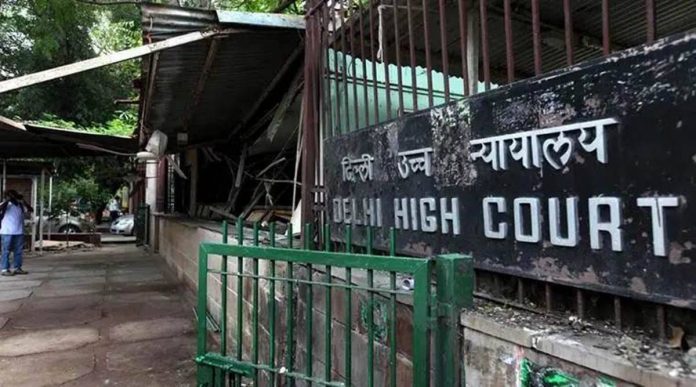















 Allow notifications





