
Download Now
Home Blog Page 348

All you need to know about personal injury lawyers and their work

0

This article is written by Nidhi Bajaj, of Guru Nanak Dev University, Punjab. In this article, the author has talked about the various types of work that a personal injury lawyer does and the various benefits of hiring a personal injury lawyer. 

This article has been published by Rachit Garg.

Introduction 

Personal Injury law is a branch of tort law that deals with the subject of providing compensation to individuals who have suffered any physical, psychological or emotional injury due to the negligence of some individual. The negligent individual can be held legally responsible for paying damages to the injured victim. Such damages are awarded based on the degree of injury caused and certain other considerations. Monetary compensation is provided to enable the injured to meet the medical expenses, to make up for any lost income and to compensate for the physical suffering, emotional distress or mental anguish caused to the person. In this article, the author will talk about the various types of work that a personal injury lawyer does and the benefits of hiring a personal injury lawyer.

Who are personal injury lawyers 

A personal injury lawyer is a civil lawyer who provides legal representation to an individual injured in an accident or due to the negligence or lack of care or even deliberate intent of any person. They help their clients to recover financial compensation for the injuries or mental anguish suffered. The practice of personal injury lawyers typically involves cases of motor vehicle accidents, slip and fall accidents, defective products, workplace injuries and medical malpractice.

Cases handled by personal injury lawyers

The various types of cases that the personal injury lawyers deal with are as follows:

  • Animal bite injuries
  • Transportation accidents
  • Automotive accidents
  • Boating accidents
  • Aviation accidents
  • Burn injuries
  • Pedestrian accidents
  • Construction accidents
  • Defective products
  • Insurance claims
  • Motor vehicle accidents
  • Medical malpractice
  • Nursing home abuse
  • Slip and fall accidents
  • Spinal cord injuries
  • Child daycare negligence
  • Wrongful death, etc.

Types of compensation

The compensation that you may get in a personal injury case will depend on the unique facts and circumstances of each case. The various types of compensation or damages that you might get in a personal injury case are as follows—

  • Compensation for loss of profit 
  • Remuneration for care and help
  • Loss of income
  • Loss of earning capacity
  • Emotional distress
  • Loss of consortium
  • Mental anguish
  • Future loss of profit
  • Compensation for loss of pleasant/agreeable business
  • Clinical expenses
  • Loss of possibilities of a marriage  

What do personal injury lawyers do

Personal injury lawyers perform all the tasks that a lawyer usually performs such as drafting pleadings, preparing case briefs and research etc. Personal injury lawyers specialise in tort law and they advocate for their clients both before and during the trial. The work of a personal injury lawyer includes the following—

Investigating claims

Personal Injury lawyers typically get paid on a contingency basis i.e. the fees will be payable only when a favourable settlement is made. This means that the personal injury lawyer will get paid only if the compensation is recovered from the party at fault. As the personal injury lawyer has to finance the case himself until a favourable verdict or settlement is reached, they take great care in evaluating and screening the clients. They carefully investigate the claims and take up only those cases that they believe have potential for a win.

Investigation and evidence gathering

The work of a personal injury lawyer begins with gathering all the facts and details of the case. This includes facts relating to the nature and extent of injury caused. The gathering of facts and evidence is important as it helps to prove the liability of the wrongdoer. This also includes— 

  • Taking pictures of the property damaged
  • Gathering accident report
  • Gathering of medical reports, bills, medical records,
  • Gathering employment documents and employment reports
  • Collecting property damage reports
  • Tracking witnesses
  • Procurement of police reports, surveillance footage and witness statements

Negotiating with insurance companies

Negotiation skills are very important for a personal injury lawyer. Personal injury lawyers negotiate with the insurance companies on a regular basis. From reviewing the policy details to determining the maximum compensation and sending demand letters for damages, a personal injury lawyer handles all the communications with the insurance company. They ensure that the injury victim does not do anything that might jeopardise his claim. 

Preparation of pleadings

In case the insurance company refuses to pay the damages, the personal injury lawyer prepares a complaint against the defendant. The complaint contains all the details of the incident and the legal arguments as to how and why the defendant is responsible for the accident. The amount of compensation sought is also written in the complaint. Usually, the defendant is given 30 days to file his reply to the complaint. 

Conducting discovery

A personal injury lawyer may initiate the discovery process which includes—

  • sending interrogatories to the defendant asking for certain information,
  • deposing the parties,
  • deposing witnesses and experts.

Representing the client at trial

It is trite that most personal injury claims get settled before reaching a trial. However, if the case proceeds to trial, a personal injury lawyer represents his client in the court and argues for him just like any other lawyer would.

Assessing damages

An accident victim only thinks about the immediate impact of an accident—the medical expenses, the repairs or the insurance claim. But a personal injury lawyer is a specialist in the field whose work includes assessing both short term and long term impacts of accidents on a routine basis in a number of different cases. He assists the client in making a real, true and accurate assessment of the damages, both immediate and long term including the loss of earning capacity or assessing the lifetime impact, in case some disability has occurred. 

Assisting in a variety of legal processes

Sometimes a personal injury case is referred to an alternative dispute resolution mechanism, such as arbitration. In such a case, the personal injury lawyer presents the case of the injury victim before the arbitrator. He may also help in negotiating an out of court settlement with the defendant or the insurance company.

When to hire a personal injury lawyer

There is no need to hire a personal injury lawyer in every case. For instance, in cases where the accident is not very serious, and the damages or the injuries sustained are minimal, and a reasonable settlement offer is on the table, there is no need to hire a lawyer. But sometimes the case might not be as simple as it seems or may become complicated at a subsequent stage.

You should hire a personal injury lawyer when—

  1. You know that the other party was responsible for the accident, but the insurance company denies the payment of the claim.
  2. The case is complicated as multiple parties or multiple vehicles were involved in the accident. In such a case, the personal injury lawyer will help in identifying the parties who are to be named as defendants and who will share the liability.
  3. A settlement is offered to you and you feel that the amount is not reasonable. In such cases, it is beneficial to consult an experienced personal injury lawyer before accepting the settlement.

Things you need to tell your personal injury lawyer

Besides the instance of injury and how it was caused, there are certain essential details that you have to tell your personal injury in order to enable him to effectively deal with your case. Such things are—

  1. Criminal history or bankruptcy: If there is an instance that might affect your case, you need to disclose it to your lawyer. This could include any felony or misdemeanour or the fact of bankruptcy. 
  2. Prior injuries: If you have had any prior injuries or issues with the areas or body parts affected by the accident, you must disclose it to your lawyer. This is because the insurance company representatives will usually turn up with the full medical records of the injured victim of the past several years and it might affect your case if your lawyer doesn’t know the truth. 
  3. Prior claims: If you have made any prior insurance claims and/or have received any insurance claim particularly in respect of an injury, you must disclose the same to your lawyer on the very first day. If you are truthful and straightforward with your lawyer, your chance at getting a better settlement increases.

Reasons to hire a personal injury lawyer

Personal injury lawyers are professional and objective

Accidents and other personal injuries can cause a lot of pain—physical suffering and emotional trauma as well. In such circumstances, the victim and his family might not be in a position to think clearly. Their sole focus is on taking care of the medical needs of the victim. Pursuing an injury claim is a secondary thought. A personal injury lawyer, who is a specialist in this field will take care of all the legal issues involved in the matter and with his skill and experience, he will get you a settlement that you deserve and/or need.

Personal injury lawyers are good negotiators

Personal Injury lawyers negotiate with insurance companies and the at-fault parties on a routine basis. An injury lawyer, with his persuasion and negotiation skills, will get you an offer much higher than the one you would be willing to settle for. 

Personal Injury lawyers help you make better decisions

Sometimes a party may find himself at crossroads as to what action is to be taken or what remedy is to be pursued. In such a situation, a personal injury lawyer will guide you according to the peculiar circumstances of a case and what course of action is best suited for the same. Also, a personal injury lawyer will tell you about your rights and will also help you figure out the amount of compensation you are rightfully entitled to.

Personal Injury lawyers get you faster compensation

You might have to wait for full recovery before you can go and file a personal injury claim. However, if you hire a good personal injury lawyer, he can take care of all that on your behalf. This way you will be able to get faster compensation.

How do personal injury lawyers get paid

As mentioned earlier, personal injury lawyers typically charge a contingency fee. It is an arrangement in which the payment of fees is dependent on the outcome. The lawyer will get paid only if the case concludes in your favour. When you hire a personal injury lawyer, you have to sign an agreement that stipulates that you agree to pay a percentage of the settlement money to the lawyer as his fees. In case you win the case, the lawyer will take a certain percentage of the final settlement as his fees. But if no money is recovered, then the client does not have to pay the lawyer’s fee.

Conclusion

If you have been injured in an accident, having a personal injury lawyer on your side is an intelligent choice. A personal injury lawyer will explain your rights to your and will guide you through the various options available to you. The most important reason for hiring a personal injury lawyer is perhaps the complexity of insurance law. We all have insurance but not all of us understand it. Also, in these cases, insurance companies are always in a hurry to settle a claim for less than it is worth. At this juncture, a personal injury lawyer can help his client to assess the situation in a better way and not give in to anything less than what he deserves. Lastly, when you suffer an injury, it is essential for your speedy recovery that you focus on healing rather than worrying. Hence, you should let your personal injury lawyer take care of the rest for you.

References


Students of Lawsikho courses regularly produce writing assignments and work on practical exercises as a part of their coursework and develop themselves in real-life practical skills.

LawSikho has created a telegram group for exchanging legal knowledge, referrals, and various opportunities. You can click on this link and join: https://t.me/joinchat/L9vr7LmS9pJjYTQ9

Follow us on Instagram and subscribe to our YouTube channel for more amazing legal content.

Students of Lawsikho courses regularly produce writing assignments and work on practical exercises as a part of their coursework and develop themselves in real-life practical skills.

LawSikho has created a telegram group for exchanging legal knowledge, referrals, and various opportunities. You can click on this link and join: https://t.me/joinchat/L9vr7LmS9pJjYTQ9

Follow us on Instagram and subscribe to our YouTube channel for more amazing legal content.

Download Now

Intoxication as a general exception in the Indian Penal Code, 1860

0
Image Source: https://bit.ly/3dZbqPk

This article is written by Kiran Kumar, Student Faculty of Law, Banaras Hindu University on intoxication as a general defense under the Indian Penal code, 1860, how it deals with voluntary intoxication and involuntary intoxication, principles governing it, and recent judgments of the  Supreme Court.

This article has been published by Diganth Raj Sehgal.

Introduction 

It is the general principle of criminal law to punish a criminal for committing an offense, initially, it is required to prove that he has done a wrongful act (actus reus) with a wrongful intention (mens rea). This principle is based on the Latin maxim “actus reus non facit reum nisi mens sit rea” which means that merely a guilty act is not sufficient, it should be coupled with a guilty mind to punish a person. It means that to punish a person it is required to prove that he/she has committed a wrongful act with a wrongful intention. In the case of intoxication, the human brain loses its ability to think as a reasonable man or to foresee the consequences of doing a wrongful act. What will happen if someone under the influence of alcohol pushes a person into a well and he dies, can such a person take the defense of intoxication. Intoxication is dealt in under Chapter IV of the Indian Penal Code, 1860. After reading this article you will get answers to these questions.

Intoxication 

When we refer to the dictionary meaning of intoxication, it means “a condition of by which physical or mental control of a person diminished by the effects of alcohol or drugs

Intoxication is a state of mind where the brain and body of a human are temporarily suspended from working as a result of the consumption of alcohol or narcotic substances. In the state of intoxication, a person loses the ability to understand whether he is doing the right act or wrong act and is unable to understand the consequences of his acts.

Intoxication is against the theory of responsibility. A person committing an act under the effect of intoxication, may not do such a wrongful act if he refrains from taking alcohol at the initial point. It will be harsh to punish a person who committed a crime under the influence of alcohol or intoxication. But at the same time, it may not be in the interest of society to treat all the acts committed under the influence of alcohol as general defense and immune the person from liability because sometimes persons consume alcohol with proper knowledge and intend to commit a crime and in such a situation, it shall not be treated as a defense.

Principles governing intoxication as a general defence under the Indian Penal Code, 1860

There are two provisions in the Indian Penal Code, 1860, Section 85 and Section 86 both provisions deal with intoxication as an extenuating factor. When we read both the provisions collectively we get that the former provision deals with involuntary intoxication or intoxication against one’s will, while the latter deals with the liability of a voluntarily intoxicated person committing the offense under the effect of self-administered intoxication.

Section 85 starts with the same phrase as Section 84 starts, “Nothing is an offense” which means that immunity from liability given to a person intoxicated voluntarily is similar to a person of unsound mind. However, Section 86 provides limited protection to a person voluntarily self-intoxicated.

Section 85 protects a person from criminal liability, if, at the time of committing of offense, he was because of intoxication, incapable of knowing the nature of the act, or he is doing something wrong or against the law under the influence of intoxication, provided that such intoxication was administered to him involuntarily  “without his knowledge” or “against his will”.

The term “without his knowledge” means that the person is ignorant of the fact that he is consuming an intoxicant or something mixed with an intoxicant. And the term “against his will” means that he consumed alcohol involuntarily under someone’s force. Normal persuasion to consume alcohol will not be treated as compulsion or force unless there will be an element of compulsion there. For instance, let’s presume that A and B both are good friends, one day A goes to B’s house to meet him, where B offered coffee to A, A is ignorant of the fact that B has mixed alcohol in the tea due to which he will lose the ability to know the consequences of his act and kills C.

In Mabarik Hussain vs State of Rajasthan (2006) SC, In this case, the accused under the influence of liquor killed his better half and five children. The accused took the defense that he was under the effect of intoxication at the time of committing the offense and unable to understand the consequence of his act.  The Apex Court held that the mere fact of intoxication is not enough to invoke Section 85 of the Indian Penal Code 1860, the accused has to prove that the intoxicant was given to him against his will or knowledge.

Section 86 deals with a situation where a person is voluntarily intoxicated, this section says that even if a self-induced intoxicant person, does any offense under the influence of intoxication, he cannot take a defense that because of intoxication he was unable to know the nature of the act or what he is doing is against the law. In the case of self-administered intoxication, it is irrelevant whether the accused knew committing the offense and its consequences or not because in case of voluntary intoxication it is though to prove whether the accused knows or not, so it is presumed by the court that the accused knows the nature of his act and its consequences.

If the self-induced intoxication will be allowed to take the shield of law to escape from criminal liability then it would be giving a sort of license to the criminals to escape from liability. That’s why drunkenness itself is not a defense against criminal liability.

Essential ingredients of Section 85 and Section 86 of the Indian Penal Code, 1860

To claim exemption on the ground of Involuntary Intoxication under Section 85, the person has to prove the followings:

  1. That he was incapable of knowing the nature of the act at the time of committing such an act;
  2. That  he was unaware of the fact that such an act was illegal or against the law;
  3. That he was ignorant of the thing which intoxicated him or if he had the knowledge, it was given against his will.

Section 86 says that if an intoxicated person does the following things then it should be an offense:

  1. A person does an act in a state of intoxication;
  2. That act must be an offense;
  3. It will be presumed that the accused knows;
  4. Unless it is proved that he was intoxicated involuntarily.

Intoxication

Voluntarily Involuntarily

(Section 86) (Section 85)

*Knowledge presumed * Without knowledge

* Intention gathered from circumstances * Against his will

In the recent case Suraj Jagannath Jadav vs the State of Maharastra, (2020) 2 SCC 693, the accused poured kerosene on his wife, and when she was trying to escape from the house to save herself, the accused threw a lighted match-stick on her and set her on fire. Accused took the defense that he was under the influence of liquor and had no intention to cause the death of her wife. The court held that the evidence of drunkenness which causes the accused to incapacity to form an intention essential for the crime should be taken into account with other facts proved, to determine whether he has the intention or not. In other words, we can say that the intention of the intoxicated person should be gathered from the analysis of the whole circumstances and actions of the accused.

In the case of Basdev vs State of Pepsu, AIR 1956 SC 488, the Supreme Court laid down the following guidelines:

  • The absence of the nature of the act and its consequence is a defense against the crime charged by the accused.
  • The fact of drunkenness of the accused should be taken into consideration with other circumstances or proven facts to determine whether the accused has the malafide intention or not.
  • The fact that the accused has become incapable of forming an intention necessary to constitute a crime and may commit violent acts as a result of such drunkenness, does not negate the reality that a man naturally intends the consequences of his actions.

Foreseeability test

This test checks the liability of a person as to whether he is liable or not for the offense committed. It is true that when a person takes alcohol he starts losing control over his actions. There is a certain limit after which a man fully loses control over his mind or actions. If a person stops before reaching that point then we can say that the person has not fully lost his control. But the question is how do we know that a person crossed that point or not? And does this test apply to both types of intoxications – voluntarily and involuntarily?

This test applies only to voluntary intoxication, whereas in involuntary intoxication, intention and knowledge of the person is not a relevant factor to decide the guilt of the accused.

The foreseeability test checks all the actions of an intoxicated person collectively to see whether he crossed the limit after which a man loses self-control and cannot foresee the consequences of his acts. For example, if an intoxicated person just after the commission of murder tries to hide in a bush, it shows that even if he was under the influence of liquor but he has not lost his consciousness to judge whether he is doing a wrongful act or not.

Burden of proof

It is the general rule of Criminal law that the person who desires the court to accept facts to be true, the burden lies on that person to prove its truthfulness. The term, onus probandi, if a fact has to be proved, the person whose interest it is to be proved should adduce some evidence.

Burden of proof on the accused to prove an exception

If the accused wants to avail protection under Section 85 of the Indian Penal Code 1860, he is required to prove that the intoxication was not voluntary or against his will, and because of intoxication he lost the capacity to distinguish between what is wrong and what is right or understand the nature of his act. Both the above said questions have to be proved by the accused to claim protection under Section 85 of the Indian Penal Code, 1860.

Similarly, the burden of proof on the voluntarily intoxicated person is to prove that the intoxication made him incapable to form the specific intent to constitute the crime. To prove his plea, he must show that he was in such a degree of intoxication that he was incapable of forming the necessary intent to commit a crime, held in Dasa Kandha vs State of Orissa, 1976 Cr LJ 2010 (Ori).

Recent judgments

In the case of Paul vs State of Kerala, (2020) 3 SCC 115,  after a quarrel between the deceased and her mother in law she left home to search for her husband and found that he was consuming liquor with his friends, the accused assaulted his wife in front of his friends and later on the same night at 11:00 PM the accused throttled her to death. The accused claimed that he was drunk heavily and had fallen asleep as soon as he reached home, the next morning when woke up he found that his wife was hanging. The Apex Court reiterated that, so far as the knowledge is a concern in the case of voluntary intoxication, it is to be presumed in the same manner as there was no drunkenness. The intention of the accused must be gathered from the attending general circumstances of the case which has already been proved before the court.

In  Suraj Jagannath vs State of Maharastra, (2020) 2 SCC 693, In this case, the accused said that at the time of the incident he was drunk and under the influence of liquor and had no intention to cause her wife’s death. The Supreme Court held that the evidence of his drunkenness should be read together with the other facts before the court to determine his intention.

Conclusion

As we see intoxication in a larger perspective, in some societies taking drugs, alcohol or other intoxicants is a part of their rituals, cultures, and social rites, and in modern societies, it is taken as an offense. The mens rea or guilty mind plays an important role while deciding whether a person has committed an offense or not and in the case of involuntary intoxication it was presumed by the court that the accused was unaware about the intoxicant or if aware then taken against his will and he didn’t have the intention to do such offense.

But in the case of voluntary intoxication, the court presumes that the accused knew the alcohol he was taking and the intention is gathered from the circumstances and the evidence produced before the court.

References

  1. https://www.lawaudience.com/intoxication-as-a-defence-under-indian-penal-code/#:~:text=c)%20FORESEEABILITY%20TEST%3A,he%20wants%20to%20lose%20control.
  2. https://indiankanoon.org/doc/15924247
  3. https://www.lawaudience.com/intoxication-as-a-defence-under-indian-penal-code/
  4. http://www.legalservicesindia.com/article/205/Intoxication-as-a-Defence.html
  5. https://blog.ipleaders.in/intoxication-defence-indian-penal-code-1860/
  6. https://indiankanoon.org/doc/504992/
  7. PSA Pillai’s Criminal Law
  8. Ratan law & Dhirajlal, The Law of Indian Evidence

LawSikho has created a telegram group for exchanging legal knowledge, referrals, and various opportunities. You can click on this link and join:

https://t.me/joinchat/L9vr7LmS9pJjYTQ9

Follow us on Instagram and subscribe to our YouTube channel for more amazing legal content.

Download Now

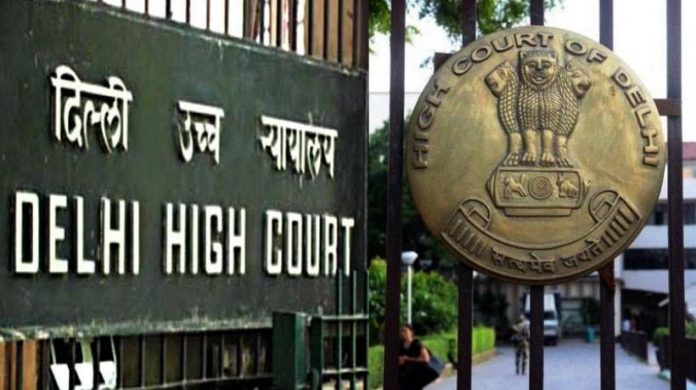
An analysis of Delhi High Court’s efforts in tackling Dengue

0
Image source: https://bit.ly/363U9mN

This article is written by Ansruta Debnath, a student of National Law University Odisha. This article is a discussion on the efforts of the Delhi High Court with regards to minimising the disease of dengue in Delhi. 

This article has been published by Diganth Raj Sehgal.

Introduction 

Dengue and other vector-borne diseases have become an increasingly concerning issue for Delhi. The Delhi High Court, has accordingly, taken certain steps on this issue. This article explores those initiatives, which include public interest litigations as well as addressing the issue through other petitions. 

Taking suo moto cognizance

A division bench, comprising Justice Vipin Sanghi and Justice Jasmeet Singh had taken suo moto cognizance of the worsening mosquito infestation in the National Capital Region of Delhi in May of 2021. In its order, it observed that in light of the pandemic the steps that are taken for controlling the rise of vector-borne diseases like Dengue, Chikungunya and Malaria have taken a back seat. Accordingly, notices were issued to the three Delhi Municipal Corporations i.e. the North Delhi Municipal Corporation, South Delhi Municipal Corporation, East Delhi Municipal Corporation and the New Delhi Municipal Council, Delhi Cantonment Board, as well as the Government of National Territory of Delhi. The court asked all these authorities to present before the court all steps that have already been taken and steps that will be taken in the future to control the infestation. 

The matter was then taken up by another division bench consisting of Delhi High Court Chief Justice DN Patel in July of 2021, wherein, the respondents were asked to file a status report as soon as possible. The corporations had also stated that they had carried out inspections and raised public awareness through campaigns. They also stated that spraying of pesticides had been done. 

According to a South Delhi Municipal Corporation status report, 80 instances of chikungunya and 30 cases of dengue have already been documented in Delhi in just four months since January 1st this year, despite the fact that the season for vector-borne illnesses in Delhi runs from July to December. In 2016, Delhi saw its first chikungunya epidemic, which impacted 9,661 individuals. Dengue fever claimed the lives of 60 persons in 2015, with 16,000 cases documented.

When can courts take suo moto cognizance

Courts can take suo moto cognizance of various issues through Public Interest Litigations or PILs. This power lies only with the Supreme Court and High Courts by way of Article 32 and Article 226 of the Indian Constitution and is termed as the extraordinary jurisdiction of the Courts. Suo Moto acts by Indian courts illustrate judicial activism and have served to uphold the rights of Indian citizens and fulfil its role in a welfare state. ‘Suo moto’ literally means ‘on its own’. Essentially, if the courts feel there is a pressing matter that needs their attention, they can file a PIL and take cognizance of the issue. The matters generally involve the public and are a social concern. However, suo moto cognizance can also be taken in cases of contempt of court or while reopening old cases. The Supreme Court formalised the procedure for suo moto petitions by the adoption of Order 38, Rule 12(1)(a) in the Supreme Court Rules, 2013.

In 1979, Judge MP Thakkar used the suo moto procedure for the first time in a Gujarat High Court case. The Court was alerted to the issue by a news article about a wife who was not receiving a pension from her husband’s Pension Provident Fund (PPF) after his death. Accordingly, the State was ordered by the Court to immediately provide her with relief by way of pension.

Criticising the state government and corporations

The Delhi High Court made it absolutely clear that it was extremely disappointed by the lack of action by various municipal corporations and the Government of Delhi. The Court made its comments while hearing a petition of the South Delhi Municipal Corporation against the Government of Delhi regarding retrospective recovery of grants in aid. Moreover, the Courts remarked on the sorry state of affairs of Delhi and that the Corporations had failed to discharge their duties. Consequently, there has been a surge of Dengue cases. The Court further stated that only populist policies were being taken keeping in mind the vote bank politics. As a result, there was a complete “paralysis” of administration.

The Court felt that the dire state of affairs needed close monitoring and accordingly appointed Advocate Rajat Aneja as amicus curiae in the matter. An amicus curiae literally means “a friend of the court”. Essentially, an amicus curiae is a person who assists the court in various aspects of the facts of a case i.e, the issue of law. In this regard, the Court, in the order, also agreed to take the assistance of Dr. Kalpana Barua who belonged to the National Vector Borne Disease Control Programme (NVBDCP). 

The SDMC’s counsel informed the Court that the reason the Dengue numbers were so high this year was due to the extraordinary rains in October. He said that certain Resident Welfare Associations (RWAs) were refusing to cooperate with officials when they came to do fogging and monitor mosquito breeding. As a result, he asked that orders be issued prohibiting RWAs from halting authorities and raising the fine from ₹500 to ₹10,000, with the power to collect the payment on the spot. The Bench, on the other hand, stated that it will not issue such orders because they were not the legislature. 

The Supreme Court, in a separate order, had asked the Delhi authorities to hold meetings regarding this issue. However, the Supreme Court said they were quite disappointed with the outcome of the meeting. 

Delhi High Court addresses a separate plea

In a separate plea of Ananya Kumar v. Government of NCT Delhi & Anr. (2021), the Delhi High Court issued a notice to the North Delhi Municipal Corporation. The petitioner, a resident of Model Town, was suffering from Dengue. She alleged that to avoid dengue, the North Delhi Municipal Corporation used to fog the region, conduct door-to-door information programmes, and check mosquito larvae. The respondent has not done the same this year, according to the plea. According to the petitioner, several instances of Dengue fever have been reported in her neighbourhood this year as a result of the authorities’ delay. Thus, the petitioner prayed for immediate steps by the Corporation as well as the imposition of penalties on them for the violations.

Other relevant cases

The issue of dengue and other vector-borne diseases had been taken up by the Delhi High Court back in 2017 in the case of Gauri Grover and Ors. v. the Government of NCT of Delhi and Ors. (2017). In the present case, this Court in the exercise of its extraordinary jurisdiction under Article 226, stated that the deplorable conditions in Delhi raised valid conditions of the diseases and criticised the Corporations for not taking adequate steps for garbage disposal in spite of the Court’s directions. The Court quoted the Supreme Court’s observations in Subhash Kumar v. the State of Bihar (1991) wherein the Supreme Court had observed that every citizen had a right to a clean environment and that the said right flowed from right to life in Article 21

Furthermore, the Delhi Court issued notices to the Commissioners of East Delhi Municipal Corporation, South Delhi Municipal Corporation, and North Delhi Municipal Corporation to show cause as to why Contempt of Court proceedings should be not initiated against them.

Another Public Interest Litigation was filed in 2020 regarding this matter. In the case named Authorised Signatory Prem Chand Sharma vs. Government of NCT of Delhi and Ors. (2020), the Delhi High Court again ordered the South Delhi Municipal Corporation to take appropriate measures to rectify the situation of an increasing number of plots that were being converted into dumping grounds for garbage and sewage and thus ideal breeding grounds for mosquitoes. 

Conclusion 

The steps taken by the Delhi High Court were extremely needed. But, the municipal corporations have hardly taken any initiative in this regard, and have till now just supplied excuses, despite repeated reminders by the court. Because of the grave nature of the issue, immediate steps must be taken as soon as possible to control the escalating problem. The corporations must also be careful as if the delays continue without any legitimate reason, they will be at the risk of being slapped with contempt proceedings by the Delhi High Court.

References 

  1. Delhi HC Takes Suo Moto Cognizance Of Mosquito Infestation, Rise Of Vector Borne Diseases
  2. Delhi HC takes suo-motu cognisance of increasing mosquito infestation in the city
  3. “Complete Paralysis Of Administration, Policies Made Only In Populist Way”: Delhi High Court On Authorities’ Failure To Control Dengue Menace
  4. Delhi high court raps municipal corporations over surge in Dengue cases
  5. Dengue Outbreak: Delhi High Court Appoints Advocate Rajat Aneja As Amicus Curiae To Closely Monitor Issue Of Mosquito Breeding
  6. [Dengue] Close monitoring required by the court to check menace on a permanent basis: Delhi High Court
  7. [Dengue outbreak] Policies are populist, governments scared of losing votes: Delhi High Court
  8. Suo Moto Cognizance by the Indian Judiciary

LawSikho has created a telegram group for exchanging legal knowledge, referrals, and various opportunities. You can click on this link and join:

https://t.me/joinchat/L9vr7LmS9pJjYTQ9

Follow us on Instagram and subscribe to our YouTube channel for more amazing legal content.
Download Now

Tracing actual fraud in a case of fraudulent conveyance

0

This article is written by Aashish Mittal, pursuing Diploma in US Intellectual Property Law and Paralegal Studies from Lawsikho.

This article has been published by Abanti Bose.

Introduction

Fraudulent Conveyance has its origin from the Bankruptcy laws where debtors usually sold, concealed, or tried to set aside the creditors’ claim over their assets or other transferable properties when they are on the brink of insolvency. Uniform Fraudulent Transfers Act (hereinafter referred to as the Act) is one such legislation which governs fraudulent transfers in USA and state laws are also modelled in line with this legislation to give uniform effect.

Debtors aggressively sell the company’s assets at little or at very minimal cost right before the bankruptcy proceedings, or before any due date of the loan to avoid their assets being transferred or sold for the purpose of creditors’ claim.

In this article, firstly a brief introduction as to fraudulent conveyance is given, following with their types, further the elements which constitute actual fraud which is the key highlight of the article along with elements constituting such fraudulent transfers. Further a brief highlight over the actual fraud and the 11 badges of fraud that were added in the Code.  In the later part the defences are available to the transferee. In the subsequent chapters, the principle of tracing is discussed with the lines of fraudulent conveyance claims in which the courts’ act is to trace the transferred property or the amount accumulated with it, in order to prove the debtor’s intent behind such transfer in cases of actual fraud and lastly concluding remarks.

What is fraudulent conveyance?

Fraudulent Conveyance as explained above is creating hindrance by any way possible by the debtor against the creditors claim over the assets and properties of the debtors which were used as collateral to securitize the loans. Section 548 of the Federal Bankruptcy Code deals with the Fraudulent Transfers and Obligations, a provision which is only for the debtors perspective which indicates that where the debtor had engaged in a transaction to hinder, delay, prejudice the bankruptcy proceedings the Trustee so appointed by the court can set aside such transfer as void. The lookback period of such a transaction is stated as 2 years before the filing of the bankruptcy petition.

The trustee so appointed by the bankruptcy court has some duties which are specified in Section 704 of the Code of Bankruptcy. Some of the duties state that the trustee shall:

  1. be accountable for all property received;
  2. ensure the debtor shall perform his intention related to the property securing consumer (creditor’s) debt; 
  3. investigate the financial affairs of the debtor;
  4. and any other duty as specified in the given section.

Now it has been stated that Sec 548 is only for debtors, it is because the bankruptcy petition according to this provision is filed by the debtor voluntarily or involuntarily to initiate the bankruptcy proceedings. 

The Fraudulent Conveyance Law is based on the two important factors which are essential in establishing the transfer as fraudulent first is the cost, and the second is the timing. Any of the two factors if proved by the other party can constitute the claim against the debtor for being a party to the Fraudulent transfer. 

Cost implies that the amount received out of the transferable property either can be equivalent to the market value of the asset or it can be lower which shows that there is a clear intent of the debtor to not allow the creditors to gain out of such property in case there occurs the events of insolvency.

Types of fraudulent transfers

There are two types of fraudulent transfers:

  1. Actual Fraud–  In this type of fraud, the debtor intentionally tries to hinder, delay, or defraud creditors. The intent is an essential element to prove the existence of actual fraud. This type of fraud is dealt with under Section 548(a)(1)(A) of the Code.
  2. Constructive Fraud– when the debtor receives reasonably equivalent value in return at a time he was in financial distress. The intent of the debtor in cases of constructive fraud is immaterial (the centre of attraction of this article is related only to actual fraud so Constructive fraud will not be elaborated further).

Elements constituting a fraudulent conveyance

As per our understanding and the discussion above there are two types of fraud. In both cases, a two-year “look-back period” and a two-year statutory limitation is prescribed which means that cause of action arises against the transactions/transfers which had taken place within two years preceding the date of initiation of proceedings against the debtor. So, in short, if the transfer to be considered fraudulent it must have occurred within two years immediately before a bankruptcy petition filing, either by the debtor voluntarily or involuntarily or by the creditor(s) against the debtor. 

As per 11 U.S.C. Section 548(a)(1), the plaintiff has to prove the following four elements:

  1. the transfer was made,
  2. of interest of the debtor in any transferable property or any obligation incurred by the debtor,
  3. made or incurred within two years of the filing of the bankruptcy petition, 
  4. the petition was filed by the debtor whether voluntary or involuntary.

The above shall not suffice the claim of actual fraud against the debtor until the claimant shows the actual intent of the debtor behind such transfer, which was to hinder, delay or defraud the creditor(s).

In certain circumstances, the debtor tends to find the two-year lookback period as a loophole (defence), so it is the duty of the other party to prove the transfer as fraudulent and also the duty of the trustee appointed by the court to conduct the bankruptcy proceedings in such a manner so that he can provide a remedy against such transactions which had taken longer than the two-year time frame, but the same is upon the complete discretion of the trustee.

What is known as actual fraud?

In actual fraud, the main factor which the court considers is whether the debtor made the transfer (which is in question) with the intent to hinder, delay, or defraud its existing creditor(s). It is not easy to identify the intent of the debtor so courts rely on circumstantial evidence in order to prove the intent. 

In 2014 the Uniform Voidable Transactions Act codified 11 badges of fraud which were used by the courts as a tool to determine the intent of the alleged defaulters. the list is as follows:

  1. The transfer or obligation was to an insider like family members, relatives, business partners, etc. 
  2. The debtor transferred the property but the possession still rests with the debtor
  3. The debtor has concealed or has not disclosed the transfer.
  4. The debtor had been sued or had threatened to be sued before the transfer.
  5. The debtor’s assets that were transferred constitute a full or substantial portion for a value that is very little.
  6. The debtor absconded after the transfer, i.e., the debtor made the transfer secretly and hurriedly.
  7. The debtor moved the assets out of the plaintiff’s sight or had hidden them
  8. Consideration received for transfer of property was not reasonably equivalent to the value of the property transferred, or the amount due.
  9. The debtor became insolvent or was insolvent shortly after the assets were transferred or when the time the amount became due.
  10. The transfer of property/assets was made shortly before or after the substantial amount of debt was incurred.
  11. The debtor transferred the secured assets to a lienor that further transferred the same assets to the insider of the debtor.

The above list is not an exhaustive list of badges of fraud. However, the courts from time to time promote and update the list to further bring the complex transactions under the umbrella of actual fraud.

As far as the above understanding of the badges of fraud, it is pertinent to note that the timing of the transfer is an important part that has to be determined as to when the transfer had occurred. Certain types of transferable property require the involvement of multiple steps in the perfection of the title to the transferor by the transferee. 

‘Perfection’ occurs when the buyer of the transferable property from the debtor cannot acquire any superior interest than the debtor himself, that is when the transfer has been perfected under the law. 

Defences available to the debtor against fraudulent conveyance claims

The defences which are available to the debtor against the fraudulent conveyance actions can be classified into two categories, firstly where the debtor challenges elements of fraudulent conveyance as mentioned above, secondly certain other defences are separate from these elements, which depends on the facts and circumstances of the case, the debtor can challenge the claim of the creditor.

It is pertinent to note that the first category of defences is self-explanatory which means that out of the four given elements of fraudulent conveyance if the debtor disproves the very element, then it will be counted as a defence for the debtor. For instance- the transfer did not occur within the look-back period i.e., within 2 years.

However, it is important to note that the fourth element generally in no way can be countered as the bankruptcy proceedings are initiated one way or another.

Now, the second category of defences are as follows:

  • The debtor was solvent at the time of the transfer,
  • The statute of limitations has tolled,
  • The transferee was a good-faith purchaser,
  • The transferee repaired, improved, or preserved the property,
  • The transferee was a “mere conduit,” meaning that they had no real control over the property. A financial intermediary is a typical example.
  • The transfer was a settlement payment. For example, in a divorce settlement, a debtor may not be able to get “reasonably equivalent value.”

Principles of tracing

Tracing is the process of identifying a new asset as a substitute for the old one. For instance, if the money to be traced is used to purchase a new car then the money can potentially be traced into the car.

The law of tracing is a practice that enables an owner to recover the property in the event the property is taken from them involuntarily. Here the word “involuntarily” means that the owner has not agreed to any transfer in that process to the defendant. 

Tracing of property operates at 3 different levels which are as follows:

  1. Owner seeking to recover the original property from the defendant,
  2. Owner seeking to recover the original property as well as the gains/profits made thereunder, and
  3. The owner not seeking to recover the original property, but the property had been mixed with other property, or the original property is not found. (example- person purchased in good faith).

In the third category of tracing above, the owner may seek to establish the proprietary right in some other property that the defendant has acquired using the original property.

Therefore, the claimant is seeking to assert a title on substitute property which might take the form of sale proceeds. Now the word “substitute property” here means the traceable proceeds which means the claimant’s rights are traced in such property as the original property is not identifiable.

Now let’s look back and recall what we have understood, tracing is a process whereby the claimant can establish a proprietary claim. A successful tracing claim means that the claimant can recover their property, and take priority over other claimants in the event of insolvency. The claimant may also be able to take advantage of any increase in the value of any property to which they made a successful claim.

In the general practice and bankruptcy law there exist two types of tracing principles that the court relies upon and carries forward to trace the funds/assets/property in question. They are mentioned below.

Common-law tracing

Common-law tracing is a process of tracing property through clean substitutes of property and it does include that property which is mixed or commingled property.

In cases when the creditor seeks to identify a specific item of property in the hands of the debtor in which the creditor has retained proprietary rights, means that the property is collateral or is held as a trust property for the event of insolvency or bankruptcy.

In cases where the specific item of property is involved the creditor seeks a remedy under common law tracing that requires the return of that specific item of property. Thus in common law, it is required by the claimant that the property claimed is not mixed with any other property.

In the case of Taylor v. Plumer (1815) 3 M. &S. 562, Lord Ellenborough stated that the product of or substitute for the original thing can be followed so long as it can be ascertained to represent the original property. It is also one of the first cases which commenced modern law tracing.

The common law of tracing was not developed for a long period and in FC Jones & Sons v. Jones [1997] CH. 159 in which a partnership firm loaned a sum of money to one of the partners’ wives, and she invested the and got profits out of it. The whole amount was deposited in a separate bank account. The partnership firm committed an act of bankruptcy under the Bankruptcy Act, 1914, and all property was deemed to have passed to the official receiver. The earlier judgements and the law prevailing it would have only recovered the loaned amount from the wife as it was the original property. 

The court of appeal held that all the proceeds (loan amount + profits) were to be paid to the official receiver as part of a common-law tracing claim. 

The nature of common law tracing right was explained by Millet LJ as being a proprietary right to claim whatever was held in the bank account whether the amount at the time was more or less than the original amount deposited, so common law claim is allowed on the basis that the money in this present case was perfectly identifiable in a bank account separate from her own.

Equitable tracing

Equitable tracing comes into play when the claimant is unable to establish his claim through common law. In this type, the claimant has to establish that the property was transferred in breach of fiduciary duty, which need not be fraudulent, i.e., the relationship between the claimant and the defendant is of fiduciary relationship bound by equity.

In cases of equitable tracing, the claimant can trace the property through mixed funds and take the increase in value of the property bought with such funds. So in short equitable tracing is preferred when the funds are mixed or where the specific item of property is not identifiable but is sold or commingled with other property.

Tracing equitable property is considerably more extensive which means that tracing property rights is wider than that is available in the common law.

To have an equitable claim in any property, it is necessary and important to show an equitable interest in the property which is to be traced.

Tracing through the equitable process is a two-stage process:

  1. To detect the property and to carry out the tracing, so that the claimant can identify the property which will further stand as a substitute for the original property in question in which the claimant had an equitable interest.
  2. To identify which equitable remedy should be imposed over that property.

There are three requirements that act as a prerequisite to establishing the equitable claim:

  1. The claim must be based on pre-existing fiduciary relationship;
  2. The property in question must be in a traceable form; and
  3. It must be equitable to trace.

Conclusion and analysis

Creditors in cases of actual fraud have to be often under the mercy of the court(s) where they are required to prove the intent of the debtor which varies from case to case basis, and there is no hard and fast rule to determine whether particular conduct of the debtor frustrates the intent part.

So, in most cases the above 11 badges of fraud are an evolving provision of law that vary from state to state and any conduct in one particular case may prove that the debtor had a fraudulent intent but the same conduct in other cases may not prove that the debtor had the intention to hinder, delay or defraud the creditor.

Fraudulent conveyance acts by the debtor are mostly done in order to evade the liability, which means loopholes in the code of federal bankruptcy is also in play which requires the legislators and the judiciary to provide a strict and improved provision that creates uniform application and better-defined essentials to prove the intentional part uniform for all.

References

  1. https://www.jdsupra.com/legalnews/fraudulent-conveyances-41765/
  2. https://www.wolterskluwer.com/en/expert-insights/actual-fraud-always-voids-asset-transfers
  3. https://content.next.westlaw.com/5-382-3498?__lrTS=20210130024240749&transitionType=Default&contextData=(sc.Default)&firstPage=true
  4. https://www.law.cornell.edu/uscode/text/11/548#
  5. https://www.caddenfuller.com/articles/bankruptcy-law-understanding-fraudulent-conveyances/
  6. https://gleissnerlaw.com/assets/docs/fraud-defenses.pdf
  7. https://jsheld.com/insights/articles/analysis-of-fraudulent-conveyance-actions

Students of Lawsikho courses regularly produce writing assignments and work on practical exercises as a part of their coursework and develop themselves in real-life practical skills.

LawSikho has created a telegram group for exchanging legal knowledge, referrals, and various opportunities. You can click on this link and join:

https://t.me/joinchat/L9vr7LmS9pJjYTQ9

Follow us on Instagram and subscribe to our YouTube channel for more amazing legal content.

Download Now

5 landmark cases for trademark infringement in India

0

This article has been written by Vansh Bajaj pursuing the Diploma in Intellectual Property, Media and Entertainment Laws from LawSikho. This article has been edited by Aatima Bhatia (Associate, Lawsikho), Ruchika Mohapatra (Associate, Lawsikho) and Indrasish Majumdar (Intern at Lawsikho). 

This article has been published by Oishika Banerji. 

Introduction 

A trademark can be a word, phrase, or logo that becomes the identity of the goods or services. Trademark law protects a business’s identity or brand by restricting other businesses from adopting a name or logo that is “confusingly similar” to an existing trademark. However, if we have to address trademark as per Trademark Act, 1999, we have to refer to Section 2(1)(e) which defines certification trademark as a mark capable of distinguishing the goods or services in connection with which it is used in the course of trade which is certified by the proprietor of the mark in respect of origin, material, mode of manufacture of goods or performance of services, quality, accuracy or other characteristics from goods or services not so certified and registrable as such under Chapter IX in respect of those goods or services in the name, as proprietor of the certification trademark, of that person.

The aspects which are guarded by the trademark law are as follows:

  • Symbol;
  • Phrase;
  • Logo;
  • Design;
  • Combination of those that represent a source of goods or services. 

Trademark infringement is the unauthorized and illegal use of a trademark or service mark when such use could lead to confusion between the original trademark and a mark that is used later. Through this article, the author seeks to deal with various laws on trademark vis-a-vis landmark cases on trademark infringement. 

Case laws

  1. Starbucks Corporation v. Sardar Buksh Coffee & Co
  • Background

In 2001, Starbucks, in India, registered their trademark with a word-mark pronounced as STARBUCKS along with a logo visualising “crowned maiden with long hair”. Whereas, the defendant, being a local vendor, initiated his business in 2015, with a name called “Sardarbuksh Coffee & Co”. Slowly and steadily the defendant earned fame and as a result, in May 2018, the defendants formed a private limited company with the name “Sardar Buksh Private Limited”. Pouring some light on the logo of the defendant, you will see a circular black band with the words ‘SARDARBUKSH COFFEE & CO.’ and a turban Commander along with wavy lines extending from the edges. 

Everything was going smooth for the defendant, however, recently, Starbucks filed a suit against them in the Hon’ble Delhi High Court. The ground for the case was “duplicitous word mark and logo” also legally known as “deceptively similar analogy”.

  • The court’s insight

The first and foremost aspect noted by the court was the product both the companies were dealing with as it is an unwritten yet significant rule that if companies to the suit is dealing with a different product, then having a name almost identical still won’t be counted as an infringement. However, in our scenario, the product was identical which took the proceeding to the next step. 

Moving further, the court observed that the name used by the defendant was, to a large extent, confusing. As a consequence, the court ordered the defendant to change the name of its outlet to “Sardarji-Bakhsh Coffee and Co.” from “Sardarbuksh Coffee & Co”. However, the court provided a privilege to the defendant that if any other third party, in future, uses the word mark “Bakhsh” the defendant can sue them for the same. Now, the defendant operates with the name uttered as “Sardarji-Bakhsh Coffee and Co”. 

  1. The Coca-Cola company vs Bisleri International Pvt Ltd
  • Background

Maaza was first introduced by the company named “Bisleri International Pvt Ltd”, a company famous for providing mineral water. However, lately, Coca-Cola approached Bisleri and acquired the rights attached to the product “Maaza”. Such rights include but are not restricted to the right to formulate and Intellectual property rights. Both the companies signed a deed for transferring the rights. some of the chief clauses of the deeds were:

  1. Acquisition of goodwill.
  2. Transfer of the know-how.
  3. Transfer of the IPR. 
  4. No-use and no-compete clause. 

However, in 2008, the Bisleri applied for trademark registration of “Maaza” in Turkey and on the same trademark, they started exporting their product named “Maaza” from India to Turkey. Lately, when Coca-Cola got to know about the same, they filed a case of trademark infringement in Delhi High Court where three issues were raised, which were as follows:

  1. The trademark has been infringed or not?
  2.  If infringed then whether to grant the permanent injunction or not? 
  3. The question over Delhi high court’s jurisdiction.
  • The court’s insight

The court after hearing the arguments of both the parties pronounced the following judgment.

When someone delivers goods from his country to some other country i.e., exports them, such transfer of the goods is called a sale within the country from where the goods are exported and if on such goods trademark infringement happens then it will be considered as the act of infringement. As a consequence, the court-ordered interim injunction against the defendant not to use the trademark named “Maaza” in India or abroad. Furthermore, answering the question, whether the said court has jurisdiction or not?  The court clarified that the defendant, being the manufacturer from India, the Delhi high court has the power to entertain the suit.

To support their judgement, the court provided the following points:

i. The deed between the parties is a legal and binding agreement which means the transfer of rights by the defendant to the plaintiff via this agreement is Valid

ii. In the said agreement, the right to IPR has also been transferred by the defendant to the plaintiff which gives the sole right to the plaintiff to exploit the said trademark.

iii. The agreement that has been signed by the defendant includes a clause which talks about confidentiality and the no-compete aspect which means the defendant, neither by themselves nor through any other party, can use formula, trademark and any other right associated with the product Maaza.

3. Pepsi Co., Inc. v. Hindustan Coca Cola Ltd

  • Background

Earlier, Hindustan Coca-Cola Limited (now Coca-Cola) publicly exhibited an advertisement in which they asked a child a question about his favourite drink and the child was provided with two choices, the first being Thumbs Up, a product by Coca-Cola and the other option was labelled as PAPPI with the business logo similar to the Pepsi brand logo. Moving further, in the ad, the protagonist asked the child to taste both the brands, but before tasting them, he asked the child to provide the name of his current favourite drink. 

Responding to the same, the child uttered the word “Pepsi” which was muted in the advertisement, though easily guessable through the child’s lip-sync. Following this incident, a blind tasting was conducted with a child where the child, after tasting both the brands, opted for the respondent’s drink and made a few defamatory comments against the drink labelled as PAPPI though pronounced and depicted as Pepsi. Such defamatory comments include a comment by the child saying Pepsi(muted) is only meant for children, translating the same in Hindi it would be “Bacho wali drink”, another remark by the child was shown where he said the following words “Wrong choice baby from now Yeh Dil Maange No More” mocking the tagline of the Pepsi. 

The tussle between the two parties did not end here as the appellant made another allegation on the respondent where he said that the respondent had copied an advertisement of the appellant by portraying similar thoughts of a roller coaster in another of his advertisements and on the same, the appellant sought an injunction. 

  • The court’s insight

The issues before the court were :

(i) whether the respondent, through his advertisement, has disparaged and defamed the appellant?

(ii) whether the tagline “Ye Dil Mange More” has been infringed or not?

(iii) whether the respondent by depicting the roller coaster in his advertisement has disturbed the copyright of the appellant or not?

Answering all the issues individually, the court pronounced :For the first issue, the court figured out three broad factors named as Intent of commercial, Manner of the commercial, Storyline of the commercial and the message sought to be conveyed by the commercial. After perusing all the aspects, the court observed that although, the respondent had used the word PAPPI, through the lip-sync of the child it was quite clear that the child was uttering Pepsi and also the brand logo used to denote PAPPI by the respondent was similar to the logo of Pepsi’s brand. Furthermore, the statements used by the child such as “Bacho wali drink” and “Wrong choice baby from now Yeh Dil Maange No More” are also wrong.So, relying upon the above actions and statements, it is quite evident that the advertisement by the respondent was disparaged and defamatory. 

Moving to the next, the court mentioned Section 29(1) of the Trademark Act 1999, they said that to know whether there is infringement or not, it is necessary to check how they are used. In this particular case, the court pronounced that there is no infringement as the tagline(s) are not being used in the course of trade as mentioned in Section 29. So, the respondent is not liable for the same. 

Coming to the last issue, the court addressed it straightforwardly by applying the test found in the case R.G. Anand versus deluxe Film. After conducting the test, the court pronounced the judgement in the favour of the appellant, they said that after looking at both advertisements they can find only slight changes in the advertisement and the crux of both the ads were identical. So, relying on the said test the court ordered an injunction against the respondent.

4. Brilliant Public School Society v. Brilliant Public School Sitamarhi 

  • Background

This case revolves around two schools named Brilliant Public School Society and Brilliant Public School- Sitamarhi, where Brilliant Public-School Society, being the plaintiff, sued the Brilliant Public School Sitamarhi (hereinafter referred to as the defendant).  In the plaint, the plaintiff argued that he has been using the name since 2000 and now, because of the unfortunate act of the defendant, the confusion among the people is arising and the act of the defendant is also hampering the relation of the plaintiff with his stakeholders. On the contrary, the defendant argued that he has been running the school since 1995 as earlier, he had a coaching institute with the name “Brilliant Coaching Institute” which afterward he converted into ‘Brilliant Public School’. Furthermore, the defendant to support his argument said that both the schools operate in different states so there is no ray of confusion among the society. Moreover, the logos of both the schools are also different. 

  • The court’s insight
    • Trial Court: After hearing both sides, the trial court announced their judgement in favour of the defendant by saying that “brilliant is a word which is commonly used in the field of education i.e., it is generic. Furthermore, the logos of both the schools differ by a good amount and also, both the schools are situated in different states. So, there is the scope of confusion and relying on the said remarks, the court rejected the plaintiff’s application for an injunction. 
    • Chhattisgarh High Court: Not agreeing with the trial court’s decision , the plaintiff challenged the order by filing an appeal in the high court.  The high court, after understanding the points and evidence provided by both the parties, reversed the order of the trial court and ordered an injunction against the defendant for not using the prominent trademark ‘Brilliant Public School’. To support their order, the court pronounced that the documents provided by the defendant failed to provide strong evidence supporting their claim that they are using the trademark “brilliant since 1995”. As each document provided by the defendant shows that they are exploiting the trademark “brilliant” since and after 2007 which means the plaintiff, using the trademark since 2000, acquire an edge over the defendant and as a result of the same, the injunction is passed against the defendant.

Furthermore, arguing on the statement made by the trial court commenting on the nature of the word “brilliant” as generic, the high court said: the trial court, by conducting the test laid down in Skyline case declared the word “brilliant” as generic, however, they failed to note that the word “skyline” during the time of its case was being used by a massive number of companies but in this case, there is hardly any evidence provided by any party which may denote that the word is used by a large number of institutions. The lack of such evidence clearly shows that the nature of the word “brilliant” is not generic and can create confusion among society.

  1. Izuk Chemical Works v. Babu Ram Dharam 
  • Background 

Izuk Chemical Works, the plaintiff in this case, is a company that deals with herbal beauty products such as herbal henna, henna powder etc. As per the documents submitted by the plaintiff, they have been working since 1917 and they are using the trademark named “MOONSTAR” and a logo depicting a star in the lap of the moon. They have been using this trademark and logo since 1917 and 1998 respectively. However, later, the plaintiff got to know that defendant is also working and selling henna products under a trademark named “SUPERSTAR” though having similar attributes i.e., the defendant has copied all the essential aspects of the trademark, moreover, the cartons in which the defendant was trading his product was also visualising identical attributes such as colour, woman, words fonts etc. in short, the cartons of defendant is enough to confuse an ordinary person with cartons of the plaintiff. Aggrieved from the said acts of the defendant, the plaintiff requested for a permanent injunction from the court.

  • The court’s insight 

Following the arguments presented by both the parties, the court said that the trademark opted by the defendant does contain the essential elements of the plaintiff’s trademark, furthermore, the logo used by the defendant also possessed similar attributes as the plaintiff’s mark. Looking at all these points, the court declared it as a prima facie case of infringement.  As a consequence, the court allowed the application of the plaintiff and ordered an injunction against the defendant i.e., restrained them from conducting their business with the trademark and logo they are using since they have started working. 

Conclusion

Formulating and providing privileges to the general public for their beneficiary is the second most important task performed by the government, however, enacting laws to govern such privileges provided to the general public still remains at the first position.

In the case  Izuk Chemical Works v. Babu Ram Dharam we can easily say that the defendant has infringed the rights of the plaintiff voluntarily, however, if we talk about the case Brilliant Public School Society v. Brilliant Public School Sitamarhi it is difficult to say whether the act of infringement is done voluntarily or accidentally. But, one thing that is common in both the cases is that in both the cases the plaintiff has suffered.

The author concludes that if one is ever thinking of exploiting any liberty provided under trademark law or any liberty covered by intellectual property rights as a whole, they should cross-check it twice to see whether rights over such particular thing have been already acquired by any other person and move ahead following due process of law.


Students of Lawsikho courses regularly produce writing assignments and work on practical exercises as a part of their coursework and develop themselves in real-life practical skills.

LawSikho has created a telegram group for exchanging legal knowledge, referrals, and various opportunities. You can click on this link and join: https://t.me/joinchat/L9vr7LmS9pJjYTQ9

Follow us on Instagram and subscribe to our YouTube channel for more amazing legal content.

Download Now

Analysis of cyber attacks on Indian nuclear power plants

0
Image source - https://bit.ly/3yLv76T

This article is written by Himanshu Mahamuni, of Government Law College, Mumbai. This article analyzes the concept of cyberattacks on nuclear plants and the Indian approach to secure its nuclear plants compared to global practices.

This article has been published by Rachit Garg.  

Introduction

The pride of being a nuclear-powered nation brings a high risk of devastating destruction through cyber attacks. The maintenance of nuclear plants with adequate security is even more crucial after its enrichment. Symantec, a software company, in a 2018 report stated that India is amongst the five nations in the world to face cyber threats and targeted attacks. The technical capacity to address these cyber-attacks has become limited against the more sophisticated attacks. An attack at a facility can have serious effects such as undermining the security and operations at the facility and compromising nuclear command and control on the system. Traditional practices majorly depend on physical protection, but in the era of digitalization, cyber security has become equally or even more important. India has an extensive and growing nuclear program. There are currently eight nuclear-capable operational reactors in India, with the Kudankulam nuclear plant being the biggest of all. It is the fifth-largest source of energy in the country. India has already faced a cyber attack on its biggest nuclear plant at Kudankulam. The cyber security challenge is a growing multi-faceted approach in India and it is yet to be mechanized. In view of changing security because of the dynamic manner of attacks, the sensitive nature of information needs to be protected by the technologically advanced infrastructure

In this article, we will discuss the impact of a cyber attack on a nuclear plant with the history of attacks in the past, including the Kudankulam breach. The article mainly focuses on the cyber security India has adopted and compares it with global methodologies compared with successfully developed approaches. The study discusses the way forward and the needed adaptations by India.

Impact of a cyberattack on a nuclear plant

The threats to a nuclear plant range from hardware and software vulnerabilities of operating systems (OS) to faulty defences and network vulnerabilities. The security must focus on actor-specific threats i.e. detecting the source of the threat, that can be insiders and non-state actors such as terrorist organizations, hackers, etc. Incorporation of cyber security infrastructure is essential to prevent and detect any threat before damage which can have the following impact: 

  • The impact depends on the level of access gain harnessed by the adversaries. Access to the command and control infrastructure may result in disarming the weapons or initiate an unauthorized launch of weapons.
  • Insider threat can be alarming at the same level as that of an external threat. Sharing critical information by exploiting software vulnerabilities and infecting with viruses can be much easier with an inside aid. The threats are required to be dealt with at both the technological and personnel level. 
  • Potential harm can result from the most common method of infiltration of malware or viruses into the systems of nuclear plants. Infiltration in the embedded codes of nuclear weapons can be used to neutralize the weapon for use in critical situations of conflicts.
  • A cyber attack may act as a disruption to undermine the communication between the operator and the nuclear operating system. Such disruptions may lead to prevention in the flow of information, obtaining confidential information, disruption in dual-use communication, prevention of usage of communication channels in crisis situations.
  • The attack on the plant can have an overhauling negative impact on the allies and trusted nations because of distrust in the safety issues. The attack on the nuclear plant may expose the vulnerabilities of not only the victim country but other components of allied countries installed in the plant. The economic, operational, and reputational costs of the attack can be unrecoverable.

History of cyber attacks on nuclear plants

There have been various cyber attacks on nuclear power plants inflicting serious damages.   In 2014, The Monju Nuclear Power Plant in Japan was introduced with malware that stole 20 company-sensitive emails, employee data sheets, and training logs. The same year, Korea Hydro and Nuclear Power offices in South Korea were hacked resulting in the release of technical information. In 2016, a German nuclear power plant, the Gundremmingen plant,  was infected with two viruses that were monitoring systems. 

The most fierce and damage inflicting attack was done on the Iran nuclear facilities in Bushehr nuclear power plant, Natanz in 2010. The attack was executed by the Stuxnet worm suspected to be designed and executed by the US and Israel. The Stuxnet is an internet worm that can infect the system through external devices such as USB sticks. It allows the user to get into the computer network connected by the Internet. The Stuxnet worm targets a particular model of Programmable Logic Controller (PLC) made by Siemens and does not infect the Windows computers. The plant computers were not connected to the internet or external networks because of their air-gapped, closed computer network. The separation of the Natanz network from other networks did not prevent the malware attack. The attack had long-term economic repercussions for Iran in its nuclear program. The attack directly affected the centrifuges of the plant by slowing and increasing its speed and wearing it out faster and suffering damage beyond repair. As a result, the attack slowed down the uranium-enrichment process for Iran and increased international tensions by raising security concerns. 

In 2019, India too faced a cyber attack at its Kudankulam Nuclear Power Plant (KNPP) which is India’s biggest nuclear power plant equipped with two Russian designed and supplied Water-Water Energy Reactors.

Kudankulam nuclear plant cyber attack

The administrative network of the nuclear plant was breached by the attack. The attack did not penetrate any critical damage. The attack was first notified by Pushkraj Singh, an independent Indian cyber security professional. The plant officials initially denied any claims of such an attack. The officials claimed that it can’t be hacked because of the totally isolated network of KKNPP and can’t be accessed by any outside network. This physical isolation of the network is known as Air Gap. But the parent company Nuclear Power Corporation of India Limited (NPCIL) acknowledged a security breach within 24 hours. The NPCIL statement revealed that KNPP was attacked by malware which was noticed by the Indian Computer Emergency Response Team (CERT-In). On investigation of the matter by the Department of Atomic Energy (DAE), it was revealed that a personal computer of a user connected to an internet-connected network for administrative purposes was infected by the malware. 

Expert analysis

According to a Russian cyber security company, Kaspersky, the malware attack was conducted by Pyongyang hackers, Lazarus. The identification of the Lazarus group has not been identified officially, as some of the previous activities of the group are associated with North Korea. 

Alphabet-owned virus scanning website, VirusTotal, reported that a large amount of KNPP data was stolen in the attack. The website recognized it to be part of the DTrack Malware family. This breach may result in more severe subsequent attacks on the critical system more effectively.

A South Korean-based cyber security analyst non-profit intelligence organization, Issue Makers Labs, has suggested that the attack originated from Lazarus by its intrusion toolkit DTrack. The intention of the attack is intended to be either disrupting atomic plants or stealing atomic technologies. The investigation also found that the malware code used the Korean language and the code was already known due to similar use in cyberattacks on South Korean banks and broadcasters in 2013 and on Seoul’s Ministry of National Defense in 2016.

Air Gap network

The networks in the air gap are not supposed to communicate to unsecured external networks. Air gaps do provide a high level of security but they don’t failsafe. Targeted attacks by a determined, well-resourced adversary can easily penetrate security such as this one. External removable media such as USB drives can easily compromise and infect an air-gapped system. The air-gap networks have been reported having failed in the Davis-Besse nuclear power plant in Ohio in 2003. The system was penetrable by various factors such as charging personal phones via the reactor control room, USB slots and installing remote access tools for contractors. The biggest nuclear plant breach, Stuxnet, was evident that the air gap network is of no use to protect the vulnerabilities. The air-gap protection as it failed in the case of Iran and then that of India only prevents attacks on critical computer systems from the non targeted cyber threats but not from determined, well-resourced attacks.  It is because of the practice mentioned in the report by Fissile Materials Working Group that the organization must transfer data into and out of the operational network for the security to work.

Implications of the attack

It is, without doubt, agreeable that India’s nuclear plants are based on outdated cyber defence such as air-gap. The initial denial by the plant officials suggests a sense of complacency and overconfidence in the existing system. The attack did not cause critical damage but if a huge amount of data is stolen from the attack there is a possibility of another subsequent attack with critical impact. The failure to detect and respond to the attack on the nation’s biggest nuclear power plant is an issue of concern of the capability of the system to protect it from cyber-attacks. 

India’s nuclear cyber security policy

The  National Cybersecurity Policy, 2013 released by the Ministry of Electronics and Information Technology (MeitY) articulated the first of its kind framework for cyber national policy. The policy lists out a set of guidelines and objectives. The policy was framed in the wake of the Snowden Leak, which leaked classified information of surveillance programs on numerous nations, including India, by the National Security Agency (NSA) of the US. This leak happened due to low cyber security safeguards. The government announced the setting up of a Defence Cyber Agency at the onset of the policy. The agency is expected to battle cyber warfare and cyber infiltration in India’s nuclear arena. The National Technical Research Organization (NTRO) is trusted to formulate cyber intelligence and cyber counterintelligence. Since its birth, the policy has never been updated for more efficiency. 

A national-level nodal agency, Computer Emergency Response Team (CERT-In) was created in 2004 for cyber security emergency response and crisis management. CERT-In is involved in creating a robust cyber security system in India through international collaborations. The National Critical Information Infrastructure Protection Centre (NCIIPC) is a national nodal agency bought under Section 70A of the Information Technology Act, 2000. The centre facilitates protection to the critical information infrastructure from unauthorized access, modification, use, disclosure, disruption, incapacitation or distraction. It is also responsible to raise information security awareness among all the stakeholders. The CERT-In and NCIIPC work in close coordination to identify cyber security threats in nuclear installations.

The collaboration needs to be administered and reformed by the policy. However, the policy lacks to correlate the cyber and nuclear security and does not provide a promising safeguard to the plant’s infrastructure. The possible challenges and standards procedures required are missing in the current policy to build strong cyber security in the nuclear areas. The 2019 attack is evident that the present setup is not enough to detect and avert the attack. The Data Security Council of India has submitted a framework towards India’s new National Cyber Security Strategy, 2020. This new policy understands and has acknowledged the nuclear plant and space agency as critical infrastructure. The policy works for the security of national, state as well as small and medium businesses. It invests in research, innovation, and technological development. It has also introduced concepts that were missing in previous policies such as cyber insurance, cyber diplomacy. It aims to build internet infrastructure in India by present development standards. It advocates for cybercrime investigation by the creation of a special law enforcement cadre and promotes various exchanges for comprehensive growth. The new strategy is hoped to protect the nuclear infrastructure and evolve as an all-around solution for cyber threats. 

Protection methodology

New emerging technologies, when used judiciously, significantly increase the surveillance and monitoring capabilities of nuclear plants. The adoption of modern technology improves productivity and safety. The use of tools for modeling and simulation (mod/sim) is an example of a nuclear security system. The mod/sim tools can be used to understand the method that can be adopted by the adversaries to breach the nuclear plant defences. These tools are useful to protect the physical infrastructure of the facility. A country can improve its cybersecurity of nuclear infrastructure by entering into bilateral agreements or organizations like IAEA or international groups.

Bilateral agreements

The nuclear-capable countries must have a cooperation agreement between them. Cooperation is essential to establish communication channels to exchange information about cyber incidents that may raise national security concerns. One such example of agreement is the US-Russia nuclear cooperation agreement, the New START treaty. It is an arms reduction treaty envisioned to focus on minimum use of nuclear warheads. The joint statement released by both countries addresses the national and international challenges of political, military, terrorist, and criminal threats. The treaty was entered in 2011 and in force till 2026. The treaty limits the use of nuclear warheads and allows inspection of the facilities.

Incorporation of such agreements keeps check on each other’s security and drives the country to enhance its security. Communication of data exchange and information is essential to keep transparency and verify if any vulnerable system is exposed to the threat. 

International Atomic Energy Agency (IAEA)

The international group, International Atomic Energy Agency (IAEA) is one of the security organizations that helps to strengthen the nuclear facility’s cybersecurity. It is signed by 173 member nations, including India.

IAEA releases new guides written by experts for implementing computer security measures in nuclear facilities. The support embraces digital technology without compromising on the regime. It improves the capacity to protect, detect and respond to cyber threats. The guidance supports the development and implementation of an integrated national strategy, regulatory approach, and adherent computer security. 

The most sophisticated legal instrument adopted by IAEA in the area of nuclear security is the Convention on the Physical Protection of Nuclear Material (CPPNM). It has been signed and ratified by 161 members, including India. The signatories have legal obligations to protect the nuclear material used for peaceful purposes during international transport; the criminalization of certain offences involving nuclear material; and international cooperation. It calls for international cooperation and assistance for criminal proceedings and physical protection of the system and information sharing in case of sabotage. 

The Nuclear Security Summit

The Nuclear Security Summit was initially commenced by US President Barack Obama in 2010. The number of participants increased from 47 in the first summit to 53 states in the last summit. India has been part of the summits since its inception.

The fourth summit held in 2016 in Washington DC was a prominent summit that presented five action plans namely, UN; IAEA; INTERPOL; GICNT; Global partnership action plans. India’s national progress report in the summit reported on the prominent nuclear security issues. The cybersecurity issue was addressed by India as the growing challenge of threats to computers, networks, and information available in the system as a national priority. Sophisticated products like Secure Network Access System (SNAS) along with onsite cyber security architecture were deployed for protection of the cyberinfrastructure in the country as a result of the system.

Successful cyber-security policies

Japan 

Basic Act on Cyber security (Act No. 104) of November 12, 2014.

Japan’s cybersecurity aims at protection from cyber-attacks and disruption of the social system. The policy ensures free, fair, and secure cyberspace by enhanced monitoring and response capabilities of foreign cyber-attacks; tight examination and verification of external goods and services. The Critical Information Infrastructure (CII) is protected by information sharing between public and private sectors by partnerships. The information-sharing arrangement is strengthened for the protection of nuclear material.

United States

United States Cyber Command

US’s cybersecurity plans to operate domestic and international partner collaboration to defend and advance the national interest. The cyber command measures are to improve supply chain management, risk management, information technology activities, strengthen the security of sensitive government information, and improve transportation cyber security. The nuclear programs are made efficient and integrated by the modernization of its integrated communication.

United Kingdom

National Cyber Security Centre

The UK views cyber security by its practical guidance, responding to cyber incidents with the collaboration of industry experts, and reducing risk by securing private and public networks. Cybersecurity is viewed as a tier-1 threat by the country, with close coordination with the National Crime Agency. To ensure essential services, the individuals and agencies involved in owning and operating critical national infrastructure work closely. The Centre builds resilience to detect, mitigate and contain cyber-attacks to protect civilians. 

Way forward for India

India may take inspiration from experienced nations like Japan, the US, and the UK as mentioned above to strengthen the areas of protection in the cyber protection of nuclear infrastructure. The most common and essential part of improving is the communication between inter agencies such as public and private sector agencies. India should widen its involvement with the private sector domain to decrease its dependency on foreign exports and public sector agencies. The indigenously developed capacity of nuclear energy as fuel will increase capabilities for the use of civilian use. The entry of Industry experts from the field should be adopted by India in the process of cybersecurity policy. 

India must look forward to long-term collaboration with countries with robust mechanisms such as the US and Japan for the exchange of useful information to share the best practices. The multilateral dialogues shall be aimed to develop a regulatory framework for better national security. The information will improve the country’s approach to deal with the threat and counter it likewise. India should build resilient measures and contingent plans to avert the risks. The nuclear cooperation agreements signed by India can be put to use for productive collaboration with like-minded partners such as the UK and Russia to equip better nuclear infrastructure. The agreements allow the exchange of information, expertise, nuclear safety, etc. The joint exercises and workshops for better performance of workers and scientists with world leaders will be crucial to counter cyber challenges. 

The biggest obstacle to the nuclear system in cybersecurity is the proper framework. An unclear framework may lead to vulnerabilities and unawareness of interagency coordination to respond to cyber threats. The cybersecurity measures of nuclear policy must be periodically assessed to test its efficiency to equip nuclear infrastructure and counter its threats. The required amount of focus in the nuclear cybersecurity area must firstly focus on insider threats and the potential physical protections.

In a report by NTI, the group of analysts has listed four overarching priorities that should be adopted in an attempt to protect nuclear facilities from cyber attacks. The priorities are as follows:

Institutionalize cyber security

  • Understanding among stakeholders about security should be embedded by creating awareness. Training of staff members for the agenda may reduce the exposure of the vulnerabilities
  • The facilities must be defended by graded applications to the systems that are most likely to be targeted. The products and process quality must be increased to keep up with the designed applications.
  • The digital system must be designed, operated, and maintained appropriately by determining the expected cyber threat. Development and implementation of processes and practices in cyber security can ensure safety.

Mount an active cyber defence

  • An effective active defence strategy should be adopted by learning the lessons from the past attacks on critical infrastructure. The capable system must be able to detect and disrupt cyber intrusion.
  • The engineers must determine the most vulnerable that needs the greatest protection by conducting risk analyses and engineering evaluations. The team shall deal in anticipating the next moves and eliminating attack opportunities.
  • A highly trained technical staff with a variety of skills shall be hired and retained by the directors of the facility. The government can help in making the technicians available and developing homegrown experts.

Reduce Complexity

  • The facility must strive to reduce the complexity at every possible level in controlling critical functions of the program. 
  • The situation of complexity should be dealt with with the same level of precision required and documented appropriately.
  • The critical functional instruments should be engineered in such a way to ensure that they are least likely to fail. 
  • Transitioning to non-digital wherever possible may greatly reduce the risk of cyber attack.

Pursue transformation 

  • The old systems that become obsolete should be replaced immediately with systems of increased performance and reliability.
  • A new non-digital approach can be developed in cybersecurity that has improved performance characteristics.
  • Modern technologies must transform into a system that accelerates high-performance, verifiable, non-digital solutions for critical safety and security functions.

Conclusion

The consequences faced on a nuclear facility by a cyberattack can be far-reaching and serious. The present cyber defence in India is no longer adequate to protect the nuclear plant. The Kudankulam cyber-attack has shown that the defences like air-gap do not ensure all-round protection and can be easily infected. The critical infrastructure of the plant shall be cyber-secure for efficient and protective productivity.

India shall work to build a strong framework that guidelines India’s nuclear cybersecurity. It can be achieved by bilateral agreements with the nations that have successfully framed protective guidelines, joining international organizations such as IAEA or the nuclear security groups to facilitate information and best practices. India can take lessons from the countries that have successfully formulated a cyber security framework such as the US, UK, and Japan. A properly assessed framework by a collaboration of like-minded nations offers an exchange of information for a proper approach. Government can consult the researched reports by experts and adopt the need of the hour for priorities such as the institutionalization of cyber security, mounting of active cyber defence,  reducing complexity, and pursuing transformation. 

Resources


LawSikho has created a telegram group for exchanging legal knowledge, referrals and various opportunities. You can click on this link and join:

https://t.me/joinchat/L9vr7LmS9pJjYTQ9

Follow us on Instagram and subscribe to our YouTube channel for more amazing legal content.

Download Now

Conspiracy theory : free speech or a grave concern

0
FREEDOM OF SPEECH
Image Source: https://rb.gy/fbmqny

This article has been written by Ria Verma, at Symbiosis Law School, NOIDA. This article aims to give an overview of free speech in India and the USA, the causes for believing in conspiracy theories, and whether they can be construed as free speech.

This article has been published by Rachit Garg.  

Introduction

We often see a number of conspiracy theories circulating on social media that are politically motivated, preventing us from believing in the validity of the claims made by an influential figure. A few examples include ‘the earth is flat’, ‘vital information about the vaccines is being concealed’ etc.  

On the other hand, we have the right to freedom of speech and expression providing citizens the right to express their opinion in writing, by speaking, or by posting or any social media platform without any external pressure or obstruction. 

Social media platforms and in general, the internet have emerged as the hotspots spreading misinformation and fake news especially regarding matters concerning public health and safety such as the safety of the COVID-19 vaccines, intentionally releasing fake information during elections, and all sorts of character assassinations. 

Conspiracy laws have also been regarded as one of the important tools employed to restrict or dissuade individuals from joining controversial groups or political causes.  

What is a conspiracy theory

A conspiracy theory is a theory that explains the occurrence of an event or the timeline of certain circumstances by linking them all together and pinpointing the blame on influential conspirators. These theories can be classified as statements about issues of public concern that are false. 

Conspiracy theories have been on the rise considering how easy it is to make an account on any social media platform and make a theory pointing fingers at groups belonging to certain ethnicities, races, tribes, castes, etc.

Some conspiracy theories have been circulated for a very long period such as Moon Landing, Flat Earth, Illuminati conspiracies while some conspiracies die rather quickly. Since the 2016 American presidential elections and UK’s withdrawal from the European Union, conspiracy theories have been a common topic of discourse. Several individuals suspect the elections are being influenced by misinformation campaigns and conspiracy theories. 

Recently, a study found that almost all the 30 subjects who believed that the earth is flat, were recommended flat earth content after viewing videos on other conspiracy theories. YouTube has had some difficulty differentiating between ‘harmful’ conspiratorial misinformation from content made for entertainment purposes. However, recommending videos on why vaccines are harmful poses clear public health risks

YouTube said it would prevent advertising from channels promoting anti-vax content since it falls under their policy of prohibiting ‘dangerous and harmful content’ from advertising. When a user searches on the platform whether vaccines are fake, they see a number of authorized sources emphasizedin the top results. However, after watching a few videos the up next algorithm recommends anti-vaccination videos. Youtube algorithms are seen to prioritize information that can cause strong resentment towards an entity, political party, or a specific community.

Conspiracy theories can be a significant factor in contributing to physical harm on a large scale. For example, the government of South Africa claimed that AIDS is not caused by HIV and approximately  300,000 deaths could have been prevented. Click-baiting (quite prominent in India), emotion-evoking information spreads like wildfire and could incite groups of people to commit heinous crimes or incite violence among the public masses. 

The universe of conspiracy theories can be compared to a minefield. Peculiar ideas not only affect the political systems but question whether more stringent regulation is required to regulate free speech.  There was a recent outage on October 4 on Facebook, Instagram, and WhatsApp for a period of 6 hours. Users claimed that the outage was because Zuckerberg had plans to enter the cryptocurrency market. A faulty configuration change was held as the main reason by Facebook for the long outage. 

Big tech companies are struggling to regulate the content and misinformation being spread on their platforms. One study even found that fake news is circulated faster than authentic content on Twitter. 

A comparative analysis on free speech in India and America

Having the freedom of speech and expression is a paramount value for the smooth functioning of a democracy. In Shreya Singhal v Union of India (2015), the right to freedom of speech and expression was held to have paramount significance under our current constitutional scheme. The right to freedom of speech and expression is considered the backbone of a democratic and progressive society.  

Article 19 of the Indian Constitution

Article 19(1)(a) of the Indian Constitution gives the right of freedom of speech and expression to all the citizens in the length and breadth of the country. This speech and expression could be through writing, by words of mouth, pictures, printing, or any other medium of expression. 

Any restriction on this right should be reasonable, that is, it should not be beyond an excessive limit or be arbitrary in nature or not in the public’s interest. ‘Reasonable’ implies care and deliberation, choosing a course dictated by reason.     A reasonable restriction holds significance because it limits the power vested with the legislature and also enlarges the ambit of conducting a judicial review of laws that restrict freedom of speech and expression. The reasonable test involves considering whether a reasonable man would find any restrictions or obstructions in his daily life that would lead him to the conclusion that the law is unreasonable. 

Recently, there have been concerns with free speech being invaded by the actions of the police regarding the protests against the farm laws and the CAA. On the other hand, the speeches made by prominent public figures have been alleged to encourage or provoke violence against the State. During the start of the pandemic, the narrative that the coronavirus was caused by 5G cellular technology was quite common. Another common theory was Bill Gates using the virus to enslave all of humanity by conducting a vaccination and surveillance program worldwide. Most of these theories were proven untrue but these stories being circulated on social media and in the news cycle has led the Director-General of the World Health Organization (WHO) to warn that “We’re not just fighting an epidemic; we’re fighting an infodemic. Fake news spreads faster and more easily than this virus, and is just as dangerous.

US standard- First Amendment

In contrast, the American legal landscape has the First Amendment rights that are quite significant and are to some extent similar to Article 19. Four interrelated reasons for their significance have been explained as follows: 

  1. The right of free speech and expression is significant for the development of the character and the potential of an individual. Suppressing this right would be equivalent to violating an individual’s dignity.
  2. Free expression is of utmost importance for a society devoted to ascertaining the truth. 
  3. It is an indispensable right for a democratic society to provide the participation of the people in the decision-making process available to all the members of the community. 
  4. It promotes rationality essential for a feasible democracy and is a method of achieving a more adaptable and at the same time more stable community, of maintaining the precarious balance between healthy cleavage and necessary consensus.’

Through the First Amendment, the US Constitution seeks to limit the power of the government in formulating any laws that could obstruct the citizen’s right to free speech. However, no legislation has mentioned whether speech through social media platforms would be valid. Several debates and discourse have arisen due to the restrictions on free speech on social media platforms. 

Social media platforms have the power to limit and regulate the content being circulated without any constitutional constraints thereby, leading to a denial of freedom of speech. In Packingham v. North Carolina (2017), the majority of the judges believed that social media would come under the ambit of ‘protected space’.

Social media algorithms provide advertisements catering to the needs of the user based on the sites they have previously visited, the products they were browsing, and what page they would like to open. Content is specifically curated for the user in their newsfeed and is playing a major role in political polarization in the US. 

Brandenburg v. Ohio (1969)

During the 1960s, the US experienced one of its most tumultuous periods in history. Many white Americans had started to resist the change that was being brought with the Civil Rights Movement and sought to join the Ku Klux Klan (KKK), a white supremacist group. 

A KKK rally was held in Ohio. The leader of this rally, Clarence Brandenburg asked a television reporter to cover the event and made derogatory comments against the Black and the Jewish communities. He also talked of taking ‘revenge’ if the President, Congress, and the Supreme Court would keep suppressing the caucasian race. The cross-burning and racist remarks made by the crowd were recorded and broadcast on the local news. He was convicted under the Ohio Syndicalism Statute, 1919, and charged for inciting violence and forming groups to advocate criminal syndicalism.

The US Supreme Court reversed the decision after an appeal because his actions that the Ohio statute infringed on the right to freedom of speech and press, guaranteed under the First Amendment to the US Constitution. The court observed that a statute which does not draw a reasonable line of distinction between mere advocacy from incitement ‘sweeps within its condemnation speech which our Constitution has immunized from governmental control.’ 

The ruling established a “Brandenburg test” considering factors such as likelihood, intent, and imminence. It replaced the “clear and present danger test” that was established in Schenck v United States, (1919) and was commonly referred to explaining “shouting fire in a theater” as an aphorism describing actions that could potentially cause panic and “create a clear and present danger” through anarchy or sedition. The Ohio Syndicalism Statute, 1919 was struck down. 

Justice Douglas criticized the limitations of free speech that were based on the premise that such speech could lead to unlawful activities taking place. The government could lay down certain guidelines to regulate the manner of advocacy such as the place of protest but it could not control the thoughts and beliefs of an individual. 

The court delivered the judgment and laid emphasis on the importance of the judiciary’s duty to not forgo its right of upholding the right to free speech. This decision is especially relevant for India due to the current social and political divide.  

Now, to put conspiracy theories under the aegis of the First Amendment and the Brandenburg test, it must be scrutinized whether this speech is intended to produce imminent lawless action. There are two conflicting views on this question. The majority of people believe that a conspiracy in itself is a threat to democracy therefore, the Brandenburg test would be inapplicable. The right to speech is constitutionally guaranteed and can only be restricted when it amounts to a ‘serious evil’. 

Why is a conspiracy theory appealing

Before analyzing whether conspiracy theories should be treated as free speech, it is important to understand the reasons people feel so disillusioned that they start believing what they read on social media. 

Several findings have shown that belief in conspiracy theories is associated with avoiding the established forms of media such as newspapers, television, etc, and having an increased tendency to obtain information through digital media, which primarily includes social media platforms. 

What makes a person believe in a conspiracy theory? Two prominent factors are a heightened sense of reference to oneself and a preoccupation of how others see one, that is, you may be worried about being a target of a powerful entity or group of persons such as the ‘government’. This belief is caused by having a distrust towards the established institutions and believing there is a risk to public health from their concerns. 

A study found that right-leaning individuals had a higher tendency to believe in conspiracy theories. The government has been blamed for creating the pandemic to conceal the economic crash and attempt to increase authoritarianism. This was found to be true for powerful groups such as the government and the pharma companies. 

Conspiracy theories appeal to the general public because of the following reasons

Pointing fingers at believable culprits

Conspiracy theories that are widely circulated and discussed always point fingers at the right villain. Such theories have conveniently blamed unfortunate incidents or trends on the believable culprits. An ideal villain makes the story more convincing and appealing than the truth. For example, Roman poisoning conspiracies were likely to be caused by slaves and, upper-class women who were portrayed as dangerous and secretive. A recent theory that surfaced accused Bill Gates of spreading the virus to control the population. The theory was proven to be false and no evidence was found of Gates stating that 3 billion people needed to die. 

Collective anxieties

Every society has its obsession and anxieties such as the population increase of religious minorities, development of rival nations, alien life, mysterious technologies, etc. Conspiracy theories tap into these anxieties and are usually concerned with these themes. Theories like these remain in our minds and are activated by events such as political change. This could further lead to several individuals strengthening their belief in conspiracy theories. For example- The Muslim community was targeted and blamed for spreading the coronavirus in India after the Tablighi Jamaat incident

Tribalism

Conspiracy theories also result in stronger social bonds and protect groups belonging to certain ethnicities, tribes, religions, nationalities, castes, etc. They often make us feel superior about the social group we belong to. 

Uncertain situations

When people need answers for some sort of conflict or widespread disease, conspiracy theories are quickly circulated to give the answers people are looking for. 5G networks have been speculated to be bad for our health for years and have been accused of causing cancer, infertility, autism, etc. Despite having no substantial evidence to support these claims, 5G networks have been considered a threat worldwide.  

Address an ambiguity or a mystery 

These theories usually address a prominent mystery or some ambiguity such as the disappearance of Malaysia Airlines flight 370 or the assassination of John F. Kennedy, the former president of the USA. When authorities do not disclose information in the public domain, these knowledge gaps combine with a general mistrust the public is driven straight into believing the claims of individuals who believe they have the answer. It takes a lot of time for government inquiries and scientific reports to be generated and in that time, the public confides in the conspiracy theories that seem to unravel the mystery of a particular event. 

Ulterior motives

Numerous world leaders publicly supported conspiracy theories that also propagated their agenda. A fine example of this would be former US President Donald Trump suggesting that the coronavirus originated in a Chinese lab and his intelligence agencies pointed out there was no concrete evidence for this claim.  

Conspiracy theories are not free speech

The following reasons have been attributed for considering conspiracy theories as beyond the ambit of free speech and a grave concern:

Incitement to violence

According to a Federal Bureau of Investigation intelligence bulletin, the U.S. government perceives conspiracy theories as a substantial domestic terror threat that is “anti-government, identity-based, and fringe political conspiracy theories are very likely to encourage the targeting of specific people, places, and organizations” for potential violence. The FBI stated that several conspiratorial beliefs have been a significant factor in influencing individuals to commit violent acts. 

Conspiracy theories can have an adverse impact in determining the result of the elections and formulating policies. Over 200 incidents were reported against telecom workers in the UK and the Netherlands, a number of mobile telecom masts were set ablaze after it was suspected that 5G was responsible for spreading the virus. 

Conspiracy theories can weaken political participation and incite violence. QAnon, a popular conspiracy theory community, plays a significant role in contributing to violent extremism. Since 2017, Donald Trump has shared many tweets and content from QAnon supporters, increasing the number of people exposed to such theories.  

Negative implications of believing false conspiracy theories

Believing conspiracy theories has certain negative implications, the most prominent being concerns to public health and stability. False information along with the public’s willingness to accept the idea that there are certain shadowy elements in society leads to individuals’ belief in these conspiratorial fictions. Accepting these ideas can not only sway policy but lead to several violent, radicalized, and irrational people. In the 1950s, a popular conspiracy theory that emerged was that fluoridation was a communist plot to dumb down American society. A number of groups against the recommendations of dentists and scientists stopped water fluoridation. As a consequence, there were devastating consequences to public health, and numerous innocents were harmed all across the world. 

Relying on such false information leads to making bad choices and getting disconnected from reality. For example, misinformation spread faster about the Zika vaccine on social media platforms before it was even developed. The vaccine was accused of being developed by unscrupulous pharmaceutical companies and corrupt governments attempting to poison the general public. Measles, a once cured disease, remerged because of the circulation of such theories.

In these trying times, conspiracy theories can further decrease the levels of trust in governmental, health institutions, lower vaccination rates, and less willingness to adhere to the restrictive measures to restrict the spread of the virus. 

False information

Conspiracy theories are usually politically motivated and are towards a specific ethnicity, religious group, caste, etc. Today’s information ecosystem has changed the production, consumption, and dissemination of information altogether. Digital technologies and easy access to social media platforms have resulted in information being shared between the producers and consumers in seconds without any verification. Fake news and false narratives exceed the popularity and engagements of the real, verified news.  

A defamation case was filed against Alex Jones, the host of InfoWars legal scholars wrote that “False speech does not serve the public interest the way that true speech does … and indeed, there is no constitutional value in false statements of fact.”

Therefore, conspiracy theories should not be protected under the First Amendment or Article 19.  

Conspiracy theories are free speech

Conspiracy theories can be considered as free speech because of the following reasons: 

Difficult to identify a conspiracy theory

It is quite difficult to identify and determine what would constitute a conspiracy theory in a time where millions of users share information on their social media handles every day. It might seem obvious as to what content would be classified as a conspiracy theory but it is a difficult task to draw a fine line of distinction between harmless conjectures and conspiracy theories. 

The classification of a conspiracy theory often depends on the predispositions of an individual. For example- Republicans would easily believe a Democratic narrative to be conspiratorial and vice-versa. Millions of tech companies cannot be asked to identify theories and make decisions on whether the proposition is true or not. It is also possible that the government or influential individuals could have a say in making these decisions. 

Difficult to determine false

Conspiracy theories are not necessarily false and could be mere figments of imagination. If they are suppressed by tech companies, investigating vital ideas that could contribute to the welfare of society would not be possible. No such test can be applied to determine their falsity. These theories also help in unraveling the truth of certain ambiguities such as the assassination of President Kennedy.   

Brandenburg v. Ohio standard

Applying the Brandenburg test, public speech cannot be restricted by the government unless it is proven that the speech directly incites violence or produces imminent lawless action or is likely to produce or incite such actions. “Mere advocacy” that was exercised by Brandenburg was protected by the First Amendment. In a similar sense, a harmless theory without the intention and likelihood to cause grave danger to the general public can be construed as free speech. 

Some conspiracy theories are harmless. For example, theories on extraterrestrial invasions, aliens, government cover-ups, etc. A mysterious UFO was witnessed 24 years ago and is still subject to many conspiracy theories. 

Suggestions 

There is a need for such speech to be regulated keeping in mind the welfare of the society. However, a consequence of any such regulation could equip the government with a powerful tool capable of manipulating the thoughts of the public and suppressing any valid claims against their policies. 

Many theorists have argued in favor of the impact of such theories since they could potentially increase accountability, transparency, and social change. However, in my opinion, these theories need to be regulated to not dissuade the public from getting vaccinated and to not encourage negative feelings towards minorities. 

A few suggestions to address the issue are as follows: 

  • Enforcement, monitoring, and governance- Three components need to be efficiently implemented to prevent the public from swaying to the absurd theories circulated on the internet- effective enforcement of anti-conspiracy measures, better monitoring, and independent governance. 
  • Reducing the virality- The virality of conspiracy theories on the web can be reduced and their impact can be neutralized. 
  • Greater transparency and accountability- There needs to be greater transparency and accountability from the scientists, the pharmaceutical companies, the tech companies as well as the media, and the government. This would include informing the public of their mistakes since many theories are about political elites collaborating with pharmaceutical companies to suppress information. 
  • Building the public’s trust- Rather than merely asserting their authority, public authorities must focus on building the trust of the public. With an open and transparent government that does not engage in conspiracies and spreading theories to manipulate public opinion and discourse, the need for these theories would be heavily reduced. 
  • Understanding the needs of the public- There must also be a deeper understanding of the needs of the public with the changing social, political, and economic circumstances. Focusing on people’s psychological needs and addressing them by employing other means except for conspiracy theories, would reduce the circulation of such theories. 
  • Regulating fake news- Fake information especially on ‘WhatsApp University’ needs to be regulated.  

Conclusion

We must understand that sometimes, either due to the news and other content we are consuming, we might believe falsehoods or half-truths. We must engage in critical thinking, especially as the pandemic continues, and consider the risks we are taking for others as well as for ourselves. 

Free speech is a double-edged sword and banning conspiracy theories altogether would not be a viable alternative. It has been half a century since the ruling given in Brandenburg and courts have the opportunity to define the ambit of free speech. It is the dire need of the hour to implement an effective new approach to deal with the upsurge in conspiracy theories.

Conspiracy theories may be under the ambit of free speech provided that they are harmless and do not incite violence. However, they must be regulated to ensure no fake news is circulated and no group of individuals belonging to a particular ethnicity is targeted. 

References

  1. https://psmag.com/social-justice/is-a-conspiracy-theory-protected-speech 
  2. https://www.bennettinstitute.cam.ac.uk/blog/conspiracy-theory-vs-free-speech-should-we-regulat/
  3. https://www.bbc.com/future/article/20200522-what-we-can-learn-from-conspiracy-theories 
  4. https://digitalcommons.law.yale.edu/cgi/viewcontent.cgi?article=6024&context=ylj 
  5. https://www.dahrendorf-forum.eu/conspiracy-theories-and-what-to-do-about-them/ 
  6. https://www.cambridge.org/core/journals/spanish-journal-of-psychology/article/are-conspiracy-theories-harmless/FA0A9D612CC82B02F91AAC2439B4A2FB 

LawSikho has created a telegram group for exchanging legal knowledge, referrals and various opportunities. You can click on this link and join:

https://t.me/joinchat/L9vr7LmS9pJjYTQ9

Follow us on Instagram and subscribe to our YouTube channel for more amazing legal content.

Download Now

Legal analysis of theory of idea-expression dichotomy

0
Image source - https://bit.ly/3IQYGKv

This article is written by Ansruta Debnath, a student of National Law University Odisha. This article explores the various aspects of the idea-expression dichotomy of copyright laws.

This article has been published by Diva Rai.

Introduction

The legal doctrine of idea-expression dichotomy is one of the most time-tested doctrines of copyright law, not only in India but in all jurisdictions. It mainly echoes the basic principle of what exactly can be accorded with protection under copyright laws. Because copyright laws were brought about to encourage creativity, this doctrine assumes importance as it is vital to determine what constitutes original creativity worthy of being given legal protection. This article delves into this very concept and explores the various rules and tests that courts across various jurisdictions, namely India, the U.S., and the U.K. have set for distinguishing between ideas and expressions. Moreover, a discussion has been done on the exceptions and fallacies of this doctrine.

Overview on copyright

Copyright involves exclusive ownership over a person’s creation. Copyright is a major aspect of intellectual property law and in India, it is governed by the Copyright Act, 1957 and the Copyright Rules, 2013. The Copyright Rules were revamped in 2013 and replaced the original Copyright Rules, 1958. According to Section 13 of the Copyright Act 1957, copyright protection is conferred on literary works, dramatic works, musical works, artistic works, cinematograph films, and sound recording. For example, books, computer programs are all protected under the Act as literary works. The Statute of Anne, promulgated in England in 1710, was the world’s first copyright legislation. This Act established the notion of the creator of a work as the owner of its copyright for the first time, as well as specified terms of protection.

Distinguishing idea from expression

A very important aspect of copyright laws is that it protects expressions of ideas rather than the ideas themselves. That is, copyright can be sought for the novelty of the way a particular idea is expressed, not only for the originality of the idea itself. This is called the idea-expression dichotomy and is a frequently used legal doctrine in copyright dispute resolution.

This principle recognizes that ideas are abstract and can be common to everyone. What deserves legal protection is the creative way an arctic expresses the said idea. Thus it becomes important to be able to distinguish between ideas and expression. Till now, courts across every jurisdiction have been unable to develop a straight-jacket formula that can properly differentiate between ideas and expression. This is primarily because sometimes there exists a very thin line between the two concepts and thus every case varies according to the specific factual circumstance. However, over time, the theory has vastly developed in common law jurisdictions all of which will be discussed in the next section.

Tests for distinction

India

R.G. Anand v. Deluxe Films (1978)

Indian law on copyright does not specifically mention the idea-expression dichotomy. But the rule got properly established in the Supreme Court’s landmark judgment of R.G. Anand v. M/S Deluxe Films & Ors (1978). However, this is the only Supreme Court case on this matter of idea-expression dichotomy.

Facts

The appellant-plaintiff in this case, R.G. Anand was an Indian playwright who had written and produced the play ‘Hum Hindustani’ in the span of the years 1953-1954. The play had become extremely popular and subsequently, he was contacted by a person called Mr. Mohan Sehgal (second defendant in this case). Mr. Sehgal requested the appellant to send a copy of the play to him because he wanted to contemplate whether it was adequate material to base a movie on. The appellant complied. 

In 1956 a motion picture called ‘New Delhi’ was released which the appellant found to be completely based on his play. But the appellant had not been accorded with any credit in the movie. Accordingly, he filed a suit for damages in the Trial Court of Delhi. The trial court considered numerous concerns and concluded that the appellant was the owner of the copyright in ‘Hum Hindustani’. However, there was no infringement of the appellant’s copyright. The appellant consequently appealed to the Delhi High Court who upheld the decree of the Trial Court. By a special leave petition, the case finally reached the Supreme Court of India.

Outcome 

The play’s major topic was ‘provincialism’ and the narrative concerned people from different provinces (Punjab and Tamil Nadu). The film kept the same idea, merely switching the gender of the main character from the play. The Court first contrasted the play with the film in general terms, concluding that the film’s topic was larger in scope, encompassing both ‘provincialism’ and ‘dowry’. In determining that infringement was not proved, the Court concluded that copyright cannot be obtained over a concept (‘provincialism’ in this case) and that the differences between the two works were significant enough to find that there was no copying of his play’s script. Moreover, a seven-point test for distinguishing an idea from the expression has emerged from this case.

  1. There can be no copyright in an idea, subject matter, themes, narratives, or historical or legendary facts, and copyright infringement in such circumstances is limited to the creator of the copyright work’s form, method, arrangement, and presentation of the concept.
  2. Where the same concept is developed differently, it is obvious that because the source is shared, parallels are sure to appear. In such a situation, the courts must decide whether the similarities are on basic or significant parts of the style of expression used in the copyrighted work. If the defendant’s work is nothing more than a literal limitation of the original work with a few alterations here and there, it would be a copyright violation. In other words, for the copy to be actionable, it must be significant and material, leading to the judgement that the defendant is guilty of piracy right away.
  3. One of the surest and safest tests to determine whether or not there has been a copyright violation is to see if the reader, spectator, or viewer is clearly of the opinion and gets an unmistakable impression that the subsequent work appears to be a copy of the original after having read or seen both works.
  4. There is no concern of copyright violation if the concept is the same but is presented and treated differently such that the succeeding work becomes an entirely new work.
  5. Where, however, apart from the similarities appearing in the two works, there are also significant and wide dissimilarities that negate the intention to duplicate the original and the coincidences appearing in the two works are manifestly accidental, no copyright infringement occurs.
  6. As a breach of copyright constitutes an act of piracy, it must be proven by clear and convincing evidence after applying the relevant case law criteria.
  7. When the issue is an infringement of a stage play’s copyright by a film producer or director, the plaintiff’s task becomes more difficult to show piracy. It is obvious that, unlike a stage play, a film has a much broader perspective, a wider field, and a larger background in which the defendants might add colour and complexion distinct from the method in which the original work has represented the concept by introducing a variety of situations. Even yet, if the audience leaves the film with the idea that it is mostly a replica of the original play, an infringement of the copyright may be deemed proven.

Lay observer’s test

The lay observer’s test was established in the R.G. Anand Case (1978) and is generally used by courts to distinguish between ideas and expression in any given case. As the name suggests, this test is performed by making an average layman of reasonable intellect peruse the contended works of the plaintiffs and defendants. Their opinion on the similarity or dissimilarity of the works is then taken into consideration while deciding a case. 

Extraction test

This is a nascent test that came about in the case of Shamoil Ahmad Khan v. Falguni Shah & Ors. (2020) In this case, the Bombay High Court observed that a seed of an idea grows into a theme, then into a narrative, and finally into a whole novel with the support of characters and surroundings. It was the amalgamation of all the works that gave the abstract idea its true substance. If the final work is gradually stripped of all the ancillary elements, then the unprotectable idea or abstract can be extracted. The High Court then used this principle in the facts of the case.

Other relevant case laws

  1. In Eastern Book Company v. D.B. Modak (2008), the Supreme Court held that the Copyright Act has nothing to do with original ideas and rather with the expression of thought. To claim copyright, the author must produce the work with skill and judgment which may not be creative in the sense that it is novel or non-obvious, but not the product of merely labour and capital. In this way, the Court rejected the American test of “sweat of the brow” and adopted an approach of “skill and judgement with a flavour of creativity”. This creativity is apparent in the expression of a work, not the idea on which the work is based.
  2. In Sulamangalam R. Jayalakshmi & Anr. v. Meta Musicals & Ors. (2000), the Madras High Court held there must be an objective similarity between two works to constitute copyright infringement. The Court also quoted the R.G. Anand Case(1978) and used the layman’s observers test in this case.

United States of America

The most authoritative landmark judgment on the dichotomy of ideas and expression in the United States was the U.S. Supreme Court case of Baker v. Selden (1879), which was also one of the first cases to establish this doctrine in the common law. In this case, the plaintiff had authored a book in which he explained a better system of book-keeping (or accounting) through the use of a certain arrangement of columns and headers that made the ledger simpler to read. Baker achieved a similar outcome, but by arranging the columns and titles differently.

The Court ruled that there was a clear distinction between the book as such and the art which the book aimed to illustrate. Accordingly, while there is copyright over the publication and sale of a book, the same could not extend to the concepts and “art” depicted in the book. This ‘concept’ or ‘art’ is equivalent to the notion of ‘idea’ which was different from ‘expression’, something that the published book was the manifestation of. Although this case did not use the terms ‘idea’ and ‘expression’, the primary concept got rooted and was further explained in Mazer v. Stein (1954).

In the case of Computer Associates International Inc. v. Altai Inc. (1992), the court involved was the United States Court of Appeals for the Second Circuit. This Court developed a three-step test to determine the magnitude and scope of the idea-expression dichotomy. The three steps involved in this process are: 

  1. Abstraction
  2. Filtration
  3. Comparison

This test, known as the Abstraction-Filtration-Comparison test, has been used to identify substantial similarities between two creative works. In particular, it has been used to determine whether non-literal elements of a computer program have been copied by comparing the protectable elements of two programs.

One of the most quoted phrases of the celebrated American jurist and legal scholar Justice Holmes is, “Others are free to copy the original, they are not free to copy the copy”. This quote can be another competent standard for the idea-expression dichotomy where the original is the idea and the copy is the expression of the said idea. 

United Kingdom

The House of Lords debated in Designer Guild Ltd. v. Russell Williams (Textiles) Ltd. (2000) what is meant by the assumption that there is no copyright in ideas, and what is the foundation of the idea-expression dichotomy. It was said that all copyright works are based on a concept and that all works are the manifestation of the author’s thoughts as shown by his choice of ways of expression.

A landmark case of the U.K. concerning this topic was Ibcos Computers Ltd. v. Barclays Finance Ltd. (1994). Here the court explained in great depth the extent of applicability of the idea-expression dichotomy in U.K. jurisdiction.

Exceptions 

Doctrine of Merger

The concept of the doctrine of Merger is an exception to the dichotomy theory. This doctrine applies in cases where a distinction between idea and expression cannot be made and says that in such cases, copyright would not apply even to the expression of the idea. This mainly happens when the expression of the idea is intrinsically linked with the idea itself. An Indian authority in this regard is the Delhi High Court case of Mattel, Inc. and Others v Jayant Agarwalla and Ors. (2008). In this case, the Court elaborated on the principle of merger and held that if the idea is such that it becomes the expression or vice versa, copyright over the same cannot be granted because it would end up creating a monopoly over the idea itself.

Scènes à Faire

The term ‘scènes à faire’ means ‘obligatory scene’. This doctrine recognizes that there are certain elements to a particular genre that are intrinsic to it. Thus, for any work in that genre, those elements would be inevitably present. But such a presence cannot be a criterion for copyright infringement. This doctrine originated in the U.S. case of Cain v. Universal Pictures (1942). In this case, it was held that similarities and incidental features that are essential to the atmosphere and spirit of any creative work or activity are not copyrightable for originality.

Limitations to the dichotomy theory

The primary limitation of this theory of idea-expression dichotomy is the fact that sometimes it becomes extremely difficult to distinguish between ideas and expression. Even when that is possible, since there is no well-defined guideline, the application of the rule is largely based on the discretion of the particular courts giving rise to numerous ambiguities. 

The lack of proper rules automatically implies that for a given piece of work, it will be very difficult to determine whether it can be classified as an original expression of an idea or not. Thus complete reliance needs to be placed on precedents. If the relevant case law said that something amounted to infringement, it would be so. Otherwise, it would be a novel expression. If properly and adequately invoked, however, this doctrine definitely can be used to further and encourage the basic aim of copyright law i.e., creativity without fear.

Conclusion

The concepts of idea and expression encompass the fundamental aspect of copyright laws. Properly being able to distinguish between them is remarkably crucial. Multiple judgments have shown that ideas are separate from their expression because the latter is a better testament to a person’s creativity. Consequently, each jurisdiction has tried to develop tests that can easily identify the difference between ideas and expressions. Yet, discrepancies remain. 

The inherent nature of creative work is such that it is never within rigid boundaries. So, even though the doctrine of idea-expression dichotomy is quite vague, the fact is that the courts will never be able to establish absolute, clear-cut guidelines. The entire process, thus, must happen on a case-to-case basis.

References

  1. Critical analysis of the idea expression dichotomy in copyright law
  2. The Principle of Idea-Expression Dichotomy: A Comparative Study of US, UK & Indian Jurisdictions
  3. The Copyright Act in the United States considers three principal requirements that subject matter must be copyrightable
  4. What’s the Big Idea behind the Idea-Expression Dichotomy? — Modern Ramifications of the Tree of Porphyry in Copyright Law
  5. Idea Expression Dichotomy under Copyright
  6. Analyzing the Idea-Expression Dichotomy in Copyright Laws

LawSikho has created a telegram group for exchanging legal knowledge, referrals and various opportunities. You can click on this link and join:

https://t.me/joinchat/L9vr7LmS9pJjYTQ9

Follow us on Instagram and subscribe to our YouTube channel for more amazing legal content.

Download Now

Changes by the CSR Amendment Rules 2021

0
CSR
Image Source: https://bit.ly/2zGT3eP

This article is written by Suchandra Mukherjee, pursuing a Diploma in Law Firm Practice: Research, Drafting, Briefing and Client Management from LawSikho.

This article has been published by Shoronya Banerjee.

Introduction

On January 22, 2021, the Ministry of Corporate Affairs (‘MCA’) notified the Companies (Amendment) Act, 2019, and the Companies (Amendment) Act, 2020, of the revisions made to Section 135 of the Companies Act, 2013 (‘the Act’).

On the same date, the MCA issued the Companies (Corporate Social Responsibility) Amendment Rules, 2021 (the “new CSR Rules”). These Rules have considerably transformed the legislative framework that governs the monitoring and evaluation of CSR operations, as well as the usage of CSR funds.

Every firm that meets the requirements of Section 135 of the Companies Act, 2013 (‘Act’) must devote at least 2% of its average net income over the preceding three financial years to Corporate Social Responsibility (CSR) in the current financial year.

According to the Act and the CSR Policy Rules, businesses will be compelled to spend money on CSR. The Ministry of Corporate Affairs (MCA) published the Companies (CSR Policy) Amendment Rules, 2021 (‘Rules’) on January 22, 2021. These rules update the Companies (Corporate Social Responsibility Policy) Rules, 2014. 

Corporate Social Responsibility (CSR)

CSR refers to the activities that a corporation engages in order to fulfil the statutory responsibility set forth in Section 135 of the Act and the Rules, but does not include the following:

  • The activities that are carried out during  the normal course of business. However, in the normal course of business, a company engaged in the development and research of new drugs, vaccines, and medical devices can undertake the development and research of a new drug, vaccine, or medical device relating to COVID-19 for the fiscal years 2020-21, 2021-22, and 2022-23, provided that:
    • The corporation  collaborates with any of the organizations or institutes listed in Schedule VII item (xi) of the Act to carry out such development and research.
    • The corporation  separately discloses the facts of the action in its annual report on CSR, which is included in the Board of Directors’ report (‘Board’).
  • Activities are undertaken outside India, except the training of sports personnel representing India in national/ international competitions.
  • Contribution of any amount to any political party under Section 182 of the Act;
  • Activities that benefit the company’s employees as described in Section 2(k) of the 2019 Wage Code.
  • Sponsored activities that a firm supports in order to gain marketing benefits for its services or products.
  • Other statutory requirements under any law in force in India are fulfilled by these activities.

Companies must ensure that none of these activities is included in their CSR policy, as they have specifically been excluded from the definition of “CSR.” Any costs incurred as a result of these actions are not eligible for CSR credit.

Selection of implementation partners

Rule 4(1) establishes a list of implementing partners that a company may designate to carry out CSR activities. A company established under Section 8 of the Act, a registered public trust, a registered society, and other entities are included in this list. The company can appoint only those entities that are covered by Rule 4(1) as implementing partners. Every entity designated as an implementing partner must register with the Central Government with effect from April 1, 2021.

Increased responsibilities of The Board and the CSR Committee 

The new CSR Rules have added new responsibilities to the Board of Directors and the CSR Committee, such as monitoring, evaluating, and reporting on CSR activities. The Board must satisfy itself that CSR funds are being used in a permitted way, according to Rule 4(5). In the event of an “ongoing project,” the Board is required to oversee the project’s implementation in accordance with the agreed timetables, and it can also make changes to ensure that the project runs smoothly.

Rule 5(2) places a new responsibility on the CSR Committee. The CSR Committee is required by Rule 5(2) to produce an “annual action plan” in accordance with the CSR Policy. The annual action plan should cover the following:

  • List of CSR projects that have been approved.
  • The manner in which CSR projects are carried out.
  • Implementation schedules and fund utilization mechanisms.
  • Mechanism for monitoring and reporting. 
  • Impact assessment.

The CSR Committee and the Board have an enhanced monitoring responsibility, according to Rules 4(5), 4(6), and 5(2), in ensuring that CSR operations are carried out in accordance with the CSR Policy and yearly action plan. Even when CSR programmes are carried out directly by a company’s implementing partners, the monitoring and evaluation duties must be met. By disbursing CSR grants directly to implementing partners, these obligations cannot be avoided.

Furthermore, the Board is required under Rule 9 to compose the CSR Committee, the CSR Policy, and the authorized projects which are publically available on the company’s website.

CSR-related “administrative overheads”

Expenses incurred by the corporation for “general management and administration” of CSR activities are described as “administrative overheads” under Rule 2(1)(b). This does not include the expenditures of planning, implementing, monitoring, and evaluating a CSR project or programme. The Board is required by Rule 7(1) to ensure that ‘administrative overheads’ do not exceed 5% of total CSR expenditure in a fiscal year.

We can infer from a combined reading of Rule 2(1)(b) and Rule 7(1) that there is no limit on the amount of money that can be spent on monitoring, evaluating, and planning a CSR project.

Making use of surpluses generated through CSR

Any surplus resulting from CSR efforts should not be included in the company’s business profit under Rule 7(2). Only one of the following options can be used with the surplus:

  • It shall be returned to the same project.
  • Deposited in the Unspent CSR Account and used in accordance with the CSR Policy;
  • Transferred to any of the Act’s Funds listed in Schedule VII.

Rule 7(2) aims to prevent surplus earned through CSR from being used for non-CSR reasons. The surplus generated by the company cannot be re-invested, and it can only be used in one of the two ways specified in Rule 7(2).

“Set-off” of excess CSR expenditures for a fiscal year

A provision was introduced to Section 135(5) of the Companies (Amendment) Act, 2020, allowing a firm to “set-off” the excess CSR amount spent during a financial year for as many future financial years as may be prescribed by regulations. The excess CSR amount must be set-off within the next three financial years, according to Rule 7(3). Before the excess CSR amount is set off, Rule 7(3) imposes two conditions:

  • Any surplus earned from CSR operations should not be included in the excess CSR amount; 
  • Any surplus earned from CSR operations should not be included in the excess CSR amount; 

Companies must guarantee that a “set-off” is carried out only when the pre-conditions outlined in Rule 7(3) have been met. The option of “setting off” for excess CSR amounts spent in the current financial year will be available for the next three financial years.

Holding of Capital Assets ‘produced or acquired’ using CSR funding

The CSR amount may be used by the corporation for the “development or acquisition” of a capital asset, according to Rule 7(4). The corporation cannot directly own this capital asset that was “made or purchased” with CSR funding. It can only be owned by one of the entities listed in Rule 7(4), such as a Section 8 corporation, a registered trust/society, and so on. The proviso to Rule 7(4) stipulates that any capital asset created by the company before January 22, 2021, must be transferred within 180 days to any of the entities listed in Rule 7(4).

Capital assets ‘created or acquired’ by the company prior to January 22, 2021, will be divided into two categories: 

  • Capital assets ‘created or acquired’ out of the company’s profits (e.g., land, buildings, etc.)
  • Capital assets that are incidentally used for CSR activities, and capital assets ‘created or acquired’ out of the company’s profits (e.g., land, buildings, etc.) that are incidentally used for CSR activities.

Out of the CSR money allotted for a financial year, capital assets are ‘produced or acquired.’

The proviso to Rule 7(4) mandates that only capital assets ‘produced or acquired’ from earlier CSR allocations can be transferred. The corporation cannot directly hold these capital assets. Capital assets earned from profits and utilized incidentally for CSR operations, on the other hand, can be held by the company and do not need to be returned.

Evaluation of the impact

Every company that is required to spend a minimum of INR 10 crore in CSR should do an impact assessment (through an independent agency) for those CSR programmes that cost INR 1 crore or more, according to Rule 8(3)(a). Only after one year has passed since the completion date of the project can an effect assessment be conducted.

This criterion was implemented in response to the recommendations in the report of the High-Level Committee on Corporate Social Responsibility. The High-Level Committee on Corporate Social Responsibility advised that impact assessments be conducted for specific large-scale projects in order to identify places where intervention is needed to help marginalised people.

Expenses for impact assessment must not exceed 5% of total CSR spending or INR 50 lakhs, whichever is lower, according to Rule 8(3)(c). Because expenses incurred for impact assessment are subject to a specified cap under Rule 8(3)(c), they are not covered by the “administrative overhead” expenses described in Rule 2(1)(d).

Amendment to the CSR Implementation Act

The Board should ensure that the company’s CSR operations are carried out either directly or through:

  • Companies formed under Section 8 of the Act, or a registered society or registered public trust formed under Sections 12A and 80G of the Income Tax Act, 1961, by the companies themselves or in conjunction with another company.
  • Companies formed under Section 8 of the Act, and/or registered societies and registered trusts formed by the federal or state governments.
  • Entities  created by a law passed by the legislature of a state or by a law passed by Parliament.
  • Companies that are incorporated under Section 8 of the Act, or a registered public society or registered trust under Sections 12A and 80G of the Income Tax Act, 1961, and which have at least three years of experience in similar activities.

The above entities shall register with the Central Government by filing Form CSR-1 with the Registrar, effective April 1, 2021, if they want to engage in CSR activities. Form CSR-1 must be signed and submitted electronically by the entities. In practice, a Company Secretary, Chartered Accountant, or Cost Accountant should digitally verify it.

The system will produce a unique CSR Registration Number after you complete Form CSR-1 on the MCA portal. A firm can hire foreign organisations to monitor, plan, and evaluate CSR programmes and projects in accordance with its CSR policy, as well as to train its employees in CSR.

The Board of Directors of a corporation should ensure that the funds disbursed are used for the purposes and in the way that they have approved. The Chief Financial Officer or the person in charge of financial management should certify this.

In the event of an ongoing project, the Board should keep track of how well it is being implemented according to the authorised timetables and year-by-year allocation. It has the ability to make any changes necessary to ensure that the project is completed on schedule.

In accordance with its CSR policy, the CSR Committee should recommend and prepare an annual action plan to the Board, which should include the following:

  • List of CSR programmes or initiatives that have been approved to be implemented in the themes or regions listed in Schedule VII of the Act.
  • The manner in which the CSR programmes or projects stated in these Rules are carried out.
  • Modalities of the project or programme implementation timetables and funding utilisation.
  • Mechanism for project or programme reporting and monitoring.
  • Details on the company’s projects, including their impact and any need assessments.

CSR Expenditure Amendment

The Board of Directors of a company must ensure that administrative costs do not exceed 5% of the company’s total CSR expenditure for the fiscal year. The surplus generated by CSR activities will not be included in a company’s business profit and will be transferred to the Unspent CSR Account or reinvested in the same project.

Within six months of the financial year’s end, the company should spend any remaining CSR funds in accordance with its annual action plan, CSR policy, or transfer them to a Fund specified in Schedule VII.

If a company spends more than the amount specified in Section 135(5) of the Act, the excess can be deducted over the next three fiscal years. The surplus arising from CSR activities in accordance with these Rules, however, should not be included in the excess amount available for set-off, and the Board should pass a resolution to that effect.

  • A company can use the CSR money to buy or build a capital asset that it owns.
  • Companies established under section 8 of the Act, or a Registered Society or Registered Public Trust with charitable purposes and a CSR Registration Number Beneficiaries of the CSR project in the form of collectives, self-help groups, or entities.
  • Authorities of the state.

CSR Reporting Amendment

An annual report on CSR with the details specified in Annexure I or Annexure II, as applicable, should be included in the Board report covered by the Rules for any financial year.

In the case of a foreign company, the annual report on CSR filed under section 381(1)(b) of the Act should include the information specified in Annexure I or Annexure II, as applicable. For CSR projects with a budget of Rs.1 crore or more that are executed within a year of the impact study’s completion, every company having a CSR commitment of Rs.10 crore or more should conduct an effective assessment through an independent agency.

The impact assessment reports should be presented to the Board of Directors and attached to the annual CSR report. A company conducting an impact assessment can book CSR expenditure for that financial year, but it must not exceed 5% of total CSR expenditure for that financial year or Rs.50 lakh, whichever is less.

Display of CSR activities on website

The CSR Policy and Projects approved by the Board of Directors, as well as the composition of the CSR Committee, should be made public on the Board of Directors’ website if one exists.

Amendment in the transfer of unspent CSR amount

The company should transfer any unspent CSR funds to any fund listed in Schedule VII of the Act until a fund is specified in Schedule VII in accordance with Sections 135(5) and 135(6) of the Act.

Filing of CSR, I Form

  1. From April 1, 2021, Form CSR-1 can be filled via the MCA portal.
  2. Any company or group of companies established by the entity (Trust/ Society/ Section 8 Company): In the Form, you can provide up to 5 CINs of such businesses.
  3. The entity’s email address must be submitted in Form CSR-1, and the email address must be validated using a One-Time Password (OTP).
  4. An OTP can be delivered to an email address associated with a single form a maximum of 10 times per day. The OTP will be valid for 30 minutes. In the event of a failure, you must either download a new form the same day or try the OTP the next day.
  5. The form must include the names of the entity’s Directors/Board of Trustees/Chairman/CEO/Secretary/Authorized Representative (AR). It is necessary to check that the entity’s DIN or PAN is valid and associated with it.
  6. There will be a maximum of 10 rows available for entering the details of the entity’s Directors/Board of Trustees/Chairman/CEO/Secretary/AR.
  7. Required attachments: a copy of the entity’s registration certificate and a copy of the entity’s PAN.

Following the instructions below, you can get Form CSR-1 from the MCA portal

  • Go to the MCA website by clicking on   http://www.mca.gov.in/MinistryV2/companyformsdownload.html
  • Go to the bottom of the website and look for “incorporation services.”
  • Download the Form in zip file, with or without instructions.
  • Extract the contents of the zip file.
  • Fully editable PDF versions of Form CSR-1 will be provided.

Conclusion

The new CSR Rules, along with Section 135 of the Act, create a strict regulatory framework for CSR efforts in India. Companies must keep complete records of CSR Committee meetings, CSR money allocations, and initiatives undertaken through implementing partners to ensure compliance with the new regulatory framework.

The initial CSR mandate under Section 135 was based on the ‘comply or explain’ premise, in which a corporation may either engage in CSR activities or explain why it had not spent the CSR amount. Parliament intended for Section 135 compliance to be voluntary rather than compulsory.

Within a seven-year period, there has been a total shift away from the original intent. The transition from the ‘comply or explain’ system is now complete with the publication of the new CSR Rules. In the business world, there is a widespread belief that the new system has grown overly prescriptive. 

References

  1. https://www.icai.org/post/csr-policy-amendment-rules-2021
  2. https://www.mca.gov.in/bin/dms/getdocument?mds=GTatbQatWaZKl7Zzifcd9Q%253D%253D&type=open
  3. https://timesofindia.indiatimes.com/blogs/developing-contemporary-india/csr-act-amendments-all-you-need-to-know/
  4. https://corporate.cyrilamarchandblogs.com/tag/companies-corporate-social-responsibility-amendment-rules-2021/

Students of Lawsikho courses regularly produce writing assignments and work on practical exercises as a part of their coursework and develop themselves in real-life practical skills.

LawSikho has created a telegram group for exchanging legal knowledge, referrals, and various opportunities. You can click on this link and join: https://t.me/joinchat/L9vr7LmS9pJjYTQ9

Follow us on Instagram and subscribe to our YouTube channel for more amazing legal content.

Download Now

Owning memes : are NFTs really revolutionary

0
Image source - https://bit.ly/326O09x

This article is written by Akshita Rohatgi, from Guru Gobind Singh Indraprastha University, New Delhi. It explains what crypto collectables are, how they interact with the current law, especially intellectual property rights, and their future in India and across the globe.

This article has been published by Diva Rai.

Introduction

In 2017, ‘crypto kitties’ was just a blockchain game that involved buying and breeding two virtual cats for a unique, collectable offspring. It used a technology called a Non- Fungible Token (NFT) to create a one-of-a-kind crypto kitty that belongs exclusively to its creator. Within a year, it went on to become a $400 Million market. The most confusing part to observers was that these ‘breedable babies’ have no inherent value other than what gamers are willing to pay for them.

Since then, NFTs have escalated to a craze in the west, selling at absurd rates. A GIF of the Nyan cat sold for 300.00 ETH ($580,000). Jack Dorsey’s first tweet sold for $2.9 Million. In India, NFTs have not taken off owing to the lack of clarity on the legality of cryptocurrency and no regulatory oversight to prevent scams. Even so, Amitabh Bacchan sold a ‘limited collection’ of NFTs of his rare digital collectables with posters, musical narrated verses and other ‘undisclosed gifts’. On the first day itself, it received bids worth 3.8 crores.

This article aims to explain and contextualize NFTs for the layperson. This sets up the groundwork for explaining the potential of this technology, the problems and regulatory concerns surrounding it and ultimately deciding- is it really revolutionary?

Explaining NFTs

The word ‘fungible’ refers to something that is interchangeable and can be substituted by another- like a rupee. The value of one rupee is exactly the same as the value of another rupee. In contrast, non-fungible is something that can not be substituted by another. 

In a nutshell, NFTs or non-fungible tokens are certificates that authenticate the ownership of a digital file. This digital file may be a picture, a meme, an art video, a GIF, a tweet, a video game item, or any other digital file. These tokens of ownership are stored on the blockchain, a highly reliable technology. These blockchains are accessible by anyone on the internet who wants to authenticate if a person truly owns an NFT. They are sold using various cryptocurrencies, the most popular one being Ethereum. This is because, unlike Bitcoin, there is a larger scope of programming and customization, which allows built-in smart contracts

Unlike traditional Intellectual Property law, which focuses on excluding ownership from others, NFTs bring in ‘artificial scarcity’. Anyone can still download the Nyan cat, but NFTs make your copy of the Nyan cat unique and something that can be authenticated by anyone, to be the ‘original’ Nyan cat. Your GIF is worth more than any other downloaded copy. It does not stop others from reproducing it. Instead, virality ends up helping the NFT by increasing its value. 

The appeal 

The uniqueness of the digital file of the NFT gives value to it. This is also why their value varies considerably and depends on the demand for that particular file. This is similar to the economics behind an original painting, a historical artifact, or simply an original Nike shoe. There may be a billion copies of Mona Lisa, but only one is the original. Whatever buyers are willing to pay for it becomes the value.

Digital art

Before NFTs became popular, the work of digital creators was easily reproducible and watermarks could be removed. Every copy made was devaluing the original art since the original was losing its uniqueness and scarcity. Traditional Intellectual property laws like copyrights failed to stop this.

With the advent of NFTs, artists have a way to say that this file of the art is original, authentic, and unique. Fans who support these artists and encourage their growth buy copies of their art to show it as authentically theirs, while getting something in return.

Bragging rights

The appeal of NFTs for creators and influencers as well as in the art world is huge. This art may be in the form of a digital painting, a quirky video or a GIF from a viral meme. Anyone can download the Nyan cat, but the creator’s original is held only by @0x7Eb28B2f14A59789ec4c782A5DD957F9C8F33f6b. This gives bragging rights to the owner to say that they own the original file.

With platforms like Twitter trying to link crypto-wallets with users’ profiles to display them under the “NFT” tab, this gains even more appeal. Users would be able to prove themselves as the real owners, as opposed to a random person who has a screenshot of the same art.

Collectors

This is not to say that NFTs aren’t limited to the mega-rich. They’re not all expensive enough to be only for those who have 3 million to spend on a tweet. Collectors buy NFTs hoping to sell them at a higher price in the future. These investors and collectors who understand art and its value in the long term. For them, it is about appreciation of its value. As the demand for a particular NFT, eg: the Nyan cat grows, the buyer may re-sell it for an even higher price.

Supporters

Most of the youth buying NFTs consist of those who want to ‘own’ the original. For instance, a random .mp3 song downloaded on the internet may be the same file as the original. However, the vinyl CD still gives the owner the satisfaction of knowing that they have the authentic version and of owning it. 

For instance, take the auction of NBA ‘collectable’ images. It amounted to a total sales of $123 million. Fans bought it just for the satisfaction of having the collectable images for themselves. This is also for those who want to own cheap collectables. Marvel sells a box for as low as $13.

This support is sometimes encouraged by the creator artist. They may privilege buyers who buy their NFTs. Take an example of a supporter who holds an NFT of an artist’s song. The artist could now prefer the NFT holders for front-row tickets to their show. Some of this is already happening- Digital artist Odious allowed only those who held one of his NFTs to bid on his new collection.

Gamers

Gamers often buy scarce gaming items to make the play better or simply to show off. Since these items are unique and scarce, the price goes up. In the case of crypto-kitties, the first generation of kitties was sold in an auction that made around $600 per week for a year. Thereafter, the first generation kitties were bought and bred to create offspring with the parent’s ‘cattributes’. Gamers looked for ‘rare’ traits to make their collectable rarer. As more users buy the ‘rare’ and expensive cats, they become less rare, which drives down prices. Some went into the game for the kitties, others for the thrill of earning millions off guessing which kitty traits will be considered most ‘desirable’.

The significance

Rights without precluding ownership

Cyberspace today is highly centralized and most of the traffic is routed towards the 5 BigTech organizations. Intellectual property and copyrights on the internet have not succeeded in eliminating piracy. This is largely due to the fundamental reason for the popularity of the internet- the fact that it is free

NFTs are revolutionary because the technology is rooted in something that is a need for today’s day and age. Traditional Intellectual property law is based on precluding ownership and the right to enjoy something from others. NFTs work the opposite way. 

The information can still travel freely, everyone can still see Jack Dorsey’s first tweet. Instead, the more an NFT is shared and enjoyed, the more its popularity grows. The more does its value. To illustrate, take the example of art dealers. They buy paintings that they think are likely to be re-sold for a much higher value. In the same way, the more the popularity of the NFT grows, the higher would be its value to a prospective buyer.

Challenges to BigTech

NFTs represent the innovation and myriad possibilities blockchain technology brings to the table. At the core of it is the challenge to the dominance of big tech and giving control back to the creators. Yet, the internet needs money to function. Currently, this business model is sustained by advertising because it keeps the information free while giving the capital needed for information to grow. The 5 main BigTech organizations- Amazon, Google, Facebook (Meta), Microsoft and Apple control these advertising networks. 

Creators and digital artists, those who generate content on these platforms do not get paid for it. Instead, corporations profit off of this content since it gets more views. More views lead to more people seeing more ads. For instance, an Instagram influencer makes videos that encourage more and more people to spend time on it. The company generates ad revenue and profits off the extra time its followers are spending on the app. The influencer barely gets a share, if any.

NFTs are not controlled by these corporations. They are instead stored on a Blockchain- a decentralized, open and transparent platform. NFTs are touted as means to give control back to the creators. If these influencers and creators do not abide by the rules of their platform, eg: Instagram, they may be kicked out with no recourse. Along with this, they lose the means to interact with their supporters.

NFTs allow them to interact directly with their supporters and give them an independent source of income. The most prominent example is the art world. Usually, digital art can be downloaded, copied and transferred by anyone who views it, leaving the creator without any control or recourse. NFTs can change that.

According to Jessica Salomon, a fine art professional, NFT are accessible by the global community and available at various NFT marketplaces that take barely, if any, cut. This makes them better than the standard form of art galleries and exhibitions where galleries and agents take a major cut. Now, artists can interact directly with customers since blockchains create an unalterable record of this entire transaction. This spurs viral fan communities, increases transparency and encourages better interaction between creators and buyers. This interaction takes place across social media platforms, not just one, while maintaining NFTs as the main source of revenue. 

By eliminating the powerful middlemen- these BigTech corporations- artists and creators can be better off. According to artist Pplpleasr, “Crypto/NFTs changed my life not only because of the money and investing opportunities it exposed me to, but also because of a welcoming community of passionate people who aren’t afraid to challenge the status quo.” So, artists and creators would not need to exclusively rely on third-party platforms to monetize their content.

Interaction with Intellectual Property

A person who buys an NFT per se does not, in a strictly legal sense, ‘own’ the legal rights to the file. Unless other intellectual Property Rights (IPR) associated with the NFTs are transferred, they rest with the person who created them. So under the law, the rights to a painting are still considered to be ‘owned’ by the painter who made it. They usually hold the intellectual property rights like copyright or design to reproduce it. 

Usually, the copyright owner still reserves the right to reproduce it. So essentially, the only thing an NFT gives its holder is the satisfaction of ownership and bragging rights. From the IPR perspective, NFTs don’t change anything unless copyrights or other IPR are transferred. The holder simply has the right to claim the file as ‘theirs’. This does not exclude others from the file- anyone on the internet can still see the painting and download it. However, the holder of the painting is the one with the NFT. Anyone on the internet can see that the ‘authentic’ copy of the file or art rests with its holder.

Tips for buyers

One needs to keep in mind that when buying an NFT, they’re not just buying the file. They are essentially buying a token that certifies their ownership of an NFT. While NFT transactions do involve the sale of NFTs, they also usually involve the sale of other associated legal rights. For instance, a buyer usually buys the right to display an NFT on a page or the right to use a video game item in the game. Thus, the transaction may also involve the transfer of intellectual property rights. This is why buying tweets as NFTs (even if it is Jack Dorsey’s) is not appealing to most, since you don’t get any rights associated with it. 

Thus, it becomes essential to know the details of what exactly the contract says before spending on an NFT. A buyer should know which rights (intellectual property or other) they’re getting with the NFT if any. If one wants to use the NFT on a specific platform like a website, app or video game, it is essential to reflect that in the contract.

NFTs use smart contracts which usually contain a clause to ensure that whenever an NFT is sold or resold, a percentage of the profit goes to the original creator. It is important to know what percentage would go to the original creator since it might be a significant cut.

The future

Digital identity

In a time when BigTech is constantly under fire for influence in elections, handling of personal data or centralizing power, NFTs prove particularly useful. When we think of Digital Identity, we think of Facebook and LinkedIn profiles. With the advent of NFTs, each person can have a unique profile on a blockchain instead of a centralized entity. Various companies are already working on the creation of blockchain-based digital identities. 

These blockchain-based systems allow the end-users the reins. We can keep our credentials, data and privacy safe in blockchain wallets and only allow access to what we consent to. There are ongoing conversations about the use of blockchain in finance, healthcare or simply various social accounts. This shows the enormous potential of blockchain technology.

Digital passports

Often passports can be copied, hacked or tampered with. This leads to significant security and privacy concerns. NFTs can be used to create unique, authentic digital IDs like passports. Blockchains create an unalterable trail that is almost impossible to modify and manipulate. So, these passports are more secure. This proposal has been widely discussed in the case of vaccine passports, in the context of the ongoing pandemic.

Authentication of physical goods

In early 2020, French company ba&sh started a scheme to provide NFT based digital passports for all their products. So, anyone who wants to re-sell their accessories could sell their items along with their digital passport. This can be used to authenticate different items, especially second-hand ones, to make sure it isn’t fake. In normal second-hand purchases, buyers ask for receipts or other forms of paperwork to certify the goods. Using blockchain for these receipts, transferable to each new owner, is favourable since blockchain-based receipts can not be faked easily.

Gaming

Games like Minecraft allow users to create their gaming world since they’re highly customizable. Players often spend thousands of dollars on visual customizations like ‘skins’ that offer no improvement to the actual game. 

These ‘skins’ could be minted and sold as NFTs. Take a step further- what if users could sell their gaming world as an NFT? Even more, what if these designers were interoperable and could be transferred from one game, like Minecraft, to another? What if their entire avatar could switch from one game to another? The teenager playing the game would not lose all their money in one game, and could maybe even profit off of it. This would be a complete upheaval for the gaming industry. This could be made possible by NFTs.

These illustrations are merely the tip of the iceberg. NFTs can open avenues previously unimagined to all of us. However, like any new technology, it all depends on the acceptance and openness to it.

Environmental concerns

There is a catch. Cryptocurrencies are very power-hungry by design. As a consequence, it leaves a massive carbon footprint. For generating bitcoins (i.e., ‘mining’ coins) computer softwares are run to solve a puzzle. Then, the answer to this puzzle and the generated coin are added to the blockchain. This is the way to generate more bitcoins, and is widely used. However, this entire process sucks a lot of energy.

Additionally, mining cryptocurrency works efficiently only on a big scale. So, an individual server is as good as worthless. A set of computers run these algorithms in big server rooms and waste a lot of energy. To fully grasp the scale of this, the fuel used for this network till 2018 can be compared to the amount that countries like Ireland and Australia consume in a year. This poses great environmental concerns.

Regulatory concerns

Appropriating copyright

There is no mechanism to prevent the minting of copyrighted works- images, texts, GIFs, etc. Copyright laws across the globe prohibit ownership, transfer and holding of NFTs but this is hard to implement. So, a buyer who does not buy the NFT from the owner might face a copyright infringement lawsuit. Due diligence to verify the owner’s authority to sell the NFT becomes essential. This is burdensome for the buyer.

Moreover, a huge chunk of digital art consists of modifications of another image. For instance, a digital artist is drawing a picture of a celebrity, using another picture as a template. If the artwork is not a substantial transformation of the image being used, it could be treated as copyright infringement. This would be more likely to lead to a lawsuit since the transfer of NFTs is for commercial purposes. 

Especially with art made by fans, there needs to be substantial transformation since big artists and their labels often have huge resources they may use in a lawsuit. If the NFT sells for millions, it increases the likelihood of a lawsuit. Even if the defence of ‘fair use’ is being used, it still has various risks. To avoid this, permission in writing from the source of information would help. 

Scams

The most apparent problem with NFTs is catfishing and duping. Impersonators often make accounts that look like the original and sell the creator’s work. Since this work is easily accessible to all, anyone can pretend to be the artist to dupe another. This is a major concern especially for smaller artists who do not have a ‘verified’ badge on their social media profiles. By the time the real artist finds out, too much damage is already done.

Better authentication mechanisms by host sites would go a long way in minimizing, if not eliminating these scams. 

Market fluctuation and manipulation

Since there is no central entity controlling cryptocurrencies, they are bound to fluctuate. Just like any other market, the NFT market works on the principles of demand and supply. In the case of NFTs, the price of a particular asset might go up and down quickly, based on trend and virality. For instance, if the Nyan cat is making rounds in memes again, its value will greatly increase. However, due to the nature of social media, a given trend may abruptly and quickly. The meme may stop circulating as much, decreasing the value of its NFT. This makes it highly risky for investors. This is perhaps the most challenging part since there is no way to regulate this decentralized entity. 

A group of people manipulate the market by purchasing a particular NFT to drive the demand up. This skyrockets the value of the asset and others buy it hoping for good value. Instead, they are left with worthless NFTs. One way to prevent this is to conduct due diligence and see the transaction history. If it is just a few buyers who sell and resell the same NFT, it is better to walk away.

Money laundering

It is no secret that physical art auctions are used to launder money. NFTs work the same way. Their value is subjective and determines its value in the buyer’s eyes. So, a drug lord can easily buy their own NFT or ask a third party to buy it for ludicrous rates. After this, all the drug lord needs to do is resell the worthless NFT, keep the profits, and tell the Income Tax Department how they made the drugs money through digital art.

This is why according to a 2021 article by Medium, laundering money through NFTs is embarrassingly simple. One simply needs to place money from their illegal business into a “delegitimize business, counterfeit art collection, or more recently, ludicrously overpriced digital art.” 

India

Present

As pointed out before, NFTs in themselves do not confer any IPR to its holder. It is important to word the contract such as to transfer IPR too. In India, copyrights are governed under the Copyright Act, 1957. It covers original literary, dramatic, musical, artistic work and confers protection for 60 years after the death of the author. NFTs can be registered and protected under the same law. It prescribes up to 3 years of imprisonment and a fine of up to 2 Lakh for any infringement of this copyright.

On the other hand, artists selling NFTs take inspiration from various sources including media. Since NFTs are sold at high rates, this may cause copyright disputes with the owner of the media content. For Instance, DC comics has banned digital artists from selling art inspired by their characters. This is a challenge for artists relying on NFTs for the monetization of their art.

Future

We have seen the potential that this technology holds. India loses out on exploring this potential if it does not provide a favourable regulatory environment for crypto-capital to grow. NFTs and other crypto assets need to be regulated in a way to balance the rights of the buyers as well as the sellers. 

Overregulation might drive crypto capital away from the country. If the regulation is ineffective in preventing misuse, scams would cause consumer confidence to wane. The problem lies in finding the right balance in regulating this novel technology.

Here, it might be useful to look at how other jurisdictions are grappling with the same issue. Countries like Japan are leading in the race for developing legal frameworks to encourage blockchain technology and minimize misuse. The recent amendment to the Japanese Payment Services Act (PSA) and the Financial Instruments and Exchange Act (FIEA) has legally defined what crypto-assets are and given recognition to cryptocurrency exchanges. The law requires mandatory registration and licensing of these exchanges. This mechanism works under the direction of a self-regulatory body, the Japan Virtual and Crypto Assets Exchange Association (JVCEA). The Indian government can take inspiration from this to make laws suited to the Indian populace.

Allowing widely used and trustable cryptocurrencies used for trading NFTs is the way to encourage this technology to grow. As of November 2021, the government intends to ban all private cryptocurrencies except a few. It is unclear whether Etherum, the most widely used cryptocurrency for NFTs, is on this list. Since the draft of the Cryptocurrency and Regulation of Official Digital Currency Bill, 2021 has not been made public, guessing which cryptocurrencies would be legal is mere speculation.

Conclusion

NFT technology could become something to reflect our identity, as we choose to portray it, on our digital platform. In a world of concentration of power, this decentralized model of operation could give us back our security, privacy and power to consent if we allow it to. It has the potential to revolutionise the internet itself. 

Coming to India however, all NFTs are a shining example of how India is being left out of this booming industry because of the hesitancy in accepting cryptocurrency. The question of whether it is really revolutionary, or just a fad simply depends on what we make of it. If India makes appropriate changes in its cryptocurrency draft bill, NFTs could take hold in India. It would be in line with the global community in interacting and developing regulations around this new technology. If not, it would just be a door slammed in the face of potential.

References


LawSikho has created a telegram group for exchanging legal knowledge, referrals and various opportunities. You can click on this link and join:

https://t.me/joinchat/L9vr7LmS9pJjYTQ9

Follow us on Instagram and subscribe to our YouTube channel for more amazing legal content.

Download Now
logo
FREE & ONLINE 3-Day Bootcamp (LIVE only) on

How Can Experienced Professionals Become Independent Directors

calender
28th, 29th Mar, 2026, 2 - 5pm (IST) &
30th Mar, 2026, 7 - 10pm (IST).
Bootcamp starting in
Days
HRS
MIN
SEC
Abhyuday AgarwalCOO & CO-Founder, LawSikho

Register now

Abhyuday AgarwalCOO & CO-Founder, LawSikho