Download Now
Home Blog Page 350

The Blue Whale challenge and its implications throughout the globe

0
Cybercrime

This article is written by Ansruta Debnath, a student of National Law University Odisha. This article is on the infamous Blue Whale challenge that allegedly caused teenagers to commit suicide all over the world.

This article was published by Sneha Mahawar.

Introduction

The Blue Whale Challenge was an online “game” that hit the headlines in 2016 for having caused hundreds of teenagers to commit suicide. The challenge was run on online social media groups and was accessible only through exclusive invites. It involved 50 challenges, the initial ones harmless but they increasingly became dangerous, involving self-harm. All that finally culminated in the last challenge which involved taking one’s life. The challenge supposedly started in Russia but then percolated into Ukraine, India, Bangladesh, China, Armenia, the United States, and other countries. This article attempts to debunk the popular misconception of the alleged game and explore the reasons why it became so sensationalized.

Probable origin

The game first came into the limelight when a Russian girl Rina Palenkova committed suicide in late 2015 after posting a selfie on social media. Her suicide was extensively discussed on social media platforms, especially VKontakte, Russia’s most used social network that had the feature of chat rooms. In these chat rooms, her suicide started being associated with different folklores and eventually whales. Yet the exact reason for her suicide was not discovered.

Within a month of the same year, two more suicides occurred. They were both teenage girls. Further investigation brought to light that both the girls were part of online chat rooms where images of Rina Palenkova and whales had been circulated.

The story gained worldwide attention after an article got published in Novaya Gazeta the next year. It was written by an investigative journalist Galina Mursalieva who claimed that there were around 130 deaths by suicides all over Russia that had occurred because of a so-called Blue Whale challenge. She alleged that through online chat rooms with the names of “f57” and “Ocean Whales”, administrators or curators assigned 50 tasks to all the participants. The participants were required to send proof in the form of photographs to the administrators to ensure that they were actually completing the tasks. The group administrators were alleged to be “predatory adults” who would handpick vulnerable young teenagers and cyberbully them into finishing the tasks. The ultimate goal of the game was to win by dying.

After the Novaya Gazeta article was published, suicides around the world started being connected to the Blue Whale challenge. The Indian media, throughout 2017, reported instances of teenage suicides and self-harm because of the game. The first one was the suicide of a 19-year-old T Varun from Hyderabad who killed himself by wrapping a plastic sheet around his face. The same followed in various other countries. 

Initiatives by the Government of India

Following mass panic and the “connection” between the suicides and the challenge, the Ministry of Electronics and Information Technology requested several search engines and social media platforms like Google, Facebook, Microsoft, Yahoo, Instagram, and Whatsapp to remove the links to the game. Moreover, it issued an advisory in 2017 for parents to protect their children from the game. 

The advisory described the game as an abetment to suicide. Abetment to suicide has been described under Section 306 of the Indian Penal Code, 1860. Anyone who incites a person to commit suicide shall, under Indian laws, be punished with ten years of rigorous imprisonment. They might also be liable to fine.

The Supreme Court of India directed the Government of India to ban the game. But the government said that would not be possible because the game was not an application. Consequently, the Supreme Court asked all state governments to raise awareness about suicides in schools so that teenagers did not fall prey to the game. It also asked the national television network, Doordarshan, to raise awareness on this issue. It also asked the government to respond to a petition that asked to firewall all such violent games.

Other governments

The Russian Government in 2017 introduced a law that penalised the creation of pro-suicide groups by imposing six years of imprisonment on offenders. The law also included criminal liability for abetting and inciting minors to commit suicide. 

In Bangladesh, the Bangladesh Telecommunication Regulatory Commission urged people to contact a number if they found any information concerning the game. Moreover, To reduce suicides caused by the game, the Bangladeshi High Court placed a six-month ban on special night-time internet packages offered by several cell providers across the nation.

‘Tencent’, China’s internet service portal banned links to 12 alleged groups related to the Blue Whale Challenge.  

Arrest of alleged creator of the game

In 2016, 21-year-old Russian Philipp Budeikin confessed to creating the game in 2013 and was subsequently arrested. He stated that he created the game to wipe out people who he considered were “waste”. As a former psychology student, he was alleged to have used manipulative techniques to lure the teenagers into the chat rooms and play the game. Philip was during that time a musician and pled guilty to inciting 16 teenagers to commit suicide. His friends however claimed that he never created the game but simply hosted an online chat room that propagated the theory of Rina Palenkova and her death by the challenge. He apparently did that to get followers after which he used that platform to promote his music. But Philip was convicted and sent to prison for three years.

In 2017, another Russian by the name of Ilya Sidorov confessed to creating the game and said there were 32 teenagers in his online suicide group. 

Later in 2018, a Russian financial analyst was charged with being the ‘mastermind’ behind the game. Although he never confessed, Russian authorities alleged that he was responsible for “grooming 10 girls”. Grooming is a process of training and preparing a child for sexual activity.

The revelation of a hoax

Another investigative journalist, Evgeny Berg of Russian independent media organization Meduza decided to corroborate Galina Mursalieva’s claims. His research led him to the parents of a teenager who had committed suicide in December 2015, just after Rina Palenkova. The parents had come across a brochure that alleged “foreign forces” were attacking Russians and causing teenagers to commit suicide. The brochure claimed that 130 teenagers had fallen prey to the “foreign forces”. Berg claimed that Mursalieva’s data was based on this brochure and thus her article was incorrect. 

Furthermore, Alexandra Arkhipova, a professor in Folklore Studies at the Russian State University for the Humanities and her colleagues decided to join one of the chat rooms that allegedly were used for the game. They discovered that the “curator” of the group was simply teenagers who were waiting for the game to start.

Paolo Attivissimo, an Italian journalist and debunker of hoaxes, described the game as “a death myth dangerously exaggerated by sensationalist journalism”. Moreover, the Indian internet watchdog Centre for Internet and Society said that in all probabilities the game was a hoax that originated because of false and exaggerated reporting.

After a thorough investigation by national governments, including India, no conclusive link could be established between any of the suicides and the Blue Whale challenge. Analysis of computer chat history, call records, social media history etc. was done but nothing was able to create a connection. Even investigative journalists were unable to establish any link that proved that suicides were being caused by any such game. 

Thus in all probabilities, although the existence of the “Whale groups” were established, they were essentially copy-cats of the initial idea of the game. The game probably came into existence after repeated association with suicides and whales as well as the Mursalieva article that triggered widespread sensationalization of the idea.

Why whales

Most scholars and journalists said that whales got associated with suicide because of the phenomenon of beaching. Beaching or stranding is a phenomenon that involves whales surfacing and getting washed up ashore, resulting in their death. This has itself confused scientists for decades. Others claimed that the challenge alluded to lyrics of a Russian rock band, ‘Lumen’.

Even so, the primary attraction of the whale could have been the general appearance of the animal which is often described as lonely, sad and brooding. The groups dedicated to discussions of suicide and depression often circulated images of blue whales as a resonation of their own mental condition. 

Blue Whale challenge : an excuse

The Blue Whale challenge thus was never any game. It just became an easy excuse for teenagers to justify the suicides they were committing. Moreover, it started becoming a tool through which others could draw in adolescents with suicidal tendencies to accomplish their own nefarious activities. 

Public reaction

Mass hysteria

The initial public reaction was mass hysteria. The story about the challenge spread like wildfire and as more media outlets started speculating that the suicides were a cause of the game, more instances of such platforms cropped up over the internet. This sensationalization by tabloids could be the reason why so many people fell prey to mass hysteria. By definition, mass hysteria is the phenomenon that spreads collective illusions of either real or imaginary threats through rumours and fear. The entire incident of the challenge started with connections being drawn between suicidal, suicidal tendencies and whales which culminated into the infamous article. 

The renewed conversation about suicide

The Blue Whale challenge renewed conversation over adolescent suicides which are alarmingly high. The challenge, it seems, was an easy explanation of the complex problem that involves teenagers being driven to commit suicide. Instead of focussing on the cause of suicide, it becomes important to analyse and understand why the teenagers were being driven to commit suicide in the first place. Because, if the game did exist, it could draw in people only when they had contemplated killing themselves already. In general, suicide-prone teenagers have a mental health issue that might be triggered by the tough time they have coping with stress, peer pressure, family turmoil etc. The situation becomes such that some adolescents feel that the problems they are facing are permanent and see ending their life as the only solution, when in fact the problems are merely temporary and always pass. 

India currently holds a share of 17.8% of worldwide suicides. According to NCRB data, 10,159 students died by suicide in 2018, an increase from 9,905 in 2017, and 9,478 in 2016. 2019 reported a further spike of 3.4 per cent suicide rates.

As a reaction to the challenge, hundreds of organizations worldwide launched public awareness campaigns to raise awareness over suicides among teenagers and issued guidelines to parents to help them realise if teenagers were having suicidal behaviours. In Brazil, a ‘Pink Whale Challenge’ originated which aimed at encouraging positive behaviour. 

The Facebook page called Baleia Rosa (Pink Whale in Portuguese) was started in April of 2017 by a publicist and graphic designer. The page gave out daily tasks that all promoted love and good and helped in countering loneliness and depression to more than three lakhs of followers. It included tasks such as writing how you would help someone who is being bullied, smiling at everyone you pass for an entire day, posting on your social media pages with the words ‘I am beautiful,’ learning something new from an internet tutorial, forgiving someone, apologising to someone, talking to someone who doesn’t talk much, and so on. In essence, the Pink Whale Challenge encompassed everything exactly opposite to the Blue Whale Challenge and was even endorsed by the Brazilian Government. 

Legal implications 

Although the challenge turned out to be a hoax, it is important to analyse its legal implications, especially in the Indian context. There are various laws in India that can be used to challenge the legality of the Blue Whale challenge. Moreover, even if the game is of foreign origin, according to the ‘effects doctrine, crimes committed outside territorial boundaries of India can be prosecuted here since its effects are there within the territory.  

Indian Penal Code, 1860

Abetment to suicide (Section 306) of the Indian Penal Code, 1860 has already been mentioned before. Since the target audience of the game was mainly teenagers, Section 305 (abetment to suicide of child or insane person) can also find application. Apart from that, charges against the proprietor of the game could be brought under Section 507 which penalizes criminal intimidation. 

Information Technology Act, 2002

Given that this was an online challenge, the Information Technology Act of 2002 can easily be evoked. Section 69A of the Act allows the blocking of online information by the Central Government if said information threatens the integrity and sovereignty of India. Furthermore, Section 66F, which talks about cyberterrorism, could also find use.

Protection of Children from Sexual Offences Act, 2012

The Protection of Children from Sexual Offences Act (POCSO), 2012 finds application cause of the target audience being mostly teenagers. Section 16 of the said Act punishes anyone that abets or attempts to abet a child to commit an offence under Indian laws. 

Conclusion

Thus it is quite clear that the challenge was a product of wrongful speculation and false reporting. Connecting dots that did not exist created mass hysteria and panic. But a positive outcome of this entire incident was the spotlight that fell on the reasons for teenager suicides. After the blue whale theory got debunked, people were forced to address the real yet scary reason why the game felt such an attractive option to so many young adults worldwide.

References 


Students of Lawsikho courses regularly produce writing assignments and work on practical exercises as a part of their coursework and develop themselves in real-life practical skills.

LawSikho has created a telegram group for exchanging legal knowledge, referrals, and various opportunities. You can click on this link and join:

https://t.me/joinchat/L9vr7LmS9pJjYTQ9

Follow us on Instagram and subscribe to our YouTube channel for more amazing legal content.

Download Now

Rights of a stepmother over property of stepson

0
Contingent Interest?
Image Source: https://bit.ly/2lopRGv

This article is written by Ansruta Debnath, a student of National Law University Odisha. This article explores the legal relationship shared between stepson and stepmother and analyses the extent to which an Indian stepmother can claim property rights over her stepson’s property.

This article was published by Sneha Mahawar.

Introduction

Inheritance and property laws in India are very complicated and as a result, are a cause of many legal disputes. The problem mainly arises when a person dies without leaving a proper will. The tussle for property within family members is a common story that almost everyone has heard. Although property rights of certain family members, like a spouse, children, parents, etc. remain quite certain, a reading of the fine print is required for property rights of extended family and various complex relations. This article focuses on one aspect of inheritance; namely that of the stepmother over the property of her stepson. The article starts with a basic understanding of the types of property that can be inherited. Analysis of the relevant laws, mainly Hindu and Muslim, has been done after which follows an enumeration of the ways through which a stepmother can claim rights over a stepson’s property.

Types of property in inheritance

Under Hindu Law, property that is inherited has two main categories– self-acquired property and ancestral property. Self-acquired property is that property that has been acquired by a person with their resources. On the flip side, the ancestral property of a person is something that the person inherited from their ancestors. 

Self-acquired property generally becomes ancestral property after some point in time. For example, let us suppose that Person A buys some land. The land is a self-acquired property and passed on to A’s child and so on. Three generations later, his great-grandchild, B, who will inherit A’s land will be said to have inherited their ancestral property. It is important to note that ancestral property remains as it is till it remains undivided.

Now, if B has three children and the land is divided among all three of them, then the chain is broken. As a result, an ancestral property becomes self-acquired from the perspective of the three children. 

The concept of the distinction between self-acquired and ancestral property does not exist under Muslim law. 

Who is a legal heir

A legal heir is a person who is legally allowed to inherit someone’s property when the latter passes away without leaving a will i.e., the person dies intestate. The definition of legal heir is different for different personal laws. To understand whether a stepmother is a legal heir to their stepson, it becomes important to understand the legal heirs of a male dying intestate. 

Hindu Law

The Hindu Succession Act, 1956 is the inheritance law for Hindus, Buddhists, Jains and Sikhs. Through this Act, the rights of a legal heir have been discussed for the four religious categories.        According to the Hindu Succession Act, 1956, there are four categories of legal heirs that have been established for a Hindu male. In case, no legal heir in the first two classes can be identified, then the property goes to agnates and then cognates. According to Section 3(a) of the Hindu Succession Act, 1956, agnates are relations wholly through males either by adoption or blood. Cognates are relations not wholly through males either by adoption or blood (Section 3(b) of the Act)-

  1. Class I Heirs
  • Son 
  • Daughter 
  • Widow
  • Mother 
  • Son of predeceased son 
  • Daughter of a predeceased son
  • Son of a predeceased daughter 
  • Daughter of a predeceased daughter
  • Widow of a predeceased son 
  • Son of a predeceased son of a predeceased son 
  • Daughter of a predeceased son of a predeceased son 
  • Widow of a predeceased son of a predeceased son

2.               Class II Heirs

  1. Father 
  2. (1) Son’s daughter’s son, (2) Son’s daughter’s daughter, (3) brother, (4) sister. 
  3. (1) Daughter’s son’s son, (2) daughter’s son’s daughter, (3) daughter’s daughter’s son, (4) daughter’s daughter’s daughter.
  4. (1) Brother’s son, (2) sister’s son, (3) brother’s daughter, (4) sister’s daughter.
  5. Father’s father; father’s mother. 
  6. Father’s widow; brother’s widow.
  7. Father’s brother; father’s sister.
  8. Mother’s father; mother’s mother.
  9. Mother’s brother; mother’s sister.

It is important to note that according to Section 9 of the Hindu Succession Act, 1956, order of succession occurs simultaneously within Class I Heirs. In the case of Class II, those in the first entry in Class II shall be preferred to those in the second entry; those in the second entry shall be preferred to those in the third entry; and so on. 

Muslim Law

Muslim law is based on the Shariat and has mainly two categories of heirs- sharers and residuaries. Sharers are the people who are entitled to a portion of the deceased’s property, while residuaries are the people who get the portion of the property that is left over after the sharers have received theirs.

Sharers, which is the principal class, include husband/wife, son, daughter, father and mother. The portion of inheritance differs with males getting a larger portion than females. Residuaries include agnates and are the second category of heirs. All legal heirs are blood relations and property can be transferred to non-blood relations only through wills.

The legal relationship between stepmother and her step-children

Currently, no coherent legal relationship exists between step-parents and their step-children. So, just like step-children are not legal heirs of their stepparents, similarly, stepparents are also not legal heirs of their stepchildren’s property. Moreover, stepparents have no obligation to look after the step-children and vice versa.

In Thoilu v. Krishan Gopal (1983), the Court had observed that there exists “no such relationship between a stepmother and stepson”. To elaborate, the ‘relationship’ that the Court is referring to here is a legal relationship that establishes certain rights concerning property, guardianship etc.

In the case of Kirtikant D. Vadodaria v. State of Gujarat (1996), the Supreme Court had to decide on whether a stepmother could be considered legally equivalent to a ‘natural mother’. The main question was with regards to whether the stepson had any duty to provide maintenance to his stepmother. They answered the first question in the negative but with regards to the main question, said that she might be entitled to claim maintenance in case she is childless, unable to claim maintenance from her husband or is widowed. 

Thus, the Court’s approach, while denying stepmothers the right to be equal to biological mothers, also takes cognizance of certain rights in their capacity, despite the absence of proper law of the same. 

A significant point to be noted is that in a diverse country like India, customary laws sometimes allow stepmothers to succeed stepsons. An example of that can be found in the old case of Barkhurdar Shah v. Mst. Sat Bharai (1931) where while deciding on a different issue, the Lahore High Court took cognizance of the fact that among tribes of the Jhang district (of Punjab), customary law allowed that a stepmother succeeds to the property of her stepson. 

In 2017, in a major development, the Central Adoption Resource Agency released guidelines through which a step-parent could adopt the biological child of their spouse. In this way only, legal relationships can be established between step-parents and their step-children. 

Stepmother’s right over deceased stepson’s property : implications 

Thus, in Hindu or Muslim law, there is no specific mention of a stepmother’s right over the deceased stepson’s property. However, our previous discussion might give rise to the following implications which might aid in stepmothers’ property rights over stepson.

Wills

The easiest way a stepmother can lay a claim over a stepson’s property is when the latter says so in their will. In Hindu law, there is no limit to bequeathing property through wills. If specified, a stepmother can theoretically, gain all the property of their stepson. 

Under Muslim law, only one-third of the property can be given away through wills to anyone. The remaining property remains with the legal heirs of the deceased.

Adoption

A Hindu stepmother can have a right over their stepson when she adopts him through the 2017 guidelines. Section 12 of the Hindu Adoption and Maintenance Act, 1956 states that for all purposes, an adopted child will be considered equivalent to a biological child. Thus on adoption, the stepmother becomes the mother of the stepson and hence can claim the latter’s property under Class I of the Hindu Succession Act, 1956

Adopted children are not considered equal to biological children under Muslim law. But Christian law considers adopted children to have all the rights of a biological child. Also, there is no specific adoption statute for Muslims, Christians, or Parsis. For adopting a child, people of these religions must go to court under the Guardians and Wards Act of 1890

But, in case the Muslim stepmother can be considered as the legal mother of stepson after adoption, then she will be able to claim property rights of stepson (because the mother is a sharer under Islamic law)

Entry VI of Class II heirs of HSA,1956

In the case of Hindu Law, entry VI of Class II heirs (mentioned above), gives legal property right to the deceased’s father’s widow. So, in case no legal heir has been established in Class I and till entry V of Class II, then the widow of the deceased son’s father gets the property of the deceased son. Since it is not mentioned that the widow needs to be the biological mother of the son, thus the second wife, who will be the stepmother of the deceased son will gain the latter’s property. The criteria given is ‘widow’ and so if the father of the deceased son is alive, then no property right goes to the stepmother.

Conclusion

Although no law or case law specifically mentions the rights of a stepmother over a stepson’s property, the same can be somewhat understood from existing law. Moreover, an idea can be formed from the Supreme Court’s notions of the rights of a stepmother concerning her stepson.

The legal share of stepmother over stepson’s property is extremely limited unless adoption takes place. However, a woman shall have a right over her husband’s share even when she is the second wife, provided the first wife was deceased or divorced (with husband) when the second marriage took place. The second wife, in that case, holds coparcenary rights along with the children of the first wife as well her children. 

With personal laws based on religion, a lot of confusion and ambiguities is created. Issues, like the one discussed in this article, all confirm the need for a much more uniform code with clear cut guidelines so that families do not have to unnecessarily suffer while trying to determine who gets the property of the deceased.

References


Students of Lawsikho courses regularly produce writing assignments and work on practical exercises as a part of their coursework and develop themselves in real-life practical skills.

LawSikho has created a telegram group for exchanging legal knowledge, referrals, and various opportunities. You can click on this link and join:

https://t.me/joinchat/L9vr7LmS9pJjYTQ9

Follow us on Instagram and subscribe to our YouTube channel for more amazing legal content.

Download Now

Sexual intercourse based on false promise to marry

0
Service Providers

This article is authored by Akash Krishnan, a student from ICFAI Law School, Hyderabad. It discusses in detail the scenario regarding sexual intercourse based on a false promise to marry in light of Section 90, Section 275 and Section 376 of the Indian Penal Code. 

Introduction

The word “rape” is derived from the Latin term “rapio” which means to seize. In other words, rape can be defined as the ravishment of a woman without her consent, by force, fear or fraud against her will. Rape is a violation of the violence of the private parts of a woman, an outrage by all means. It is considered the most serious crime as it causes enormous emotional and physical harm that can last throughout the victim’s lifetime.

Marriage is considered as a legally recognized union of two individuals as partners which gives them a right to perform their duties and also satisfy their physical desires. Among Hindus, marriage is followed by some traditional rituals for consummation. Therefore, marriage is the beginning of a new family and is also a lifelong commitment among both individuals.

In some cases, it was seen that sexual intercourse has taken place between the individuals before the marriage based on the false promise made by the boy to the girl that he will marry her in the future just to obtain her consent to satisfy his lust. The girls generally give consent for the same based on a promise made to them as they think that in the end they will not get cheated, but if the boy does not fulfil his promise then in such a situation the sexual intercourse will be considered as rape because the consent was obtained by a way of fraud, and it is also possible that she may not have consented for the same if he would not have promised to marry. 

In India earlier it was considered that the consent for sexual intercourse obtained by giving a false promise of marriage would not excuse the boy from the charges of rape. It was believed that whenever the accused gives promise to the victim to marry her, he never had any intention to marry and the consent given by the victim will be considered as consent obtained on the misconception of the fact as per Section 90 of Indian Penal Code, 1860 and it will also be considered that he had committed rape on her as per the Section 375 of Indian Penal Code. Therefore, he can be convicted for the offence under Section 376 of the Indian Penal Code.

Sexual intercourse on false promise to marry 

Section 375 of IPC

When the cases started increasing where a known person obtained consent for sexual intercourse from the victim based on false promises to marry, it became very essential to control such situations. So, it was laid down that if a boy obtains consent based on a false promise to marry, then he would not be excused from the charges of rape. In such a case, it would be considered that he had committed rape on her and will be charged under Section 375 of the Indian Penal Code. The punishment would be given to him according to Section 376 of the Indian Penal Code.

According to Section 375 of the Indian Penal Code, a man is said to commit rape if he penetrates, inserts manipulate and applies his mouth to the vagina, anus, urethra of a woman or make her do so with him or any other person under the circumstances falling under any of the following descriptions. Firstly, against her will. Secondly, without her consent. Thirdly, when her consent is obtained by putting her in fear of death or hurt of the person in which she is interested. Fourthly, when she gives consent believing that the man is her lawful husband. Fifthly, when her consent was obtained at that time, she was not able to understand the nature and consequences of the act. Sixthly, when consent was obtained, she was under eighteen years of age. Last but not least when she was not able to communicate the consent.

Hence, under all these circumstances, the accused will be held guilty for the offence of committing rape and the punishment will be provided according to Section 376 of the Indian Penal Code which lays down that the person committing rape shall be given rigorous imprisonment for a term which may not be less than ten years, but which may extend to imprisonment for life and shall also be liable to fine.

However, it has also been mentioned under this Section that sexual intercourse based on a promise to marry will be considered as rape only if from the initial stage the accused had no intention to fulfil that promise. Therefore, an accused can be convicted only if the court reaches the conclusion that the accused had mala fide intention and also had clandestine motives.

Section 90 of IPC

The sexual intercourse based on false promise to marry will fall under Section 90 of the Indian Penal Code only when the consent of the prosecutrix has been obtained by putting her in fear of injury or under a misconception of fact or at the time when she was not able to understand the nature and consequences of her actions. 

One case where Section 90 has been applied was State of Uttar Pradesh v Naushad (2013). In this case, the accused Naushad was the son of the paternal uncle of the prosecutrix- Shabana’s father who is the informant. The informant complained that Naushad often used to visit his house and enticed her daughter to have sexual intercourse with him based on a promise that he will marry her. The informant came to know about this when Shabana told her mother that Naushad cheated on her and she had gotten pregnant. The issue that arises under this case was whether Naushad can be held guilty for committing the offence of rape or not. The Court held Naushad guilty for the offence of rape under Section 375 of the Indian Penal Code and was also sentenced to life imprisonment with a fine of ₹10,000 under Section 376 of the Indian Penal Code.

Another case was Anurag Soni v State of Chhattisgarh (2019). In this case, a girl studying Pharmacy knowing that the appellant’s marriage has been fixed with some other lady whose name was Priyanka Soni, gave him the consent to make physical relations with her only when he promised her that he would marry her. Therefore, the Court held that from the facts it can be concluded that from the beginning the accused had no intention to marry the prosecutrix and he made a false promise to her due to which she gave consent for making physical relations with her. So, as her consent was based on the misconception of the fact under Section 90, her consent will be considered as no consent. Hence, the accused was held guilty for the offence of rape under Section 375 of IPC and the punishment was given to him under Section 376 of IPC.

Also, in Yedla Srinivasa Rao v State of A.P (2006) Section 90 of IPC was applied. In this case, the accused used to come daily to the prosecutrix sister’s house and ask her for sexual favour from her. He refused her to participate in such activities with him, but still, he used to persist and persuade her. She resisted for about 3 months. One day he again came to her sister’s house, closed the doors of the room and had sexual intercourse forcibly, without her consent as well as against her will. When she asked why he spoiled her life, he answered that he would marry her. Hence. Based on this assurance the process of sexual intercourse continued among them and he also kept giving her assurance that he would marry her.

One day she got pregnant and informed the accused about her pregnancy. He gave her some tablets to abort the child, but the tablets did not work. In the third month of pregnancy when she again asked him to marry her, he answered that her parents were not agreeing for the same. She deposed that she would not have promised to her, then she would not have given consent for the sexual intercourse.

The Court after taking into consideration all the aforesaid facts held that the consent was given under the misconception of the fact that the accused will marry her. Therefore, this consent will be considered as no consent and hence, the accused would be held guilty under Section 375 of IPC and the punishment was granted to him under Section 376 of IPC.

Pramod Suryabhan Pawar v. State of Maharashtra

In Pramod Suryabhan Pawar v State of Maharashtra (2019), Justice Y.V. Chandrachud quashed the FIR that had been filed by the complainant who was an Assistant Commissioner of Sales Tax against the accused who was a Deputy Commandant in the CRPF. In this case, the complainant knew the accused since 1998. In this case, she alleged that in 2008 the accused established a sexual relationship with her on the promise of marriage. In 2014, he started raising concerns about their marriage on the grounds of her caste, but they both remained in the relationship. This relationship continued as they both used to visit each other’s house on various occasions and stayed together for days. In 2016 she filed the FIR against him when he told her about his engagement with another woman.  

The Court held that in every case where a man fails to marry a woman despite a promise made to her, cannot be held guilty for committing the offence of rape. He can only be held guilty if it is proved that the promise to marry was given with no intention to honour it and also that was the only reason due to which the woman agreed to have a sexual relationship.

After this judgment, a question arises that when the consent that has been obtained based on a false promise to marry can be a good defence for the offence of rape or not?

To answer this question the Court said that there is a clear distinction between rape and consensual sex, so, it is very essential to carefully examine in every case that whether the accused wanted to marry the complainant or he had mala fide motives at the time of making a false promise to satisfy his lust. If he had mala fide intentions at the time of making the promise and obtains the consent of the girl by deceiving her and she also consents for the same, then in such case her consent will not be considered as the consent obtained by the misconception of fact under Section 90 of Indian Penal Code. The court is of the view that consent is given to a person for making a sexual relationship with whom the girl is deeply in love only based on the false promise that he would marry her later cannot be said that consent was given by the misconception of fact. This is because it was considered that girl who is fully aware of the nature and consequences of the sexual act, gives consent for the same based on a promise to marry and continue her relationship for a long period, then in such cases it becomes really difficult to determine whether the reason behind the giving of consent was only the promise made by the boy and not a mutual desire to be together.  

Therefore, it is very essential to differentiate between a false promise and a breach of promise. False promise relates to a promise which the accused had no intention to fulfil from the beginning, whereas a breach of promise may happen due to many factors. Such as if a boy fell in love with someone, he might get involved with another partner, he might be compelled by his family to marry someone else, etc. this doesn’t mean that the promise was false from the beginning. So, the determining factor is only the intention of the accused. However, the determining factor of the consent, whether it was obtained voluntarily or involuntarily, will depend on the facts of each case. The court must consider the evidence and the circumstances in every case before reaching a conclusion, but if the court finds that the prosecutrix was also equally keen, then, in that case, the offence would be condoned.

Other judicial pronouncements

In Prashant Bharti v. Delhi (2013), the Supreme Court observed that the age of the victim should be taken into consideration to evaluate the issue of consent and to know an indication of how wordly-wise she is, and to what degree she is judged to given her consent based on the belief that the accused will execute his promise of marriage.

In Deepak Gulati v. State of Haryana (2013), the Supreme Court held that an accused can be convicted for the offence of rape under the penal provisions only if there is evidence to show that ‘the intention of the accused was mala fide and that he has clandestine motives.’ The Court further observed that the defendant should have adequate evidence to show that he had no intention to marry the victim in the first place. Section 90 of the IPC cannot be invoked in such a situation, to fasten the criminal liability on the accused and to pardon the act of the victim in entirety unless the court is assured of the fact that the accused never intended to marry the victim from the very beginning.

In G. Achyut Kumar v. State of Odisha (2020) the Orissa High Court held that if a person engages in sex on a false promise of marriage than it does not constitutes rape within the meaning of Section 375 of IPC. The Court observed that the law specifically provides the provisions where ‘consent’ amounts to ‘no consent’ in terms of Section 375 of IPC and ‘consent on false promise to marry’ is not included within the meaning of Section 375.

In Uday v. State of Karnataka (2003), the Supreme Court observed that the consent given by the victim to sexual intercourse with a person whom she is deeply in love on a promise to marry her in future, cannot be said to be a misconception of fact under Section 90 of IPC and hence, the accused will not be convicted for rape within the meaning of Section 375.

Conclusion

Marriage is considered a sacred institution in our traditional bound society and the girls are conditioned into an unconditional surrender of self to their husbands. Even Indian laws don’t acknowledge non-consensual sex within the marriage as rape. Rape has an enduring effect on the lives of the victims as they suffer physically as well as psychological harm as a consequence of sexual violence. The offence of rape causes the greatest distress and humiliation to the victim and also to its family members.

Since the state must protect the life of every citizen, so before convicting any person for the commission of the crime, the facts of each case have to be determined very carefully and also the evidence and the surrounding circumstances have to be taken care of before passing any judgement or taking any decision. Therefore, the cases involving a false promise to marry the intention of the accused must be examined carefully, because any wrong decision or any mistake can cause injustice to the accused.

References

  1. https://www.deccanherald.com/national/sex-with-woman-on-false-promise-of-marriage-is-rape-allahabad-high-court-1016483.html#:~:text=sexual%20intercourse%20with%20the%20victim,provisions%2C”%20the%20court%20said
  2. https://timesofindia.indiatimes.com/india/specific-law-needed-on-cases-of-sex-on-false-promise-of-marriage-hc/articleshow/85022129.cms 
  3. https://blog.ipleaders.in/sexual-intercourse-pretext-false-promise-marriage-amounts-rape/ 

LawSikho has created a telegram group for exchanging legal knowledge, referrals, and various opportunities. You can click on this link and join: https://t.me/joinchat/L9vr7LmS9pJjYTQ9

Follow us on Instagram and subscribe to our YouTube channel for more amazing legal content.

Download Now

Significance of Geographical Indication Tags in India

0
Image source: https://rb.gy/vtvahd

This article is authored by Akash Krishnan, a law student from ICFAI Law School, Hyderabad. It discusses in detail the concept of GI tags in the national and international domains. 

Introduction

We live in a world that is changing by the minute, and in this world, it is a challenging task to know for sure the heritage and origin of a particular food or any item of clothing or a beautiful piece of artefact or handicraft. Many special kinds of food items or types of clothing originate from a specific place but unfortunately, some people do not shy away from openly and unethically copying and passing those goods or items from another region to exploit popularity from the quality of those goods or items.

To provide legal rights to the people whose trade or craft become available only due to their geographical factors, the government provides Geographical Indications or GI Tags. It’s common knowledge that the concept of Geographical Indication has been around for centuries, however, the French were the first to develop a proper system to catalogue and recognise different articles/foods that showed individual properties and were associated or found or produced only at a specific region. The system they developed was the ‘appellation d’origine controleewhich is in use in modern-day and is called the Appellations of Origin.

When we talk about the historical GI systems, the best example is the process of making wine. A GI tag for wine may indicate the particular region where the grapes used have been grown, but not only that, the GI will also designate the type of soil, the particular patch of land in the vineyard as well as the climate of that region.

What is a GI tag

A Geographical Indication (GI) tag is a form of intellectual property, a certification given to certain goods or products from a particular area or state, or country that is unique to a particular geographical region. India, as a member of the World Trade Organization (WTO), enacted the Geographical Indications of Goods (Registration and Protection) Act, 1999 from 15th September 2003.

Like all Intellectual Property Rights, a Geographical Indication is a non-physical asset that composes a legal claim to future benefits through the special rights and privileges attached to it. The GI products are generally agricultural or natural or manufactured items like handicrafts etc. It is an indication or symbol to identify a particular product.

Geographical Indications are an integral part of the development which advances economic interests. These tags are a tool to protect the ownership rights on natural resources and manufactured goods. GI’s cannot be sold, rented, transferred as they are collectively owned by the state. Products having GI tags prevent unauthorized use of products and upgrade financial gain to the producers by exporting the products.

How is a GI tag granted in India?

The Geographical Indication tag is granted as per the Geographical Indications of Goods (Registration and Protection) Act, 1999. The application for GI is open to all the producers of goods or an organization. The application must include the geographical map of the territory or region in the country where the goods are manufactured and the class of goods to which it shall apply. It should be in the prescribed form and a particular fee must be submitted with a signature.

The application will be scrutinized and examined by groups of authorities. It is compulsory to get GI registered to claim any rights in respect of such indication. A product having a GI tag prevents unauthorized use of products and upgrades financial gain to the producers by exporting the products. A GI product price increases in the international market as the exports increase. Section 21 of the GI Act states that registration provides a right to file a suit for infringement. Section 23 certifies that there is prima facie evidence of ownership and validity of GI. 

Laws concerning Geographical Indications (GI) and GI tags

The TRIPS Agreement prescribes minimum standards for the protection of GI that all WTO members must provide. Part II Section 3 of the TRIPS provides the standards concerning the availability, scope, and use of GI.

Article 22 of TRIPS deals with the protection of GI. The provision has been enumerated below:

  1. GIs are indications that identify a good as originating in the territory of a member country where a given reputation or characteristic of the good is attributable to its geographical origin.
  2. The member countries should provide legal means for the prevention of
  • Using or presenting the good to mislead the public from the geographic origin of the good,
  • Any such use of that good that constitutes an act of unfair competition within the meaning of Article 10bis of the Paris Convention (1967).
  1. The member country shall permit the legislation to refuse or invalidate a trademark for the GI concerning the goods not originating in the territory included, if the use of that good by the member country may mislead the public from the true place of origin. 

Article 23 of TRIPS provides additional protection for the GI for wines and spirits. Along with this, there are certain treaties administered by the WIPO which deal partly or completely with the protection of GI such as the Paris Convention, Lisbon Agreement, Madrid Agreement, and the Protocol for the Madrid Agreement, etc.

The legislative measures taken in India in compliance under TRIPS are the enactment of the Geographical Indications of Goods (Registration and Protection) Act, 1999 which came into effect on the 15th of September, 2003 along with the Geographical Indications of Goods (Registration and Protection) Rules, 2002.

Some rather vastly well-known international GI Tags are Gruyere Cheese from Switzerland, Mexican Tequila, Roquefort Cheese from France, Georgian wines, Pinggu Peaches from China among others.

GI tags have been provided in India for many important goods such as Darjeeling Tea, Alphonso Mango, Kanchipuram Silk Saree, Basmati Rice, Kolhapuri Chappal, etc. for many of which the Government of India had to fight the legal battle for decades in the International Courts to get the tag in India.

Position of Geographical Indication (GI) tags in India

As we know, a Geographical Indication (GI) is a name or sign which is used on products to differentiate them from others, because they possess a certain quality, usage of any traditional methods in their production, or enjoy a reputation due to their geographical origin.

GI has dated its first usage in France in the early 20th century known as appellation d’origine controlee (AOC), but it has spread to various countries including India who are members of the World Trade Organisation (WTO) by the WTO Agreement on Trade-Related Aspects of Intellectual Property Rights (TRIPS) which got concluded in 1994.

The GI tags in India are issued as per the provisions of the Geographical Indications of Goods (Registration and Protection) Act,1999 which came into force with effect from 15 September 2003, by the Geographical Indication Registry under the Department of Industry Promotion and Internal Trade, Ministry of Commerce and Industry.

Any individual producer, an association of persons, any organization, or authority established by or under the law can apply to get a GI tag and the application moved in such a prospect should be written in the proper format along with a prescribed fee to the concerned authority. A GI tag is valid only for 10 years although it can be renewed from time to time for a further period of 10 years each through every subsequent renewal.

Darjeeling Tea became the first GI tag issued product in India, which was issued to it from 2004 to 2005 and since then, the number of registrations, as well as applications, has increased rapidly.

According to the Indian Government, around 370 GI tags have been assigned to various goods as per Section 2(f) of the Geographical Indications of Goods (Registration and Protection) Act, 1999.

Judicial pronouncements

Geographical indication, like any other intellectual property, is one of the lately discovered but finely benefitted opportunities for the products which have exceptionally different qualities because of their place of origin or manufacturing. Geographical indications are governed by the Geographical Indications Act, 1999, and goods falling under the category of GI are given specific signs and symbols so that the consumers can be well aware of the quality of the product. With the increasing rate of crime, the intellectual rights are also not safe as many sellers with the wrong intention of just earning profit sell the imitated products under the false impression of the original product and poor consumers unknowingly buy those products. There have been various instances where the product is a subject matter of a dispute. In certain cases a manufacturer intentionally adds certain words which belong to the original product and sell them in the market under a wrong impression like in one of the foreign case popularly known as Scotch Whiskey Association case, a whiskey company was restrained from using the word ‘scot’ in its name as it was a deception for the consumers and created a confusion between the original and imitated product, following the same judgment the Delhi High Court held the same in Cartier international B.V. v. Cartier International (2003), Time incorporated v. Lokesh Srivastav and Another (2005), Microsoft corporation v. Yogesh Popat and another (2007).

In one of the landmark cases of Tea Board of India Vs. ITC Ltd (2011). The defendant fraudulently used the word ‘Darjeeling’ for naming one of its premises and misled the customers to believe it was the place of origin which was not true. The Court held that using this name could pose a great threat to the tea business of that place and hence the plaintiff moved an interlocutory application for granting temporary injunction for using the name.

In Comité Interprofessionnel Du Vin De Champagne v. M/s. Chinar Agro Fruit Products (2011), Section 22 of GI Act came into the picture where the defendant was restrained from using the word ‘Champagne’ for the non-alcoholic sparkling drink. The word ‘Champagne’ was registered by the plaintiff under the Geographical Indication (Registration and Protection) Act, 1999. The use of that word led to the infringement of the plaintiff’s right under Section 22(3).

In one of the famous cases of Bikanerwala v. New Bikanerwala (2005) the Court held that using a similar deceptive name for selling the product is an infringement of the right of the plaintiff. The defendant named the shop ‘Agarwal Bikanerwala’ and used to deal in sweets and snacks and on the other hand, the petitioner was using the word ‘Bikanerwala’ since 1981 and got registered in 1992. So, the Court restrained the defendant from selling, advertising any food material under the unique mark/name.

International position of GI tags

Mexico

A founding member of the Lisbon Treaty (1958), Mexico uses Appellations of Origin (AOs) to protect Tequila. Tequila is a spirit that is derived from the heart of a plant called the ‘blue agave’. Its making dates back to the early-middle 16th century. The entire history of the Tequila industry is shaped by the deep-rooted conflicts between the agave farmers, the custodians of agave farming, and the tequila companies. The farmers never received any real representation, moreover, the State does not provide any agency or any platform which is specifically dedicated to GI without intervening in the farmer’s work. Consequently, the product sold as an AO “Tequila” is becoming increasingly different from its traditional standards. Hence, even if the Mexican GI law is formally very strict, the concrete protection on Tequila is an example of how GI rules should not be applied.

France

The Roquefort Cheese has been manufactured since 3,500 B.C. The production was regulated initially in 1411 by King Charles VI. It is one product whose consumers are most likely to be associated with France. In the present day, its production employs more than 10,000 workers. A Protected Designation of Origin (PDO) was granted to this product in 2008, since then it has been very well organized by collective bodies. It also significantly contributes to the development of the low-density population region where it is being produced.

Switzerland

The Gruyere cheese production was started by a community of 150 people in L’Etivaz. It was also the first PDO registered in Switzerland, the aim was to improve the reputation of the cheese and the area where it is being produced. Fortunately, these goals have been very well achieved owing to the well-coordinated associations of the producers and the State.

Conclusion

It is not wrong to say that the Geographical Indication Act, 1999 is still evolving and its roots are still not very strong to protect its infringement. GI laws are new to India and need a strict interpretation to provide full protection against infringement. The place of origin or manufacturing of any product is given due importance under GI because such a place is exceptionally distinguished because of its climate, location, etc. Before registering a GI all the criteria should be kept in mind for its eligibility. From the commercial point of view, every entrepreneur wants to earn more and more profit by selling the products which consumers demand and every customer wants standard quality original product but sellers fraudulently sell imitated goods for the sake of profit. Every country has a different variety of goods which are an outstanding blend of its rich culture, climatic conditions and India being a diverse country in every term has a different state which is rich in their respective culture so it should be kept in mind those products representing the heart of place should be preserved and provided full protection from any kind of infringement.

References 

  1. https://blog.ipleaders.in/geographic-indication-law-in-india/#Cases
  2. https://www.wto.org/english/docs_e/legal_e/27-trips_04b_e.htm
  3. https://www.clearias.com/geographical-indication-gi-tags-india/
  4. https://www.thehindu.com/news/national/what-are-gi-tags-and-how-are-they-awarded/article31667981.ece
  5. https://www.mondaq.com/india/trademark/898690/geographical-indication-tagging-of-agricultural-products-and-foodstuffs
  6. https://www.caleidoscope.in/art-culture/geographical-indication-tags-indian-traditional-crafts 

LawSikho has created a telegram group for exchanging legal knowledge, referrals, and various opportunities. You can click on this link and join: https://t.me/joinchat/L9vr7LmS9pJjYTQ9

Follow us on Instagram and subscribe to our YouTube channel for more amazing legal content.

Download Now

Can artificial intelligence own IP rights In India

0
Artificial Intelligence

This article is written by Aishwarya Parameshwaran, pursuing Diploma in Intellectual Property, Media and Entertainment Laws from LawSikho. The article has been edited by Aatima Bhatia (Associate, LawSikho), Ruchika Mohapatra (Associate, LawSikho) and Indrasish (Intern at LawSikho).

This article has been published by Abanti Bose.

Introduction

Artificial intelligence may sound like a very technical term to a layman. However, we use it very normally and regularly in our day-to-day life. Be it Alexa, Grammarly or Facebook, we all have used artificial intelligence at some point in time and it is extremely interesting how technology is rapidly growing across the world. Additionally, the pandemic has changed the dynamics of technology and laws. Amongst all, Artificial Intelligence (AI) has been significantly growing and now its scope is not just limited to inventions. In recent times, AI has advanced so much that it can now create art, literature and many more things on its own.

Around the world, there has been a significant debate on whether AI can hold IP rights and what shall be the legal implications of AI could own IP rights. Countries like Spain, Germany and Turkey haven’t granted AI the legal personality to own intellectual property rights. Every country seems to have a different approach towards the question of whether AI should qualify to own intellectual property rights. In this article, we are first going to understand what AI is and how it works. Then we will be discussing who can own IP rights in India following which we shall analyse whether AI can own IP rights in India. 

What is AI?

AI is nothing but a simulation of the intelligence of human beings by using machines and computer systems. The general application of AI is primarily in areas like speech recognition, natural language processing, expert systems and machine vision. 

A foundation of software and hardware is required by AI for writing algorithms. Programming of data is what makes an AI do all its wonders. The Learning Process of AI focuses on how to turn data into information using algorithms. It provides the computer system instructions to complete a specific task. 

Who can own IP Rights in India?

Copyright

In India, the law which deals with copyright is the Copyright Act 1957. If we want to understand if AI can own copyrights, we will have to analyze the intent of the legislature with respect to the copyrights. It would be interesting to understand that, in future, if AI creates a creative work, would that work be copyrightable? If the work would be copyrightable who would own rights? How would such work get exploited? Would such work of AI be granted protection under the Copyright Act?

To find answers for these questions with respect to the Indian scenario, we would have to first analyse the definition of ‘author’ given under the act. This definition is given under Section 2(d) (vi) of the Copyright Act and it lays down that in cases wherein an artistic work is computer-generated, then the author of such work shall be the person who causes such work to be created. The usage of the term ‘person’ is specified as either a human being or an organization/association consisting of human beings as per the Indian jurisprudence with respect to IP laws. 

Therefore, since artificial intelligence is not considered as a person, even if AI creates a copyrightable work, the protection for such rights shall be conferred on the person causing it to be made and not the AI system. Additionally, if such work is to be exploited under licensing or assignments, a written contract is essential. Again, as per the Indian Contract Act, 1872 which governs the laws related to contracts, a contract must be between individuals or legal entities. So, even as per the contract law if a work is to be exploited, it can be only done by a person. Hence, AI can neither own nor exploit copyrights created by it in India.

Patents

The laws pertaining to patents are dealt with under the Indian Patents Act, 1970 in India. The patent rights are granted to ‘inventors’ as per the Act. Let’s understand who can be an inventor and if an AI system can own patents. The term ‘inventor’ has not been specifically defined under the Act. However, Section 6 of the Act talks about persons who are entitled to apply for patents. As per Section 6 of the Indian Patents Act, 1970, an application for patents can be made by any person who claims to be the true and first inventor, assignee of such person, or by a legal representative of such person. 

The usage of the term ‘person’ makes it clear that AI systems cannot file for patents in India under the Indian Patents Act, 1970. A person can only file such an application. 

Trademark

Trademarks are specifically dealt with under the Trademarks Act, 1999. The purpose of a trademark is to distinguish the origin of goods and services from the others in the market. As per the laws in India, it is not mandatory to register a Trademark. However, a registered trademark is protected under the Act and an unregistered trademark is given protection under the common law. Under the Trademark Act, who can own a trademark is not specifically defined. However, a registered proprietor under section 2(v) and registered user under section 2(x) has been defined as per which only a person can register a trademark or be a registered user under the Act.

Designs

The laws pertaining to industrial designs are dealt with under the Designs Act, 2000. As per this Act, the term ‘owner’ of the design rights is not specifically specified. However, the term ‘proprietor of new or original design’ has been defined under the Designs Act, 2000. As per this definition, a proprietor can be such a person for whom the design is so executed, for whom the design or right is acquired, or wherein the design has evolved from the original proprietor upon any other person. From this definition, it is clear that even the Designs Act grants rights and legal protection with respect to Designs only to a ‘person’. 

Analysis

From the above discussion with respect to Trademark, Copyright, Patents and Designs, the intent of the legislature is clear. The legislature has drafted the laws in such a way that only a legal person i.e., a human being or an organization consisting of human beings can own IP rights in India. 

The legislature with a great vision has drafted legislation in such a way that any kind of future ambiguity with respect to advanced machines or artificial intelligence owning IP rights in India is avoided. However, this scenario can drastically change if the AI systems or humanoid robots are granted citizenship or included within the definition of the legal person. If this happens the dynamics with respect to AI owning IP rights would change and eventually it would lead to legal implications because then, AI systems would be eligible to own rights and enforce their rights legally. 

In 2017, Saudi Arabia granted citizenship to Sophia, a robot created by Hanson Robotics. It is the first robot to be given the status of a ‘person’ anywhere in the world. After Saudi Arabia made the announcement of granting citizenship to Sophia the robot, many members of the Parliament wanted to develop and boost technology and laws pertaining to it in India. In the field of technology, India is developing exponentially, we wouldn’t know what’s going to come next with this rapid growth, a bright future or a collapse of the entire mankind. 

Conclusion

Although there’s a worldwide debate on this topic, the most common opinion of the experts from the industry is that artificial intelligence is nothing but a tool or mechanism which creates work based on the instructions programmed by the programmer. Hence, a programmer is deemed the owner of the works created by AI. Secondly,  the approach of legislatures across the world is such that only a ‘person’ whether it is a legal person or a human being shall be entitled to IP protection with their respective intellectual property. Therefore, until and unless the legislature includes the AI systems or humanoid robots within the ambit of ‘person’, AI or any other computer-based machine cannot own any rights. It shall only be limited to being used as a tool. 

Even if AI is included within the ambit of ‘person’, it can only be a symbolic gesture, since AI does not possess the capacity to claim or enforce rights. However, these dynamics can change with the evolution of technology. 

To conclude, currently, India has not explicitly drafted any laws or rules, neither there are any case laws pertaining to artificial intelligence and its legal status. However, there could be certain changes in the laws to cope with situations when AI and machine learning would be advanced, Especially, with respect to intellectual property it would be best to have more clarity. The reason is, with the technological advancements and popularity that AI is gaining, one cannot even wonder when would AI be granted IP ownership rights. 

References


Students of Lawsikho courses regularly produce writing assignments and work on practical exercises as a part of their coursework and develop themselves in real-life practical skills.

LawSikho has created a telegram group for exchanging legal knowledge, referrals, and various opportunities. You can click on this link and join:

https://t.me/joinchat/L9vr7LmS9pJjYTQ9

Follow us on Instagram and subscribe to our YouTube channel for more amazing legal content.

Download Now

Consumer empowerment : protection, rights, and obligations

0
Image source: https://economictimes.indiatimes.com/wealth/spend/heres-how-consumers-will-benefit-under-the-new-consumer-protection-act/articleshow/70711304.cms

This article is written by Dhruv Kumar from the University of Petroleum and Energy Studies and the article is edited by Khushi Sharma (Trainee Associate, Blog iPleaders)

 Introduction

The consumer is anyone who buys and consumes goods and services from the seller in exchange for the money available to him/her in the market or through natural resources. Consumer Protection Act, 1986, now repealed with Consumer Protection Act, 2019 which is more exhaustive, meticulous and reasonable in terms of providing justice to the consumer. This Act has some essential and basic rights enshrined in it for the protection of the interests of the consumers. It was this Act that gave legal authority to the social force which was introduced much earlier to safeguard the rights of the consumer. National Consumer Rights Day is observed on 24 December every year in India.  In the year 1985 United Nations Guidelines were adopted in the General Assembly related to consumer protection which was the base of the establishment of policies protecting the rights and interests of the consumer. Furthermore, the United Nations also laid down certain safety standards for the quality of products available to the consumer matching the quality criteria. 

Consumer satisfaction is the paramount concern of the government when it comes to protecting the interests of consumers whilst ensuring the safety of goods and safeguarding their rights. Biased consumer agreement terms, consumer education, disputes of consumers, consumer atrocity, damaged and defective products, poor quality products and services, unfair market practices and fake labeling of price tags are areas where consumer protection comes into action.  Various acts were introduced with the passage of time for ensuring safe consumption that including the Prevention of Food Adulteration Act, 1954, Drugs and Cosmetic Act, 1940 and Right to Information Act 2005. A consumer redressal agency has been created for maintaining the dignity and right to safety of consumers. Many developing countries including India emerged with the idea of consumer protection and rights in the early or mid-twentieth century ultimately resulting in the formation of sturdy consumer protection acts all around the globe. Right to information act has empowered the consumers as now they can seek information about the goods and services before buying the same. The consumer has the right to seek redressal in different consumer platforms. Consumer education has been a crucial aspect since consumers came across frauds that are beyond their imagination to make them responsible and intelligent buyers. Adopting food standards through Food & Agricultural Organization (FAO), World Health Organization (WHO) and CODEX Alimentarius, are some agencies ensuring the enforcement of rights at the international level. With rights comes responsibilities and duties towards the society and environment and consumers should respect its very existence. Beginning from the introduction of consumer protection acts in India to its real implication and interpretations, this paper has attempted pondering, analyzing, exploring, and reviewing consumer protection, rights, behavior and responsibilities in the best manner possible.

In the year 2020, 20th July, a completely new Act came into force namely the Consumer Protection Act. The old Consumer Protection Bill, 1986 was given a statutory recognition while in addition, it states “Consumer Is the King”. The 1986 bill underwent many amendments but the legislature felt that merely amendments were not fulfilling the interests of the consumer. It is then only, the new Act was notified on 20th July 2020. Within the new Act, several facets are found to be completely up to date which straightaway reflects the power of review by the consumer courts themselves and also by the consumers, appeal on point of law by either of the consumer or through the provision of public interest litigation, power to form and hold agreements and focuses on liability of the service and goods provider towards the market and consumers explicitly. 

It took about a whole two decades for this new law to come up in existence in the form of a statute. For the past 10 years, the story has remained the same as previous governments and the current government kept on trying for the finest possible improvements to develop the consumer law in the favor of consumers without doing injustice to the sellers or manufacturers. The earlier law of 1986 has served the country for 36 years with always a scope to practically develop the Act and the provisions meeting the demands of public at large. Whenever there is a necessity and need of the hour for changing the consumer governance system, the law was amended and altered as per the circumstances of the society.

The growth of E-commerce, telemarketing, global supply chains, and various fresh services options has time and again enhanced the condition of consumers which are available to the consumer.

Currently, the consumers have a lot many options which help them in their personal as well as professional lives getting better which were not covered In The Consumer Protection Act, 1986.

The new Act was presented before the Lok Sabha in the year 2018 and got passed by the same house of the parliament. Later on, the bill was somewhere stuck between the process and couldn’t be presented before the Rajya Sabha resulting in which the bill got dismissed ultimately. Finally, in the year 2019, the same bill again came into recognition and was passed by Lok Sabha on 30 July 2019 and later approved by the Rajya Sabha on 6 August 2019 followed by the assent of the former president ( Ram Nath Kovind) dated 9th august 2019. Afterward, on 15th July 2020, the rules were made and reviewed thoroughly stating that the law would be applicable in whole of the country from 20th July 2020.

There was an immediate need to formulate such law and introduce new and updated provisions concerning consumers of the country in the market economy because unfortunately law and rules were merely in existence before 2019 as the governing bodies can’t interpret laws fairly as some vital aspects were absent. Also, the Act failed to put a splendid impact on the public and gain the trust of the common citizen, and also the governing body was unable to interpret the laws as the Act lacked the major provisions and created ambiguity in the minds of the people.

Significant alterations and insertions in the  Consumer Protection Act, 2019

The pecuniary jurisdiction of all the three commissions (district, state and national) earlier called forums, has elevated to Rs 10 crore and more monetary related cases. District commission would be dealing with the cases falling under the monetary value of 1 crore. The State commission would be handling the disputes falling under the monetary value of 1 crore to 10 crores. A national commission would be handling the cases concerning a monetary value of 10 crores and beyond that. For the very first time, all three commissions had the power to review. They can review their judgments. before the enactment of the new consumer protection Act of 2020, what use to happen was that, if there is some error apparent on the face of record by the district forum then the dispute reaches the state forum consistently and constantly without having a review of the same decision by the same court to save time and energy of the judicial system at the state level. As if now, the error can be rectified by the decision-making bodies themselves through the process of reviewing their own passed verdict. 

In the new Act, e-filing is allowed, which was missing in the old Act. Similarly, the new chapter number five has been added very specifically i.e. mediation. Before approaching the court of law, both the parties will be called upon for resolving their dispute by adopting the methodology of mediation through a mediation lawyer or the mediator as commonly said. The introduction of mediation in the alternate dispute system has improved the decision-making functioning by using reduced monetary resources and court’s period together with saving the time and energy of both the concerned parties.

More than half of the suits and plaints are preferred and suggested initially to be resolved in the mediation structure of the dispute resolution mechanism as many parties also feel and prefer the method which is feasible and inherent quick matter disposition in itself instead of spending more time, investing more money and energy and taking the dispute inside the court where the guaranteed fair justice is absent and also becomes a long term deal. The mediation process is equally beneficial for the complainant and the respondents as it supports or favours neither of the sides and opt for fair and just means of dispute resolution by engaging in a peaceful negotiated discussion.

The limitation period of filing the plaint remains the same in both the acts (Consumer Protection Act, 1986 and Consumer Protection Act 2019). A 2 years limitation period is prescribed as in the law till date which has never been altered or changed. Additionally, Section 69 has been added in the new Act stating the provisions of “condonation of delay”. Specifically, an application for the condonation of delay can be filed by the party who got delayed in presenting the case or at any time during the court proceedings. The delayed attorney or party can therefore file an application of condonation of delay in adherence to Section 69. The aforementioned application would only succeed in acceptance if the party who got delayed provides proper, mindful and reasonable justification for the same and depends on the court whether to agree to that explanation of the party or to reject the application. 

In the 1986 consumer protection Act, administrative control was not in the hands of these consumer forums at all levels. District forums were controlled and regulated by the state forums/authority; likewise, state forums were under the direct supervision control of the national forums authoritative body.

The currently followed Act (Consumer Protection Act 2019) has a definition of recall mentioned in it with a specific provision that embraces its importance in the present scenario. Product recall provision was absent in the previous Act as the need for recalling and reviewing the product was felt later because of the emerging cases related to the defective and hazardous products selling and manufacturing in the open market without anybody having any check on the quality of the same before it enters into the retail or wholesale marketplace for the consumption purpose and not further selling or transporting the product. But as of now, the product can be recalled in part or complete means, the corollary being that the product can be well examined even if it has passed the manufacturing stage or has reached the market. Rather certain landmark judgments of the national commission can be well traced from the past in this regard. Maggie noodle ban case emerged in the year 2015 where the Nestle company went against the decision of the court imposing a fine of Rs. 20 lakh fine on the company for producing and selling harmful products in the market. This event was followed by the Nestle company filing the appeal in the court and challenging the courts’ order and denying the allegation framed and put on the company which seemed to be disrespectful and defamatory. Here in this case also the product was recalled by the court for absolute inspection. The Maggie noodle crisis proved to be a very significant and groundbreaking case with regards to consumer safety and security where it was observed by the court that there were some much-needed provisions, which were lacking in the older Act and must be added imminently. Leading light judgments did clarify the need for provision of recalling due to which it was adopted later on and was permanently codified in the new Consumer Protection Act.

The improved Act very strictly deals with the people engaging in the business of hazardous substances. Any item, may or may not be a food product if found hazardous for consumption will be banned and suspended until the national commission pronounces its judgment on the associated matter. Provision of imposing a fine up to Rs 10 lakh has been stated very clearly in the AAct whoever supplies or produces such dangerous products. There was no penal provision of criminal punishment in the earlier Act which is now found in the new Consumer Protection Act, 2019 in the form of jail.

Merely defining and describing consumer rights won’t be enough in the new act, but it also needs to be protected for an upswing. The deficiency has widened the definition of consumer rights. Act of negligence and omission committed by such a seller who causes loss or injury to the consumer was not mentioned in the previous consumer law in India but an in-depth interpretation of the same provisions concerning negligence and omission committed by the seller or party as the case may be has been inserted in the whole new statute later on.

Importance and need for class action suits in consumer law

Class action suits arose as a method for beating the difficulties forced on an enormous number of offended parties in a court and to restrict preliminary assortment. However class action suits are prevalently accepted to be an element of the American overall set of laws, they initially arose in England in the thirteenth century under the moniker bunch lawsuit. The class-action suit, in India, was presented in the Consumer Protection Act, 1986 through the Consumer Protection (Amendment) Act, 1993, which embedded explicit arrangements for starting a case in front of consumer forums by expanding the meaning of complainant under the 1986 Act and embedding Section 2(1) (b) (iv) which expressed at least one consumer, where various buyers are having a similar interest. 

By the expansion of Section 13(6) in the AAct, the correction additionally required the execution of the terms of Order I Rule 8 of the Code of Civil Procedure, 1908 in procedures stated before the Consumer Protection Act, 1986, subsequently, commanding the technique gave in the Civil Procedure Code to be embraced in instances of class action customer suits. With the coming of rules for bringing class-action suits, the enactment overseeing the training and methodology of class action cases progressed and developed with time.

By virtue of various consumer national commission judgments passed against the builders, class action suit has been introduced and given a prominent spot in the law and the term ‘class action suit’ was held lawful and valid by the court which would be considered a legal and fair suit. 

Preventing false and misleading advertisements and consumer safety

False and misleading advertisements are a threat to society as well as the advertisers themselves as they fall under the category of offence. The advertisers and the parties related to the product advertisement would be liable for such type of an advertisement where the product is found to be harmful for societal utilization. Moreover, the celebrities also have to be extremely cautious while signing for any product advertisement as they are the promoters of such unwelcomed and nasty products and they should be aware of the consequences as they are the influencers and role models of many people out there. They may also suffer along with the brand or product companies as they contributed fairly in reaching the product in the market and eventually to the houses of people for personal or general consumption.

Consumer protection : regulatory ecosystem in India

A new watchdog has been created for the interests of the consumer namely Central Consumer Protection Authority and State Consumer Protection Authority, working at national and state levels with the essence of federalism. These authoritative bodies have their investigating wing which will investigate either suo moto or on the complaint. Certainly, there is a huge challenge in front of these authorities as they have to time and again prove their ambit of functioning as they are questioned many times about the jurisdiction they enjoy and has legal implications to that effect.

Protection of consumer rights through judicial and extra judicial mechanism in India

The main impetus of providing low court access to justice to the consumer was not taking place previously. That is the reason why the concept of Video Conferencing has been introduced and this option is now available to a consumer who can raise their concern individually without taking help from the solicitor who will file and fight the case on his behalf that too by charging money for the same. There was an enormous amount of delay in the disposal of cases when 1986 was in force. The adjournment that was sought with too many was not conceived at the time of formation of the 1986 Act. Not only at the lower stages referred to as the district courts, but it also happened at all stages and platforms. This became the reason which spurred the government to come out of such kind of legislation on account of which both the houses ( Lok Sabha and Rajya Sabha) applauded the insertion of the provision related to mediation. Hopefully, the variation will take care of the large pendency of cases that occurred during and before the Consumer Protection Act 1986.

The Consumer Protection Act, 1986 had this aura and their orders needed to be executed in their actual sense. It was truthless to ensure its execution. As of now, the execution of provisions has been ensured by the consumer protection authority,  huge powers they have in their hands like getting down, withdrawing articles on the complaint and even Suo Moto. Nowadays consumer calls are no more deceptive in ensuring everything they see and do is implemented. Consumers need not wait for the action to transpire; rather at present executive action can be taken by the concerned authority. The current Act is extremely strong and robust to provide consumers with the kind of safeguards they require to survive and to have the best of services and goods that they have been utilizing in this growing economy with the goal of sustainable development in their minds. 

Product liability

In the developing marketplace, three other aspects were missing in the previous Act. Product liability is one of them that didn’t exist earlier so maximum product manufacturers were not bothered about the quality and ingredients used in the making of goods. But the scenario has changed and now the product manufacturer needs to be bothered at the same frequency as the consumer because they need to give a detailed report of the manufacturing process and the techniques used for making up the products to the consumer redressal forum at the time of proceedings in the court of law.

Unfair trade practices

The second aspect is unfair trade practices. Merriam Webster characterizes a Surrogate as a ‘substitute’. What’s more, surrogate advertisements are only that. Substitute notice can be characterized as an ad that copies the brand picture of one item to advance one more result of a similar brand. The proxy or substitute could either take after the first item or could be an alternate item out and out however it is showcased under the setup brand name of the first item. Surrogate ads are utilized to advance and promote the results of brands when the first item can’t be publicized on broad communications. A few occurrences of surrogate commercials are Bagpiper Soda, Cassettes and CDs, Royal Challenge Golf Accessories and Mineral Water, Imperial Blue Cassettes and CDs and so forth. There are other authorities and regulations, like the Competition Commission of India who keep an eye on the unfair trade practices as well.

How will these separate regulations interface with the new law exclusively for consumers is something which will throw up the number of challenging issues which are yet to be resolved by adopting different interpretation methods by the judiciary or the parliament through the amendments which will prove to be a turning point if made wisely by favouring the whole nation instead of supporting a particular community or class of people?

The Real Estate (Regulation and Development) Act, 2016 (RERA) and Insolvency and Bankruptcy Code, 2016 (IBC) are the laws governing the real state sector in India. There is boned to be several consumer commissions that are bound by the new rules and laws. There exist three different ministries. Consumer protection is regulated by consumer affairs; IBC is regulated by the ministry of corporate affairs and RERA by the ministry of housing and development. This is one area where several issues would emerge which would require the intervention of the apex court. Also, there lie some of the crucial issues which will continue to remain important. 

Consumer protection jurisprudence : a constitutional perspective

Ultimately, consumer courts or the entire consumer protection regime will be directed at solving the problems of the consumer at the cheapest cost affordable in the best possible time. It is only then efficiency and efficacy can be seen in the law and governance of consumer rights and protection. In the legislation, the government has not allowed it to be rushed through. The departmental standing committee has sat for two years dealing with a single topic, where several meetings took place simultaneously several suggestions were accepted and have been put in the consumer protection Act, 2019, resulting in it being quite bulkier than the previous Act.

The constitution speaks about providing justice to every citizen of the country adjoining to which economic, social, environmental and political welfare of the public at large is to be ensured by the state itself by taking the aid of significant constitutional articles expressed in parts 3 and 4 of the Indian constitution which is very much devoted for giving the rights to the common man. Therefore, the consumer law is one of the outcomes where the consumer is guaranteed to be provided with a cheap and timely remedy. Thus, section 3 of the Consumer Protection Act 1986 provides in addition to any other law but not indulge law, by which consumer law can be taken into action. On that note, in the landmark case of Charan Singh vs Healing Touch Hospital & Ors on 20 September 2000, the supreme court was of the view that the consumer law has to be handled in such a manner where the power and responsibility is been divided fairly and kindly between the regulatory bodies to lay down the quality justice to the consumer seeking justice. The evolution of consumer law comes as the constitution develops with time.

New jurisprudence has taken birth by law Videlicet consumer jurisprudence. Earlier, criminal, Civil and juvenile jurisprudence was present but as time and legal aspects evolved the whole concept of Consumer jurisprudence came into recognition. Different quasi-judicial authorities are trying their best at least to give their positive and beneficial inputs as a judicial authority where the direct communication is between the judicial as well as the non-judicial learned dignitaries who have contributed effectively in their respective are of practices. These people give the best of their ability to see whether the law and governance can be developed by either of them valid, legal or just approach at all possible state of affairs. 

Empowering consumer strengthening and a groundbreaking purchaser

There is no doubt that the Act of 1986 protected the interest of the consumers. In the Consumer Protection Act, 2019 one of the needed provisions has been added i.e. ‘Consumer rights’ along with its meaning and definition. Consumer rights include the rights to be protected against the marketing of goods, services and products which are hazardous to life and property. A recent dispute that emerged in the city of Hyderabad, highlights the rights and duties of consumers. Here, in this case, the consumer court asks Star Bazaar to refund the money (Rs 6) to the consumer, which was charged in the name of a plastic bag. The aforementioned situation available to the contrary parties didn’t record any authentication to show that they enrolled with the concerned body by paying the imperative sum as above relying upon the deal limit without even a trace of such verification. The court was under the considered view that the opponents have not paid an imperative sum payable for enlistment and selling of plastic bags to the customer.

Bhopal gas tragedy has taught various aspects of prevention from harmful mishappenings which have proved to be a nightmare event for the living beings in the history of human existence. Not only the consumers and workers were harmed and affected for years but the common public also suffered a lot due to the horrible accident.  The Central Government and worldwide organizations should concentrate on generally material strategies for corporate obligation and mishap avoidance as much in the creating world scenario as in developed modern countries. In particular, counteraction ought to remember hazard decrease for plant area and plan and security enactment.

The local state-run administrations unmistakably can’t permit industrial offices to be arranged inside metropolitan regions, paying little heed to the development of land use over the long haul. Industry and government need to carry legitimate monetary help to neighborhood networks so they can give clinical and other important administrations to decrease horribleness, mortality and material misfortune on account of modern mishaps. The catastrophe showed a requirement for enforceable global principles for ecological wellbeing, deterrent methodologies to stay away from comparable mishaps and modern debacle readiness. 

Since the accident, India has encountered fast industrialization. While some sure changes in government strategy and conduct of a couple of businesses have occurred, significant dangers to the environment and consumers protection from quick and ineffectively managed modern development remain. Boundless natural corruption with critical antagonistic consumer’s security outcomes keeps on happening all through India.

Duties of consumer and seller

Deliberate withholding of relevant information by such a person to be consumed is a vital aspect for consumer protection as it lays down the duties of the consumer to fulfil at the right time and right place without delay. Simultaneously, the seller of the product or services also must provide relevant and complete information to the consumer without hiding any necessary information about the product or service being sold in due course of time.

Legal design patterns of consumer and the producer

So many pattern designs have been introduced and would hopefully be coming up in the near future. Furthermore, India is not less in Intellectual property rights law. Designed patterns indicate the expansion of various distinct designs, moreover, if the design maker is not taking care of this means then consumer law along with IPR law comes into action suo moto

Intellectual property is a term alluding to a brand, development, plan or another sort of creation, which an individual or business has legitimate privileges over. Practically all organizations own some type of IP, which could be a business resource.  Indian markets have proved to be the UK’s need abroad business sectors. If you intend to work together in India, or then again in case you are as of now exchanging there, it is vital to realize how to utilize, monitor and authorize the privileges you have over the Intellectual property (IP) that you or your business own.

Direct selling is a new phenomenon added to contemporary law. Direct selling in India became 4.7 percent in the main portion of the pandemic hit 2020-21 to contract complete deals of Rs 7,518 crore, supported by the elevated interest for wellbeing and sustenance fragment items, as per a report by industry body Indian Direct Selling Association (IDSA).  During the period, 53.18 lakh people got the immediate sale together with an everyday normal of 29,064 new contestants, with the development of the work from home idea, empowering individuals to investigate extra kinds of revenue, said the IDSA.

From 24th July 2020, the E-Commerce rule has been activated and that is to say, it will be coming into force with at most development and ease to the seller and consumer. It will become a diligent task for the commissions to enforce the said law by bringing out the finest attainable outcome at present and also in forthcoming years. This is one of the ingredients where the honorable member of Bar and honorable member of the civil society will have to contribute frequently and with regularity to impart supreme justice to the consumers. 

Conclusion

Different responsibilities, rights, and reliefs have been put into the hands of consumers under the Consumer Protection Act, 1986 as well as the Consumer Protection Act, 2019. A lot of drives are taken by the public authority for the advancement of the consumers but till now there are numerous loopholes present in the statute and it can’t fill the need for which it was made. One of the major points of sanctioning this Bill was to ensure the interest of the buyer and give them a quick cure yet it has not been completely accomplished due to different reasons like ignorance, debasement, and so forth there is a huge number of forthcoming cases in the consumer courts all around the country. Following 30 years of establishing the Act of 1986 still, the buyers don’t know about their rights and obligations and no successful advance has been taken by the governmental authority to ensure that the customer gets knowledgeable about different privileges and obligations they have as purchasers. The principle point of this consumer law is to ensure the interest of the customers and it is conceivable just when some successful advances are taken enlightening the consumers about their respective rights and duties as a citizen moreover altogether in the current activities are eliminated.


Students of Lawsikho courses regularly produce writing assignments and work on practical exercises as a part of their coursework and develop themselves in real-life practical skills.

LawSikho has created a telegram group for exchanging legal knowledge, referrals, and various opportunities. You can click on this link and join: https://t.me/joinchat/L9vr7LmS9pJjYTQ9

Follow us on Instagram and subscribe to our YouTube channel for more amazing legal content.

Download Now

Indo-China issue paves way for a self-reliant India

0
India China
Image Source - https://rb.gy/aguxed

This article is authored by Akash Krishnan, from ICFAI Law School, Hyderabad. It discusses in detail the legal regime surrounding trade laws in India, the Indo-China trade disputes and how India is emerging as a global leader in trade. 

Introduction

According to the Cambridge dictionary, trade is defined as “the activity of buying and selling, or exchanging, goods and/or services between countries and people.” The most vital component of trade is, without money or some other consideration we cannot trade.

There are 2 types of trade – Home or domestic trade and foreign trade. Domestic trade includes wholesale trade and retail trade. Foreign trade includes imports, exports, and entrepot trade. Trade law works upon the bilateral trade contracts and agreements which consist of regional trade agreements or multinational trade agreements. Each one of these has its procedures of policy, history, and dispute settlement authorities.

Everything has its pros and cons, same is the case with “boycotting china”. It is rightly said that it is better to stand alone than stand with someone who is working against you. So, it is very appropriate to boycott China and its products. This will have a major impact on trade as we have a habit of seeing a label that says “Made in China”.

The scope of the paper is as follows:

  • From where did the Indo China issue start and what agreement happened between the two nations?
  • What are the Indian trade laws?
  • Why at this time the clashes have outraged more between the two nations?
  • Way to self-reliant India

Legal regime of trade laws

Customs Act, 1962

Section 11 of the Act – Power to ban the importation or export of goods.

Where the Central Government is satisfied that it is appropriate to do so for any of the purposes stated in Clause (2), it may prohibit, by notification in the Official Gazette, the importation or exporting goods of any type specified, whether absolute or subject to such conditions (to be satisfied before or after clearance) as may be defined in the notification.

The Foreign Exchange Management Act (FEMA)

The Foreign Exchange Management Act, 1999 (FEMA) is a law of the Parliament of India to reform and amend the foreign exchange law to facilitate international trade and payments and encourage orderly transactions.

It was an Act that was enacted in Parliament’s winter session in 1999, replacing the Foreign Exchange Regulation Act 1973. This Act aims to render criminal crimes relevant to foreign exchange offences. It applies to all of India.

The Goods and Services Act, 2017

The GST Act was introduced in India on 01-07-2017 and for our country, it is a new Act. Section 11 of the CGST Act authorizes the Government to grant exemptions in the public interest on the advice of the GST Council.

Any limitation on the free flow of trade is an obstacle to commerce. Trade barriers may be either tariff barriers or non-tariff barriers which are barriers to trade other than tariff barriers.

Import licensing 

India upholds a non-tariff regulation on three product categories: expressly forbidden or prohibited items.

Countervailing and anti-dumping controls India has been introducing from time to time to shield domestic producers from dumping. In several cases, India’s enforcement of its anti-dumping policy created questions about transparency and due process.

Export subsidies and domestic assistance

India has many export subsidy schemes, including tax exemptions for certain export-oriented firms and exporters in Special Economic Zones.

State’s power to control trade and exchange

Article 304(a) of the Indian Constitution allows the State to impose any tax on goods imported from another State where similar products in that State are subject to similar taxation to differentiate between products so imported and goods produced or manufactured in that nation. In Madhya Pradesh vs. Bhailal Bhai (1964) state of law levied sales tax on imported tobacco but was not subject to such sales tax at the local level. The Court repealed the tax as discriminatory. Clause (2) of this Article authorizes the State to enforce such fair restrictions on the freedom of travel, trade, and exchange as may be necessary for the public interest. And an amendment can be adopted in the Legislature of State for that reason without the President’s previous approval. Under Article 304(b), a law passed by a State to control inter-state exchange and exchange shall meet the following time conditions

The President’s previous affirmation must be obtained;

  • The law shall be in the interest of the public and
  • Restrictions imposed by such legislation shall be fair. (Faisal, 2018)

Indian trade laws

The export and import in India are governed by the Foreign Trade (Development and Regulation) Act 1992. The Act regulates foreign trade facilitating imports and exports to help in formulating an Export and Import (EXIM) Policy and also amend the same from time to time. This provides the Central Government to restrict, control, or put embargoes for specified goods to be exported or imported between China and India. India and China both being members of the World Trade Organization also follow the General Agreement in Trades and Tariffs (GATT) and General Agreement on trades in services (GATS), hence WTO also serves as an international guideline for trade with China.

Domestic trade policy

India has a lot of challenges in the matter of trade policy – the worldwide monetary economic slowdown, expanding protectionism, the slowed-down super economic accords that could in time be restored, and maybe progressively significant, and its domestic distractions. For India to accomplish its strategic goals, the legislature and industry, especially the assembling part, must get ready for circumstances and more prominent commitment in an advancing multilateral exchange field. India’s needs ought to incorporate taking measures to adjust to worldwide guidelines and supporting the World Trade Organization (WTO) to relaunch multilateral exchange. In research, it was concluded that India needs a very bold and imaginative trade policy with a wide range of consultations with the WTO. India’s current trade policy strengthens the make in India initiative. Its Foreign Trade Policy (FTP) is a source to lay out the fundamental structure and strategy for encouraging exports and trade. It is reviewed from time to time for adapting to changes in the international and domestic market. Current trade policy aims to increase the country’s share of trade from 2.1 % to 3.5% and to increase exports.

Indo-China issues and the agreement pact 

India and China have had tense relations with each other and the major reason for this issue is the Line of Actual Control. LAC separated Indian territory and Chinese territory through the demarcation of a thin line. LAC is a disputed area referred to as the Sino-India Border Dispute. This demarcation border, i.e LAC, was formed after the Indo-China war in 1962. Whenever it comes to border settlement, the Chinese have always turned to answer with their guns, creating conflict over the position of LAC. So, to resolve this entire conflict on the Line of Actual Control, both India and China came together and decided to sign a pact in 1993, which is known as Maintenance of Peace and Tranquility along the Line of Actual Control, 1993. The major purpose of this pact was to bring peace, harmony, and friendly relations between the two nations.

Why clashes are more outrageous now 

Now the centre of this particular controversy is the line of actual control in the western sector of India and China. The two major flashpoints of the conflict are in the Galvan valley and the fang wall lake. These regions are located on the right at the edge of the line of actual control. The Galwan valley sits between the steep mountains that are located beside the Galvan River. The river has its origins in the Excite chain which is on the Chinese side of the line of actual control the Galvan River flows west and then joins the chakra. Until now the accepted notion was that while most of the Galwan is located in the Chinese-controlled territory, its western tip and confluence point to the shock river lies on the Indian side. Now going by this acceptance, the Galwan Valley quite clearly falls in the Indian-controlled region, and never before in the past has there ever been any dispute of China claiming sovereignty over the Galwan Valley as it is presently doing. 

China for the first time has now laid claim to sovereignty of the entire Galway Valley; the question, of course, is why and why now. According to many analysts, it is being said that China is bothered by India building up its infrastructure in the Galwan sector now. India has built up the 224 kilometres long road to give easier access to only the northernmost corner of the Indian territory in Ladakh. It also houses India’s highest landing strip along with this major road. India has also built a network of feeder roads as well and all these roads made India’s access to the exciting chain easier and China is quite obviously feeling anxious now.  Remember the 37,000 square kilometre land of oxygen was illegally captured by the Chinese in the war of 1962 and India claims the entire Excite chain as a part of its territory. Now the Chinese are even laying claims on the whole of Galwan Valley. Right now, claims which India is termed as unacceptable and untenable are to the southeast of The Galwan Valley lies the Pangong lake. This is the second flashpoint in the standoff. The line of actual control passes right across the lake which lies on the West-East axis.

Though India and China perceive it to be different towards the northern end of the lake. The eight mountain bridges are usually referred to as the fingers; these are described as eight fingers aligned one after the other. The issue here is about the claims of these mountain ridges or fingers. India lays claim until finger 8 patrolled until finger 8 while China says that it lays claim until finger 4. Before the standoff, the Indian troop’s path held until at least finger four but now the Chinese forces have established camps at finger four of the mountain bridges cutting off Indian patrols – within finger for this step by the Chinese undermines India’s claims of patrolling until finger eight. The areas launched a strong protest with the Chinese. The government has said that China is unilaterally trying to change the status quo and has called this simply unacceptable. 

Impact on Indian trade

The Indian Government through a notification by the Press Information Bureau banned 59 Chinese apps under Section 69 A of the Information Technology Act which empowers the state to issue direction for blocking public access of any information through any computer resource, read with the Blocking Rule which further comprehends the procedure to be followed for the blocking. This was done by the Indian Government on account of protecting the integrity and sovereignty of India. The Supreme Court in 2015 in Shreya Singhal vs Union of India upheld the validity of Section 69 A as well as the blocking rules when done on reasoned orders. China after the app-ban issued a statement saying that India should abide by WTO rules. The WTO rule which may be pertinent here is the General Agreement on Trade in Services which calls for fair trade practices in services, but even that has security exceptions which India may take up. Trade figures have suggested that India is one of the biggest importers of Chinese consumer goods. India has a huge trade deficit with China – the largest with any country. 

According to the Ministry of Commerce and Industry in the year 2018-19, India accounted for the import of seventy billion dollars from China where the imports accounted only for sixteen billion dollars which resulted in fifty-three-billion-dollar trade deficits. Earlier India-China was referred to as trading partners but this was only from the China side as the wheel of trade was on the China side as India was heavily dependent on Chinese goods.

The road towards a self-reliant India

The Government has taken several steps to encourage small businesses that were previously impacted and downtrodden by the Chinese goods. Moreover, India has banned several Chinese apps under the Information Technology Act on account of protecting sovereignty which has a major economic impact on Chinese Tech Giants which sourced major business in India.

Along with this to help the economy grow, the government has updated several laws to benefit the Indian economy. For instance, the introduction of labour codes simplifies labour practices in the industries, sets forth several disinvestments of government facilities, consolidation of several public sector banks, and introduces the highly effective Insolvency and Bankruptcy Code, 2016 for such industries.

An Rs. 20 lakh Crore Economic Stimulus package has been announced and gives a clarion call for ATMA NIRBHAR BHARAT, SELF RELIANT INDIA.

  • Stressed on 5 pillars – Infrastructure, modernizing system base technology, building a strong Economy, use of vibrant Demography, and Demand. Land, Labour, Liquidity, and Laws.
  • Big boost to Small Industry and Business-Rs 5.94 Lakh Crore Stimulus- SMES, NBFCS expanded, EPF contribution reduced.
  • Bringing neighbours together.
  • Extraordinary International Summits.
  • Global Tenders disallowed up to Rs 200 Crore.
  • Increase FDI – Cutting Red Tape.

Conclusion

The current Indo-China issue has heavily impacted India. This impact is positive as India has turned its shoes for self-reliance. After the Galvan Valley set off, India is off to several path-breaking reforms making India one of the most competitive economies in the world.

Although the path may belong, the pace of reform has increased significantly. As of now in this global pandemic, India’s development has looped many countries to make India their first choice of investment. And with the goal to reach a 5 trillion-dollar economy self-reliant India will find its way around.

Reference 

  1. https://commerce.gov.in/writereaddata/uploadedfile/MOC_637036322182074251_Annual%20Report%202018-19%20English.pdf
  2. https://indianexpress.com/article/explained/line-of-actual-control-where-it-is-located-and-where-india-and-china-differ-6436436/
  3. https://en.humsub.com.pk/1025/facts-behind-india-china-border-dispute/
  4. https://journals.sagepub.com/doi/pdf/10.1177/000944556600200103
  5. https://www.thehindu.com/opinion/op-ed/how-india-can-become-self-reliant/article31681288.ece
  6. https://www.business-standard.com/article/opinion/the-place-of-self-reliant-india-in-south-asia-120052601720_1.html 
  7. https://www.strangemilitarystories.com/2020/06/india-china-border-Pasngong-lake-Galwan-valley-kongka-pass.html 

LawSikho has created a telegram group for exchanging legal knowledge, referrals and various opportunities. You can click on this link and join:

https://t.me/joinchat/L9vr7LmS9pJjYTQ9

Follow us on Instagram and subscribe to our YouTube channel for more amazing legal content.

Download Now

Sharjeel Imam’s speech with respect to sedition : an overview of Court’s decision

0
Sedition law
Image Source -https://rb.gy/renlwr

This article has been written by Oishika Banerji of Amity Law School, Kolkata. This article provides a detailed analysis of Sharjeel Imam’s speech with respect to sedition and the subsequent decision-making by the Allahabad High Court. 

Introduction 

The law of sedition in India is always in a tussle with the Right to Freedom of Expression guaranteed under Article 19(1)(a) of the Indian Constitution. In recent times such conflicts are knocking on the doors of the courts often resulting in a huge hue and cry across the nation. Every other day dissenters are getting arrested on grounds that they are encouraging violence against the State as a whole. While the judiciary has been extremely liberal in interpreting the sedition law in India thereby providing relief to the non-conformists, the executive authorities are carrying on their duty of detaining them. Sharjeel Imam has been one of the detainees who was arrested because of his speech which was allegedly claimed by the police authorities to encourage violence among the listeners against the government on account of the Citizenship (Amendment) Act, 2019, that had already taken the State in turmoil. This article highlights the Sharjeel Imam v. State of Uttar Pradesh (2021) along with the bail order delivered by the Allahabad High Court. 

Indian perception surrounding sedition

The law of sedition as per Section 124-A of the Indian Penal Code (IPC), 1860 draws its roots from the British Raj where it was used to prevent any offences against the State. The sedition statute was meant to be used only in exceptional cases when the country’s security and sovereignty were threatened, according to the Kedar Nath decision in 1962. However, there are increasing indications that this rule has been used to repress dissent and free speech against political opponents. According to recent statistics provided by a blog named Article 14, 25 sedition cases were brought following the anti-Citizenship Amendment Act rallies, 22 after the Hathras gang rape, and 27 after the Pulwama event. In total, 405 Indians were charged with sedition in the previous decade, with 96 percent of the cases being brought after 2014. Furthermore, according to the National Crime Records Bureau, sedition charges have increased by 163 percent from 47 in 2014 to 93 in 2019. The conversion rate from cases to conviction, on the other hand, is only 3 percent which demonstrates how the police and other state officials are indiscriminately employing sedition laws to instill terror among residents and muzzle any criticism or opposition against the government.

The fiasco over Sharjeel Imam’s speech

A brief clip from an almost 40-minute lecture by Sharjeel Imam, a Ph.D. researcher at Jawaharlal Nehru University, has sparked a lot of political and media buzz. Five states had reportedly filed FIRs against Sharjeel Imam, who had been peacefully demonstrating against the Citizenship (Amendment) Act, 2019, which was passed in January 2020. He was accused of offences under Sections 124A, 153A, 153B, and 505(2) of the Indian Penal Code, 1860. In October of this year, Sharjeel Imam was denied regular bail in the present matter after the Delhi Trial Court found that the tone and tenor of the inflammatory statements made by Imam have a crippling impact on public tranquillity, peace, and harmony. Despite the fact that the evidence against Imam was “scarce and sketchy” to support a prima facie case that his speeches incited riots, the Court denied him bail, stating that more investigation was required to determine whether the speech amounted to sedition under Section 124A IPC and promotion of communal disharmony under Section 153A IPC.

Sharjeel Imam v. the State of Uttar Pradesh (2021)

The Bench of Justice Saumitra Dayal Singh of the Allahabad High Court granted bail to Sharjeel Imam who was convicted in the Aligarh Muslim University sedition case for allegedly delivering an ‘anti-national speech’ at AMU [Aligarh Muslim University] during Anti CAA-NRC protests, after being confined for more than one year and two months, on his furnishing a personal bond of Rs.50K. 

Facts of the case

The circumstances of the case are that on December 15, 2019, police got information about a protest led by students and residents of Jamia Nagar against the Citizenship Amendment Bill (CAB). A crowd allegedly obstructed traffic on the road and began vandalizing public and private vehicles along with properties with sticks, stones, and bricks. Imam was accused of inciting a religious group against the government by instilling dread in their minds about CAB and NRC, as per the claims. According to the prosecution, Imam’s comments were seditious, communal, and divisive in nature, and were intended to foster animosity between various religions.

Contentions of the applicant

  1. It has been submitted by learned counsel for the applicant on a prima facie basis, only for the purpose of granting bail, that the ingredients of the offence of sedition were not made out, as the applicant had not exhorted the listeners to take up arms or to engage in any violent act that may have threatened the integrity and unity of the country or to commit any act of hatred against any community.
  2. The counsel had contended that there was no evidence in the case diary that the applicant’s statements had any influence on the listeners. Despite the fact that the speech was made on January 16, 2020, and the FIR was filed nine days later, no incident occurred that could be utilized to establish the effect created by the applicant’s statement. There is absolutely no evidence as to that. The counsel further stated that the FIR could not have been registered except with prior sanction obtained under Section 196 of the Code of Criminal Procedure, 1973 which lays down the provision for “prosecution for offences against the State and for criminal conspiracy to commit such offence”.
  3. The counsel had further contended that the FIR filed against his client was lodged with a delay of nine days and multiple FIRs were lodged against the applicant arising from the same occurrence.

Contentions of the respondent

  1. The language of the FIR, according to the learned Additional Advocate General, plainly brings out the components of crimes under Sections 124A, 153A, 156, 153B, and 505(2) Indian Penal Code, 1860. Further, the applicant’s criminal background, which included comparable incidents as well as cases of serious crimes, including those punishable under Section 302 of the Indian Penal Code, 1860, was heavily relied upon by the Respondent’s counsel.
  2. The counsel further made reference to the acts of the applicant in which there has been habitual engagement in such illegal activities prior to and after the occurrence of the present one. As a result, it had been argued that the applicant should not be released on bail because he was likely to violate the bail terms thereby endangering public order.

Observations made by the Allahabad High Court 

A Single Bench of the Allahabad High Court comprising of Justice Saumitra Dayal Singh made the following observations while granting bail to Sharjeel Imam: 

  1. It should be emphasized that the applicant did not call anybody to use arms, and no violence was incited as a result of the applicant’s remarks, which is indisputable. The specific imputations made and the effect elicited by the applicant’s words, gestures, and other actions may still be scrutinized during the trial, which is awaited.
  2. As the applicant was already confined for a period of one year and two months against a maximum punishment that he may suffer on conviction being three years, this becomes the sole factor as to why the application should be granted bail at this stage, in the undisputed facts of the present case.
  3. The Court rejected the applicant’s contention where he had claimed that the FIR could not have been registered except with prior sanction obtained under Section 196 of the Code of Criminal Procedure, 1973 (CrPC) by stating that, Section 196 Cr.P.C. imposes a bar to cognizance rather than registration of an FIR for a cognizable offence. 
  4. Further, the Court clarified that in terms of the delay in lodging an FIR, it is nine days. This subject would be left to be investigated by the trial court without any final conclusions being reached at this moment as for the purpose of grant of bail, the same is not considered to be relevant in the entirety of the facts and circumstances of the present case.
  5. No jurisdictional defect can be shown in the present case as the speech having been inside the State of U.P. and the FIR having been registered with respect to that occurrence at Aligarh, eliminates the said defect.
  6. The applicant will not be deprived of his bail solely on the ground that he has past criminal allegations levied on him. 
  7. Three bail conditions were laid down by the Court which are as follows:
  1. During the inquiry or trial, the applicant shall not interfere with the prosecution evidence by intimidating or pressuring the witness.
  2. The applicant must participate fully in the trial without requesting an adjournment.
  3. After being released on bail, the applicant must not engage in any criminal activity or commit any crime.

Conclusion 

While raising concerns about the indiscriminate application of the sedition law against people who expressed their dissatisfaction with the government’s COVID-19 management, or even for seeking assistance in obtaining medical access, equipment, drugs, and oxygen cylinders, particularly during the second wave of the pandemic, Justice D.Y. Chandrachud had said that “it is time to establish the bounds of sedition,”. In a recent judgement while quashing a sedition case against Mr. Dua for allegedly making derogatory remarks about the Prime Minister and the Union Government in a YouTube telecast, Justice U.U. Lalit upheld the right of every journalist to criticise, even brutally, government policies in order to improve or change them through legal means. In light of the present case, one should not pass any comments taking into note that the matter remains sub-judice. But what is relevant to state on account of the bail order by the Hon’ble High Court of Allahabad, is that modern democracy should not be encouraging laws like that of sedition as it not only curbs the basic rights of the people in the nation but also restricts the growth process of the nation as a whole. 

References

  1. https://www.livelaw.in/news-updates/allahabad-high-court-grants-bail-sharjeel-imam-aligarh-sedition-case-speech-amu-186477.
  2. https://thewire.in/rights/sharjeel-imam-sedition.
  3. https://www.barandbench.com/news/litigation/anti-caa-speech-sharjeel-imam-denied-bail-by-delhi-court-in-sedition-case.
  4. https://www.article-14.com/post/accused-of-sedition-terrorism-for-a-speech-jnu-student-steadfast-after-535-days-in-jail-60f06089bfd4d.

LawSikho has created a telegram group for exchanging legal knowledge, referrals and various opportunities. You can click on this link and join:

https://t.me/joinchat/L9vr7LmS9pJjYTQ9

Follow us on Instagram and subscribe to our YouTube channel for more amazing legal content.

Download Now

Can a Magistrate refuse a charge sheet that is presented without taking accused into custody

0
Image source - https://bit.ly/30kf1WC

This article is written by Ansruta Debnath, a student of National Law University Odisha. This article gives a brief overview of a recent Supreme Court order that explored whether a Magistrate could refuse a charge sheet if it was presented without taking the accused into custody.

Introduction

In the recent 2021 case of Siddharth v. the State of Uttar Pradesh (2021), the Supreme Court of India gave a decision regarding whether a Magistrate could refuse to accept a charge sheet presented to it if it was presented without taking the accused into custody. This decision becomes important as it has implications on the rights of the accused in a criminal investigation and accused. In the article, first, the basics of a charge sheet have been discussed, which is followed by a brief overview of the relevant case. 

What is a charge sheet 

A charge sheet is a report that is filed by the police to the Magistrate after the investigation has been successfully done and the police believe that the accused is guilty. Section 170 of the Code of Criminal Procedure, 1973 states that if after investigation, the officer in charge of the police station (where First Information Report was first filed) believes there is sufficient evidence or reasonable grounds to arrest, they can do so and send a report to the Magistrate. This section also asks for forwarding the accused to the Magistrate for further processes. 

According to Section 173(2)(i), the report must be filed immediately after the investigation is complete, in a form prescribed by the state government and must include the following-

  1. name of the parties
  2. nature of the information
  3. names of the persons who appear to be acquainted with the circumstances of the case
  4. whether any offence appears to have been committed and, if so, by whom
  5. whether the accused has been arrested
  6. whether he has been forwarded in custody under Section 170

The filing of a charge sheet signifies the conclusion of the first part of the criminal justice system which involves investigation after the F.I.R. is filed.

The current widespread practice employed by police while filing a charge sheet is doing so after the accused has been arrested. This was the point of issue in a recent case of Siddharth v. the State of Uttar Pradesh (2021) where the Magistrate refused to accept a charge sheet from the police who had still not arrested the accused. 

Siddharth v. the State of Uttar Pradesh

Facts

The appellant, in this case, Siddharth, along with 83 other private persons had an FIR filed against them seven years ago. The appellant was a supplier of sandstone and an FIR was filed against him for his involvement in a conspiracy and criminal breach of trust committed by former ministers and high-ranking officials in the state of UP, including Nasimuddin Siddiqui (Ex-Minister) and Babu Singh Khushawa (Ex-Minister), about a project initiated by the State Government in 2007 to build parks and museums, which allegedly resulted in a loss of Rs. 14,000 crores to the exchequer. 

The appellant’s counsel said that there was no need for the accused to be interrogated in custody because there was no fear of the appellant evading justice or tampering with evidence. It was further argued that the petitioner was only a supplier with no ties to the alleged offence. The State’s counsel contended that custodial interrogation of the accused was necessary as Section 170 mandates taking the accused into police custody before the report can be officially filed. 

The trial court had before refused to accept the charge sheet and took the view that unless the person is taken into custody the charge sheet will not be taken on record because of Section 170 of the Cr.P.C. Moreover, the Allahabad High Court refused to grant anticipatory bail to the accused. The decisions were thus appealed in the Supreme Court. 

Thus, the main issue of contention in front of the Supreme Court was whether the arrest was necessary under Section 170 while filing a charge sheet and whether appeal, to the rejection of anticipatory bail, should be allowed. 

Discussed precedents

The Court relied on various judgments while coming to its decision. 

  1. Court on its own motion v. Central Bureau of Investigation (2004): In this case, the Delhi High Court dealt with a similar case where the point of contention was whether Section 170 of the Cr.P.C. necessitated taking the accused into custody for submitting the report. The Court eventually observed that the word ‘custody’ did not mean judicial or police custody. It simply meant the presentation of the accused by the Investigating Officer before the Court at the time of filing of the charge sheet after which the role of the Court starts. The Court reasoned that had arrest and production of accused in front of Magistrate been mandatory, then the police would never have been granted with the powers to grant bail (in bailable offences). Instead, bail would have to be granted by the courts after the arrest had been done.
    1. The Court further observed that in case the police think it unnecessary to present the accused in custody for the reason that the accused would neither abscond nor would disobey the summons as he has been cooperating in investigation and investigation can be completed without arresting him, the officer is not obliged to produce such an accused in custody.
    2. The Court held that only in cases of utmost necessity should an accused be arrested, especially in cases where investigation cannot be done without taking the arrest in custody. Otherwise, in the ordinary course of action, the police should always avoid arresting a person and sending him to jail. 
  2. Court on its Motion v. State (2018): In this case, the Delhi High Court relied on its previous judgment (Court on its motion v. Central Bureau of Investigation (2004)) and held that it is not essential in every case involving a cognizable and non-bailable offence that an accused be taken into custody when the charge sheet/final report is filed. 
  3. Deendayal Kishanchand & Ors. v. State of Gujarat (1982): This was another case where the Gujarat High Court echoed the sentiments of the Delhi High Court. Here, it was held that the refusal by criminal courts either through the learned Magistrate or through their office staff to accept the charge-sheet without production of the accused persons is not justified by any provision of law. 
  4. Joginder Kumar v. State of UP & Ors. (1994): In this case, a distinction had been made between the existence of the power to arrest and the justification for the exercise of it. 

Outcome

The Supreme Court of India held that it was not necessary to arrest the accused before a charge sheet can be produced to a trial court. Agreeing with all the above-mentioned High Court judgments, it was held that Section 170 of the Cr.P.C does not impose an obligation on the officer-in-charge to arrest every accused at the time of filing of the charge sheet. If the Investigating Officer does not believe that the accused will abscond or disobey summons he/she is not required to be produced in custody. ‘Custody’ in Section 170 merely denotes the presence of the accused by the Investigating Officer before the court while filing the charge sheet. 

The Apex Court noted that personal liberty was an important aspect of our constitutional mandate and steps should be taken to ensure it isn’t unnecessarily infringed upon. While arresting an accused during the investigation is completely lawful, it did not automatically imply an arrest had to be made. It was necessary only when there was a reasonable apprehension of the accused absconding, the crime was heinous or there is a substantial possibility that the accused would somehow try to manipulate and influence witnesses. 

Referring to Joginder Kumar v. State of UP & Ors. (1994), the Court said that if arrests are made routine, it can cause incalculable harm to the reputation and self-esteem of a person. The Court further reiterated that, insisting on the arrest of an accused as a prerequisite formality went against the intention of Section 170 of the Cr.P.C.

All these were part of the Order that was given by the bench of Justice Sanjay Kishan Kaul and Justice Hrishikesh Roy, wherein, an appeal to the rejection of anticipatory bail was allowed.

Conclusion 

Thus, from the Order of Siddharth v. State of Uttar Pradesh (2021), it becomes unequivocally clear that a Magistrate cannot refuse a charge sheet if it is presented without taking the accused into custody. Section 170 never intended to mandate arrest of the accused by way of the word ‘custody’ and thus investigating officers or the police must ensure that they refrain from arresting the accused wherever possible.

References

  1. Order of Siddharth vs State Of U.P. on 7 April, 2021
  2. Arrest of accused not prerequisite at the time of filing chargesheet: SC
  3. Section 170 CrPC does not impose an obligation on Police Officer to arrest accused at the time of filing of chargesheet: Supreme Court

LawSikho has created a telegram group for exchanging legal knowledge, referrals and various opportunities. You can click on this link and join:

https://t.me/joinchat/L9vr7LmS9pJjYTQ9

Follow us on Instagram and subscribe to our YouTube channel for more amazing legal content.

Download Now

Dealing with third-party vendors under the privacy shield

0
Image Source: https://rb.gy/c8fun6

This article is written by Shreya Jain, pursuing a Diploma in International Data Protection and Privacy Laws from Lawsikho. The article has been edited by Zigishu Singh (Associate, LawSikho) and Indrasish (Intern at LawSikho).

Introduction

It is an inevitable fact that if there is an existence of data, it needs to be safeguarded. Due to the emergence of technology and its rapid growth, it is impolitic to think that anybody can be in control of their data in daily lives without initiating prolific steps. By virtue of going online, we often share our details which may hamper our privacy directly or indirectly. To prevent and safeguard the rights and freedom of an individual, it is pertinent for governments to take a stand and prevent the fundamental right to privacy, irrespective of within the state or outside. The European Union has come up with a comprehensive and stringent law in 2018, which is called the General Data Protection Regulation. It regulates and applies to all the businesses that transfer data to third-party vendors of the European Union’s residents within or outside its borders. 

For validation of data transfer between the EU and US, an agreement was signed between both the countries which were called safe harbour. Its purpose was to eliminate legal risks and regulatory liabilities and meet certain conditions while transferring data to third-party vendors in the US. 

Who are third-party vendors?  

When a data controller outsources the data processing activities to another organisation, the latter is called the data processor or the third-party vendor. The third-party vendors are entities that process personally identifiable information (PII) as per the instructions provided by the data controller. A few examples include Email Service Providers (ESPs), customer relationship management systems (CRMs), cloud service providers, etc. 

Sharing data with third-party vendors is considered a high-risk area for privacy breaches. Article 28 of GDPR specifically mentions that controllers have to ensure sufficient guarantees from the processors to implement appropriate technical and organisational measures to carry out GDPR obligations. Therefore, there is a dire need for a business to engage in vendor risk management. 

What is a privacy shield and when did it come into place?

To understand privacy shields better, it is essential to understand Safe Harbour (2001-2015) first. The US Department of Commerce and European Commission came up with guidelines for the protection of data on the basis of Directive 95/46/EC of the 24th October 1995. It primarily enables the transfer of personal data from the European Union to the US. The guidelines include information to individuals, the right to object to transfer or use of the data for other purposes then consented, explicit consent for sensitive data, the right of access or amendment. This adequacy mechanism was invalidated by the Court of justice of the European Union (hereinafter referred to as CJEU) on the 6th of October 2015, 15 years after it was enacted. It was done due to the complaints by Maximillian Schrems, an Austrian privacy advocate. He stated that Facebook is not holding up with the Directives and the Charter of Fundamental Rights of the European Union wherein data of EU residents were transferred to the US.  

Privacy shield is the successor agreement of the safe harbour agreement. It was launched by the US Department of Commerce and the European Commission on the 1st of August 2016 and is also known as the EU-US privacy shield. Like the former agreement, it was too meant to incorporate the transfer of personal data of EU residents and for the smooth trade of businesses between both parties.  It was like a replacement to the old failed safe harbour agreement and to amend the loopholes that existed prior to it. 

Wilhelm_e_Safe Harbor

Seven principles of privacy shield

The U.S.-EU Privacy Shield Framework

Seven principles were guaranteed under privacy shields by the U.S. companies while handling EU – governed personal data, which are as follows:

  • Notice: it is pertinent to notify all the individuals about the usage of their personal data. 
  • Choice: all the individuals must be given the opportunity to opt in or opt out for disclosing or sharing of their personal data to a third party.
  • Accountability for onward transfers: privacy shield has made organisations accountable for applying principles such as notice, choice, etc. in order to disclose personal data to third parties.
  • Access: individuals must be provided access to their personal data which is being stored by the organisation. 
  • Security: security must be provided to data subjects by the organisations against loss, misuse, unauthorised access and disclosure. 
  • Data integrity: organisations must ensure data is genuine, reliable and relevant for the purposes it is being used.
  • Recourse, enforcement, and liability: a recourse mechanism must be available to the individuals if they are under the impression that their data is being misused by the organisation. 

Is privacy shield safe?

This question has again created a fuss in the EU-U.S. trade practices when Maxmillain Schrems, an Austrian privacy advocate, again lodged a complaint with the Irish Data Protection Commissioner (the Irish DPA) against Facebook Inc. established in the US. He stated that this agreement lacked sufficient legal protection with regards to usage of personal data of the European Union residents. When we compare the data protection safeguards in both the countries, the EU law will prevail over the US data protection law, hence, it was considered that adequate level of protection for data subjects is not ensured in the US. 

It was criticised from the outset because the privacy shield had its own boundaries and was limited to the mercy of the companies to whether or not provide any privacy to the sensitive personal information of the data subjects. Another reason being lack of legal remedies provided by the government authorities for data subjects if any data breach occurs.

Major reasons for invalidation of the privacy shield under the Schrems II is its inability to protect EEA data subjects’ personal information from the US Government’s surveillance powers derived from national surveillance laws. Major arguments by Schrems were : 

  • First, it was alleged that SCCs (Standard contractual clauses) do not ensure an adequate level of protection for EU data subjects.
  • The U.S. interferes with the data of the data subjects and puts a question on its adequacy.
  • There is a fair chance that personal data of the EU data subjects might be breached due to being processed by the US government once the data is transferred. It does not have the similar level of protection as that of EU Data protection law as well as under the Charter of Fundamental Rights. 
  • The data transferred to Facebook U.S. is being available to certain U.S. authorities such as the National Security Agency (NSA) and the Federal Bureau of Investigation (FBI) for the purpose of monitoring programmes which are inconsistent with applicable EU law. 

Therefore, compliance by the U.S. of EU-U.S. Privacy Shield in accordance with GDPR was in question before the CJEU in the Schrems case for the above-mentioned reasons. Henceforth, an additional data protection safeguard was required in place to transfer data cross-border of EU residents to the U.S. because Schrems II no longer was valid as per the CJEU ruling. 

Significance of CJEU Ruling

The CJEU Ruling had a varied significance which includes long due concerns in relation to the adequacy of protection granted to personal data by the U.S. All the organisations within the EU which are intending to transfer the data to the US or other third world countries are also concerned in respect to legal certainties which become questionable as to which legal basis has to be used for transferring the data to other third countries. 

Is it still valid in the present scenario?

No, EU-US Privacy Shield is not valid in the present scenario and the same was held in the case Data Protection Commissioner v Facebook Ireland Ltd and Maximillian Schrems (also referred to as Schrems II). On July 16,2020, the Court of Justice of the European Union (CJEU) delivered the judgment stating that any businesses which continue using the said scheme would be considered as violating the law. 

GDPR provides a strong level of data protection, therefore, businesses need to keep personal information confidential, and to give data subjects complete control of their personal data. However, the US does not possess such adequacy or a high level of data protection. The government has been given greater powers to get access to the data. Hence, it is invalid on the above-mentioned grounds. Businesses have to seek alternatives in order to keep their businesses running and to keep up with the current pace businesses are heading at. 

What happens next after Schrems II?

After-effects of Schrems II were dealt with in three kinds of actions:

Three kinds of actions after Schrems II


Immediate actions

Mid-term actions

Long-term actions

Immediate actions

  1. One of the instant effects is the invalidation of the EU-U.S. Privacy Shield by CJEU. Companies that were privacy shield certified had to make a complete shift to other mechanisms for transferring the data. So basically, CJEU has dismantled the privacy shield but it is still in existence and U.S. regulators are continuing to administer it and enforce it. To be on the safe side, companies have to adopt a new mechanism to transfer personal data to avoid any legal consequences. 

When GDPR came into play, it was directed that usage of SCCs requires data controllers to conduct assessments on an individual basis to have the same level of data protection as the one provided in the GDPR. 

  1. Companies were asked to create and maintain a database of all the contractual agreements which were related to SCCs. Records were to be maintained for a short period of time, eventually, companies would have to make changes to their SCCs anyway in the future.
  2. For SCCs, newly signed or existing, companies were also directed to conduct “Transfer Impact Assessment” International transfer can be nasty and difficult to trace, therefore, such assessments would cover the nature and scope of transfers and also the potential risks connected thereto. These assessments are going to curb the risks likely to occur in the future.
  3. Advanced steps/clauses were also required to be taken to prevent potential risks which have high chances of breach if not taken seriously. Such potential threats also include technological protections. Therefore, encryption, password protected transfer, etc. are few examples which may be included in SCCs. 
  4. Like SCCs, Binding Corporate Rules (BCRs) should also simultaneously undertake such steps to comply with the new scenario in the data protection field. 

Mid-term actions

  1. Regulators must issue detailed and exhaustive guidance to assist companies in order for them to comply with the data protection law and safeguard themselves. To create an impactful transfer impact assessment and also to ensure the application and enforcement of Schrems II judgments. 
  2. There is going to be a new SCC, and companies have to replace the existing one with the new one, which is more detailed, exhaustive, and covers mostly all aspects that may assist the companies to comply with the law. 
  3. Increase in technological solutions, such as encryption, that are primarily designed to protect data. 

Long-term actions

In the long-term, even after taking all necessary steps, there are fair chances that the data shared outside the country is not completely secured and is not completely protected from foreign intervention. To safeguard the data, transfer impact assessment and other actions need to be taken, companies are expected to question themselves on sharing the personal data of EU residents internationally. Therefore, with the increasing pace in technologies, extravagant solutions are required for the companies to safeguard interest in the data subjects. 

Few steps which could assist companies to comply with GDPR 

  1. Adopt SCC with caution in case of international transfers
  • Data exporters/controllers are responsible to verify if or not third-party vendors are providing the same level of data protection in the third country as the controllers are providing.

Therefore, utilizing a strong privacy governance tool can help in identifying whether current processes and practices align with the current requirements. 

  1. Increasing the understanding of the GDPR’s transfer options like binding corporate rules and derogations 

Binding Corporate Rules are used by the companies when data is transferred to other countries but within the same organisation and derogations for specific situations means derogations are provided such as transfer is necessary for public interests, for the performance of the contract, etc., when the adequacy decisions are not present. Therefore, to ensure a proper understanding of the restrictions and requirements of both options, whether the said options would work for the organisation or not needs to be considered. 

  1. To implement a strong data privacy and governance program: such as NIST Privacy Framework

To determine a new data transfer mechanism, a company should replace privacy shields and collect, store, use, etc. building and maintaining a strong privacy and data governance. 

  1. To stay updated

Getting the updates released by the European Commission and monitoring such developments for future guidance.

  1. Data controllers must explore EU Cloud Providers or data centres as data transfer options

CJEU Ruling invalidated EU-U.S. Data Transfers, however, did not impact the transfer through cloud service providers like Microsoft or Google, EU Data Centre. Here is the graph depicting active privacy shield participants: 

Active Privacy Shield participants by industry

Conclusion

The entirety of this article is concerned with sharing of personal data of EU residents to the U.S. businesses, initially under the Safe Harbour agreement and eventually through a privacy shield. Both the agreements were struck down by the CJEU due to some loopholes wherein it was difficult for the U.S. to safeguard the privacy of EU Data subjects or to avoid any potential threats which may occur in the future.

In the given scenario, third-party vendors ought to maintain a similar level of protection which is formerly maintained by the data controller; however, in the U.S., only two states, i.e., Virginia and California have enacted data protection laws. Therefore, in order to safeguard trade-related relations with the EU, the U.S. must take appropriate actions. The U.S. is in dire need of federal data protection laws or maybe a state-wise data protection law, otherwise, if the present scenario continues, the U.S. is soon going to face some legal as well as economical consequences. 

Moreover, the U.S. also has to attain clarity under which situations government authorities could access data of the EU residents, meaning thereby, if there is any clash between the two laws of the country, on data protection law, the U.S. must clarify which law would prevail over which one. Hence, to conclude, it is not safe to trust third-party vendors with the personal data of the EU residents unless it has been accompanied by some adequacy mechanism. 

References


Students of Lawsikho courses regularly produce writing assignments and work on practical exercises as a part of their coursework and develop themselves in real-life practical skills.

LawSikho has created a telegram group for exchanging legal knowledge, referrals, and various opportunities. You can click on this link and join:

https://t.me/joinchat/J_0YrBa4IBSHdpuTfQO_sA

Follow us on Instagram and subscribe to our YouTube channel for more amazing legal content.
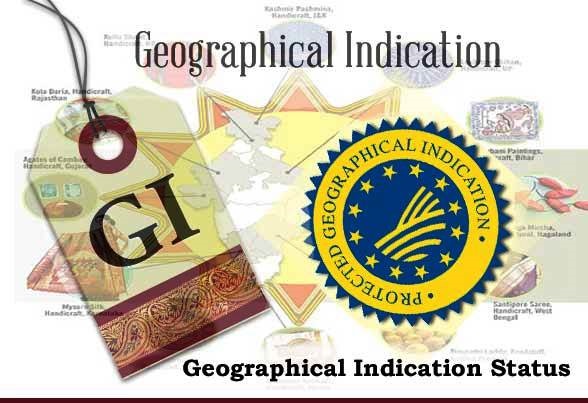
Download Now
logo
FREE & ONLINE 3-Day Bootcamp (LIVE only) on

How Can Experienced Professionals Become Independent Directors

calender
28th, 29th Mar, 2026, 2 - 5pm (IST) &
30th Mar, 2026, 7 - 10pm (IST).
Bootcamp starting in
Days
HRS
MIN
SEC
Abhyuday AgarwalCOO & CO-Founder, LawSikho

Register now

Abhyuday AgarwalCOO & CO-Founder, LawSikho