
Download Now
Home Blog Page 351

Issues with investor-state dispute resolution mechanism

0
Image source - https://bit.ly/3pRUIbR

This article is authored by Akash Krishnan, a student of ICFAI Law School, Hyderabad. It discusses in detail the conflict of interests faced by the arbitral tribunal while resolving disputes between investors and home states.

Introduction

Investor-state dispute settlement is the alternative dispute resolution mechanism provided to investors to call for arbitration against the host-states in case of violation of Bilateral Investment Treaties. However, like every other approach, it has its own errors that need to be rectified in order to ensure the efficiency of the mechanism. Due to this approach, the hands of the host states are tied to regulating legislation within their own boundaries.

In the apprehension of heavy monetary claims and to maintain international relations, states tend to back away from enacting legislation that is essential for public welfare. Conversely, investors being alien to the nation, the government can expropriate their property. To protect the same, tribunals consider the doctrine of legitimate expectation of the investor to ensure fair and equitable treatment. In this process, tribunals tend to overlook the sovereign right by creating a regulatory chill. Hence, there is a stringent need to analyze the problem from both sides. State Sovereignty and legitimate expectation being the two swords of ISDS, the need of the hour is to provide equilibrium to retain public trust and ensure justice to both sides.

State sovereignty

The principle of sovereignty can be defined as the ability of the Central State government to make policies and legislations without internal or external disturbance. The state is supreme and has the right to regulate all its activities freely, without any disturbance from any other states or international bodies. It is an accepted principle of customary international law that respects the autonomy of the state to make non-commercial, political, legal and economic decisions required for the protection of the state.

Investors possess a huge threat, as they are obligated to the laws and policies of the host country. There is a threat of indirect expropriation or discriminatory government regimes, biased towards its citizens that could lead to huge losses to the investors. While the state is under the duty to protect its citizens, it is also necessary for states to have foreign investors for economic development. This conflict results in the state imposing a restriction on its own absolute sovereign power.

The investors claim to be vulnerable and unjustly interfere in the legislation of the state or claim compensation for indirect expropriation. Indirect expropriation means a change in the legislation by the state that directly interferes with the contract and denies the investor certain benefits and could possibly affect their business. Going by this, the state will hold no power to enact legislation after the entry of investors into the host state.

In the case of Enron Corporation Ponderosa Assets L.P v. Argentine Republic (2007), investors received compensation for indirect expropriation as a consequence of emergency measures taken by the government to tackle the financial crisis. The state should be given more priority to exercise its sovereign power in such cases and it would be unjust to not do so. Argentina witnessed a setback of $450 million in the 2005-08 period, most of which was due to a breach of fair and equitable treatment. This clearly shows the pro-investor stance taken by ICSID.

In Metalclad v Mexico (2000), the tribunal deliberated an award in favour of the American investor and held the government liable for imposing impediments for declaring a natural area for the protection of rare cactus. In Occidental Petroleum Corporation v. Republic of Ecuador (2004), US$1.76 billion were awarded as compensation to two American companies. The state terminated the BIT with the two companies for the violation of public laws and the agreement itself. The tribunal ruled in favour of the investor for the violation of national treatment obligation and to ensure fair and equitable treatment. Similar awards were passed in favour of the investor in a plethora of cases perpetuating a threat to state sovereignty which could also impact the rights and freedoms of the citizens.

In Saluka Investments B. V. v. Czech Republic (2006), the arbitral tribunal recognized the need to balance the interest of both the parties by stating that: “protection of foreign investment is not the sole aim of the treaty… a balanced approach for both parties… the host state possess a legitimate right to regulate domestic matters in the public interest”. It is necessary for more tribunals to understand and consider the same.

It is necessary for providing public policy space in international law. Unlike the dispute settlement system of the World Trade Organization (“WTO”), the tribunals are apprehensive to protect the investors rather than contemplating the intent and importance of the legislature. There is a need to learn the WTO law here, whose one of the four-core foundations is to protect and promote societal interests together with regulation of increased levels of trade in goods and services.

It is necessary to provide policy space to the host states and preserve their right to regulate. In 2001, North-American Free Trade Agreement (NAFTA) clarified the position of fair and equitable treatment by laying reasonable limitations to it. The Phillip Morris case brought into light the necessity of regulating tobacco for public welfare. This was first discussed and changed in Trans-Pacific Partnership (TPP) negotiations. A similar measure was taken by Australia and Singapore by amending their Free Trade Agreement (“FTA”). The justification of such a measure was said to be health-related and made in good faith for the protection and welfare of the citizens.

Legitimate expectation

Arbitral tribunals rely on the legitimate expectations of the investors while deciding whether the host states alleged violations can constitute a treaty breach or not. The doctrine of legitimate expectations as an element of the Fair and Equitable [“FET”] standard is of relatively recent origin.

In CME v. Czech Republic (2003), the tribunal held that “the Media Council breached its obligation of fair and equitable treatment by the evisceration of the arrangements in reliance upon which the foreign investor was induced to invest.”

In MCI v. Ecuador (2007), the tribunal rejected the protection of mere assumptions that formed the basis of investment, observing that legitimacy of the expectation depended not only on the intent of the parties but also ‘on certainty about the contents of the enforceable obligations’.

In David Minnotte v. Poland (2014), the tribunal observed that it must make a decision on breach of legitimate expectations based on the evidence before it, and those specific expectations had to be specifically created and proved.

As per these awards, the collective conclusion that can be drawn is that an expectation may only be legitimate if it is premised upon a fair pre-existing or specific expectation with regard to a specific right or set of rights that must be analysed objectively, in light of the business conditions and such other factors, and must have been reasonably relied upon by the investor.

State sovereignty vs. legitimate expectation

A major argument that arises when considering the economic rights of the investor in contrast to the legislative operation of the state is that, Why should the investor endure monetary destruction for the havoc caused by the government? It can also be argued that the state deserves regulatory space on certain subject matters to ensure effective policy measures for its citizens. It is important to understand how one can affect the other.

The impediment of the arbitrator is to ensure fair and equitable treatment to the parties while protecting the interests of the population of the sovereign state. There was precedence laid down in the case of S. D. Myers v. Canada (2002) that curbed the right of the tribunal to adjudge governmental decisions. It stated that international law provides the right to host states to make domestic laws within their borders. 

Doctrine of expropriation

However, in Tecmed v. Mexico (2003), it was observed that the tribunal could assess governmental policy to determine if the legislative operation amounted to expropriation. Expropriation is the sovereign right of the state to take away the property of nationals or alien citizens for socio-economic or political reasons in return for compensation. The following principles can be laid down from the aforementioned case to determine whether an act constitutes expropriation: 

Step I

  1. It is a permanent or irreversible act.
  2. Such an act neutralizes or destroys the economic value of the use, enjoyment or disposition of the investor’s rights or assets.

Step II

“Proportionality test”: The tribunal has to ensure that such a measure holds proportionality of the public interest on the subject matter and the projected investments.

While assessing the same, the tribunal has to strike a balance between the investor and the host state ensuring that due deference is given to the state’s issues and the same are protected, while taking into account the legitimate expectation of the investors. Subsequently, in the case of Total SA v. Argentina (2010), the investor’s legitimate expectation was held as the main component of fair and equitable treatment under investment arbitration.

Regulatory chill

The concept of regulatory chill can be a stumbling block for the protection of public interest that causes a chilling effect. It could be used by the state to evade its responsibility of providing an efficient regulatory regime in the public interest, inter alia, health, education, environmental and safety regulations. ISDS proceedings tend to be expensive, therefore the state prefers to avoid it by not creating conflicting regulations that negatively affect the foreign investment, even if that hinders public interest.

It was argued by anti-ISDS groups that often ISDS tribunals tend to intrude in the regulatory space in the name of international law and investor protection and tend to prioritize and safeguard investor’s rights over the public interest. Arbitral tribunals repeatedly used the fair and equitable treatment standard to widen the scope of protection that investors enjoy. It is argued by the author that this growing jurisprudence in investment arbitration towards giving investors substantive protection based on their legitimate expectations can be considered as a misinterpretation of international law.

However, the case of Philip Morris Asia v. Australia (2015) moved the field of investment arbitration by upholding legislative measures enacted for the protection of public health. It held that the state couldn’t lose its right to legislate and enact laws in lieu of providing Fair and Equitable Treatment to investors under legitimate expectation.

The conflict of a measure being an indirect expropriation or if it is necessary for public interest turns on the critical jurisprudence of International Investment Arbitration. It is necessary to increase the legitimacy of ISDS and people’s trust in IIA. An effective international investment can ensure sustainable development in the country.

insolvency

Recommendations 

Investment arbitration system drives and strives to achieve protection for the foreign investors. The investment treaties include several provisions to provide a standard of protection. However, “legitimate expectations” as a specific term of investment protection is absent in most of the treaties. In arbitral awards and scholarly opinions, the lack of a specific definition of the concept can be observed.

The tribunals accepted the legitimate expectations built on the arbitral jurisprudence and often applied it in wide discretion. Investment tribunals’ tentative moves to proportionality analysis in the context of indirect expropriation indicate that proportionality may be crystallizing as a norm in relation to when the state powers doctrine applies to defeat a claim of legitimate expectation. Similar developments can be seen in relation to fair and equitable treatment. These decisions evidence an increasing understanding of the need for international investment law to accommodate greater space for host states to regulate in pursuit of the public interest. Yet the current state of the case law lacks both a coherent methodology and an appropriate standard of review.

To prevent the clash of the two swords, i.e., State Sovereign and Legitimate Expectancy, the sovereigns can insert two types of provisions namely – “right-to-regulate” and “non-derogation” provisions. Right-to-regulate clauses include language that traces a government’s right to regulate, either in general or specific terms. Non-derogation provisions are clauses that declare that the State shall not deviate from its domestic laws in order to incentivize investment.

However, mere insertion is not enough. In order to strike an equilibrium between State Sovereign and the Legitimate Expectancy, these provisions by the virtue of their language must be used in a manner where both the swords are the winners, i.e. both State and Investor is placed on a platform where equal importance is given to them both.

Conclusion

The dilemma that the host countries suffer is with respect to the enhanced standards of investor protection. Adding to this dilemma are the views which accept that providing a stable regulatory framework by the host states is a legitimate expectation of the investors. Therefore, a balance between the states’ right to regulate and the protection of the legitimate expectation of the stable framework of the foreign investors must be accepted. Such an approach would provide greater space for host states to promulgate bona fide measures in the interest of their populations, without being liable to compensate foreign investors for a finding of indirect expropriation.

References

  1. https://unctad.org/system/files/official-document/diaepcbinf2021d7_en.pdf 
  2. https://uk.practicallaw.thomsonreuters.com/0-624-6147?transitionType=Default&contextData=(sc.Default) 
  3. https://ustr.gov/about-us/policy-offices/press-office/blog/2014/March/Facts-Investor-State%20Dispute-Settlement-Safeguarding-Public-Interest-Protecting-Investors 

LawSikho has created a telegram group for exchanging legal knowledge, referrals and various opportunities. You can click on this link and join:

https://t.me/joinchat/L9vr7LmS9pJjYTQ9

Follow us on Instagram and subscribe to our YouTube channel for more amazing legal content.

Download Now

Issues faced by Muslims in India and abroad : do they get adequate representation of opportunities

0
Islamic-Law-Law-of-the-Muslim-World-eJournal.-June-14

This article is written by Amulya Bhatia, currently pursuing BBA.LL.B from Symbiosis Law School, NOIDA. This article discusses the issues which are faced by the Muslim community in India. 

Introduction

India takes pride in calling itself a secular state where all religions not just coexist but cherish each other. This may be true in theory but the reality is far from what we see on paper. In recent times, the talk regarding growing religious intolerance has been brought up multiple times. The government in India seems to be clutching over religious beliefs and as a result violating human rights. When the law and order of a country emphasize religious supremacy instead of focussing on the rights of every citizen, it only sets the path for the downfall of the country in question. The same is the case with India’s largest minority, the Muslim community. Despite being large in number, the rights of Muslims in India are violated left, right, and center, and the same is discussed in this article. The article will also raise an important question regarding the democratic status of India and will focus on the failure of the legal system in the country to protect all citizens.

Historical significance

History has shown that differences between the Hindu and Muslim communities are not new and have been witnessed through history. The following are only a few of the examples of intense conflicts between the communities, other than the daily discrimination:

Partition, 1947

Hindu Muslim animosity goes way before the partition but it was only 1947, particularly during the time of partition when tension between the two communities peaked. In 1947, India was finally independent of British rule under the leadership of many personalities like Mahatma Gandhi and Jawaharlal Nehru as a part of the Indian National Congress, who pushed for independence and initiated mass protests against British Rule. On the other hand, All-India Muslim League, led by Muhammad Ali Jinnah, realizing that the entire Muslim community might not ever truly be accepted in the Indian State demanded a separate state for Muslims. The British then in a haste decided the border separating the entire Indian subcontinent into two; a Hindu majority India and a Muslim majority Pakistan. What followed this partition was intense communal violence and hurried migration of Muslims to Pakistan and Hindus and Sikhs to India along with constant arguments and disputes regarding the separation of assets. Towns and cities burned down, blood-shed all around, and bodies in streets, the partition is only recalled as one of the deadliest tiffs between Hindus and Muslims resulting in the death of millions of innocent people. There was extreme panic among the people about ending up in the ‘right’ country, where they wouldn’t be discriminated against or harassed. The friction that we see between the Hindu and the Muslim community today stems from history and the way the two religions have always treated each other.

Gujarat riots, 2002

It was in February 2002 that a train with Hindu pilgrims was set on fire near a junction in Godhra, a small city in India’s western state of Gujarat. Many were injured and even more were killed in this incident. Unfortunately, the blame for this was put on Muslims which resulted in violence and riots between the two communities, killing and displacing many innocent people. What’s worse is that sexual violence and rape were used as techniques to humiliate a community. Muslims are treated and accepted as ‘second-class citizens’ in this district in Gujarat. This violence led to the segregation of neighborhoods between Hindus and Muslims in Gujarat. 

Violence in Assam, 2012 

The violence in Assam in 2012 is because of ethnic tension within the state because of ‘infiltration’ by outsiders which mostly include Bengali-Muslim migrants from Bangladesh Bengal. Bodo, the largest ethnolinguistic group in the state, had tension with Muslim migrants and these migrants were often attacked in the Bodo land. Muslims in the Bodo territory were systematically persecuted and discriminated against which would be described as ethnic cleansing. In July 2012, due to violence between the two communities, hundreds were killed and lakhs of Muslims were displaced which only shows that the current situation of the Muslim community owing to the Citizenship Amendment Act, 2019 and the National Register of Citizens is not new.

Plight of the Muslim community

Issues faced by Muslims in India

Citizenship (Amendment) Act, 2019

The Citizen Amendment Act, 2019 is an immigration policy that allows Buddhists, Christians, Hindus, Jains, Parsis, and Sikhs from Afghanistan, Pakistan, and Bangladesh to readily receive Indian citizenship, very carefully excluding and discriminating against the Muslim community. The proposed National Register of Citizens, which requires citizens to show proof of their citizenship, when combined with the CAA is a strategic tool opted by the government of India to rule out the Muslim population in the country. Let’s say, I am a Muslim Indian citizen, living in Delhi have never stepped out of the city. If I fail to produce documents to prove my citizenship, I will be declared an illegal immigrant. What will follow is either me being sent to a detention center, or deported to a country that I don’t belong to in the first place.

The Constitution of India does not allow for there to be discrimination based on religion and guarantees to all citizens equal treatment before the law. The CAA is the opposite of the principle of equality as it divides the migrants into categories of Muslim and non-Muslims. If the idea behind this Act is to protect minorities, why wouldn’t Muslim religious minorities who have faced persecution in their own countries like Ahmadis in Pakistan and Rohingyas in Myanmar also be included? The only purpose that appears prima facie is ripping Muslim citizens off of their citizenship. This Act not only discriminates against Muslim minorities in India but also is a display of the government’s sheer insensitivity towards Muslim minorities in the countries which are included in this Act. The enactment of the CAA was followed by nationwide protests as many believed that it violated the secular identity of the country, and endangered their cultural identity. The protestors were termed as ‘anti-national’ and ‘jihadi’. This Act only shows that the spirit of brotherhood, nationalism, and constitutionalism is close to nil in India in the 21st century. 

Ayodhya verdict

It was on December 6, 1992, that the Babri Masjid was demolished by the Hindu community because they believed that that was where the ancient Ram Mandir stood. What followed this demolition was a grave tussle and communal violence between the two communities over this 2.77-acre land, killing and injuring many. This violence then turned into a legal battle between the Hindus and Muslims, which was finally put an end to when the Supreme Court ruled in favor of the establishment of the Ram Mandir. The Court in its judgment very clearly observed that the demolition of the mosque was against the rule of law. Yet the judgment was made in favor of the Hindu community because of the belief that Ayodhya was the birthplace of Lord Ram under the caveat of illogical legal reasoning such as Hindus had unimpeded access to certain parts of the land. The question that arises here is if legal decisions of the country can be based on the religious beliefs of a particular community. Either the judiciary is naive enough to resolve such a controversial dispute based on religious ideas, or this is yet another plot to target the Muslim community. Many people were of the opinion that the Supreme Court had the power to uphold the spirit of secularism by giving this land to neither of the two groups, and allocate the same for the holistic improvement of the country by building a school, or hospital on the land. This judgment has proved that the Muslim community will always be treated as second-class citizens in a country we so proudly call secular.

Unlawful Activities Prevention Act, 1967

The Unlawful Activities Prevention Act, 1967 was first enacted with the idea of upholding national integrity and uniting the country that was getting disintegrated. Eventually, after several amendments, this Act took the form of a counter-terror law after the Terrorist Activities Prevention Act was repealed because of criticism by multiple human rights organizations. It is only after the latest amendment by the Modi government in 2019 that UAPA has come under scrutiny. This new amendment has been criticized is because of its callous categorization of individuals as terrorists and because this amendment is violative of the principle of ‘innocent until proven guilty’. Neither does this Act specify the grounding for terming someone as a terrorist or allow the person to justify his case before the arrest.

While UAPA has its problems, the issue lies with how and against whom it is being used which is against anybody who questions the government, most of whom have been people belonging to the Muslim community or people fighting for the rights of the Muslim community. Whether it is the Students’ Islamic Movement of India listed as a banned organization under UAPA followed by 127 people jailed for attending a seminar organized by the All India Minority Education Board or Mohammed Habeeb from Tripura finally free from charges because, after four years, UAPA charges were not proved, UAPA is another Hindutva propaganda falsely book Indian Muslims, or those supporting them under terror charges.

Love jihad laws

Anti conversion law, an attempt to protect women, snatch the agency of choice of women, or another legislation to weed out and target the Muslim community, the love jihad law are somehow deemed appropriate by the Supreme Court of India. Love jihad is nothing but a baseless conspiracy theory that accuses Muslim men of seducing Hindu women into marriage with the intention of forceful conversion to Islam to increase the Muslim population. This legislation has a two-fold problem which not just targets Muslim men but also assumes that Hindu women don’t have the sense to decide between right and wrong. This law has also been misused to harass interfaith couples who have married each other with consent.

In December 2020, Muskan, a Hindu girl, and Rashid, her Muslim husband ended up in jail when went to register their marriage. Muskan was also pregnant and had a miscarriage in the women’s shelter after being arrested. In another case, Owais Ahmad was in judicial custody for allegedly pressurizing a Hindu woman into converting to Islam on the basis of a complaint filed by the father of the woman, despite no evidence. A month after the implementation of this legislation, a Muslim teenager was arrested for inducing a Hindu girl to elope with him. The girl and the boy were attacked by the local police and the boy was booked under this law.

On the face of it, the government states for this law to be an anti-conversion law, meant for the overall protection of the citizens of this country from forceful conversion and also aims at protecting the interest of women in the country. However, it is evident from the number of examples and instances that have taken place since the enactment of this legislation that under the caveat of an anti-conversion law, this law is implemented to harass and target Muslims.

Housing laws

A real estate broker in South Delhi expressed his concern regarding a Muslim tenant and equated having a Muslim tenant with a risk. Another broker in East Delhi said that when they are contacted by a Muslim family, they check if the family is genuine, or are terrorists.

India may be a diverse and secular country, but even the most advanced cities in the country have discriminatory housing policies to keep out Muslims as they are viewed as a ‘threat’. Muslim tenants are addressed as a liability and sometimes they would be asked to pay a higher rent. Often, many Muslims hide their identity to avoid being treated inappropriately. The lack of housing laws to prevent discrimination against any community along with the bias of the state towards specific communities only add to their vulnerabilities. The simple task of finding a place to live, which is the most basic human right, turns into a haunting and deeply humiliating experience for the Muslim community. Unfortunately, the law and order of a secular country have turned a blind eye to this mortifying reality.

Bias by the justice system

What’s worse than the government of India itself clamping down on citizens and discriminating against certain communities based on their religion, is when the entire justice system also falls prey to systematic marginalization. The Indian Judiciary is always looked at with high regard believing for it to always be on the side of true justice. However, it appears that the judiciary which was supposed to be blind to the color, caste, creed, religion, or gender of the citizens before it has now turned blind to the concept of fair treatment to all and equality before the law. The three pillars of democracy, executive, judiciary, and legislature have together failed Indian Muslims. For example, after the CAA protests, many people who were actually shouting slogans in support of violence, against those who were protesting when CAA came into play, were not arrested. On the other hand, innocent protestors who were simply expressing dissent were treated like terrorists, most of whom were Muslim citizens. The most disheartening case is of Safoora Zargar, a pregnant research scholar in Jamia University, who was charged as a terrorist for inciting violence when all she did was organize peaceful protests to express her disapproval of the CAA, while those explicitly shouting ‘shoot the traitors of the country’ clearly promoting violence continue to roam free in the country had no action taken against them, let alone a warning.

Extreme vigilantes

Cow protection groups

In the name of cow protection, vigilantes, or rather extremists are harassing and subjecting minorities in India to violence and humiliation. Lukhman Khan was beaten up with hammers for transporting meat in Gurugram, a 25-year old was killed in Rajasthan when a cow protection group saw them carrying cattle in a truck, 4 Muslim laborers were beaten up for allegedly eating beef, it is evident that vigilantes now want to impose their faith on people of other communities and when not followed, they would resort to violence. What’s worse is the authorities and government turning a blind eye to this behavior and not taking any action regarding the same. In many cases, political leaders of Hindu nationalist groups have defended such violent acts. 

Surge in Islamophobia

Tabrez Ansari, a 24-year old man, was tied up and beaten to death by a Hindu mob and forced to chant ‘Jai Shri Ram’ and ‘Jai Hanuman’ is only one of the victims of hate crime and Islamophobia in India. We live in a country where interfaith marriages or relationships in fictional shows like Netflix’s ‘The Suitable Boy’ are condemned and ads like that of Tanishq which is trying to spread a message of secularism is ridiculed, then it is insensible to expect the same citizens reacting angrily to fiction, to treat people with respect in real life. Another example would be about how whenever there is any given terrorist attack, Muslims, especially those belonging to the poorest sections of the society which unfortunately make up a majority of the Muslims in the country are either picked up by authorities without any proof, or are humiliated by the general public, and the entire Muslim community is criminalized

Issues faced by Muslims abroad

The Muslim community as a whole is marginalized across the globe. Ahmed Shaheed, freedom of religion or belief, independent rights expert raised concern about the condition of the Muslim community in States where they are in a minority as they are targeted based on stereotypical ‘Muslim’ characteristics, such as names, skin color, and clothing, including religious attire, such as headscarves. Due to intersectionality, Muslim women end up facing triple the price because of both, their religion and gender. Even years after the terrorist attacks of 9/11, people in the US continue to view all Muslims as a threat and declare all Muslims as ‘terrorists’. Many Muslims living in the west do not feel respected by the people around them. In a 2011 meeting, the United Nations Alliance of Civilizations, as well as the League of Arab States, a key partner, identified Islamophobia as an important area of concern and this concern has only become more grave with time. Islamophobia needs to be addressed as a global problem and it needs to be understood that international human rights protect individuals, and not religion making it necessary to safeguard the interest of every living person. 

Protection of the Muslim community

Secularism

Secularism is nothing but the belief that religion must not have any influence on the working of an organization or society. India is a country that harbors many religions and the principle of secularism has been enshrined in the Constitution of India. At the time of the freedom struggle, the maintenance of a secular India was emphasized by our forefathers. But given the current socio-legal issues that prevail in the society, Does the principle of secularism hold any value? We may have Article 14 which requires all citizens to be treated equally before the law or Article 15 which does not allow for there to be any discrimination based on religion, but how effective are these laws if every day there are new cases of people from the Muslim community either being ridiculed or being subjected to violence. India claims to be proud of its secular nature but the realities of the country display otherwise. 

Landmark judgments 

Mohd. Ahmed Khan vs Shah Bano Begum And Ors (1985): This judgment started the conversation around maintenance for women under Muslim law. The court rules in favor of Shah Bano, asking her husband to pay maintenance, which was criticized by the Muslim community. As a result, ‘The Muslim Women (Protection of Rights on Divorce), 1986’ was enacted and it was held that women must be given a fair and just amount of maintenance within the ‘iddat period’ as provided by the legislation.

Shamim Ara v. State of U.P. (2002): This case questioned how the procedure of Talaq as pronounced by a Muslim man is carried out. The question of whether ‘Talaq’ is simply pronounced without communicating to the wife is valid or not. The Hon’ble Supreme Court held that ‘Talaq’ must be carried out as per Quranic procedures. However, it was only through this case that the idea that triple Talaq is a demeaning and humiliating practice was brought up.  

Shayara Bano vs. Union of India (2017): In 2017, this case brought up the issue of triple talaq wherein the court declared this practice to be unconstitutional. The Indian judiciary does not always interfere in the matters of personal law, but the argument given in this case was that most Islamic countries have also abandoned this practice which only goes to show that this is not an essential practice in this religion. This landmark judgment is a step towards equality and is one of the very few examples where the Indian government has made decisions in favor of the well-being of Muslim citizens of the country. 

Reservation

The Constitution of India does not allow for there to be any positive or negative discrimination in any situation whatsoever, based on religion. Therefore, it is not possible for there to be any reservation based on religion. However, it does take into account the need to protect certain socially and educationally backward classes, known as OBC(other backward classes), who have to face challenges in their daily lives because of the social set up of the society, and thus provide a 27% reservation for them in employment and educational facilities. Based on the criteria opted by the Mandal commission to recognize a community as OBC, close to a negligible number of Muslim communities were added to this list, meaning that Muslims are till date not able to reap enough benefits through this reservation, which they deserve considering how they are treated in India. It is hard to believe that after being treated the way they are as mentioned in this article, Muslims are still not recognized as a socially backward community. It has been observed that since the mid-1950s, the intergenerational gap in terms of the availability of opportunities has improved for scheduled castes and scheduled tribes, but the case for Muslims has only gotten worse. Muslims in India seem to only be catered to when a vote bank is required and the government comes to rescue the people of this community right before elections. 

Whether the situation is changing

If a community that has been socially and economically marginalized and discriminated against since time immemorial do not find a place under the ‘other backward classes’ listing, then it is only natural for them to not have adequate representation in the myriad aspects of the society, or even have a chance to stand as equals with other citizens of the country. Such is the case with the Muslim community in India. The Muslim community may be a dominant minority in India, forming around 14% of India’s population, but barely forming even 4% of the parliament. When it comes to politics, it was observed that in 2017, the Bhartiya Janata Party failed to give even a single seat to a Muslim candidate in Uttar Pradesh, which has a population of 40 million Muslims. The same was the case in Gujarat as well. The lack of political representation of the Muslim community in the decision-making process of the country only leads to issues faced by minorities being ignored in the longer run. In a secular democracy like ours, every community must be given a fair chance to present their case and raise a voice to advocate for causes concerning them which seems like a dream, even in the 21st century. The Muslim community or any other minority for the matter are not given enough representation in India and are constantly treated as second-class citizens. 

Conclusion

Social perception is a mental process that occurs when we try to form an image of a person in our heads. When you meet someone new, you immediately form a perception of the person, basically making snap judgments and decisions. Unfortunately, these judgments lead to the creation of bias and stereotypes. A major chunk of why Muslims continue to be discriminated against is because of a perception which people have formed about a Muslim person, about how they look, how they talk, or how they behave. A lot of this perception has to do with the representation of Muslim characters in movies for example showing Muslim people as terrorists. This perception has been formed over years and is not easy to get rid of. The unfortunate and deadly combination of exclusion in the sphere of politics, academics, legalities, and most importantly holistically within the society only seems like the start to destabilize India and rid it of its secular nature in years to come. India must truly move towards secularism, not just on paper, but in reality too. 

References


Students of Lawsikho courses regularly produce writing assignments and work on practical exercises as a part of their coursework and develop themselves in real-life practical skills.

LawSikho has created a telegram group for exchanging legal knowledge, referrals, and various opportunities. You can click on this link and join:

https://t.me/joinchat/L9vr7LmS9pJjYTQ9

Follow us on Instagram and subscribe to our YouTube channel for more amazing legal content.

Download Now

Mandating vaccines – the correct way forward

0

This article is written by Rida Zaidi, a law student of the Faculty of Law, Aligarh Muslim University. The aim is to analyze the vaccine mandate and its objective in the coming future.

Introduction

‘COVID-19’ being a deadly, contagious disease, has affected people across the globe. The COVID-19 pandemic has endangered the lives of every human being. The pandemic has shown us some unprecedented times, ‘especially the second wave’ of COVID-19 in India which was harrowing. There was an absolute health crisis, which had never been encountered by people. Vaccines came in for the survival of the human race and protecting people from life-threatening viruses. The Government provided the vaccines to the people after receiving approval from the WHO. The Government has emphasised the importance of getting vaccinated from time to time. In India, the highest number of vaccines that were administered in a single day was around 25 million and around 70,000 plus vaccination centres were established across the Country. The Government has emphasized vaccine drive for the well being of individuals’ health as well as the community’s health as an infected individual can spread the virus in the community affecting thousands of others. The question which has arisen quite a few times before the Supreme Court recently is regarding the vaccine mandate that has the Government made the vaccination mandatory for all to avail essential benefits or services. The Supreme Court has repeatedly stated that the vaccine mandate is not mandatory but is voluntary. Mandating the vaccine might violate the fundamental rights of the citizens. Though in the interest of the larger community, individuals’ rights can be dominated.

This article shall deal in detail about the vaccine mandate and the surrounding opinion of the Supreme Court on relevant issues.

Dr Jacob Puliyel v. Union of India (2021)

A writ petition was filed by Dr Jacob Puliyel regarding the efficacy of the vaccine mandate inflicted in India. The plea was filed against the mandate coercing the citizens to get vaccinated. Dr Jacob Puliyel was a former member of the National Technical Advisory Group on immunization and wanted the Government to release the data regarding undertrials undertaken of vaccine administration. The plea also instructed the Central Drug Standard Control Organization to release whether the application of the vaccine approval was accepted or rejected. The plea also stated that it is not filed for challenging the vaccine programme carried out by the Government.

Contentions of the petitioner

  1. The petitioners contended that there have been decisions of the executive on the insistence of a vaccine mandate without which the people would lose their jobs both in the public and private sector. 
  2. The petitioners also contended that the vaccine mandate is violative of the fundamental right to life under Article 21 of the Constitution.
  3. The petitioner attracted the attention of the Court by citing the examples of various states such as Madhya Pradesh where ration is not being administered to the people who are not fully vaccinated, in the state of Delhi only fully vaccinated people can travel in public transports and in the state of Maharashtra where no government employee can work without being fully vaccinated and would be treated as if he is on leave without pay to make them aware about the intensity of the issue.
  4. The clinical data regarding the number of people who were vaccinated and the adverse effects of the vaccines encountered by those people ought to be put into the public domain.
  5. The Government is issuing new mandates every day so it is not possible to challenge all such orders.

Observation of the Court

The Court observed that firstly the vaccine mandate has not been made mandatorily at least for now at this stage. The disclosure of clinical data can be brought into the public domain up to the extent where privacy is not infringed. The vaccines were given an emergency authorization as the times were critical and tragic but the authorization was given by scientific experts after taking into account the manufacturers and the scientific guidelines set by the Indian Council of Medical Research (ICMR). The Court held that only if the vaccine mandate is not in proportion to personal liberty, the Court shall deal with the concerned matter. The Court also held that there is vaccine hesitancy among the people specifically the rural regions of the Country and any contrary action would have adverse effects regarding the efficiency of the vaccine and its side effects upon the minds of such people. The Court mentioned that the Government has never mandated the vaccine and the same has always been voluntary. The Court also pointed out that the issues of the petitioners would be addressed. The petition was adjourned to a later date.

Saniyal Narayan & Ors v. the State of Kerala & Ors (2021)

Appellants: Saniyal Narayan & Ors

Respondents: State of Kerala & Ors

Court: Kerala High Court

Bench: Honourable Suresh Kumar

Date of judgement: 20th October 2021

Facts of the case

  1. The writ petitions were filed by several students of higher education of final and postgraduate students which were disposed of by the courts by a common judgement.
  2. The directorate of collegiate education has issued a notice of reopening of colleges after the Government had substantially made relaxation in the rules after the normalcy of the COVID-19 pandemic regarding the opening of colleges for the above-mentioned class of students.
  3. The Directorate of Education has circulated a notification that only those students and staff would be permitted to enter the colleges and attend the class who are fully vaccinated, partially vaccinated, have recovered from COVID-19 within 90 days from the date of reopening etc.
  4. Those students who could not take the vaccine out of medical reasons have to state their medical conditions in a certificate and submit it before the Directorate.

Contentions of the petitioners

  1. The petitioners have abstained from getting vaccinated resulting from the fear of its adverse effects. The guidelines of the colleges concerning vaccination to be mandatory is against their right to privacy as they wish to withhold from getting vaccinated.
  2. The guidelines are against the right to life under Article 21 of the Constitution as the administration of vaccines has not been made mandatorily at this stage by the Central Government.

Contentions of the respondents

  1. The fundamental rights as guaranteed under Part III of the Constitution are not absolute and for the interest of the public, reasonable restrictions could be imposed upon them by the Government.
  2. The orders made by the Directorate of education are not violative of the fundamental rights of the students and the concerned staff as individuals’ interest is always subservient to the interest of the public.
  3. The impugned orders are constituted for suppressing the spread of the COVID-19 virus and protecting the lives of the citizens.

Observation of the Court

The Court held, after analyzing the pleadings by both the petitioners and the respondents, that the petitioners are self-centred and their focus lies only in their interest rather than the interest of the whole community. The State Government while formulating policies for repressing the pandemic was thinking in a broader sense that is for the public at large and not just the interests of the individual. The Court also held that the COVID-19 restrictions of getting a vaccination and wearing masks were issued by the State Governments under the authority of the Disaster Management Act 2005. The Court was of the view that advantages conferred upon the vaccinated people are not discriminatory. A deep study under the supervision of experts was held regarding the precautions to be adhered to for the prevailing situation. The Court highlighted the point that whenever an order is issued in the interest of the public, the fundamental rights under Article 19 and Article 21 are not violated, as under Article 19 reasonable restrictions can be imposed by law and under Article 21 no one shall be deprived of his life and liberty except by procedure established by law. The order or guidelines issued for the legislation of vaccines is only a measure by the Government to protect the collective health of its citizens and is not at all arbitrary, illegal or irrational. It was observed by the Court that the larger public interest should make way for the alarming violation of the human rights and rights guaranteed under Article 21 of the Constitution. The writ petitions were dismissed.

Academic Resources Advancement Movement v. State of Tamil Nadu (2021)

Petitioner- Academic Resources Advancement Movement

Respondents- State of Tamil Nadu

Bench- Acting Chief Judge and Justice P.D. Audikesavalu

Date- 22nd November 2021

Facts of the Case

A writ petition was filed by the Academic Resources Advance Movement against the double vaccination policy for the school teachers. The petition of Mandamus under Article 226 is instituted for directing all the authorities including public and private to not make vaccination a requisite for attending classes and duties by the students and the teachers.

Observation of the Court

The Court was of the view that going against the double vaccination policy is against the public interest because if teachers will abstain from getting vaccinated there is a high risk that the children will also get infected if any of the teachers test positive. The teachers for their sake cannot put the lives of thousands of children coming to school at risk. PIL is a public matter so the Court has to analyse the situation keeping in mind equity which is protecting the interests of everyone. WHO has approved the vaccines with the assistance of medical experts thus, it is advisable to get vaccinated. Moreover, the Court was of the opinion that it is not just the individual liberty of the teachers but it is also the individual liberty of the students. the Court also held that a PIL is not maintainable in service matters and thus the petition is withdrawn and dismissed.

Registrar General v. the State of Meghalaya (2021)

Appellant: Registrar General

Respondents: State of Meghalaya

Bench: Justice Biswanath Somadder, Justice HS, Thangkhiew 

Facts of the case

The Meghalaya Government had issued several notices that all the taxi drivers, shopkeepers, street vendors etc. have to get fully vaccinated to resume their business.

The issue before the Court

Are the vaccine mandate orders for the taxi drivers, shopkeepers etc. constitutional and whether these orders affect the rights of the citizens?

Observation of the Court

The Court was of the view that the right to life as guaranteed under Article 21 of the Constitution covers the right to health i.e.a person is at liberty to undertake a medical treatment or not as per his wish. Vaccination is the need of the hour but not a necessity. But there has to be a balance between the individual’s rights and the rights of the larger community. Moreover, reasonable restrictions could be imposed upon fundamental rights by law if it is required. Vaccination is required to protect the well-being of the people but doing it forcibly or coercively takes away the essence of the rights of the people. The Court pointed out that though till now there has not been any vaccine mandate which creates fear regarding the stripping away of the livelihood of any section of the society. The Court also observed that administering the vaccine in a consensual manner without infringing the rights of the receiver is acceptable whereas doing the same coercively is ultra vires the Constitution. The State must be aware and sensitize its citizens regarding the pros and cons of getting vaccinated especially when there has been a lot of misinformation about the adverse effects of the vaccine amongst the members of the marginalized community. The people too should be adaptive and consider these orders as pervasive advisory and not a coercive measure. The Court directed the concerned authorities to analyse whether the guidelines are being followed as instructed.

Conclusion

There has been a lot of hassle regarding the vaccine mandate amongst different sections of society. The Supreme Court has emphasised that the vaccine mandate is voluntary and not mandatory. As the right to health falls under the right to life as guaranteed under Article 21 of the Constitution, a person has the right to choose what is injected into his body and if a person abstains from getting vaccinated he is at liberty to not get vaccinated. Though vaccination is the only approach that should be undertaken under the prevailing circumstances the method of administration ought not to be coercive or in a way that hampers the right of the individual. The Government has repeatedly emphasised the significance of getting vaccinated but has never forcefully imposed it on them. The health care factor is the duty of the government to care for its citizens. The Disaster Management Act (2005) and the Epidemic Diseases Act (1897) take all necessary steps to prevent the spread of any disease or empower the Central Government to mitigate new laws. Vaccination protects the community spread as it decreases the potency of the disease. The procedure of vaccination should be fair and just. The Vaccine mandate should issue sanctions at public places and necessary institutions like schools and colleges but the unvaccinated people should also be given an opportunity for example by attending classes online etc. the people should be sensitized regarding the pros and cons of getting vaccinated. If people are vaccinated through a fair procedure with their consent and being fully informed as to what is being administered to them there is quite some probability that we will conquer the pandemic with flying colours.

References


Students of Lawsikho courses regularly produce writing assignments and work on practical exercises as a part of their coursework and develop themselves in real-life practical skills.

LawSikho has created a telegram group for exchanging legal knowledge, referrals, and various opportunities. You can click on this link and join:

https://t.me/joinchat/L9vr7LmS9pJjYTQ9

Follow us on Instagram and subscribe to our YouTube channel for more amazing legal content.

Download Now

Rights of migrants and refugees under International Humanitarian Law

0
Refugees
Image Source - https://rb.gy/rtmu1u

This article is authored by Akash Krishnan, a student from ICFAI Law School, Hyderabad. It discusses in detail the rights of migrants and refugees and the role of international bodies in the protection of these rights.

Introduction 

Human rights form the base of human existence thus, are of great importance. After a long period of struggle, they are at this point well-established under the Universal Declaration of Human Rights and the multiple human rights conventions. These documents provide civil, political, economic, social, and cultural rights to every individual either a refugee, migrant, or full-fledged citizen.

Due to the recent outbreak of the COVID -19 pandemic, many people have been forced to leave their houses due to the non-availability of shelter, jobs, food, etc. The COVID -19 being a pandemic has not been included as a reason to displace people internally. This pandemic has forced majorly the migrant workers to leave their workplace and made it difficult for them to return to their natives.

This tough situation requires immediate actions by the national government to ensure that migrants and refugees are taken care of by making arrangements of shelter camps, food, testing facilities and ensuring social distancing while arranging all those.

Who are migrants and refugees

Millions of people leave their homes all around the world in search of a better future for their families. Some are migrants. Some are refugees.

Someone who has been forced to flee his home to escape violence, prosecution and conflicts are called a refugee. They have a right to be protected by the country. They can’t be sent back home because their life or freedom would be at risk. Asylum seekers are the ones who want international protection from the danger in their own country. However, it is pertinent to note that every individual who seeks asylum in a foreign country is not granted the status of a refugee.

On the other hand, a migrant is someone who chooses to move by himself and many of them move back to their home after a few years. Some of them move to find better opportunities and some of them move for education. These individuals are not forced to relocate from their country and leave their homes. These individuals willingly leave their country and are granted permission to live in another country. Their reasons can be economic growth or better education.

Rights of refugees and migrants under International Law

The provisions enumerated under the Universal Declaration of Human Rights apply to every living being from the day of his birth to death. The people among the territory of various nations especially the refugees and migrants are protected under these articles and various other Conventions. Some of the important rights available to the Refugees and Migrants are given below-

Right to freedom from torture or inhumane treatment

Article 5 of the Universal Declaration of Human Rights states that ‘No one shall be subjected to torture or cruel, inhuman or degrading treatment or punishment.’ This implies that to achieve the purposes of the Convention, the refugees and migrants must be protected from inhumane treatment.

Right to freedom of opinion and expression

Article 2 of the Universal Declaration of Human Rights states that everyone has the right to freedom of opinion and expression and no distinction be made based on race, colour, sex, national or social region, birth, place. It is pertinent to note that this right disallows any form of discrimination based on the political, jurisdictional, or international status of the country or territory to which a person belongs.

Right to freedom of thought, conscience and religion

Article 18 of the Universal Declaration of Human Rights states that everyone has the right to freedom of thought, conscience, and religion which includes changing his/her religion or belief, manifesting his/her religion in teaching, worship, etc. No person, even if he or she is a migrant or has refugee status, is forced to change his religion.

Freedom from discrimination

Article 7 of the Universal Declaration of Human Rights  states that ‘All are equal before the law and are entitled without any discrimination to equal protection of the law.’ This means that everyone is equal in the eyes of law and all persons should not be treated without any discrimination. Here, the discrimination in the case of refugees and migrants does not include those opportunities which are available only to the citizens but discrimination in matters of basic necessities like food, safety, right against exploitation, and shelter.

Right to asylum

Article 14 of the Universal Declaration of Human Rights states that every person has the right to seek and to enjoy in other countries asylum from persecution. It is further stated that this right may not be invoked in the case of prosecutions genuinely arising from non-political crimes.

Right to family

Article 16 of the Universal Declaration of Human Rights states that the family is the natural and fundamental group unit of society and is entitled to protection by society and the State. It is further provided that every person has the right to marry and start a family. 

Article 23 provides that everyone who works has the right to just and favourable remuneration ensuring for himself and his family an existence worthy of human dignity, and supplemented, if necessary, by other means of social protection.

Non-Refoulement

Article 33(1) of the Convention relating to Status of Refugees 1951, non-refoulement refers to the obligation of States, not to refoule, or return, a refugee to the territories where his life or freedom would be threatened on account of his race, religion, nationality, membership of a particular social group or political opinion. This principle is universally acknowledged as a human right. It is expressly stated in human rights treaties such as Article 22(8) of the American Convention on Human Rights, 1969 and Article 3 of the Convention against Torture, 1987.

Rights and obligations of countries regarding detentions 

The refugees and migrants have certain rights under International Law. It is the duty of every state to protect and enforce these rights. The State has an obligation to oversee whether the rights provided to all the people within their territory and under their jurisdiction are being exercised or are just for the namesake. Some specific rights are also offered to both migrants and refugees during the detention and are mentioned by the International Organisation for Migration (IOM).

According to the International Migration Law Unit, the obligations of the states are discussed below-

Right to be informed upon entry in the territory and while in detention

The asylum seekers or immigrants must be informed, in the language he/she understands, the reason behind the refusal to enter the border or for their removal from the territory. The state authorities are under the obligation to disclose the grounds of detention.

Right to communicate with the outside world

The persons detained should be given access to communicate with the outside world through electronic mail, fax, and telephone. It is the obligation of the state to provide the lawyer or any representative and relatives both in the country of destination and country of origin. 

Obligation to establish a maximum period of detention in national legislation

The maximum period of detention must be established by the law to avoid any kind of harassment and exploitation. After the expiry of the detention period, the detained person must be released automatically and the State must provide for periodic reviews of detention.

Right to humane detention conditions and obligation to respect the inherent dignity of every human person

As stated by Article 10 of the International Covenant on Civil and Political Rights, 1976, all persons must be treated with respect and the dignity of the individual must be valued. It is the obligation of the State, not to treat a person inhumanly and to take positive measures. In case, the State fails to take any such measure then, the State will be held responsible for the violation of Article 7 of the International Covenant on Civil and Political Rights which prohibits torture and cruel, inhumane, and degrading treatments.

Obligation to allow monitoring of reception centre

The State must establish a monitoring system to overlook all detention facilities. The media should be granted access to such centres to ensure transparency and accountability, without encroaching on detainees’ right to privacy.

Prohibition to detain vulnerable individuals

The decision of detaining an individual or extending the period of detention of the person depends on characteristics and circumstances like physical and mental health, history of torture, age, family, pregnancy, etc.  The vulnerable individuals which include the victims of trafficking, torture, sexual violence should not be detained. Under any circumstances, if such people are detained then proper care must be taken with health care and skilled professional support.

Agencies monitoring refugee and migrant unrests

A surfeit of agencies works toward ensuring that the right to seek asylum and refuge, of those who face persecution, holds good and monitors immigrant and refugee movements to guard those who seek to enforce those rights.

The U.N. High Commission for Refugees (UNHCR)

The UNHCR is an organ of the U.N. Organization, established in 1950, which works for the protection of refugees, forcibly displaced communities and assists in their repatriation. The UNHCR won two Nobel Prizes for its work in 1954 and 1981.it was founded as a subsidiary of the General Assembly and had primarily replaced the International Refugee Organization since it fell out of favour, post World War II.

The U.N. Relief and Works Agency for Palestine Refugees in the Near East (UNRWA)

The UNRWA acts as a subsidiary to the United Nations that exclusively works for the welfare and voluntary repatriation of Palestinian refugees, to mitigate the disastrous aftereffects of the Palestinian war of 1948.

The U.N. International Organization for Migration (UNIOM)

The UN IOM, set up in 1951, is an organization that works towards the humane and just treatment of migrants. With a roster of 173 members of governmental, inter-governmental, and non-governmental bodies, the organisation aims at attaining well facilitated and developmental migration, ultimately ensuring Freedom of Movement for the displaced.

Organisation for Economic Co-operation and Development (OECD)

OECD is a global economic organisation with an intergovernmental framework spanning 37 member nations. Founded in 1948, initially as the Organization for European Economic Co-operation, OECD works for many objectives such as emigrational economics, integration of politics and economies, monitoring of emigrational factions, etc.

Human Rights Watch (HRW)

Human Rights Watch is a non-governmental organisation that advocates for research and the protection of Human Rights. The organisation is mainly known for pressuring governmental and non-governmental bodies to relent on using abusive and inhumane behaviour concerning immigrants or refugees. HRW won a Nobel Peace Prize in 1997, as a founding member of the International Campaign to Ban Landmines.

Amnesty International (AI)

Amnesty International or A.I. is a non-governmental organisation, headquartered in the UK. AI works to enforce the rights in the U.N. Declaration of Human Rights, comprising eight million members worldwide. It aims at promoting tranquillity concerning the procurement of Human Rights and works towards disarmament of abusive campaigns preaching hostility against refugee groups.

Response to COVID-19

UN Agencies and NGOs have led from the front and laid down guidelines and measures that need to be followed for the protection of these people. The UN Human Rights Officials have mandated that emergency responses to the coronavirus must be proportionate, necessary and non‑discriminatory. Keeping in mind the needs of the people in the wake of the pandemic, the UNHCR has warned the states against any actions which deny these people an opportunity to seek international protection.

International humanitarian law (IHL) is the key legal framework that provides crucial safeguards to people affected by armed conflicts.  It protects persons who are not participating in the hostilities and restricts the means and methods of welfare. Populations in armed conflict, weakened by years of fighting, destruction, erosion of basic services, and displacement, are particularly vulnerable to the spread of COVID 19 within the current pandemic. Many of them rely on humanitarian relief for their survival. IHL protects those people and it believes that these protections offer crucial safeguards that must continue to be respected during these testing times.

Frequent outbreaks of COVID-19 have affected migrants, asylum seekers and refugees who are subjected to harsh living conditions and have restricted access to basic services as well as health care. Under IHL, displaced civilians are entitled to shelter, hygiene, health, safety and nutrition. People facing outbreaks of COVID 19 may aim to move to safety, leading to rising local populations and/or authorities to react forcefully to contain them, including by turning the refugee/migrant camps into isolated detention centres. IHL protects all civilians against the consequence of armed hostilities and arbitrary deprivation of liberty and advocates for their access to health care without discrimination.

Conclusion

This challenging and unprecedented time requires swift and immediate actions to be taken to redress the problems faced by migrants and refugees. While a lot has been done to raise awareness, we have no cause for complacency. Most displacement which had occurred in the last few decades could have been prevented in the first place if the parties respected the international humanitarian laws. Those obliged to flee would suffer less if the parties respected the displaced as civilians of their own rather than treating them as outsiders. Sadly, not much has improved in this area. Humanitarian action can bring some relief but it is up to the state parties to conflicts to respect and protect civilians.

References

  1. http://www.worldlii.org/int/journals/ISILYBIHRL/2001/7.html#:~:text=Freedoms,administration%20regarding%20these%20basic%20freedoms
  2. https://blog.ipleaders.in/international-refugee-law-human-rights-study-status-refugees-northeast-india/ 
  3. https://www.unhcr.org/3ae6bd900.pdf 
  4. https://www.unhcr.org/publications/brochures/3b779dfe2/protecting-refugees-questions-answers.html 

LawSikho has created a telegram group for exchanging legal knowledge, referrals, and various opportunities. You can click on this link and join: https://t.me/joinchat/L9vr7LmS9pJjYTQ9

Follow us on Instagram and subscribe to our YouTube channel for more amazing legal content.

Download Now

Stamp duty considerations to be kept in mind for different states in India for registering a partnership deed

0
Stamp Duty
Image Source: https://bit.ly/2AMzPWx

This article is written by Bismi Basheer, pursuing a Certificate Course in Introduction to Legal Drafting: Contracts, Petitions, Opinions & Articles from LawSikho.

Introduction

In India, a partnership deed is governed by the provisions of the Indian Partnership Act, 1932 and the Indian Contract Act, 1872 for matters that the partnership act does not have any specific provisions. A partnership is basically a type of business setup where two or more persons, up to a maximum of 20, can jointly carry out a business as opposed to a single individual carrying his own business with his own capital and resources. If the business in question is a banking business then the maximum number of persons that can be in a partnership is 10. A partnership requires these persons to enter into an agreement, called the partnership agreement that lays out the various rights and obligations of the concerned parties. It is not mandatory under the Indian Partnership Act for a partnership to be registered. However, registered firms carry clear legal advantages over unregistered firms. There exist certain conditions that must be satisfied in order to form a firm, and a Partnership deed is an important condition.

What is a partnership?

A partnership is defined under section 4 of the Indian Partnership Act as – the relation between persons who have agreed to share the profits of a business carried on by all or any of them acting for all. Persons who have entered into a partnership with one another are called individually “partners “ and collectively a “firm”, and the name under which their business is carried on is called the “firm name”. 

The definition of partnership contains three essential elements; 

  • An agreement must exist between the persons,
  • The agreement must be made to share whatever profits earned amongst the partners, 
  • The agreement must be to carry out the business by all of them jointly or by one person acting on all of their behalf.

For example,

X who wants to run a bakery approaches Y, an independent baker. Together they buy a shop and decide to start selling cakes and divide the profits between each other. This is a partnership and X and Y are the partners in this business.

What is a partnership agreement?

A partnership agreement is basically the foundation of a partnership firm. It specifies the business that will be carried out and the partners that are going to be involved and also identifies the firm and gives a clear outlook of the terms laid out by the partners. Each and every partner has the right to participate in the business based on their terms and conditions. Therefore, the agreement also makes clear the different kinds of partners and their rights and responsibilities to the business as well as to each other. It can be written, oral or sometimes even implied through the conduct of the parties that entered the agreement. The written agreement is referred to as a partnership deed. 

Stamp duty considerations for partnership deeds

Stamp duty is basically a form of tax that is required to be paid on documents and that which provides it with legal enforceability and evidentiary value in court. As laid down in section 58 of the Indian Partnership Act, an important document required for the registration of a firm is a partnership deed. This Partnership deed is liable for stamp duty under the Indian Stamp Act, 1899. The deed must be executed and attested as a bond on a non-judicial stamp paper of proper/appropriate value. It must cover information such as the name of the firm, partners involved, address of the firm, the division of profits, mode of operation, dispute resolution etc. In India, stamp duty differs from state to state, from instrument to instrument and also according to the capital brought in by the partners. Let’s take a look at stamp duty considerations for some of the different states in India for the registration of partnership deeds and the conditions by which they may vary.  

No.Name of StateAmount of capital involved in the partnershipStamp duty charge
1.MaharashtraWhere the capital does not exceed Rs. 50,000Rs. 500
Where capital does exceed Rs.50,0001% of capital up to a max of Rs. 15,000
2.Tamil NaduWhere capital doesn’t exceed Rs.500Rs. 50
Where capital does exceed Rs. 500Rs. 300
3.KeralaFor any given amount of capitalRs. 5000
4.Andhra PradeshWhere capital doesn’t exceed Rs. 5000Rs. 100
Where capital does exceed Rs. 5000Rs. 500
5.TelanganaWhere capital doesn’t exceed Rs. 5000Rs. 100
Where capital does exceed Rs. 5000Rs. 300
6.KarnatakaWhere capital doesn’t exceed Rs. 500Rs. 100
Where capital does exceed Rs. 500Rs. 500
7.DelhiFor any given amount of capital1% of capital within a minimum of Rs. 200 and maximum of s. 5000
8.PunjabWhere capital doesn’t exceed Rs. 500Rs. 4
Where capital does exceed Rs. 500Rs. 1000
9.HaryanaFor any given amount of capitalRs. 1000
10.GoaWhere capital doesn’t exceed Rs. 50,000Rs. 500
With every addition of Rs.  50,000The stamp duty increases by Rs. 500 up to a maximum of Rs. 5000
11.Uttar PradeshFor any given amount of capitalRs. 750
12.West BengalFor any given amount of capitalRs. 150
13.AssamWhere capital doesn’t exceed Rs. 1000Rs. 30
Where capital does exceed Rs. 1000Rs. 100
14.Madhya PradeshFor any given amount of capital2% of the capital within a minimum of rs.2000 and a maximum of Rs. 10,000

The above table consists of the stamp duty charges that are levied by some of the leading business-oriented states of India. There is an evident difference when we examine the conditions of each state. Some states seem to have a uniform stamp duty despite the differences in the capital while some states have varying rates according to the different capital brackets. Some even have mentioned the maximum as well as the minimum amount of stamp duty that can be charged. For every partnership firm, the stamp duty charged for their partnership deed will depend on the state in which the firm is established or going to be established.

Procedure for registering a partnership firm

Section 58 of the Act is the provision that lays down the general procedure for the registration of any partnership firm. Every state has its own process of registration where the process can either be through online websites or through an offline procedure. However, the basic procedure requires the following documents:

  • The application form of the prescribed format,
  • The notarized partnership deed whose stamp duty charges has been paid to the sub-registrar, 
  • The firm’s address proof,
  • The identity proofs of the partners, 
  • The address proofs of the partners, 
  • Photo proofs of the partners. 

A copy of the partnership deed must be sent to the Registrar of Partnership Firm of the locality in which the business is going to be situated or is situated along with the application form thoroughly filled out. This application must be signed by all the partners and paired with an affidavit declaring all the details provided to be true. When the Registrar is satisfied and finds that all are rightly in accordance with the conditions of section 58, an Acknowledgement of the firm is issued. The time period for registration of a firm can vary from state to state.

Importance of registering a partnership firm

Registering a Partnership firm is not compulsory (with the exception of states like Maharashtra.) and is optional under Indian law. However, it is highly advised that an unregistered firm or its partners cannot seek remedy from a civil court to enforce any right arising from a contract. The effects of Non-registration are stated in Section 69 of the Indian Partnership Act, 1932. The legal disadvantages non registered firms can face are listed as follows:

  • The inability to file a case against a third party for breach of contract,
  • How the third party can file a case against the firm,
  • How in case of a dispute the firm cannot claim any relief or set off.

As an exception to this scenario, the partner of an unregistered firm may file a suit during the time of dissolution of the firm regarding matters of the accounts of the firm after dissolution or regarding the partner’s shares in the assets of the firm. Thus due to these above mentioned legal complications that can and may arise, it is highly advised that firms do get registered. 

Conclusion

At times of scarce resources and abandoned ideas due to lack of capital, partnership firms are a wonderful option for like-minded people to come together and create new, promising businesses. With a clear division of labour, skills and profits these types of businesses have a higher chance of making it than single owned businesses. This is also why the importance of registration of the partnership firms is continuously stressed despite their non-mandatory nature by law. Registration promises more legal security to the involved partners as well as more legal enforceability in a court of law upon future conflicts and complications that may arise internally as well as externally in the business. The only and main disadvantage general partnerships face is the problem of unlimited liability partners are subjected to when it comes down to losses and legal consequences regardless of their involvement and shares. This has led to a change in trend and has given rise to limited liability partnerships or LLPs.  

References

  1. http://www.legalservicesindia.com/article/158/Indian-Partnership Act,1932.html
  2. https://www.setindiabiz.com/learning/stamp-duty-on-partnership-llp-agreement-of-several-states/
  3. https://housing.com/news/stamp-duty-for-partnership-deed-india/

Students of Lawsikho courses regularly produce writing assignments and work on practical exercises as a part of their coursework and develop themselves in real-life practical skills.

LawSikho has created a telegram group for exchanging legal knowledge, referrals, and various opportunities. You can click on this link and join:

https://t.me/joinchat/L9vr7LmS9pJjYTQ9

Follow us on Instagram and subscribe to our YouTube channel for more amazing legal content.

Download Now

Economic growth and e-waste management : a global concern

0
Hazardous Waste Management Rules

This article has been written by D.Priya pursuing the Legal Writing For Blogging, Paid Internships, Knowledge Management, Research and Editing Jobs from LawSikho. This article has been edited by Aatima Bhatia (Associate, Lawsikho), Zigishu Singh (Associate, Lawsikho), and Indrasish (Intern at Lawsikho). 

Introduction

We are in a technology era, where technological growth replaces society’s old life patterns with new fast, effective, and efficient life patterns but the growth is not for free, as it becomes obvious that the technological revolution brings us environmental degradation and severe health hazards. Whereas without technology it is not possible to do any business efficiently. We are extremely dependent on technology, whether it’s simple day-to-day activities or complex business management, we need the help of technology.

New technology provides us with new opportunities for economic growth. The question here is how many of us buy new technology for necessity and how many of us purchase it for the sake of luxury. In the current situation, the implied meaning of high class in society is a luxurious life. The standard of life depends on the amount of wealth an individual possesses.  If the sole purpose of buying electronic gadgets is merely to upgrade with the latest generation equipment it clearly shows that the society is buying electronic equipment only for luxury purposes and not out of necessity. As we can see, the more the demand, the more is the production and supply of short life cycle products thus resulting in the increase in electronic waste.

After usage, the disposal of EEE generates waste that contains hazardous and valuable materials in it, the waste and used EEE is called e-waste. Improper management of electronic waste is extremely harmful not only to health but also to the environment. Thus, the major cause for e-waste are high levels of disposable income, urbanization, mobility, and industrialization resulting in higher consumption rates of EEE on Short life cycles products, most importantly there are very few repair options, leading to the purchase of newer similar short life products.

Global concern

The Global E-waste Monitor 2020, a Sustainable Cycles Programme conducted by UNU, UNITAR, ITU, ISWA provides an update on global e-waste statistics. According to the statistics, the average total weight of global EEE consumption increases annually by 2.5 million metric tons. In 2019, the world generated 53.6 Mt of e-waste, 7.3 kg per capita, it is projected to grow to 74.7 Mt by 2030. Statistics show that Asia generated the highest quantity of e-waste.  The main concern is that undocumented e-waste is getting dumped in low-income countries either as second-hand products or e-waste.  The non-availability of formal recycling facilities will lead to environmental contamination because of dumping acid used to remove gold from rivers, particulate matter, dioxins, from dismantling electronics, leaking substances from landfills, or storing electronics. These hazardous substances contaminate our water system, food system through livestock, fish, and crops. Inhaling fumes from burning wire and cooking circuit boards contaminate the air. 

Remote work and e-waste

In the technology era, most of the work is done remotely. There is a presumption that remote work will lead to the excess purchase of Electronic Equipment, resulting in excess E-waste. However, as far as companies are concerned, even if they are bound to comply with corporate social responsibility, there are only a few organizations that perform systematically, most of the organizations and companies do not take responsibility for the e-waste generated by them. They are either dumped in dismantling shops or dumped as undocumented landfills. As far as systematic recycling management is concerned there is not much difference whether the work is done remotely or by the employee in person. The other important hindrance for reuse, recycling of electronic equipment’s mainly computers, laptops and smartphones, and other data storage devices is the risk of a data breach. Before they are prepared for reuse and recycling, the data has to be deleted without a trace, this process needs financial assistance if done in a large-scale organization. E-waste is not completely removable, but it needs systematic recycling and proper investment from the producer side as well as from the government. 

E-Waste management rules

It is important to know that India is the only country in Southern Asia with e-waste legislation since 2011. It mandates that only authorized dismantlers and recyclers collect e-waste. E-waste (Management) Rules 2016 covers manufacturer, dealer, refurbishers, and Producer Responsibility Organization (PRO). Even though Indian legislation set up formal recycling facilities with 312 authorized recyclers, with the capacity to treat approximately 800 kt annually, it is disappointing to point out that most of the formal recycling is not fully utilized, as a large amount of e-waste is still handled by the informal sectors. 

E-Waste (Management) Rules, 2016 are enacted under The Environment (Protection) Act, 1986. According to the Rules, the producer of the EEE shall be responsible for the collection of e-waste from the ‘end-of-life’ of their products under the Extended Producer Responsibility(EPR). The rules further enable the state pollution control board to grant and renew authorization to the dismantlers, recyclers, manufactures, and refurbishers to handle e-waste in a proper and effective way. 

In order to successfully handle e-waste, coordination with other stakeholders from industry, government, NGOs, international organizations, and academia is required. Some of the principles to develop effective e-waste management systems are to set a clear legal framework for e-waste collection and recycling, to enable the producers to finance the collection and recycling of e-waste under EPR, to strengthen the monitory and compliance mechanisms, to provide an incentive for recyclers to enhance in systematic and technological advancements. To create awareness among consumers about the environmental benefits of recycling, to create awareness among the workers about the health hazards of working in recycle management centers, and to provide them with frequent medical support. 

E-waste Recycling can be managed, by setting up a fully functioning E-waste collection center throughout the country, by establishing municipal pick-up services, by setting up commercial pick-up services, e-waste drop boxes, and by creating collection centers in the retail store. To prevent “backyard recycling” which is engaged by self-employed people, who informally collect and recycle e-waste, the collection usually happens from door-to-door by buying or collecting used EEE from households, and business institutes. They either dismantle for usable materials or burn to convert to secondary raw materials, which causes significant damage to the environment and human health. 

Importance of recycling business

According to the Global E-waste Monitor 2020, nearly 78 countries adopted the e-waste policy, regulation, and legislation. Even though most developing countries adopted policy, regulation, and legislation to regulate e-waste, they still lack proper systematic e-waste collection and management methods. The main reason is lack of investment and political motivation, consumer cooperation, and awareness. E-waste contains toxic or hazardous substances such as Brominated Flame Retardants (BFR), Mercury, Hydrochlorofuoro carbons, etc, Annually, a total of 50t of mercury and BFR plastics (71 kt) are released into the environment by undocumented flows globally. 

Out of 53.6 Mt of Global e-waste, 82.6% (44.3 Mt) are undocumented, they are either discarded into waste bins by high-income countries or are exported as second-hand products or e-waste to middle and low-income countries. The waste is later discarded as landfills or burned for creating precious metals out of it.  

53.6mt global e-waste consists of precious raw materials such as aluminum, copper, iron, gold worth the value of $57 billion USD. Only $10 billion USD value of raw materials (4 Mt) retrieved from properly documented recycled e-waste amounts to only 17.4% (9.3 Mt) of global e-waste. The remaining 82.6% (44.3 Mt) of e-waste is dumped into the environment without proper documentation and recycling management. Therefore, recycling companies play a vital role in processing and managing undocumented e-waste. Proper management of e-waste not only gives enough returns but also protects the environment and health of the people.

Conclusion

It is clear from above that the main reasons for e-waste are high consumption rates of EEE, short life cycle products, and few repair options. The solution is to mitigate EEE consumption, the EEE producers must enhance the life of EEE and invent environment-friendly products to protect the health and the environment. The global producers must create proper disposal and recycling management centres throughout the world. Further, the producer must produce products that can be repaired and reused without excess cost. 

Upgradation of new technology in old electronic goods will help prevent old consumers from buying new electronic products to keep up with the latest technological advancements. Improper e-waste management has to be controlled, undocumented e-waste is dumped into developing countries, these wastes which are imported as second-hand products or often handled in inferior conditions, causes serious health issues to the workers and the children who live, play, and work near that e-waste management areas. Early reports show that exposure to informal e-waste causes serious health issues such as olfactory memory, DNA damage and changes in gene expression, hearing loss, rapid onset of blood coagulation, cardiovascular regulatory changes in infants and children. The report shows further complications such as liver dysfunction, fasting blood glucose levels, male reproductive and genital disorders, as well as effects on sperm quality. Thus, it is important to develop a systematic e-waste management service with proper infrastructure throughout the country.

References

  1. https://www.itu.int/en/ITU-D/Environment/Documents/Toolbox/GEM_2020_def.pdf
  2. EWM-Rules-2016-english-23.03.2016.pdf (greene.gov.in).

Students of Lawsikho courses regularly produce writing assignments and work on practical exercises as a part of their coursework and develop themselves in real-life practical skills.

LawSikho has created a telegram group for exchanging legal knowledge, referrals, and various opportunities. You can click on this link and join: https://t.me/joinchat/L9vr7LmS9pJjYTQ9

Follow us on Instagram and subscribe to our YouTube channel for more amazing legal content.
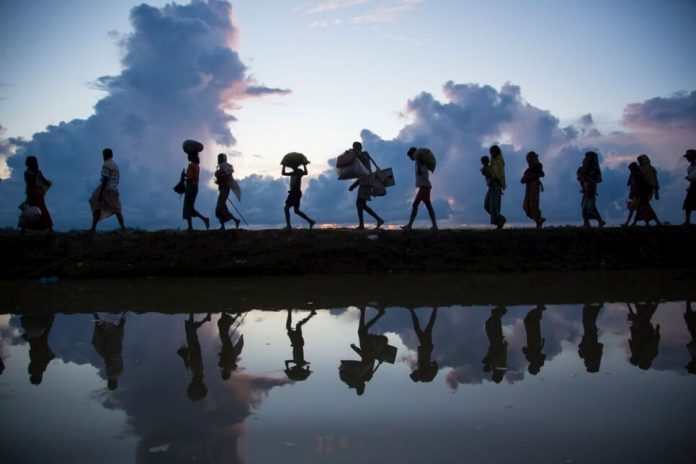
Download Now

Analysis of Labour Laws with respect to gig workers

0

This article is written by Darshit Vora from SVKM, Narsee Monjee Institute of Management Studies, The article analysis labour laws concerning Gig workers and possible measures that can be taken to protect their interest 

Introduction

Gig-economy is different from the traditional practice of full-time workers. The gig economy includes involving independent contractors and freelancers for a short period or on a project-to-project basis. It is a non-standard form of work where the freelancers or independent contractors doesn’t have usual hours of work, fixed holidays, and fixed salary. According to the Cambridge dictionary, gig economy refers to a form of work that is based on people having temporary jobs or doing separate pieces of work, each paid separately rather than working for an employer. The gig economy gets its name from each piece of work being akin to an individual ‘gig’. The gig economy is not a new concept it was coined a few decades earlier however has gained prominence due to the advent of technology, no intent of the organization to retain employees for a long period, or multi-party transaction. The concept of the gig economy can be witnessed in various sectors like social media marketing, legal consultancy, content writing, art, and designing, etc.

In a gig economy, a consultant or a worker must keep on updating his skill and knowledge to remain relevant in this business for a long period. Along with having several benefits, there is a negative side of the gig economy include instability in the job, lack of social security benefits, unusual hours of work, and uncertain pay schedules. However, due to the emergence of the entrepreneurial generation many people moving towards exploring different opportunities other than the formal standard contracts. Therefore people started providing their professional services on their flexible terms. There has also been the emergence of various gig platforms like Fiverr, Upwork, and Guru which enable the organisation or individuals to recruit freelancers. Digitalisation has contributed significantly to the growth of the gig economy. Due to the advent of technology, many skilled professionals are joining it so that they can serve international clients in the comfort of his/her home countries. Due to such unmatched benefits, there is a fundamental shift from a standard form of work to a non-standard form of work. 

History and growth of Gig Economy

The first emergence of the gig economy was witnessed in 1915 a jazz musician who was paid money on the basis of their individual performances for the first time used the word gig. The growth of the gig economy was witnessed in the second world war due to uncertain times the organisations weren’t willing to employ people for a long period of time and therefore they employed people on a short-term basis. However, post the world war importance of the gig economy started to decrease and people preferred having permanent and long-term jobs as compared to short-term.

The next major event that contributed to the growth of the gig economy was by Mr. Craig Newmark started an advertisement website that provided services of gigs in various sectors on short terms basis. After receiving success, it expanded to various cities of the United States and Canada and now it covers over 70 cities. Post the 1900’s in the United States 10% of Americans started considering alternate sources of Income. In the years 1999 famously, the known site now is known as Upwork then was known as Elance which connected those organisations and individuals who required services and professionals who were willing to provide their service. A major push in the growth of the gig economy was witnessed in the initial years of the 2000s where Amazon started hiring a gig workforce. The post-2000s can be considered as decades of “apps” because a lot of new app-based platforms were started which benefitted the gig workforce. In the year 2008, Airbnb started its operation and thus increased the employment opportunities of the gig workforce. Uber started its ridesharing service in the year 2010 where people could get to taxi customers from their own vehicle. Many people in international countries started viewing the gig economy as a part-time source of income.

In India, the emergence of the gig economy was a little late as compared to other international countries. Post the 2010s the growth and emergence of the gig economy were witnessed in India. Where a lot of international companies ventured their business in India. Due to which many Indian entrepreneurs started developing their own apps in different fields thus contributing to the growth of the gig workforce. Initially, in India, it was viewed as a part-time job but now people are viewing it as a source of full-time employment. According to the global gig economy index, India is among the top 10 countries which are outsourcing professionals. The ranking is only going to improve it is expected that the gig economy in India would create 90 million jobs in the next 7 to 8 years. Therefore, such a paradigm shift has benefitted the interests of both the organisations and the working professionals.  

Types of Non-Standard Workers 

  • Part-time work: A person who only works for a few hours of the day is comparatively lesser than the full-time employee of the company. Generally, people take up a part-time job to pay education fees, to support their families. There are engaged with the organisation for only a temporary period of time. These workers aren’t eligible for benefits like health insurance or retirement plans like any other non-standard worker.
  • On-call workers: An employee which is supposed to report to the organisation whenever required by the company is known as an on-call employee. They don’t have fixed hours of work. These employees are paid on basis of the hours that they work and aren’t given a salary on monthly basis like other employees.
  • Platform workers: It means a worker working for an organisation that provides specific services using an online platform directly to individuals or organisations. Platform work includes food delivery or ride-sharing. These workers aren’t eligible for benefits like health insurance or retirement plans like any other non-standard worker.
  • Dependent self-employment: It is a form of employment that lies between self-employment and employment. These workers only earn income from one employer further the worker is also provided by one employer. Legislation providing them benefits is quite limited. 

International regularisation of Gig Economy  

From the perspective of rights and protection of gig workers, some of the international documents which protect their rights are as follows

United Declaration of Human Rights

In this legal document, the framers didn’t differentiate between non-standard and standard forms of workers. Under Article 23 it is mentioned that everyone should right to just and favorable conditions of work. Remuneration should be made on the concept of equity. Everyone is entitled to social protection and human dignity. Further, everyone has the right to join and form a trade union.

International Covenant on economic social and cultural rights 

The legal document under Article 7 obligates the state parties certain basic rights to everyone they include 1. Remuneration to all workers 2. Providing a decent standard of living and 3. Providing proper rest and leisure to the employee. Further Article 8 also protects the rights of the laborers it allows them to form and join a trade union and allows them to go on a strike.

The above provisions are also applicable to gig workers because there is no differentiation between the non-standard and standard forms of workers.

International Labour Organisation

ILO on various occasions has expressed their concerns on the fact that when self-employed persons are generally excluded from the application of employment and labor laws, leading to exclusion of workers from their essential right to work. A recent document published by ILO on a non-standard form of work mentioned plugging regulatory gaps with respect to Non-standard employment it discussed the following points where legislative developments are required:

  • Equality of treatment: The equal remuneration convention, 1951 of the ILO mentions that a person should be remunerated on the basis of the work that they perform and distinction should be made on the ground of gender.  The convention on Discrimination (Employment and Occupation), 1958 mentions that no discrimination in a workplace can be made on the grounds of sex, race, social opinion, or political opinion. These conventions indirectly protect a non-standard form of workers. In Employment, relationship recommendation calls state to formulate policies elimination distinction and protecting workers interest.
  • Minimum hours and other safeguards for a non-standard form of workers: On this issue, minimum regulations are passed to protect the interest with respect to gig workers. ILO recommendation No 182 no of hours, the work time should be established according to the needs and interests of the workers. Further in family responsibility and recommendation, 1981 mentions that efforts should be taken to improve working conditions and also mentioned flexible working conditions.
  • Social Insurance for a non-standard form of workers: The ILO part-time work convention mentions social insurance for workers working with multiple employers. The insurance is granted to the workers on the grounds of hours of work and earnings.
  • Unemployment Insurance system: If the non-standard workers are unemployed, the state should take efforts to provide vocational training and guidance to improve the skill of the worker this is covered under The Employment Promotion and Protection against Unemployment Convention, 1988.
  • Facilitate care of parents and elders of non-standard workers: ILO Family Responsibilities Convention, 1981 mentions that the state should adopt measures to protect and take care of parents and elder of non-standard workers. In Reduction of Hours of Work Recommendation, 1962 mentions accommodating workers’ personal and family responsibilities.
  • Collective bargaining and forming association: In Private Employment Agencies Convention, 1997 mentions about rights of workers with respect to collective bargaining, freedom to form an association. The convention imposes a duty on the employer to provide these benefits to the employee.

A publication made by ILO on the topic of non-standard workers mentions plugging legislative gaps with respect to Provisions on collective bargaining, Strengthening social protection and condition, and standard of work. For digital workers ILO has given a guideline and held that they should also have access to universal labor rights, social protection, and collective bargaining to platform workers, ensuring fair competition, fair data use, and improved data protection.

Development of Gig Economy in other countries 

United States of America

The first major emergence of the gig economy was first witnessed in the United States. In the United States, there has been tremendous legal development in the field of the gig economy. In the year 2019 California passed a bill titled “AB5” which has come into effect on 1 January 2020. The act aimed in providing protection to independent contractors as employees the classification is made on the basis of three tests that were laid down in Dynamex Operations West, Inc. v. Superior Court of Los Angeles

  • The organisation does not control and direct the worker with regard to their performance
  • The worker can perform work outside the employment
  • The worker is customarily engaged in an independently established trade, occupation, or business of the same nature as the work performed for the hiring entity.

Under this act thus by recognizing independent contractors as employees impose a burden on the employer to provide the benefits that are provided to any other employee.

Various rulings passed by the labour commissions of different states have positively impacted gig workers such as the Labour commission of California ordered reimbursement to Uber drivers and considered Uber drivers as Uber employees. Similarly, Oregon’s labour commission Uber drivers are economically dependent on Uber and they should be considered as separate employees of Uber. In California, there is an employer who is supposed to provide insurance to gig workers of 1 million which can be claimed if the person gets injured during the course of employment. In the United States, some states have adopted laws with respect to gig workers and given them protection but some states such as have shown restrain they include states like Texas and New York City and haven’t allowed any protection to gig workers. 

United Kingdom:

 It is another country that has had a significant legal development in the field of the gig economy. A directive has been issued in the European parliament to provide standard working conditions for on-demand employees or short-term employment. The criteria are employees should be working for 3 hours per week or 12 hours per 4 weeks on average. The directive obligates the employer to fulfill the terms of the contract, provide proper working conditions, and restrict the employer from committing adverse treatment against the employee. Recently a landmark judgment was passed by the UK Supreme Court where they held that people working as Uber drivers should be considered as workers and would get legal protection as another worker. According to the UK Supreme Court Uber had the authority to monitor driver performance and also had the capacity to terminate them. So, working for Uber is a classic form of subordination that is a characteristic of an employment relationship. However, this comes as a relief for only platform workers and not self-employed workers.

Legal development of Gig economy in India 

In India just like emergence, the legal development of the gig economy was started late. The legal development of the gig economy began after various judicial pronouncements were made on this topic. In Dhrangadhara Chemical Works v. the State of Saurashtra, the court laid the test of control and supervision test to determine the employer-employee relationship. A further similar test was adopted by the Supreme Court in the case of Ram Singh and Ors. V. Union Territory, Chandigarh and Ors the worker was considered as an employee because the employer had control over his action, the employer was paying his wages thus the court termed it under an employer-employee relationship. 

Due to a significant rise in the number of gig workers in India the legislature was prompted to pass a law that can protect their interests. There in 2020 Social Security code was passed in both the houses of the parliament and also received assent from the president. The law is named as Social Security Code, 2020 the act provides protection to gig workers. Under the act, a gig worker is defined as a person who performs work or participates in a work arrangement and earns from such activities outside of the traditional employer-employee relationship. After mandatory registration, they would be entitled to various social security benefits

  • Life and disability cover;
  • Accidental insurance;
  • Health and maternity benefits;
  • Old age protection. 

Problems with respect to Gig Workers in India 

The inclusion of gig workers under the social security code and the National minimum wage scheme comes as a welcome step. However, this should not be the last effort to protect the rights and interests of the gig workers still a lot of work is required to eliminate their problems. Some of the problems faced by gig workers are as follows

  • No law on gig workers mentions Occupational safety and decent working condition: Proper health facilities and decent working are basic requirements for any kind of employee. For any employee to provide a productive performance requires decent working conditions and occupational safety. 
  •  No law on gig workers which mentions collective bargaining and Trade Union: The current Indian Laws doesn’t have any provision on right to form and collective bargaining for gig workers. The International Labour organisation considers the right to form an association and collective bargain as fundamental rights. Trade union represents employees in situations where their rights are breached by the action of the organisation. Further collective bargaining provides the right to the employees to initiate negation with the management. If these rights aren’t recognized then the management will abuse their power. Thus, these are essential rights that need to be recognized for gig workers.
  • No Laws which protect discrimination against gig workers: In India, there is no law that obligates the employer to provide equal treatment of the non-standard workers. ILO regulation mandates that workers should be treated equally and no unfair discrimination should be made. To avoid this issue a law needs to be passed to avoid unfair discrimination.
  • No Law which obligates an employer to provide minimum wages to the non-standard form of worker: International labour organization considers fair wages as a human right. If an employee is not granted a minimum wage rate for his/her service is clear exploitation. Therefore, efforts should be taken by the legislature to eliminate this exploitation by passing a law. 

Possible solutions to protect the rights of Gig Workers in India 

The legislature in the recent social security code has made a separate category for gig workers so that they can claim social security benefits. However, a better solution could have been enacting separate legislation which only covers the benefits and rights of non-standard workers. In the social security code, different non-standard workers are included under the definition of gig workers and all of them are provided common benefits thus creating ambiguity. Non-standard workers like on-call workers or part-time workers don’t require old-age insurance benefits, life cover, etc. Therefore, proper differentiation should be made types of non-standard workers and should be which is required by them to protect essential rights.

In the new legislation, separate definitions should be given for different non-standard workers such part-time workers, platform workers, on-call workers, self-dependent workers. The legislation should provide certain basic rights which can be claimed by all forms of non-standard workers they include a provision on the elimination of discrimination, a guarantee of minimum wages, collective bargaining, and occupational safety. Differentiation among non-standard workers should be made in categories of decent working conditions which needs to be provided to on-call or temporary workers. Further social security needs to be provided to platform workers. Further maternity benefits for platform workers. Training benefits to the platform or part-time workers.

The legislation should obligate the employer to provide these benefits to the non-standard form of workers if acted ultra vires would be liable to pay heavy penalty. The legislation should mention the mechanism where the non-standard workers can enforce their rights. Thus separate legislation on non-standard workers would encourage many people to join the gig economy which would directly contribute to the growth of our country. 

Critical Analysis 

India in the near future is going to become a hub of gig workers. As per a report by ASSOCHAM, the gig economy is substantially growing in India and is expected to have an increase of 455 billion dollars by 2024. It is also estimated that the gig economy in India will generate 350 million jobs. Therefore it is essential to protect the rights of these workers or else they would be exploited by the organisation which is in a dominant position. The legislature expressed its intent to protect the rights and interests by passing the social security code 2020. However, it was a half-hearted attempt to protect the rights and interests of gig workers.  

There are three ways that a legislature can adopt First: The legislature makes amendments in the existing legislature and insert the word gig workers, Second: No effort from the legislature Supreme Court would interpret gig workers as employees on the basis of supervision and control test, Third: The legislature should pass new legislation which would only mention about rights of non-standard workers The third is the best solution which would eliminate any future ambiguity in the other two scenarios there would be future ambiguities and would increase the burden of the courts.

India has recognized various international conventions which protect the rights and interests of gig workers. If no conflicting municipal law prevails in the country the domestic country can adopt ratified international law. ILO has on various instances urged the state members to pass laws that can protect the rights and interests of gig workers. Though India is one of the countries where the growth of the gig economy was a little late now because of Covid-19, a change in mindset, flexible hours of work has flourished the growth of the gig economy in India. Thus, legislation is required which protects the right of the gig workers so that the gig economy keeps flourishing in India.  

Conclusion

India compared to the other countries is backward when it comes to passing legislation to protect the interest of non-standard forms of workers. The Social Security code that is passed has still not come into effect. Gig workers also play a key role in contributing to the growth of the country and organization and recognizing their basic rights is very important. The legislature should not become pro producerist and not pass legislation because the organisation wants limited regulations but instead be pro gig workers so that they would be motivated to work and positively contribute to the growth of the economy. Due to the continuous growth of the gig economy in our country, it is expected that legislation should take appropriate efforts so that suitable benefits are provided to them which would protect their basic rights. 

References 

[1]https://econfinity.in/gig-economy-emerging-as-mainstream-in-india/essay/

[2]https://cll.nliu.ac.in/regulating-the-gig-economy/

[3]https://n26.com/en-eu/blog/gig-economy

[4]https://blog.ipleaders.in/90683-2/

[5]https://www.ilo.org/wcmsp5/groups/public/—ed_protect/—protrav/—travail/documents/publication/wcms_443267.pdf


LawSikho has created a telegram group for exchanging legal knowledge, referrals and various opportunities. You can click on this link and join:

https://t.me/joinchat/L9vr7LmS9pJjYTQ9

Follow us on Instagram and subscribe to our YouTube channel for more amazing legal content.

Download Now

International doping laws with respect to cricket

0

This article is written by Darshit Vora of SVKM Narsee Monjee Institute of Management Studies. The article covers important laws to restrict doping and substances that are banned from consumption. Further, the articles cover the aspects of legalization of doping in Cricket and the principle of strict liability in connection with doping. 

Introduction

In the world of sports doping is one of the serious issues. The use of the banned substances is being used to enhance the performance of the players however it negatively impacts the physical or mental health of the player. The use of prohibited substances in sports is always seen as a pest that violates the spirit of fair play. In addition, to maintaining sports a clean game, it gives the innocent participants equal and just opportunities to compete on the basis of their natural abilities. Many famous personalities have been caught and penalized for the consumption of banned substances. Post the death of the cyclist Knud Enemark during the Olympic game in the year 1960 many efforts have been made to restrict and prohibit the use of performance enhancement drugs, however, organized efforts were made in the 20th century.

The sport in which the banned substances are being used the most is cricket. Cannabis and steroids are the substances being most used. Doping tests in cricket started in the year 2002. ICC became a signatory to WADA in the year 2006. ICC introduced its own anti-doping code which came into effect on 1st January 2009. The code was enacted to ensure that cricket plays its part in eliminating the use of drugs in sports. The ICC anti-doping code has proved to be vital (a) Maintain the integrity of the sport of cricket, (b) Protect the health and rights of all participants in the sport of cricket, and (c) Keep the sport of cricket free from doping.  To resolve the issue of doping in cricket, the international cricket council has established a separate code to punish all the players playing at an international level to impose strict punishment.

Substances of doping and various laws to restrict the use of doping in cricket

In cricket players used various drugs that are being injected into player’s bodies to enhance their performance some of them are as follows

  • Anabolic steroids: These drugs increase the testosterone level of a player and affect muscle growth. Anabolic steroids help the players to reduce fats and recover from an injury in a faster manner. Anabolic steroids negatively impact the body causing high blood pressure, acne, affecting liver function affects the menstrual cycle, etc. Some of the anabolic steroids are testosterone, stanozolol, and boldenone.
  • Diuretics: It is a substance that reduces the weight and increases the stamina of the players. Some of Diuretics are furosemide, bendroflumethiazide and metolazone. The drug poses a serious threat to the functioning of the heart, kidney, and liver of the player.
  • Cannabis: This drug is being used by players to reduce muscle strain or reduce stress or anxiety. It can cause lung cancer, trouble in brain development, and accelerated heartbeat.
  • Stimulants: The drug excites body function it affects the brain and the central nervous system. This drug creates alertness and wakefulness. So of the simulats are addrell, Dexedrine and zenzedi, etc. 

Important provisions related to doping in cricket 

Presence of prohibited substances: 

The provision, lays a duty on the players that if any prohibited substance is present in the body of the player shall be liable and defense of no-fault or negligence is not available.  

Use for therapeutic purposes:  

The provision, mentions that the drugs are consumed for therapeutic purposes the player shall be punishable it acts as an exception to the original rule.  

Tampering with any part of the doping control

The provision states that any player tries to mould the doping process it including bribing and providing fraudulent information.

Possession of prohibited substance

The code not only punishes those who have consumed the prohibited substance but also those who possess those prohibited substances.

Burden of proof

The provision mentions that burden of proof is on the player accused of the offence. The player has to prove his/her case greater than mere possibility and less than beyond a reasonable doubt.

Right to a fair hearing:

The case shall be tried by the Anti-doping tribunal the procedure to be followed shall be at the discretion of the chairman of the Anti-doping tribunal. Both the parties are supposed to provide their evidence and witnesses to prove their case. The tribunal has to provide proper reasons before passing any order.

Appeal

Aggrieved by the order the player or WADA or ICC or National doping agency of country or can appeal to CAS, however, the appeal shall be filed within 21 days post the decision of the Anti-doping tribunal.

Sanction

The following sanction can be imposed on the player if he/she is found consuming a prohibited substance 

  • Immediate disqualification of an individual if he/she tests positive in the ICC event.
  •  Imposing a period of ineligibility to compete for use, possession, or attempt to use the prohibited substance. 
  • Imposition of a period of ineligibility for tampering or attempt to tamper with the doping process.
  • If the player has violated the doping rules for the third time then he shall not be able to compete for life.
  • However, a player can escape from the liability if she/he shall conclusive proof that he was no fault of the player.

Strict liability with respect to doping laws in cricket

It means that the Cricketer is liable for the substance they consume. It is the responsibility of the athlete to take care of his/her body if any banned substance is found out of the body of the athlete intentionally or unintentionally shall be liable under the law. The principle of strict liability is added in WADC Article 2 the provision clearly states on the ground of strict liability amendment can be made in terms of sanction however the athletes shall be liable for some level of punishment. The main motive behind the implementation of this principle was explained in Quigley vs UIT the court stated that the athlete must have consumed medication due to mislabeling or faulty advice the competition won’t get postponed because it would create unfairness towards other competitors. Further, under section 2.1 of the ICC code, it is clearly stated that it is the personal duty of the athlete to ensure that he/she is not consuming any banned substance and the athlete can’t rely on the defense of negligence. The strict liability test has proved to be a successful tool in the faster disposal of doping cases. It removes the aspect of proving the intent which is difficult to prove in the court. In WADA vs Hardy, it was pointed out by the court that a strict liability rule is added to dispose of cases of doping quickly and players would be more cautious about what they consume.  

In compliance with the provisions laid down in ICC and WADC countries India, Australia and England have complied with the strict liability rule in their respective national doping codes. In Alian Bexter vs IOC, the court held that principle doesn’t violate human rights and is consistent. The strict liability principle seems to be a bit harsh doping is a serious issue that requires taking extreme steps to eliminate this issue. Under Article 10 of WADC and clause 10.5 of ICC code if the player is able to prove that no fault of the player the level of punishment shall be reduced and in some cases if it is conclusively able to prove no punishment is imposed. Critics argue that strict liability breaches the principle of natural justice. The policy that was introduced to deter the cricketers from the consumption of banned substances could become a tool to unfairly target the cricketers. A false doping report can negatively impact the career of the cricketer. It is simply impossible to expect that the cricketers should have control over every step of the food and pharmaceutical process chain. 

To conclude a positive test of doping negatively affects the career of the cricketer, however, it is essential to consider the main intent behind the induction of strict liability rule in both ICC code and WADC was done to strengthen its fight against doping the rule would act as a deterrent of those who are thinking consuming drugs and also this principle was to introduce to because proving the intent of consumption of the drug is difficult to prove in the court of law which was seen in the WADA vs PCB thus eliminating the issue of proving the intent. 

Legalization of doping in Cricket 

This opinion of legalizing doping has been doing rounds for quite a while in the sport of cricket. People who are in support of legalizing the use of prohibited substances argue that if access is allowed those who have an unfair genetic advantage can consume drugs to make it a level playing field. The doping test is considered as an action right to privacy and personal freedom of the cricketer. Further, if a cricketer is suspended is causes serious harm to their right to work. Other than enhancing the performance of the player’s drugs also helps the players from recovering from their injuries. Steroids don’t confer the ability of the cricketers a superpower to win they merely confer players to express their genetic potential. On the ground of unfair advantage, it is being argued in some country the medical facility for the cricketer to recover from an injury is better also creates an unfair advantage however no law is made to prohibit such unfair advantage so why is the use of steroids be prohibited.  

However people in favor of the current law state that other than creating an unfair level playing field it negatively affects the physical and mental health of the player. An aspect of entertainment in cricket is one thing however having integrity and spirit is the most important thing. If doping is legalized then the country that can afford the best medical team would always win. The audience which is present to witness the competitive game wants the cricketers to perform based on natural abilities and not the one produced due to the performance enhancement drugs. Drugs can’t be injected into players with the sole motive of enhancing the performance of the players in one particular game because it can have a negative impact on the future life of the cricketers. A survey was done by Mr. Lovely Dasgupta to check which players would have a negative impact post-consumption of steroids out of 100 athletes 81 of them had negative health effects may it be skin allergies, stomach disorders, stroke, etc. UNESCO division on anti-doping believes that “doping jeopardizes the moral and ethical basis of sport and the health of those involved in it.”  

Thus it can be concluded that people who argue that steroids merely enhance the genetic ability of the cricketer are wrong clear difference in the performance of a player who has consumed steroids and the player who has not consumed steroids. People who favor in legalizing drugs feel that consumption under proper medical vigilance won’t be harmful but in various instances, even under medical assistance the steroids have been proved harmful, it negatively affects the health of the cricketers  So steroids can never be made legal and the current law should prevail. 

International case analysis in cricket in regard to doping

WADA vs Pakistan Cricket Board & Shoaib Akhtar & Mohammed Asif  

Facts: In this case, doping charges were pressed against two Pakistani fast bowlers named Shoaib Akhtar and Mohammed Asif they were being accused of consuming an anabolic drug named Norandrosterone to enhance their performance. They both were preparing for an ICC event. There was an immediate suspension of both the players. Soon as the proceeding began the burden of proof was on the cricketers to show that they weren’t having knowledge about their consumption of prohibited substances. In the Shoaib Akhtar case, the court stated that the petitioner could not prove his case under exceptional circumstances and received a two-year ban. The commission has a more sympathetic attitude towards Mohammed Asif and they decided to reduce the punishment to one year the commission exercised its power under clause 9.5.2 of the ICC Anti-Doping Code.

However, both the player aggrieved by the decision of the commission clause 11 of the PCB anti-doping code applied to separate committees. The committee was of the view that the test was administered in Pakistan thus PCB anti-doping code would be applicable and not the ICC Anti-doping code. The codes of ICC and PCB were quite divergent. Under the ICC the principle of strict liability however under clause 4.5 of the Anti-doping code mentioned an exceptional circumstance if the player is able to prove if the player is honest and has no knowledge then charges of doping can’t be imposed. After presenting all the arguments and the evidence the appeals committee with a 2:1 verdict which was in favor of the players exonerated them against all their charges the committee stated that both the cricketers were able to establish, the act was not done intentionally and the ban and punishment against the cricketers by the ADC is set aside.    

Aggrieved by the decision passed by the committee WADA appealed to the Court for arbitration for sports. The major issues that revolved were whether Court for arbitration for sports has jurisdiction over the case or not and does WADA has the power to file an appeal. WADA stated that they have the power to file the case under Articles 13.1 and 13.2 of the WADC. WADA contended CAS has the jurisdiction to try the case according to Rule 47 of the CAS Code. The argument from the other side was WADA doesn’t have the power to file an appeal in the CAS and rule 47 of the CAS code doesn’t apply to this case. It stated that CAS doesn’t have jurisdiction in this matter under the PCB regulation there is no provision that expressly provides the ability of the party to appeal to CAS. They further that the ICC code extends if the cricketer is participating in an ICC event and doesn’t apply to domestic events. The decision of CAS was in favor of PCB, Mohammed Asif, and Akhtar reason being rule 47 of the CAS code can’t be applied if a direct inference about the appeal is mentioned. In PCB regulation it didn’t mention appeal to CAS. The CAS pronounced the judgment with considerable regret where ICC failed to consider whether the national federation was in proportion with WADC.

The decision pronounced by CAS clearly showed the world the lack of power that persists with ICC to enforce or check national codes and to ensure that all the national codes are in compliance with WADC. The result was both the Pakistan bowlers were released from all kinds of charges and were allowed to play for Pakistan. The judgment did set up a bad precedent.  

Suggestions

Through various methods, the issue of doping can be resolved or mitigated some of them are as follows

  •  Educating cricketers about the ill-effect of the consumption of drugs.
  • The whistleblowing mechanism should be strengthened to detect the doping practices in cricket.
  • Quick and vigilant action should be taken by national and international bodies post the detection of doping.
  • Strict penalties should be imposed against those who consume drugs intentionally it would act as a deterrent for the other cricketers.  
  • A biological passport for crickets would be an effective mechanism to detect any doping issues.  

Conclusion

Doping is a serious offense in sports various efforts have been taken to eliminate this issue. It is essential along with the collaboration of WADA and ICC all the national federations should come together and take stringent measures to eliminate this issue. It is also equally important that cricketers should be educated about the ill effects of doping generally education among the cricketers in regard to doping is less in developing and under-developing countries. Further ICC takes quick measures in cases of doping and should ensure that the spirit of the sport is alive. 

References 

[1]http://docs.manupatra.in/newsline/articles/Upload/1AE2DCAF-EAAD-4028-BDB8-5A26CF3CDDF1.pdf

[2] https://www.jpmer.com/doi/JPMER/pdf/10.5005/jp-journals-10028-1175

[3]https://lexforti.com/legal-news/wp-content/uploads/2020/11/Analysis-of-Application-of-Strict-Liability.pdf

[4]https://www.researchgate.net/publication/49764159_Should_Performance-Enhancing_Drugs_in_Sport_be_Legalized_under_Medical_Supervision

[5]https://www.tandfonline.com/doi/abs/10.1080/17430430802673700?journalCode=fcss20

[6] https://www.jssm.org/volume04/iss3/cap/jssm-04-248.pdf


LawSikho has created a telegram group for exchanging legal knowledge, referrals and various opportunities. You can click on this link and join:

https://t.me/joinchat/L9vr7LmS9pJjYTQ9

Follow us on Instagram and subscribe to our YouTube channel for more amazing legal content.

Download Now

Vodafone International Holdings BV v. Union of India : case analysis

0
Image source - https://reut.rs/3IBwc7v

This article is written by Darshit Vora of Narsee Monjee Institute of Management Studies. The article analyses the case of Vodafone International Holdings BV vs Union of India, the judgments passed by courts, and the impact of finance bills on this case. 

Introduction

“[We Indians] …endure foolish laws and maddening amendments which benefit none except the legal and accountancy provisions, and instinctively prefer to circumvent the law than to fight for its repeal.” [Nani Palkhivala]

Retrospective means looking backward and opening up the past, closed, and completed transactions. Retrospective taxation refers to a charge imposed by the state by the way of an amendment on the transaction or dealings that were done in the past. Every government has the right to levy taxes but no government has the right to extract tax by causing misery and harassment to the taxpayer. The Indian Constitution grants the legislature gets the power to collect prospective as well as retrospective tax by amending in the income tax act. Though the government might have the legal powers to imply retrospective taxation it will fail the certainty and continuity test.

One such instance of imposing retrospective taxation was seen in 2012 where the state exercised its power given to them by the Constitution. They made this amendment with an intent to charge capital gains tax and to circumvent the Supreme Court’s ruling on Vodafone International Holding BV vs Union of India the amendment was passed with an intent to charge retrospective capital gains tax from a handful of companies namely Vodafone and Cairn Energy. Thus, it created widespread criticism against the Indian Government. Until recently after governments’ defeat at various international forums passed a finance bill of 2021 that held application of retrospective taxation is revoked and will only have a perspective effect post the finance bill of 2012.

Rules applied in the case 

  • Section 9(1)(i) of the Income Tax act, 1995: 

The provision, mentions income arising directly or indirectly from any business connection situated in India or through the transfer of capital assets situated in India is considered taxable.

  • Section 195 of the Income Tax act, 1995:

The provision, mandates the person who is responsible to pay a non-resident or a foreign company shall deduct income tax rates thereon at the rates in force.

  • Section 163 of the Income Tax act, 1995: 

The provision, mentions that who may be treated as an agent. A person can be treated as an agent if he/she is employed on or behalf of a non-resident, business connection with a non-resident, non-resident in receipt of income directly or indirectly. A person can’t be called an agent if an opportunity is given by the assessing officer to hear that person’s side.

  • Section 2(14) of the Income Tax Act, 1995: 

The provision, mentions what assets can be treated as capital assets. Exceptions are stock in trade, ornaments used for personal purposes, agricultural land, gold bonds, and special bearer bonds.

Facts of the case 

In 1999 when the government scrapped the licensing regime. The act of the government had a positive impact on the telecom sector. Post-1999 one of the finest years in terms of growth was witnessed by the telecom companies. During that period Hutchison Telecom International Limited (Parent Company) formed a subsidiary company named Hutchison Essar Limited in India. The company had a 67% stake in Hutchison Essar Limited which was transferred and controlled by the holding company of Hutchison group named CGP investments holding Ltd which was situated in Cayman Island.

Hutchison decided to exit the Indian market in the year 2007. During that period UK telecom giant named Vodafone International Ltd wanted to enter the Indian market. Therefore, both the companies entered into an agreement where CGP Investments Holdings Ltd would transfer 67% of the stake of Hutchison Essar Ltd to Vodafone International Holdings which is the holding company of Vodafone group situated in the Netherland. The Hutchison Company in return would receive 11.1 billion dollars.

At the time of the transaction, the parties believed that capital gains tax can’t be charged by the Indian Government as the transaction happened between two non-resident companies and the transaction took place outside India. During that period no law obligated the company to pay capital gains tax for any indirect transfer of Indian assets. However, after the Indian tax authorities got to know about this transaction and issued a show-cause notice to the Vodafone Essar Ltd on 06.08.2007 under Section 165 of the Income Tax Act as to why they should not be considered as an assesse of Vodafone. Further assistant Director of Income Tax Mumbai issued show-cause notice under Sections 201(A) and 201(1A) as to why Vodafone should not be treated as an assessee-in-default for failure to withhold tax. Dissatisfied by the action of the Income-tax authority the company moved to the Bombay High Court on 19.09.2007 to challenge the action of the Income-tax authorities under special leave petition on the ground that it lacks jurisdiction.

Analysis of the Bombay High Court Judgment 

Bombay High came to the following conclusions that the transaction between Hutchison Telecom International Limited and Vodafone International Ltd there involved a transfer of controlling interest. Along with the transfer of shares, there is a transfer of other rights and entitlements which are capital assets under Section 2(14) of the Income-tax act. The court also observed that even if the transaction is not happening in India but concerning an Indian asset the Indian Tax authority can claim capital gain tax from the assessee. The court observed that Section 9(1)(i) is applicable in this case as the provision mention income accruing or arising directly or indirectly from any business connection as income is earned through the indirect transfer of asset situated in India.

The court observed that it is important to establish nexus, in this case, nexus is established as the asset is situated in India thus provision of Section 195 of the Income Tax Act shall be applicable. The Bombay High Court observed that Income Tax Act, 1961 has an extraterritorial operation and can be attracted against non-residents if there is any nexus with India.

Thus Bombay High Court in its decree dismissed the petition filed by Vodafone International Holding BV and held that Income-tax authority has the jurisdiction. The Bombay High Court observed that Vodafone can agitate before the Indian tax authorities that it had reasonable cause and a genuine belief to the effect that it was not liable to deduct tax at source and accordingly, no penal liability could be fastened upon it.

The Vodafone International Holding BV preferred an appeal against the order of the Bombay High Court to the Supreme Court of India.

Analysis of the Supreme Court Judgment 

The Supreme Court passed a contradictory judgment as compared to the Bombay High Court it made the following observations that the transfer of shares and shifting controlling interest cannot be seen as separate transactions it forms an inalienable part of shares. Controlling Interest is inherently a contractual right and not a property right. Acquisition of shares may carry acquisition of controlling interest which can’t be made taxable.

The court observed that Section 195 of the Income-tax Act only applies to residents and can’t have extraterritorial jurisdiction. The court observed that as the transaction took place between two non-residents companies and that happened outside India thus having no direct nexus with India. The Supreme Court observed that Section 9(1)(i) covers only income arising from a transfer of a capital asset situated in India and it does not purport to cover income arising from the indirect transfer of a capital asset in India.

The Supreme Court observed that the current act of Vodafone International holding was within the ambit of tax planning many offshore companies situated in Mauritius and Cayman Islands use these arrangements for legitimate tax planning reasons which were done by Vodafone and Hutchison group in this case. The court held that doctrine of piercing of corporate veil can only be applied if it is proved that the transaction is sham or tax avoidant. However, the court held that the action was not a colorable device and was not done to avoid tax. The court also observed that transaction between CGP Investments holding and Vodafone Investments Holding was genuine and was taken the interest of the investors and can’t be considered as a sham or colorable device to evade tax. Therefore, Vodafone is not legally obligated to reply to tax authorities under Section 163 of the Income Tax Act.

Therefore the Supreme Court overturned the judgment of the High Court the Income-tax authority doesn’t have the authority to impose capital gains tax of about 12,000 crores and therefore Vodafone International Holdings BV was protected from all kinds of liability in this case.

Impact of finance bill 2012 on this case 

Post the Judgment of the Vodafone case the government introduced a finance bill the amendments were made in the following sections:

  • Insertion of Explanation 5 in Section 9(1) (i) of the Income Tax Act: 

The explanation, mentioned that transfer of shares of a foreign having a substantial value of India asset shall be taxed and the amendment shall be effective from 1962.

  • Insertion of Explanation 2 of Section 2(47) of the Income Tax Act:

 The provision, implied that any asset; directly or indirectly; absolutely or conditionally; voluntarily or involuntarily; by way of an agreement (entered in or outside India), or otherwise shall be considered as a transfer. 

  • Expanding explanation of Section 2(14) of the Income-tax Act: 

The provision, clarified that property also includes any right concerning Indian Company including rights of management and control. 

  • Expansion of scope of Section 195 of the Income Tax Act: 

The provision, clarified that the provision applies to both resident and non-resident who has a business connection or any presence whatsoever shall deduct tax at source.

The amendment passed by the legislature completely sought to nullify the effect of the Supreme Court’s judgment in Vodafone International Holdings BV vs Union of India. The reason given for passing this amendment was to increase the tax collection and benefit the genuine taxpayers.

Vodafone Investments holdings BV aggrieved by the amendment moved to the permanent court of arbitration. Vodafone Investments Holdings BV moved to the court under Article 9 of the BIT entered between the Netherland and India which mentions that parties can move to the permanent court of arbitration to resolve disputes an investor of one contracting party and the other contracting party in connection with an investment in the territory of the other contracting party.

Permanent court of arbitration judgment

The permanent court of arbitration held that imposition of taxation through retrospective amendment is a breach of Article 4(1) which mentions equitable and fair treatment mentioned under the bilateral investment treaty. The claims made by the Union of India were thus rejected by the Permanent Court of arbitration. 

The tribunal not only barred the state from charging taxes from Vodafone International Holdings BV but also obligated them to pay Rs 40 crores to the company as a part of partial compensation of their legal costs.

Impact of Finance bill 2021 on this case 

After receiving defeats in multiple International forums the government decided to introduce finance bill, 2021 which would nullify the retrospective effect of the finance bill 2012. In the statement of objects and reasons for the amendment, it is held that the amendment is passed as it invited criticism from various stakeholders and negatively affected the investment environment of the country. Through the amendment, changes were made in two provisions:

Section 9(1) (i) of the Income Tax Act, 1995: 

The amendment, changes the state of finance bill 2012, asset or capital asset, which is held by a non-resident by way of investment, directly or indirectly shall be taxable post 1st April 2012.

Section 119 of the Income Tax act, 1995: 

The provision, inserts the first and second proviso in the section which prescribes that section 119 shall cease to apply on fulfillment of specified conditions such as withdrawal or furnishing of undertaking for withdrawal of pending litigation and furnishing of an undertaking that no claim for cost, damages, interest, etc.

The state by passing this amendment agreed to waive the taxes of Vodafone International Holdings BV. 

Critical Analysis 

The tax structure of the country should create faith and not hinder national economic goals. It should boost capital formation and international competitiveness. Retrospective taxation not only creates uncertainty among the taxpayers but also negatively impacts foreign investments. In the current case imposition of retrospective taxation to collect capital gains tax from a few companies is unfair and showed an obstinate nature of bureaucracy to collect tax. In an expert committee headed by it was observed that retrospective taxation should be invoked in rarest of the rare case for the following purpose First to correct procedures. Second to apply matters that are genuinely clarificatory and, third to protect the tax base. However, in the current act, the legislature acted to expand the tax base and thus satisfying none of the conditions. 

In the current case, the deal between Vodafone Group and Hutchison group was within the law that existed during that period. Therefore, the Supreme Court rightly said that it would come under the ambit of tax planning. The Supreme Court rightly interpreted the ambit of provision Section 9(1) (i) that it doesn’t include the indirect transfer of assets situated in India. However, the Bombay High Court committed an error interpreting the language.

The Supreme Court also rightly held that transfer shares lead to the transfer of control rights and they both are inseparable. However, the Bombay High Court committed an error interpreting it as a different transaction. The provision in that period was narrow and didn’t cover transactions done by non-residents having indirect nexus. The Supreme Court on this point rightly interpreted those provisions of Income-tax doesn’t have extraterritorial jurisdiction. Therefore, Vodafone Investments Holdings BV used the limited scope of the act and the Investments treaties to their advantage to get tax exemptions which can’t be considered as Tax evasion. Thus, Supreme Court arrived at a correct judgment but to nullify it an unjustified amendment was passed. 

The permanent court of Arbitration rightly passed the order in favor of Vodafone and held that imposition of retrospective taxation is not fair and just. Therefore finally the legislature ratifying its mistake that it committed 9 years ago removed the retrospective application of the law. However, will the government pay Rs 40 crores to the company as compensation is still unknown. 

Conclusion

The Vodafone case on retrospection brings forth a good side and a bad side. The bad side is the obstinate nature of the legislature to pass unfair laws just to increase tax collection and the good side is the Independence of the judiciary that won’t succumb to the pressure imposed by the state. Thus, in the future, it should be ensured that no unjust amendment is passed which would negatively hamper the trust of foreign companies and investors which would, in turn, reduce the growth and development of the country. 

References

[1]https://www.rashminsanghvi.com/downloads/taxation/budget_notes/Finance_Bill_2012_An_Analysis.pdf

[2]https://www.biicl.org/files/6722_panel_two_harish_salve.pdf

[3] http://nujslawreview.org/wp-content/uploads/2016/12/prateek-andharia.pdf

[4]https://www.livelaw.in/columns/taxation-laws-amendment-bill-2021-finance-act-2012-finance-act-2012-179368

[5]https://indiacorplaw.in/2012/03/budget-2012-retrospective-amendments-to.html

[6][https://content.next.westlaw.com/7-519-1524?__lrTS=20210611133451434&transitionType=Default&contextData=%28sc.Default%29


LawSikho has created a telegram group for exchanging legal knowledge, referrals and various opportunities. You can click on this link and join:

https://t.me/joinchat/L9vr7LmS9pJjYTQ9

Follow us on Instagram and subscribe to our YouTube channel for more amazing legal content.

Download Now
logo
FREE & ONLINE 3-Day Bootcamp (LIVE only) on

How Can Experienced Professionals Become Independent Directors

calender
28th, 29th Mar, 2026, 2 - 5pm (IST) &
30th Mar, 2026, 7 - 10pm (IST).
Bootcamp starting in
Days
HRS
MIN
SEC
Abhyuday AgarwalCOO & CO-Founder, LawSikho

Register now

Abhyuday AgarwalCOO & CO-Founder, LawSikho