Download Now
Home Blog Page 352

Emergence and legal analysis of fantasy apps

0
Image source - https://bit.ly/3GAbKln

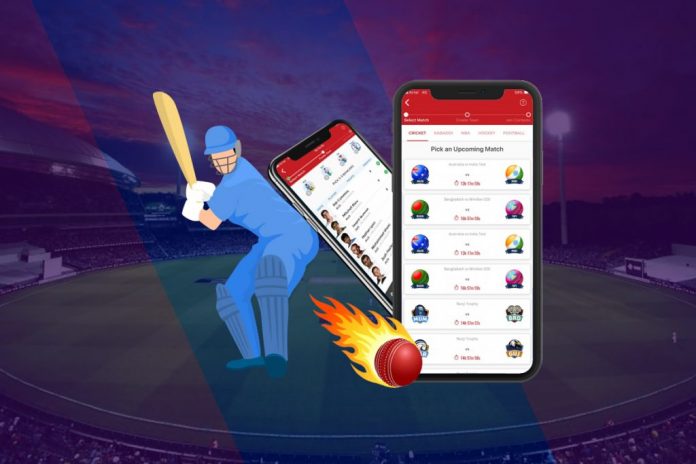
This article is written by Darshit Vora of SVKM, Narsee Monjee Institute of Management Studies. The article analyses the growth and development of fantasy games and evaluates the debated issue of whether fantasy games involve skill or chance. 

Introduction

Fantasy sports are different from other sporting games because it is the combination of both real (using stats and actual players) as well as virtual (simulated league’s running on the internet.) According to the Cambridge dictionary, fantasy games are defined as games in which persons have to choose their players from both the teams can points are earned on the basis of the performance of the player.

In simple terms, the user has to pay entry fees and choose the players on the basis of his/her knowledge which will perform well, and if the selected player performs well the user will receive rewards. The prominent reasons for such tremendous growth of the fantasy Industry are due to the advent of technology, smooth internet connectivity, and an increase in the use of smartphones. In the past, many, countries didn’t realize the potential of the fantasy sports industry however, due to acceptance received to these apps from user’s many countries have started passing legislation to regularize and take efforts in developing this industry which can positively contribute to the growth of the country.

The country in recent times that has achieved the most growth in this industry in India. Indians have a special attachment towards sports. Due to the large availability of digital infrastructure and engineering talents in India. India has all the potential to become a global hub of fantasy games and influence the global sports industry and commerce.

Growth and development of Fantasy Gaming Apps 

Fantasy games had their origins in the year 1960 where a Harvard Psychology professor named Bill Gamson invented a game which is now known as “The Baseball Seminar” in this game the college students were supposed to select a fantasy team of baseball players and the participants had to pay a nominal fee of ten dollars. Fantasy gaming started getting noticed post-globalization especially when the consumption of the internet increased across the world. Many western countries developed their sports platforms and users were allowed to select their teams after paying the minimum charge by the end of 1990 fantasy leagues on various sports were created like Baseball, Football, and Hockey.

In India the emergence of fantasy was felt post-2000’s the first fantasy game in India was ESPN super selector where the users had to select eleven players and form a cricket team. The game got instant popularity and within the span of two years had a user base of more than 5 lakhs. The major reason for such a boost was the 2003 world cup in which India played well and reached the Finals of the World Cup. Seeing such popularity with respect to fantasy games in India many media houses launched their own fantasy games. However, post the World Cup the user base of the fantasy apps reduced tremendously. The companies tried to make apps for different sports like Hockey and Football however it didn’t have as much acceptance as it did for cricket. Due to the reduction in the user base, many fantasy gaming companies had to be shut down.

In the year 2008, there was a launch of an inaugural season of the Indian Premier League. During that period Mr. Harsh Jain was looking to play fantasy cricket but couldn’t get any good app on the internet. Therefore, he and his friend named Bhavish Sheth and developed their own fantasy gaming platform which they named Dream 11. It is also the first Indian Fantasy gaming app. Indian Premier League had a major role in the development of Fantasy gaming apps in India. After seeing the success of Dream 11 in the field of Fantasy gaming a lot of Indian Companies started launching their own apps. Due to the increase in the availability of affordable smartphones and internet penetration the user base of fantasy games started growing rapidly.

Prior to 2020 USA had the largest fantasy gaming market with an annual revenue-generating around 2.91 billion US dollars. Until recently it was taken over by India. In India, from 2016-2019 there was a growth of 212% the major reason for such a growth of people getting internet access because of Jio. During that period fantasy gaming apps started getting acceptance from users in other sports like Kabaddi, Hockey, etc. The future of Fantasy gaming in India is bright and it is expected to generate an additional 5000+ direct and 7000+ indirect jobs in the next 2-3 years.

Existing laws and guidelines of Fantasy gaming apps in India. 

In India, there are limited laws on fantasy gaming apps however, regulation on fantasy gaming can be interpreted in various gaming laws. Fantasy gaming is not recognized expressly as a subject in schedule VII of the Indian Constitution but till today it is interpreted under the list of gambling and betting. It is present in the state list giving authority to the state to legislate the matter.

Before coming into force of the constitution gaming was governed under the central legislation namely the Public gambling Act, 1987 in that act it was expressly mentioned that games that involve skill won’t be regulated under the gambling act. Further in the 276th Law commission, a similar thing was held that games based on mere skills can’t be considered as gambling. The Indian Courts on numerous instances declared fantasy gaming apps as games of skill. Further under Sikkim online gaming (regulations) act, 2008 allows games based on skill after acquiring a license from the relevant authority. 

The Nagaland Prohibition of Gambling and Promotion and Regularization of Online Games of Skill Act, 2015 the only state legislation in India that recognized fantasy apps as games of skills. However, the legislation mandates the app developers to obtain a license to launch the app in the market.

Federation of Indian Fantasy sports had laid down the following conditions in its charter they are as follows:

  • Minor user is restricted from playing fantasy gaming apps.
  • In contests, skill is considered as the most important component which is exercised at the time of selection of the team.
  • Post the deadline the users can’t change their selected squad.
  • The user at the time of selection should exercise skills and have to act according to the rules that are mentioned in the terms and conditions.
  • The users will only be allowed to select real-world players.
  • The contest will be held on those matches that will take place in the future and not on historical sports matches.
  • Members are restricted from offering gambling services.

The charter ensures that the game run by its members is purely skill-based and does not fall under the ambit of ‘gambling’. 

An SLPC report suggested that a clear guideline on fantasy gaming apps is required which should be centrally administered and nationally applicable to boost the growth of fantasy gaming apps in India.

Niti Ayog, the think tank of the government of India agreed to this view of SLPC and in its discussion paper gave the following guiding principle for online fantasy platforms in India.

  • The paper emphasized that the games should be based on skills for that the paper has recommended to forward the statistical data to the self-regulatory organization.
  • Fantasy sports contests shall not be offered to users less than 18 years of age.
  • The terms of participating in the contest should be transparent and fair and the users should be given pre-declared rules further complaint resolution mechanism should be provided to the users.
  • Advertising and promotion of fantasy sports contests should be in compliance with the advertisement standards as prescribed by an appropriate body.
  • If all the above guidelines are compiled then the state should offer criminal immunity to the app developers.

Though the development of laws and guidelines are limited as compared to other developed countries. However, the most essential thing is that fantasy gaming app is getting recognition and is being considered as the game of skill that protects the app developers from any criminal liability leading to the growth of this industry. 

Fantasy gaming apps are games of chance or skills 

This has been one of the most debated issues, it is a necessary difference between a game of skill and the game of chance. In Rex Vs Fortier the court held that game of chance refers to a game that is based entirely to a lot based on luck or uncertainty in which judgment, skill, or practice has no officer is known as the game of chance. Whereas a game of skills refers to where the outcomes are derived by the applicability of considerable knowledge or skills.

Arguments why fantasy gaming apps are a game of chance

According to Black’s Law dictionary gambling is the act of risking something of value (especially money) for a chance to win a prize. Complying with the definition fantasy gaming apps should be considered as games of chance it involves risking money for the chance of winning a prize. Fantasy gaming apps only involve user skill to select the team post that the users don’t have control over the performance of the athlete the same reason was given by the New York Supreme Court when it declared fantasy games as unconstitutional.

There is a difference is playing online and offline there is a scope of manipulation in online games which changes the nature form skill to chance. Further many fantasy apps allow their users to form multiple teams which provide greater security to the users which reduces the element of skill. Further, in fantasy gaming apps players which have more points are generally good players thus giving an indication to the users and reducing the element of risk.

Arguments why fantasy gaming apps are games of skill

Game of skills is those where even if there is a preponderance of skills and even if there is an element of chance if a game is preponderantly a game of skill, it would be a game of mere skills. Indian Courts have also relied on the dominant factor test. The test mentions that if the game is based on the user’s application of applying skills, they will be considered as not violating the gambling law whereas the outcomes which are totally dependent upon the element of chance would be considered as gambling. In Fantasy gaming, the selection of a team requires the user’s application of skill and satisfying the requirement of dominant test and can’t be considered as gambling.

A data report given by Prof. Zvi Gilula and the data showed that well-informed players are more likely to perform better as compared to non-skilled players. In the Supreme Court in Lakshmanan’s case, the court has held that skill of a person is a material factor whether the game is based on skill or chance. In fantasy gaming apps selecting a team is a material factor and should be considered as the game of skills. 

The Punjab and Haryana High Court in Varun gambler vs Union Territory of Chandigarh and Ors court held that fantasy games are a game of skill because of the following reasons:

  • Assesses players based on their availability and evaluate players on the basis of their worth and eliminating any kind of biasness for individual or team.
  • The players are selected based on their past performance and statistics.
  • The before selecting a team have to analyse the pitch, the form of the player, and the format of the game.

Further according to statistics, a person who knows players for, pitch conditions is more likely to win the competition than a person who has very little knowledge of the game.

The Indian Court has gone in favor of the view it is considered as a game of skill. Fantasy games pass both the tests laid by courts in different cases i.e., preponderance test and dominant factor test. The users select a team based on their technical expertise and prior knowledge of the game. A game can’t be considered as a game of chance just because it has an element of unpredictability. 

Legal development of fantasy gaming in other countries 

United States

In the United States, fantasy sports legislation is a state as well as a federal subject. Due to such demand for fantasy sports, the legislation was forced to enact laws that may regulate fantasy games. Interstate wire Act was an initial act that was passed to impose restrictions on sports betting but the act allowed legal gambling. Then came the Unlawful Internet Gambling Enforcement Act in 2006 the act exempted fantasy games from the scope of gambling or betting. In the year 2014 then-Governor, Mr. Andrew Coumo signed a bill named Interactive fantasy sports bill, the bill was enacted that it would allow fantasy games with the state of New York if the license is acquired by the developers.

Though a lot of states have adopted laws that support fantasy games and allow their use in that state but some states have shown a restrictive approach and haven’t still considered fantasy games as legal in their states.

Australia

Similar to India, Australia also has limited legislation to regulate fantasy games. In 2001 Interactive gaming Act came into effect. The act prohibited gaming but allowed games that are based on skill. Due to the growth of online fantasy sports post-2015, an amendment bill to the Interactive gaming act was passed just to regulate the fantasy industry. In the recent amendment in 2021, no fantasy gaming apps can operate without acquiring a license from the appropriate authority, and for any fantasy game to operate it should be a skill-based game.

United Kingdom

The United Kingdom as compared to other countries has a clear position. UK fantasy apps are regularized under the Gambling Act of 2005 jurisdiction. The act allows the functioning of fantasy sports operations provided they have acquired a license. The benefit of this law is that it allies in the whole of the United Kingdom thus reducing ambiguity for sports operators. The license is to be acquired from the Gaming Commission of license. The commission would only grant a license if all the rules are compiled by the operators. 

Possible measures that can boost the growth of Fantasy games in India 

No legislation in India concerning fantasy gaming app was passed because it was still not clear the game is based on skill or based on chance. However, the Supreme in Avinash Malhotra vs State of Madhya Pradesh court dismissed the public Interest litigation and held that fantasy games are games of skill and thus can’t be considered under the scope of gambling. Considering the recent growth of fantasy games in India the following steps must be taken to regulate and boost the growth of fantasy games in India.

  • It is essentially a separate subject that should be created concerning online games and should be kept in the Union list. A subject in Union list only requires passage of central laws and it would be applicable throughout the country thus removing any kind of ambiguity or objections from the states. This, however, would require passage of the bill and should be passed with a 2/3 majority.
  • Separate legislation should be enacted which would regularize the fantasy gaming Industry. The legislation should mention those who can’t play the game like unsound, minor, etc. Further, the legislation should mention about liability that the operators will have to pay if the rules of the legislation aren’t followed.
  • In the Legislation, there should be an appointment of regulatory authority that would monitor the activities of fantasy gaming companies and can take strict action against those who contravene the proviso of the legislation.
  • The Central government should take efforts to ensure that no ban is being imposed by states on the functioning of fantasy games. If a few states would ban fantasy games it would negatively impact the growth of the Industry.
  • In the legislation, the companies shall be obligated to obtain a license from the regulatory authority. The license can only be given by the regulatory authority after the company has complied with the rules of the law. Statistical data should be furnished to the regulatory authority to ensure that the company is operating within the law.
  • The regulatory authority should check that all licensed fantasy games have a grievance mechanism to protect the interest of the customers.
  • The legislation should also mention advertisement standards concerning promotions of fantasy games. The standards should be made complying with the principle of decency and morality.
  • The legislation and the government should ensure that the private data of the users aren’t getting leaked. If it is strict penalty and imprisonment punishment should be granted to those involved. If the data of the users are safe so more users would download the app and thus boosting the growth.
  • The government should take measures to provide skills and knowledge to young people who are willing to enter this industry. The skill and knowledge would contribute to the company achieving greater success and therefore contributing positively to the economy.
  • Foreign direct investments should be allowed in this industry to 100% through the automatic route where the company will have to face no regulations, which in turn, will boost the growth of this Industry.

These measures should be adopted to ensure that the fantasy gaming industry keeps on growing which will lead to a positive outcome towards the development of the economy. 

Critical Analysis 

Fantasy Industry over the years has witnessed tremendous ups and downs. Earlier fantasy games were considered as a form of gambling has started getting recognition and is been viewed as a game of skill. In recent years the country which has received maximum growth is India. India has though has laws on fantasy games but they are in bits and pieces to foster further growth of this industry in the country comprehensive uniform legislation must be passed.

Judiciary has played an effective role in recognizing the legality of fantasy gaming apps in our country. The Courts have expressly recognized fantasy games as those which are based on skills because it involves the application of knowledge from the part of users the players are picked by the users based on the pitch conditions, past performance, and format of the game. Thus, the argument that fantasy games are based on luck or chance can’t be held valid.

India is not the only country that lacks legislation concerning regulating fantasy gaming apps. Even the United States due to its federal nature has limited legislation to regulate fantasy gaming apps. However, counties should take inspiration from the UK which has a uniform law on the regulation of fantasy gaming apps.

Conclusion 

Niti Ayog which is the think tank of the government to frame guidelines concerning the regularization of fantasy games is a step in the right direction. However, framing of guidelines would not make it binding to have strong uniform legislation the legislature will have to take efforts and will have to ensure that the legislation will be enacted by all the states of the country. Along with making efforts to boost the growth equally compliant efforts should be taken to ensure that consumer interest is not violated. Therefore, uniform legislation that discusses both parties should be passed. Government should also formulate policies to regulate advertisement policies so that companies in the name of awareness don’t breach the principle of decency and morality. Thus, it can be concluded that fantasy industry in India has a lot of potentials but that can only be achieved through government efforts. 

References

[1] https://blog.ipleaders.in/fantasy-sports-india/

[2]https://www.livelaw.in/columns/business-of-fantasy-sports-legality-of-fantasy-gaming-172440

[3]https://www.indiatech.org/wp-content/uploads/2020/09/IndiaTech.org-Whitepaper-OnlineFantasySports-compressed.pdf

[4]https://assets.kpmg/content/dam/kpmg/in/pdf/2019/03/online-gaming-india-fantasy-sports.pdf

[5] https://ijlpp.com/evolution-in-the-jurisprudence-of-fantasy-sports-games/


LawSikho has created a telegram group for exchanging legal knowledge, referrals and various opportunities. You can click on this link and join:

https://t.me/joinchat/L9vr7LmS9pJjYTQ9

Follow us on Instagram and subscribe to our YouTube channel for more amazing legal content.

Download Now

Customs : various types of duties

0
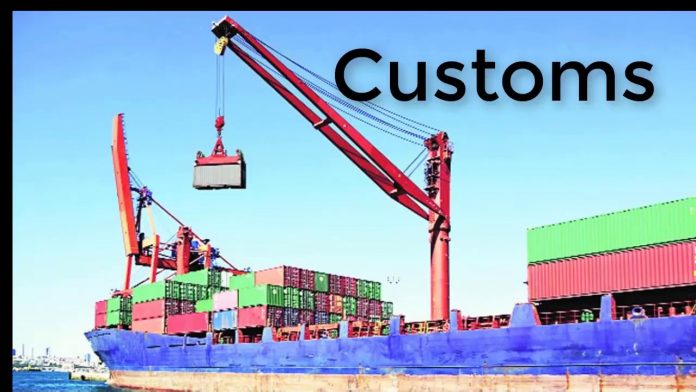
Image source: https://bit.ly/34G1veV

This article has been written by Sakshi Srivastav, am a fourth-year law student pursuing a degree in B.A.LL.B (Hons.) from the Rajiv Gandhi National University of Law, Punjab and Prakhar Mishra is a fourth-year law student pursuing a degree in BB.A.LLB (Hons.) from National Law University Odisha.

Abstract

The Customs Act and The Customs Tariff Act (hereinafter referred to as CTA), along with various Rules and Regulations in relation to them, serve as the consolidated codes of law on the levy of Custom duties on import and export in India. However, the purpose of these customs laws is more than regulating the export and import of goods. In addition, they keep a tab on smuggling but more importantly, as we will subsequently discuss, they strive for the protection of the domestic industry from any unwarranted damage. The article attempts to highlight the extent to which the Customs Laws in India serve the purpose of protecting domestic industry by examining the different types of Customs duty levied on goods transported across international borders. Further, the introduction of GST has brought certain changes in certain types of Customs Duty. The article, to a limited extent, also delves into that.

Introduction

Custom duty, in simple language, is an indirect tax imposed on the export and import of goods from one country to another. The use of the term “custom” in custom duty, which means an ancient practice so uniform and persistent in its usage that it becomes a source of law, indicates that the system of levying a tax on imported or exported goods is being followed since antiquity. In ancient times, the merchants, upon their entry to a place, followed a widely prevalent custom of presenting some form of gift or the other to the king in whose kingdom they intended to sell their merchandise. As the system evolved, merchants started paying money. Kautilya in his work Arthashastra, which is a widely popular book on ancient Indian political diplomacy, makes a mention of the practice of imposition of Shulka that comprised of import and export duties collected at the city gates on the merchandise coming in and going out, respectively.

The British, after colonising India, introduced a set of legislation and, thus, provided us with a comprehensive and elaborate system of levy of custom taxes on the goods exported from or imported to the country. In Independent India, the Parliament repealed the colonial laws on customs and substituted them with the Customs Act 1962 and the Customs Tariff Act 1975, respectively. These two pieces of legislation derive constitutional validity from Article 265 and Entry No. 83, List I, Schedule 7 of the Indian Constitution. While Article 265 states, “No tax should be levied or collected except by the authority of law”, Entry No. 83 incorporates levy of customs duty along with export duty in the Union List. These two, when read together, give the Parliament the authority to enact the laws on Customs.

Types of duties

This chapter has been divided into two heads. The first head deals with different types of duties that are imposed on imported/exported goods.  Further, there is a discourse on exemptions from Customs duty under the second head.

Different types of duties that could be imposed on goods transported across international borders are as follows-

Basic customs duty

Basic Customs Duty (hereinafter referred to as BCD) is a type of tax that is imposed under the Customs Act, 1962. Before discussing this type of custom duty, it is pertinent to note its primary source. The basic customs duty that is imposed on the goods emanates from Section 12 of the Customs Act, which talks about dutiable goods. Clause 1 of Section 12 reads, “Except as otherwise provided in this Act, or any other law for the time being in force, duties of customs shall be levied at such rates as may be specified under [the Customs Tariff Act, 1975 (51 of 1975)], or any other law for the time being in force, on goods imported into, or exported from, India”

Under the CTA, Schedule I deals with the rates of duty charged on goods imported to India, while Schedule II specifies the chargeable rates on the goods of export. While Schedule I is huge and comprehensive with pages running in hundreds, Schedule II only consists of a handful of pages. The reason for the aforementioned is that Customs Duty under Section is mostly imposed on the import of goods because as general practice goods exported outside the country are rarely subjected to any duty. Though the Central Government has the power to amend Schedule II and augment the list of goods that are subjected to export duty under Section 8 of the CTA.

Under Schedule I, articles or goods have been divided into various categories that are subjected to varying rates of BCD. The Basic Custom duty is determined either on the ad-valorem basis i.e. value of the subject matter or on a specific rate basis that is ascertained as per its weight or other miscellaneous criteria. Another mode of categorization of the rates of BCD could be into standard rates and preferential rates. The articles are ordinarily subjected to standard rates but in specific cases, a preferential rate, a reduced rate of tax, is imposed on the goods of import. However, to avail preferential rates, the importer needs to satisfy the eligibility criteria that are as follows-

  1. The importer must make a specific claim for the imposition of preferential rate;
  2. The goods of import must be manufactured or produced in any of the preferential areas notified in the official gazette by the Central Government from the power vested to it under Section 4(3) of the CTA. (An area becomes a preferential area upon trade agreements between two or more countries.) Further, for determining whether the goods in question have originated in a preferential area or not, Section 4(2) of the CTA authorises the Central Government to make rules in this regard and notify them in the official gazette.

Integrated tax

With the introduction of GST in 2017, the goods being imported to India have started being subjected to Integrated Goods and Services Tax (IGST) in supplement to BCD. 

As per the newly amended Section 3(7) of the CTA, an integrated tax at a rate, equivalent (though less than 40%) to the rate at which IGST is being charged on a good of similar nature that is in supply within the country, will be levied on the value of the imported goods. The said tax is being levied in addition to BCD and the additional duties if imposed.

Goods and services (GST) compensation cess 

GST Compensation Tax is a tax that is levied on the goods and services in supply within India with the objective to compensate the states for the possible losses they have incurred owing to the introduction of GST in 2017. 

As per the newly amended Section 3(9) of the CTA, this GST Compensation Tax would also be applicable on imported goods and at such rate at which the said tax is being charged on similar goods that are in intra-state or inter-state supply in India. This tax is in addition to the BCD, integrated tax, and the additional duties if imposed.

Additional duties of customs

With the introduction of IGST, additional duties of customs have been subsumed under it with the exception of certain articles on whose manufacture/produce within the country excise duties are still levied.

Section 3 of the Customs Tariff Act deals with the duties levied in addition to the Basic Customs Duty. Such duties known as Additional duties of customs or Countervailing Duties are discussed under this head. 

  1. Additional Duty under Sub- Section 1

There are certain goods on whose production or manufacturing within the Country, the Government imposes excise duty. To prevent any exhibit of unfairness towards the domestic manufacturers or producers of domestic goods, Section 3(1) mandates the imposition of duty equal to excise duty on the imported goods of like nature. The sub-section further clarifies that in case the excise duty is not fixed but is levied at a certain percentage of the value of like good, the additional duty on the imported goods would also be levied in such a manner.

Further, the explanation attached to Section 3(1) states that in case a domestic article in the like of the imported article is not being manufactured or produced in India, a duty equivalent to the excise duty imposed on a domestic article of the class or description similar to that of the imported article would be levied on the latter.

After the introduction of GST in 2017, there are not many goods that are subjected to excise duty. Therefore, the additional duty under this Sub-section is not levied only in exceptional circumstances when the imported good in question has a like domestic good in the subjection of excise duty. 

  1. Special Additional Duty/Counter-balance duty under Sub-Section 3

While there are many articles whose domestic production or manufacturing is not subjected to excise duty and consequently Sub-section (1) does not come into play in relation to imported articles of like nature, there is a possibility that the raw material or any other material used for the domestic production of the said article may have been subjected to excise duty. This would put the domestic producers at a disadvantageous position as they would be obliged to bear a cost that their international counterparts did not bear. To prevent the aforementioned and make the position of both the producers commensurate with each other, Section 3(3) comes in handy, though with a wider scope. As per this provision, irrespective of the fact whether an additional duty under Sub-section 1 has been levied or not, the Central Government has been vested with the power to apply its discretion and impose a counter-balance duty on the imported goods if the raw or other material used for the manufacture of a like domestic good had been subjected to excise duty.

  1. Special Additional Duty/ Counter-balance Duty under Sub-section 5

Besides the levy of excise duty, articles are also subjected to taxes in the nature of sales tax, value-added tax (these two now subsumed to make way for GST), local tax, or any other tax on their sale, purchase, or transportation within the country. In such a situation, the Central government has been empowered under section 3(5) to apply its discretion and levy this counter-balance duty on imported goods if alike domestic good had been subjected to the aforementioned tax. For such subjection, it is immaterial if the imported article has been subjected to Section 3(1) or for that matter Section 3(3) or not.

Protective duties

Section 6 and 7 of the CTA empower the Central Government to impose protective duties on certain imported goods if it deems such action fit for the protection of any domestic industry. The procedure for the imposition of such protective duty is comprehensive and could be understood through the following points-

  1. The Tariff Commission of India recommends and specifies the amount or rate of protective duty to be imposed on certain imported goods to the Central Government.
  2. Upon such recommendation, if the government is satisfied that the levying of such duty is necessary for the protection of any domestic industry, it must impose it via a notification in the official gazette. The amount of duty imposed must not exceed the recommendation given by the Commission.
  3. The government is obliged to present such notification in the form of a Bill before the Parliament within six months from the issuing of such notification.
  4. If the government fails to perform the aforementioned, or if the bill is not passed, the notified duty will lose validity.
  5. If the prevailing circumstances lead the government into believing that a protective duty is in excess of its objective or, is failing to achieve its objective, it could either lower or increase the amount of duty. For such an alteration to be effective, point iii) must be followed. 

Safeguard duty

Under Section 8-B of the CTA, if certain imported goods are being supplied in the country in such huge quantities or under such conditions that they are causing or have the apprehension of causing serious injuries to any domestic industry, the Central Government can impose safeguard duties on such goods. However, before its imposition, an inquiry needs to be conducted with regards to the nature of the threat the imported goods possess. It is only when such inquiry confirms the threat of or the already incurring serious injury that the government levies a safeguard duty. 

However, as per the provisions of Section 8-B (2), even before the final determination of the effect of certain imported goods on the domestic industry, the Central Government may impose a provisional safeguard duty, for a period not exceeding 200 days, on such goods based on a preliminary inquiry. 

Exemption

Notwithstanding the aforementioned, the following imported goods cannot be subjected to Safeguard Duty-

  1. Unless the quantity supplied to India crosses 3% of an article’s total import, such imported article, if originating from a developing nation, will be exempted from Standard Duty.
  2. Such imported articles will also be exempted that originate from more than one developing country, and the individual share of imports of each country is less than 3% with the aggregate being less than 9% of the total import.
  3. Those imported goods will be exempted that are imported by a 100% Export-Oriented undertaking (hereinafter referred to as EOU) or holdings in a Free Trade Zone or Special Economic Zone. However, the government may issue a notification specifically in the regard to the exclusion of certain goods from the exemption.

Countervailing duty on subsidized articles 

There are certain goods that are granted subsidies to a certain extent by a country either upon their manufacture/production in the said country or on their export or sometimes even transportation. In such a scenario, to bring the domestic producers at par with the traders in subsidized imported goods, Section 9 of the CTA empowers the Central Government to impose a countervailing duty on the said goods by notifying the same in the official gazette. This section is applicable to goods that are not being directly imported from their country or place of manufacture/production, and also those that are not in the same condition in which they were exported from their place of manufacture or production. However, the section explicitly prohibits the imposition of such an amount that exceeds the subsidy and the duration that exceeds 5 years (however, it could be revoked before the expiry of the stated time limit).

While the final determination of the amount of countervailing duty is still under process, the Central government has the power to impose a duty on the basis of a provisional determination. However, such duty must not exceed the amount of subsidy.

This section also comes to rescue in cases when it is observed, and the government agrees, that the domestic industry has been inflicted with an injury difficult to overcome owing to the humungous import of subsidized articles in a short period. In the foregoing scenario, Sub-section 4 bestows upon the Government the power to provide for a retrospective imposition of the countervailing duty. However, keeping the fairness of the procedure in mind, the provision mandates that the retrospective application of the duty must not go beyond 90 days from the date of the issuance of notification.

Anti-dumping duty

Dumping of goods is one of the widely pervading issues in the trading world. When the exporter exports an article to any other country or territory at a price that is less than its normal value, then they are said to be engaging in the practice of dumping. To prevent such dumping of imported goods in India, Section 9A of the CTA imposes anti-dumping duties on the goods exported to India with the intention of dumping. However, the amount of duty levied must not exceed the margin of dumping i.e. Normal Value – Export Value and further, the time period for such levy must not exceed 5 years (however, it could be revoked before the expiry of the stated time limit).

There have been instances of traders engaging in such practices that warrant the escape of such goods from the imposition of anti-dumping duty. In such a scenario, under Section 9A (1A), if the government, upon undertaking an inquiry on the same, finds that such bypassing has taken place then it could bring even circumventing goods within the ambit of Section 9A (1). 

While the determination of the amount of anti-dumping duty is still under process, the Central government has the power to impose a duty on the basis of a provisional estimate.

However, if after the determination, the final calculated amount is lower than the provisional estimate, the former will prevail and the excess money will be refunded.

Further, under Section 9A (3) the government has been empowered to provide for a retrospective imposition of the anti-dumping duty not exceeding 90 days from the date of the issuance of notification if it is observed, and the government through its enquiry agrees, that-

  1. The exporter of a good to India has been engaging in dumping for a long time and it caused harm or that importer would have known about the said practice or that it may cause harm to the domestic industry.
  2.  The domestic industry has been inflicted with an injury difficult to overcome merely from the levying of prospective anti-dumping duty owing to the humungous dumping of articles in a short period.

Exemption

Dumped goods imported by any 100% EOU will be exempted from the levying of anti-dumping duty, however, the government may exclude such goods qualifying for exemption as per the provisions laid down under Sub-Section 2A of Section 9 A of the CTA.

Further, as per Section 9B of the CTA, the imported goods, falling under the situations mentioned thereunder, can be saved from the subjection of the provisions given under Section 9 viz. countervailing duty on subsidized articles, and Section 9A viz. anti-dumping duty. For Example, an imported article cannot be made subject to both the aforementioned duties if the purpose is to compensate the domestic industry for the same situation of subsidization and dumping.

Social welfare surcharge on imported goods 

Before 2nd February 2018, the goods imported to India were subjected to additional duty in the liking of Education cesses that were then utilised for the promotion of education in India. However, these cesses, with effect from the aforementioned date, have been subsumed to from the Social Welfare Surcharge (hereinafter referred to as SWS) which has a wider purpose of promoting not only education but also other welfare objectives like social security and health. 

These are charged at the rate of 10% on the aggregate of duties, taxes or cess imposed on the goods under Section 12 of the Customs Act 1962. 

Exemption

The following duties are exempted from being subjected SWS-

  1. Safeguard duty under Section 8 B of the CTA
  2. Countervailing duty on subsidized goods under Section 9 of the CTA
  3. Anti-Dumping Duty under section 9A of the CTA
  4. SWS on imported goods itself

Exemption from customs duty

The Central Government has the authority to exempt certain goods or an entire description of goods from the levy of customs duty. The exemption can broadly be divided into two categories-

General exemption

A general exemption is when the Central Government, through a notification in the official Gazette, exempts goods of a particular description from the whole or any part of customs duty imposed on it. This exemption could either be an outright exemption or be subjected to certain terms and conditions. 

Special exemption

A special exemption is when the exemption is granted on a case-by-case basis in reference to a specified good/s owing to certain exceptional circumstances.

Judicial decisions

Associated Cement Companies Ltd. V/S Cc 2001(128) Elt 21 (Sc)

Legal Background

Goods, whether imported or the ones to be exported, are the subject matter of Customs law. 

Section 2 Sub-section 22 of the Customs Act, 1962 defines goods as- 

  1. Vessels, aircraft, and vehicles 
  2.  stores 
  3. baggage 
  4. currency and negotiable instruments and;
  5. any other kind of movable property

Facts

The Petitioners, who aggrieved with the order of the Customs, Excise, and Gold (Control) Appellate Tribunal had approached the Supreme Court, were the importers of designs and drawings in the form of hard copies that were transported through courier or parcel system. In the instant case, the Assistant Commissioner of Customs, classifying them as imported goods, levied customs duty on these design and drawing papers.

The appellants argued that drawings and designs do not fall within the ambit of the definition of “goods” provided under Section 2(22) of the Customs Act and therefore the Assistant Commissioner of Customs did not have the authority to levy customs duty on their imported designs and drawings.

Decision

The Highest Court of the Land noted that while a design or a drawing in a digital format are intangible in nature and does not fall within the definition of goods, the instance they are converted or transformed into any tangible format in the form of paper or CDs or DVDs, they become movable goods and thus start falling within the definition given under Customs Act.  

Therefore, the Apex Court held that the Assistant Commissioner of Customs had the authority under the Customs Act, 1962 to levy duties on the items imported by the petitioners.

Aidek Tourism Services Pvt. Ltd. V/S. Commissioner Of Customs  2015 (318) Elt 3 (Sc)

Legal Background

Section 3 (1) of the Customs Tariff Act, 1975 mandates for the subjection of imported goods to an additional duty equal to the excise duty levied under Central Excise Act, 1944 on the domestic goods of like nature.  This is done to bring the domestic producers/ manufacturers at par with their foreign counterparts.

Question of law

Whether an imported good be exempted from an additional duty under Section 3(1) of the CTA if a good of like nature being produced/ manufactured in India has been exempted or is exempt from Excise duty?

Decision

The Supreme Court while hearing this appeal held that the language used in Section 3(1) of the CTA warrants for the imposition of such additional duty on the imported goods that is equivalent to the excise duty being levied on a like domestic good. Meaning thereby that if the excise duty has been reduced or exempted by notification, the additional duty on the imported good will have a direct impact of such modification in the excise duty. Therefore, the additional duty under Section 3(1) will be reduced, increased or be even made nil depending upon the change in the excise duty.

The Apex Court, thus, gave an affirmative answer to the aforementioned question of law. 

Image source: https://bit.ly/34G1veV

Rishiroop Polymers Pvt. Ltd. V/S Designated Authority And Additional Secretary 2006 (196) Elt 385 (Sc)

Legal Background

Section 9A (5) of the CTA provides that the time-period for the imposition of an anti-dumping duty cannot exceed five years. However, the proviso to the said sub-section authorises the Central Government to extend the aforementioned time-period for another five years, if after conducting a review, it is of the notion that a lapse in the duty will lead to a relapse of the practice of dumping or the injury caused therefrom.

Facts

The appellant was an importer of rubber goods from Korea. Upon the complaint made by certain domestic industries that the import of the rubber goods from Korea is in the nature of dumping and is therefore seriously harming them, an enquiry was conducted by the Designated Authority which then recommended the Central Government to levy anti-dumping duty on the goods in question. After the passage of five years, upon a review enquiry, the Authority found that the cessation of anti-dumping duty may lead to a recurrence of the dumping or the damage caused to the domestic industry. The Central Government, working on the recommendation of the said authority, extended the period of duty imposition for another five years. The appellants challenged the same-

Decision

The Supreme Court, upholding the decision of the Designated Authority and the Tribunal that had upheld the decision of the former, stated that the primary objective for the setting up of a review enquiry is not to ascertain whether there was a need for the extension of the duty or not, rather it is to see if the non-extension of the duty would lead to the recurrence of dumping and cause serious injury to the domestic industry with a causal link present between the two. 

Conclusion

Ours was a closed economy with a very restrictive set-up for a long time since independence. The leaders weighed different parameters viz. newly achieved independence, our history, and the exploitation we underwent at the hands of the British and decided to create an economic environment suitable for the budding of our domestic industries by, inter alia, blockading foreign competition. However, as the rapidly progressing world demanded a change in the economic policy, India marked its steps towards the path of Liberalisation, Privatisation, and Globalisation (LPG) in the sector of commerce. The aforementioned led to a massive inflow of foreign capital and articles in the Indian Market that was no longer closed for outsiders. Consequently, domestic industries that had hitherto been safeguarded from foreign competition were no longer as protected as before.  However, the situation in India was still very different from other open economies in that it warranted protection to the indigenous industry to prevent the country from an economic crisis. Acknowledging the aforementioned concern, the Central Government introduced a series of legal provisions through amendments in the Customs Tariff Act, 1975. For example, Section 9A, providing a legal provision for the imposition of anti-dumping duties on imported goods being dumped into India, was inserted in the CTA.

Therefore, present India, though committed to LPG, lays emphasis on the protection of domestic producers/ manufacturers, from any injury that is caused or apprehended to be caused to them, through a set of legal provisions under Customs Laws. The levying of additional countervailing duties under Section 3, protective duties under Sections 6 and 7, safeguard duties under Section 8B, duties on subsidized goods under Section 9, anti-dumping duties under Section 9A, of the CTA on the imported goods bear testimony to the aforementioned. Customs laws, by means of different types of duties, attempt to place both the domestic and foreign producers/ manufacturers on an equal footing but with a slight bent towards the former which in my opinion is not arbitrary, rather reasonably justified.


Students of Lawsikho courses regularly produce writing assignments and work on practical exercises as a part of their coursework and develop themselves in real-life practical skills.

LawSikho has created a telegram group for exchanging legal knowledge, referrals, and various opportunities. You can click on this link and join:

https://t.me/joinchat/L9vr7LmS9pJjYTQ9

Follow us on Instagram and subscribe to our YouTube channel for more amazing legal content.
Download Now

Sharjeel Imam’s bail approval in the Allahabad High Court

0
bail

This article is written by Ansruta Debnath, a student currently pursuing the BA LLB degree from National Law University Odisha. This article covers the Allahabad High Court order that granted bail to Sharjeel Imam, the various cases against him and the implications of granting bail in sedition cases.

Introduction

Sharjeel Imam, a prominent figure of the protests organized against the Citizenship (Amendment) Act, 2019, was granted bail by the Allahabad High Court. Multiple cases have been lodged against him, under various provisions of the Indian Penal Code, 1860 and Unlawful Activities (Prevention) Act, 1967, the primary being Section 124A which penalizes sedition. This article is on the Allahabad High Court order granting bail and the various other cases against Imam. That is followed by a brief discussion on bail and the social implications of granting bail in cases of sedition. 

Sharjeel Imam and his anti-CAA speeches

Sharjeel Imam was one of the most prominent organizers of the Shaheen Bagh protest against CAA 2019, which has been credited for inspiring hundreds of protests across the country. However, Imam went head-to-head with law enforcement agencies after giving a few incendiary speeches, especially the ones given in Aligarh Muslim University and Jamia Millia Islam

After the videos of his speeches went viral in December of 2019 and January of 2020, Sharjeel Imam got charged with sedition and other charges in five states. He was on the run for three days after which he finally got arrested on the 28th of January, 2020 by Delhi Police from Jehanabad in Bihar. 

The case before the Allahabad High Court was regarding Sharjeel Islam’s speech at Aligarh Muslim University. In that speech, Imam called for cutting off Assam from the rest of the country by blocking and occupying the “Muslim dominated Chicken’s Neck”. Chicken’s Neck is the very vital Siliguri Corridor that connects West Bengal (and the rest of the country) with the north-eastern part of India. Following that speech, cases were registered against him in Uttar Pradesh, Assam, Arunachal Pradesh and Manipur. 

Imam got charged with sedition in Delhi for his 2019 speech in Jamia Millia Islam. The Delhi High Court, however, stated that on prima facie examination of his speech, the Court felt it was on communal lines. The Court thus denied his bail application.

Imam had filed a plea in the Supreme Court of India, requesting for the consolidation of all five cases. However, the Apex Court has refused to pass an interim order unless it has perused the counter-affidavits to Imam’s plea from all five states. 

What has Imam been charged with

The preliminary Allahabad High Court Order summarised the charges that Sharjeel Imam has been facing in all the five states-

  1. Assam: Sections 121A, 124A, 153A, 153B of the Indian Penal Code, 1860 and Sections 13, 15A(iii), 18 of the Unlawful Activities (Prevention) Act, 1967.
  2. Uttar Pradesh: Sections 124A, 153A, 153B, 505(2) of the Indian Penal Code, 1860.
  3. Manipur: Sections 120B, 121, 121A, 124A, 153A of the Indian Penal Code, 1860.
  4. Delhi: Sections 124A, 153A, 505 of the Indian Penal Code, 1860  (Section 13 of Unlawful Activities (Prevention) Act, 1967 subsequently added).
  5. Arunachal Pradesh: Sections 124A, 153A, 153B of the Indian Penal Code, 1860.

Indian Penal Code, 1860

  1. Section 120(B): This Section punishes the act of criminal conspiracy as given in Section 120A of the Penal Code.
  2. Section 121: This Section describes and punishes the acts of waging war, attempting to wage war or abetting waging of such war.
  3. Section 121A: This Section punishes the criminal conspiracy to commit acts described in Section 121.
  4. Section 124A: Charges under this Section are present in all five states. This Section criminalises and punishes sedition. Sedition is defined as any act or publication which can incite hatred or promote disaffection against the Government of India as established by law. Disaffection has been explained as feelings of disloyalty or enmity.
  5. Section 153A: This Section discusses the offence of promoting enmity between different groups on grounds of religion, race, place of birth, residence, language, etc., and doing acts prejudicial to the maintenance of harmony.
  6. Section 153(B): The Section criminalises publication of imputations regarding any class of persons based on race, religion, language etc. which are prejudicial against national integration. 
  7. Section 505: Statements made to induce public mischief i.e., statements that can incite a person to cause offences against the state has been punished through this section.
  8. Section 505(2): This Section talks about statements that create or promote enmity, hatred or ill-will between various classes of people.

Unlawful Activities (Prevention) Act, 1967

  1. Section 13: Section 13(1) of the Unlawful Activities (Prevention) Act, 1967 prescribes the punishment for unlawful activities. “Unlawful activities” have been described in Section 2(o) of the Act as any activity or publication which “disclaims, questions, disrupts or is intended to disrupt the sovereignty and territorial integrity of India” or induces disaffection against India. Moreover, it also includes activities by individuals or groups which try to bring the cession of a part of the territory of India or the secession of a part of the territory of India from the Union. Section 13(2) punishes assistance to an association or person to commit any unlawful activity.
  2. Section 15A(iii): This Section talks about the disruption of any supplies or services essential to the life of the community in India or any foreign country.
  3. Section 18: Section 18 punishes conspiracy to commit or preparation to commit any terrorist act.

Order by Allahabad High Court

Arguments 

In the present case, as mentioned before, the bail applicant Sharjeel Imam was accused of offences under Sections 124A, 153A, 153B and 505(2) of the Indian Penal Code. The counsel for the applicant argued that ingredients of the offences have not been fulfilled since Imam had not urged the listeners of his speech to take up arms, engage in any violent act that can threaten the integrity and unity of the country or commit any act of hatred against any community.

Furthermore, it was argued that Imam’s speech had not had any effect on the listeners. It was said that after the Aligarh speech, which was given on the 16th of January, no incidents of violence as an effect of that speech had been registered. The Court, however, observed that this claim had no evidence.

Imam’s counsel also categorically stated that F.I.Rs could not have been registered except with prior sanction obtained under Section 196 of the Code of Criminal Procedure, 1973. Section 196 deals with prosecution for offences against the State and for criminal conspiracy to commit such offence. It was also mentioned that the FIR had been lodged as an afterthought after a delay of nine days. 

Opposing counsel, led by the Additional Advocate General and representing the State of Uttar Pradesh, stated that all ingredients of the offences were being fulfilled. Heavy reliance was also placed on the criminal history of the applicant involving similar cases and also involving cases of other heinous offences. Furthermore, the applicant’s history of engaging in such criminal actions both before and after the occurrence of the speech in issue was mentioned. As a result, opposing counsel argued that the applicant should not be released on bail because he was likely to jeopardise public order by breaking the bail requirements.

Final decision

The Allahabad Court observed that the fact that the applicant did not call for bearing arms and that his speech did not cause any violent activity was undisputed. Moreover, the applicant had remained confined for more than one year and two months against a maximum punishment of three years that he may suffer on conviction. The Court thus approved Imam’s bail application based on these facts.

The Court opined that whether Imam’s speech was seditious, whether it fulfils the criteria of all the other offences and the issue about the delay of nine days was all to be decided in the official trial which was yet to commence. According to the Court, all this information was not relevant to a bail application. It also refused to accept the plea regarding Section 196 saying that the bar created in the said section was concerning cognizance and not the registration of an F.I.R. of a cognizable offence. 

Thus, without expressing any opinion on the merits of the case, the Court asked for the applicant involved in the aforesaid crime to be released on bail after a personal bond of Rs.50,000/- with two sureties of the said amount has been furnished to the satisfaction of the Court. Bail, however, would be deemed to be cancelled if the applicant did the following:

  1. Tampering with evidence or witnesses of the prosecution.
  2. Non-cooperation with the investigation process.
  3. Indulging in any further criminal activity.

However, Sharjeel Imam has continued to stay in jail because of his alleged involvement in the Delhi riots and subsequent charges under the Unlawful Activities (Prevention) Act, 1967.

Bail

Section 50 of the Cr.P.C. talks about the right to bail of every individual being arrested without a warrant for a bailable offence. Further explanations and details of bail are provided in Chapter XXXIII of the Code. According to Section 436, any person (other than one arrested for a non-bailable offence) who has been detained without a warrant, or produced before a court, such person shall be released on bail. Bail to a person arrested for a non-bailable offence might be given at the discretion of the concerned Court. 

Section 2A of Cr.P.C. defines bailable offences as the offence that has been shown in the First Schedule as bailable or which is made bailable by any other law for the time being in force. Commission of any other offence, mentioned as non-bailable in the First Schedule, does not accord the ‘right to bail’ to the perpetrator.  

In the present case, Imam had been charged with offences under Sections 124A, 153A, 153B and 505(2) of the Penal Code all of which are non-bailable offences. Thus, Imam was not entitled to bail as a right and subsequently made an application for the same to the concerned High Court. 

Bail in cases of sedition : social implications

India is a country infamous for insistently charging people with sedition. In that context, the judiciary must ensure the liberty of an individual is not infringed upon and granting bail accordingly is just the least it can do. Too often F.I.R.s are lodged to suppress dissent. With delays and the large pendency of bail applications, the government has been able to clamp down on and stop any protest under the very draconian Section 124A. The sedition database of the civil society ‘Article 14’ says that there has been a surge of registered sedition cases after protest movements, such as those against the Citizenship Amendment Act (CAA), 2019 and the rape of a Dalit teen at Hathras in Uttar Pradesh.

Despite the rise in cases, the conviction rate however is very low. This proves the arbitrary use of Section 124A by the state. In the Disha Ravi Toolkit case, the Delhi High Court granted bail to the accused because of “scanty” or “sketchy” evidence against the accused. Moreover, the Supreme Court often warned law enforcement agencies not to utilise Section 124A to stifle free expression and has asked states to implement the directives issued during the Kedar Nath Singh vs. State of Bihar (1962). Currently, there are seven petitions pending before the Supreme Court which challenge the constitutional validity of Section 124A. 

All these observations by Courts reiterate the immense importance of granting bail to those charged with sedition. Until and unless the Court feels that releasing the accused would negatively affect the investigation and trial process, bail should be granted. 

Conclusion

The bail order of Sharjeel Imam reinvigorates and reignites the discussion on sedition and bail. Whether Imam’s speech was seditious is yet to be seen. The increasing number of cases being registered for sedition and the low conviction rate can be quite telling of the actual intentions of the state acting through law enforcement. Till Section 124A remains a lawful provision of the Penal Code, only the judiciary can protect the rights of people concerning sedition. 

References


Students of Lawsikho courses regularly produce writing assignments and work on practical exercises as a part of their coursework and develop themselves in real-life practical skills.

LawSikho has created a telegram group for exchanging legal knowledge, referrals, and various opportunities. You can click on this link and join:

https://t.me/joinchat/L9vr7LmS9pJjYTQ9

Follow us on Instagram and subscribe to our YouTube channel for more amazing legal content.

Download Now

What is the importance of intention in determining whether an offence is murder or culpable homicide : an insight

0

This article has been written by Oishika Banerji of Amity Law School, Kolkata. This article provides a detailed analysis of the relevance of intention in determining whether an offence is murder or culpable homicide. 

Introduction

Intention is a significant element in all crimes. It becomes crucial with respect to both culpable homicide and murder because it is the degree of the intention of the accused which is responsible for determining the degree of crime. Put simply, the mental element of the accused is sufficient enough to decide whether a particular kind of act results in culpable homicide amounting to murder and culpable homicide not amounting to murder as provided under Sections 300 and 299 of the Indian Penal Code, 1860 respectively. While discussing the concepts of culpable homicide and murder, it is necessary to note that every murder is a culpable homicide but every culpable homicide is not murder. Thus, while culpable homicide is a genus, murder is its species. 

Involvement of intention in culpable homicide

The term ‘homicide’ is a Latin word that literally means ‘the murdering of a human being’. Under Section 299 of the Indian Penal Code, homicide becomes culpable when a human being terminates the life of another in a blameworthy manner. Culpability is determined by the accused’s knowledge, purpose, and method of action. The offence can be punished under Section 302 or Section 304, which is divided into two parts. The essential ingredients constituting culpable homicide have been provided hereunder:

  1. There must be a person’s death;
  2. The death should have resulted from the act of another person;
  3. The act which resulted in the death must have been done with;
  1. The intention of causing death;
  2. The intention of causing such bodily injuries which can lead to death;
  3. The knowledge that such an act is likely to cause death.  

In State of Andhra Pradesh vs. Rayavarapu Punnayya and Another (1976), it was held that culpable homicide without the special characteristics of murder is culpable homicide not amounting to murder, falling under Section 304 of the Indian Penal Code, 1860. It was further held that there are three degrees of culpable homicide. 

  1. The first is murder under Section 300, 
  2. The second is culpable homicide not amounting to murder falling under the first part of Section 304, and; 
  3. The third is culpable homicide amounting to murder falling under the second part of Section 304.  

The phrases ‘intention’ and ‘knowledge’ imply the presence of a positive mental attitude, as observed by the Supreme Court of India in the notable case of  Jagriti Devi vs. State of Himachal Pradesh (2009). It was also decided that if both intent and knowledge were present, the case fell under the first part of Section 304, however, if there was simply the presence of knowledge and no desire to inflict murder by physical damage, the case fell under the second part of Section 304.

It is always difficult to establish direct proof of intent. However, the intention may be gathered and inferred from a person’s actions and the circumstances surrounding them, such as the accused’s purpose, the nature of the assault, the time and place of the attack, the weapons used, the nature of the injuries caused to the dead, and so on. These and other criteria may be taken into account when determining whether or not someone had the required purpose. When vital areas of the body, like the abdomen, are injured by a deadly or sharp-edged object, the unavoidable conclusion is that the accused meant to murder the deceased. This was the observation made by the Supreme Court of India in the 1972 case of Chahat Khan v. the State of Haryana

The relation between murder and intention

Section 300’s first clause states that if an act (including lawful omissions) is done with the purpose to cause death, it is culpable homicide amounting to murder. It is the most basic as well as the most serious kind of murder. This clause’s definition is straightforward and free of nuance. It is the action of a person with the clear intention of killing a person. Therefore, the intention is what intention does. 

While deciding the case of Gudar Dusadh v. State of Bihar (1972), the Supreme Court of India had observed that it’s worth noting that Section 300’s first clause, ‘act done with the goal of causing death,’ is similar to Section 299’s first clause, which is ‘performing an act with the intention of causing death.’ As a result, an act that falls under Clause (1) of Section 300 will also fall under Clause (1) of Section 299, and it will constitute culpable homicide amounting to murder in both cases. 

In the case of Rajwant Singh v. State of Kerala (1966),  the Supreme Court of India had observed that the second clause of Section 300 will apply if there is first a purpose to inflict bodily damage and then a ‘subjective knowledge’ that death is a foreseeable result of the intentional injury. 

In the case of BN Srikantiah v. State of Mysore (1958), the deceased had 24 injuries, 21 of which were incised. His hand, neck, shoulders, and forearms were all covered with them. Because the majority of the injuries were in vital organs of his body and the weapons used were sharp, the Apex Court determined that the intent to cause bodily harm had been shown, bringing the case under Section 300. 

Section 300 Clause (2), considers two degrees of intent: 

1. The intention to inflict physical damage.

2. The realization that severe bodily harm will almost certainly result in death.

However, in terms of Clause 3, it is sufficient that there is an intention to inflict the bodily damage that occurred. In the Virsa Singh case (1958), the Supreme Court while postulating the ingredients of Clause (3) of Section 300, stated that ‘it must be proven that there was a desire to inflict that specific bodily damage, that was to say, that it was not incidental or inadvertent, or that some other form of injury was intended, among other things.’ 

Landmark judgments

Many minor or unimportant issues, such as the picking of fruit, wandering livestock, children’s quarrels, the uttering of a nasty phrase, or even an undesirable gaze, can escalate to altercations and group conflicts that result in fatalities. In such instances, common reasons such as vengeance, avarice, jealousy, or mistrust may be completely absent. It’s possible that there isn’t any intention. It’s possible that there was no forethought. In reality, there may be no illegality at all. On the other hand, there may be situations of murder when the accused tries to evade the death penalty by claiming that there was no intent to kill. As a result, it is the responsibility of the courts to ensure that instances of murder punished under Section 302 are not changed into offences punishable under Section 304 Part I or II, or that cases of culpable homicide not amounting to murder are considered as murder punishable under Section 302.

Pulicherla Nagaraju v. State of Andhra Pradesh (2006)

The Supreme Court of India while deciding the case of Pulicherla Nagaraju v. State of Andhra Pradesh (2006) outlined the factors that courts should consider when deciding whether an act is punishable as murder, culpable homicide, or culpable homicide not amounting to murder, and stated that the Court should proceed with caution when deciding whether the case falls under Section 302 or 304 Part I or 304 Part II. The factors have been provided hereunder:

  1. The type of weapon used; 
  2. If the accused carried the weapon or picked it up on the scene; 
  3. Whether the blow was directed at a crucial portion of the body; 
  4. The amount of force used to cause harm;
  5. If the conduct was committed in the context of a sudden disagreement, a sudden brawl, or a free-for-all battle; 
  6. Whether the occurrence happened by chance or was planned;
  7. Whether there was any preexisting animosity or whether the dead was a stranger;
  8. Whether there was any grave and unexpected provocation, and if so, what caused it; if it was committed in a fit of rage; 
  9. Whether the person who inflicted the harm behaved with excessive advantage or in a cruel and unusual manner; 
  10. Whether the accused delivered a single or several strikes.

Of course, the preceding list of conditions is not complete, and there may be other particular circumstances in individual situations that provide light on the question of purpose.

Chenda @ Chanda Ram v. State of Chhattisgarh (2013)

In the case of Chenda @ Chanda Ram v. State of Chhattisgarh (2013), the Supreme Court of India examined the nature of the offence of culpable homicide for which the Appellant had been convicted by the Trial Court under Section 302 and sentenced to life imprisonment. The Apex Court had viewed that the crucial aspect to be analyzed in this case was whether the conduct of the Appellant was intentional and with the knowledge or with knowledge only. Taking into account that there existed no concrete evidence which could show that the Appellant was taking any undue advantage of the situation or that he behaved in a cruel or unusual manner, the Court held that the present case fell under Exception 4 to Section 300 of the Indian Penal Code, 1860. 

Further, there was no evidence of motive or previous enmity as the incident had taken place on the spur of the moment. There was also the absence of evidence regarding the intention behind the fatal consequence of the Appellant’s act. Therefore, the Court had concluded that the act fell under the second part of Section 304 of the Indian penal Code, 1860. 

Paul v. State of Kerala (2020)

The Supreme Court of India while deciding on the case of Paul v. State of Kerala (2020), taking into account the fate of an act that becomes an offence if it is done with a specific intention by a person who is under the state of intoxication. The Court in this regard had viewed that Section 86 of the Indian Penal Code, 1860 does not attribute intention as such to an intoxicated man committing an act which amounts to an offence when the act is done by a person harbouring a particular intention. Therefore, in terms of knowledge, the Court decided to attribute the drunk individual the same level of understanding as if he were completely sober. But, in terms of intent or intention, the Court observed that it must infer it from the surrounding general circumstances of the case, taking into account the degree of drunkenness.

If the accused can show that he qualifies for one of the exceptions under Section 300, their case will be heard under Part-I or Part-II of Section 304 of the IPC, depending on whether the act that resulted in the culpable homicide was done with the intent to cause death or with the knowledge that it is likely to cause death. Cases of culpable homicide that do not fall into one of the four categories under Section 300 would still be considered culpable homicide and would be prosecuted under Section 304 of the IPC. If the case comes under one of Section 300’s four limbs, there will be no reason to enable Section 304 to be put to use. If the act which caused the death and which is culpable homicide is done with the intention of causing death, then it would be murder. This is however subject to the act not being committed in circumstances attracting any of the five exceptions. The Apex Court in this present case held that the Appellant’s contention that his act would be culpable homicide not amounting to murder and has reliance placed on the words ‘done with the intention of causing death’ in Section 304 Part-I is wholly meritless. Positioning that the Appellant’s act attracts none of the exceptions under Section 300, the top court held that the act amounts to murder within the meaning of Section 300 of the Indian Penal Code, 1860. 

Mohd. Rafiq @ Kallu  v.  the State of Madhya Pradesh (2021)

As both culpable homicide and murder entail death, it might be difficult to discern between the two. In both offences, however, there is a subtle distinction between intention and knowledge. This distinction is due to the severity of the act committed. The degree of purpose and awareness varies greatly between the two offences, viewed by a Bench of Justices KM Joseph and S. Ravindra Bhat of the Supreme Court of India in the recent case of Mohd. Rafiq @ Kallu  v.  the State of Madhya Pradesh (2021). The use of the phrase “likely” in multiple places in relation to culpable murder, according to the Court, emphasizes the element of doubt that the accused’s act may or may not have killed the individual. Section 300 of the Indian Penal Code, which defines murder, does not utilize the term “likely,” indicating that there is no room for doubt on the part of the accused. 

Section 304 of the Indian Penal Code, 1860 punishes culpable homicide that does not amount to murder. In the circumstances of the present case, the Apex court observed that the Appellants should be held guilty of the offence punishable under Section 304 IPC’s first part since he intended to do such bodily harm to the deceased that it was likely to result in his death, which it did. In light of the facts, the prior courts’ convictions were changed to one under Section 304 Part I of the IPC. As a result, instead of a life sentence, the appellant was sentenced to ten years of rigorous imprisonment by the Supreme Court of India.

Conclusion 

Throughout the article, we have witnessed various ways in which the term ‘intention’ has been used by the courts to understand whether an act would amount to culpable homicide or murder. Although confusing, there exists a thin line between the use of the term ‘intention’ in dealing with offences falling under Section 299 of the Code and while handling cases of murder under Section 300. The facts of the case along with the determining criteria of the courts play an important character in relating to such distinctions. 

References 

  1. https://www.lawweb.in/2021/09/what-is-importance-of-intention-in.html.
  2. https://www.jstor.org/stable/24868151.
  3. https://www.ijlmh.com/wp-content/uploads/Revisiting-Intention-and-Motive-in-Criminal-Law.pdf.
  4. https://www.lawctopus.com/academike/analysis-of-intention-to-cause-death-with-respect-to-culpable-homicide/.

Students of Lawsikho courses regularly produce writing assignments and work on practical exercises as a part of their coursework and develop themselves in real-life practical skills.

LawSikho has created a telegram group for exchanging legal knowledge, referrals, and various opportunities. You can click on this link and join: https://t.me/joinchat/L9vr7LmS9pJjYTQ9

Follow us on Instagram and subscribe to our YouTube channel for more amazing legal content.

Download Now

Trade dress in India : in light of the case of Merwans Confectioners Pvt Ltd v M/s Sugar Street & Ors

0

This article has been written by Oishika Banerji of Amity Law School, Kolkata. This article provides a detailed analysis of trade dress in India in light of the case of Merwans Confectioners Pvt Ltd v M/s Sugar Street & Ors. 

Introduction 

Customer preferences have shifted dramatically over the decades; today, along with product quality, the entire packaging of the product has had a big impact on consumer purchasing decisions. Packaging, colour pattern, colour combination, product shape, texture, design, graphics, and illustration, collectively known as trade dress, are protected from being exploited by third parties who wish to imitate a product’s overall appearance in order to gain profit from its established goodwill and reputation. With India walking slowly in framing trade dress legislation, it is the common law of passing off that protects trade dress, which includes the shape of items, their packaging, and colour combinations, among other things, as outlined in Section 2 (zb) of the Trademarks Act, 1999. The present case of Merwans Confectioners Pvt Ltd v M/s Sugar Street & Ors (2019) surrounds the subject matter of infringement in relation to trade dress where the Bombay High Court observed that likelihood of confusion is an important factor to determine infringement of trade dress. This article provides a detailed analysis of the aforementioned case thereby explaining the concept of trade dress with respect to India. 

Growth and development of trade dress in India

Section 43(a) of the Lanham Act established the notion of trade dress for the first time in the United States. The total look of the product, including form, colour combination, size, and so on, is considered a trade dress, according to this provision. Both registered and unregistered visual representations are eligible for claiming trade dress protection. In India, trade dress is protected in the same way an unregistered trademark is protected. Passing off action against the use of identical trade dress might be pursued by the aggrieved party. In order to get relief under passing off for trade dress, the plaintiff has to prove that: 

  1. The plaintiff’s product’s trade dress has acquired distinctiveness and established goodwill and reputation through time, allowing their product to be distinguishable from that of the competitor.
  2. The third-party has taken advantage of the plaintiff’s existing goodwill and reputation by using a trade dress that is deceptively similar to the plaintiff’s goods.
  3. Due to the identical packaging, feel, or appearance of the two items, consumers have been left confused.

By evaluating different characteristics linked to a product’s visual appearance, the Indian judiciary has acknowledged trade dress as an important part of the IP system. The issue before the Bombay High Court in the case of Pidilite Industries Limited v. Poma–Ex Products (2017) was that the defendant’s mark KWIKHEAL was responsible for infringing the plaintiff’s mark FEWIKWIK. The packaging of the two items was deceptively identical, thus there was also a matter of trade dress. The Court found that the defendant had utilized a trademark that was similar to the plaintiff’s and that the product’s packaging was likely to cause consumer confusion and therefore restrained the defendant from continuing the same.

The Delhi High Court while deciding the case of  Cadbury India ltd v. Neeraj Food Products (2007), found the name ‘JAMES BOND’ to be visually similar to Cadbury’s registered brand ‘GEMS’. The packaging of Neeraj Food goods was also identical, hence it was forbidden to use it. The same Court in 2016 while deciding the case of Skechers USA Inc & Others v. Pure Play Sports had granted an ad-interim injunction against “Skechers USA Inc” to prevent “Pure Play Sports” from adopting comparable aspects of footwear that were deceptive, confusing, and deceiving the unsuspecting buyer. It was concluded that there was extensive and purposeful mimicry.

The primary goal of trade dress protection is to safeguard aspects that aid in locating a product’s originator or manufacturer. It can therefore avoid incorrect association as well as the exploitation of the original user’s goodwill and status. Firms seek to develop competitive tactics in the current market in order to show their products as distinctive in comparison to the multiplicity of alternatives available to the ordinary customer. A rise in the number of manufacturers involves the use of especially unique marks, as well as careful examination and identification of traits that may be protected under trade dress laws. The Madras High Court had observed the above views in the recent case of M/S Maya Appliances Private vs Butterfly Gandhimathi (2017). 

Merwans Confectioners Pvt Ltd v M/s Sugar Street & Ors: an analysis 

Under trade dress law, exclusive rights cannot be granted to a product feature whose primary impact is ornamental and aesthetic, with no source-identifying function, observed the Bombay High Court in the well-known case of Merwans Confectioners Pvt Ltd v M/s Sugar Street & Ors (2019). 

Facts

The applicant started the current business in the year 1930 as a family business owned by one Mr.K.M. Irani which became popular for its freshly baked products. Mr. Merwan Irani carried on his parents’ legacy by launching the ‘Merwans’ brand in 1972, which has been in use since January 1, 1978, according to the Trade Mark Registry. The applicant adopted and became a user of the trademark ‘Merwans,’ and has been using it as an exclusive proprietor and owner of the said trademark constantly, uninterruptedly, and persistently. The applicant has earned goodwill and reputation and brand image in the said mark ‘Merwans’ since 1st January 1978 as well. 

The applicant signed the first Franchise Agreement at the Andheri West Outlet in 2015 with the defendants, Sugar Street, who for this reason were allowed to adopt the mark, ‘Merwans’ distinct décor. The plaintiff had for the last four years built and developed a distinctive trade dress, which originates from and identifies with the plaintiff’s product, thereby making it distinctive. The applicant had also hired a team of architects and invested a significant amount of time and money to guarantee that the decor is one-of-a-kind, instinctual, and distinctive to the applicant. At the time of signing the Franchise Agreement, the applicant produced a sketch of the outlet’s exact layout (including furniture and fixtures, color scheme, and so on). The applicant canceled the aforementioned Franchise Agreement dated August 18, 2015, on September 9, 2019, citing various violations on the part of the defendants. The defendants had previously triggered the arbitration clause under the aforementioned Franchise Agreement via their advocate’s letter dated 13th August 2019. The Appellant then sought a permanent injunction, saying that the Defendants were infringing on Merwans’ distinctive trade dress by passing off their goods and services as Merwans’. 

The issue before the Court 

Whether the trade dress of the applicant is continued to be used by the defendants in the said shop while carrying on its business and if so, will there be any infringement of the mark claimed by the applicant or not?

The contention of the parties 

The plaintiff’s trademark ‘Merwans’ is registered under class 43 and is thus restricted to the color depicted in the depiction until June 26, 2025. Both parties, according to the plaintiff’s attorney, are in the baking industry. They deal with things that are similar in nature. He claims that, despite the termination of the Franchise Agreement, the defendants have deceptively continued the same business at the same location with the same decor, layout, and design (i.e. trade dress distinctive, identified, and associated with the applicant only), and are thus passing off the applicant’s products while using the applicant’s trade dress. He claims that the defendants are intentionally confusing and deceiving the general public by misrepresenting the defendants’ outlet as the applicant’s. The learned counsel contends that, despite their identical nature, the defendants’ product has no relationship with the applicant, whose distinctive trade dress, reputation, and goodwill are being dishonestly used by the defendants. The applicant’s trade dress is still being used in an unlawful and deceptive manner.

On the other side, Ms. Castellino, skilled counsel for the defendants, claims that her clients have already invoked the arbitration arrangement set forth in the Franchise Agreement. In the disagreement that arose between the parties under the aforementioned Franchise Agreement, the High Court had previously appointed an arbitrator. She claims that the defendants have already returned all of the applicant’s edible saleable items and transportable proprietary materials to the applicant’s authorized agent on September 13, 2019. All of the defendants’ further equipment was obtained from generic providers who produce identical cooled-cabinets, display cabinets, and other similar devices to showcase food items in all food-selling venues, such as the defendants’ business and none of the equipment and cool-cabinets, counters, etc. were uniquely or proprietarily designed by the applicant. The Counsel further stated that all of the defendants’ electrical equipment was acquired with their own money, and none of the defendants’ electrical equipment was given by the applicant, nor was any money loaned by the applicant to the defendants to purchase that equipment. She further claims that because the defendants are the owners of the equipment and cabinets, they have the right to utilize them for their own purposes as none of the equipment or cabinets may be identified as belonging to or belonging to the applicant in any way. The learned Counsel claims that, since the termination of the Franchise Agreement, her clients have stopped dressing their employees in the uniforms that the defendants were wearing prior to the termination of the Franchise Agreement, because there are no applicant products to sell in the defendants’ shop. 

The decision by the Court

After hearing the contentions raised by both the parties to the suit, the Madras High Court made the following observations: 

  1. There is no doubt that the applicant and the defendant engaged in a Franchise Agreement, and so the contention of the applicant that the defendant has been utilizing the items given by the applicant to the defendants’ shop cannot be accepted as the defendant had restrained itself from doing the same after the Franchise Agreement was terminated. All of the items that the applicant provided to the defendants have already been returned to the applicant.
  2. There is no clause in the Franchise Agreement that prohibits the defendants from carrying on any business of a similar character after the termination of the said Franchise Agreement by obtaining such items from other market providers. Therefore, the plaintiff’s claim that the defendants have continued the same business at the same location with the same decor, layout, design (i.e. trade dress distinctive, identified, and associated with the applicant only) and are thus passing off the plaintiff’s products while using the plaintiff’s trade dress, causing confusion and deliberate deception to the general public who mistake the said outlet for the applicant, is unfounded.
  3. The defendants have acquired software from a separate provider, which is already being utilized in the store. Following the termination of the Franchise Agreement, the defendants began obtaining bakery items from another bakery firm and selling their products from the aforementioned store. Hence the defendants did not have any connection with the plaintiff’s business or products.
  4. Under trade dress law, exclusive rights cannot be granted to a product feature whose primary impact is ornamental and aesthetic, with no source-identifying role. The criteria for determining trade dress infringement is the possibility of misunderstanding based on the entire trade dress. The Court is not compelled to determine if there is any ambiguity or deception. Instead, the test courts must apply to determine infringement is whether there is a risk of misunderstanding or deception in the eyes of naive clients, regardless of the differences existing in the trade name.

Conclusion

The case of Merwans Confectioners Pvt Ltd v. M/s Sugar Street & Ors (2019) has been a turning point in the development of trade dress jurisprudence in India. The judgment delivered in this case has not only raised the standards for determining contravention of trade dress rights of an owner but has also promoted the need for awareness among the trade dress owners based in India. 

References 

  1. https://iprlawindia.org/a-bitter-tale-of-sweets-rivalry-merwans-confectioners-pvt-ltd-v-m-s-sugar-street-ors/.
  2. https://www.livelaw.in/columns/trade-dress-as-interpreted-by-the-bombay-high-court-in-the-case-of-merwans-confectioners-pvt-ltd-v-ms-sugar-street-ors-163520.
  3. https://lexforti.com/legal-news/the-advent-of-trade-dress-as-a-concept-law-in-india/.
  4. https://www.tradeindia.com/Seller-11486423-Merwans-Confectioners-Pvt-Ltd-/.

Students of Lawsikho courses regularly produce writing assignments and work on practical exercises as a part of their coursework and develop themselves in real-life practical skills.

LawSikho has created a telegram group for exchanging legal knowledge, referrals, and various opportunities. You can click on this link and join: https://t.me/joinchat/L9vr7LmS9pJjYTQ9

Follow us on Instagram and subscribe to our YouTube channel for more amazing legal content.

Download Now

Understanding codeshare agreement in aviation

0
Image Source: https://rb.gy/wrgiq2

This article is written by Pratha Kotecha, pursuing Diploma in Advanced Contract Drafting, Negotiation, and Dispute Resolution from LawSikho. The article has been edited by Ruchika Mohapatra (Associate, LawSikho).

Introduction

Imagine you bought an airline ticket to travel to your favourite vacation destination, but when you reached the airport, you were directed to another terminal or gate or a section of that airport or even to another airline! That is when you realize and /or are informed that the flight which you are about to board is a ‘codeshare’ flight. 

Codeshare is a way for airlines to offer additional routes, increase the sale of their tickets, and even maintain the expenses in check for the passengers. A ‘codeshare agreement’ is a kind of cooperative agreement between two or more airlines under which airline companies sell each other’s seat tickets on a single route and offer more destination choices to the travellers. In the present article, we will understand what a code-sharing agreement is, its working, importance and essential provisions in the same. 

Codesharing is a marketing arrangement where an airline places its designator code on a flight operated by another airline, and then sells tickets for that flight. Airlines all through the world continue to form such code-share arrangements to strengthen or enlarge their market presence and competitive ability.

In simple words, code sharing lets the airlines sell tickets to destinations to which they do not fly. Codesharing agreements allow airlines to offer frequent and abundant flights without any additional equipment, resources, and costs. Codesharing also provides passengers with a wide choice of flights, eases booking, checking in, and luggage handling. It also makes travelling more convenient and easy. In addition to this, the coordinated schedules of flights ensure that passengers have enough time for all connections.

What is a codeshare agreement?

It is an agreement between two or more airlines that use the same flight number in a mutually beneficial arrangement. In simple terms, it means that we- the passengers, can purchase a flight ticket from one airline using their flight number for a flight ticket on another different airline. For example, you can purchase a seat on a plane under one airline, but it will be a seat on the plane of a different airline, which shares the same flight number or code. Such types of codeshare agreements often occur within alliances, for example, OneWorld or SkyTeam, but not always.

A codeshare agreement is also simply referred to as “codeshare”, which is a very common business arrangement in the aviation industry. Under this agreement, two or more airlines circulate and market the same flight under their airline designator and flight number (also called the “airline flight code”) as part of their issued timetable or schedule. Normally, a flight is operated by one airline (technically referred to as an “administrating carrier”) while seats in the flights are sold by all cooperating airlines using their designator and the flight number.

The term “code” in the codeshare denotes the identifier used in a flight schedule. It is usually a two-character International Air Transport Association (IATA) airline designator code and flight number. For example, BB556 (flight number 556 operated by the airline BB), might also be sold by airline DD as DD234 and by FF as FF9642. Airlines DD and EE are in such a scenario referred to as the “marketing airlines” or “marketing carrier”.

History of code sharing 

Codesharing can be traced back to the 1960s. In the year 1967, Allegheny Airlines (which now we know as USAir) agreed on the earliest codeshare with a commuter airline in the United States (US). Subsequently, with the deregulation act of the US domestic market in the 1970s, the practice of code sharing became even more popular. However, the term codeshare agreement was coined with Qantas and American Airlines in the year 1989. The services offered by them were a hub-and-spoke style. In Europe, code-sharing agreements became popular in 1993, following the deregulation of the EU. The European Commission, in the year 2007, issued a final report on the competitive impact of airline codeshare agreements, which showed that 100 out of 100 airlines which were surveyed had already signed a codeshare agreement with one or more airlines across the world.

This happened many years ago, and since then the practice has enhanced even more. The following are a few examples of codeshare agreements. 

  • American Airlines and Qatar Airways,
  • Icelandic and airBaltic,
  • KLM and Delta,
  • LATAM Brazil and Azul, 
  • TAP Portugal and Avianca,
  • United and ANA,
  • LATAM and Malaysia Airlines. 

How does code sharing work?

The working of code sharing can be explained by using United and Delta as examples:

Let’s assume that United Airlines provides a flight with its own and specific flight number and sells seat tickets for the same. However, the trip is actually operated by Delta Air Lines and not United Airlines. A commercial agreement is a necessity between the two airlines to do this. Delta Air Lines, in this case, is guaranteed revenue without the necessity to spend a single penny on marketing to its customers. And, on the other hand, United Airlines sells its seat tickets to its customers, passengers, corporations, and travel agencies without providing any flight logistics. In such a case, both parties usually share the profits of this flight.

In the above example of a code-sharing agreement between United and Delta Air Lines, the United Airlines is the “marketing” airline, whereas Delta is the “operating” airline, which actually flies the plane, carries the passengers, and supplies the pilots, as well as the flight attendants. The passengers and customers will be commuting on a United Airlines flight operated by Delta Air Lines. Although the tickets bought by them were through United and payment made directly to them, yet they will check in with Delta, and every step of their journey, including the flight commute, will be managed by Delta airlines. 

Another way in which code sharing works is via connecting flights. In this a passenger boards and flies a part of the journey on one airline, and during a halt, he or she shifts to a second airline for the other part of the journey. Nonetheless, both parts of the journey will be ticketed as one single flight ticket, issued by one airline, and a codeshare partner with the second airline.

Importance of codeshare flights 

The majority of the airlines which operate today, have and practice code-sharing partnerships with other airlines. Codeshares have become a key feature in major airline alliances. Codeshares are beneficial to the airlines as it allows their passengers to reach new destinations that are not served by their own aircraft, which means that they can now offer a larger variety of destinations, without actually having to fly there. Codeshares also help airlines on focussing their services on the destinations they already offer, thereby providing more frequent services.

Advantages of codeshares

For airlines

The airlines enter into code-share agreements in order to broaden the offer that airlines can make to passengers in relation to the extent of destinations and, in certain cases, the flight timings that they can offer potential passengers, without them having to buy more planes, or hire more flight attendants, or pay more in airport fees basically without the expenditures and complications involved in supplementary investment in equipment or mergers with other airlines. Therefore, airlines join in partnerships to assist such agreements.

Code-share agreements also develop the “existence” of an airline in a marketplace where it would otherwise have no profile, and hence aid the marketing of its services, consenting its seats and tickets to be sold via a marketing carrier that may be much better known in that market. The airlines in such a way portray that they have more flights than they actually do, which in turn helps in their marketing and public relations. 

The presence of a code-share agreement with a partner airline can also boost the confidence of both the passengers and distribution channels that journeys including the partner can be traded with the prospect of a good overall level of service, in terms of appropriateness of the product and seamlessness of ticketing and aircraft connection arrangements. It is believed that by enhancing the customer reach, widening the offer to the airlines’ passengers, and by giving them the required confidence about products offered in combination with other carriers – the airlines generate additional traffic, which increases their revenue, at a relatively low cost. 

For passengers/travellers/customers

Codesharing increases connectivity as it allows travellers to book connections that wouldn’t otherwise exist, as a single carrier wouldn’t operate the full journey. The passengers can book connections at a single spot and have their voyage completely taken care of by one airline. Travellers are also able to fly on several airlines with a single ticket and are ensured of safety, security in case of any delays which may arise.

Travellers also have an advantage of earning Air Miles with such codeshares and with the airline they have booked, even if they are not regular flyers with the operating airline. This is provided by both the airlines that have the codeshare or are in such partnership.

Basic provisions of codeshare agreements

Code-share agreements, when viewed from a legal perspective, are commercial agreements between the marketing and operating carriers. Alliance members of airlines often codeshare with each other, but they do not state the particulars of such agreements, which remain mutual between the parties. The alliance membership specifies numerous common and mutual obligations that go well beyond those obligatory by code-sharing, but it is not always easy to differentiate the magnitude to which features of code-share agreements, or parallel agreements, relate to alliance membership rather than explicitly to code-sharing. This is predominantly the situation for airlines that only choose to code-share with related alliance members. The standard provisions of code-share agreements are as follows: 

List of routes

Agreements must stipulate which routes are covered by the said agreement, either in universal and generic terms or through an explicit list within an annexe. The clause may also include that the said list can be modified by agreement between the parties in writing. 

Marketing and product display

The agreement will contain several provisions permitting each carrier to market a flight under its own code, and necessitating the marketing carrier to pinpoint the flight to the customer, before the transaction is finalized, as being actually operated by the operating carrier.

Safety, security  and maintenance

These provisions ensure that flights are functioned and operated safely with proper equipment, and usually cross-refer to standards set by the appropriate governmental authorities.

Technical and functional requirements

These provisions define and enumerate the operating carrier’s responsibility for the operational function of the flight, and rights to make operational changes as required for safety and other reasons.

Passenger handling and airport procedures (Codeshare service)

These provisions deal with the measures taken for handling passengers (resembling check-in, flight transfer, luggage retrieval, etc.) and is specific to how disturbances should be managed. Generally, wherever problems happen on the day of travel, the operating carrier has to manage the situation on its own. Conversely, where a flight is cancelled well in advance, the general practice is for the marketing carrier to rebook the code-share commuters onto other available flights.

Inventory control and procedures

These provisions may lay down how the dual airlines’ reservations booking classes are to be planned and recorded. It can also contain statements about probable “block space” arrangements between the parties, and, for both free sale and block space arrangements. The provision may also specify how access to inventory on the operating carrier’s flight will be delivered to the marketing carrier.

Pricing, revenue management, ticketing, commission payments, taxes, and financial settlement

These provisions are vital to the description of the flow of income and revenue occasioning from the agreement. As a normal rule, the share of a fare appropriate to a certain flight sector goes to the operating carrier. In some agreements, the applicable clause may merely state that the division of proceeds and reimbursement of commissions shall follow customary industry procedures, in other words, the industry rules concerning interlining and proration. The agreement may also contain provisions concerning the payment, collection, and settlement of applicable taxes and charges.

Liability, indemnification, and insurance

The above-mentioned clauses deal with liability if there is a problem. Generally, the operating carrier indemnifies the marketing carrier in case of any liability which it incurs relating to non-performance of its obligations to its customer due to certain actions or omissions of the operating carrier. However, the operating carrier is likewise requisite to hold proper insurance.

Exclusivity 

Certain code-shares are exclusive between the parties, preventing them from entering into further code-share agreements with any third-party carriers in certain markets, in order to protect their interests. 

Conclusion

Codeshare agreements have a lot more advantages for both the airlines and the passengers as compared to their shortcomings. The above-mentioned clauses are the essential and basic clauses that a codeshare agreement must include. A well-drafted code-sharing agreement will allow the airlines to function in a cooperative relationship with other partner airlines, which will make their product competitive and profitable at the same time. It is to be noted that airlines worldwide are increasingly adopting code sharing along with entering into a legally binding and water-tight agreement to ensure that no party is at a losing end due to ambiguities.  

References

  1. https://blog.ipleaders.in/all-you-need-to-know-about-the-codeshare-airlines-agreement-between-kingfisher-and-continental-airlines/
  2. https://ec.europa.eu/competition/sectors/transport/reports/airlinecodeshare.pdf
  3. https://simpleflying.com/codeshare-agreements/
  4. https://www.budgetair.com/en_ca/blog/what-is-code-sharing
  5. https://www.gsa.gov/travel/plan-book/transportation-airfare-pov-etc/airfare-rates-city-pairs-programs/resource-library/codeshare-fact-sheet
  6. https://www.sec.gov/Archives/edgar/data/914397/000119312511239838/dex102.htm

Students of Lawsikho courses regularly produce writing assignments and work on practical exercises as a part of their coursework and develop themselves in real-life practical skills.

LawSikho has created a telegram group for exchanging legal knowledge, referrals, and various opportunities. You can click on this link and join:

https://t.me/joinchat/L9vr7LmS9pJjYTQ9

Follow us on Instagram and subscribe to our YouTube channel for more amazing legal content.

Download Now

Whether a valuation report is mandatory in case of demerger : an insight

0

This article has been written by Wageesha Agarwal pursuing the Diploma in M&A, Institutional Finance and Investment Laws (PE and VC transactions) from LawSikho

Introduction

Corporate restructuring is the process of rearranging the business of a company to add to its effectiveness and profitability. A demerger is a type of corporate restructuring; an organizational restructuring wherein a part of the demerging entity is either incorporated into a new entity or dissolved fully. To go about and around any type of corporate restructuring, valuation, arriving at the economic worth of the entities involved in the process is a critical aspect. Valuation is based on the business model and external environment, supported with reasons and verified evidence. This article deals with the role Valuation and Valuation Report has to play in the case of demergers. 

What is demerger?

Companies Act, 2013 does not define demerger. However, in order to understand the concept of demerger, we can refer to the definition under the Income Tax Act, 1961. As per Section 2(19AA) of the Income Tax Act, 1961 (IT Act) “demerger”, in relation to companies, refers to the transfer, pursuant to a scheme of arrangement under Sections 230 to 233 of the Companies Act, 2013, by a demerged company of its one or more undertakings to any resulting company in such a manner that all properties and liabilities being transferred by the demerging company, become properties and liabilities of the resulting company by virtue of the demerger and such transfer is at book value. 

In the case of demerger, the resulting company issues its equity shares to the shareholders of the demerging entity on a proportionate basis, except where the demerged company is the shareholder of the resulting entity. For a transaction to be considered as a demerger under the IT Act, the transfer should be on a going concern basis.  

Process of NCLT approved demerger

The process of demerger under Companies Act, 2013 through a Scheme of Arrangement can be explained through the following points- 

  1. Check whether the Board is authorized to effect a Scheme of Arrangement and if not, then pass a special resolution at a General Meeting of members to authorize such arrangement.
  2. The Scheme of Demerger is prepared after consultation with the demerging entity and its various stakeholders; also specifying the Appointed date to be the effective date of the scheme.
  3. A Board meeting of the Company is called to get the approval of the Scheme of demerger, authorizing the filing of an application to the National Company Law Tribunal (“NCLT”) for directions to convene a General Meeting, filing a petition for confirmation of Scheme by the NCLT and appointing a Registered Valuer to determine the share entitlement ratio for the transaction.
  4. After receiving various regulatory approvals an application is made to the NCLT in Form NCLT-1, accompanied by appropriate disclosures by way of Affidavits in Form NCLT-6.
  5. After the First motion petition is heard, NCLT may order a meeting of the Shareholders/creditors or class of them, to be conducted in a manner as directed by the Tribunal. (NCLT may dispense with calling of a meeting if creditors/members holding at least 90% in value agree to  not conducting a meeting on an affidavit to the scheme.)
  6. The notice of the meeting ordered by the NCLT shall be accompanied by a statement disclosing details of the scheme including its effect on material interests of the creditors, key managerial personnel, directors or employees of the company and should be in Form CAA-2. A copy of the Valuation Report should also be sent along with the notice (if any).
  7. The meeting is held as per NCLT directions and a report on the same is submitted by the Chairperson of the meeting to the NCLT.
  8. A copy of the notice is also to be given to various sectoral regulators like the Income-tax department, Reserve Bank of India (“RBI”), Securities and Exchange Board of India (“SEBI”), Registrar of Companies (“ROC”), Stock Exchanges (“SEs”), Competition Commission of India (“CCI”) which are likely to be affected by such Scheme of Demerger, seeking representations, if any, within 30 days of receipt of the notice.
  9. Recipients of the Notice may vote on the Scheme of Demerger, either through themselves or proxy or through postal ballot within a period of one month from the date of receipt of the notice. Any objections to the Scheme can be made by a person having at least 10% shareholding or owning 5% of the outstanding debt of the company as per the latest audited financial statement. 
  10. The second motion petition for sanctioning the Scheme of Demerger is filed before the Tribunal within 7 days of the filing of the report by the Chairperson.
  11. After hearing of the petition, an order sanctioning the scheme may be passed by the NCLT. A copy of the order is to be filed in Form INC-28 with the ROC within 30 days of receipt of such order. 

Still, as per the proviso to sub-section (7) of Section 230 no scheme of demerger can be approved by the NCLT if a certificate by the company’s auditor has not been filed with the Tribunal stating that the accounting treatment as proposed in the scheme of the demerger is in conformity with the applicable accounting standards.

Valuation : Companies Act, 2013 perspective

Valuation has become a prominent part of the business arena with the increasing evolution of various forms of business organizations, especially in the company form of businesses. Valuation holds vital importance in every phase of a company, penetrating into every stage, be it during the commencement of business, or expansion, compromise and arrangements, winding-up, etc. Estimating the theoretical worth of the equity of any company based on its underlying assets, income-generating ability and comparable transactions is the Fair Market Valuation of that company.

Section 247 of the Companies Act, 2013

Provisions of Section 247 of the Companies Act, 2013 lays down exclusive powers of Valuation of any stocks, shares, securities, goodwill or any other kind of assets or net worth of the company, on the Registered Valuers (“RV”), registered with the Registered Valuers Organization (“RVO”) recognized by the Insolvency and Bankruptcy Board of India (“IBBI”). Among other requirements, the RV has to be appointed by the Audit Committee/Board of Directors. 

Mandatory requirement of valuation in certain cases

Under the provisions of the Companies Act, 2013, a report issued by the Registered Valuer on the valuation of Equity of a Company is mandatory in the following situations:-

  1. Further Issue of share capital other than a rights issue, Section 62(1)(c), where consideration is other than cash. 
  2. Merger, amalgamation or restructuring under Section 230-232, requiring a valuation of assets or shares, or requiring a swap ratio to be calculated for a share swap on the merger of two companies
  3. Acquisition of minority shareholding under Section 236 by existing shareholders who hold over 90% of the company’s shares
  4. Allotment of shares for consideration other than cash and issue of sweat equity
  5. Buyback of shares from some or all shareholders under Section 68
  6. Liquidation of a company under the Insolvency and Bankruptcy Code, 2016

Thus, it can be said that Section 230 to 232 mandates the Valuation Report to be accompanied with the Scheme of Demerger (Compromise and Arrangements) filed with the Tribunal.

Valuation report in case of demerger

In a merger/demerger valuation, an attempt is not to arrive at absolute values of the shares of the Companies, but their relative values, on a standalone and as is where is basis, to arrive at the exchange/entitlement ratio.  

As discussed above, a copy of the valuation report (if any) is sent along with the notice of the meeting ordered by the NCLT to conduct and hold the meeting to approve the Scheme of Demerger. Valuation is based on various methodologies and various qualitative factors relevant to the Demerging and Resulting Companies.

The Value of the shares of each entity to determine the Share Entitlement Ratio, post the Demerger can be found by following any of the following approaches:

  1. Asset-based approach – Net asset value is to be determined under this approach.
  2. Income-based approach – This approach includes- (a) Discounted cash flow method (b) Earnings capitalization (c) Excess earnings method (d) Incremental cash flow method 
  3. Market-based approach – This approach considers- (a) Market price (b) Comparable transaction multiple

As discussed, it can be said that a Valuation Report is mandatory in cases where valuation is required to be conducted. In the case of a demerger scheme, valuation is necessary in order to arrive at the share entitlement ratio, to calculate the number of shares to be issued post demerger, to the shareholders of the transferor company, in lieu of consideration for the demerged undertaking(s). If the demerger is going to result in a “Shell Company”, then valuation is primarily exercised to determine the capital structure of the Resultant Company.

Conclusion

Taking into consideration the above discussions, it can be concluded that the Valuation of business assets is an integral part of the process of corporate restructuring. The demerger is a business strategy where a single business is broken into two or more separate business entities, or an undertaking is separated in order to be dissolved. In the case where there is a resulting entity formed after the demerger, the business valuation is required to decide the share entitlement ratio of the shares to be allotted in the resulting entity to the shareholders of the demerging entity. Where the demerged undertaking is to be dissolved, the valuation is done to arrive at the value of the entity being dissolved to distribute the resulting wealth among the shareholders of the demerging entity. Thus, valuation is required in case of the demerger and a valuation report is sent along with other documents while filing a scheme of demerger or sending notice for holding meetings under the process of a demerger.


Students of Lawsikho courses regularly produce writing assignments and work on practical exercises as a part of their coursework and develop themselves in real-life practical skills.

LawSikho has created a telegram group for exchanging legal knowledge, referrals, and various opportunities. You can click on this link and join: https://t.me/joinchat/L9vr7LmS9pJjYTQ9

Follow us on Instagram and subscribe to our YouTube channel for more amazing legal content.

Download Now

Arbitration clauses that lead to litigation proceedings

0

This article is written by Divya Nimbalkar from ICFAI Law University, Hyderabad and the article is edited by Khushi Sharma (Trainee Associate, Blog iPleaders).

Introduction

Arbitration is now a buzzword in present day commercial contracts. This field of law gives the parties the option of entering into commercial agreements knowing that if there is a dispute, they can refer to this easy, quick, convenient, and cost-effective approach rather than going through the lengthy and complicated procedures of litigation. This is one of the reasons for India’s improved international ease of doing business ranking, which has resulted in more foreign investment in the country.

The arbitration clause is a clause in a contract that requires the parties to resolve their disputes through an arbitration process. Sometimes, commercial transactions have two different arbitration clauses in two related agreements.

This article discusses the court’s reasoning in Balasore Alloys Limited v. Medima LLC (2020) 9 SCC 136[i] on three issues. First, Whether Clause 7 of the Agreement dated 19.06.2017 or Clause 23 of the Agreement dated 31.03.2018 is the correct dispute resolution clause in the current factual matrix; Second Whether the court has the power and jurisdiction to grant an anti-arbitration injunction against a foreign seated arbitral tribunal; and finally Whether Section 9 of the Act can be made applicable to a foreign award made under the Rules of the International Chamber of Commerce in arbitration proceedings governed by British law with the seat of arbitration in London.

Factual background

Balasore Allloys (Petitioners/ Balasore) and Medima LLC (Respondent/ Medima) entered into an agreement related to a transaction whereby Balasore agreed to supply the High Carbo Ferro Chrome manufactured by them to Medima for sale in the territory of the USA and Canada. In the exclusive agreement in 2017 (‘the 2017 Agreement’) limited to the sale of 2000MT and consequently, 37 purchase orders were placed by Medima, specifying the details of the supply to be made under each of the purchase orders. This was governing the dispute resolution through arbitration by the Arbitral Tribunal seated in India. Retrospectively, the parties also entered into another Agreement dated 31.03.2018 relating to the above transaction enumerating new terms of the transaction which is as know as umbrella Agreement, was executed in 2018 (“the 2018 Agreement”) which governed the dispute resolution through the rules of the International Chamber of Commerce (“ICC”) seated in London. As a result, when certain conflicts arose between the Parties that needed to be handled by arbitration, a discussion emerged.

Arbitration clause

In order to better understand the stipulations and the Agreement between the parties regarding arbitration, it is important to understand the arbitration clause.

Arbitration clause in the 2017 Agreement dated 19.06.2017 is as below:

“7. ARBITRATION: Disputes and differences arising out of or in connection with or relating to the interpretation or implementation of this contract/order shall be referred to the Arbitral Tribunal consisting of 3 Arbitrators of which each party shall appoint one Arbitrator, and the two appointed arbitrators shall appoint the third Arbitrator who shall act as the Presiding Arbitrator as per the provisions of the Arbitration and Conciliation Act, 1996 and any modification or re-enactment thereto. The venue of the arbitration proceedings shall be at Kolkata and language of the arbitration shall be English. The arbitration award shall be final and binding upon the parties and the parties agree to be bound thereby and to act accordingly. When any dispute has been referred to arbitration, except for the matters in dispute, the parties shall continue to exercise their remaining respective rights and fulfil their remaining respective obligations.”

Arbitration clause in the 2018 Agreement dated 31.03.2018 is as below:

“23. GOVERNING LAW; DISPUTES This Agreement shall be governed by and construed in accordance with the laws of the United Kingdom. Any claim, controversy or dispute arising out of or in connection with this Agreement or the performance hereof, after a thirty calendar day period to enable the parties to resolve such dispute in good faith, shall be submitted to arbitration conducted in the English language in the United Kingdom in accordance with the Rules of Arbitration of the International Chamber of Commerce by 3 (Three) arbitrators appointed in accordance with the said Rules, to be conducted in the English language in London in accordance with British Law. Judgment on the award may be entered and enforced in any court having jurisdiction over the party against whom enforcement is sought.”

Arguments of Balasore

Balasore approached an arbitrator to resolve the dispute and sought to rely on Clause 7 of the 2017 Agreement which states arbitration seated in Kolkata, India. As per Balasore, Medima has failed to appoint its arbitrator. Hence Balasore is before this court seeking the appointment of an arbitrator.

Arguments of Medima

Per Contra, Medima on being notified in this petition filed a counter affidavit. Medima contends that the entire transaction is governed by clause 23 of the 2018 Agreement which states arbitration seated in London. Medima has duly filed a petition before the International Chamber of Commerce (‘ICC’) and an arbitral tribunal had already been constituted under the ICC. Hence Medima prayed for the dismissal of the Section 11 Application filed by Balasore.

Two Arbitration Clauses in two related agreements

 Discussing the first issue whether Clause 7 of the Agreement dated 19.06.2017 or Clause 23 of the Agreement dated 31.03.2018 is the correct dispute resolution clause in the current factual matrix;

At the outset, the Hon’ble Supreme Court referred to the decision in the case of Olympus Superstructures Pvt. Ltd. vs. Meena Vijay Khetan & Ors. (1999) 5 SCC 651[ii] wherein this court contended with a similar issue. In that context, it was held on facts

“where dispute and difference in connection with the main agreement and also dispute in respect of” any other matter in any way connected with” the subject of the main agreement exist, the situation would be governed by the general arbitration clause in the main agreement, under which dispute ‘connected’ with can be referred to the same arbitral tribunal.”

Medima sent a notice dated 13.03.202 to Balasore referring to the breach of the 2018 Agreement and provided for arbitration seated in the United Kingdom through the ICC. Balasore in the reply notice dated 13.04.202 disputed the claims put forth by Medima and referred to their claims in price and the terms of the payment and provided for arbitration seated in the United Kingdom as mentioned in the 2017 Agreement.

This Court observed the reference made in the reply notice dated 13.04.2020 by Balasore with regard to the price and the term of the payment governing individual agreement is with reference to the Pricing Agreement which is mentioned in the 2018 Agreement. Clauses 5, 8, 9 and 10 of the Pricing Agreement outline the mechanism relating to purchases and sales, final price, payment of provisional price and adjustment of advance, determination of the final sale price and monthly accounting and payment. On the other hand, Purchase Order did not provide for such determination of pricing except referring to the price of quantity ordered and special terms relating to provisional price etc.

In the view of the matter, the 2017 Agreement provided arbitration clause was for the limited purpose of governing disputes arising out of the supply of the product and the 2018 Agreement provided all terms of the transaction relating to the contract terms, the pricing, payment, deductions etc.

Lastly, the Hon’ble Supreme Court ultimately dismissed the petition filed by Balasore that the arbitration proceeding would be governed by clause 23 in the 2018 Agreement because the disputes raised by the Parties were in relation to price, terms of payment etc. It held that it would be inappropriate for Balasore to invoke Clause 7 in the 2017 Agreement at this juncture.

Civil Courts Jurisdiction to grant an anti-arbitration injunction against a foreign seated arbitral tribunal 

 Discussing the second issue whether the court has the power and jurisdiction to grant an anti-arbitration injunction against a foreign seated arbitral tribunal[iii]

Following the dispute, Medima filed arbitration proceedings in London under the 2018 Agreement. An award was granted in favour of Medima by the ICC in proceedings governed by British law with the seat of arbitration in London, United Kingdom. Subsequently, to protect the outstanding amount payable by Balasore Alloys Ltd under the said Award, Medima filed a post-award application under Section 9 of the Arbitration and Conciliation Act, 1996 (Act) in the Calcutta High Court. Balasore approached Calcutta High Court seeking an injunction against the award given by the Arbitral Tribunal constituted by ICC

Balasore relied on SBP Co. v. Patel Engineering[iv], the Supreme Court dealt with the question of whether the Chief Justice’s power to appoint an arbitrator under section 11 of the Act. This judgment pertains to the powers of a civil court to rule on the tribunal’s jurisdiction. The High Court considered this case and held that the civil courts in India have the power to grant anti-arbitration injunctions against a foreign-seated arbitration, notwithstanding, this power is to be used sparingly and with abundant caution.

 On the other hand, Medima relied on the case Kvaerner Cementation India Ltd. v. Bajranglal Agarwal & Anr[v] wherein the Supreme Court held that a tribunal’s power to rule on its own jurisdiction under section 16 of the Act. It applies to an anti-arbitration injunction in domestic seated arbitration. However, Kvaerner was implicitly overruled by  SBP & Co. v Patel Engineering. On close perusal, the Supreme Court reveals that both these cases operate in totally different aspects.

In addition, the High Court relied on principles provided in para 24 of Modi Entertainment Network v.  WSG Cricket PTE Ltd[vi]  the Court found that Balasore had failed to conclusively prove that the arbitral award is vexatious and ruled that a civil court lacks the power to grant anti-arbitration injunctions.

Application of Section 9 of the Arbitration and Conciliation Act to a foreign award is valid

Discussing the third issue Whether Section 9 of the Act can be made applicable to a foreign award made under the Rules of the International Chamber of Commerce in arbitration proceedings governed by British law with the seat of arbitration in London. [vii]

The Law Commission in its 246th Report inserted the provision to 2(2) of the arbitration and conciliation act in the Amendment Bill of 2015 which culminated in the Amendment Act of 2016.

“Section 2(2) envisages that Part-I shall apply where the place of arbitration is in India and that provisions of Sections 9, 27, 37(1) (a) and 37 (3) shall also apply to international commercial arbitration even if the seat of arbitration is outside India unless parties to the arbitration agreement have agreed to the contrary.”

The Calcutta High Court perused Bhatia International vs Bulk Trading S.A[viii] wherein the Supreme Court cited Article 23.2 of the ICC Rules, which were in effect at the time, and decided that Section 9 would apply to ICC arbitrations performed outside of India.

In PASL Wind Solutions vs GE Power Conversion India[ix] wherein the Supreme Court of India considered the applicability of section 2(2) of Part I of the Act to ICC arbitrations which take place outside India and argued that an award-holder of arbitration which took place outside India would be left hopeless if interim measures are not granted in relation to the assets of the award-debtor which are located in India. The Calcutta High Court applied the rule of harmonious construction and held that the Medima is entitled to seek interim measures against Balasore.  

Conclusion

This case widened the scope of judicial interference in arbitration proceedings. The Supreme Court of India took a holistic view of the factual matrix and harmonized the series of judgements. Balasore and Medima entered into two related agreements with two different arbitration clauses. A dispute arose regarding the applicability of the arbitration clause. The court held that the arbitral tribunal constituted under the 2018 Agreement under the rules of ICC would be appropriate.

An award was granted in favor of Medima by ICC arbitral proceedings. Balasore approached the Calcutta High court for an anti-arbitration injunction against the award by ICC arbitration. The Court relied on  Kvaerner Cementation v Bajranglal Agarwal and Modi Entertainment Network v WSG Cricket held that Balasore is not entitled to an anti-arbitration injunction as there is no reason which merits the grant of an injunction against the ICC arbitration award. There still exists a lack of clarity as to a civil court’s powers to issue an anti-arbitral injunction. The court has also touched upon the scope of section 9 of the Act can be made applicable to a foreign award. Medima filed an interim relief in post-award application scheme passed in a foreign arbitration in Calcutta High Court wherein the decision was held that Section 9 of the Act will apply to foreign arbitration unless the intention to exclude in the arbitration agreement. It pursued Aircon Beibars FZE v. Heligo Charters Pvt. Ltd[x] wherein the need to obtain interim relief under Section 9 was acknowledged. The Court held an application for interim protection under Section 9 of the Act in respect of the Award of ICC arbitration is maintainable. The ambiguity and balancing act that the Hon’ble Courts carried shows a positive approach towards arbitration in India.

References 

[i] 13479_2020_31_1501_23958_Judgement_16-Sep-2020.pdf (sci.gov.in)

[ii] 16833.pdf (sci.gov.in)

[iii] https://www.livelaw.in/pdf_upload/pdf_upload-379944.pdf

[v] https://indiankanoon.org/doc/1996678/

[iv] https://indiankanoon.org/doc/1641452/

[vi] Modi Entertainment Network & Anr vs W.S.G.Cricket Pte. Ltd on 21 January, 2003 (indiankanoon.org)

[vii] https://indiankanoon.org/doc/142999955/

[viii] Bhatia International vs Bulk Trading S. A. & Anr on 13 March, 2002 (indiankanoon.org)

[ix] Pasl Wind Solutions Private … vs Ge Power Conversion India Private … on 20 April, 2021 (indiankanoon.org)[x] Aircon Beibars Fze vs Heligo Charters Pvt. Ltd on 28 April, 2017 (indiankanoon.org)


Students of Lawsikho courses regularly produce writing assignments and work on practical exercises as a part of their coursework and develop themselves in real-life practical skills.

LawSikho has created a telegram group for exchanging legal knowledge, referrals, and various opportunities. You can click on this link and join:

https://t.me/joinchat/L9vr7LmS9pJjYTQ9

Follow us on Instagram and subscribe to our YouTube channel for more amazing legal content.

Download Now

Labour rights and standards of migrant workers

0

This article is written by Dhruv Kumar and Amisha Gupta from the University of Petroleum And Energy Studies and the article is edited by Khushi Sharma (Trainee Associate, Blog iPleaders).

Introduction

The increasing development and encouragement of technology made the workers run from one place to another in search of work to fight rising unemployment and poverty. 

The term ‘migrant workers’ is defined under International Labor Organization (ILO) which described the condition of a worker who moves from one place to another or who has already migrated to another place than their own, in search of work. 

United Nations also defined the term ‘migrant worker who is engaged or will engage in any kind of remunerated activity provided some other state with a view of getting wages in which he is not citizen, under the convention which was introduced for Protection of the Rights of all Migrant Workers and Members of their Families. It further defines the undocumented worker or irregular worker which means the workers who don’t have complete documents nor completed their legal formality but still their stay in the country is more than authorized length. 

The International Organization for Migration (IOM) has described different kinds of migrant workers where they initially differentiated between economic migrants and labor migrants. Economic migrants are large group workers whose main aim is to perform economic activity like investing whereas Labor migrants are those workers who migrated with the objective of employment. They stated that the sub-group of migrant workers included business travelers and migrant workers on contract who can be bifurcated as a skilled worker, project-tied workers, seasonal worker, or temporary worker.

Instruments by ILO

ILO has made some standards for countries from where the migrant workers belong and to where he lands up, for protecting the interest of this vulnerable section of society and to manage the flow of workers between two concerned countries.

Migration for Employment Convention (Revised), 1949

This was the initiative where the duty was imposed on the rectified states to facilitate international migration and provide basic facilities like information service and free assistance, to prevent misleading and fraud emigration. It was instructed to provide medical services to migrant workers and other facilities which they generally provide to their national workers. In addition to this, they stated that workers face a lot of problems in transferring earnings to their families who are in a different country; hence the transfer should be made easy and accessible for the migrant workers. Also, the migrant workers are entitled to basic rights such as freedom of association, social security, and the basic surviving condition, irrespective of their nation.  

Migrant Workers (Supplementary Provisions) Convention, 1975 

It focused on general human rights for the migrant workers and to prevent them from illegal or secret emigrations which are against their interest. They encourage equality between the workers who a citizen and who are not citizens but emigrated from another part of the world by even going beyond the provisions of the 1919 convention of ILO which talks about trade union, respect of culture, collective freedoms. They even call for the reuniting of the families of migrant workers who live legally in that country. 

Social security for migrant labor

Constitutional duty is imposed on the international labor organization (ILO) to provide at least basic pay to workers and promote social security which is defined as per social security (minimum standards) convention 1952 which includes unemployment benefits, medical facilities, maternity benefits, employment injury, and survivor’s benefit. By the report of Rodgers, 2001 ILO estimated that only 10% of the total migrant workers get adequate social security and others still suffer from abuse. 

After the growing globalization, workers are found very casual and that is the main reason for the struggle behind labour rights and their dignity. In 1997, Singh’s report was formulated which observed that almost no developing country has any bilateral agreement nor they have national legislation for the security of migrant workers and due to this, migrant workers don’t have any social security in the country in which they migrated in search of work. 

Most of the migrant workers even don’t have any right to shelter, drinking water, and any toilet facilities. This view was changed by the factories act 1948 which made an obligation on the employer to provide their workers basic services like latrines facilities, potable water, bathing, and urinal for all workers, irrespective of their nationality.  

The condition of migrant woman workers is worst than man and this constitutes the reason behind less rate of participation of women in the workforce. Approximately 96% of the women are engaged in the unorganized sector or informal sector which is unhygienic; low waged, lacks union, and has inhuman working conditions. Due to these conditions, in 1997 ILO introduced a convention for protecting women workers from sexual harassment at the workplace which was accepted by the government of India but the stated convention was threatened by growing marginalization and actualization. By the various reports such as Acharya 1987, Sardamoni 1995, Teerink 1995, it was established that women workers are mainly abused when migrated. 

Change in Labor Codes of Migrant Workers after 2019 and 2020 Code

It is generally believed that the labour code is absolutely in favour of the working class and it is the weapon for redistributing rights to all classes.

Before 2019, there were 29 labour codes on the different subject matter but in 2019 they all were repealed and formulated into four codes which are The Code on Industrial Relations, 2020; The Code on Social Security, 2020; The Code on Wages, 2019; and The Code on Occupational Safety, Health, and Working Conditions, 2020 (OSH Code), where The Code on Wages came into effect in 2019 and rest came in 2020. Earlier, there was no law applicable on the unorganized sector but the government intended to include the workers working in the unorganized sector by formulating a new code of 2019 as 96% of the workers work in the unorganized sector who don’t even provide basic rights. 

Till now we are following ISMA 1976 for the migrant worker as the new code OSH, code 2020 has not been notified to be in force yet.  Recently the Supreme Court directed the government to supply necessities items to migrant workers like community kitchens and follow the ‘one nation one ration card rule’ by asking them to implement ISMA 1976 efficiently. 

Earlier there was very little strictness in law and the regulation of the workers was so informal and casual but now this scenario is changed by four codes that introduced the concept of fixed labour and the contract labour concepts which are mandatory to follow.  

It was highlighted that majority of the migrant workers are located in the informal sector which lacks regulation and structure and hence deprived the labour of all the facilities. Inter-State Migrant Workmen (Regulation of Employment and Conditions of Service) Act, 1979 (‘ISMA’), is the first regulation which objects to provide protection end entitlements to migrant labour and now it is merged with The Code on Occupational Safety, Health, and Working Conditions, 2020. Apart from ISMA 1979, this code (OSH 2020) pertains to the Factories Act, 1948 and other contract labour laws such as the Contract Labor (Abolition and Regulation) Act, 1970 (“CLA”) and Construction Workers (Regulation of Employment and Conditions of Service) Act, 1996. It is noted that migrant workers are generally hired as contract labourers and hence their rights are mentioned under OSH 2020. 

OSH 2020 has introduced various changes in the law for the migrant worker where most of the changes reduce the poor implementing of law across India. On contrary, there is harmful change also which provides for the shrinkage for including the workers. Chapter XI of OSHC 2020 deals with special provisions for contract labour and inter-state migrant worker, where part II talks about inter-state migrant workers. Section 59 of the code states the applicability which established that the code will be applicable on the establishment where more than nine or we can say 10 or more interstate migrants are employed whereas ISMA was wider applicability and it covers the establishment in which 5 or more workers are employed. As per the economic census 2016, it was reported that there is only 1.66% of the establishments who are engaged in a non-agriculture field with 10 or more interstate migrant workers and this is the reason why the establishments are left out of the applicability of section 59 of OSH 2020 hence prevented the workers from getting relief under enacted code and still facing exploitation and abuse. 

Another aspect on which the latest code OSH is differentiated from ISMA is the role of ‘contractor’. Earlier under ISMA, the migrant worker was defined as the workers which are recruited by or through the contractor which means the contractor plays the role of intermediary and it makes obvious that he would be charging something from both sides for fulfilling needs to both employers who needs worker and worker who needs work. But this scenario is changed by the OSH 202 which omitted the role of contractor and defines the migrant worker as the direct relationship between employer and worker where there is no intermediary, therefore saving extra cost. 

Moreover, OSH 2020 limits its scope of prevention to the class of worker who earns less than RS. 18000 only which means that workers earning more than 18000Rs will be left out of the protection of this code. The intent behind the legislation is that this provision is still unclear but it can be inferred that they want to focus more on the vulnerable and poor section of the class of migrant workers. 

OSH 2020 talks about merely interstate migrants under chapter XI and missed the whole concept of intra migrant workers. It is noted that almost 88% of the movement is internal to the state and intra migrant workers also face the same vulnerabilities and abuses. There is also a need for the law regarding intrastate migrant workers. 

Earlier, the contractor was obliged to pay displacement allowance to a migrant worker at the time of migration which motivates him to migrate and supports him in working at another place. ISMA recognized the displacement allowance which was done away with by the OSH 2020. 

Administrative law plays a vital function in OSH 2020 as well as ISMA where the legislature delegated the power with the state government to make rules and regulations as per the situation. There is a reservation in OSH 2020 for the rules which will be formulated by every state government as per the situation in their state. For the ‘ease of doing business,’ the legislature delegated the power.

It is expected from the labour code that it will improve the situation but instead it is against the working class and bending more towards the capital. Government failure is observed that several levels and it impacted the marginalized section. Trade union and other labour activists raised their voices and ask for their rights and demands but that is generally ignored but it is high time to focus on those concerns and prevent future circumstances. We have already faced one drastic in-humanitarian crisis in 2020 and we need to make sure that this won’t repeat in any other year.

Labor rights and labor standards for migrant labor in India

The intent of the government and the employers is anything that is to be revived and has to be on the backs of the laborers, making them even more miserable than they are now.

Over the years one has seen the real formalization of labor and now it has become even more informed. The mechanism has been through contractor and casualization. The casual way of working doesn’t recognize the worker at all. As far as employers are concerned, it’s just a mask of unidentified labor, and that is the problem that has now come up.

During the pandemic, there was a complete criminalization of migrant workers existence, as a migrant person cannot be out on the streets of a city to buy even ration and protest otherwise they have to face lathe charges from police to send labourers back to their respective residential places if not houses. Migrant workers can’t even go further from the state border to their home state.

Whenever we talk about labour conditions in India, there can be no presence of demarcation between the social question and the question of labour. When we talk about the social question, the issue of caste, gender, minorities, and ethnic identities has become widely important.

The recognition of the fact that India is so deeply hierarchical and discriminatory that we don’t care about classes of labour. That is the situation from which India has existed in all times despite whatever pattern of capitalist development India witnessed with time. The fact that Indian culture and governance hand in hand has been able to treat all kinds of indignities of labour, that citizens of India do not imbue physical labour with human dignity.

Labour policy is merely a part of how we structure ourselves is used to dealing with vulnerable labour at the bottom of the pyramid. Institutions were never created irrespective of the conundrum that India had faced in terms of how d we give handouts to workers; it is believed that the Indian state can deliver in the most complex situations.

Story of labour transformed its specific ways after 1991 with liberalization and Indian states started liberalizing a phase of labour laws more De Facto than De Jure dealing with the states rather than the centre labour market in-formalized as a result of such change.

The heart of the Indian economy was followed out from the 1990s onwards with an accelerating pace in this century so that the organized sector of the economy itself become informalized. Even at the beginning of this century, 73% of organized sector manufacturing in this country was already informal and that increased to 77% in 2017-18. The organized service sector which was technically the most formal part of the economy was 33% informal in 2004-05 and became 52% informal in 2017-18. If growth is kept into consideration, over the last 15-20 years, India has had declining agricultural employment, but this was matched by the very slow rate of growth of formal employment. Primarily it was informal employment that has grown in this country and it grew within the purview of the labour law that India has.

The labour law did not afford any protection to any section of the labour either within the formal sector of the economy or within the informal sector of the economy. This occurred much before the nature of the state. India still has a new liberal state under this government, but now we have a harder and rigid state. In a state which believes that the courts will do its bidding and interpretations of laws, the legislature will make just and reasonable laws followed by the executive leading to implement such laws most efficiently and effectively.

The changes started occurring much earlier, previously a modicum of regulation of unorganized sector workers was lacking but over the past 20-30 years it is the organized sector of the economy which has become unbuttoned.

Unconventionality and migration have to be understood simultaneously as it has gone hand in hand and they co-exist with discrimination in labor market segmentation. The growth into informality in India is due to the growth of a circular migration in India which includes both short-term and long-term migration periods.

The most important aspect we need to consider is the “social distance”. Social distance dwells between migrant workers and the state. The fact that most of our labor communities emerged from Dalit Bahujan communities whereas most of those who hold power and dominate come from a very different background is something that cannot be ignored.

Those who are in positions of dominance and will, understanding of the nature of labour and the idea of fixed labour should be enlightened with the present scenario of the country. When it comes to India thinking about labour, it is well known that labour is not fixed rather categorized under mobile population. The juncture that labour is not fixed we see today doesn’t necessarily come with the recognition that the social protections and social rights that should be made available and not, therefore, be fixed. Our procedures of excess in social rights tend to be based on the imagination that labour will remain at one place whereas it is not the case as seen by all.

“One Nation One Yojana” or similar ideas are sort of too late to introduce in a country like India where rapid growth of population has always been a major concern. Portable social rights would have perhaps been one way of addressing the very pressing concerns the labour population has. Concerning this is the non-observance of the Indian state and Indian ruling or privileged classes to think about labour as citizens. The Indian state has barely thought about labour concerning citizenship. In some respect, responsibility must need to be taken for the way labour has been written and portrayed.

In terms of such basic aspects of citizenship as forte, India is a country where millions of people are involved in immigration and migration practices in search of work. Voting is an act that is incredibly fixed in place, the corollary being that you can only vote where registered. That eventually becomes meaningless for so many people who are moving around in search of work, for them voting would ultimately become a challenge that can be done effortlessly. A version of the long-distance vote and postal vote must need to be introduced and probably counted in respect to understanding the gravity of the voting system.

One of the most discussed questions that arise here is, “how urban governance link labour employment with questions of labour procurity?” There are no ways in which labour is represented in day-to-day urban governance of the city, neighbourhoods, residential areas where labour resides. That highlights the omission of the government system concerning treating labour as citizens. In addition to the actual framework of labour law, the ideas of labour in the last few months where solidarity would have been expected from the middle-class society with the condition that migrant labour was facing during their period of hardship and struggle.

Women labour

The state now believes economic revival is possible only by further weakening of labour protections and many states have used ordinances to go down the path. Within that larger context, the question of gender and labour also assumes a very urgent relevance because of the extraordinary scale of decline in women employment which India has witnessed between 2004-05 and 2017-18.

In responding to the pandemic (covid-19), migrant workers were not the area of concern for the central government as the nation has to deal with a catastrophic virus attacking the country speedily. Women migrant workers were completely out of the sight of the state and its governing bodies. Provisions were lacking which needed to be there for the women labour for their protection, safety, and health. Not only survival was at stake, even terms of travel, food, and rebuilding of women migrant labour were also forsaken.

As far as the lockdown is concerned in India due to the pandemic, it has affected the entire universe of informal work. Here 85-90% of the working class has been referred. Dwelling in India and the consumption data also shows very clearly that 80% of households have experienced significant declines in consumption without having savings to cope with the pandemic.

Covid-19 has proven to be a very severe crisis. It would be wrong if it is said that this crisis lends itself to what people call V-shaped recovery. Coming out of such destructive crises is going to be extremely protracted. The major issue of concern is going to be the problem of demand. External demand which is almost 30% of the gross domestic product s going to take an extraordinarily long time to revive. Demand should be systematically revived and stipulated. The government of India has announced a stimulus package, which is less than 1% of GDP. Alongside, the government has announced a medium-term reform package which mostly regurgitates the old reforms with some new sets of amendments and alterations.

There is nothing shortly which can help revive India’s economy in the led 6 months to here. India has witnessed a set of changes in labour laws. There was a prototype recommendation made by the central government that states need to respond in attracting investments which includes both domestic and international investments through lengthening of the Labor Day, through demolishing labour laws, and so on. From a labor economic point of view, this is a bizarre response to the extremely serious crises.

The major manifestation of which be in the form of demand contraction, nothing much has been done. Nearly 0.8% of GDP is going for demand.

The liberalization of labour laws does not lend itself to either hire employment or high growth scenario.

When there is a severe quantity rationing of employment, all the data from Indian states i.e. cross-sectional data, time-series data tells us that it is majorly weaker sections and particularly women whose employment declined very precipitously. India had experienced a decline of 18% in female labour post participation over the last two decades. Unfortunately, this situation will exacerbate in years to come.

Formerly, mere workforce participation rates have been more or less stable. Female workforce participation has been declining. In the next two-three years, India will witness extreme constriction of overall employment within which sharp declining rates of women workforce participation will be seen imminently with sharper impact on the wages and earnings of the labour class population irrespective of their age and gender.

The trafficking in persons (Prevention, care, and rehabilitation bill 2021) was placed in the public domain by the Ministry of Women and Child Development.

The concerned and responsible government authority does not highlight the improvements of employer-employee relationship but majorly focuses on Dalit or Tribal migrant workers to take on his employer. The labour will be sent and rescued to perform such labour practices through forceful means and this new law will ultimately prove in degrading the livelihood of labour capital.

While anyone who is exposed to forced labour should discover a response in law. The enrollment and development for such work is regularly an aftereffect of affectation and may likewise include bonus promises and duplicity, ultimately resulting in bringing them under the meaning of trafficking.

Dragging National Investigation Agency authorities in investigating trafficking crimes including young migrant workers as casualties is contrary to the standard of the well-being of the child. In this regard, the Draft Bill is in opposition to the Juvenile Justice (Care and Protection of Children) Act, 2015 which Accenture on child-friendly structure through the proviso for child welfare committees, special juvenile police units, and child welfare police officers.

The Inter-state Migrant Workmen (Regulation of Employment and Conditions of Service) Act, (ISMWA) 1979 has been the main labour law in India for interior migrants. It tended to project worker activated migration, where advances are paid for enrollment as a standard. It avoided intrastate migrants from its ambit and isn’t applied to the weak circumstances of these migrant labourers who might be driven by trouble, yet have gone from their homes all alone. The ISMWA imparts normal reason to the Bonded Labor System (Abolition) Act, 1976 (BLSAA) as an interpose against labour bondage in migration. 

The BSLAA orders a notable status since it illegalized bondage induced by customary relationships and debt, just as their appearance in monumental imperatives on agreement labour and interstate migrants. It subsequently addresses debt-based bondage and primitive caste-based frameworks of forced labour. It incorporates restoration financed by the central government, and the carrying out power is the area authority/magistrate. Lastly, it was given constitutional status in the Ninth Schedule. All the more impressive managerial constructions and assets were squeezed right into it by the law against bonded work in contrast with other labour laws.

In migration streams tended to by the ISMWA, the standard is of wage advances to the families a long time before they migrate, for the work that is generally occasional, and where ladies are regularly recruited as a component of nuclear families instead of as separate individuals. Since wages are for the most part paid to family heads, ladies are effectively denied a maverick wage. This distinctive condition was not, notwithstanding, tended to by the main law for migrant labourers in India, addressing an inclination to disregard women’s independent way of life as labourers. 

Regardless of their genealogy in the Constitution, it is well to remember that both BLSAA and ISMWA were considered under the shadow of a dominion crisis system (1975–77) that subdued working-class potential, yet tried to acquire political help by abrogating communist rhetoric. Perhaps, laws contained a hierarchical methodology and didn’t draw in with labour representation or labourers’ voice. While the BLSAA has not prevailed with regards to abolishing a few types of bonded labour, the ISMWA is perceived as a most inadequate labour law (NCEUS 2007). The ISMWA, obviously, makes reference to rise to pay “regardless of sex,” and records the Maternity Benefit Act as applicable, which indicates the proprietor’s responsibility to pay maternity advantage at the pace of the normal wage. In any case, this doesn’t work where ladies don’t have freely measurable pay. 

Shockingly, regardless of many years of lawful activism on issues of bonded labour, a viewpoint on the particular types of subjugation of bonded labour migrants has stayed untapped. No information is accessible on the quantity of women labourers delivered from bondage, nor is there any conversation on the estimation of free wages for women when nuclear families of work are paid at piece rates.

Conclusion

The movement of migrant workers was unstoppable despite having rules and laws for the regulation of policies and schemes favouring poor labourers and migrant workers at large. Planning was the key factor that was missing throughout the timeline and even during the Covid-19 Pandemic when it was required the most so as to control the chaotic spread of people around the world. Efforts were to regulate the movement and improve the living standards of labourers but the result came out was not satisfying as expected. Despite having rigid laws and policies and the existence of a plethora of legislation at all levels state, national and international, labourers still have to suffer and fight to get their basic human rights enshrined in the ILO.  Merely planning and executing a bit of it won’t give out the best result with efficiency and effectiveness. Proper implementation and strict interpretations of policies and provisions by the governing and law framing bodies must need to be adopted and strengthened to ensure the availability of resources, rights and basic respect to the labour class people so as to make the world free and fair for them to survive without facing many difficulties which can and should be avoided if genuine and appropriate measures come in force with a vision to achieve certain goals which will devise ameliorating the conditions of the labourers and migrant workers.

Most states despite their efforts have remained ineffective in regulating the movement of migrant workers and also screening them properly. It is astonishing to note that even after the existence of a plethora of legislation and labour standards at the national and international level, there still remains a wide gap between the basic human rights of labourers and the legal framework governing their rights. Policymakers need to take a practical approach towards the protection of the rights of the migrant labourers as their social situation is already difficult. Covid-19 outbreak underlined the grave inadequacies in the policy of Disaster Management constructed by the Government of India.

In this manner, it very well may be inferred that there exist inconsistencies in India’s pandemic and crisis replication techniques that should be examined critically. The technique, which builds the incorporation of all parts of the intramural migrants’ local area in the public eye, particularly kids and ladies, ought to be more empathetic. It is withal suggested that in advance of presenting any enactment that could affect the existence of the majority, the public should be taken into certainty. Central to turn away unexpected strategy choices can influence the existences of huge masses. Apprehension on the need to focus on inner movement in policymaking moreover should be increased. In Indian culture, there is a further need to modify the disparaging discernment framed on the migrant workers.

It’s undeniably true that most nations have adopted a lazy strategy towards the ILO norms for transient workers/labourers. Apparently, nations should consolidate authoritative systems as per the ILO guidelines; in any case, most have neglected to do as such. The work laws in India actually have far to go.

References


Students of Lawsikho courses regularly produce writing assignments and work on practical exercises as a part of their coursework and develop themselves in real-life practical skills.

LawSikho has created a telegram group for exchanging legal knowledge, referrals, and various opportunities. You can click on this link and join:

https://t.me/joinchat/L9vr7LmS9pJjYTQ9

Follow us on Instagram and subscribe to our YouTube channel for more amazing legal content.

Download Now

How to draft co-founder’s agreement

0

This article is written by Arushi Agarwal, pursuing a Diploma in Advanced Contract Drafting, Negotiation, and Dispute Resolution from LawSikho. The article has been edited by Ruchika Mohapatra (Associate, LawSikho).

Introduction

A co-founder’s agreement (or a founder agreement or a founders’ collaboration agreement) is essentially an agreement governing the professional relationship between the founders who had started a new business. In the face of options such as a partnership, LLP, company, or a non-profit entity such as trust, society, or a registered non-profit organisation, the question arises that why should anyone consider entering into a separate co-founder’s agreement?

Although some of the above business ventures offer significant flexibility, a major disadvantage of all of them is that they require registration and some filings with statutory authorities, Even a partnership agreement can be quite sophisticated- it can state a lot of details about finances, the operation of bank accounts, admission, and retirement of a new partner, etc. However, in the initial phases, parties usually want to focus on the business and build a pilot or a prototype, so any legal documentation that is entered into must focus more on their immediate needs. 

At a time when there is just an idea and where a group of people has come together to try and see if they can build a prototype, it makes little sense to enter into a detailed agreement about a future business. In the initial phases, revenues are often absent and so what is needed is an arrangement to pool funds and build a pilot or a prototype that can be tested and be used to generate some initial users. If revenue-generating potential is identified subsequently, a formal business venture can be adopted, or more elaborate provisions can be inserted into the cofounder’s agreement and the business can be registered as a partnership or incorporated as an LLP or company.

When should the co-founder’s agreement be entered into?

Starting a business requires an investment of time and resources from each co-founder. The co-founder may know each other extremely well personally, or they may simply operate professionally, in either case, it is extremely important to determine certain issues when co-founders decide to come together so that there is clarity on what is expected from each other. Typically, the following issues need to be understood at this stage:

  • Decide what is to be built,
  • Estimating how much time it will take and ensuring that the co-founders ate committed for that time,
  • Allocation of responsibility amongst the different co-founder,
  • Knowing how much money is required to build the product i.e., how much each co-founder will contribute,
  • If there is feasibility of business, then, determine an agreed profit or shareholding ration in advance, which would be used for incorporation or formalization of the business entity,
  • Ensuring that any intellectual property is used only for the purpose of the product.

The essential clauses of co-founders agreement 

1. Business definition and milestones

Defining the potential venture of the company is very important. It includes giving a name to your venture and should also encapsulate your goals and should mention what your product/ service offering is. The clause should be accurate and should not be vague. You may have a broad definition followed by a specific definition of a general concept, for e.g.: “providing management advisory services to seed-funded start-ups in order to connect them to angel investors.”

If a co-founder leaves, there may be conditions in the agreement to prevent him from engaging in ‘competing’ business for some point in time and that they cannot use the brand name of the business. Therefore, objectively defining the ‘businesses of the start-up is important. 

The co-founder’s agreement will be for a specific duration- a timeline or specific milestones can be specified, for taking decisions on whether there is future business potential in the idea- for example, building a prototype and receiving feedback from 100 users.

The clause may begin somewhat like this:
The following individuals are hereby admitted as partners in the Company (“Founders”) 

[Founder One]

[Address]

[Founder Two]

[Address]

[Founder Three]

[Address]

The Founders have created the Company for the sole purpose of providing management advisory services to seed-funded start-ups and connecting them to angel investors (The “Project”).

2. Economic interest and ownership

Defining current ownership usually increases the risk that the agreement may not be enforceable unless it is registered as a partnership. At this stage, parties can choose one of the following options:

  • They can register the co-founder’s agreement with the Registrar of Firms in the state where the business is situated to ensure that it is enforceable. In this situation, they can define the economic interest held by each co-founder. 
  • Alternatively, they may simply specify the share that the co-founders will have in the future if they agree to adopt a formal structure for the business (depending on the results of the pilot).

3. Intellectual Property and non-disclosure obligations

Intellectual Property in all work must be complete and exclusive; used for the purposes of the business. If a co-founder leaves, he or she must relinquish all rights in any codes, layouts, business plans, marketing and financial plans, and any other content created for the business. Such content can only be used for the purpose of the business. He or she should also not be allowed to disclose any information, details, plans, or insights pertaining to the business of any third party, without written consent from the other co-founders. 

The sample clause can comprise the following:
IP refers to (a) contributions and inventions, discoveries, creations developments, improvements, works of authorship, and ideas (whether or not protectable under patent, copyright, or other legal theory) of any kind that is conceived, created, developed, or reduced to practice by any Founder, alone or with others, while such Founder is a member of, or provides service to, the Company, regardless of whether they are conceived or made during regular working hours or at the Company’s place of work, that are directly or indirectly related to the Project, result from task assigned to a Founder by the Company or are conceived or made with the use of the Company’s resources, facilities or materials; and (b) any and all patents, patent applications, copyrights, trade secrets, trademarks(whether or not register), domain names and other intellectual property rights, worldwide, with respect to any of the foregoing. 

Each Founder hereby irrevocably assigns to the Company all right, title, and interest in and to all Project IP owned by such Founder. Each Founder agrees (i) to assist the Company from time to time with signing and filing any written documents of assignment that are necessary or expedient to evidence such Founder’s irrevocable assignment of Project IP to the Company; and (iii) to assist the Company in applying for, maintain and filing any renewals with respect to project IP anywhere in the world, in each case at the Company’s expense.

4. Mechanism to determine ownership or economic interest 

Various methods can be used to determine ownership, such as:

  • Equal division of interest depending on the number of co-founders.
  • Division based on effort- Let’s say there are 4 co-founders. In that case, a part-time co-founder or a co-founder who is not working on the core tasks such as product creation or marketing/ selling gets a 100% stake in the business while remaining three performing core activities will get 30% stake each.
  • Based on the amount of capital contributed- This decision ignores future ideas, efforts and contribution which may vary across different co-founders.

Ideally, a combination of the above methods should be used to determine economic interest. Hence, the amount of capital contribution, the amount of effort, the relative value of the task or responsibility taken up by the co-founder, and ensuring that some level of parity is maintained amongst the different co-founders are key factors to determine the equality split. 

5. Vesting

Founders either lose interest or get a better opportunity and wish to exit the business or are ousted. The remaining co-founders in such a scenario, need to secure equity in the venture/ business. For this purpose, the stakes/ capital of the co-founders is vested in the business for a particular period. The founder’s agreement with the vesting of the shares can include vesting of shares in the following ways:

  1. Time-based vesting i.e., the shares will be vested in the proportion of the time spent by the founder.
  2. Milestone vesting i.eThe vesting will take place when the company achieves a milestone. 

The clause may look something like this:

Vesting will occur based on the following schedule:

  • Until and through [First Vesting Date- 1 Year], neither Founder’ shares will vest (“Cliff Period”).
  • On and not before [First Vesting Date- 1 Year]- [25%] of each Founder’s shares will vest
  • On and not before the 1st of every month thereafter, [1/36th] of the remaining [75%] will vest
  • Thus, on [End Date] (the Full Vesting Date”), each Founder will be 100% vested. 

If either Founder ceases to provide services to the company, resigns from the Company or is terminated from the service of the Company by the majority vote of the Founders according to their respective ownership interests with or without cause or good reason (“the Terminated Founder”) at any time prior to the Full Vesting Date (“the Termination Date”), none of the Terminated Founder’s additional shares shall vest. The Terminated Founder’s remaining unvested shares as of the Termination Date shall be cancelled or returned to the Company, and the Founder’s ownership interest shall be reduced by the number of unvested shares so cancelled or returned.

6. Roles and responsibilities

  • Who is responsible for product creation?
  • Who should deal with investors and prepare pitch documents?
  • Who is responsible for marketing?
  • Who is responsible for the website and design?
  • Who is responsible for customer support?
  • Who is responsible for the user-interface?

Responsibilities amongst the co-founders must be mutually allocated. It is important that roles and responsibilities are clearly defined for each of the co-founders based on what each of them brings to the table. Typically, the roles and responsibilities can be divided into operations, sales, and marketing, administration, finance, etc. 

7. Decision-making process

How should conflicts be settled? Who has the final say in the event of a business disagreement on business strategy? Although in the initial stages, founders tend to have an implicit understanding of one another, differences can arise from time to time. If differences cause friction or take time to resolve, it can reduce the overall operational efficiency. For example, what if there are differences over the following issues:

  • Should the company follow a B2B or a B2C model?
  • Should it focus on building offline channels or om online marketing?
  • Should it focus on international markets or the domestic markets?
  • Should it diversify now or take the product to the next level?

These questions need to be resolved through a clear decision-making process. Therefore, a clause allocating responsibilities can be included in the co-founders’ agreement which should be used as a guideline for decision making. A voting procedure amongst the co-founders could also be inserted. If a voting process is followed, decisions could be taken by most of the co-founders where each co-founder’ vote carries equal weightage or through a weighted vote, where the voting power corresponds to the percentage of the economic stake that each founder holds. 

8. Performance criteria and firing

Firing is a sensitive issue and difficult to deal with in a written document. Business frequently fails to achieve targets, but that would not necessarily lead to the firing of a co-founder. Therefore, firing needs to be addressed in a broader way. If it is unaddressed, lack of participation from one of the co-founders can cause slack amongst each other, as the others will see themselves working extremely hard while one of the co-founders is not involved. Co-founders should try and lay down the circumstances under which all of them agree that the ouster of a founder member would be justified. 

A voluntary provision to enable co-founders to leave can be incorporated. Co-founders may agree to a process where if a co-founder leaves or is fired before the completion of a specified amount of time, the economic interest of the outgoing co-founder reverts and is proportionately distributed amongst the remaining co-founders. 

9. Dispute resolution and conflicts

The co-founders must also specify within the agreement the method which is to be adopted if there are serious disputes or breakdown in the relationship between the founders which is not settled. The disputes need to be resolved quickly and cheaply for the business to continue. One cannot let the possibility of approaching the courts which always remained open. An arbitration clause can be inserted for such situations. A sample arbitration clause is-

“All disputes arising from or related to this Agreement must be referred to mediation involving one mediator mutually decided between the Founders.

In the event, the mediation fails, the dispute may be subjected to arbitration before a single arbitrator under the Arbitration and Conciliation Act, 1996 as in effect at such time. The seat and venue for such arbitration will be in New Delhi, India. 

Any resulting arbitration award may be enforced in the courts of New Delhi. In addition, the Founders hereby irrevocably submit to the jurisdiction of the courts of New Delhi for the enforcement of any such arbitration award. 

10. Non-compete restrictions

A co-founder’s agreement should include an obligation prohibiting co-founders from starting work on the same idea in case they leave, retire, or are expelled from the business. However, strategic disagreements on the product can make co-founders visualize different products that pertain to the same space. For eg- imagine a Facebook co-founder leaving to start a website like Twitter. Are these competing businesses? They are in the same space, that is, social media, but probably each one has its own niche and does not really eat into another’s market share or has a different type of customer because each of these tools is used for different purposes. However, Orkut and Facebook are much closer substitutes. There can also be terms to prevent founders from working with suppliers and vendors of the initial company. The sample clause is-

“ Each Founder hereby covenants to the Company and to the other Founder that he will not, directly or indirectly, engage in any activity whether as an employee, consultant, contractor, officer, director, stakeholder, partner, investor, representative agent of any entity or otherwise, which competes in any manner with or is adverse to, the business of the Company in the Fields of Activity, for as long as he is a director, officer, employee, consultant or the holder of more than 5% of the Company’s then outstanding share capital and for one (1) year thereafter.

11. Provisions for compensation

Provisions for reimbursement of costs that are incurred personally by the co-founders for the business are personal living expenses along with the mechanism for sharing any revenue that is generated, which can be specified. 

12. Exit mechanism

The agreement must define how a co-founder may leave the organisation. This also includes the provisions relating to the removal of a co-founder i.e., the situations in which a co-founder may be removed and the procedure to be followed during and after the removal. 

13. Enforceability risks

The co-founder’s agreement is intended to be extremely simple and to be used at extremely preliminary stages of a business, at a point where the co-founders do not contemplate detailed legal compliance and documentation. 

However, if a co-founder’s agreement is understood as a partnership by a court, its enforceability may be difficult. Partnership agreements are only enforceable if they are registered with the Registrar of Firms in the state where the business is carried out to be enforceable. There is a chance that the provisions governing the economic interests of the co-founder and capital contributions lead the court to infer that it is a partnership.

How should you ensure that your co-founder’s agreement is enforceable?

A co-founder’ agreement is typically ideal for the stage before a business has come into existence, that is when the product or service is being created. At this stage, there are barely any revenues or profits in existence. Therefore, the agreement primarily focuses on provisions to govern the professional relationship amongst the partners that is necessary for building a product or service, without focusing on profit shares or risk-taking abilities. Typically, it contemplates that the co-founders agree to come together and work on certain agreed principles to build a product/service They may contribute certain financial sums for bearing the costs of the business. 

From the moment where a clear revenue stream is imminent or profits are in sight, the co-founders can contemplate three actions:

  1. Entering into a formal partnership agreement which is much more detailed and getting it registered with the Registrar of Firms.
  2. Incorporating the business as an LLC or a company. Key terms of the co-founder’s agreement can be incorporated into the LLP agreement or the company’s articles of association. 
  3. Amending the co-founders’ agreement to provide for more detailed provisions on profit sharing and proceed for registration of the co-founder’s agreement as a partnership agreement with the Registrar of Firms so that there is a certainty about its enforceability. 

The co-founder’s agreement can state that if subsequently a formal legal structure is adopted for the venture that is carrying out the business, the co-founders will ensure that the shares or mutual holdings as specified in the co-founder’s agreement. 

Conclusion

Starting a new business is an exciting time for any entrepreneur. However, many times co-founders make the mistake of ignoring important things like creating an agreement among themselves outlining each one’s duties and responsibilities. A co-founder Agreement is a contract between co-founders detailing various things like initial capital contribution, duties, and responsibilities of each co-founder, amongst others. This agreement also acts as a  safeguard in the case of a dispute, as it can provide protection to show what the co-founder agreed to in the first place. The benefit of a co-founder agreement lies not only in the fact that it formalises the relationship between the founders but also in providing guidance on how to deal with roles and responsibilities, commitments as well as any contingencies that might arise in the future. 

References

  1. https://companiesinn.com/agreements/co-founder-agreement#:~:text=A%20Co%2Dfounder%20Agreement%20is,what%20the%20co%2Dfounder%20agreed
  2. https://www.law.upenn.edu/clinic/entrepreneurship/startupkit/founders-agreement.pdf
  3. https://www.mondaq.com/india/contracts-and-commercial-law/739632/key-considerations-in-founders39-agreement
  4. https://www.startups.com/library/expert-advice/startup-founders-agreement

Students of Lawsikho courses regularly produce writing assignments and work on practical exercises as a part of their coursework and develop themselves in real-life practical skills.

LawSikho has created a telegram group for exchanging legal knowledge, referrals, and various opportunities. You can click on this link and join:

https://t.me/joinchat/L9vr7LmS9pJjYTQ9

Follow us on Instagram and subscribe to our YouTube channel for more amazing legal content.

Download Now
logo
FREE & ONLINE 3-Day Bootcamp (LIVE only) on

How Can Experienced Professionals Become Independent Directors

calender
28th, 29th Mar, 2026, 2 - 5pm (IST) &
30th Mar, 2026, 7 - 10pm (IST).
Bootcamp starting in
Days
HRS
MIN
SEC
Abhyuday AgarwalCOO & CO-Founder, LawSikho

Register now

Abhyuday AgarwalCOO & CO-Founder, LawSikho