This article is written by Himanshu Goyal from SVKM’s NMIMS University, Bengaluru. This is an exhaustive article which deals with tax implications applicable for out-of-state workers leaving California.
Table of Contents
Introduction
The scope to write this article is whether you can save taxes by moving out of California. California is known for its exorbitant taxation policy. This includes common taxes on property, sales, individual and corporate income, and other charges that governments have tacked on over the years for hospitals, highways, and schools. Personal income tax rates are the highest in the country, with sales tax rates and corporate taxes rounding out the top ten. California’s 13.3 percent personal income tax is the highest of the 50 states, and the company’s 8.84 per cent tax rate is near the top.
In California, a consumption tax is levied on the storage, use, or other use of personal property purchased from the seller. Any person who stores, uses per cent centre employer-based, or otherwise uses movable property purchased from a merchant in California is generally liable for the use of the property. While sellers are subject to sales tax, consumers are subject to usage tax. Moreover, the government has proposed changes to parental/child exemptions from residential property assessments that will remove the $ 1 million lifespan wage on all assets. Children receiving parental property used as primary residences will still be able to pay property taxes at lower market prices.
Whether relocation saves tax
Many people believe that leaving California will save them and their businesses money in taxes. The beauty of the landscape may change, but the tax bill remains the same for many.
Non-resident’s income
The state has the authority to tax everyone who is just starting the business. There have been cases where a high-paid member of a married couple leaves, abandoning their partners, after discovering that public property laws disrupt the system. Even if a person no longer resides in California, California can still tax them on these Californian sources of income. If California finds that you are a resident, it can tax you on all of your income regardless of source. Based on legislation FTB PUB 100.
As a result, if most of the taxpayer’s income is earned in California, the expected tax revenue may not be realised. Non-paid residents have significant or complex ties to California, such as overseas owned businesses, vacation homes where they spend most of the year, contracts with start-up development companies that claim interest as compensation, or a spouse who lives in California. Non-residents who plan to retire in California following a major unpaid payment event, particularly if they already have many California contacts who put them at risk of finding unfavourable accommodations, can benefit. Non-Californians are only taxed in California on income earned within the state.
Business operations
Businesses face similar difficulties. Taxpayers frequently believe that by relocating or establishing a token office in a low-tax area, they will avoid paying California income tax. However, the majority of the time, real business operations determine when the company pays taxes. It is impossible to achieve meaningful tax savings if relocating a business does not fundamentally change its performance or customer base. California, like many other states, employs a single formula for marketing facto segregation. This means that California raises business tax revenue by a small amount. California sales are divided by total sales. The amount paid is taxed in California. The legislation which is used in California for this is AB-150 Sales and Use Tax Law
Of course, there are exceptions to the rules in which migration may decrease the California tax. Each case will be unique. That is why, before committing to travel, business leaders should consult with their accountants to simulate how the action will affect their California tax debt.
If you can prove that you are no longer a California resident, you will only be taxed as a half-year resident for the months of the previous year. The legislation which is used in California for this is AB-150 Sales and Use Tax Law. However, even if your transit appears to be temporary and does not comply with the port’s safety rules, you are still a permanent resident.
So, if you are planning to leave California and want to know if you are no longer a California resident for tax purposes, the following actions may indicate that your departure is not temporary:
Selling your home or terminating your lease agreement
Take your belongings instead of leaving them in the California warehouse
Changing your driver’s licence to your new country
Enrolling your children in local schools
Registering to vote in your new country
Even if your job or business follows you, you should remain in California indefinitely to avoid additional taxes from the state.
Wealth taxes
California’s wealth tax of 13.3 per cent is the highest of the 50 states. The California legislature passed Assembly Bill 310 in 2020 that would implement the first national wealth tax, a 0.4 per cent annual tax on assets worth more than $30 million. The constitutionality of this ten-year provision is questionable. So, the Bill did not pass. Assembly Bill 310 was introduced in its current form in the California Legislature on March 25, 2021, and would apply to tax years beginning on or after January 1, 2022. Previously a spot Bill relating to public banks, the Bill as amended would impose a 1% tax on a California resident’s “worldwide net worth” greater than $50 million (or $25 million if married filing separately), and a 1.5 % tax on residents with a worldwide net worth greater than $1 billion (or $500 million if filing separately) for “sustaining excessive accumulations of wealth as a result of excessive. AB 310 was given where the wealth tax would apply to all California residents, part-year residents, and temporary residents who meet the wealth as mentioned above thresholds. Individuals who spend more than 60 days in California during the current taxable year and have spent at least 120 days in the state in the previous two taxable years or at least 150 days in the last four taxable years are considered temporary residents for tax purposes.
Those who are already looking to live outside California should take a look at what is going on. It would be in their best interests to leave the state before such a tax is enacted, especially if it does not apply to those who travel before the tax is enacted.
Even if you successfully prove that you are no longer a resident, you may still owe tax on a portion of your income if your spouse continues to reside in the state because community property laws treat half of your income as your spouse’s. We can say that leaving the country without proper planning can lead to tax evasion, which you attempt to avoid. With all of these complaints, it is not surprising that many people have considered leaving California in search of nearby tax havens, especially since California lawmakers have proposed several tax increases, including a per-capita high of 16.8 percent and a 0.4 per cent property tax increase.
Taxpayers should be aware of the implications
To walk away from all of the facts that must be managed under applicable law, taxpayers frequently require a checklist based on their status. This could include deleting or reducing financial accounts, as well as relocating financial accounts to California. Understanding the law, keeping documentation up to date, having an exit strategy, and avoiding fees and penalties are essential considerations for taxpayers.
Second, if your income is primarily derived from California, changing the residence provides no benefit. Remember, regardless of where you live, non-citizens must pay taxes on the income earned in California. Similarly, relocating makes economic sense only if a low-income taxpayer can be compensated in California. Similarly, if most of your business customers are in California, running a business may not result in significant tax savings because of the income generated.
Third, California has the highest national tax rates. There is usually a tiny difference in tax rates between California and the lower tax districts among the middle brackets, while others claim a higher level between frames. Furthermore, income tax is not the only tax levied in the city. The majority of the low-tax provinces have high property taxes.
Does this method help in saving tax
It is common knowledge that California has high taxes. It is impossible to achieve meaningful tax savings if relocating a business does not fundamentally change its performance or customer base. If most of the taxpayer’s income is earned in California, the anticipated tax revenue may not be saved. It is also widely reported that it is elementary for all residents to flee from the state if they save a lot of money on their taxes.
Legal implications for violation of rules
Acceptance of illegal expenses or developments is known to be treated as a form of compensation by state prosecutors. The officer is now charged with income tax evasion because he failed to report such payments on his tax returns. The Internal Revenue Code is notorious, and its penalties are severe. A typical sentence for intentional tax evasion is a $ 100,000 fine, up to five years in prison, or both. Those found guilty and obligated to pay the prosecution’s costs. Late filing of California sales tax returns may result in late instalment fees and interest on any unpaid taxes. There are several reasons why your tax payment may be subject to interest and fines, including a missed payment deadline, failure to file a charge, operating an unlicensed business, or failing to keep track of tax revenue. Sections 861 to 865 of the Internal Revenue Code (including Section 864, which deals with specific definitions and rules) do not apply to the California franchise or income tax purposes. The California Department of Tax and Fee Administration’s 75 publications provide more precise information on interest, fees, and costs associated with audited expenses; give you a reprieve. You may, however, be required to provide evidence to back your claim.
California guidelines in the pandemic of Covid-19
Employees who work for an employer-based outside of California are issued a Form W-2 by that employer. Due to COVID-19, they temporarily relocated to California for telework. Employees with California-source income have California-source income during the period they perform services in California as non-residents who relocate to California for any portion of the year. As a result, they must file Form 540NR, California Nonresident or Part-Year Resident Income Tax Return, to report the California-sourced portion of their compensation.
According to the FTB, one method of calculating the portion of income that is California-sourced is to multiply the total amount of the employee’s income for the year by a ratio of their total number of days performing services in California over their total number of days performing services globally.
If they performed services in California for wages, these employees must file California personal income tax returns. The location of an employee’s performance of services (rather than the location of the employer) determines how they file their California taxes. Independent contractors relocate to California for a limited time and have no prior source of income from the state. If non-resident independent contractors income was not previously considered California-sourced, simply relocating temporarily to California would not result in California-source income. However, if a customer receives the benefit of their services in California, they must file a California personal income tax return. Independent contractors’ California-source income is calculated by looking at where the benefit of the service is received.
Conclusion
By relocating to a more advantageous location, California residents and businesses can significantly reduce state and local taxes. Tax evasion is not a cure-all; each taxpayer must carefully consider whether migration reduces California’s tax burden. Non-residents earning in California may continue to be taxed in California. Many businesses may not receive a California tax rebate on property reuse due to the distribution of a single sales feature in California. Changing one’s address necessitates careful planning, execution, and documentation. Changes in resettlement should be considered well in advance of the events that generate money. California tax revenue is used to fund government roads, public schools, the California Highway Patrol, water infrastructure, courts, and other projects that significantly impact the lives of Californians. While no one enjoys paying taxes, it is a necessary trade-off that allows the government to provide essential services and keep the peace.
This article is written by Nikara Liesha Fernandez from Christ University, Bangalore. This article deals with an extensive analysis of the legal system of Egypt, the various courts established under its judicial system and the provisions to facilitate access to all of the justice system and legal aid.
Table of Contents
Introduction
Egypt is a country where access to the justice system and legal aid form an integral part of the fundamental rights of an individual. However, many individuals are deprived of these very rights due to lack of affordable legal representation. This issue is sought to be tackled by both governmental efforts as well as the cooperation of international organizations. An example of the same is the Principles and Guidelines on Access to Legal Aid in the Criminal Justice System as adopted by the United Nations General Assembly on the 20th of December, 2012. The 2030 agenda for sustainable development envisioned by the Ministry of Justice of Egypt aims to safeguard free and equal access to justice and the judicial system for all.
The Egyptian legal system we see today is an amalgamation of the Islamic (Shariah) law and Napoleon’s principles of civil law. Egypt is said to be a civil law country which thus closely resembles the legal system of France. The emphasis, however, is placed on Islamic law which can be seen through Article 2 of the Egyptian Constitution. The accessibility to justice is an indispensable part of the Egyptian legal system. To facilitate its impartial and smooth functioning, the judges enjoy immunity and cannot be dismissed through any executive action. The Egyptian legal system seeks to codify the law and the provision of a dissenting opinion is absent from the judgments as the system avoids recognising the potential for reasonable minds to differ on the interpretation of legal texts.
Evolution of the Egyptian Constitution : the supreme law of the land
This was followed by Declaration 2 by which they set up a temporary Constitution which included a provision in Article 60 therein to adopt a constituent assembly consisting of 100 members whose purpose would be to draft a new constitution within a maximum of six months after the date of composition of the Assembly.
Thereafter, Declaration 3 stated that if any hindrance was faced by the drafting committee for the purpose of drafting the Constitution, preventing them from exercising their functions, a new drafting committee would be appointed by the SCAF. The latter along with the President, Prime Minister, Supreme Council of Judicial Entities and one-fifth of the members of the drafting authority had the power to request that the committee reconsider any of the provisions of the draft constitution, which in their mind, were contrary to the principles of the revolution or of the former Egyptian Constitution.
Declaration 3 was, however, revoked by the President in 2012 through which the authority to appoint a new drafting committee was vested solely in him to draft a Constitution which, after gaining approval through a public referendum, was adopted for the whole country on the 25th of December, 2012. An amendment of the same Constitution was made by a ‘Committee of 50’ representing different spectra of the Egyptian community, which after a public referendum came into force in 2014. The latest amendments to the Egyptian Constitution were made in 2019.
Legal instruments governing the doctrine of access to the justice system and legal aid
The constitutional mandates
The Egyptian legal system is governed primarily by the Egyptian Constitution which is the supreme law of the land. Through its articles, it guarantees appropriate means of access to the justice system and legal aid. Article 97 of the Constitution provides for the right to counsel and the right to legal aid. Article 54 of the same provides for the latter particularly during both the trial and pre-trial phase. The Constitution also provides for individuals with special needs. Article 98 provides for the right to counsel and legal aid in civil matters in particular.
Code of Criminal Procedure
The Code of Criminal Procedure, Law No.150 of 1950, is a legislation that safeguards an individual’s right of defense and the access to legal aid. Article 124 of the same prevents the cross-examination and questioning of a suspect without the presence of a lawyer. It also mandates that every individual at the trial stage of any offence, has the constitutional right of appointing an attorney. This appointment is mandatory in cases where the penalty for the offence is mandatory imprisonment but is optional in all other cases. Legal aid is to be provided only by a court-appointed lawyer.
Another legislation governing crimes is the Egyptian Penal Code, No.58 of 1937. Article 9 of the same divides crimes into three categories according to their seriousness and dangerousness into a felony, misdemeanor and contravention.
The common court structure which is elaborated upon in detail later in this article is the authority that deals with criminal cases. In dealing with the same, it takes the form of three types of courts-
Summary Courts/Misdemeanor Courts-
These courts deal with misdemeanors and petty offences. They consist of a single judge attached to the Court of First Instance associated with that district.
Criminal Courts-
These Courts deal with felonies. They are also known as the Circuit Courts of Appeal as the cases are heard by a panel of three judges as in the Court of Appeal.
Court of Cassation-
This will be discussed in depth further on in this article.
Child Law
Child law, established through Law No.12 of 1996, affirms the right of every delinquent child to access free legal representation before the juvenile court under Article 125. Juvenile defendants are not required to pay any sort of judicial fees and expenses for the judicial procedures. The child victims as well as witnesses of crimes are provided with the right to social and legal assistance. This is in accordance with the United Nations Guidelines for Child Victims and Witnesses of crimes. The composition of the panel governing child law must consist of at least two judges who have been ranked as Chief Justices. It must also include two sociologists, at least one of whom must be a woman according to Article 121.
Family Law
Family law, established through Law No.1 of 2000, regulates the litigation procedures with respect to personal status affairs. The court to carry out the proceedings of the same have been established through Law No.10 of 2004 and are known as Family Courts. These courts primarily aim at facilitating access to court systems for women and children litigants who have family disputes. They aim to make the whole judicial process more user-friendly and simple for individuals to follow. An example of the latter is that legal complaints can be filed before the family courts even without a lawyer. The process is economical as well as all claims for alimony and support are exempted from the payment of a legal fee. People suffering from a minimum of two sensory disabilities or any form of severe physical disability are also entitled to a free legal assistant which is appointed by the court.
Human Trafficking Law
Referred to as the Law regarding Combating Human Trafficking, Law No.64 of 2010 criminalized the process of human trafficking and dedicated a special chapter in the legislation to the protection of child victims. Chapter Five of the law mandates the right of the victims of human trafficking to be well-informed and aware of the relevant legal and judicial procedures. This law also ensures that appropriate measures are taken to protect both the victims as well as the witnesses of human trafficking by providing them with free legal assistance and the right to counsel in the trial and pre-trial phase. There are also measures taken to protect the victims and witnesses after trial as well as the rehabilitation of victims which includes providing them with financial and psychological assistance.
Advocacy Law
Established through Articles 93 and 94 of Law No.17 of 1983, this law is known as the Advocacy law which requires the Egyptian Bar Association branches all over Egypt to form legal aid committees which are to provide pro bono legal assistance and representation to those individuals who cannot afford the same. Article 64 of this law requires lawyers to serve even those individuals (who cannot afford them) with the same care and diligence as they would to a more affluent client. The lawyers cannot deny cases nor can they hand them over to another lawyer without the prior permission of the Court.
Egyptian Civil Code, 1948
This Code deals with civil matters such as contract law, obligations, personal rights and the law of torts. The precedents in such civil cases do not have any binding effect however the judicial decisions have persuasive authority. Civil litigation in Egypt has two levels.
The first level consists of two trials of facts.
The second level serves as an appellate level.
Cases of small claims are tried before a single judge.
Case Law: Access to the Court System and Legal Aid
A recent case incorporating the views of the various legal authorities in Egypt concerned the interpretation of Article 98 of the Egyptian Constitution. This article requires that there be a provision of legal aid to indigent individuals as it recognizes that they are the most in need of free legal aid due to their economic constraints. However, the Judicial Administrative Court, in this case, held that a claimant is not entitled to compensation for counsel fees and litigation expenses incurred in defending his case before the court, as long as he did not request from the trial court an exemption from litigation fees or a free, court-appointed lawyer.’
The view of the Court of Cassation
This Court (in the case- Court of Cassation, Criminal Chamber, petition no. 25770/83, session of 9 Nov. 2015) held that Article 124 of the Code of Criminal Procedure mandated the appointment of an attorney for the accused in the pretrial stage in the instance where a lawyer is not already present. On interpreting the same, the Court went on to state that a prosecutor has the discretion to determine whether the accused was caught in flagrante delicto or whether there was any ‘fear of losing existing evidence’. Either of these cases would support waiving the right of the accused to have an attorney present during the interrogation process and thus the same can be carried out in the absence of a lawyer. The discretion regarding this, however, lies with the trial court.
In another case (Court of Cassation, Criminal Chamber, petition no. 44160/85, session of 9 May 2015) applying Article 124 itself, the Court of Cassation held that in the instance where the accused refuses the presence of a lawyer who is already present during the interrogation process and continues to refuse to provide the name of any alternate lawyer to accompany him/her, the prosecutor is not obligated to appoint a lawyer for the accused. However, the Court added that in any case, a violation of Article 124 does not render the interrogation process void. Conversely, at the trial stage, the Court of Cassation has consistently been protecting the defendant’s right to have a substantive and effective defense in comparison to a superficial and procedural one. According to it, a defendant accused of a felony has to be represented by a lawyer whether the latter is retained or court-appointed.
Further, in 2015, the same Court in the above case ruled that the trial court’s felony conviction regarding a defendant who was neither represented by a lawyer nor had one appointed to him was a violation of the right to a defense and therefore the whole trial proceedings were rendered null and void.
View under family law
The Court of Cassation (Court of Cassation, Civil Chamber, Family Affairs Circuit, petition no. 372 /59, session of 7 Apr. 2008), in affirming the rights of children to appear before family courts have understood the meaning of Article 2 of the Law regulating litigation procedures in personal status affairs to mean that any child who reaches the age of fifteen with full mental capacity was entitled to the right of self-representation in family courts. This right was valid for disputes concerning his/her personal status, and the right to pursue litigation and appeals in such affairs. Naturally, children over the age of fifteen years can represent themselves before the family court and can avail, by virtue of their rights, free legal representation by a court-appointed attorney whenever necessary.
View under child law
The Court of Cassation with respect to Child Law affirmed the right to full legal assistance and legal representation of all juvenile defendants before child courts. The court has, consistently over time, ruled that any judgment is rendered null and void if it is so rendered without a written report which has been drafted by two specialists who are required to be present on the panel while discussing the child’s circumstances and background. Further, this rule does not apply in cases where the juvenile defendant is tried before any adult criminal court, in case of being an adult’s accomplice in a felony. Therefore, to ensure a high-quality level of justice for all juveniles, the Court has established a procedural provision that mandates a special panel composition in child courts. This panel should consist of four judges, two of whom are Chief Justices.
Supreme Courts of Egypt
Supreme Constitutional Court
The current Supreme Constitutional Court of 1970 replaced the erstwhile Supreme Court of 1960. It is the highest judicial authority and one of the most powerful and autonomous organs of governance, located in Maadi, Cairo. It is autonomous in the sense that the Court itself selects its own Chief Justice and Deputy Chief Justice. The Supreme Constitutional Court exercises the exclusive jurisdiction to decide questions relating to the constitutionality of laws and regulations in addition to the negative and positive conflicts of jurisdiction. It decides jurisdiction disputes which arise between judicial bodies or authorities of judicial competence, disputes which take place as a result of enforcing final contradictory rules which have been issued by two different judicial entities – interpretation of laws issued by the Legislative Authority and by the Head of State in case of any divergence with respect to its implementation.
The Court also settles disputes arising between principles of Islamic and Civil law. The jurisdiction of the Court is explicitly mentioned in Article 192 of the 2014 Constitution. The advisory body or advisory staff to the Court which conducts preliminary review and preparation of advisory reports submitted to courts to aid in the review by the Justice’s and their decision consists of a Body of Commissioners.
The Supreme Constitutional Court consists of a President (known as the Chief Justice) and ten Vice-Presidents (known as Deputy Chief Justices) who are selected by the General Assembly of the Court (known as the collective body of sitting justices).
Judicial/Supreme Administrative Court
The Supreme Administrative Court deals with administrative and other public law matters. This Court sits at the apex of cases having an administrative nature that fall within its jurisdiction. There exist departments for opinions and legislations which advise the public entities on diverse aspects of public law ranging from administrative contracts, tenders, ministerial decrees, etc. This Court is also commonly referred to as the State Council.
The Supreme Judicial Council is the governing authority responsible for all affairs of the ordinary judiciary. This Council consists of seven members:
The President of the Court of Cassation (acts as President of the Council).
Two of the most senior Vice Presidents of the Court of Cassation.
The President of the Court of Appeal of Cairo, Alexandria, Tantia and the Prosecutor General).
The State Council, also known as the Egyptian Council of State or the Administrative Court system deals with a separate set of legal rules dealing with cases involving the State as a sovereign power. These consist of Administrative courts which deal exclusively with administrative contracts and decrees applying administrative rules which are not entirely codified and as such the judges of the same exercise more discretionary power than the Supreme Constitutional Courts. This Court adjudicates upon disputes involving government actions/inactions and personnel and disciplinary actions involving government employees. They can issue legal opinions on issues that involve government bodies and propose legislation and contracts to which the state or a public entity is a party. The cases are governed by a panel of five judges. Article 190 of the Constitution provides a description of the State Council.
The State Cases Authority represents the State in civil litigation where the State is a party. The administrative prosecution investigates all financial and administrative irregularities which involve government entities and personnel.
The structure of the administrative court system consists of the Supreme Administrative Court, the Court of Administrative Justice, the Administrative Courts and Disciplinary Courts.
Court of Cassation
The Court of Cassation, as can be understood from the discussions above deals with civil, commercial and criminal matters. It sits at the apex of the non-administrative Courts of Egypt and is also based in Cairo. This Court provides an exclusive and uniform interpretation and application of the law. It is the highest or most supreme court of Egypt’s common court system.
Its jurisdiction allows it to hear all challenges brought before it either by an adversary or a public prosecution which includes an examination of lawsuits that arise from a judge’s actions (in such cases they act more as a court of merit than as a court of law).
This Court is empowered to make rulings in case of reparations for violated verdicts. According to Article 107 of the Constitution, this Court is entrusted with deciding matters concerning the validity of membership of delegates of the House of Representatives. It also issues annual collections on approved judicial principles which are known as the ‘Rulings and Principles of the Court of Cassation.’
All appeals from the Court of Appeals are brought here however they are limited only to legal issues which are deliberated upon by a panel of five judges. The composition of the Court of Cassation consists of the President and 450 Vice Presidents.
Other Courts and means of solving legal disputes
The different types of courts in addition to the above include penal courts, civil and criminal courts, personal status and family courts, national security court, labour court, military courts and the other specialised courts and circuits which will be discussed later.
The structure of courts under the tier system of the Egyptian Court System (common/general court system) consists of the Court of First Instance, Court of Appeal and the Court of Cassation (discussed above).
Court of First Instance
These are the first-degree courts which consist of the first level of litigation in civil cases and non-felony criminal cases. The judgments of this Court are subject to appeal and they can only consider those lawsuits which fall under their jurisdiction. They are further divided into primary courts and district courts. Cases are divided among these two courts on the basis of monetary value.
The minor cases (cases involving a monetary sum of less than 40,000 EGP) are taken up by the District Courts.
The appeals from the District Court are brought before the Primary Court which serves as an appellate body on the same footing as the Court of Appeal.
The Right to de novo appeal in small claim cases which have been decided by a single judge is brought before a three-judge panel of this Court. The cases involving larger claims originate in this court itself.
Court of Appeal
There exist around eight Courts of Appeal which are present in all the major cities of Egypt. These are second-degree courts that review the decisions of the Court of First Instance for matters involving questions regarding both facts as well as law. The appeals have to be made within a specific time frame and this is to be followed in a strict sense. The judgments of the Court are final and are open to being challenged only in the Court of Cassation on points of law or any lack/inconsistency of reasoning. The Right to de novo appeal in larger claim cases that have already been decided by the Court of First Instance is brought before a three-judge panel of this Court. They hear civil appeals and conduct felony trials.
Arbitration
An arbitral award, by virtue of the Arbitral Law, established under Law No.27 of 1944 is not reviewed on merit. The large commercial cases are usually resolved by arbitration due to the lengthy court litigation delays caused due to the already huge backlog of civil cases which pile up at the regular courts in addition to a weak mechanism for enforcing court judgments.
Facilitating access to justice and identifying legal aid venues in the court system
The easy access to justice has been facilitated by the establishment of a number of specialized courts to address disputes pertaining to a specific area of law. These courts help in identifying legal aid venues within the court system itself.
Family courts
Family courts are the official courts that administer family law and act as a specialized tool to settle family disputes. These courts aim at providing a standard of social peace and comfort especially to children who are caught in the middle of disputes relating to tutelage, divorce, custody and alimony. They also aim at sustaining amicable settlements for family problems by means of specialized and professional guidance agencies. A major step taken by these courts to aid women and children litigants, in particular, was to reduce the age of an individual’s legal capacity from 21 years to 15 years. Additionally, two venues were established within the family courts to provide free legal assistance to the litigants.
These venues are known as:
Dispute Settlement Offices (DSOs)
Legal Aid Offices (LAOs)
Dispute Settlement Offices (DSOs)
In the case of DSOs, the process of mediation prior to initiating any litigation process is a mandatory step in all disputes. If mediation successfully solves the disputes, then the decision has the same effect as a court decision. However, if the dispute continues to remain unresolved even after the mediation process, it is brought before the Family Court. The DSOs consist of three members- a legal specialist, a psychologist and a social worker.
Legal Aid Offices (LAOs)
LAOs were established as a collaborative effort between the Ministry of Justice and the UNDP. It was aimed at helping women and disadvantaged persons who wish to avoid long drawn out and expensive litigation procedures. These cases are of a complex and sensitive nature. LAOs provide free legal aid and assist the litigants not just in filing their complaints but also in educating them about their rights, helping them compile the required legal documents and providing them with legal advice. These offices ensure that cases are disposed of in a timely manner and through their meticulous procedure, prevent the dismissal of cases on grounds of insufficient evidence. The Ministry of Justice has envisioned a plan to expand the LAOs to cover all Courts of First Instance, including measures such as periodic training to enhance the capacities of judges of the LAOs and DSOs, raising the legal awareness of the litigants in family courts, providing adequate renovating facilities and providing IT equipment.
Child courts
Child courts are autonomous bodies with a specialized jurisdiction established in 1996. It is governed by an autonomous prosecution that has the sole jurisdiction in dealing with family disputes due to the complexity and sensitivity of cases. In 1997, the Ministry of Justice established the General Administration for the Legal Protection of Children and the Subcommittee on Child Judicial Protection to support the juvenile justice system by developing plans and implementing policies to enhance the capacities of the leaders of the juvenile justice system.
These Courts sit with the Department of Women and Child Affairs of the Ministry of Justice under the supervision of the Assistant Minister who is the chief judge. The Ministry of Justice, in 2015 announced the start of an EU-funded project in order to keep the juvenile justice system in tune with the international standards, known as the Support for the Modernization of Administration of Justice (SMAJ). This project led to the birth of four child-friendly and fully equipped pilot courts. This was coupled with the adequate training of judicial professionals, court staff and other law enforcement personnel working in the juvenile justice system. The program also pays special attention to children suffering from social and psychological problems.
Support offices for women in Courts of First Instance
These offices are headed by the Ministry of Justice which has held the empowerment of women as its top priority. These offices fight against the violence against women and remedy this by facilitating their access to the legal system, in addition to providing them with free legal assistance and representation. In a cooperative effort with the British Council, the Ministry of Justice established a project known as the ‘My Right’ project.
Through this project, four pilot offices have been created in four Courts of First Instance to provide legal advice and aid to women and girls who are victims of violence. This action is coupled with raising the awareness of women who are victims of violence, informing them about their legal rights and assisting them in filing police reports and gathering evidence in the trial and pretrial phases. This program also established a 24-hour clinic for females and extends its support to child victims of sexual and physical abuse and includes potential victims of trafficking.
Legal assistance offices in labour courts
The LAOs of labour courts safeguard the rights of workers in all fields of employment. It involves assistance in labour contracts, wage-related issues, enforcement of the rights and obligations of workers, providing remedies in case of work injuries and awarding compensation. This is in accordance with the Ministry of Justice’s policy of supporting legal aid and was enacted through the Ministerial Decree No.1367 of 2009. The labour cases which are filed by workers are exempt from legal fees and charges. The Ministry, through its 2015 strategic plan, envisioned the expansion and improvement of LAOs in labour courts, as well as the enhancement of the capacities of the judges working in these courts through cooperative efforts with the International Labour Organization.
Law clinics for clinical legal education
These law clinics are established within legal academic institutions themselves. For example, the Protection Project partnered with the Alexandria University Law School in order to establish the first legal clinic in Egypt in 2010. This clinic provides legal and assistance with the aid of pro bono lawyers who help child victims, victims of human trafficking and victims of domestic violence. In June 2017, another environmental law clinic and consumer protection law clinic was opened at Helwan University through cooperation with the American Bar Association Rule of Law Initiative (ABA ROLI).
Challenges to the legal aid framework
In order to provide a solution to the legal aid framework, the legal system or judiciary itself has to correct its inequities. A major challenge posed to the judiciary is that of being dragged into the field of politics as in the face of partisan tendencies; the politicians misuse the courtrooms as their grounds for attacking the opposition and spreading the dangerous notion that the judges themselves are in favour of one political party over another. This erodes the neutral and credible nature of the institution of the judiciary and loses the people’s confidence in the principle of justice itself, thus discouraging them from availing of the legal aid options offered to them.
The other challenge faced with regard to the legal aid framework is with respect to women’s justice. These challenges find themselves among women at various levels.
At the individual level, due to limited legal knowledge and a lack of awareness due to various factors, mainly poverty, women are unaware of the remedies available to protect them in the event of a violation of their rights.
At a community level, due to the strong force of customary laws and social norms, women live in fear of availing legal aid at the risk of becoming an outlaw to society. Women live in the fear of shame (or haram) which is rampant among them in the largely patriarchal society of Egypt. The men of society themselves restrict and discourage the women from seeking justice.
At the institutional level, the problem of gender bias forces the individuals in power, who are mostly men, to turn a blind eye to the pleas of women and rather deem them as being insignificant in nature.
Recommendations to improve the legal aid framework
The most important remedy the Egyptian legal aid system needs to provide at the moment is the inclusion of women both in the administration of legal aid as well as in actually facilitating the distribution of the same. This step needs to first be taken by the national government to remove all forms of discrimination among women at all levels of justice.
The Egyptian judiciary needs to put women’s rights on the same platform as human rights and implement international treaties such as the Convention on the Elimination of all Forms of Discrimination against Women (CEDAW) to protect the women of the country. Including women in the law-making process is another advisable step in the right direction as women themselves would be best suited to making laws to govern their welfare and protect their rights. Legal literacy programs should be adopted to heighten the knowledge of the general public including the authorities such as the police to bring all individuals out of a state of ignorance such that justice for all can actually become a reality.
Conclusion
Concluding with a quote by Nathan Brown, written in a chapter of his book published in 2008 (Reining in the Executive, 135-36, 148), “Egyptian administrative courts and the Supreme Constitutional Court have become sites for individual and organized efforts to breathe life into Egypt’s formal democratic practices and institutions. Political parties seeking to gain recognition, individuals seeking political rights, NGOs challenging restrictions, and activists seeking to eliminate unfair electoral procedures all have found the courts far friendlier places than other institutions of the Egyptian state.” He also observed, “It is clear that the judiciary is generally a respected institution with a strong inclination toward supporting the rule of law.” The above discussion justifies the same as it is evident that though the judicial system of Egypt is fairly new and still developing, the efforts made so far have borne fruit and progress is continually being made in the right direction.
Child labour is a very normal sight. Supply networks are plagued with it. There are a few, doing everything they can to eliminate child labour from their supply chains, while there are others who are oblivious to the situation or unwilling to acknowledge it. When we address the issue of child labour, we don’t refer to the children engaging in household chores, part-time jobs or lending a hand to propagate family business. The Child Labour Act of 1986 mentions the various ways in which children are exploited. Such as-
• Prostitution,
• Slavery,
• Illegal drugs,
• Pornography.
India’s Census 2001 office defines child labour as participation of a child less than 17 years of age in any economically productive activity with or without compensation, wages or profit. Such participation could be physical or mental or both. Amongst all the chaos about protecting children there are a few voices seeking to explain the use of child labour in supply chains, are there actual conditions in which it might be justified? This is a question that both corporations and individuals should evaluate.
Justifications/excuses and myth busting
A family could not subsist without child labour. Children can supplement a family’s income by assisting in the family business or working outside the home. To sum this up in one word, it would be “poverty”
Child labour may appear to be a quick fix for financial problems, but it is actually a source of poverty. Children are unable to receive an education as a result of child labour and extended hours put into work to be able to contribute to the sustenance of the family. Without education, the next generation of children will grow up uneducated and unable to break the cycle of poverty.
Child labour benefits small firms in third world nations because it allows them to pay lower wages. Families benefit as well since they obtain some sort of financing than none at all.
Adult unemployment is caused via child labour. Children are paid significantly less and compelled to work longer hours, making them a far more appealing offer for corporations looking to save money. Adult workers are subsequently left without a source of money, perpetuating the cycle of poverty that forces children back into the workforce.
Young girls are less likely to be educated resulting from cultural beliefs, especially if they also have male siblings. For young girls, child labour provides some type of income and/or job
Child labour encourages gender prejudice and prevents females from receiving the benefits of an education. Girls have a higher and almost sure chance of being used in the sex industry and as a result, prefer to choose to stay at home and receive little or no education.
Children are required to perform important tasks that demand their small physique for precise and intricate work or their small frames in limited locations like mines.
Child labour compels youngsters to do dangerous jobs that should only be undertaken by qualified and trained adults in environments with adequate health and safety procedures.
India attempted to make the use of children in the labour force forbidden. The days of children having faces covered in sawdust and soot from the mines to earn a living and help their impoverished families have a foreseeable end. The justifications described above are the same ones used by individuals in this country who believed child labour was an essential practice, particularly for the poorest Indian households. Children’s use grew undesirable throughout time, and the education of children became a tool to assist families to escape poverty. We may have prohibited child labour as a country, but we are still involved in the usage of children. The only difference between now and the 1800s is that today’s children do not work in our factories or up to our chimneys but are used in much more intense jobs that are risky for even grown skilled labourers.
Why are we so compliant in still exploiting children among states if we find child labour so repulsive in this country? Are we choosing to turn a blind eye and disregard the problem at hand? We must not fall into the trap of believing that child labour can be justified in some way. Because poverty lies at the foundation of child labour, shouldn’t the solution be to target the source of the problem? Child labour may alleviate some of a family’s poverty, but it is not a long-term solution. Instead of unearthing and exposing child labour for the heinous practice that it is, all this accomplishes is to put a false gloss on it.
The solution is not simple, quick, or inexpensive, but it is feasible. Those who wish to see change have an uphill battle, but the suggestion is to persevere.
Just recognizing and acknowledging the issue that prevails in our country isn’t enough. Active steps should be taken towards the complete eradication of child labour.
What can be done?
Taking responsibility
Who is responsible for assisting in the abolition of child labour? Everyone is the answer. We can’t expect children’s lives to change unless we acknowledge that everyone has a responsibility to do something. Whether you’re a business owner or a customer, your decisions have an impact on child labour.
A collaborative approach
While some of the activities required to stop child labour are costly and time-consuming, a collaborative approach can help spread the burden. Child labour can be eliminated if a business and a local government agree on initiatives such as providing groceries to a family to compensate for a child’s lost income as a result of receiving an education instead of working.
Children belong in the school
If a company is functioning inside a region and receiving the benefits, they must ask themselves, “Is there enough schooling for all children?” If the response is no, this should serve as a red flag to companies. What are the children doing on a daily basis if there are no schools? It’s likely that they’ll be used in the local labour market. Businesses can collaborate with others to implement schooling as part of a collaborative strategy.
Transparency in the supply chain
Businesses should be familiar with their supply chains and the complexities that surround them. It is critical to map supply networks and gain a thorough understanding of the layers that make up a supply chain.
Being informed
Businesses must educate themselves so that they can not only recognize but also respond to child labour. How do you know you don’t have child labour if you don’t know what you’re searching for? Child labour is a secret element of the supply chain, and understanding how to spot it can not only protect businesses but also help put a stop to it.
Although acknowledgement of the issue of child exploitation at hand is a humongous step toward the eradication of the current plight of the unfortunate children, it is only the very first step. The establishment of the CLPR Act must be followed up by active measures to completely incorporate it into the system.
To counteract the pervasiveness of child labour, the Indian government has enacted a slew of actions, regulations, organisations, and institutions. The functioning of such capillary organisations and the will of each citizen in our country toward the eradication of darkness in the lives of the children in our country will help us with the elimination of child labour from the functioning of this country.
Conclusion
Although the Child Labour Prohibition and Regulation Act provides for the conditions under which there are “prohibitions of employment of children in certain areas” and several other provisions incorporated into the act take into consideration the physical safety of the children, it completely neglects the element of mental health of the children that will eventually help them shape the future and sustenance of the future of the system in our country.
The literacy rate in India in the years 2017-18 showed to be 77.7%, which is not all that great a percentage. A sound mind alongside education and awareness of the current situation can and only will help the children to look and think forward so as to get out of the never-ending cycle of poverty and circumstances that promote the dependency of incomes from minors of the family.
“Progress is impossible without change, and those who cannot change their minds cannot change anything.”
We as decent human beings must progress towards a society where child labour and conditional child labour was a thing of the past; toward a society where the education of children is of top priority and toward a society where the literacy rate has taken a leap.
Students of Lawsikho courses regularly produce writing assignments and work on practical exercises as a part of their coursework and develop themselves in real-life practical skills.
LawSikho has created a telegram group for exchanging legal knowledge, referrals, and various opportunities. You can click on this link and join:
This article is written by Rishika Rathore, B.A., L.L.B student from the school of law, Jagran Lakecity University. This article deals with the brief patent laws and their infringement in the countries of India and the United States. It also highlights the case of LinkedIn and eBuddy Technologies.
Table of Contents
Introduction
We are all familiar with the term “patent”. A patent is an exclusive legal right granted for inventing something brand new, or a new process to make something, or offering a new scientific method or solution to a problem. In a nutshell, every avant-garde gets legal protection called the patent. For example, the electric bulb is perhaps one of the most famous patented inventions known in the human world. It was accorded to Thomas Alva Edison in 1878.
To get a patent, all we need to do is disclose the technically correct information about the invention to the general public. In the principle of patent, the patent owner has the lawful right to prevent or restrict others from commercially making, using, distributing, importing, or selling the invention that has been patented, without the consent of the patent holder. If any person commits any such act as mentioned, it amounts to patent infringement. This article explores the patent rights in India and America, by taking the matter of LinkedIn and eBuddy Technologies into account.
Patent Law in India
In India, a patent is granted under the Indian Patent Act, 1970. A patent can be obtained only for an invention that is new and practical, provided under Indian patent laws. It confers absolute rights to the patent holder to prevent or restrict third parties from making, using, offering for sale, selling, or even importing, the patented invention to consume, sell, or offer for sale without the consent of the patent owner until the expiry date of said patent. Such laws are made to prevent third parties from commercially utilizing the patented invention. In India, a patent may also be obtained for the variation of an article or of a process of production.
In the case of drugs, medicines, and specific chemicals, no patent is granted for the substance itself, but a patent is granted for the process of manufacturing such substances. To get an assignment of the patent, the patent application must be true and then the patent will be assigned to the inventor or to the person who has obtained the title from that inventor. The term granted for every patent in India is 20 years from the date when the application was filled. However, for applications filed under the national phase, in terms of the Patent Cooperation Treaty (PCT), the term of a patent will be 20 years from the international date of filing provided under PCT.
Indian Patents Act, 1970
In earlier times, the patents in India were regulated by Act VI of 1856, to encourage the inventions of new and useful manufactures. Soon, the Act was nullified by Act IX of 1857 because the previous Act was enacted without the approval of the British Crown. After this, advanced legislative provisions like granting privileges only to convenient patents, extending the priority period from 6 months to 12 months, removing importers from the definition of an inventor, and modification of past legislations were enacted through Act XV of 1859. Since then, the Act was amended in 1872, 1883, and 1888.
The Patents Act 1970 came into existence on 20 April 1972, by taking the place of the Indian Patent and Design Act 1911. It came along with the Patent Rules 1972. It was based on the recommendations of the Ayyangar Committee. The recommendations included the allowance of patenting the process of inventing drugs, medicines, food, and chemicals. The provisions regarding patents again got modified by stretching patents on products, in all areas of technology including microorganisms, and provisions regarding exclusive market rights (EMR) get repealed. This modification amended the Act of 1970, naming it as the Patents (Amendment) Act, 2005. The patent system in India is now governed by the Patents Act, 1970 (No.39 of 1970) as amended by the Patents (Amendment) Act, 2005, and the Patents Rules, 2003. The Patent Rules are getting amended regularly, as per the requirements of the changing environment, the most recent being in 2016.
Criteria to obtain a patent in India
There are three fundamental steps for any invention to be patentable:
The foremost step is to ensure that the invention is novel, implying that the invention must not have existed before, and at the time of invention.
Further, the invention must not be obvious, i.e. the invention should be an advanced version of the previous one. Mere alteration in technology will not bag the virtuous patent to the inventor.
Lastly, the invention must be useful in a bonafide manner, implying that the invention must not be consumed in any illegal task and should be useful to the public in a good-intended manner.
The criteria to obtain a patent in India are defined under Section 3 and Section 4 of the Indian Patent Act, 1970.
Patent subject
Section 3 and Section 4 of the Patent Act carry the information regarding the non-patentable subject matter. If the invention comes under these provisions of the non-patentable list, then it cannot be patented. Thus, the invention fits into the patentable subject matter list if it is novel, carries inventive and innovative steps, and is capable of industrial application.
Novelty
The foremost criterion is the determination of the patent potential of an invention. Section 2(1) of the Act defines novelty. It implies that the subject matter should not fall into the public domain or should not be a part of the state of art.
Inventive steps
Under Section 2(a) of the Patents Act, the term inventive step implies that the invention should not be apparent to any person’s skill in the same field of invention. It should not look easy to invent for a person who is skillful in the same genre.
Competent for industrial utilization
The patent must be capable of industrial implementation as defined in Section 2 (1)(ac) of the Patents Act. It implies that the invention can neither be symbolic nor philosophical. It must be competent to be applied in any industry and must have pragmatic utility in respect of the patents.
Disclosure of competent patent
Along with the above-mentioned statutory criteria for the patent of an invention, another important criterion for obtaining a patent is revealing the crux of a competent patent. It simply means that a draft of a patent’s specification must adequately reveal the invented particulars so that it can allow a person skilled in the same genre to invent something new rather than a patented invention.
Rights and obligations
Rights to patent holders
Right to flaunt the patent: The owner of the patent has the right to consume, use, control, sell or distribute the patented subject or product in India. This exclusive right (Section 48 of the Patents Act 1970) can be exercised either by the patent owner or by his agent or licensees, whoever he has provided such rights to. But, these rights are exercisable only till the registered date of the patent.
Right to transfer rights and permit license: As per Section 69(5) of the Patent Act, the owner of the patent has been provided with the option to transfer his rights, permit his licenses, or enter into an agreement for consideration with another person. A license or an agreement should be written, and registered with the Controller of Patents, in order to make such accord valid and lawful. If the document of transferring a patent is not registered, it will not be admitted as evidence of the title of any person and this applies to the person to whom the right has been legally transferred.
Right to surrender the patent: As per Section 63 of the Patents Act, a patent holder has the right to give up his patent. Before the acceptance of surrender, a notice of surrender is provided to the person, whose name is registered while considering his objections. The application for surrender is also published in the official gazette, so that interested persons can withstand it.
Right to file a suit for infringement: Above all the rights, the supreme advantage given to the patent holder is a right to institute proceedings for infringement of the patent, under Section 19 of the Act, in the District Court having jurisdiction for trial.
Obligations of patent holders
Obligation to disclose – Section 8 of the Patent Act illustrates the obligation to disclose the patented invention. Section 8(1) of the Act, says that the patent holder must disclose all required data related to various relative or similar uses of inventions documented by him or through someone on behalf of him, during the application, or within 6 months of applying. Moreover, Section 8(2) of the Patent Act, 1970, puts another obligation on the owner of the patent, i.e. laying out all the data demanded by the Controller of Patents inside the term of 6 months, starting when the demand was made.
Obligation to appeal for examination – As per the procedure that is mentioned above, it is the duty of the patent owner to ask for the Controller of Patents to examine the growth and development related to the patent, as recited by Section 11(B) of the Patents Act, 1970.
The obligation of replying to objections – At the initial stage, the examination request has to face the person called analyst, who looks at the growth and then forwards it, known as the First Examination Report (FER). Afterward, this forwarded report is accepted by the Controller of Patent. In some cases, the analyst asks certain questions that get highlighted in the FER, and there comes the duty of the patent holder to respond to such oppositions and give his consent, within a year of issuance of FER. During that period, the application of the patent holder is said to be surrendered by the Controller of Patent.
Obligation to pay statutory fees – Another obligation of patent holders is the payment of all the statutory expenses required to get a grant of a patent, failure of which can hinder the process of registration and application for the patent. The provisions relating to the payment of charges and the consequences for non-payment are given under Section 142 of the Patent Act, 1970.
Infringements
Patent infringement proceedings can only be initiated after the grant of a patent in India. If the infringement has been done after the date of publication of the patent application, then also the proceedings can be initiated, including a claim retrospectively. Infringement of a patent comprises of the unauthorized producing, importing, consuming, offering for sale, or selling any patented invention within India. It is notable that only civil proceedings can be initiated in a court of law, given under the Indian Patents Act, 1970. Further, a suit for infringement can be defended on various grounds including the grounds that the disputed patent cannot be accorded in India, and based on such defense, revocation of the patent can also be claimed.
Activities that are regarded as infringing activities
The Patents Act of 1970 does not specifically list down the activities that could infringe the patent rights of the patent holder. However, Section 48 of the Act implies exclusive rights provided to the patent holder to prevent the third parties from using, making, offering for sale, or importing the patented invention with the mala fide to offer for sale in India, using or making without the willingness of the patent owner.
Therefore, it would be wise to presume that acts of the third parties which violated the rights granted to the patent holder, shall be considered as acts of infringement. It should be noted that third parties can use the patented inventions for commercial purposes by occupying a license from the patent holder, or by getting his appropriate consent for certain uses. Thus, any commercial use without the consent of the patent holder shall amount to infringement.
Activities regarded as non-infringing activities
There are particular activities under the Act, related to the patented invention, which are not reviewed as infringing activities, as per Sections 47, 49, and 107A. They are often regarded as statutory exemptions to infringement. The statutory exemptions to infringement are explained as follows:
Government use – Certain conditions have been laid down in the provisions of Section 47 of the Patents Act, 1970, regarding the use of inventions by the government that is one of the statutory exemptions of infringement. Section 99 to 103 of the Patent’s Act, 1970, defines the meaning of the use of an invention by the government and the conditions for such use. Under the scope of Section 47, the government is authorized to use an invention anytime after filing the patent application or after the grant of patented rights by the patent holder. Furthermore, the government can also give a right to any person in writing, for using the invention for the purpose of using such invention. Along with this, the government has the right to make or import any invention for its own use. The scope of the government, under Section 47, was discussed in the case Garware Wall Ropes Ltd vs A.I. Chopra, Engineers and Contractors (2007).
Exemptions for research and development – Section 47(3) of the Patents Act, 1970, highlights the provisions regarding consumption of the patented inventions, on the sole grounds of experiment, research, and for passing on the instructions to the public. Scientific researchers are allowed to use the patented invention to use such information for the advancement of science and social good. Moreover, the educational use of the patented invention also allowed for enriching the knowledge of students about the different genres of art. However, the sale of the patented products, giving the excuse of experimental study, will not fall under the limits of this statutory exemption. Such an act will be treated as an offense of infringement and the person selling the product for monetary gain. Moreover, using stolen or pirated articles for conveying instructions to the public will convert into an act of infringement.
Supply of medicines and drugs to medical institutions of the government – The government has been provided with the permission to import the patented medicine or drug to either use it for their own self or to dispense the patented medicine or drug in dispensaries, medical institutions, or hospitals notified under the official gazette of the government, as per Section 47(4) of the Patents Act, 1970. This provision allows the government to establish a see-saw in the interest of the public to access healthcare and the exclusive rights granted to the patent holder. However, illegal monetary gains of patented medicines or drugs, without the consent of the patentee amounts to an offense of infringement.
Patent law in America
The grants of patents in the United States of America are governed by the Patent Act (35 U.S. Code) that established the United States Patent and Trademark Office (USPTO). The U.S. patent system was created by Article 1, Section 8, Clause 8 (1789), of the U.S. Constitution. The applicant has to submit a patent application to the USPTO, to obtain protection under U.S. law, where the application is reviewed by an examiner to determine if the invention is patentable or not. The U.S. law provides patent holders the right to restrict other persons from illegally making, using, or selling the invention. There are mainly three kinds of patents in the U.S. that are as follows:
Utility patents – These patents are awarded for the running of a machine or device, also known as functional patents.
Design patents – These patents are provided to protect any innovative, original, and ornamental design for a manufactured article, protecting the appearance of a product.
Plant patents – These patents are provided to asexually produced plants.
Patent Act (35 U.S. Code)
The first United States Patent Act of 1790, was a pea-sized Act of only seven sections, titled “An act to promote the progress of useful arts.” In 1793, this little Act was repealed and stepped by a prolonged Act, whose grafting was largely suggested by Thomas Jefferson, the Secretary of State at that time, who was intimately involved in the administration of the 1790 Act. The 1793 Act constituted the list of rights of patent holders and the subject of patentable matters in the United States.
Again, it was amended in the 1800 Act that allowed foreigners to obtain patents, who were residing in the United States for two years. The only exception for foreigners was that they had to take an oath, telling them that the particular invention had never been used previously in the United States or abroad. In 1839, a provision was added that provided a grace period of two years for publicizing or using the invention, before filing a patent application. In 1930, the Plant Patent Act provided for the accessibility of patent protection for asexually reproduced plants. In 1940, the duration of the grace period was reduced from two years to one.
The foundation of the present patent law in the U.S. was initiated in 1952. The Intellectual Property and Communications Omnibus Reform Act of 1999 was passed that made several amendments to the U.S. Patent Law while including provisions for cutting down cybersquatting. The major changes to the U.S. Patent Law include the facility of early publication of patent applications, the protection of inventors, and the first inventor defense for primary users of business techniques. In 2000, the Patent and Trademark Office renamed itself the United States Patent and Trademark Office.
Rights granted to U.S. patent holders
Under U.S. Patent Authority, the patent holder has been provided with the right to eliminate others from building, consuming, selling, offering to sell, or importing the invention. Here, a patent does not provide the inventor with an exclusive right to manufacture or use an invention but protects his invention. For instance, if any invention came out as an advanced version of an existing invented patent, in such a case neither old nor new inventors acquire the right to make, use, or sell the entire invention. To do such acts, it is necessary to obtain a license from the prior owner of the invention.
Infringement
When a person or entity builds, consumes, sells, offers to sell, or imports the invention without the prior permission of the patent holder, during its unexpired term, then it amounts to patent infringement.
In the United States, when imported goods are manufactured outside the country by a process patented in the United States, it also amounts to infringement. The infringement can be direct or contributory. When a person sells a particular component of a patented invention, it is regarded as contributory infringement. On the other hand, if a person induces another to perform an infringement, then such person is also considered to be an infringer. There are mainly two kinds of infringement that happen in the United States.
Utility patent infringement: Monetary compensations for infringement comprise the lost profits allotted to the infringement or a reasonable royalty for the infringing goods or processes. Moreover, temporary or permanent injunctions are also available to restrict continuous infringements.
Design patent infringement: Here, the infringer’s profits are one of the cures in hand, among the cases of design patent infringement. Along with this, design patent remedies can also be taken in lost profits and a reasonable royalty, along with fees of the attorney. When it comes to proving the infringement, an accused article is compared to all the designs and figures of the patent. This inspection must pass the “ordinary observer test“. Under this test, if an ordinary observer or purchaser has been defrauded by the confusion between the accused article with the patented design, then the design is said to be infringed. In such a case, the accused article need not be identical.
LinkedIn and eBuddy Technologies case
Parties Involved
Plaintiff: eBuddy Technologies – It is a private limited company established under the Netherlands’ laws. eBuddy was created as an independent web browser-based instant messaging service like e-Messenger, founded in 2003. The company was rebranded in 2006 to eBuddy. eBuddy Chat works on platforms like Facebook Chat, MSN, Google Talk, Yahoo Messenger, ICQ, and AOL accounts to allow respective users to chat free of charge in one aggregated interface.
Defendant: LinkedIn Corporation- LinkedIn was initiated by co-founder Reid Hoffman in his living room in 2002. It was officially launched on May 5, 2003. Under the leadership of CEO Ryan Roslansky, LinkedIn is a leading app that integrates business by collecting revenues from membership subscriptions, advertising sales, and recruitment solutions.
Facts
In the District of Delaware, the United States, the plaintiff eBuddy Technologies B.V. filed a complaint against LinkedIn Corporation regarding the infringement of a patent. The company alleged that LinkedIn has infringed certain patents by the accumulation of contract and event notifications.
The patents in suit
The patents-in-suit were United States Patent Nos. 8,510,395 (the ’395 patent); 9,584,453 (the ’453 patent); 8,230,135 (the ’135 patent); and 8,402,179 (the ’179 patent). As per the allegations of eBuddy, the patents ’395 and ’453 stands for “accumulation of contract between different messaging services” and the patents ’135 and ’179 are for “event notifications.”
Arguments
According to facts, LinkedIn has purportedly infringed at least claims 1 and 7 of the 395 patent by utilizing the patented “systems and methods for obtaining and aggregating contact information from a plurality of messaging services providers via LinkedIn’s LinkedIn Application system.”
The 395 patent simply comprises a structural process of communications between networks of messaging service providers. The plaintiff claimed that LinkedIn has infringed this technological method. According to claim 1 of the ‘395 patent of the U.S., the users were able to login into another network to import their contracts to LinkedIn to create an aggregate contract list. Moreover, the user was able to import and sync contacts from other services to create one contact list, infringing claim 7 of the ‘395 patent that comprises a method to join high-level networks.
In specifics, eBuddy Technologies stated that LinkedIn’s system includes the components described in the ’395 patent, while also using the technology described in the patent. Moreover, the plaintiff claimed that the “LinkedIn application permits a user to join multiple networks associated with respective messaging service providers which interact with, inter alia, APIs of LinkedIn and the other networks.”
The plaintiff claimed that LinkedIn users can import and sync contacts from various sources, such as phone contacts and a variety of email platforms, which are then allegedly used on LinkedIn. LinkedIn allegedly displays these contacts and allows a user to connect with said contacts on LinkedIn and to message these contacts on LinkedIn. Consequently, these aggregated contact lists from other sources and LinkedIn are imported, synced, and stored on LinkedIn.
Court’s judgement
The plaintiff has prayed for declaratory judgment in its favor, an award for damages, a permanent injunction, an award for costs and fees, and other relief. The case is still in process and is yet to have a conclusive ruling.
Conclusion
The 16th president of the United States, Mr. Abraham Lincoln once quoted -“the patent system added fuel of interest to the fire of genius”. Indeed, the patent laws have been acting as a backbone for all new inventions. If a person invents something new, he is relieved within his mind that the patent laws of his country are going to protect his respective invention. When patent infringement happens, the patent holder can sue the infringer or defendant to get relief in the appropriate court. Therefore, it would be right to conclude that the Patent Laws provide a safeguard to new inventions.
This article has been written by Oishika Banerji of Amity Law School, Kolkata. This article encircles the Delhi air pollution that has recently taken a mammoth shape and is affecting the life and livelihoods of all living creatures in and around the capital of India, Delhi.
Table of Contents
Introduction
As the country is slowly recovering from the pandemic threats existing for more than a year now, air pollution has been replacing the pandemic to ensure that dangers possessed to the lives of living beings are not over as of now. With the Air Quality Index (AQI) ranging from 297 AQI to 334 AQI, that is from poor to very poor, Delhi and its surrounding regions are waking up every day in the midst of thick smog cover. The repeated conflict between the Centre and the judiciary and many still continuing, have revealed that although the intentions of the government are highly praisable, the executive terribly lacks in implementation of the policies framed by it along with the existing environmental legislation. The Supreme Court of India alongside the Delhi High Court have by means of several decisions, been trying continuously to keep in check the rising air pollution in and around the capital city of India, Delhi. While the courts have listed down several possible reasons behind an uncontrollable rise in air pollution, the Centre has also provided their views concerning the sources of air quality degradation. The case of Aditya Dubey v. Union of India (2021) which has been discussed exhaustively in this article, is a living example of interchanging views between the executive and judicial wings of the government. This article tries to incorporate all the associated events and repercussions surrounding the Delhi air pollution thereby laying down possible solutions to address the issue of the absence of implementation of rules and regulations in environmental matters.
The worsening condition of Delhi’s air quality : an insight
Delhi has been the second most polluted city on the planet with an AQI of 349, said iQair, a website that tracks air pollution worldwide. The only other Indian city on the website’s list of 10 was Kolkata being the fifth most polluted city worldwide with an AQI of 186.
Due to agricultural stubble burning, emissions from transportation, coal-fired plants outside the city, and other industries, as well as open waste burning and dust, air quality in Delhi, which is frequently regarded as the world’s most polluted capital, has deteriorated in recent times.
The Chief Justice of India, NV Ramanan has requested the government to devise an emergency strategy to combat the deadly pollution, describing the situation as ‘extremely severe’. The Centre Pollution Control Board has instructed states and local governments to be completely prepared for emergency measures to combat rising smog conditions in New Delhi owing to a dip in temperature and wind speeds. According to the Central Pollution Control Board, visibility was impaired, and the Air Quality Index (AQI) reached 470 on a scale of 500.
In Delhi, authorities had closed all schools and universities indefinitely due to rising levels of air pollution for a period of fifteen days. Construction activity had also been prohibited until November 21, with the exception of transportation and defense-related projects. The Delhi administration had also announced that it was considering a lockdown to improve air quality.
The Commission for Air Quality Management in National Capital Region and Adjoining Areas Act, 2021
With an aim to create an overarching body to consolidate all monitoring bodies, and to bring them on one platform so that air quality management can be carried out in a more comprehensive, efficient, and time-bound manner, the Commission for Air Quality Management in National Capital Region and Adjoining Areas Act, 2021 was promulgated on 13th April, 2021. Every winter, when air pollution levels in the National Capital Region begin to rise, both the federal and state governments bear the brunt of the blame. While the commission will focus on improving air quality during the winter months, it has also been urged to propose pollution-reduction measures throughout the year.
Demonstrations against a portion of the Bill that provided a penalty for stubble burning began during the farmers’ protests when labour organisations spoke out against it. The Centre has given in to their demands by decriminalizing stubble burning and other forms of pollution, for farmers. These infractions formerly carried a penalty of up to 5 years in prison and a fine of Rs 1 crore, the Union Ministry of Environment and Forests and Climate Change (MoEF)’s harshest penalty for air pollution offences to date. While the penalty is still in place for other industries and individuals, the agricultural community is no longer subject to it.
The Commission has replaced the Supreme Court-appointed Environment Pollution (Prevention and Control) Authority (EPCA), which had been in operation for 22 years, and consolidated all entities that monitored, investigated, and planned abatement of air pollution in the region. The EPCA’s authority had dwindled over time and had become superfluous and ineffectual in tackling concerns relating to air pollution, according to the Centre. In addition, the EPCA also lacked the penalties that the Commission will now have.
The Apex Court’s direction to the Commission in controlling air pollution
The directions provided by the Apex Court to the Commission for Air Quality Management in National Capital Region and Adjoining Areas, in light of the Delhi-NCR air pollution are provided hereunder:
The Commission must commission a scientific investigation of air quality based on last year’s available data and documented levels of air pollution. Seasonal fluctuations and other important aspects must be taken into account in the research.
Once a scientific model that takes into account wind velocity, as well as natural and man-made events, is available, the graded response plan may be tweaked to allow for steps to be implemented in advance, rather than waiting for air quality to degrade.
Steps can be planned at least a week ahead of time, if not even earlier, based on expected levels of air pollution in the near future.
Within a month, the Commission must complete the aforementioned exercise and report on the efforts taken to comply with this directive.
Role of the Supreme Court of India in curbing the ongoing fiasco
A three-Judge Bench of the Supreme Court of India consisting of Chief Justice NV Ramanan, Justices D.Y. Chandrachud and Surya Kant, while hearing a civil Writ Petition filed by a 17-year-old student Aditya Dubey, analyzed the ongoing Delhi air pollution by placing it under different heads which have been discussed hereunder.
Stubble burning by farmers
Farmers have been subjected to blame for over several years now for majorly contributing to the rising air pollution in and around Delhi because of their farming practices which are not environment-friendly. Once again while hearing the case of Aditya Dubey v. Union of India (2021), the issue of farmers contributing to air quality degradation came up before the Supreme Court of India. On 15th November 2021, the Centre informed the Apex Court that farmers’ stubble burning generates barely 4-10 percent of Delhi’s pollution. Although the contribution of the farmers was barely noticeable in this fiasco, the Supreme Court had ordered the Centre to convene an emergency meeting of Punjab, Haryana, Delhi, and Uttar Pradesh on 16th November 2021 to take immediate steps to persuade farmers to stop burning stubble. The Court further added that if needed a lockdown would be declared if the air quality turns for the worse.
Construction work of Central Vista project
There were several allegations surrounding the Central Vista project terming the same as the major source causing air pollution in and around the Delhi-NCR region. Despite the Supreme Court’s restriction on building activities in Delhi-NCR areas to combat air pollution, Senior Advocate Vikas Singh, representing the petitioner, Aditya Dubey, told a bench chaired by Chief Justice of India NV Ramana that the Central Vista works were continuing in full swing. Addressing Mr Singh, the CJI said“Now we’re struggling to control pollution whether it is Central Vista or pollution industries, etc. Don’t think we don’t know anything”. The bench, which also included Justices DY Chandrachud and Surya Kant, directed the Solicitor General of India, Tushar Mehta, to seek directions from the Central Government on Singh’s submissions. This was the order passed by the Apex Court in relation to the aforementioned matter.
The Supreme Court re-imposed the construction prohibition in the NCR as an interim measure and until future orders, subject to the following two conditions:
Non-polluting construction activities such as plumbing, interior decoration, electrical work, and carpentry were permitted to continue,
States shall use the funds collected as a labour cess for the welfare of construction workers to provide them with subsistence during the period in which construction activities are prohibited and pay wages as notified under the Minimum Wages Act, 1948 for the various categories of workers.
Industries, powerhouses and vehicular motion
The Delhi National Capital Region (NCR) has been dealing with an air pollution challenge for some years. Several studies have been published that blame this situation on coal-fired power plants, traffic pollution, crop residue burning, heavy industry emissions, construction dust, and the bursting of Diwali firecrackers, among other things. While all of these factors contribute to air pollution to varying degrees, most studies agree that automotive emissions are a major contributor to the current situation. Despite using CNG and having a greater percentage of public transportation users, Delhi NCR ranks last among 14 metropolitan agglomerations in terms of automotive emissions, according to a 2018 report by the Centre for Science and Environment. According to the Delhi Economic Survey 2018-19, the Delhi NCR has roughly 32.5 lakh autos and 70.8 lakh two-wheelers registered. Alternatively, the number of public taxis, cars, and buses in this city is insufficient to fulfill the demands of its growing population, leaving little alternative but to rely on private vehicles. Despite the fact that courts and legislators have interfered several times with various remedies, there has been no consistent or standard policy on addressing air pollution caused by private autos.
Current update on this matter
On November 29, 2021, the Supreme Court ordered the Governments of the National Capital Territory of Delhi, as well as the states of Uttar Pradesh, Haryana, and Punjab, to file affidavits demonstrating compliance with the Commission for Air Quality Management in the National Capital Region and Adjacent Areas’ by December 1, 2021.
The Supreme Court has re-imposed the stay on construction activity in Delhi-NCR till further orders, citing the National Capital’s air quality issue. The Delhi-NCR Commission for Air Quality Management had previously agreed to withdraw the restriction as of November 22, citing a small improvement in air quality. The Court further ordered the Central Government, the States of Delhi-NCR, and the Commission to take immediate action to address the problem. The bench also ordered the states to comply with the Court’s orders to provide welfare funds to construction employees whose livelihoods have been harmed as a result of imposing a ban on their profession.
The Court had observed that advance measures must be taken with respect to Delhi’s air quality crisis based on forecasting wind patterns and scientific models on the reliance of air pollution levels in different seasons, instead of waiting for the air quality to deteriorate. The current matter was further scheduled to be heard by the Bench on 2nd December 2021.
Directing the Centre and the Delhi government to implement the Court orders made on 2nd December 2021, the Apex Court has scheduled the matter to be heard again on 10th December.
Viewing implementation as a forever issue
On December 2, 2021, the Supreme Court voiced its displeasure with the execution of the measures proposed by it and the Central government to reduce growing air pollution in Delhi. Despite the Delhi government’s assurance that all school lessons will be online, the bench led by Chief Justice of India NV Ramana and Justices DY Chandrachud and Surya Kant observed that children were still forced to attend school. The Supreme Court further stated that governments cannot fire from the Court’s shoulders, but must instead take proactive actions to remedy the problem on their own. India has elaborate legislation called The Air (Prevention and Control of Pollution) Act, 1981 governing air pollution and laying down possible ways of curbing the same by assigning duties to the Centre Pollution Control Board, the state Pollution Control Boards, the Central government and the respective state governments. It is clear that because there has not been proper execution of duties in accordance with the existing legislation, we are presently discussing the deteriorating air quality all across the nation, especially in excess around the Delhi-NCR region. The issue of implementation should be addressed with utmost care as that stands as the greatest hindrance for the effective functioning of the legislation as well as the courts of the nation.
Conclusion
The current air quality degradation in the Delhi-NCR region is often being seen as a major conflict between the executive and the judiciary. While the latter makes it clear that the sole objective of its interference is curbing air pollution thereby aiming to protect the lives of not only the residents in and around the concerned region but also all other living organisms, the former claims that it is only because of excessive judicial interference that they cannot fulfill the promises they had made. Amidst this dispute, it is noteworthy to mention that air pollution is a very serious issue in present times. As recognized by the government and the Supreme Court, the major sources of such pollution are vehicles and industries. As the country continues to play the ‘blame game’ with the judiciary trying its best to extend its support, we are slowly inclining towards the further degradation of air quality and health hazards.
Students of Lawsikho courses regularly produce writing assignments and work on practical exercises as a part of their coursework and develop themselves in real-life practical skills.
LawSikho has created a telegram group for exchanging legal knowledge, referrals, and various opportunities. You can click on this link and join:
This article is authored by Akash Krishnan, a law student from ICFAI Law School, Hyderabad. It discusses in detail the history of custodial deaths globally and the guidelines issued in the case of D.K Basu in this regard.
Table of Contents
Introduction
On 25th May 2020, four American Police officers killed a 46-year-old Black American citizen, George Floyd, while arresting him. This triggered a series of protests and public outrage globally against the police brutality and racism that America, in particular, has been witnessing for many decades. The police officers were held accountable and within a few days, they were charged for second-degree murder and, aiding and abetting the murder. The Minneapolis City Council also took immediate measures and the Congress decided to pass the Police Reform Bill 2021 to restructure police administration, ensure transparency and maintain a national database for police misconduct.
The ripples of this incident were also noted in India via social media when the country came together in solidarity with the Black Lives Matter movement. While the people were posting about the political discourse in America, India witnessed one of its many George Floyd moments in Tamil Nadu when a father-son duo namely Jeyraj, 62 and Bennix 32, were tortured to death in police custody. But unlike America, the police officers were only suspended and some amount of compensation was announced for the deceased’s family.
Both of these incidents have two things in common. The first one is the marginalized background of the victims. George Floyd was a black minority and the father-son duo from Tamil Nadu belonged to a minority Nadar Community. But even regardless of their socio-economical background, the second common thing was the police apprehension and illegal deaths caused by the police personnel while exercising their power and over their official duty.
Custodial deaths are very common in India and states such as Uttar Pradesh, Rajasthan, Tamil Nadu and Bihar, in particular, have had a notorious history of normalized use of third-degree torture methods by the police in custody which in most cases eventually results in custodial deaths. To this effect, the Hon’ble Supreme Court of India has issued a set of guidelines in a PIL registered by Dilip Kumar Basu about the rules and procedures to be followed by the police personnel while arresting a person. The rules have been adapted in our criminal procedure statutes and specific guidelines have been issued to the police administration to be followed while making an arrest but irrespective of this, the cases of custodial deaths and police brutality have only increased in the past few years of this decade and the root cause of this goes much beyond the violation and ignorance of rules by the police administration and it is correlated with our political discourse and working of Indian administrative system which in turn prevents the issue of custodial deaths from becoming a major highlight of a parliamentary debate.
History of custodial deaths
Pre-independence custodial deaths
The history of custodial deaths in India dates back to the imperial rule of the British when the gatekeepers of the English administration used to torture the Indian dissenters in jails to break their spirit and to know about their potential plans against them. The greatest example of it is the cellular jail in the region of Andaman and Nicobar Island which was infamous for its gruesome treatment and as described by many as “a living hell”. After British Rule, even though the country gained freedom as a nation, the administrative system still works under the hand of the ruling political party. The police are mostly being used as a puppet to curb dissent and minority.
The situation of custodial deaths after independence
After independence, the police administration was given major responsibility and power to be exercised in the protection of the citizens of the country which was supposed to work in synchronization with the executive and legislative. But there are innumerous examples of it being exploited again and again and in multiple ways. Minority communities and especially disadvantaged groups such as Muslims, Dalits, Sikhs and Adivasis are specially targeted because they are most unlikely to stand against injustice due to the fear of political forces and lack of support. InM. Nagaraj And Anr. vs Supdt. Of Police and Ors(1998)two Dalit persons suspiciously died in police custody. And custodial violence not only includes the violence done by the police personnel but also includes the torture and brutality of the armed forces. It is pertinent to note that the regions of Kashmir and Arunachal Pradesh which are more vulnerable in terms of socio-geographical conditions need extra forces to maintain peace and order. The armed forces deployed there use extraoficial means to exercise their power which causes injustice to the already vulnerable citizens of the states.
Categories of custodial violence
National Crime Records Bureau divides custodial violence into three categories:
Death in police custody after being remanded by a court.
Death in police custody or a lock-up of “persons not on remand”.
Death when being taken to court or during court proceedings.
So, this brings out another issue of extrajudicial killings, more popularly known as encounters, which is also a major problem in our country especially when the encounters are lauded by the general public. In the very recent case of Uttar Pradesh police when the most wanted criminal Vikas Dubey and his accomplices were killed by the police after their arrest in an alleged fake encounter. The case raised many eyes and questions on the alleged involvement of the political parties in the killing of Vikas Dubey and it once again puts the issue of extrajudicial killing in front of the general public to assess whether depriving someone of their life and liberty by going against the rule of law, even though they are disturbing elements of the society, is right or wrong. Some of the main reasons for the increasing number of custodial deaths including extrajudicial killings are:
Public Support
The killings of wanted criminals are often appreciated by the masses because of the general hatred attached to the crime and the lack of faith in the judicial system. It may take a decade or more to get the victim to justice and in the criminal jurisprudence justice delayed equals to justice denied and more particularly in sensationalized cases which gains more attention via media.
Political protection
More often than not the political discourse across the board in India is filled with politicians with a criminal background or who are affiliated with criminal activities. So, the revelation of their illegal activities via the criminals arrested will put them in a position of vulnerability, so they get the person killed via police on the pretext of encounters and protect the police personnel involved.
Lack of accountability
The violence and killings are shadowed by the reasons such as self-defence and encounters which reduces the accountability of the police because they are then protected under law.
Investigative powers
The police have been given major powers in terms of investigation and collecting evidence and they use it to torture the suspects and get them to confess. Third-degree torture is quite infamous amongst some states even though it is not permitted by the court of law.
Life and personal liberty and Supreme Court’s judgment
Indian Constitution grants the protection of life and personal liberty of a person in Article 21 which cannot be taken away except for the procedure established by law. Now, this has multi-fold aspects of criminal jurisprudence. A criminal is an unsocial element in society who should be apprehended, punished and kept away to maintain peace and order and prevent further interference in society. But does that mean that a criminal should be treated in an inhumane manner? Should a criminal be tortured, abused and disrespected? The Supreme Court took a serious note in this regard and categorically stated in various cases that the precious right guaranteed by Article 21 cannot be denied to convicts, undertrials, detenus and other prisoners in custody, except for the procedure established by law. The procedure established by law includes the exceptions such as preventive detention, the death penalty in rarest of rare cases, etc. But a criminal has a right to be treated in a morally right manner.
The role of police in society is to protect the citizens from unsocial elements, collect evidence regarding any crime or illegal activity, investigate and administer the arrest and detention of criminals at the trial so that they can be punished and put into jails. The police in no way has been given the right to deprive the convicts and undertrials of their basic fundamental rights. The Supreme Court has stated that custodial violence is one of the most heinous crimes and is a great threat to the rule of law. No person shall be put to torture in the hands of the police. The arrest and detention should be done in a manner that is right, just and fair.
Important cases
One of the earliest landmark judgment pronounced by the Hon’ble Supreme Court wasRudul Sah v. State of Bihar (1983)which was a PIL filed under Article 32 of the Constitution because the petitioner was illegally detained for 12 years in the jail which resulted in a violation of his right to life and personal liberty. This was a landmark judgment because the petitioner was granted compensation for the first time for his illegal detention and the state was held liable.
After this, the Supreme Court inSaheli v. Commissioner of Police (1989)granted a heavy amount of compensation to the mother of a deceased 9-year-old boy who was beaten to death by the police officers and the police officers were reprimanded for their illegal activity. The decision of granting compensation in cases of custodial violence was upheld in various other cases including the landmark judgment ofNilbati Behra v. the State of Orissa (1993). But up until this point, only compensation was being paid to the victims, no serious deterrence measure was taken to ensure that the police personnel act in the manner prescribed to the administration.
Later on, inJoginder Kumar v. State of Uttar Pradesh (1994), the Supreme Court declared some guidelines in respect of arrest when the petitioner Joginder Kumar filed a petition under Article 32 on the ground that he was illegally detained for 5 days in the police station and his family did not know about his whereabouts. So, they decided to approach the court in a writ filed under Habeas Corpus. The guidelines were as follows:
The person arrested is entitled to inform a friend, relative to know about his whereabouts in regards to where he has been detained and why he has been detained.
He shall be informed about his right when he is brought to the police station.
It shall be the duty of the police officer to make the diary entry in the station diary as prescribed by the state government, regarding who is informed about the arrestee’s arrest.
The Supreme Court stated that all these rights flow from Articles 21 and 22 of the Constitution which shall be strictly followed and violation of which will lead to the violation of fundamental rights of the arrested person wherein the person can knock on the doors of the Supreme Court and High Court by way of the writ petition.
Although this was a landmark judgment, the guidelines provided were not as elaborate as they should have been.
The D.K. Basu guidelines
Then finally in D.K. Basu case, the Supreme Court laid down elaborate procedures to be followed by the police and other investigating agencies in cases of arrest, detention and interrogation. The Supreme Court stated that the guidelines are the need of the hour and should be implemented in the statutes as soon as possible. The guidelines are absolute and mandatory. The court while providing the requirements stated that “The law of arrest is one of balancing individual rights, liberties and privileges, on the one hand, and individual duties, obligations weighing and balancing the rights, liberties and privileges of a single individual and those of individuals collectively; of simply deciding what is wanted and where to put the weight and the emphasis; of deciding with comes first-the criminal or society, the law violator or the abider”.
The guidelines read as follows:
The officer carrying out the arrest shall bear an accurate, visible mark for his identification to the arrestee and the particulars of the person arresting shall be recorded in the station diary.
A memo of the arrest shall be prepared at the time of arrest and it shall be attested by at least one person related to the arrestee or a respectable person of the locality. It shall also be countersigned by the arrestee.
The particulars of the arrestee and the place of detention shall be communicated to a friend or relative of the arrestee as he may communicate unless the attesting witness of the memo of arrest is himself such a friend or a relative of the arrestee.
The time, place of arrest and venue of custody of an arrestee shall be notified by the police where the next friend or relative of the arrestee lives outside the district or town through the Legal Aid Organisation in the District and the police station of the area concerned telegraphically within a period of 8 to 12 hours after the arrest.
The arrestee shall be made aware of his right to get a friend or relative informed about his arrest.
The diary entry of the arrest, the person informed of the arrest and particulars of the arrest shall be updated in the station diary.
The arrestee, if he wants, shall be medically examined and a memo must be prepared which shall be signed by the arrestee and police officer and the copy shall be provided to the arrestee.
The arrestee should be subjected to a medical examination by a trained doctor every 48 hours during his detention in custody by a doctor on the panel of approved doctors appointed by the Director, Health Services of the State or Union Territory concerned.
Copies of everything including the arrest memo and memo of medical examination shall be sent to the concerned magistrate.
The arrestee has the right to meet the lawyer of his choice during interrogation.
The particulars of the arrest shall be communicated to the police control room provided in every district and it shall be displayed on the notice board of every district.
Conclusion
Although these guidelines are indispensable in cases of arrest and detention and have been incorporated in the procedural laws of India, enough evidence is available wherein one can see the gross negligence and violence of rules and regulations which leads to the deprivation of basic fundamental rights of the accused and arrested persons. Suspects and accused persons are treated with a lot of hatred and disrespect in our country especially because of the media trial and this reduces the scope of improvement and restabilization back to normal life. Although the rule of criminal jurisprudence in our country is innocent until proven guilty, but the reality depicts otherwise. The accused is treated as guilty until proven otherwise. This results in a lot of exploitation and brutality which can only be changed with policy reforms in the police administration system. The D.K. Basu guidelines, although were very suitable for the time it was made keeping in mind the futuristic point of view of the guidelines, but no one can see the lack of awareness and redundancy among the public at large and their rights.
Students of Lawsikho courses regularly produce writing assignments and work on practical exercises as a part of their coursework and develop themselves in real-life practical skills.
LawSikho has created a telegram group for exchanging legal knowledge, referrals, and various opportunities. You can click on this link and join:
This article is written by Samriddhi, a BA. LLB. student at Symbiosis Law School, Noida. This article analyses whether sting operations are a violation of the Right to Privacy under Article 21 of the Constitution.
Table of Contents
Introduction
Sting operations have become the norm in today’s culture. A sting operation is a well-planned plot employed by law enforcement to catch a criminal. It usually entails a lot of covert effort. Satellite, remote control cameras, and high fidelity sound equipment capable of picking up talks in a room from outside can now be used to spy on a person. In other words, a person does not have any actual privacy that he may rely on. Sting operations carried out by ostensibly private spying agencies are flagrant invasions of an individual’s privacy. Electronic terrorism has become the norm, with little regard for human individuals’ private bounds. With the introduction of miniaturized audio and video technologies, particularly pinhole camera technology, it is now possible to secretly record a video/audio recording of a discussion and the actions of others. There are numerous methods for concealing a camera inside a suitcase, a pager, a cigarette lighter, a cellular telephone, a fountain pen, a smoke detector, or the nose frame of sunglasses or other eyewear, etc.
The majority of these devices include either a self-activation mechanism or a mechanism that must be initiated manually. Watergate is a well-known example of a president leaving office in disgrace and his lieutenants being imprisoned for attempting to have recording equipment installed clandestinely inside the office of a political opponent. In the United States, the only exceptions are law enforcement agencies and police-licensed private detectives, who are permitted to use them in limited cases under very restricted settings. They can be used for evidence collection by licensed private investigators, but not in sting operations.
Laws governing sting operations in India
Sting operations are not mentioned specifically in any of today’s laws. There are also no acts governing such operations. While there have been some judicial rulings about specific incidents, no judge has yet laid down guidelines or legislation governing these media acts. This does not mean that there is no remedy available for the injured. An individual can present before the courts under different regulations to secure his or her rights and independence. For example, wire trapping, which is used as part of a string procedure, is governed by the Telegraph Act of 1885. In People’s Union for Civil Liberties vs. Union of India(1997), the Supreme court ruled that wiretaps are a “significant violation of the privacy of a person.” The Apex court has laid out directions for the government’s wiretapping, which specify who can tap phones and under what circumstances. Only the Union Home Secretary or his equivalent in the state can send a tap order, although it has been adequately shown that the knowledge could not be obtained through some other process. Other than common law, the Supreme court has also acknowledged its constitutional origin. Therefore, in the first instance, a private claim for damages can lead to an unreasonable breach of privacy under the Torts act. These sting operations also infringe the Right to Privacy by the Supreme court under Article 21 of the Indian Constitution– the Right to Life and Personal Liberty. Since we provide that the guarantee of freedom of expression in Article 19(1)(a) is not absolute, the constitution provides for Article 19(2), which protects moral values and ethics in the public interest.
It was well discussed by the Supreme court in the case of R. Rajagopal and Another vs. State of Tamil Nadu(1994), “A person has the right to preserve the privacy of his or her own family, his or her spouse, procreation, motherhood, child-bearing and literacy, among other issues. Nobody can ever publish something on the above-mentioned issues without his or her permission – whether honest or otherwise and whether effusive or critical. If he did so, he would infringe the Right to Privacy of the individual involved and be responsible for damages in the case of a lawsuit. Nevertheless, the situation could be different if an individual willingly engages in controversy or willingly invites or causes a dispute.
Scope, purpose, and media
A sting operation’s goal is to catch the corrupt and spy on individuals involved in illegal or anti-national actions. The small audio-video technology, such as pinhole cameras, makes it simple for anyone to secretly capture a conversation or suspicious action. A camera can be hidden in a variety of places, including briefcases, pagers, cigarette lighters, cell phones, fountain pens, smoke alarms, and even spectacle frames.
Faced with public outrage over “sting operations” utilizing hidden cameras, the Union Information and Broadcasting Ministry is exploring a regulatory system to protect individuals’ privacy. A segment of the media regards “sting operations” as an acceptable means of revealing the truth, but the Ministry intends to draw a clear line between stories that constitute an “invasion of privacy” and those that expose wrongdoing or have political repercussions.
The growing consensus is that “invasion of privacy” cannot be tolerated and that the government should have a system in place to deal with such incidents. Recently, a TV channel caught actor Shakti Kapoor in a conversation with a reporter posing as a female looking for a role in a film. The Shakti Kapoor event may be true, but such operations are unquestionably a breach of privacy. It is usual to seek favors.
Privacy is both a human and a legal right. Even though there may be situations where the lines between public and private life are blurred, they are two distinct things. It is a well-known fact that when young females approach film directors for certain parts, they make numerous requests. The media has no right to reveal what happens behind closed doors between consenting adults, even if the adults are public personalities. The relationship between the media and one’s Right to Privacy is critical. This type of sting operation is not just an invasion of privacy, but also obscene and nasty. The Tehelka episode has taught Indian democracy a lot. Indian governance is engulfed with corruption, which has not spared even national security matters. The more sobering reality is that it is nearly impossible to ascertain the true condition of affairs using traditional investigative procedures.
There has been much discussion about whether the Tehelka-style stings are ethical in terms of invasion of privacy, violation of usual processes, use of women as part of the sting, and unconventional interviews. To suggest that stings can never be done is to overstate the argument for the sting as a valid investigative journalism weapon. Drawing on the American concept of public exposure in defamation cases, the Supreme Court appropriately reminds public figures in the Auto Shankar case (1994) that they should have nothing to conceal from the public, which has the right to know the truth.
Comparison with position in the U.S.A
In the United States, it is against the law to employ hidden cameras without prior approval. Only law enforcement authorities are permitted to film people who have been convicted of a crime. There, for example, legal permission is required before performing a sting, and there are severe guidelines:
Sting operations can only be carried out on those who have some evidence of criminality and for whom a sting operation is deemed necessary to get conclusive evidence.
Sting operations must be approved by the competent courts or the attorney general. This safeguard has been put in place because those who undertake sting operations commit impersonation, criminal trespass under false pretenses, and lure other people into committing offenses.
While the transcripts of the recordings can be changed, the films and tapes themselves should not be destroyed or altered.
The Supreme Court of the United States has even defined what constitutes an inducement in a sting.
The FBI can undertake a sting operation in the United States. No one, regardless of their profession, can authorize it.
Unless there is a reasonable indication, from informants or other sources, that the subject is engaging in illegal activity of a similar type, the opportunity for illegal activity has been structured so that there is reason to believe that the person will engage in illegal activity, an inducement to commit a crime should not be offered.
There’s significant fury in India whenever a sting or expose should be carried out. Some consider it a journalist’s moral right to expose an individual or a group’s misconduct. On the other hand, many people consider this an invasion of privacy. Not only are our police ill-equipped to deal with this new breed of criminality, but our laws are also deficient. There is also the question of whether such exposes should be limited to topics of “national concern” rather than the personal lives of celebrities. In India, there are no regulations or guidelines governing sting operations. Officially, the government’s anti-corruption authorities execute sting operations to catch the corrupt. In such circumstances, officials demanding a bribe are given numbered and chemically treated money notes. This money does not come from the government, but the complainant, and it is the property of the investigative agency until the matter is resolved. As a result, using government funds to undertake such sting operations is often frowned upon because it encourages corruption. Sting operations are classified by legal experts as entrapment, inducement, or persuasion.
This is founded on the idea that “a person is ‘entrapped’ when she or he is encouraged or persuaded to do a crime that she or he had no prior intent to commit.” As a matter of policy, the law prevents conviction in such a circumstance. There is no law against entrapment in India, however, our cyber laws specifically ban sting operations that invade an individual’s privacy. However, sting operations and telephone eavesdropping have not received the same level of attention as cyber laws. This is because since many commercial players have joined these sensitive areas, the state sector no longer has a monopoly. If such an investigation is requested, it must be specified who is authorized to conduct it and why.
Private agencies should be prohibited from engaging in the same; stiff punishments, including the closure of their operation, should be made mandatory if they are found guilty of undertaking such activities. Surprisingly, the proliferation of detective services and security organizations utilizing illegal measures to collect bank loans is authorized, despite the absence of any legislation restricting their operations.
Sting operation vis-a-vis Right to Privacy
Nothing in sub-clause (a) of Article 19(2) of the Indian Constitution affects or prevents the state from enacting legislation dealing with libel, slander, defamation, contempt of court, or any other matter that offends decency or morals or threatens the security of the state. In Romesh Thappar vs The State Of Madras(1950), by interfering with Article 19 clause 2, the Supreme Court established an important principle: after allowing the imposition of restrictions on freedom of speech and expression for specific purposes, any law imposing restrictions that can be applied for reasons other than the express purposes cannot be held constitutional or valid.
‘Freedom of the Press,’ on the other hand, has been recognized as a component of the fundamental right of ‘Freedom of Expression and Speech’, granted to Indian citizens under Article 19(1)(a). It was previously argued that ‘Freedom of the Press’ is required for citizens to practice their fundamental freedom of ‘speech and expression.’ As a result, ‘Freedom of the Press’ cannot be declared unconstitutional and invalid. And, as the Constitution states, this can only be practiced so long as it does not jeopardize a person’s decency or morality. The Indian Constitution guarantees full freedom of the press, albeit with caveats. Article 19(2) was amended on June 18, 1951.
Adding the word “reasonable” to constraints. The constraint must be appropriate. To put it another way, it must not be excessive or inappropriate. The approach and manner in which the restriction is imposed must also be equitable, fair, and reasonable. In a major decision in the Sakal documents case, the Supreme Court ruled that Article 19(2) of the Constitution allows for the imposition of reasonable limits only on the grounds listed in Article 19(2). As a result, unless the action can be justified by a statute under Article 19 clause 2, the state cannot restrict the freedom of speech and expression. Furthermore, it is vital to note that all sting operations violate the Right to Privacy to some extent because, in nearly all cases, the individual being videotaped is unaware of the presence of a hidden camera during a sting operation, and has the right to film anyone. However, it may be argued that an illegal act committed by a public servant during his office hours and in abuse of the spirit of his office is not worthy of protection under the Right to Privacy. Besides, what a public servant does while discharging his duty is in the public domain. In such cases, the public interest does seem to weigh heavier compared to the Right to Privacy. If a person has no duty towards the general public, his morally questionable conduct is not open to public scrutiny unless he violates the law by such conduct.
Article 21
Article 21 includes an implicit Right to Privacy. According to Subba Rao J, the term “liberty” in Article 21 is broad enough to cover privacy. His Lordship stated that, while he does not directly identify the Right to Privacy as a fundamental right, it is an essential component of human liberty. It is considered a fundamental right, yet it is not absolute. It can be limited if there is a compelling public interest. The court, on the other hand, has limited to personal family intimacies, marriage, motherhood, procreation, and childbearing. On the other hand, the media in India only covers the work of public workers in their offices in their sting operations. Since it is in the public interest, the official activity of the public servant should be transparent and open to everybody. However, the court’s decision on the Right to Privacy does not include this official job in its definition. Sting operation began with the noble goal of exposing corruption in high places and devolved into cheap entertainment.
Sting operations are frequently employed to apprehend corrupt officials, criminal dons, and spies. Terrorists and anti-national elements can be apprehended using a sting operation. The media’s spy camera caught 11 M.L.A.s accepting money in exchange for asking questions in parliament. When the media obtains all of the evidence against the corrupt and wrongdoing, and their goal is the public interest, why does the media not file a case in court and present these as evidence? This will result in the punishment of these wrongdoers, which is in the interest of the public. Or, even if such evidence is obtained, why is no report sent to public authorities to compel them to take action? However, such cases cannot be filed in court using these tapes, audio, or video recordings as evidence or proof since courts do not consider these to be credible evidence or proof. Furthermore, because the government machinery is not running correctly, such incidents are rising, so what is the use of reporting it to public authorities? Aside from that, when all of this is exposed by the media, the general public becomes aware of the criminal activity taking place in the so-called “Government Machinery.”
Right to Privacy in sting operations
The media’s power and importance in a democracy are well acknowledged. Article 19(1)(a) of the Indian Constitution guarantees press freedom as well as freedom of speech and expression. The existence of free media is at the heart of democracy, particularly in a multi-ethnic community like India. The media is used not only to share one’s thoughts, beliefs, and opinions, but also to form opinions and opinions on many topics on the regional, national, and international agenda. The primary job of the media is to bring millions of people together in their ideas. ‘The hand that controls journalism, radio, television, and the broad magazine runs the country,’ observed Supreme Court Judge Learned Hand. His statements accurately represent the media’s expanding significance in today’s globalized and technologically savvy world.
Democracy is a three-pillared organization that governs the people. However, the Indians of today have been fairly dysfunctional in their three pillars of the administration, the legislative, and the judiciary, and a fourth pillar known as the media has been established by ensuring Article 19(1). It serves as an alert guard, a watchdog of civil officials, and attempts to address systemic flaws by bringing them to the notice of all in the goal of correctness. It is undeniable that the current media shift has benefited the public in a variety of ways. After leveraging its reports and news to highlight major violations of rights, the State’s courts have been able to profit from responsible and daring journalism, and in many cases have obtained suo-moto cognition. The criminal justice system in our country has various loopholes that are exploited by the wealthy and powerful to free up scot. The numbers are the same in this case as they are in our country, where conviction rates are abysmally low by 4 percent. In these cases, the media plays a crucial role not just in mobilizing public sentiment, but also in exposing injustice that would otherwise go unnoticed.
A coin, however, always has two sides. This growing media presence and relevance cannot overstate the importance of responsible and competent reporting. No right to freedom in civil society, no matter how valuable, can be viewed as unlimited, unfettered, or unqualified. As with the other freedoms guaranteed by the Constitution, media freedom must be utilized within reasonable boundaries. With immense power comes enormous responsibility. The right referred to in paragraph (a) of Article 19(1) is inextricably linked to the need not to violate any statute.
All institutions are vulnerable to violence, and every freedom is vulnerable to a license that, if allowed unchecked, leads to chaos and anarchy. That is where we are right now. Television networks utilize sensationalized journalism to boost their TV ratings points to get a competitive advantage over competitors (TRPs). The emphasis is increasingly on sting operations. They are a part of the media’s evolution, offering as much promise as the risk with each stroke. It cannot, however, be bent by technology, and it has limitations. The importance of striking a fine balance between constitutional freedom of expression and the right to personal privacy cannot be overstated. The second option, which is becoming more popular, is media trials. This move has now become a pattern that is severely interfering with the court system and has begun to reveal the truth about proceedings to the broader public. Both are media-heavy tools. And both emphasize the critical importance of “responsible journalism.”
Sting operations v. Right to Privacy
A sting operation is a law enforcement operation aimed to deceive a criminal actor. A typical sting would entail a law enforcement officer or a willing member of the public acting as a criminal partner or possible victim and following the actions of a suspect to obtain evidence of the suspect’s criminal offence. The question now is whether the media should act as a police force. This is a problem. While the success of a sting operation may reflect the freedom of the press, it also has an inalienable duty to preserve the privacy of others. Following media exposure, the goal of the newspaper or television issue has shattered the identities, reputations, and careers of many individuals. Every person has a fundamental right to live with equality, integrity, respect, and the Right to Privacy as provided for in Article 21 of the Indian Constitution.
Kharak Singh v. Uttar Pradesh State
According to the Supreme Court, our Constitution, in particular, does not identify a “Right to Privacy” as a basic right, but that the right is a vital component of personal freedoms. The case of Kharak Singh vs. Uttar Pradesh State(1962) led to the launching of campaigns in India to recognize the “Right to Privacy”. Following a detailed review of this right inGobind v. Madhya Pradesh State and Others(1975), the extension to humanistic content of Article 21 of the Constitution is fully integrated into the right to life and personal rights.
PN Swammy Labor Liberation Front v. the Station House Officer
Today, the media is substantially infringing on the “Right to Privacy” by over investigating the product of excessive marketing and violating the bounds of the person’s rights. Another ruling from the Court, which touched on this issue of the violation of people’s privacy rights, was contained in the High Court’s judgment inPN Swammy Labor Liberation Front v. the Station House Officer(1997). The Court stated: “After a case involving important individuals or institutions, the press acts and does nothing to be done by the Public Prosecutor or the Courts.” It has recently reached alarming dimensions in terms of interfering with people’s privacy. Great abuse of technological advancements and low competition in reporters’ industries has caused standards or commitment to a noble profession to vanish. Freedom of expression is grossly undermined, which is the basis of journalism. It should be remembered that rights and freedoms can be effectively exercised only in those who are excluded.”
Mr X v. Hospital Z
In Mr X v. Hospital Z(1998), the Supreme Court ruled that, in addition to the contract, a specific business, marital, or even political tie could give rise to a Right to Privacy. Even true personal information might be a breach of the Right to Privacy if it is made public. The Supreme Court emphasized the limitations of press freedom in the field of privacy in R. Rajagopal and Others v. State of Tamil Nadu and Others(1994): “An individual should have the right to preserve their own private, family, marriage, childcare, motherhood, and education.” Nobody can make something public, whether accurate or false, praised or critical, without his authorization. The individual in question violates his or her Right to Privacy and is also liable for damages in the proceedings. The role, however, may be distinct if a person actively becomes involved in a conflict, invites or voluntarily creates a quarrel.”
Law enforcement personnel in the United States use sting operations to penetrate their financial system at every point of entry suspected of bringing in illegal revenues. As a result, access to locations such as car dealerships, motels, bookmakers, cash-making services, pebbles, and even churches was utilized. “Covert investigation techniques are also the safest, most effective, and only practicable method of gathering evidence for the prosecution and conviction of individuals responsible for the most virulent strains of crime, such as organized and big drug offences.” In Sherman vs the US(1958), “A distinction must be drawn between an unconscious innocent trap and an unconscious criminal pit,” said former US Chief Justice Earl Warren. Nonetheless, this is a critical crossroads. The UK authorities, on the other hand, have devised and developed a code for the covert operations committee. The potential to accomplish significant good never comes without the opportunity to cause significant harm, and journalistic freedom is no exception. Although the media can help prevent abuse of authority (self-examination and competition can also help), we should also try to understand why and how press freedom improves human life, increases public justice, and promotes economic and social growth. The media employs technology to highlight “truths” that the general public has never understood. However, making the best use of technology while emphasizing the necessary principles is critical.
Which fundamental right is more important
The freedom of the press stems from the freedom of speech and expression granted by Article 19(1)(a) of the Indian Constitution. Furthermore, the Right to Privacy stems from the right to life and personal liberty given in Article 21 of the Indian Constitution. Both of these are covered by Part III of the Constitution, known as the Fundamental Rights. As a result, there is a conflict between two major fundamental rights provided by the Indian Constitution. These fundamental rights, however, are not absolute and can only be revoked under Article 19(2) with reasonable conditions. This sparks a fiery dispute between the two fundamental rights, something the framers of the Constitution would never have considered.
Another side of the coin
According to some legal experts, the recent ruling of a nine-judge bench of the Supreme Court that declared the Right to Privacy a fundamental right under Article 21 of the Constitution will not influence sting operations frequently conducted by journalists and other individuals.
This is because fundamental rights can only be enforced against entities covered by Article 12 of the Constitution—entities that fall under the definition of “State”; any other person violating such rights cannot be challenged through the writ petition, but rather through other criminal resources available under the Indian Penal Code (IPC), according to experts.
This is likely to make phone tapping and surveillance by government agencies and the police considerably more difficult, as it would directly violate the individual’s Fundamental Rights.
Siddharth Srivastav, advocate and partner, Link Legal, told The Sunday Guardian, “Fundamental Rights are enforced against the State and for non-State entities, other statutes such as the IT Act, IPC, Contract Acts, etc govern the relationship between individuals.”
A top Supreme Court lawyer, Vikas Upadhaya, underlined that the recent Supreme Court decision would not affect sting operations. “Fundamental Rights are imposed against the state, and when it comes to matters between two individuals, it is governed by other laws under the IPC,” he explained. However, if the state infringes your Fundamental Right, you have the option of petitioning the Supreme Court directly.
Pawan Duggal, a well-known lawyer, and IT expert spoke along the same lines, claiming that any breach of a Fundamental Right is believed to be done by the “State,” and that any other person invading privacy would be dealt with under other laws available under the IT Act or the IPC.
Unless done by the State, sting operations and call recordings would be controlled by the previous legislation that we had under several Acts and penal codes. We previously had such measures in place under previous legislation, but this judgment has given privacy greater teeth and attempted to prevent the State from entering into individuals’ private spaces.
However, legal experts have also said that no Fundamental Right is absolute and the State, by following the due process of law, can take away such rights from the individual when the need arises.
The Sunday Guardian in their article quoted: “The State would have the right to tap phone calls of individuals and citizens of the country provided the same falls within Article 19 (2) (permitting State to make laws or put reasonable restrictions) and pass the test under Article 21 of the Constitution. In other words, surveillance must be made following the Fundamental rights in Articles 14, 19, and 21. The Right to Privacy, like any other right, is not absolute and the State is entitled to impose reasonable restrictions based on social, moral and compelling public interest. These statements were made in the Supreme Court while discussing the Right to Privacy verdict is unlikely to impact sting operations. The discussions are ongoing and are all over the place leaving two different sides with confusing conclusions. When we look at the laws there are no changes made with references to ting operations violating the Right to Privacy.
Conclusion
Privacy is what is demanded by and for each and every person in his or her life. And this privacy means nothing but being aloof from society on some issues of personal life. But, the question is, can sting operations, take away this privacy and make it public. The answer to that seems clear and open but with limitations as the operations do violate the Right to Privacy but then again the means justifies the end. But the exposing and violating of their rights take place when the media enters, this is where the limitations lack but at the same time this is a necessity. The media’s power and importance in a democracy are well acknowledged. Article 19(1)(a) of the Indian Constitution guarantees press freedom as well as freedom of speech and expression. The existence of free, independent, and powerful media is at the heart of democracy, particularly in a multi-ethnic community like India. The media is used not only to share one’s thoughts, beliefs, and opinions, but also to form opinions and opinions on many topics on the regional, national, and international agenda. The primary job of the media is to bring millions of people together in their ideas.
Students of Lawsikho courses regularly produce writing assignments and work on practical exercises as a part of their coursework and develop themselves in real-life practical skills.
LawSikho has created a telegram group for exchanging legal knowledge, referrals, and various opportunities. You can click on this link and join:https://t.me/joinchat/L9vr7LmS9pJjYTQ9
Follow us on Instagram and subscribe to our YouTube channel for more amazing legal content.
One of the most important questions before a business is how it will raise money to run its business. There are various sources such as raising funds through the public, taking a loan from a bank, etc. However, taking a loan from the bank can be a very tedious task. Followed by a large number of financial scams in recent times, banks now ask for various compliance and conditional requirements which could be quite detrimental for a business. So how will a company raise a large sum of money without the lender asking for too much comfort? Are there any such sources?
The most commonly used source for raising funds in this situation is taking a loan from group companies themselves. Companies Act, 2013 deals with transactions between large corporates and group companies by way of Related Party Transactions and Inter-Corporate Loans. However, subject to the tendency of their misuse, these transactions are strictly regulated and involve a lot of intricacies.
This article aims to decode all such intricacies and provide you with an overview of all the transactions within the purview of corporate relations, large corporates, group companies, etc. along with their latest amendments and a step-wise guide as to how to use them practically.
Decoding the corporate relations
Before we dive deep into different forms of inter-corporate transactions, let us first understand the different types of relations under corporate law transactions. These relations can broadly be divided into two categories:
Relation between companies,
Relation between parties.
Relation between companies
It deals with the relationship between different types of entities in a Group Structure. Once a company grows and starts generating revenue on a larger scale, they diversify and separate their operations from one another. To focus on their separate functions, they form separate companies. This concept is commonly known as ring-fencing.
Ring-fencing leads to the formation of a Group Structure and the companies within a Group Structure become related to each other in the following manner:
A holding company as per Section 2 (46) of the Companies Act 2013, is a company whose business form is registered to control other companies. The holding company may own another legal entity through the ownership of shares or by controlling its management. In the above diagram, Company A can be called a holding company.
A subsidiary company is a company that belongs to another company, which is usually referred to as the parent company/holding company. The parent holds a controlling interest in the subsidiary company, meaning it has or controls more than half of its stock. From the structure diagram, Company B and Company C can be termed as subsidiaries to Company A.
To become a subsidiary, the holding company must control more than 50% of the total voting power or power to appoint or remove the majority of the Directors of such a subsidiary as per Section 2(87) of Companies Act, 2013.
A Wholly-Owned Subsidiary (WOS), similar to a holding company, holds 100% shares of its subsidiary. A WOS allows the parent company to mitigate its risk. In the given diagram, Company B can be called a Wholly-Owned Subsidiary of Company A.
For forming a WOS company, a nominee shareholder is appointed to fulfil the minimum of the requirement of the shareholder of Section 3(1)(b) of the Companies Act, 2013.
A Sister Company is a company where two companies are controlled by a common parent. In the given diagram, Company B and Company C can be termed as sister companies as they are controlled by a common parent (Company A). They can have cross-holdings in each other but it must not exceed 50%.
An Investing Company is a company thatderives more than half of its income from investment activities i.e., more than 50% of the gross income comes from investment activities. It is governed by Section 186(13) of the Companies Act, 2013. It can be any company whether parent, holding or a subsidiary.
An “Associate Company” (as per Section 2(6) of the Companies Act, 2013), is a company in which another company has a “significant influence” (at least 20% control), but which is not a subsidiary company (not more than 50% holding) of the company. For better clarity, in the given diagram it can be Company E. It can also be a Joint Venture Company till the time the Joint Venture Company has more than 20% holding.
A Joint Venture Company (JVC) is a form of business arrangement where two or more parties agree to pool their resources to accomplish a specific task. This task can be a new project or any other business activity. They are typically formed by way of a Joint Venture Agreement (JVA). In the above diagram, Company B and Company C may form Company D for a certain strategic alliance, mutual benefit, etc. through a common understanding (via JVA).
An Unrelated Company, as the name suggests, is completely unrelated to the other group of companies. For instance, Company F in the following diagram can be termed as an Unrelated Company.
Related parties (as per Section 2(76) of the companies act, 2013) includes:
A director or his relative (includes HUF, husband, wife, father, stepfather, mother, stepmother, son, stepson, son’s wife, daughter, daughter’s husband, brother, stepbrother, sister, step-sister);
Key Managerial Personnel (KMP) or his relative (defined under Section 2(51) of the Companies Act, 2013);
A partner who is a director, manager, or relative in a firm;
A private company in which a director, manager, or relative is a member or director;
A public company in which a director or manager is a director and holds collectively along with its relatives more than 2% of its paid-up capital;
Any Body Corporate whose board of directors, MD, or manager is required to act under the advice, directions, or instructions of a director or manager (N/A in cases when these directions are followed in a professional capacity);
Any person on whose directions a director or manager is required to act (not applicable when done in the professional capacity);
Holding, Subsidiary or Associate of such company;
When a company is a subsidiary of a holding company to which it is also a subsidiary.
all persons or entities forming part of promoter or promoter group irrespective of their shareholding;
any person/entity holding equity shares in the listed entity, as below, either directly or on a beneficial interest basis at any time during the immediately preceding financial year:
to the extent of 20 % or more.
to the extent of 10% or more w.e.f. April 1, 2023.
When these parties enter into a transaction with each other, it is called a Related Party Transaction.
What transactions constitute a “related party transaction”?
As per Section 188(1) of the Companies Act 2013, the following constitutes a Related Party Transaction:
Sale, purchase, or supply of any movable goods or materials by a company to its related party;
Selling and otherwise disposing of any immovable goods to a related party or any purchase or buying of such property from a related party;
Lease of a property to a related party;
Consultancy services or any such similar service to and from a related party;
Appointment of agent for making sale or purchase of any good, material, service, or property;
Appointment of a related party to any office or place of profit (where the director is occupying a position of receiving remuneration or any such similar benefit; and
If there is an underwriting agreement for the subscription of securities between a company and its related party.
Exceptions:
The above-stated transactions do not include:
Transactions that are undertaken in the ordinary course of business at an “arm’s length” basis (where independent parties act like unrelated third parties);
Transactions arising out of mergers, acquisitions, or restructuring;
Transactions entered between a holding company and its Wholly-Owned Subsidiary whose accounts are consolidated with such holding company (subject to approval by shareholders in the General Meeting);
Transactions between a holding company, subsidiaries, associates, and fellow subsidiaries provided they are private companies.
How to undertake a valid related party transaction?
The understanding of related parties, the transactions under related parties is important so that you know how to undertake a valid Related Party Transaction. It can be undertaken in the following manner:
Relation between the Parties. Suppose you want to find out whether a related party transaction is valid or not, the first thing you have to do is analyze whether parties entering into a transaction fall within the definition of a Related Party;
Then, you must check the nature of the transaction if the parties are falling within the ambit of a Related Party Transaction or not. Check whether any exception is applicable or not. Any exception would not require the following compliances;
Board Approval. Every Related Party Transaction would require a Board Approval along with a clear reason for undertaking those transactions (unless falling within the exceptions);
Audit committee approval. Only those companies which are required to form an audit committee will first take the approval of the audit committee before entering into a transaction with a Related Party. (To know the requirements, click here);
Check the threshold limits of the transaction. Any transaction beyond the threshold limit would require the approval of the shareholder through a resolution. The threshold limit of the Related Party transactions are as follows:
Type of Transaction
Threshold
Sale or purchase of goods
Exceeding 10% of turnover or 100 INR crore (whichever less).
Sale, Purchase
Exceeding 10% of net-worth or 100 INR crore (whichever less).
Leasing of Property
Exceeding 10% of turnover, Exceeding 10% of net-worth or 100 INR crore (whichever less).
Service Contracts
Exceeding 10% of turnover or 50 INR crore (whichever less).
Appointment to the office of profit in the company or its sister concerns
If the remuneration exceeds INR 2.5 lakhs per month.
Remuneration for underwriting security or derivative issuance
Exceeding 1% of the net worth.
Inter-corporate loans and guarantees
Inter-corporate loans refer to loans taken by large corporate groups amongst one another. This includes four types of transactions:
One company providing a loan to the other;
One company guaranteeing a loan repayment condition for another;
One company providing a loan repayment under security to another;
One company acquiring shares or debentures of another.
Why prefer taking a loan from a company rather than a bank?
Followed by a large number of scams in recent years, banks in India always look for a certain kind of security or comfort whenever providing a loan. From a company’s point of view, this becomes a challenge especially if you have not paid your past loans on time. As a result, a loan from a company is much more efficient because:
You can raise a large capital with lesser compliances;
You get a loan at a much lesser rate of interest;
If you still want a bank loan for some reason, you can even use some other company as a guarantor for loan repayment in case of any default (known as a corporate guarantee). This is a very common practice in the project finance industry.
However, inter-corporate loans have a high tendency to be abused for personal motives (especially in a Group Structure where the promoters of two companies are the same). As a result, there have been restrictions imposed on such transactions under:
Section 185 (for loans to directors, etc.) of the Companies Act, 2013; and
Section 186 (for loans to another company) of Companies Act, 2013.
Let us discuss these regulations in more detail.
Loans to Directors
Section 185(1) states that no loan can be granted to:
any director of a company, or of a company which is its holding company or any partner or relative of any such director; or
any firm in which any such director or relative is a partner.
However, there are certain exceptions to this rule.
Exceptions
A company can provide any loan to “any person in whom any of the Directors of the company is interested” on the condition:
A Special Resolution is passed by the company in its General Meeting (Resolution must include all necessary particulars of a loan including particulars of the loan/guarantee/security, purpose, tenure, and any other relevant fact);
The loans are utilized by the borrowing company for its principal business activities.
In this context, “any person in whom any of the Directors of the company is interested” includes: Any private company of which a person is a director or member; Such director, or two or more such directors, together with control at least 25% of the total voting power at a general meeting of the other company; Company in which the Board of Directors, Managing Director or Manager is accustomed to act by the directions of the Board, or of any Director or Directors, of the other company. If a person is not falling within this definition, then the a) point will not be applicable.
The whole section is completely exempted from:
The giving of any loan to a managing or whole-time director is a part of conditions of service extended by the company to all its employees;
The giving of any loan to a managing or whole-time director provided it is approved by the members by a Special Resolution;
A company which in the ordinary course of its business provides loans/ guarantees/ securities for the due repayment of any loan. These loans must have an interest which is charged at a rate not less than the rate of prevailing yield of one year, three years, five years, or ten years of the Government security tenor (whichever is the closest);
Any loan made by a holding company to its WOS or any guarantee/security provided by a holding company in respect of any loan made to its WOS. This condition is only applicable if the subsidiary is going to use its loan for its principal business activities;
Any guarantee/security provided by a holding company in respect of loan made by any bank or financial institution to its subsidiary company. This condition is only applicable if the subsidiary is going to use its loan for its principal business activities.
Loan and investment by a company
Section 186 of the Companies Act, 2013 deals with situations under which companies can grant loans to another company. For the sake of simplicity, the meaning of the section is decoded as follows:
Section
Meaning
Exception/Not Applicable
186(1)
No loan to any “Investment Company” for more than two layers of investment.
Not applicable if it is an: Investment or acquisition of a foreign company (including off-shore companies) where the laws of that company allow investment beyond two layers; Investment in a subsidiary if it is required for meeting requirements under any law.
186(2)
No loan/guarantee/investment to any person or body corporate if the loan amount (whichever more): Exceeds 60% of (Paid-up share capital + free reserves + security premium account) ORExceeds 100% of (Free reserves + Securities Premium Account)
If the loan is within the limit; Obtained Special Resolution [186(3)]; Unanimous consent of all the Directors in a Board Meeting [186(5)].
186 (3)
Even if the loan amount exceeds as per 186(2), it can be granted if Special Resolution is passed provided the loan has all the material information related to the loan has been disclosed.
Not applicable if: A company giving loan/ investment/ guarantee to its Wholly-Owned Subsidiary/ Joint Venture Company; All material details regarding the transaction are not disclosed.
186(4)
The company must disclose to the members in the financial statement the full particulars of the loans/ investment/ guarantee.
Not applicable if all material details regarding the transaction are not disclosed.
186(5)
Loan exceeding the limit specified in Section 186(2) can only be taken with the consent of all the Directors in a Board meeting; If there is a prior pending loan/ prior default, then the consent of such a Public Financial Institution (where such loan is pending) will also be required.
No prior approval of all directors if within the limit specified under Section 186 (2);No prior approval of the Public Financial Institution is required if no pending loan or prior default.
186 (6)
No loan for companies that exceed the limit of 186(2) and are registered under Section 12 of SEBI by any method (Not even after passing Special Resolution)
Not applicable if they are within the limit of 186(2).
186(7)
The rate of loan must be equal to or higher than the prevailing yield of one year, three years, five years, or ten years Government Security closest to the tenor of the loan.
–
186 (8)
If there is any default in repayment of any deposit or any payment of interest, then no loan can be given under any condition.
No prior default in repayment of any deposit or payment of any interest.
186(9)
Every company giving loan/ guarantee/ security/ acquisition under this section has to keep a register which shall contain such particulars and shall be maintained in such manner as may be prescribed.
–
186(10)
The register referred under 186(9) shall be open to inspection at such office
–
186(11)
Lays down restrictions on certain forms of companies on which this section is not applicable. (discussed in detail later)
Applicable to every other category of company.
The layering of investment companies
The layering of companies basically means limiting the number of entities a loan, investment or a guarantee could be advanced to amongst the group of companies.
Why is there a need for layering?
You might wonder why we even need to restrict the circulation of loans? Isn’t it better if a company is free to circulate the money amongst its sister companies, subsidiaries, etc. so that it can allocate according to where it is needed the most? The reason is that if you do not layer these transactions, it would lead to the two problems:
Difficulty in identifying the real promoters of the group (especially if the structuring is done to create confusion);
Difficulty in tracing the money-trail of financial transactions.
Thus, to avoid this and keep a track of the loan, Section 186(1) was introduced to prohibit a company from making more than two layers of “Investment Companies”.
Why only investment companies?
As discussed before, any investment company is a form of a company whose income derived from gross investment is more than 50%. This implies that an investment company is less focused on daily business operations and more on the investment to generate income. Therefore, there is a tendency that a loan given to an investment company may be subject to further investment (circulation) and not for business operations. This will result in difficulty in keeping track of the transactions and may lead to fraud.
As a result, the layering of loans, investments, or guarantees applies only to those companies that fall in the category of Investment Company under, Section 186(13) of the Companies Act, 2013.
This excludes a banking company, a systemically important non-banking financial company, an insurance company, and a government company, which are permitted to have more than two layers of subsidiaries under the Layering Rules.
Exceptions
Even within an Investment Company, this provision is exempted from:
Investment or acquisition of a foreign company (including off-shore companies) where the laws of that company allow investment beyond two layers;
Investment in a subsidiary if it is required for meeting requirements under any law.
Along with the nature of the companies, there are a lot of other facets that are required to be considered before taking an inter-corporate loan. Let us understand how to undertake them using Section 185 and 186
How to undertake a valid inter-corporate loan/investment/guarantee/acquisition?
From Section 185 and 186, we conclude that the procedure to undertake a loan/ investment/ guarantee/ acquisition includes:
Identifying a valid party for a loan transaction
This includes identifying the party under Section 185 that is eligible to take a loan.
Exempted parties to the transaction have also to be kept in mind
Identifying the nature of the company
An Investment Company has certain layer requirements. Similarly, a Wholly-Owned Subsidiary has certain exemptions. Therefore, it is important to identify the nature of a company and find out its eligibility, exemptions, thresholds, etc.
Following is a list of companies on which Section 186 is not applicable
With regards to Government Company
With regards to the Acquisition of shares
With regards to loans, guarantee or security
With regards to the acquisition of shares and loan
A Government company engaged in defence production; A Government company, other than a listed company, in case such a company obtains approval of the Ministry or Department of CG which is administratively in charge of the company or State Government, as the case may be.
Any acquisition of shares allotted in pursuance of right shares; Any acquisition made by a company whose principal business is the acquisition of securities (i.e. investment company).
A banking company in the ordinary course of its business; An insurance company in the ordinary course of its business; A housing finance company in the ordinary course of its business; A company engaged in the business of financing companies or of providing infrastructural facilities.
Any acquisition made by a non-banking financial company whose principal business is the acquisition of securities; The exemption to NBFC shall be concerning investment and lending activities.
Approval of board
The approval of the Board is required in all cases irrespective of the amount of loan, investment, guarantee, or security;
The approval of the Board shall be obtained by consent of all the directors at a Board meeting with the consent of all the directors present at the meeting;
Approval of the members by passing a special resolution
When the aggregate of the loan, investment, guarantee, or security already made together with the loan, investment, guarantee, or security proposed to be made exceeds the limit specified u/s 186(2), prior approval through a Special Resolution is necessary.
If limit under 186(2) if higher than:
60% of (paid-up share capital + free reserves + securities premium); or
100% of (free reserves + securities premium).
The contents of the Special resolution shall contain the total amount up to which the Board is authorized to make loans, guarantees, investment, or security.
No approval by way of Special Resolution is needed if loan/ guarantee/ acquisition of security by a company to its Wholly-Owned Subsidiary or Joint Venture Company.
Approval of public financial institution [PFI]
The company must obtain the prior consent of the PFI from which it has taken a term loan.
This approval of PFI is not required if –
The aggregate limit under Section 186(2) does not exceed;
No prior default on repayment of loan/loan instalments.
Rate of interest
The rate of interest chargeable should be more than the prevailing yield of Government Security closest to the period of the loan.
No subsisting default concerning deposits
A company with any past default in repayment of any deposits or payment of interest on deposits, cannot make any inter-corporate transaction till such default is not cleared.
Disclosures in financial statements
The company must disclose to the members in the financial statement the full particulars of the loan and the purpose of obtaining such loan.
Conclusion
Taking loans from a related party or a company within a group structure is widely used to shift cash to a business unit to avoid the shortfall in cash and where the funds are aggregated for investment purposes. However, subject to their easy misuse, they have to be strictly regulated and looked after carefully whenever used for conducting due diligence, legal advisory, researching, etc. Hence, to be in a position to give such advice as a Corporate Lawyer, it is important that they must first understand this concept themselves. This article attempts to decode all the relevant concepts of financial transactions between large corporations and group companies. It deals with decoding the relations between companies in a Group Structure and parties which deal with the parties that come under the purview of “Related Parties” under Section 2(76) of the Companies Act. It includes the scope of such parties and such transactions, and their threshold limit. It further deals with Inter-Corporate Loans which regulate the layers of investment, type of loans (along with the exemptions), and manner of undertaking them within a Group Structure. Lastly, it also provides a practical approach to these transactions through legal routes by a step-wise guide for every transaction.
Students of Lawsikho courses regularly produce writing assignments and work on practical exercises as a part of their coursework and develop themselves in real-life practical skills.
LawSikho has created a telegram group for exchanging legal knowledge, referrals, and various opportunities. You can click on this link and join:
In this article, we will discuss what artificial intelligence actually is and look at the latest mergers and acquisition trends in this field. Further, we will divulge the reasons for big corporations to merge with or acquire budding artificial intelligence startups. Subsequently, we will discuss a few of the most significant and game-changing M&A transactions in the artificial intelligence domain of the year 2021.
Fast-paced technological advancements motivate leading as well as upcoming corporations to identify future breakthroughs in any way that benefits them. Continuously improving their goods and services for customers has become a major component of a corporation’s subsistence and growth. Numerous barriers hinder this process and prevent organizations from benefitting to their maximum potential. For starters, limited human capacity has compelled management to shift the burden onto synthetic cyberspace. Artificial intelligence is at its all-time high and does not seem to be slowing down. If anything, we can only expect it to progress from artificial narrow intelligence (ANI) to artificial general intelligence (AGI) and artificial superintelligence (ASI).
Reaping the competitive advantages of these artificial intelligence means to constitute the topmost priorities of enterprises globally. Therefore, apart from creating their own automation, they continuously lookout for others who might be useful to their business. If so, merging or acquiring such artificial intelligence technologies that would benefit them at such competitive prices that the other party can’t deny. In 2021 itself, many high valued artificial intelligence-based mergers and acquisitions have been carried out. The purpose behind these transactions is not always the acquisition of pre-developed technologies. At times the main motive behind such moves is to procure the human resources that are capable of producing better and fruitful technologies with more resources than they can avail at bigger corporations if given sufficient opportunities and backing. Integrating the technology and objectives of two distinct entities can end up benefiting both parties.
Artificial intelligence
In today’s dynamically changing technological environment, all corporations aim to yield a first mover advantage and procure the advancements that best suit their interests. Some such developments include expert systems, natural language processing and machine vision apart from face and speech recognition. These are some features that come under the umbrella of artificial intelligence, which is the simulation of human intelligence by machines, especially computer systems. The hype around AI has increased in recent times as it can most often perform tasks better than humans, especially when it comes to detail-oriented and repetitive tasks. It definitely increases the efficiency and effectiveness of businesses. Even though they lack the ability to accommodate from one task to another, they deliver consistent results. Monotonous tasks require consistency which artificial intelligence excels at. It attracts businesses to rely upon them and invest at an increasing rate.
Benefits of mergers & acquisitions
It promises economies of scale via increased access to capital and lower costs due to higher volume.
It enables economies of scope to continuously improve and grow.
It synergizes the capabilities of both to perform extraordinarily by uniting their resources.
It provides channels for diversification of risk as often multiple revenue streams are unlocked by mergers and acquisitions.
Another common objective for this is to increase individual market share.
AI mergers and acquisitions
Microsoft’s acquisition of Nuance
On April 12, 2021, Microsoft announced that it will acquire Nuance Communications, Inc. In the wake of COVID-19, it is one of the many healthcare sectors related to M & As to manage the urgent burden fallen onto it. Nuance is a leading provider of conversational artificial intelligence and cloud-based ambient clinical intelligence in the healthcare sector. It is with keeping in mind Microsoft’s recently accelerated efforts to provide industry-specific cloud offerings to support customers and partners as they respond to disruption and new opportunities. Microsoft is supposed to acquire Nuance for $56.00 per share, about 23 percent above its closing deal. The transaction is valued at $19.7 billion, which includes Nuance’s net debt. Without any change in management of Nuance, the acquisition is expected to be closed towards the end of 2021.
On May 25. 2021 Smart Eye and Affectiva announced their agreement according to which Smart Eye will acquire the latter for a consideration of USD $73.5 million. Both entities have been engaged in the automotive market. While SmartEye has over two decades of experience in building AI-based eye-tracking and delivering automotive-grade Driver Monitoring Systems, Affectiva has utilized its top-grade AI technology in-cabin sensing, using machine learning and computer vision to gain a deep, human-centric understanding of what is actually happening in a vehicle. Instead of competing with each other, both companies are joining forces to suit each other’s, complementary teams. This will help Smart Eye in increasing its market presence. Both combined have the capability to offer unparalleled, automotive-grade Interior Sensing AI and result in their establishment as market leaders. Apart from the automotive sector perks, Affectiva also brings to the table significant incremental revenues and profit from its industry-leading Media Analytics business.
Panasonic acquires Blue Yonder
On 17th September 2021, Panasonic declared that it had completed the acquisition of Blue Yonder which was announced in April earlier this year. This acquisition accelerates the organization’s shared vision of an autonomous supply chain. By unifying Panasonic’s sensing technologies and edge devices with Blue Yonder’s Artificial Intelligence /Machine Learning -powered planning, execution and commerce solutions, companies can create smarter and more connected e-commerce strategies, retail stores, warehouses, transportation, and workplaces. This unique end-to-end offering provides customers with unlimited visibility, control, and orchestration, allowing them to pivot operations in real-time, provide superior customer experiences, and deliver more profitable business outcomes. The employment remains unaffected through this transaction as the management will also be retained. The brand name of blue yonder will also be preserved, there will only be a shift in ownership.
BigBear.ai merges with GigCapital4
BigBear.ai are new upcoming leaders in decision dominance that operationalize artificial intelligence and machine learning technologies through end-to-end data-driven analytic platforms. They provide information as well as decision-making support to their customers using artificial intelligence tools. These services are extended to both the private as well as public sectors, leading to a wide range of customer bases. GigCapital4 is a private-to-public entity also known as a Special Purpose Acquisition Company. Its sole motive is to help other private companies to be converted into publicly-traded companies. This transaction has led to the valuation of now BigBear.in Inc. to be placed at approximately $1.57 billion.
International Business Machines Corporation (IBM) acquires Turbonomic
In its quest to help its customers accelerate their journey to hybrid cloud and Artificial Intelligence, IBM in June 2021 closed its deal to acquire Turbonomic. This transaction complements IBM’s earlier acquisition of Instana and the launch of IBM Cloud Pak for Watson AIOps to address AI-driven automation of IT. This is an addition to IBM’s growing strategic investment in its ecosystem of business partners, such as Cisco, to help customers accelerate their journey to hybrid cloud and AI. IBM now provides its customers with comprehensive artificial intelligence-based IT operations services – application-centric performance and IT resources observability to run across a hybrid cloud environment.
Conclusion
In the above article, we discussed what Artificial Intelligence is and how it is being used to suit various businesses to achieve higher efficiency and productivity. We also discussed some of the major mergers and acquisitions in the artificial intelligence sector this financial year. It can be clearly observed that the reasons for such transactions vary from acquihire to being listed as a public company. Businesses sometimes acquire their competitors as well whose technology could be a threat to their ability to turn profits in the future. Such action is anticipatory in nature but can give unparalleled market advantage to the company. With changing times and technology gaining bigger roles in our lives, corporations with their wide range of resources have the option to multiply exponentially. Identification and procurement of innovative modern methods is a continuous process and can be undertaken at any point in time and for any process of business. Even though many international businesses have been rapidly acquiring promising tech around the globe, it is never too late for those still considering doing the same to enter the arena.
Students of Lawsikho courses regularly produce writing assignments and work on practical exercises as a part of their coursework and develop themselves in real-life practical skills.
LawSikho has created a telegram group for exchanging legal knowledge, referrals, and various opportunities. You can click on this link and join:https://t.me/joinchat/L9vr7LmS9pJjYTQ9
Follow us on Instagram and subscribe to our YouTube channel for more amazing legal content.
Part II of the Civil Procedure Alternative Dispute Resolution and Mediation Rules, 2003 prescribes the procedure for mediation. Mediation is defined under these rules as the process by which a mediator, who is either appointed by a court or by the parties, facilitates discussion between the parties, assists the parties in identifying issues in dispute, reducing misunderstandings, clarification of priorities, generation of options in an attempt to solve the dispute and emphasizes that it is the parties’ responsibility for making decisions which affect them. A mediator helps the parties to reach a negotiable agreement. This negotiable agreement is further signed by the parties and is called a “settlement”. The court passes a decree based on settlement.
Conciliation
Provisions laid down under Part III of Arbitration and Conciliation Act, 1996 are applicable for conciliation proceedings. The conciliator who is either appointed by parties or by the Court, applies these provisions, makes proposals for dispute settlement and formulates or re-formulates the terms of a possible settlement. The conciliator provides his inputs by making proposals. A conciliator assists the parties to reach an agreement through negotiation. This agreement is called an “award” and is executable like a decree.
Role of mediator or conciliator
The role of a mediator or conciliator as provided by the Companies (Mediation and Conciliation Rules), 2016 includes facilitation attempts for resolution of the dispute by the parties voluntarily, communication of each party’s views to the other, assisting the parties in the identification of issues, reduction of misunderstandings, clarification of priorities, exploration of areas of compromise and the generation of options for dispute resolution and emphasizing the fact that it is the parties’ responsibility to take decisions which would affect them and he shall not impose any terms of settlement on the parties. The mediator or conciliator may also impose such terms and conditions as he may deem fit on the parties with their consent for early settlement of the dispute.
Section 442 : key highlights
The Companies Act, 2013 recognises the alternate dispute resolution mechanisms by providing for a Mediation and Conciliation Panel under its Section 442. The Companies (Mediation and Conciliation Rules), 2016 notified by the Central Government in this regard are broadly based on existing provisions for mediation and conciliation in India but are also unique from them in many ways. Notable features of Section 442 are :
1. Panel of experts
An expert panel called as Mediation and Conciliation Panel is maintained by Central Government for conducting mediation between the parties in course of pendency of any proceedings before the Central Government or NCLT or NCLAT. Rule 3 of the (Mediation and Conciliation Rules), 2016 provides that this panel is prepared by the Regional Director who appoints eligible mediators and conciliators as experts in the respective regions. The Regional Director invites applications in Form MDC-1 for an appointment every year during February. A person must possess one of the following qualifications to be impaneled as mediator or conciliator:
A. was a former Judge of the Supreme Court of India,
B. was a former Judge of a High Court,
C. has been a District and Sessions Judge,
D. has been a Member or Registrar of a National level Tribunal constituted level under any law for the time being in force,
E. was a former officer with fifteen years of experience in the Indian corporate law service or Indian legal service,
F. is a qualified legal practitioner with at least ten years of experience,
G. is or has been a professional Chartered Accountant or Cost Accountant or Company Secretary for at least fifteen years of continuous practice,
H. has been a Member or President of any State Consumer Forum,
I. have successfully undergone training in mediation or conciliation and is an expert in mediation or conciliation.
2. Referring the matter to the Mediation and Conciliation Panel
A matter may be referred to the Mediation and Conciliation Panel by the Central Government or NCLT or NCLAT in the following ways-
On application made by any of the parties to proceed to the Central Government or NCLT or NCLAT any time during such proceedings to refer the matter to the panel. One or more experts from the panel shall be appointed by the Central Government or NCLT or NCLAT for resolution of the matter.
Central Government or NCLT or NCLAT, suo moto, may refer any matter to such a number of experts as they may deem fit from the Mediation and Conciliation Panel in case any proceeding is pending before them.
3. Terms and conditions of experts
The experts of the Mediation and Conciliation Panel have to follow the terms and conditions laid down under (Mediation and Conciliation Rules), 2016 which include:
Duty to disclose facts affecting impartiality and independence
The mediator or conciliator shall disclose any information about any of the circumstances which may cause reasonable doubt as to his impartiality or independence in conducting his functions to the Central Government or NCLT or NCLAT and to parties.
Duty to complete the mediation or conciliation within the time limit
Any mediation or conciliation process shall be completed within three months from the date of appointment of experts. On the expiry of the aforesaid period, the mediation or conciliation process shall be considered terminated. NCLT or NCLAT may further extend the time limit by a period not exceeding three months on the application made by mediator or conciliator or party to the proceedings, in case the mediation or conciliation process could not be completed within three months.
Duty to maintain confidentiality
A mediator or conciliator on receipt of factual information concerning the dispute from any party must disclose the substance of that information to the other party in dispute so that it has an opportunity to present the case. However, if a party gives him any information subject to the condition that it may be kept confidential, then he shall not disclose that information to the other party.
The mediator or conciliator while serving in his capacity, shall also maintain confidentiality regarding receipt, perusal or preparation of any records, reports or other documents by him.
He shall not be compelled to divulge information regarding such documents and as to what happened in the course of mediation or conciliation before the Central Government or NCLT or NCLAT any authority or any person or group of persons.
Duty to follow ethics
The mediator or conciliator shall observe ethical behaviour while conducting the proceedings. He cannot carry on any activity or conduct which is considered improper for a mediator or conciliator, he must maintain the integrity and fairness of the mediation or conciliation process, he must ensure that the concerned parties are fairly informed and they have an adequate understanding of the procedural aspects of the process, etc.
4. Procedure to be followed by the Mediation and Conciliation Panel
The Mediation and Conciliation Panel is required to follow the procedure prescribed under Rule 11 of the (Mediation and Conciliation Rules), 2016 for disposal of matters according to which
The dates and the time of each mediation or conciliation session must be fixed by the mediator or conciliator in consultation with the parties in presence of all the parties.
The mediator or conciliator shall hold mediation or conciliation process at the place chosen by the Central Government or NCLT or NCLAT or at such other place jointly agreed by parties and the mediator or conciliator.
Joint or separate meetings may be conducted by the mediator or conciliator with the parties.
Each party shall, within ten days before the session, provide a brief memorandum to the mediator or conciliator which shall contain—
the issues required to be resolved
his position in respect of those issues
all information reasonably required for the mediator or conciliator to understand the issue
The aforesaid period of ten days may be reduced by the mediator or conciliator at his discretion.
A copy of the memorandum shall also be given to the opposite party.
Each party shall furnish such other information to the mediator or conciliator required by him for resolving the issues in dispute.
In case of appointment of more than mediator or conciliator, then the mediator or conciliator may first concur with the party by whom he is nominated before discussing any view for dispute resolution with the other mediator or conciliator,
Indian Evidence Act, 1872 or the Code of Civil Procedure, 1908 shall not bind the mediator or conciliator for disposal of the matter. However, he must dispose of the matter following the principles of fairness and natural justice.
Settlement agreement
When the parties reach an agreement, it shall be reduced in writing and signed by the parties, and the conciliator or mediator shall obtain the signature of counsel in case he has represented the parties. Thereafter, the agreement must be submitted to the mediator or conciliator who shall forward it along with a cover letter signed by him, to the Central Government or NCLT or NCLAT.
5. Objections to Recommendations made by the Mediation and Conciliation Panel
After the disposal of the matter, the Mediation and Conciliation Panel shall forward its recommendations to the Central Government or NCLT or NCLAT. Any party aggrieved by such recommendations may file objections to the Central Government or NCLT or NCLAT.
Conclusion
Alternate dispute resolution processes are cost-efficient and less time-consuming in comparison to litigation proceedings. Parties who wish to opt for resolution of their dispute through mediation or conciliation proceedings may refer their case to the Mediation and Conciliation Panel established under Section 442 of the Companies Act, 2013. The implementation of the Draft Mediation Bill, 2021 introduced by the legislature will give further impetus to the resolution of disputes through mediation in India and would broaden the scope of mediation.
Students of Lawsikho courses regularly produce writing assignments and work on practical exercises as a part of their coursework and develop themselves in real-life practical skills.
LawSikho has created a telegram group for exchanging legal knowledge, referrals, and various opportunities. You can click on this link and join:https://t.me/joinchat/L9vr7LmS9pJjYTQ9
Follow us on Instagram and subscribe to our YouTube channel for more amazing legal content.











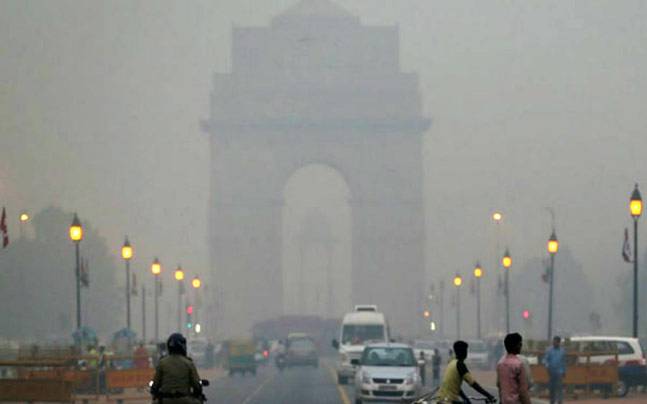














 Allow notifications





