Download Now
Home Blog Page 355

Criminalization of transgender people in colonial India : Criminal Tribes Act

0
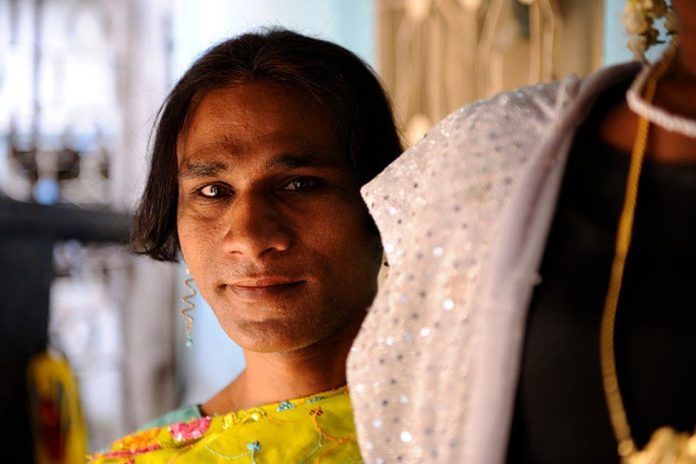
Image source - https://bbc.in/33fVaJp

This article has been written by Suhasini Singh from SKTD Law College, Raipur. This article discusses how and why the British government criminalized transgender people in colonial India. Further, this article also talks about how the “Criminal Tribes Act” impacted the transgender community.

Introduction

Transgender persons are the people who are still struggling for their rights in our society as a result of society’s failure to accept their gender identities. As a result, they continue to suffer discrimination, social oppression, and physical abuse. However, National Legal Service Authority v. Union of India (2014) is a landmark judgment of the Supreme Court of India that declared transgender people as the ‘third gender’, and also affirmed that fundamental rights granted under the Indian constitution applies to them equally, and gave them the right to self-identify their gender as male, female or third gender. 

Moreover, In Indian society, transgender people have existed for centuries. It was also recorded in ancient Indian texts that “third sex” or persons not conforming to male or female gender existed. For instance, in the Ramayana and the Vedas, there is an explicit mention of the LGBTI community. Even in Mahabharat the sexual transition of ‘Arjuna’ the warrior during the ‘agyatvas’ period was duly respected and loved. 

In the Mughal period, transgender also known as Hijras (or Kinnars) played a crucial role in the politics of empire-building. In the Mughal era, they occupied high positions as many influential figures such as officials, administrators, generals, and guardians of harems. Hijras were considered trustworthy, loyal, clever, and had access to all members of the populace. For this reason, they played an important role in Mughal-era empire building. Transgender people were given respect during the Mughal era.

But, after the onset of colonial rule in the 18th century, the situation of transgender people drastically changed. It was seen that early European travellers reacted negatively to Hijras, and they were baffled as to why they were given so much respect by the royal courts. British colonial administrations actively pursued criminalizing the Hijra community and denied them their civil rights during the second half of the 19th century. In different parts of India, the colonial authorities classified Hijras as separate castes or tribes. In 1871, the first Criminal Tribes Act (CTA) was passed by British India’s governor-general (the supreme ruler of the colonial authorities) which targeted ‘eunuchs’ (a stigmatizing colonial term for transgender). The policy which was initially implemented in northern India had been expanded several times, covering nearly the entirety of colonial India by the mid-1920s.

Why was the Criminal Tribes Act passed

Many laws were passed by the British to divide and treat Indians according to their religion and caste identification. The Criminal Tribes Act (or CT Act/CTA) is one of these laws. The British passed three Criminal Tribes’ Acts during colonial rule. These were:

  1. Criminal Tribes Act, 1871
  2. Criminal Tribes Act, 1911
  3. Criminal Tribes Act, 1924 

In 1865, the secretary to the North-Western Provinces(NWP) wrote to the inspector general of police indicating that the administration aimed to prevent an increase in the number of hijras/eunuchs as that would gradually lead to their extinction. The CT Act in 1871, thus aimed to eliminate eunuchs by preventing initiations, castrations (because the British erroneously thought castration was essential to Hijra-hood), and by making Hijras invisible in public spaces.

The British government enacted these laws for various reasons, which can be summed up as follows:

  • Those in charge of the British administration viewed wandering people with suspicion.
  • Additionally, the British government was strictly against mobile craftsmen and traders (who hawked their products in communities), and pastoralists (who had to move from one place to another in search of fresh pastures for their cattle). Therefore, in order to stop these activities, the government passed the Criminal Tribes Act, 1871 and listed many tribal groups in India as Criminal Tribes. 
  • The main purpose of the Act was to regulate and monitor pastoral people.
  • Consequently, to force these pastoral people to live in notified settlements and ban them from moving out without permission from the government. Due to this, their grazing grounds were restricted and their stock animals deteriorated.
  • By implementing the Criminal Tribes Act, the government aimed to rule over a settled population.
  • The government wanted the rural population to live in villages, in fixed places with fixed rights on specific fields as it was relatively easy to control and identify such a population.
  • There was a strong argument put forward that it was part of an entire model to preserve law and order in colonial India. Having used to a highly centralized society, the British viewed India as a volatile place with its complex array of castes and communities, each functioning as autonomous, self-governing units, following different lifestyles and social norms.
  • The most resistant communities to pax-Britannica were targeted in different ways for such special treatment. The worst victims were the communities that did not have sedentary lifestyles, which made it harder to demand subservience from them.

In 1952, the government of India replaced the Criminal Tribes Act with the Habitual Offenders Act. As a result of the enactment of this law, the former Criminal Tribes Act was denotified. In the contemporary world, most of these tribes are known as ex-criminal tribes or vimukta jatis.

The reason provided for the criminalization of transgender community

The Hijra community became a concern of certain provincial governments in British India around the middle of the 19th century, first in Bombay in the 1830s and then in northern India around the 1850s and 1960s. During the 1860s, the colonial government started getting anxious about the Hijra community as it intensified due to the 1857 rebellion. They also panicked due to their lack of knowledge of Indian society, and they considered the Hijra community as criminal, deviant, or marginal groups. British India criminalized homosexuals too. The Hijra community was really seen as being ungovernable and in these sorts of multiple, manifold ways. 

  • To begin with, they cast the Hijra community as embodying sexual disorder and portrayed them as ‘habitual sodomites’(a term which disregarded Hijras’ feminine gender identities and portrayed them as ‘men’ who were ‘addicted’ to sexual intercourse with men) and also as being prostitutes. 
  • Moreover, there is also another story that is connected to, namely that certain discipleship-based communities are being construed as being a type of sexuality, including the Hijra community.
  • Alternatively, tantric and devadasi communities were considered problematic as well. Furthermore, and in connection with this, Hijra’s gender expression was also considered problematic because of the ways that it challenges a binary conception of gender.
  • Hijra performance and badhai practices are frequently referred to as ‘begging’, which leads to them being regarded as ‘obscene’ and even ‘unclean’ in public places because of colonial anxieties.
  • Another noteworthy aspect of this colonial discourse is that the Hijra community is portrayed as being the kidnappers, castrators, and even pimps for male assigned children. This is a very disturbing discourse. However, it does frame the criminalization of the Hijra community as being a child-saving measure.

Provisions of the Criminal Tribes Act

There were several provisions of the Criminal Tribes Act that did injustice to the transgender community at large. Such as:

  • According to the Criminal Tribes Act, 1871, the police were required to register the names and residences of all ‘eunuchs’ reasonably suspected of sodomy, kidnapping, castration, or of committing offenses under Section 377 of the Indian Penal Code, 1860.
  • For example, in Queen Empress v. Khairati (1884), a transgender was arrested and prosecuted under the provision of Section 377 on the suspicion that the said person changed into a ‘habitual sodomite’. However, in this case, an acquittal was granted on appeal.
  • These activities were punishable by up to two years in prison and a fine or both. In the contemporary world, this pre-partition history influences hijra’s vulnerable circumstances.
  • Furthermore, Section 27 of the Criminal Tribes Act permitted the arrest of transgender individuals without a warrant and their imprisonment if found with a boy below the age of 16. This leads to re-instilling the stereotype of hijras to be perverse, deviant, and criminal.
  • Section 3 of the Criminal Tribes Act authorized the local government to designate any class of people who were addicted to the systematic commission of non-bailable offenses as criminal tribes.
  • Every registered Criminal Tribes Act member was supposed to report himself either once in a week or when the District Magistrate deems it necessary to do so, to the police or the village authority in whose neighborhood the registered member happens to be at that moment.
  • As a result, these people’s freedom of movement and privacy was drastically restricted.

Impact of the Act

This Act had a drastic effect on the Criminal Tribes. Such as:

  • Transgenders were deprived of both their primary source of income and any kind of rights under colonial law. This further became the reason behind their poverty and social exclusion. In fact, till now there are estimated to be 100 million people living under the cloud of the Criminal Tribes Act.
  • Transgender people were deemed a suspect merely for dressing in women’s clothes or performing in public. It affected Hijras’ day-to-day lives in profound ways.
  • Even though all members of the group were not criminals, still this act was passed, because of which it has been condemned. Though the fact that some criminals were in all groups cannot be denied, it is improper for the government to label a group as a criminal simply because a few in it were involved in criminal activity. Since a couple of people in a group were criminals, the government should have not denounced the entire group. 
  • Furthermore, the punishment prescribed for breaking the rules of being monitored, i.e. rigorous imprisonment, and whipping- demonstrates the cruelty of the policy.
  • The policy’s implementation was even worse than its bad intent. The people assigned to monitor these tribes ended up actually exploiting them.
  • According to a report in 1874, several transgender people complained to the district officials in Ghazipur that they were starving.
  • Also, due to the forced settlement of the tribes, often in new areas and often in the edges of towns and villages, the tribal people were unable to live according to their traditional lifestyles. The lack of work opportunities led to their desperation of work and this further created opportunities to exploit them.
  • Some of the village leaders used tribal members to beat up or steal from their rivals. Moreover, leaders/heads from these villages targeted the transgender community as they could easily fit into the tribal reputation as “criminals” and “thugs”.
  • In other instances, the newly settled tribes were compelled to clean the homes of the upper caste and forced to become manual scavengers.
  • In terms of geography and social order, they lived at the 10 peripheries of society. Several cases were reported in which low-level police officers used newly settled tribes to share their loot.
  • They were exploited when they needed travel passes to travel.
  • Similarly, the newly settled ‘criminal tribes’ were used by railway companies as captive labor.

Analysis

Colonial policies and laws did major injustice to the transgender community. It is evident that there was very strict enforcement of the law or even illegal policing practices, such as criminalizing unregistered people under the Criminal Tribes Act due to their gender identity or for wearing women’s clothes and performing in public. Similarly, we find that British officials and Indian police neglected and deprioritized the anti-Hijra campaign. 

This colonial law labeled some communities as so-called “criminal tribes” just because of their nomadic lifestyle. British judges characterized ‘Eunuchs’ as cross-dressers, beggars, and prostitutes in an unnatural way. It’s evident that the British tried to eradicate India’s third gender.

While the Criminal Tribes Act was primarily directed at tribal communities, several incarnations of the Criminal Tribes Act also imposed on the rights of transgender people and gender non-conforming individuals and communities in India. In this contemporary world, transgender suffers the consequences of pre-partition history. 

It is not uncommon to say that in post-independent India, the legal system was influenced by the contexts of colonial rule and law. Transgender people became marginalized over time. Public places and ceremonies that once waited for their divine blessings were gradually driven apart from society. The colonial cases of the transgender community demonstrate what is at stake in legal struggles. It illustrates how the law produces identities and then tries to control them, it also shows that the law can also serve as a vehicle for prejudice. 

It is clearly seen that transgender people faced many challenges in colonial India. In fact, they still face many challenges in the modern era as well, which leads to the questions that:

Why are they considered less than any normal ‘human being’? 

Why has society still not accepted them?

Conclusion

Transgender people are among the most socio-economically deprived groups in the country; they are frequently harassed and face violence by the police and the public at large. It is underrepresented at the state and central levels. 

This year during Pride Month, the Madras High Court has proposed measures to sensitize people about the LGBTQIA+ community so they can become part of mainstream society. Further, The Madras High Court has suggested changes in the school curriculum to educate students about the community.

In preparation for delivering the judgement, Justice N Anand Venkatesh engaged himself and undergone an educational training session with a psychologist to gain a better understanding of same-sex marriage. Justice Venkatesh also recommended several reforms for educational institutions, including holding Parents Teacher Association (PTA) meetings to raise awareness of issues facing the LGBTQ community and gender non-conforming students along with changes to the school curriculum. 

Despite the efforts of the government to prevent discrimination, the goals of compensatory discrimination-social justice, reducing inequality, and reintegrating the marginalized into society have largely not been accomplished. For instance, recently, the National Council of Educational Research and Training (NCERT) took down a publication titled “Inclusion of Transgender Children in School: Concerns and Roadmap” from its website as several conservative users on social media tore into the report and accused the NCERTof playing at being “woke” and trying to comply with “western norms”. Therefore, NCERT has withdrawn the said manual as a result of the pressure that conservative people have created online. 

Referring back to the quote of Nirmal Singh, president of the All India Tapriwas and Vimukt Jati Federation in 1981, he said compensation for discrimination had been ‘badly defeated’.

For generations, this community was subjected to widespread social stigmas and discrimination. In addition, it is evident that resolving such major problems requires substantial time and effort. 

However, with continued legal efforts and public relations campaigns, India can acquire the ability to fully embrace and support people from all backgrounds regardless of sexuality or gender orientation.

References


LawSikho has created a telegram group for exchanging legal knowledge, referrals and various opportunities. You can click on this link and join:

https://t.me/joinchat/L9vr7LmS9pJjYTQ9

Follow us on Instagram and subscribe to our YouTube channel for more amazing legal content.

Download Now

Analysing domestic violence vis à vis feminist criminology

0
Criminology
Image source - https://bit.ly/3bqPPyb

This article is written by Anjali Baskar, pursuing a Diploma in Intellectual Property, Media and Entertainment Laws from LawSikho.

Introduction

Though criminology has existed since the 18th century, criminologists based their descriptions and studies of offenders mostly on cisgendered men. They differentiated between a normal woman and an abnormal one, the latter being less feminine. Some theorised that job opportunities allowed women to engage in more deviant behaviour. Feminist criminology evolved in the 1960s and 70s in the midst of second-wave feminism. They critiqued criminologist theories for excluding or stereotyping women and other minorities. Though there is (albeit less) Western literature studying domestic violence from a feminist criminology perspective, there is no research done in the Indian discourse. There has been much discussion regarding the need for a gender-neutral law for domestic violence in India. The controversial judgment Horsara v. Horsara deleted the words “adult male” from Section 2(q) of the Protection of Women from Domestic Violence Act, 2005, essentially that women can be respondents, but men still cannot be victims. This paper focuses on women as perpetrators of domestic violence, the rationale behind the abuse, and their connection with the criminal justice systems currently in place. 

Evolution of theories of feminist criminology

Earlier criminologists did not look at why women commit crimes exploratively and simply formed their own surface-level conclusions. They felt that women who desired money and freedom wanted to destroy mankind. They also claimed that the reason for female deviant behaviour was because of their differing physiology and psychological traits. In 1903, Cesaro Lombroso published a book titled “The Female Offender” claiming that women who looked more masculine, had moles on their faces, and kept their hair short were stronger, and thus they would be more susceptible to becoming offenders. W. Thomas, an American criminologist, stated that delinquent women, akin to “femme fatales”, engaged in sexual behaviour to con men into giving them what they want. He believed women were growing tired of monogamy, so this pent-up energy led to sexual deviancy. 

Sigmund Freud stated that the reason why some women acted out arose out of these women longing to be as superior as men. Deviant women have also been romanticised in popular culture as hypersexual and dominating, but ultimately not threatening to men. This culminates in not getting female offenders the mental rehabilitation they need. Katherine Davis wrote in her 1922 report that deviant girls were more likely to be prostitutes as they were sexually promiscuous, came from poverty, and grew up in abusive homes. Otto Polak, a criminologist from the 1950s, stated that deviant women would enter into professions that require caretaking in order to carry out their vengeful and cold plans without being caught. All the above theories were discredited by feminist scholars as they were largely male, and made assumptions about the “nature of women” without any evidence. 

Criminologist Robert Agnew was one of the first ones to actually conduct a study, after which he formed the “General Strain Theory.” He looked at the difference between how men and women react after being subjected to financial or emotional distress. While the latter dealt with it by expressing more outward emotions like anger and rebelling by committing violence against people and property, women often kept the emotions inside them, leading to self-destruction by abuse of drugs and alcohol. 

As the feminist movement formed due to years of oppression, exclusion, and discrimination, leaders like Dorie Klein claimed social and economic causes as the reason for this criminality. They claimed that women were largely looked through the male gaze of desirability and stereotyped, rather than being looked at like an actual person. As theories like the Emancipation Theory developed in 1975, Freda Adler and Rita Simon felt that the women’s liberation movement in France and the rest of Europe let women step out of the home and find job opportunities for themselves, which made them aware of the idea of equality, which led to rebellion and more deviant behaviour. Criminologists like Lisa Pasko and Meda Chesney-Lind also observed that women would be less likely to commit white-collar crimes, which contradicts Agnew’s theory of women being less aggressive, to an extent. The idea of chivalry thesis was also floated around, wherein the criminal justice system treats women leniently in some cases, but harsher than men in other cases because they are placed on a pedestal. 

John Hagan’s Power Control Theory is still considered to be relevant today, where it states that because of the difference in upbringing between girls and boys due to patriarchy, girls are likely to be more restrained and exercise self-control, which leads to them committing lesser crimes. Women are arguably more likely to be victimised and infantilised under Paternalism Theory, with the belief that they could not have committed these crimes with a malafide intention as they are not smart or competent enough. The Evil Women hypothesis states that female offenders should not be treated at par with male criminals, not because of their equality but because of the fact that they violated gender roles in place. Later on, feminist criminology expanded beyond the idea of looking at female criminals in only two rules: i.e. as victims or perpetrators of violence. Soon, participation in discussions about women’s safety in prison, abuse faced while being incarcerated, security, risk, relationships between women in detention centers began.

Why do women commit domestic violence?

Arguably, women are largely victims of domestic abuse rather than themselves being the abusers. The author argues that being a victim or abuser is sometimes not binary, because when two people get into a physical or even mental scuffle, the victim can disproportionately react and cause more harm to the initial perpetrator. It is hard to pinpoint where domestic disputes begin and end at times, especially from a legal perspective. Women have largely been excluded from studies which analyse why human beings commit crimes. Earlier criminologists fathomed that the only cause for a woman committing a crime would be because they are trying to compete with other women for men’s affections, which was later proven false. When it comes to the methods women use to commit abuse or murder, it is usually by poisoning, shooting, bludgeoning, suffocation, stabbing, and drowning. 

The most common reasons for women committing crimes are money, control, enjoyment, sex, drugs, or feeling of inadequacy, as observed by the FBI in 1970. Rita Simon under the Opportunity Theory stated that there were many layers to female criminality, as the type of crime and criminal, jail as a corrective institution, and the criminal justice system. She felt that men and women are equally immoral and the biological characteristics of a woman do not play a factor in deviancy. 

Others argued that the belief that men and women have equally deviant thoughts results in larger, disproportionate violence against women. As women become more economically independent, they have the courage to fight back against their intimate partners or family members. Female abusers are more likely to use their fists and feet whereas men usually use a weapon, but knives are equally used by both. Besides women being abusers themselves, there are also ways in way women themselves have been complacent towards domestic violence against women. For example, employing women as defence counsels of men accused of violence is used as a strategy.

Criminal justice systems have long overlooked why women commit domestic violence. It is observed that conventionally attractive or “feminine” female convicts face lesser abuse at the hands of prison authorities. In India, the courts have also exercised gender bias while awarding punishments to women, like being lenient towards women who are biologically petite, more passive, or emotional. When they look at women offenders, they claim they are emulating men, implying that women are not inherently criminal. For example: the Dalit husband of upper-caste Kausalya was murdered by her family members. While her mother was equally involved in the conspiracy of the honor killing incident, she was given a lenient punishment as compared to the male relatives because of her emotional portrayal as a well-intentioned mother. The courts tend to sympathise with female criminals less than men unless they have gone through an exceptional amount of abuse and snapped in response, like a woman murdering her husband after countless years of torture and extra-marital affairs. The standard is thus lower for men, as the norm for women is expected to be conformity, rather than being anarchists.

Women who do not fit the “ideal women” stereotype are usually given less recourse, like rape victims with previous sexual experience despite the prohibition of character assassination under the Indian Evidence Act. Family courts in India would rather award a woman who emotionally abuses her husband and kids with sole parental custody than a man doing the same. Nirmala Devi was given less punishment than as prescribed by law for women by the Indian Supreme Court, as she had to take care of “familial duties”. Even though there are penal provisions like Section 498A of the Indian Penal Code, 1860, the Indian government also enacted separate legislation for domestic violence titled the Prevention of Women from Domestic Violence Act, 2005, which excludes men as victims. The current position is that women can be considered respondents, but this usually refers to women who are husband’s relatives inflicting abuse on his wife, rather than a woman abusing a man. 

As per the National Crime Records Bureau, the most common crime committed by Indian women is homicide, whereas one of the major reasons for their abuse is related to dowry or cruelty by their husbands and in-laws. Patriarchy has often percolated into men being abused at the hands of women if they do not fit gender roles and display characteristics like vulnerability and pacifism. Practically, many Indian women cannot physically fight with a man who is twice their size or a man who is physically fit. Women often resort to verbal, emotional, mental abuse towards their partners or male relatives, which silences male victims because they are in fear of retaliation or escalation of the matter. The police system isn’t of much help either when the abuse is psychological. There have been instances reported that when a man approaches police officials, they laugh and say he was “caught” by his wife. 

This is largely stemming from the assumption that complaining is a feminine characteristic, which is misogynistic in itself. Some men fear that they will lose their social respect if they speak out, and others bear the abuse for the sake of their children, as family courts are biased against men. Practically, this is a very big issue because lawyers have faced many cases where men have suffered domestic violence at the hands of women where they were not able to speak, not able/allowed to move. Even if a man gathers the courage to testify against his wife in a trial, as soon as he sees his wife in district court, he gets scared and doesn’t want to continue with the case anymore.

Women are often the sacrificing partner in relationships due to psychological and social factors of a male-dominated society, so when they rebel, it can often turn into abuse. Women can showcase significant anger management issues due to excessive consumption of alcohol. They might also want to spend more so they abuse men despite their budgetary constraints. The concept of the nuclear family is a factor to be considered when it comes to legal terrorism. If a man files for divorce, the wife sometimes files for a false cruelty/dowry harassment case against him. Female partners also threaten to commit suicide often which amounts to mental torture, even though statistically, men have higher rates of suicide. One major reason why women commit domestic violence towards their partners is the battered women effect. 

Alison Young has stated that most women perpetrators have been a victim of domestic violence at the hands of another partner, so they pass on or repeat this violence in a vicious cycle. California law states that one of the defences against domestic violence is that the offender did it in self-defence. In developing countries such as the UK, women abusers have started to be punished by the law for hurting their male partners, but it still requires a bigger standard of proof for prosecutors than when men commit domestic abuse. There are also instances of deviant behavior exercised by women who take advantage of the protectionist laws in place, like putting underage men into the juvenile system for rape even for a consensual relationship with an underage girl.

Female domestic offenders in the criminal justice system

Feminist criminology remains incomplete without focusing on the problems faced by female offenders within jails and the criminal justice system. Female offenders usually are arrested for crimes that range from theft charges like larceny or shoplifting to assault-related acts. One major criticism by feminists such as  Smart and Cain is that factors such as abuse due to victimization and survival are ignored, even though this typifies the imbalance in power dynamics between men and women. A report by the World Health Organisation stated that 35% of violence committed against women was at the hands of their partners. Some argue that women are punished more seriously for crimes related to morality. For example: in some Islamic countries, women are not allowed to show even their shoulders or ankles. If they do not follow these protocols, they will be punished severely and treated as criminals, even though the majority of the world does not consider this a crime. Post-modern feminist criminologists have also criticized the fact that female convicts with mental illness do not have access to rehabilitation facilities as compared to men, and prison reform discussions also exclude female offenders. When it comes to female juveniles, they are put into the system at a young age under the protection of the law because of the sexual abuse they often have to face. The idea of “sexual purity” is entrenched into their minds, which is  harmful in the long run, as it leads to anger and a thirst for rebellion. Girls who engaged in willful sexual encounters were punished, whereas nothing happen to their male partners, which also might have resulted in them becoming abusive towards their partners as an act of retaliation, as they could not object to these authorities.

Conclusion : the future of feminist criminology

This paper has not been written to justify female domestic violence abusers, but to look more deeply into the causation or rationale behind them committing these crimes. The contemporary feminist movement appreciates female offenders to an extent as a “role-reversal” or a “revenge fantasy” after centuries of one-sided abuse at the hands of men, but BIPOC feminists argue that this often applies to only richer, prettier, whiter women. Though crimes committed by women are steadily on the rise, they are not at par with statistics of male abusers. The suggestion to make the PWDVA, 2005 a gender-neutral law has been opposed by feminists because of the fact that physical domestic violence is still much more at the hands of men in India and thus can be misused by men also filing fake domestic abuse cases on trivial and casually sexist grounds like “nagging”. When it comes to queer and racial sub-sets of feminist criminology, they deal with intersectional factors as the reason why LGBTQ+ people (like transwomen) and/or women who are not white commit domestic violence. The criminal justice system in India and even developed countries have not evolved enough to take violence seriously especially in relationships between two women.

Heterosexual cisgendered women are likely to get away with violence more than their LGBTQ+ counterparts, mainly because of the entrenched “moral panic” and homophobia in people’s minds. A large part of the world still perceives transwomen as threatening and considers them to be prone to being criminals because of their “masculine” identity assigned at birth, even though they are much more likely to be victims of violence at the hands of cis-gendered heterosexual men. It has been shown that defence counsels use tactics to defend upper-caste women abusers as more “educated” and “angelic”, invoking the courts’ hidden casteist beliefs. Dalit women are subjected to more violence at the hands of State institutions, which have largely been considered as “male-dominated.” 

Overall, female offenders commit domestic violence financially, emotionally, or physically, but there is not much-documented literature on sexual abuse by women towards their male intimate partners. Thus, the author concludes that one of the major factors for women being abusive is because they were victims of sexual or physical abuse or a lack of bodily autonomy in their life. Other allied factors can be a lack of a good family structure or economic stability. In India, there are more specific cultural factors as women are subjected to immense moral policing and gender roles, which are ignored by Western feminist criminologists. Thus, these women commit domestic violence out of an act of desperation or self-defence against years of abuse inflicted upon them by their partners. Other times, it can be due to emotional or financial factors. They tend to emotionally manipulate and isolate their partners from their families, rather than using physical force, but there are exceptions, especially in urban areas where women constitute a large part of the workforce. There should be a balance between complete gender-neutrality and gender bias. Example: When police are searching for a domestic violence victim, they don’t have to assume the victim to be “female”. At the same time, just because the offender is a woman, they should not assume the reasons behind the crime and not treat them differently based on gender stereotypes or on their physical features. In the author’s opinion, feminist criminology needs to evolve more in four ways: in the specificity of the crime (such as intimate partner violence), data collection on female perpetrators (instead of mostly victims), and in the formulation of the causation theories of female criminals in the 21st century, intersectionality, trends of glorification of female offenders as a symbol of women empowerment in the recent era.

References

  • CESARO LOMBROSO ET. AL, CRIMINAL WOMAN, THE PROSTITUTE, AND THE NORMAL WOMAN, Durham, Duke University Press (2004).
  • Joanne Belknap, Meda Chesney-Lind: The Mother of Feminist Criminology, 15 WOMEN & CRIM. Just. 1 (2004).
  • Andrea J. Nichols, Meaning-Making and Domestic Violence Victim Advocacy: An Examination of Feminist Identities, Ideologies, and Practices, 8 Feminist CRIMINOLOGY 177 (2013).
  • Sylvie Frigon, Feminist perspectives in Criminology, 4 WOMEN & CRIM. Just. 139 (1993).
  • Hiral P. Harsora and Ors v. Kusum Narottamdas Harsora and Ors., (2016) 10 SCC 165.
  • Loraine Gelsthorpe, Feminist Perspectives on Gender and Crime: making women count, Criminal Justice Matters, Vol. 53, Issue 1 (2003), 8-9.
  • Lisa Pasko, Damaged Daughters: The History of Girls’ Sexuality and the Juvenile Justice System, 100 J. Crim. L. & Criminology 1099 (2010).
  • Frances Heidensohn, The future of feminist criminology, 8 CRIME MEDIA CULTURE 123 (2012).
  • Frances Heidensohn, The Deviance of Women: A Critique and an Enquiry, The British Journal of Sociology, Vol. 19, Issue 2, 160–175 (2010).
  • Sharon RedHawk Love & Seong min Park, Images of Gender Twenty Years Later: A Content Analysis of Images in Introductory Criminal Justice and Criminology Textbooks, 8 Feminist CRIMINOLOGY 320 (2013). 
  • Emma Kaufman, Feminist Criminology, 18 THEORETICAL CRIMINOLOGY 393 (2014).
  • Kimberly J. Cook, Has Criminology Awakened From Its “Androcentric Slumber”?, Sage Publications, Vol. 11, Issue 4, 334-353 (2016).
  • Kathy Laster, Feminist Criminology: Coping with Success, 8 CURRENT Issues CRIM. Just. 192 (1996).
  • R v. Ahluwalia, [1992] 4 All ER 889.
  • Suvarna Cherukuri, Dana M. Britton & Mangala Subramaniam, Between Life and Death: Women in an Indian State Prison, 4 Feminist CRIMINOLOGY 252 (2009).
  • Sneha Agarwal, Raped, tortured by wives: Helpline for Indian men gets 100 calls to report abuse daily, Times of India (Nov. 11, 2021, 4:49 PM), https://www.indiatoday.in/india/story/all-india-mens-helpline-swamped-with-complaints-of-torture-by-wife-265980-2015-10-02
  • Sophie Hedock, I stayed with my abusive girlfriend out of fear she would kill me, BBC (Nov. 11, 2021, 5:09 PM), https://www.bbc.co.uk/bbcthree/article/81a8f303-5849-45b8-85a0-e8532b5d948b,
  • Megha Mehta, Children No More? A Feminist Critique of the Juvenile Justice Transfer System in India, 12 NUJS L. REV. 43 (2019).
  • Claudia García-Moreno and Christina Pallitto, Global and regional estimates of violence against women: prevalence and health effects of intimate partner violence and non-partner sexual violence, WHO Report (Nov. 12, 2021, 4:34 PM), https://apps.who.int/iris/bitstream/handle/10665/85239/9789241564625_eng.pdf;jsessionid=A79DF84C464E0F3B278B3A87C6F44407?sequence=1
  • Sylvie Frigon, Feminist perspectives in Criminology, 4 WOMEN & CRIM. Just. 139 (1993). 
  • Charlotte Barnes, Lifting the veil on the violent woman
  • The F Word (Nov. 11, 2021, 12:30 PM), https://thefword.org.uk/2016/10/lifting-the-veil-on-the-violent-woman/
  • Sanjoy Ghose, A Gender-Neutral Domestic Violence Law Harms Rather Than Protects Women, The Wire (Nov. 12, 2021, 8:00 PM), https://thewire.in/law/a-gender-neutral-domestic-violence-law-harms-rather-than-protects-women

Students of Lawsikho courses regularly produce writing assignments and work on practical exercises as a part of their coursework and develop themselves in real-life practical skills.

LawSikho has created a telegram group for exchanging legal knowledge, referrals, and various opportunities. You can click on this link and join:https://t.me/joinchat/L9vr7LmS9pJjYTQ9

Follow us on Instagram and subscribe to our YouTube channel for more amazing legal content.

Download Now

Article 142 and its relation to judicial activism and judicial restraint

0
Image source - https://bit.ly/30cTRtA

This article is written by Shivam Gupta, a student of Maharashtra National Law University Aurangabad. This article seeks to highlight the importance of Article 142 and how it can establish its correlation with judicial activism and judicial restraint.

Introduction

Article 142 can be defined as the Supreme Court’s orders and decrees being carried out in the exercise of its jurisdiction in such a way that complete justice can be done. The Federal Court had no apparatus for carrying out its decisions under the Government of India Act, 1935. It could only issue a declaratory judgement in the exercise of its original jurisdiction. If the Federal Court approved an appeal in the exercise of its appellate authority, it was required to remand the matter to the court from which the appeal was filed, together with a declaration of the judgement, decree, or order to be substituted for the judgement, decree, or order appealed against. Under the current Constitution, there is no such restriction.

Scope of powers under Article 142

In the exercise of its authority, the Supreme Court may issue any order required to provide complete justice in the case at hand. Even legislation will not be able to limit the court’s power. In the matter of Chandrakant Patil & ors. v. State Through CBI (1998), The Supreme Court of India ruled that exercising Article 142 is only subject to two conditions:

1. It can only be used if the court is otherwise exercising its jurisdiction,

2. The case or dispute pending before the Supreme Court must require the court’s order for complete justice to be served. 

The Supreme Court of India held in Supreme Court Bar Association v. Union of India (1998), that powers provided under Article 142 are supplementary, complementary, and residuary to the powers particularly bestowed on the Supreme Court, which may very well be exercised as long as it is equitable and just to use it, and also, in particular, to make sure the strict adherence of due process of law, to do complete justice between both the parties while administering justice as per law. Furthermore, the Supreme Court of India stated in DDA v. Skipper Construction Co. (P) Ltd.(1996) that it is preferable to leave Article 142’s power unregistered and undefined so that it may be sculpted to fit the circumstances in the given case. The Supreme Court ruled in the Union of India (UOI) v. State of Maharashtra and Ors.(2019) that Article 142 cannot be used to intrude on legislative territory which is one of the limitations while applying Article 142 to any case.

Judicial activism

When the Constitutional Court gives wider meaning to various expressions written in the constitution or any statute according to the demand of the situation, it can be considered as judicial activism. Judicial activism is against the process where the Constitutional Courts just need to apply the pre-existing principles and legal rules to a given case and there is not much scope of judicial interpretation. 

In the case of Pravasi Bhalai Sangathan v. Union of India (UOI) and Ors.(2014), the Supreme Court opined that the court cannot redefine, rewrite, or recast the statute because it lacks the authority to legislate. The courts have not been given the authority to legislate. But, in recent years, judicial activism by India’s upper courts has piqued popular interest. Even if judicial activism is explained as just the active interpretation of an existing provision to improve the effectiveness of legislation for social upliftment in conformity with the constitution, courts have and should always pursue in a way to meet the constitutional expectations of socio-economic justice under its banner.

In India, there are two types of Constitutional Courts, the High Court and the Supreme Court. According to Article 141 of the Constitution of India, all the judgments of the Supreme Court are binding upon all courts within the territory of India unless they are overruled by the Supreme Court itself or the legislature has passed a law against that judgement. All the judgments of the High Courts are also binding upon all the lower courts which come under the jurisdiction of that High Court. Therefore judicial activism should be exercised by the constitutional courts very diligently as their rulings act as a law.

Exemplary cases of judicial activism and Article 142 

From time to time whenever it was noticed that several beneficiary provisions were being misused by unworthy individuals, denying the genuine claims of eligible individuals, the Supreme Court issued numerous guidelines/directions to avoid abuse and fraud on the statutes and the Constitution. Some of these significant cases are –

The State of Tamilnadu and Ors. v. K. Balu and Ors. (2017)

This case was about the presence of liquor vends on national and state highways across the country. The Supreme Court issued certain directions in this case about granting licences related to liquor sales along national and state highways all over India. One of the major directions given by the Supreme Court is that all states and union territories are prohibited to grant licenses for liquor sale along state and national highways. In this case, the Supreme Court issued the directions under the ambit of Article 142 to do complete justice. The reasoning behind issuing such directions is that Section 185 of the Motor Vehicles Act, 1988 makes the intention of the parliament clear that a zero-tolerance policy should be followed towards driving if any person is under the influence of alcohol. This case is the perfect illustration of how a constitutional court can use judicial activism. 

In Re: Guidelines for Court Functioning through Video Conferencing during COVID-19 Pandemic (2020)

This case is another remarkable example of both judicial activism and doing complete justice under Article 142. In this case, the three-judge bench of the Supreme Court took the suo moto cognizance of the functioning of the judiciary during the COVID–19 pandemic times. The Supreme Court issued directions regarding the functioning of courts through virtual mode. These directions were issued under the ambit of Article 142. This shows the commitment of the judicial system towards the dispensation of justice and also a step further to achieve the objectives enshrined in the Preamble of India. 

Justice K.S. Puttaswamy and Ors. v. Union of India (UOI) and Ors. (2018)

In this case, one of the contentions made was that to protect the right to privacy and to implement the decision of the Supreme Court in the nine judges bench in Justice K.S. Puttaswamy and Anr. v. Union of India (UOI) and Ors.(2017) (Also popularly known as “Right to Privacy” case), the deficiencies in the Aadhaar (Targeted Delivery of Financial and Other Subsidies, Benefits and Services) Act, 2016 should be removed and for the same, the Supreme Court should issue guidelines under Article 142. On this Supreme Court under Article 142 directed the Union government to come up with the fresh legislation regarding aadhaar as the Aadhaar Act, 2016 suffers from various constitutional infirmities and if the Union government failed to do so within one year then all the data collected related to aadhaar has to be destroyed. After the judgement, the Union government came up with the amended version of the Aadhaar Act in 2019. This judgement is the perfect blend of judicial activism and doing complete justice under Article 142.

Judicial restraint

Judicial restraint can be defined as when the court has to put a restrain upon itself to perform the functions of the executive or the legislature. In India there are three organs of government i.e., legislature, executive and judiciary and functions of all the three organs are different. All three organs come under the ambit of the doctrine of separation of powers. Although the idea of separation of powers is not acknowledged in its full rigour in the Constitution, the Constitution framers have precisely outlined the tasks of various State organs. 

The legislature, executive and judiciary should operate within their constitutionally defined areas. No organ can take over the duties of another. The Constitution relies on each of these organs’ judgement to function and use their discretion while scrupulously adhering to the procedures laid out in the Constitution. Each of these organs needs to be strong and independent for it to work properly. 

All the powers related to finance and arm forces rest with the legislature and the executive organs of the state. Although the judiciary has no jurisdiction over the arm forces or the treasury, it does have the ability to guarantee that the two primary organs of the state operate within constitutional bounds. It acts as a democratic watchdog. A judicial review is a vital tool for limiting the legislature’s and executives’ unconstitutional exploitation of authority. The notion of social and economic justice has been included in the widening purview of judicial review. While the legislative and executive are subject to judicial scrutiny, the only check that the constitutional court can impose on their powers is of the self-imposed practice of judicial restraint.

Jurisprudence behind judicial restraint

Asif Hameed and Ors. v. State of Jammu and Kashmir and Ors. (1989)

In this case, the Supreme Court opined that when any action of the state is challenged, the court’s role is to assess the action in light of the law and determine whether the executive or the legislature has operated within the limits set by the Constitution; if not, the court must overturn the action. The court must do so while remaining within its self-imposed boundaries. The court renders a decision based on the actions of a government branch. The court is not an appellate authority when it exercises judicial review of administrative action. The Constitution forbids the court from directing or advising the executive on policy concerns, or from preaching on any issue that falls within the domain of the legislative or executive, as long as these organs do not exceed their constitutional or statutory authority.

Institute of Chartered Accountants of India v. Price Waterhouse and Anr. (1997)

In this case, the three-Judge Bench of the Supreme Court observed that judges should not imply that they are acting as legislators only to show off their judicial power. They must keep in mind that there is a narrow line that divides adjudication from policymaking. It is a line that should not be breached.

Madhu Kishwar and Ors. v. State of Bihar and Ors. (1996)

In this case, the Supreme Court observed that the court is not completely able to deal with the nuances and complexity of the legislative issues and it can only offer focus and guidance on State policy on a matter to help achieve the objective. Therefore, the court can only play a catalytic role in resolving people’s social and economic issues. The court must put limits on its self-motion sometimes, which is referred to in legal jargon as judicial self-restraint. Courts must not legislate or undertake executive responsibilities.

Union of India v. Association for Democratic Reforms and Anr. (2002)

In this case, the Supreme Court observed that it has no authority to amend the Act or the statutory provisions. The Act and the Rules must be amended by Parliament and also no directive can be issued that violates the Act or the Rules. But, if the Act or Rules are quiet on a given issue and the authority enforcing it has constitutional or statutory jurisdiction to do so, the Court can make orders or directions on the issue to fill the gap until a proper act is passed.

Conclusion

From the above analysis, it is clear that powers of the Supreme Court under Article 142 are undefined and can be exercised when it fulfils the conditions. Article 142 gives the Supreme Court the power to exercise judicial activism whenever required and do complete justice and in many cases, the Supreme Court has done that. But the Supreme Court also exercised judicial restraint in many cases where the issue should be resolved by the legislature or the executive. The judge should know when to exercise judicial activism and when to exercise judicial restraint. This ability should be developed by every judge in themselves because Supreme Court judgements act as a law in India.

The Supreme Court of India has wide jurisdiction under the Indian Constitution. When a constitutional functionary is given authority, it is always to be interpreted as a responsibility by the functionary; laymen can view it as power and when the functionary is a Supreme Court judge, he must be more cautious, otherwise, he/she might be swayed by emotion or bias.

References

  1. https://www.legislation.gov.uk/ukpga/1935/2/pdfs/ukpga_19350002_en.pdf 
  2. https://legislative.gov.in/sites/default/files/A1988-59.pdf
  3. https://uidai.gov.in/images/targeted_delivery_of_financial_and_other_subsidies_benefits_and_services_13072016.pdf 
  4. https://uidai.gov.in/images/Aadhaar_Act_2016_as_amended.pdf 
  5. https://core.ac.uk/download/pdf/233188475.pdf 
  6. https://jcil.lsyndicate.com/wp-content/uploads/2021/04/Judicial-Activism-The-COVID-19-Impact-Anjali-Karmakar.pdf 
  7. http://www.supremecourtcases.com/index2.php?option=com_content&itemid=5&do_pdf=1&id=312 

LawSikho has created a telegram group for exchanging legal knowledge, referrals and various opportunities. You can click on this link and join:

https://t.me/joinchat/L9vr7LmS9pJjYTQ9

Follow us on Instagram and subscribe to our YouTube channel for more amazing legal content.

Download Now

A comparative study of probation and parole

0

This article is written by Adhila Muhammed Arif, a student of Government Law College, Thiruvananthapuram. This article seeks to compare the provisions of probation and parole in the Indian legal system. 

Introduction 

Serving punishment for those who indulge in criminal activities is an important function of the criminal justice system. There are various theories as to why and how offenders are punished. The main theories of punishment are retributive theory, preventive theory, deterrent theory and reformative theory. Imprisonment is the most popular form of punishment and it is said to be both preventive and deterrent. However, we have been seeing a shift in society’s approach towards punishment. Now, many scholars are of the opinion that a reformative model of punishment is necessary, as our primary aim should be reformation and rehabilitation of criminals. Many academicians and jurists are of the opinion that corporal punishment and imprisonment harden the minds of petty offenders, especially first time offenders. Therefore, it is necessary that in certain cases, offenders must be provided with a chance to redeem themselves. Both parole and probation are recognized as methods of correction and rehabilitation in the Indian criminal justice system. 

Meaning of probation

The word probation is derived from the Latin word ‘probare’, which means ‘to test’ or ‘to prove’. It is an alternative method of correction which is non-custodial. If it is established that incarceration is not suitable for the offender, then the offender can be released into his community under the supervision of probation officers, instead of being imprisoned. 

In India, the provisions related to probation in the Indian legal system are provided mainly under the Code of Criminal Procedure, 1973 and the Probation of Offender Act, 1958. Initially, the provision of probation was given in Section 562 of CrPC, 1898. After several amendments, the provision is currently provided by Section 360. The Parliament of India enacted the Probation of Offenders Act in 1958 before the amended CrPC came into force in 1973, which contains certain provisions not covered by the CrPC. 

Code of Criminal Procedure

In CrPC, the provisions that deal with probation are Section 360 and 361. Section 360(10) explicitly states that the provisions in Section 360 and 361 do not affect the validity of the provisions in the Probation of Offenders Act or Children Act, 1960 or any such law. 

Release on probation of good conduct

Section 360(1) of the Code of Criminal Procedure is what deals with probation. According to this Section, if 

  1. Any person who is not below the age of twenty-one and is convicted of a crime for which the punishment is either imprisonment of seven years or a fine, 
  2. or any person below the age of twenty-one or any woman convicted of an offence that is not punishable with life imprisonment or death penalty and the offender has not been convicted in the past, 
  3. and appears before the court, the court may release the offender on the promise of good behaviour or good conduct, on entering into a bond with or without sureties, to serve the sentence if called by the court during the fixed period. 

In the case of Phul Singh v. State of Haryana (1979), the Court stated that probation on the ground of good conduct cannot be granted to someone in his twenties who has committed a heinous offence like rape. 

Release after admonition 

As per Article 360(3), the offender can be released when the following conditions are satisfied : 

  1. The offender has not been convicted in the past. 
  2. The offence for which he is convicted is theft, theft in a building or dishonest misappropriation or any offence under IPC that is punishable with imprisonment of not more than two years or with a fine only. 

In the case of Ahmed v. State of Rajasthan (2000), the Court stated that this provision cannot apply to a person who has used explosives to incite communal tension. 

Special reasons for not granting probation

If the court does not award probation, the reason for not providing probation to the offender must be expressly stated in the judgment, whether it’s as per CrPC, Probation of Offenders Act, Children Act or any such law, as per Section 361. 

Probation of Offenders Act, 1958 

In this Act, the provision of release on admonition is provided by Section 3 and the provision of probation of good conduct is provided by Section 4, and the terms are the same as the ones in Section 360 of CrPC. 

Section 5 of the Act permits the court, if it is found suitable, to direct the offender to pay compensation to the victim for the loss or injury incurred to him or even the cost of the legal proceedings. 

Section 6 of the Act deals with offenders below the age of 21. This Section states the following : 

  • The court has to first see whether Section 3 or Section 4 of the Act is applicable for the offender under the age of 21. For that, the court has to call for the report of the probation officer, which is mandatory.  
  • On receiving the report, the court can decide whether the provisions are applicable or not. 
  • If the court doesn’t grant probation, it must explicitly state the reasons for not doing so.

Section 7 of the Act states that the report of the probation officer is meant to be confidential. Such a report is only mandatory while dealing with offenders under the age of 21. 

Doctrine of Harmonious Construction

Even though the new CrPC was enacted subsequent to the Act, it does not affect the applicability of the Act, especially when Section 360(10) explicitly recognizes the validity of the Act. Therefore, we could say that offenders are entitled to the benefits of both CrPC and the Act. According to the Doctrine of Harmonious Construction, the legislature would not intend to contract themselves. Thus, the enactment of the new Code would not destroy the enforceability of the Act. 

Merits and demerits

The following are the merits posed by the method of probation: 

  1. It helps to prevent first time offenders from being influenced by criminals in prison. 
  2. It protects and rehabilitates juvenile offenders. 
  3. It helps in preventing prisons from being over-crowded. 
  4. It provides an offender with a second-chance to function normally in society.  

The following are the demerits of the system of probation: 

  1. It permits offenders to free themselves from legal consequences. 
  2. It sends a bad message to people intending to commit crimes that they can walk out free.  

Meaning of parole

The word ‘parole’ originates from the French phrase je donne ma parole”, which means “I give my word”. Like probation, the objective of parole is to allow the prisoner to redeem himself. But parole is a form of release that is applicable only for offenders who are undergoing their prison sentence.

In India, rules regarding parole are provided by the Prisons Act, 1894 and the Prisoners Act, 1900. However, there is no completely uniform law of parole in India as the state governments are free to make their own laws for parole. The guidelines for parole have minor variations from state to state. 

Refusal of parole 

The following are the types of offenders who cannot be granted parole: 

  • Who are not citizens of India. 
  • Convicted for crimes that pose a threat to national security. 
  • Convicted for crimes against the State. 
  • Violation of disciplinary rules in prison. 

Types of parole

There are mainly two types of parole, which are custody parole and regular parole. 

Custody parole 

Custody parole is also called emergency parole. It is granted for fourteen days for reasons like the death of close family members like grandparents, parents, siblings, children, spouse, for the marriage of a family member like that of a sibling or son or daughter, etc. 

Regular parole

Regular parole is granted for a maximum period of one month, usually for offenders who have served at least one year of their sentence. It is granted for reasons similar to the following: 

  • Due to any family member being seriously ill. 
  • Death or accident of a family member. 
  • When the convict’s wife has given birth. 
  • To maintain familial ties.
  • When there has been serious damage to the life and property of his family due to any natural calamity. 
  • To file for a special leave petition. 

Procedure 

On the filing of a petition for parole, usually the Superintendent of the jail requests a report from the police station which arrested the convict. The report, along with all the necessary documents required for the justification of the request for parole and the recommendation of the Superintendent, is submitted before the Deputy Secretary, Home (General), State Government, and he decides whether the convict must be granted parole or not. 

In some states, the above mentioned documents are sent to the Inspector General of the Prison and he then sends them to the District Magistrate. The District Magistrate, on the consultation of the state government, decides whether or not parole has to be granted. 

Merits and demerits

As established in the cases of Budhi v. State of Rajasthan (2005) and Charanjit Lal v. State (1985), the provision of parole has certain objectives and purposes. The following are the merits or purposes of provision of parole, as per the decisions: 

  1. It enables prisoners to stay in touch with their families and community. 
  2. It helps them to be involved in important matters pertaining to their families, and also solve their personal problems. 
  3. It gives them a short period of relief from the ill effects of being in prison. 
  4. It achieves the purpose of rehabilitation and reformation of the prisoner. 
  5. It encourages prisoners to maintain good conduct in prison. 

The following are the demerits of the provision of parole: 

  1. Good conduct during imprisonment is not a guarantee for good conduct after release. 
  2. The chances of political interference are very high. Privileged prisoners with political connections have it easier to receive parole.  

Distinction between probation and parole

  1. Probation is granted to offenders who are released into the community under supervision, instead of being imprisoned. But parole is a temporary release for prisoners and comes with conditions to be followed by the prisoner during that period. 
  2. In India, probation is governed by the Code of Criminal Procedure and the Probation of Offenders Act. But we cannot find a uniform and concrete set of rules and regulations for parole. Though it is recognized under the Prisons Act and Prisoners Act, the state governments are authorized to issue their own parole guidelines, causing variation in parole guidelines across the nation. 
  3. Probation refers to the judgement given by the court to convicts. Meanwhile, parole is just an arrangement of the temporary release of prisoners. 
  4. Probation is an alternative form of penalty granted instead of imprisonment, but parole is granted during imprisonment. Parole is not an alternative to imprisonment. 
  5. Probation is pronounced by the court. Probation is judicial in nature. Parole in India is usually decided by the Deputy Secretary of the Home Ministry of the State or by the District Magistrate. Parole is mostly quasi-judicial in nature. 
  6. Probation is granted before the convict undergoes imprisonment and parole is granted after the prisoner undergoes a minimum period of imprisonment. 
  7. Probation is not granted to offenders who have been imprisoned or convicted before. Parole is granted to offenders undergoing imprisonment. 
  8. When an offender who has been released on probation, defaults on any conditions of probation, he is resentenced to prison for a particular period of time. But violating the conditions of parole sends a convict back into prison to resume the imprisonment based on the original judgment. 
  9. Probation is the first stage in the correctional system of an offender. But parole is in the last stage after the offender undergoes a period of punishment. 
  10. There is less stigma for a person undergoing probation as he is not sentenced to prison. But when a prisoner is released on parole, he would face discrimination in society. 

Conclusion

To sum up, both parole and probation are legally recognized methods of rehabilitation and correction in the criminal justice system of India, though they are not recognized as ‘rights’ per se. It helps in reducing the ill effects of imprisonment on convicts and reduces the negative influence of hard-core criminals in the minds of other convicts. However, it might create an impression on many people with malicious intentions that the criminal justice system is lenient and that they would not suffer any repercussions. 

References


Students of Lawsikho courses regularly produce writing assignments and work on practical exercises as a part of their coursework and develop themselves in real-life practical skills.

LawSikho has created a telegram group for exchanging legal knowledge, referrals, and various opportunities. You can click on this link and join:

https://t.me/joinchat/L9vr7LmS9pJjYTQ9

Follow us on Instagram and subscribe to our YouTube channel for more amazing legal content.

Download Now

Marital rape on minor wife : legal analysis

0

This article is written by Himanshu Mahamuni, a student of Government Law College, Mumbai. This article analyzes the concern of Marital rape on a minor wife in India and legal provisions with the help of case law analysis.

Introduction

India is one of the countries that treat women as a goddess but also has the largest rate of child marriages. The Prohibition of Child Marriage Act, 2006 (PCMA) prohibits and punishes the child marriage of girls below 18 years of age. The Act, however, legitimises a child born out of child marriage but remains silent on forceful sexual acts due to such marriage. This recognises the sexual relation within child marriage and does not address the issue of marital rape. 

Marital rape is non-consensual sexual intercourse by force or physical violence by a man on his wife. Marital rape on minors can be considered even more heinous rape because the minor does not have the mental capacity to understand the crime. Unfortunately, India’s law does not recognize marital rape as an offence completely. India is one of the 36 countries where marital rape is not considered illegal. There existed Exception provisions in the Indian Penal Code (IPC) to protect the husband from the charges of rape on the minor wife before it was annulled by the courts. The institution of marriage supports child marriage because of its social construct and old presumptions of traditions. The husband sees marriage as a license to rape irrespective of consent by sacrificing the wife’s liberty at the marital privacy.

This article discusses the legal provisions related to child marriage and marital rape, further studies the development of the provisions by various case laws and lastly the breakthrough judgement which made marital rape on a minor a criminal offence.

Child Marriage

The Child Marriage Restraint Act, 1929 defined a girl child as someone who has not completed 18 years of age and punishes the husband for marrying a child, which was later repealed by the PCMA. The Prohibition of Child Marriage Act (PCMA) directs the minimum legal age of marriage of girls as 18 years and marriages below that are voidable on the child’s request. The Protection of Children from Sexual Offences Act, 2012 (POCSO) too punishes any sexual offences on any child, who is under the age of 18 years. Exception 2 of Section 375 fixed the bar to raise against sexual violence faced by married girls to 15 years of age, which was later annulled. The provisions of the special acts still violate this threshold of 18 years for marriage for a girl child.

The ICRW-UNICEF data reveals that 27% of girls globally get married before the legal age, i.e. 18 years, and 7% got married before the age of 15 years in 2015-16. If there is no reduction in child marriages, the global number of girls’ child marriages will reach 1.2 billion by the year 2050. The child marriage of a girl takes a huge toll on her mental and physical health. The widespread acceptance of child marriage can be observed because of the consent of the parents due to socio-cultural reasons. 

Study of legal provisions 

Marital rape can be categorised into the following three types

  1. Force-only rapes – Use of force of only necessary amount to coerce their wives into intercourse,
  2. Battering rapes – Use of physical and sexual violence that encounter violent episodes to coerce the wife,
  3. Obsessive rape – Use of torture and/or perverse acts that are usually physically violent.

The Justice Verma Commission reported that the IPC should differentiate between rape within the marriage and rape outside marriage. All the Exceptions in the IPC regarding consent in marital rape were suggested to do away with. The report notices that the marriage should not be considered as an irrevocable consent to sexual acts. In a complaint lodged against a sexual crime, the relationship between the victim and accused should not be a factor to be considered. It was also recommended that the Juvenile Justice Act, 2000 should define the terms ‘harm’ and ‘health’ to include physical and mental harm and the health of the juvenile. The parliament did not consider any of the suggestions, however, the Supreme Court read down the Exception clause for the minor and did not interfere with the rights of victims of marital rape of the age of 18 years and above.

Legal provisions against the rape of a minor

  • Section 375 of the Indian Penal Code (IPC)  describes the act of committing rape under six different circumstances of sexual intercourse with a woman. Section 376B of IPC criminalizes the rape of a judicially separated wife where the intercourse is non-consensual and women are living separately, irrespective of mention of age limit. 
  • Section 3 of the POCSO Act punishes the crime of penetrative sexual assault on a child with harsh punishment of tenure of ten years to life imprisonment and also liable to fine. Section 5 of the Act punishes the crime of aggravated sexual assault with a punishment of imprisonment of at least twenty years to life imprisonment and liable to fine. The act does not have any mention of the marital rape of the child.
  • Section 3 of the Protection of Women from Domestic Violence Act, 2005 punishes the omission or commission or conduct of domestic violence where the person suffers from sexual abuse that humiliates, degrades or violates the dignity of women. But this is a civil nature of the offence that includes protection orders, judicial separation and monetary compensation and does not have a deterrent effect for prevention.

Archaic Exception 2 of Section 375

Exception 2 of Section 375 did not consider intercourse of a man with his wife as rape if the wife is above fifteen years of age. The Exception considered marital law as a crime only in the case where the age of a minor is less than fifteen years, which now stands annulled. The provision was in violation of Article 14 (Right to equality) and the Right to privacy under Article 21 (Right to life) of the constitution. So by reading down to eighteen years of age the legal provisions provide protection to the minors against marital rape. The Exception violated the legal age of consent given under POCSO and other sisters act as eighteen years of age and allowed consummation of a minor wife above fifteen years of age. 

The classification of age was unjust and took away the rights of health and bodily integrity of the minor. The age below eighteen is considered to be incompetent to make decisions and choose between right and wrong. The court took away the archaic Exception 2 in the case of Independent thought v. Union of India (2017). The Supreme Court restored the legal age of consent to eighteen years of age and officially made marital rape over a minor a crime.

Case laws

RTI Foundation v. Union of India

The Central Government submitted in the case of RTI Foundation v. Union of India (2008) that criminalization of marital rape may destabilize the institution of marriage and deletion of Exception 2 of Section 375 will not serve any useful purpose. The government differentiated between the rape committed under ‘marital ties; from the rape defined under ‘Section 375’ of IPC. If all sexual acts were to qualify for marital rape then it will singularly depend on the wife. The evidence to be considered in the circumstances are crucial as there can be no lasting evidence in such cases. 

Independent Thought v. Union of India

The Independent thought judgment is considered a landmark judgment because it annulled Exception 2 of Section 375. This judgement made marital rape on minors below 18 years of age a criminal offence under Section 375 of IPC.

Breakthrough judgment – Independent Thought v. Union of India (2017)

The judgment in the Independent Thought v. The Union of India was a landmark and historic judgment. It ended the long debate of constitutionality of Exception 2 of Section 375 and took away the license to rape a minor in a marital relationship. The central government argued that the exception is added in accordance with the religious and socio-cultural traditions braced by marital affairs. The Court declined the argument in the view that it was arbitrarily protecting the husband and legitimizing the silent sexual abuse. The PMCA Act prevailed as the special Act, the Hindu Marriage Act, 1955 and the Muslim Marriage Act, 1939 because the Act was secular in nature. This multiplicity of laws on child marriage has created confusion and exception 2 has done injustice to the minor by legalizing sexual exploitation. The judges held that the husband might not commit rape under the IPC but it can be considered under aggravated penetrative sexual assault for the purpose of POCSO. The provisions of rape were made available to the crimes of marital rape on children under eighteen years of age. The Court did not take cognizance of the wives over 18 years of age. The highlights of the judgment can be described as follows:

  • Sexual intercourse within child marriage that is non-consensual is rape
  • The girl’s constitutional and human rights are violated by child marriage and marital rape
  • The government needs to implement and strengthen child marriage laws.
  • The judgement settled harmonization of the legal framework and addressed areas of ambiguity
  • Government cannot use tradition as an excuse to justify child marriage or rape

Arun Kumar v. The State of U.P.

In the case of Arun Kumar v. the State of U.P. (2018), a bail application was filed by the accused against the charges of rape of a minor who was above 15 but below 18 years of age. The question before the bench was whether the accused shall be liable for the offences under Section 3 / 4 of the POCSO Act within the meaning of Exception 2 to Section 375 of the IPC. The final resort left to the court was to read Exception 2 to Section 375 IPC in a purposive manner to make it in consonance with the Pocso Act. The Court upheld the decision of the Independent thought judgment and read the age of the minor as 18 years for the purpose of interpretation of Exception 2 to Section 375. The POCSO provisions are not attracted in this case as the prosecutrixes were both minors.

Khushabe Ali v. State Of U.P.

In the case of Khushabe Ali vs State Of U.P. (2021), the Allahabad High Court granted bail to the accused who was charged with rape allegations against a minor. The accused also had charges of dowry, assault, criminal intimidation, and forced sex against him. The Court provided the logic that the accused Ali was in line with the Muslim Laws of marriage. The counsel of the accused took the support of Exception 2 to Section 375 that allows sex with the wife above 15 years of age. The Court did not consider the SC judgment of Independent thought. 

Ajay Jatav v. The State Of Madhya Pradesh

The Madhya Pradesh High Court in the case of Ajay Jatav vs The State Of Madhya Pradesh (2021) categorised a physical relationship with a minor wife to be considered as rape. The accused was charged with rape with his wife who was below the age of 18. The bench refused the fifth bail application in the absence of any evidence that the victim was a major at the time of consummation. The bench relied on the judgment in the case of Independent thought case and considered the age of the minor wife to be 18 years of age. 

Legislative framework

Exception 2 to Section 375, as seen above is annulled by the SC, but as seen in the Ali case, the Allahabad High Court did not recognise the annulment because it did not have the legislature backing. The legislature needs to amend the section and increase the age to 18 years to be recognised by all the judicial bodies. 

The Prohibition of Child Marriage (Haryana Amendment Bill, 2020) was passed by the Harayana Assembly which makes the solemnization of any child marriage, without exception, void. The move was inspired by the Karnataka State legislature declaration of all child marriages as a void in 2016. The Bill declared the POCSO Act to prevail over the IPC in case of the rape provision regarding the minor, as the POCSO Act is a special Act. It is appropriate to adopt the route of the Karnataka and Haryana legislature to declare all child marriages void and make sexual harassment out of the marriage to be criminally punishable.

Conclusion

An untimely marriage and consummation of a minor girl, that is under 18 years of age, does not ensure her competency to give consent for it. The legislature shall strictly attract penal actions under the POCSO Act for such action. Marriage can be prevented by compulsory registration of marriage. The institution of marriage shall be abiding by the legal and moral values to build a righteous and egalitarian society. 

Before the judgment of Independent thoughts, discrimination against minor wives was unreasonable violating their fundamental interest. The judgment in the case was a landmark as it flagged the issues of sexual and reproductive health harms and read down the archaic classification in the rape provisions. The problem, however, exists in the families of such marital relationships who give permission to child marriage. The social perspective must be changed in addition to legal support for the gender inequality in such critical affairs of rape. The education of families on the view of women and marital right of intercourse must be taught to restore the integrity of women. Adult literacy programmes along with sexuality education on children shall be imparted for gender empowerment.

References


Students of Lawsikho courses regularly produce writing assignments and work on practical exercises as a part of their coursework and develop themselves in real-life practical skills.

LawSikho has created a telegram group for exchanging legal knowledge, referrals, and various opportunities. You can click on this link and join:

https://t.me/joinchat/L9vr7LmS9pJjYTQ9

Follow us on Instagram and subscribe to our YouTube channel for more amazing legal content.

Download Now

Solution to inconsistencies in official documents

0
Image source - https://bit.ly/39yCAfC

This article is written by Ansruta Debnath, a student currently pursuing the BA LLB degree from National Law University Odisha. This article explores the ways one can legally change name and date of birth in their official government-issued documents in case differences arise.

Introduction 

Discrepancies in essential government documents can cause a lot of problems and hassle. It is always recommended to ensure that the details mentioned in your documents are the same. However, in case of differences, the government has laid down guidelines with which appropriate changes can be made. That being said, the process of changing details in government documents can be difficult and time-consuming. This article is an attempt to simplify the processes involved in changing the name and date of birth in a few important and official documents.

Birth Certificate 

Birth Certificates are issued on registration of birth. Under the Civil Registration System in India, registration of birth is mandatory. The entire system is governed by the Registration of Births and Deaths Act, 1969 read with rules formulated (after approval of the central government) by individual state governments. 

Registrars have been appointed for each local area under Section 7 of the Act. Registrars are generally present in the Municipal Corporation (for urban areas) or Gram Panchayats (for rural areas). Any application to change the name or other information has to be made to the Registrar’s office. Section 15 of the Act and Rule 11 of the Model Rules of the central government gives a blueprint of the process-

  1. Report about any clerical or formal error needs to be made to the Registrar.
  2. The Registrar must examine the report, and if the register (that contains the entry in contention) is in his possession, he shall make required changes after he is satisfied that a mistake has been made.
  3. The correction will only be done when a declaration is made on the error and facts of the case and corroborated by two credible persons having knowledge of the facts of the case.
  4. The entire process has to be reported to the State Government or the specified officer by the Registrar. 
  5. The changes in an entry have to also be intimated to the permanent address of the person who made the entry in the first place.
  6. In case the required register is not in possession of the Registrar, the Registrar must call for that from the State Government and follow the above-mentioned process. The State Government or the specified officer needs to countersign the correction when the register has been received back from the Registrar.

Apart from a declaration, sometimes it is recommended to acquire an affidavit (signed under a judicial magistrate). The person might also need to submit hospital records along with other documents like address proof and details of parents. In case the authorities still refuse to comply, then a civil suit has to be filed. 

Passport

The issuance of passports is the job of the Ministry of External Affairs. The Passport Seva Programme (PSP) Division of the Ministry of External Affairs, Government of India, provides passport services through the Central Passport Organization (CPO) and its network of Passport Offices, Passport Seva Kendras (PSKs); and Post Office Passport Seva Kendras (POPSKs).

According to Passport Seva Services, any changes to personal details in a passport can be done only with an application to “re-issue” passports. 

According to the Re-issue Advisor present in the Passport Seva website-

In case of an adult wanting to change the name

In this case, the following documents will be mandatorily be required along with the application form-

  • Old Passport in original form with self-attested photocopy of its first two and last two pages, including ECR/Non-ECR page (previously ECNR) and the page of observation (if any), made by Passport Issuing Authority and validity extension page, if any, in respect of short validity passport.
  • At least two public/school documents issued in the desired/ applied changed name to ascertain that the applicant has actually changed his/her name.
  • Clippings of two local newspapers or the Gazette notification of the concerned State Government, as the case may be.

In case of an adult wanting to make changes in the date of birth

In this case, the following documents will be mandatorily required along with the application form-

  • The old passport (original) with self-attested photocopy of its first two and last two pages, including ECR/Non-ECR page (previously ECNR) and the page of observation (if any), made by Passport Issuing Authority and validity extension page, if any, in respect of short validity passport.
  • Proof of date of birth. Acceptable documents for address proof are present on the website.

It is important to point out that after the Kerala High Court judgment of Jayakumar Abraham v. Union of India and Ors (2015), the Ministry of External Affairs brought a new circular enumerating the guidelines that the passport offices will follow while approving a change in date of birth. The Court had reiterated the principle that changes should be made only of bonafide mistakes and thus stricter rules need to be implemented to ensure changes won’t facilitate any fraud.

Further document specifications can be provided by the particular Passport Seva Kendra. All documents should have original and two self-attested copies. In the case of minors, documents of parents will also be required. Normal fees for re-issue will be charged.

Aadhaar card

Aadhaar is a 12 digit individual identification number issued by the Unique Identification Authority of India on behalf of the Government of India. A biometric document that saves an individual’s personal information and details in a government database, the Aadhaar card is quickly becoming the government’s primary tool to provide and keep track of social welfare benefits.

Changes in date of birth

For changes in the date of birth, in case the difference between existing and new DOB is less than three years, then the application can be made to any nearest Aadhaar Facilitation Center with the relevant original documents. In case the difference is more than three years, documents and applications need to be submitted to the nearest Regional Aadhaar Centre. Updation can also be done online using the Self Service Update Portal (SSUP) found on the UIDAI web page.

Changes in the name 

For a name change, there will only be two opportunities. The same procedure as mentioned above can be followed. Updation can also be done by visiting the nearest Permanent Enrollment Centre or online, through the Self Service Update Portal.

PAN card

A Permanent Account Number is a ten-character alphanumeric identification provided by the Indian Income Tax Department in the form of a laminated “PAN card” to any “person” who applies for it or to whom the department allots the number without an application. It is also available in the form of a PDF download.

Changes in the PAN card can be done according to guidelines present in the Tax Information Network of the Income Tax Department. While the process of filing form needs to be done through an online process, required documents, generated acknowledgment receipt, and demand draft (in case payment has not been made through net banking) needs to be sent to the designated address of the Income Tax PAN Services Unit, NSDL e-Governance Infrastructure Limited within 15 days of submission of online application.

It is important to ensure that one’s PAN card is updated and correct because it is a valid and authorized proof of identity and age.

Voter’s ID card

The Voter’s ID card is issued, on application, to Indian domiciles who have reached the age of 18 years (age of majority, thus eligible to vote) by the Election Commissioner of India. Although primarily used for identification during voting, this card can also be used for identification in general as well as an age-proof. 

Corrections in the Voter ID card can be done online. In the National Voters Services Portal, Form 8 needs to be filled in for making a change in names. The form can also be downloaded from one’s state website. It is also available in electoral offices all across the country. The application process will necessitate the submission of an official document that has got the appropriate name, which the existing name on the ID card will be changed to. In case of a change in date of birth, the same can be done through the online portal. Option of “Correction of Age” needs to be selected and relevant documents have to be uploaded. 

In both cases, registration in the online portal is required. Moreover, a declaration will also have to be submitted which will include the reasons for changing the date of birth or name. A reference ID will be subsequently generated on the submission of the application form for tracking the status of the change being implemented.

Academic qualification documents

The class 10th mark sheet is often compared with the birth certificate because of its immense importance, especially when it is issued by the Central Board of Secondary Education (CBSE). Previously the official rule according to CBSE Examination Bye-laws was that the Board would not make changes in Class 10 and 12 mark sheets and other documents because of impediments the entire process caused to administrative efficiency. Thus students were unable to make applications for the same. 

But, in Jigya Yadav (Minor) (Through her Guardian/Father Hari Singh) vs C.B.S.E.(Central Board of Secondary Education) and Ors. (2021), the Supreme Court found that the CBSE rule was absurd and asked for the framing of new guidelines.

Accordingly, the new rules have given out the following mechanism for changing the date of birth and name in CBSE issued certificates. The required application form that needs to be filled is available on the official website and said form needs to be carefully filled, relevant documents uploaded and the required fee paid. 

Changes in date of birth as well as of name can be done within one year of the declaration of results and issuance of said certificates. Moreover, the following documents need to be submitted in the case of an application for a name change-

  • True Copy of Admission form(s) filled in by the parents at the time of admission duly attested by the Head of the concerned institution 
  • True Copy of the School Leaving Certificate of the previous school submitted by the parents of the candidate at the time of admission duly attested by the Head of the concerned institution. 
  • A true copy of the portion of the page of admission and withdrawal register of the school where the entry has been made in respect of the candidate, duly attested by the Head of the concerned institution.

A name change can be done to the extent of spelling corrections in-

  • Candidate’s name / Surname, 
  • Father’s name / Mother’s name or Guardian’s name 

Changes can be made only to make them consistent with school records and ‘List of Candidates’ as received from the candidate’s school. Also, applications for changes in the date of birth and name need to be forwarded by the head of the institution where the candidate is enrolled in. 

For a complete change of name, applications will be entertained provided the changes have been admitted by the Court of law and notified in the Government Gazette before the publication of the result of the candidate. In case, students want to make changes in their certificate as issued by the Council for the Indian School Certificate Examinations, the school of the candidate needs to be contacted and the following documents forwarded to CISCE through the school along with an application form

  • Duly attested copy of the amended School Admission Form.
  • Duly attested copy of the Birth Certificate.
  • Original Affidavit (signed by a First Class Magistrate)- English version.
  • Original Statement of Marks and Pass Certificate
  • Online payment of correction fees through the applicant’s school.
  • Cutting-off of a newspaper announcement regarding the change/correction (English version)
  • Covering letter from the school, clearly mentioning the required correction.

International requirements

A lot of problems might arise due to differences in documents in the case of individuals wishing to immigrate or even students who want to apply to foreign universities. As a rule of thumb, for international travel, one’s passport is the most important document. The passport should have all the accurate data and details. In case of discrepancies, if feasible it is better to leave the passport alone and change personal information in other documents according to the passport. For students, universities don’t reject applications based on discrepancies in documents. At most, one might be asked to submit an affidavit stating reasons for the said discrepancy. Problems might arise in the case of applications made for immigration or work permits. Hence, it is recommended that personal information is synced in all documents to avoid unnecessary hassle.

Conclusion

Thus the methods and processes involved for changing name and date of birth in various documents have been discussed. Even though the authorities have tried to streamline the process to prevent confusion and hassle, the ground reality is that complications remain.

References

  1. Model Registration of Birth and Death Rules, 1999
  2. Passport Seva- Reissue Advisor
  3. Birth date is different in passport and birth certificate
  4. UIDAI brings new rules for Aadhaar! From DOB to name, check how to change information on Aadhaar
  5. Voter ID Correction | Voter ID Name Correction
  6. How to Change your Name in CBSE Mark sheet or Certificate
  7. CBSE-Revised Rules of correction/change in name/DoB
  8. CISCE-Name Change in Certificates.

Students of Lawsikho courses regularly produce writing assignments and work on practical exercises as a part of their coursework and develop themselves in real-life practical skills.

LawSikho has created a telegram group for exchanging legal knowledge, referrals, and various opportunities. You can click on this link and join:https://t.me/joinchat/L9vr7LmS9pJjYTQ9

Follow us on Instagram and subscribe to our YouTube channel for more amazing legal content.
Download Now

Interference by third parties during investigation of a criminal case

0
Image Source- https://bit.ly/2UdpdtK

This article is written by Ojasvi Gupta, a student of Law School, BHU. It attempts to answer the question – can strangers interfere in the investigation of a criminal case.

Introduction

Criminal law is the system of law that is concerned with all aspects of criminal acts and criminals. It defines the offenses, procedure of apprehension and trial of accused, and determination of penalties. Examining the extent of interference of strangers requires a thorough understanding of the criminal procedural laws and the judicial developments that have occurred along with. Under criminal law, any person other than the State, victim, and the accused is considered a third party. The term victim here is the same as defined in Section 2 of the Criminal Procedure Code, 1973, and includes the legal heir and legal guardian of the victim. 

Locus Standi

Locus standi refers to the legal capacity of a person to take a stand before the court. The existence of locus standi is necessary for any legal process of approaching the court. This includes filing a suit or an action before the court. It is the right of a party or a person to prove before the court its stand due to its connection to and harm from the law or action challenged to support that party’s participation in the case.

When the court finds that the person lacks ‘standi’ to appear in the case, the court may reject their argument without going into the facts of the case. In recent times, this concept has been diluted since the introduction of Public Interest Litigation but no substantial effect has been observed in the realm of the criminal law system.

The investigation process of a criminal case

In India, the criminal procedure is broadly categorized into three different stages, namely pre-trial, trial, and post-trial stages. Each stage requires different steps to be fulfilled which are provided in detail below.  

The pre-trial procedure begins the moment an offense has been committed and the same is reported to the police. What action the police take depends on the fact whether the offense committed was cognizable or not. The police can initiate the investigation and even arrest the accused if the offense alleged is cognizable but in the case of a non-cognizable offense, the permission of the Magistrate is required before starting the investigation. The accused is given a chance to apply for bail. This stage comes to an end when the charges are framed after the prima-facie investigation and the Court directs the case to be posted for trial.

The trial of a case includes an examination of witnesses, evidence on behalf of the prosecution as well as the defense, statement of the accused, final arguments, and finally the judgment of the Court. Not all criminal cases necessarily go through the post-trial stage, only those wherein the convicted have filed for an appeal or a revision application. The proceedings come to an end with the judgment of the appellate court. 

Whether a third party can interfere in the investigation of a criminal proceeding?

Traditionally, no stranger has the right to interfere in the investigation of a criminal case as allowing this may create chaos and confusion by the sheer number of associations that a criminal act may bring forward. Discussion over the legality of intervention by a third party in the undergoing investigation of a criminal case has changed over time. The following judgments show how:

In this case, the Apex Court had held that the State will take all necessary steps on behalf of the aggrieved party in criminal matters. By making the State the custodian of the social interests of the community at large, the Court ruled out the locus standi of any private party that tries to intervene. 

  • In D.Gopalan v. Shanthi Alias Vennira Adai, (1989), the Court pondered whether the complainant has the right to interfere once the proceeding has been taken over by the State. It was held that a complainant is equally entitled to oppose the withdrawal of the prosecution process which commenced at his/her instance. 
  • On the other hand, the narrow concept of cause of action and the aggrieved person is becoming obsolete in some jurisdictions. The Supreme Court attempted to increase the scope of the concept of locus standi in A. R. Antulay v. Ramdas Sriniwas Nayak (1988). The judgment stated that the objective of the penal statutes and the principles they are based on is to punish the offender for the wellbeing of society. Keeping in mind this objective, the right to initiate criminal proceedings cannot be restricted by applying the strait-jacket formula of locus standi.
  • In the late ‘90s, when the use of Public Interest Litigation was on the rise, State of Kerala v. R. Balakrishna Pillai, (1995), stated PIL to be an alien concept in the criminal justice system. Though the third party intervention during the investigation process of the criminal case was not allowed, PIL brought into the scenario instances where third parties can file revision criminal petitions against judicial order. 
  • After a decade, the Court reinstated the previous stand on third-party intervention in Rajubhai Dhamirbhai Baria v. State of Gujarat (2012).  It iterated the settled position of third parties having no locus standi for intervention in the criminal trial. The Code of Criminal Procedure also makes it clear that strangers have no right to intervene during the investigation or at the appellate stage of a criminal trial. A person not associated with the offense has no right to appear before the court in which the concerning criminal proceeding is being held.
  • The judgment given in Subramanian Swamy v. Raju (2014) stands on the same principle but recognizes the limited rights of third parties in certain exceptional situations. 

The main reason behind third parties having no locus standi in criminal proceedings is that there would be a rampant increase in frivolous and vexatious litigation with no end and it might also affect negatively the rights of the accused. Moreover, if private parties are allowed to take the role of prosecution instead of the State, the chances of malicious prosecution may increase significantly. 

The recent trend regarding third-party intervention in criminal proceedings

A shift has been observed in the third parties’ right to intervene in a criminal trial in recent times. Before understanding the judicial developments which have allowed strangers to take a stand before the Court in a criminal proceeding, the provisions which allow this sort of interference must be interpreted. 

According to Section 24 of the Code of Criminal Procedure, 1973, the prosecution, appeal, or any other criminal proceeding on the behalf of the State is carried out by the Public Prosecutor appointed for the case. Section 301 states that if in any such case any private person instructs a pleader to prosecute any person in any court, the pleader so instructed shall act under the directions of the Public Prosecutor. The pleader may then submit written arguments with the due permission of the court. Further, Section 302 empowers the Magistrate to hear the case to permit the prosecution to be conducted by any person other than a police officer below the rank of inspector.

Any person conducting the prosecution may do so personally or through their pleader. The above-mentioned provisions have been interpreted by the courts in judgments, to be discussed, in such a way so as to increase the scope of intervention by third parties in criminal cases. Cases, where public-spirited pleaders are allowed to intervene in the prosecution before the court, may include instances when the victim is not in a position to look after his/her own interests or when a situation has arisen where the state machinery looks reluctant to prosecute.

People who support the right of third parties to intervene in criminal matters argue that one of the fundamental principles of the criminal justice system is that wrong done to anyone is a wrong done to society. So, any person on behalf of society must have a right to seek justice. Justice is outraged when a guilty person is allowed to get away unpunished. 

In Arunachalam v. P.S.R. Sadhanantham, (1979), the Supreme Court had allowed an appeal by a private party against the judgment of acquittal. In All India Democratic Women’s Association. v. State,(1997), the High Court of Madras limited the scope of the right of third parties in Section 301(2) to intervene but only to assist the prosecution. In Delhi Domestic Working Women’s Forum v. Union of India, (1994), another interpretation of the intervention was made in the sexual assaults case. It also allowed an intervener to assist the victim of sexual assault. The assistance could be related to but not limited to explaining to the victim the nature of proceedings, assisting the victim in the police station and the court.  

In J.K. International v. State (Govt. of NCT of Delhi), (2001), the Supreme Court widened the scope of Section 302. The judgment stated that the third party’s role is not negated by the Cr.P.C. The Magistrate is empowered to permit a private person who presents the arguments for prosecuting the accused. 

Recently a petition filed by the Prisoners Right Forum for investigating the death of a prisoner in judicial custody was dismissed by the Madras High Court for having no locus standi either as a victim or as an aggrieved person. 

These are some of the cases which have allowed strangers to interfere in the investigation of a criminal proceeding but mostly to the extent of assistance. Thus, objectively a stranger can interfere in a criminal case but only with due permission obtained from the judge presiding over the case. It is not a right provided to all but a legal provision to ensure that public-spiritedness contributes to providing better access to justice.

Foreign context

In most countries, jurists are of the opinion that it is very unusual for the courts to consider interventions in criminal cases and their appeals. Comparatively, third-party interventions are relatively uncommon in the common law than in civil law. The Supreme Court of Canada has laid down the rule by stating that the right to intervene in criminal proceedings should be granted sparingly. Delivering justice is an exercise of jurisprudence and requires consideration of numerous aspects. For this reason, the Canadian criminal law system considers a third-party intervention in special circumstances. 

In recent years, United Kingdom courts have begun allowing third-party interventions that mostly consist of public bodies, NGOs, etc. Unlike in constitutional matters, interventions by a private party are only allowed when it has been established that the decision of the Court hearing the case will have much greater implications in the society or a section of society. 

An example where the London Court recognized the interveners’ contribution was the 2013 case of Hughes Cousins-Chang. Chang was arrested and held overnight with no access to reach his parents or an adult. Despite being a 17 year old, he was treated as an adult. The Howard League on Penal Reform and the Coram Children’s Legal Centre were granted permission to intervene to make legal arguments on the rights of young people in the criminal justice system. 

Conclusion

Sections 301 and 302 of CrPC talk about how third parties may intervene in the criminal proceedings, but under different circumstances. The former allows intervention by a private person only under the charge of the Public Prosecutor, i.e. the State. In such cases, it is the Public Prosecutor, under whose overall conduct and supervision the prosecution is carried on, including the arguments or facts brought forward by the third party. 

Whereas Section 302 is concerned with a situation where any person not being a police officer below the rank of Inspector, without coming under the umbrella of a Public Prosecutor, can prosecute a case after obtaining the permission of the court. Though it is only a rarest of the rare situation as the State considers itself well-equipped and motivated to meet the ends of justice. Concludingly, it could be said that two levels of intervention by strangers are envisaged under CrPC, not as a legal right but rather as a safeguard embedded to ensure access to justice. A stranger may seek the permission of the Court to intervene in a criminal proceeding but ultimately it is decided at the discretion of the court.  

References


Students of Lawsikho courses regularly produce writing assignments and work on practical exercises as a part of their coursework and develop themselves in real-life practical skills.

LawSikho has created a telegram group for exchanging legal knowledge, referrals, and various opportunities. You can click on this link and join:https://t.me/joinchat/L9vr7LmS9pJjYTQ9

Follow us on Instagram and subscribe to our YouTube channel for more amazing legal content.

Download Now

Corporate restructuring as a solution for business failures

0

This article is written by Vivek Sanghi, pursuing Diploma in M&A, Institutional Finance and Investment Laws (PE and VC transactions) from LawSikho.

Introduction

It is widely believed that the way a business grows could be classified either as organic or inorganic growth. Organic growth occurs through routine and special internal business strategies, tactics, and decisions that enhance sales figures, revenues numbers, customer base, and profit margins. Such decisions do not impact the corporate structure of the business entity.

Sometimes businesses attempt to grow at an accelerated pace through inorganic growth by identifying synergies and opportunities in other enterprises and acquiring such targets. Such growth may cause a change in the corporate entity.

However, sometimes a business simply cannot generate enough revenue and for a variety of other reasons, might be hurtling towards failure and probable demise. Even in such situations, a business can be saved from total closure through corporate restructuring strategies that salvage the value that exists in a failing business and give it a new lease of life albeit in an altered corporate structure.

What is corporate restructuring?

Corporate restructuring is the process involved in changing the organisation of a business. This involves significantly changing an entity’s business model, financial structure, or management team, to address challenges and increase value for stakeholders. The corporate restructuring may involve employee retrenchment at any scale, or bankruptcy or both. Restructuring processes are usually designed to reduce the impact on employees, and statutory laws are also designed to protect the interest of the employees first. 

Scope of corporate restructuring

The scope of corporate restructuring includes cost reduction, enhancing the economies of scale, improving efficiency, and generating greater profits. Sometimes, to grow or even survive, a business may need to restructure itself and focus on competitive advantage. The corporate restructuring may mean different processes and strategies at different times for different companies and the common goal in every case of restructuring is to eliminate the disadvantages and consolidate the advantage. Therefore, corporate restructuring is employed both as a correction strategy and as a growth strategy.

Forms of corporate restructuring

Comparison of various commentaries on a conceptual study of corporate restructuring could be confusing because what one author may refer to as ‘type’ of corporate restructuring, the other may refer to as a ‘strategy’ of corporate restructuring, and none of them may be incorrect, therefore it is paramount to keep this in mind while studying works of different authors on this subject.

Financial restructuring

When a management with a reputation for brilliance tackles a business with a reputation for bad economics, it is the reputation of the business that remains intact.” -Warren Buffet.

Restructuring of the financial aspects of a business may be undertaken when the going is not good and there is a fall in the revenues, possibly because of adverse economic conditions and other externalities or sometimes even internalities. Management may choose to change its equity patterns, debt servicing schedule, cross-holding pattern, to sustain the market, survive, reduce costs, and return to profitability. Some other initiatives under financial restructuring include, but are not limited to:

  • Reduction of tax liability,
  • Divestment of unproductive assets,
  • Outsourcing,
  • Relocation of operations (to reduce costs),
  • Renegotiation of contracts,
  • Debt Refinancing.

Organisational restructuring 

When we own portions of outstanding businesses with outstanding managements, our favourite holding period is forever.” -Warren Buffet.

Businesses may function efficiently, turn more profitable, and run better due to well-planned and executed organisational restructuring. It means changing the organisational structure, for example reducing the levels of hierarchy, redesigning job positions, removing excess or under-performing employees, changing reporting structure. Some other initiatives under organisational restructuring include, but are not limited to:

  • Regrouping of business,
  • Decentralization,
  • Portfolio Restructuring,
  • Corporate Strategy.

Corporate restructuring strategies

  • Mergers: Merger is a strategy wherein two or more businesses are merged either by way of amalgamation or absorption. Mergers may be: – (i) horizontal, (ii) vertical, (iii) co generic, and (iv) conglomerate.
  • Demerger: In a Demerger, certain business operations of an entity are segregated into one or more entities. A demerger strategy is undertaken to unlock the value of a particular business and enable it to operate smoothly with more focus.
  • Reserve Merger: According to the explanation provided by the Institute of Company Secretaries of India, a reverse merger is a strategy where a private company acquires the majority shares of a public company, under its name and in the process becomes a public listed company itself without causing an initial public offering.
  • Disinvestment: Disinvestment is a strategy where an entity, a conglomerate, or a government sells or liquidates an asset or a business unit. 
  • Takeovers: Takeover is also known as acquisition. In a takeover/acquisition the acquirer attempts to gain control of the target company to achieve market supremacy. It may be a friendly or a hostile takeover.
  • Joint Venture: A joint venture is a corporate strategy wherein an entity is formed by two or more companies to undertake a financial activity together. The companies agree to contribute equity to form a new entity and share the revenues, expenses, and control of the company. Joint ventures are set up for fixed periods and they may be either project-based or functional-based.
  • Strategic Alliance: Strategic alliance is an agreement between two or more parties to collaborate, to achieve certain objectives while continuing to remain independent organizations.
  • Slump Sale: It is the transfer of one or more businesses or undertakings as a ‘going concern’ and for a lump-sum sale value without specific values being assigned to the individual assets and liabilities.

Corporate restructuring : the process

Risk comes from not knowing what you’re doing.” -Warren Buffet.

Below is a general overview of the process mostly adopted in routine corporate restructuring cases and this is not applicable for restructuring that is mandatorily caused under the force of the law.

  • Identifying potential targets: This stage of the process involves identification and preliminary review of external targets, in case of acquisition strategy. However, this process may also be internally looking wherein the management tries to identify internal business units, group companies, or subsidiaries for integration or spin-off via demerger, reverse merger, or other possible restructuring strategies.
  • Due Diligence: Once a target has been engaged, the important stage of deep investigation of the target is undertaken. All relevant facts and information are gathered, research and analysis are carried out and a due diligence report is prepared for management decision support. Such investigation helps determine the real value of the subject and reveals whether the target is really what it looks like. Due diligence is most helpful for the management of the acquirer if it is a 360-degree process covering financial, legal, human resource, and business aspects of the target.
  • Business Valuation: Business valuation or assessment includes the examination and evaluation of both the present and future market value of the target company. This stage of the process is different from due diligence because due diligence involves investigation and reporting while this stage involves evaluation, projection, and estimations.
  • Planning: The stage of planning is not necessarily after business valuation nor is it chronologically glued to the present position. Planning is an ongoing process, but the finalisation of this process needs to happen now because the next stage in the process will involve the implementation of the plan. Planning the structuring of the deal, the steps of compliance and the deadlines for each such step, the process of integration, the plan to deal with the employees, retrenchment packages if applicable and accompanying regulatory compliances, fresh employment contracts, novation of contracts, assignments of contracts, planning for registration and et all must be done now and kept ready.
  • Executing the deal: Time to put all that planning into practice, put in the hard work and improvise in the face of uncertainty, all while also implementing innovative marketing and outreach campaigns to allay apprehensions of customers, suppliers, and external stakeholders of the target.
  • Integration: This stage comprises preparation and execution of the final contracts, and post-restructuring processes come into play from this stage for completing the integration or spin-offs and set the stage for successful day to day functioning in the new avatar. 

Corporate restructuring : the panacea?

When businesses are facing losses, economic downturns, reducing customer base, severe competition, corporate restructuring is often pressed into service as a rescue tool. The Covid-19 pandemic induced worldwide slowdown in yet another scenario when corporate restructuring will play a major role in reviving and rescuing various businesses all over the world. Research has shown that delisting risk increases when companies undertake repetitive restructurings, large-scale retrenchments, massive asset downsizing, high levels of debt and failure to cut costs and focus on core competency.

In India, even the companies that file for bankruptcy, now have additional avenues of corporate restructuring through the Corporate Insolvency Resolution Process (CIRP) under the Insolvency and Bankruptcy Code, 2016 (IBC), except for financial services companies such as banks, non-banking financial companies (NBFCs), and investment funds. The object of the IBC is to attempt to give another chance to failed and sinking companies. Before the inception of this code, there was no clear direction and a large number of statutes (i.e., The Indian Partnership Act, 1932, The Central Excise Act, 1944, The Customs Act, 1962, The Income-tax Act, 1961, The Recovery of Debts Due to Banks and Financial Institutions Act, 1993, The Securitisation and Reconstruction of Financial Assets and Enforcement of Security Interest Act, 2002, The Finance Act, 1994, The Sick Industrial Companies (Special Provisions) Repeal Act, 2003, The Limited Liability Partnership Act, 2008, The Payment and Settlement Systems Act, 2007, and The Companies Act, 2013) were involved in the insolvency proceedings along with archaic laws such as Presidency Towns Insolvency Act, 1909 and the Provincial Insolvency Act, 1920, and bankrupt businesses had limited chances of revival.

Corporate restructuring under CIRP can be initiated by the creditors of the concerned business or by the business entity itself. Under this process, licensed insolvency professionals work with the creditors and the corporate debtor to come up with a plausible restructuring plan that gets implemented after due approval by the National Company Law Tribunal (NCLT). 

Under the present system. in cases of restructuring and resolution of distressed/defaulting companies, four process routes are available in India:

  • For a defaulting company, resolution through CIRP, failing which, liquidation under the IBC;
  • Enforcement or recovery against a defaulting company and its assets or guarantees by way of statutory mechanisms under the applicable laws;
  • For distressed companies (i.e., companies that have defaulted on their debt obligations for 30 – 60 days), restructuring by RBI-regulated institutions under the relevant circulars issued by the RBI; and
  • Voluntary restructuring of assets and liabilities under a scheme of arrangement under the Companies Act 2013. 

The concepts of IBC, CIRP, pillars of IBC along with each of the aforementioned routes are large subjects and the contents thereof are beyond the scope of this article. 

Case studies

Reliance Industries Limited (2005)

Reason for restructuring

Incompatibility between promoter-successors.

Reliance Industries Limited (erstwhile ‘RIL’) was restructured (split) in June 2005 due to incompatibility between the two successors, Mr Mukesh and Mr Anil. The RIL restructuring was all about the complicated distribution of wealth to the tune of ₹ 1000 billion. 

The RIL board approved a demerger in August 2005, whereby both brothers, Mr Mukesh and Mr Anil– headed different businesses and five companies emerged from the said demerger by January 2006.

Among the companies of RIL Group, Reliance Capital, and Reliance Energy, were already listed at the exchanges. The remaining four companies got listed by the end of March 2006.

The new RIL structure gave Mr Mukesh absolute control of: 

  • Core businesses of RIL along with IPCL (oil exploration, refining, petrochemicals, and textile businesses), 
  • Reliance Life Sciences (Biotech firm), 
  • Trevira (a company in Europe that manufactures polyester fibres).

Mr Anil got absolute control of power, communication, and financial businesses via four companies and the conglomerate was called Anil Dhirubhai Ambani Enterprise as part of the Reliance group. These four companies were:

  • Reliance Capital Ventures Ltd. (later merged with Reliance Capital Ltd.),
  • Reliance Energy Ventures Ltd. (later merged with Reliance Energy Ltd.), 
  • Reliance Communication Ventures Ltd. (included both Reliance Infocomm and Reliance Telecom),
  • Reliance Natural Resources Ltd. (included businesses in gas-based energy undertakings).

Impact of the restructuring

Share prices of the five companies listed at the Bombay Stock Exchange (BSE) and National Stock Exchange (NSE) were cited differently after the Demerger. 

Before the restructuring, RIL’s share traded around ₹978 per share, but after the restructuring, the sum of demerged share values of the said five companies at that juncture came to around ₹1235/- unlocking immense value for the shareholders. 

The rest as they say is history.

Satyam Computer Services (2009)

Reason for restructuring

Business failure due to fraud;

  • Satyam was among the most admired information technology companies until the year 2008-09 when it became a victim of frauds allegedly perpetrated by its founder(s). Satyam was an award-winning IT company and one of the faces of the Indian IT industry. 
  • It had a sound business model and portfolio of large international clients, therefore when calamity struck, the government had to immediately resort to firefighting to save the face of the Indian IT industry on the world stage. A high-level committee of the biggest names in various industries was set up to come up with a restructuring plan for the then-ailing Satyam.
  • After the finalisation of the restructuring plan, a formal public auction process was announced, and Tech Mahindra obtained a 46% stake in Satyam and eventually the entity completely merged with Tech Mahindra and came to be known as Mahindra-Satyam. The companies got merged legally on 25 June 2013 and the entity Satyam became history since then.

Yes Bank (2020)

Reason for restructuring

Business failure due to crises induced by alleged fraud;

  • When crises struck, the financial position of Yes Bank Ltd deteriorated rapidly, more particularly concerning its liquidity, capital, and some critical parameters The alleged fraud of bank officials and a complete absence of any credible plan by the board and stakeholders for infusion of capital had compelled the Reserve Bank of India (RBI) to intervene and act in the public interest. 
  • The losses for Yes Bank stood at ₹185.64 billion for the third fiscal quarter ending December 2019 and Gross Non-Performing Assets had risen to 18.87 per cent in the said quarter as against 2.10 per cent for the previous year and it was clear that the bank would not survive without a capital infusion and clean-up of its bad debts.
  • The reconstruction scheme of Yes Bank as announced by the RBI, proposed changes to the authorised capital, and the number of equity shares. Yes Bank itself was placed under a withdrawals moratorium with account holders being permitted to withdraw no more than ₹ 50,000/- from their account during the entire moratorium period. 
  • As per the approved reconstruction plan for Yes Bank, the State Bank India (SBI) would invest up to 49 per cent equity in Yes Bank.
  • Axis Bank, Bandhan Bank, Federal Bank, Housing Development Finance Corp (HDFC), ICICI Bank, IDFC First, and Kotak Mahindra Bank, joined the investor consortium to invest in Yes Bank.
  • As per the approved reconstruction plan, SBI, which invested 49 per cent equity at the time of restructuring, was not permitted to reduce its stake in Yes bank to below 26 per cent for three years, while other investors and shareholders are required to lock in 75 per cent of their investment in Yes Bank for a mandatory period of three years.
  • A new, temporary board, constituted by the RBI, was required to remain in force for one year or till such time that an alternate board is constituted by Yes Bank.
  • The employees of Yes Bank allegedly continued their services on the same employment terms and salary as was applicable for the previous year.
  • All offices and branches of Yes Bank continued to function in the then existing manner and locations. No prohibition was placed on opening new offices and branches or closing the then existing ones.
  • The new management of restructured Yes bank continues to recover bad loans and work with asset reconstruction companies and investors to clean the book. Gross non-performing assets for the quarter ending September 2021 fell to 14.97% compared to 15.6% in the previous quarter ending June 2021.
  • The restructured Yes Bank is trying to increase the share of retail and MSME lending in its loan portfolio and reduce focus from corporate lending where it burnt its fingers due to defaults.

Report on the status of the Yes Bank restructuring, as on date of publishing this article, maybe read from here.

Aditya Birla Group

  • In 2020, Novelis Inc., a wholly-owned subsidiary of an Aditya Birla Group company named HIL Ltd, acquired a large supplier of rolled aluminium products named Aleris Corp. for US $2.8 billion. The said acquisition made HIL Ltd one of the largest aluminium companies in the world.
  • In 2019, GIL (an Aditya Birla Group company) acquired a 100 per cent equity share of Soktas India Private Limited, a subsidiary of a Turkish company dealing in textiles, for ₹ 1.65 billion. GIL also acquired Chlor Alkali, a business vertical of KPR Industries (India) Ltd., for ₹ 2.53 billion, through a slump sale.
  • PT Elegant Textile Industry (one of the largest producers of rayon spun yarn in the world), entered into a conclusive agreement for acquiring a 74 per cent stake in a well-established Germany-based textiles company, Spinnerei Lampert Muhle GmbH. This transaction was an outbound acquisition with a motive to enter a new market by growing inorganically in the target market.
  • Aditya Birla Fashion and Retail Limited is a ‘pure-play fashion powerhouse’ in India that owns brands such as Allen Solly, Forever21, Louis Philippe, Peter England, Pantaloons and Van Heusen in its portfolio. It acquired a 51 per cent equity stake in a retail firm named M/s Finesse International Design Private Limited that was started by the designer duo ‘Shantanu and Nikhil’.
  • Aditya Birla Fashion and Retail Limited also acquired 100 per cent shareholding in an ethnic wear retailer, Jaypore for ₹1.1 billion through a share purchase agreement.
  • In 2018 Aditya Birla Group undertook many corporate restructuring projects. One was the acquisition of Binani Cement Ltd. by UltraTech Cements (a group company of Aditya Birla), wherein Binani Cement Ltd became a wholly-owned subsidiary of Ultratech. This acquisition also led to a case cited under Rajputana Properties Pvt. Ltd. v. UltraTech Cement Ltd. & Ors (Civil Appeal No.10998 of 2018), wherein the Hon’ble Supreme Court forbade discrimination between operational and financial creditors and refused to stay the sale of Binani Cements Ltd to UltraTech Cements.
  • In May 2018, the erstwhile Idea Cellular proposed the sale of its business of standalone tower to ATC Telecom Infrastructure Private Limited for ₹ 40 billion.
  • In 2018 itself, Idea Cellular merged with Vodafone India, to drive economies of scale and stand a better chance against stiff competition. Though the said merger was announced in the year 2017, it became effective on 31st August 2018. This was a horizontal merger where none of these companies wound up. However, the company was dissolved. 
  • The acquisition of JAL and Jaypee Cement Corporation Ltd. by Ultratech is the largest corporate restructuring of UltraTech as well as of the entire cement sector in India. In this deal, UltraTech acquired 21.2 million tonnes per annum capacity of the identified cement plants of both these companies, for  US $2.5 billion.

Conclusion

Corporate restructuring is a broad term that encompasses various strategies used for rescuing failing businesses or unlocking growth potential, and value in others. Corporate restructuring led by CIRP-IBC-NCLT has marked a watershed moment in the field of this subject in India and put India on the world stage, yet several issues need to be ironed out before it is too late. There have been recent accusations of certain elements gaming the CIRP-IBC-NCLT system and defeating the very purpose of IBC and CIRP; the government was quick to realise the shortcomings and is taking appropriate steps to resolve the problem.  A committee of experts has been set up by the government, to explore the idea of adoption of the UNCITRAL Model Law on cross-border insolvency and the matter is being pursued actively by the government with one of the probable outcomes being cross-border enforcement of awards passed in India under the IBC. Therefore, one can expect quality advances in corporate restructuring both under company laws as well as the insolvency laws. The government is keenly aware of the need for limiting the time taken to complete the restructuring, and resolution process of distressed companies, problems faced by the insolvency professional in the course of their work, delays involved in obtaining approvals from the NCLT therefore the RBI and the government seek to empower the Insolvency and Bankruptcy Board of India (IBBI) and insolvency professionals, in that direction.

References

  1. https://www.financialexpress.com/industry/banking-finance/idbi-bank-q2-profit-surges-75-to-rs-567-cr/2354106/
  2. https://economictimes.indiatimes.com/markets/expert-view/is-the-yes-bank-turnaround-story-complete-prashant-kumar-answers/articleshow/80094928.cms
  3. https://www.businesstoday.in/industry/banks/story/rbi-announces-restructuring-yes-bank-sbi-hold-49-percent-stake-251546-2020-03-06
  4. https://economictimes.indiatimes.com/markets/stocks/news/yes-bank-restructuring-credible-and-sustainable-says-shaktikanta-das/articleshow/74653608.cms
  5. https://rbidocs.rbi.org.in/rdocs/content/pdfs/DraftSoR232020UK.pdf
  6. https://www.ripublication.com/gjfm-spl/gjfmv6n9_02.pdf

Students of Lawsikho courses regularly produce writing assignments and work on practical exercises as a part of their coursework and develop themselves in real-life practical skills.

LawSikho has created a telegram group for exchanging legal knowledge, referrals, and various opportunities. You can click on this link and join:

https://t.me/joinchat/L9vr7LmS9pJjYTQ9

Follow us on Instagram and subscribe to our YouTube channel for more amazing legal content.
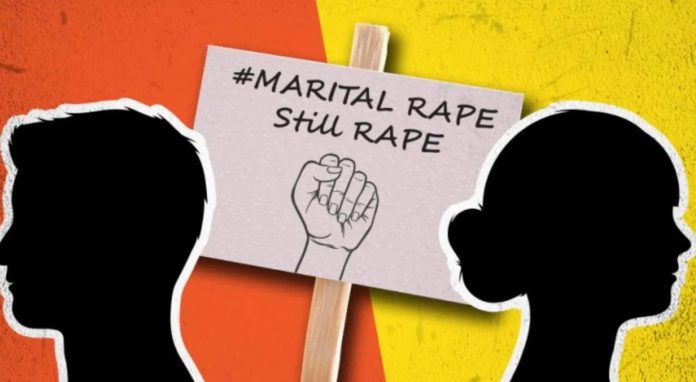
Download Now

Ownership of data

0

This article has been written by Shanuja Thakur pursuing the Diploma in US Technology Law and Paralegal Studies: Structuring, Contracts, Compliance, Disputes and Policy Advocacy from LawSikho

Introduction 

In developing countries like India, which are densely populated and are non-regulated markets of data, ownership of Data, be it sensitive personal data or non-personal data, is a nascent concept. The consumer himself does not think twice before giving personal information to companies in exchange for services and perks, which often results in the misuse of data and makes it easier for the companies or business entities to encroach upon our personal information. India, as a data market is growing at a CAGR(Compounded Annual Growth Rate) of 12%. With such growth, India as a nation needs to recognize the rights of the  individual over the data, as with rising data consumption the data receivers and data principles are becoming more vulnerable. To foster fair competition and economic growth, protection of non-personal and personal data is of critical importance. For this, it is imperative that we  first understand what ownership of data is, the meaning of the word ‘ownership’ as well as  understand the significance of data ownership especially in a technology-driven world that is evolving into an artificially intelligent one d entirely dependent on data- the data produced by common men and owned by others.

Paradigm of ownership 

Ownership of data is not just about who has the right over data or possession of data and who can license it out. It is a wide concept that defines an owner as a person who has the power and control over the data which includes the power to access, modify, sell, delete and license the access to others. In legal terms, a data owner is a person who has the legal right or legal title and as well as full control over a piece of information or set of data. This legal right is just like the legal right of a person over the physical property s/he owns. The data can be sold and licensed out to someone for a certain period just like in the case of physical assets. The point to be noted here is that in case of data it can be given to someone and still be owned by the original owner. The rights associated with non-digital property are clearly defined whereas the mere concept of data ownership is new and even ascertaining who is the actual owner of the data is complex. The ownership may be claimed by the data principle, the companies, funders, assembler and compilers or even the decoder. The ownership is all about control of the owner over data, consent to be taken before using the data and data rights of an individual.

Personal data is categorized into the following categories – 

1. Credential data – the sensitive personal information be it health data, memberships, licenses, passports, aadhar card in India or citizenship documents and other such documents.

2. Title data – the data which acts as  evidence of ownership of property, car or any sort of an asset. It is the title that is transferred when the asset is sold, therefore such data often changes with a change in ownership of the asset.

3. Digital possessions – the digitally owned or brought assets like photographs, videos. NFTs are an excellent example of this type of data. 

4. Historical data – this refers to the record of an individual, be it health records, educational and employment records, history of everything you ever sold and purchases you made, even the websites you visit. These are the major categories of data that are collected by the brokers or businesses for different purposes.

Significance of data ownership

Let us understand the significance and value of the personal data discussed above. Companies, especially e-commerce and social media-based companies, buy personal data and harvest it to sell advertisements and make billions of dollars annually. There is less authenticity and integrity of the data being used as it is not collected directly from the customers and the data principle or the customers don’t even know where the data is going. In other words, the owner cannot control and share the data with consent and this allows the middleman to sell data and increases the cost for a business to maintain public relations with the consumers.

All sorts of data, whether personal, non-personal or even sensitive personal data, is exploited and harvested by tech giants to reap profits without the consent of the actual owner. This data may be held by the banks, government or websites you often use to buy groceries and other products like Amazon or Flipkart, social media platforms like Meta, LinkedIn etc. Every movement you make online is being recorded and stored in the name of providing better services, the data is being traded and not even a slight insight is given to the data principle about the use of this information. For instance, when you are hospitalized several medical checkups are done, you give blood samples, urine samples and so on, yet you never know where that data goes after your treatment is done.

Every piece of information is collected by the data brokers and openly traded in the data markets; tech giants spend thousands of dollars to buy your data to make money. In the era where we talk about the right to privacy as a fundamental right, a common man doesn’t even know how, where, when and for what purpose his data is being recorded and stored. So basically the data is collected and assembled from a variety of public and non-public sources, and is later used by the companies to understand the audience at scale, target the right set of consumers and finally sell the services effectively and efficiently.

The question which arises here is of legality and the legal right of the brokers and companies to use the data in this manner. When it comes to physical possessions there are laws in place and no one can infringe upon the right you have to enjoy your property but in the digital space, the scenario is entirely different. The legislators are still trying to understand this nascent concept of data and its ownership. It has only been a couple of years since the European Union came up with one of the first data protection laws, which is the enactment of the General Data Protection Regulation (GDPR) in 2018 which took the internet by storm. A European citizen has the right to get their data by demanding the copies from the entities who hold their data and assemble it in one place. Due to the provisions of the GDPR.  EU citizens can find out where their data is and where it is going, whereas in other countries due to lack of any such regulation, the data is being exploited and the right to privacy remains a myth.

This model of GDPR has become a guardian light for many nations while coming up with data protection laws since it is one of the most impactful sets of data protection laws. Anyone intending to target a customer in the EU is supposed to adhere to these guidelines. GDPR reflects the importance of the concept of data ownership, that the data principal has the right to do what he wants to do with his data and no one can infringe upon that right and use it without his or her consent. To truly uphold the right to privacy and the rights of a data owner a strong set of laws must be implemented across all nations especially in countries like India which are unregulated markets of data and are falling prey to huge technology companies.

Conclusion

The value of personal data is evident and so is the exploitation by tech giants, yet we don’t know the significance and demand of data and we as citizens actually have control over the data and understand the importance of data ownership. We can change how companies work and protect ourselves from exploitation. Companies too on the other hand can receive authentic data making it a win-win situation for both consumers and companies. The middleman i.e. the data brokers who take undue advantage of unregulated markets will no more be able to exploit common people. Data is such a powerful resource that it can change the way we receive services but the way it is being collected and stored is highly unethical and against fundamental rights of an individual. At the same time, a lack of understanding about data and how it is used can be seen among citizens. Countries like the USA are on their way to having stringent data policies as major states like California have implemented data protection and privacy laws following the GDPR compliances of the EU. The question of how people want the data to be used and their choices are still debatable issues, governments across the world have just started looking at data rights as the fundamental rights and have recognized the need for a stringent framework to make people understand the value of their data, the concept of ownership of data and laws the rights of a data owner. In India, the PDP Bill of 2019 is expected to become an act soon which will indeed change the digital arena and will regulate the Indian digital market to some extent. Many other countries are following the footsteps of the EU and recognizing the need to regulate data markets. It is just a matter of time that people across the globe will understand the value of data ownership and an evolution of the data market will come about.


Students of Lawsikho courses regularly produce writing assignments and work on practical exercises as a part of their coursework and develop themselves in real-life practical skills.

LawSikho has created a telegram group for exchanging legal knowledge, referrals, and various opportunities. You can click on this link and join: https://t.me/joinchat/L9vr7LmS9pJjYTQ9

Follow us on Instagram and subscribe to our YouTube channel for more amazing legal content.

Download Now

All you need to know about divisional patent application in India

0

This article is written by Priyanshi Soni, of Symbiosis Law School, Noida. This article highlights all the key aspects of divisional patent applications in India starting from what it is to how it is interpreted and the dynamic nature of various case laws dealing with the same. 

Introduction 

Divisional patent applications or simply divisional applications have been a question of debate in India as the various judgments progress. The patent is a type of Intellectual Property Right (IPR), which gives the owner the exclusive right to his invention so that no one else can make the same thing, or use it for a limited period of time. 

The divisional patent applications are internationally recognized under the Article 4G Paris Convention and in India, under the Patents Act, 1970. It is generally significant when your patent application includes many independent inventions and thus the parent application lacks cohesion. 

What is a divisional application

The history of patent laws begins in 1911 with the enactment of the Indian Patents and Designs Act, 1911, and the Patents Act of 1970 (enforced in 1972) which was enacted to consolidate all the patent laws in India and which were amended in 2005. India also became a signatory to many international declarations which strengthened its patent laws and an especially significant step was becoming a member of the Trade-Related Intellectual Property Rights (TRIPS) system.  

Divisional application or divisional patent application refers to applications filed after the parent application of a patent because of the multiple inventions being mentioned. This divisional application ensures that the inventor’s multiple inventions are protected individually. This way, the objections raised for the patent report are also resolved in a better manner. This protects the inventor’s interest. When you file an application that will have such multiple inventions mentioned in it, the application will result in a lack of cohesion/unity. In this case, separate applications have to be filed which will include inventions apart from the first one mentioned. The original application will become the parent application. The divisional applications are regarded as filed at the same time as parent applications, i.e., they get the same date of filing. They can also claim the same priority. 

Section 16 of the Patents Act, 1970 incorporates the provision for division of applications in India. This provision provides that such a claim for additional application should have been stipulated in the provisional or complete specification in respect of the first application. Further, it also states that such an additional application should be made with a complete specification that should not have anything other than what was stated in the original application. Such an application can be filled by the inventor if he desires so or if any objection is raised because of the complete specification relating to more than one invention. 

There is a clear requirement of distinction between inventions in the same application mentioned, and Section 10(5) confirms the same. Also, as per Section 16(3), it is important that the claims mentioned in the complete specifications of the parent or divisional application should be different from that of the other as in India, a claim for the same invention is not allowed. The Controller has the authority to check this. 

Conditions for filing divisional patent applications

  1. If the candidate expresses a wish to do so, or
  2. In order to address the issue expressed by the Controller,

However, the claims sought to be separated from the parent patent application and incorporated in the divisional patent application must be based on matter disclosed in the provisional or complete specification already filed in relation to the first stated application, i.e., “if the claims of the invention disclosed in one patent application do not relate to single invention or to a group of the inventions forming a single inventive concept, the applicant can file a further application as divisional application out of that application either of his own (suo moto) or when the objection of claiming more than one invention is raised by the Controller. Further, where any overlapping of the claims in the parent application with the divisional application is observed, the Controller may seek the amendments in the complete specification of the divisional application to ensure that there is no overlapping of claims between the these applications. The later application should not include any claim already claimed in the parent application. Moreover, the matter disclosed in the divisional application should not include any matter not disclosed in substance in the complete specification of the parent application.”

Can a divisional patent application be filed at any time

The Indian Patent Act states that a person who has filed an application for a patent under this Act may, at any time before the grant of the patent, file a further application in respect of an invention disclosed in the provisional or complete specification already filed in respect of the first m, if he so desires, or to remedy the objection raised by the Controller on the ground that the claims of the complete specification relate to more than one invention.

The effect of filing a divisional patent application

The divisional application and the complete specification accompanying it are deemed to have been filed on the same date as the parent application, and the additional application is treated as a substantive application and examined when the request for examination is filed within the prescribed term. The patent awarded on a divisional application has a duration of 20 years from the date of filing of the parent patent application.

How to evaluate if the claims in the application involve multiple distinct inventions

We all now know that there has to be plurality in inventions to file divisional applications. Many times, the Controller objects to the filing of such an application pointing out either that the application did not include multiple inventions or that the claims can be covered under the parent application and so there was no need for the division. Therefore, there is a need to properly outline when it can be said that there is a plurality of inventions so that the correct divisional application can be filed. For this, in the Esco Corporation case it was observed by the appellate board that as per Section 7 of the Patents Act 1970, every patent application has to be filed for one invention. Thus, a single inventive concept is only allowed per application as per the Act.

Rule 13 of PCT implies that if there is no relationship between the inventions involved then they are said to lack unity. 

Case law

To understand better the effectiveness of Section 16, we will look at this case law – 

The Delhi Network Of Positive People V. Union Of India & Ors. [W.P.(C) No.2867/2014]In this case, Antiretrovirals (ARVs) drugs that were used in the treatment of HIV were sold at very high prices. When the other medicines came up in the market, the price fell for ARVs and so helped the least developing and underdeveloped countries to treat HIV easily. To neutralize this, the patentee filed multiple patent applications with respect to individual drugs. The court accepted that the drug company is misusing this feature and is filing multiple patent applications to keep the patent application alive. But still, the Delhi High Court denied relief to the plaintiff as it said that it cannot interfere in the mode and manner of filing the application by the applicant and this shall be done by the patent office and the controller. 

Conclusion

To conclude, the present process by controllers to assess if the claims of divisional application find their roots in the parent application is merely by comparing words, which is not too effective. There is a need for development in this area and it will be interesting to note how things will progress in incoming cases. Also, there has been a lot of ambiguity with respect to the claims of divisional application as to whether they have to compulsorily be claimed in parent application, divisional of divisional application (which lacks a concrete interpretation), accessing lack of unity. Many guidelines have been followed in cases, especially the Esco Corporation v. the Controller of Patents & Designs case which helped the dynamic cases and interests of the applicants and patent offices. We now look forward to these guidelines being put into practice. 

Lastly, the divisional application has nowadays become a tool to deceive the authorities. There is a need at the end of the legislature and executive to feel the loopholes in the statute and its implementation and curtail frivolous applications and also remove the ambiguity in interpreting the statutes. 

References 

  1. https://www.lexology.com/library/detail.aspx?g=753c18fa-c0d1-4e42-aa9a-a6ff038360f7
  2. https://www.lexology.com/library/detail.aspx?g=0c239769-a966-460a-8a70-dd79285d5ec9
  3. https://www.mondaq.com/india/patent/718652/divisional-patent-applications-in-india-delineating-frivolous-filings
  4. https://www.lakshmisri.com/newsroom/archives/divisional-patents-in-india#
  5. https://www.lexcampus.in/patent-case-summary-ucb-pharma-v-controller-general-of-patents-and-designs/
  6. https://legal.un.org/ilc/texts/instruments/english/conventions/9_1_1961.pdf
  7. https://www.mondaq.com/india/patent/1005518/liberalising-divisional-patent-applications-in-india-ipab39s-expansive-approach-to-lack-of-unity39-objections-and-second-divisionals
  8. https://www.lexology.com/library/detail.aspx?g=aeef1751-c36d-4d32-aac1-bb418b57c95a#:~:text=In%20LG%20Electronics%20Inc%20v,invention%20in%20the%20parent%20application.
  9. https://www.drishtiias.com/to-the-points/paper3/intellectual-property-rights#:~:text=Section%203(d)%20of%20the,not%20allow%20 evergreening%20of%20 patents.
  10. OA/66/2020/PT/DEL, decided on Oct. 27, 2020.

LawSikho has created a telegram group for exchanging legal knowledge, referrals and various opportunities. You can click on this link and join:

https://t.me/joinchat/L9vr7LmS9pJjYTQ9

Follow us on Instagram and subscribe to our YouTube channel for more amazing legal content.

Download Now
logo
FREE & ONLINE 3-Day Bootcamp (LIVE only) on

How Can Experienced Professionals Become Independent Directors

calender
28th, 29th Mar, 2026, 2 - 5pm (IST) &
30th Mar, 2026, 7 - 10pm (IST).
Bootcamp starting in
Days
HRS
MIN
SEC
Abhyuday AgarwalCOO & CO-Founder, LawSikho

Register now

Abhyuday AgarwalCOO & CO-Founder, LawSikho