Download Now
Home Blog Page 364

Checking the legality of Rule 4(2) of the Information Technology Rules, 2020

0

This article is written by Raunak Sood, a 4th year BBA LLB (Hons.) student studying at Bennett University, Greater Noida, pursuing Diploma in Advanced Contract Drafting, Negotiation, and Dispute Resolution from LawSikho.

Background

Companies like Facebook, Apple and Alphabet who own messaging apps like I-message, WhatsApp and Google Messages have been the worst hit by the Impugned Rule (defined hereinbelow) It is necessary to understand the background of these messaging apps. These messaging apps are allowing users to communicate with each other with their highly encoded end to end encryption, thus giving their users privacy and security. In simpler words, when one user sends his message to another user, this means that a message or a phone call is taking place between the users themselves. It does not mean that the message is going to any third-party, which implies that nobody would be able to snoop on the call or the message sent between the parties. 

Definitions

  1. Impugned Rule: Rule 4(2) of the Information Technology (Intermediary Guidelines and Digital Media Ethics Code) Rules, 2021.
  2. Information Technology (Intermediary Guidelines and Digital Media Ethics Code) Rules, 2021– It is hereinafter called as the “Ethics Code”

Issue

  1. Whether Impugned Rule of the Ethics Code is unconstitutional?
  2. Whether Impugned Rule is ultra vires the Information Technology Act, 2000?
  3. Whether the Impugned Rule violates the Data Principles laid down in GDPR and SriKrishna Committee Report?

Arguments advanced 

Issue 1. Whether Impugned Rule of the Ethics Code is unconstitutional?

The impugned rule is unconstitutional on the following grounds:

  1. Violation of Art 21.- The right to privacy has been declared a fundamental right in the case of KS Puttaswamy v. Union of India.  Right to privacy is like an umbrella under which the right to remain anonymous is present. Herein, the  impugned rule hurts the right to remain anonymous and it violates the root of the concept of end to end encryption and furthermore, the Impugned Rule asks all the social media intermediaries to identify the first originator of information and this violates the end to end encryption policy adapted by various messaging apps, shopping apps and OTT platforms, as well as infringes upon the right to privacy as the Impugned Rule does not set a time frame for the social media intermediary to recognize  the first originator of information.  Hence, all social media intermediaries  have to keep track of each and every message being shared on their platforms. The Impugned rule is not legal and is violative of S.69A of the IT Act as there is no opportunity for  judicial review before the Government asks the Social Media Intermediaries to disclose messages under  the garb of National Security. It also seems that the Impugned Rule is targeting the private communications of Indian Citizens and it is not the least restrictive method to control the right of privacy. 
  2. Violative of Art. 19(1)(a)- Professor Kaye once said that online privacy is important for the exercise of the right of free speech and expression. In the case of LIC v. Manubhai D. Shah, the Apex Court held that free speech includes the right to communicate through print media or any other communication channel and any attempt to strangle the same would be violative of Art.19(1)(a). There is a chilling effect on free speech because lawful communications between users of social media would  be under surveillance and people would  not have the freedom to speak freely and securely within their private space. 
  3. Violative of Art.14 – In the case of Shayara Bano v. Union of India, the Apex Court held that the unreasonable laws are absolutely arbitrary, hence the Impugned Rule is arbitrary because it causes more harm than good, and goes against the legislative intent of the IT Act because the Parliament never envisaged that the Government should be able to know about communications taking place between various individuals let alone the First Originator of Information.

Issue 2. Whether the Impugned Rule is ultra vires the Information Technology Act, 2021?

The Impugned Rule cannot be said to have the force of law because Rule 4(2) has been made under delegated legislation. The Impugned Rule has been made by the IT Ministry  and delegated legislation and rules made under such legislation cannot lie outside the purview of the Parent Statue. The Impugned Rule is ultra vires the IT Act on the following grounds:

  1. Violative of the legislative intent: It was held by the Apex Court in the case of Bombay Dyeing v. Bombay Environment Action group that any delegated legislation falling afoul of the legislative object of the parent statute could  be struck down. The preamble of the IT Act, 2021 provides for a substitute to paper-based approaches of communication and uploading of information, and the legislative intent seeks to introduce uniformity, but the same legislative intent is being threatened when social media intermediaries are asked to identify the first originator of information. 
  2. Ultra Vires S. 69A and 79- Section 69A allows the Central Government to block access to content over its platform or give out the procedures and safeguard whereas Impugned Rule is neither a procedure nor a safeguard and it is a settled law. In the case of Kunj Behari Lal Butail v. State of HP  it was held that rules made under a statute should not travel beyond the scope of the statute or be repugnant thereto. Hence, the Impugned Rule is transgressing and is ultra vires to S.69A of the IT Act, 2021.

Section 79 gives immunity to social media intermediaries for whatever activity is being done by third parties on their platforms, but nowhere in S.79 is there any mention of enabling the Government to identify the first originator of the information.  It is the Parliament which is allowed to take on the essential legislative functions as laid down in the case of In re Delhi Laws, 1912 and it is iterated that there is no clear policy mentioned in S.79 to identify the first originator of information. And furthermore, S.79 only gives powers to the Central Government to prescribe for “due diligence” but Impugned Rule falls outside the scope of the word due diligence because it opens a trap door for netizens to understand the limits of data being generated. Hence, it is concluded that the Impugned Rule is ultra vires S. 79 of the IT Act, 2021. 

Issue 3. Whether Impugned Rules violate data principles laid down in GDPR and Srikrishna Committee Report?

The Impugned Rule is violating the principle of Data Minimization laid down in Article 5(1)(c) of the GDPR that states that a minimum amount of data should be stored to fulfill the purpose for which your organization needs it, the data should be adequate, relevant and limited to the purpose. Herein the purpose of social media and other shopping apps is to connect and distribute goods but the Impugned Rule allows traceability which defeats the Data Minimization Principle of being relevant, limited and adequate. In the Justice Srikrishna Committee Report, it is stated that firstly, the purpose should not be specified in a vague manner and secondly there should be a fair and just usage of data with regard to the minimum data collected from the data fiduciary. In this case the Social Media intermediaries like Apple, Facebook, Whatsapp, Google are the data controllers and users are the data fiduciaries but the Impugned Rule asks the data controller to collect massive amounts of data which is not relevant to the purpose of messaging between two individuals and hence, the Data Minimization Principle and Sections 5 and 6 of the Personal Data Protection Bill have been made a dead letter of law even before the Bill could become an Act. 

Case law

In the Facebook Cookies Case, Facebook Incorporated and Facebook Ireland were placing cookies on the web browsers of the users and visitors of the website without giving any kind of notification or information. Hence, after being found out by the French Authorities, Facebook was fined Euro 150000 for excessively collecting the personal data of users. If the  Impugned Rule is allowed to remain and is  not struck down, the same thing will take place i.e. excessive collection of user information without even informing the users so that the first originator of information can be determined easily. 

Conclusion

It is important that the integrity and security of the communications is ensured because every citizen has the fundamental right to privacy and freedom of speech and expression. The same freedom of speech and expression should even extend to private spaces and allow people to communicate over the borderless internet. The Impugned Rule seeks to destroy that very nature of a borderless internet by snatching the rights of users like doctor-patient, attorney-client etc. to communicate freely without anybody recording, copying or snooping upon their conversations. 

References


Students of Lawsikho courses regularly produce writing assignments and work on practical exercises as a part of their coursework and develop themselves in real-life practical skills.

LawSikho has created a telegram group for exchanging legal knowledge, referrals, and various opportunities. You can click on this link and join:https://t.me/joinchat/L9vr7LmS9pJjYTQ9

Follow us on Instagram and subscribe to our YouTube channel for more amazing legal content.

Download Now

Freedom of speech and public intolerance

0
Image source: https://rb.gy/k2oocc

This article is written by Shailja, pursuing an Introductory Course: Legal Writing For Blogging, Paid Internships, Knowledge Management, Research and Editing Jobs from LawSikho. The article has been edited by Aatima Bhatia (Associate, LawSikho) and Ruchika Mohapatra(Associate, LawSikho).

Introduction

The idea of freedom of speech in India has been enshrined in its Constitution under Article 19(1) but its legacy goes back to the freedom struggle when the leaders believed in forming a nation where every citizen has a right to free speech. But this right to freedom of speech and expression isn’t absolute. It is subjected to few reasonable restrictions under Article 19(2) of the Constitution, one such being public order. Public order refers to the conditions where people behave in a sensible and rational manner and at the same time respect each other. However, often we come across instances where the line between an individual’s right to freedom of speech and disturbance in public order becomes a question of debate. Recently, such debates and questions have been raised in numerous instances which include the Dabur ad controversy, FabIndia ad, and many others where free speech clashes with public intolerance. This article aims to discuss the aforementioned question of debate and explore the relation between free speech and public intolerance.

Recent controversies

A lesbian couple celebrating a Hindu ritual named karva chauth in an ad by Dabur’s fairness bleach brand ‘Fem’ sparked a massive controversy. While a certain section of the society supported the progressive agenda behind this ad, another group of people attacked the ad for being offensive. The brand was even threatened by Madhya Pradesh Home Minister Narottam Mishra with legal actions and ultimately the ad was taken down. Another brand that received a backlash from the public was FabIndia for releasing a Diwali themed clothing collection and naming it as Jashn-e-Riwaaz. Soon the backlash turned into a Twitter trend as #boycottFabIndia as the ad was considered to be ‘culturally inappropriate’ and was alleged to be unnecessarily mixing the two separate religions together. 

While there have been many such controversies where advertising companies have faced public backlash but instances of intolerance are not only limited to them. Another recent and quite famous case of intolerance was against Salman Khurshid’s recent book ‘Sunrise over Ayodhya: Nationhood In our Times’ for comparing Hindutva to jihadist Islam of terror groups like ISIS and Boko Haram. A petition to ban the book was filed before the Delhi High Court, claiming it to be hurting the sentiments of the people. However, the High Court rejected the petition stating that” if sentiments are hurt, read something better.” The intolerance intensified to such an extent that Salman Khurshid’s home at Nainital was arsoned. 

Such instances are not new. The exercise of the right to freedom of speech, time and again hurts the sentiments of another person or a class of persons, though at times it is based on reasonable grounds, and other times it is hard to define what that reasonable basis is. In all the above-mentioned cases of public intolerance, severe backlash from the public has acted as a restraint on someone else’s freedom of speech and creativity. Such backlashes undermine creative freedom in India and create a situation where advertising agencies, writers, etc. have to restrict themselves within a certain boundary out of the fear of hurting someone’s sentiment which most of the time also limits the free flow of progressive ideas and thoughts in society. The growing intolerance in the society not only obstructs free speech but also acts as a hindrance to the breaking of the status quo mentality and thus limits the society from growing towards being a better one. 

Now the question arises as to what causes such extreme intolerance in society? Can’t there be harmonious co-existence of diverse ideas and thoughts in a given society? How can we become more tolerant and respect everyone’s right to freedom of speech and expression? Let us explore these questions in the following section. 

Harmonious coexistence of ideas

Psychologists define intolerance as generalised negativity or antipathy towards a group of people that is different from oneself in various respects, often because of feelings of threat to one’s beliefs. It is referred to as unwillingness to accept views that are different from one person to another. According to them, there can be three forms of intolerance- one being prejudicial intolerance which is based on having a rigid mindset towards something or someone, second, being intuitive intolerance which is based on non-reflective response and third being the deliberative intolerance which involves interfering with certain practices that violate moral principles. Here, we are talking of prejudicial intolerance which is the most prevalent form of intolerance in India. One of the factors that lead to massive backlash is religion. Communal disharmony has frequently been a point of issue that has stirred intolerance among people. This communal disharmony often stems from the belief that one’s religion is superior to others. This can also take the form of majoritarianism, which poses a grave threat to the freedom of speech in India. 

Often, in a society that comprises a diverse set of beliefs and ideologies as well as different religions, conflicts of opinion are bound to arise. However, the problems arise when such conflicts of opinion take the form of rivalry between the majority and minority forces which gradually intensify if not controlled at the right time. These conflicts of opinion are also reinforced due to the support of the political leaders by their rhetoric and speeches who intend to take advantage of the divide to gather more votes for themselves. In such a society that holds rigid views and ideologies, any speech or opinion or thought that differs from them can act as an offensive speech for others and hurt their sentiments thereby obstructing the free flow of ideas and thoughts. 

However, the underlying assumption behind such a person’s sentiment is the belief that the differing views are a threat to their rigidly held opinion or belief. They believe that anyone who expresses an opinion that is slightly progressive than their own opinion or ideas is threatening them. Therefore, instead of taking it as a personal threat, such progressive thoughts or opinions should be taken in a much more optimistic manner where ideas are in conflict with each other and not the people exhibiting such ideas. In other words, to grow more tolerant of differing views, such views should be separated from the individual who holds those views. This approach can act as a way of harmonious co-existence of ideas and thoughts that are different from one another.

Another assumption is that one’s freedom of speech is superior to others which often makes people believe that their point of view is better than others. This belief makes the person feel entitled to attack another’s opinion or another’s right to freedom of speech and expression. While it might take time to inculcate harmonious co-existence of ideas within a society, it becomes all the more essential to take efforts to protect the freedom of speech of an individual in the midst of growing intolerance in the society. Here, the judiciary, as well as the executive, becomes an important instrument of protecting an individual’s right to free speech.

Conclusion

Freedom of speech and expression in a country ensures that every individual expresses his/her opinion without any fear of resistance, though it should be to such an extent that it doesn’t restrict another person’s right to free speech. For a country to evolve and grow in terms of its ideologies and mindsets, it needs to enable the free flow of different voices and opinions. In order to break through the status quo and progress as a society, every citizen must feel free to voice their opinion. However, with the growing intolerance in society, freedom of speech has come under a grave threat. People resort to extreme actions and violence against anything that differs from their point of view. Such a violent way of expressing dissent threatens liberty and freedom of the citizen which further divides the society into different sections who are intolerant to each other. Due to such a situation arising within the country, we as citizens get further separated from progress and development and get shifted towards countering each other, trying to establish the supremacy of one’s point of view over others. 

What we really require is to allow different opinions to coexist with each other and inculcate respect for everyone’s fundamental right to free speech. In order to transform with the changing times, we as a society must learn to be tolerant of the views of other people. Expressing disagreements and agreements towards something in a healthy and lawful manner is an effective way of bringing in transformation in the society but the only thing that bridges the gap between these two is creating an ambience of freedom of speech which gives the people the power to use their voice for a better cause. A society intolerant towards differing views restricts the people from using this power which is also a threat to a democratic country.

To sum up, I would like to take the help of a quote by a famous French writer as well as an ardent advocate of freedom of expression-Voltaire who had said, “I disagree with what you say—and will defend to the death your right to say it.”

References

  1. ‘Where the Mind Is Without Fear: Free Speech in India’, we unlearn.org, https://www.weunlearn.org/blog/free-speech
  2. ‘Public intolerance’ led to Dabur ad being pulled: Justice D Y Chandrachud,’ IndianExpress https://indianexpress.com/article/india/dabut-karva-chauth-ad-dy-chandrachud-7603064/
  3. ‘If sentiments are hurt, read something better: Delhi HC on plea seeking ban on Salman Khurshid’s book’, IndiaToday. https://www.indiatoday.in/india/story/supreme-court-dismisses-plea-ban-salman-khurshid-book-hindutva-1880637-2021-11-25
  4. ‘From FabIndia to Tanishq, a look at brands that faced backlash on social media for their ads’Firstpost. https://www.firstpost.com/india/from-fabindia-to-tanishq-a-look-at-brands-that-faced-backlash-on-social-media-for-their-ads-10086071.html
  5. ‘Dabur ad controversy: You can either glow with pride or bleach the rainbow’, IndianExpress. https://indianexpress.com/article/entertainment/entertainment-others/dabur-ad-controversy-you-can-either-glow-with-pride-or-bleach-the-rainbow-7599998/

Students of Lawsikho courses regularly produce writing assignments and work on practical exercises as a part of their coursework and develop themselves in real-life practical skills.

LawSikho has created a telegram group for exchanging legal knowledge, referrals, and various opportunities. You can click on this link and join:

https://t.me/joinchat/L9vr7LmS9pJjYTQ9

Follow us on Instagram and subscribe to our YouTube channel for more amazing legal content.
Download Now

Analysis of order quashing 97th Amendment of Indian Constitution

0

This article is written by Vandita Bansal, of Symbiosis Law School, Noida. This article discusses cooperative societies and analyses the 97th Amendment of the Constitution.

Introduction

On 20th July 2021, the Supreme Court took the major decision of quashing some portions of the 97th Constitutional Amendment with the primary motive of boosting federalism, with this step the restricted control of states over the cooperative organization which is also the prominent sector in the national economy can now come under the jurisdiction of State.

A cooperative society is a self-organized collection of people who have common interests who work together to achieve a common economic aim. Its mission is to help the less fortunate members of society by employing self-help and mutual aid concepts. The main objective is to provide help to the subscribers. Folks come forth as a group, pool the available resources, make the best use of them, and benefit from all of this collectively. The Co-operative Societies Act of 1912, allows for the establishment of a cooperative society in India.

Background of the 97th Constitutional Amendment 

It was on December 7, 2004, that meetings of ministers across several states took place to discuss the major problems of cooperatives about their voluntarism principle, autonomy, democratic control, and professional management. The conference further decided to quash parts of this Constitutional Amendment with the aim to ensure the timelier election with features boosting independence and democracy. Here now let’s discuss the changes made in the Amendment with the vision of encouraging cooperative economic activity which is surely going to participate in the progress of rural India.”Cooperative societies” were added to the list of basic rights in order to follow Unions and associations in Article 19(1)(c). The Directive Principles of State Policy now include a new Article 43B on the promotion of cooperative organizations (Part IV). Part IX-B (Articles 243ZH to 243ZT) was added, which included a number of provisions for state laws governing cooperative societies. The Amendment discussed above was subsequently passed but it was not discussed by the legislature of state leading to the problem of the procedure described by the Constitution, hence it was not followed constitutionally. 

Cooperative societies

As per International Labour Organisation(ILO), a cooperative is an autonomous organization of individuals united voluntarily to achieve their shared economic, social, and cultural needs and ambitions through a jointly owned and democratically run corporation. Cooperative Societies is a State Subject under Entry 32 of the State List of Seventh Schedule of the Constitution of India.

Part IX B of the Constitution, for example, focuses on enabling the Parliament in the case of multi-State co-operative societies and the State Legislatures in the case of other co-operative societies to make proper law, establishing the following issues: 

  1. Provisions for incorporation, regulation, and winding up of co-operative societies formed on the basis of democratic member-control, member-economic participation, and autonomous functioning; 
  2. Stating the maximum number of directors of a cooperative society not exceeding 21 members
  3. Providing for a fixed period of 5 years from the date of the election in regard to the nominated board members and its office bearers;
  4.  Providing for a maximum time limit of six months under which a director of the company of a co-operative society can be kept under supersession or restriction;
  5.  Providing for an individual professional inspection
  6. Granting members of co-operative societies the right to information;
  7. Enabling state governments to acquire periodic reports on cooperative society operations and accounting;
  8. Allowing for the allocation of one seat on the board of every co-operative society with persons from the Scheduled Castes or Scheduled Tribes and two seats for women; providing for offenses related to co-operative societies and punishments in light of such offenses

Issues, objections, and reforms needed

  • Cooperative societies have proved flaws in protecting the interests of their members and achieving the goals for which they were formed. 
  • There have been cases where elections have been delayed for months, with nominated office bearers or administrators continuing in command of these organizations for an extended period of time. 
  • This lowers the accountability of co-operative society management to their members. Lack of professionalism in management has resulted in poor services and low production in many cooperative societies.
  • Co-operatives must operate under well-established democratic norms, with elections held on time and in a free and fair way. Hence, fundamental policies must be introduced to revive these organizations in order to ensure their involvement in the country’s economic development and to serve the interests of members and the general public, as well as to ensure their autonomy, democratic functioning, and professional management.
  • A major need has been identified for changing the Constitution in order to protect co-operatives from unwanted outside interference while guaranteeing their independent organizational structure and democratic functioning.
  • The expansion of co-operatives on a wide scale was planned within the framework of State Acts as part of order to guarantee social and economic justice and equal sharing of the benefits of expansion. However, it has been found that, despite the major development of co-operatives, their quality performance has not been up to the desired level.

Latest developments with regard to cooperatives

  • The government proposed the creation of a new Union Ministry of Cooperation.
  • It will provide a separate administrative, legal, and policy structure for the country’s cooperative movement.
  • It will contribute to the development of cooperatives as a real people-centered movement that reaches all the way to the masses.
  • A cooperative-based economic growth model, in which each member works with a sense of responsibility, is highly important in our country.
  • The Ministry will seek to improve processes for ‘ease of doing business’ for co-operatives and to facilitate the growth of Multi-State Co-operatives (MSCS).

Gujarat High Court judgment

As this news sparked controversy a large number of applications were subsequently passed in front of the Gujarat High Court as well as several other courts in different states. A writ petition by Mr. Rajendra N. Shah was filed arguing the violation of the fundamental framework of the Constitution. The prime fact of the contention was the Amendment done in 2011 in the Indian Constitution which expends the entry of IXB including Article from 243ZH to 243ZT, violates the Indian Constitution by failing to apply Article 368(2) of the Constitution, which requires formal ratification by a majority of State legislatures. The respective petition successfully establishes the claim that Article 368 was not passed by the procedure established in the Constitution hence violating the basic structure. The petitioner mentioned a major point as the cooperative societies do not fall in Schedule VII Entry 45 List 1 and are also excluded from List 43 so therefore petitioner asked for dismissal of the Amendment. Further, one more question arose whether multi-state cooperative societies could be separated from legal cooperative societies in Part IX-B or not.

State governments were stripped down from their vital authority was concluded by the Gujarat High Court. Hence, the High Court decided to strike down Part IX B as it was not constitutionally established due to a lack of proper ratification. Union of India was dissatisfied by the decision and moved to the Supreme Court but the Supreme Court affirmed the decision of the High court on July 20, 2021. It was therefore established that this Amendment needed further argument by both the governments but that did not happen.

Analysis of the decision of the Supreme Court

The decision was taken by a three-judge bench R.F. Nariman, K.M. Joseph, and B.R. Gavai. Two of the judges concluded to strike down only Part IX B whereas the third judge was in favor of shutting down the entire Amendment.

According to the All India Kisan Sabha, the Constitutional Amendment was trying to create more centralization leading to undermining of the federal system. And, in order to keep the inflow of workers going, it was important to keep the powers with the states intact and to keep the Centre out of the picture. This system was dipped in several flaws, one of many was the inability to follow the proper ratification process.

While the government tried to save itself while stating that its goal was more about creating a professional working environment following a more democratic approach, timely conduct of elections, etc. Final points made by Justice Nariman stated that the Amendment was saved because according to the judgment it not only restricts the power of members but it also controls them.

Reason for striking down

The Amendment included sections dealing with the operation of cooperative societies in a state. It was overruled because the subject matter was on the state list and “belongs fully and solely to the State legislatures to legislate upon,” and any amendment would require approval by at least one-half of the state legislatures, as required by Article 368(2) of the Constitution.

Part IXB of the Indian Constitution is considered to be in force so long as it covers multi-State co-operative organizations both within the different States and in the Union Territories of India.

The Supreme Court ruled that if the Centre wants to create uniformity (the reason for the Amendment, as stated by the Centre), the only option was to use Article 252 of the Constitution, which deals with the Parliament’s ability to act for two or more states by consent. Also, various provisions of the Amendment relating to cooperative societies violated the basic structure of federalism.

Dissenting opinion 

In this case, justice KM Joseph had a view that was opposite of both the other judges he was in favor of striking down the entire Amendment as it did not follow the procedure established by the Constitution, he also refused to accept the severability of this issue if implied because it also contains an article of multi-state cooperative society which works under Union Territories, but not cooperative societies restricted to the territories of Union Territories. He pointed out that the provisions of Articles 243-ZR and 243-ZS are entirely dependent on the provisions of Articles 243-ZI through 243-ZQ.

Conclusion

With its decision, the Court established two significant facts: it supported the quasi-federal framework of Indian polity and it also provided guidance to the Ministry that they could further deliberate on the 97th Amendment and restore it if they properly follow the procedural code. This decision has been welcomed by legal experts as a support to the concept of federalism, which is part of the basic framework of the Indian Constitution. Also, it clarified the scope of the new Union Ministry of Corporation’s operations. If the Court rejected the 97th Amendment due to a procedural fault, the Centre can still take steps to fix that flaw and restore the 97th Amendment’s force.

References

  1. https://taxguru.in/corporate-law/quashing-97th-constitutional-amendment-partly-step-upholding-federal-structure.html
  2. https://www.nextias.com/current-affairs/22-07-2021/quashing-of-part-of-97th-constitutional-amendment
  3. https://www.insightsonindia.com/2021/07/26/explain-why-the-supreme-court-has-recently-struck-down-part-of-the-97th-constitutional-amendment-also-analyse-its-impact-on-federal-principles-in-india/
  4. https://www.scconline.com/blog/post/2021/07/21/constitution-97th-amendment-act-2011/

LawSikho has created a telegram group for exchanging legal knowledge, referrals and various opportunities. You can click on this link and join:

https://t.me/joinchat/L9vr7LmS9pJjYTQ9

Follow us on Instagram and subscribe to our YouTube channel for more amazing legal content.

Download Now

Acquisition of BillDesk by PayU : an analysis

0

This article is written by Vanya Verma from O.P. Jindal Global University. This article covers the acquisition of BillDesk by PayU, it’s internal analysis and legal framework governing acquisition in India.

Introduction

PayU, a fintech company funded by Prosus, has purchased BillDesk, India’s first payment gateway, for $4.7 billion, making it the country’s largest digital payment acquisition. Prosus plans to expand its payments and fintech firm PayU with this acquisition. PayU is one of the largest payment providers in the world, with a total payment volume (TPV) of $147 billion. This acquisition is noteworthy since BillDesk, which has been operating in India for over 20 years, is one of the country’s oldest payment gateways, covering over 60% of the country’s online payment transactions. The acquisition’s net assets were valued at $256.9 million, and the Profit After Tax (PAT) for the year 2021 was $36.8 million, according to Prosus.

PayU’s $4.7 billion acquisition of BillDesk appears to be the second largest exit by an Indian start-up through an acquisition (after Flipkart), surpassing Snapdeal’s $400 million acquisition of Freecharge and BYJU’s $950 million acquisition of Aakash Educational Services earlier in 2021. This puts PayU in a strong position to capitalise on India’s looming FinTech boom. 

PayU is the favoured payment gateway for a wide range of internet enterprises, whereas BillDesk leads the government and Banking, Financial Services, and Insurance (BFSI) industries. BillDesk has a near monopoly in payment processing for government bodies, which is highly profitable because it is a steady stream of cash that is always expanding, unlike e-commerce, tourism, or other companies that have occasional spikes and troughs. BillDesk’s banking relationships, on the other hand, offer new markets for PayU rather than competing with it, and no electronic payment provider can remain powerful and influential without adapting to the new economy. BillDesk had been looking for a buyer for the past two years due to increased competition from RazorPay, CCAvenues, and others.

About PayU

  • The company was founded in 2002 and is situated in Hoofddorp, Netherlands. It allows online merchants to accept and process payments through payment systems that may be integrated into web and mobile applications. PayU is a global company with operations in more than 50 countries and employees from 43 different nations.
  • PayU is Prosus’ payments and fintech division. Prosus is a global consumer internet company and one of the world’s top technology investors. Prosus is majority owned by Naspers and has a primary listing on Euronext Amsterdam (AEX:PRX) and a secondary listing on the Johannesburg Stock Exchange (XJSE:PRX).
  • PayU’s cutting-edge and award-winning technology delivers payment gateway solutions to internet businesses. PayU is the primary payment partner for e-commerce merchants in India, serving over 4,50,000+ merchants with over 100+ payment options, including all major e-commerce companies and the bulk of airline enterprises.
  • They aim to provide a safe and secure ecosystem that allows anybody to send or receive payments, while also providing ease and trust, through ongoing technology innovation.

About BillDesk

  • BillDesk is a Mumbai, India-based internet payment gateway startup. Customers in the e-commerce, financial services, retail, and other sectors can use the company’s payment solutions. Billdesk is one of India’s oldest payment gateways, powering about 60% of the country’s online bill payments.
  • BillDesk, an Indian online payment gateway startup founded in 2000 by a team of ex-Arthur Andersen employees, continues to be at the forefront of the digital payments’ evolution in India, offering internet-based payments technologies that enable users to make seamless online payments.
  • BillDesk is a dependable payment platform for enterprise-wide electronic payments and collections, as well as related reconciliation and settlement activities, spanning different delivery channels and using a variety of payment methods, with over 20 years of market leadership.
  • BillDesk assists consumers in organising, managing, and paying any recurrent or recurring bills they may have. Customers can also check all of their previous payments, as well as receive and pay using this portal. Customers can now conduct financial transactions in a safer, faster, and more efficient manner.
  • Billdesk began by linking banks with any merchant or utility that needed to take client payments. BillDesk would only take a cut from the merchant, bank, or utility for every transaction it facilitated, which was a key aspect of this business model.
  • Many Indian organisations, businesses, and banks use the platform. This comprises telecommunications, insurance, e-commerce, financial services, charities, and a variety of entertainment providers.
  • BillDesk is an aggregator platform in India that allows users to make various online and mobile payments.

Purchase consideration of the deal

On a debt-free and cash-free basis, the deal’s purchase consideration is INR 345 million, or USD $4.7 billion, and it is subject to a normalised level of working capital at closing. The purchase will be made on an all-cash basis, with the full purchase price due at the time of closing.

Internal analysis of the acquisition

Strengths

BillDesk is India’s largest payment processor, handling the majority of the country’s transactions. It also offers timely customer service and high transaction accuracy through the internet. PayU and BillDesk will be able to meet the evolving payment needs of Indian digital consumers, government enterprises, and merchants, as well as provide cutting-edge technology to even more underserved groups by providing robust consumer protection and adhering to India’s regulatory environment, as a result of the acquisition. BillDesk and PayU both operate a digital payment company in India, and by combining their efforts, they would be able to build a financial ecosystem capable of handling 4 billion transactions per year, which is four times the current level of PayU in India.

Weaknesses

If BillDesk wants to grow even more, it needs to focus more on e-commerce and retail transactions. There is still a sizable portion of the retail market that is either unaware of or has little knowledge of the company’s retail potential, and they continue to rely on CCAvenue.

Opportunities

Customers have a high degree of trust in the BillDesk payment gateway and have great reliability upon it when it comes to making payments using this platform, which may also be used in retail. It could even look into some new and inventive payment solutions to assist the company in maintaining its market leadership. Together, PayU and BillDesk will build a versatile platform that can scale across all payment verticals. They’ll also build a stronger foundation on which to build further growth prospects in the digital banking sector.

Threats

The dominance of CC Avenue in the e-commerce sector and Atoms in mobile payments are both threats to the company. With the rise of online and internet-based payments, a flood of newer payment mechanisms, such as NFC, have sprung up.

Legal framework governing acquisition in India

The Companies Act, 2013

The Companies Act of 2013 is the most important and essential law that regulates all companies registered in India. The terms of the Companies Act must be followed in all company activities and business transactions, including mergers and acquisitions. Sections 230 to 240 of the Act and rules govern mergers and acquisitions transactions.

The Competition Act, 2002 

This Act controls mergers and acquisitions in India. It was created with the goal of preventing widespread harm from monetary control decisions by allowing for monopoly administration, restrictive and unfair trade to protect consumer interests, ensuring that the economic system’s procedures do not lead to the concentration of financial control in the hands of a few people, and allowing for the rule of dominance. The Competition Commission of India was established under the Competition Act to grant antitrust clearances and regulate mergers that have a negative impact on competition in the country.

The CCI must be notified of any proposed combination or other document for the acquisition or acquisition of control, or for the approval of any proposal linked to merger or amalgamation by the Board of Directors (BOD) of the firms involved, within 30 days of the execution of any agreement.

After receiving a notice, the CCI conducts an inquiry in two steps. The CCI evaluates, prima facie, whether the proposed combination is likely to generate an Appreciable Adverse Effect on Competition Agreements (AAEC) within 30 working days of receiving notification. The CCI will approve the proposed combination if it is determined that it will not result in an AAEC.

If the CCI feels the combination is likely to have an AAEC, the CCI initiates a second phase of in-depth investigation that lasts 210 calendar days. After inspection, the CCI may approve, refuse, or approve with modifications the combination.

The Competition Act has extraterritorial application, meaning the CCI’s jurisdiction extends to transactions that occur outside of India. The implication is that even if the purchases, sellers, or target entities are situated outside of India, combinations involving enterprises with assets or turnover in India that exceed the prescribed thresholds set out in the Competition Act will be scrutinised by the CCI. The current acquisition of BillDesk by Prosus is pending as it is subject to the approval of CCI.

The Securities and Exchange Board (SEBI)

The Securities and Exchange Board of India (SEBI) is a regulatory agency that publishes rules and directives to regulate the securities industry. M&A transactions are regulated by SEBI under the Securities and Exchange Board of India (Substantial Acquisition of Shares and Takeovers, Second Amendment) Regulation, 2018. This was developed to control takeovers and described the mechanism for creating a transaction with an acquirer for the aim of acquiring publicly owned shares or stakes in another firm in a more acceptable manner.

Foreign Direct Investment Policy 

Foreign investment in India is governed by the Foreign Direct Investment Policy. The FDI Guidelines regulate the flow of foreign investment into and out of India, as well as the instruments that can be used, sectoral caps for foreign investment, and entry requirements. It includes minimum capitalization requirements, lock-in periods, and local sourcing requirements.

The Foreign Exchange Management Act, 1999 

The Reserve Bank of India (RBI) is in charge of the foreign exchange management, and the policies of the Act manage the influx and outflow of capital in India. According to the FEMA Regulations, any transaction carried out in the same manner as a cross-border merger is regarded as RBI-approved. The Act becomes necessary as Prosus is a foreign company and during acquisition the Act becomes essential as there will be a flow of foreign capital.

The Income Tax Act, 1961

The tax treatment of M&A transactions in India is governed under the Act and by the Income Tax Department and the double taxation avoidance treaties signed by the Indian Government.

Conclusion

PayU might become a market leader not only in India, but also in the Asian Digital Payments Market, thanks to the anticipated synergies. Given the high expenses of expansion and a scarcity of knowledge, inorganic growth in the FinTech business appears to be the best option. The deal, which has yet to be approved by India’s Competition Commission, has the potential to catalyse the FinTech industry by establishing PayU as the market’s leading digital payment provider and sending strong signals to domestic and international investors about the promising investment opportunities available in the Indian startup ecosystem.

References


LawSikho has created a telegram group for exchanging legal knowledge, referrals and various opportunities. You can click on this link and join:

https://t.me/joinchat/L9vr7LmS9pJjYTQ9

Follow us on Instagram and subscribe to our YouTube channel for more amazing legal content.
Download Now

A brief analysis on dissolution of State Legislative Councils

0
Image source - https://bit.ly/32DW8P8

This article is authored by Akash Krishnan, a student from ICFAI Law School Hyderabad. It discusses in detail the provisions regarding the formation and abolishment of State Legislative Councils. 

Introduction

India follows a bicameral system, i.e., a system wherein a state has two legislative bodies. In India, the Parliament is divided into two houses, i.e., the Lok Sabha and the Rajya Sabha. Similarly, the state governments also have an option to follow the bicameral system and establish two legislative bodies namely the State Legislative Assembly and the State Legislative Council. 

Each state has to mandatorily form a State Legislative Assembly and this body acts as the lower house of a state legislature. On the other hand, the state is empowered to create a second legislative body, i.e., the State Legislative Council of its own volition. The state is also empowered to abolish this body. The State Legislative Council, if any, acts as the upper house of a state legislature.

Currently, six Indian States have Legislative Councils. The same has been enumerated below:

  1. Andhra Pradesh Legislative Council
  2. Bihar Legislative Council
  3. Karnataka Legislative Council
  4. Maharashtra Legislative Council
  5. Telangana Legislative Council
  6. Uttar Pradesh Legislative Council

State Legislative Council

The State Legislative Council acts as the upper house of a state legislature. It is also known as the Vidhan Sabha or the House of Review. Article 169 of the Constitution of India empowers a state to institute or abolish a State Legislative Council. Members of the State Legislative Assembly are directly elected by the people of the state whereas members of the legislative council are nominated by the State’s Governor or are elected through indirect elections.

Composition and election of the members of the State Legislative Council

Article 171 of the Constitution of India lays down the composition of a State Legislative Council. It states that the total number of members in the State Legislative Council shall not be more than 1/3rd of the total number of members in the State Legislative Assembly. Also, the total number of members in the Legislative Council should not be less than 40.

Until the Parliament provides the composition of the State Legislative Council, the members of the State Legislative Council are either nominated by the Governor or are elected indirectly by the State Legislative Assembly. The composition of the members of the State Legislative Council is as follows:

  1. 1/3rd members of the State Legislative Council shall be elected by the members of the local bodies such as municipal bodies, district boards or other local bodies specified by the Parliament.
  2. 1/12th of members of the State Legislative Council shall be elected by graduates.
  3. 1/12th of members of the State Legislative Council shall be elected by the teachers.
  4. 1/3rd of members of the State Legislative Council shall be elected by the State Legislative Assembly members. If any member of the State Legislative Assembly is elected during this process, their membership in the Assembly will cease to exist. 
  5. The remaining members of the State Legislative Council shall be nominated by the Governor. The members of the State Legislative Council nominated by the Governor should have knowledge or expertise in any of the following areas, i.e., science, arts, social service, cooperative movement, or literature.  

Article 172(2) of the Constitution of India lays down the term of office for the members of the State Legislative Council. It states that 1/3rd of members of the State Legislative Council shall retire on expiry of every 2 years.

Abolition of State Legislative Councils 

Article 169 of the Constitution of India states that, on the passing of a resolution by the State Legislative Assembly of a state, the Parliament by law can provide for the creation or abolition of the State Legislative Council. The resolution should be voted by at least 2/3rd majority members who are present and voting. The process of abolition of a State Legislative Council is as follows:

  1. As per Article 168, a resolution shall be presented in the State Legislative Assembly for abolishing the existing State Legislative Council.
  2. The resolution for abolishing the existing State Legislative Council should be passed with 2/3rd majority members of the State Legislative Assembly.
  3. After the resolution is passed, the resolution for abolishing the State Legislative Council is presented in the Parliament.
  4. If both the house of the Parliament and the President of India give assent for the abolition of the State Legislative Council, then the State Legislative Council shall be abolished.

States that have abolished their State Legislative Councils

As of now, 8 Indian States have abolished their State Legislative Councils owing to several different reasons. Let us now discuss this in detail. 

Assam Legislative Council

Assam Legislature was unicameral and had a legislative assembly from 1913 to 1935. The Assam Legislative Council was introduced in 1935 through the Government of India Act, 1935 and Assam became a bicameral legislature. The Assam State Legislative Council was dissolved by the India (Provincial Legislatures) Order, 1947

Bombay Legislative Council

The Bombay Legislative Council was set up under the Indian Councils Act, 1861 and it acted as an advisory body to the British Administration. The Bombay Legislative Council provided advice and assistance in the Bombay provincial region. It had a strength of 20 members by 1892.

With the advent of the Indian Council Act 1909, the strength of the Bombay State Legislative Council increased to 40 members including the Governor. With the enactment of the Government of India Act 1935, Bombay Province was turned into a bicameral legislature where the Bombay State Legislative Council became a permanent body.

In 1960, the Bombay Province was bifurcated into Maharashtra and Gujarat which resulted in the abolition of the Bombay Legislative Council under the Bombay State Reorganisation Act, 1960. 

Jammu and Kashmir Legislative Council

The Jammu and Kashmir Legislative council or the Jammu and Kashmir Vidhan Parishad acted as the upper house for the former state of Jammu and Kashmir. The first State Legislative Council of Jammu and Kashmir was introduced by Maharaja Hari Singh in 1934. After independence, the State Legislative Council was established for the second time under the provisions of the Legislative Council Act 1957 thereby making Jammu and Kashmir a bicameral legislature. The Legislative Council of Jammu and Kashmir was abolished on October 16th, 2021 due to the reorganization of the State into two new territories. The State Legislative Council of Jammu and Kashmir was abolished through the provisions of the Jammu and Kashmir Reorganisation Act, 2019.

Punjab Legislative Council

The Punjab Legislative Council or the Punjab Vidhan Parishad was introduced in 1956. The State Legislative Council had a strength of 39 members and had its seat in Chandigarh. The Punjab Legislative council was abolished in 1969 by the Punjab Legislative Council (Abolition) Act, 1969.

Tamil Nadu State Legislative Council

The Tamil Nadu Legislative Council was an amended version of the Madras Legislative Council. The Madras Legislative Council was the first legislature of Madras Province. It was formed to act as an advisory body to the British Administration in the Madras Province. It was formed in 1861 under the Indian Council Act 1861. 

After Independence, the Madras Legislative Council continued to be the upper house for the state of Madras. In 1969, Madras Legislative Council was renamed to Tamil Nadu Legislative Council after the State was renamed to Tamil Nadu from Madras.

The Tamil Nadu Legislative Council was abolished in 1986 by Tamil Nadu Legislative Council (Abolition) Act, 1986 that was passed by both houses of the Parliament and received the assent of the President on 30 August 1986. The Tamil Nadu Legislative Council was abolished due to the interference of defeated political leaders in the working of the State Legislative Council. 

Andhra Pradesh Legislative Council

The Andhra Pradesh Legislative Council or the Andhra Pradesh Sasana Mandali acted as the upper house for the State of Andhra Pradesh. The Andhra Pradesh Legislative Council was formed in 1958 through a resolution passed by the Andhra Pradesh Legislative assembly in this regard. It was abolished in 1980 on the ground of being unnecessary, unrepresentative to the population of Andhra Pradesh, and a great burden to the Andhra Pradesh State Budget.

The Andhra Pradesh Legislative Council got its first revival in 1989 where the Resolution was passed in the Andhra Pradesh Legislative Assembly. The Resolution for the revival of the State Legislative Council was also passed in the Rajya Sabha but due to the dissolution of the Central government in 1991, the Resolution was not passed in the Lok Sabha. Again, a resolution was passed in the Andhra Pradesh Legislative Assembly for establishing the State Legislative Council in 2004. This was accepted by both the houses of the Parliament and the Resolution received presidential assent in 2007 thereby leading to the formation of the Andhra Pradesh Legislative Council. 

A resolution for the abolishment of the Andhra Pradesh Legislative Council was passed by the Legislative Assembly in 2020. Currently, the matter is under consideration in the Parliament.

Criticism to the formation of State Legislative Councils

At times Indian political enthusiasts have heavily criticised the concept of the State Legislative Councils on the ground that they are a burden over the State Legislature. Some of the criticism has been enumerated below:

Redundancy

Most of the time, the majority party in the lower house has the maximum number of members in the State Legislative Council as well. This results in them forming a majority in the State Legislative Council which may further result in the superfluous working of the State Legislative Council as the legislation or bills introduced by the ruling party in the state will be passed in the State Legislative Council without any proper discussion. In a situation where the majority members of the State Legislative Council are from the opposition parties, they can cause undue delays in the passing of bills, thereby causing a deficiency in the effective functioning of the State Legislature. 

Lacks efficiency

The State Legislative Council is vested with supervisory powers which are not complete in itself. The power vested in the State Legislative Council can easily be overrun by the State Legislative Assembly. For example, a bill is presented in the State Legislative Council for discussion. After discussion, the State Legislative Council makes some recommendations that are not accepted by the State Legislative Assembly. Even though the recommendations are not followed by the State Legislative Assembly, it can still pass the legislation after a period of four months. This indicates that the State Legislative Assembly can function in an arbitrary fashion. 

Opportunity for defeated members 

At times it is seen that the members of the State Legislative Council are those individuals who are defeated in the state elections and therefore fail to enter the State Legislative Assembly. The State Legislative Council helps these defeated members to continue their political careers by being a superfluous part of the legislature. This is the defeat of the very purpose of the State Legislative Council as the seats of the State Legislative Councils are occupied by such defeated members rather than graduates, experts, and teachers who can make suitable contributions to the legislation passed by the State Legislative Assembly.

Financial burden

It is to be noted that an additional house in the State Legislature will increase the expenditure of the state. The cost of maintaining and running the State Legislative Council is very high. Government has to spend money on the security, travel, stay, and all other expenses of the members which act as an extra financial burden on the part of the state.

Conclusion

It is clear that the State Government has the power to create or abolish a State Legislative Council under Article 169 by passing a resolution with a 2/3rd majority in the State Legislative Assembly. Thereafter, the resolution has to be passed in both the houses of the Parliament and presidential assent is required as a final confirmation. Most states have preferred the abolishment of their respective State Legislative Assemblies after their reorganisation. Tamil Nadu and Andhra Pradesh are the two states where the State Legislative Council was abolished due to criticism. In India, currently, 6 States have State Legislative Councils. Only time will tell as to how long these Councils will survive and whether other states will form bicameral legislatures in future. 

References 

  1. https://blog.forumias.com/answered-discuss-the-need-and-importance-of-legislative-councils-in-indian-states/ 
  2. https://www.drishtiias.com/daily-updates/daily-news-analysis/legislative-council-3 
  3. https://www.constitutionofindia.net/constitution_of_india/the_states/articles/Article%20169 
  4. https://indianexpress.com/article/explained/explained-madhya-pradesh-may-get-a-second-house-why-do-some-states-have-vidhan-parishads-5913149/
  5. https://www.lawyersupdate.co.in/constitution-of-india/article-169-abolition-or-creation-of-legislative-councils-in-states/ 

LawSikho has created a telegram group for exchanging legal knowledge, referrals and various opportunities. You can click on this link and join:

https://t.me/joinchat/L9vr7LmS9pJjYTQ9

Follow us on Instagram and subscribe to our YouTube channel for more amazing legal content.

Download Now

Women’s property under Hindu Law : an overview

0
Image source - https://bit.ly/3lpLPVp

This article has been written by Oishika Banerji of Amity Law School, Kolkata. This article provides a detailed understanding of women’s property under Hindu Law specifically focusing on precedent judgments. 

Introduction 

Before the Hindu Succession Act of 1956 came into force, women’s property was broadly categorized under two heads, namely:

  1. Stridhan (or women’s property); and
  2. Women’s estate. 

It was the Hindu Women’s Right to Property Act, 1937 that conferred a set of new rights of inheritance on Hindu females which had the effect of increasing the weightage of women’s estate. The Hindu Succession Act, 1956 introduced key changes in women’s property as have been expressly mentioned under Section 14 of the Act. This provision has erased the concept of “women’s estate” and has introduced Vijnaneshwara’s interpretation of Stridhan. The difference between Stridhan and women’s estate mostly depends on the source from which either of them is obtained. The Hindu Succession (Amendment) Act, 2005 (39 of 2005) was passed to amend the Hindu Succession Act, 1956, to eliminate gender discriminating elements. According to the amendment, a coparcener’s daughter, like his son, becomes a coparcener in her own right upon birth. In this article, the subject matter of women’s property under Hindu law will be discussed through the lenses of case laws and judicial viewpoints. 

Women’s property under Hindu Law

The Hindu Women’s Right to Property Act was enacted in 1937 as a result of the efforts of several social reformers. The doctrine of all schools of Hindu law was altered as a result of the stated Act, giving Hindu women greater rights. This Act affected not only the law of coparceners, but also the laws of alienation, inheritance, partition, and adoption, resulting in revolutionary changes. It allowed a widow to take an equal portion with her son, but it prevented her from becoming a coparcener. As a result, widows had only a limited estate in their deceased husband’s property, with the ability to request partition.

Despite the fact that the Hindu Women’s Right to Property Act,1937 was intended to expand the property rights of all Hindu women in general, it was solely concerned with increasing the rights of widows, not women as a whole. As a result of the stated Act of Legislature, the status of a daughter’s right to inheritance was similarly unaffected. The Hindu Women’s Right to Property Act, 1937 received a lot of criticism, therefore the Parliament decided to come up with a better law to protect women’s property rights and adopted the Hindu Succession Act, 1956.

Stridhan

The Smritikars perceived the concept of “Stridhan” as those properties which a female received by way of gifts from her relatives which majorly comprises movable property. Stridhan is said to also include those gifts that are provided by her wedding guests at the time of both the bridal procession and during the marriage ceremony. The Privy Council had observed in the case of Bhagwandeen Doobey v. Maya Baee (1869) that the properties that a Hindu female inherits from males will not be falling within the ambit of Stridhan. Instead, those properties will be categorized under “women’s estate”.

The Bombay High Court’s decision in the case of Kasserbai v. Hunsraj (1906) laid down the principle of the Bombay School which provides that the property which is inherited by a woman from other females will be considered as Stridhan. The Allahabad High Court in the well-known case of Debi Mangal Prasad Singh v. Mahadeo Prasad Singh (1912) observed that both in the Mitakshara and Dayabhaga schools, it is settled law that any share that a female obtains from partition is not a Stridhan but women’s estate. After the coming of the Hindu Succession Act of 1956, the shared property obtained from partition is included as an absolute property or Stridhan. Being the owner of the absolute property, a female has full rights of its alienation which signifies that she can gift, sell, lease, exchange, mortgage, or whatever she chooses to do with the said possession.

The Supreme Court of India had observed in the case of Pratibha Rani v. Suraj Kumar & Anr (1985) that according to Mitakshara and Dayabhaga Schools, Stridhan consists of the following items in the hands of a woman (maiden, married, or widow): 

1. Gifts given before the nuptial fire.

2. Gifts given at the time of the bridal procession.

3. Gifts given as a gesture of love by her mother-in-law or father-in-law at the occasion of her marriage.

4. Gifts created by the women’s mothers, fathers, and brothers.

The Supreme Court had observed in Smt. Rashmi Kumar vs. Mahesh Kumar Bhada (1996) that when a wife entrusts her Stridhan property to her husband or any other member of the family with dominion over that property, and the husband or such other member of the family dishonestly misappropriates or converts that property to his or their own use, or willfully allows another person to do so, he or they commits criminal breach of trust.

Section 15 and 16 of the Hindu Succession Act, 1956 lay down the provisions of general rules of succession in the case of female Hindus, and order of succession and manner of distribution among heirs of a female Hindu respectively. The Supreme Court of India in the 1980’s case of Sundari and Ors v. Laxmi and Ors observed that Sections 15 and 16 of the Act of 1956 provide for succession to a female Hindu dying intestate. Section 15(2) uses the expression “inherited” which means “to receive as heir” that is “succession by descent” and the same doesn’t include devolution under the deceased owner’s Will. This was observed by the Madras High Court in the case of Komalavalli Ammal & Another v. T.A.S Krishnamachari & Another (1990). 

Stridhan vis a vis dowry

Despite the fact that ‘Stridhan’ and ‘Dowry’ are completely different words, they are sometimes confused to mean the same thing. Dowry is defined as any property or valued security given or agreed to be given by the bride’s family to the bridegroom’s family before, after, or during the time of marriage under domestic law. The most significant distinction between ‘dowry’ and ‘Stridhan’ is the presence of “demand, undue influence, or compulsion” in the former but not in the latter. Stridhan is a present given to women voluntarily, rather than as a result of pressure, undue influence, or force. The Indian courts have established a distinction between Stridhan and dowry. The fundamental reason behind such distinction is that if any marriage breaks down in the future, the woman will be able to recover the goods she received as Stridhan, which will not be the case with the dowry gifts. 

In the case of Pratibha Rani v. Suraj Kumar (1985), the Apex Court had laid down the difference between dowry and Stridhan after witnessing the anguish of an alienated wife. It was decided that the lady would be the sole owner of her Stridhan and that she was free to utilize it however she wished. It was also decided that while the husband had no right or interest in the Stridhan in usual circumstances, he could utilize it in times of acute suffering and must restore it when he would be able to. 

Section 12 of the Protection of Women Domestic Violence Act, 2005 provides for women’s right to her Stridhan in circumstances where she is a victim of domestic violence. For the recovery of such Stridhan, the provision can be easily invoked. The legislation further states that a woman is entitled to ownership of the Stridhan in the form of jewellery, clothing, and other required objects under Section 18(ii) of the Act. Under the Act, the word ‘economic abuse’ is also defined. It involves the loss of all or any economic or financial resources to which the woman is entitled under all existing customary laws, whether payable at the court’s discretion or otherwise.

The Punjab & Haryana High Court while hearing the case of Bhai Sher Jang Singh vs Smt. Virinder Kaur (1978) had declared that the groom’s side was obligated to return all assets offered by the bride’s family at the time of marriage, including property, ornaments, money, and other valuables, if claimed. In the event of a denial, the groom’s family was likely to face severe consequences. The Court found that Bhai Sher Jang Singh and his family violated Section 406 of the Indian Penal Code by committing a criminal breach of trust with respect to Virinder Kaur’s Stridhan, which she had entrusted to her husband for safe custody but the latter had dishonestly plundered it.

Women’s estate

The following are the two categories which are considered as woman’s estate:

  1. Property obtained by inheritance – A property inherited by a female from another female falls under the ambit of Stridhan under the Bombay School. As a result, whatever is deliberately given to a female will be her Stridhan, according to this notion.
  2. Share obtained on partition – On partition, a female is entitled to obtain her fair share in the property but she undertakes it only as a limited owner as her rights are subject to two limitations:
  1. She cannot alienate the corpus (things or shares obtained in partition) in an ordinary manner, and
  2. After her death, her property will be entrusted to the next heir of the last full owner.

Source

The meaning of Stridhan has been broadened in Yajnavalkya’s text to cover all properties acquired by a woman by inheritance, partition, seizure, purchase, and findings. This viewpoint was rejected by the Privy Council while deciding the case of Janki Ammal v. Narayansami Aiyer (1916). This had resulted in the emergence of the concept of women’s estate. The list of properties that have been mentioned hereunder will be constituting women estate:

  1. Property received in lieu of partition (Section 14 of Hindu Succession Act, 1956) : In the case of Chinnappa Gounder And Anr v. Valliammal (1968), the father-in-law died after leaving some property to his widowed daughter-in-law under a maintenance deed for her support. The daughter-in-law requested her portion for maintenance when the coparcenary property was partitioned, but the other family objected on the grounds that she needed to include the properties that were provided to her in the maintenance agreement in order to claim her share from the coparcenary property. In this case, the court found in favour of the daughter-in-law, holding that she was not required to surrender the properties she had under the maintenance deed because the father did not specify it anywhere in the deed.
  2. Property given under an Award or Decree (Section 14 of Hindu Succession Act, 1956) : Although a woman’s portion may be restricted estate in the decree or award, the Supreme Court declared in Seth Badri Prasad vs Srimati Kanso Devi (1969) that a property received in a partition is her absolute property under Section 14(1) of the Act of 1956. The judges believed that Section 14 of the Act should be read in its entirety rather than in parts since they appear to be more complimentary when read collectively than when read separately. Furthermore, whether a property is under subsection (1) or (2) is determined by the facts and circumstances of each case.
  3. Property under an agreement or compromise : Both the cases of Mahadeo Pandey v. Mt. Bensraji (1971) and Likhmi Chand And Ors. v. Smt. Sukhdevi and Ors (1970) established the distinction between Sections 14(1) and 14(2). The courts established certain criteria for determining the difference between the two. It held that if the decree or award recognizes a pre-existing right, then Section 14(1) applies, and if the property is transferred to the female for the first time through an award, then Section 14(2) will be applied.
  4. Property received in inheritance : According to Section 14 of the Act of 1956, any property inherited by a Hindu female from any of her relatives after the Act’s inception shall be her absolute property, and it will pass to her heirs in line with Sections 15 and 16 of the Act after her death.
  5. Property received in gift : The Punjab High Court ruled in Vinod Kumar Sethi v. the State of Punjab and Anr (1982) that all traditional gifts given to a woman at the time of her marriage, including the dowry, will be considered her Stridhan.
  6. Property received under a Will: In the case of Mst. Karmi vs Amru And Ors (1971), a Hindu man gave his life estate to his wife Nihali through a published Will, with the provision that the property would pass to his two collaterals, Bhagtu and Amru, after his wife’s death. The wife died in 1996, and the collateral seized ownership of the property, which the Court ruled was legitimate because anything received by a woman through a Will was her absolute property.

Women’s power over her estate

There are majorly four powers that are vested over a female in relation to her estate namely:

  1. Power of Management – The power of a woman over her estate is significantly greater than that of a Karta, because the Karta is just a co-owner of the joint family property due to the existence of other coparceners, whilst the woman is the only owner of her land.
  2. Power of Alienation – A woman’s rights to alienate her property are limited, and she can only do so in rare situations.
  3. Surrender – Surrender means renunciation of the estate by the female owner. Surrender may be done voluntarily by the woman during her lifetime or automatically by her death.

Conclusion 

The judicial view of women’s rights has also changed since the Act of 1956 was enacted, as previously, the Privy Council held in Bhugwandee Doobey v. Myna Baee (1869) that a property acquired by a woman from her husband is not her Stridhan, and that such property will devolve upon the heirs of her husband, not her heirs, upon her death. Further, in Debi Sahai vs Sheo Shanker Lal And Anr (1900), the Privy Council held that a property obtained by a daughter from her mother is the Stridhan of the mother, not the Stridhan of the daughter and that such property will devolve upon the heirs of the mother, not the heirs of the daughter, upon the death of the mother.

The Hindu Succession Act, 1956 is, therefore, a positive step forward in protecting Hindu women’s property rights. Women are being granted rights that have been denied to them for generations as a result of this Act. It is a monumental step forward in the preservation of women’s rights because it eliminates a woman’s inability to acquire and hold property as its sole owner. Along with the legislation, equal amounts of credit should be provided to the judiciary as well who have provided a liberal interpretation to the provisions of the legislation taking into account the social development of the nation as a whole. 

References 

  1. https://www.womenslinkworldwide.org/files/gjo_article_India_caseC.%20Masilamani_en.pdf
  2. Modern Hindu Law by Dr. Paras Diwan
  3. https://www.nrilegalservices.com/property-rights-of-women-as-per-hindu-law/
  4. https://www.thehindu.com/news/national/the-hindu-explains-what-is-coparcenary-property-in-hindu-law/article32364484.ece
  5. Kasserbai v. Hunsraj (1906) 30 Bom. 431
  6. https://www.latestlaws.com/articles/hindu-succession-act-demystifying-stridhan-and-women-s-estate-by-milind-rajratnam

LawSikho has created a telegram group for exchanging legal knowledge, referrals and various opportunities. You can click on this link and join:

https://t.me/joinchat/L9vr7LmS9pJjYTQ9

Follow us on Instagram and subscribe to our YouTube channel for more amazing legal content.

Download Now

The infamous dolomite mining case of Uttarakhand : an analysis

0

This article is authored by Akash Krishnan, a law student from ICFAI Law School, Hyderabad. It discusses in detail the jurisprudence surrounding the polluter pays principle and its application by the NGT in the dolomite mining case in Uttarakhand.

Introduction

This case relates to the pollution caused by dolomite mining in Uttarakhand. The National Green Tribunal after taking into account the careless attitude of N.B Minerals Corporation Ltd (the mining entity) during the course of the project and their lack of concern for the environment, ordered them to pay a total compensation of ₹14 crores out of which an interim compensation of ₹2 crores was to be filed within a month.

Before delving into the facts and other circumstances of the case, let us first try and understand the jurisprudence governing this area of law.

The polluter pays principle

This principle was explained in detail for the first time in the case of the India Council for Enviro-Legal Action vs. Union of India (1996).  The Supreme Court observed that if a person is carrying out any activity that is inherently dangerous and due to this activity, some other person has faced some loss, the person carrying out the activity is liable to compensate for the same irrespective of whether he had taken reasonable care while performing the activity. The Court held that the polluting party is liable to compensate for the damage caused to the environment and also has to pay for its restoration.

In Deepak Nitrate Limited vs. State of Gujarat (2004), the Supreme Court while explaining this principle observed that compensation awarded in cases of pollution should be determined on the basis of the harm caused to the environment and not on the basis of the ability of the polluter to make the payment.  The Court further noted that this principle can be applied only in those cases where some form of harm has been caused to human beings, animals or the environment.

Payment of exemplary damages/compensation

In Sterlite Industries (India) Limited vs. Union of India (2013), the Supreme Court applied this principle and ordered for a compensation of ₹100 crores to be paid by the polluting party. It noted that such punishments should have a deterrent effect and also ordered the polluting party to deposit the amount in a bank as a fixed deposit and to use the interest generated for the restoration of the environment.  In M.C Mehta vs. Kamal Nath (2002), observed that if public interest litigation has been filed under Article 32 of the Constitution for the protection and preservation of the environment, the Court is empowered to order for payment of exemplary damages so that such a punishment acts as a deterrent for others.

Now, let us discuss how these principles are applicable in the present case. 

Chander Singh v. Union of India (2021)

Joint report of the 1st joint committee

  1. A joint report was sought from the Uttarakhand State Level Environment Impact Assessment Authority (SEIAA), State Pollution Control Board (SPCB) and a representative of the Indian Bureau of Mines and Ministry of Mines, Government of India regarding the alleged illegal mining of Dolomite by N.B Minerals Corporation Ltd. (NBMC Limited) in Dundu village, Uttarakhand.
  2. The joint report was submitted on 27th January 2020. It noted that there were violations of environmental norms, including disposal of muck.       

Observations of the Tribunal based on the 1st joint report

  1. The Joint report has acknowledged multiple violations of environmental norms.
  2. The Tribunal noted that compensation should be recovered from the NB Mineral Corporation to remedy the situation. The Tribunal further noted that a remediation plan should be made for the purpose of restoration of the environment.
  3. In furtherance of the same, for the purpose of ascertaining compensation and for the formation of a remediation plan, the Tribunal ordered for the constitution of another joint committee comprising of the Central Pollution Control Board (CPCB), Indian School of Mines, Bureau of Mines, Ministry of Mines, Government of India, and SEIAA, Uttarakhand. The CPCB was appointed as the nodal agency for the purpose of coordination and compliance with this order.
  4. A time period of 3 months was given for the submission of the report.

Joint report of the 2nd joint committee

The report acknowledged the illegality in mining and in furtherance of the same, made the following recommendations:

  1. Carry out a geo-referenced drone survey of the leased area along with its surroundings so as to determine the effects of spillage.
  2. Take measures to avoid further spillage outside the leased premises that may be caused due to rainfall.
  3. NBMC Limited should give an undertaking that they would not dump muck outside the leased premises.
  4. NBMC Limited should take appropriate measures to shift the muck dumped outside the leased premises back into the leased premises and store it in a safe and stabilised manner.
  5. NBMC Limited should construct walls/sitting ponds so as to ensure that the dolomite mined in the leased area does not enter the Dundu stream along with rainwater.
  6. NBMC Limited should construct walls so as to ensure that the dolomite mines shall not roll outside the leased premises from the hillside.
  7. NBMC Limited should submit an action plan for repairing the roads and irrigation channels that were blocked/affected due to the dumping of muck outside the leased premises.

Observations of the Tribunal based on the 2nd joint report

  1. The Tribunal accepted the recommendations of the committee and directed NBMC Limited to act upon the recommendations.
  2. The Tribunal extended the time for the tribunal for submitting the report relating to the formation of the remediation plan.

Replies of NBMC Limited to the recommendations

NBMC Limited had submitted that they had followed the recommendations made under the joint committee report and was in the process of forming action plans to deal with the recommendations. The following replies were filed by NBMC Limited to the recommendation made by the committee.

RecommendationReply
Mining operations shall not be continued until the recommendations of the committee are complied with.Mining operations were shut down from 22nd March 2020. Operations shall be continued as and when an order is received by the committee.
Carry out a geo-referenced drone survey of the leased area along with its surroundings so as to determine the effects of spillage.We are trying to find a suitable company that has the expertise to conduct such a survey.
Take measures to avoid further spillage outside the leased premises that may be caused due to rainfall.Retention walls and toe walls have been built to trap the water and prohibit it from flowing outside the leased premises.
NBMC Limited should give an undertaking that they would not dump muck outside the leased premises.The undertaking has been already submitted and no muck has been dumped outside the leased premises thereafter.
NBMC Limited should take appropriate measures to shift the muck dumped outside the leased premises back into the leased premises and store it in a safe and stabilised mannerIn monsoon, due to heavy rainfall, some muck has flowed down to the neighbouring lands. In furtherance of the same, one of such lands was acquired by the company and the owner of the other land was compensated. Appropriate measures to stabilise the muck in the leased premises are being taken by developing a green belt around it. Muck from neighbouring lands will be collected and stabilised once mining begins.
NBMC Limited should construct walls/sitting ponds so as to ensure that the dolomite mined in the leased area does not enter the Dundu stream along with rainwater.Discussions are ongoing with the district administration regarding the construction of walls to stop the flow of muck into the stream.
NBMC Limited should construct walls so as to ensure that the dolomite mines shall not roll outside the leased premises from the hillside.We will construct walls to prevent such occurrences.
NBMC Limited should submit an action plan for repairing the roads and irrigation channels that were blocked/affected due to the dumping of muck outside the leased premises.Muck has already been recovered from the village roads and we have already undertaken activities for cleaning the affected water bodies and irrigation channels.

Restoration/remedial plan suggested by the committee

  1. Only those mining operations will be allowed which will allow NBMC Limited to comply with the recommendations and restore mining activities.
  2. The muck lying outside the leased premises should be stabilised by creating a green belt around it. NBMC Limited should ensure the healthy growth of this green belt.
  3. To increase the height of walls so as to prevent the muck from rolling over the hillside.
  4. Construction of a settling tank to collect the muck that has been mixed with rainwater before it enters the Dundu stream.
  5. NBMC Limited should submit a time-bound action plan for compliance and execution of the aforesaid activities.
  6. The designated joint committee shall review the work on completion and report the same to the IBM, CPCB and the mining department who shall then allow the commencement of mining operations on a full scale.
  7. After the commencement of mining, NBMC Limited should ensure that all the guidelines and conditions as set by the appropriate authorities are followed.

Factors that were considered in the final order

  1. The expert committee report stated that NBMC Limited has continued to violate the recommendations and had filed an application seeking remedial action in this regard.
  2. NBMC Limited, on the other hand, filed an application for the withdrawal of the application for remedial action on the ground that they had complied with the requirements.

The final order of the Tribunal

  1. The Tribunal noted that the expert committee had filed the application for the protection of the environment and thus NBMC Limited cannot seek its withdrawal at their whims and fancy.
  2. The burden of conducting the geo-referenced drone survey should not be borne by NBMC Limited. The committee should conduct the same in consultation with the appropriate bodies.
  3. During the inspection by the expert committee, it was found that the muck that had been extracted in the past was dumped outside the leased area on the neighbouring agricultural lands. No measures were taken by NBMC Limited to stop this practice or recover the muck that was dumped outside. The inspection report of the committee is deemed to be correct.
  4. For estimating the damage caused by NBMC Limited to the surrounding areas, the quantity of muck dumped in these lands and the area of land covered should be taken into consideration.
  5. According to the records of NBMC Limited, out of the 1,73,134 T Magnesite mined by NBMC Limited, 5,17,012 has been recorded as waste. The report of the expert committee confirms the same and states that the estimated area that has been damaged is around 18,263 square meters.  
  6. The land on which the muck had overflowed were agricultural lands and the farmers could not use the land for a long period of time due to the lands being flooded by muck.
  7. In Samaj Parivartana Samudaya vs. State of Karnataka & Ors (2013), the Supreme Court had held that compensation for environmental damage due to mining would be equal to 10% of the sale price of the mined material.
  8. In light of the same, the Tribunal noted that the total amount of mined material coupled with the waste is around 6,90,146 MT. The minimum price of ₹2000 per MT was applied by the Tribunal to determine the total cost which comes to around ₹140 crores. Therefore, the total compensation payable in this case is ₹14 crore.
  9. The Tribunal ordered NBMC Limited to deposit interim compensation of ₹2 crores within one month and further directed that no mining activity shall commence until the restoration plan is complied with and the entire compensation has been paid.

Conclusion

For the survival of human beings on this planet, the survival of the environment is the first and foremost necessity. Therefore, any act that is degrading or harming the environment should be taken very seriously and severe measures should be adopted for resolving the same. This case is a prime example of that wherein the NGT has stood up and taken a stand for the environment. By awarding such a high compensation, the NGT has also attempted to deter others from following in the footsteps of NBMC Limited.

References


Students of Lawsikho courses regularly produce writing assignments and work on practical exercises as a part of their coursework and develop themselves in real-life practical skills.

LawSikho has created a telegram group for exchanging legal knowledge, referrals, and various opportunities. You can click on this link and join:

https://t.me/joinchat/L9vr7LmS9pJjYTQ9

Follow us on Instagram and subscribe to our YouTube channel for more amazing legal content.

Download Now

Use of alternate dispute resolution (ADR) in technology disputes

0
Image Source: https://rb.gy/sqonj6

This article has been written by Misbah Salman Fazalbhoy, pursuing the Certificate Course in Arbitration: Strategy, Procedure and Drafting from LawSikho

Introduction

Arbitration has become a popular means of alternate dispute resolution in the business world. The most common types of disputes resolved by arbitration are those falling in the construction, energy, oil, and gas sector. Technology disputes arbitration is mostly unheard of in the Indian landscape and that is mostly because of the unclear position of Indian Courts on the arbitrability of intellectual property disputes. Technology disputes can be divided into two major types – contractual and pure intellectual property disputes. Contractual disputes are those which may or may not involve a determination of IP rights or some aspect of copyrights, patents, or trademarks. These are mainly to do with the contractual terms and breach of those by one of the parties. Pure IP disputes would involve infringement, non-licensed use, etc. where there is no relation/connection with the underlying contract between the parties. These disputes focus solely on the intellectual property involved and a decision needs to be made on some right associated with it. In a world where businesses and organisations are ever more reliant on technology for their operations, technology disputes can be disastrous as it is often possible that the solutions to such disputes can often turn out to be more expensive than anticipated. Parties to the dispute while trying to avoid acrimonious litigation and possibly long-drawn court trials may consider two primary alternative dispute resolution (ADR) mechanisms – namely, mediation and arbitration.

Arbitrability of disputes in India

Arbitrability of disputes in India is primarily governed by the jurisprudence laid down in Booz Allen and A Ayyasamy decision. The judgment in Booz Allen Hamilton states that if the subject matter of a dispute comes exclusively within the domain of courts – general or specialized then the dispute is not capable of being settled by arbitration. The judgment also states that if the dispute deals with a right in rem i.e., a right, the adjudication of which would affect the entire world (like the registration of a trademark) as opposed to a right in personam i.e a right, the adjudication of which affects only the other party (like infringement of an IP by some person) then the dispute is not capable of being settled by arbitration and needs to be adjudicated via the court system. 

The Supreme Court also listed certain types of disputes that would not be arbitrable:

a. disputes relating to rights and liabilities which would arise out of or give rise to a criminal offence,

b. matrimonial disputes,

c. guardianship matters,

d. insolvency and winding up,

e. testamentary matters,

f. eviction or tenancy disputes (which fall under specific laws like the transfer of property act or within the jurisdiction of special courts that deal with such tenancy matters – a distinction made out by the Supreme Court in the Vidya Drolia case of 2021),

g. disputes falling under trust laws. 

The judgment in  A Ayyasamy clarifies the scope of arbitration when there is an allegation of fraud. The Supreme Court held that unless the alleged fraud is of a serious, complex, or complicated nature the arbitrator would have jurisdiction over the dispute. Mere allegations of simple fraud will not oust the jurisdiction of the arbitrator and the dispute can be arbitrated. 

These two judgments (Booz Allen & Aayyasamy) advocate a two-fold test to judge, whether a dispute can be arbitrated or not. In Eros India, the Bombay High Court held applying the first test that infringement mixed with a contractual dispute can be arbitrated as infringement is a right in personam and the arbitrator has the capacity to adjudge whether infringement has occurred or not. A similar decision was made in Eurokids. Hon’ble Bombay High Court adopted a different approach to the case and while entertaining a petition under Section 9 of the Arbitration Act, restrained the respondents from using the trademark and copyright of the petitioner. In the said case, the Hon’ble Court observed that since there is no dispute about the petitioner’s ownership of the trademark and copyright involved in the present case, therefore, the proceedings filed by the petitioner cannot be considered as proceeding in rem. Thus, the Hon’ble Court allowed the petition filed by the petitioner to restrict the respondent from breaching the terms of the franchise agreement entered between them.

arbitration

Advantages of using arbitration as a mode of dispute resolution for technology disputes

1. The confidential nature of arbitration is a big advantage in favor of corporations choosing arbitration. Most IP and tech disputes involve sensitive, confidential, and proprietary information which companies guard with their “life”. With litigation, all proceedings are matters of public record and anyone can have access to the transcript of the proceeding. Though some countries have a process to seal these records, it is an additional step that may or may not come through. 

2. Arbitration allows parties to choose their arbitrators which gives corporations the scope to choose experienced persons to settle these highly technical and complex disputes. IP laws are no doubt the same across industries but their practical application differs with each sector and so having the choice of choosing an arbitrator experienced in handling those specific disputes assures quality and expert adjudication. 

3. Being less formal the process becomes faster and more in control of the parties. They can choose the how what and when giving them full control over the dispute resolution, making them more confident in the final award. This also reduces the costs and time spent in resolving the dispute, significantly. 

4. In arbitration, the parties can select a particular law to govern the dispute irrespective of their jurisdiction and conflict of law provisions. They can even select a law different from the one governing the underlying contract. This allows large corporations to select friendly jurisdictions in which they already have a presence and past experience. This also gives a good advantage to those companies in jurisdictions where tech and IP laws may be evolving to select more mature jurisdictions. This not only provides stability but also helps parties rightly anticipate the potential outcome of an issue.  

5. The low scope of appeal against the final award plays both as an advantage and disadvantage. It provides the parties with an incentive to participate in the process fairly as the final award is less likely to get overturned in appeal. This also provides the award holder some peace of mind and lends finality to the dispute. The potential drawbacks are discussed in the next section. 

Disadvantages that arbitration could pose

1. One major disadvantage, especially in International Commercial Arbitration, could be the enforceability of the final award. All countries across the globe have their own legal system and each arbitration regime has evolved at its own pace. On one hand, some countries allow all types of commercial disputes to be arbitrated and would enforce a broad range of awards whereas some countries like India, where the regime is still in the nascent stage, could pose challenges of enforceability. In the case of an award on a subject adjudged not arbitrable in India, the award cannot be enforced. Even the NY Convention leaves enforcement decisions to the national courts. This can cause unnecessary hurdles for the award holder with huge costs in terms of time, money, and effort to resolve the dispute in a more acceptable way. 

2. Another potential drawback could be the lack of a formal evidence process. In litigation proceedings, there is a stage for discovery and evidence which is an integral part of the dispute resolution process. For information-heavy disputes, like those in the intellectual property and technology domain, having a proper evidence process is crucial. 

3. The lack of a formal appeal process or rather the scope to set aside the arbitration award by a court of law can be a setback dissuading many corporates from choosing arbitration as a dispute resolution mechanism. 

4. The standards used by an arbitrator are not clear, although generally the arbitrator is required to follow the law. However, sometimes arbitrators may consider the “apparent fairness” of the respective parties’ positions instead of strictly following the law, which would result in a less favorable outcome for the party who is favored by a strict reading of the law. Although this issue has been present since antiquity (Aristotle said ” an arbitrator goes by the equity of a case, a judge by the law), and arbitration was invented with the express purpose of securing full power for equity,” this consideration is often overlooked in evaluating the applicability of arbitration.

ADR : international scenario

IP litigation costs tens of millions of dollars, pounds, or yen and that cost is enough to bankrupt even a financially strong company, thus ADR offers a great potential alternative. According to a 2016 Queen Mary University survey on resolving TMT (Technology, Media and Telecoms) disputes, 75% of the respondents followed a dispute resolution policy favoring mediation and arbitration over court litigation. The survey also stated that 92 percent of respondents viewed international arbitration as a well-suited option for resolving such disputes.

Then why is there hesitation to use ADR? Given that the most common type of TMT dispute is IP-related, the reasons enumerated above act as barriers. Resolving the disputes through expert determination proves a more viable option for many tech sector companies as it eliminates any risk of an unqualified judge dealing with the dispute. It is also more cost-effective and safer for high volume, data, and fact-driven disputes. 

However, even this bias towards ADR is more so in theory than in practice. The same Queen Mary University survey found that in the last five years (i.e. 2011-2016) the most preferred mode of dispute resolution was litigation in courts. Many traditional lawyers and law firms still believe in and value the court system as the highest form of dispute resolution and this could act as a barrier towards accessing newer mechanisms like arbitration and mediation. It could also be that long-term contracts spanning decades do not have an arbitration provision and re-negotiating a contract is not only a hassle but also a costly affair. Arbitration cannot also be used in infringement and other related disputes that arise between one contracting and one non-contracting party as obtaining post-contractual consent to arbitrate often proves to be difficult. 

Nevertheless, not all hope is lost yet. In 2018 Queen Mary University and White & Chase together conducted a survey titled, “The Evolution of International Arbitration” and 81% of the respondents believed that the use of international arbitration for resolving TMT disputes will arise in the future.

Mediation

Another form of alternative dispute resolution is mediation. Mediation is a process of conciliation wherein both parties appoint a neutral third party to assist them in reaching a resolution. Unlike arbitration the mediator does not adjudicate the dispute nor does he/she pass any award. They only assist the parties to talk, negotiate and settle the dispute in an amicable manner. Here the process is more friendly and informal than in arbitration and therefore has a more positive impact on the relationship between the disputants. Mediation is about reaching a middle ground to establish a win-win solution rather than a culture of win-lose where one party is always left unsatisfied.

When dealing with intangible assets in the tech space, like intellectual property rights, codes and other technical data which can have a huge impact, disputes are more likely to arise due to miscommunication, dominance, superiority or any other form of negative human trait. What helps in such situations is if the parties communicate their needs and try to come to a solution where both parties receive a piece of the pie. 

Mediation offers all the advantages of arbitration like confidentiality, expert personnel, etc. and even more like preserving the business relationship, keeping the dispute and the parties from getting adversarial and aggressive rather than providing a safe space to “talk it out”. Having experienced mediators allows the parties to focus on what is important and not get lost in the details. Being an industry expert, the mediator can help the parties examine the problem from a different angle and arrive at a solution. 

There are many centers that promote ADR mechanisms like mediation, arbitration, expert determination, etc. in technology disputes. Some of the well-known ones are:

1.World Intellectual property Organisation (WIPO),

2.Silicon Valley Arbitration and Mediation Centre,

3.American Centre for Arbitration’s International Centre for Dispute Resolution (AAA-ICDR).

Conclusion

It is the author’s understanding that the use of ADR techniques for resolving disputes has pervaded across industries and sectors. Gone are the times when arbitration was only prevalent in the construction and oil and gas sector. Now arbitration is used in cases from family disputes to technology disputes making it a lucrative, cost-effective alternative that companies should explore. Corporate lawyers should appraise their clients of the benefits of ADR mechanisms and educate them in selecting the best option. ADR centres should conduct more broad-based and jargon-free seminars, training, boot camps, etc. for the legal and non-legal fraternity. Using such alternative forms for resolving disputes will not only benefit the parties but will also help the Indian court system come to terms with the mammoth piles of cases already in the works. Alternate Dispute resolution has something for everybody!  

References


Students of Lawsikho courses regularly produce writing assignments and work on practical exercises as a part of their coursework and develop themselves in real-life practical skills.

LawSikho has created a telegram group for exchanging legal knowledge, referrals, and various opportunities. You can click on this link and join:

https://t.me/joinchat/L9vr7LmS9pJjYTQ9

Follow us on Instagram and subscribe to our YouTube channel for more amazing legal content.
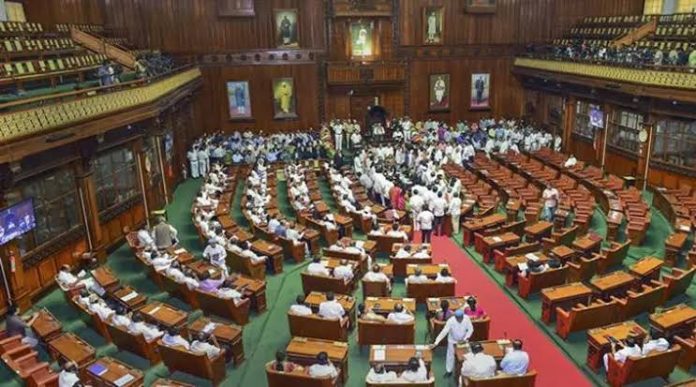
Download Now

India’s relations with free trade agreements : an analysis

0
International trade
Image Source - https://rb.gy/end6zr

This article is written by Himanshu Mahamuni, a student of Government Law College, Mumbai. This article analyzes the concept of FTA, current and harmful FTAs signed by India and future desired FTAs of India.

Introduction

Every country is dependent on trade to satisfy the demand and introduce newer innovations as no country is self-reliant in every aspect. Trade also becomes a major source of revenue for the countries through taxes and entry barriers. To make the trade routes easier, two or more countries or blocs of countries enter into Free Trade Agreements (FTA) by eliminating custom tariffs and tariff barriers on substantial trade. FTAs encourage the flow of goods and services in trade. There are various other arrangements except FTA undertaken by bodies to liberalize the trade between them, namely Preferential Trade Agreement (PTA), Comprehensive Economic Cooperation Agreement (CECA), Comprehensive Economic Partnership Agreement (CEPA), Customs Union (CU), Custom Market (CM) and Economic Union (EU). Countries are willing to sign an FTA because of the elimination of tariff barriers which are major roadblocks between the parties. India has so far signed 14 FTAs which include relations with 34 countries for preferential access and economic cooperation out of the total 43 FTAs including the FTAs under negotiations.

The article discusses the concept of FTA, its advantages and the process to claim its benefits, further the article mainly focuses on current FTAs of India, the expansion India is aiming towards and the FTAs which are detrimental to India with examples.

Advantages of FTA

Countries enter into an FTA for various reasons, they are

  • Elimination of trade barriers and easier market access to FTA partners with non-tariff barriers for facilitation of cross-border movement of goods. 
  • Exporters of FTA agreements get preferential treatment over non-FTA members. FTA exporters may apply competitive pricing compared to a non-FTA export due to duty preference. This will also protect local exporters from foreign companies. It promotes conditions of fair trade competition and gives equitable benefit for economic development.
  • FTA also increases foreign investment outside the FTA. The FTA members create a trading environment and facilitate the demands. Foreign investors may desire to exploit the huge domestic market, hence creating new markets for exporters and importers. 
  • FTA may act as a stepping stone to establish a further regional cooperation framework to expand and improve the mutual benefits from the agreements. Initiations such as Mutual Recognition Agreement (MRA), help improve progress in multilateral negotiations and reduce complexities.
  • The domestic industries become more competitive as a result of FTA. This can decrease the dependence on government support and help the government to lower the spendings on subsidies for local industries. 

Claiming FTA benefit in India w.r.t CAROTAR

Rules of Origin

A foundation of an FTA is based on the set of rules called Rules of Origin. These rules lay down the criteria the goods must fulfil to achieve the desired outcome and complete the objective of FTA. The criteria may vary in different FTAs, however, they must satisfy the following conditions-

  • Wholly obtained goods – the raw material or input shall be contributed by participating countries and not any third country.
  • Substantial transformation of goods – If they are not wholly obtained, they must be substantially transformed during and/or processed by the country responsible for its export. The transformation can be achieved by the following means;
    • Changes in Tariff classification by different HS codes as the final product.
    • Adding a minimum percentage of the product’s value through regional or domestic content.
    • Using a specific chemical process to produce the goods by the originating country.

The origin of the product is established by its Certificate of Origin (COO). The Central Board of Excise and Customs (CBEC) is responsible for the implementation of the FTA at the ground level. The implementation of concessions is done through yearly notifications issued by CBEC. The authority of the exporting country shall take care of designating the COO to the goods under the FTA. The Directorate General of Foreign Trade (DGFT), Indian Chamber of Commerce (ICC) and the Federation of Indian Export Organisation (FIEO) are examples of such authority in India which can designate the COO to the goods. The exporter must submit all required documents to the appointed authority for the COO to claim FTA benefits. The customs officials of the importing country can check with the verifying authorities of the country of origin if there is any doubt regarding the COO or any information it holds.

CAROTAR –  Customs (Administration of Rules of Origin Under Trade Agreements) Rules

India has revised its FTA rules of origin recently in 2020, known as Customs (Administration of Rules of Origin Under Trade Agreements) Rules (CAROTAR). The Rules were introduced after the amendment in the Customs Act, 1962 in the same year, which is responsible for the accuracy of the information on FTA COO, compliance with value-added requirements and access to cost data. Following this amendment, the rules introduced the procedural and compliance requirements for importers and processes and timelines for verification by customs authorities. The businesses desiring to claim benefits under FTAs in India shall be required to provide regional value content documentation and other required documents as may be demanded. It also provides severe impact on failure to comply with the requirements which range to supply chain disruption, denial of FTA benefit, penal consequences and many more. The FTA partners are not certainly happy with the stricter rules and have asked for a review of them.

FTAs signed by India

India has entered a  total of 14 FTA agreements which are signed and in effect with various countries and blocs. FTAs are signed with a provision for review and implementation at specified intervals by institutional mechanism. The Ministry of Commerce and Industry recorded a CAGR in trade over the last 5 financial years of 7.1%. This internal assessment of India’s bilateral FTA was of Sri Lanka, Afghanistan, Thailand, Singapore, Japan, Bhutan, Nepal, South Korea and Malaysia. 

Following are the various bilateral FTAs entered by India with other countries.

India – Sri Lanka FTA 2000 
India – Afghanistan PTA2003
India – Singapore CECA2005
India – Bhutan Trade Agreement2006
India – Chile PTA2007
Treaty of trade between India and Nepal2009 
India – South Korea CEPA2010
India – Malaysia CECA 2011
India – Japan CEPA2011
India-Mauritius CECPA2021

Following are the regional multilateral FTAs entered by India with various blocs of nations.

India-Asia Pacific Trade Area (APTA)Bangladesh, China, India, South Korea and Sri Lanka2005
India-South Asia Free Trade Area (SAFTA) Bangladesh, Bhutan, India, Maldives, Nepal, Pakistan, Sri Lanka, Afghanistan2006
India-MERCOSUR PTABrazil, Argentina, Uruguay and Paraguay, India2009
India-ASEAN FTABrunei, Cambodia, Indonesia, Laos, Malaysia, Myanmar, Philippines, India, Singapore, Thailand, Vietnam2010

Some of the important FTAs for trade to India of significant interest are listed below.

India-Sri Lanka Free Trade Agreement (ISFTA)

The India-Sri Lanka Free Trade Agreement (ISFTA) was signed between the Prime Minister of India and the President of Sri Lanka on December 28, 1999, and implemented from December 15, 2001. The ISFTA has coverage of the limited goods sector and agreements of service and investment are in process of negotiations. The concessions agreed in ISFTA range from zero duty items to not less than 25% in the reduction of tariffs. A negative or exclusion list is maintained by the agreement where no reduction in tariff is offered. It mainly comprises agricultural products, motor vehicles and domestic produced items such as ceramics and footwear. 

The goods of the interest of India exported to Sri Lanka are- petroleum (crude & products), transport equipment, cotton, yarn fabrics, sugar, drugs pharmaceuticals & fine chemicals. The goods of the interest of Sri Lanka imported to India are- spices, electrical machinery except for electronic, transport equipment, pulp & waste, natural rubber and paper board.

The ISFTA was the first FTA signed by India with any country. The trade of Sri Lanka with India has drastically increased from the signing of the FTA. Sri Lanka’s export to India increased ten folds in 2005 from the export in 2000 and reached USD 566 million. By 2012, India stood third largest export destination for Sri Lanka behind the European Union (EU) and the United States (US). India’s exports also increased six folds in 2012 compared to 2000 to a total value of USD 3,640 million. The trade between both countries has facilitated exponentially after the FTA, being neighbouring countries.

India-South Asia Free Trade Agreement (SAFTA)

The India-South Asia Free Trade Agreement (SAFTA) is an intra-trade agreement formed by the formal member states of the South Asian Association for Regional Cooperation (SAARC). This bloc consists of Bangladesh, Bhutan, Maldives, Nepal, Pakistan, Sri Lanka, Afghanistan and India. The SAFT agreement was agreed upon by the SAARC countries in its 12th summit in Islamabad on 6 January  2004 and came into force after ratification from 1 January 2006. SAFTA is governed by five principles, namely Governance, Obligation, Reciprocity and mutuality, Removal of trade barriers and Facilitation and harmonisation. 

The amount of bilateral trade between India and other SAFTA members has increased from USD 6.8 billion in 2005-06 to USD 28.5 billion in 2018-19. The initial pace was sluggish, it took speed eventually and now India’s trade with SAFTA has grown faster than its total trade with other countries. The share of India’s trade with SAFTA rose from 1.6% in 2005-06 to 2.5% in 2018-19. The export to India has also been increased than India’s import from SAFTA countries. The trade surplus of India with SAFTA countries increased from USD 4 billion to USD 21 billion in the period. The healthiest growth among SAFTA nations with India is seen with Bangladesh. There has been a significant increase in trade between both the countries from USD 1857 million in 2006-07 to USD 5784 million in 2012-13.

India-Singapore CECA (ISCECA)

The India-Singapore CECA (ISCECA) was signed on 29th June 2005 and became operational with effect from 1st August 2005. The CECA has been regularly reviewed by the Ministry of Commerce and Industry, first in 2007 and the second review was conducted in 2010. Singapore accounts for India’s  22.13% of overall trade with ASEAN in 2014-15 and is the second-largest investor in India with a total FDI of 16% received in 2015. The CECA has four key components- FTA in goods, boosting trade in services, promoting investment flow and providing mutual investment protection; and agreement to avoid double taxation.

India’s trade with Singapore has seen a positive curve since the signing of the FTA. The tariff reduction/eliminations account for 81% of Singapore’s exports to India making it more competitive and increasing its consumer market. The range of trade has sporadically increased from a range of USD 0-5 before 2005 to a range of USD 5-22 billion post the agreement. India exported a record of USD 14.07 billion in 2016 and imported a value of USD 6.72 billion from Singapore. 

The unique tax set up signed through the agreement has enabled Indian companies to manufacture and service operations in Singapore and base Singapore as their regional headquarters for the Asia Pacific regions. 

Expansion of FTAs in India

India has closed its major chance of being a part of the governing party with its main trading partners by declining the entry into RCEP. The RCEP is supposed to be the largest trade agreement in the world with 15 economies, out of which India faces a trade deficit with 11 of them. This includes the countries with whom India has already signed an FTA but haven’t shown any sign of progress such as Japan, South Korea and ASEAN and other promising countries with whom an agreement is under negotiations such as Australia and New Zealand.  One of the concerns for the last moment back out of India is supposed to be the liberalization of trade between China and India through RCEP. India already faces a trade deficit of USD 54.7 billion in 2018 and a further reduction in tariff would have worsened it. 

India must look for reforms to reap full benefits out of the FTAs to reduce the trade deficit on a long-term basis. The Ministry of Commerce is looking forward to fast-track six FTAs and sealing a deal with them. The Ministry desires to participate in the world market by revamping its FTA strategy. The following are some of the crucial FTAs out of a total 29 under negotiations and proposed one that will be beneficial if signed and brought into effect.

India-Australia CECA

Negotiations between Australia and India for a CECA have been launched since 2011. Australia has identified the key sectors for investment in a document “An India Economic Strategy to 2035” released by them. Australia has shown its willingness to make India its third-largest export market by 2035. The huge trade deficit of India’s export of USD 4.2 billion compared to India’s import of USD 14.1 billion from Australia shall be aimed to be reduced by this FTA. The Australian government intends an ambitious investment of over USD 100 billion in India.

This investment in Australia may develop the mining industry of the country as identified in the report. India has huge potential to expand its dairy industry and agriculture sector to improve with Australia. Australia can be developed as a strategic partner from the agreement. Both the countries have shown potential areas of cooperation and implemented a successful FTA. 

India-UK ETP

An ETP between India and the UK is under negotiation and consultation for study since 2017. Brexit has led to the expansion of the foreign trade policy of the UK. The ETP is one of the expedited plans of India because the UK is an important trading partner of India. Indian companies also play a major role in the creation of jobs and taxes in the UK. The UK is also the sixth-largest source of remittance for India and accounts for around 6% of total Foreign Direct Investment (FDI) into India. The trade of service from India to the UK was GBP 5657 million and from the UK to India, it was GBP 3337 million in the year 2020. The ETP thus plays a crucial role to facilitate trade between both countries to improve the economies.

Both countries have signed a Migration and Mobility MOU to implement the India–UK comprehensive Migration and Mobility Partnership (MMP) by April 2022 and MoU for cooperation in the field of telecommunications/ICT, meant to enhance cooperation in telecoms infrastructure, including telecoms diversification and disaster resilience. The ETP shall focus on relaxation on barriers in the sectors of cars, whisky and market access in areas including digital and data, and legal services from India. India might look forward to replacing the presence of China and providing trade in the sector of fashion, homeware and furniture, electrical machinery, and general industrial machinery through the ETP. A mutual FTA is soon expected to be entered by the partners and align their business interests to unlock new opportunities.

India-EU FTA

An India – EU FTA has been stalled since it was proposed in 2007. The negotiations stood suspended between 2007-2013 on five contentious areas of agriculture, services, digital trade, patent protection, and environment and labour rights. The trade between India and the EU has increased by over 72% since the last decade. The EU Foreign Direct Investment (FDI) in India amounts to USD 92.50 billion in 2019. The EU has exported goods and services amounting to EUR 55 billion to India and imported goods and services amounting to EUR 59 billion from India.

The negotiations have been resumed by formal talks and joint statements in 2021. The talk focused on mainly two aspects of investment protection and geographical indications. The countries should clear the challenges and issues of both sides which mainly consists of barriers to trade in services, lowering the tariff barriers, IPR standards and termination of BITs. If the challenges are overcome, India can expand its manufacturing industry and establish logistic corridors. The EU can support India’s need for technology transfer and become a part of the global value chain. 

Detrimental FTAs of India

India’s exports to FTA countries have underperformed the exports to the rest of the world. The trade deficit of India, with exports of USD 30.21 billion and imports standing at USD 45.45 billion, was at USD 15.24 billion in April 2021 which is a 120.34% jump. India has underutilized the FTA less than 25% and according to a Deloitte report, it is even less than 3%. The underutilization can be due to the lack of awareness about FTAs and rules of origin, high compliance cost and absence of trade negotiations. 

The ASEAN, South Korea and Japan agreements have proven detrimental to India. The report from think-tank Third World Network says that the trade deficit of India with the three partners has been increasing and a progressive slowdown in exports. 

India-ASEAN FTA

The India-ASEAN FTA is between ten member states of the Association of  Southeast  Asian  Nations  (ASEAN)  and  India. It was signed on 8 October 2003 in Bali, Indonesia and enforced on 13 August 2009. The FTA has reciprocated India’s Look East policy by many ASEAN countries. 

India’s exports increased from USD 23 billion in 2010 to USD 36 billion in 2018. While India’s imports increased from USD 30 billion in 2010 to USD 57 billion in 2018. The trade deficit with ASEAN has increased to USD 24 billion. The worrying issue is that the imports from ASEAN to India have grown faster than the imports from other countries while exports have not seen the rising curve.

There is a huge untapped potential for India in the ASEAN group. The policymakers must negotiate to include more service sectors in the agreement besides the goods. The demand for information services, financial, medical, tourism, insurance, etc can be exported by India to the ASEAN countries if negotiations are made. India must participate in the East Asian production network to achieve a higher growth trajectory.

India-Japan CEPA

The India-Japan CEPA was signed and brought into effect in 2011. The agreement had sharp growth in the year of implementation but contracted after the year 2011-12, increasing India’s trade deficit. The trade deficit has not only increased but has also grown faster than the trade deficit with the rest of the world. India’s exports declined to USD 4.5 billion in 2019 from USD 6.4 billion in 2011. While the imports of the country kept on increasing from USD 12.43 billion in 2019 to USD 11.96 in 2011 according to the figures of the Ministry of Commerce. The trade imbalance has widened to USD 7.91 billion with Japan.

India has initiated talks with Japan to review the CEPA and revise the Pact. Japan has also proposed a correction within the existing framework rather than a full-fledged revision to avoid the time consumption for its approval. India demands market access to areas such as textile, leather and footwear from Japan. 

India-South Korea CEPA

The India-South Korea CEPA was signed in 2009 and became effective in 2010. The trade between both the countries increased from USD 12 billion in 2009 to USD 21.5 billion in 2018 with a pace of India’s trade with the rest of the world. The export of South Korea amounted to USD 15.1 billion while the import was just USD 5.6 billion from India in 2019. While India’s imports increased at a CAGR of around 8%, Korea’s imports did not cross the CAGR of more than 4%. The trade deficit of India with Korea reached USD 12 billion in 2019 compared to the deficit of USD 5 billion in 2009. 

The Commerce Ministry of India had called a meeting of Export Promotion Councils (EPCs) to review the bilateral trade pact between India and South Korea. India has asked to fast track the review to focus on increasing the market access for Indian business. India has been underutilizing the FTA with South Korea and shall overcome this difference through the review. South Korea agreed to reduce the import duty on 17 items and India on 11 items in 2018, however, this did not improve the exports of India significantly. India had been out conducting its trade in both the sectors, goods and services. A mutual recognition agreement is expected to be signed for recognition of local qualified professionals.

Conclusion

India is the largest member who has signed FTA in the South Asia region, including the FTAs under the proposed negotiation stage. The ministries have well-organised frameworks and regulations for the implementation of the FTAs. South Asia Free Trade Agreement (SAFTA), Indo Malaysia CECA (IMCECA), India Singapore CECA (ISCECA) are some of the major agreements which have impacted India’s trade and opened the gates for larger markets. The agreements have seen huge amounts of surplus trade as in India-Sri Lanka and SAFTA FTA. The FTAs are even properly regulated and reviewed from time to time such as in the case of India-Singapore CECA.

Every FTA entered by India has necessarily not benefitted or has given results as expected. In fact, there are very few FTAs that have shown a positive curve, otherwise, other FTAs are either stagnant or have a trade deficit. The reasons for the trade deficit should be examined and the sector-specific measures that need to be taken to gain from future trade deals should be explored. India should review its existing FTAs as done in the FTAs signed with Japan and South Korea. India shall diversify its trades such as into Africa, India-Mauritius CECA being the first of its type. India is suffering from the “spaghetti bowl effect” of multiplication of FTAs with the same countries. India has FTAs with countries like Singapore and Malaysia despite them being part of the ASEAN FTA.  

70% of India’s exports comprise only a 30% share of the world’s traded commodities. There is a need to shift the focus from low-value products to the export of raw materials to high-value products. The current FTAs consist of countries with a lower volume of trade which bring minimum benefit. Changing the focus on major trade partners such as the FTAs currently discussed with Australia, UK, EU, UAE, etc will bring out major changes. The issues must be resolved such as with the EU and the deal must be struck with the main trading stakeholders which can bring noticeable changes in India’s trade volumes.

Resources


Students of Lawsikho courses regularly produce writing assignments and work on practical exercises as a part of their coursework and develop themselves in real-life practical skills.

LawSikho has created a telegram group for exchanging legal knowledge, referrals, and various opportunities. You can click on this link and join:

https://t.me/joinchat/L9vr7LmS9pJjYTQ9

Follow us on Instagram and subscribe to our YouTube channel for more amazing legal content.

Download Now

How to successfully obtain blockchain patents in US

0
Image source-https://rb.gy/ss5v29

This article is written by Prashant Dhodapkar, pursuing Diploma in US Intellectual Property Law and Paralegal Studies from Lawsikho.

Introduction

The first patent application mentioning ‘blockchain’ was filed in 2012, and the number of patent applications for blockchain has been increasing since then. In Alice Corp v CLS Bank Int 573 US 208 (2014), the US Supreme Court decision resulted in setbacks for computer-implemented inventions, which also put a question mark around the patentability of blockchain inventions. However, patent grants in the blockchain domain have brought smiles of relief and hope for blockchain entrepreneurs and investors and ended the feelings of uncertainty about the patentability of blockchain inventions.

However, the opinion continues to be divided on the potential of blockchain technology, and also whether blockchain inventions deserve patent grants. Some opine that blockchain patents are “pointless” because the technology is about collaboration and openness. Moreover, it is felt that there is nothing new about blockchain technology, as most of its elements have been in existence for quite some time now. Others are highly enthusiastic about the power of blockchain, as it is perceived to have the potential to transform businesses in the same manner as the internet did some years ago. Blockchain has applications in several areas/ sectors such as banking, finance, e-commerce, supply chain management, real estate and even legal processes and IPR management. 

For entrepreneurs, getting a patent granted for blockchain invention is considered highly desirable as it provides a distinct competitive edge. Being a fast-evolving technological area, merely applying for a patent and going through the rather lengthy and uncertain prosecution does not appeal to the entrepreneurs or investors. The key is to get a patent granted in several jurisdictions as early as possible so that the commercial benefits can be realized to the fullest extent before other improvements to the technology render the invention redundant. In this respect, using USPTO as the office of first filing possibly has several advantages. 

Through this article, the author seeks to explore the concepts underlying blockchain technology, the issues surrounding the patentability aspects for inventions in general and for blockchain inventions, and also examine the relatively greater attractiveness of the US jurisdiction for inventors active in the area of blockchain technologies. 

What is blockchain? 

Although the subject is somewhat nebulous, the basic concepts underlying blockchain are easy to understand. Simply stated, blockchain is a distributed and shared ledger technology that facilitates the recording of transactions and tracking of assets in a highly reliable, safe and efficient manner using a peer-to-peer network. The assets can be tangible (car, house property, etc.) or intangible (copyrighted material, patents, brands, etc.). The cryptocurrency bitcoin is implemented using blockchain, but the applications of blockchain go far beyond bitcoin. Although ledgers are used in business since times immemorial, there are certain characteristics of blockchain, listed below, that make it special: 

  • Copy of data related to each transaction is shared and held by each network participant, 
  • No third-party verification is required, 
  • Impossible to alter or tamper with data.

All the above features are achieved due to the manner in which blockchain is implemented. The name ‘blockchain’ itself provides an indication regarding the technology. Blockchain is a series of blocks linked together. Each block represents a record and contains a header, details of the transaction-specific to that block along with a timestamp, and a ‘hash’ for the previous block to which it is linked (the first block in a blockchain is the so-called genesis block). Therefore, in a blockchain network, all the network participants (nodes) have details of all the transactions for that network. Any attempt to make changes to a block will be easily recognized as invalid by all the network participants and rejected. Thus, a blockchain network is tamperproof and immutable. Moreover, there is no need for third-party validation or authentication. This makes blockchain very efficient and reliable as compared to legacy ledger systems. 

Blockchain : beginning and patent filing activity 

The first implementation of the Blockchain database, as well as the development of bitcoin, is attributed to Satoshi Nakamoto, which is believed to be a fictitious name. Patenting blockchain inventions is relatively recent activity. Around 2014, blockchain had a modest beginning with 5 numbers of published applications. This number rose to 123 by 2016, and to 2653 in 2018. In 2020, as many as 12,525 applications were published. A search for the term “blockchain” in the Patentscope database, applying filters such as ‘front page’, ‘single member of a family’, etc. resulted in 30,956 hits. China (11,716), USA (9,254), Korea (1,331) and India (506) are the leading countries in terms of patent filing activity. In terms of companies, IBM, Advanced New Technology Co., Ping An Technology, Tencent Technology, Alibaba Group, Alipay Infotech, etc. are the most active players. In the USA, Bank of America, Mastercard, etc. are the leading patent filing entities apart from IBM. 

Many people find it perplexing that even though the basic elements of the technology have already been patented, there are numerous patent applications still being filed every year. This also raises doubts about the commercialization prospects for blockchain innovations and whether the proliferation of blockchain patent applications represents a trend similar to the indiscriminate filing of patents for Computer-Implemented Inventions some time ago. The relative attractiveness of USPTO to inventors also needs some consideration, especially whether USPTO as an office of first filing offers some strategic advantage. The statutory guidelines on the patentable subject matter and judicial exceptions need some deliberation, in order to appreciate the patentability of blockchain inventions.  

Patentable subject matter in USPTO

35 USC 101 defines 4 categories of patentable inventions- processes, machines, manufactures and composition of matter. The latter 3 categories are things or products, whereas the process defines actions or a series of steps that need to be taken for accomplishing a result. 

Manual of Patent Examination Practice (MPEP) Chapter 2100, S 2106 discusses the subject matter eligibility for patents. The invention must belong to at least one of the four categories as mentioned in 35 USC 101. Moreover, the claims must not be directed to a judicial exception (natural phenomena, mathematical equations, abstract ideas, etc.). However, a claim that includes a judicial exception is not doomed for rejection. S 2106.04 (a)(1) states that “All inventions at some level embody, use, reflect, rest upon, or apply laws of nature, natural phenomena or abstract ideas, not all claims recite abstract ideas”. A two-pronged test is applied to judge the patent eligibility of a claim. At prong 1, it is determined whether a claim in the invention recites a judicial exception. Prong 2 evaluates whether the claim recites additional elements that integrate the judicial exception into a practical application. In Diamond v Diehr 450 US 175 (1981), the US Supreme Court ruled that controlling the execution of a physical process (curing of rubber) through a computer program did not preclude the patentability of the invention as a whole. It is worth mentioning that the process involved determining the curing time of rubber using mathematical formulae, namely the Arrhenius equation.  

However, MPEP S 2106 also clarifies that the eligibility of a claim is not evaluated merely based on whether it recites a ‘useful, concrete and tangible result’. “Mere recitation of concrete, tangible components is insufficient to confer patent eligibility to an otherwise abstract idea”. 

USA : an innovation-friendly jurisdiction

USPTO is considered to be innovation-oriented and innovator-friendly and has indeed been a pioneer as far as the patentable subject matter is considered. With the apparently limited 4 categories of patentable inventions, patents for large diversified inventions have been granted. The liberal disposition of USPTO is often expressed as “everything under the sun is patentable” (this often-repeated quote is, among others, attributed to Francis Gurry, former DG of WIPO). In Diamond v Chakrabarty, 447 US 303, USPQ 193 (1980) it was ruled that whether an invention pertains to living matter is irrelevant for the issue of patentability because bacterium was a ‘manufacture’ and/or ‘composition of matter’. This landmark decision paved the way for the establishment of biotechnology as a new area for innovations. In ex parte Allen, 2 USPQ2d 1425 (Board of Patent Appeals and Interference 1987), it was decided that non-naturally occurring polyploid Pacific Oyster could be the subject matter of patents, thus allowing patenting of animal forms. Subsequently, the  Commissioner of Patents and Trademark Office considered non-natural, non-human multicellular animals to be the patentable subject matter. US Congress, however, has barred claims directed to human organisms from eligibility. Methods for the treatments of humans, including surgeries, are patentable in the USA. 

But USPTO’s liberal attitude is not restricted to the subject matter of living beings. Amazon’s ‘one-click ordering’ (US 5960411, date of patent September 28, 1999) was considered a one-of-its-kind business method patent, although there is no shortage of critics for such inventions. The successful integration of the patented technology in e-commerce not only demonstrated that Amazon had the trust of its customers (who stored their personal details on Amazon’s website) but also enabled Amazon to enforce the patent against its rivals and afforded extra revenue through licensing. The technology ultimately allowed Amazon to expand its platform beyond bookselling to a full-fledged global e-commerce business.  

Less popular, but equally interesting patent grants in the area of computer-implemented inventions pertain to methods for increasing reading and comprehension speed (US 6,056,551 granted on May 2, 2000). This invention is reaping commercial benefits through annual subscriptions, as there are a large number of students as well as professionals who desire to increase their reading and comprehension abilities. 

The ‘Alice decision’ and its fallout

The US Supreme Court’s decision in Alice Corp. v CLS Bank Int. 573 US 208 (2014) reined in the proliferation of computer-implemented inventions (basically software patents). Relying on Mayo Collaborative Service v Prometheus Laboratories, Inc. 566 US 66 (2012) (although the invention at issue was not software related), the Court decided that claims which were drawn to an abstract idea and implemented on a computer were not enough to make the abstract idea into a patent-eligible matter. There were as many as 52 amicus curiae briefs in this case (from industry and associations, as well as USPTO itself), agitated at “proliferation and aggressive enforcement of low-quality software patents” and sought to limit the term and scope of software patents. There was criticism that the judges did not even mention the word ‘software’ in the judgement, and it was felt that the US judiciary was deliberately avoiding taking a firm stand on this issue. Following Alice, the District Courts in the USA invalidated hundreds of software patents. 

Other jurisdictions have tried to clarify the issue of computer-implemented inventions. For example, EPO has drawn clear guidelines for the examination of computer-implemented inventions, and India too has followed suit with a guideline on Computer Related Inventions (CRI). New Zealand introduced the Software Patents Bill in 2008 and then in 2010, seeking to ban software as patentable subject matter.  

USPTO as the office of first filing : a strategic option

The patent procedures in USPTO are known to be innovator friendly.  For example, the Track One (or Track 1) program allows fast track examination of patent applications and decisions about grants within a period of 12 months, for a fee of USD 4000 (USD 2000 for small entities and USD 1000 for micro-entities). The number of applications that can benefit from the program has been increased to 15,000 per year with effect from September 2021, from an earlier number of 12,000 per year. Once the inventor gets a favourable decision under Track 1, an expedited examination under the patent prosecution highway scheme, either the PPH 5 or Global PPH (which has the participation of about 28 jurisdictions, including EPO, UK, Germany, Poland, China, Korea, etc.) can be sought. Thus, an inventor has a really good chance of getting an invention patented very quickly, almost simultaneously in many jurisdictions, if the USPTO is used as the office of first filing. Currently, India has successfully piloted the PPH program with the JPO, and similar programs with USPTO and EPO are planned.      

What does all this mean for an inventor/entrepreneur who wants to get a patent for blockchain technology? There are many who believe that although there is a trend towards increasing grants for blockchain patents, the number will soon taper off. A large number of open source tools are part of blockchain implementations. However, inventors can take solace from the fact that technology need not be built from scratch. Existing tools and components can be used to deliver an innovative configuration. Merely replacing conventional databases with blockchain implementation will not be eligible for a patent, but a reconfiguration of existing data structures, devices concurrent with blockchain implementation will meet the patentability requirement. Moreover, implementations that alter some aspects of the working of blockchain, could be patentable. Such implementations should be able to overcome prior art shortcomings. 

Patent applicants should not focus on what blockchain is, but rather on what blockchain does to fix unique technical problems. Since inventors should be focused on getting their inventions granted in several jurisdictions, the applications should be drafted in ‘translator friendly’ language, devoid of any jargon not recognized beyond specific jurisdiction. Also, examination standards of different jurisdictions should be kept in mind at the drafting stage.     

The exact nature of the technology landscape for blockchain has not emerged as of now, since there are a large number of applications awaiting decisions. However, a large number of individual elements of blockchain technology, such as digital wallets, security, exchanges, storage, data structures, transactional protocols, validation methods, etc. could be the subject matter for inventions. Blockchain can be an enabler for other technologies such as IoT, AI/ML, etc.,  thereby resulting in a large number of patentable innovations. 

Current limitations and roadblocks of blockchain technology

The blockchain data is immutable, which means that data in a block cannot be altered or deleted. Although this is an advantage, it also means that data cannot be updated or deleted if required.  The blockchain holds data in small chunks, whereas conventional databases are capable of holding large chunks of data in the form of images, videos, documents, etc.). Blockchain eliminates the need for third-party validation, auditing or regulatory oversight; but the recent news report (Times of India dated November 27, 2021), which estimated the volume of money laundering in cryptocurrency transactions through blockchain to be of the order of INR 4000 crores in the last year alone, indicates that governments all over the world will have very valid reasons for tracking and auditing blockchain to rein in illegal activities, including drugs and terrorism-related offences. The government, through a bill to be introduced in the forthcoming winter session of parliament, is likely to ban all except a few cryptocurrencies. The Financial Action Task Force (FATF) reported that US agencies have busted an entity ‘Liberty Reserve’ that had its own cryptocurrency known as Liberty Dollars.  

These limitations and barriers also mean that there is a big scope for improvements in blockchain, which will possibly widen the prospects of filing patent applications.  

Conclusion

On the basis of the discussion on the patentable subject matter, it is clear that blockchain implementations are eligible for patents as process/ method inventions. The enthusiasm for blockchain inventions is evident in the form of a large number of filings, but the patent eligibility of the majority of the filings will be known only in the near future. More importantly, the value of patents follows a skewed distribution, i.e., very few patents turn out to be ‘blockbusters’. This means that a clear understanding of patentability requirements, meticulous drafting and securing expeditious grants are the key elements for realizing the value of blockchain patents. The US jurisdiction supports an enthusiastic and ambitious inventor/ entrepreneur in many ways, which helps in realizing value from a fast-growing technology such as blockchain.      


Students of Lawsikho courses regularly produce writing assignments and work on practical exercises as a part of their coursework and develop themselves in real-life practical skills.

LawSikho has created a telegram group for exchanging legal knowledge, referrals, and various opportunities. You can click on this link and join:

https://t.me/joinchat/L9vr7LmS9pJjYTQ9

Follow us on Instagram and subscribe to our YouTube channel for more amazing legal content.

Download Now
logo
FREE & ONLINE 3-Day Bootcamp (LIVE only) on

How Can Experienced Professionals Become Independent Directors

calender
28th, 29th Mar, 2026, 2 - 5pm (IST) &
30th Mar, 2026, 7 - 10pm (IST).
Bootcamp starting in
Days
HRS
MIN
SEC
Abhyuday AgarwalCOO & CO-Founder, LawSikho

Register now

Abhyuday AgarwalCOO & CO-Founder, LawSikho