Download Now
Home Blog Page 372

Recent changes to recommendations of Financial Action Task Force

0

This article is authored by Akash Krishnan, a law student from ICFAI Law School, Hyderabad. It discusses in detail the evolution of FATF and its role in combating money laundering and terrorist financing activities. It also discusses the recent amendments to the FATF recommendations.  

Introduction 

In a globalized world where technology allows money to move quickly anywhere, fighting money laundering is more urgent than ever. Trillions of dollars are laundered each year and this money is used to fuel serious crimes like drug deals, sexual exploitation, human trafficking, etc. Money laundering harms society in more ways than one could possibly imagine. The Financial Action Task Force (FATF) is a leading global action task force that has set the international standards for several countries to regulate their financial industries and has helped authorities to find, freeze and confiscate the money that has been laundered by financial criminals.

The FATF tackles the issue of money laundering by investigating how terrorist acts and drug smuggling is being financed. It also aids in the prevention of funding for building or procuring weapons of mass destruction. From time to time, it publishes the best standards that countries should follow and assesses how well the countries are doing in practice and the areas in which they could improve. The FATF’s work covers many areas, including helping authorities trace the funds behind environmental crimes, taking the illicit profits out of human trafficking, exploring the use of new technologies to prevent money laundering etc. It also trains officials in anti-money laundering and counter-terrorist financing techniques.

As of now it has a global network of over 200 countries and has almost 40 members and 20 observer organizations. The regional anti-money laundering bodies include the United Nations, The Egmont Group of Financial Intelligence Units, the International Monetary Fund and many other international organisations. More than 200 countries have committed to the FATF’s global standards.

Now that we have understood the role and functions of the FATF in brief, let us explore these aspects in detail.

Formation of the FATF

The Financial Action Task Force on Money Laundering (FATF) was established by the G-7 Summit that was held in Paris in 1989. The summit discussed the threats posed to the banking system across the world due to money laundering activities, the Task Force was convened from the G-7 member States, the European Commission and eight other countries.

Role of the FATF

At the time of its formation, the FATF was assigned the following tasks:

  1. Examine money laundering techniques and trends.
  2. Review the actions which had already been taken at a national or international level against money laundering practices.
  3. Provide measures that could be taken to combat money laundering.

In furtherance of the assigned responsibilities, the FATF in April 1990 issued its first Report in which it provided 40 recommendations. These recommendations were regarding the steps that need to be taken to combat money laundering to stop such practices from happening in the future.

Additional responsibility was added to the FATF’s list of responsibilities in 2001. This responsibility was to develop appropriate standards so as to combat terrorist financing. In furtherance of the same, later that year, the FATF issued 8 special recommendations to combat terrorist financing.

In 2003 and 2004, the FATF revised its previously issued recommendations on combating money laundering and suggested some new measures to combat the modern techniques that were used by the money launderers across the world. In furtherance of the same, it published a new recommendation into the existing standards thereby taking the total number of recommendations to 49.

The standards were reviewed comprehensively in the year 2012 and new measures were suggested to combat new threats like the financing of proliferation of weapons of mass destruction. These measures also sought to tackle the issue of corruption by establishing a uniform and transparent standard across the world.

Recent changes made to the FATF recommendations

October 2021 : Revision to Regulation no. 23

Regulation 23 of the FATF Regulations deals with the application of the principles of reliance, control and financial groups and the reporting standards of suspicious transactions on all designated non-financial businesses and professions. It lists the qualifications for the designated non-financial businesses and professions as follows:

  1. Lawyers, notaries, other independent legal professionals and accountants should report suspicious transactions of the clients who engage their services or report any such transactions on behalf of their clients.
  2. Dealers of precious metals and stones should report suspicious cash transactions of the high value of their clients.
  3. Trust and company service providers should report suspicious transactions for and on behalf of their clients.

The Amendment in October 2021 stated that this provision will be made applicable to everyone who is part of the group, i.e., small and big independent lawyers, law firm associates, professional accountants etc.

October 2021 : Designated categories of offences

The glossary definition of designated categories of offences include the following:

Participation in an organised criminal group and racketeeringIllicit trafficking in narcotic drugs and psychotropic substancesFraud 
Terrorism, including terrorist financingIllicit arms trafficking Counterfeiting currency 
Trafficking in human beings and migrant smugglingIllicit trafficking in stolen and other goods Counterfeiting and piracy of products; murder, grievous bodily injury
Sexual exploitation, including sexual exploitation of childrenCorruption and bribery Kidnapping, illegal restraint and hostage-taking
Robbery or theft Smuggling Tax crimes
Forgery Piracy Insider trading and market manipulation

In 2021, a new kind of offence was added to this definition, i.e., environmental crime. This includes instances of criminal harvesting, extraction or trafficking of protected species of wild fauna and flora, precious metals and stones, other natural resources, or waste etc.

June 2021 : Revision of Interpretive note no. 15

Interpretive note no. 15 stated that if a country is not prone to higher risks of money laundering or terrorist financing, they can introduce a simple mechanism to ensure that the risks, if any, are avoided or mitigated.

In the June 2021 Amendment, the scope of this provision was expanded and it was stated that the national policies against money laundering or terrorist financing should include provisions for the examination and investigation of the virtual assets of the citizens and the activities of virtual service providers.

October 2020 : Revision of Recommendation no. 2

Recommendation no. 2 deals with the concept of National Cooperation and Coordination. It states that every country should have a national anti-money laundering policy, a national countering the financing of terrorism policy and a national proliferation of weapons of mass destruction policy. Every country should have designated authorities to periodically review and enforce these policies.

It further provides that all the authorities involved in the law-making and the law enforcement process should coordinate among each other for the exchange of information domestically so as to ensure the development and implementation of the policies.

The amendment in October 2020 added that there should be national cooperation regarding the exchange of information for the enforcement of the national proliferation of weapons of mass destruction policy.

An interpretive note was also added that stated that the countries should adopt a mechanism for the facilitation and exchange of information domestically so as to fulfil the objective laid down under Regulation 2.

October 2020 : Revision of Recommendation no. 1

Recommendation no. 1 deals with assessing risks and applying a risk-based approach. It states that every country should take measures to identify money laundering and terrorist financing risks and designate authorities to deal with potential risks by following a risk-based approach. It further states that countries with higher risks should maintain more stringent policies compared to countries with lower risks.

The Amendment in October 2020 included a provision hereunder that stated that all countries and financial institutions should identify and assess the risks of potential breachers and non-implementation or evasion of the targeted financial sanctions related to proliferation financing. It further stated the appropriate authorities should take steps to mitigate these risks and avoid them if possible.

June 2019 : Addition of Interpretive note to Recommendation no. 15

Recommendation no. 15 deals with risks associated with the development of new technologies. It states that all countries and financial institutions should assess the risks relating to terrorist financing and money laundering in the light of the advancing technologies. It further states that with the advent of new technologies, new practices and new methods for terrorist financing and money laundering will emerge. Thus, countries should develop new techniques to assess the risks associated with new technologies and new products before launching them in the market so that they can be prepared for any form of misuse.

The Amendment in June 2019 inserted an interpretive note for this recommendation wherein it was stated that countries should extend the application of the FATF standards to virtual asset activities and the activities of virtual service providers.

October 2018 : Revision of Recommendation no. 15

Recommendation no. 15 deals with risks associated with the development of new technologies. It states that all countries and financial institutions should assess the risks relating to terrorist financing and money laundering in the light of the advancing technologies.

The Amendment in October 2018 inserted a new aspect to Recommendation no. 15. The Amendment stated that countries should assess the risks that are emerging from the use of virtual assets and should also look into the activities of the virtual asset service providers so as to ensure their compliance with the FATF standards.

February 2018 : Revision of Recommendation no. 2

Recommendation no. 2 deals with the concept of National Cooperation and Coordination. It states that every country should have a national anti-money laundering policy, a national countering the financing of terrorism policy and a national proliferation of weapons of mass destruction policy. Every country should have designated authorities to periodically review and enforce these policies.

It further provides that all the authorities involved in the law-making and the law enforcement process should coordinate among each other for the exchange of information domestically so as to ensure the development and implementation of the policies.

The Amendment in February 2018 stated that the exchange of information between the domestic authorities regarding money laundering and counter-terrorist financing should be in compliance with the national and international data protection and privacy rules.

November 2017 : Revision to the Interpretive note to Recommendation no. 18

The Interpretive note to Recommendation no. 18 deals with mitigating the proliferation financing risks. It states that financial institutions should create a framework to manage and mitigate risks related to proliferation financing effectively. If the country can be subject to higher risks, then the financial institutions should introduce enhanced control mechanisms for detecting possible breaches, non-implementation or evasion of targeted financial sanctions.

The Amendment in November 2017 clarified that financial institutions should coordinate for the sharing of information regarding suspicious transactions. It also stated that the financial institutions should share the information with their own branches and subsidiaries as well.

November 2017 : Revision of Recommendation No. 21

Recommendation No. 21 deals with activities related to tipping-off and confidentiality. This provision protects the financial institutions, their directors and their employees from any suit or proceedings against them in cases where they had disclosed confidential information relating to suspicious transactions in good faith. It also prohibited the practice of tipping off the individual about a report filed against him.

The Amendment in November 2021 was a clarification regarding the application of this provision to the branches of a domestic bank that are situated in foreign territories.

Conclusion

The FATF is a task force that was created by Governments across the world for helping them to combat the undesirable consequences of money laundering and terrorist financing. The standards and rules that are set by the FATF have to be included in the national systems of the participating countries. India has been a member of the FATF since 2010.

Crimes do not differentiate between countries and are not bound by border restrictions. With the advent of technology, money laundering and terrorist financing can be undertaken from any part of the world. National laws will have their limitations while dealing with such cases. Thus, there is a need for a multilateral treaty to combat financial crimes more efficiently. The FATF should take an initiative for the creation and enforcement of such a multilateral statute. Only time will tell if this idea transforms into reality.

References

  1. https://www.fatf-gafi.org/media/fatf/documents/reports/1990%201991%20ENG.pdf 
  2. https://www.fatf-gafi.org/media/fatf/documents/recommendations/pdfs/FATF%20Recommendations%202012.pdf 
  3. https://www.fincen.gov/resources/international/financial-action-task-force#:~:text=The%20Financial%20Action%20Task%20Force%20(FATF)%20is%20an%20inter%2D,and%20the%20financing%20of%20terrorism 
  4. https://www.business-standard.com/about/what-is-fatf.

Students of Lawsikho courses regularly produce writing assignments and work on practical exercises as a part of their coursework and develop themselves in real-life practical skills.

LawSikho has created a telegram group for exchanging legal knowledge, referrals, and various opportunities. You can click on this link and join:https://t.me/joinchat/L9vr7LmS9pJjYTQ9

Follow us on Instagram and subscribe to our YouTube channel for more amazing legal content.

Download Now

All you need to know about literal construction in UK Law

0
Independence of judiciary

This article is written by Indrasish Majumdar, intern at LawSikho. The article has been edited by Smriti Katiyar (Associate, LawSikho).

Introduction

The will of the sovereign legislature is replicated by a “statute” that upholds the functioning of the government. In the course of administering justice, the executive and the judiciary, two pillars of the government, must enforce the rules as per the legislative will. Frequently, certain situations arise wherein the courts are called upon to decipher the words and expressions used in the law. Over the decades, the Courts have laid down certain guidelines known as “Rules of Interpretation of Statutes” for purposes of such interpretation. The process by which the accurate meaning of a word is comprehended is known as interpretation. The rules of interpretation can be divided into three main types 1) “Literal Rule”, “the Golden Rule”, and “the Mischief Rule”. 

Under the “the literal rule” principle the court determines what the law means, rather than what it might suggest. In the process of doing this, the judge will lend the words in the legislation a literal interpretation, that is, their regular meaning, even though the result of this is to create what may be perceived as an otherwise unfair or unacceptable effect. The literal rule explicates that the purpose of Parliament is better contained in the ordinary and normal context of the terms used. As the representative democratic component of the state, the Parliament may be assumed to try to enact just what it states in its rules. If judges are empowered to provide an apparent or non-literal interpretation of the language of the parliamentary statute, then the will of Parliament, and thus the citizens, is being undermined. 

Lord Diplock once noted: Where the interpretation of the legislative term is clear and unambiguous, it is not for the judges to concoct imagined peculiarities as a pretext for failing to offer substance to its literal meaning, unless they believe the consequences of doing so are unjustified, unfair, or unethical. Constitutionally, the law recognises legislative sovereignty and the freedom of the Legislature to enact whatever laws it may deem necessary, irrespective of how ludicrous they might sound. Literal interpretation also facilitates accuracy in drafting and assures that everyone who can interpret English can decide the laws, which creates clarity and prevents lawsuits. The objectives of the paper are to 1) analyse the “principle of literal interpretation”, its genesis and contemporary relevance 2) to be aware of the critiques associated with “the Literal Rule 3) study the juristic analysis of the literal rule in the UK in light of 10 case laws. The research question that this article attempts to answer is whether in terms of delivering justice the literal rule of interpretation involves ambiguity. 

Case studies

Fisher v. Bell

In 1961, a three-judge bench of Lord Parker C.J, Ashworth and Elwes JJ. was tasked with the responsibility of delivering a verdict on a very intriguing matter involving the Restriction of Offensive Weapons Act, 1959. 

On October 26, 1959, the defendant, James Charles Bell had a knife displayed in his shop window with a price ticket of 4s attached along with the description of the object as “Ejector knife”. Located in Bristol City, Bell carried out his trade through his shop named ‘Bell’s Music Shop’. However, little did he know that a police constable named John Kingston would walk by his shop on October 26th and this incident would ignite the controversy. After examining the knife, the constable decided to take it to the superintendent of police for further scrutiny. He returned the same day to inform Mr Bell that he is obligated under law to report Mr Bell’s blatant ignorance of the Restriction of Offensive Weapons Act by offering a “flick knife” for sale.

The defendant seemed anything but nervous. He believed he had reasonable cause to back his statement that the knife was not displayed in the window as an “offer for sale”. His action has to be considered as merely an invitation to offer which can not be treated on the same footing as an offer for sale. In essence, the question was whether the knife exhibited in the shop window with the price ticket attached was an offer for sale as per Section 1(1) of the Restriction of Offensive Weapons Act, 1959.

The prosecutor put forth a very interesting line of argument. Having conceded that in ordinary law of contract, an exhibition of goods in a shop window amounts to an invitation to treat and not an offer for sale, they requested the judges to direct their attention to the surrounding context and the mischief that the Act seeks to punish. Citing Keating v. Horwood and Wiles v. Maddison, the prosecutor wanted to drive home the point that if displaying goods in a shop window at an exorbitant price could be subjected to conviction, then why can Mr Bell not be punished for the act of displaying the knife with the price tag? The prosecution’s primary line of argument was that the Act of 1959 was aimed at imposing a blanket ban on flick knives, and therefore the words “offer for sale” in Section 1(1) should be given a wide amplitude to prevent such goods from being placed in shop windows with price tickets.

The defendant summarily rejected the prosecution’s contentions and harped on the fact that the expression “offer for sale” is not defined by the Act and it can only be interpreted by reference to general law. Citing Bristol Guardians v. Bristol Waterworks Co., the defendant also emphasized how even if they were to accept that the Act was silent in defining the term “offer for sale”, the Court cannot take it upon them to read words into the legislation to perfect it.

While delivering the verdict, Lord Parker C.J admitted that going by the apprehension of laymen, displaying a knife by the shop window with a price tag attached not being offered for sale would seem a ridiculous line of argument. However, following the provisions of ordinary contract law, it would only amount to an invitation to offer. He refused to consider the ratio laid down in Keating v. Horwood or Wiles v. Maddison as he believed that the facts of the present case were entirely different from these two cases, thereby mitigating the need to deliberate more on these precedents.

Courts followed the ordinary contract law concept of “offer for sale” in the absence of an exclusive provision in the concerned legislation. This establishes the legal principle of Courts not having the authority to add or read words into a legal statute for bringing more clarity. Unless the provision leads to a manifest absurdity, the Courts are not empowered to read words into it. 

Bourne v. Norwich Crematorium

Norwich Crematorium was engaged in the trade of disposing of human dead cremation. Built in 1936-37, the amount invested was 2,157 pounds. For the year 1964-65, the Crematorium appealed to the general commissioners against an assessment of income tax in respect of profits for 8,500 pounds. The commissioners favoured the Crematorium’s ground ascertaining that the furnace chamber and chimney towers were industrial buildings or structures as per Section 271(1)(c) of the Income Tax Act, 1952. The case went to appeal later.

Located at Horsham St Faiths, Norfolk, the Crematorium is a public company incorporated on April 5, 1935, under the Companies Act, 1929. The counsels representing the crematorium contended that first, the structure in question came under the ambit of Section 271(1)(c) and the human corpse should be regarded as “material” to entail a substantive meaning to the provision in the present case. Second, it was also contended on their behalf that the structure had to be brought within the scope of Section 271(1)(c) and in no way, it qualifies under Section 271(1)(a),(b) or (d).

Following a more humane approach and taking a rational stand in this context, the Crown based their contentions on the following grounds:

  1. As per Section 271(1) of the Income Tax Act, 1952, crematoriums cannot be regarded as “industrial buildings”.
  2. According to Section 271(d) of the Act, including a human corpse under the scope of “goods or materials” would be extremely immoral.
  3. Consequently, the trade of taxpayers cannot be brought under the scope of Section 271(1)(c) and hence the claim for annual allowance shall not be entertained.

Stamp J. while delivering his verdict chose to examine Section 265 of the Income Tax Act which confers initial allowances equal to a proportion of expenditure incurred by the taxpayer before a specified day. Further, he also scrutinised Section 266 of the Act which grants relief in the form of an annual allowance to a taxpayer entitled to an interest such as is described in an industrial building or structure.

He said that even if the Court were to believe that all things visible are material and the human body should also be considered as material, the use of plural form, that is “materials”, is what forbids the construction of “goods and materials” in the sense urged by the taxpayers. To make a very valid point, he says “English words derive colour from those which surround them. Sentences are not mere collections of words to be taken out of the sentence, defined separately by reference to the dictionary or decided cases and then put back again into the sentence..” He strongly disagreed with the contention of taxpayers and found no reason to believe the burning of the mortal remains of homo sapiens as the subjection of goods or materials to a process. Hence, it cannot be brought under the ambit of Section 271(1)(c) under the scope of “industrial buildings”.

Partridge v. Crittenden

On 5th April 1968, a three-judge bench of Lord Parker C.J, Ashworth and Blain JJ. delivered their verdict on one of the landmark cases on the literal construction of statutes in the UK. The case went to appeal.

According to the information furnished by the prosecutor on June 19, 1967, an advertisement containing the terms “Quality British A.B.C.R……bramble finch cocks, bramble finch hens, 25s each” was printed in the periodical “Cage and Aviary Birds” dated April 13th of the same year. This advertisement appeared under the title “classified advertisements”.  Mr Thomas Shaw Thompson enclosed a cheque for the 30s and requested the dispatch of a bramble finch hen. On May 1, 1967, the appellant dispatched a bramble finch hen with a closed ring to Mr Thompson by British Rail. Mr Thompson received the bird on the very next day.

On receiving the box, he opened it in the presence of the prosecutor and was able to remove the ring with relative ease.

The appellants contended that this advertisement was merely an invitation to treat and does not contravene Section 6(1) of the Protection of Birds Act, 1954. Further, they harped on the fact that merely because the ring could be removed, it does not mean that the bird was not a close-ranged specimen bred in captivity. On the other hand, the prosecution presented a two-fold argument stating that first, the advertisement in the periodical was an “offer for sale” and second, the brambling so offered for sale was not a close-ranged specimen bred in captivity as the ring could be easily removed from the bird’s leg.

The appellant was charged with unlawfully offering for sale a bramble finch hen in contravention of Section 6(1) of the Act. The justices reasoned that “hen” was a bird included in Schedule 4 to the Act and since the ring could be removed, it implied that the bird was not bred in captivity. However, when the case went to appeal, the three-judge bench was inclined to differ.

On appeal, Ashworth J. Stated that the absence of the term “offer for sale” anywhere in the periodical, strengthens the case of the appellant. He also firmly disagreed with the justices who favoured the prosecution on the issue of the close ring, serving as an adequate indication that the bird could not have been legitimately sold. Further, he also stated that the expression ‘close-ringed’ is nowhere defined and reading words into the statute would amount to judicial outreach.

A very interesting observation was made by Ashworth J. while delivering his judgement. He stated that in his opinion, this was a clear case of “sale” as the cheque was sent by Mr Thompson against which the appellant sent the bird. This was a clear case of a completed sale. However, the prosecution chose to prosecute him for “offering for sale” relying on the advertisement, which weakened their case. He agreed with the justices’ opinion on how the inference of the bird not being bred in captivity was drawn. However, he sought help from a precedent in Fisher v. Bell that relied on that judgement to establish that in the eyes of an ordinary man, this would be an “offer for sale” but any statute has to be looked at through the lens of the general law of the country. Therefore, he delivered his verdict in favour of the appellant by ascertaining that the advertisement under the title “classified advertisements” was simply an invitation to treat.

Lord Parker C.J agreed with Ashworth J. on this issue. He quoted Lord Herschell’s judgment in Grainger & Son v. Gough wherein Lord Herschell said “the transmission of a price list does not amount to an offer to supply, as, if it were so, the merchant might find himself involved in any number of contractual obligations which are impossible to carry out, the resources being necessarily limited”. He wanted to put the contention of advertisements being treated as “offer for sale” to bed by using this precedent.

The Queen v. The Judge of The City of London Court

The case involved an action brought by the owners of a barge on the Admiralty side of the City of London Court against the pilot of a steamer to recover damages resulting from the collision in inland waters. The lawsuit was filed in personam against the pilot. Initially, the District Court ruled that the Admiralty side did not have jurisdiction in such a case, and subsequently the plaintiffs appealed.

Citing several authorities in the form of Blackstone’s Commentaries, Caton v. Burton along with other precedents, the appellants firmly contended that under 24 & 25 Vict. c. 10, s. 7, the Admiralty Court had jurisdiction. Their line of argument revolved around the fact that there is a remedy in person against both the owner and the pilot in cases of negligence that lies in the Admiralty Court. According to the appellants, even if they were to accept that Admiralty Courts did not have relevant jurisdiction, Section 3 of the County Courts Admiralty Jurisdiction Act, 1868 provided jurisdiction to County courts for any action arising out of damage by a collision for an amount not exceeding three hundred pounds.

Gorell Barnes, Q.C and Butler Aspinall responded by contending over the course of legislation, the Admiralty Court never exercised such a general jurisdiction over torts as contended by the appellants. They emphasized Section 13 of Act 17 & 18 Vict. c. 78 to elaborate on how the right always lay against the owners of a ship and not against any other wrongdoers. Barring Russell v. Hays, in all other similar cases suits have generally been dismissed by the Admiralty Courts for want of jurisdiction. There is a marked difference between the language of Section of Act 24 & 25 Vict. c. 10, which applies to the High Court, and gives jurisdiction “over any claim for damage done by any ship”. However, in the present case, the barge could not be regarded as a “ship” and the licensed pilot’s liability should not exceed the amount of his bond.

Mr Pyke, representing the appellants, contended that proceedings in the Admiralty Court were in personam, and the proceeding in rem was introduced to compel the appearance of the defendant. They failed to find any legal force in the opposition’s argument that the jurisdiction has become obsolete.

Lord Esher relied on Everald v. Kendall to mark precedent on the ratio that the City Court in his Admiralty jurisdiction has assumed to exercise jurisdiction in a case of collision in inland waters between two large barges. He opined that a county court has no jurisdiction if the Admiralty Court does not have jurisdiction as per the County Courts Act. However, there is one exception in the case of The Alina where following Section 2 of the County Courts Admiralty Jurisdiction Amendment Act, 1869 (32 & 33 Vict. c. 51), the county courts had jurisdiction even though the Admiralty Court did not. Lord Esher did not agree with the rule of construction laid down in this particular case. Jessel, M.R, in the Court of Appeal, said that if the words of an Act of Parliament are clear, they must be interpreted in their ordinary meaning unless that produces manifest absurdity.

Lord Esher, however, opined that if the words of an Act are clear, they must be followed even if it leads to a manifest absurdity. The Court has its hands tied when it comes to determining whether the legislature has created an absurdity. It is only if the words of the Act allow two different interpretations and one interpretation lead to an absurdity, then the Court may adopt the other interpretation, that is, which is not absurd. Thus, he decided to follow the ratio of The Alina and concluded that the county courts have jurisdiction concerning the interpretation and application of charter parties, even if Admiralty Courts do not.

While determining the jurisdiction of Admiralty Courts, three things must be considered – the locality, the subject matter of the complaint and the person concerning whom the complaint is made. In the present case, it was concluded that the Court of Admiralty did not have jurisdiction in respect of the collision caused by the pilot’s negligence. This judgement was based upon landmark precedents in the form of The Urania and The Alexandria. Kay, L.J concurred with the opinion of Lord Esher and stated that there exists no precedent to prove that a case lies in the Admiralty Court for the pilot’s negligence. In the absence of any substantive legal authority, the Court has no option but to affirm the decision of the Divisional Court of not entertaining the suit on the Admiralty side.

Sussex peerage case

In the Sussex Peerage Case, the essential question that had to be determined was whether any marriage contracted between parties outside England attracted the provisions of the Royal Marriage Act. On 4th April 1794, Prince Augusts Frederick, the sixth son of his late Majesty married Lady Augusta Murray, the second daughter of the Earl and Countess of Dunmore in Rome. The parties were again regularly married in England and the petitioner was born in Middlesex on 13th January 1974. He was the only male issue of the marriage. Through the Attorney General’s report on 21st August 1843, he expressed his doubt over the validity of such marriage and referred the petition to the House of Lords.

Sir T. Wilde, appearing for the petitioner, alongside Mr Erle and Mr James Wilde straightaway delved into proving the validity of the marriage. He stressed the fact that the marriage was celebrated according to the general church customs followed in England. The Royal Marriage Act mandates taking the King’s consent, signified under the Great Seal, for it to hold. Citing Swift v. Swift, Sir Wilde wanted to establish the point that the provision of pre-consent applies only to marriage contracts within the territories of England. According to the petitioner, the General Marriage Act must be strictly construed failing which it has the potential of restricting the exercise of natural rights.

Considering that the Act also imposes penal consequences in the form of property forfeiture and imprisonment which is why it becomes all the more important to understand the intention of the legislature in enacting the statute. A Prayer-book and a will were presented in the form of evidence by the petitioner, which was not entertained by the bench on the ground that the will was drafted after filing of the present suit. On behalf of the petitioner, the legitimacy of the wills was contended stating that if the Court was satisfied that the person’s written or hearsay evidence did not have any interest in falsifying the fact, then they could be considered to be acceptable evidence. Mr Gunn, who was there as a witness during the marriage, refused to testify in Court fearing prosecution. The bench was also disinclined to allow his statements in evidence.

Nicholas Wiseman, D.D was called to the Court for the Judges’ benefit in understanding foreign law, rather than Roman law in this case. Wiseman emphasized the scope of his authority and expressed his understanding of canon law in Rome. He was a bishop and had considerable knowledge regarding catholic marriages. His competency and level of expertise could not be played down and therefore, the Committee admitted his evidence wherein he stated the marriage contract was valid by the law of Rome. 

On behalf of the petitioner, it was argued that unless an Act of Parliament unequivocally stated its applicability on all Englishmen everywhere, it would generally be presumed that the Act only applies within the territory of England. The Slave Trade Suppression Act and the Act against Bigamy were other legislations that had their applicability extended beyond the boundaries of the country due to the absence of unambiguous terms confining its jurisdiction. It is believed that the principle of all law is to favour marriage as the most important of all-natural and civil rights. Therefore, they also cited Dwarris on Statutes to establish that important principles involving marriage or other civil rights should only be avoided if there is an explicit provision in the concerned statute.

Lord Chief Justice Tindal, delivering the verdict on behalf of all the Judges, said that going by the specific object and purpose of the Act – No marriage of any branch of the Royal Family should be contracted, that is detrimental to the interests of the State, at home or abroad, it would seem that the object is frustrated if the marriage becomes valid only owing to its celebration occurring in a different country. Therefore, he concluded that the claim for title to the heir was not a good claim and the marriage should not be considered valid. Lord Brougham also concurred with the Chief Justice’s opinion and stated that a Prince going abroad and contracting matrimony with a view to the Crown and the rights of Peerage and getting married would demolish the purpose of 12 Geo. 3, c. 11 of the Royal Marriage Act and hence, the marriage should be null and void. 

R v. Harris

The perpetrator, Harris, bit off a part of the victim’s nose.

The act of Parliament under which Harris was held liable defined the crime as “stabbing, cutting, or injuring”.

By applying the literal rule, the court determined that biting someone’s nose off did not qualify as either of the three injuries listed above. As a result, the conviction of the defendant was quashed and Harris was not held guilty.

The case clarified a point on the literal rule while respecting the parliament’s sovereignty that it values precision in drafting and certainty in the law.

R v. Maginnis

Under section “5 (3) of the Abuse of Narcotics Act 1971”, the convict was charged with possessing a prohibited drug with the intent to sell it. His car contained a box containing £500 worth of cannabis. The marihuana, according to the complainant, belonged to a friend who would pick it up later. 

The trial judge determined that his conduct of returning the narcotics to his friend was an act of supply. The suspect immediately entered a guilty plea and filed an appeal. The verdict was reversed by the “Court of Appeal”.The verdict was overturned and the sentence was rescinded. Lord Keith delivered the keynote address. The term “supply,” in its ordinary natural sense, implies more than the simple transition of physical possession of any chattel from one entity to another; it signifies the notion of furnishing or supplying to another anything that is needed or necessary to satisfy the needs or demands of the other. 

He argued that the acquisition of personal capital by the individual supplying is not a necessary factor in constituting supply. Thus, if an individual uses goods or appliances from his employer’s shop for job purposes, it is not a stretch to assume that the shopkeeper provides him with such equipment, although they are not part of the storekeeper’s tools and that he simply is the custodian of them.

Lord Keith in this judgement appeared to be upholding the literal principle, which Lord Brandon, Lord Mackay, and Lord Oliver agreed with. Lord Goff, on the other hand, the dissenter disagreed that a depositor’s delivery to a depositor or a depositee’s redelivery of the goods to a depositor may be described as acts of delivering goods to another. He contended against using the word “supply” in this context in daily speech. He opined in simple terms, the cloakroom assistant, left luggage inspector, warehouseman, and shoe mender do not provide the things that their clients have left with them. 

R v Maginnis [1987] AC 303 elucidates a specific feature of legal reasoning that is often controversial. Since the English language is not often well adapted to presenting precise and comprehensive evidence, courts, especially judges, may be required to view laws in light of the facts of each case. Surprisingly, there is very little legislative oversight about how laws are interpreted; it is more a question of precedent and legal custom.

London and North Eastern Railway v. Berriman

In the course of oiling a railway route, a worker was killed. The wife demanded reimbursement from the railway board, i.e. “London and North Eastern Railways” for failing to keep a lookout for her husband, and his subsequent demise. A law stipulated that anyone who was ‘ laying or fixing ‘the track must be compensated in case of his/her demise while in course of his/her job. 

Whether the widow of a dead railway worker was eligible for damages in the event of her husband’s death was the primary point of concern in this case. Another point of dispute concerned the interpretation of a proviso under the Fatal Accidents Act 1864.

After careful consideration, the judges of the Court ruled that for the death of the husband while working on the railroad, the wife was not entitled to reimbursement since the job of “oiling” did not fall under the categories the statute enumerates. As per the Literal Rule of Statutory Interpretation “, the words of a statute are taken to mean as they are in their natural, ordinary, and grammatical context”. Based on the literal rule of interpretation, ‘oiling’ did not fall under either “relaying or repairing” the track in this situation. The law mandated restitution only specified the latter words. Therefore, the widow was not entitled to any compensation as the judges applied the literal meanings of the terms “relay” and “repair” to the facts of the case. 

The Court’s ruling was, in my view, erroneous. It was flawed because the legislation called for reimbursement in the event of a worker’s death when doing “relay or repair” work; both terms refer to the particular work performed during the job, by the deceased. The deceased worker’s wife should have been entitled to damages because the job of oiling was indeed a work in the process of his job. The Court’s decision to deny compensation solely because the oil was not specifically included in the law was injudicious.

Whiteley v. Chappel

By 14 & 15 Vict. c. 105, s. 3, “if any person, pending or after the election of any guardian [of the poor], shall wilfully, fraudulently, and with intent to affect the result of such election . . .” any person entitled to vote at such election,” he is made liable on conviction to imprisonment for not exceeding three months.

The appellant was accused of impersonating one J. Marston, a person permitted to vote in a guardianship election in the township of Bradford; it was established that Marston was legally eligible as a ratepayer on the rate book to vote in the election, but that he died before the day of the election and casting his vote. The appellant handed over a voting document purportedly signed by Marston to the person in charge of collecting the ballots. The magistrate found the appellant guilty. 

The Court had to decide if the appellant had been wrongfully convicted. 

For the appellant, MeUish, Q.O. (with Mclntyre) argued the appellant could not be found guilty of electoral fraud under 14 & 15 Viet., c. 105, s. 3 since a dead person cannot be said to be “a person entitled to vote.” He was probably within the spirit, but not the text, of the legislation, and both must be in tandem to hold an individual liable. In Russell on Crimes under erstwhile legislation, in which the words were identical to those of 2 Wm. 4, c. 53, s. 49, which made it a misdemeanour to personate “a person entitled or supposed to be entitled to some prize money,” &c.  Brown’s case was cited wherein it was opined only a person prima facie entitled to the prize money could be personated. The expression “any person who shall knowingly personate… any person whose name appears on the register of voters, whether such person is alive or dead,” occur in the Parliamentary Registration Act (6 Viet. c. 18), s. 83; however, under the current statute, the individual must be qualified, that is, should have voted himself. 

Crompton representing the respondent opined  Brown’s Case is effectively overridden by the subsequent cases of Bex v. Martin and Bex v. Cramp, in which the judges concluded that the crime of personating a ” presumed to be eligible ” person could be perpetrated even though the person was dead to the officials’ understanding or conviction. The essence of the offence is voting unlawfully in someone else’s name; the harm is the same irrespective of whether the supposed elector is alive or dead; and argued the Court ought to give such an enactment a liberal interpretation. He cited the case of Reg. v. Hague. In response, Mellish, Q.C. opined the judges in the referenced cases must have interpreted “supposed to be entitled” to imply “supposed by the individual personating.” 

J. LUSH. argued the case cannot be brought within the confines of the legislation interpreting the provisions expansively almost to the point of straining. The legislature has not used expansive enough language to make the personation of a deceased person illegal. The terms “a person entitled to vote” may only imply, without a predetermined interpretation, a person who is eligible to vote at the time of the personation; in this situation, the judge claimed the offence has not been committed. The judges in the cases of Bex v. Martin and Bex v. Cramp did not include any explanations for their decisions, and most likely held that “supposed to be entitled” meant supposed by the individual personating. 

J. HANNEN stated stretching terms in legislation to ensure justice in the present case would be incorrect, as it would set a precedent that could have dangerous implications in other cases.  J. HATES concurred. 

Whiteley is an example of how the literal law of statutory interpretation can often lead to ludicrous consequences in the implementation of the legislation. 

Brock v. Director of Public Prosecutions and Regina v. Knightsbridge

Even though somewhat different questions were raised in these two cases, the point of contention was essentially the same. The interpretation of the phrase “any dog of the type known as the pit bull terrier” in “s 1(1)(a) of the Dangerous Dogs Act 1991”.The term “type” concerning dogs connotes a meaning much broader than “breed,” and it adequately was deduced by the court in the immediate case that the particular dog in concern was  “of the kind known as the pit bull terrier” under the “section 1” of “the Dangerous Dogs Act 1991”, deeming it a misdemeanour to allow the dog in public without chaining it up. However, to deem the presence of the dog a “misdemeanour” in public his traits need to markedly adhere to the standards prescribed for the breed. However, because part of that standard encompasses the behaviour of the dog, its aggressiveness to be particular, the statute enumerates the court should consider any information about a dog’s behavioural traits to be of relevance.

On 5 June 1992, the Queen’s Bench Divisional Court rejected Gary Dunne’s application for the judicial review of a ruling by the “Knightsbridge Crown Court” which had rejected his petition against a judgement delivered on December 30th 1991 by the “Wells Street Magistrates’ Court” charging him for a crime committed under “section 1 (2) (d) of the 1991 Act”.

However, in a precedent, the “Queen’s Bench Divisional Court” had allowed an appeal by one Karen Brock’s in a case from the “Wood Green Crown Court”. Her appeal had been rejected in a judgement delivered on August 4th 1992 by the “Barnet Justices” of the latter court for a felony committed under “section 1 (3)” of  “The Dangerous Dogs Act” for possessing a pit bull terrier named Buster. The “Crown Court” in the immediate case had inaccurately deduced that Buster’s behaviour was insignificant to the facts at hand. The rationale put forth by Mr Dunne’s that the term ‘type’ in “section 1” implied the same as’ breed ‘was dismissed.

Normally, the term breed references a recognised body, “the Kennel Club in the United Kingdom” for instance. However, considering pit bull terriers were not domesticated in the United Kingdom for a long time, no standards have been enumerated for them by the Kennel Club. However in the United States Pitbulls had been bred for a long time, the “American Bulldog Association (ABDA)” established in 1909 had typified an exhaustive set of guidelines for pit bull terriers, primarily. 

After gauging that the word “breed” had a narrower meaning than “type” it was expected of the court to enumerate some criteria in deciding the demarcations of the phrase “any dog of the type known as the pit bull terrier”.  It was for the “Crown Court” to decide based on the evidence what the checklist or limits should be. It was expected of both courts to use “the ABDA”  benchmark as a guide after the hearing evidence. As mentioned above a breed standard for pit bull terriers had been established in the United States. However, the courts based on the evidence presented before them, opined even if a dog did not meet the specifications as enumerated by “ABDA” its breed could not be solely determined on the same.

The court inferred that a dog was “of the type known as the pit bull terrier” if its character traits considerably matched the “ABDA’s framework”, or even if the dog nearly exactly or, was close to, or possessed a significant number of features of a pit bull terrier as the ABDA specifications enumerate. It was additionally argued by Miss Brock that in determining if a dog was “of the type known as the pit bull terrier,” the behavioural patterns of the dog and whether or not it had demonstrated harmful propensities should be considered by the court. The following were listed by the ABDA as the basic characteristics of a pit bull terrier: i)  propensity to play games (ii) bellicosity  (iii) energy (iv) capacity to wrestle  (v) ability and frequency of biting. ‘ If the framework suggested by the “ABDA” is an appropriate baseline, it must follow that it is important to consider whether or not a dog demonstrated pit bull terrier behavioural patterns. Even if inconclusive, such evidence can not be ignored.

The case, according to me, clarified that in all legislation, words and phrases have the potential to create ambiguity that can only be addressed through legal interpretation. That interpretation is a fanciful process that invariably involves the judiciary in the creation of law. The issue emerges as to what methodologies the judges should employ when defining that term or phrase. The rules of statutory interpretation have been created to aid judges in this process. These have been developed over the centuries by judges, without any Parliamentary intervention. However, it can be asserted that Parliament is still the supreme law-making authority. If it does not agree with the court’s interpretation, it has the option of enacting new legislation that upends the decision of the court.

Conclusion

A literal construction of statutes comes with its fair share of advantages and disadvantages. It cannot be denied that anybody possessing the required know-how of the language can constructively understand and interpret a statute. Not only does it ensure uniformity but also reduces the scope of unnecessary litigation. It is also considered to be instrumental in encouraging drafting precision. Countries like the UK are heavily legislature oriented and less judiciary dependent. The authoritative status assumed by the legislature is what is considered to be the fundamental reason for following the Literal construction rule. However, there are certain drawbacks that need to be eliminated in order to ensure a healthy state of law and affairs within the country.

The most common problem that leads to disputes is an interpretation of a legislative instrument. Clarity and effectiveness of a legal provision go a long way in reducing court battles. Under a literal construction regime, the scope of ambiguity and uncertainty provides the opportunity for unmeritorious litigants to exploit the loophole present in the system. It also leads to the loss of time and cost of a litigant who is led to court with his best interest at heart only to be disappointed later by the legal complexities associated with interpreting a statute under this system of statutory construction. Effective in reducing judicial adventurism, but at what cost remains the foremost question in this system. It reduces the role of judges to a considerable extent which has led to severe questioning of the very existence of courts. If every piece of legislation was to be drafted and interpretation regulated by the law-making body, then the existence of courts would be nothing but a farce.

References

  1. https://www.lawteacher.net/free-law-essays/administrative-law/critical-analysis-of-the-literal-golden-and-mischief-rule-law-essay.php?vref=1
  2. https://www.jusdicere.in/london-and-north-eastern-railway-v-berriman/
  3. https://studylib.net/doc/8179512/statutory-interpretation
  4. https://www.independent.co.uk/news/uk/law-report-dog-type-not-the-same-as-breed-regina-v-knightsbridge-crown-court-ex-parte-dunne-brock-v-director-of-public-prosecutions-queen-s-bench-divisional-court-lord-justice-glidewell-and-mr-justice-cresswell-2-july-1483339.html
  5. https://www.open.edu/openlearn/society-politics-law/judges-and-the-law/content-section-6.2
  6. https://theprudentlawyer.wordpress.com/2017/11/16/statutory-interpretation

Students of Lawsikho courses regularly produce writing assignments and work on practical exercises as a part of their coursework and develop themselves in real-life practical skills.

LawSikho has created a telegram group for exchanging legal knowledge, referrals, and various opportunities. You can click on this link and join:

https://t.me/joinchat/L9vr7LmS9pJjYTQ9

Follow us on Instagram and subscribe to our YouTube channel for more amazing legal content.

Download Now

Section 14 of Specific Relief Act : its significance and application

0

This article is written by Harsh Gupta from the School of law, HILSR, Jamia Hamdard. This is an exhaustive article which deals with the application of Section 14 of the Special Relief Act.

Introduction

The Special Relief Act, 1963 is related to the Indian Contract Act, 1872 where the latter defines the rights and duties of parties to the contract and the former provides for the remedies available to the parties to the contract. The Specific Relief Act provides for the exact fulfilment of the obligation or the specific performance of a contract. Now the question comes to our mind: what relief for what? So, in a contract, there are many clauses and these clauses are contractual obligations that need to be fulfilled by parties to the contract. If any party to the contract breaches their contractual obligations towards another party/parties, then compensation has to be provided for damages resulting from the breach of contract. Whenever there is a breach of contract by one party in the contract, the remedy is available for another party in the contract. Now a party to the contract can be remedied in two ways, 

  • by providing pecuniary compensation, or  
  • when pecuniary compensation is not adequate, in that case, specific relief will be provided by way of specific performance. 

Specific performance is a discretionary remedy that the court provides to the affected party.  As governed by the Specific Relief Act, 1963, ‘specific performance’ refers to the duty imposed by the courts on a defendant to perform what he promised and is obligated to perform in accordance with the terms of the contract he entered into with the plaintiff. However, in this article, the author has laid down emphasis on Section 14 of the Special Relief Act, 1963, and its applicability. 

Contracts that cannot be enforced specifically

As a result of the provisions in Section 14, the following contracts cannot be granted relief of specific performance:

In the case of adequate compensation [Section 14(1)(a)]

The court will not order specific performance in case a party seeking compensation is able to obtain reasonable compensation. In the case of Meenakshisundara Mudaliarv Rathnasami Pillai (1918), it was held that ordinary loan contracts, whether with or without security, cannot be specifically enforced, but where a loan has already been advanced and security has been agreed to, that can be enforced specifically.

Contracts requiring personal skills [Section 14(1)(b)]

The court cannot supervise the performance of a contract that is dependent on the promisor’s qualification or that otherwise requires volition.

According to Chitty’s Contracts:

“The specific performance of a contract to build can be decreed if (i) the work is precisely defined; (ii) damages will not adequately compensate the plaintiff; and (iii) the defendant is in possession of the land on which the work is to be done so that the plaintiff cannot get the work done by another builder.”

Clauses of uncertain character

A lawsuit was filed seeking specific performance of the lease renewal agreement. In the case of Shanti Prasad Devi v Shankar Mahto (2005), it was further found that the option of renewal had been exercised against the renewal clause. The clause required the terms to be fixed and renewal conditions and periods can be discussed under the mutual agreement or through the Mukhiya or Panchas of the village. The agreement did not name any such persons. Legal notice of renewal was served by the lessee without first obtaining mutual consent. The lessee did not receive relief of renewal.

In the case of Percept D’Mark (India) (P) Ltd v Zaheer Khan (2006), it was held that the specific performance of a contract for personal, confidential, and fiduciary service that depends on mutual trust, faith, and confidence is barred under Section 14 (a), (b), (c), and (d).

Contracts that are determinable in their terms [Section 14(1)(c)]

A contract that is in its nature determinable does not require specific performance. This point is more than sufficiently explained by the illustration appearing under the corresponding provision of the repealed Specific Relief Act of 1877:

A and B agreed to become partners in a particular business. They can’t specify how long the partnership will last. The contract cannot be specifically performed, since either A or B might dissolve the partnership immediately if it were so performed.

In the case of Lewis v Bond, (1980) it was held that if the contract is revocable at the other party’s option, no order of specific performance is likely to be passed. This category includes revocable leases. In the case of Lever v Koffler (1901), it was held that a tenancy from year to year, determinable by either party by a half-year notice to quit, is however specifically enforceable.

Employment contracts are not specifically enforceable. An individual selected for a position was not permitted to hold it. In the case of Nandganj SihoriSugar Co Ltd v Badri Nath Dixit (1991), the Court observed:

“Courts do not ordinarily enforce performance of contracts of a personal character, such as a contract of employment. The remedy is to sue for damages. Specific performance is entirely discretionary and must be refused when it is not warranted by the ends of justice. Such relief can only be granted on sound legal grounds. In the absence of any mandatory statutory requirements, courts do not ordinarily force employers to hire or retain employees not required by them. Certain exceptions do exist to this rule, such as a public servant dismissed for violating Article 311 of Constitution of India; reinstatement of a dismissed worker under Industrial Law; a statutory body acting in breach of its statutory obligations, etc. This case falls outside of the exceptions. Therefore, the plaintiff’s suit for mandatory injunction was rightly dismissed by the trial court and wrongly decreed by the first appellate court and the High Court.” 

In the case of Indian Oil Corpn Ltd v Amritsar Gas Service (1990), it was held that distributorships are determinable in nature. An order could not be entered for their restoration. In the case of  Vidya Securities Ltd. v Comfort Living Hotels (P) Ltd (2002), it was held that an interim injunction that would restrain the termination of Plaintiff’s restaurant contract could not be granted. In the case of Bharat PetroleumCorpn Ltd v KhaybarTransport (P)Ltd (2011), a license to run a petrol pump was terminated. The license was granted under a revocable agreement. The Court said that the only remedy for the licensee was to sue for damages, not to enforce the agreement. The suit as filed was liable to be denied.

Contracts’ requirement of constant supervision [Section 14(1)(d)]

Clause (d) of Section 14(1) says that the court cannot enforce a contract in cases where the order involves the performance of a continuous duty under the supervision of a third party. For this reason, it was observed in the case of Ryan v Mutual Tontine Westminister Chambers Assn(1893), that courts have refused specifically to enforce an undertaking by the lessor of service flat to have a porter ‘constantly in attendance’, a tenant’s undertaking to cultivate a farm in a particular manner; a railroad company’s obligation to operate signals and provide power; a contract for the operation of an airfield; and the obligation of a shipowner to deliver goods in instalments.

In the case of K.M. Jaina Beevi v M.K. Govindaswami (1965), it was held that an agreement between a tenant and a landlord under which the landlord promised him that he would be provided with certain premises when the tenant vacated the site for reconstruction purposes was held to be contractual.

To a certain extent, sub-section (3) qualifies the operation of clauses that deal with situations where compensation is an adequate relief and where the contract is unilaterally revocable. Specifically, if the borrower does not plan to repay the loan immediately, an agreement to provide security or to execute a mortgage against the loan is binding. In cases where the lender has advanced only part of the loan, if he is willing to advance the remaining part of the loan as well, he can claim specific relief. The agreement to take up and pay for debentures of a company is also specifically enforceable. In addition to agreements to execute formal deeds of partnership, agreements to buy a partner’s share in the business are also specifically enforceable.

Governing contracts for construction [Section 14(3)(c)]

In regard to construction agreements, the principles embodied in English law have been adopted by subsection (3)(c). When the building is of exact nature, the plaintiff has a substantial interest in the work and the work is of such a nature that it cannot be compensated in terms of money, and the defendant is in possession of the whole or a part of the site.

In the case of  Her Highness Maharani Shantidevi P. Gaikwad v Savjibhai Haribhai Patel (2001), the Supreme Court observed that the authority that had to supervise the performance of the contract had ceased to exist. It stated:

“In addition, the contention that the agreement is not specifically enforceable under clause(d) of sub-section (1) of Section 14 of the Specific Relief Act, 1963 has some merit. A contract that involves continuous work that cannot be supervised by the court is ineligible for specific enforcement in this provision. Considering the nature of the scheme and the facts and circumstances of the case, it is clear that the performance of the contract requires continuous supervision, which a court cannot perform. The competent authority is no longer required to conduct such ongoing monitoring since it does not exist after repeal.”

In the case of Envision Engg v Sachin Infa Enviro Ltd (2002), it was held that when a contract involved a public project and the Plaintiff was unable to prove any prima facie case against him and his loss could also be quantified in monetary terms, the Court refused to grant an injunction restraining the continuation of the public project.

Arbitration

According to sub-section (2) of Section 14, an agreement to refer a present or future dispute to arbitration may not be specifically enforced, except as provided in the Arbitration Act, 1940 (now the Arbitration and Conciliation Act, 1996). An arbitration agreement bars the filing of a lawsuit.

Inability to consent freely and lack of contractual obligation

In the case of Ammisetti Chandram v Chodasani Suryanarayana (2002), the vendor was not allowed to raise the plea that the sale deed was executed under distress in his second appeal since that plea was not raised in his written statement and that was a factual issue. Moreover, the Court found that there was a lawful basis for the sale agreement. The plea that the decree would cause hardship to him was not entertained at this point.

In the case of Mohd Abdul Hakeem v Naiyaz Ahmad (2004), a contract that was signed only by the vendor and not signed by the vendor’s customer has been deemed a concluded contract. The Court ruled that consensus ad idem was necessary for enforceability. On the strength of an oral agreement, a suit for specific performance can be maintained. In the case of  Sachchidananda Banerjee v Moly Gupta (2014), a lady established a trust. The trust deed appointed two joint trustees. She did, however, act as a trustee on behalf of the trust and enter into a sales agreement. As a result, the agreement was in breach of the trust and exceeded the trustee’s authority. Specific enforcement action could not be pursued by the buyer.

Family settlement

In the case of Kanigolla Lakshmana Rao v Gudimetla Ratna Manikyamba (2003), it was observed that the agreement for the transfer of property, which was deemed to be part of the settlement, was not devoid of consideration. The settlement itself is a factor to consider. A deed of settlement was produced. It contained the provision for the transfer in question. It could not be said that there was no proof of the settlement, the court ruled. It was decided to pass a specific performance decree.

Conclusion

In exercising the right to substitute performance, the party loses the right to get official enforcement of the contract. Still, they may seek compensation from the party who violated the contract. A court is unlikely to order a contract of personal service to be enforced, based on various judgments and judicial pronouncements.

Whenever a performance according to the spirit of a contract rests on:

  • The voluntary action of the parties, 
  • Or when the acts stipulated require special knowledge, skill, ability, experience,
  • Or the exercise of judgment, discretion integrity, and like personal qualities in brief, 
  • Or if the performance according to the spirit of the contract is dependent upon the individual will and capacity of the contracting party, a court cannot impose the performance.

The following contracts are not enforceable under Section 14 of the Act: 

  1. A contract that provides compensation in the form of money is an adequate relief. 
  2. Contracts that require personal service,
  3. Contracts with unclear terms,
  4. Contracts, by their nature, are determinable, 
  5. Contracts that are not valid in law, 
  6. Contracts requiring the Court’s continuous supervision. 
  7. Contracts for building or repairing works 
  8. Hindu parents and guardians cannot specifically enforce a contract to give their child in marriage.

References


LawSikho has created a telegram group for exchanging legal knowledge, referrals and various opportunities. You can click on this link and join:

https://t.me/joinchat/L9vr7LmS9pJjYTQ9

Follow us on Instagram and subscribe to our YouTube channel for more amazing legal content.

Download Now

Effect of delays caused in parliament on governance and law

0

The article is written by Shikha Mishra, a student of Banasthali University, Jaipur. This article seeks to elucidate the effect of delays caused by the parliament on governance and law.

Introduction 

From the nineteenth century to the present day, the session of Parliament has been disrupted.  From the very beginning, it is considered to be of vital importance for raising the issues of the society and for other purposes such as passing Bills, amending the Act, etc. But sometimes parliamentary hurdles arise and Interruptions have become an endemic feature of the functioning of the Indian Parliament. While the disruptions have been taken in the two certain aspects, first is MPs are sharing the blame of disruptions to each other and while other is criticizing the practice of disruption as a form of protest and riot in Parliament.

Hence, the role of lawmakers or representatives is to argue on the appropriateness of the law, and take on the issues regarding the welfare of the public in the Parliament. While disruptions not only hinder legislative business but also leave limited time for debate on the genuine matters. In India, disruptions are never caused by the action of the individual legislator but the few members of the parties caused obstruction in the parliament proceedings and because of that authentic issues can not be dealt with in the parliament at the time. Further unreasonable disruptions may threaten Indian democracy.

Factors obstructing the parliamentary proceedings  

Reduction in the number of sittings

In the earlier time, average parliamentary proceedings were held for 90 days a year. Whereas it can be seen from the last seven years, this number has come down to an average of 68 days in a year. Hence, because of the curtailment in the number of sitting days in a house, MPs are not able to take controversial issues as well as not deal with matters regarding the welfare of the people. In the year 2007 there were 65 sittings held in the Rajya Sabha and in 2008 this sittings had reduced to 46. There was an infringement on the constitutional position of Parliament because of the decrease of sittings and curtailment in the number of days the house sits. however it made the government accountable to parliament.

Discipline and decorum

From the last few sessions, such as winter session of 2011, 2013 and 2016 and further monsoon session of 2021 it was noticed that the occurrence of disruption and interruption rapidly rises and also Sometimes there has been an increase in the condition of adjournment of the proceedings of the House.

This not only leads to wastage of the time of the Houses but also adversely distracts the Parliament from its main purpose thereby delaying the proceedings of the Houses.

Sometimes concerns are often expressed regarding the huge money spent on operating the houses which go to ruin due to disruption in the proceedings. Unfortunately, it was observed that disruption and obstruction have evolved as the regular happening of the house of Parliament.

To analyze growing events of indiscipline, Lok Sabha has included a new Rule in the Rules of Procedure for automatic suspension of a member of the House after the Speaker names a member of the House.

Disturbance during the Question Hour

Question hour is considered as a crucial time of the house because it furnishes a scope to the Houses to continuously regulate the working of various ministries and headquarters of the government as well as assure the responsibility of the government to the House. There have been many such cases from the past which suggest that various proposals to shift the Question Hour have been placed in front of the Parliament. However, it was noticed that the Question Hour is not utilized well due to the disruptions caused in the Parliament by the MPs, so far as they raise slogans and demand to raise a matter during the Question Hour, which puts their minds to a standstill was provoking and this obstruction hinders parliamentary proceedings

Special Mention

According to Rule 180 Members can organise special mentions regarding the matter of public importance in the Rajya Sabha. Special mention was not taken regularly. As per Rule 180D, unless the Speaker otherwise directs, no member is permitted to make more than one Special Mention in a week and the total number of Special Mentions sanctioned for a day shall, ordinarily, should not exceed seven.

When special mentions are used to take place the list consists of thirty or forty names that have come out, which makes it extremely difficult to concentrate on each aspect of special mention, so members read-only as text and no one pays attention to these special mentions. And it also hinders in the parliament who will be the first to present their special mention. Therefore all these activities create disturbance in the proceedings of the Parliament.  If these special mentions are taken on a regular basis, then matters of public importance will be looked into carefully and work will be done in the interest of the public.  It would be better to organize the Special Mention at an appropriate time.

Calling attention

Calling attention is considered a more constructive means for the members to expand the issues of public importance. In the seventies, it was customary to draw attention daily. But it has been noticed that the number of calling attention in the House has come down significantly during the last six years. So it would be better if calling attention is held regularly then the matter of immediate public importance will be discussed in the Parliament so that the members will deliberately pay attention to these matters and also express their opinion on these issues which will reduce the incidents of disruption in the Parliament.

Session of the Indian parliament and their role in republic India

Summons of the parliament session are compulsory and it is mentioned in Article 85 of the Indian Constitution that the President has the authority to call the session of parliament. As per the provision of the Government of India Act 1835, it described that the central assembly was to be called for a discussion at least once a year, and not 12 months could pass between two plenary. Whereas resolution is to get hold by the cabinet assembly on parliament phenomenon which consists of nine ministers comprising defence, finance and law. Ritualized assembly is confirmed by the President in which the name of the MPs is called to meet up for a session. Still, stable parliamentary calendars are not found in the Republic of India. Parliament assembles for three plenaries in a year by protocols.

These sessions are mainly named as:

  • Budget session
  • Monsoon session
  • Winter session

Budget session 

This session usually begins from the last week of January and winds up by the first week of May. Basically, in this session, the cabinet assembly discusses budgetary proposals. Here, the Finance Minister presents the budget every year. After which, all the members discuss the numerous privileges in respect of budget and evaluate the circumstances related to the taxation. The president addresses both the houses within this session.

Monsoon session 

This session usually begins in July and finishes in September. In the monsoon session matters related to public litigation are evaluated.

Winter session 

This session may start in the mid of the year from November to December and is considered the shortest among all the sessions. It focuses on the phenomenon which could not be considered prior and compensate for the absence of legislative businesses during the second session of parliament.

Role of Parliament in India

The Parliament plays a very crucial role in sustaining the statutes and regulations in the Republic of India.

Lawmaking 

It is assessed as a legislative power to make fair and strong laws associated is taken with all the main alliance circumstances or occurrences quoted in the Union List. Members of either house introduce new Bills and plans of laws before the Parliament where members of both the houses examine the Bill after the sanction of both the houses and receiving the assent of the President, the Parliament of India approves that Bill or legislation and further that Bill becomes an Act.

Guiding the Cabinet 

It is already confirmed from the above para that the Parliament of India consists of the Council of States and the representatives of the people. This member collectively forms the cabinet which helps in overseeing the power the government has to confer. The options have delegated their command to key ministries like finance, defence and other ministries. Parliament is focused on the command, control and performance of the government by that cabinet minister. Opposition parties also play an important role when members present a Bill or law before the Parliament, they discuss it and provide sound suggestions or views regarding the Bill.

Constitutional amendment 

The Parliament of India has the right to amend the Constitution. Nevertheless, other houses with a major or total membership are required to accept the amendment to pass a Constitutional amendment.

Judicial power 

Another important duty of the Parliament is the judiciary system. Nevertheless, the judiciary system is governed by the President. Parliament has the exclusive power to impeach the President and eliminate judges of the Supreme and High Courts, if necessary. 

Election Ceremony 

All parliamentary members are accountable to determine the President and Vice-President of the Republic of India. Nevertheless, they are also superintending to implement the speaker, deputy speaker, speaker deputy chairman.

Dynamic nature of society and obsolete laws and  their role in making the working of parliament even more significant.

Due to the dynamic nature of Indian society, lawmaking is considered a long procedure and takes more time to form legislation. Because of the complexity, the parliament of India is not working very productively. It is necessary to implement an effective approach and not a mechanical one for the legislative engineering and organized programming of legislation that can be recommended to be validated over some time.

This can be accomplished by:

  • Simplifying the procedures of the Parliamentary and lawful phenomenon Committee of the Cabinet
  • Making ultimate use of the Law Commission.
  • Establishing a new Legislative Committee of Parliament to govern and cooperate legislative scheduling.
  • Regulating all Bills to recently composed Departmental Standing Committees for contemplation and examination, deliberation with the apprehensive interest committees and confirming the next reading stage in a flexible environment of councils helped by specialists to diminish the responsibility of the House to curtail any kind of barrier. Enhancing the integrity of any of its liberties and recruiting and subject of legislation.
  • Making better use of the parliament forum to focus on the consequences of public significance
  • Raising urgent topics in the parliamentary session by the opposition parties and not focusing on certain issues.

Time taken by Lok Sabha and Rajya sabha for approving any Bill

The Data mentioned by PRS in which it was shown that the average time occupied by Lok Sabha for passing a Bill is 34 minutes while the Rajya Sabha completed it in 46 minutes. There are some Bills like Limited Liability Partnership (Amendment) Bill, 2021. which were approved within five minutes. Whereas In both houses, only the OBC bill was argued for more than an hour. As compared to the previous time presently Lok Sabha has taken an average time of 2 hours 23 minutes for making a discussion on a Bill while Rajya Sabha has taken 2 hours for passing a Bill.

While the Lok Sabha lounged for 21 hours 14 minutes against the stipulated time of 96 hours in the monsoon session, disrupting 74 hours and 46 minutes where 13 Bills were introduced and 20 Bills were approved. Some of the foremost Bills are the (One Hundred and Twenty Seventh Amendment) Bill, 2021, the Insolvency and Bankruptcy Code (Amendment) Bill, 2021, General Insurance Business (Nationalisation) Amendment Bill.

Delays caused by protests and ruckus bucks of opposition

Delay has been caused in the Parliamentary session from the last decade As per the research data of PRS legislative from the last two decades, the monsoon session of the Lok Sabha 2021 was considered the third least productive session within 21 Percent whereas The Rajya Sabha recorded a productivity of 28 per cent, its eighth least productive session since 1999.

  • According to the research of the PRS legislative assembly since 1991, the winter session of 2010 was considered the worst session of Lok Sabha and Rajya sabha. At that time BJP was not a ruling party and the party did not allow any work to be done, demanding a Joint Parliamentary Committee (JPC) inquiry into the allocation of 2G spectrum licenses in the light of the CAG report. In that session, the productivity of the Rajya Sabha dropped to just 2 per cent according to PRS data, and Lok Sabha conducted marginally better with 6 per cent.
  • In 2013 the last 15th session of Parliament was interrupted by the creation of a separate Telangana state, while some MPs supported and opposed the approval of the former Andhra Pradesh and conducted the House for payment.
  • In November 2016, Prime Minister Narendra Modi announced the demonetization of high denomination currency notes and caused disruptions in the Rajya Sabha and the Lok Sabha, and the productivity of both houses remained at 15 per cent in both 2013 and 2016.
  • The opposition party has stalled Parliament proceedings on issues ranging from the Rafale fighter jet deal to the Citizenship (Amendment) Bill in the 2019 budget session, which is considered to be the worst ever and the productivity also dropped to 7 per cent.
  • In 2015 the productivity of the Rajya Sabha was getting lower around 9 per cent during the monsoon session because issues like the Vyapam scam and the Lalit Modi controversy rocked the House. Lok Sabha was also disrupted, but it tended to achieve a productivity of 48 per cent. In terms of numbers, the opposition then had the upper hand in the Rajya Sabha.
  • Heavy disruption was seen in the Upper House during the first session of the 14th Lok Sabha in 2004 (17 per cent), the 2016 winter session (18 per cent), the 2013 winter session (25 percent), the budget session of the Upper House 2018 (27%) and the monsoon season of 2012 (28%).

The Monsoon session of the Lok Sabha 2021 started on Monday where the opposition parties were getting violent and restricting Prime Minister Narendra Modi from illustrating his recently established Union administrators in the parliament. The parliament was suspended after about 40 minutes till 2 pm as the disturbance proceeded despite Speaker Om Birla’s recited requests to retain decorum. After that, the proceedings started at 2 pm and Rajender Agarwal requested the members to go to their seats and permit the parliament to begin the proceedings. However, opposition parties continued the protest, which resulted in the proceedings being stopped again. However, the Prime Minister said that he believed that the members of the Parliament should have expressed their enthusiasm by placing their hand on the furniture. Further, the Prime Minister said that many members of the parliament did not like the ministers because they belonged to lower backgrounds, and therefore, they displayed such conduct. 

The Lok Sabha proceedings came to a standstill yet again after the opposition MPs put up slogans while the government attempted to get back to work in the House. Still, the government pulled up the opposition for repeatedly creating ruckus in the House. Hence, the opposition party agreed to work together and raised stipulations on the Pegasus issue. After that, Congress and DMK affiliated with Trinamool leaders later on “khela hobe” slogans were shouted in the parliament. Concurrently, after rearing slogans for about an hour, some opponent fellows ripped placards and documents and threw them in the air. Some of them arrived at the Speaker’s furniture. A placard flowed on the guest’s balcony. However, the parliament session was dismissed for a short period after that opponent party affiliated together to inveigh against  the snooping matter 

Meanwhile, the TMC raised its voice very loudly and said that ‘Parliament se khela hobe’, and also that they were associated with Congress and DMK MPs. Union Information and Broadcasting minister Anurag Thakur took rigorous objection against the opponent’s hostility and asserted that opposition MPs, especially those of Congress and TMC, did not run the house function smoothly. Further, Anurag Thakur asked why the opposition ran away from the discussion. Still, they should maintain specific boundaries and not spoil the environment of Parliament so that we can raise the issues of the people in Parliament and work on their welfare. From the above para, it was clear that the opposition parties created a ruckus in the parliament and because of that, there was a delay in passing any pending Bill or law.

How would regulating the conduct of MPs in Parliament help improve the efficiency of the houses 

Members in parliament 

MPs have a variety of tools accessible to them when debating in Parliament, they are also instructed to observe specific standards of parliamentary decency.

There are various provisions in the regulations of Lok Sabha and Rajya Sabha which summarize such etiquette.

  • There is no need to intervene in any member while speaking, with troubled expressions or noise in any other disorderly behaviour.
  • No need to  pass between the Chairperson and any member while he is  Communicating in the parliament
  • It is mandatory to present in the House when the Speaker is addressing the House
  • It is necessary to maintain silence when no one speaking in the House;  
  • When another member is speaking, do not interrupt or obstruct the proceedings and avoid making ongoing comments
  • There is no need to shout slogans in the house.
  • No need to display flags, emblems or any exhibit in the House.
  • It is not necessary to tear papers in the House in protest.
  • It is strictly prohibited to sit  or stand with your back to the chair
  • Do not bring the Chair personally in the House but, if necessary, send chits to the administrators on the Table.

The Speaker of the proceedings of each House of Parliament, such as the Speaker of the Lok Sabha and the Speaker of the HouseRajya Sabha has allocated instructions to all MPs to assure their beneficial participation respectively during parliamentary deliberations.

The guidance which is furnished by the Speaker of both houses are mentioned below:

  • Ways of taking part in debates
  •  Mistakes or inaccuracy in the declarations prepared in the House.
  •  It is necessary to give a personal explanation to a party-affiliated member.
  •  It is necessary to manage questions, discussions, actions and other such mechanisms during proceedings.

It is foremost to improve the quality of members for making the working environment in the parliament better. As the parliament what will be what builds its members? It is the initial obligation of each party to sustain and represent a virtuous image of parliament by his behaviour inside and outside of the house of parliament despite his party affiliation. If each member of the Parliament becomes responsible for his/her work, the corporate image of parliament would be improved. At the same time, each member who is sitting at the last bench in the parliament would be entitled to feel pertinent and matter in whatever happens in Parliament. It is required that members of a parliamentary committee set a strict code of conduct for themselves. 

It is compulsory to furnish as much vocational training and orientation to every newly selected individual as possible, despite his idealistic or party association. Still, the curriculum should also require sufficient knowledge of political science, legislation, the statutes, methods and precedents of procedure and behaviour of occupation, the tool and modalities of the functioning of the Houses and Parliamentary Councils. And basically, focus on raising practical knowledge, technical and operational realities and adequate conditions, rather than book knowledge.  Therefore, the interpretation of legislators and bureaucracy has been adversely affected by the complex administrative tools of parliamentary politics and the lack of education practice in the way contemporary parliamentary organizations operate. At last seminars and orientation are conducted for the newly elected members and it is considered as custom for both participants and the organisers and it becomes monotonous. 

Further, it was mentioned that the Speaker of the lower house and the chairman of the upper house have been granted specific disciplinary power beneath the lower house and upper house rules and regulations respectively which prevents the disturbance and deters the MPs from involving in disruptive conduct.

While powers are allotted to the Speaker and the chairman to impose either minor punishments such as naming MPs within official records, or major penalties that compel members to engage in disorderly conduct, to be immediately passed to the House for the remainder of the day’s sitting. Apart from these, Rule 374A of the Lok Sabha Rules enables the Speaker of the Lok Sabha to automatically suspend particular members of the Lok Sabha who enter in the House, cause serious disorder and also repeatedly abuse Lok Sabha Rules, or obstruct the business of the House by raising slogans.

Improving the efficiency of Parliament 

The following are the ways for improving the efficiency of Parliament:

  • It needs to prohibit the entry of offenders in parliament regions. 
  • It is also essential to diminish deterioration at the highest phase through effective    anti-corruption regulations and developing the administrator accountable 
  • It seems to be compulsory to provide training to the members of the house for conducting the occupation of parliament 
  • It is necessary to punish the unruly members by authorizing the Presiding Officers of the Parliament with additional authorities. 
  • It is essential to make political parties more accountable for their behaviour within Parliament.
  • It is compulsory to form coordination councils with the members of the governing party and the opponent for the sharp functioning of the parliament.  

Conclusion 

From the above discussion, It is concluded that for 5 decades the Parliament is not running very smoothly and there are many cases that show how the proceedings of the Parliament are disrupted.  If the ruling government wants to amend any act or pass any law or bill, then as we all know there is no proper debate held between the members of parliament and this ruckus creates a delay in the proceedings.  Parliament still needs political and economic reforms and Members of Parliament need to uphold the honour and dignity of Parliament and try to focus on legitimate issues with respect to the welfare of the people rather than creating disturbances.

References 


LawSikho has created a telegram group for exchanging legal knowledge, referrals and various opportunities. You can click on this link and join:

https://t.me/joinchat/L9vr7LmS9pJjYTQ9

Follow us on Instagram and subscribe to our YouTube channel for more amazing legal content.

Download Now

Blog competition winner announcement (Week 1st October 2021)

0

So today is the day! We are finally announcing the winners of our Blog Writing Competition for 1st week of October 2021 (From 4th October 2021 to 10th October 2021). 

We’d like to say a big thanks to everyone for participating! It has been a great pleasure receiving your articles on a different legal topic, they were all amazing! 

And now we’d like to congratulate our top 5 contestants, who become the undoubted winners. They will receive Prize money of Rs 2000, LawSikho store credits worth Rs. 1000 and a Certificate of Merit from team LawSikho.

They will also get an opportunity to intern at iPleaders under the mentorship of Ramanuj Mukherjee, Abhyuday Agarwal, Harsh Jain, and Komal Shah. Their articles will get published on the iPleaders blog (India’s largest legal blog). Click here to see other perks available to them.

Their entries (see below) received maximum marks based on the average marks given by the panel of editors, and have been crowned the winners!

S.noNameAbout AuthorArticle
1Surbhi KhannaStudent pursuing the Certificate course in Real Estate Laws from LawSikhoInsights into the right to fair compensation and transparency in Land Acquisition, Rehabilitation, and Resettlement Act, 2013
2Nishka KamathInternEx post facto environment clearance – view of the Supreme Court
3MehakGuest PostBreastfeeding publicly : taboo or a fundamental right
4Rishika RathoreInternArrest of a woman in India : procedure, rights, and landmark cases
5Sumedha BasihyaStudent pursuing Diploma in Cyber Law, FinTech Regulations and Technology Contracts from LawSikhoHow to prevent cyberstalking

Meet our next 5 contestants who made it to top 10 here. They will receive a Certificate of Excellence from team LawSikho.

They will also get an opportunity to intern at iPleaders under the mentorship of Ramanuj Mukherjee, Abhyuday Agarwal, Harsh Jain, and Komal Shah. Their articles got published on iPleaders blog (India’s largest legal blog). Click here to see other perks available to them.

S.noNameAbout AuthorArticle
6Ashutosh SinghInternEvolution of arbitration in India and the lack of professionalism
7Swarnajit DasGuest PostHow can a line be drawn between free speech and contempt in a democratic world
8Mayank JainStudent pursuing a Diploma in US Contract Drafting and ParalegalStudies from LawSikho.Delaware : best state to incorporate businesses
9Priyanshi SoniInternThe wide aspect of Article 21 of the Indian Constitution in light of the case of Nandita Haksar v. State of Manipur & Ors.
10AryanInternAn overview of the Suraz India Trust contempt case

Click here to see all of the contest entries.

Our panel of judges, which include the iPleaders Blog Team, chose the winning entry based on how well it exemplified the entry requirements.

Certificates will be sent on the email address given by the contestant while submitting the article. The contestants have to claim their prize money by sending their account details as a reply to the mail in which they received their certificate within 1 month (30 days) of the date of declaration of results and not afterward. 

For any other queries feel free to contact Vanshika Kapoor (Senior Managing Editor, iPleaders) at [email protected]

LawSikho credits can be claimed within twelve months from the date of declaration of the results (after which, credits will expire).

Congratulations to all the participants!

Regards,

Team LawSikho


Students of Lawsikho courses regularly produce writing assignments and work on practical exercises as a part of their coursework and develop themselves in real-life practical skills.

LawSikho has created a telegram group for exchanging legal knowledge, referrals, and various opportunities. You can click on this link and join:

https://t.me/joinchat/L9vr7LmS9pJjYTQ9

Follow us on Instagram and subscribe to our YouTube channel for more amazing legal content.

Download Now

Contemporary relevance of planning commission’s 2012 report on privacy

0

This article is written by Aditi Aggarwal, of Symbiosis Law School, Noida. The article discusses the recommendations of the 2012 privacy report and its relevance in the present-day scenario by analysing the current frameworks regarding privacy in India.

Table of Contents

Introduction

In January 2012, the Government of India established an expert committee on privacy, namely the Shah Committee which was chaired by Justice AP Shah. The Committee was established to review the best international practices on privacy and to recommend a framework for privacy legislation in India. The recommendations contained in the Report served as the blueprint for privacy legislation in India and a gaping void in India’s legal regime that needed to be filled.

The article aims to analyze the provisions relating to privacy that came into effect after the report was published. After the analysis, the contemporary relevance of the report would be discussed.

Five salient features of the proposed framework

Technological neutrality and interoperability with international standards

The Report suggested that the proposed framework must be technologically neutral and interoperable with international standards. Step by step features of this particular feature is as follows:

  • The privacy law should not mention specific technologies and should be sufficiently versatile so that the principles and mechanisms applied can adapt to changes in society, technology, government, and the market.
  • To this end, it is important to closely coordinate privacy rights with multiple international systems, build trust and promote cooperation between national and international stakeholders, and provide equal and adequate protection for data processed inside and outside India. 
  • In this process, the framework must recognize that data has economic value and that the global data flow creates value for the individual who is the creator of the data and the company that collects and processes the data. 
  • Therefore, one of the methods of the framework should be to inspire the trust of global customers and their end-users, while not harming the interests of national customers in improving privacy protection.

Multi – dimensional privacy

The Right to Privacy was recognized in multiple dimensions and according to the report, it must include the following concerns regarding data protection:

  • Appropriate protection from unauthorized interception
  • Video and audio surveillance
  • Use of personal identifiers
  • Bodily privacy including DNA as well as physical privacy

Horizontal applicability

According to the report, any privacy legislation that is proposed must be applicable to both- the government and the private sector. Furthermore, the report mentions that since the international trend is to develop a unified set of regulations to manage the public and private sectors, and these two sectors handle large amounts of data in India, both should be included in the scope of the proposed legislation.

Conformity with privacy principles

The report also recommended nine basic privacy principles that would form the basis of India’s proposed privacy law. The principles were taken from the best international practices and appropriately adapted to the situation in India, aiming to provide a basic level of privacy protection for all individual stakeholders. The basic idea of ​​emphasizing these principles was to make data controllers responsible for collecting, processing, and using data, so as to ensure that the privacy of data subjects is protected.

Principle 1- Notice

Before collecting any personal information from all individuals, the data controller shall notify all individuals of their information practices in a clear and concise language. The notice should be in a simple and an understandable manner.

Principle 2- Choice and Consent

After providing its information practices, the data controller shall give individuals the choice to opt-in or out with regard to providing their personal information and taking their individual consent. 

After the consent, the data controller except in the case of authorized agencies shall collect, use, disclose, or process such information to third parties. The data subject shall have the option of withdrawing his/her/their consent given earlier at any time while availing the services or otherwise. In this situation, the data controller shall also have an option not to provide those goods/services for providing which information sought was necessary. In special circumstances, if it is impossible to provide services with choice and consent, then choice and consent should not be required. 

Principle 3- Collection Limitation

According to this principle, a data controller shall collect personal information from data subjects through lawful and fair means if it is necessary to collect. It could be necessary for the purposes identified for such collection. 

Principle 4- Purpose Limitation

Data of individuals collected and processed by the data controllers should be firstly, adequate, and secondly, relevant to the purposes for which they are processed. After the personal information is used according to the determined purpose, it shall be destroyed according to the determined procedure. Government data retention requirements must comply with national privacy principles.

Principle 5- Access and Correction

Personal information provided by the individuals shall be accessible to them and in case it is not accurate, they shall be able to seek any correction, amendments, or deletion of that information. The confirmation shall be allowed along with obtaining a copy of their personal data. One condition is that if any of this would lead to infringing another person’s privacy rights (unless express consent has been given), access and correction may not be provided.

Principle 6- Disclosure of Information

Personal information shall not be disclosed to third parties without giving proper notice and taking informed consent from the individual concerning such disclosure. 

In addition, even third parties must comply with relevant and applicable privacy principles. Disclosures for law enforcement purposes must comply with applicable laws. The data controller shall not publish or otherwise disclose personal information, including sensitive personal information.

Principle 7- Security

The personal information that is collected or is in the data controller’s custody shall be kept secured by reasonable security safeguards that are against unauthorized access, loss,  processing, storage, destruction, use, modification, unauthorized disclosure [either accidental or incidental], deanonymization or any other reasonably foreseeable risks.

Principle 8- Openness

Necessary steps shall be taken to implement procedures, practices, policies, and systems in a proportional manner to the scope, sensitivity, and scale of the data collected by the data controller. This is to ensure compliance with the privacy principles and information. 

Principle 9- Accountability

The data controller shall be accountable to comply with measures like mechanisms to implement privacy policies including tools, training, and education along with external and internal audits and requirement of overseeing bodies/organizations to extend necessary support along with complying with the specific and general orders of the Privacy Commissioner to give effect to the privacy principles.

Co-regulatory enforcement regime

This report recommended the establishment of the office of the Privacy Commissioner at both the Centre and region. For enforcing the provisions of the Act, the Privacy Commissioner would have the primary authority. Along with this, it recommended a system of co-regulation, with equal emphasis on Self-Regulating Organisations (SROs), which would be responsible for ensuring compliance with the law and is subject to the regular supervision of the Privacy Commissioner. SROs would be responsible to create awareness about the right to privacy, having industry-specific knowledge, and explaining the sensitivities of privacy protection within the industry and within the public in respective sectors.

The co-regulatory regime recommendation would not derogate from the powers of courts which would be available as a forum of last resort in cases where there is a persistent and unresolved violation of the Privacy Act.

Aadhar Act, 2016

The Aadhaar Act, 2016 was introduced to provide legislative support to the world’s most ambitious personal identity scheme, which aims to provide a unique identification number for the entire population of India. The basic principle behind the plan was to correctly identify the beneficiaries of government programs and subsidies, thereby reducing the leakage of government subsidies. 

To promote this basic principle, the Aadhaar Act gives the Unique Identification Agency of India (“UIDAI”) the power to register individuals by collecting personal biometric and demographic information and issuing an Aadhaar number.

Certain provisions of Aadhaar Act in the context of principles suggested by the A.P. Shah Committee

Notice

Notice during collection

The Aadhaar Act states the requirement of the agency which is enrolling individuals for Aadhar number distribution to give them notice relating to:

  • How the information shall be used.
  • The information about the recipients’ nature with whom the information is intended to be shared during authentication.
  • The existence of a right to access information, the procedure for making requests for such access, and the details of the department or person-in-charge to whom the individuals can make such requests.

Failure to comply with this requirement will result in the agency being liable for either a fine of rupees 10,000 or imprisonment extendable up to 3 years or both. The maximum fine amount is Rs. 10,00,000 in the case of companies.

Notice during authentication

Authenticating agencies are required to give the following information under the Aadhar Act to the individuals whose information is to be authenticated: 

  • The nature of the information which upon authentication, may be shared.
  • The received information may be put to several uses by the requesting entity and that needs to be informed to the individual whose information it is.
  • If there are any alternatives to identity information submitted to the requesting entity. 

In case of failure in complying with the requirements, the agency would be liable for a fine of Rs. 10,000 or for imprisonment extendable to 3 years or both. The fine amount is Rs. 10,00,000 (maximum) in the case of companies.

Collection Limitation

Collection of Biometric and Demographic Information

For obtaining an Aadhar number under the Act, there needs to be a submission of biometric data of residents like iris scan, photograph, fingerprint along with demographic information like date of birth, name, and address.

The Act does leave scope for the collection of more information if specified by regulations. Because of this, it becomes possible for enrolling agencies to collect individuals’ extra information and that too without any legal implications.

Authentication Records

It is a mandate for the UIDAI to have authentication records but that does not give it the right to keep/collect any information for which the authentication request was made.

Unauthorized Collection

If a person authorized to collect information does so by pretending that he is an authorized person is mandatorily punished with either an extendable fine up to rupees 10,000 or for imprisonment for an extendable term of up to three years or both. The fine amount in the case of companies is rupees 10,00,000.

Access and Correction

Updating Information

Under the Act, the UIDAI has the power to ask the residents for updates from time to time on the biometric and demographic information from time to time to maintain its accuracy.

Access and alteration of Information

The holders of Aadhaar number may request the UIDAI to access their identity information which can also be requested to be altered if it has changed or is incorrect, but here core biometric information is an exception and cannot be asked to be accessed, the reason for which is unclear. Biometric information though can be asked for alteration if it has changed or it is lost.

Upon receipt of such a request, necessary alteration is done only if the UIDAI is satisfied. It is also provided that identity information in the Central database can be altered if it is provided in the regulation.

Access to Authentication Record

Every individual has the right to obtain his/her authentication record as prescribed by regulations.

Disclosure

Authentication query

Any authentication query has to be given a reply by the UIDAI with any kind of appropriate response. 

Potential Disclosure during Maintenance of CIDR

The UIDAI has the power to appoint one or more entities for establishing and maintaining the Central Identities Data Repository (CIDR). Further, the UIDAI has been given the freedom of appointing an outside entity for the purpose of maintaining a sensitive asset such as the CIDR and this particular fact raises security concerns.

Restriction on information sharing

There is a blanket prohibition under the Act on the usage and sharing of Aadhaar numbers. Core biometric information can only be used for generating Aadhaar numbers. Other identity information is allowed to be shared as per the manner prescribed by the Act or the regulations. 

The law also stipulates that the requesting entity shall not disclose demographic information unless the person involved in the information has approved. 

In addition to regulations, public display of Aadhaar numbers or central biometric information is prohibited. It is forbidden for officials or UIDAI or employees of agencies employed to maintain the CIDR to disclose the information stored in the CIDR or identity verification records to anyone.

Penalty for Disclosure

Anyone who knowingly and unauthorizedly discloses, transmits, reproduces or otherwise disseminates any demographic information collected during the registration or authentication process will be punished with up to 3 years in prison or a fine of rupees 10,000 or both. In the case of a company, the maximum fine will be increased to Rs. 10,00,000.

Furthermore, anyone who deliberately accesses CIDR information in an unauthorized manner, downloads, copies, or extracts any CIDR data, or shares or reveals or distributes any identifying information will be punished with up to 3 years in prison. Years and fines not less than Rs. 10,00,000.

Consent

The requesting entity must obtain the consent of the individual before collecting their identity information for authentication purposes, and must also inform the individual of alternatives for submission of demographic information. 

Purpose

The authentication entity can only use the identity information for the purpose of submitting it to the CIDR for authentication.

In addition, the law stipulates that the identity information available to the requesting entity will not be used for any other purpose than that specified to the person when submitting the information for authentication.

The law also stipulates that any identity verification entity that uses information for any unspecified purpose shall be punished with up to 3 years imprisonment or a fine of rupees 10,000 or both. For companies, the maximum amount of fine shall be rupees 10,00,000.

Security

Security and confidentiality of information

UIDAI is responsible for ensuring the security and confidentiality of identity and authentication information and needs to take all necessary measures to ensure that the information in the CIDR remains authorized while ensuring that it is not damaged, destructed, or lost. 

In addition, UIDAI has to adopt and implement appropriate technical and organizational security measures while ensuring that its contractors do the same. It is also needed to ensure under the Act that agreements with contractors are imposing the same conditions as are imposed on UIDAI and that they shall act only on its instructions.

Biometric information to be an electronic record

Biometric information collected by UIDAI is considered “electronic records” and “sensitive personal data or information”, which means that provisions of the Aadhaar Act along with the provisions of the Information Technology Act 2000 would be applied to such information.

Accountability

Inspections and audits

One of the functions listed in UIDAI’s powers and functions is the power to request information and records, to inquire, to inspect, and to audit the operations of CIDR, enrolling agencies, registrars, and other institutions designated under the Aadhaar Act.

Grievance redressal

UIDAI’s other function is to set up grievance redressal mechanisms for grievances redressal and facilitation centres, enrolling agencies, registrars, and other service providers. 

Openness

Although UIDAI is responsible for maintaining the security and confidentiality of information, there appears to be no provision in the Aadhaar Act that requires UIDAI to provide its privacy policies and procedures to the general public.

Dispute regarding the Aadhar Act

Justice K.S. Puttaswamy and Anr. v. Union of India (2018)

This is a landmark case where the status of a fundamental right was given to the right to privacy and thus its status was retained amongst the Golden Trinity of Article 14 (Right to Equality), Article 19 (Right to Freedom) as well as Article 21 (Right to Life and personal liberty).

The case was filed by K.S. Puttaswamy, a retired High Court judge, who challenged the government’s proposal for a unified biometric ID card that would be needed for having access to government services and benefits. The case dealt with two fundamental questions, first question was on the validity of the Aadhar card and secondly, whether the right to privacy is a fundamental right.

Regarding the first question, the Court confirmed that the Aadhaar Act is constitutionally valid. It stated that the law empowers disadvantaged groups in society by providing them with better access to fundamental entitlements, such as state subsidies. The Court held that the law was passed by Parliament, even though it was passed as a Money Bill. And thus, the Act does not violate the fundamental rights guaranteed by Articles 14, 15, 19, and 21.

The petitioner argued that the Right to Privacy was an independent right, guaranteed by the Right to Live With Dignity under Article 21 of the Indian Constitution. On the other hand, the respondent argued that the Constitution of India only recognized personal liberties which may incorporate within their ambit, Right to Privacy, but only to a limited extent.

The petitioner argued that the Right to Privacy is independent and is guaranteed by the right to live with dignity under Article 21 of the Constitution of India. On the other hand, the defendant argued that the Constitution of India recognizes personal freedom that may be included in its scope, but only to a limited scope. The nine Justices of the Supreme Court unanimously agreed that the right to privacy is a constitutionally protected right in India and is an inherent part of the right to life and personal liberty under Article 21. 

While giving judgment under the Navtej Singh Johar vs Union Of India Ministry Of Law And Justice (2018) and aspect of privacy under the case, the Supreme Court referred to the above case.

Information Technology (Guidelines for Intermediaries and Digital Media Ethics Code) Rules, 2021

The Information Technology (Intermediary Guidelines and Digital Media Ethics Code) Rules, 2021 were notified under the Information Technology Act, 2000 on February 25, 2021, to replace the 2011 Rules. The Act provides for the regulation of electronic transactions and cybercrime.  

Key features of new IT Rules

Due diligence by intermediaries

An intermediary is an entity that stores or transmits data on behalf of others. Intermediaries include Internet or telecommunications service providers, online markets, and social media platforms. The due diligence that intermediaries must comply with includes: 

  • Informing users about the rules and regulations, privacy policies, and the terms and conditions of use of their services. 
  • As per the court or government orders, blocking access to illegal information within 36 hours. 
  • The information that is collected for user registration after withdrawal or cancellation of registration, retaining it for 180 days

Intermediaries are required to report cybersecurity incidents and share relevant information with the Computer Emergency Response Team of India. 

Significant social media intermediaries

If a social media intermediary’s registered Indian users go above a threshold, such intermediary would be known as ‘Significant Social Media Intermediary.’  

Such intermediaries have to observe the following due diligence:

  • Appointment of a chief compliance officer for ensuring compliance with the IT Rules and Act
  • Appointment of a grievance officer residing in India. 
  • Publishing of a monthly compliance report. 

Intermediaries who provide messaging as their primary service must be able to identify the first initiator of information on their platform. If required by a court or government order, the promoter must be disclosed. Such orders will be used for specific purposes, including the investigation of crimes related to national sovereignty and security, public order, or sexual violence. 

Code of Ethics for Digital Media Publishers

The Rules prescribe the code of ethics for publishers of digital media that include content providers of OTT platforms and of news/current affairs.

For news and current affairs, the provider has to follow the norms formulated by the Press Council of India regarding journalistic conduct and program code under the Cable Television Networks Regulation Act, 1995

For OTT platforms, requirements are, improving content accessibility keeping in mind the disabled persons, implementation of a mechanism for age verification to access adult content, and accessing measures like parental controls.

Grievance redressal: The Rules require the establishment of a grievance redressal mechanism as per which the intermediaries have to designate a grievance officer for addressing the complaints (which have to be taken into account within 24 hours and disposed of within 15 days) against violation of the Rules.  

A three-tier grievance redressal mechanism has been given for addressing complaints regarding content by digital media providers i.e. as follows: 

  • Self-regulation by the publishers.
  • Self-regulation by the self-regulating bodies of the publishers.
  • Central government oversight mechanism (as a part of this, an Inter-Departmental Committee would be established by the Ministry of Information and Broadcasting to hear the grievances which are not addressed by self-regulatory bodies along with overseeing adherence to the code of ethics).

A grievance redressal officer based in India has to be appointed by the publisher and complaints have to be addressed within 15 days.

Blocking of content in case of emergency

In an emergency, authorized personnel can check the content of digital media, and secretaries and MIBs can block such content through temporary addresses. The final content blocking order can only be approved after the interagency committee approves it. The content must be unlocked in case of non-approval.

Formulation of the committee of experts in 2017

On July 31, the Ministry of Electronics and Information Technology (MeitY) established an expert committee headed by (retired) Justice BN Srikrishna to review India’s data protection framework. The formulation of the committee was another step in India to formulate privacy legislation at the national level.

Common themes between the 2012 group of experts’ report and the 2017 expert committee’s white paper

Provisional views on Enforcement Mechanisms

The 2017 white paper broadly agreed with the model of co-regulation and development of codes of practice as suggested in the 2012 privacy report. 

Additional obligations on data controllers

The views in the white paper suggested that mechanisms such as data protection impact assessment, registration, data protection officers, and data audits should be used as methods to ensure the accountability of specific categories of data controllers. The 2012 expert report also anticipated the impact assessments and investigations by the Privacy Commissioner and the role of data controllers but did not discuss the registration of these entities.

Authorities and adjudication

Both the documents agreed on the need for a privacy commissioner/data protection authority and envisioned similar functions such as conducting privacy impact assessments, levying of fines and audits, and investigation.

The contemporary relevance of the 2012 report on privacy

The formulation of the privacy law started as early as 2010 when it was a methodological document on privacy legislation aimed at envisioning a privacy framework for India. In 2011, a Bill on privacy rights was drafted. In 2012, the Planning Committee formed a group of experts, led by Judge (retired) AP Shah, and prepared a report recommending a privacy framework.

After analyzing the recommendations of the 2012 privacy report and relating it to other privacy frameworks which came after it, it is clear that the 2021 report paved the way for these laws and reports to be formulated in a much better way. By acting as a guiding pillar, the report helped future legislators frame-worthy rules and laws under the ambit of privacy.

Loopholes and the way ahead

Though the privacy framework in India has developed to a greater extent and has given much security and reliability to citizens of India, there still exists a significant number of loopholes.

Loopholes in the Aadhar Act

For instance, the collection of additional information is not specifically prohibited under the Aadhar Act. Where the provision of the requirement of notice is given, there is no specified manner in which it is required to be given and is left to regulations leaving an unclear picture. Further, the act provides access to the information only upon the request of an individual and does not make it an individual’s right, leaving the matter of giving access to one’s information to the discretion of the UIDAI.

The language of the clause is ambiguous and it is not clear what “identity information” can be shared and why it is necessary to share such information. At last, considering the importance that the government has given and intends to give to Aadhaar, the essential task of establishing a grievance redressal and some grievance redressal mechanism should have been incorporated into the Act itself.

new legal draft

Loopholes in the digital rules

The new IT rules have been in controversy for more reasons than one. The new IT rules aim to regulate OTT content providers and digital news platforms. Several provisions under the rules might undermine free expression and privacy for internet users in India.

There is no clear legislative support for the formulation of the provisions of the regulatory mechanism because of which it might increasingly perform functions similar to those performed by the Ministry of Information and Broadcasting for television monitoring.

As the scope of the Information Technology Act of 2000 was not extended to the media, the guidelines did not have legislative support to regulate the media. Therefore, the power exercised by these norms goes far beyond the parent legislation.

The most controversial part of the rules is the provision that traces the first originator of the information. The introduction of traceability requirements undermines end-to-end encryption. Additionally, the creator of the post has no control over who re-posts the content, how many re-posts, or which forum it re-posts to.

Today, India is no longer a consumer, but a producer of high-quality original video content, providing employment and entertainment for local and global audiences. It is actively competing with other countries like South Korea and needs an environment that recognizes that regulation based on traditional films or television can cause irreparable damage to the industry. Any such regulatory model is likely to have a significant impact on citizens’ digital rights, cause economic losses, and negatively affect India’s growing cultural impact through the production of modern and contemporary entertainment video formats.

Antony Clement Rubin v. Union of India (2020)

The issue of traceability of originators of information on messaging platforms is also the subject of litigation before the Supreme Court in Antony Clement Rubin v. Union of India (2020). The case originated as a  PIL before the Madras High Court that seeks to link Aadhaar with social media accounts. However, during the Madras High Court hearing process, the focus was on the traceability of the originator of the information on end-to-end encrypted platforms such as WhatsApp, and the case was subsequently transferred to the Supreme Court.

Conclusion

The Shah Committee’s recommendations provided the basis for the formulation of national privacy legislation. The nine principles suggested in the report were taken into consideration while making all the future legislations or frameworks regarding privacy. This mere fact shows how contemporarily relevant this report is. But there are still some loopholes in the framework and that could be addressed by having again a committee of experts to discuss the issues at a wider level, along with active participation of common citizens.

References 

  1. https://www.governancenow.com/views/columns/another-step-towards-privacy-law-data-protection 
  2. https://prsindia.org/billtrack/the-information-technology-intermediary-guidelines-and-digital-media-ethics-code-rules-2021 
  3. https://thewire.in/tech/data-protection-law-india-right-to-privacy
  4. https://cis-india.org/internet-governance/blog/analysis-of-aadhaar-act-in-context-of-shah-committee-principles 
  5. https://thewire.in/tech/explainer-how-the-new-it-rules-take-away-our-digital-rights 

LawSikho has created a telegram group for exchanging legal knowledge, referrals and various opportunities. You can click on this link and join:

https://t.me/joinchat/L9vr7LmS9pJjYTQ9

Follow us on Instagram and subscribe to our YouTube channel for more amazing legal content.

Download Now

Innocent infringement of copyright

0
Image source: https://rb.gy/jvoqhv

This article has been written by Ajay Kumar, pursuing the Diploma in Intellectual Property, Media, and Entertainment Laws from LawSikho. This article has been edited by Aatima Bhatia (Associate, Lawsikho) and Ruchika Mohapatra (Associate, Lawsikho).

Introduction

Copyright refers to the legal rights vested with a creator to protect his original work, artistic, literary, musical work or any other types of creative work and the exclusive right to publish and financially exploit his work. An author has the sole discretion to decide whether to grant or further his rights to other people, such as a publishing house, producer, or record company. If any third party reproduces or replicates a work without the permission or consent of the original creator or author, it is a copyright infringement. The author of an original work can take legal action in the event that its copyright is infringed.

Innocent infringement

Innocent or unintentional copyright infringement occurs when a person who engages in the infringing activity does not know that his conduct is infringing, perhaps most commonly when they intentionally imitate the work of another but reasonably believe that the copy thereof is not infringing.

Innocent infringement is one of the most frequently claimed defences in copyright infringement lawsuits. Many defendants assertively over-emphasise the defence without completely understanding what it means and what is needed to establish it successfully. Understanding what an innocent violator defence is and what it isn’t is essential for the defendant to know how and when to claim a defence or for the Plaintiff to understand how to overcome a defence.

Innocent infringement in The United States

The defence of an innocent infringer is covered under Section 504(c)(2) of the Copyright Act. This section provides in the relevant part that “in a case where the violator bears the burden of proving, and the Court thinks that such violator was not knowledgeable and had no purpose to believe that his acts have infringed copyright, the Court may at its discretion to deduct the award of statutory damages to an amount of at least $200.

Although copyright infringement has not always been a strict liability, the first copyright statute only provides liability for “knowing the infringement”. However, the Copyright Act of 1909 removed the requirement to know for liability, and the Copyright Act of 1976, the current copyright law, retained that omission.

While unintentional infringement is a requirement for defence, it is not the only requirement to claim it. Section 504 states that the defendant not only “did not know” that the work he was using infringed the Plaintiff’s copyright but also that he “had no reason to believe” that his acts constituted infringement. The Court has found that unintentional infringers also had ground to believe they were infringing where:

(1) the work included copyright notice

(2) the events surrounding the acquisition of the defendant’s work were questionable (such as Internet downloading), and

(3) where the nature of the work indicated that it was possibly copyrighted.

Additionally, courts have held that the defence will be available only to the “unsophisticated” parties and preclude sophisticated parties such as large companies from affirming the defence.

Another misconception about defence is that it applies regardless of the Plaintiff’s type of damages for the infringement. The defence, however, is seen in Section 504(c)—the section that deals with the grants of lawful damages. Section 504 does not provide for diminishing the award of actual damages if the defendant proves that it is an ingenuous violator. Thus, a plaintiff who wants to avoid the availability of defence for an infringer must seek an award of actual damages under Section 504(b) rather than statutory damages under Section 504(c).

Innocent infringement in India

The proviso to Section 55(1) of the Copyright Act, 1957 talks about the innocent infringement of copyright. Section 55(1) provides that if the defendant at the date of the infringement proves that he was not aware and had no reasonable basis to believe that copyright existed in work, then the Plaintiff is not entitled to any remedy other than an injunction concerning the infringement and the whole or any part of the profit made by the defendant from the sale of infringing copies of a decree, as the Court may deem fit in those circumstances. In short, we can say that Plaintiff will have only civil remedies against the infringer defendant.

In Ghaffur Baksh v. Jwala Prasad, the Court held that in case if the work is vast and the pirated portion is separable from the unobjectionable part, the pirated work will be stopped from publishing but where pirated work cannot be separated from the legal work the Court will not delay in granting to restrain the publication of the whole of work.

Preventive civil remedies

The most common remedies used by authors in the case of copyright infringement are primarily civil. Civil remedies are available to the aggrieved copyright author under Section 55 of the Copyright Act, 1957.

Interlocutory injunction

The injection is the most crucial remedy against copyright infringement. Injection means a judicial process by which one who is frightened to violate or has violated the legal or impartial rights is restrained from initiating or sustaining such an act or is directed to restore the matter to the position in which they stood previous to the action.

In R.M Subbiah v. N. Sankaran Nair, the Madras High Court held that “Injunction is an adequate remedy granted by a court in use of its judicial discretion. It has to be considered from various facets that arise from each case’s particular set of circumstances. There may be matters in which the grant of an injunction, whether temporary or permanent, will only reach the ends of justice, and an alternative safeguard for the preservation of the rights of the challenging party cannot at all be thought of. There may also be cases where the injunction remedy has to be made resilient and adjustable to the situations arising in each case. A firm invocation without considering flexibility in applying the rule as to the grant of injunction might sometimes result in difficulty that cannot be cured later.”

Factors to be considered for the grant of interlocutory injunction

It is settled law that in granting the interlocutory injunction, three factors are taken into consideration:

  • Establishment of prima facie case,
  • Balance of convenience in favour of Plaintiff,
  • Irreparable injury would be caused to Plaintiff.
  1. In Dalpat Kumar v. Prahlad Singh, the Hon’ble Supreme Court explained the meaning of the phrases prima facie case, balance of convenience and irreparable injury.
  2. In Gujarat Bottling Co Ltd. V. Coca Cola Company and Ors., The Hon’ble Supreme Court observed that the primary purpose of the interlocutory injunction is to protect the plaintiff against damage by a violation of his right. He could not be adequately compensated and damages recoverable in the action if the ambiguity were resolved in his favour at the trial. However, the need for such protection must be measured against the relevant need to protect the defendant from injury, which may prevent him from exercising his legal rights for which he may not be sufficiently compensated. The court must balance one demand against another and decide “where the balance of convenience lies”.

Compensatory civil remedies

Compensatory civil remedies against copyright infringement can be divided into three parts:

  • Damages, 
  • Damages for conversion or delivery up of infringing copies and 
  • Account of profit.

Damages

The object of an award of damages is to reinstate Plaintiff to his position before the infringement. Such injuries are compensatory. Copyright infringement is a tort, and the prevailing principle in tort law is that losses should be compensatory. Damages in tort strive to put the victim back to his place before the tort. If the infringement is proved, damages are presumed. 

In Microsoft Corporation v. K Mayuri, the Delhi High Court observed that damages in cases where the blatant infringing activities of the defendant are found can be awarded under the three heads:

  • Compensatory actual damage,
  • Damages to goodwill and reputation,
  • Exemplary punitive damages.

In Indian Performing Rights Society Ltd. v. Debashis Patnaik, the Delhi High Court observed that Damage has traditionally been defined as ‘pecuniary compensation, obtainable by success in action, for a wrong which is a tort or breach of contract’. Thus the general concept of damages is to compensate a petitioner for loss and injury and can also be applied to as compensatory damages, which are awarded to recompense a plaintiff for damages which he has suffered or is expected to suffer and to reinstate something that the plaintiff has suffered or is likely to fail because of the wrongful act of the defendant. The main purpose of the damages is to restore those losses to the plaintiff. However, as tort litigation has emerged, the concept of damages is not limited to compensation for loss and damages alone. There are 3 kinds of damages awarded by courts: nominal damages, exemplary damages, and compensatory damages.

Damages for conversion or delivery up

In a case for damages for conversion, it is a defence if the defendant at the time of conversion of the infringing copies proves that he was not aware and had no rational grounds to believe that copyright subsisted in work or that he had reasonable grounds for believing that such documents do not invoke infringement of the copyright in work. The remedies of damage for infringement of copyright and conversion are cumulative and not alternative. The Court may provide both the remedies in the appropriate cases.

Account of profits

A plaintiff is allowed to opt for damages or an account of profits. He cannot get both an account of profits and damages.  Plaintiffs would be denied an account of profits if there were no profits. In such a case, the Plaintiff may elect to claim damages, and he would be bound by an election once made.

Conclusion

Innocent or unknowing copyright infringement occurs when someone engages in infringing activity not knowing that her conduct constitutes infringement— perhaps most commonly when she knowingly copies from another’s work but reasonably believes that her copying is not infringing or erroneously believes that their copying is permitted, not prohibited, by copyright law. Because copyright law seeks to support such non-infringing copying, the probability of holding innocent infringers liable should be worrisome if it stops potential users from using copyrighted material in ways that might eventually be found non-infringing. However,  the only safeguard that copyright law grants innocent infringers today is little remedial relief, a weak defence against the threat that liability will hinder permitted uses of copyrighted works. 

This encourages the question as to whether to impose liability on innocent infringers and how do we better protect innocent infringers from liability as copyrights widen and the limits of acceptable use remain unclear.

References


Students of Lawsikho courses regularly produce writing assignments and work on practical exercises as a part of their coursework and develop themselves in real-life practical skills.

LawSikho has created a telegram group for exchanging legal knowledge, referrals, and various opportunities. You can click on this link and join:

https://t.me/joinchat/L9vr7LmS9pJjYTQ9

Follow us on Instagram and subscribe to our YouTube channel for more amazing legal content.

Download Now

An overview of Mines & Minerals (Development & Regulation) Amendment Act, 2021

0
Image source - https://bit.ly/2ZltRf0

This article is written by Insiya Kothari, studying at Indore Institute of Law. It outlines the relevant sections of the 1957 Act recently amended and analyses the overall impact and consequences on the mining sector.

Introduction

The Mines and Minerals (Development and Regulation) Amendment Act 2021 was introduced in the Lok Sabha on 15th March 2021 and subsequently passed by the Rajya Sabha on 22nd March 2021. This Amendment modifies significant sections of The Mines and Minerals (Development and Regulation) Act, 1957 that regulates the mining sector in India. The reforms made are in the provisions related to statutory requirements, removal of end-use restrictions for captive mines and the division between captive and non-captive mines, transfer by auction of mineral-concessions, National Mineral Exploration Trust (NMET), National Mineral Index(NMI), the inclusion of private sector, Section 4 (1), Section 8 (B) of the Mines and Minerals (Development and Regulation) Act, 1957 and so on.

This Bill has several objectives. Primarily, it is attempting to harness the potential of the mineral sector by increasing employment rates and increasing investment levels within the mining and coal industry. It is looking to increase revenues generated by the mining sector. In addition, a methodology is developed to enhance transparency in the overall auction process, and in order to raise the levels of exploration and auction for mineral resources. Finally, it wishes to resolve ramifications that have been occurring in the past. With the backdrop outlined, let us get into a detailed study of the recent amendments made herein.

Key regulations of the Act

The 1957 Act deals with mainly three concerns of the mining leases, purpose for granting these leases and its auction procedures along with ensuring the welfare of the inhabitants of a mining site. As per the Act, there are two categories of operational mines, namely; captive mines and open mines. The former is almost always associated with some specific purpose. For instance, an iron ore mine provides all of its ore extractions to a predetermined steel plant and nowhere else.

Another example could be a limestone mine that provides raw materials only to a predesignated cement plant so that the purpose of the mine, in that case, is to facilitate only specific industries/sectors for a fixed period. Alternatively, the latter is also known as non-captive mines. The minerals extracted from these mines are sold in open markets or used for their consumption. The reform made within this background allows all mines to sell 50% of their minerals in the open market with one caveat. The company has to pay an additional amount of money to the state government for selling its products in the open market. Thereby, the reforms get rid of the end-use restrictions on these mines. 

During the auction of a mine, the lessee obtained a fresh set of statutory permissions. The 2021 Bill sets aside this step as redundant. So, now the previously obtained set of statutory clarifications move to the new persons selected through the auction process for regulating operations at the mining site. Further, if the state government does not conduct an auction that it is supposed to hold for an extended time, then the Central government has the power to step in and make the auction possible.

A glimpse at the new amendments

  1. Transfer of statutory clearances – 
  • Section 8(B) of the 1957 Act deals with the transfer of statutory clearances. It specifies that once a mining lease owned by a lessee expires, it moves to new persons. 
  • Under the 2021 amendment, statutory allowances will be considered legitimate even after an end to the mining lease period or till the exhaustion of mineable reserves. After the government conducts an auction, it moves to a fruitful bidder in the auction. Thus, all rights relating to the mining lease move on to the effective bidder after the successful auction.
  1. Removal of end-use restrictions for captive mines –
  • The recent change permits captive mines (including fettered coal mine shafts) to sell up to half (50%) of the minerals created after meeting the prerequisite of the connected end-use plants. The earlier prescribed end-uses were power generation or steel production. The confined mine holder will be required to pay an extra amount calculated according to the recently embedded Sixth Schedule. Additionally, the difference between captive and open mines is no longer present such that now mines will not be limited to any specific purpose or industry.
  1. Transfer by auction of mineral concessions
  • The reforms have eliminated the limitation imposed on the transmission of mineral concessions, and presently mineral concessions are relinquished without any transfer charges. It enables ease of doing business in India. A new provision gets added to Section 12(A) that provides that a mining lease does not entail the instalment of any fee whose transfer is in question. In any case, the charges previously paid for the move will not be eligible for a discount.
  1. Omission of Section 10C –
  • Hereunder, the court has settled all forthcoming cases under Section 10A (2) (b) by nullifying the Section related to the Grant of non-exclusive reconnaissance permits for mining leases. So that when a company wanted to probe a large area to find out the mineral potential or content, various methods such as aerial surveys, seismic machines, and photography were employed. For this, the provisions required the company to obtain a non-exclusive license for the same. The change made to this provision removes the non-exclusivity part of the license and ensures ease of operations.
  1. Insertion of two new schedules
  2. The Fifth Schedule

New Schedules get in place after ‘The Fourth Schedule’ that bears the ‘Notified Minerals’ list. The insertion of ‘The Fifth schedule’ provides the scope of identifying extra amounts payable on the grant of a lease for specific categories of minerals, namely, iron ore and chromite; copper; coal and lignite; and other minerals.

  1. The Sixth Schedule

The Sixth Schedule, on the other hand, is laid down to determine the additional amount payable for different minerals such as Bauxite, Chromite, Limestone and is divided into three subheads; namely –

(i) non-auctioned captive mines (other than coal and lignite)

(ii) auctioned captive mines (other than coal and lignite)

(iii) For coal and lignite

This amount is also known as royalty payable to the government and other stakeholders who govern the mining sector in India. These stakeholders have many vested interests apart from the state government in the mining industry and thereby require royalty as a form of assurance of their subsequent interests.

Difference made by the reforms 

Earlier during 2015, the award of mineral assets was through the ‘the early bird gets the worm’ strategy. This arrangement of allotment of mineral concession was optional. Here, the decision-making was not straightforward. The course for the restoration of mining leases was causing a hindrance in drawing in more investment in the mining area. The allotment of mineral concession was not creating any income to the government other than sovereignty.

The difference made is crucial in determining the potential growth of the mining sector in India in the coming years. The reforms helped resolve the complexities around self-use mines by promoting the commercial sale of minerals. It also allowed captive mines to sell 50% of their minerals mined during a whole year. This move came after the auction of coal mines to privately owned businesses for business mining. The deal was effective as the Center granted 19 mines to a mixed bag of companies. And it led to the decline of the syndication of state-possessed Coal India Limited (CIL), 42 years after the nationalization of coal mining in India.

Moreover, the Center intends to make up for the mineral concessions which would get dropped under this correction. The pay would come from the National Mineral Exploration Trust (NMET).

Impact on the mining industry

The productivity and efficiency levels of mining operations in India help assess the impact these reforms have brought within the sector. The state government has been trying to push these changes since mid-2020. While a large section of these reforms is considered moderate, most of them have been debatable over some time.

The Union Mines Minister, Mr. Pralhad Joshi previously stated that mineral reforms are necessary. However, the implementation and auction of non-coal mines lie with the states. Indeed the reforms form an integral aspect of developing and upgrading the coal and mining sector. He also claims that approximately 55 lakh direct and indirect employment opportunities would show up in the mining sphere in the coming years. These reforms may impact other sectors such as the cement, aluminium, steel industries, and others that depend on ores and minerals extracted from mines. The reforms are a significant measure to guarantee no lack of mineral accessibility in the country. It worked with a consistent transfer of every substantial right, endorsement, clearances, and license in the industry.

Challenges faced and the way forward

For the proper realization of the mining reforms, certain barriers have to be overcome. These hurdles are in the form of environmental concerns such as approving mining sites through Environment Impact Assessment in order to preserve the biodiversity of our ecosystem. Another major obstacle to overcome is deciding the scope of intervention of the Central Government in State matters. The State may object to the fixing of royalties for extensions of mining leases along with being concerned when the Central Government directs the expenditure of the District Mineral Fund. There are also complications with the rehabilitation and compensation issues for the tribal communities associated with the mining sites. To strengthen the framework of the mining sector, it is pertinent to introduce an independent regulatory body for better governance and restructuring.

Conclusion

These recent amendments help generate more employment in the mining sector by increasing transparency in its operations at different levels. The relative importance of the recent amendments varies from one segment to the other. While the move to make auctions of mining platforms more effective may be subtle, the motive of bringing in private industries in the sale and operation of the mining sector may or may not be fruitful. It is so because these private entities might make a profit out of the situation rather than help develop it.

Additionally, these changes pave a positive pathway for the mission of making India self-reliant. One of the contributing factors that make the reforms worthy of national acceptance is that it allows for renewal/working/sale of even the expired mining leases. They also solve the legacy issues associated with the restrictive policy of captive mines. In other words, the aim is to reduce the complexities of the law by simplifying the working mechanisms for the industries by giving them a clean slate. However, the problem arises when these changes are not implemented fully such that there is no commercial mining, no auction taking place or no transparency in the process whatsoever. These problems lead to scams and must be avoided through reforms such as the Amendment Bill 2021.

References

  1. https://prsindia.org/billtrack/the-mines-and-minerals-development-and-regulation-amendment-bill-2021
  2. https://www.mondaq.com/india/mining/1059778/the-new-mines-and-minerals-development-and-regulation-amendment-act-2021-to-bring-noteworthy-changes
  3. https://mines.gov.in/writereaddata/UploadFile/MMDR%20Act,1957.pdf
  4. https://mines.gov.in/writereaddata/UploadFile/mmdr28032021.pdf
  5. https://mines.gov.in/writereaddata/UploadFile/MMDR%20Act,1957.pdf
  6. https://pib.gov.in/PressReleaseIframePage.aspx?PRID=1739167
  7. https://www.business-standard.com/article/economy-policy/boost-to-production-and-pvt-investment-as-mining-reforms-get-green-signal-121011301250_1.html
  8. https://mines.gov.in/writereaddata/Content/EngMineralLawsMines24721.pdf

LawSikho has created a telegram group for exchanging legal knowledge, referrals and various opportunities. You can click on this link and join:

https://t.me/joinchat/L9vr7LmS9pJjYTQ9

Follow us on Instagram and subscribe to our YouTube channel for more amazing legal content.

Download Now

An analysis of legal framework between North Korea and South Korea

0
Image source - https://bit.ly/3nPDf45

This article is written by Himanshu Mahamuni, a student of Government Law College, Mumbai. This article analyzes the legal framework undertaken by North and South Korea to establish stability in the regions.

Introduction

The Korean peninsula has been subject to a lot of instability throughout history. Before the 20th century the peninsula was ruled as a whole, but after colonization by Japan major changes took place which has divided the country on the 38th parallel demarcating the land into North Korea and South Korea. The changes have majorly taken place on the basis of political ideologies. The divide has also resulted in a Korean war that witnessed separation and bloodshed. The enmity has continued till time but steps for the reunification of the Korean peninsula have been demanded by both sides. The legal frameworks between both the countries consist of agreements for initiation of communication which aimed at reunification. 

In this article, we will discuss the history of both the Countries which have led to the current hostile situation and various agreements signed by them to improve the situation.

History of the Korean peninsula

The history between North Korea and South Korea dates back to the second world war. Korea was a Japanese colony that got independence in the year 1945, after its defeat in the second world war. Eventually, the United States captured the Southern part of Korea along the 38th parallel and the Soviet Union captured the Northern part of Korea which was ruled for a period of 3 years. The cold war between the US and Soviet Union led to non-agreement on unification and left dividing the peninsula into two parts. The US declared South Korea as an independent country in 1948, electing a non-communist party. While a leader was appointed in North Korea whose family continues to rule till date.

The Korean war began in 1950 which continued for 3 years without any results. North Korea waged the war to capture the land in South Korea without any prior warning, which was in a weak state compared to North Korea. Then the Korean War saw the involvement and support of other countries. The US supported South Korea. The invasion of Communist China was seen in North Korea. Various other countries and organisations including the United Nations participated in it. This situation continued till 1953 where the countries were in a stalemate with an armistice agreement and no formal peace treaty, resulting in casualties of around 6,00,000 people.

This did not end the clashes between both countries in the Korean peninsula. North Korea constantly tried to assassinate the South Korean President in 1968 and also in 1983 while on a trip to Myanmar. Such attacks can be seen continuing from North Korea and retaliation from South Korea till now. This has increased the tension, even more, when North Korea started its Nuclear testing in the year 2006 which ended in 2017 with the sixth nuclear test. This act of North Korea was condemned and various sanctions were imposed by the US, UN, EU which has made the country a closed economy. 

In 2018 both countries in the Korean peninsula met and gave hope to improve the situation between them. The meeting took place in the winter Olympics between the South Korean President Kim Yong Nam and the sister of the North Korean president Kim Yo Jong. This meeting was followed by an inter-Korean summit which promised to denuclearize the Korean peninsula, maintain permanent peace and demilitarize the border. North Korea soon declared that the nuclear blasts and intercontinental missile launches would cease immediately and the South Korean people were allowed to pass the border and meet their long-lost relatives. However, these hopes were short-lived when North Korea increased weapon testing in 2020 and subsequently destroyed the inter-Korean liaison office.

Legal Framework between North Korea and South Korea

South-North Joint Communiqué (1972)

The first talks for improving the relations and unification of the countries were held in 1972, also famously called The July 4 South-North Joint Communiqué. In order to mitigate the tensions and faster unification the countries reached on following agreements.

Three major principles to achieve unification were-

  1. Independently- without depending on foreign power and any such interference,
  2. Peacefully- no use of force against each other,
  3. National unity- transcend different ideas, ideologies and systems.

Two sides were not supposed to slander or defame each other. No use of the military either on a large or small scale and take positive measures. Installation of telephone lines to be done between Seoul and Pyongyang to deal with an unexpected military outbreak. Such other peaceful methods were to be adopted to expedite South-North Red Cross talks, for unification without a military presence.

This initial agreement was unable to proceed because of political instability in both countries. The real action plan on the lines of the communication was later made in 1991 which is the Agreement on Reconciliation.

Agreement on Reconciliation, Non-Aggression, Exchange and Cooperation between South and North (1991)

The Agreement on Reconciliation, Non-Aggression, Exchange and Cooperation between South and North, pledging non-aggression and cultural and economic exchanges was signed on December 13, 1991, by both the countries. A total of eight bilateral meetings were held between 1990 to 1992, this agreement being a result of it reconciling the countries together by avoiding aggression and hostilities. A mutual effort was promised to achieve a peaceful unification without military involvement. The agreement was divided into four chapters for the purpose South-North reconciliation, South-North non-aggression, South-North exchanges and cooperation, and amendments and effectuation respectively. This twenty-five article long agreement was hoped to be followed and achieve the long intended unification between both the countries. 

Joint Declaration on Denuclearization of the Korean Peninsula (1992)

The Joint Declaration on Denuclearization of the Korean Peninsula was signed on January 20, 1992, between South and North Korea to remove the possibility of nuclear war on the Korean peninsula. This declaration aims at creating an environment and conditions for peace and unification of the Korean peninsula. It also contributes to peace and security in Asia and the World. This declaration sums the obligations in six broad points for both the countries, which are-

  1. No test, manufacture, produce, receive, possess, store, deploy or use nuclear weapons.
  2. Use nuclear energy for only peaceful purposes.
  3. No possession of nuclear reprocessing and uranium enrichment facilities.
  4. Inspection of the countries on each other to check on the activities as agreed by both sides.
  5. Establish and operate South-North Joint Nuclear Commission within 1 month of declaration.
  6. Commencement of declaration on the exchange of appropriate instruments by both sides following the completion of their respective procedure.

It was signed by the delegates of both countries and brought into effect. The US removed all the nuclear weapons on South Korean land because of the declaration. 

Ten Point Programme for Reunification of the Country (1993)

In one of the efforts by North Korea, its president Kim Il-sung, in his visionary views to end the differences and reunify the country, led down the Ten-Point Programme. These programmes substantially helped to improve the relations of both the countries. The points propose to be not dependent on outside influence for the unification such as the US and reunification based on cooperation on trade and foreign affairs. The ten points programmes proposed by North Korea were as follows:

  1. A unified state, independent, peaceful, and neutral, should be found through the great unity of the whole nation.
  2. Unity should be based on patriotism and the spirit of national independence.
  3. Unity should be achieved on the principle of promoting coexistence, co-prosperity, and common interests and subordinating everything to the cause of national reunification.
  4. All manner of political disputes that foment division and confrontation between the fellow countrymen should be stopped and unity achieved.
  5. They should dispel fears of invasion from the South and from the North and suspicions of attempts to prevail over communism or achieve communization all together and believe in and unite with each other.
  6. They should consider democracy to be valuable and join hands on the road to the fatherland’s reunification, without rejecting each other for differences in doctrine and principles.
  7. They should protect the material and spiritual wealth of individuals and organizations and encourage it to be used favorably for the promotion of great national unity.
  8. All the fellow countrymen should understand, trust, and be united with one another through contacts, travels, and dialogue.
  9. All the fellow countrymen in the North and South and overseas should strengthen solidarity with one another on the way to the fatherland’s reunification.
  10. Those who have contributed to great national unity and the cause of the fatherland’s reunification should be highly esteemed.

South-North Joint Declaration (2000)

In a historic meeting between delegates of both the countries in Pyongyang a South-North joint Declaration was signed on June 15, 2000. A sense of reunification was reignited in peaceful ways by mutual understanding. Following declarations were made in the summit-

  1. Reunification on its own initiative by the countries and through the joint efforts of the Korean people.
  2. Acknowledgement of common ground in South’s confederation and North’s federation proposals.
  3. Resolving humanitarian issues such as the exchange meet of separated families and the question of long term prisoners.
  4. Mutual trust by economic cooperation and exchanges in civic, cultural, sports, public health, environmental and all other fields.
  5. Holding dialogues in near future for expeditious implementation.

Panmunjom Declaration (2018)

The Panmunjom Declaration for peace, prosperity and reunification of the Korean Peninsula is the latest and most comprehensive declaration adopted by the countries so far. This agreement was adopted on April 27, 2018 at the 2018 Inter-Korean summit and submitted to the United Nations General Assembly. This declaration is important because it laid down subjects which can achieve the long incomplete aims of the Korean peninsula. Leaders of both the nations assured their people that there will be no more wars between them. Following points were decided in the declaration for the objective of peace, reunification, and prosperity and improving the inter-Korean communication-

  1. Steps towards improvement and development of inter-Korean relations for common prosperity and reunification.
  • High-level talks for the implementation of the agreement.
  • Opening of a joint Liaison office for better communication.
  • Red-cross talks for the meeting of war-torn families.
  • Initiation of multifaceted cooperation, exchanges, visits, and contacts of people.
  • Connection and modernization with the help of roads and railways.
  1. Steps for removal of military tensions and danger of war. 
  • Cease the root cause of military tensions of hostile acts from land, water or air completely.
  • Prevent accidental military clashes and ensure a safe fishing environment.
  • Meetings between military authorities including the defense ministers to settle any issues.
  1. Steps to build permanent and stable peace regime in the Korean Peninsula.
  • Strictly abiding non-aggression agreement against the use of any force.
  • Confidence building measures within the military by disarmament in a phased manner.
  • The official end of the Korean War on the 65th anniversary of the Armistice Agreement.
  • Denuclearization of the Korean peninsula.

Conclusion

The two countries have seen ups and downs in their relations with a constant aim of reunification in their own way. Many agreements as described above are formulated for the purpose but they had a contrasting effect over the implementation. No mutual dialogues were observed in the starting years after the stalemate at war till the 1970s, which then saw the hope of communication through a joint communique. However, the required agreement which is the agreement on reconciliation on the basis of communique took a long period of time.

The agreement is still in force with very little implementation followed by the countries. The denuclearization signed in 1992 was hoped to reduce military action. However, this declaration has only been effective on papers and violated several times in reality. Except for the use of nuclear weapons on the Korean Peninsula, North Korea has violated all the points agreed upon by both countries. Even after violation of all the declarations none of the countries has terminated it. The two broad reasons can be the involvement of other countries’ interest in the Korean peninsula which are Japan, the US, China and other neighbouring countries. The sanctions followed by the nuclear testing have made North Korea a very closed economy with the potential financial crisis by the addition of the FATF list.

The ten-point suggestion of North Korea was welcome and further agreements were made considering those suggestions. The most important move in the June 15 Declaration was the acknowledgment of the federation and confederation proposal by North and south respectively. The Panmunjom Declaration was one of its kind which moved the pace faster towards the objective of both countries. The most awaited declaration of the end of the war was accomplished through this declaration. The countries are now reconsidering to open the connections and restore the offices. 

The ground framework for the unification of the countries was developed but always failed to implement due to various reasons. A long-term multilateral plan to implement the legal framework must be ensured by both countries. The military involvement and outside influence must be removed for peace talks. The peninsula has a long way to go if serious implementations are not undertaken by both sides.

References


LawSikho has created a telegram group for exchanging legal knowledge, referrals and various opportunities. You can click on this link and join:

https://t.me/joinchat/L9vr7LmS9pJjYTQ9

Follow us on Instagram and subscribe to our YouTube channel for more amazing legal content.

Download Now

Why is GST not applicable on land transactions

0
Image Source - https://rb.gy/goglwr

This article has been written by Somanka Ghosh pursuing the Certificate Course in Real Estate Laws from LawSikho. The article has been edited by Prashant Baviskar (Associate, LawSikho) and Zigishu Singh (Associate, LawSikho).

Introduction

The Goods and Services Tax (GST) is an indirect tax paid by consumers on the supply of goods and services. GST came into effect on 1st July 2017, under the “one nation, one tax” reform which was introduced by the Government of India. The goal of the reform was to integrate varied types of taxes under the purview of a single tax system. 

In simple terms, a land transaction is simply the process whereby the rights are transferred between two or more parties. “A land transaction occurs when someone acquires a chargeable interest in land.” Land transactions play a pivotal role by providing land access to those who are high-yielding, but who own negligible or no land at all. It is also important in a situation where  the land can be used as “collateral to access credit markets where the conditions for doing so exist.”

Tax liability on land transactions


GST is not applied on land transactions because the land is an immovable property. According to Schedule III of the Central Goods and Service Tax (CGST), land transactions are not treated as a supply of goods or services. Only stamp duty is applicable on land transactions. Stamp duty is the tax levied on property purchase documents to register the transaction between two or more parties. However, it is not uniform and varies for different states. “The amount of the stamp duty at the time of registration” is based on the value of the property.


So as not to be held accountable for paying GST in regard to immovable property, the land transaction should have occurred under the fabrication of the ‘sale of land’ agreement or sale of flats after obtaining the ‘Building Completion Certificate or the Occupancy Certificate.’ A judgment by the Gujarat Authority for Advance Ruling (AAR) has stated that GST is inapplicable, “on the sale of land transaction only when it exclusively relates to the transfer of ownership of land.” To put it in a nutshell, any land transaction which exclusively and solely deals with the transfer of ownership of land (immovable property attached to the earth) or transfer of title falls out of the scope of the GST realm.

Schedule III of GST is suitably applied to plot development and not plotted development. The difference between plot development and plotted development changes the scenario about the applicability of GST. When an individual sells a piece of land that only entails the transfer of ownership or transfer of title to the buyer, then it is cited as a plot. A plotted development involves basic amenities or added services such as drainage system, water line, electricity line, overhead tanks, boundary walls, demarcation of each plot, land leveling and etc., along with the land. Therefore, GST is applicable on the plotted developments as such structure inevitably falls under the “Schedule II Para 5 clause (b) definition of the CGST Act,” which states that any “construction of a building complex, civil infrastructure or part thereof, comprising of a building or complex” aimed to be sold to a buyer is the supply of service and thus, will attract GST. In such a case, the seller can charge GST on the consideration amount for providing the added amenities.
However, there is an exception to it. If the entire consideration has been received after obtaining the completion certificate, “where required by the competent authority or after its first occupation, whichever is earlier” then GST will not be applied.

Circumstances which attract GST on land transactions  

In accordance with the provisions of Section 12 (3) of CGST Act, 2017, “the place of supply is the recipient’s location.” Thus, for any services in reference to the immovable property, the location of the property is considered as the place of supply.
This is only applied when developed plots affixed with water pipelines, electricity systems, land-leveling for roads, etc., are taken into the picture.  The Gujarat Authorities for Advance Ruling (AAR) has affirmed on collecting GST on the sale of such developed plots. It has further ruled that “sale of developed plots would be covered under the clause ‘construction of a complex intended for sale to a buyer’ suitable for GST.
The GST applied on such developed plots affixed with basic amenities is charged at 18% and if there is the absence of basic amenities or any construction on the land, then there is no or 0% GST. The time of supply shall be determined by “the date of issue of the invoice or the date of receipt of payment, whichever is earlier.” In case the invoice remains unissued within the stipulated time period under Section 31(2), then either the date of provision of services or the date of receipt of payment can be referred to, again, whichever is earlier and lastly, one can refer to “the date on which the recipient accounts for the receipt of services in his book of accounts.” 

Whether plotted lands are seen as composite supply?

As per Section 2(30) of CGST Act, 2017, a composite supply shall comprise of “two or more taxable supplies of goods or services or both” and though the plotted land is viewed of consisting the same criteria and the development services are subsidiary to the land, it cannot be wholly termed as ’composite supply’ because land does not fall within the range of GST and thus, the related services fall outside of it. The land is included under Section 11 of the CGST Act and by virtue of inclusion under Schedule III, it is independent of GST. As a result,” composite supply concept fails to save the development services from being taxed.”

Implications of GST


Before GST came into effect on 1st July 2017, the nature of duty that used to be imposed on the buyers are VAT, service tax, registration charges, and stamp duty charges. On sale of under-construction properties, VAT would be charged @1 to 4%, service tax @ 4.5%, registration charges @ 0.5 to 1% and stamp duty charges @ 5 to 7%. After the implementation of GST, on purchase of under-construction property, whether commercial or residential, certainly involves undivided share to the property or the transfer of property to the buyer, which shall be ‘12% with full Input Tax Credit (ITC).’
On purchase of completed flats in a second-hand transaction from the builder, GST would not be applicable. One is liable to pay GST if the builder provides services of construction. Thus, where the purchase of completed or used flats comes into question, there will be no GST, as construction service does not originate. 

Effect of GST on renting and leasing of land


As we have stated earlier, only purchasing land from a seller without any services attached to it, does not fall under the domain of GST. Nevertheless, the sale, lease, barter, exchange, or rental of any land in exchange for consideration, either for an increase in income or at some instance, might be the sole income source of an individual. In this matter, GST is applied since “supply includes all types of supply of goods and services or both.”Thus, it can be concluded that renting and leasing of land is observed as a supply under GST and hence taxable. In accordance with Schedule II of the CGST Act, Para 2(a), “any lease, tenancy or license to occupy land is treated as a supply of service.”

In the case of “Enfield Apparels, a garment manufacturer” before the West Bengal AAR, the liquidator desired to know, “whether an assignment of lease rights to a third party could attract GST.” The liquidator was of the opinion that such transactions do not fall within the ambit of GST. Hence, it should not attract GST. The AAR dismissed the argument put forth by the liquidator and decided to abide by the definition of ’lease’ as given in the provisions of the Transfer Property Act. So, the AAR ruled on accruing GST based on the differentiation between a sale and a lease transaction. 

Now, lease falls into two kinds of categories:

1) Long-term lease – The Bombay High Court has ruled that “one-time premium payable for long-term lease (30 years or more) of land” would attract GST @18%

2) Short-term lease – It is less than 30 years or more and falls within the purview of GST @18%.
Exceptions from GST on matters of lease – Under a few circumstances, an individual can be exempt from paying tax under GST if:
– the renting or lease is provided to an unoccupied land without any structure fastened to it.
– the renting or lease of agro-machinery.
– if a pre-decided amount is paid in terms of long-lease for developing industrial plots provided by the Central or State Government having 20% or more ownership.

Liability of developers/owners and promoters on the matter of GST/GST matters

Before the enactment of GST, the developers had to endure multiple taxes like VAT, customs duty, labour charges, legal fees, etc. Eventually, this used to be transferred to the buyer. Post the enactment of GST, the multiple taxes have been consumed under one threshold with the benefit of an input tax credit. 

When a Joint Development Agreement situation arises, then who shall bear the GST? Let us discuss various situations as to when and upon whom GST is applicable. In the situation that  the landowner supplies land to the promoter, then citing the Schedule III of GST Act, 2017, only the “transfer of development rights shall be regarded as supply.”

In the case of a supply of constructed flats by the promoter to the landowner, then it is considered as a supply of service to the latter. Hence, if during the construction phase, the landowner sells any flats, then he shall be liable to get GST registration and if on the other hand, he does not sell any flat during construction, then he is not liable to pay tax. 

If the promoter supplies constructed flats to outsiders, then during the construction phase or “if there are unsold flats lying with the promoter after issuance of completion certificate” the outsiders acquire the liability of GST @1%, 5%, and 12%. However, at the time of the sale of flats by the promoter, there is no GST. 

Conclusion

Real estate is one of the most important sources of revenue for the Indian economy. This sector has endured the imposition of any taxes, ranging from VAT to service tax, etc., thus imposing a burden on the developers, promoters, and buyers. As the law evolved over time, the structure of imposing a tax on the real estate field underwent a beneficial and preferential change. Eventually, with the incorporation of the GST Act, 2017, the “sale of land” was excluded from the grip of GST. In conjunction with this, the transactions with constructed or under-construction buildings qualified under the purview of GST in special circumstances with applicable rates. Thus, while purchasing any land or any transactions related to it, both the buyer and the developer should be aware of their liability in accordance with GST.

References


Students of Lawsikho courses regularly produce writing assignments and work on practical exercises as a part of their coursework and develop themselves in real-life practical skills.

LawSikho has created a telegram group for exchanging legal knowledge, referrals, and various opportunities. You can click on this link and join:

https://t.me/joinchat/L9vr7LmS9pJjYTQ9

Follow us on Instagram and subscribe to our YouTube channel for more amazing legal content.
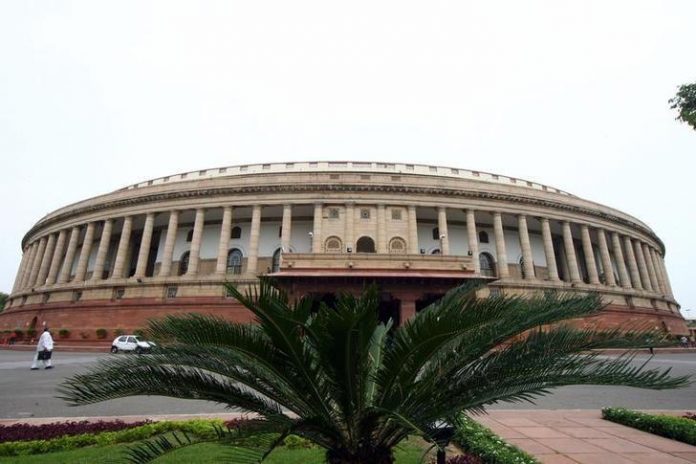
Download Now
logo
FREE & ONLINE 3-Day Bootcamp (LIVE only) on

How Can Experienced Professionals Become Independent Directors

calender
28th, 29th Mar, 2026, 2 - 5pm (IST) &
30th Mar, 2026, 7 - 10pm (IST).
Bootcamp starting in
Days
HRS
MIN
SEC
Abhyuday AgarwalCOO & CO-Founder, LawSikho

Register now

Abhyuday AgarwalCOO & CO-Founder, LawSikho