Download Now
Home Blog Page 376

Landmark judgments under POCSO Act, 2012

0
Image source - https://bit.ly/3cCzNDq

This article has been written by Oishika Banerji of Amity Law School, Kolkata. This article provides a list of landmark judgments under the POCSO Act, 2012. 

Introduction 

The POCSO Act, enacted in 2012, is a gender-neutral statute that recognizes a child as someone under the age of 18. The Indian Penal Code, 1860 does not recognize that sexual assault can be committed on boys as well. The Act of 2012 has a broad spectrum definition of what constitutes a sexual offence against a child. It further expands the definition of sexual assault to cover both non-penetrative and aggravated penetrative sexual assault (Sections 3–10) and is also inclusive of penalties for those in positions of trust, such as public workers, educational personnel, and police officers.

The POCSO Act also established measures to make the criminal justice system more child-friendly and to prevent re-traumatization. This includes everything from how the statement of the child should be recorded, to the medical examination, to the designation of special child-friendly courts. In this article, the reader will get familiar with some of the landmark judgments under the POCSO Act, 2012 which will help them to get an idea regarding the implementation of the aforementioned statute. 

Landmark judgments under POCSO Act, 2012 

Some of the recent and most relevant landmark decisions made with respect to the POCSO Act, 2012 have been laid down hereunder. 

Attorney General for India v. Satish and another (2021)

The Bombay High Court’s Nagpur Bench had ruled in the case of Satish Ragde v. State of Maharashtra (2021) that grabbing a child’s breasts without making “skin-to-skin contact” constituted molestation under the POCSO Act, 2021. The comment was given by a single bench led by Justice Pushpa Ganediwala. The Attorney General of India, the National Commission for Women, and the State of Maharashtra filed appeals against the High Court’s controversial decision, which were heard by a bench consisting of Justices Uday Umesh Lalit, S Ravindra Bhat, and Bela M Trivedi, in the present case of Attorney General for India versus Satish and another (2021). 

The issue at hand was how should Section 7 of the POCSO Act, 2012 be interpreted so as to provide a fair and reasonable solution to the cases falling under its ambit. The present judgment observed that Section 7 covers both direct and indirect touch thereby highlighting that the logic in the High Court’s opinion quite insensitively trivializes indeed legitimizes a whole spectrum of undesirable behavior which undermines a child’s dignity and autonomy, through unwelcome intrusions. 

Setting aside the Bombay High Court’s judgment, the Apex Court observed that the matter at hand would be an appropriate situation for using the “mischief rule” of statutory interpretation. It emphasizes that courts must constantly interpret the law in order to prevent harm and promote the remedy. In this view, the top court’s judgment observed that the High Court’s interpretation not only restricts the implementation of the legislation but also seeks to pervert its objective.

Jarnail Singh v. State of Haryana (2013)

The Supreme Court of India while deciding the case of Jarnail Singh v. State of Haryana (2013) has observed that the procedure which is used to determine the age of a child who is in conflict with law as have been provided by the Juvenile Justice (Care and Protection of Children) Rules, 2007, can be followed in cases falling under POCSO Act, 2012 as well. In the present case, the appellant was accused of kidnapping and raping the daughter of one Savitri Devi, when her daughter was sleeping. The Apex Court observed that Rule 12 of the erstwhile Juvenile Justice (Care and Protection of Children) Rules, 2007, which detailed the age determination process for children in conflict with the law should be applied to determine the age of a child victim. Applying the same, the Court convicted the appellant, Jarnail Singh. 

Alakh Alok Srivastava v. Union of India and Others (2018)

In the case of Alakh Alok Srivastava v. Union of India and Others (2018), the Supreme Court of India laid down guidelines to be followed by Special Courts while trying a case under the POCSO Act, 2012 so that the trial is completed within a period of one year from the date of taking cognizance of the offence, as provided under Section 35 of the aforementioned Act. The guidelines are provided hereunder:

  1. The High Courts are responsible for ensuring that cases filed under the POCSO Act are heard and decided by Special Courts and that the presiding officials of such courts are trained in child protection and psychological reaction.
  2. If not previously done, the Special Courts should be constituted and given the role of dealing with matters brought under the POCSO Act.
  3. The Special Courts should be given instructions to expedite cases by not granting superfluous adjournments and following the procedure outlined in the POCSO Act, allowing the trial to be completed in a time-bound manner or within a certain time period set forth in the Act.
  4. The Chief Justices of the High Courts have been asked to form a three-judge committee to control and supervise the progress of the POCSO Act cases. In the event that three judges are not available, the Chief Justices of the respective courts will form a Judge Committee.
  5. A Special Task Force will be formed by the Director-General of Police or a State authority of comparable rank to guarantee that the investigation is properly handled and witnesses are presented on the dates set before the trial courts.
  6. The High Courts must take appropriate efforts to create a child-friendly environment in Special Courts, keeping in mind the requirements of the POCSO Act, to ensure that the spirit of the Act is upheld.

Hari Dev Acharya @ Pranavanand and Ors v. State (2021)

The Delhi High Court recently stated in the case of Hari Dev Acharya @ Pranavanand and Ors v. State (2021) that as the Protection of Children from Sexual Offenses (POCSO) Act, 2012 is silent on whether two separate incidents can be combined in a single First Information Report (FIR), the provisions of the Code of Criminal Procedure, 1973 (CrPC) would apply, allowing joint trial if the offences were committed during the same transaction. A single-judge bench of the Hon’ble High Court, Justice Manoj Kumar Ohri, made the remark while dismissing a number of people’s petitions challenging the summons issued by a special POCSO court and the additional charge sheets.

The summons and charge sheets were issued in August 2019 in connection with an incident in which a youngster studying at a Gurukul in Delhi was reportedly raped by a superior. The accused took the youngster to the teacher’s room and sexually attacked him. The boy had then informed his friend about the same. They went to the police station and renewed their complaint, but because his mother and sister had already arrived, a solution was achieved under the pressure of four people. According to Justice Ohri, Section 219 of the CrPC allows a person who commits three similar offences within a twelve-month period to be prosecuted at the same time, and because both offences are punished under the same section of the IPC and POCSO, they constitute the same transaction. Therefore, the summoning orders were upheld and the petitions were dismissed. 

State of Karnataka v. Shivanna (2014)

The POCSO Act, 2012 does not require that every statement made under Section 164 of the Criminal Procedure Code, 1973 be recorded. The statement of a victim against whom offences have been committed under Sections 354, 354-A, 354-B, 354-C, 354-D, 376(1), 376(2), 376-A, 376-B, 376-C, 376-D, 376-E, or 509 of the IPC, 1860 should be recorded by a Judicial Magistrate, according to the Section 164(5-A) (a) of the Criminal Law (Amendment) Act, 2013. The statement should be recorded as soon as the commission is brought to the attention of the police, according to Section 164(5-A)(a) Cr.P.C. The Supreme Court of India while deciding the present case of State of Karnataka v. Shivanna (2014) observed that the investigating officer should present the victim before any Metropolitan, ideally Judicial Magistrate within 24 hours of the rape to record the statement under Section 164(5-A)(a) C.r.P.C., preferably to a Lady Magistrate.

Gaya Prasad Pal @ Mukesh v. State (2016)

The present case of Gaya Prasad Pal @ Mukesh v. State (2016) that appeared before the Delhi High Court involved the appellate challenging his conviction for being charged twice because of the same offence. For raping his stepdaughter under the age of 14 and making her pregnant, the man was found guilty of penetrative sexual assault under Section 4 of the Protection of Children from Sexual Offences Act, 2012 (hereafter, POCSO Act) read with Section 376 of the Indian Penal Code. The reason for the delay in filing the FIR was because the child was concerned about her mother and stepbrother’s safety if her stepfather was convicted and sentenced to prison. Separate sentences were imposed on the appellant for offences punishable under Section 376 IPC, Section 6 POCSO Act, Section 354 IPC, and Section 506 IPC. The observations made by the Hon’ble High Court in this present case have been laid down hereunder:

  1. The trial court did not put the appellant on trial for the offence of aggravated penetrative sexual assault under Section 6 of the POCSO Act. As a result, punishing him for the same offence was unconstitutional.
  2. In the case of a minor, ‘rape’ (Section 375 IPC) can also be considered ‘penetrative sexual assault’ (Section 3 POCSO Act). Acts that constitute ‘penetrative sexual assault’ against a girl child would also be considered rape. A person may not be punished twice for the same set of actions of conduct or omission that collectively form an offence covered by two separate articles of law. Despite the fact that the law allows for a trial on an alternative charge for both offences, the punishment can only be given for one of them, the one that is more serious.
  3. Furthermore, the Court noted that the appellant’s conviction for the violation under Section 4 of the POCSO Act is in addition to his conviction for the offence under Section 376 of the IPC. And the appellant’s actions are punishable under Section 376(2) of IPC which provides for a punishment of life imprisonment (imprisonment for the rest of a person’s natural life) as well as a fine, which is more severe than the punishment under Section 4 of the POCSO Act. In this case, Section 42 of the POCSO Act applies, and the Court is required to penalize the offender for the offence under Section 376(2)(f)(i) and (k) of the IPC, which is more serious than the offence under Section 4 of the POCSO Act.

Balaji Sarjerao Kamble v. State of Maharashtra (2017)

The Bombay High Court observed that ‘merely because the date of the crime is not given by the victim, her evidence cannot be disregarded’ in the landmark case of Balaji Sarjerao Kamble v. State of Maharashtra (2017). The child victim was roughly 6 to 8 years old at the time of the alleged rape. At such a young age, the victim is unlikely to have such a keen sense of time, the Court viewed. The decisions of the Hon’ble High Court have been presented hereunder:

  1. Conviction and sentence of the appellant in the case, for offences punishable under Sections 4 and 8 of the POCSO Act, 2012 and Section 376 of the IPC were held to be maintainable.
  2. The sentence imposed on the accused of the offence punishable under Section 376 of the IPC was rigorous imprisonment of 7 years as well as direction to pay a fine of Rs.5,000/- and in default of such payment, further rigorous imprisonment for 3 months, was quashed and set aside.

Nipun Saxena v. Union of India (2019)

When an infraction is committed under Section 23 of the POCSO Act, the publisher or owner of the media, studio, or photography facility is held jointly and severally accountable for his employee’s act/omission, observed the Supreme Court of India in a recent case of Nipun Saxena v. Union of India (2019). The Apex Court released a set of guidelines in relation to the aforementioned provision which are provided hereunder:

  1. No one may broadcast the victim’s name in print, electronic, or social media, or even in a distant way divulge any details that might lead to the victim’s identification and should make her identity known to the general public.
  2. In cases where the victim is deceased or mentally ill, the victim’s name or identity should not be revealed, even with the consent of the next of kin, unless circumstances justifying the disclosure of her identity exist, which must be decided by the competent authority, which in the present case is the Sessions Judge.
  3. FIRs for offences under Sections 376, 376-A, 376-AB, 376-B, 376-C, 376-D, 376-DA, 376-DB, or 376-E of the IPC, as well as violations under POCSO, are not to be made public.
  4. If a victim files an appeal under Section 372 CrPC, the victim is not required to reveal his or her identity, and the appeal will be handled according to the law.
  5. All papers in which the victim’s identity is exposed should be kept in a sealed cover as much as possible, and these documents should be replaced with similar documents in which the victim’s name is deleted from all records that may be scrutinized in the public domain.
  6. All authorities to whom the victim’s name is provided by the investigating agency or the Court are likewise obligated to keep the victim’s name and identity secret and not to divulge it in any way except in the report, which should be delivered to the investigating agency or the Court in a sealed envelope.
  7. An application by the next of kin to authorize the disclosure of the identity of a dead victim or of a victim of unsound mind under Section 228-A(2)(c) IPC should be made only to the Sessions Judge concerned until the Government acts under Section 228-A(1)(c) an lays down criteria as per our directions for identifying such social welfare institutions or organizations.
  8. In the case of juvenile victims under the POCSO Act, 2012, the Special Court can only allow their identity to be revealed if it is in the child’s best interests.
  9. All the States and Union Territories are requested to set up at least one ‘One-Stop Centre’ in every district within one year from the date of the judgment of the present case. 

Conclusion 

The one feature that is common in every judgment that has been discussed is the set of guidelines delivered by the concerned court which will behave as a catalyst for the functioning of the POCSO Act, 2012. The Act of 2012 is social, gender-neutral legislation in the field of criminal law which can be used to its full potential only by the courts when they apply and interpret the provision of the said Act in cases falling within the ambit of the statute. Therefore, decisions made under the Act hold immense relevance. 

References 

  1. https://www.shethepeople.tv/home-top-video/judiciary-lays-foundation-pocso-act/.
  2. https://bhubaneswarcuttackpolice.gov.in/wp-content/uploads/2020/08/POCSO-ACT.pdf.
  3. https://www.thenewsminute.com/article/what-pocso-act-and-how-it-used-guide-143310.
  4. https://www.business-standard.com/about/what-is-pocso.

LawSikho has created a telegram group for exchanging legal knowledge, referrals and various opportunities. You can click on this link and join:

https://t.me/joinchat/L9vr7LmS9pJjYTQ9

Follow us on Instagram and subscribe to our YouTube channel for more amazing legal content.

Download Now

Overview of cookie policy for a website

0

This article is written by Arushi Agarwal, pursuing a Diploma in Advanced Contract Drafting, Negotiation, and Dispute Resolution from LawSikho. This article has been edited by Ruchika Mohapatra (Associate, Lawsikho). 

Introduction

We are often directed to the bottom of our web page where we see a tagline “we use cookies for our websites” which we must either accept or not accept. But do we know what cookies are? Cookies are small texts which are used and developed by the creator of the website so that our valuable information is stored in the program’s data. 

  • Cookies generally keep a track record of the information we have access to, by remembering our registered sign up or login credentials. 
  • Cookies are often indispensable for websites that have huge databases, need logins, have customizable themes, and other advanced features.

That is why you must have noticed that after signing into a website and closing it when you come back, the website seems to remember your id and most probably your password. The cookies present on the website would have saved this data before you closed the window in your previous visit to the website.

What are the different types of cookies?

Cookies are usually used as a fast-track method of storing information and a website operator may use different types of cookies to recognize the online pattern of remembering our actions. 

Session cookies 

These types of cookies are used by commercial platforms where online shopping is done. These types of cookies expire once you go back to the web homepage, and you are no longer using that page. They are temporary and they memorize your online activities. In fact, with every click you  make, the website treats you as a completely new visitor. 

Persistent cookie 

Also known as first-party cookies, these cookies work by tracking your online preferences. When you visit a website for the first time, it is at its default setting. But if you personalize the site to fit your preferences, persistent cookies will remember and implement those preferences the next time you visit the site. This is how computers remember and store your login information, language selections, menu preferences, internal bookmarks and more.  These cookies are stored in your hard disks for preferably a longer period. 

Third-party cookies 

These types of cookies are set by the website which constantly monitors the activity of each user; for example, say a LIKE button on Facebook. Each user who likes the post on a social media platform is tracked by the help of third-party cookies and according to that, preferences are set. When we like a post on Facebook, similar posts are updated due to our previous likes and preferences set and saved by the cookies. 

One can enable/ disable third-party cookies in the setting menu. Third-party cookies are identifiable in the forms of marketers and advertisers. We receive so many SPAM texts and emails because of the use of third-party cookies as third party cookies keep a regular check on all tabs that are functional within a window. If we fill our login id and credentials on the login web page, it saves the information to create spam emails and ads. 

What is a cookie policy?

A cookie policy is adopted by the website operators according to their convenience which is identifiable once we start using a website. This is a policy solely dedicated to tracking the behaviour of their online customers. It involves a set of customization practices where a person can customize his/her cookies according to his/her needs and development: for instance, when you visit a webpage of the United Nations there is a preference given to choose and select a language that you are comfortable with which lets you access that information in that language.

Requirement of a cookie policy

Millions of websites use the cookies banner to make the overall experience of a visitor of a page wholesome and fruitful. It is advisable these days to have a cookies banner which allows them to track and contact the users about data-related concerns. Each website has its well drafted cookie policy these days to ensure a smooth functioning of the website.

There is a well designated ‘Cookie Law’ of the European Union also known as the ePrivacy directive that directs all countries that are a part of the EU to set up laws requiring websites to obtain informed consent before they can store or retrieve information on a visitor’s computer or web-enabled device. It ensures transparency and shows that the website operator sensitises the user regarding the usage of cookies and that there is due respect for the privacy of the user.

If a website adopts a cookie policy, it enhances the credibility of a business owner in the market and maintains that trust with the global community by respecting its privacy concerns and in turn safeguarding the future by adopting comprehensive data protection and privacy laws and regulations. Other reasons as to why having a cookie policy is essential are:

  • Transparency: There is clear communication of knowledge regarding cookies and how they are deployed by the website. It brings in more visitors and maintains trust between the operator and the visitor.
  • Consent is implied: One must be aware that when you sign-up for a website while filing your credentials, you accept the privacy policy and in turn, there is an implied consent to accept the cookies too. It helps the operators in the future.
    If certain users complain that they were not aware of the cookies storing their information, website owners can take this defence. This information should be disclosed by the operators in their policy to avoid future disputes. 
  • Limited liability: There are many policies hidden in the content of the website that are not visible to the user of the website. So, if we accept all the cookies at once, our relevant data is shared and passed on from one entity to another entity. The creator in this situation plays an important role, and he must disclose on the webpage to disable these cookie policies as well as list these cookies too on the page that share our data. 

The advantages and disadvantages of having a cookie policy

Advantages of cookies

  • Online experience- The one major pro of cookies is that almost all e-commerce websites use cookies due to which as a user if you save something in your Wishlist, it remains intact even when you leave that website.
  • Submitting forms- Cookies are very useful when we fill a google form. It stores valuable data like our names and phone numbers which often saves a great amount of time rather than filing all the data again and again.
  • Personalisation- Cookies are useful when we want to customize our preferences according to our tastes, whether it is to visit a web page that stores our language preference or visiting a web page of a reading column.
  • Content suggestion- We often visit our favourite e-commerce site which saves our preferences by keeping in mind our previously selected items and segregating them into the option of ‘related searches’. 

Disadvantages of cookies

  • A threat to our privacy- Some websites have cookies by default where our valuable data is stored into their networks for a longer period which in turn saves into the browsing history and IP address. 
  • Local storage- These ‘little’ website cookies are actual files stored on your hard disks. The more you visit the websites, the more they get stored. As they build over time, they can take up quite a bit of storage space on your computer/mobile device thereby even slowing down these devices. 
  • Unauthorisation- Some operators have fraudulent intentions where they design cookies in such a way to hack and steal your personal online information which is stored and later often sold   to  third party entities. 

How to draft a cookie policy for your website and are the essential clauses?

The website operators need to have both a privacy and a cookie policy while deploying a website. However, if you are disclosing and indicating a privacy policy and cookie policy, both should be mentioned separately in the main privacy policy of the website.

The most integral parts while drafting a cookie policy:

  • A detailed explanation of the cookies used by the operators as discussed above i.e., the technologies used, and the list of specific cookies used. 
  • Describing the first-party cookie, if any.
  • Describe the third-party cookies, if any and explain in brief how they work. 
  • While drafting, an important point that should be kept in mind is that the average person must understand the policy and therefore language has to be simple enough for a layman to be able to grasp it.
  • While drafting the main policy for the cookies, one must keep a note that all the essential clauses covered are in sync with the local and international privacy laws. If a website developer is developing a website in India that will involve European users, then due regard must be given to the privacy laws of India as well as the GDPR. 

Cookie policy in relation to GDPR

Generally, cookie policy in the language of EU law is known as the ‘Cookie Law’ in compliance with the regulations of the GDPR where browsing activities of cookies is mentioned in Recital 30 with support with Recital 26

Recital 30 states that if a cookie can identify any individual via a device, it is known as personal data. It also states that any verified type of data can identify an individual either directly or indirectly. The GDPR mostly lays down the rules of how an individual is identified through cookies and mentions the policy regarding the same.

To use cookies, these regulations are to be followed according to the GDPR: 

  • Consent: It should be free, informed, specific, and not vague which is the topmost priority of the GDPR which says that communication of information relating to the use of cookies is essential and must be done most transparently.
  • Consent is affirmative: To ensure this, the operators need to give options between opt-in-boxes and accept buttons for cookies from the pop-up bar instead of pre-ticked boxes which can attract the scrutiny of the GDPR and strict penalties. However, there is a grey area here. Many websites inform you regarding the usage of cookies but do not give you the option of browsing the website without the use of cookies. This is not completely in compliance with data privacy laws and should not be followed by website developers. 
  • The choice for data subjects: The data subjects must also have the choice to choose and accept certain cookies according to their preferences and have the full authority to accept and decline all the cookies or select some preferential ones. As mentioned above, it is not completely followed in spirit by many websites. 
  • Full access to the websites: If the data subjects reject all the cookies and do not select preferential cookies, they still should have full access to use the website without any hindrance and not just specifically be accessed to a part of the information on the website. 

Conclusion

A cookie policy is a legal document that provides information about the various types of cookies that are being used by your website or app, what those cookies do, and how users of the website can control their cookie preferences. The user should be given access to a website’s cookie policy by providing links to the policy on the homepage or places where the user can have easy access to the link or it can also be advertised via a cookie consent banner. While in the US there are no laws mandating that a cookie policy and a privacy policy are to be dealt with separately, in the UK there is a need to have dedicated cookie policies. The primary goal while drafting a cookie policy is not just ensuring that all essential elements are included but also ensuring that the language is easy enough for a layman to comprehend. In addition to the cookie policy, a website can also inform its users about any other tracking technologies employed by the site like web beacons or pixel tags. 

References

  1. https://www.cookiebot.com/en/cookie-policy/#:~:text=A%20cookie%20policy%20is%20a,world%20this%20data%20is%20sent.text=Whereas%20most%20of%20the%20remaining,dynamic%20and%20 might%20change%20often
  2. https://www.nttdata.com/global/en/cookie-policy
  3. https://termly.io/resources/templates/cookie-policy-template/
  4. https://www.freeprivacypolicy.com/blog/sample-cookies-policy-template/

Students of Lawsikho courses regularly produce writing assignments and work on practical exercises as a part of their coursework and develop themselves in real-life practical skills.

LawSikho has created a telegram group for exchanging legal knowledge, referrals, and various opportunities. You can click on this link and join:https://t.me/joinchat/L9vr7LmS9pJjYTQ9

Follow us on Instagram and subscribe to our YouTube channel for more amazing legal content.

Download Now

The evidentiary irregularities in Aryan Khan’s bail order

0
Image Source: https://bit.ly/2Xub1RU

This article is authored by Akash Krishnan, a law student from ICFAI Law School, Hyderabad. It discusses in detail the issues with the rejection of bail applications of Aryan Khan by the Sessions’ Court and the subsequent order of the Bombay High Court confirming the bail.

Introduction

The son of Bollywood superstar Shah Rukh Khan was finally granted bail after 25 days in prison by the Bombay High Court on 29th October 2021. Over these 25 days, two bail applications that were filed by Aryan Khan to the Sessions Court and the NDPS Special Court were rejected on different grounds. The question that arises herein is that if the Bombay High Court found it appropriate to grant bail to Aryan Khan, what were the grounds on which his bail applications were rejected by the Sessions Court and the NDPS Special Court and whether these orders suffered from any irregularities. 

While dealing with a case of bail, one must always remember the principle laid down by the Supreme Court in the case of State Of Rajasthan, Jaipur vs Balchand @ Baliay (1977) that bail is a rule and jail is an exception. In light of the same, this article analyses the grounds on which bail was rejected by the lower courts and the findings of the Bombay High Court in this regard. 

The Aryan Khan Bail Saga

On 3rd October 2021, Aryan Khan along with Munmun Dhamecha and Aryan’s friend Arbaaz Merchant were arrested by the Narcotics Control Bureau on an international cruise off the coast of Mumbai. On October 7th 2021, the Magistrate’s Court sent Aryan Khan and the other two accused to Judicial Custody. From then on, an array of lawyers representing Aryan Khan had filed bail applications for his release. The first bail application was filed in the Sessions Court on October 8th 2021 which was rejected on the ground that the Court does have jurisdiction and therefore, it was held that the bail application was not maintainable. The reason provided for the same by the Sessions Court was that Aryan Khan and the two other accused were arrested for the offences defined under the NDPS act and therefore only a Special Court would have the jurisdiction to hear a petition for bail.

Section 36A(1)(a) of the Narcotic Drug and Psychotropic Substance Act 1985 states that any offence under the NDPS Act which is punishable with imprisonment for a term amounting to more than 3 years shall be tried by a Special Court constituted for a specific area in which the offence has been committed.

Therefore, the lawyer of all the three accused moved to the NDPS Special Court. However,  on October 20, 2021, the bail application was rejected based on the voluntary statement and WhatsApp chats submitted by the NCB officials. Finally, on October 28th, 2021 the Bombay High Court granted bail to Aryan Khan on account of lack of complete evidence.

In this article, we will discuss two aspects of the Aryan Khan bail saga

  1. Grounds on which the Special Court rejected the bail application of the three accused
  2. Evidentiary irregularities which the Special Court was unable to find and the corresponding order of the Bombay High Court.

Rejection of bail by the NDPS Special Court

The lawyers of the three accused filed a bail application which was rejected by the NDPS Special Court on October 20th, 2021. The bail was rejected on the following grounds:

  1. The NCB officials have stated that there were no drugs found on Aryan Khan but his friend and another accused in this case Arbaaz Merchant was carrying contrabands. These allegations were voluntarily accepted by all the three accused that those contrabands were for their consumption. The Special Court in his views stated that although Aryan Khan was not in the possession of drugs at the time of arrest he surely knew that his friend had the drugs. Since he had knowledge of the presence of drugs in the possession of the third accused and had intended to consume it later, then such knowledge will be deemed to be equal to having the possession of contraband with all the people who knew about it.
  2. The NCB officials pressed on the part that even if there was less amount of drugs in the possession of the three accused, based on the WhatsApp chats recovered from the phones of the three accused and the statement made by the accused at the time of the arrest by the NCB officials, there is a prima facie evidence that Aryan Khan was part of the conspiracy and he had a connection to the relevant case. This argument made by the NCB was accepted by the Special Court.
  3. The Special Court also accepted the argument that Aryan Khan being the son of very famous celebrity Shah Rukh Khan,  has a heavy influence and can tamper with the evidence given his position.
  4. The prosecution also argued that given their WhatsApp chat it was clear that the three accused had used illegal drugs regularly and if set free they can again resort to using drugs. This was also accepted by the Special Court.

Sections of NDPS Act under which Aryan Khan and the three other accused were booked

Section 8(c) of the NDPS Act

Section 8(c) of the NDPS Act states that nobody shall be involved in production, manufacturing, possessing, selling, purchasing, transporting, using, consuming, or importing/exporting any narcotic drug or psychotropic substance. Except if such substances are used for medical or scientific purposes.

Section 20(b) of the NDPS Act

Section 20(b) of NDPS Act States that whoever is involved in the production, manufacturing, possessing, selling, purchasing, transporting, using, consuming, or importing/exporting of any narcotic drug or psychotropic substance shall be punished with rigorous imprisonment which may extend to 10 years and fine which may extend to one lakh rupees.  In case if there is a small quantity in possession then he/she shall be punished with imprisonment which may extend to 6 months and a fine extending to ten thousand rupees. If the involvement is for a commercial quantity, then the imprisonment shall not be less than ten years and can extend to twenty years and a fine which may extend to two lakh rupees. 

Section 27 of the the NDPS Act

Section 27 of the NDPS Act states that if someone consumes any narcotic or psychotropic substance, then he shall be punished with rigorous imprisonment which may extend to one year and a fine which may extend to twenty thousand rupees. If there is a consumption of a narcotic drug or psychotropic substance other than substances provided under the Act, then the person shall be punished with imprisonment which may extend to six months and a fine extending to ten thousand rupees.

Section 35 of the NDPS Act

Section 35 of the NDPS Act states that it is presumed that the accused knew what they were doing. Hence, until the accused is proven guilty, he will be deemed to be innocent.

In any prosecution for an offence under this Act which requires a culpable mental state of the accused, the Court shall presume the existence of such mental state but it shall be a defence for the accused to prove the fact that he had no such mental state concerning the act charged as an offence in that prosecution.

Evidentiary irregularities in bail order of Special Court

The Special Court denied the bail application of Aryan Khan and the other three accused basically on the two grounds that there was a voluntary statement made by the accused under Section 67 of NDPS Act and the WhatsApp chats wherein it was found that the accused had several contacts with drug peddlers in India and abroad.

This order of the Special Court was heavily criticized as it has not followed the established principles and precedents of law. The following part lays down some grounds where the court’s order lacked evidentiary value

Placing reliance on the voluntary statement of accused given to NCB officials

The Special court while pronouncing its order concurred on the statement made by the accused to the NCB officials. While pronouncing the order no reliance was made on the principle that was established in Tofan Singh vs State of Tamil Nadu (2013), where the Supreme Court held that NCB officials are not more than a police officer and any statement or confession made to them during interrogation or arrest are not admissible in the court of law. Section 25 of the Evidence Act 1872 also provides that the statement made to police officers is inadmissible in the court of law.

This can further be inferred from the case of Shivaraj Urs vs Union Of India (2020) where the accused was prosecuted for an offence under the NDPS Act and NCB officials were relying on the voluntary statement of the accused. The Karnataka High Court relied on Toofan Singh’s case and allowed bail for the accused.

Therefore, in light of  Section 25 of the Indian Evidence Act and the cited precedents, the Special Court should not have admitted the voluntary statement made by the accused to NCB officials and should have granted the bail.

Questioning the evidentiary value of WhatsApp chat

While rejecting the bail application, the Special Court also relied on WhatsApp chats and the involvement of the accused in conspiracy with other entities who are accused of an offence under the NDPS Act. It is noted that WhatsApp chats are included as electronic evidence and shall be admissible only if a certificate is attached as per Section 65B of the Indian Evidence Act. This is to certify that the secondary evidence, so presented, is generated from a computer and is not manipulated evidence.

This can be further supported by the cases of Arjun Panditrao Khotkar vs Kailas Kishanrao Gorantyal (2020) and  P.V. vs P.K. Basheer (2014) wherein the Court has held that secondary evidence submitted without a certificate is inadmissible as provided under Section 65B of the Indian Evidence Act 1872

The ambit of attaching a certificate with secondary evidence was explained in depth in the case of Rakesh Kumar Singla vs Union of India (2020) wherein the Court held that it is mandatory to attach a certificate with secondary evidence even in the bail application

In the Aryan Khan case, the Court directly relied on the WhatsApp chat submitted by the NCB without any certificate. This shows that the Special Court has not concurred with the precedents and the provisions of the Indian Evidence Act.

Special Court wrongfully constructed offence of conspiracy against Aryan Khan

The term conspiracy is not defined under the NDPS Act. According to Section 120A of the Indian Penal Code conspiracy means when two or more individuals consent to do/participate or have done/participated in an illegal act or any legal act with illegal means then they have said to commit criminal conspiracy.

Essential of criminal conspiracy

  1. There must be a common intention
  2. To do or participate in any illegal act
  3.  To do or participate in a legal act that is done by illegal means

In Aryan Khan’s case, the Court relied on WhatsApp chat which does not have any evidentiary value and was of the view that the accused has links with drug dealers. The Court concluded that as the chats show his contact with peddlers and suppliers for drugs and in his interrogation he has named some peddlers, he is part of a conspiracy.

The Court while making its conclusion crossed the ambit of the definition of conspiracy. The NDPS Act does not define conspiracy. The Indian Penal Code defines conspiracy which states there shall be involvement and common intention to commit any illegal activity. The NDPS Act gives punishment for the commission of criminal conspiracy under Section 29 of the Act. But the interpretation of section 29 of the NDPS Act is different when it gives punishment for criminal conspiracy. Section 29 of the NDPS Act states that a person shall be punished if he/she abets or becomes a party to criminal conspiracy under this Act. 

The Court drew its conclusion by considering the past actions of the accused, i.e., the Whatsapp chats of Aryan Khan with alleged drug dealers/peddlers. This constitutes negligence on the part of the Court as the past actions cannot be connected to the present offence until and unless the two events are connected and all the accused know about the conspiracy. In the Aryan Khan case, all the past actions constitute a separate offence and cannot be attached to the present case.

To prove that there is an existence of criminal conspiracy it needs to be shown that there is a common intention in parting with the criminal conspiracy which the Special Court was unable to construct. To prove that there was a criminal conspiracy on part of Aryan khan the Special court relied upon the case of Showik Chakraborty vs Union of India (2020) for assisting Section 29 of the NDPS Act. The Court was of the view that the cited case is a similar case to the Aryan Khan case therefore Section 29 can be invoked. But in the Showik case, there was a connection of the accused with the drug peddler who was found in possession of the illegal narcotic drugs in commercial quantity. However, in the case of Aryan Khan, the Court was unable to find any connection between the co-accused who was found to be in possession of drugs in a commercial quantity.

Conclusion

Rejecting bail by omitting an established legal provision and precedents is not what citizens of India expect from Courts. Law is equal for everyone and everyone should be treated accordingly.  But in the name of justice, a Court cannot directly believe and admit the charges levied by an administrative body like the NCB. A court should look and consider the facts of the case and because this was not done, the provisions of the NDPS Act were misinterpreted by the Court and several binding precedents were also ignored.

This shows a negative attitude on part of the judiciary which was slammed by many jurists and even by the Bombay High Court. Therefore it is important that the judiciary learns from this case and ensure that such situations do not arise in the future.

References


Students of Lawsikho courses regularly produce writing assignments and work on practical exercises as a part of their coursework and develop themselves in real-life practical skills.

LawSikho has created a telegram group for exchanging legal knowledge, referrals, and various opportunities. You can click on this link and join:

https://t.me/joinchat/L9vr7LmS9pJjYTQ9

Follow us on Instagram and subscribe to our YouTube channel for more amazing legal content.

Download Now

All you need to know about implied contracts in India

0

This article is written by Poonam Shekhawat, pursuing Diploma in Advanced Contract Drafting, Negotiation, and Dispute Resolution from LawSikho. The article has been edited by Aatima Bhatia (Associate, LawSikho) and Ruchika Mohapatra (Associate, LawSikho).

Introduction

In India, the rules relating to contracts are covered under the Indian Contract Act, 1872 (hereinafter referred to as the ICA) the provisions of which are based on the common law rules. The common law rules have recognized the validity of implied contracts, and the same has been followed in India. So, Section 9 of the ICA recognizes implied contracts as valid and legal, as it states that when a proposal or acceptance is made in a manner other than in words, the promise is implied. Implied contracts are crucial as not all contracts can be formed in writing, especially in the performance of day-to-day activities. However, since implied contracts are assessed based on conduct and actions, it raises several issues. In this article, the author seeks to discuss the varied legal issues existing around implied contracts. The article will first discuss the concept and types of implied contracts, and then the issues with respect to the existence of the implied contracts, along with discussing the implied contracts with the government.

Definition of implied contracts 

The term “implied contract” is not defined under the ICA expressly, but Section 9 covers it in its purview. It defines “implied contract” as the type of contract in which the proposal and acceptance of a contract are implied in a manner other than words. For example, a passenger boarding a cab will not enter into a written contract but it is implied between the cab driver and the passenger that the cab driver will have to drive the person to his destination and the border will have to pay a certain amount of money as fare. Thus, there is an implied contract between them. There are two types of implied contracts: implied contracts in fact and implied contracts in law. 

Implied contract in fact

An implied contract in fact is a contract in which the existence of a contract is assessed on the basis of the actions or conduct of the parties and the circumstances under which the contract is entered into. For instance, a person entering into a restaurant to eat will not enter into an express contract with the restaurant for them to serve food in return for money, but it is implied that the person has to pay for the food that he is being served by the restaurant. Thus, from the existing circumstances and the conduct of the parties, there exists an implied contract between them. There are no definite provisions under ICA determining these contracts and their existence needs to be determined pursuant to the parties conduct and the circumstances existing therein. 

Implied contract in law

Implied contracts in law are those in which one of the parties will be unjustly enriched in the absence of a contract. For instance, an individual had a heart attack in a restaurant, a doctor was present there at the time and saved his life. In this case, the doctor is entitled to payment owing to a contract because if the doctor is not paid for their services, the individual will be unjustly enriched. An implied contract in law is also known as a quasi-contract. Under ICA, these contracts include a claim for supplying necessaries to a person incompetent to contract (Section 68), reimbursing the payment of money which was paid by the claimant for the use of defendant (Section 69), the obligation of the beneficiary of the non-gratuitous act to pay the person who performed the act (Section 70), obligations of a finder of goods towards the true owner (Section 71), and responsibility of an individual to pay back the money or anything else which is delivered to such person by mistake or under coercion (Section 72). 

Assessing the existence of contractual elements in implied contracts

A contract becomes legally enforceable when it has certain elements that include an offer, acceptance, intention to form a contract, free consent, competency to contract, consideration and lawful object, as provided under the ICA. These elements are required to ensure that the contract has been formed on the meeting of minds, the parties are capable of entering into a contract, and that none of the parties is being taken undue advantage of. Also, the contract should not be illegal. The absence of either of these elements will render the contract non-enforceable. A party to a contract can only approach the Court for seeking remedies when the contract is enforceable and thus, the assessment of the existence of these elements is crucial. 

In express contracts, the existence of these elements can be assessed on the basis of the express words used by the parties or via documents existing in writing. However, in the case of implied contracts, each of these elements is to be assessed in lieu of the actions, the conduct of the parties and the surrounding circumstances. Since the existence of elements is to be deduced on this basis, it is likely that the parties/party did not actually intend to be bound by the contract but the court may find the existence of an implied contractual relationship. 

In express contracts, the intention is determined on the basis of the nature of the relationship between parties. The presumption in commercial contracts is that intention exists whereas, in a social or domestic relationship, the intention is presumed not to exist. However, this presumption is rebuttable, and if proven that intention exists, the contract will be held valid. These rules may not be applicable in the same manner in the case of an implied contract. Since the existence of elements is based on the actions and conduct of the parties and the circumstances surrounding the formation of the contract in question, these may not always reveal the fact directly. Each individual acts differently in different situations, so a person might have not intended to enter into a contract but if the circumstances suggest so, he has to be bound by it. 

Principles of unjust enrichment and quantum meruit

One of the principles behind the existence of quasi-contracts is unjust enrichment. As per this principle, no person shall be unjustly enriched at the expense of the other. This principle requires the beneficiary to make payments to the person who has conferred a benefit on him. In general, the contract rules provide that consideration is an important element for the formation of a contract and it shall be mutual.

If we consider the scenario discussed above where a doctor saves a person in a restaurant who suffered a heart attack, in this situation, the doctor will be reimbursed if he saves the person. What if the doctor is unable to save the person? Will the doctor still be entitled to reimbursement for their service? The present rules of “Quantum Meriut” provides that a person is entitled to compensation or reimbursement when the other person has received a benefit, but in this situation, the other person did not receive any benefit so the doctor will not be entitled to any reimbursement. However, if this would have been a normal situation wherein the patient is being taken to a hospital, the doctor is entitled to reimbursement irrespective of the fact the patient survives or not. Thus, the principles applied to implied contracts may or may not compensate an individual providing a service, especially in the case of quasi-contracts. 

Government contracts and implied contracts

In various areas of life, an individual avails services of the Government. Given the concept of the welfare state, the activities of the Government in the economic sense are expanding and it is dispensing various services in which an individual enters into a contract with the Government. Any contract is formed between an individual and a State/Central Government will be known as a government contract. In India, government contracts are only valid if they are written. An implied contract does not exist in the case of government contracts. Article 299 provides that the government contracts shall be expressed to be made by the President of the State Government, and shall be executed. In Bhikaraj Jaipuria v Union of India, the Supreme Court interpreted this provision to deduce that the words “expressed” and “executed” as used in this provision implies that there must be a written contract, and the contracts in any other form will not be valid. Thus, there exists no scope for any implied contract with the government, and a contract with the government is only valid if it complies with Article 299, i.e., it must be expressed reimbursement if he incurs a loss or has to spend more in reaching his destination from the location where the driver may have dropped him but the case is not entirely the same with a public service or a government-owned implied contracts that have not been addressed yet. The first issue is the different rules of assessing the existence of the elements of the contract, and due to these rules, express contracts and implied contracts are likely to be subject to different rules. Secondly, the principles of unjust enrichment and quantum meriut are also applicable to the implied contracts differently than those of the express contracts which may put a party to the contract in a non-beneficial position. Similarly, the non-applicability of the rule of the implied contract to the government contracts makes the other party suffer losses. Therefore, these legal issues need to be resolved to meet the needs of the parties to such contracts.  

References


Students of Lawsikho courses regularly produce writing assignments and work on practical exercises as a part of their coursework and develop themselves in real-life practical skills.

LawSikho has created a telegram group for exchanging legal knowledge, referrals, and various opportunities. You can click on this link and join:

https://t.me/joinchat/L9vr7LmS9pJjYTQ9

Follow us on Instagram and subscribe to our YouTube channel for more amazing legal content.

Download Now

Laws against child begging in India

0
Image Source: https://rb.gy/rv34dc

This article is written by Vanya Verma, from O.P. Jindal Global University. This article discusses various laws against child begging in India along with problems and solutions for the same.

Introduction

In India, lakhs of children are forced to beg. These children are subjected to harsh conditions, cruelty and torture, and live in poverty. To make ends meet, the children are left with no choice but to beg. Many children are harmed and forced to beg for money to give to human traffickers, and they frequently use the money given to them to buy drugs and alcohol instead of clothes and food. These children are sedated as well. These children are generally from low-income families with no one to look after them.

Although there is no national law against begging, it is illegal in several Indian states and union territories. They are, however, responsible for taking anti-begging measures and ensuring that beggars are rehabilitated. 22 states that include a few union territories have anti-begging laws. The Act which functions as the derivative figure for all the state anti-begging laws is the Bombay Prevention of Begging Act, 1959.

The Bombay Prevention of Begging Act, 1959 

Section 2 of the Act defines begging as:

  1. Soliciting or receiving alms, in a public place whether or not under any pretence such as singing, dancing, fortune telling, performing or offering any article for sale; 
  2. entering on any private premises for the purpose of soliciting or receiving alms; 
  3. exposing or exhibiting, with the object of obtaining or extorting alms, any sore, injury, deformity of diseases whether of a human being or animal; 
  4. having no visible means of subsistence and wandering  about or remaining in any public place in such condition or manner, as makes it likely that the person doing so exists by soliciting or receiving alms; 
  5. allowing oneself to be used as an exhibit for the purpose of soliciting or receiving alms.

If a person who has previously been detained in a certified institution is found begging, he or she may face three-year term detention as per Section 5(5) BPBA. If convicted for the second time, the person will be sentenced to ten years detention under Section 6 BPBA.

A child is defined under the BPBA as a boy under the age of 16 and a girl under the age of 18. When the beggar is a child under the age of five years, the court must refer the child to a “children’s court” where the child will be dealt with in line with the Children Act, 1960.

Section 11 of the BPBA specifies that anybody who has custody, charge, or care of a kid who permits or encourages the child to solicit or accept alms or utilises another person as an exhibit faces a sentence of one to three years in prison.

Indian Penal Code

The Indian Penal Code, 1860 was amended in 1959 to criminalize the exploitation of children for begging. Section 363A of the Code makes it illegal to kidnap or maim a minor for the purpose of begging. The Section also defines what constitutes begging and who qualifies as a minor. It also makes it illegal to hire or use a child for the purpose of begging if the person is not the rightful guardian of the minor.

Furthermore, Section 268 which deals with public nuisance stipulates that a person is guilty of a public nuisance if he or she causes injury, danger, or irritation to the public. This law may be used in situations where people who are begging are considered a public nuisance.

BPBA reform in Delhi in 2018

The BPBA was previously in effect in Delhi, however, on August 8, 2018, the Sections of the BPBA that criminalised begging arbitrarily and in contravention of the Indian Constitution’s guarantee to equality under Article 14 were struck down. As a result, begging has mostly been decriminalised in Delhi.

Juvenile Justice (Care and Protection of Children) Act, 2015

The offence of employing a juvenile or child for begging is defined under Section 76 of the Juvenile Justice (Care and Protection of Children) Act, 2015. The Section lays down that if someone employs or uses a kid for the purpose of begging, or induces a child to beg, will be penalised by imprisonment for a term of up to five years, as well as a fine of up to one lakh rupees and if a person amputates or maims a kid for the purpose of begging, he will be punished by harsh imprisonment for a term of not less than seven years, which may be extended up to 10 years, and a fine of five lakh rupees.

The Children Act, 1960

Section 42 of the Act says that whoever employs a child for begging or indulges the child into begging or makes him beg will be held liable to imprisonment for a term maximum up to one year or fine or both. The abetment of such an offence is also punishable and the offence is of cognizable nature.

Persons in Destitution Model Bill, 2016

The Persons in Destitution Model Bill of 2016 was introduced in the month of October 2016. Though it would not have prohibited arrests, the law would have altered the goal of India’s begging statute from punishment to rehabilitation. A government spokesperson told the High Court in late 2017 that the Bill had been dropped.

Indian Railway Act, 1989

Hawking and begging are prohibited under Section 144 of the Indian Railway Act, 1989. For example, Section 144(1) of the Act bans anyone from selling any article in a railway carriage or on any part of a railway without first obtaining a government licence. Begging and hawking are both illegal under the Railway Act and can result in a year in prison and/or a fine.

Anti-begging laws in Indian states and UTs

Sl.No.States/Union Territories StatesLegislation
1.Andhra PradeshThe Andhra Pradesh Prevention of Beggary Act, 1977
2.AssamThe Assam Prevention of Begging Act, 1964
3.BiharThe Bihar Prevention of Begging Act, 1951
4.ChhattisgarhAdopted the Madhya Pradesh Bikshavirty Nivaran Adhiniyam, 1973
5.GoaThe Goa, Daman & Diu Prevention of Begging Act, 1972
6.GujaratAdopted the Bombay Prevention of Begging Act, 1959
7.HaryanaThe Haryana Prevention of Begging Act, 1971
8.Himachal PradeshThe Himachal Pradesh Prevention of Begging Act, 1979
9.Jammu & KashmirThe J&K Prevention of Begging Act, 1960
10.JharkhandAdopted the Bihar Prevention of Begging Act, 1951
11.KarnatakaThe Karnataka Prevention of Begging Act, 1975
12.KeralaThe Travancore Prevention of Begging Act, 1120, the Madras Prevention of Begging Act, 1945 and the Cochin Vagrancy Act, 1120 are in force in different areas of the State.
13.Madhya PradeshThe Madhya Pradesh Bolshevist Navarin Adhamiya, 1973
14.MaharashtraThe Bombay Prevention of Begging Act, 1959
15.PunjabThe Punjab Prevention of Begging Act, 1971
16.SikkimThe Sikkim Prohibition of Beggary Act, 2004
17.Tamil NaduThe Madras Prevention of Begging Act, 1945
18.Uttar PradeshThe Uttar Pradesh Prohibition of Begging Act, 1972
19.UttarakhandAdopted the Uttar Pradesh Prohibition of Begging Act, 1972
20.West BengalThe West Bengal Vagrancy Act, 1943
21.Daman & DiuThe Goa, Daman & Diu Prevention of Begging Act, 1972
22.DelhiAdopted the Bombay Prevention of Begging Act, 1959

Police authority to arrest beggars

  • According to anti-begging laws in many Indian states, an authorised police officer has the authority to arrest anyone who is seen begging without a warrant. If a person is seen begging inside a private property, he can only be arrested if the property owner files a formal complaint.
  • It is the responsibility of the police officer to take the arrested beggar to court.
  • A beggar who is arrested is required by the state government to be held in a certified institution.
  • If the court determines that the defendant was not involved in begging, he will be discharged.
  • If the court is convinced that the accused was involved in begging, the court will impose the necessary punishment.

Grounds for deciding the punishment

  • The beggar’s age and personality
  • The surroundings and circumstances of the beggar
  • Probation Officer’s findings
  • If a child under the age of five is discovered begging, the court will refer the child to the Juvenile Justice Tribunal.
  • If a person is convicted for the second or subsequent time, he is sentenced to 10 years in a Certified Institution, with the possibility of an additional two years added to his sentence.
  • As a result, if discovered begging for the second time, the punishment maybe a total of 12 years in prison.
  • When a cripple, blind, or physically handicapped person is imprisoned for beggary, the court may lengthen his sentence for the benefit of the physically handicapped beggar.

Problems faced by child beggars

Torture and abuse

Children who beg on the streets are subjected to a great deal of abuse and torture. Their parents, guardians, traffickers, and other people abuse them. They are sometimes sexually molested, beaten, tormented, and forced to beg on the streets for food and shelter.

Deprivation

The children that beg on the streets come from impoverished families. These kids beg for their entire families. Their only motivation for begging is to obtain food. Their primary concern is food. They are compelled to beg because their families are large and they have no other source of income. 

Homelessness 

These children may come from impoverished families or be orphaned. Finding a safe haven is a difficult task. They beg all day and then find a place to sleep at dusk. They live on the streets, train stations, and other public places in the hopes of obtaining a roof and food to provide for their families basic needs.

Discrimination

Many people abandon their girl children in India due to inequality between males and women. After that, the child is forced to live on the streets and beg. Prostitution is practised by certain children. People mistake these children for thieves, and they are frequently regarded as filthy.

Ways to control child begging

Prohibit begging

To address this issue, both the government and the corporation should impose a begging ban. Secondly, plans should be made to collect the beggars and place them in poor homes that have been set up specifically for them.

Partial ban

A complete ban on begging as a first step would be ineffective and counterproductive, initially, a partial ban should be imposed.

Rehabilitation

The government should also take more effective measures to dismantle gangs that survive on organised begging. More beggar’s homes should be established, provided with training in various crafts and trades.

Protection from all sides

Existing laws relating to children, such as drug trafficking laws, must be scrutinised, and new laws must be developed.

Suggestions

  • Every state government should make more strict legislation to deal with this issue, with the goal of the children’s welfare in mind.
  • NGO awareness should be increased in order to reach out to those children who are suffering greatly, as few people are aware of their work and efforts to assist the environment.
  • To modify their habits or needs to beg, the government should offer basic requirements such as food and shelter to these kid beggars and their families.
  • Everyone has the right to an education. Children’s education should be given attention. An educated individual can at least make a living from his or her knowledge and is not obligated to beg for food and shelter.
  • Their family should be offered better career chances. NGOs assisting these child beggars should be provided with appropriate financial resources so that they can assist without fear of running out of money.
  • Abused children should be sent to a proper shelter where they can be cared for. Authorities and non-governmental organisations should appropriately care for malnourished youngsters.

Conclusion

We can help children from being indulged in begging either by reporting to the authorities or through NGOs. If one notices a child begging on the street or in a train station, the first thing one should do is contact the appropriate authorities, such as the police or the railway department. The authorities can save their lives by ensuring that they have a bright future. Secondly, one can report to child care and welfare NGO, which will locate their family and provide financial assistance. These non-governmental organisations also seek to educate these street beggars and provide them with food and shelter.

References


Students of Lawsikho courses regularly produce writing assignments and work on practical exercises as a part of their coursework and develop themselves in real-life practical skills.

LawSikho has created a telegram group for exchanging legal knowledge, referrals, and various opportunities. You can click on this link and join:

https://t.me/joinchat/L9vr7LmS9pJjYTQ9

Follow us on Instagram and subscribe to our YouTube channel for more amazing legal content.

Download Now

Standard of investigation in Indian cases : a state of worry

0
Image Source- https://bit.ly/2YFqLzd

This article is written by Jagriti Sanghi, an Advocate practising in the Courts of Hyderabad, Telangana. This article gives insight into the standard of investigation in Indian cases and analyses if it is a state of worry. 

Introduction 

The standard of investigation is a state of worry in many cases. The fault investigation leads to incorrect acquittals and justice being denied to the victims. This article explains the process of investigation, lapses that occur during the process, and improvements that can be made to ensure that standard of investigation is no longer a state of worry.  

Meaning of investigation

Clause 2(h) of the Criminal Procedure Code (CrPC) defines the term ‘Investigation’ as all proceedings under the CrPC for collection of evidence conducted by a police officer. It is different from an inquiry which is conducted by a Magistrate.  The investigation in criminal law is the foundation on which the case revolves. A proper investigation is essential to ensure that an accused gets a fair trial. If the procedural safeguards in the investigation are not followed from the time police obtain information about the commission of an offence, then the case can be severely affected at a later stage.

Procedure of investigation under the Criminal Procedure Code

When information in cognizable cases is received by the officer in charge at the police station, he shall reduce it in writing. All such information reduced to writing shall be read over orally to the informant and then signed by him as per Section 154 of the Criminal Procedure Code (CrPC). This information sets the investigation in motion and thus should be recorded with due care and caution. In non-cognizable cases as per Section 155 of CrPC, the information needs to be recorded by the police officer but the investigation can commence only after the order of the Magistrate.

On receipt of information or knowledge regarding the commission of a cognizable offence, the police officer has to take steps to investigate the facts and circumstances of the case and arrest the culprit. In case of an alleged offence of rape/sexual assault, the victim’s statement needs to be recorded at the home of the victim by a female police officer in charge in presence of a family member/relative/supporter of the victim. It is important to note that as per Section 157 of CrPC which prescribes the procedure of investigation, a duty is cast on the investigating officer to send the report on cognizable offence to the concerned Magistrate immediately after the registration of the FIR to ensure transparency and free trial.

Faulty investigation in India which leads to the wrong acquittal

It is alarming that the rate of conviction is less as compared to the increasing crime rate. The investigating system has to be improved to avoid the wrong acquittal.

In the Indian Criminal Justice System, the police have to take notice of the violation of the law and then proceed with the ascertainment of facts including the discovery and identity of the offender. This is called ‘Investigation’. It becomes faulty when the Investigating Officer does not promptly make the investigation and leads to inordinate delay in locating incriminating materials against the accused.

There are many factors that have an impact on the investigation such as delay in filing of charge sheets, improper recording of witness statements, illegal search and seizure, fake encounters, evidence and so on.

The faulty investigation leads to the loss of cases and the collapse of the criminal justice system. The police should be trained to collect proper and correct evidence and not inadmissible evidence.

The investigating officer has to promptly make the investigation to find relevant material in favour of or against the accused. The course of the investigation has to be smooth without any disruptions.

Lapses that occur during the investigation process

  1. An investigation is an inquiry into the facts of the commission of an offence. It is conducted by police officers as per the procedures and principles established by law. In India, we follow the adversarial system, where evidence plays a very crucial role in the administration of justice. The function of collating evidence is assigned to the police. In most of the criminal cases prosecuted, an improper investigation leads to wrong acquittals.
  2. The police officer in charge delayed in registering the FIR.
  3. The crime scene is often disturbed by the general public by the time police officers reach the crime scene which leads to loss of evidence like hair strands, fingerprints, footprints, and other evidence.
  4. The case diaries in police stations are not maintained diligently due to the dearth of time which affects the outcome of the case.
  5. Forensic experts are less in number and they send the medical reports after an inordinate delay. As a consequence, charge sheets are submitted after a long delay which affects the case drastically.
  6. Scientific investigation is not developed which leads to the loss of much crucial evidence. The branches of forensic science include but are not limited to fingerprinting, toxicology, odontology, polygraph (lie detection), blood identification, DNA fingerprinting. The in-depth knowledge of these branches is required for investigating officers to fulfil their responsibilities of collecting evidence to be used by the prosecution.
  7. Witnesses become hostile and change their statements during the trial. They do not cooperate with the police.
  8. The accused cannot be a witness against himself as per Article 20(3) of the Constitution. The accused must be presumed to be innocent until proven guilty. The accused need not give answers to those questions which would tend to prove a criminal charge against him. [Section 161(2) of CrPC]. The police should not harass the accused during the investigation as this fact can affect the prosecution case during the trial.
  9. There is a lack of human resources to completely focus on the investigation of crimes.
  10. It is seen that the police officers are not aware of the intricacies of the law of evidence and the case fails before the stringent cross-examination by the defence counsel.
  11. Most of the cases are also lost because of improper recording of witness statements under Section 161 of CrPC.
  12. There is a dearth of resources in police stations such as stationery, jeeps, guns, mobile phones, etc.
  13. There is unwarranted media interference especially in high profile cases which hampers the process of investigation.

Supreme Court Cases related to the investigation process  

A few cases where the factors which impact the investigation process were discussed are given as below:

In Director, CBI v. Niyamavedi rep. by its Member K. Nandini, Advocate, [1995], it was laid down that courts should not interfere in the investigation process when it is in progress in a case. The observations/comments of the Court may derail the investigation and should be avoided. 

In Hussainara Khatoon v. Home Secretary, State of Bihar, [1979] it was held that Section 167(5) of CrPC is to be mandatorily complied with. The provision prescribes that a case which is triable by a Magistrate as a summons case, and the investigation is not completed within 6 months from the date of arrest of accused, the Magistrate will have to make an order stopping a further investigation into the offence. However, if the investigating officer satisfies the Magistrate that the continuation of investigation beyond 6 months is necessary for the interest of justice, then it shall be continued. The Supreme Court observed that since many under-trial prisoners are languishing in jail, in these kinds of cases, Section 167(5) should be strictly complied with. This provision enables the police to not be lethargic during the investigation process and safeguards the interests of the under-trial prisoners who should not suffer in jail more than their maximum punishment for their offence.

In CBI v. R.S. Pai, [2002], it was noted by the Supreme Court that if there is a mistake in not producing all relevant materials at the time of submission of the charge sheet, then additional documents can be allowed to be produced after the charge sheet with the permission of the Court.

In Rotash v. State of Rajasthan, [2006] the truthfulness of FIR was in question as it did not contain all the details in respect of the number of accused at the time of the registration. Another accused was named later which can be allowed only when there is a satisfactory reason for mentioning it in the first instance. 

Delay in lodging of the FIR can prove fatal to the case as held by the Apex Court in Dilawar Singh v. State of Delhi, [2007]. Delay can leave room for the complainant to make fabrications upon the complaint. As a consequence, courts view the delay with suspicion and examine the evidence adduced with a greater degree of caution and diligence.

In Ramesh Baburao v. State of Maharashtra, [2008], there were issues in the FIR as it was stated to be antedated and did not contain all details as known to the informant. The question was whether the second report lodged can be treated as the first FIR. The Court held that FIR in a murder case has to be filed at the first instance without delay with all the information in respect of the names of all the accused, names of eye-witnesses, weapons used etc.

In Hari Yadav v. State of Bihar, [2008], it was observed by the Apex Court that case diary has to be maintained with due care and caution otherwise it may lead to the wrong acquittal of the accused.

Section 167 deals with procedures when the investigation is not completed within 24 hours of custody of the accused. The Magistrate has the power to detain the accused for a longer period for the investigation to be completed by the officer in charge of the police station. In Dinesh Dalmia v. Central Bureau of Investigation, [2008], it was noted that the object of the aforesaid provision is to ensure that the police are vigilant in investigation and do not unnecessarily delay the process. Sufficient incriminating material has to be collected within a reasonable time. This provision is beneficial for the accused as after the expiry of the stipulated period of custody or detention, the accused is entitled to file for bail on merits.  

In Motilal v. State of Rajasthan, [2009], the investigation was remarked to be “Faulty” as the inquest report had the date and time as 11th Nov 1993 at 10:30 and the FIR had the date as 11th Nov at 10:50 AM. The FIR was antedated and the Magistrate received the report only after an unexplained delay of 5 days on 16th Nov. 

In Zindar Ali v. State of West Bengal, [2009], the victim was allegedly raped by the accused Zindar Ali. The victim woman went to the police station to file the complaint, however, the police officer in charge refused to lodge the FIR and advised the victim to settle the matter. Later, the Chief Judicial Magistrate ordered the police to register the case. Despite the order, the police took 5 months to commence the investigation. This delay by the police officer was extremely fatal as the quality of medical evidence has deteriorated after 6 months of the incident. This investigation process was highly criticized by the court.

Improvements that can be made in the state of investigation process

  1. The timely lodging of FIR will improve the rate of conviction.
  2. Negating the gravity of offences or false implications should be strictly penalized.
  3. Inordinate delay in visiting the crime scene should be avoided. The reconstruction of the crime scene should be done immediately after the registration of FIR.
  4. Genuine and regular entries should be made in General Diaries maintained during the investigation under Section 172 of the Criminal Procedure Code.
  5. Scientific experts should be increased in the clues team for a better and faster investigation process.
  6. Intensive and practical training needs to be regularly imparted on police personnel in respect of procedures and law.
  7. Improving the infrastructure and updating the technology in the police stations is the need of the hour.
  8. Section 164 of CrPC deals with the procedure of recording confessions and statements. Confession must lead to some discovery of material to make it admissible in court.
  9. Separating other duties of police from the investigation will reduce the burden of too many tasks on a limited number of police officers.
  10. The media’s interference should be restricted since it has the potential to hamper the investigation.
  11. The statements of witnesses should be recorded through audio-visual means and should be submitted to court immediately to minimize manipulations and alterations.
  12. Video graphing can prove to be useful in proving that there was no use of threat/coercion to record the statements.
  13. Police accountability has to be made stricter and any lapse on their part should not be excused.
  14. A legal officer should be appointed to assist the police during the investigation process. It can help the police officers to know the intricacies of the law of evidence.
  15. Witnesses can be given a travel allowance which will act as an incentive to come forward and prove evidence.
  16. Salaries of the police personnel should be increased as per their burden of work.
  17. The investigating officer should be present throughout the trial to give necessary inputs to the judge as and when required.

Conclusion

The investigation includes finding the guilty, gathering evidence, identifying witnesses, and ascertaining if the crime has happened. It is crucial that this entire process is not interfered with and is conducted with proper means and assistance. Otherwise, justice will be denied at the hands of our legal system to many victims. 

References

  1. https://legislative.gov.in/sites/default/files/A1908-05.pdf
  2. https://bprd.nic.in/WriteReadData/userfiles/file/201608020459199930125Report.pdf
  3. https://bprd.nic.in/WriteReadData/userfiles/file/201608020459199930125Report.pdf
  4. https://main.sci.gov.in/supremecourt/2019/10817/10817_2019_37_1501_23696_Judgement_28-Aug-2020.pdf

LawSikho has created a telegram group for exchanging legal knowledge, referrals, and various opportunities. You can click on this link and join:

https://t.me/joinchat/L9vr7LmS9pJjYTQ9

Follow us on Instagram and subscribe to our YouTube channel for more amazing legal content.

Download Now

Trump v. Vance : immunity of US presidents

0
Image Source- https://bit.ly/39ciG7a

This article is written by Yash Kapadia. In this article, we provide a brief as well as analyse the arguments and judgement of the US Supreme Court relating to immunity of US presidents.

Introduction

Trump v. Vance (2020) is supposed to be considered as a landmark case that arose after a subpoena was issued in 2019 by the District Attorney of the county of New York, Cyrus Vance Junior against Mazars, the personal accounting firm of the then President, Donald Trump. 

Following the receipt of the said subpoena, Donald Trump sued the District Attorney and Mazars in his personal capacity with the defence that a sitting President of the United States is absolutely immune from state criminal processes under Article II and the Supremacy Clause

This case was then brought before the Supreme Court which then pronounced its order on the question of whether the President of the United States has absolute immunity or not.  

Background

Donald J. Trump, while indicating his intent to run for the President of the United States (US), in 2016, stated that he would release his tax returns but after winning the elections in 2017 he did not do so. The Ways and Means Committee requested the Internal Revenue Service (IRS) to conduct its routine tax audit of Trump’s returns for the last six years but even the IRS did not comply with this request. 

District Court

A subpoena was sent to Mazars, the accountants of President Trump by the District Attorney of the county of New York, Cyrus Vance Junior (Vance) in order to check on Trump’s tax returns.1 On receiving the said subpoena, Trump filed a suit against both Vance and Mazars in the District Court for injunctive relief to have the subpoenas blocked on the grounds that the President of the United States enjoys absolute immunity from any criminal process against him of any kind during his term. 

The District Court dismissed the suit whilst relying on Younger v. Harris, 1971  wherein it was held that federal courts would not enjoin pending state criminal prosecutions except under extraordinary circumstances where there is a danger of irreparable loss and a threat to a plaintiff’s federally protected rights that cannot be eliminated by their defense against a single prosecution. Trump was, therefore, directed to comply with the subpoena issued to him pending the ruling of the Second Circuit of the US Court of Appeals. 

Second Circuit

The Second Circuit also affirmed the District Court Order and held that any presidential immunity from state criminal process would not bar the enforcement of a subpoena like in the present case. The Circuit held that the President failed to prove that he was likely to prevail on or even raise serious questions that go into the merits of his immunity claim and therefore he would not be entitled to the prayed preliminary injunctive relief. It was concluded that “presidential immunity does not bar the enforcement of a state grand jury subpoena directing a third party to produce non-privileged material, even when the subject matter under investigation pertains to the President.2

Supreme Court

Trump decided to file a petition in the US Supreme Court on the Second Circuit’s ruling. Oral arguments were held through teleconferencing due to COVID-19 restrictions on 12th May 2020. The following were the submissions, issues and judgement delivered thereafter. 

  1. Submissions by President Trump
  • The line of submissions started with the view that the Supremacy Clause gave a sitting President of the US absolute immunity from any state criminal subpoenas. This view was backed by the reason that complying with such subpoenas would only lead to affecting the performance of the President complying to functions enlisted under Article II. 
  • The President further submitted that a state grand jury subpoena asking for personal records of a sitting President should meet a heightened standard of need if it is to be allowed.3 His above categorical argument focussed on three burdens i.e. diversion, stigma, and harassment.
  • It was contended that complying with state criminal subpoenas would only distract the Chief Executive of the country from his defined duties. The case of Nixon v. Fitzgerald, 1982 was relied upon which recognized the President’s “absolute immunity from damages and liability predicated on his official acts.”4 
  • It was claimed that this case was different. It was stated that the President is under investigation and argued that the toll would be more burdensome in that situation. However, no immunity was sought from the diversion occasioned by the prospect of future criminal liability but the objection was limited only to the additional distraction by reason of the subpoena. 
  • Lastly, it was argued that subjecting a president to state criminal subpoenas will make them easily identifiable targets for harassment. 
  1. Issues/Questions before the Court

The Court was posed to provide opinions on the following issues/questions:

  • Does the US Constitution permit a state to lawfully demand production by a third party of the sitting President’s personal financial records for use in a grand jury investigation?
  • Do Article II and the Supremacy Clause preclude the issuance of a state criminal subpoena to a sitting President?
  • Whether a state grand jury subpoena must satisfy a heightened need standard or not? 
  1. Judgement  
  • The US Supreme Court (SC) Bench comprising of nine justices affirmed the views of the lower courts by a majority of seven. In the process of the same, the SC relied on the decision of the United States v. Burr, 1895 that concerned the treason trial of Burr. Judge Marshall, whilst rejecting the Prosecution’s argument that a president was not subject to subpoena stated that a president shall not be exempted from the Sixth Amendment’s guarantee that the accused have a compulsory process of obtaining their witnesses for their defence. In fact, Judge Marshall in the case also held that the Sixth Amendment’s guarantee extended to the production of papers.3 
  • The Court further cited the case of the United States v. Nixon, 1974 which is part of the 200-year-old history of Presidents obeying subpoenas. In the Nixon case, the Court again rejected the claim of the absolute privilege of confidentiality of all presidents’ communications. It was held that the President’s “generalized assertion of privilege must yield to the demonstrated, specific need for evidence in a pending criminal trial.” Thereafter, President Nixon diligently obeyed the court orders and submitted the tapes in question. 
  • The Court further relied upon in Clinton v. Jones, 1997, where it was determined that federal criminal subpoenas do not constitute a prohibited impediment to the Executive’s capacity to carry out its constitutionally mandated tasks and it rejected the President’s contention that state criminal subpoenas offer a unique and larger threat. It was held that a state criminal subpoena would fail to hinder the President’s constitutional duties. The Court opined that there is no inherent stigma about a president performing a normal citizen’s duty of releasing information for a criminal investigation and the risk of harassment faced by a Presidents for complying with state criminal subpoenas is also minimal considering federal law allows for a president to challenge allegedly unconstitutional influences. For these reasons, the Court stated that the US Constitution does not categorically preclude the issuance of a state criminal subpoena to a sitting President.
  • But, contrary to the President’s suggestion, that case did not hold that distraction was sufficient to bestow absolute immunity. The Court rejected immunity based on distraction alone 15 years later in Clinton v. Jones, when President Clinton sought absolute immunity from civil liability for private acts. That argument, however, runs up against the 200 years of precedent establishing that presidents, just like ordinary citizens of the United States and their official communications, are subject to the judicial process.
  • With respect to the third issue in question, the same was denied for three particular reasons which are as follows6
  1. Firstly, a heightened standard would extend protection designed for official documents to the President’s private papers. The reasons date back to executive privilege cases like Burr v. United States (1807) that have stated that a president stands in nearly the same situation with any other individual with respect to the production of private papers. 
  2. Secondly, the President failed to establish that heightened protection against a state subpoena is necessary for the Executive to fulfill his Article II functions. The Court opined that if a state subpoena is not issued to manipulate then the documents themselves are not protected and the Executive is not impaired. Therefore, there is nothing in Article II or the Supremacy Clause that holds state-issued subpoenas to a higher standard than federal subpoenas. In this particular case, President Trump did not show or prove that protection of heightened standards is necessary to allow him to perform the functions mentioned in Article II.
  3. Lastly, in absence of a need to protect the Executive, the public interest in fair and effective law enforcement weighs in favor of comprehensive access to evidence. A prerequisite to meet a heightened standard of need would affect a jury’s ability to acquire any or all relevant information regarding the investigation. In the alternative, a president can definitely take the same protections available to every other citizen i.e. the Right to Challenge the subpoena on any grounds permitted by state law which include bad faith and undue burden or breadth.

Therefore, answering the third issue, the US Constitution negates the requirement of a heightened standard of state grand jury subpoena.

4. Dissenting opinions 

Justice Samuel Alito laid down a dissenting opinion wherein he focussed on the issues in the case as necessarily implicating a much broad-based question i.e. whether the Constitution imposes restrictions on a State’s deployment of its criminal law enforcement powers against a sitting President or not. Justice Alito, in his personal opinion, would have granted the President more protection from state law enforcement powers than the majority’s opinion does.

Justice Clarence Thomas too gave a dissenting opinion after pursuing the US Constitution only to find no backing for the President’s claim of absolute immunity from the issuance of a grand jury subpoena. However, explained the difference between immunity from issuance of the subpoena and relief against its enforcement. On the basis of this difference, Justice Thomas would have vacated and remanded the suit. 

In drawing the case analysis to a close, the submissions and issues presented before the Supreme Court and in the Court of Appeals were limited to absolute immunity and heightened standard of need to issue state grand jury subpoena. The Court of Appeal had directed that the case be returned to the District Court where the President had the liberty to argue. On 9th July 2020, the US Supreme Court affirmed the judgment of the Court of Appeals and remanded the case for further proceedings consistent with this opinion. 

Conclusion

The effect of the aforesaid judgement was to take place after a period of 25 days but at the request of District Attorney Vance on 17th July 2020, the US Supreme Court allowed the same to take effect immediately. The remand of this case to the District Court led to the passing of an order allowing the subpoenas to be executed. The following appeal to the Court of Appeals was rejected and again approached the Supreme Court to stay the execution of the subpoenas till the appeal is decided. However, every court dismissed Trump’s submissions and the said documents i.e. the tax return of 10 years running into thousands of pages were handed over from Mazars to Trump. 

It is well concluded now that Article II and the Supremacy Clause of the US Constitution do not in any manner categorically preclude or require a heightened standard if a state criminal subpoena is to be issued to a sitting president. This case does set a great example of how even two-century-old judicial precedents are still considered which makes interpretation of the Constitution and dispute at hand, easy to understand and interpret. Only time will tell if this judicial precedent shall reverberate for years to come. 

References

  1. https://www.nytimes.com/2019/10/07/nyregion/trump-taxes-lawsuit-vance.html 
  2. https://int.nyt.com/data/documenthelper/6407-trump-vance-appeal/a0279d1a81a92e6abce8/optimized/full.pdf#page=1 
  3. Page 2 https://www.supremecourt.gov/opinions/19pdf/19-635_o7jq.pdf 
  4. Page 10 (III) https://www.supremecourt.gov/opinions/19pdf/19-635_o7jq.pdf 
  5. Page 12 https://www.supremecourt.gov/opinions/19pdf/19-635_o7jq.pdf 
  6. Page 18-19 https://www.supremecourt.gov/opinions/19pdf/19-635_o7jq.pdf 

LawSikho has created a telegram group for exchanging legal knowledge, referrals, and various opportunities. You can click on this link and join:

https://t.me/joinchat/L9vr7LmS9pJjYTQ9

Follow us on Instagram and subscribe to our YouTube channel for more amazing legal content.

Download Now

The Supreme Court of India and delay in execution of death penalty as a ground for commutation to life imprisonment

0
bailment meaning
Image source: https://bit.ly/2WXQI98

This article is written by Indrasish Majumdar, LawSikho Intern. The article has been edited by Ruchika Mohapatra (Associate, LawSikho).

Introduction

The death penalty is the most severe form of capital punishment approbated to an offender for committing murder or any other serious form of crime that threatens to endanger or imperil the life of a human being. The controversy surrounding death penalty revolves largely around questions concerning its constitutionality, how to locate the punishment in contemporary criminal jurisprudence and discourses surrounding the human rights of convicts and ensuring justice to them. Several international organisations, both governmental and non-governmental have endorsed the debate as well as abolitionists in India. They have tried to raise the issue in Parliament thrice without much success. All three debates furthering the campaign against the death penalty were instituted in the Rajya Sabha twice in 1958 and 1961, once in the Lok Sabha in 1956. However, after significant debate and deliberation, all three bills were either withdrawn or rejected. 

The “Bachan Singh Judgement” upheld the constitutional validity of capital punishment. The court based its opinion on the thirty-fifth law commission report. The Apex Court consequently upheld and inseminated the same in a plethora of judgements. Therefore, India retains the death penalty as one of over a hundred countries to retain the same.

A salient question that often arises in the course of the debate is what steps might be taken in cases wherein the execution of death sentences has been delayed. Through this article, the author seeks to explore delay in the execution of the death penalty as a ground for commutation of life imprisonment. 

Delay in the execution of death sentences

Convicts of death sentence have asserted of late, that the delay in the execution of a death sentence should be considered a ground for commutation, upon the rejection of their clemency petitions by the executive. The convicts assert that the period between them being awarded the death penalty, them petitioning for clemency before the president, and the disposal of the “petition” constitutes excessive delay which seems like another “degrading and inhuman punishment”. The convicts in Indian prisons, by citing the “substantive due process” in the Indian constitution, are trying to commute their death sentences to life imprisonment.  

On previous occasions, the Apex Court has deliberated on the question of delay in the awarding of death penalties, treating a convict on death row humanely and not subjecting him to the agony of waiting for his execution. In Devender Pal Singh Bhullar v. State of N.C.T Delhi, the Court propounded that delay could not be a ground for the commutation of death sentences to life imprisonment in terror cases and rejected the convict’s petition, thereof. In Mahendra Nath Das v. Union of India, the Court opined that a delay of twelve years between the closure of the case and the death penalty being awarded, amounted to inordinate delay and the same could be regarded as a ground for commutation. The Judgement stayed the execution order of fifteen convicts, the clemency petition of whom had been rejected by the executive. The Chief Justice of India accordingly created a bench to deliberate on the correctness of ” post-mercy” rejection jurisdiction. The judgement in Shatrughan Sinha v. Union of India delivered in January 2014, expressed the opinion of the bench on the same issue. The court opined that the delay in execution can be the only ground for commutation in death sentences.

Death penalty in India : a historical insight 

Before deliberating on the debate surrounding the inordinate delay in awarding of the death penalty by the Apex Court, it is pertinent to delve into the history of capital punishment in India. Awarding of capital punishment is an ancient sanction and there is no country in the world wherein at some point in history the punishment has not existed. In ancient Greece, for instance, under the “laws of Draco (7th Century B.C.E)” capital punishment was awarded for crimes including murder, arson, rape etc. Plato had argued in his book “The Republic” that punishment should be limited only for the “incorrigible”. The above-stated observation of mine is supported by a comment by Sir Henry Maine: “The Roman Republic did not abolish death sentence though its non-use was primarily directed by the practice of punishment or exile and the procedure of questions”. 

An intricate examination of the debates in the British Legislative assembly will show that until 1931 no debates were raised in the Assembly concerning capital punishment. It was in the year 1931 that a member from Gaya, Shri Gaya Prasad Singh proposed to introduce a bill in the house abolishing the punishment for death under the Indian Penal Code. However, the then Home Minister rejected the proposal. 

The Home Minister of pre-independent  India, Sir John Thorne, threw light in 1946 on the Government’s policies on capital punishment in the debates of the Legislative assembly. The Minister stated that “The Government does not think it wise to abolish capital punishment for any type of crime for which that punishment is now provided”.

India retained several of its laws post Independence which were introduced by the colonial government, including the “Code of Civil Procedure, 1898” and the “Indian Penal Code, 1860”. The IPC introduced six punishments including death that can be sanctioned under the law. The Parliament repealed Section 367(5) CrPC, 1898 in 1955 which altered the position concerning the death penalty in the country, significantly. The courts were no longer required to register special reasons for not imposing the death penalty in cases where it was prescribed as punishment, and the death sentence was no longer the crime.

Several changes were incorporated in the CrPC 1973, particularly to Section 354(3): “When the conviction is for an offence punishable with death or, in the alternative, with imprisonment for life or imprisonment for a term of years, the judgment shall state the reasons for the sentence awarded, and, in the case of sentence of death, the special reasons for such sentence.”

The situation was significantly modified post the 1955 amendment (wherein, in a capital case, terms of imprisonment and the death penalty were equivalent possibilities) and an alteration of the stance under the 1898 law (wherein death sentence was considered the norm and if any other punishment was imposed the reason had to be recorded). A possibility of a post-conviction hearing on sentence, including the death sentence, was brought in by the amendment under Section 235(2), which stated that: “If the accused is convicted, the Judge shall unless he proceeds per the provisions of Section 360, hear the accused on the question of sentence, and then pass sentence on him according to law.”

Death by hanging is the prescribed mode of capital punishment in India. A caveat needs to be placed before further delving into this debate. The author of this paper does not intend to enter a debate concerning the legality of capital punishment, irrespective of whether it is on, sociological, moral or penological basis, much like the judgements of the Supreme court propounded regarding the same. The discussion of this paper is limited to whether a delay in the execution of capital punishment for a convict on death row can be an extenuating factor and position of the “Supreme court of India” concerning the same. 

Death sentence in Britain : a historical insight 

Death punishment laws date back to the eighteenth century B.C.  finding reference in “the Code of King Hammurabi of Babylon ”. “The Hammurabi Code” endorsed the death penalty for twenty different offences. The death penalty was awarded per the “Hittite Code in the fourteenth century B.C”. “The Draconian Code of Athens, in the seventh century B.C.” mandated solitary imprisonment for all crimes irrespective of its nature. “In the fifth century B.C.” “The Roman Law ” as enumerated in the “Twelve Tablets” endorsed sentencing a Roman citizen to his/her death. Capital punishments were executed in manners ranging from boiling in oil, burying alive, devouring, torturing,  slaughtering, gutting, choking, hanging, impalement, stoning, gagging, quartering.” 

Hanging was the most preferred mode of execution in Britain until the tenth century A.D. In the eleventh century, William the Conqueror prohibited death by hanging and by and large proscribed execution for any crime, except those committed amidst war. However, his mandates were not adhered to for long and in the 16th century, as many as 72,000 people were executed during the reign of “Henry VIII”. The means of execution used at this time ranged from foaming, drawing to stretching at the stake, beheading and quartering. Capital offences included marrying a Jew, not admitting/ falsely admitting to a crime and foul play.”

In the following two centuries, in Britain, the number of capital crimes increased exponentially. By the 1700s, more than two hundred convicts were sentenced to death in Great Britain for myriad offences; some as insignificant as chopping down a tree and burglarizing a rabbit warren. However, considering the seriousness of capital punishment, juries rarely sentenced citizens to the guillotine, if offences were not genuine and horrendous enough. The sympathetic attitude of the juries to a punishment of such extreme stature prompted the change in Britain’s capital punishment laws. By 1837, capital punishment was criminalised for more than half of the crimes previously deserving death.

The death penalty in the United Kingdom lasted from the time of Hammurabi until the second half of the twentieth century. The Homicide Act of 1957 was enacted by the then Labour M.P Sydney Silverman. Only certain types of murder were allowed by the act e.g. those committed in furtherance of theft.  The last execution in the United Kingdom took place in the year 1964, of Gwynne Evans and Peter Alan for the murder of a taxi driver, which was done in furtherance of theft and had been deemed a capital crime. After this, the death penalty was criminalised for murder  (in 1965 in Great Britain and 1973 in Northern Ireland) with the ratification of the 1965 Murder Act which suspended the death penalty for an initial five year period. Albeit banned and rarely used, capital punishment was a legitimate form of punishment for specific offences, for example, treachery, until being completely abrogated in 1998. In 2004 with the ratification of the 13th Protocol to the European Convention on Human Rights, Convention for the Protection of Human Rights and Fundamental Freedoms, concerning the abolition of the death penalty in all circumstances” the United Kingdom by the virtue of being a signatory of the covenant criminalised the death penalty in all situations including crimes committed in wartime and for posing an immediate threat of war. 

Judicial Committee of Privy Council on whether the delay in execution of death penalty can render the execution unlawful

If a delay in execution of a death sentence is inordinate and not attributable to the conduct of the convict, it can be rendered unlawful: proceeding with the death penalty under such circumstances is considered inhuman and cruel in violation of the eighth amendment of the United States Constitution. The tradition of the United Kingdom has historically been that the execution of a death sentence should immediately follow the sentencing of the same by the court. Only for appeal and considerations of the Crown Reprieve could any delay in the execution of death sentences be allowed.  

The majority opinion in the case of Noel Riley v. Attorney General of Jamaica of the “Judicial Committee of the Privy Council” held that when a death sentence has been imposed per provisions of the law whatever may be the reasons for the length of delay it could not proffer the execution unlawful, even if the delay could be explained as degrading or inhuman to the mental health of the accused and his family.

The minority opined in an entirely different light. The question the minority asserted was not whether the delay and the governing circumstances behind it were reasonable, but whether the inordinate delay, rendered an inhuman and cruel impact on the mental health of the convict even when the delay was not attributable to him. The court considered whence after awarding a death penalty a certain degree of mental anguish is inevitable, it needs to be gleaned whether the further delay as a consequence of appeal and consideration of reprieve could prolong the suffering and impose on the convicted person an unusual and cruel punishment. 

The test the court opined was not to ascertain the reasonableness of the delay in execution, but the repercussions of such a delay on the mental health of the accused and all of the circumstances. The test of adjudging the “reasonableness” of the decision is not the “general interpretation” that the law requires because it was too stringent and incapable of prioritising the suffering of the victim in interpreting the terms “degrading” and “inhuman”. The minority opinion, in this case, considered the effect of a delay from the shoes of the condemned person- in analysing how the delay affected the convict. The bench upheld the fundamental right to the dignity of a person irrespective of the ghastly nature of the crimes he might have been condemned of thereby recognising the inhumanity and degrading impact of a delayed death penalty and the fact that a condemned murderer was no less of a human being. The minority opinion refused to acknowledge the pain and suffering caused in consequence of awarding the death sentence as inevitable and argued it was the unreasonable extension of that penalty that amounted to the inhumane and degrading treatment. 

The two opinions in the judgement are directly opposed to each other. However, the considerate approach of the minority exemplified that the general perception of a death row convict as sub-human, before the case, was changing and a reconstituted bench of the Judicial Committee of Privy Council might choose to follow it in the future. The above-stated assumption does not indicate that the majority opinion could be challenged on grounds of illegality, but that as the values and standards of justice change in a rapidly evolving society, a time may be envisaged when the principle formulated in the dissenting opinion of the case will sanction legal validity. 

The minority opinion, to explain in simple words, is that when an inordinate delay is caused in the execution of a death sentence and the same cannot be attributed to any commission/omission on the convict’s end; the execution becomes illegal and ceases to be as per the “due process of law”. The appellant (convict) in such a situation is inoculated for simply exercising his constitutional right to appeal. It is not fair on his part to endure suffering for the oversight or procrastination of another. Once the suffering of the prisoner transcends the “severity threshold” as enumerated in the Eighth Amendment, his constitutional rights are infringed under this section, irrespective of the plethora of reasons that can contribute to the slow operation of the appeal procedures. 

A landmark judgement was pronounced by the Judicial Committee of the Privy Council in the case of Henry Pratt v. Attorney General of United States of America. The case concerned a constitutional challenge to the legality of sentencing commonwealth prisoners to hanging, particularly those who had been on death row for a period exceeding five years. The counsel unambiguously declared execution under the given circumstances was illegal and allowed the appeal. 

This change of a social perception towards convicts on death row was presupposed in the case of Abbott v. Attorney General of Trinidad and Tobago by Lord Diplock wherein he stated “… In such a case, which is without precedent and, in their Lordship’s view, would involve delaying measured in years, rather than in months, it might be argued that the taking of the condemned man’s life was not by due process of law”. 

Part of the English legislation enforced in 1727 was the Bill of Rights of 1689 ratified at the commencement of the “Reign of George II” and was therefore applicable to all colonies of Britain, including the colonies of America. The legislation read that the execution of a prisoner was not an act that could be completed at any time after the sentence is passed: from the time the accused was sentenced to the death penalty to the moment of burying his body within the confines of the walls the execution of a condemned prisoner was governed by existing customs and practise. However, an important point of consideration in this process was the time”.  Every stage of the process of sentencing someone to death had to be carried out without undue delay. The right to life could be infringed only per the due process of law.  The “due process of law” is not completed upon the pronouncement of a judgement but continues till the judgements are effectively enforced in a civil suit and sentences are carried out in a criminal case. 

The presence of Section 10 of the Bill of Rights is proof of the evidence and the need for ratification. The minority in the Riley case contended that ” there is a formidable case for suggesting that execution after inordinate delay would have infringed the prohibition against cruel and unusual punishment to be found in section 10 of the Bill of Rights.” 

Therefore the decisions of the Judicial Committee of the Privy council in the cases deliberated above indicates the position concerning rendering the death penalty unlawful on grounds of delay as perceivable from the above-mentioned change with time. What was the minority opinion in the Riley case became the majority in Pratt v. Attorney General for Jamaica and a more humane approach was adopted for treating convicts on death row. 

Process of awarding death sentence (the rarest of rare doctrine)

It is nothing short of trite to explain the death penalty in India can be awarded only in the “rarest of the rare cases”. However, more strenuous is the task of deciphering which cases the court brings under the “rarest of rare doctrine”. The courts while categorising cases under the particular doctrine consider a plethora of factors in addition to the case being one of uncommon culpability. The other factors are namely: introspection into the accused’s state of mind, the place and time of the crime, to determine if the case is suitable for capital punishment, to determine whether or not to sentence an individual to capital punishment. In applying the judicial mind on whether to sentence an individual to capital punishment the judge considers several pointers including expectation, extant nature, scope and causality behind the commission of the offence. Adjudication of the above-mentioned factors makes it easier for the court to designate a particular case under the “rarest of the rare” doctrine. 

The judiciary has attempted to reinterpret the cases wherein capital punishment may be awarded, endorsing a humanitarian approach towards the penalty. The judiciary in consonance to the global outcry to put an end to punishment by death and India’s International obligations, have tried to reformulate the jurisprudence, manifesting the changing perception towards capital punishment. The author in this section typifies the “rarest of rare” doctrine as established by the Apex Court and how the detailed procedures involved in classifying a case under the doctrine often adds to the delay in the awarding of death sentences by the court.  

The question concerning the constitutional validity of the doctrine was adopted for the first time by the “Apex Court” in the case of Jagmohan Singh v. State of Uttar Pradesh. In this case, the court upheld the validity of the death sentence. The court opined on the importance of the roles discharged by judges in the interests of social justice by  “suppressing grievous injustice to humanist values by in acting deterrent punishment on dangerous deviants and imposing the death penalty”.

The decision of the Apex Court in Bachchan Singh subsequently rendered significant changes in the judicial and legislative policy coupled with the amendment to Section 303 of the Indian Penal Code and the Maneka Gandhi Decision which brought forth the “due process” right within Indian Jurisprudence. Any law or amendments now have had to be examined per Articles 14, 19 and 21, which complement each other and are not mutually exclusive. The opinion of the law commission concerning the elimination of the death penalty was backed by the judges who agreed that the situation in India was still not conducive to abolishing the death penalty altogether. The judges asserted neither the “golden triangle” of “fundamental rights” nor the “basic structure of the Constitution” was affected by the awarding of the death penalty. Concerning the procedures, the courts iterated the guidelines enumerated in the Jagmohan Reddy case that in the awarding of death sentences courts “ought to draw up a balance sheet of aggravating and mitigating circumstances”. The court additionally opined to merit consideration at the stage of sentencing; factors like the age of the defendant, their physiological condition, socioeconomic stature, whether life imprisonment would rehabilitate and ultimately reform them need to be considered. 

The court additionally noted the brutal and horrifying nature of the crime must be paid due regard before awarding a death sentence. The nature and brutality of the crime, the court opined, should be determined upon the examination of the “modus operandi”- the type of weaponry used, and the conditions under which the crime was committed. Justice Sarkaria appropriately surmised the approach of the judiciary concerning the awarding of the death penalty. He opined: “Judges should never be bloodthirsty… a real and abiding concern for the dignity of human life postulates resistance to taking a life through life’s instrumentality”. “That ought not to be done save in the rarest of rare cases when the alternative option is unquestionably foreclosed.”

The trend of the judiciary up until this juncture was to award a death sentence as a “rule of thumb”. A change was marked by the case of Bachchan Singh in the judicial fiat and the Apex court opined in favour of life imprisonment being the norm and the death penalty being awarded only under exceptional circumstances. The court reaffirmed its position in the case of Machhi Singh v. State of Punjab wherein the meaning of these “rarest of rare” cases was expounded. The court deliberated on the circumstances under which it might award death penalty “When the murder is committed in an extremely brutal, grotesque, diabolical, revolting or dastardly manner to arouse intense and extreme indignation of the community […] When the murder is committed for a motive which evinces total depravity and meanness […] When the crime is enormous in proportion […] [and] when the personality of the victim of murder [elicits similar reactions]”. 

Adjudication of crimes stating the death penalty as punishment became lengthy and time-consuming over the years as the tests to determine whether or not to award the death penalty became more specific and their scope of applicability was narrowed. The Apex court much later in the case of Santosh Kumar Bariyar v. the State of Maharashtra designed an ingenious test. The court suggested conducting a comparative analysis of all the past cases wherein the death penalty has been awarded. The court expounded the same “would guarantee stability in the death penalty jurisprudence and ensure judges are not able to impose such punishments arbitrarily”. The Apex Court opined “Though each case must be judged on its merit, judges should be cognisant of other cases where death sentences have been imposed to ascertain the common thread.”  

It is evident from the above deliberations of the Supreme court, that the death penalty today is awarded to a very limited category of cases after much consideration. The court therefore while adjudicating a particular case within this narrow sphere i.e the golden triangle of “fundamental rights” and the “basic structure of the constitution”, while being immune to public opinion needs to consider a much higher threshold of constitutional values. The nature and seriousness of these crimes need to be placed on a higher pedestal when compared to others, considering the Apex court and the executive, despite being empowered to commute a death sentence in the greater interest, did not do so and has held the convicts guilty. Therefore in light of the above mentioned procedural requirements for the imposition of the death penalty, immanent systematic delays in the criminal justice system is inevitable. 

“Commutation of capital punishment to life imprisonment” in light of “Bullar”, “M.N Das” and “Shatrughan Chauhan”  

M.N. Das and Bullar both cases are judgments delivered by the Division Bench of the Supreme Court, by Justice G.S Singhvi. Inevitably, consistency in both the judgements become apparent. The debate surrounding the death penalty was reinvigorated by the Bullar and M.N Das judgements pronounced within twenty days of each other. The Chief Justice of India, in light of these decisions, constituted a larger bench to decide on the Shatrughan Chauhan case and deliberate on the question of whether delay can be an extenuating factor in death sentences.

The petitioner in Bullar was responsible for the murder of the senior Superintendent of Police in Chandigarh employing remote-controlled bombs. The convict was held responsible for the death of nine persons and the then president of Youth Congress. The accused was charged under Sections 419, 420, 468 and 471 of the Indian Penal Code and Section 12 of the Passport Acts, 1967 and Sections 2, 3 and 4 of the Terrorist and Disruptive Activities Act, 1987“(“TADA”). The Apex court later dismissed his review petition.

The appellant in M.N Das case was already sentenced to life imprisonment for killing one man and had killed another man upon being released on bail. The death sentence of the petitioner by the sessions court was subsequently confirmed by the High Court. The Supreme court of India on appeal noted the antagonising circumstances of how the murder was committed, including blows to the body of the victim with a sword, cutting off his hand. The court additionally noted the murder was committed when he had already been condemned to life imprisonment. The court taking these factors into consideration felt compelled to award the death penalty.

The court in the Shatrughan Chauhan case handled twelve separate petitions unlike Bullar and M.N Das wherein they dealt with one particular writ petition. Eleven out of the twelve petitions dealt with the commutation of the death sentence on various grounds ranging from mental illness, delay in hearing the clemency petition by the executive, one on grounds of delay, the others were premised in delay by the executive in adjudicating the mercy petitions.  

The arguments furthered by the petitioners concerning the question of “supervening circumstances” that revitalised their demand for commutation is relevant to our discussion. In Bullar,  the counsel for the petitioner gleaned the court’s attention to various International Human Rights doctrines to which India is a party. The ratio of these arguments was however based on the interpretation of the “due process” in Maneka Gandhi v. Union of India. Wherein the Supreme Court had opined that every judicial and executive order must align with the “golden triangle; Articles 14, 19 and 21 of the Indian Constitution”. The States as per this test are required to operate in a “just, fair and reasonable” manner per the standards of dignity, liberty and freedom as enumerated under the Constitution of India. 

It was argued that a delay in the decision of the executive to reject or accept the petitioner’s plea of mercy, inflicted inhuman torture on the petitioner and amounted to degrading treatment. In the immediate case of Maneka Gandhi, the petitioner was left mentally ill by the inordinate delay in awarding him the penalty. The courts additionally are supposed to uphold the petitioner’s right to a speedy trial implying death sentences that are delayed should be commuted. The petitioner in the above-mentioned case prayed for commutation on sympathetic grounds as the situation since the offence was committed had changed substantially. 

Another plea concerning the commutation of death sentences on grounds of the inordinate delay was raised in the case of M.N Das, wherein it was extensively argued by the counsel that a delay of twelve years was ample time for the court to deploy its power under Article 136 of the Constitution and commute the sentence awarded.  

The court in Shatrughan Sinha considered four other circumstances under which death sentences can be commuted namely:

1) the accused was suffering from mental illness. 

2)  the judgement which the trial court premised on to propound its decision to sentence is declared “per incuriam”.

3) procedural oversights.

4) the accused being kept in “solitary confinement”.

The “supervening circumstances” enumerated above dissects the judgement of the court in three categories:

1) mental illness schizophrenic in nature can be the only ground for commutation of death sentence

2) Judgments of the trial court or high court declared “perineurium” cannot be considered as the sole ground for commutation.

3) The court finally opined procedural lapses being grounds for commutation of death sentences would differ from a case-to-case basis.

Commutation is a consequence of delay 

The most decisive judicial dictum concerning the delay of cases has been laid down in the Triveniben case. Judicial dictums, however, have deviated from the position as enumerated by the court. The judgement in simple and plain words enumerated that for a delay to be considered a valid ground for commutation it must be perceived in light of all circumstances.

One of the arguments on behalf of the petitioner in Bullar was that the judgement in T.V. Vatheeswaran v. State of Tamil Nadu, which opined that sentences were rendered inhuman and degrading because of long delays, was the correct position of law, despite the decision being overruled in Triveniben. The court, however, maintained a stance of neutrality, neither rejecting nor accepting such an argument and simply termed it “attractive”.

The court perceived the above-mentioned case with inhibition since the present case was a terror case. The court crafted an exception to the Triveniben rule. It was felt by the court even if the decision in Triveniben v. the State of Gujarat was deemed the correct position in law, a “terror exception” was necessary since such the rule would be inapplicable for cases registered under Terrorist and Disruptive Activities (Prevention Act, 1987 and ancillary statutes. The court reasoned the difference in the application of the rule was essential because cases registered under TADA entailed culpability of the higher threshold. The political nature of such offences, the types of weapons used, and the magnitude of the crime determines whether it involves a higher degree of culpability than other offences. However, the court via its judgement wrongly emphasised the repercussions of such offences on the social fabric. Offences of such kind incite demonstrations and have a divisive impact on large sections of the populace, especially the youth who are encouraged to join militant organisations in the name of religion or to achieve other aspirations which often paves the path for genocide. The court additionally placed a burden on the petitioner to prove that the mental or physical ailments were of such a degree that the death sentence was rendered inhuman, degrading and cruel because of the same and, accordingly non-executable. 

However, the very same judge in the M.N Das case recognised the existence of the Triveniben rule which stated that an unreasonable delay in the execution of a death penalty will supplicate the petitioners a cause of action. He opined the cases wherein delay alone sufficed as a ground to commute death sentence namely: Madhu Mehta v. Union of India and Daya Singh v. Union of India, the court did not completely exercise its power to do justice under “Article 142 of the Constitution” but instead resorted to Article 136. 

The importance of this opinion lies in the fact that this was the first time that the court deciphered its power to commute death sentences, one that is not codified in any legal statute explicitly. Therefore, while delay could be regarded as a good ground for commutation the court opined the same should be accompanied by other factors necessitating commutation. The decision of the Supreme court explicates the same wherein it stated: “delay of twelve years, coupled with the rejection of clemency petition by the President being ultra vires, jointly constitute  grounds for vacating the death sentence.”

In the Shatrughan Chauhan case, the court recommenced the debate from the Vatheeswaran case and noted Justice Shetty’s concurring opinion in the Triveniben case. He opined that “inordinate delay may be a significant factor, but that cannot render execution unconstitutional.”

The court sequentially noted the average time required to dispose of a mercy petition in the 1980s ranged from fifteen days to 10 months which increased later to four years between 1980-88 and twelve years from the 1990s to this date. The court further shed light on the role played by the executives of the Union Government in the delayed disposition of mercy petitions by self-enacted rules to adjudge mercy petitions which too should be included as a factor behind the delay in execution of death sentences. Interestingly in Shatrughan Chauhan, the court observed that “supervening circumstance” was caused by delay alone, mandating commutation, thereby implicitly endorsing the argument of the petitioners that mental sickness alone constituted a valid ground for commutation. 

Thereafter the court strongly criticised the “terror exception” formulae devised in the Bullar case and enumerated, under any legislation in India, the penal effect of sentencing a person to his death would have a similar outcome. Further, the court held “once condemned to death, no person could be further punished based on the depravity of his act”. Thereby the court opined the judgement delivered in Bhullar case per incuriam and reasoned that under IPC and other cases are of a similar disposition. The court thereafter asked for conducting a medical examination of Bhullar’s physiological health and commuted the death sentence of the convict to life imprisonment inspired by its judgement in Shatrughan Chauhan. Similarly, the orders for the death sentence of Rajiv Gandhi’s assassins were commuted on account of inordinate delay in execution. 

For purposes of uniformly implementing the subsisting procedure, the court in its concluding remarks in the Shatrughan Chauhan judgement explicated certain guidelines. The guidelines were enumerated to ease the inhuman torture often inflicted upon a death row convict by delay in the execution of the offence. Via the instructions the court held that:

1) under the aegis of Article 21 of the Constitution, before the dismissal of mercy petition solitary confinement is unconstitutional. 

2) as a matter of right pro bono legal ad should be provided to all the prisoners and the nearest legal aid clinic, the prisoner and his family should be notified of the rejection of a mercy petition at the earliest. 

3) the guidelines by the Union Government on whether to accept or reject a mercy petition should be enforced unwaveringly without delay.

 4) occasional evaluation of the mental health of death row convicts should be undertaken.

 5) before execution the convict should be given a minimum notice of fourteen days.

 6) the convict should be allowed to access all documents on the case. 

7) meeting between the family of the convict and himself/herself should be facilitated and after the execution takes place there should be a mandatory post mortem.

The Supreme Court of India on the inordinate delay in announcing death penalty verdicts 

The Supreme Court of India in January 14th 2014 in Shatrughan Chauhan v. Union of India reinstated the importance of the due process of law, particularly in terms of its application to those who have been marginalised by us as a society. As has already been discussed above, the commutations in Shatrughan Chauhan were ordered on grounds of delay in disposing of mercy petitions by the president. The court contended that a person who has been sentenced to the death penalty for years in the end without receiving any answer to his plea for clemency undergoes mental agony which violates his constitutional right to life. 

The issue before the court at stake in Chauhan was simple: Whether the powers bestowed on the president and governor under Articles 161 and 72 can be subject to judicial review. The court enumerated the powers vested in certain constitutional duties on the authorities obliging them to conform to the due process as typified in the Maneka Gandhi Judgement. Therefore only in exceptional cases wherein the concerned authority in acting contrary to the due process has repudiated its responsibility, its verdicts can be brought under the purview of judicial scrutiny.

The conclusion in Chauhan in many ways was not particularly ingenious: it was more of assimilation and vindication of what has already been enumerated by the court in multiple cases previously e.g. T.V Vatheeswaran v. State of Tamil Nadu and Triveniben v. the State of Gujarat. However, the Apex court in Chauhan enunciates an important point that a death sentence would be precluded by an inordinate delay in execution even when the convict in question has been accused under the TADA Act. The court in enumerating so, overruled its decision in the case of Devender Singh Bhullar v. State of NCT Delhi (2013) wherein as mentioned above it had opined that “a delay in disposing of a mercy petition was, by itself, insufficient ground for commuting the sentence of those convicted to death under anti-terrorism statutes.” The judgement in Chauhan in rectifying this aberration reinstated an age-old constitutional principle “the Constitution demands that the state treats all those subject to its powers as having equal status; when there is no constitutional basis for differentiating between convicts found guilty of offences such as murder and convicts found guilty of terrorism offences, any delay in execution is to be treated equally, as a violation of due process, irrespective of the offence committed.”

Unlike the Bullar judgement which was overruled by a larger bench of the Supreme Court in the Chauhan case, the dictum of the court in Afzal court could not be overruled because the convict had already been executed. The accused “Afzal Guru” was accused and sentenced to the death penalty for carrying out terror attacks on the parliament. After seven years of him being awarded the death penalty and almost six years of serving the clemency petition to the President in February 2013, Afzal guru was executed. The family during all these years remained in day-in-day-out antagonising suspense. In addition to the delayed execution, the clemency petition after being rejected by the President was deliberately not disclosed to the convict or his family, in case it becomes the subject matter of judicial consideration. Afzal guru within days of his mercy petition getting rejected was executed amidst morbid silence without any information being supplicated to his family and his body was buried within the confines of Tihar Jail in New Delhi without being shown to his family members.

At the very core of the findings of the court in the Chauhan,  was the deeply entrenched notion that to keep a convict sentenced to the death penalty inordinately waiting amounted to mental torture. Take Praveen Kumar (55) for example, one of the writ petitioners before the Apex court charged with quadruple murder and sentenced to capital punishment in February 2002. His sentence was confirmed by the court in October the following year. Kumar soon after the confirmation of the sentence by the court petitioned before the president pleading mercy on grounds of having been in solitary confinement ever since the trial court deemed him guilty. As per the provisions of Article 161, the petition was forwarded by the office of the president to the governor’s office in December 2003, to decide on whether to accept or reject the plea.

The Governor, however, refused to exercise his power by a decision dated 30th September 2004″ upon reviewing the various judgements from this particular court. The petition was thereof returned to the president who spent nine years trying to decide on whether to accept or reject the petition and finally it was dismissed on March 26th 2013. The convict spent 11 years and 10 months in custody after the filing of the petition anticipating whether or not capital punishment will be awarded. 

In civilised societies in the twenty-first-century death penalty is perceived as an abomination, but making the prisoner further wait for an additional period after the passing of the sentence is not safeguarded by the constitution nor envisioned by the law. “The right to life and personal liberty” as the court appropriately noted under Article 21 was inclusive of a right to be treated with dignity, irrespective of whether it is a law-abiding citizen or a convict of death row. Unexplained delays in determining the merits of a mercy petition and execution of a death sentence is an infringement of the abovementioned right. It might be asked why the protection of the law should be approbated to the most ruthless men and women, but disregarding due process for the most brutish criminals paves the path for it to be ignored for the rest of the citizenry. 

The dictum of the court in Chauhan while reminding us of the importance of safeguarding our most cherished human rights and constitutional dogmas, disperses light on a glaring loophole in the approach of the Apex court to the civil rights jurisprudence, especially in its implementation of the “comparative constitutional law”. The court in the Chauhan case was visibly driven towards safeguarding Human rights, even of convicted prisoners and terrorists, and gleaned International legal precedents with an illuminated mind. The court compared decisions of the Apex Court to that of the United Kingdom’s privy council and opined “the same respectful consideration” towards convicts of death row has been showcased by both the courts. The court by contrast in Bullar spoke disparagingly of the “bandwagon” which endorses the cause of terrorists and  “raises the bogey of human rights.”

As against the hundred and forty countries which have abolished the death penalty and deemed it unconstitutional only fifty-eight countries have still retained it. In India, the punishment has been retained by the Apex court via the unpredictable and uncertain “rarest of the rare” doctrine. The Supreme court’s oscillatory and fractured approach is a matter of utmost concern, considering the most salient aspects of judicial functioning are affected by it: the protection of fundamental rights.

As early as 1974, Justice Krishna Iyer had commented on the despicable condition of prisoners on death row in his statement “brooding horror of haunting the prisoner in the condemned cell for years.” It is essential for the Supreme Court as the highest court in the pecking order to endorse consistent practices while adjudicating cases: and the same can be ensured by allowing no less than five judges to decide on a particular case. However, for the time being, it appears the best has to be made out of what appears to be one step forward and two steps for the Supreme Court. However, it is at the same time of some consolation that the court had ultimately decided firmly on the illegality of executing the death penalty in the Bullar case after an inordinate period of agonising suspense to the convict and his family.

“The reasons for a delay in execution of death sentence” : conclusion and suggestions 

Almost seven years down the line since the gang rape and murder of the 23-year-old student of paramedicine, in the wee hours of 20th March 2020, the four convicts in Nirbhaya was executed within the premises of Tihar jail. The convicts left no stones unturned to save themselves from the death penalty. A fast track court awarded the death sentence, however, it took six years for the sentence to be executed. The following section of the paper shall explicate the various reasons that contribute to the inordinate delay in awarding death penalties.

  • Mandating the confirmation of death sentence by High Court 

The trial of cases under the rarest of the rare doctrine usually takes place in the trial court or the sessions court or a specific fast track court. The court, based on the severity of the offence, can pronounce the sentence. Section 366(1) of the code of Criminal Procedure mandates it for the High Court to confirm the sentence before sentencing someone to the death penalty. This procedural requirement often operates as a ground for delay for crimes committed under the CrPC. However, the requirement does not apply to central legislations such as the “Air Force Act 1950”, “Army act 1950”, “Assam Rifles Act 2006” which are excluded from the purview of CrPC which ensures comparatively swift disposal of cases. 

  • Constitutional levy given to the convicts to challenge the decisions of “the High Court” before “Supreme Court” 

Upon the awarding of death sentence to a convict by the High Court, he/she has the option to approach the Supreme Court questioning the decision of the High Court under the aegis of Articles 132, 134 and 136 of the Indian Constitution. A curative petition can be filed by the convicts if the review petition gets rejected by the court. 

  • “Mercy petition before the State Governor or the president for commutation” 

As has been discussed above, a convict on death row is entitled to file a mercy petition for pardon before the President of India under Article 72 of the Indian Constitution or the Governor of a state under Article 161 on grounds of law, health and age. Based on the suggestions of the state Governor and approval of the Home Ministry the petition can be disposed of by the Governor or President. The Governor or President can also grant, if deemed fit, reprieve, respite, pardon or remit and commute the convict upon the disposal of the petition. However, for the respective execution to take place disposing of the mercy petition is necessary. The convict is further entitled to question the decision of the President concerning the mercy petition on its merits before the “Supreme Court”. Once the Supreme court disposes of this petition the execution may be carried out. The long-drawn procedural requirements, especially the stage at which the President or Governor is required to dispose of the petition adds to the delay in the overall execution of the sentence.  

  • Convicts are entitled to file up to four petitions 

Up to four petitions can be filed by the convict challenging his/her sentence. The very reason why the provision has been granted to the convicts is to ensure the decision concerning the death penalty is not hastily made. To ensure no innocent person is convicted of such a grievous punishment the procedure ensures sufficient checks and balances in course of the trial. 

  • The “rarest of rare” doctrine 

As has already been discussed above, the Supreme court in Bachan Singh v. the State of Punjab, 1982 enumerated only in the “rarest of the rare” cases could capital punishment be given. The doctrine was needed to resolve the ambiguity concerning the category of cases wherein the death penalty can be awarded. The judgement additionally stated the mitigating and aggravating circumstances per which whether or not to sentence a particular convict to death row may be decided by the court before arriving at a decision. 

The abovestated reasons are few among many behind the inordinate delay in disposal of cases concerning the death penalty. This contention of mine is cemented by data from the National Crime Records Bureau (NCRB). Since the beginning of the 21st century per data released by the NCRB as of 31st, 2018 2493 people were sentenced to the death penalty. However, at the time the data was released only four were executed. A total of eight death row convicts have been executed since 2000 including the latest executions. Much of the low rate as has been deliberated above owes to the procedural requirements to be met before awarding capital punishment and the legislative protections approbated to the convicts on death row. It has been recommended by the law commission of India that except in cases of terrorism and waging war death penalty should be abolished. 

Conclusion

Sentiments of the public channelized into the chambers of the parliament by the efforts of the lawmakers have time and again reflected a determination to retain the death penalty. However, the “intelligentsia” as exemplified through a plethora of law commission reports and multiple judgements delivered by the highest judicial authorities has every so often felt the need to retain the penalty. Therefore this sentiment is not a reflection of ” mob mentality” ganging up on a criminal. 

A belief of such kind is not ingenious to India but persists across other civilised nations who have premised their judicial machinery on the principles of equality, fairness and following the rule of law. Additionally, an academic discussion entirely reliant on citing statistics and conducting an empirical survey is not enough to glean a true picture of the intangible impact the idea of the death penalty has on the social life of the convict and his family. Therefore when imposing such a punishment, commuting or deeming them unlawful the court must stride with caution. 

The author hopes for a day when India will criminalise the act of convicting someone to death, and as it rightfully may, such a day is not far into the future. However, it must be considered that until that day comes misgivings of most of the “abolitionists” have been manifested in the judgements, which have filtered the circumstances under which a person may be sentenced to the death penalty. In fact, one can assume, under the current circumstances, the number of cases wherein the death penalty may be awarded if applied effectively per judicial guidelines, will further reduce.

However, to analyse the issue at hand, the legality or morality of such punishment need not be considered but as enumerated in the Riley case by the Privy council, the effect of such an inordinate delay in prolonging the degrading and inhuman impact of a death sentence. However, the fact persists, that in a post mercy case a punishment of such kind has already been awarded, and reinstated based on notions of the rule of law by the various social organs. 

Ultimately, it needs to be remembered that no codified legal principles have laid down the power of courts to commute death sentences. The court commutes the sentence if it considers the same to be the most appropriate legal remedy in furtherance of its “supervening power” to do justice and pertain to the principles of rule of law. However, the court as the executioner of justice and enforcers of law must not perceive justice as a “one-sided concept”. The interests of justice, it needs to be understood, are not served by looking into the effects of a delay on the prisoner alone. A more holistic perspective needs to be adopted that involves the society at large, family and friends of the victim who has lost their loved ones.

No amount of compensation can have an analeptic effect on the loss they have suffered. Accordingly, the Supreme court being a constitutional court, in essence, must be cautious while deliberating on the law of the land, because the respective legislation transcends the life of real people and has far-flung implications on the convicts and permeates the very heart and mind of the society in addition to the victims and their family. The approach of the courts must be humane as enumerated in the Pratt case by the Judicial Committee of Privy Council. That does not whatsoever imply the court should not cower away from their obligation to harden their hearts and pronounce the just, exemplary punishment when demanded so by the situation. 

A special category of cases is epitomised by delay matters, wherein both the judiciary and the legislature, in all their wisdom has concluded it unfit to commute a death sentence in the interests of justice for the rarest of rare cases. Therefore the question concerning commuting death sentences on grounds of delay should be treated with caution. The sentence of death row inmates should not be commuted by the judges so long they propound their judgements per the Triveniben Dicta. As enumerated by Justice Mukherjee when reiterating the death sentence “If in spite thereof, we commute the death sentence to life imprisonment we will be yielding to spasmodic sentiment, unregulated benevolence and misplaced sympathy”. Therefore, it can be concluded based on the above-stated arguments, that delay alone for the ground is not sufficient to commute the death sentence.

Effectively fixing the time limits of filing a mercy petition, disposal of such petitions and the subsequent remedies in law in case of such rejection can help in minimising the issue of delay. The efficiency of the judicial process can be augmented by strictly adhering to the time limits, without making concessions in the legal remedies already available. As the saying goes “justice delayed is justice denied but justice hurried is not justice at all.” Therefore the court should attempt and strike a concord between the delay in execution of death sentence and human rights of death row convicts. It would be nothing but extremely unfortunate if the rights of prisoners were compromised merely for delay. 

References

  1. https://factly.in/explainer-why-are-the-reasons-for-delay-in-the-execution-of-a-death-sentence%EF%BB%BF/
  2. https://www.barandbench.com/columns/delay-in-execution-of-death-penalty-need-for-a-balance
  3. https://www.jstor.org/stable/25659973?seq=1#metadata_info_tab_contents
  4. https://www.historyextra.com/period/modern/a-brief-history-of-capital-punishment-in-britain/
  5. https://www.thehindu.com/opinion/lead/condemned-to-die-but-not-to-wait/article5653592.ece
  6. https://www.thehindu.com/opinion/lead/the-agony-of-awaiting-death/article5631479.ece
  7. http://docs.manupatra.in/newsline/articles/Upload/F2BE6961-2727-4663-864C-4F9161CE7BC3.pdf
  8. http://164.100.47.193/Refinput/New_Reference_Notes/English/CAPITAL_PUNISHMENT_IN_INDIA.pdf

Students of Lawsikho courses regularly produce writing assignments and work on practical exercises as a part of their coursework and develop themselves in real-life practical skills.

LawSikho has created a telegram group for exchanging legal knowledge, referrals, and various opportunities. You can click on this link and join:

https://t.me/joinchat/L9vr7LmS9pJjYTQ9

Follow us on Instagram and subscribe to our YouTube channel for more amazing legal content.
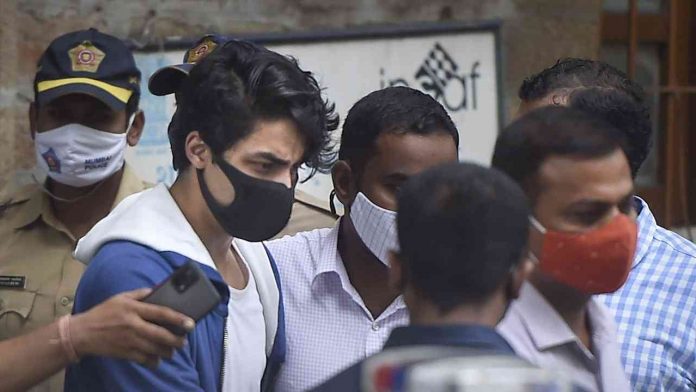
Download Now

Right to privacy vis-à-vis encryption and law enforcement

0
Data Privacy

This article has been written by Pratik Shandilya, pursuing the Diploma in Cyber Law, FinTech Regulations and Technology Contracts from LawSikho. The article has been edited by Prashant Baviskar (Associate, LawSikho) and Zigishu Singh (Associate, LawSikho).

Introduction

Encryption is the process that is used in digital gadgets which makes a file or any message unreadable except for the person who is in possession of the password or key to decrypt. Encryption is the best safeguard to protect information from interference, both when travelling through the internet and rest. (In our emails and devices) Encryption basically converts the message into a coded format and then the message is decoded when it is actually received by the person who is intended to receive such a message. In such a method, no one else can access the message.

Encryption protecting rights

Freedom of expression is a fundamental right. Encryption is a manifestation of the mechanism to protect opinion and belief. In the digital world, it is a precursor to the fulfilment of human rights, including the freedoms of expression, opinion, the press and the right to privacy.

According to the Inter-American Commission on Human Rights, the rights of freedom are not any concession or subsidies provided by the states but they are the fundamental rights to which every individual is entitled.

At the most basic level, encryption provides data confidentiality along with other functions such as: 

  1. Confidentiality – encodes and hides the message.
  2. Authentication – verifies the message’s origin.
  3. Integrity – Means there is no unauthorized manipulation of data.
  4. Non-repudiation – means the sender of the message cannot deny that he sent the message.

Many of our activities are covered under encryption such as: 

  1. ATMs –each time the user uses ATM, the data is protected by encryption.
  2. Online payments – users’ payment details used in online transactions are protected by encryption.
  3. Encrypted web traffic – many websites encrypt web usage by default. If a user is using a website with ‘https’ (the ‘s’ represents ‘secure’), the user’s data is encrypted.
  4. Messaging apps – WhatsApp have enabled end-to-end encryption. If cybercriminals breach WhatsApp, they won’t be able to decrypt your messages.
  5. Digital rights management systems – prevent the reproduction and unauthorized use of copyrighted content and protect software against reverse engineering.
  6. Data ‘at rest’ – responsible organizations always encrypt the data they store. 

However, no technology is 100% secure and even encryption safeguards are susceptible to hackings, although such occurrences are rare. To summarize, encryption to some extent protects our privacy rights. It prevents data breaches, however, it is also not 100% assuring, and is very much exposed to cyber criminals’ activities. 

Whether the law is sufficient to protect privacy rights?

The subject of encryption policy and protection of privacy has remained an unresolved issue, mainly because the government has to create a law that balances the privacy of individuals, the digital infrastructure security and rights of the government in demanding access to personal data. 

Till today, formulating a law to achieve the balance has only become harder. The Indian Government had introduced a National Encryption Policy in 2015, which was abandoned on the grounds that the policy was more than an Encryption policy. In February 2021, RBI issued Master Direction on Digital Payment Security Controls, requiring multi-factor authentication, encryption, digital certifications etc for encryption. However, it does not provide any specific parameter to protect privacy rights or personal data. Certain instances prompt suspicion on the effectiveness of the available laws or regulations, for example, VpnMentor, (Israel based company) released some financial information, Aadhar Card information and other personal details of the users of the BHIM app. In another instance, a mobile payment app information was leaked due to some unsecured mechanism in the associate partner entity. 

There has been a conflict of interest between the privacy rights of the individual and the government’s right to command access to the encrypted data for investigation purposes. The government wants to reserve the right to trace and prosecute individuals who spread wrong information or use digital platforms in such a manner as to cause fear, instigate or breach of peace, hate-rate, disharmony in the society by disturbing the law and order, national security issues etc. There have been incidents that show that the government had to trace the offenders using the encrypted platforms who caused disharmony in society. In 2019, the Indian Encryption Brief highlighted an incident where a mob committed lynching crimes on minorities which were instigated, preplanned on WhatsApp. Immediately thereafter Government India demanded WhatsApp to dilute its end-to-end encryption. Several other petitions before the Supreme Court requested direct social media platforms to keep the authentication process using PAN card or Adhaar Card to wipe out all the fake and cloned online profiles on platforms such as Facebook, Twitter, Instagram. In 2020, the Ad hoc Committee of Rajya Sabha recommended permitting breaking (E2E) End-To-End encryption in cases involving child sexual abuse material.

Another development towards formulating law is the Personal Data Protection (PDP) Bill, which was placed before the Lok Sabha in December 2019. The PDP Bill, if passed, will become the overarching legislation regulating Data Protection related aspects. The Act would also establish a Data Protection Authority (DPA). As per Section 24 (1) of the bill, any entity that stores the data of any individual must implement necessary measures such as integrity, methods to prevent de-identification, and Encryption of personal data.

However, the same draft also provides for a controversial Section 35 which provides for power to exempt any Government agency from the act. However, this bill received criticism from civil societies. Justice B.N. Srikrishna termed the Bill as “dangerous” and also added that this bill will turn India into an Orwellian State.

All these concerns were consolidated by the intermediary guidelines (2021) which state that in case any judicial order passed under Section 69 of the IT Act, the concerned intermediary (social media Platform) must be able to trace the first originator of the information. This will help investigation agencies to successfully complete the investigation.

As per the guidelines it is mandatory for the social media platforms to appoint a nodal officer who shall be available 24×7 to assist, coordinate with law enforcement agencies in India. It is also the observation made by a Software Freedom Law Center that Section 69 of the Information Technology Act under which the tracing orders are issued does not provide for enough measures.  The decryption request grounds under Section 69 as well as under Section 35 of the PDP bill are very broad.

In conclusion, the PDP Bill contemplates, on one hand, stringent provisions for data protection, including permission to private data fiduciaries to encrypt the data of the public and on the other hand makes provisions whereby Central Government exempt agencies from deviating from the data privacy measures. These guidelines additionally grant powers to Government authorities to order intermediaries i.e the social media platforms such as Facebook, WhatsApp, Twitter to make data accessible to investigative agencies.

Right to privacy vis-à-vis encryption and law enforcement

Privacy is a matter of Universal right and is well recognized internationally. Article 12 of the Universal Declaration of Human Rights (“UDHR”) states that there shall not be any arbitrary interference in the privacy rights of the individuals and that each individual is entitled to protect his/her privacy. Article 17 of the International Covenant on Civil and Political Rights (“ICCPR”) declares privacy as a human right. India is a signatory to both UDHR and ICCPR.

Domestically, the Supreme Court of India recognized privacy as a fundamental right within the ambit of Article 21 of the Constitution of India. In the Case of Justice K.S. Puttaswamy vs Union of India (2017), the Supreme Court took cognizance of data protection stating that it is an integral part of informational and communicational privacy which is itself a component of privacy.

Justice R.F. Nariman mentioned different facets of the rights to privacy in an Indian context and observed that Informational privacy does not deal with a person’s body but it deals with his mind and therefore it can be recognized that the individual may have control over the distribution of such personal information. Therefore, it would be an infringement if such personal information is leaked in an unauthorized manner. 

Encryption is nothing but a logical extension of the right to privacy which facilitates anonymity on the internet. Such anonymity is essential to protect whistleblowers or any individual who wishes to remain untraced. Right to privacy and encryption also reduce the fear factor in genuine web browser searchers (internet users). Encryption of confidential information is necessary for the profession of journalism for e: keeping the sources of information confidential.  

However, on the other hand, the Supreme Court has time and again repeated and reiterated that no fundamental right under Indian Constitution is absolute, and are subject to limitations only if such limitations are in consonance with the due process of the law. The court has recognized that restriction of a right must be in accordance with due procedure. This creates a balance between the Right of Privacy of an individual and the State’s right to interfere in the privacy rights and enforce decryption. 

In a petition challenging Part II of the Intermediary Liability Rules, 2021, it has been prayed that the right to encrypt must be declared as a subset of the right to privacy. However, the case is yet to be taken up for hearing.

Conclusion

In conclusion, we can safely confirm that although the right to privacy is a fundamental right, no fundamental rights are not absolute and subject to some limitations. These limitations are included only to create a deterrent effect and provide a safeguard against the phrase “absolute power corrupts absolutely”. It simply means that an unfettered fundamental right (unfettered power) to any individual can lead to chaos and lawlessness and victimization of multiple genuine people. Law is meant to guide and provide reasonable restrictions on individuals in respect of the scope of the fundamental rights which can be exercised by the individual.  

In my view, the government must not unnecessarily interfere and demand decryption at per whims and fancies but should claim such decryptions only in genuine and exceptional circumstances to facilitate investigation and to help uphold the rule and spirit of the law in the country.

References

  1. (Verónica Ferrari, 8 October 2021) What is encryption and why is it key to protect your rights? Let’s share some highlights on #GlobalEncryptionDay #MaketheSwitch | Association for Progressive Communications (apc.org)
  2. (Mary Atamaniuk, Nov 03, 2021), What Is Data Encryption and How to Use It for Digital Security available at https://clario.co/blog/what-is-encryption/
  3. (Mohanty) “The Encryption Debate in India.”
  4. (Master Direction on Digital Payment Security Controls,” February 18)  Reserve Bank of India, February 18, 2021, 
  5. (Harshit Rakheja,  January 3, 2021 )“Data Of 10 Cr Digital Payments Transactions Leaked After Attack on Juspay’s Server,” 
  6. Mohanty, “The Encryption Debate in India.”
  7. Report of the Adhoc Committee of the Rajya Sabha to Study the Alarming Issue of Pornography on Social Media and Its Effect on Children and Society as a Whole,” Rajya Sabha, tabled February 3, 2020.
  8. Megha Mandavia, “Personal Data Protection Bill can turn India into ‘Orwellian State’: Justice BN Srikrishna,” Economic Times, December 12, 2019, https://economictimes.indiatimes.com/news/economy/policy/personal-data-protection-bill-can-turn-india-intoorwellian-state-justice-bn-srikrishna/articleshow/72483355.cms 
  9. http://164.100.47.4/BillsTexts/LSBillTexts/Asintroduced/373_2019_LS_Eng.pdf.
  10. Justice K.S. Puttaswamy v. Union of India, (2017) 10 SCC 1.
  11. Maneka Gandhi vs Union of India, 1978 AIR SC, 597
  12. Praveen A. vs. Union of India, WP(C) 9647 of 2021.

Students of Lawsikho courses regularly produce writing assignments and work on practical exercises as a part of their coursework and develop themselves in real-life practical skills.

LawSikho has created a telegram group for exchanging legal knowledge, referrals, and various opportunities. You can click on this link and join:

https://t.me/joinchat/L9vr7LmS9pJjYTQ9

Follow us on Instagram and subscribe to our YouTube channel for more amazing legal content.

Download Now
logo
FREE & ONLINE 3-Day Bootcamp (LIVE only) on

How Can Experienced Professionals Become Independent Directors

calender
28th, 29th Mar, 2026, 2 - 5pm (IST) &
30th Mar, 2026, 7 - 10pm (IST).
Bootcamp starting in
Days
HRS
MIN
SEC
Abhyuday AgarwalCOO & CO-Founder, LawSikho

Register now

Abhyuday AgarwalCOO & CO-Founder, LawSikho