So today is the day! We are finally announcing the winners of our Blog Writing Competition for 5th week of September 2021 (From 27th September 2021 to 3rd October 2021).
We’d like to say a big thanks to everyone for participating! It has been a great pleasure receiving your articles on a different legal topic, they were all amazing!
And now we’d like to congratulate our top 5 contestants, who become the undoubted winners. They will receive Prize money of Rs 2000, LawSikho store credits worth Rs. 1000 and a Certificate of Merit from team LawSikho.
Click here to see all of the contest entries.Our panel of judges, which include the iPleaders Blog Team, chose the winning entry based on how well it exemplified the entry requirements.
Certificates will be sent to the email address given by the contestant while submitting the article. The contestants have to claim their prize money by sending their account details as a reply to the mail in which they received their certificate within 1 month (30 days) of the date of declaration of results and not afterwards.
For any other queries feel free to contact Vanshika Kapoor (Senior Managing Editor, iPleaders) at [email protected].
LawSikho credits can be claimed within twelve months from the date of declaration of the results (after which, credits will expire).
Congratulations to all the participants!
Regards,
Team LawSikho
Students of Lawsikho courses regularly produce writing assignments and work on practical exercises as a part of their coursework and develop themselves in real-life practical skills.
LawSikho has created a telegram group for exchanging legal knowledge, referrals, and various opportunities. You can click on this link and join:
As humans started to develop and found several techniques to make their lives simpler, one such technique was the invention of machines that performed the work with their involvement. What I mean by involvement here is that the machines which were invented need human intervention in order to obtain the desired result. Computers are one among such inventions which allowed us to witness a huge digital revolution during the last stage of the 20th century and the initial stage of the 21st century.
Due to the drastic development of technology, we were able to achieve many goals, but at the same time there were some disadvantages too. One among such is cyber-crime, initially, it was very serious in nature as the crime was committed from a remote area. Hence there was a need to regulate all these activities as it would be dangerous to allow these human acts to be committed without regulation. Both the cyber-crimes and the technology evolution need to be regulated and hence the Information Technology Act, 2000 came into force.
As a result of this enactment, many of the conventional laws such as the Indian Penal Code, Indian Evidence Act, Bankers Book Act, RBI Act, etc were amended to provide legal recognition to Electronic records, documents, evidence with respect to the Indian Penal Code, Evidence Act. In order to facilitate online transactions, many third-party platforms like G-pay, etc got their recognition at large as it made both customer and banking sector work easy. There was a need for change in the banking Acts and Regulations to provide legal recognition to such online transactions.
The rules stipulated in the IT Act are also very essential as without rules it would be difficult to implement such statutes in the real world.
Hence the Information Technology (Procedure and Safeguards for Blocking for Access of Information by Public) Rules, 2009 was enacted for the purpose of laying down the rules regarding blocking of information to the public under information of technology act as some of the confidential information cannot be disclosed.
IT (Blocking Rules), 2009 is a central government legislation that lays down the procedure and safeguarding measures for blocking the access of information by the public and it is enacted under the power conferred by Section 87(2)(z) of IT ACT,2000 R/W Section 69A of the IT ACT,2000.
Information Technology (Blocking Rules), 2009
It is a short enactment consisting of 16 Rules. Let us now understand the rules chronologically. By default, we all know the first and second be it rules or sections it would be short title and definition clauses respectively.
Rule 1 – we can find the title and its commencement details.
Rule 2 – we can find nine important terms and their definition under this statute where two of the terms ie, “Organization” and “Request” requires special attention as here public while seeking information which are the organization to which they shall submit their request and which is the mode of request is considered to be requested to be blocked and not to be disclosed.
Rule 3 – This provides rules regarding the designated officer – he shall be appointed by the central government of India and he shall be qualified when he is not below the rank of joint secretary. He shall direct to block any information requested by the public through computer resources having national interest and which are confidential in nature and which come under the purview of Section 69A(2) of the Information Technology Act, 2000.
Rule 4 – It provides the manner in which the Nodal officer of the organization is selected as per this Rules and how he or she is to carry out the functions as stated in these Rules – one of its officers shall be selected as the Nodal Officer and same shall be intimated to the Central government of India, Information Technology department which comes under the Ministry of Communication and Information Technology.
Rule 5 – This is related to the direction issued by the Designated Officer on the receipt by the nodal officer and court having jurisdiction, any competent government agency to block the entire or part of the information requested as provided under section 69A(1) of Information Technology Act,2000.
Rule 6 – This is related to transferring the request from one organization to another. This rule consists of five sub-clauses. Let us now interpret each sub-clause.
Sub Rule 1: If a person makes any complaint regarding the blocking of the information requested by the public (person), such person can submit his complaint to the concerned nodal officer. Such a complaint shall not be the receipt of refusal done by the same nodal officer which means the nodal officer before whom he or she is placing the complaint shall not be the same nodal officer who has refused his or her request for such information and has directed for blocking of information. And such a complaint made before the concerned nodal officer which is not having prior refusal receipt shall be approved by the Chief Secretary (C.S) of the respective state or union territory to the designated officer. In the absence of C.S, it may be asserted by the Adviser Administrative of that particular Union Territory. Sub Rule 2: The complaint shall be examined by the organization, regarding whether the complaint is complying with the provisions of the sub-clause 1 of Rule 6 and whether it is complying with the reasons given under section 69A of IT Act, 2000 and then it shall be sent to the designated officer through its nodal officer as in the prescribed format.
Sub Rule 3: Any complaint from the public directly to the designated officer shall not be admitted.
Sub Rule 4: The complaint shall be in written form and it shall not be incomplete and shall consist of the respective organization as the letterhead or it can also be in electronic format along with the electronic signature of the concerned nodal officer along with the complainant(person making the complaint)signature. It shall be delivered to the designated officer within three days on receiving such hardcopy or Email.
Sub Rule 5: The designated officer shall assign a number along with the date and time of the complaint receipt and shall acknowledge the complaint to the nodal officer within twenty-four days of receiving such complaint.
Rule 7: The complaint shall be examined by the committee which includes designated officer, as chairperson along with his team consisting of representatives not below the rank of joint secretary in Ministry of Law and Justice, Home Affairs, Information and Broadcasting and the Indian Computer Emergency Response Team appointed under section 70B(1) of IT Act, 2000.
Rule 8: It deals with the examination of requests.
Sub Rule 1: On receiving the request the designated officer shall make exclusive research as to identify the person who has hosted such information either wholly or partly along with the computer resource on which it is hosted either wholly or partly. On identifying such a person he shall issue notice either in physical form or electronically as prescribed and within forty-eight hours the person to whom the notice is issued shall appear in front of the committee (formed under Rule 7) at the specific date and date as mentioned in the notice.
Sub Rule 2: If such person to whom notice has served upon,if fails to appear on the specific date and time as given in the notice, he or she shall be given specific recommendation in writing with respect to the guidelines given by the nodal officer and the information available with the committee.
Sub Rule 3: If such person to whom notice is served is identified to be a foreign entity by the designated officer, then he or she shall be served with notice along with the specific date and time mentioned for his appearance before the committee. On failure to appear, he shall be given special recommendations in writing as per the request received upon nodal officer based on the information available to the committee.
Sub Rule 4: The committee (referring to Rule 7) will analyze the request along with the printed sample information whether the information sought comes under the purview of section 69A(1) of IT Act, 2000 if it complies he shall provide specific recommendations in writing to the request received from the nodal officer
Sub Rule 5: The designated officer shall send the committee’s report in a request of blocking the information by the nodal officer to the Secretary, Department of Information and Technology, Government of India.
Sub Rule 6: The designated officer on getting the approval of the Secretary for blocking the information shall direct the respective government agency or intermediary to block such information from the public access and if not approved by the Secretary the same shall be intimated to the nodal officer.
Rule 9: It deals with the blocking information in emergency cases.
Sub Rule 1: In any emergency situation the designated officer, complying with Rule 7 and 8 without any delay, will analyze the request along with the printed sample and shall see whether the request is complying with section 69A of IT Act, 2000 if it is expeditious in nature to block such information he shall give specific recommendations in writing to the Secretary, Information Technology Department, Government of India.
Sub Rule 2: On receiving such emergency specific recommendation he shall examine it without any delay and if he is satisfied that it is expedient and justifiable for blocking the information from public access and shall record his reasons and as interim measure issue notice to such identified person who has hosted such information on the computer resources without being heard.
Sub Rule 3: The designated officer without delaying further than forty eight hours issues direction under sub-rule 2 and places the request before the committee (referred under Rule 7) to consider the request and to provide its recommendation.
Sub Rule 4: On recommendation of the committee, the secretary shall pass the final order to block the information from the public access and if not approved by the secretary in his final order the interim direction given under sub-rule 2 shall be reversed and an order for unblocking of information and give access for the public.
Rule 10: Any order by the competent court for blocking of information either partly or wholly on receiving the certified copy of the order the designated officer shall submit the same to the secretary, Department of Information Technology and take action as specified under the Court’s order.
Rule 11: On the request received by the nodal officer, the request shall be disposed within seven working days from the date of receiving such request.
Rule 12: If the intermediary does not comply with the direction issued to him as per Rule 9, then action would be taken against him by the designated officer with the assent of the secretary of the Information Technology Department and appropriate action will be taken n as per specified under section 69A(3) of the IT Act,2000.
Rule 13
Sub Rule 1:
Intermediary to appoint the appropriate person to receive and handle the directions for blocking the public access to the information which is in electronic format such as information which is generated, hosted on any computer resources, transmitted, received, stored as per provided under these rules.
Sub Rule 2: He (who is appointed by the intermediary) shall acknowledge receipt of the direction to the designated officer within two hours of receiving such direction through the acknowledgment letter or E-mail along with the Electronic Signature.
Rule 14: A Review committee Meeting shall meet once in two months to assess the records and to find whether all the directions given are complying with the section 69A of the Information Technology Act, 2000 and if the directions issued are not complying with section 69A then they will reverse the orders and direct for unblocking of the information which was requested for the public access.
Rule 15: The designated officer to maintain the database of the records of the cases of blocking of information by public access and the action taken by him in each case respectively. He shall maintain both in electronic format and in the register.
Rule 16: All the information relating to the request and complaint received and the actions are taken in each of the cases respectively shall be confidential. It shall be strictly abided by the concerned authority.
Section 69A of Information Technology Act, 2000
It deals with the powers to provide directions for blocking information by public access through any computer resources.
Sub Section 1: It empowers the Central Government of India and any officer appointed by it in this behalf feel necessary and if any expeditious decisions to be taken as if it falls under the following circumstances:
In the interest of the Integrity and Sovereignty of India
Defence of India
Security of the State
Friendly relationship with Foreign States
Public orders
To prevent incitement to the commission of any cognizable offences relating with above circumstances.
Sub Section 2: The procedure and safeguards with respect to blocking of information by public access shall be as may be prescribed.
Sub Section 3: The intermediary who fails to comply with the direction given under sub section 1 will be punished with imprisonment which may be extended upto seven years along with fine.
Conclusion
I would like to conclude by stating a few lines. Referring to the summary of Information Technology (Blocking) Rules and Section 69A of the Information Technology Act, 2000, I found that this legislation to be highly important as it is important to implement and regulate the blocking of information from public access as the information which is confidential and having national interest cannot be disclosed to the public. Review committee under Rule 14 is extremely important as to curtail the abuse of the power of the concerned authorities under this act. Section 69A of IT Act, 2000 empowers central government to provide its directions in the same way and thus any such information which is blocked by public access cannot be requested through RTI as all the circumstances under section 69A(1) of IT ACT, 2000 are also exempted from disclosure of information under section 8 of Right To Information Act.
Over the last few decades, drug consumption has become one of the biggest problems faced by millions of youngsters and adults. While there are hundreds of reasons why one would use drugs, we can’t ignore the fact that millions of youth are wiped out from society because of drug trafficking and drug peddling. Currently in India, we have two examples before us one is the famous case of Bollywood actor Sushant Singh Rajput, in which his girlfriend and actress Rhea Chakraborthy was alleged to have drugged him and the second one is the case of Shah Rukh Khan’s son Aryan Khan, wherein he is accused of possessing, consuming, and distributing drugs. So in the making of all these types of events in India, here is an attempt through this article to introduce you to all the laws in India related to drugs and poisons. I hope it will help you understand the legal and illegal sides of using drugs.
So if you have ever been sick or ill then you must be familiar with one kind of drug that is medicines, medicines are the legal form of drugs. So when a doctor prescribes any medicines you can consume them legally. It is essential for the health of human beings. Another category of drugs is cigarettes and alcohol, even though they use and consumption of these are not promoted or encouraged, once you attain legal age you can consume them. So when one hears the words ‘drug abuse’ or ‘drug addict’ it means the usage of illegal or abusive drugs.
Drugs refer to “a habit-forming substance or chemical substance, which directly affects brain, consciousness, nervous system and the whole body function and has the potential of misuse. The frequent use of drugs is dangerous to the human body and at worst it can cause death. Most important is that it is considered anti-social and against the laws of India.
Some types of illicit and illegitimate drugs are:
Ganja,
Heroine,
Cocaine,
LSD,
Morphin,
Cannabis,
Opium,
Marijuana,
Crystal meth.
The cause of drug abuse may differ. Some of them are economic, social, physiological causes and mainly among them are peer pressure, especially in the case of youngsters who are influenced to use them because of the bad elements in the society in which they are living.
As per the WHO definition “A drug is some element or result or goods created that is destined to be used to alter or investigate physiological systems or cure unhealthy states for the benefit of the receiver.”
“All medicines for internal or external use of human beings or animals and all substances intended to be used for or in the diagnosis, treatment, mitigation or prevention of any disease or disorder in human beings or animals, including preparations applied on the human body for the purpose of repelling insects like mosquitoes” The Drugs and Cosmetics Act of 1940.
A poison is a substance that causes harm to your body. It can be consumed, inhaled, infused, or absorbed via the skin. Poison is defined by the World Health Organization (WHO) as “a chemical that when brought into the living human being or brought into touch with any part, will produce ill effect or death by affecting the entire system or the action or two together”.
Indian laws which are related to drugs and poisons
In 1958, it was modified, and in 1960, it was quashed. It regulates the granting of licences and the selling of poisons at both the wholesale and retail levels. It also manages import, sale, and possession of any specific poisons and extends to the whole of India.
The Drugs And Cosmetic Act (1940)
This Act was amended in 1964, and very recently in 2008. It deals with “the import, manufacture, distribution, and sale of all kinds of drugs (allopathic, ayurvedic, unani, siddha, etc.) and cosmetics”. As per the Act, “every patented or proprietary medicinal preparation should display on the label of the container, either the exact formula or a list of the ingredients”. The modified Act has increased the severity of penalties for a variety of offences, including the selling of counterfeit medications, drug and cosmetic adulteration, hazardous pollution, and so on.
Provisions of the Act
Import of Drugs.
Manufacturing of Drugs.
Sale of Drugs.
Labelling and Packaging – all the general and specific labelling and packaging specified to all classes of Drugs and Cosmetics should be as per provisions made under the act.
Classes of Drugs prohibited to import:
Misbranded Drugs.
Drugs of Substandard Quality.
Dugs claiming to cure diseases specified in Schedule – J.
Adulterated Drugs.
Spurious Drugs.
Drugs that are forbidden in their originating country of manufacturing, sale, or distribution, except for the purposes of testing, evaluation, and analysis.
OFFENCES
PENALTIES
Import of spurious or adulterated drug or drug during which involves risk to human beings or animals or drug not having therapeutic values.
Three years imprisonment and 5000 fine on just conviction5 years imprisonment or 1000 fine or both for a subsequent conviction
Contravention of provision
6 months imprisonment or 500 rupees fine or both for the first conviction1-year imprisonment or 1000 rupees fine for a subsequent offence.
The Drugs and Cosmetics Rules (1945)
This is supplementary legislation to the Drugs and Cosmetics Act, 1940 and is concerned mainly with the standard quality of drugs, apart from exercising control over the “manufacture, sale, and distribution, of Drugs and Cosmetics”. In order to assist the progress of the statement of results from examination or experiment of drug samples to assess their characteristics, the Central Drugs Laboratory was established in 1962. Individual states have started Drugs Control Laboratories. Substandard or fraudulent drugs are punishable with harsh penalties if they are manufactured, stocked, or sold. The requirements for conducting clinical studies for newer medicines have been tightened.
According to the Drugs and Cosmetics Rules, drugs are divided into the following Schedules:
Schedule D– Non-medicinal substances, such as condensed or powdered milk, oats, spices and sauces, and so on.
Schedule E1—In the Ayurvedic (including Siddha) and Unani systems of medicine, a list of toxic drugs is maintained.
Schedule G—Chemotherapeutic agents for cancer, antihis-taminics, and hypoglycemic agents.
Schedule H and L—Injectables, antibiotics, antibacterials and other prescription drugs.
Schedule J— AIDS, cancer, cataract, congenital malformations, deafness, blindness, hydrocoele, hernia, piles, leukoderma, stammering, paralysis, and other diseases and ailments that a drug may not purport to prevent or cure or make claims to prevent or cure, such as AIDS, cancer, cataract, congenital malformations, deafness, blindness, hydrocoele, hernia, piles, leukoderma,
Schedule O— Disinfectant fluids must adhere to certain guidelines.
Schedule S—Standards to be followed with regard to cosmetics and allied products.
Schedule X drugs— Amphetamines and other stimulants, as well as barbiturates and other sedatives.
The Pharmacy Act (1948)
This act provides for the regulation of the pharmacy profession as well as the establishment of the Pharmacy Council of India, which oversees pharmacy education across the country.
Each state bears its pharmacy councils for the enrolment of pharmacists. The purpose of this act is to ensure that each state has its State Pharmacy Councils for the registration of pharmacists and to admit only registered pharmacists to compound, make or dispense from some medicine on the prescription of a registered person trained in medical science.
The Drugs Control Act (1950)
This Act regulates the supply and disposal of drugs, and in addition to guiding the maker or business owner to fix the maximum price for each drug.
The Drugs and Magic Remedies Act (1954)
The Drugs Magic Remedies (Objectionable Advertisements) Act of 1954 is a piece of legislation enacted in 1954. It went into effect on April 1, 1955.
This Act controls advertisements of Drugs in India. It outlaws the advertising of drugs and remedies that purport to have magical characteristics and makes it a criminal offence to do so.
The Narcotics Drugs and Psychotropic Substance Act (1985)
The Narcotics Drugs and Psychotropic Substances (NDPS) Act was enacted “to consolidate and reform legislation pertaining to narcotic drugs, as well as to provide strict measures for the control and regulation of Narcotic Drugs and Psychotropic Substances activities.”
The legislation makes it illegal “to produce, manufacture, cultivate, own, sell, transfer, purchase, or consume any Narcotic Drugs and Psychotropic Substances”. The term “narcotic” in the legal sense is quite different from the one used in the medical context which denotes a sleep-inducing agent. Legally, a narcotic drug could be an opiate (a true narcotic), cannabis (a non -narcotic), or cocaine (the very antithesis of a narcotic, since it is a stimulant). Mind-altering drugs such as LSD, phencyclidine, amphetamines, barbiturates, methaqualone, benzodiazepines, mescaline, psilocybin, and designer compounds are referred to as “psychotropic substances” (MDMA, DMT, etc.).
Initially, there were no Special Courts however, by an amendment in 1989, now the Government can establish Special Courts. and there will be one single Judge who has powers to take cognizance of all the offences under the NDPS Act.
There are certain procedural safeguards under NDPS Act, like Panchnama, Seizure report, Seal report, Proper arrest report….etc. One of the key features of the NDPS Act is, not only is the consumption of drugs an offence, but possession of drugs is an offence, as well. So that is to say you have kept illegal drugs in your house, but you don’t consume them, you will still be punished under sections of the NDPS Act. The consumption of Drugs is punishable under “Section 27 of NDPS Act”.
One more important thing to understand in the NDPS Act is, your punishment will depend on the quantity of drugs involved in the case. The NDPS Act categorises drug quantity into 2 types. One is a Small Quantity and the other one is Commercial Quantity. If you have Small Quantity drugs your punishment will be of a lesser degree and if you have Commercial Quantity your punishment will be higher. To know what is Small Quantity and Commercial Quantity, NDPS Act itself provides details of the Quantity of each drug. They are given below as a Table.
DRUGS
SMALL QUANTITY
PUNISHMENT
COMMERCIALQUANTITY
PUNISHMENT
INTERMEDIATE(in between smaller and commercial quantity)
Heroin
5g
Maximum of 1year rigorous imprisonment, a fine upto 10,000 or both.
250g
Rigorous imprisonment from 10 years (min) to 20 years (max) and a fine from 1 lakh to 2 lakh
A ten-year prison sentence and a fine of up to one lakh rupees are possible penalties.
Opium
25g
2.5g
Morphine
5g
250g
Ganja(cannabis)
1kg
20kg
Charas (cannabis and resin)
100g
1kg
Coca leaf
100g
2kg
Cocaine
2g
100g
AmphetAmine
2g
50g
LSD
2mg
100g
Your punishment will range anywhere from 6 months to rigorous imprisonment of 20 years. Another feature of the NDPS Act is Section 31A which prescribes the death penalty, for repeated offences or certain rare cases.
There are also some special provisions for addicted persons prescribed under the NDPS Act. As stated above, the consumption of drugs is an offence under Section 27 of the NDPS Act. However, if the accused person wishes to undergo a de-addiction programme and expresses his intent “to undergo some de-addiction programme then he will be immune. Section 64A of NDPS Act provides “immunity from prosecution to addicts volunteering for treatment.
Narcotics Control Bureau
Narcotics Control Bureau was established in 1986 as per the NDPS Act, it is the apex body that regulates drug trafficking in India. The headquarters of NCB is at New Delhi, and the zonal office is in Mumbai, Kolkata, Chennai and Varanasi.
Other legal bodies which govern drug abuse are:
Narcotics Control Division.
Central Bureau of Narcotics.
Narcotic Control Bureau.
Directorate of Revenue Intelligence.
Central Bureau of Investigation.
Customs Commission.
Border Security Force.
Police.
Drugs Price Control Order (DCPO)
The Government of India issued the Drugs Price Control Order, 1995, to regulate drug prices under Section 3 of the Essential Commodities Act, 1955. The order includes, among other things, a list of price-controlled pharmaceuticals, procedures for fixing drug prices, methods of implementing prices set by the government, penalties for enforcing DCPO provisions, and authorities conferred in NPPA. The Drugs Price Control Order (DCPO) 2013 was notified later.
Indian Penal Code (IPC), 1860
Section 176: Failure to provide notice or information to a public servant by a person who is legally obligated to do so. Doctors are required to report all cases of homicidal poisoning to the police; if they do not, they will be prosecuted.
Section 193: False evidence is punishable. False information about a poisoning instance is penalised by law.
Section 201: It is a capital offence to cause the deletion of evidence of an offence or to provide false information to a screen offender.
Section 202: Intentional failure to report an offence by a person who is obligated to do so. Intentional concealment of facts concerning a poisoning case treated by him is punishable.
Section 272: Adulteration of food or drink intended for sale.
Section 273: Sale of noxious food or drink.
Section 274: Adulteration of drugs.
Section 275: Sale of adulterated drugs.
Section 276: Sale of drug as a different drug or preparation.
Section 284: Negligent conduct with respect to poisonous substances.
Section 299: Culpable homicide that was caused through the consumption of poisonous substances.
Section 300: Murder caused by using poisonous substances.
Section 302: Punishment for murder.
Section 306: Abetment of suicide.
Section 307: Attempt to murder.
Section 309: Attempt to commit suicide.
Section 304 A: Causing death by negligence.
Section 324: Voluntarily causing hurt by dangerous weapons or means.
Section 326: Voluntarily bring about severe hurt by dangerous weapons or other resources.
Section 326 A: Causing grievous hurt by the use of acid.
Section 326 B: Throwing or attempting to throw acid.
Section 328: Causing harm to others using poison, etc., with the aim to commit an offence.
The Criminal Procedure Code (CrPC), 1973
Section 39: Public to give information of certain offences. Everyone who is aware of the commission or intention to commit an offence shall inform the nearest police station or nearest magistrate.
Section 40: Duty of person in law enforcement working in connection with matters or business to be taken care of in a village to form a certain report.
Section 175: Power to summon persons- police officers in charge of the police station or other police officers have the power to summon the person who has committed the offence.
The Indian Evidence Act (IEA), 1872
The Indian Evidence Act (IEA), Section 32, Clause 1, “allows a doctor to record a dying declaration when the patient’s death is imminent and the arrival of the magistrate is delayed.”
Supreme Court guidelines to prevent acid attacks
Over the counter, the sale of acid is completely banned except that the sellers keep up a register to record the sale of acid that will hold the details of the individual to whom acid is sold and the quantity of acid sold. The record/register is going to register the address of the person to whom it was sold.
The seller or the pharmacist can only give the acid to the buyer if he/she shows any ID card issued by the government which includes the correct address of that person. And he /she should also mention the proper reason for purchasing the acid.
The seller must inform about all stocks of acid before the concerned magistrate within 15 days to
Acid shall not be sold to people who have not attained the legal age.
Fine may be imposed on sellers who do not declare the acid stocked before the concerned sub-divisional magistrate. The fine is upto 50,000/-.
The concerned sub-divisional magistrate may impose a fine upto 50,000/- on any person who commits a breach of any of the directions mentioned above.
The following guidelines should be followed by educational institutions, research laboratories, hospitals, government departments, and departments of public sector organisations that are required to preserve and store acid:
They should maintain and produce a register that keeps the information about acid stock before the concerned Magistrate.
A person will be tasked with keeping the acid and keeping it safe in their area.
The acid will be stored under the supervision of this person, and students or staff leaving the laboratories/storage space where the acid is used will be subjected to mandatory inspection.
Conclusion
In India, we have a situation of illicit and illegal use of drugs. We have deaddiction programs, drug peddling and trafficking issues as well. The circumstances we are living in are becoming more dangerous day by day. Metropolitan cities have become the drug hubs of the Nation. Instead of asking why people are getting addicted or why India is becoming a drug hub we all should ask ourselves how we should stop this. We have miscellaneous acts and laws to control the drug menace. It is valuable for not only doctors and pharmacists but each and every citizen to recognize the drugs prescribed by the doctors. Its awareness can help us refrain or stay away from negligence due to our ignorance of these rules and in addition to specifying prudent medico-legal viewpoints that have connections with drugs and poisons. We all must follow the rules and regulations provided to us by laws and statutes. As we all know the proverb “Prevention is Better than Cure”, so let’s prevent the abuse of drugs and poisons before it erodes us completely.
Students of Lawsikho courses regularly produce writing assignments and work on practical exercises as a part of their coursework and develop themselves in real-life practical skills.
LawSikho has created a telegram group for exchanging legal knowledge, referrals, and various opportunities. You can click on this link and join:
This article has been written by Oishika Banerji of Amity Law School, Kolkata. This article provides a detailed analysis of the UGC (Prevention, Prohibition, and Redressal of Sexual Harassment of women employees and students in Higher Education Institutions) Regulation, 2015.
Table of Contents
Introduction
The University Grants Commission (Prevention, Prohibition, and Redressal of Sexual Harassment of Women Employees and Students in Higher Educational Institutions) Regulations, 2015 was issued by the Ministry of Human Resource Development (University Grant Commission) on May 2, 2016. In exercise of the powers provided by clause (g) of sub-section (1) of Section 26 and sub-section (1) of Section 20 of the University Grants Commission Act, 1956 (3 of 1956), the Regulation of 2015 was established, which shall apply to all higher educational institutions in India. Put simply, the Regulation outlines higher educational institutions’ duties in terms of preventing sexual harassment in the workplace. As the UGC Regulations are statutory in character, they apply to all universities and institutions across the nation. The institutions can use a variety of measures to ensure that students are aware of the redress mechanism as well as the appropriate people to contact and report problems. Reporting occurrences of sexual harassment can be done in a variety of ways such as posting notices on bulletin boards, establishing complaint boxes in easily accessible areas across the campus, posting anti-sexual harassment rules on the college website, and emailing students and workers. This article provides an overview of this Regulation and the possible future it holds in a nation like India where sexual harassment has become common parlance.
The structure of the regulation of 2015
The UGC (Prevention, Prohibition and Redressal of Sexual Harassment of women employees and students in Higher Education Institutions) Regulation, 2015 is a statute spread over twelve provisions. Regulation 2 (b) of the aforementioned statute clarifies that the term ‘Act’ with respect to the 2015 Regulation would mean the Sexual Harassment of Women at Workplace (Prevention, Prohibition and Redressal) Act, 2013. Therefore, some of the definitions provided under Regulation 2 of the 2015 Regulation stand similar to the Act of 2013. The 2015 Regulation introduces a list of new terms with respect to its purpose which are:
‘Campus’ (Regulation 2(c)): Campus signifies the location or the land where the higher educational institution is located.
‘Covered individuals’ (Regulation 2(e)): The term ‘covered individuals’ has been defined exhaustively under Regulation 2(e) of the 2015 Regulation. ‘Covered individuals’ are all those individuals who are involved in a ‘protected activity’ as provided under Regulation 2(j).
‘Higher Educational Institute’ ( Regulation 2(h)): Higher educational institute signifies a university under Section 3 of the University Grants Commission Act, 1956.
‘Protected activity’ (Regulation 2(j)): Regulation 2(j) of the 2015 Regulation defines the term ‘protected activity’ inclusively, thereby leaving scope for a wide interpretation of the same. A social term by nature, the protected activity includes participating in a sexual harassment proceeding, working with an internal inquiry into suspected sexual harassment practices, or acting as a witness in an investigation by an outside agency or in litigation.
‘Student’ (Regulation 2(l)): A person duly admitted and enrolled in a programme in a higher educational institute is referred to as a student.
‘Third party harassment’ (Regulation 2(m)): ‘Third-party harassment is another new concept introduced by the 2015 Regulation under Regulation 2(m). The term signifies sexual harassment as a result of an act by a visitor to a higher educational institute. It does not include an employee or a student of the institute. Thus the concept of ‘third party harassment’ refers to the harassment by an outsider.
‘Victimisation’ ( Regulation 2(n)): ‘Victimisation’ is also a new term introduced by the Regulation of 2015 under Regulation 2(m). Any kind of unfavorable treatment meted out to a person with an implicit or explicit mention to obtain sexual favor is known as victimization.
Responsibilities of Higher Educational Institutes
Regulation 3 of the UGC (Prevention, Prohibition and Redressal of Sexual Harassment of women employees and students in Higher Education Institutions) Regulation, 2015 lays down an elaborate list of responsibilities for the higher educational institutions to abide by.
The responsibilities that are provided specifically to the Internal Complaints Committee (ICC) have been embedded in Regulation 5 of the 2015 Regulation.
Regulation 6 read with Regulation 8 of the 2015 Regulation states that it is the obligation of the higher education institutions to provide all necessary facilities to the ICC in order to smoothen the process of investigation that the latter will be carried out expeditiously.
Provisions against false or malicious complaints must be made and publicized within all Higher Education Institutions under Regulation 7 of the UGC (Prevention, Prohibition, and Redressal of Sexual Harassment of Women Employees and Students in Higher Educational Institutions) Regulations, 2015, to ensure that the provisions for the protection of employees and students from sexual harassment are not misused.
Regulation 10 of the 2015 Regulation lists down the deterrents to be imposed on anyone found guilty of sexual harassment.
Regulation 12 of the 2015 Regulation that deals with consequences of non-compliance of the provisions laid down by the Regulation of 2015, holds immense importance as it will be ensuring check and balance on the higher educational institutions’ actions towards curbing sexual harassment of women employees and students in their respective territories.
Objective of the 2015 Regulation
If the internal aid of interpretation is applied in order to understand the UGC (Prevention, Prohibition and Redressal of Sexual Harassment of Women Employees and Students in Higher Education Institutions) Regulation, 2015, the long title that it holds describes the general purpose of the statute. In Re Kerala Education bill (1958), the Supreme Court of India had observed that the policy and purpose of any statute may be deduced from the long title and the preamble. Similarly, in Manohar Lal v State of Punjab (1960), the Apex Court had viewed that the long title of the Act or statute, in general, was to be relied on as a guide to decide the scope of the same. By drawing reference from these two cases, it is clear that the objective or purpose of the UGC (Prevention, Prohibition and Redressal of Sexual Harassment of women employees and students in Higher Education Institutions) Regulation, 2015 is to prevent, prohibit and redress any kind of sexual harassment that takes place in higher educational institutions on women employees or students.
Road to positive implementation
The UGC (Prevention, Prohibition, and Redress of Sexual Harassment of Women Workers and Students in Higher Education Institutions) Regulation, 2015 is a federal law that prohibits sexual harassment of women employees and students in higher education institutions. It is interesting to note that Regulation 2 (l) presents a gender-neutral vision while defining the term ‘student’. The provision clarifies that ‘student’ signifies an individual enrolled in a particular program in a higher educational institution thereby avoiding sensitizing a specific gender. It further presents a helpful and complete paradigm for addressing the main problems of the women student population when read in conjunction with the Saksham Committee Report on Measures for Ensuring the Safety of Women and Programs for Gender Sensitization on Campuses. The major changes that the Regulation intended to bring about have been laid down hereunder:
The Regulation is a significant step forward in making higher education more accessible to women in the country, as well as establishing positive mechanisms such as Internal Complaints Committees with elected student representatives in all colleges, to address the issue of sexual harassment and gender-based violence.
It places a legal obligation on all higher educational institutions to create a campus free of discrimination, harassment, retaliation, or sexual assault at all levels.
It also includes a long list of supporting measures that acknowledge students’ increased vulnerability as a result of their ‘region, class, caste, sexual orientation, minority identification, and being differently-abled.’
At the same time, the regulations state unequivocally that ‘concern for the safety of women students cannot be used to impose discriminatory rules for women in hostels’ and that ‘campus safety policies should not result in securitization, such as over-monitoring, policing, or restricting the freedom of movement, particularly for women employees and students.’
It also requires, among other things, giving priority to the construction of women’s hostels, ensuring reliable public transportation, gender-sensitive health care infrastructure and counselling, adequate lighting on campuses, and sensitization programs with faculty, administrative, and security personnel.
While several colleges have adopted Regulation 2015 in its length and breadth, even today, the representation of women from socioeconomic backgrounds is marked by oppression based on caste, class, religion, geography, and other factors that remain uneven. Many women only pursue higher education after overcoming pressures to marry or conform to discriminatory standards placed on them by their own families and communities. Therefore, the University Grants Commission must take up the duty of implementing the Regulation of 2015 to its full potential thereby providing a time-bound plan for constructing all required infrastructures demanded by the Regulation.
Conclusion
With all of the above provisions in place under the law, the number of complaints filed against colleges and educational institutions for sexual harassment is alarming, indicating that college and higher educational institution administrators are unaware of the seriousness of this misconduct and its acrimonious effects on female employees and students. It is depressing to see that our government and regulatory authorities lack a method to monitor and assess whether institutions are following the law, and as a result, students must resort to demonstrations in order to get their fundamental rights and protection. It is our job as citizens of this country to support these regulations and policies and raise awareness for the greater benefit.
This article is authored by Akash Krishnan, a law student from ICFAI Law School, Hyderabad. It discusses in detail the journey of the Indian judiciary w.r.t the ban on the sale and use of firecrackers.
Table of Contents
Introduction
There are two important aspects to the bursting of firecrackers during festivals like Diwali. The supporters of the use of firecrackers argue that Diwali is the festival of lights and is a very popular festival celebrated by the Hindus across the world by bursting firecrackers. The use of firecrackers in the Hindu religion can be traced back to the 16th century when firecrackers were used to celebrate the marriage of Dara Shikoh and in light of the same, it is argued that bursting firecrackers is a religious practice that has been continuously followed by Hindus since time immemorial and thus, it is entitled to be protected as a core and essential religious practice under Article 25 of the Constitution as a fundamental right.
On the other hand, the people who oppose the use of firecrackers argue that the key ingredients used in firecrackers result in the formation of smog that engulfs cities like Delhi in a poisonous atmosphere. Bursting firecrackers also not only contributes to air pollution but also causes noise pollution. They further argue that the protection of the environment is not only a duty of the state but the citizens and therefore, the use of firecrackers violate the various provisions in the Constitution like the right to live in a noise-free and clean environment that is protected under Article 21 of the Constitution.
Now that we have understood the background of the issue briefly, let us try and understand how the judiciary has reacted to the use of firecrackers over the years.
Arjun Gopal v. Union of India : November 2016 [(2016) 1 SCC 412]
In this case, the Supreme Court noted several reports that recorded the air quality of Delhi post-Diwali. The Central Pollution Control Board (CPCB) whilst measuring the National Air Quality Index noted that in 2015, there was a spike in air pollution and deterioration of air quality in over 8 states on the night of Diwali. A report by the AIIMS Delhi stated that there was an increase in the number of patients who had complaints regarding chest ailments, cough and breathlessness. The reason for this was noted to be the sudden exposure of the body to toxic gases that were released by the bursting of firecrackers. Another report in this regard indicated a rise in PM 2.5 levels a day after Diwali in the Delhi and NCR regions.
In light of these observations, the Supreme Court banned the sale of firecrackers in the Delhi and NCR regions. Further, the Court also issued a ban on the storing of firecrackers in factories, retail outlets or residential premises and also placed a ban on the issuance of new licenses to the businesses that deal in the manufacture and sale of firecrackers.
Arjun Gopal v. Union of India : October 2017 [(2017) 16 SCC 280]
In this writ petition, the petitioners sought a complete ban on the use of firecrackers around the year, especially during festivals on the ground that several diseases were being caused due to the use of firecrackers like asthma, bronchitis, nervous breakdown, cognitive impairment etc. However, the petitioner also noted that there were several other causes for air pollution in Delhi and NCR like crop burning, industrial pollution, dumping of industrial waste etc. But they claimed that the use of firecrackers resulted in a sudden spike in air pollution and such sudden changes increase the health risks associated with air pollution.
The Supreme Court noting the aforesaid arguments observed that the right to health that is protected under Article 21 of the Constitution has to be protected over the commercial interests of the businesses engaged in the manufacture and sale of firecrackers. However, it also noted that a blanket ban would not be in the interests of justice. In light of the same, the Supreme Court reversed the blanket ban it had placed on the sale of firecrackers and ordered that firecrackers could be burst at designated places. It also directed the appropriate authorities to issue licenses to 50% of the businesses engaged in this practice.
Arjun Gopal v. Union of India : October 2018 [(2019) 13 SCC 523]
In this case, the Court finally settled the issue revolving around the ban of firecrackers. It took into consideration its previous orders in this regard and gave a detailed judgment wherein it issued several guidelines for the sale and use of firecrackers. Let us now discuss the judgement in detail.
Ban on sale of firecrackers by E-commerce websites
The Court noted that at the time when the sale of firecrackers was banned physically in Delhi and NCR, online platforms were used to sell firecrackers in these areas. Several people used to order firecrackers online and burst them on different occasions. The Court directed the E-commerce platforms like Amazon, Flipkart, Snapdeal etc. to stop the sale of firecrackers in these regions and ordered that if they failed to follow this direction, they will be held liable for contempt of court and will be subjected to appropriate fines.
Designated time and place to bust firecrackers
The Court fixed particular durations of time during which bursting of firecrackers was going to be permitted. The Court noted that on the day of Diwali and other religious festivals, firecrackers could be burst from 08:00 PM to 10:00 PM. Further, on the occasions of New Year’s Eve and Christmas, the timing prescribed was 11:45 PM to 12:45 AM.
The Court also directed that firecrackers should be burst only in designated and secluded places and should not be burst within residential complexes, public roads and other public places. The Court directed the State and Central governments to identify and designate places where people could burst firecrackers and inform the public about the same.
It was also noted that if any person would burst firecrackers at a time that was not permitted, he would be liable to pay a fine.
Composition of firecrackers
The Court directed the Petroleum and Explosives Safety Organisation (PESO) to inspect the materials being used for the manufacture of firecrackers. The Court further directed PESO to ensure that no prohibited chemicals were used for manufacturing firecrackers. Some of these banned chemicals/substances include barium salts, lead, mercury, arsenic etc.
The Court also gave PESO the responsibility to suspend licenses of firecracker manufacturers if they were using the banned substances and ensure that the firecrackers already manufactured were disposed of safely.
Role of SPCB and CPCB
The Central Pollution Control Board and the State Pollution Control Board were asked to conduct preliminary monitoring of the air quality in the Delhi and NCR 7 days before and for 7 days after Diwali and other instances where firecrackers were being burst. They were specifically asked to note the spike in air pollution before and after the firecracker was burnt and note which components were increasing in the air.
Green crackers
The Court continued the ban on harmful firecrackers but allowed the manufacture and bursting of low-emission firecrackers that were termed as green firecrackers. These firecrackers gave the same result on busting them, i.e., the visual effects were the same but the pollution caused by them was low due to their chemical composition. This was allowed to create a balance between the right of individuals to carry out the business of manufacturing firecrackers and the fundamental right to health accorded to the citizens by the Constitution.
Gautam Roy v. State of West Bengal : November 2020
In this case, the Calcutta High Court noted the spike in pollution in the State of West Bengal after festivals like Diwali, Chhath Puja, Durga Pooja etc. In light of the same, the High Court in an order passed on 5th November 2020 issued a state-wide ban on the manufacture, sale and bursting of firecrackers. One of the grounds taken into consideration by the High Court while issuing this ban was the COVID-19 pandemic situation in the state. Several people were admitted to the hospitals already and a sudden spike in air pollution would have resulted in worsening of their health conditions. Also, the restrictions on public gatherings in the State were taken into consideration. The order was passed keeping in mind the duty of the judiciary and the State to protect and ensure the safety of the lives of human beings in the state.
This order of the High Court was affirmed by the Supreme Court in an SLP filed in this regard. While affirming the Order, the Supreme Court noted that the High Court of a state can be deemed to be the better judge of the circumstances/events that are happening in the state. Every person has the liberty to enjoy religious festivals but it is important that this liberty is not exercised in contravention to the fundamental rights of the citizens. At the time of this COVID-19 pandemic, the right to life and the right to live a healthy environment has to take precedence over the liberty to enjoy religious festivals. Therefore, to protect the lives of the people in the hospitals and also other elderly people who will be prone to the ill-effects of the spike in pollution, the Supreme Court upheld the order passed by the High Court.
Tribunal on its own Motion v. Ministry of Environment, Forestry and Climate Change : December 2020
The National Green Tribunal initiated suo-moto proceedings to analyse the impact of the use of firecrackers on the environment and issued detailed guidelines to prohibit the same. The Court noted that due to the COVID-19 pandemic in the country, the risk to lives of the human beings in the country was already very high. If this was to be coupled with the increase in pollution that is caused by the extensive bursting of firecrackers, then the adverse effects that will be caused to the patients at risk will be doubled. The NGT noted that it was in the interests of the public at large that precautionary steps be taken to prevent such immediate spikes in air pollution. In light of the same, the NGT issued the following directions:
There shall be a total ban on the bursting of firecrackers from November 9th 2020 to November 30th 2020 in the NCR. This ban will be applicable to all the cities wherein the average air quality was recorded as poor in the previous year.
For those cities where the average air quality was rated moderate and above, the State was empowered to issue directions for allowing the bursting of green firecrackers for a maximum period of two hours. In case the State does not issue any directions in this regard, the timings would be 8 to 10 pm on Diwali and Gurpurab, 6:00 AM to 8:00 AM on Chatt Pooja and 11.55 PM to 12.30 AM during Christmas and New year eve.
At all other places, the State is empowered to determine the use of green firecrackers in accordance with the rules laid down in this regard in the case of Arjun Gopal vs. UOI.
The Central and State Pollution Control Boards were directed to undertake special drives to ensure that pollution does not increase excessively.
Goutom Roy vs State of West Bengal : November 2021
The Calcutta High Court in October 2021 ordered a complete ban on the sale and use of firecrackers in the State of West Bengal. This order was challenged before the Supreme Court and was set aside by the Supreme Court.
The Court herein held that there cannot be a blanket ban on firecrackers and only those firecrackers are banned that are harmful to the environment and to the health of the citizens, especially elderly citizens and children. The Supreme Court further directed the pollution control authorities to keep a check on the sale of firecrackers and to ensure that no chemical firecrackers are being sold under the guise of green firecrackers. It also noted that the right to health of the citizens cannot be infringed on the account of the celebration of festivals. However, the Supreme Court upheld the order of the High Court partly where the High Court had placed a ban on the import of firecrackers.
Conclusion
A complete ban on firecrackers that was advocated by the Supreme Court initially has not been continued in recent times. Instead, the Supreme Court has tried to create a balance between the right to life of the citizens and the right to carry out the trade of selling firecrackers. In light of the same, it has allowed the manufacture and sale of green firecrackers and has restricted the time periods in which firecrackers have to be burst. Whether or not these directions will be helpful in containing air pollution is a question that will be answered in time.
This Article is written by Srija Singh, student of Amity law school, Noida and the article has been edited by Khushi Sharma (Trainee Associate, Blog iPleaders).
Table of Contents
Introduction
One should take knowledge without losing a single moment and save every particle and collect money. The one who lost moment does not get knowledge and those who consider particles as small do not get money.
One of the all-important three pillars of Indian democracy. The legislature and executive are the other two and in multi-party democracy like India. Judiciary is considered one of the most important pillars, as it is a one-off that, has to strengthen the other pillars that too without crossing its own limits so it is of utmost importance that guardian of the judiciary should be of high calibre, extremely knowledgeable, and must be best for the legal community to select some of best among the best there is a selection process.
Judicial service examination or judiciary service examination or judiciary exam also referred to state civil services exams or PCSJ provincial civil service judicial examination where fresh graduates get selected. It is conducted by the public service commission of each state.
State government take these exams under the supervision of respective high courts to appointments of the lower judiciary as per requirement.
The judicial officer starts their career as judicial magistrate 2nd class officer in the cadre of civil judge (junior division) however, in India JM 2nd class post is considered as probation or training post after completing the training period. They are posted as judicial magistrates (1st class category). It basically requires 7 years of practice in the bar for the higher judiciary exam however for the lower judiciary one can give an exam just after under graduation course.
Eligibility criteria
Lower judiciary (Civil Judge)
LLB degree (5 or 3 years) recognized by BARC (BAR COUNCIL OF INDIA)
Minimum age requirement- above the age of 21 and below the age of 35 years.
(Age limit varies from state to state)
Age relaxation for ST/SC/OBC/PWD)
He/she must be an Indian citizen
Higher judiciary
A candidate must be an advocate not less than 7 years of continuous practice
Age limit 35 years minimum and 45 years maximum (varies state to state)
3 years of relaxation for SC/ST and OBC candidates.
Syllabus
GK and current affairs
Proficiency in English language and aptitude
Constitutional law
IPC, CRPC, CPC, THE INDIAN EVIDENCE ACT
Contract law and Tort law
Transfer of property tax
Local laws like renter laws etc.
Most judges of high court and supreme court have become by elevation. There is fixed quota for them. They are appointed directly.
Why start early?
Starting early will give you a maximum window to prepare. It also enables you to create a backup option. Here early means after 1.5 years of 5 years LLB program and 1st semester of 3-year LLB program. So that you’re settled into law. You should have basic terminology which takes time to acknowledge and also because 5 years is a long period. Very few people approach their jobs which they have thought of in 1st year. Also, because it will saturate your mind and eventually by the time you will get tired.
How to initiate?
First focus on lectures given by college professors to make your foundation strong
Start reading a newspaper. It will not only keep you updated but also increase your horizon, vocabulary, command of the language.
Start reading bare acts
Get into the habit of reading case laws especially (Ratios)
Start reading NCERT books of class 8th to 12th (history, geography, political science, economics). Also, read science books from class 8 to 10th.
Assemble all state previous year question paper to get in shape. it will help you in screening
Do we need a backup?
Yes, this is a competitive exam more than 50 thousand people sit for the exam depends on state to state. Only 100 seats are there for the general category despite your best preparation there is no guarantee that you will crack the exam even if you give twice or thrice so we require some kind of backups also to decrease peer pressure.
One can go for litigation because of subjects you will be studying.
Explore working in dispute resolution of a law firm it will require some skill as litigation especially focusing on white-collar crimes, arbitration etc.
Working in a law firm as an in-house counsel.
It is a different direction but if you follow a structured learning path you can acquire such skills in one to 2 years spending 1-1.5 hours.
You can give LLM entrance exam while preparing for the exam as it requires understanding the core of law subject.
How to manage academics whule oreparing for the judiciary?
One can focus on topics that are important for exam
One solution to every problem is time management.
Don’t prepare for more than 2 or 3 states at a time. otherwise, it will be a waste of effort
Try making notes in the class itself. It should not be a direct copy but derivatives of the conclusion
Develop the habit of writing a research paper.
Can we skip internships?
No, firstly because it will help you acquire practical skills. Secondly, it will not only work as a backup option but also increase your chances of cracking interviews as there are higher chances that a person with practical experience will answer better and to the point in the interview.
Also, you should not do internships just for the sake of certificates. For example- I have just started interning at NGO so I asked sir to give me the work which will help in the long run so he asked me to write an article on this particular topic. Since I’ve joined law school a few weeks ago I didn’t have much idea about judicial exams. So this opportunity not only help me to get a certificate but also act as a boon to give me directions in my very initial years of preparation.
Suggestions
Try to learn your best no matter how big or small the internship is. Because skill is the only thing that will create a difference in later stages of life.
Conclusion
Before writing this manuscript, I’ve watched numerous videos related to judiciary preparation and talked to several seniors who made it without tutoring. So, the only thing which I found was common between them was consistency and self-confidence. There’s a well-known saying “Rome was not inbuilt a day”. You have to work daily for achieving your target and planning is considerably important to maximize your best result. Last but not least if you’ll fall in love with the process. The result will come.
Students of Lawsikho courses regularly produce writing assignments and work on practical exercises as a part of their coursework and develop themselves in real-life practical skills.
LawSikho has created a telegram group for exchanging legal knowledge, referrals, and various opportunities. You can click on this link and join:
This article has been written by Nupur Mitra, Advocate – LL.B (Jamia Milia Islamia), LL.M (London School of Economics), Fellow (Columbia University), pursuing the Diploma in Cyber Law, FinTech Regulations, and Technology Contracts from LawSikho. The article has been edited by Prashant Baviskar (Associate, LawSikho) and Zigishu Singh (Associate, LawSikho).
Table of Contents
Introduction
Intellectual property encompasses the rights involving the original expression of work and inventions in a tangible form that has the capacity to be duplicated multiple times. The protection of such property against unfair competition is essential to the rights of the human endeavour in its intellectually innovative form. Resources and skills are invested in intellectual property, where the creator stimulates research and development to achieve economic development and technological advancements for the country and society at large. Intellectual property rights engrossed itself as a strong tool to keep intellectual endeavours intangible medium.
With the onset of cyber technology, global markets have benefited copyright owners. This is true, but beyond the considered benefits, the risks loom large, if the consequences of emerging trends are left unaddressed. Like any desired invention, cyber technology has its pitfalls. Unlicensed use of trademarks, trade names, service marks, images, codes, audios, videos, literature content by way of illegitimate practices of hyperlinking, framing, meta-tagging, spamming, and the list is endless, emerge as the regular infringements to the new universe of intellect and skills in the cyber domain.
This article analyses some of the legal challenges faced by intellectual property in cyberspace, limiting its scope to some major conditions in the copyright domain for the time being. Copyright is threatened by the emerging digital presence of technology, particularly the ‘internet’, where the distribution of digitally copied files has the potential to occur at jet speed and nil cost.
Challenges faced re copyright interpretations
At the instant of being digitised, the various components of the copyright element gain the capability to be molded into a variety of forms by way of linking, in-lining, and framing with practically no permissions required. This poses a challenge to the copyright owners’ ownership and control over their own innovation.
Deep linking is a challenge, where the law is thus far ambiguous -both international and domestic. A balance of interests is influenced in the process, namely rights of the copyright owner viz-a-viz the free flow of information accessible to the society, which is the sine qua non for the working of the internet. A legal issue in regard to deep learning emerges while reading Sections 14 and 51, Indian Copyright Act, 1957, whereby it is not clear as to the exact stage when the reproduction of the copyrighted work is actually being committed. Is it at the stage of employment of deep-linking by the person without a disclaimer that the links do not constitute approval, or is it when the user visits the linked page at its discretion through that deep-link; therein lies the source of ambiguity.
In-lining linking poses a similar challenge. The link’s creator merely provides a visiting browser with the road map to retrieve the image/s, which is then copied by the final user who is unaware of the fact that its browser is pulling different components from various websites. Here too, the anomaly is with regard to the exact phase of reproduction of the copyrighted image(s). The in-line link creator is not communicating or distributing, though definitely aiding in it or at least making adaptations to the copyrighted piece thereby coming under the ambit of Section 14 (a) (vi) Copyright Act, 1957. On the other hand, the final user has no mens rea or even knowledge of any violation of copyright and is thus caught unaware. Further, if Section 2 (ff) Copyright Act, 1957, is to be read in interpretation, then the expression “by any means of display” as communication to the public at large, would be too far stretched to include all content on the websites on the internet.
Framing too is a concern, and subject to legal debate under the interpretation of derivation and adaptation under Section 14(a)(vi) Copyrights Act, 1957. The framer cannot be held responsible for copying, communicating, or distributing the copyright, it merely provides the user browser with modus operandi to retrieve the copyright content which is fetched from the owner’s website by the user’s browser. The pertinent question of legal interpretation is whether fetching some elements from the multimedia setting of the copyright owner and thereby combining them with more to create its own, amounts to derivation or adaptation under law.
Protection of intellectual property
It is clear from the above that protection of data in cyberspace accompanies myriad issues, but the common point of interpretation segregating the levels for copyright infringement may be based on ‘intent’. Dishonest intentions ought to lead to reading the legal and regulatory provisions in more stringent forms to derive the capability to disallow any of the copyright infringements seemingly permissible or at the least sitting over the fence on the superficial. Rampant violations of copyright rights on the internet affecting a larger mass, call for sharper legal protections. The responsibility is not restricted to the lawmakers or the law enforcement systems, but also to the copyright owners and software companies. Copyright notices and displays of licenses and warnings with limited permissions on the websites by the copyright owners need to be ensured. Blanket prohibitions may no longer serve the purpose, as technology is rapidly evolving and copyright may not seem to be affected if judged cursorily, especially where control over serious indirect violations are the emerging possibilities.
There are abundant theories about protecting intellectual property rights, but the common thread of all such opinions is the necessity to guard, recompense, and kindle innovation in the creative works and initiatives of the innovator. Regulatory framework and legal interpretation are essential keys to safeguard creators from the malpractices prevalent in the disguise of internet freedom. The harmonization of international law and positive domestic laws is essential to bolstering intellectual property rights in cyberspace, which is essentially and practically without borders.
International law governing intellectual property in cyberspace
Berne Convention (1886), Madrid Agreement Concerning the International Registration of Trademarks (1891), Hague Agreement Concerning the Registration of International Designs (1925), Rome Convention for Protection of Performers, Producers of Phonograms and Broadcasting Organizations (1961), Patent Cooperation Treaty (1970) Agreement on the Trade-Related Aspects of Intellectual Property Rights (1994), World Intellectual Property Organization Copyright Treaty (1996), World Intellectual Property Organization Performances and Phonograms Treaty (1996), and Uniform Domain Name Dispute Resolution Policy (1999), in consolidation form the international instruments that govern Intellectual Property Rights.
Berne Convention (1886) protects the rights in Literary and Artistic Works, excluding daily news or press information. Special provisions are provided for developing countries.
Rome Convention (1961), extended copyright protection to authors of creative works and owners of physical indicators of intellectual property, for the first time. It allows domestic implementation enacted by member countries, where the dispute is subject to the International Court of Justice for remedy unless arbitration.
TRIPS (1994) is a multilateral agreement on intellectual property that covers copyrights and related rights in the widest range.
WPT (1996) is for the protection of the copyright of authors in their literary and artistic works in international law.
WPTT (1996) is for the protection of the rights of performers and producers in international law.
UDRP (1999) is for the resolution of disputes on registration and use of internet domain names.
The international treaties have a long way to tread before they are capable of protecting intellectual property rights on the ground and within the nations. Until practical realization of the best practices of the treaties into domestic law takes a front seat, the standardization of protection in the intellectual property rights domain would remain a distant dream, miles away from reality.
Applicable laws in India
In India, Section 51 (a) (ii) Copyrights Act, 1957 is very clear that exclusive rights are vested in the copyright owner and anything to the contrary constitutes copyright infringement thereof. This legal provision, in the absence of any express provision for determining the liability of internet service provider (ISP), may be interpreted to come under the purview of expression ‘any place’ and ‘permits for profit’ where ISPs allow server facilities to stockpile user data at their business locations and make available for broadcast for making profit through charging for services and advertisements. But such interpretation faces difficulty to gain ground by way of added ingredients of ‘knowledge’ and ‘due diligence’ to be fulfilled before the ISP can be held to have abetted infringement of copyright.
Information Technology (Intermediaries Guidelines) Rules 2011 and Section 79 IT Act, 2000 grant conditional safe harbour from liability of the online intermediaries, though keeping it open for interpretation on their liability under any other civil or criminal Act. IT Act 2000 makes an intermediary non-liable for any third-party content hosted on its site. The 2011 Guidelines provide a diligence framework to be followed by intermediaries to avail the exemption granted in Section 79 IT Act, 2000. This makes it important for proactive judicial interpretation depending on the facts of each case.
Section 14 Copyrights Act, 1957 elucidates what constitutes exclusive rights. The Hon’ble High Court of Calcutta had recently passed an ex-parte injunction at the instance of the petitioners Phonographic Performance Ltd. (PPL), Indian Music Industry (IMI), and Sagarika Music Pvt. Ltd., to restrict an array of ISPs namely Dishnet Wireless Ltd, Reliance Wimax Ltd, Hathway Cable & Datacom Pvt Ltd, Hughes Communications Ltd India, Tata Teleservices (Maharashtra) Ltd, Reliance Communications Infrastructure Ltd, Wipro Ltd, Sify Technologies Ltd, Bharti Airtel Ltd, Vodafone India Ltd, and BG Broadband India Pvt Ltd., from providing access to www.songs.pk.
It is clear that a Napster-like network in India would fall within the ambit of this Section whereby it would be held liable for encroaching upon the exclusive copyright rights of the intellectual property rights owner through communication or facilitation of communication to the public.
Section 51 (b) (ii) Copyrights Act, 1957 suggests the infringement of copyright through distribution either for the purpose of business/trade or to prejudice the copyright owner. P2P network in India thereby would be distributing such work that would be prejudicial to the interests of the copyright owner, even if the component of trade/business is missing in it. Hon’ble Courts ought to be cautious while granting the defence of fair dealing for copyright infringement under Section 52, Copyright Act 1957.
Jurisdiction of intellectual property issues in cyberspace
Cross-border disputes against private parties and hybrid infringements are an emerging concern, as the globe shrinks into cyberspace with no borders. Courts face a constant dilemma of which cases come under the purview of their jurisdiction for prescription, adjudication, and enforcement. The objective aspect of territorial jurisdiction is crucial to this. A sovereign has the power to adopt a criminal law that may be applicable to offences that effectuate within its borders even though the offensive act was committed outside its borders. The courts may assume jurisdiction for prosecuting a cyber offender based on universal jurisdiction, where the offensive acts are known universally by international law.
Out of the variety of theories and legal concepts that have evolved in the recent past to address this major impediment of the jurisdiction of courts to try infringements of intellectual property in the open world of cyberspace, the most noteworthy of which are the Minimum Contacts Test, the Effects Test, and the Sliding Scale Test or ‘Zippo Test’. These are theories derived from US Courts. The Minimum contacts test is applicable in circumstances where one or both parties are from outside the court’s territorial jurisdiction whereby there is an element of contact with the state where the court is located. The Effects test is applicable where the consequence of the injury is felt at the particular state where the court is located. The Sliding Test determines personal jurisdiction through non-resident interactivities and the exchange of commercial information over the internet of non-resident online operators.
Section 75 IT Act, 2000 applies to offences committed outside India if the conduct constituted an offence involving a computer, computer system, or computer network located in India. Section 4 IPC, 1860 extends its jurisdiction to offences committed in any place outside India targeting a computer resource located in India. Indian courts have the legal tools to adjudicate against the infringers of intellectual property in the cyber domain, and judicial activism followed with effective jurisprudence would come much to the rescue of the intellectual property owners.
Conclusion
With the emerging trend of modernization of technology, it is crucial to have a meaningful legal discourse on the intellectual property issues that are set to barrage the cyber world. Solutions are critical to the present discourse. Traditional regulations revolving around intellectual property protection are not enough to be applied in cyberspace – more is vital, for reasons of the typical challenges faced by the realm of cyberspace.
Border control measures, in the context of global trade and international market and e-commerce, are necessary to be granted a safe environment for import and export free from infringing intellectual property endeavours. Technological protection measures are crucial to the protection of copyright content in the digital environment by way of encryption, cryptography, digital signatures, and digital watermarks. Protection of rights management information to help identify the work, its author, its owner, the numbers or codes involved to represent such works, is imperative. Solutions cannot be restricted to the legal indulgence of regulations and enforcement thereof but stretch itself to encompass the proactiveness of the copyright owners, their successors, software companies, and last but not the least: the perceptions of common people of ‘fairness’ and ‘equity. Social engineering originates from people, and the solutions to ban such manipulations would best come from the same “people”.
Students of Lawsikho courses regularly produce writing assignments and work on practical exercises as a part of their coursework and develop themselves in real-life practical skills.
LawSikho has created a telegram group for exchanging legal knowledge, referrals, and various opportunities. You can click on this link and join:
This article has been written by Oishika Banerji of Amity Law School, Kolkata. This article provides a detailed understanding of the place of suing under the Code of Civil Procedure, 1908 in light of case laws.
Table of Contents
Introduction
The expression ‘place of suing’ signifies the venue for the trial. The same has nothing to do with the competency of the court. Section 15 of the Code of Civil Procedure, 1908 requires the plaintiff to file a suit in the court of the lowest grade competent to try it. Provisions for the immovable property have been spread over Sections 16 to 18 of the aforesaid Code. Section 19 specifically applies to suits for compensation for wrongs to persons or movable property. Section 21 of the Code recognizes the well-established principle that defects as to territorial or pecuniary jurisdiction can be waived. A substantive suit for setting aside a decree passed by a court on the ground of want of territorial jurisdiction is expressly barred by Section 21-A of the Code.
Pecuniary jurisdiction
Section 15 of the Code of Civil Procedure, 1908 provides that a suit must be instituted in the court of the lowest grade which is competent to try it. This rule being of a procedural nature does not affect the jurisdiction of the courts. Thus, as the Nagpur Bench of the Bombay High Court observed in the case of Gopal v. Shamrao (1941), a decree passed by a higher court cannot be said to have been passed without jurisdiction. The two-fold objective of Section 15 has been provided hereunder:
Reduce burdens of the higher courts;
Afford convenience to the parties and witnesses who may be called for examination in such suits.
The jurisdiction of a court under Section 15 is determined by the plaintiff’s valuation in the plaint and not the amount for which the decree will be finally passed by the court.
Kiran Singh v. Chaman Paswan (1954)
A bench of Justices Aiyyar and T.L. Venkatarama took into account Section 11 of the Suits Valuation Act, 1887 while deciding the case of Kiran Singh v. Chaman Paswan (1954). Section 11 of the Suits Valuation Act, 1887 as well as Sections 21 and 99 of the Code of Civil Procedure, 1908 are based on the principle that once a case has been tried on its merits and a judgment has been rendered, it should not be subject to reversal solely on technical grounds unless there has been a failure of justice.
The Legislature’s approach has been to regard territorial and monetary jurisdictional challenges as technical matters that should not be considered by an appellate court unless there has been prejudice on the merits. Whether or not there was prejudice is a question that must be answered based on the facts of each instance. When a subordinate court incorrectly assumes jurisdiction as a result of over-valuation or under-valuation and a resultant failure of justice, the jurisdiction under Section 11 is an equitable one to be exercised. It is not feasible nor desirable to define such jurisdiction precisely or to limit it to certain boundaries.
The Apex Court observed that ‘a party who has resorted to a forum of his own choice on his own valuation cannot himself be heard to complain of any prejudice’. Holding that the appeal heard by the District Court in this present case was fair and justified, the decision of the learned Judges that there were no grounds for interference under Section 11 of the Suits Valuation Act, 1887, in this case, was viewed to be correct.
Mazhar Husain And Anr. v. Nidhi Lal (1885)
The pre-independence case of Mazhar Husain And Anr. vs Nidhi Lal (1885) which was heard by the Allahabad High Court, had laid down the objectives of Section 15 of the Code of Civil Procedure, 1908. The objectives which have been observed are provided hereunder:
To avoid overburdening of the courts of higher grades with suits;
To afford the convenience of the parties and witnesses who may be examined in such suits.
Tara Devi v. Sri Thakur Radha Krishna Maharaj (1987)
In the case of Tara Devi v. Sri Thakur Radha Krishna Maharaj (1987), Defendant had submitted a written statement in which he lodged a preliminary objection, claiming that Plaintiff had devalued the suit and questioning the Court’s authority to hear the case. The Trial Court determined that the litigation was regulated by Section 7(IV)(c) of the Court Fees Act, 1870 and that the Plaintiff had correctly assessed the lessee’s leasehold interest. The Trial Court had observed that Plaintiff had the Right to Place his own value on the relief sought. The valuation was neither arbitrary nor unreasonable, and as a result, it was determined that Plaintiff had correctly assessed the claim and that the required court fee had been paid.
The Supreme Court of India while deciding the case had upheld the Trial Court’s decision and had observed that when there is an objective criterion of valuation, putting a value on the relief while ignoring those criteria may be demonstrably arbitrary and irrational, and the Court will be justified in interfering.
Territorial jurisdiction
In order to discuss territorial jurisdiction of a court, the four types of suits that are to be considered are:
Suits in respect of the immovable property (Sections 16-18);
Suits in respect of the movable property (Section 19);
Suits in respect of compensation for wrongs (Section 19);
Section 17 of the Code of Civil Procedure, 1908 provides the provision for suits of immovable property located within the jurisdiction of different courts. The provision provides that suits can be filed in different courts within the local limits of whose jurisdiction any portion of the property lies, provided that suit is within pecuniary jurisdiction of such courts. Further, Section 18 of the Code lays down the provision for place of institution of the suit where local limits of the jurisdiction of Courts are uncertain.
Hakam Singh v. Gammon (India) Ltd. (1971)
The issue before the Supreme Court of India while deciding the case of Hakam Singh v. Gammon (India) Ltd. (1971) was when two or more courts have jurisdiction to entertain a suit, then how shall the trial of the suit proceed. Defendant, a firm incorporated under the Indian Companies Act, 2013 with its major place of business in Bombay, entered into a contract with Plaintiff that allowed for arbitration of dispute and indicated that disagreements would be resolved solely in Bombay courts. Plaintiff had objected to such restriction on the ground that the same is against public policy.
The observations made by the Apex Court have been listed hereunder:
By virtue of Section 41 of the Arbitration Act, 1940 the Code of Civil Procedure, 1908 applies to actions under the same in its entirety. The Code of Civil Procedure, 1908 governs the courts’ authority to consider an arbitration procedure for the purpose of submitting an award under the Arbitration Act, 1940. The Respondent company, which had its major place of business in Bombay, was liable to be sued in Bombay under the terms of Section 20(a) of the Code of Civil Procedure read with Explanation. 11.
It would not be permissible for the parties to confer jurisdiction on any court by agreement if the same has not been conferred by the Code. However, if two courts have jurisdiction to try a suit under the Code of Civil Procedure, 1908 an agreement between the parties that the disagreement between them be handled in one of those courts would not be adverse to public policy.
The agreement between the parties that the courts in Bombay alone shall have authority to try the proceedings pertaining to the arbitration was binding between them since the courts in Bombay possessed jurisdiction under the Code of Civil Procedure, 1908 in this matter.
M/s. Exl Careers and Another v. Frankfinn Aviation Services Private Limited (2020)
The Supreme Court of India while deciding the case of M/s. Exl Careers and Another v. Frankfinn Aviation Services Private Limited (2020) interpreted the language of Order VII Rule 10-A in contrast to the language of Section 24(2) and Section 25(3) of the Code of Civil Procedure, 1908. The Apex Court observed that the discretion vested in the Court by Sections 24(2) and 25(3) to retry the proceedings or proceed from the point at which such proceeding was transferred or withdrawn, in contrast to the scheme under Order VII Rule 10 read with Rule 10-A, where no such discretion is given and the proceeding must begin from the beginning.
Subject-matter jurisdiction
Subject-matter jurisdiction denotes the court’s authority or capacity to decide on problems based on their nature. Different courts have been given the authority to decide on various forms of lawsuits, taking into account the multiplicity of situations. Suits involving insolvency, probate, divorce, and other similar matters, for example, cannot be decided by a court of civil judge of the junior division. If a court lacks jurisdiction over the subject matter of action, the decree or judgment issued by the court is null and void. The five kinds of suits where Section 16 of the Code of Civil Procedure, 1908 can be invoked are as follows:
Partition of immovable property
Recovery of immovable property
Torts to immovable property
Determination of any right or interest in the property
Sale, Foreclosure, Redemption with respect to mortgage or charge upon the immovable property
The Supreme Court had decided in Harshad Chiman Lal Modi vs. DLF Universal Ltd. (2005) that an action can be filed under Section 16 of the CPC, 1908 where the immovable property is located, which in this case was in Gurgaon (Haryana). As a result, the Delhi High Court lacks jurisdiction to hear the case. In such cases, factors such as the location where the cause of action arose or the residence of either party are irrelevant.
Objection to jurisdiction : Section 21 of CPC, 1908
The purpose of Section 21 is to safeguard honest litigants and to prevent harassment of plaintiffs who have commenced actions in good faith before a court that is later determined to lack jurisdiction. This clause cannot be used by dishonest litigants.
The objection as to territorial jurisdiction
The Supreme Court of India while deciding the case of Seth Hiralal Patni vs Sri Kali Nath (1962) took into account a suit filed by the Respondent against the Appellant for the recovery of his commission in connection with certain share transactions in Agra. The plaint was filed after the Bombay High Court granted permission under Clause 12 of the Letters Patent. One of the Appellant’s defences, as stated in his written statement, was that the complaint was filed beyond the Bombay High Court Original Side’s territorial jurisdiction, because the whole cause of action, if any, arose in Agra.
The suit was eventually referred to arbitration. The arbitrator gave his award in favor of the Respondent which was upheld on appeal by the High Court. The Respondent had further filed an execution proceeding, to which the Appellant objected that the Bombay High Court lacked jurisdiction to entertain the suit and make the award a court decree because no part of the cause of action ever arose within that court’s territorial jurisdiction and that all subsequent proceedings were whole without jurisdiction.
The Apex Court held that when a party to a lawsuit agrees to submit the case to arbitration through the court system, they are believed to have waived their objection to the court’s territorial jurisdiction, which they made in their written declaration. It went ahead to observe that the question of the procedure’s validity, or the ruling giving permission under Clause 12 of the Letters Patent, or the waiver of any objection, shall be submitted in the High Court proceedings and not in the execution procedures. The decree’s legitimacy may only be contested in execution proceedings if the court that issued it lacked inherent jurisdiction over the suit’s subject matter or the parties involved. Thus, it was held that the objection as to such jurisdiction fell within Section 21 of the Code of 1908.
The objection as to pecuniary jurisdiction
For an objection as to pecuniary jurisdiction to be raised, the three conditions provided hereunder must be satisfied:
The objection was taken by the court of the first instance;
There has been a consequent failure of justice;
The case was taken up at the earliest possible opportunity.
In this regard, the case of Kiran Singh v. Chaman Paswan (1954) can be referred to.
The objection as to subject-matter jurisdiction
In the case of Hriday Nath Roy v. Ram Chandra Barna Sarma(1920), the Calcutta High Court observed that a court’s subject-matter jurisdiction is viewed as a condition precedent or sine qua non to the acquisition of authority over the parties and the case, and if the court lacks jurisdiction, any judgment, order, or decree issued is null and void.
Conclusion
The Supreme Court declared in the matter of Official Trustee v. Sachindra Nath (1968) that jurisdiction must entail not only the capacity to hear, but also the authority to hear and decide on the matter at issue before it, and to take actions to address the specific disagreement that has developed between the parties. A competent court is one that has jurisdiction, and each country’s legal structure specifically defines jurisdiction, which plays a vital role in the efficient administration and management of litigation, whether indirectly or directly. In a nutshell, jurisdiction is the authority, power, and competency of a court to deal with the things that are brought before it, and the presence of jurisdiction is a prerequisite for exercising jurisdiction, otherwise, a court’s ruling would be considered null and void.
A Memorandum of Association (MoA) represents the authorization of the company. The company can take up only those ventures that are mentioned in the Memorandum of Association. As such, the MoA specifies the limits beyond which the actions of the company are not permitted.
Memorandum of Association assists the shareholders, creditors, and any other person dealing with the company in knowing the roles and responsibilities of a company and its business plans. MoA has to be signed by 2 persons in the case of a private limited company, and 7 persons in the case of a public limited company. Section 12 of the Companies Act, 2013 relates to the Registered Office of the company.
Before authorization of the company, it is necessary to mention the name of the state where the company presently has the office. But after incorporation, the company has to disclose the exact location of the registered office. After this process, the company has to confirm the location within 30 days of its authorization.
Shifting of the registered office must be brought to the notice of the registrar within the time specified.
Shifting of registered office under Companies Act, 2013;
Provisions: Section 12, 13 of Companies Act, 2013;
Section 12 directs the companies to have a registered office. However, the notice of detailed address is required to be given in form INC-22 to the Registrar of Companies. Any change in the situation of the registered office is also required to be notified to the Registrar of Companies within 30 days in e- Form INC- 22 along with prescribed fees.
The compliance under Companies Act, 2013 for change in the registered office
Procedure for relocating of registered office from jurisdiction of one Registrar of Companies to other within the same state:
Convene a board meeting by issuing notices to all directors.
Hold a board meeting and decide on:
shifting of registered office,
calling of Extraordinary General Meeting, fixing of day, date and time of Extraordinary General Meeting.
authorizing Company Secretary or any director for moving an application to Regional Director in form INC-23 and other miscellaneous compliance required in this behalf.
Issue notice of Extraordinary General Meeting along with clear agenda of business, draft resolution for shifting of registered office from jurisdiction of one Registrar to another, and explanatory statement to all members.
Hold the extraordinary general meeting on the appointed date and time and obtain the approval of members.
File form MGT – 14 within 30 days of passing of the special resolution along with notice of EGM, Certified True Copy of special resolution with explanatory statement annexed thereto.
Apply for seeking confirmation from the Regional Director (under whose jurisdiction the existing registered office of the company is situated) in e- form INC-23 along with a prescribed fee, accompanied by the following documents [Section 12(5) R/w Rule 25 Chapter 2]
Board Resolution for relocating of registered office;
Special Resolution of the members of the company accepting the relocation of registered office;
Copy of intimation to the Registrar of the state as to the proposed relocation and it will not affect the employees of the company adversely and their interests are looked after.
Obtain a confirmation order from Regional Director for shifting of registered office from jurisdiction of one Registrar to another and file the same with ROC in form INC-28 along with the prescribed fees within 60 days from the date of an order [Section 12(6)].
Notify Registrar in e-form INC–22 within 30 days from the receipt of confirmation order of Regional Director along with prescribed fees and accompanied by the required documents [Section 12(4)].
Get the new address of the registered office printed on all company’s business letters, billheads, letter papers, notices, and other official publications (Section 12).
How to shift the office from one state to another?
Convene a board meeting by issuing notices to all directors.
Hold a board meeting and decide on:
shifting of registered office from one state to another,
alteration of Memorandum of Association,
calling of Extraordinary General Meeting, fixing the day, date, and time of Extraordinary General Meeting,
Company Secretary or any director will move an application to Regional Director in form INC-23 and other miscellaneous compliance required on this behalf.
Issue notice of EGM along with clear agenda of business, draft resolutions for shifting of registered office from one State to another, Alteration of Memorandum of Association due to such change, and explanatory statements to all members.
Hold the extraordinary general meeting on the appointed date and time and obtain the approval of members.
File form MGT – 14.
Publish an advertisement in the newspaper in the vernacular language within the district and in English in an English newspaper with the widest circulation within the state in which the registered workplace of the corporate is situated;
Serve, by mail with acknowledgement due, individual notice on every debenture-holder and individual of the company;
and serve, by mail with acknowledgement due, a notice, and a replica of the application to the Registrar and the SEBI, within the case of listed corporations and to the regulative body, if the corporation is regulated underneath any statute or law for the present good.
Apply for seeking confirmation from the Regional Director (under whose jurisdiction existing registered workplace of the corporate is situated) in e-kind INC-23 in conjunction with the prescribed fee, in the course of following documents [Section 13(4) read with Rule thirty Chapter 2]:
Copy of the memorandum of Association, with projected alterations;
A duplicate of the final meeting at the resolution authorizing that such alteration was passed, giving details of the number of votes in favour or against the resolution;
A duplicate copy of Board Resolution,
An inventory of creditors and debenture holders required, to the latest practicable date preceding the date of filing of application by no more than one month with the following details:
The names and address of each individual and debenture holder of the company;
The nature and various amounts because of them in respect of debts, claims, or liabilities
The preceding list of creditors and debenture holders shall be in the course of declaration signed by the Corporate Secretary of the corporate if any, and a minimum of two administrators of the corporate, one in all whom shall be a manager, wherever there’s one, stating that:
They need to have a full inquiry into the affairs of the corporate and that the list of creditors is correct, and that the estimated value as given in the list of the debts or claims payable on a contingency or not ascertained are proper estimates of the values of such debts and claims and there are no other debts of or claims against the Company to their knowledge.
No worker will suffer as a consequence of shifting of the registered workplace from one state to another state.
An acknowledgement of service of a duplicate of the application with complete annexures to the Registrar and where the registered workplace is settled at the time of applying.
A genuine copy of the advertisements in newspapers and notices issued to debenture-holders and creditors, copies of objections received, and tabulated details of responses in conjunction with the counter-response from a corporate received either within the electronic mode or in the physical mode in response to such advertisements and notices.
8. Once an objection has been raised:
The Central Government can hold a hearing and direct the corporate to file an affidavit to record the agreement reached at the hearing and upon execution of such legal instrument, the Central Government shall pass an order approving the shifting, within sixty days of applying;
Wherever no agreement is reached at the hearings, the corporate must be compelled to file an affidavit specifying the style during which objection is to be resolved within a certain timeframe, punctually reserving the first jurisdiction to the dissenter for following its legal remedies, even once the registered workplace is shifted, and upon execution of such legal instrument the Central Government shall pass an order confirming or rejecting the alteration within sixty days of the filing of an application.
9. After obtaining an order from the Regional Director for shifting of the registered workplace from one State to a different, file the same with the registrar of every state in form INC-28 in conjunction with the fees in thirty days once receiving the order receipt.
10. Inform Registrar through e-form (INC–22) within thirty days once receiving the confirmation order from the Regional Director with the fees and attach the subsequent documents [Section 12 (4)]:
The registered document of the title of the premises of the registered workplace within the name of the company; or
A registered copy of lease or rent agreement within the name of the corporate in conjunction with a duplicate of rent paid receipt;
Clearance from the owner or approved occupier of the premises in conjunction with proof of possession, use of the property by the corporate as its registered office; and
Information concerning any service like phone, electricity, etc. showing the address of the premises within the name of the owner or document,
A copy of altered Memorandum of Association;
Xerox of the order of a competent authority.
11. Get the new address of the registered office printed on all company’s business letters, billheads, letter papers, notices, and other official publications (Section 12).
The shifting of registered office shall not be allowed where any cases or unresolved disputes are pending against the company. Though, on completion of these matters relocation of the registered office may be allowed.
Conclusion
The Ministry of Corporate Affairs (MCA) issued the Companies (Incorporation) Amendment Rules, 2019 (“Amendment Rules”) on February 21, 2019, instructing all companies established on or before December 31, 2017, to complete E-form INC – 22 A to verify their registered office. The government’s measures, combined with other recently implemented stringent compliances such as director KYCs, intends to tighten the grip around dummy companies.
Companies must fill up the ACTIVE (Active Company Tagging Identities and Verification) e-form, which includes information about their registered office address as well as images of the office. The photograph must depict the company’s director or top executive who has signed E-Form ACTIVE with their digital signature. The registered office’s longitudinal and latitudinal details, as well as the number of directors, names, director identification numbers (DINs), DIN KYC status, and the statutory auditors and company secretary’s details, are all required to be filled out in the form.
Any company that fails to file this form will be marked as ACTIVE Non-Compliant in the MCA’s records and will be unable to file any other company e-forms related to changes in authorized or paid-up capital, change in registered office address, or change in directors. Therefore, the company needs to ensure all the necessary compliances.
Students of Lawsikho courses regularly produce writing assignments and work on practical exercises as a part of their coursework and develop themselves in real-life practical skills.
LawSikho has created a telegram group for exchanging legal knowledge, referrals, and various opportunities. You can click on this link and join:https://t.me/joinchat/L9vr7LmS9pJjYTQ9
Follow us on Instagram and subscribe to our YouTube channel for more amazing legal content.
This article has been written by Kaushik Bhattacharjee pursuing the Certificate Course in Technology Contracts from LawSikho. This article has been edited by Zigishu Singh (Associate, Lawsikho) and Prashant Baviskar (Associate, Lawsikho).
Table of Contents
Introduction
Professor Henry Chesbrough of University of California, Berkeley promoted the term “Open Innovation” for the first time in the year 2003. This term signifies a mindset which runs counter to the classical secretive mentality of the corporate research labs. Open Innovation calls for interdependence between the research labs and benefiting out of it by sharing respective research progresses. Open banking is called a subspecies of Open Innovation. Open banking calls for a win-win situation for both the banking clients as well as the banks. It is a concept that can revolutionise the current day banking system. But in our world, there is “No such thing as a free lunch”. As every revolutionary idea comes with its own baggage, open banking also has its own Achilles’ heel of tremendous security risks.
What is open banking?
Open banking allows access of customers’ financial and personal data to third-party providers who are also called TPPs. These service providers are typically technology start-ups and online financial service providing organisations. These people create a specific programme called Application Programming Interface; APIs in short. These Application Programming Interfaces are nothing but some computer programmes which can establish a hand shaking with Application Programming Interface programmes of another organisation and thereby establish a connection to communicate and transact data. Customers are normally required to permit some kind of consent, using which the bank allows such access to those third parties. Third-party providers’ APIs can obtain as well as use the customer’s shared data which obviously includes data about the customer’s financial character. Usage of this includes comparing the customer’s financial history to various financial service options, collecting, accumulating and aggregating data of different participating financial institutions and customers to create marketing profiles, or making new transactions and account changes on behalf of the customer.
Financial institutions previously viewed the concept of open banking as an imminent and huge threat to their business model and industry. But now, that very industry sees the same concept and involves technology as a catalyst for their business growth and as a tool to achieve digital transformation. During Think 2018 in Las Vegas, IBM CTO of Industry Platforms, Tom Eck, spoke in detail about what exactly “open banking” is, and how it has become the “new face of digital transformation.”
According to a survey conducted by Ernst & Young, 41% of consumers would not hesitate to change their financial service provider for a better digital experience.Under such pressure, Banks are also looking for fast and cost-effective methods to escalate their digital transformation drive, to meet evolving customer demands and to participate in this API economy. The future of the banking industry is not just about IT modernization or creating a user-friendly mobile banking app, it’s about rethinking and restructuring banking towards new models that are open, intelligent and widely adopted between the competitors. There is a new age adage in the IT industry.- “Data is the new oil”. Financial institutions like banks are sitting on a goldmine of data from various sources such as customers account details, customers mobile and location data, all of which can provide powerful insights about a customer’s consumer behaviour and has the potential to propel different banking functions and create new revenue earning opportunities. Open banking can open up age-old systems, exposing them to modern architectural tools. Here the legacy systems work as microservices. The ultimate object is to expose these banking microservices as public APIs in the cloud ecosystem to create new channels, fintech collaborations to deliver improved customer experiences and generate new revenue streams.
The benefits of open banking
Open banking has the potential to revolutionise banking in the whole world. The days of standing in the long queues inside the bank premises will be bygone. Open banking brings multi-dimensional benefits to all concerned. If these are summarized, it will be as below:
The benefits for customers are as follows;
Easy payment with smart devices: One does not need to carry cash or credit card to make payment. A digital wallet connected with a bank will be sufficient.Easy remittance and currency exchange: Sending money worldwide will be a piece of cake.
Personalised service: Customers are likely to get personalised services offered by the bank regarding their investment horizons
Aggregation of accounts: With one app connecting all the bank accounts with that can help customers immensely. Checking the existing bank balance will be a matter of a single click.
For banks and other financial institutions: These are as follows;
Collaborative advantage: the bank is always in touch with the customer which is a benefit for the bank as well.
Allows banks to be futuristic: It helps bank to adopt new technologies and remain competitive in the market
Improved Customer engagement: The easier banking becomes, more of its services are availed by customers. Which means more transactions and more business for the bank.
Extension of service: By implementing open banking banks can extend its service hours to almost 24×7 which again contributes to its business.
The risk factors
As discussed earlier the very concept of Open Banking has evolved around an ecosystem of third-party providers. Along with that, the open banking ecosystem also involves various participants such as customers, data providers, regulators and government agencies to engage for the betterment of consumer experience and services. As many stakeholders are involved, information discrepancy due to asymmetric data flow emerges between the counterparties involved in a contract that makes use of customer data.
The Main risk factors can be described as follows
Data screen-scraping is widespread: TPPs do take data from the customers; sometimes with, and sometimes without, the permission of the customers as well as the banks. Often the security that they have is questionable. Chances of leakage of data to cyber criminals is big enough to cause concern
Disordered Market: There are many players playing in this field without any uniform regulator or any universally accepted regulation. For that reason, it is very difficult to trace and track an incident in case of any mishap.
Absence of Redressal mechanism of grievances: As of now there is no explicit arrangements to redress a grievance in case of a data or identity theft caused in an open banking platform. Even the law enforcement agencies are poorly trained.
Number of players increasing day by day: There is a continuous increase in the number of participants in this field. Every other day a new TPP may appear offering a new set of APIs. In the absence of any mandatory “Know Your Partner” rule, the addition of these new players increases the chance of cyber fraud.
Exposure to crypto threats: Some open banking involves cryptocurrency exchanges. Some cryptocurrency exchanges offer anonymity and thereby attract financial criminals.3
Difficulty in assigning liability: In the absence of any well-structured framework, it is always difficult to assign responsibility of any mishap.4
Solution of the risks : security framework
There is no fool proof system existing in this world against security risks. Only a systematic approach and a proper framework may mitigate the potential threat. A properly installed security framework involving government regulators, banks, TPPs, law enforcement agencies can instil confidence in the minds of the customers to opt for this new trust-based relationships. Following factors may be considered.
Standardisation and collaboration: A secure ecosystem can only be created by driving collaboration and communication between the parties involved. Along with that standardisation of process, procedures and protocols can also be beneficial.
Mandatory encryption and Transparency: Encryption makes data theft difficult. It also boosts confidence among the customers. Apart from Encryption, Security framework must also ensure transparency. Customers should be intimated about the flow of the processes and whom to approach in case of an emergency.
Resilient to proactive cyber security: Cybersecurity is evolving. From defensive mode to proactive vulnerability scanning and threat hunting is being incorporated nowadays. These things can detect loopholes in the system in advance.
New and Improved technology insertion: As has been said earlier, cyber security is evolving, new technologies like secure coding, artificial intelligence are coming up which are capable of making online transactions more secure. Regulations should be made to adopt and implement such technologies by the TPPs.5
Conclusion
Technology has always challenged our conventional lifestyle to make it better. It has been seen that nowadays people have become immune to rapid technological changes. Those who are already in use of apps like gpay, phone pay, paytm, amazon pay life has become far smoother than it previously used to be. A cybercrime involving a financial fraud hits the news desks almost everyday yet the number of users of these apps are increasing day by day. It is only because the facility it provides outweighs its risks. The popularity of the open banking apps show that this technology is here to stay. So, it is the responsibility of the government. agencies to make it less susceptible to crimes. A properly implemented security framework can contribute well in this regard.
Students of Lawsikho courses regularly produce writing assignments and work on practical exercises as a part of their coursework and develop themselves in real-life practical skills.
LawSikho has created a telegram group for exchanging legal knowledge, referrals, and various opportunities. You can click on this link and join:https://t.me/joinchat/L9vr7LmS9pJjYTQ9
Follow us on Instagram and subscribe to our YouTube channel for more amazing legal content.






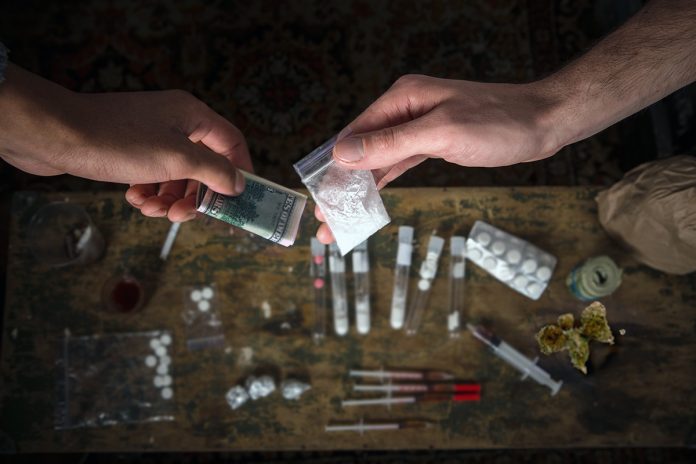






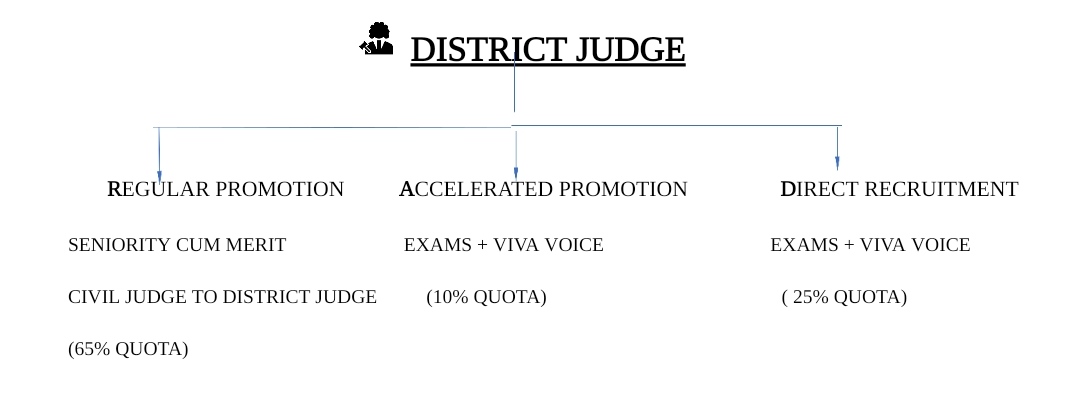










 Allow notifications





