This article has been written by Vani Shende pursuing a Diploma in International Business Law course from LawSikho.
Table of Contents
Introduction
The case of Rylands vs. Fletcher is a landmark British judgement in tort law history. Let’s first understand the meaning of tort. A tort is a wrongful act or failure to act that causes injury or harm to another person or breaches another person’s civil rights and amounts to a civil wrong for which courts may impose liability.
In English Common Law, negligence is a tort, among others, which occurs when someone causes an injury or a loss to another due to their reckless or careless behaviour. The general rule is that the person who causes such an injury shall pay damages to the affected party. This rule, when strictly applied, can pose numerous challenges.
For instance, if I store fireworks in my garage and they accidentally ignite, causing damage to neighbouring properties, without my negligence or knowledge. Can I be held liable?
The rule of strict liability propounded through Rylands vs. Fletcher makes answering this question easier.
Background
Thomas Rylands: The defendant was a mill owner, who had hired contractors and engineers for the construction of a reservoir at a site adjacent to the plaintiff’s property.
John Fletcher: The plaintiff held a lease for Red House Colliery, a set of coal mines and was in charge of operating the said mines.
The lawsuit: Fletcher initiated legal action against Rylands for damage caused to his coal mines due to the latter’s negligence.
Facts of the case
The defendant employed engineers and contractors to construct a new reservoir. During the process of excavation for the new reservoir, the contractors found five old vertical shafts and horizontal passages, but they failed to properly seal off these shafts.
The plaintiff had come across the old and disused shafts during his workings and had worked his mines up to the spot where they met with the forgotten passages, which were connected with the shafts right beneath the construction site.
After the construction of the reservoir, once it was partially filled with water, one of the shafts gave way and the water flooded the Red House Colliery through the underground passages. Consequentially, the plaintiff filed a lawsuit seeking compensation for the loss caused to him due to the defendant’s negligence.
Issues raised
Whether there was negligence on the part of the defendant.
Whether the defendant was to be held liable for the negligence of the contractor.
Whether the plaintiff was eligible to receive damages from the defendant.
Judicial proceedings
The Court of Liverpool
The case was first brought to trial at the Court of Liverpool, which sided with the defendant, stating that there was no trespass or nuisance. Later, an arbitrator appointed by court order also ruled in favour of the defendant, noting that the defendant couldn’t be held liable due to lack of knowledge about the mine shafts. However, the arbitrator found the contractors responsible for negligence.
Court of Exchequer of Pleas
The case was then argued in the Court of Exchequer, where it was examined on two grounds: first, whether the defendant could be held liable for the contractors’ actions, and second, whether the defendant was responsible for the damage despite their lack of negligence.
The Court reached a unanimous decision that the defendant was not liable for the actions of the contractors but had mixed views on the second issue.
According to Pollock CB and Martin B, the defendant was not liable since a claim of negligence could not be established. Judge Bramwell asserted that the plaintiff had the right to enjoy his land without interference from water from the defendant’s reservoir, and hence, the defendant was guilty of both trespass and nuisance.
The Court of Exchequer, with Justice Bramwell dissenting, gave judgement in favour of the defendant.
Court of Exchequer Chamber
Aggrieved by the ruling of the Court of Exchequer of Pleas, the plaintiff appealed to the Exchequer Chamber. The judges overturned the previous decision and unanimously ruled in favour of the plaintiff, granting him damages and establishing the precedent for strict liability for the first time.
Justice Blackburn, on behalf of all the judges, said that if someone brings a hazardous item onto their property and it escapes, causing damage, that person is held responsible for all resulting harm, irrespective of their negligence, knowledge, or intent. The Court did outline exceptions to this rule, such as acts of God or the plaintiff’s own fault. However, since none of these exceptions were applicable in the present case, the Court found the defendant liable for the damage inflicted on the plaintiff. The defendant appealed.
House of Lords
Both sets of attorneys cited numerous cases to support their arguments. Let’s review a selection of them.
Arguments for the defendant
The principle from the Exchequer Chamber, holding individuals liable even if they act lawfully and without malice or knowledge of danger, was criticised as too wide, potentially making individuals liable for any harm, regardless of whether it was done involuntarily or unconsciously.
Emphasis was placed on the defendant’s lack of knowledge regarding the shafts. This point was illustrated with reference to Chadwick vs. Trower, where it was ruled that a person demolishing their own wall was not obliged to notify their neighbour of their actions and was not liable for damage caused to an unknown underground wall of the neighbour’s.
With reference to Tenant vs. Goldwin, it was argued that once both parties have full knowledge of the facts, the defendant is obligated to maintain their property in a manner that prevents harm to their neighbour, which was not the situation in the present case.
With reference to Partridge vs. Scott, it was argued that employing competent individuals for lawful tasks does not automatically make the employer liable; liability requires evidence of their own negligence. The person directly performing the work bears sole responsibility.
The importance of lack of knowledge and, hence, a lack of negligence was stressed as a crucial element in the case.
It was argued that any fault lies with the plaintiff for failing to inform the defendant about the shafts.
Arguments for the plaintiff
The plaintiff is entitled to protection against water flow that resulted in the destruction of his works. They would not have objected if the water had originated solely from natural sources, but it entered due to the defendant’s construction of the reservoir.
The case of Baird vs. Williamson was cited to distinguish between natural water flow and water introduced by actions of neighbouring landowners.
In Smith vs. Kenrick, it was established that while two miners can conduct their operations in a normal and appropriate manner, one owner is not liable for injuries caused to the other, without negligence. This case implied that if injury arises from actions outside of ordinary working, damages may be claimed. In the present case, the construction of a reservoir was not an ordinary job.
These two cases combined, according to the attorneys, were enough to establish the plaintiff’s right to claim damages. More cases were referred to in order to establish liability on the part of the defendant.
In Backhouse vs. Bonomi, the act that caused injury was a lawful act, being the ordinary workings of the mine, yet, as it led to damage to the property of others, it was determined to be grounds for compensation.
In Hodgkinson vs. Ennor, the defendant polluted a stream through activities on their own land, which were taken to be the non-natural way of using the land and was therefore held responsible for damages.
Lambert vs. Bessey stated that a person who causes harm to another, even through the performance of a lawful act, is accountable for their actions.
It was stated that the principle, qui facit per alium facit per se, applies here, and the principal, i.e., the defendant, is liable for the negligence of his agent, i.e., the contractors.
Ruling
The House of Lords, upon hearing the arguments laid down by both the parties, dismissed the defendant’s appeal with cost, affirming the Exchequers judgment. They proceeded to elaborate more comprehensively on the rule of strict liability and introduced certain limitations to it.
Lord Cairns took into consideration two cases referred to during the proceedings, Smith vs. Kenrick and Baird vs. Williamson. He revised Blackburn J.’s original views, showing a departure from their stringent nature. Lord Cairns introduced the idea of “non-natural” user of land as opposed to “natural” user as a method to adjust the principle in the present case to align more closely with the concept of liability based on fault.
Lord Cranworth furthermore referred to Lambert vs. Bessey, affirming that when one person in managing their own affairs causes harm to another, however innocently, it is only fair that they bear the consequences.
The rule of strict liability
Requirements
Blackburn J., while delivering the judgement for the Court of Exchequer, along with the House of Lords, established that for the claimant to succeed in this tort, they must demonstrate that:
The defendant brought something onto their land.
The defendant made use of their land that was “non-natural.”
The thing brought onto their land was likely to cause harm if it escaped.
The thing did escape and cause damage.
Exceptions
While the doctrine of strict liability is stringent, there are recognised defences that can absolve a defendant of liability:
Plaintiff’s own fault: If the escape and resulting harm were caused by the actions or negligence of the plaintiff, the rule does not apply. For instance, a horse escapes his grounds, trespasses onto the neighbour’s property and consumes poisonous leaves. Owner of horse is not entitled to compensation.
Act of god: Blackburn J. defined the term “Act of God” as “circumstances which no human foresight can provide against and of which human prudence is not bound to recognise the possibility.” Inferring, if the escape resulted from natural events beyond human influence, like an earthquake or a flood, the rule does not apply.
Consent of the plaintiff: Suppose M and N live together. M wants to keep a large collection of snakes in the shared house. N agrees. If the plaintiff has agreed to the presence of a hazardous substance on the property, then the plaintiff has no right of complaint and the rule does not apply.
Act of third party: The defendant is not liable if the escape was caused by someone unrelated or a third party. For instance, trespassers break into a warehouse, trigger the sprinkler system, and damage some goods with water. The warehouse owner is not liable for this damage caused by the trespassers.
Statutory authority: If the act or activity that caused the escape was permitted by law or statute. For instance, if, while installing power lines according to regulatory approvals, a malfunction leads to property damage, the company might not be held liable due to statutory authorisation.
Difference between strict liability and other torts
Unlike many torts that hinge on proving negligence or intent, strict liability operates differently. It centres not on the defendant’s behaviour but on the nature of the activity and its possible outcomes. In cases of strict liability, the plaintiff simply needs to show that the harm occurred as a result of the defendant’s actions without requiring to establish negligence or intent.
Evolution of strict liability in India
In India, the concept of natural use of land differs from that in other countries. For instance, large volumes of water are deemed essential for activities such as irrigation by farmers. This practice may be in contrast with the definition of “non-natural use of land,” as laid out in Rylands vs. Fletcher.
Let’s examine a case to gain a better understanding of this concept.
Madras Railway Co. vs. Zamindar (1974)
Facts of the case
The defendant, a zamindar, owned land adjacent to a railway track owned by a railway company.
The defendant had water tanks on his land, built not just for the benefit of the defendant but also for thousands of his residents.
Two of these tanks burst, causing water to escape and damaging the plaintiff’s property and three railway tracks owned by the railway company.
As a result, the railway company filed a lawsuit against the defendant to seek compensation for the damage suffered.
Ruling
The Privy Council considered the tanks essential for sustaining thousands of ryots and deemed it unfair to impose sole liability on the landowner.
The Council concluded that the Rylands vs. Fletcher ruling was not applicable, discharging the defendant of his liability, citing India’s unique conditions requiring water storage as a natural use of land.
Also, the rule laid down in a 19th century case was developed during a time of minimal industrialisation and could be seen as outdated for a rapidly developing economy like India’s.
In response to the Bhopal Gas Tragedy and the Oleum Gas Leak, the Indian Judiciary identified a critical need to create a framework that addresses rare occurrences where defendants are held fully accountable for causing widespread damage. Consequently, in the case of M.C. Mehta v. Union of India, under the direction of Justice Bhagwati, the concept of absolute liability was introduced.
M.C. Mehta vs. Union of India AIR (1987)
Background of the case
M.C. Mehta, a social activist, filed a writ petition for the closure of Shriram Industries, a company owned by Union Carbide.
A significant leakage of oleum gas from one of the company units caused one fatality and injuries to several individuals, with another minor leakage occurring in the next few days. The company was involved in the manufacture of various hazardous chemicals, such as caustic soda, bleaching powder, sulphuric acid, superphosphate, and hydrochloric acid, and was surrounded by densely populated villages with a population of more than two hundred thousand within a radius of four miles.
The central issue in this case was whether the victims of the oleum gas leakage would receive compensation and how the liability should be measured.
Ruling
The Supreme Court decided against applying the rule of strict liability, concerned it would absolve industries from accountability for the harm and loss of life they caused. It was of the opinion that due to numerous exceptions, very little of the original principle remained, prompting its replacement with the absolute liability rule.
Under this rule, C.J. Bhagwati stated that enterprises involved in hazardous or inherently dangerous activities have an absolute and non-delegable duty to prevent harm to those within and around their facilities. In case of any harm occurring due to such activities, they must be fully liable to compensate for such harm, regardless of precautions taken or absence of negligence.
Regarding compensation, the Court held that the amount of compensation in such cases should be proportionate to the size and financial capacity of the enterprise. This ensures that compensation serves as a deterrent, with larger and more prosperous enterprises being obligated to pay higher amounts for injury resulting from accidents during hazardous activities.
What is absolute liability
Absolute liability can simply be defined as strict liability, sans the exceptions. To understand better, let’s explore some of the differences between them as established in M.C. Mehta vs. Union of India.
Absolute liability applies specifically to enterprises engaged in hazardous or inherently dangerous activities, unlike strict liability, which applies to all industries.
Under absolute liability, the escape of a hazardous substance to cause harm is not a requirement. This means that absolute liability applies to injuries both within and outside the premises.
Absolute liability has no exceptions, unlike strict liability, which has quite a few. • While Rylands vs. Fletcher applied only to non-natural use of land, absolute liability applies to both natural and non-natural uses. Even if a hazardous substance is used as part of a natural land use and it escapes, liability remains, regardless of precautions taken.
The compensation, under absolute liability, is awarded correlating with the size and financial strength of the enterprise.
Recent judgement
Radha Sharma vs. State of JK & Ors. (2023)
The petitioner’s 13-year-old son lost his life due to electrocution when he came in contact with live electric wire hanging at 3 to 4 feet from the ground.
The respondents, the electricity department, had failed to take due care and caution in maintaining the electric wires at proper height.
The Court found that the respondent’s claim to have acted with due care and caution was negated by the investigation report of the police.
The Court also put aside the respondent’s claim that the accident was caused due to the victim’s negligence.
The Court applied the rule of absolute liability to hold the respondents liable for compensation. They stated that the claimant was under no obligation to prove negligence on the part of the respondent.
Applying absolute liability to the respondents meant that they were unable to rely on the exceptions typically available under strict liability.
Due to the hazardous and dangerous nature of the enterprise, absolute liability was imposed on the respondent even if reasonable care had been taken.
Conclusion
The landmark judgement of Rylands vs. Fletcher introduced the rule of strict liability, which suited the circumstances of its time, the 19th century. However, as societal and industrial landscapes evolve, laws must also adapt to meet new challenges.
While strict liability historically shifted the burden of proof, its exceptions could potentially permit negligence in today’s more industrialised society. Rylands vs. Fletcher shows us how important it is to balance industrial growth with accountability to ensure fairness in the application of justice.
In our swiftly evolving world of industrialisation and technological advancements, it is imperative that industrialists who employ hazardous substances bear full responsibility for any resulting damages. And what’s better than having a principle that offers no exceptions, i.e., the principle of absolute liability.
Going back to the question left unanswered in the introduction of this article, yes, I can be held liable. Storing fireworks would amount to “bringing something dangerous on land” and also lead to “non-natural use of land.” It igniting and “escaping” my property and causing “damage” to my neighbouring properties would attract the rule of strict liability.
This article is written by Arkadyuti Sarkar. It discusses the landmark case of Zakarius Lakra vs. Union of India (2005) in detail. This case primarily dealt with awarding a death sentence to a minor. This article also discusses the concept of capital punishment and its history in India, along with the facts, issues, arguments, relevant laws, legal precedents, and decision of the court in the matter.
Table of Contents
Introduction
All punishments are awarded on the basis of the proposition that there must be a penalty for wrongdoing. There are two pivotal reasons behind awarding punishment: the belief that punishing the offenders will send a warning which could discourage others from committing the same wrong; and second, the notion that it is both right and just to punish a wrongdoer and make him suffer.
Awarding of capital punishment or death sentence has always been a controversial issue across the world, and hence, there have been arguments both in its favour and against it. Presently, the death penalty is not used in 112 countries. 4 nations, that is, Kazakhstan, Papua New Guinea, Sierra Leone, and the Central African Republic, have completely abolished it, while Equatorial Guinea and Zambia award it only under exceptional circumstances. Except in some nations, however, the death penalty is never awarded to minors, that is, an individual below 18 years of age.
Coming to India, capital punishment has always been an integral part of its judicial mechanism. With the surge in the human rights movement in the country, the morality of capital punishment is greatly questioned. On the other hand, according to many, keeping an offender alive at the cost of the lives of innumerable societal members or potential victims is unbelievable and morally wrong.
Issues concerning the death penalty become more sensitive when the offender is a minor. Zakarius Lakra vs. Union of India (2005) is a case that dealt with awarding capital punishment, particularly to a minor. Now, before discussing this case in detail, it is necessary to conceptualise capital punishment or the death penalty in brief.
What is capital punishment
Capital punishment (also known as the death penalty) means executing an offender as ordered by the appropriate court of law in relation to some criminal offence. Capital punishment should not be confused with extrajudicial executions carried out by the executive branch in absence of due legal process.
Capital punishment refers to the most severe type of punishment which is awarded to an offender for committing the most heinous, grievous, and detestable crime against humanity. While the definition and extent of such crimes may differ based on nations, state, age, etc., capital punishment has always been referred to as the death sentence.
History of capital punishment in India
Carefully scrutinising the debates in the British-India’s assembly reveals that no issue about the death penalty was raised until 1931, when one of the members, Sri Gaya Prasad Singh, sought to introduce a bill for abolishing the death punishment for the offences under the Indian Penal Code, 1860 (now changed to Bharatiya Nyay Sanhitha). However, the motion failed, since according to the then Home Minister, Sir John Thorne, the British Government did not think it wise to abolish capital punishment for any type of crime for which the same was provided.
After independence, India retained several laws of the British colonial government, which mainly included the Indian Penal Code of 1860 (hereinafter referred to as the IPC) and the Code of Criminal Procedure of 1898 (now Bharatiya Nagarik Suraksha Samhita) (hereinafter referred to as the CrPC).
The IPC provided for six punishments, including the death penalty, that were legally enforceable. For offences where the death penalty was an option, Section 367(5) of the CrPC, 1898 necessitated that courts record the reasons behind deciding not to impose a capital punishment if the concerned offence was punishable with death. In 1955, the Parliament repealed this Section, significantly altering the position of the death sentence. The death penalty was no longer the norm, and courts did not need special reasons for why they were not imposing the death penalty in cases where it was a prescribed punishment.
The CrPC was re-enacted in 1973, and several amendments were made, especially to Section 354(3), by which the courts were now required to state the reasons for awarding life imprisonment or special reasons in case of the death penalty for an offence which is subject to such punishments.
These amendments further incorporated the possibility of a post-conviction hearing on the sentence, including that of death, under Section 235(2). Here, the judge was mandated to hear the accused on the question of sentence and pass necessary sentences according to law, unless such accused proceeds according to provisions of Section 360 (order to release on probation of good conduct or after admonition).
Concerning the awarding of a death sentence, the Union government has maintained to keep the death penalty as a deterrent in its statute books, and to societal threats, the Supreme Court has upheld the constitutional validity of capital punishment in its “rarest of rare” doctrine. The Supreme Court had laid down some broad and illustrative guidelines in the landmark case of Bacchan Singh vs. the State of Punjab (1980) and propounded the rarest of the rare doctrine. Although there exists no statutory definition of ‘rarest of rare’ it relies mainly on the facts and circumstances of a specific case, brutality of the concerned crime, behaviour of the offender, prior criminal history of the offender, etc.
There is no statutory definition of ‘rarest of rare’. It depends upon the facts and circumstances of a particular case, brutality of the crime, conduct of the offender, previous history of his/her involvement in crime, and the chances of improving and combining him/her into the death penalty. This has always been a disputable issue all over the world.
From the case of Bachchan Singh, the following propositions emerged:
The extreme step of imposing a death penalty shall not be applied except in cases involving extreme conviction.
Before awarding a death penalty, the circumstances of the offender should be considered.
Life imprisonment is the rule, while the death penalty is an exception.
A balance sheet containing all the stimulating and mitigating conditions in full should be emphasised for balancing between them.
Now, after establishing a brief picture as to the position of the death penalty in the Indian legal scenario, let us delve into the details of the present case.
Facts of the case
The petitioners, that is, the parents of the convict (appellant), who was awarded a death sentence by the Additional Sessions Judge, Dehradun, sought a writ petition before the Hon’ble Supreme Court against the sentence which was previously upheld by the Uttaranchal High Court and also the Supreme Court.
They filed the writ petition under Article 32 (remedies for enforcement of rights conferred by this part) of the Indian Constitution and questioned the legality of the death sentence awarded by the Apex Court. According to them, the convict was a juvenile boy, born on 4th December, 1980, and hence was a minor on 15th November 1994, which was when the offence was committed. They further adduced two documents to endorse their claims.
The documents were issued by a school authority of the State of West Bengal and were dated 28.4.2001 and 2.8.2002, respectively. However, they were not produced before the Court during the hearing of appeal previously.
Laws involved in the case
Various laws and legal principles are considered and analysed by a court during a case, which may depend on the facts and circumstances of the case. In this case, the following legal principles were involved:
In every inquiry or trial, the court, for enabling the accused to personally explain any circumstances appearing against him in the evidence,
May put forth any necessary questions to the accused, at any stage of the trial, without any previous warning;
Shall question the accused generally on the case, after the prosecution’s witness has been examined and called on for his defence. Further, such questioning can be dispensed at the discretion of the court if the personal appearance of the accused has been excused.
The accused shall not be administered to any oath while being examined, as under Section 313(1).
The accused shall not be punished for refusing to answer any such questions or providing false answers.
The answers provided by the accused may be considered in such an inquiry or trial and adduced as evidence for or against him in any other inquiry or trial concerning any other offence, which such answers may implicate him in.
The court may seek the help of both the public prosecutor and the defence counsel for preparing such questions and may allow the accused to tender a written statement in compliance with this Section.
Section 22(1) of the Juvenile Justice Act, 1986
Section 22(1) of the Juvenile Justice Act, 1986 provided that a juvenile delinquent shall not be awarded the death sentence or imprisonment due to default of payment of a fine or security. However, a juvenile of at least 14 years of age can be sent to a special home upon commission of a serious offence if the Juvenile Court deems the same as necessary.
Article 21 of the Indian Constitution
According to Article 21 of the Indian Constitution, no person shall be deprived of his life and personal liberty except as per procedure established by law. In simpler words, this provision of the Indian Constitution guarantees to the Indian citizens that their right to life and liberty shall not be compromised except by the State without following legally established constitutional procedure. Coming to the awarding of a death sentence, especially with regards to a minor, is an apparent blow to the right to life guaranteed under Article 21 unless sanctioned by a proper judicial scrutiny. Hence, this provision was also raised by the petitioners in this case for judicial scrutiny.
Article 22 of the Indian Constitution
Article 22 provides protection against arrest in certain cases. In brief, such protection includes informing the arrestee or detainee about the grounds for such arrest or detention and the right of the arrestee or detainee to consult and be defended by any legal practitioner of his choice. This Article further provides the right of an arrestee to be produced before the nearest magistrate, within 24 hours. No person can be held in custody for a period longer than what is prescribed without the permission of the magistrate.
Contention of the petitioners
The petitioners contended that the accused was a juvenile on the date of the commission of the crime. To endorse this claim, they presented the school documents of the accused, which stated that his date of birth was 4th January, 1980.
The learned counsel for the petitioners stated that they did not seek to reopen the trial to set aside the conviction. They primarily wished to change the sentence of death to that of life imprisonment instead. The counsel also stated that the authenticity of the documents provided by them could be verified by the court or any other authority.
The convict (appellant) had also filed a review petition, bringing up the issue of age. One of the grounds mentioned in this review petition was that the documents provided to prove the convict’s age, which led to the dismissal of the petition.
The learned counsel of the petitioner referred to the cases of Raj Singh vs. State of Haryana (2015) and Gopinath Ghosh vs. State of West Bengal(1983), wherein the court allowed the plea of a juvenile of the convict and provided appropriate remedies. They also pointed to the case of Ram Deo Chauhan & Raj Nath Chauhan vs. State of Assam (2000), wherein the judiciary had adopted a liberal approach and had opted to provide benefit of age, even though the convict had not been proven to be a juvenile, can be provided on the ground due to uncertainty as the convict was in the borders of the age and therefore awarded him life imprisonment as an alternative.
Issues raised in the case
The issue for the Apex Court to decide in this case was whether the death sentence imposed on the convict could be quashed on the ground that he was a juvenile on the date of commission of the offence?
Judgement in Zakarius Lakra vs. Union of India (2005)
The Supreme Court considered all the legal provisions and precedents that were used in this matter and adjudged that, in line with the decision of the court in Rupa Ashok Hurra vs. Ashok Hurra (2002), the concerned petition was non-maintainable under Article 32 of the Indian Constitution. The court considered that the appropriate remedy would be filing a curative petition, as per the procedure indicated in the cited case. Accordingly, the court allowed the petitioners to convert the writ petition into a curative petition by incorporating required amendments and following the due legal process.
Relevant judgements referred in the case
Raj Singh vs. State of Haryana (2015)
In this case, the accused/appellant, along with two other co-accused, had murdered the complainant’s brother and also injured others. The Sessions Court convicted these three accused, following which they appealed before the Punjab and Haryana High Court, wherein the decision of the Trial Court concerning the appellant was upheld, while the other two co-accused were acquitted. Therefore, the appellant approached the Supreme Court, which held that the High Court had rightly decided that the complainants had acted within the scope of their self defence and that it was the appellants who had exceeded their right. Further, although the place of occurrence was initially the complainant’s, the same was changed to that of the appellant’s after a gap of 3 to 4 days, which made it clear that the appellants were the actual aggressors. The appeal was dismissed and the conviction of the appellant was upheld.
Gopinath Ghosh vs. State of West Bengal (1983)
In this case, the appellant, along with the other two accused, was convicted by the learned Additional Sessions Judge under Section 302 of the Indian Penal Code (punishment for murder read with Section 34 (acts done by several persons in furtherance of common intention.. Now, Section 103 of Bharatiya Nyay Sanhita, 2023), read with Section 3(5) Bharatiya Nyay Sanhita, 2023) for murdering the victim on 19th August, 1974. The appellant and the two other co-accused appealed before the Calcutta High Court, wherein a division bench held that the offence against the appellant was established and the Sessions Court had rightfully convicted him for the same, while acquitting the other two co-accused. The appellant thus preferred a special leave petition before the Supreme Court of India and claimed minority of the accused on the date of commission of the offence.
After the Apex Court determined that the accused was indeed a minor at the date of commission of the offence, it also observed that the fact of minority of the appellant was never raised anywhere, neither before the Sessions nor before the Calcutta High Court. However, considering the fact that the minor was indeed a juvenile delinquent at the date of commission of the offence, they set aside the conviction of the appellant and returned the same to the sessions court for disposal according to law.
Ramdeo Chauhan vs. State of Assam (2000)
In this case, the appellant was charged under Sections 302 (now, Section 103 of Bharatiya Nyay Sanhita, 2023) and 326 of the Indian Penal Code (voluntarily causing grievous hurt by dangerous weapons or means). Now, Section 116 of the (Bharatiya Nyay Sanhita, 2023) for murdering four family members and was also charged with inflicting serious injuries to two of them with a sharp weapon. The accused was convicted by the Trial Court. He appealed before the Gauhati High Court, which upheld the conviction. Hence, the accused appealed before the Supreme Court.
The Apex Court went through the contentions, memos, records, and other various circumstantial evidences of the case. The court also referred the appellant for psychological assessment and observation to determine his mental state, which was then found normal. They upheld the conviction and sentence passed by the Trial Court and the High Court of Guwahati.
In this case, Justice R.P. Sethi and Justice Phukan concurred that though this matter was beyond review, since the issue was concerned with the death sentence, they decided to determine whether the benefit of age can be given even if the offender was found to be close to the threshold of juvenility.
Justice Thomas emphasised that the death penalty should not be imposed if there was any reasonable doubt regarding whether the offender was a juvenile or not. He reasoned with a legal principle, which states that only if the alternative of life imprisonment is undoubtedly ruled out, death penalty should be given. Justice Thomas contended that the death penalty could not be justified in this case, as the age of the offender was not above the juvenile limit, and further argued that the sentence should be reduced to life imprisonment.
Rupa Ashok Hurra vs. Ashok Hurra (2002)
This is a landmark judgement which introduced the provision of curative petitions in India. The case was concerned with matrimonial discord between a husband and wife, who had been separated for years, and ultimately reached the Supreme Court as the woman withdrew her consent that she had initially given for the divorce.
The substantial question of law was whether an aggrieved person would be entitled to any relief against a final order or judgement delivered by the Supreme Court after it has dismissed a review petition under Article 32 or otherwise.
A 5 judge constitutional bench delivered this judgement, which opened a new dimension in the nation’s justice delivery mechanism. The court listed several conditions that are to be followed while moving a curative petition before it:
The grounds for the petition must have been mentioned in the review petition.
The curative petition requires certification from a senior advocate, declaring the satisfaction of all requirements.
In the case of a meritless and vexatious petition, the court may impose exemplary costs on the petitioner.
The petition must be circulated to a bench of 3 of the senior most judges and before the judges who passed the concerned judgement. Only if a majority of the judges conclude that the matter must be heard, then it can be listed and preferably before the same bench.
Conclusion
This was a case concerning the minority of an offender, wherein the age of the offender was not revealed until the matter went before the Supreme Court. The court considered all the facts, legal provisions, and various precedents to conclude that the case was non-maintainable under Article 32 of the Constitution. However, the court further observed that since the matter was concerned with the death sentence and the minority of the offender, a curative petition can be filed for the same.
This case, therefore, serves as a precedent wherein the Apex Court reiterated that the minority of an offender is a crucial point of consideration in a criminal case, especially when the death penalty is in question. Capital punishment continues to be a highly disputed issue, bringing up questions of human rights and justice. Some find it to be a suitable punishment for the most severe crimes, while others stand against it.
Frequently asked questions (FAQs)
What is meant by capital punishment?
Capital punishment, or the death penalty, refers to the execution of an offender, awarded by an appropriate court of law. Such punishment is usually concerned with criminal offences, which are the most heinous, grievous, and detestable crimes against humanity.
Is capital punishment banned in India?
Despite being a debatable topic, capital punishment is still awarded and carried out in India, often in cases involving terrorism, murder, rape, etc.
Can a minor be punished with capital punishment?
Capital punishments have rarely been awarded to a minor in India. However, after the Nirbhaya judgement, the criminal law amendment allows a minor to be subjected to trial as an adult in cases involving the rarest of the rarest offences.
What is a review petition?
A review petition is a means for the parties to pray to the Supreme Court to review an order or judgement made by it. Through this petition, the court can modify a judgement, on the following grounds:
Availability of new information or judgements.
Clear mistakes apparent from the record.
Any other sufficient reason.
What is a curative petition?
A curative petition is a legal recourse used by the Supreme Court to correct the miscarriage of justice in case a review petition has been dismissed. The judgement in Rupa Ashok Hurra vs. Ashok Hurra (2002) reiterated this. A curative petition permits the Apex Court to review its own judgements.
What are the guidelines for filing a curative petition, and what constitutional provision provides for the same?
Article 137 of the Indian Constitution provides for curative petitions. The following are the guidelines for filing a curative petition before the Supreme Court:
The grounds of the petition must have been mentioned in the review petition.
The curative petition requires certification from a senior advocate declaring the satisfaction of all requirements.
In the case of a meritless and vexatious petition, the court may impose exemplary costs on the petitioner.
The petition must be circulated to a bench of 3 of the senior most judges and before the judges who passed the concerned judgement. Only if a majority of the judges conclude that the matter must be heard, then it can be listed and preferably before the same bench.
Students of Lawsikho courses regularly produce writing assignments and work on practical exercises as a part of their coursework and develop themselves in real-life practical skills.
LawSikho has created a telegram group for exchanging legal knowledge, referrals, and various opportunities. You can click on this link and join:
This article is written by Ayushi Dubey, and further edited by Priyanka Jain. The article is a case analysis of the Supreme Court judgement, Anurag Soni vs. State of Chhattisgarh (2019). The author has discussed the facts of the case, the arguments of the parties, major issues, the law referred, and the judgement of the Anurag Soni vs. State of Chhattisgarh (2019). The article provides an in-depth analysis of the judgement and also discusses the related case laws.
Table of Contents
Introduction
Section 375 of the Indian Penal Code, 1860 (now Section 63 of Bhartiya Nyaya Sanhita, 2023) defines rape. In simple words, rape is forcibly establishing sexual intercourse or any kind of sexual relationship with a female against her will. After the 2013 amendment to Section 375, the definition of rape has been expanded to a greater extent. The new definition now covers wider aspects and forms a clear understanding. It lays a number of conditions where sexual intercourse can be termed as rape. But still, with growing and changing times the judiciary faces new situations every day. There are cases which are not based on the same line of fact as the code laid. In this situation, the court has to interpret the situation and deliver justice in the best way possible.
Anurag Soni vs. The State of Chhattisgarh (2019), is a criminal appeal in the Supreme Court. The judgement was delivered by a two-judge bench, consisting of Hon’ble Justice L. Nageshwar Rao and Hon’ble Justice M.R. Shah. In the present case, a new kind of situation has come up. A girl and a boy can be in a love affair but that doesn’t necessarily mean that the girl has consented for sexual intercourse. Similar is the concept of marital rape which is still not criminalised in India. The judiciary has still not interpreted the situation that exists in a marriage.
The court, in this case, has given a new dimension to the word “consent”. The Supreme Court in this case, outrightly held that making a false promise of marriage to have a sexual relationship would amount to rape. So, if a girl has consented to have sexual intercourse on the pretext of marriage, which turns out to be fraud, then the consent obtained would not be considered as a valid consent considering Section 90 of IPC (now Section 28 of Bhartiya Nyaya Sanhita).
Let us understand the case.
Facts of the case
At the time of the incident, the prosecutrix was a resident of Koni, district Bilaspur and was doing her pharmacy studies from Bhilai. The appellant was a junior doctor working at a government hospital in Malkharoda. The prosecutrix and the appellant had known each other since 2009 and were in a love affair.
According to the prosecutor’s side of the story, the appellant showed his desire to meet the prosecutrix and therefore the prosecutrix on 29.04.13 arrived at the appellant’s home. She stayed there from 2 pm, 29.04.13 to 3 pm, 30.04.13. During her stay at the appellant’s house, the appellant showed his desire to have sexual intercourse but the prosecutrix was reluctant and was refusing repeatedly. The prosecutrix finally gave her consent to have sexual intercourse with the appellant on the pretext of marriage between the two.
The appellant had ensured the prosecutrix that he will talk to his family about their marriage on 1st or 2nd May 2013. The appellant also asked her not to tell anybody about the incident. The prosecutrix then repeatedly asked the appellant between 2.05.13 to 05.05.13 about their marriage but received no valid response. Therefore she finally disclosed all that happened to her parents and her parents went to the appellant’s parents. Both the families after discussing the issue decided that the couple should get married since no other option is left.
But later on the appellant refused to marry the prosecutrix and it revealed that the appellant was keeping the prosecutrix and her family members in the dark and had married another girl two months back.
Subsequent to this the prosecutrix filed a case of rape on the pretext of marriage under Section 376 of IPC (now Section 63 of Bhartiya Nyaya Sanhita, 2023) in the Malkharoda Sessions Court. The learned Sessions Court held that the consent of the prosecutrix was taken by misrepresentation and hence convicted the appellant under Section 376 and punished him with 10 years of rigorous imprisonment.
The accused (appellant in the present case) dissatisfied by the judgement of the learned Sessions Court then appealed at the High Court. The High Court dismissed the appeal and upheld the decision of the Sessions Court.
Aggrieved by the judgement of the High Court the accused appealed in the Supreme Court against his conviction under Section 376 and claimed that he has been convicted on false charges.
Arguments by the parties
Appellant
The appellant, in the Supreme Court, argued that the allegations made by the prosecution against him are false. The counsel appearing for the appellant submitted that both the Sessions and the High Court have erred in making the decision for this case. Both the courts have missed Section 90 of the IPC and Section 114-A of the Indian Evidence Act,1872, now Section 120 of Bhartiya Sakshya Adhiniyam, 2023 while categorising the incident as rape under Section 375 Indian Penal Code.
It was further submitted by the counsel appearing for the accused that the prosecutrix was in love with the accused and wanted to marry him. Whereas the accused had mentioned in his Section 313 Code of Criminal Procedure (Cr.PC) (now Section 351 of Bhartiya Nagrik Suraksha Sanhita 2023) statement that the prosecutrix and her family members were already aware of the fact that the accused’s marriage is fixed with one, Priyanka Soni. Still, the prosecutrix and her family members pressurised the accused to marry the prosecutrix.
Further, the counsel for the appellant submitted that even if we consider that the accused had promised to the prosecutrix and still didn’t marry her, then also he had only committed the wrong of “Breach of Promise” and hence should not be punished under Section 376 of the Indian Penal Code.
The counsel appearing for the appellant finally submitted that both the prosecutrix and the appellant are married now and have moved on with their lives and, therefore, the case should end and the conviction of the accused should be set aside.
Respondent
The state of Chattisgarh is the respondent in the present case, there were two counsels representing the respondent. One representing the state and the other representing the prosecutrix (hereinafter together referred to as “counsel for the respondent”).
The counsel for the respondent vehemently submitted that the present case is not a mere breach of promise as contended by the counsel appearing for the appellant. It was submitted that the accused never had the intention of marrying the prosecutrix and still he called her at his house. Also, even after the repeated refusal by the prosecutrix the couple indulged into sexual intercourse where the prosecutrix’s consent was based upon the promise of marriage, made by the accused. Since the prosecutrix gave her consent upon that promise, the consent is said to be taken by a misconception of fact. The consent, in this case, cannot be said as consent even considering Section 90 of the IPC.
Further, counsel on behalf of the respondent tried to establish the intention of the accused. When the families of the prosecutrix and the accused were meeting for the fixing of the marriage, the accused was never present there. In fact, he ran away and married another lady. He didn’t even inform the prosecutrix or her family before his marriage. This shows that he never wanted to marry the prosecutrix and made a false promise to obtain his consent. Therefore, it is rightly convicted under Section 376 of the IPC
Issues raised in the case
After listening to the arguments from both sides and going through the judgements of the lower courts, the question before the Supreme Court was whether in the facts and circumstances of the case, and considering the evidence on record, the courts below have committed any error in holding the accused guilty for the offence under Section 376 of the IPC?
Laws involved in Anurag Soni vs. The State of Chhattisgarh (2019)
Section 375 of Indian Penal Code, 1860
Under Section 375 of the Indian Penal Code, 1860, it is provides that a man is said to have committed “rape” if he:
penetrates his penis into the vagina, mouth, urethra or anus of a woman or makes her to do so with him or any other person; or
inserts any object or a part of the body, not being the penis, into the vagina, the urethra or anus of a woman or makes her to do so with him or any other person; or
manipulates any part of the body of a woman so as to cause penetration into the vagina, urethra, anus or any part of body of such woman or makes her to do so with him or any other person; or
applies his mouth to the vagina, anus, urethra of a woman or makes her to do so with him or any other person, under the circumstances falling under any of the following seven descriptions:—
against her will, when she doesn’t give her consent for such penetration or manipulation;
without her consent, when she doesn’t give her consent through words;
with her consent, when she has given consent under the fear of her death or the death of anyone who she is interested, they can be parents, siblings, children or even a pet;
with her consent, when she believes that the man who is taking her consent is going to be her husband or she has married to him;
with her consent, when she was intoxicated using some stupefying and unwholesome substance that was given to her personally by the man or someone else after being asked by the man. She was unable to understand the consequence of her consent;
with or without consent, if she was under eighteen years;
when she is not able to give consent.
A communication can be verbal or through gestures. If a woman was silent it cannot be taken as her consent for the said sexual intercourse.
According to Section 375, consent is an “unequivocal voluntary agreement” in which the woman can communicate by way of verbal or non-verbal communication, through words or gestures, her willingness to participate in that sexual act.
Section 63 of the Bharatiya Nyaya Sanhita, 2023
This Section of Bharatiya Nyay Sanhita defines the offence of rape, which is essentially the same as provided under Section 375 of IPC. Further, consent under Section 63 of Bhartiya Nyaya Sanhita, 2023 has been kept the same only the age of consent by the wife for sexual intercourse has changed to eighteen years from sixteen years.
Section 90 of Indian Penal Code, 1860
Section 90 of the Indian Penal Code, 1860 talks about consent that is given under fear or misconception of fact. The consent is invalidated under the following circumstances:
if the consent is given by a person under the “fear of injury”, or under a “misconception of fact”, and if the person (accused) doing the act knows, or has reason to believe, that the consent of the victim was given in consequence of putting him in the fear or misconception; or
if the consent is given by a person who, from unsoundness of mind, or intoxication, is unable to understand the nature and consequence of that to which he gives his consent; or
if the consent is given by a person who is under twelve years of age.
In a nutshell, consent is invalid if it is given under fear of injury, misconception of fact, unsoundness of mind/ insanity, intoxication, by a person under twelve years of age.
Section 28 of Bhartiya Nyaya Sanhita, 2023
Section 90 of the IPC has given its place in Bhartiya Nyaya Sanhita at Section 28. This Section also invalidates the consent under the conditions as were previously prescribed under Section 90 of IPC.
Section 114A of the Indian Evidence Act, 1872
Section 114A of the Indian Evidence Act, 1872 empowers the Courts to presume that there were no consent of the rape victim, if during investigation the woman says she did not consent for the act, in certain situations prescribed under Section 376 of the Indian Penal Code, 1860. Following are the situations:
(i) When the police officer has committed rape of a woman within the limits of his police-station; or
(ii) When the police officer has committed rape of a woman in the premises of any station house; or
(iii) when she was in his custody or in the custody of any subordinate officer; or
When a public servant commits the rape of a woman in his custody or in the custody of subordinate officer;or
When a member of teh armed forces commits rape where he is deployed either by the Central Government or the State Government; or
When anyone in the management of jail or remand home or any other place of safety or place of custody commits the rape of inmates of that place be it woman or children; or
When Staff or anyone in management of a hospital commits rape on a woman in that hospital;or
When any person commits rape during communal or sectarian violence; or
When any relative, guardian or teacher of, or a person in a position of trust or authority towards the woman, commits rape of such woman; or
When any person commits rape on a woman knowing her to be pregnant; or
When any person commits rape on a woman under sixteen years of age; or
When the rape of woman committed who was incapable to give her consent; or
When someone is in the position to control and dominate the woman, commits her rape; or
When someone commits rape on a woman suffering from mental or physical disability; or
When while committing rape assailant disfigures, maims, or causes grievous bodily hurt, or endangers the life of woman; or
When someone is a repeat rape offender on the same woman;
Where sexual intercourse by the accused is established and the question is whether it was committed without the consent of the victim and such victim testifies in her evidence before the court that she did not consent, the court shall presume that there was lack of consent.
Section 120 of Bhartiya Sakshya Adhiniyam, 2023
Section 120 of Bhartiya Sakshya Adhiniyam, 2023 is the corresponding Section of Section 114A of the Indian Evidence Act, 1872. This section empowers the courts to presume that there were no consent of the rape victim, if during investigation the woman says she did not consent for the act, in certain situations prescribed under Section 64 of Bhartiya Nyaya Sanhita, 2023. The situations specified are the same as are provided in the preceding part.
Judgement of the case
The accused was held guilty of the offence of rape under Section 376 of the Indian Penal Code, 1860. However, his punishment was reduced to seven years from ten years on the request of his learned counsel. Consent of the prosecutrix was taken on the misconception of the fact that the accused shall marry her.
The intention of the accused was not bonafide from the beginning. She became the victim of his lust. He promised and persuaded the prosecutrix to believe that he shall marry her. He obtained her consent on total misconception. If he didn’t say that he will marry her, she wouldn’t have given her consent for consensual sex. This consent is not consent. Hence, it is a clear case of cheating and deception.
Rationale behind the judgement
A number of cases were referred by the Supreme Court in order to deliver this judgement. Reliance was placed on precedents to understand the scope and ambit of Section 375 and Section 90 of the IPC.
Essentials and parameters of rape
In Kaini Rajan vs. State of Kerala (2013), the Hon’ble Apex Court explained the essentials and parameters of rape. First clause is where the woman is in possession of her senses, and, thus, capable of giving her consent, but the act was done against her will. Here the expression, “against her will” requires elaboration. The act was done despite continuous opposition from the woman. Consent for the purpose of the Section 375 requires active participation which can be inferred by evidence or probabilities of the case.
The court referred to this case for explaining the important parameters of rape. The case places a lot of emphasis on consent while considering rape cases. It was held that whether the consent was given willingly or not would depend upon the facts and circumstances of the case in hand. It was further held that Section 90, though does not define what consent is, defines what is not consent. Emphasis was placed on the choice between resistance and assent.
“Consent”, for the purpose of Section 375, requires voluntary participation not only after the exercise of intelligence based on the knowledge of the significance and moral quality of the act but after having fully exercised the choice between resistance and assent.
“Consent” holds a special place in legal parlance. Every informed decision is based on one’s consent. Consent means allowing something to happen. It also means not negating something. It is the expression of agreement. It must be free, without coercion, pressure, emotional bias, and duress. The present case set a stage for the importance of consent in the heinous crime of rape. Without consent, the victim turns into an accomplice. Present judgement emphasises that consent obtained for intimacy through precarious or fraudulent means like a false promise of marrying later is no consent, and it constitutes rape. This case not only reaffirms the importance of genuine consent but also restores the confidence of the public in judiciary in the sensitive matters like rape.
Distinction between rape and consensual sex
In Deepak Gulati vs. State of Haryana (2013), Hon’ble Supreme Court created a distinction between the rape and consensual sex. It was observed that consent can be expressed, implied, misguided, coerced, and obtained through willingness or deceit. It is the decision of the mind, weighing on the balance all the good and evil consequences. To ascertain if the impugned conduct was a rape or consensual intercourse, the court has to examine whether the accused wanted to marry the woman or merely satisfy lust. If it is shown or proved that it was only to satisfy lust then it falls under the purview of deception and cheating. An accused can be convicted of rape only if it is proved that the accused has malafide intention.
The case places heavy reliance on the intention of the accused. There may be a situation when a girl consented for sexual intercourse on account of her love for the accused and not only because they would get married. Also, it may be possible that the accused could not marry the girl due to unforeseen conditions or conditions which are out of his control. In such cases, the consent would not be hit by Section 90 of the IPC. Therefore, it is very relevant to note the intention of the accused while dealing with such cases. The court, in this case, held that:
“Section 90 IPC cannot be called in to aid in such a situation, to pardon the act of a girl in entirety, and fasten criminal liability on the other unless the court is assured of the fact that from the very beginning, the accused had never really intended to marry her.”
Invalidity of consent because of false promise of marriage
In Yedla Srinivasa Rao vs. State of Andhra Pradesh (2006)the main issue before the Hon’ble Supreme Court was to decide, had this promise not been given perhaps, the prosecutrix would not have permitted the accused to have sexual intercourse.
Section 90 of the Indian Penal Code, 1860 tells that if the consent has been given under fear of injury or a misconception of fact, such consent obtained, cannot be taken to be a valid consent. In this case, right from the beginning, the intention of the accused was not honest and he kept on promising that he will marry the prosecutrix, till she became pregnant. In the instant case, the story is based upon similar lines as the case of Anurag Soni. The accused forcibly had sexual intercourse with the woman and continued doing that on the promise of marrying her and abandoned when she got pregnant. The court in this case outrightly held that the accused never had the intention of marrying the girl, he played fraud with her to satisfy his lust. The court held that the consent, in this case, is invalid. Further Section 114-A of the Indian Evidence Act was referred stating that the court shall presume that the girl never consented for sexual intercourse if she says so. This Section was added due to an increasing number of rape cases so that women don’t feel unsafe and they don’t hesitate in approaching the court. The court also said “Presumption has been introduced by the legislature in the Evidence Act looking at atrocities committed against women.”
Consent secured under misconception of fact
Further, in the case of the State of Uttar Pradesh vs. Naushad (2013) the Supreme Court found that the consent obtained by the accused was not voluntary, which was given by the prosecutix under the misconception of fact that the accused would marry her; this consent is “no consent” in the eyes of the law. So, the court held the accused guilty of rape under Section 376 of The Indian Penal Code, 1860 as he has secured the consent of the woman fraudulently, under a misconception of fact.
The Supreme Court convicted the accused of rape on similar reasoning. It was held that the consent would not be considered to be given since it was made upon a false promise of marriage which the accused never intended to fulfil.
Dividing line between rape and consensual sex
In Dr. Dhruvaram Murlidhar Sonar vs. the State of Maharashtra (2018)Supreme Court has observed that there is a clear dividing line between rape and consensual sex. The courts, in such cases, must very carefully scrutinise whether the accused actually wanted to marry the victim or had mala fide intentions, and had made a false promise to this effect only to satisfy his lust, as the false promise falls within the ambit of cheating or deception.
Also, there is also a clear distinction between mere breach of a promise and fulfilling a false promise. If the accused has made the promise not with the sole intention to seduce the prosecutrix to indulge in sexual acts, such an act would not amount to rape. There may be a case where the prosecutrix agrees to have sexual intercourse on account of her love and passion for the accused and not solely on account of the misconception created by accused, or where an accused, because of circumstantial despair which he could not have foreseen or which were beyond his control, was unable to marry her despite having every intention to do. Such cases must be treated differently from rape cases.
The prosecution led cogent evidence that from the very inspection the accused had no intention to marry the victim and also he had bad intentions so he made a false promise only to satisfy his lust. The prosecutrix would not have given the consent to have the physical relationship if he had not made the false promise to marry her in future. It was a clear case of cheating and deception by the accused. The consent given by the victim was the misconception of fact.
Further, the Hon’ble Court observed that these cases are rising exponentially. Such offences are against society. Rape is the most morally and physically degrading crime in a society, an assault on the body, mind and privacy of the victim. As observed by this court from time to time, while a murderer destroys the physical frame of the victim, a sex offender degrades and defiles the soul of a victim. Rape reduces a woman to state of despair like an animal, as it deeply affects her life.
A rape victim cannot be be called an accomplice. Consensual sex does not make anyone an accomplice. Rape leaves a lifelong stigma on the life of the victim. Rape is a crime against the entire society and violates the human rights of the victim. Rape is the most hated crime, the rape equivalent to a serious blow to the supreme honour of a woman, and offends both her respect and dignity. Therefore, both the accused and the victim have married subsequently, is not a ground not to convict the appellant accused for the offence punishable under Section 376 of the Indian Penal Code 1860.
The appellant accused must face the consequences of the crime committed by him. So, the court maintained the punishment given by the lower courts but reduced it to seven years as it is the minimum punishment of the rape on the ground of request by the counsel as the accused has already undergone the imprisonment while the case was undertrial.
Finally, a Delhi High Court case, Sujit Ranjan vs. State(2011)was referred to. The case held that whether the consent by the prosecutrix was given voluntarily or by “misconception of facts” would depend upon the facts and circumstances of the case because there could be various reasons for which the accused failed to keep the promise, other than the misconception of fact. The case laid down that the court must take due care while arriving at the conclusion in such cases. Also, the burden of proof, in this case, would lie upon the prosecution to prove the offence. The prosecution would have to prove the case beyond reasonable doubt and that the accused never had the intention of marrying the prosecutrix.
The Supreme Court after listening to both sides of the story and examining the witnesses came to the conclusion that the prosecutrix and the appellant were in a love affair and the appellant had established a sexual relationship with the prosecutrix based on the false promise of marrying her. The conduct of the accused clearly points out that he never had the intention of marrying the prosecutrix. He ran away when the two families were fixing the marriage. He married Priyanka Soni without informing the prosecutrix. Priyanka Soni confirmed that the negotiations regarding their marriage were going on from a year before their marriage. This clearly shows that the appellant had plans of marrying Priyanka Soni even when he established a sexual relationship with the prosecutrix. Therefore, the court held that the prosecution succeeded in proving the case against the appellant.
Also, the accused claimed that the prosecutrix and her family members were already aware that his marriage was fixed with Priyanka Soni and still they were pressuring him and his family to marry the prosecutrix. But the appellant failed to prove this point.
Considering all the facts and circumstances the court upheld the decision of the court and held that the accused never had the intention to marry the prosecutrix. He was lying to her from the very beginning. He made the false promise of marrying her in order to establish a sexual relationship with her. The prosecutrix gave her consent based on the false promise and, therefore, the consent would not be considered as per Section 90 of the IPC and hence accused is guilty of rape under Section 375. The court held this as a clear case of cheating and deception. The point that both the prosecutrix and the appellant have moved on in their lives is irrelevant and cannot be accepted.
The Supreme Court convicted the accused under Section 376 of IPC, though the term of punishment was reduced to 7 years. The court held that merely if the victim and the accused are married to another person, the accused cannot be discharged. A criminal would always have to suffer the consequences of his crime. Rape is a crime against humanity. A rape victim not only suffers physical but mental harm.
Relevant case laws
State of Punjab vs. Gurmeet Singh (1996)
In this case, the Hon’ble Supreme Court observed that in recent times, crime against women in general and rape in particular have risen. It is ironic that on the one hand we are celebrating women’s rights in all spheres and on the other hand we show little or no worry for her honour. It is a sad reflection on the perspective of the biases of society towards the violation of human dignity of the victims of sex crimes. A rapist not only infringes the privacy of the victim, and personal integrity, also causes serious psychological trauma, and physical harm. Rape is not just a “physical assault”. It seriously shatters the whole personality of the victim. A murderer destroys the physical body of his victim, while a rapist degrades the very soul of the victim.
Therefore, the courts must show a great accountability while trying an accused on charges of rape. The courts must tackle such cases with utmost sensitivity. The courts should examine the broader probabilities of a case. They should not be influenced by minor inconsistencies or insignificant mistakes in the statement of the prosecutrix, which are not fatal. If evidence of the prosecutrix adds confidence, it must be relied upon without seeking corroboration of her statement in material particulars. The testimony of the prosecutrix must be given due importance in the light of the entire case and the Trial Court must be responsible and sensitive while dealing with such cases.
Pramod Suryabhan Pawar vs. The State of Maharashtra (2019)
In this case, the Hon’ble Supreme Court said that consent under the “misconception of facts” under Section 90 in the light of Section 375 has to satisfy two criteria:
promise of marriage was malafide or false;
a false promise has made the woman undergo sexual activity.
When the intention of man was to take the consent of women for sexual acts on the false pretext of marriage and with an intention not to fulfil the same, it vitiates the consent of woman. The promise of marriage must have been a false promise. If the woman knows the obstacles in the marriage but still chooses to engage in sexual activity and reside together then it is not a false promise. So, consent is not vitiated and no offence of rape is committed.
Naim Ahamed vs. State (NCT of Delhi) (2023)
In this case, the Hon’ble Supreme Court of India held that the expression “misconception of facts” given under Section 90 is in relation to the clauses of Section 375.
Section 375 describes seven circumstances under which the ‘rape’ could be said to have been committed. As per the third clause, a rape could be said to have been committed, even with the consent of the prosecutrix when it is obtained by putting her or any person in whom she is interested in fear of death or of hurt. As per the fourth, rape is committed with her consent, when the man knows that he is not her husband but she believes that she is lawfully married; and as per the fifth, rape is committed with her consent when at the time of giving the consent, the prosecutrix because of unsoundness of mind or intoxication or the administration of stupefying or unwholesome substance by the accused or some other, she is unable to understand the nature and consequences of that to which she gives consent, her consent would be treated as ‘no consent’ under the circumstances mentioned in Section 375 of Indian Penal Code, 1860.
Critical analysis of Anurag Soni vs. The State of Chhattisgarh (2019)
Judicial activism and judicial overreach
The present case can be analysed in the light of “judicial activism” and “judicial overreach”. If the judge, to secure the ends of justice and prevent the abuse of the process of the court, goes to any stretch is said to be judicially active. It is securing justice even in the non-availability of the respective law or pronouncement.
In this case, the act was, however, consensual but the consent was on the condition of marriage. If suppose the accused wouldn’t have promised to marry, the victim would not have said yes to the act. It was consensual but only on a condition of marriage. This suggests that the victim was not comfortable with the accused. The Hon’ble Court gave heed and empathy to the consent of the victim.
Rape vs. consensual sex
Hon’ble court differentiated between the offence of rape and the consensual sex. This way the court maintained the sentiments of the victim and her family that if someone obtains consent by way of a false promise of marriage with an intention to never fulfil it is not consensual only deception.
Misconception means an inaccurate idea about something. Here the woman was in an illusion of becoming her future wife, she would have dreamt of many things for her upcoming life. So, she gave her consent only to keep the feelings of her future husband. The man took its undue advantage.
Presumption of absence of consent was held to be appropriate as the accused tried to abort the baby and later on said that his parents were not agreeable. It clearly showed that he never wanted to marry the victim but to only satisfy his lust.
False promise vs. breach of promise
The court also considered false promise vs. breach of promise. A false promise at the outset is false, but the breach of promise is an inability to fulfil the promise because of any trying times. Here there were no such compelling circumstances so as to not marry the victim. Both the families were on the same boat. They decided to marry both of them as the only solution but he absconded with another woman and married her even without informing his parents.
The court kept in mind the plight of the victim and the message that may go to society through this decision. It awarded the punishment as determined by the lower courts but only reduced to seven years of rigorous imprisonment from ten years of imprisonment on the request of the counsel.
If the Hon’ble court had slanted towards its own social biases, and ignored the plight and despair of the victim there can be miscarriage of justice. This is the clear situation of judicial overreach where law is fragmented to bits and pieces only to support male dominant patriarchal setup. This case is a clear example of judicial activism and sensitivity towards the plight of the victim.
Emphasis on circumstantial evidence
The case came up with a new line of facts and circumstances. There were no strong precedents for this case. Though a lot of cases have talked upon the issue of rape, consent etc, however, this issue was never specifically dealt with. Therefore, it was difficult for both the prosecution and the respondent to prove their case. Also, it was equally difficult for the court to cite material in regard to this. The absence of precedents gave focus on the background, context and facts of the case. All material importance was given to the facts and circumstances which lead to the incident.
Societal stereotype of women
The two-judge bench, in this case, highlighted how a victim of rape suffers. There are two opinions of the case. The first opinion i.e. against the judgement is that the case is degrading a woman’s status rather than empowering it. While the second argument is that the case takes all the Sections of the women together and focuses on logical lines of argument.
Those who find flaws in the judgement belong to the first opinion group. They argue that the case is seen to be on the side of the women but thinking about it in depth one can figure out that maybe it is not! The case is based upon the stereotypical understanding of society that a woman becomes impure if she indulges into a sexual relationship before marriage. The case indicates that a good woman would only consent for sex if a marriage between the two is going to take place. The case put the offence and cheating and rape under the same umbrella which in turn is reducing the severity of the other. Also, if the offence of rape is committed then also the judgment stands on wrong pillars, since the accused got a punishment of 7 years for the offence rape. The case in its best was trying to empower women and doing justice to them, but has it not degraded the women instead? The case is indicating that commitment-free sex is impure for a woman and hence, a crime. But this can be one argument which may be the educated urban women would make.
Whereas, the second opinion has a totally opposite argument and is in favour of the judgement. It argues that the case talks about women in general and this would include those living in the villages. The fact that our country has still not accepted women as equal to men cannot be denied. There are villages, communities and even cities where women suffer a lot, even today. Here a girl who is not a virgin is blamed for her actions and not the boy, a woman is told to protect herself from the world. In this kind of situation, if a woman agrees to establish a sexual relationship, on the pretext of marriage then it would be injustice with her if that promise turns out to be false. The mindset she has, the society from where she belongs, would not accept her, she would be blamed. The man in this situation would suffer nothing, would roam freely. The basic line of argument is that the woman, in this case, only consented on the promise of marriage by the accused. If the accused dishonestly made a false promise, just to satisfy his lust, then in no case the consent would be considered voluntarily. The court delivered the judgement only on the argument that the consent was not voluntary, it was taken by fraud and hence the sexual relationship would not be considered consensual.
Conclusion
The issue that has been raised in this case is not a new one. Various High Courts have given judgments on this issue earlier as well. The Supreme Court also has taken a stand on this issue. But the judgement of Anurag Soni has more clearly and specifically addressed this issue. The court explicitly used Section 114-A of the Indian Evidence Act, 1872, the Section directs the court to presume the statement of the prosecutrix to be true. In earlier pronouncements, the burden of proof was on the prosecution but this judgement has held this point invalid. The case opened gateways for a new interpretation of Section 375 IPC and hence widened its ambit.
Though the judgement has faced criticism as well, it will seem right if seen in the context it is delivered in. Consent plays the most pivotal role in a relationship and if it is based upon fraud and misconception, then it can not only affect a girl physically but emotionally as well. All the aspects of a story are kept in mind while delivering a judgement. Now it would be interesting to know whether it is a full stop on this issue or any new pronouncements would be made.
Every day we come across a different story, of a woman being raped, molested, abused etc. but then with the passing of time it fades away. Every story comes with a new situation, a new face of inhuman behaviour turns up. Maybe we cannot stop crimes but we can punish the criminals. Therefore the role of the judiciary becomes very important in this regard. The court has to understand the sensitivity of the situation and should follow proper procedures and guidelines while dealing with a rape case. This case is a clear cut example of cheating and fraud to satisfy one’s lust. But the judiciary has rightly handled the situation to serve justice.
Here the court has set a precedent by not sticking to patriarchal setup. The court drifted away from the traditional defences of insufficient evidence, benefit of doubt, false cases, and giving bail to the accused. Here the court realised the potential harm of the rape to not only the body of the woman but to her dignity, mind, and psychology. This offence is the harassment of the woman. However, the prosecutrix got married subsequently, but this incident has left a lifelong stigma and scar on the mind and life of her. This has made her difficult to rehabilitate and reintegrate in the social fabric of the society. If the consent is extracted by way of fraud, or false promise it is not a consent. Any consent that was obtained on a false pretext of marriage is not a valid consent. This shows the malafide intention of the accused. This judgement shows the commitment of the Hon’ble Court to hold the accused responsible and accountable for his conduct even if both of them have married separately and started new lives and are living happily in their life. This case is also an example of victim sensitivity over being accused centric. However, the punishment was reduced to seven years from ten years but still it managed to create a balance between the emotions of the victim and judicial nuances. The court has proved that crime should be taken seriously and the legal procedure must be followed accordingly.
Frequently Asked Questions (FAQs)
What is the importance of distinguishing between “false promise of marriage” and “breach of promise”?
“False promise of marriage” indicates that the consent was obtained using deceptive means while “breach of promise” signifies denial of promise out of unprecedented or unwarranted circumstances. First instance signifies deceitfulness while the latter signifies circumstantial despair.
According to this judgement, which does not amount to valid consent?
According to this judgement, consent obtained through false promises, is not valid consent.
What are the implications of this judgement in the light of women rights in India?
Women rights always challenges the existence of women as domesticated entities or the object of consumption. This judgement protects the right of a woman with respect to her choice regarding life partnership as well not being used whenever attempted by men. This judgement seeks to protect the dignity and personal liberty of women.
Does this judgement address social stigma attached to premarital relations with women?
Yes, this judgement giving importance to valid consent and protecting women’s dignity addresses the social stigma attached to premarital relation to women.
Students of Lawsikho courses regularly produce writing assignments and work on practical exercises as a part of their coursework and develop themselves in real-life practical skills.
LawSikho has created a telegram group for exchanging legal knowledge, referrals, and various opportunities. You can click on this link and join:
Physical risk management Leaders are fascinated with the possibility as to how professionals in their domain can effectively contribute towards corporate governance. Thus, for the benefit of these leaders, various aspects of risk management and corporate governance have been researched. It would be an immense surprise to them how deeply the two subjects, though separate, are intertwined towards the common goals of wellbeing of the people, processes, & businesses as a whole. These two processes are interlinked, as if you perform one role, you effectively end up performing the other role. Corporate governance cannot be successful without proper risk management, and managing all the risks that your company is exposed to automatically leads to good corporate governance.
Corporate governance
Corporate governance refers to the systems and processes through which corporations are directed and controlled. It involves the relationship among different participants in determining the direction and performance of corporations, including shareholders, the board of directors, management, and other stakeholders. The main objective of corporate governance is to ensure that corporations operate in a fair, transparent, and accountable manner while also maximising shareholder value and protecting the interests of all stakeholders.
Key elements of corporate governance include:
Shareholders: Shareholders are the owners of the corporation and have the ultimate say in how it is run. They elect the board of directors and have the right to vote on important matters such as mergers and acquisitions.
Board of directors: The board of directors is responsible for overseeing the corporation’s management and ensuring that it is operating in the best interests of shareholders. The board is composed of independent directors who are not affiliated with the corporation’s management.
Management: Management is responsible for the day-to-day operations of the corporation. The CEO is the head of management and reports to the board of directors.
Other stakeholders: Other stakeholders in corporate governance include employees, customers, suppliers, creditors, and the community. These stakeholders have a vested interest in the corporation’s success and can influence its decision-making.
Effective corporate governance is essential for the long-term success of corporations. It helps to reduce risk, improve decision-making, and attract investment. It also promotes transparency and accountability, which are important for maintaining public trust in corporations.
Corporate governance is a complex and evolving field. As corporations become more global and interconnected, the challenges of corporate governance increase. However, the principles of good corporate governance remain the same: fairness, transparency, and accountability.
Key principles of corporate governance
Transparency and accountability: Companies should be transparent about their operations and financial performance. They should also be accountable to their shareholders and other stakeholders for their decisions and actions.
Board independence: The board of directors should be independent of management and should have the authority to oversee the company’s operations and make decisions in the best interests of the company.
Shareholder rights: Shareholders should have the right to vote on important matters affecting the company, such as mergers and acquisitions, and to elect the board of directors.
Stakeholder engagement: Companies should engage with their stakeholders, such as employees, customers, and suppliers, to understand their concerns and needs.
Risk management: Companies should have a comprehensive risk management framework in place to identify, assess, and mitigate risks that could harm the company.
Sustainability: Companies should consider the environmental and social impact of their operations and should strive to operate in a sustainable manner.
Benefits of good corporate governance
Good corporate governance can lead to a number of benefits for companies, including:
Increased investor confidence.
Improved access to capital.
Reduced risk of financial distress.
Enhanced reputation.
Improved employee morale.
Increased long-term profitability.
Understanding risk and risk management
To put it across simply, Risk is possibility of something going wrong in the interest of stakeholders. In terms of individuals, it could be possibility of a person meeting with an accident whilst on the road, losing his capital invested in mutual funds or shares or incurring damages to his property due to natural calamities. Each one of us is averse to such risk, and each one of us does have plans to mitigate these risks. Similarly, in Business analogy, we need to identify what may hinder the business from progressing in a particular direction towards achieving its next goals or survival itself. A business may lose its relevance due to stiff competition in the market. It may incur heavy losses due to a wrong strategy adopted. A business may lose its brand image due to an accident in one of its factories. A business may incur heavy financial loss due to theft, pilferage and integrity & ethics issues of its employees. These are the risks which need to be recognised by the organisation in its day-to-day functioning.
Importance of risk management
Protection against Financial Losses: Risk management can identify and analyse a potential theft/loss, thereby safeguarding the company from financial losses.
Safeguarding Reputation: Corporate scams in the past have led companies on the way to downfall and disappear from the market. Risk management, which identifies such risks well in advance, can save the company from such embarrassment and permanent loss of identity/existence.
Facilitating growth, profitability, and seizing new opportunities: Once well protected all around, the company grows to its full potential, enhancing profitability and having an edge over its competitors.
Safer workplace: Physical risk management makes the workplace a safer place and provides a pleasant work experience to all its employees, enabling performance enhancement and profitability.
Business resilience: Businesses themselves become resilient and develop the capability to protect themselves better in case of natural and artificial adversity. For example, in the case of COVID-19, many companies survived, and many became extinct.
Types of risk which a business is exposed to
Operational risk: Incidents like theft, pilferage, accidents, and security and safety incidents can be combined as physical risks to a business. Physical risks can also be in the form of natural calamities causing damages to the infrastructure of the business, such as factories, buildings, etc. Generally, businesses do go for insurance to compensate for such risk. Risks arising out of data breaches, employees’ dishonesty, and process failure form part of operational risk.
Financial risk: Financial risk can be caused by poor business strategy, stiff competition in the market, poor product development, low efficiency of the system and process or low motivation level of the employees.
Compliance risk: Non-compliance to the legal framework by the company may cause penalties by the government & regulators.
Reputational risk: Unethical practices and not adhering to societal obligations and norms may lead the business to lose its brand image and loss of reputation, which finally culminates in business loss.
Strategic risk: This refers to the risk that arises when a business fails to adhere to its planned strategy, leading to the loss of its ability to survive in the market. A business may produce a low-cost product; however, if some other company pitches the cost below its cost and draws better responses from the customers, the first company loses its competitive edge.
Risk management strategy
Physical risk management strategy
The strategies adopted to manage various types of risks may be different, but the essence and the intended impact remain the same to safeguard the processes, people, and businesses from adverse effects of the probable risks. Physical risk professionals practice elimination as first strategy to manage risks to people, processes or business. It would be prudent to see how such risks are thoroughly managed using the Hierarchy of Risk Control. Elimination may not always be possible; in that case, we need to look for an alternate process with softer risk; the process is known as substitution. The balance risk is managed by engineering control, which means redesigning the machinery or the processes, followed by administrative control, which is nothing but providing adequate warnings and training to people so that they do not get into the trap of known risk. The last one obviously protects individuals using the ‘Personal Protective Equipment’, also known as PPE. Thus the hierarchy of control would be as under:
Elimination of risk/hazard, as it’s called in safety parlance: The most effective way to mitigate risk is to remove the hazard totally and safeguard people & processes.
Substitution: Most of the time, elimination may not be possible. In that case, we need to do the second best thing, which is to substitute the existing hazard/risk with a lighter one. For example, in a manufacturing industry, using harmful chemicals for the production process may be replaced with a less harmful chemical.
Engineering control: When substitution is not possible, we have to modify our process or redesign machinery, such as installing machine guards to ensure the safety of the operators.
Administrative control: These are the controls implemented through a set of policies, procedures, awareness, training, and guidelines. These controls should be communicated through suitable means on a regular basis to ensure that they are followed to avoid any undue risk.
Personal protective equipment: As the last means of protection, Personal Protective Equipment (PPE) such as helmets, safety goggles, ear plugs, and respiratory masks are used to defend the operator from the prevalent hazards in the workplace. However, this protection should not be used as a primary means of protection against the risk.
Holistic business risk management
However, holistic business risk management may require broader, appropriate, and fuller efforts from all domains of the business. ISO 31000 is the universal standard that provides guidelines for the management of all risks.
Risk management strategy includes:
Identification of risk: This requires systematically identifying all types of risks, including physical, financial, statutory compliances, reputational, operational, political, strategic, or any other specific risk to which the company may be exposed.
Analysis of risk of its nature and characteristics: This risk then needs to be analysed based on its likelihood of occurrence and severity of impact, which then provides inputs for prioritising management efforts to mitigate the risk.
Risk evaluation: The evaluation of risk is done to work out the treatment plan against the risk acceptance criteria. This enables management to decide whether to accept the risk and treat it after weighing other factors such as financial and consumption of other resources such as manpower, material, etc
Selecting the most appropriate risk treatment option: Based on risk evaluation, the risk treatment plan is selected, such as risk avoidance (elimination), risk sharing or transfer, something like insurance or outsourcing the process, and risk acceptance based on the risk tolerance level of the organisation.
Designing a risk treatment plan: Once the risk treatment option is finalised, it’s time to design a detailed risk treatment plan with all the finer details.
Monitoring the effectiveness of the risk treatment plan and providing feedback for improvement: Monitoring the effectiveness of the plan is the most critical part of the risk management cycle, as we may go wrong. A corrective course correction is essentially required to maintain the PDCA cycle of management (Plan, Do, Check, and Act).
Recording and communicating risk information with all stakeholders: Once risk has been managed, there would also be some sort of residual risk, which needs to be communicated to all stakeholders so that they are aware of the risk in the process or system and take personal preventive actions.
Understanding corporate governance
Corporate governance is the set of rules that guide companies to deal with their business through transparency, accountability, and ethical practices that are in the interest of all its stakeholders as well as for the growth of the company. The foundational principle of corporate governance serves the four Ps, namely, people, purpose, process, and performance of the company. In India, the Ministry of Corporate Affairs (MCA) and the Securities Exchange Board of India (SEBI) are responsible for ensuring the governance of the companies listed on the Stock Exchange. While management is responsible for the day-to-day functioning of the company, it’s through various committees that the fair practices of corporate governance are induced in the system. All such provisions of Governance are specified in the Companies Act 2013. These committees are:
Audit committee: This committee is vital in evaluating the internal processes and controls of the organisation. It also reports on the statutory compliances of the organisation and protects it from violating government regulations and safeguards it from penalties. The findings of these audits also give an indication of the robustness of the internal processes.
Risk management committee: This committee identifies and analyses the various types of risks that an organisation is exposed to. It plans strategies to mitigate risk and safeguards the organisation from unnecessary harm, making the company robust, resilient, and future ready.
Nomination and remuneration committee: The major task of this committee is to retain talent by fair remuneration for the success of the company. It also identifies talented employees for leadership roles and offers fair remuneration to ensure a succession plan of leadership and align the interests of all stakeholders.
Stakeholders relationship committee: This committee addresses the concerns & grievances of all stakeholders, including shareholders, customers, employees, suppliers, and management. It has to work towards amicable solutions to all issues and garner trust and loyalty, all of which are crucial for the company’s success.
Corporate social responsibility committee: Each company, according to government regulations, is bound to contribute a certain share of its profits towards the well-being of society. This initiative, if done sincerely, brings a lot of intangible benefits to the company in the form of goodwill and reputational enhancement. Thus, the role of the committee is paramount in ensuring that the company adheres to the policy on corporate social responsibility and gains the trust of society, thereby all its stakeholders.
Need for corporate governance
Enhanced confidence of stakeholders: A company that has robust corporate governance is bound to do well and enhance the confidence of all its stakeholders.
Risk mitigation: Good corporate governance ensures that all risks arising out of day-to-day operations are brought to the management’s attention as audit observations and corrective actions are taken well in time to avoid any financial losses to the company.
Profitability: If a company avoids losses due to good corporate governance, it automatically converts into profitability. A company well administered all around is better fit to perform in the market and compete with its competitors.
Customers & employees satisfaction: Defined processes and procedures enable customers and employees to do their best in the interest of the company.
Protection of reputation and against probable scams: Good corporate governance aims to forewarn the board well in advance of the impending scam. This helps the organisation safeguard its reputation.
Globalisation of the company: Today, in the age of globalisation, each company aspires to go global in its business operations. A tightly governed company is better placed to adapt to global standards and survive.
Intertwining of risk management and corporate governance
Risk management is nicely embedded in Corporate Governance. It is one of the critical aspects of good governance. Corporate governance, which is a set of rules, practices, and processes, guides the company to operate ethically and transparently in order to protect the organisation from liabilities, penalties, financial losses, and loss of reputation in the best interest of all its stakeholders. Risk management is one important tool that helps the company achieve these purposes of corporate governance.
Conclusion
Risk management is an essential component of corporate governance. It provides the tools and methodologies needed to protect the organisation from various risks, ensuring that it operates efficiently, ethically, and in alignment with stakeholder interests. By integrating risk management into the broader corporate governance framework, companies can enhance their resilience, reputation, and long-term success.
Frequently asked questions
How does risk management help protect a business from financial losses?
By identifying potential financial threats arising out of operational inefficiencies, market volatility, or strategic mistakes as part of the risk management process and implementing measures to counter them, companies can maintain financial stability.
What all liabilities can be kept away from the organisation using risk management?
Legal and regulatory liabilities can be proactively addressed by ensuring compliance with laws of the land. Both risk management processes as well as corporate governance provide enough opportunities to identify these gaps in the system.
What aspect of corporate governance helps in safeguarding the reputation of the organisation?
The reputation of an organisation can be tarnished by scams, scandals, unethical behaviour, or operational failures. The Risk Management Committee, which is one of the committees for good corporate governance, plays an important role in aligning decision making with ethical standards and societal expectations.
How does risk management enhance strategic decision-making in corporate governance?
As discussed earlier, risk management provides a structured approach to identify and mitigate risks that could impact strategic objectives. By integrating this process into the planning stage, companies can make informed decisions, ensuring long-term success and sustainability.
How can organisations induce a culture of accountability?
Corporate Governance with a robust Risk Management approach can render benefits to the corporate in inducing a culture of accountability as all stakeholders are held responsible against a set of rules, process and compliance requirement of corporate governance which is regularly validated through Audit Committee.
This article is written by Ganesh. R. This article contains a detailed explanation of the facts, issues, relevant legal concepts and provisions, and judgement of the case, Union of India vs. P.K. Roy (1968). Further, this article contains a study on the principle of natural justice and an overview of the State Reorganisation Act, of 1956 for a better understanding of this case.
Table of Contents
Introduction
“Justice delayed is justice denied.”
The case Union of India & Anr. vs. P.K. Roy & Ors. (1967) highlights many important legal principles and concepts under which administrative actions must be taken. The case highlights how careful and precise adherence to norms is important in administrative decisions. The important concept discussed in this case was the principle of natural justice, in which a person gets the common basic right during any legal proceeding or administrative action. If any decision-maker violates the principle of natural justice, the proceeding itself is considered void.
In this case, the preparation of the gradation list by the state of Madhya Pradesh did not fulfil the principle of natural justice as well as Section 115 of the State Reorganisation Act, 1956. The above-said Act is crucial to restructure a state and integrate public services jobs. It provides general guidelines on which restructuring and integration can take place (Part X), among other things. This Act also gives power to the Central Government to oversee the State Government during the transition process. This article covers the importance of natural justice in the administrative actions and obligations of the State and the Central Government while preparing the graduation list and during the restructuring of the state.
On September 12, 1959, the State Government released the gradation list under Section 115 of the State Reorganisation Act of 1956. The main objective of this provision was to protect the service conditions of the employees who are transferred due to the reorganisation process. However, an issue arose questioning the method used to prepare the gradation list.
The respondent argued that during the formation of the gradation list, the government did not consider the previous service records and seniority of the employees, which led to uncertainty and ambiguities. In addition to this issue, they also argued that they were not given sufficient opportunity to object or present their case in the matter of the gradation list. So they claimed that the finalisation of the gradation list violated the principle of natural justice.
To resolve this the central government issued certain guidelines for forming the final gradation list, highlighting the importance of fairness in the area of continuous service, and seniority. Therefore, the key guidelines provided by the central government were:
Publish the gradation list in the official gazette.
Add a preamble with the list.
Ensure the list complies with the principles set by the central government.
Allow employees to make representation.
Decide on representation in consultation with the central government.
Accurately incorporate decisions made regarding the representation into the final list.
In summary, these were the guidelines given by the Central Government while preparing and publishing the final list of gradation, that made sure there was transparency and fairness in addressing the concerns of the officers
In the case of Union of India vs. P.K. Roy the Supreme Court evaluated the quashed order of gradation list by High Court, which was prepared by the government of Madhya Pradesh for the purpose of assigning a uniform order in service condition of the personnel under the Reorganisation Act of 1956. The engineers (respondent) challenged the order of gradation list of the state government on two main grounds:
improper delegation of powers; and
insufficient opportunity for representation.
The Supreme Court has been tasked to address these issues, focusing on the process of adhering to the principle of fairness and transparency.
Issues raised in the case
Does the formation of the provisional gradation list comply with Section 115 of the State Reorganisation Act?
Whether the respondents get a fair opportunity to present their case?
Arguments of the parties
The following are the arguments made by the petitioner and respondent during the proceeding of the suit.
Petitioner
The petitioner argued that the provisional gradation list was lawfully made and fulfilled every direction made by the Central Government. They argued that the gradation list is a crucial thing for integrating services. Along with this, they highlighted the importance of continuity service in the substitute state that includes their territory, as mentioned in Part H of the framework. Further to this, the said Act gave the power to the Central Government to direct individuals to work in connection with other alternative states that were formed during the transition. The state also makes sure that the employees are not left behind throughout the reorganisation process, which allows for necessary Government interference. The petitioner also claimed that the actions of the Government are see-through and provide an unbiased opportunity for the employees to make representations regarding their concerns about the list.
Respondent
In variation, the respondent submits that the provisional gradation list had many defects and weak points, and did not accurately consider the seniority order or uplift fairness among the employees. Further, they argued that the representation of the employees was insufficiently considered by the Central Government, which established the middle ground of fairness in the process and they claimed that there was improper delegation of power. Additionally, they highlighted the irregularity in the procedural process of preparing and making the information accessible to the public. They also claimed that the seniority order must remain the same for the officers coming from the same state to carry on a fair and stable transition.
Overview of the State Reorganisation Act, 1956 and its implementation
The main reason for the passing of the State Reorganisation Act, of 1956, was to alter the territories and borderline of the Indian state. This can lead to an organised and more classified map of the country. The basic purpose of the Act is to label the demands of people of similar cultures and traditions, which leads to the formation of new states, the merging of states, or even the splitting of states. The steps taken by the Government must be done in compliance with the State Reorganisation Act, and this Act also provides recommendations and instructions during the integration of services.
Application
Formation of new states
This Act enables the creation of new states and the alteration of existing state boundaries. This was done to organise people with similar traditions and cultural identities. This can lead to a suitable and comfortable environment for people with similar traditions.
Division and integration of services
This Act mandates and provides guidelines for personnel during the integration of services during the process of transition. The process includes other legal concepts such as continuous service records, regulating seniority, and ensuring the officers are given their rightful rights and benefits during the process of transition.
Advisory Committee
This Act provides power to the Central Government to give direction to the State Government during the process of transition or the preparation of the graduation list. The Central Government has the duty to constitute a committee to oversee the transition. They also have the duty to ensure that the rights of affected employees are protected and that they have been given impartial and unbiased treatment to represent themselves.
In summary, the State Reorganisation Act lays out many instructions to both the Central Government and the State Government in accordance with the process of restructuring the states and amalgamation of services. This Act aims to create harmonious administrative actions and helps promote cultural diversity in the country.
Legal concept involved in the case
Principles of natural justice
The principle of natural justice is one of the main concepts that would be followed in administrative actions as well as in the proceedings that take place in court. The main concepts that are discussed in this concept are:
Right to a fair hearing
The right to a fair hearing is one of the important concepts of legal conflicts because opting for this principle ensures fairness and equity in the decision-making process. It highlights both the chance to be heard as well as the motive for which the decision was made. This right to a fair hearing also includes alerting the involved parties about the procedure and process of proceedings and providing them with an equal chance to represent their evidence and materials to either respond or defend them. The main basis of the right is to make sure that the process of hearing is done fairly and equitably, without any bias. This principle of the right to a hearing was discussed in the case of Meneka Gandhi vs. Union of India (1978). In this case, the petitioner’s passport was taken into legal custody by the Government in the hold of the general public, and this was done without giving her a proper early hearing. The petitioner questioned this action of the Government as it violated the petitioner’s right to privacy, and the petitioner also insisted that there was a lack of principle of natural justice. The Supreme Court of India ruled that taking legal custody of the passport without giving her a sufficient chance to represent her was unjust. Also, the court ruled that the principle of natural justice is implied in Article 21 of the Indian Constitution.
The States Reorganisation Act, 1956
Section 115
Section 115 of the State Reorganisation Act of 1956 deals with the carrying on of service for employees in the previous states, which makes sure that they perform duty in the successor state from the given date. In the context of Union of India vs. P.K. Roy & Ors, this Section played a major role in the respondent argument and their rights to remain in the service despite the changes in the state boundaries. Further, it highlights and encourages the importance of fair treatment and consideration of the workers who were affected by the step which was taken by the Government. So, this section played an important role in the respondents’ arguments regarding the unjust act in the provisional gradation list.
Also, this Section made it clear that any person who is serving in connection with the issue of the former state would continue to serve in the new successor state unless they get direction from the Central Government. This provision also helps in promoting solid employment during the transition period, and the main aim of this Act is to provide regular service during the transition. Also, this Section highlights fair and equitable treatment, which helps in respondent arguments regarding protecting their rights regarding seniority and service conditions. They argued that seniority and service conditions should not be affected without due process and representation.
Section 116
Section 116 of the State Reorganisation Act makes it clear that the continuation of officers in the post they hold on or before the appointed day of state reorganisation. This Section made a huge impact during the argument of the respondent in protecting their rights. It makes it clear and guarantees the officers, like respondents, who were working as assistant engineers in the previous state, would continue to work in their same role without any disturbance. Also, this provision ensures that there is no administrative disturbance during the reorganisation and it protects the posts of the respondent and other working employees during the transition period. This means the respondent can continue in their post, and they are protected with job security during the transition.
Reorganisation or reconstruction of services is not an easy job to do, it needs clear guidelines and rules to maintain peace and order among the employees, and Section 116 guarantees those measures and guidelines. Also, Section 116 addresses the issue of seniority and the proper ranking of the employees from various regions, as it emphasises the importance of maintaining the existing post until the reorganisation is formally established.
Section 117
Section 117 of the Act gives authority to the Central Government in issuing directions to the State Government to integrate and reorganise the service and give effect to the Act. In the case of Union of India vs. P.K. Roy, this Section played an important role because it gave full authority to the Central Government to oversee the State Government and to guide them during the process of integration, ensuring that the process was conducted fairly and checking whether the process complied with the established principles. During the proceeding of the case, the respondent argued that the integration process and counting in the formation of the gradation list was not properly managed, and the representation was not sufficiently given or considered. On such occasions, the Central Government has the power to intervene and address the grievances by providing necessary steps to make sure it complies with the official principles and the Act’s provisions. The oversight of the state’s actions during the reformation by the central executive, also ensures that there would be unbiased treatment and safeguard of service conditions, including the order of seniority in the new structure. The respondent’s dependence on this provision highlighted their claim for a fair and clear process, which the respondent claimed was inadequate and lacking.
Constitution of India
Article 162
Article 162 of the Indian Constitution, 1950, gives out the executive power of the state to make decisions and to take care of matters within the state legislature by making essential laws. This means the State Government has the power to make laws about these matters unless a special rule is enacted to govern the issues at hand. Article 162 plays a major role during the transition period, such as the restructuring of states. During this process, the state has the power to temporarily manage its service and recruitment processes. In relevance to this case, Article 162 emphasises the importance of the state’s role in regulating the jobs and conditions of service for the respondent and other employees of assistant engineers in the middle of the reorganisation process of the state and their service. However, the respondent argued that the state’s actions should comply with the established principles of the Central Government to maintain fair and equitable treatment. Therefore, in making sure that the state would not violate or overuse its power in service matters during the transition, the state must do so in a way that follows the official standard principles of the Central Government.
Article 2
Article 2 of the Indian Constitution gives power to the Parliament to include and admit new states into the Union or institute new states under the given terms if it seems to fit. This provision plays a major role in the reorganisation of states, as it provides the legal framework for establishing and incorporating new states and territories within India. In significance to this case, Article 2 was pivotal because it permitted the reorganisation of the states, which affected the respondents, who were assistant engineers and employees.
Reorganisation is nothing but the splitting and incorporation of territories within the country and the establishment of new administrative structures. Therefore, the respondent’s and other officers’ employment and their need to combine their specific roles into the new state structure were the main outcomes of the actions that were taken under Article 2 of the Indian Constitution during the transition. So, the main function of this provision is to ensure that the process of creating or establishing a new state must be done lawfully, and it should follow every guideline provided by the law.
Article 3
Article 3 of the Indian Constitution plays a major role in the alteration of states and services. This Article gave power to the Parliament to form new states, change the boundaries, merge states, or change the name of the existing states. This Article is the main provision that regulates the reorganisation of the state boundaries and administrative zones within the territory. Article 3 allows the Parliament to make necessary changes in the territory of the country’s map that can affect the governance of the state and the administration of the affected locations.
In relevance to this case, Article 3 plays a crucial role because it authorises the creation of new states and the making of relevant changes in the territory of the states, which can directly affect the employment of engineers. These changes mandated by Article 3 lead to the necessity of the integration of different services and determining the seniority of personnel. Therefore, Article 3 provides the legal basis for the administrative changes and territorial changes.
Article 4
Article 4 makes sure that any law made under Article 2 and Article 3 of the Indian Constitution must be included in the provisions to amend in the first and fourth schedules of the Indian Constitution, in which the states and territories of India and their representation in Parliament are listed. This article plays an important role in this case because it helps in addressing the correct legal and administrative details that are required during the reorganisation of the state. Further, it provides Constitutional backing to the amendments and provisions that are needed for the integration of the services and in managing the transition of employees like assistant engineers. The assistant engineer and the respondents challenged the provisional gradation list based on this article and the idea to which it was enacted. For the same purpose, this article also helps in arguing the context of fair and equitable treatment and adhering to both the spirit and the law.
Judgement of the case
The Supreme Court, in this case, highlighted many legal principles and provisions to uphold justice and equity. The Supreme Court dealt with the concept of legality in the preparation of the provisional gradation list, and they also dealt with the respondent’s contention on violation of the principle of natural justice.
Rejection of improper delegation argument
The High Court, in this case, held that the preparation of the provisional gradation lists by the government of Madhya Pradesh under the States Reorganisation Act, 1956 is unwarranted. The High Court also added that the final list published by the state government was illegal and ultra vires as the powers delegated by the central government to the state government were not in accordance with the law. This judgment was challenged in the Supreme Court.
The Supreme Court held that the High Court was in error in holding that the delegated powers by the Central Government to the State Government were improper and illegal. The Apex Court also added that, since the State Government took proper measures to uphold the principles of Natural Justice and Procedural Fairness, the rights of the employees are not violated.
Further, it was held that central government had not delegated it’s essential statutory function because it was the central government which laid principles of integration, considered the representations and passed final orders, gave directions to state government before publishing the gradation lists. The court also confirmed that the principle of “delegatus non potest delegare” is not applicable to the present case as there was no improper delegation by the Central Government to the State Government.
Quashing of the final gradation list
In this case, the respondent should have been given a sufficient chance to raise their concern before the final gradation list was published. Since the respondents were not given sufficient opportunity to present their side, the final gradation list dated April 6, 1962, is considered invalid and unlawful regarding category 6 (specific rank in the gradation list). As a result, the court invalidated only that part of the notification. The rest of the state government notification on the gradation list was considered to be valid and will stay in place. The court also highlighted the importance of procedural fairness and for category 6 the central government should allow the respondent to represent their side and then, they have to finalise and publish the list in compliance with the law.
Violation of natural justice
The court found that the preparation of the gradation list did not fulfil the requirements of natural justice because the respondents argued that they were not given the opportunity to present their case or raise objections (right to a fair hearing) before the finalisation of the gradation list. The court found this to be a clear violation of the principle of natural justice.
Directions from the Central Government
The court also noted that the State Government has the duty to follow the orders and directions given by the Central Government in the matter of reorganising the state. However, in this case, the state government did not follow the established principles that were given by the central government in the matter of the reorganisation of the state and the service conditions in the gradation list that was submitted by the state government.
Advisory committee duty
The court emphasises the importance of the committee in the restructuring of the state because its role is to ensure that fair and unbiased treatment is given to the individuals. In this case, the State Government did not follow the instructions given by the advisory committee or the principles established by the Central Government during the preparation of the gradation list. The respondents were not given sufficient opportunity to present their case, this is a violation from the side of the State Government.
Courts remedial measures
The Supreme Court directed the Central Government to complete the gradation list in conformity with Section 115(5) of the State Reorganisation Act,1956. This order by the court also counts, giving a fair chance to the officers to present their case, and their seniority must be determined based on clear principles.
In conclusion, the Supreme Court upheld the importance of sticking with the principle of natural justice. Also, they underscore that the State Government has the duty to follow the official principles of the Central Government and should strictly follow the provisions of the said Act. This case was considered a landmark judgement because it talks about the importance of giving fair treatment to the affected individual during administrative actions.
Writ of Certiorari and its relevance to the case
A writ of certiorari is an order from a higher court to a lower court or any tribunal to review the records of the case or to review the errors or jurisdictional issues. This writ ensures that the lower court acts within its given limit and that it does not cross its limit. It also makes sure that the lower court and the tribunal adhere to the principle of natural justice. In the case of the Union of India vs. P.K. Roy, the writ of certiorari is a tool used to correct or review administrative or judicial decisions when an authority acts unfairly. In this case, this writ was used to check that the state and central government followed proper procedures and legal norms while forming the gradation list.
The respondent in this case argued that the gradation list which was prepared by the state government, did not comply with the provisions of the State Reorganisation Act, 1956, and also violated the principle of natural justice. So the writ of certiorari was very helpful in quashing certain parts of the graduation list (category 6), which was found to be an unlawful part of the notification. Also, the court directed the central government to rectify the notification.
Relevant judgements referred in the case
Board of Education vs. Rice (1911)
Facts
In this case, the Board of Education was in charge of determining the grants to the educational institutions based on various criteria. During the granting process, many educational institutions thought the process was unfair and arbitrary. Rice, which represents an educational organisation, assert that the board’s way of determining the grants was unjust. Also, they argued that they did not get to represent themselves to present their side.
Issue
Whether the process adopted by the board of education is fair?
Whether the affected parties were given adequate opportunity to present their case?
Judgement
The House of Lords ruled that the board of education must follow the official principles and must give equal opportunity to every educational establishment. Also, they highlighted that administrative decisions must be made based on lawful and adequate information.
Relevance to the main case
This case is highlighted during the argument because, in this case, the House of Lords highlighted the importance of procedural fairness in administrative procedures. As we see, the preparation of the provisional gradation list by the state of Madhya Pradesh was challenged on the basis of unfair treatment and a lack of transparency in administrative actions. Therefore, making this case crucial, establishing the principles which are mentioned in Rice is highly relevant.
Pradyat Kumar Bose vs. the Hon’ble Chief Justice of the Calcutta High Court (1955)
Facts
In this case, the petitioner was a member of the Calcutta High Court, and he was dismissed by the chief justice on the charge of misconduct. Therefore, Pradyat Kumar Bose challenged his dismissal on the basis of natural justice. He argued that he was not given a fair opportunity to present his side against the allegations.
Issue
Whether the dismissal of the petitioner was under the purview of the principle of natural justice?
Judgement
The Supreme Court of India held that the dismissal was valid. Also, they highlighted that the Chief Justice has every right to dismiss his staff for misconduct. The court also addressed the importance of natural justice and said that the principle of natural justice must be followed within the context of administrative actions and it is the duty of the chief justice of the court.
Relevance to the main case
This case is relevant to the main issue because it underscores the importance of the authoritative steps taken by the chief to make decisions within their area of jurisdiction. As of the main case, the state of Madhya Pradesh was under the instruction of the central authority.
Local Government Board vs. Arlidge (1915)
Facts
In this case, the respondent was a property owner, and his premises were accused by the local Government board under the ambit of housing and sanitation laws. The respondent argued that he was not aware of the evidence against him and that he was not given the opportunity to represent himself to defend himself from the allegations made by the local Government board against him.
Issue
Whether the local Government board follows the principle of natural justice?
Judgement
In this case, the House of Lords held that the administrative bodies have no obligation to follow every rule and judicial procedure of the court, but they still have to follow the primary principles and must act fairly to uphold the principle of natural justice. Also, they mentioned that the board did not need to act exactly like a court during its proceeding, but the decision from the board must be sensible and based on the proper material. Therefore, the House of Lords mainly underscores the importance of natural justice and the representation of individuals.
Relevance to the main case
The House of Lords mentioned the importance of the representation of individuals and the principle of natural justice. In the main case, the respondent asserted that the preparation and publication of the provisional graduation list by the state of Madhya Pradesh did not reach the fairness which is mentioned in the established principles. This principle helped the respondent during their argument.
Fowler (John) & Co. (Leeds) vs. Duncan (1941) Ch. 450
Facts
In this case, John Fowler & Co. was a business holder, and they got their site subjected to a restriction by the local authority. They claimed that it was made without a fair chance to speak, and they did not get the chance to present their side. Also, they claimed that the local authority did not inform them about the contention or give them a chance to contest their side.
Issue
Whether the action of the local authority is valid?
Judgement
The court held that the decision made by the local authority is not valid because they failed to follow the principle of natural justice. Also, they highlighted that during the process of proceeding, every party must get an equal chance of representing themselves against the allegation made against them. Therefore, in this case, the verdict mentions the necessity of procedural fairness in administrative actions.
Relevance to the main case
In this case, the court highlighted the importance of procedural fairness in administrative actions. This principle supported the respondents during their arguments and supported their statement on unfair treatment and inadequate opportunity to represent themselves.
Shri Bhagwan & Anr. vs. Ram Chand & Anr (1965)
Facts
In this case, the petitioner and another appellant were the employees who were affected by a decision made by the Government regarding their seniority and their service conditions. The order from the Government about the modification in their service conditions was done without giving them a proper representation and opportunity to be heard. Also, the petitioner asserted that the conclusion by the Government violated the principle of natural justice, as they were not given the chance to present them.
Issue
Do government decisions violate the principle of natural justice?
Judgement
The Supreme Court held that in every administrative action, they must follow every step of the principle of natural justice and must give an equal and fair chance to the affected individual to present their case. Therefore, in this case, the Government’s conclusion was quashed, and the court highlighted the importance of natural justice.
Relevance to the main case
In the case of Union of India vs. P.K. Roy, the main issue was the concept of natural justice. The respondents in the case assert that they were not given the chance to present their case in accordance with the gradation list that was prepared by the state of Madhya Pradesh. The principles established in the case of Bhagwan & Anr vs. Ram Chand & Anr support the argument of the respondent in the main case by underscoring the judgement regarding the importance of natural justice.
Conclusion
This case revolves around the theory of natural justice and the importance of equitable and unbiased treatment for the individual. The major issue in the case was the formal and legal validity of the gradation list that was prepared for restructuring the state and its service. Further, during the case process, the court found many issues and crookedness in the formation of the list, and the court made several prime decisions to settle the issues at hand.
The court found that the final list did not fulfil the official principles and did not follow the statute of Section 115(5) of the 1956 Act. During the proceeding of the case, several precedents were mentioned, which was a huge backbone to verify the contention of the respondent. The rules and principles established in the case of Bhagwan & Anr vs. Ram Chand & Anr were the key to settling the issue. Furthermore, the court underlines that the State Government has the duty to follow the established rules on reorganisation and they must follow the provisions of the said Act during the composing of the final list.
Also, this case highlights the legal necessity of adhering to both the procedural and legal aspects of administrative work. By doing so, they can make sure the individual’s rights are protected and the administrative decisions are made fairly and transparently to the public or the affected individuals. In conclusion, any administrative actions that are taken must adhere to the principle of natural justice, and they should give equal opportunity to the affected individuals in their representation.
Frequently Asked Questions (FAQs)
Apart from the discussed principle of natural justice, what are the other two principles of natural justice?
Audi alteram partem (hear the other side)
This case highlighted the crucial concept of administrative bodies following natural justice and ensuring the principle ‘audi alteram partem’ is followed. This principle is one of the key concepts of the principle of natural justice. This principle states ‘hear the other side.’ This concept makes sure that every party in the suit is heard unbiased and equally before they conclude a decision. During the case, the decision-maker of the administrative operation or must give equal opportunity to the parties involved in the case to make a fair representation to present their case. The main approach of this principle was that parties involved in the case must illuminate any charges or evidence that are presented against them, and they must give themselves an impartial opportunity to defend or respond to the contention or evidence made against them.
By applying this principle, we can clearly avoid arbitrary and biased decisions. Also, this principle helps in upholding fair decisions in the course of legal proceedings. Also, in the case of Ridge vs. Baldwin (1964), the head constable of Brighton was discharged from his post due to his absolution on a criminal charge. However, in this dismissal, he was not given enough opportunity to explain his side. So, he challenged this action, arguing that it violated the principle of natural justice, and the House of Lords held that the dismissal was illegal as it was done without giving him enough opportunity to defend himself.
Nemo judex in causa sua (No one should be a judge in their own case)
This principle translates to ‘no one should be a judge in their own case.’ It means any individual with a personal interest in the decision of the case should be involved in the decision-making of the case. The main use of this principle is that the decision-maker must act impartially and freely while concluding a decision. The decision-maker should not act biased to gain any interest due to the final outcome of the case. The principle is designed to restrict any possible bias and partial treatment of both sides of the parties in conflict. It makes sure that the final decisions are made by those who are impartial, which means ensuring the trustworthiness of the fair process of the case proceeding.
This principle was highlighted in the case ofDimes vs. Grand Junction Canal (1852), in which Lord Chancellor Cottenham gave a decision in the goodwill of the Grand Junction Company while holding a surplus amount of share in that company, and this decision by the Lord Chancellor was questioned based on a natural justice violation. The House of Lords held that the decision-maker should not get any personalised benefit from the final outcome of the ruling. This was also discussed in the case ofA.K. Kraipak vs. Union of India (1969) and it was considered a landmark judgement in Indian administrative law.
What was the State Government’s position on the final gradation list?
The State Government of Madhya Pradesh argued that the final gradation list was valid, that it fulfilled the legal necessity and requirements of the established principles by the Central Government, and that it was also in compliance with the provisions of the State Reorganisation Act.
Which provision is considered to be central to this case?
The main and key provisions of the case from the State Reorganisation Act were Section 115(5), which deals with the integration of the service, and Section 117 of the State Reorganisation Act, which states that the Central Government has the authority to give direction to the State Government in regards to the integration of the service and the formation of the gradation list.
What was the ruling of the Madhya Pradesh High Court in this matter?
The Madhya Pradesh High Court ruled in favour of the respondent, stating that the list formed by the state regarding the combination of services was unlawful, and the list was quashed. Also, the court gave the order to the Central Government to make sure that the final list follows every official principle and check it follows the said Act.
What was the relation to the principle of natural justice?
In this case, the respondent was not given a fair and sufficient chance to present his side, and the court found that this was a clear breach of the principle of natural justice. Also, the court found that in the process of administrative actions, they must follow the principles of natural justice.
Students of Lawsikho courses regularly produce writing assignments and work on practical exercises as a part of their coursework and develop themselves in real-life practical skills.
LawSikho has created a telegram group for exchanging legal knowledge, referrals, and various opportunities. You can click on this link and join:
This article has been written by Prity. This article, in the beginning, goes through the Mahant Sri Jagannath Ramanuj Das vs. The State of Orissa and another (1954) case and deals with the facts of the case, issues raised/framed, arguments by the petitioners and respondents, and the rationale behind the judgement. Moreover, this article further dives into a detailed analysis of this landmark decision.
Table of Contents
Introduction
Even though the Ram Mandir has not yet been completed in Ayodhya, the queue of devotees is long, and 4 months after the opening of the Ram Mandir, lakhs of devotees have visited the Lord Ram temple and offered their offerings to Lord Ram in cash and kind.
There are lakhs of maths and temples in India where many offerings are made daily and which have a lot of property. For example, Char Dhams, Char Maths, 12 Jyotirling of Lord Shiva, 51 Shakti Peeth of Maa Durga, and so on and so forth.
Have you ever thought about what happened to those offerings where the offering goes, who is the owner of the offerings and properties, and who has rights over those offerings? Who regulates those offerings? Does the maths or temple’s authority, or mahant in the case of maths and main pujari in the case of temples, have only the right under the Constitution of India to administer, manage, and regulate? If yes, then to what extent? Does the government have any control or regulatory power over all these issues? If yes, then to what extent?
This article, by analysing the Mahant Sri Jagannath Ramanuj Das case (1954), will answer all the above-mentioned questions raised in detail.
The case at hand deals with the two very old and famous religious institutions or maths of Orissa. In 1940, in the case of Mahant Sri Jagannath Ramanuj Das vs. The State of Orissa and another (1954), (hereinafter referred to as the Mahant Sri Jagannath Ramanuj Das case, 1954), a dispute arose between the mahant or superior of the two maths and the concerned government over the constitutionality of certain sections of the Orissa Hindu Religious Endowments Act, 1939 (shortly referred to as the OHRE Act, 1939) that violate the fundamental rights embodied under the Constitution of India for the religious denominations and ultra vires of the Orissa State Legislature.
Name of the case: Mahant Sri Jagannath Ramanuj Das and another vs. The State of Orissa and another
Citation: 1954 AIR 400, 1954 SCR 1046
Case type: Petition No. 405 of 1953
Bench: B.K. Mukherjea (J), Ghulam Hasan (J), Mehar Chand Mahajan (CJ), Sudhi Ranjan Das (J), Vivian Bose (J).
Name of the appellants: Mahant Sri Jagannath Ramanuj Das
Name of the respondents: The State of Orissa and another
Date of judgement: 16/03/1954
Name of the court: The Supreme Court of India
Laws involved: Article 19(1)(f), Article 25, Article 26, Article 27 of the Constitution of India, Section 11, Section 28, Section 38, Section 39, Section 40, and proviso to Section 46, Section 47, Section 49, and Section 50 of the Orissa Hindu Religious Endowments Act, 1939, amended sections 38 and 39 of the Orissa Hindu Religious Endowments (Amendment) Act, 1953, the Madras Hindu Religious and Charitable Endowments Act, 1951.
Facts of the case
In the year 1939, the Orissa Hindu Religious Endowments Act 1939 (amended by Amending Act II of 1952), was passed by the Orissa Legislative Assembly under the Government of India Act, 1935, with an objective “to provide for the better administration and governance of certain Hindu religious endowments”.
Under this Act, a statutory authority designated as the commissioner of Hindu religious endowments was appointed to supervise and control public temples and maths. For this, the commissioner was vested with certain powers that enabled him to exercise effective control over the trustees of the maths and the temples. He was required to be a member of the judicial or executive service of the province, and his actions were subject to the control of the provincial government.
According to Section 49 of the OHRE Act, 1939, every maths and temple whose annual income was more than Rs. 250 had to pay an annual contribution at a certain percentage of the annual income. This was to meet whatever expenses the commissioner and his staff had, which increased progressively with the increase in the income. In accordance with Section 50 of the OHRE Act, 1939, for the contribution made under Section 49 as well as grants and loans made by the government to the maths and temples, a special fund was to be constituted, and the expenses of the commissioner in administering the religious endowments were met out of that fund.
In July 1940, a lawsuit was instituted before the District Court in Cuttack by a number of plaintiffs, including the two mahants or superiors of two ancient and well-known religious institutions of Orissa. Both of the petitioners had endowments of considerable value situated within and outside the Orissa state. The suit sought a declaration that the OHRE Act, 1939, was ultra vires (beyond the powers of) the Orissa Legislature, along with other consequential reliefs. The main three grounds on which the validity of the OHRE Act, 1939, was challenged were as follows:
that the subject matter of legislation was not covered by Entry 34 of List II in Schedule VII of the Government of India Act, 1935;
that the annual contribution imposed under Section 49 was, in substance, a tax and could not have been imposed by the Provincial Legislature; and
that the provisions of the Act affected the endowments situated outside the territorial limits of the province, and therefore, the Act was extra-territorial in its operation and inoperative.
All these contentions raised by the plaintiffs were overruled, and the suit was dismissed by the District Court dated 11th September 1945. Against this, an appeal, as First Appeal No. 39 of 1949, was filed by the plaintiffs/appellants to the High Court of Orissa before the Division Bench consisting of two judges. The learned judges, by separate but concurring judgments, affirmed the decision of the District Court and dismissed the appeal dated 13th September 1949.
Against this judgement and decree of the High Court dated 13th September, 1949, plaintiffs/appellants filed an appeal before the Supreme Court as an Appeal No.1 of 1950 under Section 205 of the Government of India Act, 1935.
While this appeal was pending before the Supreme Court, the Constitution of India came into effect on 26th January 1950. Besides this, the OHRE Act, 1939, had also been amended by Amendment Act II of 1952 and is now known as the Orissa Hindu Religious Endowments Act, 1951 (OHRE Act, 1951). The OHRE Act, 1951, came with an objective to amend and consolidate the law related to the administration and management of Hindu religious institutions and their endowments. The President gave assent to this OHRE Act, 1951, on 16th February 1954, and it became a law.
The date of the pronouncement of the judgement in the present case was 16th March 1954. However, this Act had a provision that provided that this Act would be enforced on such date as the State Government notified in the gazette. The State Government of Orissa, through notification in the official gazette, enforced this Act from 1st January 1955.
At the same time, two other independent statutory laws were passed and came into effect by the State Legislature of Orissa to amend the OHRE Act, 1939. In this respect, an ordinance was promulgated by the Governor of Orissa as Orissa Ordinance No. 11 of 1953 on 16th May 1953. Further, on 28th October 1953, the Orissa Act XVIII of 1953 (shortly known as the OHRE Act, 1953) came into force and preceded and substituted the above-mentioned ordinance. By these two statutory laws, certain provisions of the OHRE Act 1939 were amended, which were effective from May 1953 to March 1954.
Due to all these changes, an application/petition was made as Petition No. 405 of 1953 under Article 32 of the Constitution of India before the Supreme Court by the two mahant, who were the plaintiffs in the declaratory suits instituted in 1940. The application was framed on the validity of the Act then in force (the OHRE Act, 1953) in such a way that it comprehensively covered all the grounds that could be made on the basis of the articles of the Constitution against the validity of the OHRE Act, 1939.
The Supreme Court clubbed the two connected appeals/petitions, i.e., Appeal No. 1 of 1950, which arose due to a declaratory suit filed in the district court cuttack in July 1940, and Petition No. 405 of 1953, filed under Article 32 of the Constitution together as Petition No. 405 of 1953, for the sake of convenience to be disposed of by one and the same judgement.
Henceforth, these were the facts of this case that show how this case came before the Supreme Court.
Note:After going through a few of the judgements of the Supreme Court corresponding to the Orissa Hindu Religious Endowments Act around the years 1950 to 1956, it has been clear that the court in the Mahant Sri Jagannath Ramanuj Das (1954) mentioned the Orissa Hindu Religious Endowments Act, 1951, or Orissa Act II of 1952, as substituted Act in place of the OHRE Act, 1939, but in reality, it was not the OHRE Act, 1951, but the OHRE Act, 1953, for discussion before the Supreme Court. The OHRE Act, 1953, was effective from May 1953 to March 1954, as mentioned in the heading Facts of the Case of this article.
It was the OHRE Act, 1953, that superseded and substituted the Ordinance, objected by the parties before the Supreme Court. In Sri Sadasib Prakash Brahmachari vs. The State of Orissa, (1956), the Supreme Court clearly mentioned this and said that this was a slip that was accepted or admitted before the Supreme Court. However, this slip was not going to affect in any way the reasoning and binding character of the judgement delivered in the Mahant Sri Jagannath Ramanuj Das case (1954).
Therefore, in reality, a few sections of the Act, 1953, were challenged before this court, along with a few other sections of the OHRE Act, 1939. The present Act, i.e., the Orissa Hindu Religious Endowments Act, 1951, that was mentioned in the present case by the Supreme Court, was not enforced at the time of the decision of this case.
Issues framed by the court
B.K. Mukherjea J. in the present case stated that the OHRE Act, 1939, as amended by Amending Act II of 1952, was similar to the Madras Hindu Religious Endowments Act of 1927, which was replaced by the State Legislature of Madras in 1951 as the Madras Hindu Religious and Charitable Endowments Act, 1951 (shortly referred to as the MHRCE Act, 1951).
He further said that the grounds upon which the OHRE Act, 1939, was challenged before this court were substantially similar to the grounds upon which the MHRCE Act, 1951, was urged to be declared unconstitutional in the Commissioner Hindu Religious Endowments, Madras vs. Sri Lakshmindra Thirtha Swamiar, 1954 (shortly referred to as the Shirur Math, 1954 case) through Civil Appeal No. 38 of 1953. Therefore, the Supreme Court broadly framed the following issues related to the violation of constitutional Articles in the Shirur Math, 1954 case, which were substantially similar to the Sri Mahant Jagannath Ramanuj Das, 1954 (present case), to be dealt with:
Whether the mahants or superiors of the maths have a right to property in the religious institution and its endowments under Article 19(1)(f) of the Constitution?
Whether Article 19(1)(f) deals with concrete rights of property at all or abstract rights?
Whether Article 25 of the Constitution protects the religious freedom of an individual only or does it also protect the religious freedom of an institution or organisation?
What connotes religious denominations, and does math or its followers come within the delineation of a religious denomination or any section thereof as per Article 26 of the Constitution?
Can any matters of religion be prohibited by the government if the mahant possesses the right to manage their own affairs under Article 26 of the Constitution?
Whether the OHRE Act, 1939, which takes away the right of the mahant or superior under Article 26, is invalid?
Below were the questions related to the validity of certain sections of the OHRE Act, 1939, and the OHRE Act, 1953, that had been dealt with before the Supreme Court in the present case:
Does the power conferred on the commissioner under Section 11 of the OHRE Act, 1939, be uncontrolled and arbitrary?
Is the provision of Section 28 of the OHRE Act, 1939, which says that the trustee of a maths shall be bound to obey all orders issued under the provisions of the Act by the commissioner valid?
Are schemes framed, under sections 38 and 39, for the administration of the endowed property by the commissioner, who is a mere administrative or executive officer, and not by the Civil Court or under its supervision valid?
Are the further restrictions imposed by the commissioner on the mahant’s powers of disposal over the surplus income under an exception to Section 46 valid?
Whether the rule for application of Cyprus doctrine provided under Section 47 of the OHRE Act, 1939, was valid or not?
Whether the annual contribution levied under Section 49 of the OHRE Act, 1939, on religious institutions infringed the rights granted under Article 27 of the Constitution?
Whether the annual contribution imposed upon the maths and temple under Section 49 of the OHRE Act, 1939, is a tax or fee?
If the annual contribution levied under Section 49 of the OHRE Act, 1939, is a tax, would the State Legislature be competent to enact such a provision?
Laws involved in this case
Below mentioned sections of the Hindu Religious Act of Orissa and Madras and a few of the Articles of the Constitution of India are directly questioned, challenged, or cited in the Mahant Sri Jagannath Ramanuj Das case (1954). Hence, for a better understanding of this case, it is mandated to discuss the nuances of all the below mentioned provisions. To discuss the nuances of all these provisions, this heading is further classified into subheadings as below:
Constitution of India
Article 19(1)(f) and Article 19(5) of the Constitution of India
Article 19(1)(f), with reasonable restrictions provided in Article 19(5), provided the freedom to every citizen of India to acquire, hold, and dispose of the property within the territory of India. It was omitted from the Constitution through the Constitution (Forty-fourth Amendment) Act, 1978, as fundamental rights to property became a legal right under Article 300A of the Constitution.
Article 25 of the Constitution of India
This Article assures all ‘persons’ freedom of religion. It says that all individuals are equally entitled to freedom of conscience, and they also have the right to freely profess, practice, and propagate religion, subject to public order, morality, and health, and to the other provisions of Chapter III of the Constitution of India. Clause 2 of Article 25 is one such provision, and therefore, the right of a person or individual guaranteed under Article 25(1) is subject to Article 25(2).
Article 26: Freedom to manage religious affairs
Article 26 protects the rights conferred upon every religious denomination or any section thereof from unnecessary invasion of the state subject to public order, morality, and health. This Article conferred protection to the following rights of the religious denominations or sections thereof:
Article 26(a): The right to establish and maintain institutions for religious and charitable purposes;
Article 26(b): The right to manage its own affairs in matters of religion;
Article 26(c): The right to own and acquire movable and immovable property; and
Article 26(d): The right to administer such property in accordance with law.
Article 27: Freedom as to payment of taxes for promotion of any particular religion
Article 27 ensures that the state does not favour or promote any specific religion and remains neutral and treats all religions and religious denominations equally. This Article upholds the principle of religious freedom or secularism and protects individuals or persons from having to pay any taxes towards the promotion or maintenance of any particular religion or religious denomination. Thereby, Article 27 ensures that the state promotes religious harmony and equality among its citizens.
Exceptions to Article 27 of the Constitution of India
Even though this Article protects the individual from forcefully paying the tax that is used as proceeds for the promotion or maintenance of any particular religion or religious denomination or prohibits the use of tax funds for the promotion of any particular religion or religious denomination, it does have certain exceptions.
The state can allocate funds for the maintenance of any religious places or institutions, irrespective of the religion they belong to. However, states must allocate such funds without any biases towards any particular religion or religious denomination. For example, subsidies are provided by the state for the Haj pilgrimage and for the Amarnath Yatra.
Orissa Hindu Religious Endowments Act, 1939
Some of the provisions which were challenged in the case are as follows:
Section 11: It conferred general power upon the commissioner. It corresponds to Section 20 of the Madras Act, 1951.
Section 28: It states that all orders issued by the commissioner shall bind the trustees of the religious denominations to obey.
Sections 38 and 39: These sections empower the authorities to enquire into any allegations made against mismanagement of endowments and frame or regulate schemes for the due administration of the endowments of religious denominations or any section thereof. Aggrieved trustees or interested parties could file a suit in Civil Court to modify or set aside these schemes.
Section 40: It provides that if a scheme framed by the commissioner under sections 38 or 39 objected before the Civil Court under Section 39(4) could be final only after the final decision of the Civil Court in this regard. Schemes settled under the above sections by the commissioner can be modified or set aside by properly instituting the suit before the Civil Court and not otherwise.
Section 41: It speaks of an order settling a scheme being set aside or modified by the court.
Section 46: It dealt with wide powers of the mahant in regard to disposal over the surplus income. All purposes for which the income can be used are for the benefit of the institution, and Mahant is strictly prohibited from spending the income of maths for his own personal benefit unconnected with the dignity of his office. Restrictions imposed upon Mahant under this Section were challenged in the case in hand.
Section 47(1): It dealt with the application of the Rule of Cyprus. Section 47(4) says that aggrieved parties can file a suit in a Civil Court against the order of the commissioner passed under Section 47(1), and the court has the power to modify or set aside such order of the commissioner passed under Section 47(1).
Section 49: It states that every math and temple whose annual income was more than Rs. 250 had to dub up an annual contribution at a certain percentage of the annual income to meet whatever expenses the commissioner and his staff had, which increased progressively with the increase in the income.
Section 50: It states that with the contribution made under Section 49 as well as grants and loans made by the government to the maths and temples, a special fund was to be constituted, and the expenses of the commissioner in administering the religious endowments were to be met out of that fund.
An Amendment made in a few provisions of the OHRE Act, 1939, that was known as the OHRE Act, 1953. These Amendments were also challenged in the case, which is discussed in the below heading.
Orissa Hindu Religious Endowments (Amendment) Act, 1953
The Orissa Hindu Religious Endowments (OHRE) Act, 1939, was amended in 1953 to modify several provisions. Some of the important provisions challenged in the case are as follows;
Section 38: An explanation was inserted that states that the expression ‘mismanaging the endowments of such maths or temple’ shall include failure to discharge duties and obligations conveyed upon the trustee by the various provisions of this Act within a period that may be specified on this behalf by the commissioner. It was challenged in the present case.
Section 39(4): It was substituted by a new sub-section (4) that stated that every order passed by the commissioner under this sub-section shall be final and binding on the trustee and all persons having interest.
Madras Hindu Religious and Charitable Endowments Act, 1951
For a clear understanding of the Mahant Sri Jagannath Ramanuj Das case (1954), a few sections of the above-mentioned Act must be discussed. Following are the few sections:
Section 20: This Section states that the due administration and management of religious endowments is allocated under the general superintendence and control of the commissioner, and he is entitled to pass any orders that may be reckoned necessary to ensure that such endowments of religious institutions are properly administered and their income is duly appropriated for the aims and objectives for which they were founded or are in existence.
Section 23: This Section states that the trustee shall be bound by the lawful order issued under the provisions of this Act. It is similar to Section 28 of the OHRE Act 1939.
Section 24: This Section is similar to Section 14 of the OHRE Act, 1939. It provides that duties and care should be applied by the trustee in the affairs related to the due administration and management of endowments of the religious institutions. A trustee should use as much care as a man of ordinary prudence would use in the management of his own funds and properties.
Section 30: This Section deals with the wide powers of the trustee to deal with surplus income.
Section 61: This Section states that if an order passed by the deputy commissioner under is objected by the parties aggrieved by such order, he may, within one month from the date of the publication of such order or of the receipt thereof by the party concerned, as the case may be, appeal to the commissioner.
Section 62: This Section deals with the suits and appeals filed before the courts against the orders or any scheme settled or framed under the provisions of the Act. It states that any party aggrieved by the order of the commissioner may, within 90 days from the date of the receipt of such order, institute a suit in court against such order. The court may modify or cancel such an order, but it shall not have the power to stay the commissioner’s order pending the disposal of such a suit. This Section further states that any party can file an appeal to the High Court if aggrieved by the decree of the court issued under Section 76(1) of this Act.
Arguments of the parties
Contentions raised by petitioners
Learned counsel for the petitioners objected to the few sections of the OHRE Act, arguing that they violate the fundamental rights guaranteed under Articles 19(1)(f), 25, 26, and 27 of the Constitution of India.
With respect to Section 11 of the OHRE Act, 1939, the counsel of the petitioners contended that it has given an uncontrolled and arbitrary power to the commissioner in matters of due administration and appropriation of funds of all religious institutions and endowments in the State of Orissa.
Learned counsel for the petitioner with respect to Section 14 of the Act stated that the Section deals with the duties and care taken by the trustee in the due administration and management of the affairs of religious institutions is invalid and contravenes the fundamental rights of the trustee granted under the Constitution of India.
Counsels of the petitioners objected that sections 38 and 39 of the 1953 Act related to settling of the schemes provided that schemes are to be framed by the commissioner, who is merely an administrative or executive officer and not under the supervision of or by the Civil Court.
Counsel for petitioners contended that there is no provision to file an appeal to the court against the order of the commissioner made under sections 38 and 39.
Counsel’s contention was that sub-section 4 of Section 39 of the OHRE Act, 1939, allowed the trustee or any person having an interest in the institution to file a suit in a Civil Court to modify or set aside an order settling a scheme, and Section 40 says the order made under Section 39 could be final only subject to the result of such a suit.
However, sub-section (4) of Section 39 was omitted by the Amendment Act of 1953, and a new sub-section (4) was inserted, which states that the order passed by the commissioner has been made final and conclusive.
However, Section 41 of the Act has still been kept in its original shape, and that speaks of an order settling a scheme being set aside or modified by the court. The presence of the two apparently contradictory provisions in an Act shows the careless behaviour of the Legislature while drafting. Therefore, counsel contended that these contradictory provisions of the OHRE Act must be redrafted, and sections 38 and 39 must be declared invalid.
Counsel of the petitioners raised an objection against the proviso of Section 46 of the OHRE Act, 1939, that it unnecessarily imposed restrictions on the power of the trustee related to making use of surplus income. The aims and objectives for which the trustee can utilise the surplus income under Section 46 are all benevolent to the institutions. Hence, putting further restrictions on such power of a trustee to follow the instructions of the commissioner is invalid.
An objection was also raised against Section 47 of the OHRE Act, 1939, which deals with the application of the doctrine of Cyprus.
Another contention of the learned counsel for the petitioners was that the annual contribution deposited under Section 49 of the OHRE Act, 1939, is a tax and not a fee, and hence the Provincial Legislature is not authorised to enact such provision. Therefore, it is invalid. Learned counsel appearing for petitioners further said that the proceeds of the contribution made under Section 49 are specifically used for the maintenance of a particular religion or religious denomination or any section thereof that is prohibited under Article 27 of the Constitution and is hence void.
Contentions raised by respondent
The learned Attorney General with respect to Article 25 contended that all secular activities, which may be associated with religion but do not really constitute an essential part of it, are amenable to state regulation.
Learned counsel contended that since math does not come within the description of a religious denomination and section thereof as provided in Article 26 of the Constitution of India this Act does not violate Article 26.
The learned Attorney General contended that the annual contribution made under Section 49 of the OHRE Act, 1939, is a fee and not a tax. Therefore, it is beyond the scope of Article 27 of the Constitution of India.
The arguments of the learned counsel of the petitioners regarding sections 38, 39, 40, and 41 were conceded by the learned Attorney General, and he agreed with the opposition that these sections require redrafting.
Judgement of the case
The learned justice B.K. Mukherjea delivered the judgement and held that sections 38, 39, and proviso to Section 46 of the OHRE Act 1939 are invalid because these sections ultra vires Articles 19(1)(f), 25, and 26 of the Constitution of India.
Annual contributions made under Section 49 of the OHRE Act, 1939, will have to be reckoned as a fee and not as a tax. Hence, it is within the authority of the Provincial Legislature to enact such a provision. Article 27 forbids the usage of the revenue of any tax in payment of expenses for the promotion or maintenance of any particular religion or religious denomination. Whereas the objective of the annual contribution made under Section 49 of the OHRE Act, 1939, was not for the promotion or maintenance of the Hindu religion or of any denomination within it but for the due administration and management of religious trusts and institutions wherever they exist. Therefore, Section 49 will not ultra vires Article 27 of the Constitution of India.
Finally, the court held that application is permitted within Article 32 and a writ in the nature of mandamus would be issued. It prohibits the commissioner and the State Government from enforcing the provisions of sections 38, 39, and proviso to Section 46 of the impugned Act 1939 as amended in 1953 by the OHRE Act, 1953, against the petitioners.
Rationale behind this judgement
The judgement delivered in this case on the issue of violation of fundamental rights by certain provisions of the OHRE Act, 1939, and OHRE Act, 1953, under Articles 19(1)(f), 25, 26, and 27, is based on the following reasons:
Article 19(1)(f)
The office of the mahant has a character of proprietary rights due to his vast powers of disposal and administration and his right to create derivative tenures with respect to endowed properties and other rights of similar characters. Hence, he has a legal right to the property of the religious endowments along with beneficial interests so long as he is entitled to hold his office under Article 19(1)(f) of the Constitution. The court recognised the interest of the mahant in maths endowments as property falling within the scope of Article 19(1)(f).
Since mahantship is a public post, there must be reasonable restrictions upon his powers under Article 19(5), but such restrictions must not debar him from performing his duties and using his beneficial interests in endowments of the maths unreasonably.
Article 25
It was observed that the wording of Article 25 itself makes it clear that this Article is applicable to everyone by guaranteeing the right to freedom of religion subject to public order, health, and morality and the restriction provided in Article 25(2)(a) and (b). An institution cannot propagate or practise religion itself, but it is done only by the individual persons forming the institutions, and a mahant is the representative of the Math or such institutions. Therefore, it is his duty or right to practise and propagate the religious principles or beliefs of the religious institutions of which he is a head and follower. If any provisions of law debar the mahant from practising and propagating his religious tenets amount to a violation of his freedom of religion guaranteed to every person under Article 25 of the Constitution.
Article 26
The court held that math also comes under the connotation of religious denominations because Article 26 not only applies to the religious denominations but also to the section thereof. Therefore, maths are eligible for the right to manage their own affairs in matters of religion under clause (b) of Article 26. On a question of what could be a matter of religion, the court said that the wording of clause (b) of Article 26 clearly manifested that there could also be other affairs of religious denominations or sections thereof that differ from the affairs of matters of religion.
Clauses (c) and (d) of Article 26 speak about the rights of religious denominations to acquire and own movable and immovable property and the administration of such properties in accordance with law. From the wordings of these clauses, it is manifested that what constitutes the affairs related to matters of the religion of the religion’s denominations and sections thereof will be decided by the religious denomination itself. The State can’t interfere with this right. But rights to acquire and own properties and administration of such properties will be in accordance with the law validly enacted by the Legislature.
On the question of what constitutes matters of religion, the court opined that religion is certainly a matter of faith and belief with individuals or communities that are respected by the followers for their spiritual well-being, but it is also not only limited to faith and belief, and in fact it extends to the Acts done in pursuance of religion. Hence, rituals and observances, modes of worship, ceremonies, and offerings of prasad are integral or essential parts of religion, and hence it is the religious denominations who have full autonomy to determine what will constitute an integral part of any religion. But expenses incurred upon matters of religious affairs amount to the administration of religious endowments, and therefore, it will be governed in accordance with law.
Similarly, in clause (d) of Article 26, though, the religious denominations administer such properties themselves, but such administration is regulated by the law imposed by the state. If any law is enacted by the legislature that interferes with the rights of the religious denominations under Article 26(b) and fully takes away the power of administration of such properties under clause (d), it amounts to infringement of the rights of religious denominations and sections thereof.
Article 27
The court on Article 27 has applied the principle propounded in the Shirur Mutt case (1954) in determining whether the contribution is a tax or a fee and whether Section 49 of the OHRE Act, 1939, is hit by Article 27 or not.
The Supreme Court held that two essential elements that make the payments a tax are as follows:
Imposition made in tax is for public purposes to meet the general expenses of the state without reference to any special benefit to be conferred upon the payers of the tax; and
Payment collected as a tax is a general revenue of the state and used for general public purposes.
Whereas in the case of payment levied to be a fee, the two essential elements required are:
It must be imposed in regard to certain services that the individuals accepted either willingly or unwillingly, and there must be an element of quid pro quo; and
The amount accumulated must be allocated to meet the expenses of rendering these services and must not go as a general revenue of the state to be spent for general public purposes.
On these principles or essential elements propounded in the Shirur Mutt case (1954), in the present case also the Supreme Court held that the annual contribution levied under Section 49 of the OHRE Act, 1939, is a fee and not a tax and hence not hit by Article 27 of the Constitution.
Issue-wise judgement by the Supreme Court
As already mentioned, the grounds upon which the OHRE Act, 1939, was challenged before the Supreme Court were substantially similar to the grounds upon which the MHRCE Act, 1951, was urged to be declared unconstitutional. Therefore, the Supreme Court broadly discusses the following issues related to the violation of Articles of the Constitution in the Shirur Math, 1954, which were substantially similar in the Mahant Sri Jagannath Ramanuj Das, 1954 (present case):
Whether the mahants have a right to property in the religious institution and its endowments under Article 19(1)(f) of the Constitution
Five Judges bench denied the application of the law evolved by the Judicial Committee in various pronouncements ever since 1921 related to the property rights of a mahant, which states that a mahanti possesses the property of maths as a life tenant or his position is similar to that of a Hindu widow in respect to her husband’s estate or of an English Bishop holding a benefice. The court relied on various pronouncements of the Privy Council and the Judicial Committee, and the Calcutta High Court held that the mahant is not a mere manager nor mahantship is a mere office; the interest of the mahant in maths property is much larger than that of the Shebait in the debutter property.
The mahant has not only duties to discharge in connection with the endowment, but he has a personal interest in a beneficial character, which is sanctioned by custom to him. The concept of shebaitship is discussed deliberately in Angurbala Mullick vs. Debabrata Mullick (1951). On the basis of this judgement, the present court in this case agreed that the elements of office and property, of duties and personal interest are blended together in the rights of a mahant and neither can be detached from the other. Further, the mahant has the right to enjoy this property or beneficial interest so long as he is entitled to hold his office.
The personal or beneficial interest of the mahant in maths’s property includes his large powers of disposal and administration and his right to create derivative tenures in respect of endowed properties. Other rights of a similar character are also included in it. All these rights invest the office of the mahant with the character of proprietary rights.
This court further held that as the mahant is in charge of a public institution, the imposition of reasonable restrictions upon his personal interest in the interest of the public is genuine and obvious, but the restrictions cease to be reasonable if such restrictions make the mahant unfit to discharge his duties.
This court further held that the reasonableness of the restrictions should be tested/ judged on the standpoint that the restrictions are such as would bring the mathadhipati down to the level of a servant under a state department, then such restrictions are not reasonable.
Therefore, the court on this issue held that the mahants of the maths have a legal right to the property of the religious endowments along with beneficial interests so long as he is entitled to hold his office, and debarring him from performing his duties and using his beneficial interests in endowments of the maths unreasonably amounts to a violation of his fundamental rights guaranteed under Article 19(1)(f) of the Constitution of India.
Whether Article 19(1)(f) deals with concrete rights of property at all or abstract rights
With regard to this issue, the learned Attorney General cited The State of West Bengal vs. Subodh Gopal Bose (II),(1952) case in which an opinion was expressed by Patanjali Sastri, C.J., that the rights guaranteed under Article 19(1)(f) are an abstract right and have no relation to concrete property rights. This court held that the above-mentioned statements are the opinion expressed by Patanjali Sastri C. J. and not the decision of this court in that case. The present court on this issue held that since no arguments were presented before us by parties, it would not be proper to express any final opinion upon this point in the present case. Therefore, this court will proceed in this case as it has proceeded in similar cases in the past on the similar basis that Article 19(1)(f) applies equally to concrete as well as abstract rights of property.
Whether Article 25 of the Constitution protects the religious freedom of an individual only or does it also protect the religious freedom of an institutions
The court held that it would not be possible to decide how the provisions of the OHRE Act, 1939, transgressed the rights guaranteed under Articles 25 and 26, without discussing the scope and ambit of the fundamental rights embodied in these two Articles of the Constitution. Article 25 of the Constitution, subject to the restrictions imposed by Article 25 itself, guarantees to every person and not merely to the citizens of India the freedom of conscience and the right freely to profess, practice, and propagate religion. Restrictions imposed upon this Article are subject to the public order, morality, and health and sub-clauses (a) and (b) of clause (2) of Article 25.
On the question of whether Article 25 applies to a person or institution, this court opined that this question is irrelevant for present purposes. A mahant is not a corporate entity. He enjoys spiritual superiority among his spiritual fraternity, and by virtue of his office, he has to perform the duties of a religious teacher. It is his duty to practise and propagate the religious principles or beliefs of the religious institutions of which he is a head and follower. If any provisions of law debar the mahant from practising and propagating his religious tenets, it amounts to a violation of his freedom of religion guaranteed to every person under Article 25 of the Constitution.
The court further observed that institutions could not propagate or practise religion themselves, but it is done only by the individual persons forming the institutions. Therefore, it is immaterial for the purpose of Article 25, whether these persons propagate their personal views or the tenets for which the institution stands, and it is only the prorogation of the belief that is protected under Article 25 no matter where it takes place.
What connote religious denominations, and do maths or its followers come within the delineation of a religious denomination or any section thereof as per Article 26 of the Constitution
Religious denomination
The court took up the meaning of denomination from the Oxford dictionary, which states that ‘a collection of individuals classed together under the same name: a religious sect or body having a common faith and organisation and designated by a distinctive name’. The court gave insight into the historical aspect of the establishment of maths in India and stated that it was started by Shankaracharya as a centre for religious teaching. Since then, various religious teachers have founded different sects and sub-sects in different places of India. The court held that all these sects and sub-sects to be known as religious denominations because, as per the Oxford dictionary, all have distinctive names; many have their names on their founders, a common faith; and an organisation. This court gave an example to the followers of Ramanuja, known by the name of Sri Vaishnabas, who undoubtedly constitute a religious denomination.
Is maths a religious denomination
The court in the Shirur Math case (1954) cited the opinion of the High Court in the same case, which stated that the maths in question is in charge of the Shivalli Brahmins, who constitute a section of the followers of Madhwacharya, and Madhwacharya is a religious denomination. The maths also comes under the preview of Article 26 and is entitled to the rights provided under this Article because this Article not only includes religious denominations but also the section thereof. Hence, in the present case, the Supreme Court followed the same principle for the determination of religious denominations and held that maths is also a religious denomination.
Can any matters of religion be prohibited by the government if the mahant possesses the right to manage their own affairs under Article 26 of the Constitution
The court held that since math comes under the definition of religious denominations under Article 26, they are also entitled to the right to manage their own affairs in matters of religion under clause (b) of Article 26. The Supreme Court analysed the scope of clause (b) and also discussed what are matters of religion as mentioned below.
What is the scope of clause (b) of the Article that speaks of management ‘of its own affairs in matters of religion’
Article 26 subject to public order, health, and morality guarantees a religious denomination, or any section thereof, under clause (a) the right to establish and maintain institutions for religious and charitable purposes; under clause (b) the right to manage their own affairs in matters of religion. Under clauses (c) and (d), the right to acquire and own movable and immovable properties and to administer such properties in accordance with law, respectively, provided to the religious denominations or any section thereof.
After determining the question of whether maths comes under Article 26 or not, this court came up to determine the scope of clause (b) of Article 26, which says about the management of its own affairs in matters of religion. The court observed that the wording of clause (b) of Article 26 has clearly manifested that there could also be other affairs of religious denominations or any sections thereof that differ from the affairs of matters of religion. The Supreme Court further observed that besides the right to manage its own affairs in matters of religion in clause (b), this Article guaranteed the religious denominations or sections thereof the right to acquire and own movable and immovable properties and administer such properties in accordance with law under clauses (c) and (d).
The wording of these clauses itself marks a distinction that the fundamental rights guaranteed under clause (b) will not be taken away by the Legislature, whereas fundamental rights embodied under clauses (c) and (d) are regulated by laws made by the Legislature. Hence, it is clear that the mere administration of properties does not come in the purview of managing one’s affairs in matters of religion.
What are the matters of religion
Before discussing what the matters are, the court went to discuss deeply what religion is.
On this issue, the court said that religion is not defined in the Indian constitution and went through worldwide legal precedents on what religion is. The court opined that religion is certainly a matter of faith and belief of individuals or communities, which are respected by the followers for their spiritual well-being, and it is not necessarily theistic. For example, Buddhism and Jainism are religions in India.
But it is also not true to say that religion is just a belief or doctrine because it not only provides ethical codes to be followed by the followers, it also prescribes rituals and observances, ceremonies, and modes of worship as an integral part of religion. This court gave insight into the constitutional provisions of Australia and America on religion and took the observations from various cases of Australian and American courts and said that in the Constitution of both countries, the right to freedom of religion has been declared in unrestricted terms without any limitation whatsoever.
Therefore, limitations have been imposed by courts of law on grounds of morality, order, and social protection. Furthermore, the court said that our Constitution makers have already included the limitations evolved through judicial pronouncements of these countries in the Constitution itself, and wordings of Articles 25 and 26 enable us to determine without the aid of foreign authorities as to what matters come within the purview of religion and what does not.
Hence, the Indian Constitution is not only confined to the freedom of religious belief or faith, but it also extends to religious practices subject to the restrictions imposed by the Constitution itself, and therefore, religious denominations or sections thereof have full autonomy to determine which rites or ceremonies constitute essential or integral parts of any tenets of religion that they follow, and no other authority has rights or powers to interfere with their decision in such matters. However, this court said that the scales of expenses incurred on the affairs of matters of religion would be a matter of administration of properties of religious denominations or sections thereof and can be controlled by secular authorities in accordance with any law laid down by a competent legislature.
Under Article 26(d), the religious denominations or sections thereof have rights to administer, acquire, and own properties, but only in accordance with law enacted by the Legislature. It means that here, the religious denominations or sections thereof itself administer their properties, and the state regulates the administration of trust properties by embodying such restrictions or regulations as it thinks proper or valid. Therefore, a law that altogether takes away the right of administration of properties from religious denominations or sections thereof and vests it in any secular authority would amount to a violation of rights guaranteed under Article 26(d).
Whether the OHRE Act, which takes away the right of the mahant or superior under Article 26, is invalid
On this issue, the court said that only those provisions of the impugned Act that interfere with the right of the mahant guaranteed under Articles 26(b) and 26(d) are invalid. However, the mahant of the maths cannot misuse the property of the religious denominations or sections thereof for his own personal use.
Does the power conferred on the commissioner under Section 11 of the OHRE Act, 1939, be uncontrolled and arbitrary
Section 11 of the OHRE Act, 1939, deals with the powers of the commissioner to issue any order in relation to due administration and due appropriation of religious endowments. This court opined that math is a public institution and that mahant is the trustee over there. Therefore, some amount of control and supervision is required with respect to the due administration of the endowments and the due appropriation of their funds in the interest of the public.
Hence, the result of this provision would not be to reduce or lower the position of mahant as a servant from the spiritual head. This court further held that we do not think that the authority vested in the commissioner is arbitrary or uncontrolled, and it violates any fundamental rights of the mahants. Furthermore, the court said that mere apprehension that the power conferred under this Section can be used arbitrarily does not make the Section invalid in law.
Does the provision of Section 14 of the OHRE Act, 1939, violate the fundamental rights of the mahant
Section 14 of the OHRE Act, 1939, describes the duties and care required to be taken by the mahant in the management of the affairs of the religious institutions. This Section requires that the mahant of the religious institutions discharge his duties as trustee in a manner as every trustee of the trust estate discharges his duties and standards should be that of a man of ordinary prudence dealing with his own funds or properties. Five judges bench further held that this is a matter of administration and does not violate any fundamental rights of the trustee. Therefore, this section of the Act is not invalid.
Is the provision of Section 28 of the OHRE Act, 1939, which says that the trustee of a math shall be bound to obey all orders issued under the provisions of the Act by the commissioner valid
On a similar note to the decision on Section 11, the court declared Section 28 valid. Section 28 of the OHRE Act, 1939, is identical to Section 23 of the Madras Act 1951. The court held that this Section imposes duties upon the trustee of the religious institutions to comply with all lawful orders passed by the commissioner under the clauses of the Act, and if the orders are lawful and made by a valid legal authority, no legitimate ground could be urged for not complying with the orders.
Are schemes framed, under sections 38 and 39, for the administration of the endowed property by the commissioner, who is a mere administrative or executive officer, and not by the Civil Court or under its supervision valid
sections 38 and 39 provide for the framing of the schemes for due administration of endowed property by the Commissioner. On this issue, the court said that the objection of the appellants is that there is no intervention of the Civil Court in framing the scheme, which amounts to an invalid provision. There is no provision of appeal also against the order of the commissioner, which put an unfavourable curtailment upon the proprietorship of the head of the religious institution that converged with his office. Appellants took the plea of Section 58 of the Madras Act 1951 that provides the provision for the first appeal to the commissioner against the order of the deputy commissioner, and if there is any objection to the order of the commissioner, then there is provision to file a suit in Civil Court and thereafter appeal against the order of the court.
The court pointed to Section 39(4) of the OHRE Act, 1939, as it was initially found, which provided that the trustee or any person having an interest in the institution can file a suit in a Civil Court to modify or set aside an order framing a scheme passed by the commissioner. The court also pointed out to Section 40 that the order passed under Section 39 could be final only subject to the result of such a suit. However, Sub-section (4) of Section 39 was omitted by Orissa Ordinance II of 1953 and then by Orissa Act XVIII of 1953, and a new Sub-section (4) was added in Section 39, which made the order passed by the commissioner final and conclusive.
The court further pointed out that Section 41 of the OHRE Act, 1939, remains unchanged, which states that an order related to framing and settling of schemes is being set aside or modified by the court. Furthermore, the court held that the inclusion of all these contradictory provisions in the impugned Act shows the heedlessness in drafting the State Legislature. The court agreed upon the contention of the petitioners in regard to these provisions and said that it is an unfavourable curtailment of the proprietary right of the mahant of the maths. Therefore, sections 38 and 39 of the impugned Act are invalid.
Are the further restrictions imposed by the commissioner on the mahant’s powers of disposal over the surplus income under an exception to Section 46 valid
The court on the validity of Section 46 held that there is no objection against the Section itself, but there is an objection against the proviso of Section 46. The court further stated that the mahant of the maths has wide powers with respect to the disposal of surplus income of the maths, and the only restriction upon the power of the mahant is that he cannot make use of the endowments of the maths for his own usage detached from the prestige of his office. The aims or objectives identified in Section 46 are all in favour of the maths. Therefore, further unnecessary imposition of restriction on the power and duty of the mahant amounts to unreasonable restriction, and it is invalid.
Whether the rule for application of Cyprus doctrine provided under Section 47 of the OHRE Act, 1939, was valid or not
With respect to this issue, the court stated that there could not be any objection against Section 47(1) of the impugned Act, but there could be a reservation against the last provision of Section 47. However, by virtue of Sub-section (4) of Section 47, an aggrieved party can institute a suit in a Civil Court against the order passed by the commissioner, and the court can modify or set aside the orders issued by the commissioner under this Section. Therefore, no objection is sustained against this Section, and it is a valid provision.
Whether the annual contribution imposed upon the maths and temple under Section 49 of the OHRE Act, 1939, is a tax or fee
On this issue, the court opined that there are constitutional differences between tax and fee. Fee has been located under a distinct class for the objectives of legislation and regulations in our Constitution. Article 246 of the Constitution mentioned the seventh schedule of the Constitution; the seventh schedule described the division of power between Central Government and State Governments. The law-making powers of the union legislature and state legislature are classified into three lists, namely; the Union List, State List, and Concurrent List, and at the end of each one of these lists, an authority to the exclusive legislature has been provided to make laws on the levy of fees with respect to every one of the heads discussed in the list itself.
The Supreme Court also went through clauses 2 of Article 110 and Article 119 of the Constitution of India to see the constitutional difference between tax and fee. The court also quoted the definition of tax given by Latham C. J. of the High Court of Australia in Matthews vs. Chicory Marketing Board (1938). A tax, according to the learned Chief Justice, “is a compulsory exaction of money by public authority for public purposes enforceable by law and is not payment for services rendered.” The court further cited Vide Lower Mainland Dairy Products Sales Adjustment Committee vs. Crystal Dairy Limited (1933). Furthermore, the court cited Findlay Shirras on ‘Science of Public Finance’. Vol. 1. P. 203. and culled out the features of tax and fees, which make them differ from one another.
After analysing the various sources and contentions of both parties in respect of what is tax and what is fee, the court opined that there is no generic difference between a tax and a fee and both are different forms in which the taxing power of a state manifests itself.
The court further said that the elements of compulsion are found in all types of imposition, whether it is a tax or fees, though to different degrees. Thus, the element of compulsion could not be the sole criterion to decide whether the imposition is a tax or fee, but there are other criteria that will decide the nature of the payment, whether it is a tax or fee.
The first essential element in a tax is that the imposition is made for public purposes to meet the general expenditure of the state, irrespective of any special advantages to be bestowed on the payers of the tax. Secondly, the payment is collected as tax and deposited in the consolidated fund of the state as a general revenue of the state and used for general public purposes.
In respect of fee, the court opined that the two elements essential for the payment levied to become fee are that, firstly, it must be imposed in lieu of certain services availed by the person, either voluntary or involuntary. There must be an interrelationship between the expenditure incurred by the state on providing the service and the amount collected by the contribution levied. Hence, there must be an element of quid pro quo in fee.
Secondly, the amount accumulated must be assigned to meet the expenditure of providing these services and must not go to the consolidated fund as general revenue of the state and be used up for general public purposes.
On the above-mentioned two elements of fees or taxes enunciated in the Shirur Math case (1954), the court in the present case held that the contribution made under Section 49 of the OHRE Act, 1939, is a fee and not a tax because, firstly, the aims of the contribution are to bear the cost of the commissioner and his office, a mechanism set up for due and proper administration and management of the affairs of the religious institution. Secondly, the contribution under Section 49 goes to the special fund created under Section 50 of the OHRE Act, 1939, and specifically appropriated for the purposes of meeting the expenses in due administration and management of endowments of the maths.
If the annual contribution levied under Section 49 of the OHRE Act,1939, is a tax, would the State Legislature be competent to enact such a provision
On this issue, the Court applied the principle enunciated in the Shirur Math case and opined that the contribution made under Section 49 of the OHRE Act, 1939, is a fee; hence, it was within the authority of the Provincial Legislature to bring this provision into the impugned Act.
Whether the annual contribution levied under Section 49 of the OHRE Act, 1939, on religious denominations or sections thereof infringed the rights guaranteed under Article 27 of the Constitution
On this issue, the court opined that an imposition of fee or annual contribution, like in Section 49 of the OHRE Act, 1939, upon religious denominations or any section thereof, cannot be a breach of rights recognized under Article 27 of the Constitution. Article 27 forbids states from utilising the tax revenue collected from the public, which is general public revenue, for the promotion or maintenance of any particular religion or religious denomination or any section thereof. Whereas, the objectives of the contribution made under Section 49 of the OHRE Act, 1939, were to ensure that the religious denominations or any section thereof are duly administered and managed. The contributions are not used for promoting or cherishing the Hindu religion or of any denomination within it.
The contributions are used for the payment of the official persons appointed under the impugned Act for their work in respect of religious institutions. Their work is to see that:
endowments related to the religious institutions or any section thereof are duly administered and managed, and:
their incomes are duly apportioned for the aims and objectives for which they were established.
The purpose behind Article 27 is that India is a secular democratic country, and everyone, whether individuals or groups, has freedom of religion guaranteed under the Constitution.
It would be against the policy of the constitution to spend money from public funds for the furtherance or safeguards of any particular religious denomination or section thereof. The aim of Article 27 is to maintain secularism. Since the aim and object of the impugned Act is not to promote or cherish the Hindu religion except to watch out if religious trusts and institutions are properly and duly administered and managed, there is no violation of Article 27 that took place.
Analysis of the case
Principles propounded in the judgement of the Shirur Mutt case (1954) religiously, strongly, and immediately applied in the Mahant Sri Jagannath Ramanuj Das case (1954). These are some of the most fundamental decisions of the Supreme Court in the matters of religious denominations or sections thereof that are related to the rights and duties of mahant or trustee under religious endowments and the administration and management of endowments of religious denominations and sections thereof. The principles laid down in these cases aptly and religiously followed in various landmark decisions of this court until today.
However, a few of the decisions and principles laid down in both these cases are still cited and followed by the Supreme Court in recent cases, and some are diluted through various other recent decisions of the Supreme Court by the time.
Following are a few of the landmark cases in which the principles propounded in the Mahant Sri Jagannath Ramanuj Das case (1954) are strongly followed or somewhere diluted by the Supreme Court with time:
Durgah Committee, Ajmer, and another vs. Syed Hussain Ali and others (1961)
In this case, the Durgah Khwaja Saheb Act, 1955, was challenged before the Supreme Court for the violation of fundamental rights embodied in Articles 25 and 26. The Supreme Court, in this case, itself, watered down its own decision pronounced in the Mahant Sri Jagannath Ramanuj Das case (1954). In this case, the Supreme Court held that essential practices of religion alone are considered, and what constitutes essential religious practices will be determined by the court by holding that the court has to ‘scrutinise‘ whether religious practices are ‘sprung from merely superstitious beliefs’ or it is an ‘unessential accretions to religion’.
Sardar Syedna Taher Saifuddin Saheb vs. The State of Bombay (1962)
This case was decided by the Constitution Bench, in which three of the judges of the Dargah Committee Case were present. The Supreme Court in this case mended its decision taken in the Durgah Committee Ajmer and another vs. Syed Hussain Ali and another (1961) and followed the decisions pronounced in the Shirur Mutt case (1954) and the Mahant Sri Jagannath Ramanuj Das case (1954) in a modified way on the issue of who determines the essential element of a religious practice of any religious institutions. The Supreme Court held what constitutes an essential element of a religious practice of any religious institution that has to be determined by the courts in context to the doctrine of a particular religion and includes practices that are regarded by the communityas an essential element of its religious practice or religion.
Indian Young Lawyers Association vs. The State of Kerala (2018)
In this case, the Supreme Court had to decide whether devotees of Lord Ayyappa constituted religious denominations or not. The Supreme Court strongly relied upon the decisions of the Shirur Mutt case (1954) and Mahant Sri Jagannath Ramanuj Dascase (1954) and denied the religious denominations status to the devotees of Lord Ayyappa. The Supreme Court struck down Rule 3(b) of the Kerala Hindu Places of Public Worship (Authorisation of Entry) Rules, 1965, that barred the entrance of women of age group 10 to 50 into the Sabarimala temple and held that this rule violated the fundamental right of women guaranteed under Article 25.
Furthermore, it was also held that to prohibit women, ages 10 to 50, from entering into temples is not an essential part of religion, which is opposed by Justice Indu Malhotra by giving dissenting judgement. She held that ‘What constitutes essential religious practice is for the religious community to decide, not for the court’.
Here it is clearly visible that in the case of determining the status of religious denominations, the principles of the Shirur Mutt case were strictly followed, but while deciding what constitutes an essential element of any religious practices, the court diluted the decision held in the Shirur Mutt Case, 1954. In the Shirur Mutt case that is also relied on in the Mahant Sri Jagannath Ramanuj Das case, 1954, the Supreme Court held that what constitutes essential religious practices of a particular religious denomination or any section thereof must be left to be assured by the denomination or section thereof itself.
Hingir-Rampur Coal Co., Ltd. vs. The State of Orissa and Others (1960)
In this case, one of the most important issues to decide by the Supreme Court was whether the cess is a tax or a fee. While deciding this issue, the Supreme Court cited and took into consideration the principles laid down in the three cases decided by this court itself in 1954 for determining whether the payment or contribution is a tax or fee, namely, the Shirur Mutt case (1954), the Mahant Sri Jagannath Ramanuj Das case (1954), and the Ratilal Panachand Gandhi vs. the State of Bombay case (1954). The Supreme Court held that if the essential purpose of the imposition of levy is to supply specific services to a particular area or class, it is not necessary that the service provider, i.e., the government in this case, must ultimately or indirectly benefit from it. Therefore, the levy charged in this case under the impugned Act is a fee and not a tax. Furthermore, the court said that there is a constitutional difference between tax and fee.
Sreenivasa General Traders and others vs. State of Andhra Pradesh and others (1983)
In this case, the Supreme Court diluted the decision of the Shirur Mutt case (1954) and the Mahant Sri Jagannath Ramanuj Das (1954) and held that the long-established view of the court that quid pro quo for a fee is an essential element has gone through a profound or notable transformation in the forthcoming verdicts of the Supreme Court. It further held that the element of quid pro quo in the strict sense is not always a sine qua non for a fee.
On the co-relationship between the levy and the services rendered, the Supreme Court said it is one of general character and not of mathematical exactitude, and all that is necessary is that there should be a reasonable relationship between the levy of fee and the services rendered. Furthermore, in this case, the Supreme Court also said that the heed of the court in the Shirur Mutt case (1954) was not attracted to Article 266 of the Constitution. The Supreme Court also said that the Constitution nowhere provided that the essentiality of the fee is that payments made for services rendered by the state must be deposited to the specific fund and not to the consolidated fund to be a fee.
Jalkal Vibhag Nagar Nigam, Lucknow vs. Pradeshiya Industrial and Investment Corporation, and another (2021)
In this case, the court said that it is clear from the constitutional jurisprudence that the distinction between tax and fee has been mingled over time. In this case, the Supreme Court has eliminated the tests brought out in its old decisions to differentiate tax or fees like in the Mahant Sri Jagannath Ramanuj Das case (1954). For example, the tests of compulsory extraction, quid pro quo, specific service, credit of amount in a specific fund, or consolidated fund.
Kerala State Beverages Manufacturing & Marketing Corporation Ltd. vs. The Assistant Commissioner of Income Tax Circle 1(1) (2022)
This case was decided on 3rd January, 2022. In this case, the Supreme Court relied on the ratio of the Uttar Pradesh Water Supply and Sewerage Act, 1975, where the Supreme Court maintained the constitutional difference between tax and fee and held that fee or charge is different from tax or surcharge on tax. The court held that a surcharge on a tax is nothing but the enhancement of the tax. In this case, the Supreme Court diluted the tests laid down in the Mahant Sri Jagannath Ramanuj Das case (1954) and Shirur Mutt case (1954) to determine a payment to be tax or fee and maintain only the constitutional difference between them by citing the above-mentioned case.
Madurai District Private Bus Owner vs. Union of India (2022)
This writ petition was decided on 6th July 2022 by the Supreme Court. With this writ petition, several other writ petitions against the notifications issued by the Government of India, Ministry of Road Transport, and Highways were filed before the Supreme Court. Some of them were declared infructuous, and some of them were taken into consideration by the Supreme Court. One of them is the writ petition filed in this case. In this writ petition, both parties relied on various landmark judgments of the Supreme Court that were in their favour.
Petitioners cited the Mahant Sri Jagannath Ramanuj Das case (1954) along with other cases and relied on the tests laid down to prove their case that there is a difference between a tax and a fee. Whereas dependent relied on the above-mentioned Jalkal Kal Vibhag Nagar Nigam case (2021) and other cases to prove that there is a sea change in the concept of tax and fee as laid down in the Mahant Sri Jagannath Ramanuj Das case (1954) and two other cases of 1954 as mentioned in the Supra Hingir Rampur Coal Co. Ltd case (1960).
After hearing both parties, the Supreme Court came to the conclusion that the historical theory or principles developed in the Mahant Sri Jagannath Ramanuj Das case (1954) and two other decisions of 1954, religiously followed by the Supreme Court in several other decisions that were cited by the petitioner in this case, have changed a lot with time. The changes made in the principles or tests laid down to determine the payment to be a tax or a fee have been seen in the latest decision of the Supreme Court in the Jalkal Kal Vibhag Nagar Nigam case (2021).
The Supreme Court further said that now such constitutional jurisprudence has been developed by the Supreme Court, where the distinction between tax and fee, as laid down in the earlier decisions, has constantly and steadily evolved with the passage of time. It has happened particularly in the cases where the distinction has no practical or constitutional significance. Furthermore, in this case, the Supreme Court moved one step ahead and passed over its own judgement in the Kerala State Beverages Manufacturing and Marketing Corporation Ltd. case (2022). The Supreme Court held that from the several cases filed before this court in respect of the distinction between a tax and a fee, it seems that the practical and even the constitutional distinction or differences between tax and fee have faded away with time. The Supreme Court also observed that the element of compulsion is not the sole criterion of distinction. It is now acknowledged that the presence of a quid pro quo is not a necessity for a tax, and similarly, fees collected may be deposited into the consolidated fund.
Conclusion
Constitution makers of the Indian Constitution, while drafting provisions related to freedom of religion guaranteed under Articles 25 to 28, had clarity in their minds about the consequences of these provisions. Therefore, the freedom of religion granted under the Constitution is subject to the reasonable restrictions provided in the provisions itself.
Articles 25 and 26 of the Constitution of India provide the freedom of religion to every individual, every religious denomination, and any section thereof but subject to public order, morality, and health. The restrictions imposed against the provisions are not limited to the above-mentioned restrictions only. There are further restrictions imposed in Article 25(2)(a) and (b), where the state regulates the freedom of religion by enacting laws and rules. Similarly, under Article 26, the properties are acquired and owned by religious denominations or any sections thereof administered in accordance with the law made by the Legislature. So, it is clear that Articles 25 and 26 allow the enactment of laws relating to secular matters.
Since 1950, when the Constitution became effective, several legislatures have been enacted by Parliament or State Legislature relating to secular matters under Articles 25 and 26; cases came before the Supreme Court questioning different aspects of freedom of religion under Articles 25 to 28 through individuals or through religious denominations.
The Supreme Court dealt with all these questions judiciously and tactfully and laid down several principles and tests, some of which are still followed by the court, though somewhat modified or diluted with time. For example, Principles of Essentiality, a test for differentiating tax and fee.
However, the Supreme Court, while deciding all these cases, always remained firm with the core principle of the Constitution, i.e., the Basic Structure Doctrine, and always preferred constitutional morality over religious morality. Similarly, on Article 27, the Supreme Court diluted the tests laid down in the Shirur Mutt Case (1954) and the Mahant Sri Jagannath Ramanuj Das case (1954) to differentiate tax and fee that was religiously followed by it through several decades but with time abraded. From several landmark decisions of the Supreme Court, it has been seen that for some time the constitutional differences between tax and fee remain intact by the Supreme Court. However, with time and from the latest judgement of the Supreme Court, it emerges that the practical and even the constitutional distinction or differences between tax and fee have faded away with time.
Frequently Asked Questions (FAQs)
What do religious denominations or institutions mean?
In accordance with Section 3(XIII) of the OHRE Act 1951, religious institutions mean: a maths, a temple, and endowments connected therewith, or a particular endowment and an institution under the direct management of the state government.
What does math mean?
A math is an institution for the promotion of the Hindu religion headed by an individual whose duty is to occupy himself in spiritual acts. A math is a religious institution or an institutional sanctum presided over by the mahant or a superior of the math.
What are the differences between maths and temples?
In the case of the temple, the presiding element is a deity or idol, whereas in the case of maths, the presiding element is generally a mahant or superior of the math, who is a religious teacher. A temple cannot exist without a deity. Math can exist without idols. The primary purpose of the temple is to carry on the worship of the deity. Whereas in the case of maths, the primary objectives or aims of the maths’ establishment and maintenance are to promote and enrich religious and spiritual learning.
What does a person having interest mean in the case of math?
According to Section 7(10) of the OHRE Act 1939, as in the case of maths, a person having interest means a disciple of maths or a person of the religious certitude to which maths belongs.
According to Section 3(x) of the OHRE Act, 1951, a person having interest means:
in the case of math, a disciple of the math or a person to which the math belongs
What does endowment fund mean ?
Endowment Fund, according to Section 3(v) of the OHRE Act, 1951, means a fund constituted under Section 63 of the OHRE Act, 1951, named as the Orissa Hindu Religious Endowments Administration Fund. Section 63(2) of the Act, 1951 says about the sums to be submitted or credited into the fund established under Section 63(1). For example, fees levied under this Act, annual contributions levied on the maths, fines and penalties realised under this Act, grants or contributions made by the state, any local authority, or any individual. All contributions credited to the fund constituted under Section 50 of the OHRE Act, 1939, will also be credited to the fund constituted under the OHRE Act, 1951.
Students of Lawsikho courses regularly produce writing assignments and work on practical exercises as a part of their coursework and develop themselves in real-life practical skills.
LawSikho has created a telegram group for exchanging legal knowledge, referrals, and various opportunities. You can click on this link and join:
This article is written byCharu Kohli. The case of Epuru Sudhakar vs. Government of Andhra Pradesh (2006) has been dealt with in great detail in the article by analysing the facts of the case at hand, the legal issues and the arguments advanced along with the judgement of this case. Further, the article also deals with the pardoning powers of the executive and when the pardon can be granted to the convict. It also dwells on the understanding of whether judicial review of the power can be done or not.
Table of Contents
Introduction
As per the Black’s law dictionary, the word “pardon” has been defined as an action of grace which emancipates from the power of someone who tasked with the implementation of laws and such an act exempts the individual from the punishment that is inflicted on him/her by law for a crime committed. In simple terms, one can say that the term ‘pardon’ means the act of forgiving someone for a thing done or said by them. Therefore, in terms of law, we can say that the act of pardoning someone is an official act by which the executive head of the State, which can be the President of the nation or the Governor of the State, as the case may be, has the authority to forgive the convict of the offence that was committed by them.
Now, the question in your mind would surely be, why would the President or the Governor forgive a convict after the whole trial process has been done; is it not against the principle of natural justice? In order to find answers to crucial questions and to understand the extent of pardoning power, read the case analysis below.
Principles involved: Grant of pardon, judicial review and court martial
Court: Hon’ble Supreme Court of India
Bench: Justice Arijit Pasayat and Justice S.H. Kapadia
Petitioners: Epuru Sudhakar & Ors.
Respondents: Government of Andhra Pradesh & Ors.
Amicus Curiae: Mr. Soli J. Sorabjee and Mr. P.H. Parekh
Judgement: 11th October, 2006
Importance of the case
The landmark judgement in the case of Epuru Sudhakar & Ors. vs. Government of Andhra Pradesh & Ors. (2006) has been delivered by Justice Arijit Pasayat. Herein Justice Pasayat has explored the ambit of power bestowed to the executive branch consisting of the President and the Governor. More specifically here the power to pardon the punishment sentence of a convict by the Constitution of India was discussed in the judgement. Further, Justice S.H. Kapadia authored a brief analysis of the judgement whereby he talked about the intricacies of judicial review. In his opinion, the power of judicial review acts as a key aspect of the power and role of the judiciary.
The clemency powers vested with the Governor and the President under Article 161 and Article 72 respectively were held to fall under the purview of review by the judiciary as per this judgement. Further in this case the Hon’ble Supreme Court of India held that the powers of the executive authorities cannot be exercised arbitrarily by them and that there should not be any kind of mala fide intentions of the authorities. They also stated that the basis of consideration while granting such a pardon/remission should not be extraneous in nature.
It is important to note that the role of the judicial authority and its responsibilities is not only to maintain the power of balance but it is also to strengthen the basic structure. The role of the Judiciary therefore is to adhere to the fundamental framework and also strengthen its tenants by following the principles of natural justice and upholding the rule of law. This case is therefore seen as a reminder that showcases the significance of the principles of natural justice and the need of today to have an open and accountable government.
Therefore, this judgement is pertinent to be studied as it helps not only clarify the ambit of pardoning authority but also ensures that the mitigating circumstances while granting a pardon can be re-examined. This re-examination, therefore, helps in ensuring that no innocent person is punished and that everyone gets an opportunity for being heard in a fair and just manner. In the judicial system of India, the principle of Blackstone’s ratio has been followed since time immemorial. The ratio states that it is ‘Better that ten guilty persons escape than that one innocent suffer.’ Furthermore, this serves as an instrument that examines the humanitarian nature of punishment and encourages the reintegration of the convicts back into society.
Facts of the case
In the case at hand, two people named Sh. Epuru Chinna Ramasubhai and Ambi Reddy were allegedly murdered by respondent no. 2 on 19 August 1995. Therefore, the son of the late Sh. Epuru Chinna Ramasubha filed a case as the petitioner no.1. The petitioner no.1 is named Sh. Epuru Sudhakar. Further, petitioner no. 2 in this case is the son of the late Sh. Tirupati Reddy, who alleges that his father was murdered by Gouru Venkata Reddy (respondent no. 2) while the said respondent no.2 was on bail.
The respondent was convicted earlier under Section 302 of the Indian Penal Code, 1860 (hereinafter referred to as “IPC”) for the offence of murder. After which in the Criminal Appeal No. 519-521 of 2003, respondent no. 2 faced the trial of the two murders on 19.10.1995. After the trial, the respondent in the year 2003 was given a sentence by the appellate criminal court under Section 304(1) read with Section 109.
Therefore the punishment of murder was altered to the punishment for culpable homicide not amounting to murder and the punishment of abetment if the act abetted is committed in consequence of another act and where there is no express provision in place to give punishment respectively. The judgement was pronounced on 19 November 2003 which imposed the custodial sentence of 10 years rigorous imprisonment on respondent no. 2.
However, while respondent no. 2 was in jail on 28 May 2003, respondent no. 3 (wife of respondent no. 2) submitted for parole for her husband. The same was granted to respondent no. 2 for 15 days. However, after the report of the Superintendent of Police, Kurnool was presented before the court stating a likelihood of breach of peace and law and order in the Nandikotkor Assembly Constituency, the parole was cancelled.
Thereafter, the wife of respondent no. 2 contested elections in the Andhra Pradesh Legislative Assembly and she won the same. On 12 May 2004, she was appointed as MLA and, on 14 May 2004, she again made a representation of the grant of parole of her husband. This time the parole was not only granted on 19 May 2004 that is within a week but it was also extended a few times.
The fourth extension of the 15-day parole was granted to respondent no. 2 on 18 July 2004. Further, respondent no. 3 went ahead on 10 October 2004 and sought pardon for her husband under the ambit of Article 161 of the Constitution of India by the Governor of the State. The representation was made by the other respondents, whereby they requested the pardon for the Congress party stating that the case on the respondent was a false case. They pleaded that the case which was filed was with malicious intent set up in order to trap the Congress worker. They also contended that this was done due to political rivalry between the parties.
So, within a matter of eight days, that is, on 18th October 2004, while the pardon petition was pending, the parole of a one-month long period was granted to respondent no. 2. Then, on the 11th of August, 2005, the then Governor of Andhra Pradesh also granted remission of the unexpired sentence to respondent no. 2 by using his powers under the ambit of Article 161.
The Director General and Inspector General of Police (Correction Services) Andhra Pradesh were also directed by the Governor to take action in order to release respondent no. 2. Moreover, on 12 August 2005, the Superintendent of Central Prison, Cherlapally, R.R. District directed the release of respondent no. 2 from the prison.
After witnessing all this, the sons of the deceased Telugu Desham party workers were aggrieved. This act of exercising the pardoning power by the then Governor, Mr. Sushil Kumar Shinde, since he was also a Minister under the United Provincial Alliance Government (UPA) was seen as a political move by the petitioners.
Therefore, the petitioners knocked on the doors of the Andhra Pradesh High Court to review the remission granted by the Governor of Andhra Pradesh. The Hon’ble High Court in this case had quashed the order of the pardoning of the Governor on the ground that it was exercised on the basis of political affairs and links of the party members. Therefore, this act of granting pardon by the Governor was deemed to have not been committed in accordance with the basic principles of natural justice.
So, a writ petition was filed under the ambit of Article 32 of the Constitution of India. Under this writ, the grant of remission to the respondent for the unexpired period from the 10 years of rigorous imprisonment was challenged by the petitioners. This remission was granted for about 7 years of imprisonment and punishment of Gowru Venkata Reddy (respondent no. 2) by the Governor of Andhra Pradesh. The Supreme Court of India took up a deep analysis of the issue of whether a party member holding the pardoning power as the Governor can pardon the members of the party. Also, the question of whether or not the pardoning power is subjected to judicial review was answered in this case.
Issues raised
The issues presented before the Supreme Court of India in this case were as follows-
Can the power of judicial review be used to determine the validity of the pardon/remission granted by the Governor of the State under the ambit of Article 161?
Whether the pardon can be granted without reviewing the material facts in a case? What constitutes material facts while granting pardon/remission to a convict?
Principles and concepts involved in the case
Pardoning power
The power of granting a pardon is in the hands of the executive authority of India and it is the last resort that a convicted person can claim in cases which are criminal in nature. The executive authority of India comprises the President of India that is Bharat and the Governor of each State as the case may be. It is important to note that during the constituent assembly deliberations of whether this power should come into existence or not in the years 1948 and 1949 the justifications for this constitutional clause were never explored nor were they contested. This idea of giving the power to grant a pardon to the punishment has been an integral part of the global world since time immemorial and earlier the powerful kings only had the authority. This was because the king of the monarch had the ultimate authority to punish the person therefore he was the only one who had the authority to absolve a punishment as well according to his own discretion. This principle however is still used even today in order to make sure that the golden principles of natural justice are not overshadowed by the power bearers. It ensures that there is no kind of hindrance in the power structure and that everyone is given an equal opportunity for protection
In cases when a convict is facing a penalty like a life sentence or a death sentence then he or she has the right to present a mercy petition before the executive authority. This mercy petition to the executive branch of the government brings the pardoning power into motion as it is only after this petition that the authorities supervising the person are ordered to present their reports. After this authority is reported as well as the case is analysed in depth by the Governor of the State or the President of India as the case may be. It is only after being fully satisfied on the ground and justifications provided by the authority and the facts of the case that the executive head gives his or her decision. This decision can be one granting the pardon or one nullifying it.
All across the globe countries like the United States of America, the United Kingdom, Canada as well as India have the provision of granting parting to the convicts. The term mercy petition is the official terminology which is used in the United States of America when an appeal for pardon is made before the President of the United States or the Governor of the state. In India, it is known as the power of granting a pardon. However, here also the power can only be exercised by the President of India and the Governor of the State as per the Constitution of India.
Procedure and grounds of the mercy-granting power
In India, there is no statutory procedure to hear the application for the last resort of appeal to be presented by the convict to the authorities.
This power however can only be exercised when all the other reliefs of the Hon’ble quotes of India are exhausted by the convict and he or she still deems that the justice has not been delivered to them. In such cases, the convict himself or the relatives of the convict can submit to the President or the Governor a petition so as to receive a pardon from the charges which are levied on them.
It is important to note that this is not a right of the prisoner. But it is granted by the executive only when the executive believes that even after the due process of law the justice which should have been delivered has not been done so properly. It is when the laws are applied way too harshly and strictly on the convict.
Also, the petition of Mercy is not viewed from the eyes of health, fitness, and family financial conditions; rather it is done in order to prevent any kind of injustice from penetrating the system. Further, it is done in order to ensure that there is no form of discrimination present while delivering a judgement.
Object of the pardoning power
The basic structure of the law of the land itself states that everyone has the right to live and get justice delivered to them. Therefore the President and the Governor are vested with the power of granting pardons as it ensures the following-
This power ensures that the fundamental rights of an individual and not hindered in any form,
It helps ensure that everyone has a fair chance to attain justice in every and any circumstance,
It ensures that there is no kind of arbitrariness present in the judicial system itself,
It ensures that the power holders are using the powers in the correct manner so as to uphold the principles of natural justice, and
It is a certain way to ensure that everyone has a right to be heard and be given an opportunity to present their case without any kind of bias.
It is the last resort with any convict to appeal for justice in cases with the application of the law has been harsh or where the justice has not been delivered in the truest of its sense. The power of granting a pardon is given under the constitutional system so as to guard against the injustice which can be caused by the strict application of rules. It is present to act as a watchdog which keeps a check on the power of the decision-making authorities. The objective of introducing the pardon granting power is to ensure that if a sentence is delivered then it should not go against the principles of natural justice and that the convicted person has been able to present his case. It has been stated that the pardon granting power is a form of a reformative theory of punishment and that it ensures that the humanitarian rights of the prisoners are not infringed.
This provision of preventing injustice is also a way by which the executive branch of government gets the authority to correct any kind of errors of the judiciary. In cases when the decision delivered by the judicial authority has some sort of potential errors then the constitution of India comes into power to create a balanced equation in the society and to undo those errors the executive is in charge. The various kinds of judicial errors can be as follows-
Miscarriages of justice,
Dubious convictions,
Blatant errors, or
Unduly harsh enforcement of criminal law.
Moreover, this power also has an additional benefit in that it motivates the inmates to be in proper discipline and perform well during the term in the presence as all of this is calculated in the reports by the authorities. The decision of the Governor or the President is based on the report of the authorities so they are of great importance.
Article 72 of the Constitution of India
Article 72 is enshrined within the Constitution of India. This Article deals with the power of the President of India to grant pardons and also deals with his power to suspend, remit, or commute sentences of convicts in order to ensure the delivery of justice.
The Article states that the President of India has a wide range of powers. The powers are discussed as mentioned below –
To grant pardon- The act of granting a pardon means forgiving or excusing someone for something said or done by them. Under this provision of law, the term pardon means the act of the President by which he or she releases the Convict of all the charges which are imposed on him or her.
To grant reprieve- Cancelling or postponing a thing or an event is known as reprieve. However, in the legal sense, this terminology means that the President has the power to postpone the punishment of the person who is convicted under a criminal charge.
To grant respite- The meaning of the term respite means to put a temporary kind of stay on the punishment of the convict. Therefore under the ambit of this Article, the President has the power to temporarily put a stay on the sentence of the person.
To grant remission- The act of granting remission means that the resident is releasing the person from his or her prison sentence. In simple words, it means that the person is no longer required to complete the term of his or her sentence because the executive authority deems it satisfactory as well as reasonable to release the portion from the bounds of the jail. Granting of remission can be based on the fact that the person had behaved exceptionally well during his term in jail or that the authorities no longer deem it necessary for the person to be punished for the act committed by him.
To commute a sentence- The term commute means the act of changing a harsh punishment to a less harsher punishment. It is basically the act of substituting the punishment of a person and this can be done based on the facts of the case present or the reports of the authority. In substituting the punishment of a person from harsh to easy one can also be based on keeping the attitude and needs into consideration.
Therefore under the act of granting a pardon, the President can give mercy or forgiveness to the convict. the Constitution of India and the Ambit of Articles 72 clearly deal with this power which is specially given to the executive head of the nation and it states that the President’s authority to grant a pardon is not only restricted to death sentences but is also present in the cases of Union Law violations, court-martials or military tribunals.
Article 161 of the Constitution of India
The power of pardon empowers the Governor of the State under the ambit of Article 161 of the Constitution of India. The power of the Governor to grant the pardon can be explained as the following –
The executive head of a State is the Governor and therefore he is empowered with the pardoning power and the ambit of the section. Therefore they have the authority to not only grant pardons but also to reprieves, respites, or remissions of punishment to the convict.
A person convicted in a criminal case can be granted a suspension, remission or even a commutation over his or her sentence by the Governor of the jurisdiction. This is not a right but a power to be exercised judiciously by the Governor of the State only in the judicial boundary and territory of the state.
Similar to the powers of a President the Governor is also powerful and can forgive the sentence of a convict of a criminal case. However, he/she cannot forgive the penalty by court martial because this authority is only with the President of India.
Prerogative of mercy
In the times when the monarch had the power to grant mercy, it was deemed to be a special authority which could influence the rights of the individual who was subjected to the jurisdiction of the king. In today’s world, however, this royal prerogative is no longer in the hands of the king but has been delivered to the executive officer of the state. Now mercy is granted by the executive authority and they are the ones who ensure that in cases when a convict comes to seek a redressal in cases of miscarriage of justice then it is their duty to recheck the same and to ensure justice is delivered to all.
It is important to note that this power comes with the duty and that is to provide justification while giving out such a pardon. The president or the Governor while granting or denying the pardon has to provide a reasonable justification of the same.
The powers of the court cannot be undone simply by invoking the word ‘prerogative’. Rather, even the court while giving its decision during the judicial review has to give out reasons for the same.
Judicial review
Judicial review is a process of the judiciary where the judge considers whether the decision or the action taken by the public authority is legal according to procedures of law or not. This is done in order to maintain the check and balance between the power holders in the nation.
Judicial review does not mean that the judiciary looks into the merits or the demerits of the decision given by the public authority. Rather it focuses on how the authorities have reached that conclusion or have done that act. This is done in order to ensure that the act is in accordance with the basic structure of law and that the procedure used follows the natural principles of justice. In simple terms, it can be said that the process of judicial review questions how the decision has been reached rather than focusing on what the decision is.
The American Constitution is the one from which the Constitution of India has the power of judicial review. It states that judicial review helps in maintaining a balance in the power dynamics of the country. This power balance is between the three major pillars of the country namely the legislature, executive and judiciary who together create the working system of the government.
Judicial review has two major functions:-
The judicial review helps in legitimising the actions taken by the government and the orders passed by them whenever these are consistent with the law of the land.
Further, it helps to ensure that the government does not interfere in a way which can be harmful and that the basic structure of the Constitution is protected from interference.
The power of the judiciary is also an essential framework of the Constitution as the judiciary has the duty of not only keeping a check and balance but also interpreting and observing the processes used so as to ensure that no innocent is deemed guilty in any case.
Judicial reviews can be classified into three types:
Legislative actions- This procedure of judicial review consists of not only examining the legislation passed by the legislature to see whether they are consistent with the Indian Constitution but also keeping a check on whether it follows the basic framework or not.
Administrative actions- The administrative actions are the ones done by the executive branch of the government and it includes not only the decision for the orders of the executive but also the policies implemented by them. Therefore in such cases, it becomes the duty of the judiciary to review these policies, orders and decisions so as to ensure that they are legal and fundamentally related to the constitution of the land.
Constitutional amendments- The judiciary reviews constitutional amendments passed by the legislature to see whether they violate the fundamental structure or any other provisions of the Constitution or not.
This power of the judiciary is one of the most important factors in the Indian diaspora as it ensures constitutional supremacy and prevents the abuse of power by the authorities. It ensures that the rights of people are prevalent and that the country can run smoothly because of a balance of power. It is an independent and autonomous body which ensures that the tyranny of the executive cannot take place.
Judicial review is the armour as well as the shield which protects the citizens from the arbitrary rule of the legislation or the executive authority by preventing any kind of violation of the Constitution of the land.
Therefore, when the President or the Governor grants pardon or remission to a convict on unsatisfactory grounds, then it is the duty of the judiciary to check and ensure that the decision of the executive head is not in any way biased.
Sections 14 and 21 of the General Clauses Act (1897)
Section 14: This section states that after the commencement of an act by the central act a regulation if the power is given under such an act regulation then it can be used as and when needed.
Section 21: If under the ambit of the central act or regulation which is passed the power to issue notifications orders rules by laws is present or if the provision allows for the addition amendment, variation or rescind of any provision then the same can be done.
It was only in the case of Sampat Prakash vs. State of Jammu and Kashmir (1969) that the court talked about the ambit and the scope of the Sections. The Hon’ble Court has stated that since Section 21 gives a wide array of powers due to its stating that any kind of amendment, etc is allowed therefore there is a need to bring it in accordance with the constitution of India. The court here had felt that the power of the executive is wide-ranging and needed to be subjected to certain guidelines.
In the case that hand the ambit of Section 432(3) of the CrPC was explored in this regard. Herein the judiciary felt that the central legislation of CrPC when read with the provisions of the Constitution clearly states that if the conditions of the sentence of suspension or remission when not fulfilled then the appropriate government has the power to cancel the same.
To understand this ambit in more detail the USA’s law was also brought into the picture and even stated that a pardon can be void if the person having the authority to grant the pardon was misinformed and it can be both intentional falsehood or suppression of truth in any manner.
The Hon’ble bench included that under Sections 14 and 21 of the General Clauses Act, 1897 also the pardon can be rejected. This can be done in cases when the pardon was procured by false and fraudulent representations or intentional suppression of the truth, even if the person pardoned had no part in the fraud in any sense.
Code of Criminal Procedure (1973)
Section 432 of CrPC
Section 432 of the CrPC provides for the power to suspend or remit sentences.
The term appropriate government under the Section means the central government or the State government in regard to the situation. This means the jurisdiction of the offence committed by the convict for which he had been sentenced is to be seen while determining the appropriate government.
The power of suspending or remitting a sentence is granted only to the appropriate government under this provision. This power can be exercised by the appropriate government with or without any conditions attached to it.
The appropriate government also has the power to cancel the suspension or remission of the punishment of the convict in cases when the convict does not follow the conditions on which he was granted the suspension or remission. It is pertinent to note that the suspension can be at any stage as and when the convict does not follow the condition.
It is important for the directions as well as the conditions to be presented by the appropriate government for the convict to be aware of the situation and give consent.
These conditions or restrictions by the order of the criminal court can be applied to the liberty of the person or upon his property as well as per the sub-section of this Section.
This is an act of grace and humanity by the executive authority of the nation who on receiving an application gives his or her opinion along with reason as to whether the pardon should be granted or not.
Section 433 of CrPC
Section 433 of the CrPC states the power of the appropriate government to commute a sentence of the convict. The commutation of the sentence means changing the punishment to a less severe one. Under the ambit of the Section it states that the government having appropriate authority may without the consent of the person commute his sentence in the following cases-
A sentence of death, for any other punishment provided by the IPC;
A sentence of imprisonment for life, for imprisonment for a term not exceeding fourteen years or for a fine;
A sentence of rigorous imprisonment, for simple imprisonment for any term to which that person might have been sentenced, or for fine;
A sentence of simple imprisonment, or fine.
Contentions raised by parties to the case
Petitioners
The counsel for the petitioners contended before the Supreme Court of India and stated the following grounds to support his argument-
The counsel contested that the grant of remission, which is described as a pardon in the case at hand, is illegal and therefore should not be granted to respondent no. 2.
The counsel for the petitioner stated that the orders of the Governor to grant a pardon were based on irrelevant facts. They addressed the court by stating that the relevant materials of the case were not considered by the Governor and that the issues and facts of the case were also not held accountable before giving out the decision by the Governor.
Further, they contended that the remission was only based on irrelevant as well as extraneous materials which were presented in the report of the authority and had nothing to do with the case at hand.
The plea of the other respondent (respondent no. 3) was a request for a pardon of her husband and it was based on alleged political rivalry only. Further, the petitioners stated that the claim of political rivalry as the sole basis of granting a pardon is insufficient and therefore the pardon granted should be reconsidered.
Here, they even stated that the Governor did not take the judgement passed by the court into notice. They also underlined the fact that respondent no. 2 was sentenced to a rigorous imprisonment of 10 years which was not taken into account by the Governor of the state.
On the basis of all these arguments, they pleaded and contended before the Hon’ble bench that the judgement of the lower court stating that respondent’s guilt should be taken into account before granting a pardon. Further, they also prayed and pleaded to the Hon’ble bench that the pardon is actually based on irrelevant material presented in the report and therefore should be set aside.
Respondents
The counsel for the respondent stated before the Hon’ble Supreme Court that-
The respondent’s counsel argued in his petition that this case was nothing but a ‘mere political vendetta’ which was conspired by the party of the petitioners.
In a rebuttal to the claim of the petitioner that the material facts were not taken into account, the counsel for the respondents stated that the Governor of the State was presented with all the relevant materials. He also stated that the Governor of the State along with other members of the advisory committee had taken due diligence of all the relevant materials of the case before granting the remission to the accused in this case.
They also highlighted that the petitioner is at fault in the case because they are confused between the pardon and the remission since the case has been filed against the pardon by the Governor however the respondent is granted a remission by the Governor.
On the basis of these arguments, the respondent requested the Hon’ble Court to not interfere in the case as all the materials present point towards the legal grant of remission.
Therefore, they pleaded that this petition should be dismissed since the provision of judicial review has only limited ambit and it cannot bring the powers of the Governor to grant a pardon under its supervision.
The following cases were referred to the Apex Court to understand whether judicial review over the pardoning power is an adequate step in the direction of delivering justice or not-
Maru Ram and Ors. vs. Union of India and Ors. (1980)
The Supreme Court, in this case, held that the constitutional power is encompassed within the public power and therefore it cannot be exercised without enabling the due process of law. The court explained that it is a must to follow guidelines so that it can ensure that the authority of the power is used in a fair manner and that it is equal for all. Also, this case has been important as it upheld that a pardon cannot be granted merely only for political reasons.
Further, it was this case where the court also stated the reason for granting a pardon to a convict cannot be based on the criteria of religion, caste, colour or political loyalty of one person towards a particular political party. These criteria were stated as irrelevant as well as discriminatory in nature therefore they should not form the basis for granting a pardon. Moreover, this case has been important in indicating that the power of judicial review is to be subjected to boundaries and it cannot be practised by law unless and until a case presents to be of such nature that it requires a judicial review to uphold justice.
Kehar Singh and Anr. vs. Union of India and Anr. (1988)
The case of Kehar Singh and Anr. vs. Union of India and Anr. (1988) was cited by the respondents and it talks about the exercise of the pardoning power of the President as follows-
Under the ambit of this case, the Hon’ble Supreme Court of India stated that Article 72 of the Constitution of India in itself provides sufficient guidelines so as to ensure that the power of remission, granting pardons by the President, is regulated.
Moreover, it was observed in this case that the specific guidelines in order to regulate the use of Article 72 were not deemed necessary even if the Article has a wider amplitude of power. While interpreting the Article the Constitutional Bench stated that there are sufficient guidelines for the executive head of the State to function according to the law.
Also, here the court had even stated that there is no question involved in the case of asking for reasons for the President’s Order.
Further, the absence of any obligation to convey the reasons does not mean there should not be legitimate or relevant reasons for passing the order. The power of pardon needs to be therefore based on relevant reasoning and they cannot be used for political consideration.
Here also, the case of Maru Ram was retracted so as to State that the discriminatory guidelines of religion, caste, colour, and political loyalty are to be disregarded while granting a pardon. Moreover, the power of the President cannot be subjected to judicial review unless and until limitations of the retracted case follow.
The issue in this case was whether the principle of the division of power allows the judiciary to re-evaluate the exercise of the pardoning power or not. While delivering the judgement the Hon’ble Court stated that Article 72 which holds the power to grant pardon is well within the judicial ambit as it is a constitutional power. It simply means that the same can be challenged by judicial review as and when necessary.
Swaran Singh vs. State of Uttar Pradesh & Ors. (1998)
In this case, the Hon’ble Supreme Court held that the Ambit of Article 161 of the Constitution of India the partnering power of the Governor can be re-examined by the judicial authority. It was stated in this case that, if it is deemed necessary as per the law, then the court has the authority to touch the orders of the Governor for examination and this can be done in the following cases-
The nature of the order passed is deemed to be arbitrary;
The intention of the order is mala fide;
When the by-product orders cannot be approved by the law; or
Even in cases when the principles of constitutionalism like those of natural justice are disregarded by the executive authority.
The facts of the case were that a person named Doodh Nath was found guilty of the murder of Joginder Singh. The convict was sentenced to life imprisonment. Aggrieved by the sentence, he filed a special leave petition as well as an appeal in the High Court but did not get any relief from either of them. But, within the next two years, in an astonishing turn of events, his life sentence was reduced and he was granted remission.
When the decision reached the Supreme Court for judicial review the Hon’ble Supreme Court overturned the order by stating that the Governor was not given the opportunity to exercise his power in a just and fair manner. This was said so because the Governor was not provided with relevant pieces of evidence. Therefore, it was not possible for the Governor to make a proper and just decision. As a result, the Governor was urged to re-examine and reassess Doodh Nath’s pardon and plea in light of the new evidence submitted.
Satpal & Anr. vs. State of Haryana & Ors. (2000)
The 2000 case of Satpal was where the Hon’ble Supreme Court had talked about the broad ambit of Article 161 of the Constitution. The court here had stated that this constitutional power of granting a pardon can only be reviewed by a court on certain grounds and that the judiciary would be justified to intervene only when-
When such a power has been exercised without the advice of the government authorities;
When such a power has transgressed the jurisdiction. In other words, it means that the jurisdictional limit of the person granting the pardon has been exceeded. For example, the Governor of Delhi cannot grant pardon to a convict of a murder that took place in the State of Kerala having no relation with Delhi.
When there seems to be no application of mind by the Governor;
When the order of pardon by the Governor was given with mala fide intention; or
When such a pardon is based on some extraneous considerations.
Mansukhlal Vithaldas Chauhan vs. State of Gujarat (1997) and Tata Cellular vs. Union of India (1994)
The Hon’ble Supreme Court has the authority to merely review the decisions but not as an appellate court. It means that since the pardon is granted after the trial has been completed, therefore, if the court acts as an appellate court in cases of re-examination of the courts, then it can lead to the substitution of the court’s earlier judgement itself.
Judicial review, therefore, focuses only on the legality of the decision taken by the executive authority and questions whether the authority has exceeded its power, has made an error of law or has been any kind of violation of the principles of natural justice and also determines the way how they have reached this conclusion.
For the Hon’ble court to understand the procedure of parliament’s decision-making in great detail the opinion of Lord Denning was also taken up in this case. He stated that the executive authority often delegates its decision-making power. Since rehearing of all of these decisions is not possible. Therefore, if the decisions taken by the executive are based on any unjust consideration or if it is false and do not consider the critical issues at hand, only then the court should interfere in the process.
Sterling Computers Limited vs. M&N Publications Limited and Ors. (1993)
In this case, the Hon’ble Supreme Court talked in detail about the importance of Judicial review in the decision-making process with the help of Professor Wade’s analysis of administrative law. This analysis dwells into the understanding of the role of the court in the decision-making process and states the following-
The ambit of the power of judicial review should be exercised by the courts with caution. It further stated that the review should be done in such a way that the judgement passed by the public authority should not be overtaken by the judiciary.
Further, the decision taken by the judicial authority should be based on legal reasonableness while also being free from any sort of discretion of the authority.
It was also stated in this case that the judicial bench should not set up strict boundaries on the basis of their personal opinions as that could hinder the balance of power.
The court in the case went on to state that, rather than setting strict boundaries, the judicial bench should always go for objective standards so as to ensure that the authority has enough options while making a decision.
Moreover, the court in the case highlighted that the administrative authorities also have an obligation to act in a fair manner so as to uphold the rule of law and prevent justice from failing in any case. Therefore, the decision in this case was that judicial scrutiny should not stand in the way of administrative action.
U.P. Financial Corporation vs. Gem Cap (India) Pvt. Ltd. (1993)
In this case, the Hon’ble Supreme Court stated that the requirement for administrative authorities to act fairly has been established to uphold the rule of law and prevent failures in justice. Therefore, in this case, the principle of judicial review supported the standards of principles of natural justice. The court also highlighted that the line between the quasi-judicial and the administrative action is very fine and blurred at the moment. Therefore, the judicial scrutiny in the matters of administration should not exceed the limit.
As a result, the court ruled that the High Court in this case lacks the authority to examine quasi-judicial decisions and orders. It was also stated that the court cannot substitute the administrative body’s decision-making in such cases with that of the judicial decision. It was underlined in the court that the judicial authority can only intervene in the actions of the administrative authority when they are deemed to be so unfair or reasonable that no reasonable and prudent man would have acted in that manner, otherwise, the judicial authority cannot intervene.
S.R. Bommai and Ors. vs. Union of India and Ors. (1994)
The case ofS.R. Bommai and Ors. vs. Union of India and Ors. (1994) discussed the burden of proof that the Union Government bears when a decree is challenged. It was stated in this case that it is critical to establish an explanation for the measures taken by the executive body. So, in cases when a reasoning is not provided by the executive authority, then the ambit of Judicial review can be exercised. This is so as to ensure that the decision reached by the President or the Governor is not only made public but it is also to ensure justice is presented in black and white.
Judgement of the case
The Hon’ble Supreme Court while delivering the landmark judgement highlighted the cases in which the principle of judicial review becomes undeniable and has to be granted. The order of the President or the Governor under Article 72 or Article 161 respectively can be judicially reviewed on the following grounds:
If the order which has been passed is of such nature that it is without the application of mind;
In cases when the order is mala fide in nature;
When the order has been passed but it is based on extraneous or irrelevant considerations only;
When the relevant materials were present but one not taken into consideration; or
In cases when the order is full of arbitrariness.
The observations of the judges are mentioned below for a thorough understanding of the judgement.
Judgement by Justice Arijit Pasayat
Justice Arijit Pasayat while delivering the judgement remarked that “pardoning power is seen as an act of grace and humanity in civilised countries.” It was also stated in the judgement that without such an authority the political morality of a country would be deemed as. Further, the view that the ability to grant a pardon or a remission was once exclusive to the Royal but in the modern world it is in the hands of the executive branch of the government was also presented in the judgement. Moreover, Justice Arijit while delivering his judgement points out the words of Justice Holmes who was a judge in the Supreme Court of the United States of America. The words of Justice Holmes were “pardon is a constitutional scheme rather than an act of personal/private grace.”
In the judgement delivered the idea that the power to grant a pardon to a Convict has its roots in the public good and welfare of the Nation was also stated. This power of granting a pardon is placed in the constitution of India so as to ensure that injustice is not committed by the authorities and if in any case it is done, then the same can be rectified. Since this power is restored to the hands of the executive authority, therefore, it is the duty and work to ensure that society is free from injustice and that the guilty also can be rehabilitated into society.
Further, the history of the right to pardon was also discussed in great detail in this case. The historical background of the Mercy petition comes from the State of England where this was exercised since time immemorial and is one of the important attributes defining sovereignty in the region. Moreover, while discussing the history of this subcontinent of India, the court remarked that India has taken this power of granting pardon from the United States of America and its constitution. The provision of granting the pardon is stored in the hands of the President and the Governors in both the USA and India.
Earlier, this system was brought into India in order to eliminate injustice but with the changing times and emergence of a new era, it was seen as an important part of the reformative theory of punishment. It clearly aids in reintegrating the convict back into society, rather than restricting him or her from society.
Further, the Hon’ble Court also cited the Ninth Edition of Sir William Wade’s book whose name is Administrative Law. The court took reference from this book in order to understand the historical prospect of mercy petition. The book deals with the position of mercy petition as a royal prerogative used by the blue blood. Moreover, this book states that the courts can review the royal prerogative in the following circumstances-
When the act is done by someone who is working in the capacity of a minister; or
When the acts of the ones who fall under authority delegated to him by prerogative order in the Council are present.
Therefore, in these cases, the principles of natural justice would apply and it would be appropriate in all senses to review the pardon granted by them.
Need of reason by Governor while granting pardon
This case at hand is of paramount importance since it also considers whether the Governor has to provide reasons for the decision taken by him in regard to the pardon granted. The court stated that, since there is no statutory obligation to provide a reason, it does not simply mean that there should not be a legitimate reason for passing such an order. It means that, even though the statute does not state that the executive authority has to provide a reason and opinion while granting or not granting an apartment, it does not automatically mean that the reason should not, even be there to give such an order. Rather, it actually states that there should be a legitimate as well as relevant reason for passing the order of pardon, remission, etc. and that the same should be cited.
In this case at hand, the Hon’ble judge noted that the Governor before granting the pardon was informed about the views of various district-level officials including the Superintendent of Police, the District Collector, Kunoor, and the District Probation Officer. Also, the views of the Superintendent of the jail, Central Prison, Cherlapally were obtained by the court to be analysed in order to reach a decision.
The Hon’ble Court here pointed out and underlined that the report of the District Collector which was made on 9 December 2004 and the letter of the Revenue Divisional Officer which was dated 8 December 2004 both had indicated that there was no objection in regards to the release of respondent no. 2 on a premature basis. This report was stated to be based on respondent no. 2’s good conduct and character.
These were based on the earlier reports that he led an ordinary life on his escort parole (19 May 2004 to 07 August 2004) and even on free parole (20 October 2024 to 06 November 2004). Further, the District Collector had also recommended a premature release on the basis of the District Collector’s report.
The court also considered the District Probation Officer’s report. This was the report which concluded that if the respondent was released early from jail, then in such a case he would be secure. The security blanket would be there for respondent no. 2 due to his wife who was the sitting MLA at that time.
Moreover, the information of the report which was deemed as an ‘extraneous report of District Probation Officer’ by the plaintiff regarding the convict states the following about him-
The convicted person is respondent no. 2 – Gouru Venkata Reddy. He is the son of Late Sh. Janardhan Reddy. He is from an upper-caste Reddy family that lives in Brahmanakotkur village, Nandikotkur Mandal and Taluk.
The family history of the convict includes two deceased sisters and parents who have also died. It is only the convict’s grandmother, Smt. Ratnamma who herself is an elderly woman without a male carer in her home. She was also the one who had requested for the convict’s return back to home in order to treat her with medical attention.
Previously, the convict had run in elections and narrowly lost the same to the opposition. Investigations found that he was a member of the Congress party and was the victim of political rivalry, which resulted in his electoral defeat.
In subsequent elections, the convict’s wife, Smt. Saritha Reddy contested for the seat in the Andhra Pradesh Legislative Assembly and was successfully elected. Therefore, the report deemed that the convict would be safe with her as she was powerful.
Moreover, the report also mentioned that the villagers, including the local President, Secretary, and elders, have stated that releasing the offender will lead to no risk to his safety in the village under any circumstances.
Further, regarding the lifestyle of respondent no. 2, the report stated that when he was on parole he had changed his lifestyle. The report also stated that since then he has been working as an agriculturalist. Further, it also stated that the convict was spending a normal and peaceful life in the village.
Furthermore, it was reported that he has been a ‘good congress worker’ during his tenure in the political party.
Moreover, the report also highlighted that the convict had provided employment to many people in the village.
According to the report, respondent no. 2 was falsely trapped in the web of a murder case for political purposes. He also stated that he was not involved in the murder and was being falsely trapped as an accused in this case. He further stated that this was done by presenting false witnesses and creating a false narration against him.
It was also stated in the report that since the events of the whole event, he has admitted his mistakes and pursued friendly ties with the opposition parties as well.
It was also noted in the report that a study of the convict’s history was done and the police found out that he was not a Naxalite, dacoit, or habitual offender of any kind.
The Hon’ble court here stated that respondent No. 2’s statement that he was a ‘good congress worker’ and that he was not involved in the murder plot was utterly fallacious. Also, the court held that these cannot be deemed as a ground for granting pardon or remission to a convict. The court deemed that the question of his “good Congress worker” had no relevance to the issue at hand. Further, the statement that the convict was defeated in previous elections due to political conspiracy was surprising in the enquiry.
The court revisited the Superintendent of Police’s report which indicates that there would be no reaction in BrahmanaKotkur village and Nandikotkur town if the prisoner is released early. However, this report is of after elections dated 06 December 2004 when the wife of respondent no. 2 became a sitting MLA. It was interesting to note by the Hon’ble court that the very same officer had before elections reported the likeliness breach of peace, law and order if respondent no.2 is released.
The court reasoned that this change in the report of the official was “the only reason why a pariah becomes a messiah appears to be the change in the ruling pattern.” Therefore, this called for greater scrutiny when pardon/remission authority is applied in order to exercise robust bureaucracy. Further, the court also pointed out that there was no mention of the pendency of Criminal case No. 411 of 2000 in respondent No. 3’s petition. Therefore the court pointed out that the necessity of the law is that the materials and evidence which are required for consideration of whether the pardon should be granted or not should be dealt with only with genuine and clean hands and only then can the authorities reach a valid conclusion.
The court also discovered that the extraneous and superfluous materials during the decision-making process were not necessary and revoked the remission that was granted by the Governor of Andhra Pradesh to respondent no. 2. Further rather than acting as an appellant authority the court only reviewed the process and came to the conclusion that the petition is pending for rec consideration by the Governor. Further, the Governor was allowed by the court to take notes and perform all the necessary investigations to ensure that all the relevant and important materials were used in order to grant pardon if the case allows.
Judgement by Justice S.H. Kapadia
Justice S.H. Kapadia in the judgement authored by him gives reverence to the conclusion reached by Justice Arijit Pasayat. Further, he goes on to study and discuss the exercise of the executive authority’s power of granting pardons, reprieves, and remissions. He goes on to say that the powers were once the prerogative of the royals; however, today these powers are concerned with the executive authority of the nation. He states that under the ambit of the constitution of India and Articles 72 and 161 ensure that the President and the Governor of the State have the right to grant a pardon.
According to Justice Kapadia, the power of granting a pardon is not a privilege but a discharge of official responsibility. He believes that it is to be done only for the benefit of the people in the nation and for the welfare of the society at large.
In this judgement, it is stated that only the President and the Governor can be a judge by determining whether the evidence presented before them in order to grant a pardon is sufficient or not. Further, he believes that only these executive authorities are the ones who can determine whether the pardon will be granted to the person or not. Moreover, he says that even though this power is only constructed in the hands of the executive authority it is important to note that they fall under the ambit of the Constitution of India as well. There it is believed that they are not following the procedures and the principles of the basic structure of the Constitution of India.
The power of the Governor is enshrined under Article 161 of the Constitution of India whereas that of the President is under Article 72. Since these powers follow the basic structure and respect the fundamental rights of the people, they are not to be discriminated against in nature. It means that the pardon should not be granted on the basis of any kind of social, financial, or personal factors; rather, they should be focused on the substantial material provided. to be immune from the ambit of judicial review rather it is subjected to the rule of law. Therefore it is important to ensure that the decision of the executive is based on legal certainty as well as fairness and justice principles.
Rule of law
The “rule of law” highlights the importance of fairness and legitimacy. This provision helps ensure that the laws which are enacted are all consistent with the constitution of India as well as the natural principles of justice. Moreover, the concept of government, according to the law, requires that the rules should be framed and exercised with the objective of ensuring justice for all. They, for the work of the executive authority, ensure that while delivering their judgement on whether the pardon should be granted or not they keep in mind the interest of both the convict as well as the result of their judgement on the family of the victim and the society at large. As a result, respecting this principle of law is critical to maintaining the integrity of the rule of law.
Therefore, it is the duty of the courts of India to ensure that when a pardon is granted it is based in accordance with the principles of the rules of law. It is the duty of the executive authority also to ensure that justice is delivered in a fundamental setup. This is why Justice Kapadia in his judgement had noted that the primary constitution for the power of judicial review is the maintenance of the rule of law.
Furthermore, Justice Kapadia also stated that “executive clemency is a discretionary power, not a privilege, but a performance of official duty” while delivering the judgement. This duty is one which mitigates the punishment of the convict without addressing whether he/she is innocent or guilty therefore the judicial prerogative to review such an act is necessary.
The pardon power is not immune to the ambit of the judicial review. Therefore, the decisions must indicate power exercise by applying manageable standards; manageable standards here refer to standards expected in a functioning democracy. Therefore, as and when these are reached, the courts will not have to interfere even in a supervisory jurisdiction.
In cases when the pardon is obtained from the Governor of the State or the President of the nation on the basis of a mistake, misrepresentation or even fraud, then such a pardon can be cancelled. This is why the review by the judiciary is very important so as to ensure that the pardon granted is without any kind of malafide motive.
Therefore, the power of granting a pardon under the ambit of Articles 72 and 161 is not a straight jacket formula rather each of them depends on the facts and the circumstances of the case. So, it becomes important to judge each and every case on the necessity, the justification, the facts and circumstances of the case since no single rule can be applied in all the cases. The prerogative power is, therefore, a flexible power and it should be adapted to meet the circumstances of the particular case and it may differ from case to case.
Rationale behind the judgement
The Hon’ble Supreme Court of India in its judgement has stated that the administrative authorities can help in the removal of injustice. The executive has the power to prevent any sort of injustice against the person who was convicted of an offence. This is possible because of the provision of granting a pardon. This can also prevent the harshness in criminal proceedings. This power ensures that there is a last door present for the convict in cases when the judicial authorities have applied the law in a very hard manner or when the parties feel that they have not been heard or when there are errors in the judgement delivered.
Moreover, the court in the judgement has also said that with the enforcement of judicial review, they can ensure that the provision of granting a pardon is not being used based on bias by the political party. Judicial review has also been held to be a vital source in recognising whether the actions of the President or the Governor are consistent with the principles of natural justice and the basic structure of the nation. However, it is important to remember in such cases the court only acts as a review authority and that it does not have appellate jurisdiction.
The Supreme Court, while understanding the power of granting a pardon and the ambit of judicial review referred to the following landmark precedents. These cases are the ones that have attempted to answer whether the nature and subject matter of the President’s decision can be subjected to court proceedings or not.
The case of Kehar Singh vs. The Union of India (1988) held that, even if the Apex Court of the nation has given a judicial decision, the President has the power and authority to exercise his or her administrative leniency and learn about the merits of the case.
The case Tata Cellular vs. Union of India (1994) was of paramount importance as this is where the court had held that the judicial bench does not act as an appeal court but only works in the revival capacity.
It was ruled that courts could review Presidential pardons but not as an appeal court. This review is to be done in order to overturn any kind of unjust or arbitrary rulings. This authority of pardoning by Presidential consent is limited and only applies after the order has been given.
Judge Pasayat further cited Sir William Wade’s decision, claiming that the ambit of Article 72 and its wording does not establish the precise condition for using the power. Also, it was stated in this context that the doctrine of reasonable power must always go hand in hand with the principles of law of the constitution. However, it was also pointed out that the court should not try to overturn the decision of the President but work on how the decision was reached. If the order of remission is of such a nature that it cannot be sustainable, then the petition is to be denied. This is to be done because the Governor also has the ability and possesses the absolute authority to assess the relevant materials supplied to them by the authorities and also make any inquiry before giving out a decision on the pardon of the convict’s sentence.
Further, the Hon’ble court here had requested the presence of Mr. Soli J. Sorabjee as the Amicus Curiae to find ways to resolve grievances. This step was taken by the court while keeping in mind the large number of cases wherein the ambit of pardon as well as remission granting powers were questioned and challenged. Mr. Soli underlined that there is an increase in the frequency in which the pardon and remissions are being granted to the individuals and the court needs to lay down specific guidelines in this regard. Further while explaining the power of granting a pardon and remission along with the principles of Judicial review, Mr. Soli had also pointed out that there is a need for the creation of guidelines. He believed that these guidelines would help prevent the misuse of the pardoning power by the executive authority of the State and ensure that justice is delivered in a fair manner.
Critical analysis of Epuru Sudhakar & Ors. vs.Government of Andhra Pradesh & Ors. (2006)
The administrative act of granting a pardon is in the hands of the executive and the question here was whether it will fall within the ambit of judicial review or not. Since it is a power granted by the Constitution of India, it is fair to consider that the principle of balance of powers ensures that the pardon granted by the State is to be reviewed as well.
This case has been an important judgement in showcasing that the judicial authority, which is the courts, has the power to intervene in order to safeguard public morals and to uphold the principles of natural justice. This is to ensure that in India that is Bharat the moral compass of welfare is to be deemed as important. Moreover, this case has clearly stated that even after the completion of the trial process the convict has an opportunity to present his or her case before the executive authority. However, in the cases where the decision passed by the executive authority is deemed to be not based on reasonable and prudent conclusions, the judiciary can check. All of this is done in order to uphold justice in the State of India and ensure that everyone is served with justice.
The living law of the land is the constitution of India and the judiciary acts as a watchdog. It ensures that there is no kind of disruption or curtailment of one’s rights and that in cases where the pardon has been granted by disinformation or deception then it can be turned into void. Even in cases when a pardon is procured by the party by using false and fraudulent representations of any kind or when an individual or a party intentionally suppresses the truth, then also in such cases a pardon will be deemed as void, although the person pardoned may have had no hand in the act of fraud.
Since the Parliament of India has the authority to make decisions in order to ensure that the nation is a welfare state and the work of the judiciary is to interpret the law of the land, it is only because of the provisions of the balance of power that both are able to keep a check on each other. The decision taken by the judiciary can have some kinds of errors therefore the last resort is given to the executive authority.
However, since the decision of this executive can be based on some kind of bias, the provision of judicial review is present. It is important to remember that judicial review does not dwell on the merits and demerits of the case but focuses on how the decision was reached therefore it is not an appellate authority in this case. This structure of the balance of power not only ensures a healthy balance between the three arms of the government but also ensures the welfare of the citizens as the utmost duty.
Conclusion
This landmark case of Epuru Sudhakar and Ors. vs. The Government of Andhra Pradesh and Ors. is an important precedent. This case has helped in laying down the foundation that the pardoning powers of the President of the nation as well as the Governor of the State can also be reviewed by the judicial authorities. It also acts as a contributing factor because it ensures that human rights are not violated and that the principles of natural justice are appealed in the nation.
It should be noted that the royal prerogative in today’s time and world does not grant immunity from review because the motto of the present world is to provide justice to all. Therefore, even the pardons, remissions, etc granted by the executive can be checked on by the judiciary, if there is no reasoning supplied by the executive or if such reasoning is not deemed right. Also, the actions of the ministers by way of delegation of power fall within the ambit of judicial review. In today’s time and place, it is necessary to review the power of granting a pardon so as to ensure justice is without any encumbrance and that no one in the society is left unheard.
Frequently Asked Questions (FAQs)
What is the difference between pardon and remission?
A pardon as the name suggests is a form of mercy whereby the convict is forgiven and set free. Here the person is put into the same position as if the offence was never committed by him. However, remission means the act of shortening the length of the sentence. Here the nature of the sentence does not change, only the change of duration takes place.
Is pardon a right of the convict?
A pardon is not a right of the convict rather it is a form of last mercy appeal. It is dependent on the executive authorities, whether they wish to approve the plea or not.
Is this mercy power an exclusive right of the executive head?
After the case of Union of India vs. V. Sriharan @ ,Murugan & Ors. (2015) the centre claims that the President has the ‘exclusive powers’ to decide regarding remission of the four convicts in the case of Rajiv Gandhi’s assasination. The Hon’ble Supreme Court stated that even though the President has the power to grant mercy to a convict as per the Constitution of India, still he/she cannot exercise it independent from the government.
Therefore, the court even pointed towards the case of Maru Ram to reinstate that the President has to act on the advice of the ministers before granting mercy. He/she can also send it for reconsideration once only if they are not satisfied by the opinion of the Council of Ministers but after the reconsideration, the President is bound by it.
Students of Lawsikho courses regularly produce writing assignments and work on practical exercises as a part of their coursework and develop themselves in real-life practical skills.
LawSikho has created a telegram group for exchanging legal knowledge, referrals, and various opportunities. You can click on this link and join:
This article was written by Shifa Qureshi and further updated by Debapriya Biswas.This article deals with the analysis of the landmark case of Mohd. Ahmed Khan vs. Shah Bano Begum (1985). It discusses the issues raised in the case and the principles established by the Supreme Court of India to address them. Lastly, the article traces the significance of the judgement as well as the implications it has brought even in the present times.
Table of Contents
Introduction
Marriage and divorce are integral parts of society that are legally bound by many rights and obligations for both parties involved. One such right is the right to claim maintenance that a spouse who is dependent on the other can claim during their separation or even after divorce. This right was initially introduced during a divorce to maintain social justice between the spouses, especially if one spouse is financially dependent on the other or has custody of the children and is unable to support them alone. In this manner, the chances of financial abuse or isolation can be decreased.
However, under Muslim law, there is no concept of maintenance after divorce per se, which led to a disparity of rights between the Muslim women from the other divorced women. In the present case of Mohd. Ahmed Khan vs. Shah Bano Begum (1985), the concept of the right to maintenance would be discussed at length especially since Muslim law does not provide for maintenance to the ex-wife after three months of divorce.
Details of the case
Name of the case: Mohd. Ahmed Khan vs Shah Bano Begum and Ors
Date of judgement: April 23, 1985
Petitioner: Mohd. Ahmed Khan
Respondents: Shah Bano Begum & Ors.
Citation: 1985 AIR 945, 1985 SCR (3) 844, AIR 1985 SC 945, 1985 (2) SCC 556, 1985 SCALE (1) 767, (1985) SC CR R 294, 1985 (87) BOM LR 435.
Court: The Supreme Court of India
Judges: The then Hon’ble Chief Justice of India Y.V. Chandrachud, Hon’ble Justice Misra Rangnath, Hon’ble Justice D.A. Desai, Hon’ble Justice O. Chinnappa Reddy, and Hon’ble Justice E.S. Venkataramiah.
Background of the case
While the preamble of the Indian Constitution claims the nation to be secular, such is not the case when it comes to the civil laws of the land. This includes the laws for marriage, divorce, adoption, or even property. Each religion has its own customs and principles and to uphold the right of every citizen to practise their own religion, every religion has its own personal laws either codified or uncodified by the government.
Under Muslim law, most of its principles are uncodified since the principles of the Quran are either followed directly or by the interpretation of scholars and religious scriptures. However, despite their sources being the book of the Quran itself, there are still different sects and schools of thought under Muslim law.
The two major sects of Muslim law are the Shias and Sunnis, which are further divided into four schools: Shafi, Hanafi, Maliki, and Hamabil schools of thought. All these different schools and sects result in different customs and laws regarding marriages and divorces under Muslim law. However, since Hanafi school is the most common in India, the Muslim personal law in the nation is mostly based on the same.
The nature of marriage under Muslim law is mostly contractual and needs the consent of both parties involved in their own violation. On the other hand, divorce under Muslim law only requires the consent and permission of the husband, without which the wife cannot leave the marriage. It is much more in the favour of the husband, just as the rest of the Muslim law including laws regarding the division of property.
While it is true that the concept of Dower or ‘Mehr’ from the husband to the wife is made to safeguard the wife financially in the marriage, the rest of the divorce procedure under the Muslim personal law is relatively under the hand of the husband. In most cases, the wife does not have the power to divorce the husband unless he delegates her the power to do so early on. However, that does not mean the wife cannot seek separation from her husband and live away from their marital home.
Mehr, as mentioned earlier, is a customary amount paid by the husband to the wife during the marriage as a sign of respect for her and the marriage contract between them. It is one of the essentials of the Muslim marriage, without which the marriage under Muslim law will not be considered valid.
Another concept that is quite in favour of the wife is the Idda or iddat period under Muslim law. The Iddat period is usually a three-month period after the divorce or death of the husband. It acts as an observation period for the paternity of any potential pregnancy from the marriage. However, the length of this period may differ on whether one follows the Shia sect or the Shia sect of Muslim law.
Sunni law
Under the Sunni law, the iddat period lasts up to three menstrual cycles or three lunar months for women who no longer menstruate. In case the wife is pregnant, the iddat period will extend till she gives birth, even if the child is not the husband’s and is conceived due to adultery. The husband is obligated to maintain their spouse during this period regardless of the adultery, as mentioned earlier.
Furthermore, a fresh period of iddat would start if the husband dies, even if the spouses were divorced talaq-e-mughallazah or irrevocable divorce that prevented any remarriage between the two.
In the case of other types of maintenance, the Sunni law specifies that the children have the moral obligation to financially support their parents regardless of their capability or capacity to earn. The children have to also maintain the debt security or collaterals of their parents under Sunni law.
Shia law
Unlike Sunni law, the iddat period in Shia law lasts up to three menstrual cycles or 78 days for women who do not menstruate. If the wife is pregnant, the iddat period would also be till the end of pregnancy. Any marriage during this period would be considered void under Shia law and the husband is supposed to financially support the divorced wife till the end of the iddat period. However, if the child conceived is from adultery, the iddat period would only last up to three months.
Furthermore, there is no concept of a fresh iddat under Shia law, especially if the spouses have already divorced.
In the case of maintenance of the parents, Shia law does not make any such moral obligation on the children, especially if they are not capable of supporting their parents. This also includes the maintenance of the securities or collaterals of the parents.
In the present case, the Muslim Personal Law (Shariat) Application Act, 1937 is discussed and argued upon by the petitioner, which follows the Shia sect of Muslim law. Thus, the concept of maintenance during the iddat period as well as Mehr would be discussed as per the Shia law alongside the scope of maintenance of the wife after divorce under Muslim law which is not explicitly mentioned as such except for the iddat period.
Facts of the case
Mohd Ahmed Khan (the petitioner) who was an advocate by profession, married Shah Bano Begum (the respondent) in 1932 and had three sons and two daughters from their marriage. The respondent was a housewife for their entire 43 years of marriage. In 1975, when Shah Bano’s age was 62 years old, she was disowned by her spouse and was tossed out from her marital home together with her children. The disownment was made without any prior notice or warning and the petitioner provided no further recompense for the financial support of the respondent and their children.
In April 1978, the respondent filed a petition against her husband under Section 125 of the Criminal Procedure Code, 1973 (hereafter referred to as the CrPC) before the Court of Judicial Magistrate (First class), Indore. In the petition, the respondent argued that she was deprived of the maintenance of Rs. 200 per month that she was supposed to receive from him by default. She prayed to the Magistrate to make the appellate pay her the maintenance she deserved under Section 125. She also asked for an increase in the amount of maintenance from Rs. 200 to Rs. 500 per month given the fact that the petitioner had an income of about Rs. 60,000 per annum. It was also to be considered that all five children were living with her at that moment and not in the custody of the petitioner.
Following this petition, the petitioner divorced the respondent by the irrevocable triple talaq on November 6th, 1978, and used it as a defence not to pay maintenance to her since the husband is under no obligation to pay maintenance once divorced. The appellate had also argued that he had already paid two years of maintenance to the respondent and had made a deposit of Rs. 3,000 to the Court as a Dower or Mehr during the period of iddat.
The Magistrate, in August 1979, directed the husband to pay an amount of Rs. 25 per month as maintenance to the respondent. In 1980, the respondent filed a revisional application to the High Court of Madhya Pradesh, to further increase the amount of maintenance paid each month. The High Court held the decree in favour of the respondent of the present case and increased the maintenance to about Rs. 179 per month.
Aggrieved by the decision of the Madhya Pradesh High Court, the present appeal was filed to the Supreme Court of India by the petitioner through a special leave petition.
Issues raised
The issues raised before the Supreme Court of India were as follows:
Whether the definition of the term ‘wife’ under Section 125(1) of the CrPC include a divorced Muslim woman?
Whether Section 125 of the CrPC can override Muslim personal law?
Whether there is a conflict between the Muslim personal law and Section 125 of the CrPC regarding the obligation of the husband to pay for maintenance even after the divorce?
Whether the payment of Mehr or Dower on divorce can excuse the husband from the obligation to pay maintenance under Section 127(3) (b) of the CrPC?
Laws discussed
Given below is a brief of the legal provisions discussed in the present case analysis:
Section 125(1) of the Criminal Procedure Code addresses the people who are eligible to claim maintenance, who include:
Wife from her husband,
Legitimate or illegitimate minor child from their father,
Disabled child from their father,
Father and/or mother from their child.
The essential conditions for granting maintenance under this section include the following:
Sufficient means for maintenance are available: the person who has to give the maintenance should have the means to give the same.
Neglect or refusal to maintain after the demand for maintenance: if the person defaults or omits to provide maintenance or if he denies his obligation of maintaining then it amounts to neglect or refusal respectively.
The person claiming maintenance must be unable to maintain himself/herself: only if the person is unable to maintain themselves.
Quantum of maintenance: depending on the standard of living.
Arguments of the parties
Petitioner
The primary contention of the petitioner was that under Muslim personal law, there is no concept of maintenance to the ex-wife after the iddat period, which lasts till only three months after the divorce. Thus, the petitioner should not be obligated to pay the respondent any maintenance especially since he had already paid Rs. 200 every month for the past two years of separation.
The petitioner further contended that he had deposited the Mehr to the Court during the iddat period itself, which should be counted as the replacement of maintenance under the Muslim personal law.
It was argued that the civil courts lacked the authority to grant Muslim women maintenance under the Muslim Personal Law (Shariat) Application Act, 1937. He also argued that the book of the Quran did not mandate any maintenance after the iddat period except the Mhar, which he had already deposited to the Court previously.
The petitioner also claimed that Section 125 of the CrPC was contradictory in nature since it talked about maintenance for parents, children, and wives even after divorce, which was in conflict with the Muslim personal laws.
Respondent
The contentions of the respondent mainly revolved around the argument that Section 125 of CrPC did not contradict Muslim personal laws. Since Muslim law does not prohibit providing maintenance to divorced wives even after the period of iddat, a harmonious interpretation can be settled upon with the two laws.
The respondent contended that a harmonious interpretation between Section 125 of the CrPC and the Muslim Personal Law (Shariat) Application Act, 1937 could ensure the rights of Muslim women going through divorce while being completely financially dependent on their husbands.
Furthermore, the respondent also argued that Mehr was a completely different aspect than maintenance and thus, should not be used to elevate the obligation of the petitioner to pay for the maintenance. The fact that the respondent is also in her early sixties and has custody of their five children highlighted the need for maintenance.
Judgement of the case
Ratio decidendi behind the judgement
Section 125 of the CrPC is one of the vital legal provisions in family law, especially since it is applicable to any religion. In the present case, the Supreme Court noted that the religion of the parties or spouses involved is irrelevant since the section itself did not mention any as such. It is a secular provision that can be interpreted alongside any other religion and its personal law.
As per the Court, the rationale for this was that Section 125 was part of the CrPC and not the civil laws itself. Thus, while civil laws may be governed by the rights and obligations under the personal laws respective to the religion of the spouses, such is not the case for the CrPC. Furthermore, it was also noted that Section 125 was enacted to provide a quick and summary remedy for the petitioners who are not able to financially support themselves and are dependent on the other party.
The Court referred to the case of Jagir Kaur and Anr vs. Jaswant Singh (1963) to emphasise how Section 125 intends to serve a social purpose by protecting the financially dependent spouse and their children, even if the spouses are not divorced. It is a provision that is applicable to both divorced and still-married spouses, as was the circumstance in the aforesaid case.
In the context of the overriding effect of Section 125, the Court stated how the Muslim law infamously allows polygamy by marrying up to four wives. However, the same Islamic principle also confers the right to refuse upon the wife if she is dissatisfied with her husband’s other marriages, let it be one or four. Thus, this showed that in case of any conflict, Section 125 overrides the personal law.
The Supreme Court also stated that the argument put forth by the petitioner regarding the obligation of the husband to maintain his divorced wife only till the time of the iddat period is flawed. It should only be as such when the wife is financially stable or secure enough to support herself. If this is not the case, the divorced wife is entitled to the remedies under Section 125 of the CrPC.
There is no conflict between the Muslim personal law and Section 125 regarding the obligation of the husband to provide for the maintenance of his divorce period. The Muslim personal law obligates the husband to provide maintenance for the iddat period while Section 125 mandates it when the wife is unable to maintain herself. Both can be implemented together for better protection of Muslim women.
On the question of whether the payment or deposition of Mehr is enough to be counted as maintenance to the wife, the Court emphasised the ruling given in the case of Bai Tahira A. vs. Ali Hussain Fissali Chothia and Anr. (1979). In this case, the parties divorced through a consent decree as per which the husband had agreed to pay Mehr and transfer the flat they and their son have been living in on the condition that no further claim could be made by the wife. When the wife moved to the Court for the grant of maintenance for her and her son, she was initially met with dismissal since Muslim law did not have the concept of maintenance after divorce. However, on further appeal to the Supreme Court, her petition was granted and it was held that every divorcee is entitled to the right to maintenance unless remarried. The payment of illusory amounts, such as Mehr, can be considered for the reduction of the sum for maintenance but not complete substitution unless the amount is reasonable enough to be considered as such.
Furthermore, when analysing the precedent set by Hamira Bibi, Amina Bibi And Ors. vs. Zubaida Bibi And Ors. (1916), the Court observed that even after the death of the husband, the wife has the right to claim her Mehr or ‘dower-debt’ from her husband’s property.
This view was iterated in the case of Syed Sabir Husain vs. S. Farzand Hasan (1937), where the Bombay High Court observed that the Dower or Mehr is an essential part of the status of marriage under Muslim law. It is an amount agreed upon prior to the marriage and even after the death of the wife, her legal heirs can claim the same from her husband. It is the obligation of the husband to pay Mehr to the wife, or her heirs in her absence.
Based on these rationales, the Supreme Court in the present case noted that Mehr is not something that is within the custom to be paid to the wife during the divorce but rather during the marriage. Thus, it cannot substitute the maintenance the divorced wife is entitled to under Section 125.
Observations made by the Supreme Court
In view of the above rationale, the Supreme Court made the observation that Section 125 is secular in nature and would, thus, be applicable to all spouses regardless of their religion and the personal law they may follow. This is especially so because the aforesaid section does not mention any religion explicitly and the Code it belongs to is under criminal law rather than civil law. As such, it is applicable to all the women living within the territory of India.
The Supreme Court of India also took notice of other cases, such as the Bai Tihari case andFuzlunbi vs. K. Khader Vali and Anr. (1980) while interpreting Section 125 in this case. In the Fuzlunbi case, the Supreme Court had previously clarified that Section 127 (3) (b) of the CrPC was enacted to avoid double payment of maintenance under the CrPC as well as the personal law. It does not act as an inhibitor for the divorcee while claiming her right to maintenance.
Thus, as per the view taken in the aforesaid two cases, it was agreed that the effect of Section 125 shall also apply to Muslims. The Court also noted that Section 127(3) (b) does not override the Muslim law, as can be observed under Section 2 of the Muslim Personal Law (Shariat) Application Act, 1937 which states that all the matters relating to divorce under Muslim law be governed by the aforesaid act. However, the act only mentions maintenance till the iddat period but does not prohibit the payment of maintenance beyond that period.
Furthermore, the Court also observed that under Section 125(1) (b) of the CrPC, the definition of the term ‘wife’ is not limited since it only explicitly mentions a wife who is unable to support herself. Therefore, it is and can be interpreted as a divorced wife or ex-wife as well. Furthermore, the term ‘wife’ is used irrespective of the religion. Thus, it will be applicable to women of any religion until they are remarried.
Supreme Court’s verdict
The Supreme Court held the verdict in favour of the respondent and dismissed the appeal.
The Supreme Court stated that Section 125 of the CrPC applies to all citizens independent of their religion and consequently, Section 125(3) of the Code of Criminal Procedure is pertinent to Muslims as well, without any sort of discrimination. The court further stated that Section 125 overrides the personal law if there is any conflict between the two. It makes clear that there’s no strife between the provisions of Section 125 and those of the Muslim Personal Law concerning the Muslim husband’s obligation to provide maintenance for a divorced wife who is incapable of maintaining herself.
The Court acknowledged that despite the rule of law established under Section 125 of CrPC, it is true that the Muslim law does not mention any concept of maintenance of a divorced wife after the iddat period. However, in the event that the wife is unable to support herself financially, it is the obligation of a Muslim husband to maintain his divorced wife even beyond the iddat period. It was further stated by the court that this rule, according to Muslim Law, was wrong and against humanity because here a divorced wife was not in a condition to maintain herself.
The payment of Mehr by the husband on divorce is not sufficient to exempt him from the duty to pay maintenance to the wife.
After a long court procedure, the Supreme Court finally concluded that the husbands’ legal liability would come to an end if a divorced wife was competent to maintain herself. However, in the case when the wife was not in a condition to maintain herself after the Iddat period, she would be entitled to get maintenance or alimony under Section 125 of CrPC.
Analysis of the judgement
The Shah Bano case has been hailed as a cornerstone for the rights of Muslim women in India, especially in the context of divorce and maintenance laws. While the case deals much more with the right of Muslim women to receive maintenance even after the iddat period, it also highlighted how Talaq-ul-Biddat or triple talaq (which is considered a more disapproved or sinful form of divorce) cannot deprive Muslim women of their right to maintenance.
This case also showcases the need for a Uniform Civil Code that could bring uniformity to all the civil laws that are currently segregated due to religious customs and the personal laws based on them. This segregation has caused a disparity among the people of different religions; especially for women, who are always discriminated against the most due to the still deep-rooted patriarchal beliefs. This emphasis on the need for reforms in Muslim personal laws alongside the suggestion for a Uniform Civil Code was not met well with the public.
However, the present verdict of the Supreme Court was met with a lot of protests and communal unrest alongside strong criticisms from the Muslim community and scholars. The main criticism that was raised by most was that the verdict was discriminating against Muslim men and not allowing them to follow the principles of the Quran and their religion.
On the other hand, it was argued that the Supreme Court treated the Shah Bano case as any other petition for maintenance regardless of the religion of the spouses. The verdict itself was quite secular in nature, given that Section 125 is a part of the Code of Criminal Procedure and not of civil or personal laws. This helped bring a precedent for uniformity for maintenance laws, which are especially crucial for women who are often made dependent on their husbands due to lack of any professional career after marriage.
Even under the recently introduced Bharatiya Nagarik Suraksha Sanhita, 2023 (hereafter referred to as the BNSS) that replaced the Criminal Procedure Code of 1973, a complete chapter has been dedicated to orders for maintenance and its enforcement. Section 144 of Chapter X of the BNSS deals with the maintenance of wives, children and parents of an individual irrespective of the religion of the parties. It is a direct replacement of Section 125 of CrPC while also specifying that neglecting or refusing to maintain the dependants (wives, children or parents) may lead to the punishment of one month of imprisonment along with fines. This section also clarified the meaning of the term ‘wife’, which may include divorcees as well who have not yet remarried.
In the end, it cannot be denied that as a first step to upholding the rights of divorced women regardless of their religion, this judgement has played a significant role as a precedent in judicial history.
Significance and Aftermath of the case
The Shah Bano case is still held as a landmark judgement that acts as a cornerstone for the rights of Muslim women in India since this case highlighted the disparity of rights among women of different religions in the context of civil law. Article 44 of the Directive Principles of State Policy in the Indian Constitution, directs the State to provide for its citizens a Uniform Civil Code throughout the territory of India. Chief Justice Chandrachud, while giving the present judgement, stated the need to implement the same.
According to him, a Uniform Civil Code was needed to implement the ideology behind the Constitution in a better manner while also integrating the laws of the nations altogether. Due to the civil laws being segregated by religion, the rights of the people differ as per the personal law they follow and this has led to disparity and conflicting views. The laws regarding maintenance and divorce are one of the significant examples of such disparity. His view in this judgement simulated the debate on the Uniform Civil Code in India.
Later developments
Shah Bano’s case judgement was criticised by many Muslims, especially Muslim scholars. This led to many protests and conflicts in the Muslim community. They considered this decision in conflict with the rules of the Quran and Islamic Laws/Islam. Subsequently, the Parliament of India in 1986 decided to enact the Muslim Women (Protection of Rights on Divorce) Act, 1986 in response to the protests in a way to appease the Muslim crowd while also attempting to protect the rights of Muslim women.
Protecting the rights of divorced Muslim women or those who have got divorced from their husbands, were the main objectives of this act. Under this act:
Muslim divorced women ought to be entitled to an adequate and reasonable sum of maintenance till the iddat period.
When a divorced woman has custody of their child born before or after the divorce, the ex-husband has a legal obligation to provide maintenance for the child for a period of 2 years.
The women are also authorised to get “Mehr” or “dower” and get back all the properties or estates which are given to them by their guardians, companions, relatives, husbands, or husbands’ friends.
Challenge to the validity of the Act
The major criticism of this act, however, was that it diluted the Shah Bano case since it was largely assumed by the public that the act overrides Section 125 of CrPC. However, the Indian Judiciary clarified in many of its judgements that such is not the case and both the legislation can be interpreted harmoniously, as can be seen in the case of Danial Latifi & Anr vs Union Of India, 2001. In this case, the Supreme Court directly referred to the Shah Bano case while upholding the constitutionality of the Muslim Women (Protection of Rights on Divorce) Act, 1986. As per the Court, the divorced husband was obligated to provide maintenance for the iddat period as well as a fair and reasonable amount of maintenance for the rest of the wife’s life within the iddat period itself. While the Court did not clarify the position of Section 125 of CrPC in the case, it was stated that the Act did not extinguish the rights that are conferred under the aforesaid Section.
Furthermore, in a more recent judgement of Mohd Abdul Samad vs. the State of Telangana (2024), the Supreme Court of India again upheld the rights of divorced Muslim women under Section 125 of the CrPC while referring to the Shah Bao case as a judicial precedent. In this case, the petitioner argued that the Muslim Women (Protection of Rights on Divorce) Act, 1986 prevailed over Section 125 of CrPC. However, the Court disagreed, observing that a woman can choose between the remedies provided by the respective legal provision and none of the two overrides the other.
Another legislation that was introduced to safeguard the rights of Muslim women is the Muslim Women (Protection of Rights on Marriage) Act, 2019 which declared triple talaq or ‘Talaq-ul-Biddat’ as void and unconstitutional after the Shayara Bano vs. Union of India and Ors. (2017). Any individual found to divorce his wife through triple talaq would be imprisoned for a term that can extend up to three years or be liable to pay a fine decided as per the Judiciary.
In the end, Article 44 of the Indian Constitution encouraged the State to implement a Uniform Civil Code to promote better unity among the citizens. However, a simple implementation of equal rights in maintenance in the Shah Bano case led to such political and social unrest that the endeavour to introduce such uniform laws was postponed until much later when communal tensions settled. For now, Section 144 of the BNSS acts as a secular legal provision for the maintenance of wives, children and parents after replacing Section 125 of the CrPC.
Conclusion
Though the Supreme Court took a long time to come to the decision to reject the appeal, the judgement is still perceived as very historic because it keeps up the truth and faith of the individuals in the judiciary. This judgement has marked the significance of maintenance which ought to be given to divorced women, regardless of their religion, who are not in the condition to earn or maintain themselves.
The judgement of the Shah Bano case pulled in a lot of opposition and unrest from the Muslim community and authorities since the decision was against the provisions of Islamic law. However, the Supreme Court did not hesitate to pass the impartial judgement and at last, it maintained the trust and faith of citizens in the judiciary. This led to the enactment of the Muslim Women (Protection of Rights on Divorce) Act, 1986 which gave Muslim women a huge, one-time payment from their husbands amid the period of iddat, instead of a maximum month-to-month payment of ₹500 – an upper limit which has since been expelled, given the value of money fluctuates with each passing year.
Frequently Asked Questions (FAQs)
Under Section 144 of BNSS, who is eligible for maintenance?
As per Section 144 of BNSS, the following are the people eligible for maintenance:
The wife of the individual, who is not able to financially maintain herself;
Children of the individual, regardless of them being adopted, legitimate or illegitimate and their marital status;
Mentally or physically disabled children (adopted, legitimate or illegitimate) of the individual, who are financially dependent on him, unless they are a married daughter;
Mother and/or father of the individual who is not able to financially support themselves.
What is maintenance?
Maintenance, as the term suggests, is a legal right of the claimants who are financially dependent on the other party for their every basic need, including food, clothing, shelter, education, and medical expenses. It is a form of financial assistance usually given to the dependents or family members in the event of separation.
Can the husband claim maintenance?
Yes, the husband can also claim maintenance under Section 24 and Section 25 of the Hindu Marriage Act, 1955. Furthermore, in cases like Nivya V.M vs Shivaprasad N.K (2014) and Rani Sethi vs Sunil Sethi (2011), it was held that if the husband does not have an independent income, it is unfair to deprive him of the right to maintain that the wife would have received if she was in the same financial position. However, there is no codified provision that explicitly provides maintenance for Muslim husbands.
How much maintenance is paid upon divorce?
The amount of maintenance is not fixed under Section 125 of CrPC. Instead, it is calculated on the basis of the income of the earning spouse. Based on their annual income and other circumstances (who has the custody of children, who has a higher income, etc), the magistrate shall determine the appropriate amount of maintenance to be paid each month.
Can a working wife claim maintenance?
Yes, a working wife can claim maintenance if her income is not enough to support the expenses of her basic needs, such as food and shelter. The Court considers the income and expenses of both spouses during the divorce when determining whether maintenance is to be given or not and of what amount.
References
M. Seervai, Constitutional Law of India, Universal Law Publishing Co., Reprint 2013.
M. Bakshi, The Constitution of India, Universal Law Publishing Co., 2014.
Dr. J.N. Pandey, Constitutional Law of India, Central Law Agency, Allahabad, 37th edition, 2001.
M.P. Jain, Indian Constitutional Law, Wadhwa and Company, Nagpur, Fifth Edition 2008.
Prof. Atmaram Shelke, 2015, ‘Revisiting ‘The Muslim Women (Protection of Rights on Divorce) Act, 1986’ in the Light of its Impact Over Legal and Jurisprudential Principles”, Symbiosis Contemporary Law Journal (SCLJ), 2013, Volume-II, Number 1, available at: https://papers.ssrn.com/sol3/papers.cfm?abstract_id=2548455.
A decision is made by looking at the information available, assessing it over various parameters and drawing conclusions from it in order to reach a suitable solution for the given scenario or situation. A decision can be as simple as picking a dress for an important client meeting or the lunch menu to be ordered. Decisions or choices are part and parcel of our lives.
We make a choice every minute and one thing to remember is that every choice or decision comes with its own set of consequences.
What is decision making skill
Decision making skill is one of the crucial aspects of our lives, whether it involves personal or professional decisions. One right decision can be a total game changer in a person’s life; at the same time, one wrong move can be a total disaster as well.
Decision making is in fact a valuable skill. Indeed, a good decision can save a lot of time and effective use of resources at work or give us a lot of comfort in personal life.
Why is decision making important
At every stage, there is a need for making a choice. Therefore, a good decision making skill is not an ordinary skill but is in fact a critical skill. In a way, taking the right decision is equivalent to having done 50% of the job, as the right decision would have involved a lot of planning and thoughts about the future.
It is a cognitive skill that has high demand not just in the professional world but also in our personal life ambitions.
How does it impact us
Decision-making defines our next course of action and multiple such collective decisions result in a bigger action. So every small or big decision ultimately helps us reach where we actually wanted to arrive.
So every action counts and a small deviation can set us on the wrong course. At the same time, a well-stated one can help us achieve our greater goals.
Approaches to arrive at the right decision
Information gathering
In order to arrive at the right conclusion, there is a need to know all the facts correctly, so gathering the right quality and quantity of information is the primary step in decision making. Also, factual checking and validating the source of information and segregating it into productive and non-productive information is the first step in arriving at a result.
Active listening
Before arriving at a conclusion, one has to be an active listener, as this opens a door for opportunity by having to know a different perspective and how things can be viewed from another dimension. Each individual will have a different set of experiences and thought processes, so it gives room for totally new ideas and thoughts.
Take sufficient time
The next step is analysing the information gathered. Taking sufficient time in analysing the information acquired and measuring the results, ups and downs of the decision to be made. At the same time, consider the fact that the data obtained shouldn’t be overprocessed either.
Clear priorities and goals
Having a clear goal makes it easier and simpler to make a decision, as every action will ultimately contribute to the final goal to be achieved. It becomes easier to eliminate the possibilities that are not achievable if the priorities are unclouded.
Understanding the complexity of solution
Sometimes the solution may be complex or hard to implement, but that shouldn’t be the blocker for the decision to be made. As some choices require a lot of determination and a strong mindset to arrive at the choice as well as to go with the choice. Some decisions are hard to make; doing what’s right rather than what seems convenient is better.
Strategic approach for decision-making
Having analytical and critical thinking
Any decision to be made has to be analysed for its pros and cons, and based on it, logical decisions have to be aligned. Using an individual’s analytical and critical thinking strategy plays a vital role in arriving at a methodological approach for decision making.
Strategy and planning
Some big business decision needs a strategy where the entire plan is to be split into multiple segments, categorised and then the right outcomes have to be drawn. It can be such as analysing a large set of data and charts or can be a decision that involves a diversified set of data.
Acquired approach for decision-making
Having flexibility of thoughts
This requires a person to be open to suggestions and ready to listen to input that is given and use it as a data point to have a better understanding of the problem. Not having a restrictive mindset and willingness to accept new ideas has to be the mindset of every decision making individual.
Ability to compromise
Some decisions will be like a give and take situation. Letting go of some things in order to gain something else that is much needed than the one that is let go of has to be measured.
Having the mindset of adjusting or compromising is critical here. Not all choices involve this but some situations may need this. Having a bigger picture of the solution and the impact can help us try this approach.
Emotional intelligence
Every situation can’t be handled technically or logically , especially when some personal decision has to be made based on emotional thoughts. If a problem needs an emotional dimension, then consider self-awareness, self-regulation, motivation, empathy, and social skills before arriving at a solution.
Analyse-practical, emotional and gut feeling
Involving all three brains and prioritising the decision based on the scenario by picking the right one seems more achievable and feasible for any given situation.
If a problem statement involves creativity, calculative steps to be taken, and logic is involved, then use the head (cephalic brain). Logical or technical issues need tactics to arrive at a solution, so critical thinking is needed here.
If the problem needs passion, human values should be considered; use the heart (cardiac brain). Problems needing a solution that is non-technical and human emotions are involved; logic cannot be brought in. In these situations, listen to the heart.
If the problem requires understanding of courage, self-protection, and human values in general, use the gut feelings (enteric brain). Situation where neither heart nor brain cannot arrive at a solution, where intuition can make a call, then let intuition take action.
Being considerate
At the same time, acting upon gut could be driven by personal bias most of the time, so during the course of choice, this parameter has to be kept in check. A fair and unbiased decision with no attachment to the outcome or any person involved is the honest approach while making an unbiased decision. Also, not just individual opinions are to be considered when it is a problem involving a larger audience but multiple approaches have to be discussed and iterated with a collective audience before the final word.
Involving the right set of people
If the decision making requires a group of audience members to analyse the various aspects of it, then involve the right category of people. People with more experience in that domain, people with higher critical thinking and people who can understand the problem well can be pulled into a discussion for a deeper analysis of the problem.
Extrapolating the effect the decision
Analyse the decision impact in the next few hours, a few days, and for the next few years. Is the decision made working the very next moment, then over the short time span as well as in the long term has to be carefully analysed before making a choice.
After effect analysis
Sometimes, whatever the precaution is taken, there is still a chance of making a wrong move. So always to be remembered, the decision made comes with an aftereffect, and we should be ready to bear that, which can be both good and bad.
Is there a need for decision
Sometimes there is so much pressure in making a decision that we forget to analyse if there is a need to make a decision. Some situations don’t ask for the decision right away; things can happen in a flow. Not taking a decision can also be a big decision sometimes.
Committing to the decision made
There is always no need to worry about getting things done perfectly; rather, focus on the best interest of everything and everybody has to be taken into consideration. Standing by the choice made and not over or undercommitting to anything can lead to a better resolution overall to a problem.
Having an overview
Having proper understanding and judgement about an idea and identifying why the decision has to be made and who all are to be involved and who and what are impacted is to be carefully calculated before moving ahead.
Conclusion
In conclusion, based on the need and the type of situation we are in, whether a personal choice or a major business decision, incorporating the abovementioned strategies and methods can yield better results.
Believing in ourselves and our abilities and standing by our choice makes us more confident and independent. One thing to remember is that all the decisions won’t be pleasant and not all will be happy with the choice that is made. Doing what seems righteous and strategic is to be done.
Benami transactions are those that are done by a person on behalf of another person, who is the real beneficiary. These types of transactions are mostly seen in property cases.
Let’s understand this with a simple example.
Suppose Mr. A wants to buy a building but he does not want to have it registered under his name. He asks Mr. B to be the purchaser and provides the money for the same and Mr. B follows through. Now Mr. B registers the building in his name by purchasing it legally. However, despite Mr. B being the legal owner, the actual control and benefit of property lie with Mr. A.
This type of transaction, where the real beneficiary tries to conceal his identity in the name of someone else, is called a Benami transaction. You must be wondering why you are going through this hassle when Mr. A could have purchased the building by himself. The motive behind this transaction can be tax evasion, hiding black money, bypassing property laws or hiding the identity of the real owner.
The parliament passed the Benami Transactions (Prohibition) Amendment Act, 2016 which aimed at regulating black money, in August 2016 and came into effect in November , 2016 in the same year. The above law is an amendment to the Benami Transactions Act, 1988 and therefore its name has changed to the Prohibition of Benami Property Transactions (PBPT) Act, 1988. The revised act strengthens the original legislation by improving legal and administrative mechanisms. The main aim of this Act is to bring back illegal money into the mainstream economy.
Offences under the Benami Transactions (Prohibition) Amendment Act, 2016
Here is the list of offences as defined under this act:
Benami transactions
Definition and context
A benami transaction is a form of financial arrangement where an individual purchases a property and it is held in another person’s name. Consequently, the benamidar is said to hold the legal title even as the beneficial owner actually pays for the property. Hiding actual ownership is a major feature of a Benami transaction.
Offence
Entering into a Benami transaction: Any person who enters into or does any other act that satisfies the definition of a Benami transaction as given under Section 2(9) commits an offence under this Act. This includes both the person who finances the transaction (the beneficial owner) and the person in whose name the property is held (the benamidar).
Objective
Tax evasion, hiding black money, or concealing assets from creditors, authorities or legal scrutiny are some of the primary objectives behind Benami transactions.
Example:
To avoid tax liability or hiding ownership, Person A buys a piece of land but registers it in Person B’s name, such as that of a friend or relative. In this case, Person A is recognised as being the beneficial owner, while Person B acts as the benamidar.
False information
Definition and context
False allegations consist of deliberately giving wrong or misleading data to government officials with the intent of avoiding compliance with the Act.
Offence
False statements: Untrue information about ownership, source of funds or any other material particularly relating to Benami property.
Fake documents: Falsifying or modifying papers that misrepresent the real nature of the deal on a property.
Any other form of false information: This could involve actions like hiding papers, tendering false testimony, or any other means of deception to authorities.
Objective
Usually, providing false information is an attempt to distract officers from discovering benami transactions so that legal consequences are not meted out to them.
Example:
Person A’s claim as the rightful owner of a property through fake documents, when in reality person B was the one who gave money for buying it, entails falsifying evidence.
Abetment of benami transactions
Definition and context
Abetment in view of benami transactions indicates the act of conniving, aiding or instigating another individual to enter into a benami transaction. This can be advice, facilitation, or active participation during the transaction process.
Offence
Encouragement or inducement: This refers to encouraging a person to indulge in a benami transaction by explaining to them the benefits that can be counterfeited, such as tax evasion and asset concealment.
Aiding: This is giving support while entering into any benami transaction. It can be financial; it can involve legal advice among others.
Active participation: Creating fake documents for executing the benami transaction, giving a false witness or acting as an agent
Example:
If Person C advises Person A to buy property on behalf of Person B so that they do not have to pay taxes and helps him with all necessary documents and financial transactions needed by Person A then Person C will be liable for abetting the said Benami Transaction.
I hope you now have a clear idea about the offences under this Act.
What are the penalties under the Benami Transactions Act
The Amendment Act of 2016 regarding Benami Transactions serves as a significant piece of legislation that seeks to address the issue of benami transactions. It aims to deter individuals from engaging in such activities by establishing severe penalties for those found guilty of benami offences.
One of the key consequences outlined in the Act is imprisonment. Individuals convicted of benami transactions can face rigorous imprisonment for a term that may extend up to a period of seven years. This strict punishment aims to emphasize the seriousness of the offense and deter potential offenders from partaking in such activities.
Additionally, the Act imposes financial penalties on individuals involved in benami transactions. Offenders may be liable to pay fines that can be as high as 25% of the fair market value of the property involved in the transaction. These substantial fines are intended to serve as a financial disincentive and to discourage individuals from engaging in benami transactions for monetary gain.
Furthermore, the Amendment Act of 2016 also includes provisions for the confiscation of properties acquired through benami transactions. If an individual is found guilty, the court may order the confiscation of the property involved in the transaction. This strict measure is designed to prevent offenders from benefiting from their ill-gotten gains and to ensure the recovery of properties that have been illegally acquired.
In the case of benami transactions involving public servants, the Act imposes even more stringent penalties. Public servants found guilty of engaging in benami transactions are subject to both imprisonment and disqualification from holding public office. This additional punishment aims to uphold the integrity and transparency of public institutions and deter public officials from abusing their power for personal gain.
The Amendment Act of 2016 regarding Benami Transactions plays a crucial role in promoting transparency and responsibility in financial dealings. By establishing severe penalties for benami offenses, the Act discourages individuals from engaging in such illicit activities and helps to maintain the integrity of the nation’s financial system.
Involvement in benami transactions
Prison sentence: Any individual convicted of partaking in a benami transaction could face a sentence of imprisonment ranging from one year to a maximum of seven years.
Fine: Apart from going to jail, the person who commits the crime may also have to pay a fine that could be 25% of the property’s fair market value.
Here’s why: The phrase ” imprisonment” suggests a type of jail time that includes difficult work. The fine, which can amount to 25% of the property’s market value, serves as a discouragement for benami deals.
Providing false information
Imprisonment: If you lie by saying things that are not true, or give false papers, or deceive to get around the rules of the law, you can go to jail for at least six months, and up to five years.
Monetary: You may also have to pay a big fine, which could be up to 10% of the value of the thing you gave misinformation about.
Here’s why: This rule is for those who try to trick the people in charge by giving them wrong details. This is not okay and so the law wants to stop it by making the punishment very serious.
For abetment of Benami transactions
Penalty: If you help or make someone do a secret deal, you face the same punishment as those in the deal. This means you could go to jail for at least a year and up to seven years and pay a fine up to 25% of the property’s value.
Here’s why: Helping includes advising, making it easy, or pushing someone to do a secret deal. By making the penalties for helping the same as those for direct involvement, the law makes sure that those who make it happen are just as responsible.
Additional provisions and penalties
Confiscation of the property
The rule gives officers the power to hold and take away suspected properties. Once confirmed, such properties are given to the government without paying any kind of compensation to the real owner. This acts as a direct method to eliminate property held illegally, thereby serving as a punitive measure.
No right to reclaim
The real owner can’t get the property back from the government once it has been taken away under the rule. This rule stops the real owner from trying to get control over the property through legal means, making the confiscation process stronger.
The rule also stops civil courts from dealing with any case related to anything that the officers or Court of Appeal can decide. By stopping civil courts, the rule makes sure that problems related to suspected deals are only handled by the chosen officers, making the decision process simpler.
Landmark case laws on the Benami Transactions Act in India
Shri. Mudapallur Varieth Gangadharan vs. the Deputy Commissioner of Income Tax (2022)
In the case of Shri. Mudapallur Varieth Gangadharan vs. the Deputy Commissioner of Income Tax (2022), the court examined a crucial legal question concerning the potential conflict between the Insolvency and Bankruptcy Code (IBC) and the Benami Transactions Act. The court’s objective was to determine whether these two acts could coexist harmoniously, or if there was a need to resolve any contradictions.
The Insolvency and Bankruptcy Code (IBC) is a comprehensive legislation enacted in 2016 to streamline and regulate insolvency proceedings in India. It aims to provide a time-bound and efficient framework for resolving corporate insolvencies. On the other hand, the Benami Transactions (Prohibition) Act, 1988, is a law that seeks to address the problem of benami transactions, where properties are held in the name of one person (the benamidar) while the real owner (the beneficial owner) remains hidden.
The court’s analysis focused on determining whether the objectives and provisions of these two acts were fundamentally incompatible or complementary. The court noted that both the IBC and the Benami Transactions Act are special acts, meaning they are designed to deal with specific and distinct issues. The IBC primarily governs insolvency proceedings, while the Benami Transactions Act targets the prohibition of benami transactions.
The court emphasized that the two acts do not inherently conflict with each other. The IBC provides for the inclusion of assets in the liquidation process if they form part of the liquidation estate. If a property that is subject to a benami transaction is part of the liquidation estate, the liquidator has the authority to add it to the liquidation assets.
Furthermore, the court clarified that the Benami Transactions Act does not impose any restrictions on the liquidator’s ability to include such properties in the liquidation process. The liquidator’s primary responsibility is to ensure the fair and equitable distribution of the liquidation assets among the creditors.
In summary, the court concluded that there is no inherent conflict between the Insolvency and Bankruptcy Code and the Benami Transactions Act. Both acts can coexist and operate harmoniously. The liquidator, as appointed under the IBC, has the authority to include properties subject to benami transactions in the liquidation assets if they form part of the liquidation estate. This decision provides clarity and guidance for resolving potential conflicts that may arise in the context of insolvency proceedings and benami transactions.
Union of India vs. Ganpati Dealcom
In the case of Union of India v. Ganpati Dealcom (2022), the Supreme Court of India undertook a thorough examination of the retrospective application of the amended punishment prescribed under Section 3(2) of the Benami Transactions (Prohibition) Act. This case presented a crucial opportunity for the apex court to clarify the scope and constitutionality of the 2016 amendment to the Benami Transactions Act, which had introduced enhanced penalties for engaging in benami transactions.
The Benami Transactions (Prohibition) Act, enacted in 1988, aimed to combat the practice of benami transactions, wherein an individual purchases property or other assets in the name of another person to conceal the true ownership. The original Act criminalized benami transactions only if they were done with the intent to defraud creditors or evade taxes. However, the 2016 amendment significantly expanded the scope of the Act by making the mere act of paying consideration for a benami transaction without any specific intent to defraud creditors a punishable offense.
The Supreme Court was faced with the question of whether the enhanced punishment under the amended Section 3(2) of the Benami Transactions Act could be applied retrospectively to transactions that occurred before the amendment came into force. The court recognized that retrospective application of penal laws generally raises concerns about fairness and due process, as individuals may be punished for actions that were not considered criminal when they were performed.
After careful consideration of the relevant provisions of the Act and the principles of criminal jurisprudence, the Supreme Court concluded that the unamended Section 3 of the Benami Transactions Act, which criminalised the mere act of paying consideration for a benami transaction without the intention of defrauding creditors, was unconstitutional. The court held that this provision violated the fundamental principle of legality, which requires that individuals be given fair notice of what conduct is prohibited and what penalties may be imposed for such conduct.
Consequently, the court determined that the enhanced punishment under the 2016 amendment could not be applied retrospectively to transactions that occurred before the amendment came into effect. The court reasoned that since the original Act did not criminalize benami transactions in the absence of an intent to defraud creditors, individuals who engaged in such transactions before the amendment cannot be punished under the amended provision.
The Supreme Court’s decision in Union of India vs. Ganpati Dealcom has significant implications for the interpretation and application of penal laws in India. It reinforces the principle that retrospective application of penal laws is generally not permissible, particularly when it comes to expanding the scope of criminal liability. By emphasizing the importance of fair notice and due process, the court has provided guidance to ensure that individuals are not punished for conduct that was not clearly prohibited by law at the time it was performed.
If you do secret property deals, you could go to jail for 1-7 years and pay fines up to 25% of your property’s worth. If you lie, you could go to jail for 6 months to 5 years and pay fines up to 10% of the property’s worth. If you help, you will face the same punishment.
The law states that the government can take your secret properties without paying and you can’t get them back. This aims to stop hiding cash and pay less tax through secret deals. It sets a high bar for people to be open and fair. The goal is a more clear and fair money scene in India.






















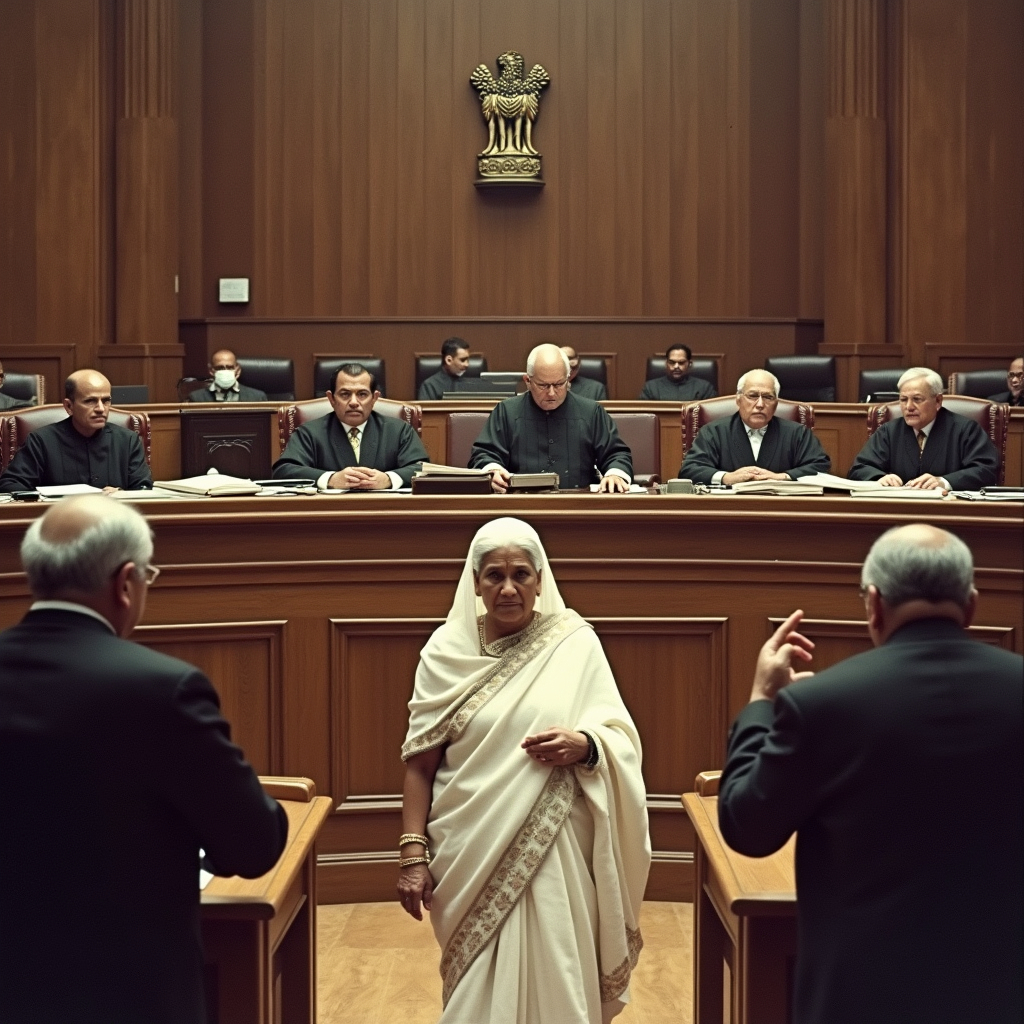













 Allow notifications





