
Download Now
Home Blog Page 394

A comparison of fundamental elements of the CISG and Indian Contract Act

0
Image source: https://rb.gy/xx1i6b

This article has been written by Dibakar Banerjee, pursuing the Diploma in Advanced Contract Drafting, Negotiation and Dispute Resolution from LawSikho. This article has been edited by Prashant Baviskar (Associate, Lawsikho) and Smriti Katiyar (Associate, Lawsikho).

Introduction 

Due to the liberalisation of the economy, along  with the phenomena of  privatisation and globalization, to ensure fast development of international trade, the CISG was established (United Nations Convention on Contracts for International Sales of Goods) . It is a multilateral treaty that establishes a uniform framework for international commerce. The number of countries adopting CISG went high, as of 2020 it has been ratified by 94 countries representing  two thirds  of the world  trade. The CISG removes legal barriers and makes international trade smooth. It provides rules that govern the aspects of commercial transactions, such as contract formation, the means of delivery, parties obligations and remedies for breach of contract. .After that , the convention is automatically incorporated into the domestic laws of the contracting states and applies directly to the countries that have the relationship of transactions of goods and services. In this CISG, India also plays a major role in International trade business. So it’s becomes imperative to discuss and analyse the distinction between CISG and Indian Contract Act 1872. 

Unlike CISG Indian Contract Act is a law of land and is only applicable in India, it prescribes law relating to contract in India. In the age where globalization, international trade and investment are becoming the backbone of modern day commerce, the economic development of a nation is hugely impacted by above mentioned factors. With the increase in  cross border flow of goods trade oriented convention, effective and efficient negotiations between countries are needed for a hindrance free trade in global commerce. 

In India there are two laws that deal with the provisions and principles of sales of goods namely The Sales of Goods Act 1930 and the Indian Contract Act 1872 . The ICA has provisions for all contracts in India under which they are performed , while the SGA is a statute which expressly concerns itself with sales of goods .

On the other hand CISG ( The United Nations Convention on Contracts for International Sales of Goods)  was established in 1980 . It deals with principles and systems that resolve disputes between international buyers and sellers and lays down a modern, uniform and fair system for contracts for the international sales of goods. It is the foundation of all international trade across nations.  

In this article we will identify and analyse the distinctions that exist between the CISG and ICA and SGA, both their principles and application. This article overall brings out the fundamental  legal differences between the laws. 

Formation 

Formation refers to the creation of any contract and it identifies that  an agreement has legally been formed. 

Under Indian Contract Law, a legal contract for sales of goods is created when there is an offer to buy or sell any goods at a fixed price, and when that offer is accepted, then that goods can be delivered either immediately or in future date and the payment can be made in such as in lump sum or in installments. Any contract for sales of goods in India must fulfill the objectives that are there in Section 10 of ICA. In a valid contract there must be an offer and an acceptance of that offer, it must have a lawful object, a lawful consideration and must be enforceable under Indian law. 

On the other hand CISG deals with the formation of contracts under PART 2 from Article 14 to 24 also Articles 11, 13 and 29 highlights the formation of contracts. The CISG has adopted the ‘usual concept of contractual obligations, this concept stated that a contract shall be formed only as the result of two declarations of that is, specifically the offer and the acceptance. The offer can be accepted by statement or by conduct and proposal that indicates the goods it’s quantity and price is sufficient. 

Unlike Indian law, there is no requirement under the CISG that there must be consideration as there is an enforceable contract. Article 55 provides that where the price is not fixed between the parties expressly or implicitly then the price is charged at the time of the conclusion of the contract.

 

Breach 

‘Breach’ refers to the situation when a contract fails because the parties are not able to perform their obligations. When any situation comes where the terms are not honored and the commitments are not upheld, there it is said to be a breach of contracts. Parties to the contract are under an obligation to perform or offer to perform, their respective duties and promises as it is there in the contract, unless such performance is excused by the provisions of the ICA . ICA also provides that when a party has refused to perform or is unable to perform his promise then the other party may put an end to the contract,but if the other party signifies  that he can continue the contract then the contract survives. In ICA and SGA breach of contract provisions are more precisely discussed Section 12 (2) of SGA says that if the main purpose of the contract is breached which causes damage to the buyer then he has the right to terminate the Contract. 

But the concept of Breach is complicated under CISG. It gives primary importance to fundamental breach but also has provisions of non-fundamental breaches. Remedies provided under the Fundamental breach have rigorous consequences when the contract gets terminated. So when a contract gets terminated the party first must establish whether it’s a fundamental breach or not. Article 25 of CISG doesn’t provide difference between the two type of breach, Rather it’s simple states that “A breach of contract committed by one of the parties is fundamental if it results in such detriment to the other party as substantially to deprive him of what he is entitled to expect under the contract, unless the party in breach did not foresee and a reasonable person of the same kind in the same circumstances would not have foreseen such a result”

Article 25 first provisions qualifies fundamental breach and determines the harm or damage caused by one party to the another. The second provision  provides Condition and allows the other party to private breach and to avoid the obligation by providing that it was not foreseen by the same person . There is a distinction between the elements relating to the aggrieved party and the elements that relates to the party in breach. It can be easily understood from the glance of the provision that the Indian laws are comparatively much more straightforward and does not draw difference between the kinds of breach.

Damages

‘Damages’ means the compensation that is caused due to the breach , loss or injury. It seeks protection against the interest. Under ICA, the general principle is to figure out damage that is caused, that is the innocent party is placed at a position where he would be if the contract has been performed. Two types of damage can be claimed by the Non-Defaulting Party 

  1. Direct damage : It is fair and reasonable and considered arising naturally, in a usual course of things, from such breach of contract itself and
  2. Consequential damage: It reasonably be supposed to have been in the contemplation of both the parties and there is more probability of breach of the contract. 

As per CISG, Article 74 tells us that it is only the party in a breach who is required to foresee the loss as a possible cause if there is a breach of contract. The obligor cannot free him from the obligation under Article 79 by proving that he has not foreseen that failure to fulfill the contractual obligations and the loss that would actually occur. 

The CISG has mentioned the ‘Doctrine of Mitigation’ especially in Article 77 but that rule is also reflected in Articles 85 and 86, which deal with the preservation of the goods after a breach. Article 77 clearly states that losses include loss of profit. It sets and imposes a legal obligation on the injured party to themselves to mitigate the loss. 

On the other hand, ICA damages are compensatory and not penal in nature. The sections in ICA provide that the loss or damage arising out from the breach of the contract can be taken in. Two principles for the compensation are found firstly that is the where the money can substitute the loss incurred, the aggrieved party is to be put in the same position as it would have if the contract been performed, and the second principle is that it imposes a duty on the defaulting party to take reasonable steps to mitigate the consequences which arise as a result from the breach of the contract. 

Frustration 

Frustration simply means a contract that is incapable of being performed. It’s an unforeseen situation that occurs subsequent to the date of the contract, in which performance is either legally or physically impossible to perform by either party. 

In ICA there are no provisions that expressly define frustration of contract, but Section 56 of the act states that ” an agreement to do an act impossible in itself is void ”. When any act becomes unlawful or could not be prevented then for that reason the contract becomes void. When the whole purpose of the contract is frustrated due to an event that is unexpected by both parties and it makes the terms of the contract impossible to perform. 

On the other hand, Article 79 of CISG deals with the exemption of a party’s liability when the party failed to perform his obligation of the contract due to an event that was out of his control. The CISG doesn’t have anyone rule of exemption, like the civil law system, the convention also provides extended rules on excuses to all aspects of a party’s performance. The conclusion is that CISG and the Indian Contract Act with Sales of Good Act have different provisions and principles in the law which they choose to adopt trade. 

Should India join CISG?

The pros

Indian sales law i.e. The Sale of Goods Act, 1930 was written by Britishers during colonialism, dating it way old to suit the present needs of the commercial transactions. Since the drafting of this act, there have been changes in the very idea of lex mercatoria. The way parties view and what constitutes Party autonomy for them has evolved over time. Moreover, with the introduction of modern techniques like means of transport, technology has drastically changed. Also, significant changes have taken place in modes of entering into contracts. Due to these changes, it is not suited for modern and contemporary commercial contracts. Therefore, CISG is important for us as it is universal in nature and drafted in several languages that making it more accessible and comprehensible to international commercial parties across the globe. Moreover, it is not outdated as the sale of goods act in India and thus takes into consideration the present-day requirements. CISG contains provisions pertaining to the interpretation of contracts which are considered wider than the rules focussed on by common law.

The cons

The introduction of “fundamental breach” in Article 25 poses its own difficulties. The article states that “a breach of contract committed by one of the parties is fundamental if it results in such detriment to the other party as substantially to deprive him of what he is entitled to expect under the contract unless the party in breach did not foresee and a reasonable person of the same kind in the same circumstances would not have foreseen such a result.” As has been observed by many scholars, this provision leads to a lot of uncertainty owing to its open-ended definition which makes it very difficult to predict when a breach can be held as fundamental. It puts a great degree of arbitrariness in the contract. Moreover, by ascribing a subjective standard of foreseeability of individual parties, the contract is made more complicated.

Conclusion


The fact that the CISG has been “the most successful international document so far” cannot be denied. The need of the hour requires that Indian traders have to familiarise themselves with the laws of many other foreign countries. Is it not level-headed to offer them the prospect of subscribing to a single homogeneous law, tailored as they see fit. CISG does precisely that.

It is desirable to follow complete legal and management reassessment of procurement and sales procedures to be followed under the new system by international persons and their legal advisors. An increasing number of countries ratifying and increasing draw on is made of the CISG. Such traders require identification of clients and conditions in which use of the CISG is preferable to overuse of domestic law. Additionally, the opportunities, inadvertently and unknowingly, to develop into subject to the CISG remains very real. Failure to think clearly about the choice of governing law issues at the time of contracting is quite expected to lead to disagreeable surprises in the occurrence of a dispute.”

References


Students of Lawsikho courses regularly produce writing assignments and work on practical exercises as a part of their coursework and develop themselves in real-life practical skills.

LawSikho has created a telegram group for exchanging legal knowledge, referrals, and various opportunities. You can click on this link and join:https://t.me/joinchat/J_0YrBa4IBSHdpuTfQO_sA

Follow us on Instagram and subscribe to our YouTube channel for more amazing legal content.

Download Now

A checklist of compliance for amending Article of Association of a company

0
Image source: https://www.business-standard.com/article/markets/covid-19-impact-private-equity-slows-down-zooms-in-on-portfolio-companies-120032900422_1.html

This article has been written by Rishabh Tyagi pursuing the Diploma in US Contract Drafting and Paralegal Studies from LawSikho. This article has been edited by Prashant Baviskar (Associate, Lawsikho) and Smriti Katiyar (Associate, Lawsikho). 

Introduction 

Change is inevitable, the recent era of covid 19 has made a lot of companies change their way of conducting business. However,  changing the internal machinery of a company is not that easy as it seems to be, any change that would be made is to be under some guidelines so that it is not unjust to  the individuals dealing with the company. 

The Article of Association are the bylaws or internal regulations of a company, these articles entail the regulations for the working of a company, members of a company are bound to follow the article, in Naresh Chandra Sanyal vs Calcutta Stock Exchange Assn. Ltd. it was held that “members of a company are bound by the provisions that are there in the article of association, the articles help in regulating the internal management of the company and helps in determining the role and responsibility of the management of the company, they helps in establishing a contract between the company and its members”.

 It may have regulation regulations that may be prescribed from time to time and additional matters that may be required according to the needs of the company. A person entering into a contract with a company is presumed to be aware of the company’s Article of Association and Memorandum of association that is the Doctrine of constructive notice.

Schedule 1 of the Companies Act , 2013 provides a table of model form for different companies. For example Table F is Applicable to a company limited by shares , companies have an option to either frame its own Article of Association or adopt it from the table, but why would a company adopt when they could frame their own articles? The primary advantage of adopting the table is that it is legal beyond all doubt.

Precautions to be taken while framing or amending the Articles 

Articles must be printed, divided into paragraphs, each consisting of one regulation and numbered consecutively. Each subscriber of the memorandum has to sign the document in presence of at least one attesting witness, both of them should add  their address and occupation. Anything that would be stated or amended in the articles shall be in accordance with the act, for example Section 272 of the companies act provides shareholders the right for petition of winding up of a company, in any circumstance this right cannot be limited by the articles. The articles shall not contain something that is contrary to the memorandum of the respective company as the memorandum comprises the purpose of a company and a company cannot alter its purpose in any way , if it does so such addition or amendment shall be void and incapable of ratification.  In Hutton vs Scarborough Cliff Hotel Ltd, a resolution was passed at a general meeting of a company which altered the articles by inserting the power to issue new shares with preferential dividend but no such power existed in the Memorandum of association. The alteration was held to be inoperative.

A private company can be converted into a public company by simply altering the articles of a company. Where a private company changes its article in such a manner that they are no longer in sync with the limitations of the private company it will cease to be a private company as from the date of alteration. However,  the same is not the case with a public company, it cannot be converted into a private company unless it is approved by a tribunal.   

Section 15 of the Companies Act 2013 requires every alteration of memorandum and article to be noted on every respective document. The default in this respect is punishable, it requires the company and the defaulting officer may have to pay Rs 1000 for each copy issued without noting the alterations.

Alteration of articles 

Section 14 of the Companies Act 2013 provides a company with the power to alter its own Article of Association by a special resolution and this right cannot be negatived in any way, the company cannot amend the articles in such a way or enter into a contract with other parties that deprives the company from the power of alteration.

These altered articles will be binding in the same way as were the original articles.

Can alterations of articles operate as a breach of contract ?

If a company has entered into an individual contract, alteration of articles won’t help a company to get rid of  liabilities arising out of breach of contract, but if an individual enters into an agreement or accepts a job in a company on the terms of Articles of Association of a Company the company won’t be liable for any breach arising after altering the articles of the company.  For example a Company Secretary accepted an appointment on terms and conditions of Article of association and a clause in the articles provided a monthly remuneration of Rs 50,000 for a company secretary, but subsequently, the article was amended and it reduced the pay of the company secretary to Rs 25,000. This amendment was held to be operative.

Can articles be amended that easily ?

Some  articles of association may contain  “provision of entrenchment” which means the provisions of those articles may be altered only if the condition is more restrictive than those applicable in the case of special resolution. These types of provisions can either be formed on the formation of the company or by a subsequent amendment.

Procedure for amending Article of Association of a company 

  1. The first step is to issue a notice that is not less than seven (7) days along with the agenda of the board meeting , it needs to be delivered in writing to each and every director of the company at their respective residences and a board meeting has to be called to consider proposal for alteration of article of association of a company.  All this has to be done according to the procedure prescribed for issuing and signing notice of board meeting . (In case of an urgent business the notice of not less than seven days can be replaced with a notice of shorter period ) 
  2. Second step is to hold a board meeting to consider the articles that are required to be amended and to pass a board resolution for approving this proposal , which is subject to approval of shareholders .
  3. Once the alteration is made the third step is to delegate the authority to one of the directors of the company to sign , certify and file the requisite forms with the registrar of the company or any other statutory authority to do all such acts , deeds that may be required . 
  4. Fourth step is to circulate the summary of the meeting within 15 days from the date of conclusion of the board meeting , to all the directors for their comments , summary of the meeting or Board Minutes shall be according to the procedure prescribed for preparing ,circulating ,signing and compiling.
  5. Sixth step is to send notice of the general meeting proposing the aforementioned special resolution to all the shareholder , director ,auditor and other person entitled to receive it , by giving not less than 21 days’ notice or shorter notice ;  If consent of shorter notice is given by a minimum of 95 percent of members entitled to vote at such a meeting .
  6. Seventh step is to hold a shareholder meeting and pass the special resolution for altering either by 3/4th majority or unanimously.
  7. After passing a special resolution , file a certified copy of resolution with the registrar in E – Form No. MGT.14 under S117 of the Act within 30 days of passing special resolution in general meeting along with following attachments:
  1. Copy of the special resolution accompanied with Explanatory Statements .
  2. Notice for Convening General Meeting.
  3. Altered articles including the provision of entrenchment.
  4. Shorter Notice consent letter.
  5. Miscellaneous attachments.

Conclusion 

Every company has the power to amend its article of association which is granted by section fourteen (14) of the Companies  Act 2013, and as mentioned previously it cannot be negated either by a contract or in any other way.  However,  this power may or may not be beneficial for the individuals associated with the company. Suppose there is an individual who has agreed to provide a service or to receive a service and he has accepted the appointment on the terms of the article of association of the company.  By accepting this service on terms of article of association that individual takes the risk of those articles being altered, and this is what doctrine of constructive notice states that; the person dealing with the company is deemed to be aware of the company’s Article of association and Memorandum of Association, even though there are several exceptions to this doctrine,  while on the other hand the creditors and shareholders of the company needs to be assured that the company is making itself compatible with the changing environment by amending their article of Association. However,  the amendment or insertion that is being done needs to be in line with the Companies act 2013.


Students of Lawsikho courses regularly produce writing assignments and work on practical exercises as a part of their coursework and develop themselves in real-life practical skills.

LawSikho has created a telegram group for exchanging legal knowledge, referrals, and various opportunities. You can click on this link and join:https://t.me/joinchat/J_0YrBa4IBSHdpuTfQO_sA

Follow us on Instagram and subscribe to our YouTube channel for more amazing legal content.

Download Now

Section 138 NI Act – magistrates should record reasons before converting summary trial to summons trial

0

This article has been written by Karan Sharma pursuing the Certificate Course in Advanced Civil Litigation: Practice, Procedure and Drafting from LawSikho. This article has been edited by Zigishu Singh (Associate, Lawsikho) and Smriti Katiyar (Associate, Lawsikho). 

Introduction

The topic of discussion in this article comprises  aspects of procedural laws, that is, the Code of Criminal Procedure, 1973, The Negotiable Instruments Act, 1881 and various types of trials.

There are a few things that we need to thoroughly understand before moving ahead in the article so that understanding it becomes easier. Those concepts are the following: 

  1. Summary Trials;
  2. Summon Trials;
  3. The Negotiable Instruments Act, 1881.

Summary trial

Section 260 of the Code of Criminal Procedure states that  any Chief Judicial Magistrate, any Metropolitan Magistrate any Magistrate of the first class specially empowered in this behalf by the High Court, may, if he thinks fit, try in a summary way, inter alia, offences not punishable with death, imprisonment for life or imprisonment for a term exceeding two years. But in the terms of The Negotiable Instruments Act, 1881, it shall be lawful for the Magistrate to pass a sentence of imprisonment for a term not exceeding one year and an amount of fine exceeding five thousand rupees in a summary trial. In both cases, the Magistrates have the discretion to start the process of re-hearing if the magistrate has the desire to not try the case summarily.

Summon trials

Summon cases can be understood from the definition of a warrant case, which is defined as offences punishable by death, life imprisonment, or a sentence of more than two years in jail. So summons cases are those in which the maximum penalty is two years in prison.

It may well be claimed that summons matters are not severe in nature, thus they must be resolved quickly without having to sacrifice the rights to a fair trial. The procedure for dealing with such matters as set out in Sections 251 to 259 of the Criminal Procedure Code of 1973, and it is not as serious or formal as other trials.

The Negotiable Instruments Act, 1881

This act was introduced in the year 1881 to regulate the laws for the use of negotiable instruments like bills of exchange, hundi, cheques etc. It governs the legality of the negotiable instruments that are used to make payments by the people in exchange for the promised goods or services.

What led to the discussion of the topic : should magistrates record reasons before converting summary trial to summons trial?

The Supreme Court of India constituted a Division Bench which consisted of the former Chief Justice of India, respected S.A. Bobde and learned judge L. Nageswara Rao. The present topic of the discussion arose from the Special Leave Petition (Criminal) No. 5464 of 2016 pertains to dishonor of two cheques on 27.01.2005 for an amount of Rs.1,70,000/-. The mentioned case in the Special Leave Petition was pending for 16 years in the court. This led to the rising curiosity of the bench to find out the reason why there is an excessive burden and pending nature of the cases filed under Section 138 of the Negotiable Instruments Act, 1881.

The curiosity which has been mentioned above led the Supreme Court,  asking the Registry to register a Suo Moto Writ Petition naming it “Expeditious Trial of Cases under Section 138 of Negotiable Instruments Act 1881”. The Court also appointed Mr. Sidharth Luthra, learned Senior Counsel and Mr. K. Parameshwar, learned Counsel, as Amici Curiae.

What were the findings of the ld. amicus curiae?

The Amici Curiae came up with their research and presented their findings before the Hon’ble Supreme Court of India and enlightened the bench with their knowledge of law.

The Amici Curiae firstly told the bench that there are two crore criminal cases pending in Indian courts out of which thirty–five lakh cases are cheque bouncing cases. This huge amount of pending cheque bouncing cases, that is, thirty – five lakh cases has not only made the process of justice slow but has also affected the disposal of other criminal cases. The Amici Curiae also stated that the rate at which the suits are being disposed off does not meet up or even remotely match up with the rate of speed at which the institution of cases takes place. It was also told that it is a very standard practice of the courts to delay the process of the cheque bouncing proceedings even after the addition of Section 143 in the Negotiable Instruments Act, 1881. The sole purpose of the mentioned provision is to give powers to the magistrate to try the cheque bouncing cases that have been filed under section 138 of the Negotiable Instruments Act, 1881, as a summary trial and end the proceedings in six months.

What issues did the findings of the ld. amici curiae reveal?

The findings of the Amici Curiae revealed different reasons and problems regarding the increased burden and pendency of the suits instituted under section 138 of the Negotiable Instruments Act, 1881, few of the reasons, among other, stated as the following:

  1. Issuing of the Summons:  The Amici Curiae or may I say, friends of the court found out that the issuing of the summons plays a vital role in delaying the proceeding of the matter and increasing the pendency of the matters instituted under section 138 of the Negotiable Instruments Act, 1881. The issuing of summons leads to the stage of issuing bailable warrants against the accused if the accused is not present in the court. Even though it is a standard procedure of the court, but this step takes a long period of time, thus resulting in delaying the process of trial and in increasing the pendency of the suits instituted under section 138 of the Negotiable Instruments Act, 1881
  2. Section 202 of the Code of Criminal Procedure, 1973, Inquiry against the accused: The Amici Curiae also stated that the Magistrates postpone the process of issuance against the accused under the above-mentioned provision of the Code of Criminal Procedure, 1973 for the purpose of inquiry. 
  3. Multiple Proceedings not allowed: The amici curiae  also stated that section 219 of the provision allows trying for only three offences jointly if committed in twelve months by the accused. If the limitation of three offences is removed from the provision, then the cases can be disposed of more speedily.
  4. Mechanical conversion of summary trial to summons trial: Amici Curiae presented another reason for delay in the procedure of disposal of the cases and that is Mechanical conversion of summary trial to summons trial. They stated that the provision 262 to 265 of the Code of Criminal Procedure, 1973 andSection 143 Negotiable Instruments Act, 1881 gives the magistrates the power to convert the summary trial to summon trial if the Magistrates desires so but the only problem that persists is that the mechanical conversion of summary trial to summons trial is being done without giving any solid reasons.

Conclusion upon discussion by the Supreme Court on above mentioned issues

  1. When a complaint is received under Section 138 of the Negotiable Instruments Act, 1881, an investigation is performed to determine if there are adequate reasons to proceed against the accused, even if the accused resides beyond the geographical jurisdiction of the court.
  2. Evidence of witnesses on behalf of the complaint shall be authorized to be taken on affidavit in the conduct of an investigation under Section 202 of the Code. The Magistrate might limit the investigation to document inspection without insisting on witness examination in appropriate instances.
  3. The Supreme Court further said that the provisions shall be amended to allow for a single trial against a person for repeated offences under Section 138 of the Negotiable Instruments Act, 1881 committed during a 12-month period, despite the restriction in Section 219 of the Code of Criminal Procedure, 1973.
  4. The High Courts have been  asked to give instructions to Magistrates to record reasons before transferring complaints under Section 138 of the Negotiable Instruments Act, 1881 from summary to summons trial.
  5. The Supreme Court did not talk about all the issues mentioned by the Amici Curiae as not all issues were of the legal capacity to be changed or dealt with.

Magistrates should record reasons before converting summary trial to summons trial: discussion

As talked above, the direction of the Supreme Court, which directs the magistrates to record reasons before converting a summary trial to summons trial does not only end up in fastening the process of justice and trial but also keeps the magistrates in check. According to me, the delay in the process of the disposal of the suit due to the Mechanical conversion of summary trial to summons trial is divided into 3 parts, including the solution by the Supreme Court.

  1. The Problem: The main problem that persisted was that of the Magistrates routinely converting the summary suits into summoning trial reasons without the reason not being stated by the Magistrates thus extending the procedure of the trial and providing slow justice. 
  2. The Root of the problem: The root of the problem does not only consist of a mechanical conversion summary trial to summons trial, it also consists of a never-ending cycle of overburdened courts, long duration of time between two dates, the accused not being present and etc. The process gets monotonous and tiring for the judicial system as well.
  3. Solution: The direction of the Supreme Court to the High Courts was to give Magistrate instructions to record reasons before transferring complaints under Section 138 of the Negotiable Instruments Act, 1881 from summary to summons trial. This not only keeps the magistrates in check but also informs the higher courts in the hierarchy of the behaviour of the parties in regard to the instituted suit so that, if an appeal is filed, the higher courts shall not skip any detail or fail to appreciate any other factor while deciding the appeal.

Conclusion

After looking at the Suo Motu Writ Petition of the Supreme Court and the solution provided by it, with the help of the Amici Curiae, Mr. Sidharth Luthra, learned Senior Counsel and Mr. K. Parameshwar, learned Counsel, we can say that the Indian judiciary is actively taking steps to evolve itself to help the citizens of the country by saving their time and monotonous appearances on dates by making the judicial system collectively more aware, active and promoting the welfare for the general public. This step does not only help the general public but also helps the judicial system in getting rid of pending cases.

References

  1. https://main.sci.gov.in/supremecourt/2020/9631/9631_2020_31_501_27616_Judgement_16-Apr-2021.pdf
  2. https://www.indiacode.nic.in/bitstream/123456789/16225/2/A197402.pdf
  3. https://www.indiacode.nic.in/bitstream/123456789/2189/1/A1881-26.pdf
  4. https://lawtimesjournal.in/trial-of-summons-case/
  5. https://www.scconline.com/blog/post/2021/04/18/no-more-mechanical-conversion-of-complaints-under-section-138-ni-act-from-summary-to-summons-trial-magistrates-must-record-reasons-supreme-court/.

Students of Lawsikho courses regularly produce writing assignments and work on practical exercises as a part of their coursework and develop themselves in real-life practical skills.

LawSikho has created a telegram group for exchanging legal knowledge, referrals, and various opportunities. You can click on this link and join:https://t.me/joinchat/J_0YrBa4IBSHdpuTfQO_sA

Follow us on Instagram and subscribe to our YouTube channel for more amazing legal content.

Download Now

Debate surrounding the establishment of a High Court at Puducherry

0

This article is authored by Akash Krishnan, a law student from ICFAI Law School, Hyderabad. It discusses in detail the need for the establishment of a High Court in Puducherry and the steps taken by the Legislature and the former Chief Minister of Puducherry in this regard.

Introduction

Among the several noble objectives that were sought to be achieved by the Constitution of India, one of the most important objectives was to assure social, economic and political justice for all citizens of the country.

The judiciary in a country is entrusted with the role of interpreting and applying the law in an efficient manner so as to secure the objectives provided under the Preamble of the Constitution. The courts are empowered to adjudicate disputes between individual citizens, individuals and states and between two states as well. It is their responsibility to ensure rule of law in the country. Also, the courts have been given the additional responsibility of protecting and enforcing the fundamental rights of the citizens of the country.

Before we delve into the issues surrounding the establishment of High Courts in Puducherry, let us try and understand the provisions surrounding this issue.

State judiciary

The State judiciary encompasses within its ambit a High Court and several subordinate courts. According to the judicial hierarchy of courts, the Supreme Court is the apex court of the country and the High Courts are the top courts of individual states. The first High Courts in the country were formed in the British regime under the Indian High Courts Act, 1861. Initially, three High Courts were established under this Act, i.e., the Calcutta, Bombay and Madras High Courts and the other High Courts were established with time post-independence.   

Jurisdiction of High Courts

The High Courts enjoy different jurisdictions and the same has been enumerated below:

ProvisionThe jurisdiction conferred on the High Court
Article 225Original jurisdiction of High Courts w.r.t revenue, admiralty, probate, matrimonial, contempt of court and election petitions.
Article 226Power to issue writs: The High Courts are empowered to issue all five forms of writs for the enforcement of fundamental rights or any other purpose.
Article 227Supervisory jurisdiction over all the subordinate courts under its jurisdiction

High Courts for Union territories

Article 214 of the Constitution of India states that each State should have a High Court. Under Article 230, the Parliament has been given the power to make laws for extending the jurisdiction of High Courts to Union territories or to exclude jurisdictions of certain High Courts from any Union territory. Also, Article 241 of the Constitution confers the power on the Parliament to establish a High Court for Union territories. The power under Article 230 comes into life through Article 231 of the Constitution which states that a common High Court can be established for:

  1. Two or more states.
  2. Two or more states and a union territory.

Some of the examples of the application of Article 231 have been enumerated below:

High CourtJurisdiction 
 StateUnion Territory
High Court of BombayMaharashtra & GoaDaman & Diu
High Court of CalcuttaWest BengalAndaman & Nicobar Islands
High Court of PunjabPunjab & HaryanaChandigarh
High Court of GauhatiAssam, Nagaland, Mizoram and Arunachal Pradesh 
Madras High CourtTamil NaduPuducherry

The Union Territory of Puducherry

Special provisions have been enacted under the Constitution for the administration of the Union territory of Puducherry.

Article 239A of the Constitution empowers the Parliament to make laws for the creation of a Legislature for the Union Territory of Puducherry. This Legislature consists of members who are either elected or partly elected and partly nominated. Additionally, the Parliament can create a Council of Ministers for ensuring proper functioning of the Union Territory of Puducherry. When it comes to Ordinance making powers, the Administrator of the Union territory of Puducherry is empowered to issue ordinances when the Legislature is not in session. This power is similar to the power of the Governor to issue an ordinance.

Puducherry became a part of India in the year 1962. The Parliament in the exercise of the powers under Articles 230 and 231 extended the jurisdiction of the Madras High Court to the Union Territory of Puducherry. However, no steps have been taken to establish a separate High Court for the Union territory of Puducherry under Article 241 of the Constitution to date.

The call for a separate High Court

Arguments for the establishment of a High Court in the Union Territory of Puducherry

High case disposal rate of the lower courts of the Union Territory of Puducherry

The lower courts in the Union Territory of Puducherry disposed of 33,899 cases in 2014, 32,479 cases in 2015 and 28,631cases in 2016. On the other hand, only 9031 cases were disposed of by the High Courts of Tripura, Manipur, Meghalaya and Sikkim put together in 2016. The number of cases disposed of by the lower courts of the Union Territory of Puducherry in 2016 is almost thrice the number of cases disposed of by the aforesaid High Courts.

Lack of appeals for the decisions of the lower courts

Out of the huge number of cases that were being disposed of by the lower courts of the Union Territory of Puducherry, only a few were appealed against. This disparity in numbers was attributed to the extra effort involved in travelling to a different state for filing an appeal, engaging a legal counsel there etc, due to which there is a significant increase in the legal expenses suffered by the litigants.

Expenditure of the High Court

According to Article 229 of the Constitution, the administrative expenses of a High Court should be met from the Consolidated Fund of the State where the High Court is situated. According to Article 231 of the Constitution, when a common High Court is established for a State and a Union territory, the administrative expenses have to be borne from the Consolidated Fund of the State where the principal Bench of the High Court is situated. However, the Union territory of Puducherry bears a substantial portion of the administrative expenses of the High Court of Madras. This is in breach of Article 231 of the Constitution.

The call for statehood

Seven Union territories were covered under the ambit of Article 239A at the time of its enactment. Over time, six out of the seven Union territories, i.e., all Union territories except Puducherry were taken out of its ambit. Out of the six Union territories, multiple Union territories had High Court benches at the time they achieved statehood. For example, before the UT’s of Tripura, Meghalaya and Manipur achieved statehood, the Gauhati High Court had benches in these UT’s.

Thus, it is believed that the setting up of a High Court in the Union Territory of Puducherry would aid in the attempt of Puducherry to achieve statehood.

Recommendations of the All India Bar Association

In April 2017, a delegation led by the Chairman of the All India Bar Association (AIBA) Adish C Aggarwala looked into the need for the establishment of a separate High Court for the Union Territory of Puducherry for the first time. The reasons cited by this delegation for the establishment of the Union territory of Puducherry were as follows:   

  1. The lower courts in the Union territory of Puducherry disposed of 33,899 cases in 2014, 32,479 cases in 2015 and 28,631cases in 2016.
  2. Only 9031 cases were disposed of by the High Courts of Tripura, Manipur, Meghalaya and Sikkim put together in 2016.
  3. The number of cases disposed of by the lower courts of the Union Territory of Puducherry in 2016 is almost thrice the number of cases disposed of by the aforesaid High Courts.

In light of the above statistics, the delegation of the AIBA stated that access to justice is one of the fundamental rights guaranteed under the Constitution of India. Out of the huge number of cases that were being disposed of by the lower courts of Union territory of Puducherry, only a few were appealed against. This disparity in numbers was attributed to the extra effort involved in travelling to a different state for filing an appeal due to which there is a significant increase in the legal expenses suffered by the litigants.

The delegation while briefing the former Chief Minister of the Union Territory of Puducherry, i.e., Mr. V. Narayanaswamy on the situation, made the following recommendations:

  1. A resolution should be drafted and adopted in the legislative assembly for the establishment of a High Court in the Union Territory of Puducherry and it should be forwarded to the Parliament and the President so that they can understand the urgency of the matter and act accordingly.
  2. The Chief Minister should convene an all-party meeting to discuss the idea of the resolution.
  3. Once the resolution is passed, the Chief Minister and an all-party delegation must approach the President, the Chief Justice of India, the Prime Minister and the Union Law Minister and express the urgency of the matter and the need for the establishment of a High Court in the Union Territory of Puducherry.
  4. A special task force should be formed to discuss and take steps towards the establishment of a High Court in the Union Territory of Puducherry. The members of this task force should include representatives from the Government, opposition parties, business communities, activists etc.

Passing of the Resolution

After receiving the recommendations from the AIBA, The legislative assembly of the Union territory of Puducherry passed a Resolution in April 2017 for the establishment of a High Court in the Union Territory of Puducherry. The High Court of Madras was informed of the same in July 2017.

High Court Bench in Puducherry

The Chief Minister of the Union Territory of Puducherry, Mr. V. Narayanaswamy called for the establishment of a Bench of the High Court of Madras at Puducherry during the State-level conference on legal services and motor accident mediation cells in Tamil Nadu and Puducherry. This came in August 2019, i.e., two years after the resolution was passed by the Puducherry Legislature.

The Chief Minister further stated that he had spoken to the former Union Law Minister, Ravi Shankar Prasad in this regard and had received a positive response regarding the same. He also stated that he was attempting to seek the support of Supreme Court Judges to further the cause.

Conclusion

A process that started in 2017 has not achieved anything to date. Already 4 years have passed since the Resolution was adopted by the Puducherry Legislature and attempts were made from time to time to achieve the objective proposed by the Resolution, but all these attempts are in vain as of now.

There has been no action initiated by the Central Government or the Madras High Court for the establishment of a separate High Court or a Bench of the High Court Madras in the Union Territory of Puducherry. Only time will tell whether the call for a High Court in the Union territory of Puducherry that was led by the former Chief Minister sees the light of the day.

References


Students of Lawsikho courses regularly produce writing assignments and work on practical exercises as a part of their coursework and develop themselves in real-life practical skills.

LawSikho has created a telegram group for exchanging legal knowledge, referrals, and various opportunities. You can click on this link and join:

https://t.me/joinchat/J_0YrBa4IBSHdpuTfQO_sA

Follow us on Instagram and subscribe to our YouTube channel for more amazing legal content.

Download Now

All you need to know about international job opportunities in IPR

0
Image Source: https://rb.gy/bvk98x

This article is written by Anindita Deb, a student of Symbiosis Law School, NOIDA. This article discusses the job opportunities available internationally in the field of Intellectual Property Rights. 

Introduction

Intellectual Property law (IP law) is a field that is rapidly expanding. We’re seeing a trend away from organisations and companies pursuing real assets like land and machines and toward acquiring intellectual assets. India is becoming a centre of intellectual developments such as startups and R&D centres. The goal of intellectual property law is to safeguard and maximise the value of your creative inventions. People are protective of what they have created. It is a natural human tendency for which they require the assistance of another group of individuals. That could be you, aspiring to work in the field of Intellectual Property Rights (IPR) and curious to know about the opportunities it has to offer. While pursuing a career in IPR in India itself can pay you well, you can also opt for a career in IPR internationally that could pay you a whopping monthly salary of Rs. 1.5-3 lakhs.

Requisites for a career in IPR

The following pointers must be kept in mind by one wishing to pursue a career in the field of IP law:

  • Whatever function in this industry you believe you are qualified for, understanding the law and its ramifications should be your top priority. In addition, because IPR is so multidisciplinary, good communication skills are required.
  • There is marketing to consider, as well as dealing with various groups in order to comprehend the inventions.
  • Different roles necessitate different abilities. When dealing with patents, for example, a basic understanding of science and technology is essential. Students become technology phobic as a result of the multidisciplinary nature of IPR and the fact that a considerable proportion of technology study is required for patents, which are a crucial component of IPR.

International career options in IP law

Following are the job opportunities one can consider while wishing to pursue an international career in IPR:

Patent administrator

Any 5-year or 3-year law graduate with good internship experience in IP law is eligible for this position. Responsibilities of a professional under this job title are as follows:

  • Filing patent applications with the Indian Patent Office, the Patent and Trademark Office of the respective country and the World Intellectual Property Office in a timely manner to meet deadlines.
  • Maintaining and managing the company’s intellectual property client dockets.
  • Interacting successfully with international clients and foreign law firms.
  • Develop and streamline internal patent administration tasks and procedures.
  • Maintaining and updating client files.
  • Preparing forms for filing patent applications and international applications under the Patent Cooperation Treaty (PCT) in India and in the respective country.
  • Tracking upcoming deadlines and notifying the team and the clients of upcoming deadlines.
  • Following up on the status of applications filed with the patent offices.
  • Reviewing documents received from various patent offices, notifying clients of the same, filing responses if necessary, and updating the intellectual property client dockets.
  • Preparing Information Disclosure Statements and Certification Statements for references cited in various search reports and filling them with the USPTO.
  • Preparing various documents such as Power of attorney, Oath or Declaration and other patent-related forms.

The average salary of a patent administrator is $44,867 in the United States. 

Patent analysts

Potential patent applications are examined by patent analysts. They may also work for companies that are developing new products, assessing prospective products to see if they are patentable. They are in charge of conducting extensive research to see if similar items are now patented or if patents for similar items are seeking approval. They must assure that a patent application will not be challenged in court. Patent analysts frequently work with a large amount of scientific data and must keep up with current trends and research activities. They must deliver their findings to their employer or clients after conducting research for a proposed patent application. They can also assist firms in locating patents that are of interest to them. Companies wishing to develop new products can buy the rights to produce and market their product from patent holders. The average salary of a patent analyst is $69,035 per year. 

Patent and trademark support roles

Attorneys and lawyers aren’t the only ones working in the patent and trademark legal field. There are numerous high-profile support positions available, ranging from a Patent Records Team Leader earning approximately £55,000 to a Temporary Patent Secretary required for an urgent assignment.

IP Manager

Patent and IP Managers are project managers that have extensive technical competence in their field as well as a solid awareness of intellectual property matters. For example, someone with experience in IP and engineering, as well as the ability to manage the legalities and contractual difficulties in the industry, is required for this IP Manager position in engineering. IP managers are required in various companies for international contract negotiation and Mergers & Acquisitions (M&A). 

The national average salary for an Intellectual Property Manager is $95,160 per year.

Business support roles

There’s a range of opportunities available in the business support industry, including openings for a Legal Administration Assistant, a Trainee Legal Administrator, an Office Administrator, a Junior Billing Assistant, and entry-level Legal Secretary positions.

Media, fashion, and sports

These are the specialised areas of law where intellectual property law is crucial. These industries rely heavily on intellectual property. They not only require a patent, copyright, and trademark registration, but they also generate a significant amount of work in the areas of licencing, franchising, IP assignment, IP prosecution, and IP enforcement around the world.

IP Blogging

The broad scope of intellectual property law makes it possible to write about it in order to educate people. Professionals and students are welcome to participate in these initiatives, which are frequently paid. IP law blogging is an extra something in their work profile, if not a full-time thing, that allows them to build a reputation for themselves while also assisting the general public in understanding IP law. One such example is SpicyIP. It is the world’s third most popular patent blog.

Other international job opportunities in IPR

Besides the ones mentioned above, there are some other job opportunities, or more like “tasks” that you can take up for small companies with new ideas and charge a specific fee per task. Some of the options include:

  • You may carry out non-contractual drafting for these companies.
  • Filing trademark registrations for new inventions. You can charge a fee of your choice per registration. 
  • Working in IPR think tanks is also a well-paid opportunity since IPR is still a relatively new concept. 
  • You can also apply to global IP monitoring services. This includes patent, trademark and copyright searches to help your clients come up with the most appropriate patent application. 

Conclusion 

One of the most important advantages of a career in IP law is the opportunity to learn about exciting new breakthroughs in science, technology, and other fields. Intellectual property work can be a particularly intriguing discipline and career to pursue for persons with inquiring minds. 

Working in the field of intellectual property is both challenging and rewarding. It’s something that a lot of recent graduates would be interested in. This is the type of industry where great communication and customer management skills are required in addition to technical and analytical expertise. Despite a fresh set of problems every day, a person feels satisfied at the end of the day. Furthermore, candidates may be able to transition into consultancy roles in the future, as many large organisations now demand seasoned IP professionals.

References 


Students of Lawsikho courses regularly produce writing assignments and work on practical exercises as a part of their coursework and develop themselves in real-life practical skills.

LawSikho has created a telegram group for exchanging legal knowledge, referrals, and various opportunities. You can click on this link and join:

https://t.me/joinchat/J_0YrBa4IBSHdpuTfQO_sA

Follow us on Instagram and subscribe to our YouTube channel for more amazing legal content.

Download Now

The burden of proof in criminal cases and changing trends of the Supreme Court of India

0
Image source - https://bit.ly/2VnRC41

This article is written by Niharika Agrawal, pursuing B.B.A.L.L.B from IFIM Law School. This article comprises the changing trends of the concept of burden of proof in the criminal cases of the Supreme Court of India. 

Introduction

Every facet of the case has some legal aspect which is pointed out by the court on which the parties have to prove or defend themselves. Similarly, every judicial proceeding ascertains some legal rights and liabilities which are interconnected with the facts and have to be proved before the court to satisfy them. Indian legislation provides such a statute with the title the Indian Evidence Act, 1872, under Section 101 to Section 111 which deals with the provision based on the ‘burden of proof’. The burden of proof is the legal burden or the obligation of the parties to prove the facts which further helps the court to decide in favor of either party. This burden of proof is also known as ‘Onus Probandi’. If the party on whom the burden lies fails to prove the burden then the case may go against him. 

Earlier it was mainly the prosecution who had to take the entire burden of proving the facts. Due to this an accused had the advantage if the prosecution fails to do the same. Therefore, there had been several changes made in the legislation so that any crime should not be left unpunished for his deed. The Indian courts, in many circumstances, have reversed the burden upon the accused to prove his innocence. Hence, this article deals with the changing trends by the Supreme Court of India on the concept of Burden of proof in criminal cases. 

Changing trends of the Supreme Court of India 

Generally, the burden of proof is upon the prosecution to prove that he has suffered an injury or he has been affected beyond a reasonable doubt. This is because it is said that the one who institutes the case can provide the best evidence before the court. But in the case of heinous crimes such as rape, etc, this legal burden lies upon the accused to prove his innocence. These are some of the exceptions to this concept. This means that any of the parties will not be excused from proving his liability or burden of proof. Thus, there are two types of burden of proof. In the first case where it is based on law and pleading, the burden of proof remains the same and does not shift to the other party in any circumstances. While in the other case it is based on adducing evidence, the burden of proof may shift constantly during the trial.

India is a common law country. Many times it’s observed that there have been different principles in similar kinds of situations. Such as some jurisdiction has neglected the component of men’s rea in criminal cases or in some cases the court has shifted the burden of proof from the prosecution to the accused. This has created the wrong impression of India of being inconsistent in following the principles of the common law system. However, these trends are not permanent and are for the development and the security of society. It is important to understand the reason behind these changing trends so that this may not impact the credibility of this system. Therefore, here is the periodical case study to understand these changing trends through case laws decided by the Supreme Court of India.  

Kali Ram v. State of Himachal Pradesh (1973)

The accused Kali Ram was charged in the Court of Sessions Judge for an offense under Section 302, Indian Penal Code for the murder of one Dhianu and his daughter Nanti. He was also charged for the offense of robbery. The Sessions Judge convicted him and sentenced him to death. On appeal, the High Court also confirmed his conviction and sentence passed by Sessions Judge was based on three pieces of evidence, that is first the evidence of a witness recorded by police over two months after the occurrence, secondly, the letter written by an accused to the Deputy Commissioner making a confession of his guilt and lastly an extra-judicial confession made to Sahi Ram who incorporated the letter to the Station House Officer. Further, the accused filed a Special Leave Petition (SLP) before the Supreme Court. 

The issue arose in this case regarding the innocence of the accused based on the benefit of the doubt. The Supreme Court in the above case rejected all the sentences given by the trial court and the high court and gave the benefit of doubt to the accused. 

Further, the Supreme Court in the above case was of the view that the system works on the principle that any person is considered to be innocent unless he or she is proven to be guilty. This means an accused is presumed to be innocent unless that presumption is rebutted by the prosecution by producing evidence against the accused which makes him guilty of the specific charge. Hence the court cannot find an accused to be guilty until proven by the prosecution. 

Another observation that the court opined was whenever there are two views, one favoring the accused and the other against the accused, then the view which is favorable to the accused shall be adopted. This principle is applied in special cases where the offense of an accused needs to be proven on the basis of circumstantial evidence. Thus, it was accepted that whenever the court finds reasonable doubt about the guilt of an accused, the accused must get the benefit of such doubt. 

Based on the above principle the learned judge observed that such decisions may benefit wrongful acquittals and can lessen the trust of the people of the society in the judicial system, however, the conviction of a single innocent person is a more serious offense than any other.  India follows the principle that even if thousands of guilty men may be relieved from the punishment but one innocent shall not suffer the false conviction. For such conditions, it is very important to have strict adherence by the neutral and independent judges to the basic principles of presumption of innocence, and the burden of proof needs the perfect balance of the trial procedures. The judicial system of India has reposed much faith in these impartial judges and therefore to protect the country against wrongful acquittals and unlawful convictions, has provided them with special powers against such abuse under Section 165 of the Act. 

Scope of Section 105 of the Indian Evidence Act, 1872

Whenever an accused is charged against any criminal act, then the burden of proving the conditions that brought the charge of the case under any of the general exceptions provided under the Indian Penal Code, or under any other special laws, is upon the accused. Under this Section, the prosecution has to just establish the guilt of the accused and once the guilt is proven, the burden then shifts upon the accused who has the benefit to take the defense of general exceptions in IPC or Criminal Procedure Code. This is one of the special characteristics which applies only in criminal cases. Hence, as per Section 105 of the Act, the burden of proof is upon the accused. 

The legal burden of the accused is not similar to the legal burden of the prosecution. The principle evidence has to be proved by the prosecution only. The accused has to only prove his case by the standard of ‘preponderance of probability’ which is the supposition of the existing actual facts. Thus this provision of the Act gives an opportunity to claim the defense under the general exception and also has to be examined by the standard of preponderance of probability. 

In the case of KM Nanavati v. State of Maharashtra (1962), Nanavati was charged for the murder of Prem (the deceased defendant). Nanavati claimed the defense of grave and sudden provocation. The Supreme Court, in this case, held that, as per general rule, there is a presumption of innocence in the favour of the accused and the prosecution has to prove the legal burden. But when the accused claimed the general exception under IPC, Section 105 comes into the picture and shifts the burden of proof upon the accused to rebut the presumption. Hence in the above case, the accused failed to prove his grave and sudden provocation and was convicted of murder. 

Need for a change in the outlook of presumption of innocence

The presumption of innocence is a concept which means every person or an individual is innocent until proven guilty. Justice Thomas in the case of State of West Bengal v. Mohd. Omar (2002) has explained the need to change the outlook of this concept. According to him, the traditional approach that the burden of proof will always lie upon the prosecution would only benefit the accused of the heinous crimes and would create casualties for the society. In such cases where the prosecutor is successful in proving certain facts of the case, the court has to presume the existence of the facts and has to rely on such circumstances. In other words, when the court is satisfied with the proof provided by the prosecution, then the burden of proof shifts to the accused as it is observed that it is only the accused who knows every incident that has been committed. This is also known as the reverse onus clause.

The above principle is laid down under Section 106 of the court. According to this section, when any fact is within the knowledge of any person, the burden of proving that fact is upon that person. This does not relieve the prosecution from proving his burden beyond the reasonable doubt but, would apply in cases where all the facts are proven by the prosecutor successfully and can establish certain other important facts about which the accused have perfect knowledge and has failed to put forth any explanation regarding such facts of the case that may help the court to make appropriate judgment. Hence, this provision gives another chance to the accused to defend himself by rebutting the presumption of the fact as such facts are within the accused’s special knowledge. 

Development in Section 106 of the Act

Section 106 promotes the idea of a fair trial where it becomes easy to prove all the possible facts and have no burden to prove something that is impossible and benefit the accused. Also, it provides the opportunity for the accused to rebut the presumption of facts which is derived from the series of facts. However, it is noticed that the prosecution takes the disadvantage of this provision and tries to run away from his responsibility to prove the legal burden. 

The Supreme Court has clarified all the doubts arising out of this Section in the case of Ram Gulam Chaudhary and Ors. v. State of Bihar (2001). It is held that all the positive facts must be proven by the prosecution however, it is not responsible to prove negative facts that something which is impossible or which is not within the knowledge of the party. Hence, shifting of the burden is not a violation of any statute or the provision of law as it helps in the establishment of truth which is important for a fair trial. 

Reasons for reversing the burden of proof with respect to development in criminal cases

  1. It helps in the prevention of offenses. 
  2. It provides protection to public welfare and maintains morality in society. 
  3. It promotes fair trials. 
  4. Reduces the burden of the prosecution to prove negative facts and also protects him from the inconvenience caused by criminal cases. 
  5. It secures judicial expediency and economy. 
  6. It is declared to be constitutionally rational by Indian Courts. 

Conclusion

The concept of burden of proof is of broader value especially when it comes to the prosecution. There have been two different stages. One in which the prosecution has to prove the offense and the other in which the accused has to prove the general exceptions, this has increased the burden on the prosecution. The prosecutor has to prove the offense beyond reasonable doubt and also has to make sure that the case does not fall within the general exceptions. It becomes more difficult in criminal cases. This is due to the Indian judiciary system that follows the principle of presumption of innocence as the degree of punishment in criminal cases is more severe. 

In our criminal justice system, there are many cases that have not ensured successful conviction. As per the experts, it is due to the traditional approach by the judges on the concept of presumption of innocence and requirement to prove mental element. Therefore, the need was found to reverse the trends which are not violative to any provision. However, it is important to ensure that these trends should not lose the credibility and reputation of the Judges as impartial functionaries.  

The issues related to the presumption of innocence give the Parliament an unrestrained authority to enact the provision for reversing the burden of proof that violates the presumption of innocence with exceptional clauses especially in the case of heinous crimes of social-economic nature that impacts the wellbeing of the society at large. The provision that brings balance between the general interest of the community and the personal rights of an individual must be formulated. 

Reference


Students of Lawsikho courses regularly produce writing assignments and work on practical exercises as a part of their coursework and develop themselves in real-life practical skills.

LawSikho has created a telegram group for exchanging legal knowledge, referrals, and various opportunities. You can click on this link and join:

https://t.me/joinchat/J_0YrBa4IBSHdpuTfQO_sA

Follow us on Instagram and subscribe to our YouTube channel for more amazing legal content.

Download Now

Case analysis : David vs Goliath

0

This article has been written by Mohd Aman Khan Afghani pursuing the Diploma in Intellectual Property, Media and Entertainment Laws from LawSikho. This article has been edited by  Aatima Bhatia (Associate, Lawsikho) and Smriti Katiyar (Associate, Lawsikho). 

Introduction

The Biblical story of Goliath and David in which  David defeats the giant, Goliath,  is often used symbolically to represent the disputes in which the small player defeats the bigger player. In the disputes pertaining to IPR, it is very much true that size does not always matter. There are many IPR Disputes in which  it can be observed that the smaller industry players have defeated the bigger industry players. It can be said that the advantage afforded to the bigger player by the possession of financial resources doesn’t always guarantee victory in the legal battlefield.  Here, in this Article, is the dispute between PepsiCo. Holdings and the local farmers, which would be analyzed and which is analogous to the conflict between David and Goliath.

PepsiCo. dispute : case of David vs Goliath

In 2019, PepsiCo. India Holdings, (“PIH”) which is a United States based corporation, brought  a lawsuit against some of the local farmers of Gujarat, India in the City Civil Court (Commercial Court Branch) of Ahmedabad. PIH had also filed the lawsuit in other cities for the infringement of the FC5, which is a registered variety of Potato, the same variety which is used in Lays Chips. PIH had contended that the above variety of Potatoes is the hybrid of FL 1867 and Wischip varieties, and  PIH had also contended that they are the registered breeders of the same till 2031. In simple words it can be said that PIH had contended that the Farmers against whom the lawsuit was brought by  PIH were growing and selling that variety of Potato which is registered by the PIH under Protection of Plant Varieties and Farmers Rights Act (“PPV & FRA”), 2001 thereby violating the Intellectual Property Rights (“IPR”) of PIH on which they have the exclusive right. PIH had previously used the system of Contract Farming in Punjab in 1995, after which they abandoned this system, replacing it in 2004-2005 with a system through which they would provide licenses to some of the farmers to grow the stated potato variety. This was part of their ‘buy back’ system, which was the subject of the dispute.  PIH claimed that because of the activities of the Farmers, the collaborative farming system and the rights and interest of the farmers who are engaged with PIH were getting violated and suppressed. PIH sought Permanent injunction as relief in order to restrain the farmers from growing the variety of Potato which was registered by PIH and also passing of action was sought in order to pass off such products as those of PIH. 

In response, the farmers countered that they had grown  the potatoes from the seed which they saved. Moreover, their counsel argued that the farmers were completely unaware of what they were growing, and even if they were aware, even then it was completely immaterial under the statutory rights which were provided under the aforesaid Act.   It was also contended from the side of the farmers that PIH had hired a private detective agency which was completely illegal on their part as the employees of that agency disguised themselves as the buyers and then those disguised buyers collected the samples from the farmers without disclosing the real intention behind collecting the  samples from the farmers.

After the above episode the Court acting in a conscious manner appointed  Mr. Paras Sukwani, an Advocate as their Court Commissioner in order to conduct the enquiry of the above mentioned matter of dispute and thereafter to prepare a report and forward the same to the Shimla bases Potato research institute for DNA Analysis. On 8.04.2019, the Court issued an ex-parte and interim order whereby the farmers were restrained from growing the variety of potato which was under dispute on the finding that the prima facie case had already been established.

The rise of activism pertaining to farming

After the Claim of PIH a wave of social activism had started in which several farmers groups and lobbies had started to build pressure to withdraw all the suits that were filed against the farmers producing these potatoes. The groups and lobbies of Farmers approached the Chair of the PPV&FRA Authority, Mr. KV Prabhu for the sake of some remedial measures. Contrary to the above, PIH took the adverse route. It is very important to note here that the PPV&FRA is enacted to protect the rights of the farmers and simultaneously also to protect the Intellectual Property rights in a balanced way.

Legislative intent of the law

It can be said that  Intellectual Property is unique as it is the fruit of human intellect, or we can say it is the product that is produced by the Human Mind. Intellectual Property rights safeguard the product of the human mind, which in turn helps the innovators to safeguard their creation and in this way a conducive environment is created for people who are innovators and whose intellect needs protection. 

Here the Act which is in question is the Protection of Plant Varieties and Farmers Rights Act and it is the legislation that is enacted to support farmers and their intellectual property rights which is evident from the name of the act. 

If we take into consideration the present dispute in light of the aforesaid act it can very well be pointed out that the action of  PIH against the farmers is very much against the objective of the aforesaid Act and it is somewhere going against the very object of the Act. It can be said  PIH has committed many breaches like bringing a Lawsuit against the Farmers. Furthermore,  PIH never approached any Farmers body and then hired  a private detective agency for the collection of incriminating evidence which could be used against the farmers. It can very well be observed from the series of events which took place in the above dispute between the farmers and PIH that the litigation which was brought by  PIH was very premature, unnecessary and prompted by the fear that their intellectual property owned by big MNCs would go into the hands of farmers.  

Offer for negotiation

After anticipating the rise of  social litigation which is growing in the form of  social pressure which is being exerted by the Farmers groups and other activists,  PIH had offered a unilateral settlement according to which the farmers were asked to refrain from using any seed variety which is registered in favor of PIH. Farmers were also asked to surrender their existing stocks and asked to enter into a Collaboration arrangement with PIH according to which they would buy the seeds from PIH and then the produce from those seeds would be sold to  PIH. From the offer of  PIH it can clearly be seen that  PIH has never considered the benefit and interest of the farmers and also they were trying to bring the farmers to  a position where they would be left at the mercy of big MNCs which have their own lobbies.

PIH withdrawing its lawsuit

Many activists devoted their attention to the fact that the faults which are there in the International Legal Framework pertaining to Intellectual Property rights had impacted the Domestic legislations pertaining to Intellectual property and even the rights of the farmers had been affected adversely and this crisis of suppression of farmers rights has become an important issue. It has to be noted that whenever any big MNC is claiming monopoly over the plant variety or variety of seed then it completely goes against the very objective of the PPV&FR Act and also against the very objective and the spirit of the Convention on Biological Diversity, 1992, the main objective of which was to create and facilitate the sustainable use and development of Bio resources and also to conserve the same. So under the Act the protection and maintenance of the genetic diversity of bio resources is paramount. In the wake of public criticism against the action of PIH, it announced the withdrawal of all the lawsuits against the farmers.

Conclusion

So in conclusion it can be said that the action of  PIH is not at all appropriate as they were trying to create some sort of food monopoly and this monopoly was one or the other way trying to harm the sovereignty of farmers which is their inherent right and that sovereignty will definitely affect the Sovereignty of the Country. The main objective of PPV&FR Act is to protect the rights of the Farmers and to recognize their contributions which are being made by them in conserving, safeguarding and also  all the positive steps they have taken in making available genetic resources pertaining to plants so that new plant varieties can develop and if we see the aforesaid act of the PIH then it can very well be understood that it is completely against the very objective of the PPV&FR Act.


Students of Lawsikho courses regularly produce writing assignments and work on practical exercises as a part of their coursework and develop themselves in real-life practical skills.

LawSikho has created a telegram group for exchanging legal knowledge, referrals, and various opportunities. You can click on this link and join:https://t.me/joinchat/J_0YrBa4IBSHdpuTfQO_sA

Follow us on Instagram and subscribe to our YouTube channel for more amazing legal content.

Download Now

Internet and laws questioning efficiency of the existing legislation

0
Cyber law

This article is written by Chandrasmita Priyadarshini, studying BA LLB from Kiit School Of Law, Bhubaneshwar. This article discusses the laws that govern the internet and the challenges faced by such legislation. 

Introduction

Internet and the laws governing it include the legal principles and legislations that govern the usage of the internet in all forms. The laws that govern such a diversified area are called Cyber laws or Internet laws. We live in a tech-savvy era, where everybody is digitally advanced and equally dependent on the internet which increases the crime rate. Initially, the internet was used and developed as a research, information, and communication tool which wasn’t regulated; it later developed to have e-commerce, e-governance, and e-communication, etc. The legislation relating to the internet is dealt with under cyber laws. As the usage of the internet is increasing, along with it internet crimes are rising so there is a need for rigid legislation of the internet space. Internet crime or cybercrime is any illegal behavior committed by someone relating to a computer system or computer network through the internet with electronic operations that target the security and the data processed in them. Internet laws mean the legal principles or regulations used to govern the internet and all its forms. The internet and its laws are considered to be exceptional due to the complexity of the internet and all its potential activities relating to it, which demands to be flexible to cover various possibilities on the internet. Due to the global nature, these laws cannot be made completely bound by the legislations of any single geographical authority or country’s government.

Relationship between cyber laws and their efficiency

The first-ever international initiative on cyber laws and cybercrime was in Europe called the Council of Europe Conference on Criminological Aspects of Economic Crime in Strasbourg in 1976. 

A staff study by the U.S, Senate Government Operations Committee in February 1977 in the USA was the very first comprehensive initiative on cybercrime. The staff in their study identified several problems related to computer programs and suggested that legislation should be formulated that would regulate any unauthorized use of computers. The Chairman of this Committee was Senator Abe Ribicoff. He later introduced the Ribicoff Bill, 1977 whose purpose was federal computer crime legislation in the U.S. that would specifically prohibit misuse of computers.

Later the first international organization was established which addressed computer crime and penal legislation at a conference in Paris in 1979. It emphasized computer frauds on the nature of computer crime which is international, because of the increase in communications over the internet, telephones, satellites, etc between the countries. Interpol being an international organization gives attention to this aspect. Interpol initiated a discussion to be approved by the General Assembly in 1980 relating to a questionnaire on computer crime which circulated to Interpol member countries. The first Interpol Training Seminar for Investigators of Computer Crime, was held in Paris.

The OECD Regulations in 1982 decided to appoint an expert committee in Paris to discuss cybercrime and the necessary changes required for penalizing such crimes. As per the recommendations from the ICCP-committee on the transnational aspect of cybercrime, there must be international cooperation in keeping a check and regulating cybercrime. All the member countries must consider the same and cover such crimes under national penal legislation regarding these principles. These statues must be explained in terms of functions rather than technology.

The Council of Europe, another expert committee, was constituted in 1985 to control cybercrime. This basically deals with a summary of guidelines for national legislations to establish liability for intentional offenses as given by the Council’s recommendation of 1989.  It included a minimum list of computer fraud, computer forgery, damage to computer data or computer programs, computer sabotage, unauthorized access, unauthorized interception, unauthorized reproduction of a protected computer program, and unauthorized reproduction of a topography like a computer fraud.

Later in 1999, the U.S. President formed a working group in order to provide an initial analysis of legal and policy issues surrounding the use of the Internet to commit unlawful acts. The Working Group’s report was called The Electronic Frontier: The Challenge of Unlawful Conduct Involving the Use of the Internet and was published in March 2000.

Internet issues and their regulation

The current generation of the Information technology era, has led to the emergence of a dynamic and unique area,  called cyberspace. The laws governing it are said to be specialized due to its features of borderless extent, rapid technological advances, anonymous nature, easier communication, transferring data, etc. This can be taken as a threat for the legislators of various countries who expect to utilize their existing laws for the application in the internet or cyberspace which can govern the virtual world. Also, the absence of a centralized agency for its regulation was a threat in itself.  

One of the most important concerns is to determine jurisdiction when any cybercrime or internet crime is committed as determination of the place of occurrence of such crime is difficult and if the crime is committed in two or more places/countries or the effect of such crime is seen in more than one jurisdiction then it leads to confusion. This led to a conflict of laws between laws of two or more countries which made things difficult to deal with the internet and cyberspace. Other issues include concerns relating to privacy on the internet, protection of data and intellectual property contravention, child pornography, cyber terrorism. Various countries have incorporated laws to regulate these leading issues in cyberspace, but these laws faced serious enforcement problems due to the nature of cyberspace. Also, these laws were seen to have lacunae and choice of laws was a major issue. There was a need felt among the countries for combating cybercrimes on the internet which involves more than one jurisdiction hence, the conflict between laws of those sovereign nations. So the enforcement of cyber law in an effective manner would lead to effective enforcement of such laws from a global point of view. Various counties have had their own individual experience while framing and enforcing internet/cyber laws. From them, the US and the West in general were first in adopting their own legislation of their existing laws in regard to cyber laws and creating new laws as required on the internet. Later developing countries like India, Japan, Korea, the Philippines, Malaysia, Singapore, also enacted their cyber law legislation. But the issue still stays strong as the traditional law framing was not fruitful in the case of cyberspace which is similarly faced by other countries as well which remains unsolved. The borderless space, anonymity of users online, dynamic e-commerce, and rapid digital transmission pose a real challenge to the application of traditional laws in cyberspace. 

How to address such issues on the internet globally

The basic approaches for the creation of cyber laws for ensuring enforcement and governance are:

  • To formulate new laws and amend the existing laws by sovereign nations within their current territorial boundaries hence, to attempt to regulate all actions on the internet that can have any sort of impact on their population.
  • Multilateral treaties or international agreements entered by sovereign nations to establish new and uniform rules targeting the conduct of internet users globally.
  • Nations can create an international organization that will regulate and formulate new rules and enforces such rules to keep a check on cyberspace.
  • There must be fixed rules and guidelines for identifying the person responsible for a certain offense in cyberspace by having domain name and IP address registrations, also identifying through websites and users who use it.

Reason for questioning efficiency of the existing cyber laws

Even after so many efforts, policies, regulations, and security screenings, people still commit offenses online. Various business and financial transactions happen online which is a prime area for cyber crimes despite many attempts to avoid such crimes it still keeps happening. Also, as mentioned above the laws vary from one sovereign nation to another so it makes the criminal escape and it is difficult on the part of regulators to convict the guilty. 

Pointers for efficient enforcement of internet laws

Spreading awareness about the internet and its laws among the general public

People must know about their rights and duties while using the internet and its laws and regulations while using it. If people keep being ignorant like this then such cyber crimes and their laws will continue to happen. These credulous people become victims as they do not even know that their computer can be affected by the internet by viruses, trojans, malware and they won’t even report in case of such crimes due to their lack of knowledge.

Imparting training to enforcement officials regarding cyber laws

Primarily law enforcement officials are to be equipped with legal knowledge and the pertinent technical aspect to enforce cyber laws. These officials include the judges, police officers, and any other person dealing with cybercrime. Due to the evolution of technology, the internet, and computers, even experts, officials need to get regular training in the investigation and prosecution of highly complicated technology or cybercrime cases.

On the internet, the criminals take benefit of its anonymousness as it makes it difficult to trace the IP address of that criminal as they use proxy servers and other tech tools

For this adequate support for research and development must be given, manpower, and resources to develop technology that would help in detecting the IP address of such criminals with forensic science education.

Due to the lack of adequate provisions on the internet and cyberspace, this makes a task to combat cybercrime

This is faced all over the world so the sovereign nations must enable strict laws for the internet and also maintain logs and register for internet usage as per the internet service provider. Here the access to the user may or may not be given based on jurisdictional grounds of the internet service provider. This ISP of each jurisdiction must be secured on appropriate legal orders by the police. Tracing becomes difficult when no data is recorded of the user so the ISP or cybercafes must maintain records of who is using the internet and the time of usage so as the identity verification of the customers.

A proper institution must be constructed for reporting national crimes that affect the sovereign nationality and their citizen and in turn, safeguards the critical information infrastructure

The nations must recognize these and a strong team for such crimes is to be prepared, to safeguard the critical information infrastructure of a country. The statutory authority must be strengthened to recognize such crimes.

No universal cyberlaw across the world

Cyber laws and laws to protect internet crimes must be unified through multilateral treaties. This could solve the problem of jurisdictional confusion due to the involvement of multiple jurisdictions, hence determining which laws to be applied according to what jurisdiction.

Conclusion

Internet and cyberspace is a unique place that makes people’s life easier by online transactions like payments, bookings, tenders, facilitates business, etc. It also makes life convenient and gives access to information and knowledge to people all over the world. Effective legislation of internet laws requires an accomplished approach. These laws of the internet, cyber laws despite all the shortcomings still protect from cybercrimes. There’s a long way to go for completely effective legislation for internet laws. A well-organized law for cyber crimes and its efficient enforcement is the need of the hour. Things can be simplified if the people are aware of the internet and its technicalities, and train the law implementing officers, police, and forensic experts. Cyber laws make for a global initiative to match substantive and procedural aspects which plays an important role in removing drawbacks of the laws of the internet. The nations when participating in international organizations, institutions, law enforcement agencies need to create multilateral treaties or conventions to regulate the conduct of people on the internet, this also lays down laws to govern the internet. Interpol also contributes a lot to govern the internet for investigation and prosecution among various jurisdictions. These factors contribute to the effective enforcement of cyber laws.

References


LawSikho has created a telegram group for exchanging legal knowledge, referrals, and various opportunities. You can click on this link and join:

https://t.me/joinchat/J_0YrBa4IBSHdpuTfQO_sA

Follow us on Instagram and subscribe to our YouTube channel for more amazing legal content.

Download Now

Saving patent law from competition policy and economic theories : Kimble v. Marvel Entertainment

0
Insolvency of parties

This article is written by Prerana Das, pursuing 6-Month Growth Camp: Preparation for LLM Abroad from LawSikho. The article has been edited by Zigishu Singh (Associate, LawSikho) and Smriti Katiyar (Associate, LawSikho).

The origins of Kimble v. Marvel

In 2015, the Supreme Court of the United States heard Kimble v. Marvel, a major decision that examined whether a licensor can continue to receive royalties after his product’s patent had expired. On June 22, the Supreme Court refused to overrule the per se norm established in Brulotte v. Thys Co., siding with the defendant, Marvel. Almost two decades of discussions, two lawsuits, and an appeal went into the case. It also raised crucial problems about what patent law protects, what rights can be transferred, and how royalties are calculated.

In 1990, a man called Stephen Kimble received a patent for a Spider-Man toy he’d created: a “web blaster” glove that allowed the wearer to shoot foam streams from their hand (US Patent No. 5,072,856). The patent on this invention was expected to expire in 2010. Kimble claims that he discussed the idea with the president of Marvel Enterprises, Inc. and that Marvel would compensate him for the use of his patent. The two sides were unable to reach an agreement on compensation, but Marvel proceeded to make a toy that Kimble claimed was quite similar to his design. In 1997, he filed a patent infringement lawsuit in response. The parties entered into an agreement in 2001. Marvel paid approximately $500,000 for the patent and agreed to pay royalties of 3% of net product sales. The obligation had no specified expiration date or time limit, and there was no strategy for a decreased cost once the patent expired.  

Patent sale, re-license and lawsuit

Fast forward to 2006, when Marvel licenced the patent to Hasbro, Inc., allowing the latter to manufacture the toy in question. This resulted in conflicts between the parties by 2008. Kimble believed he was being short-changed on royalties. He claimed that the original patent and contract were infringed due to a lack of sufficient royalty payments. He filed a lawsuit in Arizona, and the case was eventually transferred to a federal district court. Marvel, for its part, argued that after the underlying patent expired, it shouldn’t owe any royalties at all.

Using precedent

The district magistrate determined that Marvel and Kimble’s settlement was a hybrid arrangement. As a result, the rights in question (patent and non-patent rights) were not possible to separate. Brulotte v. Thys Co., an earlier case considered by the Supreme Court, constituted the basis for this ruling. The concept of deciding legal issues based on precedent is known as stare decisis.

The Supreme Court decided in the Brulotte case in 1964 that when a patent is sold for royalties, the buyer has no obligation to continue paying after the patent expires. The courts reasoned that doing so would overcompensate the original patent owner and extend patent monopoly protections beyond what was intended. When Kimble and Marvel negotiated their first settlement, neither of them was aware of the Brulotte case. Marvel requested a declaratory judgement in federal district court after learning of it throughout the course of this second action, stating that the business could stop paying royalties until the patent expired in 2010. The judge agreed. On the recommendation of the magistrate, the federal district court granted summary judgment in favour of Marvel; that patent rights were transferred upon sale. However, the court noted that non-patent rights were still unclear.

Upon appeal, the Court of Appeals for the Ninth Circuit reluctantly upheld the decision of the federal district court. The Court of Appeals noted that the reasoning behind the Brulotte rule did not seem to make much sense. Nevertheless, they did believe the rule applied to the Kimble case. Kimble filed an appeal and argued to the Supreme Court via the U.S. Ninth Circuit that the agreement transferred all rights and that he still deserved payment for the toy itself.

Kimble’s argument 

In the Supreme Court, Kimble attempted to overturn Brulotte’s decision. He contended that Brulotte’s understanding of competition after a patent expires is incorrect. As a result, it works to stifle future technical innovation, hurts the economy, and fails to preserve the patent law’s innovative spirit. Extending royalty rights beyond the conclusion of a patent, according to Kimble, would result in reduced royalty rates and hence increase competition. He also claimed that economics had evolved in the 50 years since Brulotte’s time. These alterations, he argued, jeopardised the Brulotte decision’s rationale. In essence, Kimble was arguing that Brulotte should be overturned and replaced with a case-by-case precedent for reviewing patent agreements. He thought the “rule of reason” outlined under antitrust law should be applied.

Marvel triumphs

Despite a barrage of scientific and judicial criticism, the Supreme Court affirmed the district court’s decision in Brulotte and declined to overrule it. Justice Kagan wrote the opinion, which was joined by Justices Breyer, Ginsberg, Kennedy, Scalia, and Sotomayor. In the end, the Supreme Court decided that this was a patent law problem rather than an antitrust one. As a result, Kimble’s arguments were dismissed by the Court. They ruled that reversing Brulotte, in this case, would amount to a change in the essence of the law, and that it wasn’t within their power to do so. They believed that, while economic theory had evolved since the 1960s, there was still a distinction to be drawn between statute-based cases like this one and those based on the Sherman Act, which created key features of patent law. In terms of the economic issues, the Court stated that it has no way of knowing what the economy would do in the future. Because Brulotte is at the intersection of property and contract law, the Court felt that more evidence was required to reverse it. In the case of Kimble, there was no such justification. 

Post Kimble licensing options

Due to judicial clarification, licencing options following Kimble are now better informed. In the future, licensees should be encouraged to request clear, simple agreements that explicitly divide the royalty payment for each piece of intellectual property being licenced. Stakeholders should rest easy knowing that the following practises and tactics are Brulotte compliant, according to Justice Kagan.

Lump-sum

The most straightforward alternative is a one-time payment that is not contingent on the use of a patent. Previously, courts have approved paid-in-full lump-sum licences that cover all past and future uses of the patented product for the life of the patent period. Another option is to divide the lump sum into instalments, which could be paid even after the patent expires.

Lump-sum licences may be advantageous for a patent holder who wants to recuperate her costs and use the money to fund additional research or other company needs. Lump-sum licencing, on the other hand, has significant disadvantages because the value of new technology can be difficult to forecast. A lump-sum licence necessitates rudimentary guesswork in pricing, which could result in royalty costs that are either too high (for a technology that quickly becomes obsolete) or too low (for a technology that suddenly becomes popular).

Partnerships and joint ventures

A joint venture is another Kimble-compliant option. Given Justice Kagan’s phrasing, joint ventures are likely to be the “most wide” choice for royalty agreements that conform with Brulotte. Joint ventures offer the benefits of (1) lowering high entry barriers, (2) sharing risk for high-risk yet uncertain ventures, and (3) breaking into new, undeveloped markets. The challenge of combining two separate organisations’ cultures, management styles, and working relationships is one of the disadvantages of joint ventures. Poorly written agreements may fail to provide clear goals and lead to misunderstandings about each company’s responsibilities.

Hybrid licenses

Other types of intellectual property, such as copyright, trademarks, and trade secrets, are included in hybrid licences. They can provide royalties that last beyond the expiration of any patents involved if correctly designed. Hybrid licences are discussed by both Brulotte and Kimble, as well as the need of incorporating a step-down provision that reduces the royalties on patent expiration. The majority of the royalties should be placed on the rights that last the longest, such as a trade secret, according to one drafting strategy. 

Trade secret licences with no expiration date have a lengthy history of being upheld by the courts. The step-down provision in Aronson v. Quick Point Pencil Co. protected trade secrets divulged while the patent application was pending, even if the patent did not issue. More famously, in Warner-Lambert Pharmaceutical Co. v. Reynolds, the licensee for Listerine’s secret formula, was required to continue paying royalties even after the secret was widely known. Although trade secrets are vulnerable to revelation, even if the public is aware of the secret, the parties’ agreement remains intact.

Hybrid licences provide the advantage of conforming to standard licencing practises, as organisations frequently licence many types of intellectual property. The objective is to specify the prices and terms for each technology that is being licenced. While several of Kimble’s amicus filings chastised this provision, having explicit agreements is excellent policy,  licence agreements which have no ambiguity are simple to read and comprehend. Having to carefully design phrases has a drawback in that it might generate complications if done incorrectly. Certain types of property, such as trade secrets, might be difficult to value since their value fluctuates over time, although this is an inherent risk in most licencing agreements.

Traditional licenses

Traditional licencing alternatives, such as charging royalties based on a specific monetary amount or a percentage of the sales price, are also available. They cannot, however, collect fees for the use of the patent after it has expired. Kimble gives considerable leeway, allowing royalties to continue until “the most recent patent covered by the parties’ agreement expires.”

Conclusion

Patentees are allowed to keep the royalty base for the duration of the patent and spread the payments out over time. This complies with Kimble since the accrual is exclusively based on the patent period, and the payments are amortised after the patent expires, allowing the licensee to pay a lower royalty for a longer period of time. The downside is that, due to accrual deferral, licensors are unable to charge for use after the patent expires. This is what Kimble and his associates were looking for, the ability to generate revenue through licence agreements even after the patent expires. Sometimes it takes a long time for an innovation to become profitable, but patent law makes no guarantee that every patent will create a profit, let alone a large windfall, for the patentee. This is a patent duration issue at its core and one that should be addressed directly with Congress.


Students of Lawsikho courses regularly produce writing assignments and work on practical exercises as a part of their coursework and develop themselves in real-life practical skills.

LawSikho has created a telegram group for exchanging legal knowledge, referrals, and various opportunities. You can click on this link and join:

https://t.me/joinchat/J_0YrBa4IBSHdpuTfQO_sA

Follow us on Instagram and subscribe to our YouTube channel for more amazing legal content.

Download Now

Discovering the ambit of business interruption insurance when it comes to riots and looting

0
Image Source: https://rb.gy/b4wroa

This article is written by Gursimran Kaur Bakshi. In this article, the author explores the possibility of claiming business insurance in cases of riots and looting. 

Introduction 

The COVID-19 pandemic was responsible for shattering stronger economics but it especially impacted the working of businesses across the globe. But this is not the sole reason why frequent business interruption has taken place over the last few years. 

Businesses all across the world also have been interrupted because of civil unrest and protests between the government, state entities and non-state actors. There are continuous protests taking place in the Hong Kong Special Administrative Region (‘HKSAR’) against China over the extradition bill and the security law, in India because of the Citizenship (Amendment) Act, 2019 and in the United States over the brutal killing of black-American George Floyd

According to the Global Protest Tracker, protests around the globe have become widespread. More than 230 anti-government protests have taken place since 2017. These protests have resulted in vandalism and destruction of public and private properties. It has equally impacted the growth of businesses since these civil unrest leads to frequent closure of the local businesses and thus, impacting the market. That is why a growing concern has surfaced regarding the insurance claims when businesses are interrupted due to these issues to recover the losses suffered. 

The normal business insurance policy usually does not cover conditions of global pandemic and civil unrest since these two events are highly unpredictable and depend on the contingency of the event. That is where the Business Interruption Insurance (BII), which is a product of necessity faced during COVID-19, can prove vital. This article analyses the possibility of claiming BII during other types of civil unrest where riots and looting are two usual events that take place. 

What is business interruption insurance 

Insurance is a legal arrangement between two parties, namely, the insurer and insuree wherein the former indemnifies the losses incurred to the insuree on a happening of a contingent event. It is a contract of indemnity which is based on the principle of utmost good faith. However, there is no specific standard of claiming insurance. 

There are general insurance packages which are available to cover risk management relating to a wide range of things including property. Such a policy can be beneficial to shopkeepers, employees, including those who are engaged in business, based on their needs and which can further be customised.

In specific terms, a business insurance policy can cover loss that arises out of damage caused to the property because of natural disasters and arson, to name a few. However, since the COVID-19 pandemic brought a lot of uncertainty and insecurity in terms of the normal operation of the business which was further hampered due to riots and protests, a need was felt to bring changes in the current policy of business insurance. 

BII, as the name suggests, was offered by different insurance companies, especially during the pandemic, to overcome this issue. BII is not a new model of insurance as it has been traditionally referred to as an extension to fire or property insurance policies. It also goes by the name of consequential loss policy. Since it has been considered as an extension of the fire insurance policy, it covers damage incurred to the business property and the loss of income due to the same based on the happening of an event. It broadly covers the loss to the property, revenue earned based on the annual financial records had the disaster not occurred and other ancillary expenses.  

Scope of BII

In the current scenario, there could be two types of BII claims. One that specifically covers the loss incurred due to the inoperation of business during the COVID-19 pandemic. This could be claimed in a general package available. In regular cases, business insurance is not claimed exclusively. It is a part of the comprehensive package policies. Other than the package policies, there is a stand-alone policy to fulfill the specific need of the insuree. In normal circumstances, a package policy is considered the standard for claiming BII. 

There could be two types of business insurance policy, the Business Owner Policy (BOP) and the stand-alone policy. In the BOP, both liability and property insurance is covered. In the stand-alone policy, only specific risks are covered. Whereas, the other type of insurance could be the one based on BII in addition to the factors that have taken place due to civil commotion and protests. This type of claim can be divided into two parts. If this is claimed by the insuree as a part of the BII during COVID-19, then the claims could only be satisfied through stand-alone policy. Whereas, if business losses are claimed independent of the COVID-19 factor, this could very well be accommodated in the BOP that covers property losses, since riots and looting definitely leads to the damage to the property. 

Civil authority coverage

There is another concept known as the civil authority coverage which work claims in addition to the one covered in BII. It allows the insuree to claim insurance over the restriction imposed by state authorities in cases where physical damage has occurred. This type of coverage is usually used in cases of natural disaster which causes severe damage to the properties. But this can be extended through the BOP BY including insurance for situations like civil unrest. 

BII may include preventive measures to mitigate the socio-economic damages caused due to COVID-19

There has been a need felt to widen the ambit and the meaning of business insurance to include events that occur due to civil unrest. However, there seems to be no fixed ground on the scope of BII because it is still evolving. Recently, the European Insurance and Occupational Pensions Authority (‘Eiopa’) have also asked the insurers in the European Union to clarify the extent of BII. The Eiopa, an EU agency, in its staff paper has stated that since BII claims have increased during the pandemic, it is also necessary that insurance include preventive measures within the policy to cover socio-economic damages that may incur in a form of loss of revenue. These preventive measures are only helpful if the BII claims are based both on COVID-19 pandemic and losses incurred due to unrest. However, the normal business policies can be used to claim damages for the latter.  

Possibility of claiming BII during riots and looting in different jurisdictions  

BII claims in India 

During the protests on the Citizenship (Amendment) Act, 2019, the Uttar Pradesh Recovery of Damages to Public and Private Property Ordinance was promulgated for the recovery of compensation against those who were accused of causing destruction to the public and private properties. This was one such incident in recent months where the damage to the property has been caused both wilfully by protestors who wanted to show aggression and dissent against the government and also by those who took advantage of this situation and intentionally caused damage to both public and private property.  That is why along with the protests, rioting and looting were frequently accompanied. 

Rioting under Section 146 of the Indian Penal Code, 1860 (‘IPC’) means the use of force or violence by an unlawful assembly, or by any member thereof, in furtherance of a common object of such assembly. This makes every person of that unlawful assembly liable. In usual cases, an unlawful assembly(Section 141) is armed with weapons that may or may not be deadly. If they are armed and in pursuance of using force or violence, they commit theft (Section 354 IPC), then it would either amount to robbery (Section 390) or dacoity (Section 391). The only difference is that in the latter the members of an unlawful assembly are five or more and they conjointly commit or attempt to commit robbery. Thus, the offence of theft committed by the unlawful assembly is called robbery (looting) which could either be by way of robbery or dacoity. 

Now that these two offences are defined, it is important to understand that there is always a foreseeable risk associated with the happening of these two events. The risk is the damage that could be done to the property in riots and looting. In riots, there is destruction or vandalism which either completely damages the property or diminishes the value of the same. Whereas, in looting, the property is stolen during riots or any kind of unrest. Looting does not have to necessarily take place in riots. It can take place in a normal peaceful situation as well. 

There is no specific policy where insurance can be claimed on the happening of these events. But as stated above, if the claims of the insurance are independent of the impact caused by the pandemic, there is a possibility to claim BOP. Nevertheless, it would depend on the insurer who may or may not be willing to customise the insurance policy as per the need of the insuree. 

BII claims in the United States

In countries like the United States, where civil unrest took place following the death of George Floyd during the Black Lives Matter, there have been speculations over the possibility of business claims. Since the protest was followed by riots and mass unrest, there was vandalism and destruction of public and private properties which included those of businessmen as well. Above that, there is a stagnant situation created by the COVID-19 pandemic in the economy. Hence, the loss suffered by many businessmen due to riots and looting required mitigation since the pandemic would not allow them to start the business from scratch. 

While the different possibilities have been explored, there are concerns over the misuse of such types of insurance because there can always be a case where the person claiming insurance was a part of the mob who intentionally vandalised the property. 

BII claims in Hong Kong

In Hong Kong, BII is not new and was extended to businesses that suffered during the Severe Acute Respiratory Syndrome (SARS). However, BII till now has not been given in cases of protests. Firms in Hong Kong have raised their concerns about the lack of such types of insurance during the riots that took place over the interference of China in the autonomy of HKSAR.   

BII claims in Massachusetts

In Massachusetts, Senator Diana DiZoglio and Dylan Fernandes have introduced Companion Bills S.D. 1845 and H.D.3170 in favour of introducing BII for employers employing 50 or less employees on the basis that their business has been impacted because of the public health emergency. But these Bills focus only on the COVID-19 pandemic. 

Since it has been newly introduced, there are limited debates on whether its scope can be extended in cases of civil unrest. The Bill uses a term called ‘rebuttable presumption’ which basically means that the insuree does not have to prove that COVID-19 has caused direct physical damages to the business unless it is proven otherwise. 

The Bill has been drafted in regards to a ruling of last year. In Verveine Corp. v. Strathmore Insurance Co (2020) the Supreme Court of Massachusetts denied a BII to the restaurant who were claiming loss of their business revenue due to the pandemic. The Court held that the parties could not prove that the direct physical loss to their business occurred due to the COVID-19 pandemic. That is when a need was felt to propose legislation where the insuree does not have to specifically prove the impact of the COVID-19 on their businesses. 

Advantages and disadvantages of business insurance 

The basic advantage of insurance is that it covers risks and allows financial stability and security. This is a much-needed requirement in any country where there is constant unrest and instability. The market economy is also dependent on insurance because if a business is interrupted due to some reasons, it brings unemployment to the market and it could lead to scarcity of certain resources as well. 

The disadvantage associated with insurance is that there is always a growing need to expand its ambit. For instance, now, people are claiming insurance for businesses in case the property is damaged due to civil unrest. In the future, there are certainly strong chances of companies offering insurance over events that are not even foreseeable since COVID-19 was an unpredictable event. 

At the same time, not everybody is in a position to afford an insurance package to mitigate losses. As the business of insurance is growing faster than ever, the companies are offering customised package policies that are expensive. This is another form of risk-taking which businesses are supposed to afford to remain in the competitive race in the market. Further, there is a lack of clarity on when BII claims become mature. Whether it is not the cessation of a business or a temporary shutdown, there is no specific stand on the same.

Conclusion 

Now, with the COVID-19 pandemic, there are expectations to include business interruption insurance as a part of the stand-alone insurance policy to recover the losses incurred due to the pandemic. The pandemic has significantly changed the face of the market. The business sustaining in these uncertain times are necessarily required to secure the foreseeable and unforeseeable risks associated with it. Nowadays, along with the risks, there are other socio-political issues in the country that add to the already identified risks. 

The choice of security is ever-expanding and at the same time, the cost associated with it is sky-soaring. Not securing insurance is no more a feasible choice in any marketplace now. Notably, the availability of choices on the type of insurance to buy also attracts potential foreign investors in countries along with attractive financial returns. Business insurance in cases of riots and looting has become an attractive venture especially in the last few years that have seen constant unrest, protests, and use of police powers by the government. Thus, there is a need for business insurance against the growing demand for it. 

References 


LawSikho has created a telegram group for exchanging legal knowledge, referrals, and various opportunities. You can click on this link and join:

https://t.me/joinchat/J_0YrBa4IBSHdpuTfQO_sA

Follow us on Instagram and subscribe to our YouTube channel for more amazing legal content.
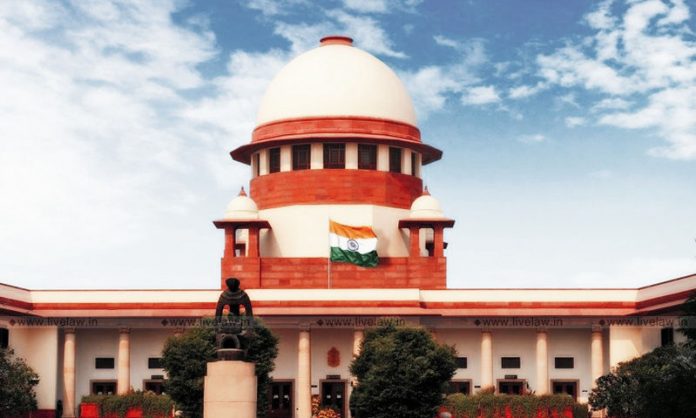
Download Now
logo
FREE & ONLINE 3-Day Bootcamp (LIVE only) on

How Can Experienced Professionals Become Independent Directors

calender
28th, 29th Mar, 2026, 2 - 5pm (IST) &
30th Mar, 2026, 7 - 10pm (IST).
Bootcamp starting in
Days
HRS
MIN
SEC
Abhyuday AgarwalCOO & CO-Founder, LawSikho

Register now

Abhyuday AgarwalCOO & CO-Founder, LawSikho