Download Now
Home Blog Page 398

Courts and expert bodies : the difference with reference to the case of Bangalore Water Supply and Sewerage Board v. Ambarish Kumar S.

0
Image source - https://bit.ly/3kubn3h

This article is written by Nishka Kamath, a student at Nalanda Law College, University of Mumbai. This article discusses the difference between the courts and expert bodies in relation to Bangalore Water Supply and Sewerage Board v. Ambarish Kumar S.

Introduction

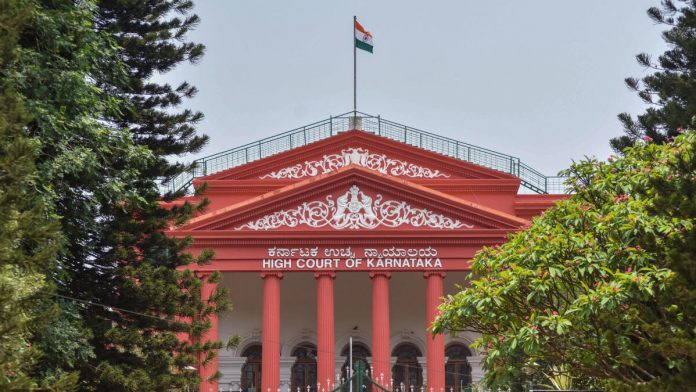
Recently, the High Court of Karnataka deduced that the Courts are not the expert bodies to decide whether the degree of Bachelor in Engineering (BE) is equal to a degree in science or not. This Board, comprising of a Division Bench of Justice Satish Chandra Sharma and Justice Vishwajith Shetty, set aside an order passed on September 3, 2020, by a single bench judge who directed the Bangalore Water Supply and Sewerage Board (BWSSB) to consider treating a BE degree as a Bachelor’s degree in Science, and thus, to consider the candidature of seven candidates who were all BE degree holders, for the position of assistant/clerk.

The Bench further stated that such responsibilities should be left to the expert bodies like the University Grant Commission (UGC) as they are not the expert bodies to decide on matters of such interests. This observation was made by the Court when it allowed a writ petition filed by Bangalore Water Supply and Sewerage Board (BWSSB). The case is discussed in depth further. 

The difference between courts and expert bodies

The dictionary meaning of the word “court” means a place where trials and all the legal cases take place, or where the individuals, especially the officials decide if someone is guilty of an offence committed or not. Whereas, the dictionary meaning of the word “expert” is an individual who has a high level of knowledge or skill associated with a particular subject or activity. Thus, we can refer to an expert body as an amalgamation of individual/s having expertise in a particular field. The courts have time and again stated that they are not an expert body to decide on matters which require an expert body’s intervention like in the cases mentioned below. 

  • The Hon’ble Supreme Court in the case of B.C.Mylarappa @ Dr. Chikkamylarappa vs R.Venkatasubbaiah & Ors (2008) held that the Court including the division bench and a single judge ought not to exercise any writ jurisdiction and meddle into the choice of the expert committee of the University in context to the post of Professor in the Sociology Department of the University, especially when there are no mala-fide intentions. Thus, the Court rejected the writ petition filed by the respondents and set aside the orders of the High Court, and allowed the appeal. 
  • In the case of Balwant Singh Parihar And Anr. vs Union Of India (UOI) And Ors. (2006), the Rajasthan High Court observed that the Supreme Court has time and again held that it is not for the court to make any decisions in the matter of equation of post as well as equal pay scale and that, it is for the expert bodies, the Pay Commission and the governing bodies to consider such matters and infer upon them. 
  • The Karnataka High Court in the case of Bangalore Water Supply and Sewerage Board v. Ambarish Kumar S. (2020) held that the Court is not an expert body to decide whether or not a BE degree is equal to a degree in science or not. This case has been discussed in depth below. 

Bangalore Water Supply and Sewerage Board v. Ambarish Kumar S.

Facts of the case

  1. A writ petition was first filed pleading that the seven individuals (respondents, in this case; petitioners/appellants in the previous order), one of them being Ambarish Kumar S., holding a degree in Bachelor of Engineering be considered as equals to the holders of any degree be it commerce, science, arts or any other graduate degree and that, these individuals were qualified to be appointed for the post of ‘Assistant’, notification of which was issued on 24-08-2018 for non- Hyderabad- Karnataka area, as well as that of Hyderabad-Karnataka area. 
  2. According to the notification, the Bangalore Water Supply Sewerage Board (BWSSB), who is the present appellant, in this case, called for applications inviting candidates for various posts, one of them being that of Assistant. The qualifications one needs to possess is that of a degree in Arts/Commerce/Science from a recognised University and a one-year duration course in computer basics. Since this notification does not differentiate between a technical and a non-technical course, it is believed that any candidate with a science degree, regardless of whether they are technical or non-technical, has the right to apply for the position of Assistant. 
  3. The individuals prayed that being engineering graduates they should also be treated as graduates in the subject of science and requested the BWSSB to consider the same, but the Board did not consider this request, stating that they hold a graduation degree in engineering which is technically qualified and that, the qualification prescribed for the post of Assistant is for candidates holding a degree in science i.e. B.S.C or some degree equivalent to it. Also, they further stated that the degree should not be technical in nature. Thus, the seven individuals aggrieved by this moved to the High Court of Karnataka. 
  4. The single-judge held that the term ‘science’ had no definition anywhere and cannot be limited to include only a Bachelor’s degree in pure science. Therefore, the BWSSB challenged this order made on 3.09.2020 by the single-judge before the Division Bench.

The main issue of the case 

Whether the courts are expert bodies to decide if a Bachelor’s degree in Engineering is equivalent to a degree in science or not?

Relevant legal provisions 

This writ appeal was filed under Section 4 of the Karnataka High Court Act, 1961 pleading that the order which was passed by the learned single judge on 03-09-2020 be set aside and the appeal be considered.

The contention of the parties in the case 

Arguments by the appellant (BWSSB) 

The learned counsel appearing on behalf of the appellant submitted that there is no chance that a degree in engineering be treated as a graduate degree in science as they are two different disciples. The learned counsel further asserted that the single-judge in the case of Zahoor Ahmed Rather and ors. vs Sheikh Imtiyaz Ahmad and ors. (2018) did not accurately interpret the judgement.

Arguments by the respondents 

In response to the arguments of the learned counsel of the appellant, the counsel appearing for the respondents asserted that an engineering degree is, of course, a science degree because the former is a part of science. Hence, it was reasonable for the single-judge to believe that the respondents have the right to participate in the selection process. 

Findings of the court

After going through the arguments from the counsels, the Division Bench cited the decision of the Supreme Court in the Zahoor Ahmed case (stated above), according to which, as the respondents do not hold the qualification i.e. Bachelor degree in Science, even though they have a Bachelor degree in Engineering, the qualification that was prescribed for the post of ‘Assistant (Clerk)’ is only graduation and thus, the learned single judge has made a mistake in law and facts by allowing the writ petition. 

Furthermore, the state as a public employer must take into account the social perspectives that require the creation of employment opportunities across the societal structure. Additionally, the division bench stated that the employer has the right to prescribe qualifications as a condition for eligibility and the role of judicial review is not to widen the scope of such stipulated qualifications. 

Thus, the Court decided that the judgment delivered in the case of Zahoor Ahmed makes it crystal clear that the employer has the right to mention the qualifications as a requisite for being eligible for the post and the role or function of judicial review does not have the authority or capacities that partially broadens the scope. It was further concluded that equivalency of qualifications is not an issue that can be determined by exercising the power of judicial review. 

Moreover, it was found that whether specific qualifications should be considered equivalent qualifications or not is a matter of the State to decide upon, as the State is the recruiting authority. Also, the Court further said that the expert bodies like the University Grant Commission (UGC) are entitled to conclude on such matters.

Considering all the above contentions and facts, the Court came to a decision that the appeal preferred by the employer is reasonable enough to be allowed, and thus, the appeal was allowed. In addition to this, the order of the single-judge was set aside. 

Viewing the judgment as a good precedent 

The division bench of the Karnataka High Court by setting aside the order of the single- judge has indeed, set a criterion for the upcoming cases with issues similar to that of this case. The decision of the Hon’ble Court proves that the concept of ultra vires still prevails and that, no one shall act beyond the powers. 

If the division bench had not overruled this order, a lot of upcoming cases having the same or similar facts, like this case, might have faced the same ordeal as that of the seven candidates mentioned above. 

Further, the Court by stating that an expert body is entitled to occur to a decision in matters of recruitment, and the State as an authority who is recruiting or the employer has the right to prescribe specific qualifications as a prerequisite for being eligible for the post and that, the judicial review does not have the authority or capacities that partially broadens the scope has set a good example. 

Also, the Court by stating that they (the courts) are not an expert body to decide whether the degree in Bachelor of Engineering is equal to a Bachelor’s degree in Science or not and it is for the expert body like the University Grants Commission (UGC) to decide on matters of such interest, has certainly set a good precedent. 

Conclusion

Time and again, the Courts have opined that they are not expert bodies to meddle in the choices of the specialist committees or they do not have the jurisdiction to decide on any matters where a piece of advice or guidance of the expert body needs to be exercised. 

Similarly, the Karnataka High Court in the case of Bangalore Water Supply and Sewerage Board v. Ambarish Kumar S. has stated that the court is not an expert body to decide whether or not a Bachelor of Engineering degree is equivalent to a Bachelor’s degree in Science and it is for an expert body like University Grants Commission (UGC) to decide upon such matters. 

Such instances set a good paradigm for the upcoming matters and prevent abuse or misuse of power, thus averting a court from acting ultra vires i.e. beyond the powers.

References


LawSikho has created a telegram group for exchanging legal knowledge, referrals and various opportunities. You can click on this link and join:

https://t.me/joinchat/J_0YrBa4IBSHdpuTfQO_sA

Follow us on Instagram and subscribe to our YouTube channel for more amazing legal content.

Download Now

Drafting of a contract : what makes it a necessity

0
Image source - https://bit.ly/3hG0UAN

This article is written by Pratyush Bhattacharjee, of Symbiosis Law School, Noida. This article seeks to unveil the essential nature of drafting as a skill for law students and professionals.

Introduction

A contract is a legally binding document between two or more parties that defines and governs the rights and duties of the parties to an agreement. 

Drafting a contract is the process of explicitly writing down the terms and conditions of an agreement and the goal of contract drafting is to create a legally binding document in writing that is clear, concise, and as close to the parties’ intentions as possible. It is one of the basic skills that all lawyers, irrespective of the area they specialize in, are expected to possess. 

Drafting of a contract : importance and objective 

Contracts are omnipotent since we are exposed to them in almost all areas of our life. Agreeing to the terms and conditions while accessing a website, hiring a cab, or even ordering a meal are examples of contracts that we create on a regular basis. Thus, the knowledge of drafting a contract is beneficial not only to people belonging to the legal profession but also to people from non-legal backgrounds. 

What is the purpose behind drafting a contract? Before answering this question let us think of an example of a rental agreement between two parties where A has agreed to sell B goods worth a certain amount. What would happen if A decides to take the money and refuses to perform his part of the agreement? 

The purpose behind drafting a contract is to write down and identify the terms of the promises exchanged between the parties to an agreement and also address what would happen in the scenario where one party refuses to perform their part of the agreement. Putting it simply, drafting a contract provides certainty to the terms agreed upon by the parties.

In the above-mentioned example, a well-drafted contract can enable the aggrieved party, B, to recover the money depending on the remedies mentioned in the contract. It can allow B to demand specific relief or to simply terminate the agreement as well as any other provision to settle the dispute if mentioned in the contract. 

The skills required to draft a good contract

  • The first element necessary for drafting a contract without flaws comes before the drafting process itself. It involves communicating with the client about the agreement between the parties, relevant facts and the client’s intentions to create an outline for the contract. 
  • While drafting a contract, one has to ensure that the language is clear and devoid of any ambiguity. The use of legal jargon unnecessarily should be avoided since a person not having a legal background should still be able to clearly understand the terms of the contract. The goal is to be able to think like a lawyer but not write like one. 
  • Having concrete knowledge of the provisions of the law relevant to the contract is one of the most essential skills necessary for drafting a proper contract. Understanding the law to its full extent and interpreting it in a way for all the parties to easily comprehend is crucial in the process. 
  • A good contract should be complete in the sense that it should be devoid of any loopholes and be able to deal with and protect the client against all the potential issues which might arise. 
  • One should also be able to negotiate the terms of a contract between the parties to come to a mutual agreement.
  • Setting up a plan before beginning to draft helps in making it easier to fulfil the objectives of a contract.  
  • Having a solid grasp of the English language is perhaps the most basic but unavoidable skill required since the clarity and overall quality of a contract is first and foremost determined by control over the language it is to be written in. 

What are the essentials for a well-drafted contract

  • Format – While there is no particular format to be followed for a written contract, there are some essential terms that are required to be present for a legally binding contract such as, “An offer shall not be against public policy, such as involving an illegal act or fraudulent transactions”, “valid offer”, “acceptance of the offer” etc. 
  • Specifying the parties– Consideration and timing of services, it is mandatory for a contract to specify the names of the contracting parties, irrespective of them being an individual or business entity. The consideration involved in the transaction and the time of the transactions should also be clearly stated. 
  • Defining the services to be performed – The scope of work for which the parties come into an agreement should be defined. The obligations and duties of each party should be specified. 
  • Completion of contract – The purpose of a contract is over once each party performs their part of the agreement. Thus, it becomes important to define the timing of all transactions or services involved. The contract should include a clause that defines its period and a provision for termination once the purpose is served.
  • Provisions for resolving disputes – It is fairly common for grievances to arise between parties to a contract. Including provisions for dispute resolution in advance is a requirement. 
  • Defining jurisdiction – While not entirely necessary, the parties may choose to predetermine which court(s) have jurisdiction to approach to settle any possible disagreements. 
  • Specific Clauses – Certain special clauses can be entered into a contract to tighten the protection of a client’s interests. A good example of such a clause which gives direction to the parties to handle specific situations which may arise in the future.

Should drafting of a contract be made mandatory for law students

The skill of drafting contracts is necessary for all lawyers across the board. Even lawyers specializing in litigation or disputes often involve themselves in commercial practice as well, where the focus is primarily centred around contractual disputes. In fact, most of the work related to arbitration revolves around contracts. Restructuring, as well as Insolvency and Bankruptcy Code-related work also requires contractual knowledge. 

This goes to show just how important the knowledge of drafting can be to people in the legal profession and law students. While most law colleges introduce drafting as a subject towards the end of the program (typically in the fourth year for most 5 year courses), it is simply not a skill that students can learn in such a short period of time. It also makes young lawyers try to learn these skills on the fly after graduation or while working, which is not necessarily the best way to learn. Moreover, drafting skills become a very useful tool when students start serious internships from the second or third year but since drafting is not taught early on, it can result in a lot of missed opportunities for the students. Imagine yourself as a third-year law student who does not have any prior exposure to drafting and you are trying to secure an internship in a law firm. 

While to you, it may be an opportunity at learning how to draft, another student who is already acquainted with the skill has a better chance of being accepted since the employers would prefer to choose someone with at least some experience in drafting compared to someone who has to be taught from square one. When a client asks to draft a joint venture agreement or a joint negotiation agreement, to meet the requirements for drafting such contracts, one requires a different set of training to acquire these skills since they are not taught in most law schools.  

Instead of primarily focusing on teaching the law itself, law schools should make it a point to include contract drafting as a core subject early on in the syllabus for law students. Contract law is one of the first introductions for first-year law students, thus, teaching drafting along with the law of contracts should be a welcome change since the two go hand in hand. This would further enable them to develop a firm grasp of the skill and since they would already know the basic knowledge of drafting, it would help them perform better at internships since instead of having to learn drafting from the ground up, they would be able to focus on improving their skills at the craft.  

The necessity behind acquiring contract drafting skills

Why is it so necessary to learn drafting in the first place? While drafting is just one of the wide range of skills to be accumulated in the legal profession, it falls within the essentials due to its widespread requirement in various legal fields. If you’re working at a law firm that deals in dispute resolution or mergers and acquisitions, chances are, a large fraction of your work will involve drafting and reviewing contracts which makes the knowledge of drafting an absolute necessity. 

Not being well acquainted with the drafting skills can prove to be immensely detrimental to the clients as well as the lawyer drafting the contract since it increases chances of making mistakes which can compromise the validity of a contract in the eyes of law and also not fulfilling their interests due to errors made during drafting. 

Apart from the obvious reasons to acquire drafting mentioned above, working on your drafting skills can drastically enhance analytical prowess due to the fact that you are required to carefully delve into each and every aspect while examining or drafting a contract in order to protect your client’s interests. 

Being skilled at drafting also adds the perk of negotiation skills since both are complementary to each other. Contract negotiation involves discussions and compromises in order to reach a final agreement by the parties to the contract. In order to draft a contract that fulfils the client’s interests and is acceptable to both parties, it becomes essential to be able to strike a balance between the interests and rights of the parties. Hence, as you keep improving your drafting skills, negotiations skills will follow.

What makes contract drafting a rewarding skill to possess

Contract drafting along with negotiation can prove to be a very valuable and rewarding asset for all areas of legal practice. Both law firms and individual lawyers usually earn a significant portion of their revenue through drafting since it is a highly reliable and profitable revenue stream. Harnessing this skill allows even nascent lawyers to obtain a reliable income source. 

For many young litigators who are trying to succeed as arguing counsel, the monetary reward from this arena of legal practice can often prove to be limited. Thus, contract drafting can offer such professionals a secondary source of income. 

Contract drafting is also a very essential part of the big law firms since they can make a lot of money from transactional practices such as Mergers & Acquisitions, Corporate Finance or Banking which involve a large amount of drafting and negotiation. 

It is therefore obvious that a lawyer in most fields will benefit tremendously from systematically learning contract drafting and negotiation. 

Conclusion

Being able to draft a good contract is a direct display of one’s skills as a legal professional. It, therefore, is not a surprise that drafting is seen as one of the most important skills to imbibe in this profession. 

In order to ensure the preservation of a client’s best interests, the skills needed to draft a contract and come to favourable terms by negotiating is crucial. Since it is largely a writing skill, it can always be improved through practice and it pays off to learn it at an early stage as it provides one with more time to develop and test their skills on the field. It is a valuable skill that can create better opportunities for lawyers across various fields. 

References

  1. http://www.legalserviceindia.com/legal/article-3044-basics-to-contract-drafting-and-contract-review.html
  2. https://blog.ipleaders.in/need-know-written-contracts-business-transaction/
  3. https://online-learning.harvard.edu/course/contractsx-trust-promise-contract?delta=6
  4. https://lawsikho.com/course/introduction-to-practical-contract-drafting
  5. https://www.crippspg.co.uk/what-is-the-point-of-a-contract/
  6. https://blog.ipleaders.in/want-become-champion-contract-drafting-negotiation/

Students of Lawsikho courses regularly produce writing assignments and work on practical exercises as a part of their coursework and develop themselves in real-life practical skills.

LawSikho has created a telegram group for exchanging legal knowledge, referrals, and various opportunities. You can click on this link and join:

https://t.me/joinchat/J_0YrBa4IBSHdpuTfQO_sA

Follow us on Instagram and subscribe to our YouTube channel for more amazing legal content.

Download Now

Repeat appointment of arbitrators as a ground of challenge : HRD Corporation v. GAIL (India) Limited

0
Image source - https://bit.ly/2YvmeyN

This article is written by Aanya Kameshwar, pursuing a Certificate Course in Arbitration: Strategy, Procedure and Drafting from LawSikho. This article has been edited by Aatima Bhatia (Associate, Lawsikho) and Smriti Katiyar (Associate, Lawsikho). 

Introduction

One of the important reasons why parties involved in a dispute decide to opt for arbitration as an alternative dispute resolution is that they are given the opportunity to select their own decision-maker. The fact that parties get to nominate their own arbitrator is one of the most distinctive characteristics of the arbitral process. As the parties to a dispute are allowed to choose their own decision-maker, they try to nominate the person who would best support their position in the disputed matter. In layman’s terms, an arbitrator is someone who, being neutral to the matter between the parties, provides an objective, unbiased and wise solution to the dispute in the proceedings of arbitration.  

In the midst of the parties opting more for arbitrations, the issue of repetitive appointments of arbitrators is gaining more and more significance. The fact that the neutrality of an arbitrator is directly compromised when he is appointed by the same party on several occasions, makes this situation a sensitive matter. Item 22 of the fifth schedule of the 1996 Act deals with ‘repetitive appointment of arbitrators’ as a ground to challenge the appointment. The said item no. is reproduced hereunder: –

“22. The arbitrator has within the past three years been appointed as arbitrator on two or more occasions by one of the parties or an affiliate of one of the parties.”

A person entrusted with a duty to judge a matter must be impartial & independent. The fifth schedule of the Arbitration and Conciliation Act, 1996 (“1996 Act”) lays down various grounds giving rise to justifiable doubts as to the independence and impartiality of the nominated arbitrator(s) and the seventh schedule of the 1996 Act lays down the grounds which immediately renders a person ineligible to act as an arbitrator. The intention of this article is to offer a brief description of one of the important grounds to challenge the appointment of the arbitrator i.e. ‘repetitive appointment of arbitrators’ and to analyse the findings of the Court in the case  HRD Corporation (Marcus Oil and Chemical Division) v. Gail (India) Limited (“HRD Corporation”) and how its interpretation of the Schedules and the challenge procedure can affect the arbitration in India.

Can arbitrators be reappointed?

The issue of ‘repeat arbitrators’ is the situation where an arbitrator has been previously appointed on several occasions by the same party. 

For example, if Mr. A has been nominated or is proposed to be nominated by party X as an arbitrator in March 2021 (third arbitration) and it was found from the declaration made by the nominated arbitrator under Section 12 of the Act, that he had also been appointed by the said party A in July 2019 (second arbitration) and in 2017 (first arbitration), then while determining the nominated arbitrator’s independence and impartiality in the third arbitration, would the appointment of Mr. A be challenged under item 22 of the fifth schedule of the Act or can Mr. A be reappointed as an arbitrator for the third time as an arbitrator?

 In the case of Sudesh Prabhakar and Ors. v. EMAAR Constructions Pvt. Ltd., the Delhi High Court, while relying on HRD Corporation (supra), has held that even an arbitrator who has been appointed on two or more occasions by a party or its affiliates in the past three years, may yet not be disqualified if it is shown that the nominated arbitrator was impartial and independent on the earlier two arbitrations.

Rule to make disclosure

As per Section 12 of the Arbitration Act, 1996, the person who is nominated in connection with his possible appointment as an arbitrator should make a disclosure under section 12. This disclosure should be in the format prescribed in the Sixth Schedule which requires the person to disclose:

  1. whether there are any circumstances that may give rise to justifiable doubts as to his independence or impartiality; and
  2. whether the person can devote sufficient time to complete the entire arbitration within a period of twelve months.

The Hon’ble Supreme Court in the case of HRD Corporation (Marcus Oil and Chemical Division) v. Gail (India) Limited, has interpreted Sections 12, 13, and 14 of the Act and the said Schedules. The Supreme Court has also interpreted the procedure for a challenge to the appointment of an arbitrator. Below we try to analyse the findings of the Court in the HDR Corporation case and how its interpretation of the Schedules and the challenge procedure can shape Arbitration in India. 

arbitration

Background of the case

On the 1st of April, 1999, HRD corporation and GAIL entered into a contract for the wax supply which was produced at GAIL’s plant in Uttar Pradesh. The contract was for a time period of twenty years. During the business few disputes arose between the parties which resulted in three arbitrations. For the first two arbitrations, the tribunal consisted of Justice N.N. Goswamy, Justice J.K. Mehra, and Justice A.B. Rohtagi as the presiding arbitrator. Even for the third arbitration, the same tribunal was chosen by the parties, but due to the sudden demise of Justice Goswamy during the pendency of the proceedings, Justice T. Doabia was appointed in his place. Also, Justice. S.S. Chadha was appointed in the place of Justice Rohtagi because he resigned from his position. The third arbitration proceedings came to end in the year 2015.

In the fourth arbitration, GAIL nominated Justice Doabia whereas Justice K. Ramamoorthy was nominated by HRD. As the presiding arbitrator Justice K.K. Lahoti was appointed by the two judges. Subsequently, Justice K. Ramamoorthy resigned, and to fill his vacancy, Justice Mukul Mudgal was appointed by HRD.  Justice Lahoti disclosed after his appointment that he had previously given a legal opinion to GAIL in an unrelated matter. HRD challenged the appointment of Justice Justice Doabia and K.K. Lahoti before the Arbitral Tribunal. The challenge was dismissed. Thereafter, before the Hon’ble Delhi High Court, HRD challenged the appointment of the said two arbitrators which was also dismissed. Then, before the Hon’ble Supreme Court, the dispute was appealed on the grounds mentioned below.

Grounds for challenge 

It was argued by the HRD corporation that the appointment of Justice K.K. Lahoti is unfavourable because of the appointment of K.K. Lahoti attracts Item 20 of the Fifth Schedule and Items 1, 8, and 15 of the Seventh Schedule as previously he has given a legal opinion to GAIL in an unrelated matter. Further, the appointment of Justice Doabia also attracted Items 1, 15, and 16 of the Seventh Schedule because Justice Doabia was an arbitrator in the previous rounds of arbitration in the same dispute.

Outcome of the case

The Court held that to attract any items mentioned under the Fifth Schedule to a challenge, the appointment of the arbitrator is not permissible before the Court until and unless an award is issued by the Arbitral Tribunal. This is so because the parties are allowed under Section 13 of the Act to raise the issues of “impartiality” and “independence” before the Arbitral Tribunal only. However, parties can approach the Court directly to raise issues attracting Seventh Schedule. This is so because the items in Seventh Schedule, when attracted, can make the arbitrator de jure ineligible to act as an arbitrator. Hence, the Court proceeded with the allegations in respect to the items mentioned in the Seventh Schedule only which were raised against the two arbitrators.

The Court ruled that merely providing a legal opinion in an unrelated matter will not attract Items 1, 8, and 15 of the Seventh Schedule in respect to the challenge to the appointment of Justice K.K. Lahoti. The Court also said that to attract these items the advice should be “regular” and the opinion should be “qua the dispute at hand.” Furthermore, the court said that to constitute a professional relationship and not a business relation the advice should be related to business relationships and a legal opinion on a matter only. Hence, the challenge against Justice K.K. Lahoti was dismissed.

The Court ruled in respect of the appointment of Justice Doabia, that his involvement in a previous arbitration between the same parties would not, by itself make him ineligible to be an arbitrator in a subsequent arbitration. The fact that an arbitrator has previously decided a case is not enough to lead to a conclusion of apparent bias. What is required is that the involvement should be in that particular dispute. Accordingly, the Apex Court ruled that Justice Doabia and Justice Lahoti’s appointment cannot be terminated. 

Analysis 

The decision in HRD Corporation (Marcus Oil and Chemical Division) v. Gail (India) Limited., will be looked upon in the future for adjudication of disputes on the issue of appointment of arbitrators. The major takeaways of this judgment are that the fact that an arbitrator has been on a panel of an arbitral tribunal in a different dispute, but amongst the same parties, should not lead to an automatic assumption of bias against that arbitrator. In order to further promote arbitration as an efficacious process, clearly, there has to be a belief in their ability to be neutral and impartial. 


LawSikho has created a telegram group for exchanging legal knowledge, referrals, and various opportunities. You can click on this link and join:

https://t.me/joinchat/J_0YrBa4IBSHdpuTfQO_sA

Follow us on Instagram and subscribe to our YouTube channel for more amazing legal content.

Download Now

Protecting the Intellectual rights of performers : Beijing Treaty on Audio-Visual Performance (BTAP)

0
Image source - https://bit.ly/30g1zm4

This article is written by Himanshu Mahamuni, a student of Government Law College, Mumbai. This article analyzes the Beijing Treaty on Audio-Visual Performance (BTAP) and its benefits to performers.

Introduction

The Beijing Treaty on Audio-Visual Performance (BTAP) has entered as a saviour for artists such as singers, musicians, dancers and actors, in the field of audio-visual format. This treaty was adopted in the conference on the protection of Audiovisual Performances in Beijing, which took place in June 2012 and later came into force on 28 April 2020. It was enforced when a minimum number of parties, 30 countries signed the treaty and at present 42 countries are signatories to it. States who are member states of WIPO and the whole of the European Union are eligible to become a signatory of BTAP. It protects audio-visual performances for 50 years from signing. 

This treaty protects the rights of artists, in both recorded works such as on films and televisions, and live work performed, such as concerts, based on certain rights accordingly. These works can be protected by the proper copyright mechanism of the parties in their territory which may range from music, films and other audio-visual performances. This article discusses the role of BTAP in the protection of artists’ rights, other such treaties, rights provided under BTAP and India’s role in it. 

Importance of BTAP

Artists of the states who have entered into the treaty have welcomed this treaty. This treaty duly provides intellectual protection to the work of such performers. This treaty will ensure the economic development of audiovisual performers while improving their status and protecting the culture, folklore and cultural diversity. Artists of the countries who are a signatory or not to the treaty can still be protected by the internal laws relating to their protection, but their work displayed in other countries outside the jurisdiction of their internal laws might violate their rights. This treaty ensures the safeguarding of the audiovisuals screened abroad, which was not available otherwise.

This treaty also ensures the protection of traditional cultural expression and national folklore. As a result, BTAP not only encourages artists to work and improve on their performance but also ensures their protection against violation of their rights. This treaty was widely appreciated by the artists of audiovisual format, where the content consumption has been raised to peak due to widespread internet services. 

Difference between BTAP and other treaties made by WIPO

International Convention for the Protection of Performers, Producers of Phonograms and Broadcasting Organizations (“Rome Convention”), 1961

The Rome convention protects against unauthorised broadcasting or recording of the performer’s works. However, artists did not have rights over the audiovisual medium. It also does not contain any provisions for three-step limits for exceptional cases. The convention tries to include both the American and English common law in unity which has created uncertainty and confusion. This shortcoming has been filled up by the BTAP, by giving full control over the work with clear language and well-structured laws. 

Berne Convention for the Protection of Literary and Artistic Works (“Berne Convention”), 1987

Berne convention protects the rights of creators such as authors, musicians, poets, painters etc and grants control over who, how and on what terms their work can be used.The Berne convention lacks the enforcement mechanism. The convention gives lesser power to member states for punishment to those who contradict the provisions of the convention. This resulted in the protection over the copyrighted work as not absolute and subjective to the artist because it vaguely described the term “copyright” in its structure. BTAP, in line with WIPO, has clearly defined all terms with specific and correct usage.

WIPO Performances and Phonograms Treaty (WPPT), 1996

WPPT dealt with the rights of performers and producers of phonograms. This treaty gave protection against copying, distribution and making available phonograms. This treaty did not undertake rights of audiovisual performances recorded in the media and governed only the aural and fixed to phonograms. This treaty grants moral rights to performers but the producers of phonograms are only granted economic rights. These problems have been overcome by the BTAP, as it exclusively focuses on audiovisual performers and grants both the rights in proportion.

Economic Rights and Moral Rights provided under BTAP

Economic Rights

BTAP grants artists different rights based on the type of performance they do. Artists whose performances are fixed in audiovisual format i.e. in recorded modes have the following rights: 

  1. Right to Reproduction (Article 7)

It authorizes direct or indirect reproduction of the performance by another individual on permission by a performer fixed in audiovisual format.

  1. Right to Distribution (Article 8)

It authorizes the distribution of the copies of the performance to the public by the means of sale or ownership in audiovisual format. 

  1. Right to Rental (Article 9)

It authorizes commercial renting to the public of the original and copies of the performance in audiovisual format. 

  1. Right of making Available (Article 10)

It authorizes the making available to the public of any performance from the internet or any digital distribution in the audiovisual format. 

Artists whose performances are of unfixed audiovisual format, i.e., live mode, have the following rights:

  1. Right of Broadcasting(Article 11)

This right can be utilized except in the case of rebroadcasting of the content.

  1. Right of Communication(Article 11)

This right can be utilized except where performance is a broadcast performance.

  1. Right of Fixation (Article 11)

Moral Rights

Moral rights are one of the most important rights to be bestowed upon a performer. Under moral rights, a person can claim to be identified as the performer. This also gives rise to opposition to any distortion, mutilation or other modification which might result in harm to the reputation of the performing artist, taking into consideration the nature of the audiovisual format. 

Moral rights continue even after the death of the performer, which can be exercised by the authorized person or institution at least until the expiry of the economic rights. This right protects the performer’s reputation even after transferring his ownership as they were before the transfer. 

Economic Rights: Exclusive Rights and Statutory Licenses

Exclusive rights are the powers to allow or disallow the use of an individual’s work by another person who is not the performer himself. To prevent the misuse of their rights, there are specific situations where continuous authorization of the performer is not required. A performer may transfer his economic rights under Article 12 of the BTAP given under Articles 7-11 and he transfers his ownership or exercise rights by transferring to the producer of the audiovisual fixations to a contracting party according to the national law.

Such a contract between the parties must be entered in writing and signed by both parties concerning audiovisual fixations produced under its national law. However, even after transferring the rights, the performer may be eligible to receive royalties or equitable remuneration for the use of his performance. Any member is free to extend the minimum protection.

Statutory licenses are limitations or exceptions to the exclusive rights of the individual over the copyrighted work. BTAP has provided for the limitations and exceptions to the use of the performer’s exclusive rights under Article 13, which directs to provide limitation or exception to the protection to the performer, as may be provided in the national legislation concerning the copyright in literary and artistic works. Parties are free to form specific limitations or exceptions to the sector in the line with internal provisions of intellectual property. It has to be passed under three-step limits as provided in Article 9(2) of the Bern Convention, namely: 

  1. Certain special cases,
  2. which do not conflict with a normal exploitation of the performance, and 
  3. do not unreasonably prejudice the legitimate interests of the performer.

Term of Protection

The treaty provides protection for a period of fifty years (Article 14) to the performers from the year in which the performance was fixed. This protection is available for both the economic rights as well as moral rights. The countries which have not formeany d internal legislation for the protection of moral rights after the expiration of treaty during the treaty in force, shall not have any obligations to grant the moral protection to the performer.

Temporal Applications

Some of the several cases where temporal applications are-

  1. The treaty, when in force, any future audio-visual performance of both fixed and live nature shall be mandatorily under provisions of the treaty. 
  2. The states may or may not provide exclusive economic rights in a dispositive capacity in the fixed or recorded performances which were in existence at the time of the treaty came into force.
  3. However, in the case of moral rights, it shall be applicable to all the cases in past, present and future performances whether fixed or live. 

The interplay of the Treaty and the Parties

The contracting parties to the treaty shall have an assembly(Article 21). This assembly will consist of an alternate delegate, expert and advisor who will deal with the matter relating to maintenance and development of the treaty with its application and operation. Apart from the WIPO, member state and the EU members, the assembly is qualified to give admission to competent intergovernmental organizations(Article 23) to become a part of the treaty. The assembly of members can organize diplomatic conferences for discussion of the treaty and vote on the same to pass any resolution. Each contracting party who is a member state shall have a single vote each. 

The interplay of the parties as a part of the assembly keeps check on the terms of the treaty and passes any decision, only by consensus, to establish its own rules. This instils equality among members and increases their trust in the treaty.

India’s role in the BTAP

BTAP is an inclusive treaty that is steadily being widely accepted, with the 42 member states as signatories to the treaty. India is not a party to the treaty as of now. India must consider signing the treaty. One of the major reasons is to preserve the rich and hereditary traditional arts performed by the artists. The treaty protects the cultural diversity brought in literary works and music in audiovisual format. To protect the traditional folktales from becoming extinct and improve their status on the global level, India must sign the treaty.

As a leading south-east Asian and developing country, India’s stance must be of encouraging such treaties. India is currently a signatory to six treaties administered by WIPO, so it will be easier to join the Beijing convention. India is a member of the WIPO Copyright Treaty (WCT) and WIPO Performances and Phonograms Treaty (WPPT), which will supplement BTAP to strengthen India’s performers. These treaties are flexible and can be bent by internal provisions. The addition of BTAP will make stricter norms for the protection and enhance the position of the audio-visual sector in the country. India will play a pivotal role in administering the assembly and developing the framework of the treaty by being part of the treaty.

Conclusion

The level of safeguard set by BTAP in the Intellectual Property is remarkable. It has overcome the shortcoming of previous audiovisual conventions while developing itself to be more inclusive. While previous treaties failed to give both moral and economic rights, BTAP has struck a balance and given the protection which was needed to the audiovisual performers.

This treaty has more clear rules and regulations, and while finally differing from phonograms, audiovisual formats are more justified to be protected and addressed. In the new digital era, where people have adopted it due to the COVID pandemic, the treaty has entered at the perfect time to protect the rights of the performers. This will surely bring positive change for the artists and encourage them to develop and facilitate more conducive organizations to strengthen this sector. 

References


LawSikho has created a telegram group for exchanging legal knowledge, referrals and various opportunities. You can click on this link and join:

https://t.me/joinchat/J_0YrBa4IBSHdpuTfQO_sA

Follow us on Instagram and subscribe to our YouTube channel for more amazing legal content.

Download Now

Highlight the object of notice under section 80 CPC in the light of Bihari Chowdhary v. State of Bihar

0
Litigation
Image Source - https://rb.gy/znhriz

This article has been written by Karan Sharma, pursuing a Certificate Course in Advanced Civil Litigation: Practice, Procedure and Drafting from LawSikho. It has been edited by Zigishu Singh (Associate, LawSikho) and Smriti Katiyar (Associate, LawSikho). 

Introduction

The system of filing suits has long prevailed in Indian legal history. The institution of a civil suit is always preceded by the issuance of a legal notice. The legal notice is a document in which the respondent is told about the allegations that are being levied upon him, or whether he has failed to fulfill any obligation, or if he has been negligent. Order 6 Rule 11 of the Code of Civil Procedure, 1908 states that notice is basically a document where one communicates the material allegations against a person they are sending the notice to, which is usually the defendant.

The above-mentioned issuance of notice is a practice followed in a civil suit against a private individual, but, if one needs to file a suit against the Government or a public officer, then the process for the institution of suit and issuing of the notice is different. Section 80 of the Code of Civil Procedure, 1908 states that if there is a suit being initiated by the plaintiff against the Government or a public officer, then the plaintiff shall give the legal notice at least 2 months prior to the date of filing the suit in the court. This is not suggestive but a mandatory period. 

What does the Section 80 of the Code of Civil Procedure, 1908 state?

Section 80 of the Code of Civil Procedure, 1908 states the following:

  • No suits shall be brought against the Government, including the Government of the State of Jammu and Kashmir, or against a public officer, in respect of any act purporting to be done by such public officer in his professional duties, until two months have passed after notice in writing has been delivered to, or left at, the Government or public officer’s office.

Is there any exemption to waive off the 2 month statutory time period?

The Section 80(2) of the code states the following:

  • That with the permission of the Court, a suit for urgent or immediate relief against the Government (including the Government of the State of Jammu and Kashmir) or any public officer in respect of any act purporting to be done by such public officer in his official capacity, may be instituted without serving any notice as required by sub-section (1); however, the Court shall not grant relief in the suit, whether interim or otherwise, unless the Government or public officer.

After understanding the role of notice for instituting a suit against the government or a public officer, we can more thoroughly understand the objective and concept of Section 80 of the Code of Civil Procedure, 1908, that is, serving the Government or a Public Servant with a legal notice before instituting a suit against them. A thorough understanding of the above-mentioned concept can be obtained by analysing the case of “BIHARI CHOWDHARY v. STATE OF BIHAR 1984 AIR 1043”

Bihari Chowdhary v. State of Bihar 

Brief facts of the case

The appellants in the above-mentioned case filed a suit for declaration of title and possession of the immovable property. One of the parties against which the suit was instituted was the state government. Antecedent to the institution of the suit, the appellants issued a notice to the State Government under Section 80 of the Code of Civil Procedure, 1908. The appellants/plaintiffs then, without waiting for the statutory period which is given in the provision to end, filed the suit in the Court before the expiry of the time period of 2 months. The representative for the State Government argued that the above-mentioned filed suit was not maintainable in the court of law as the filing of the above-mentioned suit was done before the expiration statutory period of 2 months as given in Section 80 of the Code of Civil Procedure, 1908. The State Government argued that the filing of such a suit is in contravention of the law stated in the Code of Civil Procedure, 1908. The State Government, through its representative persistently stated that as per the law, after the governing bodies have been provided any legal notice under Section 80, 2 months must elapse from the date of the notice before the institution of the suit and the suit was filed before the expiry period of the 2 months and thus the suit is not maintainable and shall be dismissed accordingly. The trial court after listening to the contesting arguments of the State Government through its representative dismissed the suit on the ground that the suit is not maintainable as the suit is filed in contravention to the governing provision. The appellants then approached the appellate court where their appeal was dismissed. Then the appellants also approached the Second Appellate Court, which was the High Court. The High Court also dismissed the appeal filed by the appellants stating that their suit is filed in contravention of the law and thus it is not maintainable. The appellants then approached the Supreme Court with the appeal regarding the maintainability of the suit. The Supreme Court also dismissed the mentioned appeal giving various reasons which will be explained further in the article below.

The Supreme Court’s reasons for dismissal of the appeal and explaining the objectives of section 80 of The Code Of Civil Procedure, 1908

The Supreme Court stated the reasons pertaining to the dismissal of the appeal. The Apex Court held the following:

  1. A suit against the government or a public officer that is subject to the requirement of a prior notice under Section 80 Code of Civil Procedure, 1908 cannot be validly instituted until the expiration of the two-month period following the delivery of the notice in writing to the authorities concerned in the manner prescribed in the said section, and if filed before the expiration of that period, the suit must be dismissed as the following suit is not maintainable as per the law.
  2. Prior to its amendment by Act 104 of 1976, the effect of Section 80 Code of Civil Procedure, 1908 was to expressly preclude the institution of a suit against the Government or a public person in respect of any act purportedly done by him in his official capacity until two months had passed after notice had been issued. This required requirement is plainly intended to serve the interest of the public.
  3. The scheme of the Section reveals that it was enacted as a public policy measure with the goal of ensuring that before a suit is filed against the Government or a public officer, the Government or the public officer intimately involved is given an opportunity to critically analyse the claim in question and, if it is found to be a just claim, to take decisive action, thereby avoiding unnecessary litigation and wasting taxpayers’ money.
  4. When the wording employed in the statute is clear and unambiguous, it is the Court’s straightforward obligation to give lasting effect to it, and hardship will not be a legitimate reason for not faithfully carrying out the legislature’s constitutional obligation.

Conclusion

The meaning and object of a “Notice” have been explained in the content above, but to summarise it, we can say that the concept of legal notice is not merely confined to alleging a person of wrongdoing but to also upholding the spirit of justice by giving the other party a chance to represent and defend themselves from such allegations. It also helps in getting the fair stage of a suit by both the parties knowing the allegations that are to be proved, disproved, and defended. The notion of Section 80 of the Code of Civil Procedure, 1908 is to provide the Government or the public officer a time to understand the problem or the grievance and act upon it instead of directly getting sued. There is no denying the fact that the courts exist such that all individuals may receive justice, but the courts are overburdened with cases. So, in that case, if providing the Government or the public officer some time to rectify the grievance helps in lowering the burden of the court, then, in that case, Section 80 of the Code of Civil Procedure, 1908, that talks about legal notices to the Government and public officer is a really helpful accessory in order to get the needful done by the Government or public officer without the interference of long and monotonous legal proceedings. Still, this provision does not bar the aggrieved from approaching the court without issuing the notice to the government official party if the solution needed is of an immediate nature.

References

  1. Indian Kanoon.org for the judgment: https://indiankanoon.org/doc/764318/
  2. Code of Civil Procedure, Bare Act by Universal Publications
  3. Code of Civil Procedure, Bare Act by India Code: https://legislative.gov.in/sites/default/files/A1908-05.pdf
  4. Civil Procedure SIXTH EDITION Justice CIC Thakker (Takwani): https://pdfcoffee.com/cpc-by-ck-takwanipdf-pdf-free.html
  5. Case Summary: Bihari Chowdhary Vs. State of Bihar by E-Justice India: http://www.ejusticeindia.com/case-summary-bihari-chowdhary-vs-state-of-bihar/
  6. Everything you must know about legal notice and its format by iPleaders.in: https://blog.ipleaders.in/legal-notice-format/
  7. Suits brought by or against Government or Public Officers: https://www.lawctopus.com/academike/suits-brought-government-public-officers/
  8. Suits By or Against Government Or Public Officers In Their Official Capacity: https://www.legalserviceindia.com/legal/article-2075-suits-by-or-against-government-or-public-officers-in-their-official-capacity.html

LawSikho has created a telegram group for exchanging legal knowledge, referrals, and various opportunities. You can click on this link and join:

https://t.me/joinchat/J_0YrBa4IBSHdpuTfQO_sA

Follow us on Instagram and subscribe to our YouTube channel for more amazing legal content.

Download Now

How to carry out reduction of share capital without sanction of the court : an overview

0

This article has been written by Palak Gupta pursuing the Diploma in General Corporate Practices from LawSikho. This article has been edited by Tanmaya Sharma (Associate, Lawsikho) and Smriti Katiyar (Associate, Lawsikho).

Introduction

Restructuring of a company takes place by capital reorganization where the surplus money is given to the shareholders. There can be many other reasons for reducing the share capital, such as lack of funds. The reduction of the share capital of a company includes reducing the same amount of shares of the company on similar terms and conditions offered to all the shareholders whose shares are being reduced by the company.  On the other hand, a ‘selective’ reduction of the share capital of a company means differentiating between shareholders of the same class by reducing the capital of some shareholders and leaving the remaining shareholders of the company untouched (i.e., their shares are not reduced). The need to reduce share capital may arise in several situations, such as assets of reduced value and accumulated business losses. Resultantly, the company’s share capital is lost, and the company is on its own to find more resources to keep going. Therefore, in both these cases, the company has to adjust its capital according to the situation. Here’s how this can be done without the sanction of the Court:

Reasons for reduction of share capital

The need to reduce the share capital may arise for various reasons such as pare off debt, capital expenses, distributing assets to shareholders, making up for trading expenses etc. Most companies have more reserves and resources than they can use. Additionally, when the company is suffering losses, the financial position is not shown appropriately. The balance sheet may have fictitious assets with debit balance in profit and loss account, and the assets are overvalued. In this situation, to reduce the share capital, this portion will have to be written off; only then will the balance sheet look good.

Modes of reduction of share Capital

There are three modes for reducing the share capital. They are:

  • Extinguish or Reduce the Liability;
  • Cancel any Paid-up Share Capital;
  • Pay off any Paid-up Share Capital.
  1. Extinguish or Reduce the Liability

The company can reduce the share capital by extinguishing or reducing the liability on its partly paid-up shares. E.g., if the shares are of face value Rs. 100, each of which Rs. 60 has already been paid, it can lower them down to Rs. 60 fully paid-up shares. Therefore, relieving the shareholders from the liability of the uncalled capital of Rs. 40 per share.

  1. Cancel any Paid-up Share Capital

Another way of reducing the share capital is to cancel the shares which are unrepresented by available assets or are lost. E.g., the shares are of face value Rs. 100, each fully paid, and these shares are represented by Rs. 75 worth of assets. In this situation, the share capital can be reduced by cancelling Rs. 25 per share and writing off the same amount of assets.

  1. Pay off any Paid-up Share Capital

The company may reduce the share capital by paying off fully paid-up shares that are more than the company’s wants. E.g. the shares are of face value Rs. 100, each fully paid, can be lowered down to the face value of Rs. 75 per share by paying back Rs. 25 per share to the shareholders.

Statutory requirements

Section 66 of the Companies Act, 2013 (“Act“) lays down the requirements and provides disclosures for reducing the share capital. Every company must fulfil these requirements because a company’s share capital is the only security that the shareholders have; hence, reducing the same leads to diminishing the fund out of which they are to be paid. Therefore, it is closely guarded by this section, providing a safe route for reducing it in case it becomes necessary to do so.

This section states that on application, a company limited by guarantee or limited by shares and having a share capital may be allowed to reduce its share capital by passing a special resolution, subject to the confirmation of the National Company Law Tribunal (“Tribunal”). [Sub-Section 1]

As mentioned above, the share capital of a company can be reduced by extinguishing or reducing the liability, cancelling any paid-up share capital and paying off any paid-up share capital. [Sub-Clause a and b of Sub-Section 1]

This section further states that a company cannot reduce its share capital if it has any arrears and has not repaid any deposits accepted by it before or after the commencement of the Act or the interest payable thereon. [Proviso of Sub-Section 1]

On receiving the application of reduction of share capital by a company, the Tribunal must give notice to the Central Government, Registrar of Companies (“ROC”), Securities and Exchange Board of India, and in case of listed companies, to the company’s creditors. It shall consider the representations made to it within three months by the authorities mentioned above from the date of receipt of the notice. [Sub-Section 2]

Suppose it does not receive any representation by them within the said period. In that case, it shall be assumed that they do not have any objection to the share capital reduction of that particular company. [Proviso of Sub-Section 2]

If the Tribunal is satisfied that the claim or debt of the company’s creditors has been discharged or secured or his consent has been obtained, it will confirm the share capital’s reduction on such terms and conditions as it deems fit. [Sub-Section 3]

Provided that, the Tribunal will not sanction any application until the accounting treatment proposed by the company conforms with the accounting standards specified in section 133 or any other provision of this Act. And a certificate to that effect by the company’s auditor has been filed with the Tribunal. [Proviso of Sub-Section 3]

The company is obligated to publish the order of confirmation given by the Tribunal as it may direct. Additionally, the company must deliver a certified copy of the Tribunal’s order to the ROC within 30 days of receiving the copy of the order, who shall register the same and issue a certificate to that effect. The certified copy must mention the amount of share capital, the number of shares into which it is to be divided, the amount of each share and the amount, if any, at the date of registration deemed to be paid upon each share. [Sub-Section 4 and 5]

Implications under the Income Tax Act, 1961

When a company’s share capital is reduced by paying off part of the share capital or reducing the face value of shares, it extinguishes the shareholders’ rights to the extent of share capital’s reduction. Therefore, it is known as transfer under Section 2(47) of the Income Tax Act, 1961 (“IT Act“) and would be chargeable to tax. The income received on capital reduction would be taxable as under:

  • The amount distributed by the company on reducing its capital to the extent of its accumulated profits will be known as deemed dividends under Section 2 (22) (d) of the IT Act. Also, the company is obligated to pay dividend distribution tax on the same.
  • Distribution over the accumulated profits above the original cost of shares’ acquisition would be chargeable to capital gains tax in the hands of the shareholders.

Reduction of capital without Tribunal’s sanction

As explained above, the reduction of share capital can be carried out by following those requirements. However, if a company wants to reduce its share capital without following those prerequisites (i.e., without the sanction of the Tribunal), it can do so by buy-back of its shares. If the Articles of Association of the company allow, it can forfeit the shares for non-payment of calls by the shareholders. Doing this will enable the company to reduce its share capital, thus fulfilling the purpose without the sanction of the Tribunal.

Conclusion

Sometimes, it becomes necessary for a company to reduce its capital, and section 66 of the Companies Act, 2013 provides a guarded mechanism for the same. The reduction of the share capital of a company has a direct impact on its creditors; therefore, a proper procedure has been laid down for the sole purpose of protecting the creditors from any harm.

Three things must be kept in mind to ensure a successful reduction of capital of the company. They are: the reduction of the share capital must be fair and equitable, majority of the minority shareholders should approve the reduction of capital, and a fair methodology must be adopted for valuation of the shares.

It becomes difficult for the courts to figure out the reason behind reducing the company’s share capital (be it rearranging its balance sheet or inducing to drive out the minority shareholders). In any case, it is the company’s responsibility to prove that reducing its share capital will not harm the minority shareholders in any way.

References

  1. http://ebook.mca.gov.in/default.aspx
  2. https://www.incometaxindia.gov.in/pages/acts/income-tax-act.aspx
  3. https://taxguru.in/company-law/reduction-share-capital.html
  4. https://huconsultancy.com/reduction-of-capital/
  5. https://www.legalindia.com/question/under-what-circumstances-reduction-of-share-capital-with-sanction-of-the-court-is-possible/
  6. https://thecompany.ninja/section-66-reduction-of-share-capital/
  7. https://indiacorplaw.in/2017/12/can-company-selectively-reduce-capital.html.

Students of Lawsikho courses regularly produce writing assignments and work on practical exercises as a part of their coursework and develop themselves in real-life practical skills.

LawSikho has created a telegram group for exchanging legal knowledge, referrals, and various opportunities. You can click on this link and join:https://t.me/joinchat/J_0YrBa4IBSHdpuTfQO_sA

Follow us on Instagram and subscribe to our YouTube channel for more amazing legal content.

Download Now

Documents required for a start-up

0
Image source - https://bit.ly/3EWRHwF

This article has been written by Charishma. K.S pursuing the Introductory Course: Legal Writing For Blogging, Paid Internships, Knowledge Management, Research and Editing Jobs from LawSikho. This article has been edited by  Zigishu Singh (Associate, Lawsikho) and Smriti Katiyar (Associate, Lawsikho).

Introduction 

Generally, a start-up means an entity, incorporated and registered in India. In layman terms, start-up means a ‘ young company’ that is just beginning to develop, such as seeds are sown and sprouted either because the founder of that startup came up with a unique idea about a product or service to solve a complicated problem that exists in the society. The startup may succeed, few may fail, why do certain startups succeed when others fail? Whenever we start a new venture, we must ensure that they don’t end up in a legal soup by ignoring any vital legal documents for start-ups that are much required and are mandatory for registration and get recognition. So, what is the procedure to register a start-up in India and what are all the documents required to do registration? This article clarifies basic yet significant questions regarding startups in India.

Evolution of startups in India

In India, the concept of the startup hasn’t evolved overnight, it evolved over a gradual period. It was in 2008, when the first start-up revolution started to take form after a global financial crisis hit the world. The crisis caused businesses to reallocate their resources which also increased unemployment, especially in the Information Technology Sector. The fear of losing jobs along with an unquenchable aspiration to prove one’s determination shook the young country. In India, startups are known for their late-night parties, flexible work culture, and unbiased and transparent work environment. The young entrepreneurs of India never exhaust themselves by being innovative with their remarkable skills. According to Inc42, India boasts more than 6,000 startups and prime minister Narendra Modi is confident that 44 percent of these startups are based in tier II and tier III cities.  Currently, India is the second-largest startup ecosystem in the world. The Startup India was initiated by the Government of India in January 2016. This initiative was started  by the government of India to improve the ecosystem for benefiting innovative startups in India. Through this scheme, the government is expecting to accelerate sustainable economic development and enhance employment opportunities in India. 

Certain startups succeed, certain fail 

Certain startups  work and some do not, the success of a specific startup depends on its innovation, its ability to bring the best employees, ability to anticipate future trends and adapting as quickly to the advancement of technology and rapidly changing business environment, having a good mentor to guide them through the hard situations is always beneficial, developing a workplace that values purpose before profits. on the other hand, the cause for the failure of a start-up is lack of persistence, conceiving incorrect belief about the market, wrong pricing, being unpunctual on picking up and late in executing ideas, fear of taking risks, experimenting, improper work ethic, running out of money and inability to adapt to the rapid changes in the business environment. These are all the reasons behind the success and unsuccessful. 

What’s the eligibility criteria to start a startup? 

According to the start-up India action plan, 2016, the following conditions are required to be fulfilled to be an eligible start-up. 

  • The established company must be a private limited company or limited liability partnership
  • The annual turnover of the company should not exceed Rs.100 crores and it should be a new firm i.e not older than 10 years. 
  • The firm should be approved by the department of industrial policy and promotion (DIPP), it must obtain funds from an angel fund or private equity fund and an incubation fund to get approval from DIPP.
  • Requirement of patron guarantee from the Indian patent and trademark office. 
  • A recommendation letter from incubation is required. 
  • The firm should provide innovative and customer-centric schemes of products and services 
  • The Angel fund, incubation fund, accelerators, private equity fund, angel network must be registered with SEBI.

Requirement of legal documents for startups 

Having a well-managed team, innovative strategies and good investors would also sink the start-up in a day without prior alarm if you didn’t register legally in India. Several startups forgot to fill the process of legal structure and faced lump issues in mere time. Hence, it is essential to have all the legal documents to begin a start-up. Here we have provided a list of document that is mandatory, 

  1. Trademark registration.
  2. Incorporation.
  3. A Non-Disclosure Agreement.
  4. Employment contract and offer letters.
  5. Shareholders agreement.
  6. Bylaws.
  7. Intellectual property.
  8. Founders agreement.
  9. Terms of use agreement.
  10. Business plan document. 

Trademark 

In general, startups should register trademarks for just those goods (referred to as “marks”) that are anticipated to have a long shelf life. Startups can complete trademark protection in two way 

  • under the common law (that is, through use).
  •  under statute (through government registrations).

Incorporation / Articles Of Association

The Articles of Association (AOA) of a corporation is a key declaration of the corporation’s nature, purpose, and goals that, along with the Memorandum of Association, make up the corporation’s constitution. These documents must be presented with the incorporation application. They spill forth the board of directors’ tasks, the type of business to be conducted, and how shareholders might exert influence over the board of directors 

Non-disclosure Agreement

All startups must have a standard NDA that protects proprietary information about their company and confidential information about growing a company for example, Employment contract and offer letters. An offer letter/employment agreement is one in every primary written document that any startup has got to prepare. A proposal letter is sometimes provided to a prospective candidate during the interview and choice process, describing the terms of the offer for employment with the Company.

Shareholders Agreement

Many entrepreneurs draft a shareholders’ agreement with shareholders of the company to ensure clarification of what parties originally intended. If any dispute arises this written agreement can help resolve issues by serving as a reference point.  Entrepreneurs may also want to define who can be a shareholder, what happens if a shareholder didn’t receive his shares  (e.g. becomes disabled, passes away,), and who is eligible to be a board member of the company etc.

Bylaws 

Every startup calls for hard and fast operating guidelines or standards to change the business environment. Bylaws are the guidelines that manage the association. They make sure that each startup operates effectively and correctly, and that they supply everybody worried withinside the startup’s operations a choice.

Intellectual Property Agreement

Startups also incline intellectual property as their portfolio assessment is what sells the company to credible investors. The ownership of a startup’s IPs is extremely important.  There are two types of IP agreements 

  1. Technology Assignment Agreement

This agreement assigns a startup any intellectual property before startup from the company.

The founder(s) may maintain individual intellectual property rights under unavoidable situations. Hence, they may even trade the rights to others for equity or cash.

  1. Invention Assignment Agreement

This assigns new company ownership of any relevant intellectual property created by employees. The agreement includes the founder(s) and employees as signatories. Hence, they become parties to a confidentiality agreement and an invention assignment agreement.

Founders Agreement

 The founder’s agreement is an authorized contract or a legal agreement executed between the prime supporters of the startups while setting up a business. This understanding Clarifies the jobs, privileges and obligations, proprietorship, liabilities, and speculation extent of each founder. At least two accomplices together can go into the founder’s agreement called co-founders/parties. All co-founders will go into the agreement precisely while integrating the business or organization. The object of the founder’s agreement is to keep away from debates regarding the business which might emerge over the long run between fellow benefactors. This agreement set out the system of the founders, who should act inside the ambit and ought to follow the obligatory arrangements laid on.

Use of Terms Agreement

 The “Terms & Conditions” document must be placed on every online start-up website. It is a common myth that the T&C document is unimportant. However, it is significant for every business that operates an online start-up website to draft a set of terms and conditions that will regulate the relation between end-users and the website operator. It is also known as a Terms of Service or a Terms of Use agreement. Generally, it is a set of rules and regulations that users must acknowledge to use the website. The document acts as a disclaimer, notifying the users of their rights and duties and setting conditions to use the website. He /she can give his/her consent by clicking on “I agree” or “I accept” to the terms of use stipulated in the document

Business plan document

Having a business plan provides a chance to start up in raising capital for a startup company. No banks or investors will provide funds if a startup doesn’t have a strong business plan. A business plan document outlines ideas and strategies for launching, managing, and eventually exiting a new venture. A well-constructed business plan is important for  the success of any entrepreneurial endeavor.

Documents required for registration of startups In India

1. Certificate of Incorporation / Registration Certificate and PAN.

2. Email ID and Mobile number.

3. Company Details ( Industry, Sector, Category, Regd. Office Address etc).

4. Directors/Partners Details ( Name, Photo, Gender, Mobile No. Email ID, Full Address).

5. Details of Authorised Representative ( Name, Designation, Mobile No. Email ID).

6. A Brief about business and products/services and notes on innovations.

7. Revenue model and Uniqueness of the Product.

8. Website/Pitch Deck/Video/Patent ( anyone).

Points to remember

The Benefits for recognised ‘Start-up’ under DIPP gets  the following benefits:

  • Self-Certification For Compliance under 9 environmental & labour laws.
  • Tax Exemption: Income Tax exemption for 3 consecutive years and exemptions on capital gains & investments above Fair Market Value.
  • Easy winding up of company: Within 90 days under insolvency & Bankruptcy code 2016.
  • Startup Patent Application and IPR protection: Fast track & up to 80% rebate in filing patents.
  • Easier Public Procurement Norms: Exemption on EMD and minimum requirements. Get listed as a seller.
  • SIDBI Fund of Funds: Funds for investment into startups through Alternate Investment Funds.

Conclusion 

Ensure that you have all the legal documents required to build up and establish a startup that can sustain itself in this competitive market. The startup’s legal documents also play a vital role in its success.


Students of Lawsikho courses regularly produce writing assignments and work on practical exercises as a part of their coursework and develop themselves in real-life practical skills.

LawSikho has created a telegram group for exchanging legal knowledge, referrals, and various opportunities. You can click on this link and join:https://t.me/joinchat/J_0YrBa4IBSHdpuTfQO_sA

Follow us on Instagram and subscribe to our YouTube channel for more amazing legal content.

Download Now

How to build an international career in IPR

0
Image Source - https://rb.gy/gue195

This article is authored by Akash Krishnan, a law student from ICFAI Law School Hyderabad. It discusses in detail the important facets of law that an individual should acquaint himself with before building a career in international IPR and the various career opportunities available in the global IP market.

Introduction

With the advancement of the technological age, innovation and creativity are at their peak. If an individual possesses the qualities of creativity and innovation, then the doors for building wealth and fortune open up. Intellectual property is the part and parcel of the daily life of human beings. The important feature of intellectual property is that it insists on originality, novelty, or distinctiveness to gain protection. Rights in Intellectual Property are created and protected by the laws or statutes made based on the international conventions, treaties, and agreements from time to time.

In this article, we will be discussing various options to pursue an international career in intellectual property rights. We will also be looking into some details of the process through which an individual can make a mark in this field in international organisations like WIPO and different IP law firms globally.

The differentiating factor

When you are graduating out of law college or when you are thinking of changing your job or career while working in the corporate sector, one question you should always ask yourself or which you should always think in your mind is first, which is the best career option for me and second, in a country like India, where we have a large volume of students who graduate every year, it is very important to differentiate yourself from the rest of the crowd. How does one stand out of the crowd and how does one attract the attention of recruiters? Let us try and find answers to these questions

Reputed international research journals in IPR

There are multiple international research journals that accept research papers and articles by Indian students and publish them. The experience of writing and publishing papers in international journals will not only enhance your skills but will also help in boosting your resume for LLM applications abroad. A few of these journals are enumerated below:

  1. Australian Intellectual Property Journal
  2. CIPA: The Journal of Chartered Institute of Patent Agents
  3. European Intellectual Property Law Review
  4. International Journal of IP Management
  5. WIPO Magazine

LLM in IPR

An LLM in IPR from a reputed university abroad is one of the first steps that an individual can take towards building an international career in IPR. International universities offer a wide range of opportunities through which an individual can easily shape his career and achieve growth at an exponential rate. Let us now discuss the top 2 IP Law schools for LLM according to the listings of the LLM Guide.

Turin School of Development, Italy – WIPO Worldwide Academy

The Masters in IP law course offered by this university is a distance learning cum residential course. The tenure of this course is 12 months and the intake in the program is limited to 40. Scholarships are also provided by the university.

Entry Requirements

  1. A bachelor’s degree in law, economics, engineering, medicine, physics, chemistry, communication sciences or business administration.  
  2. Bachelors’ degree should be of minimum 3 years.
  3. A TOEFL score of 80 out of 120 or an IELTS score of 6.5 out of 9.

George Washington School of Law, USA

The LLM in IP law offered by this university includes over 20 individual subjects and spans over a period of 12 months. It is a full-time residential program. The intake in this program depends on the availability of seats and the number of applications received each year. Scholarships are also provided by the university.

Entry Requirements

  1. JD or equivalent degree in law for US-based students.
  2. For non-USA based students, an IELTS score of 7.0 and over or a TOEFL score of 600 or above in a paper-based test or a score of 100 or more in the internet-based test. 

IPR in the international regime

International trade and IPR always go hand in hand. If you want to pursue a career in IPR, you should be well versed with the international statutes that govern intellectual property and how these statutes impact international trade. A knowledge of these statutes is necessary to understand the global IP scenario. Broadly, these statutes can be classified into three groups which are as follows:

Intellectual property protection

This group of conventions, treaties, and agreements contain internationally agreed basic standards of intellectual property protection. These treaties include:

  1. Beijing Treaty on Audiovisual Performances, 2012
  2. Berne Convention, 1886
  3. Brussels Convention, 1974
  4. Madrid Agreement, 1891
  5. Nairobi Treaty, 1981
  6. Paris Convention, 1883
  7. Patent Law Treaty, 2000
  8. Rome Convention, 1961
  9. Singapore Treaty on the Law of Trademarks, 2006
  10. Trademark Law Treaty, 1994
  11. Washington Treaty, 1989
  12. WIPO Copyright Treaty (WCT), 1996
  13. WIPO Performances and Phonograms Treaty, 1996

Global protection system

This group of treaties and agreements deals with the procedure for filing international applications of patents, trademarks, copyright etc. These treaties and agreements provide the step-by-step process for international intellectual property filing and also help in reducing the costs of IP filing as protection in all party states can be granted via a single application and there is no need to file individual applications in different countries. These treaties include:

  1. Budapest Treaty, 1980
  2. Hague Agreement, 1925
  3. Lisbon Agreement, 1979
  4. Madrid Agreement, 1979
  5. Madrid Protocol, 2007
  6. Patent Cooperation Treaty (PCT), 1970.

Classification

These agreements categorise the information relating to inventions, trademarks, and industrial designs. These include:

  1. Locarno Agreement, 1979
  2. Nice Agreement, 1979
  3. Strasbourg Agreement, 1979
  4. Vienna Agreement, 1985

International Institutions governing IPR

World Trade Organisation

The World Trade Organisation is a specialized international institution that governs and lays down uniform rules for international trade. The World Trade Organization mainly aims at creating a healthy competitive environment among countries that are just, fair and equitable. The WTO through the Agreement on the Trade-Related Aspects of Intellectual Property Rights (TRIPS), introduced the concept of IPR in international trade. This agreement establishes the minimum standards of protection that each member state has to provide to other member states regarding the protection and enforcement of their intellectual property. It also plays a significant role in resolving disputes regarding IPR that occur during the course of international trade.  

World Intellectual Property Organization (WIPO)

World Intellectual Property Organization (WIPO) is the most important international organization which promotes and protects intellectual property globally. Before the establishment of WIPO, intellectual property rights were governed by the United International Bureau for the Protection of Intellectual Property (BIRPI). WIPO is the successor of BIRPI and the Convention establishing WIPO came into force in 1970.

A plethora of opportunities in international IPR

There are endless opportunities available in international IPR. You can attempt to establish a career as an associate/agent in WIPO, WTO, International Chamber of Commerce, multinational product development companies, hospitals, pharmaceuticals, R&D Labs, international law firms etc or set up your own independent litigation practice, IP law firms etc.

According to the press release by WIPO, in 2019, over 3.2 million patent applications, over 11.5 million trademark applications, 1.3 million industrial design applications, and over 21,430 new plant variety applications were filed worldwide. An overall growth rate of 15% was recorded in IP filings from the year 2018. This data clearly indicates the scope of growth in the IP sector.

Careers at WIPO

WIPO is a specialized unit of the United Nation agency and having an opportunity to work at WIPO is a matter of dignity and pride. WTO hires staff on a contract basis. The manner of hiring has been enumerated below:

Fixed-Term

Initially hired for 1-2 years that may be extended based on the needs of business and performance of the individual.

Temporary Term

Hired for a period of 1 year but maybe extend to 2 years based on performance and other factors.

Staff roles at WIPO

Professional Staff and Directors

  1. They are internationally recruited professionals who possess management and functional skills, and also a significantly higher degree of professional expertise and knowledge.
  2. Job Categories: Legal, program information, human resource management, IP processing, etc.

General Service Staff

  1. They are professionals with technical knowledge related to the administrative, legal and other functions of the organisation.
  2. Job Categories: Legal, finance and administration, information and communications technology, patent and trademark processing.

National Professional Officers

  1. These professionals are locally recruited to the Non-HQ offices that are present in different countries. 
  2. Job Categories: Legal, financial management, communication, public information, economics, statistics, etc.

Benefits of joining WIPO

The starting salary for a Professional Level-1 employee is around $43,371 annually. This pay scale increases to over $107,459 with time.

Other benefits include dependency allowance, education grant for schools, insurance, maternity/paternity leaves, travel expenses, rental subsidy etc.  

Career opportunity in foreign countries

United States of America

Patent attorney

In the US, the procedure to accredit a patent attorney is guided by provisions of the United States Patent and Trademark Office (USPTO). To become a patent attorney in the USA an individual needs to have a degree in law from any of the U.S law schools as well as a background in science or engineering. Also, there is a patent bar examination which the applicant needs to pass to be accredited as a patent attorney.

The major responsibilities of a patent attorney are drafting, preparing and filing patent applications for clients. Also, they are responsible to make follow-up inquiries on the patent applications filed by them. They also advise the clients on the patentability of their inventions.

The average starting pay for a patent attorney is $138,054. On the lower end of the pay scale, attorneys make $82,000 and at the high end of the pay scale, patent attorneys make up to $204,000 per year.

Patent examiner at the USPTO

A patent examiner is a skilled engineer or a scientist who facilitates the patent filing process and determines whether or not a patent should be granted. For becoming a patent examiner one must be a US citizen and should possess a bachelor’s degree in science or engineering. 

The annual salary for a patent examiner ranges from  $57,071 to $86,601. 

Trademark practitioner

In trademark matters, any individual who is a member of the highest court of any state of the USA can file a representation on behalf of the applicants or opponents before the USPTO. For becoming a trademark practitioner, an individual needs to be a licensed attorney in the USA and should have an active membership with the highest court in the state the individual is practising in.  

If you are currently in your law school and are aiming to become a trademark practitioner in the USA, you should enrol yourself in the USPTO’s Law School Clinic Certification Program. Students enrolled in this program can receive limited recognition to practice in trademark matters.

The role of a trademark practitioner is to represent clients in trademark disputes, file trademark applications and follow up on these applications. Also, they draft different agreements related to trademarks like trademark licensing, franchise agreements etc. 

The average salary of a trademark attorney is $106,386. The general salary range falls between $90,726 and $137,597

Trademark examining attorney at the USPTO

The USPTO currently has over 600 trademark examiners. It constantly hires entry-level trademark examiners. These openings are posted in USA jobs listings and on the official website of the USPTO. For becoming a trademark examiner, an individual should be a US citizen or national, possess a law degree and should have an active bar membership in any state of the USA.

The role of a trademark examiner is to examine the various trademark applications filed and determine whether these applications qualify the necessary standards for registration as a trademark.

The annual salary for a trademark examiner ranges from  $57,071 to $86,601. 

Top IP firms in the USA

There are multiple IP law firms in the USA that recruit IP graduates from time to time. The top IP law firms, as per the listings of Chambers and Partners have been enumerated below:

Band 1Band 2Band 3
Kirkland & EllisCooley LLPCovington & Burling LLP
Latham & Watkins LLPDLA Piper LLP (US)Gibson, Dunn & Crutcher LLP
WilmerHaleJones DayGoodwin
Fish & Richardson PC Irell & Manella LLP
Quinn Emanuel Urquhart & Sullivan, LLP Morrison & Foerster LLP

United Kingdom

The Intellectual Property Regulation Board is a registering authority in the UK that accredits patent and trademark attorneys for practice in the UK. The Chartered Institute of Patent Attorney and the Chartered Institute for Trademark Attorney, together, constitute the Intellectual Property Regulation Board. They set up the eligibility criteria for accrediting an individual as a patent attorney or a trademark attorney.

Patent Attorney at CIPA

For qualifying as a patent attorney in the UK, one has to complete two qualification rounds. An individual should qualify in both rounds to get accredited as a patent attorney by the Intellectual Property Regulation Board. The two rounds have been discussed in detail below:

Foundation level

An individual has to complete either of the two steps to be eligible for the second round:

  1. Appear in the Foundation Certificate examinations conducted by the Patent Examination Board (PEB).
  2. Qualify for the Foundation Certificate course by enrolling in one of the following universities:
Final level

After completing the foundation level, one has to appeal in four final diploma examinations that test the knowledge of the individual in the area of intellectual property law and the level of clinical knowledge of the individual in amending and drafting patent applications.

Role and benefits

The major responsibilities of a patent attorney are drafting, preparing and filing patent applications for clients. Also, they are responsible to make follow-up inquiries on the patent applications filed by them. They also advise the clients on the patentability of their inventions. 

Qualified patent attorneys earn around £40,000 (£50,000 to £60,000 when moving firms). This rises to around £78,000 (£80,000 to £100,000 when moving firms) after 5 years of practice. 

Trademark Attorney at CITMA

Similar to the process for becoming a patent attorney, an individual needs to complete two steps for becoming a trademark attorney. The two steps are enumerated below:

Qualifying course

Complete the Foundation Trademark Attorney Certificate course by enrolling in one of the following universities:   

  • Bournemouth University.
  • Brunel University.
  • Queen Mary, University of London.
Advance Course

After completing the qualification course, an individual has to complete the Advance certificate course provided by Nottingham University.

Exception

An individual can be exempted from the examination process if the individual holds an equivalent law degree or has qualified through the European Qualifying Examinations.

Experience

An applicant applying for the position of trademark attorney should have at least two-year active experience in Intellectual Property along with a year of experience in practising trademark attorney work in the UK.

In case the individual has no experience in the UK, the individual should possess substantial experience in trademark work and should have completed at least four years of unsupervised practice in intellectual property.

Role and Benefits

Trademark attorneys engage in the identification of potential trademarks, file applications for the protection of trademark, manage oppositions and renew the trademark from time to time. 

A new trainee you can expect to get £25,000 – £29,000. As you develop your experience and skills you could see your salary increase to £42,000 – £55,000 as a newly qualified CTMA. With five years experience, the average salary is £75,000. And if you reach partner level, this could increase beyond £90,000.

Top IP Law Firms in the UK

Apart from joining the CIPA or CITMA, there are multiple IP law firms in the UK that recruit IP graduates from time to time. The top IP law firms, as per the listings of Chambers and Partners have been enumerated below:

Band 1Band 2Band 3
Bristows LLPHogan LovellsFieldfisher
Bird & BirdPowell Gilbert LLPFreshfields Bruckhaus Deringer
 Taylor WessingLinklaters
 Allen & Overy LLPMarks & Clerk Law
 CMS 
 Gowling WLG LLP 
 Herbert Smith Freehills 

Other forms of IPR

When it comes to other forms of IPR such as Designs, Geographical Indication, trade secrets, etc, the filling is comparatively less than trademark, patent, and copyright. Though IP law firms do deal in registration, enforcement, and prosecution of this form of Intellectual Property and recruit individuals from time to time within their practice.

Conclusion

The opportunities created in the international market for IP professionals are endless. The advent of the AI age is only going to complement the growth of IP in future. In the coming times, to become a successful IP attorney at a global level, one needs to be well-versed not only with IP laws but also with the technology and AI laws.

With the value and importance of IP assets climbing up each day, the demand for IP professionals is also on a rise. As young lawyers, what we need to do is invest our time to understand IP and the time that we invest today will bring high returns in the future when we step into the legal domain as young, practising IP Attorneys.

 References


Students of Lawsikho courses regularly produce writing assignments and work on practical exercises as a part of their coursework and develop themselves in real-life practical skills.

LawSikho has created a telegram group for exchanging legal knowledge, referrals, and various opportunities. You can click on this link and join:

https://t.me/joinchat/J_0YrBa4IBSHdpuTfQO_sA

Follow us on Instagram and subscribe to our YouTube channel for more amazing legal content.

Download Now

Job opportunities in the USA in the field of IPR

0
Image Source: https://rb.gy/bvk98x

This article is written by Yash Kapadia. Through this article, we enlist the international career opportunities available in the field of Intellectual Property Rights in the United States of America.

Introduction

The Intellectual Property Rights (IPR) shows the genius side of a nation to the world. Strong IPR protection is absolutely necessary for creating jobs and promoting the economic prosperity of any nation thereby fostering investment in innovation and further development. 

In the United States of America (US), IP industries account for 38% of their GDP, 52% of merchandise exports and a whopping 27.9 million jobs.

Some astounding figures in terms of IP crimes that cost the US economy are that approx $180 Billion come from theft of trade secrets, $18 Billion from pirated US software and $29 Billion in displaced legitimate sales due to counterfeit and pirated goods. 

Keeping these mind-boggling figures in mind, it is easy to ascertain the billions of dollars that are on a roll in this industry. Experts in this field and even people having some sort of specific knowledge can have a piece of this billion-dollar cake. 

Through this article, we shall ascertain the various international job opportunities available in the US in the field of IPR. 

Areas in IPR to practice in the USA 

The USA, like most countries, has 4 major areas of IPR which are Patents, Trademarks, Copyright and Trade Secrets. 

  1. A patent is issued to shield any invention, idea or process which is especially new, useful and non-obvious. Costs will vary depending on the country or countries where you file an application and may run into tens of thousands of dollars counting on the invention’s complexity, plus attorney fees. Maintenance fees over the lifetime of the patent can run into thousands more per patent, per country where patent rights are granted. Once a controversy is conceptualised with a solution, one can file an application which may be a process known to professionals equipped with the knowledge of the whole procedure. More often than not, patent agents or attorneys are hired for his or her consultancy, process and docketing-related activities.
  2. A trademark is used to protect words, phrases, symbols, sounds, smells and colour schemes. A trademark is often considered to be an asset. It is used to identify the source of underlying products or services that it provides, such as the Nike logo, Mcdonalds, Samsung, Warner Bros and so many more. Similar to the approach in the case of patents, it is recommended that with the expertise of an outside counsel that specializes in trademark applications and/or search services, they can help ensure that the registration and other process is a clear path for your desired mark. According to the US Patent and Trademark Office, trademark registration currently costs between $225 and $325 for each class code you use per mark. Attorney and search fees are extra. 
  3. Copyrights are not made to protect the idea but the style by which ideas are expressed (“original works of authorship”). For example, written works like books, art, music, drawings, or considering our 21st century even programming code for a software which is most evident nowadays in computer game entertainment. For the purpose of copyright registrations, the US Copyright Office recommends one to use their online application system and requires a sample of the work to be protected and a few background information about the author reckoning on the sort of labor being protected. Currently, fees vary between $25-$100 within the US. A copyright registration sought is for one work by one author and costs about $45.
  4. Trade secrets and techniques are proprietary procedures, systems, devices, formulas, techniques or different records that are exclusive and unique to the business enterprise that made use of them. They act as aggressive blessings for the business. There definitely isn’t a federally-regulated registration manner for exchanging secrets and techniques. Instead, the onus is on the business enterprise in ownership of the name of the game to take vital precautions to preserve it as such. In such situations, nowadays, criminal contracts like exclusive terms, non-disclosures are being made use of. Though there aren’t any legitimate registration charges, there are charges related to taking suitable precautions and safety measures.

Career opportunities in the USA 

It is evident from the introduction that the field of IP is vast with billions of dollars rolling from here to there. It is also pertinent to keep in mind that due to the COVID-19 pandemic there has been a drastic transition in the way people now work. Geographical boundaries are no barriers today if one wants to start working for foreign companies anywhere on this planet. All thanks to the massive adoption of remote work. Today, every potential employee has the freedom to choose if they want to work remotely, in a hybrid fashion, or physically.

Now, in this never-before opportunist market that is only going to get better, there arise various opportunities for the right set of people who can put the required skills to work and solve complex IP-related problems or come up with smart solutions. The following are a list of career/ job opportunities in the field of IP in the US: 

Law firms 

A law graduate (JD qualified or equivalent experience) or even law students interested in the field of IP can land jobs/ paralegal positions at various large, mid-sized, and boutique IP law firms in the US. However, one must have relevant work experience or know-how about the workings of the IP industry in the US.  

For example, Allen and Overy, IP team at California require an Associate with the following skills and qualifications1

  • Applicants with at least 2 years of IP experience and a technical degree, with a degree in computer science, preferred. 
  • Prior experience in either patent litigation or patent transactional work (including patent prosecution), or both, is also preferred; 
  • Prior experience in Patent Trial and Appeal Board proceedings is a plus. The position will involve patent litigation as well as opportunities for patent transactional work. Strong academics and admission to the California, DC, or New York Bar is required.
  • Skills involved will include strategically advising clients with respect to IP law and case strategy.
  • Ability to become an expert in certain respects of IP Litigation law through legal research, and first-hand experience
  • Ability to draft, revise, and comment on written work products, including motions and expert reports.
  • Open to learning business development i.e. personal business development plan, and its integration into the firm’s larger business development plans for Northern California, the US, and Globally.

Being well equipped with these skills can land you similar roles like the one above that too from a US-based company. 

Companies (In-house)

Working for a giant company or even a small company as an in-house counsel requires one to be the jack of all trades with the willingness to learn new things every single day. Any IP enthusiast working for a company like Apple, Google, Amazon needs to have significant experience in the IP industry and must generate experience and value after their addition as an In-house Counsel. 

A 100-year-old company called Neenah Paper, based in the USA is looking for an Associate General Counsel, Intellectual Property with the following qualifications and skill set:

  • Provide (or manage the provision of) legal counsel, advice and guidance in connection with Neenah’s global operations, as directed, to ensure maximum protection of Neenah’s legal rights, mitigation of legal risks and continued legal compliance.
  • Manage Neenah’s IP portfolio, including the development, prosecution and support of patents, the development and protection of trademarks, copyrights and the documentation and protection of Neenah’s trade secrets.
  • Partner with the Innovation team to manage and provide support for the organization’s intellectual property portfolio as part of Neenah’s long-term strategy to invest in and grow.
  • Manage and drive strategy for intellectual property litigation involving patents, trademarks and trade secrets – from start to finish.
  • Provide counsel to Neenah’s business units negotiating and reviewing commercial contracts, licenses, joint development agreements and advice on general corporate matters.
  • Collaborate with and supervise outside counsel when needed.
  • Advise the company on patent and trade secret litigation-related issues.
  • Coordinate and actively participate in internal discovery activities.
  • Support Neenah’s General Counsel and other members of the senior legal department as requested in connection with other legal matters.

Independent/ Freelance Consultant (Startup ecosystem)

If one does not like the idea of working under someone else and likes being their boss and having confidence in their skill set then being a Freelancer and providing IP-based consultancy is one of the best options. It increases the value of your work and also helps in personal branding. However, the road to becoming a successful money-making freelancer is not a cakewalk. It may take months and the correct approach and guidance along with market insights to approach the correct set of people, firms, business owners who are in need of some sort of legal consultancy. 

One can start this as a side hustle where one can provide consultancy by applying to various jobs on leading freelance platforms like Upwork, Fiverr, and PeoplePerHour. Post understanding the world of freelancing one can approach startups that are in their funding stage through sites like Y-Combinator and other startup directories

Content Writing/ Blogging 

This decade is going to be one where this area will see a major boom. Content writing and blogging has become not only a passion project but also a full-time career either of which has the ability to make extra money. This not only builds a personal brand for oneself but also helps in building solid writing, research and certain technical skills. 

One can write content for blogs and have your articles published or even work remotely or full time for content writing companies working in the US and build another source of income. 

For example, Aktiv Pharma Group, a company in the US posted a job for the role of a Technical Writer, IPR.1 However, one requires solid specific knowledge in this field as can be noticed from the job responsibilities given below:

  • Drafts provisional and non-provisional patent applications focused on drug delivery devices and in particular prefilled drug delivery systems, including the associated manufacturing processes
  • Gather information on new inventions from the engineering team
  • Works with patent attorneys, patent agents, and support staff in the preparation and prosecution of patent applications
  • Assists patent attorneys in the prosecution of patent applications by interpreting office actions and drafting responses
  • Maintains a database of patents and patent applications
  • Prepare presentations and reports on company-owned intellectual property in support of investor due diligence.

This full-time job from Aktiv Pharma offers compensation between $62,000-$92,000 along with various other benefits. 

The best thing about such roles is that there is no specific qualification required as long as one is able to convince the recruiter that they have the definite skill set required for the particular job. These roles can be niche, i.e. specifically for patents, trademarks, and copyright. 

Conclusion

The global market for Intellectual Property Rights and Royalty Management was calculated to be about US$8.2 Billion in the year 2020. It is now estimated to boom to a revised size of US$16.1 Billion by 2026, growing at a CAGR of a massive 12.2% over the analysis period. 

Through this article, it is (I believe) evident that there are abundant opportunities available to enter the international IP market and all we need is a set of few skills in IPR. These skills can be learned over a period of time and by understanding new developments, market growth, and target companies or opportunities. This can be done through voracious reading, research, online courses like these. Lawsikho Bootcamps like this one would also enable a person to explore what and how the IPR market is in the US. 

References


Students of Lawsikho courses regularly produce writing assignments and work on practical exercises as a part of their coursework and develop themselves in real-life practical skills.

LawSikho has created a telegram group for exchanging legal knowledge, referrals, and various opportunities. You can click on this link and join:

https://t.me/joinchat/J_0YrBa4IBSHdpuTfQO_sA

Follow us on Instagram and subscribe to our YouTube channel for more amazing legal content.

Download Now

Big global trends that are creating massive opportunities in IP law practice today

0

This article has been written by Oishika Banerji of Amity Law School, Kolkata. This article provides necessary information about big global trends that are creating massive opportunities in IP law practice today. 

Introduction 

The beginning of 2021 is unquestionably a unique time. We’re still in the middle of an outbreak, and several countries are still on alert. The introduction of vaccines around the world is on the horizon, and the global economy remains strong despite trade challenges. In 2021, staying on top of fast-changing intellectual property enforcement and brand protection environment will necessitate increased concentration and, in many cases, activity reorganization. In 2021, the changing legal environment is projected to continue, notably in the intellectual property sector, as a wider spectrum of changes arises as a result of the rapid advancement of digital technology. And if there’s one thing we know for sure, it’s that the outbreak hasn’t put a stop to global intellectual property activity. We need to find a way ahead, this necessitates the development of new concepts as well as knowledge of current technology trends.

The pandemic and IP 

  1. Coronavirus is unquestionably harming economies all around the world. Because no one knows how long the scenario will last, businesses are scrambling to get their hands on something useful that will enable them to shine in the current situation. Medical, entertainment, internet gaming, video conferencing, social media, and other industries are currently booming. As a result, there appears to be a shift toward adopting solutions from these businesses. Thus, there may be an increase in the likelihood of infringement allegations and therefore IP protection is critical.
  2. Companies are embracing cross-industry solutions in order to concentrate on making their product or platform stand out. There may be a mindset that IP owners will not pay attention in this pandemic condition, and as a result, they will hurry to launch their product or feature. This could result in a large number of IP lawsuits. For example, a PGIMER doctor recently accused Mahindra & Mahindra of stealing a low-cost ventilator technology. This reinforces the importance of IP protection once further. This creates huge opportunities for IP litigators as they will get several clients who have been affected by their decision-making in this pandemic scenario. 
  3. Patent attorneys have a key role to play in these unpredictable circumstances. With different companies coming with different immunization mechanisms for the world as a whole, patents help them succeed in the world of competitive global brands. 

Science and technology 

  1. With the rise in technological development, IP rights have seen a rough time as they have been often subjected to infringement, cybersquatting, cyber hacking, unauthorized copying, etc. The creation of confidential information agreements, licence agreements, assignment agreements, and franchise agreements are all examples of agreements in Intellectual Property law (to name a few) that have been possible solutions to these threats. As a result, an ambitious IP lawyer should be familiar with issues of intellectual property and related agreements, as this offers up a wealth of business prospects as well as opportunities in IP law practice in today’s time. 
  2. Artificial intelligence (AI) will improve IP practices over the next decade by analyzing the value of IPRs, evaluating patent prosecution effectiveness using algorithms, enhancing predictability, and lowering costs for IPR owners. Algorithms can also be “taught” to analyze and manage IP portfolios, reducing costs and eliminating errors. This is especially true in the domain of patent prosecution and filing, which has historically been more expensive.
  3. One of the most important advantages of a career in IP law is the opportunity to learn about exciting new breakthroughs in science, technology, and other fields. Intellectual property work can be a particularly intriguing discipline and career to pursue for persons with inquiring minds. Demand for IP rights continues to climb as IP becomes increasingly vital to the knowledge economy, and this trend is expected to continue. In 2015, for example, 2.9 million patent applications, 6 million trademark applications, and 870,000 design applications were all filed. These are staggering figures. IP offices face significant difficulty in managing this expanding demand. However, when new IT solutions become available, new ways to better manage this demand and administrative IP operations, in general, will become available.
  4. Practitioners should develop strategies for expanding their portfolios and converting IP management from a defensive mechanism to a profit-generating one. To provide the greatest level of service, practitioners will have to take on a dual role of providing legal advice as well as portfolio management services. The internet has made this more challenging, as non-attorney services provide a less expensive do-it-yourself option. These services will compel legal firms to develop if they are not curtailed, as non-attorney services continue to grow.

For more information refer to this link: https://blog.ipleaders.in/career-opportunities-technology-lawyers/.

The evolving fashion industry 

  1. Fashion law, being a new field of practice, is both difficult and unique. It covers a wide range of legal topics, yet it is entirely focused on a certain group of people. Fashion lawyers work on a variety of issues, including intellectual property (marks, trademarks, designs, and copyright) as well as arbitration, labor law, and distribution arbitration. Some stores and brands have their own legal departments, while others outsource to law companies.
  2. A good fashion lawyer must have professional knowledge of fashion since fashion is more than just understanding how to hold a garment. A fashion lawyer is required to know everything there is to know about a clothing brand, from its conception through its launch in the industry or market. “A skilled fashion lawyer must be able to talk about fashion while also walking the walk on any subtle issues that may emerge,” says Simon Bennett, a fashion partner at Fox Williams LLP. To make the most ‘cost-effective’ judgments for their client, the lawyer must have legal understanding and a deep interest in the field.
  3. Fashion law is gaining popularity these days, as there are numerous examples of design infringement, as a result of which stolen goods can be found on the global market. Whenever feasible, look for jobs in the fashion design industry. Working in the fashion industry, even if it isn’t legally legal, can help strengthen an application to become a fashion lawyer later on. Fashion law is a relatively new legal field with numerous options for law students and professionals interested in the field. For lawyers, venturing into the world of fashion and applying their legal knowledge is a new experience. 

For more information refer to this link: https://blog.ipleaders.in/ways-to-earn-money-being-a-fashion-lawyer/.

The growing food industry

  1. If “cooking is an art,” then IPR protection is required to safeguard it. IPR in the food sector includes everything from the ingredients and recipes to the product’s advertising and branding. Patents, trademarks, copyrights, trade secrets, and design rights are all IPRs that apply to the food sector. The role of an IP attorney, a patent attorney (to be specific) is immense in this industry as new culinary skills are evolving on an everyday basis as people are more observant of the dish being served to them. 
  2. Usage of liquid nitrogen, vapor, Sodium alginate, powders, scents while presenting and preparing a dish have helped in bringing in familiarity with the concept of molecular gastronomy with the consumers, food experts, vloggers. Chefs are now seeking intellectual property protection for their inventions as a result of molecular gastronomy’s introduction of new techniques to an otherwise very tradition-bound sector. Chefs are increasingly seeking intellectual protection for their molecular-based recipes, but they have only been granted utility patents for culinary techniques, not for specific dishes. Therefore there exist massive opportunities for IP lawyers to get hold of IP infringement cases and advise clients who are facing issues in the same. 
  3. When a bartender creates a cocktail in a bar and then leaves, can he ask the bar’s administration to remove his unique beverage from the menu? The answer to this question is no. It cannot be removed from that bar’s menu unless and until the bartender has signed a written agreement to that effect. The default view is that if a bartender creates a cocktail while being employed by a certain bar, that bar retains ownership of the cocktail because it was created while employed by that bar. Thus the role of IPR and infringement cases are immense in cocktails as well.  An IP practitioner cannot ignore the opportunities this has to offer to him. 

Conclusion 

IP lawyers will always be needed to assist in obtaining the rights to fresh ideas and protecting the ownership of existing creations as long as invention and innovation exist. Because people’s imaginations never truly end, an intellectual property lawyer’s profession takes precedence. In order to know more about this topic refer to these links: 

  1. https://lawsikho.com/blog/what-are-the-big-global-trends-that-are-creating-massive-opportunities-in-ip-law-practice-today/
  2. https://lawsikho.com/blog/massive-global-trends-that-are-shaping-ip-law-practice-and-creating-unprecedented-opportunities/

References


Students of Lawsikho courses regularly produce writing assignments and work on practical exercises as a part of their coursework and develop themselves in real-life practical skills.

LawSikho has created a telegram group for exchanging legal knowledge, referrals, and various opportunities. You can click on this link and join:

https://t.me/joinchat/J_0YrBa4IBSHdpuTfQO_sA

Follow us on Instagram and subscribe to our YouTube channel for more amazing legal content.

Download Now
logo
FREE & ONLINE 3-Day Bootcamp (LIVE only) on

How Can Experienced Professionals Become Independent Directors

calender
28th, 29th Mar, 2026, 2 - 5pm (IST) &
30th Mar, 2026, 7 - 10pm (IST).
Bootcamp starting in
Days
HRS
MIN
SEC
Abhyuday AgarwalCOO & CO-Founder, LawSikho

Register now

Abhyuday AgarwalCOO & CO-Founder, LawSikho