This article was written by Hemang Mohanlal Doshi, pursuing the Personal Branding Program for Corporate Leaders Course from Skill Arbitrage, and edited by Koushik Chittella.
Table of Contents
Introduction
Good corporate governance and compliance are the true essence of a company’s success.
Hence, senior management and the board of directors are under constant pressure to adhere to rules and regulations, ensure compliance, and manage risk to operate ethically and transparently. As businesses are expanding around the globe, complexities are increasing and making it difficult to operate businesses under one umbrella. In this scenario, the introduction of AI is a game-changing event all together! AI tools can help analyse vast amounts of data, automate routine tasks, and help predict market trends and patterns accurately and efficiently. AI is thus an intersection junction for corporate governance and compliance in today’s dynamic market.
Corporate governance: meaning
Corporate governance can be defined as “the combination of rules, processes, or laws by which businesses are operated, administered, regulated, or controlled.” These are the ways in which companies are directed and controlled. All the internal and external factors that directly or indirectly affect positively or negatively the interests of stakeholders, customers, suppliers, government acts, and regulation or management itself are primarily the key areas of corporate governance. In short, corporate governance is a system created by a set of rules and practices to operate a company. It is the responsibility of the company’s board of directors. The basic principles of governance are accountability, transparency, fairness, and responsibility.
Compliance is about adhering to various legal and regulatory requirements and industry standards while managing a company’s policies. It is critical for a company to meet its regulatory obligations to avoid legal penalties, financial losses, and reputational damage.
Corporate governance and AI
AI technologies like machine learning, natural language processing, and robotic process automation can recognise patterns and trends, help in making decisions, and can even learn from experience enabling machines, systems, and applications to perform tasks that would normally need human intelligence and logical reasoning. Thus, “automation” of those tasks would be the intersection point for corporate governance, compliance, and AI.
By automating those tasks, we can see improvement in efficiency, accuracy, and risk at the organisational level as human errors are eliminated and reports, documents, and matrices are automatically generated.
Different types of AI systems
AI systems that can be integrated into corporate governance and compliance with varying degrees of autonomy and interaction with human decision-makers. Following are the various AI systems that can be utilised.
AI System
Description
Role in Corporate Governance
Examples
Assisted AI
Basic and has limited autonomy. Supports straightforward tasks and helps decision-making by humans.
AI supports performing routine tasks. Humans are the decision-makers;
Apple’s Siri
Augmented AI
Advanced AI helps humans make better decisions through detailed analysis and recommendations.
AI provides detailed insights and suggestions; humans make the final decisions.
IBM’s Watson
Amplified AI
This is a hybrid system where AI and humans work together in decision-making.
AI and humans contribute in decision-making; AI offers data-driven insights, while humans apply their judgement.
N/A
Autonomous AI
AI with the capability to make independent decisions without human intervention.
AI can replace human managers in decision-making processes.
Used in vehicles by Waymo, Tesla
Autopoietic AI
The most advanced AI system, capable of evolving its decision-making processes and surpassing human abilities.
AI dominates decision-making; it is just theoretical and science fiction.
N/A
AI tools for corporate governance and compliance
Today, various AI tools available in the market are transforming the way corporate governance and compliance processes are followed with high efficiency, accuracy, and proactiveness. As AI continues to grow and evolve, its usage will grow. The following table shows some of the AI tools available for automating corporate governance and compliance tasks.
AI Tool
Application
Example
Natural Language Processing (NLP)
Analyses and interprets large volumes of unstructured data for opportunities and threats.
IBM Watson for analysing governance documents.
Machine learning (ML) algorithms
Identifies risks and compliance breaches, and even detects fraud.
ML models can monitor financial transactions for fraud and irregularities.
Robotic Process Automation (RPA)
Automates routine tasks like data entry and compliance monitoring.
RPA tools gathering datafor compliance reporting.UiPath can generate compliance reports.
AI-Powered Analytics
Analyses large datasets to track performance and identify governance improvements and issues.
AI integrated with Tableau or Microsoft Power BI capabilities.
Automated decision-making systems
Assists in data-driven decision-making by providing recommendations.
Aiden.ai for optimising decision-making processes.
Sentiment Analysis Tools
Gauges and measures stakeholder sentiment from social media sites and public forums.
Lexalytics or Brandwatch for analysing public perception.
Risk Management Software
Identifies, assesses, and manages risks effectively.
RiskWatch or LogicManager for continuous risk monitoring.
AI-Driven Auditing Tools
For detecting anomalies and errorsin auditing processes.
MindBridge AI Auditor for financial data analysis.
Virtual Assistants and Chatbots
Supports governance by providing needed information and compliance-related queries.
Google’s Dialogflow
Blockchain Integration with AI
Improved transparency and accountability in governance by automated verification.
AI-driven smart contracts can automatically apply rules and regulations for compliance and governance.
AI-Powered Compliance Monitoring
Continuously monitors regulatory changes and alerts companies.
Compliance.ai
Automated Reporting Tools
Generates real-time reports on time and with high accuracy.
Wolters Kluwer’s OneSumX
Predictive analytics
Forecasts compliance issues based on historical data and market trends.
SAS Compliance Solutions
Key benefits of using AI in corporate governance and compliance
Traditionally, decision-making was based on human intuition and judgement with limited access to accurate data, processes, and systems. Hence, all the decisions were prone to error and fault, resulting in significant financial losses and missed business opportunities. With integration of AI with advanced analytics and machine learning:
Vast amounts of data can be analysed to find hidden patterns and trends beneficial to the company.
Real-time monitoring of KPIs, KRAs, and OKRs is possible.
Predictive analysis can help boards make proactive decisions instead of reactive decisions.
AI simulation can help predict outcomes of different strategies and models in real-time.
Improved risk management
With the integration of AI, advanced algorithms, and data analysis, companies can manage risk more effectively as it becomes easier to identify and mitigate risks. AI can help companies to:
Monitor internal and external sources to analyse various datasets to identify risks and predict their likelihood of occurrence.
Help assess the financial losses occurring from the risks and their impact on organisational strategy.
Provide more insights to mitigate risk and reduce potential damages early.
Regulate Compliance
AI can monitor and regulate compliance through automation and alert mechanisms.
The compliance process can be streamlined by automation. Automated processes can monitor routine tasks and help in data collection and analysis. Reports and documents can also be auto-generated.
Monitor and update relevant stakeholders for compliance issues.
Monitor and update any changes in compliance.
Audit reports and financial statements can be validated with accuracy and free from human errors and faults easily.
Promote ethical culture
With the usage of AI in monitoring compliance and corporate governance, a culture of transparency, responsibility, accountability, and fairness is automatically promoted, increasing the trust of investors, customers, and stakeholders.
Cost Reduction
AI systems can automate routine tasks, monitoring activities, and reporting, reducing the need for human intervention. Thus, this helps in significant cost savings in labour, reducing errors and the risk of faulty reporting. Also, costs of fines and penalties incurred due to gaps in compliance and regulation are avoided completely.
Challenges in implementing AI
AI systems are software programs and applications that rely on accurate sources of data and relevant information to function seamlessly and accurately. These systems face the following major challenges:
Data security and protection
AI systems rely heavily on the processing of huge amounts of data, including storage and accessing personal and sensitive information frequently. Data privacy and security therefore become the primary concern as sensitive information becomes vulnerable to cyber attacks. Hence, it becomes mandatory that AI systems comply with data privacy and security regulations like GDPR to avoid data breaches or unauthorised access.
Bias AI algorithms
The outcomes of AI systems depend on the type of data sets used to train them. Any bias in AI algorithms or datasets can result in biassed outcomes leading to unfair or discriminatory practices, especially in departments like hiring, lending, and legal matters. Therefore, there is a need to train AI systems on diverse datasets. AI systems should be tested and audited periodically to ensure that they address all biases in the outcomes.
Suggestions
Although AI system usage and applications have enormous benefits for corporate governance and compliance, the following recommendations are suggested:
AI systems application area:
As shown in the diagram of the intersection of AI, corporate governance, and compliance, “Automation” is the common intersection area. Therefore, it is recommended that all the tasks common to these areas should be automated first. “Automation” should be considered as an entry point for any organisation planning to leverage AI systems for the first time. By introducing AI systems for this area, the maximum benefits of AI systems can be easily reaped.
AI system as board member:
The Companies Act 2013 should be amended to have AI systems as members of the board. As a member of the board, the AI system should be mandatorily part of the Audit Committee, as the AI system can scrutinise a vast amount of financial data and transactions, contributing significantly to the verification and validation of financial statements. As a member of the board of the Nomination and Remuneration Committee, AI systems can recommend and identify top talent and help compensate them accordingly. This will help retain top-notch talent in the company.
Conclusion
To conclude, this article covers various aspects of using AI systems in corporate governance and compliance. Benefits are enormous and, as such, will increase trust and confidence of stakeholders, customers, and investors. The AI system not only enhances efficiency and accuracy but also optimises risk management and opportunities. AI system, if added as a member to the board, will increase transparency and accountability as the overall system becomes averse to frauds and scams.
This article is written by Nidhi Bajaj, of Guru Nanak Dev University. In this article, the author has discussed some of the important issues raised in the judgment of Bengal Immunity Co. Ltd. v. The State of Bihar.
Table of Contents
Introduction
Case Name
Bengal Immunity Co. Ltd. v. the State of Bihar
Citation
AIR 1955 SC 661
Court
Hon’ble Supreme Court of India
Date of judgment
06/09/1955
Parties
Petitioner: Bengal Immunity Co. Ltd. Respondent: State of Bihar and others
The appellant is a company engaged in manufacturing and selling of biological products and medicines. The company is having its registered head office at Calcutta and its laboratory and factory situated in West Bengal. It is registered as a dealer under the Bengal Finance (Sales Tax) Act, 1941.
The products of the company are sold throughout the Union of India and abroad as well. The goods are dispatched from Calcutta by rail, steamer or air against orders accepted by the appellant company in Calcutta.
The appellant company does not have any office, godown, laboratory or any agent or manager in Bihar. However, on the 24th October 1951, the appellant company received a letter from the Assistant Superintendent of Commercial Taxes, Bihar wherein the company was called upon to take necessary steps to get itself registered under the Bihar Sales Tax Act, 1947 and to deposit Bihar Sales Tax dues as well.
Then, on 18th December 1951, a notice was issued to the appellant company by the Superintendent, Commercial Taxes, Central Circle Bihar, Patna issued a notice under Section 13(5) of the Bihar Sales Tax Act, 1947 read with Rule 28. It was mentioned in the notice that the appellant company is to register itself under the Bihar Sales Tax Act and submit returns showing its turnover for a certain period as mentioned therein. It was the view of the authorities that the appellant company was liable to pay tax but was willfully avoiding its obligation to register itself under the Act.
The appellant company denied its liability to pay tax on the following grounds-
That it was not resident in Bihar
That is carried on no business in Bihar and none of its sales took place in Bihar and
That it did not collect any sales tax from any person of that State.
It was contended by the Bihar Sales Tax authorities that under Section 33 of the aforesaid Act, which was substantially based on Article 286 of the Constitution, provided for all sales in West Bengal or any other State under which the goods had been delivered in the State of Bihar as a direct result of the sale for consumption in that State were liable to Bihar Sales Tax.
On 29 May 1952, the appellant company was called upon to comply with the notice by 14 June 1952, and it was mentioned that in default of compliance, the Assistant Superintendent of Sales Tax, Bihar would proceed to assess the best of his judgment.
By a letter dated 7th June 1952, the appellant company characterized the notice under Section 13 (5) as ultra vires, illegal and called upon the Superintendent to cancel the same.
On 10th June 1952, the appellant company presented a petition under Article 226 before the Patna High Court praying for an order quashing the proceedings issued by the opposite parties with the object of levying and realizing a tax which is not lawfully leviable on the petitioners and for other ancillary reliefs.
The respondents did not file any affidavits controverting any facts mentioned in the petition of the appellant company.
A preliminary objection was raised by the respondents before the High Court regarding the maintainability of the petition.
Decision of the High Court
The High Court disposed of the preliminary objection in favour of the respondents and held that-
In the circumstances of the case no facts have been investigated, no liability has been determined and no order of assessment has been made. The case does not involve any question of exercise of jurisdiction not vested by law or malafide exercise of jurisdiction or acting more than jurisdiction on the part of the Sales Tax Officer. Under the Act, the Sales Tax Officer has the jurisdiction to investigate the question of liability of a dealer to sales tax and hence the officer was well within his jurisdiction in issuing the notice.
The court pointed out that if an order of liability to pay tax is erroneously made against the company, then the company has the remedy to file an appeal under Sections 24 and 25 of the Act. The High Court adopted the view that such a decision, however erroneous, is well within the ambit of jurisdiction of such officer and the High Court cannot interfere in the same by a writ of prohibition or certiorari.
It was also held that-
The phrase “sale or purchase in the course of inter-State trade or commerce” in Article 286(2) does not include the particular class of sales or purchases provided in the explanation to Article 286(1). Therefore, the Bihar Sales Tax Act is not violative of Article 286.
The Bihar Sales Tax Act is not invalid under Article 254 and does not contravene Article 304.
Hence, the petition was dismissed as being not maintainable. However, the High Court issued a certificate, under Article 132(1) of the Constitution certifying that the case involved a substantial question of law as to the interpretation of the Constitution.
The company came in appeal before the Hon’ble Supreme Court.
Due to the importance of issues involved in the case, the States of Madras, Uttar Pradesh, Madhya Pradesh, West Bengal, Punjab, Orissa, Pepsu, Mysore, Travancore-Cochin and Rajasthan applied for leave to intervene and were granted the same. Tata Iron and Steel Co. Ltd. and one Mr. Kuriakose also applied for similar leave which was granted as well. State of West Bengal, Tata Iron and Steel Co. Ltd. and Mr Kuriakose supported the appellant company, while the rest of the intervenors opposed the appeal.
Issues raised
Some of the important legal issues raised in the case are as follows:
Whether the tax threatened to be levied on the sales made by the appellant company and implemented by delivery in the circumstances and manner mentioned in its petition is leviable by the State of Bihar?
Whether the application for a writ of prohibition is maintainable?
Whether the explanation to Article 286(1)(a) confers authority on the State Legislatures to impose a tax on sales falling within its purview?
Whether the Supreme Court can review/re-examine its earlier decision?
Whether the Bihar Sales Tax Act, 1947 is ultra-vires and void in its entirety or it is only bad in so far as it seeks to impose a sales tax on out-of-State sellers in respect of inter-state sales or purchases?
Contentions of the parties
Submissions made by the appellants
It was submitted on the behalf of the appellants that the Bihar Sales Tax Act is ultra-vires, wholly illegal and in contravention of Article 286 of the Constitution to the extent that it proposes to tax a non-resident dealer with regard to an inter-State sale or purchase of goods.
It was urged that Article 286 puts a restriction on the State legislature and the explanation appended to the said section only explains clause 1(a) and did not confer any power on the state legislature to impose the tax. (It is pertinent to note that the explanation has been omitted by the Constitution(Sixth) Amendment Act, 1956).
Article 286(2) establishes the supremacy of Parliament with regard to inter-state trade and commerce by restricting the state legislature to tax such inter-state trade. It is only when such an embargo is lifted by appropriate legislation made by the Parliament that the State Legislature could levy any tax on inter-state trade.
Submissions made by the respondent
It was argued on the behalf of respondents that the application praying for a writ filed by the appellant company was premature and was liable to be dismissed as no order of assessment has in fact been made. The appellant should not have rushed to the court at this stage and moreover, it was not entitled to come to court under Article 226 as it has the alternative and adequate remedy of appeal and revision under the Act.
Respondents relied on the case ofThe State of Bombay v. The United Motors (India) Ltd (1953) to support the contention that all the States are realizing sales tax in respect of sales or purchases of goods where the goods are delivered for consumption within their respective boundaries. It was also submitted that a reversal of the said decision by this court will upset the economy and render them liable to refund monies already collected by them as taxes.
Following reasons were given by the Government of Bihar in support of their contention that Article 286(2) is not applicable to the transactions of sale or purchase covered by Article 286(1)(a) and the explanation thereto-
Sales falling under Article 286(1)(a) form a special class of inter-State sales which are not affected by the general provisions of Article 286(2);
If Article 286(2) is made applicable to the sales covered by Article 286(1)(a) and the Explanation thereto, it would amount to discriminating against the local trade in favour of inter-State trade;
The object of Article 286 is merely to eliminate multiple taxations and when such an object is already achieved by Article 286(1)(a) in respect of the sales falling within it, then it need not apply to Article 286(2) as well.
The Constitution has divided inter-State sales into two categories. In the case of one class, it lays down as to which State will tax and under what conditions and in the case of the other class, the Constitution has banned the imposition of tax in general terms.
By legal fiction, the inter-State sale is converted into an intrastate sale.
Decision of the Hon’ble Supreme Court
The Supreme Court allowed the appeal. It was held that until Parliament by law provides otherwise, the State of Bihar shall abstain from imposing sales tax on out of state dealers in respect of sales or purchases that have taken place in the course of inter-State trade or commerce even though the goods have been delivered as a direct result of such sales or purchases for consumption in Bihar.
The Court disagreed with the decision of the High Court
The Supreme Court said that if the contention of the appellant that the Bihar Sales Tax Act which authorizes levy and collection of sales tax is ultra-vires the Constitution is well-founded, then the remedy by way of the writ shall be available to the aggrieved party. The Court rejected the contention of respondents that the appellants should not have come to Court at the stage of issuing of notice and held that the issuing of notice and calling upon the appellant company to register itself as a dealer, submit returns etc. constitutes hardship and harassment to the appellant which, if the Act is void and ultra-vires constitutes an infringement of right entitling the company to immediately come to the court for redress.
Court also rejected the contention of respondents regarding the non-maintainability of the appellant’s application on grounds of the availability of an alternative remedy under the Act. The court held that if the Act itself is found to be void or ultra-vires, then the remedy cannot be said to be adequate and is in fact useless.
Thus, while rejecting the order of the High Court that the application under Article 226 was misconceived or not maintainable, the Supreme Court court proceeded to consider the said question on merits.
Re-examining its own decision
In this case, the Court decided the question as to whether it could re-examine its own decision given in an earlier case.
The judgment with regard to which this question was The State of Bombay v. The United Motors (India) Ltd. (1953). In that case, it was held thatArticle 286(1)(a), read with the explanation thereto and construed in the light of Articles 301 and 304, prohibited the levy of tax on inter-state sales or purchases by all States except the State in which the goods were actually delivered for the purpose of consumption (hereinafter called delivery state). It was further held that Article 286(2) did not affect the power of the delivery State to impose a tax on the sales or purchases of the kind mentioned in the Explanation and that the Explanation had the effect of converting such inter-State transactions into intrastate transactions and thereby excluded them from the purview of Article 268(2).
The Court held that there is nothing in our Constitution that prevents this court from departing from a previous decision when the court is convinced that such decision is erroneous and has a baneful effect on the general interests of the public. The Court held that Article 141 which lays down that the law declared by this Court shall be binding on all courts within the territory of India refers to Courts other than the Supreme Court.
The Court gave various convincing reasons based on which it decided to review its earlier decision given in the United Motors case, some of which are given below—
Justice Bhagwati, who was one of the judges who gave the majority judgment in the aforesaid case was now of the view that the majority decision was erroneous and agrees with the minority view given in that case.
If the decision is followed, it would perpetuate an error and tax burden on people which in court’s opinion is wholly unauthorized.
If the said decision is erroneous, it is the duty of the court to correct the same and to protect the public against illegal tax burdens.
There is some vagueness in the said judgment as the actual decision suggests that it is only the buyers falling within the explanation who are liable to be taxed by the delivery State and the out-of-State sellers are not considered liable to be taxed on the sales. Hence, there are some major contradictions between the actual decision and the rest of the majority judgment.
Thus, the Court held that it could very well re-examine its earlier decision if it is plainly erroneous. However, such power of review is to be exercised with due care and caution only for advancing the well being of the general public. The court should not lightly dissent from its previous pronouncement. The court also said that the doctrine of stare decisis is not a rigid, inflexible rule of law and cannot become an excuse to perpetuate an error to the detriment of the general public.
The Court rejected the argument of respondents that doing so would upset the economy and would require states to refund taxes already collected. It was observed that if those monies are refundable in law, then the states cannot complain any more than a private individual placed in similar circumstances. And if the State economy is upset, the States are free to appeal to the Parliament for the enactment of a suitable law under Article 286(2).
Construction of Article 286 : applying the mischief rule
The Court held that the rule of mischief as propounded in the famous Heydon’s Case(1584)is applicable to the construction of Article 286. In that case, it was held that the following four factors are to be considered for arriving at the true construction of a statute-
“What was the common law before the making of the Act;
What was the mischief and defect for which the common law did not provide;
What remedy the Parliament has resolved and appointed to cure the disease of the Commonwealth.,
The true reason of the remedy; and
then the Court has to adopt such construction which shall suppress the mischief, and advance the remedy…”.
The Court thus proceeded to analyze the position that existed before the enactment of the Constitution, what was the mischief that the old law did not provide and what remedy was provided by the Constitution to cure that mischief.
The Court referred to the judgment of United Motors to explain the position of levy of sales tax that prevailed in the country. In that case, it was said that while exercising the power conferred under the Government of India Act,1935, the Provincial Legislatures enacted Sales Tax laws to impose sales tax based on the principle of territorial nexus i.e. they picked up one of the ingredients constituting a sale(for example, agreement to sell, delivery of goods etc.) and made them a basis of their sales tax legislation.
The aforesaid situation led to multiple taxations of the same transaction by provinces and the cumulative burden on the consuming public. It was to cure this mischief of multiple taxations and also preserve the free flow of inter-State trade or commerce in the Union of India that the Constitution makers adopted Article 286 in the Constitution.
Marginal notes as an aid to construction
The Court held that the marginal note appended to Article 286 i.e. “Restrictions as to the imposition of tax on the sale or purchase of goods” being a part of the Constitution as passed by the Constituent assembly prima facie furnishes a clue as to the meaning and purpose of the Article.
Thus, the Court held that the marginal note, as well as the language of the article, makes it clear that the object of the said article is to impose restriction on the legislative powers of the States with respect to the imposition of tax on sales and purchases of goods.
Hence, the majority decision given in United Motors judgment was set aside.
Ban under Article 286(2) applies to transactions of sale or purchase under Article 286(1)(a) and the Explanation thereto.
While rejecting the contentions put forward by the Government of Bihar, the court held that the ban under Article 286(2) applies to the transactions of sale or purchase under Article 286(1)(a) and the explanation thereto. The Court also said that—
The transactions of sale covered by Article 286(1) (a) and the explanation thereto and the transactions of sale covered by Article 286(2) do not fall under the same category. The Court observed that in the former provision, the transaction is looked at from the point of view of its location, whereas in the latter the transaction is looked at from the point of view of its being in the course of inter-State trade. Hence, the provisions do not deal with the same subject matters and therefore the question of construing them harmoniously does not arise.
The purpose of enacting Article 286 was manifold and not merely to avoid multiple taxations.
The legal fiction created by the Explanation to Article 286(1)(a) is only for the purpose of sub-clause (a), i.e., for determining whether a particular sale was an outside sale or one which could be deemed to have taken place inside the State. The said legal fiction cannot be extended to convert interstate sales into intra-state sales.
Explanation is a part of section
It was also urged before the Court that the Explanation to Article 286(1) (a) should be read as an exception or a proviso to Article 286(2). While rejecting this argument, the Court held that the explanation is a part of the Section to which it is appended and the whole lot should be read together to know the true meaning of the provision.
Bihar Sales Tax Act wholly void or not
After declaring that the State cannot impose sales tax on inter-state sale and purchase as aforesaid, the Court proceeded to analyse the question as to whether the Bihar Sales Tax Act 1947 is wholly void or is void only to the extent that it provides for taxing of inter-state sales or purchases.
The court observed that the answer to this question shall depend on whether the objectionable parts of the Act are severable from the rest of its provisions. For doing so, the Court referred to some of the provisions of the Act including-
Long Title of the Act: An act to provide for the levy of tax in sales of goods in Bihar.
Preamble: It is necessary to make an addition to the revenues of Bihar and for that purpose to impose a tax on the sale of goods in Bihar.
Definition of ‘dealer’ under Section 2(c): Any person who sells or supplies any goods in Bihar whether for commission, remuneration, or otherwise and includes any firm or a Hindu joint family and any society, club or association which sells or supplies goods to its members.
Apart from the above provisions, the Court analysed Section 4(the charging section) and Section 2(g) of the Act defining ‘sale’, the latter of which is reproduced below.
“sale” means,, with all its grammatical variations and cognate expressions, any transfer of property in goods for cash or deferred payment or other valuable consideration, including a transfer of property in goods involved in the execution of contract but does not include a mortgage, hypothecation, charge or pledge:
Provided that a transfer of goods on hire purchase or other instalment system of payment shall, notwithstanding the fact that the seller retains a title to any goods as security for payment of the price, be deemed to be a sale: Provided further that the sale of goods in respect of a forward contract, whether goods under such contract are actually delivered or not, shall be deemed to have taken place on the date originally agreed upon for delivery- Explanation.-The sale of any goods actually delivered in Bihar as a direct result of such sale for the purpose of consumption in Bihar shall be deemed for the purpose of this Act to have taken place in Bihar., notwithstanding the fact that under the general law relating to sale of goods, the property in the goods has, by reason of such sale, passed in another State”.
The Court noted that the explanation to the above provision was substantially a reproduction of the explanation to Article 286(1)(a).
In the definition of sale, the words ‘in Bihar’ were deleted by amendment and a new Section was inserted by the Adaptation of Laws (Third Amendment) Order, 1951 which substantially reproduced the provisions of Article 286(1) and (2). The court observed that even though the charging section read with the definition of “dealer” and “sale” may be wide enough to cover inter-State sales, the new Section 33 makes all those provisions subject to its provisions which are nothing but a reproduction of the corresponding provisions of Article 286.
Thus, in view of the interpretation as put upon Article 286 by the Court(as stated in above points), the Court held that the Act insofar as it purports to tax inter-state sales and purchases is ultra-vires. However, the court concluded that the Act is not wholly ultra-vires as it is feasible to separate taxes levied on authorised subjects from those levied on exempted subjects and to exclude the latter in the assessment of tax.
Conclusion
The Bengal Immunity Co. case is a landmark judgment wherein the rule of mischief or purposive construction was applied by the Hon’ble Supreme Court. The case also highlights the importance of marginal notes and explanation appended to a statutory provision in construing the true meaning and import of that provision. However, it must be noted only those marginal notes should be relied upon as an aid to construction that is inserted by the Legislature/Constituent Assembly and is thus a part of the enactment.
Students of Lawsikho courses regularly produce writing assignments and work on practical exercises as a part of their coursework and develop themselves in real-life practical skills.
LawSikho has created a telegram group for exchanging legal knowledge, referrals, and various opportunities. You can click on this link and join:
This article was written by Sanjiv Mathur, pursuing the Personal Branding Program for Corporate Leaders Course from Skill Arbitrage, and edited by Koushik Chittella.
Table of Contents
Introduction
Corporate ethics in today’s world is a strategic imperative rather than an imposition of moral principles on commerce. Companies, brands, and people that are perceived to be ethical are valued by customers and consumers and tend to enjoy higher trust and loyalty from them. Let us take the most recent example of a brand, a persona, and a company that is facing loss of reputation as it appears to have compromised on some points. Baba Ramdev had competing MNCs fighting its products and brands with their backs against the wall, but today his company is locked in a grim battle to save its image and business. It can be argued that Patanjali has not done anything that is grossly unethical but in business, and our integrated world ethics encompasses more than just corruption. It includes integrity, trust, and transparency in every sphere.
“What you say is what you do.” – Trust is the bedrock of morality.
An advertisement, a statement, or an act that is seen as unethical may not be immoral but may lack integrity and may deviate from the standards of behaviour the company has set for itself. Before we go any further, let us look at the basic principles of business ethics and core elements to understand its implications completely.
Definition and principles of ethics
Simply put, “Business ethics can be defined as universally accepted standards of what is morally right or wrong conduct in business.”
The 7 business ethics principles are:
Accountability
Care and respect
Honesty
Healthy competition
Loyalty and respect for commitment
Information sharing
Respect for the rule of law.
The three Cs of business ethics are “compliance,” “consequences,” and “contributions.”
Compliance involves adhering to laws, regulations, and ethical standards.
Consequences refer to the outcomes of ethical decisions, both positive and negative.
Contributions refer to how a company enriches employees, people, and communities by complying with the requirements of ethical and environmental practices.
The core elements and 7 principles reinforce developing trust by consistently conducting business ethically. Many organisations have included ethics as a foundational strategic pillar to drive accountability from all stakeholders. One of the Fortune 50 companies I worked for many years had a code of conduct or “guiding principles” for the management to follow based on the 7 principles.
The trust model of leadership
The day of joining this company, during the onboarding we were given training on “the trust model of leadership.” It had a triangulation of sincerity, reliability, and dependability. Trust is like a bank we were told that requires constant deposits for the balances to remain high. It applied equally to individuals, interpersonal relationships, customer relationships or business partners, associate relationships, or consumer perception.
Opportunities for ethical brands
There exist various opportunities for brands that are ethical in nature, including:
Higher trust and corporate image: Trust remains the foundation of building core loyal customers and brand value in the eyes of the existing and prospective customers or consumers. Brands that are perceived to be following ethical standards of quality, manufacturing, and conduct in the marketplace enjoy a unique position as they transcend their functional value to deliver emotional value to the consumer. It develops a deep connection between the consumer and the brand, resulting in strong preference and repeat purchases, providing stable revenues and higher premiums as a reward. Over time, such customers become a core loyal group of customers that are not easy to convert to competing brands. The trust in the brand becomes so strong that the consumer is willing to pay a brand premium and ignore price offers from competition. This provides an opportunity for companies to develop a relationship with the consumer to drive consistent revenue or growth and a healthier bottomline. Let us take examples from the real world.
ITC, a company that was essentially known to sell cigarettes, is now an FMCG giant competing with Unilever, P&G, and the likes of them effectively both in terms of revenue and profitability. It has an array of brands in the food space, such as the Aashirvaad range, Yippee instant noodles, Sunfeast and Bounce, etc., to name a few. Another one of such examples is Adani Wilmar, a company that has risen in the last 20 years or so on the back of its successful launch of their flagship brand Fortune that has led them to become almost at par with the other food giants in size and reputation. It is a classic example of how company image benefits from product or brand image. Tata Group, Wipro, and Infosys are some names that enjoy similar trust and loyalty.
Competitive advantage with customers: Yes, brand image rubs off on corporate image and vice versa. It is a complementary relationship. The companies cited in examples above now have the advantage of a loyal customer base and the opportunity to expand their product portfolio and offerings and benefit from the lifetime value of their customer base. Customers also tend to believe in their commitment to sustainability and the environment and hence prefer to source their requirements through them, as these companies are seen as following safer and universally accepted supply chain and operational practices.
Happier executives and employees: Since the guidelines are clear and the code of behaviour is established, it becomes easy for both the leaders of the company and the employees to make decisions. There is no ambiguity, hence employees are happier as they do not have to take the onus or accountability for anything that is not acceptable or non-compliant. This leads to higher employee engagement and happiness index.
Attracts investors: Needless to say, a company with sound policies of corporate governance attracts more investors, both private and public. A company with a good track record for corporate governance enjoys a much better image and hence is able to derive value in the form of investor interest. The investor is more comfortable putting money in a company with a clean and reliable image and hence not only invests but endorses the company by word of mouth, creating a multiplier effect to the benefit of compliant companies. They trust the company’s integrity to provide accurate information and follow unbiased methods in managing the investors capital, especially the minority shareholders.
Challenges of being an ethical company
Making a commitment to be ethical has its cons as well that are not easy to overcome. Ethical principles and the real world are at variance and create contradictions and dilemmas that must be managed by the key management personnel of a company, such as speed vs. process and commercial profits vs. cost of compliance.
Internal Challenges
First and foremost, the challenges that are internal are:
Getting all the stakeholders of the company aligned with the policy.
Ensuring ethical behaviour across the organisation to remain compliant
Invest resources to drive the policies and implement them through governance, training, education, and rewards or penalties.
It takes a lot to make this commitment and live by it, especially if we take it in the Indian context, where in many situations unethical behaviours are “considered” normal as such practices are rampant.
External challenges
Externally, there are numerous situations where practicing ethical ways of working crosses paths with what is seen as normal. Let me cite a couple of examples from my personal experience in this context.
Cost aspect: In global MNCs, guiding principles or codes of conduct are given due importance; hence, it is absolutely necessary to abide by these guidelines. In the company I worked for, there were warehouses of food products across the country. The local food department functionaries were required to pick samples of the products, like any other food company, to test on quality and specs as committed on the brand labels. It was absolutely normal for many local companies to manage these tests or even avoid sampling by gratifying the food inspectors. Food samples were picked by the inspectors from the warehouses hoping for a similar response from the company, but it was the contrary. The company got the product samples from the same batch tested at a government-accredited laboratory. The company challenged the results to check if they were manipulated and sent the samples to their central laboratory in Mysore, where invariably the products passed the tests.
In a few cases, the company had to resort to legal recourse to establish that the company was compliant, and that meant investing time and resources, but that helped us set the rules of the game where our company was involved. I am sure most MNC’s have the same approach, and now large Indian corporations also have realised the long-term benefit of being ethical. Key takeaway from the examples mentioned above is that following ethical policies is not about doing the balancing act or a trade-off between commercial and ethical practices but an unambiguous commitment to ethical policies despite the commercial costs. It is non-negotiable when it comes to the conduct of business. The company in the above examples was able to set the right expectations but willingly paid the price for setting the rules of engagement.
Slowed down decision-making process: To remain ethical, it becomes important to establish the fact that we adhere to these principles, and that results in more documentation and collective and collaborative decision-making slowing down the process in the bargain. Especially on matters where there are financial impacts on the business and require handling ambiguities such as economic benefit vs. ethical commitments.
Limit profit maximisation: Running a business ethically does require investments and incurring costs upfront, reducing the ability to maximise profits in the short run, but eventually the rewards are far greater and sustained over the lifetime of the company. In fact, over time, if the company is non-compliant from the ESG angle, it runs the risk of going out of business, as no reputed customer or large investor would like to back the company. With the rapid economic growth that the Indian market is witnessing today, corporate governance with sound ethical policies has become mandatory for all corporations or companies, big or small, that aspire to raise capital from the public or private investors.
Independent directors and business ethics
In order to implement corporate governance policies appropriately, the government, through Section 149(4) of the Companies Act, 2013, and under SEBI (Listing Obligations & Disclosure Requirements) Regulations, 2015, mandated the appointment of ID’s on the company’s Board of Directors. ID’s in the time to come may become the moral compass of the company and keeper of its ethical policies. They help companies maintain a transparent working environment in the corporate regime. They are expected to have impartial judgement for the proper functioning of the company. They typically lead the board committees, such as the CSR committee, nomination committee, remuneration committee, and audit committee, to ensure the company’s commitments are duly met and they remain compliant on all these aspects. In a nutshell, ID’s help companies to build their reputation and trust from a stakeholders and shareholders point of view that can be leveraged to recruit customers and investors in their fold.
Conclusion
It is evident, with the changing landscape of a financially and technologically interconnected world of business, that the economies and corporate performance run huge risks of losing to unethical and illegal business practices. Corporate governance based on ethical values is a strategic imperative in today’s world. Many Indian businesses today are getting listed or aspire to list on Wall Street (NASDAQ), NYSE, and EU stock exchanges to raise capital. Locally, there are many startups and midsize businesses that are in line to go public to raise capital. It is therefore necessary for companies to build their businesses around ethical values and promote a culture of fairness and transparency that generates lifetime value for the company and its brands or products, overall for the business and the community at large.
This article is written by Shenbaga Seeralan S. The case deals with the resolution of a legal matrimonial dispute between the husband and the wife, followed by subsequent relief. The case pans the issue of mental cruelty to the husband and how it was dealt with by the Apex Court. The article discusses the legal standpoint and precedents aligned to the case, with an in-depth analysis of the facts involved.
Table of Contents
Introduction
Marriage is a traditional string of partnership wound between a man and a woman. It is a civil contract that is performed on the basis of religion, culture, or tradition and varies across legal jurisdictions and cultural doctrines. The Great Greek philosopher and polymath Aristotle (384 – 322 BCE) defined marriage as the natural procreative union of male and female in his book Politics. The Christian philosopher and theologian St. Augustine (354 – 430 AD), in his work “The Excellence of Marriage”, describes marriage as a way to acquire children, fidelity and sacrament. The Christian philosophers took a theological view of marriage contrary to the economic and political views of Greek philosophers. The Hindu theologists view marriage as an institution by itself rather than merely a contract or a ritual. A Hindu marriage is termed ‘Vivaha,’ which means a sacred union that forms true and honoured companionship between individuals. A Hindu script, Manu Smriti describes eight types of marriage based on their mode of conduct. An Islamic book named Kitab al-nikahdescribes marriage as a social institution uniting a male and a female, entrusting them with certain rights and duties as recognised by the custom or law of the religion.
The famous German philosopher Immanuel Kant (1724 – 1804 AD), in his book “The Science of Right” under the sub-chapter The Natural Basis of Marriage, described marriage as the union of two persons of different genders for lifelong reciprocal possession of their sexual abilities. This union was mandated to be in accordance with the natural law and said to be dissolved when the production of children ceased. The present view of marriage has evolved a lot from the traditional view. It is viewed as a practical way to forge a romantic engagement along with a mutual commitment. The neo opinion on the concept of marriage is more egalitarian in nature, providing equal if not more rights to women. With the growing legal awareness, the rate of dissolution of marriage has increased globally. Based on Forbes Divorce Statistics, 2024, the global divorce rate stands at 1.8%. In India, the divorce rate is at 1.1% and is expected to rise. The rise in the dissolution of marriage is positively attributed to increased legal activism, individual autonomy, and the growth of community rights groups. However, it is also a result of lack of commitment, infidelity, domestic violence, substance abuse and economic gains.
This article shall predominantly deal with the case of U. Sree vs. U. Srinivas (2012) with preponderance on the issues related to marriage, the legality of the dissolution of marriage and the rights of the parties involved.
Details of the case
Case name: U. Sree vs. U. Srinivas (2012), (hereinafter referred to as ‘the case’)
Appellant: U. Sree (the wife)
Respondent: U. Srinivas (the husband)
Case no: Civil Appeal Nos. 8927-8928 of 2012
Equivalent Citation: 2013 (2) SCC 114
Bench: Justice K.S. Panicker Radhakrishnan and Justice Dipak Mishra
This case gained media coverage as the respondent of the case is a renowned artist Padma Shri Uppalapu Srinivas. He is a Mandolin player and a music composer with expertise in Carnatic music. He got married to a veena player, U. Sree, on 19th November 1994, at Tirupati, following Hindu customs. She is the daughter of an Indian Administrative Services (IAS) officer in the Vigilance department from Andhra Pradesh. They lived in Vadapalani, Chennai, after marriage and had a son on 30th May 1995. Due to childbirth, the wife, after a short stay in her in-law’s house, went to stay with her parents for a few months. Then, on 4th October 1995, the wife returned to Chennai and lived with her husband till 3rd January 1996. Their matrimonial cohabitation came to an end after this date. Both parties flung accusations against each other, which resulted in a legal dispute.
Facts of the case
The wife got separated from her husband on 3rd January 1996. Thereafter, she resumed her stay with her parents. Attributing to this separation, the wife filed an original petition under Section 9 of the HM Act before the Principal Family Court, Chennai. She pleaded for the restitution of conjugal rights. A year later, the husband filed an original petition under Section 13(1) (i-a), Section 26 and Section 27 of the HM Act, as well as Section 7 of the FM Act. The husband pleaded for dissolution of marriage, custody of the child and return of jewellery and other items. In spite of this case being pending before the Family Court in Chennai, the wife filed another petition before the Family Court in Hyderabad, which was eventually dismissed.
The Family Judge at Chennai tried both the cases together and examined the related evidence and records. Seven issues were framed based on the inspection of oral and documentary evidence, and the conclusion was reached that the wife treated the husband with cruelty. Based on the evidence, it was also found that the wife did not make any reasonable effort to forge a cohabitation with her husband for thirteen years. Thereby, the Judge dismissed the petition of restitution of conjugal rights preferred by the wife, whereas the petition of dissolution of marriage preferred by the husband was allowed. The Judge held that the custody of the child would remain with the mother, and the husband was not entitled to receive the jewels or any other items from the wife, owing to the lack of cogent evidence. The Family Judge passed the decree of dissolution of marriage along with the direction to the husband to pay permanent alimony of five lakh rupees each to the wife and the son within the duration of one month.
The wife appealed against the order of the Family Court to the Hon’ble High Court of Madras. It was contended that the order passed by the Family Court was based on assumptions which caused disgrace to the appellant and her family. The appellant also argued that the husband and his family were responsible for the desertion and that the husband had left the appellant in her parental home. The appellant asserted that the Family Court made an error in demarcating the evidence based on their admissibility. It was also stressed that the Family Court failed to deal with the documentary evidence presented by the appellant properly. The question of the substantiality of permanent alimony was brought into the picture, highlighting the income of the husband.
The respondent argued that the wife was inconsiderate of the musical passion and tradition followed by the respondent. It was corroborated by mentioning the statement of the appellant, which was made to her friends, that she wanted her husband to be behind bars on the grounds of dowry harassment. It was also avowed that the appellant gave a life threat to the respondent in the event of participating in the musical concert at Hyderabad. The respondent was left with no other option but to file a petition for dissolution of marriage.
The Division Bench, after hearing the arguments, retrospecting the evidence and examining the order of the Family Court, dismissed the appeal. However, the bench altered the monetary relief granted by the Family Court. The court directed the husband to pay a sum of 12,500 rupees to the wife and to his son from the date of order of the Chief Metropolitan Magistrate in Hyderabad till the date of order passed by the High Court of Madras, apart from the permanent alimony fixed by the Family Court. The court refused to accept the admissibility of the secondary evidence presented before it. Thereby, the court passed judgement on both the appeals preferred by the appellant. This made the wife file a Special Leave Petition under Article 136 of the Indian Constitution to the Hon’ble Supreme Court of India contesting the judgement of the High Court.
Auxiliary facts on petition to Family Court, Hyderabad
Despite the fact that the cases of dissolution of marriage filed by the husband and restitution of conjugal rights filed by the wife were pending before the Principal Family Court at Chennai, the wife preferred a fresh case of maintenance and separate residence under Section 18(1), Section 18(2)(a) and Section 18(2)(g) of the Hindu Adoption and Maintenance Act, 1956 read along with Section 7 of the FM Act. The petitioner and respondent were residing at Vadapalani, Chennai after marriage. After deciding to part ways with her husband, the petitioner started living with her parents in Hyderabad. The wife filed a petition in the Family Court at Hyderabad pleading for maintenance and separate residence. The petitioner claimed 15,000 rupees per month for the maintenance of herself and her child. Meanwhile, the petitioner filed an Interlocutory Application seeking interim maintenance. The court allowed the application and ordered the husband to pay 5000 rupees per month as interim maintenance.
The respondent filed an interlocutory application to the Division Bench of the High Court of Andhra Pradesh against the order passed by the Family Court. The Division Bench settled the revision petition, ordering the husband to pay a sum of 2500 rupees to the petitioner. The respondent further filed a civil miscellaneous petition to the Division Bench seeking clarification for the judgement. The bench clarified that the husband is mandated to pay the wife 3000 rupees per month from the date of filing the petition. The Division Bench directed the Family Court at Hyderabad to dispose of the original petition within three months from the date of the order.
The husband took a stand that the court had no jurisdiction in deciding the petition filed by the petitioner. It was highlighted that there is no specific mention of the jurisdiction or place of suing in the FM Act. The provisions under Section 20(c) of the Civil Procedure Code, 1908 have to be relied on. The counsel for the petitioner argued that the petitioner’s current place of residence was Hyderabad, and the court has jurisdiction to entertain the petition. It was also asserted that the Family Court has inherent powers to entertain petitions under Section 125 of the Criminal Procedure Code, 1973. The petitioner relied on the judgement of the Corporation of the city of Bangalore vs. M. Papaiah and Anr (1987) to ascertain that to determine the jurisdiction, the entire plaint has to be comprehended instead of considering one particular portion. The court, upon inspecting the records and hearing the arguments of the parties, found that no cause of action had happened in Hyderabad. It was also noted that since the issue is already pertaining to the Family Court, Chennai, the original petition filed by the wife was dismissed.
Issues raised
The parties of the case raised various issues in the series of appeals made before the respective courts. The Supreme Court was finally relied on to resolve those issues. Various issues presented in this case are
Whether the respondent suffered mental cruelty, inflicted on him by the appellant?
Whether the appellant was deserted by the respondent?
Whether secondary evidence is admissible as evidence?
What is the basis of fixing the sum of permanent alimony?
Arguments of the parties
The parties scanned the lengths and breadths in making a detailed and extensive argument to defend their case. The arguments were reinforced by the means of adding necessary precedents and relative provisions.
Arguments by the appellant
The appellant was represented by the learned counsel, Mrs. K. Sarala Devi. The counsel argued against the judgement of Family Court, Chennai and also refuted the contentions and issues projected for dismissing the appeal in Madras High Court. It was contended that both the Family Court and the High Court asserted mental cruelty and desertion complaints raised by the respondent without a proper legal standpoint. The two documentary evidence that the court relied on for arriving at judgement were Exhibit R-8 and Exhibit R-9. Exhibit R-8 was the xerox copy of the letter written by the appellant to the respondent. Exhibit R-9 was the English translation of the letter written by the appellant. It was contended that Exhibit R-8 and R-9 were not admissible evidence, and it was also asserted that they should not be treated even as secondary evidence under Section 65 of the Indian Evidence Act, 1872. It was enumerated that the decision to grant divorce and the rejection of restitution of conjugal rights were taken, recalling the total breakdown of marriage, which was not a legally allowed ground for divorce.
The counsel highlighted that the wife was aware of her husband’s musical tradition and devotion. It was also noted that the appellant was herself a veena player who was clearly aware of all the traditions and nuances of music. She devoted her life to enhancing the respect and popularity of her husband. It was her sacrifice that propounded the reputation and financial prospects of her husband. It was vehemently contested that the sacrifice made by the appellant was not reciprocated by the respondent. Instead, he failed to perform his duties as a husband. A strong denial was placed by the counsel on the accusation of cruelty made by the appellant. It was put forward that after gaining a reputation, the respondent and his family, to attract an enormous dowry, sought a second marriage. It was also contended that the respondent decided to file a petition of maintenance as she was deserted by her husband, which deteriorated the life of herself and her child. The learned counsel, on the final note, argued that the grounds for grinding of divorce were frivolous, and hence, it was pleaded that the judgement ordering divorce should be dismissed and the interim maintenance should be granted to the respondent.
Arguments by the respondent
The learned senior counsel, Mr. K. Ramamoorthy, appeared on behalf of the respondent. The counsel pleaded that there was a total mismatch in the marital relationship between the respondent and the appellant. The actions of the wife were aimed at disrupting the peaceful state of the respondent by throwing tantrums at him for trivial issues. The respondent was a classical music prodigy and indulged in serious devotion towards music and tradition. The musical guru of the respondent was his father, under whose supervision the respondent pursued his musical journey, discontinuing his formal education. It was mandated under the tradition to perform ‘sadhana’ as a ritual to improve the understanding of musical nuances as well as to maintain the Guru-Sishya hierarchy. It was contested that this facet of the respondent was not liked by the wife, which she expressed in the form of interrupting the sadhana sessions, abusing him while practising music and invoking arguments. This fiasco often happened amidst the presence of other family members, which not only hurt the sentiments of the respondent but also his mental peace. It was put forward that this aspect of the respondent’s personal life affected his musical voyage as well as his reputation. It was also presented that the wife would threaten to initiate proceedings against the respondent with the assistance of her father, who was an Indian Administrative Services officer in the Government of Andhra Pradesh.
It was noted that when the situation escalated, the wife prevented the respondent from reaching his child and eventually decided to move to her parental home. The respondent was not in the condition to prevent her from moving to her parental home. In addition to this, it was also contested that the wife went along with the costly gifts given by the respondent. The respondent asked his father to accompany his wife on her journey to her parental home to ensure the safety of the respondent’s child. In addition to this, the wife started unfurling rumours about the respondent among relatives and friends. It was highlighted by the counsel that whenever the respondent visited her in her parental home, she would deprive the respondent of playing with his child as well as prevent the respondent of his conjugal rights. It was surprising that the appellant filed a petition to restore conjugal rights despite the fact that she prevented it in the first place. Surpassing all these facts, the appellant even threatened to endanger the life of the respondent if he participated in any musical event held in Hyderabad. Subjected to all these mental cruelty and threats, the respondent had no other option but to file a petition for dissolution of marriage.
Provisions involved
This case involves provisions from various enactments to deal with the contentions involved.
Section 9 of Hindu Marriage Act
This provision deals with the restitution of conjugal rights. When either of the spouses feels that without any valid reason, the other spouse withdrew himself/herself from their company, then the aggrieved person shall file a petition in the District Court for the restitution of conjugal rights. The burden of proof lies on the person withdrawing from the company of another spouse.
Section 13(1)(ia) of Hindu Marriage Act
This provision deals with one of the grounds for availing divorce. When either of the spouses treats the other with cruelty, then the aggrieved person can file a petition before the Family Court seeking divorce.
Section 26 of Hindu Marriage Act
This provision deals with the custody and maintenance of children. The court may provide an interim order to facilitate the custody, maintenance and education of minor children. The application for maintenance should be disposed of within sixty days from the date of service of notice.
Section 27 of Hindu Marriage Act
This provision deals with the disposal of property. The court may determine the nature of the disposal of a property presented by either of the parties in the petition in a just and proper way based on the requirement and legality.
Section 7 of Family Courts Act
This provision deals with the jurisdiction of the Family Court. The Family Court can exercise the jurisdiction exercisable by a District Court or a Subordinate Civil Court. It is empowered to decide on contentions related to the validity of marriage, maintenance, guardianship etc.
Section 18 of the Hindu Adoption and Maintenance Act
This provision deals with the maintenance of the wife. It entitles a wife to live in separation from her husband without relinquishing the right to claim maintenance. The court decides on the reason for separation and analyses the claim of maintenance, thereby providing a justifiable maintenance amount.
Section 65 of the Indian Evidence Act
This provision deals with the admissibility of secondary evidence. Based on the nature of the evidence and facts in the issue, either content or written admission or a certified copy of the evidence is admitted. The secondary evidence is admitted when the person owning it fails to produce it, the evidence is destroyed or it is lost.
Judgement in U. Sree vs. U. Srinivas (2012)
The Supreme Court held that the respondent proved his case of mental cruelty without any doubt and thus has the basis to seek a divorce. Though the documentary evidence recorded by the High Court was discarded, the husband was granted a decree of divorce and removed from the charges of desertion. The court fixed the permanent alimony at 50 lakh rupees, which is mandated to be deposited before the Family Court, Chennai, within a period of four months. Out of the 50 lakh rupees, 20 lakh rupees shall be placed in the fixed deposit in the name of the child in a nationalised bank. The appellant should be entitled to withdraw the quarterly interest of such amount in the fixed deposit.
To ensure the comfortable livelihood and dignity of the appellant, the court also ordered the respondent to buy a flat as per the direction of the Family Court, keeping in mind the financial status of the respondent and the pragmatic sensibility of the appellant’s livelihood. The court affirmed the decree of dissolution of marriage on the grounds of mental cruelty, thereby dismissing all the appeals and mandating the parties to bear the respective costs.
Rationale behind the judgement
The contentions in this case were related to the decision of marital dispute made by the High Court of Madras. The Family Court, Chennai, had the jurisdiction to decide on the case as the parties of the case resided in Vadapalani, Chennai, after their marriage for a period of two years. The court had to examine the issues framed by the Family Court and its respective decision, along with the perspective of the High Court in the appeal. The first and major issue presented before the Supreme Court was to decide whether the parties could cohabit under the veil of marriage. The court, without detailing the facts, noted that it is beyond reasonable doubt that it is impossible for the parties to lead a synchronous life together due to the lack of emotional bond. The court refrained from discussing this aspect of the case. Instead, the main focus was placed on the issues of mental cruelty and desertion.
In this context, the Supreme Court looked into the evidence recorded by the High Court of Madras. The appellant left her husband’s company on 3rd January 1996, after which she did not make any effort to reunite with her husband. It was also noted that the respondent stated in her testimony that the relationship between her and her husband was cordial until she left the matrimonial home. There was a letter written by the appellant to her father explaining the situation in the matrimonial home. As the primary evidence cannot be retrieved, the secondary evidence was taken into account under Section 65 of the Indian Evidence Act, 1872. The xerox copy of the letter was marked as Exhibit R-8 and the English translation of the letter was marked as Exhibit R-9. The contents of the letter highlighted that the appellant had a good relationship with her husband. However, the appellant spoke ill of her mother-in-law and others. The appellant also mentioned her desire to seek divorce from her husband. This was a clear indication that the wife posed a threat of desertion. In addition to this, the evidence proved that the appellant displayed mental cruelty to the respondent. The court relied on the judgement of Shobha Rani vs. Madhukar Reddi (1987) to decipher the definition of cruelty. It was held that the cruelty may be physical or mental, intentional or unintentional, but it should be understood in ordinary terms while dealing with matrimonial disputes. Even at the ousting of Exhibit R-8 and R-9, it was proved by other evidence beyond reasonable doubt that the appellant caused mental cruelty to the respondent.
The next issue was the claim of the restitution of conjugal rights by the appellant. The court had to examine whether there were essential factors to sustain the petition under Section 9 of the HM Act. Section 9 of the HM Act mandates the court to grant restitution of conjugal rights if the husband or wife withdraws themselves from the company of others without any legal order. The law propounds a few conditions to grant the conjugal rights to the aggrieved person.
The District Court, where the petition for restitution of conjugal rights has to be filed, is satisfied with the truth of the statement.
No legal grounds prevent the court from giving such an order.
In case of withdrawal of the company, the person who withdraws has to provide a reasonable excuse to the court.
It is the liability of the person who withdrew from the company to prove the validity of a reasonable excuse.
From the exhibits provided as evidence, it was clear that the appellant withdrew from her husband’s company, in contrast to which she filed a petition for restitution of conjugal rights. The court noted this contradiction and dismissed the petition filed by the appellant.
The next question answered was related to the acceptance of secondary evidence. A letter was written by the appellant to her father from her matrimonial home. The High Court verified the authenticity of the letter by verifying it with the handwriting of the appellant. The respondent placed the Xerox copy of the letter as evidence, highlighting the content where the appellant mentioned that she had a cordial relationship with her husband. Therefore, the respondent claimed that the desertion petition filed by the appellant was not valid. When the High Court asked for the original copy of the letter by summoning the father of the respondent, she denied the existence of such a letter. When a person is found to be in possession of evidence but has not produced it on summon, then this condition leads to the acceptance of the secondary evidence under Section 65 of the Indian Evidence Act, 1872. The court relied on the judgement of Ashok Dulichand vs. Madahavlal Dube (1975), which held that when the original document is not produced by the person owning it against whom the document is about to be proved, then the secondary evidence is accepted after serving proper notice under Section 66 of the Indian Evidence Act, 1872.
The court, however, did not rely on the secondary evidence as the appellant denied the existence of such a letter. The court accepted the fact that both the Family Court and the High Court took cognizance of the secondary evidence but failed to speculate the foundational value of the evidence. The Supreme Court propounded that merely a denial of existence cannot be claimed as the condition to accept secondary evidence. The judgement of H. Siddiqui (late) by Legal Representative vs. A. Ramalingam (2011) held that mere admission of a document as evidence does not validate its proof. The court also mandates that it is the duty of the court to ensure that the provided evidence has a foundational value before endorsing it. The Supreme Court thus contradicted the opinion of the High Court and held that the view sustained by the High Court was not legally sound, thereby dismissing the findings on this facet.
At this juncture, the court rejected the findings of Exhibit R-8 and R-9, which were used to corroborate the mental cruelty inflicted by the appellant over the respondent. In the absence of such evidence, the respondent had to prove the accusation of mental cruelty by some other means. The court took cognizance of other findings to ascertain the question of mental cruelty. The court relied on the fact that the husband was constantly pestered by the behaviour and treatment of the appellant. This facet of the appellant was demonstrated by her actions in the public forum on many occasions, which dismantled the public image of the respondent. In addition, she also made baseless allegations regarding the family of the respondent and the intention of remarriage to the respondent for the greed of dowry without any evidence to substantiate it. The court came to the conclusion that the intention of the respondent was not only to defame the character of the respondent but also to demean the reputation of the family. The judgement of the case Ravi Kumar vs. Julmidevi (2010) was cited to reiterate the fact that cruelty not only means physical violence but also the absence of mutual respect between the partners.
Next, the desertion claim of the appellant was taken into adjudication by the Supreme Court. The appellant, in her petition, claimed that the respondent deserted her and her child, which affected their livelihood. The court took notice of the cognizance made by the Family Court and the High Court in this regard. It was proved in the lower courts that the wife did not make any reasonable effort to unite with the husband, even after the respondent made visits to the parental home of the appellant. Thus, the wife initiated the factum of separation. Both the High Court and the Family Court predominantly attributed the failure of the wife to make an effort to unite with the husband even after a long separation. However, the Supreme Court held a different view in this matter. The respondent sought a divorce, claiming the reason of mental cruelty. It was also interesting to note that desertion was not pleaded by the respondent’s counsel to seek divorce. So, it becomes unnecessary to prove the desertion accusation. Thus, the court held that it was an inaccurate step made by the Family Court and the High Court to investigate the desertion made by the wife, and the findings of desertion were eventually dislodged.
The subsequent issue was about the power of the court to interfere in the findings of facts when an appeal is made under Article 136 of the Indian Constitution. The appellant claimed that the findings made by the High Court in connection to mental cruelty against the respondent were erroneous. It was held in the case of the State of U.P vs. Babul Nath (1994) that the Supreme Court does not usually revisit the credibility of evidence recorded by the High Court unless there is an error of law, error of record or contravention of natural justice in the recorded evidence. The Supreme Court came to the conclusion that the findings made by the Family Court were true to their value, and the High Court did not make an error of law or record in accepting the validity of those findings.
Finally, the court dealt with the pecuniary accept of the case. The Family Court fixed the maintenance claimed by the wife under Section 18 of the Hindu Adoptions and Maintenance Act, 1956, at 12,500 rupees per month from the date of filing of the petition. The permanent alimony was fixed at 5,00,000 rupees each to the son and the wife. The issue of maintenance was not discussed by the Supreme Court; rather, the issue of permanent alimony was contested. It was stressed in the Supreme Court that the appellant and her son had been living separately for the past 16 years. The respondent agreed to buy a flat for the appellant in Hyderabad. There was a dispute about the location of the flat between the parties. In the case of Vinny Parmar vs. Parmvir Parmar (2011), it was held that the permanent alimony should be fixed, keeping in mind the comfort and reasonable living of the wife that she was used to in her matrimonial home. However, the amount fixed should not be excessive to the other party. Keeping in mind the status and income of the respondent, the permanent alimony was fixed at 50 lakh rupees. It was also noted that alimony does not satisfy the luxury needs of the wife, but it should not cause discomfort.
Precedents preferred
The important precedents cited to reinforce the arguments and to derive the judgement are discussed below:
Dr. N.G Dastane vs. Mrs. S. Dastane (1975)
This case is a landmark case in deciding matrimonial disputes. The judgement resulted in the inclusion of ‘cruelty’ as a ground to obtain divorce. The judicial separation was asked on the grounds of fraud, cruelty and unsoundness of mind. The case was decided by Honourable Justice Y.V. Chandrachud, Justice P.K Goswamy, and Justice N.L Untwalia. The petition of judicial separation was filed under Section 10(1) and Section 23(1) of the HM Act. The parties engaged in a marital relationship on 13th May 1956. The respondent suffered from sunstroke, which affected her mental condition before marriage. The father of the respondent informed the appellant and his family of this in a letter before the marriage. The parties had two daughters. In 1961, the appellant sought police protection, informing that his wife was a threat to his life. The respondent also accused her husband of his cruel behaviour and eventually sent a letter to the Ministry of Food and Agriculture. The respondent also claimed maintenance for her and her daughters. Subsequently, the appellant moved to the court seeking divorce under Section 13(1)(3) of the HM Act. He also accused his wife under Section 12(1) of obtaining his consent for marriage by fraud.
The appellant accused the respondent’s family of concealing the condition of the respondent. The respondent was identified with schizophrenia and took treatment for it before marriage. It was also noted that the respondent behaved aggressively with the appellant and his daughters. In reply, the respondent accused her husband of treating her with cruelty and deserting her for having sexual intercourse with others. The court on inspection of documentary evidence and statements from parties, came to a conclusion that the respondent due to her condition treated the appellant with cruelty. The court ordered the appellant to pay interim maintenance to his wife and the custody of the children was provided to the appellant until they became major. The appellant was also mandated to pay the costs incurred by the respondent and left the decision of judicial separation to the court of relevant jurisdiction.
Ganga Kumar Srivastava vs. State of Bihar (2005)
This case deals with the scope of Article 136 of the Indian Constitution. The appeal is against the order of conviction under Section 161 of the Indian Penal Code, 1860 and Section 5(2) of the Prevention of Corruption Act, 1988. The appellant was accused of demanding a bribe of five hundred rupees for providing an electrical supply to the motor pump belonging to the complainant Mr. Harendra Kumar Singh. The appellant was tried by the Special Judge (Vigilance) North Bihar, Patna. The appellant was convicted of the offences and was sentenced to one year imprisonment. The appeal in the High Court of Patna was dismissed. The issue in contention before the Supreme Court was whether the evidence on record was properly justified.
The judgement clarified the principles to follow while exercising the power of the court under Article 136 of the Indian Constitution.
The powers under Article 136 of the Constitution are wide but the court cannot interfere with the findings of a criminal case except in exceptional circumstances.
If the High Court has improperly decided on the facts, then the Supreme Court can interfere with the findings.
The powers under Article 136 of the Constitution can be invoked when the question of law on public domain has to be answered and if the question disturbs the conscience of the judiciary.
When the evidence produced by the prosecution or the defence did not meet the reliability factor.
When the principles of natural justice are breached and the decision of the High Court is contrary to the evidence recorded.
Thus, the court allowed the appeal and dismissed the orders made by the Special Judge and High Court. The appellant was exonerated from the charges against him.
Samar Ghosh vs. Jaya Ghosh (2007)
This case deals with the concept of mental cruelty. It was decided by the bench comprising Justice B.N. Agarwal, Justice P.P. Naolekar and Justice Dalveer Bhandari. The appeal was related to a marital dispute between two Indian Administrative Service officers, Samar Ghosh (Petitioner) and Jaya Ghosh (respondent). Their marriage was solemnised under the Special Marriage Act, 1954. The respondent was married earlier and had a child from that marriage. After legally separating from her husband, the respondent married the appellant. The respondent insisted the appellant not to interfere in her professional life and asserted not to have children. The petitioner contested that the respondent refrained from having an emotional connection with him. In the course of time, the respondent withdrew herself from marital duties, which led them to temporary separation. This issue further aggravated and turned into an argument. The appellant claimed that he was inflicted with mental cruelty by the respondent by the means of argument and desertion. Eventually, the appellant filed for divorce in the Trial Court, which was granted. In the appeal before the High Court of Calcutta, the decision made by the Trial Court was overturned.
By filing a Special Leave Petition in the Supreme Court, the petitioner appealed against the order of the High Court. The major issue that was presented before the Supreme Court was related to the allegation of mental cruelty against the respondent. On careful examination of facts and findings, the bench laid down a few principles to determine the psychological aspect of cruelty.
Mental cruelty is a chronic agony caused by either of the parties, which makes the relationship not maintainable.
A mere lack of attention cannot be considered mental cruelty. To ascertain mental cruelty, continuous rudeness and neglect are required.
Unacceptable conduct of one spouse and neglect of the conjugal duties that affect the state of another spouse can be considered as mental cruelty.
Conduct should not include normal emotions like possessiveness, jealousy and dissatisfaction.
The court should not consider mere day-to-day quarrels as a reason for cruelty and should not grant a divorce based on it.
If either of the spouses decides to undergo sterilisation without the consent of the other spouse, then that act can be considered as mental cruelty.
To grant a divorce based on mental cruelty, the court should circumspect the entire marital life.
Considering these factors, the Bench decided to grant divorce to the parties on the grounds of mental cruelty.
Vinny Parmvir Parmar vs. Parmvir Parmar (2011)
This case deals with the concept of permanent alimony under Section 25 of the HM Act. The case was adjudicated by the bench comprising Justice B.S. Chauhan and Justice P. Sathasivam. This case was an appeal made against the order of the High Court of Bombay. The parties dissolved their marriage by consent under Section 13B of the HM Act. While deciding on the amount of maintenance and permanent alimony, the High Court confirmed the order of the Family Court to fix the maintenance at 20,000 rupees per month. The High Court, in addition, mandated that the husband pay 20 lakhs to the wife within 3 months of the date of the order. Not being satisfied by the maintenance amount appealed to the Supreme Court.
While dealing with this case, the court commented on the issue of fixing the amount of permanent alimony. While considering Section 25 of the HM Act, the court was of the view that the husband’s income and all property details had to be analysed. The court also mentioned that no single formula can be provided to calculate the amount of permanent alimony. Factors like the status of the parties, relative needs, capacity of the husband and his needs are relevant before fixing the alimony. It was also noted that the amount fixed for permanent alimony should be sufficient for the wife to maintain a decent standard of living with reasonable comfort based on her innate status. The court ordered the husband to pay 40,000 rupees a month as maintenance and 40 lakh rupees as permanent alimony within six months from the date of the order.
Dubaria vs. Har Prasad and Anr (2009)
This case deals with the concept of interference of the court with the concurrent findings of the case. This is an appeal filed against the judgement of the High Court of Allahabad. The case was presented before the bench comprising Justice Aftab Alam and Justice Tarun Chatterjee. The appellant of this case, being a plaintiff, filed a suit for permanent injunction restraining the defendants-respondents from interfering with the possession of his property in the district of Banda before the Munsif Court. The plaintiff registered a sale deed and purchased the property. Since the respondents interfered with the property even after the purchase, the plaintiff filed the injunction suit. The Munsif, upon inspection of records, made a judgement in favour of the plaintiff. The respondents preferred an appeal before the Second Additional Judge, Banda. The first appellate court set aside the judgement of the Munsif Court, asserting that the plaintiff was not the owner of the property. The plaintiff went for a second appeal in the High Court of Allahabad. The High Court dismissed the appeal, quoting that the judgement of the Additional Judge was based on the findings of the fact and that the High Court could not interfere with the findings.
Thus, the plaintiff opted for an appeal in the Supreme Court through a Special Leave Petition. After hearing the arguments of the parties, the bench was of the opinion that the High Court did not analyse the material and documentary evidence on record to corroborate the findings on the fact. Instead, it opted not to interfere with the findings of the first appeal Court. The Bench also urged that it was the duty of the High Court to verify all the records and also the admissions made by the respondent in favour of the appellant. Therefore, the judgement of the High Court was set aside and remitted back the case to the High Court to make fresh consideration of all the observations made in the Supreme Court.
Further cases for which the U. Sree case was cited
It was held that the secondary evidence presented was not enough to prove the claim of the plaintiff. The necessary conditions required to accept the secondary evidence were not satisfied.
The question of permanent alimony was discussed. It was quoted that the aim of granting permanent alimony was not to facilitate the luxurious life of one spouse at the cost of another. It was commented that while calculating permanent alimony, regard must be given to the hard labour put in by one spouse to earn money.
By quoting the U. Sree case, the High Court held that the secondary evidence was admitted as it satisfied the conditions mentioned in Section 65 of the Indian Evidence Act.
The judge commented that the matrimonial disputes have to be looked at in a pragmatic manner by giving attention to the ground realities. The most important factor to be considered is whether the marriage can be sustained so that the couple can live happily and create a harmonious environment for their offspring.
The case dealt with the grounds of mental cruelty to grant divorce. It was held that the husband was inflicted with mental cruelty, which stands as a valid reason to grant divorce. It was also held that the custody of the child remained with the mother, though the claim was made by the father. The alimony and maintenance were fixed in accordance with the needs and income of the spouse.
The court examined both the English law and the Indian law to determine the meaning of cruelty. The cruelty might largely depend upon the economic, social and cultural settings of the parties. The cruelty may be physical or mental, intentional or unintentional. The conduct of the parties must be properly construed to determine the gravity of the act of cruelty.
The conditions required to be fulfilled to allow the secondary evidence to be permitted were discussed in this case. The court held that mere denial by the party who possesses the original document cannot be claimed as the reason to accept the admissibility of secondary evidence. The court is of the view that there is a high possibility of the secondary evidence being tampered with.
The court reiterated the Supreme Court’s statement on permanent alimony. There is no fixed formula to calculate the amount of permanent alimony. Rather, it depends upon the social needs and the capacity of the spouse. The court also stressed the fact that the living bestowed upon the spouse need not be luxurious.
The court mandated the Family Courts to grant divorce to the parties only when the relationship between the couple deteriorated above possible correction. The court also noted that cruelty could never be exact. The meaning should be construed based on the ground realities and living conditions of the parties. The duration of separation is also considered while granting divorce to the parties.
In this civil suit, the decree of the Additional District Judge adjudicated the claim of ownership of a land. U. Sree’s case was quoted to ascertain the fact that mere admission of a document enlisted in evidence does not amount to its proof. It was also held that the burden of proof always lies on the petitioner in civil disputes.
Comprehensive analysis of the case
The foundation of a community is set by the families prospering in it; likewise, the strength of the family lies in the bond between its members. To ascertain this bond, a system of marriage was initiated. Marriage is an emotional, social, cultural and economic engagement made between two people. The initial reason for marriage is to produce offspring. Later, it changed into a social agreement. The mode of marriage in historical times was between clans to enhance their fortunes. However, free-choice marriages have become predominant in recent days. With the development of concepts of self-rights and equality, marriage is seen as a legal agreement along with the other aspects. Now, there comes an opportunity to end the legal agreement in the event of violation of rights or abuse. The marriages in India are governed by a few legislations:
S.No
Legislations
Application
1
The Hindu Marriage Act, 1955
This applies to Hindus, Sikhs, Buddhists and Jains
This applies to inter-caste, inter-religion and inter-country marriages
The Muslim community in India does not have codified legislation to govern marriages. Instead, they abide by the Shariat law for all personal contracts
The institution of marriage grants the parties various rights. They include
To become a legal father/ mother of the spouse’s child.
To have conjugal rights.
To have a partial right over the economic prowess of the spouse.
To have rights over children.
Establish a social contract and ascertain the institution of family in society.
Marriage is not only seen as a sacrosanct event in an individual’s life but also as an economic activity of the family. Usually, marriages in India involve a huge sum of money based on the social status of the families. This social picture and the associated investment make marriage a moral compulsion to continue the relationship, facing any difficulties that may arise. The marital relationship, like any other partnership, also embeds violations and encroachments. This leads to the ultimatum called divorce, which is the judicial separation of parties involved in marital engagement. The most common reasons leading to divorce are
Lack of commitment in the relationship,
Persistent arguments and conflicts,
Religious differences arising post-marriage,
Infidelity,
Unrealistic expectations amongst the partners,
Economic inequalities between the partners,
Early marriages for the sake of families,
Domestic violence,
Problems related to sharing of domestic and family commitments,
Conflicts between the members of the family,
Dowry and related abuse,
Fraud and concealment of information prior to marriage, etc.
The problems arising out of marriage are dealt with through legislation like
Though the divorce rate in India is less than the global average, it is the need of the hour to shed light on these marital issues before the rate of divorce exceeds the alarming level.
Family metrics and divorce
The cultural shift and educational progress have greatly contributed to the legal landscape of the country, especially in the field of family affairs. Prior to this shift, the society was patriarchal in nature, where the rights of male members were only given predominance. The women in the society are considered as the subjects of their male counterparts. This might be attributed to the minimal reporting of family crimes. However, with the renaissance of human rights, gender equality was given a foothold in the contours of work, family and education. In the Indian precinct, factors like caste and power played a major role in preventing women from reaching their potential. The family was also a bottleneck in the course of the development of women. With the combined efforts of various revolutionaries and through governmental actions, equanimity has been set in gender-related issues, especially around the family. These privileges made the women vocal about the violation of their rights and advocated towards attaining them. The process of matchmaking became much more non-conventional with the lesser intervention of typical intermediaries. The legal machinery also made necessary amendments to the existing laws and introduced new laws to deal with the marital problems faced by women. These steps have proved to be a panacea in the lives of various women who have been the victims of oppression within the family. However, it should also be noted that owing to these changes, there is a sharp increase in the divorce rate. Various important metrics related to divorce in India have been highlighted by the publication of the International Journal of Management, Technology and Social Sciences (IJMTS) in 2018. It was noted that the divorce rate in India has seen a sharp rise from 7.4% to 11%, corresponding to the years 1991 and 2001.
The data showed that the majority of divorces occur among respondents in the age category of 30-39 years. In this demographic sample, divorce in the male population occurs after the age of 35, and in the female population, it occurs prior to the age of 35. It was also found that the majority of recipients of divorce are literate, out of which 4% of males and 8% of females were post-graduates. One of the interesting facts highlighted in the paper was that out of the recipients of divorce, the female population was better educated than the male population. This was ascertained by the fact that the number of undergraduate women obtaining a divorce was twice that of the men. Nearly 42% of the recipients of divorce belong to private employment, which is a significant factor describing the relationship between the working sector and divorce.
The geographical spread of divorce was also attributed to the research conducted. Nearly 62% of people who received divorce belonged to rural origin, 24% belonged to semi-urban regions, and the remaining belonged to urban origin. As far as family orientation is concerned, the majority of divorces occur in couples from nuclear families. It stands at 54% out of the total divorces, whereas 44% belonged to joint families. The publication also mentioned a noteworthy fact that 66% of the recipients of divorce are childless couples. So, there is a relationship between the childlessness of a couple and their affinity towards attaining divorce. Most of the divorce cases were initiated by females, which stands at 58% of total recipients.
The reasons for pleading for divorce vary depending on demography, family status, tradition, and occupation. According to the results of the research, nearly 52% of the cases arose due to poor communication between couples, 48% arose due to family quarrels, 38% arose due to comparative ego, 36% arose due to interference by family members, and 16% arose due to financial issues. It is also worth noting that these problems are intertwined with each other, and couples might divorce owing to multiple reasons at the same time. Other reasons also contribute to divorce among couples. It includes adultery, which stands at 16% of total cases; domestic violence, which stands at 14%, deserting by partner, which stands at 10%; impotency among the spouses attributed to 6% of total divorce cases; and religious conversion contributes to 2% of divorce cases. Out of all the cases, 30% of divorces were granted through mutual consent by the parties.
In the global context, based on the report by the UN Population Division (2018), the percentage of women between the ages of 15 to 49 years who are either married or cohabiting from the year of 1970 to 2020 was studied. The East Asian region had the highest percentage standing at 70.6%, whereas the region of Northern Europe had the lowest percentage at 50.7%. The global average was 63.7%. The region of Western Africa, which had the highest figure of 77.2% in 1970, crashed to 62.9% in 2020. Through the decades, the South American region had a saturated lower level of cohabitation. This can also be noted in the percentage of households consisting of single-parent and dependent children based on 2015 records. The South American nation of Colombia had the highest percentage of 12.7%, whereas India had the lowest percentage of 5.4%.
A report on marriages and divorces by Our World In Data (OWID) revealed the status of different nations in terms of the crude divorce rates per 1000 people in 2018. The United States of America had the highest rate among all the countries, which stood at 2.9 per thousand. South Korea stood second at 2.1, followed by Norway, the United Kingdom and Turkey at 1.9, 1.8 and 1.6, respectively. The country with the lowest divorce rate was Chile, with 0.4 divorces per thousand people. According to a report by Forbes Advisor Diary, nearly 73% of divorces arose after the third marriage in the USA. It was also interesting to note that only 6% of divorced couples remarry each other. These facts highlight many facets of the family and the society which should be retrospected in a broader perspective.
International Precedents
The private international law governing family issues varies based on the tradition of a country. With the advent of globalisation, the issue of a nation becomes the issue of the world. There is a vast imbalance in the uniformity of family laws across boundaries. Families cross borders to settle in different nations, inter-country marriages and the movement of children affect the propensity of the underlying issue. Marriage and family are largely influenced by the domestic laws and the thoughts of the land. Post-industrialisation, family laws have been relaxed predominantly to cater for the needs of people from multiple ethnicities and cultures. In the United States of America, family law is governed by the Restatement of Conflict of Laws (1971), also known as the Second Restatement. The family law stands on the line of no faulty theory and a wider property-sharing ambit. The No-fault theory advocates that failure to sustain a marriage is not because of the fault of one of the spouses. Rather, it is because of the non-compatibility between the spouses. The Second Restatement tried to make the family law compatible with the present need. However, it also ensured that older traditions and family guidelines are preserved.
The civil laws of a country with a high immigration rate are greatly influenced by various parameters like immigration laws, a tradition of foreign-born population, and foreign laws, including Hindu Law and Sharia law, etc. There are also internal conflicts between states regarding determining a uniform code to resolve marital issues. To counter this, the Supreme Court of the United States of America shifted towards dealing with family conflicts based on the individual rights to marry or divorce based on the Due Process and Equal Protection clause stated under the Fourteenth Amendment. This system was followed by the Supreme Court to counter the Full Faith and Credit Clause principle, followed by the States provided under Article IV Section 1 of the US Constitution. This full faith and credit clause principle mandates that the states of the United States respect the public acts, records, and judicial pronouncements of every other state.
The right to marry is a basic human right ensured by legislation of many countries as well as through Article 16 of the Universal Declaration of Human Rights (UDHR), 1948. The United States recognises marriage as a right since many rights originated and propagated through marital status. The concept of interracial marriage was accepted in the United States after the landmark of judgement of Loving vs. Virginia (1967). The case arose after a white man and an African-American native woman travelled to Washington, D.C., from Virginia to get married in 1958. After they returned back, the Virginia Police arrested the couple for violating the state’s ban on interracial marriage. The Virginia state Court awarded one-year imprisonment to the couple but provided relief on the condition that the couple leave the state immediately. The Lovings appealed to the Supreme Court of the United States, where the judge reversed the conviction on the basis of the equal protection clause. By a 9-0 majority, the Supreme Court struck down the racial discrimination statutes in Virginia as unconstitutional under the Fourteenth Amendment. Thus, a marital issue led to the unclogging of a human rights issue in this scenario.
Similar to the right to marry, an individual should have the right to be separated from a toxic marital relationship. The process of legal separation in the US is based on the domicile of the petitioner. Sections 70 and 71 of the Second Restatement grant power to the state to dissolve the marriage when both spouses are residents of the same state. In the case of Dawson vs. Dawson (2012), the Supreme Court held the view that, apart from abusing or inflicting physical harm to the spouse, a mere act of pressurising the woman to abort amounts to mental cruelty, which is the grounds for divorce. In Barnes vs. Barnes (1892), the Supreme Court of California held that there is no proper scale to measure the mental cruelty faced by a person. It differs from one individual to another. Though not quantifiable, mental cruelty inflicted cannot be surpassed. The Trial Court should have taken this cruelty into consideration while dealing with marital separation. The Judge also stressed the need to provide the defendant, who was a non-resident woman, with proper opportunity to defend the case, though belonging to another state.
The Black’s Law Dictionary defines cruelty as an act of inflicting suffering on another person without any remorse or mercy. In Halsbury’s Law of England, 1269 Volume 13, the concept of cruelty in marital issues is defined. While considering cruelty in matrimonial relationships, the entire period of cohabitation has to be taken into account. When no violence is resorted by either of the spouses, then the judicial pronouncement of separation need not be hastily delivered. To determine the extent of mental cruelty, the effect of the conduct of the spouse has to be analysed rather than the nature of cruelty or mode of cruelty. The law mandates the courts to look into the social status of the parties, their individual personalities, mutual conduct, frequency of quarrels and the complainant’s capacity to persevere before arriving at a conclusion. Intention to inflict cruelty is not a paramount factor, yet it is the element to be noted to proceed with legal separation.
The book “The Law and Practice in Divorce and Matrimonial Cause”, written by William Latey, and published in the year 1973, speaks about the power of different courts in dealing with cases related to marital disputes. The book also highlights the factor of cruelty, which originates within the premise of marital boundary that forms the prime reason for divorce. The process of divorce was reformed in England by passing the Divorce Reform Act, 1969, which tried to distinguish between the grounds of divorce and abolished the gender difference in the determination of grounds. Later, the divorce Act was repealed, and a new act named the Matrimonial Causes Act,1973 was introduced, which mandates the petitioners to seek divorce only if the ground for separation was irretrievable damage to the marriage. In the earlier days, the precedents laid reliance only on the physical aspect of the cruelty. In the case of Evans vs. Evans (1790) the court held that before putting the onus of guilt on the husband for cruelty, it became mandatory to verify whether any bodily injury was inflicted upon the wife, which would make the future cohabitation highly impossible. In the case of Simpson vs. Simpson (1951), the court demarcated the concept of cruelty into two parts. Firstly, the act of cruelty in contention and, secondly, the resultant effect on the victim. So, it was held that a mere description of the cruelty is not enough to determine the level of crime.
The Canadian courts have followed the same principles as that of the US law in dealing with matrimonial issues. In the case of Knoll vs. Knoll (1970), the court tried to explain the concept of cruelty. Cruelty is a significant effort to cause suffering to others. The conduct of one party might have cruel effects on the other party, which amounts to physical or mental cruelty. The gravity of such an act can determine the possibility of cohabitation of the spouses. The judges also commented on the recent stigmatisation of the concept of mental cruelty. In Australia, while dealing with the case of La Rovere vs. La Rovere (1962), the Supreme Court of Tasmania differentiated between the philosophical concept of cruelty and the legal concept of cruelty. The legal standpoint of cruelty is the act of violence combined with the endangerment of the victim. In New Zealand, the Divorce and Matrimonial Causes Amendment Act, 1920 initiated the process of making an agreement between the parties for three years or more before filing a petition for divorce in the court.
Subsequent effects and way forward
The U. Sree vs. U. Srinivas is one of the landmark cases in dealing with matrimonial issues. Unlike a normal judicial separation case, this case dealt with a few important contentions. The most important one was to determine whether the marital relationship reached an irreparable stage, such that the spouses could not cohabit hereafter. The next important contention was related to the mental cruelty accusation against the wife. Marriage is not merely an agreement between two parties; rather, it is a collaboration among a community. Therefore, divorce cannot be arrived at abruptly based on the immediate accusations. The entire term of marital cohabitation of parties should be looked at with an eagle view to determine if their marriage is beyond repair. The 217th report of the Law Commission was released in April 1978. The report touched upon the concept of irretrievable breakdown of marriages—the question of whether the divorce should be provided on the grounds of fault theory or breakdown theory. The fault theory deals with the act of violence or criminal conduct performed by the spouse, which becomes a causative agent for filing for divorce. The onus of fault lies on one particular spouse based on this theory. Whereas, the breakdown theory is based on the possibility that all chances are exhausted, after which the cohabitation of spouses is not possible.
Before discussing the preventive strategies, it is paramount to know the ill effects of marital disagreement and the resultant separation. The major effect of judicial separation is the impediments to the well-being of the children. In the U. Sree case, the couple had their child in May 1995, after which they got separated in January 1996. So, only for a span of 7 months, the child was under the aegis of the parents. The case was finally disposed of by the Supreme Court in 2012. By that time, the child would have been a 17-year-old teenager. The child became devoid of the opportunity to spend the childhood with the parents. This might affect not only the well-being of the child but also the social temperament. The social system of our country is based on the harmony of the family. Due to technologically driven non-conventional types of matchmaking, marriages have lost their traditional boundaries. Though this system has countered various issues like caste and boundaries, it lays stress on traditional societal values. The elderlies of the family also get affected by premature divorces. Either they lose their social and economic prospects, or they are snatched off their peaceful old age. Often, marriages in India are congruent with mini-festivals. A huge sum of money is spent on the marriage that is relevant to the status of the spouses. When the marriages fail abruptly, then in addition to the loss of spending on marriage, alimony also has to be settled.
However, the facility of judicial separation is provided to prevent either of the spouses from the hardship that is bestowed upon them. It provides an opportunity for them to break off their shackles and probably find a pair with better compatibility. Most of the divorce cases filed have domestic violence as the ground for their claim. The legal system does not accept violence in any form and is the primary guardian of the oppressed. So, it is justifiable for the court to grant divorce to a real victim of domestic violence. Many partners face desertion and mental cruelty, as in the U. Srinivas case, which questions the reliability of marital agreement. Therefore, the decision of judicial separation is neither a modern evil that disturbs the tradition nor the only solution to all marital problems. The courts have to base their decisions not on the fault of the spouses but on the repairability of the relationship.
It is imperative to establish a balance between the stability of the family and actions to prevent marital abuse. A comprehensive strategy should be put in place to deal with the matrimonial problems. Two important strategies can be fabricated to counter this problem. Firstly, a culture of pre- and post-marital awareness should be developed among the spouses as well as their families. This awareness can be facilitated through Governmental sources or through public-private partnerships. The most important goal should be to nurture communication among the members and inculcate perseverance among the group. Premarital awareness can be brought by indulging in family get-togethers, attending expert sessions with activities and following a generative traditional progression of events. The post-marital awareness is much more realistic in nature since, by then, the spouse would have known the compatibility issues between them and among the families. A neutral moderator should be employed to carry forward this session of awareness. The session should involve a regressive analysis of the strength of family bonding, repercussions in case of separation and progressive methods to cope with minor disagreements.
Secondly, the reformation of family laws, especially the divorce legislation, to make obtaining divorce more reasonable. The concept of separation is completely different from divorce in both legal and social perspectives. Separation is a temporary space between the spouses to comprehend the differences among them, whereas divorce or judicial separation leads to a completely different path for them as well as their families. The intention of reformation should not be to make the divorce unattainable. Rather, it should be aimed at placing proper checks and balances before determining that the marriage is completely irreparable. The laws should be gender-neutral in nature so that even after divorce is granted, husbands are prevented from being the sole bearer or the liability. In the case of U. Srinivas, in spite of being separated from his child for 17 years and facing mental cruelty during the course of a marriage, he was mandated to pay compensation to his wife, irrespective of her family status. It is the duty of the father to look after the welfare of his children so that the maintenance of the child can be justified. However, when the reason for divorce is not initiated by the activities of one spouse, then bestowing him/her with the liability of maintenance and permanent alimony is nothing short of an injustice. In contrast to this, when domestic violence is inflicted upon women, stringent and quick action should be taken against the spouse and others involved in such an act. A keen observation and resultant investigation should be made on the domestic violence complaints as there is a possibility of using it as a weapon to demean the morale of the spouse and the progress of the case.
Conclusion
The Indian societal and legal system has been facing rapid changes and challenges for the past few decades. The family set-up and concept of marriage is going through a transition phase with the influence of both progressive and regressive elements. There exists a tug-of-war between individual materialistic expectations and family well-being. It is worth noting that not only the percentage of cases filed for divorce is increasing in India, but the reasons quoted for claiming divorce are also becoming trivial. It cannot be denied that divorce has become a panacea for many women from the oppression they have been facing. It has provided them with an opportunity to attain autonomy in decision-making. However, there are instances where a man files for divorce before the Principal Judge in Ballari, Karnataka, as his wife cooks Maggi daily and a case where a woman files for divorce in Family Court, Bhopal, as his spouse was preparing for UPSC civil services exam and does not dedicate enough time for her. There should be a consensus between the thirst for individuality and social well-being only then can the foundation of society and its principal norms be upheld.
Frequently Asked Questions (FAQs)
What are the conjugal rights of marriage?
Conjugal rights are the rights bestowed upon married couples to have the companionship of one another. It is a legally arrived right where the spouses are entitled to live along with one another. This concept of conjugal rights is derived to maintain the well-being of the family. That is why the judiciary enforces the right to restitution of conjugal rights through Section 9 of the HM Act. Also, when this right is not invoked by either of the spouses for the period of 1 year, then they are entitled to divorce under Section 13 (1A) of the HM Act. However, a few legal critics have shown a contradiction in granting these rights. It is argued that this right is against individual privacy and sexual autonomy. It is also a question of the dignity and respect of the individual. In the case of Saroj Rani vs. Sudarshan Kumar Chadha (1984), the Supreme Court held that Section 9 of the HM Act does not violate the provisions of Article 21 of the Constitution, which guarantees the right to privacy.
What is the concept of fair alimony?
Alimony is a method of providing a means for financial sustenance to the aggrieved party. It is usually provided to the spouse who does not have adequate means to take care of one’s own essential needs. As per the provisions, alimony is granted to either of the spouses based on their condition, but in reality, it is usually granted to wives. Alimony is offered either in the form of interim maintenance or permanent alimony. It is provided under the provisions Section 24 and Section 25 of the HM Act, respectively. The concept of fair alimony is devised to prevent the rights of one spouse while advocating for the needs of another. The amount of alimony is determined based on the following factors:
While considering the marital issues, the law is predominantly skewed towards women, owing to historic subjugation by men. However, there has been a trend of false cases and violence towards men in the recent decade. This has caused a huge disparity in justice provided to men when compared to the same issue faced by women. The following are the rights that men can adhere to while dealing with a matrimonial problem.
Men can invoke the right to seek divorce if he is inflicted with mental cruelty by the wife. The case of U. Srinivas is a classic example of this right.
Men can seek divorce from their wives if any of the following conditions are satisfied:
Desertion,
Adultery,
Venereal Disease,
Mental Disorder,
Conversion,
Celibacy.
The men can deny providing alimony if the wife is found to have committed adultery or lives in separation without sufficient cause or financially well-established or remarries someone else.
In the case of Gagandeep Singh vs. Bhumika (2024), the Delhi High Court observed that the wife had made false accusations against the husband related to domestic violence. The court held that since the accusations cannot be proved and the wife’s separation from the husband cannot be reasoned, the wife’s claim of maintenance cannot be entertained based on Section 125(4) of CrPC.
Students of Lawsikho courses regularly produce writing assignments and work on practical exercises as a part of their coursework and develop themselves in real-life practical skills.
LawSikho has created a telegram group for exchanging legal knowledge, referrals, and various opportunities. You can click on this link and join:
This article is written by Harshit Kumar. This is a detailed analysis of the case of State of Bihar vs. Charusila Dasi (1959). This case revolves around the applicability of the Bihar Hindu Religious Trusts Act 1950 on a property that is outside the state of Bihar but carries a significant function in the state as well. The significance of the case lies in the interpretation of the Act and the doctrine of territorial nexus. This article discusses the doctrine in detail and also explains the various laws and cases that were discussed in this case. This case highlights the significance of distinguishing between public and private trusts, concerning the religious trust and the jurisdiction of the state to make laws and impose taxes on the income of such trusts.
Table of Contents
Introduction
Religious trusts and their classification as public or private have often been subject to debate under Indian laws. In the Hindu community, it is important to classify religious trust as public or private to determine the scope of their activity and the obligations of their charity. Private and public trusts are governed by different frameworks. Public trusts are governed by stringent rules and are for public benefit or for a particular community, private trusts, on the other hand, are usually more flexible and are created for the benefit of an individual or a family. Public trusts, on the one hand, are required to engage in charitable activities that can benefit the public at large; private trusts, on the other hand, have small and restricted objectives for the benefit of an individual or a family. As per the regulatory requirements, the activities of public trusts are scrutinised closely, their accounting practices are required to be transparent and they are required to provide regular reports to the regulatory bodies, whereas, private trusts are not required to provide any such reports; however, they are expected to work as per the law.
When these distinctions are made clear, it becomes very easy to ensure that religious trusts are working properly to fulfil their original purposes while complying with laws and regulations. These distinction queries explore the key considerations and legal precedents that guide the classification of a religious trust as private or public, focusing on the important case of State of Bihar vs. Charusila Dasi (1959). This is a landmark case that revolves around the management of a charitable trust in the state of Bihar. This is a crucial case in Indian jurisprudence for its implications on trust law and governance. This article will examine every issue raised in the case and discuss in detail how the doctrine of territorial nexus works when the dispute is related to a property that is situated in one state but is managed by another state.
Background of the case
The present case involves an appeal that was taken by the State of Bihar against the Charusila Dasi Trust. The main issue, before this appeal, started with a writ petition that was filed by Srimati Charusila Dasi against the Bihar State Board of Religious Trusts. In the High Court of Patna, this petition was allowed and was issued in the nature of a writ of certiorari, quashing the proceedings under Sections 59 and 70 of the Bihar Hindu Religious Trusts Act 1950. The Patna High Court also issued a writ of prohibition forbidding the Bihar State Board of Religious Trusts from taking any other actions against Srimati Charusila Dasi related to the trust under question. The State of Bihar obtained a certificate from the Patna High Court that allowed it to take an appeal to the Supreme Court on the ground that the case was fulfilling the requirements of Article 133 of the Constitution of India.
This case concerns a religious endowment located in Bihar, with its trustees based in Bihar as well. This is a genuine relationship between the religious organisation and the property related to it. The property and the religious organisation were one integrated part, and the trust property is impacted by the decision of the trustees. Therefore, even though a few parts of the property of the trust were located outside Bihar, the legislature of Bihar had the authority to make laws that could affect those properties.
Doctrine of Territorial Nexus
This is one of the crucial cases related to the doctrine of territorial nexus. The doctrine of territorial nexus is a principle that provides that a law is applicable to a particular organisation or activity provided there is a sufficient relationship or nexus between the organisation or activity and the territory to which the law is applicable. The doctrine is used to determine whether the law has extraterritorial applicability or not. The doctrine is embedded under Article 245 of the Constitution, which explains the extent of applicability of the law made by the parliament and by the legislatures of states.
In a federal or quasi-federal Constitution, the legislative powers are divided between the centre and the states and this division is with respect to territory and topics of legislation. Article 245 explains the ambit of the territorial limits of the legislative power that the parliament and the state legislature hold. The parliament has the power to make laws that can have extra-territorial operation; the state legislature does not have this power. Therefore, any Act passed by the state legislature that provides any extra-territorial operations in its provisions can be challenged in court unless the extra-territorial operation can be sustained on the ground of territorial nexus.
State legislation related to taxes have often been in question and have frequently been challenged on extra-territorial grounds, and the courts in such cases have often applied the doctrine of territorial nexus in determining their validity. If it is found that there is a territorial nexus or connection between the state that is seeking tax and the person from whom the state is seeking tax, that tax legislation is upheld. But that connection must be sufficient. This connection sufficiency is determined through two elements, namely,
i. There must be a real connection, not an illusionary one; and
ii. The proposed liability must be relevant to the connection.
This was proposed in the landmark case of State of Bombay vs. R.M.D. Chamarbaugwala (1957). The doctrine of territorial nexus is not restricted to taxing legislation. In the case of State of Bihar vs. Charusila Dasi (1959), the doctrine of territorial nexus played a very crucial role. The doctrine helped in determining the applicability of the Bihar State Board of Religious Trust 1950 to a religious endowment in Bihar that has properties outside the state. The doctrine is important in this case because it helped to determine the connection between the religious institutions and the property related to them, which is not illusionary but real. This doctrine helped to determine whether the legislature of Bihar has the power to make laws that affect the property of the trust, which is situated outside the state. The Court in this case decided that the legislature of Bihar has the right to make laws that will be applicable to religious trusts with property outside the state.
Facts of the case
The case is related to a trust that was established by Srimati Charusila Dasi, widow of Akshay Kumar Ghosh. This trust was established through a trust deed that was executed on 11/03/1938. Charusila Dasi, at that time, used to stay in a house named Charu Niwas, situated in Deoghar, Bihar. The trust deed included the properties that were under her ownership and possession, and these were listed in Schedules B, C and D, which are listed below:
Schedule B: The three bighas land and some land in Karanibad Mohalla, Deoghar, with buildings and structures.
Schedule C: Charu Niwas in Karanibad, Deoghar, and Bihar
Schedule D: Some houses and lands in Calcutta, worth Rs 8,50,000
In a letter to the Superintendent of the Bihar State Board of Religious Trust, it was mentioned on behalf of Srimati Charusila Dasi that the total annual income of these properties was approximately Rs 87,839.
There was a deity established in the house of Charusila Dasi, named Iswar Srigopal and she used to perform its “puja” (worship) every day. In memory of her deceased son, Dwijendra Nath, she was constructing a twin temple, named Jugal Mandir (twin temple) and Nat Mandir (entrance hall), on the land mentioned in Schedule B. In one of the temples, she intended to shift the deity of Iswar Srigopal along with some other deities and the marble image of her religious preceptor, Sri Sri Balanand Brahmachari, to the other temple. Further, she planned to build a hospital in Karanibad for Hindu females in the memory of her husband, named Akshay Kumar Female Hospital.
The properties were transferred to five trustees by the trust deed, which included Charusila Dasi and her adopted son Debi Prasanna Ghosh. The other three members were Amrendra Kumar Bose, Tara Shanker Chaterjee and Surendra Nath Burman, these were non-family members. Amrendra Kumar Bose was later replaced by Dr. Shailendra Nath Dutta after he resigned.
The following duties were imposed by the trust:
Construction: Completion of the temples and the Nat mandir at a price not exceeding Rs 3,00,000, which was funded by the trust estate and donations.
Installation: For the consecration and installation of the deity of Iswar Srigopal and the marble image of Sri Sri Balanand Brahmachari, through a festival and ceremony.
Maintenance: Ensuring the daily worship and annual festivals for the deity of Iswar Srigopal, with an annual expenditure worth Rs 13,600 and of the marble image of Sri Sri Balanand Brahmachari, with an annual expenditure of Rs 4500. The daily worship is “sheba puja” of the marble image of Shri Balanand Bramhachari, and annual celebrations include “janmatithi,” which is the anniversary of the installation of the marble image; “Guru Purnima,” which is the full moon in the Bengali month of Ashar; and “Tirodhan,” which is the anniversary of the day on which Shri Balanand Bramhachari gave up his body.
Hospital and Dispensary: Establishment and running of the hospital for Hindu ladies (named Akshay Kumar Female Hospital) and the dispensary for the other patients, irrespective of their religion, with an annual expenditure of Rs 12,000 or the leftover amount from the temple expenses and the allowances of the trustees. However, the construction of the hospital and dispensary was to start after the completion of the temples and the establishment of the deities.
The power, function and duties of the trustees, along with the meeting rules, were outlined in Schedule A. The temples were constructed and the deities and the image were established by the time of the dispute, but the construction of the hospital and dispensary was yet to start.
The dispute started when the Superintendent of the Bihar State, Board of the Religious Trust, issued a notice dated 27/10/1952, to Charusila Dasi, requesting a return concerning the trust under Section 59 of the Bihar Hindu Religious Trusts Act 1950. In response to that letter, Charusila Dasi said that the trust was a public endowment in which the public had no interest, as it was for the worship of the family idol. Therefore, Section 59 was not applicable. The Superintendent’s disagreement led to further correspondence, which resulted in a notice dated 05/02/1953, in which it was stated that a fee would be accessed under Section 70 of the Bihar Hindu Religious Trusts Act 1950.
Unhappy with this notice, on 06/04/1953, Charusila Dasi approached the High Court of Patna under Article 226 of the Constitution, praying to quash the proceedings by the Bihar State Board of the Religious Trust on the ground that the trust was a private endowment and the Bihar Hindu Religious Trusts Act 1950 is ultra vires to the Constitution as it infringed her fundamental rights under Article 19 of the Constitution.
The Patna High Court declared the trust to be a private endorsement that was established for the worship of family idols and thus was outside the purview of Sections 59 and 79 of the Bihar Hindu Religious Trusts Act 1950. Thus, quashed the proceedings under Sections 59 and 70, gave a decision in favour of Charusila Dasi, and asked to stop any further proceedings concerning the trust.
Aggrieved by the decision of the Patna High Court, the state obtained a certificate under Article 133 of the Constitution, from the High Court and took the appeal to the Supreme Court under the same Article.
Issues raised in State of Bihar vs. Charusila Dasi (1959)
The following issues were raised in the case:
Whether the trust, named Srimati Charusila Trust, was a private trust or a public trust and whether the provisions of the Bihar Hindu Religious Trusts Act 1950 were applicable to it?
Whether the provisions of the Bihar Hindu Religious Trusts Act 1950 were unconstitutional and infringing the fundamental rights under Part III of the Constitution of Srimati Charusila Dasi?
Whether the trust had a sufficient territorial nexus with the State of Bihar, considering that the religious endowment was situated in Bihar, but the trustees were operating from outside of Bihar?
Whether the trust was a private trust for taxation purposes, and whether the income of the trust was exempted from tax under Section 4(3) of the Income Tax Act?
Contention of the parties
Appellant
Following were the contentions from the appellant’s side:
The Srimati Charusila Dasi Trust was a public trust established for the benefit of the Hindu community and not a private trust; therefore, the decision given by the High Court was not applicable.
The trust had sufficient nexus with the State of Bihar, as its religious endorsement was situated in Bihar and the trustees used to operate in Bihar and this entitled the State of Bihar to impose tax on its property; therefore, the Bihar Hindu Religious Trusts Act 1950 was also applicable.
The provisions of the Bihar Hindu Religious Trusts Act 1950 were constitutional and did not infringe upon any fundamental rights of the respondent.
Since it was a public trust, the income of the trust was taxable under Sections 59 and 70 of the Bihar Hindu Religious Trusts Act 1950.
Respondent
Following were the contentions from the respondent’s side:
The Charusila Dasi Trust was a private endowment that was established to worship family idols, and therefore the provisions of the Bihar Hindu Religious Trusts Act 1950 were not applicable.
The fact that Srimati Charusila had the idol of Iswar Srigopal in her home proves that the origin of the trust was private and the installation of this idol in one temple and the marble image of Sri Balanand Brahmachari did not change the nature of the trust from private to public.
The establishment of the hospital for Hindu women and dispensary was merely incidental to the other main objectives of the endowment.
The provisions of the Bihar Hindu Religious Trusts Act, 1950, were unconstitutional as they infringed upon the rights protected under Part III of the Constitution.
The religious endowment was situated in Bihar but the trust had properties in another state outside of Bihar; therefore, there was no territorial nexus and the provisions of the Bihar Hindu Religious Trusts Act 1950 were not applicable to the properties situated outside the State of Bihar.
The income of the private trust was not taxable under Sections 59 and 70 of the Bihar Hindu Religious Trusts Act 1950.
Laws discussed in the case
The Bihar Hindu Religious Trust Act 1950
Section 1 of Bihar Hindu Religious Trust Act
Section 1(2) states that the Act is applicable to the whole of the State of Bihar.
This Section was referred to in the context of determining the territorial nexus between the trust and the state of Bihar. This provision discussed the applicability of the Bihar Hindu Religious Trust Act 1950 to the trust situated in Bihar with properties in place outside Bihar.
Section 2 of Bihar Hindu Religious Trust Act
Section 2 is the definition part of the Act. Clause (l) of this Section explains ‘Religious Trust’ which is established as per Hindu law for religious, pious and charitable purposes. But this Section does not include the private endowment, which is for the worship of the family idol and receives no public offerings or donations, and also a trust made according to the Sikh religion established for the benefit of the Sikh community.
This Section was referred to in this case to determine the definition of public religious trust.
Section 3 of Bihar Hindu Religious Trust Act
Section 3 states that the Act is applicable to all religious trusts, whether they are created before or after the commencement of the Act if any of the property is situated in the State of Bihar.
This Section was referred to to determine the applicability of the Act to the Charusila Dasi Trust.
Section 59 of Bihar Hindu Religious Trust Act
Section 59 puts a legal obligation on the trustees to give all the essential details about the religious trust to maintain transparency and regulatory compliance, within six months, after the members of boards and board president are announced. In case of a trust that is formed after the announcement of the board, the trustee must submit the details within six months of that announcement. Further, this information must be verified according to the procedure established under the Civil Procedure Code, 1908.
In this case, the Bihar State Board of the Religious Trust was carrying out proceedings against the Charusila Dasi Trust, under the Act, which was quashed by the Patna High Court on the ground that the trust is a private endowment.
Section 70 of Bihar Hindu Religious Trust Act
Section 70 puts a duty on the trustee; they are required to pay a fee to the Bihar State Board of the religious trust, which will not exceed five per cent of the total earnings of the trust for the purpose of defraying the expenses incurred.
The Superintendent of Bihar State Board of the Religious Trust sent a notice to Srimati Charusila Dasi to pay the return in respect of the trust, which was not taken as a private trust under the Act by them. Srimati Charusila Dasi responded to the notice, saying that the trust was a private trust; therefore, the Act does not apply to this situation.
The Constitution of India 1950
Article 19 of the Constitution
Article 19 explains the fundamental rights provided to the citizens of India related to freedom of speech, peaceful assembly, the formation of associations, unions or cooperative societies, to move freely in the territory, to settle and reside anywhere in the territory, and carry on any business, occupation or business.
This Article was referred to to determine the constitutionality of the Bihar Hindu Religious Trusts Act 1950 and to settle that the Act is not infringing any fundamental right of the respondent.
Article 133 of the Constitution
Article 133 explains the appellate jurisdiction of the Supreme Court in any civil matter in which the High Court feels there is a substantial question of law that is required to be decided and provides a certificate under Article 134A to take the appeal to the Supreme Court.
In this case, the appellants obtained a certificate from the High Court and took the appeal to the Supreme Court.
Article 226 of the Constitution
Article 226 explains the power of the High Court to issue certain writs, namely writ of habeas corpus, mandamus, certiorari, prohibition and quo warranto.
In this case, Srimati Charusila Dasi approached the High Court of Patna through an appeal to quash the proceedings by the Bihar State Board of the Religious Trust against the trust. The High Court passed the writ of certiorari quashing the proceedings against the trust under Sections 59 and 70 of the Bihar Hindu Trust Act 1950 and the writ of prohibition to restrain the Bihar State Board of the Religious Trust from carrying on any further proceedings against the trust.
Article 245 of the Constitution
Article 245 explains the extent of laws made by the parliament and the state legislature. Clause (1) explains that the Parliament can make the laws for the whole or any part of the Indian territory and the State Legislature can make laws for the whole of the part of the State. Clause (2) explains that on the ground that any law made by the Parliament would have extra-territorial operations, it shall not be deemed to be invalid.
This Article was referred to in this case to determine the applicability of the Bihar Hindu Trust Act 1950 to the Charusila Dasi Trust.
Article 246 of the Constitution
Article 246 explains the legislative authority of the centre and the state in the union, state and concurrent list. Clause (1) explains that the Parliament can make laws related to the matters enumerated in List I of Schedule 7 (Union List). Clause (3) explains the State Legislature can make laws related to the subjects mentioned in List II of Schedule 7 (State List). Clause (2) explains that the Parliament and the State Legislature have the power to make laws related to the subjects mentioned under List III of Schedule 7 (Concurrent List). The last Clause (4) explains that the Parliament holds the power to make laws related to the subjects that are not mentioned in the State list.
This Article was again referred for determining the applicability of the Bihar Hindu Trust Act 1950 to the religious endowment and the institutions within the State of Bihar.
Schedule 7 (Concurrent List) Item 28
Schedule 7 (Concurrent List) Item 28 provides power to the union and state legislatures to make laws about charities and charitable institutions, charitable and religious endowments and religious institutions.
In this case, this part of Schedule 7 helped to determine the authority of the State of Bihar to make laws for property that is outside Bihar but a part of it is operating in the State of Bihar.
Income Tax Act, 1922
Section 4(3)(i) of Income Tax Act
Section 4(3)(i) provided that the Act does not apply to the income obtained from property that is held under a trust or other legal obligation that is wholly meant for religious or charitable purposes. If a part of the income is used for any religious or charitable purposes, then that portion of the income is exempt from the application of the Act.
In this case, this Section was referred for determining tax exemptions on the income of the Charusila Dasi Trust.
Judgement in State of Bihar vs. Charusila Dasi (1959)
The Apex Court in this case ruled that the Charusila Dasi Trust was a public trust established for the benefit of the broader Hindu community, therefore, income made by the trust was taxable under Sections 59 and 70 of the Bihar Hindu Religious Trusts Act 1950. What led the court to this decision will be understood through the various cases the Court referred to.
Cases discussed
Deoki Nandan vs. Murlidhar (1956): The Supreme Court in Deoki Nandan vs. Murlidhar (1956) emphasised the fact that whether the trust is either private or public is determined by the intention of the founder. This case specifically questioned whom the founder intended to provide the right to worship the shrine was it an individual (or a family) or the public in general. It was further discussed in this case that if the property is dedicated to the worship of the family idol and only family members will be worshipping the shrine, then it is a private endowment. On the other hand, if the beneficiaries are not family members, then it is a public endowment because it intends to benefit the general public. In this case, the idol was placed in a separate building and was built separately for the purpose of worshipping the idol, furthermore, the trust deed was in a formal structure that involved the trustees holding the property for religious and charitable purposes. Therefore, considering the position of the idol and the nature of the trust deed, the trust in this case was concluded to be a public endowment.
In re Charusila Dasi & Others (1946): The case of In re Charusila Dasi & Others (1946) was a dispute over the categorisation of the trust for the purpose of income tax under the provisions of the Income Tax Act 1922 for the accounting year 1938-39. It was contended by the trustees that the trust was established for public, religious and charitable purposes, and therefore the income must be exempted from tax under Section 4(3)(i) of the Act. The Commissioner of Income Tax, on the other hand, contended that the trust was private, however, the income was actually for the hospital and dispensary. The Calcutta High Court ruled that the income used for the hospital and the dispensary was exempted from tax, further on the basis of the trust deed, specifically the provision related to the offerings to the deity, indicating that the trust was private in nature. The Supreme Court disagreed with this interpretation and discussed that the offerings made to the deity become the property of the deity and this does not confer any rights to the public on these offerings. The trust deed was examined comprehensively and it was concluded that despite the restrictive clauses, the trust intended to serve the public religious and charitable purposes, and therefore, the entire income must be exempted from the income tax, affirming its categorisation as a public religious and charitable trust.
Tata Iron & Steel Co. Ltd. vs. State of Bihar (1958): In the case of Tata Iron & Steel Co. Ltd. vs. State of Bihar (1958), the Supreme Court discussed the issue of legislative jurisdiction and the territorial nexus in relation to taxation. The case revolves around the tax imposed by the State of Bihar on Tata Iron & Steel Co. Ltd. This company functioned outside Bihar but had some business activities running in the state. The court said that for the passing of the law and imposing the tax, there must be a real and no illusionary connection between the subject matter of the law and the territory of the state. It was decided that, although Tata Iron & Steel Co. Ltd. was operating outside Bihar, it had some significant business running in Bihar as well and this proved a sufficient territorial nexus. Therefore, this justifies the passing of the law as well as imposition of tax by the authorities of Bihar on the activities of the company, ensuring the law was not extra-territorial or unconstitutional.
Prasaddas Pal vs. Jagannath Pal (1932): In the case of Prasaddas Pal vs. Jagannath Pal (1932) the matter was related to an endowment deed that provided properties for the “sheba” (worship) of the family deity, which was placed in one of the properties. Further, the purpose of the endowment was to feed the poor and for other charitable work. The idol of the deity was established in a residential quarter and the “shebaitship” (management of worship) was restricted to the family members of the founders. The court here decided that feeding the poor and other charitable work was not separate work but was incidental and primarily related to idol worship. These charitable works were a part of “debasheba” (service to the deity). Therefore, these works were not standalone charitable works. The Supreme Court disagreed with the ruling of the case and observed that the trust was a public endowment that was established for the public benefit.
Sirdar Gurdayal Singh vs. Rajah of Faridkot (1894): In the case of Sirdar Gurdayal Singh vs. Rajah of Faridkot (1894), the issue was related to the validity of a decree passed by a Faridkot Court. The case was that a defendant in this case had ceased to be a resident of Faridkot and was then residing in Jhind, which was another princely state. The defendant contended that the decree passed was null and void under international law as the court had no jurisdiction over him after he left Faridkot. It was observed by Lord Selborne that territorial jurisdiction applies to a person when he is residing in the territory but this does not extend beyond the boundaries of the territory, specifically when the person has left the place and is residing in another territory. He emphasised that a decree passed by the court in the absence of a foreign court is null and void.
Commissioner of Waqfs, Bengal vs. Narsingh Chandra Daw and Co. (1939): In the case of Commissioner of Waqfs, Bengal vs. Narsingh Chandra Daw and Co. (1939) the matter was related to the interpretation of Section 70 of the Bengal Waqf Act. This Section mandated that before a waqf property is sold, a notice is required to be given to the Commissioner of the Waqfs. The issue was whether a Court of Assam was under an obligation to follow this Section when dealing with a waqf property situated outside Bengal. The Calcutta High Court held that the obligation put by Section 70 of the Bengal Waqf Act is not applicable beyond the geographical limits of Bengal. Therefore, the Court of Assam had no obligation to send any notice to the Commissioner of Waqf in Bengal for the property which was not in Bengal.
Madangopal Bagla vs. Lachmidas (1948): The case of Madangopal Bagla vs. Lachmidas (1948) revolved around the interpretation of some provisions of the United Provinces Encumbered Estate Act 1934. The issue was whether a decree obtained from the original side of the High Court of Calcutta could be executed when there has already been a proceeding that has taken place in the Court of Special Judge in Benaras (Varanasi) under the Act. The main issue was whether the jurisdiction of the Special Judge prevented the execution of decrees obtained from the courts outside of the United Provinces (now Uttar Pradesh). The court examined Section 18 of the Act in amalgamation with Sections 7, 13 and 14(7), these explained the jurisdiction of the Special Judge in the debts enforceable by the court within the province. It was decided that the authority of the Special Judge does not exceed the decree obtained by the courts outside the state. Therefore, the holder of the decree was not barred from exhausting the decree obtained by the court outside the United Provinces.
Maharaj Kishore Khanna vs. Raja Ram Singh (1953): In the case of Maharaj Kishore Khanna v. Raja Ram Singh (1953) the issue was whether the decree passed by the Special Judge under Section 14(7) of the United Provinces Encumbered Estate Act 1934 could be enforced outside the territorial jurisdiction of the United Provinces (Uttar Pradesh). The court observed that despite the broad power vested with the Special Judge within the United Provinces, their decrees are not applicable outside the boundaries of the state. A brief fact was that the Special Judge of Benaras passed a decree that was tried to be executed in Purnia, Bihar. It was held that the Special Judge of Purnia held no jurisdiction to execute that decree.
State of Bombay vs. R.M.D. Chamarbaugwala (1957):In the case State of Bombay vs. R.M.D. Chamarbaugwala (1957)the Supreme Court dealt with the constitutionality of the Bombay Prevention of Gambling Act 1887. The issue was whether the tax could be imposed by the Act on a lottery conducted outside Bombay but significant work was carried on in the state. A brief fact was that the respondent organised a lottery outside Bombay, the tickets were printed in another state, however, they were widely circulated and sold in Bombay. So the issue was if Bombay can impose tax on the activity conducted outside its territorial limits. It was held that the Act was valid and enforceable. Although the lottery was organised and printed outside Bombay, some other significant activities like the sale of the tickets, participation of the gamblers and distribution of prizes were done in Bombay and these activities are enough to establish a territorial nexus or connection between the business and the state.
Final decision
The Supreme Court decided that Charusila Dasi’s trust was a public trust and not a private trust. It was observed that the trust was established for the benefit of the broader Hindu community and not only for the worship of a family idol. The trust deed mentioned the construction of the two temples, it did not restrict the right to worship to the family of the settlers or to any particular community but both temples were to be opened for the public to worship. The trust deed also mentioned the celebration and performance of various ceremonies and festivals that would involve the participation of the public at large (the daily worship was “sheba puja” of the marble image of Shri Balanand Bramhachari, and annual celebrations included “janmatithi” which is the anniversary of the installation of the marble image, “Guru Purnima” which is the full moon in the Bengali month of Ashar and “Tirodhan” which is the anniversary of the day on which Shri Balanand Bramhachari gave up his body). Furthermore, the trust deed mentioned the establishment of the deity and the performance of rituals that would be open to the public.
The Court also observed that the High Court also ignored that clause of the trust deed which expressly stated the offering of “pronamis” and prerequisites by the public which were to form the part of the trust estate. Schedule E mentioned a few more ceremonies like “Jal Chhatra” (distribution of water), and “annakoot” (distribution of food) during Diwali, next was the “bhandara” (free distribution of food), these were ancillary to Deba Sheba and were aimed at benefiting the large community. Some other festivals that were to be performed were Rath Yatra, Jhulan, Janmashtami, Gurupurnima and Tirodhan, and as per the trust deed these festivals were to be performed on a large scale so that other disciples could also join.
Therefore, the Charusila Dasi Trust was a public trust and the provisions of the Bihar Hindu Religious Trusts Act 1950 were applicable to it.
The Supreme Court further noted the observation made by the High Court related to the hospital and the dispensary. The High Court opined that the establishment of the hospital and dispensary was incidental and ancillary to the objectives of the trust; however, the Supreme Court respectfully disagreed to this decision, noting that the trust deed imposes a distinct and independent trust for the benefit of a considerable section of the public It was a fact that these were to be established after the construction of the two temples and establishment of the deities but that would not make the trust related to the hospital and dispensary merely incidental or ancillary to the other trust. It merely determines the time at which work is to be given priority.
The court observed that the Bihar Hindu Religious Trusts Act 1950 intends to provide for the better administration of Hindu religious trusts in the State of Bihar and for the protection of properties related to them and in the present case, this Act is doing same for Charusila Dasi Trust and its properties in the State of Bihar. In the present case, the provisions of the Bihar Hindu Religious Trusts Act 1950 were constitutional and did not infringe on any fundamental rights enshrined under Part III of the Constitution of Srimati Charusila Dasi. It was further observed that the Act did not have extra-territorial operations and that the provisions were limited to the State of Bihar.
The Supreme Court held that the trust had sufficient territorial nexus with the State of Bihar. The court observed that this public trust was established for the benefit of the broader Hindu community in Bihar, and the religious endowment was also situated in the territory of Bihar. Furthermore, the trust deed mentioned the construction of two temples, a hospital for Hindu women and a dispensary, all of which to be situated in Bihar. Hence, it was concluded that there was a real territorial connection, and no illusionary connection, between the trust property and the State of Bihar and therefore, the liabilities imposed by the act on the trustee were relevant to that connection.
Based on the observations made above, the Court decided that the income of the trust, including the income that was not used for the hospital and the dispensary, was exempted from tax under Section 4(3) of the Income Tax Act of 1922. The reason being that the trust was a public charitable and religious trust.
Rationale behind this judgement
The observation made in the first issue that the Charusila Dasi trust was a public endowment was made relying on the cases of Deoki Nandan vs. Murlidhar (1956) and Prasaddas Pal vs. Jagannath Pal (1932), and the next part of the issue that the provisions of the Bihar Hindu Religious Trusts Act 1950 were applicable to the trust was made taking into consideration the wordings in the Sections 2 (1)(l), 3 and 59 and 70 of the Bihar Hindu Religious Trusts Act 1950, which proved that the trust is a private religious endowment and thus the Act was applicable to it.
The observation made in the second issue that the provisions of the Bihar Hindu Religious Trusts Act 1950 were constitutional and did not infringe any fundamental right of Srimati Charusila Dasi enshrined under Part III of the Constitution was made relying on Sections 1(2), 2(1)(l) of the Bihar Hindu Religious Trusts Act 1950, Article 19 of the Constitution of India.
The observation made in the third issue that the trust had sufficient territorial nexus with the State of Bihar was made relying on Sections 3, 59 and 70 of the Bihar Hindu Religious Trusts Act 1950, Article 245 of the Constitution of India and the cases of Tata Iron & Steel Co. Ltd. vs. State of Bihar (1958), Sirdar Gurdayal Singh vs. Rajah of Faridkot (1894), Commissioner of Waqfs, Bengal vs. Narsingh Chandra Daw and Co. (1939), Madangopal Bagla vs. Lachmidas (1948), Maharaj Kishore Khanna vs. Raja Ram Singh (1953) and State of Bombay vs. R.M.D. Chamarbaugwala (1957).
The observation made in the last issue of the case was based on the observation made by the court in the case of In re Charusila Dasi & Others (1946) and relying on Section 4(3) of the Income Tax Act 1922.
Analysis of the case
There were various important aspects that were discussed in the case of State of Bihar vs. Charusila Dasi (1959), they are listed as follows:
Public trust vs. Private trust: The trust deed was thoroughly analysed, and it was observed that it mentioned the construction of two temples, a hospital and a dispensary for the public to worship and carry on other activities, which showed that the religious trust was a public trust and was established for the benefit of the broader Hindu community.
Territorial nexus: To determine the applicability of the Bihar Hindu Religious Trusts Act 1950 to Charusila Dasi Trust, the Supreme Court considered the doctrine of territorial nexus This doctrine of territorial nexus explains that a law is applicable to a business or organisation if an original nexus or connection is there between the State and that business or organisation. The court in this case concluded that the trust had proper nexus with the State of Bihar because, although some of the properties were outside of the territory, some significant activities of the trust were carried out in Bihar.
Legislative authority of the state: Referring to Article 245 of the Constitution, the court examined the legislative authority of the State of Bihar for making legislations and imposing a tax on the Charusila Dasi trust. It was concluded by the court that the State of Bihar had full legislative authority to pass any law or impose a tax on the trust because there was a proper nexus between the trust and the State.
Exemption of tax: The court, referring to Section 4(3) of the Income Tax Act 1922, observed that the income of the trust, including the amount used for the hospital and dispensary, is exempted from tax because the trust was a public religious endowment.
Cases that referred to the judgement of the case
Dhaneshwarbuwa Guru Purushottambuwa vs. Charity Commissioner, State of Bombay (1976): The case of Dhaneshwarbuwa Guru Purushottambuwa vs. Charity Commissioner, State of Bombay (1976) involved an issue which was to determine whether the Shri Vithal Rukhamai Sansthan which consists of a temple and a tomb (samadhi) of a religious figure, was a public trust under Bombay Public Trusts Act, 1950. The Sansthan was considered as a public trust but the decision was reversed by the district court. The case was taken to the Supreme Court where the Court said that the status of the institute was to depend on its historical and traditional facts. The mere fact that the public was allowed to visit the temple wasn’t enough to declare it a public trust. The Court observed that the public was allowed to visit the temple only after paying a certain amount.
The State of Bihar vs. Charusila Dasi (1959) was referred to determine the nature of the institution as a private or public trust. In Charusila Dasi case the trust was considered as public trust because the general public was allowed to visit and worship the deity established inside the temples and were free to participate in various ceremonies held by the trust during different occasions, the general public was not restricted from visiting the temple in any way which showed that the had the right to visit the temple, however, in the Dhaneshwarbuwa’s case the general public was allowed to visit and worship the temple deity only after paying a certain amount which indicated that they were invitees and visiting the temple was not a matter of right for them. The petitioner also issued the pamphlets for this purpose. The Court observed that a religious institution can be a public trust only if it is maintained for the public purpose. But the matter was not the same for the Sansthan here.
Hence, the Court decided that the Shri Vithal Rukhmani Sansthan was a private trust and not a public trust.
Rapti Commission Agency vs. State of Uttar Pradesh (2003): In the case of Rapti Commission Agency vs. State of Uttar Pradesh (2003) the Rapti Commission Agency, the petitioner, was a sole proprietorship concern, its business involved getting purchase orders from principals situated outside of Uttar Pradesh and purchasing mentha oil from the state farmers. The agency challenged the constitutionality of Section 8-E of Uttar Pradesh Trade Tax Act 1948, as per this Section the agency was required to pay the trade tax on the purchases made in the state of Uttar Pradesh, even though the principals belonged to some other state. It was argued by the agency that the Uttar Pradesh legislature was not a competent body to make laws related to the transactions taking place outside the territorial jurisdiction of the state. The case was taken to the Supreme Court, and the Court upheld the validity of Section 8-E relying on the doctrine of territorial nexus which was established in the case of State of Bihar vs. Charusila Dasi (1959). The part of the judgement that was referred to in this case was that,
It is a well-settled general presumption that the Legislature does not intend to exceed its jurisdiction, it rather intends its law to be effective, therefore, the law should be interpreted in a way that allows them to work and not to fail.
The Court observed that the state legislature has the power to make such laws that have effect on the property or transactions situated outside the territorial limit of the state, as long as there is a real and no illusionary connection between the subject matter and the legislation. The Court observed that the purchase of mentha oil in Uttar Pradesh had real and substantial connection with the state and thus justifies the application of the trade Act.
While deciding the case the High Court of Allahabad referred to the doctrine of territorial nexus established in the case of State of Bihar vs. Charusila Dasi (1959). The Court observed that the state legislature can make laws that have effect on the property or transactions that are situated outside the territorial limits of the state, as long as there is a real connection and no illusionary connection between the subject matter and the legislation. Applying this principle the Court checked whether the application of the Uttar Pradesh Gangsters and Anti-Social Activities (Prevention) Act, 1986 was valid to the petitioner even though some of the alleged offences were carried out outside the territory of Uttar Pradesh.
The Court decided that there was a real and substantial connection between the activities of the petitioner in Uttar Pradesh and the state which justifies the application of the Act and the proceedings carried out against the petitioner under the Act. The Court dismissed the writ petition upholding the validity of the Uttar Pradesh Gangsters and Anti-Social Activities (Prevention) Act, 1986.
Conclusion
The case of State of Bihar vs. Charusila Dasi (1959) is a very crucial case to understand the establishment of religious trusts and their process of administration. Firstly, the Supreme Court categorised the Charusila Dasi as a public trust. Secondly, the court established the proper original nexus between the trust and the State of Bihar in order to conclude that the Bihar Hindu Religious Trusts Act 1950 did apply to the trust and was constitutional. Lastly, the court exempted the income of the trust from tax because it was a public charitable and religious trust that was established for the benefit of the border Hindu community. This case is significant to understanding the legislative power of the state to make laws for businesses or institutions that are functioning outside of the state but carry out significant activities in the state.
Frequently Asked Questions (FAQs)
What is a trust deed?
A trust deed is a legal document that explains the terms and conditions of a trust, which include the formation of a trust, the roles and responsibilities of the parties to the deed and the purpose for which it is established. This document is used in real estate transactions to secure loans.
What is the meaning of trustee and what are his roles?
A trustee is a person who is responsible for administering and managing the assets within the trust. The trustee ensures that the assets are protected and are equally distributed among the beneficiaries as per the agreement terms. Their primary role is to manage the assets in the best interest of the beneficiaries.
What is the writ of certiorari?
The writ of certiorari is a legal mechanism used by the higher courts to review the decisions of the lower courts. The primary work of this writ is to check whether the lower body has correctly applied the law. The High Courts under Article 226 and the Supreme Court under Article 32 hold the power to issue this writ. The higher courts can quash the decisions of the lower courts, through this writ, if they have violated the principle of natural justice or made errors in the interpretation of any law.
What is the writ of prohibition?
The writ of prohibition is a legal mechanism that the higher courts issue to the lower courts to prohibit them from exercising their power beyond their jurisdiction. The High Courts under Article 226 and the Supreme Court under Article 32 have the power to issue this writ. This is a discretionary remedy used in judicial review of administrative actions to prohibit a body from exercising public power beyond its power and jurisdiction.
References
Mahendra Pal Singh, V.N.Shukla’s Constitution of India (EBC Publishing Pvt. Ltd., Lucknow, 13th ed., 2017)
Students of Lawsikho courses regularly produce writing assignments and work on practical exercises as a part of their coursework and develop themselves in real-life practical skills.
LawSikho has created a telegram group for exchanging legal knowledge, referrals, and various opportunities. You can click on this link and join:
This article was written by S A Rishikesh and further updated by Monesh Mehndiratta. The article explains one of the landmark judgments of the Supreme Court in the case of I.R. Coelho v. State of Tamil Nadu (2007). It explains the background of the case, facts, issues, judgement of the court, observations of the court and applicable law, further providing its critical analysis.
Yes, there can be amendments made to our Constitution by virtue of which something can be added, changed or altered in our Constitution. However, this power has only been given to the Parliament. This power has been exercised many times by the parliament. Another major power given to the parliament is that it can prevent any statute or Act from being challenged in court on the grounds of violation of fundamental rights given in the Constitution. This can be done by inserting statutes and legislations in the Ninth Schedule of the Constitution.
By exercising these powers, the parliament has inserted many statutes in the schedule as a result of which they are protected from being challenged in the court. However, these actions and powers of the parliament have been criticised, and many cases have been filed in this regard. The IR Coelho v. State of Tamil Nadu (2007) is one such case.
This case highlighted the importance of judicial review and the powers of the judiciary in this aspect. The case is also referred to as the 9th Schedule Case and involved an exhaustive discussion on Article 31-B of the Indian Constitution. This case removed the shield that the legislature took to shield the laws violative of fundamental rights from judicial review. The judgement used Kesavananda Bharati v State of Kerala (1973) as a precedent. The present article explains the facts of this case, background of the case, issues involved therein, judgement of the court and the opinion of judges along with its critical analysis.
Details of the case
Name of the case: I.R. Coelho (Dead) by Lrs. v. State of Tamil Nadu
Citation: (2007) 2 SCC 1, 2007 SCC OnLine SC 71.
Date of decision: 11/01/2007
Court: Supreme Court of India
Bench: The bench consisted of 9 judges, namely:
Chief Justice Y.K. Sabharwal
Justice Ashok Bhan
Justice Dr. Arijit Pasayat
Justice B.P. Singh
Justice S.H. Kapadia
Justice C.K. Thakkar
Justice P.K. Balasubramanyam
Justice Altamas Kabir
Justice D.K. Jain
Name of the petitioner: I.R. Coelho (Dead) by LRs
Name of the respondent: State of Tamil Nadu & Union of India
Laws applied: Article 31-B and the Ninth Schedule to the Constitution
Background of the case
The framers of the Indian Constitution were aware of the fact that no generation has a monopoly of wisdom, nor has it the right to place its decisions on future generations to mould the machinery of government according to their requirements. The Constituent Assembly had two choices in front of them. The first one was to follow the United Kingdom, where the Parliament is supreme and, therefore, has a very flexible Constitution, and a Constitutional Amendment can be brought by a simple majority. The second was the Constitution of the United States of America, where the Constitution is supreme, which makes the amendments too rigid, a characteristic of a federal form of government, written and rigid Constitution. The framers of the Constitution took a middle path and made the Constitution of India rigid as well as flexible. Dr. Ambedkar called it a flexible federation.
Part XX of the Indian Constitution contains Article 368. This article gives the Parliament power to amend the Constitution. It mentions two types of amendment:
By a special majority of both the houses of the Parliament (the Lok Sabha and the Rajya Sabha)
By a special majority of both houses of the Parliament and ratified by half of the states. Ratified here means introduced as a bill on the floor of the state assembly and passed by a simple majority, i.e., more than fifty percent are present and voting.
But Article 368 has always been surrounded by questions. What is the scope of Article 368? Can it amend Part 3 of the Indian Constitution? All the clouds of confusion were cleared in 1973 when the Apex Court held Article 368 could even amend Part III of the Indian Constitution. It basically can amend everything contained in the Constitution, only keeping in mind it does not disrupt the ‘basic structure’.
Brief facts of I.R. Coelho vs. State of Tamil Nadu (2007)
The Constitutional bench took the reference of the Supreme Court judgement of Waman Rao & Ors. v. Union of India & Ors. (1981) and held that the laws inserted in the Ninth Schedule, by an amendment made after 24th April 1973 (the day Keshvananda Bharati case judgement was passed), can be challenged on the basis of it being violative of the basic structure. That is reflected in Article 14, Article 19, Article 21 and the principles underlying the said Articles. Thus, the case was referred to a larger bench of nine judges to relook into the judgement of the Waman Rao case and determine the final stance of the Supreme Court.
Issues involved in the case
Whether the Parliament can immune legislation from the fundamental rights by using the Ninth Schedule of the Constitution after the doctrine of Basic structure has been propounded.
What would be the effect of such power of the Parliament on the judicial review of the Court?
Contentions of parties
Arguments put forth by the petitioner
The petitioner argued that Article 31-B with 13 items, was introduced by the Constitution (First Amendment) Act, 1951 as a one-time measure. The language of the article did not provide that more enactments could be added in the Ninth Schedule, and that thus has been highlighted in the case of Shankari Prasad v. Union of India (1951). Further, items were added either on the basis of earlier decisions of the court or acquiescence for a long time. Relying on the judgement of Kesavananda Bharati v. State of Kerala (1973), it was argued that Parliament has no power to alter the basic structure or framework of the Constitution and that there is no justification for adding more enactments to the schedule. Enactments added thereafter were open to challenge on the grounds of violation of the basic structure of the Constitution.
It was further argued that this continuous practice of invoking Article 31-B and placing legislations and enactments in the Ninth Schedule would result in the impossibility of effective judicial review. This is because there would be no parameters upon which the validity of the constitutional amendments could be checked. The petitioners further contended that the power of Parliament and state legislatures to make laws in conformity with fundamental rights must be treated as a part of the basic structure of the Constitution. Whether a Constitutional Amendment destroys basic features of the Constitution must be judged by some principle, that is, individual rights against societal rights. To put it simply, “regard for the public welfare is the highest law” (salus populli est suprema lex principle).
It was further submitted that the judicial review is a part of the basic structure of the Constitution and that it must be made a part of the Ninth Schedule. It was contended that if any act or provision which has been held unconstitutional by the courts is inserted in the Ninth Schedule, it would destroy the doctrine of the basic structure of the Constitution. Inserting any act or provision that has been held as unconstitutional on the ground that it violates fundamental rights conferred in Part III of the Constitution in the Ninth Schedule would again destroy the basic structure doctrine. This would also violate the freedoms given to citizens. For example, any law which has been struck down on the ground that it violated Article 19(1)(a) of the Constitution would come into force if inserted in the Ninth Schedule.
Arguments put forth by the respondent
It was argued that Articles 31-A and 31-B were incorporated to achieve the goal of social equality. The directive principles of state policy (DPSPs) and fundamental rights both provide to achieve this goal. However, DPSPs are dynamic, while the fundamental rights are static. Further, it was contended that when a competent legislature passes a law, it automatically receives the protection of Article 31A, which leads to a conclusion that the law cannot be challenged on the grounds of Article 14 & Article 19. Article 31B does not provide any category which should be given the protection. The respondents contended that Article 31-B provides a constitutional mechanism for validating statutes that have been struck down on the grounds that they violated fundamental rights contained in Part III of the Constitution. When a statute is inserted in the schedule, any defects of unconstitutionality pertaining to the violation of fundamental rights are cured.
It was further argued that whenever a statute is inserted in the Ninth Schedule, it still remains ordinary legislation. The protection of Article 31B would not be available to such a statute, which violates the basic structure and is still included in the schedule. The respondents further contended that the judicial review of statutes that have been given protection under Article 31-B is not completely denied. It can be done regarding the requirements of Article 368 and legislative competence. Also, the fundamental rights have not been made unamendable, untouchable or sacrosanct. If this was possible then only it could be argued that Article 31-B is unconstitutional because it allows abrogation of unamendable fundamental rights.
It is a fallacy that judicial review is excluded by the said article and schedule in matters related to the violation of fundamental rights. It was contended by the respondent that when a statute is declared unconstitutional by the courts, it neither nullifies the will of the people nor encroaches on the sovereignty of parliament. Similarly, when a decision is neutralised by constitutional amendment, there is no disobedience of the decision of the court. The respondents further argued that Article 31-B has stood the test of time and is a part of the Constitution, which was validly enacted by complying with the conditions and requirements of Article 368 by the same people who enacted and drafted the Constitution and fundamental rights. It was not enacted with the aim of depriving people of their fundamental rights.
The respondents went on to argue that one reason for including a statute in the Ninth Schedule is to remove any uncertainties regarding its validity due to various challenges and judicial pronouncements and to prevent a long litigation process. There might be instances in future where laws and statutes have to be inserted in the Ninth Schedule due to possible challenges in courts, different judgements and resources spent in time-consuming litigation. The respondents provided that analysing the Ninth Schedule revealed that the statutes contained therein mostly relate to land reforms and do not violate the personal liberties of any person. Parliament must be trusted with the insertion of statutes in the schedule and that the power would not be misused. The respondents pointed out that Article 31B does not wipe out Part III of the Constitution entirely but gives immunity only to particular laws contained in the said schedule from being challenged on the grounds of fundamental rights.
Judgement of the court
Ratio Decidendi
The Supreme Court held that:
A law that abrogates fundamental rights contained in Part III of the Constitution may or may not violate the doctrine of the basic structure of the Constitution. However, if a law is abrogated and still inserted in the Ninth Schedule, its validity will be tested, and if provided, it will be invalidated by judicial review.
In order to determine whether a statute violates the basic structure of the Constitution, its effects on Part III of the Constitution have to be considered.
All the statutes which have been inserted in the said schedule after the judgement of the Kesavananda Bharati case will have to be tested on the basis of essential features of the Constitution. Thus, even if a statute is put in the said schedule by way of amendment, it would be open to challenge on the grounds of basic structure if it violates fundamental rights.
Whether a statute has to be given protection under the Ninth Schedule has to be determined by examining the nature and extent of infraction of fundamental rights by such a statute and on the basis of the basic structure of the Constitution as reflected by Article 21 along with Article 14 & 19, by applying the rights test. The right test provides that the form of amendment is not a relevant factor, but its consequences are the determining factor.
If any statute which has been included in the said schedule is upheld by the court, it cannot be challenged again. However, if the statute is held to be violative of Part III of the Constitution and still incorporated in the Ninth Schedule after 24.04.1973, it would be open to challenge on the grounds of the basic structure of the Constitution.
Obiter dicta
The Court took into consideration the background of the Constitution, its aim and development so far since its inception. It observed that the Constitution was framed after a detailed study of numerous challenges and problems like poverty, illiteracy, deprivation, and inequalities on the basis of caste, creed, sex and religion. The debates in the constituent assembly provide the importance of fundamental rights contained in Part III and the obligations of a welfare state in Part IV of the Constitution. The Court took into consideration various judgements pertaining to the Ninth Schedule and Constitutional Amendments.
It was observed that there is a difference between parliamentary and constitutional sovereignty. Articles 14, 19 & 21 form the basis of the rule of law and judicial review. No provision in the Constitution which has been framed or inserted by exercising plenary law-making power can be ultra vires as there is no ground for challenging its validity outside the Constitution. So, the amending power has to be within the limits of the Constitution. To determine whether a particular principle or article of the Constitution falls within the ambit of its basic structure, the object, purpose and consequences of adding such principle to the basic structure have to be considered. For example, separation of powers has been held as a part of the basic structure of the Constitution.
The Court observed that, as contended in the arguments by the parties, the power to incorporate laws in the said schedule without any set criteria has been abused. However, the mere possibility of abuse is not a valid test to determine the validity of any provision. Thus, there can be no assumptions regarding the alleged abuse. It was observed that exercising the power to amend and insert laws in the Ninth Schedule entails a complete removal of fundamental rights. Secondly, the incorporation of statutes in the said schedule is not controlled by any criteria or factors which could be evaluated. It results in the nullification of fundamental rights and no control over them.
It was further observed that the aim of fundamental rights is to foster social well-being and revolution by creating a society in which all citizens are free from coercion or restrictions of the state. By introducing fundamental rights and DPSPs, the framers of the Constitution made it obligatory for the government to adopt a middle path between individual liberty and public welfare. This balance is an essential component of the Constitution. Fundamental rights provide a check on the power of the state. Thus, when a statute is incorporated into the said schedule, it is completely immune from Part III of the Constitution, including Article 32. It was further observed that the original intention of Article 31-B was to protect a limited number of legislations and statutes, but an unchecked and rampant exercise of the power has led to an increase in the number of statutes inserted in the Ninth Schedule from 13 to 284 which shows that it is not a mere exception anymore. The absence of any guidelines regarding the exercise of these powers leads to the absence of constitutional control, which destroys its supremacy and creates parliamentary hegemony and the absence of judicial review to challenge the validity of such statutes and power.
It was further observed by the court that Article 31-B decides validity on the basis of fictional immunity. While judging the validity of the constitutional amendment, the impact test has to be applied. The doctrine of the basic structure of the Constitution requires the state to justify the invasion and degree of invasion of fundamental rights. There is a presumption that parliament must legislate in a way that is compatible with fundamental rights. The degree of invasion has to be decided by the court. Therefore, firstly, whether the fundamental rights have been violated has to be determined. Secondly, its impact has to be examined, and if it is revealed that it affects or destroys the basic structure of the Constitution, the consequences must be taken into consideration.
Laws applied in the case
Article 31-B of the Constitution
Article 31-B has been inserted in the Constitution by the Constitution (First Amendment) Act, 1951. It provides that no Act or regulation mentioned in the Ninth Schedule of the Constitution would be void on the ground that it is inconsistent with or abridges rights contained in Part III of the Constitution, and they will continue to remain in force notwithstanding any judgement, decree or order of any court contrary to such Act or regulations.
Ninth Schedule of the Constitution
The Constitution of India is an organic or living document. The makers of the Constitution knew very well that the Constitution needed to be amended with the changing times and the needs of society. The power to amend the Constitution was given to the hands of the legislature. In order to free India from the Zamindari system. The Constitution went through its First Amendment in 1951 when the Ninth Schedule became part of this document. It contains a list of central and state laws that are shielded from Judicial review. Initially, the schedule had 13 laws, all of them aimed at land reforms, but presently, it contains 284 laws covering reservation, trade, industries, mining, etc. The tool to bring land reforms in India became a dustbin for governments. A constitutional dustbin of limitless capacity.
In simple words, the Ninth Schedule tied the hands of the judiciary. Even if a law violated the fundamental rights it could be protected from being declared void by the judiciary by simply placing it in the Ninth Schedule outside the scope of judicial review. A key feature of the Ninth Schedule is that it is retrospective in nature. If a law is added to the Ninth Schedule after it is declared unconstitutional, it will be considered valid and part of the schedule from the date of its commencement.
Basic Structure Doctrine
The validity of the Constitution Twenty-Fourth Amendment Act 1971, along with the Constitution Twenty Fifth Amendment Act, 1972 and the Constitutional (Twenty Ninth Amendment) Act, 1972 was challenged in the Kesavananda Bharati vs State of Kerala (1973), popularly known as the Fundamental Rights case. One of the questions involved in this case was, what is the extent of the amending power conferred by Article 368 of the Constitution? A special bench of 13 judges was constituted to hear the case. In the judgement, the court held that Article 368 confers vast power to the legislature to amend all the parts of the Constitution as long as it does not damage or destroy the essential elements or basic structure of the Constitution. In this case, the doctrine of basic structure came into existence in India. Before the Kesavananda Bharati case, the Supreme Court in I. C. Golaknath & Ors vs State Of Punjab & Anrs. (1967) held, with a 6:5 majority, that parliament has no right to amend Part III of the constitution under Article 368.
The basic structure is nothing but a tool or judicial innovation to ensure that the legislature does not abuse the power given to it in Article 368. There is no precise definition of what is part of the basic structure. It is an evolving concept, and through various judgments, we now have a list of features that are part of the basic structure. Some of the features are:
Supremacy of the Constitution.
Unity and sovereignty of India.
A democratic and republican form of government.
Federal character of the Constitution.
Secular character of the Constitution.
Separation of power.
Individual freedom.
Rule of law.
Judicial review.
Parliamentary system.
Rule of equality.
Harmony and balance between the Fundamental Rights and DPSP.
Free and fair elections.
Limited power of the parliament to amend the Constitution.
This is just an indicative list and not a complete list.
Critical analysis of the case
The Supreme Court, in the present case, has rightly clarified the grey area and ambiguity regarding Article 31-B and the Ninth Schedule of the Constitution. It has highlighted the continuous abuse of power given in the article. Till the present case, there were no criteria or factors that determined the basis for inserting laws and statutes in the Ninth Schedule. The Supreme Court, in this judgement, gave the test in order to determine whether a particular statute must be provided protection under the said schedule. The court also highlighted the objective and original intention of the framers of the constitution to introduce Article 31-B of the constitution and that due to its abuse, the number of statutes in the said schedule has increased from 13-284 over time, which meant that these particular acts could not be challenged if they violated Part III of the Constitution. This issue had to be highlighted, or else it would limit the power of judicial review of the Court.
However, critics argue that the judiciary is just trying to limit the powers of the legislatures to enact laws and public policies. Propounding a new theory or doctrine every now and then is not only hampering the working of the legislature but also adding vagueness and confusion that is already surrounding the basic structure doctrine. The judiciary has never given any precise definition of the basic structure nor any complete list that contains what actually is the basic structure. Justice Mathew, in the Indira Gandhi case (1975), stated that ‘the concept of basic structure as a brooding omnipresence in the sky apart from specific provisions of the Constitution is too vague and indefinite to provide a yardstick for the validity of an ordinary law.’
Conclusion
The legislature, executive and judiciary are the three pillars of democracy, and each of them is expected to perform their functions. The legislative functions or the function of law-making has been given in the hands of parliament. The wide powers of the parliament have been expressly mentioned in the Constitution. The judiciary, on the other hand, has been given the power to interpret laws and identify the grey areas. One such power of the parliament, which could prevent any law from being challenged in the courts by inserting it in the Ninth Schedule of the Constitution, was challenged in the present case.
The present case is one of the most impressive and important judgements delivered by the Apex Court, where it highlighted the continuous abuse of power given to the parliament in this regard and further, prevented the misuse by imposing certain restrictions. The judges interpreted the laws and identified the loopholes. It also stressed on the basic structure doctrine of the Constitution and devised a test to determine the basis upon which a statute can be inserted in the said schedule and that the judicial review can still be done if it is in violation of the Part III of the Constitution.
Frequently Asked Questions (FAQs)
Which case is famously known as the fundamental rights case?
The case of Kesavananda Bharati v. State of Kerala (1973) is popularly known as the fundamental rights case.
When was Article 31B inserted in the Constitution?
Article 31-B was inserted through the first amendment in the Constitution in 1951.
Is judicial review a part of the basic structure of the Constitution?
Yes, the principle of judicial review is a part of the basic structure of the Constitution.
Students of Lawsikho courses regularly produce writing assignments and work on practical exercises as a part of their coursework and develop themselves in real-life practical skills.
LawSikho has created a telegram group for exchanging legal knowledge, referrals, and various opportunities. You can click on this link and join:
A ‘stakeholder’ is an individual or a group of individuals or an organisation with a financial/any other vested interest in the success of a business. In other words, stakeholders are defined as those who are likely to be affected directly or indirectly by or whose actions can affect/influence the operations of a company. The stakeholders include investors, owners, shareholders, employees, customers, clients, outsourcing partners/vendors, retainers, suppliers, the general public, local communities, governments, statutory/regulatory bodies and trade associations. However, a stakeholder is not always a shareholder. Hence, a stakeholder can be either within or outside an organisation.
A stakeholder has an interest in the performance of a company for reasons other than stock performance or appreciation and has a dire need and deep-rooted interest in the success and prosperity of the company. The stakeholders serve as the backbone and risk-takers of any company. It is through stakeholder engagement and active participation that a company tries to understand the expectations of all stakeholders regarding their concerns on governance, strategy, company processes, policies, and performance. Effective stakeholder engagement plays a critical and crucial role in the sustainable long-term growth of the company, developing strong relationships and building trust within the company. Furthermore, stakeholder involvement in the operations of the company enables them to make informed strategic and operational changes for the smooth functioning of the company.
Stakeholders could be internal or external to a company. While internal stakeholders are individuals directly related to the company through employment, ownership or investment, external stakeholders are individuals not directly related to the Company but nevertheless affected by the actions and outcomes of the business. Examples of internal Stakeholders are employees, shareholders, investors, etc., whereas examples of external stakeholders are suppliers, creditors, Public Interest Groups, statutory/regulatory bodies, etc.
What is governance and management and how are they different from each other
‘Governance’ as per Dictionary and in layman’s understanding is the action or manner of governing state, people, organisation, etc. Management, as per Dictionary and in layman’s understanding, is the process of dealing with or controlling things, people, etc.
Now, the terms ‘government’ and ‘management’ are often misinterpreted and, accordingly, used interchangeably in similar contexts or situations. However, there exists a difference in the sense that governance is the laying out of the processes, policies, rules, and regulations, whereas management is implementing these laid out processes, policies, rules, and regulations.
Corporate governance and management
There are many laws, rules, regulations, guidelines, notifications, precedence, and circulars, as amended from time to time (hereinafter referred to as ‘applicable requisites’), that are applicable to a company. Corporate governance and management is nothing but formulating, framing, and implementing or enforcing these applicable requisites into/through the standard operating process and policies of the company in its day-to-day affairs. It is through such corporate governance and management that the company is able to uphold its values, reputation/goodwill and well-being in a holistic way.
Corporate governance and its management can be effectively controlled only by the company’s board of directors. It is because the Board of Directors, being well-qualified, well-experienced, and well-informed, are capable of taking independent and objective decisions.
Having ever-evolving corporate governance in place is necessary for the growth of not only the company but also a society and, consequently, the nation. The unity of corporate governance and stakeholders has been recognised as a vital element of corporate social responsibility (‘CSR’). Together. It is a sure-shot way of achieving sustainability in the long run and on a long-term basis.
How did the concept of the Stakeholder Relationship Committee find place in the Indian Companies Act, 2013?
Before the Companies Act, 2013 came into force, companies were required to constitute shareholder grievance committees. This Committee only looked at and resolved the grievances of just one category of stakeholders, viz., shareholders, and these grievances were related to nothing more than non-receipt of dividends, non-receipt of annual reports, noting changes in address, etc., and often overlooked other grievances pertaining to operations, labour, environment sustainability, service quality, corporate social responsibility, and other day-to-day affairs of the company.
This is because the shareholders own part of the public company through shares of stock, and so the shareholders interest lies in the stock’s price movement and its value increment. The shareholders do not need to have a long-term perspective on the company and can sell the stock whenever they need to. Thereby, the shareholder can usually get out at any time and reduce their losses.
This, however, lead to non-alignment of interests of various Stakeholders other than shareholders, and there is a probability of conflict of interests as a Shareholder is looking to enhance and maximise the values of the shares held by such a Shareholder, and this could be at the labour costs, reduction or elimination of company’s services, etc.
The most efficient companies successfully manage the interests and expectations of all their stakeholders as against the general understanding that the companies are only required to maximise shareholder wealth. This is where the concept of ‘Stakeholder Capitalism’ was brought into motion. With its advent, the companies are now required to serve the interests of all their stakeholders, not only their shareholders.
Previously, Clause 49 of the Listing Agreement to the Indian Stock Exchange (with effect from 31st December 2005) was formulated for the improvement of corporate governance in all listed companies. Under the said Clause 49, a committee under the chairmanship of a non-executive director and such other members as may be decided by the board of the company would be formed to specifically address the redressal of the grievances of the security holders, i.e., shareholders, Debentureholders and other security holders. This committee looked into and resolved the grievances of security holders relating to the transfer of shares, non-receipt of the balance sheet, etc. This Clause 49 was later amended from time to time.
It is imperative to note that this provision was not replicated in the erstwhile Companies Act, 1956, although, under the Companies Act, 1956, it introduced the Shareholders Grievance Committee (SGC) to address the need of that time. As the name suggests, SGC only focused on shareholders. This perspective has since evolved on account of changes in the ground realities. The companies are now focussing on stakeholders instead of shareholders (i.e., stakeholder capitalism as opposed to shareholder capitalism); the committee was renamed the Stakeholders Relationship Committee (SRC) via Section 178(5) of the Companies Act, 2013 (hereinafter, referred to as ‘the Act’ for the sake of brevity). The Act has replaced the words ‘Shareholders’ and ‘Grievance’ in ‘SGC’ with ‘Stakeholders’ and ‘Relationship’ in ‘SRC’. Further, SRC has found its place in Regulation 20 of the SEBI (Listing Obligations and Disclosure Requirements) Regulations, 2015, as amended from time to time (“SEBI LODR”).
Stakeholders relationship committee : governance and management
The Stakeholder’s Relationship Committee (SRC) has come into existence as one of the four mandatory Board Committees. The intention of Section 178 of the Act is to allow a company, be it public or private, to be able to constitute a SRC for better governance and management. SRC overlooks various aspects of Stakeholder’s interests.
SRC is formed at the board level of the company, and in lieu of the approval of the board of directors, SRC shall be constituted. The board of directors of a Company which consists of more than one thousand shareholders, debenture holders, deposit holders and any other security holders at any time during a financial year is to constitute a SRC. A Chairperson of such a committee shall be a non-executive director and be present at the Annual General Meeting to answer the queries of security holders (as per the provisions of the Companies Act, 2013). The minimum of three directors with at least 01 independent directors (in the case of a listed company having outstanding security receipt equity shares, a minimum of two-thirds of the SRC shall comprise independent directors) (as per the provisions of SEBI (LODR) Regulations, 2015). SRC shall meet at least once in a year.
The Act and SEBI LODR (hereinafter collectively referred to as ‘legislation’) focus on strengthening corporate governance and, thereby, enabling to maintain the internal management of the company. The legislation, by the inclusion of a separate committee (SRC), specifically addressed the grievances of all the stakeholders. The stakeholders now have a platform to voice their concerns and also suggest remedial/corrective measures to bring about improvisation in the management and the affairs of the Company. For example, SRC will seek for complaints and try to resolve those complaints, which range from transfer of shares, non-receipt of declared dividends, non-receipts of annual reports, non-receipt of interest, issuances of share certificates, general meetings, etc.
Lacunae
Although the legislation attempted for good corporate governance and management, the legislation does not provide for enabling provisions as to how this would be implemented. The attempt was made to the extent of replacement of words and not the scope of the SRC, as against the rising expectations of the stakeholders. The SRC is expected to deal with the grievances rather than building the relationship and trust. Even the composition of SRC has not been well thought of and the placing under the Act is not distinct and separate and is merely a sub-clause of Section 178 of the Act.
The SRC, being a committee, has to overlook the complaints and interests of all the stakeholders; it continues to pursue the complaints and interests of a particular set of stakeholders, i.e., shareholders. The rest of the stakeholders, like labour-related issues, client/customer servicing, SOPs/policies, etc., are often found to be neglected or given the least importance.
Conclusion
While the legislation has undoubtedly played a vital role in diligently bringing all the interests into one fold of “stakeholders,” there still remains a lot of room for improvisation.
There should be flexibility in the composition of the SRC. The roles, accountability and rights of the SRC are to be framed well, and SRC is to be made answerable on non-hearing of feedback and resolution of complaints from all Stakeholders (not restricting to a particular category, i.e., Shareholders) like the employees, vendors, clients, etc.
Of course, the change in thought process and framing of well-articulated roles, accountability, and rights of the SRC shall happen gradually and over time. Yet, this change has to begin for the health and wealth of the organisation as a whole.
Corporate governance and management, in its literal sense, cannot be made a reality in the absence of a well-balanced approach between operational transparency to stakeholders and maintaining confidentiality to facilitate effective and efficient decision-making. This is where the role of independent directors comes into play.
This article has been written by Akanksha Singh. This article is a comprehensive piece of work on the case analysis on Shanti Bhushan vs. the Supreme Court of India through its Registrar and Another (2018), famously known as ‘Master of Roster Case’. This article provides a detailed study of this landmark case. It also deals with essential principles, along with relevant case laws and precedents involved in this case. This article gives a comprehensive learning experience to the learners.
This article has been published by Shashwat Kaushik.
Table of Contents
Introduction
The case of ‘Shanti Bhushan vs. Supreme Court of India through its Registrar and Another (2018)’is a pivotal stage in the evolution of the laws concerning the powers and functions of the Chief Justice and other judges in the court of law. Under the Constitution of India, Article 14 imbibes the principle of equality. It says that “all are equal in the eyes of law”. The independence of the judiciary is one of the most significant features of the separation of powers in India. This feature of the judiciary acted as a guiding principle in this case in order to come to the judgement. This landmark judgement is an example of the wide complexities evolving with respect to constitutional law. The petitioner, who is a renowned figure in the legal fraternity and is a former Union Minister of Law & Justice, found it necessary to bring forth the issue of the independent powers of the Chief Justice of India in order to analyse the transparency and accountability of the judicial system in the administrative functioning of the court.
This case highlighted a growing concern regarding the exclusive administrative powers of the Chief Justice of India with regard to the constitution of benches and the allotment of matters to the benches constituted. The petitioner expressed concern that this unrestricted power of the Chief Justice of India should be checked and a balance should be drawn with regards to his exclusive power and the power of the collegium. The core claim of the arguments presented by the petitioner was that the power of the Chief Justice to allot matters to different benches was a function that should be carried out in conformity with established norms and constitutional principles rather than an unassailable or personal right. He contended that such exclusive powers and a lack of openness might encourage an atmosphere of arbitrariness. Hence, a framework ensuring more accountability and transparency was required. In his appeal, the petitioner asked the Supreme Court to acknowledge the idea that the Chief Justice was just the “first among equals,” suggesting that the administrative authority of the Chief Justice of India was subject to the same restrictions and examination as that of other judges.
This judgement raised concerns regarding balancing the independence of the judiciary and ensuring transparency and accountability in the judicial system. The Chief Justice of India has a crucial role in the everyday functioning of the court, as the Supreme Court noted in its ruling, but it also emphasised the need for a more open and cooperative process for allocating cases. Despite being regarded as the “Master of the Roster,” the Chief Justice of India must utilise this authority in a just, equitable, and open manner, as the ruling said. The Court acknowledged that the authority to assign cases was inextricably related to the judiciary’s need to provide fair and prompt justice, and that any departure from this obligation might have a significant impact on the public’s confidence in the legal system of the country.
Details of the case
Name of the Case:Shanti Bhushan vs. Supreme Court of India through its Registrar (2018)
Case Number: 789 of 2018
Equivalent Citations: 8 SCC 396
Court: Supreme Court of India
Bench: Hon’bleJustice A.K. Sikri and Hon’ble Justice Ashok Bhushan
Author of the judgement: Justice Ashok Bhushan
Petitioner/Appellant: Shanti Bhushan
Petitioner represented by: Advocate Dushyant Dave
Respondent: Supreme Court of India Through its Registrar and Another
Respondent represented by: Attorney General K.K. Venugopal
Subject-Matter of case: Administrative Powers of the Chief Justice of India
Date of the Judgement: July 06, 2018
Facts of the case
The case of ‘Shanti Bhushan vs. The Supreme Court of India through its Registrar and Another’, was filed by a senior advocate of the Supreme Court of India. This aforementioned petitioner has enjoyed a good and credible reputation in the public in general and in the professional journey of law as well. The petitioner had filed this case under Article 32 of the Constitution of India. This petition was filed by the petitioner in order to seek clarification on the administrative power of the Chief Justice of India. This clarification about the administrative power of the Chief Justice of India was with regards to the status of the ‘Master of Roster’ and the procedure and principles that are to be followed in the preparation of the ‘Roster for Allocation of cases’. Thus, this matter came before the Supreme Court of India.
However, the petitioner recognised and accepted the legal principles, which say that the “Chief Justice of India is the Master of Roster”. This principle further says that the “Chief Justice of India has the authority to allocate the cases to different judges or benches of the Supreme Court of India”. The petitioner also acknowledged and accepted the reasoning behind this aforementioned principle. The reasoning is based on the understanding that such a principle exists only to maintain judicial decorum and discipline. The petition also mentioned the provision regarding the status of the Chief Justice of India, as “first among the equals.” This expression means that the Chief Justice of India is the senior-most judge, while all the judges of the Supreme Court of India are equal in status and possess the same judicial authority and power. However, this expression does not imply that the Chief Justice of India is in any way superior in authority in comparison to the other judges of the court. The powers of the Chief Justice of India are necessitated to be exercised in a manner that is transparent, just, and fair.
Issues raised
The Supreme Court of India framed the following issues in this case:
Whether the Chief Justice of India, as the Master of Roster, has the sole authority to allot matters to different benches or different judges of the Supreme Court?
Whether the expression ‘Chief Justice of India’ is interpreted to mean a collegium of five senior judges of the Supreme Court of India?
Arguments of the parties
Petitioner
The petitioner mentioned in his petition that the Chief Justice of India is the one who is responsible for deciding the bench that will hear a particular case. This provision was mentioned as per the status of the Chief Justice of India as the ‘Master of Roster’. However, the petitioner was concerned with the apprehension with regard to the allotment of a particular case to a specific bench or judge by the Chief Justice of India in order to get the desired judgement. Further, the petitioner sought clarification from the Supreme Court of India regarding the listing of matters that were urgent. Thus, the petitioner called for a system wherein a better rationale and transparency are to be adopted for the listing and re-allocation of the matters. This was done to avoid any possibility of inequality and bias. The petitioner also suggested that the cases should be listed as per the provisions of the Supreme Court Rules, 2013.These rules were to be applied strictly in the listing and re-allocation procedures of cases by the Chief Justice of India. The petition mentioned that it was well-known that, as per the Supreme Court Rules, 2013, the Chief Justice of India is empowered to exercise a certain level of discretionary power in allocating some of the cases to any of the benches or judges. Thus, the petitioner further mentioned that, with this regard that such a power is exercised in a fair and reasonable manner, the term “Chief Justice” should be considered to mean “collegium”.“Collegium” should consist of the first five judges of the Supreme Court, as held in the famous case of Supreme Court Advocates-on-Record Association and Others vs. Union of India (1993), popularly known as the “Second Judges Case”. The learned senior counsel appearing for the petitioner, Mr. Dushyant Dave, submitted his arguments before the Supreme Court of India. The petitioner in this regard gave a clarification in his petition that the scope of the present petition is limited to the assessment of the powers of the Chief Justice of India with regard to the procedure related to the listing of matters, and the sole purpose behind such a petition was to ensure a standard process that this power of the Chief Justice of India was exercised lawfully in a just manner. In this regard, the petitioner gave the following arguments:
The petitioner argued by referring to Article 145 of the Constitution of India. The petitioner mentioned that, as per Article 145 of the Constitution of India, the Supreme Court of India has been empowered to make rules for general regulation of the practices and procedures of the court. However, the rules also provide for the approval of the president while making any rules regarding the practice and procedure of the court.
The petitioner further mentioned that the aforementioned rules regarding the practice and procedure of the court can also include provisions related to the manner in which appeals and other matters relevant to the proceedings of the court are heard, including the time of the hearing of the appeal or other matters.
The petitioner also mentioned that Article 145 of the Constitution of India provides for a minimum number of judges required to sit for making any decision with regards to deciding any case concerning a substantial question of law with regards to the interpretation of the Constitutional provisions or any reference made under Article 143 of the Constitution of India.
The petitioner further argued by giving a detailed reference to Article 124 of the Constitution of India. Article 124 of the Constitution of India mentions the establishment and constitution of the Supreme Court of the country. It states that there shall be a Supreme Court of India. The Supreme Court of India shall consist of the Chief Justice and a maximum of seven other judges of the Supreme Court, unless the Parliament prescribes a larger number by law.
According to the aforementioned explanation of Article 124 of the Constitution of India, the term ‘Supreme Court’ thus includes the Chief Justice of India along with other judges of the court. Thus, by a reading of both Articles 124 and 145 of the Constitution of India, confers power to the entire Supreme Court. This power also includes the power to make the roster and give directions for the listing and hearing of matters before the court.
Here, the petitioner drew a very significant inference and states that although the principle of “Chief Justice is the Master of the Roster” is given under the convention, the conventional scheme under the Constitution has been originally meant to confirm powers upon the Supreme Court of the country.
Furthermore, the petitioner went on to refer to the case of S.P. Gupta vs. Union of India and Another (1981),popularly known as the “First Judges’ Case”.This was the first case to state that the term “chief justice” shall be deemed to mean ‘collegium’. This judgement came as a response to the concerns regarding the unguarded and was reiterated in the case of “Second Judges’ Case” and “Third Judges’ Case”.
Thus, as per the laws laid down in the aforementioned case, the crucial functions of the making of roster, listing, and allocation of the sensitive cases of the court cannot be left to the sole discretion of the Chief Justice of India. Any such sole discretion is considered to be under the constitutional provisions laid under Article 124 and Article 145 of the Constitution of India.
Therefore, the petitioner strongly argued that the expression “Chief Justice” shall be deemed to mean the “Supreme Court” or the “collegium” of five senior-most judges of the Supreme Court, as held by various judgements, in order to maintain adequate“checks and balances” against any possible misuse of power.
The petitioner also mentioned that under Article 145 of the Constitution of India, the power has been conferred on the Registrar to manage the preparation of the lists and fix the date of hearing of petitions. This is provided under Rule 7 and Rule 8 of the Supreme Court Rules, 2013. These provisions of the Rules shall be adhered to strictly. The matters shall be listed as per Order III, Rule 7 and Rule 8.
Furthermore, the learned counsel for the petitioner submitted that the administrative power has to be exercised by the Chief Justice of India in a just and fair manner, while working as the ‘Master of Roster’. While performing the functions as the ‘Master of the Roster’, the Chief Justice of India acts purely in an administrative capacity.
Furthermore, the petitioner also submitted that the ‘Test of Reasonable Apprehension’ shall be applied in determining the applicability of the principle of bias. This test says that the reasonable apprehension shall be a possibility in the mind of any party to a particular case. The essence of this principle is also found in the principle of natural justice. This was held in the case of ‘Ranjit Thakur vs. Union of India and Others (1987)’. This case emphasised on the fact that the Indian Judiciary is the body which is independent and performs the function of judicial review.
Thus, it becomes very necessary to keep the powers of the judiciary in check, as per the constitutional provisions. The task of assigning the matter and its listing has to be conducted in a transparent and fair manner. This is essential to maintaining the trust and confidence of the public at large in the highest judicial body of the country. Thus, the power of listing and allotting cases to any bench or judge has not to be exercised by any one individual. This could be efficiently done by following the principles laid down in the Second Judges’ Case.
The learned counsel for the petitioner further pointed out that in the legal system of India, which runs on the democratic principles, the aim was to share the administrative powers given to the Chief Justice of India with other senior-most judges of the Supreme Court of India. This is essential to ensure that the powers of the Chief Justice are exercised in a fair and just manner. The petitioner had also referred to the various judicial systems of different countries, to bring more clarity to his arguments. The petitioner referred to the judicial courts of various developed countries such as the High Court of Australia, the Supreme Court of the United Kingdom, the Supreme Court of Canada, the German Federal Court, the European Court of Justice and the European Court of Human Rights.
Respondent
In response to the arguments presented by the petitioner, the learned Attorney General, Mr. Venugopal, presenting the case from the side of the respondent, submitted that the petitioner has accepted the legal stance to the effect that the “Chief Justice is the Master of the Roster”. The respondent further argued that the petitioner also accepts the position that the Chief Justice has the authority to list and allocate cases to different benches or to different judges of the Supreme Court as per the capacity of the Chief Justice as the ‘Master of Roster’. Thus, the respondent said that the dispute is only restricted to the manner in which such autonomous power has to be used. At the same time, the respondent also mentioned that the petitioner has not questioned the various decisions given by the benches or judges. Further, the respondents pointed out that the petition has based his entire case on the manner in which the assignment of cases has to be done by the Chief Justice. The petitioner pressed on the fact that there should be a fair and just allotment of matters to the benches or judges of the Supreme Court by the Chief Justice. Furthermore, the respondent also submitted that the petitioner has suggested considering the term ‘Chief Justice’ as a ‘collegium’ of five senior-most judges. In response to these arguments, the learned Attorney General for the respondent, Mr. Venugopal, made the following arguments.
The learned Attorney General submitted his argument and stated that although, the Third Judges case suggested such a mechanism, that is, the position of considering the term ‘Chief Justice’ to mean the ‘Collegium’ of five senior-most judges, for the appointment of judges in the High Court and the Supreme Court of India, the position is totally based on impractical grounds as far as the conduct of administrative responsibilities by the Chief Justice of India in the capacity of the “Master of Roster”. The learned Attorney General, Mr. Venugopal, strongly refuted the aforementioned suggestion presented by the petitioner. The learned Attorney General argued that the interpretation of the term ‘Chief Justice’ as the ‘collegium’ of five senior judges is completely impractical. He grounds his argument on the contention that such an interpretation would create a lot of chaos in the everyday functioning of the benches. It would hamper the efficiency of the everyday administrative work in case the decision regarding the listing and allotment of the cases to different benches or different judges were made by the ‘collegium’ of five senior-most judges.
The learned Attorney General further contended that the decision related to the listing, allotment, and reallocation of cases to the different benches and different judges should be left to the sole discretion of the Chief Justice of the Supreme Court, acting in an individual capacity. He argues that such a provision would restore the faith of the people in the system of the court and would ensure the smooth functioning of the court by establishing the trust of the people in the highest constitutional position in the judiciary of India.
Law discussed in Shanti Bhushan vs. Supreme Court of India through its Registrar (2018)
The case discussed two important provisions under the Constitution of India. They are Article 124 and Article 145.
Article 124 of the Constitution of India
Article 124 of the Constitution of India is one of the most pivotal provisions with regard to the Supreme Court, as it determines rules for the establishment, composition, and functioning of the Supreme Court of India. Let us discuss the key provisions of the article.
Establishment and composition of the Supreme Court of India
Clause (1) of Article 124 talks about the composition of the Supreme Court of India. It says that the Supreme Court of India shall exist of the Chief Justice of India along with numerous other judges as prescribed by the laws of the parliament. Historically, the Supreme Court of India consisted of the Chief Justice of India along with other seven judges. However, this number has increased. It is the president of India on whose approval the judges of the Supreme Court is appointed.
Appointment of the Judges of the Supreme Court of India
Clause (2) of Article 124 delineates the process for the appointment of justices to the Supreme Court. The Chief Justice of India and other justices are appointed by the President. The seniority principle, which places the highest ranking Supreme Court judge in the post of Chief Justice of India, has historically guided the nomination of the Chief Justice of India. The President contacts the Chief Justice of India and other senior Supreme Court justices before appointing new judges; this procedure has developed into the collegium System. However, this system has not been mentioned in the Constitution but has been established by the courts through judicial precedents. This system consists of the Chief Justice of India and a collegium made up of the four most senior judges of the Supreme Court.
Qualification required for the appointment of Judges of the Supreme Court
The requirements for an individual to be appointed as a judge of the Supreme Court are outlined in Clause (3) of Article 124. The qualification requires that one is an Indian citizen, either a prominent jurist in the view of the President, or a judge of a High Court (or of two or more such courts in succession) for at least five years, or an advocate of a High Court (or of two or more such courts in succession) for at least 10 years. These requirements guarantee that appointed judges have a great deal of legal knowledge or significant judicial experience.
Removal of Judges of the Supreme Court of India
Judges of the Supreme Court are subject to tenure and removal under Articles 124(4) and (5). Judges remain in office until they are 65. They might tender their resignation by writing to the President under their hand. There is very limited ground for the removal of judges of the Supreme Court. A judge of the Supreme Court of India can only be removed on the proven incapacity or misbehaviour. This removal can only be done with a rigorous process consisting of approval from the parliament.
Article 145 of the Constitution of India
Article 145 of the Constitution of India is an essential provision concerning the administrative powers of the Chief Justice of India and the procedural framework of the Supreme Court of India. This Article provides the Indian judiciary the autonomy to function independently in carrying out certain administrative functions. There are certain elements in this Article which are discussed below in order to give a better understanding of the provision to the readers.
The Rule-Making Power
The Supreme Court is empowered to frame rules and regulations with regard to the procedures and practices it will follow. These practices and procedures are related to the functioning of the Supreme Court.
Approval of the President of India
Under this Article, the rules and regulations framed by the Supreme Court of India shall be subject to the approval of the President of India. This ensures a check and balance between the power of the judiciary to function independently and maintain transparency.
Parliamentary Oversight
The rules and regulations made by the Supreme Court shall be in consonance with the laws made by the Parliament. This ensures that the judiciary functions within the legal framework established by the parliament.
Administrative Efficiency
The rule-making power of the Supreme Court ensures that the judiciary functions as per the requirements of the present and that there is a smooth transaction in the court.
Judgement of the case
The Supreme Court of India made serious consideration of all the arguments presented by the petitioner and the respondent. The Supreme Court clarified at the outset that this case has not been considered adversarial in nature. Further, the Supreme Court clarified that the court did not question the bona fides of the petitioner, who indeed is a person enjoying a reputable position in the court as well as in the legal fraternity. Moreover, the Supreme Court clarified that this matter has been treated objectively and with a sense of great responsibility. However, the Supreme Court stated that it is the duty of the court to decide the matter as per all the relevant legal positions, considering the Constitution of India, statutes, and other applicable legal provisions involved in the precedents of this court having binding effect. The Supreme Court gave the judgement in a very clear and precise manner by discussing each of the issues raised in the case. Following is the detailed judgement of the Supreme Court in this case, given in an issue-wise manner.
Whether the Chief Justice of India, as the Master of Roster, has the sole authority to allot matters to different benches or different judges of the Supreme Court
The first and foremost observation made by the Supreme Court in this issue was that it was an undisputed fact that the Chief Justice is the Master of the Roster. There was also no dispute about the fact that the Chief Justice has the authority to allocate cases to different benches or different judges of the Supreme Court. Moreover, the petitioner himself admitted the fact that the principle that “Chief Justice is the Master of the Roster” was essential to maintaining the discipline of the Indian Judiciary and ensuring the proper functioning of the court. This same principle was said in the case ofAsok Pande vs. Supreme Court of India through its Registrar and Ors. (2018).
Further, the Supreme Court then went on to hold that there is no doubt with respect to the administrative powers of the Chief Justice of the High Court. The court said that the same principle must apply to the powers of the Chief Justice of India. The court commented that when it comes to the judicial functions of the Chief Justice of India, he is first among the equals. However, when it comes to the roster, the Chief Justice has the sole authority to constitute benches and allot matters to them. The Court held that certainly the same principle that is applicable to the High Court is applicable to the Supreme Court. The court further clarified that neither a two judge bench nor a three judge bench can allocate the matters to any other bench or themselves and can order the constitution of benches. In other words, the court held that there cannot be any order or direction to the Chief Justice of India with regard to who shall be sitting on the bench or who shall be allotted a particular matter. The Chief Justice cannot be commanded or ordered to constitute a particular bench. Any such order is impermissible by law.
Whether the expression ‘Chief Justice of India’ is interpreted to mean a collegium of five senior judges of the Supreme Court of India
The Supreme Court noted the provisions of Article 145 of the Constitution, which gives the Supreme Court the authority to make rules for generally regulating the practice and procedure of the Court, including the matters specifically mentioned in Article 145 of the Constitution. These rules must be made with the approval of the president of India, even though the Court denied the relief sought by the petitioner. The Court also made reference to the Order VI of Supreme Court Rules 2013. This directive addresses the creation of separation of power of the judges and courts. According to Rule 1 of that document, the Chief Justice is responsible for nominating judges, who would make up a bench to consider a subject, case, or appeal.
Rule 1 thus provides that the Chief Justice has the power to constitute a division bench as well as a larger bench. In case, where a reference of a matter has been made by a bench larger to it. It is the Chief Justice who will constitute the bench to which such reference will be given. The rule nowhere mentioned that the judges of the larger bench will be the same as the judges of the previous bench.
The Supreme Court of India further noted that in the case of State of Rajasthan vs. Prakash Chand (1998) and Campaign for Judicial Accountability and Reforms vs. Union of India & Anr. (2018), it was held that such suggestions regarding the term Chief Justice of India is “Manifestly Misconceived”. The court held that it is a well settled principle that a mandamus cannot be issued in order to direct a body or an authority that is already vested with the rule-making power to make rules or to make the rules in a particular manner. Therefore, the petitioner is not entitled to seek any order in favour of a constitution from a particular bench in a particular manner. The court said that the relief sought by the petitioner is not in accordance with legal and constitutional principles. The petitioner has sought the establishment of a precedent that says that the Chief Justice must mean the collegium, and the Chief Justice, along with the five senior most judges will have the right to constitute benches and allot matters to it. However, there is no constitutional basis for such a suggestion. At the same time, the court pointed out that such a provision would surely act as an intrusion into the exclusive power of the Chief Justice with regard to administrative powers.
Based on these grounds, the Supreme Court rejected the prayer of the petitioner so far as the constitution of the benches is concerned. The court reproduced a very important part of the aforementioned decision and quoted the following:
“The High Courts periodically publish a roster of work under the authority of the Chief Justice. The roster indicates the constitution of benches, division and single. The Chief Justice of the High Court has to bear in mind the area of specialisation of each judge, while deciding upon the allocation of work. However, specialisation is one of several aspects which weigh with the Chief Justice. A newly appointed judge may be rotated in a variety of assignments to enable the judge to acquire expertise in diverse branches of law. Together with the need for specialisation, there is a need for judges to have a broad-based understanding of diverse areas of law. In deciding upon the allocation of work and the constitution of benches, Chief Justices have to determine the number of benches which need to be assigned to a particular subject matter keeping in view the inflow of work and arrears. The Chief Justice of the High Court will have regard to factors such as the pendency of cases in a given area, the need to dispose of the oldest cases, prioritising criminal cases where the liberty of the subject is involved and the overall strength, in terms of numbers, of the court.”
The Supreme Court held that this judgement set a precedent in this regard. The court also pointed out that the Constitution of India does not specify the role of the Chief Justice. However, the judgement in the aforementioned case is based on the sound legal principles and conventions developed over a long period of time and is contained in the form of the Supreme Court Rules. The opinion of the Chief Justice is treated equally with those of other benches in this regard. Therefore, in a particular case, it is possible that the opinion of the Chief Justice will be in the minority. In such an instance, the decision made by the majority will determine the result of the case. The phrase “first” in the above statement simply denotes that the “Chief Justice” is the court’s senior-most judge.
The second myth is that he has the authority to head the Court since he is the “Chief Justice” and senior member of the judiciary. The “Chief Justice” is often in charge of making sure the Court encourages reform and change when it is necessary for this reason. The “Chief Justice” now has a moral obligation to oversee the ongoing judicial changes that are necessary to guarantee that people have actual access to justice. These changes to the administration of justice encompass not only judicial, that is, how cases must be decided, case and court management, prompt disposal, etc., but also administrative, that is, legal system administration reforms. A crucial component of judicial reform is the adoption of procedural improvements. Dispensing justice, the highest and noblest virtue, is the ultimate goal. Again, it can be said that the “Chief Justice” has the last say over how the judicial workload is divided because he is in charge of running the court and has jurisdiction over its administration.
However, once a matter is assigned to a bench, the “Chief Justice” does not have the authority to control how that bench operates or make decisions on cases assigned to it. As required by law, a bench made up of puisne judges exercises its judicial role free from intervention from anybody, even the “Chief Justice.” Thus, by assigning a certain subject to a particular bench, that bench gains exclusive jurisdiction over the case. Given the foregoing, it follows that the two primary responsibilities of the “Chief Justice” are to administer the Court’s operations and to wield judicial authority as a Judge of the Court on an equal basis with other judges. In light of these tenets and the ratio of the aforementioned conclusive rulings, the petitioner’s claim that the term “Chief Justice” should really be interpreted as “collegium” which consists of the Chief Justice and the other five most senior judges, is not easily accepted.
Further, the Supreme Court mentioned that the basis of the argument by the petitioner is also the ‘Second Judges Case’. It was decided in this case that the Chief Justice, although, will have all the benefits of full interaction and efficient consultation with other senior judges, the collective wisdom of all the members of the collegium is to be considered. The court also mentioned that if the expression Chief Justice is to be considered as the collegium, then indeed, the day to day functioning of the court will be hampered. The Supreme Court pointed out that the need for consultation with all the members of the collegium is mandatory for the appointment of judges, as laid down in the Second Judges case. However, the question in the present case is with regards to the making of a roster and the allotment of cases to different benches or different judges. This provision relates to the day to day functioning of the court, whereas the appointment of judges is not a part of the regular functioning of the court. Thus, the court said that the meeting of the collegium on a day to day basis for making of rosters and the allotment of cases is impractical. It is necessary to consider the observations made in the context of the three Judges’ case. Keeping that in mind, the Supreme Court concluded that the word “Chief Justice” wherever it appears, cannot be interpreted to represent the “collegium” of the senior judges based on the ratio of those decisions.
The function of the “Chief Justice” as master of the roster also takes on great importance. Each “Chief Justice” carries out his duties by consensus and consultation after taking into account a number of pertinent variables, such as the interests and skills of each judge, their area of expertise, their ability to handle a particular kind of case, and many others. But the “Chief Justice” who has the authority of the “master of the roster” must be the one to utilise such a power wisely. At the same time, the court said that the matters are to be listed as per the Supreme Court Rules, 2013.
Analysis of Shanti Bhushan vs. Supreme Court of India through its Registrar (2018)
Justice A.K. Sikri gave a detailed explanation as to why the court came to the aforementioned decision. Justice Sikri said that the court placed its reliance on collective wisdom while making recommendations for the appointment of judges, with regard to interpreting Article 124. Justice further suggested that such an approach shall be applied in interpreting the power of the Chief Justice with regard to the making of the roster. The court admitted the fact that the day to day making of roster and allocation of matters to the different benches or different judges cannot be given to multiple judges of the collegium. It is every possible that there is a difference in opinion among the judges of the collegium, which will hamper the day to day functioning of the court. The Government of India Act, 1935 created the Federal Court in British India, which was succeeded by the Supreme Court of India. Section 200 of the Government of India Act, 1935, took into consideration the Chief Justice of India for the first time. Justice was administered by state High Courts until the Federal Court was established. An appeal against the High Court’s ruling was considered by the Privy Council’s judicial committee. It is not required to research the legal background of the courts in this nation for the purpose of this case.
Elaborating on the interpretation of Article 214, Justice A.K. Sikhri mentioned that clause (3) of Section 214 provides that the Chief Justice of India is the one who shall determine the constitution of any division of the court and its members. Similarly, Article 145 of the Constitution of India provides for the rules of the court. This article says that the Supreme Court has the authority to frame rules for general regulation of the practice and procedure of the court. The Supreme Court Rules, 2013 are framed as per the provisions of Article 145.
The court further gave a decision on the issue of considering the term Chief Justice as the collegium of senior most five judges. In this regard, the court mentioned that this argument was put forth based on the constitutional judgements of the Supreme Court in the case of S.P. Gupta vs. Union of India (1981) which were clarified by the Second Judges case. However, the powers of the Chief Justice in this case are given with regard to the appointment of judges and not the day-to-day business of the court.
In the Third Judges case, the court held that the collegium shall consist of four senior most judges of the Supreme Court. The term “Chief Justice” was read as collegium as per Article 124, in the Second and Third Judges cases.
Thus, Justice Sikri held that the court shall function as per the Supreme Court Rules 2013. The court further held that all the matters and functioning of the court have to be done in accordance with the Handbook on “Practices and Procedures and Office Procedure” of 2017.
It is indeed correct that the authority of the Constitution of India is above the people in-charge of the posts and positions under the Constitution. Therefore, the provisions of fairness and transparency should be respected at all times by the people in-charge. The exclusive and sole power of the Chief Justice of India to allot matters to benches is a power that is to be exercised on an everyday basis, and thus, the non-interference by other judges is essential to ensuring the smooth functioning of such administrative work.
Cases referred
Further, the Supreme Court went on to refer to various judgements of different courts to clarify the ambit and scope of the power entrusted with the Chief Justice of India.
State of Rajasthan vs. Prakash Chand & Ors. (1998)
The Supreme Court mentioned the case of State of Rajasthan vs. Prakash Chand & Ors. (1998), which was referred to by the petitioner himself in his petition. In this case, it was held that the “Chief Justice of the High Court is the Master of Roster.” The decision went on to declare that only the Chief Justice of India is responsible for and has the powers to constitute different benches of the court and allocate cases to the benches or judges. Based on this judgement, the court drew certain inferences. Firstly, it mentioned that the Chief Justice is the master of the roster and he alone has the right to list cases before different benches constituted by him. Secondly, the court mentioned that any such decision related to the allotment of matters to different benches or different judges can only be done by any puisne judge when the Chief Justice of India entrusts him with such work and the puisne judge has to work in accordance with the directions of the Chief Justice. Additionally, it was also clarified that the puisne judges have no authority to “pick and choose” any case pending before the High Court. He can allot any pending case with the appropriate orders by the Chief Justice of the High Court. Moreover, it was held that the Registry cannot be given directions by the judges that run contrary to the directions given by the Chief Justice.
Campaign for Judicial Accountability and Reforms vs. Union of India & Anr. (2018)
The Supreme Court of India further noted that the aforementioned principle was laid down in the cases of State of Rajasthan vs. Prakash Chand (1998) and Campaign for Judicial Accountability and Reforms vs. Union of India & Anr. (2018). In this case, the court held that the administrative control of the High Court rests with the Chief Justice of the High Court alone. The Registrar cannot be ordered to list cases to any bench or any judge contrary to the directions given by the Chief Justice. The case highlighted that the person in charge may be at a very prestigious and high position, however, he will not be above the law. The principle of ‘rule of law’ is a very essential principle that is followed at all times. The Chief Justice is equally bound by the laws of the land while performing administrative functions.
Asok Pande vs. Supreme Court of India through its Registrar and Ors. (2018)
The Supreme Court pointed out that this question can be referred to through the case ofAsok Pande vs. Supreme Court of India through its Registrar and Ors. (2018).In this case, the court held that the petitioner filed a writ petition under Article 32 of the Constitution, citing several grievances, and that petition resulted in the judgement. In addition to voicing personal grievances regarding certain proceedings in the Allahabad High Court, he requested relief in the form of a writ of mandamus against the first respondent, the Supreme Court of India, directing it to develop the procedures for forming the benches of the Court and apportioning jurisdiction amongst them. In this regard, the petitioner argued that the rules shall be made in this effect. The three judges bench in the court of the Chief Justice should consist of the Chief Justice and two other senior most judges. The petitioner also argued that the Constitution bench shall consist of five senior most judges or three senior most judges and two junior judges.
Inder Mani and Others vs. Matheshwari Prasad and Others (1996)
The court referred to the judgement of Inder Mani and Others vs Matheshwari Prasad and Others (1996). In this case, the Chief Justice of the High Court of Allahabad constituted a division bench of Mr Justice V.N. Khare and Mr Justice A.P. Singh. However, on the date of the hearing, Mr Justice A.P. Singh did not sit with Mr Justice V.N. Khare. Later, questions were raised with regard to such an incident. The discipline of the judiciary requires that the puisne judges of the High Court abide by the directions given by their Chief Justice. The judges are not allowed to go against the directions given by the Chief Justice and cannot pick and choose cases as per their wishes and will. It was improper that Justice A.P. Singh, even after the directions by the Chief Justice, did not sit on the division bench, and sat singly to take up matters as per his own discretion. In the case where Justice A.P. Singh faced certain difficulties in sitting on the division bench, the right action would have been to first, discuss the issue with the Chief Justice and then act accordingly. In this case, it was held that judges cannot choose and pick the cases for themselves or for any other judge. Choosing and picking hampers the credibility of the judgement and is strictly prohibited.
State of U.P vs. Neeraj Chaubey and Others (2010),
“If the judges were free to choose their jurisdiction or any choice was given to them to do whatever case they may like to hear and decide, the machinery of the court would collapse and the judicial work of the court would cease by generation of internal strife on account of hankering for a particular jurisdiction or a particular case.”
Conclusion
Courts are not unaware of the fact that the smooth functioning of any system or organisation takes a long period of time to materialise. It is a constant process. Working for the improvement of such a system is essential and is a welcoming step. The Supreme Court is no exception to the aforementioned goals. However, it is important to remember the following statement, as given by Justice Venkataramiah in the first judges’ case:
“A judge should be independent of himself. A judge is a human being who is a bundle of passions and prejudices, likes and dislikes, affection and ill will, hatred and contempt and fear and recklessness. In order to be a successful judge, these elements should be curbed and kept under restraint and that is possible only by education, training, continued practice and cultivation of a sense of humility and dedication to duty.”
Thus, in the present case, the Supreme Court of India, acting via its Registrar, rendered a major ruling in this case that continues to influence the conversation in India about judicial reform and administration. It has prompted a continuing discussion on the need for reforms to improve the judiciary’s openness, strengthen the accountability culture, and guarantee that justice is administered in a way that is both clear and impartial. This case, which embodies the ongoing pursuit of a judicial system that maintains the greatest standards of probity and justice, continues to be a landmark for legal academics, practitioners, and policymakers.
Frequently Asked Questions (FAQs)
What role do the single judge and the Registrar play in the Supreme Court of India?
Any single judge of the Supreme Court is responsible for dealing with the civil and criminal matters of the court, while the Registrar looks after the administration of the Supreme Court of India.
How is a judge of the Supreme Court appointed?
The judges of the Supreme Court are appointed by the President of India, after consultation with the Chief Justice of the Supreme Court, as per Article 124 of the Constitution of India.
Why is there a minimum number of Judges mentioned under Article 145 of the Constitution of India?
With regards to hearing any substantial question of law concerning constitutional provisions, there needs to be a minimum of five judges on the bench. This is done in order to incorporate a broader perspective on significant matters such as the Constitution of the country.
Has there been any amendment to Article 124 of the Constitution of India?
Yes, there have been significant amendments to Article 124 of the Constitution of India. The amendments are related to the strength and composition of the Supreme Court. There have also been amendments with regard to the appointment and removal of judges.
What are the provisions with regard to the publication of the rules of the Supreme Court?
Clause (5) of Article 145 provides for the publication of the rules of the Supreme Court. It provides that all the rules made under Article 145(5) shall be published in the Official Gazette. This provision keeps a check on the public accessibility and transparency of the rules governing the procedures followed by the Supreme Court of India.
This article is authored by Nidhi Bajaj and further updated by Anwesha Pati. The article presents an analysis of the landmark judgement in law of torts after the enactment of the Constitution which deals with the liability of the government for the tort committed by its servants.
This article has been published by Shashwat Kaushik.
Table of Contents
Introduction
With the transition from a monarchical system to a democratic form of government, the concept of State and the nature of functions undertaken by it have undergone significant changes. The State is involved in a wide array of private undertakings and consequently, there arose a need for affixing the liability of persons acting under the authority of the State for their tortious acts. Thus, the vicarious liability principle under the law of torts was extended in such cases and the decision rendered by the Hon’ble Supreme Court in the present case holds a pivotal position in the jurisprudence of cases dealing with vicarious liability of State in the Post-Constitution era.
Bench: J.Bhuvneshwar P.Sinha (CJ), J.Jeevan Lal Shah, J.Mohammad Hidayatullah, J.Jayantilal C. Shah, J. Janardan R Mudholkar.
Name of the parties: State of Rajasthan (Appellant) and Vidyawati (Respondent)
This is a landmark judgement dealing with the issue of liability of the State for the tortious act of its servants. This issue came before the Hon’ble Supreme Court in a civil appeal filed against the order and judgement of the Rajasthan High Court.
Facts of the case
Lokumal i.e. Defendant no. 1, a temporary employee of the State of Rajasthan was employed as a motor driver (on probation) of a government jeep car under the Collector of Udaipur. The car had been sent for repairs. On February 11, 1952, while driving the car back from the workshop after the repairs were done, defendant no. 1 knocked down one Jagdishlal, who was walking on the footpath by the side of the public road. Jagdishlal was severely injured and his skull and backbone were fractured. Three days later, he died in the hospital. The Plaintiffs, i.e., widow of Jagdishlal and his daughter aged 3 years, through her mother as next friend filed a suit for damages for tort against Lokumal and the State of Rajasthan (Defendant no. 2) claiming compensation of Rs. 25,000 from both defendants. Defendant No. 1 remained ex-parte and the suit was contested by Defendant No. 2 on various issues.
Decision of the Trial Court
The Trial Court decreed the suit of the plaintiff as against Defendant No. 1 but dismissed the suit against Defendant No. 2. The Court held that the fact that the car was maintained for the use of a collector for discharging his official duties is sufficient to exclude the case from the category of cases wherein the vicarious liability of the employer could be made out. The Trial Court held that Defendant No. 1 was rash and negligent in driving the car that caused the accident which ultimately led to the death of the deceased.
Decision of the High Court
The plaintiff, aggrieved by the order of the Trial Court, filed an appeal to the Rajasthan High Court. The High Court decreed the suit of the plaintiff as against the second defendant also. The Court ordered Defendant no. 2, i.e., the State of Rajasthan to pay compensation of Rs. 15,000 to the plaintiff.
It was held that “the State is in no better position in so far as it supplies cars and keeps drivers for its civil service. It may be clarified that we are not here considering the case of drivers employed by the State for driving vehicles which are utilised for military or public service.”
Thereafter, the State of Rajasthan filed an appeal to the Hon’ble Supreme Court after obtaining a certificate under Article 133 of the Constitution of India from the High Court certifying that the case involved a question of general public importance.
Issues raised in the case
Whether the State of Rajasthan is vicariously liable for the tortious act committed by its servant?
Whether the driving of the jeep car from the workshop back to the Collector’s place can be regarded as being done in exercise of sovereign function/power of the State?
Applicable rules
It is pertinent to have a brief idea about the concept of vicarious liability of a State for the tortious acts of its servants. Vicarious liability means to be liable for the act of another person even though the act has not been done directly by him/her by reason of certain kind of relationship existing between the concerned persons. For example, the relationship that exists between an agent and his principal, between partners of a firm and in case of a master and his servant are some of the instances where the principle of vicarious liability is applicable. It is based on the maxims –
Qui facit per alium facit per se which means one who acts through another does that act himself.
Respondeat superior which means let the principal be liable.
Thus, an act done by an agent will be regarded as an act of the principal, provided that the act was authorised by the principal and was done while that relationship was existing. This concept of vicarious liability is applicable to the modern day welfare State and its employees. The State is considered the principal and its employees are deemed as its agents, who carry out the functions of the State as directed. Hence, the State is held liable for wrongful acts committed by its servants during the course of discharging its functions under certain circumstances.
In England, before the enactment of the Crown Proceedings Act, 1947, the position was different. The principle that the “king can do no wrong” was followed and the Crown was considered to be immune from any liability for the tortious acts of its servants. However, the gradual increase in the nature of functions undertaken by the Crown called for a reworking of the liability principle and it began defending the cases brought against its servants for wrongful acts committed in the course of employment, but still it could not be directly held liable. The passing of the Crown Proceedings Act, 1947, saw a change in the position, with the result being that the Crown could be sued for torts committed by persons who were employed as its servants or agents under Section 2(1)(a) of the said Act.
In India, the liability of the State does not find mention in the Constitution but the same can be discerned from Article 300, which states that the Government of India or the State Government has the capacity to sue or be sued but it fails to enumerate the circumstances under which the Government can be held liable. Before the enactment of the Constitution, the principle of sovereign immunity was not applicable in India and the liability principle incorporated in Article 300 has been adopted from the extent of liability that was attributed to the East India Company for the tortious acts of its servants under the Acts of the Legislature in force during that time.
Pre-Constitutional cases
The most important case relating to the concept of vicarious liability of the State is the Peninsular and Oriental Steam Navigation Co. v. The Secretary of State for India (1861). The Court for the first time, expressed a need to make a distinction between sovereign and non- sovereign functions for the purpose of delineating the liability of the East India Company. According to Peacock, C.J., the Company can be held liable like an ordinary employer for the tortious acts that were committed while carrying out the activities of the Company under Section 65 of the Government of India Act, 1858 and the doctrine of sovereign immunity, which rests on the principle that the king can do wrong and therefore he cannot authorise any wrongful act, is not available to the Company. However, the Company or its servants cannot be held liable when they act as representatives of the British Crown and discharge sovereign functions delegated to them.
The view taken in the Peninsular Case was applied in the case of Nobin Chander Dey v. Secretary of State (1875)where the plaintiff had entered into a contract with the Government for the procurement of a licence for selling certain excisable goods and drugs. The plaintiff made the payment to the excise officials for obtaining the licence and bought the goods for sale. However, due to the negligent act of the officials, the licence was not granted, as a result of which he had to resale the goods at a lower price, thus incurring losses. Thereafter, the plaintiff sued the Secretary of the State for breach of contract. The Court was of the view that matters relating to custom and excise are sovereign functions and are regulated by the Government exclusively. Although the existence of the contract could not be established by the plaintiff through evidence, nonetheless, it was held that the State cannot be held liable as the contract was entered into in exercise of its sovereign functions.
The case of Secretary of State v. Hari Bhanji (1882) is also an important authority on this point, where the distinction between sovereign and non- sovereign functions has been blurred. In this case, the Madras High Court restricted the concept of sovereign immunity to only “Acts of the State”. Act of State means those acts that are carried out by officers of the Government as part of the administration of the State and private individuals do not have the legal sanction to carry them out. Thus, it follows that sovereign immunity can be claimed only for those acts done in exercise of sovereign powers but will not be available for acts done by public servants under the powers conferred by statute, even if they are done in exercise of sovereign powers.
Arguments of the parties
Submissions made by the Defendant-appellants
It was argued on the behalf of defendant-appellants that the question of liability of the State has to be determined in terms of Article 300(1) of the Constitution. It was submitted that the State of Rajasthan could not be held liable under Article 300 of the Constitution of India as the liability of the corresponding Indian State would not have been made out if the case had arisen prior to the commencement of the Constitution.
It was argued that in order to succeed in his case and prove the liability on the part of the State of Rajasthan, the respondent-plaintiff must prove that the State of Udaipur i.e. corresponding state would have been liable if the case had arisen before the enactment of the Constitution.
It was also submitted that the jeep car was being maintained in the exercise of sovereign functions and not as a part of any commercial activity of the State
Submissions made by the Plaintiff-respondents
It was submitted on the behalf of plaintiff-respondent that Chapter III of Part XII of the Constitution of India, namely “Property, Contracts, Rights, Obligations and Suits” contains other articles i.e. Article 294 and 295 which deal with rights and liabilities, whereas Article 300 merely addresses the question of whose name the suit may be filed. Article 300 does not deal with the extent of liability of a State and is not relevant in the case at hand.
Judgement in The State of Rajasthan vs. Mst. Vidyawati and Another (1962)
Ratio of the judgement
The Supreme Court, while dismissing the appeal with costs, upheld the decision of the Rajasthan High Court stating that the State is liable like a general employer for wrongful acts of its servants committed during the course of employment. The Court, while referring to the case of Peninsular and Oriental Steam Navigation Co. v. The Secretary of State for India, held that the liability of a State stems from Article 300 of the Indian Constitution and is similar to the liability of the East India Company for tortious acts of its servants as it existed after the passing of the Crown Proceedings Act, 1947. The principle of immunity of the State under common law is not applicable in India and with the establishment of a socialist state that undertakes various economic and industrial activities for which a large number of people are employed to carry out the tasks, it would not be justified in the public interest to keep the State outside the purview of tortious liability.
Obiter dicta
The Supreme Court, while dealing with the question of the applicability of Article 300 of the Constitution in determining the liability of the State of Rajasthan, construed it into three parts, where the first part states that any suit brought against the State shall be in the name of the concerned State. The second part of the Article deals with the actual liability of the State which lays down that a suit can be instituted by or against it in a similar way as the Provinces and Indian States that existed prior to the enactment of the Constitution would have instituted a suit in respect of the affairs of the State. The third part of the Article states that the power of a State to sue or be sued can be altered or modified by an Act of the Legislature of the State in exercise of constitutional powers vested upon it. The Court stated that the wordings of Article 300 have drawn inspiration from the erstwhile legal provisions that dealt with the liability of the East India Company and perused Section 176 of the Government of India Act, 1935, Section 32 of the Government of India Act, 1915, and Section 65 of the Government of India Act, 1858. Section 176 of the Government of India Act, 1935, vests the Federation or Provincial Government with the power to sue or be sued in respect of their affairs. Section 65 of the Government of India Act, 1858 states that suits, proceedings and remedies can be brought against the Secretary of State in Council, which shall act as a body corporate for the purpose of claiming any damages in respect of any contractual liability in the same manner as they could have been claimed against the East India Company. Thus, a conjoint reading of the aforesaid sections along with Article 300 clearly indicates the similarity in notion as to the liability of the State where the term “Government of India/ State” has been substituted in line with the changing authority in the respective eras.
The contention of the State of Rajasthan that it is not liable for wrongful acts of its servants if the same has been committed while discharging any functions of the State has also been dealt with by the Supreme Court. According to its opinion, the State of Rajashan cannot escape liability because it is in the nature of a welfare state and in today’s times, its functions are not confined only to administration; rather, it takes up various tasks involving commercial, industrial, and public sector undertakings. Its position is akin to that of the East India Company, which not only exercised sovereign powers delegated to it by the British Government but was also involved in transactions of commercial nature, trading, public transport and other activities that brought profits to the Company. Thus, the liability imputed to the East India Company is to be applied in the case of the Indian States. To determine the extent of liability of the Company, the Court has referred to the view taken by the Supreme Court of Calcutta in Peninsular and Oriental Steam Navigation Co. v. the Secretary of State for India. In the said case, it was held that the East India Company was exercising functions of dual nature- those functions vested upon it by the British Governments and also the functions of the Company. The Court while drawing a distinction between sovereign and non-sovereign functions, held that the Company would be liable, like a regular employer would have been liable for any harm caused due to the negligent acts of its servants but is not liable if its officers are involved in activities that are the exclusive domain of the British Government like carrying out military or naval activities. The words “liabilities incurred,” as used in Section 65 of the Government of India Act, 1858, were construed to include the liabilities that result from the negligent acts of the servants of the Company.
The question of whether the State of Rajasthan could be liable for the act of Defendant 1. in the case, i.e., Lokumal, was also discussed. On this point, the Court analysed the history of the formation of the Rajasthan State by amalgamating the several territories that existed independently. The court reached the conclusion that Rajasthan State in its present form was successfully integrated before the commencement of the Constitution and, as such, was on the same footing as the “corresponding Indian State” mentioned under Article 300 of the Constitution. Thus, tracing back the liability principle incorporated under Article 300 to the Government of India Act, 1858 and in the absence of any provision exempting the Rajasthan State from being vicariously liable for the wrongful acts of its servants, it can be concluded that the common law doctrine of immunity available to the Crown is not applicable in the present case. The Court was also of the view that the law prevailing before the enactment of the Constitution provided for holding the sovereign liable for damages arising out of a tort or contract and Article 300 of the Constitution is merely a reapplication of this principle.
Relevant cases mentioned in the judgement
State of Bihar v. Abdul Majid (1954): The Court placed reliance on this judgement for recognising the right of the government servant to sue the government for recovery of arrears of salary.
The Peninsular and Oriental Steam Navigation Company v. the Secretary of State for India (1861): This case was decided by the Supreme Court of Calcutta on receiving a reference from the Small Cause Court Judge. Brief facts of the case were— One of the horses drawing the plaintiffs carriage was injured due to the negligence of the Government employees in carrying a piece of the iron funnel. The plaintiff company claimed damages against the Secretary of the State. Learned Advocate General appearing on the behalf of the defendant contended before the Court that the State cannot be held liable for damages occasioned by the negligence of persons in its employment and that the State cannot be sued in its own court without its consent. The Court pointed out that in order to remove these difficulties arising in the way of getting redressal, the liability of the Secretary of the State in place of that of the East India company was specifically provided. The Court held the Secretary of State liable for the tortious act of its servant. It also clarified that the liability of the Secretary of the State was not a personal liability but had to be satisfied out of the revenues of India.
Significance of the judgement
The present case is particularly important in the context of determining the liability of tortious acts of persons employed by the State. It was the first case in India after the enactment of the Constitution where the Hon’ble Supreme Court after thoroughly perusing the legislations which governed the liability of the East India Company before independence, expounded that the Government acts like a welfare State to which the principle of vicarious liability was applicable and not the doctrine of sovereign immunity.. It also upheld the demarcation made between sovereign and non-sovereign functions of the East India Company in the Peninsular Case and applied it in this case, thus setting the ball rolling for future cases wherein it would be considered an important factor for determining the liability of the State.
Analysis and observation of the case
In this case, the Court undertook an in-depth analysis for determining the issue of the liability of the State for the tortious acts committed by its servants.
Reliance was placed on the case of Peninsular & Oriental Steam Navigation Company, wherein it was said that a clear distinction has to be maintained between those acts that are done in exercise of sovereign power or sovereign function and those acts that are done in conduct of undertaking which might be carried on by private individuals without having to delegate the power to them. Immunity shall be given only for those acts which are done in the exercise of sovereign power, i.e., the power that cannot be lawfully exercised except by a sovereign or any private individual to whom the power has been delegated.
While fixing the liability of the State of Rajasthan, the Court, in this case (the State of Rajasthan v. Vidhyawati), said that no provision of common law or statutory law has been shown which could exonerate the State from the liability. Also, with regard to the applicability of the maxim ‘the king can do no wrong’, the Court said that the rule has become outmoded in the UK itself with the enactment of the Crown Proceedings Act, 1947. Section 2(1) of the said Act provides for the liability of the Crown for the torts committed by its servants or agents as if it were a private person.
However, the Court also pointed out that even before the enactment of the aforesaid Act, the rule of absolute immunity of the sovereign was never applicable in India.
Conclusion
This judgement is the first ever post-constitution decision dealing with the issue of liability of the government for tortious acts of its employees. The case laid down in clear terms that the driving of the jeep car by the driver from the workshop to the Collector’s residence was not a part of the sovereign function of the State. A clear and wise distinction has to be made between the acts done in exercise of sovereign power and other acts of the State. A modern welfare State undertakes various activities such as industrial, commercial, public transport etc. for the welfare of the general public. No longer are the functions of the State confined to the maintenance of law and order. In such circumstances, it becomes pertinent that the State is not granted absolute immunity in all cases and should be held liable for the acts of its employees just like an ordinary employer.
Frequently Asked Questions (FAQs)
What is the vicarious liability of the State?
The word vicarious liability means to be liable for the act committed by another person.It is a legal principle used in tort law where the State is held liable for the tortious acts of its servants, provided they were committed in the course of their employment.
Is the State liable for any tort committed by its servants?
The State cannot be held liable for any tort committed by its servants. It can be held liable if the wrongful act was committed while discharging a non- sovereign function and not a sovereign function.
What is the difference between sovereign and non-sovereign functions?
Sovereign functions are those functions that are exclusively carried out by the Government. These functions cannot be delegated to any private individual nor can such functions be undertaken by them. Non- sovereign functions are those that do not require the interference of the state and can be carried out by private individuals or companies. Examples of sovereign functions include acts done by police officials, maintenance of the army,defence activities, and maintenance of law and order.
This article is written by Shubham Choube. The article provides a comprehensive analysis of the case of Krishna Singh vs. Mathura Ahir and Ors. (1980). In this article, we will delve into the details of the case, involving the arguments presented by both parties, the doctrines involved and a critical analysis of the judgement. This case deals with religious as well as civil laws related to the succession of religious property in Hinduism.
This article has been published by Shashwat Kaushik.
Table of Contents
Introduction
The intersection of religion and law has always been such a complex and intriguing subject that only extensive research could possibly suffice, considering the diversity and multiculturalism of a country like India. The fact that one example that showcases this complex relationship is seen in the Supreme Court judgement of Krishna Singh vs. Mathura Ahir and Ors. (1979) on the 21st of December, 1979. The lawsuit seeks to demonstrate the delicate boundary between religious customs and civil rights, as well as how the Indian legal system is mired in problems deriving from scriptural religious practices.
The conventional Hindu culture and customs in many parts of India are very strong and they affect the status of personal property in most cases. This case raised questions on how rulings of religious doctrines can go on to shape civil rights and people’s rights.
The Supreme Court’s judgement in this case was significant because it set the basis for how similar cases could be managed in the future. The Supreme Court had to pass through challenging issues of the legitimacy of the traditional laws, the dimension of religious rights and the required adherence to procedural norms in legal proceedings. This case is a manifestation of the core duty of the judiciary to justify and harmonise normative religious attitudes as well as the current legislation and its conflicts.
Examining the main points of concern and the Supreme Court’s reasoning sheds more light on the underlying principles about the treatment of religion in law and, hence, the multilateral approach that is needed in handling the cases that are within the intersection of religion and law. It definitely put an end to the conflict but also constituted an advantage for future ones. It issues a clarification on that matter, ensuring that justice was served and respect for diverse cultures and religions was shown in India.
Justice A.P. Sen and Justice Syed Murtaza Fazal Ali
Name of the appellant
Shri Krishan Singh
Name of the respondents
Mathura Ahir and Ors.
Date of judgement
21 December, 1979
Name of the Court
The Supreme Court of India
Background of the case
The case of Krishna Singh vs. Mathura Ahir and Ors. (1979) relates to a dispute concerning the succession and management of some religious properties within the ‘Sant Mat’ sect. The ‘Sant Mat’ sect is a religious community in India that follows the customs and practices believed in Hinduism.
In 1937, Swami Atmavivekanand accepted Mathura Ahir as his chela (disciple) and gave him the title of Harsewanand as per the “Sant Mat” sect tradition. Swami Atmavivekanand was succeeded by Swami Sarupanand as the mahant or head of the sect. The properties acquired during their tenure include two houses in Varanasi, which are house No. C-27/33 and house No. C-4/83. Offerings made by the devotees were acquired as Bhent (gift), forming part of the math’s assets.
Mahant Swami Atmavivekanand expired in 1949 and, in accordance with the traditions of Bhesh and Sampradaya, the Bhandara was organised, in which the mahants and sanyasis of the Bhesh and Sampradaya installed Harsewanand as the Mahant of Bhesh and Sampradaya. In accordance with these customs, Harsewanand succeeded Swami Sarupanand in the properties of the math, including two houses in Varanasi, when installed.
However, a legal dispute developed when Harsewan and sued respondents Nos. 2 to 5, who claimed that one of the houses in Varanasi was being illegally sublet. The respondents filed the suit and contested the suit by denying that they are the tenants, challenging Harsewanand’s status as the legitimate Mahant and stating that the properties belong to Swami Atmavivekanand’s natural son and the disciple, Krishna Singh.
The case deals with highly complex legal issues ranging from the acceptability of religious practices and inheritance of religious positions as well as the notions of ownership of property within the context of religious organisations. It also explores the legal processes that are undertaken in legal cases involving religious organisations and their places of worship.
Facts of Krishna Singh vs. Mathura Ahir and Ors. (1979)
In 1925, one of Swami Advaitanand’s disciples, Swami Sarupanand Paramhans, belonging to the ‘Sant Mat’ sect established in the north-west provinces, came to the place of Garwaghat, Mouza Ramna Malhija, nearby Varanasi City. He was a wonderful scholar and philosopher and used to teach the principles and the precepts of the ‘Sant Mat’ from his hermitage, which in no time attracted a very large number of followers. He was treated with great respect and some of his devotees, by a registered gift deed dated March 18, 1935, secularised the ownership of the building, which he named ‘Bangla Kuti‘. Later, the said Kuti and other lands and buildings adjacent to it came to be known as the “Garwaghat Math” of which Swami Sarupanand was the first mahant of the Math. He visited the village of Khuruhja, for a period of two days, and Baikunth Singh, the father of defendant No. 5, and Krishna Singh, the appellant, were deeply inspired by his teachings and relocated to Varanasi permanently. Later on, Atmavivekanand got the chance to become the chela of Swami Sarupanand and his master bestowed upon him the name Atmavivekanand. Swami Atmavivekanand Paramhans was the greatest disciple of Swami Sarupanand and was equalled with his Guru in the full rights of initiation and Bhesh. After Swami Sarupanand’s passing and Samadhi in Meerut, the leadership of the Garwaghat Math passed to Swami Atmavivekanand. Swami Atmavivekanand also had a large following and his ‘Sant Mat’ fraternity, which constituted thousands of Grihastha and Virakat devotees. Such devotees offered large amounts of money and even handed over all their properties to him as a religious or spiritual leader.
Using the math’s income from offerings, Swami Atmavivekanand purchased two properties in Varanasi and even handed over all their properties to him: one in Jagatganj (house no. C-27/33) and another within Sarai Gobardhan (house no. C-4/83). In 1937, Swami Atmavivekanand accepted Mathura Ahir as his chela (disciple) and changed his name to Harsewanand according to the tenets of the ‘Sant Mat’ sect. Swami Atmavivekanand died at Varanasi on the 23rd of August 1949. A Bhandara was organised on 3rd of October 1949 and as per the directions of Swami Atmavivekanand, the mahants and sanyasis of the Bhesh and Sampradaya offered the Chadar Mahanti to the plaintiff and he was installed as the mahant of the math in place of Swami Atmavivekanand on 4th October 1949 following the customs and usage of the Sampradaya. The mahants and sanyasis of the ’Sant Mat’ Bhesh who had gathered for the Bhandara also signed a legal document acknowledging him as the mahant. As the plaintiff has been installed as the mahant, the whole property of the Garwaghat Math including the two houses in the city of Varanasi became the property of the plaintiff as a successor of Swami Atmavivekanand. On assumption of his office, Harsewanand got the properties of math, including the two houses.
Prior court proceedings
On the 21st of August, 1951, the plaintiff filed a case in the City Munsif Court in Varanasi (the present appeal arose from this suit) for the eviction of respondents nos. 2 to 5. It was pleaded that respondent no. 2, Avadesh Narain (defendant no. 1), had taken the house on rent from Swami Atmavivekanand, the late mahant. It was contended that he had illegally sublet the premises to respondents no. 3 to 5 (defendants no. 2 to 4). This position was strongly challenged by these respondents, who denied tenancy and, inter alia, claimed that they were in occupation of the house as chelas of Swami Atmavivekanand in their individual capacity by virtue of the licence granted to them by him.
A single bench of a learned Single Judge, Kirty J. in the course of his judgement found that there existed a prima facie evidence on the record according to which there has come into existence a math at Garwaghat of which Swami Atmavivekanand was the mahant. He pointed out to the clear proof led by the plaintiff that the building referred to as ‘Shanti Kuti’ and some other structures provided were for the math which was substantially a monastic institution headed by the mahant. He further submitting that the house in dispute was not the personal property of Swami Atmavivekanand but a part of math as it was built out of the offerings (Bhent) made by the disciple to him as their religious or spiritual mentor for the purpose of the spiritual order of the fraternity and therefore the natural heirs of Swami Atmavivekanand had no right over the property but the same has to be passed on to the
All the issues that were framed in the trial by the Munsif Court were decided in favour of the plaintiff and the suit was decreed. The Additional Civil Judge, Varanasi reversed some and maintained some of the findings of the decree and, during the pendency of the appeal in the High Court, the plaintiff passed away; thus, respondent no. 1 who was made as an heir and legal representative. The reason stated therefore is that the plaintiff has not been able to establish that he, or his predecessors, had performed atma sradh and uttered pravesh Mantra as required in the Hindu law of succession. As to the factual part of the finding, that is, the performance of the Sradh and the utterance of the Mantra in a second appeal is mandatory, but the conclusion drawn therefrom is one of law.
The High Court was of the view that the plaintiff and his predecessors have not been legally incompetent to be the mahants of the math and, even if the plaintiff was disqualified from being a Sudra, he was entitled to sue since he was the de facto mahant for the math. Since the claim went in favour of the original respondent, Mahant, the appellant, brought an appeal by special leave to the Supreme Court.
Issues raised in the case
The following issues were raised before the Supreme Court in this case:
A first question arises here is to explore whether there was math in existence at Garwaghat, and if so, if the house in suit was an addition to the math.
If the genealogical link between the claimant and his two predecessors in memory is not proved through any of the admonitions or Mantras, then none of them can be regarded as Hindu sanyasi.
Whether the death of the first respondent (original plaintiff) would automatically lead to the abatement of the substantive appeal?
Arguments of the parties
Contentions raised by the appellant
On hearing the appeal filed by Krishna Singh against Mathura Ahir and others to justify the main argument, Krishna Singh forwarded many arguments which are mentioned below:
Krishna Singh, the appellant (defendant in the original suit), vehemently opposed the claim of Mr. Harsewanand on the title and right of possession of the subject property. As claimed by the appellant (original defendant), Krishna Singh, made the allegations that there was no math in reality. The defendant completely and categorically denied the accusation to the extant. He argued that, even if this math was valid, the house in question should not have been part of its property. As stated by Krishna Singh, the house and the other properties claimed by the plaintiff in the Math of Garwaghat were in fact secular and personal properties of his father, Baikunth Singh, also known as Swami Atmavivekanand.
The principal issue centred on the ascertainment of the title and legitimate possession of the land in dispute. The plaintiff maintained that the subject property came into his possession by way of lawful succession, which consequently resulted in his legitimate ownership being confirmed. He claimed, however, that he was already in possession of the property and that his title was clear. Moreover, his continued possession over that period solidified his claim even more. Krishna Singh stressed the fact that, as Swami Atmavivekanand was dead, Krishna rightfully inherited the disputed properties. This argument was, in essence, that his inheritance was real because these assets were private properties of his father, which were out of reach of community math.
In addition, Krishna Singh argued that the plaintiff, Mathura Ahir, was ineligible to sue on the grounds that there were several deficiencies. He maintained that Mathura Ahir, in his status as a Sudra, was thus lawfully incapable of becoming a sanyasi and, hence, could not legally be the mahant of the Garwaghat Math.
Moreover, Krishna Singh claimed that the Trial Court had not properly taken into account his own evidence and committed a mistake by its way of ruling. According to him, the Trial Court did not take the legal principles governing succession and property rights into account, although these principles were valid and in his favour. The plaintiff further alleged that the trial judge’s reasoning with regard to the pertinent statutes and judicial precedents was faulty and, hence, the unjust judgement.
In a nutshell, he was trying to gain the right to the property through a legal inheritance process, by him being in continuous possession of the property, and by the defence presenting invalid claims. He applied to the Supreme Court for a reversal of the Trial Court’s decision. In his application, he stressed the fact that upon him there was a legal right and his ownership of the disputed property should have been restored.
Contentions of the respondents (Mathura Ahir and others)
The mahant of Garwaghat Ghat, Mathura Ahir, pointed out several points in his defence against the respondent, Krishna Singh, which are mentioned below:
At the heart of his arguments was the fact that he was rightfully the next mahant after the death of Swami Atmavivekand. He maintained that the ownership of the land was collective and sacred to the Garhwaghat Math; the current mahant was supposed to control the land. Thus, he claimed to be the current mahant.
Mathura Ahir denies the charge that he unlawfully sublet the premises to respondent Nos. 3 to 5. In fact, he was of the opinion that these individuals are now residing there with his permission as chelas (disciples) of Swami Atmavivekanand. According to him, the mutual accommodation of students on the property was a conventional practice in the course of math, i.e., the possession of disciples by the debating monastic head. Of course, Ahir pointed out that these members of the monastic community were given accommodation according to tradition and they were not in any way involved in subletting.
He pointed out that these properties were not Baikunth Singh’s personal or secular properties and that they were meant to serve the religious and communal purposes of the Garwaghat Math. He claimed that in the event of the decease of Sri Swami Atmavivekanand, the rightful succession and administration of the property must necessarily devolve upon the novice mahant, therefore himself in this case.
Moreover, Ahir objected to Krishna Singh’s comments that he was not by law entitled to be a sanyasi because he was born as a Sudra. He proved that his entry into the sanyasi order and later position as mahant were properly constituted and consistent with the established scriptural practices. Ahir claimed that his position as the mahant was right legally, and the functions entrusted to him not only included management of the math’s properties but also of the disputed house.
In direct response to the lower Court’s decision, Ahuir challenged the overall thesis of Krishna Singh’s stated argument. He disputed solely on the basis that Krishna Singh was neither an existing chela of Swami Atmavivekanand nor appointed to be his successor. In his defence, Ahir said that Swami Atmavivekanand would never have given the property to his natural son and that the math’s ownership was always communal property. He opined that the property should be managed by the mahant, who is required to supervise the math and its assets.
Aside from attacking the legitimacy of Singh’s claims for the inheritance, Ahir also presided over it as a ground for denying the appellant standing to bring the present suit.
Therefore, the arguments brought forward by Mathura Ahir centred on the authenticity of his status as a mahant, as well as the commonality of the property, and the legitimate residency of the worshippers under his management. He opposed the claim of personal inheritance by Krishna Singh and said that the property belonged to the Garwaghat Math, and as such, it should be managed as per the rules and regulations of the Math. Ahir urged the Supreme Court to acknowledge his position as the mahant and to dismiss the appellant’s claim. With this measure, the ownership of the property, which was communal, would be confirmed and his rightful administration would be effective.
Relevant legal provisions and doctrines involved in Krishna Singh vs. Mathura Ahir and Ors. (1979)
Doctrine of religious and charitable trusts
Religious trust, which actually stands for encouragement and maintenance of religious works or institutions, is among the main obligations in the religious field. They are non-profit bodies that are part of society, working for the advancement of religious activities and organisations. The formation of these institutions is inspired by religious organisations and their operation is supervised by their board of trustees. A religious trust, which is there to promote religious activities, may be related to all these examples, like a temple, a mosque, and a church. They assume the responsibility of organising and providing religious services and programs that benefit the population at large. They also support the religious education of people. The religious trust operates on the donations it receives from the followers of the religion. Any funds or donations that one religious trust receives but is unable to utilise will be transferred to another organisation operating under the same objective. In India, there are strict laws that protect the work of the trust, ensuring that these trusts do not operate outside the scope of their objectives. The Supreme Court referred to several enactments, which regulate the management of religious trusts, such as the Religious Endowments Act 1863, the Indian Trusts Act, 1882 and certain state legislations like the Tamil Nadu Hindu Religious and Charitable Endowments Act, 1959.
In the case of Krishna Singh vs. Mathura Ahir and Ors. (1979), the doctrine of religious and charitable trusts played an important role in determining the rightful ownership and administration of the contested property. This theory addresses how property can be held for the use of religious or certain charitable purposes and must be used accordingly for the benefit of the community or spirituality, rather than for personal benefit. The Supreme Court examined that, if the house in question was a part of the religious institution of Garwaghat Math, which was governed by the principles of religious trust, or was the personal property of Swami Atma Vivekananda. The statutory provision governing this issue can be found under the Religious Endowments Act, 1863 and the Indian Trusts Act, 1882.
Doctrine of succession in religious institutions
The doctrine of succession in religious institutions is a legal concept that regulates the process of succeeding to roles of power within religious bodies, i.e., temples, monasteries and mathas. This doctrine also has implications in cases where there is a dispute over the successor to a leadership position, such as mahant or head priest. This doctrine takes centre stage in the case of Krishna Singh vs. Mathura Ahir and Others, determining who is the successor of Swami Atmavivekanand and, therefore, the rightful administrator of the contested land. It was the duty of the Court to thoroughly examine and determine the customs and traditions within the religious institution that would be used for the succession process.
The identification of the legitimate successor directly affected the ownership and administration of the disputed estate. The title of the mahant position would pass to Harsewanand, who would then have the ability to exercise authority over the property and make decisions on behalf of the math. On the contrary, if the appellant, Krishna Singh, with the support of his deep pocket, succeeds in his claim of succession, he alone or other parties could acquire the property and become the true owner with full property rights. The doctrine of cy-près, a Latin term which translates to “as near as possible,” is a legal principle that enables a Court to modify charitable trusts when the original intentions of the settlor cannot be given effect due to the impracticability, impossibility, or illegality. As per doctrine, if the particular charitable purpose stated in the trust is impossible to achieve, the Court has the power to divert the funds or assets of the trust to another purpose that is most likely to have been intended by the settlor. The Court strives to achieve the charitable objectives as closely as it was initially intended, however, this needs to be done while considering changes in circumstances or new needs.
Cy-près is a doctrine that is used sparingly by the Courts and only when specific principles are followed in order to ensure that charitable trusts are upheld. These principles include identifying the settlor’s original intention, ensuring that the new purpose is as similar to the original as possible, and seeking the approval of the Attorney General or other proper authority when changing the terms of a charitable trust. This way, through the application of the cy-près doctrine, the Courts protect the wishes of the donors and at the same time allow the charitable trusts to be effective in the current world.
The doctrine of legal capacity and competence
The doctrine of legal capacity and competence pertains to assessing the legal ability of an individual to carry out some specific acts or to be endowed with particular positions or roles in society. In the context of the present case, it is rather assessing whether Mathura Ahir was legally eligible and competent to occupy the status of sanyasi (a Hindu ascetic), followed by the position of mahant (religious leader) within the Garwaghat Math.
This conception involves a determination of the pertinent legal and customary norms associated with the sanyas initiation and appointment of mahants in Hindu religious institutions. It could involve creating novel approaches to spirituality where considerations of age, mental capacity, and adherence to prescribed rituals and practices are necessary. However, the doctrine may also address the legality and customary issues regarding Mathura Ahir assuming the mahant position, such as caste considerations or opposition from other members of the community. In the present case, Mathura Ahir’s legal competence and capacity to be recognised as a sannyasi and claim the post of mahant could also be reviewed. The Court may have argued over Ahir’s competence and whether or not he had fulfilled all the religious obligations to be appointed for these roles. Such an investigation would likely include a scrutinising of his background, teachings from an early age, and daily life approval by the leading men of the town.
This case required the use of the doctrine of legal capacity and competency to determine the legitimacy of Mathura Ahir’s claim to the position of Mahant and his authority to oversee the disputed property. This would be an examination of both legal principles and the religious rituals of Hindus to establish Ahir’s legal position within the framework of Hindu religious
The doctrine of secular and personal property vs. religious trust property
Secular and personal property means any materials or resources that individuals or any institution may use or possess for non-religious functions. These can include such things as residences for the household, buildings for conducting business, investments and other holdings that are used for personal gain. All such properties are under the control of the individual or entity concerned and do not fulfil religious or charitable purposes.
Religious trust property, on the other hand, consists of property set aside for religious institutions or purposes and held in trust for the benefit of the religious community or congregation. These assets may include places of worship such as temples, churches or mosques, religious books, fields or plots where religious activities are conducted; and money that is collected or reserved for religious purposes or charity. Religious trust property is usually owned by trustees or governing bodies that are tasked with caring for the property in order to achieve desired religious objectives.
The distinction between property controlled by the State or personal use and trust funds that are reserved for religious or philanthropic use is referred to as religious trust property. In this case, the provision probably refers to identifying the disputed property as either Swami Atmavivekanand’s personal and secular belongings or as part of the assets of the Garwaghat Math, constituting religious trust property.
This principle would consist of an examination of the nature and purpose of the property in question, and any legal documents or titles indicating its possession status. The Court would examine the distinction between the acquired property being either for personal or secular purposes by Swami Atmavivekanand or if the relevant property was dedicated to religious purposes as a part of Garwaghat Math assets.
Legal precedents discussed in the case
Vidya Varuthi Thirtha vs. Babuswamy Iyer (1920)
In this case, it was held that a property of math, which is significant here, is, in fact, connected to the post of mahant and passed by inheritance to the only person who holds this post. Even though a Maths’ head is not considered an absolute trustee, in legal terms he has an estate for his lifetime in the permanent endowments as well as absolute propriety over the income derived from the offerings of his followers, subject to two main responsibilities. One should expect to spend a considerable amount of the funds provided for religious purposes. By using the phrase “the burden of maintaining the institution”, one has to assume that the burden of all its maintenance activities, i.e., the existence of the ashram and the expenses of its head and his disciples, along with all other financial requirements for the proper performance of its religious needs, is included in the account.
Mahalingam Thambiren vs. La Sri Kasivasi (1974)
In this case, the Supreme Court held that, when a person is involved in a religious order, he or she cuts off ties with the members of a natural family. That is why that person inherits nothing. Admission to a religious order is equivalent to a civil death, which consequently leads to a complete severance of his ties with his family and all of his possessions. Neither he nor his relatives can succeed one another as the holder of their right of ownership or inheritance. The law, however, is well-settled on the issue of succession to Maths or religious institutions and the same is regulated by the custom or usage of a particular institution, except where the founder himself finds it fit to lay down a rule of succession by creating the aforesaid endowment. The system of appointing the next heads of various institutions of the Mahant, Math Adhipathi or Sannadhi should be among the customs of the particular institution. Even if, in most of the Maths, the Mahant has the authority to appoint a new successor, such an appointment is nonetheless confirmed by the members of the religious fraternity to which the deceased was originally related to.
Harish Chandra vs. Atir Mahamed (1917)
In this case, it was held that Hindu Law stipulates that a Sudra cannot become a sanyasi and such devolution of the property of a Sudra who purported the renunciation of the world and, thus, became an ascetic would be predetermined by the ordinary law of inheritance. Asceticism in India, maybe more than in any other country, has been clearly and firmly stated in religion. According to the four ashramas, namely Brahmacharya, Grihastha, Vanaprastha, Sanayas, as asceticism became an integral part of the orthodox Hindu life, therefore every Hindu was first as a homeless and wanderer, and should still chasten himself with austerity. This was done to detach himself from earthly ties and to realise the union with Brahman formally. People had thereby a religious reason for what they said was an escape, a relief from responsibility, care, and the tight socio-cultural regulations. Gradually, with the advance of knowledge, the fetters of the caste system were broken through, and the powers and privileges of ascetic life could be extended to Sudras too.
The same was reiterated in Dharmapuram vs. Virapandiyan.
Gossain Ramdhan Puri & Ors. vs. Gossain Dalmir Puri (1909)
In this case, it was held by Calcutta High Court that every devotee to become sanyasi must go through a probation period. In the first few days of his stay at the monastery, his behaviour and character are closely watched and enquiries are made about his caste, because normally the ascetic of the sanyasi’s order admit only members of the twice-born classes and very rarely they take members of the fourth caste. If the probationary is approved, the probationer has his head lost, his name is changed and, upon the performance of these preliminary ceremonies, he is treated as a probationer for entrance into the order. Eventually, the ending ceremony, as we call it, the Biraja Homa rituals, is not held after months but sometimes after years. At this stage of his apprenticeship, the apprentice is allowed to rejoin his family but, after the successful completion of the final ceremony, the relationship with the world is considered to have been severed once and for all.
Chandra Kunwar vs. Chaudhri Narpat Singh (1906)
In this case, it was held by Bombay High Court that the proof of this admission shifts the burden because, as against the party making it, as Baron Parke says in the case of Slatterie vs. Pooley (1840): “This is, of course, the very principle that one-third person who witnesses the same event may reasonably extract that as the speakers admit it to be true, it may also be fact. No way about it, one of the parties such as when defendant is not party to the deed, there is thus no estoppel, plaintiff is able to refute the rebuttal but unfortunately, unless the evidence of the party is satisfactorily done, the fact is admitted to have been taken to be established.”
Babajirao vs. Laxmandas (1904) ILR 28 Bom 215
In this case, it was held that, like a God, Maths under Hindu Law is a judicial person who is capable of acquiring, holding and protecting legal rights, though necessarily it can only do so through the medium of its human representative. On this account, although a mahant might die and be succeeded by another mahant, the suit does not become obsolete. The math’s legal personality is perpetual and does not depend on the life span or term of office of any individual mahant. This ensures that the math can always undertake legal action and ensure that its rights are protected. It is important to note that, although the math itself is a juridical person, it cannot operate independently of the human actors. This representative is the mahant, the head of math. If one mahant passes away, then the new mahant has to adopt this position, but this does not affect the legal status of the math. Litigations concerning math do not cease due to the demise of a mahant. The proceedings can also be allowed to continue by the successor mahant representing the suit. This principle eliminates the use of the death of a representative in a legal proceeding to his advantage and, therefore, ensures that legal disputes are determined on their merits.
Ramswarup Das vs. Rameshwal Das (1949)
In this case, it was held by Patna High Court that, when a suit for possession is instituted by a mahant of an asthal or Math or by a shebait of a debottar property and the defendant is adjudged to be a trespasser, such a suit must abate by the death of the mahant or shebait. This would mean that, after a long-drawn litigation as here, the new mahant or shebait has to be relegated to a separate suit. Mahants of Maths and shebaits of debottar properties work as legal guardians of the Maths and debottar properties respectively. They do not operate the property in person but on behalf of the institution or deity. Properties that are both Maths and debottar are juridical persons under Hindu law. This means that they can own property to sue and also be sued. However, as these are not natural persons, they act through their human representatives i.e., mahants for Maths and shebaits for temple properties.
The case claims that proceedings for possession or any other suit that is instituted by the mahant or any other shebait do not become futile or stop due to the death of the said person. This principle is important so that legal personhood is not challenged by the fact that religious institutions undergo changes in human representatives. In the event of the demise of a mahant or a shebait, the succeeding mahant or shebait becomes substituted in the position of the plaintiff in the pending suits. This eliminates the need to initiate a fresh action from scratch and thus ensures that the lawsuit proceeds smoothly without interruption. This continuity is particularly important in long-drawn litigation as it saves time and costs that would have been incurred in the institution of new cases.
Muhammad Hussain vs. Khushalo AIR 1937 PC 233
In this case, Edge C.J. held that it has always been his understanding that, in cases where the execution of justice did not abate upon the death of the plaintiff before judgement, the action would not abate if a final judgement had been obtained before the plaintiff died; in such event, the benefit of the judgement would go to his legal representative. The general rule is that the death of a plaintiff during the pendency of an action does not bar the action or cause it to abate. This principle advocates for the prevention of rights and claims being asserted by the plaintiff to die with him or her. However, the legal process can be pursued further through the plaintiff’s legal agents or heirs.
The benefit of such a judgement can be transferred to the legal representatives of the plaintiff in case a final judgement is obtained before he dies. This implies that any legal rights and entitlements that were acquired by the force of the judgement are not nullified merely because the plaintiff is dead. The judgement is still actionable and the legal representatives can intervene to enforce or suffer from the judgement.
Madura vs. Moottoo Ramalinga (1868)
It was held that under the Hindu system of law, evidence of prior usage will prevail over the express provisions of the law. Such deeply rooted traditions within a society may be upheld above the laws that have been formally enacted. Hindu law is not rigid; it can differ from place to place depending on the customs prevalent in a particular place. The burden of proof in the matter of custom rests on the party who pleads for its existence. The provision for the onus of proof in the context of the custom is provided under Section 103 of the Indian Evidence Act, 1872. This section lays down that the onus of proving the existence of a custom is on the party that is trying to establish it. In other words, if a party wishes to rely on a customary practice to support its claim, the party must present evidence of the existence and relevance of the custom. They are required to present before the Court a strong proof of the custom’s origins and its continuation over time.
Judgement of the case
Before proceeding with the consideration of the case, it would be useful to address the opinion of the High Court that according to the Smriti writers strict rule that has rendered Sudras incapable of accepting the yati or sanyasi order, is no longer acceptable due to the protection offered under the Part III of the Constitution. In High Court’s view, the learned Judge erred in his understanding of the fact that Part III of the Constitution. In applying the law relating to the parties the Trial Court could not bring in his experience of modern world and apply the concept rather he was bound to apply the law as annexed to the recognised and authoritative sources of Hindu law namely the Smritis and commentaries referred to various High Courts and they are to be in force as they stand unless the said law is changed by usage or custom or by any statute or the said law is modified or abrogated. As for the main point, following the High Court, the Supreme Court accepts the proposition that based on orthodox Smriti writers, although it is invalid and unlawful for a Sudra to be admitted into a religious Order, and although the strict legal view does not allow or encourage asceticism on the part of Sudras, it cannot be denied that the practice all over India is the reverse. Thus, in cases where the usage is set as per which a Sudra can join a religious order akin to the twice born classes, the said usage should not be disregarded.
The Supreme Court delved into the historical and scriptural development of Shudras seeking ordination in Hindu religious orders. The Supreme Court noted that historically, higher castes, especially Brahmins, were preferred as sanyasi or mahant but in practice, the spiritual and religious work in many sects, including Sant Mat Sampradaya, is not biassed. The Supreme Court referred to some specific aspects of the Sant Mat Sampradaya beliefs and practices. It was observed that many Bhakti and Sant cults that focus on devotion and personal spiritual quests, as opposed to caste, do not uphold the strict Brahmanical caste system. Hence, the idea that a Shudra cannot be ordained as a sanyasi or mahant by no means excludes such traditions from the Brahmanical paradigm. The Supreme Court upheld certain progressive aspects of Hinduism that permitted the former to grant orders to people from lower castes. This interpretation by the High Court indicated a general awareness of the religious and social changes taking place in Hindu society.
Whether there was math in existence at Garwaghat, and if so, if the house in suit was an addition to the math
Math means a monastic institution or a monastery through which religious knowledge is imparted, religious practices are performed and other religious activities are carried out. These institutions are normally managed by a religious chief referred to as a “Mahant” or “Swami.” This person has the overall responsibility of managing the spiritual and organisational aspects of math.
The High Court clarified that property owned by Math is attached to the office of the Mahant and does not devolve to the heirs of the math. As explained later, the Mahant is not a typical trustee but has a life estate in the math’s permanent endowments as well as absolute property in the money generated by his followers’ offerings, subject solely to the responsibility of maintaining the institution. According to traditions, the Mahant is required to spend a good amount of this income on charity and other religious activities. The phrase “burden of maintaining the institution” also includes the costs related to the math and the fulfilment of religious obligations and charity works for the Mahant and his followers. The practice of establishing Maths which was originally started by the Brahmin ascetics slowly and gradually came down to the Sudras and in the later periods, it prevailed amongst the dissenting religious factions such as the Jains, Kabir Panthis, Nanak Panthis, Jangamus and more such groups who did not recognize the authority of the Vedas or the doctrines of conventional Hindus.
As mentioned by the Supreme Court, there is no doubt that math is both a religious order and an institution; the plaintiff is the Mahant and he is both the religious head of the community and the person bestowed with authority to manage the secular properties of the math. In this particular case, the High Court held that the evidence pointed out the fact that a math building was constructed at Garwaghat involving the building known by the name ‘Bangla Kuti’ and other edifices formed part of the property of the math. The High Court as well as the Munsif made their decisions based on evidence whereby they determined and concluded that the Sant Mat fraternity is indeed a religious order. Sri Swarupanandji belonged to Sant Sanyas Sampradaya and he was a Sadhu. Sant Sanyas Sampradaya started being obtained from a very ancient time. This Sampradaya is of those ten Sampradaya which has been established by His Holiness Swami Shankracharji. This in the Dasnam is Sampradaya and from this there is Purinama. He wanted to join a branch known as Purinama in the Sampradaya. Niranjani and Nirvani Akharas are the Akharas belonging to Giri Sampradaya. A Sanyasi who belongs to Giri, Puri, Bharti or any of the Das Nam Sampradaya if he leaves sanyas again and goes back to Grahast Ashram, he is known as a Gosain. The methods adopted in Giri and Puri Sampradaya for selecting a chief disciple and the sishya abhisheka for appointing the successor are identical.
Even the code of conduct regarding every rule and regulation as well as the religious ceremony that is done at the time of ‘gaddi installation’ in both the Sampradaya is also done. Giri Sampradaya and Puri Sampradaya are similar and there is no distinction between the two. The rules, practices, rituals, and customs that are observed at the time of installation to gaddi are the same in all the ten Sampradayas established by Swami Shankracharya. Although the math at Garwaghat set up by Swami Sarupanand was of recent origin, the High Court pointed out that the religious order known as ‘Sant Mat’ has had a huge popularity in Punjab and some other parts of the country for more than a century now. In a sense, therefore, Swami Sarupanand himself did not for the first time create any new religious order. As the learned Munsif had pointed out, after comparing the general mass of evidence as submitted the High Court held that the ‘Sant Mat’ followers are of a religious order . All the witnesses who testified in this case and who are all the disciples of Swami Sarupanand and/or Swami Atmavivekanand categorically pointed out that it is a religious institution of monastic nature. It is set for the use of the ‘Sant Mat’ cult, the dissemination of its teachings, and the performance of rituals. The Swamiji who is the Guru or the spiritual master of the fraternity is the Mahant.
The line of succession to the Mahant’s position involves nomination by the Guru who then chooses a chela or disciple after performing certain rites and ceremonies. The chosen chela is devoted to the principles of celibacy and a life of begging for the rest of his days. On the demise of the present Mahant, the chela who was considered to be virtuous and efficient will be given the position to look after the management of the math. This process entails a ritual where the Sampradaya and other affiliated Mahants and Sanyasis have to attend an installation ceremony. Here, all the Courts held the evidence that Mathura Ahir was initiated as a chela by Swami Atma Vivekananda and was declared as his successor. After the death of Swami Atma Vivekananda, Mathura Ahir became the Mahant of Garwaghat Math as per the tradition (Bhandara was held) and the will of the predecessor.
The testimonies given majorly from part of disciples of Swami Swarupanand and Swami Atma Vivekananda affirmed that math was a religious and monastic institution. It is related to the Sant Mat cult that entails particular teachings and practices and the Guru or Swamiji, who is the Mahant, presides over this fellowship. The Supreme Court observed that there was no restriction to become a sanyasi and, therefore, anybody of any caste and community could become a Mahant.
Nature of property
In this case, the High Court reviewed the chronology and the life standard of Swami Atma Vivekananda to decide the nature of the property in dispute. Swami Atma Vivekananda was a family man with a family initially before he left home to become a disciple of Swami Sarupanand and completely cut off from the family. His dedication and life practices brought him the deserved respect of the Sant Mat admirers, who showered him with a number of precious gifts. After the death of Swami Sarupanand, the math was again headed by another religious head known as Swami Atmavivekananda.
The issue that the High Court tried to solve was whether the offerings received by Swami Atmavivekananda were for his own use or for math. According to the evidence presented, these offerings were not kept separate for the use of the individual, but instead merged with the math’s funds and employed for their operations. Further, there were no grounds to believe that such offerings were made for their own benefit. In view of this, given the fact that Swami Atmavivekananda was an ascetic who had renounced his family and the world, then it would not be expected that he would be amassing wealth for himself or his former family members.
The High Court then decided that the offerings made to Swami Atmavivekananda were for the benefit of the math, which is the religious institution, and not for personal gains. Therefore, anything he received as a religious leader was deemed to have been received on behalf of the math; thus, the disputed house was part of the math’s property. The rightful heirs of Swami Atmavivekananda cannot lay claim to the property accumulated during his period as Mahant which was further made clear by the High Court that the property belonged to the math and not the Mahant.
The High Court held that the natural heirs of the person concerned could not have any right to the property that the person acquired in his role as a religious or spiritual leader. The house in suit must be deemed to be an addition to the math property.
The Supreme Court upheld the findings of the High Court as its finding on the existence of a math at Garwaghat and the suit property being the math property.
If the genealogical link between the claimant and his two predecessors in memory is not proved through any of the admonitions or Mantras, then none of them can be regarded as Hindu sanyasi.
The first question is whether a brahman alone can become a sanyasi among dasnamis? The second question is, what are the necessary rituals, which should be performed prior to initiation of a Dasnami sanyasi? The third question is, what is the mode of succession to the office of a mahant of a math or Asthal belonging to any of the Dasnami sects?
The Supreme Court felt it necessary to find out the roots of Hindu sanyasis in Dasnami sects founded by the great Sankaracharya from which the ‘Sant Mat’ Sampradaya as a sub-sect of it originated. The Biraja Homa, often called Bijja Homa is performed by the Dasnamis with much value. It is obligatory and has been reserved by several High Courts as required to pronounce the Presha Mantram or the renunciation formula. As per Manu, it is the law that a sanyasi should not possess anything in this world.
As for Swami Sarupanand, the High Court admitted that it was quite unreasonable to insist on the production of any documentary evidence of initiation, given the fact that this man had been coming from distant places and that he had died a long time ago. However, the High Court chose to go by the available records and reasonable proof pointing towards the fact that Swami Sarupanand was accepted by his followers as the ‘Sant Mat’ supreme. There is no controversy about the fact that Swami Sarupanand passed away in 1936 at Meerut, where his tomb or shrine known as Samadhi (mausoleum) is situated. The oral testimony given by the plaintiff revealed that in fact after death, the Bhandara ceremony was organised in Meerut and at Garwaghat.
The Supreme Court pointed out that it is a tradition that people of the Sanyasi sect are not cremated but buried and at times their bodies are taken to a river. When the deceased is buried, a Bhandara is offered. The defendants in their written statement admitted that the first appellant, Swami Sarupanand was a ‘Paramhans’ and that a Bhandara was conducted after he died. The terms used ‘Swami’ and ‘Paramhans’ cannot be used for an ordinary man but only for a sanyasi in Hinduism. Altogether, this evidence proved the position of Swami Sarupanand and the traditions implemented after his death, which strengthened the statements of the plaintiff.
Necessary ceremonies
When assessing the issue in question, the Supreme Court decided to also determine the rituals that are required for an individual to be considered to have properly severed his worldly connections and embraced the role of a begging monk within the context of his order and given religion. The Supreme Court found that, when an individual becomes a member of any religious order, he or she cuts off every relationship with the members of his or her immediate family and is, thus, barred from any form of inheritance from his or her natural-born family. This act of entering a religious order is a form of ‘civil death’, leading to the complete severance of relations with kin as well as loss of property. Therefore, there is no inheritance between the individual and his or her natural relations, meaning they cannot inherit property from each other. Any property acquired subsequently by members of religious orders goes to their religious relations instead. As per religion, the persons who are excluded on this ground fall into three categories:
The Vanaprastha (hermit);
The Sanyasi or Yati (ascetic); and
The Brahmachari (one engaged in perpetual religious studies).
For one to be classified under these categories, there must be a clear indication that the individual has no more worldly belongings and is not affiliated with the outside world in any way. Being a religious mendicant such as a Byragi or being recognized as one does not bar one from inheriting unless he renounces the world totally.
It was noted by the Supreme Court that this civil death does not bar the individual from owning private property which shall be subjected to special rules of inheritance in place of natural heirs. This principle applies unless civil death is not acknowledged in the legal system and the particular person only has certain beliefs or occupations. In terms of rituals, they may perform several ceremonies when an individual transforms into this state. For instance, during the Shiva-Ratri festival, the novitiate’s head is shaved after sacred water has been poured on it. This starts a series of activities that would mark them through a process of initiation. The novitiate takes a sacred oath from their guru and performs purificatory rites with other members of the Gosain community. They become a Gosain but they need to undergo other rituals in order to be accepted.
According to Hindu law, a hermit or an ascetic has no property rights, and the only belongings he owns are clothes and books. But considerable real estate assets are linked to their position as a head of a math (monastic institution) or an administrator of a religious or charitable foundation. The rules as to who inherits such property depend on the rules of that particular institution. The post of the Mahant (head of the math) is generally tendered on such principles which include confirmation or recognition by the religious community. According to Yajnavalkya text, property of a lifelong student goes to the preceptor, a hermit’s property goes to religious brother and a sanyasi property goes to a virtuous disciple which show that even maths follow of the principle of ‘a virtuous pupil takes the property’.
There is no set way in which a successor is appointed but usually the incumbent Mahant selects a successor who is approved by other Mahants of the sect. Earlier, according to the ancient law books called Smritis, Sudras (the servile class) had no permission to enter the order of ascetics. However, the current practices of the Hindu society, especially that of the Vaishnavas and the Tantrikas, do permit the Sudras and even the non-Hindus to adopt the life of the hermit. And the caste system that is seen in esoteric Hinduism is different from the traditional one and depends not on birth but qualification. The Smritis argue that the distinction between Sudras and the twice-born classes (the Brahmans, Kshatriyas, and Vaishyas) is based on education in sacred scriptures, which implies they are born twice, hence the term.
The Supreme Court found that the status of Harsewanand as a sanyasi could not be questioned. But there was controversy over his claim of being an orthodox Hindu ascetic sanyasi for Hindu law did not allow Sudra to become a sanyasi. This argument does not take into consideration the more practical aspects of usage and custom that are peculiar to certain denominations. Religious groups and organisations have the freedom to determine elementary rituals and spiritual events. Hence, the legal conclusion is that the plaintiff was a real chela of Swami Atmavivekanand and became the mahant of Garwaghat Math under all the traditions of his “Sant Mat” Sampradaya.
Dandis
While discussing the case of the Dandi ascetics, the Supreme Court felt that it is imperative to consider their purpose and the activities that are characteristic of their lifestyle in the Hindu context. The Dandis are the correct embodiment of the fourth Asrama, or the mendicant life, which comes subsequent to being a student, a householder and a hermit, as prescribed by the Hindu legislators. The two easily distinguishable characteristics of a Dandi include: The prestige of having a wand, although small, with several projections referred to as Dand. They also have a piece of cloth painted with red ochre, representing the sacred cord of the Brahmans which is enclosed in it. The Dandis thus live completely out of touch with materialistic gratification of both the worldly and the transcendental kind. They are considered to have immense amounts of knowledge to the extent that the pandits or the learned Brahmin sages of the Hindu caste system would turn to seek their counsel without any demands for being paid. The upper classes regard and respect them as beings of the spirit. They inhabit a separate place and state that they are Brahmins and, therefore, will accept only Brahmins as followers. They have a very basic lifestyle and do not spend unnecessarily. They are barred from handling fire, metal, or any vessel made of metal, which would mean that they cannot conduct monetary business. They help their heads and beards and put a single piece of cloth of reddish material which is undyed.
Nonetheless, despite their apparent destitution, the Dandis do not steal in the manner of beggars but rather depend on the charity of others. They are supported by the Brahmans, and the Gosains, another group of worshippers, which guarantee they will not die of famine or starvation. Dandis sleep on the ground and beg for food one or two times a day; thus, taking whatever is provided to them. Originally, a Sannyasi or Dandi is supposed to be from one of the first three Varnas of Hinduism. But, in the present period, anybody among Hindus irrespective of caste can assume the Dandi form if they possess the required eligibility. The Dasnami Dandis, regarded as the pioneer members of this fraternity, having their origin from Sankaracharya.
The Supreme Court noted that most of the religious sects of ascetics do not have the concept of caste and they allow even the Sudras if they are fit for the initiation. This aspect of Hinduism is rather obscure and does not consider caste as hereditary, but rather as personal, with the qualifications dependent on the person. The Hindu religion also has the concept that one should look at other people and things as reflections of oneself and that the same God is in all. This principle is the foundation of many liberal and democratic monastic movements, such as the Dandis. Based on these points the Supreme Court held that it can be seen that the Dandis, in their ways of life, are a prime example of Hinduism’s concept of renunciation and the pursuit of spirituality.
Sant Mat
The Supreme Court looked into and rejected idol worship. The Sant Mat Sampradaya which is one of the religious groups, to be precise, a branch of the Dasnami sect that was initiated by Sankaracharya. Sankara, known for his celibacy, established monastic orders and formed four principal Maths (seats of religion) at strategic locations in India:
Sringeri Math in the South;
Sharda Math in the West;
Jyotir Math in the North; and
Govardhan Math in the East.
The disciples of Sankara and the monks, who were ordained by him, were known as Sanyasis and the head of each Math is referred to as Sankaracharya. It is further stated that Sankara had four chief disciples all of whom were Brahmans, gave rise to ten divisions within the order; hence, referred to as the ten-named Dandis or Dasnami Dandis. These divisions include: Thirtha (shrine), Ashrama (order), Vana (wood), Aranya (forest or desert), Saraswati and Bharati (goddesses of learning and speech), Puri (city), Giri and Parvata (hill), and Sagara (ocean). The Dasnami Dandis follow principles, which assert that the supreme deity is beyond human understanding principles are the basic tenets of the Sant Mat sect, which welcomes all people who wish to become its members.
In Hindu social structure, there are traditionally four main classes or varnas: First, the Brahmanas (priests and scholars) who are the spiritual guides of the society, the Kshatriyas (warriors and rulers) who control the physical strength and governance, the Vaishyas (merchants and traders) who control the economic gains and lastly the Sudras (servants and labourers) who provide the labour force. The first three varnas are regenerate varnas, namely, the Brahmanas, the Kshatriyas, and the Vaishyas. This status is achieved through the sacred thread ceremony (Upanayana) which marks the second birth and the beginning of the study of the Vedas.
The fourth class were excluded from this ritual and were considered the lowest order of people, the slave-like class. However, it can become relatively difficult to separate them from the regenerated classes of people in the society. These varnas are no longer distinct from one another as people from one varna have been able to move to the other varna and the practice of intermarriages has been practised in many societies today. In terms of their involvement with Vedic education and practices, the regenerate classes are seen to be separate but it must be understood that many individuals belonging to the Sudra castes are now also participating in occupations and living patterns that were previously reserved for the regenerate castes.
Golapchandra Sarkar Sastri suggests that as per the traditional texts of law called Smritis, all people are born as Sudras. The second birth, which entitles one as twice born, is earned once a person has studied and thus mastered the Vedic scriptures. The Supreme Court focused on Smritis which states that all people are born as Sudras and the second birth is only possible if one learns the sacred religious scriptures. Manu’s code of conduct prescribes that a twice-born man should live with his teacher and learn the Vedas for as long as thirty-six years or until he is able to memorise them. In the past, many of the twice-born castes have not paid much attention to the study of the Vedas and, thus, have become Sudras in effect. First of all, the privilege of asceticism belonged only to the Brahmins. It gradually expanded to all twice-born people, but the Dharmasastras did not recognize Sudras as having the right to become Sanyasis. However, these restrictions have since been abolished and Sudras are now allowed to practise asceticism, acknowledging them as Hindus and accepting them as Sanyasis. The current practices in India are in sharp contrast with traditional Hinduism where Sudras were barred from leading an austere life. Today, Sudras can indeed become Sanyasis. Thus, in this context, the plaintiff, Mathura Ahir, is rightfully awarded the status of Sanyasi. This recognition corresponds to the new and more liberal understanding of Hindu renunciation, which is based on the principles of the Sant Mat Sampradaya and the acceptance of all castes in the renouncer society.
This judgement confirms that Mathura Ahir, being a Sanyasi by religion, has all the rights and privileges of this status.
Whether the death of the first respondent (original plaintiff) would automatically lead to the abatement of the substantive appeal?
The High Court’s view on this issue is crucial since it concerns the overturning of a practice that prohibited Sudras from being initiated into the order of yati or sanyasi as dictated by the Smriti writers. The High Court notes that this rule, which was previously strictly followed, is no longer applicable as it is in conflict with the provisions of the Part III of the Constitution that guarantees fundamental rights to the citizens. In view of the Supreme Court, the learned Judge of the Trial Court erred in holding that the Part III of the Constitution has relevance to issues of personal laws of the parties. While applying the personal laws of the parties, he could not have brought his own ideas of modern times but had to enforce the law as emanated from recognised and authoritative sources of Hindu law, i.e., Smritis and commentaries are referred to as interpretations in the judgements of various High Courts, except where such law is changed by any usage or custom or modified or abrogated by statute.
Abatement implies the dismissal or discontinuance of a legal proceeding. Under the common law, some types of legal actions used to die with the person; this meant that the lawsuits would be dismissed if the plaintiff passed away.
Legal representative
The Supreme Court discussed the general rule that all rights of action and all demands whatsoever subsisting to the benefit or prejudice of a person at the time of his death shall survive to or against the legal representative of such person. It was after the death of the plaintiff-mahant that the successor mahant, being in place of properties, had a right to be substituted in the legal representative within the meaning of Section 2(11) of the Code of Civil Procedure, 1908, having the right to prosecute the appeal on behalf of math. The doctrine enables justice to be attained by allowing the positive consequences of a judgement to be enforced even after the death of the plaintiff. It helps to avoid an unjust situation where a favourable ruling is rendered ineffective by the death of the complainant. This principle ensures that there is legal continuity and that the death of a plaintiff does not jeopardise the success of a lawsuit. They offer certainty and finality to all litigants that judgements will be upheld and enforced.
The Supreme Court realised that this is not a class of case to which the maxim actio personalis moritur cum persona, which means a personal right of action dies with the person, can be applied. The suit that plaintiff, Harsewanand, brought was for possession of the suit house which was at Garwaghat Math in his capacity as the mahant. On denial of his title, he pleaded that he was initiated as a chela by his Guru Swami Atmavivekanand, the then Mahant in 1937, and nominated to be his successor and accordingly upon his demise on August 23, 1949 had been duly installed as Mahant of the Math by the Sant Mat Sampradaya i.e., by the Mahants and Sanyasis of the Bhesh and given Chader Mahanti. It was stated that, under the beliefs of this particular group, the status of sanyasi was open to all Sudras and that the succession to the office of the mahant was handed down from guru to chela as per customary practice in the sect.
The Supreme Court relied on the Hindu jurisprudence that states that an institution, which is religious in nature such as math, is a distinct legal person that can hold property. It is, therefore, apparent that a suit instituted by the mahant for the time being is properly constituted and cannot be held abated under Order XXII of the Code of Civil Procedure on the death of the mahant during the pendency of the suit or any appeal that may arise therefrom as the real party to the suit is the religious institution (math). The ownership is either in the institution or the idol. A math or an idol can work or exercise its rights through human beings which are called mahant, shebait or dharkurta or trustees.
The appeal was dismissed by the Supreme Court with costs.
Analysis of Krishna Singh vs. Mathura Ahir and Ors. (1979)
The Supreme Court clearly defined the necessity of proving continuity and legal status in religious status through traditional and recognised practices. Nevertheless, the Supreme Court also held that such formalistic adherence to genealogical connections and specific chants might not be strictly required at all times and in all instances, especially within some Neo-humanist sects that are primarily interested in the development of spiritual consciousness as opposed to religious rituals. The Supreme Court in this case, thus, ruled that, although genealogical connections and Mantras may be significant in proving sanyasi legitimacy, their absence does not necessarily negate one’s sanyasi identity if there is overwhelming evidence of the same and succession to other sanyasis. The Supreme Court understood the challenge of proving genealogical ties over several generations and proposed that the decision should be made based on the overall evidence of their religious practice and acceptance by the community.
The Supreme Court got an opportunity to grapple with the procedural question of whether the death of the plaintiff would amount to ‘abatement of appeal’. The Supreme Court also affirmed the legal proposition that legal actions touching on religious institutions or their representatives; do not automatically stand over due to the death of a plaintiff. The Supreme Court, nevertheless, pointed out that the death of a plaintiff does not lead to the abatement of the suit or appeal, particularly when the institution is a religious one in which the position of the plaintiff – for instance, the mahant – is taken up by another person. The new mahant or the successor assumes the position of the plaintiff to further the legal actions. This principle makes it possible to continue legal action and it also protects against interruptions in justice as a result of the death of an individual. The Supreme Court based its decision on legal principles that recognise the non-abatement of suits in such circumstances.
In conclusion, the case of Krishna Singh vs. Mathura Ahir and Ors. demonstrates how the judiciary handles legal matters concerning religious trusts and property rights. Thus, by examining statutory laws and legal doctrines, the Supreme Court highlighted the significance of compliance with the legal requirements concerning the discharge of the trustees’ duties and the appropriate handling of religious organisations for the benefit of the community.
Conclusion
Krishna Singh vs. Mathura Ahir and Ors. (1949) is one of the landmark cases of Hindu law where the Supreme Court of India dealt with Hindu law and its adaptations to modern principles and customs. The judgement addressed three pivotal issues: the question of whether a Sudra can become ordained as a sanyasi and initiation as a mahant, the need for pure bloodlines and Mantras to define sanyasis as Hindu sanyasis and whether the death of the plaintiff causes the appeal to be dismissed.
The inclusive approach of theSupreme Court with regard to the ordination of Sudras is relevant to the fact that religion is dynamic and especially the Bhakti and Sant traditions focus on spiritual realisation irrespective of caste. This reflects the wider processes of social and religious reform within the Hindu society with respect to increased inclusion and equality.
With regard to genealogical connections and Mantras, the Supreme Court took a realistic and adaptable approach to these requirements, acknowledging that strict compliance with such elements may not always be possible or desirable. The Supreme Court hinted that evidence of religious behaviour and acceptance by the religious community might amount to adequate proof of sanyasi status.
Lastly, the Supreme Court reiterated the long-standing rule that lawsuits filed against religious organisations do not have to be dismissed when the plaintiff passes away. This will promote stability and consistency in the justice system to avoid interruption of legal proceedings for reasons relating to the replacement of individual representatives.
As a whole, the judgement in Krishna Singh vs. Mathura Ahir represents the combination of conservative values associated with adherence to traditional religious norms and the new liberal agenda that takes into consideration the realities of the modern world. It highlights the importance of a humanist approach in the legal context and the efforts to promote inclusivity and justice within the institution of Hindu law.
Frequently Asked Questions (FAQs)
In the context of this case, what does math mean?
A math is a monastic institution or monastery in Hinduism where religious teaching, spiritual practices and community services are held. It is usually administered by a Mahant or a Swami.
How can Maths and other religious institutions be dealt with under Hindu law?
Maths are considered juridical persons under Hindu law since they are religious institutions. This means that they can own property, enter into contracts, and be parties to lawsuits. An institution itself has a perpetual legal personality that persists regardless of alterations in human persons.
Who are the Sant Mat sampradaya?
The Sant Mat sampradaya is a Hindu religious movement which focuses on inner spirituality and devotion to God. It is known for its greater acceptance and lesser emphasis on rigid caste distinctions as compared to other traditions.
What is the doctrine of religious and charitable trusts?
This doctrine deals with the legal position and support given to religious and charitable organisations. It sets out the basic rules about property rights and corporate personality, suits by and against such entities, and – crucially – mandates that they must be run according to the religion of the enterprise and the founders’ wishes.
What are the implications of this judgement in the case of Krishna Singh vs. Mathura Ahir and Ors. (1979) for religious minorities and lower castes?
The judgement helps to protect the rights of religious minorities and lower castes as it establishes their right to occupy religious positions and be the leaders of broad groups of sects. It emphasises the importance of social justice and equality and reminds believers of the fact that spiritual merit and social appreciation are more valuable than ancestry or caste background.
What is abatement?
Abatement means that a legal proceeding has been discontinued or stayed. Abatement in regard to civil litigation can occur for various reasons, including the death of a party involved, no existence of a necessary party to the suit or even the occurrence of certain events which make it impossible or unnecessary to continue with the litigation.
References
Takwani CK, Civil Procedure (6th edn, Eastern Book Company 2009)



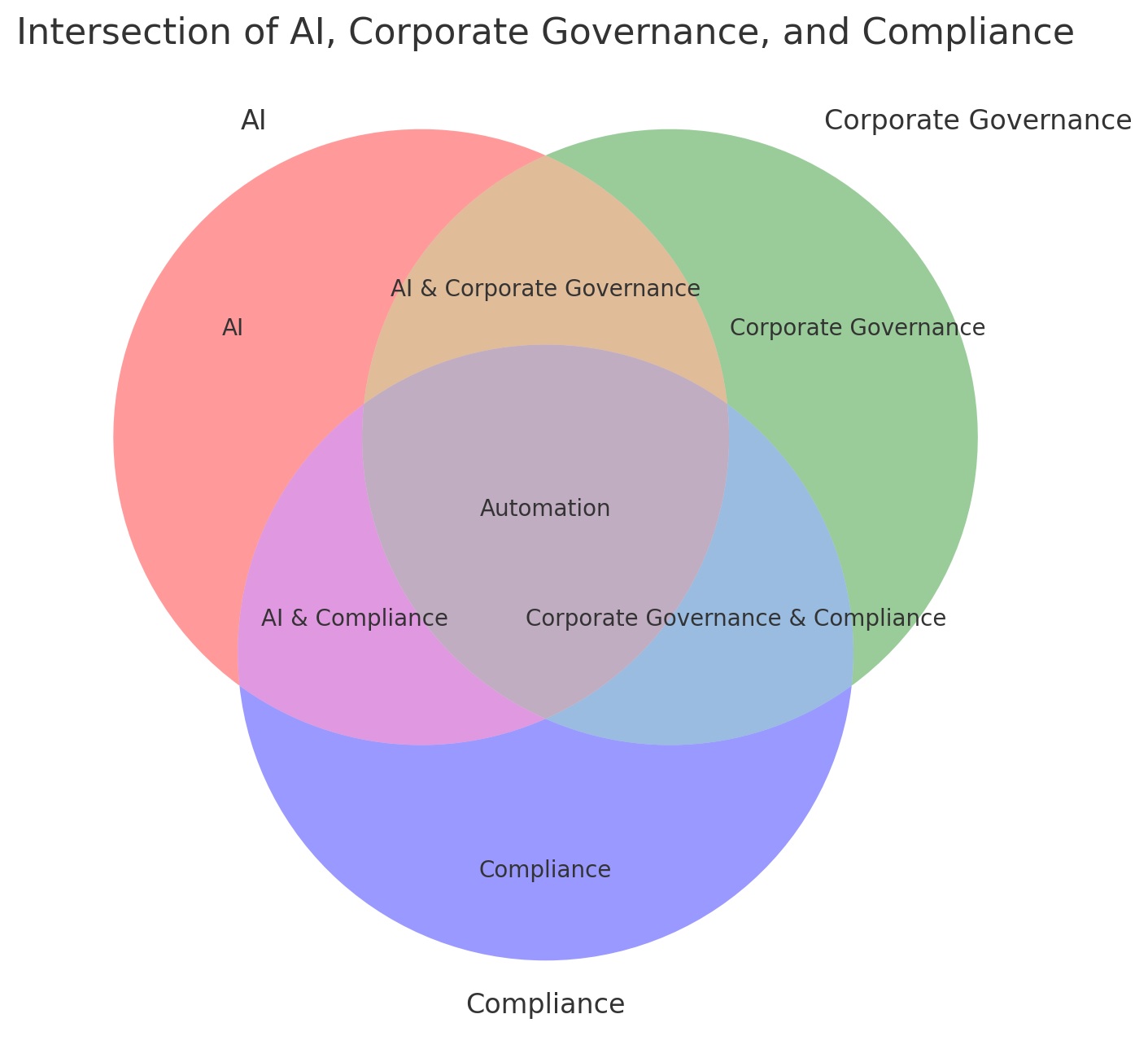





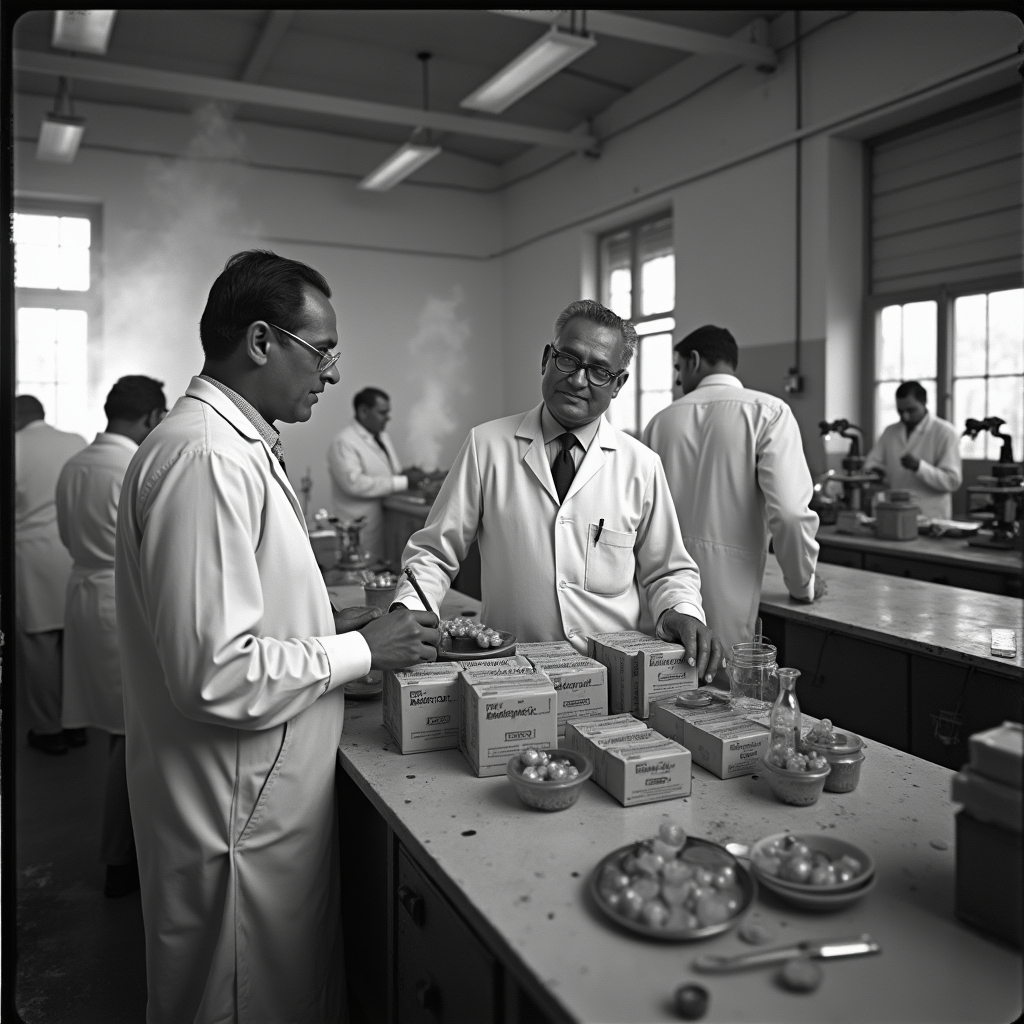









































 Allow notifications





