In today’s modern era, privacy is crucial because it allows people to choose which personal information to disclose and to whom. Social media and other digital footprints have a major impact on privacy. Mass surveillance, often known as complete surveillance, is the continuous observation of individuals without their awareness. China and other highly developed countries use facial recognition and artificial intelligence. Article 21 of the Indian Constitution protects privacy, and electronic communication surveillance is subject to surveillance legislation. Government programs such as the National Intelligence Grid and the Centralised Monitoring System expand surveillance capabilities. Big data raises privacy concerns, but it is critical for surveillance and predictive crime technologies.
Privacy: its meaning and example
Privacy is the right to choice—to be left alone. There are some things in your life that you don’t want to share with anyone. For example, consider some important discussions you have with your partner, what you share with your doctor, or any important case related to you with a lawyer. You do not want these things to be known by anyone, so the freedom of what people let them know about them or not is called privacy. Privacy can be seen everywhere because we are known by our digital footprint. A digital footprint means any information or data related to you. In case I need to find you, I can just go to any social media site or LinkedIn and easily find you; that’s your digital footprint.
What is total surveillance
Mass surveillance or total surveillance can be said as interchangeable words, which means constant observation or watch is kept on the person without even knowing that they are being watched by someone. In the 18th century, philosopher Jeremy Bentham made a prison called Panopticon, which was made in such a way that it kept a constant surveillance of prisoners. This kind of surveillance was done way back in ancient times, but nowadays it is done in modern ways and means. China stands out as being the best in digital panopticon because they have made the ultimate and best use of technologies like artificial intelligence (AI), face recognition, biometrics, and big data analytics. This has taken the use of technology to the next level, due to which China can have access to all individuals in the country.
Laws & development in India related to surveillance
What is the right to privacy
The right to privacy is discussed above in the introduction, which says that the “right to be let alone” is well discussed in the case ofJustice K.S. Puttuswamy vs. Union of India (2017). The right to privacy is a fundamental and inalienable right that is attached to a person, covering all information and choices made by that person. It also protects the right to life and personal liberty under Article 21.
News related to surveillance
The Pegasus Project It was seen that approximately 300, or more than 300, Indians were spied on with the help of Spyware Pegasus, but the government is saying that if the government has legitimised the opposition, it was the opposition that was involved in this surveillance process, but the government had said that if they had done that, they would have done it through legitimate laws. Pegasus Project is a spyware company by the name of Pegasus, which is an Israeli-based company developed in 2016. It is zero-click spyware, if it is supposed to be. For example, if you have an unknown WhatsApp call number, even if you do not pick up the call, the spyware Pegasus will be able to download it to your system, and it will spy on you with the help of the microphones and camera. With the help of this spyware, many companies have been employing it to keep a tap on the information of many individuals, and from India, it is approximately . 300 people.
Important laws that cover surveillance
The surveillance laws in India are covered under two, out of which the first is the Telegraph Act, 1885, so basically it deals with surveillance when it comes to the interception of calls, which comes under Section 5(2). It says that there are certain restrictions that the government can intercept calls only in certain situations when it comes to the sovereignty and integrity of India, friendly relations with foreign powers, public order, and prohibition of incitement of violence. If these criteria are checked, then only the government can go with tapping the phones, but lawful interception cannot take place against journalists. The case Public Union for Civil Liberties v. Union of India (1996)pointed out the lack of procedural safeguards in the Act, but tapping is a very serious issue; it is an invasion of an individual’s privacy, so this gave rise to introducing Rule 419A in the Telegraph Rules in 2007 and later in the rules prescribed under the IT Act in 2009. The Information Technology Act 2000 is the second type of law under which surveillance can take place. It guides all electronic communication. Section 69 of the IT Act and the IT (Procedural for Safeguards for Interception, Monitoring, and Decryption of Information) Rules, 2009, enacted the further legal framework for electronic surveillance. It covers all digital content, so it has broad coverage, so if they have to undertake Pegasus as spyware, they should follow the two laws given above.
Centre surveillance projects
The Indian government has implemented various surveillance projects, raising concerns among privacy advocates and citizens alike. One such project is the Centralised Monitoring System (CMS), a specialised department under which lawful surveillance can be conducted with the government’s approval. The CMS allows authorities to monitor and collect data from various communication channels, including phone calls, emails, and social media.
Another controversial surveillance project is Network Traffic Analysis (NETRA), which focuses on identifying suspicious keywords and patterns in online communications. NETRA employs sophisticated algorithms to analyse vast amounts of data, looking for indicators of potential threats or illegal activities. While NETRA aims to enhance security, critics argue that it could lead to the misinterpretation of innocent messages and the violation of individual privacy.
Additionally, the establishment of the National Intelligence Grid (NATGRID) in 2009 further expanded the government’s surveillance capabilities. NATGRID serves as a central database where various intelligence agencies can access information related to immigration, border crossings, suspicious banking transactions, and telecommunication records. The purpose of NATGRID is to facilitate real-time information sharing and improve coordination among intelligence agencies, but concerns have been raised regarding the potential for misuse and abuse of such sensitive data.
These surveillance projects have generated significant debate in India, with critics arguing that they infringe upon fundamental rights to privacy and free expression. Activists and civil society organisations have called for greater transparency, accountability, and safeguards to prevent the misuse of surveillance powers. The Indian government has defended these projects as necessary for national security and has emphasised that strict protocols are in place to ensure the responsible use of surveillance technologies.
The ongoing discussions surrounding India’s surveillance projects underscore the delicate balance between safeguarding national security and protecting individual privacy. As technology continues to advance, it remains crucial for policymakers, experts, and citizens to engage in informed discussions and find ways to strike a balance between security and privacy in the digital age.
Initiatives undertaken by the government
The initiative taken in 2012 was taken by the planning commission and the group of experts on privacy issues under Justice AP Shah to identify the gaps that were affecting the right to privacy. It stated that the type of interception and the granularity of information that can be intercepted are all very open to interpretation; there is not a clear definition of it, and the degree of assistance service provider and the “destruction and retention” of intercepted material are also reported by the Center for the Internet, and society has an issue. It also took the initiative to draft the Digital Personal Data Protection Act, 2023. Also, a B.N. Srikrishna Committee was formed in 2018 for the Data Privacy Rules, and certain safeguard rules were brought in the Information Technology Act, 2000, so these are some of the initiatives taken by the Government of India.
What is big data
Big Data, in simple words, means a huge and wide variety of data is collected in various forms that grows over time. I have always wondered how much data is generated from our smartphones in various forms, like messages, phone calls, emails, videos, and photos. It generates a huge amount of data every month. For example: If 40 exabytes of data are generated by you every month, imagine that if this number is a multiple of 5 billion smartphone users, then it’s a huge amount of data generated. This is quite large for traditional computing systems to handle, and this massive amount of data is what we term “big data.
If you have a look at how much data is generated per minute on the internet by various apps, these are some of the app details provided below:
India ranks 14 countries with a number of data centres of 152.
How do I classify any data as big data?
It is possible with the concepts of volume, velocity, variety, veracity, and value. This is the 5 Vs. you will understand with an example from the healthcare industry. Hospitals and clinics across the world generate massive volumes of data. 3000 exabytes of data are collected annually in the form of patient records and test results. All this data is generated at very high speed, which attributes to the velocity of big data. Variety refers to the various data types, such as structured, semi-structured, and unstructured data. Examples include Excel records, log files, and x-ray images. The accuracy and trustworthiness of the generated data are termed veracity. Analysing all this data will benefit the medical sector by enabling faster disease detection, better treatment, and reduced costs. This is known as the value of big data.
Case related to big data in Indian content:
The 2014 general election was conducted by the BJP, which tested out big data analysis.
The Government of India brought up the idea of policy enforcement, and various methods were also found for how Indian voters react to this activity done by the government.
What is predictive crime technology
For many decades, law enforcement agencies have used technology to help investigate and solve crimes. Forensic science has experienced significant advancements, DNA testing has revolutionised the way we identify criminals, and facial recognition software has made it easier to track down suspects. However, a new type of software is now available that can take crime-solving to the next level: predictive crime technology.
Predictive crime technology uses data analytics and algorithms to identify individuals who are at high risk of committing crimes. This information can then be used by law enforcement agencies to prevent crimes from occurring in the first place. For example, predictive crime technology could be used to identify potential gang members or individuals who are likely to commit domestic violence. This information could then be used to provide these individuals with support services or to increase police patrols in areas where they are likely to be.
Several different techniques are used to predict crime. One approach is to use historical crime data to identify patterns and trends. For example, if a certain type of crime is known to occur frequently in a particular area, predictive crime technology could be used to identify individuals who live in that area and who have a history of similar crimes. Another approach is to use data from social media and other online sources to identify individuals who are expressing violent or hateful thoughts. Finally, predictive crime technology can also be used to identify individuals who are at risk of becoming victims of crime. For example, predictive crime technology could be used to identify elderly individuals who live alone and who are at risk of being burgled.
Predictive crime technology is a powerful tool that can be used to help law enforcement agencies prevent crimes from occurring. However, it is important to use this technology responsibly and ethically. Predictive crime technology should not be used to target or discriminate against any particular group of people. Instead, it should be used to identify individuals who are at high risk of committing crimes and to provide them with support services or other interventions.
The Jharkhand Case, for instance, highlights how predictive crime technology can be used to prevent crime and improve public safety. In this case, predictive crime technology was used to identify individuals who were at risk of committing domestic violence. This information was then used to provide these individuals with support services and to increase police patrols in areas where they were likely to be. As a result, the number of domestic violence incidents in the area decreased significantly.
The use of predictive crime technology is a growing trend, and it is likely that this technology will play an increasingly important role in law enforcement in the years to come. As predictive crime technology continues to develop, it is important to ensure that it is used responsibly and ethically to protect public safety and preserve individual rights.
Conclusion
The article delves into the concept of total surveillance, including relevant laws, government projects, and the impact on personal privacy. It investigates the development and application of big data in modern surveillance as well as the significance of predictive crime technology in anticipating future crimes. The paper emphasises the necessity of balancing technology and privacy, as well as the importance of recognising the role of big data in modern surveillance tactics.
This article is written by Shenbaga Seeralan S. This case articulates the topic of reservations in promotions. In addition to that, the judicial decorum and precedential value of the judgements are also discussed. The article enunciates the case in detail, thereby critically analysing the intricate expressions of the judgement.
This article has been published by Shashwat Kaushik.
Table of Contents
Introduction
The tower of Indian democracy stands over the bedrock of the ideals of equality and freedom. Articles 14 – 22 of the Indian Constitution guarantee every citizen equality and freedom in different spheres as their fundamental rights. However, it is the obligation of the state to provide special privileges to certain sections of society, keeping in mind their social and educational backwardness over a prolonged period of time. Thus, the makers of the Constitution took a socialist, egalitarian approach to framing the magna carta of the nation. To ensure equivalent opportunities for underprivileged communities, the concept of reservation was introduced. Reservation can be portrayed as a mechanism to provide protective discrimination, adopted by the state based on the principles enshrined in the Constitution, to the marginalised sections of society. Reservations are provided by means of quotas in employment, education, and electoral processes.
Granville Seward Austin, an American historian, speaks in his book The Indian Constitution: Cornerstone of a Nation (1966) about the nature of the Indian Constitution and how it is aimed at improving social disparity. In a society engraved with caste and economic imbalances, special protection is needed to augment relative equality and achieve social excellence. Despite having novel intentions, the concept of reservation does not escape criticism. Andre’ Beteille, an Indian sociologist, in his book Caste, Class and Power (1965), describes discrimination created out of special privileges as a dangerous instrument, in spite of having revolutionary intentions. The protective discrimination in the mode of reservation has made society ever more dependent on the government and created a scaffolding to assimilate social feelings. On certain occasions, reservations are also wielded as a contraption to enhance vote-bank politics. This article aims to explain the crusts and troughs of the case and delve deep into the ideas that emerged.
This case is an agglomerated version of various civil appeals related to the juncture of reservations. The State Government of Uttar Pradesh enacted an Act called the Uttar Pradesh Public Services (Reservation for Scheduled Castes, Scheduled Tribes, and Other Backward Classes) Act, 1994, to ensure reservation in employment for the oppressed community. In particular, Section 3(7) of the Act shall approve the reservation that was in force during the enactment of the Act for the appointments that are to be filled by promotion, unless modified by the legislature. Similarly, Rule 8-A of the Uttar Pradesh Government Services Seniority Rules, 1991, ensured the consequential seniority of a person belonging to a Scheduled Caste or Scheduled Tribe on his promotion. This is achieved through a reservation or roster scheme. Some of the appeals in this case were against the order of the Division Bench of the High Court of Allahabad inMukund Kumar Srivastava v. State of Uttar Pradesh (2010). The above case deals with multiple writ petitions filed by Group A, Group B, and Group C officers of various government departments, all challenging Rule 8-A of the U.P. Government Services Seniority Rules, 1991, and Section 3(7) of the Act.
It was contended that the provisions of the Rules, which enabled the creation of a separate list of Scheduled Caste and Scheduled Tribe for promotion, unlike the merit list under the Uttar Pradesh Promotion by Selection (on posts outside the purview of the Public Service Commission) Eligibility Test Rules, 1986, mandated for other categories. This addition to the eligibility list also accounts for the general list if there is no vacancy in the reserved quota. It was argued that this addition to the promotion list provides accelerated seniority, apart from the reservation already provided. The Division Bench, after hearing the arguments from both parties, held the validity of the provisions contained in the Act and the 1991 Rules. Some other appeals in the case are the appeals against the judgement of the Division Bench of the High Court of Allahabad, the Lucknow Bench in Prem Kumar Singh v. State of Uttar Pradesh (2011), and other connected petitions. In the above case, there was the same contention challenging the validity of Section 3(7) of the Act and Rule 8-A of the 1991 Rules.
The respondents to the case, one Mr. Rajesh Kumar and two others, filed a Writ Petition at the Lucknow Bench of the High Court of Allahabad in 2009. They pleaded to declare Section 3(7) of the Act and Rule 8-A of the 1991 Rules unconstitutional. It was contended that the State Government and the U.P. Power Corporation Limited (herein referred to as the corporation) did not abide by the procedures postulated by the Supreme Court in the M. Nagaraj and Others v. Union of India (2006) case, thereby causing hindrance to the constitutional provisions. The Corporation, in reply to the pleadings, suggested that there is a disparity in representation of the Scheduled community in higher designations, which urged the government to create rules to provide accelerated seniority in promotion to the Scheduled community. The corporation placed its reliance on the judgement of the High Court of Allahabad in the Mukund Kumar Srivastava case. The Division Bench of the High Court, Lucknow, had two factors to decide, the former being the validity of rules created by the government and the latter being the validity of the judgement of the Division Bench of Allahabad.
The Allahabad High Court was of the view that, without giving the respondents the opportunity to file the counter-affidavit, the writ petitions cannot be decided. Further, on deciding the validatory nature of the provisions of the Act, the court placed its credence on the judgement of the Supreme Court in Indra Sawhney v. Union of India (1992). Section 3(7) of the Act is not ultra vires to the Article 16(4-A) and Article 16(4-B) of the Constitution, since the consequential seniority and the catch-up rule are not constitutional snippets but rather have evolved out of judicial pronouncements. The Allahabad High Court was of the opinion that Rule 8-A of the 1991 Rules has added gravity to the provisions contained in Article 16(4-A) of the Constitution, thus upholding the constitutionality of the provisions.
The Bench in Lucknow, after circumspection, was of the opinion that the decision of the Division Bench at Allahabad did not follow the judicial footprint as laid by the precedent in the M. Nagaraj case, nor did the State Government discharge its constitutional duty. The relief provided by the Division Bench at Allahabad did not address the main issue of accelerated seniority that is the cause for filing the petition, but rather held the validity of Rule 8-A of the 1991 Rules. After scrutinising all the necessary pleadings, the Division Bench at Lucknow rejected the claims of accelerated seniority through the catch-up rule and also denied accepting the decision of the Allahabad Bench as a reliable precedent. The Division Bench in Lucknow ruled in favour of the petitioners and declared Section 3(7) of the and Rule 8-A of the 1991 Rules as unconstitutional. Challenging this decision, the corporation filed a civil appeal in the Supreme Court of India challenging the decision of the Division Bench of the High Court at Lucknow, where along with the respondent, Mr. Rajesh Kumar, there are many other private respondents. The Supreme Court in this case deals with various civil appeals related to the Mukund Kumar Srivastava case and the Prem Kumar Singh case, involving numerous appellants and respondents.
Issues raised
The major issues that are raised before the Honourable Supreme Court pertaining to this case are
Whether Section 3(7) of the Act and Rule 8-A of the 1991 Rules abide by Article 16, Article 16(4-A), and Article 16(4-B) of the Constitution?
Whether judicial decorum, propriety, and tradition are followed in criticising the judgements and relying on precedents?
Arguments of the parties
This case, owing to its complexity and importance, had detailed arguments arising from the counsels of the appellant as well as the respondents. Multiple learned counsels appeared for various parties at this juncture.
Appellant
The senior counsels, Mr. Andhyarujina and Mr. Raju Ramachandran, appearing for the corporation in some appeals, argued that the High Court did not properly scrutinise the document provided by the government. The government was of the view that the Scheduled community was not adequately represented in the senior designations, keeping in mind their population size. The counsels also shed light on the fact that the decision made by the government is for a social cause, despite lacking mathematical accuracy in population size and corresponding representation. Through various constitutional amendments that brought Article 16(4-A) and Article 16(4-B), the issue of social backwardness has been addressed by the Union Government by granting protective discrimination to the Scheduled Community. It was argued that the rule passed by the government of the U.P. is of a similar view. The factual data provided by the government, highlighted the backwardness of the Scheduled Caste and Scheduled Tribes, correlating it with their poor representation in promotions. It was also argued on the basis of the judgement in Indra Sawhney v. Union of India (1992) that the Scheduled Caste and Scheduled Tribe belonged to separate classes and the test of backwardness cannot be applied to them.
It was also held by the judgement in Avinash Singh Bagri v. IIT Delhi (2009) that the creamy layer concept cannot be applied to the Scheduled Community. The counsels backed the claim by showcasing the report of the Social Justice Committee dated 28-06-2001, which corroborated the backwardness of the Scheduled community and stressed the need for reservations in promotions. It was also noted that, in spite of providing sufficient data, the Division Bench of the High Court at Lucknow disregarded it in arriving at a fallacious opinion. Another issue promptly addressed by the counsel was regarding the efficiency of administration as pictured under Article 335 of the Constitution. The counsel argued that when the reservation is under 50%, then there is no question of unfair advantage to one particular community, as the 50% reservation encompasses a bulk of the population. Thus, the claim of reservation being a factor hampering efficiency in administration was vehemently objected to by the counsels.
The learned senior counsel, Mr. P.S. Patwalia, appearing for the corporation in some appeals, argued that the backwardness of the Scheduled Community is not a subjective concept but rather an objective one. Keeping in mind the historical subjugation, certain classes of community have been placed under the Scheduled category of the President’s list under the virtue of Article 341 and Article 342 of the Indian Constitution. In this canopy, the data to check the backwardness is just a formality and not a compulsion. The reliance was placed on the judgement of E.V. Chinnaiah v. State of Andhra Pradesh (2005), which ensured the fact that the backwardness of the community is reiterated by placing it on the Scheduled List, which cannot be reclassified by the state. The counsel also ensured that, prior to the Act, data collection was carried out to identify the representation of the Scheduled community in higher posts and in promotions, which formed the basis for enacting such a provision that favoured accelerated seniority.
Respondents
Mr. P.P. Rao, the senior counsel who appeared for some private respondents, condemned the decision of the Division Bench of the High Court at Lucknow. According to him, producing quantifiable data is not necessary when the order of reservation in promotion is issued prior to the amendment. Thus, Section 3(7) of the Act was only giving recognition to the statutory precedent. It was contended that the High Court took a wrong interpretation of the judgement in the M. Nagaraj case by considering the reservation in promotion as excessive. The counsel reiterated that Article 16 of the Constitution demarcates classes that are under privileged but not the backwardness of individuals. Therefore, a special assessment of the backwardness of the Scheduled Community is not required. In addition to these arguments, the learned counsel pleaded for the matter to be referred to a larger bench.
Mr. Rakesh Dwivedi, the senior counsel appearing for some of the petitioners, argued that the Division Bench of the High Court at Lucknow misunderstood the quantification suggested by the judgement in the M. Nagaraj case. The backwardness of the Scheduled Community is an objective concept recognised by the Constitution. It was put forward that other parties have not presented any document showcasing the removal of the backwardness of the Scheduled Community in granting reservations in promotion. The concept of catch-up rule brought into existence by the judgement of Ajit Singh v. State of Punjab (1999)has been nullified by the 77th Constitutional Amendment by adding Article 16(4-A) to the Constitution, thereby giving predominance to the decision of Akhil Bharatiya Soshit Karamchari Sangh (Railway) v. Union of India (1996). The counsel stated that the maintenance of efficiency in administration, administered under Article 335 of the Constitution, is the subject of the state; therefore, it is the subjective call of the state to identify inadequate representation of different classes. The introduction of Rule 8-A of the 1991 Rules falls well under the purview of the state in granting reservations, thereby providing a socially efficient administration. The senior counsel highlighted various judgements to ascertain the fact that granting reservations does not affect the right to equality provided under Article 14 of the Constitution.
Mr. Shanthi Bhushan, the senior counsel appearing for the respondents, had a conflicting view in relation to former counsels. The learned counsel argued that the decision of the Constitutional Bench in the M. Nagaraj case has not been adhered to in framing Rule 8-A of the 1991 Rules. The judgement mandated the state to collect relevant and reliable data before providing any additional reservation that was not in force, especially in the case of a reservation in promotion. It was vehemently stated that the state has not made a sensible decision in amending the provisions of the Act to grant reservation in promotion to the Scheduled Community. It was avowed by the learned counsel that by granting an accelerated seniority to the candidates of Scheduled Castes and Scheduled Tribes in promotion, the very concept of efficient administration sanctified by Article 335 of the Constitution has been disregarded. It was also claimed that the enabling provisions, Section 3(7) of the Act and Rule 8-A of the 1991 Rules, have gained the dissent of the efficient general category officers, who lost their rightful spot in promotion.
The learned senior counsels, Dr. Rajeev Dhavan, Mr. Vinod Bobde, and Mr. Ranjit Kumar, appearing for other respondents, argued in favour of the decision of the Lucknow Division Bench. As argued by the senior counsels, the judgement in the M. Nagaraj case has to be interpreted differently. The decision of the Constitutional Bench was claimed to have quoted social justice as a transcending phenomenon that needed proper restricting parameters to maintain balance. Section 3(7) of the Act and Rule 8-A of the 1991 Rules have exceeded the extent of reservation by granting accelerated seniority to candidates from Scheduled Castes and Scheduled Tribes in promotion. It was argued that it was neither in terms of the constitutional proposition nor with the principles laid out by the judgement in the M. Nagaraj case. It was also contended by the learned counsels that the data and charts provided by the state highlight the numbers in seniority but not the core issue of accelerated seniority and its repercussions on the efficiency of the administration.
The counsels earnestly put forward that the accelerated seniority along with the roster system can create a momentous impact. To support the argument, the counsels cited that a candidate from Scheduled Castes or Scheduled Tribes would reach the highest level of designation at the age of 50 with this accelerated seniority, whereas a candidate from the general category, even at the age of retirement, would not reach the third or fourth level out of the assumed six levels. This unfair advantage would stand ultra vires to the provisions of Article 14 of the Constitution and would also affect the efficient functioning of the state envisioned by Article 335 of the Constitution. The senior counsels argued that Article 16(4A) and Article 16(4B) of the Constitution are mere enabling provisions rather than absolute fundamental rights. The counsels highlighted the judgement of General Categories Welfare Federation v. Union of India (2012), which ensured that when a challenge is made against the reservation in promotion, it should be decided based on the principles laid by the judgement of the M. Nagaraj case. It was also urged, under the reliance of the judgement of Ashoka Kumar Thakur v. Union of India (2008), that by providing reservations to a particular class, the efficiency of the entire administration should not be hampered.
Judgement in U.P. Power Corpn. Ltd. vs. Rajesh Kumar (2012)
The Honourable Supreme Court, after thorough inspection of all the facts and diligent observation of arguments, came to the following conclusion:
The Court held that Section 3(7) of the Act and Rule 8-A of the 1991 Rules are ultra vires to the Constitution. It was also noted that these provisions contradict the ruling of the Constitutional Bench in M. Nagaraj and Others v. Union of India (2006).
The Court permitted any reservation that was enabled based on the judgement in Indra Sawhney v. Union of India (1992), but not with the assistance of Section 3(7) of the Act and Rule 8-A of the 1991 Rules.
The Court condemned the decision of the Division Bench of the High Court at Lucknow for treating the verdict of the Allahabad Bench as a non-binding precedent. It is the judicial discipline to treat a decision made by the Bench of similar strength to refer to a larger Bench in case of disagreement. However, the Lucknow Bench termed the judgement of the Allahabad Bench as incuriam, which was highly not appreciated.
The Court allowed the appeals against the judgement of the Allahabad Bench, setting aside the impugned order. The judgement of the Lucknow Bench was held valid, subject to modification. All the appeals are therefore disposed of, making the parties bear the respective costs.
Rationale behind
The cornerstone of this case lies in the interpretation of the judgement of the M. Nagaraj case and the importance of Article 16, Article 16(4A), Article 16(4B), and Article 335 of the Constitution in dealing with reservation in promotion. In spite of Article 16(4A) of the Constitution granting authority to the state to provide consequential seniority in promotion to any classes of posts concerning Scheduled Castes and Scheduled Tribes. This is an enabling provision empowering the state to provide privilege based on the inadequate representation of the Scheduled Community in higher grades of state services.
However, Article 16(1) of the Constitution guarantees equal opportunities to all citizens in matters of state employment. Both of these provisions are contrasting to each other, as consequential seniority brawls with the right to equality granted by Article 14 read with Article 16(1) of the Constitution. At various instances, the two judge panel in this case reinstated statements from the M. Nagaraj case. Firstly, to deal with the concept of consequential seniority, the bench relied on various judgements by the Supreme Court, including Union of India v. Virpal Singh Chauhan (1995) and Ajit Singh Januja v. State of Punjab (1996), to reestablish the fact that catch-up rule and consequential seniority are judicially evolved concepts to provide equitable justice. The court did not oppose the fact that reservation is a necessary prerequisite to furnishing a socially equitable society, keeping in mind the historical oppressions of the Scheduled Community.
The Court was on the hook to keep the concepts of backwardness, representation, and efficiency in proper balance. The Bench referred to the article by William Darity titled Affirmative Action in Comparative Perspective: Strategies to Combat Racial and Ethnic Exclusion, where the author highlights how affirmative action reciprocates. The notable point in the article that was taken into consideration by the Court was that when an affirmative action like reservation is implemented, it should be based on the class but not on race or ethnicity. The Court was obligated to use its guiding power to examine individual cases in accordance with the law. As guided by the judgement in the M. Nagaraj case, the court took the view that mere enabling provision is not an impediment to the efficiency or to the constitutional provisions, but an erratic implementation of those provisions without any backing data is a dangerous facet.
The sustainability of the government is determined by the efficiency of its administration. Thus, to facilitate efficiency, the makers of the Constitution inscribed the concept of efficiency in administration through Article 335 of the Constitution. However, according to Article 46 of the Constitution, it is the duty of the state to provide care and support to the weaker sections of society, especially the Scheduled Castes and Scheduled Tribes, by enhancing their educational and employment opportunities. This in turn will ensure social justice for them, which was long denied. It is imperative that the government should univocally facilitate both provisions without any disparity. To achieve this, there should be proper backing data to show the status of weaker sections of society; this would make the plan devised more target specific. That is why the percentage of reservations provided to each section of society is based on their demography, economic condition, historical discrimination, and constitutional ponderance. Through various sources and citations, the Court came to the determination that any socially protective discrimination scheme initiated by the government should be carried out after proper statistical analysis.
The Court then came to the point of testing the validity of Section 3(7) of the Act and Rule 8-A of the 1991 Rules. As discussed in various pronouncements, the guiding factors for any reservation would be the backwardness of the community, inadequate representation, socially equitable administration, definite data, and the proposed ceiling limit. When any of these guiding factors is controverted by the state’s action, then such action is nullified by the house of law. It is mandatory for the state to follow the procedures as held by the previous pronouncements in making reservation norms. Thus, it is imperative for the state to present quantifiable data that supports the backwardness of the community for whom the reservation is intended. Even with the necessary quantifiable data, the state is not allowed to cross the permissible limit of reservation, i.e., 50% of the total vacancy available. If excessiveness is noted in the extent of reservation, then such reservation should hamper the efficiency of administration.
In light of all these considerations, the Court held the 77th, 81st, 82nd, and 85th Constitutional Amendments as valid. These amendments were enabling provisions aimed at reservation to Scheduled Castes and Scheduled Tribes in promotions to any classes of posts. The Court also highlighted the judgement of Suraj Bhan Meena v. State of Rajasthan (2011), which reinstated the pronouncement of the M. Nagaraj case, necessitating the need for quantifiable data in determining the backwardness of the community. The Court in this issue came to the final conclusion that no fresh exercise has been taken by the government to collect quantifiable data before granting accelerated seniority to Scheduled Castes and Scheduled Tribes in promotions to any classes of posts.
The Bench held reliance on the judgement of Sundarjas Kanyalal Bhatija v. Collector (1989)for propounding the precedential value of a judgement. The two-judge Bench in this case postulated a valuable insight that in a multi-judge court, the judges are bound by the precedents. When there is no declared principle, only then the judges can decide based on their discretion. It is an uncodified rule and a principle of judicial decorum that when there is a disagreement between the decision of a Bench and the decision of another Bench or even a single judge, then the decision should be referred to a larger Bench. Any contradiction to this principle, however noble the cause, is against judicial discipline. The Court expressed its dissent on the judicial culture followed by the Lucknow Division Bench in terming the decision of the Allahabad Bench as a non-binding precedent. The Court urged the judges to follow this basic level of judicial discipline and zeal to maintain the trust of society.
Concepts in contention
Consequential Seniority: The method adopted in the course of promotion, where a person belonging to a reserved category gains seniority over a general candidate by the means of reservation in promotion. This accelerated seniority is applied to the roster system of management. Thus, with relatively less experience, a candidate gains seniority by means of a reservation to a particular cadre.
Catch-up rule: In this method, a person with higher experience belonging to the general category holds high seniority, irrespective of seniority acquired by the reserved candidate.
Illustration
Let us assume that person ‘X’ belongs to the reserved category and person ‘Y’ belongs to the general category. Now, person ‘X’ is appointed in a post of Group D services through reservation in employment, and person ‘Y’ is appointed in the same post of Group D services one year before person ‘X’. After ten years of service, both are entitled to promotion to Group C services. Now, let us suppose the vacancy in Group C services that is to be filled by promotion is reserved for the Scheduled Community. In this instance, by means of consequential seniority, the person ‘X’ gets entitled to promotion, even though he has less experience compared to the person ‘Y’. This system is called the consequential seniority mechanism. If the person ‘Y’, through the means of seniority and experience, gets entitled to promotion before the person ‘X’, in spite of the presence of a reservation, then that system is called the catch-up rule.
Precedents referred
The Court relied on various precedents in deciding the question of reservation in promotion to Scheduled Castes and Scheduled Tribes in relation to the general concept of equality. Among all the cases cited in the judgement, certain cases have notable importance owing to the decision made and the size of the Bench. Those cases are as follows:
M. Nagaraj and Others v. Union of India (2006)
This case is one of the landmarks in deciding the core concept of reservation. The judgement of this case remains as a guiding light in matters of reservation, even to this date. The five judge Bench comprising Justice Y.K. Sabharwal CJI, Justice K.G. Balakrishnan, Justice S.H. Kapadia, Justice C.K. Thakker, and Justice P.K. Balasubramanyan, gave hard-bound principles to the state for deciding the reservation parameters to deal with the backwardness of a particular section of society. The petitioner in this case filed a writ petition of certiorari under Article 32 of the Constitution to quash the 85th Constitutional Amendment Act, 2001, which inserted the enabling clause of Article 16(4A) of the Constitution. This undue insertion, as claimed by the petitioners, overwhelmingly benefited the Scheduled Castes and Scheduled Tribes in promotions by providing them with consequential seniority. The petitioners claimed that this unfair advantage is against the fundamental right of equality for all and thus pleaded with the Supreme Court to declare this amendment unconstitutional. This case dealt with multiple writ petitions filed at this juncture.
The petitioners strongly opposed the addition of consequential seniority to facilitate accelerated promotion. It was contested on the following three grounds:
Validity of the provision in relation to the basic structure of the Constitution
Interpretation of the provision with clarity and
Implementation through government orders related to reservation in promotion
The efficiency of administration was also brought into the picture, as excessive reservations would definitely unwove the fabric of efficient administration as mandated under Article 335 of the Constitution.
The Court held the view that it is the innate constituent power of the government to make amendments to the Constitution as empowered by Article 368 of the Constitution. However, the Court was of the firm opinion that the basic structure of the Constitution cannot be altered.
The court took the judgement of Minerva Mills Limited and others v. Union of India and others (1980)as a precedent in claiming that the government should not try to alter the fundamental rights to implement provisions of Directive Principles of State Policy. It was also noted that a balance between basic structure and social schemes is required to maintain the equitable status of the rule of law. In this regard, based on the judgement of R.K. Sabharwal and Others v. State of Punjab (1995), 50% of the reservation was fixed. Even in case of carry-forward vacancies, the number of posts exceeding 50% cannot be allotted. The Bench provided a set of valuable principles to deal with the issue of reservation and equality.
The enabling provisions under Article 16(4A) and Article 16(4B) of the Constitution are constitutionally valid. However, the state needs reliable data to formulate legislation empowering the provisions.
Article 16(4) of the Constitution enables protective discrimination by the state, whereas Article 16(1) of the Constitution grants equality in employment opportunities to all citizens of the country. These are complementary in nature, upholding fundamental rights.
In the system of reservation, every post is designated to one candidate from a particular community or class. In case of subsequent vacancy, the post has to be filled by a candidate from that particular community or class.
Cadre strength is an important parameter of the roaster system, which highlights the adequacy of representation in a community. Also, the factor of cadre strength is used to superintend the reservation without exceeding the ceiling limit of 50% of vacancies. The roster system should be post-specific and not vacancy specific.
Backwardness and inadequate representation are the two factors that are to be verified by the state to grant consequential seniority in promotion to the Scheduled Community under Article 16(4A) of the Constitution.
When a post remains vacant for an excessive time frame, it will definitely affect its effectiveness in administration. Therefore, the state has to determine a specific time frame to fill the vacancy for a particular class or community. When the duration exceeds the time frame, the post has to be allotted to candidates from other classes.
When the government grants a reservation without abiding by the parameters as mentioned in Article 16(4) of the Constitution, such enactment shall be held invalid and ultra vires to the Constitution.
The relationship between efficiency in administration mandated under Article 335 of the Constitution and reservation envisaged by Article 16(4) of the Constitution is case-specific and not a generic step.
The data collection regarding the backwardness of a community is a case specific event conduced under indigenous conditions. Due importance and adherence should be shown by the government in this regard.
The Constitutional Bench thus held the validity of the 77th, 81st, 82nd, and 85th Constitutional Amendment Acts and settled the writ petition. Individual petitions concerning state Acts were referred to appropriate benches.
Indra Sawhney v. Union of India (1992)
This case deals with reservations in central government jobs. The petitioner of the case, advocate Indra Sawhney, filed a Public Interest Litigation (PIL) under Article 32 of the Constitution, challenging the government’s decision to implement the recommendations of the Mandal Commission, which were formulated under Article 340 of the Constitution. The case was brought before the Nine Judge Constitutional Bench comprising Justice M.H. Kania, Justice M.N. Venkatachaliah, Justice S. Ranavel Pandian, Justice T.K. Thommen, Justice A.M. Ahmadi, Justice Kuldip Singh, Justice P.B. Singh, Justice R.M. Sahai, and Justice B.P. Jeevan Reddy. The snippet of the case is the challenge against the reservation given to Other Backward Classes (OBC) in public employment and the extent of such a reservation. The Government of India in 1979 formulated a second commission to quantify the social and educational backwardness in India under B.P. Mandal, who is a Member of Parliament. The Commission, after a year of retrospection, submitted the report in 1980, recommending 27% reservation to Other Backward Classes in public employment. The general category of society protested against this recommendation and argued that implementation of this recommendation would be a gross violation of the provision of the right to equality enshrined in Article 14 and Article 16(1) of the Constitution. The contentions before the Court were:
Whether an economic criterion is enough to declare the backwardness of a community?
Does Article 16(4) of the Constitution stand as an exception to Article 16(1) of the Constitution granting equal opportunities in public employment?
The petitioner, who collectively represented the general category of candidates for public employment, claimed that reservation based on caste widens the gap in Indian society and deepens the disparity. The act of granting additional reservations to one particular section of society, irrespective of their meritorious contest, is a clear act of discrimination against general candidates, which violates the right to equality granted by Article 14 of the Constitution. It was also contended that any extension in reservation based on caste would lacerate the efficiency of administration contemplated by Article 335 of the Constitution. The judgement of B. Venkataraman v. State of Tamil Nadu (1951) was highlighted as a precedent to reiterate that caste cannot be taken as a parameter to provide reservation in public employment. The judgement of M.R. Balaji & Ors. v. State of Mysore (1963) was also showcased to stress the same fact and also to inscribe the facet that the total reservation should not exceed the permissible limit of 50%.
A stern argument was placed against the reservation in promotion to Scheduled Castes and Scheduled Tribes, as it would lead to double reservation and thereby make the system of public employment dysfunctional. However, the respondents contended that reservation is a protective discrimination pattern followed to maintain social justice in a society. The Commission to analyse the social backwardness of society was arranged in accordance with Article 340 of the Constitution. The Commission carried out extensive research and provided recommendations to the state based on that research, so it was argued by the respondents that the intention of the state to provide reservations is backed by proper data. The data regarding the backwardness of OBC was collected by the commission for the purpose of granting them special privileges.
The claim made by the petitioner that the data was outdated was not agreed upon by the respondents. Apart from this, the enabling provision in Article 16(4) of the Constitution allows the reservation on the condition that the backwardness is supported by the proper data and the maximum ceiling limit is not exceeded. It was argued that efficiency in administration can be attained only when equitable development is achieved among all sections of society; the purpose of reservation is to provide adequate representation, thereby improving the standard of living of that particular community. Hence, a protective action carried out by the government cannot be termed ultra vires to Article 335 of the Constitution. After hearing the arguments of both parties, the Court came to the conclusion that
Article 16(4) is an enabling provision of Article 16(1) of the Constitution and not an exception.
Backwardness can be attributed to both socio-economic factors as well as historical subjugation. So, caste is also taken as a parameter to define backwardness.
However, the Bench agreed to the fact that a high income group of a particular backward community called the Creamy Layer is left out of reservation.
The total reservation should not exceed the permissible threshold of 50%.
The Bench did not allow reservations in promotion (which was later added in the form of an amendment).
The Nine Judge Bench favoured the reservation adopted based on the Mandal Commission report by a 6:3 majority.
Critical analysis of U.P. Power Corpn. Ltd. vs. Rajesh Kumar (2012)
Reservation is a social welfare policy action taken by the government to compensate for the present condition of backwardness as well as keeping in mind the historically inflicted atrocities. There is a saying in the famous Tamil literature, Thirukkural, that goes by
“Pirappokkum ella Uyirkum Sirappovva
Seitholil Vertrummai yaan”
which means everyone born in this world is equal to each other; they become upper or lower class by the principles they follow and the actions they adopt. An earlier part of human civilization had an intertwined approach, where every section of society contributed towards the development of the so-called nation without seeing disparities. When the work became a clan business, the evil system of caste started percolating its roots into society. The caste system has caused innumerable miseries to society, especially to the people who are identified as belonging to the lower class by other sections of society. They were denied basic amenities like hygienic shelter, proper clothing, and adequate food.
In conjunction with the above disparities, they were even denied basic human dignity and opportunity. In extreme cases, they were also subjected to inhumane punishments and brutalities. In the Indian context, through the efforts of various social reformers and activists, the pain and sufferings of the oppressed community were brought out to the world. Various reform movements were started by the reformists to carry forward the fight against caste inequalities. The notable ones are Satnami Samaj, founded by Ghasidas in 1820, to improve the social status of lower caste people; Brahmo Samaj, founded by Raja Ram Mohan Roy in 1828, criticised caste-based discrimination; Prarthana Samaj, founded by Atmaram Pandurang in 1867, believed in spiritual equality of all castes; Sathyasodhak Samaj, founded by Jyothirao Phule in 1873, propagated caste equality; the self-respect movement initiated by E.V. Ramasamy Naicker, stood against caste discrimination. These reform initiatives were organised across the country and across all religions. However, despite all these movements, the only path to obliterating all the sufferings of oppressed classes is by handing over authority to them by means of proper representation.
In 1882, Sir William Hunter, an Indian Civil Service officer, and Jyotirao Phule jointly conceived the idea of caste-based reservation. The Hunter Commission was formulated by Lord Ripon to revamp the educational setup of British India and provide proper representation to all sections of society. Chatrapathi Sahuji Maharaj, Maharaj of Kolhapur, Maharashtra, introduced reservation in services to backward classes in 1902 with the aim of eradicating poverty and improving their livelihood. Based on the recommendations of the South Borough Committee, the Government of India Act, 1919, was enacted by the British Parliament, which granted communal representation for the first time to the people of the depressed class. Dr. B.R. Ambedkar, along with Rao Bahadur Srinivasan, participated in the All India Depressed Class Conference held in Nagpur in 1930, demanding reservations in public services for the depressed class. The first major reservation came in the form of a communal award introduced by British Prime Minister Ramsay Macdonald in 1933. This award granted a separate electorate to Muslims, Sikhs, Christians, Anglo-Indians, Europeans, and Dalits. Gandhiji took an opposing stand to this move by the British Government, saying that it would deepen communalism within the Hindu community. Dr. B.R. Ambedkar initially opposed Gandhiji’s claim; however, later they both came to consensus by signing the Poona Pact, assuring a single Hindu electorate with reservations in it. After independence, reservations were provided only to Scheduled Castes and Scheduled Tribes in public services, which were fixed at 22.5%. Later, reservation was extended to OBC after the report of the Mandal Commission in 1980, which was fixed at 27%. A reservation of 10% was provided to the Economically Weaker Section of the General category in the year 2019 through the 103rd Constitutional Amendment Act. The percentages and criteria keep varying from domain to domain and across demographics.
Metrics of Reservation in India
In order to analyse the consequences of the judgement, it is imperative to understand the metrics of reservation and the impact it has made on society.
It can be noted that many states have breached the 50% limit as mandated by the judgement in the Indra Sawhney case. This is done by means of a Constitutional Amendment and placing the law in the Ninth Schedule of the Constitution. For example, in the State of Tamil Nadu, 69% reservation in education and employment is guaranteed through the Tamil Nadu Backward Classes, Scheduled Castes, and Scheduled Tribes (Reservation of Seats in Educational Institutions and of Appointments or Posts in the Services under the State) Act, 1994. This Act is placed in the Ninth Schedule of the Constitution, which, under Article 31B of the Constitution, is shielded from declaring as void. The reservation provided for every class has an inner reservation within the class, thereby empowering individual sects. 69% of reservation in Tamil Nadu include 26.5% for backward classes, 3.5% for backward classes (Muslim), 20% for most backward classes (MBC) and denotified communities, 15% for scheduled castes, 3% for scheduled caste (Arunthathiyars), 1% for scheduled tribes. Many states, like Maharashtra, Chhattisgarh, Bihar, etc., have a similar type of complex reservation structure. This was achieved through a long judicial and political battle.
The concept of “creamy layer” was first propounded in the judgement of State of Kerala v. N.M Thomas (1974). The creamy layer means the higher-income or highly benefited group of people within the category of Other Backward Class. In 1992, the judgement in the Indra Sawhney case ensured the exclusion of the creamy layer category of candidates from reaping the benefits of reservation. A committee headed by R.N. Prasad was constituted to formulate the criteria for determining the creamy layer. The present conditions to qualify as a creamy layer are
If the parents of the candidate belong to Group A or Group B service before the age of 40.
If the annual income of the family exceeds 8 Lakh, not including income from salaries and agricultural land.
The creamy layer concept is a limiting factor in guaranteeing that the benefits of the reservation policy reach real and eligible beneficiaries.
Impact of reservation
Reservation is a social engineering technique adopted by the state to alleviate the oppressive status of backward communities. However, merely fabricating a plan is not important, and proper implementation and review are necessary to identify the impact as well as the areas of concern. The representation of the Scheduled community was highlighted by the data provided in the brochure released by the Department of Public Enterprises, Government of India, in 2016 (DPE-GM-15/001/2016-GM-FTS-5921). The data are as follows:
Year
Group A
Group B
Group C
Group D
Total
SC
ST
SC
ST
SC
ST
SC
ST
SC
ST
1965
1.64
0.27
2.82
0.34
8.88
1.14
17.75
3.39
13.17
2.25
2008
12.5
4.9
14.9
5.7
15.7
7.0
19.6
6.9
17.51
6.82
The above table shows a clear improvement in the representation of the scheduled community in public services. In fact, the representation in Group A services has grown higher than other services, if the percentage of rise is considered. When OBC is considered, they represent 8.37% of Group A services, 10.01% of Group B services, and 17.98% of Group C services after the implementation of Mandal Commission recommendations. The aim of reservation is to bring about a socio-economic paradigm shift, which is why it is provided in various strata, including public services, promotions, education, state-owned accommodation facilities, scholarships, training, etc. The effect of these schemes can be witnessed in the enrollment percentage of students from underdeveloped areas, both in primary and higher education. The major aim of reservation is to cure the scars of historical injustice. The injustice was in the form of disrespect, which is achieved by administering the responsibility of menial jobs to the depressed community. So, in order to facilitate them regaining their dignity, the affected community has to be brought out of the low-grade job. The panacea for this ailment is providing them with quality education and alternate employment opportunities. Reservations are an enabling mechanism to provide them with education and employment, which were long denied. As envisaged by the framers of the Constitution, equality does not mean quantitative equilibrium but also qualitative equilibrium. Thus, being cognizant of the historical hardships, a strategic advantage is provided to the backward community by means of reservation.
A research study on the effect of caste-based reservation in India on employment of the non-reserved category was conducted by Shubhangi Singh, a professor of economics at the University of Houston, USA. The data on employment in India is obtained from the repository of the World Values Survey. A comparison between employment data from 2001 (Wave 4) and 2012 (Wave 6) is made using STATA software. Various parameters used for comparison are educational level, employment, and ownership of businesses. The results were surprising, proving the fact that the reservation of backward communities has not affected the employment of open-category candidates. The percentage of people in the general category who have surpassed the highest level of degree has increased from 10.3% in 2001 to 12.2% in 2012. The entrepreneurial ventures taken up by the general category have increased from 4.1% to a whopping 23.9%. There is an increase in the percentage of candidates from SC, ST, or OBC who received a degree from a university, but that has not withered the percentage in the general category. There is an overall decrease in the unemployment percentage in all categories of society. The ratio between preference for private jobs and preference for public jobs has not changed much in the decade, highlighting that opportunities for general category candidates have not been affected due to reservations. This analysis provides a clear indication that caste-based reservations did not negatively impact the employment or educational status of general category candidates.
A hypothesis-testing study was conducted by the Centre of Development Studies, Thiruvananthapuram, Kerala, under the aegis of the Indian Council of Social Science Research in June, 2021. The study was aimed at testing whether reservations in higher education changed the prospects of OBC candidates for securing better jobs. The Difference in Difference method, is a quantitative, econometric experimental approach where two population samples with positive and negative conditions are compared to find the difference in result. The data for analysis is taken from Periodic Labour Force Survey, 2018 conducted by the National Sample Survey Organisation, Government of India. The data encompasses the socio-economic and demographic information of 1,02,113 households from rural as well as urban areas of different parts of India. Intensity of reservation is one of the parameters, which is defined as the ratio of the percentage of reservation in a community to the percentage of community in the total population. The result of this analysis was that reservation policy positively impacted the welfare of backward communities in terms of employment opportunities. Reservations in education have positively impacted employment in government services, especially in administrative, executive, and managerial services. However, a higher intensity of reservation does not yield any improvement in employment status. In fact, an increase in reservation intensity negatively impacts employment status. There is a slight impact on low status government jobs, which may be attributed to the low skill requirements of such jobs.
According to the Socio-Economic Caste Census of 2011, out of the total population, 18.46% are from Scheduled Castes and 10.97% are from Scheduled Tribes. Roughly, this amounts to 15.88 crore and 9.27 crore, respectively. According to the Census of Central Government Employees, 2011 conducted by the Ministry of Labour and Employment, Government of India, the total number of employees in Group A, Group B, Group C, and Group D posts is 93853, 380044, 2127752, and 485629, respectively. Based on the table above, let us assume the employment percentage for various services remains the same (definitely, it would have increased in percentage) for calculation purposes. Let us try to calculate the intensity of representation in each class of posts. So, out of total Group A employees, approximately 12.5% are from Scheduled Castes; this accounts for nearly 11,731. Calculating the intensity of representation by dividing the total strength of Scheduled Caste candidates in Group A services by the total strength of Scheduled Caste people in the total population, results in 0.00000738. This shows that even after reservation, the representation figure has a low value.
Arguments against reservation
The reservation system in India is criticised by various experts and general category candidates on multiple grounds. The reservation policy in India is criticised as a biased methodology that grants nothing but discrimination to a huge section. The critics claim that in spite of general category candidates plagued by economic and social vulnerabilities, they do not receive the same opportunities that are available to backward or scheduled communities. It is also contested that even the backward community has a limiting factor in the form of creamy layer separation, but the scheduled community enjoys the benefits of excessive reservation without any limitation. It is always claimed by people from non-backward communities that the policies of reservation are against the fundamental right of equality, which is considered the basic principle of the Indian Constitution. Enshrined in Article 14 of the Constitution, discrimination is not permissible on any grounds, but in the name of reservation to one section, the rights of other communities have been stripped away. Identification of beneficiaries is the most critical part of providing reservations.
Though the entire system of reservation is criticised at multiple junctures, it is also highlighted that people from backward communities, who are so unprivileged, are not even aware of the system of reservation. In such cases, they do not claim the benefits of reservation, thereby maintaining their unprivileged status without representation. As advocated by many experts, India is highly communalised by the presence of multiple castes and sub-castes. The system of caste-based reservation stokes the fire of communalism. The reservation system has sub-reservations allotted for individual communities within the larger class; this fuels rifts between communities. In turn, the consequent category will ask for a higher percentage of reservations, quoting their backwardness. This is a never ending claim that has resulted in chaos and violence in many parts of the country.
Another bigger issue is that each community is being represented by a political sub group. This political clan plays a vital role during elections by mobilising resources and providing door to door campaigns. The major parties get the good will of these sub clans by contesting a person belonging to their community in that constituency. Except for general constituencies, candidates for all other constituencies are selected based on the major caste of that region. These secondary caste-based parties work for the welfare of their own communities and urge the major parties to push for schemes benefiting them. One such obligation is to provide a fresh reservation or an existing reservation. Obligated by the support and foreseeing prospects in the next election, the party in power will legislate enactments based on the promise. This happens both in the centre and in the states. Thus, reservation has become a politically activated phenomenon, as claimed by the experts.
Another major argument against reservations is the time frame of the reservation. This point was also discussed in the case of this article and also in the M. Nagaraj case. In the case of Janhit Abhiyan v. Union of India (2022), while pronouncing the judgement, one of the judges of the five judge Constitutional panel, Justice Bela M. Trivedi, noted that reservation should be created with a time frame. The judge stressed the dire need to reconceive the concept of reservation. It was noted that reservation should only be one of the means to attain equality, but it should not be a permanent solution. The Justice also termed a word called transformative constitutionalism, by which the need for an egalitarian, classless society is stressed. Without a relative time frame, the privileges vested in one community will become the burden of another. It is also vehemently opposed that the reservation pattern is based on old and outdated data. The most recent data used for determining the percentage of reservations is the Socio-Economic Caste Census (SECC) of 2011. Apart from this, it was also contended that the metrics collected in the census were not relevant to determine the beneficial quotient of reservations. Hence, with outdated data, an unlimited time frame, and irrelevant metrics, the policy of reservation will become a hammer blow to Indian democracy.
Instead of providing excessive reservation, which aggravates demand and drift, the state should look to implement policies that are aimed at creating a Casteless society. There are instances of violence between various sects in relation to reservations. In addition to this, the category of people who are not entitled to enjoy the privileges of reservation is dejected at various levels. In spite of having the skill and delivering the necessary effort, many are deprived of their rightful chances. This compels them to look for opportunities elsewhere, across borders. Apart from denying a skilled candidate the opportunity he or she deserves, reservation also results in brain drain, which is harmful to the economy as well as to the harmony of the nation. Reservation, as commented by the critics, has started to spread across paradigms, starting from the Scheduled Community to the Economically Weaker Section, from education to promotion, and is growing like Wolffia. A definitive system of checks and balances has to be introduced to maintain constitutional foresight.
How do we provide a balanced reservation?
Reservation is a simple yet significant mechanism that literally changes the lives of beneficiaries. Taking the significance into consideration, meticulous planning and strategic formulation are required for effective implementation. On this note, it is mandatory to wither out certain impediments to achieve efficiency in administration as well as to grant privileges to backward communities.
Avoid excessive reservation: The major reason for the denial of appeal in Uttar Pradesh Power Corporation Limited. v. Rajesh Kumar and Others (2012) is double reservation. When the employees of Power Corporation were entitled to reservation during employment, reservation in promotion by means of consequential seniority to actuate accelerated promotion was considered as a double benefit scheme. This was termed as ultra vires to the Constitution by the Supreme Court. The analysis results of the Centre for Developmental Studies, Thiruvananthapuram, Kerala, also reveal a similar fact. When the intensity of reservations is increased, it negatively impacts employment status. When departmental exams are available to check meritocracy and the roster system is available to regulate the allotment of vacancies, reservations in promotions through the catch-up rule or consequential seniority will definitely affect the efficiency of administration as enshrined in Article 335 of the Constitution. It will demotivate the performers by giving predominance to the class rather than the performance.
Time frame: Efficiency can be tested only over a period of time. When the effectiveness of a policy is measured over an infinite period of time, it will always result in a null outcome. The framers of the Constitution initially fixed the time limit to grant reservations at 10 years; later, it was extended after multiple amendments. It has been 74 years since India has become a Republic nation yet the reservation continues with an increased number. Before providing an extension, an extensive analysis of the effect of the reservation for a period of 10 years has to be determined. This should include the status of the beneficiary, educational prowess, family livelihood, occupational set-up, and other standards of living. This information will assist in the next phase of the reservation. The time frame rule is one of the solid principles laid out in the judgement of M. Nagaraj and Others v. Union of India (2006).
Fixation of ceiling limit: The ceiling limit of 50% of total reservation was fixed by the apex court through Indra Sawhney v. Union of India (1992). It was also reiterated by the judgement of Dr. Jaishri Laxmanrao Patil v. The Chief Minister (2021), which upheld the ceiling limit unless there is an extraordinary situation. This case was based on the issue of a separate Maratha reservation. The need for fixing a ceiling limit is predominant, especially when the question of reservation is raised by every community. If there is no permanent fixation of limits, then reservations will become a contraption for political parties to secure votes. Recently, an enactment offering a 10.5% sub quota to a community out of the MBC reservation in Tamil Nadu was quashed by the High Court of Madras. If this step were implemented, it would mean that out of the 20% reservation for MBC, 1 caste would get 10.5%, and the remaining 107 castes in the class would get 9.5%. This would have turned into a dire injustice to other communities. When relaxations are allowed by the judiciary for every legislative action, then the day of 100% reservation is not far off.
Data-driven approach: Any policy adopted by the state arises out of the needs of society. Not every need in society is addressed by the government. It is the role of the government to decide where priority lies and what actions can be postponed. The priorities of the government are decided by the degree of urgency or through data. In present-day administration, data plays a vital role in determining beneficiaries, fixing targets, identifying mechanisms, and analysing results. When reservations are considered, data should play a primordial role. The M. Nagaraj case also upholds the same principle that the government should provide reservations to backward communities only after analysing the supporting data. A new survey of every household should be conducted, or open-ended questions can be added to already existing surveys like SECC. The survey should be both quantitative and qualitative in nature. Quantitative metrics can be used as inputs for regression analysis, which will yield many secondary parameters to determine the level of backwardness, whereas qualitative indicators can be used in hypothesis testing to determine the nature of backwardness.
Widening the scope of reservation: There are no second thoughts on caste being the primary factor in reservation. But why should caste be a primary factor as of now?. Let us assume the economy is the only factor in providing reservations. There would be little to no inhibition shown by the individuals to register them as low-income and receive the benefits of reservation. However, even in this neo-age, a person from the general category would not represent himself as a scheduled category to receive a reservation. The stigma around castes and historical hierarchies is still prevalent in many parts of the country. It is unfortunate to note caste-based violence in day-to-day happenings, and it creates more despair when observing caste pride among students of educational institutions. That is why policies like reservation for candidates who have performed intercaste marriages are more likely to achieve a casteless society. 10% reservation in the EWS category is also a time-frame-based policy. So, after the time limit, new beneficiaries should be brought into the system rather than providing reservations to the same candidate. In the judgement of K.C. Vasant Kumar and Anr. v. State of Karnataka (1985), it was noted that while considering economic condition as the criteria for providing reservation, a “means test” should be conducted to verify the condition. This test should be a limiting factor before deciding eligibility for a reservation. Recently, through the 106th Constitutional Amendment Act, 2023, 33% reservation was provided for women in Parliament and Legislative Assemblies, including the seats of Scheduled Castes and Scheduled Tribes. This is the first gender-based reservation in India.
Awareness and Activism: Reservation is not an elixir to the differences and imbalances in the nation; rather, it is a lens to a myopic eye. The size of the lens can increase, but only if the eyes are open, one can see the picture in detail. No matter how much the reservation percentage is increased, backwardness cannot be eradicated; it can only be transformed. When caste backwardness recedes, economic backwardness emerges; later, when economic backwardness diminishes, educational backwardness arises; consequently, when educational backwardness fades, technological backwardness emerges. Reservations cannot be provided for each instance. Social engineering techniques have to be adopted to remove real caste-based discrimination. Caste acts as a fuel for violence, sectarianism, and communalism. The political parties that form the government, instead of bringing down the differences, ignite the fire and enjoy the warmth. A society-driven activism has to be initiated to weed out the differences among classes. Rather than making the backward community entirely dependent on the government, their true potential should be brought out through affirmative actions.
These actions, combined with proper monitoring by experts and frequent course corrections based on feedback, would improve the efficiency of reservations and facilitate that the scheme reaches the real beneficiaries.
Matters concerning the selection of candidates based on the result of a written examination and the allotment of vacancies based on reservations for the post of Technical Assistant in Subordinate Agricultural Services.
The petition was contested against the criterion of 50% cutoff marks in the Judicial Services Examination for candidates of all categories. The Court held the provisions to be binding.
The appeal was made against granting of reservation in promotion. It was held that a reserved category candidate can acquire consequential seniority in promotion only with posts earmarked for reserved category.
The petition was against the implementation of recommendation of One Man Commission in Assam to determine the socio-economic status and adequate representation of the reserved category. It was held that quantifiable data was not in accordance with the principles laid out in the M. Nagaraj Case, and thus the petition was allowed.
Petition to mandate the state government to promote the petitioner an assistant engineer by means of consequential seniority. The petition was dismissed based on various precedents.
The petition challenged the reservation for promotion to the post of passenger Loco Pilot. The original application was allowed, and the reservation list for the promotion was ordered to be withdrawn.
Issue of catch-up rule in the reservation of promotion to the posts of Assistant Engineer, Tamil Nadu Highways Department. The government was ordered to revise the seniority list that was prepared based on consequential seniority.
Conclusion
The extensive analysis of the reservation system, especially reservation in promotion, is augmented to understand the impact it has created in society. Reservation is a social engineering tool that is utilised to bring equity among classes and to compensate for losses endured by generations due to discrimination. However, there has been a constant disagreement between various sections of society regarding the principles of reservation and the extent of it. The State Judicatures, until the M. Nagaraj case, found it cumbersome to deal with the petitions concerning reservation in promotion. The case discussed in this article used the judgement of the M. Nagaraj case and gave a firm pronouncement to uphold the constitutional provision of equality in employment, thereby maintaining the efficiency of administration as envisaged by the makers of the constitution. It is worth noting that no policies, enactments, or pronouncements are immutable. Based on the needs of the public and the development of society, the law governing the land keeps evolving.
Frequently Asked Questions (FAQs)
What is a roster system?
It is a point-based system that is used to determine the order of seniority. Based on the points allotted to every candidate, the vacancies are filled starting from the highest point. The points are entered in a register called the roster register. The roster register is used only if the total vacancy for one particular cadre is between 2 to 13. In the system of roster based vacancy filling, columns with different parameters are created for every candidate, and the points for the respective parameters are mentioned accordingly. The parameters include reservation nature, category, date of appointment, sub class in the reserved community, and so on. The summation of total points creates the order of the roster, and the vacancies are filled in descending order. The maximum points on the roster differ based on the department and vacancies. In the judgement of R.K. Sabharwal and Others v. State of Punjab (1995), it was noted that the reservation is based on the roster system, and the roster will be implemented based on running accounts from year to year.
What is de-reservation?
It is a process by which the vacancies allotted for the reserved category are opened up for the unreserved category. It is a very rare event that occurs when a post in Group A services remains vacant for a long period of time. The de-reservation of a vacancy is announced by the respective department or ministry. This move is implemented on vacancies allotted to SC, ST, or OBC after consulting with the National Commission for Scheduled Castes, the National Commission for Scheduled Tribes, and the National Commission for Backward Class, respectively. This is a move done in the public interest and to maintain the efficiency of administration as described in Article 335 of the Constitution. In the judgement of S.S. Sharma and Others v. Union of India (1980), it was observed that the course of de-reservation should be taken only when, beyond all contemplations and efforts, the reserved vacancies cannot be filled.
What are the occasions of non-applicability of reservation?
In the case of temporary appointments, which are usually less than 45 days in duration.
Seasonal jobs that are paid based on the duration of work. This includes emergency services like disaster mitigation work, relief and rehabilitation work, etc. It also includes need-based public services.
Promotions within the same cadre. For example, if, through a selection method, a promotion is made from one Group A post to another Group A post, then no reservation is applied.
Scientific and technical posts that are in the higher cadre of Group A services. The selection is purely based on merit.
In the event of deputation to a higher cadre or absorption from another department.
When the post is a single cadre post, then reservation is not applied.
This article has been written by Syed Owais Khadri. This article provides a comprehensive study of the landmark ruling rendered by the Hon’ble Supreme Court in Ajay Hasia vs. Khalid Mujib (1981). The article discusses the facts, arguments, judgement, and reasoning in detail. It also sheds light on the point of law involved and discussed in the case. Additionally, the article also attempts to provide an analysis of the judgement.
This article has been published by Shashwat Kaushik.
Table of Contents
Introduction
The Hon’ble Supreme Court, in one of its recent rulings, Kaushal Kishore vs. State of Uttar Pradesh (2023), observed that fundamental rights under Articles 19 and 21 of the Constitution can be enforced against everyone and not only against the state. However, this is not the case with every fundamental right enshrined in various provisions under Part III of the Constitution. Any other right apart from the two mentioned above can be enforced only against the State and its instrumentalities as laid down under Article 12 of the Constitution. Article 12 defines the term “State” and lays down what all authorities may include within its meaning and scope and what fundamental rights are enforceable against those authorities.
The present case is one of the landmark rulings concerning the scope of Article 12 and the enforcement of fundamental rights against institutions that are not expressly government or its authority but have all the characteristic features of a State or government and perform public functions. The Hon’ble Apex Court, in this case, was dealing with petitions challenging the admissions made to a college run by a society established under the Jammu and Kashmir Registration of Societies Act, 1898, as arbitrary and violative of the right to equality under Article 14. Although the principal part of the case was concerning the impugned admissions, the Court’s observations regarding the scope of Article 12 are significant. It laid down guidelines or various instances in which any institution can be regarded as an authority under the aforesaid constitutional provision.
This article discusses the case in detail, focusing on the principal challenge and the Court’s noteworthy observations concerning expressions under Article 12 of the Constitution.
Details of the case
The following are some of the important details of the case discussed in this article:
Equivalent Citations: AIR 1981 SC 487, (1981) 1 SCC 722
Court: Supreme Court of India
Bench: Justice P.N. Bhagwati, Justice Y.V. Chandrachud, Justice V.R. Krishnaiyer, Justice Syed Murtaza Fazalali, and Justice A.D. Koshal.
Judgement Date: 13th November, 1980
Facts of the case
A Writ petition was filed by the petitioners challenging the validity of the admissions made for the academic year 1979-80 to the Regional Engineering College (hereinafter referred to as “the college”) in Srinagar. The said college was an aided college and was one of the fifteen aided colleges in Jammu and Kashmir that were financed by the Central Government. However, the management and administration of the college were carried out by a society registered under the Jammu and Kashmir Registration of Societies Act, 1898.
The college extended an invitation in April 1979 through a notice, inviting applications for admissions to the first semester of the B.E. course in different branches of engineering for the academic year 1979-80.
Admission procedure as per 1974 resolution
It is necessary to have an idea regarding the fundamental aspects of the 1974 admission procedure to understand the facts of this case clearly. The admission procedure mentioned above was laid down through a resolution dated 4th June 1974, by the Board of Governors exercising its power under Rule 15(iv) of the society. Some of the important features of the said admission procedure are as follows:
According to the procedure, the students belonging to the State of Jammu and Kashmir were to be admitted on a comparative merit basis, which was to be decided by conducting two stages of examination.
The first stage was a written test on the subjects of Physics, Chemistry, Mathematics, and English and carried 100 marks. The second stage of examination was a viva voce stage, carrying 50 marks, divided into 4 subjects or topics as follows:
General Knowledge and Awareness for 15 marks;
Broad understanding of a specific phenomenon for 15 marks;
Extracurricular activities for 10 marks; and
General personality trait for 10 marks.
The admission procedure mentioned above was followed until 1979-80, but minor changes were made to the procedure in that year. The changes made to the admission procedure in 1979-80 were as follows:
The total number of seats in the college was 250. 50% of the 250 seats in the college were to be reserved for students belonging to the State of Jammu and Kashmir. The remaining 50% (including the 15 seats reserved for certain other students) were to be reserved for students belonging to other States.
Certain seats among those reserved for the students belonging to the State of Jammu and Kashmir were again reserved for the students belonging to Scheduled Castes, Scheduled Tribes, and the children of defence personnel martyred or injured during conflicts.
It was clarified that the reservation made for the students belonging to the State of Jammu and Kashmir was exclusive of the 2 seats reserved for the children of the permanent college employees. It was also clarified that the reservation shall be made in conformity with the order of the Government of the State of Jammu and Kashmir (hereinafter referred to as the “State Government”) for admissions to technical institutions.
It was further clarified that the determination of merit in the former category of 50% seats would be only on the basis of the marks secured in the written examination, and the rest of the procedure followed was the same as that specified in the 1974 resolution.
The notice inviting admissions for the academic year 1979-80 specified that the admission procedure that would be followed to allow the said admissions would be the one explained above.
The petitioners in this Writ petition were the students who applied for admission in one or the other branches of the B.E. course at the college and appeared for the written test on June 16th and 17th, 1979, in due course. They were subsequently required to appear for the next stage of examination, i.e., the viva voce, before a committee of 3 members who interviewed the petitioners.
They alleged that the interview did not last long for more than 2 or 3 minutes on average. They alleged that none of the questions that were posed to them were relevant to any of the four criteria for the allocation of marks in the viva voce according to the procedure. Instead, the questions that were asked to them were mostly general, based on residence, percentage, etc.
They stated that, on the announcement of admissions, they found out that the reason for their non-selection for admission was the low marks awarded in the viva voce, while the marks secured by them in the qualifying written test were extremely good.
It was further stated by the petitioners that some of the candidates got very low marks in the qualifying written test but were successful in securing admission to the college only due to the high marks they obtained in the viva voce.
They presented a chart before the Court, which indicated the statement made by the petitioners regarding the disparity of marks between them and some of the successful students and on account of which those candidates were preferred over the petitioners.
Therefore, aggrieved by this process of selection, they approached the Hon’ble Supreme Court by filing a Writ Petition under Article 32 of the Constitution, challenging the validity of the admissions made through this procedure.
Nature of the Society Administering the College
The determination of the status of the college or the question of whether the college falls under the ambit of “other authority” and therefore “State” requires clarity over the nature of the college and the society administering or managing it. For this reason, it is necessary to understand the nature of the society administering the college by looking into the objectives, rules, and other aspects relating to the society as set out in the Memorandum of Association of the society.
Objects of the Society
The objects of the society are laid down in clause 3 of the Memorandum of Association, which includes the following:
Sub-clause (i) of the said clause laid down that the objects of society include the establishment of a college to provide knowledge and education in different branches of engineering and technology and to promote research in such branches.
Sub-clause (ii) of clause 3 empowered the society to make rules and regulations for the management of the society and to amend, add, or repeal any of the rules and regulations from time to time with the approval of the Government of India (hereinafter referred to as the “Central Government”) and the State government.
Sub-clause (iii) of the said clause empowered the society to acquire and retain property in the State Government’s name.
Sub-clause (v) of the said clause stated that the funds for managing and running the college would be provided by the State and the Central Government.
The decisions of the society relating to the management and investment of its funds required approval from the State government, according to Sub-clause (vi) of the said clause.
The details of the accounts of the society and its certification by an auditor were supposed to be mandatorily forwarded annually to the Central and State Governments according to Sub-clause (ix) of clause 3.
Further, the State government was empowered under Clause 6 of the Memorandum of Association of the Society to appoint certain persons to review the functioning of the society and the college. It is also empowered to conduct inquiries and subsequently submit a report to the State government. Furthermore, it is empowered under this clause to take appropriate measures or actions on the basis of the report and with the approval of the Central Government. The college or society is required to comply with the measures or directions of the State government.
Moreover, Clause 7 of the society’s Memorandum of Association empowers the State government to take over the assets and administration of the college if the society or the college is not properly functioning. However, this can be done with the prior approval of the Central government.
Clause 9 of the Memorandum of Association confers the authority upon the state government to make appointments in respect of some of the key positions of the college, such as the chairman, representatives of the state and central governments, representatives of certain other states, etc., with the consultation and approval of the central government.
The objects of the society, as per the Memorandum, reflected the affiliation and active involvement of the State and Central governments in the affairs of the society.
Rules of the Society
Similar to the objects, the rules of society also shed light on the nature of society. The rules of society are as follows:
Rule 3 provided for the composition and appointments relating to society. Clause (i) of the rule reaffirmed the composition of the society as laid down under Clause 9 of the Memorandum of Association. Furthermore, Clause (ii) gave authority to the State and Central governments to make appointments of the members of society by mutual consultation.
Rule 6 laid down that the authority for managing the affairs of the society including its income and property, shall be vested in the Board of Governors (hereinafter referred to as “the Board”) which is the governing body of the society.
The composition of the Board of Governors was laid down in Rule 7. It provided that the Board shall be chaired by the Chief Minister of the State Government, and other members of the Board include nominees from the State and Central governments and other various nominees and representatives.
The State government was empowered under Rule 10 to remove any member of society from membership with the approval of the Central government, except the representatives of the State and Central governments.
Rule 15(iv) empowered the Board to make regulations for the admission of students to various courses. Additionally, Rule 15(xv) mandates the Board to submit reports and accounts of society to the State and Central governments annually.
Rule 24(i) empowers the Board to make changes in the purpose or purposes for which the society has been established. Rule 24(ii) empowered the Board to make alterations to the rules. However, any such changes or alterations shall be subject to prior approval from the State and Central governments.
The rules indicated that the governments, State as well as Central, have a great role in the appointment of the members of the society and also in the overall decision-making process of the society.
The rules and objects of the society established the presence of a significant role of the State and Central governments in the administration and management of the society. They indicated the significance of the position that has been occupied by the State and Central governments, which are “State” as per Article 12 of the Constitution, in the affairs of the society and the college.
Issues raised
Whether a society can be considered as “State” within the definition and meaning of the term provided under Article 12 of the Constitution?
What are the “other authorities” envisaged within the meaning of “State” under Article 12?
Point of law involved
The point of law or the legal questions in this case mainly revolved around the constitutional provisions provided under Part III of the Constitution, specifically around the meaning and definition of the “State” and the right to equality. Some of the relevant legal provisions that were examined in this case are as follows:
Constitution of India
The Constitution of India guarantees various fundamental rights under Part III, which consists of Articles 12 to 35. The relevant fundamental rights and constitutional provisions discussed in this case are as follows:
Article 12
Article 12 of the Constitution lays down the definition of the term “State” wherein it defines the term as “the State includes the Government and Parliament of India and the Government and the Legislature of each of the States and all local or other authorities within the territory of India or under the control of the Government of India.”
The provision under Article 12 is of great significance as it limits the authorities against whom the fundamental rights under Part III of the Constitution can be enforced. Any person aggrieved by the violation of fundamental rights can approach the Court under Article 32 of the Constitution by filing a writ petition only against the authorities who fall under the definition of “State” under Article 12.
The definition of State under this provision has a wide scope since it is not an exhaustive provision but is inclusive, which is reflected through the words “other authorities” in the definition. The scope of the definition of “State”, and more particularly, the scope of the term “other authorities” in the definition, has been expanded by the Hon’ble Supreme Court in various rulings, such as the University of Madras vs. Shanta Bai and Anr. (1953), in which the Apex Court held that “other authorities” under Article 12 means any authority performing governmental functions.
However, the Hon’ble Supreme Court recently, in the case of Kaushal Kishore v. State of Uttar Pradesh (2023), ruled that the fundamental rights under Article 19 and Article 21 of the Constitution can be enforced against persons other than the State or its instrumentalities as well.
Article 14
Article 14 of the Constitution guarantees the right to equality for every individual in India. It prohibits the denial of equality before the law and guarantees equal protection of the law by the State.
The provision encompasses two important aspects of equality. The first aspect is the equality before the law, which means that every individual is equal in the eyes of the law and there shall not be any privilege given to any citizen.
The second aspect of equality under this provision reflects the positive content of the provision. According to the second aspect, the State shall ensure that there is no discrimination of any kind and that every citizen is entitled to equal protection of the laws.
To summarise, the first aspect refers to the guarantee of equal treatment, whereas the second aspect denotes the prevention of discrimination.
The Hon’ble Supreme Court, in the ruling of E. P. Royappa vs. State of Tamil Nadu (1973), held that any act that is arbitrary in nature, is violative of the right to equality under Article 14 of the Constitution.
Article 32
Article 32 of the Constitution guarantees the fundamental right to approach the Hon’ble Supreme Court by filing a writ petition for the enforcement of the fundamental rights guaranteed under Part III of the Constitution.
Any person aggrieved by the violation of the fundamental rights enshrined under Part III of the Constitution can approach the Hon’ble Supreme Court under this provision for the enforcement of fundamental rights against the authorities falling within the scope of “State” under Article 12 of the Constitution.
The Hon’ble Supreme Court in State of West Bengal vs. Nuruddin (1998)ruled that the performance of any duty that is imposed upon certain authorities as per the law is the right of the appellant. The enforcement of such a right can be ensured through the writ of mandamus, which is issued against the authority not performing the duty.
Jammu and Kashmir Registration of Societies Act, 1898
The case dealt with the determination of the status of a society registered under the Jammu and Kashmir Registration of Societies Act, 1898, under Article 12 of the Constitution. The Act provided for the registration of societies in the State of Jammu and Kashmir.
Arguments of the parties
Petitioner
The petitioner’s contentions basically revolved around the violation of their right to equality guaranteed under Article 14 of the Constitution due to the admission procedure of the college, which was contended or alleged to be arbitrary. The various grounds on which the petitioners contended the same are as follows:
The primary contention of the petitioners was that the admission procedure adopted by the college to grant admissions was arbitrary on the following grounds or in the given instances or manner.
Ignorance of the marks obtained by the petitioners in the written examination.
Determination of the comparative merit of the students or candidates solely on the basis of a viva voce examination.
The disparity in marks allocated for the viva voce examination against the written examination (50 against 100).
By conducting the interview for a very short duration of merely 2 to 3 minutes and by asking questions that were completely irrelevant to the four criteria or subjects to determine the suitability of the candidates as per the admission procedure.
The next contention made by the petitioners was that the admissions granted or the selections made on the basis of viva voce or the oral interview were arbitrary and hence violative of Article 14 of the Constitution. They argued that the oral interview or the viva voce examination failed to provide a proper criterion for determining the suitability of the candidates. They further contended that this kind of examination was subjective and was mostly a test of impression, which is prone to being influenced by various factors such as the bias or prejudice of the interviewer, his/her assumptions, etc. Furthermore, they argued that this form of examination also left scope for the abuse of discretion or authority that is entrusted to the interviewers through discrimination, nepotism, exploitation or favouritism etc. Besides, the petitioners also contended that it was not realistically possible and was unfair to evaluate the merit or capabilities of a candidate based on an interview lasting for a few minutes.
The third contention of the petitioners was that, even though the selection of candidates on the basis of an oral interview or viva voce is considered a valid procedure for granting admissions, the viva voce examination in this particular instance was unreasonable and arbitrary due to the disparity in the proportion of marks allocated in the overall examination procedure. They argued that the allocation of 50 marks for viva voce against the 100 marks for the written test would mean that only one-third (33.33%) of the total marks are taken into consideration for the selection of candidates. They contended that this allocation of marks and subsequent selection based on such allocation was based on an unreasonable proportion and was therefore arbitrary and violative of the right to equality guaranteed under the Constitution.
The final or ultimate contention of the petitioners was based on the duration of the interview conducted and the nature of the questions asked during the viva voce examination. The petitioners contended that the viva voce examination lasted only for 2 to 3 minutes on average, and the questions that were asked were also irrelevant to the four criteria based on which the merit of a candidate would be determined, as per the admission procedure. Hence, they argued that it was not possible to assess the suitability of a candidate in such a short period of time, particularly when no relevant questions were asked during the interview.
Respondent
The primary contention of the respondents was concerning the maintainability of the petition. The respondents contended that the writ petition before the Hon’ble Court was not maintainable. They argued that the college is administered by a society, which is not an agency established by a statute but is a society established under the Jammu and Kashmir Societies Registration Act, 1898. They therefore contended that society is not an “authority” within the meaning and definition of “State” under Article 12 of the Constitution, and hence the writ was not maintainable before the Court.
The respondents further argued that neither a complaint can be made against the college, stating that it granted the admissions in an arbitrary manner and for violating the right to equality provided under Article 14 of the Constitution, as it was not a State within the meaning of “State” under Article 12 of the Constitution and the rights under Part III can be enforced only against the State.
Moreover, the college refuted the first contention of the petitioners by arguing that the viva voce test allowed the evaluation of the candidates’ eligibility on the grounds of comparative talent, which was ultimately based on a uniform standard. They further contended that this test was preferable to the qualifying test, which allowed for the evaluation of comparative merit.
Additionally, the college also refuted the final contention of the petitioners by stating that they were interviewed for around 6 to 8 minutes, and only questions relevant to the topics or subjects allotted for viva voce were asked.
Judgement
The Hon’ble Supreme Court in this case, prior to dealing with the merits of the petition, decided to rule upon the maintainability issue, which was raised as the principal objection by the respondents. The Court, after ruling upon the maintainability of the plea, proceeded to deal with the merits of the case, which were contended on four different grounds or contentions, as discussed under the heading of the petitioners’ arguments section mentioned above.
Whether the petition is maintainable before the Hon’ble Supreme Court?
The Court primarily ruled on the maintainability of the plea. It was noted that the petition can be maintainable only if the society falls under the meaning and scope of the expression ‘State’ under Article 12 of the Constitution.
Is society an authority?
Although the Court noted that society cannot be equated with the State or Central government, or any local authority, it ruled that society may fall within the category of ‘other authorities’ mentioned under the meaning and definition of “State” under Article 12.
The Court, noting the nature of the society, which was reflected in the rules and Memorandum of Association of the society, ruled that it was an instrumentality or agency of the government and therefore is an authority within the meaning of ‘other authorities’ mentioned under the definition and scope of the expression “State” under Article 12.
The Court ultimately ruled that, since society is an authority under Article 12, the mandate of fundamental rights against arbitrariness under Article 14 of the Constitution can be enforced against it. Hence, it was held that the petition is maintainable before the Hon’ble Supreme Court.
Merits of the case
Whether the admission procedure was arbitrary?
The Hon’ble Court disagreed with the principal contention of the petitioners, who contended that the admission procedure of the college was arbitrary. It took into consideration the contentions or statements made by the college through an affidavit. The Court ruled that it would not rule the admission procedure as arbitrary merely on the ground that the procedure allowed for consideration of the marks obtained in the viva voce stage over the qualifying examination or on the ground that it refused to consider the marks obtained by the candidates in the qualifying examination.
Validity of the viva voce examination for selection of candidates
The second ground of challenge or contention of the petitioners was the validity of the viva voce entrance examination as a test for the selection of candidates for admission. The Court, with regard to this contention, initially noted that it cannot be ruled out as completely baseless and noted that the contention had some sustainability. However, the Court ultimately refused to agree with the petitioners’ contention that the viva voce examination was invalid or flawed to the extent that the admissions made on its basis could be declared invalid. Although the Court agreed that the viva voce test may not be an adequate method of assessing a candidate’s merit or talent, it was currently not possible to rule the test as irrational or irrelevant due to the absence of any other better option to evaluate or determine the merit of the candidates.
Nevertheless, the Court observed that the viva voce examination should not be considered or relied on as the sole method or test of determining a candidate’s merit but should only be regarded as a supplementary test, irrespective of matters of employment or admissions to the colleges. It was also noted that the qualifications, integrity, and calibre of the persons conducting the viva voce examination should be taken into consideration before appointing them for that purpose.
Whether the Viva Voce examination in the present case was arbitrary and unreasonable?
The Hon’ble Supreme Court noted that the contention of the petitioners that the viva voce examination in the present case was arbitrary and unreasonable due to the disproportionate allocation of marks in the two stages of examination cannot be regarded as invalid. The Court noted that it cannot accept the high or disproportionate allocation of marks for the viva voce or oral interview as a mode of examination that is completely free from arbitrariness, given the erosion in ethics and the increase of corruption and nepotism. The Court held that the allocation of one-third (33.33%) of the total marks merely for the interview is undoubtedly unreasonable and arbitrary. It, therefore, ruled that allowing or granting admission to the candidates on the basis of the admission procedure, which had such an arbitrary process or methodology, cannot be held valid.
In spite of holding the admission procedure and the admissions arbitrary, the Court, noting that a period of nearly 18 months had already lapsed since the admissions were made in the academic year 1979-80, observed that it would not be justified to set aside the admissions made in the instant case.
However, the Court reiterated that this kind of admission procedure requires introspection, and both the State as well as the Central government must take appropriate measures to ensure that the right persons are involved in the interview or the admission process in general.
Moreover, the Hon’ble Court ruled that the allocation of more than 15% of the total marks of any examination merely for the oral interview would be unreasonable and arbitrary, and such allocation is liable to be declared unconstitutional and is hence liable to be struck down by the courts.
Duration of the interview and the relevance of the questions asked
The Hon’ble Supreme Court ruled on this issue on the same note as it did on the previous grounds. It noted that it was not possible for the selection committee to assess the capabilities and merit of a candidate within a mere 2 or 3 minutes, particularly when no questions relating to the four factors based on which the assessment was to be done as per the admission procedure were asked. Hence, the Court ruled that if any oral interview was conducted in the manner alleged above, such an interview was undoubtedly corrupt, and admissions granted on the basis of such an interview were unreasonable and arbitrary.
However, the Court once again observed that it was not willing to set aside the admissions made for the academic year 1979-80 for the reasons provided by it while ruling upon the previous issue.
The Court further reiterated the limit on the percentage of marks that were to be allocated for the oral interview out of the maximum marks and ruled that only relevant questions should be asked to the candidates based on the assessment factors that would render the oral interview reasonable and non-arbitrary. It is further recommended that the oral interviews be recorded to ensure transparency, and such recordings can be used as evidence when required to eliminate any disputes or controversies challenging the interviews.
Ratio Decidendi
Maintainability of the petition
The Hon’ble Court, while deciding upon the maintainability of the petition, noted that the only valid ground on which the admissions could be challenged was that the admission procedure adopted by the college was arbitrary, which, as a result, violated the right to equality of the petitioners under Article 14 of the Constitution. It was noted that the petition can be maintainable only if the society falls under the ambit and meaning of ‘State’ under Article 12 of the Constitution since fundamental rights can be enforced only against the State. Hence, the Court proceeded to examine whether society, and subsequently, the college, can be regarded as a ‘State’ under said provision.
Whether society falls within the meaning of the expression ‘State’ under Article 12 of the Constitution?
The Court, while examining the inclusion of society within the meaning and scope of the expression ‘State’ under Article 12 of the Constitution, observed that a society can never be treated on equal terms with the Central or State government, nor can it be considered a local authority. However, the Court observed that society should be falling within the ambit of the term ‘other authorities’ mentioned in the provision for it to fall within the meaning and scope of the “State”.
The Court noted how corporations, private institutions, or agencies were gaining importance in administrative task performance and becoming a third arm of the government in the form of administrative gadgets. It was also noted that the flexibility and fewer restraints are allowing the government to resort to such agencies or corporations for carrying out administrative tasks. The Court observed that in cases of such agencies or corporations, the complete authority and ownership always rest with the State, and it is also the State that is accountable for the actions of such agencies since they are operated by the State. The Court basically noted that such agencies or corporations are the extended arm of government organs. Accordingly, the Court ruled that although corporations and agencies are different juristic persons or legal entities, they are subject to the same constitutional restrictions as the government itself.
The Hon’ble Supreme Court cautioned regarding the dangers of not subjecting such agencies and corporations to the same constitutional limitations. It noted that if such agencies are allowed not to abide by the constitutional mandates of fundamental rights as an obligation, then it would result in the deterioration of their efficiency. It was further observed that such a situation would also enable the government to adopt ways to disregard fundamental rights through corporations or agencies and control them. The Court reiterated that this would leave fundamental rights to a mere promise of illusion or a mere dream. It was observed that the employment of a corporate approach is not to free the government from its fundamental obligation to respect fundamental rights and not to rescind them. It was further observed that the veil of corporations on the government is only to allow the government to function freely from rigidity and constraints but not to disregard fundamental rights.
The Court therefore held that if any corporation is an instrumentality or an agency of the government, then it must be regarded as an “authority” under Article 12 of the Constitution.
An instrumentality or agency of the government as an authority under Article 12
The Hon’ble Supreme Court, on account of the rationale mentioned above, went on to analyse if society was an instrumentality or an agency of the government to decide if it was an ‘authority’ within the meaning of “State” under Article 12.
The Court noted the ruling delivered in the case of Sukhdev Singh v. Bhagatram (1975) where it had laid down a test to determine if any corporation is an authority and subsequently falls within the meaning and definition of “State” under Article 12 of the Constitution. The Hon’ble Supreme Court in the said case had propounded the test of instrumentality or agency of the government i.e., if any corporation is an instrumentality or agency of the government, then it may be regarded as an authority under Article 12 of the Constitution.
It referred to the unanimous judgement delivered in the case of R.D. Shetty vs. International Airport Authority of India (1979). The Hon’ble Supreme Court, in the said case, had affirmed the test outlined in the case of Sukhdev Singh v. Bhagatram (1975) as a satisfactory test to determine if any corporation is an authority within the scope of Article 12. It had furthernoted the origin of the employment of corporations as the instrumentalities or agencies of the government for accomplishing public functions for the first time in the Resolution on Industrial Policy by the Government of India in April 1948. It was noted that after that and its subsequent industrial policies, the government undertook the establishment of corporations to perform public functions, which act as the instrumentalities and agencies of the government. The Hon’ble Court in that case also discussed the question of determining whether any corporation is an instrumentality or agency of the government and laid down certain tests for determining it.
The Court noted the various observations made by the Hon’ble Court in R.D. Shetty vs. International Airport Authority of India (1979) and concurred with the said observations. It summarised the test laid down for determining whether any corporation is an instrumentality or agency of the government as follows:
The following are the various instances when any corporation can be regarded as an instrumentality or agency of the government:
If the government holds the entire share capital of the corporation.
When the value of financial assistance from the State is almost equal to the expenditure of the corporation.
When the corporation enjoys State protected or State conferred monopoly status.
When the corporation performs functions that are of public importance or relevant to those performed by the government.
When the State holds deep and extensive control over the corporation.
When a department of government is transferred to a corporation or it is transformed in that manner.
Based on the rationale given in R.D. Shetty vs. International Airport Authority of India (1979), the Court reiterated the observation made in that case that if any corporation is an instrumentalist of the agency of the government, then it would be regarded as an ‘authority’ within the meaning of the expression “State” under Article 12 of the Constitution. The Court also referred to the case of U.P. Warehousing Corporation vs. Vijay Narayan (1980)and noted that the same view was taken.
The Court clarified that the notion of instrumentality or agency is not restricted to a corporation established by a statute but also extends to companies or societies based on the relevant factors. It was observed that the objective of the establishment of any society has to be considered to determine if it is an instrumentality or agency of the government rather than looking into the procedure of establishment.
Whether society is an instrumentality or an agency of the government
The Court observed that the answer to the said question would obviously be in the affirmative, noting the contents of the Memorandum of Association and the Rules of the Society. Considering the role and authority entrusted to the State as well as the Central government, it was ruled that society is an instrumentality or an agency of the State and the Central government. It was therefore held that society is an ‘authority’ within the meaning of “State” under Article 12 of the Constitution.
The Court ultimately ruled that society, by virtue of being an authority within the meaning of “State”, was liable to obey the constitutional mandate of the right to equality under Article 14 of the Constitution. It follows that the right against arbitrariness under the aforesaid provision can be enforced against society and the college through society. Hence, the Court noted that the petition cannot be ruled as not maintainable.
Implications of society being an authority
The Hon’ble Court also shed light on the implications arising out due to any society or corporation falling under the category of ‘other authorities’ within the meaning and scope of “State” under Article 12. The rulings and observations reflect the difference that the inclusion of society under the category of ‘other authorities’ under the said provision would make.
The Court ruled that any authority falling under the meaning of ‘other authorities’ is subject to the same constraints as the government under Article 12 of the Constitution. It ruled that such authority is obliged to follow the constitutional mandates and limitations due to its inclusion within the scope of “State” under Article 12, including the mandate of fundamental rights under Part III of the Constitution.
The Court held that if society is an authority within the meaning of the expression “State” under Article 12, then it must respect the constitutional obligation of right against arbitrariness within the scope of the right to equality laid down under Article 14 of the Constitution. It noted the noteworthy ruling delivered in E.P. Royappa vs. State of Tamil Nadu (1973), where the Hon’ble Supreme Court observed that equality and arbitrariness are opposite to each other and further ruled that any act that is arbitrary is inherently unequal and is therefore violative of Article 14 of the Constitution and also violative of Article 16 if the matter is relating to public employment. The Court also noted the ruling delivered in Maneka Gandhi vs. Union of India (1978), where the Hon’ble Supreme Court reaffirmed the observations made in the judgement of E.P. Royappa vs. State of Tamil Nadu (1973).
Accordingly, the Court ruled that whenever any action of the state, even if it is merely of an ‘authority’ under the meaning of Article 12, is arbitrary, such action is to be struck down by Article 14, which ensures protection against arbitrariness.
Merits of the case
The Court took into consideration the statements made by the college through the affidavit while adjudicating upon the merits of the instant case. It noted the college’s statement that the regulation of admission procedures through the medium of an entrance exam was necessary to ensure that the candidates’ admissions were not impacted due to the difference in the dates of the qualifying examination conducted by the different boards of Jammu and Kashmir and the late results. It also noted the statement that the oral interview assists in the determination of the comparative merit of the candidates on a uniform standard through the interview instead of its determination on the basis of the qualifying examination conducted by two different boards. Therefore, the Court observed that it would not hold the admission procedure as arbitrary merely on the ground that it regulated the admission through the oral entrance exam and did not consider the marks obtained in the qualifying examination.
Although the Court noted that the challenge to the Viva Voce test is not completely unreasonable, it also observed that the test is very much relevant in the majority of the entrance tests to determine the potential of the candidates. It was noted that the test has been recognised by the courts in various cases. It noted the ruling delivered in R. Chitralekha vs. State of Mysore (1964), where the court refused to declare the oral interview as arbitrary, unreasonable, or irrelevant. It also noted the ruling of Peeriakaruppan vs. State of Tamil Nadu (1970), where the court refused to agree with the contention that the oral interview is defective to an extent for it to be declared useless.
Accordingly, despite noting that the oral interview might not be an adequate test to determine the ability and merit of the candidate, it refused to hold it as arbitrary, irrelevant, or unreasonable.
The Court admitted the petitioners’ contention that the marks allocated for the oral interview were relatively high. It was noted that the allocation of such a high percentage of marks only for the oral interview cannot be accepted as completely free from arbitrariness considering the fading of moral values and the increase in favouritism and corruption. It noted the rulings delivered in the cases of Peeriakaruppan vs. State of Tamil Nadu (1970) and Nishi Maghu vs. State of Jammu and Kashmir (1980), where the Court had made observations concerning the allocation of excessive marks for the oral interview. The Court in the said case had noted that the reservation of 50 out of 150 marks for the interview was excessive, particularly when the time allotted for the interview was only around 4 minutes.
The Court further noted that the marks allocated for the oral interview in the UPSC examination for the selection of candidates for various departments of civil services in which personal characters and ability hold great relevance are merely around 12.5% of the total marks. Hence, the Court ruled that the allocation of one-third (33.33%) of marks only for the oral interview is arbitrary, and the admissions made on the basis of such a procedure are invalid. However, it was observed that setting aside the admissions made in the academic year 1979-80 after a long duration of 18 months would jeopardise the admissions of the students whose admissions are valid and not arbitrary and who have completed 3 semesters of the course. It was also noted that it would not be possible for the petitioners to join in the same batch since such a long duration had lapsed.
Nevertheless, the Court reckoned that it would have still taken steps to restore the admissions despite the existence of the reasons mentioned above if the petitioners had established the mala fide actions of the committee that interviewed them, but the petitioners had failed to do so. It noted that more convincing evidence was required to rule upon the allegation of mala fide actions against the interviewing committee and to hold it accountable.
The Court admitted the contention made by the petitioners regarding the duration of the interview. It was noted that the interview did not last longer than 2 or 3 minutes, making it unreasonable and invalid to assess the potential of the candidates, especially when no questions relevant to the factors determining the merit of the candidates were asked. The Court refused to consider the denial of the representative of the college to this contention, considering his absence during the interview. It was also noted that none of the interviewers came forward to deny the allegation, because of which the Court proceeded with the impression that the oral interview lasted for a maximum of 2 to 3 minutes.
Analysis
The Hon’ble Court made a majority of the observations in this case only on the issue of maintainability and the meaning and scope of the expression ‘authority’ and subsequently “State” under Article 12 of the Constitution. While examining the maintainability of the petition, it laid down a clear law with regard to the meaning and scope of the expression “State” under the said provision.
The Court provided a clear and detailed explanation and rationale with regard to the maintainability of the petition, or rather, the scope of the expression ‘authority’ under Article 12. It clarified what kind of societies, companies or corporations can be regarded as an authority within the meaning of the term “other authorities” in the said provision. The Court noted various observations and rulings made on this issue and further simplified the principles of law in this regard by listing down the instances when any corporation can be considered as an instrumentality or an agency of the government and can thereby be regarded as an authority, within the meaning of Article 12, considering the characteristics of such corporation. However, it is important to note that the simplified list of instances is not an exhaustive one but only denotes the nature of the corporations that may be considered as authorities under the said provision.
Furthermore, the Court also emphasised the significance of any authority falling within the meaning of authority or under the broader scope of “State” under Article 12. It drew attention to the extension of the constitutional obligation of respecting and adhering to the fundamental rights enshrined under Part III of the Constitution to corporations and societies by virtue of their inclusion within the meaning and scope of Article 12. The expansion of the meaning and scope of “State” under Article 12 means greater protection of the fundamental rights of individuals and lesser scope for the government to override those rights by carrying out public functions by establishing corporations and societies, etc. The Court noted the dangers of not enabling the expansion of the scope of the expression “State” by observing that allowing corporations and societies (especially those involving significant government intervention or interference in their functions) not to adhere to the constitutional mandates would ultimately lead such mandates to remain only on paper as a dream and not as a reality.
The Court also shed light on the contents and scope of the right to equality under Article 14 of the Constitution, reaffirming and noting the landmark ruling in the case of E.P. Royappa vs. State of Tamil Nadu (1973), where it was ruled that the right to equality inherently includes the right against arbitrariness.
The Hon’ble Supreme Court, after elucidating the scope of Articles 12 and 14 in a detailed manner, proceeded with the examination of the merits of the case. Apart from the principal contention challenging the validity of the admission procedure as a whole, the Court noted the other three contentions of the petitioners as valid and reasonable.
The Court was dealing with the first two contentions from a larger perspective and not limiting itself to the present case. The first two contentions were concerning the challenge to the admission procedure and the oral interview in general. The Court’s decision on these two contentions was in the negative, where the Court refused to accept the contentions of the petitioners. It rejected the principal contention of the petitioners, considering the necessity of regulation of the admission procedure through the entrance exam for maintaining a uniform standard of assessing and determining the merit of the candidates. Furthermore, concerning the second ground of challenge, the Court initially admitted the contention of the petitioners and accepted that the oral interview might not be an appropriate method of examination, but it refused to declare the oral interview as invalid considering the absence of any other better or adequate mode of examination or test to determine the potential or merit of the candidates.
However, the Court served a mere recommendatory purpose concerning the second ground, where it pointed out that there is a need for introspection with regard to the calibre of interviewers and also recommended that the oral interview not be treated as the sole basis for determining a candidate’s merit.
The other two grounds of challenge were exclusively related to this case and did not involve any larger perspective. The Hon’ble Court decided the said two grounds of challenge in the affirmative, upholding the contentions of the petitioners, but yet couldn’t accommodate any substantial relief to the petitioners considering the lapse of 18 months since the admissions took place. It refrained from declaring them as invalid as it would impact other students as well who have no relation to this case and whose admissions were valid, even though it ruled the admission procedure in this case as unreasonable due to the allocation of a high percentage of marks exclusively for the interview. Similarly, the Court also upheld the last contention of the petitioners concerning the duration of the interview but refrained from granting any relief due to the same aforesaid reasons.
The Court, however, while deciding upon the last two grounds of challenge, laid down certain guidelines or regulations that are to be followed to ensure non-arbitrary and reasonable procedures. It laid down an upper limit of 15% of the total marks that could be allocated for the oral interview, and it also clarified that only relevant questions must be asked during the oral interview. The Court further recommended the video recording of the oral interviews to ensure transparency and clarity.
Although the Court admitted 3 out of the 4 grounds of challenge contended by the petitioners, it did not grant any substantial relief as such to the petitioners due to the lapse of a long duration of time and other obvious reasons. The only relief that was granted by the Court was the granting of admissions to the petitioners for the academic year 1981-82.
The Court’s role in this case was more of a recommendatory authority since the majority of the operative part of the relief was in the form of recommendations or suggestions to the State. Although the Court adjudicated the oral interview and admissions in this case as arbitrary and unreasonable, it refrained from setting aside the admissions due to the lapse of time and also because of the lack of solid material evidence from the petitioners to establish that the oral interview was completely biassed, unreasonable, and arbitrary. Nevertheless, it is necessary to note the significant value this ruling holds and serves as a precedent for cases relating to eligibility or selection of candidates for any purpose. The guidelines concerning the limits that have to be maintained during selection through the interview procedure are of great importance and value.
Significance of the case in current times
This ruling holds notable value concerning the scope of the expression “State” and various authorities within its meaning for the enforcement and fulfilment of the constitutional obligation of fundamental rights laid down under Part III of the Constitution. The expansion of the scope of the State is extremely necessary to ensure that the fundamental rights of the citizens are not taken for granted, especially when the corporate methodology is becoming more prevalent within the government in performing public functions. Such an expansion is of great significance, as it prevents the government from disregarding fundamental rights by resorting to private or corporate institutions to perform public functions.
It has recently been seen that the corporatization or privatisation of many institutions that perform public functions that are generally performed by the State, the government, and its authorities is gaining popularity. One of the recent examples is the privatisation of a few airports that have taken place across the country through the Public Private Partnership (PPP) model for the operation and management of the airports by leasing them on a long-term basis to private players. In these kinds of situations, the scope of the terms “State” and “authority” plays a crucial role in ensuring accountability and protection of the fundamental rights of individuals. If the scope of the aforesaid terms doesn’t extend to these kinds of corporations that get hold of institutions carrying out public functions (airports in the given case), it becomes easy for the government to bypass the fundamental rights through the corporations. Therefore, it is vital to make certain that any corporation performing public functions respects and doesn’t disregard fundamental rights and is held accountable in the way that the government would have been.
One of the noteworthy observations in this regard was made in the ruling of the University of Madras vs. Shanta Bai and Anr. (1953), where the Court noted that the term “other authorities” refers to any authority performing governmental functions. This observation, along with the clear law laid down in the present case, Ajay Hasia vs. Khalid Mujib (1981), concerning the scope of the “State” and “other authorities” under Article 12, holds great significance in ensuring flexibility for the government to carry out its functions and perform obligations through corporations and societies while protecting the fundamental rights of individuals.
Another recent ruling in this regard was delivered by the Hon’ble Apex Court in the case of Kaushal Kishore vs. State of Uttar Pradesh (2023), where it ruled that the fundamental rights under Articles 19 and 21 of the Constitution may be enforced against persons other than the State and its instrumentalities. Henceforth, this ruling provides that the enforcement of the fundamental rights under the two aforesaid provisions need not necessarily require the State as provided under Article 12 or even any of its instrumentalities. The fundamental rights only under these two provisions can be enforced against private persons as well. It implies that the scope of expressions under Article 12 is irrelevant when it comes to the enforcement of the fundamental rights provided under Articles 19 and 21 of the Constitution.
Conclusion
It is vital to ensure the protection of fundamental rights to the maximum possible extent and in every possible manner, which shall leave the fundamental rights a mere piece of paper, as noted by the Hon’ble Apex Court in various rulings. In numerous instances, the government may bypass the constitutional obligation or mandate to protect fundamental rights, either intentionally or sometimes, for the sake of performing certain functions. However, it is the duty of the courts to ensure that the performance of any public function is not unconstitutional or arbitrary, as was done in the present case and a few of the other cases. The Hon’ble Court, by providing instances where any institution can be considered as an authority, has laid down a clear law relating to the nature of authorities within the meaning of State under Article 12. The Court has also made significant recommendations concerning the changes that need to be brought about in the field of education, employment, or the procedures of admission in any of those. It is important to note that the existing procedures require introspection and necessary changes must be made after such introspection. Overall, although the ruling is concerned with a few admissions to a college, the various observations and recommendations made in this ruling are of significant value.
Frequently Asked Questions (FAQs)
What is the significance of Article 12 as a constitutional provision?
Article 12 of the Constitution defines authority within the meaning of the expression “State”. However, as noted in the present case, this definition of authority and its application are limited only to the fundamental rights under Part III and also to Part IV by virtue of Article 36 of the Constitution. However, the Court clarified that this definition does not extend to the purposes mentioned in other constitutional provisions.
What are the authorities against whom fundamental rights can be enforced?
Article 12 lays down against whom the fundamental rights can be enforced. The instrumentalities included within this provision are the Central and State legislatures and governments, local authorities, and other authorities.
Only the fundamental rights under Articles 19 and 21 can be enforced against persons other than the State and its instrumentalities, as held in Kaushal Kishore vs. State of Uttar Pradesh (2023).
Is the right against arbitrariness a fundamental right?
Yes, the right against arbitrariness has been noted as a part of the right to equality under Article 14 of the Constitution by the Hon’ble Supreme Court in E.P. Royappa vs. State of Tamil Nadu (1973).
Can private institutions be considered an authority or State under Article 12?
Yes, any private institution can be considered an authority or State, if it satisfies the test of instrumentality or agency of the government which was laid down by the Hon’ble Court in various rulings such as Rajasthan State Electricity Board vs. Mohanlal (1967) and Sukhdev Singh vs. Bhagat Ram (1975).
In simple terms, any private institution can be regarded as an authority or State if it involves substantial interference from the government or receives significant financial funding or assistance from the government.
This article is written by Sai Gayatri and further updated by Jyotika Saroha. The article deals with the detailed analysis of Vishaka & Ors. v. State of Rajasthan & Ors. (1997). It elucidates the factual background, issues, contentions by the parties, judgement and guidelines laid down in the said case. It further deals with the aftereffects of the judgment and about the Sexual Harassment of Women at Workplace Act, 2013.
Table of Contents
Introduction
Mahatma Gandhi once said – “The day a woman can walk freely on the roads at night, that day we can say that India has achieved independence.”
So, did India really achieve independence? I guess not. It has been seven decades since Mahatma Gandhi spoke the above words, and they still make sense when compared to the present-day scenario of women being subjected to sexual harassment, rape, gender discrimination, domestic abuse, eve-teasing, and so on in our country. It is a fact that India has been ranked ninth among the world’s most dangerous countries for women in the year 2024. This shows that even today, India has not achieved much in terms of women empowerment and their safety. According to the Convention on Elimination of all forms of discrimination, 1949, sexual harassment is an unwelcoming behaviour towards a women which includes sexually coloured remarks, physical contact, unnecessary touching, showing vulgar images, asking for sexual favours, etc. The sexual harassment against women violates their fundamental rights that have been provided under the Part III of the Indian Constitution within Articles 14 and 21 i.e., the right to equality and the right to live with dignity respectively.
In the year 1992, a woman named Bhanwari Devi raised her voice against an illegal and immoral act that was about to happen at her workplace was mercilessly gang-raped by five men. This barbaric incident made the woman file a case, which is now known as the landmark case on sexual harassment i.e., Vishaka and Ors. vs State of Rajasthan and Ors. (1997). The Supreme Court, while dealing with the above case, dealt with the issue of sexual harassment of a woman at the workplace and formulated a set of guidelines in order to establish suitable mechanisms to take charge upon such matters both at the public as well as private levels. This case is considered a victory for all the women of India. Let’s dig into the details of the case to learn more about how the law regarding the safety of women against sexual harassment evolved in India in the past two decades.
Background of the case
Vishaka is a Non-Governmental Organisation (NGO) in the state of Rajasthan which works for the upliftment and welfare of the women. A lady named Bhanwari Devi was working as a community worker in order to promote women empowerment and their safety by organising various campaigns against child marriage and dowry. In the year 1992, when she was stopping a child marriage that was happening in a family, she was brutally gangraped by a group of men belonging to the village in Rajasthan. The case went to the lower court and the learned court acquitted the accused persons on the basis of lack of proper evidence. Aggrieved by the judgement, a group of women led by Naina Kapur and Sakshi filed a Public Interest Litigation (PIL) under Article 32 of the Indian Constitution before the Hon’ble Supreme Court against the State of Rajasthan for seeking the appropriate remedy. The said PIL was filed in order to put forward the unnoticed issue of sexual harassment that was being witnessed by the women at the workplace.
Details of the case
Name of the case – Vishaka & Ors. v. State Of Rajasthan & Ors.
Citation of the case- (1997) 6 SCC 241
Name of the court where the case was filed- Hon’ble Supreme Court of india
Petitioners in the case- Vishaka and ors.
Respondents in the case- The State of Rajasthan and Ors.
Hon’ble bench- Chief Justice J.S. Verma, Justice Sujata V. Manohar, and Justice B.N. Kirpal.
Judgment passed on- 13th August, 1997
Major details of the case: a quick overview
In the present case, the Supreme Court looked into the various aspects of discrimination and violence that happens against women. The court in Vishaka’s case laid down a set of guidelines that need to be followed by the courts while dealing with such cases. The Central Government also agreed upon implementing the said guidelines and bringing policies for the betterment and welfare of women in every sphere so that they can feel safe. The Supreme Court observed that sexual harassment against women infringes against the rights laid down under Article 14, 19 and 21 of Indian Constitution.
Major laws discussed under the case
The major laws discussed in the said case are as follows:
Constitution of India
Article 14: Right to equality
It provides that the state shall not refuse the citizens ‘equality before law’ and the ‘equal protection of laws’ within the territory of India. ‘Equality before law’ or the ‘rule of law’ is a British concept brought up by A.V. Dicey that implies that no one is above the law. On the other hand, equal protection of laws is taken from the American Constitution and is a positive concept that implies that the same law shall be applied to everyone who is similarly situated.
Article 15: Prohibition of discrimination
This article states that the state is under obligation to not discriminate amongst its citizens on the basis of certain factors that may involve religion, race, caste, sex, or place of birth. It further provides that no citizen shall be discriminated against on grounds of religion, race, caste, sex or place of birth with respect to access to shops, restaurants, hotels, wells, tanks, roads, bathing ghats, etc. This article provides for exceptions to clause (1) and (2) in clause (3), which provides for special provisions for the betterment of women and children.
Article 19(1)(g): Right to practise any profession, or to carry on any occupation.
This article provides for the right to take any profession, or to carry on any occupation, trade or business. However, it is truly stated that freedom comes with certain restrictions. This right is also not absolute and there are certain reasonable restrictions imposed upon this right in the interest of public morality and order.
Article 21: Right to life and personal liberty
This article provides that every person shall have the right to life and personal liberty. This article is considered as the heart of the Indian Constitution. This article has been interpreted widely by the Supreme Court and has included the right to education, the right to a healthy environment, the right to sleep etc.
Convention on the Elimination of all forms of Discrimination Against Women, 1949 (CEDAW)
Article 11
Article 11 of the CEDAW mentions that the state shall take appropriate measures in order to eliminate discrimination against women and work towards their upliftment in every form in the field of employment.
Facts of Vishaka & Ors. vs. State of Rajasthan & Ors. (1997)
Bhanwari Devi, a woman belonging to Bhateri, Rajasthan started working under the Women’s Development Project (WDP) run by the Government of Rajasthan, in the year 1985. She was employed as a ‘Saathin’, which means ‘friend’ in Hindi.
In the year 1987, as a part of her job, Bhanwari took up an issue of attempted rape of a woman who hailed from a neighbouring village. For this act, she gained full support from the members of her village. In the year 1992, Bhanwari took up another issue based on the government’s campaign against child marriage. This campaign was subjected to disapproval and ignorance by all the members of the village, even though they were aware of the fact that child marriage is illegal.
In the meantime, the family of Ram Karan Gurjar had made arrangements to perform such a marriage, for his infant daughter. Bhanwari, abiding by the work assigned to her, tried to persuade the family to not perform the marriage, but all her attempts resulted in being futile. The family decided to go ahead with the marriage.
On 5th May 1992, the Sub-Divisional Officer (SDO) along with the Deputy Superintendent of Police (DSP) went and stopped the said marriage. However, the marriage was performed the next day and no police action was taken against it. Later, it was established by the villagers that the police visits were a result of Bhanwari Devi’s actions. This led to boycotting Bhanwari Devi and her family. Bhanwari also lost her job amid this boycott.
On 22nd September 1992, to seek vengeance, five men, i.e., four from the above-mentioned family- Ram Sukh Gujjar, Gyarsa Gujjar, Ram Karan Gujjar, and Badri Gujjar along with one Shravan Sharma, attacked Bhanwari Devi’s husband and later brutally gang-raped her.
The police had tried all possible ways to avoid filing any complaint against the accused which resulted in a delayed investigation. When Bhanwari Devi tried to seek justice, she was severely criticised for her actions, faced various hurdles, and was pressured by the concerned authorities to drop her case. Even after facing so much criticism, Bhanwari Devi, with her incessant determination to get justice, managed to lodge a complaint. The medical examination was delayed by fifty-two hours. However, the examiner did not mention any commission of rape in the report but rather mentioned the age of the victim.
Bhanwari Devi and her husband approached the trial court in a district of Rajasthan, but in the absence of sufficient evidence and with the help of the local MLA, Dhanraj Meena, all the accused managed to get an acquittal in the trial court. The trial court refused to believe the statement that Bhanwari Devi’s husband was stopped while she was being raped by the said men, and he did not help her. But this acquittal resulted in a huge backlash from many female activists and organisations that supported Bhanwari. These organisations came together and raised their voices to attain justice, which resulted in the filing of a PIL. Aggrieved by the said decision of the trial court, PIL was filed by a women’s rights group known as ‘Vishaka’. It laid its focus on the enforcement of the fundamental rights of women at the workplace under the provisions of Articles 14, 15, 19, and 21 of the Constitution of India, it also raised the issue of the need for the protection of women from sexual harassment at the workplace.
Issues raised in the case
Whether the decision given by the trial Court in the said case is violative of Bhanwari Devi’s fundamental rights guaranteed to her within Article 14, 15, 19(1)(g) and 21?
Whether the court could apply international laws in the absence of applicable measures under the existing?
Whether the employer has any responsibility when sexual harassment is done to/by its employees?
Arguments of the parties
Petitioners arguments
A writ petition, seeking the writ of mandamus was filed by the ‘Vishaka’ group, which comprised various women’s rights activists, NGOs, and other social activists.
Infringement of Fundamental rights
The petitioners contended that the indecent acts of sexual harassment of women at Workplace violate the fundamental rights enshrined under Article14, 15, 19(1)(g) and 21 of the Constitution of India. The petitioners brought the attention of the Hon’ble Court to the loophole that the legislation has regarding the provision of a safe working environment for women. They requested the Hon’ble Court to frame guidelines for preventing sexual harassment at the workplace.
No specific legislation regarding sexual harassment at the workplace
The petitioners further contended that there is no specific legislation on the said issue for the protection of women from sexual harassment at the workplace and this led to an unsafe environment for them, which makes it more challenging for the women to do jobs. It also hinders the process of living a meaningful life.
Role of International Conventions
It was argued that, as India has also ratified to the Convention on the Elimination on all forms of Discrimination Against Women, 1949 (CEDAW) it is the obligation of the government to implement laws that can eradicate the gender discrimination and acts of sexual harassment at the workplace committed against women.
Duty of the judiciary
The petitioners further contended that it becomes the duty or obligation of the Court to implement rules and regulations that can help in eradicating such crimes when there is no specific legislation dealing with the said issue.
Therefore, the petitioners strongly argued before the Hon’ble Supreme Court in order to address such unavoidable issues of sexual harassment at the workplace that happen with women and about which no one wanted to discuss. The petitioners stated that Bhanwari Devi is not the single lady who has suffered from this; there are many of them, but due to the societal pressure and fear of being stigmatised, people do not file complaints against such crimes. The petitioners also relied upon the case of the Minister of immigration and Ethnic Affairs v. Teor (1995), it was held that where there is a lacuna in the law or the law is silent on a particular issue, then the Court can rely upon the international convention subject to which they should not be inconsistent with the fundamental rights enshrined under Part III of the Constitution to the citizens of India. The petitioners urged the Supreme Court to safeguard and protect the interests of women in order to promote their contribution towards the country’s growth.
Respondent’s arguments
The learned Solicitor General, appearing on behalf of the respondents (with their consent) in this case, did something unusual, i.e., supported the petitioners. The respondent assisted the Hon’ble Court in figuring out an effective method to curb sexual harassment and in structuring the guidelines for the prevention of the same. Fali S. Nariman – the amicus curiae of the Hon’ble Court, along with Ms. Naina Kapur and Ms. Meenakshi provided assistance to the Hon’ble Court in dealing with the said case. The respondents suggested that the states should mention the information in their reports about sexual harassment and necessary measures to protect women from such acts and from other kind of violence that happens at workplace.
Judgement in Vishaka & Ors. vs. State of Rajasthan & Ors. (1997)
The lack of a law that would prevent sexual harassment and provide women with a safe working environment was acknowledged by the Hon’ble Supreme Court of India. Section 354 and 354A of the Indian Penal Code, 1860, were to be referred in any case of sexual harassment but these provisions were not specific to the issue at hand. This made the Hon’ble Court realise the need for proper and effective legislation that would deal with sexual harassment.
Sexual harassment: violation of gender equality rights and right to life and liberty
The Court, while dealing with the first issue, stated that such acts of sexual harassment are a gross infringement of the rights of gender equality and the right of life and liberty as has been laid down in Articles 14, 15 and 21 of the Indian Constitution. The act of sexual harassment is generally a gender-based crime against women, hence, it is a violation of gender equality rights mentioned under the said provisions of the Indian Constitution. Article 21 has a wide connotation, and it includes the right to a safe working environment and the right to live with dignity, such acts affect the mental sanity and respect of women hence it is a violation of Article 21 as well. It also violates the right to practise or carry on any profession or to carry any occupation, trade, or business given under Article 19(1)(g) of the Indian Constitution. The violation of such rights allows the victim to approach the Hon’ble Supreme Court under Article 32 of the Indian Constitution to seek a remedy for the purpose of enforcing her fundamental rights guaranteed under Part III of the Indian Constitution. The right given under Article 19(1)(g) of the Indian Constitution provides that it depends upon a safe working environment. The right to life and liberty refers to the right to live life with dignity and for ensuring the said purpose, suitable and efficient legislation should be implemented by the legislature.
Application of international conventions when there are no existing measures
The Supreme Court, while dealing with the second issue, stated that in the absence of any existing measures to deal with the serious evil of sexual harassment, the international conventions can be relied upon by the courts for the purpose of interpreting the guarantee of gender equality. The international conventions that are in consonance with the fundamental rights and the Constitution may be relied upon for the purpose of safeguarding the rights guaranteed to the citizens, as enshrined under Article 51(c) of the Indian Constitution as in the Directive Principles of State Policy. The concept of gender equality also contains the protection from sexual harassment within its purview and the right to do a job or work with dignity. The international conventions are of utmost importance in order to achieve the said purpose.
The Hon’ble Court took reference from the international conventions to proceed with the case. It referred to the Beijing Statement of Principles on the independence of the Judiciary in the LAWASIA region, to function as a guardian of citizens’ rights and independently make laws in the absence of any legislative framework. Then the Hon’ble court took reference from the provisions of CEDAW. They were-
Article 11(1)(a) & (f)– which states that the State takes all appropriate measures to eliminate discrimination against women in the field of employment,
Article 24– which states that the State shall undertake to adopt all necessary measures at the national level aimed at achieving the full realisation.
The general recommendations of CEDAW, 1949 laid down in Articles 11, 22, 23 and 24. Under Article 11, the sexual harassment includes unwelcoming sexual behaviour, sexually coloured remarks, physical contact, etc.
The Government of India also made an official statement at the World Conference held in Beijing, China, to establish a National Commission in every sector for the safeguarding and promoting the rights of women.
Responsibility of the employer
The Supreme Court, while dealing with the third and last issue, stated that it is the duty of employers to take all necessary measures to prevent such incidents of sexual harassment from happening.The organisations should have proper procedures and forums to deal with such issues and dispose them off effectively.
Aftermath of Vishaka & Ors. vs. State of Rajasthan & Ors. (1997)
The case of Vishaka v. State of Rajasthan (1997) is a significant ruling wherein the Supreme Court implemented various guidelines in order to protect the women from the acts of sexual harassment that happen at the workplace. It is considered as a milestone case pronounced by the Supreme Court of India as it paved the way for the implementation of the Sexual Harassment of Women at Workplace (Prevention, Prohibition and Redressal), Act, 2013, which is the first legislation that deals with the protection of women from sexual harassment at the workplace. This case has helped many women seek justice against the acts of sexual harassment faced by them at their workplace. There are various reasons due to which women do not file complaints against such acts; they may include the fear of social stigma, male dominance, etc. Acts like these can have a long lasting impact on the minds of victims, which may later result in depression and suicidal tendencies. Many women like Bhanwari Devi who were denied justice, with the implementation of Vishaka guidelines, were helped to protect their rights.
Importance of Vishaka case
Due to this milestone ruling based on the rights of women and the right to life and liberty, it has created a safe environment for women to work freely. The Court in the said case acknowledged the active participation of women at the workplace, as it is very much essential for the advancement of the country. It has empowered and strengthened the women to speak out against the acts of sexual harassment at workplace. This set of guidelines helps in raising awareness about the rights of women that need to be protected.
The Vishaka guidelines
The Supreme Court took regard to Section 2(d) of Protection of Human Rights Act, 1993 and opined that though India has no penal or civil law presently to deal with the issue of sexual harassment at the workplace and the making of such legislation will take a long time, it is compulsory for all the employers, institutions, and other responsible persons to follow certain guidelines in order to protect the women from the acts of sexual harassment.
Following are the guidelines laid down by the Court, which are also known as the Vishaka guidelines
It is the duty of the employers and all the people responsible to prevent such acts from happening and to provide for a suitable procedure for conciliation, prosecution and all other necessary steps as may be required.
The Court further provided a definition of sexual harassment, which states that it is an unwelcoming sexual behaviour, direct or by implication, and includes physical contact, sexually coloured remarks, sexual favours, showing pornographic content, and any verbal or non-verbal conduct of a sexual nature.
Further, it provides for taking the preventive steps in order to avoid such mishappenings against any of the employees and it is applicable to all employers be it private or public.
There should be a robust mechanism or a body to deal with such cases.
Appropriate conditions of work must be provided to the employees, that includes the conditions of work, health facilities, etc and to make sure that there is no unsafe environment for women at the workplace.
The employer shall take appropriate action by filing a complaint in accordance with the necessary provisions of the Indian Penal Code, 1860. The employer shall also ensure that the victims are not discriminated against or victimised while the complaints are in process.
Employers should initiate disciplinary proceedings if such an act amounts to misconduct during the course of employment.
An appropriate mechanism should be created at the organisation employers in order to take the redressal of such complaints in an effective manner.
A complaints committee should be formed in order to deal with the complaints, and it should be headed by a woman. It shall report its annual conducts to the government.
The employees should also be allowed to raise their voices against such issues of sexual harassment during their employer-employee meetings.
There should be awareness about the rights of women, and the guidelines should be notified, particularly.
A third party, like an NGO or an institution, should be involved in order to avoid the pressure from senior officials.
Where the act of sexual harassment is committed by a third who is not a part of the organisation then the employer is required to take all necessary actions to help the victim.
These guidelines hold the utmost importance and were later converted into the above mentioned Act.
Sexual Harassment Of Women At Workplace (Prevention, Prohibition, Redressal) Act, 2013
The Act came into being after a decade of the implementation of Vishaka guidelines. It is also called as the Prevention of Sexual Harassment Act, 2013 (POSH) Act. The main objective behind the implementation of the Act is to promote gender equality and to provide for a safe working environment for all employees. The foundation of the Act lies within the Vishaka guidelines given by the Apex Court in the said case in order to curb the crimes of sexual harassment.
Sexual Harassment
It provides for the definition of sexual harassment under Section 2(n) of the Act. It is an unwelcoming act of sexual behaviour and includes physical contact, sexually coloured remarks, showing the pornographic content, using verbal or non-verbal words that depict a sexual nature and asking for sexual favours.
Internal complaints committee
The Act provides for the formation of an internal complaint committee by the employer under Section 4 of the Act. The internal complaint committee has the same powers as that of a civil court in summoning and examining any person. The presiding officer of the committee should always be a senior female employee.
Local complaints committee
The Act also provides for the constitution of the local complaints committee under Section 6. The establishment that has less than ten employees will fall under the jurisdiction of the local complaints committee. The said committee covers the unorganised sector workers.
Complaints of sexual harassment
Section 9 of the Act deals with the complaint of sexual harassment. It provides that an aggrieved woman may give her complaint in writing against the sexual harassment to the internal complaint committee or the local committee within a timeframe of 3 months from the date of the incident. In the proviso, it is given that if, due to some reason the complaint cannot be made in writing by the woman, then the presiding officer or the member of the internal committee shall provide her with the reasonable assistance to do so.
Conciliation
Section 10 deals with the process of conciliation. Before starting the inquiry against the accused person, if the woman has made a request to the internal committee or the local committee, it may take necessary steps to settle the matter between them through the process of conciliation. If the settlement is made, then no further inquiry shall be conducted.
Inquiry into complaint
Section 11 deals with the inquiry into the complaint, which states that the internal committee or the local committee as the case may proceed to make an inquiry into the complaint if a prima facie case exists, and further within a period of 7 days, it shall forward the complaint to the police for registration of the said case within Section 509 of theIndian Penal Code, 1860 or any other provision that is applicable thereto. It further provides that if the respondent has not adhered with the terms of settlement as per the requirement of Section 10, then the aggrieved woman may inform the internal committee or the local committee, as the case may be, and they shall proceed with the inquiry into the said section.
Punishment for false and malicious complaint
Section 14 deals with the false or malicious complaints, it provides that if any woman or any other person files any false or baseless complaints about which they are aware to be false, malicious or misleading, the internal committee or the local committee may direct the employer to take appropriate action against that woman or person.
Determination of compensation
Section 15 deals with the provisions with respect to the determination of compensation, which provide for the amount that needs to be given to the aggrieved woman, the following factors shall be taken into account:
The mental trauma or the emotional pain suffered by the woman
Lost opportunities in the career
The medical cost that has been incurred by her during her physical or psychological treatment.
The financial status of the respondent
Prohibition of publication of the contents
Section 16 of the Act deals with the prohibition upon the publication or disclosure of the identity of an aggrieved woman and states that the identity and address of the aggrieved woman including the identity of the respondent and witnesses, and action taken against the respondent by the employer shall not be published or communicated to the media or public.
Duties of employer
Section 19 of the Act deals with the duties of the employer, which are as follows:
It is the duty of employer to provide a safe and healthy working environment to its employees
To organise workshops and awareness programs in order to make people aware of the provisions of the said Act.
To provide the internal or local committee with the necessary facilities in order to deal with the complaints in an effective manner.
It is the duty of the employer to assist the internal committee or the local committee and ensure the attendance of respondents and witnesses before the said committees.
It shall be the duty of the employer to provide necessary assistance to the aggrieved woman who wants to file a complaint under the Indian Penal Code, 1860 or under any other law.
It is the duty of an employer to treat the act of sexual harassment as a misconduct under service rules.
It shall be the duty of the employer to take notice of the reports submitted by the internal committee.
Critical analysis of Vishaka & Ors. vs. State of Rajasthan & Ors. (1997)
Through the Vishaka Case, the Hon’ble Supreme Court of India took a great step towards the empowerment of women by issuing guidelines to curb sexual harassment at the workplace. The Hon’ble Court took reference from various international conventions and laws in the absence of domestic law, then connected it to the law of the land and gave birth to a new law altogether. The efforts put in by the Indian judiciary in this particular case to safeguard women are commendable. The Hon’ble Court, through the Vishaka Guidelines, provided a strong legal platform for all the women to fight against sexual harassment boldly. The Vishaka case changed the outlook towards sexual harassment cases as serious issues, unlike in the past when such cases were looked upon as petty matters. Like every coin has its two sides, based on the Vishaka case, one can figure out that though India tried to overcome the social evils of gender inequality and sexual harassment by providing employment and provisions of law, it did not succeed in taking social responsibility for an equally safe working environment. Even after having the law on our side to safeguard women, there are many incidents of sexual harassment taking place regularly which go unreported. As a small example, let us assume that a woman finally gets her dream job in a software company. The woman is subjected to sexual harassment. She wants to go and lodge a complaint against the one who harassed her, but she chooses not to do it. She is worried that if she complains, then she might not be able to continue working in the company because her family members might stop her. Why? because their family fears that the woman has been harassed once, so she might be harassed again. The concern of people even today is that the females in their house must learn to adjust until they are in a “safe” environment according to their parameters. Not that the person who harassed her must be punished for what he has done and to see to it that he does not repeat it. Though there are remedies available under the law, for women facing sexual harassment at work, the “safety” is not assured even after so many years.
There is a need for various Guidelines and an Act just to safeguard women on the working front. Why is it so hard for a woman to achieve the same freedom and opportunities that a man gets with not much of an effort?
Conclusion
It can be concluded by saying that sexual harassment is a persistent issue and can affect the victim on a large scale if not redressed. In the above case, the constitutional principles of equality and liberty have been upheld by the Hon’ble Supreme Court of India in the Vishaka judgment. The inception of the law against sexual harassment has inspired many women to raise their voices against the suffering that they were silently subjected to until the year 1997. Vishaka Guidelines formed the basis for the establishment of The Sexual Harassment of Women at Workplace (Prevention, Prohibition and Redressal) Act, 2013. The true spirit of judicial activism has been portrayed in the Vishaka Judgement, and it has been an inspiration to other nations. However, Bhanwari Devi, the spark that ignited the need for appropriate legislation to safeguard women against sexual harassment, even after two decades, is still awaiting justice to be served. It is paramount to take note of the fact that, though such comprehensive laws have been enacted to safeguard women in India, it still ranks as the most dangerous country for women. Maybe it is time to question ourselves, is it the law or is it us that must be responsible? Enacting legislations solely would not help in solving the said issue, their effective implementation at grassroot levels is necessary, and creating awareness amongst society is necessary. This awareness is mostly needed to be built up in the rural areas. It should not only be the duty of the government to keep a check on such issues, but it should also be the duty of the employers and other concerned persons to keep a check on the activities of their employees.
Frequently Asked Questions (FAQs)
What happened in Vishaka v. State of Rajasthan?
This case is popularly known as the sexual harassment case, wherein a lady named Bhanwari Devi tried to stop the child marriage happening in a family, after which, in the feeling of anger, a group of men brutally raped her. She approached the trial court, but due to lack of evidence, she did not get justice. In the said matter an NGO named Vishaka filed a PIL before the Hon’ble Supreme Court under Article 32 of the Indian Constitution for seeking the enforcement of fundamental rights. The Supreme Court in this landmark ruling formulated some guidelines for the protection and promotion of women’s rights and named them as Vishaka guidelines. Further, after a decade the POSH Act, 2013 came into force in order to address the issue of sexual harassment against women at workplace.
Why are the guidelines given through the present case called Vishaka guidelines?
Vishaka, is a Non governmental organisation working for the protection and promotion of women’s rights that filed the PIL before the Supreme Court under Article 32. Therefore, the petitioner who filed the case was the NGO named Vishaka, and the guidelines were named after it which are known as the Vishaka guidelines.
Which act is based on Vishaka guidelines?
The Vishaka guidelines were laid down by the Supreme Court, after which due to its large impact on society, the legislature brought up the Sexual Harassment of Woman at Workplace (Prevention, Prohibition, and Redressal) Act, 2013, which is based upon the Vishaka guidelines.
This article was written by Stuthi Solanki, pursuing the Diploma in Corporate Law & Practice: Transactions, Governance, and Disputes Course from LawSikho, and edited by Koushik Chittella.
Table of Contents
Introduction
A good corporate governance practice means creating transparent rules, having good leadership, and aligning the interests of shareholders, directors, and management. Corporate governance makes sure that the company’s goals are centred on generating long-term value and are consistent with moral principles. It means protecting minority shareholders, ensuring accountability of the Board of Directors (simply called ‘the Board’) and management of the company, timely reporting, and adequate disclosures. Responsible management and control of businesses will result from following excellent corporate governance standards, which include abiding by a set of guidelines, procedures, and practices.
Government company
A corporation is classified as a government company if any level of government, federal or state, owns more than 51% of its total shares. For example, Hindustan Machine Tools Limited, Coal India Limited, Indian Oil Corporation Limited, and Steel Authority of India Limited are government companies. All government companies fall under the purview of PSU.
Applicability of governance norms
The state or central government may invest in an enterprise, making it a public sector enterprise/undertaking (PSE/PSU). These are subject to stringent governance norms applicable to private-sector companies and more. Both listed and unlisted PSEs will be subjected to those norms, rules, guidelines, etc.
Distribution companies
Many distribution companies (DISCOMs) that supply electricity are also government companies. Many states have state electricity boards. These companies are also subject to those regulations like any other government company. However, their regulatory bodies are different. State Electricity Regulatory Commissions (SERCs) and the Central Electricity Regulatory Commission (CERC) oversee their operations.
Methods of governance : laws, rules, and regulations
There is a need to set up clear and comprehensive regulations:
Companies Act, 2013
The Companies Act of 2013, replacing the old Act of 1956, provides a formal structure for corporate governance by enhancing disclosures, reporting, and transparency. It also introduced new concepts such as performance evaluation of the board, committee, and individual directors. Additionally, associate and joint venture corporations were added to the definition of “subsidiary.” Sections 394 and 395 of Chapter XXIII talk about government companies. It says that government companies are required to prepare an annual report on the workings and affairs of that company. Three months from the date of the annual general meeting, it must be prepared. If the report is on a central government company, a copy of it is brought before both Houses of Parliament with the remarks made by the Comptroller and Auditor-General. If it is a state government company, the two will be presented before the Houses of the State Legislature.
Government companies are also subjected to Section 135. If they satisfy any one of the thresholds of a net worth of Rs. 500 crore or more, a minimum net profit of Rs. 5 crore, and a minimum turnover of Rs. 1,000 crore prescribed in the Act, they have to engage in corporate social responsibility (CSR) activities. They are mandated to spend 2% of the average net profit generated in the preceding three financial years.
Right To Information (RTI) Act
This Act enables citizens to demand information regarding the conduct of business by the government companies as and when they require it.
The Companies Act and Rules have incorporated various provisions focused on strengthening corporate governance in companies in India. Rules are as follows:
All these rules are made to ensure that companies have the required degree of corporate governance.
Security Exchange Board of India (SEBI) (Listing Obligations & Disclosure Requirements) Regulations, 2015
SEBI implemented several regulations and guidelines to increase transparency and accountability in corporate governance-related matters. SEBI provides, monitors, and regulates the corporate governance norms for listed companies through Clause 49. In 2014, they were strengthened to conform to the 2013 Companies Act.
Clause 49 further states that the holding company’s subsidiary companies will be subject to the same legislation and auditing standards. At least one independent director of the holding company must be on the board of the subsidiary company.
These three committees also recommended the constitution, composition, powers, and functions of the audit committee. As per Section 177 of the Companies Act of 2013, read with Rule 6 of the Companies (Meetings of Board and its Powers) Rules, 2014, every listed company and all other public companies with paid-up capital of Rs. 10 crores or more or having turnover of 100 crores or more, or having in aggregate, outstanding loans or borrowings or debentures or deposits exceeding Rs. 50 crore or more, to have an Audit Committee which will have a minimum of three directors and as many additional directors as the Board deems necessary, with two thirds of the overall membership being directors (not managing or full-time directors). The Audit Committee’s responsibilities are expanded by the revised Clause 49, which includes reviewing and managing related party transactions of the company, strengthening internal audit and control systems, supervising the company’s risk management policies and programs, ensuring that anti-fraud and vigil mechanisms are effective, and ensuring transparency and accuracy of financial reporting and disclosures.
Department of Public Enterprises (DPE) guidelines
DPE conducts surveys to collect information on various Central Public Sector Enterprises (PSE), and it continues to maintain them in the name of the Public Enterprises Survey. DPE evaluates and monitors the performance of PSEs (including the Memorandum of Understanding mechanism), which is laid down annually before the Parliament during the Budget Session. Additional eligibility criteria had to be met by the CPSEs to get excellent ratings. Efficiency parameters were also incorporated.
In March 2010, many mandatory guidelines were issued on corporate governance for all CPSEs about the board composition of CPSEs, the audit committee, the remuneration committee, subsidiary companies, disclosures, the code of conduct and ethics, audit of accounts, risk management, and reporting. Different board committees are constituted to keep oversight of or review transactions or management decisions.
Independent directors on the board
Desirable Corporate Governance Code by CII (1998) was the first to introduce the concept of independent directors. DPE sought to put checks and balances in place by adding an essential requirement. The inclusion of the minimum prescribed number of non-official (independent) directors in the board. For unlisted CPSEs, they must comprise at least one-third of the Board, and for listed CPSEs, half. They are appointed based on the recommendation of a search committee and with the approval of ACC/DoPT (Department of Personnel and Training). These directors have to be on the audit and remuneration committees, as well as serving as their chairs. The audit committee’s independent directors are responsible for overseeing the company’s ethical and compliance protocols, which includes evaluating the efficiency of the whistleblower mechanism.
Transparency & Disclosures
Government companies have stricter disclosure norms as they have to publicly disclose detailed annual reports like financial reports, performance reports, corporate social responsibility activities, and other operational data. Even information about institutional investors, the list of companies they hold shares in, their voting records, and their reasons for assenting or dissenting to any of the Board Resolutions are also to be disclosed to the public. Clause 49 also mentions remuneration and stock option plans granted to these non-executive directors will have to be disclosed in the annual report of the company.
Protection of minority shareholders
Measures are to be taken to ensure that the interests of minority shareholders are protected and the executive management does not misuse the position to syphon off or funnel funds from the business via related party transactions or transactions of significant value involving preferred suppliers or clients.
Performance evaluation
Government companies undergo stringent performance evaluations to assess their achievements against the targets set by the government through the Memorandum of Understanding (MoUs).
Public procurement norms
Public procurement means all the dealings that government companies may make with private players, contractors, or companies to procure or gain any goods or services from them. They get involved when the government feels there is a need for them to improve efficiency, competition, and accountability.
Government companies must adhere to strict public procurement norms that emphasise fairness, transparency, and competitive bidding processes. The dealings must be ethical and fair, competition must be open and effective, and everything must promote the equity principle. Since the government ultimately answers to the people, the bidding process must be fair, and the contract cannot be awarded to the lowest bidder by default.
Monitoring authorities
Government companies are subjected to multi-layered, intense oversight, which is more than in private companies.
Central Vigilance Commission (CVC)
Government companies are required to be under tighter vigilance to prevent any political interference, corruption, fraud, ethical lapses, inefficiencies, and irregularities. To do this, government companies are required to appoint Chief Vigilance Officers in adherence to the guidelines issued by the CVC.
Department of Public Enterprises (DPE)
It monitors government companies to see how far they have been compliant with its guidelines. It exercises administrative control to provide policy framework and oversight to the PSEs.
Comptroller and Auditor General (CAG) of India
CAG conducts rigorous audits and adds comments or findings before the audit report goes to Parliament. CAG also keeps an eye on the companies’ functioning and performance.
Parliament and state legislature
Parliamentary committees and state legislative committees periodically review the performance of the central or state government companies when the audit reports appear before both the Houses. Being accountable to parliament indirectly makes them responsible before the President of India as well.
Investors
If there is anyone else investing in the government companies, if there is any collaborating partner, the government companies need to report to them, inform, and disclose any information they may require in the present or in the future, which may be a part of due diligence for them. Institutional investors actively take part in AGMs and have voting rights. They have the freedom and power to assent or dissent from any Board decisions.
Measuring corporate governance practices
When discussing the measuring of corporate governance practices, it is important to discuss the corporate governance scorecard.
Corporate governance scorecard
Issues
There was no comprehensive tool for determining how compliant a company was in fulfilling its corporate governance requirements. Companies couldn’t self-assess their corporate governance status as against the other companies. Investors would have no idea about the CG status of the companies.
Result
To solve these issues, the Bombay Stock Exchange (BSE) developed a CG scorecard for Indian corporations. BSE achieved this by collaborating with International Finance Corporation (IFC) Washington, a member of the World Bank Group. This collaboration was announced on 4th February 2016.
The CG scorecard provides investors with a standardised measure of the corporate governance status of any company. It is developed based on four principles of the Organisation for Economic Co-operation and Development (OECD);
Enforcing rights and equitable treatment of shareholders
Role of stakeholders
Disclosures and transparency
Responsibilities of the Board of Directors
Giving a total of 100%, each principle was given 30% weightage with the exemption of the ‘Role of stakeholders’, which had 10% weightage. This scorecard enables companies to get a better picture of the quality of corporate governance practices they have and where they need to improve. The CG Scorecard helped companies understand their strengths and weaknesses in corporate governance practices. Companies had to stay on their toes and be aware of what practices were adopted by companies across the globe to meet that standard.
Companies self-assess themselves by answering a set of questions based on these principles. The results are duly verified by the impanelled verifying agencies. The total score obtained out of 100 can be used by the investors as an important factor in making investment decisions.
Awards
Apart from obtaining good scores on the scorecard, government companies are recognised and awarded for their compliance with corporate governance norms by giving them PSU awards and Institute of Company Secretaries of India (ICSI) Awards.
Reality of Public Sector Undertakings (PSUs)
IIAS Report
An analysis of BSE 100 companies revealed that 93 companies were compliant, and the remaining 7 non-compliant ones were PSUs. The board structure is weak, with an inadequate number of independent directors. The government exempts many paper-based corporate governance requirements from applying to the PSUs. Given that the government controls these entities, there’s potential for interference in decision-making and appointments, undermining independent oversight and accountability.
Corporate Social Responsibility (CSR)
As per available information for the year 2014-2015, the amount spent by 121 Central Public Sector Enterprises (CPSEs) was Rs. 2,443 crores. However, the calculated amount that ideally should have been used by these 121 CPSEs was Rs. 3,479.8 crore towards CSR activities.
Security Exchange Board of India (SEBI)
PTC India Financial Services Limited is said to have never paid the SEBI penalties for its non-compliance with its Listing and Disclosure Obligation Regulations.
Comptroller and Auditor General (CAG) Audit
Additionally, a 2023 CAG Compliance Audit revealed weak governance throughout PSUs. It identified notable companies like National Mineral Development Corporation, Coal India, Oil and Natural Gas Corporation, and Steel Authority of India Limited amongst the 72 listed PSUs that violated corporate governance norms for not having an adequate number of independent directors on the Board.
Corporate Governance Scorecard
In 2023, 64 out of BSE 100 companies have achieved the ‘Good’ or ‘Leadership’ category, 12 more than last year. This has shown that despite poor governance trends among PSUs, government companies have shown improvement.
Conclusion
Despite being a part of PSUs’ wide umbrella, government companies in India have shown their potential to become greater and more efficient. The government needs to be more accountable and enforce even more stringent norms to ensure PSUs also comply. Only with a strong, socially responsible government and its corporations can a nation have its much-needed economic development.
This article is written by Gauri Gupta. The article aims to provide a detailed analysis of the landmark judgement of Aruna Ramchandra Shanbaug v. Union of India (2011). It highlights and elaborates on the facts of the case, the issues presented before the Court, the arguments of the Appellant and Respondent, the laws and precedents laid down in the case, and the judgement put forth by the Supreme Court of India. The landmark judgement revolves around the substantial question of law regarding whether the right to life under Article 21 of the Indian Constitution involves the right to die. In other words, it revolves around the question of whether an individual has the autonomy to end his life.
Table of Contents
Introduction
“Death must be so beautiful. To lie in the soft brown earth, with the grasses waving above one’s head, and listen to silence. To have no yesterday, and no tomorrow. To forget time, to forgive life, to be at peace.”-Oscar Wilde
The Constitution of India under Article 21 guarantees the “Right to Life” to all citizens. There has always been a continuous debate on whether the “Right to Die” can be read into the provisions of Article 21 of the Constitution or not.
The right to life is a sacred fundamental right and includes various other fundamental rights, such as the right to livelihood, the right to a clean and healthy environment, the right to privacy, the right to safe and clean drinking water, etc. The significant advancements in medical science have raised questions on whether an individual has the right to die with respect and dignity. Furthermore, it has also raised concerns regarding such rights being misused and abused by the family members of the patient. The courts in India did not recognise the right to end the life of an individual until 2018.
A writ petition was filed before the Supreme Court under Article 32 of the Constitution of India by Ms. Pinki Virani, the next friend of Aruna Ramchandra Shanbuag, who was in a persistent vegetative state after she was sexually assaulted and choked and was left blind, deaf and paralysed.
In the historic judgement of Aruna Ramchandra Shanbaug v Union of India & Others (2011), the Supreme Court of India legalised passive euthanasia and concluded the right to die to be a derivative of Article 21 of the Constitution of India. The right was recognised as a fundamental right for the first time in India. The judgement laid down the foundation of passive euthanasia in India, differentiated it from active euthanasia and set down the rules and guidelines under which passive euthanasia can be granted.
The judgement serves as a crucial precedent laying down the fundamental right to die with dignity within the ambit of the right to life under Article 21 of the Constitution of India and serves as a guide on passive euthanasia in India.
Right to Die and Euthanasia
The term “euthanasia” originated from the Greek words “eu” and “thanatos”, which mean “good” and “death”, respectively. Thus, the term euthanasia, when translated into English, means “good death” or “mercy killing.” euthanasia is of two types: active euthanasia and passive euthanasia.
Active or voluntary euthanasia is where consent is taken from the patient before ending his life. On the other hand, in the case of passive or non-voluntary euthanasia, consent is unavailable or cannot be obtained due to the ill health and suffering of the patient.
Since time immemorial, India has been known for its religious beliefs and morality. Wilfully ending an individual’s life has always been seen as an act against the ethics of our culture and religion.
In contemporary times, technological advancements have led to significant developments in the healthcare sector, which have enhanced the quality of life and prolonged the average life expectancy. However, these developments have prolonged their sufferings as well and are, thus, regarded as a bane rather than a boon.
There are two conflicting schools of thought on euthanasia. The first school of thought suggests that passive euthanasia dilutes the sanctity of life. This is because the supporters of this school believe that human life should be preserved and respected at all costs. It is a gift of God and only God has the power to take it away from an individual. On the other hand, some individuals firmly believe that as the Constitution grants every citizen the right to life and personal liberty, it should also empower them with the right to die with dignity and respect to end their pain and suffering.
The Supreme Court in 2018, in the landmark case of Common Cause v Union of India (2018), discussed the legality of passive euthanasia and observed that Article 21 of the Constitution of India encompasses the right to die with dignity. Thus, the Court opined that withdrawing life support from patients who are terminally ill is relevant to ensure that they die with dignity. The Court also discussed the concept of ‘living will.’ A living will is a document which provides for the consent of the patient in advance regarding the terms of their treatment in case of terminal illness in the future, especially in scenarios where the patient is not under a condition to consent to life altering decisions. The document is regarded as the living consent of the patient.
The High Court of Bombay, in the case of Maruti Shripati Dubal v. State of Maharashtra (1986), observed that the right to die falls within the ambit of Article 21 of the Constitution of India. The Court further observed that Section 309 of the Indian Penal Code, 1860, is unconstitutional in nature to the extent it is violative of the right to life under Article 21 since it provides for the attempt to suicide. The same is committing death against the course of nature. The High Court of Bombay explained that the right to life is not limited in nature and is extended to include various other rights within its ambit to ensure that an individual lives with human dignity. The Hon’ble Court reiterated that terminating one’s life cannot be equal to ending a person’s life against the course of nature, even when the individual is suffering pain.
The High Court of Bombay struck down Section 309 of the Indian Penal Code, 1860, thereby decriminalising attempt to suicide. The rationale behind the same is that the right to life is a natural right, but suicide is ending a person’s life against the course of nature, thereby a violation of the fundamental right to life. As a result, terminating or extinguishing life by committing suicide cannot be read with the right to protection of life and liberty.
Furthermore, the Supreme Court, in the case of P. Rathinam v Union of India (1994), recognised the right to not live and included it within the ambit of Article 21 of the Constitution of India.
However, in the case of Gian Kaur v. State of Punjab (1996), the Supreme Court overruled the judgement of the P. Rathinam case and observed that the right to life does not include the right to die. However, it includes the right to live with human dignity and incorporates the right to die with dignity and respect.
It is crucial to note that there is a fundamental difference between the right to die and the right to die with dignity. The former implies that the natural lifespan of an individual is taken away, thus causing unnatural death. On the other hand, the right to die with dignity refers to the process of accelerating the process of death in cases where the patients are in a permanent vegetative state or a coma or where there is no scope for improvement in their condition. Thus, the right to die with dignity can be permitted by permitting passive euthanasia to terminate the lifelong suffering and pain of patients who have incurable diseases.
The landmark judgement of Aruna Ramchandra Shanbaug v. Union of India (2011) revolves around passive euthanasia and lays down the guidelines regarding the same. While active euthanasia is illegal in India, passive euthanasia can be administered by approaching the High Court under Article 226 of the Constitution of India and following the guidelines laid down by the Supreme Court of India in this case.
Details of the case
Title of the Case
Aruna Ramchandra Shanbaug v. Union of India & Others
Date of Judgement
7th March, 2011
Parties to the case
Appellant
Aruna Ramchandra Shanbaug
Respondent
Union of India, State of Maharashtra, Dean – King Edward Memorial Hospital Mumbai
Represented by
Advocates on behalf of Appellant
Mr. Shekhar Naphade, learned Senior Counsel
Amicus Curiae
Mr. T. R. Andhyarujina, learned Senior Counsel
Advocates on behalf of the Respondents
Mr. Vahanvati, learned Attorney General for the Union of India
Mr. Pallav Sisodia, learned Senior Counsel for the Dean, KEM Hospital, Mumbai
Mr. Chinmay Khaldkar, learned Counsel for the State of Maharashtra
Citation
WP (Criminal No.) 115 of 2011
Equivalent citation
AIR 2011 SUPREME COURT 1290
Type of case
Criminal Original Jurisdiction under Article 32 of the Constitution of India
The factual matrix of the historic judgement can be summarised in the following points:
Arun Ramchandra Shanbaug, the petitioner, was a staff nurse at King Edward Memorial Hospital, Parel, Mumbai. On 27th November 1973, the petitioner was attacked by a sweeper in the hospital. He wrapped a chain around her neck and tried to assault her sexually. However, he stopped when he found out that she was menstruating. He sodomised her and twisted the dog chain around her neck, leaving her in an unconscious state.
The next day, another staff member of the hospital, a cleaner, found her lying on the hospital floor in a pool of blood.
It was alleged that the supply of oxygen to her brain was cut off when she was strangled, which damaged her brain. The doctors at the hospital also indicated that there was a lot of damage to the cortex and other parts of the brain. Furthermore, she had a brain stem contusion injury with associated cervical cord injury.
After 36 years of the incident, her next friend, Ms. Pinki Virani, filed a petition under Article 32 of the Constitution of India. The petition made requests for allowing euthanasia for Ms. Aruna Shanbaug due to her bedridden state. The petition further explained that she was in a permanent vegetative state. She had no sense of her surroundings and was virtually a dead individual.
The petitioner prayed for Ms. Aruna Shanbaug to be allowed to depart peacefully by terminating her life-supporting treatments and withdrawing the necessary medicine and other essentials that kept her alive. The petition prayed for ending her pain and suffering.
Following this, the Supreme Court appointed a team of three distinguished doctors to examine her thoroughly and submit an elaborate report of Aruna’s state to the Court.
Issue of the case
The following issues were raised by way of a writ petition, which was filed under Article 32 of the Constitution of India:
Whether it is lawful and permissible to withdraw life support from a person who is in a permanent vegetative state?
Whether the living will of such a patient be respected in such cases?
Does the family or next of kin of the patient have the right to request the withdrawal of life-supporting systems in case the patient cannot decide the same for himself?
Arguments
Arguments of the Petitioner
A petition was filed under Article 32 of the Constitution of India by Ms. Pinky Virani on behalf of Ms. Aruna Ramchandra Shanbaug. The petition raised a crucial question regarding the right to die with dignity, which is inherent under Article 21 of the Constitution of India.
The learned counsel for the Petitioner put forth the following cases in support of his contentions. He relied on the judgement of Vikram Deo Singh Tomar v. State of Bihar (1988), wherein the court observed that every individual is entitled to a quality of life which is consistent with his human personality. This implies that the right to life encompasses the right to a dignified and quality life. In other words, the Supreme Court observed that every citizen has the right not just to life but to a life which has quality and is consistent with human personality. An individual should not lead a life where his state of being is reduced to such a state where he has no control over himself and no sense of his surroundings.
Further, the learned counsel relied on the landmark judgement in the case of Gian Kaur v State of Punjab (1996) wherein the court established that the right to life is inclusive of the right to die. The counsel further underscored the importance of addressing the central issue of the right to die with dignity in cases wherein individuals are in a permanent vegetative state.
The learned counsel highlighted the significance of addressing the issue of the right to die with dignity, especially in cases where the individuals are in permanent vegetative state. He argued that individuals should have the right to end their lives with dignity in order to end their prolonged suffering in cases where they are terminally ill and there is no scope for improvement.
The counsel explained the situation by taking the example of the suffering and pain of Ms. Aruna Shanbaug. He highlighted how she has been bedridden for over 35 years and is devoid of the ability to eat, express herself and perform any human functions. The doctors were confident that there was no scope for improvement in her health conditions, and they had declared her virtually dead. Thus, by withdrawing life support and life-sustaining treatment, the Respondents would not be killing her but would rather be allowing her to die with dignity and respect.
Arguments of the Respondent
The learned counsel for KEM Hospital and the Municipal Corporation of Bombay filed a counter-petition opposing the request for euthanasia for Ms. Aruna Shanbaug. They put forth the following arguments to support their position against euthanasia.
The counsel highlighted that the nurses and the staff of the hospital had been diligently feeding and taking care of Ms. Aruna Shanbaug for over 35 years. Despite her condition, they have been committed to providing her with the best care to ensure her well-being.
Further, the counsel contended that Ms. Aruna Shanbaug was over 60 years of age, and thus, there was a likelihood of her succumbing to death without any intervention. The counsel emphasised that the nurses and the other hospital staff were happily willing to take care of her regardless of any challenges for the remaining days of her life. Therefore, they were opposed to the idea of euthanasia. Furthermore, the learned counsel for the Respondents contended that if euthanasia were allowed, it would undermine the consistent efforts, expertise and hard work employed by the nurses and other hospital staff to keep Ms. Aruna Shanbaug alive for over 30 years.
Moreover, the learned counsel for the Respondents further expressed their concerns about the implications of allowing euthanasia in Indian society. The society is deeply care-oriented and places a strong emphasis on supporting the needs of the individuals. The counsel contended that permitting euthanasia would open the doors to misuse and undermine the social values that Indian society places on caregiving.
Laws discussed in Aruna Ramchandra Shanbaug vs. Union of India & Others (2011)
Article 14 of the Constitution of India, 1950
The right to equality is a fundamental right enshrined under Part III of the Constitution of India and prohibits unequal treatment. The provision provides that every citizen in India is equal before the eyes of law. This implies that no individual can be discriminated against on the basis of their race, caste, creed, religion, place of birth, sex, etc.
Article 14 provides for equality before law, which states that all individuals are treated equally by the law. There are certain exceptions to the same. This includes the following:
The President is empowered to refrain from answering for the activities and duties conducted in office.
The President cannot be criminally prosecuted during his term.
The President of India or the Governor cannot be arrested or imprisoned.
No civil proceedings can be initiated against the President and the Governor in cases where they are acting in their official capacity.
An individual may not be liable for civil or criminal proceedings in case he publishes any true report of the proceedings of the Parliament.
Furthermore, Article 14 provides for equal protection of law, which states that law provides equal treatment to all individuals in similar situations. In other words, the right to equality provides for similar treatment in similar situations. The concept has been borrowed from the American Constitution.
The Supreme Court of India, in the case of Navtej Singh Johar v. Union of India (2016), struck down Section 377 of the Indian Penal Code, 1860, which provided for criminalising consensual sex between same-sex adults. The rationale behind the same was that the provision violated the fundamental right of equality under Article 14 of the Constitution of India.
In the landmark case of Shayara Bano v. Union of India (2016), the five-judge bench of the Supreme Court struck down Triple Talaq and declared the practice unconstitutional on the ground that the same is violative of the fundamental right to equality enshrined under Article 14 of the Constitution of India.
Furthermore, in the case of Joseph Shine v Union of India (2018), the Supreme Court struck down Section 497 of the Indian Penal Code, 1860. The Court was of the firm opinion that the provision infringed upon the dignity and autonomy of women and was, thus, violative of their fundamental right to equality guaranteed under Part III of the Constitution of India.
Article 21 of the Constitution of India, 1950
Article 21 of the Indian Constitution provides that every citizen of India has the fundamental right to life and personal liberty. The right is granted even to foreign citizens. Considered the most progressive provision of the Indian Constitution, the ambit and scope of Article 21 is ever evolving in nature. The provision provides for two rights: the right to life and the right to personal liberty. Article 21 of the Constitution prohibits the deprivation of these rights except according to the procedure established by law.
The Supreme Court describes the right to life and personal liberty as the ‘heart’ of the fundamental rights. The right is provided against the state only. The term ‘state’ includes the government, local bodies, the legislature, etc.
The right to life includes the right to privacy, shelter, social justice, protection of cultural heritage, a pollution-free environment, safe drinking water, education, economic empowerment, and many others.
In the case of Maneka Gandhi v. Union of India (1978), the Supreme Court of India gave new dimensions to Article 21. The right to life includes not only the physical right to life but also the right to live with human dignity. The case revolved around the question of whether Section 10(3) of the Passport Act, 1967, which allows the government to impound the passport of an individual, violates the fundamental rights enshrined under Articles 14 and 21 of the Constitution of India. The Court observed the provision to be violative of the fundamental rights since it empowered the authorities with vague and undefined powers. The case is a landmark judgement which expanded the horizon of Article 21 of the Constitution of India.
Further, in the case of People’s Union for Democratic Rights v. Union of India (1982), the Apex Court observed that the failure to pay minimum wages to the workers is a denial of their right to life with basic humanity, thus violating Article 21 of the Constitution of India.
The Supreme Court, in the landmark case of Vishakha v. State of Rajasthan (1997), observed that sexual harassment at the workplace is violative of Articles 14 and 21, which provide for the right to equality and the right to life and personal liberty.
Article 32 of the Constitution of India, 1950
Article 32 of the Constitution of India under Part III provides for legal remedies for protecting the fundamental rights enshrined under the Constitution of India. It empowers the citizens of India to move to the Supreme Court of India to enforce these rights. These legal remedies are writs, which are written orders issued by the Apex Court to grant constitutional remedies to protect the fundamental rights of people.
These writs are as follows:
Habeas Corpus:
The term “habeas corpus” is a Latin phrase which means ‘to produce the body.’ The writ is used to enforce the fundamental right of liberty of an individual in cases where he is unlawfully detained. When the writ is issued, the detained person has to be produced before the Magistrate within 24 hours. The writ can be issued against both the public and private entities. However, it cannot be issued in case the detention is lawful, the proceedings are for contempt of court, the individual has been detained by a competent court, and such detentions fall outside the jurisdiction of the court.
Mandamus:
The Latin term Mandamus means ‘we command.’ The writ of mandamus is issued by the court to a public official in cases where he fails to perform his duty or refuses to perform his duty. The writ orders the public official to discharge his functions. The writ of Mandamus can be issued against any public body, a corporation, an inferior court, a tribunal or a government directing them to discharge their public duties. The writ of Mandamus cannot be issued to enforce the following:
A departmental instructions without a statutory force,
A contractual obligation,
It cannot be issued against the President of India or the Governors of the State,
It cannot be issued against the Chief Justice of the High Court in cases where he/ she is acting in his/ her judicial capacity.
Prohibition:
The writ of Prohibition is issued by a higher court against the lower court, preventing them from exceeding their jurisdiction or exercising their powers in a jurisdiction over which they have no authority. The term “Prohibition” means ‘to forbid’ in the literal sense. It cannot be issued against judicial or quasi-judicial authorities, administrative authorities, legislative authorities and private individuals or bodies.
Certiorari:
The term “Certiorari” means to certify or to inform. The writ is issued by a higher court to a lower court or tribunal ordering them to either transfer a case pending before it to the said authority or to quash the orders passed by them in a particular case. This writ is issued in cases where the court has acted in excess of its jurisdiction, lacks its jurisdiction or committed an error of law.
Quo Warranto:
The term Quo Warranto means by what warrant or authority. The writ is issued by the Supreme Court of India in the exercise of its power under Article 32 of the Constitution of India to prevent an individual from sitting in a public office without having the necessary authority to do so. The writ can be issued only in cases where the public office has been established by the Constitution of India or any other legislation. It cannot be issued against private offices.
The Supreme Court, in the landmark judgement of Skill Lotto Solutions Pvt Ltd. v. Union of India (2020), observed that Article 32 of the Constitution of India is an integral part of the basic structure of the Indian Constitution. It is the heart and soul of the Indian Constitution and is crucial for enforcing the fundamental rights of the Indian citizens enshrined under Part III of the Constitution of India.
In the landmark judgement of ADM Jabalpur v. Shivkant Shukla (1976), popularly known as the Habeas Corpus case, the Supreme Court observed that the writ of Habeas Corpus cannot be suspended even when the emergency is declared in India.
It is crucial to note that the right to constitutional remedies under Article 32 of the Constitution of India is not absolute in nature. There are certain limitations on the same. These are as follows:
The Parliament, under Article 33 of the Constitution of India, is empowered to modify the application of the fundamental rights to the armed forces and the police officers in order to ensure fair and just discharge of public duties.
In case an emergency is proclaimed under Article 352 of the Constitution of India, the fundamental rights of the citizens stand suspended.
Furthermore, Article 359 of the Constitution of India empowers the President of India to suspend Article 32 during war, external aggression, financial crisis and armed rebellion.
Section 306 of the Indian Penal Code, 1860
The Indian Penal Code, 1860, under Section 306, deals with the punishment of abetment of suicide. It provides that when an individual aids or instigates another individual to commit suicide, he shall be punished with imprisonment that may extend to ten years and will also be liable to pay a fine. The aim behind enacting the provision was to deter individuals from assisting or encouraging others to take their lives. Abetment to suicide is a non-bailable and cognizable offence.
In the landmark judgement of Smt. Gian Kaur v. The State of Punjab (1996), the Supreme Court of India, observed that Section 306 of the Indian Penal Code is constitutionally valid. The Court firmly observed that anyone who aids and abets an individual in killing himself will be held liable and be rigorously punished.
The Supreme Court of India, in the case of Amalendu Pal @ Jhantu v. State of West Bengal (2009), observed that convicting an individual under Section 306 of the Indian Penal Code is not solely on the basis of an accusation. An individual cannot be convicted in the absence of a positive action of prompting or forcing another to kill himself. In order to convict an individual under this provision, there has to be a commission of suicide, which was supported and encouraged by another individual.
Section 309 of the Indian Penal Code, 1860
The provision punishes the attempt to commit suicide in India. It provides that any individual who attempts to kill himself and does an act towards the commission of suicide will be punished. This punishment shall include imprisonment for a term which may extend to one year or fine or both. The rationale behind enacting this provision was to deter individuals from taking their lives and ensuring harsh consequences in case they try to do so.
In the case of Maruti Shripati Dubal v. State of Maharashtra (1986), the High Court of Bombay dealt with the issue pertaining to the constitutional validity of Section 309 of the Indian Penal Code. The Court observed that the provision was ultra vires the fundamental rights enshrined under Articles 14 and 21 of the Constitution of India and struck it down. Furthermore, the Court was of the firm opinion that if the rationale behind such provisions is to prevent suicide by punishment, the same cannot be achieved by punishing those who tried to kill themselves. The Court held that those who make attempts to kill themselves on account of their poor mental health should be given immediate treatment. They should not be confined to prisons since imprisonment will have a harsh effect on their mental health.
Furthermore, the Supreme Court, in the case of P. Rathinam v. Union of India (1994) observed that Section 309 of the Indian Penal Code is violative of Article 21 of the Constitution of India, which grants every citizen of India the right to life and personal liberty.
Judgement of the Supreme Court in Aruna Ramchandra Shanbaug vs. Union of India & Others (2011)
The Division Bench of the Supreme Court, comprising Justices Markandey Katju and Gyansudha Mishra, delivered a landmark judgement in the case of Aruna Ramchandra Shanbaug v. Union of India & Others on March 7, 2011. The Hon’ble Bench observed that there is no statutory provision in India which provides for withdrawing life support from a person who is in a permanent vegetative state or is incompetent to make decisions with respect to the same. The Supreme Court did not agree with the contentions put forth by the Respondents. They agreed with the Petitioner and held that passive euthanasia must be permitted in certain circumstances.
The Supreme Court further observed that decisions regarding discontinuing life support will be taken either by the parents, spouse or other close relatives of the patient. In case of their absence, decisions regarding the same can be taken by a person who is acting as the next friend of the patient. Furthermore, the Court also observed that the doctors of the patient are empowered to withdraw life support, and such decisions should be taken in the best interest of the patient.
While dealing with the present case, the Court observed that the parents of Ms. Aruna Ramchandra Shanbaug are dead and her close relatives have not visited her since she was assaulted. Furthermore, the patient was in the exceptional care of the nurses and other hospital staff of the KEM Hospital. The Court further held that in case a decision regarding withdrawal of life support is taken, the same has to be approved by the High Court of the concerned state. The rationale behind the same was to ensure that the same was not misused by unscrupulous individuals who wished to inherit the property and other assets of the patient.
The Court followed the principle of parens patriae which implies that the king is the father of the country. He is under an obligation to look into the interest of all those individuals who are not in the state of looking after themselves. However, the same is under the scrutiny of the Court.
The Court highlighted the report of the doctors of the KEM Hospital as well as the definition of brain death under the Transplantation of Human Organs Act, 1994. Assessing the same, the patient, Ms. Aruna Shanbaug, was not brain dead. She was breathing without a life support machine and exhibited the necessary stimulus. The doctors were confident that she was stable, although she was in a permanent vegetative state. Therefore, terminating her life would be a breach of her fundamental right to life and would be unfair.
The Supreme Court of India, in this historic case, allowed passive euthanasia in certain exceptional circumstances. The decision regarding the same was subject to the approval of the High Court of the concerned jurisdiction. The Court explained that the necessary parties can approach the High Court under writ jurisdiction under Article 226 of the Constitution of India, following which the High Court will grant its approval for withdrawing life support.
The Court further observed that when an application is filed for passive euthanasia before the concerned High Court, the Chief Justice of the High Court should constitute a Bench of at least two judges who should decide on the basis of the circumstances whether to approve passive euthanasia or not. Before granting their approval, the Bench of the High Court has to seek the opinion of a committee. This committee would consist of three expert and reputed doctors nominated by the same Bench and would be responsible for providing their expert medical opinion as it may deem fit.
The High Court is also responsible for issuing notice to the State and the close relatives of the patient, which includes parents, spouses, brothers/sisters, etc. In the absence of these relatives, a copy of the doctor’s report and such a notice has to be issued to the next friend of the patient. The Supreme Court further clarified that the same procedure has to be followed until the Parliament makes legislation in this regard.
The Court denied euthanasia to Ms. Aruna Ramchandra Shanbaug as the matter was not fit for allowing the withdrawal of life support. The Court also observed that if the nurses or the hospital staff of the KEM Hospital felt a need to allow euthanasia owing to her condition, they could approach the High Court as per the prescribed procedure.
Ratio Decidendi
The Court was of the firm opinion that since Ms. Aruna Shanbaug was in a permanent vegetative state, someone should be entrusted to a surrogate due to her inability to make decisions for her own good. The Court appointed the staff of the KEM Hospital as her appropriate surrogate, empowering them to make decisions on her behalf.
The Court held that active euthanasia is illegal in India and is an offence under the Indian Penal Code. Furthermore, the Court acknowledged the evolving understanding of death and expanded its definition beyond cardiopulmonary function. It included brain functions within the meaning of death. The Court also discussed the concept of parens patriae, wherein the state is empowered to assume the role of protecting its citizens with disabilities.
Obiter Dicta
The Hon’ble Division of the Supreme Court expressed its apprehension regarding the societal understanding of euthanasia and put forth its concerns regarding its potential misuse. The Bench advocated for a compassionate society which focuses on prioritising the welfare of its citizens with permanent disabilities.
The Bench also advocated repealing Section 309 of the Indian Penal Code, which provides that attempt to suicide is a criminal offence. Furthermore, they suggested a shift towards offering support and assistance to individuals who are struggling with mental health issues and have suicidal tendencies.
The Bench emphasised on the duty of the state to safeguard individuals with disabilities. It underscored the principle of parens patriae which highlights the obligations of the state to protect disabled and vulnerable individuals and uphold their rights in the contemporary era.
Medical Ethics
In this historic judgement, the Supreme Court of India dealt with the concept of informed consent and the patient’s right to bodily integrity. Informed consent implies that the patient is completely aware of all aspects of his or her treatment including its outcomes, the scope of recovery and its side effects. The Court clarified that if the doctor, in spite of the patient’s ability to provide informed consent, does not ask him for the same, he or she could be charged with battery, assault or culpable homicide. The concept of informed consent is relevant only in those circumstances where the patient can understand the consequences and outcome of their treatment.
In this case, Ms. Aruna Shanbaugh’s consent could not be obtained due to her permanent vegetative state, which raised questions about who should be making decisions on her behalf. The Supreme Court took into consideration the public interest and the interests and duties of the state. It provided that the State is responsible for looking after the welfare of its vulnerable citizens. However, the Apex Court legalised passive euthanasia by ensuring adequate safeguards to ensure that the same is not misused.
International Perspective
All across the globe, there are numerous nations where active euthanasia is considered to be illegal. However, passive euthanasia has been permitted in various countries across the globe. It is crucial to note that it is subject to numerous conditions, which have been explained below:
Netherlands
In the Netherlands, the Termination of Life on Request and Assisted Suicide Act, 2002 regulates euthanasia. It provides that euthanasia and physician-assisted suicide are not a punishable offence if the physician acts in accordance with the set criteria for ensuring the due care of the patient. However, passive euthanasia is allowed subject to certain conditions, including the time period, the mental state of the patient, and the chance of survival. Furthermore, the law provides for an explicit recognition of the validity of the written declaration of the will of the patient. These wills are crucial in cases where the patient is in a coma or is terminally ill and is in no state to decide what his best interests are.
Switzerland
Switzerland has an unusual position on assisted suicide. The country permits assisted suicide even by non-physicians. However, euthanasia is illegal in Switzerland. There is a significant difference in the concept of assisted suicide and euthanasia. While the former allows the patient to administer the lethal injection himself, the latter provides for the administration of the necessary drug by a doctor or some other medical professional. The Swiss Penal Code under Article 115 provides that assisted suicide is a criminal offence if the motive behind the same is selfish in nature. What is extremely unique about assisted suicide in Switzerland is that it is not necessary for the recipient to be a Swiss National, and there is no pre-requisite that requires the involvement of a physician.
Belgium
In Europe, Belgium was the second country after the Netherlands to legalise euthanasia. The Belgium Act on Euthanasia, 2002, provides for conditions under which euthanasia can be practised without empowering the doctors to do so. The Belgian law provides that patients who wish to terminate their lives must be conscious when they demand so and repeat their request for being euthanised.
United States of America
The USA prohibits active euthanasia in all states. However, physician-assisted suicide is legally permitted in Oregon, Washington, and Montana.
Report of the Law Commission on euthanasia
The Law Commission of India in its 196th Report, which was published in 2006, made recommendations for legislation to be enacted to protect terminally ill individuals from Section 309 of the Indian Penal Code in cases where they refuse medical care, artificial feeding, or water. Furthermore, the report provided that physicians who follow the decisions of the patients or make decisions on behalf of those who are terminally ill and cannot decide what is best for themselves should be protected from legal action under Section 306 and Section 299 of the Indian Penal Code, 1860.
The disease must be chronic, and the patient must be in a permanent vegetative state.
Even if the patient’s family has consented to passive euthanasia, the medical expertise of the doctor must not be ignored since his judgment is of extreme significance.
The doctor must notify the patient, along with the parents or close relatives of the patient, about euthanasia by issuing a written document before they withdraw medical treatment.
Case analysis of Aruna Ramchandra Shanbaug vs. Union of India & Others (2011)
“That a man has reached immortality who is disturbed by nothing material.”
Justice Deepak Misra
Justice Misra once said, “Everyone has a right to life but at the same time, he or she has a right to life with dignity. If he/she is unable to live with dignity because of prolonged illness, from which he/she will not overcome then, in such cases he/she has the right to die with dignity. This is what balancing of rights means. Adjustment, acceptance, compromise, and settlement comes in the balancing of rights and for the coexistence of rights. We have to balance them for the well being of mankind.”
The Supreme Court, in the Gian Kaur case, rejected the recognition of the right to die within the ambit of Article 21 of the Constitution of India, which provides for the right to life. The landmark judgement of Aruna Ramchandra Shanbaug v. Union of India & Others is a historic case which provides for certain guidelines relating to the procedure for the execution of passive euthanasia in India. The judgement has paved the way for a new path concerning the ambit of Article 21, which provides for the right to life, which now encompasses the right to die with dignity.
Although the landmark case provides guidelines and circumstances along with the steps required for approving passive euthanasia, the Court did not clarify whether the right to die with dignity falls within the ambit of the fundamental right to life under Article 21 of the Constitution of India. Furthermore, there is no clarity regarding whether the individual who is terminally ill but is stable enough to make decisions regarding his life can terminate his life owing to the insufferable pain or not.
The judgement is a crucial milestone in the history of India with respect to end of life care. The case highlighted the requirement of a comprehensive law on euthanasia in India. It prompted discussions on the impact of allowing passive euthanasia on society and the need for spreading awareness and empathy for those in situations like that of Ms. Aruna Shanbaug.
The case is a significant example of how society grapples with the challenges posed by advancing technologies, which require urgent legal and ethical frameworks to be responsive to the needs of the patients.
Conclusion
The historic judgement reiterated the sanctity of life and underscored its significance as the cornerstone of the fundamental right to life under Article 21 of the Constitution of India. The Supreme Court of India delved into the intricacies of the legal, medical, and ethical questions surrounding the right to life and passive euthanasia. The Court assessed the medical condition of Ms. Aruna Shanbaug after considering her status of health with the medical experts. After analysing the complexities of her condition, denied passive euthanasia in her case. However, the Court underscored the importance of honouring the dignity and wishes of the patient who is unable to make decisions on their own.
The landmark judgement in the Aruna Shanbaug case forms the foundation for legalising passive euthanasia in India. The judgement touches upon the important principle of parens patriae which provides for the responsibility of the state to safeguard the interests of its vulnerable citizens.
The historic case highlights the complex moral considerations surrounding ending an individual’s life in India, thus shedding light on how such cases are to be dealt with in the near future. While the landmark judgement outlines the detailed procedure for passive euthanasia in India and has put forth certain guidelines on how the same can be exercised, these decisions are extremely hard to make. The ground reality of the right to die with dignity is very difficult and hard to implement.
Frequently Asked Questions (FAQs)
What is the difference between euthanasia and physician-assisted suicide?
The concept of euthanasia is often confused with that of physician-assisted suicide. Both of these phenomena are completely different. In the case of the former, a physician or a third party administers the lethal injection to the patient. However, in the case of the latter, the patient himself administers the lethal injection on the advice of the medical professional. Euthanasia and physician-assisted suicide fall within the umbrella term ‘assisted dying.’
What is the difference between active and passive euthanasia?
Active euthanasia is when an individual with complete intention intervenes to end someone else’s life with the use of lethal substances. For example, administering a lethal injection to end the life of an individual.
On the other hand, passive euthanasia is to cause the death of a person by withholding or withdrawing treatment, which is essential to maintain life. For example, withdrawing antibiotics that are necessary to continue the life of a patient or withdrawing ventilator support systems.
Is the Right to Die a fundamental right in India?
Article 21 of the Constitution of India grants the fundamental right to life to every Indian citizen. It prohibits the deprivation of an individual’s life except according to the procedure established by law. In the landmark case of Common Cause v. Union of India (2018), the Supreme Court of India recognised the right to die with dignity as a fundamental right within the ambit of Article 21. The case also gave effect to a living will and the authorisation of the medical expert to facilitate the right to die with dignity.
Is euthanasia legal in India?
The Supreme Court, in the landmark judgement of Aruna Ramchandra Shanbaug v. Union of India & Others (2011), observed that although active euthanasia is illegal in India, passive euthanasia is permitted subject to certain conditions. The final approval regarding whether passive euthanasia can be granted rests with the High Court of the concerned state, where the petition for euthanising an individual has been made.
What is the doctrine of Parens Patriae?
The doctrine of parens patriae originated in the early 13th century in Britain. The doctrine implies that the King of the State is the father of his territory and is, thus, under an obligation to look after the interests of all those individuals who are not able to make decisions that are in their best interests. The rationale behind the doctrine is that if the citizen of a state is in need of someone who can act as his parent or guardian and make decisions on his behalf, the State is the best parent for deciding the best interest of that individual.
How can passive euthanasia be exercised in India?
In the landmark case of Aruna Shanbaug v. Union of India, the Supreme Court observed that passive euthanasia can be exercised in India only on individuals who are in a permanent vegetative state. In such a case, the parents or close relatives of the patient can approach the High Court under Article 226 of the Constitution of India to get permission to euthanize the individual to end his suffering and pain.
What is a Permanent Vegetative State?
A Permanent Vegetative State refers to a chronic disorder wherein the patient has severe brain damage. Although the patient appears to be awake, he is completely unaware of his surroundings. An individual who is in a permanent vegetative state may open their eyes, experience regular sleep-wake cycles, and exhibit basic reflexes such as blinking in response to loud noises.
What is a “Living Will?”
The Living Will is a document which empowers the patient to issue directions on the course of his/ her treatment. Also referred to as an Advance Medical Directive, the living will should be signed in the presence of two attesting witnesses and be affirmed by a judicial magistrate.
Can a living will be revoked?
An individual can withdraw his living will or advance directive at any time. Such a withdrawal or revocation must be in writing. In case the same is ambiguous and not in writing, the Medical Board shall not give effect to such withdrawal or revocation. Therefore, the withdrawal of a living will should be clearly made in writing.
This article is written by Kaustubh Phalke. The article exhaustively explores the famous case of Noor Aga vs. the State of Punjab and Ors. The case discusses an exception of the burden of proof i.e., the reverse burden of proof. Usually, the burden of proof is on the prosecution, which is to be proved beyond any reasonable doubt, whereas in the case of reverse burden of proof, the obligation is on the accused. Along with this, it discusses the constitutionality of various provisions of the customs law and the NDPS Act. The article starts with a brief introduction of the topic and then the details of the case, the facts of the case in brief, the issues discussed in the case, and the ratio decidendi, followed by case laws.
Table of Contents
Introduction
The judicial system works on the golden thread principle of criminal law, i.e., to have a fair and equitable system of justice against all adversarial parties, which is the presumption of the principle of innocence until proven guilty. In simple terms, an accused brought to trial must be given a fair chance to be heard and must not be held guilty until proven by the prosecution beyond any reasonable doubt but there is an exception to this golden rule, which is commonly known as the reverse burden of proof. It can be defined as the burden of proof initially falling on the accused once the prosecution has established certain foundational facts.
In India, along with the presence of the golden thread rule, there are certain offences in which the burden of proof initially lies on the accused, i.e., the culpable state of mind of the accused is presumed, and now he has to prove it wrong by adducing evidence beyond any reasonable doubt. There are two cases in which the reverse burden of proof works:
If the accused has appealed against the judgement of the lower court in which his presumption was of guilt,
The reverse burden of proof was discussed in detail in the instant case, along with several other questions of grave importance, i.e., the constitutionality of certain provisions of the NDPS Act, and the standard and extent of the burden of proof on the prosecution with regards to the accused. The instant case is an appeal in front of the Apex Court against the judgement of conviction and sentence by the High Court of the Punjab and Haryana.
Criminal Appeal No. 1034 of 2008 (Arising out of SLP (Crl.) No. 5597 of 2006)
Date of judgement
09/07/2008
Name of the court
The Supreme Court of India
Bench
Justice S.B. Sinha and Justice V.S. Sirpurkar
Counsel on behalf of Appellant
Tanu Bedi, D.P. Singh, Sanjay Jain, Rajat Vohra, Prayanat Singh, Rachna Golchha and Sunil Roy, Advs
Counsel on behalf of Respondents
Vikas Sharma and B.V. Balaram Das, Advs for B. Krishna Prasad, Kuldeep Singh and A.K. Mehta Advs.
Disposition of the case
In favour of the accused.
Background of the case
The following witnesses were examined on behalf of the respondents:
PW-1: Kulwant Singh-Inspector Customs (complainant and investigating officer).
PW-2: KK Gupta- Superintendent-Customs (A Gazetted Officer).
PW-3: Ashok Kumar- Inspector, Customs Department (deposited sample).
PW-4: Rajesh Sodhi-Deputy Commissioner, custodian of case property (1-8-97 to 4-8-97).
PW-5: KK Sharma-Inspector Incharge- Malkhana.
PB: Recovery memo prepared by Shri Kulwant Singh-Inspector Customs (complainant and investigating officer).
PC: Panchnama prepared by Shri Kulwant Singh-Inspector Customs (complainant and investigating officer).
The examination of the accused was done under Section 313 of the Criminal Procedure Code, 1973 (hereinafter referred to as “CrPC”). The appellant denied that the carton belonged to him and also denied his alleged confession.
On 7.06.2000, the learned session judge passed an order of conviction against the appellant under Sections 22 and 23 of the NDPS Act, 1985. He was sentenced to a rigorous imprisonment of 10 years and a Rs 1 lakh fine.
The appellant was dissatisfied with the impugned judgement of the Sessions Court and hence filed an appeal before the High Court of Punjab and Haryana. On 9.06.2006, the High Court dismissed the appeal. The appellant thus appealed before the Supreme Court of India.
Facts of the case
The facts of the case are that Noor Aga was an Afghan national. He was one of the crew members of the Afghan Airlines and was carrying 1kg of heroin. For this unlawful act, he was arrested and prosecuted under the following provisions of the NDPS Act:
Section 22 which penalises matters regarding contravention vis-a-vis psychotropic substances and Section 23 which penalises matters regarding the import and export from India and the transhipment of narcotics and psychotropic substances.
On 1.08.1997 at about 6 p.m. the appellant arrived at Raja Sansi Airport and went for customs clearance, before the customs department under the Customs Act, 1962 (hereinafter referred to as “the Customs Act”). Noor was carrying a carton with him which, according to him, contained grapes. Kulwant, an inspector of the customs department, fell into great suspicion when he observed that the carton carried by the accused contained two walls. To clear this suspicion, he searched the accused and interrogated if the accused was carrying any disputed items, which he denied. As per the procedures, Kulwant Singh (examined as PW1) gave Noor options as to whether he wanted to be examined in front of a magistrate or a gazetted officer. He opted to get examined by a gazetted officer of the customs department. A gazetted officer of the customs department, Shri K.K. Gupta, along with two other witnesses, Mohinder Singh and Yusaf, examined him.
Further, the walls of the suspected carton were separated, where 22 polythene packets weighing 400g of brown powder were found. A sample from each polythene was taken, weighing 5g and the packets and the carton were sealed under a seal bearing no. 122 of the customs department. A panchnama and recovery memo was prepared by Kulwant Singh, and the brown-coloured powder was taken into possession. The recovered material was sealed into a cotton bag.
Arrest and purported confession
The appellant was in the custody of the customs department. He was arrested after 15 hours of recovery, his body was searched and the grounds of arrest were explained to him. Noor confessed his guilt.
Investigations and findings
On 5.08.1997, the samples were sent to the laboratory for testing, the weight of the samples recorded was 8.7 g.
On 2.09.1997, the reports from the laboratory were submitted, and the disputed white powder was diacetylmorphine, commonly called heroin. A complaint was filed in the Court whereof, Noor was charged under Section 22 of the NDPS Act and Section 23 of the NDPS Act.
On 30.09.1997, the contrabands were produced before the magistrate. According to the contentions of the appellant, this production was done for authentication, whereas the respondents in the instant case contradicted this and contended that this was done to obtain the judicial order for the destruction of contraband.
However, neither any application was filed for the destruction of the contraband nor any such order was passed by the learned magistrate.
Issues raised
The first issue was whether the reverse burden imposed by Sections 35 and 54 is against constitutionality or human ethics.
The second issue considered by the Court was whether the High Court erred in placing explicit reliance upon Section 108 of the Customs Act.
Whether the instant appeal shall be allowed or not.
Arguments of the parties
Appellants
Ms Tanu Bedi appeared on behalf of the appellants in the instant case. Following were the arguments contended by the learned counsel on behalf of the appellants:
It is the duty of the prosecution generally to establish the burden of proof beyond any reasonable doubt, but the same was not followed in the instant case, and the burden was imposed on the appellant. Hence, the impugned judgement is liable to be set aside.
No physical evidence was produced by the prosecution, particularly the contraband material in dispute; hence, no conviction could be based thereupon.
In the instant case, the examination of the independent witness was not done. Hence, it is unbelievable to draw an inference, as done by the prosecution, that the contraband was recovered from the possession of the accused.
There were huge discrepancies among the witnesses of the prosecution regarding the search and seizure; therefore, the judgement by the High Court is fit to be set aside.
The appellant contended that the confessions recorded by the customs officer on 2/08/1997 and 04/08/1997 were recorded roughly and were taken involuntarily.
Respondent
Mr. Kuldip Singh appeared on behalf of the respondents in the instant case. The following arguments were submitted by the learned counsel on behalf of the respondents against this appeal:
The Hon’ble Court should not set aside the judgement as passed by the High Court and Trial Court, as the guilt of the accused has been established before both courts beyond any reasonable doubt.
The appellant exercised his option of being searched by the gazetted officer, and the legal requirements of Sections 42 and 50 of the NDPS Act were complied with. The provisions under Section 50 NDPS were not attracted in any event of the search and seizure of the carton.
There were certain discrepancies regarding the records of recovery, but the same cannot be considered to be a vital flaw in the case of the prosecution, learned trial court and the High Court had considered the practices prevailing in the Customs Department to appreciate the evidence brought on record, and having recorded their satisfaction about that, the impugned judgements do not warrant any interference.
Section 108 of the Customs Act, which provides for the confession in front of the customs department, is not hit by Section 25 of the IEA. They are admissible as evidence in the court and are hence reliable to record the judgement of conviction.
Laws discussed in Noor Aga vs. State of Punjab and Ors. (2008)
The following provisions of various laws were discussed in the case at hand:
Customs law, 1962
The Customs Law of 1962 was made to regulate the operations related to narcotics and psychotropic substances. The main aim behind the enactment of this law was to implement the provisions of International Conventions on Narcotic Drugs and Psychotropic Substances and the matters connected therewith.
Section 110, authorises the proper officer, as mentioned in the Act, to seize goods, documents, and other things.
Concerning several factors like hazards, vulnerability to theft, etc., the government has issued certain guidelines regarding this Standing Order No. 1 of 1989, for the disposal of such narcotics and psychotropic substances.
Heroin was one of the items listed for disposal under Section 1 of this standing order.
The following are relevant provisions of the standing order for the instant case:
Paragraph 3.1 provides that the original wrappers shall be preserved, and a detailed inventory shall be prepared of the packages and the containers after the sampling. This shall be enclosed with a panchnama.
Paragraph 6.1, provides for a certificate of destruction containing all the relevant data to be prepared as per Annexure III. Three copies of the same shall be made. The original copy is to be posted in the godown register, the duplicate copy is to be retained in the seizure file, and the triplicate copy is to be kept by the disposal committee. This shall be duly signed and endorsed by the chairman as well as members of the committee. This could also have the effect of a panchnama.
NDPS Act, 1985
Earlier, narcotics and psychotropic substances were controlled by three different statutes namely:
The provisions of these enactments became obsolete due to the passage of time and developments in the field of illicit drug trafficking and drug abuse at the global level. To overcome this issue, a comprehensive and advanced law was the need of the hour. Following this, the Narcotics, Drugs, and Psychotropic Substances Bill was introduced in the parliament. Following are the relevant provisions of the act in the instant case:
Section 2(4)(XIV), defines the narcotic drugs. As per the provision, narcotic drugs include coca leaf, coca leaf, cannabis (hemp), opium, and poppy straw and include all manufactured goods from these drugs.
Section 2(VIIIb) provides information about the “illicit traffic” of narcotics and psychotropic substances, which means:
Cultivation of coca plants or gathering any portion of it.
Cultivation of the opium poppy or any cannabis plant.
Producing, manufacturing, possessing, selling, purchasing, transporting, warehousing, concealing, using or consuming, importing inter-state, exporting inter-state, importing into India, exporting from India, or transhipping narcotic drugs or psychotropic substances.
Dealing with any of the narcotic drugs or psychotropic substances other than those mentioned above.
Handling or letting out any premises for any of the activities mentioned above.
Section 2(VIIa) defines the commercial quantity of narcotics and psychotropic substances as quantities greater than the quantity specified by the central government in its official gazette. The commercial quantity prescribed for heroin is only 250 gms.
Chapter 2 of the Act, Section 4, enables the central government to take all the necessary measures to prevent the abuse of narcotics and psychotropic substances and their illicit trafficking. The central government may appoint authorities or a hierarchy of authorities under such names or names as may be specified to exercise the central government’s functions and powers.
Chapter 3 of the Act, provides for prohibition, control, and regulation.
Section 8 bars the possession, sale, purchase, or regulation of any narcotic drugs except to be used for medical and scientific reasons and in the manner extended or provided by the Act or the rules or the orders framed under it.
Section 9 of the Act provides for the permission, regulation and possession of narcotic drugs and psychotropic substances.
Chapter 4 of the Act, provides for the punishment.
Section 22 provides for the punishment of contravention of the psychotropic substances.
Section 23 deals with the punishment for importing, exporting, and transhipping narcotic drugs and psychotropic substances from India. The maximum punishment in both provisions is twenty years, and the maximum fine can be more than 2 lakhs for the reason to be recorded in writing.
Section 35 provides for the presumption of the culpable mental state of the accused. The accused may deny and disprove such presumption made about the act done by him.
Section 54 provides for the reverse burden of proof on the accused for possessing the contraband with him to justify the same up to the court’s satisfaction.
Section 37 provides that every offence under this act is cognizable. Cognizable offences are those offences in which the police can directly arrest the person who has committed this crime. It provides a non-obstante clause for Sections 19, 24, and 27A and also for offences involving commercial quantity wherein the restrictions have been imposed on the power of the courts to release the accused on bail unless the following conditions are satisfied:
An opportunity is given to the public prosecutor to oppose such an application for release.
The person can be released on bail if the court finds certain reasonable grounds that such person is not guilty of such offence, or if released on bail, he will not commit any such offence.
These limitations are in addition to the limitations provided under CrPC or any other law for the time being in force.
Section 39 describes the power of the court to release certain offenders on probation.
Section 42 authorises the officer appointed by the central government or state government by general or special order with the power to search, enter, seize, and arrest without warrant or any authorization from such superior officer.
Section 43 empowers to detain and search any person if he finds sufficient reason to believe that such person has committed any offence at a public place mentioned under this Act. Only the person specified under Section 42 can be empowered to do so.
Section 50 provides for the conditions under which a search of such a person is to be conducted.
Judgement in Noor Aga vs. State of Punjab and Ors. (2008)
Article 14(2) of the International Covenant on Civil and Political Rights, guarantees a human right to the presumption of innocence; it cannot be equated with the fundamental right and liberty guaranteed under Article 21 of the Constitution of India. The Court agreed that the Act contained certain draconian provisions, and this could have been because the Act was enacted in consonance with the mandate contained in the International Convention on Narcotics Drugs and Psychotropic Substances. As per the opinion of the Court, these provisions cannot be labelled as unconstitutional merely because they put a reverse burden on the accused under certain circumstances.
A statute may be constitutional, but the prosecution therein may not be constitutional. A right to be presumed innocent can be placed on an accused to an extent and subject to certain establishments for certain foundational facts and burden of proof. Indisputably, civil liberties and the rights of citizens must be upheld. Also, the fundamental right is not absolute. In the consistent view of this Court, the reason to believe on the part of the officer is an essential question of fact. This is defined in Section 26 of the IPC and many other provisions of this Act. The procedures laid down under the Act are stringent, and must be strictly complied with.
In the case of the Directorate of Revenue and anr. v. Mohommad Nisar Holia(2007), the Court held that the power to search, seizure and arrest is subject to the satisfaction of the accused, as the term ‘reason to believe has been used’. This belief can be based on the information supplied to the officer by the informant which may be supplied orally. A balance should be maintained between the need for law and its enforcement and protection of citizens from oppression and injustice with regards to following the doctrine of ‘due process’ as enumerated under Article- 21 of the Constitution of India.
Similar to special acts like NDPS, general statutes like IPC also contain provisions regarding the reverse burden of proof. Also, IEA provides for the same concept under certain provisions, such as Section 113A and Section 113B, etc. Even otherwise, this Court, having regard to the factual scenario involved in cases, e.g., if the husband is accused of killing his wife and both were in the same room during the commission of murder, the burden is shifted to the accused.
It is thus required that a balance be maintained between the need for law and its enforcement and the protection of citizens from oppression and injustice.
The constitutionality of the provisions placing a reverse burden of proof on an accused must be tested, as it is the responsibility of the state to protect its citizens.
In the case of S vs. Dladla and Ors. (1999), “the court must assess the importance of the right being limited to our society, which must be weighed against the purpose of the limitation. The purpose of the limitation is the reason for the law or conduct that limits the right.”
The court, while quoting this, also kept in mind the criticism made by the academies on this behalf.
The issue of the reverse burden of proof concerning human rights must also be noticed. The prosecution has to prove the case beyond any reasonable doubt as per the common law is concerned. This common law principle is subject to parliamentary legislation to the contrary. It is observed that parliaments have been frequently making inroads on the basic presumption of innocence. Till now, no study has been made in India regarding the trial of offences in the court and in what circumstances the burden is on the accused. About 40% of the cases triable in a Crown Court in the UK appear to violate the presumption.
In the case ofRegina vs Lambert (2001), the House of Lords read Section 28(2),(3) of the Misuse of Drugs Act, 1971 in a manner to make it compatible with the rights mentioned under the European Convention and concluded that both the provisions create an evidential burden of proof on the accused.
The applicability of the same doctrine of compatibility can be equated with the doctrine of constitutionality in India. Section 35 and Section 54 of the NDPS Act may have to be read with Articles 14 and 21 of the Constitution of India.
The Court, after considering several other judgements, held that the provisions imposing a burden of proof shall be complied with strictly and also may be subject to proof of some basic facts as envisaged under the statute in question. It further held that Sections 35 and 54 cannot be said to be ex-facie unconstitutional.
Burden of proof
Indisputably, the punishments and the provisions of the NDPS Act are strict and strictly interpreted; hence, it becomes more onerous for the prosecution to discharge the burden of proof beyond any reasonable doubt. To give an effect to the concept of wider civilisation, a heightened scrutiny test must be invoked to maintain a balance between the intent of the parliament and the international conventions and the human rights as declared by the UN Declaration of Human Rights. According to criminal jurisprudence, a high degree of proof is required for a strict offence. To convict an accused, a high degree of assurance is needed.
In the case of State of Punjab v. Baldev Singh(1999), it was held that it should be kept in mind that severe the punishment, the greater the care should be taken concerning the safeguards provided in the statute.
It is a well-settled principle that the case may, prima facie, look ugly and may shake the conscience of the Court, but this cannot be a substitute for legal evidence.
Sections 35 and 54 definitely put a burden on the accused and also raise a culpable mental state on the part of the accused, but this presumption will only be considered if the circumstances contained therein are satisfied. Initially, the burden is on the prosecution and then shifts to the accused. Even after that, the standard of proof required by the accused is less than the standard of proof needed for the prosecution. The standard of proof is required to be proved beyond any reasonable doubt to prove the guilt of the accused, but it is a preponderance of probability on the accused. If the prosecution fails to prove the foundational facts, to attract Section 35 of the NDPS Act, the actus reus here, which is possession of contraband with the accused, cannot be said to have been established.
To bring it into consonance with this section, the essential to Section 54 of the NDPS Act, the element of possession of contraband is necessary to shift the burden of proof on the accused.
The general rule, though, would continue to be operative, but the possession of contraband has to be proved beyond any reasonable doubt. The statute in question determines whether the burden of proof is a legal burden or an evidentiary burden. Two things must be taken into consideration while deciding this question, i.e., the purports and the object, this must pass the doctrine of proportionality. The prosecution suffers many difficulties in certain cases, and this may be held to be sufficient to conclude that the burden on the accused is an evidentiary burden and not a legal burden. The trial must be fair, and a reasonable chance must be given to the accused to keep his part and defend himself. The Court shall uphold the dignity of the accused during the trial, the concept of the reverse burden of proof on the accused must justify the loss of protection suffered by the accused.
The statute in India must pass the tests of reasonability contained in Article 14 and Liberty contained in Article 21 of the Constitution of India.
The Supreme Court mentioned that a major error had been committed by the High Court by not placing explicit reliance on Section 108 of the Customs Act. As per Subsection (4), every such inquiry under this provision shall be a judicial proceeding. This provision is solely for this Act.
The High Court did not pay any attention to this. As per clause (3) of Article 20, no person shall be compelled to be a witness against himself, and Section 108 should not contradict this Article.
The Supreme Court pointed out that the power of the police is to detect crime whereas the powers of customs officers is to check the smuggling of goods and to impose penalties on the loss of revenue being different. When customs officers operate, they not only check the smuggling of goods but also detect the crime and bring the accused into the frame of law.
The Customs Act is an exhaustive law in itself. It not only deals with imposing fines and confiscating properties but also deals with offences that have serious consequences.
As per Section 53 of the NDPS Act, the customs officers are vested with the powers of the station house master of police, and thus the same would fall under the ambit of Section 25 of the IEA, which states that the confessions given to the police officer by the accused are not admissible in court.
The Apex Court stated that Section 53A of the Customs Act makes such statements relevant, and thus the confessions cannot be the sole basis of conviction in view of Section 108 of the Customs Act hence, the observation of the High Court is incorrect.
An important inference was drawn by the Court that the appellant would have been subject to duress and coercion, and would be clear of the fact that the accused is an Afghan national. He may know English, but the use of legal jargon that is specifically mentioned in the laws, such as homogeneous mixtures and drug detection kits, etc., possibly cannot be known to him. The possibility of the fabrication of the confessions obtained by the customs officer cannot be ruled out. It further stated that “the constitutional mandate of equality of law and equal protection of law as adumbrated under Article 14 of the Constitution of India cannot be lost sight of. The courts, it is well settled, would avoid a construction which would attract the wrath of Article 14. It also cannot be oblivious to the law that the Act is a complete code in itself and, thus, the provisions of the 1962 Act cannot be applied to seek conviction thereunder.”
In the famous case of Aloke Nath Dutta vs State of West Bengal (2006), the Supreme Court stated that the court cannot rely on the retracted confession without any cogent evidence and satisfying itself that such confessions were trustful. Evidence brought on record by the judicial confession that stood to be retracted should be sufficiently corroborated by other reliable evidence by the Court before relying upon them.
Another thing that the Court took into consideration was that the procedure of arrest and seizure for proceeding against the person under the Customs Act cannot be different only because the authorities appointed were different under different cases. The purpose of such seizure and arrest is more important, and the law applicable on this behalf must be certain and uniform.
As per the Section 138B of the Customs Act, the following two essentials must be satisfied:
The statement should be made at first instance and signed by the person before the competent customs authority.
The statement must have been made during an inquiry or proceeding under the Customs Act.
Once these two essentials are satisfied, the statements are considered to be relevant and can be used to state the truth. Clause (a) and (b) talk about two different persons. The legislatures might have in mind that sometimes, witnesses do not support the prosecution, for example, Panch witnesses and only in such cases an additional opportunity given to the prosecution to criticise the said witness and to invite a finding from the court not to rely on the assurance of the court based on the statement recorded by the Customs Department, and for that purpose, it is envisaged that a person may be such whose statement was recorded but while he was examined before the court, it arrived at an opinion that is statement should be admitted in evidence in the interest of justice which was evidently to make that situation and to confirm the witness who is the author of such statement but does not support the prosecution although he made a statement in terms of Section 108 of the Customs Act. The Court is not concerned with such witnesses. The confessional statement thus cannot be used in any manner under Section 138B of the Customs Act and such evidence is considered to be weak.
Non-production of physical evidence
As per the prosecution, 1.4 kg of heroin was concealed by the accused in cardboard for carrying grapes which were recovered at Raja Sansi Airport. Certain points need to be proved for this which are mentioned below:
The cardboard carton was used to carry such a substance to test the veracity.
The bulk to be produced in the court to establish the quantity recovered from the accused.
Samples of the concealed substance to prove whether the substance was a contraband known as heroin or not.
Interestingly, the cardboard carton was not produced before the Court stating that it went missing.
The High Court, in its judgement, said that, as per the prosecution story, the appellant was a member of the crew party and hence was carrying his luggage, including the suspected carton. He himself produced it for customs clearance. It is clear that the carton carrying the disputed substance was under his immediate control. There was no special tag on the carton like other passengers who boarded the aircraft, only the accused knew what was being carried in the carton, therefore, the element of possession of the contraband is doubtful, and the presumption of culpable mental state under Sections 35 and 54 of the NDPS Act has to be drawn against him.
This inference was drawn only on the basis of the assertion of the witness that the contraband had been recovered from the carton in the possession of the accused. This relied on the fact that the crew members carried their own luggage and that any special tag in the carton was absent. No explanation was given or taken on record regarding the absence of a carton from which the contraband was alleged to be recovered. The absence of this carton sincerely undermines the case of the prosecution and reduces the evidentiary value of the statements of the witness regarding the recovery of contraband from the accused.
The contravention of the guidelines by non-perseverance of the original wrappers mentioned under Section 3.1 of the Standing Order No. 1 of 1989 cannot be conveniently overlooked by the Court.
Such guidelines cannot be blatantly flouted, and compliance with such guidelines must be insisted on so that the sanctity of the physical evidence in such cases remains intact. In the instant case, the non-compliance with the guidelines by the investigating authorities leads to the adverse inference that if such evidence had been produced, the same would go against the prosecution.
The second major omission on the part of the prosecution cannot be obliviated as the contraband seized was not produced in the Court. In the defence of this omission, the prosecution stated that the contraband was destroyed. This was done without any authority. As per the law concerned, such an order shall flow from the orders of the magistrate. No notice was given to the accused regarding the destruction of such property.
The Apex Court also observed a distinction between Section 110(1B) of the Customs Act and Section 52A(2) of the NDPS Act and stated that the former didn’t contain anything like Subsection 4 of Section 52A. It is important to note that paragraph 3.9 of the Standing Orders requires pre-trial disposal of the contraband.
The exhibit PJ is merely the order of authentication for the disposal of the seized substance. The High Court, in its judgement, would have relied upon the general practice of the customs department to obtain such a certificate before the destruction of the case property.
As per the arguments of the learned counsel of the prosecution, it is a general practice followed by the customs department to obtain a certificate under Section 110(1B) of the Customs Act before the destruction of the case property, and under sub-clause (c) of the same clause, a sample is taken out of the case property to obtain a certificate of correction and avoid any subsequent dispute regarding the case property. The customs department committed certain irregularities, like not serving a notice to the accused or not informing him, etc. while obtaining the said certificate from the court if the property was to be destroyed later. However, these irregularities cannot be said to be a vital flaw to allow the appellant to draw any benefit out of them, especially when it is well settled that the confessions made by the appellant were made voluntarily. Similarly, the non-production of disputed cartons cannot be said to be fatal for the prosecution.
The Court observed that evidentially, it would be incorrect to allow it to proceed without the production of the physical evidence. Firstly, no such practice is mentioned under the Customs Act, and no witness talked about such practice. The existence of any such practice cannot be a substitute for any evidence on which a court relies. The High Court failed to take into consideration that the certificate issued under Section 110(1B) of the Customs Act is merely a certificate of authentication and nothing else. Authority for the disposal of case property would require assent from the Court under Section 52A of the NDPS Act. The High Court also failed and neglected to consider that the case property is physical evidence and the property of the Court hence must be disposed of in a strict manner as prescribed by the Law.
It was further observed that the High Court didn’t consider the non-production of the physical evidence as fatal to the case of the prosecution, but it raised a dent in the credibility of the prosecution.
Even if, for the sake of the argument, it is accepted that the bulk quantity that was seized was destroyed, the samples taken out of them were to be necessarily produced as primary evidence in the Court and establishing the fact that the bulk recovered was heroin. The prosecution failed to produce samples of the seized material as well.
Indisputably, no explanation was given regarding the two samples that were kept in malkhana along with the bulk, the third one was sent to the Central Forensic Science Laboratory, New Delhi.
There were discrepancies regarding the documentary evidence, as well as the original weight of the sample recorded was 5 gms whereas the weight obtained from the sample in the laboratory was 8.7 gms. The colour of the sample was recorded to be brown, and as per the chemical examination report, the colour of the sample was white.
The Court observed that a slight difference in the weights is considerable as the officers would not be carrying good and reliable scales with them, but in the instant case, the property was seized at the airport by the customs authority, and they must have had good and reliable scales with them as the slightest increase or decrease in the weight of the imported articles, whether contraband or any other thing, would make a major difference under the Customs Act.
The court noted more such discrepancies by the prosecution, such as:
As per Panchnama, the bulk was kept in a cotton bag, whereas while receiving it in malkhana it was packed in a tin.
They were unsealed at the malkhana and the CFSL as well. Also, they were not produced before the Court.
All such discrepancies create a huge negative inference for the prosecution. It raises a negative inference under Section 114(g) of the IEA, which states that if such evidence had been produced, it would have been unfavourable for the prosecution in the instant case. A permissive inference can be drawn concerning the prosecution’s endeavour to prove the fact of possession of the contraband from the appellant.
Several other such lacunas of the customs department were observed by the Apex Court. The High Court neglected the point of the sanctity of the physical evidence in the instant case by ignoring the crucial flaws in the treatment, disposal, and production of such seized material.
Ratio decidendi
The investigation done in the case was not fair, and hence the judgement of the High Court of Punjab and Haryana is set aside. The constitutionality of Sections 35 and 54 of the NDPS Act was upheld by the Apex Court. The procedures laid down in this statute must be strictly complied with. A huge number of discrepancies were found in the treatment and disposal of the physical evidence by the prosecution. The guilt of the appellant cannot be concluded as the statements made by the official witnesses were contradictory, the independent witnesses were not examined, and the nature of the confession and the recording of such confessions by the appellant do not lead to any such conclusion. The prosecution’s case was found to be incredible, taking the cumulative view of the case. The prosecution failed to establish the fact of recovery of the bulk from the appellant, and therefore the doctrine of reverse burden cannot be applied. The recoveries were not made as per the procedure established by law.
Analysis of the case in the present pretext
Kashmir Singh vs State of Punjab (2023)
Facts of the case
The facts of the case are that on 26/12/2010, Gurucharan Singh, a sub inspector, observed a person sitting on the roadside and making pouches out of a white substance with him in polythene. On seeing the police party, he appeared visibly perturbed. On suspicion, he was apprehended by the police officers. The white substance was found in his fingers. By the authorities, an intoxicant powder, ‘alprazolam’, was recovered from the same. The appellant failed to produce any permit or licence to justify the possession of such contraband, for which he was duly arrested, and his search was done. The sampling was done, and the samples were sent to chemical examiner Kharar. The challan was produced in the court for further trial thereafter.
Issues of the case
This was an appeal against the order of conviction of the trial court regarding the possession of the contraband.
Whether the link of evidence is complete?
Whether the procedure followed by the trial court was flawless and irregular?
Judgement
As per the High Court of Punjab and Haryana, the law regarding the degree of proof in the cases of the NDPS Act has been well established in the case of Didar Singh vs the State of Punjab (2010), the NDPS has made the possession of the contraband punishable along with the harsher punishment for such offences without any exceptions. It provides for the presumption of guilt over the possession of such substances. The High Court mentioned the landmark judgement of Noor Aga vs State of Punjab (2008) and observed that the burden of proof to prove the foundational facts is on the prosecution. It must be proved beyond any reasonable doubt that if the prosecution stands stumbling on this aspect, the benefit is extended to the accused.
The prosecution has failed to complete the link of evidence, and the trial court is flawed in considering the same. The learned trial court was flawed in considering material discrepancies on the part of the prosecution, leading to erroneous conclusions.
There was noncompliance with Section 52-A(2)(c), which provides for the samples to be taken in front of the magistrate; hence, the benefit of the same should have gone to the appellant.
In the instant case where the link of evidence is incomplete, the delay in sending a sample to the chemical examiner is of grave importance and is fatal to the prosecution.
There was non-joining of the independent witnesses during the procedure of recovery, which makes the prosecution’s case improbable, furthermore, a person having contraband in his possession would not sit on the roadside to make pouches out of the bulk, it is the general tendency of criminals to commit such crimes in secrecy and not in a public place.
The appellant has raised a plea of false complicity, and after scrutinising the infirmities in the case of prosecution, it becomes clear that the investigation done was improper. This failure has not only prejudiced the case of the appellant but has also undermined the prosecution’s case.
In the instant case, the recovery is a recovery by chance and not from a personal search of the accused; hence, Section 50 of the NDPS Act, which talks about the search to be done in front of the magistrate or the gazetted officer, is not applicable here.
In view of the discussion above and taking a cumulative effect of the infirmities, it was the duty of the prosecution to prove the case beyond any reasonable doubt, which it failed. The learned trial court ignored certain major discrepancies, hence the appellant was discharged.
Jitendra and Ors. vs State of M.P. (2003)
Facts of the case
The facts of the case are that the inspector at Datia Police Station, Rajendra Pathak, received information that a person in a vehicle without a number plate was about to transport charas and opium. SDOP was present at the station while this information was received. Two independent witnesses were called by the way of a constable. The police party left for the house where the suspect was expected. The police party asked the accused, Jitendra, to allow them to search the boot space of the vehicle. He was given the option to be searched in front of the police or in front of the magistrate. The accused agreed to be searched in front of the police. On being searched, the police officer found the five packets of charas in a polythene bag, which weighed around 1 kg, and currency notes of Rs 20,000. The samples were taken out of them and sealed. Thereafter, the police entered Jitendra’s mother’s house accompanied by a lady officer. On being searched, 1 kg of ganja was recovered. Two samples weighing 200 gm were taken out of them, and a seizure memo was prepared. The samples were sent for chemical examination to the Forensic Science Laboratory Sagar. The accused were charged with Section 8 read with Section 18 and Section 8 read with Section 20 of the NDPS Act.
The special judge acquitted them under Section 8 read with Section 18 and convicted them under Section 20(b) of the NDPS Act. Jitendra was sentenced to rigorous imprisonment for 10 ten years and a fine of Rs. one lakh, and in default to a further sentence of two years of rigorous imprisonment. Sheela was sentenced to rigorous imprisonment for three years with a fine of Rs. 5000/- and, in default, to a further term of rigorous imprisonment of six months.
The convicts appealed in front of the High Court, their appeal was dismissed, and the conviction of Jitendra was sustained. Sheela’s sentence was reduced, and the fine was reduced to Rs. 2000. The appeal was done in front of the Supreme Court.
Issues of the case
Whether the conviction and sentence of the accused were sustainable.
Judgement
It was the prosecution’s duty in the instant case to prove, with the support of cogent evidence vis-a-vis the possession of the contraband by the accused during the trial. The prosecution failed to produce these contraband in court, which would have been the most cogent evidence for the prosecution case. No explanation was given by the prosecution regarding this failure. In the cases of the NDPS Act, where the punishment is so stringent, merely stating the features of the legal evidence and production of panchnama cannot discharge the liability of the prosecution from proving the burden of proof.
The prosecution failed to prove the material placed on record beyond any reasonable doubt. The benefit of the doubt is extended to the accused. The appeal was allowed, the judgement of the High Court was set aside, and the conviction by the trial court was quashed.
Conclusion
The action of the State must be `right, just, and fair’. It is important and relevant to note that the Latin maxim salus populi suprema lex (the safety of the people is the supreme law) and salus republican suprema lex (the safety of the State is the supreme law) coexist. These lie at the heart of the doctrine that the welfare of an individual must yield to that of the community. The right to a fair trial is a human right and has been envisaged under Article 21 of the Constitution of India. The courts must examine the materials brought on record in each case on their own merits, along with the established principles of laws and the provisions of the CrPC and Evidence Act, to ensure a fair justice between the parties.
Frequently Asked Questions (FAQs)
What do you mean by ‘the reverse burden of proof’ as held in this case?
The reverse burden of proof is a legal concept in which the burden of proof shifts from the party who is normally responsible for proving it to the other party. In criminal cases, the burden of proof shifts from the prosecution to the defence, and in civil cases, the burden of proof shifts from the plaintiff to the defendant.
For example, if A is prosecution and B is accused in a criminal case, A v. B, if the principle of the reverse burden of proof applies, the burden of proof will be on B, which would normally lie on A.
What is the difference between the presumption of innocence and reverse burden?
In the presumption of innocence, commonly called the golden thread principle, the accused is presumed to be innocent until proven guilty, to provide him a fair chance to be heard. On the other hand, the reverse burden initially imposes a liability on the accused to prove his innocence upon being presumed to be guilty.
Water conservation is our preparedness to meet the future demands of water by managing our fresh water resources in a very sustainable manner and protecting the hydrosphere. Based upon the availability of fresh water, every country has its own needs, practices, strategies, and policies regarding its use. There are very few countries in the world that are rich in freshwater resources and have low populations, so they have less concern for water conservation. Some countries in the world have limited resources of water, but due to their well-educated and low population, they can responsibly use water. But simultaneously, there are so many other countries like India that have huge demand for water with a very large and uneducated population with shrinking water resources and need much more plans and practices to conserve the water. These water conservation efforts may include planning and implementation by the government to educate the public regarding water through awareness programs, enforcement rewards, and punishment methods in its way of use and waste.
Water conservation: meaning
In simple language, the practice of saving water for future use is known as water conservation. Scientifically, water conservation is a practice that aims to manage the available water resources in a sustainable manner to manage freshwater resources by fulfilling human needs.
Water resources
All those bodies contain some amount of water on earth, and it is primarily categorised as salt water and fresh water resources.
Salt water: This form of water is saline, brackish, or salty in nature. It is rich in minerals and many other contaminants, and it is stuck in oceans, accounting for 97% of the total water on Earth.
Freshwater: This form of water also contains minerals., but to a very lesser extent, and is accessed by all life forms on earth to survive. It is hardly three percent of the total water on Earth. This water is found as ice on glaciers, water in rivers, ponds, pools, or groundwater, and as vapours in clouds.
Need for water conservation
As we know, water is essential for life. Every living organism needs water to survive. We need a good amount of freshwater to live a quality lifestyle. Humans also need water for various purposes, such as irrigation of crops, power generation, cooking, washing, cleaning, industrial use, etc. Water conservation is going to be an essential practice in every part of the world, even in water-sufficient regions. It is nature that replenishes different water resources through a constant hydrological cycle. The very first reason is that the increasing human population and its demands and interference with the environment have led to disturbance in nature’s hydrological cycle, resulting in drought and flood-like situations, which have been evident for the last few years. The second answer is that we are depleting water resources much faster than they are being replenished by natural processes.
Strategies for water conservation
The easiest and most practical approach to water conservation is to reduce our water usage. This can be achieved through judicious water use practices or by adopting best practices in different domains of life.
In domestic use
While washing hands, rinsing the mouth, brushing, etc., keep the tap at the lowest pace, reducing water waste.
Wash fruits and vegetables by soaking them in a container rather than in running water from a tap, as this practice may benefit you in two ways: one is by reducing water loss, and the other is excessive insecticides will be washed off.
Use flushes with a vacuum cistern so as to flush the least required quantity of water in the toilet.
Use the washing machines and dishwashers when they have been loaded up to full capacity; this will save thousands of gallons of water.
Check for leaks at joints of pipes indoors as well as outdoor fittings.
Keep the taps closed when not in use.
Don’t discharge sewage water untreated or treated into natural water resources; it may contaminate them. Water contamination may lead to diseases like diarrhoea and many other public health issues.
In gardening use
In your kitchen garden, spread a compost layer on the topmost of the soil, as it will slow down the evaporation process and maintain the humidity.
Reuse water from indoor sources such as the kitchen and bathrooms as tertiary water; do not let it flow into the drains as waste.
Use drip systems and sprinklers to water the plants and lawn, and don’t let the water flow as an open jet does.
In agricultural use
Reducing evaporation water loss from the soil surface by adopting some effective practices.
Do the irrigation work morning or evening hours so as to minimise the water loss through evaporation.
Use a green net to protect the vegetables from sunlight.
Sow crops in a scientific way and take help of research centres for soil testing, seed selection, and pesticide selection, keeping in view of the available natural resources, especially water.
Avoid showing main crops such as rice, maize, wheat, sugarcane, etc., in water scarce areas because they need an excessive amount of water to get a good yield.
Adopt need-based crop farming so that the load on natural resources, especially water, is balanced. Because all the farmers sowing the same crop at the same time over exploits the resources to imbalance.
Adopt a mixed cropping system.
Go for seasonal crops in place of growing off-season varieties, which require more water.
The water runoff losses can be reduced by adopting contour cultivation and terrace farming in hilly areas.
Minimise the field water runoff to rivers as it contains fertilisers and pesticides, which may contaminate them, increasing the biological oxygen demand (BOD) of the watersource and leading to eutrophication.
In industry use
The human population is increasing day by day; everyone expects to have quality of life, along with the need for equipment and commodities, which need substantial amounts of water.
Set up industrial plants in rural areas so that wastewater is used in agriculture after treatment.
Don’t discharge industry-untreated or treated water to natural water resources.
Use alternative coolant options wherever possible.
Keep the water tanks covered to avoid evaporation and contamination. Water contamination with lead, arsenic, cadmium, and mercury may lead to various chronic diseases like cancer, renal dysfunction, osteoporosis, etc.
Adopt eco-friendly water purification techniques instead of harmful chemicals or draining waste water into rivers.
Methods of water conservation
Dams: Through extensive surveys, the government constructs small and large dams to conserve the flowing and flood water for need-based use, which serves to meet requirements like irrigation, power generation, drinking supplies, fishing, land holding, preventing floods, etc. Although there are hundreds of dams in our country, here we can take examples of some larger dams, which are around fifty in number, namely Tehri Dam, Bhakra Dam, Ranjit Sagar, Pong Dam, etc., which have become lifelines for India. One main and common component among all the dams is water conserved in them for multiple uses. If we did not have these water reservoirs, then how would we be able to meet our needs and survive? All these dams were planned more than two, three, or many decades ago, so we are meeting our needs.
Rainwater harvesting through the conventional method: From ancient times, we have invented many ways to recharge the aquifers, including digging pits, trenches, wells, ponds, etc., but in recent years, we have developed various scientific mechanisms to store rainwater.
Artificial method of groundwater recharge: It is the capturing of rainwater runoff from some specific places so as to make it enter the earth through a drilled pore. As we all know, in most of the urban places, there are concrete jungles of buildings, pucca roads, cemented footpaths, and well-concreted courtyards, leaving a very limited space for water absorption into the earth’s layers. Rainwater harvesting may be done by capturing water from rooftops, parks, local streams, or watershed arrangements. This stored water may be stored for direct use by keeping in tanks or can be recharged into the groundwater.
Watershed management through check dams: The surface runoff collects and flows out to a larger river when managed to stop by some sustainable structural hindrance known as watershed management. It replenishes aquifers, maintains moisture in the soil, increases crop yield, reduces irrigation cost, prevents soil erosion, and increases green cover in that area.
Rational use of groundwater: Though there is an abundance of water on earth, only a very small portion is suitable for use as fresh water. Given the limited amount of freshwater available to meet the demands of an increasing population, we need to use it rationally.
Renovation of traditional water sources: Our forefathers felt the need to conserve water, so they developed various indigenous water conservation methods to hold rainwater runoff, including wells, step wells, ponds, and check dams.
Practising scientific irrigation: Currently we are living in a very crucial era on earth because this era is dominated by human beings. Human needs are not limited to food and shelter alone, unlike other animals. Its secondary needs lead to overexploitation of natural resources and pollution. Keeping in view the huge demand for water, it needs to be managed scientifically, especially for irrigation. Because it is irrigation, which consumes 90 percent of the groundwater extracted from the earth. These scientific practices include drip systems, sprinklers, underground tube channels, etc.
Tree plantation to enrich aquifers and improve their water quality: Trees are central in holding the soil and retaining water by reducing runoff through their roots. The root systems of trees collectively prevent soil erosion and recharge groundwater. They also improve water quality by trapping and absorbing minerals from sediment through their roots.
Stop discharging effluents (pollutants) in water bodies: While making a channel to refill or recharge the underground aquifers, measures should be taken into account to avoid the underground water table pollution.
Social and scientific practices
Community Education: It is the most important aspect of the water conservation program. Different stakeholders, such as the government, policymakers, land managers, farmers, teachers, students, the general public, etc., are educated regarding the use of water. This education may lead to the formation of the right management plan for further action.
Water audit: This audit also needs to be practiced in a regular manner, as water consumption from various sources is directly or indirectly related to public health. Water samples for quality checks, analysing different parameters like pH, turbidity, TDS, etc., are collected from taps, borewells, handpumps, ponds, pools, rivers, rivulets, and streams from where we get water for our use.
Organising awareness programs (competitions and rallies) for the public: Various measures are being adopted by the government at the district and state level to sensitise the public through mass awareness programs in the form of trainings, rallies, seminars, workshops, trade fares, school competitions, and exhibitions.
Aquifer performance test: We have a need for aquifer testing to know its potential so as to put a load on it. There are three methods in aquifer testing, namely pumping tests, constant head tests, and slug tests; these are used to estimate hydraulic properties as well as aquifer boundaries of an aquifer system.
Policies & Grants
For the last few years, the Ministry of Agriculture and state governments have been providing subsidies to construct rainwater harvesting tanks, bore wells, shallow tube wells, water harvesting systems for individuals and communities, the lining of tanks, restoration of tanks, water lifting devices, pump sets, etc., to the public.
Since water is a state subject, the central government supplements its efforts through technical and financial support.
Pradhan Mantri Krishi Sinchai Yojana (PMKSY) has been the government initiative since 2015-16 with the aim of accessing water to cultivable areas with assured irrigation with sustainable water conservation practices.
The Central Ground Water Board, in consultation with states, has prepared a master plan including the estimated cost of artificial recharge to groundwater in 2020, indicating need-based structures for different terrain conditions of the country.
The Ministry of Jal Shakti has implemented Jal Shakti Abhiyan on an annual basis since 2019, with different themes every year. The Jal Shakti Abhiyan: Catch the Rain-2023 Abhiyan campaign is an awareness program launched by the Ministry of Jal Shakti for water conservation.
Atal Bhujal Yojana (ATAL JAL) was launched in 2019 with the aim to improve the management of groundwater through rainwater harvesting and community participation in some states, viz. Gujarat, Haryana, Karnataka, Madhya Pradesh, Maharashtra, Rajasthan, and Uttar Pradesh.
The Mahatma Gandhi National Rural Employment Guarantee Scheme (MNREGS) includes water conservation and rainwater harvesting in its activity module.
The Ministry of Housing & Urban Affairs has guidelines for the States to adopt measures suitable to local conditions, including the application of model building byelaws, development plans, and guidelines with an adequate focus on rainwater harvesting and water conservation measures.
The Government of India, with its 15th Finance Commission, has released grants to states to be utilised through rural local bodies that can, inter alia, be utilised for rainwater harvesting.
Conclusion
It is the reality that with the current trend of requirement load on freshwater resources, we are very fast heading towards a water scarce world. Fresh water is a very common need for all living organisms, including plants and animals; it needs sustainable practices so that every single species of living organism, i.e., plants, animals, including humans, irrespective of financial health, caste, communities, and gender, can get a sufficient amount of water for its survival. Increased anthropogenic activity has led to water scarcity, availability, affordability, and contamination for different stakeholders on earth. In past decades, larger dams were constructed to reserve the flood and river water for further use, but now there is very little scope for constructing such large dams in the country due to a shortage of land, and it has had multiple issues like displacement and rehabilitation of native communities. We have to look for micro-level and behavioural practices to conserve water on Earth.
Thisarticle is written by Dilpreet Kaur Kharbanda. It is an effort to delve deep into the judgement passed by the Hon’ble Supreme Court in the case of Synthetics and Chemicals Ltd. vs. State of U.P. (1990), to understand the rationale behind it, analyse the case and be aware of the standing of the judgement in the present times. Furthermore, important doctrines like pith and substance and police power, which have been referred to in the case, are elaborated to understand their application.
Table of Contents
Introduction
Federalism is that form of government where the powers are segregated into different levels of government. There are three kinds of federal systems, holding together federation, coming together federation and asymmetrical federation. India falls under the first category, that is, holding together federation. In this kind of federation, though powers are shared between the centre and the states, powers are generally tilted more towards the central government.
India is often termed as Quasi-Federal, as there are elements of both union and federation. In Shamsher Singh vs. State of Punjab (1974), the Hon’ble Supreme Court held that “the parliamentary system of quasi-federalism was accepted rejecting the substance of the presidential style of executive. Dr. Ambedkar stated on the floor of the Constituent Assembly that the Constitution is, “both unitary as well as federal according to the requirement of time and circumstances.” He also further stated that the centre would work for the common good and for the general interest of the country as a whole while the states work for local interest”.
Alcohol is one such subject on which there has been a continuous tussle between the central and state governments. There have been numerous instances where the issue of whether the states have exclusive privilege over the manufacturing, importing, et cetera of alcohol or whether the states have complete power to regulate the sale of alcohol has reached courts and different opinions have been put forth. One such landmark judgement of the Supreme Court is Synthetics and Chemicals Ltd. & Ors. vs. State of Uttar Pradesh & Ors. (1990), which has been discussed further in the article.
Details of the case
Case Name: Synthetics and Chemicals Ltd. & Ors. vs. State of Uttar Pradesh & Ors.
The background of the present case can be understood by first of all understanding the judgement of State of Uttar Pradesh vs. Synthetics and Chemicals Ltd. (1980), from which the present case has emanated. The two-judge bench of the Supreme Court in the said case dealt with three main issues – firstly, the competence of the state to levy a vend fee on liquor; secondly, what does the word “liquor” include; and thirdly, whether the Amendment of 1972 made to the Uttar Pradesh Excise Act, 1910 was valid.
The decision has been summarised into the following points:
The court determined that the vend fee that is charged by the state of Uttar Pradesh is for transferring the state’s exclusive right regarding intoxicating liquors to the licensees so that they can further legally be allowed to sell.
The court held that the citizens of the country do not have a specific fundamental right to engage in the trade or business of liquor. The state can use its police power to uphold public morality and restrict the trade of harmful or hazardous goods.
Taking Article 47 of the Indian Constitution into consideration, the state is competent enough to impose a complete prohibition on the manufacture or sale of intoxicating liquors. Even the history of excise laws in India indicates that the states have the exclusive right or privilege to manufacture and sell liquors.
Further, the court decided on what should be the definitions of certain specific words. The phrase “intoxicating liquor” encompasses more than just drinkable alcohol; it includes any liquids containing alcohol. The court referred to the decision of the Hon’ble Supreme Court in the case of State of Bombay & Anr. vs. F.N. Balsara (1951), which discussed the broader interpretation of “intoxicating liquor.”
The same was supported by the definition of the term “liquor” given in the Abkari Acts where it is referred to as both alcoholic beverages and any liquid containing alcohol. The term “consumption” was also said to apply to any use of liquor, such as in manufacturing other products. The Hon’ble Court held that the state has the authority to define what constitutes country liquor or foreign liquor. “Foreign liquor” includes all rectified, perfumed, medicated, and denatured spirits, regardless of their origin.
“Alcohol” includes both ordinary and specially denatured spirits. The court considered that spirits are classified as specially denatured or ordinary denatured based on their intended use and the denaturants involved. The court rejected the argument of the petitioners that specially denatured spirit for industrial purposes differs fundamentally from ordinary denatured spirit.
Further, it was held that the regulation of notified industries is not solely within the Parliament’s jurisdiction. Entry 33 in the Concurrent List (List III) of the Seventh Schedule allows laws to be enacted by both the states and the union regarding the production, supply, and distribution of products from these industries. Over and above that, the state’s exclusive authority to regulate the manufacture, distribution, sale, and possession of intoxicating liquors includes the ability to charge a fee for relinquishing its exclusive rights concerning these liquors. The Hon’ble Court relied on the judgement of Har Shankar & Ors. vs. The Dy. Excise & Taxation Commissioner & Ors. (1975) supporting the state’s regulatory authority over the sale and production of liquor and that the state has complete power to restrict anyone from dealing with the intoxicating liquors.
Additionally, the Court upheld that the excise commissioner can accept payment for granting licences that provide the exclusive right to sell foreign liquor, including denatured spirits, either wholesale or retail.
Keeping this judgement of the court in mind, let’s delve into what happened in the case at hand.
Facts of Synthetics and Chemicals Ltd. Etc vs. State of Uttar Pradesh & Ors. (1990)
In the present case, Writ Petition No. 182/80 was filed by M/s. Synthetics & Chemicals Ltd. and director of the company, Mr A.K. Roy, under Article 32 of the Indian Constitution.
Power Alcohol Authority and Excise Commissioner of U.P. issued an order on 28th November 1952 for alcohol allotment to M/s Synthetics & Chemicals Ltd. Denatured alcohol supplied to them was exempted from the payment of vend fee; instead, an administrative charge of ₹7.50 per kilolitre was imposed. It was decided that alcohol has to be denatured with 5% ethyl ether or 0.2% crotonaldehyde at the distilleries.
The government of Uttar Pradesh on 30th December 1960 issued a notification under Section 4(2) of the U.P. Excise Act, 1910. This notification included all “rectified, perfumed, medicated and denatured spirits wherever made” under the definition of “foreign liquor”. This notification was later embodied in Rule 12 of the U.P. Excise Rules, 1972.
In May of 1963, M/s Synthetics & Chemicals Ltd. established a factory in Bareilly. Industrial alcohol is a basic raw material for manufacturing synthetic rubber. Thereafter, on 30th July 1963, the Government of U.P. issued a notification that excluded the alcohol issued to synthetic rubber manufacturing industries from the levy of vend fees. Subsequently, by the notification issued by the State of U.P. on 3rd November 1972, Rule 17(2) of the U.P. Excise Rules, 1972 was substituted, which imposed a vend fee of ₹1.10 per bulk litre on denatured spirit and left aside the industries engaged in manufacturing of synthetic rubber. The notification further excluded hospital supplies and exports from paying the vend fee.
In December 1972, M/s Synthetics & Chemicals Ltd. faced a demand for the payment of the vend fee. This made them file a writ petition in Allahabad High Court challenging the notification dated November 3, 1972. Then, the Allahabad High Court struck down the notification and held that the vend fee could be justified neither as a tax fee nor excise duty.
Thereafter, the U.P. Excise Amendment (Re-enactment and Validation) Act, 1976 was passed by the State of Uttar Pradesh and introduced Sections 24A and 24B in the U.P. Excise Act, 1910 with retrospective effect. Section 24A allowed the Excise Commissioner to grant licences for manufacturing and selling of foreign liquor at any place and Section 24B declared the State Government’s exclusive right to manufacture and sell both country and foreign liquor.
Between 1976 and 1978, many of the wholesale dealers of denatured spirit filed petitions seeking a refund of the vend fee, basing their claims on the judgement of the Hon’ble Allahabad High Court. The learned single judge of the Allahabad High Court approved these petitions but the state appealed against the judgement and, resultantly, on 6th October 1978, the Division Bench of the High Court, taking into consideration Sections 24A and 24B of the U.P. Excise Act, 1910, upheld the state’s appeals.
The State Government issued the U.P. Licence for the Possession of Denatured Spirit and Special Denatured Spirit Rules, 1976. Under the rules, there was a requirement of a licence for the possession of denatured spirits for industrial purposes. These licences were categorised into three forms based on industrial use, namely, F.L. 39, F.L. 40, and F.L. 41.
Form F.L. 39 was for industries where alcohol is destroyed or chemically converted into non-alcoholic products such as ether, acetone, polythene, etc.;
Form F.L. 40 for industries using alcohol as a solvent or processing agent where the product does not contain alcohol, such as cellulose and pectin; and
Form F.L. 41 for the industries using alcohol directly or as a solvent where it appears in the final product like vanishes, polishes, adhesives, etc.
Through Ordinance No. 6 of 1973, the Government of U.P. amended the U.P. General Sales Tax Act, 1948. This amendment authorised a sales tax on alcohol up to ₹2 per litre, excluding denatured spirits and country liquor. Then, Ordinance No. 9 of 1974 was passed, which amended the definition of alcohol in U.P. Sales of Motor Spirit and Diesel Oil Taxation Act, 1939. The term ‘Alcohol’ included rectified spirit and absolute alcohol.
Thereafter, a notification 484CE/XIII-330/79, dated 31st May 1979 was issued by the Government of U.P. which substituted Rule 17 of the U.P. Excise (Amendment) Rules, 1979. Apart from this, the levy of fee in the case of F.L. 39 licence was reduced to a combined vend fee and purchase tax of 25 paise per bulk per litre.
Apart from this writ petition, there were eight different writ petitions, review petitions and civil appeals that were clubbed by the Hon’ble Supreme Court to be heard together.
A review petition of Synthetics & Chemicals Ltd. vs. State of U.P. (202–04/80) and review petition of Kesar Sugar Works Ltd. vs. State of U.P. (17 of 1980) were filed against the judgement and order passed in the case of State of U.P. vs. Synthetics & Chemicals Ltd. (1980). The challenge was regarding the exclusive privilege given to the state government for manufacturing and sale of foreign liquor (denatured and industrial alcohol) under Sections 24A and 24B of the U.P. Excise Act, 1910, after the 1972 and 1976 amendments.
Another writ petition that was heard together was All India Alcohol-based Industries Development Association vs. State of Maharashtra (Writ Petition 3163-64 of 1982), where the challenge was to the amendment made to Section 49 of the Bombay Prohibition Act, 1949, that provided an exclusive right or privilege to the state with regards to the liquor trade and transportation fees of ₹1.15 per bulk litre.
The writ petitions, Chemicals & Plastics Ltd. vs. State of Tamil Nadu (Writ Petition 4501 of 1978) and Kolhapur Sugar Mills & Anr. vs. S.R. Hegde & Anr. (Writ Petition 2580 of 1982), challenged the Bombay Prohibition Act, 1949 and Ordinance No. 15 of 1981, which brought the amendment into the Act. Section 49 was added that bestowed the state with an exclusive privilege on importing, transportation, bottling, buying, exporting, manufacturing, selling, processing or using any intoxicant.
Hindustan Polymer Ltd. vs. State of Andhra Pradesh (Writ Petition 1892 of 73), sought a declaration from the court with regard to the fact that the petitioner’s alcohol plant did not fall under the category of a distillery and was exempted from the application of Andhra Pradesh Excise Act, 1968, Andhra Pradesh Distillery Rules, 1970 and Andhra Pradesh Rectified Spirit Rules, 1971. Further, it was prayed that the state should be restrained from interfering in the process of manufacturing, production, movement, supply and distribution of the alcohol from the alcohol plant of the petitioner.
Both Civil Appeals of 4384/84 and 466–67/1980 were also heard together and challenged the A.P. Excise Act, 1968, the A.P. Distillery Rules, 1970 and the Tamil Nadu Prohibition Act, 1937 respectively.
Issues raised in the case
Taking into consideration the challenges made by the petitioners in all the above-mentioned petitions filed and clubbed together into one, the Supreme Court narrowed down to the following issues:
Is the power to levy excise duty on industrial alcohol with the state legislature or the central legislature?
What is the scope of Entry 8 of List II of the Seventh Schedule of the Indian Constitution?
Does the state government have an exclusive right or privilege of manufacturing, selling, distributing, etc. of alcohol, including industrial alcohol; and if so, what shall be the extent, scope and ambit of such right or privilege?
Arguments of the parties
Petitioners/Appellants
It was argued by the petitioners and the appellants that the levy imposed by the states on alcohol is completely invalid and outside their legislative competence. Some of the petitioners used alcohol as a raw material in their industry, some of them even manufactured their own alcohol through distilleries and transported it via pipelines to their industrial units to use as a raw material; and others procured alcohol or denatured spirits through government allotments. It was contended that the state legislatures do not have the authority to impose such levies under Entry 84 of List I read with Entry 51 of List II, as the type of alcohol used by the petitioners and the appellant did not fall within the scope of alcoholic liquors for human consumption. Only the central government has the power to levy taxes under Entry 84 of List I.
It was further contented that, as per Entry 8 of List II, the states only have a limited power over alcohol and that too for the purpose or regulation of alcohol in the state. Levying taxes on alcohol in no way falls under the ambit of regulating alcohol. Therefore, the levies imposed by the state legislatures on industrial alcohol and methylated spirits are unjustifiable and beyond the scope of regulatory purposes.
It was argued by Synthetics and Chemicals Ltd. that only those duties could be levied by virtue of Section 143(2) of the Government of India Act, 1935, that were levied before 31st January 1935 and further that these would continue to apply until contrary provisions are made by the Federal Legislature. It was pointed out that the government of U.P. levied the vend fee as a duty for the first time by a notification dated 18th January 1937. Thus, such a levy by the state is invalid.
With regard to the doctrine of privilege available with the state, it was contended that the privilege is limited only with respect to the alcohol meant for human consumption and does not extend to industrial liquor. It was further pointed out by the appellants that the states cannot simply broaden the definition of intoxicating liquor in their respective state excise laws and start imposing taxes. Furthermore, the need for uniformity in the industry was highlighted with regard to the imposition of taxes in the states. It was put forth that setting aside the arbitrary and excessive impositions would be of great help for the development of the industry as a whole.
On the state’s argument that they can completely prohibit the manufacture and sale of alcohol for human consumption under Article 47 of the Indian Constitution, it was countered that, although it is a directive principle for the State under Article 47 to improve the standard of living of the general public, this should be achieved primarily through industrialisation, increased production and employment, with priority given to the core sectors.
Furthermore, it was contented that Section 2 of the Industries (Development & Regulation) Act, 1951 directs that the union should take under its own control the industries that are using ethyl alcohol as an industrial raw material. Industrial alcohol is further utilised in manufacturing of downstream products.
It was also argued by Synthetics & Chemicals Ltd. that they had never manufactured denatured spirits and had always been the purchasers of denatured spirits. The petitioners claimed that, in the case of State of U.P. vs. Synthetics & Chemicals Ltd. (1980), the court had proceeded on the assumption that the state’s privilege pertained to the manufacture or sale of foreign liquor or denatured spirit. Moreover, the fee charged was with respect to the licence for the possession of denatured spirits and was not a vend fee. On top of that, the Court had no where in the judgement held that purchasers were liable to pay the vend fee. Thus, it was contended by Synthetics and Chemicals Ltd. that a wrong view was taken by the court and, hence, they were not liable to pay the vend fee and the judgement should be reviewed.
Respondents
All the respondent states put forth their arguments on different points of discourse.
Union of India
The Advocate General representing the Central Government put forth the distinction between the powers of the centre and state with regard to regulation, taxation, and prohibition of various types of alcohol.
It was argued that there is a different language used in Entry 8 and Entry 51 of List II of the Seventh Schedule and, thus, the interpretation of the term “intoxicating liquor” comes into the picture that includes both potable and non-potable liquors.
Further, referring to the case of State of Bombay & Anr. vs. F.N. Balsara (1951), it was argued that it has been held by the Hon’ble Court that a state has the power to completely prohibit the manufacture and sale of potable liquor. At the same time, the Court, in the said case, struck down the provisions of the Bombay Prohibition Act, 1949, that imposed restrictions on medicinal and toilet preparations containing alcohol, as they were said to be violative of Article 19(1)(f), i.e., the right to property, (now omitted) of the Indian Constitution.
Further, it was contended that trade in non-potable alcohol cannot be considered a noxious trade unless it is intended for human consumption.
Further, it was pointed out that the Parliament has the power to levy excise duty on power alcohol as per the Central Excises & Salt Act, 1944 (Schedule I, Item 6), and the Central Excise Tariff Act, 1985 (Tariff Item No. 22.04). Reference was also made to Article 277 of the Indian Constitution, which allows for the continuation of pre-constitution taxes, duties, cesses, or fees by the state, municipality, or local authority until the Parliament legislates otherwise.
The Advocate General pointed out the exclusive powers of the Parliament and state legislatures. As per Entry 84 of List I, the Parliament can levy duties on goods including medicinal and toilet preparations containing alcohol, but not on alcoholic liquor for human consumption; whereas, states have the power to levy excise duty on alcoholic liquor for human consumption and certain narcotics produced within the state.
While highlighting the powers of the state, Entry 52 and 56 of List II were mentioned, wherein the state can levy taxes on the entry of goods, including alcohol, into local areas and on goods carried by road or inland water, respectively. Further, the states can also levy taxes on the possession of alcoholic liquors fit for human consumption as luxuries. Furthermore, the states can levy fees concerning intoxicating liquors as per Entry 66, read with Entry 8 of List II. Whereas, parliament can declare control over industries in the public interest and thus, in a way, restrict the state’s legislative competence in certain areas (Entry 52 of List I).
Additionally, it was argued that states can completely prohibit the manufacture and sale of alcohol for human consumption under Article 47 of the Indian Constitution, as there is no fundamental right to carry on business with such alcohol. Along with that, states can collect fees for granting the right to manufacture and sell alcoholic liquors for human consumption. But, at the same time, imposing prohibition on industrial alcohol or alcohol in medicinal/toilet preparations is not within the state’s power, as it would be in violation of Article 19(1)(g) of the Indian Constitution.
Thus, the whole argument revolved around the interpretation of the entries in the seventh schedule and that the states imposing fees like vend and shop fees for delegating or farming out their right to industrial alcohol is unconstitutional.
State of Uttar Pradesh
The state argued that denaturants could be converted into renaturants illicitly and that yields high profits of around ₹25 to ₹30 from a bottle costing just ₹1.50. At the same time, they emphasised the social harm that is caused by alcohol, particularly to weaker sections of society.
It was further argued that there is no dichotomy between ethyl alcohol for beverages and industrial use. It was claimed that the levy was on the manufacturing of ethyl alcohol and was covered under various constitutional entries like Entry 8 of List II, Entry 51 of List II and Entry 33 of List III.
Further, it was argued that the vend fee was a pre-constitutional levy under the U.P. Excise Act, 1910 and continued under Article 277.
It was justified by the state that the levy of fees is under the regulatory powers bestowed by Article 19(6) and that the state has monopoly in the alcohol trade and has immunity under Article 31C.
It was further argued that the state incurs expenses for denaturing alcohol to prevent its misuse and it was claimed that the levy imposed by the state includes the cost of denaturants, processing, and regulation.
An argument with respect to industrial alcohol and denatured spirit was made that they both fall under the definition of “alcoholic liquor for human consumption” and that the Parliament has no power to legislate on industry alcohol as Entry 84 in List I excludes alcoholic liquor for human consumption.
Mr. Trivedi argued that Entry 52 of List I, which deals with the control of industries declared by Parliament to be under the control of the union, mentions the word ‘control’ and not ‘regulation’ and this indicates a narrower scope of the central legislation.
State of Maharashtra
The state has the power to regulate activities, which includes imposing fees or charges as part of the regulatory framework. These fees or levies are legally acceptable as part of the state’s regulatory authority. It was argued that, by virtue of ‘police power’, impositions have been levied by states in the past as well.
It was contended that there is a need to determine if the regulations under the Bombay Prohibition Act, 1951 aim to generate revenue or to promote prohibition and, for doing the same, the term “intoxicating liquor” should be interpreted broadly, encompassing all items containing alcohol. It was pointed out that the United States Supreme Court in the case of St. Louis Railway vs. Herbert S. Walters (1974) has also classified “denatured spirit” as intoxicating liquor to prevent misuse and a similar approach should be adopted in India as well.
It was argued by Mr. Dholakia, the advocate for the State of Maharashtra, that the Industries (Development and Regulation) Act, 1951 was enacted by the Parliament and it is linked to Entry 52, List I, which allows the Union Legislature to control industries, but the states retain the power to permit or restrict industries under Entry 24 of List II. Furthermore, Article 47 of the Constitution enables the State to impose an absolute prohibition on intoxicating liquor, restricting the establishment of related industries.
Favouring the need for regulation, it was argued that making alcohol more expensive is a valid method to regulate consumption. This approach is equally applicable to non-drinkable alcohol to prevent it from being cheaply accessible to potential bootleggers. Denaturing alcohol renders it unfit for consumption, but bootleggers might still process it and, thus, it is necessary that proper regulations are in place.
Mr. Dholakia further argued that the Bombay Prohibition Act, 1951 cannot be challenged as its provisions impose prohibition; but, at the same time, assures reasonable availability of the denatures spirit and rectified spirit at reasonable prices.
State of Andhra Pradesh
It was argued that the A.P. Excise Act, 1968 falls within the legislative competence of the Andhra Pradesh state legislature. This competence is derived from Entries 8 and 51 of List II and Entry 33 of List III of the seventh schedule of the Constitution.
Furthermore, the levy of excise duty is valid as per Entry 51 of List II of the seventh schedule. Moreover, the Andhra Pradesh Act received the President’s assent and is a later enactment compared to the Industries (Development and Regulation) Act, 1951 and, as a result, the Andhra Pradesh Act would prevail over any earlier Central law as per Article 254 of the Indian Constitution.
Moreover, there is no fundamental right to engage in the business of liquor. Rectified spirit can be diluted and made fit for human consumption by adding certain substances, though it can also be used for industrial purposes as raw material for other products. It was contended that the multifarious uses of alcohol do not change the essential character after distillation and, thus, can be taxed.
Further, it was contended that the distinction between industrial alcohol and potable liquor based on Entry 84 of List I is not valid. The term ‘alcoholic liquor’ in Lists I and II of the seventh schedule should also include alcohol obtained in the fermentation process. At this stage, alcohol can potentially be made potable. The fact that alcohol can be rendered unfit for human consumption does not exempt it from taxation.
Thus, the arguments collectively aimed at establishing the legitimacy of the Andhra Pradesh Excise Act, 168 within the constitutional framework and emphasised that the State has the authority to tax and regulate alcohol, regardless of its potential uses.
State of Kerala
It was argued that the State has police power and this power enables the state to impose regulations on manufacturing, transportation, possession, and sale of intoxicating liquor. Along with regulations, reasonable restrictions can also be imposed to put this power to use.
The point was quite emphasised that regulation might be valid as a regulatory measure even if it does not fit neatly as a fee or tax. The Advocate General of Kerala referred to certain cases while justifying the state’s power to regulate liquor. The cases of Cooverjee B. Bharucha vs. The Excise Commissioner, Ajmer (1954), Har Shankar & Ors. etc. vs. The Dy. Excise & Taxation Commissioner & Ors. (1975) and P.N. Kaushal vs. Union of India (1979)were referred to where it was held that the states have police power over intoxicating liquor and by imposing higher fees on licences regulation can be enhanced.
Concepts and laws involved in Synthetics and Chemicals Ltd. Etc vs. State of Uttar Pradesh & Ors. (1990)
Doctrine of pith and substance
The doctrine of pith and substance has been taken from the Canadian jurisprudence. When the powers between the centre and the states are divided and provided by the legislation, like in India by the Seventh Schedule of the Constitution, that is, when the doctrine of pith and substance comes into action.
The main motive behind the doctrine is to keep a check on the separate legislative powers of the centre and state and to make sure that no one trespasses over the powers and jurisdictions of the other.
The Constitution Bench of the Hon’ble Supreme Court in the case of A.S. Krishna vs. State of Madras (1957) held that the states and centre should never forget the federal structure of the Indian Constitution. The division of powers is amply clear in the seventh schedule but the chances of powers overlapping with each other is inevitable. The motive of the doctrine is to see whether the powers have been overstepped in framing an enactment. The court held that, even if a statute is in substance found to be related to a topic within the competence of the legislature, it would be in intra vires. The leniency was further elaborated that, even though legislation passed by the state is incidentally trenching upon the topics, it still would be intra vires and not ultra vires.
In the case of Kartar Singh vs. State of Punjab (1994), it was observed that, “the doctrine of pith and substance is applied when the legislative competence of a legislature with regard to a particular enactment is challenged with reference to the entries in the various lists i.e. a law dealing with the subject in one list is also touching on a subject in another list. In such a case, what has to be ascertained is the pith and substance of the enactment”.
In State of A.P. & Ors. vs. McDowell & Co. & Ors. (1996), it has been held by the Supreme Court that the three lists under the seventh schedule of the Indian Constitution are just the legislative heads and it is quite possible that these heads may overlap. In such situations of overlapping, the doctrine of pith and substance should be brought into action. When any legislation is deemed to be outside the competence of the state, the doctrine of pith and substance must be applied and it must be examined to see if the legislation framed by the state fits into any heads under the State List. If it falls under any of the heads of state list, then that would be considered to be intra vires and the ground of legislative incompetence would fail.
The Hon’ble Supreme Court, in the case of Zameer Ahmed Latifur Rehman Sheikh vs. State of Maharashtra (2010), observed that applying the doctrine of pith and substance is one of the proven methods to examine the legislative competence of a legislature with regard to an enactment. It was pointed out that it is essential for the courts to examine the true essence of the law passed, its scope and its impact, so that it can be seen if it is made within the jurisdictional walls set by the Constitution.
In the case at hand, the Hon’ble Court took into consideration the fact that, in addition to the power provided under Entry 8 of List II, states also have power under Entry 51 to impose excise duties on different commodities, including alcoholic liquors for human consumption; but, the general power to levy excise duties lies with the Central Government under Entry 84 of List I. The Hon’ble Court, while reviewing the taxes imposed on industrial alcohol titled as ‘vend fee’ or ‘transport fee’, applied the doctrine of pith and substance and held that the fees imposed were nothing different than the excise fees but in a disguised form. The Supreme Court, on the one hand, accepted the state’s power to regulate the use of alcohol but questioned whether imposing fees falls under the definition of regulation or not. The Court, while answering the question, held that the fees imposed by the states in the garb of regulation are invalid as they fall outside the ambit of the state’s jurisdiction. These (fees) seek to levy imposition in their pith and substance not as incidental or as mere disincentives but as attempts to raise revenue for the state’s purpose.
Concept of police power
The term ‘police power’ was coined by Chief Justice John Marshall in the case of Brown vs. Maryland (1827), where the U.S. Supreme Court held, “the power to direct the removal of gunpowder is a branch of the police power, which unquestionably remains and ought to remain with the states”.
The basic concept of police power is that the State has the power to take actions in the interest of the general public, their health, safety, morality and general welfare, and to do so, states can overstep their powers and restrictions can also be imposed to effectuate that power.
This doctrine is majorly applicable in the American legal system and does not have an application in India. The same has been put into clear words by the Supreme Court time and again. The Supreme Court in the case of Charanjit Lal Chowdhury vs. Union of India (1950) held, “the importing of expressions like ‘police power’, which is a term of variable and indefinite connotation in American law, can only make the task of interpretation more difficult”. Again, in the case of The State of West Bengal vs. Subodh Gopal Bose (1954), the Supreme Court held that the doctrine of police power is contrary to the set scheme and constitutional principles.
In the case at hand, the Supreme Court discussed the doctrine of police power and its application in India. The states tried to justify the levies imposed on alcohol and alcoholic liquors. But, the Hon’ble Court held that the police powers provided under the American Constitution are available in the form of Articles 19, 21 and 22 and their respective entries in the seventh schedule that differentiate the powers of the centre and state. The Court held, “under our Constitution no powers could be conceived for which there is no provision in any one of the entries in the three Lists or which could not be justified under any specific Article of the Constitution. Thus even this concept of the doctrine of police powers could not be of any help to justify the levies imposed by the State on alcohol or alcoholic liquors”. Furthermore, with regard to the powers of regulation of liquor in the state, the court observed that the power to regulate is not an emanation of police power but rather is an expression of the sovereign power of the state provided by the Constitution of India.
Article 47 of the Indian Constitution
As per Article 47 of the Indian Constitution, the State has a primary duty to:
Increase the level of nutrition and standard of living of the people and
Improve public health.
Additionally, the State should work towards prohibiting the consumption of intoxicating drinks and drugs that are injurious to health. However, an exception can be provided if they are used for medicinal purposes.
A question may arise as to why a complete ban is not imposed on liquor when a provision like Article 47 finds its place in the Indian constitution. The reason is that Article 47 is part of the directive principles of state policy and these directives are not enforceable in court. Moreover, there is a huge amount of revenue that is generated by governments through the excise duties levied on alcohol.
However, there are states like Gujarat, Bihar, Mizoram, Nagaland and the union territory of Lakshadweep that have imposed a total ban on the sale of liquor in their respective states.
In the Synthetics Case, the states argued that they have a privilege to manufacture and sell alcoholic beverages, but the same was rejected by the Supreme Court, stating that it contradicts the State’s duty to protect life under Article 21 and to improve public health and work towards prohibition under Article 47.
Interpretation of the constitutional provisions
The tools of interpretation come in handy when laws are ambiguous and their meaning is not completely clear on the bare reading of the statute. It would be logical to say that a set tool kit would not be enough to interpret all the statutes as interpretations differ with circumstances and particular facts of the case.
An observation was made by the Supreme Court in the case of Reserve Bank of India v. Peerless General Finance and Investment Co (1987), that a statute is best interpreted when we know the purpose why it was enacted and that interpretation is best when the textual interpretation matches the contextual.
In the case at hand, there has been a detailed discussion as to how the constitutional provisions must be interpreted. The Court observed the following:
To interpret the Constitution, one should apply the same principles used for ordinary laws but must also consider the unique nature and scope of the Constitution. Unlike ordinary statutes, the Constitution serves as the framework for lawmaking rather than merely stating the law. It is established that a Constitution must be interpreted broadly and not narrowly, aiming to maximise its scope and effectiveness.
Exclusionary clauses should be strictly and narrowly interpreted, yet entries should not be read in a way that negates their entire content.
A broad and liberal approach should guide constitutional interpretation, with courts refraining from distorting the language to fit any specific legal or constitutional theory. Instead, constitutional adjudication should strive to declare the law, recognising the Constitution as a dynamic and evolving document that adapts to changing circumstances.
In federal systems, where power and jurisdiction are divided, the Constitution should be interpreted harmoniously. When determining if a particular enactment falls within the legislative purview of one body or another, the pith and substance of the legislation must be examined.
The legislative entries must be interpreted liberally. When a topic falls under two entries, both entries should be reconciled, ensuring that both are liberally construed.
The constitutional scheme of division of powers includes distinct entries for taxation and other laws. The taxes cannot be imposed under a general legislative entry, reflecting the need for specificity in taxation powers.
The Constitution is an organic document, implying that it should be treated and interpreted as a living and adaptable framework.
In case of conflict between entries, the primary principle is to reconcile them. However, union power prevails due to Article 246(1) and (3). The terms ‘notwithstanding’ and ‘subject to’ are crucial, as they establish the primacy of central legislative authority.
The legislative history of the division of powers between centre and states regarding industrial alcohol
Before deciding on the issues, the Hon’ble Supreme Court expanded on the legislative history of the demarcation of powers between the centre and states with regard to industrial alcohol. The legislative history discussed by the court can be understood through the following pointers:
Indian Councils Act, 1861
Applicable initially to Fort St. George and Bombay Presidencies.
Later, it was extended to other provinces by Acts of 1892 and 1909.
Section 43 of the Act imposed restrictions on the Governor-in-Council of both the presidencies for the purpose of making regulations with regard to the subject that affected the public debt or the customs duties or the taxes or duties levied by the Government of India, a prior sanction of the Governor-General had to be taken.
Local legislatures were enacted under the Excise Acts with the assent of the Governor-General.
Duties were imposed and the production, supply, and distribution of alcoholic liquors was regulated by the Act.
United Provinces Excise Act, 1910
Governor’s assent was received on 18th December 1909 and Governor-General’s assent on 14th February 1910.
The Act included the application of duties on alcoholic liquors.
Government of India Act, 1915
The Act consolidated and amended all the earlier enactments.
There was a devolution of rules where a distinction was drawn between the central and provincial subjects. Matters included in the list of provincial subjects in Part II of Schedule I of the Government of India Act, 1915, were to be excluded from central subjects.
Part II specifically dealt with provincial subjects. Item 16 related to the excise matters. Excise was defined to include the control of production, manufacture, possession, transport, purchase, and sale of alcoholic liquor and intoxicating drugs. It also included the levying of excise duties and licence fees.
The control of cultivation, manufacture, and sale for export of opium was excluded from the list, which meant that it remained under the control of the centre.
U. P. Excise Act, 1910
On 18th January 1937, a vending fee of 8 annas per bulk gallon was imposed on the denatured spirit by the Government of U.P. under Section 40(2) of the U.P. Excise Act, 1910.
Rule 17(2) provided that vend fees would be payable in advance in case of issues from distilleries and exemptions were provided to hospitals and educational institutions.
The federal legislative list, Entry 45 provided the excise duty on tobacco and other goods manufactured or produced in India except alcoholic liquors for human consumption.
Provincial Legislative List (List II):
Entry 31 dealt with the production, manufacture, possession, transport, purchase and sale of intoxicating liquors, opium and narcotic drugs.
Entry 40 provided the excise duties to be imposed on alcoholic liquors, opium, Indian hemp, and medicinal and toilet preparations containing alcohol.
Duties levied by local legislatures before 31st January 1935 were continued under Section 143(2) of the said Act. Furthermore, only those duties were to be continued until contrary provisions were framed by the Federal Legislature.
Indian Independence Act, 1947
The British Parliament passed this Act on 15th August 1947.
Two independent dominions (India and Pakistan) were established.
As per Section 6(1) of the Act, the dominion legislatures were given full law-making powers to frame laws for the dominion, including laws that had an extra-jurisdictional operation.
Under Section 8(2) & Section 9(1), the Governor General adopted the Government of India Act, 1935.
Indian Power Alcohol Act, 1948
This Act was passed by the Constituent Assembly acting as the Dominion Legislature on 3rd April 1948 and received the Governor General’s assent on the same day.
Pursuant to the declaration by the Dominion legislature under Entry 34 of List I of the 7th Schedule to the Government of India Act, 1935, the Central Government took control of the power alcohol industry.
“Power alcohol” was defined under the Act as ethyl alcohol containing not less than 95.5% by volume ethanol measured at 60° F, corresponding to 74.4 overproof strength.
Constitution of India, 1950
This came into effect from 26th January, 1950.
The distribution of legislative powers with regard to alcohol was provided in the seventh schedule, which is given below:
Entry 84 of List I: Duties of excise on tobacco but the alcoholic liquors for human consumption, opium, Indian hemp and other narcotic drugs are exempt. However, the excise duty is imposed on medicinal and toilet products that contain alcohol or any of these substances;
Entry 51 of List II: State powers to legislate on excise duties on goods manufactured or produced in the State, including alcoholic liquors; and
Entry 8 of List II: State powers to legislate on the production, manufacture, processing, transport, purchase, and sale of liquors.
Industries (Development and Regulation) Act, 1951
Enacted by Parliament on 8th May 1952.
Section 18G of the Act gives the Central Government powers to ensure equitable distribution and fair prices of articles in scheduled industries.
By the 1956 Amendment, Item 26 was added to the First Schedule of the Industries (Development and Regulation) Act, 1951.
After the 1956 amendment, the Central Government took control over fermentation industries as per Item 26 of the First Schedule to the Act. The fermentation industries included alcohol industry and other products of the fermented industries.
Division of powers with respect to liquor under the Seventh Schedule of the Constitution
The Seventh Schedule in the Constitution of India demarcates the powers of the centre and state with respect to subjects that are divided into three lists, namely, the union List, the state list and the concurrent list.
The division of powers between the centre and the state specifically with regard to the liquor can be understood through the following entries in the three lists:
Entry 52 of List I
This entry provides that the control of industries by the union is declared by Parliament by law to be expedient in the public interest.
It means that, in the interest of the public at large, the Union Government can take control of an industry in pursuance to a declaration made by the Parliament or any law passed by the Parliament. The Parliament enacted the Industries Development and Regulation Act, 1951 and Section 18G of the Act provided that the Union Government can take control of the supply, distribution, price, etc. of industries that are mentioned in the first schedule of the Act as and when it seems necessary.
Entry 84 of List I
This entry states that the Parliament can make laws pertaining to the duties of excise on tobacco, and other goods manufactured or produced in India, except, inter alia, alcoholic liquor for human consumption, opium, Indian hemp and other narcotic drugs and narcotics, including medicinal, and toilet products that contain alcohol or any substances.
Entry 51 of List II
This entry empowers the state governments to make laws on the subject of excise duties on goods manufactured or produced in the State, including alcoholic liquors.
Reading together, Entry 84 of List I and Entry 51 of List II put forth that the alcoholic liquors that are meant for human consumption are put under Entry 51 of List II, which authorises the State Legislature to levy tax on them, whereas alcoholic liquors other than for human consumption are left to the Central Legislature under Entry 84 of List I for the levy of excise duty. What has been excluded in Entry 84 of List I has specifically been put within the authority of the State for the purpose of taxation.
Entry 8 of List II
This Entry allows the state legislatures in India to regulate the production, manufacture, possession, transport, purchase and sale of intoxicating liquors by making laws.
What is important to notice here is the word ‘regulation’. The state has power in relation to the production, manufacture, possession, transport, purchase and sale of intoxicating liquors but only with the aspect of regulating them and nothing more than that.
Entry 33 of List III
This Entry provides that both union and state legislatures have powers to legislate upon the subject of trade and commerce, production, supply and distribution of products of any industry that has been declared by parliament to be of public interest.
Thus, the division of the powers between the centre and the state with regard to the liquor can be gauged from the above-mentioned entries. There is still an important decision pending on the interpretation of the specific terms used in the entries that would put the long-going tussle between the centre and the states to rest. The same is discussed in the later part of the article.
Judgement in Synthetics and Chemicals Ltd. Etc vs. State of Uttar Pradesh & Ors. (1990)
The judgement was authored by Justice Mukherjee and a concurring judgement was given by Justice Oza.
Majority opinion
The states do not have the authority to impose taxes or levies on industrial alcohol and, hence, all such state-imposed levies and imposts on industrial alcohol, the state Acts are invalid but the levies on potable alcohol would remain unaffected.
The Court declared the levies to be invalid prospectively. The Court explained that, while states are restrained from enforcing these levies in the future, they are not required to refund taxes that have already been collected and paid under these levies.
The judgement specifically clarified that the invalidation of levies is with regard to only industrial alcohol; it does not affect any taxes or imposts on potable alcohol, which is commonly understood as alcohol meant for human consumption.
The judgement does not affect the imposition of a levy on industrial alcohol if it can be established that there is a quid pro quo, meaning that the fee is justified by a corresponding service or benefit provided in return. Further, the regulatory measures on industrial alcohol are also not impacted.
The decision of the Supreme Court in the case of State of U.P. vs. Synthetics & Chemicals Ltd. (1980) was overruled.
It was held that, under the constitutional provisions and principles of interpretation, states cannot impose such taxes as they attempt to raise revenue, rather than merely regulate the industry.
Furthermore, after the 1956 amendment to the Industries Development and Regulation Act, 1951, the control over alcohol industries, including industrial alcohol, was exclusively vested in the Union Government. The states cannot claim authority over manufacturing or production without permission from the central government.
The states are left with residual powers like prohibition of potable liquor and regulation to prevent misuse of non-potable alcohol. However, they cannot impose sales tax on industrial alcohol due to the regulations imposed under the Ethyl Alcohol (Price Control) Orders.
Concurring opinion by Justice Oza
The state legislature cannot levy taxes on alcohol not meant for human consumption; this is a power reserved for the Central Government.
The State can regulate alcohol to prevent it from being used for human consumption, but any fees charged should only cover the cost of regulation and not generate any sort of revenue.
Furthermore, the state cannot claim a privilege to trade in alcohol as it contradicts the state’s duty to protect life under Article 21 and to improve public health and work towards prohibition under Article 47.
The concept of police powers, i.e., authority to regulate public welfare, from foreign courts does not apply in India. The Indian Constitution has clear provisions for powers between the state and the centre, and hence, there is no room left for any implied powers.
Any power exercised by the state must be derived from a specific constitutional provision. Hence, the state cannot justify levies on alcohol under the doctrine of police powers if the same is not supported by the Constitution.
The rationale behind the judgement
Power to levy excise on industrial alcohol
The court, while deciding issue no. 1, as to whether the power to levy excise duty on industrial alcohol is with the state legislature or with the central legislature, pointed out that the Constitution itself differentiates between taxes on alcoholic liquors for human consumption and those not for human consumption. Entry 51 of List II gives the State the power to tax alcoholic liquors meant for human consumption, whereas Entry 8 of List II allows the state to regulate these substances but not impose tax. The Constitution nowhere gives the states the power to impose tax on industrial alcohol.
The Court further explained the amendment of 1956 to the Industries (Development and Regulation) Act, 1951 which vested the exclusive control of the alcohol industry in the hands of the Central Government. With the amendment of 1956, Item 26 was inserted in the First Schedule of the Act, which gave the authority to the Central Government to issue licences for the manufacture of both potable and non-potable. Consequently, the distilleries started operating under the licences issued by the Central Government under the Industries Act, 1951. The states were left with no exclusive right to manufacture industrial alcohol and, at the same time, had no right to pass a law to manufacture the same.
The Hon’ble Court went a step ahead and reasoned that the states cannot base their claim of imposing excise duty on industrial alcohol on either Entry 8 of List II or Entry 33 of List III. Regarding Entry 33 of List III, the State cannot regulate industrial alcohol as a product of the scheduled industry because the Union has shown clear intent to control this area exclusively through Section 18G of the Industries (Development and Regulation) Act, 1951. Additionally, Sections 24A and 24B of the U.P. Excise Act, 1910, do not regulate industrial alcohol as a product of the scheduled industry; instead, they address the transfer of privileges related to manufacturing and sale. The court, thus, held that the state cannot even levy an excise tax on industrial alcohol.
State government’s privilege of manufacturing, selling and distributing alcohol
The Court, while deciding issues 2 & 3, as to whether the state governments have a privilege of manufacturing, selling or distributing alcohol, including industrial alcohol, pointed out that because of the centralisation of powers, the state governments can no longer transfer the privilege of manufacturing alcohol to distilleries. States are not authorised to manufacture industrial alcohol without prior permission of the Central Government nor can they transfer a right they do not possess or claim an exclusive right to manufacture industrial alcohol produced under central licences.
Thus, the scope of Entry 8 of List II is limited only to the liquors meant for human consumption and does not include industrial alcohol within its ambit. And with regard to the exclusive privilege of the state in manufacturing, selling and distributing alcohol, this privilege is again limited to the alcohol meant for human consumption and all the rights with regard to industrial alcohol are to remain with the central government. To further simplify what actually are that the states hold on the subject, the courts provided the crux of the matter:
States may legislate under Entry 60 of List II to prohibit potable liquor and regulate the same.
States may regulate and keep in check that non-potable liquor is not misused and converted into potable liquor.
States may charge excise duty on potable liquor and levy sales tax on the same under Entry 52 of List II. But, as per the Ethyl Alcohol (Price Control) Orders, sales tax cannot be charged on industrial alcohol.
States may charge fees based on the principle of quid pro quo if any service is rendered by the state except the transfer of privilege.
Analysis of Synthetics and Chemicals Ltd. & Ors. vs. State of U.P. & Ors. (1990)
Taking into consideration all that has been discussed above, let’s analyse the judgement of Synthetics and Chemicals Ltd. vs. State of U.P. (1990) and what the current situation is with regard to the issues raised in the case at hand.
Before the Synthetics case, the case that the Hon’ble Supreme Court dealt with was Ch. Tika Ramji vs. State of U.P. (1956). This case stood the test of time for 34 years until the Synthetics case came in 1990. In the Tika Ramji case, the Supreme Court dealt with an issue revolving around sugarcane regulation in Uttar Pradesh. The issue was whether the regulation made in the state under Entry 33 of List III had an overcast over Entry 52 of List II. The court explained that:
The production, supply, and distribution of goods fall under the exclusive domain of the state legislature but are subject to the provisions of Entry 33 of List III regarding trade, commerce, production, supply, and distribution of the products of industries controlled by the Union as declared by Parliament in the public interest.
The controlled industries fall under Entry 52 of List I, which gives power to the Parliament to legislate, while other industries fall under Entry 24 of List II, exclusively managed by the State Legislature.
The products of industries under Entry 24 of List II are managed by the State legislatures, and Entry 27 of List II gives the power to legislate on the production, supply, and distribution of goods, as defined in Article 366 (12), to include all raw materials, commodities, and articles.
The Constitution (Third Amendment) Act, 1954, expanded the scope of Entry 33 of List III without affecting the legislative powers of Parliament and State Legislatures regarding these subjects.
The production, supply, and distribution of sugarcane are solely within the State Legislature’s authority and do not in any way impinge on the union’s power to regulate sugar in the state, so the Act in issue is valid.
Then, came the case of Synthetics and Chemicals Ltd. vs. State of U.P. (1990), where the Supreme Court held that the states do have the power to regulate liquor but that regulatory power was limited to the extent of alcohol meant for human consumption. Going a step ahead, the Hon’ble Court held that the state can create provisions to regulate alcohol in the state to keep a check on whether the same is misused or illegally converted to potable liquor.
Another important point of discourse in the judgement at hand was the definition of the word “intoxicating liquor”. The case that needs reference here is the case of State of Bombay vs. F.N. Balsara (1951). The Supreme Court held that the term “intoxicating liquor” included all forms of liquids that contain alcohol, irrespective of whether they are suitable for consumption or not. But, this view was overruled by the Supreme Court in the Synthetics case.
Present conundrum
Earlier, a vend fee was imposed by the state, which led to the case of Synthetics and Chemicals Ltd. vs. State of U.P. (1990), but later, the State of U.P., started imposing a licence fee on denatured spirit obtained from the distilleries under the U.P. licences for the Possession of Denatured Spirit and Specially Denatured Spirit Rules, 1976. The same was challenged in various petitions filed before the Allahabad High Court. The Hon’ble High Court relied on the Synthetics case and held that the states did not have the requisite jurisdiction to legislate on industrial liquor, not meant for human consumption. Unsatisfied with the judgement of the Allahabad High Court, various appeals were filed before the Supreme Court. The Hon’ble Supreme Court dismissed all the appeals in the case of Vam Organic Chemicals Ltd. vs. State of Uttar Pradesh (1997).
Before the judgement of Vam Organic Chemicals Ltd. vs. State of U.P. (1997), there was a thread of judgements that dealt with similar issues. The Supreme Court, in the case of State of U.P. vs. Modi Distillery (1995), the Court relied on the Synthetics Case and held that the state can levy excise duty on alcoholic liquor but only that which is fit for human consumption. Another addition in this case was the use of the phrase ‘when the manufacturing process is complete’, not when it is in the form of raw material or input that is yet to be processed or being rendered fit for consumption. Then, came the case ofBihar Distillery vs. Union of India (1997). In this case, the Supreme Court did not fully rely on the Synthetics Case and ruled that the rectified spirits that can be used to produce or manufacture liquor for human consumption would also fall under the jurisdiction of the State Government and excise duty could also be imposed on them. However, this reasoning was held to be incorrect by the Supreme Court in the case of Deccan Sugar and Abkari Co. Ltd. v. Commissioner of Excise, A.P. (2004).
Again, in 1999, a licence fee was imposed on the sale of alcohol by wholesale vendors to licence holders in the State of U.P. under the U.P. licences for the Possession of Denatured Spirit and Specially Denatured Spirit Rules, 1976.
With regards to the Allahabad High Court judgement on licence fees, a Special Leave Petition was filed that was decided in the case of State of Uttar Pradesh vs. Vam Organic Chemicals Ltd. (2003). This time, the Hon’ble Court held that the position of an additional fee was valid and well within the competence of the State Government. The imposition of the fees would help to ensure that there is no illegal conversion of industrial alcohol into potable alcohol.
Against the 1999 notification of the imposition of the licence fee, a case was filed by Mr. R.P. Sharma, which was heard along with the case of State of U.P. vs. Lalta Prasad Vaish (2007). The Allahabad High Court took into consideration the Vam Organic judgement of 1997 and held that the licence fee imposed was illegal and outside the competence of the state government as states do not have jurisdiction to impose tax on industrial alcohol. The Allahabad High Court’s order was again challenged by way of a SLP before the Supreme Court.
The case is still to be decided by a bench of nine judges of the Supreme Court, but what is interesting to look forward to is whether the judgement in the case of Synthetics and Chemicals Ltd. vs. State of U.P. (1990) would be upheld by the court or the majority opinion would go back in favour of the case of State of Bombay vs. F.N. Balsara (1951) with regards to the definition of intoxicating liquor, whether the scope of the powers under Entry 33 of List III would be changed and whether industrial alcohol would make space under the ambit of Entry 8 of List II.
Relevant case laws
State of Bombay vs. F.N. Balsara (1951)
The Supreme Court’s decision in State of Bombay vs. F. N. Balsara (1951) put forth the broad interpretation of the phrase “intoxicating liquor”. It was held that it encompasses all alcohol-containing liquors and not just those meant for drinking. The court also clarified that the word “liquor”, as used in the Abkari Acts, includes not only alcoholic beverages but also any liquid containing alcohol.
The term “alcohol” was also defined by the Hon’ble Court to include both ordinary as well as specially denatured spirits. The court explained that the specially denatured spirit for industrial purposes is different from the denatured spirit because of the difference in the quantity and quality of the denaturants. Specially denatured spirits and ordinary denatured spirits are classified according to their use and denaturants.
The Court further elaborated that the regulation of industries involving notified products is not solely within Parliament’s jurisdiction because Entry 33 of the Concurrent List allows for the state legislatures as well to make laws concerning the production, supply, and distribution of the said products.
Further, the court acknowledged the states’ power to impose fees for relinquishing their exclusive rights over intoxicating liquors. It also determined that “foreign liquor” should not be narrowly defined to only mean beverages, it includes all types of rectified, perfumed, medicated, and denatured spirits, irrespective of their origin.
The Court pointed out that the term “consumption” extends beyond drinking to include any use of the liquor, such as in manufacturing other products. Consequently, it was observed that the state has the authority to classify what constitutes country liquor or foreign liquor.
Moreover, the Court dismissed the argument that the Excise Commissioner does not have the right to accept payment for granting licences for the exclusive privilege of selling foreign liquor, including denatured spirit.
Cooverjee B. Bharucha vs. Excise Commissioner and the Chief Commission, Ajmer (1954)
The Hon’ble Supreme Court, while dealing with the right to carry on business and trade under Article 19 of the Indian Constitution, observed that Clause (6) of Article 19 gives authority to impose reasonable restrictions on this right in the interests of the general public. The Court held that these restrictions differ from trade to trade and that no hard and fast rules can be imposed on all businesses. The petitioners did not deny the State’s power to prohibit trades which are illegal, immoral or injurious to the health and welfare of the public. The Hon’ble Court to justify its stance on the power of the states to regulate intoxicating liquor, referred to the case of Crowley vs. Christensen, (1890), where Justice Field held that the ill effects of liquor start to show first on the health of the person who is consuming it. But, thereafter, it affects the business that he runs, and the property he owns and slowly affects the people who are dependent on that person. Thus, there is a need to regulate the sale of liquor in the society. It was held that the regulations start from imposing a mandatory condition of getting a licence to sell liquor and then the regulations are strengthened by imposing restrictions on people who can buy, when they can buy, the hours and the days of week the shops can stay open and sell liquor.
The court observed that the state through its police power is fully competent to regulate the business of liquor, depending upon the outcomes they want to achieve. Justice Field held, “There is no inherent right in a citizen to thus sell intoxicating liquors by retail; it is not a privilege of a citizen of the State or of a citizen of the United States. As it is a business attended with danger to the community, it may be entirely prohibited or permitted under such conditions as will limit to the utmost its evils”.
Indian Mica and Micanite Industries Ltd. vs. State of Bihar & Ors. (1971)
Another case that was referred to was Indian Mica and Micanite Industries vs. State of Bihar (1971). In this case, the Court dealt with denatured spirit and held that the Bihar and Orissa Excise Act, 1915, was regulating trade and business of denatured spirit in the public interest. Further, the Court held that the state has the power to levy fees on denatured spirits. However, at the same time, before the fees are levied, there must be a quid pro quo situation between the government and the person on whom the fees are levied. There must be a service rendered by the government. There is no need for arithmetic exactitude but a basic correlation of general character must exist for the levy of fees to be valid.
The Court looking into the facts of the case held that the levy was excessive in nature in comparison to the service rendered as no material evidence was placed before the court to substantiate that the levy of fees was adequate.
Har Shankar & Ors. vs. The Deputy Excise & Taxation Commissioner & Ors. (1975)
In this case, the Hon’ble Supreme Court held that the states under their regulatory powers have a complete right to prohibit absolutely every form of activity in relation to intoxicants expanding from manufacture, storage, export, import, sale and possession. Such rights of regulations are a must to keep in check the trade, supply and manufacturing of intoxicants in the states. Justice Chandrachud held, “The State has the power to prohibit trades which are injurious to the health and welfare of the public is inherent in the nature of liquor business, that no person has an absolute right to deal in liquor and that all forms of dealings in liquor have, from their inherent nature, been treated as a class by themselves by all civilised communities.”
P.N. Kaushal vs. Union of India (1979)
In this case, a writ petition was filed against the two-day ban imposed by the state of Punjab on the sale of liquor. The court held that the regulation of the number of days when the supply of liquor by licence is reasonable and within the power of the states to do so. Further, the court, while taking into consideration the expanse of restrictions imposed under Article 19 of the Indian Constitution, held that, depending on the situation of the matter, the restrictions can be pushed to the point of prohibition but with the essence of reasonableness intact. The Court even drew a similarity between the American doctrine of police power and the doctrine of reasonableness under Article 19 of the Constitution. The Court even held that there is a close similarity in the judicial thinking on the same.
Justice Iyer said, “What are we about? A raging rain of writ petitions by hundreds of merchants of intoxicants hit by a recently amended rule declaring a break of two ‘dry’ days in every ‘wet’ week for licensed liquor shops and other institutions of inebriation in the private sector, puts in issue the constitutionality of Section 59(f)(v) and Rule 37 of the Punjab Excise Act and Liquor Licence (Second Amendment) Rules, (hereinafter, for short, the Act and the Rules)”.
It was further observed by the court that it is ironic that when the states try to abide by their duty under Article 47 of the Indian Constitution by prohibiting intoxicating drinks, Articles 14 and 19 of the Constitution are pressed to thwart the state’s effort to prohibit the intoxicating drinks in the state. The court observed that sometimes to achieve the good, legal bad means have to be adopted. To put it in the words of Justice Iyer, “There is a mystique about legalese beyond the layman’s ken!”
Conclusion
Taking the judgement of the Supreme Court in the case of Synthetics and Chemicals Ltd. & Ors. vs. State of Uttar Pradesh & Ors. (1990) into consideration, the laws and concepts explained above in the article and the precedents set by the Hon’ble Courts, it can be concluded that the States do not have the power to levy excise duty on industrial alcohol as it comes within the jurisdiction of the Union Government. The states are not authorised to manufacture industrial alcohol without prior permission of the Central Government nor can they claim an exclusive right to manufacture industrial alcohol produced under central licences.
Furthermore, the states only have the power to regulate the production, manufacture, possession, transport, purchase and sale of intoxicating liquors as per Entry 8 of List II of the Seventh Schedule of the Indian Constitution and the term intoxicating liquor includes only the liquor meant for human consumption.
These interpretations made by the Hon’ble Supreme Court in the Synthetics case have stood the test of time for almost 34 years and, after all these years, the same provisions have again reached the Supreme Court for interpretation in the case of State of Uttar Pradesh vs. Lata Prasad Vaish (2007). This case is highly awaited as the verdict will clarify significant matters concerning the allocation of powers between the central and state governments in relation to industrial alcohol.
Frequently Asked Questions (FAQs)
Is Goods and Service Tax (GST) leviable on the supply of alcoholic liquor?
Is there a fundamental right of a citizen to carry on trade or do a business of liquor?
No, there is no fundamental right available to the citizens of India to carry on trade or do a business of liquor or alcohol. The same has been held by the Supreme Court in the case of State of Tamil Nadu vs. K. Balu and Anr. (2016). The Court also held, “there is no fundamental right to carry on business in liquor since as a matter of Constitutional doctrine, Article 19 (1)(g) does not extend to trade in liquor which is consistently regarded as res extra commercium”.
This article is written by Adhila Muhammed Arif, and further updated by Shreya Patel. This article discusses the meaning of bail as well as non-bailable offences, the difference between non-bailable and bailable offences, the provisions relevant to non-bailable offences and the case laws on non-bailable offences. This article further throws light on who can grant bail in non-bailable offences, circumstances in which bail can be granted in non-bailable offences and what will be the consequences when a person is found guilty of a non-bailable offence.
Table of Contents
Introduction
“The issue of bail is one of liberty, justice, public safety and burden of the public treasury, all of which insist that a developed jurisprudence of bail is integral to a socially sensitised judicial process”.
In the Indian criminal justice system, bail is one of the fundamental parts. Bail is an important concept not only in India but throughout the globe. The concept of bail is not new to the world or India. Bail as a right can be traced back to 399 BC. Bail is a conditional right and not a total right. The accused is granted freedom from custody with certain conditions. The right to bail is not guaranteed in all circumstances. In the case of Babu Singh And Ors vs. the State of U.P (1978), it was held that the right to bail comes under Article 21 of the Indian Constitution and its scope. The concept of bail plays the role of check and balance; it ensures that the person accused is treated as innocent until proven guilty for the offence.
In India, the offences are grouped into two categories which are non-bailable offences and bailable offences. There are some offences for which the right to bail is not granted, these offences are known as non-bailable offences. The concept of bail fully depends on the nature of the crime.
There are some circumstances where the bail is also procured prior to the arrest taking place. The situations in which bail can be procured before the arrest also lie in the hands of the court. The Code of Criminal Procedure, 1973 provides different kinds of bail. The Code of Criminal Procedure, 1973 is now replaced by the Bharatiya Nagarik Suraksha Sanhita, 2023 (hereinafter referred to as ‘BNSS’).
Under BNSS, Section 2(1)(c) defines bailable and non-bailable offences. The new criminal laws in India are introduced with the aim of making many vital changes as per the evolving society and its needs, but the fundamental principles still remain the same, which is also seen in the case of bail.
Before we look into non-bailable offences and provisions for bail for such offences, let us first look at what bail means.
Meaning of bail
The term ‘bail’ has been derived from the French word ‘baillier’, which means ‘to give or to deliver.’ While the term ‘bail’ has not been defined in the Code of Criminal Procedure, 1973, bail is defined under BNSS’s Section 2 (1)(b) – bail as per this Section means the release of a person, who is suspected or accused of committing an offence, on a temporary basis. At the time of release certain conditions are set by the court or the officer on execution by such person of a bail bond or bail.
The meaning of the word ‘bail’ in simple words is surety, a bail acts as a surety that the person who is accused and is granted release on bail will surely return for all further court appearances and interrogation. As per Halsbury’s Laws of England, when bail is granted, it does not mean that the person that is accused is set free. It means that the person who is accused is being released from the custody of the police and is now under a surety. The surety is the person who is responsible for making the accused come to the court for all the appearances that are required.
Bail can also be defined as a type of security paid for guaranteeing the appearance of the accused, on the condition that he is released temporarily. The bail is only allowed when the trial or the investigation is pending. A bail works as an assurance that the accused person will be present for appearances in front of the court. A bail is granted to the accused person to provide him/her liberty. The accused is provided liberty as the trial/investigation is still pending and the accused is still not proven guilty.
Types of bail
Bailable offences
The offences which an individual can be granted bail as a right are known as bailable offences. The offences which are categorised as bailable offences generally are not considered very serious or which can cause grievous hurt to someone. The police when they believe that an offence is not very serious in nature they can grant bail to the accused. Bailable offences are usually punishable with imprisonment less than three years and fine. Some of the offences in which a bail can be granted are defamation, stalking,theft, bribery, public nuisance etc.
Non-bailable offences
The offences for which bail cannot be granted are known as non-bailable offences. When a person is accused of an offence which is specified as a non-bailable offence then such person cannot claim bail as a right. Section 2(c) of BNSS provides that non-bailable offences are those offences which are not bailable. Previously, a non-bailable offence was defined under Section 2 (a) of the Criminal Procedure Code, 1973 (hereinafter mentioned as ‘CrPC’). The Section states that all the offences that are not bailable are non-bailable offences. The bailable offences are the offences mentioned in the First Schedule of CrPC.
List of non-bailable offences
Below is the list of some of the key offences that are non-bailable in nature along with their punishments. A detailed list of non-bailable offences can be found in the First Schedule of BNSS.
Abetment of any offence, which is punishable with imprisonment of life or with death, if the offence is not committed in consequence of the abetment.If done to cause harm in consequence of abetment.
Imprisonment for seven years and a fine. Imprisonment for the period of fourteen years along with a fine.
When a design is concealed for committing an offence which is punishable in nature with imprisonment for life or with death, if the offence is committed.
Imprisonment for the period of seven years and a fine.
When rape is committed by a public servant or a police officer, any person of management, jail staff, staff of remand house, member of any armed force, any custody place, or children or women’s institution or by a management person or on the staff member of the hospital, the rape is committed by a trusted person or authority to the person who was raped or by a relative of the victim.
Rigorous imprisonment of not less than ten years but which may extend to imprisonment for life which shall mean the remainder of that person’s natural life and with a fine.
When the person committing the offence of rape is under 16 years of age.
Rigorous imprisonment of not less than twenty years but which may extend to imprisonment for life which means the remainder of that person’s natural life and with death or fine.
When the person committing the offence of rape is under 12 years.
An imprisonment that is rigorous in nature and is not less than twenty years but can also extend to life imprisonment which means imprisonment for the remainder of the natural life of a person and with death or fine.
When the person commits an inflicting injury and rape which causes the woman to be in a vegetative state or leads to death.
An imprisonment that is rigorous in nature, which is not less than 20 years and can extend to life imprisonment, that is the person will remain in prison till natural life or death.
Rigorous imprisonment which is not less than twenty years and can also extend to life imprisonment which means imprisonment for the remaining natural life of the person and fine.
An imprisonment which shall not be less than the period of five years. It can be extended to life imprisonment along with a fine of five lakh but not less than that.
Abetting, conspiring, attempting or knowingly helping in committing an organised crime.
An imprisonment which shall not be less than the period of five years. It can be extended to life imprisonment along with a fine of five lakh but not less than that.
If hurt results in disability which is permanent in nature or a persistent vegetative state.
Imprisonment that is rigorous in nature and is for a period not less than ten years but which may extend to life imprisonment which means the remaining of that natural life of the person.
Adulterating any drug or medical preparation with the intention of selling so as to reduce the efficiency, or, to make it noxious or to change its operation.
One year of imprisonment or a fine of Rs. 5000, or both.
Inducing a delivery of the property by cheating or dishonest behaviour.
Seven years of imprisonment as well as fine.
These are some of the offences that were non-bailable under the CrPC but now have been amended to bailable offences as per BNSS which repeals the CrPC.
Section (CrPC)
Offence
Punishment
Section 172
When a person Absconds in order to avoid service of summons.
Imprisonment for a month or a fine of one thousand rupees.
Imprisonment for ten years, which may extend to imprisonment for life.
Differences between bailable offences and non-bailable offences
Basis of differentiation
Bailable offence
Non-bailable offence
Definition
Section 2(1)(c) of BNSS states that any offence which is included in the First Schedule as bailable is considered a bailable offence.
A non-bailable offence is defined in Section 2(1)(c) of BNSS. Any offence that is not a bailable offence is known as a non-bailable offence.
Nature
Bailable offences are relatively less serious in nature.
Non-bailable offences are relatively more serious in nature.
Punishment
Most bailable offences prescribe a punishment of imprisonment that is for 3 years or less.
The punishment can be extended up to full life imprisonment in case of a non-bailable offence.
Bail as a right
The provision that dealt with bail was Section 436 of CrPC. An accused person can claim bail when the offence for which he is accused is a bailable offence. As per Section 478 of the BNSS states that when a person is not accused of an offence that is a non-bailable offence, such person can be released on bail if the officer or the court thinks it is fit. A bail cannot be refused by a Magistrate or the police officer in charge.
When any person is charged with an offence that is non-bailable, the person cannot ask for bail. An individual’s right to claim bail does not apply in case of non-bailable offences. The officer in charge or the Magistrate decides whether the accused should be granted bail or not when it comes to a non-bailable offence. There are very rare instances where bail is granted to the accused in case of a non-bailable offence.
Now that we know bail is a matter of discretion concerning non-bailable offences, let us look at the factors determining whether bail must be granted or not for such offences.
How is bail granted for a non-bailable offence
Section 480 of BNSS lays down the provision for granting bail for non-bailable offences. Before the BNSS Act came, Section 437 of the Criminal Procedure Code laid down the provision for granting bail for non-bailable offences. Whether bail will be granted or not depends on the court’s discretion or the police officer that is concerned.
Subsection (1) of Section 480 of BNSS
This Subsection states that when a person is suspected or accused of an offence which is non-bailable in nature, and that person is arrested or is being detained without a warrant, bail may be allowed after the accused is presented in front of the court (other than Session Court or High Court) by the police officer who is in charge. The power of granting has some restrictions.
A bail will not be allowed to the accused in the following cases:
When there is a reasonable ground to believe that the person who is accused is guilty of an offence, then in that case bail will not be allowed to the person accused. Such an offence should be punishable with life imprisonment or death.
Bail will not be allowed to the accused person if the offence is cognizable. A bail will also be rejected if the person accused already has a previous conviction which was punishable with imprisonment for life or with death, or the accused has been convicted two or more times of a cognizable offence which results in imprisonment for three years or more but is less than 7 years.
Provided that, an accused can be granted bail if the accused is a woman or a child or is in infirm or sick under Clauses (1) and (2) of this Subsection. Further, it is also provided that the court may grant bail to the person under Clause (2) only if the court is satisfied that it is proper and just to do the same for any other special reason.
It is also stated that the person shall not be refused bail stating reasons like they might need the person to be identified by the witness or is to be kept in the custody of the police for more than 15 days. Only when the accused agrees to adhere to all the court’s directions and also provides an undertaking.
A bail will not be allowed to the accused if he/she is accused of an offence that is punishable with either death, imprisonment for life, or imprisonment for seven or more than seven years. If such an accused person wants bail, there will be a hearing in the presence of the Public Prosecutor first. As per the principles of natural justice, the opportunity of being heard is to be given to the accused as well, this opportunity is given in front of the Public Prosecutor.
When can a bail be granted in non-bailable offences
Subsection (2) of Section 480 of BNSS
When during the inquiry, or a trial, or when the investigation is being carried out, the courts come to find that there exist no reasonable grounds that the accused is guilty of committing an offence which is non-bailable, but the accused is guilty and further inquiry is required, then the accused shall be granted bail. But this shall be subject to Section 494 and at the discretion of such court or officer by executing a bond for making an appearance whenever required for inquiry.
Subsection (3) of Section 480 of BNSS
Some conditions are laid down for the person to follow when he is granted bail where he is suspected or accused of committing an offence which is punishable with imprisonment of seven or more than seven years or the offence that is committed is under Chapter VI, VII or XVII of the Bharatiya Nyaya Sanhita, 2023, or conspiracy, or abetment, or attempt to commit any offence. The conditions are:
The person will attend all the appearances in accordance with the conditions set in the bond which is executed.
The person will not commit any offence which is similar in nature to the one for which he is accused or suspected.
No direct or indirect threat, promise or inducement is to be made by such person to any person who is acquainted with the facts of the case, in order to dissuade them from revealing any facts to any police officer or the court or tampering any evidence.
Other conditions can also be imposed on the person by the court as per the requirements and in the interests of justice.
Subsection (4) of Section 480 of BNSS
When an accused is granted bail by the officer in charge (as per Subsection (1) or (2) of this Section), the reasons for which the bail is agreed and the conditions of the bail are to be recorded in writing by the police officer.
Subsection (5) of Section 480 of BNSS
An arrest can be made if a person has been released on bail under the court’s order under Subsection (1) or (2). The accused released on bail can be taken into custody if the court directs the same.
Subsection (6) of Section 480 of BNSS
The ideal period of concluding the trial of an offence should be within sixty days from the day on which the first evidence was taken. If the trial is not concluded within the said period then the accused person has to be released from the custody with a bail, if the Magistrate is satisfied with the same. If the Magistrate has reasons to not release him, then he must record those reasons in writing.
Who can grant bail in non-bailable offences
In non-bailable offences, a bail can be granted by the police officer in charge or the Magistrate only in the cases where they believe so and it should be in writing. However, when the offences are very grievous in nature, no bail is granted. A bail can be granted when the offence is non-bailable offence by the High Court or the Sessions Court.
Subsection (7) of Section 480 of BNSS states that If the person is on trial for a non-bailable offence where the trial has been concluded but the delivery of judgement is not yet done and the court has a reasonable belief that the person accused is not guilty then an order by the court can be released to release the accused from custody. Such a release of the accused comes with certain conditions and signing a bond to appear in the court when the delivery of the judgement takes place.
Consequences of being found guilty of non-bailable offences
When an individual is found guilty of an non-bailable offence the consequences for the same can be significant. Such offences are non-bailable because they are very serious in nature, hence when an individual is found guilty of an offence that is very serious in nature and such person is a threat to the society, there are drastic consequences for it. The punishments for the non-bailable offences depend on the type of crime and its seriousness. For example for an person being found of repetitive crimes, rape etc will have more imprisonment and fine or both.
The punishments for non-bailable offences is more strict then compared to bailable offences. These punishments are more extreme so they can teach the person found guilty a lesson that such an act should not be conducted again and also sets an example in the society that if anyone commits such a heinous crime then they will also have to face such extreme consequences.
Anticipatory bail for a non-bailable offences
Section 482 of BNSS (previously Section 438 of the CrPC) states the directions for granting bail to an individual who is apprehending an arrest. When an individual learns that he/she may be arrested for a crime that is non-bailable in nature, in order to protect themselves, they can apply for anticipatory bail. A bail that is granted before the arrest is known as an anticipatory bail, in simple words. An individual can protect themselves with an anticipatory bail.
When a person believes that he may be accused of any offence and will be arrested for the same, he can protect himself with anticipatory bail. An anticipatory bail is only granted when there is a valid reason given. There are only some situations which are exceptions where an anticipatory bail is granted. With the introduction of BNSS, the provision of anticipatory bail also faced some changes.
Following are the conditions which are imposed by the courts when an anticipatory bail is granted:
One of the first conditions that is commonly imposed in all the cases is that the person will always be present for all the interrogation that the police conduct.
Threat is not to be given by any means, direct or indirect, inducement or promise to anyone who is acquainted with the case’s facts with the intention of convincing or persuading the person for not disclosing such facts in front of the court of the police.
The person who is accused cannot leave India without the permission of the Indian Government.
There are other various conditions that are added as per the requirements and needs considering the interest of the justice.
Subsection 3 of the Section states that when a person is arrested thereafter when there is no warrant the police officer who is in charge of the station will have to release the person on bail if he agrees to a bond and other conditions. If it is decided by the Magistrate to issue a warrant against the accused then it shall be a bailable warrant.
Section 482(4) states that nothing in the section will apply in case the arrest is made when a person is accused of an offence under Sections 65 and 70(2) of the BNS. As per the new criminal law, a person accused of gang rape, which involves a woman under the age of 18, is prohibited from anticipatory bail.
The CrPC originally prohibited granting a anticipatory bail to those who are accused of gang rape to a woman who is under the age of sixteen years. With the new law, the scope of not granting anticipatory bail is widened.
Landmark judgements under non-bailable offences
The High Court of Karnataka in the case of Nethra vs. the State of Karnataka (2022), held that a woman may be granted bail when she is accused of a non-bailable offence. This also includes the offence which is punishable with either death or imprisonment for the whole life. In this case, the accused had surrendered before the police and there were no prior charges against the accused, hence, she was not considered a threat to society.
Due to these reasons, the court granted bail to the accused despite her being accused of murder, which is a non-bailable offence. The bail was granted with a personal bond along with some other conditions.
A bail can be granted when there has been significant progress in the investigation, even when the offence is non-bailable. The High Court of Andhra Pradesh in the case of Mara Manohar vs. State of Andhra Pradesh (2022) granted the petitioner bail, as there was a considerable amount of progress in the investigation of the case.
In the landmark case of Prasanta Kumar Sarkar vs. Ashis Chatterjee and Anr (2010), the factors that are to be considered at the time of granting anticipatory bail were highlighted by the Apex Court of India. The critical indicators that are to be considered are the nature of the accusation, prima facie grounds for the accusations, the gravity of the accusation, the accused’s conduct, the punishment’s severity, along with the chances of influencing the witnesses or the danger to the justice.
A person can be released if he possesses anticipatory bail. The Apex Court of India in the case of Adri Dharam Das vs. State of West Bengal (2005) held that possession of an anticipatory bail makes the person arrested eligible to be released. This right is only exercised when the officer in charge of the court that has granted anticipatory bail believes that the person is accused on a false basis.
In the case of Narayan Ghosh alias Nantu vs. State of Orissa (2008) the applicant was charged with criminal conspiracy and had applied for anticipatory bail. The person belonged to a politically and financially influential family, who has connections to influence the witnesses of the case as well. There are chances that the person accused can also leave the country if bail is given. Taking all these factors into consideration, the court rejected the application of the bail of the accused.
A bail application for granting anticipatory bail can be submitted to the High Court, even when the application made previously in front of the Session Court is rejected on similar grounds. This was held in the case of Gopinath vs. State of Kerala (1985). A fresh application before the High Court can be made even after the rejection from the Sessions Court.
Conclusion
To sum up, bail is not a right for non-bailable offences. There are provisions of the BNSS, that merely provide the grounds under which the court or the police “may” grant bail. By ensuring that for comparatively lesser serious offences, bail is granted as a right.
For more serious offences, bail is a matter of discretion; previously, the Code of Criminal Procedure and now the new Bharatiya Nagarik Suraksha Sanhita aim to strike a balance between the protection, safety and interests of the public and the individual liberty of a person accused of an offence. Many significant changes were introduced in the Bharatiya Nagarik Suraksha Sanhita as compared to the Criminal Procedure Code. The BNSS also introduced the definitions for bail along with other procedures for bail.
Frequently Asked Questions (FAQs)
How to apply for anticipatory bail?
The form named ‘Form No. 47’ contained in the BNSS is to be filled by the accused. Form No. 47 is to be attached along with an affidavit and other significant documents which are required. The form is filed and the application is made in front of the Sessions Court.
Can bail be granted when the offence is non-bailable?
Granting bail is completely at the discretion of the police officer in charge or the appropriate court when the offence is non-bailable in nature.
What is conditional bail?
Conditional bail is bail which is accompanied by conditions on the breach of which the bail gets revoked, which allows the police to rearrest the applicant.
Are there any factors which are to be considered when the offence is non-bailable?
When an offence is non-bailable there are some key factors to be considered. The gravity of the crime is the most crucial factor to consider. The various other factors are whether the crime will cause potential harm to the society or not, what is the effect of the crime on the society and the people, etc.
How does the court decide the eligibility for granting bail in relation to a non-bailable offence?
In the determination of bail’s eligibility for the person accused in case of a non-bailable offence, the courts play a very significant role. All the factors are first examined by the court, which include the nature of the crime that is committed, the impact of the crime on society, the accused’s background, etc.
Is there a list which classifies the offences into non-bailable offences?
There is a list of offences which are non-bailable offences. The list is subject to all the amendments and decisions that are taken by the judiciary. As times change, the justice system also introduces various changes in the classification of the offences that are non-bailable offences. This helps in addressing the challenges that are emerging with evolving societal norms and ensures that justice is fair and effective.
What is the difference between the detention & arrest process in case of non-bailable and bailable offences?
In case of non-bailable offences, the bail is not secured immediately to the accused, there are also some specific requirements for appearing in court. There are certain strict restrictions that are followed in case of non-bailable offences as compared to bailable offences.
































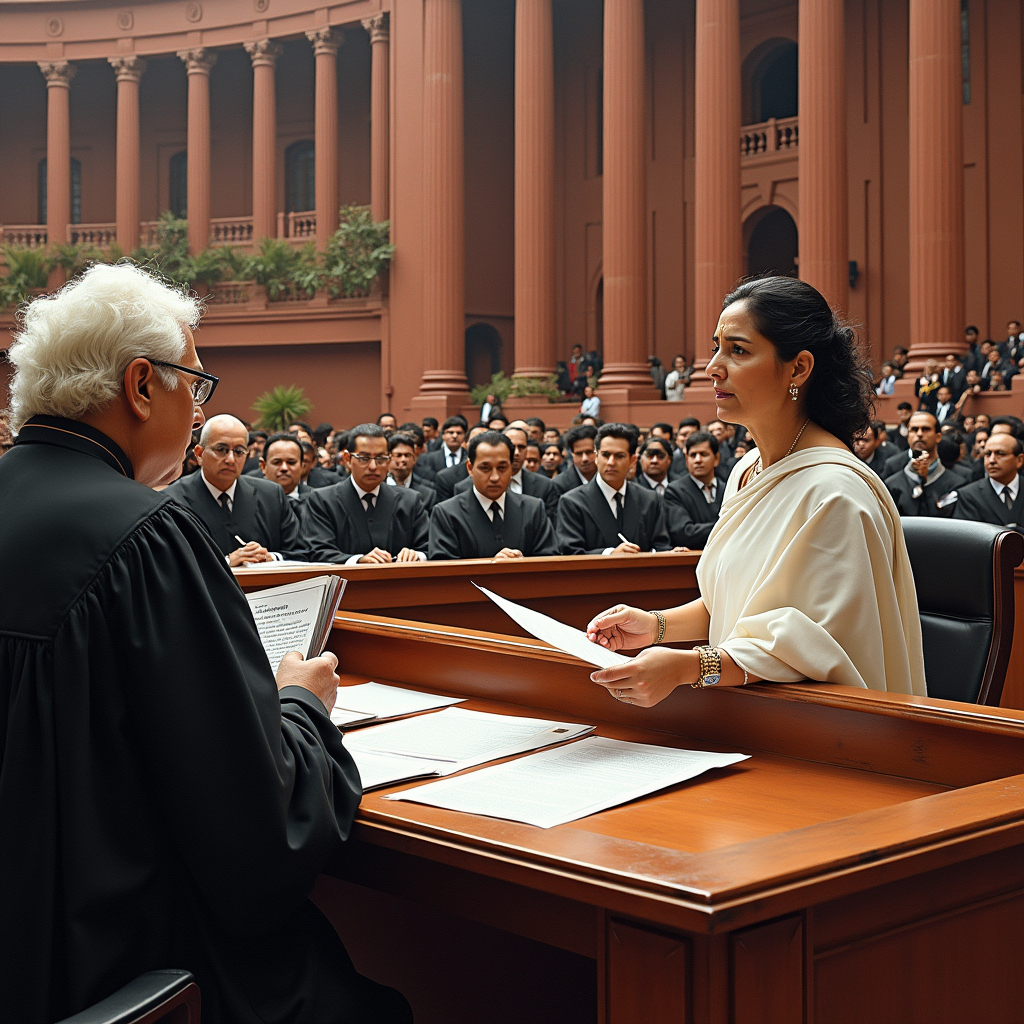





















 Allow notifications





