Download Now
Home Blog Page 425

An analysis of the Prevention of Money Laundering Act, 2002 (“PMLA”) with reference to the case OPTO Circuit India Ltd. v. Axis Bank & Ors.

0

This article is written by Kavana Rao from Symbiosis Law School, Noida. This article is an analysis of the PMLA Act, 2002 with respect to the case of OPTO Circuit India Ltd v Axis Bank & Ors.

Introduction

Money Laundering is an illegal act of making large amounts of money coming from illegal sources, which appear to be from legitimate sources. The PMLA, 2002 was first enacted to fight against the criminal offence of legalising the income or profits derived from an illegal source. It authorises the public authority to confiscate the property derived from or involved in an illegal act.

Prevention of Money Laundering Act, 2002 (“PMLA”) : a brief overview

The Prevention of Money Laundering Act was enacted on 17th January 2003 by the then NDA Government. The primary objective of the Act was to prevent and keep a check on money laundering, to confiscate any kind of proceeds derived from the crime. The Bill was referred to the Department-related Standing Committee and later after considering all its recommendations, it was introduced in the Lok Sabha from where it took the course from being a bill to an Act. PMLA, 2002 was finally brought into operation on July 1, 2005. 

The PMLA was amended multiple times, the most recent ones being through the Finance Act, 2015, Finance Act, 2018 and Finance Act, 2019.

Punishment for money laundering

Section 4 of the PMLA, 2002 describes the punishment under PMLA,2002. Under the Section, “any person committing the offence of money laundering shall be punishable with rigorous imprisonment for a term which may extend from three years to seven years and shall also be liable to pay a fine which may extend to five lakh rupees”. Also, if the proceeds of the crime involve any offences under the Narcotic Drug and Psychotropic Substance Act, 1985 which is under Paragraph 2 of Part A of the Schedule, then the maximum punishment may extend to 10 years.

Section 17 of the PMLA

The condition of Section 17 of the PMLA is that the Director or such other Authorised Officer in order to exercise the power of freezing the account or property under the Section, should be on the basis of information in his or her possession. In addition to this, they must also have a reason to believe that such has committed acts relating to money laundering and thus, having the requirement to seize any record or property found in the investigation or search, and such belief of the officer must be recorded in writing. 

  1. Section 17, sub-section 1A of the PMLA provides that the Officer Authorised may make an order to freeze such record or property where it is not practicable to seize such record or property.
  2. Sub-section 2 of the PMLA gives that, that after the investigation and seizure or upon issuance of the freezing order, the concerned Authorised Officer must forward a copy of the reasons given along with the material which is in his or her possession, to the Adjudicating Authority is a sealed envelope.
  3. According to sub-section 4, the authority seizing or freezing any record or property under the above two sections mentioned must undertake it within a period of thirty days from such seizure or freezing. If records or property are seized or frozen after the thirty days limit, then a case can be filed before the Adjudicating Authority asking for the retention of the record or property which was previously seized under Section 17(1A) and Section 17(2).

The case of OPTO Circuit India Ltd. v. Axis Bank & Ors.

This case of OPTO Circuit India Ltd. Vs. Axis Bank & Ors (2021), came as an appeal before the Supreme Court. It was adjudged by a bench consisting of Hon’ble Justice A.S Bopanna, Hon’ble Justice S.A Bobde, Hon’ble Justice V Ramasubramanian. 

The present case is about the freezing of bank accounts or other property under the Prevention of Money Laundering Act. Under Section 17 of this Act, an officer must have enough reasons through the information at his disposal, to believe that a person has committed an act that is related to money laundering and finds the need to seize or freeze the record or property found in the investigation conducted.

Facts of the case

The facts of this case are that the CBI initiated investigations against the appellant for the commission of an offence under the PMLA and accordingly proceedings were initiated by the Enforcement Directorate for the offence of money laundering. The ED directed the Respondent bank to freeze the accounts of the Petitioner or the appellant, to track the money trail and to check the further layering of proceeds. When the petitioner challenged before the Karnataka High Court and sought the bank accounts to be unfrozen for the purpose of making statutory payments and salaries of the employees, the High Court held that the action initiated against the Petitioner under the PMLA was competent. However, the High Court did not examine if the procedure followed while freezing the account was as per the PMLA, thus leading the petitioner to file an appeal before the Supreme Court.

The contention of parties to the case 

The learned counsel of the appellant contended that under Section 17 of the PMLA, the Director or other such Authorised Officer must have a reason to believe and appropriate information that must be communicated, that such a person has committed an Act relating to money laundering, to freeze such record or property. In addition to this, it further explained that freezing of the bank account will also require the same procedure as mentioned in the statute since a bank account being considered as proceeds of crime would fall under the ambit of property and records. By proving this to the bench, the counsel further went on to explain that the procedure under Section 17 was not complied with by the Officer Authorised. Apart from the communication which states that the Officer was investigating the case and required relevant documents for the same, there was no other information or formal communication which was indicating the recording of the belief of commission of the act of money laundering and placing before the Adjudicating Authority or for filing an application after ordering for the freezing of the account. Therefore, the freezing of accounts was made in disregard to the legal requirements and thus not sustainable.

The Additional Solicitor General made attempts to contend that the freezing of the account was valid and sustainable under Section 102 of the Code of Criminal Procedure, which has been exercised and as such the freezing of the account would remain valid.

Findings of the Court

The Court turned down the argument of the Additional Solicitor General contending under Section 102 of the CrPC. The Court observed that it was the contention of one of the respondents that PMLA was a stand-alone statement, therefore the power has to be exercised and the procedure under it has to be complied with. In addition to this, when there is a power under the special enactment like the PMLA, then the power under the general law does not arise. 

In addition to this, the Court observed that the freezing of accounts would require the same procedure as that of a bank account. This is said because the bank account containing the alleged “proceeds of crime” would fall under the ambit of “property “ and “records.”

The Court also emphasised that if a statute or a provision requires a task to be done in a particular manner, then that procedure must be followed and not any other method. This was further proved by citing Chandra Kishor Jha v. Mahavir Prasad and Ors (1999), in which it was observed that if a statute is required for a thing to be done in a particular manner, then it had to be done in that manner and no other manner.

Since, the appeal brought by the appellant was to unfreeze the account for paying various statutory dues such as Provident Fund, Professional Tax, Gratuity, LIC Employees’ deductions as well as salaries, the Court held that the freezing order was illegal. The Court authorised the appellant to pay the dues while enabling the ED to freeze the account again, after complying with the procedural requirements.

Conclusion 

To sum up, the order in the present case is a prime example of the importance of following the due process. Huge weightage was laid on following the procedure for freezing the property or proceeds under Section 17 of the PMLA. This shows that the PMLA not only prevents the offences of money laundering but also provides protection to the person accused under the Act. 

References

  1. https://legislative.gov.in/sites/default/files/A1974-02.pdf 
  2. https://www.indiacode.nic.in/bitstream/123456789/2036/1/A2003-15.pdf 

LawSikho has created a telegram group for exchanging legal knowledge, referrals and various opportunities. You can click on this link and join:

https://t.me/joinchat/J_0YrBa4IBSHdpuTfQO_sA

Follow us on Instagram and subscribe to our YouTube channel for more amazing legal content.

Download Now

Nike v. Lil Nas X : analysis of the trademark infringement case

0
Image Source- https://bit.ly/2Ney22A

This article is written by Ananya Agarwal, pursuing a Diploma in Intellectual Property, Media and Entertainment Laws from LawSikho. The article has been edited by Aatima Bhatia (Associate, LawSikho) and Ruchika Mohapatra (Associate, LawSikho).

Introduction

Lil Nas, a popular rapper, recently released his controversial track ‘Montero (Call Me by Your Name)’ which consistently featured in the Billboard Hot 100 List. The song was marketed to ride the gravy train of controversy, essentially a 21st-century re-creation of the controversy over Madonna’s ‘Like a Prayer’ video from 1989.  As it received condemnation from the right-wing due to its depiction of the Bible in an unfavourable light, Lil Nas partnered with the New York-based art collective MSCHF. They created modified versions of Nike Air Max 97 which featured a bronze pentagram, the number “666” and a small amount of human blood, and most importantly, the Nike Swoosh. These shoes then went on to sell for 1018$, a nod to the Bible Verse 10:18, and 666 units were sold in less than a minute. However, Nike was not impressed with what is considered a cheap imitation of their popular shoes. This article seeks to examine the issue of trademark infringement in the case of Nike Inc. v. MSCHF Product Studio Inc

Legal arguments 

Nike’s complaint originates from the fact that there was a material alteration to their trademarked shoes with no prior authorisation. In doing so, MSCHF has created deception in the minds of the consumers as to Nike’s relationship with the Satan shoes. Given the heraldic nature of the shoes, it also causes defamation of the Nike brand. In their complaint, Nike stated the following:

‘MSCHF’s unauthorised use of Nike’s [marks] and/or confusingly similar marks constitutes a false designation of origin that is likely to cause consumer confusion, mistake, or deception as to the origin, sponsorship, or approval of MSCHF and/or MSCHF’s Satan Shoes by creating the false and misleading impression that MSCHF’s Satan Shoes are manufactured by, authorized by, or otherwise associated with Nike.’

Therefore, Nike filed a complaint under:

In lieu of this contention, Nike demanded a temporary restraining order (‘TRO’). However, MSCHF stated this was not necessary since 665 of the 666 shoes had already been shipped. Nike argued then if no injunction was granted, the company would suffer irreparable damage. They asked that all 666 pairs be shipped to them for destruction and requisite damages be paid to them.

The defendants relied on the ‘First Sale Doctrine’ the essence of which is that there can be no case for trademark infringement if the alleged offender resells the item after purchasing it through authorised means, even if no permission for resale is granted. However, this principle was not accepted in the present matter since the modifications made to the shoe were such that it caused a loss in originality and deceived the public into believing Nike’s relationship with the modified shoes. 

It is to be noted that earlier, MSCHF had released ‘Jesus Shoes’ originating from Nikes Air Max 97. In this instance, Nike did not sue the company as it received positive attention from the same. Predicting that this might be a ground of defence by MSCHF in the present matter, Nike cleared its stance by stating that it had not given up the right to sue the company for the ‘Jesus Shoes’ and reserved that action for when the ‘likelihood of confusion loomed largely.’

Trademark law in the U.S.A.

Trademark Law in the U.S.A is governed by the Lanham Act, 1946. §32 of this Act provides for penalties of an infringer. When there is unauthorised use of a trademark, the offender is liable to civil action and the owner of the trademark can exhaust a number of remedies. Further, §43 states that any person making the misleading representation, such that it has the likelihood of causing confusion in the public’s mind can be sued by another person who has a reason to believe that rights of his shall be affected by such an Act. The remedies offered to the offended party are as follows:

  • Injunctive Relief (§34): Under this the defendant will be required to give a report as to his compliance with the injunction order.
  • Recovery of Damages (§35): In case of violation under §1112, the plaintiff can recover any profits made from the sale of such infringing product, damages upto three times the damage incurred and any costs incurred in the lawsuit. In exceptional cases, attorney fees may be granted to the plaintiff.
  • Destruction of Infringing Material (§35): It is possible to pass an order for the removal of any labels, signs, prints, packages, wrappers, receptacles, and advertisements carrying the disputed mark. In addition, if a deliberate breach occurs as a result of replication, counterfeiting, copying, or improper imitation, the Court will issue a delivery and destruction order.

Verdict and settlement

In the present matter, the judges had to examine whether the use of the mark has artistic relevance, and if so, whether the work is explicitly misleading. The response was that the black and red, devil-themed sneakers carrying the Nike ‘Swoosh’ logo, had infringed the Nike trademarks. The judge took out a restraining order telling MSCHF to recall all of its 666 pairs of ‘Satan Shoes’ and to provide the returnee a complete reimbursement on the same.

However, on April 8, 2021, the parties reached an agreement to end the case. While the majority of the terms of the settlement are kept under wraps, a spokesman for Nike told Yahoo Finance that the company requested MSCHF to start a voluntary recall to purchase back any Satan Shoes and Jesus Shoes for their original retail pricing and remove them from circulation. Nike included the Jesus Shoe in this recall to preclude MSCHF using the defence of laches, which states that if a plaintiff waits too long to establish a right, that right is waived.

Conclusion

Although creativity and artistic talents must be nurtured, there exists a limit. Profiting off an established player’s goodwill with disrespect to ethical barriers is a problematic precedent. A balance must be struck between innovation and protection of others’ IP. The author believes this case highlights the importance of trademark strategy. Registration of a trademark is just one aspect of it. Trademark owners have a further duty to protect their trademark to their best capacity. In the present case, it was Nike’s strategic choice to originally not sue for Jesus Shoes and then subsequently add that to the settlement deal for Satan Shoes. Such decisions should be well thought out with the aid of experts and lawyers so as to minimize loss and dilution of the brand. 

References

  1. https://www.nytimes.com/2021/04/05/arts/music/lil-nas-x-montero-billboard-chart.html
  2. https://www.cbsnews.com/news/nike-sues-lil-nas-x-satan-shoes-lawsuit/ 
  3. https://www.abc4.com/wp-content/uploads/sites/4/2021/03/NIKE-vs-MSCHF.pdf
  4. https://www.mondaq.com/unitedstates/trademark/1061266/trademark-infringement-nike-v-mschf-satan-shoes-case
  5. https://news.bloomberglaw.com/ip-law/satan-shoes-prompt-nike-suit-against-brooklyn-design-company 
  6. https://www.forbes.com/sites/rachelsandler/2021/04/08/nike-settles-lawsuit-with-company-behind-lil-nas-x-satan-shoes/?sh=2f24c68f575d

LawSikho has created a telegram group for exchanging legal knowledge, referrals, and various opportunities. You can click on this link and join:

https://t.me/joinchat/J_0YrBa4IBSHdpuTfQO_sA

Follow us on Instagram and subscribe to our YouTube channel for more amazing legal content.

Download Now

An analysis on the case CIT v. Nalwa Investment Ltd

0
Image source - https://bit.ly/2ZgUx0t

This article has been written by Shwetha Shivaram pursuing the Diploma in General Corporate Practice: Transactions, Governance and Disputes from LawSikho. This article has been edited by Ruchika Mohapatra (Associate, Lawsikho). 

Introduction

M/s Nalwa Investment Ltd (hereinafter referred to as “Assessee”) belonged to Jindal Group of Companies and was one of its promoter companies. The Assessee Company had as part of its investment shares of Jindal Ferro Alloy Ltd (JFAL) which subsequently got amalgamated with one of its other Group company Jindal Strips Ltd. (‘JSL’).  The assessee company were allotted the shares of JSL in lieu of shares held for JFAL and accordingly, the profit on this particular transaction was charged to Income Tax by the Income Tax Authorities which was claimed as exempt by the assessee company during the time of filing their Income Tax Return in the year of this Transaction. The assessee company received a Favourable order from the ITAT against the appeal filed and subsequently, the Department filed an appeal against the order to the Honourable Delhi High Court where the court gave the judgement stating that it would refer the case Back to the Tribunal for fresh Adjudication and hearing and ordered the appeal in favour of the Department.

Background and facts

The Assessee company belonged to Jindal Group of Companies and was one of its promoter companies which had initially made few investments. The Assessee was holding shares of Jindal Ferro Alloy Ltd. (“JFAL”) as part of its Investment. Upon JFAL being amalgamated with JSL, vide an amalgamation scheme sanctioned under Section 391-394 of the Companies Act, 1956, JFAL got amalgamated with Jindal Strips Ltd. (“JSL”). Due to this amalgamation, the shares held of JFAL was cancelled and subsequently shares of JSL were issued. Accordingly, upon the amalgamation taking place, the assessee company transferred its existing shares held in JFAL against the receipt of shares of JSL. Such transfer of shares was for a non-monetary consideration and the shares were issued in lieu of the existing shareholding. Hence, the particular transaction was claimed as exempt under the provisions of Income Tax Act and the management decided the same is not covered under the capital gain taxation under Section 47(vii) of the Act. 

However, the Jurisdictional Assessing Officer of the Assessee Company claimed this particular transaction as taxable under the Income Tax Act and subsequently calculated an amount towards the profit on such transfer of shares. The profit referred to by the Assessing officer was calculated by adopting a rate of Rs.218 per share as the value of JSL Share and accordingly the profit was calculated on receipt of shares of JSL Company under the scheme of amalgamation amounting to Rs. 5,31,28,579/-, and the same was taxed as ‘business income’ under the Income tax.

The assessing officer was of the opinion that since the assessee company was holding JFAL shares as stock-in-trade and not as capital asset, it was not entitled to exemption under Section 47(vii) of the Act. The Commissioner of Income Tax Appeals being the first Appellate Authority [‘CIT(A)’] gave the order in favour of the Department where it upheld the decision of the AO treating the transaction as Taxable Income. Upon receipt of this order from CIT(A) since the order was not in favour of the Assessee a further appeal was filed before the Income Tax Appellate Tribunal by the assessee company. Upon such filing of Appeal, the ITAT during the Hearing conducted took note of the arguments made by the learned counsel of both the parties and upon an analysing the facts of the case ITAT issued a favourable order towards the Assessee Company, thereby treating the entire transaction as not Transfer thereby not attracting tax under the provision of Income Tax Act. Accordingly, the appeal was allowed in favour of the Respondents, holding that no income accrue when shares of the amalgamated company are received in lieu of shares of amalgamating company. Aggrieved with the aforesaid order passed by the Tribunal, Revenue i.e the Income Tax Authority filed the present appeals before the Honourable High Court of Delhi, thereby questioning the correctness of the order passed by the ITAT and also raised concerns on several questions of law.  Accordingly, the High Court admitted the appeal and a substantial question of law was framed.

Facts argued by Mr. Ajay Vohra, Advocate arguing on behalf of the Respondent

  • The shares of the assessee company i.e. FAL and/or JSL are held as part of the promoter holding.
  • The assessee company had furnished a non-disposal undertaking stating that it would not dispose of the shares held in JFAL, to financial institutions and lenders who had lent money to the operating company.
  • It was clear that Shares of JFAL were reflected as investment in Balance-Sheet of Financial Statement of the assessee company.
  • The shares received in JSL on Amalgamation were not sold during the relevant previous year during which the Revenue had taxed this income and hence the income had not accrued during the relevant year during which it was taxed.
  • The market price of the share of JSL as on 23rd December 1996 was Rs.76/- per share whereas the assessing officer had adopted a rate of Rs.218/- per share.

Legal issues underlying the case law

The various question of law which was accepted by the honourable High Court in the present case was:

  • Whether the Appellate Tribunal was right in treating that where the assessee gets shares of Amalgamated Company in lieu of shares of amalgamating company, no transfer takes place?
  • Whether the assessees’ were holding the shares as ‘capital asset’ or ‘stock-in-trade’?
  • Whether the respondent assessee is eligible to claim exemption under Section. 47(vii) or is the income from sale of shares taxable under Section 28.
  • Whether the receipt of shares of amalgamated company against the shares held in the amalgamating company in lieu of amalgamation, constitutes a transfer?
  • Whether the difference between the market value of the shares of JSL on the date of transfer, received by the assessee-companies against the shares of JFAL Company in lieu of amalgamation and the book value of shares of JFAL has to be treated as income of the assessed under Section 28 of the Income Tax Act.

Court observation and decision

The appeal has been filed by the revenue against the order issued by the ITAT in the favour of assessee stating that the issue of shares in JSL in lieu of amalgamation should not be treated as a transfer and no Income Tax is applicable on the same.

  • At the first instance the court has tried to interpret the definition of capital gains under Section 45 of IT Act and the exemption provided under sec 47(vii) of the act
  • The court has observed that sec 47 starts with a non obstante clause which states that “nothing contained in sec 45” which means that if the shares held as a capital asset and the subsequent exchange of shares in the course of amalgamation should not be treated as a transfer and hence exempt from capital gains taxation
  • The definition of transfer as per Section  2(47) of the IT Act has been analysed where it has been noted that “Transfer takes with in its sweep the concept of sale, exchange or relinquishment of the asset as well as extinguishment of any right also a conversion of stock in trade into a capital asset would be treated as a transfer.
  • It has been noted that the advocate arguing for revenue has agreed to the legal proposition and submits that if the shares were held as capital asset, the transfer would be exempt from the capital gains taxation referred under Section 47(vii) of the IT Act and ‘Revenue would have no case to argue before the Court of Law
  • The court has noted the case laws of: 
  1. Commissioner of income tax Bombay vs. Rasiklal Maneklal
  2. Commissioner of Income-Tax v. Mrs. Grace Collis and Ors., 
  3. Chainrup Sampantram vs. CIT
  4. Orient Trading Co. Ltd. v. Commissioner of Income-Tax
  • Accordingly, it was observed that in the case of Grace Collis and Ors., the scheme of amalgamation was virtually identical to the scheme that was in question in the Rasiklal Maneklal case. The Court went interpreted the expanded definition of ‘transfer’ under Section 2 (47) of the Act and extinguishment of rights of assessee in the capital asset, being shares in the amalgamating company, was held to be a ‘transfer’ within the meaning of Section 2(47). 

Thus, the judgment of Grace Collis and Ors has a direct bearing on the present case, and pertinently because the findings of the ITAT are solely resting on the decision in Rasiklal Maneklal case which has been considered and not followed in the later decision in Grace Collis and Ors.

  • Subsequent to the process of amalgamation, the shares held in the earlier company i.e., JFAL has been replaced with fresh shares issued by the Amalgamated Company which is JSL the same would be valued entirely on different fundamentals.
  • The non agreeing shareholders who do not support the amalgamation would receive an amount equivalent to the value of their existing shareholding while the shareholders approving this amalgamation would receive the consideration in the form of shares of the amalgamated company.
  • The Income Tax has to be charged on the income obtained from the transaction as per provisions of Income tax Act. The basic principle to be followed is that the fundamental substance for the transaction has to be separated from the form and the taxing statute has to be applied accordingly
  • The court has observed from the decision of ITAT that there is no transfer which can be considered as per Income Tax in this scheme of amalgamation, the decision issued by the Tribunal is not in order and the same is not sustainable as far as capital asset is concerned and findings of the Tribunal are plainly erroneous and unjustifiable.
  • Accordingly, the matter has been remanded back to the ITAT since the initial facts which are under dispute between the parties has not been decided and appeals under this court were allowed in favour of the Revenue and against the assessee company.
  • The court has not issued the order towards demanding any amount as liability towards this respective transaction. The court has only referred back the case to ITAT for a fresh hearing and to reconsider the facts of the case with all documentary evidence and relevant provisions of law.

Analysis and impact of the judgment

The court has tried to interpret the question framed by the revenue as to whether the scheme of amalgamation through which the shares of the amalgamated company received by the amalgamating company would be considered as a transfer and whether the income earned if any, on such transfer would be taxed as Income under the Income Tax provision.

The case has been referred back to the Income Tax Appellate Tribunal for a fresh adjudication process. However, even the High Court is of the opinion that the exemption under Section 47(vii) is not eligible for the Respondent Assessee and the Tax should be payable on the Transfer of shares.

Accordingly, the Appellate Tribunal will have to give another opportunity of being heard to both the parties of the case and hear their views based on the facts of the case and the matter to be decided accordingly keeping in mind all the findings of the Delhi High Court’s Order.

Conclusion

There are various ambiguities with respect to interpretation of the provisions under Income tax Law as to whether the particular transaction in relation to the exchange of shares with respect to the Amalgamation procedure should be treated as Income under the head of Business or Profession and whether the same is taxable under Section 28 or to be treated as Income from Capital Gains and taxable under Section 45 or exempt u/s 47(vii). Simultaneously, it is also required to decide whether the Shares of JFAL held by M/s Nalwa Investment Ltd are currently being exchanged for JSL Shares, to be treated as Stock in Trade or to be treated as a Current/ Non-Current investment which is held for a longer-term and not for immediate sale. Upon deciding on the above referred Terms it is to be decided and the order will have to be passed by the ITAT whether the transaction to be treated as Taxable or exempt under the Income Tax law.


Students of Lawsikho courses regularly produce writing assignments and work on practical exercises as a part of their coursework and develop themselves in real-life practical skills.

LawSikho has created a telegram group for exchanging legal knowledge, referrals, and various opportunities. You can click on this link and join:https://t.me/joinchat/J_0YrBa4IBSHdpuTfQO_sA

Follow us on Instagram and subscribe to our YouTube channel for more amazing legal content.

Download Now

Rights of the owner in an operations and management contract

0

This article has been written by Arya Mirgane pursuing the Diploma in Advanced Contract Drafting, Negotiation and Dispute Resolution from LawSikho. This article has been edited by Ruchika Mohapatra (Associate, Lawsikho). 

Introduction

Operations and Management contracts have been gaining popularity day by day. At this speed of the growing industrialization, there is a little time left to put your mind on one single business with the same efficiency and attention. Therefore, people have been entering into these contracts named Operation and Management Contracts (also called O&M contracts) to maintain and operate project facilities and gain a lot of profits with minimum attention and maximum speed. But the question that needs to be asked here is, does the owner enjoy the same rights in an operations and management contract as compared to the manager or the operator? In this article, we will try to answer this complicated question.

Basics of O&M contracts

When a professional management company engages in the task of managing and operating the business of another company in return for a fee for its financial development, efficient services, or simply because someone cannot invest as much time and effort in the business, it is known as Operations and Management. Goods, as well as services, can be offered by the Managing Company. It includes many factors such as finance, sales, human resources, IT, and if necessary marketing. O&M agreements establish contractual relationships between the project company and a professional management company that undertakes to handle the operations and management of the aforementioned project company. 

The person that controls and operates the business is known as the Operations Manager. Efficiency, skills, leadership qualities, good predictability, perseverance, communication skills, risk taking nature are some important aspects for the operations manager. His tasks include training a staff to perform tasks excellently in the least time possible, which is a critical part of managing a team, recruiting,  retention, etc. He needs to stay up to date with respect to the on-goings in the market so as to conduct training sessions, workshops, seminars, etc. to stay ahead in the competition and exceed. 

When such an agreement is made between two business entities for the purpose of operations and management, they need to enter into a contract.  The contracts that enforce such agreements between the parties are called Operation and Management Contracts. 

Important clauses

  1. Appointment of Manager; Relationship of Company and the Manager– This clause dictates the relationship between parties and mentions terms and conditions for better working environment.
  2. Management Services- What must be included in the management services is specified in this clause. 
  3. Obligations of the Company– The duties and obligations that need to be performed by the Management Company are mentioned in this clause. 
  4. Additional Agreements of the Manager- If and when the manager needs any special kind of agreements on his behalf for the contract, this clause is important. 
  5. General and Administrative Activities– Everyday tasks and obligations should be mentioned in this. 
  6. Location– The location of the place of work or business needs to be specified via this clause. 
  7. Compensation– The compensation clause is relatively important for both the parties i.e. the consultant and the client. This clause states the amount to be paid by the client for hiring the services of a consultant
  8.  Term of Agreement; Termination of Rights– This is by far the most important clause in a contract and it states how long the agreement is in function and when it is going to come to a termination. 
  9. Indemnification– It’s a clause that contractually obligates one party to compensate another party for losses or damages that have occurred or could occur in the future.
  10. Additional Provisions– Additional or Special Provisions should be mentioned here as well.

Parties to the contract

Though there are inevitably two parties to the contract i.e. the owner and the operator, their rights depend upon the drafting style of the contract. The more efficiently the contract is drafted by one party, the more it is beneficial to them. Therefore, one cannot say that the owner enjoys more rights than the operator because he is the owner of the business and vice-versa. These two parties to the contract may meet and mutually decide important things like the rights, responsibilities, timings, etc. while drafting the contract.

Rights of the owner in the agreement

The important points that need to be included in this clause are mentioned below:

  1. Inspection of premises – This point should be drafted carefully mentioning that owners continue to retain ownership and possession over the property even when the same is being operated and managed by the operator. The owner continues to enjoy the rights of possession of the property and can inspect the premises whenever they please. But usually, a prior permission of the operator needs to be taken out of common courtesy. In cases for conducting inspections, inspection of the operations being undertaken in the premises etc., the right of an owner to enter into his/her property may be enforced. Owners should also have the right to conduct the said inspections and audits using their authorised representatives and professional advisors.
  2. Retrofitting – In cases where the premises need a change in the setting or additional work is required to be conducted to transform the space into a co-working space, the funds for such retrofitting is typically paid for by the owner. In such cases, even though the specifications are provided by the operator, the owner should have the right to discuss the quantum of expenditure with the operator, and where it feels such expenses or modification is unwarranted, the owner should have the right to bring the same to the notice of the operator.
  3. Time commitments – Owners should ensure that the preparation, pre-opening and post-opening activities are being conducted by the operator as per the time schedule provided in the O&M Agreement. O&M Agreements may also provide that in the event the operator is unable to render its obligations in the manner as envisaged in the agreement, the owners will have the right to seek appropriate damages from the operator. This is to ensure that the owner is in a position to receive appropriate and timely return on the capital expenditure incurred by him/her on setting up the co-working space.
  4. Performance review – There is a definite time period decided upon which the owner and the operator shall meet to discuss and review the performance of the operator with respect to the co-working space. The operators are under an obligation to ensure that the revenue realised from the operations is at least at par with other similar coworking operations by third-parties (who are the competitors of the owner) within a fixed geographical radius. Such determinants provide appropriate standards of revenue that are expected to be generated from the co-working space. Owners may want to negotiate appropriate measures to be implemented in the event it is found that the revenue targets are short of the agreed targets. In such cases, for e.g. if the revenue falls short by more than 20% of the Competitive Set, the owner may retain the right to terminate the O&M Agreement. The owner may also retain the right to terminate the agreement in case the calculated gross profits from the operations do not reach the profits of the agreed minimum.
  5. Budgeting – Since in an operations and management arrangement the owners are responsible for providing the working capital for the operations of the co-working space, owners invariably have a significant say in the annual budget. Even though the annual budget and auditing is done by the operator, the owner’s say is considered valuable. Both parties to the contract i.e. the owner and the operator mutually meet and decide the annual budget. Therefore, before the implementation of the annual budget, the owner has to approve or disprove it. His/her say is considered the most important as compared to the operator. 
  6. Exclusivity – Though this is a separate Clause as included in the Agreement, it is the right of the owner to ensure that the operator is providing services to the owner only and is not engaging in similar type of work with competitors of the owner. If this is the case, then there will be no exclusivity in the owner’s business arrangement and all the operations would just be a copy of another. This clause is drafted for the period of the Agreement as well as some time after the termination, for e.g. 6 months or 1 year depending upon the terms of the Agreement but not more than that. 
  7. Confidentiality – This is also included as a separate clause. Though, it is the right of the owner to maintain confidential information used in the operation of his/her business so as to not generate a similar arrangement of the work by the competitors. This includes technical know-hows, plans, confidential ingredients, recipes, etc. If the confidential information is made public by the operator without due purpose or out of spite, then the owner has the right to retain the information back and sue the operator. Also, in the clause, it is stated that the disclosing party (herein, the operator) may inform about the disclosure promptly after the happening to the owner and take all necessary steps to retain that information back as if it were his. 

Conclusion

The rights of the owner are an essential part of the Operations and Management contracts without which the owner cannot exercise full control over his business and there may even be chances of the operator taking over the business. Therefore, the drafting of the ‘Rights of the Owner Clause’ should be done efficiently and carefully so as to avoid confusion and future disputes. It allows the owner to exercise rights of his business without being fully entitled to engaging his time in the business. This article also emphasizes on the other important clauses that are necessary for the owner to exercise his/her right over the business. Where there is a right, there is a duty. Therefore, this clause proves beneficial for both the parties to the contract. So, there is no confusion between the parties regarding the responsibilities, duties and rights. 

References

  1. https://www.mondaq.com/india/trademark/932332/operating-a-co-working-premises-the-rights-of-owners-in-an-om-contract 
  2. https://www.sec.gov/Archives/edgar/data/748055/000074805505000004/exh104.htm.

Students of Lawsikho courses regularly produce writing assignments and work on practical exercises as a part of their coursework and develop themselves in real-life practical skills.

LawSikho has created a telegram group for exchanging legal knowledge, referrals, and various opportunities. You can click on this link and join:https://t.me/joinchat/J_0YrBa4IBSHdpuTfQO_sA

Follow us on Instagram and subscribe to our YouTube channel for more amazing legal content.

Download Now

Can the police lodge an FIR under Section 188 of IPC for violation of lockdown : challenges faced by the courts amidst the pandemic

0
FIR
Image Source: https://rb.gy/al7w1j

This article is written by Aastha Verma, pursuing B.A.LL.B from Kalinga University, Raipur, Chhattisgarh. This article is concerned with Section 188 of IPC and discusses whether police can lodge FIR under Section 188 or not. 

Introduction

The Central and the State Government has taken various measures to stop the spreading of novel coronavirus which includes the enforcement of an unprecedented nationwide lockdown that has affected the lives and business of the people.  Because lockdowns came into force the statutes like the Disaster Management Act, 2005 (DMA),  Epidemic Diseases Act, 1897 (EDA), and certain provisions of the Indian Penal Code, 1860 (IPC) have become a part of lawyer’s everyday language.

However, most orders/directives/notifications issued by governments, whether state or federal, have included Section 188 of the Indian Penal Code. This section is invoked when there is non-compliance with the guidelines which have been mentioned in the orders. Therefore, it becomes important to understand this provision.  

Government imposed restrictions in the country

The coronavirus was the first to emerge in China’s Wuhan in 2019, and slowly it affected various countries and their territory. To stop the virus from spreading the government imposes measures to reduce the public gathering. Offices, schools, conferences, sports, marriages, etc were stopped. The World Health Organization (WHO) asked the government to take action to prevent the transmission of the disease. In India, on 22nd March 2020 the center announced the Janta curfew for the first time from 7 am to 9 pm and the condition is that everybody has to stay at their home only. Even after that, the number of cases increased rapidly, so the center announced the nationwide lockdown from 25th March 2020, and wearing masks and maintaining social distance is the most important step while going out of home for basic necessities. Whoever is disobeying the order shall be punished under Section 188 of IPC. The police have the power to register a First Information Report (FIR) if he knows that someone has violated the order promulgated by the public servant and police can investigate the offence but the court cannot take cognizance of the case unless there is a written complaint filed by the concerned public servant. Further magistrate court cannot direct the police to initiate the investigation as it has no negative power to direct stoppage of investigation of cognizable offence.

The question arises of the FIRs that have been registered all over the country under Section 188, IPC. The cases are broadly divided into two categories –

  1. Cases in which FIR is registered under Section 188 and also under Section 269 and 270 of IPC. 
  2. Cases that are registered only under Section 188 of IPC. 

In the first category, the police can omit the investigation under Section 188 of IPC before filing the charge sheet incompetent court but the charge sheet can be filed for the other offences. In the second category, where FIR has been registered only under Section 188 of IPC the police have to drop the case and file a complaint in the competent court. But a practical difficulty the administrative authority is facing now is that most of the courts have been shut down during the lockdown and it is getting difficult to take a written complaint from the concerned public servant if there is a violation of Section 188 of IPC.     

In May 2020, the Supreme Court refused to entertain a plea seeking for quashing of various FIRs registered under Section 154 of CrPC, 1973 and of other petty offences related to not following norms of the COVID-19 pandemic.   

When the court is not functioning properly the public servant can’t submit the complaint in writing. The public servant gives an informal complaint. When it becomes practically possible the Section 195 of CrPC will be applicable along with the findings of the informal investigation.         

Section 188 of the Indian Penal Code

Section 188 of IPC comes under Chapter X “of Contempts of the Lawful Authority of Public Servants” which reads disobedience to order duly promulgated by a public servant. The existence of the order promulgated by the public servant who is lawfully empowered to promulgate and the accused know about the same and disobeys the order which has caused obstruction, annoyance, or injury to any person lawfully employed or danger to human life, health, and safety. Whoever knows that order given by the public servant lawfully directs to abstain from doing disobey such direction and causes obstruction, annoyance, injury, or risk to any person lawfully employed shall be punished with simple imprisonment which may extend to one month or fine up to Rs. 200/- or both. 

If such disobedience causes danger to human life, health, or safety or causes riot or affray shall be punished with imprisonment of either description for a term which may extend to six months or fine up to Rs. 1000/- or both. According to the first schedule of the Criminal Procedure Code (CrPC), 1973 the offences are cognizable, bailable, and can be tried by any magistrate. Also, as per Section 320 of the Code of Criminal procedure, 1973 Section 188 is a non-compoundable offence. 

To be punishable under Section 188, the order should be given by a public servant for the public purpose. There must be evidence that the accused knows the order with the disobedience of which he is charged.  An order made in a civil suit between two parties does not fall under this section. Mens Rea or a guilty mind is not an essential requirement for the commission of the offence.   

The procedural scheme under Section 188 of the Indian Penal Code

  • The police have the power to arrest the person without a warrant also police can register an FIR under Section 154 of the CrPC, 1973, and can initiate the investigation into the offence.  
  • After the completion of the investigation police can proceed to file a police report under Section 173 of the CrPC, 1973 based on which the court initiates the trial and takes cognizance of the offence.  
  • By applying Section 195(1)(a) of the CrPC, 1973 which provides that the court can take cognizance of the offence punishable under Section 172 to 188 of the IPC only when there is a written complaint of the public servant concerned or his superior.
  • It also bars the court from taking cognizance of the case on the basis of the final report by the police which creates a twist in the enforcement of Section 188 of IPC. This is the travesty of the judicial process. 

In the case of Jeevanandham v. State, 2018  the Madras High Court held that it is mandatory to follow the procedure of Section 195 of CrPC, 1973 to prosecute an accused of an offence under Section 188 of IPC otherwise such action would be rendered as void ab initio. There must be a complaint by the public servant whose lawful order has not been complied with. The power of police officers is limited to preventive action and immediately he has to inform the concerned public servant to enable him to proceed with the complaint before the Court.    

In the case of Jagdish and others v, the State of Haryana, 2015 the Punjab and Haryana High Court held that as per Section 195(1) of the CrPC, 1973 no FIR can be registered by the police unless there is a written complaint made by the public servant concerned and if made then the police report will be quashed for the offence under Section 188 of IPC. 

Measures which police can take-   

  1. Police have to prevent such disobedience of the order promulgated by the public servant.
  2. As per Section 41 of the CrPC, 1973 an accused person can be taken to the custody of the police. 
  3. The procedure has to be followed to prosecute the accused.     

In the case of State of Punjab v. Raj Singh, 1998  the Supreme Court held that we are unable to sustain the impugned order of the High Court for quashing the FIR lodged against the respondent for the commission of an offence under Section 467 and 468 of the IPC on the ground that Section 195(1)(b) of CrPC, 1973 prohibits the investigation of the offence by the police. Section 185 manifests that it comes into operation when the court takes cognizance of the case under Section 190 of the CrPC, 1973. The statutory power of police to investigate under the code is not controlled by Section 195 of CrPC. The court may file a complaint about the offence on the basis of FIR and the material collected during the investigation but should follow the procedure laid down in Section 340 of CrPC, 1973.     

Circumstances under which Section 188 can be invoked

To be punishable under Section 188, the order has to be for a public purpose by public functionaries. An order made under a civil suit between two people does not cover under this Section. For example – an order commanding an assembly of five or more members to disperse will fall under Section 188 of IPC. There must be evidence that the accused has knowledge about the order in which he has disobedience. Mere proof of general notification and promulgating the order does not constitute offence but it must show the offence that disobedience has or tends to various circumstances.  

COVID -19, Criminal law and Section 188 of IPC 

The government for saving the lives of people has taken various measures during the pandemic coronavirus and these cumulative measures are known as lockdown. However, some people are not following the rules and regulations made by the government which prompts the police to take action against the various provisions of law. Section 188 of IPC is one of them. Police are regularly registering FIRs and investigating upon the same as the offence under Section 188 is cognizable where police can arrest a person without any warrant. Section 154 of CrPC obligates the officer in charge of the police station to reduce the information into writing and make the sign of the informant. Section 195 of CrPC says that the court can take cognizance only after the complaint is in writing by the public servant which creates confusion between the two. 

Section 195 creates a barrier to the court for taking cognizance of the case. It does not talk about the power of the police officer. The applicability of Section 195 of CrPC, 1973 can be invoked before the stage of cognizance but it cannot infringe the power of police during the investigation. This section bars the Magistrate’s power to take cognizance of the case under Section 190 of CrPC, 1973. Also, when the magistrate is taking cognizance of the case under Section 190 of CrPC he must examine the facts of the complaint and should determine his power before taking cognizance. The police have to inform the accused about the offence to the competent public servant whose order has been contravened by the accused and give a police report for filing the complaint before the court. 

Thus the police officer, as well as the prosecution agency, are bound to observe the correct procedure under Section 195 of CrPC and Section 188 of IPC. Also, the written complaint of the District Magistrate (DM) or its superior officer annexed with a police report should be submitted for taking cognizance of the offence before the court.                   

Conclusion

It is the responsibility of every citizen to maintain peace and follow the rules and regulations of society. The public servant promulgates orders and whoever disobeys such orders shall be punished according to Section 188 of IPC. Coronavirus was increasing rapidly so to stop spreading it the government promulgated the order of lockdown and whoever disobeyed the order had to face legal consequences. The offence under Section 188 is cognizable where the officer in charge of the police station has to file an FIR under Section 154 of CrPC and on the other hand Section 195 of CrPC prohibits the police from filing FIR for an offence punishable under Section 188 of IPC. Whenever such conflict arises between two provisions of law then it’s important to take notice of the intention of the legislature while interpreting the procedural law. The intention of the legislature in Section 195 of CrPC, 1973 is to bar the court from taking cognizance and not bar registration of an FIR. Cognizance of the case can be taken at the time of filing of the charge sheet the statutory procedure specified under the provision compiled with it. The court has to decide which approach towards interpretation is better, the old grammatical approach or the modern purposive approach.             

Reference 


Students of Lawsikho courses regularly produce writing assignments and work on practical exercises as a part of their coursework and develop themselves in real-life practical skills.

LawSikho has created a telegram group for exchanging legal knowledge, referrals, and various opportunities. You can click on this link and join:

https://t.me/joinchat/J_0YrBa4IBSHdpuTfQO_sA

Follow us on Instagram and subscribe to our YouTube channel for more amazing legal content.
Download Now

Supreme Court guidelines concerning criminal cases pending against legislators

0

This article is written by Gyaaneshwar Joshi, a student of the Faculty of Law, Jamia Millia Islamia, New Delhi. This article gives an overview of the recent guidelines by the Supreme Court for speedy disposal of criminal cases against legislators. 

Introduction 

Currently, a large part of the voting population views their representatives as their problem solvers. Therefore, the quality of candidates contesting elections becomes important because they make laws that govern our society.  

Growing criminalisation has been a constant issue with Indian politics. The Supreme Court delivered key orders in an attempt to clean up the political system tainted with criminals. The court has passed certain judgments and orders to take a step forward towards ensuring accountability and transparency in law-making bodies. The political parties also welcomed the court’s intervention, by saying that it will help to deal with the increasing criminalisation in politics. 

The issue of criminalisation in Indian politics : cause for concern

The criminalisation of politics means that the criminals enter politics, contesting elections, and even get elected to the Parliament and state legislature. The Supreme Court has flagged several times an alarming increase in the incidence of criminals in politics. The Constitutional bench in 2018 held that rapid criminalisation of politics cannot be arrested by merely disqualifying tainted legislators but should begin by ‘cleansing’ political parties. On 13 February 2020, the Supreme Court while hearing the petition of Public Interest Foundation v. Union of India (2018), directed all the political parties to publish criminal antecedents of contesting candidates and the reason for selecting such candidates to fight for an election. The Election Commission of India (ECI) also came in favour of this ruling and issued a directive to implement these orders concerning criminal antecedents of candidates. 

The Association for Democratic Reforms (ADR), an organisation established in 1999, primarily works for conducting a detailed analysis of the backgrounds of the contesting political candidates. In collaboration with the National Election Watch, ADR conducts election watches for almost all states in parliamentary elections. In 2019, ADR published a comprehensive report of Lok Sabha elections titled ‘Analysis of Criminal Background, Financial, Education, Gender and other details of Winners’ and presented complete details of the percentage of winners with criminal cases in 2009, 2014, and 2019 Lok Sabha elections. 

As per the data mentioned in the report, out of the 539 winners in the 2019 Lok Sabha elections, 233 (43%) have declared criminal cases against themselves. Whereas, 159 (29%) winners have declared serious criminal cases against them, including rape, murder, kidnapping, attempt to murder, crimes against women, etc. 

Whereas, in the results of the 2014 Lok Sabha elections, a total of 542 were declared winners and elected, in which 185 (34%) winners have declared criminal cases against themselves, and 112 (21%) have declared serious criminal cases over them. Similarly, in the 2009 Lok Sabha elections, out of 521 winners, 158 (30%) had declared criminal cases against themselves, whereas 77 (15%) had serious criminal cases. The report stated an alarming increase of 44% in the number of MPs with declared criminal cases and 104% with serious cases since 2009. 

During the last few decades, various committees have been formed to check out the growing criminalisation of Indian politics and its implications. Dinesh Goswami Committee on the Electoral reforms (1990) had earlier expressed deep concern over the growing criminal forces in politics. Similarly, N.N. Vohra Committee Reports (1993) reiterated the disturbing trend of growing criminal forces in Indian politics.

Supreme Court’s intervention on rising criminalisation of politics

In 2011, an NGO named Public Interest Foundation approached the Supreme Court for disqualification of candidates with serious criminal cases pending against them. Several petitions were filed in the Supreme Court, therefore in the case of Union of India v. Association for Democratic Reforms (2002), the court finally held the right to information- the right to know antecedents including the criminal past, or assets of a candidate as a fundamental right under Article 19(1)(a) of the Constitution. Later in the case of Public Interest Foundation v. Union of India (2015), the Supreme Court directed the disposal of criminal cases against the elected representatives within one year from the date of the framing of charge. However, in pursuance of the directions given by the Supreme Court, hardly any case was disposed of within one year. Any of the High Court took no follow-up actions to comply with the directions of the Supreme Court. 

The directions given by the Supreme Court while hearing the latest PIL of Ashwini Kumar Upadhyay v. Union of India (2021), the court decided to set up more special courts for speedy trials of the criminal cases against sitting and former MPs and MLAs. Earlier the Supreme Court on 17 September 2020 directed the Chief Justices of High Courts to set up twelve special courts across 11 states to deal with cases related to elected representatives. Now, the Court mulled on the establishment of the special courts per district in every state for the trial of criminal matters against lawmakers. The Court further allowed for the video conferencing to be done for recording evidence and robust implementation of the witness protection schemes by the concerned courts, whether the court is hearing or the hearing is pending against the lawmakers.  

An overview of Ashwini Kumar Upadhyay’s petition

In 2016, the petition was filed by the BJP leader and lawyer Ashwini Kumar Upadhyay seeking speedy disposal of criminal cases against sitting and former MPs and MLAs. The petition was submitted by Senior Advocate and Amicus Curiae, Vijay Hansaria who provided comprehensive details of all MPs/MLAs and the status of their pending cases. [Ashwani Kumar Upadhyay v. Union of India and others (2016)]. 

Advocate Vijay Hansaria again submitted a report in terms of Supreme Court orders dated 05 March 2020 and 31 August 2020 in which he raised the issue of the lack of implementation of Supreme Court orders against accused lawmakers. The salient features of the report are as follows:

  1. There are a total of 4442 cases pending against sitting and former MPs and MLAs in different courts and special courts, out of which 2556 cases are against sitting legislators. The number of legislators involved is more than a number of total cases since there is more than one accused in one case, and the same legislator is accused in more than one case.
  2. There are 413 MPs and MLAs who are accused of the offences punishable with life imprisonment, whereas 174 cases are on sitting legislators.
  3. The trial of 352 cases has been stayed by the different state High Courts and Supreme Court whereas a large number of cases are pending at the appearance stage. 
  4. In a large number of cases, even charges have not been framed including on those offences that have punishment for life imprisonment. There are many cases in which a non-bailable warrant has been issued by the court but culprits are not executed. 
  5. Only one special court is established in the states of Andhra Pradesh, Tamil Nadu, Madhya Pradesh, Karnataka, Telangana and West Bengal where all cases are pending. The petition prayed that whichever special court constituted shall exercise jurisdiction over other cases as well, in addition, to try cases against MPs and MLAs. 

New directions issued by the Supreme Court in view of the petitions 

In August 2021, the Supreme Court accepted the recommendations of Advocate Vijay Hansaria after he filed the 13th report on the petition of Ashwini Kumar Upadhyay v. Union of India and Anr (2016). The Court, after hearing the petition, asked the Centre to take a final call and submit details regarding criminal cases pending against legislators across the country. In view of this judgment, the Court imposed a fine on some political parties for their failure to comply with the judgment in the Bihar elections and for not disclosing criminal antecedents of candidates contesting polls. The fine of Rs. 5 lakh was imposed on CPI (M) and NCP and Rs. 1 lakh fine on BJP, INC, Janta Dal, CPI, RJD and LJP. 

The Supreme Court decided to modify the judicial trials on the matters pending against the legislators. The major decisions are taken by the Supreme Court on speedy disposal of criminal cases against legislators:

  1. The Supreme Court mulled the formation of a special bench to monitor the progress of investigation and trial of criminal cases involving politicians. In a report, the Court agreed to several suggestions given by amicus curiae Advocate Vijay Hansaria and Advocate Sneha Kalita, including a freeze on the transfer of judicial officers trying criminal cases against lawmakers. Judicial officers hearing cases against legislators must have to continue their positions so that there should be no political interference during the trial. 
  2. The Court accepted to adopt video conferencing to examine witnesses giving their testimonials against the accused Legislator. The Court has decided to release sufficient funds for the establishment of virtual courts with better technology. 
  3. Emphasising the safety of witnesses, the Supreme Court has stressed the strict implementation of the Witness Protection Scheme, 2018, for the safety of witnesses associated with the particular matter. This rule is given to encourage witnesses so that they can feel safe and comfortable in the whole judicial process. 
  4. The Supreme Court directed that no prosecution against sitting or former MPs or MLAs can be withdrawn without the permission of the High Court of the concerned cases. The Court further directed that Judges hearing criminal cases against MP or MLA in a special court must have to continue in their current posts until the further Supreme Court orders. These directions are subject to the retirement or death of the Judges holding the trial against the Legislator. 
  5. Earlier, various state governments have resorted to the withdrawal of numerous criminal cases pending against MPs/MLAs by utilising the power vested under Section 321 of the Code of Criminal Procedure, 1973. This Section allows the withdrawal of a person from prosecution, under which a Public Prosecutor or Assistant Public Prosecutor in charge of the case, with the court’s consent, can withdraw the prosecution of any person in respect of offence(s) for which a person is tried. Now, the Court directed the High Courts to utilise the power vested under Section 321 of the Code of Criminal Procedure, 1973 only in the public interest and not to use it for extraneous and political considerations. A bench of Chief Justice N.V. Ramana, Justice Vineet Saran and Justice Surya Kant directed that power is required to be utilised with utmost good faith to serve the larger public interest. 
  6. The Supreme Court Bench pointed out how the central government agencies like Enforcement Directorate produce sketchy evidence on the matters filed against sitting and former politicians. The Bench gave a last opportunity to the Central Government to submit a detailed report on the cases registered by CBI, ED, and other agencies against MPs and MLAs.
  7. The Court now directed all the political parties to declare the criminal antecedents of a contesting person in bold letters in election affidavits before filing their candidature. It has to be done in a minimum of forty-eight hours of the selection of the candidate or not less than two weeks before the first date of filing the nomination, whichever is earlier. While there are lots of politicians who argue that many cases against them are politically motivated. Therefore, the Supreme Court now allowed the voters to decide based on the criminal antecedents produced by the political parties whether they want to vote for a candidate with a criminal history or not. 

The Supreme Court gave these directions under Article 141 of the Indian Constitution, which is binding on all the High Courts throughout the Indian territory. The Supreme Court has given directions to the Chief Justice of all the High Courts to work on the speedy implementation of these orders. 

Highlights of the Supreme Court’s orders

There are the major steps taken by the Supreme Court in the right direction that will provide a logical conclusion to the cases. Now, most cases will be expedited against Legislators so that the final decision can be taken on time. The main decisions taken by the Supreme Court are as follows:

  1. The Supreme Court has approved the Witness Protection Scheme, 2018, formulated by the Ministry of Home Affairs for the safety of a witness. Now, the witness need not apply for the protection, but the Court itself will give the protection. 
  2. Day to day hearing of the matters against Legislators shall be done for the speedy disposal of the cases.
  3. More special courts shall be constituted, and video conferencing shall be done to maintain transparency in the decisions. 
  4. The tenure of the Judge hearing the matter is now fixed. The particular Judge cannot be transferred in the middle of the trial until Supreme Court orders, and the Judge shall have experience of working for two consecutive years in that particular Court before sitting for a trial. 

Analysis of the new guidelines 

Over the years, the Supreme Court has passed many judgments that sought to curb the criminalisation of politics, but the extent of the problem has not been eliminated. No political party offers an explanation as to why candidates with pending criminal cases are selected as candidates. 

The Parliament needs to come up with strong laws that will permanently disqualify candidates with criminal records from contesting elections. Till now, majorly whatever progress made for decriminalising politics, all has been done through the efforts of the Supreme Court and the Election Commission, but no efforts have been made by the Parliament. It is time for the Parliament to make laws to eradicate undeserved elements from the politics who are contributing to the process of making laws for the country. 

Conclusion

In the present criminal justice system, it takes years or decades to complete a trial against politicians. Those with political influence have taken full advantage by delaying hearings, obtaining repeat adjournments, and filing innumerable interlocutory petitions to stall any progress. They also engage in corrupt activities and infect the bureaucracy. 

The judicial system will have to be overhauled drastically to ensure that justice is dispensed swiftly in all cases. Addressing the entire value chain of the electoral system is the key to solve the criminalisation of politics. A single-pronged legislative and judicial solution cannot effectively help to reform the electoral system. 

References


Students of Lawsikho courses regularly produce writing assignments and work on practical exercises as a part of their coursework and develop themselves in real-life practical skills.

LawSikho has created a telegram group for exchanging legal knowledge, referrals, and various opportunities. You can click on this link and join:

https://t.me/joinchat/J_0YrBa4IBSHdpuTfQO_sA

Follow us on Instagram and subscribe to our YouTube channel for more amazing legal content.

Download Now

Analysis of International rule of law

0
Rule of law
Image Source - https://rb.gy/1dywaj

This article is penned down by Ojasvi Gupta, a student of the Faculty of Law, Banaras Hindu University. Through examining the evolution of the term, this article has sought to establish a definition of international rule of law and analyze its standing through developments made and challenges conquered.

Introduction

Rule of law has been defined in great detail, in both thin and thick forms by philosophers and jurists since the idea of the modern legal world began to take shape. It is the rule of law that envisages the idea that our world and our societies remain bound together and that peace and order prevails over chaos. It unites us around common values and anchors us in the common good. The international rule of law is analyzed relatively as opposed to its national counterpart. The protection of the interests of all States and maintaining international stability requires the framework of an international rule of law governing State-to-State relations. It also reflects the history of efforts to restrain the sovereign power of some over many that continue in many States today.

Evolution of the concept

The concept of rule of law remains contested to this day. This is mainly due to the difference in time and geology of its conception by different nations. The earliest notion of rule of law in human history is coincident with the earliest evidence of laws- the code of Hammurabi. These earliest written, or more accurately, a stone inscribed laws were the closest to the idea of the legal system but they do not reflect the values of the modern interpretation of rule of law.

Few decades fast forward and Aristotle examined a detailed analysis of the constitutions around the world and concluded in ‘The Politics’ that rule of law was preferable to that of any individual. This along with the opinion of Plato, who stated that rule of law is the best option, second only to the rule of a philosophical king- concludes it as the most practical and efficient form of government. There have been other opinions from the Asian region but they correlate more with ‘rule by law’ than rule of law. 

Gradually, various elements of rule of law came to be recognized in the Anglo-American tradition. The Magna Carta of 1215 and the recognition of the fact that the King is not subject to man but to God and the law in the seventeenth century by the then Chief Justice Sir Edward Coke of Britain were small accomplishments. Detailed work on rule of law was brought forward by the British constitutional scholar A.V. Dicey, in 1885. The German version of this principle, Rechtsstaat (the law-based State, or constitutional State) is assumed to be the result of Immanuel Kant. Similar to this is the French concept of État de Droit. The 1789 Declaration of Rights of Man laid down a crucial foundation for human rights- an essential characteristic of rule of law, but the realities do not always coincide with the laid down theory.

Core elements of rule of law

Rule of law is the underlying principle of a democratic modern nation. Although titled as a rule, it is easier to grasp its meaning in the phrase- ‘supremacy of law’. The central idea behind this principle is that decisions are made in accordance with and after applying set, known laws to maintain the thought that nobody is above the law. It implies that every citizen is guided and governed by the law of the land and there is an absence of arbitrariness and discretion.

Everyone is subject to the law, including the lawmakers, executors, and interpreters. This concept originated with the birth of the modern ‘Nation-State’, with an aim to ensure that the law, and not a man, is the governing foundation. Earlier, kingsmen and churchmen were considered above the domain of law as they were the lawmakers themselves. Though Chanakya, as well as many medieval European philosophers, have hinted at the concept of rule of law, its implementation could not be achieved. In modern times, rule of law is the norm.

Rule of law can be theoretically studied through two counterparts:

  • Substantive law
  • Procedural law

The basic elements of rule of law, as postulated by A.V. Dicey are:

Absence of arbitrary power 

Rule of law specifically insists on the absence of arbitrariness or prerogative. There should be absolute supremacy of law as opposed to the discretionary power of the government or any governing body. An element of discretion brings in violation of rules or implies an absence in their consistency. The rule of law stands for the view that decisions are taken only by the application of known principles of law.

Equality before law

This element is the simple statement of no man is above the law. Equality as a general principle of law is linked to legal, political, as well as moral spheres. The notion of equality is inherently founded in internationally recognized human rights as well as in the corporation of justice. This implies an absence of privileges for anyone, especially a government official, subjecting all the people irrespective of status to the ordinary law of the land.

Protection of individual liberties

No person should be deprived of their dignity and individual rights except for a breach of law established in the ordinary legal manner. Every person under the umbrella of law is provided with universal rights and the law provides the protection of these rights. In addition to this, the laws also ensure that, if and when the liberty of an individual is infringed upon, there is accountability and the best of possible remedies. 

With the passage of time, philosophers and legal scholars have evolved many other elements embedded in the rule of law, some of them are:

  • Legal certainty;
  • Access to justice;
  • Limitation on the power of government;
  • Judicial review;
  • Transparency;
  • Accountability.

International rule of law

There has been no consensus on the definition of international rule of law, although the majority of organizations and nations agree on its virtuous notion. At times the term is used synonymously with law or legality, at other times it appears to import broader notions of justice. In current debates having societal contexts, it refers neither to rules nor to their implementation but to a kind of political ideal for society as a whole, i.e., an international society.

In contemporary times, we can examine international rule of law or some of its noticeable aspects through observing modern developments. Analyzing the functional manner in which the rule of law is deployed in international forums focuses on important qualifications on how the rule of law may be adapted as a meaningful concept at the international level. Such an observation includes examining the extent to which international organizations have internalized the rule of law in their own procedures.

An agreement on the meaning of rule of law requires a detailed formulation of its content. To gain a functionalist understanding of this principle in the international realm, the relationship between sovereign to sovereign and subjects to other subjects is a great step to begin.

In the most basic sense, the ‘international rule of law’ can be understood as: 

  • The embodiment of rule of law principles in relations between states and other subjects of international law. 
  • The ‘rule of international law’ could privilege international law over national law, establishing, for example, the primacy of basic human rights over national legal arrangements. 
  • It denotes the emergence of a normative regime that governs individuals directly without formal mediation through existing national institutions.

Characteristics of International rule of law

This concept has its own peculiar characteristics. A non-exhaustive list would include:

  • A legal structure defining the relations between States as members of the international community.
  • The founding principle of most international organizations.
  • A powerful tool not only in human rights protection but also in their effective promotion.
  • Possess the merit to serve as an international standard, a development strategy, and as a tool of interpretation of international sources of law.

Elements of International rule of law

An exhaustive list of the elements of international rule of law is beyond the scope of this article. Deriving from the domestic aspect, the following are some of the elements in the international context:

Completeness and certainty of the law

The law must be capable of governing all situations which might arise within it, and that accordingly the courts must be able to decide on the basis of applicable law all cases brought before them.

Equality before law which predominantly manifests itself in the principle of sovereign equality of States

All States which come within the scope of a Rule of Law must be treated equally in the application of that rule to them without any exceptions.

Absence of arbitrary power

There should be a well-defined set of limits of areas in which international law allows a State to act at its pleasure without having to account for its actions internationally. 

Effective application of the law

The law has to be effectively applied, there being three different aspects of the effective application: 

  1. Judicial settlement – there must be an ability of a State which finds itself with a legal difference with another State to have recourse to a judicial tribunal to have those differences resolved.
  2. Enforcement – the ability of the international community to ensure that if a State refuses to comply with the law, the law can nevertheless be forced against it. 
  3. Application in practice – regular application of the law by States in their day-to-day dealings with each other as part of a regular pattern of their international relations.

Promotion of rule of law at international forums and organizations

Through treaties, conventions and international organizations’ initiatives, the rule of law has been promoted at the international level.

  • Human rights treaties have advocated the rule of law as the foundation of a rights-respecting State. According to the recommendation of the 1993 Vienna World Conference on Human Rights, the United Nations should offer financial assistance upon request to a nation’s initiative in reforming judicial establishments, including education and training of judicial officers and security forces in human rights, and any other professional class and activity relevant to  better functioning of the rule of law.
  • The rule of law has long been seen and promoted as a vehicle for achieving the goal of economic development. The World Bank, primarily a commercial body, has stated rule of law as an important factor as economic development depends to an extent on the fact that nations have confidence in and abide by the rules of society. Countries and transnational organizations like the European Union have promoted the rule of law as essential for economic growth, especially in the backdrop of the events related to globalization.
  • Developing states themselves have embraced and promoted the rule of law, acknowledging in the 2005 World Summit Outcome Document that good governance and the rule of law at the national and international level is essential for primary goals, i.e., sustained economic growth, sustainable development, and the eradication of poverty and hunger. More recently, security actors, notably the United Nations Security Council, have promoted the rule of law as a form of conflict resolution and a way to maintain world peace.
  • At The United Nations World Summit in 2005, Member States unanimously recognized the universal need for adhering to and implementing the rule of law at both the national and international levels and reaffirmed their commitment to an international order based on the international rule of law.

Challenges to the international rule of law

Although there has been a general acceptance of theorizing the international rule of law, such an establishment reflecting the principles of rule of law has not taken a concrete form. 

While analyzing this concept, it is important to take account of structural differences between international law and domestic law, i.e., the horizontal organization of sovereign states and quasi-sovereign entities in the former as opposed to the vertical hierarchy of subjects under a sovereign in the latter. The conception of the rule of law was originally developed domestically, keeping the nation-state as a sovereign entity. Without a mechanism that ensures the sovereignty of the nation intact, the rule of law cannot be embedded internationally. 

Secondly, we have the debate on whose version of rule of law will prevail at an international level. Although many jurists and legal scholars have abstracted the rule of law to few basic principles, each nation’s notion of the concept may not be the same. This is largely due to the difference in the historical and political context within which the rule of law evolved in each society.

Inarguably, many place the United Nations in high regard for laying down the foundation of the international rule of law. The embodiment of rule of law by the United Nations remains questionable. This is due to the following reasons: 

  • The origin of the idea of an international governing body dates back to the year 1944, when the so-called great powers of the world, namely US, UK, Soviet Union, and China had a conference. Their main concern was their role in policing the post-war international order, with a mention of international cooperation in the solution of humanitarian problems in the resulting proposals. This was less of an international attempt to inculcate the principles of rule of law, and more like the conception of legal hegemony over other countries.
  • Since then, the developments from the League of Nations to the United Nations have operated in the same manner. The welfare and humanitarian approach have masked to a large extent the system of rule by the law of these international establishments.
  • There are institutions other than the UN, that govern and regulate the countries to promote international peace and order, but their extent of authority, by way of the members or their enforcement capability, remain out of the race of providing a bedrock for rule of law.
  • The peace and security powers given to or asserted by its Security Council are evident enough of the legal hegemony acted out by the members. The Security Council has 5 permanent members, namely – Russia, China, the United States of America, the United Kingdom, and France. They share veto power over the proposals of every member.
  • The International Criminal Court (I.C.C.) exercises only complementary jurisdiction. Thus, there is no sound judicial structure that can replicate the judicial system established at the national level in the majority of the countries.
  • There is still hope that the national model of rule of law is transposable to the global level but this process remains hinged on two vital facts. First, whether the concept of rule of law as reflected in Anglo-American constitutional doctrine and originally conceived to control the exercise of power within the domestic constitutional framework, can be successfully embedded in the international legal system where no central power exercises control over the community. Secondly, whether this development requires a change of principles in the concept of rule of law in order to adapt it to the different legal conditions of international society. 

Conclusion

We can say that the concept of international rule of law has a multifaceted nature. The doctrine of rule of law should be understood as an essential part of the legal system of a society in its global sense. As a legal value occurring at the international level, it has both political and legal connotations. It reflects the social needs of contemporary society through the creation of a specific set of requirements that must be met by every legal State. 

Steps towards an international rule of law would include more general and consistent application of international law to States and other entities. It also entails a fundamental change in the structural irregularities such as the veto power over Security Council decisions presently enjoyed by a handful of countries. Overall, it is important that international rule of law must not be reduced down to the existence of, and compliance with, substantive international law. In Nicholas Upton’s words, “the fight for the rule of law in human relations is long and never-ending”.

References


Students of Lawsikho courses regularly produce writing assignments and work on practical exercises as a part of their coursework and develop themselves in real-life practical skills.

LawSikho has created a telegram group for exchanging legal knowledge, referrals, and various opportunities. You can click on this link and join:

https://t.me/joinchat/J_0YrBa4IBSHdpuTfQO_sA

Follow us on Instagram and subscribe to our YouTube channel for more amazing legal content.

Download Now

Mrs Sellappappa Keeran v S. Vijayaraghavan : Madras HC’s interpretation on the ‘first owner’ of sound recording

0

This article has been written by Dr Mathivanan Dakshinamoorthi. This article has been edited by Ruchika Mohapatra (Associate, Lawsikho). 

Introduction

On 01 September 2021, the Madras HC interpreted the word ‘First owner’ of sound recording differently in Mrs Sellappappa Keeran v S.Vijayaraghavan (can be accessed here using case number 241 of 2004). The combined reading of Section 2(d)(v) and Section 17 of the Copyright Act (hereinafter, the Act) makes the producer of the sound recording the owner. However, the Court conferred the ownership to the Plaintiff. Could it be because there was no assignment deed in writing? Yes. But not entirely correct. The present work analyses the Court’s decision and interpretation of the “first owner” of sound recording.

Background

Mrs Sellapappa Keeran (Plaintiff) sued S Vijayaraghavan and Vani Recording Company (Defendant) to declare her copyright ownership in her husband’s sound recordings. Plaintiff’s husband, Pulavar Keeran, a Tamil scholar known for his discourses, gave sermons on varied topics during the period between 1960 and 1990. Defendant’s company made numerous recordings of his speeches and offered those recordings for sale. After the demise of Pulavar Keeran, a copyright ownership dispute arose.  Plaintiff alleges that Pulavar Keeran commissioned the sound recording of his speeches and allowed the Defendant to market the same and to set off the recording expenses through the sale proceeds. Therefore, the Plaintiff claimed the copyright as author and owner.  Defendant denied whatever was claimed by  the Plaintiff and made a counterclaim that he engaged Pulavar Keeran by paying a sum of money for every recording and produced those recordings. Hence, he is the author and the owner of the sound recording per the provisions of the Copyright Act.  Therefore, the predominant issue before the Court was about authorship and ownership of the sound recording. From the copyright’s angle, an audio recording is a sound recording per Section 2(xx) of the Act. Section 2(d)(v) provides that the author of a sound recording is the producer. Based on these definitions, other provisions of the Act shall be interpreted. Section 17 of the Act states that the author of the work shall be the first owner. The (a), (b) and (c) provisos to Section 17 of the Act govern contrary to this position. It was not established during the hearing who approached whom to produce and commission the sound recordings. However, it was not denied that the recordings were made using the infrastructures of Defendant, and Pulavar Keeran did not make any payment to Defendant. Moreover, the master records were in possession with Defendant, and it was claimed that they are holding it as the producer.

Court’s rationale

The Court has completely ignored all those transactions between the parties and raised the issue, in Para 12.1, as follows : 

“… In order to ascertain the scope of the rights based on the rival claims, it has to be first decided as to who is the author of the work concerned, whether it is Pulavar Keeran as the author of the original literary work or the first Defendant as the produce of the sound recording. 

Once the above question is answered then the rights will automatically flow under Section 13, and 17 of the Act.”

Instead of establishing who the author was, the Court initiated the discussions on the scope of Section 17 of the Act. It is to be noted that the Marginal title of Section 17 is First Owner of Copyright and in no way concerns with the declaration of authorship.

The Court has proceeded and  opined in Para 12.3 that:

“… Proviso (a) and (b) of Section 17 will not apply to the case on hand, as it is not the case on either of the parties that the recording were made for the purposes of publication in any newspaper or magazine in the course of employment of Pulavar Keeran with such newspaper or magazine. Clause (b) of the proviso to Section 17 will not also apply as it does not relate to a literary work.”

Therefore, the Court deemed it fit to apply Proviso (c) of Section 17 of the Act to find out the author. The Court had looked into the possible existence of an employer-employee relationship between the Plaintiff and the Defendant, and none was found. Therefore, the Court has decided that Pulavar Keeran was the author of the work and proceeded as follows (Para 12.5):

“…Once it is conceded that the recordings were made by Pulavar Keeran, he would automatically become the author of the work and the first Copyright would vest with him or his legal heirs…”

Finally, the Court has declared that the plaintiffs are the author, and therefore they are the first owners of the copyright in the sound recordings. 

With regards to  the second issue, the Court had raised the issue of assignment favouring the Defendant over  Pulavar Keeran. However, there was no underlying literary work in the fixed form to assign. On the other hand, the Defendants contended that they were the producers; hence there was no need for any assignment. For want of assignment in writing, in favour of Defendant, the Court has held the second issue also against the Defendant

Analysis of the judgment

The Court had discussed Indian Performing Right Society Ltd v. Eastern Indian Motion Pictures Association and Ors. In this case, it was held that the cinematographic film producer is the first copyright owner as envisioned in Proviso (b) and (c) of Section 17 of the Act in the absence of a contract to the contrary. This citation lends precedence to the producer as the author and owner of the cinematographic film, including sound recording. The authors of the underlying works were denied ownership for want of contract to the contrary per Section 17. However, the Court discussed this case but failed to establish any relevance to the issues at its hand. 

The Court had also discussed MRF Tyres v Metro Tyres Ltd ( The Court had cited some findings of this case. Specifically, certain parts to which the author of the particular work would be entitled to a copyright in a cinematographic film. However, the relevancy of this citation is also unclear to the issues raised before the Court. 

Further, the Court had also discussed Agi Music v Ilaiyaraja. In Agi Music v Illayaraja, the Court has distinguished cinematographic film, sound recordings and musical works (See Para 37). However, the Court has conferred ownership on the producers. 

Therefore, nothing in the three cited cases gave any force to Plaintiff’s ownership of sound recordings.  Factually, the recordings were made at the Defendant’s theatre. The defendants organised the recording and produced the records, using their infrastructure and their engineers. The masters were in their possession. Furthermore, they have made copies of the cassettes for sale. Some of which was offered for sale through the author. All these facts were ignored while reaching a decision in the judgement. On the question of law, one wonders the applicability of Section 17 to decide on the author. Some would raise that Performer’s right under Section 38 may come to the rescue of the Plaintiff to lend some force to their claims. However, it is a derivative right. Still, the question of who is the first author and owner has to be answered.

Conclusion

Mrs Sellappapa Keeran v S.Vijayaraghavan, decided by Madras High Court, raises two questions:

Firstly,  what will be the test to decide the first owner in composite works like sound recordings and cinematographic films, if none of them has anything in writing to prove their ownership? Secondly,  can Section 17 of the Act, having its marginal title “First owner of copyright”, be extended to decide authorship? If so, under what circumstances? The Court, as it appears, did not substantiate its rationale enough to offer the ownership of Plaintiff . The provisions of Law did not favour the same, and the cited precedents neither offered any justifications. Therefore, it requires to be  challenged for better clarity.


Students of Lawsikho courses regularly produce writing assignments and work on practical exercises as a part of their coursework and develop themselves in real-life practical skills.

LawSikho has created a telegram group for exchanging legal knowledge, referrals, and various opportunities. You can click on this link and join:https://t.me/joinchat/J_0YrBa4IBSHdpuTfQO_sA

Follow us on Instagram and subscribe to our YouTube channel for more amazing legal content.

Download Now

Human rights and arrest by police : the strained relationship between the police and civilians with respect to the case of Arshad v. State of Uttar Pradesh

0
Image source: https://bit.ly/2Qn9RAx

This article is written by Ms. Nikara Liesha Fernandez from School of Law, Christ University, Bangalore. This article deals with the intersection of the human rights of an individual and the powers to arrest by the police. 

Introduction 

The most recent chilling incident through which the Indian police, particularly the Tamil Nadu State police became the subject of shattering criticism from the public at both the national as well as international level was the inhumane custodial deaths of P. Jayaraj and his son Bennicks. They were brutally tortured in prison till they breathed their last breath over being arrested for keeping their shops open past the business hours which had been prohibited during the lockdown in Tamil Nadu due to the COVID-19 pandemic. This incident absolutely shattered all faith in the police who are considered to be the most powerful organs of governance, forming a direct link between the public and the executive machinery. As a result of the same, the police force is now rather mistrusted by the public. 

Policing is definitely an essential process to maintain law and order in society and to enable the peaceful coexistence of all individuals, but if this is carried out indiscriminately without an ethical element to it, then is it really serving its original purpose? 

The aim of this article is to analyze the nexus between human rights with our constitutional provisions and determine whether recent incidents of police action/inaction have been in tune with the same.  

Power to arrest as a last resort 

The right to life and liberty not only is an essential part of the fundamental rights granted to every individual of our country in particular by our Constitution under Article 21, but it is also a universally recognized basic human right. Due to the same, misusing one’s power in such a way to deprive an individual of his/her right to life and liberty is a grave offense. The main people abusing this power are the ones who we rely on for protecting us i.e., the police. 

Arbitrary arrests and illegal detention have more recently become a massive area of public outcry and criticism, especially by human rights groups.

The Supreme Court of India in the case of Joginder Kumar v. State of U.P (1994) stated that “To strike a balance between the needs of law enforcement on the one hand and the protection of citizens from oppression and injustice at the hands of the law enforcement machinery, on the other hand, is a perennial problem of statecraft.” The court also explicitly mentioned that arrest should only be considered to be the last resort available to the police on finding no other viable alternative. 

No police officers are corrupt at birth, it is due to the corrupt nature of the policing system itself that they become ruthless bypassers of the law themselves. From various testimonies by the police officers themselves, it is evident that unless they succumb to the system, they are not given important work and are not taken seriously by their superiors. Integrity has little value when the system itself is distorted. 

The Supreme Court in the case of Shri D.K Basu v. State of West Bengal (1996) laid down requirements that were to be followed in all cases of arrest and illegal detention with regards to both the duties of the police officers carrying out the arrest as well as the rights of the individual who is being arrested which made it mandatory for his family members or relatives to be kept notified and informed about his location and whereabouts in case of transfer after arrest.  

Human Rights as a matter of concern

As stated earlier, in addition to the human right of life and liberty, a number of other human rights of individuals are under grave threat due to the misuse of powers by the police. Some of the international conventions whose provisions are applicable to the matter of human rights with relation to the police authorities are as follows-

  1. Article 1 of the Universal Declaration of Human Rights (UDHR) states that all individuals have the right to life, liberty and security. 
  2. Article 6(1) of the International Convention on the Civil and Political Rights of individuals states that every human being has the inherent right to life which is protected by the law and as such no one can be arbitrarily denied the same. 
  3. Article 5 of the UDHR mandates that no individual must be subjected to torture or any cruel, degrading, or inhuman treatment or punishment. 
  4. Article 9 of the UDHR guarantees equality before the law and the right to an effective remedy for acts violating an individual’s fundamental rights. 

The courts of law have, through their judgments in various cases over time interpreted certain rights an individual has at the time of his arrest and even after in order to protect his/her human rights. These rights include the right to remain silent and the right to fair investigation as well as guidelines and ways to handle situations with respect to arrest, handcuffing, torture and death in police custody and fake encounters. The Constitutional rights guaranteed to individuals upon their arrest under Articles 22(1) and 22(2) are the right to know the grounds of arrest, the right to consult a lawyer and the right to be produced before a magistrate. 

An analysis of the case of Arshad v. State of UP 

Anticipatory bail

Anticipatory bail is a provision through which the High Court or the Sessions Court can direct that a certain person be released from jail on bail which is issued even before the person is arrested, thus the word ‘anticipatory’, as it is granted in the anticipation of an event that the person gets arrested. 

The provision for anticipatory bail is found in Section 438 of the Criminal Procedure Code, 1973. It was not originally present in the CrPC, but was added through the 42nd Law Commission Report, 1971 which emphasized the need to ‘safeguard an accused who is apprehending or has reason to believe that he may get arrested for a non-bailable offence’. 

Issue at hand

The case of Arshad v. State of U.P (2021) deals with whether the applicant could be granted anticipatory bail by the Court or not. The applicant had been involved in a matrimonial dispute which consisted of certain verbal altercations between the parties involved in the present case. Both the parties in this dispute had already filed FIRs against each other and presently the FIR lodged was by the police themselves who were a third party to the case. 

Charges against the appellant

A criminal case had been filed against the appellant by the police under Section 7 of the Criminal Law Amendment Act and the Indian Penal Code, 1860 for the following offences-

Bailable offences

  1. Section 147– Punishment for rioting.
  2. Section 148– Rioting, armed with a deadly weapon or anything used as a weapon of offence which is likely to cause death.
  3. Section 149– If an unlawful assembly commits an offence with a common object, then all of the members of the assembly are deemed to be guilty in the commission of that offence.
  4. Section 336– Act endangering life or personal safety of others by the commission of any act by an individual in a rash or negligent manner endangering human life or the personal safety of others. 
  5. Section 323- Punishment for voluntarily causing hurt.
  6. Section 504– Intentional insult with intent to provoke breach of peace.

Non-bailable offences

  1. Section 307– Attempt to murder, which is an act done by any individual who, with the intent or knowledge that the act was done by him to another person, would lead to the murder and cause the death of the latter. A person can be charged under this section even if hurt is caused to a person by any such act.
  2. Section 498-A– Husband or relative of the husband of a woman subjecting her to cruelty. Cruelty includes any wilful conduct of such a nature likely to drive a woman to commit suicide or cause grave injury to life, limb or mental and physical health or harassment of a woman by coercing her or any relative of hers to meet any unlawful demand for property or any other valuable security.  

Contention of parties to the case 

Submissions of the counsel for the applicant

The counsel for the applicant stated that this was a case of no injury and as such none of the above charges could be held valid. It was only due to a mere verbal altercation between the applicant and his wife that the police were trying to falsely implicate him in this case. The applicant further had absolutely no criminal history to his name. The charges against him were clear enough to validate his apprehension that the police may arrest him at any time and thus to protect his human rights against such illegal arrest, the application for anticipatory bail should be granted. 

Submissions of the respondent by the Additional Government Advocate (AGA)

Outrightly opposing the prayer for anticipatory bail made by the applicant the learned AGA argued that due to the gravity and seriousness of the charges against the applicant, the Court should not grant him anticipatory bail. He further went on to say that the apprehension of the applicant was not founded on the basis of any material evidence on record and as such, anticipatory bail could not be granted to an individual simply and solely on the basis of an imaginary fear. 

Findings of the court 

Preliminary findings

The court found that there was indeed a case that had been registered against the applicant, however, it could not be said conclusively when exactly the police would choose to arrest him. By protocol, after the police lodged an F.I.R they have the authority to arrest an individual at any point in time. In order to protect the basic human rights of an individual, the courts have repeatedly stated over time that the arrest of a person should always be the last resort by the police as it deprives an individual of his/her right to life and liberty. Arrest should only be carried out in exceptional circumstances where it is absolutely imperative or in the event of the necessity of a custodial interrogation. Irrational, arbitrary and indiscriminate arrests of individuals which more often than not prove to be illegal in nature are a gross violation of their human rights. 

Precedents relied upon by the Court

The court also cited the case of Joginder Kumar v. State of U.P (1994)  which was the landmark judgment that laid down guidelines in cases of arrest by bringing the aspect of the rights of an individual at the time of his/her arrest and analysed the ‘power to arrest’ by police officers. The court in its judgment held that “A person is not liable to arrest merely on the suspicion of complicity in an offence. There must be some reasonable justification in the opinion of the officer affecting the arrest that such arrest is necessary and justified. Except in heinous offences, an arrest must be avoided if a police officer issues notice to a person to attend the station house and not to leave the station without permission would do.

Emphasizing on the third report made by the National Police Commission in this case based on the collection of appropriate data, the court even went to the extent of stating in the present judgment that “arrests by the police in India is one of the chief sources of corruption in the police”. 

Referring to the judgment of Sushila Aggarwal v. State (NCT of Delhi) (2020), the Court held that in light of the coronavirus pandemic and the possibility of its surge in the future, the facts and merits of the case as well as the nature of the accusation against the applicant along with his antecedents, the latter could be granted anticipatory bail for a limited period. The significant ruling of the court in Sushila Aggarwal’s case made two important observations with regard to the grant of anticipatory bail to an individual:

  1. The protection granted under Section 438 of the Cr.P.C  on an accused individual need not be limited to a fixed period of time. The court can attach certain conditions to the anticipatory bail including a relief of a fixed nature along with its order of the same. 
  2. The life of an anticipatory bail order can continue even until the end of the trial concerning the individual and need not end at the time he/she is merely summoned before the court or when the charges are framed. Even while granting an interim anticipatory bail order, the court is entitled to issue notice to the public prosecutor to obtain additional facts. There is no compulsion for the court to impose restrictive conditions while granting anticipatory bail as it varies based on the material produced by the state or investigating agency. 

Conclusion 

In order to correct this imbalance between the powers of the police and an individual’s liberty, there exists a two-fold duty on both the police as well as the individuals of our country. The police need to understand the limitations of their authority and adhere strictly to those limits and individuals need to be informed of their rights and be given immediate remedies in case of violation of the same. The police also need to be held accountable for their actions to the people, the law as well as the police organizations themselves. There needs to be stricter regulation of the police force by both the government as well as legal institutions to ensure that their powers are kept in check and used wisely in accordance with the law.  

References 

  1. https://indiankanoon.org/doc/17609506/ 
  2. https://www.barandbench.com/news/litigation/irrational-and-indiscriminate-arrests-are-gross-violation-of-human-rights-allahabad-high-court-grants-anticipatory-bail 
  3. https://www.scconline.com/blog/post/2020/01/29/5-judge-bench-holds-no-time-limit-could-be-fixed-while-granting-anticipatory-bail/
  4. https://blog.ipleaders.in/need-know-illegal-detention/
  5. http://www.legalservicesindia.com/article/1141/Illegal-Arrest.html
  6. http://www.legalserviceindia.com/legal/article-61-violation-of-human-rights-by-police-authorities.html
  7. https://www.lawctopus.com/academike/policing-ethics-human-rights-india/ 

LawSikho has created a telegram group for exchanging legal knowledge, referrals, and various opportunities. You can click on this link and join:

https://t.me/joinchat/J_0YrBa4IBSHdpuTfQO_sA

Follow us on Instagram and subscribe to our YouTube channel for more amazing legal content.
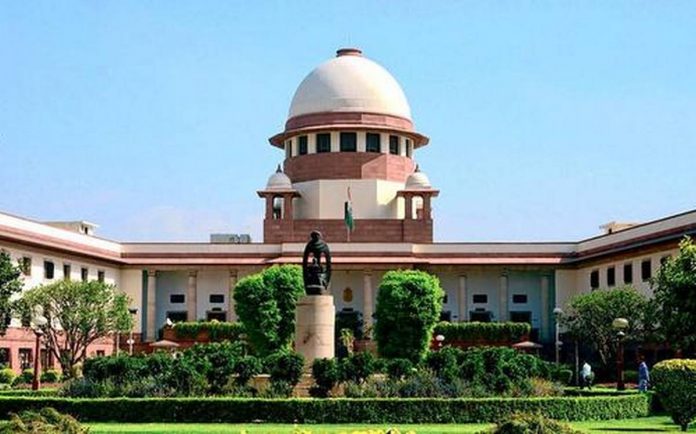
Download Now

Legal issues to consider while acquiring a gaming company

0

This article is written by Varun Vishnuvardhasa, pursuing Diploma in M&A, Institutional Finance and Investment Laws (PE and VC transactions) from LawSikho. The article has been edited by Zigishu Singh (Associate, LawSikho) and Ruchika Mohapatra (Associate, LawSikho).

Introduction

The development of video games started way back in the 1980s in the USA with the creation of arcade games, since then there has been a rise in the gaming sector. Over the years the gaming industry expanded enough to take over the entertainment industry. As of now, the gaming sector is worth about $145 billion US dollars globally and it’s still on the rise. The gaming industry was founded in 1972 by Nolan Bushnell, the founder of the gaming company known as  Atari. It also became a milestone and set a benchmark for the development of a large scale gaming community. 

As a result of this the production, distribution, and development of computer games have become highly complex and this sector has attracted more investors globally and has become a multi-million dollar business.  It is no surprise that there are loads of Mergers and Acquisitions in the gaming industry that have increased significantly in recent times. With a lot of acquisitions, comes a lot of investment like an investment of 1.2Billion US dollars in Epic games via funding rounds and the acquisition of Koch Media group by THQ. The gaming industry has also witnessed a change in the shift of platforms with the evolution of television and digital gaming models. Nowadays every sector has its legal challenges or any other constraints. So the parties entering this industry or acquiring any gaming company should understand the various legal constraints or industry-specific rules for a better and successful deal. 

Legal issues

Some of the gaming giants like Niantic, a collaboration with Nintendo and the pokemon company, the global video gaming sectors continue to grow at a rapid pace reaching $56.3 billion globally in 2020. Global video game giants like Fortnite (Epic games ltd) and Mine Craft (Xbox Game studios) have also continued to be competitive in the global market with a turnover of around $375 billion.

The acquirer should keep in mind the various legal issues while acquiring a gaming company. Nowadays with a lot of acquisitions taking place, the number of legal complaints have also increased. Broadly the following points require consideration while acquiring a gaming company:

  1. Intellectual property,
  2. Data Protection,
  3. Employment issues,
  4. Contractual issues,
  5. Shareholding issues, 
  6. Regulatory compliances,
  7. Tax implications,
  8. Due diligence,

Other issues:

  1. Market saturation 
  2. End-user experience
  3. Loot Boxes 

Intellectual property 

Before the acquisition of a company apart from due diligence one has to take note of Intellectual Property (IP) infringements. In the present scenario gamers and the creators are known as the hearts of game studios. Nowadays everything created in a game can come under the protection of intellectual property which includes art, design, technology, source code, patents, copyrights etc. for any investor or a buyer of a gaming company the intellectual property and its creations must belong to the game studio. Often the agreements between gaming companies state or reveal that the IP related documents are poorly drafted which can lead to problems in the form of lawsuits in the future. So it becomes important to look into IP issues before and after the acquisition of a gaming company. The buyer/acquirer, just like a due diligence procedure,  needs to conduct IP searches to verify all the IP related to the selling company. 

Example: In the USA there’s a US Trademark and patent office for IP related queries etc. Another issue for IP related issues for the acquisition of target companies is to look upon Open source software (OSS) which is commonly used in software development. 

Data protection 

With the onset of the advancement of technology, data thefts have increased. Tim Barnes Lee a famous data analyst says “Data is a precious thing and will last longer than the system itself”. In 2014 sony was hacked by cyber hackers and millions of users personal information was leaked. This is one of the biggest data breaches in the company. These are protected by a specific law [Data Protection Act]. The recent data breach was in June 2021 in Linkedin where 1.1 billion users’ information was posted on the dark web. Many countries have come up with data protection laws that need to be complied with by companies handling the data of their citizens. Some games have components like multiplayer, downloadable content, registration, etc. which requires the personal data of the users. The developing companies of these games will be required to follow the compliances laid down by the data protection legislations of the country in which they choose to do business. Hence, the developing data protection jurisprudence adds another issue that needs to be considered by companies looking to do business in the gaming industry.

Employment issues 

This may not be a specific issue in the acquisition of a gaming company but it still plays an important role as the employees of a gaming company especially the coders, engineers, graphic designers are the key personnel of a gaming company. . so it is crucial for the acquirer and the target company to look into the employment practices with respect to compliance of the employment laws, special care must be taken for the employees for trouble-free employment. Some of the companies also give stock options for the employees commonly known as ESOP ( Employee stock ownership plan) as a part of the compensation plan. However the acquirer company shall also look or adhere to the employment laws failing which may impose statutory fines which would be fatal for any M&A transaction if not appropriately addressed, the acquirer may also want to look upon the issue of equity options to its employees as stated above in order retain the employees favourably. 

Contractual issues 

Publishers, game engine developers and middleware distributors often deal in contracts or agreements which need to be reviewed during the due diligence process of M&A transactions. The acquiring company needs to review all the contractual agreements with third parties or the target company to ensure everything is in order and there are no violations, pending lawsuits, etc. Any violation could potentially delay the transactions. 

Shareholding issues 

This may not be the main issue but the companies need to look into the shareholdings of the company this may also be termed as corporate concerns. If the buyer is only interested in only participation rights in the gaming company the buyer is proposed some various issues relating to shares which have to be considered before selling the shares or buying shares the shareholders of the target company should look into preemptive rights, tag/drag-along rights and ROFR etc . the rights and obligations of the shareholders need to be agreed and regulated with other shareholders 

Regulatory compliances 

Every acquirer also needs to look at all the relevant laws before acquisition. The acquiring company needs to stick to the rules and regulations that are relevant to particular deals to avoid any violation during transactions. Data collection and storage plays a vital role in the gaming sector however these are subject to the laws of that country and it differs from state to state and nation to nation, the parties should also look into the data privacy laws to avoid any post-closing liability violations. The acquirer before entering into the transaction should closely monitor the regulations as they may change over a period of time.

Tax implications 

Just like any other transaction every company needs to comply with the taxation laws which are pertinent to a deal  tendered tax implications, some of which are:

Capital gains tax

The laws on capital gains tax differ from country to country. The acquirer company should explore or investigate various rules which might be helpful in the future to avoid any violations. The gains arising out of the transfer of capital are taxed however it differs from country to country. If M&A transactions involve companies operating in two different countries then compliance with the tax laws of both countries needs to be adhered to

Tax on transfer of shares

This transfer of shares may attract stamp duties and securities transactions tax. If the transfer of shares is dissolved then no tax may be placed upon the company 

Tax on business assets

This is levied upon the assets of the company however these regulations change from nation to nation.

Due diligence 

This due diligence is considered paramount in any transaction, in a layman’s sense it is considered as a checklist before the acquisition of a company. The acquirer conducts this before acquisition as they check upon the liabilities, financial records etc of the target company. It’s like an audit or a preliminary investigation. A due diligence checklist contains:

  • Annual report,
  • IPO,
  • General risk management,
  • Intellectual property issues (if any),
  • Antitrust regulatory issues,
  • IT concerns etc.

An important thing about due diligence is that the acquirer or the buyer can get to know about the various leads and issues of the company. It also helps in knowing the cost of integration and potential revenue.

Conclusion

Acquisition of gaming companies is similar to that of acquisition of any other company in the market keeping in mind some specific requirements of this industry that were discussed. With the onset of Technology, we can see a boom in the gaming industry. Analysts predict that the gaming industry would create revenue of around  $260 billion in the future. As more and more independent developers and small and medium-sized gaming companies enter the market the scope of mergers and acquisitions in this industry will increase as well resulting in the need for more regulations in the industry. With the evolution of data protection laws around the world and a stricter intellectual property protection regime, the quantity and quality of compliances will increase as well. 

References


Students of Lawsikho courses regularly produce writing assignments and work on practical exercises as a part of their coursework and develop themselves in real-life practical skills.

LawSikho has created a telegram group for exchanging legal knowledge, referrals, and various opportunities. You can click on this link and join:

https://t.me/joinchat/J_0YrBa4IBSHdpuTfQO_sA

Follow us on Instagram and subscribe to our YouTube channel for more amazing legal content.

Download Now
logo
FREE & ONLINE 3-Day Bootcamp (LIVE only) on

How Can Experienced Professionals Become Independent Directors

calender
28th, 29th Mar, 2026, 2 - 5pm (IST) &
30th Mar, 2026, 7 - 10pm (IST).
Bootcamp starting in
Days
HRS
MIN
SEC
Abhyuday AgarwalCOO & CO-Founder, LawSikho

Register now

Abhyuday AgarwalCOO & CO-Founder, LawSikho