Download Now
Home Blog Page 433

Nature of standing orders under the Industrial Employment (Standing Order) Act, 1946

0

This article has been written by Sanchi Garg pursuing LLB from Amity University, Noida and the article has been edited by Khushi Sharma (Trainee Associate, Blog iPleaders). 

Introduction

The Industrial Employment (Standing Order) Act, 1946 (hereby referred to as ‘IESO’) precisely defines the conditions of employment under an employer to both the employer and the workmen. Before the IESO Act was passed, there was a lack of order and clarity regarding the terms of employment by an employer. The workmen at that time were hired on a contractual basis individually, and in most cases these contracts were either express or implied, thus often leading to a misunderstanding of expectations between the employer and the workmen.

In many cases, these terms and conditions of hiring were ambiguous and led to friction between the workmen and the management. The lack of rules for securing permanency of the job, fair deal and disciplinary action on petty matters was a worrying problem for industrial workmen. There was no provision against abrupt dismissal or wrongful termination. The workmen had no safeguards against any disciplinary actions that the employers took for they didn’t have any guidelines or rules protecting their interest. Even in large industries, if there was a standing order, there was no particular guidelines that it had to follow or any legislation governing the enforcement of the same.

With the concept of Trade Unionism coming into play, the State and the Tripartite Labour Conference became the voice of the workmen and helped pass the Industrial Employment (Standing Order) Act in 1946 to ensure clear and well-defined employment conditions or standing orders that helped establish smoother working relations between industrial workmen and employers.

The objective of the IESO Act is to regulate the conditions of recruitment, discharge, disciplinary action, holidays, classification of workers, mechanism of wage rates, attendance issues, etc.

Anything that requires ‘employers in industrial establishments formally to define conditions of employment under them’ falls within the scope of the IESO Act.

The Act makes it binding for employers to ‘define with sufficient precision the conditions of employment and to make those conditions known to the workmen.

The IESO Act helped introduce a uniformity or terms and conditions of employment in respect of workmen belonging to the same category and discharging the same or similar work in an industrial establishment. Overall, the IESO Act helped bring regulation and a sense of order amongst the workmen and the employers.

This Act requires the employers to define the conditions of service in their establishments and to put them in writing and then get them certified by the Certifying Officer to avoid any unnecessary industrial disputes in the future between the employers and the workmen. The standing orders of the said industrial establishment must conform to the model standing orders but not necessarily consist only of the model standing order. If the establishment wishes to add to the standing orders, then they can do so, provided the draft of the same gets approved by the Certifying Officer. 

In the case of Avery India Ltd. v. Second Industrial Tribunal, West Bengal it was held that the provisions as to the age of retirement in the standing orders of an establishment would apply to all the employees irrespective of whether or not they were part of the establishment where they work prior to or subsequent to the standing orders coming into force, even though there was no such provision for the age of retirement in the past. 

Standing Orders

The term ‘Standing Orders’ refers to the rules relating to the matters defined in the Schedule of the IESO Act. These matters should be according to the Schedule, provided in Standing Orders under this Act as follows:

  • Classifications of workmen, e.g., temporary, permanent, apprentice, probationers, etc.
  • Manner of intimating to workmen periods and hours of work, holidays, paydays and wage rates.
  • Shift working.
  • Attendance and late coming.
  • Conditions of procedure in applying for and the authority which may grant leave and holidays.
  • The requirement to enter premises by certain gates and liability to search.
  • Closing and reopening of sections of the industrial establishment, and temporary stoppages of work and the rights and liabilities of the employer and workmen arising therefrom.
  • Termination of employment and the notice thereof to be given by employer and workmen.
  • Suspension or dismissal for misconduct, and acts or omissions which constitute misconduct.
  • Means of redress for workmen against unfair treatment or wrongful executions by the employer or his agents or servants.
  • Any other matter which may be prescribed.

It shall be obligatory upon the employer to make provision in the Standing Orders in respect of any matter provided in the Schedule of the Act. Once a provision is made it can be modified only in accordance with the provision of Section 10(2) of the Act.

Nature of Standing Orders

Though the legal nature of Standing Orders is mostly considered to be statutory in nature and the same has been reinforced in several judgements by the Apex Court, there have been several arguments debating the claim. The nature of Standing Orders has been considered as contractual at times, and an ‘award’ at others. Meanwhile, the argument that the nature of Standing Order is ambiguous and inconclusive seems to stand corrected as it fails to be put in one category without solid arguments against the claim of its nature as statutory, contractual or an award.

Statutory nature of Standing Orders

The very first argument of Standing Orders as being statutory in nature comes from the case The Bagalkot Cement Co. Ltd. Vs. R.K. Pathan & Ors. wherein the Supreme Court stated that:

The object of the Act as we have already seen, was to require the employers to make the conditions of employment precise and definite and the act ultimately intended to prescribe these conditions in the from of standing orders so that what used to be governed by a contract hereto before would now be governed by the statutory standing orders”.

This decision of the Supreme Court was relied upon in various other judgements to conclude that Standing Orders, once certified, are statutory in nature. This was reinforced by the High Court of Gujarat in the case of Tata Chemicals Ltd. And Ors. vs Kailash C. Adhvaryu wherein the judge distinguished between a statutory obligation and a contractual obligation and therefore came to the conclusion that certification of standing orders under the IESO Act creates statutory rights and obligations.

Another argument pertaining to the statutory nature of standing orders is that the Certifying Officer, in certifying the draft of the standing orders made by the employer, is part of a delegated legislation. The process of hearing from both parties before certifying the standing orders may as well be seen as a consultation of sorts to those affected by the decision. This, in turn, makes the Certifying Officer, part of a rule-making process, thus making the entire process statutory in nature.

Arguments against the statutory nature of standing orders can be put forward as follows:

  • If we are to assume that the standing orders are statutory in nature, then they are in contradiction to the fundamental rights given to citizens in our constitution; the constitutional validity of these statutory rights and obligations against our fundamental rights can be argued by parties under Article 32 and Article 226 of the constitution. Another aspect to consider is the infringement of Article 14 and the Right to Equality caused by assuming certified standing orders as statutory in nature and applying it to workmen of like industries and under similar circumstances.
  •  The second argument against the statutory nature of standing orders is that Tribunals are not supposed to have the power to override provisions having statutory effect. Industrial Tribunals, under The Industrial Disputes Act, 1947, have the power to create new rights and obligations and to vary terms of an agreement or contract pertaining to the proprietary or legality of an order passed by an employee under standing orders and the application and interpretation of standing orders. If we consider certified standing rights as statutory in nature, it negates the power for the tribunals to override and create changes and modifications in the standing orders, thus hampering its power to provide industrial justice.
  • Section 10(1) of the IESO Act clearly states that even after the certification of the standing orders, they are liable to change on agreement between the employers and the workmen. This is in complete contradiction to the statutory nature of standing orders as no statute can be modified on agreement between two parties. Provisions with true statutory effects are not susceptible to amendments based on agreements between two parties.
  • Lastly, the Act imposes restrictions on the bargaining power of the employers curtailing the freedom of contract so that employers must present draft standing orders which are compatible with the statute. In no way does the Act delegate any legislative powers to any authority but rather, it imposes an obligation on an individual employer to make rules keeping in mind the model standing orders given in the schedule. Furthermore, the Certifying officer has only limited judicial power. Thus, we understand that certified standing orders are not delegated legislation and hence, are not statutory in nature.

Standing Orders as an ‘award’

Section 4 of the IESO Act states that the decision maker or the Certifying Officer, after hearing both the parties, adjudicates upon the “fairness or reasonableness” of standing orders laying down the conditions of the employment. This, in turn, makes standing orders as a kind of “award”. But this cannot be the case, as the Industrial Disputes Act, 1947 does not consider the Certifying Officers as the decision makers in matters of industrial disputes and thus the standing orders cannot be an award. Also, the Certifying Officer does not, in any way or form, settle an industrial dispute; he merely modifies or certifies the draft standing orders after hearing both the parties. Another aspect to consider would be that if we consider the standing order as an award, certain provisions pertaining to limitations on lock-outs and strikes would come into play as given under the Industrial Disputes Act, 1947. Lastly, Section 13(2) of IESO Act makes the employer liable for any contravention of the standing orders, thus contradicting the principle that an award is as binding and applicable to one party as it is to the other.

So we conclude that certified standing orders are neither completely statutory in effect nor do they fall under the category of an award.

Standing Orders as special kinds of contracts

The certified standing orders have a statutory force but they are not necessarily statutory in nature as we have already discussed. The standing order implies a contract between the employer and the workman. Therefore, the employer and workman cannot enter into contract overriding the statutory contract as embodied in the certified standing orders. While the standing orders are in force it is not permissible for the employer to seek their statutory modifications which leads to there being one set of standing orders in respect of certain employees and another set for others.

Therefore, no workman can be appointed by the employer with terms and conditions different from those defined in the standing orders unless the standing orders are modified in accordance with the provisions of matter discussed in the Schedule of the IESO Act. It is not open to an Industrial Tribunal to ignore an existing standing order in matters that refer to individual discipline. And no Industrial Tribunal can make amendments and modifications in standing orders unless they are contractual in nature. 

An argument in favor of the contractual nature of standing order comes from the case of Buckingham and Carnatic Co. Vs. Venkatayga wherein Justice Gajendragadkar stated that:

The certified Standing Orders represent the relevant terms and conditions of service in a statutory form and they are binding on the parties at least as much, if not more, as private contracts embodying similar terms and conditions of service.

Another statement in favor of the contractual nature of standing order comes from Mettur Industries Ltd Vs. A.R. Varma And Ors the High Court of Madras stated that:

Reading the Act as a whole it is clear that the standing orders form part of the contract between the management and every one of its employees.”

Lastly, in an amendment of the Industrial Disputes Act, 1964, the following was added to Section 33:

…or, where there are no such standing orders, in accordance with the terms of the contract, whether express or implied, between him and the workman.”

Thus, clearly strengthening the argument for the contractual nature of the standing orders.

Conclusion

When we consider the nature of Standing Orders individually as statutory, contractual or as an award, we can conclude positively that it doesn’t fit under any one category completely. There are solid arguments against successful categorization of Standing Orders and thus the nature of Standing Orders can be concluded as amorphous and ambiguous in nature.

References

  1. The Industrial Employment (Standing Orders) Act, 1946, No. 20, Acts of Parliament, 1946 (India).
  2. The Industrial Disputes Act, 1947, Acts of Parliament,1947 (India).
  3. Singh, Yogendra. “NATURE OF STANDING ORDERS UNDER INDUSTRIAL EMPLOYMENT (STANDING ORDERS) ACT, 1946.” Journal of the Indian Law Institute 9, no. 3 (1967): 443–52. http://www.jstor.org/stable/43949946.
  4. 1962 Latest Caselaw 17 SC.
  5. 1973 Latest Caselaw 143 SC.

LawSikho has created a telegram group for exchanging legal knowledge, referrals and various opportunities. You can click on this link and join:

https://t.me/joinchat/J_0YrBa4IBSHdpuTfQO_sA

Follow us on Instagram and subscribe to our YouTube channel for more amazing legal content.

Download Now

Legal facets of online rummy in India

0
Image source - https://bit.ly/3BbIyhs

This article has been written by Arundhati Roy, from RTI Cell, iPleaders and the article has been edited by Khushi Sharma (Trainee Associate, Blog iPleaders). 

Introduction

Playing cards for fun is a universal phenomenon, and in India, it is a regular affair to indulge in playing cards during spare –time or on any special occasion too. A card game means a game involving playing cards as the primary device for playing the game. Numerous games can be played by using cards, such as poker, rummy, solitaire, blackjack, drinking card games, baccarat, etc. 

When it comes to rummy, it is undeniably the most commonly played card game in India. Being the most infamous card game, it is said to have its origin in Spain. Rummy has gained much popularity with the inception of online rummy. In today’s world, the advent of the internet has made online rummy possible, which offers a competitive and much larger arena where the whole world is transformed into a platform wherein players from across the globe can play the game of rummy.

Through online rummy, players get the opportunity of playing while sitting in the comfort of their homes. Presently, well-known rummy operators are offering a whole new world of wonderful experiences with attractive offers, advertisements, cash rewards, a competitive feeling with the advent of new players from all over the world, and various other interesting options to choose from. However, rummy being a game of chance has attracted many controversies. Although Supreme Court declared rummy as a “game of skill” wherein players’ mental skill is required to win the game, it is still somewhere seen in common parlance with gambling. In order to find out the legality of rummy in India, various judgments of the High Courts in India and the Supreme Court have been analyzed in the present article.

Concept of ‘game of skill’

There is a need to comprehend the concept of the game of skill and game of chance. It is pertinent to mention that the Public Gambling Act, 1867 does not apply to the “game of skill.” The term “game of skill” means a game where the result is determined primarily by mental or physical skill rather than by chance. Whereas a game of chance is that where the outcome is strongly persuaded by some randomizing device such as spinning tops, playing cards, rolling dice, roulette wheels, or numbered balls drawn from a container. In a game of chance, there might be some involvement of skill, but chance plays a pivotal role in determining its result. When it comes to the game of skill, there may be a chance, but skill is the essential element in determining its outcome.

How safe is online rummy

The new technology has enabled the game of rummy to be enjoyed by everyone in India. Online Rummy operators provide fascinating opportunities to the players. These players get a chance to win real cash, sharpen their rummy-playing skills through several online practice modes. Since online rummy can be played by anyone sitting in any corner of the world, players get to test and enhance their skills when they compete with other worthy opponents. Thereby on winning, the players get to win real money.

However, many people are concerned over how safe and legal it is to play online rummy. Then another cause of concern that arises is, is the question of the fairness of the gameplay.

It is to be noted that certified online rummy apps and portals have integrated advanced and highly secured features of online payments and debit/credit cards, enabling players to use real money to play rummy and win the prize amount in a secure environment. Due to the availability of online payment methods, the transactions between the rummy players and rummy operators are safe, and the winning amount is automatically credited to the player’s account. Further, online rummy ensures that the likelihood of conflict due to human error in dealing with won or lost money is removed, which arises when rummy is played face to face.

In order to make sure that every player’s money lands in a safe place, operators who are certified to organize rummy have a standard payment gateway that is totally safe and secure. The most regular payment options are Paytm, PayU, NetBanking, UPI, etc. Rummy apps/portals are safeguarded with an SSL (Secure Sockets Layer) certificate, which makes the payments secure. An SSL Certificate is a digital certificate that authenticates a website’s identity and enables an encrypted connection.

Legal Status of online Rummy

There has been a doubt on the legality of the game of rummy wherein people often confuse it with gambling and betting. However, it should be noted that the Hon’ble Supreme Court has given the game legal status. The Supreme Court had held that rummy is a “game of skill” and not a “game of chance.” Therefore, it is legal to play rummy online to win of real cash prize. Pertinently, the game of rummy is legal because it is a game of skill and hence protected by the Constitution of India. Playing a game of skill like rummy is considered a business activity from a legal point of view, and such activity of playing a game of skill with cash is safeguarded under Article 19(1)(g) of the Constitution of India.

As such, there are no central laws against gambling or betting in India. Even the Public Gambling Act, 1867 does not prohibit gambling or betting; it merely penalizes. The legality of rummy or betting games in India is a state-specific matter.

Notwithstanding the decision of the Supreme Court, there are various states with their respective state laws prohibiting the playing of online rummy for real cash. These states are Karnataka, Andhra Pradesh, Odisha, Meghalaya, Sikkim, Nagaland, Assam, and Telangana. 

Supreme Court on legality of Rummy

Various petitions were filed by the clubs and online rummy companies challenging a March 2012 judgment of the Madras High Court, which declared rummy for stakes as a form of gambling and hence illegal. A Chennai-based club, Mahalakshmi Cultural Association, had brought to the court’s notice the instant matter. 

A bench headed by Justices Madan B. Lokur and S A Bobde was hearing a bunch of petitions and gave their verdict on the instant matter on 18 August 2015, which proved to be a boon for the ardent rummy players. The top court did not see any reason to interfere with the well-settled legal principle that playing a game of skill for stakes does not amount to gambling.

Earlier in 1968, the Supreme Court of India, in a ruling, had held that rummy card game is a game based on skill, and various subsequent judgments were delivered relying upon this decision. Later in 1996, the Supreme Court had delivered another judgment wherein it stated that:

  1. Competitions, where success depends on substantial degree of skill, are not “gambling”; and 
  2. Despite there being an element of chance, if a game is preponderantly a game of skill, it may be called a game of “mere skill.” 

Madras High Court: “Rummy & Poker” are games of skill

  • W. P. Nos. 18022 of 2020 

In the present case, the primary ground urged by the petitioners to challenge the impugned legislation viz. the Part II of the Tamil Nadu Gaming and Police (Amendment) Act, 2021 (Act 1 of 2021) by which the Tamil Nadu Gaming Act, 1930 was amended, is in it prohibiting games of skill, if played for any prize or stakes; which, according to the petitioners, is in flagrant disregard of the law laid down by the Supreme Court that competitions in games of skill are business activities and, thus, protected under Article 19(1)(g) of the Constitution of India.

A division bench of the Madras High Court consisting of Chief Justice Sanjib Banerjee and Justice Senthilkumar Ramamoorthy adjudicated the matter on 3 August 2021. The court, in its decision, has struck down the Tamil Nadu Gaming and Police Laws (Amendment) Act, 2021, which imposed a ban on the playing of games such as rummy and poker on cyberspace with stakes. Section 11 of the legislation further banned ‘mere skill’ games if such games are played for the wager, bet, or other stakes.

Arguments put forth by the petitioners were that the impugned legislation by prohibiting even games of skills if played for any prize or stakes violates Article 19(1)(g) of the Constitution. They relied upon the judgment of the Madras High court in the case of Dr. K.R Lakshamanan v. State of Tamil Nadu wherein, the court had explained in the context of placing bets on horse racing. The judgment stated that a game of skill may necessarily involve an element of chance, but the success therein would depend “principally upon the superior knowledge, training, attention, experience and adroitness of the player.” For the purpose of example, golf, chess and even rummy were considered to be games of skill, observed the Madras High Court.

The court observed that, “There appears to be a little doubt that both rummy and poker are games of skill as they involve considerable memory, working out of percentages, the ability to follow the cards on the table and constantly adjust to the changing possibilities of the unseen cards. Poker may not have been recognized in any previous judgment in this country to be a game of skill, but the evidence in such regard as apparent from the American case ever convinced the Law Commission to accept the poker as a game of skill in its 276th Report.”

Further, the Madras High Court had relied upon the Supreme Court’s verdict in the Dr K.R. Lakshmanan v. State of Tamil Nadu wherein it observed that a game of skill is distinct from a game of chance and if there is the preponderance of the skill element involved, then the concerned activity would be protected by Article 19(1)(g) of the Constitution and that competitions involving a game of skill must be regarded as business activities.

In view of the submissions made, it was held by the Madras High Court that games such as rummy and poker cannot be banned by the impugned legislation and that the legislation is ‘manifestly arbitrary’ and ultra vires of the Constitution.

Kerala High Court lifts ban on online rummy

– [W.P.(C)Nos. 7785, 7851, 7853 & 8440 of 2021] 

In the instant petition, the impugned question was regarding the power of the Government to include the game “Online Rummy played for stakes” within the purview of the Kerala Gaming Act, 1960. The petitioners are all companies that are engaged in the business of developing and offering online games of skill in India. The petitioners were aggrieved by the notification issued by the Government, amending the exemption notification issued on 30.09.1976 under Section 14A of the Kerala gaming Act. The notification stated that online rummy does not enjoy exemption from the general prohibition of gaming and gambling under Section 14A of the Act when played for stakes. 

The Kerala High Court, while quashing the said amendment to the Government notification issued under Section 14A of the Kerala gaming Act, 1960, which had put a ban on online rummy in the State, held that the notification is declared as arbitrary, illegal and violative of the fundamental rights guaranteed to the petitioners under Articles 14 and 19(1)(g) of the Constitution of India and hence not enforceable.

On the question of whether the power available to the State to issue a notification under section 14A to exempt a game, clothe it with a power to notify a game which is a game of mere skill under Section 14, the court held that “once a game comes within the purview of Section 14, any notification under Section 14A exempting it further as a game involving skill predominantly is only superfluous, and even without such a notification, the game stands exempted.”

Reliance was placed upon the judgments of the Supreme Court in the matters of State of Andhra Pradesh v. K Satyanarayana and Ors. And K R Lakshmanan v. State of Tamil Nadu & ors. by the petitioners, wherein the SC had held that rummy is primarily a game of skill. It was the contention of the petitioners that the ban on online rummy played for stakes, which was acknowledged as a game involving skill against the various decisions of the Supreme Court and High Courts.

Conclusion

In the light of the various judgments of the Supreme Court and various High Courts in India, it can be inferred that the game of rummy is instead a “Game of Skill” than a “Game of Chance” and a game of skill is legally valid in India. Also, Rummy apps and portals which are certified ensure that the players can have a secure, safe and healthy gaming environment. However, while considering the various legal aspects of online rummy, one can say that the legal status of online rummy suffers from a lack of uniformity concerning its legal position in different states, as each of the State has been empowered to make its own legislation for betting and gambling. The Supreme Court has laid down the game of skill vs. game of chance test to check the legality of online games such as rummy or poker. Nonetheless, the test was developed years ago and may require revisiting. There have been various interpretation of the Supreme Court’s decision that rummy is a game of skill. Similarly, as per Gujarat and Bombay High Court, the game of poker is a chance game, but as per Karnataka High Court, it is a skill game. 

It is pointed out that betting and gambling are not prohibited or illegal in India. However, running or maintaining common gaming houses for gains or stakes is illegal. And lastly, despite gaming operators ensuring protection to gamers, there are no safeguards to prevent gamers from getting exploited from the illegal activity which takes place in online gaming. Thus, a well-structured and all-inclusive legal framework for gaming is what we require to cater to India’s online gaming demands.


LawSikho has created a telegram group for exchanging legal knowledge, referrals and various opportunities. You can click on this link and join:

https://t.me/joinchat/J_0YrBa4IBSHdpuTfQO_sA

Follow us on Instagram and subscribe to our YouTube channel for more amazing legal content.

Download Now

All about an offtake agreement

0

This article has been written by Alefiya Giletwala, pursuing the Diploma in Law Firm Practice: Research, Drafting, Briefing and Client Management from LawSikho. This article has been edited by Kritika Sharma (Associate, Lawsikho) and Smriti Katiyar (Associate, Lawsikho). 

Introduction 

An off-take agreement is characteristically a binding contract between a manufacturer and a buyer formalising the intention of the buyer to purchase a certain amount of the manufacturer’s future output. In simpler terms, an off-take agreement is an arrangement between an entity that produces a particular resource and another entity, an off-taker, who wishes to buy that resource. It establishes a contractual framework for a long-term business arrangement between the project company and an off-taker to purchase and sell all or substantially all of the project output.

Offtake agreements are most frequently used in businesses that require a lot of capital financing, for example, natural resource development where the cost of extracting resources is significantly high. It assures the potential investors that there is a market for the proposed project and scope for profit. Offtake agreements are most critical in acquiring project financing for future construction, product development, expansion, new ventures, or new equipment since it guarantees future income under the contract, validating the cash flow forecasts that form the basis for loan repayment. Hence, it makes many projects bankable.

For instance, if a company is working on producing frozen food, but is looking for financing to develop this new project, it could sign an offtake agreement with a store that sells frozen food or is looking to sell frozen food which the company will produce. Under the terms and conditions of this contract, the store agrees to buy all the future production of frozen food that the company intends to produce during the next two years. This arrangement helps the producer assure the investors and lenders that there is a market for its product before it can even begin production and helps ensure that there will be a  minimum return on its goods. The buyer also benefits and can continue functioning as normal because it knows that it has secured supply of the product at a fixed or contractually adjusted price for a specified term along with the mode of delivery at a particular date and quantity. 

Offtake agreements are thus very important as they provide a hedge against future increases in price, allow guaranteed supply with a guaranteed price, they also protect against market shortages because the delivery is guaranteed, most importantly, a substantial part of the future production is sold for many years into the future.

Essential clauses in an offtake agreement

Purchase and sale clause

One of the essential clauses in any offtake agreement is the purchase and sale clause. It includes the kind of product offered to be sold by the producer, specifications of the product as given by the off-taker, its volume, delivery points, warranties, if any, the time when it will be available to the purchaser.

Pricing/invoices/payment terms

It specifies the price of the product, the model, and procedure of payment, particulars regarding the invoices among other things.

Term and termination clause 

This clause states the duration/validity of the agreement. It also includes details regarding its termination, most offtake agreements under their termination clause contain a force majeure clause. Force majeure means an unforeseeable circumstance that makes fulfilling a contract impossible. The force majeure clause protects the parties from natural, catastrophic harm; allowing either party to modify or cancel the offtake agreement if something happens that puts undue hardship on either party which is beyond anyone’s control. 

Obligations and rights

Obligations and rights of the parties like IP rights, title, and risk of loss, inspection and measurement, indemnity clause, remedies in case of a breach, confidentiality clause to protect trade secrets among other things.

Dispute resolution methods and governing laws

While offtake agreements have many benefits for both the producer and the off-taker, there are also certain risks. The parties to the agreement can back out, although doing so requires negotiations and often the payment of a fee. The manufacturers also face a risk of not having their contracts renewed or amended once they are in production. 

As per the Indian Stamp Act, 1899, on all agreements involving the transfer of interest, stamp duty must be paid as a measure to record and keep track of all the transactions. When offtake agreements are executed, payment of stamp duty makes them valid in a court of law as a piece of evidence in the event of disputes. 

Conclusion

Offtake agreements are agreements to buy or sell, in advance, future goods. An off-taker agrees to purchase all or substantially all of the project output. This helps the manufacturer in securing finance, provides a guaranteed market, and ensures income. An off-taker also benefits through this agreement as this agreement acts as a hedge against a future increase in price, providing a fixed supply of goods for a specified time at a fixed or contractually adjusted price. Thus, this kind of agreement is usually negotiated far in advance, often prior to the construction of manufacturing facilities and before production has begun.


Students of Lawsikho courses regularly produce writing assignments and work on practical exercises as a part of their coursework and develop themselves in real-life practical skills.

LawSikho has created a telegram group for exchanging legal knowledge, referrals, and various opportunities. You can click on this link and join:https://t.me/joinchat/J_0YrBa4IBSHdpuTfQO_sA

Follow us on Instagram and subscribe to our YouTube channel for more amazing legal content.

Download Now

Principle of public internet in pharmaceutical patent

0
Image source - https://bit.ly/2Yb2uTS

This article has been written by Avilash Kumbhar pursuing the Diploma in Intellectual Property, Media and Entertainment Laws from LawSikho. This article has been edited by Prashant Baviskar (Associate, Lawsikho) and Smriti Katiyar (Associate, Lawsikho).

Introduction

The Agreement on Trade Related Aspects of Intellectual Property Rights informally referred to as TRIPS, which came into effect in 1995, is to date the most comprehensive multilateral legal agreement on intellectual property amongst the member nations of the World Trade Organization (WTO). The areas of intellectual property that it covers are: copyright, trademarks, geographical indications and patents amongst others and also lays down binding minimum standards for the protection and enforcement of such intellectual properties. Through such standards, TRIPS effectively and adequately promotes protection of intellectual property with a view to reduce impediments to international trade. However, with the onset of the recent outbreak of the COVID 19 pandemic, certain poor countries have expressed concerns and difficulty in keeping up with such expected standards of TRIPS especially in the context of the set international rules governing medicines. In this article, the author attempts to analyze the cause of such concerns in developing countries, their proposed solutions and determine in the background of a pandemic while the pharmaceutical giants are rushing to patent medication and vaccines, whether public health finds only a bleak mention?

Recently, India and South Africa, proposed a waiver in order to relax certain provisions of the TRIPS agreement to help prevent, contain and treat Covid-19 cases through unobstructed and timely access to affordable medical products. This included diagnostic kits, vaccines, medicines, personal protective equipment and ventilators among others to battle the pandemic. In the joint proposal dated 2nd October 2020, the countries sought an exemption from the obligation of members of World Trade Organization under TRIPS in domestically implementing provisions related to various forms of intellectual property rights such as utility & design patents, trade secrets, copyrights and protection of undisclosed information. They also attempted to push for exemption from a provision in the Agreement on TRIPS that accorded a legal basis to member states in stipulating special compulsory licenses exclusively for the production and export of generic drugs to other members that don’t domestically produce the drugs or produce in inadequate quantities. 

The waiver & its significance

The joint proposal highlighted the concern of developing countries whose inadequate manufacturing capacities prolonged the tedious procedure involved in the import and export of pharmaceutical products among member states. Citing reports wherein IPRs had actively obstructed the rationing of inexpensive medical drugs, the proposal also drew attention to some WTO members attempting to expedite the process of issuing compulsory use licenses. The proposal in its conclusion asserted that the waiver should at least continue until widespread vaccination is available worldwide and the majority of the world’s population can be said to have developed to some extent immunity.  The World Health Organization (WHO) also supported the Indian and South African proposal to the World Trade Organization and called for the relaxation of intellectual property agreements for the common goal of unobstructed access to Covid-19 vaccines. 

The joint proposal is considered imperative for more than one reason; not only does it embolden concerns regarding equitable access to medicines and vaccines during a pandemic and its need, it also brings to light the clash between incentivizing intellectual property and the protection of public health in situations like the ongoing pandemic. In the context of Covid-19, intellectual property could be used adversely to cut off easy access to treatments and vaccines in developing countries and one is forced to ask whether higher prices for vaccines due to patents on pharmaceuticals are appropriate in the context of a global pandemic? The next section sheds light on this concern and how such patents maintain a surge in prices on pharmaceuticals when the rest of the economy is in a state of recession.

Pharmaceutical patent monopoly

In the situation wherein the majority of the world’s population, developed and developing have lost their sources of income with even multinational corporations declaring bankruptcy, pharmaceutical giants are in fact, witnessing an escalation on their stocks. These companies are the ones who have invested time and capital in developing a potential vaccine and medication to combat corona which once developed, being intellectual properties involving research and development, the same would be entitled to patents. This fairly runs the risk of future time-bound monopolies that prevent holistic exploitation and others from using their vaccine without authorized consent. The consequences of these monopolies, already harmful in the pharmaceutical industry by its very nature, have been exacerbated by COVID 19. This has resulted in unaffordable prices, and manipulation of trade in vital products like life saving drugs, thereby depriving the masses of the potential cure. 

Patents escalate the valuation of pharmaceutical drugs to the consumers as long as pharmaceutical companies set rates. The constant tug of war between incentivizing lifesaving pharmaceutical patent inventors maintaining the public’s access to these drugs is remarkably complex. Impeding access to new drugs along with the existing lack of adequate substitutes can have profound health ramifications. There is an insufficient degree of competition in the market; patents have raised prices and reduced accessibility as well as affordability. In this regard, for a consumer, it’s Hobson’s choice; with having to shell out huge amounts for life-saving pharmaceutical drugs in these conditions. Such a scenario is naturally less than perfect, and opposed to the general public welfare ideals espoused by all major international conventions, TRIPS and WTO included. Hence notably, on public health and social welfare policy grounds, countries should be allowed to restrict the use of exclusive patent rights for pharmaceutical corporations in relation to public health and social welfare policy reasons. This idea has also been codified in a special Ministerial Declaration in the Doha Declaration on the TRIPS Agreement approved by WTO Members at Qatar in 2001.

As expected, the waiver proposed by India and South Africa which rests on the grounds of public health and social welfare policy has its fair share of opposition. The rationale of this opposition stems from the idea that a detour from the TRIPS Agreement is not necessary and the ultimate goal of catering to the pandemic conditions can be sufficiently achieved through provisions already readily available within the agreement. They argue that the absolute waiver or exemption of developing countries even in the background of Covid 19 are extreme and take away from the intellectual property incentive system that has been enshrined, been built on and safeguarded to its members. The debate on the waiver has been discussed in the next section. 

The TRIPS debate

Opposition to the waiver argues that TRIPS explicitly guarantees monopoly over inventions for the fixed tenure and it also fuels continuous innovation. Developed countries opposing the waiver contend that the TRIPS agreement already contains within itself sufficient flexibilities under Article 31. This provision is reliant on the assurance of limitations wherein the patent owner is indemnified a reasonable value predetermined by the government. Further, the drugs used for domestic purpose should only be for a restricted course of time as incessant exploitation of the medication shall infringe upon the rights of the patent holder.

However, other than the fact that a second flexibility would allow member states lacking in manufacturing capacity making up in importation from fellow members, the existing flexibilities cited by the waiver opposition aren’t adequate. The proposed TRIPS waiver would be applicable only to pharma inventions and is time-limited, ending when a sufficient majority of the public have been vaccinated to build universal herd immunity to the virus. The waiver would not allow any other provisions of TRIPS rules to be affected, which wouldn’t impinge upon the member states research and manufacture of COVID 19 tools. 

Further, parallel importation, already a complex procedure, would be further complicated with requirements of approvals and formal contracts with exporting countries in the face of urgency posed by the pandemic. Additionally, voluntary licensing, frequently touted as a remedy by waiver opponents, represents only a short-term, second-best solution since it is the patent holder who has the first and foremost right to agree on a voluntary license before any application for compulsory license can be made to the state. 

All these measures advanced by the waiver are less far-reaching and have partial requirements for the issue of compulsory licensing, than what has been proposed by India and South Africa in the joint waiver proposal which was floated in early October of 2020. The illusion of the importance of protecting intellectual property rights as a “necessity” in a pandemic has been disproven time and again.  

Conclusion

The international community is accountable for guaranteeing the right to adequate and accessible medical care as mandated under Article 25 of the Universal Declaration of Human Rights and that this right is upheld universally, equitably and uniformly amongst the world population. In times of crisis, as we are now witnessing the most devastating pandemic in over a century, public and social welfare as a value must take precedence over financial and monetary considerations. Heath must not be perceived as a privilege for some, but rather as a human right for all. 

In the current scenario, questions of judiciousness and ethics should arise to decrease the death toll to further public health and social welfare goals. Moreover, it is a huge opportunity to relocate intellectual property in the dominion and within the agenda of human rights in a way that both can effectively coexist by including the safeguards that the current patent regime secures as essential public rights and interests. It is therefore understandable that developing countries have proposed provisional relinquishments from specific provisions of the TRIPS Agreement in order to prevent, contain and treat COVID-19 keeping in mind the basic principle that no one should profit from a pandemic.


Students of Lawsikho courses regularly produce writing assignments and work on practical exercises as a part of their coursework and develop themselves in real-life practical skills.

LawSikho has created a telegram group for exchanging legal knowledge, referrals, and various opportunities. You can click on this link and join:https://t.me/joinchat/J_0YrBa4IBSHdpuTfQO_sA

Follow us on Instagram and subscribe to our YouTube channel for more amazing legal content.

Download Now

Case analysis: the Republic of Nicaragua v. the United States of America

0
Doctrine of Election and it’s Incorporation

This article has been written by Ria Goyal, a 3rd-year law student, pursuing BBA-LLB(H.) from The NorthCap University.

Case Overview

  1. Type of case: Inter-State
  2. State Parties: Nicaragua, United States of America
  3. Institution Name- ICJ (International Court of Justice)
  4. Citation: Military and Paramilitary Activities in and against Nicaragua (The Republic of Nicaragua V. The United States of America), 1986 I.C.J. 14
  5. Date of introduction: 9 April 1984
  6. Date of judgment (jurisdiction): 26 November 1984
  7. Date of judgment (merits): 27 June 1986
  8. Judges: Nagendra Singh, Guy Ledreit de Lacharrière, Roberto Ago, Mohammed Bedjaoui, Taslim Olawale Elias, Manfred Lachs, Kéba Mbaye, Ni Zhengyu, Shigeru Oda, José María Ruda, Stephen Schwebel, José Sette-Camara, Robert Jennings, Claude-Albert Colliard (ad hoc)
  9. Status of case: Concluded

Background and brief facts

This case was about the military activities which were conducted directly, or with the help of the United States.

In 1909, the United States of Americas’ military and marine rule deposed the President of Nicaragua and established their rule by occupying the territory of Nicaragua. 

A Pro-US government was constituted which led to the formation of several treaties between the two States. These treaties gave exclusive rights and privileges of trade, transport, commerce, and access of Nicaragua to the United States. This led to a rebellion in Nicaragua between 1927 to 1934 which resulted in forcing the United States to leave Nicaragua while withdrawing the marines. 

Somoza, who was the head of the Nicaraguan National Guard was instated as the head of the State by the United States. He later ended up becoming the dictator of Nicaragua.

In 1972, an earthquake occurred in Nicaragua, which led to large-scale destruction in the country. After the earthquake of 1972, the Sandinista (FSLN) Movement was seen rising. The purpose of this movement was to provide support to the affected people, regardless of their position in society. This Movement later ended up transcending to a rebellion against the Somoza governed dictatorship rule of the Country.

This threatened the control of the United States over Nicaragua. As a consequence, the United States stopped its aid to Nicaragua around April 1981, and later in September 1981, Nicaragua claimed that the United States decides to plan and undertake activities directed against the country. This was followed by armed activities being conducted against the government which was formed in Nicaragua. These activities were mainly carried on by FDN (Fuerza Democratica Nicaragüense) and ARDE (Alianza Revolucionaria Democratica). The former operated along the border of Honduras and the latter along the border of Costa Rica. Later they resorted to the formation of Contras. Contras was a rebel group formed for the purpose of suppressing the Sandinista (FSLN) Movement and continuing with the dictatorship rule. This was still covert support.

Alas, Contras lost and the involvement of the United States by way of supporting the organization led to the violation of the sovereignty of Nicaraguan, the government of Nicaraguan filed a claim before the International Court of Justice against the United States.

Issues raised and arguments presented

  1. Whether the International Court of Justice had the jurisdiction to try and adjudge the matter?

The US claimed that the International Court of Justice had no jurisdiction to try and adjourn the matter as the UN Charter and the Charter on the Organization of the American States are multi-lateral treaties and an essential element to try a case as such is that all members of the treaty are parties to the case. Given the absence of other members, the United States claimed that the International Court of Justice doesn’t have jurisdiction in the present matter. 

The United States also claimed that the provisions invoked by Nicaragua have been reserved by them and so the International Court of Justice is not competent to pass any judgment based on them.

  1. Whether the support by the United States to the Contras amount to interference with the sovereignty of Nicaragua?

Nicaragua argued that the role that the United States played by giving rise to Contras and assisting them directly to suppress the Sandinista (FSLN) Movement was a clear intervention in the internal affairs of the country and hence in violation of the Convention on the Rights and Duties of the States.

Apart from this, Nicaragua also claimed that the attacks done by the United States by way of land, air, and sea where a violation of the International Laws of Land and Seas. It was an act of aerial trespass which violated several international laws and treaties

  1. Whether the United States has violated Article 2 of the UN Charter, Articles 18 and 20 of the Charter on the Organization of the American States, and Article 8 of the Convention on the rights and duties of the States?

The argument raised by Nicaragua was that the United States had recruited, trained, and equipped the recruits with arms to cause disruptions and stir up violence in Nicaragua. This was a clear violation of Article 2(4) of the U.N. Charter as the members were refrained to use force against the political independence and territorial integrity of any State. The United States government had taken unauthorized military actions against Nicaragua and since this was not an act of self-defense, it was a clear violation of Article 18 and 20 of the Charter on the Organization of the American States.

The United States also pled self-defense to surpass the accusation of violating Article 18 of the Charter on the Organization of the American States.

Rule of Law

The following are the laws that were claimed to have been violated by the United States.

Article 2 of the UN Charter

All Members shall refrain in their international relations from the threat or use of force against the territorial integrity or political independence of any state, or in any other manner inconsistent with the Purposes of the United Nations.

Article 18 of the Charter on the Organization of the American States

The American States bind themselves in their international relations not to have recourse to the use of force, except in the case of self-defense in accordance with existing treaties or in fulfillment thereof.

Article 20 of the Charter on the Organization of the American States

All international disputes that may arise between the American States shall be submitted to the peaceful procedures set forth in this Charter, before being referred to the Security Council of the United Nations.

Article 8 of the Convention on the Rights and Duties of the States

No state has the right to intervene in the internal or external affairs of another.

Judgment

This was a 142-page judgment, containing 291 points of the verdict. The arguments put forth by the United States regarding multilateral treaty reservations were valid. This made it difficult for the Court to depend upon the UN Charter. So, the court ended up developing a significant jurisprudence on customary international law.

 The Court in passing this judgment observed that:

  1. There did exist a direct relationship between members of Contras and the United States government.
  2. The United States government was in fact directly involved in recruiting and supplying arms to members of Contras which lead to violence being provoked in Nicaragua
  3. The United States government did commit illegal trespass by way of marines and armed forces resulting in violation of the laws of Sea and Air
  4. Sufficient evidence has been found to conclude that the sovereignty of Nicaragua was hampered directly by the acts done by the United States government.
  5. The claim of self-defense was rejected as it lacked merit.

The International Court of Justice held that the United States is liable for the violation of several international treaties and customary international laws. It was ordered to withdraw support from Contras and put an end to the attacks on Nicaragua. The court also ordered reparations against the United States.

It was also observed that the independent nature of treaty law in comparison to the existence of customary laws.

A controversial aspect of this judgment was the definition given of armed attack.

The court held that an armed attack includes action taken by an armed force beyond the international border and sending any groups of people to carry out acts of armed force against another state.

This part of the judgment closely resembles Article 3(g) of the UNGA Resolution 3314 (XXIX) on the Definition of Aggression.

This judgment is set based on the customary international laws on matters relating to the elements which are necessary to establish customary international laws, the relationship between customary law and treaty law, and lastly, using force and non-intervention.

In spite of the multilateral treaty reservations, the court ended up relying on the multilateral treaties which helped determine the customary international laws. The court goes into great detail to establish the relationship between the treaty and international laws.

Conclusion

When the court decided to apply customary law in its decision, the burden fell upon the court itself to make sure that the rules of customary law were relevant to the present case. To conclude that it was in fact a customary law, opinio juris and state practice had to be established.

The court observed that opinio Juris was easily established by looking at the General Assembly resolutions passed. But what lacked in the judgment was the presence of state practice. It was a common belief by many scholars that establishing state practice was more essential than opinio juris. It is only after State Practice was established beyond reasonable doubt that Opinio Juris would even be considered.

The Court while justifying their decision stated that the conduct of the States should be consistent with the established rules and any inconsistent behavior should be treated as a breach of that rule and not the formation of a new rule. So, a general consent of member states is enough to establish opinio juris.

This opinion made this judgment a landmark judgment as it went against common practice and belief.

This was a blow on the United States government. The court in passing this judgment crossed all the restrictions that were placed against it and surpassed all the diplomatic pressure that was being put upon it because the United States is a global dominator. This is considered to be a major achievement for the court because it was able to surpass the pressure to deliver an unbiased decision.

A notable fact that I’d like to highlight is that the dissenting opinion given by Judge Schwebel was twice as long as the actual judgment.

Where the judgment was celebrated by many, it was barely an achievement. This case also highlights the weakness of international law as after the judgment was passed by the United States refused to pay the reparations to Nicaragua and withdrew its declaration of compulsory jurisdiction. The United States also blocked Nicaragua’s appeal to the UN Security Council. On 18 January 1985, the United States even announced that it had no intention to participate in any further proceedings relating to this case. 

So, regardless of the landmark nature of the judgment, there was a lack in the implementation of the order and there isn’t really anything that can be done about it.


Students of Lawsikho courses regularly produce writing assignments and work on practical exercises as a part of their coursework and develop themselves in real-life practical skills.

LawSikho has created a telegram group for exchanging legal knowledge, referrals, and various opportunities. You can click on this link and join:

https://t.me/joinchat/J_0YrBa4IBSHdpuTfQO_sA

Follow us on Instagram and subscribe to our YouTube channel for more amazing legal content.

Download Now

Theories of protection of intellectual property rights

0
IP disputes

This article is written by Oishika Banerji of Amity Law School, Kolkata. This article provides a detailed discussion on the different theories of protection of intellectual property rights. 

Introduction 

The intellectual property rights function with the underlying principle of protecting the products of human intellect in the same way physical properties are safeguarded. The theories of intellectual property rights play a definite role in making someone understand the rights offered and the reason behind the same. It is interesting to note that although trade secret law is a branch of intellectual property rights, it differs significantly from other intellectual properties. With the focus majorly on specific duties, this branch of intellectual property only concerns wrongfulness that is determined by reference to independent legal norms. Thus intellectual property theories play a relevant role in trade secret law. This article will provide a detailed discussion of the different theories of protection of trade secrets that have been formulated by various philosophers with a purpose, and an objective behind them. The five theories that this article encompasses are;

  1. The natural rights theory has been constructed on the basis of John Locke’s idea.
  2. The utilitarian theory is based on the Benthamite ideal of “the greatest good for the greatest number.”
  3. The deterrence theory supports morality.
  4. The ethic and reward theory promotes the ethical and moral aspect of intellectual property rights.
  5. The personhood theory, which was propounded by Kant and Hegel. 

The natural rights theory

The term “natural right” signifies a fundamental right that a person has in his possession. The natural rights theory takes into consideration that everyone has a natural property right on his, or her ideas. This is because creation is the result of both labour, and creativity of the person putting it into effect. Drawing its roots from John Locke’s philosophy that says an author has a natural right over the output of his, or her intellectual endeavours, the natural rights theory is applicable to both tangible and intangible properties. The extension of this theory incorporates the right to use or to exclude others from use and the right to transfer the object owned. As ownership over a creation becomes a natural right of the owner, infringement, or unauthorized use of the same will be considered as an offence. This idea has been incorporated by different categories of intellectual property as well. 

Though this theory sounds too simple to be perceived, the major criticism that the theory has received cannot be ignored. The primary criticism of this theory has been presented hereunder; 

  1. The philosophy propounded by John Locke is restrictive as it restrains a creator from being the owner of an abstract idea which by its existence can affect other innovators. Therefore, if a person is vested with the right to ownership in the idea of preparing lemon juice, the same ipso facto will prohibit other innovators from adapting similar kinds of ideas. The principle behind the copyright laws is somewhat the same as Locke’s philosophy as there exists no copyright in an idea but in an expression of that idea in a tangible form. 
  2. The Lockean theory observes that the ownership of tangible properties is not bounded by a time limit. Generally, intellectual property rights are limited by nature as after the expiration of a prescribed time, the safeguarded object, or creation becomes available in the public domain to be freely accessible by any individual. But Locke’s theory is not completely ignored when it comes to trade secret laws. This is because trade secret protection remains throughout a creator’s life unless he/she by himself/herself retains the protection to disclose confidential information to the world. 
  3. As per the natural rights theory, an appropriator cannot delight over all the available natural resources of the world. If a creator is provided with the ownership of his/her idea of producing milk from soybeans, the rest of the market will be cornered by the creator in concern with soymilk production. Thus to conclude, the natural rights theory encourages innovation by an individual, on one hand, it restricts the others from the same, when it comes to an idea. 

The utilitarian theory 

The utilitarian theory walks in the footsteps of Jeremy Bentham, and John Stuart Mill who focused on the “greatest good for the greatest number”. While the term “utilitarian” signifies “social welfare”, the theory essentially is based on the fact that industrial progress and cultural goods together can promote a better and significant economic impact on the society, and the people at large. When it comes to intellectual property rights, the theory calls for a need to encourage innovation and creations. This need can be satisfied by a minimal certification that the product of such creation will be superior in comparison to the expenses that have been incurred for the concerned product. This theory expressly bars trade secrets to be considered intellectual property because a trade secret in the process of protecting information that is exclusive to an individual, or a group, prohibits the general public from benefiting from the same. Thus acting as a deterrence for the theory to function. The utilitarian theory is also known as the incentive theory because the theory endorses society’s duty to respect the innovator’s right to ownership on his/her creation which is not only a source of profit for the creator himself/herself but the society as a whole. 

Like the previous theory, the utilitarian theory has also been subject to criticism. The main criticism of this theory is that the utility gains from the impetus of a unique creation are neutralized against the losses incurred due to exclusive ownership of the creation. Thus the issue arises if at all the benefits of intellectual property rights can be weighed against the casualties or not. 

Walking in the same line of fairness, and attractive culture is another theory of intellectual property which is known as the social planning theory. Although the same as the utilitarian theory, the theory differs from the previous theory in terms of its perception of a desirable society. Another theory that needs to be considered here is the economic theory of intellectual property rights which is solely related to the value of the market economy. The only contrasting view in this theory is that it does not consider property as the sole source of gaining incentive. 

Deterrence theory

The deterrence theory promotes morality, virtue, and illicit commercial behaviour. The deterrence theory draws its roots from the fact opposed by the utilitarian theory which does not accept deterrence in the process of drawing benefit from innovation for the entire society. It is the trade secret laws that behave as a hindrance to unfair marketing and therefore, becomes the essence behind the deterrence theory. The term “deterrence” signifies discouragement. The theory discourages misappropriation of a creation, information, etc as the secrecy of the same is focused in this theory.

The ethic and reward theory 

As the name itself suggests, the ethic and reward theory provides a justification of the exclusive rights that are provided to the original owner of innovation by the intellectual property rights. These sets of exclusive rights are considered as an expression of appreciation to the creator for his or her immense contribution to society by his or her creation. The term “ethic” signifies “fairness” whereas the term “reward” symbolises “validation of the efforts contributed in a particular thing”.  Put simply, the ethics and reward theory throws light on the fact that a creator must be rewarded for the creation and in doing so the ethics behind intellectual property rights will be realized. 

It is to be noted that the question as to whether the reward given to creators and inventors for benefitting the entire society, truly deserves the same or not, remains associated with the ethic and reward theory. While on one hand, the theory presumes that inventors deserve to be rewarded, on the other the theory makes it obvious that the inventors do not deserve it twice. Many consider that the creators are already remunerated taking into account the exclusive right he/she possesses over his/her work. That will be further used as a source of profit for the creator as well. Thus it is quite evident that the exclusive right that the creator has over his or her creation is excessive. 

The theory of moral desert needs to be read along with this theory. Proposed by Locke, the theory validates a creator to enjoy the fruits of his or her labour all by himself or herself. 

The personhood theory 

The personhood theory provides that it is the creator’s creation that builds his or her personality thereby clarifying an individual’s personality is inherent to his or her property right. The theory draws its roots from Hegel’s philosophy, which provides that intellectual property rights are also associated with safeguarding personality development that extends to material things. In this way, the theory remarked that an unauthorized user who offers to the general public someone’s creation without prior consent will be considered a thief.

The theory brings along its criticism which is linked to the underlying principle of the theory which relates personality with creativity. This justification is ipso facto deficient as personality cannot be said to have been linked with the outcome of someone’s creation. Though this is one side of the coin, the other side of the coin says that even if the creation is independent of its creator, it is very much dependent on the public. It is from the public that the work gains substance and importance. 

Conclusion 

After considering five theories of intellectual property rights, the question that arises in a reader’s mind is whether intellectual property is a right or a privilege for the creator safeguarding his creation from misappropriation. To some the words right and privilege can sound synonymous whereas to many the words may appear to be different when it comes to their respective social significance. Each theory is accompanied by its pros and cons, and therefore it is difficult to reach a conclusion as to which theory gains supremacy in explaining intellectual property rights. 

References 


Students of Lawsikho courses regularly produce writing assignments and work on practical exercises as a part of their coursework and develop themselves in real-life practical skills.

LawSikho has created a telegram group for exchanging legal knowledge, referrals, and various opportunities. You can click on this link and join:

https://t.me/joinchat/J_0YrBa4IBSHdpuTfQO_sA

Follow us on Instagram and subscribe to our YouTube channel for more amazing legal content.

Download Now

All you need to know about the Ashwani Upadhyay and Umar Khalid case

0

This article is written by Vanya Verma from Alliance University, Bengaluru. This article talks about the cases involving Ashwani Upadhyay and Umar Khalid.

Introduction

Ashwini Upadhyay, former BJP spokesperson was arrested by the Delice Police in connection to a case in which anti-Muslim chants were uttered during a protest at Jantar Mantar. On Wednesday (August 11), a Delhi court granted bail to him.

Umar Khalid (born Syed Umar Khalid) is an activist and former leader of the Democratic Students’ Union (DSU) at Jawaharlal Nehru University. He is accused under the Unlawful Activities (Prevention) Amendment Act (UAPA) after reportedly being implicated in the sedition case at Jawaharlal Nehru University. Khalid is also a part of the United Against Hate (UAH) campaign, which began in July 2017 in reaction to a string of lynchings. He is still in judicial custody. 

Let us further understand both cases in detail.

The Ashwani Upadhyay case

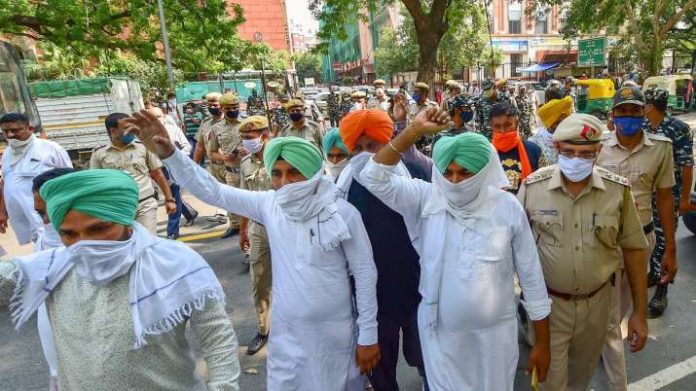
Ashwini Upadhyay (a BJP leader and Supreme Court lawyer) and five other people were arrested by Delhi police on Sunday for their suspected role in chanting anti-Muslim slogans at Jantar Mantar at a gathering in support of a uniform civil code.

Preet Singh, Deepak Singh, Deepak Kumar, Vinod Sharma, and Vinit Bajpai were other suspects, according to Deputy Commissioner of Police (New Delhi) Deepak Yadav. Gajendra Chauhan, a BJP leader, was also there and was spotted on the podium. The event was attended by hundreds of individuals.

“They were all detained in a late-night operation, and legal documentation was prepared before their arrest. At roughly 3 a.m., Upadhyay arrived at Connaught Place police station and joined the investigation,” a senior police officer told the Indian Express. The arrest was made from various parts of the Delhi-National Capital Region and was to appear before the magistrate on August 10, according to police.

“After an FIR was filed at Connaught Place Police Station in connection with aggressive sloganeering during a programme conducted near Bank of Baroda, six individuals were arrested,” Yadav added.

“The protest was organised by Upadhyay. He was denied permission to hold the demonstration. When such unlawful behaviour occurs during a gathering, the organiser of the gathering, as well as individuals who were present, are held accountable,” another senior police officer told PTI.

The case was filed under Indian Penal Code Sections 188 (disobedience to a duly issued public servant’s order), 153 A (promoting enmity between different groups based on religion, race, place of birth, residence, language, and other factors, and doing acts prejudicial to the maintenance of harmony), 269 (negligent act likely to spread infection of disease dangerous to life), and 270 (malignant act likely to suffocate a person).

Police sources informed NDTV on August 10 that raids are taking place all across the city. On Monday, some people chastised the Delhi police for filing an FIR against “unknown persons,” even though many of the accused were visible on the event’s video footage.

The event was reportedly held without police approval, but no action was taken until Sunday evening, according to the Indian Express, and the gathering was permitted to continue. People can also be seen in images and recordings of the event not wearing face masks, in violation of COVID-19 policy. Crowds at the event also harassed a reporter from the YouTube channel ‘National Dastak,’ attempting to force him to chant ‘Jai Shri Ram.’ He was labelled a “jihadi” when he refused.

On 9th August Upadhyay stated that the chants were raised after the formal ceremony had ended and that he didn’t know who the people in the videos were. He also stated that the Jantar Mantar event was not organised by him. “I am not affiliated with the Save India Foundation Trust. Mr RVS Mani, Mr Firoz Bakht Ahmed, and Mr Gajendra Chauhan were among the guests. We arrived at 11:00 a.m. and left at 12:00 p.m. These thugs are people I’ve never met”. In a statement to the police, he added, “I wish to meet you tomorrow morning to give my written statement.”

Upadhyay had previously tweeted multiple images and videos from the event, but they appear to have been removed from his Twitter account. The demonstration was led by Upadhyay, according to Shipra Srivastava, media in charge of the ‘Bharat Jodo Aandolan.’ According to PTI, he has denied any ties to individuals who have chanted anti-Muslim slogans.

The National Commission for Minorities has issued a warning to the Delhi Police Department. The National Commission for Minorities sent a notice to Delhi’s Deputy Commissioner of Police on Monday, alleging anti-Muslim slogans were uttered during a protest at the Jantar Mantar and requested that the official information of the action taken be notified to the Commission.

The panel took suo motu notice of the news, as directed by NCM vice-chairman Atif Rasheed. “The Muslim community has suffered as a result of this. You are required to appear in the commission on October 8, 2021, at 12 p.m.,” it stated.

The commission had asked the Deputy Commissioner of Police to provide information on what actions have been taken against those who have raised such slogans, whether any arrests have been made, and, if so, what sections the suspects have been booked under. The Commission also requested information from the deputy police commissioner, including who gave authorization for the event and what steps were done to prevent similar situations in the future.

In a letter to home minister Amit Shah and Delhi Police Commissioner Rakesh Asthana, Jamiat Ulema-e-Hind president Maulana Mahmood Madani sought strong punishment against the guilty. In addition, at a makeshift camp near Jantar Mantar, a delegation led by Maulana Hakeemuddin Qasmi, the Jamiat’s General Secretary, met with Jaspal Singh, the Joint Police Commissioner, New Delhi Range, and Deepak Yadav, the DCP, and gave over a copy of the letter to them. According to the report, the hate-filled video was widely circulated and shared on social media sites and it had harmed Muslims and peace-loving people from all walks of life.

On August 11, Delhi Court granted bail to BJP leader and Supreme Court lawyer Ashwini Upadhyay, who was arrested in connection with the use of anti-Muslim chants during a demonstration at the Jantar Mantar. Upadhyay claimed that he had been framed by the Delhi police.

Upadhyay was represented by four prominent lawyers before the trial court on Wednesday, including Supreme Court Bar Association president Vikas Singh, as well as Sidharth Luthra, Gopal Shankarnarayan, and Ashwani Dubey. Upadhyay was granted relief by Metropolitan Magistrate Udbhav Kumar Jain on the condition that he post a bond of Rs 50,000. 

The judge mentioned in the order, “there is nothing on record to show that the alleged hate speech to promote enmity between different groups was done in the presence or at the behest of the accused as far as the offence under Section 153A (promoting enmity between different groups on grounds of religion, race, etc) of the IPC is concerned, except for mere assertion”.

Hundreds of people turned out for the ‘Bharat Jodo Andolan’ demonstration on Sunday, August 8. Bharat Jodo Aandolan media in-charge Shipra Srivastava said the rally was led by Upadhyay but denied any ties to those who shouted anti-Muslim slurs.

Soon after his release, Upadhyay retweeted messages of support for him from BJP heavyweights like R.P. Singh, as well as rightwing Hindutva campaigners like Suresh Chavhanke. Upadhyay also uploaded a Twitter video reiterating his call for a uniform civil code, which he voiced during a protest on Sunday that resulted in violent threats to Muslims in the form of chants. He claimed he was framed by police and has no ties to the protest organisers or sloganeers.

During the hearing, the Court also questioned the public prosecutor, who decided that there was nothing in a video of the protest that could be used against the defendants. The court noted that “there was no risk that the accused would abscond” in granting bail. “There is no question that a conspiracy is being formed behind closed doors, and that the current probe is in its infancy. That, however, does not entail that a citizen’s rights should be restricted based on mere allegations and suspicions, according to the court.

The arrest, according to lawyer Vikas Singh, was a “blatant abuse of power” by the police. “Police cannot arbitrarily apprehend anyone,” he added, adding that it was an “admitted fact” that the accused was present at the scene in the morning rather than at the time of the claimed event involving hate speech. The defence attorney went on to say that the FIR was filed late and that Upadhyay was being “illegally incarcerated.” 

The public prosecutor, who opposes the application, claimed that the demonstration was held during a pandemic when big meetings are prohibited to prevent the spread of COVID-19 and that the gathering was also held without permission. Further, he said that “the accused’s meeting was an unlawful assembly in which he actively participated knowing the common goal of the gathering.”

The prosecution’s argument about the epidemic was dismissed by the Court. It said, “it is a terrible moment for everyone, and strong action should be taken against those who violate the guidelines; nonetheless, the offences, as far as the violation of these guidelines is concerned, is bailable in nature, and can be dealt with by the trial court on the merits”.

It ordered Upadhyay to comply with ongoing investigations and to appear before the investigating officer when requested. It also told the defendants not to leave the country without permission from the court and to “carefully appear at each stage of the proceedings before the concerned court so as not to cause any hindrance or delay in their progress.”

The accused was sent to judicial custody considering that his bail application was pending. Following the news of Upadhyay’s release, some social media users remarked on the ease with which the advocate had obtained bail, contrasting it with the plight of activists, comedians, and journalists who remain imprisoned.

The Umar Khalid case

On February 9, 2016, Umar Khalid and nine other students, including then-JNUSU president Kanhaiya Kumar, were charged with sedition for allegedly organising a protest against the “judicial death” of Parliament attack convict Afzal Guru and Maqbool Bhat at the Jawaharlal Nehru University. Anti-India slogans were allegedly chanted at the occasion.

After Kanhaiya Kumar was arrested on allegations of “criminal conspiracy” and “sedition” under Sections 124A and 120B of the Indian Penal Code, Khalid, a former member of the Democratic Students Union, reportedly vanished from the campus. He appeared on several media stations in the following days, defending the event, and was arrested after resurfacing on campus on February 23. A sessions court, however, granted him bail.

On July 6, 2018, JNU’s high-level inquiry committee affirmed Khalid’s expulsion and fined Kanhaiya Kumar Rs 10,000 in connection with the campus event. In 2016, a JNU tribunal recommended Khalid and two other students be expelled, as well as the imposition of a fine on Kumar.

Khalid, however, filed a court appeal to the decision, and Justice Siddharth Mridul, who was hearing the case, instructed JNU not to take any coercive action against Khalid until the next date of hearing, which is August 16.

“An administration that has been operating under the directives of the ruling BJP and RSS has never been in a position to undertake this investigation impartially. After the JNU panel confirmed his rustication, Khalid remarked on Facebook, “The court has consistently uncovered flaws in the enquiry process and has vindicated our apprehensions.”

However, a new feud arose two weeks ago after the management of Jawaharlal Nehru University purportedly refused to accept Khalid’s PhD application. “This is a whole other level of vengeance. I’m not going to pay the fine, I will contest this further,” Khalid said, whose PhD in Jharkhand’s Adivasis was signed by all authorities save the Chief Proctor and Finance Officer. Khalid was a PhD student at JNU for Historical Studies JNU.

Khalid has been a vocal critic of the BJP government, launching various attacks on Prime Minister Narendra Modi. “The Modi myth is fading,” the JNU student leader declared at the Yuva Hunkaar Rally on Parliament Street in New Delhi this year. Prime Minister Modi’s balloon has burst. Youth, students, farmers, labourers, and minorities deserve credit for playing the role of resistance that was missing inside the Parliament.”

Khalid also spoke out about the assassination of writer Gauri Lankesh, saying that bullets will not quiet her beliefs. “I am outraged and disturbed by Gauri Lankesh’s assassination, who was a prominent critic of Hindutva fascist forces. She was more than a journalist to me. He described her as a “strong supporter of the JNU movement.”

Khalid’s arrest in connection to communal clashes in North-East Delhi

Khalid was detained on September 13, 2020, in connection with communal rioting that erupted in northeast Delhi in February 2020, as violence between supporters and opponents of the Citizenship (Amendment) Act escalated out of control, killing at least 53 people and injuring over 700 others.

Khalid was granted bail in another linked case (over riots in the Khajuri Khas region) on April 16, although he has been detained in Tihar Jail on Unlawful Activities Prevention Act (UAPA) conspiracy accusations. Several additional student leaders and activists in the case have been charged under the anti-terror law’s provisions.

The current case, according to police, is part of a bigger conspiracy that was registered on March 6, 2020. Other students from Jawaharlal Nehru University, including Natasha Narwal and Devangana Kalita, Jamia Coordination Committee members Safoora Zargar and Asif Iqbal Tanha of Jamia Millia Islamia, former Aam Aadmi Party councillor Tahir Hussain, and others had been charged under the UAPA. Tanha, Kalita, and Narwal Narwal were recently granted bail in the same matter by the Delhi High Court.

More than 750 cases had been lodged concerning the violence in northeast Delhi, with over 250 charge sheets filed so far.

Former JNU student Umar Khalid’s bail application in the UAPA case against him in connection with the Northeast Delhi riots was denied by the Delhi Police.

Following the Delhi Police’s submission, Additional Sessions Judge Amitabh Rawat adjourned the hearing in Khalid’s bail application until August 7 on the request of his lawyer, Trideep Pais, who received the prosecution’s reply only on the morning of 28th July 2021.

When responding to Khalid’s bail request, Additional DCP Alok Kumar (Special Cell) told ASJ Rawat that the case was still being investigated. “The applicant’s application has no merits, as revealed and proved before this Court by reference to the charge-sheet presented before this court, and the prosecution does not wish to file a lengthy reply to the present application. By referring to and relying on the charge-sheet presented before this Court, the prosecution will demonstrate the “Prima facie” case against the applicant,” the Additional DCP said.

In their response, the police also stated that three Special Leave Petitions have been filed with the Supreme Court and that until they are decided, neither party can rely on the HC verdict. Natasha Narwal, Devagana Kalita, and Asif Iqbal Tanha, three student activists arrested under UAPA, were recently granted bail by the Delhi High Court.

Khalid “grudgingly accepted the idea of India in 2016, with a plan to break up India in 2020 where all relations were based on the concept of Ummah, with total decimation of secular, national identities,” according to a supplementary charge sheet filed by the Delhi Police in the Northeast Delhi riots case.

Conclusion

The cases involve different angles and the charges imposed against Umar Khalid are more stringent compared to Ashwani Upadhayaya’s case. Though both the cases involved hate speech one of them has been granted bail by simply denying all the allegations made against him despite proof available through the videos that are widely circulating in social media currently while the other, Umar Khalid is still under judicial custody. 

References


Students of Lawsikho courses regularly produce writing assignments and work on practical exercises as a part of their coursework and develop themselves in real-life practical skills.

LawSikho has created a telegram group for exchanging legal knowledge, referrals, and various opportunities. You can click on this link and join:

https://t.me/joinchat/J_0YrBa4IBSHdpuTfQO_sA

Follow us on Instagram and subscribe to our YouTube channel for more amazing legal content.

Download Now

Procedure for declaration of dividend out of reserves

0
Dividend Distribution Tax
Image Source - https://rb.gy/3yzvlf

This article has been written by Vishakha Bhandakkar pursuing the Diploma in Law Firm Practice: Research, Drafting, Briefing and Client Management from LawSikho. This article has been edited by Kritika Sharma (Associate, Lawsikho) and Smriti Katiyar (Associate, Lawsikho). 

Introduction

A dividend may be defined as a reward a company gives to its shareholders in return for their investment in the company. It is the portion of profit received by the shareholders after the accounts of the company are finalized. The reward may take the form of cash or stock. Section 2(35) of the Companies Act, 2013 (“Companies Act”) defines “dividend”, stating that it includes any ‘interim dividend’. It is given in proportion to the amount paid for each share held by the shareholders if so authorized by the Articles of Association of the company (Section 51, Companies Act). All companies except Non-Profit Organizations, i.e., companies registered under Section 8, can declare a dividend.

Sections 123 to 127, Chapter VIII, Companies Act deal with the declaration and payment of dividends. The company may pay a dividend in the manner prescribed under Section 123:

  1. By paying out of the profits of the current year of the company,
  2. by paying out of the accumulated and undistributed profits of the previous years of the company, and
  3. by paying out of the amount of money for the purpose of payment of dividend given by the Central or State Governments under a guarantee.

The company may declare dividend only when the following conditions are fulfilled:

  1. Depreciation

Depreciation is provided on all depreciable assets according to the rates and useful life of assets given under Schedule II of the Companies Act.

  1. Transfer to reserves

A certain proportion of profit must be transferred to reserves.

  1. Settling of losses of the previous years

Losses of the previous years and depreciation of the company are set off from the current year’s profit. 

  1. Free reserves

The dividend must be declared only from free reserves.

At times, it may so happen that the company might have no profits or might not make adequate profits to pay a dividend to its shareholders. However, under the second Proviso of Section 123 (1),  the company can propose to declare and pay dividends to its shareholders from the unutilized profits from the previous years, subject to certain conditions. This article discusses the conditions and protocol for the declaration and payment of dividends out of reserves under the Companies Act, 2013 and the Companies (Declaration and Payment of Dividend) Rules, 2014

Conditions for declaration and payment of dividend out of free reserves

When a company has made no profits or has insufficient profits in a year, it may choose to declare and pay the dividend to its shareholders out of the accumulated and unutilized profits that it has earned in the previous years. Such declaration and payment of reserves are subject to the discharge of certain conditions. 

Rule 3 of the Companies (Declaration and Payment of Dividend) Rules, 2014

Rule 3, Companies (Declaration and Payment of Dividend) Rules, 2014 lays down the conditions for the declaration of dividend out of free reserves:

  1. Rate of dividend

The rate of dividend declared shall be equal to or less than the average of the rates at which the company declared dividend in the three (3) financial years immediately preceding the current financial year.

The above condition shall not apply to a company that has not declared any dividends in three (3) immediately preceding financial years.

  1. Total amount of withdrawal

The total amount to be drawn from such accumulated and unutilized profits shall be equal to or less than one-tenth (1/10th) of the sum of its paid-up share capital and free reserves as it appears in the latest audited financial statement of the company.

  1. Utilization of amount withdrawn

The amount that is so drawn from the accumulated and unutilized profits shall be first employed to settle the losses incurred by the company in the financial year in which dividend is declared before declaring any dividend concerning equity shares.

  1. Balance amount of reserves:

The amount in the free reserves after such withdrawal must be equal to or more than fifteen percent (15%) of its paid-up capital as it appears in the company’s latest audited financial statement.

Who is entitled to a dividend, and how is the dividend to be paid?

Unlike equity shareholders, preference shareholders are entitled to a fixed rate of dividend and also enjoy a preference to payment of dividend. This means that in case the company is facing problems in the payment of dividends, claims of preference shareholders will take precedence over those of equity shareholders. Further, preference shareholders cannot treat preference dividends as debt and sue for recovery of debt. In the case of equity shareholders, the dividend could be any amount based on the profit.

According to Section 123 (5), dividends shall be paid only to the shareholder entitled to such payment of the dividend. The dividend shall be paid only in the form of cash and may be paid by cheque, warrant or in any electronic mode.

According to Section 123 (6), a company that has failed to comply with Section 73 and Section 74 shall be barred from declaring any dividend.

When is the interim dividend declared?

According to Section 123 (3), the Board of Directors may declare interim dividend:

  1. During the current financial year or any fiscal year, or
  1. During the period from the date of closing of the fiscal year to the date of holding the annual general meeting.

It must be noted that under Section 2 (35), it is stated that “dividend includes interim dividend”. This means that the provisions under the Companies Act that are applicable to the final dividend to that extent are also applicable to interim dividends. 

Procedure for declaration and payment of interim dividend out of free reserves

  1. The company must issue a minimum of 7 days’ notice of the Board meeting to every director of the company at his registered address, according to Section 173.
  1. Board meeting must be conducted and a resolution must be passed in order to discuss, determine and approve the following matters and affairs regarding the declaration and payment of an interim dividend out of reserves:
  • Approving of the financial statements and accounts,
  • Recommending of the final quantum of dividend,
  • Fixing of the date of the book of closure,
  • Fixing of the day, date, time and venue of the Annual General Meeting (“AGM”),
  • Approving the notice of the AGM,
  • Authorization of the company secretary or any authorized individual for issuing the notice of the AGM.

3. Register of members and the register of share transfer or fixing of record date must now be closed.

4. Board meeting or a committee meeting must be conducted for approving the transfer or transmission of those shares of the company that were lodged with the company before the commencement of the closure of the book.

5. The company must issue a minimum of 21 days’ notice of the AGM.

6. Required proportion of profit must be transferred to the free reserves of the company.

7. Conduct the AGM and pass an ordinary resolution for the declaration and payment of dividends out of free reserves in accordance with the recommendation of the Board.

Since this is the declaration and payment of interim dividend, the approval of shareholders is not necessary. The director shall declare it in the Board meeting [Section 123 (3)].

8. The company must now prepare a statement/list of dividends in respect of each member/shareholder from the Register of members/beneficial owners. This statement/list must be prepared on the last date of closure of books or on the record date. It must contain the name and address of the shareholder, the number of shares held by the shareholder and the payable dividend.

9. A separate bank account must be opened with a scheduled bank. The bank account must be credited with the dividend payable within five (5) days of the declaration of dividend, according to  Section 123 (4).

10. The company must pay the dividend within thirty (30) days from the date of declaration of dividend. For joint shareholders, a dividend must be paid to the first named shareholder. [Section 123 (5)

If it is not possible to pay dividends through electronic mode, ‘payable-at-par’ warrants or cheques may be issued. Where the amount of payable dividend is more than INR one thousand and five (INR 1, 005), the payable-at-par warrants or cheques must be issued by speed post, in accordance with Regulation 12, SEBI (LODR) Regulations, 2015

It must be noted that the company does not have to pay dividend tax, since it has been done away with by the Finance Act, 2020.

11. The company must send the forms of cancelled dividend warrants along with the MICR (Magnetic Ink Character Recognition) codes allotted by the RBI to such banks where the dividend warrants are payable at par.

12. For the amount of unpaid or unclaimed dividend, the company is required to arrange for the transfer of that amount to a particular bank account “Unpaid Dividend Account” within seven (7) days from the date of expiry of the period of thirty (30) days of declaration of dividend. [Section 124 (1)]

13. If the amount in the unpaid dividend account remains unpaid or unclaimed for a period of seven (7) years from the date of transfer to the unpaid dividend account, the company must transfer such amount to the Investor Education and Protection Fund, in accordance with the  Investor Education and Protection Fund Authority (Accounting, Audit, Transfer and Refund), Rules, 2016.

Protocol for listed companies

Apart from the aforementioned procedure for declaration and payment of dividend out of reserves, listed companies are required to follow the below-mentioned protocol: 

  1. A listed company must notify the stock exchanges where its securities are listed, at least  2   working days prior to the Board meeting, in accordance with Regulation 29, Securities and  Exchange Board of India (“SEBI”) (Listing Obligations and Disclosure Requirements) (“LODR”) Regulations, 2015.
  1. The listed company must notify the stock exchanges where its securities are listed, of the declaration of dividend out of free reserves, within 30 minutes of closure of the Board meeting, in accordance with Regulation 30, SEBI (Listing Obligations and Disclosure Requirements), 2015.
  1. The listed company must notify the stock exchanges where its securities are listed, of the closure of book, minimum 7 days prior to the Board meeting, in accordance with Regulation 42, SEBI (Listing Obligations and Disclosure Requirements), 2015.
  1. The listed company must also issue the notice of closure of books in the local newspaper of the district in which the registered office of the company is, minimum 7 days prior to the commencement of the closure of the book.
  1. A listed company must declare dividend minimum 5 working days prior to the fixed record date.
  1. For the payment of dividend, a listed company must use an electronic mode of payment approved by the Reserve Bank of India (RBI). Such electronic modes of payment may include Electronic Clearing Services (ECS), National Electronic Fund Transfer (NEFT) etc. Payment must be made either directly or through the company’s Registrars to an Issue and Shares Transfers Agents (STA).

Conclusion

When shareholders invest money in a company, the company shares its profits out of business with the shareholders. Such a share in the profits of the company is the dividend for the shareholders. It is pertinent to note that such dividend is not a right the shareholders are entitled to. However, once the dividend is declared by the company, it constitutes debt which cannot be revoked. The shareholders become entitled to claim the dividend. Furthermore, before declaring an interim dividend, the company must ensure that its financial position permits such payment of dividend. It should be declared only if the company has made adequate profits during a particular period of the financial year and sufficient profits are expected in the remaining part of the year.

References


Students of Lawsikho courses regularly produce writing assignments and work on practical exercises as a part of their coursework and develop themselves in real-life practical skills.

LawSikho has created a telegram group for exchanging legal knowledge, referrals, and various opportunities. You can click on this link and join:https://t.me/joinchat/J_0YrBa4IBSHdpuTfQO_sA

Follow us on Instagram and subscribe to our YouTube channel for more amazing legal content.

Download Now

All you need to know about the farmer’s road blockade issue

0
Image source - https://bit.ly/3nwqsna

This article is written by Ayushi Sharma and the article has been edited by Khushi Sharma (Trainee Associate, Blog iPleaders).

Introduction

The protests of the agrarian primary sector aptly termed “the Farmers Protests” is one of the most consequential political events on the Indian subcontinent to have occurred in the last decade. It involved the enactment of mainly 3 reorganization bills which when enacted would change the way farmers would interact with the markets. It mainly rolled back many of the protections given to agrarian producers by previous governments to allow for corporate entities to deal openly with producers, rather than having to procure the required products through the middle state and district level intermediary markets, also known as ‘mandis.’

While this movement served as a unifying force for individuals across the nation to move against the apparent privatization fever that had grasped a hold of the Modi economic regime, it wasn’t long before cracks begin to become more apparent. Naturally, protest movements tend to break apart over time owing to a change in circumstance and practical logistics. One common reason for fragmentation is often differences of opinion in respect to the manner in which such protests take place. In this manuscript, we shall examine the road blockades concerning the Farmers protests and assess the developments of the protest fragmentation, party interests and related occurrences.

The farmers’ protests have been a contentious issue in Indian politics for some time. From major marches with tractors and hundreds of participants, calling the farmers protests well organized would be an understatement. They however were particularly successful in drawing the ire of the central government when they marched into Delhi, the capital of the Republic of India, and managed to hold massive road blocking dharnas 

For instance, during the early days of February 2021, major flyovers leading to the Indian capital were swarmed with the representative of the farmers’ unions as well as their supporters. The Delhi to Agra Flyover saw a dharna at Palwal with over 2000 farmers and other supporters. Similar blockades were set up on the Delhi to Jaipur as well as the Delhi to Ambala highways. Multiple other locations across the states of Haryana and Punjab also created a noticeable impact.

In the city of Delhi, while no unions operated outright based on such plans during this time. High levels of violence were witnessed near the office of the Income Tax Department on the 25th of January leading to the end of Republic Day. This resulted in leaders from over 3 agricultural and traders unions being taken into preventive custody and at least 60 protesters being detained. This incident forced the centre to act decisively, with over fifty thousand police and law enforcement personal being deployed to monitor the capital with social media being searched extensively for potential stages of violent protests. While the protesters managed to attract a lot of attention, they also attracted a lot of negative publicity owing to the violent tinge the protest subsequently acquired. 

This resulted in extensive fragmentation of the movement, while the protests and road blockades in Delhi persisted.

Court Intervention

B.1 Institution of Proceedings

The 4th of October 2021 saw one of the earliest formal interactions of the courts of India with the farmers’ protests, irrespective of how disorganized it was. This occurred when the apex Court, the Supreme Court of India began issuing notices to the over 40 organizations which constituted the most significant actors of the farmers’ protests. 

These notices were issued by way of a petition filed by a resident of Noida, a city of the National Capital Region against the blockade on the Delhi to National Capital Region Highway. This proceeding was eventually joined by the 40 plus organizations mentioned above and even by the government of Haryana, who joined the matter to implead the leaders of the above-impugned organizations as Respondents to the application before the Supreme Court. The Courts enlisted many leaders of the protests including, but not limited to:

  1. Rakesh Tikait– The national spokesperson for the Bharatiya Kisan Union, also known as the BKU.
  2. Yogendra Yadav– A founding member of organizations such as the Swaraj Abhiyan, also known as the SA and the Jai Kisan Andolan, also known as the JKA
  3. Darshan Pal– Leader of the Krantikari Kisan Union, also known as the KKU.
  4. Gurnam Singh– The leader of the Bharatiya Kisan Union’s Harayana Operations. He was also the founder of Operation Punjab, the main operation behind the road blockade in Delhi.

The original applicant, Ms Monicca Agarwaal filed for this application owing to the immense personal cost this demonstration had caused her, as travels to and from her place of work went from a brisk 20-minute drive to a 3-hour ordeal. 

B.2 Progression of the matter

This matter was heard before Justice Sanjay Kishan Kaul as well as Justice MM Sundresh of the Supreme Court of India and is scheduled to be heard on the 20th of October 2021. 

Notices were issued on the request of the Honorable Solicitor General of India, Shri Tushar Mehta, who requested the issuance of the same to eliminate any reasons for the representatives of the above-impugned organizations to not appear not to engage with the government. While the Court has yet to proceeding past the procedural formalities of the issue, the matter has had substantial changes and developments.

For instance, the government has made abundantly clear, its desire to work with the representations of the union to work out a mutually acceptable arrangement. In this regard, Shri Tushar Mehta has been tasked with the negotiations, so that he may interact with the leaders of the protestors under the context of the legal proceedings so as to bring a halt to the matter. In respect to this objective, he made it clear to the Court that the state has constituted a committee to organize talks between the conflicted parties. Such a committee’s invitations however were ignored by the impugned organizations.

B.3 Current Status

While the substantives of the existing proceedings have yet to be discussed, the Supreme Court has indicated its displeasure with the institution of these road blockades. For instance, Justice Kaul stated that:

“Redressal can be through judicial forum agitation or parliamentary debates but how can highways be blocked and this cannot be a perpetual problem”

At the same of the numerous organizations have been sent notice, many have issued counter statements indicating their desire not to be placed in the same category as other operators. For instance, the Kisan Maha Panchayat indicated to the Supreme Court of India that it was “neither the part of protestors, who have been stopped and restrained by the Police/ Security Personnel at any National Highway nor is the members of the Petitioner farmers body involved in any activity causing any permanent/temporary blockage on the movement on any road.

This occurred after the Kisan Maha Panchayat requested the Court for permission to hold Satya Graha near the Jantar Mantar. Such a request, before the organization, making the above distinction would have likely been denied owing to their apparent association with the road blockades. This opinion is further substantiated by the following quote by Justice AM Khanwilkar:

“You have strangulated the entire city, now you want to come inside?”

Conclusion

It is left to be seen what will happen before the court when this matter truly starts progressing into its substantive issues. If one thing however has become clear, it is that while the protesters are working towards a common objective, they are not a monolith by any means of the imagination.

Multiple different protesting groups have operated quite distinctly ever since the protests escalated to violence on Republic Day 2021. This could substantially impact the manner in which the government goes about dealing with the manner. In one way one could argue that such fragmentation would be a demerit to the farmers as they shall no longer have the same numerical advantage, they once enjoyed in carrying out their demonstrations. However, at the very same time, such fragmentations hall also prevents the protests from being suppressed owing to potential violent protest as each demonstration shall operate independently of each other.

Therefore, this event could prove to be a decisive point for the farmers’ protests in terms of the movement attaining its original objective of the removal of the 3 Farm Reorganization Acts.


LawSikho has created a telegram group for exchanging legal knowledge, referrals, and various opportunities. You can click on this link and join:

https://t.me/joinchat/J_0YrBa4IBSHdpuTfQO_sA

Follow us on Instagram and subscribe to our YouTube channel for more amazing legal content.

Download Now

Jurisdiction under Consumer Protection Act, 2019

0
Consumer Protection Act

This article is written by Kriti Saxena, pursuing Certificate Course in Consumer Litigation from LawSikho. The article has been edited by Prashant Baviskar (Associate, LawSikho) and Smriti Katiyar (Associate, LawSikho).

Introduction

Anybody who uses certain goods or services, for self-consumption, is a consumer. “Consumers” does not include, anyone who avails of goods or service free of charge, purchases for commercial purposes, or someone who avails of service as an employer under a contract of service. With the developing technology platforms, and various sources of supply, consumers are relying more on e-commerce and digitalization. The ever-increasing demands and options have opened gates to frauds, unfair trade practices, and deficiency of services to the consumers.  Thus, to safeguard the consumers against such acts, certain laws were formulated by the government. Out of these, one crucial Act to protect the interest of innocent consumers is the “Consumer Protection Act, 1986”. This Act did not include the transactions related to e-commerce but owing to the growth of these platforms, the new Act i.e. the consumer protection Act of 2019 was formulated which came into force on 20th July, 2020.

Section 10 of the new Act provides authority to the Central Government to incorporate the Central Consumer Protection Authority (CCPA) which aims to protect the consumers from fraud, unfair trade practices, misleading advertisements and violation of their rights as a consumer. CCPA can take cognizance of a consumer complaint either on its own i.e. suo moto, or when directed by the central government or on the receipt of consumer complaint by CCPA.

The new Act ensures that consumers are heard and that their complaints are duly redressed at appropriate forums. A consumer can either himself file a complaint or through a legal representative. 

What are consumer courts?

Though consumers are the main drivers of trade and commerce. Frauds committed on a consumer are not new. There are other legislation and acts that protect the rights of innocent consumers such as, The Indian Contract Act, the Sales of Goods Act, the Civil Procedure Code, etc. However, their execution is not done appropriately which makes customers hesitant about filing complaints. The Consumer Protection Act, 1986, was a marvellous achievement on the part of the government to this effect. The Act was passed to protect the rights and interests of consumers. The Act directs the formation of statutory bodies known as Consumer Courts to specifically deal with suits filed by consumers. This is a vital step under this Act, to reduce the expense, time and burden on the consumer seeking appropriate redressal. For this purpose, consumer courts are instituted at the three levels i.e. district, state and national levels.

The law provides for the establishment of Councils to educate and promote awareness among consumers against the dishonest acts of traders or sellers. 

A complaint can be filed under the act in cases of- unfair trade practices, restrictive trade practices, and unfair contract, the higher price charged by the trader, goods that are hazardous to life and property are sold without following the standards, etc.

Consumer Redressal Forums

Jurisdiction

The consumer protection act, 2019 replaced the Act of 1986 to adapt to the changing environment. The new Act includes, in its ambit, e-commerce transactions. The act has also modified the definition of the complainant to include a parent or legal guardian in case the complainant is a minor.

Certain significant amendments have been brought by the 2019 Act, with respect to the Consumer Redressal Forums, also. These are:-

  1. Territorial Jurisdiction – The Consumer Protection Act, 2019 now provides that the consumers can register their complaints at a place where all or one of the opposite parties resides or carries on business, or the place of cause of action or where the complainant is residing or works for gain unlike the 1986 Act (which mandated filing of a complaint by the complainant at a place of residence or business of the respondent only), thus increasing the scope of territorial jurisdiction. The ultimate objective behind this is to remove the difficulties and problems faced by the consumers in seeking redressal against businesses.

The complaints are registered at appropriate forums based on the limit of pecuniary jurisdiction.

  1. Pecuniary Jurisdiction – Certain significant modifications have been brought forth by the Act of 2019 concerning the pecuniary jurisdiction for all the forums i.e. the District, State, and National Commissions, respectively:
  1. The upper limit of pecuniary jurisdiction for the District Commission has been increased from Rs.20,00, 000 to Rs.100,00,000 as per Section 34, Consumer Protection Act, 2019.
  2. The limit of pecuniary jurisdiction for the State Commission  has been increased from Rs.100,00,000 to Rs.10,00,00,000 as per Section 47, Consumer Protection Act, 2019 and,
  3. The limit of pecuniary jurisdiction for the National Commission has been increased from above Rs.10,00,00,000 to above Rs.10,00,00,000 as per Section 58, Consumer Protection Act, 2019.

These modifications have widened the scope of pecuniary jurisdiction to a much larger extent. Along with the above-mentioned changes, the 2019 Act has also changed the means for the determination of the pecuniary jurisdiction on the basis of the valuation of goods and services payable as consideration, unlike the 1986 Act where, pecuniary jurisdiction was determined by the value of the goods and services as well as the compensation sought, therefore not escalating the amount of compensation claimed to bring the complaint within the pecuniary jurisdiction of State or National Commission.

For determining the value of the complaint, the aggregate value of the goods or services and compensation claimed by the complainant. This was held in the case of “M/s Pyaridevi Chabiraj Steels Pvt. Ltd. v. National Insurance Corporation Ltd.

  1. Alternate Dispute Resolution– Another crucial redressal mechanism incorporated by the 2019 Act, is the alternate dispute resolution in the form of mediation. This is done to ensure speedy resolution of disputes and is less expensive. As per the 2019 Act, the complaint may be referred to mediation after the admission of the complaint or at the first hearing or at any time before the dispute is resolved. The forum shall refer the matter to mediation with the written consent of both the parties, furnished within 5 days. 

To this effect, the new act incorporates the establishment of a consumer mediation cell by the respective State Government in each district and state as well as at the national commission by the central government and be attached to the forums.

It is based on the principles of natural justice.

  1. E-Complaints– The 2019 Act also includes the filing of Complaints before the District Forums electronically. The rules regarding this are yet to be prescribed by the Government. This was done to tackle problems related to the increase in digitalisation.

Composition

  1. District Consumer Dispute Redressal Forum

Each district forum would comprise of:

  1. A President who is qualified, or has been qualified, to be a district judge, and
  2. Two other members, having ability, integrity and standing and possess knowledge and experience in dealing with problems related to economics, law, commerce etc. and one of whom shall be a woman.
  3. State Consumer Dispute Redressal Forum

The state consumer dispute redressal forum, established in each state, should comprise of:

  1. A president, who is or a person who has been a Judge of a High Court and is appointed by the government of the respective state. These appointments are made only after consultation with the Chief Justice of the High Court, and
  2. Two other members have ability, integrity and standing and also possess knowledge and experience in dealing with problems related to economics, law, commerce, public affairs, administration, etc. and one of whom shall be a woman. These appointments, as mentioned, shall be mandatorily made only after consultation and recommendation of a selection committee comprising of:
  1. President of the state commission,
  2. Secretary of the law department of the State, 
  3. Secretary in charge of the department dealing with consumer affairs in the respective state.
  4. Nation Consumer Dispute Redressal Forum

Over and above the state consumer forum, lies the national consumer dispute redressal forum. As per the Act, the forum shall comprise of:

  1. A president appointed by the central government, who is a judge or has been a judge of the Supreme court and these appointments are to be mandatorily made after consulting the Chief Justice of India.
  2. Four other members have the ability, integrity and standing and also possess knowledge and experience in dealing with problems related to economics, law, commerce, public affairs, administration, etc. and one of whom shall be a woman. 

The act provides that these appointments are to be made by the Central government on the recommendation of a selection committee constituting of:

  1. A person who is a judge of the Supreme Court to be nominated by the chief justice of India.
  2. The secretary in the Department of legal affairs in the government of India.
  3. Secretary of the Department dealing with consumer affairs in the Government of India.

Conclusion

Consumer Protection Act, 2019 is a law that protects the interests of consumers. This act was crucial to resolve a large number of pending consumer complaints in consumer courts across the country. It has ways and means to solve consumer grievances speedily.

The basic aim of the Consumer Protection Act, 2019 is to save the rights of the consumers by establishing authorities for timely and effective administration and settlement of consumers’ disputes.

References


Students of Lawsikho courses regularly produce writing assignments and work on practical exercises as a part of their coursework and develop themselves in real-life practical skills.

LawSikho has created a telegram group for exchanging legal knowledge, referrals, and various opportunities. You can click on this link and join:

https://t.me/joinchat/J_0YrBa4IBSHdpuTfQO_sA

Follow us on Instagram and subscribe to our YouTube channel for more amazing legal content.
Download Now
logo
FREE & ONLINE 3-Day Bootcamp (LIVE only) on

How Can Experienced Professionals Become Independent Directors

calender
28th, 29th Mar, 2026, 2 - 5pm (IST) &
30th Mar, 2026, 7 - 10pm (IST).
Bootcamp starting in
Days
HRS
MIN
SEC
Abhyuday AgarwalCOO & CO-Founder, LawSikho

Register now

Abhyuday AgarwalCOO & CO-Founder, LawSikho