
Download Now
Home Blog Page 442

Case analysis of the case Pourshian vs Walt Disney

0
Image Source: https://bit.ly/3hdvCBx

This article is written by Vritant Dua, pursuing Diploma in Intellectual Property, Media and Entertainment Laws from LawSikho. The article has been edited by Prashant Baviskar(Associate, LawSikho) and Smriti Katiyar (Associate, LawSikho).

Brief history and introduction

The present case under study pertains to copyright infringement by the defendants in the jurisdiction of Ontario, Canada. The specific allegation against the defendants is that the plaintiff, Mr Damon Pourshian, while he was in high school in the year 1998, conceived of an idea of a short film wherein the five of the protagonist’s organs become personified and guide his behaviour. When the plaintiff was in Sheridan College, Oakville, Ontario in the year 2000, he wrote a screenplay and produced a short movie titled “Inside Out” based on his idea. The defendants, on the other hand, released a film titled “INSIDE OUT” on June 19, 2015 wherein the protagonist is an 11-year-old girl whose five basic human emotions become anthropomorphised and guide and influence her behaviour and which film was reproduced, distributed and screened in Ontario, Canada, where the plaintiff resides and works as a filmmaker. The said film won various awards including the coveted Academy Award for being the Best Animated Feature Film at that particular time.

The plaintiff who lives in Toronto, Ontario and is a filmmaker by profession, subsequently filed his claim for copyright infringement against the defendants under Section 3 and 27 of the Copyright Act of Canada, 1985 (latest version accessible here), seeking a declaration that he owns the copyright to the screenplay, live theatrical production and short film titled “Inside Out” and a declaration that the defendants infringed his copyright through their production, reproduction and distribution of their film titled INSIDE OUT and also seeking a permanent injunction against the defendants and damages.

Initially, the claim was filed before the lower court (Court of Master Graham, Ontario), which decided that the claim stands against only three of the defendants namely Pixar Animation Studios, Walt Disney Pictures Inc and Disney Merchandise Inc and stayed the action against all the other six defendants citing that there is no concrete arguable case and no connection between the claim and the jurisdiction of Ontario.

For reference purposes, the film made by the plaintiff is referred to as Inside Out and the film made by the defendants is referred to as INSIDE OUT.

Parties involved in the case

DAMON POURSHIAN …Appellant/Respondent by cross-appeal

-and-

(i) WALT DISNEY COMPANY

(ii) WALT DISNEY PICTURES INC.

(iii) PIXAR ANIMATION STUDIOS

(iv) DISNEY ENTERPRISES INC.

(v) DISNEY SHOPPING, INC.

(vi) WALT DISNEY STUDIOS HOME ENTERTAINMENT

(vii) DISNEY CONSUMER PRODUCTS AND INTERACTIVE MEDIA

(viii) WALT DISNEY STUDIOS MOTION PICTURES

(ix) AMERICAN BROADCAST COMPANY, INC.

… Respondents/Appellants by cross-appeal

  • Arguments put forth in his claim by the plaintiff, the defence of the defendants and the judgment by the lower court (Court Of Master Graham, Ontario, Canada):

The plaintiff describes the role and general corporate responsibilities of each of the defendants in his claim such as place of incorporation and the role and responsibilities it carries out. Details of the same can be read in the judgment available here and are not repeated herein for the sake of brevity.

Arguments put forward by the plaintiff

  1. Plaintiff describes how he conceived the idea of the film Inside Out and how it was produced and shown in the Sheridan College.
  2. He argues that the defendants had access to his film through various screenings held at Sheridan College. Further, Pixar and Disney, which are undefined terms, had a ‘close relationship’ with Sheridan College and that some of the students who were at Sheridan College in early 2000 ended up working on the production of the film INSIDE OUT.
  3. The plaintiff also states that he intended to further develop his film Inside Out after leaving Sheridan College but did not have an opportunity to do so before the release of Defendants’ film INSIDE OUT and that the defendants released the said film without the consent and authorization of the plaintiff due to which he suffered damages.
  4. He further argues that the service of the claim is permitted outside Ontario, Canada as per the sub-sections (a), (i), (n), and (p) of Rule 17.04 of the Rules of Civil Procedure of Canada, on the grounds that the claim relates to:
    1. Real property in Ontario
    2. An injunction against the defendants preventing them from doing certain things or affecting the real or personal property in Ontario.
    3. Authorization by or under the Copyright Act of Canada.
    4. Persons carrying on business in Ontario.

The main argument of the defendants against the above said claim of the plaintiff was that the claim is barred by jurisdiction or is ex juris as Ontario court has no jurisdiction to try and adjudicate the claim against the defendants. However, the defendants admitted that the Ontario court has jurisdiction only over Disney Shopping, Inc. as it has sold the movie merchandise directly to the customers in Ontario. 

Evidence filed on record by the parties

  1. Affidavit sworn and filed by Jonathan A. Garson, Senior VP of Worldwide marketing of Pixar, describing the development and success of their movie and also stating the various sources of inspiration for their film and a list of films with the same title.
  2. Affidavit sworn and filed by Michael Salama, VP, Walt Disney Company stating that Walt Disney Company is the parent company of all the other defendants and has nothing to do with the creation or distribution of the movie in question. He further states that none of the defendants including the parent company carry on or are engaged in any business in Ontario. He also refers to an action brought by the plaintiff against the defendants in California which was terminated by “Notice of Voluntary Dismissal” vide order dated August 15, 2018.

The only evidence by way of affidavit filed on behalf of the plaintiff was sworn by Jason Dinelle, a law clerk in his lawyers’ office. The said affidavit mentions various websites showing the distribution of the movie by various companies in Canada.

The decision by the master

Mainly referring to the Supreme Court of Canada’s decision in Club Resorts Ltd. V. Van Breda, 2012 SCC 17, the Master while reviewing the claim and the applicable law, rejected the claim against all the defendants except the two of them, namely Walt Disney Pictures Inc. and Pixar. 

  1. With regard to the carrying on business by the defendants in Ontario, the court held that Walt Disney Pictures Inc and Pixar are liable as the film was released in Canada for public viewing, thereby implying that the area of release and viewing of the film also presumably included Ontario and required the actual physical presence of the people to actually buy tickets and go to the theatres to watch the film. This as per the Master, created a “good arguable case” against the defendants. Further the court, while referring to para 30 of the claim of the plaintiff that the above named defendants are the producers of the film in question, reasonably implied that the defendants made the film in the expectation that the people would pay to watch it which in turn required that the film be shown in movie theatres. 

The court further observed that Pixar by releasing the film in Ontario, to be shown in theatres, even though through another entity, was in substance offering it for sale to the movie-going public of Ontario, therefore creating a “good arguable case” against the above named two defendants.

Accordingly, the court held that Walt Disney Pictures Inc and Pixar by producing and releasing the film for distribution in Ontario movie theatres were basically carrying on business in Ontario.

  1. The Master then went on to consider whether the claim in question is in respect of a tort committed in Ontario. Reaching to the affirmative conclusion, the court held that the claim is indeed in respect of a tort committed in Ontario as per Section 27(2) of the Copyright Act.
  2. The Court then went on to consider whether there are any other connecting factors giving the court of Ontario jurisdiction and held that the claim is in respect of property in Ontario because of the claim of the plaintiff. However, the court rejected the argument of the plaintiff that the action was authorized by the statute, while holding that the Copyright Act does not apply to copyright infringement outside of Canada.

Analysis of this judgment

Coming to the applicable law in the present case, I would like to first discuss the main provisions of the law applicable to the present case under discussion.

Section 3(1) of the Copyright Act clearly defines what constitutes a copyright and gives an exhaustive list of ten points of what rights a copyright gives to its owner. Section 55 and 56 of the said act states the procedure for applying for copyright registration and states that copyright can be applied either by the owner of the copyright or by a person to whom the copyright has been assigned by the owner or by the author of the work or by a licensee of the work. Section 13(1), however, states that the author of a work shall be the first owner of the copyright therein, which gives the plaintiff Mr Pourshian the ownership of the copyright in his above named film. Further, the plaintiff also states in his claim that he didn’t have the opportunity to develop his film until the release of Disney’s INSIDE OUT, which I think is not a strong argument as he had 15 long years to do so.

Coming to the facts, by the arguments put forward by the parties and the evidence placed on record by the parties, it is clear that nowhere it is mentioned as to when and through whom the plaintiff legally and formally applied for the copyright registration for his work/idea. Secondly, the only evidence placed on record on his behalf is an affidavit that too is sworn by the law clerk of his lawyers’ office. Thirdly, he states that he didn’t have the opportunity to develop his film until the release of the defendant’s film.

The Master failed to consider the weak evidence placed on record and the arguments put forward by the plaintiff were also not so solid but following the principles of order, fairness and comity (in contrast to the principles of justice, equity and fair play followed in India), the Master gave good and logical reasons against the two defendants namely Pixar and Walt Disney Pictures Inc., though he could have followed the same in regard to other defendants also but failed to do so.

The appeal and the decision of the Superior Court

The Superior court of justice (hereinafter referred to as SCJ) while awarding damages, partly allowed the claim of the plaintiff holding that the claim stands good against six of the defendants and stayed the action against the other three defendants, namely Walt Disney Pictures Inc, American Broadcasting Company.

The SCJ while observing that the Master erred in applying his mind to the facts in the claim and the evidence placed on record and the arguments of the parties, held that the Master committed at least three legal errors. And then the court goes on to discuss the case and the evidence against each of the defendants in its judgment, which is discussed later on in the paragraphs below.

Firstly, the court observed that the Master held that the defendants Walt Disney Pictures Inc and PIXAR are liable as they carry on business in Ontario based on the statement of claim of the plaintiff, but the Master failed to analyze and give reasons as to what “carrying on business” means and its implications in the present case. Referring to para 87 of the Van Breda judgment of the Supreme Court of Canada relied on by the Master, the SCJ reiterated that, “…The notion of carrying on business requires some form of actual, not only virtual, presence in the jurisdiction, such as maintaining an office there or regularly visiting the territory of the particular jurisdiction…” [emphasis added].

The SCJ further observed that there is no mention in the statement of claim of the plaintiff that the above-named defendants had some form of actual presence in Ontario. The plaintiff relied on the judgment titled Equustek Solutions Inc. v. Google Inc., 2015 BCCA 265 in support of his argument that the defendants carried on business in Ontario as they targeted customers there. In response to this, the SCJ observed and held that the said judgment mainly dealt with the scope of Google’s activities online, specifically in British Columbia. Google entered into various contracts with the residents of British Columbia and gathered information through its proprietary software in British Columbia. But in the present case under discussion, no such analysis similar to the one conducted in the Equustek Solutions case was conducted by the court nor did the Master have any regard to the ratio of the Van Breda case as discussed above regarding the necessity of the actual presence of the parties in a particular jurisdiction for the court to have authority over it.

Secondly, the Master’s court completely discarded the evidence placed on record by the parties in reaching its conclusions.

Thirdly, the Master rightly identified the “property” in Ontario as one of the connecting factors but did not specify or give any reasons as to which of the defendants the said factor applied to.

Defects/deficiencies in the pleadings pointed out by the defendants

The SCJ then goes on to observe the following defects in the pleadings of the plaintiff as pointed out by the defendants:

  1. Plaintiff’s arguments rely on the allegations that the defendants “authorized” the copyright infringement but the said authorization is not properly pleaded in the claim by the plaintiff.
  2. Even if properly pleaded, such allegations are impermissible as per law as the Copyright Act does not allow filing of claims based on the authorization of a secondary infringement.
  3. Plaintiff relies on activities of some of the defendants in relation to merchandise and products with INSIDE OUT branding but on the other hand the statement of claim only alleges copyright infringement based on the production and distribution of the film INSIDE OUT, not branded merchandise.
  4. Defendants have pointed out that at various places/instances, the plaintiff has not stated the correct and exact name of the corporate defendants.

In response to the above defects pointed out by the defendants, the SCJ observed while referring to the judgment of the Court of Appeal in Ontario (Attorney General) v. Rothmans Inc., 2013 ONCA 353 at para 106 and reiterated that “It is not the proper role of the court in the context of a jurisdiction motion to analyze the finer points of the pleading to determine whether it discloses a cause of action for copyright infringement or whether the claim meets all necessary requirements for a claim for a claim for copyright infringement. So long as a statement advances the core elements of a cause of action known to law and appears capable of being amended to cure any pleadings deficiencies such that the claim will have at least some prospect of success, the issue for the motion judge is whether the claimant ass established a good arguable case that the cause of action is sufficiently connected to Ontario to permit an Ontario court to assume jurisdiction.”

Copyright infringement in Ontario

The plaintiff argued before the SCJ that the Van Breda judgment relied upon by the Master as stated above is of little assistance in the present case as the said judgment deals with a tort claim whereas the claim of the plaintiff is filed under the Copyright Act and he instead relied on the Supreme Court of Canada’s judgment in the case titled SOCAN v. Canadian Association of Internet Providers, 2004 SCC 45  which the Master as per the plaintiff failed to consider, and wherein the Court held that the country where the transmission originated and the country where the transmission was received of content may have jurisdiction to try the case and since the case of the plaintiff was that the film INSIDE OUT was received in Canada, the courts of Canada have jurisdiction to try the case. In their defence, the defendants counter-argued that the Master was correct in his judgment and that the SOCAN judgment had no application in the present case because the Copyright Act of Canada has no extra-territorial application.

Justice Favreau, speaking for the court (SCJ) held that both Van Breda and SOCAN cases have applicability to the present case as Copyright Infringement is essentially a statutory tort. Referring to the SOCAN case, the court pointed out paras 56-57 of the said judgment wherein it was held that “Canadian copyright law respects territorial distinctions, the applicability of the Copyright Act to foreign participants  depends on whether there is sufficient connection between this country and the communication in question.” The court further refers to para 63 of the said judgment wherein the Court stated that Canadian Courts will generally have jurisdiction where Canada is the “country of transmission” or “the country of reception” 

The plaintiff further relied on the court of Quebec’s judgment titled Robinson c. Films Cinar inc., 1997 CanLII 8974 (Q.C.C.S.) in support of his argument that the Ontario court has jurisdiction to try the case. The Judge observed that the Cinar case dealt with the copyright infringement by a German film-maker of a work of another person made in Quebec as his film was showcased in Quebec and it was held in that case that the foreign defendant permitted the film to be broadcast in Quebec and therefore copyright infringement arguably took place in Quebec.

The defendants in response mainly argued that the Copyright Act has no extra-territorial application which the Superior Court of Justice rejected as being over simplistic and observed that any activities which the defendants undertook outside Ontario that resulted in the communication of their film in Ontario are not protected simply because they took place outside Ontario and which was amply clear from the principles laid down in SOCAN.

Property in Ontario as presumptive connecting factor

The SCJ held that property in Ontario as a presumptive connecting factor connecting the claim and Ontario is a strong argument and reiterated the observation of the Court of Appeal of Ontario at para 21 of Knowles v. Lindstrom, 2014 ONCA that While a tort may occur in more than one jurisdiction, real property is permanently located in only one jurisdiction. The location of the property clearly links any dispute over ownership to the courts of that jurisdiction.”

Referring to citations and arguments raised by the plaintiff in support of his claim, the SCJ held that since the plaintiff lives in Ontario, he created his film Inside Out in Ontario, the courts of Ontario have jurisdiction to try his claim.

Whether the plaintiff has established a good arguable case for jurisdiction over each defendant

The Superior Court of Justice considered in detail the evidence and the statement of claim against each of the defendants and whether the defendants have individually rebutted the same successfully:

Walt Disney Company

Action against this defendant was stayed by the Master and the Superior Court also upheld the same. Observations of the Superior Court against this defendant are as follows:

  • It is the parent company of all the other defendants.
  • No specific allegation against this defendant as to the making or distribution of the film INSIDE OUT.
  • Affidavit filed by Mr Salama on behalf of this defendant states that the correct name of the party is The Walt Disney Corporation and it further states that the said company never engaged in any business in Canada before and has no role in either creating or distributing the film in Canada or elsewhere and that it is the parent company of all the other defendants.

The Court held that being a parent company is not sufficient to establish the case against this defendant and that the claim was properly rebutted by this defendant by the evidence on record.

Walt Disney Pictures Inc.

Though the action was not stayed against this defendant by the Master, however, the Superior Court also arrived at the same conclusion but in a different and a more detailed manner. 

Observations of the court are as follows:

  • Specific allegations against this defendant are that it produces and distributes films made by Pixar and that it produced and released the film in question in Canada.
  • Affidavit of evidence filed on behalf of this defendant by Mr Salama states that the correct name of this defendant is Walt Disney Pictures and that it is not engaged in any business in Ontario and has not reproduced, sold, offered for sale, rented, distributed, exposed or exhibited INSIDE OUT or related merchandise in Canada.
  • The allegation of the plaintiff against this defendant that it has produced and distributed INSIDE OUT in Canada was not specifically rebutted by this defendant, which creates a good arguable case against this defendant.

Pixar Animation Studios

Though the action was not stayed against this defendant by the Master, however, the Superior Court also arrived at the same conclusion but in a different and more detailed manner. 

Observations of the court are as follows:

  • Specific allegation against this defendant is that they filmed and produced the movie in question.
  • Affidavit of evidence filed on behalf of this defendant by Mr Salama states that the correct name of this defendant is Pixar and not Pixar Animation Studios and it is not engaged in any business in Ontario. It further stated that though this defendant is the registered owner of INSIDE OUT in Canada, it has not reproduced, sold, offered for sale, rented, distributed, exposed or exhibited the film in Canada.
  • The allegation of the plaintiff that this defendant was responsible for filming or producing the movie in question was not specifically rebutted by this defendant.
  • Court observed that this defendant filmed and produced the movie in question, which was ultimately distributed in Ontario. Further, it was part of the chain of production and distribution that led to the movie being available in Ontario. With regard to the property factor, it was observed that Pixar made this film which allegedly infringed the copyright of the plaintiff, who resides and works in Ontario and made his film in Ontario. Further, it is observed that Pixar had agents in Ontario who may have viewed the plaintiff’s film and that it hired former students of Sheridan College who would have viewed the film made by the plaintiff. These facts were considered to be strong connecting factors between the claim against this defendant and the statement of claim of the plaintiff by the Hon’ble Court.

Disney Enterprises Inc.

The Superior court overturned the verdict of the Master against this defendant and held that claim stands good against this defendant.

Observations of the court are as follows:

  • Specific allegation against the defendant is that he is the registered copyright owner of the film INSIDE OUT and also owns various trademark registrations in Canada.
  • The affidavit filed by Mr Salama on behalf of this defendant states that the correct name of this defendant is Disney Enterprises Inc. and that it is not engaged in any business in Ontario. The allegation of this defendant being the copyright and trademark owner as stated above was confirmed by Mr Salama who stated that the defendant is the registered copyright owner of INSIDE OUT in Canada and owns two trademark registrations for the said film in Canada. The affidavit further states that the said defendant has not reproduced, sold, offered for sale, rented, distributed, exposed or exhibited the said film or related merchandise in Canada.
  • During the cross-examination of Mr Salama it came on record that the said defendant entered into a Master Licence Agreement with The Walt Disney Company (Canada) Ltd. (which is a third party and not a party to the present claim) authorizing the use and further licensing of INSIDE OUT merchandise. This finding as per the Judge creates a strong connection between the statement of claim of the plaintiff and Ontario for the courts of Ontario to have jurisdiction, which was not appropriately and sufficiently rebutted by this defendant. Therefore, it was held by the Superior court that this defendant has committed copyright infringement and is liable for the same.

Walt Disney Studios Home Entertainment

The verdict of the Master was overturned by the Superior Court of Justice and it was held that the claim stands good against this defendant.

Observations of the court are as follows:

  • Specific allegation against this defendant is that he is responsible for home video distribution of the movie in question.
  • An affidavit filed on record on behalf of this defendant states that the correct name of this defendant is Buena Vista Home Entertainment, Inc. and that it is registered to do business in Saskatchewan but does not carry on any business in Ontario or elsewhere in Canada.
  • During cross-examination it came on record that Buena Vista Home Entertainment  is responsible for securing duplicated copies of DVDs and Blu-ray discs for distribution in Canada.
  • Held that the allegations in the statement of claim and the evidence filed on record are sufficient for a case of copyright infringement to be made out against this defendant and for the Ontario courts to exercise jurisdiction over the case. Also held that this defendant has not rebutted the allegations instead the evidence on the contrary shows that this defendant was responsible for distributing copies of INSIDE OUT in Ontario and authorized sale of the DVDs in Ontario.
  • With regard to the correction in the name, it was held by the court that the pleadings need to be amended, and if the same is permitted, the court still has jurisdiction to try the claim against Buena Vista Home Entertainment Inc. which is nothing but a trade name for Walt Disney Studios Home Entertainment.

Disney Consumer Products and Interactive Media

The verdict of the Master was overturned by the Superior Court of Justice and it was held that the claim stands good against this defendant.

Observations of the court are as follows:

  • Specific allegation against the defendant is that it is responsible for merchandising and development of the parent company’s physical products and digital marketing, including those associated with the animated films.
  • Evidence filed on record states that the correct name of this entity is Disney Consumer Products, Inc. and it only licenses intellectual property to manufacturers but does not manufacture anything by itself. Further it states that the said defendant does not carry on any business in Ontario. In addition to this, the affidavit also mentions that there is a licence agreement between Disney Consumer Products, Inc. and a company called Funko LLC, authorizing the sale of the movie’s branded merchandise in Ontario.
  • Held that the defendant has not rebutted the claim but on the contrary the evidence shows that the defendant is responsible for making the movie’s branded merchandise available in Ontario.

Walt Disney Studios Motion Pictures

The verdict of the Master was overturned by the Superior Court of Justice and it was held that the claim stands good against this defendant.

Observations of the court are as follows:

  • Specific allegation against this defendant is that he is responsible for the distribution, marketing and promotion of films released by Pixar and Disney affiliates.
  • Affidavit of evidence filed on record on behalf of this defendant by Mr Salama states that the defendant is not a corporation but a division of ABC, Inc., which is a New York Corporation. Further the evidence states that this defendant is primarily a service provider to other Disney companies and owns and operates television stations in Los Angeles, Fresno, Raleigh-Durham and Philadelphia. Further it is stated that ABC, Inc. has not engaged in any business in Ontario and has not sold or distributed the movie in Ontario.
  • During his cross-examination, Mr Salama testified that Buena Vista Pictures distribution, which is a division of ABC, Inc., is the licensor of rights to Buena Vista Pictures Canada Inc., which in turn is licensed for the theatrical distribution of INSIDE OUT in Canada.
  • Held that ABC, Inc. through Buena Vista Pictures Distribution Inc., authorized and participated in the theatrical distribution of INSIDE OUT in Canada, including Ontario.
  • With regard to the incorrect name of the defendant, the court held that the said defect could be cured by amendment of the claim. 
  • Held that the defendant has not rebutted the claim by showing a weak connection between the claim and Ontario. On the contrary the evidence clearly shows that this defendant made available the movie in question for distribution in theatres in Ontario through its licensing agreement with Buena Vista Pictures Canada Inc.

American Broadcasting Company Inc.

The court upheld the verdict of the court of Master and held that the claim against this defendant stands.

Observations of the court are as follows:

  • Specific allegation against this defendant is that he is responsible for the television distribution of films distributed by Pixar and that it was reproduced INSIDE OUT through online streaming.
  • The evidence affidavit filed on behalf of this defendant by Mr Salama states that the correct name of the entity is American Broadcasting Companies, Inc. and that it provides a feed to affiliate television stations, which includes a station in Buffalo, New York. Further the affidavit states that the said defendant company does not carry on any business in Ontario and the feed provided to affiliate stations has included INSIDE OUT and that the movie may have been viewed in Ontario through “spillover broadcasting”. 
  • Held that this defendant has rebutted the presumptive connecting factor as it is not a direct part of the chain of production and distribution that led to the sale and showing of INSIDE OUT in Ontario.

Final verdict

Plaintiff’s appeal was allowed and cross-appeal by Walt Disney Pictures Inc and Pixar was dismissed. Held that the claim shall proceed against all of the defendants, except for Walt Disney Pictures Inc and Pixar claim against whom shall stand stayed. Cost of $25,000 awarded to the plaintiff to be paid within 30 days of the judgment.

Conclusion and analysis

I agree with the judgment of the Ld Superior Court of Justice of Canada as far as the defendants against whom the verdict was passed. It is beautifully written, logically explained and legally very informative. The Judge has given a detailed analysis of the claim regarding the jurisdiction of the Ontario Courts. The Master court overlooked many facts and did not properly consider and analyze the evidence and arguments placed on record and mainly relied on the Van Breda judgment which mainly dealt with a tort claim, whereas in the present case it was rightly held by the SCJ that the copyright infringement is a statutory tort.

However, I disagree with the verdict passed against the defendant American Broadcasting Company, Inc. as the Specific allegation against it is that it is responsible for the television distribution of films distributed by Pixar and that it reproduced INSIDE OUT through online streaming and the evidence affidavit filed on its behalf also clearly states that it provides a feed to affiliate television stations. Here as per my opinion Section 27.2.3 of the Copyright Act of Canada comes into the picture and should have been referred to by the Judge while delivering his verdict. The said provision clearly states that “It is an infringement of copyright for a person, by means of the Internet or another digital network, to provide a service primarily for the purpose of enabling acts of copyright infringement if an actual infringement of copyright occurs by means of the Internet or another digital network as a result of the use of that service”. Internet and technology is a dicey area as far as copyright and copyright infringement are concerned and the court should have tread the path carefully after analyzing the statute law and the case law on this point.

With respect to the incorrect mentioning of names of the parties are concerned as pointed out above, the court rightly observed that the said defects could be corrected by amendment of the statement of claim by the plaintiff and while it was not amended the court still has jurisdiction to try the claim against the said defendants, as the offence of copyright infringement is clearly made out from the facts stated in the statement of the claim by the plaintiff.

Regarding the verdict against the parent company, i.e., The Walt Disney Company, the court could have arrived at a different conclusion and held it liable since it is the parent company and the main brand under which all the other products, films, etc are marketed, sold, distributed or rented out, etc. and other sub-brands and companies operate and conduct their business. On this point the court could have given a more detailed analysis and reasoning rather than simply saying that being a parent company is not sufficient to hold it liable.

In conclusion, it can be said that the judgment of the Superior Court of Justice is well reasoned and logical and clearly explains the concept of jurisdiction, as to when a court can exercise jurisdiction and when it cannot. However, no judgment is perfect and final as the law is a dynamic field especially the field of intellectual property rights wherein new areas constantly come up for being explored due to developments and improvements in science and technology.


Students of Lawsikho courses regularly produce writing assignments and work on practical exercises as a part of their coursework and develop themselves in real-life practical skills.

LawSikho has created a telegram group for exchanging legal knowledge, referrals, and various opportunities. You can click on this link and join:

https://t.me/joinchat/J_0YrBa4IBSHdpuTfQO_sA

Follow us on Instagram and subscribe to our YouTube channel for more amazing legal content.

Download Now

Everything to know about the applications made for the incorporation of producer companies in India

0

This article has been written by Raghav Madan, pursuing a Diploma in Law Firm Practice: Research, Drafting, Briefing and Client Management from LawSikho. It has been edited by Zigishu Singh (Associate, LawSikho) and Ruchika Mohapatra (Associate, LawSikho).

Introduction

In India, people are directly and indirectly dependent on the agricultural industry. Although India is the largest country engaged in agricultural fields, however, does not reach its full potential due to outdated methods, technologies and unorganized setup. This leads to failure of crops and thereby being the principal reason farmers commit suicide. Looking back to this problem, the Indian government has placed an expert committee to solve all the problems of the farmers.

A producer company in India is a company registered under the Companies Act with mutual objectives of agriculture production, procurement, post-harvesting processing activities, import goods, selling and distribution, export of primary production of the members to earn more benefits.

A producer company is a committee of 10 or more people and/or 2 institutions with a joint objective of dealing with agricultural and post-harvesting processing activities. In simple words, it is a cluster of farmers who join hands for better living and to improve their income.

Activities of a producer company

The producer company primarily deals with the production of its active members. It also deals with the following activities:

  • Processing including preserving, drying, distilling, brewing, vinting, canning, and packaging its members’ produce;
  • Manufacturing, selling, or supplying the machinery, equipment, or consumables to its members;
  • Provide education to the mutual assistance principle to its members and others;
  •  Render technical services, consultancy services, training, research and development, and all other activities to promote its members’ interests;
  • Activities for the promotion of the interest of its members;
  • Generating, transmitting, and distributing power, revitalizing land and water resources, using conservation and communication, are relatable to primary produce;
  •  Insurance of producers or their primary produce;
  •  Promoting techniques of mutuality and mutual assistance;
  • Welfare measures or facilities for the benefit of members as decided by the board;
  • Any other activity, ancillary or identical to any of the actions which promote the principles of mutual assistance among the members in any different manner;
  • Financing of procurement, processing, marketing, or other activities which include extending of the credit facilities or any other financial services to its members.

Requirements to form a producer company

Pre-registration requirements

  •  10 or more than 10 individuals;
  • A minimum of 5 directors and 10 members;
  • Minimum paid-up capital of Rs. 5 Lakhs;
  • The Producer Company cannot be deemed as a public company;
  •  The company can have only equity share capital;
  • There should be at-least four Board Meetings every year and the meetings should not be held less than once every three months.

Documental requirements

  •  PAN Card/ Passport/ Election ID Card of all the directors and shareholder;
  • Latest Bank Statement;
  • Voter’s ID/Driver’s License/passport of all the directors and shareholders;
  • Passport-sized photographs of all directors and shareholder;
  • Copy of any Utility bill as a residential proof;
  •  In case of rented property a scan copy of Rent agreement along with NOC from the owner;
  •  In case of owned Property, a copy of Property Papers.

5 step procedure for incorporation of a producer company

Following are the steps for incorporation of Company which nowadays is a very simple procedure:

STEP 1: SPICe+ Login

1)     At the very first, you need to Login to Ministry of Corporate Affairs (MCA) portal;

2)     After that, please click on MCA services on SPICe+(login required to pursue this step);

3)     Since you are forming a new company, click on “New Application”;

4)     The user can view application numbers on click of existing application along with approved /proposed name. Now from here, you have two options:

a)     SPICe+ Part A (enabled after clicking of New Application, which contains fields relating to name reservation of the proposed company);

b)     SPICe+ Part B (enabled if the user opted to proceed for incorporation which will showcase different sections).

STEP 2: SPICe+ Part A OR SPICe+ Part B

A)   SPICe+ Part A

1)     For this you need to fill in the details of the proposed name of the company, class, type, sub-category, category, and click on the auto check button. It must be noted that auto check performs first level automatic inspection of the proposed name against any discrepancies the name rules;

2)     Once Part A is completed, you can click on: Submit for Name Reservation for the establishment or, Proceed for Incorporation.

OR

B)    SPICe+ Part B

1)     Before going through the SPICe+ Part B, you must note that each section of Part B contains the ‘Save & Continue button”. You may check form validations which will happen on each and every segment of the section;

2)     Enter the basic detail related to the company to be incorporated (registered or Correspondence Address, Subscribers and Director details, Details related to Capital, etc.);

3)     Enter the basic details for the issuance of DIN, PAN (Permanent Account Number) and TAN (Tax Deduction Account);

4)     Also, make sure to upload mandatory attachments in the web form and confirm the important declarations. Click on the pre-scrutiny and Submit once pre-scrutiny is successful;

5)     Moreover, the user will get a confirmation message once web form is submitted successfully in the portal;

6)     It must be distinguished that you being the user can also download Spice+ Part-B pdf for affixing DSCS from the dashboard;

7)     All the important linked forms get enabled as well as available for the user to fill and submit based on the fields/parameters set by the user in Part-B form.

STEP 3: AGILE-PRO-S

Recently, the Ministry of Corporate Affairs (MCA) through a Notification dated 7th June 2021 notified the Companies (Incorporation) Fourth Amendment Rules, 2021. With this amendment, MCA has notified the new e-form AGILE-PRO-S (Form INC-35). By filing the AGILE PRO-S form together with the SPICe Plus incorporation form, companies would be enrolled automatically for GST, EPFO, ESIC, Professional tax registration, the opening of bank account, and Shops and Establishment Registration in one go. The present briefs the new E-form AGILE-PRO-S. AGILE-PRO-S needs to be filed as linked with Spice+ in order to get the following requirements:

–        Registration with ESIC;

–        Registration with GSTIN;

–        Bank account number;

–        Registration with EPFO;

–        Professional Tax Registration.

STEP 4: EMOA AND EAOA FORM

1)     Electronic Memorandum of Association (eMoA) is known to be the charter of the company can be filed as a linked form to SPICe+ in order to get the incorporations;

2)     Electronic Articles of Association (eAoA) provides all the regulations connected to internal affairs of the company can be filed as a linked form to SPICe+ in order to get the incorporations.

STEP 5: URC-1 INC-9 PDF GENERATIONS

1)     It is mandatory to fill “URC-1 Form” in case of Part-I companies, holding all the details of existing entity;

2)     INC-9 Declaration Form shall be auto-populated supported by the details of subscribers and directors entered in Part B. It will be available in the dashboard to download and affix DSCs for the user;

3)     Once completed, you must click on “Upload Forms” after affixing all other linked forms and DSCs in Spice+ Part B pdf.;

4)     The unique Service Request Number (SRN) will get generated on successful upload of forms which will be displayed to the applicant.

Note: SPICe+ form has to be resubmitted in a similar manner in a case where the forms require resubmission for any fault being bannered upon processing.

Overall required attachments

a)     SPICe+

1)     Memorandum of Association (MOA);

2)     Articles of Association (AOA);

3)     Declaration by the first subscribers and directors (Affidavit not required);

4)     Proof of office address;

5)     Copy of utility bills (May vary);

6)     Copy of COI (certificate of Incorporation) of foreign body corporate (if any);

7)     Passed Resolution by Promoter Company;

8)     The consent of 1st directors in other entities;

9)     Consent of Nominee in Form INC-3;

10)  Residential address & Proof of identity of subscribers;

11)  Residential address & Proof of identity of the nominee;

12)  Residential address & Proof of identity of applicant I, II, III;

13)  In case of Chapter XXI (Part 1) Companies, resolution of unregistered companies has to be submitted;

14)  Declaration in Form (INC-14);

15)  Declaration in Form no (INC-15);

16)  Optional attachments if required.

b)    AGILE-PRO-S:

1)     Documents related to principal place of business;

2)     Documents related to appointment of Authorised Signatory for GSTIN (either of the documents Letter of Authorization /Managing Committee and acceptance Letter/ Copy of Resolution passed by Board of Directors);

3)     Documents related to identity of Authorised Signatory for the opening of a bank account;

4)     Documents related to address of Authorised Signatory for the opening of a bank account;

5)     Documents related to Specimen Signature of Authorised Signatory for EPFO.

Important details regarding producer company

1)     The members have to be unavoidably primary producers and can only perform activities prescribed under the Act in India;

2)     The proposed name of the company shall end with the words “Producer Company Limited” only;

3)     There is no maximum limit of number of members applicable to these types of Companies;

4)     The producer company will become as if it is a “Private Limited Company” on registration, for the purpose of application of administration and law of the company;

5)     The limit of minimum number of individual members is 10;

6)     Share capital shall consist of equity shares only;

7)     There must be a minimum of 5 and not more than 15 directors in the Producer’s company;

8)     Voting rights shall be based on a single vote of individuals, for every member;

9)     A full-time chief executive Officer (CEO) should be appointed by the board;

10)  The average time for registration of a Producer company is roughly 30 business days.

Tax benefits

1)     Registered Producer Company enjoys tax benefits such as exemption from agricultural income under section 10(1) of the income tax act, 1961;

2)     The exemption varies based on activities carried out by the farmers such as the agricultural income is 100% exempted from the income tax while the income earned from the production of green tea is 60% exempted as per the law.

All these benefits make Producer Company Registration more advantageous for all the farmers in India. This could help them in more production and better credit facilities, thus resulting in more profits for their produce. All in all, the producer company is a good initiative for all the farmers in India.

Conclusion

The concept of Producer Company was introduced in 2002, keeping in mind the pressing issues of farmers and agriculturalists, collectively termed producers. The application procedure for incorporation of a Producer Company in India is very similar to that of a Private Limited Company. With a view to accelerate the Ease of Doing Business, the Government of India has made incorporation procedure significantly easier compared to the past years.

The whole procedure can be completed online now. Major form requirements consist of SPICe+ (which could be incorporated by way of Part A or Part B), AGILE-PRO-S, eMOA and eAOA.

Although, there are different types of Producer Companies in India but the procedure remains the same, however, requires much more diligence and accuracy now. With agriculture being the backbone of the Indian economy, the sector employs more than 50% of India’s total workforce and contributes almost 17-18% to the country’s GDP, Producer Companies need more encouragement and thereby this article aims at providing the procedure to incorporate the same.

References

·       https://enterslice.com/learning/checklist-registration-producer-company/

·       https://www.indiafilings.com/learn/producer-company-india/


Students of Lawsikho courses regularly produce writing assignments and work on practical exercises as a part of their coursework and develop themselves in real-life practical skills.

LawSikho has created a telegram group for exchanging legal knowledge, referrals, and various opportunities. You can click on this link and join:

https://t.me/joinchat/J_0YrBa4IBSHdpuTfQO_sA

Follow us on Instagram and subscribe to our YouTube channel for more amazing legal content.

Download Now

Is limited liability partnership (LLP) an effective alternative to the traditional partnership

0

This article is written by Akshita Rohatgi, from GGSIP University, New Delhi. It covers the adequacy of the Indian framework concerning limited liability partnerships as an alternative to traditional partnerships.

Introduction

The Indian Partnership Act was enacted in 1932 by the colonial government, to lay the basic framework for business partnerships in India. The principal feature of this form of partnership (“traditional partnership”) is that each partner is treated as the principal as well as the agent of every other partner. Thus, the liability of every partner to the acts done by the other partners during the course of employment is unlimited.

As the Indian economy progressed towards liberalization, privatization and globalization, more and more foreign firms started setting up branches and expanding to India. Smaller-scale industries and the entrepreneurial environment in India needed to be made more conducive to this investment.

Around the world, the business model of traditional partnerships lost its appeal. Due to LPG, this dissatisfaction with traditional partnerships started growing in India too. This was primarily because of the unlimited liability binding all the partners to the acts of the other. Researchers all around the world examined their partnership laws and most of them advocated in favour of the concept of ‘Limited Liability Partnerships’ (LLP) to fix this problem. Jurisdictions all around the world started adopting this form, which was widely accepted by the people.

Need for introducing LLP

7th report of the Law Commission of India

The 7th report of the Law Commission of India contained a suggestion by the merchants of iron, steel and hardware industries for introducing a framework for Limited Liability Partnerships. This was due to the cumbersome incorporation procedure, high personal risks and restrictions associated with traditional partnerships. These were major obstacles for small businesses that did not possess the resources to incorporate themselves into a full-fledged company. However, the Law Commission rejected this idea.

Bhatt Committee, 1972 and Abid Hussain Committee, 1997

The Bhatt Committee in 1972 and the Abid Hussain Committee in 1997 gave similar recommendations to introduce a framework for incorporation of LLPs in India. This recommendation was primarily in response to the concerns of small scale industries and enterprises.

Naresh Chandra Committee, 2003

The Naresh Chandra Committee in 2003 advocated for a different approach. It highlighted the need to introduce LLPs to create a more favourable environment for the service industry. LLPs were expected to allow better pooling of technical expertise from professionals across fields.

J. J. Irani Committee, 2005

The J. J. Irani Committee in 2005 further recommended that the government enact a separate law to lay down the framework for LLPs in India. Additionally, it recommended that the government extend its scope to small businesses.

Limited Liability Partnership Act, 2008

Eventually, it became only a matter of time before India adopted the LLP model. The Limited Liability Partnership Act (“LLP Act”) was enacted in 2008. Touted as a hybrid between company and partnerships, this business model creates a healthy environment for the growth of small enterprises and venture capital. The Statement of Objects and Reasons of the LLP Act acknowledged this reason, declaring the purpose of the Act to be to enable entrepreneurship and professional expertise to combine ‘in a flexible, innovative and efficient manner’. 

The LLP-based business model was wholeheartedly accepted by India. This is evident by how within 4 years of the enactment of the LLP Act, more than seven thousand LLPs registered themselves in India.

Major differences between LLP and traditional partnership

LLPTraditional partnership
An LLP is a body corporate and has a separate existence as a legal entity. It is not legally categorized in terms of its partners.A traditional partnership has no existence as a separate legal entity. It is simply the sum of its partners in the eyes of the law.
Incorporation is compulsory.Registration of the partnership is not compulsory but may offer certain benefits.
Change in partners does not affect its separate existence or liability.Change in partners can affect the firm’s existence, rights and liabilities.
Perpetual succession, i.e., a change in partners, is allowed i.e. death or resignation of one partner does not lead to the dissolution of the LLP.Any change in partners may affect its overall existence unless otherwise agreed.
Minors can be partners.Minors can only be admitted to the benefits of the partnership i.e., the profits and are not personally liable for any losses.
Even though the minimum number of partners is two, the LLP is still valid if the business is carried on only by one partner, for a period of a maximum of 6 months.A traditional partnership cannot exist with only one partner.
The ‘designated partner(s)’ is/are the only one(s) who would be liable for statutory compliances.All partners are liable for statutory compliances.
Partners hold no personal liability for acts done by other partners, but only for the acts done by themselves.All of the partners are personally liable for the acts of other partners.
Every partner is an agent of the LLP, but not an agent of the other partners.Every partner is an agent of other partners.
The LLP shall include “LLP” in its name. There also exist certain other restrictions on its name.There are no specific restrictions on the name of the partnership.
An unlisted public company or a private one can convert itself into an LLP, following the procedure prescribed by law.No such conversion is possible in a traditional partnership.
Section 14 of the LLP Act mandates disputes to be referred to alternative dispute resolution (ADR).There is no such mandatory provision in a traditional partnership.

Advantages of LLP over traditional partnerships

  • LLPs combine the favourable features of a partnership firm, as well as of a company. The liability of each partner is limited to their contribution to it. This helps in minimizing personal risks and protects partners from the mistakes or misconduct of other partners.
  • LLPs are more flexible than companies. Companies have stricter compliance requirements and are more rigidly regulated than traditional partnerships. There is no requirement for minimum capital to start a business as required in public companies, and LLPs have lower registration costs than companies.
  • Additionally, LLPs are treated on par with partnership firms for taxation benefits and exempted from paying Dividend Distribution Tax. Further, an LLP is also exempted from the audit of its accounts, which further decreases compliance costs. This makes opting for LLPs over traditional partnerships more favourable.

A sum of these provisions makes LLPs suitable for technical and professional businesses since it helps experts from diverse fields come together to pool their knowledge. As examined, LLPs are also suitable for small-scale businesses. Thus, it creates a positive environment for venture capital in India.

Disadvantages of LLPs over other business forms

  • An LLP is not in a position to receive equity investment or any shareholding, as companies do. So, it can not receive any private equity funds or venture capital as shareholders. It is forced to fall back on debt and funding from promoters.
  • Under Indian law, LLPs are taxed at a rate of 30% for income tax, irrespective of their turnover. This is more than the income tax rate for companies with turnover over Rs. 250 crores, taxed at a mere 25%.
  • LLPs are to file annual income tax returns as well as MCA (Ministry of Corporate Affairs) returns, even in a case where the LLP is inactive. In certain cases, the penalty goes up to Rs. 100 per day. In contrast to this, a partnership firm has no such requirement.
  • There is a lack of clarity regarding the right to practice in courts by LLPs. Since LLP has a separate legal personality, there is a question of whether LLPs are allowed to represent in courts, or in other words, ‘practice’ law. According to Rule number 2 in chapter 3 of the Bar Council of India Rules, an advocate is barred from partnering or entering into any arrangement for sharing remuneration with a ‘non- advocate’. However, the rule does not prohibit partnerships between two advocates. Thus, the position of the law here is unclear.
  • According to Section 7 of the LLP Act, an LLP cannot be owned solely by foreign residents. In other words, at least one of the partners needs to be a resident of India, and the LLP cannot have only Non- Resident Indians (NRIs) as partners. One of them needs to have been residing in India for at least one hundred and eighty-two days in the immediately preceding year. This provision has attracted criticism especially since one of the objectives of the act is the admission of foreign partners.
  • Additionally, there is a question of law that arises on the liability of foreign partners, in case the partnership is related to the profession of law. There is no clarity on the extent of liability incurred by foreign partners, due to “wrongful” acts committed by them. Indian courts may decline to enforce any claim against the personal assets of the aforementioned partner.
  • Additionally, with respect to foreign investors, there is the issue of double taxation of income arising from the LLP. Income from the LLP would be taxed in India as well as the jurisdiction where the investor resides. This makes the environment for foreign investment unfavourable.
  • The LLP framework introduces a concept of a ‘designated partner’. This partner is held liable for all statutory compliances of the LLP, including filing returns, various documents, insolvency petitions as well as other reports and legally mandated documents. If they fail to do the same, they would be held personally liable for the penalty imposed on the LLP, as well as for any contravention of the law. This places an undue burden on some of the partners.
  • There is no provision that allows LLPs to convert back into companies.
  • LLPs need to be registered under Indian law, while partnerships do not face this compulsion.
  • Further, partners to the LLP have unequal rights, due to the lack of a one-vote-per-share system. This causes friction within the business.

Recommendations

  • The problem of double taxation of LLPs needs to be addressed. Here, the US framework for the taxation of LLPs being adopted merits consideration. The US allows the partners to decide whether tax should be levied on the LLP or its partners. This would solve the problem of double taxation in India.
  • The position of LLPs concerning the right to practice in courts must be addressed, and ambiguity should be removed.
  • A provision should be made in the LLP Act to allow the conversion of an LLP into a traditional partnership.
  • The rate of penalty on the LLP in cases of non-compliance with statutory requirements must be reduced.

Other disadvantages to the LLP framework require better and wider deliberations. This is vital to decide on how to rectify these problems, in case they need to be rectified at all.

It is pertinent to note here, that this business structure is merely over a decade old in India. Thus, as more and more businesses adopt it and it expands further, cracks in the framework and other shortcomings may begin to show. 

Conclusion

The introduction of LLPs in India gave a significant impetus to the development of Micro, Small and Medium-scale Enterprises (MSME). It successfully carves a middle path and offers a favourable alternative to traditional partnerships as well as the inconveniences posed by registration as a company. In doing so, this framework is forced to forgo some of the advantages provided by each form.

This is often the subject of criticism. However, doing away with all the unfavourable elements would inevitably put some of the favourable ones at risk too. Additionally, arguments for excessive de-regulation, undue reduction in taxes as well as unwarranted limitations to not hold the businesses liable for wrongdoing would harm the interests of justice and equity. Additionally, lower taxes would hit the government’s coffers and would mean diverting fewer resources to public works and welfare schemes. There is a need to attain a favourable balance between the two.

There are certain issues and obscurity with respect to the law that would do well if addressed. However, by and large, the framework of LLPs provides an effective alternative to the risks and inconveniences posed by traditional partnerships in the present scenario.

References


Students of Lawsikho courses regularly produce writing assignments and work on practical exercises as a part of their coursework and develop themselves in real-life practical skills.

LawSikho has created a telegram group for exchanging legal knowledge, referrals, and various opportunities. You can click on this link and join:

https://t.me/joinchat/J_0YrBa4IBSHdpuTfQO_sA

Follow us on Instagram and subscribe to our YouTube channel for more amazing legal content.

Download Now

Legal provisions for protecting inventions in Singapore

0
Singapore COVID-19
Image source - https://bit.ly/2ApzgoX

This article is written by Shveni Pandit, pursuing Diploma in Intellectual Property, Media and Entertainment Laws from LawSikho. The article has been edited by Smriti Katiyar (Associate, LawSikho).

Introduction

Intellectual property (IP) alludes to any man-made creation for which elite privileges are perceived by the public authority. In Singapore, there are three components by which IP privileges can be enrolled: a patent, a copyright or a trademark. Licensed innovation might be an imaginative interaction or plan, which is secured in Singapore under its patent laws. Instances of protected developments incorporate a medication’s equation, Ford’s mechanical production system or Apple’s iPod. 

IP may likewise be the result of a craftsman or essayist as a melodic organization, writing, execution or piece of workmanship. These manifestations are given copyright insurance in Singapore. 

The third kind of IP security, a brand name, awards organizations the selective freedoms to the name or image they use to check their organization and products. IP is a property that the proprietor can utilize; on the other hand, the proprietor can sell it or permit it for a benefit. 

The author, in this paper, is going to discuss the legal provisions for protecting inventions in Singapore.

Singapore government supports the turn of events and enrollment of IP through liberal monetary motivating forces and an ideal expense system. For instance, Market Readiness Assistance (MRA) presented by International Enterprise Singapore expects to help Singapore-based organizations settle a piece of expenses (counting IP costs) while growing outside  Singapore. The program subsidizes up to 70% of expenses for qualified exercises (covered at S$20,000 per organization per new market from 1 April 2020 to 31 March 2023), including documenting unfamiliar IP applications. 

The MRA motivating force is notwithstanding the low generally speaking corporate assessment pace of 17%. Singapore likewise furnishes broad assessment arrangements with different nations for money made through IP; it offers tax breaks for money from nations, like the United States, that don’t have a duty settlement with Singapore. 

Intellectual Property Office of Singapore (IPOS)

The IPOS is a legal board under the Ministry of Law that was formed in 2001 to carry out the country’s IP strategy. Initial public offerings help innovators, business visionaries and organizations make and ensure and influence their developments. You register your IP, face to face or online with IPOS. To assist you with securing your IP, it guides you to IP specialist organizations, for example, lawyers or advisors, and gives free classes. In the event that you have a question about enlistment, IPOS gives hearing and intercession administrations to determine it. It likewise assists you with getting financing for your undertaking by utilizing the worth intrinsic in your business’ IP. Initial public offerings are currently creating in-house search and assessment capacities in key mechanical regions to expand the proficiency of decreasing the expense of recording in Singapore. 

As well as empowering the turn of events and enlistment of IP in Singapore, the public authority likewise overwhelmingly protects IP. IP privileges are regional, which implies, in case IP is enrolled in Singapore, those freedoms by and large will be protected there. 

The Singapore government comprehends that the capacity to determine debates decently and effectively will draw in more IP improvement and enrollment, which will add fuel to the economy. Along these lines, the overall set of laws of courts; elective debate goal; and laws created by Parliament and judges are planned in light of IP freedom’s security. 

Singapore’s general set of laws has gained notoriety for lack of bias, productivity and straightforwardness. In 2002, Singapore made a specific IP Court deal with progressively complex IP cases. In 2010, it set up a WIPO Arbitration and Mediation Center, the main office outside of Geneva. Cooperation among IPOS and WIPO permits gatherings to resolve IP questions without turning to suit, which decreases the time, cost and dissatisfaction included. At long last, the IP Academy of Singapore offers a Graduate Certificate in IP Law, guaranteeing the nation has lawyers and legal scholars prepared to deal with IP matters. Singapore ensures innovative plans and cycles through the Patents Act, which depends on the United Kingdom’s Patents Act of 1977. Singapore licenses are secured universally under the Patent Cooperation Treaty (PCT). As per IPOS, “a patent is a right allowed to the proprietor of a development that keeps others from making, utilizing, bringing in or selling the innovation without his authorization.” A patent in Singapore is legitimate for quite some time, in as much as the proprietor pays the yearly restoration charges. When enlisted, the proprietor can utilize, sell or permit the patent. Authorizing a patent, or a patent, or any kind of IP, can be rewarding. The subtleties of IP authorizing are past the extent of this article, yet you can learn more here. For the most part, the proprietor would be the designer, yet that may not be the situation if the creator creates it during their work at a business. 

The rules Singapore utilizes in giving a patent is that the cycle or configuration

1. New: should be new and not known to the world.

2. Inventive: Even in case it is new, it should be an improvement that would not be clear to somebody with specialized ability or information in that field. 

3. Industrial application: Should have useful applications. 

The emphasis on the patent application fulfilling each of the three rules aligns Singapore with different nations like the United States and the United Kingdom. What’s more, Singapore won’t give licenses to creations that: 1) empower hostile, unethical or against social conduct, or 2) identify with the determination or treatment of the human or creature body. 

A patent can be enrolled in one of two ways

1. Domestic application: Applicants wishing to apply for a patent in Singapore just can record with the Registry of Patents, which is essential for IPOS, face to face or on the web. 

2. International application: Applicants wishing to apply for a patent in different nations can do as such under the PCT utilizing Singapore’s Registry of Patents as the getting office. 

When enrolled, the patent can encroach. To decide encroachment, the courts analyze the two items or cycles. It won’t be viewed as an encroachment if the demonstration: 

1. Was done secretly for non-business purposes,

2. Was accomplished for trial purposes,

3. Relates to the spontaneous arrangement of medication. 

On the off chance that the item or cycle is found to encroach a patent, the court can arrange harm and order on the utilization of the encroaching item or interaction. 

While numerous organizations may be acquainted with the wide thought of IP, understand that IP is simply an umbrella term – there are various privileges with various necessities for insurance to emerging and various terms of the assurance. Thus, there are significant inquiries that you should pose to yourself when considering how to secure your IP: What is the topic I am trying to ensure? Could the topic be ensured? Remembering the different expenses and advantages, which is the most ideal way of securing my IP? 

What is known as Copyright?

What does copyright secure?

Copyright alludes to a heap of restrictive freedoms tons of the copyright, which might be the creators, managers or undertakings answerable for the creation or dispatching of the works. Copyright just ensure types of articulations; it doesn’t secure thoughts. There are two principle classifications of works or topics that are equipped for copyright security: creator works and enterprising works that assist to disperse the creator works. A few models incorporate books, PC programs, melodic creations, compositions and transmission. 

When is a work fit for copyright assurance? 

It isn’t important to enrol your work for it to be equipped for copyright assurance. Copyright consequently remains alive in the work whenever it is diminished to a material structure, (for example, recorded as a hard copy) and different lawful models are satisfied. Note that for copyright to stay alive, your work can’t be simple duplicates of existing works and you, as the creator, more likely than not consumed adequate ability, scholarly exertion, innovativeness or judgment in its creation. 

How long does copyright endure?

The span of copyright security relies upon the sort of work being referred to. Outstandingly, on 17 January 2019, the Ministry of Law and Intellectual Property Office of Singapore (“IPOS”) delivered subtleties of their proposed changes to the Copyright Act. The following is an outline of the current term of copyright assurance and the proposed corrections. 

What are trademarks?

Trademarks allude to signs that recognize specific labour and products that are given by an individual or an element (for instance, your image name or logo). In such a manner, the proprietor of an exchange imprint would need to get trademark assurance with the goal that the person in question holds the selective right to utilize them to distinguish the particular labour and products asserted, sell or permit the privileges to utilize the exchange stamps or utilize the trademarks as credit security. 

How would I secure trademark assurance? 

In Singapore, it is possible to get trademark insurance by enrolling your imprint under the Trade Marks Act. This should be possible by documenting an application with IPOS. Enlistment is by all appearances confirmation of possession, entitling you the elite right to utilize the enrolled mark. 

On the off chance that you decide not to enlist or have neglected to enlist your imprint, it is as yet conceivable to look for a response against supposed infringers through the customary law misdeed of passing off. In contrast to an activity for encroachment of an enlisted mark, the misdeed of passing off must be set up on the off chance that you demonstrate, among others, that your business includes generosity inside Singapore, which might represent a few challenges for recently settled businesses. 

How long does exchange check assurance last? Under the enrolled framework, exchange mark insurance is given for an underlying time of 10 years. This period can be broadened endlessly in case enrollment is restored at regular intervals.

What is a patent?

When you successfully register a patent, the owner will be granted the exclusive right to use the patent and to prevent others from making, using, distributing or selling inventions without the owner’s consent. Importantly, patents are not limited to technological inventions and have been granted across numerous industries, ranging from human necessities to electricity to textiles and paper.

How do I acquire patent protection in Singapore?

In Singapore, you will need to file a patent application with IPOS in order to obtain patent protection. On a practical note, patent applications are relatively costly and time-consuming. As the state is essentially granting you a monopoly over your invention during the period of protection, your invention must meet stringent requirements. You should therefore ensure that your invention meets the criteria for registration as well as strategically consider your business needs and how you may wish to commercially exploit the patent when (and if) it is granted.

IPOS recommends that any potential applicant takes the following steps before applying for a patent:

  1. Check whether you have disclosed your invention to anyone else: The disclosure of an invention might affect the patentability of an invention. If your invention is publicly known, the invention will not be regarded as being novel (with some statutory exceptions) and hence, will not be patentable.
  2. Check whether there are any existing inventions that are similar to yours: Even if you have created your invention independently, there might be an existing invention that is similar to yours. In such a case, you might be sued and be found liable for patent infringement instead. To this end, there are online databases that are available for you to conduct searches.

Additionally, your invention must reveal an inventive step, be capable of industrial application and must not be offensive, immoral or anti-social.

If you have doubts as to whether your invention can qualify for patent protection, it may nevertheless be protected as a trade secret or as confidential information, which will be elaborated below.

How long does patent protection last?

Once granted, patent protection lasts for 20 years from the date of filing of the patent application, subject to the payment of the requisite renewal fee. The protection can be extended for up to 5 years if there was an unreasonable delay in the issue of the patent.

Conclusion

In 2013, the Singapore government rolled out its Intellectual Property (IP) Hub Master Plan, a ten-year road map for making the small island nation the preeminent locale for developing, registering and defending intellectual property. As part of that plan, the Singapore government proposed the introduction of an IP-Box tax regime similar to the ones in the Netherlands and Ireland. In addition to its IP-Box tax initiative, the Master Plan proposes improvements in training its workforce to create IP and in its institutions to protect that IP. Many of those improvements are aimed at the Intellectual Property Office of Singapore (IPOS). With its Master Plan, Singapore intends to become the preeminent locale for IP development, registration and protection.

Singapore provides one of the most robust legal regimes for the protection of intellectual property rights. World Economic Forum’s Global Competitiveness Report 2019 ranked Singapore second in the world and first in Asia for its IP protection framework. Some of the leading IP-focused companies of the world have selected the country as their preferred location for R&D due to these protections.


Students of Lawsikho courses regularly produce writing assignments and work on practical exercises as a part of their coursework and develop themselves in real-life practical skills.

LawSikho has created a telegram group for exchanging legal knowledge, referrals, and various opportunities. You can click on this link and join:

https://t.me/joinchat/J_0YrBa4IBSHdpuTfQO_sA

Follow us on Instagram and subscribe to our YouTube channel for more amazing legal content.

Download Now

Procedure and requirements for renewing and restoring an expired trademark registration in India

0

This article is written by Ms. Somya Jain, from the Vivekananda Institute of Professional Studies. The article establishes a detailed study of the procedure and the requirements for renewing and restoring an expired trademark.

Introduction

Trademarks have attained growing relevance in the present scenario as it protects one’s undertaking from potent damage. They serve as the essence of a company and should be protected by all means. As far as the definition of trademark is concerned, it is a sign which is capable of being distinguished from the goods and services of one enterprise from that of another. In addition to the standard trademarks like symbols, words, letters, numerals, drawings it also includes non-conventional trademarks like smell, taste, colour etc. 

Considering the vast protection and usage rights granted only to the applicant through registering trademarks, the renewal of the same is substantial for the business. The limitation period of a registered trademark is 10 years after which it can be renewed indefinitely every 10 years. Prior to the completion of 10 years, the registrar provides a 6 months window to file for renewing the expired trademark. If the user fails to comply with the same, the trademark will be removed after publishing the notice in the concerned journal. Further, after the expiration period, the trademark is not immediately removed from the registers. Rather, the registrar gives a buffer period, starting from 6 months after the expiration of the trademark but within 1 year of expiry, to restore the trademark by filing an application for the same. The entire procedure has been enumerated under Rules 57-61 of the Trademark Rules 2017

Trademark renewal and its importance 

The standard period for a valid trademark is 10 years. If the owner of a trademark further wishes to continue acquiring the benefits of the registered trademark, then they have to renew their trademark by following the prescribed procedure. The trademark can be renewed indefinitely, that is to say, after the expiry of every 10 years the owner has the right to renew their respective trademarks. The trademark renewal can be done in two ways:

  1. You can apply renewal to change any sign or words in the already existing trademark; or
  2. You can apply for renewal without a change.

Trademark renewal provides certain benefits to the owner that forms the basis of the underlying purpose of trademarks. Some of the advantages are:

  • As for any registered trademark, the renewal of a trademark extends the time limit for the protection of rights associated with trademarks. The owner enjoys the liberty to protect themselves from frivolous suits filed by the competing parties. 
  • The renewal of trademarks ensures continuous and unhindered protection of brand names of a variety of businesses from potential damage. Therefore, the renewal procedure acts as a shield to the brand value of the company. 
  • Through the renewal of trademarks, the owner becomes eligible to file for any prospective trademark infringement suits and claim the underlying remedies. 
  • Further, the registered trademark also provides an opportunity for the owner to earn profits. The owner has the right to assign the trademark license to someone else in return for some monetary consideration. 

Requirements for renewal

For renewing a trademark, certain documents are to be submitted along with some filled forms. These are :

Documents

The following documents are required for renewing a trademark:

  • A copy of the trademark registration certificate. 
  • Photo ID and the address proof of the applicant.
  • Power of Attorney if the applicant is an authorised representative or an agent.
  • Copy of application form of trademark registration (Form TM-A that was used for filing the original application for registering a trademark.)

Forms

For renewing a trademark along with the allotted fees the following forms must be provided.

FormPurposeCost(physical filing)Cost(e Filing)
TM- RApplication form for renewal of a registered trademark to be used by the registered proprietor.Rs. 10,000Rs,9000
Application for renewal with a surcharge of registration of a Trademark after the expiration of the registered trademark but within a period of 6 months.Rs. 5000+ Renewal feeRs. 4500+ Renewal fee
TM-18Affidavit in support of the statement of the case.

Form TM-R and Form TM-18 can be accessed from the given links. 

Duration for renewing the trademark

The trademark authority has been considerate enough to provide multiple opportunities to file for the renewal of trademarks. The duration of filing for renewing the trademark can be divided into three parts. These include:

  • The renewal can be filed within one year prior to the date of the expiry as per Rules 57 and 58 in Trademark Rules 2017.
  • The renewal can be filed within six months prior to the date of expiry as per Rules 63 and 64 in Trademark Rules 2002.
  • The renewal can also be filed within six months after the date of expiry of the registered trademark. 

Procedure to be followed for renewal

In order to renew the expiring trademark, either the owner or on their behalf an authorised agent can perform all the necessary steps enumerated in the procedure below:

Filing of application

  • Firstly, the owner or the authorised agent has to file the application form TM-R along with the relevant documents as mentioned above and the prescribed fees. The detailed procedure for filling TM-R Form can be accessed from here.
  • If the owner files the application in the buffer period of 6 months after the expiration of the trademark, then along with the renewal official fees, additional fees of surcharge has to be paid as discussed above. 
  • The filing should be started 6 months prior to the expiration date as it takes months for the renewal process to complete. 
  • However, 1-3 months prior to the expiration date, the trademark registrar has to mandatorily send RG – 3 notice to inform the proprietor about the approaching date of expiration. The said notice is essential and if not sent by the trademark office, the registrar will have no right to strike off the expired trademark from the registers. 

Status check of the application 

  • After filing the application form, the owner is expected to keep a check on the status of the application from time to time as there are various time-bound actions that are to be performed by the applicant from the registry of the trademark. 
  • The continuous process of the status check has to be observed until the registry is through with the process of application including the formality checking of the quality of the application along with other examinations.

Advertisement in the Trademark Journal

  • Once the trademark registrar has completed the process of examination of the application and has accepted the same, the trademark will be then advertised in the Trademark Journal, which is an Official Gazette which states the acceptance and the objectionable trademarks. 
  • An opportunity is also given to the third party, that is the public, to file any objections underlying the trademark. After the lapse of the prescribed period, if no objections are raised, the trademark will be entered into the register of trademarks. 
  • If a trademark is published in the register, it indicates the renewal of the trademark for another period of 10 years. 

Consequences of failure to renew the trademark

  • The consequences of failure to renew the trademark are adverse in nature. If the proprietor fails to file an application within the prescribed time or pay the requisite fees, the registrar is empowered to remove the trademark from the register. 
  • The above condition shall only be practised if prior notice has been served by the registrar by way of advertising the notice, indicating the intention to remove the trademark from the register, in the Trademark Journal. 
  • When the trademark is removed from the register, the owner loses all the rights associated with the same. The right to file for infringement and protecting the brand from competing businesses would be negated from the purview of rights held by the owner. 
  • However, the trademark office has been considerate enough to provide another chance by way of restoration. If the owner fails to renew the trademark even within 6 months of the expiration of the trademark, then after 6 months but within 1 year of the expiration of the trademark the owner has the liberty to file for restoration of the trademark. 

Trademark restoration and its importance

The concept of restoration has been enumerated under Section 25(4) of the Trademark Act 1999. It states that if after the lapse of the prescribed period for renewing a trademark the owner wishes to restore the same, then he can file a restoration application after 6 months but within 1 year of the lapse of the expiration period. 

Restoration of the trademark provides another window of opportunity to the proprietor. If the owner fails to renew their trademark, restoration is yet another shot provided by the registry of the trademark. Therefore, it is undertaken after the owner fails to renew the trademark. 

The restoration of trademarks provides protection for another 10 years, similar to that of the renewal of trademarks. In addition to the process of restoration, the registrar must ensure to assess the interest of all the affected parties. 

Requirements for trademark restoration

Similar to that of renewal requirements, the restoration of the trademark also prescribes certain documents and an application form that is to be filed along with it. 

Documents

The following documents are required for restoring a trademark:

  • A copy of the trademark registration certificate. 
  • Photo ID and the address proof of the applicant
  • Power of Attorney if the applicant is an authorised representative or an agent
  • Copy of application form of trademark registration (Form TM-A that was used for filing the original application for registering a trademark.)
  • In addition to this, a statement should also be presented stating the reasons or grounds for failing to renew the trademark within the prescribed period.

Forms

For restoring a trademark along with the allotted fees the following forms must be provided.

FormPurposeCost(physical filing)Cost(e Filing)
TM- RApplication form for renewal/ restoration and renewal of a trademarkRs. 10,000 + Renewal feeRs,9000 + Renewal fee
TM-18Affidavit in support of the statement of the case

Procedure to be followed for the restoration

In order to restore the expired trademark, either the owner or on his behalf an authorised agent can perform all the necessary steps enumerated in the procedure below:

Filing of application

  • Firstly, the owner or the authorised agent has to file the application form TM-R along with the relevant documents as mentioned above and the prescribed fees. 
  • The application has to be filed with a statement expressing the reasons for failure to renew the expired/ expiring trademark.
  • The filing for restoration should take place after 6 months from the expiration date but within the period of 1 year from the said date. 

Status check of the application 

  • After filing the application form, the owner is expected to keep a check on the status of the application from time to time as there are various time-bound actions that are to be performed by the applicant from the registry of the trademark. 
  • The continuous process of the status check has to be observed until the registry is through with the process of application including the formality checking of the quality of the application along with other examinations.

Advertisement in the Trademark Journal.

  • While examining the application of restoration, the registrar should consider the interest of other affected persons.
  • Once the trademark registrar has completed the process of examination of the application and has accepted the same, the trademark will be then advertised in the Trademark Journal, which is an Official Gazette which states the acceptance and the objectionable trademarks. 
  • An opportunity is also given to the third party, that is the public, to file any objections underlying the trademark. After the lapse of the prescribed period, if no objections are raised, the trademark will be entered into the register of trademarks. 
  • If a trademark is published in the register, it indicates the restoration of the trademark for another period of 10 years. 

Consequences of failure to restore the trademark

  • Restoring the trademark was the last opportunity provided to the proprietor and no other window was given by the registry of the trademark. The consequences of failure to restore the trademark are adverse in nature. If the proprietor fails to file the restoration application within the prescribed time or pay the requisite fees, the registrar shall mandatorily remove the trademark from the register.
  • The above condition shall only be practised if prior notice has been served by the registrar by way of advertising the notice, indicating the intention to remove the trademark from the register, in the Trademark Journal. 
  • When the trademark is removed from the register, the owner loses all the rights associated with the same. The right to file for infringement and protecting the brand from competing businesses would be negated from the purview of rights held by the owner. 

Conclusion

One of the emerging fields in Intellectual Property Rights is that of trademarks. The tendency of a symbol or a word belonging to a business to be distinguished from other undertakings is what stipulates the role of a trademark. The registration of a trademark ensures that the brand of the owner is protected from all the potent damages. Therefore, it is advised to renew and restore the trademark when needed. A trademark is valid only for a limited period of 10 years. The proprietor, if interested, can renew the same indefinitely for subsequent periods. The trademark registry has been liberal enough to provide multiple opportunities for the same. Even if the owner fails to renew the trademark, he can file for restoration. Thus, the owner should avail such benefits provided by the registry and protect their brands indefinitely from prospective infringements.

References

  1. Trademark Renewal Certificate | Documents Required to Reissue Trademark (indiafilings.com)
  2. Trademark Renewal (cleartax.in)
  3. Trademark Renewal and Restoration in India – Corpbiz
  4. Renewal and Restoration of Trademark Registration in India – Selvam & Selvam (selvams.com)
  5. Trademark Renewal In India – Intellectual Property – India (mondaq.com)
  6. Trademark Restoration Process India – S.S. Rana & Co. (ssrana.in)
  7. Things You Must Know All About Trademark Restoration in India | Swarit (swaritadvisors.com)

Students of Lawsikho courses regularly produce writing assignments and work on practical exercises as a part of their coursework and develop themselves in real-life practical skills.

LawSikho has created a telegram group for exchanging legal knowledge, referrals, and various opportunities. You can click on this link and join:

https://t.me/joinchat/J_0YrBa4IBSHdpuTfQO_sA

Follow us on Instagram and subscribe to our YouTube channel for more amazing legal content.

Download Now

Changes in EU Competition Law over the past 10 years

0
Image source - https://bit.ly/3jc2meM

This article is written by Chandrasmita Priyadarshini, from KIIT School Of Law, Bhubaneshwar. This article covers the changes that have occurred in the EU competition law in the past few years along with the perspective of competition law in India. 

Introduction

The last ten years have seen the emergence of competent competition policy institutions in various European countries that are constantly evolving, which is also debatable. Various competition policies at the European level have prompted other countries to make certain changes to their framework of competition policies. Monopoly sectors are restructured which has created an immense impact on the legal functionalities of competition policy which leads to healthy market policies. These Liberal reforms by the governments of various countries are causing irreversible changes for the upliftment of the company’s structure. 

These policies prove how important competition is for an open market economy. On the other hand, economists certify competition in its purest form where all companies compete for an adequate substitutable product as no company must be able to affect market competition by fixing the price of products. Although it is seen that competition in market economies has more advantages or benefits than disadvantages. The main advantages of a competitive market are lower prices, better products, stronger innovation, wider choice, and efficient production which is achieved under these conditions. 

Various entities can compete with each other either by reduction of price or offer for better quality at the desired quantity, this helps in attracting a large number of customers which in turn helps to expand the market which proves to be beneficial for the market. Effective competition in a market means that Companies Act independent of each other but are subject to market pressures created by their competitors. The European Commission firmly believes that competitive markets create downward pressure on prices, encourage quality of goods and services, widen consumer choice and stimulate innovation and entrepreneurship. Various economies will also agree that competition increases the productivity and efficiency of enterprises. Hence, creating favourable conditions for innovation and growth. 

Objectives of EU Competition law

The main aim of the European Commission Competition Rules is to ensure the proper functioning of the internal market of various countries. Effective competition with the EU competition policies aims to enable the business to compete equally, along with providing the best quality products at the best prices to the customers and prevent any restriction which can distort the competition in the internal market. Competition policy strives to prohibit any form of anti-competitive agreements between entities, abuse of market position by dominant undertakings which can adversely affect trade in the country. As with the market in control, it would encourage innovations and long-term economic growth. 

Mergers, amalgamations, and takeovers are usually monitored by the EU competition policies around Europe to keep a check so that competition is balanced. Competition policy works as a key instrument to achieve a free dynamic internal market and promotes economic welfare. Especially after the Covid-19 pandemic which has affected business, consumers, and the economy there emerged a need for a range of measures in the field of competition to enable an adequate response to these challenges.

Current scenario of Competition Law

The EU competition policy has evolved which plays a very important role in the market economy in the twenty-first century. Reciprocal effects among countries for international economic transactions called economic interdependence due to which the market is progressing immensely. Currently, the countries have increased their economic interdependence due to trade and inter-related market policies which has to expose the member states of the EU to compete with the economies which might have a low corporate tax, labour costs, also greater use of subsidies and tax breakage. Other Central and Eastern European countries are now transitioning to the market for economic growth to access EU competition policy and hence, create alternative locations for investment in the EU.

The member states of the EU also face intense competition from developing countries such as Brazil, Russia, India, and China. These countries mark a strong state interference in the form of subsidies, tax breaks, and privileged bank loans. This competition is increasing globally within the EU, entities face pressure on profit-making for state aid and discriminatory tax provisions. This has raised concerns about tax competition in the EU, not least because of the potential consequences it could have on nations’ ability to fund their welfare states. Intensifying economic interdependence has also given companies greater opportunities and reasons to engage in anti-competitive activities across borders.

Major changes brought in EU Competition law 

A comprehensive ban on anti-competitive agreements

Anti-competitive Agreements are those when two or more companies agree between themselves to reduce the competition instead of allowing healthy competition which will be harmful to consumers and other companies not involved in such an agreement. Due to this reason, all the agreements between entities with the object of distortion of competition resulting in affected trade will be prohibited and void. This also includes a horizontal, vertical agreement, cartels, or any agreement which fixes price, limiting production, dividing the market among various undertakings that are dangerous to competition. However, some agreements may be excluded, as in those agreements that improve production, promote economic progress, and quality is maintained like agreements that accelerate innovation through cooperation in research and development or agreements on cost-sharing between companies as these agreements prove to be beneficial.

Article 101 of the Treaty on the Functioning of the European Union enlists the exceptions of agreements in market policy, as agreements that have a minor impact on the market along with benefits are excluded. Keeping in mind the Covid-19 pandemic, The European Commission established a temporary framework communication that provides antitrust guidance to companies cooperating to increase the production and optimize the supply of, in particular, urgently needed hospital medicines in response to the crisis.

Abuse of dominant position prohibited

If any company holds a position of dominance in a particular market and uses this to influence the market for its benefit then, it is said to be an abuse of that position for example charging customers at a higher price, this would affect the competitors in the market and customers hence, this behaviour is prohibited under EU competition policy. A dominant position is “a position of economic strength enjoyed by an undertaking, which enables it to prevent effective competition being maintained in the relevant market by giving it the power to behave to an appreciable extent independently of its competitors, customers, and ultimately of consumers.” Dominant position can be determined in consideration of market conditions as a whole or any substantial part of the market. This will help in determining how much of the market is to be taken into account for the dominant position which depends on the nature of the product, availability of alternative products, and consumers’ behaviour and readiness to switch to alternative products. 

A commission is also being set up to assess these practices. As per Article 102 of the Treaty on the Functioning of the European Union, though the dominant position is not violative of EU competition policy, holding such a position and then distorting competition is what causes infringement. So, if this same conduct is done by a non-dominant entity this won’t be illegal. A very famous case of abuse of dominance is when it was found that Microsoft had abused its dominant position in PC operating systems by withholding critical interoperability information from its competitors, meaning that providers of rival operating systems were unable to compete effectively. 

Procedure to control mergers and acquisitions

Mergers and acquisitions prove to be beneficial for any company and economy as they create efficient synergies and economies of scale, and balance for both companies. But, if they have a strong market economy they can very well weaken the competition. This is the reason certain mergers and acquisitions must proceed after authorization from NCLT. However, planned mergers can exceed certain thresholds which can be reviewed by competition authorities. The rules of EU competition policies equally apply to companies outside the EU or businesses carried in the internal market.

This review process might get triggered if control is acquired over any other entity. As this will impact the assessment for merger and acquisition on competition policy, now it’s on the Commission to approve or reject the same or To grant an approval with certain conditions and obligations as specified under Article 8. On the other hand, there is no systematic scrutiny by the Commission or unbundling of the association of companies. In 2014, the Commission carried out a consultation on possible amendments to EU Merger Control Rule 8, aimed at improving the combined effectiveness of the rules at the EU level and at the national level. Though the outcome of this process is still pending.

State aid must be prohibited 

As stated under Article 107 of the Treaty on the Functioning of the European Union, state aid is prohibited in order to prevent distortions of competition in the internal market that could result from the granting of selective advantages to certain companies. Usually, member states of the EU are granted direct aid such as tax is exempted, loan guarantee, any non-repayable subsidiaries loans given to favourable entities are banned completely. Along with giving advantage which can be given due to preferential treatment to companies which can misrepresent the competition in the market and affect the trade in the market conditions. There is no exception to this ban, serious economic disturbances can be taken into consideration.

Due to the Covid-19 pandemic, there has been a temporary framework set up to monitor state aid measures, and the objective to set such a framework was to be lenient on companies and prevent any conditions that affect the entire market system but such framework can only come to effect when it is approved by the Commission. This also has the power to stop or help entities recovering from irreconcilable state aid. The Commission also bans any form of preferential tax treatment given to companies in certain member countries in order to prohibit state aid. For example, in 2016, the Commission instructed Ireland to seek payment from Apple of EUR 13 billion in taxes. Both Apple and the Irish authorities have challenged the decision and a court case is pending.

Public services of general economic interest

In various other member states, various essential services like electricity, postal services, rail transport are still provided by public undertakings in control of public authorities. These services are said to be services of general economic interest and hence, subjected to specific rules in the context of the EU state aid framework. Services of General Economic Interest (SGEI) are the activities that are of great importance for the citizens of that country and this interest cannot be owned by private individuals or even if so owned it will be not efficient as these private entities might fail in availing these services of general economic interest equal to all. The Treaty on the Functioning of the European Union emphasizes the objectives behind these public services, its diversified access and the discretion on these interests enjoyed by national, regional, and local authorities, and the principle of universal access. Article 36 of the Charter of Fundamental Rights also recognizes the access that European citizens should have to SGEIs, to promote social and territorial cohesion within the Union.

EU Competition Law in India

Competition in any field lays a basic pillar for an efficient system. Similarly, inefficient market system competition is essential as this has several advantages over a planned economy and constitutes the pre-condition that prevents freedom of decision and action of self-interested individuals or entities from leading to anarchy or chaos rather than economically optimal, socially fair and desirable market results. (Report of the High-level Committee on Competition Policy, Department of Corporate Affairs, 2000) In India, Competition law and policy is a new concept. Various economists felt the need for competition law in India as the market in India was starting to grow and market conditions like failures or deformations were an issue. Market entities can go by anti-competitive activities like a cartel, abuse of dominance, anti-competitive agreement, etc which will affect the economy and consumers, customers, etc. 

Hence, this need for a proper framework of competition law along with a commission that will act as a watchdog for the act’s enforcement led to the Monopoly Restrictive Trade Practices Act, 1969, the first-ever enactment related to competition law in India. The objective of such action was to prevent the concentration of economic power, control monopolies, and prohibit monopolistic and restrictive trade practices. Various amendments were made to this act, later it was realized that the structure of this act was no more adequate to accommodate the demands of a changing economic landscape. The government decided to appoint a High-level committee on Competition policy on whose recommendations and consultations Competition Act, 2002. Its objectives are to establish a commission that would prevent those practices that are unfavourable towards the market and the economy and to protect the interest of consumers and ensure freedom of trade carried on by other participants in markets of India. As per this act, the Commission can enquire and adjudicate in respect of anti-competitive agreements, abuse of dominance, regulation of mergers and acquisitions. 

The Commission also has the responsibility to undertake competition advocacy. The Indian competition law is largely inspired by the jurisprudence that has been developed in the EU and the US. The Competition Commission of India is taking an active role towards the development of the competition law by regularly monitoring, spreading awareness, amendments with time, penalties as required by passing orders to deter anti-competitive practices, and develop a stringent competition law framework in India.

References


LawSikho has created a telegram group for exchanging legal knowledge, referrals and various opportunities. You can click on this link and join:

https://t.me/joinchat/J_0YrBa4IBSHdpuTfQO_sA

Follow us on Instagram and subscribe to our YouTube channel for more amazing legal content.
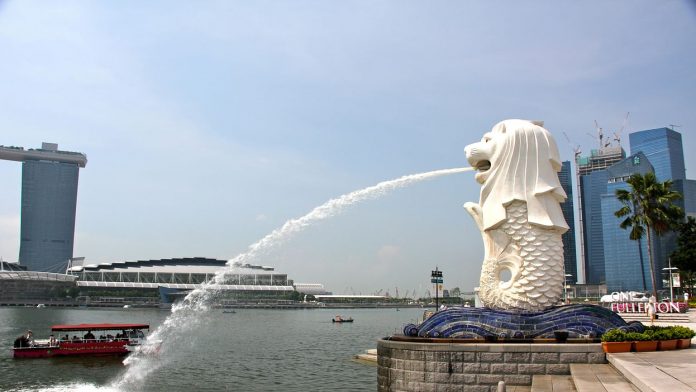
Download Now

The problem of issuance of fake degrees and its implications

0

This article is written by Gursimran Kaur Bakshi. This article deals with the menace of the issuance of fake degrees and certificates and their implications in the education system of a country. 

Introduction 

In recent years, the problem of the issuance of fake degrees and certificates have become a new trend. This is partly because the COVID-19 pandemic has forced the education system to go online. But the root cause here seems to be the lack of due diligence followed by the regulatory authorities to keep checks and balances over the credibility of the universities and schools. It is true that internet-based education might offer lesser accountability on the part of the various universities, but the issue of authenticity has been there even before the traditional way of teaching faced a paradigm shift. 

Problem of issuance of fake degrees and certificates 

The overall problem with the issuance of fake degrees is the lack of accountability and transparency in the overall education system. 

Lack of accountability 

Issuance of fake degrees and certificates is malpractice. Such malpractices can only be curbed through a systematic crackdown. However, there is an overall lack of accountability over the standardisation process of various universities. The universities involved in the fake degree scams below are those universities that have either received the status of deemed universities or are affiliated with some reputed universities. However, even after the so-called acceptance by the regulatory authority of education in India which is the University Grant Commission (UGC), such incidents have taken place. 

This year, UGC has declared 24 universities as fake after the same was reported in the media and students of these universities had filed complaints. Most of the fake universities were found in the state of Uttar Pradesh. The point here is, how did these institutions reach a stage to defraud the students? The answer to this is the ignorance of the UGC while granting it a status. 

Below are some of the universities that have defrauded the students despite the fact that their websites show that they have been granted accreditation from the UGC. 

  • Digvijay Prashar was arrested in a fake degree scam for charging Rs. 1, 50, 000 for preparing fake degrees in the name of the Rajasthan Vidyapeeth University in Udaipur. Digvijay owns a private medical institute named Aastha Paramedical Institute in Sangrur.  
  • The Vinayaka Mission University of Tamil Nadu has been in the news for some time over rampant corruption charges. The university has been accused of granting marks to the students randomly in the marksheet and not providing degrees for years. These are serious allegations that have not been resolved yet. Some of the allegations are mentioned on the Consumer Forum website. A Right to Information (RTI) application has also been filed against the university. But all that has gone in vain. 
  • The chairman of the Manav Bharti University, Raj Kumar Rana, was arrested for selling over 36,000 fake degrees at prices ranging from 100,000 to 300,000 rupees. His accomplice KK Singh, former registrar and current university registrar Anupama Thakur and assistant registrar Munish Goel have also been arrested in the case. 
  • G Srinivas Reddy, who runs VSS Institute of Educational Research and Charitable Trust in Mahalaxmipuram, was arrested in a fake marksheet scam for selling fake degrees of about 20 universities for 10-15 lacs. 
  • Former Delhi Law Minister Jitendra Tomar was arrested in 2015 for procuring a fake law degree. 

Lack of regulatory checks 

It is highly important that there is a common authority that is responsible for accrediting the educational institutes. However, the process of accreditation has also been compromised these days for not being transparent. There is a rapid expansion in the number of ‘deemed’ universities that pretend to be affiliated with known universities. Some of them are actually scams and they are typically known as self-styled universities. But the process to check that affiliation is usually not available. That is why in India, universities like Vinayaka Mission University are known as money minting factories. 

Increase of bureaucratic interferences 

Educational institutes are no more neutral these days. There is some kind of political affiliation linked to the working of these institutes. The educational institutes are either public or private. The former kind of institute is regulated by the government. While the latter can be regulated by the government depending on the factor of revenue that it may receive from the government. If a private institute receives funding or backing from a governmental authority, the nature of institutes becomes quasi-private. However, in both cases political interference is possible. This negatively impacts the working of the institute at the same time it is responsible for tarnishing the image of the institute. 

Rampant corruption 

The rampant corruption is the end result of all the issues such as lack of accountability, rampant corruption, and lack of due diligence tests to name a few. The rampant corruption is also a result of the failure of the public to do sufficient background research on the university. As mentioned above, there is an exponential growth in so-called deemed universities providing distance learning and other different types of programmes. Most students who get scammed are the ones who are pursuing distance learning courses but the accountability in these courses is limited from the side of the university. 

How to find out that your degree is fake

It is important that when a person receives a degree or certificate, they themselves should be responsible for the basic due diligence check. Here are some of the steps that a person can take to verify the authenticity of the degree and certificate. 

  • If a person is enrolling/enrolled in distance learning, they must do proper research to understand the status of the university. Universities can be deemed universities or affiliated to some universities. Check if they show accreditation from any standard authority. 
  • If there is a standard regulatory authority such as UGC in India, they have a published list of degrees that are recognised. This can be referred to understand whether the degree that a particular university is offering is acceptable or not. For the purpose of Indian universities, Section 22 of the UGC Act, 1956, can be referred to. 
  • In almost all cases, a special paper is used for the degree and certificates. It is unlike the normal A4 printing paper which has poor quality. This should be the first check when receiving a degree or certificate.
  • Because of the COVID-19 pandemic, many universities are issuing softcopy of the degree. But that does not mean that the university will not provide the hardcopy of the degree. A person should make sure to check with the concerned university over the issuance of a hardcopy. A university must not be reluctant to issue the same. 
  • Also, to be on the safer side, a person should request the concerned university to send an acknowledgement/confirmation on receiving the softcopy of the degree. This may be in the form of a receipt too. 
  • Every degree or certificate has an identity mark. It may be in the form of a stamp, signature, security hologram, or watermark. But there must be an identification mark that is used to verify the authenticity of the same. For instance, Allahabad University has started an initiative of ‘smart degrees’ which is embedded with loads of security features to deal with forgery. 
  • Since most of the universities are issuing softcopies these days, various educational institutes are using QR Codes as identity marks for credibility. A person can verify the authenticity of the degree by scanning the QR Code. The All India Institute of Medical Science, Delhi has recently added QR Codes in its degrees for easy authentication. Previously, The APJ Abdul Kalam Technical University, Lucknow, also added QR Codes to their awards.
  • There is a standard practice that may be followed by every institution such as the font style or the manner in which the certificates and degrees are designed. A person should thoroughly check certain things like the font used, the size of the font, the pattern in which the degree is designed, the spelling of names, and every other small detail. Degrees and certificates are often designed with a formal appearance so any kind of informal use of fonts or numerals can help a person to identify a fake degree. 
  • The language of the degree should also be thoroughly inspected.

Cases on the issuance of fake degrees 

  • Professor Yashpal v. State of Chhattisgarh (2005) is a landmark judgment wherein the Supreme Court struck down Section 5 and 6 of the Chhattisgarh Niji Kshetra Vishwavidyalaya (Sthapana Aur Viniyaman) Adhiniyam, 2002 for being ultra vires and unconstitutional. This enactment was implemented by the government of Chhattisgarh to establish self-financed private universities for higher education. These Sections were held unconstitutional because the government was empowered to establish a university based on a mere proposal or scheme that will be notified in the Gazette. The government used the legislation to establish universities in the nature of body corporates without taking into consideration the basic necessities such as the availability of infrastructure, quality of teachers, and other financial resources. None of the universities established under the Act gave due regard to the regulatory standards of the UGC. 
  • In Radhey Shyam v. State of Haryana (2015), the petitioner obtained a lectureship by furnishing a false M.A degree in English from the Bundelkhand University in Jhansi. The allegations made against him were proved to be true and he was subsequently dismissed from his employment. However, since he never took benefits of his service, he was not awarded the punishment of compulsory retirement. This punishment was also not awarded because the petitioner may get certain retiral benefits that he does not deserve. 
  • In Mrs. Sandhya Bharadwaj v. Government of NCT Delhi (2017), the issue before the court was the validity of the B.ED degree of the applicant. The applicant was working with it for the last 17 years. Her education degree came under scrutiny when the UGC published a list of fake universities that have issued false B.ED degrees and certificates. The applicant along with the teachers in question was allowed to continue their services since, at the time when they had obtained the degree, they were under a bonafide belief that these were recognised universities. The petitioner, after being informed of the fake degree obtained a B.ED degree from another university, which is recognised by the UGC. Thus, since there is no concealment of facts and that the petitioner obtained a genuine degree, she was allowed to continue her services. 

How can such malpractices of issuance of fake degrees be reported 

File an FIR 

If a degree or certificate seems forged in accordance with the above checkpoints, a person can report the same to the police officer and lodge a First Information Report.

  • A person can write a complaint to the police officer in a police station nearest to the place where the university is located. 
  • The complaint should mention the details of the person such as name, identity and address. The details of the incident such as the name of the course the person has enrolled in, the receipt of the fees, and the fake degree/certificate.
  • The offences that the university/concerned person who has issued the fake degree should be liable for under the Indian Penal Code, 1860, are Cheating (Section 420), Section 467 (Forgery of valuable security, will, etc), and Section 468 (Forgery for purpose of cheating). This should ideally be the concern of the police officer. However, these charges are not exhausted. 

File an RTI 

  • Right to Information (RTI) is one of the methods through which information can be requested by a public authority or a quasi-public authority that is financed by the governmental authority as per the RTI Act, 2005.
  • An RTI application can be filed online through its website against the Department of Higher Education. A person will have to fill in his basic details like name, gender, address, and contact number along with the complaint. After filling in the details, the form should be submitted. 

Report to the regulatory authority 

To report such malpractices, there is no one way. In every country, there must be a common regulatory authority that should be responsible for maintaining the due diligence of the educational institutions. Here are some of the countries that have regulatory authority to ensure the credibility and accountability of educational institutions. You can either report directly to the concerned university that has issued the fake certificate or visit the regulatory authority of your country for a verification test. 

  • India: In India, UGC is a governmental authority that is responsible for maintaining the credibility of educational institutions. To check the credibility of an Indian university, the details of the university can be verified at the UGC website. Whereas, the authenticity of the degree can be verified at the National Academic Depository (NAD). The NAD is a digital depository of the government for academic degrees. Here is a list of fake universities published by UGC. In 2020, the Bar Council of India has launched a clean-up plan for verifying fake law degrees and certificates in the country. 
  • United States of America: The authenticity of degrees and diplomas can be checked at the Database of Accredited Postsecondary Institutions and Program and Council for Higher Education Accreditation
  • United Kingdom: If an individual has pursued an education at any level in the United Kingdom, the educational degree and certificates can be verified with the help of the information provided by the British government on its website or by the British Council’s verification services.
  • Australia: For overseas degrees, the Department of Education, Skills, and Development of the Australian Government has a list of organisations that assess the credibility of the degree. 
  • Canada: In Canada, the Council for Higher Education Accreditation can provide information on a particular institution. 

Other than these, there are universities that allow students to verify their degrees through their own websites. 

What are the implications of such malpractices 

The biggest concern with the issuance of fake degrees and certificates is that it jeopardises the quality of education. At the same time, it reflects the failure of the system to contain such malpractices. Since the education systems across the globe have almost gone online, there has been an increase in the number of institutions providing education at lower admission fees, or without a standard entrance examination. But there is not only an increase in the number of educational institutions. There is a proportional increase in the number of students taking admission in various institutions. Moreover, because of the limitations that the COVID-19 pandemic has entailed, there is a tremendous increase of students and professionals taking up online courses and diplomas. Thus, there is a chain reaction through which such drastic changes are taking place. 

Some of the major concerns are noted here:

  • Fake degrees and certificates result in bad quality of education. 
  • It ruins the reputation of the institute. 
  • If an education system is indulging in such malpractices, this may be a result of rampant corruption. 
  • Such malpractices severely impact the lives of students and even forces them to commit suicide. 

Conclusion 

The issuance of fake degrees and certificates is one of the biggest concerns in a given society because only through quality education can a society grow and flourish properly. This is not just a concern of a particular institute, it is a matter of concern for the whole system because, without the support or ignorance of the political system, such malpractices cannot take place. The need of an hour is to understand the root cause of the menace and install a fair and transparent method of securing an education. 

References 


Students of Lawsikho courses regularly produce writing assignments and work on practical exercises as a part of their coursework and develop themselves in real-life practical skills.

LawSikho has created a telegram group for exchanging legal knowledge, referrals, and various opportunities. You can click on this link and join:

https://t.me/joinchat/J_0YrBa4IBSHdpuTfQO_sA

Follow us on Instagram and subscribe to our YouTube channel for more amazing legal content.

Download Now

Allegation on public figures need to have due diligence before putting it on public platforms Delhi HC

0

This article has been written by Dharmender Pandey, pursuing the Certificate Course in Advanced Civil Litigation: Practice, Procedure and Drafting from LawSikho. This article has been edited by Prashant Baviskar (Associate, Lawsikho), and Ruchika Mohapatra (Associate, Lawsikho).  

Introduction

The article “Allegation on public figures needs to have due diligence before putting it on public platforms” is the need of the hour in the information age. In earlier times, any news took some time to spread among the general people, and the response time to tackle such things was comparatively more in those days. But in the present time, due to the large involvement of the general public on social media or any public platform and lack of strict rules and regulations related to do’s and don’ts or we can say the general awareness about it in the general public leads to such a situation that it is very easy for anyone to allege others. This situation is aggravated even more if that person is a public figure in any walk of life because their public following is much more than the average person. 

In this article, we will learn the basic rules that must be followed while using any public platform or any social media. We will also learn what due diligence must be followed while posting anything that is an allegation against a public figure on social media or any public platform. 

Due diligence and social media

Due diligence must be very strictly followed before alleging any public figure on any public platform because the consequences are more dangerous if that allegation gives rise to unintended consequences. Rules made by various authorities to control these nuisances are often met by some groups of people with the statement that the authorities are against their right to freedom of speech and expression as provided by Article 19 (1) (a) in the Indian Constitution. However, one needs to remember that the right to freedom of speech and expression is not absolute and it comes with some reasonable restrictions. Protection of the reputation of all its citizens is also the duty of the state and this reasonable restriction comes under that category. Any allegation made by someone against another person or organisation which is made without taking due diligence and which is not true is an open invitation to the liability under the laws of defamation in the purview of Tort law. 

Issues involved

This article focuses on the very burning issue of “What due diligence one should follow before alleging any Public figure” in the information age. Due diligence is the precautionary measure which one should take before any type of publication at any public platform or social media because whatever is published on the internet, its digital footprint is always available even if we delete it after publication. 

In earlier days, most of the people came to know about any news from the newspapers, magazines or televisions and it took more time than it does today for such news to travel. As we all know that nowadays almost everyone has access to the internet through their smartphones and various other gadgets, it is very easy for anyone to express their views about any event or react to others’ opinions on the internet through various types of public platforms. It has been observed that most of us write anything without understanding its impact on others’ images. Most of us forget that this opportunity also comes with a duty to follow some do’s and don’ts while being on any public platform. This duty also increases many folds when we make any allegation on a public figure due to his large public following and curiosity of the people knowing every minute details of their favourite personality. So it is most important that all the precautions that we all must follow while alleging or reacting to any public figure on any of the public platforms or social media are to be taken seriously and without fail. 

Precautions while alleging any public figure

Because it is very easy to allege anyone on social media, it does not mean that we have the freedom to allege someone before establishing the facts with the help of reliable sources and if no such sources exist, then at least confirm the case with the person we seek to allege. This duty of establishing the fact with reliable sources or checking it in person is most required in the case of alleging any public figure. Any untoward allegation may cast a deadly blow to the reputation of the public figure and even if the allegation which one made stands wrong later or is found to be not substantive, the damage to the reputation would have been done. The general public following of the public figure on these public platforms and social media is much more than any ordinary person. To avoid embarrassment later, we all must follow the following precautions while alleging any public figure:

  1. Always be aware of what you are writing or speaking.
  2. Always try to be crystal clear in meaning what you have to say and avoid any ambiguity.
  3. Always write what you can prove.
  4. Along with verified  factual allegations try to use verifiable opinions.
  5. Always make sure that the opinion must be based on facts.
  6. Always act ethically.
  7. Always be aware of the privilege of defence.
  8. Always take care of whom you are dealing with.

Consequences of alleging any public figure without due diligence

In this information age, while using various types of social media platforms we must be very cautious. We must be very cautious while commenting on any of the public figures at any public platform or public space. We must take all the precautions because in any case our allegations are not based on the facts and we are not able to prove what we have alleged them of, we might end up in troubled waters. The public figure/person whom we alleged can file a suit for defamation and can seek heavy compensation. The consequences of alleging any public figure without taking due diligence can lead to the following:

• Legal consequences,

• Financial consequences.

Legal consequences

If the person against whom the allegation has been made and thinks it hurts his image and reputation in the eye of other people in the society and the eyes of the general public, he has the option to go to the court and get the remedies available both in the civil and criminal proceeding because the defamation comes under civil as well as in criminal wrongs. 

In a very recent case in Mumbai, a lawyer, Mr. Dhrutiman Joshi, has filed a complaint before the Metropolitan Magistrate at Kurla to initiate defamation proceedings against Mr. Javed Akhtarfor ‘RSS-Taliban’ comment.

In one of the first cyber defamation cases, SMC Pneumatics (India) Pvt Ltd. v.  Jogesh Kwatra Delhi High Court granted ex-parte ad interim injunction restraining the defendant employee from defaming the petitioner physically and in cyberspace both.

In the case of Swami Ramdev & Anr v. Facebook Inc & Ors,  Justice Pratibha Singh had passed an order to remove all the defamatory contents posted against Yoga guru Swami Ramdev without any territorial jurisdiction. 

Financial consequences

The aggrieved person is entitled to the recovery of the financial losses and damages which are the result of the false allegations. As we are very well aware,  the public figure will claim a very huge amount for his losses because it is much more harmful to a man of his reputation to have his brand/image damaged as opposed to the same being done for a commoner.

In M/s Spentex Industries Ltd. & Anr. v. Pulak Chowdhary, the petitioner had filed a petition against the defendant who had sent defamatory emails to international finance corporation and others which caused loss of reputation and business in which she had prayed for compulsory and prohibitory injunctions with recoveries of Rupees 5,00,00,000 as damages. Delhi District Court decreed that the plaintiff be awarded 1/10th of the damages (Rupees 5,00,000) as well as the cost of the suit to be borne by the defendant. The court further restrained defendants from making false and defamatory statements whether written or oral.    

Conclusion

In the era of the information age, social media and public platforms are like “Double-edged swords.” The user of the so-called “Double-edged swords” must be very well acquainted with both of its sides before its use otherwise it has the potential to cause more harm than profits. The users of these platforms must know what are the do’s and don’ts of social media etiquettes before starting to use them, otherwise, they may commit some irreparable mistake. 

There is a very famous phrase that says that “With great power comes great responsibility”. In the same manner, social media and public platforms give us ample power to express our speech and expression but we must always keep in our minds that it also brings great responsibility to be more cautious while using such platforms. 

We must not allege anyone without due diligence and we must be more careful and follow strict due diligence when we are alleging any public figure because it will amount to the heavy cost and legal consequences if we are unable to prove the allegation if contested by the other party. The remedies are available in the form of do’s and don’ts. It only needs that all of the users of such platforms are aware of and strictly follow them to make these places more conducive for all.  

References

https://www.legalserviceindia.com/

https://www.mondaq.com/

https://ili.ac.in/pdf/paper10.pdf

https://lexlife.in/2020/05/03/defamation-law-in-india/

https://ssrana.in

https://blog.ipleaders.in/defamation-section-499-to-502-of-ipc/


Students of Lawsikho courses regularly produce writing assignments and work on practical exercises as a part of their coursework and develop themselves in real-life practical skills.

LawSikho has created a telegram group for exchanging legal knowledge, referrals, and various opportunities. You can click on this link and join:

https://t.me/joinchat/J_0YrBa4IBSHdpuTfQO_sA

Follow us on Instagram and subscribe to our YouTube channel for more amazing legal content.

Download Now

Drafting hypothecation deed between a borrower and SBI

0
Image source: https://rb.gy/sfzkbe

This article has been written by Vidhya Sumra, pursuing the Diploma in Advanced Contract Drafting, Negotiation and Dispute Resolution from LawSikho. This article has been edited by Ruchika Mohapatra (Associate, Lawsikho).

Introduction

We hear a lot of terms like hypothecation, mortgage, pledge, and so on when it comes to securities. Isn’t it a little disconcerting? Let’s look a little deeper to understand the hypothecation principle and essential clauses to draft the deed of hypothecation. 

When the assets are pledged or guaranteed as collateral to obtain a loan, it is known as hypothecation. The owner of the assets retains title, possession, and ownership rights, including money generated by the asset. If the terms of the agreement are not met then the lender has the right to seize the asset. In simple terms, a charge on the borrower’s moveable property is created in the favour of the creditor as a security to obtain financial assistance from the creditor. 

The term ‘Hypothecation’ is defined under Section 2 (n) of the Securitisation and Reconstruction of Financial Assets and Enforcement of Security Interest Act, 2002. Hypothecation means, a charge in or upon any movable property, existing or future, created by a borrower in favour of a secured creditor without delivery of possession of the movable property to such creditor, as a security for financial assistance and includes floating charge and crystallization of such charge into fixed charge on movable property.

For example, a rental property could be hypothecated as security for a bank-issued mortgage. The bank has no claim on rental income while the property is being held as collateral; but, if the landlord fails on the loan, the bank may seize the property. The most common kind of hypothecation is in mortgage loans. Although the borrower theoretically owns the home, however, once it is pledged as collateral, the lender has the right to seize it if the borrower fails to repay the loan amount. Hypothecation is not used with unsecured loans because there is no collateral to claim in the event of default. Hypothecation makes it easier to acquire a loan as the lender has security due to the collateral pledged by the borrower and the lender may be willing to provide a lower interest rate than on an unsecured loan.

Example of hypothecation

In the case of a vehicle or auto loan, the vehicle is in possession of the borrower, but it is hypothecated with the lender. If there is any default in repayment of the loan by the borrower, the lender takes possession of the vehicle after giving notice to the borrower and sells the same to recover the loan amount from the sale proceeds of the asset. Any remaining balance will be given to the borrower. Apart from automobiles, shares and receivables can also be hypothecated.

Pledge v. mortgage v. hypothecation

Even though pledge and hypothecation are both kinds of charges placed on movable goods, there are some distinctions between pledge, hypothecation, and mortgage. Let’s take a closer look at the distinctions to obtain a better understanding of these concepts.

Pledge v. hypothecation

In the event of a pledge, the asset is in the possession of the lender, and in the case of hypothecation, it remains with the borrower. The two common examples are the gold loan in the case of pledge and the auto loan in the case of hypothecation.  

Mortgage v. hypothecation

In both circumstances, the borrower retains possession. However, mortgages are often for immovable assets, whereas hypothecation is for movable assets. The home loan in the event of a mortgage and the vehicle loan in the case of hypothecation are two common instances.

BasisPledgeMortgageHypothecation
PossessionWith lenderWith borrowerWith borrower
For assetsAll assets generallyImmoveable assetsMoveable assets
ExampleGold loanHome loanAuto loan

Documentation

To capture the above hypothecation transactions, we execute the hypothecation deed. A hypothecation deed is a written document that is signed and typically sealed and contains a contract, legal transfer, or deal. In most cases, the act is one-sided. As a result, a hypothecation deed is a document that explains the hypothecation process.

Essential clauses in the hypothecation deed

Parties

There are usually two parties in the hypothecation deed. i.e. lender and the borrower. The lender is the person in whose favour the charge is created. Lenders are usually banks and financial institutions. For example, SBI Bank and Piramal Capital. The borrower is the person who borrows money and creates the charge in favour of the lender. 

Example

ABC Private Ltd., a company incorporated under Companies Act, 2013, bearing CIN # _______, having its registered office at [], by Mr.____________ authorised representative appointed vide Board Resolution dated _________, (hereinafter referred to as “
Borrower” which expression shall unless excluded by or repugnant to the context or meaning thereof, include their respective successors and assigns). 

AND

State Bank of India, a financial institution established under the __________, having its registered office at ___________, by Mr.________ authorised representative appointed vide Board Resolution dated ________, (hereinafter referred to as “Lender” which expression shall, unless excluded by or repugnant to the context or meaning thereof, include their respective successors and assigns).”

Grant of loan

This is an essential clause of the hypothecation deed. In this clause, details of the loans are provided like loan amount, term of the loan, rate of interest, repayment schedule are provided briefly. 

Example

“Grant of Loan 

  1. It is hereby agreed between the Borrower and the Lender that the loan is being granted to the Borrower by the Lender at the interest rate of 12% per annum (“Interest Rate”).
  2. The Borrower shall repay the complete loan amount with the Interest Rate to the Lender by ____________. 
  3. In the event that the Borrower fails to repay the loan amount by __________, the Lender shall have the complete right to sell the two loading vehicles (described in detail in the Schedule A of this Agreement). 
  4. The Lender shall serve 30 days’ notice to the Borrower to rectify his default failing which the Lender shall have complete right to sell the two loading vehicles.”

Hypothecation of assets

This clause is the operating clause of the agreement and it states the main function of the agreement i.e. hypothecation of the assets. Under this clause, we mention the details of the properties, which are hypothecated by the borrowers to the lenders. 

Example

“Hypothecation of Assets:

Pursuant to the Loan Agreement and in consideration of the Lender having lent and advance the Loan to the Borrower for the purposes and subject to terms and conditions set out in the Loan Agreement, it is agreed and declared that as security for the timely and satisfactory repayment and performance of the Secured Obligations, the two loading vehicles of the Borrower will stand hypothecated (“Hypothecated Properties”) to the Lender in the manner set out below.

The Lender undertakes not to release the charge over the Hypothecated Properties till the entire Secured Obligations are paid by the Borrower under the Loan Agreement.”

Covenants and undertaking

Covenants and undertakings are pledges or promises made by the borrower and sometimes other obligors to the lender or security providers to execute or to perform or not to perform specified activities mutually agreed between the parties. For eg. Covenant to repay the loan amount on time, charge the securities, owner of the assets, etc. 

Example

Covenant and Undertaking

The Borrower has made the representations and warranties in accordance with Clause 16 of the Loan Agreement, which is deemed to be incorporated herein by reference and made a part of this Deed as if such representations and warranties were set forth in full herein.

In addition, to supplement the representations and warranties made by the Borrower in Clause 0 above, the Borrower represents and warrants to the Lender that:

[List of covenants and undertakings to be added]

Title and ownership

This is also another essential clause of the hypothecation deed where we mention that the borrower who has pledged or hypothecated the assets to the lender to secure the loan is the owner of the hypothecated properties. 

Example

“Title and Ownership

It is agreed between the Parties that the Borrower shall remain as the sole owner of the Hypothecated Properties to the Lender. It is also agreed between the Parties that upon repayment of the Loan, the Borrower shall be freed and discharged from all liabilities and obligations of the Lender in respect of the Hypothecated Properties.”

Enforcement of securities

This is a very important clause from the lender’s side. In case of any event of default from the borrower, the lender will have the right to cease the hypothecated properties given as a security to the lender. The lender after giving written notice to the borrower can enforce all or any part of the security created under the hypothecation deed. 

Example

“Enforcement of Security: 

Upon the occurrence of an Event of Default, the Lender may after giving a written notice to the Borrower in the manner contemplated in the Loan Agreement, enforce all or any part of the Security Interest created hereunder and may, inter alia: 

  • Use the Hypothecated Properties to make payment towards the Outstanding Amounts;
  • bring, take, arrange, defend, settle, compromise, submit to arbitration and discontinue any actions, suits or proceedings whatsoever whether civil or criminal in relation to the Hypothecated Properties ;
  • manage and use any or all of the Hypothecated Properties and exercise and do (or permit any nominee of it to exercise and do) all such rights and things as the Lender would be capable of exercising or doing if it were the absolute beneficial owner of the Hypothecated Properties;
  • instruct any insurance company to make payments of any insurance proceeds to the Lender; 
  • take all such other action expressly or impliedly permitted under this Deed or as an attorney of the Borrower or under Applicable Law.”

In hypothecation deed, other clauses like dispute resolution clause, obligations of the parties, representations and warranties of the parties, amendment, relationship of the parties, assignments and miscellaneous which are standard clauses that are imperative to all kinds of agreement irrespective of their purpose.

Conclusion

Hypothecation is a method by which a borrower can raise funds by hypothecating the security (movable) as collateral while still being able to use it because the borrower retains possession. This type of loan is issued by a bank or financer at a cheaper rate than an unsecured loan since it gives the lender a sense of security. 

The lender has a risk since the borrower may sell the hypothecated asset without the lender’s knowledge; however, periodic checks and appropriate clauses in this deed can safeguard both the borrower and the lender to a significant extent.

References


Students of Lawsikho courses regularly produce writing assignments and work on practical exercises as a part of their coursework and develop themselves in real-life practical skills.

LawSikho has created a telegram group for exchanging legal knowledge, referrals, and various opportunities. You can click on this link and join:

https://t.me/joinchat/J_0YrBa4IBSHdpuTfQO_sA

Follow us on Instagram and subscribe to our YouTube channel for more amazing legal content.

Download Now

The Lanham Act and how it can be used to protect trademarks from being exploited outside of the United States

0

This article has been written by Praveer Shukla pursuing the Diploma in Intellectual Property, Media and Entertainment Laws from LawSikho. This article has been edited by Ruchika Mohapatra (Associate, Lawsikho). 

Introduction

A Trademark is a symbol, word, phrase, logo, or another mark that identifies the source of a good or a service which distinguishes it from competitors. It is a phrase, symbol, or word which is easily recognizable and also denotes a specific product. A trademark legally differentiates any goods or services and also recognizes the source company’s ownership of the brand. The trademark is denoted by the symbol “TM”. Once a trademark gets registered, it needs to be renewed at a time period of every 10 years. Among all the other Intellectual Properties’ (IP’s), i.e. designs, trademarks, patents, etc; only trademark can be applied for even by an unregistered firm. In India, once a trademark gets registered, and if it is not used for a continuous period of five (5) years and three (3) months, it will be liable to cancellation. However, in the United States (U.S.), when there is non-use of a trademark for a continuous period of three (3) years, it is liable for cancellation.

Why does a trademark need protection?

Protection of trademarks is important. It is necessary to get a trademark registered so that a registered trademark can stand out separately from all other non-registered trademarks. When a trademark is not registered, it is known as an unregistered trademark.

An unregistered trademark does not possess any legal benefits; except some common law benefits. There is no action for infringement of an unregistered trademark, but it can be protected by the common law of tort of passing off. The most common difference between infringement of a registered trademark and an unregistered trademark is that the former is a statutory remedy while the latter is a common law remedy. Unregistered trademarks get protection when it is proved that the goods and services of the unregistered trademark have a significant position in the market and are well known to the public. A trademark is an essential component of a brand that encompasses brand identity, reputation, and uniqueness. Getting a trademark registered provides for a clear path for the expansion of business in other markets, both domestic and international. A trademark is registered to protect it from any kind of infringement and counterfeiting.

The Lanham Act

The Lanham Act (also known as the Trademark Act) of 1946 is a federal statute governing service mark, trademarks, and unfair competition. This Act was passed by the Congress and signed by President Harry Truman on July 5, 1946, while the act took effect from July 2, 1947.

Since its enactment, the Lanham Act has been amended several times. However, the impact of the Act was significantly enhanced by the Trademark Counterfeiting Act of 1984. The Trademark Counterfeiting Act of 1984 made the international use of counterfeit trademark an offense under Title 18 of the United States Code. It also enhanced enforcement remedies through the use of ex parte seizures. The Lanham Act not only provides for the registration of a trademark but also provides a way for the companies to watch for any modifications which can be made to their trademarks. The name “Lanham” came from a Texas Congress Representative, Fritz G. Lanham who focused much of his time and energy in securing federal laws that recognized trademarks.

Importance of Lanham Act

There was no formal system in the United States to protect the trademarks of the business or individuals, before the Lanham Act. Companies were easily able to copy their competitor’s trademarks, which was becoming confusing on the part of the consumers. This was the main reason for creating the Lanham Act. There are several legal resources in case of violation of the Act.

While taking legal action against a violator in this Act, few important points have to be proved by the trademark holder:-

  • That the other person or the company’s use of the mark will likely cause confusion among the consumers; and
  • That the holder of the mark holds ownership in the mark;
  • That trademark owner has suffered from commercial loss due to infringement.

While considering if a case violates the Lanham Act, few factors are to be kept in mind. Some of the factors are:-

  • How well the holder of the mark uses the mark publically;
  • Whether the mark is deceptively/ phonetically similar;
  • How much of the business activity is conducted using the mark;
  • How much the marketing of products or services is done using the mark;
  • How likely is it to create any confusion among the consumers due to the non-distinctiveness of the marks.

False advertising under Lanham Act

The Lanham Act protects the companies from misleading claims and false advertising. One such Supreme Court case of false advertising is that of POM Wonderful LLC v. Coca-Cola. In this case, a suit was filed against the soft drink giant Coca-Cola by POM Wonderful LLC (a company that grows and distributes pomegranates and juices). POM Wonderful LLC alleged that Coca-Cola was marketing a pomegranate-blueberry juice drink that actually contained apple and grape juice. This resulted in the loss of sales of Coca-Cola’s juice drinks due to false advertising. However, the Supreme Court reversed the original decision given in the State Court. This case helped to reaffirm the need to improve the clarity in food labels. The case took almost 8 years which caused loss of money and time to both the companies.

Extraterritorial protection

The jurisdiction of the United States Federal Courts is limited. But still, the Federal Courts allow jurisdiction of extraterritorial disputes when a United States trademark or copyright is exploited outside the U.S.

In 1952, the United States Supreme Court applied the Lanham Act extraterritorially. As per the Supreme Court, the Lanham Act confers jurisdiction over extraterritorial disputes which involves trademark infringement and unfair competition in following circumstances:-

  1. The Defendant is a corporation of the United States.
  2. The foreign activity has a substantial effect in the United States.
  3. The exercising of jurisdiction would not interfere with the sovereignty of another nation.

The Lanham Act violation can be established for either a registered trademark or an unregistered trademark. In order to do so, the Plaintiff must prove that:-

  1. It has a valid and a legally protectable mark;
  2. It has the ownership of the mark;
  3. The Defendant’s use of the mark would likely cause confusion.

Foreign defendant

When the Defendant Company is not an American company and has registered the mark in foreign country, the analysis is different. The Lanham Act applies to a foreign company even though the manufacturing, advertising and selling of the trademarked product occurs outside the United States.

The United States Court of Appeals for the Eleventh Circuit (or simply, the Eleventh Circuit) has found that the Lanham Act extraterritorially applies where few components of the alleged infringement take place within the United States. The Lanham Act also allows a court to exercise jurisdiction over a foreign company in case a foreign company uses an agent within the United States to conduct business with consumers within United States.

Recent example

Recently, the Lanham Act was used by the Federal Courts in resolving a dispute between Trader Joe’s, a United States grocer, and Pirate Joe’s, a Canadian Company. [Trader Joe’s Co. v. Hallat, 835 F.3d 960 (9th Cir. 2016)].

In the above-mentioned case, a Canadian citizen who owned a business in Canada as Pirate Joe’s, travelled to Trade Joe’s in Washington State and bought large quantities of Trader Joe’s products and sold them at inflated prices in the Pirate Joe’s in Canada.

In the Trade Joe’s case a test was applied by the Federal Courts. The test minimized the substantial effect requirement and put emphasis on the potential harm to the American company. The test that was applied was as follows:-

  1. The alleged violation has created some effect on American foreign commerce.
  2. The effect is substantially great to present a cognizable injury to Plaintiffs under the Lanham Act.
  3. The interests and links to American foreign commerce are sufficiently strong in relation to those of other nations to justify an assertion of extraterritorial authority.

In Trader Joe’s case, there was hardly any damage alleged by Trader Joe’s, but the Court was influenced that United States commerce was exposed. Trader Joe’s case is a good example of how the United States Courts are more likely to apply the Lanham Act to any extraterritorial act that has even a slightest of effect on United States Commerce.

Comparative analysis of the Indian and US Trademark

In India the trademarks are governed under the Trademarks Act, 1999 while the Lanham Act, 1946 governs the trademarks in the United States. Both these legislations have the same goal (to protect the trademarks), yet there are certain conceptual and procedural differences in the legislations of both the countries. These differences are as follows:-

  • First to use basis

Trademarks in India are based on the “first to use” system. In this system, the trademarks which are used first in the business are assigned the trademark rights and are given priority in their territory of use.

In the United States, the “first to use system” is existent, but still priority is given to the Applicants for being first to file for registration of their marks with the U.S. Patent and Trademark Office (USPTO).

  • Registration

In India, trademark rights can be acquired through registration. Trademark registration can be obtained for marks which are not in use on a “proposed to be used” basis.

The same does not go for the United States. In the U.S., registration can be obtained for the marks only which are used for interstate commerce or in trade between a foreign country and the United States.

  • Use

Indian courts have given a broader meaning to the term ‘use’. The ‘use’ of a trademark may be “non-physical”, but it must be “material”, i.e. meaningful.

In the United States, the ‘use’ of trademarks must be “genuine” and not a mere token use.

  • Opposition

In India, opposition against a trademark can be filed within four (4) months from the date on which the mark is advertised in the Trademark Journal.

In the United States, the time limit for opposition is 30 days from the date on which the mark is published in the Gazette. This time limit can be increased to a maximum limit of 180 days.

  • Remedies for Infringement

Under the Lanham Act, the remedies available for trademark infringement constitute monetary relief only. There is no provision for criminal remedies in case of trademark infringement.

In India, unlike the U.S., criminal remedies for trademark infringement are also available. The trademark infringer can be punishable with imprisonment or with a fine or with both. The imprisonment is for a term which shall not be less than 6 months but which may extend to a maximum of three (3) years. The fine shall not be less than 50,000 and may extend to maximum of 2 lakhs.

Conclusion

The Lanham Act is extremely useful for the companies which are trying to protect their trademark from infringement occurring outside of the United States. For the application of Lanham Act to extraterritorial disputes, there needs to be some effect on American commerce and a sufficient chance that the infringement will result in a cognizable injury to the owner of the mark. There is a high likelihood that the Lanham Act will be implicated, if there is some kind of United States involvement. The implication of the Lanham Act could result from something as simple as shipping of products through the United States, or exporting of products from the United States, or from having a United States company selling infringing products overseas.


Students of Lawsikho courses regularly produce writing assignments and work on practical exercises as a part of their coursework and develop themselves in real-life practical skills.

LawSikho has created a telegram group for exchanging legal knowledge, referrals, and various opportunities. You can click on this link and join:https://t.me/joinchat/J_0YrBa4IBSHdpuTfQO_sA

Follow us on Instagram and subscribe to our YouTube channel for more amazing legal content.

Download Now
logo
FREE & ONLINE 3-Day Bootcamp (LIVE only) on

How Can Experienced Professionals Become Independent Directors

calender
28th, 29th Mar, 2026, 2 - 5pm (IST) &
30th Mar, 2026, 7 - 10pm (IST).
Bootcamp starting in
Days
HRS
MIN
SEC
Abhyuday AgarwalCOO & CO-Founder, LawSikho

Register now

Abhyuday AgarwalCOO & CO-Founder, LawSikho