This article is written by Gitika Wadhwani, from Jagran Lakecity University, Bhopal. It is an exhaustive article on the Indian judiciary, the present composition of the Supreme Court and improper representation of states in the Supreme Court, and the need for proper representation of states.
Table of Contents
Indian judicial system
India has the oldest judiciary in the world. In ancient India there were administrative units at different distances in villages, there were courts that consisted of three judges who were called Dharmashastra and three ministers called amatya. There was a hierarchy of courts beginning from the family court headed by a family arbitrator, the higher court of the judge, the next was chief justice and the highest was the king’s court. Indian judiciary follows a common law system inherited from the British era where all the laws are codified. The judiciary functions independently from the legislature and executive and the rule of law and principles of natural justice are applied by the judiciary in the administration of justice.
Supreme Court
The Supreme Court came into power on 28th January 1950. It is the Apex body and highest court of appeal in India. It is the protector of the Constitution of India. It consists of a Chief Justice of India and thirty-three other judges.
Appointment of judges
The Supreme Court judges are appointed by the President and hold office till the age of sixty-five years. A person can be appointed as a supreme judge only if he is a citizen of India and:
Has been a judge of the high court for at least five years; or
Has been an advocate of the high court for at least ten years;
Is a distinguished jurist in the opinion of the President.
Resignation and removal of judges
A judge may resign his office by writing to the President.
A judge can be removed by the President on the ground of proven misbehaviour or incapacity.
Under original jurisdiction, the Supreme Court can exercise its power in disputes between centre and state or states, centre and state on one side and one or more states on the other side, between two or more states.
Appellate Jurisdiction
The Supreme Court can exercise its appellate jurisdiction in both civil and criminal cases on the decree or order passed by the high court. It also has discretionary powers to grant special leave to appeal from order or decree of any court to tribunal in India.
Advisory Jurisdiction
If the President finds that any question of fact or law has arisen which is of public importance it can obtain the opinion of the Supreme Court.
High courts
High courts are the apex courts in the hierarchy of state judiciary. High courts have jurisdiction over a state, a union territory or two or more states, or union territories. Currently, there are 25 high courts in India. High courts are constitutional bodies established under Article 214 of the constitution. High courts consist of a chief justice and such a number of judges as President may deem necessary to appoint.
Appointment of judges
High court judges are appointed by the President and hold office till the age of sixty-two years. A person can be eligible for being the high court judge only if he is a citizen of India and:
Has held a judicial office for at least ten years in the territory of India, or
Has been an advocate of the high court for at least ten years.
Resignation and removal of judges
A judge may resign his office by writing to the President.
A judge can be removed by the President on the ground of proven misbehaviour or incapacity.
The office of a judge shall be vacated if he is appointed as a judge of the Supreme Court or is transferred to any other high court in the territory of India by the President.
Jurisdiction of High Courts
The high court has the power to issue certain writs to authorities or persons under its jurisdiction. It may issue any of the following writs:
Habeas corpus
It is a Latin word that means “you have the body”. This writ can be issued against unlawful detention of the prisoner by the state authorities.
Mandamus
It is a Latin word that means “we command ”, this writ can be issued by a superior court to any subordinate court or public authority to do or abstain from doing an act which they are obliged to do or not to do under the law.
Quo warranto
Quo warranto is a writ to determine the legal right of a person to hold an office. If an authority exercises its powers beyond its jurisdiction it can be questioned through the writ of Quo warranto.
Certiorari
It is issued by a superior court to a subordinate court challenging the decision of the subordinate court on grounds of error, excess of jurisdiction, or violation of principles of natural justice.
Prohibition
This writ is issued by the superior court to subordinate courts restraining them to decide the case which is not in their jurisdiction.
Lower Courts
Below high courts, there are subordinate courts, at the district level for civil cases, criminal cases, and family cases. They are mainly classified into two types: civil courts and criminal courts.
District court or sessions court
It is the principal court of original jurisdiction. It is headed by a district or sessions judge. From here the appeal can lie to high courts and the Supreme Court.
Appointment of judges
The district judges are appointed by the Governor of the state in consultation with the chief justice of the high court of the respective state.
For direct appointment to the district court without serving union or state, a minimum of seven years of practice as an advocate or as a pleader is required.
Removal of judges
A district judge can be removed from his office by the governor after confirming with the high court collegium.
Jurisdiction of court
The district court or sessions court has both original and appellate jurisdiction in civil and criminal cases arising in the district.
How are Supreme Court judges appointed
The Supreme Court judges are appointed by the President under Article 124 of the Constitution.
Initially, the Supreme Court judges were appointed by the President after consultation with such judges of the Supreme Court or of high courts of states as the President may deem necessary.
Until 1993 the President only required consultation of judges including CJI but was not bound to follow their decision, which means the President had the final say in the appointment.
In the second judges’ case, this was changed and it was stated that consultation should be read as concurrence. The CJI should have primacy when it comes to judicial appointments. The appointments were made after consulting the CJI and the next two senior-most judges of the Supreme Court.
Role of the union government
The union government plays an important role during the procedure followed in the appointment of judges of the Supreme Court.
Whenever any vacancy arises or is likely to arise in the office of a judge of the Supreme Court, the CJI initiates the proposal and forwards his recommendation to the Union Minister of Law, Justice, and company affairs to fill the vacancy.
The CJI should form his opinion for the appointment of a judge of the Supreme Court in consultation with a collegium that comprises four senior-most judges of the Supreme Court.
The CJI would ascertain the views of the senior-most judge who hails from the same high court from where the person recommended belongs. If he does not know his merits then the next senior-most judge who hails from a similar high court is consulted.
The judges who have on transfer have occupied the office of judge of that high court can also be consulted.
The opinion of collegium and opinion of the senior-most judge in Supreme Court from the high court from where the prospective candidates comes would be made in writing and the CJI must transmit his and the opinion of all to the government of India as a part of the record.
After receiving the final recommendations of CJI, the recommendations are put before the prime minister by the Union minister of law, justice, and company affairs. The Prime Minister advises the President on matters of appointment.
As soon as the appointment is approved, the secretary of the government of India informs CJI and obtains a certificate of physical fitness from the person selected, signed by a civil surgeon or a district medical officer.
As soon as the President signs the warrant of appointment, the secretary of the government of India announces the appointment and issues the necessary notification in the Gazette of India.
The present composition of the Supreme Court
At the commencement of the Constitution, the Supreme Court consisted of the Chief Justice of India and seven judges.
In 1956 the parliament increased the number of judges to 11.
Further amendments were made in 1960 it became 14, in 1978 it was 18, 1986 it was 26, 2009 it was 31 judges.
Reason for improper representation of states in the Supreme Court
Various states are not adequately represented in the Supreme Court. Some states have disproportionate representation when compared to the sanctioned strength of the high court. Some reasons why these states are not adequately represented are:
The selection of judges is made based on merit.
At times, Subject matter expertise is considered to choose a person as a judge.
Religion, culture, and caste are made a criterion in some cases.
The size of states gives more privilege to politically significant states.
Sometimes, the personal biases of existing judges do influence the selection of judges from a particular state.
The need for adequate representation of states in the Supreme Court
Every state must get adequate representation in the Supreme Court. The Supreme Court is the highest court of appeal and final authority to decide the case, it is important that the judges present there should have vast experience, education, culture and lifestyle. There would be an absence of any prejudices if every state had representatives in the Supreme Court. The diversity of the bench enables them to decide different issues effectively because every judge is having different experience and perception which shapes their opinion and experience plays an important role in the decisions taken by judges.
India is a democratic country, where people have the right to be heard and the judiciary is a part of such a democracy. Equality is necessary for the successful functioning of the country. Merit cannot be the sole criteria to choose an individual. With merit, diversity is also essential to represent different thoughts, experiences and to be unbiased and free from favouritism. Thus, to maintain this neutrality in decisions, faith and confidence in the judiciary it is crucial that the states have a proper representation in the Supreme Court.
Conclusion
India is a democratic country with a vast population and diversity. It has an independent judiciary with district courts at a lower level, high courts at the state level and Supreme Court at the central level. The Supreme Court is the highest court of appeal which can hear civil and criminal matters, it can issue writs in case of violation of fundamental rights of people and grant special leave petition. It has original, appellate and advisory jurisdiction. The Supreme Court being the apex court in the country receives cases from different parts of the country, therefore it must be represented by various states adequately. The diversity of judges from different states ensures effective decision-making because of diverse experiences, opinions, culture and absence of biases. To ensure neutrality and maintain confidence and trust in the judiciary it is crucial to have an adequate representation of states in the Supreme Court.
This article is written by Appurva Chhangani, from Jitendra Chauhan College of Law, Mumbai. It talks about the applicability and relevance of section 313 of The Code of Criminal procedure, 1971.
Table of Contents
Introduction
We all know that Section 313 of the Code of Criminal Procedure, 1973 talks about the power of the court to examine the accused. The idea behind giving the accused a fair chance to defend the incriminating circumstances appearing against him in the evidence of the prosecution originates from the theory of natural justice and its different principles. These principles of natural justice are the rules which have been laid down by courts as being the minimum protection of the rights of an individual against the arbitrary procedure. But at the same time, keeping in mind that these principles and theories don’t completely nullify or guard the wrongdoer of adequate and required punishment is vital. Here, the author will be discussing the case of Sumeti Vij Vs. Paramount Tech Fab Industries, 2021 as well, and the same will be analysed accordingly.
What does Section 313 impart
Section 313 of the Code of Criminal Procedure, 1973 is an indispensable Section which talks about the power of the court to examine the accused. “It recounts the significance of natural justice which cannot be neglected at any cost”, says the Supreme Court of India in the case of Canara bank V. V K Awasthy (2005). Here the court has the power to examine the accused in every enquiry or trial. As per Section 2(g) of the Cr.P.C.:- “enquiry means any enquiry other than a trial conducted under this Code by a Magistrate or Court” The trial of the accused commences after framing of charges.
The focal purpose of the aforementioned Section is to provide the accused with a fair chance to elucidate the incriminating situations or statements that are there in the evidence which may further lead to a conviction. It also honours the requirements enshrined in the principle of Audi Alteram Partem (listening to the other side).
Essentials of Section 313:
There is no compulsion on the part of the court to previously inform the accused about the questions They will be asked to expound the events that are appearing in the evidence, says subsection (1).
The questions should strictly be related to the case going on.
In a summons case, the court shall exempt the accused from his examination under clause (b), just like it exempts him with personal attendance.
Clause (b) also talks about the fact that no oath needs to be administered to the accused when he is examined under subsection (1).
Here, even though the accused refuses or gives false answers to the questions, he will not be considered liable for any kind of punishment in doing so.
While the trial or inquiry is going on, the court here may decide to consider the accused’s statements and use it as evidence for or against the accused even in any other trial or offence that he might have committed and the same is evident from his statements as well.
Facts of the case
In this case the appellant/accused, Sumeti Vij had approached the respondent M/S Paramount Tech Fab Industries at Moginand, as she wanted to buy nonwoven fabric from their factory. Complying with the demand, the respondents delivered it.
For the payment of the fabric received, Sumeti Vij issued two cheques No.323930 dated 15th October 2010 and No.323935 dated 01st November 2010 from her account of Punjab National Bank, Karnal, in the name of the respondents, but unfortunately, due to insufficient funds, the cheques were returned.
Following this, the respondent issued two separate legal notices and the same were sent to the appellant at two different addresses. The appellant neither responded to either of them nor did she make any payments for the aforementioned delivery.
The appellant was then summoned before the Trial Court for the offence punishable under Section 138 of the Negotiable Instruments Act, 1881. Here, though the appellant failed to provide any evidence to support her statements, she subsequently recorded her statements under section 313 of CrPC and pleaded not guilty.
The complainant provided the Court with certain documentary evidence and three witnesses, but putting it all aside, the Trial Court Judge emphasized the fact that the complainant somehow failed to prove that those cheques were actually issued for the goods that were delivered to the appellant. Hence, considering it not appropriate to shift
the burden of proof onto the appellant, the trial court sent back the findings of the complainant which then became the issue at hand for an appeal at the High Court.
On re-examination of evidence by the High Court, it was asserted that the onus to rebut the presumption lies on the appellant as is required under Section 139 of the Act. Since there was no actual evidence to prove the contrary except for a mere statement made by the appellant under Section 313 of CrPC in the instant case, the High Court set aside the Trial Court’s verdict, following which, it awarded the appellant with punishment/fine which is the subject matter of the appeal in front of us right now.
Issues involved
Here, in the appeal before the Supreme Court, the appellant’s learned counsel complained that the respondent was unable to substantiate that the material demanded was ever dispatched and/or even collected by the appellant.
Further, it was claimed by the appellant that there was an absence of a reason adequate enough to believe that the issued cheques were actually for the appellant to dispose of any kind of debt.
Learned counsel on behalf of the appellant also claimed that since it was the respondent’s duty to prove their innocence, they were lagging in yet another way.
Another thing brought into the light was for what purpose were the cheques issued in the first place, and also to invalidate the fact that the said cheques were not a form of the consideration provided to recompense for the delivery of the goods. Therefore, the impugned judgement by the High court needs to be revoked.
Contrary to which, the learned counsel from the respondent’s side claimed that the High Court in no sense has challenged the legal principles or the sections of the Act and that there was enough corroboration available to prove the other party’s guilt.
It was further claimed by the appellant that by giving a verdict in favour of the respondents, the High Court instead vitiated some of the very well-established legal principles that are there in Section 118(a), 138 and 139 of the NI Act.
Court’s observation
The Apex Court here observed that the appellant had only recorded the statement under section 313 of CrPC and that it was not adequate to disprove the presumption that is there in the Negotiable Instruments Act and a mere explanation of an incriminating statement which is bereft of any sorts of proper evidence is not sufficient enough to defend his own testimony.
Further, it was observed by the bench of the Supreme Court comprising Justices Indu Malhotra and Ajay Rastogi that since there was an issuance of cheques, it was the appellant’s duty to prove as to why they were issued in the first place. Also, the Court claimed that the issuance of those cheques to dispose of the debt was enough evidence that the requested goods were delivered properly.
Impact of the Judgement
Intentions of the Apex Court were lucid enough while giving the judgment. The Supreme Court concluded that indeed, the verdict of the High Court was not erroneous at all in declaring the appellant guilty under Section 138 of the Act and so the same should not be hindered. Besides, the filed appeals are insubstantial anyway hence ousted.
Subsequently, the appellant was ordered to either recompense the person or serve the sentence in accordance with the judgment dated 30th April 2019 passed by the High Court of Himachal Pradesh.
Analysis
In this case, the burden of proof for rebutting the presumption that is there in the Act which talks about “preponderance of presumption”, was on the accused. The same presumption was examined in the case of Rangappa vs. Sri Mohan (2010). This is because cases like these are quasi-criminal in nature and hence the usual nature of criminal cases where the principle of ‘proving the guilt of the accused beyond a reasonable doubt’ is not applied. Here the case relied upon the preponderance of the presumption principle. The Court said that getting the statements recorded under section 313 of CrPC is not much of substantive evidence but a mere facility provided to the accused person to let him elucidate his side of the story without taking him under any form of an oath.
Even the earlier judgment where the supplier complainant failed prima facie to prove that there was a debt which could be legally enforced or any other form of liability subsisting on the date of withdrawal of the checks as was contemplated under Section 138 of the Act, did not help the appellant in the instant case which is why the accused was ordered to either pay off the debt or serve the sentence in compliance with the judgment dated 30th April 2019 passed by the High Court of Himachal Pradesh.
Conclusion
In conclusion to the article, the author feels it is safe to say that though Section 313 of the Code of Criminal Procedure exists to give the accused a chance to defend any incriminating statements that are in the evidence which might put the accused’s life in jeopardy. However, it is essential to know that other factors should be taken into consideration as well. Law itself has a lot of loopholes and relying completely on it without contemplating and implementing other possible theories and scenarios might result in conflicts and hinder speedy delivery of justice. It should be noted that principles of natural justice do not supersede but supplement the law of the land. Therefore, all statutory provisions must be correctly read, interpreted and applied to be in tune with the principles of natural justice.
Students of Lawsikho courses regularly produce writing assignments and work on practical exercises as a part of their coursework and develop themselves in real-life practical skills.
LawSikho has created a telegram group for exchanging legal knowledge, referrals, and various opportunities. You can click on this link and join:
The social security system of India comprises several schemes, laws, and regulations that are spread throughout India and grant government funds, pensions, and gratuity to employers. The Employees Compensation Act 1923 and the Employees State Insurance Act 1948 is also regarded as such type of laws which provides social-security to employees and thus introduced the “Doctrine of Notional Extension.”Under this legislation, it becomes the legal responsibility of an employer to provide damages to their employees, their family members in situations where injuries are inflicted during working hours at the workplace. Understanding whether an employee is entitled to compensation in scenarios where the accident.
Employees Compensation Act, 1923 and Employees State Insurance Act 1948 are Acts that came into existence to curb social security problems prevailing in the industrial system of our country in order to benefit the labourers. The doctrine of notional extension is one such theory that prescribes the compensation that is to be paid to the employees in case of an accident during the course of employment, but the real motive of adopting this provide theory was to include within its ambit, the injury and danger caused due to the employment but not necessarily at the workplace, during working hours or while coming to and from the place of employment.
Section 3(1) of Workmen’s Compensation Act, 1923- “injury should be caused to workmen by any accident which arises out of and in the course of employment.” The “course of employment” also continues after the employee left his actual place of work as the Doctrine of Notional Extension also includes entry and exit time and space. In S.A.I.L., Rourkela Plant v. Kanchanbala, Mohanty, an employee, had an accident while going to his house which resulted in his death due to construction work in the route. The actual residence was very far away from the area where the accident took place and the court observed that – “Doctrine of the notional extension will apply when a person going to or coming from his residence to the place of work. In this case, the employee adopted a route which was not normal and thus was not compensated.”
Section 2(8) of the Employees State Insurance Act “a personal injury to an employee caused by accident or an occupational disease arising out of and in the course of his employment, being an insurable employment, whether the accident occurs or the occupational disease is contracted within or outside the territorial limits of India.”
Employees in the course of employment who suffered any occupational disease will also be compensated. Whenever an employee is injured by any accident he is supposed to give a notice in writing and this has to be soon after the practicable occurrence of the incident which will include the name and address of the employee who is injured, date of the accident, and the cause of injury. There is also a medical examination offered by the employer to the employee who is injured and has given notice of such an accident to the employer. “Theory of added peril is contrary to the Doctrine of notional extension because added peril gives benefit to the employer but notional extension provides benefit to the employee. “This theory provides essential advantages to the workers who work in any organisation.
Critical analysis with case laws
For compensation to be paid by the employer to the employee there are three essential tests.
1. Occurrence of an accident.
2. Accidents should be “arising out of” and during the “course of employment.”
In Indian News Chronicle v. Mrs Lazarus, an employee died because of pneumonia as during the course of his employment he had to frequently go to the heating room from a cooling point. The court held that the injury was caused by an accident in the instant case and it is not considered to be a physical injury as the injury was because he was moving for work purposes.
3. The accident should result in such disability which is temporary or permanent, partial or total or death.
The burden of proof lies on the claimant to prove that the accident “arose out of and in the course of employment. ”Arising out of employment does not refer to personal injury but inflicted due to employment. Employee supposed to show that the injury was during the employer’s business and he was doing nothing for his own benefit.
There is an exception to this theory that whenever an accident occurs in a public area and risks suffered by workmen is not because of his employment but because he was a public member then the employer will not be liable to pay compensation only if it can be shown that the employee acted on the direction of the employer.
There is an issue in the application of ratio judgment to cases under above mentioned three tests, the difference should be considered between “judgment in rem and personam.” This doctrine has given liberal rule of interpretation as employer liable to pay compensation even in cases he was not directly at fault. There is no specification as to what are the ‘necessary precautions,’ what acts to be performed by the employee or employer, compensation which is to be paid in several different circumstances, or about the gravity of an accident that occurred. The ‘compensation’ is expressly defined under Employees Compensation Act but it is not expressly stated under the Employees State Insurance Act.
Critical analysis of case laws
The judiciary expanded the scope of this doctrine and laid down several interpretations in this regard, specifically they laid down “liberal interpretation” for the term “in course of employment.”
State of Rajasthan v. Ram prasad and another
In this case, the employee was dead due to a thunderstorm at the employment site. The Hon’ble SC held that it is essential to have “casual connection” between incidents that happened and employ activities only in such a situation the employee would be entitled to compensation. The employer will also be subjected to liability in the cases of natural calamities if it was caused due to the employment activity in such case the employer Smt. Geeta had to compensate the family of the dead employee and further, it was stated that the employer was present on the site where this thunder happened because of his employment activity.
Analysis
The interpretation of the term in the course of employment is very liberally interpreted as in the case of “natural calamity” the employer was subjected to compensate employees. Calamities are the act of god and happening or non-happening is not in the hands of a person if this employee was not present in the employment area or because of his employment purpose still would have been subjected to death because of this lightning as it was a natural calamity and it can happen at any place at any time which is not in the hands of a human being. Calamity would have resulted in the death of the employer also and before assigning work to the employee as it cannot be predicted by an employer that such natural calamity could happen in that employment area or during working hours. Thus, doctrine should be interpreted in such a manner that may not harm the employer providing the compensation.
Savitri Devi v. Bharti filling station and another
In this case, the claimant’s son was working as a driver with the defendant (tanker’s owner) and had died while he was on his duty. The claim for compensation was denied by the defendant on the ground that there was no such connection between the death and the work of the deceased. Later, the Commissioner dismissed this petition filed for the purpose of compensation. Further, the High Court held that the commissioner wrongfully concluded that there was no connection between work and death of the deceased as the very fact that the deceased was working as a driver and that too of an oil tanker his job was full of stress and strain.
Analysis
If the deceased was not present at the time of his employment hours in the oil tanker for the employment purpose it would not have resulted in his death as he would not have sustained such stress and strain during his employment hours therefore such compensation is the liability of the employer which is to be paid to the family of the deceased.
Trustees Tort of Bombay v. Yamunabai
There was a bomb placed in the workshop premises which later exploded and resulted in injury to employees. Further, the court held that – “employee was not responsible for placing any such bomb but the injury was caused due to explosion which was during the time and place at which he was employed therefore such injury was the result of an accident which arrived out of his employment and employee received compensation.”
Analysis
The rule also prescribes that – “If any particular accident would not have happened to an employee had he not been employed to work in the particular place and condition it would be an accident arising out of the employment.”
Similarly, in case of the crash landing of a plane at the factory during the course of employment of such employees. They will be not answerable for aircraft crashes, and they were exposed to this risk because they were in the place of the accident because of their employment. In such cases, the compensation will be paid by the employer to the employee as he was exposed to the danger because of their employment.
Works Manager Carriage and Wagon Shop, E.I.R v. Mahabir
There was an employee named Mahabir who lived in Malhaur and traveled from Malhaur to Lucknow station in an employee’s special train. Travel from Lucknow station to Alambagh workshop was 1 mile away from the railway station and was regarded as the shortest route possible, one day after finishing his duty at 5:30 a.m he was just a short distance from the station platform and unfortunately he was run over by shunting engine at 6:30 a.m. His legs were crushed and it was held that “accidents arose out of and in the course of employment”. The interpretation was laid down of the words ‘work’ or ‘duty’ as according to the meaning prescribed in Section 3(1) of the Employees Compensation Act.
Analysis
The expression “in the course of employment” not refers only to the actual work that any employee is performing but also within a course of service the works assigned to him, place of work, employment hours. From this, we may refer to “environmental accidents” that are accidents that result from the area where the employee is working and from the area he reached to his place of actual work for performing his obligations towards his employer will also fall within the expression “arising out of and in the course of employment.”There is an exception that whenever accidents occur in any public place which is not for employment purposes, the employer will not be liable to pay compensation, but in this case, the employee was in that location because of his purpose of employment there he was subjected to be paid compensation.
“Workmen Compensation Act 1923 and Employee State Insurance Act.” Whereas, the US follows the “Premises rule” which says that injury caused to the employee must be within the employment period and its location should be reasonable for the employee for the purpose of fulfilling his duties. It does not mean that the employee will actually be doing his job rather than it would be in the working hours when the injury occurs is compensable.
Conclusions
The theory of notional extension is considered a “friendly concept” for employees as it provides them compensation benefits during their employment period and also gives them financial assistance when they suffered loss because of the death of any bread earner of the family. In these cases, liberal interpretation is made by the court to provide aid to the employees. However, in several cases, the claims have not reached the court and employers have received benefits in this regard. Applicable only to limited sections of the society, such as those working in factories, mines, industries considering their social and economic conditions with a notion to provide justice to the weaker sections of the society.
This theory also includes the penalties provided, or the review of the injury which is caused to the employees, the medical examination to be done after the practical injury occurred, and also cases of delay in payment of compensation. Thus, this theory is complete in itself and is also providing justice to the depriving sections of the society
Students of Lawsikho courses regularly produce writing assignments and work on practical exercises as a part of their coursework and develop themselves in real-life practical skills.
LawSikho has created a telegram group for exchanging legal knowledge, referrals, and various opportunities. You can click on this link and join:
This article has been written by Ashutosh Singh, a student of BA.LLB (Hons), at Amity Law School, Amity University Kolkata. The article is a comparative study of the US and UK copyright and trademark laws concerning the award of damages for infringement and other violations.
Table of Contents
Introductions
Copyright laws protect unauthorized use or theft of intellectual property of creators. However, the United States Copyright Office states that ‘international copyright’ does not exist and an author’s work does not automatically get protected throughout the world. The national laws of a country have rules that will protect against unauthorized use in a particular country. But some countries are signatory to copyright treaties or conventions and they provide some international protections conditionally. Many countries have integrated these international laws into their national law.
Let us now look at and compare the copyright and trademark laws in the two countries US and UK respectively concerning damages as remedies to infringement.
The United States(US) copyright protection
In the United States, the copyright law is represented in federal laws enacted by Congress. The Copyright Act of 1976 (amended), is codified in Title 17 of the US Code and is the current copyright law in the United States. The US law states that a copyright is established when the author creates work for the first time. This work must be original and it may be fixed in any tangible medium of expression by its creator.
This effectively means that the work may be seen or communicated either directly or by some form such as a device. However, the copyright protection extends to the specific form in which the intellectual property exists as different versions, and it may have separate or different copyright protection.
Copyrightability
Every time a work is created like a story, poem, paper, drawing, or any other work, the creator of the work will automatically own the copyright of the said work. Copyright is that form of protection given to a creator or author of original work of authorship which includes dramatic, literary, artistic, musical, and other intellectual works. The copyright law grants the copyright holder the control of certain uses of their work that have been protected by copyright law. The copyright law also grants users the right to make certain usage of their work without permission. For a work to be eligible for copyright protection, a work must be:
Original: The work must be created independently to get qualified as original and must have a certain degree of creativity.
A work of authorship: The works of authorship include literary works, musical works, pictorial and graphic works, sculptures, sound recordings, audio-visual works, and many other types of creative work.
Fixed: Under the authorization of an author, a work can be fixed in a tangible medium of expression. If a work is written on a computer hard drive or on paper or recorded on a tape or sculpted work out of marble, all the conditions mentioned would satisfy the requirement. An unrecorded improvisation of work like in dance or music would not satisfy the requirement.
Works protected by copyright
In the US and generally, worldwide, copyright protects original works of authors that are fixed in a tangible form of expression. This work must be original and it may be fixed in any tangible medium of expression by its creator. Copyrightable works fall into the following categories:
Literary work which also includes computer software
Dramatic work which also includes any accompanying music
Musical work which also includes any accompanying words or lyrics
Graphic, pictorial, and sculptural work
Pantomimes and any choreographic work and pantomimes
Audio-visual work and motion picture
Sound recordings
Architectural works
Works not protected by copyright
US copyright does not protect:
Any idea
Procedure
Process system
Method of operation (such as making things, business procedures, or operations)
Scientific or technical approaches
Mathematical principles, algorithms, and formulas
Other concepts, principles, or discovery
It also does not protect works prepared by an officer or employee of the US Government as part of that person’s official duties (federal statutes and judicial decisions, speeches, press releases, and reports)
The US Copyright Laws do not safeguard the ideas but the expression of ideas is protected under it as ideas are works that do not exist in tangible form. It is illegal for anyone to do any of the things listed above with a work created by the original author without their permission, but there are some exceptions and limitations to the rights of a copyright holder. One major limitation is the doctrine of ‘Fair Use’.
Castle Rock Entertainment v. Carol Pub. Group, Inc.,(1998)
This case raises interesting issues of copyright law in the US that are:
If ‘The Seinfeld Aptitude Test’, (a trivia quiz book) is used to test the knowledge of its readers about some scenes and events from the fictional television series ‘Seinfeld’, does it lift sufficient protected material from the original to cause copyright violation? The issue arises because of a great similarity of the book to the television series, such that, without any defences, the book would infringe the copyright in Seinfeld.
Does ‘The Seinfeld Aptitude Test (also referred to as the SAT) form a fair use of the Seinfeld television series?
The District Court, in this case, held that a book of trivia questions about the Seinfeld TV series was not fair use. This despite the book being transformative but the TV series was a work of fiction and hence conferred special status under copyright law. The book had important elements of the TV program and gained a market for a derivative work that the copyright holder was entitled to control and had not given permission for.
Monster Communications, Inc. v. Turner Broadcasting System, Inc, (1996)
In the movie biography of Muhammad Ali, the makers used 41 seconds of a video of a boxing match in their biography. The important factor to be considered here is that a small portion of the film was taken but the purpose was informational. Muhammad Ali was a public figure and much revered by his fans the world over and hence the biography on Muhammad Ali was the subject of public interest. In this case, the US District Court, S.D. New York said that the use of up to 14 film clips of historical footage, each between 41 seconds and less than two minutes long in the TV biography amounted to fair use.
Copyright infringement and its remedies in the US
Some of the provisions regarding copyright infringement and its remedies are given in the following sections of the Copyright Act of 1976.
Section 501: It has provision for infringement of copyright where it defines infringer of copyright.
Section 502: Remedies for infringement: It has provision for ordering injunctions by any court having jurisdiction of a civil action granting temporary or final injunction to prevent or restrain infringement of copyright.
Section 503: Remedies for infringement: This provision gives the court powers to impound allegedly infringing articles during the time an action is pending, and to order the destruction or other disposition of articles found to be infringing.
Section 504: This section has provisions for different remedies available such as damages and profits in case of infringement of copyright.
Section 505: It has remedies for infringement such as costs and attorney’s fees.
Infringement
An infringer is any person who violates the copyright owner’s exclusive rights as given under Section 501 of the United States Copyright Act. One has to prove copyright infringement, by showing the following:
That the alleged infringer copied from the original author’s work, either by actually copying the original work or by having the original’s work in mind when the defendant composed his work.
If the taken/lifted work has too many elements copied by the defendant and it amounts to too much in terms of quantity and significance such that the audiences for the two works see a lot of similarities between the defendant’s work and the protected elements in the original author’s work.
Fourth Estate Public Benefit Corp. v. Wall-Street.com, (2019)
However, Title 17, United States Code, Section 411(a) states that the work has to be registered with the U.S. Copyright Office for a civil action or a lawsuit to be enforced for a copyright claim. In 2019, the U.S. Supreme Court in the case Fourth Estate Public Benefit Corp. v. Wall-Street.com, 2019,ruled unanimously that a copyright infringement suit cannot take place till the copyright is registered successfully by the United States Copyright Office. Also, Section 411(a) mandates that a lawsuit cannot be initiated merely on the copyright office receiving the application, but the application has to be processed as well.
Damages
Apart from injunctions, a copyright holder can also seek monetary damages. One can have both injunctions and damages, or only damages, or only injunctions. Section 504 has provisions for remedies for infringement that is damages and profits. It provides the copyright owner a choice of recovering damages by way of:
Their actual damages
Any additional profits of the defendant
Statutory damages
Actual damages
Actual damages are the losses that the original copyright owner suffers as a result of the infringement such as sales that are lost, profits that are lost, licensing revenue, or any other evident monetary loss as a result of the infringement. An estimate of losses incurred due to the infringement is simply not enough. They should be calculated based on measurable numbers. Sometimes expert witness testimony becomes necessary to ascertain the measure of damages and explain that the damages were caused by the infringement.
Additional profits of the defendant
Sometimes, the profits earned by the infringer from the copyrighted material may exceed those earned by the owner. In such situations, the copyright owner is entitled to recover the infringer’s profits if he/she can establish a connection between the profits and the infringing use.
Statutory damages
Statutory damages are unique to US copyright law. In other countries, the claims for damages in civil actions are usually limited to the copyright owner’s actual damages and sometimes the infringer’s profits. A minimum and maximum amount for the actual damages are prescribed by some foreign laws and some also provide for punitive damages, the amounts of which depend on the defendant’s intent to infringe. Statutory damages are provided alternatively to actual damages and profits. However, the plaintiff is eligible to seek statutory damages if the copyright was registered either:
Within three months of publication, or
Before the infringement.
The statutory damage amounts, as the name suggests, have fixed limits and they are outlined in the Copyright Act and may be awarded by a judge or jury. These are a more popular choice given the difficulties that can arise in proving actual damages and infringer’s profits. The court can award statutory damages within the range of $750 to $30,000, but this can be lowered if the infringement is believed to be unintended, or increased appreciably if the infringement is proved to be willful. There are, however, situations where statutory damages are not available as given in Section 412 of the US Copyright Act, 1976. They are:
They are not available for unpublished work and if the infringement began before the effective date of its registration.
They are not available when although the work is published, the infringement occurred after the first publication and before the actual date of its registration. Also, the registration should have been done within three months after the first publication.
Lowry’s Reports, Inc. v. Legg Mason Inc, (2003)
Damages in copyright cases can be very high. As became evident from the case in Lowry’s Reports, Inc. v. Legg Mason Inc., (2003), a lawsuit was filed by a stock analysis newsletter’s publisher against a company that bought one copy of the newsletter and made several copies for use internally. The jury awarded actual damages for some newsletters and statutory damages for the other newsletters amounting to a whopping sum totaling $20 million.
Gamma Audio & Video, Inc. v. Ean-Chea, (1993)
The First Circuit, in this case, verbalized the Independent Economic Value Test. The exclusive licensee of videotape recordings of television programs ‘Jade Fox’ filed suit for copyright infringement against a video rental store operator to pay the plaintiff an amount of $2,500 in statutory damages for one work that the operator had infringed copyrights for the original recordings of the television programs for which the plaintiff licensee had exclusive rights to distribute. Because the plaintiff licensee had exclusive rights the Court said that the plaintiff was entitled to recover statutory damages from the defendant-store operator. But the Court of appeals subsequently reversed the District Court’s finding as to the number of works infringed.
The District Court, in this case, found that the defendant store operator had infringed one work although it comprised of four episodes of the television program, ‘Jade Fox’ to calculate on two facts:
The Plaintiff licensee sold/rented only complete sets of ‘Jade Fox’ to the defendant store holder and so accordingly the court inferred that the plaintiff regarded ‘Jade Fox’ episodes as one work for economic purposes notwithstanding the rental by customers of only a few episodes at a time.
Also, the copyrights for the four episodes of ‘Jade Fox’ in question were registered with the Copyright Office that considered these four episodes to be one.
The First Circuit could not find any supporting authority for the district court’s conclusion that registering multiple works with the Copyright Office on a single form equates to registering a single work for purposes of awarding statutory damages. The language of the Copyright Office’s regulations concerning a copyright holder did not mention that a copyright holder may forfeit the option of recovering statutory damages for infringement, if it registers multiple works on a single form as a single work for registration. The First Circuit, however, counted each episode of ‘Jade Fox’ as a single/separate copyrighted work and said that the defendant had infringed four works and not merely one.
Playboy Enterprises, Inc. v. Sanfilippo, (1998)
Playboy Enterprises, Inc. operated a website through which they provided and sold access to thousands of unauthorized copies of the plaintiff’s photographs which were copyrighted. The defendant party in their defence said that they were liable for infringing only one copyrighted work because the images which were copyrighted appeared as a collection in only one of the plaintiff’s copyrighted magazines. The court rejected this argument of the defence, finding the defendants guilty of 7,475 incidents of copyright infringement, and the plaintiff recovered statutory damages for $500 for each infringed work totaling about $3,737,500.
Cost and Attorney’s fees
Section 505 of the Copyright Act, 1976 permits courts to have the discretion to award costs against either party and to award practical attorney fees to the party that is prevailing. The court may or may not award reasonable attorney’s fees to the prevailing party. This is equally applicable to a winning plaintiff/copyright owner and a winning defendant/accused infringer. However, attorney’s fees are not awarded against the government. Like statutory damages, it is mandatory that the work infringed is registered at the time of infringement to be eligible for the award of attorney’s fees, except for infringement of a published work registered within 3 months of its first publication.
Fogerty v. Fantasy, (1994)
The Copyright Act of 1976, 17 U.S.C. Section 505 has provisions for the award of a reasonable amount of cost and attorney fees to either party. However, the question that arose in this case was about the standards that should inform a court’s decision to award attorney’s fees in a copyright infringement suit to a prevailing defendant. Despite Forgery’s effective defence justification of a copyright infringement action filed against him by Fantasy, Inc., the District Court refuted his motion for attorney’s fees.
However, the Supreme Court adjudged that the Court of Appeals had erroneously held the prevailing defendant to a more stringent standard than that applied to a prevailing plaintiff. On this acceptance, the SC reversed and remanded the Court of Appeals decision.
The US Trademark protection
In the United States, trademarks unlike copyrights are not automatic and generally have protection in the country, if registered in the US. Trademark rights in most countries are gained by registration in that country and this is known as ‘First to File’. However, in the US, as in the UK, whoever first uses it in commerce gets the ownership of the trademark, and this system is known as the ‘First to Use’.
Therefore, if a dispute arises between the author and another party over a trademark, then whoever used it first commercially will own the right, even if it was not registered. Registering a trademark provides many benefits, including:
Publicly declaring ownership of the trademark.
Helping the author register his trademark in other countries.
Helping the author to bring legal action to the Federal courts and prevent infringing material from being imported.
Allowing the author to use the registered trademark symbol (®) with the authors’ trademark.
Trademark law has governed the use of a device through a manufacturer or merchant to identify the goods and distinguish them from those goods that are sold by another company. In the United States, certain common law trademark rights are simply from the use of a mark. So, to obtain the protection of a mark, it is feasible to register the mark with the federal government or state government. A mark that is registered with the federal government should be marked with the ® symbol. Unregistered trademarks should be marked with a ‘™’.
Trademark infringement
A mark is infringed under U.S. trademark law when another person uses a mark to confuse as to the source or sponsorship of the goods or services involved. Multiple parties can use the same mark only where the goods of the parties are not so similar to cause confusion among consumers. When the mark is protected only under the common-law trademark rights, those same marks are used where there is no geographic overlap in the use of such marks. Federally registered marks have a nationwide geographic scope which means that they are protected throughout the United States.
One can also say that trademark infringement is the unauthorized use of a trademark/service mark concerning goods and/or services in a manner that is likely to cause confusion, cheating, or mistake about the source of the goods or services. A trademark owner who believes a mark is being infringed may file a civil action in either state court or federal court for trademark infringement, depending on the circumstances. In most cases, the trademark owners prefer to sue for infringement in a federal court. Although the plaintiff chooses the state court, the defendant may have the case removed to federal court. If the trademark owner can prove infringement, then the available remedies to him/her may include the following:
A court order (injunction) that the defendant should stop using the accused mark.
An order is required for the destruction or forfeiture of infringing articles.
Monetary relief given which includes the defendant’s profits, any damages incurred by the plaintiff, and the costs of the action.
An order that the defendant, in certain cases, pays the plaintiffs’ attorneys’ fees.
Damages as trademark infringement remedy
A trademark owner may recover the following categories of monetary damages under the Lanham Act, 1946:
Disgorgement of the defendant’s profits
Actual damages
Reasonable royalty
Attorneys’ fees, costs, and exceptional cases
The Lanham Act (also known as the Trademark Act of 1946) has language and text that are not very clear about the monetary damages available and provide little guidance on the subject. However, it grants a wide choice to the courts to decide an appropriate remedy. Generally speaking, trademark infringement lawsuits mostly result in injunctive relief to stop the infringement rather than an award of monetary damages to stop the infringement. The Lanham Act is compensatory, rather than punitive. Section 1117(a) says clearly that there is no automatic entitlement to an award of monetary damages in a trademark infringement suit given to the principal plaintiff. To be eligible for such an award, proof has to be given of actual confusion or unjust enrichment.
Disgorgement of Profits as Alternative to Infringement Damages
Disgorgement of the infringer’s profits is one of the potential measures of damages under the Lanham Act. This is achieved through:
Disgorgement of unjustly obtained profits.
Using the infringer’s profits as a measure of the plaintiff’s loss (proxy theory).
Spin Master Ltd. v. Zobmondo Entertainment, LLC (2011)
The Proxy theory of profits is based on the idea that had it not been for the infringement the diverted sales from it would have gone to the plaintiff. This theory aims to compensate the plaintiff for sales that he has lost as a result of his customers being diverted to the infringer. The plaintiff and the infringer must be direct competitors for the plaintiff to recover infringement damages under this theory. To prove willful infringement is not a prerequisite for a plaintiff seeking the defendant’s profits as a measure of his damages, under this theory. In this case, the California federal jury held the defendant (Zobmondo Entertainment LLC)liable and an infringer of the trademark with its “Would you rather…?” series of books, board games, and other products. The federal jury awarded Spin Master Ltd. with an amount of $8.6 million in compensatory and punitive damages.
Actual damages
The plaintiff under Section 1117(a), can recover both the defendant’s profits, owing to infringement and also the plaintiff’s actual damages but this provision requires proof of the genuine confusion that caused an economic loss. The proof of confusion is often presented through evidence of diverted sales or consumer survey evidence and also the economic loss is often demonstrated through lost profits. Loss of goodwill is ascertained by comparing the value of goodwill before and after the infringement. A trademark owner can prove this customer confusion by showing evidence of diversion of sales or presenting survey results that determine actual customer confusion with the mark’s true owner. The federal court has also got the discretion to award actual damages in the form of a trademark licensing fee that the defendant should have paid to the plaintiff rather than infringing the plaintiff’s mark. Depending upon the circumstances of an individual case, courts may award enhanced damages up to treble the number of actual damages as proved by the plaintiff.
Riddell, Inc. v. Schutt Sports (2010)
In December 2008, Riddell filed a lawsuit against Schutt within the Western District of Wisconsin. In Riddell, Inc. v. Schutt Sports Inc., (2010), the manufacturer claimed infringement of its jaw flap patents, false advertising under Section 43(a) of the federal Lanham Act, Section 1125(a), trade libel, and products denigration. In response to this, Schutt brought counterclaims for false advertising under the Lanham Act, and deceptive trade practices under the Wisconsin Trade Practices Act, 2017 The District Court, however, addressed the patent infringement claim in a separate opinion. This case focuses on the Court’s decision as to the claims of false advertising and deceptive trade practices, for which the District Court finally ruled in favour of Riddell, saying that there was no evidence found or proved that Schutt suffered any injury from those advertisements.
The amount that a reasonable licensee would be willing to pay
The profitability of infringing use
The lack of feasible substitutes to calculating damages
The expert opinion
Attorneys’ fees, costs, and exceptional cases
The Lanham Act also permits a prevailing party to recover his/her attorneys’ fees in select cases. Section 1117(a), does not define these select/exceptional cases. The courts have instead held that a prevailing plaintiff may recover attorneys’ fees when it is proved that the infringement is fraudulent, deliberate, willful, and malicious. Even the prevailing defendants are allowed to recover attorneys’ fees in instances where the plaintiff’s conduct lacks merit or he/she shows elements of an abuse of process, or knowingly increases the costs of defending the lawsuit. In such cases, the courts typically limit the recovery of any costs to those that are filing fees, witness fees, court reporting fees, but not attorneys’ fees.
Romag Fasteners, Inc. v. Fossil Group, Inc.(2020)
The U.S. Supreme Court rules on damages for trademark infringement in the case, Romag Fasteners, Inc. v. Fossil Group, (2020), and it has become easier for the plaintiff to collect monetary damages. The SC, in this case, held that since the federal trademark statute did not particularly list willfulness as a required condition for money damages, courts cannot impose this as a condition for obtaining such damages.
There are important takeaways from the Court’s decision:
The Court did not go to the full length on this to state that monetary damages will be applicable each time, explaining that the defendant’s mental state is a very important factor in determining whether an award of profits is suitable here.
Before this judgement, the businesses accused of infringement could simply discontinue the use of a trademark if they encountered an infringement challenge from a brand owner.
However, businesses adopting a new trademark will now face the concern that they could be subject to money damages if they encounter an infringement challenge from a brand owner.
Proper trademark searching and clearance can help minimize the risk of facing such a challenge.
The United Kingdom (UK) copyright protection
According to the copyright law of the UK, a work is considered original if the creator uses labour, skill, and judgement, to create it. Copyright generally lasts for the lifetime of the author plus 70 years. After that, the work is in the public domain and it may be re-used for free without the need to get permission from the copyright owner. So, to get the benefit from the copyrighted work, the work should be the author’s own, the author should have used his labour, judgement, skill, and effort to make sure that the work created is original. It must be in a relevant medium and be in a fixed form.
Copyright law in the United Kingdom originated from the concept of common law, the Statute of Anne, 1709. After the passing of the Copyright Act of 1911, it became statutory. The current act is the Copyright, Designs and Patents Act of 1988. The law gives creators of dramatic, musical, literary, sound recordings, artistic works, films, broadcasting, typographical arrangement of the published editions, and the right to control how their material should be used.
In the UK, copyright arises automatically when a work is fixed. There is no registration procedure. For copyright protection to be given to a work, it must be original and not copied from someone else’s work. Copyright is a commodity that can’t be sold, licensed, or left to the will of the author. The legal framework has been laid out in the Copyright, Designs and Patents Act, 1988.
Duration of copyright
They are as follows:
Written, dramatic, musical, and artistic work: 70 years after the authors’ death.
Sound and music recording: It lasts for 70 years from when it was first published.
Films: It lasts for 70 years after the death of the composer, screenplay author, and director.
Broadcasts: It lasts for 50 years from when it was first broadcasted.
A layout of published editions of the written, musical, or dramatic works: It lasts for 25 years from when it was first published.
Infringement of UK copyright
Copyright is infringed by:
Making copies of the work.
Making available copies of the work to the general public.
Renting/lending the copyrighted work to the general public.
Performing, showing, or playing the copyrighted work in public without permission from the owner.
Communicating the work to the general public.
Adapting the work in some form or doing any of the above to an adaptation.
Authorizing any of the above acts mentioned in any manner to the copyrighted work.
Based on the above infringing acts, civil and criminal liability may be imposed on those who knowingly deal with infringing copies of a copyrighted work in the course of trade.
Exceptions to infringement
There are a lot of exceptions given under the UK copyright, in the form of the permitted acts. These exceptions allow limited use of copyright works for a specific purpose without the permission of the copyright owner.
Fair dealing
Fair dealing is mentioned in Sections 29 and 30 of the Copyright, Designs, and Patents Act 1988. A statutory definition of fair dealing does not exist but the Act outlines three instances where fair dealing is a legitimate defence. They are as follows:
If the use is concerning research or private study.
If the use is concerning criticism, review, or quotation.
Where its use is concerning reporting current events.
Fair dealing is always a matter of fact, degree, and interpretation in every fair use case. There is no percentage or quantitative measure to justify fair dealing in a case. The Intellectual Property Office lists the following key criteria used to determine if a work is fair:
The first issue is if the use of the copied work impacted negatively on the market for the original work so that the creator of the original work lost potential revenue through the reuse of their work? If yes, then this is not considered fair use.
The second issue is if it was justified and necessary to use the amount of work that was taken?
Hyde Park Residence v. Yelland, (2000)
Fair dealing can be used as a defence only when a claimant has established that copyright has been infringed and the onus to prove falls on the defendant that one of the exceptions applies. For this, it has to be established that the infringement falls within one of the three categories, which are liberally interpreted by the courts. The court doesn’t consider what good the infringer thought his work was for. As in this case, the court did not think it necessary to put itself in the shoes of the infringer of the copyright. This is to ensure that future infringers don’t think that fair dealing as an exception is easy.
It covers all types of copyright work. The main restriction of this version is that, if the said format is already available, then the author should take the copy.
Parody, caricature and pastiche
This is an exception to the copyright which permits people to use a limited amount of copyright material without the owner’s permission for parody, caricature, or pastiche. For example, a comedian may use a few lines from a song or film for a parody sketch, a cartoonist might use a well-known artwork or illustration for a caricature, and an artist might use small pieces from a range of films to compose a large pastiche artwork. This exception only permits the use of parody, pastiche, or caricature to the extent that it is fair dealing.
Remedies available against infringement
Copyright infringement remedies include:
Injunctions: To get an injunction, the person bringing the claim can apply for an interim injunction. This will prohibit the alleged copyright infringer from any further copyright infringement pending the trial of the case. However, to obtain an interim injunction, the claimant must satisfy the court that there is a grave issue to be tried, and that damages would be an insufficient remedy.
Damages: In a copyright violation case, the claimant usually seeks damages from the defendant, usually in addition to an injunction. The courts in the UK are currently applying the ‘user principle’ in assessing claims of damages.
Delivery up: The defendant will be ordered to return the infringing material to the claimant, and usually the destruction of the infringing material will be ordered.
Seizure: Where infringing material is sold/rented out, the copyright owner has the right to seize the infringing material or authorize another person to seize it on their behalf. However, some restrictions and conditions must be complied with, including giving notice to the police.
Forfeiture: Before ordering forfeiture of the infringing material the court must be satisfied that an offence has been committed and once an order is given the material must be destroyed in compliance with the order.
Prevention of importation: On suspicion that infringing copies may be imported into the UK a copyright owner of published literary, dramatic, or musical work can give written notice to the Commissioners for HM Revenue and Customs that they are the rightful copyright owner. After that, they need to put in a request that the prohibited goods be treated as printed copies of the work for a period specified in that notice which cannot exceed 5 years.
Undertaking to take licence: A defendant can take a licence permitting them to reproduce the work. In that case, an injunction or order for delivery up cannot be made.
Damages in case of infringement
Where the infringement of copyright takes place, the Act gives the copyright owner the choice of seeking either an account of profits or damages. However, there is a fundamental distinction between these styles of monetary relief. An account of profits is awarded on the basis of the infringer’s gains which he/she got from the infringing copies, whereas damages target compensating the aggrieved party for its loss. The aim of awarding damages is to compensate the copyright owner for the violation of his/her rights. Hence, the award of a monetary sum is intended to put him/her back, as much as is possible in the position he/she would have been in if there had been no infringement. In a copyright infringement case, the claimant generally claims damages from the defendant, along with an injunction. Currently, the courts have been applying the ‘user principle’ in assessing the damages done. The damages are calculated based on the amount a licensee would pay a licensor in a hypothetical negotiation over the alleged copyright in question. An alternative way to assess damages is by considering the economic factors such as:
Any depreciation to the copyright as a consequence of the infringement.
Any loss of sale by the claimant that has resulted in infringement.
Any damage is done to the claimant’s trade that has resulted from infringement.
The kind of royalty the claimant should have received.
The amount the defendant would have paid for a licence to reproduce the claimant’s work.
The flagrancy of copyright infringement.
The method that results in a higher figure is likely to be awarded in damages. The claimant could choose to receive profits made by the defendant because of the copyright infringement, instead of the damages.
Absolute Lofts v. Artisan Home Improvements (2015)
A recent decision in the UK Intellectual Property in the case of Absolute lofts South West London v Artisan home improvements (2015) sheds some light on the application of the ‘user principle’ and the interplay between damages for flagrant infringement under Section 97(2) of the Copyright Designs and Patents Act 1988 (CDPA) and damages under Article 13 of the IP Enforcement Directive (Directive 2004/48). In this case both the parties were engaged in a roof conversion, although geographically they were not competitors. The Artisan had admitted to using 21 photographs of the loft conversions which were carried out by Absolute Lofts on their website. The photographs were owned by Absolute and they had a copyright on them. The Intellectual Property Enterprise Court held that there had been a flagrant breach of copyright in this case. Significantly, it was ruled that copyright owners could choose on recovery based on whichever option has a more favourable financial outcome for them.
The Copyright Act 1988, provides for the following heads of damage that are:
Compensatory damages,
Additional, exemplary, or aggravated damages in cases of flagrant infringement.
Conversion damages
These damages are not applicable to cases after the amended law. It was a part of the available remedies in the Copyright Act 1968.
Compensatory Damages
Section 97(2) of the Copyright Act 1988, has a provision for awarding compensatory damages to the copyright owner for the loss experienced by the copyright infringement.
Sutherland Publishing Co Ltd v. Caxton Publishing (1936)
It was explained in this case that the compensatory damages may be assessed by calculating the depreciated value of the copyright, caused by the infringement. However, the copyright owner must establish that the damage caused was affected by the act of copyright infringement.
The court uses different methods to calculate an award of compensatory damages, depending on the circumstances. They are:
Licence fee – This method for calculating compensatory damage involves the court allocating damages in accordance with a reasonable licence fee. This may be a certain percentage of the copyright article’s value.
Tolmark Homes Pty Ltd v Paul (1999)
In this case, an architect’s plans were copied and used for the construction of a building. 5 percent of the cost of the building as representing the licence fee was awarded by the court to the copyright owner. This kind of approach is applicable only where it can be established that it is likely that the infringer would have been granted a licence.
Direct valuation of copyright – This method is based on evaluating the monetary value of the copyright and a consequent decrease in monetary value because of the infringement. Copyright protects the form of the work and the labour expended in its creation.
Diversion of trade and damage to reputation – Consider a profitable business context where the copyright owner may show that an infringer used the copyright to take away his/her customers. To be awarded compensatory damage for such conduct depends on showing a direct relationship between the copyright infringement and the loss of sales/damage to reputation.
Additional or exemplary damages
Additional damages can be given to the plaintiff against an infringer as per Section 97(2) of the Copyright Act, 1988. They can be a very useful tool when a deliberate infringement has occurred but it is difficult to evidence or verify the damage suffered. These damages are punitive in nature. The court will grant an award of additional damages cautiously, like an award of exemplary damages at common law. The statutory recognition of additional damages has paved the road for copyright owners to be granted increasingly larger awards, putting for close scrutiny the alleged infringer’s conduct such as motives and business activities. Also, only one of these factors needs to be shown to allow the court to exercise its discretion in awarding additional damages. They are:
Flagrancy – Additional damages are also awarded where the infringement is flagrant. Flagrancy has been variously defined as conduct that is scandalous, deceitful, deliberate and calculated infringement where a defendant reaps a pecuniary advantage because he/she gets excess damages than he would otherwise have to pay.
Deterrence –Provisions relating to this award focus on additional damages concerning the punitive aspects of the infringer’s conduct. Deterrence is a useful tool where the conduct occurs in industries where copyright infringement is widespread and at a mass scale. For example, in the music industry, where copyright piracy is a major problem and is difficult to police.
Conduct after the allegation of infringement is made – If the infringer were to hide the infringement or disguise it to take prejudicial action against the copyright owner, this conduct may then be taken into account in ascertaining whether to award additional damages and the amount (number) of that award.
Conversion into digital form – The court may take into account the fact that the infringement involved the conversion of the copyright into a digital form. This factor acknowledges the prospective for widespread copyright infringement once the work has been converted into digital form by the infringer.
The benefit to the infringer – Any other benefit gained by the infringer by virtue of the infringement could also be taken into consideration in arriving at the amount of the additional damages.
Conversion damages
The conversion or detention damages are provided under Section 116 of the Copyright Act, 1968. This section creates a statutory assumption that the copyright owner is the actual owner of the article embodying the copyright, giving the subsequent right to sue for the conversion. The first step in the measurement of conversion damages is knowing the value of the infringing article at the date of conversion. This value is attributed to the infringing article, instead of an authorized non-infringing article. Conversion damages are granted to complement the compensatory damages under the Copyright Act, 1988 and must not be awarded if the relief that the court proposes to otherwise grant is sufficient. The amendments regarding granting of conversion damages in the 1988 Act, was enacted to remove the potential harshness in the provision. This allowed for the court to have a fair balance while having a discretion to refuse or reduce the award of conversion damages wherever appropriate.
The UK trade mark protection
A trade mark can be a name, word, phrase, logo, symbol, design, image, sound, shape, signature, or any combination of these things. Other than the United States and Canada, in most common law countries, the term is written as ‘trade mark’ as in the Trade Marks Act 1994 of UK, and not ‘trademark’ as is written in most other countries. Although there have been several acts relating to trade marks previously, they were not comprehensive. It was only after the Trade Marks Registration Act, 1875 that it was possible to register trademarks for any type of goods and It was after over one hundred years, in 1986, that it was possible to register marks for services.
The UK trademark system is governed by the Trade Marks Act 1994 and is largely consistent with the EU trademark law. Section 1 of this Act defines a trademark as any sign that is capable of being represented graphically and is further capable of distinguishing goods or services of one undertaking/enterprise from those of other undertakings/enterprises.
Registration of a trade mark in the UK
The registration of trademarks in the United Kingdom is facilitated through the UK Intellectual Property Office (UKIPO). On the acceptance of the registration by the UKIPO, many exclusive rights are available to the trade mark owner. These exclusive rights allow the trademark owner to prevent unauthorized use of the mark on products that are identical or similar to his/her registered mark. For many years’ symbols or marks have been put up by traders on their goods to indicate their origin.
The first trademark registered under the Trade Marks Act, 1994 and the Registration Act of 1875, as trade mark number 1, was registered in the name of Bass, Ratcliff & Gretton Limited and dated 1 January 1876. It is still in force and is now in the name of Brand brew S.A. The UK trade mark registration can be sought in up to 45 classes of goods and services, but upon the making of a UK trade mark application, it is necessary to give a state the effect that the applicant either uses or has a bona fide intention to use the mark, and this is for all the goods and services specified.
Trade mark in the UK
A sign which is capable of being represented graphically and capable of distinguishing one good or service undertaking from another undertaking is known as a trade mark.
A trade mark can be:
Words
Designs
Letters
Numerals
The shape and packaging of goods
Symbols
Colour shades
Combination of any of these
A trade mark enables a customer to identify a good or service as coming from a specific source, even though they might not know the source’s identity. Therefore, the marks and producer’s reputation need to protect the mark in the UK and abroad. The best way to protect a mark is by registering it. Registration gives control over the utilization of the trade mark about the goods and services for which the mark was registered.
What can and cannot be registered as a trade mark in the UK
When a trade mark is being registered, it should not fall into the absolute nor the relative grounds of refusing a trade mark application.
The absolute grounds for refusal are:
A trade mark is devoid of any distinctive character.
A trade mark is purely descriptive of the goods or services for which it is being registered.
A trade mark is a term that is generic and commonly used in the relevant trade.
The relative grounds for refusal, which as mentioned earlier can only be raised by parties with existing rights, are:
Earlier there was a similar registered trade mark and the current registration is for identical goods or services.
In this situation, there must also be a likelihood of confusion on the part of the public, which includes the likelihood of association of the two trademarks.
A mark that takes unfair advantage or is detrimental to the reputation or distinctive character of an earlier mark that is identical or similar.
Trade mark infringement
Trade mark infringement occurs when a sign is used by a third party in the course of trade involving goods or services where:
The sign being used by the infringer is identical to the registered trade mark and is being used for identical goods or services to those that are a subject of the trade mark registration.
The sign used is identical to a registered trade mark that has a reputation in the market and the use of such a sign takes unfair advantage and is injurious to the originality or reputation of the mark.
Explanation regarding infringement of a registered trademark is given in Section 10 of the Trade Marks Act, 1994. Action for infringement is outlined in Section 14 of the Trade Marks Act, 1994, and Section 17 gives the meaning of ‘infringing goods, material or articles. The remedies available for trade mark infringement are given as follows:
Civil remedies
Execution of trade mark rights in the United Kingdom is mostly a civil matter. In the High Court (Chancery Division), as well as in the Intellectual Property Enterprise Court, both registered trademark and passing off claims can be brought. Judges in these courts are mostly specialized in Intellectual Property. The civil remedies available are:
Interim injunctions (in combination with a cross-undertaking in damages) and final injunctions.
Damages or accounts of profits.
Delivery up of infringing goods.
Removal of marks from infringing goods.
Criminal remedies
Criminal offences are also listed in the Trade Marks Act, 1994 which include:
Applying a sign that is identical to or likely to be mistaken for a registered mark to the goods or their packaging.
Dealing in such goods.
Having possession of articles or tools that are capable of making copies of trademarks.
These criminal proceedings in the UK are generally brought by the local weights and measures authorities, rather than the rights holder and they are used to tackle counterfeit goods.
Damages and accounts of profits
The trade mark owner can recover the damages concerning the acts of infringement. Damages can be calculated based on the profits lost by the claimant resulting from the infringement. The damage incurred can be damage to reputation, goodwill, or an account of profits.
An account of profits is a reasonable remedy that requires the infringing party to surrender the profits which were made from their infringing activity.
The claimant may either seek an account of profit or damages, but not both. If a choice is given between these remedies it may lead to the claimant recovering different amounts, so due consideration must be given. An award of damages is a remedy of right that will be awarded to compensate the claimant for experiencing loss because of the infringement. An account of profits, however, is an optional equitable remedy that allows a claimant to recover the profit received by the defendant resulting from the use of the claimant’s trade mark without the claimant having to prove loss.
Jack Wills v. House of Fraser, (2016)
An efficacious claimant in a trade mark infringement claim is entitled to either an account of profits or damages. The claimant is not entitled to both and the claimant has to choose between the two. For a claimant to recover the profit under an account of profits, that profit must have resulted from the infringement. In the case, Jack Wills v. House of Fraser, (2016) has, for the first time, also allowed a trademark infringer to allocate its profits to reflect general overheads encountered in selling infringing products that shifted the sale of even non-infringing products.
Design & Display Ltd v. Ooo Abbott and another (2016)
Section 14(2) of the Trade Marks Act, 1994 permits the remedies of injunctions, damages, accounts of profit, or otherwise as is available in respect of the infringement of any other property right, to a trade mark owner. In Design & Display Ltd v Ooo Abbott and another, (2016), the Court of Appeal held that an infringing defendant was permitted to set off a part of its general overheads which were attributable to the infringement and that would have endured a non-infringing business.
The remedy of an account of profits is not punitive and it is only a tool by which an infringer is required to pay to the trade mark owner all profits that are attributed to the infringement. A trade mark owner who chooses to accept an account of profits instead of damages has to accept it even if greater profit would have been made had the infringer had made great profit from the infringement and so a sum greater than the actual profit attributable to the infringement should be awarded.
Conclusion
Around the world, there are different rules regarding the award of damages for different aspects of trademark and copyright infringement. Most countries have considerations such as profits from the goods in question and actual losses suffered by the complainant. The implementation of punitive damages has different answers around the globe. The punitive damages are available in the US rather more freely than in Europe. These damages are available in Europe but the European courts are reluctant to impose them except in extreme cases.
As the analysis of copyright and trademark laws shows, the remedies for their infringement become more and more complex and so is the range of damage awards. The question of damages creates difficulties uniformly across courts and regions. A wide variety of factors and considerations will have to go into any individual award of damages and concluding a figure is a challenge in almost every scene as they are rising with new record awards being seen more and more frequently. The copyright and trademark litigation may never fully match the patent lawsuits in sheer monetary awards; however, copyright and trademark lawsuits will make even bigger headlines in the coming years as business migrates to the Internet and digital technologies. The area of awards in respect of damages is one that businesses around the world should watch closely. As trademark overcrowding is taking place around the globe and international businesses are becoming faster paced, the upwards trend in terms of damages means that the risk to business owners of getting it wrong is climbing steadily.
“All IP infringements are not crimes but all IP crimes are infringements.” In India, Intellectual Property is governed under the Patents Act, 1970; Trade Marks Act, 1999; Copyright Act 1957; Designs Act 2001. Unlike recognition of rights intangible properties like land, flat etc., IPR is generally considered a negative right. The interesting and apparent reason is the protection granted to the holder of these rights, is particularly to preclude the third person from enforcing it.
In general terms, the IPR is defined as rights attached to the creation of the mind and restricted to only the creator or person authorized by him. A famous maxim “Ubi jus, ibi remedium”, means where the law has given the right, there should be a corresponding remedy for its breach in its place. In the case of intellectual property, violation of rights is typically termed as IPR infringement and it ultimately affects the reputation, identity and goodwill of the rights holder. The prohibitory injunction is the most common and significant civil remedy available for the IPR holder. However, the question that hits my mind is whether IPR wrongdoers can be prosecuted by criminal machinery? What are the criminal implications of IPR infringement? Which types of IP crimes are there? And what are the pros and cons of availing criminal remedies for IP infringement in India? Who can initiate criminal action and under what circumstances? We will discuss all these questions in this article.
Criminal implications in IPR infringement
In IPR violation, generally, people rob the ideas, inventions, expressions, creativity etc. to gain money, by exploiting the same. In this era of digital technology, such types of wrongdoings are not uncommon. The most popular remedy for IPR infringement is a permanent injunction order from the court which is a civil remedy. As we know, IPR infringement is a violation of the IP rights in personam, which means violation of rights of a particular person/entity and that particular rights holder can take an action against the infringer. But crime is an offence against rem i.e. against the state or nation. That state or nation takes action against the offender. Thus, an interesting question that arises here is whether a criminal remedy is available for IPR infringement? Well, the answer is yes. IPR rights can be protected by both civil and criminal mechanisms. However, only the trademark act and copyright act have provided criminal remedies in case of infringement.
Though there is no clear distinction under IPR law provided stating what type of IPR violation will be termed as a criminal offence. But generally, when IPR violations are in the form of counterfeiting and piracy, the criminal remedy is specified for it. Counterfeiting involves willful infringement of the rights like trademark, design etc. In this type of crime, mostly small-scale vendors are involved who are a part of the chain in the business network which involves unauthorised exploitation of IP for gaining money. In the case of piracy, willful infringement of copyright, patent etc. is involved. IP crimes are not new for the world. Due to technological advancement, such businesses are spread across the world.
Criminal provision under IP law
Under IP law, only the trademark act and copyright act prescribes the criminal provisions. Patent and Design law doesn’t have a criminal remedy for violation of rights.
Trademark Act 1999, Section 103-108, provides for imprisonment and fine as punishment for infringement of trademark on various grounds. Section 115 also gives power to police officers for search and seizure. However under the proviso of S. 115(4) “Provided that the police officer, before making any search and seizure, shall obtain the opinion of the Registrar on facts involved in the offence relating to trade mark and shall abide by the opinion so obtained.” Thus there is a catch of this provision for police officers before doing any such things.
Copyrights Act 1957, Section 63-69 gives provision of imprisonment as a punishment for copyright infringement.
Both, the Trade Marks Act, 1999 and the Copyright Act, 1957 provide for search and seizure powers to the police under Section 115 and Section 64 respectively, for the effective implementation of the provisions relating to infringement and passing off action of the trademark and copyright.
Types of IPR crimes
IPR infringement
Your IP rights may have been infringed upon if your intellectual work that is protected under the respective IP laws is copied or otherwise used or exploited without your permission. It involves unauthorized usage of your mark for the product. Besides exact imitation of marks, IP infringement would also include the use of confusingly similar or deceptively similar marks. Thus, infringement is a wider concept that encompasses everything from mere deception to exact replications.
IPR counterfeiting
Counterfeiting is a fraudulent imitation of something. eg. a trademark can be counterfeited by anyone by using the same for the exactly or substantially similar product, showcasing it originated from the original source. Counterfeiting includes exact imitation, whereby the genuine and the counterfeited products become substantially indistinguishable. Counterfeiting is more serious in nature. It is a cognizable offence and punishable under the Indian Penal Code. Some of the most common examples of counterfeit goods include counterfeit handbags, clothing, accessories, perfumes, and electronics.
IPR theft
Theft involves robbing someone’s property without his consent. Intellectual property is not the subject of theft in the literal sense due to its intangible nature. However, theft in the case of intellectual property can be of some physical property associated with the infringement of IP wherein infringer steals someone’s idea, inventions, creative expressions, trade secrets etc. which are valuable intangible intellectual assets for him. Though theft is the subject matter of criminal proceedings, IP theft can be remedied by both civil and criminal procedure. Criminal procedures are mandatory when the TM counterfeiting or copyright piracy is willful in nature and on a commercial scale.
Cyber theft
In today’s age, a major challenge in IPR crimes is cybercrime due to its constantly changing face. Cybercrimes involve; stealing of ideas, trade secrets, copyright, patents using computers and the internet. Amongst other IPs, trade secrets and copyrights are the frequently misused IPs by the robber. eg. stealing of famous recipes, website interfaces, designs, business strategies etc. generally these materials are sold to the rival companies to huge consideration who then exploit it for their own benefit. The fast-growing “G” technology in effect has paved the way for IP theft using surprising ideas. A person can misappropriate anyone’s IP by sitting in one place using the computer and internet. Piracy, which is also an IP theft, is very common in India. People can easily manage to get pirated copies of books, movies, software etc. which results in huge revenue loss for the copyright owner/ holder. It becomes a tedious job to trace such thieves to punish them as they easily disappear and remove the data from the computer.
Both counterfeiting and piracy are recognized as criminal offences under the Indian legislations i.e., Indian Penal Code 1860, Trademarks Act 1999, Copyright Act 1957 and Information Technology Act, 2000.
Government measures
In the 21st century, countries’ progress is accelerated through their knowledge economy which depends upon the nation’s policy for creative support and innovations. In India, DPIIT (Department for Promotion of Industry and Internal Trade) is the nodal department for nurturing IPR in the country. In India, the legal framework for IPR is fairly well developed. While strengthening the IPR policy to gain economic and social benefit on a higher scale, it’s not sufficient to create an IP ecosystem but an effective adjudicating mechanism for protecting those IPs is equally important. The Indian government has undertaken several measures to prevent and mitigate cyber security incidents. National Cyber Coordination Center (NCCC) is an operational cybersecurity and e-surveillance agency in India. Similarly Indian Cyber Crime Coordination Centre (ICCC) is an initiative of the Ministry of Home Affairs (MHA) to combat cybercrime in the country.
States/UTs are primarily responsible for the prevention, detection, investigation and prosecution of crimes through their law enforcement machinery. Therefore, in 2016, India’s first cyber crime unit was set up in Telangana state. Thereafter, Maharashtra also followed the same by setting up a Maharashtra Cyber Digital Crime Unit (MCDCU) for fighting digital piracy. This unit has taken down many sites having infringing content. Thereafter Mizoram state also set up a similar unit.
Additionally, the government enacted the Commercial Courts Act, 2016 in order to reduce delays and increase expertise in judicial IP matters. Though Indian law, vide Section 63-B, does criminalise the knowing use of an infringing copy of a computer program on a computer, not all copied digital content is termed as a criminal offence i.e. movie and audio files downloaded from the internet etc. The punishment stipulated can be anywhere between seven days and three years, and the fine, anywhere between fifty thousand and two lakh rupees.
Criminal remedies for IPR infringement in India
Under Part II of Schedule I of the CrPC, those offences which are punishable with imprisonment for less than three years or with a fine only, are bailable and non-cognizable. However, offences punishable with imprisonment for three years and upwards but not more than seven years, are non-bailable and cognizable. Section 63 of the Copyright Act and Section 103 of the Trademark Act, provides punishment for certain offences with imprisonment for not less than 6 months and may extend to 3 years. Therefore, the contestable issue was whether the words ‘may extend to three years’ under copyright act and trademark act can be equated with the words ‘three years and upwards’ used in CrPC?
Recently, Hon’ble Bombay High court inPiyush Subashbhai Ranipa v. The State of Maharashtra, anticipatory bail application No 336 of 2021 while rejecting the bail applicant has decided this issue. The Hon’ble court opined that the offences under Section 63 of the Copyright Act and under SE 103 of the Trademark Act are non-bailable. It has considered the relevant provisions under copyright law and trademark law which clearly prescribes punishment up to three years. That means the possibility of imposing a sentence of exactly three years is there. And therefore, such offences would be non-bailable. Accordingly, the Court held that the offences under Section 63 of the Copyright Act and 103 of the Trade Marks Act are non-bailable and cognizable.
The Intellectual Property Rights (Imported Goods) Enforcement Rules, 2007
While making the law more stringent in order to restrict the IP infringing activities, the government also expects cooperation from the IP rights holder. Hence the government had framed the Intellectual Property Rights (Imported Goods) Enforcement Rules, 2007 with the aim to restrict counterfeiting and infringing the goods from being imported into the Indian market. In this custom recordal procedure, any IP right holder can record their IP rights i.e. trademark, designs, copyright, GI online with costumes authority through the Indian customs IPR recordation Portal. Upon filing such recordal of rights, the customs officials keep a close watch for any infringing/illegal goods at the entry point only on reasonable doubt and the same are seized and confiscated. Thereafter, the customs officials inform both the parties i.e. importer and the right holder about the suspension of clearance of goods.
Earlier, the patent was also there in this list but subsequently, it was removed by the new IPR Amendment Rules’ 2018 by which the government revoked the power of custom authorities to seize goods imported, merely receiving the infringement complaints by the patent holder. This procedure under the customs department plays a vital role as a gatekeeper in the present advanced technology in the IT field.
Criminal procedures
Being cognizable category of offences, an offence under the Trade Marks Act, 1999 and the Copyright Act, 1957 can be investigated and inquired by the police by mere registration of an FIR without the adjudication by the Magistrate upon the issue. Further under Section 115(4) of the Trade Marks Act, 1999, an opinion from the registrar of TradeMarks is compulsory for a criminal action with regard to trademarks. But the same involves several procedures. Thus, instead of filing an FIR before a police officer, a direct criminal complaint before the magistrate would be a more effective option wherein the prerequisite of obtaining an opinion from the Registrar of TradeMarks can be waived off. Further, under Section 93 and Section 94 of the Code of Criminal Procedure, 1973 one can request for initiation of a search and seizure proceedings against known and unknown persons.
Criminal remedies v/s civil remedies in India
Criminal remedies
Civil remedies
Criminal action bangs general deterrence even though it is initiated against certain known or unknown infringers or violators.
A civil action is directed towards a particular individual.
Imprisonment/fine or both is provided.
An injunction order is provided.
More severe action.
Less severe action as compared to criminal remedy.
It required some form of criminal intent such as willfulness, mens rea etc.
Even unintentional acts of infringement may attract civil action.
Counterfeiting, piracy, cyber theft is a criminal offence.
infringement, violation, unauthorized usage of IPR generally comes under civil wrong.
The social criticism and embarrassment attached to facing the police.
Police action not involved.
It may involve the loss of tangible assets of the IP rights holder.
Loss of tangible assets is not there.
Can be initiated against unknown persons.
Can not be initiated if the identity of the infringer is unknown.
Request for initiation of a search and seizure proceedings against a known or unknown infringer can be prayed, under Section 93 and 94 of the C.R.P.C.
No such request of search and seizure proceedings can be prayed against an unknown infringer.
Punitive damage can be awarded in a criminal action.
The chance of getting punitive damage against the infringer is very less.
Criminal action can be initiated against wrongdoers by state or nation in absence of a complaint by the IP right holder.
Only IP rights holders can initiate civil action against wrongdoers.
Non- registration of IP rights does not bar initiation of criminal remedy.
Non-registration of IP rights holders cannot initiate infringement suits, but they will have the remedy of passing off action under common law.
Who has the right to take action against IP crimes?
An interesting issue raised in connection with Section 63, before Hon’ble Supreme court in State of Andhra Pradesh v. Nagoti Venkataramana, Civil Appeal Nos. 1644-45 of 1996(Arising out of SLP (Crl.) Nos.2002-03 of 1991) decided on, 20 August 1996, is whether the identification of the owner of the copyright is a precondition for violation of the provisions of Section 63 or 68-A, as the case may be under this provision. This case arose in the context of mass-scale video piracy, where the defendant was arrested for unauthorized reproduction and rental of cinematograph films in the ‘video cassette’ medium. Defendant took up the plea that the copyright owners of these cinematograph films had not complained against his conduct, and in the absence of such a complaint, he could not be held liable. Rejecting this contention, the Supreme Court held that it would be unnecessary for the prosecution to trace out the owner of the copyright to come and adduce evidence of infringement of copyright.
Whether registration of IP rights mandatory before invoking criminal remedy?
Criminal remedies as provided in the relevant law nowhere contains the word registered or registered only in order to start criminal proceedings against the offender. In a number of judgments, it is laid down that the registration of copyright or trademark is mere recordal of fact of ownership but the same cannot be a precondition for initiation of criminal action. Hence, holders of an unregistered trademark can also take recourse to criminal action. However, the non-registration may operate as a bar only in respect of initiation of a civil infringement action and does not bar initiation of a passing-off action which is a common law remedy. Nevertheless, registration of IP is always recommended and is of tremendous help to obtain urgent orders.
Conclusion
In view of the Indian government’s initiative through Atmanirbhar Bharat, the necessity of strengthening the IP regime has gained further significance. To become a self-reliant and economically powerful country, the strict enforcement mechanism for IP rights is equally important to achieve the very object behind the relevant IP laws. In the 21st century computers and the internet brought digital and technological revolution which naturally increased the variety of IP assets. But at the same time, it has given birth to a variety of ideas of IP infringement. Our Indian law provides both civil as well as criminal remedies for IP offences. In civil cases, the IP owner can get an injunction order. But this can be obtained if the wrongdoer is traced. In case of offences like IP theft, counterfeiting, piracy, cyber theft etc. it is a very difficult task to discover the identity of the offender. But in such scenarios, criminal action becomes more helpful wherein police authorities have various powers including search and seizure, against known and unknown persons. The very fundamental characteristics of a criminal remedy, that is, IP holders can initiate the penal proceedings against known/unknown wrongdoers and the deterrent effect of social stigma makes it a more fruitful and advisable remedy for IPR infringement in India. And for initiating the same, IP registration, though advisable, is not a mandatory precondition. However, not every infringement can be termed as a crime.
Though the criminal remedy for IP infringement is less costly and quicker than civil remedy, it does not give compensation to the IP holder. Also, the specialization of criminal court as well as investigation agencies in IP crimes is not separately given under the law and in absence of that, all the effort for availing the criminal remedy may go into vain. Apart from criminalisation, if misused, it may have counter effects. Thus, though criminal remedy is the most effective remedy, the same is a double-edged sword that needs to be used cautiously.
Students of Lawsikho courses regularly produce writing assignments and work on practical exercises as a part of their coursework and develop themselves in real-life practical skills.
LawSikho has created a telegram group for exchanging legal knowledge, referrals, and various opportunities. You can click on this link and join:https://t.me/joinchat/J_0YrBa4IBSHdpuTfQO_sA
Follow us on Instagram and subscribe to our YouTube channel for more amazing legal content.
International Arbitration is a mechanism for resolving disputes between parties belonging to different countries. These parties intend to adopt different legal systems. The two most widespread legal systems are common law and civil law systems.
Set-off is a defence either to the whole or part of the claim depending on the defendant’s claim, which entails the mutual extinction of claims, either in full or part. Set-off defence is one of the modes available for defending claims of the Claimant in international arbitration, in a ‘defensive’ manner when compared to the other modes such as a mere denial or preference of a counterclaim in an ‘offensive’ manner.
The necessity of a set-off defence has been noted as most common in international arbitration. However, the common law and civil law jurisdictions treat the set-off defence differently . Under the common law jurisdictions, the set-off is seen either as a ‘procedural’ defence known as “set-off at law” or as a ‘substantive’ defence, the “equitable set-off”, with different legal requirements, whereas, in civil law jurisdictions, the ‘substantive law’, plays a prominent role in administering the set-off defence in international arbitration. The present article restricts its analysis to civil law jurisdiction from a Swiss law perspective.
The problem
Set-off acts as a ‘shield’ and acts as a self-help remedy to the defendant in rebutting the claim of the Claimant, this is always limited to the amount of the original claim raised by the Claimant before the Arbitration Tribunal. Predominantly, the set-off defense is entertained only when the claimant’s claim exists. The set-off defense is quite common in international arbitration.
The following are key problems to be addressed in determining the applicability of set-off defense:
Whether the Nature of set-off defense depicts as a matter of procedural law or substantive law?
Whether set-off under Swiss Law is considered as acknowledgement of the Main Claim?
Whether set-off may be declared in a subsidiary manner during arbitral proceedings?
Whether the arbitration tribunal has jurisdiction to entertain the set-off defense?
Nature of set-off: the civil law approach from a Swiss legal perspective
The nature of set-off is where two parties claim each other sums of money or perform identical obligations the parties do not need to perform either a specific exchange of these sums or goods. In general, the nature of set-off is understood as a defensive tool against the main claim. The nature of set-off if allowed & established has the following implications:
As the set-off is limited in amount to the main claim raised by the Claimant, any amount of claim over the same is not possible.
The Arbitration Tribunal need not issue separate awards on a claim and set-off defence.
In case the main claim of the Claimant is either withdrawn or is not made out, the set-off need not be adjudicated upon.
Resultantly, the set-off provides a defence to the claim and operates as a “shield” and not as a “sword” as in the case of counterclaim defence.
When the set-off is normally raised by the defendant/ respondent, the claimant also may raise a set-off against a counterclaim initiated by the defendant/ respondent as held in the case of ICC Award No.3540 of 1980.
Common law jurisdictions
The starting point for the development of set-off in common law is the equitable character of set-off that arises out of the closely related transactions by the courts of equity as held in the case of Rawson v. Samuel [1841] Cr.&Ph. 161; Supreme Court of Judicature Act 1873, s. 24. The set-off exist in two types known as:
(1) set-off at law (or) legal set-off – a procedural defense that considers the balance due between the parties, and
(2) equitable set-off (or) transaction set-off – a substantive defense invoked without the requirement of any order from an arbitration tribunal.
These two concepts not only differ in their legal nature but also have differing legal prerequisites.
Civil law jurisdictions
Whereas the ratio legis of the set-off and the civil law jurisdiction approaches are in contrast to the common law approach. The basis for consideration of set-off as a principle in civil law jurisdiction has emerged from the recognition of set-off acknowledged by the Roman law as a legal remedy.
The substantive law governs the set-off in most civil law jurisdictions. The objective is to unilaterally extinguish the substantive obligations between the parties.
The significant difference in the development of set-off in civil law jurisdictions can be noted from the countries such as France, Belgium, Spain, the set-off is effected ipso jure, i.e. without the need of any declaration by one of the parties, whereas in countries like Germany, Switzerland, Japan, Korea, Netherlands etc., one of the parties are required to declare the set-off defence.
Though the ratio legis remains the same, the legal nature and the legal prerequisites vary in respect of the common law jurisdiction and civil law jurisdiction thereby leading the set-off to intricacies.
Set-off under Swiss law is considered as acknowledgment of the main claim
Switzerland adopts the civil law jurisdiction according to which the ‘substantive law’ governs the set-off. Article 21(5) of the Swiss Rules provided legal certainty by removing the potential lack of jurisdiction of the arbitral tribunal by adopting the set-off through “substantive glasses”. According to which the arbitral tribunal shall have jurisdiction to entertain a set-off defense irrespective of the scope of the arbitration clause and even in cases where the contractual relationship of the parties falls within another arbitration agreement scope or a forum selection clause. The set-off is available only when the two countervailing claims between the same parties exist. Thus the requirement of existence of main claim and the countervailing claim is of critical importance under the Swiss substantive law, the same is in the case of Austria and other countries adopting civil law jurisdiction. The countervailing claim of set-off however is capped to the extent of the main claim. Any unconditional substantive set-off declaration automatically necessitates the acknowledgment of existence of the main claim by the party declaring set-off.
The Applicable law in respect of ‘procedural admissibility’ of set-off and the ‘law applicable to the substance’ of the set-off claim must be established in order to define the prerequisites and nature of set-off in arbitration proceedings. While the applicable lex arbitri governs the procedural admissibility of set-off defense; the arbitral tribunal has to apply the applicable substantive law chosen by the parties in international arbitration proceedings as provided for under Article 187(1) of the Private International Law of Switzerland (PILS). According to which, in the absence of choice by the parties, the arbitration tribunal shall apply the law to which the action is most closely connected. Chapter 12 of the Swiss Federal Court of Private International law governs the international arbitration with its seat situated in Switzerland. The law applicable for set-off may be decided by the arbitral tribunal at its discretion, as provided for under Article 187(2) of PILS.
The Arbitrators often prefer the conflict of legal provisions under the Swiss PILs used before the state courts in the international set-off defense. Article 148(2) of PILs provides for in the absence of any specific choice by the parties and in case of extinction by set-off, the law applicable to the substance which governs the main claim against which the set-off has been emphasized. For example, let us assume a case wherein the Swiss law is applicable to the main claim and the respondent/ defendant raised a countervailing claim as set-off defence, the Swiss law would be applicable for the set-off claim as well. On the contrary, under the French and Belgian conflict of law rules a different approach is adopted to determine the law applicable to ‘compensation légale’, according to which the set-off is required to be justified both under the laws applicable to the main and the countervailing claim, called as “cumulative theory”. The conflict of law concept has been applied in very rare instances in international arbitration. The international practice recognises in majority the set-off defense is governed by express choice of law clause.
Subsidiary set-off defense
Starting position under Swiss law
The set-off concept is governed by substantive law in Switzerland. The law often used to regulate international contracts which is considered neutral to the parties is the “Swiss Code of Obligations”, (“CO”), which is a portion of the second part of the Swiss law. Articles 120-126 of the CO deals with set-off.
Pursuant to Art.120(1) of CO on set-off, where two persons owe each other sums of money or performance of identical obligations and provided that both of the assertions are due, both the parties may prefer to set-off its debt against its claim. Further even if the countervailing claim is contested, the debtor may assert his right of set-off under Art.120(2) of CO. The time barred claim may be set-off under Art.120(3) of CO. The ‘effect of set-off’ is provided for under Art.124 of CO. Only if the party seeking set-off notifies the other of its intent to exercise his right to set-off could be effected as per Art.124(1) of CO. As per Art.124(2) “Once the set-off has been declared, to the extent that the claim and countervailing claim cancel each other out are deemed to have been satisfied until the time, they became susceptible to set-off. If the requirements stipulated under the CO are met and set-off has been declared, as a matter of substantive law, the main claim and the countervailing claim are deemed to be extinct to the extent that they are cancelled out.
Pursuant to the Swiss law, the declaration of set-off is called a ‘transformation right’, a right to transform a legal relationship, in a legally binding manner, without taking the consent of the counterparty. However, this is an exception to the general principle of pacta sunt survendathat requires ‘all the parties’ to an agreement must consent, in a legally binding manner for transformation of their legal relations. Thus the transformation declaration is considered as a unilateral exercise which must be irrevocable, unconditional and the same shall have been received by the counterparty. The unconditional substantive set-off declaration, this necessitates acknowledgment of the main claim by the party who declares set-off.
Historically though the set-off operation was considered automatic, recently the set-off defense does not operate automatically, but operated only after declaration by the party preferring set-off as per Art.124(1) of CO. In legal proceedings, the respondent is required to declare the set-off only if the main claim is considered as justified by the arbitration tribunal, which gives considerable interest in asserting the set-off defense. In the backdrop, two questions need to be addressed is:
Whether conditional set-off declarations can be submitted in Swiss court proceedings, regardless of unconditional transformation right under the Swiss law?
If conditional set-off declarations can be submitted, whether the rule applies to international arbitration proceedings as well?
State of Discussion
The set-off defense through a judicial declaration has effect either ex tunc or ex nunc. The Swiss Federal Tribunal recognises the set-off can be asserted as a subsidiary/ condition submission in state court proceedings as a long-standing practice and as held in the case of Swiss Federal Tribunal Decision 4A_290/2007, dated Dec. 10, 2007, wherein it is held that:
“A distinction should be made between the declaration of set-off, which is addressed to the creditor and which entails the extinction of the offset debts to the extent set out in Article 124 (2) CO, and the set-off defense, which is addressed to the judge with a view to introducing the question of compensation in the trial (Articles 120-126 of CO). The two manifestations of will can certainly be concomitant, but they are not necessarily so. The validity of the first falls under substantive law, that of the second under procedural law. […]. This objection may also be raised only on a contingency basis. This is the case when the compensator contests the request and, in the event that his arguments are rejected, alternatively asserts the compensation declared previously or in the proceedings as an additional legal remedy […].”
The opinion of the Swiss Federal Tribunal has clarified that (i) the set-off declaration as a right to extinguish the main claim and the countervailing claim and; (ii) the set-off defense in legal proceedings are two manifestations of will to be distinguished. The laws of other civil law jurisdictions such as Austria and Germany also follow the same principle.
Analysis
Two issues on legal reasoning of the Swiss Federal Tribunal which require further analysis on the aforesaid state of discussion includes:
(1) Whether the legal reasoning for state court proceedings are applicable for international arbitration proceedings?
As per the concept developed by the Swiss Federal Tribunal, the subsidiary set-off defenses should be admitted in Swiss and similarly in other international arbitration proceedings, for the following reasons:
The Swiss lex arbitri does not provide for any divergent rule that would justify any separate approach for arbitral proceedings.
The respondents in arbitral and the state court proceedings have the very same interests and needs in submitting subsidiary set-off defenses.
As the arbitral tribunals and state courts are both ‘authoritative decision making bodies’ the subsidiary set-off defense is permitted in both the proceedings.
(2) Whether the legal reasoning is entirely consistent?
The set-off defense can be submitted merely as a ‘subsidiary defense’, either as a previously made set-off declaration, or submits such a declaration in the proceedings as an additional legal remedy, when the defendant contests the main claim and it is likely that all his arguments are to be dismissed. Considering the cost-effective solution of the legal reasoning of the Swiss Federal Tribunal, with regard to the complications involved in the requirement of the respondent to contest the main claim, in case of failure it may have to claim for countervailing claim as a second procedure. Hence the respondent is permitted to declare subsidiary and conditional set-off defense before the arbitrator as well as in legal proceedings making the legal reasoning entirely consistent.
The Swiss Federal Tribunal considers the previously made set-off declaration (i.e. before the initiation of the proceedings), wherein the respondent loses its position from a substantive point of view as the unconditional set-off implies acknowledgment of the countervailing claim. This distinction by the Swiss Federal Tribunal cannot be construed as the unconditional set-off declared before the initiation of the proceedings, be reversed in a subsequent legal proceeding, which would be contrary to the transformation rights under the principles of Swiss law. In view of which the findings by the Swiss Federal Tribunal evidence that the subsidiary set-off defense is declared only against the judge or arbitrator and not against the counterparty. However if the main claim and the subsidiary defense are effectively considered by the judge or arbitrator, it is deemed to be declared against the counterparty. Based on the above stance, the authors conclude that the argumentation by the Swiss Federal Tribunal justified the subsidiary set-off defense to be consistent in legal proceedings.
Inference
In light of the above, a clear difference between substantive & procedural set-off defense is noted as:
Substantive set-off declarations are to be addressed to the counterparty before initiation of the proceedings. This unconditional declaration evidenced acknowledgment of the main claim. The arbitral tribunal considers the substantive and unconditional set-off irrespective of any separate advance payments on the set-off claim.
Procedural set-off declarations are to be addressed to the judge or arbitral tribunal. This declaration may be submitted as a subsidiary defense subject to decision by the Judge or arbitral tribunal, as the case may be. This however does not affect the unconditional effect of acknowledgment of main claim pursuant to substantive law. The arbitral tribunal depends on the separate advance payment under the procedural law.
Case law
In Stemcor UK Ltd v Global Holdings Ltd and Pramod Mittal, the Hon’ble English High Court considered the application by the Claimant in respect of its claim for sums payable as per two guarantees and the Defendant’s application for stay of court proceedings, pending the resolution of related arbitration proceedings commenced subsequently with regard to the debts underlying the guarantees in question. The Court granted stay pleaded by the Defendant pending outcome of the arbitration and also held that the Claimant had not established any real prospect of chance of success in Defendant’s set-off defense. On the contrary, the defendant established ample discretionary grounds for ordering a stay which would otherwise duplicate a pending reference in arbitration as held by the Court of Appeal in the case of Alfred McAlpine that “unless the circumstances justify both sets of proceedings in a particular case”. The Claimant need not pursue a claim against the guarantors by English Court proceedings, as even if it is unsuccessful in Arbitration, it would still have the right to pursue its claim before the Court. In order to arrive at this decision, certain crucial factors considered by the Court are:
The risk involved in conflicting decisions;
The parallel proceedings would waste the courts time and resources;
The arbitration proceedings to be more advanced than the court proceedings, as the Claimant delayed progression in the court’s action;
The liability depends on the decision of the set-off as a matter of principle and better resolved in Arbitration with access to the relevant documents and witnesses examination in detail.
The case also demonstrated that the Court considered the forum (arbitration) before which the proceedings were expeditiously progressing instead of looking in the forum in which the proceedings were first commenced (court proceedings).
Conclusion
Based on the above analysis, the “Conditionality Test” is reasonable in order to determine and distinguish two types of set-off in international arbitration namely unconditional and conditional set-off declarations and hence whether the set-off source concerns common law or civil law jurisdiction and whether it is substantive or procedural nature is immaterial. A few of the stark differences in respect of unconditional and conditional set-off declarations are:
S.No.
Unconditional set-off declaration
Conditional set-off declaration
1
Entails acknowledgment of main claim reducing the subject matter to whether set-off is justified. The main claim would be defunct, if justified else the main claim exists and must be awarded.
Does not acknowledge the main claim and respondent has the option to pursue the set-off claim in legal proceedings separately, even if the main claim is dismissed.
2
Does not require an active role of the arbitration tribunal.
The active role of the arbitration tribunal is essential. The tribunal shall at the time of award make the calculation of set-off.
3
Considered irrespective of any specific procedural requirements.
Requires actions of the arbitral tribunals associated with procedural requirements.
The above test helps in distinguishing different types of set-off which ultimately have different legal effects. The distinction helps in international arbitral proceedings arising out of different jurisdictions and application of specific laws.
Thus, the distinctions and applicability of the type of set-off defense aims to provide the following recommendations to the parties and the legal counsels to be aware of in international arbitration:
Different legislations often lead to irrevocable acknowledgment of main claim, unless they are not expressed in the legal proceedings specifying that they are made only as a ‘subsidiary’ submission.
With regard to the issue of jurisdiction, the rule “the judge of the action is also the judge of the objection” seems to have prominence in international arbitration. In which case, the counsel for the respondent shall necessarily ensure any potential cross claims even before another forum.
In order to make the set-off to be considered by an arbitral tribunal, the respondent shall have to comply with the procedural rules seeking appropriate action for consideration by the tribunal.
Students of Lawsikho courses regularly produce writing assignments and work on practical exercises as a part of their coursework and develop themselves in real-life practical skills.
LawSikho has created a telegram group for exchanging legal knowledge, referrals, and various opportunities. You can click on this link and join:https://t.me/joinchat/J_0YrBa4IBSHdpuTfQO_sA
Follow us on Instagram and subscribe to our YouTube channel for more amazing legal content.
The hierarchy of the courts in the federal system of the United States of America consists of three levels;
(i) the lowest courts being District Courts are Trial Courts; (ii) the first appellate courts being Circuit Courts; (iii) the highest court of appeal being the Supreme Court of the United States.
While there are 94 District Courts in the 50 states of the United States having original jurisdiction in most of the matters, there are 12 courts of first appeals/circuit courts.
These Circuit Courts have passed important yet conflicting decisions regarding the interpretation of Chapter 28 § 1782(a) of the United States Code. Some of the Circuit Courts have held that the discovery in aid of international arbitration applies to only state-sponsored foreign arbitrations while others have held that it can also apply to private foreign commercial arbitration.
Whereas, the 2nd Circuit Court nearly 20 years ago in Natl. Broadcasting Co. v. Bear Stearns Co.165 F. 3 d at 188 had held that the private foreign arbitral tribunal is a foreign or international tribunalunder § 1782(a). This was recently reaffirmed by the Court in (In re Guo, 965 F.3d 96, 104 (2d Cir. 2020). A similar finding was made by the 5th Circuit inRepublic of Kazakhstan v. Biedermann 168 F.3d at 88. The 7th Circuit Court in the instant case of Servotronics Inc. v. Rolls-Royce PLC has also held that § 1782(a) authorizes district courts to assist only state-sponsored foreign tribunals.
Meaning of discovery procedures in private international arbitrations
Private international arbitration is an arbitration conducted by a non-State sponsored arbitral tribunal. Just like the arbitral proceedings, the discovery procedure in any international arbitration is primarily based on the terms agreed to by the parties. In cases where the parties have agreed for institutional arbitration, the Rules of the particular institution will apply to the arbitration process- appointment of arbitrators, number of arbitrators, evidence including discovery procedure etc.
In cases where the parties have agreed to settle their dispute through an ad-hoc arbitral tribunal, the parties may mutually agree on the terms of how the evidence will be given by them, including the discovery procedure. In certain other instances, the parties may agree to a particular State’s arbitration law or any arbitral institution’s rules to govern the rules of evidence. In the captioned case, the parties had agreed to an arbitration governed by the CIArb (Chartered Institute of Arbitration) Rules of arbitration. Rule 18 of the CIArb Arbitration Rules permit “possible adoption of any rules, guidelines or protocols dealing with the taking of evidence in international arbitration.”
The discovery procedures agreed to by the parties may provide for documentary discovery, expert discovery and deposition discovery. If the arbitration agreement sets out how the discovery of evidence is to be made by them, they have to be given effect first.
Laws and provisions attracting the topic
Chapter 28 of the US Code in §§ 1781 and 1782 give power to the District Courts to provide discovery assistance to foreign litigations and arbitrations. § 1781 deals with ‘letters rogatory’that a court issues to a foreign court for assistance in litigation. For instance, the letter rogatory for assistance may be issued by Indian courts to district courts in the USA. The courts do not send these on their own but they are served through the diplomatic channels.
§ 1782 is a supplementary provision to § 1781. The Servotronics case had made use of the finding of the Supreme Court of USA in the case of Intel Corp. vs. Advanced Micro Devices, Inc.that an interested party can apply under§ 1782(a) as there was no letter rogatory or a request from a foreign or international tribunal. § 1782(a) of the U.S. Code provides assistance to foreign and international tribunals and litigants before those tribunals by procuring testimonial and documentary evidence needed in the foreign arbitral proceedings through the federal district courts in the USA.
The key portion of the § 1782 is extracted as hereunder:
(a)“The district court of the district in which a person resides or is found may order him to give his testimony or statement or to produce a document or other thing for use in a proceeding in a foreign or international tribunal, including criminal investigations conducted before formal accusation.”
Facts of the case
During testing, a Boeing 787 Dreamliner aircraft was damaged by catching fire. The fire was caused by a piece of metal that got caught in the engine valve. The Boeing Company (“Boeing”) aggrieved by the incident, compensation as damages from Rolls-Royce PLC (“Rolls-Royce”) for manufacturing the defective engine. The matter was settled between Rolls-Royce and Boeing for 12 million USD.
Rolls-Royce brought an action against the manufacturer of the valve, Servotronics, Inc. (“Servotronics”) for indemnification for the compensation amount paid by it to Boeing. The matter was initially negotiated between the parties as per their agreement.
Servotronics contended that there was a lapse on the part of the testing personnel in Boeing who failed to follow their safety procedures in response to “warning signs of fuel flow issues that would have averted the fire”. As the negotiation between Rolls-Royce and Servotronics failed, the matter was submitted to a binding arbitration proceeding initiated under the Rules of Chartered Institute of Arbitrators at Birmingham, England. During the arbitration, Servotronics applied for a subpoena to compel Boeing to produce certain documents in their custody for use in the arbitration proceeding. The application was filed under Chapter 28 U.S.C. §1782(a) before the U.S. District Court for the Northern District of Illinois.
The District Court initially granted the prayer in the ex-parte application and issued a subpoena in favour of Servotronics demanding Boeing to produce documents for use in the arbitration proceeding happening in England. Against the same, Rolls-Royce made a motion to quash the subpoena which was later on joined in by Boeing. They contended that Chapter 28 § 1782(a) of the U.S. Code authorizes the court to assist in only a foreign state-sponsored arbitral tribunal and not to a “private foreign commercial arbitration”. The District Court subsequently agreed with the contentions of Rolls-Royce and Boeing and quashed the subpoena granted to Servotronics.
Aggrieved by the same, Servotronics appealed before the United States Court of Appeals for the 7th Circuit.
Issue raised
The interpretation of Chapter 28, § 1782(a) of the U.S. Code was the question of the law involved in this case.
The specific issue that was raised by Servotronics before the United States Court of Appeals for the 7th Circuit is that:
“Whether the discretion granted to district courts in 28 U.S.C. §1782(a) to render assistance in gathering evidence for use in ‘a foreign or international tribunal’ encompasses private commercial arbitral tribunals, as the Fourth and Sixth Circuits have held, or excludes such tribunals without expressing an exclusionary intent, as the Second, Fifth, and, in the case below, the Seventh Circuit, have held.”
Court’s decision
The United States Court of Appeals for the 7th Circuit affirmed the order of the District Court with a well-reasoned judgment. The findings of the court and its reasoning are summarized hereunder:
i. The Court held that the dictionary meanings of the word ‘tribunal’ and ‘foreign/international’ are inconclusive and the same cannot be used as it is while interpreting the § 1782;
ii. The § 1782 of the US Code was enacted in 1964 on the recommendations of the Commission on International Rules on Judicial Procedure. The Commission was formed in the year 1958 under the Act of Sept. 2, 1958, Pub. L. No. 85-90, § 2, 72 Stat. 1743, 1743. By looking at the duties which the Commission was entrusted with, it can be seen that the Commission was not authorised to study the statutory charge of studying and recommending improvements in judicial assistance that needs to be given to private foreign arbitration. Whereas, it is interesting to note that the Commission was entrusted with the task to study and recommend improvements in the then existing practices of judicial assistance and cooperation between Courts in the USA and Courts in foreign States and quasi-judicial agencies.
iii. The Court relied onMerrill Lynch, Pierce, Fenner & Smith Inc. v. Dabit, 547 U.S. 71, 86 (2006)for holding that any identical words or phrases used in different parts of the same statute (or related statutes) are presumed to have the same meaning. The word “tribunal” is used in §§§ 1696, 1781 and 1782. The Court observed that the Service-of-process assistance and letters rogatory governed by §§ 1696 and 1781 are matters of comity between governments, which can only suggest that the phrase “tribunal” means a “foreign or international tribunal”. A foreign or international tribunal as per the statutory scheme can only mean a state-sponsored tribunal and not a private arbitration tribunal. The phrase “tribunal” used in § 1782(a) is also to be harmoniously construed and understood to mean that it means and includes only state-sponsored tribunals.
iv. The Court further held that when the provisions of a statute are susceptible to two interpretations, one that creates a conflict with another statute and another that avoids it, the latter is to be employed as far as possible and reasonable. (The Court relied on Precision Indus., Inc. v. Qualitech SteelSBQ, LLC, 327 F. 3d 537, 544 (7th Cir. 2003). The Court applied this well-established principle to the relationship between the Federal Arbitration Act (FAA) and § 1782 of the US Code. The word “Tribunal” has limited meaning according to the FAA and the power exercised by the Court is also minimal. The Court held that a narrower understanding of the word “tribunal” avoids a serious conflict with the provisions of Federal Arbitration Act (“FAA”) and § 1782
v. Intel Corp. vs. Advanced Micro Devices, Inc. (02-572) 542 U.S. 241 (2004) was the first and to date the only occasion before the Supreme Court of the United States to address the interpretation of § 1782(a). The Supreme Court had, in this case, held that the statute may be invoked by an “interested person” and not just the tribunal. It further held that the Section can be invoked even when the foreign proceeding is not pending or imminent but only “within reasonable contemplation”. The Court further clarified that § 1782(a) does not contain an implicit foreign-discoverability requirement. Finally, the Court held that a proceeding before the Directorate General for Competition of the Commission of the European Communities is a “proceeding in a foreign or international tribunal” as it is a public agency with quasi-judicial authority. The Supreme Court in the instant case did not have the opportunity to decide whether the pertinent section applies to private international arbitrations as well.
Conclusion
With the increase in the volume of international trade/commercial dealings, there is an exponential increase in international disputes. Being so, the dispute resolution mechanism to settle them has also seen a paradigm shift from foreign seated litigations to foreign seated arbitrations. It is not uncommon for parties to settle such disputes through private international arbitral tribunal taking into consideration its flexibility and cost-effectiveness. For instance, in the instant case, the parties had initiated arbitration under the CIArb Rules which allows any rules of evidence to be adopted by the parties as per their convenience. In the opinion of this writer, the Courts should start reading into the provisions contained in § 1782 and it is quite immaterial whether the foreign seated arbitration was conducted by a state-sponsored body or not. It is the parties’ interest and agreement that need to be given effect to.
The decision of Servotronics Inc. Vs. Rolls Royce PLC appealed before the Supreme Court of the United States and was scheduled for arguments on October 5, 2021, for putting to rest the split between the Circuit Courts once and for all. But the matter was requested to be dismissed by the parties under Rule 46.1 of the Rules of the Supreme Court of the United States in September 2021. The appeal, if pursued, would have been a golden opportunity to settle the current split between the Circuit Courts on the interpretation of § 1782 once and for all.
Students of Lawsikho courses regularly produce writing assignments and work on practical exercises as a part of their coursework and develop themselves in real-life practical skills.
LawSikho has created a telegram group for exchanging legal knowledge, referrals, and various opportunities. You can click on this link and join:https://t.me/joinchat/J_0YrBa4IBSHdpuTfQO_sA
Follow us on Instagram and subscribe to our YouTube channel for more amazing legal content.
This article is written by Nishka Kamath, a student at Nalanda Law College, University of Mumbai. This article focuses on the caste discrimination, harassment, ill-treatment faced by individuals of the lower class in the UK, along with its impact and solutions.
Table of Contents
Introduction
“A good man cannot be a master and a master cannot be a good man. The same applies to the relationship between high caste and low caste” – B. R. Ambedkar
Indeed, any man who discriminates between individuals on the basis of their castes cannot ever be a good man. Despite all the efforts and social reforms by some renowned leaders including Dr. B. R. Ambedkar and organizations like ACDA (Anti Caste Discrimination Alliance), IDSN (the International Dalit Solidarity Network) the problem of caste still exists in India as well as in a country like the United Kingdom.
Caste has its existence in Britain but does caste discrimination and harassment exist there?
Let us find out.
Ambedkar in Gray’s Inn
On 30th June 2021, a room in London’s Gray Inn was allocated to Dr. Bhimrao Ramji Ambedkar. He is the first person of Indian origin and the very second jurist in the world to have a room exclusively allocated to him at the Gray’s Inn. Dr. Ambedkar encouraged the Buddhist movement in India and is globally known as an exceptional academic, author, politician, socio-political reformist, economist, and jurist. Being the chief architect of the Constitution of India, he eradicated the practice of untouchability and secured social and fundamental legal rights and equality for its citizens. He spent two periods of study at Gray’s Inn (one was from October 1916 to July 1917 and the second was when he came back to London in 1920) while he studied at the London School of Economics and Political Science.
The Gray’s Inn which is over 600 years old, is one of London’s four Inns of Courts and is an institution unique to Britain. These Inns are professional associations or communities of London’s lawyers and barristers. Here, they receive formal academic sessions, training lessons, workshops, and other such activities that provide guidance and mentorship in the legal field. Gray’s Inn has a list of distinguished jurists, judges, and lawyers, including Francis Bacon, Baron Slynn, Lord Bingham of Cornhill, and other such eminent members. Also, this Inn previously had an allocated room to England’s first woman Queen Council and Judge- Rose Heilbron.
The event of unveiling a room dedicated especially to Dr. Ambedkar was held on 30th June 2021 and consisted of 25 members including Santosh Das, and great-grandson of Dr. Ambedkar- Sujat Ambedkar who is also an alumnus of Gray’s Inn and the Artist who painted the portrait David Newens, amongst others.
This historical advancement has its roots in the discussions carried on by an ex-civil servant, human rights and equality activist Santosh Das MBE, President of the Federation of Ambedkarite and Buddhist Organisations (FABO) in the UK, who has been relentlessly campaigning against caste-based discrimination and is also one of the major persons to put out a proposal to the Indian Government to make Ambedkar house in London a memorial.
Caste-based discrimination in the UK
Dr. Ambedkar once said, “We must break the chains, once and forever”, and yet, even in the 21st century, especially in a country like the UK, where a room was dedicated to him there is caste discrimination shackled. It should be considered that the British discrimination legislation does not deal with any discrimination or harassment related to caste explicitly, although, with the Equality Act 2010, caste can be regarded as a characteristic of a race that will act as a defence against the unequal treatment and harassment at workplace, academics and in commodities and services.
In two articles, one from ThePrint, India and the other from BBC, both authored by Sanjoy Chakravorty, they have provided concrete arguments that the Britishers invented the system of caste in India. From these articles, it was inferred that the British colonists were the leading ones to write the first and defining draft of Indian history. So, there is a possibility that the practice of caste-based discrimination in the UK must have been carried on from here.
Caste discrimination may occur anywhere, anytime to an individual of any religion or caste be it upward or downward. The major effects of alleged caste discrimination include depression, losing self-esteem, isolation from social life, etc. These effects do not just affect an individual, but also society. One of the consequences of caste discrimination and harassment is public violence. Another consequence includes community cohesion. Its effects depend on what is recognized as a community. Thus, an interesting question arises now, which caste is viewed as a community here? all Asians? all Hindus? all Sikhs? all Gujaratis? subsets by religion? Whether the community includes all castes presently may depend on the vicinity and this would be perceived differently by different groups. Some individuals see caste as empowering them with an identity and support networks and so reinforcing community. On the other hand, some individuals consider it to be a dividing factor for people and communities and develop distrust amongst individuals.
Caste and its impact on the British population affected by this system
The word ‘caste’ is utilized in recognizing various concepts, primarily, “varna” which is the religious caste system of Hindus, “jati” which is a job-related caste system, and “biraderi” which is often referred to as a clan system. There are several jati’s and a person’s jati (or caste) is determined by that of their forefathers (like that of sweeper, leather-worker, cobbler, etc).
The caste system is associated with a hierarchy comprising four categories. They are as follows:
The Brahmins (priests and teachers) being on top,
The Kshatriyas (warriors and rulers) following them,
The Vaishyas (farmers, merchants, and traders) and
The Shudras (labourers) at the end.
In addition, there is a 5th group of “outcast” people. These people are the ones who do all the unsanitary work and are not even included in the four-fold hierarchy.
The “outcasts” include individuals belonging to the Dalit region. They are regarded to be “impure” and kind of “untouchables” because of their history of subordination, financial dependence, and slavery. Although the Dalits do not follow the culture-specific menial occupation traditionally linked to their caste status in the UK, the “untouchable mentality” persists in the form of direct and indirect discrimination. Some groups referred to as lower castes are- Ravidassia, Valmiki, Ramdasis, and Ambedkarite Buddhists. Even Christians having their roots in the subcontinent of India are presumably referred to as lower castes. It is not surprising that this form of discrimination is deeply ingrained in the Diaspora communities in the UK as well. The 4-5% of the population of Britain comprises people who have caste awareness having their roots in the Indian subcontinent.
In Britain, the nature of caste discrimination and harassment has varying views. While some individuals are of the view that it does have its existence and has an exceedingly devastating effect, whereas others believe that it has its limitations to an individual’s social relations like that of a marriage and then there are others who are of the view that it does not have any existence at all.
The scenario/background of caste discrimination and harassment
Discrimination of any sort is still discrimination. There is no difference in caste discrimination and any other forms of discrimination, whether it is related to incapacity to something or being a handicap, or having a different sexual preference or ethnicity, it is discrimination. Such laws are already outlawed in Britain.
In 2006, Director of the Dalit Solidarity Network (DSN-UK), a network of a chain of about 100 people, Dalit community organizations, faith bodies, as well as, international NGOs including Anti Slavery International and one of their many members including the FABO UK, published a report termed ‘No Escape: Caste Discrimination in the UK’. It was a report based on the presence and the effect of caste discrimination in the UK. It is noteworthy that this was the foremost study to address the issue of caste discrimination in the UK and to create an outline for understanding the complex issues faced by the people belonging to the lower castes which set a base for dealing with caste-based discrimination. The study concluded that the Dalits face unjust treatment in the field of employment, healthcare, education, and politics, and found out caste-based discrimination in accessing the Hindu temples.
As per another 2010 study which was carried out with the goal of discerning whether there was an existence of discrimination and harassment with regards to the characteristics covered by the Equality Act 2010 found that discrimination and harassment do exist, especially in those fields which had its relation to that of a workplace and provision of services in Britain. The other fields where a trace of discrimination and harassment was found were as follows:
Education (bullying caused by one pupil against another),
Voluntary work (dismissal),
Devotion and sect and public conduct (harassment at public places).
The study also stated that caste discrimination and harassment could have a negative impact on the victims.
Existing reaction to so-called caste discrimination and harassment
With the 2010 study, four reactions to the supposed difference and harassment were recognized, they are as follows:
Taking the case to the people in power or an authorized body (the school, the employer, the help provider, the police);
Speaking to the individuals or their parents for carrying out such an immoral act;
Doing nothing;
Taking the law into one’s own hands.
Each individual encountered a different experience while approaching the authorities for the unjust treatment. While a few cases had positive results, wherein the discrimination or harassment came to an end, whereas in most of the cases, due to the people in authority being non-Asians they were unaware of the caste, and this lead to a negative impact. The aggrieved people had to explain the details to the authorities but still were not certain whether they recognized the issue or not. Also, some people because of the unwillingness to talk about their caste were hesitant to mention their caste to the authorities. Thus, this issue was not dealt with properly and chances of it occurring back were high.
Moreover, speaking to the individual or his parents was an approach that did not seem to have any effect or change, and it was assumed that it might intensify the problem if not reduce it.
Other individuals did not do anything due to the following reasons:
The authorities and the perpetrators belonged to the same caste,
Some individuals were hesitant to explain their caste to non-Asians,
Some were of the view that the authorities might not perceive the intended meaning or have the understanding to address this issue and then the individual may be seen as a person causing trouble,
Discomfort and reluctance in disclosing caste,
No faith that any effective step will be taken,
An ideology that approaching the authorities might aggravate the issue leading to retribution.
This meant that some individuals took law into their own hands, which resulted in causing violence.
Is caste-based discrimination dying out
The issue of whether caste-based discrimination is still alive or not was raised in the December 2010 study by Hilary Metcalf and Heather Kolfe. There were contradictory views about this matter from the anti- and pro-caste legislation organizations. As per the anti-caste legislations prevailing in the country, caste is dying out in the UK (if not already dead) and there is no requirement for the implementation of any law based on caste. Whereas, the pro-caste legislation organizations argued that caste-based discrimination still prevails and will remain strong, and thus, a law must be implemented.
Reports submitted to the Government by several organizations have pointed out the consequences of caste-based discrimination in the UK. They believe that the caste system still prevails and persists to the extent that it exerts unfair influences in the daily lives of individuals. There is no concrete proof of the organizations’ views. A surge in inter-caste marriage was presented as a proof for diminution in caste discrimination, whereas, other organizations pointed out that the persistence of the caste is the criterion for marriage selection (including its existence on the matrimonial websites).
In order to determine the status of caste-based discrimination in the UK, there is a need for extensive research, only then, can one reach a conclusion on this issue.
UK’s caste biased temples
B. R. Ambedkar once said one cannot build anything based on caste. One cannot build a “nation” or “morality” with caste. Anything that is built on the basis of caste will “crack” and never be “whole”. Indeed, nothing can be built on the basis of caste, and yet, there are temples built in the name of castes and discrimination happening based on caste.
According to pro-legislation organizations, many temples and Gurdwaras are caste-based and were established in the early 1960s because individuals belonging to the lower castes were unwelcomed in the existing places of worship. According to the anti-legislation organizations and others, some areas do not have caste-based temples and Gurudwaras. So, this differs across the country. Also, as per the DSN 2006 report, caste segregation was not the norm in maximum parts of India. However, this does not mean that a person is excluded from any temple or Gurudwaras. It was affirmed by the Hindu anti-caste legislation organization that Hindu Temples were not restricted to any caste. Thus, it was open to all individuals, irrespective of their caste.
The empowered Hindus and Sikhs in the UK believe that there is no caste consciousness in this country and it would be strange to have a law introduced for it. These views can be said to have an influence by the holy places like gurdwaras and temples in the UK that are constrained to serving specific castes only.
One of the many indicators of caste includes gurudwara or temple of worship as many in Britain are based on the caste. The advancement of caste-separate Gurudwaras was an outcome of Jatts’ domination. They were amongst the largest groups of Sikhs. The people in the Gurudwara would choose a representative of their caste for roles in the Gurudwara, thus, the Jatts (due to their massive groups) were in the place of dominance. This resulted in the setting up of a Gurudwara by the other castes.
The problems arising due to caste-separate temples were as follows:
Some individuals were prevented from performing puja on the basis of their caste.
Some individuals were eliminated from becoming Hindu priests considering the caste they belonged to.
Other individuals faced a lot of humiliation because of their caste. For instance, as per the ACDA (Anti Caste Discrimination Alliance) organization, an individual was ill-treated in the new Sikh Singh Sabha temple in Southall while he went to bow down (Matha tekh) in front of the Guru Granth Sahba. As the person touched one of the glasses, it was instantly put in for washing as his headscarf (ramaal) on the head said Guru Ravidaas.
Another instance where caste-based discrimination occurred was when a lady in Gurudwara denied taking Kara Prasad (a flour-based sweet that has to be received with cupped hands) from a Granthi, who is a Sikh temple worker. Upon facing such embarrassment, the Granthi made an official complaint to the Executive Committee of the Gurdwara and a meeting was held where the woman was asked to explain her behaviour. The woman, even then, disrespected the Granthi in front of the Committee but no action was taken against her.
The identification between certain religions and the lower castes means that certain places of worship are said to have their relationship with the lowest castes. Places of worship like Guru Ravidass Temples, Bhagwan Valmiki Temples, and Buddha Vihar are said to belong to individuals of lower caste. Whereas, several Hindu Temples, Ramgarhia Temples, and Gurudwaras of Sikh people have been considered to have a linkage with that of higher caste.
Organizations formed to eradicate the practice of caste-based discrimination in the UK
There are various organizations formed for removing the practice of caste discrimination in the United Kingdom. Some of the major ones are as follows:
Anti-caste Discrimination Alliance (ACDA)
The Anti-Caste Discrimination Alliance (ACDA) which was established in 2008, is an independent, non-profit making voluntary organization, with its association with like-minded organizations having common aims and identical values. ACDA’s work is carried on by a dedicated team of determined volunteers. It was established to cultivate an environment that respects and values individuals in a society, regardless of their skin colour, caste, creed, gender, age, background, sexual orientation, race, or any other precepts presently included in the Equality legislation in the UK.
The specific goals and objectives of ACDA set out in its Constitution are as follows:
To examine and stand up against the caste discrimination practices of policies that have led to to the creation of caste prejudice in the UK and abroad;
To raise awareness about caste discrimination and its causes;
To take measures in uniting all the interested people to go against caste discrimination, including, amongst others, the provision of relevant education to the needy people;
To develop strategies and assist support groups to eliminate caste discrimination in the UK and elsewhere, and work with them to accomplish common goals concerning the elimination of caste discrimination;
To give moral relief to the victims of caste discrimination through education;
To persuade stakeholders, opinion formers, and influencers in keeping with these objectives.
In 2009, the ACDA set out a pivotal report called Hidden Apartheid-Voice of the Community- Caste and Caste Discrimination in the UK. It was based on a study conducted between August and October 2009 to ascertain how people know that the caste system exists in the UK and its impact upon those who have faced it. This report was released during the passage of the Single Equality Bill in the UK. It was successful in securing a clause on Caste in Section 9 (5)(a) of the Equality Act.
The academic report stated that caste discrimination is an under-researched area. Based on this survey, an estimated one lakh individuals of the population may be a victim of caste discrimination. This study has also submitted various suggestions for the government, educational system, provision of goods and services to provide measures against the practice of caste-based discrimination.
ACDA has contributed a lot to the development of the lower castes and to avoid discrimination and harassment based on caste. Since 2009, it has led several meetings in the Parliament, public protests, and media campaigns and has corresponded joint statements to the UK Government on the requirement of prohibiting caste-based discrimination in the UK on behalf of the Dalit organizations. In November 2013, at the invitation of the ACDA, the United Nations High Commissioner for Human Rights– Ms Navi Pillay attended a meeting, related to the caste-based discrimination at the House of Lords which was chaired by Lord Eric Avebury. Furthermore, the ACDA along with the Ravidassia community in 2021, responded to a London based man who posted a caste-related hatred and defamation video on his TikTok account.
Thus, ACDA has played a pivotal role in contributing to the rights of the individuals of lower castes and taking measures to abolish caste-based discrimination.
The International Dalit Solidarity Network (IDSN)
Established in 2000 and officially registered as an organization in 2003, the International Dalit Solidarity Network (IDSN) was formed to defend the human rights of Dalits and to promote awareness of issues relating to Dalits, domestically and internationally. It is a network composed of international human rights organizations, development agencies, national Dalit solidarity networks from Europe, and the national platform of countries affected by caste-based discrimination.
This organization has caused a major impact on addressing the issue of caste discrimination as an important human right internationally. By cooperation with the UN, the EU (that constitute an important part of IDSN’s activities), and other multilateral organizations, IDSN has successfully lobbied for a plan to address “untouchability” and other human rights violations against Dalits and similar communities who suffer discrimination due to work and ancestry.
IDSN relies on the assistance provided by its members and associates. This network generates essential inputs in form of documents, strategic interventions, and lobbying operations and supports logging at the national level. The interactions between the members boost the dynamics of the network.
Dalit Solidarity Network UK (DSN-UK)
Dalit Solidarity Network (DSK-UK), established in 1998, and formally registered as an authorized charity in 2003, is a British charity network that unites individuals and organizations concerned about the ongoing human rights violations due to caste discrimination. It continues to proposer into an effective campaigning and advocacy organization that is dedicated to solving the problem of caste discrimination in the UK and becoming an active participant in the global movement. Its members consist of individuals, development agencies, trade unions, journalists, academics, and other human rights organizations that join hands with them to work closely on matters of caste discrimination. DSN-UK is one of the members of IDSN.
It is noteworthy that, the DSN-UK and IDSN submitted a report in August 2011 on the occasion of the review of the United Kingdom (UK) by the UN Committee on Elimination of Racial Discrimination (CERD) which is an organization set up for the promotion and protection of human rights and freedoms) at its 79th session. It pays special attention to the problem of caste discrimination in the UK. This issue was addressed by the Committee in 2003 in the concluding observations and was also briefly mentioned by the UK Government in its 2010 report. This report states that the UK Government should take immediate steps to approve to pass on the proposed amendment to prohibit caste discrimination in the UK Equality Bill 2010. Additionally, DSN-UK and IDSN, in accordance with CERD General Recommendation 29 (CERD GR 29), have asked the government to take specific measures to eliminate this form of discrimination, including the adoption of a national strategy, carrying out further research, and promoting public awareness of the issue.
In the 79th session in August 2011, DSN-UK with the support of various Dalit organizations including the IDSN made recommendations to CERD against caste discrimination carried out in the UK.
Case law in practice
Currently, the law does not offer an adequate production to all the victims of caste-based discrimination in the UK, for the reason that there is no guarantee that the courts will always interpret the Equality Act 2010 as applicable to castes. So far, there has been only a single case that has explicitly mentioned caste-Tirkey vs Chandok, 2015.
Main issue
In this case, the main question was “Whether caste can be covered by the existing definition of race discrimination or not?” The Employment Appeal Tribunal (EAT) affirmed the above question in its judgment. The facts of the case are as follows:
Facts of the case
Ms Tirkey was a domestic worker for Mr and Mrs Chandok. She was born in India and her inherited caste was that of Adivasi, which is regarded as “servant caste” or “lower caste” in Indian society. Ms Turkey was appointed by the Respondents in India in 2008 for domestic work in the UK. She resigned in November 2012 due to fundamental breaches of her contract. She used to work 18 hours a day and 7 days a week with a less than minimum wage amount. The account in which the payments were made was not accessible by the Claimant and the money was used by the Respondents for their personal purposes instead. She did not have a bed and was given a foam mattress to sleep on the floor in various bedrooms in the house. Also, the Respondent’s passport and documentation were kept away from her. Moreover, she was forbidden to carry her Bible to the UK and due to her work schedule, she was unable to attend the Church as per her wishes. To add to her misery, the Claimant was denied access to education by the Respondents.
Claims and arguments
Ms Tirkey made a number of claims with regards to her period of employment by the respondents. This claim is included unfair dismissal, unlawful deduction of wages, and discrimination on the basis of race and religion. In her complaint, she claimed that she was subjected to less favourable treatment because of her caste. These facts were heavily disputed by the Respondents but the Tribunal found them to be apt. The Respondents tried to ward off the claim by an argument stating that caste does not fall within the definition of ‘race’ in the Equality Act 2010.
Observation and Judgment by the Employment Tribunal
The Employment Judge- Stigworth stated that the protected racial characteristics included ethnic origin and were sufficient to cover castes. This is the second time the case has been produced before the Employment Tribunal. The Respondents appealed in this regard, but the EAT upheld the previous decision, confirming that “caste”, in as much as it is an aspect of “ethnic origin”, could fall within the ambit of the Equality Act 2010. EAT did not recognize “caste” as an independent basis for discrimination, but rather recognized that all aspects of the category of “caste” overlap with the definition of “ethnic origin”. Therefore, discrimination that raised ” caste considerations” can fall within the ambit of “ethnic or national origin” in Section 9 (1) (c) of the Equality Act 2010.
The Employment Tribunal instructed that the Claimant be paid a sum amount of £183,773.53 by the Respondents for all the illegal deductions from her wages.
Therefore, with this case, it was held by EAT that even though caste is not explicitly mentioned in the Equality Act 2010, it does come under the scope of ‘ethnic or national origins’ considering that it has a wider scope. So, the ill-treatment done to the Indian domestic worker could amount to racial discrimination.
Insistence on the introduction of ‘caste’ as a protected factor under the Equality Act
Many campaigns to publicize the experiences of caste-based discrimination and for the inclusion of ‘caste’ as a protected characteristic were organized by several dedicated organizations like DSN-UK, IDSN, ACDA, FABO UK, and other such organizations. Despite these campaigns, caste-based discrimination is not included in the anti-discrimination provisions. The term ‘caste’ is not explicitly recognized as a ground for discrimination anywhere. Caste discrimination is essentially no different from other aspects of discrimination, for example with regards to disability, sexual orientation, gender, or race, which is already banned in the UK. This is the reason why these organizations want caste also to be protected under the Equality Act 2010.
There have been different proposals on how to include caste in UK law. One of them was to add caste as an independently protected characteristic to the 9 (stated above) already “protected characteristics”. The second proposal was to add caste to the definition of protected racial characteristics in the presently proposed Equality Law constituting skin colour, nationality, and ethnic or national origin.
In 2018, the British Government came to a decision that there is no need to legislate caste-based discrimination law, but instead, depending upon the existing case law (Tirkey v. Chandok-discussed above) in courts. The British Government wants to abolish the 2010 caste law which is based on flawed consultation. The notion is that the principle with regards to the decision regarding the caste system in Tirkey v. Chandok will suffice. However, this case should be overturned.
Why “caste” cannot be incorporated in the concept of ethnic origin
Dalits and other castes have different ethnic identities, including different dialects, religions, and cultures. There is discrimination within and between ethnic groups and religions. Moreover, “ethnic origin” can have various interpretations, for instance, as per the UK Equality law, Sikhs are considered to be an ethnic group, whereas Muslims, Christians, Jains, and Hindus are not. If there was the inclusion of “caste” in the Equality law, a lot of doubts and confusion would be eliminated.
Recommendations
Caste-based discrimination is one of the major unaddressed issues in the UK. So, the following are the recommendations inferred by various organizations with their studies for curbing the issue of caste discrimination:
In the field of Employment–
The Government can make provisions for the victims (or potential victims) by providing them legal protection against caste discrimination.
The DWP, CBI, and TUC can do monitoring in companies to make sure that the companies in the UK do not practice a caste-based discriminatory approach for their workers.
In the field of Education–
Awareness must be raised by the department of education and schools to the organizations and Local Education Authorities (LEDs) for assisting the teachers in schools in understanding caste-based bullying and discrimination.
In the field of provision of commodities and services–
The Medical Association of the UK can review the caste issue within its broader patient equality agenda.
In the place of Worship–
The Equality and Human Rights Commission can carry out in-depth academic research on the UK’s caste system, caste mobility, and caste-based discrimination, and its impact on the health and well-being of the people falling prey to such ill-practices.
In the field of donations and NGOs–
There can be an inclusion of caste-sensitive programming where they analyze and address the issues of caste-based discrimination and then support them by implementing developmental projects.
They can ensure representative staffing and a non-discriminatory approach by implementing policies that have zero tolerance for caste-based discrimination and those that promise equality of opportunity to its employees.
They can also take steps to make sure that the employees reflect the diversity of the people they are working with.
They can also support and motivate the national governments to improve the data they found out while conducting researches based on caste discrimination and harassment.
The Humanitarian assistance providers should work closely with local and community-based organizations to monitor relief efforts for ensuring the inclusion and needs of marginalized groups.
In the field of Government and legislation–
The government can examine, change and implement new policies in a way that there is no discrimination based on caste, gender, or other such stereotypes. Thus, they can enact comprehensive anti-discrimination laws.
They can give priority to training teachers of lower-castes and provide ways to enhance the academic and professional training for children and adults so that they can benefit from them and have a broad range of career opportunities.
They can pay more attention to provide adequate education to those sections of the society that includes adults and children who have not received any formal education.
The government can also take solid steps to ameliorate the dropout rates and boost the enrollment rates of children of lower-castes or those who are affected by such prejudices by taking effective measures and implementing various policies, for instance, implementing a policy for banning child labour.
They can also take actions for eliminating caste-based discrimination in schools, including the degrading and stereotypical references in textbooks.
The government can expand anti-discrimination laws to cover castes as an independently protected characteristic, thus making it the tenth one.
There can also be an expansion in the criminal law to address the issue of caste-based harassment and violence.
Conclusion
We have no concrete proof of whether caste-based discrimination still prevails or not in the UK but we have clear evidence that it was introduced by the Asian diaspora. The UK government must accept this issue and take measures to solve the problem or it may go beyond control. This also goes against the values of fairness and just treatment that the UK government strongly advocates. For curbing and eradicating this issue, various recommendations made by researchers and academicians in their research papers can be considered.
Moreover, with the unveiling of Ambedkar’s room in Gray’s Inn, UK, other individuals belonging to the lower class should consider this as an inspiration to make achievements and developments in their respective fields.
Thus, the UK government needs to address the issue of caste discrimination and carry on in-depth research to help individuals who have been a victim of such acts or who might face such treatment. Also, the individuals who have suffered such ill-treatment must not suppress their voice and instead, stand up against such ill-treatment, prejudices, and harassment (if any). Only then will we see major progress in the community of people belonging to marginalized groups.
Students of Lawsikho courses regularly produce writing assignments and work on practical exercises as a part of their coursework and develop themselves in real-life practical skills.
LawSikho has created a telegram group for exchanging legal knowledge, referrals, and various opportunities. You can click on this link and join:
This article is written by Ojasvi Gupta, a student of the Faculty of Law, Banaras Hindu University. It is centred on the recently proposed acts by the European Union, the DSA, and the DMA. It covers what was the need for these legislations and what are the parallel legislations that govern the digital market economy in India.
Table of Contents
Introduction
The European Union has proposed two legislative initiatives to upgrade the rules that aim to govern the market of digital services in the EU. These are being observed and analyzed all around the world as their successful enactment of these may pave the way for international regulations of the market of digital services that reduce the nations and states into a global village.
Need for new rules under the EU regulations
The rapid and widespread development of digital services is no news to us. The Fourth Industrial Revolution has been at the heart of the digital changes that impact our lives. Ways of communication, accessing information, shopping, etc are constantly evolving and the legislation concerning them needs to keep with the pace. For this very reason, a comprehensive regulation for the digital players was required.
Online platforms have created a multitude of benefits for consumers and companies and helped the European Union’s internal market become more efficient. This has opened new opportunities to a variety of European businesses and traders by facilitating their expansion and access to new consumer groups and markets. There is a broad agreement on the advantages of this transformation and an even broader one on the problems arising out of it, both for the economy as well as the society.
The core concern is the trade and exchange of illegal goods, services, and content online. Online services can also be misused by manipulative algorithmic systems to amplify the spread of disinformation or other malevolent purposes. These new challenges and the way in which platforms address them create a significant impact on fundamental rights online. This digital regulatory bundle of the two Acts provides a range of targeted, sector-specific interventions at the EU level, addressing significant legal gaps and burdens.
Another issue that begets concern at an international level is the accelerating pace of digitalisation which has resulted in the control being left in the hands of a few powerful platforms of the digital ecosystem. They have been emerging as gatekeepers in digital markets, with their potential as monopolies culminating gradually as private rule-makers. These rules sometimes result in unfair conditions for small or new businesses using these platforms and lessen the extent of the right to choose for consumers.
With these developments in mind, Europe required a modern legal framework that ensures the safety of users online, establishes governance with the protection of fundamental rights at its forefront, and maintains a fair and competitive online platform environment
EU regulations and their applicability
The European Union is a political entity comprising 27 nations (the United Kingdom was the 28th nation but it exited last year). This organization was established to voluntarily decide on common interests at the supra-national level. Based on the rule of law, the EU takes all its decisions through treaties (known as primary legislation), not all of which are binding. The treaties set out the specific subject which requires governance and legislation, known as EU competencies. The aims and objectives of the treaties are achieved through several types of legal acts (called secondary legislation) such as regulations, directives, and recommendations.
Article 288 of the Treaty on the Functioning of the European Union (TFEU) states that regulation has general application and binds all member states for direct application in its entirety. For instance, the EU Regulation on Common Rules of Imports. Here, the direct application refers to the fact that once a regulation is passed, it instantly becomes applicable in all the Member States. Thus, unlike derivatives, regulations do not require additional legislative acts from each national parliament to transpose the law stated in the regulation.
EU Regulations are also directly effective, both horizontally as well as vertically. The vertical direct effect allows the use of the regulation against a Member State. The horizontal direct effect refers to the imposition of the concerned regulation against another individual.
Regulations are detailed legal rules having the force of law. If it’s observed that a country is not implementing or abiding by a regulation, the European Union Commission may launch an infringement procedure against it. The matter may be referred to the European Court of Justice eventually, on the further violation.
The Digital Services Act
The Digital Services Act is one part of the combined regulatory package proposed by the EU Commission on December 15, 2020. Along with the Digital Market Act, it provides a much-anticipated set of rules to regulate digital platforms. It provides a clear legal framework across the EU, strengthening legal certainty and easing compliance for all stakeholders involved, consumers and businesses alike.
Digital services comprise a large category of online services and intermediaries not limited to online marketplaces, social networks, content-sharing platforms, app stores, and online travel and accommodation platforms. All in all, the DSA aims to improve the process of content moderation and regularization on these platforms in a variety of ways.
This shows that the DSA represents a strong shift from previous regulatory approaches established in the EU as well as the US. Only a few years ago, the Commission was wary of imposing any binding rules on platforms and had been able to develop a voluntary code on disinformation for its purpose. Now, with the DSA, the Commission aims to define binding rules and to sanction their violations.
The Digital Markets Act
The DMA enables consumers and companies to make decisions and compete on fair terms. This will bring about easy access to a multitude of products and services to the benefit of all. The DMA aims to reduce the harm of concentrated digital markets by making them easier to enter and by limiting the ability of players in these concentrated markets to influence other players, mainly the new and local startups.
It introduces the concept of ‘gatekeepers’ – which are large digital platforms having more than 45 million users in the EU. Owing to their size and consumer reach, these giants play a significant role in the digital economy. Facebook, Twitter, and Youtube are some of the well-known examples. Nowadays, these uncontested digital giants can set the rules of the game to their liking, for instance by self-preferencing their services and products or forcing companies to conduct business on their platform only.
The main objective of the Act is to restore fairness and contestability in digital markets where so-called ‘gatekeepers’ are present. It does so by establishing directly enforceable obligations that gatekeepers will need to implement in their daily operations to ensure fair and contestable digital markets. For example, the DMA prohibits gatekeepers from blocking users from uninstalling software or apps and obliges gatekeepers to enable the software of third parties to properly function with their services.
The Regulation may also include a platform that does not cross the threshold if it generates substantial revenues. The European Commission can initiate a market investigation to designate a platform as a gatekeeper based on additional considerations, such as user lock-in or network effects. Another major change in the DMA is that the rules render the practices illegal without requiring a lengthy investigation.
Implications and impact of the Acts
Once effective, the legislation introduces obligations on the part of the media platforms to disclose data to the regulators regarding the algorithms being used to moderate and remove content.
The online platforms will now have to give complete, unambiguous information regarding any advertisements made on their platform, such as
whether the users are seeing an advertisement at the given point of time,
on whose behalf the ad is displayed, and
provide accurate information about the main parameters used to determine why a specific user is targeted by this ad.
Companies providing digital services will be responsible for ensuring users’ safety and trust, tackling online harm, and guaranteeing respect for fundamental rights in a transparent manner.
The users and the consumers will easily have the ability to challenge content removal decisions, access methods of redressal for incorrect content removal, and be aware of the content moderation rules.
It provides for a consumer’s right to be informed as to why they are being targeted for ads and to opt out of a system wherein content recommendation is based on profiling.
Online intermediaries not having an establishment in the EU, that provide services in the EU must designate a legal representative in the EU who will be required to cooperate with the European Commission and the European Board for Digital Services and can be held liable for non-compliance with the DSA.
The major impacts on the companies and gatekeepers will be as such:
Third parties will be allowed to inter-operate with the gatekeeper’s own services in certain specific situations.
There must be a process through which the business users can access the data that they generate in their use of the gatekeeper’s platform.
Provide companies advertising on their platform with the tools and information necessary for advertisers and publishers enabling them to carry out their own independent verification of their advertisements hosted by the gatekeeper.
Allow their business users to promote their offer and conclude contracts with their customers outside the gatekeeper’s platform.
The platforms cannot treat the services and products offered by their company discriminately by favouring them in the ranking than similar services or products offered by third parties on the gatekeeper’s platform.
Consumers cannot be prevented from linking up to businesses outside their platforms.
There shall not be any restriction on the users from uninstalling any pre-installed software or app if they wish to do so.
Does India have any law similar to the Digital Services Act and the Digital Markets Act
The antitrust regulatory bodies across the globe are struggling to keep up their rules and regulations in line with the rapid rise of tech-monopolies such as Microsoft, Google, Facebook, etc. This struggle is evident in the Indian digital space as well. Being a developing country, India is a very lucrative and prominent market for foreign players that promotes the policies of entrepreneurship. Doing a quantitative analysis, Amazon has approx. 100 million users in India, while 340 million Indians are active on Facebook.
This being the backdrop wherein the government policies promote entrepreneurship, it becomes pertinent for the government to bring in such legislative reforms which promote a level playing field and fairness in the market ecosystem. The current antitrust framework primarily based on ex-post regulations is restrictive in its aim to address the growing imperil of digital gatekeeping.
In India, the first version of the competition laws was brought in through the legislation of the Monopolistic and Restrictive Trade Practices Act 1969. It was based on the theory of “Command and Control Economy”. With the beginning of the 21st century, there has been a requirement of an agency responsive to the economic realities of the country and consistent with the international practices in relation to competition laws. Thereafter, the Competition Act 2002 came into force replacing the earlier legislations. Currently, there is no one comprehensive legislation that regulates and monitors all the aspects, be it on the consumer side or the players’ side of the digital economy.
Like everywhere else in the world, the big-tech firms have been acquiring the role of digital gatekeepers in India as well, and it is not wrong to conclude that the digital space and competition will only grow in the future. The concerning issue is that the tech market is fast-paced and the market tips before it can be subjected to any antitrust enforcement.
In the absence of distinctly specific legislation, such businesses are currently governed by multiple laws such as the IT Act, 2000, the Indian Contract Act, 1872, the Companies Act, 2013,and the Indian Penal Code, 1860, along with other taxation, intellectual property, and employment laws. Recently, the Information Technology (Intermediary Guidelines and Digital Media Ethics Code) Rules, 2021 were introduced under the IT Act in order to restrict the unethical behaviour of the tech-giants. These Rules are the first attempt to provide a detailed framework on due diligence to be observed by digital intermediaries, including significant social media intermediaries, publishers of news and current affairs, and publishers of online curated content, like OTT platforms. It provides for a category (notified by a threshold) of SSMI’s – Signified Social Media Intermediaries. Some of the main provisions are as follows:
The companies would need to set up a grievance redressal mechanism by appointing a Grievance Officer, who must redress a complainant within fifteen days of the receipt of a complaint.
SSMI’s will now be required to perform additional due diligence, and it will be mandatory to appoint a Chief Compliance Officer. This CCO is liable in any proceedings relating to any relevant third party information, data, or communication link available or hosted by the intermediary if the given due diligence is not ensured by the intermediary.
An SSMI providing services primarily in the nature of messaging is also required to enable identification of the first originator of any information on its platform as may be required in law.
Thus, these Rules require significant compliance to be undertaken on the part of intermediaries and digital platforms and are effectively binding on the tech companies to take responsibility. The tussle to remain in control still continues as observed recently when the government rejected the Self-Regulation Code proposed by a majority of these platforms.
Conclusion
Effective implementation of the laws regulating companies providing online services of every kind is the key to fair competition in the digital world. EU Regulation is a great step to decide on the boundaries of the tech giants at the supra-national level. Since the digital world does not function based on territories and boundaries, it is prudent to evolve rules that regulate over and above the law of the land. The efficiency with which the DSA and DMA allow a level playing field to small businesses and do not violate the right to privacy and right to choose will determine the structure in which the fourth revolution will evolve.
Students of Lawsikho courses regularly produce writing assignments and work on practical exercises as a part of their coursework and develop themselves in real-life practical skills.
LawSikho has created a telegram group for exchanging legal knowledge, referrals, and various opportunities. You can click on this link and join:
This article is written by Gyaaneshwar Joshi, a student of the Faculty of Law, Jamia Millia Islamia, New Delhi. This article deals with the rising trend of criminalisation in law-making bodies and the role of the higher judiciary in working for this issue.
Table of Contents
Introduction
India is a vibrant democracy with people electing their representatives at several levels beginning from local bodies to the Parliament. When it comes to the representation of people in the Parliament and state legislatures, the quality of candidates contesting elections is of even more significance because the elected representatives represent us in our legislative institutions and make laws that govern our society.
The issue of candidates facing criminal charges getting elected to the Parliament and state legislative assemblies is often raised in public debates. These issues mainly come to the focus when discussions on electoral reforms take place. Several petitions have been filed before the Supreme Court by individuals to direct political parties to not field candidates with criminal antecedents. Currently, cleansing the polluted stream of politics is the immediate concern of the government’s legislative branch, which was also instructed by the Supreme Court many times as the nation continues to wait and is losing patience.
Rising trend of criminal cases against lawmakers : a concern
The number of lawmakers facing serious criminal charges has more than doubled in the last decade. According to the Association of Democratic Reforms (ADR) reports, nearly half (43%) of the winning candidates elected to the Lok Sabha in 2019 have criminal charges against them, which shows a 26% increase compared to the members elected in 2014.
While looking at the report published by ADR in collaboration with the National Eye Watch, a total of 543 members were selected in the 2009 Lok Sabha elections, in which 162 (30%) had declared criminal cases registered against themselves, whereas 76 (14%) declared charges under serious criminal cases. Similarly, in the 2014 Lok Sabha elections, a total of 542 members were selected, in which 185 (34%) winners have declared criminal cases against themselves and 112 (21%) charged with serious criminal cases.
The figure is far more alarming when it comes to the results of the 2019 Lok Sabha elections where a total of 539 candidates were elected to the Lok Sabha and 233 (43%) winners declared criminal charges against themselves with 159 (29%) accused of serious criminal charges, including rape, murder, kidnapping, attempt to murder, crimes against women, etc.
The writ petition of Ashwani Kumar Upadhyaya v. Union of India and others (2016) provides comprehensive details of 4122 cases pending against sitting and former MPs and MLAs. Among the 4122 cases, 1991 cases are those in which even charges have not been framed. According to the petition, there is a total 2324 number of cases pending against sitting legislators (both MPs and MLAs) and 1675 are against former legislators.
Calculating figures back from the 2014 elections, there has been an increase of 26% in 2019 in the numbers of MPs who got elected to the Lok Sabha and have criminal cases against them. The details of the 2019 Lok Sabha members shows nearly 29% of cases are related to rape, murder, attempt to murder, or crime against women. 11 winners have murder charges against them including Pragya Singh Thakur, an MP from Bhopal constituency who is accused of terror attacks in connection with the 2008 Malegaon Blast case. Whereas, the member from the Idukki constituency in Kerala, Dean Kuriakose, has declared 204 criminal cases against him, including culpable homicide, robbery, criminal intimidation, etc. Moreover, 29 winners have declared cases related to hate speeches.
Laws in India against the criminalisation of politics
Indian laws bar people from contesting an election if they have been convicted while in office for an offence with imprisonment of two or more years (with exceptions). Article 327 of the Constitution of India empowers the Parliament to make provisions for elections to legislative subjects and provisions with respect to all matters related to the elections of either house of Parliament or the Legislature of a State.
There are two essential Articles in the Constitution that give powers to the Parliament to disqualify any member of either house of the Parliament or state legislative assemblies with a bad profile or criminal records. There are certain grounds mentioned in both the Articles for disqualification of membership from the legislative bodies:
Article 102: This Article deals with the disqualifications of the members from either House of Parliament on various grounds as mentioned under the Article.
Article 191: This Article deals with the disqualifications of the members of the Legislative Assembly or Legislative Council of a State if they fall under the category as mentioned under the Article.
These Articles are in consonance with the Representation of People Act, 1951, which provides several grounds regarding qualifications and disqualifications for membership of the House of Parliament and the Houses of Legislature of each State.
Provisions under the Representation of People Act, 1951
The Representation of People Act, 1951 is a significant Act that the Provincial Government enacted before the first general election in 1951. Its provisions are ‘absolutely specific’ on the grounds to disqualify members of both the Parliament and State Legislature. These grounds for disqualification of a member are as follows:
Section 8(1): A person convicted for promoting enmity between different groups on the grounds of religion, or charged with offences like rape, terrorist acts, insulting the national flag, etc., stands disqualified for six years on mere conviction.
Section 8(2): A person convicted for hoarding, dowry offences, etc., incurs disqualification if sentenced to at least six months for the offences. The bar continues for six years after release from jail.
Section 8(3): A person convicted of any other offence incurs disqualification if sentenced to an imprisonment of not less than two years. The disqualification continues till six years after release.
Section 8(4): Protects sitting MPs and MLAs from being disqualified from the above provisions. If they file an appeal within three months, they can continue as a member of the house till the completion of the term or till the decision on appeal, whichever is earlier. [Repealed]
The provision under Section 8(4) of the Act, which provides respite to convicted MPs or MLAs, was struck down by the Supreme Court bench led by Justice A.K. Patnaik on 10 July 2013. In the case of Lily Thomas v. Union of India (2013), the Court held that if a member is convicted for an offence with imprisonment of two or more years, they shall remain disqualified for that period of imprisonment and further for six years after release. After passing the judgment, Lalu Prasad Yadav faced immediate disqualification as a member of the Lok Sabha because earlier, he had been sentenced to five years of imprisonment in the fodder scam.
Decriminalising politics : a look at the legal journey
People hope that the judiciary will show the way forward with regard to preventing candidates facing criminal charges from contesting elections. In various judgments passed by the Supreme Court on these matters, the Court left it to the Parliament to legislate on this subject. The Court concluded that it was not within its powers to disqualify politicians facing criminal charges from contesting elections. It raises a serious doubt whether the Supreme Court in any way helps in making politics clearer because the chances of the Parliament acting fast on this issue are low.
The 244th report of the Law Commission of India had pointed out that political parties are chiefly responsible for rising criminalisation in politics. Currently, no political party is free of this problem. Muscle power along with money power is used by all political parties to maximise electoral gains. In such a scenario, it would be difficult to ban candidates with criminal records from contesting elections.
The Supreme Court directed political parties and the Election Commission (EC) to comply with the directions to ensure that persons facing serious criminal cases do not enter into the political stream.
18 November 2011: The Public Interest Foundation, an NGO, filed a petition before the Supreme Court to disqualify candidates with serious criminal cases pending against them. The petition prayed to expand the grounds laid down under Articles 102 and 191 which provide the grounds for disqualification of members of the Parliament and State Legislature.
16 December 2013: The Centre tells the Supreme Court that the Law Commission of India is considering de-criminalisation of politics and electoral reforms. Therefore, the Supreme Court requested the Law Commission that disqualification should only happen after conviction or framing of charges by a trial court.
February 2014: The Law Commission submitted the 244th report dealing with ‘electoral disqualifications’. The Commission recommended disqualification of candidates against whom charges have been framed with respect to offences punishable with imprisonment of five years or more.
March 2014: The Supreme Court ordered trial courts to hold a day-to-day trial in criminal cases pending against sitting MPs and MLAs and complete it within one year from framing of charges.
9 August 2018: The Constitutional Bench headed by former Chief Justice of India, Deepak Misra, began hearing the petitions filed before the Supreme Court. The Bench ordered that candidates contesting election should disclose details of pending criminal cases against them in the form provided by the Election Commission. The Court further directed that all political parties should mandatorily publish all the information about candidates with criminal antecedents on their websites and in widely circulated newspapers and electronic media. On the directions of the Supreme Court, the Election Commission issued a notification amending form 26, which is the affidavit submitted by candidates while filing nomination papers. The amended form mandated the declaration of pending criminal cases.
Earlier in 2017, the two-judge bench of the Supreme Court had instructed the government to set up twelve special courts across eleven states that particularly deal with cases related to elected representatives.
11 March 2019: Advocate and BJP member Ashwini Kumar Upadhyay filed a contempt petition in the Supreme Court complaining that the government and the Election Commission (EC) failed to take steps for the decriminalisation of politics. The petitioner prayed that political parties should not allow candidates with criminal antecedents to contest elections.
13 February 2020: The Supreme Court took a strict stand with regard to criminalisation in politics. The Court directed all the parties to upload details of pending criminal cases against polling candidates on their websites.
August 2021: The Supreme Court in the contempt petition ofBrajesh Singh v. Sunil Arora & Ors. (2020) modified the decision passed on 13 February 2020 and mandated all political parties to publish criminal antecedents of candidates within 48 hours of their selection. In view of this judgment, the Court imposed a fine against several political parties in Bihar elections for not disclosing criminal antecedents of candidates contesting polls. The fine of Rs. 5 Lakh was imposed on CPI (M) and NCP and Rs. 1 Lakh fine on BJP, INC, Janta Dal, CPI, RJD and LJP.
Criticism
The Supreme Court orders paved the way for transparency in an important aspect. Now, all the political parties will have to publicise the reasons for selecting candidates with criminal records. However, the organisations and public argued that these orders may not change much on the ground because all details to be published deal with pending cases. There is apprehension that the orders could be misused and false cases might be filed.
Also, the candidate disqualification in the Representation of People Act, 1951 can be triggered only after conviction. Therefore, people argued that the Parliament needs to frame a law whereby disqualification shall take place immediately after the framing of charges against the legislator and consist of proper legal safeguards.
Landmark judgments on decriminalising politics
Dinesh Trivedi v. Union of India (1997)
The Supreme Court held that the criminalisation of politics is a danger to the sacredness of democracy. The Court noted that crime syndicate is growing in the Indian society and nexus between politicians, bureaucrats, and criminal elements is on the rise which is adversely affecting the free and fair electioneering process in the country.
Union of India v. Association of Democratic Reforms (2002)
The Supreme Court has mandated all political parties to disclose information related to criminal antecedents, educational qualifications, and personal assets of a candidate contesting elections. The Court held that the right to know antecedents including past crimes is a fundamental right under Article 19(1)(a) of the Constitution and will help in a greater aspect for the survival of the judiciary.
People’s Union for Civil Liberty v. Union of India (2003)
The Supreme Court held that each voter has a fundamental right to know relevant information about the candidate. The Court struck down Section 33B of the Representatives of People Act, 1951 for being unconstitutional on the grounds of violating Articles 19(1)(a) and 19(2) of the Constitution provided to the Indian voters. The repealed Section allowed candidates not to be compelled to disclose any information about themselves other than their criminal records.
Lily Thomas v. Union of India (2013)
The Supreme Court struck down Section 8(4) of the Representation of People Act, 1951, which gave lawmakers three months to appeal to the higher Court and get a stay on the conviction and sentence.
People’s Union for Civil Liberty v. Union of India (2013)
The Supreme Court introduced the NOTA (None Of The Above) option in EVMs and recognised ‘negative voting’ as a constitutional right of a voter.
Public Interest Foundation v. Union of India (2018)
The Supreme Court decided that it cannot disqualify candidates with criminal antecedents from contesting elections. Therefore, the Court recommended the Parliament should make laws to curb decriminalisation in politics. The Court further directed the Election Commission to ensure that the contesting candidate furnishes information on the party’s website or the newspaper whether the candidate has been convicted, acquitted, or discharged of any criminal offences in the past.
Conclusion
Majorly whatever progress made in curbing criminalisation of politics has been through the initiative of the Supreme Court and the Election Commission. However, the Parliament needs to amend the Representative of People Act, 1951, which deals with the disqualification of candidates against whom charges have been proved in the court for serious offences. Several laws and court judgments have not helped much due to their lack of enforcement.
Decriminalisation of politics cannot be achieved by judicial fight alone. It requires strong political will and, most importantly, a behavioral change amongst the Indian voters.
Students of Lawsikho courses regularly produce writing assignments and work on practical exercises as a part of their coursework and develop themselves in real-life practical skills.
LawSikho has created a telegram group for exchanging legal knowledge, referrals, and various opportunities. You can click on this link and join:


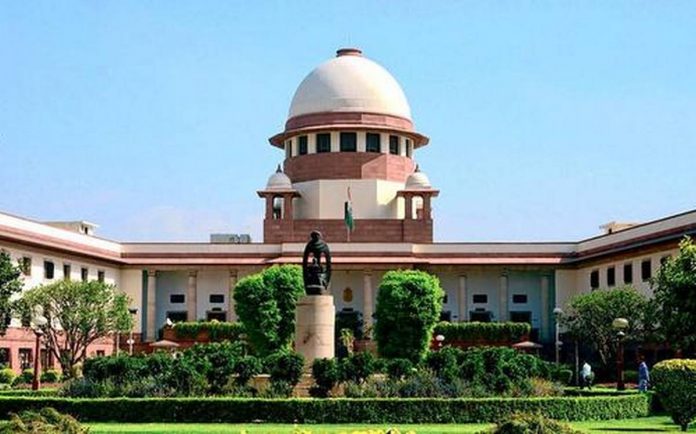

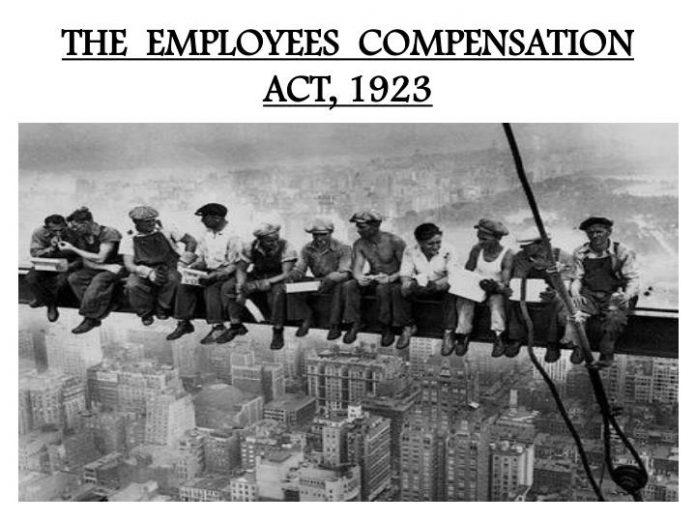









 Allow notifications





