This article has been written by Rishabh. This article has been edited by Ruchika Mohapatra (Associate, Lawsikho)
Table of Contents
Introduction
Media is regarded as one of the pillars of democracy. The freedom of the press is regarded as “the mother of all liberties in a democratic society. Free speech and Expression are perhaps the most significant and helpful rights accessible in our Constitution. The opportunity of articulation fused in the Indian Constitution in Article 19(1) stays a significant facilitator for far and wide commitment of the media inside a majority rule environment. It is by utilizing this opportunity that the media can work.
Media has played wide-going parts and assumes a crucial part in molding the assessment of the general public, however like each and every other freedom and liberty, this freedom of speech and articulation is additionally seen to be abused by the media. Every institution is liable to be abused, and every liberty, if left unbridled, has the tendency to become a license that would lead to disorder and anarchy.
‘Trial by media’ is a recently coined term and is used to denote a facet of ‘media activism.’ It means “the impact of television and newspaper coverage on a person’s reputation by creating a widespread perception of guilt regardless of any verdict in a Court of law. “Particularlyduring high publicity Court cases, the media often provoke an ambiance of public hysteria akin to a lynch mob which not only makes a fair trial impossible but means that, regardless of the result of the trial, according to public insight the condemned is now held liable and isn’t have the option to carry on with the remainder of his existence without serious public scrutiny”. The media playing the job of a foe and utilizing the masses as judges to lead their own preliminaries is the way a media preliminary comes to be. The media is regularly inhumane towards the psychological condition of the parties involved especially the accused and the victims. They invade their privacy which causes a breach of the Right to Privacy guaranteed under Article 21. This article seeks to shed light on media trials with a special focus on the role of media trials in today’s age on various judicial proceedings.
Influence of media trials
Media has certainly played a great role in bringing justice to many people. One cannot gag the press due to the brave role it played in cases which are commonly known as ‘Billa Ranga case’, ‘Baba Nirankar case’, ‘Sudha Gupta case’ and of ‘Shalini Malhotra case’.Without active media, the cries of the victims of the brutal khap killings of Haryana would have gone unheard. The fear of khap and the backing of police and politicians allowed this barbarous tradition to continue for a long time until they turned out in front of the world through the media. Many different cases like the Arushi Murder Case, Jessica Lal Murder Case, Ruchika Girhotra Case, and even the games played in IPL row were brought out into the broad daylight because of the praiseworthy attempts of media personnel.
But the need to compete for commercialization and more views has transformed the media today into a full-fledged game for viewership. The name of the game is ratings, viewership, eyeballs, and commercials. Under this new scheme, the news is whatever sells the best. The recent example of prioritisation and extreme coverage of a superstar’s son over alleged drug abuse as opposed to covering the death of protesting farmers is one of the many instances where media has shown that it seeks to cover sensational news more than any other. This means, whatever catches and grasps the attention of the public. Or, in other words, ‘sensationalism’.
The current day trend in news broadcasting manifestly points out that journalists and media people should be unmistakable facilitators for the democratic process to function without interference. The morals that the media should embrace include values like efficiency, justice, truth, objectivity, integrity, fair reporting, respect, and autonomy. These values are very much part and parcel of the democratic process. Tragically, nowadays the media individuals are more often than not accused of being overwhelmed by materialistic contemplations instead of professional ethics and honesty towards the profession
The pressure on judges in high-publicity trials
It is true that every holder of legal office does his utmost not to let his mind be affected by what has been seen or heard or read outside the court and he will not intentionally let himself be influenced in any way by the media. Similarly, it is to be remembered that judges being people are not liberated from faults. A man may not be capable to put what he has seen, heard, or read completely out of his mind; and he may be influenced by it.
In the Nanavati case, for example, there was a huge hue and cry from the media and there was extensive reporting which was later claimed to have influenced the minds of the jurors. A weekly tabloid Blitz that was owned and run by R. K. Karanjia, a Parsi publicized the story and openly supported Nanavati and portrayed him as a wronged husband whose gullible wife had been swayed by a rich playboy.
If one carefully analyses the judgment in Reliance Petrochemicals v. Proprietor of Indian Express in the light of the judgment of P.C. Sen, it tends to show that the Supreme Court has believed that Judges are likely to be “subconsciously affected” by media publicity. Parties have a constitutional right to have a fair trial in the court of law, by an unbiased tribunal, uninfluenced by newspaper dictation or popular cry. Fairness and equity are two primary basements on which the whole democratic structure rests. The biased distribution against the blamed amounts to a denial of a fair trial. Media is so ubiquitous in our everyday lives that judges also can’t stay away from its pervasiveness.
Need to regulate unhealthy media involvement
There must be regulations with respect to journals and news programs while a trial is going on. It is just as significant to protect the public perception of judges’ fairness as to protect the risk of bias. After all, we cannot forget the Common rule Law laid down in R v. Sussex Justices: Exparte McCarthy that “Justice should not only be done, it should manifestly and undoubtedly be seen to be done”.
The limitations to be forced on the media must be sensible and reasonable. Where Article 19 of the Constitution enables the media to communicate its thoughts through the freedom of discourse, note that this article likewise gives reasonable restrictions, for example, the reasonable restrictions on freedom of speech given under Article 19(2). In this manner, it is the established liability of the courts to guarantee that such limitations don’t go past the ambit of the sensible limitations as referenced in the Constitution of India.
International jurisprudence in media trials
The international jurisprudence on media preliminaries has a strong inclination towards free and fair trial. A few excerpts can be taken from international treaties and cases that help this contention. Article 6 of the UN Basic Principles on the Independence of the Judiciary states that the Judiciary should guarantee that “legal procedures were conducted honestly and the rights of parties were respected.”
The 200th Law Commission Report on Media Trials put forth the association between the media and jurisdictional independence by examining the basic principles set down in the Madrid Standards 1994 which conceives provisions under ICCPR and 1985 UN principles on the Independence of Judiciary. The freedom of media is fundamental in any democratic country administered by the Rule of Law. It is the responsibility of judges to observe and give effect to freedom of media by applying only such restrictions as approved by ICCPR. The particular provision according to ICCPR is, “The media have a responsibility to respect the rights of people, protected by the International Covenant and the independence of the judiciary.” Moreover, under the fundamental standard, the freedom of media has been interpreted to convey information and commentary on the administration of equity including cases before, during, and after trial without disregarding the presumption of blamelessness.
Conclusion
It must be remembered that freedom of expression isn’t outright, limitless, or free. The judiciary is populated by judges who are human, and being human they are occasionally driven by considerations other than an unbiased view of law and justice. No judge is totally invulnerable to the influence of the hype generated by the media.
The media should practice better self-regulation. It is anticipated from persons at the helm of the affairs in the field of media to assure that the trial by media does not hamper the fair investigation by the investigative agencies, and more importantly, does not prejudice the defense of the accused in any manner whatsoever. It will amount to a mockery of justice if either of these causes delays in the accepted judicious and fair examination and trial.
If the government starts regulating the media, the complete purpose would be defeated. Instead, the more desirable option would be robust and civic engagement by the people with their polity and political class. In another word, an engagement that is both adversarial and cooperative in nature. An informed, cultivated, and interested civil society can be the best watchdog over politics and the media. This would re-establish and balance the polity and harmony a semblance of normalcy among the institutions of the nation.
Students of Lawsikho courses regularly produce writing assignments and work on practical exercises as a part of their coursework and develop themselves in real-life practical skills.
LawSikho has created a telegram group for exchanging legal knowledge, referrals, and various opportunities. You can click on this link and join:https://t.me/joinchat/J_0YrBa4IBSHdpuTfQO_sA
Follow us on Instagram and subscribe to our YouTube channel for more amazing legal content.
This article is written by Oishika Banerji of Amity Law School, Kolkata. The article deals with a detailed discussion on the notable judgments on jurisdiction under the Indian Penal Code, 1860.
Introduction
The jurisdiction of the Indian Penal Code, 1860 as has been provided under Section 1 of the statute, extends to the whole of India. The Indian Penal Code majorly divides jurisdiction into three categories namely intra-territorial jurisdiction (Section 2), extra-territorial jurisdiction (Section 3, and 4), and admiralty jurisdiction. This article discusses a list of notable judgments that are provided under different jurisdictional heads, in order to help the readers understand the provisions in association with jurisdiction in a better way.
Table of Contents
Intra-territorial jurisdiction
Section 2 of the Indian Penal Code, 1860 which reads, “Every person shall be liable to punishment under this Code and not otherwise for every act or omission contrary to the provisions thereof, of which he shall be guilty within [India]” deals with intra-territorial jurisdiction. Put simply, the provision declares the jurisdictional scope of operation of the Code which extends to the offences that are committed within the territory of India.
State of Maharashtra v. M.H. George (1965)
The Supreme Court of India in the 1965 case of State of Maharashtra v. M.H.George decided on the issue as to whether a foreigner committing an offence within the Indian territory be held liable under the Indian Penal Code, 1860 or not. The Apex Court observed that it is not necessary for an Indian law to be published so as to acknowledge the foreigners with the same. Instead, ignorance of the law by a person travelling to India on grounds of unawareness of the same counts as irrelevant for the Indian courts. Therefore, a foreigner who is committing an offence within India’s territorial limits cannot use lack of knowledge or unawareness as defence of ignorance of the law of the land. Thus will be held liable for such an offence.
F. Kastya Rama v. State of Maharashtra (1871)
The Bombay High Court in the landmark case of F. Kastya Rama v. State of Maharashtra (1871) took note of the scope of the definition of the term “maritime territory of a State”. The facts of this case involved a group of fishermen who belonged to the Kopargaon village. Within three miles from the shores, these fishermen had fixed their fishing stakes which in turn offended the fishermen of Barshitakli village. The consequences involved the accused pleading before the Court of law that their actions could not be included under the ambit of the Code of 1860. The Bombay High Court observed that the accused’s act was to be included within the purview of the Code and would categorically amount to mischief under the Code. This was because three miles from the shore was to be considered as a part of the Indian territory as the latter has its jurisdiction up to a distance of 12 nautical miles.
Mobarak Ali v. State of Bombay (1975)
In the case of Mobarak Ali v. State of Bombay (1975), the Supreme Court had observed that the presence of an accused in the Indian territory at the time the offence had been committed, would not be an essential ingredient for the person to be charged under the provisions of the Indian Penal Code, 1860. In this present case, the Apex Court convicted the petitioner on grounds that the jurisdiction under Section 2 being the locality where the offence had been committed, and the corporal presence of the accused in India stood immaterial.
Superintendent and Remembrancer of Legal Affairs, West Bengal v. Corporation of Calcutta (1967)
The Supreme Court of India in the case of Superintendent and Remembrancer of Legal Affairs, West Bengal v. Corporation of Calcutta(1967) by a 7:2 ratio determined the exemptions from the coverage of the Indian Penal Code, 1860 by observing that the State along with its extension which comprises of public bodies, corporations, and other authoritative organs, will be subjected to the criminal proceedings unless otherwise such thing has been expressly prohibited from the ambit of the penal provisions.
Extra-territorial jurisdiction
Section 3, and 4 of the Indian Penal Code, 1860 deal with the extra-territorial jurisdiction. These two provisions extend to the Indian citizens residing outside the country’s territorial limits. While Section 3 lays down the provision for punishment of offences committed beyond, but which by law may be tried within India, Section 4, on the other hand, provides the extension of the Code to extra-territorial offences.
Kari Singh v. Emperor (1912)
The Calcutta High Court in this pre-independence case ofKari Singh v. Emperor (1912) discussed the scope of Section 3 and came up with two conditions which discuss the applicability of this provision, namely;
An allegation as to whether the accused who has committed an offence is a citizen of India or otherwise, and the act committed would have been punishable under the Code if carried out in India, and
The person accused must have been held liable under some Indian law in order to be tried under an Indian court.
Central Bank of India Ltd v. Ram Narain (1955)
The issue before the Supreme Court of India while dealing with the case of Central Bank of India Ltd v. Ram Narain (1955) was concerning the liability of a foreigner who had obtained Indian citizenship after committing an offence as a foreigner. Taking into account Section 3, and 4 of the Indian Penal Code, 1860, the Apex Court observed that if also a foreigner commits an act outside India, which is recognised as an offence in the Indian territory, and subsequently acquires Indian citizenship, then such action will ipso facto not make the person criminally liable for his commitment, even if Indian law recognizes it as an offence.
Om Hemrajani v. State of Uttar Pradesh & Anr (2005)
Before delving into the case of Om Hemrajani v. State of Uttar Pradesh & Anr (2005), it is necessary to be well-informed about Section 188 of the Code of Criminal Procedure, 1973 which deals with the procedure to be followed for offences committed outside India. Section 3, and 4 of the Indian Penal Code, 1860 is the substantive law that has to be read with Section 181 of CrPC which is procedural law. In the present case, the Supreme Court explained the ambit of Section 188 of CrPC. The observations of the Apex Court are presented hereunder;
Offences that are committed abroad cannot be tried before the Indian courts without prior approval from the Central Government.
The aggrieved party who has suffered damages by the accused in a foreign land can approach an Indian court for the purpose of seeking justice.
The burden of ensuring convenience for the accused does not rest on the plaintiff’s shoulders; instead, the only burden that exists is the burden of finding the latter’s own convenience.
The complainant can file a complaint before any court in India against the accused.
Muhammed Sajeed v. State of Kerala (1995)
The present case of Muhammed Sajeed v. State of Kerala (1995) deals with the limitation of Section 188 of CrPC. As has been discussed in the previous case, the only restriction applicable to this provision is the prerequisite of seeking the approval of the Central Government before any Indian court tries, or inquires into a case where the accused is a foreigner. The Court went further to state that when Indian citizens committing offences outside India rise, then the courts must not take the matters in a haste, and therefore the importance of prior sanction from the Central Government can be felt in such times. This instead of behaving as a hindrance acts as a safety valve for the Indian judiciary.
Admiralty jurisdiction
The third type of jurisdiction that the Indian Penal Code, 1860 recognizes is the jurisdiction to try offences that are committed on high seas, familiarly known as the admiralty jurisdiction. Put simply, the admiralty jurisdiction is determined with the help of the principle that whichever flag a ship sailing in the high seas bears that falls under the jurisdiction of that nation in particular.
M .V. Elizabeth and Others v. Harwan Investment and Trading Private Limited (1992)
Whether the local courts have the admiralty jurisdiction that extends to arresting foreign vessels in cases where the claim rests in a foreign land?
Whether international conventions that concern the arrest of ships and have not been ratified by India, bound India or not?
In deciding these issues, the Apex Court held the principles of the International Convention on Maritime Laws as the same have been incorporated by the nation in her common laws. The Court further stated that the fact as to where the cause concerning a foreign ship within the territorial water limit of India arose, the residence of the defendant, or the nationality the ship holds, will stand irrelevant if a maritime claim is made under the admiralty jurisdiction of any High Court of India.
The Republic of Italy through the Ambassador & Ors v. Union of India (2013)
The Supreme Court of India while deciding in the case of Republic of Italy through the Ambassador & Ors v. Union of India (2013) ruled that India will always be entitled to the right to exercise its sovereignty under both Municipal, and Public International laws up to 24 nautical miles from the baseline which is the determining criteria for the jurisdiction over territorial waters. In the present case, firing happened by two Italian vessels on the Indian vessel which was within the territorial water limit of India. Because of this, the Italian vessels were charged under the Indian penal provisions.
Conclusion
As we come to the end of this article, it is notable to mention that determination of the different jurisdictions under the Indian Penal Code, 1860 can be only understood by the interpretation of the courts provided in different case laws as it provides a practical view as to how the legal provisions concerning jurisdiction are to be applied.
A developer is a person who develops the property. The word ‘develop’ means altering, modifying, and improving the said property. This type of agreement is usually done when the building is in a dilapidated condition and needs to be improved majorly. Usually, the entire building is brought down, a new building is built at the same place, and the old tenants are given back the property.
The entire transaction seems complicated, and it is definitely so for a layman. The tenants have to be given a place to stay rent-free till the old building is demolished entirely and a new one is constructed back in its place. It takes around 1 to 5 years, depending upon the size of the property that is being demolished. Therefore, everything needs to be appropriately documented and accurately mentioned in order to prevent future disputes between the parties involved in the entire transaction. If any dispute arises and goes to the court, then the Indian judiciary takes a long time to resolve the matter given the high number of pendency in courts, and the cost of litigation is high and can be avoided. Therefore, it is imperative to lay down the rights and duties of the parties involved in the transaction in a written contract. This article helps the reader understand the key clauses of a developer’s contract with a tenant.
Key clauses of the agreement
Following are some of the key clauses that need to be incorporated in a developer’s agreement with the tenant:
Recital
A recital is a part of the contract that sets forth the purpose of the agreement that is being entered into. For example, if a service agreement is being entered into, the recital states that the employer needs the employee for a job, and the employee agrees to work for the employer for the given consideration. Therefore, in a developer’s agreement with a tenant, it may contain the following:
The condition of the building (this may be described in the schedule attached to the agreement and also defined in the definition clause of the agreement) is dilapidated/decaying/deteriorating/ruined/impaired and needs significant repairs.
That the tenants agree that it is necessary to demolish the old building and build a new one on it. (This may be due to the fact that the structure of the building is weak and is dangerous for the tenants to live there or the tenants want to live in a new house only for aesthetic purposes).
That the developer has agreed to demolish the old building and build a new one on the terms and conditions laid out in this agreement.
Duration
The developer needs to be accountable for the development of the property. The tenants cannot wait for eternity for the developer to complete the work. The duration to complete the work needs to be chalked out clearly in the agreement. If possible, a schedule of work can be decided upon by the parties with regards to:
When the old building would be demolished;
When the new construction would be started;
When the new construction would be over;
When the possession of the new building would be handed over to the tenants;
The schedule of payment by the owner and/or tenant to the developer can also be decided. Typically, the consideration is not paid in one go. It is paid in instalments. The time schedule and the amount can be decided in advance by the parties.
A temporary place to live
The developer has to provide a place of equivalent quality where the tenants can continue living till the construction of the new building is completed. Here, the tenants must negotiate a clause that provides a decent place of living until the construction is completed. In this clause, the following can be decided:
The area in which the temporary accommodation is provided;
The duration of the temporary accommodation;
If the temporary accommodation is completely free or some amount would have to be paid by the tenants;
Any other facilities that the developer in the meantime would provide.
If the developer provides no accommodation, then the developer must at least pay the rent or part thereof of the place where the tenant proposes to live during the time the new building is constructed. In case only a part is agreed to be paid, then the amount must be decided in advance.
Security
A clause for the payment of security should be negotiated in a developer’s agreement with the tenants. In this clause, the developer may be required to provide certain security for the completion of the project as per the terms and conditions laid down in the agreement. The security may include:
Deposition of precious metals;
Immovable property;
Bank guarantee for a certain amount.
If the developer breaches the contract in the material terms, then the tenants can hold the surety/bank accountable or sell the precious metals or immovable property, as the case may be. The security must be equivalent to the value of the construction cost of building the new project. Also, it is crucial to lay down what constitutes a breach.
Specifications of the new building
The entire purpose of the developer’s agreement is to acquire a better-quality home for the tenants and owners of the property. The terms and conditions of the new property need to be entirely and clearly set forth. There must be no mistake or misunderstanding between the parties as to the specification of the new premises. Oral promises are not of any value. Therefore, whatever has been decided must be clearly spelt out. For example, there are 2 rooms in each flat, and the developer promises to give 3 rooms to each tenant with the same or even bigger area per room. In such a case, the square foot or square meter area needs to be spelt out. If it would be different for every tenant, then a schedule may be drafted with the agreement clearly setting forth the area with the floor number the tenants will get after the new building is constructed.
The ambit of the work undertaken by the developer
This clause contains the scope of the work that is to be completed by the developer. This clause makes the duties and obligations of the developer regarding the project crystal clear. The following questions have to be answered in the agreement:
Whether the developer is going to deliver a furnished/unfurnished flat?
As the case may be, whether the developer is going to develop only the building or the surrounding areas as well like swimming pool, gardens, running track, etc., as the case maybe?
Whether the developer is going to paint the building?
Any other amenities to be provided in the building, like an elevator (old buildings generally do not have buildings)
Any charges to be taken from the tenants?
The rent to be charged to the tenants after the project has been completed?
The above list is only illustrative and not exhaustive.
Default
The default clause is of high importance as it clearly mentions the parties’ liability in case of default from their respective ends. The developer must be held accountable if he defaults in his duties, whereas the tenants must be held liable if they fail to fulfil their responsibilities.
The events that would constitute default also can be incorporated. A sub-clause for liquidated damages can also be added to the contract. The ramifications and the remedies that the defaulting parties can make use of to rectify the situation can also be mentioned. Following are the common defaults in such contracts:
The developer delaying the construction of the project;
The developer not complying with the requirements of the new building;
The tenants/owner not paying as per the terms of the contract;
The tenants/owners not vacating the property;
The above list is only illustrative and not exhaustive.
Arbitration and conciliation clause
An arbitration and conciliation clause must be incorporated in the agreement. If the matter goes to court, then it might end up taking a long time to get resolved given the pre-existing pendency of cases, and no one would be satisfied with the process. Therefore, a dispute resolution clause should be added. Nowadays, using online dispute resolution (ODR) is also on the rise. There are various government-recognized institutes that provide online mediation services.
This clause prevents the parties from going to the courts. In case a dispute resolution clause exists, the court directs the parties to resolve the disputes according to the method given in the contract. This saves the time and money of the parties involved in the contract.
Representation and warranties
Representation and warranties is a clause that contains specific promises by both parties. One of the most critical and unique clauses in a developer’s agreement with the tenants is that the developer shall first take approvals and permissions from the relevant authorities like municipal corporations before the tenants vacate the said property. This imposes liability on the developer to get necessary approvals to develop the property. The approvals may be related to safety, environment, etc.
Conclusion
The purpose of any agreement is to set forth the terms and conditions of a contract. The draftsman’s job is to draft the contract so that it captures the intention of the parties as clearly as possible. A clear contract assists the parties, and if required, the court or the arbitrator interprets the parties’ intentions.
A developer’s agreement is a complex agreement that governs the rights and responsibilities of a plethora of parties for a long duration. The said contract displaces all the tenants living in a certain society/building to another place with the promise to build them a better home. It needs to be drafted carefully so as to avoid future disputes.
Students of Lawsikho courses regularly produce writing assignments and work on practical exercises as a part of their coursework and develop themselves in real-life practical skills.
LawSikho has created a telegram group for exchanging legal knowledge, referrals, and various opportunities. You can click on this link and join:
This article is written by Vanya Verma from O.P. Jindal Global University. This article covers due process paranoia and virtual arbitration that has gained importance recently in the pandemic in light of the Indian perspective.
Table of Contents
Introduction
People are increasingly preferring alternative conflict resolution choices to litigation in the modern world in order to obtain a more flexible procedure with faster and less expensive results. Arbitration is one of the most well-known types of alternative dispute settlement. Arbitration’s key advantages are its neutrality of venue, procedural finality, flexibility, confidentiality, party autonomy, cost and time effectiveness, and, lastly, its worldwide recognition. However, tribunals have recently been criticized for continuously extending deadlines, accepting late evidence, permitting several modifications to a party’s written submissions, and agreeing to reschedule hearings by agreeing to last-minute requests. This phenomenon is also known as due process paranoia.
Virtual witness testimonies were prevalent before the COVID-19 pandemic, especially when witnesses couldn’t make it to the venue due to illness. Virtual testimony is permitted solely at the tribunal’s discretion under Article 8.1 of the IBA Rules on Taking of Evidence in International Arbitration.
The parties have been forced to adjust to a new normal since the uncertainty of a return to normalcy has forced them to rely only on virtual hearings, including virtual witness testimony. Virtual hearings are being held by arbitral institutions utilising a variety of video-conferencing technology. Virtual witness testimony is anticipated to become increasingly common as parties get more comfortable with technology and get comfortable with the time and cost savings that come with it. To ensure a fair and proper hearing, it is necessary to examine how procedural safeguards such as “due process” would play out in virtual witness testimonies.
What is due process paranoia?
Although the exact definition of “due process” varies from country to country, certain general principles, such as the right to be heard and equitable treatment of all parties, are widely accepted. While the notion of the right to be heard requires that each party be given an equal opportunity to state its argument and defend against the opposition’s case, the concept of equal opportunity requires that no party be treated unfairly. The abuse of due process has led to the phenomena of due process paranoia.
According to the survey, due process paranoia is “a perceived reluctance by arbitral tribunals to move forcefully in particular cases for fear of the award being challenged on the grounds of a party not having an opportunity to present its case fully.”
There appears to be a combination of three components at the heart of the concept of due process paranoia.
First, one or more arbitral tribunal case management decisions that appear to be too concerned with due process considerations are frequently taken, but not always, to safeguard the respondent’s interests in the arbitration.
The second component is the tribunal’s assessment that taking such a cautious stance is necessitated by the likelihood of the tribunal’s award being overturned and/or refused enforcement (the “Enforcement Risk”).
Finally, the erroneous character of the tribunal’s view that this level of care is warranted, the erroneous belief that is induced by an inflated sense of the Enforcement Risk – is the third ingredient (without which there would be no paranoia, but merely sensible risk-averseness).
Reasons behind paranoid behaviour of arbitrators
In practice, arbitrators may err on the side of caution when making case management choices for a variety of reasons.
First, unless time is of the essence, arbitrators will frequently determine that a delay or rise in arbitration expenses is preferable to the danger of giving an unenforceable award. This is because putting aside an award, or declaring it unenforceable, would require the parties to re-litigate their dispute (thus incurring considerably longer delays and higher costs).
Secondly, even if the execution of the award is not denied, a tribunal’s tough position may prompt a disappointed party to question the arbitrator’s impartiality. A challenge, whether successful or not, is more likely to cause delays and increase costs than an overly cautious judgement.
Finally, because enforcement / set aside processes are frequently in the public eye, they may have a detrimental impact on the arbitrator’s market reputation, reducing their chances of being appointed in the future.
Issues related to due process paranoia
The primary issues with due process paranoia are increased expenses and delays. Due process paranoia sometimes leads arbitrators to permit additional time to the parties, accept multiple amendments to the written submission of parties, plan unnecessary long hearings or agree to the late introduction of claims or defences or requests at the last minute to reschedule video witness statements and oral hearings. All this goes against the standards of efficiency enshrined in most of the arbitral rules.
Some arbitrators may contribute to the high expenses and duration of arbitration proceedings by not being strong enough for fear of having an award overturned or refused enforcement. And it’s fair to say that exorbitant expenses and delays in arbitration are well-documented complaints among system users. This, in turn, may add to some users of arbitration’s sentiments of frustration.
In other words, the concern is that whenever a tribunal chooses caution over procedural economy/efficiency in situations where the tribunal could afford to be robust (because the Enforcement Risk is lower than the arbitrators believe), the tribunal makes a ‘wasteful’, ‘uneconomical’ decision. That is where the crux of the due process paranoia problem rests. It is concerning those decisions that are “needlessly” cautious; those decisions that are “sub-optimal” in terms of procedural efficiency.
Due process paranoia does not jeopardise arbitration as a fair and final method of resolving disputes but as it grants unreasonable procedural requests and prolongs the proceedings unnecessarily, it neither benefits the parties nor the attractiveness of international arbitration as a dispute resolution mechanism.
Solution to due process paranoia
First and foremost, an effective way to prevent due process paranoia must be determined, one of the main causes of paranoia is an unjustifiable perception of the circumstances. First, arbitrators should take a practical and correct approach to the enforcement risks, with a focus on improving information access. It means that arbitrators should investigate matters, including their enforceability and recognition, and manage them accordingly. Studying each jurisdiction, legislation, and policy about the enforcement procedure is difficult and nearly impossible, but having greater information leads to more successful results.
Better access to information is thus the cure to the due process paranoia. To put it in another way, the solution lies in a more precise and realistic evaluation of the Enforcement Risk in each situation. This necessitates a thorough examination of the real influence of sound case management decisions on arbitral award enforceability.
Despite the unifying effect of the New York Convention or the UNCITRAL Model Law, the situation varies greatly from one jurisdiction to the next, with some being more liberal than others. When a tribunal seated in, say, England considers whether a case management judgement will be perceived as overly robust in the future, it must analyse the situation not just under English law (the law of the seat), but also in the likely enforcement location(s). However, it would be naive to believe that a tribunal will always have the time and resources to conduct a thorough investigation into the law of all jurisdictions where the award may be enforced. As a result, in an ideal world, trustworthy data (on the real Enforcement Risk of case management decisions) would be freely available for any jurisdiction.
Prevalent due-process challenges to virtual arbitration
Witnesses may be instructed through concealed channels of communication during virtual witness testimony, which is a common due process problem. Furthermore, the legitimacy of virtual testimony has been questioned, particularly in cross-examinations, because the process requires analysing the witness’s body language and nonverbal indicators, such as eye motions, gesticulation, and expressions, which is impossible during virtual hearings.
These fears have been alleviated, thanks to current technology and logistical best practices. Face expressions and body gestures are vividly visible while using HD video quality. Video-conferencing, as opposed to an in-person hearing, gives for a closer view of the witness and enables video replays (if a recording is allowed) for body language analysis. Parties/tribunals can monitor the witness and guarantee that they are not accessing other devices or people to be coached by installing rotating or 360-degree view cameras. Separately, software applications/extensions can be used to prohibit other websites from being utilised for communication while the hearing is taking place.
The Seoul Protocol on Video Conferencing in International Arbitration (“Protocol”), which combines technological solutions with logistical best practices, addresses the majority of these difficulties. The Protocol stipulates that a reasonable portion of the (witness) room’s interior be visible, as well as giving testimony on an empty desk, which would further reduce the potential of witness coaching. The option to opt-out of the videoconference if the tribunal finds it to be unjust to either party ensures a secure backup.
However, there are still some flaws in the virtual testimonies that must be rectified. These are as follows:
In circumstances where voluminous documents are required to perform cross-examination, virtual hearings may take longer.
There are concerns about technology’s unreliability. The right to be heard, for example, may be harmed if a connection is lost during a cross-examination, resulting in a loss of momentum and allowing the witness to re-evaluate their responses in the extra time. If there are audio/video abnormalities, visual freezing, or time gaps, virtual cross-examination may be ineffective.
In a virtual setting, issues such as translations and interpreters provide extra obstacles. Reliable connectivity and transmission speed will be crucial if a witness requires interpretation to participate in the proceedings. An interpreter may impose his interpretation of ambiguous language or mistranslate testimony during in-person proceedings, and this danger is considerably increased when simultaneous (rather than successive) translation is used.
A close-up view of the parties can lead to an exaggeration of visible gestures or activities. For example, a brief pause while answering a question or the appearance of sweat on the face may be misinterpreted.
Members of the tribunal, for example, may not have the same ability to analyse the replies and body language of witnesses or experts during cross-examination as they do during in-person testimony. A witness who is unfamiliar with online meeting platforms may find it difficult to stare straight at a questioner (via a computer camera), thus generating credibility concerns where none exist. In a virtual context, there’s also a prospect of a witness being advised off-camera or reading papers without the tribunal or opposing party’s awareness.
Parties from all four corners of the globe participate in international arbitration processes. The technology standard, like many other aspects of arbitral procedure, should be agreed upon by the parties before the hearing.
Virtual hearings raise additional security and confidentiality concerns. Arbitration is preferred because of its numerous benefits, primarily the confidentiality of the procedures. When several parties, witnesses, and experts use their home networks to attend virtual procedural or evidentiary hearings where there may be no protection against hackers intruding, the risk of security breaches increases. Hackers may use zoom-bombing to bring the proceedings to a halt, or the arbitral institution’s website or electronic hearing bundle could be compromised. The Permanent Court of Arbitration was hacked in the middle of an ongoing maritime border dispute between China and the Philippines in July 2015, well before the trend of moving procedures digitally. The PCA’s website was hacked with malware, which infected users’ PCs and exposed them to data theft.
Other seemingly insignificant difficulties, such as various time zones, could have far-reaching consequences for the proceedings. Arbitrations sometimes involve parties from numerous jurisdictions, as well as witnesses and experts from other places. It may be possible to manage the time difference by calling witnesses in a sequence that permits each witness to give evidence during normal business hours where they are based, but finding a time that is convenient for everyone during a time when travel is restricted would be difficult.
In the face of these difficulties, it can be observed that protecting the right to due process should be a joint responsibility of the parties to the arbitration (parties, arbitrators, institutions) and the courts implementing the verdict. Parties should use logistical/technological best practices, such as rotating cameras and communication blocking software, to avoid issues of unreliability/misuse of technology (to the extent it can be funded). If a clinching testimony, i.e. one that would alter the award, is required, counsel should make a judgement call. Where connectivity issues persist, tribunals may opt that videoconferences be cancelled.
If parties, on the other hand, fail to address due process violations internally, courts must ensure that grounds for challenging or resisting enforcement are dynamically interpreted to address due process violations caused by unreliability or misuse of technology.
The Delhi High Court issued a guidance note for video conferencing arbitration procedures and asked the Delhi International Arbitration Centre to follow these guidelines starting June 8, 2020. Cases must be filed electronically, hearings and witness examinations must be conducted using a video conferencing platform such as Cisco Webex, and arbitral awards and orders must be digitally signed and shared among the parties via email. Parties must also provide written submissions, along with copies of pertinent documents and judgements, as well as video footage of their oral arguments, according to the requirements. These initiatives have been taken to make virtual hearings via video-conferencing more efficient and to eliminate video-conferencing hearings in cases where the parties are satisfied with the written submissions and video clips.
Simultaneously, the courts have issued guidelines for conducting a videoconferencing examination, which includes:
Proper identification of the witness;
The appointment of a technical coordinator;
Ensuring that witnesses have access to documents;
The presence of an officer to ensure that witnesses are not coached.
The Court has further stipulated that the cross-examinations must be completed in one sitting, with no adjournments. Although, in the case of numerous records, High Courts have acknowledged the inadequacy of virtual cross-examination. (R Sridharan v. R Sukanya, (2011)).
Similarly, in arbitrations, the courts have been mainly favourable to video testimonies. A witness in Russia was ordered to appear for cross-examination via videoconference by the Calcutta High Court. (Saraf Agencies Private Limited v. Federal Agencies for State Property Management (2018). The Madras High Court went even farther, encouraging parties from all around the country to conduct the full arbitration over video conferences. (Axis Bank v. M/s Nicco UCO Alliance Credit Limited, 2017). More recently, the Delhi High Court, in the case of Rategain Travel Technologies Private Limited v. Ujjwal Suri, High Court Of Delhi (2020), recognizing the possibility of conducting virtual arbitral proceedings, stated, “the arbitral tribunal may consider conducting the hearings and recording of evidence by video-conferencing if considered feasible”.
In light of these judicial precedents, it may be reasonable to conclude that the Indian courts may continue taking a positive view towards video testimonies in arbitration. Taking inspiration from the above-cited decisions, to further eliminate risks of witness coaching, either the representative of an institution or the counterparty may be present in the same room as witnesses. Moreover, parties should be encouraged to keep the virtual cross-examinations brief and conduct them in one session.
Arbitral awards enforcements in India
A party may dispute or fight the implementation of an award for reasons of due processes, such as incapacity to submit one’s case or the tribunal’s failure to follow the procedure outlined in the agreement.
When no chance is given to a party to deal with an argument that goes to the heart of the matter, an award may be successfully contested or opposed based on incapacity to state one’s case. (Vijay Karia and Others v. Prysmian Cavi E Sistemi SRL and Others (2020), Ssangyong Engineering and Construction Company Limited v. NHAI (2019)). The Supreme Court in the Vijay Karia case propounded that the test to determine if a party has been unable to present its case is, “whether factors outside the party’s control have combined to deny the party a fair hearing.”
Furthermore, courts may sua sponte use the ground of “public policy” violation to set aside or resist enforcement. The Indian judiciary, on the other hand, has taken a pro-enforcement stance by narrowly defining the scope of public policy.
Given the Indian judiciary’s pro-enforcement stance, domestic/foreign awards are unlikely to be set aside/resisted unless there has been an “apparent” due process violation during virtual testimony. As a result, an enforcement challenge to an award based on virtual witness testimonies would be effective if the award’s fairness had been impacted visibly and not when the grounds alleged were overly technical. Such a high bar tries to strike a compromise between fairness and preventing parties from engaging in speculative litigation. Due process paranoia, defined as “a perceived reluctance by arbitral tribunals to move decisively in particular instances for fear of the arbitral judgement being challenged based on a party not having had a full opportunity to present its case,” would be reduced by the norm.
Conclusion
Concerns about due process in virtual testimonies are yet to be fully addressed. Until such a resolution is reached, the choice to take virtual testimonies should be carefully considered, the technological capabilities of participants, as well as the value of the witness, are important factors to consider. Furthermore, if virtual testimonies are used, technological/logistical solutions, as well as judicial attention, are required to avoid due process concerns.
To make arbitral processes more cost-effective and timely, arbitrators must: take a realistic and thorough approach to enforcement risks; have better access to information; have sharp and clear powers by the tribunal; use hybrid methods of dispute resolution, such as Med-Arb and Arb-Med; and take a proper approach to the arbitral process by parties and their counsels; impose monetary sanctions in case of necessity; use efficiently modern technologies in the conduct of arbitral processes; make an arbitration-friendly law environment; increase legal awareness and legal culture of people.
A patent is a legal document that gives the right or authority over a particular field of research, invention or any other process to a person applying for it. Do you know how to do a patent search? Searching the web is not the only option when you are a legal professional and are required to do a thorough patent search. You need to use professional and government-approved resources to do a proper and detailed search. Patent searches can be done via various platforms like Google Patents, Espacenet., USPTO Web Patent Database, PQAI, Patentscope by WIPO, Lens.org. There is no cost for doing a patent search in India. A patent search can be done through the Patent database of India available at: http://ipindiaservices.gov.in/publicsearch. This article seeks to explore various methods of patent search and bring out the contrast amongst the same.
Benefits of patent search
It shows the level of competition that one has to deal with,
It confirms whether or not an invention’s concept has already been patented,
It helps with determining which aspects of a particular innovation are most likely to be patentable,
It grants you the sole right to prevent others from reproducing or importing your innovation without your permission.
Patent searching (the beginning)
While getting a patent for inventions may sound like a complicated legal process, it ensures that no other entity can claim your invention as their intellectual property. Even if they go further by trying to sell it or declare it as their own IP, they can be slammed with cease and desist letters and damages can be demanded. Patent registration ensures these legal resources are available at your disposal.
Now before you start rushing to file an application for your invention, the most important thing to note is that patent protection is granted for 20 years from the date of filing in both the US and India. This means that not every basic idea can lead to it being developed and granted protection. Inventors need to ensure that their idea is so unique that it should not have been granted patent protection already. If such an invention already exists and it’s patented, there are more chances of your application getting rejected, not to mention the money and resources wasted behind this legal process. To ensure that this does not happen, inventors can opt for contacting patent lawyers to get a thorough patent search done.
For a layman, it could be confusing because there are many different kinds of patent searches that are available. Each of these searches has its unique purpose and reasons for being conducted. Following are the types of searches using Patent documentation:
A patentability search is initiated before filing a patent application to guarantee whether the invention is new. This search is quite essential because nobody would like to lose all the hard-earned money spent on drafting and filing the patent application just because the examiner found a synonymous concept as your invention as the criteria for rejecting your patent application. If the search showcases that someone has already worked on a similar idea, you can save funds by not applying or by altering/improving your idea such that it fulfils the requirements of patentability.
Conducting a novelty search helps (if not ensures) to know what are the chances that your patent may get granted. If a patentability search showcases that your idea is novel and fulfils all the criteria for patentability, you can file your patent satisfied and confident that it has a high chance of getting issued. Keeping in mind the rising expenses of filing a patent and prosecuting a patent, it is always a smarter move to get a patentability search conducted before the filing of the patent application.
If the question arises on why patentability search then here are some benefits of using it:
— It will help you draft better claims,
–The effectiveness of the patent is improved,
–Helps to recognize the value of the invention.
Freedom-to-Operate Search
Freedom to operate refers to the capabilities to sell one’s product or service without infringing on the patent rights of another party. When you are granted a patent, you are granted the right to prevent people from using your patented technology. Although everyone else is restricted from infringing on your patent, you must still conduct the freedom to operate search before you bring out your product in the market. If your invention uses any other kind of invention in the form of a process, the machine, or the composition of matter, then the freedom to operate your product in the market becomes debatable. You run the danger of infringing on someone else’s IP, which comes with its repercussions.
This process is quite crucial as it gives you forewarning as to whether your product will be involved in a legal suit. Administering an FTO Search not only helps you get a crystal clear idea about the licensing needs but also facilitates you to move product development in the correct direction.
Is setting up the freedom to operate an easy or complex process?
Setting up the freedom to operate is not a simple process. There are a large number of patents already in existence and hundreds and thousands of them are granted weekly. If you are planning to launch your product in numerous jurisdictions, then you will have to access all of them to gain a perspective as to if their claims can or cannot be misinterpreted in a way that they can duplicate the features of your product. Therefore, this process requires deep focus and cannot be rushed.
Patent invalidity search
Patent validity search is a form of search that is conducted to distinguish references that are in a conundrum with the validity/enforceability of the claims of the patent that is issued by the patent office. These searches may be described differently based on the objective with which the search is being performed. Validity searches are frequently conducted by patent holders or buyers before asserting, licensing, buying, or selling a patent to confirm the enforceability of the claims. These searches can assist in understanding whether the patent in question can survive a validity assault, and thus help one take a better-informed and strengthened negotiating stance.
Reasons for conducting patent invalidity
If allegations of patent infringement are obtained from a patent owner.
If a cease and desist notice is obtained from the patent owner.
Before executing your patents to regulate invalidity risks.
Before buying a patent to examine the strength of the patent.
Oppose a newly issued patent of a competitor.
Given that these are extremely specialized searches, it is advised to leave it to professionals like attorneys or patent search firms.
State of the Art Search
To attain an overall view of a specific patent field, a State of the Art patent search is undertaken over all the broad list of patent searches. It offers a long-standing market advantage, by aiding essential decisions at the corporate level. In a specific field, a State of the Art Patent Search is a comprehensive review of all the patent or non-patent literature.
Patent Landscape Search is also introduced which is another way of analyzing the State of the Art and attaining a more visual indication of what is going on. A State of Art Patent Search is done to illustrate all pertaining references that are related to the technology of interest. The technology of interest is a bit wide as opposed to what you would select when you are going for a patentability search. It should be comprehensive enough to capture relevant ones but at the same time should not be irrelevant documents.
Conclusion
In this article, we have analyzed four contrasting and distinctive types of patent searches that are in existence. Each of them has its relevance and its unique traits. Some of them are not even obligatory but are a sensible investment from a professional’s perspective, which produces its results in the long run.
To give an example, I would say, imagine buying an umbrella. Keeping the uncertainty due to our current climate condition insight, it may not rain often but when it does then it will save you from getting wet. If you are of the opinion that chances of rain are very minimal and do not have one and so when it rains, you are the one who ends up getting soaked. So these searches can be compared with an umbrella, as we might think that we do not need it but if it rains then possessing one would be of an advantage.
Students of Lawsikho courses regularly produce writing assignments and work on practical exercises as a part of their coursework and develop themselves in real-life practical skills.
LawSikho has created a telegram group for exchanging legal knowledge, referrals, and various opportunities. You can click on this link and join:
This article is written by Smriti Singh, studying LLM from National Law University and Judicial Academy, Assam. The article has been edited by Smriti Katiyar (Associate, LawSikho).
Table of Contents
Introduction
“Good drinking water and basic sanitation are intrinsic to human survival, well-being and dignity and are important yet vulnerable development assets for maintaining eco-system health” Ban Ki-moon.
India is a federal democratic country gifted with many rivers that are the carriers of life-sustaining waters. The flowing river water across the state boundaries definitely constructs an efficient and impartial system for dispensing or allocating river flows is a significant, lawful and constitutional issue. According to the 2011 Agricultural Census of India, an estimated 61.5% of the 1300 million Indian population is rural and dependent on agriculture. And according to the Indian economic survey 2017-18, the agriculture sector employs more than 50% of the total workforce in India and contributes around 17-18% to the country’s GDP. The well-being and economic prosperity of a country that heavily relies on the field of agriculture are undoubtedly based on harnessing water resources, in particular the utilization of river water. It can be said that proper maintenance of irrigation or agriculture largely depends on the availability of river water. So, the sharing of river water resources plays an important role for the welfare of the people especially to the people who are directly attached to the agricultural field or for flora and fauna, environment, ecology and so on and so forth and indirectly to everyone for their livelihood. It is a bare necessity for human existence and necessary for the generation of power for industrialization and for a better quality of life, comfort and luxuries of life also. All people feel entitled to the highest quantity of water so as to derive maximum benefit and there arises, unfortunately, a clash of interest amongst the people of the area, the river winds its way through.
Geographically, all the major rivers in India are inter-state in character. Over time as a result of the development of the river, water resources has led to the creation of many multi-purpose river valley schemes in which several riparian states have cooperated to derive optimum benefits. Unfortunately, the sharing of river waters has become a perpetual source of conflict between the States since Independence, differing by each other as per the case. Inter-state water disputes are a persistent phenomenon in India. Each State prefers to use the river waters to the maximum extent irrespective of the mutual agreements. This invariably leads to inter-state disputes, sometimes un-ending. In this context, the Central Government has a pioneering role to play in resolving the disputes relating to water rights between the States. Further, in giving technical clearance to the irrigation projects proposed by the States, the Central Government has to shoulder an important responsibility.
Non-cooperation between states
A prime example of the lack of the required interstate co-operation is the Krishna basin. There have been many other disputes that have festered over decades with no end in sight in the Indian peninsular region. Numerous policy papers have been submitted, also numerous bodies have been constituted to no avail as the four states of Maharashtra, Karnataka, Telangana and Andhra Pradesh to date continue to feud over the issue of their riparian rights.
The author in this paper attempts to look into the framework into framework and structure surrounding the disputes at the inter-state level with regard to water and the resolution in the light and context of the Krishna water dispute, to identify the lacunae in the current scenario which hinders a resolution which is satisfactory and also to analyze the alternatives. The author also talks about the problems that can arise from lack of coordination between the Center and State, various issues which arise as a result of conflicting statutory and constitutional powers, the cause of inaction and to help increase the cooperation between states and union various remedies have been suggested. Globally, many countries are attempting to work on sustainable development, by fixing the goals to transform the world into a better phase. For instance, Prime Minister Hani Mulki of Jordan gave his words that “Water security is increasingly being addressed by many countries as part of their national security strategic approaches and an essential element for cooperation rather than conflict initiation.
Important questions the author is addressing through this paper
What are the key issues behind the Krishna Water dispute?
Whether the constitutional and statutory provisions governing inter-state water disputes are appropriate or not?
What is the role and scope of the union in dispute resolution?
Why hasn’t the dispute been resolved yet, also what are some viable alternatives and remedies to get over the situation.
Centre-state relations
The Indian Constitution provides for the Centre-state relations under Part XI and XII from Article 245-293. India being a federal country has a characteristic feature of the division of power (Legislative, Executive and Financial) between Centre and State. The powers divided between Centre and State is explained by three types of relations i.e. Legislative relations (245-255), Administrative relations (256-263) and Financial relations (264-293).
Legislative relations is divided into two aspects; Firstly, ‘Territorial jurisdiction’ which includes where and on which matters Centre or State can make laws and Secondly, ‘Subject matter jurisdiction’ which means on which matter they need to make laws for example; agriculture, electricity, education, water projects, etc. which is simply categorized under the seventh schedule. This includes three lists i.e. Union List (97 subjects), State List (66 subjects), Concurrent List (47 subjects). Here each union or state is supreme in their allotted spheres. The Parliament or the state legislature both can make laws for the whole or any part of the territory of India i.e. the States, UTs and any other area for the time being or for whole or any part of the state respectively. Though both can make laws on their respective subjects in case of conflicts between the two, the law of the Centre prevails.
In terms of administrative relations, both work to achieve a smooth working relationship between the two levels. Parliament can give directions to the state relating to the exercise of executive power of the state. Also, both can delegate their functions to each other, with mutual consent. Indian Constitution provides for sources of income for the Centre and State by completely separating the Central-State taxing powers. Our concerned topic i.e. water dispute comes under the administrative head which is handled by the Parliament by law. Though Centre and State work cordially but at the same time there is also a state-state relation which is called ‘Exclusive Original Jurisdiction’. According to Article 131 of the Indian Constitution, the SC shall, subject to the exclusion of any other court, have the original jurisdiction in any dispute between the government of India and one or more states or between the government of India and any state or states, if the dispute involves any question whether of law or fact on which the extent of a legal right depends.
Case law
In Gandhi Sahitya Sang vs. Union of India, the Supreme Court has held that an Inter-state water dispute can only be brought by a state and not by an individual or society. In case of water dispute between the two States, individual or society has no locus standi to file water dispute or challenge the validity of the Inter-state Water Dispute Act or setting up Tribunal and also to the reference of Cauvery water dispute for adjudication to the Tribunal.
Inter-state water dispute
Disputes arising among the states for sharing the water resources (Rivers) are called Interstate water disputes. This type of dispute is high in India in sharing the river water between the upstream states and downstream states who mainly share the river flow. It is a matter dealt with under administrative relations of Centre and State. According to Section 2(c) of the Inter-State River Water Disputes Act, 1956, “Water Dispute” means any dispute or difference between two or more State Governments with respect to-
The use, distribution or control of the waters of, or in, any inter-state river or river valley; or
The interpretation of the terms of any agreement relating to the use, distribution or control of such waters or the implementation of such agreement; or
The levy of any water rate in contravention of the prohibition contained in
Section.
In India, there are many water disputes, for example-
Krishna water dispute between states of Maharashtra, Karnataka, Andhra Pradesh.
Godavari water dispute between states of Maharashtra, Andhra Pradesh, Karnataka, Madhya Pradesh, Orissa.
Narmada water dispute between states of Rajasthan, Madhya Pradesh, Gujarat, Maharashtra.
Cauvery water dispute between states of Karnataka, Kerala, Tamil Nadu, and Union Territory of Pondicherry.
Mahadayi / Mandovi water dispute between states of Goa, Karnataka and Maharashtra.
Vansadhara water dispute between states of Andhra Pradesh, Orissa.
Reasons for water dispute
The issues and challenges that the states face out of inter-state river water extend to the problems relating to sharing of waters of an inter-state river or stream by the different states(s). If we try to categorize them they will be as follows-
Problems relating to apportionment of benefits of a project that is jointly constructed by more than one state and sharing of construction costs;
Problems relating to compensation to be paid to a state that may have been prejudicially affected by the implementation of a project by any other state;
Problems from disputes arising out of interpreting an agreement, complaints relating to utilization or excess withdrawal of water by a state, sharing of additional water, and construction of dams canals etc.
There may be many reasons for this. Some of the reasons are that states have more flowing rivers and they have enough water for their irrigation and the production of electricity. Due to this uneven distribution of water resources, some of the states are going to be deficient in water and they will depend on the available resources. Another reason is the variation of rainfall in states. Upper stream states have more advantages of the usage of river water than the downstream states. So, mostly the disputes will arise from the downstream states. The construction of more dams across the river also creates disputes among the states. Because of these dams, downstream regions will not get water for irrigation projects and multi-purpose projects. Due to these reasons, demand for the river water increases and generates disputes among the states.
Dispute relating to Krishna River and utilisation of its water
The water disputes between States in India in which the dispute related to Krishna River and utilization of its water have Andhra Pradesh and now Telangana objecting to construction of dams and other hydro-electric projects by the upper riparian states of Maharashtra and Karnataka as they apprehend that the constructions will affect its utilization of water based on the customary flows in the Krishna River. Some other examples where such a problem persists are that of Cauvery, Narmada etc. In most cases, the disputes haven’t been solved yet. There have been few instances where the disputes have been settled amicably like the Chambal Valley project where two state governments agreed not to charge any compensation to the project for the government property to be submerged in the respective territories. Whereas in some cases there have been disputes regarding the interpretation of agreements entered into by the states with respect to the allocation of inter-state river waters like the Cauvery Water dispute between Tamil Nadu and Karnataka and the dispute between Punjab and Haryana for allocation of the Ravi-Beas waters.
The mechanism for inter-state river water disputes resolution
“Where there is a loss there is a remedy”, similarly there is a mechanism to resolve such disputes provided under the law. The resolution of water disputes is governed by the Inter-State River Water Disputes Act, 1956. According to its provisions, if a State Government makes a request regarding any water dispute and the Central Government is of opinion that the water dispute cannot be settled by negotiations, then a ‘Water Disputes Tribunal’ is constituted for the adjudication of the same. In 2002, the Act was amended to include the major recommendations of the Sarkaria Commission to meet the needs. The amendments mandated a one-year time frame to set up the water disputes tribunal and also a 3-year time frame to give a decision.
As a result of the same, some tribunals have been made, for example, Krishna Water Tribunal I in 1969 and Tribunal II in 2004, Mahanadi Water Tribunal in 2018, Mahadayi Water Tribunal in 2010, Vansadhara Water Tribunal in 2010, etc. Among all these authors would like to proceed further with reference to the Krishna water dispute to explain the dispute and the related matter.
History of Krishna water dispute
In the process of federalism, water disputes are inevitable between the states. The origin of the Krishna river is in the western ghats of Maharashtra, further streams through the states of Andhra Pradesh, Karnataka and Telangana before emptying into the Bay of Bengal. Disputes regarding this river have continued to occur from time to time, and we need to locate the dispute in its historical context in order to understand the complexities. The dispute mainly is over the issue of ‘allocation of waters’ to the respective states which date back to the colonial era.
Post Independence Era
India after independence during the time of the first five-year plan began a large-scale development of power and irrigation with the utilization of the river resources. The states had a common view that the schemes which were proposed by one should not have an unfavourable and adverse effect on the other riparian states, this paved the way for the need to have an MoA over allocations of rivers. In July 1951, an inter-state with the objective of discussing the allocation levels of water in the Godavari and Krishna, subject to review after 25 years. The states of Madras, Hyderabad, Bombay, Mysore were interested in the river Krishna; however, the MoA was not ratified by the State of Mysore. Maharashtra and Mysore questioned the validity of the 1951 MoA on the grounds of ‘territorial changes’ which were a result of the reorganization of states on a linguistic basis in the year 1953.
The major issues
Broadly, four main issues were problematic with regard to the MoA. They are as follows-
The first issue, regarding the 1951 MoA was that it should have been in the form which was prescribed in Article 299 of the Indian Constitution and whether states ratification was necessary.
Secondly, the issue of reduced water supply to the lower riparian states because of the excessive westward diversion of waters by the state of Maharashtra.
Thirdly, the objection raised by the state of Andhra Pradesh regarding the proposal of the upper riparian states to construct reservoirs, which would result in the restriction of its flow in the months of May and June. But the Right of Andhra Pradesh was in itself a question.
Fourthly and finally, in excess of the legitimate share of Andhra Pradesh, other states claim Andhra Pradesh wanted to store more water in Nagarjunasagar.
Even though a do novo reconsideration of the issue was being lobbied by the states, the objection was raised by Andhra Pradesh for any alteration in the MoA before the time which was stipulated. In May 1961 under the union ministry of irrigation and power, The Krishna-Godavari commission was set up but it was unable to provide a clear solution. The transfer of the dispute to the tribunal as a result of the request received from the state of Andhra Pradesh led the government of India to transfer the two disputes to the two tribunals which separated the Godavari and Krishna Dispute. When negotiations failed, on April 10, 1969, the “Krishna Water Dispute Tribunal” was set up. The tribunal was presided over by the then sitting Judge of the Supreme Court, ‘Justice R.S. Bachawat’. The Award was given in 1973. One of the observations of the tribunals was that despite the fact that there was an oral agreement which was concluded in 1951 with regard to the allocation of the Krishna water, because of Karnataka’s want of ratification, there was no agreement that was legally binding.
Relying on the case of Jainarain Ram Lundia v. Surajmall Sagarmall the tribunal had arrived at a conclusion that no perfect contract was possible without the agreement and without a clear understanding of what the other side of the party wants and needs to be a party to the agreement. On the grounds of equity, if a case is made for enforceability, the part which is non-consenting has to prove and show that it would result in substantial injustice.
In its report the tribunal offered two schemes: Scheme A, on the day of publication in the gazette, came into effect which dealt with the allocation which was based on the 75% dependability, In scheme B different ways were recommended to share the water which was surplus, after the publication the award became binding on Karnataka, Andhra Pradesh and Maharashtra. It provided that 2060 Tmcft was the total quantum of water which was available, out of which Karnataka was awarded 700 Tmcft, Andhra Pradesh was awarded 800 TMC and Maharashtra was awarded 560 TMC. This award was up for review in the year 2000, which led to a race among the different riparian states in order to complete their ongoing projects on the Krishna river, The result was further the problems on building the Srisailam Dam, Nagarjunasagar Dam, Almatti Dam, Tungabhadra Dam.
Upon the request by all the three states, in April 2004 the second Krishna water disputes tribunal headed by retired Judge of SC, Brijesh Kumar was constituted. The KWDT-II award was based on 65% dependability Andhra Pradesh received 1001 TMC, Karnataka received 907 TMC, Maharashtra received 666 TMC. This award was to be reviewed after the year 2050. Maharashtra and Andhra Pradesh dissented even though Karnataka was pleased with it, Andhra Pradesh filed a special leave petition in the Supreme Court, after which it was re-checked for the violations to the 1956 Act of Inter-state River Water Disputes.
Krishna water allocation by two Tribunals(in thousand million cubic feet)
YEAR
2010
1973
Andhra Pradesh
1,001
800
Karnataka
907
700
Maharashtra
666
560
In State of A.P. v. State of Karnataka, the Supreme Court has considered the questions such as whether the Supreme Court adjudicates upon the implementation of the award by the tribunal. Can the Supreme Court interpret the award of the tribunal? Can Karnataka be directed to stop construction and stop raising the height of the dam? Though respondents raised the objection regarding the jurisdiction of the Supreme Court it held that the Court is not looking into the matter of water dispute but deciding upon the validity of the award of the tribunal.
The Tribunal itself made it clear that scheme A is the award and Scheme B is not part of the award and is a mere recommendation made to the Central Government. Therefore, there is no requirement to publish scheme B. On questions of construction of Almatti dam and raising of height, the court said that the award of the tribunal is clear and for any further clarifications parties can go to the tribunal as it is not dissolved.
The Supreme Court can interpret the decision of the tribunal but cannot adjudicate upon that matter and therefore directed the parties to go to tribunal for the same. But on the above issue, there is no bar upon the jurisdiction of the Supreme Court.
Provisions relating to inter-state disputes
Constitutional provisions
States are empowered to enact legislation relating to water because it is a state subject as per Entry 17 which deals with matters relating to water like water supply, irrigation, water power, water storage, canal, drainage, embankments.
Secondly, Entry 56 of the Union List provides power to the Centre for the regulation and development of inter-state river and river valleys to the extent declared by parliament to be expedient in the public interest.
A specific provision of Article 262 is provided by the Constitution to deal with the disputes relating to water. This states that Parliament may by law provide for the adjudication of any dispute or complaint with respect to the use, distribution or control of the water of or in any inter-state river or river valley. Notwithstanding anything in this Constitution, Parliament may by law provide that neither the Supreme Court nor any other court shall exercise jurisdiction in respect of any such dispute or complaint.
There are other possible ways of extending the centre’s control over the use of water resources. For example, the provisions of Entry 20 in the Concurrent list about economic and social planning requires state clearance from the centre for any project of water resource development (including the projects for irrigation, hydropower, flood control). These provisions allow the Center to be responsible for water resource development and also provide powers to regulate and control them.
Statutory provisions
Parliament has enacted two laws under Article 262 to meet the needs of an hour. They are as follows;
River Board Act, 1956
The purpose of this Act was to enable the Union Government to create Boards for Interstate Rivers and river valleys in consultation with State Governments. The objective of Boards is to advise on the inter-state basin to prepare development schemes and to prevent the emergence of conflicts. Though till now there have been no river boards constructed for the said reason.
Inter-State Water Dispute Act, 1956
This Act was a response to Article 262. According to the Act, if a particular state(s) approaches the Union Government for the constitution of the tribunal, the Central Government should try to resolve the matter by consultation among the aggrieved states. If it does not work, then it may constitute the tribunal. It is to be noted that the Supreme Court shall not question the Award or formula given by the tribunal but it can question the working of the tribunal. The River Water Tribunal is constituted of the Chief Justice of India and the sitting judge of the Supreme Court and the other two judges who can be from the Supreme Court or High Court. In India, the present mechanism to resolve such disputes is by tribunal and whose decision is final.
A glimpse of powers of centre and states
Tracing to the origin, the Government of India Act, 1919 introduced dyarchy in the provinces of India. Irrigation was made as a part of the provincial list by The Government of India Act, 1935 but was a reserved subject that needed prior approval from the secretary of state and had to be taken before the provincial government. Also, it undertakes any project which results in affecting another province. However, the dispute resolution system is quite similar to our current scenario. When a dispute arose between provinces and the states, a commission was appointed by the governor-general, which investigated and reported the findings on the matter. Finally, he would arrive at a decision that would be binding on both parties. The jurisdiction of any court or the federal court was barred. The power of the States and Centre to legislate on subjects is an important feature of federalism. The Centre is empowered to legislate on the subjects in List I of the seventh schedule, and List II of the seventh schedule contains the subjects on which the states can legislate which is under the provision of Article 246(1) of the Indian Constitution.
However, the quality and quantity of water flowing into the lower riparian states will be affected by the utilization of water resources by the upper riparian state. Therefore, Entry 17 of List II is subject to the provisions of Entry 56 of List I, which deals with the development and regulation of river valleys and inter-state rivers in the public interest. In the Sarkaria Commission Report, it was noted that Entry 17 is not qualified by the usage of the word “inter-state”, which led to forming the basis for the parliament to ouster the power of the state legislature.
The intention of framing Article 262 by the framers of the Indian Constitution is evident, in which the power of adjudicating the disputes between states relating to river valleys and inter-state rivers is solely left to the parliament by the law. Clearly, in the matter of adjudicating the conflicting claims and disputes over water resources by the usage of the equitable apportionment principle to ensure justice, the parliament is seen as an overarching and competent authority.
Concept of equity
The origin of the concept of equity came from the case laws in the United States which was relied on common sense and was vague but concretized in Helsinki Rules which contains the several factors which are required to be seen and taken into consideration in working out the equitable sharing of resources between the riparian states, although not explicitly and expressly mentioned but the application is seen in the passing of Inter-State River Water Disputes Act, 1956 under Article 262. noting the position, and also considering the Article II, IV, V of Helsinki Rules. This found favour over the Doctrine of prior appropriation, the Harmon doctrine and the doctrine of riparian rights. Combining with the ouster clause provided under Article 262(2) which deals with the prohibition of Indian courts to interfere in the issues which are related to using, control and distributing of river waters and river valleys, shows the power given to the Parliament to decide which doctrines to adopt and apply by Constitution.
Mechanism to resolve river disputes
According to the author, the mechanism to resolve river disputes gives primacy to Centre-State relations, by way of the legislature. Under Article 131(3) the Supreme Court has original jurisdiction for disputes between two or more states, but water is clearly an exception to this case is Article 262(2) is clearly an ouster of jurisdiction clause for any Indian court. Any Indian court is prohibited from interfering in a river water dispute when the issue has been referred to a tribunal under Section 11 of the Inter-State River water dispute Act, 1956.The supremacy and power to create a body for adjudication is given to the parliament. This can be because of multiple reasons but the most obvious and common reason is that water is a necessity and rivers are of utmost importance as it sustains lives of millions and hence it needs to be prioritized in the sense that disputes on this topic must be resolved expediently, and so that the body which is formed to adjudicate may rely on practical, scientific-technical, grounds to arrive at a decision in the public interest rather than be bound by precedents.
According to the researcher, this is primarily due to two reasons. First, the disputes are of a highly technical nature requiring experts in irrigation, groundwater, geology, etc. Second, it is due to the highly emotive nature of a river dispute, which cannot be objectively decided by judges if there is a conflict of interest. For the investigation and recommendation, the constitution of a separate body of experts is emphasized. However, the restriction does not lead to an absolute exclusion of jurisdiction of courts
In the appeal filed by Pondicherry and Tamil Nadu in the case of State of Tamil Nadu v. State of Karnataka, the apex court held that while it had no jurisdiction to decide merits of a case in relation to the distribution and control or usage of waters, it is still the final authority to interpret the Inter-state River Water Disputes Act, 1956 and as such the judiciary alone had the authority and jurisdiction to decide the scope, power and jurisdiction parameters of a tribunal which is a statutory authority which is constituted under the Act.
Role of centre and states in dispute resolution
Under Entry 56 of the union list, for the promotion of river valley development and river water the River Boards Act was enacted, in which the appointments to the board will be made in consultation with the state government by the Centre. As the provisions of this Act have not been used till recently the Sarkaria Report has described it as a “dead letter”. There is an opinion that theoretically, the Centre has hardly any power in the matter of water development, which is available solely through the River Boards Act. In entry 17 of List II, the developmental aspect has been clearly mentioned, which is exercised by the state in building multipurpose projects, reservoirs, dams etc. In fact, the River Board Act offers much clarity on the composition rather than the implementation but Section I of the Act empowers the board to advise the state governments on development and regulation. The board by Section 15 is empowered to draft schemes, which then must be approved by the governments involved. The board consists of a chairman and members who have been appointed by the central government. However, the board is only advisory in nature to further undertake measures for the execution of the scheme. The board being advisory in nature is clearly a drawback and to date from its commencement, no board has been constituted under this legislation.
In the absence of binding arbitration, it would only end up intensifying the dispute as the state involved might find their reports unfavourable. With the intention of amending the dormant 1956 Act of River boards, a Draft River Basin Management Bill was prepared in 2012. One of the key reasons why a river board was never formed was because it could be only constituted upon the request made by the state government. Under this Act, no state government had made such a request.
This draft was proposed with the idea of the creation of a two-tiered institutionalized structure in order to encourage greater participation from states and arrive at a consensus but unfortunately, it was never tabled in parliament. The Inter-State River Water Disputes Act, 1956 in contrast to the River boards Act has far greater momentum. Two Krishna water dispute tribunals have been constituted. The tribunal consists of two members who are nominated by the chief justice of India and a chairman, from the sitting judges of the high court or high court.
Upon the request from a state government, the central government under Section 4 of the IRWD Act can set up a tribunal. Upon the Sarkaria commission’s recommendation, the Union government is obligated to constitute the tribunal if the dispute cannot be settled by negotiations one year from the receipt of the request as per the 2002 Amendment Act. However, one obvious lacuna is the union’s inability to constitute a board suo motu when it is convinced that a dispute exists. The Sarkaria commission noted that the Act was amended in 1986 to allow a suo motu Constitution of a Ravi Beas Water Tribunal but not for general application. This can create inordinate delays due to the reluctance of states to request for adjudication, as happened in the Cauvery Dispute.
In Section 6(2) of the IRWD Act, this was incorporated. Following this amendment, KWDT-II was set up in 2004. However, in 2010 the award which was given was again to be found highly contentious. Brijesh Kumar headed tribunal failed to accept most of the state’s appeals against the KWDT-I award put forward by the state of Andhra Pradesh which deeply disappointed them. One of the main concerns the tribunal has been dealing with is the issue of Almatti dam, a hydroelectric project in Northern Karnataka. A crucial plea was filed by Andhra Pradesh against the raising of the height of the Almatti dam to 524.25m from 519.6m which would facilitate storing 303 tmcft and would impact releasing of water to four important barrages in the state, including Srisailam and Nagarjunasagar.
Andhra Pradesh challenged this award before the Supreme Court by claiming that it violated the IRWD Act, and also the well-settled principles on allocation and distribution of water. However, the Award was declared equitable. We cannot turn a blind eye to the political factors as immediately Karnataka moved forward to increase the height of the dam to 524m. The other major problem included the surplus water which was allocated to Andhra Pradesh for the downstream projects of the state. And hence Andhra Pradesh opposed sharing the surplus with all four riparian states.
The tribunal to implement its decisions has the power to formulate schemes under Section 6A of the IRWD Act,also the tribunal may form and create any authoritywhich would have the right to “acquire, hold and dispose of property, enter into contracts, sue and be sued and do all such Acts may be necessary for the proper exercise and discharge of its jurisdiction, powers and functions.”
Unfortunately under this Act, no such supervisory committees have been formed, and the award of the tribunal itself has been challenged and questioned before the Supreme Court multiple times. There the problem of implementation remains unanswered. Moreover, unlike the court of records who has the power to punish for contempt for non-execution of their decrees the tribunals have no power to punish for contempt. In reality, there are no provisions for the implementation of tribunal Awards. It remains entirely on paper. Telangana, which emerged as an independent state, felt that in the KWDT-II Award its interests had not been represented as the award was given when it was still a part of Andhra Pradesh.
As of April 2016, Telangana and Andhra Pradesh are arguing for a total review of the allocation of Krishna waters, with Karnataka and Maharashtra opposing the same. Additionally, the states of Telangana and Andhra Pradesh through the Andhra Pradesh Reorganization Act, 2014 have created a Krishna River Management Board to address the problems arising out of the bifurcation of two states, particularly Srisailam and Nagarjunasagar dams. The union minister chairs the ambitious board which was constituted by the union government and consists of chief ministers of both states as members. The body was essentially formed in order to handle the takeover of all the reservoirs present across both the states, also it will regulate the supply of water to each project in accordance with current provisions of the KWDT-II Award. Section 90 of the Act makes the project-specific awards binding on both the states even when the states are asking for a review of the KWDT-II Award. So far there has been no consensus regarding the decision on water sharing and the meetings have been inconclusive. The agenda of the board is to only discuss further the water which has been already allocated. Recently, chief ministers of both states have been expressing the futility of this Board; The entire purpose is defeated as the main dispute has to be resolved by KWDT or the supreme court.
Thus, we can make few observations about the apparent centre and state relations. Though on the face of it looks like there are several statutory and constitutional provisions for co-operation between the state themselves and the union and states, there are only a few instances at which the final decision is arrived at, but it does not come to fruition.
Due to the geopolitical boundary changes the very first agreements which were made between the states could not be honoured. The riparian states challenged the KWDT Awards and the latest one is still in controversy in the apex court. The Krishna River Management Board meetings have failed in arriving at a consensus for their agendas. Despite the tribunals having clauses that empower them to create bodies for implementation, they choose not to.
The Apex Court has not hesitated to allow appeals made by states challenging the awards granted by the tribunals on the grounds of grave injustice and violation of the Inter river water disputes Act, and the competency of the tribunal inter alia even though the Article 262(2) of the Indian constitution clearly prohibits the interference of Indian courts from getting involved in the subject matter of the dispute. The Centre which has the role of supervisor and mediator is powerless in face of increasing non-cooperation and demands. Instead of specialized five-year dispute tribunals with their low efficacy, the current BJP government is thinking of forming a nodal tribunal for adjudication on all water disputes.
This might lead to new challenges, like the possibility of a deadlock between the apex court without trying to resolve the key concern of implementation. There was a review and update in the national water policy under the Ministry of water resources in 2012. The policy tries to treat water as an economic good and thereby resulting in water resource management and in promoting conservation. There has been criticism that it shifts away from water allocation by states. The policy is clear from the perspective of equity, community and social justice, rather than business or state. It is seemingly, pro-access, pro-community and it also supports the idea of the creation of national water framework law and water disputes tribunal. Under the erstwhile planning commission, the working committee on the national framework law preempted the problems between the states and it recognized the need for the creation of a water law for the whole nation. The problem with the rights of the states over the water of a river basin that straddles more than a single state is that different states tend to adopt different positions over the rights. Such legal diversions tend to complicate inter-state conflict resolutions. A report points out that Europe having International River waters flowing throughout the continent has successfully developed a European Water framework directive in the year 2000. Also, there is no legal status to the national water policy. Water law is necessary and needed.
Scope for inter-state and union cooperation
It seems fair to say that the water dispute tribunal system has not proved to be very successful in reality. In the words of M.C Setalvad: “The tribunals appointed under the inter-state water disputes Act to adjudicate upon them have so far produced no results. We know from the experience of other countries how long-drawn-out and expensive these adjudications can be and our country cannot afford either the expense or the long delays. Our constitution-makers, anticipating such situations, have provided ample power to the union to enable it to deal with them. Why should no the union, it is asked, exercise its powers of legislation under entry 56 of list-I, which empowers it to legislate for the regulation and development of inter-state rivers and river valleys, to the extent, to which such regulation and development under the control of the state is declared by Parliament by law to be expedient in the public interest? Such Action by the union, it is urged, will have the advantage of ensuring a quick solution of these disputes arrived at from a national perspective.”
Most disputes have several unfortunate similar features such as inordinate delays, the vagueness of the legal doctrines which are applied in reaching the verdict and acrimonious tension between the parties. In a federation, there will be a great inconvenience and confusion if one state refuses to recognize the Acts and records of another state. This is indeed a great hindrance which is visible in the Krishna water dispute, as Andhra Pradesh and Karnataka in particular continue their bitter feud and a consensus on the issue is nowhere to be seen. Also one of the other observations which were made that the northern states dominate Indian politics and the states belonging to the south have been seen as an appendage of the northern states.
This will definitely create apathy in the Centre’s approach to the various water disputes in the south, and its role as a mediator becomes very doubtful when it cannot seem to resolve a dispute in decades.
This will definitely create apathy in the approach of the Centre to the disputes arising in the south over water and the role which it plays as a mediator becomes doubtful as and when it cannot resolve a dispute over decades. Several alternatives have been drafted and suggested. Firstly, the parliament is keen on the establishment of a nodal tribunal. However, if the problems surrounding the tribunals are of the nature as discussed in the above-mentioned paragraph, It is not likely to be resolved by the mere creation of a tribunal at the central level for the processing of all the complaints. Also, there has been a radical alternative suggestion to amplify the responsibility and power of the parliament by shifting the subject “water” to the concurrent list from the state list. The argument made is that the legislative power of parliament should be used to be a neutral third party in the development of all water resources and regulations which create inter-state disputes and should not be restricted to the Actions in the interest of the public. However, this might have an adverse and severe impact on the federal structure of India.
In the author’s opinion, since all the authorities recognize the emotional and political mien associated with rivers, it is imprudent to deny a state the freedom to propose and develop projects on rivers that will affect its population. The Centre must limit itself to an adjudicatory, regulatory position to balance the Centre and state relations. Also, there must be a substantial law that has to be laid down for resolving the inter-state water disputes by the parliament, which includes technical aspects as the criteria for the allocation of water resources. The author adds that the doctrine which is being used by the authorities must be explained in detail with clarity.
Present scenario of statutes relating to water
There were many issues relating to Interstate water dispute tribunals. Some are as follows-
Protracted proceedings and extreme delays in dispute resolution.
For example, in the case of the Godavari water dispute, the request was made in 1962, but the tribunal was constituted in 1968 and the award was given in 1979 which was published in the Gazette in 1980. Secondly, In the case of the Cauvery Water Disputes Tribunal, was constituted in 1990, and gave its final award in 2007. It clearly shows the major delays in giving awards.
Opacity in the institutional framework and guidelines that define these proceedings and ensure compliance.
Though the award is final and beyond the jurisdiction of Courts, either state can approach the Supreme Court under Article 136 (Special Leave Petition) under Article 32 linking issues with the violation of Article 21 (Right to Life).
The composition of the tribunal is not multidisciplinary and it consists of persons only from the Judiciary.
The absence of authoritative water data that is acceptable to all parties currently makes it difficult to even set up a baseline for adjudication.
The shift in tribunal’s approach, from deliberative to adversarial, aids extended litigation and politicisation of water-sharing disputes.
The growing nexus between water and politics have transformed the disputes into turfs of vote bank politics. This politicisation has also led to increasing defiance by states, extended litigations and subversion of resolution mechanisms. For example, the Punjab government played a truant in the case of the Ravi-Beas tribunal.
Too much discretion at too many stages of the process. This is partly because of procedural complexities involving multiple stakeholders across governments and agencies. It can be easily related to India’s complicated federal polity and its colonial legacy.
Inter-state River Water Dispute (Amendment) Bill, 2017 : key elements
All these are the lacunas in the water dispute tribunal so to overcome such issues and to further streamline the adjudication of the said disputes, the Inter-state River Water Dispute (Amendment) Bill, 2017 was passed in Lok Sabha by amending the existing Act of 1956. Some of the key elements of the Act include;
Constituting a standalone Tribunal with the permanent establishment as there was a need to obviate a separate Tribunal for each water dispute which was observed as time-consuming.
To establish a Dispute Resolution Committee which has to resolve disputes amicably within the maximum period provided, i.e. one year and 6 months. If not settled by negotiations, then it shall be referred to Tribunals for its adjudication.
The decision of the bench of the tribunal will be final and binding on the parties involved.
It calls for a transparent data collection system at the national level for each river basin and a single agency to maintain a data bank and information system.
After two years in 2019, again a bill namely, The Inter-State River Water Disputes (Amendment) Bill, 2019 was introduced in Lok Sabha on July 25, 2019, but only passed by Lok Sabha on July 31, 2019, with amending provisions relating to waters of inter-state rivers and river valleys.
Under the Act, a State Government may request the Central Government to refer an inter-state river dispute to a Tribunal for adjudication. If the Central Government is of the opinion that the dispute cannot be settled through negotiations, it is required to set up a Water Dispute Tribunal. This brought up some changes in it. Some are as follows;
It seeks to set up a Water Disputes Tribunal for adjudication of the dispute, within a year of receiving such a complaint.
There will be a ‘Dispute Resolution Committee’ (DRC) which will comprise of a Chairman and experts with at least 15 years of experience in relevant sectors, nominated by the central government and one member from each state (of Joint Secretary Level) who is a party to dispute, nominated by the concerned state government.
It seeks to resolve the dispute within one year (extendable by 6 months) and submit its report to the Central Government If a dispute cannot be settled by DRC, the Central Government will refer it to the Tribunal within three months from receipt of the report from DRC.
It provides for the Composition of the Tribunal-Chairperson, Vice-Chairperson, Three Judicial members and three experts. They will be appointed by the Central Government on the recommendation of the Selection Committee. Also, the Central Government may appoint two experts serving in the Central Water Engineering Service as assessors (must not belong from the state who is a party to the dispute) to advise the Bench in its proceedings.
Under the Bill, the proposed Tribunal must give its decision on the dispute within two years, which may be extended by another year. (Under Act- 3 yrs, extended by 2 yrs).
For further considerations- Under the Act, if the matter is again referred to the Tribunal by a state then the Tribunal must submit its report to the central government within a period of one year. This period can be extended by the central government. The Bill amends this to specify that such extension may be up to a maximum of six months.
The decision of the Tribunal: Under the Act, the decision of the Tribunal must be published by the central government in the official gazette. This decision has the same force as that of an order of the Supreme Court. The Bill removes the requirement of such publication. It adds that the decision of the Bench of the Tribunal will be final and binding on the parties involved in the dispute. The Act provided that the central government may make a scheme to give effect to the decision of the Tribunal. The Bill is making it mandatory for the central government to make such a scheme.
Data bank: Under the Act, the central government maintains a data bank and information system at the national level for each river basin. The Bill provides that the central government will appoint or authorise an agency to maintain such a data bank.
Every such legislation or amendment would be a welcome step, but it must be useful to overcome the water disputes.
Conclusion and suggestions
“When some people go hungry, it is not food which is short in supply, it is justice”. Scarcity of resources, conflicting and overlapping interests render disputes inevitable. Through the course of this paper, the author analyses the issues surrounding the controversial Krishna water dispute, the constitutional and statutory provisions are available to the Centre and state in case of inter-state water disputes, the working of various authorities set up so far, the lacunae in the present law, and also outlines the suggested alternatives to the tribunal mechanism.
To resolve the Krishna water dispute the First Tribunal was set up in 1969 which gave an award in 1956 which was again reviewed in May 2000. After 16 yrs a second tribunal was set up in April 2004 which gave its award on 31st December 2010. But still, the award is not accepted by Andhra Pradesh. One of the reasons is its reorganization as Andhra Pradesh and Telangana. On this point the Tribunal is of the view that Telangana will get its share from the share of Andhra Pradesh as Section 89 of the Reorganisation Act, 2014 does not apply to all four riparian states therefore there will be no- reallocation of shares among all four and must be done among Andhra Pradesh and Telangana. It can be said that the Krishna water dispute requires a good legal framework to be resolved as there was a great delay by the Tribunals to solve the disputes between the three riparian states. It highlights the principle which says- “Justice delayed is justice denied”.
It has been found that the problems relating to conflict resolution are compounded by the lack of clear legal and institutional mechanisms available at the national level. The failure stems from a lack of recognition of the political and emotional nature of the dispute, which cannot be solved from a purely legal perspective. The water disputes can be solved or balanced only by having a permanent tribunal established with appellate jurisdiction of the Supreme Court established over the tribunal’s decision. The immediate target of any Constitutional Government should be amendment to Article 262 and amendment to Inter-State Water Disputes Act and its implementation at the equal note because it is time that we all should rethink our strategy about water management, not just within states, but at the national level keeping the water scenario in next 30 years.
Secondly, the channels of communication need to be improved desperately, in order to gain a consensus. History has shown us that negotiation and mediation produce better results than adjudication, where the parties do not feel like their interests have been safeguarded. The mechanism must improve in a manner that the body created by the Centre must adequately represent the states to protect their interests.
Water is both a state and central subject, although upon reading Article 262, we understand that the framers of our constitution clearly intended for Parliamentary supremacy, this restraint in the nature of functions must be maintained to balance Centre-state relations optimally, and the Centre should only enhance its supervisory and adjudicatory role. Although the Parliament has passed the Inter-state Water Disputes Act 1956, and the River Boards Act, 1956, the former is beset with complications and the latter has been entirely ignored. Later on in 2017 and in 2019 two amendment bills were recommended but it is still pending before the Parliament (not passed) which clearly shows the lacuna in the legislative process. It may be cured by the Judiciary by providing guidelines until there is an enactment of law or Act passed to deal with the said disputes (for the time being). Such a guideline may bind the Parliament to work on it or to pass an Act recommended and to have a check on its implementation. This is totally dependent upon the good Centre-State relations. The rights and duties can be determined only if the Act is passed which is the need of an hour as we are well aware of the delays in awards of Tribunals. Thus, the Tribunal and also the three pillars of the Constitution viz. Legislative, Executive and Judiciary play a great role in resolving the water disputes.
Thirdly, the paper calls for a substantive law to be passed on the working of resolution of inter-state disputes. This paper also recommends that the power to punish for contempt be given to the tribunals, whose decisions are not being implemented. The Supreme Court too needs to be more cautious of Article 262(2) which is an exception to Article 131 to restrain itself and discourage States from challenging tribunal awards to create delay.
References
Press Trust of India, Government wants to reduce the number of tribunals in the country, The Economic Times, Mar. 22, 2015.
Ministry of Water Resources, Report of the Committee to study the Activities that are required for optimal development of a river basin and change required in existing River Boards Act, 1956 for the achievement of the same, 2012, http://wrmin.nic.in/writereaddata/Doabia-Committee-Report-2012.pdf
Press Trust of India, Krishna River Board Meeting inconclusive, Deccan Herald, Oct. 29, 2014
V. Balakrishna, Krishna River Board Meeting today, New Indian Express, Dec. 16, 2015
International Law Association, The Helsinki Rules on the Uses of Waters of International Rivers, (1966)
D. Rao, Inter-State Water Disputes in India, 81, (1988)
Krishna Water Dispute Tribunal, Report of Krishna Water Dispute Tribunal, Clause 3, (1973)
LawSikho has created a telegram group for exchanging legal knowledge, referrals and various opportunities. You can click on this link and join:
Legal drafting is a method of creating well-structured documents such as petitions, memorandums, contracts, wills, statutes, etc that are legally binding on the parties to such documents. Such documents in a general sense are known as legal drafts. It is important that the language in which they are written is simple so that the intended audience can read and comprehend it. Also, that there is no room for any interpretation other than literal one by the courts. The more complex and long sentences try to cover several points all at once rather than making a conscious effort to make each sentence serve one precise purpose. The entire point of a legal draft is to be crisp, precise, it shouldn’t have a lot of double negatives, and should convey a point in comprehensible language. The best Drafts are those in which concise and unambiguous language is used; unnecessary abbreviations are avoided, “community jargon” and excessively long sentences are also avoided. This article tries to cover the steps of legal drafting, the understanding of how it is essential to draft in easy English and what are the drawbacks or disadvantages if we don’t.
Legal drafting involves two steps
1. To understand the context and concept of the document which is being drafted: To draft a legal document, the first step is to fully understand and comprehend the facts and context for which the document is being drafted and the laws that govern such facts and documents so that the document thus prepared does not offend or violate any provision of law. The draftsman should also take notice of the directions given by the parties to such a document, so that the document derives the exact meaning, for which the document had been drafted.
2. To put the document in writing: the next After interpreting the laws and understanding the facts in context of the document, the next step is to start drafting the document. This is done by collecting and consolidating the facts and writing them down in a structured, precise and accurate manner. The document thus prepared should bring out the exact meaning upon the legal interpretation of it, that the parties to the document wanted it to convey.
Legal Language in general
Legal language is different from normal language, which is normally written and spoken by laymen as it uses certain specialized terms and phrases which are not used by laymen in ordinary day-to-day conversations. Legal Language also comprises Legalese, which contains cluttered, wordy, indirect words and also contains certain technical terms and phrases which are not required or are unnecessary. 1
There are certain features of Legal Language which cause various sorts of problems:
1. Writing long sentences: The sentences written in legalese are often extremely long as each point or part of the document, as a part of a tradition, is made only one sentence long. As long sentences add to the complexity of comprehension this makes the language difficult to read.
2. Unnecessarily using extra words: Often, more words than necessary are written in a document which obscures the message.
3. Double negatives: In legal language, many times, double negatives are used in sentences and phrases. This does not only make the sentences extremely difficult to read but may also lead to a wrong interpretation of the document if it is not read carefully by the reader.
4. Terms of Art: There are certain words and phrases in legal writing which are called Terms of Art. These expressions have specific meanings in legal language and are only used by persons who are a part of the legal industry. Laymen cannot understand the meaning of these Terms of Art as most of them do not have the basic knowledge of the law.
5. Latin and French words: To add to the complexity of the Legal Language, there are certain Latin and French words which have been passed on to the Legal Fraternity and the meaning of these words can only be understood by jurists. (2)(3)
Why is normal and easy English appreciated?
As time is progressing, more and more lawyers, jurists and people associated with the legal industry are shifting towards the usage of simpler, plain legal language from the generic legal language. Plain legal language is the kind of legal language which is clear, comprehensible and easy to read.
There are many benefits of using Plain Legal Language in legal documents. These are as follows:-
1. Effective Communication and Increased Compliance: When a draft or a document is written in simple and plain language it makes the document easy to read. Thus, the gist of the legal document is easily and effectively communicated to the parties of the document. For example, if a statute is drafted using plain language, the persons who are supposed to comply with the Statute would be able to understand the provisions easily, and thus, the usage of such language would increase the compliance of such Statute. Similarly, if such language is used in other legal documents such as contracts, wills, etc. it would be easy for the parties to understand and comply with the terms of such documents as the communication would be effective.
2. Saves time and money: Usage of plain legal language in documents increases the readability of such documents and makes them easy to understand. Thus, as with the documents the readers or parties to such documents would relatively have fewer questions about the terms and provisions of such documents thus saving the time of both the reader and the person who has drafted the document.
3. Avoid Disputes: As discussed above, a document drafted using easy and plain language is easy to read and results in effective communication. The usage of such language makes the terms of the document extremely clear to all the parties. Because of this, there is no room for confusion and disagreements, which helps in reducing and avoiding disputes arising out of legal documents. For example, in recent times the usage of the internet has increased manifold. Many social networking sites are being used by people for enjoyment and also for money-making purposes. Before using the sites for their purposes, the users have to agree to the terms and conditions (regarding the data sharing, cookies, money making schemes, etc.) of these sites, which more than often are complicated for the users to understand, this results in disputes arising out of these terms and conditions. Using plain and simple language can help avoid these disputes from arising which would also help in saving the time and money which is wasted in litigation.
4. Helps in increasing reach and awareness of the brand: Consumers always prefer dealings with people and companies who are transparent. Making the terms and conditions of their brands simpler would help increase their transparency thus increasing the reach and awareness of the brand and would also help them get more customers. For example, online shopping sites having simpler policies on return and replacement of products will have more customers compared to a company having complicated return and replacement policies.
5. Helps lawyers increase their reach: Most of the lawyers these days get their clients through the internet, where they put up their legal content, such as contract templates, petition templates, and information regarding new laws and regulations made by the governments and statutory authorities. If this content is written using plain language more people would be able to understand the writings and documents of the lawyer and would want to give him/her their work, thus increasing the clientele of the lawyer. 4
Thus, using Plain legal language has various kinds of benefits and should be preferred over the complicated and ornamental language.
Is Ornamental language really a USP?
There are certain arguments in favour of Ornamental and complicated legal language but they are not entirely true. They are as follows:
1. Ornamental language showcases the skill of drafter while plain language does not: According to this argument, using ornamental and complicated language shows the knowledge and skill of the drafter, while drafting in simple language takes away the skill of the drafter. This argument is not at all true, as drafting in plain legal language is an extremely difficult task. It takes a lot of skill to showcase and present the exact and precise meaning of a document by using plain legal language. Also, if a document is drafted using ornamental language but fails to communicate the gist of the document to the reader, then the entire effort of making such document in the first place goes in vain.
2. People who want to read statutes and laws should educate themselves as reading a law is not similar to reading a newspaper: This argument and the logic behind it is entirely wrong as both people, who are uneducated or are laymen who cannot understand the terms or legalese and the educated, are equally affected by these laws and are supposed to comply and follow these. If the use of ornamental language affects the communication of the laws to the general public in a negative manner, then such laws are rendered ineffective and are of no use.
3. Drafts made in Plain Legal English are not accurate: According to this argument, drafts which are made in Plain legal English are not accurate or precise and cannot communicate the exact meaning that is meant to be communicated through such drafts. This argument is wrong in two senses. Firstly, proper usage of plain language in a document can make it precise and accurate as the language is not difficult to read and can help in properly and effectively communicating the gist of such a document as has been discussed above. Secondly, this argument assumes that documents or drafts which are prepared using ornamental language are precise and accurate and effectively communicate the gist of the document. This is not true. The usage of terms of art, double negatives, Latin and French terms, and unnecessary usage of words and phrases which are not actually required to be put in comprehension, makes the language complicated and the meaning- vague.
4. Plain Legal Language is time consuming and expensive: This argument might be true to an extent as the conversion of comprehension from complicated and ornamental language is time consuming and expensive, but in the long term such conversion would help reduce the consumption of time and the cost. This is because documents based on ornamental legal language are confusing, due to which various kinds of disputes and questions arise which cost a lot of money (litigation) and wastage of time. As plain legal language is clear and is understandable to the layman, the confusion created by legal documents such as statutes, wills, contracts, etc. would decrease, and thus would decrease the number of disputes arising out of such documents. This would lead to saving of both time and money. 5
From these above-mentioned points, it is clear that the usage of ornamental language is not actually an USP as it causes various sorts of problems and the usage of plain and simple language should be preferred over it.
Conclusion
It can be concluded that Plain Legal Language is beneficial as compared to ornamental and generic legal language as it helps avoid disputes, in making effective communication, saving time and money and also helps in increasing the business and profits of lawyers and brands who use such language as it improves their transparency, rather than increasing the complexity of the already complex legal world as is done by ornamental legal language. Plain legal language would also help in making the general public understand laws better and the reasoning behind them. It would also help in reducing unnecessary disputes which cause the judicial process to slow down and make them time consuming.
This article is written by Oishika Banerji of Amity Law School, Kolkata. This article discusses the general provisions relating to Appeals (Section 107, 108) of the Code of Civil Procedure, 1908.
Table of Contents
Introduction
An appeal under the Code of Civil Procedure, 1908 is a substantive right rendered by the provisions of the Code. An appeal in civil cases can be filed under Section 96 of the Code of Civil Procedure, 1908 which reads as:
“(1) Save where otherwise expressly provided in the body of this Code or by any other law for the time being in force, an appeal shall lie from every decree passed by any Court exercising original jurisdiction to the Court authorized to hear appeals from the decisions of such Court.
(2) An appeal may lie from an original decree passed ex parte.
(3) No appeal shall lie from a decree passed by the Court with the consent of parties.
[(4) No appeal shall lie, except on a question of law, from a decree in any suit of the nature cognizable by Courts of Small Causes, when the amount or value of the subject – matter of the original suit does not exceed 2 [ten thousand rupees.]]”
The provision can be summarized as an appeal in civil cases is always based on the decree passed by a court that exercises original jurisdiction before a Court of Appeal which has been authorized to hear appeals in case of the former’s decision. This article specifically aims to discuss the general provisions relating to appeals under the Code of Civil Procedure, 1908 enlisted under Section 107, and 108 of the Code.
General provisions relating to appeals under the Code of Civil Procedure, 1908
General provisions relating to appeals under the Code of 1908 are spread of two provisions namely Section 107, and 108 dealing with powers of the appellate court, and procedure in appeals from appellate decrees and orders respectively.
Section 107
Section 107 of the Code of Civil Procedure, 1908 provides the powers of the Appellate Court. The provision reads as:
“(1) Subject to such conditions and limitations as may be prescribed, an Appellate Court shall have power-
(a) to determine a case finally;
(b) to remand a case;
(c) to frame issues and refer them for trial;
(d) to take additional evidence or to require such evidence to be taken.
(2) Subject as aforesaid, the Appellate Court shall have the same powers and shall perform as nearly as may be the same duties as are conferred and imposed by this Code on Courts of original jurisdiction in respect of suits instituted therein.”
This provision provides a systematic arrangement of the powers of an appellate court which includes final determination of a case, remanding a case, framing issues and addressing the same during the trial, and taking additional evidence whenever required. All these four powers need to exercise judiciously without any scope for creases in the administration of justice.
Section 107(d) is an exception to the general rule applicable to the appellate courts which is to not move its claws beyond the evidence that is already recorded by the lower court thereby restraining the appellate court from considering additional evidence on appeal. But sub-clause (d) of clause (1) of Section 107 opens doors for the appellate court to take additional evidence provided the limitations laid down by the general rule can be found to exist. The circumstances when additional evidence can be considered by the appellate court are provided under Order XLI, Rule 27 of the Code of Civil Procedure, 1908 which are presented hereunder:
“(a) the Court from whose decree the appeal is preferred has refused to admit evidence which ought to have been admitted, or
(aa) the party seeking to produce additional evidence, establishes that notwithstanding the exercise of due diligence, such evidence was not within his knowledge or could not, after the exercise of due diligence, be produced by him at the time when the decree appealed against was passed, or
(b) the appellate court requires any document to be produced or any witness to be examined to enable it to pronounce judgment, or for any other substantial cause.”
Contents of a judgment delivered by an appellate court
Section 107 read with Order XLI Rule 31 provides the contents of a judgment delivered by the appellate court which are:
The judgment should contain the points of determination;
The judgment must include the decision made by the court;
The judgment must carry the reason behind the decision made by the court; and
The judgment must consist of the relief provided to the appellant if the decree that was appealed has been reversed in the favour of the appellant.
Power to remand a case
Order XLI Rule 23 lays down the provision for remand of a case by an appellate court. The Rule provides two grounds for the appellate court to utilize its power to remand a case which are:
The court from whose decree an appeal has arisen has disposed off the suit on the basis of a preliminary point;
The decree was given by the court and has been reversed by the court of appeal.
A discretionary power, to begin with, Rule 23 of Order XLI can be invoked by an appellate court where the appeal has its roots in the decree passed by a court while considering a preliminary point, as has been observed by the Supreme Court of India in the noteworthy case of Jegannathan v. Raju Sigamani(2012). Further, in 2020 the Supreme Court while deciding on the case of Shivakumar v. Sharanabasappa (2020) observed that the appellate courts must not be passing orders of remand on a routine basis thereby upholding that the power vested on the appellate court under Order XLI Rule 23 needs to be used with caution and only in rare cases.
Section 108
Section 108 of the Code of Civil Procedure, 1908 lays down the provision for the procedure in appeals from appellate decrees and orders. The provision reads as, “The provisions of this Part relating to appeals from original decree shall, so far as may be, apply to appeals-
(a) from appellate decrees, and
(b) from Orders made under this Code or under any special or local law in which a different procedure is not provided.”
Section 108 specifies two parameters in which it will apply to the appeals concerning those grounds only. They are appeals from appellate decrees that are the rights of the parties laid down by an appellate court while considering an appeal by one of the parties in the suit, and to those Orders under the Code of 1908, or any other special, or local law which have not been provided with a proper procedure to be followed for its execution.
Important judgments
Let us have a look as to how Indian courts have interpreted the general provisions of appeal namely Section 107, and 108 from case to case basis for a better understanding of the explanation provided above.
Jonardan Dobey v. Ramdhone Singh and Ors (1896)
The Calcutta High Court in the pre-independence case of Jonardan Dobey v. Ramdhone Singh And Ors(1896) determined whether the ambit of ex parte decree within Section 108 of the Code of Civil Procedure, 1908 incorporated a decree that was passed in a civil proceeding which saw of the presence of the defendant and his defense but also experienced the absence of the same defendant during the concluding part of the hearing. While applying the literal rule of interpretation, the Court observed that the language of the provision makes it applicable in any kind of case irrespective of the fact that the defendant was present, or absent during the hearing.
Smt.Kastu Bai & Ors v. Lrs.of Otar Mal & Ors (2014)
The Rajasthan High Court in the case of Smt.Kastu Bai & Ors v. Lrs.Of Otar Mal & Ors (2014) considered the scope that Order XLI, Rule 27 of the Code of Civil Procedure, 1908 while deciding whether a photocopied document will be considered as additional evidence under Order XLI, Rule 27(1)(b) which states that “the appellate Court requires any document to be produced or any witness to be examined to enable it to pronounce judgment, or for any other substantial cause.” It is to be noted that Section 107 of the Code of 1908 vests additional powers on the appellate court to take additional evidence as and when required subject to the limitations provided by Order XLI, Rule 27 of the Code. The Court ruled out that being a photocopied document, the same stands inadmissible in the court of law, and even before it can be considered to be falling with Rule 27(1)(b) of Order XLI, it can be concluded that the document holds no relevance by the very fact that the same is inadmissible in the court of law.
Mahavir Singh and others v. Naresh Chandra and Anr (2000)
The Supreme Court of India made a noteworthy decision in the case of Mahavir Singh and others v. Naresh Chandra and Anr (2000) while considering the extent of the additional powers vested on the appellate court under Section 107 (d) in this appeal case. The Apex Court before arriving at the decision in this case referred to the scope of Order XLI, Rule 27 of the Code of 1908 which was first observed in the case of Kesowji Issur v. G.I.P. Railway(1931) where the Bombay High Court remarked that while this rule alone stands enough to be taken into account in considering additional evidence, wherever this rule does not apply, the appellate court can in no way consider additional evidence due to lack of jurisdiction. The Supreme Court while allowing the appeal dismissed the decision of the High Court in which there was a straightaway rejection of entertaining additional evidence under Order XLI, Rule 27 CPC read with Section 151 Code of 1908. The Apex Court observed that when the provision provides power to an appellate court to consider additional evidence, then the same must be followed by the Court.
Smt Nagamma v. Sri K P Udayakumar (2019)
The Karnataka High Court in the case of Smt Nagamma v. Sri K P Udayakumar (2019) provided meaning to the conjoint reading of Section 107, Order XLI Rule 23, 27, and 31 of Code of Civil Procedure, 1908 by stating that an appellate court shall be hearing appeals on merit. If the court finds that there arises a need to examine additional evidence during adjudication then it may allow the same and thereafter may either record the shreds of evidence by itself or remand the concerned matter to a trial court for the purpose of recording the additional evidence followed by which the appellate court will give the opportunity of being heard to the parties thereby subsequently disposing of the appeal.
In the present case, the application that was made under Order XLI Rule 27 CPC was not put under the lens of consideration by the first court of appeal. Further, no opportunity was provided to the defendant to lay his defense on the basis of the additional evidence presented by the plaintiff in the appeal. Therefore, the judgment and the decree passed by the first appellate court stood contrary to Section 107, Order XLI Rule 23, 27, and 31 of the Code of Civil Procedure, 1908.
Kaliyammal v. Palaniyammal (2018)
The discretion of the appellate courts to exercise the power vested on them as provided under Section 107(d) needs to be exercised judiciously and sparingly with immense concern. The Madras High Court while deciding on the 2018 case of Kaliyammal v. Palaniyammalmade it clear that prior to examination of the decision made by the trial court, the appellate court can under no ground just on the basis of the interlocutory application order remand by receiving the additional evidence. Therefore, the entire process as provided by the Court must be just by nature.
Conclusion
As we come to the end of this article, it becomes quite evident that provisions 107 and 108 of the Code of 1908 hold a lot of importance for the appellate courts while considering matters of appeal. Both Section 107, and 108 need to be read with the appropriate Orders of the Code as having been discussed in the article in order to understand the true color of the provisions. Followed by this, it is the judgments delivered by the Indian courts that show the complementary nature of the procedural, and substantive nature of the Code of Civil Procedure, 1908.
Students of Lawsikho courses regularly produce writing assignments and work on practical exercises as a part of their coursework and develop themselves in real-life practical skills.
LawSikho has created a telegram group for exchanging legal knowledge, referrals, and various opportunities. You can click on this link and join:
Identity theft can be defined as the illegal obtaining of a person’s personal information which defines one’s identity for illegal economic benefits and committing acts such as fraud, theft etc. Identity theft can occur either on or off cyberspace. In recent times, due to the rapid growth and evolution of technology, identity thefts in cyberspace such as creating a fake social media account/ email id, for instance, have become one of the most common forms of cybercrimes around the world. Hacking, Phishing, E-mail/SMS spoofing etc. are examples of cyber identity theft, wherein the cybercriminal gains access to one’s personal information which can be used to impersonate the person and steal money or gain other illegal benefits such as tax-related identity theft, medical identity theft, identity cloning for concealment, online purchase scams etc.
China has always grappled with criminal activities related to identity theft and theft of personal information. Recently, in June of 2020, Chinese media revealed that several universities had discovered graduates between 1999 and 2006, who had stolen another person’s identity and score to get admitted to the university. Apart from this, foreigners and citizens alike have faced many situations of identity and credit card information being stolen. In light of this and other incidents of identity theft, the year 2020 has been an active year for developments in China’s cybersecurity and data protection regimes.
History of Chinese data protection law
China did not have a single comprehensive ‘data protection’ law until 2017. Prior to the introduction of the People’s Republic of China Cybersecurity Law (“Cybersecurity Law 2017”), there were various laws and rules which are a part of a complex legal framework pertaining to the protection of personal information and data security.
Under the Criminal Law of China, cyber crimes are mainly classified as “Crimes Disturbing Public Order”. Articles 285, 286 and 287 of the Criminal Law are the main provisions relating to cybercrimes. Articles 285 and 286 are mainly focused on new crimes targeting computers and the internet, such as illegal access, damaging a computer information system etc. while on the other hand, Article 287 deals with the traditional/ conventional crimes facilitated by computers and the internet.
Though these Articles try to cover cybercrimes, they seem inadequate in light of emerging technology and crimes. The Amendment Nine of 2015, introduced various changes further expanding the meaning of the Articles and strengthening them. The Amendment extended the scope of the criminal liabilities under the Chinese Law in an effort to address various emerging issues. In particular, the Amendment clarified issues related to bribery and data privacy. In relation to data privacy, the Amendment added provisions on the illegal sale of a citizen’s personal information and further prescribed punishments for such crimes.
The Cybersecurity Law of 2017 was the first Chinese law to address cybersecurity and data protection. Thereafter, there were various rules and guidelines which were introduced under the Cybersecurity Law such as- National Standard of Information Security Technology – Personal Information Security Specification (PIS Specification), 2020; Guidelines on Internet Personal Information Security Protection, 2019; and National Standard of Information Security Technology – Guidelines on Personal Information Security Impact Assessment, 2021.
In 2020, a draft Personal Information Protection Law (“PIPL”) was published for consultation, which came into effect on 20th August 2021. This law is China’s first all-encompassing legal attempt to define personal information and regulate the processing of personal information.
PRC Personal Information Protection Law, 2021
The PRC Personal Information Protection Law (PIPL), offers a detailed definition of the term “Personal Information” and further clarifies the concept of “sensitive” personal information. It further sharpens the focus on the transfer of such personal information/ sensitive personal information. Article 1 of the PIPL reads “This Law is enacted in accordance with the Constitution to protect personal information rights and interests, regulate the processing of personal information, and promote the reasonable use of personal information”.
Objective of PIPL
Article 3 provides that the PIPL shall be applicable for the processing of the personal information of natural persons within the territory of the People’s Republic of China. It further mentions that it shall also be applicable for activities which are carried out outside the territory of PRC where personal information of natural persons within PRC is processed in circumstances such as- (i) the purpose is to provide products or services to domestic natural persons; (ii) the purpose is to analyse and evaluate the activities of domestic natural persons; and (iii) other circumstances provided by laws and administrative regulations.
Definition of ‘Personal Information’ and ‘Sensitive Personal Information’
Article 4 of the PIPL defines ‘Personal Information’ and “Processing of Personal Information. According to Article 4, Personal Information refers to “various kinds of information related to identified or identifiable natural persons recorded by electronic or other means, excluding the information processed anonymously.” It further provides that processing of personal information shall include collection, storage, use, transmission, publication and erasure of personal information. Similarly, Article 28 of the PIPL defines ‘Sensitive Personal Information’ as “personal information that, if leaked or used illegally, may easily cause harm to the dignity of natural persons, or serious damage to the safety of individuals and properties, including information relating to biometric identification, religious beliefs, specific identities, healthcare, financial account, individual location tracking, etc., as well as personal information of minors under the age of 14”.
Disclosures by the processors
The PIPL objectively lays down that there should be specific reasons for the collection and processing of information. Article 13 categorically mentions that Processors shall only process the information in situations prescribed by the PIPL, which are:
(i) When individuals’ consents have been obtained;
(ii) For the performance of a contract;
(iii) For fulfilling legal duties/obligations;
(iv) Or news reporting in the public interest; and
(v) When one’s personal information has been disclosed publicly by the individual themselves or was otherwise legally disclosed.
As per Article 31, the Processors are also bound to disclose when processing information of minors below the age of 14 and obtain consent from parents/ guardians. Further, it requires Processors to formulate special personal information processing rules for handling the personal information of minors under the age of 14.
Article 17 ensures that the following things are explicitly disclosed to the individuals prior to collection/ processing of information- (i) the name and contact information of the processor; (ii) the purpose, method and period of retention; (iii) method and procedure for the individual to exercise their rights and (v) any other matters mandated by laws.
Consent for collection of ‘Personal Information’ and ‘Sensitive Personal Information’
Article 14 provides that if personal information is collected with the prior consent of the individual, then such consent given must be voluntary and explicit. Further, if the purpose or method of processing the information changes, additional consent for the same must be given by the individual.
As per Article 27, Processors may reasonably process information disclosed by an individual except where the individual explicitly refuses. It further adds that if the processing of such disclosed information has a major impact on the rights and interests of individuals, then the processors are bound to obtain consent from the individuals for the same.
Article 29 and 30 of the PIPL provide that, Processors collecting Personal Information must obtain separate consent from the individuals while processing Sensitive Personal Information and must inform the individual of the needs/ necessity for processing of sensitive personal information (save and except those mentioned under paragraph one of Article 17).
Articles 23, 25, 26 and 31 mention that Processors must obtain consent for- providing personal information to other processors of personal information, publicising personal information, personal images and identification information collected in public venues are used for purposes other than public security and for transferring personal information out of the country.
Retention of information
Article 19 provides that the information must be stored for the shortest time necessary and only for fulfilling the purpose save and except where the retention period is otherwise provided by law. Further Article 47 provides that the Processors must erase the information for the following reasons: (i) when the retention period ends; (ii) the purpose if fulfilled/ cannot be fulfilled and/or information is no longer required for fulfilling the purpose; (iv) if the processors have stopped providing the products/ services.
Processors and internet platforms
The responsibility under the PIPL is mainly imposed on personal information processors. Under Article 59 of the PIPL, processors are required to implement necessary measures to protect the personal information entrusted to them in accordance with the PIPL and other relevant laws and regulations. The PIPL ensures that entities that provide important internet platform services, have a large number of users and act as Processors must comply with certain obligations such as the establishment of a good compliance system to monitor the use of personal information. The entities must establish an independent body composed of external members to supervise the processing of the personal information, establishment of rules of platforms, specifying practices and obligations of personal information processing for platforms and publication of responsibility reports on personal information protection on a regular basis.
Breach
Article 57 provides that in the event of any leak or tampering with the personal information, the Processor shall take remedial actions immediately and notify the concerned protection authorities and individuals. This notification must include the categories of personal information involved and causes of potential incidents. And two, it must include the remedial measures taken.
Penalty
In the event of a violation of the law, the authorities may issue an order for rectification and further confiscate any unlawful income generated from the illegal processing of the information. If the Processor refuses to rectify, then the processor shall be liable to a fine of RMB 1,000,000 and the person directly in charge/ responsible shall also bear a fine.
In case of grave and serious violations, in addition to the above-mentioned penalties, impose a fine up to RMB 50,000,000 or 5% of annual turnover for the previous year and further may also issue an order of suspension of business or operation for rectification, notify authorities in-charge for cancellation of business permits or licenses. Further, if the violation amounts to public security offences or criminal offences then the processor shall be liable for public security or criminal laws. Individuals are also entitled to claim damages and other civil reliefs.
Conclusion
The provisions of the PIPL sufficiently provide protection for individuals in case of crimes such as identity thefts. The Law ensures that individuals know the details of who is collecting the information, why they are collecting the information and what their rights are with respect to the same. It further safeguards individuals by mandating consent and permissions before collecting the information. It also sufficiently protects sensitive information like biometrics, specific identities, medical health, financial accounts, and whereabouts etc. which are key elements in identity thefts. The PIPL also appears to be the strictest personal data protection law implemented to date.
Students of Lawsikho courses regularly produce writing assignments and work on practical exercises as a part of their coursework and develop themselves in real-life practical skills.
LawSikho has created a telegram group for exchanging legal knowledge, referrals, and various opportunities. You can click on this link and join:
This article is written by Oishika Banerji of Amity Law School, Kolkata. The article deals with a list of notable judgments surrounding the Indian Evidence Act, 1872.
Table of Contents
Introduction
The evidence law is concerned as the law of the forum, which guides, and helps the courts to reach a conclusion while dealing with a particular case. Not to be confused as proof, a piece of evidence leads the court to either prove or disprove something. The Indian Evidence Act, 1872 is an adjective law that lays down provisions to be followed by the Indian courts while accepting and determining the admissibility of evidence presented before it. The underlying principle that sets the evidence law in motion was observed in the case of Ram Jas v. Surendra Nath(1980) where it was held that the law of evidence is the law that does not affect the substantive rights of the parties instead works towards facilitating justice to the same. This article provides a list of precedent judgments that serve as a source of interpretation of the Act of 1872 by the Indian courts that can help in better understanding of the concepts of evidence law.
Landmark judgments surrounding the Indian Evidence Act, 1872
A list of case laws has been discussed hereunder that helps in understanding certain provisions of the Indian Evidence Act, 1872 that hold immense importance.
Kalyan Kumar Gogoi v. Ashutosh Agnihotri and Anr. (2011)
The Supreme Court of India in the case of Kalyan Kumar Gogoi v. Ashutosh Agnihotri and Anr. (2011) took a note of the fact as to why hearsay evidence is not considered as relevant evidence under the Indian Evidence Act, 1872. The fundamentals of the evidence law state that the hearsay evidence is inadmissible in the court of law on grounds that the same is inaccurate and vague by its very nature. As a part of its observation, the Court of law laid down certain parameters on the basis of which hearsay evidence does not hold much relevance in the eyes of law, namely;
The responsibility on the part of the person presenting hearsay evidence stands null which ipso facto destructs the objective of the evidence law which requires every evidence presented before the court to be made with responsibility, and knowledge on the part of the individual who is providing. This is also because if otherwise happens, then the person can be accused on the grounds of falsehood by the court.
Hearsay evidence dilutes the truth that needs to be presented before the court which thereby wastes the precious time of the court, and the other party to the case, and
If hearsay evidence is permitted by the courts, then the same facilitates ample room for fraud, misrepresentation, and undue influence to take place, which stands unjust for the party against whom the evidence is laid down.
Roop Kumar v. Mohan Thedani (2003)
The case of Roop Kumar v. Mohan Thedani (2003) revolves around the scope and ambit of Sections 91, and 92 of the Indian Evidence Act, 1872 that has been explained by the Supreme Court of India as have been laid down in the following points;
Section 91, as observed by the Apex Court, deals with evidence of terms of contract, grants, and other disposition of properties reduced to the form of a document thereby forbidding the proving of written contents otherwise than by means of writing only. In reality, Section 91 declares the doctrine of substantive law which holds immense importance to documentary evidence over oral ones. Thus applicable to the best evidence rule as well. As Section 91 sets limitations, it is to be noted that if a third party wants to establish a contract existing between two parties when the concerned contract has been documented, the third party can prove the same only by producing such a contract in writing. Section 92 follows Section 91 by preventing identification of oral evidence for varying a contract and therefore acting supplementary to each other, but the former differs from the latter on grounds of limitation that Section 92 imposes which in the case of Section 91 is absent completely.
While Section 91 of the Act of 1872 with the mood of proof for the document presented before the Court, Section 92 is the provision related solely to the parties to the document.
While Section 91 is applicable to both bilateral as well as unilateral documents, Section 92 applies only to bilateral documents.
Mangala Waman Karandikar (D) TR. LRS. v. Prakash Damodar Ranad (2021)
The recent judgment of the Supreme Court in the case of Mangala Waman Karandikar (D) TR. LRS. v. Prakash Damodar Ranad (2021) highlighted Sections 92, and 95 that deal with the exclusion of evidence of oral agreements and evidence as to document the meaning of the existing facts respectively. The issue before the Court concerned whether the provisions of Sections 92 and 95 apply to ambiguous documents or not. While observing that when the documentary terms of a contract are clear, Sections 92, and 95 will not be applicable, the Apex Court laid down the following points of determination;
Contractual interpretations entirely depend on the intentions of the parties to the contract and the responsibility that exists on the part of the court is to provide the actual meaning that the interpretation holds.
Judges Surya Kant and Aniruddha Bose opined that the observations given by the High Court in this present case that amplifies Section 92 beyond its legislative intent stands as a violative fundamental tenant of lawful interpretation. This opinion was made on the basis of the case of Rohitash Kumar v. Om Prakash Sharma(2012).
Bodh Raj @ Bodha and Ors v. State Of Jammu and Kashmir (2002)
Section 27 of the Indian Evidence Act, 1872 that deals with “How much of information received from accused may be proved” is nothing but a proviso to Section 25 and 26 of the Act, as has been observed by the Supreme Court of India in the case of Bodh Raj @ Bodha And Ors v. State Of Jammu And Kashmir (2002). The issue before the Apex Court in this present case has been whether the weapon used to assault that has been discovered on the reliance of the information provided by the accused in custody, be sufficient enough to fasten the guilt of the accused or not. The pronouncements made by the Court have been listed below:
The object underlying Section 27 has been to allow certain parts of the accused statements made to the police officer to be admissible before the court as evidence whether or not such statements are confessional or non-confessional. The Court went further to state that the ban that has been imposed by Sections 25, and 26 of the Act of 1872 would stand defeated if the accused statements are related to the discovery of facts.
It is necessary for the benefit of both the prosecution and the accused that the statements of the latter made in the custody, which is admissible under Section 27 must be proved and recorded in order to uphold the Doctrine of Confirmation which forms the essence of this provision.
Recovery of an object and discovery of facts as explained under Section 27 are two completely different things.
How much information by the accused will be admissible before the court of law under Section 27 depends completely upon the nature of the fact discovered in relation to such information.
Anvar P.V v. P.K.Basheer & Ors (2014)
The case of Anvar P.V v. P.K.Basheer & Ors (2014) holds immense importance in today’s technology-driven world as the Supreme Court in this noteworthy case decided on the admissibility of electronic evidence in a court of the law taking into account Section 65B of the Indian Evidence Act, 1872. By interpreting the application of provisions 63, 65, and 65B of the Act of 1872, the Apex Court, in this case, overruled its earlier decision made in the case of State (NCT of Delhi) v. Navjot Sandhu (2005), commonly known as the Parliament Attack case. The three-judge Bench of the Supreme Court comprising of Chief Justice R M Lodha, and Justices Kurian Joseph and Rohinton Fali Nariman by observing that an electronic record as a shred of secondary evidence shall not be admissible before the Court as evidence unless the requisites laid down by Section 65B are abided by, delivered the following opinions;
Electronic documents shall be perceived as documentary evidence under Section 3 of the Indian Evidence Act, 1872.
Any documentary evidence that is presented before the court in the form of an electronic record under Sections 59 and 65A, can only be proved in accordance with the procedure laid down under Section 65B.
The purpose of Section 65B of the Evidence Act is to approve electronic forms as secondary evidence presented before the Indian courts. The Apex Court went further to state that it is to be noted that Section 65B begins with a non-obstante clause.
Bhimsha Subanna Pawar v. State of Maharashtra (1996)
The Bombay High Court in light of the case of Bhimsha Subanna Pawar v. State of Maharashtra (1996) took into consideration the circumstances when independent evidence is not available to the Court to carry on with the conviction of the accused. In this present case, the Hon’ble High Court while concluding that in the absence of independent evidence, the Court has to carefully examine evidence by the police witnesses which, if found to be a reliable source, will form the basis on which the conviction of the accused will exist. Thus, where assault weapons were discovered in line with the accused statement and no evidence existed which would reflect on the animosity that existed between the police inspector and the accused, it will be justified, and safe to believe the statement of the inspector which has been uncorroborated in respect of the weapon discovered.
Dr. Sunil Clifford Daniel v. the State of Punjab (2012)
The Supreme Court of India’s decision, in the case of, Dr. Sunil Clifford Daniel v. the State of Punjab (2012) concerned about the inter-relation existing between Section 162 (1) of the Code of Criminal Procedure, 1973 and Section 27 of the Indian Evidence Act, 1872. Section 162(1) reads as, “a statement made by any person to a police officer in the course of an investigation done, if reduced to writing, be not signed by the person making it”, which by its very language makes it clear that law requires a statement that has been made before the investigating officer to not be signed by the witness giving it. To simplify, the witness will not be bound by his statements made before the concerned authority. But it is noteworthy to mention that the provision of Section 162(1) of C.r.P.c will not be applicable to the statements under Section 27 of the Evidence Act. While observing this, the Apex Court noted that there lies no obligation on the part of the investigating officer to obtain the initials of an accused in the statements that have been attributed to him while preparing seizure memo under Section 27 of the Act of 1872. But if such initials have been obtained then the same will not be considered unlawful.
Arjun Panditrao Khotkar v. Kailash Kushanrao Gorantyal and Ors (2020)
Another relevant case that appeared before the Supreme Court of India in relation to Section 65B was the case of Arjun Panditrao Khotkar v. Kailash Kushanrao Gorantyal and Ors (2020). The three-judge bench of Justices Rohinton Fali Nariman, S. Ravindra Bhat, V. Ramasubramanian observed that it has been a settled legal principle that the Evidence Act prohibits the proof of an electronic record by means of oral evidence if the requirements provided under the statutory provision of Section 65B of the Act are not complied or abided by. Establishing the friendly connection between the Information Technology Act, 2000 and the Indian Evidence Act, 1872, the Court held that Section 65B of the latter has been a complete Code by itself, and therefore the former legislation and the statutory provision of the Evidence Act behaves as legal machinery against technological overpowering.
Conclusion
With technology overpowering human intelligence, Section 65 B of the Indian Evidence Act, 1872 that concerns the admissibility of electronic evidence and was inserted in the statute by means of Indian Evidence (Amendment) Act, 2000, has been in discussions in a recent line of cases. With the decision made concerning the admissibility of electronic evidence by the Supreme Court of India as has been discussed previously, the importance of evidence law in recent times can be taken into account. Evidence law is a branch of law that has received importance through time immemorial and therefore, it is only through notable judgments delivered by the judiciary that the purpose underlying the provisions of the Indian Evidence Act, 1872 can be acknowledged.
Students of Lawsikho courses regularly produce writing assignments and work on practical exercises as a part of their coursework and develop themselves in real-life practical skills.
LawSikho has created a telegram group for exchanging legal knowledge, referrals, and various opportunities. You can click on this link and join:











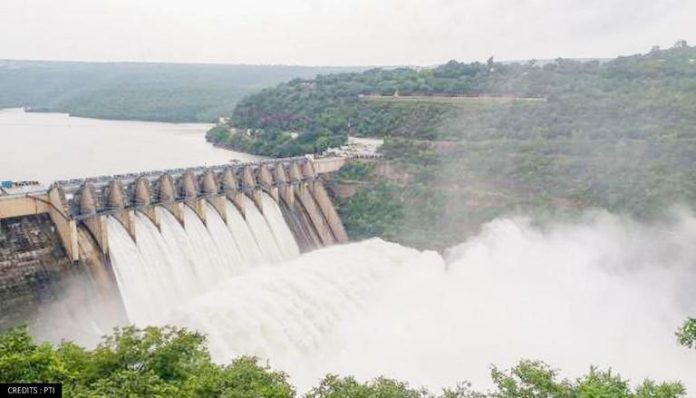









 Allow notifications





