Download Now
Home Blog Page 464

Derivative works and sequel designs

0
Management of IPR filings
Image source - https://bit.ly/2GFZlTn

This is written by Srajika Gupta, pursuing a Diploma in Intellectual Property, Media, and Entertainment laws from lawsikho. This article has been edited by Dhruv Shah (associate, lawsikho) and by Ruchika Mohapatra  (associate, lawsikho).

Introduction

Copyright protection is available for a whole array of creative works, which also includes derivative works. A derivative work is usually based on a work that is already copyrighted. “In copyright law, the term “derivative works” is referred under Article 2(3) of the Berne Convention for the Protection of Literary and Artistic Works (1971) to the adaptations, translations, arrangements and similar alterations of preexisting works which are protected under Berne Convention as such without prejudice to the copyright in the preexisting works. A work consisting of annotations, elaborations, exaggerations, revisions, or other modifications which wholly represents an authentic and original work of authorship, is a “derivative work.”

However, this definition has come under court’s scrutiny by way of various case laws, which generally concludes that there must be substantial new material in a work to be considered for copyright as a derivative work and that it must have sufficient originality and creativity. 

Derivative works in fashion law mean creating a novel version or sequel design that incorporates core and protectable elements of the copyrighted design with certain unique elements. When it comes to the fashion and haute couture industry, these rights cover major ways in which a design would be passed off by the copyist. This is another major reason why copyright is such an important and  indispensable tool for the luxury goods industry.”Through this article, the author seeks to explore the copyright protection of derivative works in the fashion industry. 

Copyright protection of derivative works

There are two ways in which derivative works are protected under copyright law. 

  1. Firstly, the derivative work is protected under the copyright of the original work. This means that the owner of original copyright work has also got rights to derivative work. Therefore, the owner of the copyright of original work can file a copyright infringement lawsuit against a person who creates derivative work without permission. 
  2. Secondly, the derivative work itself is protected under copyright law. The creator of derivative work owns the copyright to the derivative work. This creator can either be the creator of original work or a person who has obtained a derivative work license from the person who owns the copyright of original work. 

However, if the original work is under the public domain, the derivative work will be eligible for copyright protection, but the original work wouldn’t be protected under copyright. When it comes to fashion designs, we first have to see what is copyrightable: sketches, colours, cuts and graphic designs etc. Sketches are afforded copyright protection. The copyrightable part of the sketch is the drawing and not the underlying idea. Colours are a part of trademark law, whereas the cuts under fashion designs are part of design law. However, Graphic designs are protectable under copyright law and the U.S. Supreme Court addressed this issue in the case of Star Athletica v Varsity Brands, stating that “two-dimensional designs appearing on the surface of [clothing]” including “combinations, positionings, and arrangements” of shapes, colours, lines, etc. are protectable by copyright.”

One more area where derivative work doesn’t come under the scrutiny of copyright infringement is the work of parody. Holding up a piece to criticism through parody, a hyped imitation of work for commercial comedic purposes or critiquing them falls under fair use doctrine when the parody is transformative in some kind of way. A derivative work that simply uses copyrighted names, concepts, characters and ideas cannot be passed off as parody, but a parody is actually that work that takes them and twists them in a way that makes the consumer gain an insight into the original. Often, that new understanding is present to add hysteria as to how the parody mocks the original. For instance, ‘Oh Hell Clothing’ made fun of ‘Yves Saint Laurent’ by initialising their letters into You’re So Vain’ in a jumper. Moreover, it is imperative to note that the transformed part of a work isn’t the only demarcating factor. There are other considerations that are taken in due regard when the court is introduced to a specific situation of alleged copyright infringement. 

  1. The amount and substantiality of copyrighted work used in the derivative work- Quality and quantity are both relevant—in some cases, using even a tiny fraction of the original work can be taken too derivative to be deemed as fair use, if that forms the crux of the work or design.
  2. Derivative’s effect on the marketing of the original work-  Fair use of a work shouldn’t hurt the original creator’s ability to profit from their work. In the case of fashion designs, the bar of creativity and innovation is low. Therefore, generally, the creation of derivative works is an appropriation since the derivative works satisfied the requirement of new as a fashion design. 

“‘Derivative’ means a work that appropriates certain design elements of a model design, but is nonetheless visually distinguishable to the average observer.” The derivative works take on a common design element and elevate and enrich it to a completely different stature. The constant evolution and creation through derivative works is what drives and thrives the fashion cycle.

  1. Inspiration- There’s a fine line between inspiration and plagiarism. Plagiarism is imitating another person’s work and presenting it  as your own without giving due credit to the originator. Inspiration turns into imitation when the central idea or crux of the work is copied.

For instance,  an artist’s use of bold colours and geometric shapes gives you inspiration for your own work. Incorporating the same colour schemes and shapes in your designs would be taken as imitation, whereas interpreting these ideas in a different manner and subsequent application to your own work in novel ways would be termed as inspiration. The key to being inspired is that the design needs to be transformative, and your inspired work needs to be distinct from the core idea that constitutes the original artwork.

Sequel designs and copyright

By their inherent nature, the creation of a parody or a sequel of a copyright-protected work will require the reproduction of work, either partly or wholly. Generally, reproduction will lead to infringement if, firstly, the reproduction is created without the prior authorization and license of the copyright owner, and if, secondly, the reproduction as a whole or core and substantial part of it is disputed and in question. Substantiality of reproduction is still a vague concept and not readily quantifiable and depends on the facts of every situation. The accepted approach to the question of substantiality in the United Kingdom was laid out by the House of Lords in their judgement in the seminal case of Designers Guild v Williams (2000) which is that the question is largely one of impression and is determined by the importance of the part reproduced in relation to the original copyright work, meaning that quality is prioritized over quantity.

It is apparent that for a sequel or parody of a copyrighted work to operate or be recognizable, the distinctive and recognisable style or quality of the copyrighted work would necessarily have to be reproduced in the form of a sequel or parody. Hence, it is clear that wherever copyright law is relevant, a legally imperative part of the original work should certainly be taken up by a parody or sequel.

The other substantial point to take into account is the test for infringement in Designers Guild where sequels and parodies are considered is that the importance of the part taken is measured in relation to the original copyrighted work from where the defendant’s work is derived, and not the defendant’s work. Therefore, for infringement purposes, it is irrelevant that the defendant has worked with utmost diligence and turned around the original work into something transformative. Therefore, in spite of the fact that it may be apparently distinct from the original work, the parody or sequel would still be regarded as a clear infringement of the original.

Conclusion

Fashion designers should be given due regard like other artists. They should be rewarded for their immense creativity and receive recognition through IPR. Their work should be put in protection under copyright law like any other IP. However, because fashion is considered to be a utilitarian function, and because fashion trends are transient and short-lived in nature, fashion designers should be garnered copyright protection for a limited span rather than the legal duration sanctioned under copyright law, since the relevance of designs dies with the trends themselves.

The fashion industry is dependent upon the creation of trends and in turn, trends are dependent on copying.  The majority of the copies in the fashion industry are lower in price than the originals. But fashion designers are at par with artists. The cheap imitations cause significant losses to premium couture houses and also demerit their creativity and intellectual prowess in their field. Consumers relish the several options available when it comes to a brand name, specific design, and price, but this option shouldn’t be available at the cost of a designer’s creativity and innovation. Therefore, even in the case of derivative works and sequel designs, the fashion designers should tread carefully and not misappropriate another designer’s hard labours. There is a fine line between derivative work/sequels and imitations. The fashion industry is evolving and dynamic, and this fine line even gets finer on the brink. There is still a lot to be figured out in fashion law, and copyright infringement varies from case to case.  

References

  1. https://abounaja.com/blogs/importance-of-derivative-works
  2. https://www.americanbar.org/groups/intellectual_property_law/publications/landslide/2012-13/january_february/fashion-protecting-brands-law-designs/
  3. https://www.finnegan.com/en/insights/articles/understanding-the-importance-of-derivative-works.html#:~:text=Section%20101%20of%20the%20Copyright,which%20a%20work%20may%20be
  4. https://www.thefashionlaw.com/intellectual-property-rights-a-primer/
  5. https://www.wipo.int/tk/en/resources/glossary.html#2
  6.  https://www.legalzoom.com/articles/what-are-derivative-works-under-copyright-law

Students of LawSikho courses regularly produce writing assignments and work on practical exercises as a part of their coursework and develop themselves in real-life practical skills.

LawSikho has created a telegram group for exchanging legal knowledge, referrals, and various opportunities. You can click on this link and join:

https://t.me/joinchat/J_0YrBa4IBSHdpuTfQO_sA

Follow us on Instagram and subscribe to our YouTube channel for more amazing legal content.

Download Now

Challenges of being the Chief Justice of India in light of the Justice Khehar case

0
Image source - https://bit.ly/3aqsTzT

This article is written by Niharika Agrawal pursuing BBA LLB from IFIM Law School Bangalore. This article has analysed previous judgements that have questioned the reign of Justice Khehar as the Chief Justice of India. 

Introduction

Justice is made based on moral rightness, rationality, equity, and fairness and the burden of delivering such timely justice to the citizens of the country is upon the Supreme Judge of the country. In India, the major role of the Supreme Judge is by the Chief Justice of India. Justice Jagdish Singh Khehar was appointed as 44th Chief Justice of India on the 4th of January by the then President of India, Pranab Mukherjee. He has succeeded Justice T. S. Thakur and worked in the position for a short period, i.e., from January 2017 to August 2017. He was the first Sikh Chief Justice of India. However, his appointment for the position of Chief Justice of India was challenged by the group of lawyers by filling the petition in the Supreme Court of India in the case of National Lawyers’ Campaign for Judicial Transparency & Reforms & Others v. Hon’ble Shri Justice J.S. Khehar & Others (2016). 

This article deals with the challenges faced by Justice Khehar during his appointment for the said position in the light of the above-mentioned case.

Analysis of the case

The origin of the present case is from the past judgement given in the case of Supreme Court v. Union of India (2015), also known as the NJAC case. This judgement was given by a five-judge bench, headed by Justice Khehar. With a majority of 4:1 ratio, it was held that the 99th Amendment to the Constitution is void as it is ultra vires to the Constitution. The judges were of the opinion that the appointment of judges cannot be compromised as it is an important part of the primacy of the judiciary. According to them, handing over the power to appoint judges of higher judiciary in the hands of National Judicial Appointment Commission (NJAC) under Article 124 (A), and the power to Parliament for regulating the procedures and to set the manner of selection under Article 124 (C) is unconstitutional, as it is a potential threat and impinge upon the independence of the judiciary in India. 

The Apex Court also held that the doctrine of basic structure cannot apply while judging the validity of the Parliament Statute, independence of the judiciary and the rule of law, as that may affect the golden triangle of the Constitution, i.e., the fundamental rights under Article 14, Article 19 and Article 21 of the Indian Constitution. Thus the NJAC Act was struck down as the Supreme Court of India was given the power to review any amendment that violates the basic structure of the Constitution. 

The present writ petition was filed under Article 32 of the Constitution by the National Lawyers Campaign for Judicial Transparency and Reforms and fifteen other persons for the elevation of his position of Chief Justice of India. According to them, Justice Khehar struck down the NJAC to benefit himself, as the judgement has reviewed the collegium system for the appointment of judges in the higher judiciary. They also claimed that he was more biased towards the high profile lawyers and was strict against the minor errors committed by advocates. According to them, the NJAC Act gives the government an equal say and chance in the process of appointment of judges. Hence the group of lawyers alleged that Justice Khehar is not eligible for the post of Chief Justice of India on the ground that the NJAC case, which was delivered under his Lordship, has declared that 99th Amendment of the Constitution and NJAC Act, 2014 as unconstitutional and void, in order to benefit himself with illegal power of appointing the judges. 

Justice Khehar also headed the bench that forced the government to withdraw the Presidential rule in Arunachal Pradesh in January 2015. He alleged that all the actions of the Governor are violative of the Constitution which has impacted the power of executives. Due to this various questions were raised on the eligibility of Justice Khehar as Chief Justice of India. Apart from these allegations, the petitioners have also praised the qualities of the Justice. They stated that Justice Khehar is a tall judge with undoubted integrity, honesty and uprightness and calls his lordship a real diamond. The petitioners were of the view that Justice Chelameswar, the second senior-most Judge, should be the succeeding Chief Justice of India as he had a dissenting view in the NJAC case of upholding the constitutional validity of the Act and also favoured the scraping of collegium system for appointment of judges in the higher judiciary. 

Due to this Justice Khehar has to face various challenges of being a Chief Justice of India. The following were the challenges. 

  1. The Memorandum of Procedure (MoP)

One of the major challenges that Justice Khehar has faced was concerning re-drafting of the MoP that finalises the procedure for the appointment of judges to the higher judiciary. Justice Khehar decided to re-draft the old two decades of MoP with the intention to bring transparency and accountability in the judicial appointment process. By declaring NJAC Act unconstitutional, he tried to provide a new version of the collegium system. However, Justice Chelameswar was against the judgement as he felt it criticizes the spirit of the Constitution. According to him, it is impossible to have independence from any of the three branches due to democratic values and provisions under the Constitution of India. 

The objective of the 99th Amendment is only to restore the balance between the branches and hence, this cannot be destructive of the basic structure of the Constitution. Thus, he refuses to attend any meeting related to collegium until the process is evolved to bring transparency in the process of appointment. This MoP is the bone of contention between the Centre and the Supreme Court. This was the first challenge before the new Chief Justice of India to remove all the predicament through addressing the issues of transparency and accountability in the functioning of the collegium. 

  1. Delay in filling vacancies

The collegium system consists of five senior-most judges of the Apex Court to make recommendations to the government for appointing the judges for higher judiciary. Delay in filling the vacancies in the sanctioned strength of the courts also increases the institution of the cases which renders the inadequacy in the judiciary to deliver its constitutional mandates. Due to the inadequate state of the courts, the Government Committees and the Commissions find arrears in the court’s functioning. These bodies of the government, therefore, opined to increase the strength of the judges for a long time, but to date, it has remained unimplemented. The courts in this situation are unable to deliver the fundamental right to timely justice to the people at large and thus it undermines the major purpose of judicial independence and constitutionalism. Hence, this is the second biggest challenge to the new Chief Justice of India to develop the relationship where the appointment process moves smoothly.

Till today there has not been any such scale that resolved the present judicial crisis. There have been continuous questions regarding the initiative taken by the judiciary to ensure more transparency and accountability in the judicial system, from the government and the civil society. The Chief Justice, who is the Paterfamilias of the judiciary, while taking any decisions in the judicial capacity has to initiate some positive and reformative changes, or else, the judiciary under the largest democracy will succumb under the force of its own responsibility, which would bring forth an even more challenging issue of bringing back the faith of people in the judiciary. 

Judgement

The Supreme Court consists of the Vacation Bench of Justice R. K. Agrawal and Justice D. Y. Chandrachud in the petition against Justice Khehar refused to entertain the petition due to insufficient and unreasonable grounds. The Court held that the collegium system not only consisted of Justice Khehar but also the other four senior-most judges. Hence, it is not correct to state that Justice Khehar has benefited himself from his verdict in the NJAC case. 

The Apex court also pointed out that the petitioner has himself praised Justice Khehar and his honesty and integrity in the present petition and therefore, no question arises of his eligibility or being disqualified for appointment as Chief Justice of India. 

Further, the bench also clarified that the petitioner has the remedy to file a review and curative petition whenever there are questions of the correctness of the decision of the court, for example, the judgement in the case of NJAC. Both judges on the bench, with their reasonings, held that the disqualification of Justice Khehar for being Chief Justice of India is thoroughly misconceived. Justice Kehar was duly appointed by the then President of India as a judge of the Supreme Court under Article 124(2) of the Constitution on 13th September 2011. Being the senior-most judge of the Apex Court, he is allowed to appoint as a Chief Justice of India as per the Constitutional convention. 

Conclusion 

Thus, Justice J. S. Khehar had commenced his position in the Chief Justice of India office on 4th January 2017 for a term of seven months along with a discourteous summer vacation of one and half months. He retired on 27th August 2017. In this short duration, it is not possible to resolve all the issues and neither person could accomplish his or her dream. It has been the old ritual that the senior-most person would be the head, similarly, in the world of law, a similar old tradition is followed where the senior-most judge is awarded as the Chief Justice of India. Thus, the question related to the functionality of the ritual has also become relevant. In the absence of any Constitutional provision, this convention was provided with exceptions so that any controversies arising out of the appointment of the Chief Justice of India can be avoided. However, this has led to a rapid succession of CJIs within two or three months. This was another problem with the judiciary. In the Apex Court, the entire power is given in the hands of CJIs and if there is the absence of fixed tenure, there can be no developments and reforms for judiciary independence from the executive on aspects other than the appointment of the CJIs. 

References

  1. http://www.jlapp.in/case-commentary-the-njac-judgement/
  2. https://timesofindia.indiatimes.com/india/sc-turns-down-plea-against-elevation-of-justice-js-khehar-as-cji/articleshow/56137039.cms
  3. https://scroll.in/latest/825519/supreme-court-dismisses-plea-against-jagdish-singh-khehars-appointment-as-next-chief-justice
  4. https://www.thehindu.com/news/national/Plea-against-appointment-of-Justice-Khehar-as-CJI-dismissed/article16963735.ece
  5. https://www.business-standard.com/article/pti-stories/njac-verdict-can-t-be-used-as-ruse-to-interdict-cji-khehar-sc-117012200638_1.html
  6. https://www.livemint.com/Politics/UlzNPp5d7DhABJKcdlJAGN/J-S-Khehar-appointed-as-next-chief-justice-of-India.html
  7. https://www.thehindu.com/news/national/Jagdish-Singh-Khehar-sworn-in-as-Chief-Justice-of-India/article16986757.ece
  8. https://www.legitquest.com/case/national-lawyers-campaign-for-judicial-transparency-reforms-others-v-honble-shri-justice-js-khehar/A9D0D

LawSikho has created a telegram group for exchanging legal knowledge, referrals and various opportunities. You can click on this link and join:

https://t.me/joinchat/J_0YrBa4IBSHdpuTfQO_sA

Follow us on Instagram and subscribe to our YouTube channel for more amazing legal content.

Download Now

Franchising of fashion brands and the role of trademarks

0
Image Source: https://rb.gy/ulne13

This is written by Romina Virjee, pursuing a Diploma in Intellectual Property, Media, and Entertainment laws from lawsikho. This article has been edited by Dhruv Shah (associate, lawsikho) and by Ruchika Mohapatra  (associate, lawsikho).

Introduction

Strategies for launching a new fashion brand revolve around building its online presence as well as physical retail establishments. The brand broadens its horizon locally, nationally, and eventually worldwide. Hence, protecting the intellectual property of the brand is of utmost importance even before launching the brand in the market.

The intellectual property associated with establishing a  fashion brand includes registration of its trade name i.e. trademark, which eventually gains a reputation as the brand. Registration of a trademark with a local government body gives the brand statutory protection against any other party using identical or similar marks for selling similar goods or services as the registered brand. Trademarks are words, symbols, logos, and phrases used by a manufacturer to distinguish his products from that of others and thus, create a brand image in the mind of the consumers. For a  fashion brand, it is crucial that the designs, logos, styling of merchandise, slogans, etc be copyrighted or registered under design patent such that to protect the brand statutorily. A franchise agreement involves the temporary transfer of marketing rights and the right to use its trademark and logos from the franchisor to the franchisee. The growth in terms of mass outreach of a brand depends on its availability and accessibility in terms of procuring its merchandise easily.  For this purpose, either the brand owner prefers to franchise his brand to other franchisees or launches his own retail outlets. The former is the most viable option for any brand owner in terms of mass outreach and gaining profits from the royalty of the brand itself.

Franchising of a fashion brand

Franchising a brand involves temporarily assigning the trademark of a brand to the franchisee for carrying on business and selling the branded merchandise in return for royalty and/or profits. The franchise owner guides the franchisee from scratch and trains him right from designing the store to providing him merchandise knowledge and training his staff for an appropriate customer approach. Many fashion brands like Zara, H & M, Forever 21, GAP, etc have franchise outlets worldwide due to which their brand has global outreach. Such trademarks are also known as well-known trademarks since their business has grown fourfold due to global presence.

Any franchise agreement includes brand control, consistency, and IP protection under the agreement. It is important to protect the brand, its business model, and the right to use its IP under the agreement to avoid misuse of the brand name. In this article, the author has shared the top five tips for fashion brands to expand globally.

Protect the intellectual property of your brand

Your brand reflects the value you put into its manufacturing and design. Hence, protecting your imagination and design through various IP aspects becomes important since the merchandise of successful brands is invariably duplicated. To safeguard your brand and its business, it is essential to look into various IP rights that can be sought not just regionally but also internationally. 

Plan expansion into local territories and international nations

Expanding your brand via franchising is a great way to achieve global outreach in a short span of time. However, it is critical to analyse franchising and commercial laws of each country depending on the location of expansion. Franchise rights granted to a franchisee for a particular territory should be evaluated in terms of restricted agreement only for that particular territory or he should be given unrestricted rights over many territories such that his investment can be recovered in a short duration. Also giving one person or one company larger territorial rights shall ensure lesser risk to the brand image and shall ensure smooth functioning of the expansion plan.    

Structure the franchise

Understanding the entire sourcing and manufacturing of the merchandise is critical to give structure to the franchise. A quality control monitoring system is of utmost importance to maintain the quality of products sold under your brand. Hence, structuring the franchise is important, in a way that the quality of your merchandise is maintained even if they are manufactured locally as per territorial needs. Laws of the land play a vital role in devising techniques to maintain the quality of the merchandise as well.

Prepare franchise offer

The next step to expand into the international market is to tap prospective franchisees who would be interested in your brand. For this purpose, it is essential for your brand to gain reputation and popularity regionally and for the business turnover to be captivating enough so as to lure the franchisees. It is also essential to establish a pack of information or product portfolios for prospective franchisees that shall hold primary information on various products sold under the brand, present retail outlets, customer reviews, e-commerce outreach, etc. Franchise offer should be an overview of how the brand merchandise can be made popular amongst international consumers. It must look lucrative to any franchisee wanting to be associated with your brand.

Understand commercial terms and conditions 

Finally, when a franchisee is interested in investing in your brand, you should understand the commercial terms of the franchise agreement based on the laws of the land. Every county has different laws with respect to franchising. Before signing any international contract, it is crucial to evaluate the final terms of allocation between the two parties. The franchise agreement should be water-tight with respect to payment terms, legal obligations, and marketing rights. Eventually, a franchise agreement assures brand protection and profitability of the brand for the franchisor and franchisee respectfully.

Role of trademarks for fashion brands

Franchising and trademarks are two sides of the same coin. It is pivotal for any brand to register its trade name i.e. trademark such that no other person can sell its goods under his trademark. Registering a trademark shall grant the sole statutory right to the brand owner to market or sell its merchandise under his brand name thus avoiding competition from other traders using deceptively similar or identical brand names. Consumers seldom relate the brand to the quality and usability of the products sold under the brand. Any branded product of the same quality shall have a higher market price than a non-branded product of the exact same quality. For example, denim brands like Levis and Pepe Jeans are popular amongst college-going consumers as compared to locally made non-branded denim. Indian Fashion brands like Sabyasachi, Manish Malhotra, Ritu Kumar, Neeta Lulla especially selling bridal wear fall in the luxury category as their bridal lehengas are sold at exorbitant prices as compared to customized replicas of the same brand. Hence, any new business that grows at the national and international level requires some degree of Intellectual Property protection to protect its merchandise from replicating in the market thus, disturbing the brand image and net worth. Registration of brand under trademark becomes of extreme importance to such brand owners where none other than the owner of a trademark can use the brand to market or sell similar merchandise as that of the brand. A trademark brings value to the brand in terms of exclusivity of use for selling or marketing certain goods/services under the brand name.    

Territorial rights under trademarks

Trademark is a territorial right meaning if a brand is registered only in one country it enjoys protection only in that country. Hence, start-ups usually trademark their brand in their jurisdiction first and as they grow their presence in different countries, they eventually register their brand in those countries too. Well-known marks usually register their brand in all countries and in all classes such that they are well protected in all countries. When any local brand grows internationally, it is important for it to have its brand registered in that country because the viability of franchising the brand increases thus relieving the owner of the brand to the self-acquired business establishment in an international setup. It is always easier to promote a brand internationally via a franchise agreement than to self-acquired the business on international land. The biggest example of trademark territorial rights is that of ‘BURGER KING’ in Australia. A small restaurant with the registered trademark ‘BURGER KING’ already existed in Australia before the US brand could acquire its consumer market. Hence, the US brand ‘BURGER KING’ in Australia was marketed under the brand ‘HUNGRY JACK’S.’ Under Section 34 of the Trademarks Act 1999, the doctrine of prior user is clearly mentioned as territorial operation i.e within the territory of India except in the case of cross border reputation where a brand or trademark registered in another region or country has acquired reputation and goodwill in India without being registered in India.

Case laws

Alfred Dunhill Ltd v Kartar Singh Makkar 

In this case, it is well settled that a passing-off action would lie even if the plaintiff is not manufacturing or producing in this country any goods similar to that of the defendants. Assuming, for the sake of argument that, textile articles manufactured by the plaintiff are not available for sale in India. Yet the plaintiff company is entitled to protect its global reputation, image, name, fame, and goodwill as the goodwill or image or reputation of goods and services does not depend upon its availability in a particular country. It was held that trans border reputation of the trademark and trade name DUNHILL has been established in this country by means of the fact that plaintiff’s products are available in duty-free shops in India, by the fact that advertisement of plaintiff’s goods under the trademark and trade name DUNHILL are to be found in various magazines like the Newsweek, Time and the Asia Magazine, which are freely available in India. It can safely be inferred that the plaintiff’s trademark and trade name DUNHILL have a live reputation in this country.

Lifestyle Equities & Anor v Amazon UK Services Limited & Ors 

Justice Green said: “In my judgment, it is plain that both Amazon.com and the BHPC listings on it are not targeted at the UK/EU consumer. Such a consumer knows full well that they are viewing or shopping on the Amazon website that is primarily directed at US consumers.” He said that the tension between the territoriality of trademark rights and the global nature of the internet is something that businesses and brands have to live with. “Where there is the split ownership of the brand as in this case, it is not possible or justified to split the accessibility of information on the internet and deprive consumers of information to which they are otherwise entitled,” he said.

Conclusion

The global consumer market is now accessible from any region or territory through e-commerce and hence registration of trademarks have gained momentum in terms of building brand value, brand presence, and net worth. Fashion brands are acquiring global markets rapidly and creating reputation and goodwill amongst consumers on a large scale. The internet has made it possible to compare international brands with a click of a button. Social media reputation also has a greater impact on the minds of the consumers. In such scenarios, it is of utmost importance for a brand to carve a niche for itself by registering its trademark worldwide to avoid the competition of any kind.

References

  1. https://www.mondaq.com/uk/franchising/366436/international-franchising-in-the-fashion-industry–top-five-tips-for-growing-overseas
  2. https://www.trademarknow.com/blog-essentials/the-role-of-trademarks-in-franchising
  3. https://www.dentons.com/en/insights/alerts/2015/january/13/international-franchising-in-the-fashion-industry?utm_source=Mondaq&utm_medium=syndication&utm_campaign=LinkedIn-integration
  4. https://www.franchiselawsolutions.com/franchising/trademarks/
  5. http://fashionpro.me/top-10-indian-bridal-wear-designers/
  6. https://www.cbc.ca/radio/undertheinfluence/why-it-s-hard-to-find-a-burger-king-in-australia-1.5469678
  7. https://www.lexology.com/library/detail.aspx?g=ecaf4f7c-9e9d-4395-8e96-ddfebf0445d5

Students of LawSikho courses regularly produce writing assignments and work on practical exercises as a part of their coursework and develop themselves in real-life practical skills.

LawSikho has created a telegram group for exchanging legal knowledge, referrals, and various opportunities. You can click on this link and join:

https://t.me/joinchat/J_0YrBa4IBSHdpuTfQO_sA

Follow us on Instagram and subscribe to our YouTube channel for more amazing legal content.

Download Now

Insights into the right to fair compensation and transparency in Land Acquisition, Rehabilitation, and Resettlement Act, 2013

0
Real estate

This article has been written by Surbhi Khanna pursuing the Certificate course in Real Estate Laws from LawSikho. This article has been edited by Gloria Gomes (Associate, Lawsikho) and Dipshi Swara (Senior Associate, Lawsikho). 

Introduction

India, an agriculture-driven country with a high population density, land here is not just a resource or asset, it is a legacy. So acquiring land in a country like India is a very sensitive issue as balancing the interest of the owner along with development is a tedious task. Hence land acquisition has always been a controversial issue. With effect from January 1, 2014, the Central Government passed “Right to Fair Compensation and Transparency in Land Acquisition, Rehabilitation And Resettlement Act, 2013” (“New Act”)” repealing the century-old colonial Land Acquisition Act 1894 (“Old Act”).

In this article, we will see the following aspects of the new Land Acquisition Act for more insights on this subject

I. Special Features of the Act.

II. Merits and Demerits.

III. Practical Scenario with reference to case laws.

IV. Conclusion and key takeaway.

Special features of the Act

The Old Act was more arbitrary in nature on the part of the State, as there were no adequate provisions for redressal of grievance of landowner further the process overall lacks transparency in it. In contrast, the title of the New Act itself clears the intention of lawmakers behind the new law; it is more owner-friendly. It is a time-bound human participative informed and transparent process with the intent to include both sustainability and development hand in hand. Some of its important features are listed below:-

  1. Prior Consent for Acquisition and applicability for Private Players like industrialists

Land can be acquired for such public purposes as defined under the Act, namely strategic purposes relating to the naval, military, air force, infrastructure projects, public-private partnership projects. In case the land is acquired by Government for Public-Private Partnership or on behalf of Private Companies for carrying on Public Purposes then the consent of 70% and 80% respectively of affected families shall be required for Land Acquisition.

The provision relating to rehabilitation and resettlement shall also apply in case Private players acquire land exceeding the limit prescribed by the appropriate government through Private negotiations.

  1. Purpose for Acquisition 

Government cannot acquire land for Private Players except in the case of public-private partnership projects or for Private Companies for public purposes. Further, if Private Players acquire land for any purpose through Private Negotiation over the limit as may be notified by the appropriate Government the provisions for Rehabilitation and Resettlement will become applicable

  1. Social Impact Assessment Study

Before determining whether the land shall be acquired or not, a social impact assessment is conducted on the identified land by the Government in consultation with local bodies (Panchayat, etc) to assess the social impact of the acquisition, its cost, and how it shall be addressed or compensated. Only after receiving a favourable Social Impact report where potential benefits outweigh the social impact of the Project, the subject land is sought to be acquired.

  1. Rehabilitation and Resettlement Package

The Rehabilitation and Resettlement Package under the Acts is broader in terms of elements, apart from monetary compensation it has provision to provide for employment, allotment of alternative housing units, another land, and other entitlements, allowance and grants to make up for the loss of occupation or opportunity owing to displacement, infrastructure facilities at the resettled place.

Additionally, in case of acquisition of land that exceeds one hundred acres a Rehabilitation and Resettlement Committee is constituted containing the representative of various stakeholders to monitor and implement the Rehabilitation and Resettlement scheme.

  1. Special Provisions

 To ensure food security, multi-crop irrigated land shall not be acquired under normal circumstances; it can be acquired only under exceptional circumstances, as a last resort after making suitable provision for another agricultural land for a similar purpose to cover the loss.

No acquisition of land shall be made in the Scheduled Areas (Scheduled Areas means the Scheduled Areas as defined in section 2 of the Provisions of the Panchayats (Extension to the Scheduled Areas) Act, 1996), further without the prior consent of the concerned Gram Sabha or the Panchayats or the autonomous District Councils, at the appropriate level is required in all cases of land acquisition in such areas, including acquisition in case of urgency.

  1. Compulsory Acquisition

In case of defence or national security or any emergencies arising out of natural calamities or any other emergency with the approval of Parliament, subject land can be compulsorily acquired by the Collector on the direction of appropriate government without following the due process of land acquisition under the Act.

  1. Compensation

The most highlighted feature of the New Act which is reflected in its title itself is the fair compensation. The Act stipulates a mechanism to provide for minimum compensation which includes payment of 1 to 2 times the Market Value of land, value of asset attached to the land together with Solatium.

Solatium is the amount payable in addition to compensation equalling 100 % of the Compensation Amount. Nevertheless, the quantum amount of compensation is quite higher than the Old  Act.   

8. Retrospective Effect

In a certain way, this Act also applies to previous transactions initiated under the ‘Old Act’ that is where an award under the previous Act has been made five years or more before the commencement of this Act but the physical possession of the land has not been taken or the compensation has not been paid the land acquisition proceedings under Previous Act shall be deemed to lapse and the appropriate Government, if it so chooses, shall initiate the proceedings of such land acquisition afresh in accordance with the provisions of this Act.

9. Urgency Clause

Only in the case of defence or national security or for any emergencies arising out of natural calamities or any other emergency with the approval of Parliament, the land is acquired without following the whole process of Social Impact Analysis and Public Hearing is waived and possession of land is acquired on the expiration of thirty days from the publication of the notice.

Merits and demerits 

1. Merits

Compared to the previous Act, this Act is a complete 180-degree change in the approach of the Government from Acquirer centric to Owner Centric. Not only is the amount of compensation much higher (four times higher in rural areas and two times in urban areas) than the Old Act, the element of consent for Acquisition and Rehabilitation and Resettlement are included in this Act which was missing in the Old Act. The whole process of Land Acquisition is based on the approach of time-bound decision-making with the proactive participation of stakeholders. It is a transparent process where the government notifies/publishes/informs decisions related to the Land Acquisition process and suitable provisions are made to address their concern/ take their suggestion either directly or through their elected representative.

2. Demerit

Although the amount of compensation is much higher under  New Act, the determinant of Compensation that is the current market value of the subject property does not make up for the potential value that will occur after the development of property which otherwise would be available for the Landowner under Private Negotiations.

Further, the resettlement and rehabilitation, and compensation are only restricted to Landowners, however, there are other dependents like the landless farmer whose livelihoods are affected are not covered under Scheme.

The whole process is time-consuming and complicated, discouraging State and Private Players to comply with the process in letter and intent. Other than Multi Crop Land and Land under Scheduled Area, no special protection is provided under the Act for Farm Land and Forest Land. For all types of rural and urban land, the same procedure has been defined, no provision for a fast-track mechanism other than an urgency clause has been provided in the case where there are no complications

Reference to case laws

To understand major issues/ controversies relating to this law, in this section, we will look into prominent cases.

Acquisition of forest land- POSCO Resistance Movement 

Background

In India, many laws protect the rights of Scheduled Tribes and Forest land. One of these acts is Scheduled Tribes and Other Traditional Forest Dwellers (Recognition of Forest Rights Act) 2006, which provides for prior consent of local people in case of acquisition of Forest Land for any Project. However, practically these laws fail to protect the interest of vulnerable classes because of poor execution Below we will discuss the “POSCO Resistance Movement ” illustrating one such case in this regard:-

Outcome of the case

1. In 2005 Orissa Government entered a Memorandum of Understanding (MOU) with South Korean steel major, POSCO, to offer 4,004 acres of coastal land out of which 3,000 acres were Forest Land for the development of a massive Steel Project.

2. The subject land was the source of livelihood for 20,000 Tribal people who were cultivating betel vines

3. Even after the denial of the consent of Local People under Scheduled Tribes and Other Traditional Forest Dwellers (Recognition of Forest Rights Act) 2006 and rejection of a 70-crore rehabilitation package, the Orissa Government initiated land acquisition in a phased manner. 

4. The First Attempt was made in 2011 after instances of fierce public resistance the Acquisition was suspended. The second attempt was again made in 2013 with additional police deployment, the instance witnessed violence and clashes between the Police and People.

5. Later it was found by India’s National Green Tribunal (NGT) that environmental
clearance granted and social impact assessment had grave inconsistencies and there was the absence of requisite legal approvals. A committee was set up to review the hasty environmental approvals given to the Project in 2011.

6. In 2017, POSCO management withdrew from the project owing to a loss in interest attributable to change in Law and other Regulatory Hurdles.

Acquisition for Private Players- Tata Singur Case

Background

Industrialist, real estate developers seek the support of governing parties to acquire land for commercial use.

Generally, it has become an implied norm for the Government to acquire land at their dedicated terms under the immunity of law and hand it over to Private Players.

Outcome of Case

1. West Bengal Government in May 2006, offered 700 acres of fertile agricultural farm    
land at Singur in Hoogly to Tata Motors for the development of their Tata Nano      Project.

2. Land was forcefully acquired and possession of the land was handed over to Tata   Motors.

3. Said acquisition was heavily agitated by the affected landowner and non-farming households who have been employed in the agriculture-related occupation.

4. Later on their agitation was fuelled by the support of opposition Political parties and other social workers became infamous in the Country.

5. The acquisition was challenged in the High Court and during the court proceedings, it was found that 65% of land out of the total 400 acres had been acquired forcefully for which no consent was taken by the Government.

6. Attributed to the violence and bad publicity, Tata withdrew from the land and developed its industry in Sanand, Gujarat, India.

State laws diluting centre law- Chennai Metro Case

Background

As an aftereffect of the long complicated procedure entailed under New Act it has been observed that States are revising their local laws (similar to the old Act) to acquire Land simply to save themselves from the hassle of the New Act. One such controversial case is the acquisition of land for Chennai Metro by Tamil Nadu using their State Laws.

Judgment/ Decision of the court

1.After enactment of the New Act, the Tamil Nadu Government on December 05 2019 by using their statutory power under Article 254(2) passed a State Law The Tamil Nadu Land Acquisition Laws (Revival of Operation, Amendment, and Validation) Act, 2019 with the intent to exempt the applicability of LARR in three categories of the project for Industrial and infrastructure purpose which constitutes the majority of land acquisition.

2. Their enactment was challenged in the Supreme Court by way of the writ petition, to which the Supreme Court held the enactment valid on the ground that subject to the consent of the president a state can deviate from the Centre Law under Article 254(2)

Conclusion and key takeaways     

From the above case laws, we have seen that whenever the Government forcefully acquires land especially rural and forest land wherein the stakeholders do not accrue any direct benefit the acquisition often fails subsequently snapping the overall development plan. Governments in the wake of social and economic development often exceed their traditional role of “Law keepers” to facilitators for private players in land acquisitions hence disturbing balancing of interest and negotiating power of the Land Owner and Affected Families. Attributable to this disturbance in Balance of Power between Acquirer and Affected People, the Government introduced “New Act” which is owner-centric wherein stakeholders are engaged at each step of land acquisition to make informed decisions and redress their issue and concerns. Further by defining the “Public Purpose” the act discontinues the Government role of Facilitator/ intermediaries of Private Players. In case any Private Player is involved by way PPP Project or acquires more than a specified area the provisions of the New Act are applicable. Thus broadening the scope of the New Act to both Government and Private Acquisition. But is the New Act successful in balancing the objectives of Affected Parties and Acquirer? The answer is debatable, no doubt on one side New Act is capable of protecting the interest of Affected Parties however on the other side it increases the time of the whole process of land acquisition and inflates the cost of acquisition overall affecting the ease of doing business and infrastructure development. That is why States are reluctant to implement them and seek ways to avoid its execution by using the provisions of Article 254(2) they tend to bypass its applicability in their preferred categories. Acquisition by Tamil Nadu for Chennai Metro Rail, Nanar Oil Refinery in Maharashtra are recent examples of State Endeavours for the same. Until the Act facilitate and benefit both parties it will not be successful to achieve its objectives In consideration of the above here are few suggestions to streamline the process of Land Acquisition

1. Development of Area

Government should avoid hasty Ad Hoc acquisition especially of farm and forest land on which large inhabitation is dependant, instead it should have a proactive approach in identifying potential areas well in advance and develop them to reduce the dependence on the land for example, imparting technical training to farmers so that they can slowly divert from their existing livelihood from farm to factories and become a direct part of the development process. 

2. Land Bank for Private Players

The private sector is often hesitant to invest in projects which entail large land acquisition owing to the complications of private negotiation or they tend to acquire in a way that is detrimental for owners. They often seek the support of the State Government in this regard. The State Government should have their land ready before inviting investments. They should pursue a balanced land acquisition policy comforting the interest of both Private Players as well as resettlement of affected families.

3. Long Term Benefits

To self-motivate, the people to contribute their land for the public purpose along with resettlement they should be offered a long-term benefit associated with the development.

For example, if the land is being acquired for developing roads, the toll can be waived for local people whose land is acquired, they can be given a certain rebate in their tax. These perks may inculcate a feeling of pride and may motivate them to contribute their part of the land in nations’ development.

4. Fast Track Mechanism

Under the New Act, the same procedure has been defined for every kind of land acquisition, irrespective of the type of land or the number of stakeholders affected, discouraging Private Players and State Government to get into the cumbersome procedure. A Law should be simple enough to encourage stakeholders to opt for it.

For example, in case of an acquisition under Barren Land or Waste Land, the acquisition procedure shall be simple and time-saving in comparison to Rural Land or Agricultural land.

References

  1. https://thewire.in/law/supreme-court-tamil-nadu-land-acquisition
  2. https://www.slideshare.net/nileshincl/land-acquisition-in-india-final
  3. https://scroll.in/article/832463/as-posco-exits-steel-project-odisha-is-left-with-thousands-of-felled-trees-and-broken-job-promises
  4. https://media.business-humanrights.org/media/documents/files/media/documents/briefing-note-posco-india-private-ltd.pdf
  5. https://www.thehindu.com/news/national/other-states/in-odisha-fresh-row-brewing-over-posco-land/article18516063.ece
  6. https://www.slideshare.net/vikashsaini78/tata-motor-case-singur.

Students of Lawsikho courses regularly produce writing assignments and work on practical exercises as a part of their coursework and develop themselves in real-life practical skills.

LawSikho has created a telegram group for exchanging legal knowledge, referrals, and various opportunities. You can click on this link and join:https://t.me/joinchat/J_0YrBa4IBSHdpuTfQO_sA

Follow us on Instagram and subscribe to our YouTube channel for more amazing legal content.

Download Now

Analysis of the judgment in Asha John Divianathan v. Vikram Malhotra and ors

0

This article has been written by Viraj Vinod Arewar pursuing the Diploma in Advanced Contract Drafting, Negotiation and Dispute Resolution from LawSikho. This article has been edited by Smriti Katiyar (Associate, Lawsikho) and Dipshi Swara (Senior Associate, Lawsikho). 

Introduction

The recent verdict of Hon’ble Supreme Court of India, headed by the three-judge bench, in the case of Asha John Divianathan versus Vikram Malhotra and others (Civil Appeal No. 9546 of 2010) has generated significant attention in the legal community as it has finally addressed the issue concerning matters relating to the transfer of Immovable Property in India by foreigners.    In a brief, Hon’ble Supreme Court of India declared that the transfer or disposal of Immovable Property in India by a foreign citizen, mandatorily and not merely directive, requires the prior permission of Reserve Bank of India under Section 31 of Foreign Exchange Regulation Act, 1973.   In this article, we are going to analyze this case. But as this case mainly revolves around Section 31 of the Foreign Exchange Regulation Act, 1973 (“FERA”) it becomes important to understand the legal principles behind this law which the Apex Court has analyzed in depth.  But, before that, let us have a brief look at the facts of the case.  It should be noted that even though the FERA was replaced by Foreign Exchange Management Act, 1999 the Hon’ble Supreme Court of India delivered this judgment by exercising its plenary power under Article 142 of the Constitution of India. 

Facts of the case 

Mrs. F.L. Raitt (“Owner”), a foreigner and widow of the late Mr. Charles Raitt, was the owner of the immovable property in question (“Property”). The Owner executed an Agreement of Sale in favour of Mr. R.P David (“Buyer”). The Buyer was the father of Asha Deviantahan (“Appellant”) and the husband of Mrs. R.P David (Respondent no. 4). It was executed on 5th April 1976 and the Owner delivered the title deed of the Property to the Buyer. However, the Owner gifted the portion of the Property admeasuring 12,306 square feet, vide gift deed dated 11th March 1977, in favour of Mr. Vikram Malhotra (“Respondent No.1”) without taking the prior permission of the RBI under Section 31 of FERA. The Owner then executed the supplementary gift deed again in favour of Respondent no. 1 on 19th April 1980. Here also the Owner didn’t seek prior permission from RBI. On 4th December 1982, the Owner executed a ratification agreement to transfer the property admeasuring 35,470 square feet in favour of Mr. David. In this case, the Owner sought the prior permission of RBI under Section 31 of FERA.  The permission was granted to the Owner on 2nd April 1983 by RBI. On 9th April 1983, the Owner executed a registered sale deed in favour of the Buyer. However, on 30th July 1983, the Owner filed a suit for cancellation and setting aside a Sale Deed executed in favour of the Buyer. On 8th January 1984 the Owner expired and Mrs. Ingrid Greenwood “Successor”) was substituted as her legal representative.   

Thereafter, the Buyer filed a suit on 10th February 1984 against Respondent no. 1, for declaring the Gift Deed dated 11th March 1977 as void and for relief of possession, permanent injunction, and mesne profits. The Buyer also filed a suit against the Successor for declaration and possession of the entire property. On 31st August 2001, the Trial Court (City Civil and Sessions Judge, Mayo, Bangalore) decided all these three suits.   Subsequently, the Appellant along with Respondent no. 4, had filed the first appeal before the High Court of Karnataka against the above-mentioned judgment and decree dated 31st August 2001 of the Trial Court. The High Court of Karnataka, relying on the case-law of Piara Singh v. Jagtar Singh and Another [AIR 1987 Punjab and Haryana 93] held the Gift deed dated 11th March 1977 as valid and dismissed the first appeal on 1st October 2009.  

DATEEVENTS
5th April 1976 The owner transfers the property to the Buyer. 
11th March 1977Owner gifts the portion of the Property in favour of Respondent no. 1 without prior permission of RBI u/s 31 of FERA.
19th April 1980The owner executes the supplementary gift deed again in favour of Respondent no. 1 without prior approval of RBI u/s 31 of FERA. 
4th December 1982The owner executes a ratification agreement to sell the Property to the Buyer.
2nd April 1983RBI grants permission to the Owner to sell the Property to the Buyer.
9th April 1983The owner executes a registered sale deed in favour of the Buyer
30th July 1983Owner files a suit for setting aside a Sale Deed executed in favour of the Buyer.
8th January 1984Death of Owner.
10th February 19841. Buyer files a suit against Respondent no. 1 for declaring gift deed (dated 11th March 1977) as void. 2. Owner files a suit against the Successor for possession of Property. 
31st August 2001The decision by the Trial Court on all three suits. 
1st October 2009High Court of Karnataka dismisses the first appeal filed by Appellant and Respondent no. 4.

Understanding Section 31 and its object 

Section 31 has four Sub-sections. The main purpose of Section 31 of FERA restricts the Foreigners and foreign corporations (excluding banks) (“Foreigners”) from acquiring, holding, and disposing of Immovable Property situated in India, without the prior permission (general or special permission) of Reserve Bank of India (“RBI”), except as provided in the proviso, that is, by way of lease for a period not exceeding 5 years. 

Section 31(2) of the same act requires Foreigners to make an application to the Reserve Bank of India (“RBI”) with necessary documents, specified by RBI. 

In Sub-section 3 it is given that; on receiving such an application the RBI may grant or refuse to permit a foreigner after making due inquiry as RBI seems fit. This Sub-section further has two provisions. As per the first proviso, the RBI cannot directly refuse such an application. RBI has to give a reasonable opportunity to the Foreigner or Applicant to make a representation in the matter. Its second provision provides for default permission. If RBI gives no response to such application then within ninety days from receipt of such application then it shall be presumed that the RBI has granted permission to such application.

Sub-section 4 makes the Foreigners, holding Immovable Property in India, obliged to make disclosures and declaration to RBI within 90 days from the commencement of FERA or such further period as may be allowed by the RBI. 

However, the main problem was that no expressed condition was mentioned in Section 31 of FERA, that such permission is mandatory. On this basis, the Respondent, in this case, submitted that Section 31 is a directory and hence not obtaining the prior permission of RBI, would not make the transfer by way of gift deed invalid.  They further submitted that there is no consequence provided in FERA for noncompliance with Section 31 and hence such transfer at best should be considered as voidable that too at the instance of RBI. 

Apart from this, the Apex Court also observed and relied on the legislative intent of enactment of Section 31 of FERA. For this, the Apex Court relied on the statement of Mr. Y.B Chavan (when he was finance minister of India), which explained the object of Section 31 of FERA. He stated that it has been felt that the investment in the real estate business of India by foreigners should not be allowed, as no reason can be seen. Hence the Apex court observed the avowed object of Section 31 of FERA was to minimize the foreign investment in real estate business in India. The Apex Court for bringing out the harmonious interpretation of FERA further observed the purport of other provisions of the same Act, such as Sections 47, 50, and 63.

Arguments raised by parties

Appellant

The following contentions were raised by the Appellant:- 

1. The prior permission of RBI under Section 31 of FERA is mandatory. Hence, the Gift Deeds in favour of Respondent no. 1 are void and not binding on the Appellant and Respondent no. 4.

2. Section 47 of FERA reinforces the position of law provided under Section 31 of the same act. Section 50 of FERA also makes violation of Section 31 of FERA punishable. 

3. Relied on case laws of Life Insurance Corporation of India v. Escorts Limited and Others and Union Of India & Ors vs A.K. Pandey

4. Judgment in Piara Singh vs Jagtar Singh and Another are manifestly wrong as it has not analyzed the true scope and purport of Section 31 of FERA in the correct perspective. 

5. The Property shall be validly transferred in favour of Buyer as per the Sale Deed. 

Respondent no. 1

The following contentions were raised by Respondent No. 1:-

1. Section 31 of FERA is merely a directory and regulatory measure. It does not prohibit transfer by way of a gift as such. 

2. Section 31 and any other provisions in FERA do not provide that transaction in violation of Section 31 of FERA as void.  

3. Hence, not obtaining prior permission of RBI would not make the Gift Deeds in question invalid.

4. A transfer of this sort would at most be voidable, and even then only at the RBI’s discretion

5. Penalties for such violations are provided in Section 50 of FERA but no action has been taken in this regard by any party, including RBI.  

6. As the repository for the management of foreign exchange in the country, the RBI is exclusively responsible for determining the permissibility of the transaction.

7. There is a distinction between void and voidable transactions as per the provisions of the Indian Contract Act, 1872 (“ICA”). 

8. Relied on Waman Rao and Others v. Union of India and Others and argued that different high courts have consistently held that a transaction in violation of Section 31 of FERA cannot be considered void and that this view does not require interference.

9. As FERA has been repealed it would be fit to not disturb the consistent view taken by different High Courts in that regard.  

Decision of the court 

The Hon’ble Supreme Court set aside the impugned judgment and decree of the Trial Court (City Civil and Sessions Judge, Mayo, Bangalore) and passed the decision in favour of the Appellant. The Supreme Court held the condition under Section 31 of FERA as mandatory.  Hence, the Apex Court declared the Gift Deeds in question invalid, unenforceable, and not binding on the Appellant. The Apex court further held that the Appellant is entitled to possession of the Property and also for the mesne profits under Order 20 Rule 12 of Civil Procedure Code, 1908.  

Analysis & conclusion

The Supreme Court, for delivering judgment in this case, relied on the objective of FERA. For the purpose of finding out the objective of FERA, the Supreme Court cited the statement of the Finance Minister which was given in Lok Sabha while introducing the bill, containing FERA. The main objective of FERA was to forbid foreigners from dealing with the real estate sector in India. This judgment interprets the main purpose of Section 31 of FERA in light of its legislative intent. Vide paragraph 29 of the judgment of this case, the Supreme Court held that the implication of penalty (Section 50 of FERA) for violation of statutory requirement does not make the stipulation mere directory. Thus, contraveners cannot claim that they would just pay a penalty and thereby be forgiven or let off the hook. Resultantly, the Supreme Court held prior approval of RBI under Section 31 of FERA as mandatory and not merely directive. The most significant to note is that this case established the rule, that the Contracts which are prohibited by statute and attract a penalty at the same time will be void, even if there is the absence of express declaration that such contracts are void.


Students of Lawsikho courses regularly produce writing assignments and work on practical exercises as a part of their coursework and develop themselves in real-life practical skills.

LawSikho has created a telegram group for exchanging legal knowledge, referrals, and various opportunities. You can click on this link and join:https://t.me/joinchat/J_0YrBa4IBSHdpuTfQO_sA

Follow us on Instagram and subscribe to our YouTube channel for more amazing legal content.
Download Now

Foreign career opportunities for Indian Chartered Accountants

0

This article is written by Ms. Somya Jain, from the Vivekananda Institute of Professional Studies. The article establishes a detailed study on the career prospects of an Indian Chartered Accountant in foreign countries. 

Introduction

Are you interested in pursuing the path to become a Chartered Accountant? Are you confused about the future prospects available for an Indian CA? Considering the option to practice in the field of CA in a foreign country? Well, look no further. This article covers the entire gist of your future aspirations and goals related to Chartered Accountancy. 

Chartered Accountancy, being a professional degree, is one of the most favourable professions of many students because of the prospering ability inherited by it. This profession has gained prominence not just in India, but abroad as well. It has grown multi-fold, thereby broadening the budding avenues in the domain within and beyond the national boundaries. The Institute of Chartered Accountants of India (hereinafter called ICAI)  has entered into a Mutual Recognition Agreement (MRA) and Memorandum of Understanding (MoU) with a number of International Accounting Bodies that enabled the members of the Institute to practice the profession in the concerned country. This has helped India to tap the budding opportunities and provides a platform for growth and expansion. In order to exploit such extensive opportunities, one needs to understand the various prospects that are available for the same. 

Career prospects for an Indian CA 

The course of Chartered Accountant has a wide-ranging scope of practice which includes areas like accounting, auditing, corporate finance, corporate laws and taxation. While every other firm, globally, has revolutionised its accounting management, these firms consider it essential to hire a CA to assist them in improving the company’s resources and at the same time increase their efficiency along with achieving their goals. This has led to an expansion in the limited practice areas of CA. 

Since the ambit of the practice of a CA is no longer limited to its traditional pursuits, the employment option has also been extended. Various employment opportunities that can be seen are:

  • Working as an independent practitioner
  • Chartered Accountant firms
  • Capital marketing services
  • Consultancy companies
  • Financial companies
  • Large diversified companies including multinational corporations and the Big-4
  • Public and private sector banks
  • Public limited companies
  • Auditing firms
  • Stockbroking firms
  • Investment houses
  • Legal firms
  • Patent firms
  • Portfolio management companies

The above list stipulates some of the employment options that can be opted by the students and CAs. With the advancement of the economy and the development of society, the roles performed by a CA professional have been upgraded in accordance with the requirements. Considering the global perspective, some of the roles that have attained growing relevance in recent times are:

  • Internal Auditor
  • Tax Auditor
  • Forensic Auditor
  • Statutory Auditor
  • Share Valuer
  • Financial Reporter
  • Management and Corporate Consultancy 
  • Tax Advisor (both international tax and domestic tax)
  • Management Accountant 
  • Cost Accountant
  • Company Liquidator
  • Corporate Financing

While some roles mentioned above have specific tasks that CAs are expected to perform, others include multiple roles that can be performed by CAs. These include:

  1. Financial Accountant– The expected roles are:
  • Operate account 
  • Do internal audits
  • Deal with salaries & wages of the employees 
  • Tax management 
  • Accounts payment and invoice dispensation
  1. Cost Accountant– A CA is expected to perform tasks like:
  • Budgeting & budgetary control
  • Forecasting
  • Tracking expenditure to ensure that costs are under control
  1. Tax manager– The roles performed by them are:
  • Optimizing the financial structure with greater efficiency
  • Tax implications of new policies
  • Alters company’s financial structure 
  • Advisory role on the tax implications and the performance objectives 
  1. Auditor– The tasks performed by an auditor include:
  • Monitor internal management processes and controls
  • Accuracy of records
  • Adherence to corporate policies & procedures
  • Checks the tax liability of the taxpayer
  1. Consultant– The role of the consultant includes:
  • Inspection of share valuation for takeovers, issue of capital shares, unification with other organizations.
  • Secretarial practice & processes
  • Corporate law advice about company’s structure, liquidation and financial facets
  • Project agenda & advice on financial resource
  • Recommendations on business expansion, profit enhancement, joint venture programmes and so on

In addition to the fundamental roles played by a CA, other essential roles would include planning & financial strategies, governing pension, funds & long-term investments, controlling the prospective investments, unification or takeover, planning syllabuses for share issues, etc.

With such vast avenues of career prospects, choosing CA would definitely be considered a reasonable and viable option. Tapping these unexplored areas of the CA profession would nonetheless be quintessential in the arena of finance and the corporate world.  

Countries providing professional opportunities to Indian CAs

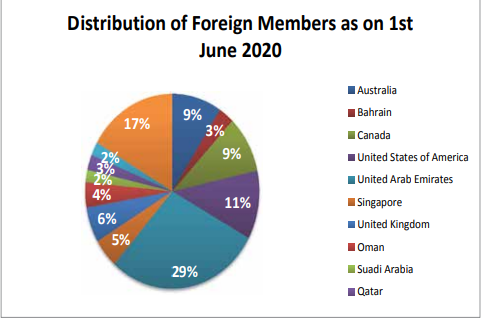
The professional course of Chartered Accountant has been widely accepted by many countries. As far as the degree obtained by a CA professional is concerned, foreign countries that have either entered into a Mutual Recognition Agreement (MRA) or Memorandum of Understanding (MoU) with the Institute of Chartered Accountants of India would provide the members registered with ICAI to practice in the respective countries in accordance to their terms and conditions. This does not conclude that an Indian CA would only be able to practice in these recognised countries. The countries that have not entered into any agreement with India, allow people to consider the option of CA only after fulfilling the prerequisites for the same in their home countries like passing their notified exams. In many unrecognised countries, such criteria involve attempting their respective papers. However, there can be exemptions that can be provided to the Indian members in these countries. The CA intermediate certificate under ICAI is equivalent to Emirates level seven. 

With the broad objective of the Institute to expand the opportunities for professionals in the foreign jurisdiction, the Institute has a global presence in 36 overseas chapters and 17 representative offices across the globe. This has, however, not limited the scope of proliferating the object of a global presence as the Institute continues to make efforts to observe the same. Let us discuss some of the countries that have recently signed agreements with India to provide career opportunities to Indian Chartered Accountants.

Middle East Countries

Kenya

  • The ICAI has signed the MoU with the Institute of Certified Public Accountants of Kenya (ICPAK) in January 2019. 
  • It supports the development of the accountancy profession through capacity building initiatives and promotes its sustainable development.
  • The members have to mandatorily get them registered under ICPAK to become eligible to practice in Kenya.
  • Members of ICAI are employed as financial controllers, auditors, tax/corporate advisors, financial/ management consultants, corporate recovery etc. 
  • Members are also empowered to work as independent practitioners. 
  • There are various Indian owned businesses and audit firms that are established in Kenya which will boost employment opportunities for the members of ICAI. 
  • Since the Companies Act of India is similar to that of Kenya, members do not have to struggle much to start their practice immediately on receiving the work permit. 
  • The opportunities are favourable to freshers as well as experienced CAs.

Kuwait

  • The ICAI has signed the MoU with the Kuwait Association of Accountants and Auditors (KAAA) in 2019.
  • The objective is to strengthen the accounting, financial and audit knowledge base in Kuwait.
  • Greater opportunities are provided to fresh Chartered Accountants in both large and mid-size accounting firms as compared to practising CAs.
  • In Kuwait, CAs are well reputed and are well established in top-tier organisations and banks.
  • Various roles that are prominent among the CA group include Finance Manager, CFO, CEO, Financial Analysts, etc.

Oman

  • Recently, the ICAI has renewed its MoU with the College of Banking and Financial Studies (CBFS), Oman.
  • Some major positions in the finance sector have been occupied by the Indian citizens in Oman.
  • The members of ICAI occupy senior positions in various private, public and government sectors in Oman.
  • Indian CAs majorly prefer Oman and UAE for their career prospects due to the rising demand for CAs in these places. 
  • CBFS also regularly conduct professional seminars, conferences, panel discussions, certificate courses etc. to enhance the knowledge of the professionals. 

Qatar

  • The Doha chapter in Qatar is affiliated with the Indian Embassy in Qatar and is registered under Qatar Financial Center (QFC) laws
  • The industries that require the expertise of a Chartered Accountant include oil and gas, construction, retail and infrastructure sectors. 
  • Local conglomerates also provide career prospects to Indian CAs.
  • With the technological advancements, companies in Qatar are looking for professionals who are well versed with soft skills to complement the new working system. 

Saudi Arabia

  • The ICAI entered into the MoU and later renewed the same with the Saudi Organisation for Certified Public Accountants (SOCPA) in Saudi Arabia.
  • It promotes mutual cooperation in the areas of corporate governance, technical research and advice, quality assurance, forensic accounting, issues for Small and Medium-sized Practices (SMPs), Islamic finance, Continuing Professional Development (CPD) and other subjects of mutual interest related to the accountancy profession.
  • While considering the role of Indian CA in small or mid-tier companies, finance managers and finance controllers are the most common.
  • As far as large corporations are concerned, opportunities exist from lower-level like Finance Executive for fresh Chartered Accountants to Chief Accountant to Assistant Finance Manager to Finance Manager to CFO at higher levels.
  • However, there are some preferences given to those having prior experience of a large accounting firm, experience in the Middle East, or experience in banks. 
  • For being recognised as a Certified Public Accountant under SOCPA, the applicant should be a Saudi national. Indian Chartered Accountants can be partners in big firms without having any signing authority. 

Tanzania

  • The ICAI has signed the MoU with the National Board of Accountants and Auditors (NBAA), Tanzania in 2018. 
  • To practice as auditors, accountants or tax consultants, formal approval and registration is required from NBAA. 
  • For practising as a tax consultant, additional registration with Tanzania Revenue Authority (TRA) is required. 
  • Some of the ideal employment opportunities opted by the members of ICAI include the application of International Financial Reporting Standards (IFRS) to accounting, multiple currency accounting, foreign currency translation problems etc.
  • The prospective changes in the tax regime, licensing of the foreign banks, floating exchange rate, creating investment promotion centres etc. has further expanded the opportunities for CAs to showcase their expertise. 

UAE

  • The ICAI has been able to renew the MoU with the Higher Colleges of Technology (HCT) of the United Arab Emirates (UAE). 
  • UAE has provided Indian CAs with wide-ranging employment opportunities in firms as well as boosted the setting up of businesses.
  • Big firms usually hire 100-200 Indian CAs every year in accordance with the requirements.
  • As far as mid-tier firms are concerned, they hire around 15-30 fresh Chartered Accountants every year.
  • A strong trend along with robust relations with the UAE has enormously contributed in escalating the employment opportunities for the members of ICAI. 

Bahrain

  • The ICAI signed the MoU with the Bahrain Institute of Banking and Finance (BIBF) in 2018. 
  • Bahrain lacks a local professional accountancy institution and since ICAI is in collaboration with it, Bahrain is desirous to obtain the proficiency and assistance of ICAI members in developing its own nationals in the field of accounting and finance. This paves way for immense career opportunities for a CA. 
  • Many renowned international firms find their way in the Kingdom that, in turn, provides ample opportunities to Indian Chartered Accountants to get themselves employed under these firms.
  • For an expatriate to establish an audit firm, several prerequisites have to be satisfied as it is regulated by the Ministry of Commerce. 
  • One of the major requirements is that the expatriate professional should collaborate with a local professional to incorporate an audit firm. 

Asia

Hong Kong

  • By virtue of being a member of the International Federation of Accountants, the ICAI has been admitted as an International Affiliate of the Hong Kong Institute of Certified Public Accountants (HKICPA)
  • The members of ICAI enjoy the same level of rights as enjoyed by the members of HKICPA. However, they are prohibited from practising the right to be elected to the Institute’s Council, vote at Council elections, attend the Institute’s general meetings and the right to be registered as a voter.
  • Fortunately, there is a probability that the ICAI would secure a Reciprocal Membership Agreement or a Mutual Recognition Agreement to avoid all the discrepancies. 
  • Apart from the financial sectors, CAs in Hong Kong have explored other avenues like IT, HR, digital advertising and legal firms.
  • As far as industrial training is concerned, it is completely domestic as they do not permit student/ employment visas for these kinds of purposes.

Singapore

  • An MRA between ICAI and the Institute of Singapore Chartered Accountants is on the verge of being recognised under the Comprehensive Economic Cooperation Agreement (CECA)
  • For an applicant to be eligible for the Singapore CA foundation programme, one should bear the accredited degree or undergraduate degree.
  • For people who are eligible for direct entry to the professional programme, they should have a local accountancy degree from a recognised Singapore University.
  • With a low labour force and a considerable presence of MNCs, Singapore can be considered as a prospering hub providing opportunities in accounting, finance business partnering, banking and treasury, financial analysis etc. 
  • Additionally, due to the change in the tax regime and incorporating GST, demand for compliance and accounting roles have boosted up.

Australia and New Zealand

  • The ICAI has entered into a mutual agreement with CA Australia and New Zealand to recognise each other’s qualifications. 
  • In order to obtain the membership of the Chartered Accountants Australia and New Zealand (CA ANZ), the members have to take the CAPSTONE module. 
  • One can also appear for a 2-day pilot workshop and complete 40 hours of self-study to receive the membership of the CA ANZ.   
  • The avenues undertaken by the members of ICAI include the banking sector, financial analysis, planning, credit, audit, and accounting operations.
  • It further provides an opportunity for Relationship Management (RM) roles in SME banking, Corporate Banking, Wholesale banking etc. to the ICAI members.
  • The members are prevented from practising independently. However, they can form part of the corporate houses and firms. 

Europe

Netherlands

  • Even though no formal agreement has been entered into by the ICAI and the Netherlands Chapter, yet the companies prefer to hire Indian CA for the roles not restricting to accounting, taxation, audit, treasury and banking.
  • The companies, however, prefer to provide opportunities to those who have gained prior experience in the field rather than freshers. 

North America

Canada

  • The ICAI has entered into an MoU with the Canadian Institute of Chartered Accountants (CICA) which was later replaced by an MoU between the ICAI and the CPA Canada.
  • This simplified the complexities underlying the previous system. Now, the members of ICAI interested in obtaining a membership should have the requisite experience to become eligible for exemptions from practical training requirements of CPA Canada as well as appearing in the CPA exam in Canada. By merely passing the 3-day Common Final Examination (CFE), a person can attain membership.
  • With constant growth, the opportunities for employment have extended to both public and the private sector. 
  • Since the skills acquired by an Indian CA is similar to the skills acquired by a Canadian CA, the most opted choices for career prospects remain the roles of CEO, president, CFO, treasurer, consultant, controller, tax auditors, policy planners and financial analysts.
  • Other types of assistance provided by CAs to their clients include startup counselling, purchase and sale of a business, business valuations, business planning and financial projections etc. 

USA

  • India does not have any recognition agreement with the USA and therefore, it becomes necessary for an interested candidate to give all the exams in order to obtain a CPA degree under the American Institute of Certified Public Accountants (AICPA)
  • Most accounting firms recognise a CA degree equivalent to that of a CPA degree. However, some companies hire only a CPA professional for tax and assurance roles.
  • An Indian CA can work as an auditor/ tax intern/ accountant for a CPA firm or as a finance professional for any financial institution or within any company that needs a finance division.
  • A CA can become an independent consultant as well thereby assisting businesses to maintain their books, budgets, obtaining loan financing through writing business plans, etc.
  • If a professional does not have any licence or legal status but is capable of rendering services, he/she may tie up with a CPA firm in the US. 
  • Indian CAs can work with Indian companies abroad or foreign countries that have operations in India.

United Kingdom

Below is the table that illustrates the various agreements which are entered into by India. 

Qualification Reciprocal Agreements
IRELANDMRA with CPA IrelandENGLAND & WAlESMoU with the Institute of Chartered Accountants in England and Wales (ICAEW)CANADAMoU with CPA Canada
SOUTH AFRICAMRA with the South Africa Institute of Chartered Accountants (SAICA)NepalMRA with Institute of Chartered Accountants of Nepal (ICAN)AUSTRALIA & NEW ZEALANDMoU with Chartered Accountants – Australia & New Zealand (CA ANZ )*
MalaysiaMRA with Malaysian Institute Of Certified Public Accountants*AUSTRALIAMRA with CPA Australia* 
Agreements for Technical Cooperation
SAUDI ARABIAMoU with Saudi Organisation for Certified Public Accountants (SOCPA)KENYAMoU with Institute of Certified Public Accountants of Kenya (ICPAK)NEPALMoU with Institute of Chartered Accountants of Nepal (ICAN)
TANZANIAMoU with National Board of Accountants and Auditors (NBAA), TanzaniaBAHRAINMoU with the Bahrain Institute of Banking and Finance (BIBF), BahrainKUWAITMoU with KAAA, Kuwait
OMANMoU with ICAI and College of Banking & Financial Studies (CBFS), OmanNETHERLANDSMoU with VRC, the Netherlands*PAPUA NEW GUINEAMoU with CPA PNG*
DubaiMoU with HCT Dubai**AFGHANISTANMoU with CPA Afghanistan** 

All Black marked are Active MoU/MRA

(* Awaiting clearances from government authorities)

(** Pending for Signing)

A flourishing industry with an affirmative growth

The ICAI has so far been successful in tapping some of the most handsome employment opportunities for the members. The results were visible not only domestically but even internationally. Many countries have now recognised its qualification ties with that of India. This has led to the removal of professional barriers and allowed the members to explore the vast avenues available to them. 

Growing industry

  • There have been a total of around 13,000 members who have settled abroad and among them, around 3200 members have the certificate of practice. 
  • The demographic distribution of the members of ICAI has been spread throughout. It can be seen in the below representation. 
  • UAE and the other Middle East countries have the largest resource of oil and gas and it contributes more than half of the entire GDP of the UAE. With recent developments in the oil sector, these countries have established a growing demand for Chartered Accountants.
  • The robust relations between India and the USA has led to the establishment of various opportunities within the country. The IT sector in the USA is the most supported sector by the Indian nation as major outsourcing of US IT services are through India due to efficient workforce.
  • Kenya is a major tourist spot and attracts a large population thereby, promulgating the ever-growing career prospects. 
  • Hong Kong has established a business-friendly environment characterized by free trade, a mature financial regulatory regime and a legal system.
  • Australia, though being the 6th largest nation population-wise, faces a shortage of professionals for performing tasks in auditing and advisory roles. This calls for a blooming demand for professionals like CA.  
  • With the constant change in the tax regime, VAT implications, foreign exchange, licencing schemes and promotional activities, the demand for Chartered Accountants is on the rise. 

Salary expectations

  • While working independently, a Chartered Accountant’s salary will be determined according to its services. 
  • As far as working in corporate firms are concerned, foreign countries can pay handsomely to CAs.
  • Interestingly, the highest salary package according to the U.S. Bureau of Labour Statistics (BLS), most accountants or auditors earned money from $ 40,370 up to $ 113,740.

Conclusion

With the developing economy, the growth of future prospects and job opportunities have taken an upstage. Every firm and corporation has recognised the importance of structuring and planning their financial sector to strengthen the core of the business. Right from startups to the Big-4 or the MNCs, each company understands the negative implications that would be faced by their companies on account of failure to satisfy the various financial compliances. In addition to this, the dynamic industries in the world, now and then, introduce new avenues that are readily available to be explored. Such affirmative prospects not only proliferate one’s salary expectations but also ensure growth in their career. Thus, pursuing CA can prove to be one of the best career options of all time.

References


Students of Lawsikho courses regularly produce writing assignments and work on practical exercises as a part of their coursework and develop themselves in real-life practical skills.

LawSikho has created a telegram group for exchanging legal knowledge, referrals, and various opportunities. You can click on this link and join:

https://t.me/joinchat/J_0YrBa4IBSHdpuTfQO_sA

Follow us on Instagram and subscribe to our YouTube channel for more amazing legal content.
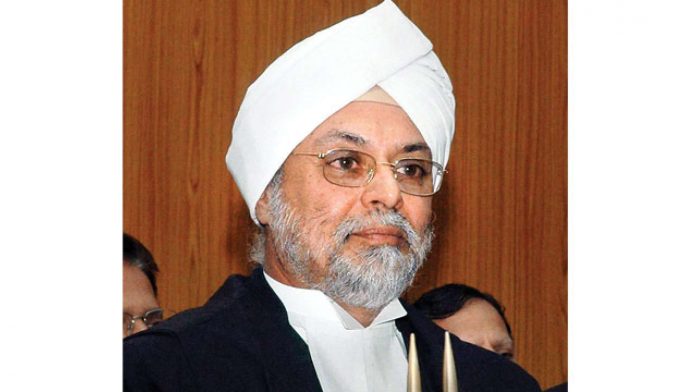
Download Now

Principles behind the formulation of International Criminal Law

0
Criminal law

This article has been written by Sneha Jaiswal currently pursuing BA LLB (Hons.) from Christ (Deemed to be University) Delhi NCR. This article provides an insight into the principles that are behind the formulation of international criminal law. Also, it gives an overview of both the general principles as well as the fundamental principles of ICL.

Table of Contents

Introduction 

International criminal law is a body of legislation that prohibits specific types of behaviour that are considered significant crimes and it governs the procedures for investigating, prosecuting, and punishing those types of behaviour, and makes criminals personally liable for their actions. The repression of major violations of international humanitarian law is critical for ensuring that this branch of law is respected, especially given the severity of specific violations, classified as war crimes, that the international community as a whole must penalize.

General principles of ICL

International criminal law [ICL] encompasses a number of general principles that serve as the foundation and prerequisites for prosecuting persons for international crimes such as genocide, crimes against humanity, war crimes, aggression, and other crimes against humanity’s peace and security. The phrase “general principles of law” recognised by civilised nations refers to principles that are so general that they apply to all legal systems that have reached a similar level of development. International criminal law is founded on a number of fundamental ideas.

It is becoming more important to coordinate respect for these principles as international crimes increasingly incorporate extraterritorial aspects, necessitating increased engagement between States. The states must uphold them while also adhering to their own national criminal law principles and any special principles outlined in regional bodies’ agreements to which they are a concerned subject.

Part III of ICC statute

The broad principles of international criminal law are spelt out in Part 3 of the ICC Statute, titled “General Principles of Criminal Law” from Article 22 to Article 33. Part 3 is a significant accomplishment since it reflects an attempt to combine multiple criminal justice systems into a single legislative instrument. For the first time, it aims to formalise ideas like criminal participation modes, the mental element required for crimes, and accessible defences.

Part III of the ICC has the following potential benefits

  • The ability of judges to formulate criminal law principles will be constrained.
  • It provides the Court with a legislative structure.
  • It ensures that predictability has an impact on the rights of the accused.
  • It encourages the use of uniform jurisprudence and practice.

Fundamental principles of ICL

The principles of legality and double jeopardy are the two most fundamental or essential elements of international criminal law. The applicability of these concepts in international criminal prosecutions before international and domestic tribunals is always changing.

Principles of legality – nullum crimen, nulla poena sine lege 

The principle prohibiting the retroactive enforcement of crimes and sanctions is a basic component of human rights law that applies directly to the international criminal law system. To be held criminally responsible, the behaviour must be illegal and punishable at the time of the offence being committed.  

This is referred to as the principle of legality or nullum crimen sine lege and nulla poena sine lege. Given the often imprecise nature of international criminal law sources, the principle of legality is a crucial fundamental principle in international criminal law particularly in the case of customary international law.

Customary International Law 

To avoid violating the principle of legality, it is essential when applying custom in criminal jurisdictions to ascertain precisely what the content of the law was at the time of the offence. It is also worth knowing whether it is reasonable to assume that the accused was aware of the criminal nature of his actions at the time when the crime was carried out.

Several reasons have aided in bringing to light the customary nature of statutory limitations’ non-applicability to war crimes and crimes against humanity.

  • A growing number of states have stated in their penal statutes that statutory limitations do not apply to these offences;
  • Article 29 of the ICC Statute codifies this concept, which its drafters saw as critical in avoiding impunity for serious crimes.

The idea of legality is codified in Article 15 of the International Covenant on Civil and Political Rights, 1996 (ICCPR), which states that no one may be convicted or punished for an act or omission that did not, at the time, constitute a criminal offence under the national or international law. It further states that no penalty may be imposed that is greater than that which was in effect at the time the criminal offence was committed. The goal of this principle is to make sure that the legislation is clear and predictable so that people can anticipate the legal implications of their activities. Article 22 of the ICC statute provides a similar clause on the concept of legality. According to this principle, even though the conduct is not unlawful under national law, it does not exclude a person from being prosecuted for it under international law.

The principle of legality is addressed in Articles 22 to 24 of the ICC Statute

  • Article 22 establishes the principle of nullum crimen sine lege, which declares that an individual can only be held criminally liable for an action that was unambiguously criminal at the time it was committed.
  • Article 23 establishes the principle of nulla poena sine lege, which stipulates that an individual can only be penalized in accordance with the law.
  • Article 24 establishes the principle of non-retroactivity, which provides that no person shall be held criminally liable under the Statute for an action that occurred prior to committing the crime.

The principles of non-retroactivity, specificity, and analogy prohibition are all linked to the notion of legality.

  • The non-retroactivity principle states that a law cannot be applied to events that occurred before it was enacted.
  • The principle of specificity requires a sufficiently detailed definition of the prohibited act.
  • While the prohibition of analogy necessitates a precise interpretation of the concept.

The International Criminal Tribunal for the Former Yugoslavia has ruled that the norm of nullum crimen sine lege is satisfied when at the time of the crime; 

  1. A specific convention binds a state to a treaty, and
  2. Individual criminal liability for the person who breaks the rule is imposed under treaty or customary law when the rule is violated.

In such instances, the legality concept must also be considered.

Some treaties, such as the Genocide Convention and the Geneva Conventions, especially their clauses on grave violations, create international crimes and are immediately enforceable on an individual.

Forms of international criminal responsibility

Individual criminal responsibility 

Individuals can be held criminally accountable not only for committing war crimes, crimes against humanity, or genocide, but also for attempting, enabling, or aiding and abetting the commission of such crimes, according to international criminal law. Individuals who plot, instigate, or command the commission of such crimes may be held legally accountable.

Command responsibility

Failure to act might also result in international criminal law violations. Armed troops or organisations are usually assigned to a command that is responsible for their subordinates’ conduct. As a result, hierarchical superiors may be held accountable if they fail to make sufficient efforts to prevent their subordinates from committing major infractions of the international humanitarian law.

The principle of individual criminal responsibility is addressed in Article 25 of the ICC Statute

The Court’s jurisdiction and the concept of individual criminal responsibility are mentioned in Article 25 of the ICC Statute. It specifies in Article 25 (1) that the Court has jurisdiction over natural people as a result of this Statute. Furthermore, according to Article 25 (2) anybody who commits a crime within the Court’s jurisdiction is solely responsible and subject to punishment in accordance with this Statute. 

In accordance with Article 25 (3) of the Statute, an individual shall be criminally accountable and liable for the punishment for a crime within the jurisdiction of the Court if that person:

  1. Commits such a crime, whether alone, with another, or through a third party, regardless of whether the third party is criminally liable;
  2. Orders, solicits, or encourages the commission of a crime that is actually committed or attempted;
  3. Aids, abets, or otherwise assists in the commission or attempted commission of such a crime, including providing the means for its commission;
  4. Contributes in any other way to the commission or attempted commission of such a crime by a group of people acting together for a common goal. This contribution must be voluntary, and it must either:

(i) Be made with the intent to enhance the group’s illegal activity or criminal purpose, if that activity or purpose involves the commission of a crime within the Court’s jurisdiction;

(ii) Be made with the knowledge that the group intends to commit the offence;

  1. In the case of genocide, incites people to commit genocide in a direct and public manner;
  2. Attempts to commit such a crime by taking a considerable step toward its completion, but the crime is not carried out due to circumstances beyond the individual’s control. However, if a person abandons the attempt to perpetrate the crime or otherwise stops the execution of the crime, that person is not liable for punishment under this Statute for the attempted crime.

Article 25 (4):  The obligation of the States under international law is not affected by any provision in this Statute relating to individual criminal responsibility.

Article 26 of the ICC Statute addresses the principle of exclusion of jurisdiction over minors

Article 26 talks about the exclusion of jurisdiction over persons under eighteen.  Any person who was under the age of eighteen, also referred to as a minor, at the time of the alleged crime is not subject to the Court’s jurisdiction.

Article 27 of the ICC Statute addresses the principle of irrelevance of official capacity

Article  27 of the Statute contains two distinct concepts, namely official capacity and personal immunity. 

  • Article  27 (1) of the Statute states that this Statute applies to all people equally, regardless of their official status. Official status as a Head of State or Government, a member of a Government or Parliament, an elected representative, or a government official, in particular, does not protect a person from criminal liability under this Statute, nor does it provide a reason for reduction of sentence or punishment awarded. In other words, it states the doctrine of “official capacity”. For instance, state officials cannot be subjected to criminal responsibility for acts carried out in the name of the State.
  • Article  27 (2) of the Statute states that the immunities or special procedural rules that attach to the official capacity of a person, whether under national or international law, shall not bar the Court from exercising its jurisdiction against such a person.

Article 28 of the ICC Statute addresses the principle of responsibility of commanders and other superiors

Article 28 makes a distinction between civilians and military superiors. Its mental criterion is that the superior was aware of, should have been aware of, or consciously ignored the fact that subordinates were about to or have committed crimes. It necessitates a causation aspect relating the superior’s failings to the crimes committed, but it makes no explicit provision requiring a superior to be punished for previously committed offences.

Article  28 (a) of the Statute states that a military commander or anyone effectively functioning as a military commander is criminally accountable for crimes committed by forces under his or her effective command control, or effective authority and control where;

  1. that military commander or person either knew or should have known that his or her subordinates were committing or planning to commit such crimes; and
  2. that military commander or person failed to take all necessary and reasonable measures within his or her power to prevent or repress the conduct of the crime, or to refer the matter to the appropriate authorities for inquiry and prosecution.

Article  28 (b) of the Statute states that a superior is criminally liable for crimes committed by the subordinates under his or her effective authority and control, where: – 

  1. the superior either knew or intentionally ignored evidence that the subordinates were committing or planning to commit such crimes;
  2. the offences involved conduct that is under the superior’s effective control and supervision; and
  3. the superior failed to take all necessary and reasonable steps within their ability to prevent or repress their actions, or to report the incident to the appropriate authorities for investigation and prosecution.

Article 29 of the ICC Statute addresses the principle of non-applicability of the statute of limitations

Article 29 deals with the non-applicability of the statutes of limitations, stating that offences committed within the Court’s jurisdiction are not subject to any statute of limitations.

Article 30 of the ICC Statute addresses the principle of the mental element

Article 30 deals with the mental element. Article 30 (1) states that a person is criminally accountable and liable for punishment for a crime committed within the Court’s jurisdiction only if the material elements are committed with intent and knowledge unless otherwise stipulated. 

According to Article 30 (2), a person has intent if: 

  1. in respect to conduct, the person means to engage in the conduct; 
  2. in relation to a consequence, the person aims to cause the result or is aware that it will occur in the ordinary course of events.

Article 30 (3) states that for the purposes of this article, “knowledge” refers to being aware of the existence of a circumstance or the likelihood of a result occurring in the normal course of events. The terms “know” and “knowingly” are to be interpreted in this way.

Article 31 of the ICC Statute addresses the grounds for excluding  criminal responsibility 

There are various grounds involved in Article 31 of the ICC Statute for excluding criminal responsibility. Article 31 provides a list of defences like in the case of insanity, intoxication, self-defence, and duress/necessity.

Insanity

A person is not criminally accountable if, at the time of the offence, they: – 

  • suffered from a mental disease;
  • suffered from a mental defect; 
  • their ability to recognise the illegality or nature of their actions is destroyed; or 
  • their ability to manage their actions in order to comply with the law is destroyed.

Intoxication

A person is not criminally accountable if, at the time of the offence, they were intoxicated; 

  • this impairs their ability to recognise the illegality or nature of their actions.
  • their ability to control their behaviour in order to comply with the law is destroyed.

The exception to this is if the person was intoxicated voluntarily that means someone consumed intoxicating substances with their own will. Voluntary intoxication is never a defence to a general intent crime.

Self-defence

A person is not criminally accountable if, at the time of the offence: – 

  • there existed an imminent and unlawful danger to a person or property by unlawful force; 
  • the accused’s reaction was proportionate;
  • applies to the defence of self, another or property. 

Duress/Necessity 

Duress means the act of using force, threats, coercion, or psychological pressure to get someone to act against their free will. A person is not criminally accountable if, at the time of the offence there exists: –

  • a threat of imminent death or bodily harm to the individual concerned or a third party made by others or by events beyond that person’s control;
  • the individual’s reaction is a required and justifiable response in order to avoid the threat; and
  • the individual does not want to inflict more harm than the one that is being avoided.

Article 32 of the ICC Statute addresses the principle of mistake of fact or mistake of law

Article 32 is concerned with factual and legal errors. It said that an error of fact could be used as a defence, but a mistake of law could not. This defence, however, is dependent on the common law definition of a mistake of fact or law. A mistake is only crucial if it can be demonstrated that it negated the offender’s mental element.

  1. A mistake of fact can be a ground for excluding criminal responsibility only if it negates the mental element required by the crime.
  2. A mistake of law in determining whether a particular type of action constitutes a crime within the Court’s jurisdiction shall not be used to absolve a person of criminal liability. However, if it eliminates the mental element required by such a crime, or as provided for in Article 33, a mistake of law may be a basis for excluding criminal liability.

Article 33 of the ICC Statute addresses the principle of superior orders and prescription of law 

  1. The fact that a person committed a crime within the Court’s jurisdiction in response to an order of a Government or a superior, whether military or civilian, does not absolve that person of criminal responsibility unless: 
  1. the person was under a legal obligation to obey the Government or superior in question; or 
  2. the person did not know that the order was unlawful; and
  3. the decree was not manifestly unconstitutional.
  4. Orders to commit genocide or crimes against humanity are manifestly illegal for the purposes of this Article.

Principle of double jeopardy – ne bis in idem 

The idea of double jeopardy, or ne bis in idem, is another central tenet of international criminal law. This prevents someone from being tried twice for the same offence, and it derives from concerns about defendants fairness and desire for thorough investigations and prosecutions. This principle is explicitly reflected in the statutes of international courts and tribunals.

Ne bis in idem, a Latin maxim expresses the notion that “no one should be tried or punished for the same offence more than once”. It ensures defendants’ fairness by assuring them that the judgement will be final, and it protects them from arbitrary or malicious prosecution on both a national and an international level. Furthermore, this principle aims to ensure that investigations and prosecutions are initiated and carried out with diligence. It’s worth noting that the worldwide application of ne bis in idem is reliant on how it’s written in the relevant laws of international tribunals.

Principle of state sovereignty vis-a-vis the instance of double jeopardy

This idea of double jeopardy only applies to courts inside the same legal system, and it does not apply uniformly between states. A court in-country ‘A’, for example, cannot try a defendant for a crime that has already been adjudicated by another court in-country ‘A’, but it may be able to try a defendant for the same crime that has previously been adjudicated by a court in-country ‘B’. This is due to the principle of state sovereignty, which states that the courts of one state cannot bind the courts of another. Nonetheless, each state has its own perspective on how to deal with international law, and the principles at cross-border applications are ambiguous and not recognised as a general norm of international law. At the international level, courts have chosen a variety of approaches that have an impact on national prosecutions.

The ICC’s jurisdiction is secondary, not paramount. In particular, an individual might be tried under national law for crimes committed outside the ICC’s jurisdiction for the same conduct that resulted in an ICC conviction. If a national proceeding was unfair or essentially a fake trial to avoid ICC jurisdiction, the ICC might try an individual for conduct that was the subject to that proceeding.

Basis of Jurisdiction

A state’s jurisdiction is limited to its own territory. The ability to make law, interpret or apply the law, and take action to enforce the law are all part of this jurisdiction. While enforcement jurisdiction is usually limited to national territory, international law recognises that a State may legislate for or adjudicate on events that occur outside its borders under certain circumstances. 

Extraterritorial jurisdiction has been justified on the basis of a variety of principles. These include:

The principle of active personality or nationality (acts committed by persons with the forum State’s nationality)

Under this principle, nationals continue to keep a connection with their State wherever they may be. They have a right to state protection and also continue to remain subject to certain laws of the State of their nationality. States might claim jurisdiction over their nationals for violations of such domestic laws to which the nationals are bound even while committed abroad, based upon the allowance made by their domestic system.

The principle of passive personality (acts committed against the forum State nationals)

Under this principle, the States claim jurisdiction for criminal acts committed outside its territory, not necessarily by their citizens if the victim is of the State’s nationality. This is a controversial principle that claims jurisdiction because it is based on the victim’s nationality rather than a link to the territory or the offender. It is mentioned in a number of anti-terrorism treaties.

The protective principle (acts affecting the security of the State)

This principle states that States can claim jurisdiction over criminal acts committed by aliens outside of their territory if the act jeopardises the security and territorial integrity of the State. 

While these principles have various degrees of acceptance in state practice and opinion, they all need some sort of connection between the act committed and the State asserting jurisdiction. There is no such requirement for universal jurisdiction, which is another ground for asserting extraterritorial jurisdiction.

Universal jurisdiction is the assertion of jurisdiction over offences regardless of where they were committed and the nationalities of the alleged perpetrator or of the victims. Universal jurisdiction is said to apply to a variety of crimes that are justified or mandated by international public policy and some international treaties for all states to prosecute.

Statutory limitations

The imposition of a statutory limitation on prosecution in the case of a criminal offence, known as time-barring, tries to avoid unnecessary delays between the commission of the crime and the prosecution and potential punishment of the alleged offender. Legal processes may be subject to statutory restrictions in one of two ways.

  • If a specified amount of time has passed since the offence was committed and no criminal procedures or verdict has been obtained, the time bar may apply to the prosecution.
  • The limitation could only apply to the application of the sentence like the passage of time may preclude the imposition of criminal punishment.

For minor criminal offences, most legal systems have statutory limitations. Several legal systems, particularly those founded on common law, do not provide statutory limitations for commencing criminal prosecution for major offences. Legislatures in countries where civil law prevails have either created statutory limitations for serious offences that are much longer than those for minor offences or, like in common law countries, do not allow such limitations to be imposed at all in the case of serious criminal offences.

Criminal punishments are rarely applied once a certain amount of time has passed. In common law, it does not exist at all, and it is severely limited in other legal systems. Where it does exist, the time limits for the most serious offences are often very long, and they do not apply to specific types of offences or situations involving dangerous or repeat offenders.

Under International Law, certain offences are not subject to statutory limitations

Time limits for war crimes are not addressed in the 1949 Geneva Conventions or its 1977 Additional Protocols.

The 1968 United Nations Convention on the Non-Application of Statutory Limitations to War Crimes and Crimes against Humanity covers both prosecutions and sentence impositions. It includes war crimes, including severe breaches of the Geneva Conventions and crimes against humanity, as well as acts resulting from a policy of apartheid and genocide, perpetrated in both war and peace. It is retroactively effective, and under its provisions, states agree to repeal existing statutory limitations or to enact laws or other steps to ensure that statutory limitations are not applied to such offences.

Furthermore, Article 29 of the Rome Statute of the International Criminal Court (ICC) states that statutory limitations do not apply to war crimes, crimes against humanity, genocide, and the crime of aggression.

Immunity 

Immunities are a result of the concept of state sovereignty. State representatives have always been accorded immunity from a foreign jurisdiction. Immunity is intended to allow State representatives to carry out their official duties and represent the country in international affairs. There are two types of immunity that are recognized namely personal immunity and functional immunity.

  • For the duration of their term in office, personal immunity protects the activities of persons crucial to a State’s administration, whether in their personal or official capacity.
  • Official acts of State representatives carrying out their functions for the State are protected by functional immunity, which continues to safeguard such acts beyond the end of their time in office.

Immunity thus functions as a procedural obstacle to foreign jurisdictions initiating proceedings against protected persons; nevertheless, the official’s State of nationality may waive the immunity.

Article 27(1) of the ICC Statute expressly excludes the availability of functional immunities in circumstances of international crimes. According to Article 27 (2) of the ICC Statute, personal immunity is not available in cases of international crimes. Bypassing appropriate legislation in their national law, the States are required by the ICC Statute to remove immunity for the commission of international crimes. With respect to non-party States, Article 98(1) of the ICC Statute qualifies the renunciation of immunity.

Conclusion 

International law is a system of norms that is necessary to regulate the behaviour of nations or states toward one another in order to maintain international peace and welfare. International law exists to keep the world in order and sustain peace, as well as to resolve numerous conflicts between nations/states and individuals and to protect fundamental rights. Internal laws may be influenced by international law, and international law may become part of domestic law.  The role of International Criminal Law contains a number of general principles that form the foundations and conditions for holding individuals criminally responsible for crimes under international law like genocide war crimes, crimes against humanity, and the crime of aggression, and other crimes against the peace and security of mankind. However, there are still a number of flaws like international terrorism, religion, environment, and new patterns of war and peace that are causing international relations to deteriorate so there is a need for proper implementation of the same.

References 


Students of Lawsikho courses regularly produce writing assignments and work on practical exercises as a part of their coursework and develop themselves in real-life practical skills.

LawSikho has created a telegram group for exchanging legal knowledge, referrals, and various opportunities. You can click on this link and join:

https://t.me/joinchat/J_0YrBa4IBSHdpuTfQO_sA

Follow us on Instagram and subscribe to our YouTube channel for more amazing legal content.

Download Now

The wide aspect of Article 21 of the Indian Constitution in light of the case of Nandita Haksar v. State of Manipur & Ors.

0
Constitution

This article is written by Priyanshi Soni, a B.A.LL.B. student of Symbiosis Law School, Noida. This article seeks to highlight the wide aspect of Article 21 of the Indian Constitution in light of a recent case of Nandita Haksar v. State of Manipur & others, which dealt with granting of protection to people who illegally entered India to seek asylum.

Introduction 

Every person has the right to live freely with full dignity and availability of human conditions. This is what makes a successful democracy. Article 21 of the Indian Constitution ensures this right to everyone.  It is a fundamental right granted to everyone (citizens and foreigners both) under Part III of the Indian Constitution of 1950. This provision is exhaustive in its nature as the terms ‘right to life and liberty’ encompasses various rights that are fundamental to humans.

Article 21: exhaustive by nature

Article 21 covers many aspects of personal liberty and right to life. It ensures protection to these two things only against “state” and not against “private individuals”. Article 21 corresponds to the Magna Carta of 1215, the Fifth Amendment to the US Constitution, Article 40(4) of the 1937 Irish Constitution, and Article 31 of the 1946 Japanese Constitution. But what makes the Indian Constitution different from these rules on life and liberty is that the Indian Constitution treats individuals with an aim for overall development and well-being and protection from any sort of aggression by the state, whereas these other provisions treat individuals merely as physical entities. Except according to the procedure established by law, states preserve the personal liberty and life of an individual.  

Personal Liberty 

The scope of personal liberty in India has widened since the Maneka Gandhi case. Before this case, it was relatively narrower in scope.

In A.K. Gopalan vs The State Of Madras (1950), the Court viewed Articles 19 and 21 too narrowly. In this case, the petitioner was detained under the Preventive Detention Act, 1950 in jail and so filed a writ petition under Article 32 that this hampered his rights under Articles 19(1)(d) and 21. The court held that Article 21 which protects personal liberty, implies personal liberty in the sense of the physical body’s liberty and not rights given under Article 19. The petitioner’s contention was thus dismissed. 

Finally, Maneka Gandhi v. The Union of India (1978) proved to be a landmark case under Article 21 and led to the evolution of law further under Article 21. The facts of the case go such that the petitioner’s passport was detained by the government officers and they stated that this is done in the public interest as per the Passport Act, 1967. They did not even state a proper reason for such detention. It was thus held that the detention was arbitrary. Personal liberty covered under the Article is very wide and includes all kinds of liberties given to a person. Hence, the right to travel is also included in this very article. The only procedure established by law can restrict this right provided it is not arbitrary and discriminatory, as it was in this case. 

With the Maneka Gandhi Case, the scope of Article 21 got expanded to a great extent and proved to be an important right for people’s protection and good. 

The present scope of Article 21 

We shall now look into what exactly constitutes the right to life and personal liberty today. 

Right to live with dignity 

This implies that the right to life also includes the right to live with dignity and respect. One should be free to make his/her decisions and should get human respect in the community and access to necessities. In Occupational Health and Safety Association v. Union of India (2014), it was held that basic/proper working conditions and environment in the workplace come under the right to live with dignity. 

In a very recent landmark judgment of Navtej Singh Johar v. Union of India (2018)  dealing with homosexuality, it was held that the right to live with dignity includes all those rights which enable a person to lead a respectful life in society without any disturbance to his personal safety, privacy, and respect. Thus, the Court then decriminalized gay sex and scratched Section 377 of IPC

Right to livelihood

Article 21 also covers that every man and woman should get equal opportunity to earn his/her livelihood so that they can have a minimum standard of living with necessities. This concept comes under the right to live with dignity. Olga Tellis and Ors. v. Bombay Municipal Corporation (1986) tried settling a ground for recognition of the right to livelihood where although it was held that the expulsion of slum occupiers was not wrong on the part of the government, they should not be considered as trespassers and should be expelled after some time. 

Right to privacy 

This right was earlier not recognized as a fundamental right in India but with time, this became a fundamental right under the right to life. This is not an absolute right as it is subject to reasonable restrictions for the greater good. 

The first case where the right to privacy was recognized was R. Rajagopal v. State of Tamil Nadu (1994). In this case, a prisoner wrote his autobiography and mentioned about the government officials in it that they too were his partner in several crimes. The officials stopped the publication of the autobiography and so the editor filed a petition. It was held that it is the prisoner’s private information and it depends upon him about whom he wants to write in his autobiography and so he should not be stopped from getting it published. This set a precedent for future cases regarding recognizing the right to privacy as a fundamental right. 

Justice K.S. Puttaswamy (Retd.) v. Union of India (2015) is a landmark judgment dealing with the right to privacy and Aadhar Card. A retired Karnataka High Court Judge brought the case before the 9-judge bench challenging Adhar Card which used biometric identification, stating that this hampers the right to privacy and at that time no strict data protection law existed. It was unanimously held that the right to privacy is a fundamental right under Article 21. It upheld that the Aadhar Card is constitutionally valid but certain provisions of it were struck down as being violative of the right to privacy. 

Many other rights such as the right to die with dignity, the right to medical assistance, sleep, etc, have also widened the scope of Article 21, thereby becoming a part of the law of land. 

The case of Nandita Haksar v. State of Manipur & Ors

In a very recent judgment by the Manipur High Court, the scope of Article 21 was further widened to include the right of non-refoulement for asylum seekers i.e. not forcing the refugees to go back to their country from where they fled as they were subjected to prosecution there. Government Advocate RK Umakanta appeared for the State of Manipur and ASG S Suresh appeared for the Central Government. The petition was filed by Nandita Haksar as a party-in-person. 

The contention of parties to the case 

In this case, a petition was filed by Ms. Nandita Haksar, who is a human rights advocate, as a party-in-person with the prayer that the 7 Myanmarese which included children, men, and women, who entered India illegally after persecution and military coup in Myanmar, be allowed to be sent to United Nations High Commissioner for Refugees (UNHCR) in New Delhi to seek protection there. 

The narrative given by the petitioner was such: A military coup took place in Myanmar in February 2021 and following that, the military banned Mizzima (Myanmar’s news service) and detained several of its journalists. 3 of the 7 people mentioned were working with Mizzima. They fled their country in fear of persecution and took shelter in a district in Manipur. In fear of them being sent back to Myanmar by Assam Rifles which was directed by the Home Affairs Ministry to check illegal migrations in border areas in March 2021, they took the help of the petitioner. They did not have proper documents with them. Thus, the petitioner sought their safe passage to New Delhi’s UNHRC. The petitioner also contended that there is a difference between “migrants” and “refugees”. A migrant is someone who moves from one place to another in search of better livelihood etc., but a refugee is someone who is forced to his country for persecution or natural disaster. 

The respondents argued that these seven persons should first face the consequence of their illegal act of entering India and should not be granted protection as they can be a possible threat to the country too. It was also asserted by respondents that the constitutional freedoms available under Article 19 are limited to citizens and these seven persons cannot claim such freedoms under Articles 19(1)(d) and 19 (1)(e), with regard to moving freely or residing/settling in any part of the territory of India. Mr. R.K.Umakanta, the learned Government Advocate, argued that domestic laws must first prevail and if court permits such entries then this might set an unhealthy precedent and open floodgates. 

Findings of the court

The court noted that although India is not a party to the Geneva Refugee Convention, 1951, and The New York Protocol of 1967, it is, however, a part of the Universal Declaration of Human Rights, 1948 and Article 14 of UDHR states that everyone has the right to seek asylum in other countries due to persecution. India is a party to the International Covenant on Civil and Political Rights, 1966 as well which recognizes that the human family has certain inalienable rights such as freedom, justice, etc. The court also stated that India is amongst the 193 member countries of the UN General Assembly that endorsed the ‘Global Compact on Refugees’ in December 2018. Talking about our Indian Constitution, Article 51 of the Constitution talks of promotion of international peace and security by maintaining honorable relations with the nations, understanding international laws, etc. Finally, the Court stated that Article 21 of the Indian Constitution shall include the right to asylum seekers if they have been persecuted in their country and take refuge for protection. Although refugee laws are rather opaque in India, such refugees cannot be straightaway denied protection. They can seek protection under various other laws to which India is a signatory, as we saw above, as well as under Articles 14 and 21 of the Indian Constitution which applies to non-citizens as well. 

A Bench of Chief Justice Sanjay Kumar and Justice Lanusungkum Jamir held that even foreigners can take protection under Article 21 of the Constitution and so, this provision respects the non-refoulement principle, which in international law, gives protection to asylum seekers from getting expelled by another country where they have sought asylum because of persecution in their own country. 

The Court, therefore, held that the seven people seeking asylum as per the writ petition shall be given safe passage to New Delhi where they can apply for protection from the UNHCR. 

Also, the court rejected the contention that they might be a threat to the security of India as no material document supported this, and also 4 of the 7 people were UNHCR certified refugees. One of them was also sanctioned as Visa Gratis by the Indian Government in 2020. This clearly showed that they are not a threat to security. 

Lastly, the Court noted that this is not the first time that type of case is being taken as earlier in Zothansangpuii v. State of Manipur and Another (1989), a Burmese refugee who illegally entered India was granted permission to go to Delhi to get protection when he approached Guwahati High Court. It added that India respects UNHCR’s recognition of such people who are persecuted, especially Afghanistan and Myanmar. But, since UNHCR’s office is located only in New Delhi, it is only after such people are granted ‘refugee’ status that things can proceed. 

Conclusion

In the case discussed above, the already wide ambit of Article 21 was further expanded to include the right of non-refoulement of persecuted asylum seekers. This was a commendable decision by the Court towards the betterment of the common people. Such people who are persecuted should not be made to face the violence again. It is a basic human right to life and liberty and Article 21 fulfills this very fundamental right for all the people. 

References


Students of Lawsikho courses regularly produce writing assignments and work on practical exercises as a part of their coursework and develop themselves in real-life practical skills.

LawSikho has created a telegram group for exchanging legal knowledge, referrals, and various opportunities. You can click on this link and join:

https://t.me/joinchat/J_0YrBa4IBSHdpuTfQO_sA

Follow us on Instagram and subscribe to our YouTube channel for more amazing legal content.

Download Now

10 tech start-ups everyone should know about

0

This article has been written by Aditi Sahu pursuing the Diploma in Business Laws for In-House Counsels from LawSikho. This article has been edited by Aatima Bhatia (Associate, Lawsikho) and Dipshi Swara (Senior Associate, Lawsikho). 

Introduction

A tech start-up is a business that focuses on bringing new technology products or services to market to address an issue for which there is no obvious solution and when success is not certain. These businesses create new technology products or services or rework existing technology products and services. In other words, we can say that a company that delivers or substantially relies on a digital technical service/product/platform/hardware as its principal revenue source. 

What are tech companies meant to be?

A tech company is more than just a traditional company that makes use of technology. It’s not only a scalable business model, but can also be scaled up or down. In reality, such a company makes a living from its rent, but dominating digital corporations like Facebook, Uber, Netflix, and Amazon  always suffer due to economic ups and downs. We can now clearly see how distinct tech companies are from traditional businesses — even ones that run networked infrastructure. A tech startup must meet three requirements:

  1. Increasing returns to scale characterize its business model, which is supported by supply-side economies of scale, strategic positioning, built-in network effects, and supply-side platform effects.
  2. Its key strategic goal is to give an incredible experience to its users, as this is the only method to gain trust and attract the users who are important for maintaining and increasing profits.
  3. It collects user-generated data on a regular and systematic basis, allowing it to continuously improve the experience and, as a result, maintaining and increasing returns.

Detailed structure of tech startups in India

  1. CRED

CRED is one of the greatest and free apps on the market for earning incentives when you use it to pay your bills. The program itself is incredibly user-friendly and has a lovely layout to work with. These incentives include everything from free stuff in exchange for CRED coins to rebates and more.

You may use CRED to earn big rewards if you use a credit card regularly and pay your bills through any other app. According to entrackr, CRED had almost no revenue in the fiscal year of 2019. The interest on their deposits generated INR 3.03 crore, which was their only source of income. The corporation spent INR 64 crore in total.

Before using the app, the user should know about the app in detail. Here are some questions that were answered which may strike in customers’ minds while using the app.

  • How does CRED make money?

This app has not only one source to make money or revenue. CRED has various products, service plans, etc. CRED makes money by:

  1. Charging a listing fee for products- CRED is an app that rewards users for purchasing products and services from businesses. The business pays CRED fees every time a user chooses an offer by redeeming CRED coins from the app and currently, this is CRED’s primary source of revenue.
  2. Offers that businesses wish to display to the app users- CRED collects your financial data while you pay bills and use the app to provide you with better offers in the future. This is their secondary revenue source. CRED charges banks and credit card firms to gain access to the data or to advertise their products directly to these clients.
  3. CRED Pay- It was created in collaboration with Visa and Razorpay. It gives brands a direct-to-consumer (D2C) channel by allowing them to accept payments instantly on their platforms.
  4. RentPay- A service provided by CRED, allows tenants to pay monthly rents with a credit card, and the funds are instantly transferred to the landlord’s bank account. The app’s main benefit is that it allows users to acquire an interest-free credit period on their rent while also earning reward points on their credit cards. Depending on the user’s credit card network, CRED will impose a transaction fee of 1% to 1.5 percent.
  5. CRED Stash- It is an online lending platform that provides customers with a personal credit line. There are no fees associated with registering or subscribing. The bank, on the other hand, charges interest on the money borrowed, which is indicated on the app during the loan application process.
  • What is the CRED model?

The three pillars of CRED’s business strategy:

  1. A credit score of at least 750 is required to participate in CRED programs. This program also allows users to share information like credit card numbers, email addresses, and credit scores, as well as how they invest their money. You’ve accumulated CRED coins, which you’ll use to purchase prizes while paying your debts.
  2. CRED must include companies and form relationships with them to make these offerings available. When the client pool is made up of people from all walks of life, the visibility they gain through the CRED application benefits both young and elderly businesses.
  3. People who pay their credit card bills or withdraw money from their bank accounts by using payment apps, CRED gives them greater advantages as a credit score if they pay their credit card bills through this app. 

The user interface of the CRED software is excellent. Users will sign up for the app to check what credit card bill bargains are available.

  • Is CRED an authorized source for any monetary transaction?

Yes, When the user completes his registration procedure on the CRED app, then he must go through a series of KYC and credit-related review steps that involve the RBI. The app may not be able to process users’ credit scores or access their personal information unless RBI gets involved.

  1. Dunzo

Dunzo is an online shopping platform that delivers products to customers. It is currently based in Bangalore, India. One of the company’s apps focuses on hyper-local delivery. In other words, customers will be connected with local delivery providers and businesses so that they can expand their online presence. Customers can, for example, have groceries, medicine, pet supplies, and much more delivered to them.

  • How the customers access Dunzo

Users can either download the Dunzo App or order/request services from a website. To order from a Dunzo partner, a user must first create an account, select a location, and then select a category. They can also enter pick-up and drop-off addresses for other services in their city.

Dunzo’s staff can complete a job in as little as 60 minutes and it charges a small fee for the delivery service. Also, the users have the option of paying with Dunzo cash or any of the other payment methods offered by the app.

  • In which area or region does Dunzo serve its services?

Bangalore, Mumbai, Gurgaon, Delhi, Hyderabad, Pune, Chennai, & Jaipur are the area where Dunzo operates its business and the customers of this region can avail the services like Online restaurant discovery, packages, online ordering, pick-up and drop-off, bike taxi, grocery delivery, medicine delivery, laundry delivery, and local couriers.

  • How does this Dunzo business generate Revenue?

In FY19, Dunzo generated total revenue of INR 3.5 crores. One-sixteenth of the INR 2.7 crore total came from “other incomes.” For Dunzo to be successful, it must have five distinct revenue streams:

  1. Dunzo makes money by charging a delivery fee (which can range anywhere from ten cents to sixty dollars).
  2. A certain percentage of the sales from the partner’s store.
  3. Demand can spike suddenly, and when it does, the price goes up. This is known as Surge Pricing or Demand Pricing.
  4. Even services like pick-up and drop-off differ in price, as do home repairs and obtaining a specific item from a different location.
  1. Razorpay

India-based startup Razorpay was founded in 2014 and has its offices in Bangalore. Businesses can use the company’s online platform to make and receive payments. In addition to debit and credit cards, online banking, and various payment wallet platforms, users will be able to make payments in a variety of different ways. For businesses, this simplifies the payment process.

As per Harshil Mathur, CEO and Co-Founder of Razorpay,

“The majority of payment platforms get their APIs from banks,” Then, they integrate with banks and create a new layer of protection. As a result, they all have the same appearance. But with Razorpay, they had to build the product first, leaving the bank integration as a black box, and then they could integrate with the bank. They talked about what the merchants wanted and what our customers wanted. When they found out what they were, then they developed their product.”

  • Business Model of Razorpay

For each subscription collection transaction that takes place through their gateway, the platform charges between 0.25 and 0.5 percent of the total amount collected. Multiple revenue streams have been created as a result of the platform’s version 2.0 launch. Two percent of every transaction made through their payment gateway is charged by the company, according to their website.

  • How does Razorpay get funds?

Singapore’s sovereign wealth fund GIC and Razorpay’s existing investor Sequoia India led Razorpay’s most recent funding round, which raised $100 million. Due to this funding, it’s now part of the elite group of unicorn startups!.

In addition to Sequoia India, the platform’s investors include Ribbit Capital, Tiger Global, Y Combinator, and Matrix Partners.

  • Is Razorpay safe to use?

Yes, this payment gateway is safe for payments or any transaction. EV SSL (Extended Validity SSL) is used by Razorpay as a payment provider on its website to ensure the highest level of security. Data sent over the Internet is unencrypted and visible to anyone with the means and intent to intercept it if TLS Encryption is not in place.

To protect the Personal Information stored in their database, they employ industry-standard security measures. Customer service representatives, for example, are restricted from accessing your Personal Information unless they need it to perform their job function.

Following its most recent funding round, the platform is currently valued at around $4 billion. Since its inception, Razorpay has raised a combined total of $206 million in funding.

  1. PharmEasy

PharmEasy is an online pharmacy that facilitates the delivery of medications and other medical supplies. PharmEasy is present in several major Indian cities. PharmEasy has made shopping for pharmaceuticals online simple and convenient.

  • How does the PharmEasy app work?

PharmEasy has created a healthcare delivery platform that enables India’s healthcare system to become more efficient and modern. It acts as a Grofer for medicine. Patients can use the platform to stay in touch with a variety of local pharmacy stores and retailers. Today, data and technology are the driving forces behind a thriving health and wellness ecosystem. And PharmEasy is combining the two to improve India’s healthcare system.

  • Source of Revenue for PharmEasy

PharmEasy makes money by showing sponsored results from several pharmaceutical companies. Such advertisements might be placed on a company’s homepage. Advertising is a significant source of money for this e-pharmacy, and it is utilized to the fullest extent possible. PharmEasy’s revenue is supplemented by attractive discounts.

  • How to use the app for buying any medicine?
  1. Step 1: In this step, the customer has to open the app and login into the website and after login, they have to upload their prescription of the medicine. When the prescription will be uploaded completely on the https://pharmeasy.in/blog/how-to-upload-prescriptions-on-pharmeasy/. Afterwards, the prescription is forwarded to a local pharmacy.
  2. Step 2:  The prescription is collected by the delivery person, who then takes it to the pharmacy to be validated. If you have a legitimate prescription from an authorized medical practitioner, then it can be handled by a pharmacist.
  3. Step 3: The pharmacist gathers all of the necessary medications and prepares them. Also, if the prescription specifies only salt names rather than brand names, the pharmacist will call the customer and let you know what replacements are available in the store. They supply medicines only after the verification from the customers. Once the prescription has been verified at the store, the order is processed and then dispatched.
  4. Step 4: It will be delivered to the customer’s door by one of their delivery agents. They deliver drugs directly to our address without any fuss. COD (cash on delivery) and online payments are both options for paying for medication.
  1. ZestMoney

ZestMoney is a Bangalore-based fintech start-up and it was established in 2015 and has its headquarters in Bangalore, India. The company’s goal was to make shopping and paying in EMI much easier for people who didn’t have access to a credit card or didn’t have a good credit score. Millions of Indians now have access to the EMI process as a result of this.

  • How to use ZestMoney for any monetary transaction?

It includes a very simple process which has to be followed by the customers to make any payments. These steps are:

Step 1: Download the app and complete the sign-up process by making your profile and also set your credit limit.

Step 2: Update your KYC and set up a credit limit on your payments.

Step 3: Purchase from our merchant partner and pay with your ZestMoney credit limit, which was provided to you by our lending partner.

  • Is ZestMoney regulated by the RBI?

ZestMoney is India’s largest and fastest-growing fintech consumer lending platform. The unique platform combines mobile technology, digital banking, and artificial intelligence to link customers with a licensed bank or non-bank financial company (NBFC). To obtain loans from the NBFC/bank network, customers can use ZestMoney. 

While fintech partners with banks and finance companies are subject to regulation, those that aren’t registered or don’t partner with lenders aren’t. Thus, ZestMoney is regulated by RBI because it is a Partner of NBFCs irrespective of it being a lending app. 

  • Who are the leading partners of ZestMoney?

Tata Capital, Aditya Birla Capital, CSC Bank, DSB Bank, Piramal Capital, and Housing Capital, IIFL, Hinduja Leyland Finance, HeroFinCorp.,  and Muthoot Finance, etc are the leading partners of ZestMoney. 

  • Eligibility Criteria for the registration under ZestMoney

The customer must be at least 18 years old and not older than 65 years of age to use ZestMoney. You must be a legal Indian resident with a valid bank account, PAN card, and Aadhaar card. It isn’t necessary to have a credit card.

  1. Cult.Fit

Cult. fit, a healthcare technology startup based in Bangalore, India, was founded in 2016 and has its headquarters there. To make fitness more enjoyable and accessible, the company offers a mix of online and offline learning resources on fitness, nutrition, and mental health wellbeing. Yoga, for example, is included in this category. When life gets busier, having everything you need under one roof makes life easier.

  • Revenue Source of Cult.Fit

Cult. Fit generated revenue of US $110 million in its second Series D fundraising round, headed by Temasek Holdings of Singapore, which contributed $71.8 million to the total. Cult. It issued Temasek 2,06,10,687 cumulative convertible preference shares (CCPS) for INR 539 crore, according to regulatory documents from March 2020. (MacRitchie Investments Pvt. Ltd)

Accel Partners put in $14.2 million, with Chiratae Ventures and Unilever Swiss Holdings putting in $1.8 million and $2.8 million, respectively.

  • How to use it?
  1. By using the app
  • Login to the cult. fit app.
  • Select Cult from the Home menu.
  • Click here to sign up for two free classes.
  • Choose a centre 
  • Choose a date.
  • Choose a format and a time window that works best for you.
  1. From the website
  • Visit Cult.
  • Click here to get a free second class!
  • Choose a centre
  • Choose a date
  • Choose the preferred format and a time slot that works best for you.
  • Is Cult.Fit value for money?

The cult makes working out enjoyable and simple. They have top-notch trainers and a wide variety of group exercise classes, from yoga to boxing. The workouts may be done both in a cult centre and at home with the help of DIY fitness DVDs. Cult. fit utilizes cutting-edge technologies to provide you with a first-rate experience. Using the cult. fit app or website, you can book courses and workouts with a few taps of your finger.

  1. Cropln

Agritech start-up CropIn was created in Bangalore, India in 2010 and has its headquarters there. The company has received recognition for its work in digitizing farms and constructing digital infrastructure for farmers. They use remote sensors, AI, and analytics to improve farming efficiency. As a result, global sustainability is currently facing a major challenge.

The main motto of this startup is  :

  1. The efficiency of Farm products- Using a smartphone app to record activities and milestones simplifies data collection. Improving the visibility of your field employees and ensuring they operate at peak efficiency while also reducing expenses
  2. Productivity of Farm products- Real-time actionable analytics enable farm management organizations to plan and respond to business choices. Increased productivity for enterprises is a result of predictable produce quantity and quality paired with lower operating costs.
  3. Sustainability in agricultural products- Meet today’s agri-needs while reinforcing future resources by promoting a healthy environment, economic profitability, and social and economic equality for all. Agriculture in the agro-based ecosystem is empowered by giving companies access to actionable insights and empowering farmers through advising and alerts.
  • Who are the partners and investors in Cropln?

Buhler, FCCI, UK aid, id (Invested Developments) are the foremost partners of the Cropln. On the other hand, Beenext, Chiratae Ventures, Seeders, CDC Investment works, ABC world, Ankur capital, id (Invested Developments), Bill and Melinda Gates Foundation Strategic Investment Funds are the major investors in Cropln. 

  • Source of Revenue Generation

CropIn has received a fair amount of outside funding, with a total of $32.6 million coming from a variety of sources. It’s interesting to note that the Bill and Melinda Gates Foundation is a backer of their endeavours. CropIn’s services will likely become increasingly popular as they work to bring farming into the 21st century.

  1. MYBYK

MYBYK is an India-based software startup located in Ahmedabad, Gujarat, and its headquarters there. As of 2014, the company has been operating an app that allows users to rent and share their bicycles with others. First, of its type in India, the company is currently enjoying its newfound fortune. Once you have the app, all you have to do is go to an MYBYK hub to pick up your new bike. This service is only operated in Ahmedabad. 

  • How does it work?

 To use the service, the user must first download the app and create an account. When a rider exits a BRTS station, they can use the app to unlock their bike from the station. Upon return, the user can return to the same BRTS (Bus Rapid Transport System) station to complete their journey. Depending on the plan selected, the rental fees are automatically debited from the wallet.

They charge Rs. 19 for the first hour and Rs. 1 for each additional hour. As a result, a round-trip (BRTS–office–BRTS) only costs Rs 30. “It’ll only cost you Rs 15 one way.

  • Who were the investors in this Start-up?

During the company’s seed investment round, two investors have promised a combined $1 million to the company’s efforts. One of these investors was Avon Cycles, a major Indian bike maker.

  1. BharatPe

Following a $370 million Series E funding round led by Tiger Global and valued at $2.85 billion, BharatPe became India’s seventh unicorn fintech business in 2018. New investors include Dragoneer Investment Group and Steadfast Capital while existing investors such as Coatue Management, Insight Partners, Sequoia Growth, and others have increased their stakes in Bharat.

BharatPe released India’s first UPI interoperable QR code for merchants in 2018 and has now moved into other financial services. BharatPe has also secured a small finance bank license from the RBI by taking over PMC Bank alongside financial services provider and NBFC Centrum. A secondary sale of shares held by employees with fully vested ESOPs was used to raise money.

  1. Stashfin

Stashfin is a fintech start-up situated in New Delhi, India, that was established in 2016. Since then, the organization has made a name for itself in the finance industry by providing digital financing. This company’s business concept is based on making money rapidly and easily available to their customers. You don’t have to worry about day-to-day transactions if you get your line of credit changed to a card.

  • Is Stashfin safe for the users?

The RBI regulates StashFin’s activities and workings. As a result, StashFin’s loans are risk-free for borrowers. If you’re applying to any of the nation’s non-bank financial institutions (NBFIs), you should do your research first before making a decision based solely on the interest rate.

  • What are the services and products offered by Stashfin?
  1. Individual Personal Loans for all your needs – StashFin concentrates on giving individual personal loans to unbanked people and first-time credit borrowers; the segment of borrowers that is typically disregarded by banks and other NBFCs. A loan from StashFin can be taken out by either paid employees or self-employed business owners.
  2. Employee Expense Management Program – StashFin has developed an online management system that allows firms to verify, approve and repay all workers’ expenses, such as travel, petty cash, Flexi perks, and so on.
  3. The StashFin Credit Line- It is a line of credit available to individuals, corporations, and nonprofits. Borrowers can take out a fixed-term loan for a specified amount of money whenever they need it, pay it back in manageable instalments, and keep borrowing indefinitely without needing to apply for a new loan.
  4. StashFin Credit Line Card – The StashFin credit line also incorporates a StashFin Credit Line Card (powered by VISA). It may be used as a debit card to make payments at internet portals, merchant storefronts, and POS terminals across India. It can also be used to get cash from an ATM (as long as it’s within the credit limit).
  • How to get a loan from Stashfin?

It comprises three simple steps to get a loan. These steps are-

  1. Step 1: Filling the application forms and providing your online banking information to have your application completed quickly.
  2. Step 2: Verify your identity by updating your KYC documents using the website or mobile app.
  3. Step 3: Loan Granted and you’ll have access to the money within four hours.

Conclusion

The tech start-ups discussed above give us a picture of how technology has not only helped in bringing different services at our doorsteps but has also made the dreams of several entrepreneurs come true. The revenue models and working mechanism show that the companies are booming. And as technology and artificial intelligence will rule the future, so will these tech start ups with proper planning and strategies in place.

References


Students of Lawsikho courses regularly produce writing assignments and work on practical exercises as a part of their coursework and develop themselves in real-life practical skills.

LawSikho has created a telegram group for exchanging legal knowledge, referrals, and various opportunities. You can click on this link and join:https://t.me/joinchat/J_0YrBa4IBSHdpuTfQO_sA

Follow us on Instagram and subscribe to our YouTube channel for more amazing legal content.

Download Now

Is COVID-19 likely to become an endemic in India

0
COVID 19
Image Source - https://rb.gy/svxoi1

This article is written by Yash Kapadia. Through this article, we ascertain what an endemic means and what are the chances of COVID-19 turning into an endemic from a pandemic, keeping in mind our current situation in India. 

Introduction

In the words of the United States Centers for Disease Control and Prevention (CDC), an endemic is “the constant presence and/or usual prevalence of a disease or infectious agent in a population within a geographic area.”

Explaining this term in a much simpler version for our readers, endemic means that a particular disease is there along with the population of a country but nobody is very much concerned about the disease, however, it is there. The disease is affecting a very small proportion of the society in a particular geographical area, neither growing nor shrinking at a fast pace. It is just present, living along with you. At any point in time, you may or may not get the disease. For example, every year we get some amount of diarrhoeal disease in Kerala. This generally happens with every pandemic. Before it ceases to exist, there will be a sustained period of endemicity which means your system and your health system will not be stretched by the disease as it did when it was a pandemic.

How pandemics end up being endemic and rarely leave

Every disease pathogen that affects people like those we have known about over the last several decades has stayed in some form or other as it is impossible to fully eradicate them. Pathogens like malaria that are as old as memory can take us is yet considered to be a heavy disease burden and so are epidemics like tuberculosis, measles, leprosy, and younger pathogens like Ebola virus, SARS, and of course the recent entrant SARS-CoV-2.

Even plagues used to return every decade and each time hit the most-prone societies and took a toll for at least six centuries. In fact, it is pertinent to note that the only disease that has been eradicated through vaccination is smallpox. Mass vaccination campaigns led by the World Health Organization in the 1960s and 1970s were successful, and in 1980, smallpox was declared the first – and still, the only – human disease to be fully eradicated.

It is to be remembered that whether bacterial, viral or parasitic, virtually every disease pathogen that has affected people over the last several thousand years is still with us because it is nearly impossible to fully eradicate them.

Let us take an example, say pathogens like malaria. It is transmitted via parasites and it’s almost as old as humanity and still, so many people are affected by it even today. To be very precise, there were about 228 million malaria cases and 4,05,000 deaths worldwide in 2018 due to malaria alone. Since 1955, global programs to eradicate malaria, assisted by the use of DDT and chloroquine, brought some success, but the disease is still endemic in many countries of the Global South.

Similarly, diseases such as leprosy, tuberculosis and measles have been around affecting many people for several years now. Immediate eradication of these pathogens is yet not possible if spoken about realistically. Therefore, it can be held conclusive that these pandemics have become endemics. They are living with us i.e. co-existing with us.

Also, today when all of us are living in an age of global air travel, climate changes and experiencing ecological imbalances like never before, we are constantly being exposed to the threat of emerging infectious diseases which we have no clue are breeding somewhere while we co-exist with some diseases and some like COVID-19 that concern us. 

Therefore, the history of various diseases has proven that it is easier for a pandemic or an epidemic to become endemic and co-exist with humans rather than getting completely eradicated. 

The current situation in India

At present, India has been experiencing between 20,000 and 35,000 new cases of COVID-19 pandemic every day which is significantly down from a daily of 4,00,000 cases only before 3 months in April and May 2021.1 The fresh cases have now fluctuated around this range with a majority of these spread across from the southern state of Kerala.

India on 1st September 2021, administered over 1.25 crore vaccine doses, taking the cumulative doses administered in the country to over 65 crores. The vaccination drive and its pace is a worldwide example as India initially took 85 days to vaccinate 10 crore people. It then took 45 days to cross the 20 crore vaccinations mark and 29 more days to reach 30 crores. India then took 24 days to reach 40 crores and 20 more to cross 50 crore vaccinations on August 6, 2021. Furthermore, India took 19 more days to vaccinate a total of 60-crore citizens on August 25, 2021.2

On August 27, 2021, too, India administered over one crore vaccine doses in one day which is a number no other country could secure to date3. As a comparison, this feat is equivalent to vaccinating the entire population of New Zealand twice. However, all that is anticipated in the third wave of this COVID-19 pandemic. When will it come? Will it ever come? What if this pandemic turns into an endemic? 

Concerning issues of this pandemic

One of the major concerning issues of COVID-19 is its adaptability to transform into newer mutations which are creating disruptions across the globe. For example, the Delta variant. For a pandemic to transform into an endemic the disruptions it has been causing must subside significantly. However, with the Delta variant, it is again causing trouble in the countries of the US, UK, New Zealand which forced the governments to again impose COVID-19 related restrictions.4 

As we speak of concerning issues, we must only consider such mutations to be major tides that we must pass for COVID-19 to turn into an endemic. 

Also, the BMC of Mumbai stated that COVID-19 will be considered as a pandemic only until 80% of Mumbai’s population is double vaccinated. Even then we are still hearing of Covid positive cases of people who are double vaccinated. 

Lastly, the third wave speculations5 are doing the rounds for a few months and people are therefore urged to keep wearing masks and abide by the protocols released by the local governments. 

The positive aspect here is that if the death toll is not rising and people are getting accustomed to having a certain rate covid positive patients who are also cured, later on, it is a call that this might turn into an endemic with people also acquiring herd immunity. 

What will happen if COVID-19 becomes an endemic

It is said that COVID-19’s exit from the pandemic and entry into an endemic stage means that it will be present in some form or the other. It will become like influenza or malaria i.e. it will be present amongst us but people would not worry about it as much as they do now. An endemic is in fact desirable and is definitely better than a pandemic. It allows us to co-exist with the virus. An Indian doctor states thatCo-existence is another manifestation of endemicity”

Certain doctors put forth their views in order to explain the consequences of what COVID-19 would be if it reaches an endemic stage.

If attention is drawn towards endemic diseases that are present all over the world, we learn that a major proportion of endemic diseases are contributed by only two families of viruses and they are influenza virus and coronavirus. Both are in fact originated from animals. Taking the example of Seasonal flu, it may affect the population to a certain degree and may further cause some kind of complications and a certain amount of the population may get affected. However, a significant number of people would be affected by a very mild disease but if the vulnerable age group i.e. the people with comorbidities or lower immune systems and the elderly age group, are affected then the scenario may get ugly. Therefore, to avoid such scenarios, nations try to protect the population by giving vaccines against seasonal flu. With new strains of flu viruses being discovered to the human population, vaccines will too be modified by incorporating the new flu viruses. There is a high chance that this can be similar to what COVID-19 may have in store for us. Even now, among the viruses which are causing flu-like symptoms among human beings, almost 30 percent of the viruses are in the group of coronaviruses.

Way back in March 2021, the Health Minister in Delhi stated that the COVID-19 pandemic may be nearing the endemic phase. Only a month before when Delhi faced the second wave and was in turmoil due to the shortage of oxygen supply for COVID-19 affected patients, their Health Minister was of the opinion that the pandemic phase was perhaps over in Delhi and that the state was moving towards the endemic phase. He stated this based on the fact that Delhi had a swine flu outbreak 10 years ago but even today some cases are reported on a yearly basis. All the more, he opined that COVID-19 was not going to end completely but Indians would have to learn to live with it by wearing masks diligently to avoid the spread as not wearing it gave Indians the biggest learning for the 2020 year. 

If COVID-19 transforms itself into an endemic then we can say for sure that the cases will never reach the number zero. In simpler words, we would never be able to eradicate COVID-19 but we would definitely be able to live with it. It is to be made very clear that a pandemic has the ability to cause more havoc to an entire nation and the countries across the globe than an endemic can ever have. With the size and population spread across India, it is a favourable situation wherein this pandemic can enter its endemic phase. 

However, before we convince ourselves that COVID-19 will become an endemic we need to consider the mutations it has the serious effects they are having on different nations. For example, the Delta variant created havoc in the United States and Britain due to which certain states again had to impose lockdown restrictions to control the spread of this mutant. 

A PTI report said that even government hospitals’ doctors have firmly opined that although zero cases is an unlikely figure as the virus keeps mutating, they expect that there will be a steady decline in cases in the coming days. 

Conclusion

In drawing things to a close, we are at a crucial juncture that shall determine whether the COVID-19 pandemic will turn out to be an endemic for us or not. However, it will take around 12-14 months as predicted by an expert. Nonetheless, if COVID-19 does become an endemic it is a favourable outcome for the citizens of India as in due course COVID-19 cases will stop being a statistic that is daily being monitored. 

However, robust vaccination drives must be continued regardless of any situation, be it a third wave or the rise of another mutant virus or even COVID-19 turning into an endemic. After most of the population is vaccinated it is only a matter of time that we start seeing better days and stop referring to the COVID-19 pandemic forever. 

References

  1. https://www.worldometers.info/coronavirus/country/india/ 
  2. https://www.livemint.com/news/india/india-administers-1-crore-covid-19-vaccines-in-a-day-for-fourth-time-11631868917205.html 
  3. https://www.thehindu.com/news/national/india-administers-more-than-one-crore-covid-19-vaccination-doses-in-single-day-on-august-27-2021/article36144626.ece 
  4. https://www.nature.com/articles/d41586-021-01696-3 
  5. https://www.thenewsminute.com/article/here-s-what-india-s-third-wave-covid-19-could-look-154143 

LawSikho has created a telegram group for exchanging legal knowledge, referrals, and various opportunities. You can click on this link and join:

https://t.me/joinchat/J_0YrBa4IBSHdpuTfQO_sA

Follow us on Instagram and subscribe to our YouTube channel for more amazing legal content.

Download Now
logo
FREE & ONLINE 3-Day Bootcamp (LIVE only) on

How Can Experienced Professionals Become Independent Directors

calender
28th, 29th Mar, 2026, 2 - 5pm (IST) &
30th Mar, 2026, 7 - 10pm (IST).
Bootcamp starting in
Days
HRS
MIN
SEC
Abhyuday AgarwalCOO & CO-Founder, LawSikho

Register now

Abhyuday AgarwalCOO & CO-Founder, LawSikho