Download Now
Home Blog Page 471

Important judgments on the Code of Civil Procedure, 1908 (2020-2021)

0
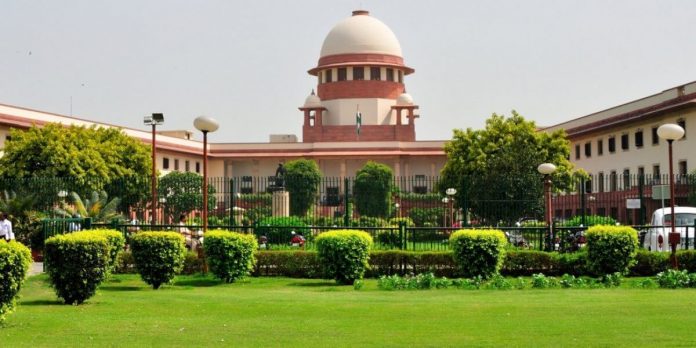
Supreme court of India

This article is written by Oishika Banerji of Amity Law School, Kolkata. This article aims to provide a list of important judgments of the Code of Civil Procedure, 1908 from 2020-2021.

Introduction 

This article will be listing out a few notable Supreme Court, and High Court judgments ranging from the year 2020 to 2021, which have had a greater impact on a better understanding of the Code of Civil Procedure, 1908. It stands obvious that this article does not cover all such important judgments delivered by the Supreme Court of India, and the various High Courts of the country, but it does provide some of the important judgments which are necessary for every law professionals, or student to know. 

Supreme Court judgments

The judgments discussed below majorly throws light on the ratio decidendi of the case in comparison to the obiter dictum. The facts and the contention of the parties in the suit have been briefly discussed as well. 

Government of Maharashtra (Water Resources Department) represented by Executive Engineer v. M/s Borse Brothers Engineers & Contractors Pvt. Ltd. (2021) 

This present case (2021) takes into account whether the judgment delivered by the Apex Court in the case of N.V. International v. State of Assam (2020) provides a correct, and justified interpretation of Section 37 of the Arbitration and Conciliation Act, 1996 or not. In the 2020 case, the Supreme Court had observed that if an appeal had been filed beyond the prescribed period of 120 days as provided by Section 37 of the Arbitration and Conciliation Act 1996, then the same will not be accepted. This decision was taking into consideration two grounds which were;

  1. Speedy disposal of arbitral disputes; and
  2. Generally in a suit, a defendant is provided with a period of 120 days to file a written statement, and therefore an appeal which is a continuation of such a suit should be following the same pattern (Order 8 Rule 9).

The two issues that the Court dealt with in the 2021 case were:

  1. Whether the judgment delivered in the case of N.V. International v. State of Assam (2020) laid down the law in a justified way?
  2. Whether an appellate court can accept a delay in filing an appeal under the provision of Section 37 of the Arbitration and Conciliation Act, 1996? 

Justices R. F. Nariman, B.R. Gavai, and Hrishikesh Roy while delivering the judgment took into account different statutes namely the Arbitration and Conciliation Act, 1996, the Limitation Act, 1963, and the Commercial Courts Act, 2015. And throughout the judgment, the Court took into consideration the key provision which functions as a crux of the mentioned statutes, that is Order 8 Rule 1 of the Code of Civil Procedure, 1908 that restricts the right of defense after a provided period of limitation is over. The observations by the Apex Court has been presented hereunder; 

  • The underlying principle of both the Arbitration Act, 1996, and the Commercial Courts Act, 2015 is speedy disposal of disputes with minimal interference by the courts. 
  • Section 37 of the Arbitration and Conciliation Act, 1996 neither prescribed a limitation period within which an appeal is supposed to be filed nor did it lay down an acceptance period beyond which delay in filing an appeal would not be entertained. Along with this, the Court noted that Section 43 of the Act of 1996 expressly provides that provisions of the Limitation Act will be applicable in arbitral proceedings just the way it applies to court proceedings. 
  • Taking into account the important principle provided in the first bullet, the Court observed that when Section 5 of the Limitation Act comes into play to accept the delay beyond 90 days and/or 30 days of filing appeal depending upon whether Articles 116(a) or 116(b) or 117 of the Limitation Act applies, the governing principle of the Arbitration Act must not be ignored. 
  • Putting Public Sector Companies on equal footing with the Private Sector Companies, the Court upheld the Dicean principle of “equality before the law” thereby rejecting the acceptance of delay in cases associated with the former branch of companies. 
  • The Court noted that Order 8 Rule 1 of the Code of Civil Procedure, 1908 is a mandatory provision, and therefore applying the same opinion that delay in filing of appeals was not to be accepted. 

This decision of the Apex Court left a progressive imprint in commercial matters. 

Dahiben v. Arvindbhai Kalyanji Bhanusali (2020)

The case of Dahiben v. Arvindbhai Kalyanji Bhanusali (2020) is an appeal case brought before the Supreme Court of India to challenge a judgment delivered by the Gujarat High Court that declared a suit filed by the appellate to be barred by limitation under Rule 11 (d), Order 7 of the Code of Civil Procedure, 1908. The concerned suit revolved around an agricultural plot of land which was sold by the appellate to the respondent who failed to pay the consideration of the sale deed in 2009 thereby forcing the appellate to cancel the same along with the filing of a suit against the respondent on 15th December, 2014. 

The Apex Court while deciding on the case took into account the application of the law in deciding a matter brought before it under Order 7 Rule 11 of the Code of 1908. The observations made by the top court have been provided hereunder; 

  • The remedy provided under Order 7 Rule 11 is special in nature as it allows a civil court to dismiss a suit summarily without recording the evidence presented before it, and conducting a trial. 
  • An application under Order 7 Rule 11 of the Code should consist of a plaint, a bare reading of which shows that no further inspection or inquiry is needed to be conducted as the allegations laid down in the plaint is sufficient to show the existence of a cause of action against the defendant. 

The Court took into account Article 59 of the Limitation Act, 1963 which lays down three years as the period of limitation while throwing light to the facts of the case. The Court reiterated the principles governing adjudication of an application under Order 7 Rule 11 and opined that the plaintiff should be proactive in securing his legal rights by ensuring that the legal proceedings are filed within the prescribed period of limitation that is three years. Taking into concern the facts of the case, the suit filed by the appellate, in this case, will be barred by the prescribed limitation. 

Manish Kumar v. Union Of India (2021)

The Supreme Court in the recent case of Manish Kumar vs Union Of India (2021) took into account the interplay of Order 1 Rule 8 of the Code of Civil Procedure, 1908, and the Consumer Protection Act, 2019. This was because the petitioner, in this case, had resorted to these two provisions while laying down his contentions. The case which concerned amendments brought in the Insolvency and the Bankruptcy Code, 2016 was being heard by Justice K.M. Joseph. 

The explanation provided to Order 1 Rule 8 of the Code reads as, “Explanation.— For the purpose of determining whether the persons who sue or are sued, or defend, have the same interest in one suit, it is not necessary to establish that such persons have the same cause of action as the persons on whose behalf, or for whose benefit, they sue or are sued, or defend the suit, as the case may be.” Therefore, the interests of all the persons who have the same interest are protected by means of this provision. The petitioner, in this case, had further submitted that Section 12 of the Consumer Protection Act, 2019 adopts the principle laid down by Order 1 Rule 8 of the Code as it provides the manner in which a complaint should be made. Further, Section 2(b)(iv) of the Consumer Protection Act, 2019 mentions that a complaint “includes one or more consumers, where there are numerous persons having the same interest.” To conclude, it can be said that the procedure laid down under Order 1 Rule 8 of the Code can be applied in the Consumer Protection Act, 2019 where a situation of more than one consumer having the same interests arises. 

Thus once an application is moved under Order 1 Rule 8 of the Code of 1908, a single plaintiff or a consumer depending on the facts of the case, in a civil suit or a consumer complaint respectively, having the same interest, are free to be a part of the proceedings. Irrespective of the fact whether they join the proceeding or not, a Decree or order, which is pronounced by the court, will bind all the persons who have the same interest.

H.S. Goutham v. Rama Murthy (2021)

The present case (2021) of an appeal involves a mortgagee and an auction purchaser who had purchased the mortgaged property in concern. The defendant, in this case, had defaulted in making the entire payment to the appellate in consequence of which the latter instituted a suit for recovering the payment from the latter. Further, a compromise took place between the appellate and the defendant where the latter agreed to pay the amount by installment in three years. A sale certificate was also granted to the auction purchaser thereby registering the sale. Further, the High Court of judicature at Karnataka had set aside the sale on the application of Order 21 Rule 90 of the Code of Civil Procedure, 1908 stating the compromise to be fraudulent by nature. The Supreme Court of India while observing that when the concerned mortgaged property was already sold in the auction by means of the execution proceedings, the sale was confirmed in favor of the purchaser, and the sale certificate was issued, the High Court’s decision of quashing and setting the consent decree aside was not justified. 

The Bench of Justices R. Subhash Reddy, M. R. Shah, and Ashok Bhushan held that if Order 21 Rule 92 of the Code of 1908 is read with Order 21 Rule 94 of the Code what can be obtained is that once the sale has been confirmed along with the issue of the sale certificate in favor of the purchaser, the same becomes final, and therefore cannot be set aside. By observing this, the Apex Court confirmed that the High Court had acted beyond its limits. 

Rahul S Shah v. Jinendra Kumar Gandhi & Ors. (2021)

The Supreme Court in a recent judgment of Rahul S Shah v. Jinendra Kumar Gandhi & Ors. (2021) laid down directions for speedy enforcement proceedings to take place taking into account the difficulties involved in an enforcement proceeding. The facts of the present case involve a property dispute where the judgment debtor had raised hurdles in enforcement by creating conflicting rights over the concerned property. 

  1. It is the responsibility of the courts that they must identify the property and the status of any third-party rights before delivering the judgment in order to avoid delay in enforcement proceedings.
  2. Courts may require defendants to disclose their assets through affidavits, and after the judgment is delivered, courts must invariably arrest the judgment debtor to ensure immediate execution of the same. 
  3. Courts should not be entertaining any applications against a decree made by it if it is observed that the issues surrounding such application could have been taken into account before the court delivered the judgment. 
  4. Courts may attach properties of persons from whom a judgment debtor can derive share, profit, or property.
  5. The Apex Court held that an enforcement proceeding must be completed within 6 months, and if an extension is needed then the reasons must be provided in a formal expression.
  6. The taking of evidence during enforcement proceedings should be allowed only in cases of exception.
  7. Courts must award costs and even arrest in frivolous cases. 

High Court judgments

The judgments discussed below have been taken from various High Courts across India. With more focus on the ratio decidendi, the cases have been detailed below with brief facts, and contention of the parties involved in a case. 

Virender Singh v. the Delhi State Cooperative Bank Limited (2021)

The Delhi High Court in the notable case of Virender Singh v. the Delhi State Cooperative Bank Limited (2021) opined that although there lies no complete bar on the maintainability of a suit, the court’s scope of interference in such a suit in conducting a disciplinary inquiry or Show Cause Notice stands limited by nature. The respondent in the present case had filed an application under Order 7 Rule 11 of the Code of Civil Procedure,1908 challenging the suit instituted by the plaintiff on the ground that the same will not be maintainable under the Delhi Cooperative Societies Act, 2003. This application was rejected by the trial court. 

The Single Judge Bench that consisted of Justice Navin Chawla noted that the burden of satisfying the trial court and the appellate court to decide on the fate of the case as to whether it comes under the purview of the limited scope of interference or not rests solely on the petitioner of the case. The Court went further to decide that the present suit cannot be said to be maintainable before the appellate court as it was exercising its jurisdiction to decide on the ad interim order of injunction that the trial court had granted when the petitioner’s application under Order 39 Rule 1, and 2 of the Code of 1908 was pending before it. 

Harjyot Singh v. Manpreet Kaur (2021)

In the case of Harjyot Singh v. Manpreet Kaur (2021), an application was filed by the plaintiff to remove the written statement submitted by the defendant on the ground that the same was submitted before the Court after the stipulated period laid down under Order 8 of the Code of Civil Procedure, 1908. Therefore, the issue in hand that was to be dealt with by the Hon’ble High Court of Delhi was whether a delay in filing of the written statement was to be accepted or not by the Court. The defendant had contended the allegations made by the plaintiff on grounds that his plaint stands were rejected under Order 7 Rule 11 of the Code of 1908. 

The Delhi High Court in this case observed the following points:

  1. The written statement was filed by the defendant on 15.02.2020 which was beyond the period 120 days from the date of receipt of summons by the defendant from the Court.
  2. The application that was submitted by the defendant provided no reasonable grounds for delay in filing of the written statement.
  3. The defendant herself had stated in the application that she had voluntarily refrained from filing a written statement previously within the stipulated period of time. 

Taking into consideration these aspects, the Court allowed the application filed by the plaintiff. 

Narayanee v. S. Karthik (2021)

The Madras High Court while deciding on the case of Narayanee v. S. Karthik (2021) that concerned an appeal that was directed against a decision made by a Family Court that involved dissolving a marriage between two parties. The issue before the Hon’ble High Court was whether failure on the appellate’s part to take part in a divorce proceeding to which she is a party will lead to a presumption by the Court that the allegations made by the respondent against her are accepted by her. The Madras High Court while answering this issue provided two reasons which are presented hereunder; 

  1. Order 8I Rule 5(1) of the Code of Civil Procedure, 1908 states that “every allegation of fact in the plaint, if not denied specifically or by necessary implication, the same shall be taken to be admitted as against the person who failed to deny the same”. Therefore, in this case, the absence of the appellate during the divorce proceeding reflects the fact that she has admitted the allegations made by her husband who is the respondent.
  2. The Court made a combined reading of Order 16, Rule 20, Order 15, Rule 4, and Order 22, Rule 4 of the Code of 1908 thereafter inferring that if any party whose suit is pending before the court refuses to provide evidence in support of his or her pleading then the Court can right away pronounce the judgment thereby disposing of the suit. 

Prabha Surana v. Jaideep Halwasiya (2021)

The Calcutta High Court while deciding the case of Prabha Surana v. Jaideep Halwasiya (2021)  laid down a proper distinction between temporary injunction under Order 39 Rule 1 and an order for attachment before judgment under Order 38 Rule 5 of the Civil Procedure Code, 1908 which were as follows;

  1. While Order 39 Rule 1 of the Code of Civil Procedure, 1908 provides temporary relief to the petitioner who is at imminent risk to the disputed property in the suit, which was being wasted by certain actions of the respondent, Order 38 Rule 5 of the Code applies when the petitioner seeks to execute a decree provided by the Court while dealing with a suit. 
  2. The intention of the Court while applying Order 39 Rule 1 of the Code is to safeguard the petitioner from any kind of injury in relation to property in dispute that the respondent is empowered to cause prior to disposing of the suit by the Court.  Whereas, the intention behind Order 38 Rule 5 of the Code is to secure the petitioner from the respondent’s action of removing the former’s property from the jurisdiction of the Court. 

The present case was made out to be falling within the ambit of Order 39 Rule 1 of the Code and therefore, the respondent was restricted from causing any harm to the petitioner’s property until the Court disposes of the suit, or provides further orders. 

Arvind Jeram Kotecha v. Prabhudas Damodar Kotecha (2020)

The Bombay High Court while deciding on the case of Arvind Jeram Kotecha vs. Prabhudas Damodar Kotecha (2020) took into consideration Section 13 of the Code of Civil Procedure, 1908 which provides grounds when a foreign judgment is not conclusive. The Court stated that a bare reading of the provision reflects that for an order or a decree to be conclusive by nature, the same must have been obtained after a due judicial process that will include providing reasonable notice, and equal opportunities to the parties in the suit to be heard. The executing court will therefore not be able to enquire into the legality of the judgment if it follows a judicial process. The Court in this case concluded that as the appellate had failed to show that the decree did not fall within any of the exceptions provided under Section 13 of the Code, the appeal was dismissed. 

Conclusion

The judgments discussed above provide a glimpse of the practical application of the Code of Civil Procedure, 1908 by the courts of India. All the judgments discussed upholds the underlying principle of the Code of 1908 which is ubi jus ibi remedium which signifies that where there is a right, there is always a remedy to safeguard the right when infringed. 


LawSikho has created a telegram group for exchanging legal knowledge, referrals, and various opportunities. You can click on this link and join:

https://t.me/joinchat/J_0YrBa4IBSHdpuTfQO_sA

Follow us on Instagram and subscribe to our YouTube channel for more amazing legal content.
Download Now

End user license agreement : impediments arising out of copyright and patent misuse

0
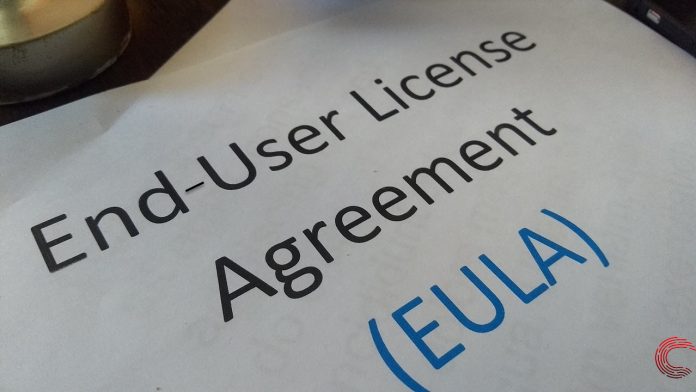
End User License Agreement
Image Source: https://bit.ly/2v4oykY

This article is written by Somadatta Bandyopadhyay, pursuing Diploma in Advanced Contract Drafting, Negotiation, and Dispute Resolution from LawSikho. The article has been edited by Dipshi Swara (Senior Associate, LawSikho).

Introduction

End-user license agreements (EULAs) have gained momentum in the last few years and have started accompanying a plethora of goods, thereby leading to the imposition of restrictions on consumers. These agreements which are entered into between the owner (known as licensor) and the end-user (known as licensee) of the product, primarily go on to specify the rights and restrictions that apply to the software. Most software these days demands the user to enter into clickwrap agreements before installation. Electronics also come along with shrink wrap agreements to abide by for the end-users. The restrictions on EULAs are not insignificant, they are mainly put in place to safeguard the intellectual property (IP) of the organizations that propose the license terms. In case there is any violation of said license terms, a remedy in the form of an IP infringement suit is always available.

Are there any limits to the scope of permissible licensing?

Though EULAs are deemed valid and are enforceable in law, there are certain impediments with respect to how much restrictions are within the allowed limit for licensors to consider. One such impediment is the copyright and patent misuse that can be used as a defense to a suit for infringement.

Patent misuse

A patent holder cannot expand the scope of the patent indefinitely. The patent then shall be deemed unenforceable. This doctrine, also known as the patent misuse doctrine, was first laid down in the case of Morton Salt vs G.S.Suppiger. The US Supreme Court in this case held that tying agreements that basically require the purchase of an unpatented product with a patented one is a misuse of the rights granted under patent protection and is therefore unenforceable.

Antitrust law and patents do not go hand in hand. Patents help inventors monopolize on their inventions and negates competitors from making, using, selling said patented product, antitrust law on the other hand considers such monopoly anti-competitive.

However, we have come a long way from Morton Salt and the scenario is now more favourable for patent holders as they are allowed the freedom of entering into contracts as they deem fit and the relevance of antitrust has decreased significantly. There was a significant change in which tying agreements were viewed after the case of Lexmark international vs. Static Control Components, in which the Court mentioned that in order for a tying agreement to be anti-competitive, it is important that proof of market power exists in favor of the company issuing the agreement. There can be patent misuse only if companies holding patents have a significant hold on the relevant market in order to develop device licenses as per their whims and fancies. If there exists no such market relevance, then there are unrestrained abilities to craft restrictions without triggering antitrust apprehensions. That conversely also means that market leaders who are dominant in the field have bigger restrictions on their licensing etiquette.

Having said that, a patent misuse curtailment that still stands strong and holds true is that patent protection cannot be extended beyond what is stipulated as per the statutes. Therefore any agreement that claims the payment of licensing fees for use of a certain patented product beyond the period of protection constitutes a misuse of patent and is therefore unenforceable.  

Copyright misuse

Overreaching licensing terms that constitute a violation of public policy when used in conjunction with copyright protection for a particular product, is touted as copyright misuse. This has been reinstated in the case of Lasercomb America vs Reynolds, where the agreement mentioned that based on the software that was being licensed, no competitive product could be developed for a period of ninety-nine years. This was a serious impediment, given that the restriction lasted beyond the period of potential copyright protection. This would deem any such similar license unenforceable and continue to remain so unless the misuse is cured.

Patent exhaustion and first sale doctrines

There have been instances where courts have limited the enforceability of EULAs when patent and copyright owners have chosen to sell their works rather than license them out under the patent exhaustion and first sale doctrines.

First sale

The first sale doctrine particularly restrains EULA scope in order to curtail downstream rights of fair use for permissible copies of works with copyright protection. In this context, in order to resolve the question of enforceability when it comes to license versus sale.

The case that first brought about a discussion in this context was United States vs Wise, where the question was according to the agreement signed by both parties did the transfer of a film result in licensing or sale. Even though all the agreements read “License”, the rights granted, for example, control of a copy of the film in question for perpetuity was in the nature of a sale. Therefore, it was concluded that in order to determine whether the first sale doctrine is applicable or not, the economic realizations are to be considered, rather than the labels used.

Patent exhaustion

EULA enforcement denial has another mechanism backing it up recently, which is the patent exhaustion doctrine. It reiterates that once a patented protected article has been sold by the patentee without any restrictions, the patentee exhausts their rights to control any future sale and use of the said article by enforcing it.

Policy implications

There has been a paradigm shift with respect to EULAs for patented and copyrighted products. An increase in the acceptance of copyright and patent misuse has resulted in the courts favouring the restrictions imposed by EULAs. The moot question that still remains is the implications the new regime might have on consumers.

Uncertainty of consumers and product manufacturers

With the diverse opinions of various courts, some favoring licensing of products via EULAs and others restraining their enforceability, the consumers and manufacturers are on the fence about what terms might be greenlit and upheld and which ones would be considered an overreach.

Incentives for patent holders

More legal support EULAs receive, the inventors and authors of protected works are incentivized more. This enables them to extort more rewards from the works. Homogeneous markets can now be divided. The division can be based depending on the use of the protected work and the person(s) holding the protected work can restrict the resale of said work as a condition in the license. This leads to arbitrary price determination based on the value put on a product by the user. 

But even with the disparity and arbitrary pricing, the advantages received by society linked to the higher incentives to sellers exceed the cost borne by consumers. The inflow of more products may be initiated under a better incentive program that could possibly be brought about by more enforceable and flexible license restrictions. But for that, licensing of products in general also has to be accepted.

Expansion of product restrictions

With the increase of products in the market, a control mechanism in the form of license restrictions would also increase which would ultimately downstream to restrictions on consumers buying products that might contain patent-protected technology. This could lead to the right to repair of consumers being taken away, as the repairs would only be allowed at authorized centers taking away the livelihoods of thousands of independently run repair shops. Similarly, if resale is barred by EULAs, then businesses dealing in used products, cars, books, and similar products, would be eliminated. 

Even in the case of works protected by copyrights, the first sale doctrine could be ended by putting in license restrictions. Owners of copyright could stop reviewers from quoting portions from copyrighted works or even prevent the publication of negative reviews for their work. In the case of software, testing of software could be restricted without the approval of manufacturers.

Probable solutions

Unregulated freedom on the imposition of EULAs could change the dynamics between consumers and sellers. There would be a need to put checks in place without additional implementation of new legislation using already existing regulatory frameworks.

For example, the licensing restrictions could be clearly visible for consumers otherwise it would be deemed deceptive and unfair trade practice. Also, the methods of disclosure for all undertakings involving EULAs should be made uniform in order to preserve the right to contract of sellers while also giving consumers the opportunity to be alert and wary about extremely restrictive terms and conditions. Companies could also be given incentives to compete based on restrictions imposed by licenses. 

Conclusion

A field as murky as Intellectual property rights can be hard ground even for lawyers to understand. Therefore, the increase in complexity leads to consumers not being able to appreciate the laws put in place to instigate the industry’s interests. The balance cannot be threatened by creators using provisions of contracts to reserve rights granted to them under copyright or patents for themselves and taking advantage of the monopoly given to them under statutory law instead of surrendering said rights for the benefit of the public. Whether it is by withholding the benefit given to creators in case the public benefit is reduced or any other means, the balance has to be maintained at any cost.


Students of Lawsikho courses regularly produce writing assignments and work on practical exercises as a part of their coursework and develop themselves in real-life practical skills.

LawSikho has created a telegram group for exchanging legal knowledge, referrals, and various opportunities. You can click on this link and join:

https://t.me/joinchat/J_0YrBa4IBSHdpuTfQO_sA

Follow us on Instagram and subscribe to our YouTube channel for more amazing legal content.
Download Now

What are the alternatives for first-year law students if they don’t want to intern at NGOs

0
law firm internship
Image source - https://bit.ly/3dDP7PJ

This‌ ‌article‌ ‌is‌ ‌written‌ ‌by‌ ‌‌Yash‌ ‌Kapadia‌.‌ ‌This‌ ‌article‌ lays out the different opportunities for a first-year student to intern at except an NGO. 

Introduction

It is public knowledge that law students, regardless of which year they are in, are virtually competing to take positions at law firms, companies, corporations, courts for internships. As they turn senior and the more experience they gain, the better are their chances to land an internship at your desired place. However, what about those who are in the first year? It is said that going from zero to one is more of a task than going from 1 to 10.
Through this article, we shall enlist opportunities that first-year students can pick up in order to become better lawyers of the future. 

The skills you need to focus on

As a first-year law student, the goal of every student should be laser focussed on learning the skills which can mould them into the best lawyers when these skills develop and start compounding over a period of a few years, in all likelihood, by the time they graduate as lawyers. 

Therefore, the basic and most important skills to concentrate on when a law student enters law school are: 

  1. Writing communication  

A lot of work in the legal profession involves writing. The work of any lawyer will involve writing letters, legal notices, drafting legal documents and contracts, etc. The way they write their letters and draft emails to clients gives the reader an idea about the lawyer’s command over his English proficiency skills. An error-free written document without errors builds the clients’ confidence in the lawyer. Written communication is one of the most important skills any lawyer should have and it develops and gets better only with practice. A first-year student by participating in writing competitions, written negotiations, etc. can develop this skill.

  1. Oral communication 

A lawyer must possess equally good oral communication skills such as written communication. Exceptional oral communication skills bolster the self-confidence of a law student too. Moot courts are the best way in which a student can learn the art of advocacy i.e. oral communication. Oral communication in easy words means to speak and converse with ease leaving a fashionable impression on the listener. This skill also compounds by being consistent over a period of time. 

  1. Research skills and eye for detail 

A graduate lawyer should always be prepared with relevant notes and research material before a meeting with any client. A well-researched lawyer always leaves a good impression on the client as well as his seniors at the workplace. They must read everything carefully and analyse the situations themselves. As a first-year law student, one can start researching current legal topics in the news. One can further read articles from legal blogs in order to understand the concepts of law that are explained in a simple manner. For example, iPleaders blog. 

  1. Analytical and reasoning skills 

A day in a busy lawyer’s life involves meeting many people who are facing several different legal problems and therefore makes it important for them to be very sharp and think logically before analysing every situation and coming to a conclusion about them. First-year law students can perhaps read landmark case laws in order to understand how a judge analyses the facts of a case and then interprets the law as per the factual circumstances and comes to a conclusion by passing an order. 

Options apart from NGOs that help to build the above skills

First-year students must understand that they are exactly what they used to be in kindergarten. They have no idea about the law or the way it works. It is also widely known that first-year students are “told” or even “suggested” to work at NGOs. However, not all first-year law students get opportunities to work at NGOs. In fact, there are better opportunities that are not quite explored by these students which shall transform them into an entirely better version of law students in the first year itself. The following are the places first-year students must consider exploring for their internships: 

  1. Content writing for a legal blog 

When one starts writing articles that get published, there are so many skills that are put to work and molded into better versions with consistency. Content writing involves research, drafting, usage of legal language, interpretation of the law, proof-reading, editing, etc. Legal content writing is probably one of the best ways to build up a strong foundation of the skills every successful person possesses. Instead of trying their luck at big law firms, first-year students must make an endeavour to send internship applications to legal blogs. For example, iPleaders blog has a policy of hiring a certain number of interns on a rolling basis every month. iPleaders also holds weekly blog writing competitions wherein a first-year student who is not doing an internship too can submit his articles and stand a chance to win monetary benefits if they stand in the top 5. Other blogs where interns are hired to write content include Lawctopus, Bar and Bench, Manupatra, SCC Online, LegallyIndia, Legal Bites, SpicyIP. After a few months of interning and writing content, an intern has the liberty to upskill by becoming an editor or even an evaluator for the blog or a journal.

  1. Research internships

In recent years, the position of a research intern is something that first-year students are more than enthusiastic to take up. Research interns as the tag suggests are responsible specifically for research across varied areas as per the job descriptions of the MNC, startup or a law firm, Ph.D. students or professors hiring interns. One needs to develop articles/ video content for their website. The general responsibilities for a research intern will be to research on the allotted topics along with content and abide by the research guidelines like maintaining plagiarism. If a research intern is needed by a Ph.D. student or a professor then one must have to research in-depth on a particular topic and be updated on the recent amendments and practical developments in the legal field. Also, if a consultancy or legal recruitment firm needs research interns then their responsibilities would be to write reports on particular law firms, research more on the deals of law firms. All in all, a research intern is a well-known position today and helps to develop research skills, brushes one’s MS Word and Excel skills also. Professors, LLM/ Ph.D. candidates of various law schools in India post on LinkedIn (“Research interns needed” posts) if they are looking out for research interns. Recruitment firms like Vahura too hire research interns who help them map and overview various aspects of law firms. 

  1. Court clerks 

Court clerks are one of the most under-rated professions for any law student to consider interning under. As first-year law students, the goal should be to learn the workings of a court in their particular state. By courts, we mean from the subordinate courts to High Courts. A student interning under a good court clerk can become well conversant with the entire filing process of any legal document in court, the timeline it takes for matters to set rolling for hearings, the kind of procedure to follow when amendments need to be carried out or objections are to be removed. All these skills will apply when the first-year students intend to practice litigation or dispute resolution and want to run their own law firm someday. The best way to bag an internship under a court clerk is to physically go to the court and look out for clerks who in all likelihood will be present. Court clerks are approachable and also more welcoming to provide the knowledge they possess to law students. 

  1. District Court lawyers

The judicial system of India sits on the lower courts. The sheer backlog of cases, the not-so-good ambience as that of High Courts and the different issues that are disputed are a delight to watch and learn from. Any first-year law student who has studied the subjects of Contract Law or Tort Law will see all the sections they have studied, being applied in real life. This opportunity of working under a district lawyer can be more fruitful than interning even at a big law firm. In fact, district lawyers tend to also invest time in making an intern learn various aspects of law along with drafting certain simple legal documents like vakalatnamas, legal notices, adjournment applications. The skills an intern can learn here will stick with them for a lifetime. The best way to approach district court lawyers is to either find their name and contact information online or to approach them by going to the district court physically. Similar to law clerks, they too are approachable and more than happy and willing to guide and mentor law students. 

  1. Start-ups 

Every law student regardless of which year they are in, can approach any start-up across the globe and help them with the legal aspects of what they may face. The knowledge and experience of a law student in helping a start-up grow are incomparable. A startup like the law student is raw and not well established. When the pressure to research, communicate and provide leads and compliance information to the team is on the law student, it is then, they shall understand the veracity of the role of a lawyer in a company. Law students can go on LinkedIn or even Twitter (a more informal site to approach) or sites like Y Combinator and ascertain which funded start-up excites them the most and then approach any member of it and ask them if they would be open to providing a law student with the role of a legal intern. This approach may be difficult but it is definitely the road less taken with abundant rewards. 

  1. Law firms with less than 5 lawyers 

There are hundreds of law firms that have less than five lawyers working. Being a first-year student, the goal should be to select a firm where people are ready to invest their time and energy to mentor, guide and make you understand various aspects of law, be it corporate, banking or disputes. These small law firms are often loaded with a variety of matters spread across different areas of law which shall help the law student build a strong foundation on different law subjects. These small firms may or may not pay a stipend to an intern. However, the knowledge one gains is a part of the intellectually fulfilling experience. One can check on LinkedIn or ask their networks around for corporate and litigation law firms with a small team. For example, in Mumbai, Delhi and other metro cities there are various small-sized corporate law firms whereas there are numerous small-sized litigation firms where opportunities are available if one persistently searches. To find an ideal choice aligning with their interests, one needs to network with senior law students. 

  1. Content development 

Content development is one such field wherein one can learn the very basics and even the complications of personal branding. Legal internships for content development include developing content for the growth of a law firm, legal cell, blog or even a legal tech startup. An intern has to develop articles or video content for the recruiter’s website. They further have to assist with the recruiter’s online presence by developing strategy, producing good content and analyzing usage data. The intern further provides assistance in managing projects and campaigns and furthermore with the management of social media pages and profiles. Even though this role is not entirely law-related, all the skills you learn here will only mean to develop skills which a general lawyer wouldn’t have. A lawyer having content development skills can provide these skills at an affordable rate and also help when they need personal branding. For example, a student can approach or send applications to law firms, companies, NGO’s for helping them develop content. These roles are unconventional and catch the eyes of HR more quickly than the generic legal internship roles. 

Other alternatives 

Regardless of the circumstances, if a first-year is interning at a place mentioned above or an NGO, this one is probably one of the best self-investments he will be making. When a first-year student takes up an online course about contract law, companies law, arbitration law, he leads himself ahead of a lot of peers in the curve by understanding the legal aspects and meaning of the law at a premature age. For example, LawSikho provides courses varied across all kinds of law along with added benefits like freelancing and placements which not only help a first-year law student to be a better version of himself but also transform him into a disciplined, consistent learner, which is the most important attribute to have if one wants to be a successful lawyer. The skills learned at LawSikho courses are then applied to freelancing opportunities for which mentorship is provided to a student. Online diploma and certificate courses are also offered by Lawctopus Law School, various NLUs like NUJS, NLSIU and even Government Law College, Mumbai. 

The afore-mentioned blogs at regular intervals also call for research papers and articles, even on specific areas like Arbitration, Corporate Law, etc. wherein any student can participate in such a competition which also awards monetary benefits to winners. This shall enable the students to improve their writing skills and build a good network of like-minded people by interacting and reading the winners’ articles or papers. There are various other online courses offered on Coursera when one has the liberty to search for a course depending on the area of their interest. Imagine earning in dollars with the skills you learned that will last you a lifetime, that too in the first year of law. 

Conclusion

In drawing things to a close, we discussed what kind of internships can first-year law students do in order to start being productive. We also gave an example of how doing an online course can be the best self-investment a law student makes at the earliest stage of his career. 

One thing to always keep in mind is that law is a profession that needs patience. In keeping this statement even more clear, the skills you learn today, will develop tomorrow and be used later on at any given instance. That may take 5 years, 7 years or even 10 years. The skills you learn during the law school days are compounded just like an investment and the fruits of it can be seen only due course. Patience is something a law student should master. Therefore, let the power of compounding begin from the first year itself.  


LawSikho has created a telegram group for exchanging legal knowledge, referrals, and various opportunities. You can click on this link and join:

https://t.me/joinchat/J_0YrBa4IBSHdpuTfQO_sA

Follow us on Instagram and subscribe to our YouTube channel for more amazing legal content.

Download Now

All you need to know about non-compete agreements

0
Image Source: https://rb.gy/pkobnt

This article is written by Suchandra Mukherjee, pursuing Diploma in Law Firm Practice: Research, Drafting, Briefing and Client Management from LawSikho. The article has been edited by Amitabh Ranjan (Associate, LawSikho) and Dipshi Swara (Senior Associate, LawSikho).

Introduction

Have you recently joined a company and are wondering whether you should be signing the non-compete agreement? Most employers ask the new employees to sign the non-compete agreement, wherein they agree not to start a business similar to the company or work for a competitor for a stated period of time after the relationship ends. In order to understand how such an agreement works, we need to understand the importance of entering into a non-compete agreement, major clauses, and its enforceability.

What is a non-compete agreement? 

A non-compete agreement is a legal agreement or clause in a contract stating that an employee should not compete with an employer once the period of employment ends. These agreements also prohibit the employee from disclosure to any third party during or after employment of proprietary information or secrets.

Let’s understand non-compete agreement by taking a simple example;

Let us consider a business with a particular number of employees and partners; in order to convert an employee to an asset to the business, training is required so that the employee is familiar with the business structure. However, after working for 3-6 months, the employee learns all of the trade secrets and moves on to another company that offers more packages than the first.

So, how can we constrain the knowledge and strategies provided to the employee so that he doesn’t pass them on to the organization’s competitor?

Here, the non-compete agreement comes into action.  According to the terms of the non-competing agreement, an employee cannot enter into a competition or disclose any business secrets of the organization within the employment period and post-employment for a reasonable amount of time after the employment is over. 

There is also another bond that an employee needs to accept while entering any organization known as the Employee Bond which requires an employee to work for a fixed amount of period within that company and if that employee breaks the bond before that period, then he/she would have to pay a fixed amount as compensation to that organization.

Key pointers of a non-compete agreement

  • The non-compete agreement ensures that the employee DOES NOT ENGAGE in any kind of direct or indirect competition with the organization during a specified term.
  • It basically binds a working or former employee of an organization legally from COMPETING WITH AN EMPLOYER for some period of time after the employment ceases.
  • The employer MUST NOT REVEAL any trade secrets learned during the period of employment.
  • The non-compete agreement LIMITS THE TIME PERIOD during which the employee shall not work with a competitor, geographical location, or market.
  • Non-compete agreement PREVENTS AN EMPLOYEE FROM GETTING A JOB in their field if they leave a position.

The functionality of a non-compete agreement

A non-compete agreement is operative during:

  1. The period of employment.
  2. After the termination of the offer. 

In the Indian system, the courts in most cases have refused to enforce the POST-TERMINATION clauses of a non-compete contract in the restraint of trade and have held such agreement to be void-ab-initio as it is not permissible under Section 27 of the Indian Contract Act, 1872, and such contract was always held as against the public policy (discussed in the next section of this article) as it deprives a man/women of his/her fundamental right to earn through a way of living.

But with the development of social, legal, and corporate circumstances the employment is required to be confidential and the integrity of the employees has become a prime requirement therefore certain regards have also been made to the non-compete agreements. 

Significant case laws

The Hon’ble Supreme Court observed in the matter of Niranjan Shankar Golikari Vs the Century Spinning and Manufacturing Company Ltd that restraints or negative covenants in the appointment or contracts may be legal if they are justified. 

In another case V.F.S. Global Services Pvt. Ltd vs Mr. Suprit Roy where the Bombay High Court established the precedent that a restriction on the use of trade secrets during or after the termination of employment does not constitute a “restraint on trade” under section 27 of the Act and can thus be enforced in certain situations.

In the case of Mr. Diljeet Titus Adv vs Mr. Alfred, A Adebare & Ors where the Delhi High Court held that the real test was the degree of employment control to decide whether it constituted a contract of service.

From these all judgments, we can clearly understand that our Judiciary has laid down certain tests through which the validity of the impositions of a non-compete agreement can be examined so that in certain circumstances the confidentiality of an organization and proprietary rights such as the patent and trademarks can be protected.

Industries that use non-compete majorly are the sectors of Information Technology and Media Industries where there is considerable risk of leakage of intellectual property. 

Clauses in a non-compete agreement

The clauses present in the non-competing agreement are:

  1. Parties – Introduction of the parties (here employee) to the contract, address details
  2. Duration/Term– For how much duration the non-compete agreement will be enforceable as it cannot be implemented for a lifetime, a reasonable duration has to be mentioned.
  3. Non-compete clause which includes: 
  • Work- Specify all the work that cannot be done by the employee.
  • Damages- If still the employer breaks the contract and opens his own business/goes to some other company.
  • Dispute resolution- Through arbitration or by the court?
  1. Signature of the parties.

Constitutionality and enforceability of the non-compete agreement

Is non-competent agreement violative of the fundamental rights of individuals?

Section 27 of the Indian Contract Act, 1872 – “Every agreement by which anyone is restrained from exercising a lawful profession, trade or business of any kind, is to that extent void.” 

Explanation– Any agreement that restricts anybody from engaging in a lawful profession, trade, or business of any type is null and void. 

Such an agreement shall not be binding and be considered null and void and such clauses of the agreement will be beyond consideration.  

There is an exception to this section that says –“One who sells the goodwill of a business may agree with the buyer to refrain from carrying on a similar business, within specified local limits, so long as the buyer, or any person deriving title to the goodwill from him, carries on a like business therein, provided that such limits appear to the Court reasonable, regard being had to the nature of the business.” [see]

If we examine the implications of Section 27 in relation to the exception specified, we can conclude that in order for such trade restrictions to be enforceable, the parties’ agreement must be reasonable and consistent with the interest of the public. 

So, now what do we understand by the two terms public policy and reasonable restriction

  • Public Policy – The term public policy itself is very uncertain, it is totally the functionality of the judiciary to define what is ‘public policy’ and what is not. Therefore, to decide upon what all agreements are against public policy and what agreements are not, will totally depend upon the judiciary. In general, any agreement which is intending to injure the public interest or public welfare is against public policy. It can also include any such injustice of operation, restraint of liberty, trade, and commerce and natural or legal rights, that is simply whatever tends to the injustice of operation, restraint of liberty, commerce and natural or legal rights, whatever tends to the obstruction of injustice or violation of statutes and whatever is against good morals can be said to be against Public Policy. 
  • Reasonable restrictions – Reasonable basically means as per the reasons, that is, whatever an ordinary person would do or restraint from doing using his common sense and knowledge. The test of reasonability depends on the facts and circumstances of each case.

Certain non-compete contracts with reasonable restrictions may be imposed like the following:

  1. Distance – Restrictions on employees to practice the same profession within a given distance, such that the given distance is reasonable. 
  2. Time limit – If a reasonable time period is mentioned in the clause, then such restriction will be considered reasonable.
  3. Trade Secrets – An employer can definitely put reasonable restrictions on revealing trade secrets or sensitive information.

Certain legislations have also been made for ensuring confidentiality and privacy of such sensitive information especially Section 72 of The Information Act 2000, and breach of such confidentiality can even lead to imprisonment and a fine up to 1 Lakh rupees.

  1. Goodwill – According to Section 27 of The Indian Contract Act 1872, distribution of goodwill will be considered as a reasonable restriction. 

Along with these above stated the judiciary can also put reasonable restrictions through CERTAIN REMEDIES in order to prevent a third party from compromising sensitive and confidential information are—

  • Injunction — A court order that forces a person to perform or refrain from performing an act that is necessary for the interests of justice and whose absence would be contrary to good faith and good conscience.
  • Compensation – This remedy is provided by the court to compensate for the losses and damages. 

In this age of globalization and industrialization non-compete agreement is very essential for an organization and is valid during the employment period and after the termination of that offer also.

Conclusion

The enforceability of a non-compete agreement is a contentious issue. The enforceability of the Indian judiciary system is not as broad as in other countries. As a result, non-compete clauses have become a matter of disagreement in a number of cases. Unless it is coupled by certain reasonable restrictions, a non-compete is totally valid during employment and afterward.

With the evolution of social, legal, and business circumstances, employment is necessary to be discreet, and employee integrity has become a primary demand; consequently, consideration has been given to non-compete agreements. The present trends of the Indian judiciary i.e to recognize fair and justifiable non-compete clauses in the different agreements listed above are notable initiatives in that regard.


Students of Lawsikho courses regularly produce writing assignments and work on practical exercises as a part of their coursework and develop themselves in real-life practical skills.

LawSikho has created a telegram group for exchanging legal knowledge, referrals, and various opportunities. You can click on this link and join:

https://t.me/joinchat/J_0YrBa4IBSHdpuTfQO_sA

Follow us on Instagram and subscribe to our YouTube channel for more amazing legal content.

Download Now

Blog competition winner announcement (Week 2nd August 2021)

0

So today is the day! We are finally announcing the winners of our Blog Writing Competition for 2nd week of August 2021 (From 9th August 2021 to 15th August 2021). 

We’d like to say a big thanks to everyone for participating! It has been a great pleasure receiving your articles on a different legal topic, they were all amazing! 

And now we’d like to congratulate our top 5 contestants, who have become the undoubted winners. They will receive Prize money of Rs 2000, LawSikho store credits worth Rs. 1000 and a Certificate of Merit from team LawSikho.

They will also get an opportunity to intern at iPleaders under the mentorship of Ramanuj Mukherjee, Abhyuday Agarwal, Harsh Jain, and Komal Shah. Their articles will get published on iPleaders blog (India’s largest legal blog). Click here to see other perks available to them.

Their entries (see below) received maximum marks based on the average marks given by the panel of editors, and have been crowned the winners!

S.noNameAbout AuthorArticle
1Gyaaneshwar JoshiInternAll about the Maharashtra Electric Vehicle Policy, 2021
2Anushi AgarwalInternCan someone upload your video on the internet or Youtube without your consent
3Dnyaneshwari PatilInternRecent judgements passed by the Supreme Court of India on arbitration
4Sachin Kumar Student who is pursuing a Diploma in Cyber Law, FinTech Regulations, and Technology Contracts from LawSikho.Analysis of NPCI guidelines in different UPI apps
5Aparna JayakumarInternGrowing need for ADR in light of some recent notable case laws

Meet our next 5 contestants who made it to top 10 here. They will receive a Certificate of Excellence from team LawSikho.

They will also get an opportunity to intern at iPleaders under the mentorship of Ramanuj Mukherjee, Abhyuday Agarwal, Harsh Jain, and Komal Shah. Their articles got published on iPleaders blog (India’s largest legal blog). Click here to see other perks available to them.

S.noNameAbout AuthorArticle
6Priyanshi SoniInternDelhi Chief Minister’s Advocates’ Welfare Scheme
7Aporva ShekharInternControversy related to the election of External Affairs Minister S. Jaishankar to Rajya Sabha and related provisions in Indian Law
8Amrit KaurInternThe National Education Policy 2020 and Students’ and Teachers’ Holistic Advancement through Quality Education (SARTHAQ)
9Akshita GuptaInternInstances of animal cruelty in India
10Sneha AsthanaStudent pursuing Diploma in Business Laws for In-House Counsels from LawSikho.Resolving settlement matters under the Insolvency and Bankruptcy Code, 2016 in the light of Lokhandwala Kataria vs. Nisus Finance

Click here to see all the contest entries. Click here to see our previous week’s winners.

Our panel of judges, which included editors of iPleaders blog and LawSikho team, chose the winning entry based on how well it exemplified the entry requirements.

Certificates will be sent on the email address given by the contestant while submitting the article. The contestants have to claim their prize money by sending their account details as a reply to the mail in which they received their certificate within 1 month (30 days) of the date of declaration of results and not afterwards. 

For any other queries feel free to contact Vanshika (Senior Managing Editor, iPleaders) at [email protected]

LawSikho credits can be claimed within twelve months from the date of declaration of the results (after which, credits will expire).

Congratulations to all the participants!

Regards,

Team LawSikho


LawSikho has created a telegram group for exchanging legal knowledge, referrals, and various opportunities. You can click on this link and join:

https://t.me/joinchat/J_0YrBa4IBSHdpuTfQO_sA

Follow us on Instagram and subscribe to our YouTube channel for more amazing legal content.

Download Now

Using competitor’s trademark in advertising

0

This article is written by Tanisha Kohli, pursuing Diploma in Advanced Contract Drafting, Negotiation, and Dispute Resolution from LawSikho. The article has been edited by Dipshi Swara (Senior Associate, LawSikho).

Introduction

Advertising wars between competing businesses are not uncommon. Some well-known advertising rivalries exist between Burger King and McDonald’s, Coca Cola and Pepsi and so on. However, the use of a registered trademark of the other business in one’s advertisement can lead to legal trouble, resulting in an order prohibiting one from displaying or running the said advertisement. 

The Trademarks Act, 1999 (‘the Act’) declares that certain usage of a registered trademark in an advertisement can constitute an infringement of the trademark. 

This article aims to answer whether and in what conditions can the competitor’s trademark be used in an advertisement. It primarily relies upon the judgment of the Division Bench of the Delhi High Court in the case of Pepsi Co Inc. v. Hindustan Coca Cola Ltd., 2003 (27) PTC 305 (Del) (DB) (“Pepsi case”) and the judgment of the Delhi High Court by learned Single Judge in Dabur India Ltd. v. Colgate Palmolive 2004 (29) PTC 401 (Del) (“Colgate case”). 

What is known as a trademark?

A trademark includes a device, brand, heading, label, ticket, name, signature, word, letter, numeral, shape of goods, packaging or combination of colours or any combination thereof, which is capable of being represented graphically and capable of distinguishing the goods or services of one person from those of others. This understanding is arrived at from a combined reading of Section 2(1)(m) and Section 2(1)(zb) of the Act. 

Examples of trademark: 

Implications of using a registered vs. unregistered trademark in advertising 

A trademark can be registered or unregistered. A registered trademark is one that is on the Register of Trademarks and is actually in force. This understanding is arrived at from a combined reading of Section 2(1)(t) and Section 2(1)(w) of the Act. 

Section 29 of the Act deals with situations in which the use of a registered trademark in the course of trade is considered an infringement. Section 29(8) of the Act provides that a registered trademark is infringed by way of advertising  if the advertisement:

  1. Takes unfair advantage of, and is contrary to honest practices in industrial or commercial matters; or
  2. Is detrimental to the distinctive character of the trademark; or
  3. Is against the reputation of the trademark.

Section 29(8) may be represented as the following equation:

Registered ™ + Advertisement + Unfair Advantage of and contrary to honest practices/Detrimental to Distinctive Character/Against reputation = Infringement

If the trademark is not registered, the proprietor cannot rely upon Section 29(8). However, this does not mean that he is remediless. An unregistered trademark that is being disparaged in the advertisement is also entitled to get an injunction against the disparaging advertisement. For instance, in the Colgate case, the plaintiff was unable to prove that his mark was registered and thus did not press upon his contention of violation of Section 29(8). However, the court granted an interim injunction in favour of the plaintiff, as the plaintiff was able to establish a prima facie case, that the balance of convenience was in his favour as the effect of an advertisement cannot be repaired easily. Moreover, the injury caused to the plaintiff would be irreparable and unable of being compensated with damages. 

Displaying the trademark in the advertisement is not ipso facto infringement

Only because a trademark is used in an advertisement by someone who is not a registered proprietor of the trademark, or a permitted user of the trademark, does not by itself amount to infringement of the trademark.

Infringement of a trademark by a proprietor requires that the trademark is used in such a manner that suggests that the trademark is associated with that proprietor’s goods. If a trader compares his goods with the goods of a rival without in any way advertising that the trademark is used in relation to his goods, there is prima facie no infringement. 

For example, in the Pepsi case, Coca Cola in its advertisement had made use of Pepsi’s Globe Device, which was Pepsi’s registered trademark. The Court held that this is not ipso facto infringement. There was nothing in the advertisement to show any connection between Pepsi’s trademark and Coca Cola’s drink. 

Comparative advertising is permissible as held by the Delhi High Court in Reckitt & Colman of India v. Kiwi TTK Ltd.[1996 PTC (16) 393], however, it is not permissible to defame the competitor’s product. 

Limits of comparative advertising 

In Reckitt & Colman of India Limited vs. M.P. Ramchandran & Another reported in 1999 PTC (19) 741 the Calcutta High Court, set out five principles that effectively sum up the limits to comparative advertising. 

These principles are as follows:

“I. A tradesman is entitled to declare his goods to be best in the words even though the declaration is untrue.

II. He can also say that my goods are better than his competitors, even though such a statement is untrue.

III. For the purpose of saying that his goods are the best in the world or his goods are better than his competitors’ he can even compare the advantages of his goods over the goods of the others.

IV. He, however, cannot, while saying his goods are better than his competitors, say that his competitors’ goods are bad. If he says so, he really slanders the goods of his competitors. In other words, he defames his competitors and their goods, which is not permissible.

V. If there is no defamation, to the goods or to the manufacturer of such goods no action lies, but if there is such defamation, an action lies and if an action lies for recovery of damages for defamation, then the court is also competent to grant an order of injunction restraining repetition of such defamation.”

In effect, what we derive from these principles is that advertisement statements can be of four types.

  1. My product is the best in the world;
    1. True – Not infringement
    2. False – Not infringement
  2. My product is better than X’s product;
    1. True – Not infringement
    2. False – Not infringement
  3. My product (E.g. soap) has  2 times more advantages (E.g. cleans faster and kills more germs) than X’s product;
    1. True – Not infringement
    2. False – Not infringement
  4. X’s product is bad;
    1. True – Infringement
    2. False – Infringement

In sum, a comparative advertisement that denigrates or disparages the trademark of the competitor is not permissible. For example, in the Colgate case, in the advertisement by Colgate,  Sunil Shetty rubs the rival product Lal Dant Manjan on the purchaser’s spectacles which leave marks on the spectacles. Sunil Shetty says that the rival product is like sandpaper on the teeth. When the purchaser says “but my glasses?”, implying that the glasses are now ruined, Sunil Shetty tells him that it is easy to change spectacles but not the teeth. The Court restrained Colgate from telecasting this advertisement. It observed that a prima facie case is made out in favour of the manufacturer of Lal Dant Manjan, particularly when Colgate did not deny that its campaign points out the deleterious effects of Lal Dant Manjan. The advertisement impugned in the Colgate case can be seen here

What if the rival product is not specifically mentioned?

Not mentioning the rival product specifically cannot help one escape liability for disparaging and/or infringing another’s trademark. 

It is not permissible to disparage a class of products and get away with it by raising the defence the plaintiff’s product was not mentioned. For instance, in the Colgate case, Colgate offered that it will remove the red container whose contents were being stated as harmful in the impugned advertisement, to avoid any identification of the red container with the Plaintiff’s product. The Court noted that the plaintiff rightly rejected this offer. The Court stated that generic disparagement without pinpointing the rival product is also objectionable. 

Impliedly referred to the rival product – It is also possible that although the rival product is not mentioned, it is clear that the comparison is with that rival product. For instance, in the Pepsi case, the Court held that it was clear that in the advertisement by Coca Cola it was comparing itself with Pepsi even though the word on the bottle was PAPPI because of three reasons. 

  • Firstly, in the advertisement, a boy is called from the audience and asked which cola drink he would prefer. His response to the question is muted, but it is clear from the movement of his lips that he says Pepsi. 
  • Secondly, there were only three cola brands, out of which Coca Cola and Thumbs Up belonged to the defendants/respondents, thus the bottle shown had to be Pepsi, regardless of whether it had PAPPI written on it. 
  • Thirdly, the colour scheme of the bottle and the Globe Device on it were also that of Pepsi. 

Puffing up vs. disparagement

It is not an easy task to determine whether the advertisement is disparaging (impermissible) or merely puffing up one’s one product (permissible). For instance, in the Pepsi case, where the advertisement by Coca Cola referred to Pepsi as “Bacchon Wala Drink” and the lead actor said “Wrong Choice Baby” to the boy who chose Pepsi as his preferred cola drink, the learned Single Judge held that the advertisement was only healthy competition and Pepsi was not disparaged. However, on appeal, the learned Division Bench held that the commercial depicted Pepsi in a derogatory manner. 

The learned Division Bench in the Pepsi case stated that 3 factors have to be considered while deciding the question of disparagement. 

  • Firstly, the intent of the commercial. 
  • Secondly, the manner of the commercial. This means whether the commercial is condemning the competitor’s product or merely showing one’s product as the best or better without ridiculing or derogating the competitor’s product. This aspect is particularly important. 
  • The storyline of the commercial and the message sought to be conveyed by the commercial. 

Conclusion

Compliance with trademark laws is an essential aspect to be considered when considering an advertising campaign that involves comparison with other products. It is imperative to keep these considerations in mind even when the rival product is not expressly mentioned. Disparaging, ridiculing and condemning a rival product through advertising can signal the commencement of a legal battle. 

References

  1. Trade Marks Act, 1999
  2. Pepsi Co Inc v. Hindustan Coca Cola Ltd., 2003 (27) PTC 305 (Del) (DB)
  3. Dabur India Ltd. v. Colgate Palmolive 2004 (29) PTC 401 (Del) 
  4. Reckitt & Colman of India Limited vs. M.P. Ramchandran & Another reported in 1999 PTC (19) 741
  5. Reckitt & Colman of India v. Kiwi TTK LTD. [1996 PTC (16) 393]
  6. Lecture of Prof. Raman Mittal on Comparative Advertising delivered on 6th April 2021 in online classes at Campus Law Centre, Delhi University.

Students of Lawsikho courses regularly produce writing assignments and work on practical exercises as a part of their coursework and develop themselves in real-life practical skills.

LawSikho has created a telegram group for exchanging legal knowledge, referrals, and various opportunities. You can click on this link and join:

https://t.me/joinchat/J_0YrBa4IBSHdpuTfQO_sA

Follow us on Instagram and subscribe to our YouTube channel for more amazing legal content.

Download Now

What is the taxation framework for inbound investments

0
Image Source:

This article has been written by Baneet Kaur Kohli, pursuing a Diploma in Diploma in M&A, Institutional Finance and Investment Laws (PE and VC transactions) from LawSikho. The article has been edited by Aatima Bhatia (Associate, LawSikho) and Dipshi Swara (Senior Associate, LawSikho)

Introduction

Inbound investment is basically, an international company making investment in India either by setting up a business unit or merging with an already existing Indian company in any sector.

Tax implications which may arise in such a set-up (inbound merger) is similar to that of domestic merger. All the provisions, laws, regulations etc. which are applicable in a domestic merger, also apply with respect to an inbound merger. The only exception here being those of carry forward and set-off of losses. Under the Indian tax regime, accumulated losses and unabsorbed depreciation are allowed to be carried forward and set off over a period of 8 years. Since foreign companies are not chargeable to tax in India. 

Accordingly, accumulated losses and unabsorbed depreciation of foreign amalgamating companies may not be permitted to be carried forward and set-off by the Indian amalgamated companies pursuant to an inbound merger. However, there is one way to benefit from the aforesaid provision. If a foreign amalgamating company has a Place of Effective Management (POEM) in India already in existence before the merger. Then the foreign amalgamating company might be permitted to carry forward and set-off its losses by the Indian amalgamated company considering the prior existence of POEM.

As we have established above, the nature of taxation for an inbound investment is the same as that of a domestic merger. Let’s dive a little deeper into its framework:

Capital gains

Capital gains, arising in the hands of the transferor being the amalgamating company or its shareholders, on account of a merger would be exempt, as per the provisions of the Income-tax Act, 1961 (Act), subject to the satisfaction of certain conditions. Cross-border mergers for this purpose include:

  • A foreign company merging with an Indian company; or
  • A merger between two foreign companies, and the amalgamating foreign company transfers the shares of an Indian company on account of the merger (direct transfer); or
  • Transfer of shares by the shareholders, being shares that derive its substantial value from assets located in India, on account of a merger between two foreign companies.

Income tax

Historically, it has been noticed that an enormous amount of inbound investments have been in the field of IT & ITES industries. Since, these industries enjoy a tax holiday u/s 10A/10B of the Income Tax Act. 

For instance, Bharti Airtel,  agreed to sell off its 20% stake in its DTH arm to a US based PE firm for around $350 million,Idea received 100% FDI following its following its merger with Vodafone (brief description of the company)

Routing investments majorly through Mauritius as IHC (International Holding Companies) was hugely advantageous in the case the investor company wanted to keep the profits generated from overseas operations outside of India:

  • Any transactions taking place are deemed to be RBI approved subject to other regulatory approvals.
  • Start-ups to get relaxations from angel tax provisions.
  • Reduced corporate tax rate of 25% for certain domestic companies.
  • Local sourcing norms to be eased for FDI in single-brand retail.

Stamp duty

Stamp duty is applicable on the property being transferred to the amalgamating company. Such transfer of title generates the payment of stamp duty. Stamp duty varies from state to state. But mostly falls in the bracket of 5% – 10% for immovable properties and 3% – % % in case of movable properties. 

Exchange control regulations

Without the approval of the Government of India, undertaking of foreign investments is a bit difficult. However, a court-approved merger is specifically exempt from obtaining any such approvals where, post-merger, the stake of the foreign company does not exceed the prescribed sectoral cap. 

Assessing the impact of GAAR

Under the Indian tax regime, the enactment of General Anti-Avoidance Rules (GAAR) and the modification of tax treaties bearing the Multilateral Instrument (MLI) have had a significant impact on inbound investments into India.

GAAR first came into effect on April 1st, 2017 with an objective to trigger any inbound investments which fall under the Impermissible Avoidance Arrangement (IAA). An IAA consists of two tests:

Primary test – When the said arrangement focuses only on obtaining a tax benefit.

Secondary test –When the said arrangement satisfies any one of the following conditions:

  • It is not at arm’s-length;
  • It results in misuse or abuse of the provisions;
  • It lacks commercial substance; and
  • It is entered in a manner not employed for bona fide purposes.

GAAR provisions do not apply to:

  1. Any arrangement where the total tax benefit inclusive of all the parties do not exceed INR 30 million in a single financial year.
  2. Foreign portfolio investor (FPI), who has not availed the treaty benefits.
  3. Any direct or indirect offshore FPI investment by a non-resident.
  4. Any income arising from transfer of an investment made prior to April 1st, 2017.

The provisions of GAAR mainly state that the reasons for investing in India should mostly be driven by commercial reasons rather than from a tax-saving mindset.

What happens when GAAR provisions are triggered?

In such an event, tax authorities may:

  1. Completely disregard the arrangement or any portion of it.
  2. Let go of the corporate structure.
  3. Change the place of residence of the arrangement.
  4. Since GAAR overrides tax treaties, they may completely disregard the treaty benefits.
  5. They may interchange the equity-debt ratio.

Assessing the impact of multilateral instruments 

An OECD initiative – a multilateral instrument under the (Base Erosion and Profit Shifting) BEPS project, is signed by over 90 countries to prevent base erosion and profit sharing. 

Why was BEPS implemented in India?

  1. To curb the loopholes, mismatch, and other gaps in tax rules to avoid paying taxes.
  2. Current treaty provisions were inadequate in nature.
  3. Anti-abuse measures were not strong and lacked effectiveness.

Numerous tax treaties have been amended due to MLI, including treaties with but not limited to Canada, Singapore, Cyprus, France, Australia, Netherlands to name a few.

  • MLI has introduced the concept of PPT (principal purpose test) in tax treaties to prevent any misuse of such a treaty.
  • MLI has also introduced changes to mitigate the artificial avoidance of PEs (permanent establishments) and also by enhancing the scope of dependent agency PEs.

Although both GAAR and PPT are in place to avoid tax benefits. However, there are certain points of distinction:

GAARPPT
Primary TestTriggered when the main objective is to obtain tax benefitTriggered when one of the main objective is to obtain tax benefit
Secondary TestIn addition to the above test, one of the four elements tests needs to be metNo additional tests to be met
Exemption LimitNot applicable if tax benefit arising from the arrangement is > INR 30 millionNot applicable
Object and Purpose of TreatyMay apply even when the tax benefits arising from the arrangement are in accordance with the object and purpose of the treatyNot applicable when the tax benefits arising from the arrangement are in accordance with the object and purpose of the treaty
Approving AuthorityIn case of GAAR provisions being applicable, the matter needs to  be approved by the authoritiesNo approval is required

The functional aspects for inbound merger have been primarily provided in Regulation 4 of Foreign Exchange Management (Cross Border Merger) Regulations, 2018.

Transfer or issue of securities

When a foreign company merges into an Indian company, the consideration gets paid in either of the following methods-

  • Paying off the ascertained value of the total assets of the other party, either in cash or in depository receipt or partly in cash and partly in depository receipts, or
  • By issuing its securities to the shareholders of the other party, or
  • Through both the modes.

When it comes to the issuance of securities, the transferee Indian company is to be guided by the FDI Regulations 2017 in respect of pricing guidelines, entry routes, sectoral caps, attendant conditions and reporting requirements for foreign investment. While if the merging foreign company is Joint Venture(JV)/Wholly Owned Subsidiary(WOS) of an Indian company then the transfereeIndian Company has to comply with the ODI Regulations, 2004.

Holding assets outside india

Apart from issuing securities, the transferee Indian company may on account of a cross border merger also hold or acquire any asset outside India, if permitted under the Foreign Exchange Management Act, 1999, its rules, regulations and may further perform any transaction in respect of the same. And if any such asset is not permitted to be acquired, it shall be sold off within two years from the approval of the CBM scheme by the Tribunal and the sale proceeds to be repatriated to India through Banking Channels. 

Office of the transferor foreign company outside India shall be deemed to be a branch office of transferee Indian company in the process of execution of CBM scheme. Hence any transaction may be performed through such an office, so permitted to it under Foreign Exchange Management (Foreign Currency Account by a person resident in India) Regulations, 2015.

Moreover, overseas borrowings of such transferor company becomes the liability of resultant company and therefore it needs to confirm with the External Commercial Borrowing norms or Trade Credit norms or other foreign borrowing norms, as laid down under Foreign Exchange Management (Borrowing or Lending in Foreign Exchange) Regulations, 2000, within two years of approval of the scheme.

Conclusion

It is important to understand the tax implications in an inbound investment. During cross-border structuring, it has to be ensured that it achieves tax efficiency in India and also works in other countries without leading to adverse tax consequences. Companies need to have an overall idea of the taxation framework in inbound investment with respect to the corporate gains, income tax, stamp duty, regulations and an assessment of the impact of GAAR and how it is different from a PPT.


LawSikho has created a telegram group for exchanging legal knowledge, referrals, and various opportunities. You can click on this link and join:

https://t.me/joinchat/J_0YrBa4IBSHdpuTfQO_sA

Follow us on Instagram and subscribe to our YouTube channel for more amazing legal content.

Download Now

The Brandenburg test : understanding free speech

0
FREEDOM OF SPEECH
Image Source: https://rb.gy/fbmqny

This article is written by Harman Juneja, from Dr. B.R. Ambedkar National Law University, Rai, Sonepat. The article talks about the Brandenburg test and its application in the United States and India.

Introduction

The Brandenburg test has been used by courts all around the world, including India’s Supreme Court, to make judgements about free speech and “protected speech.” The renowned “Brandenburg Test” on the rights provided by the First Amendment and the 14th Amendment to the American Constitution was established by the US Supreme Court’s decision in Brandenburg vs Ohio (1969).

Freedom of speech applies to ideas of every kind; even extremely offensive beliefs. It has obligations, though, and can be restricted legally. Governments have a duty to ban speech and incitement by hatred. Also, limits may be justifiable if they safeguard specific public interests or other rights and reputations. Article 19(1)(a) and Article 21 of the Indian Constitution provide freedom of speech and individual liberty.

The Brandenburg test

In Brandenburg v. Ohio, the Supreme Court established the Brandenburg standard to decide when provocative speech intended to incite illegal action might be prohibited. In that case, a Ku Klux Klan leader gave a speech to his fellow Klansmen at a rally, and after using several derogatory racial slurs, he said, “it’s possible that there might have to be some revenge taken.” The test determined that the government may prohibit speech advocating the use of force or crime if the speech meets both elements of the two-part test:

  • The speech is aimed at inciting or creating impending lawless action.
  • The speech is likely to encourage or produce such action.

Using this test, the Court invalidated Ohio’s Criminal Syndicalism Act (1919), which, in the Court’s opinion, only punished people who “advocate or teach the duty, necessity, or propriety” of violence “as a means of achieving industrial or political reform” or who “justify” the commission of violent acts.

Brandenburg v. Ohio (1969)

Brandenburg v. Ohio was a major Supreme Court decision interpreting the First Amendment of the United States Constitution.

Facts of the case

  • In the summer of 1964, Clarence Brandenburg, a Ku Klux Klan (KKK) leader in rural Ohio, approached a reporter at a Cincinnati television station and requested him to cover a KKK event in Hamilton County. The demonstration was filmed in parts, with numerous men dressed in robes and hoods, some holding firearms, first burning a cross and then making statements. 
  • One of the lectures mentioned the potential of “revenge” against “Niggers,” “Jews,” and those who support them, as well as the mention of the President, or the  Congress’ continued repression of the white or the Caucasian race and announced preparations for a “Fourth of July” march on Congress.
  • For his involvement in the event and the speech he gave, Brandenburg was charged with encouraging violence under Ohio’s criminal syndicalism legislation. Brandenburg was fined $1,000 and sentenced to one to 10 years in jail after being found guilty in the Court of Common Pleas of Hamilton County. The Ohio First District Court of Appeal upheld Brandenburg’s conviction, dismissing his contention that the statute infringed on his First Amendment and Fourteenth Amendment rights to free speech. His appeal was dismissed by the Ohio Supreme Court without a decision. The matter thus went to the supreme court.

Judgement of the Supreme Court

  • The United States Supreme Court overturned Brandenburg’s conviction, ruling that the government cannot penalise abstract advocacy of force or law violations under the Constitution. The majority opinion was per curiam, which means it was issued by the Court as a whole rather than by a single justice. 
  • The majority ruling overturned the Ohio Criminal Syndicalism Act (1919) and set a new criteria – the “imminent lawless action” test – for determining what was known as “seditious speech” according to the First Amendment.
  • In doing so, the Court specifically overruled Whitney vs. California (1927), a case wherein Charlotte Anita Whitney, a member of a prominent California family, was found guilty under the 1919 California Criminal Syndicalism Act for allegedly assisting in the formation of the Communist Labor Party of America, a group charged by the state with teaching violent overthrow of the government.
  • The Supreme Court ruled that a state may not prohibit advocacy of the use of force or law violations unless such advocacy is geared at inciting or creating imminent illegal activity and is likely to incite or create such action. The government’s restriction of Brandenburg’s speech was illegal since the rally was not meant to encourage specific acts of violence, and it was unlikely to do so.
  • The Court did not, however, expressly overturn Dennis v. the United States (1951), which affirmed the convictions of Communist Party officials even though the danger posed by their speech was not imminent. The correct interpretation of the clear and present danger doctrine, according to the Court in Dennis, allowed legislatures to decide what was dangerous; the Courts’ task in applying the clear and present danger test was simply to determine whether the “gravity of the ‘evil,’ discounted by its improbability, justifies such invasion of free speech as is necessary to avoid the danger.” In fact, the Court in Brandenburg acknowledged Dennis as precedent.
  • Given the level of First Amendment law in the pre-Brandenburg era, the Ohio courts’ dismissive attitude toward Brandenburg’s constitutional concerns was expected. The Supreme Court of the United States held in Yates v. United States(1957), that the First Amendment protected radical and reactionary expression unless it created a “clear and present danger.”

The First Amendment of the US Constitution

The United States Constitution’s First Amendment preserves the right to freedom of religion and expression against government intrusion. It bans any legislation that establishes a national religion, obstructs the free exercise of religion, limits freedom of speech, restricts freedom of the press, limits the right to peaceful assembly, or prevents citizens from petitioning the government for a redress of grievances. In 1791, it was incorporated into the Bill of Rights. The Supreme Court determines the extent to which these rights are protected.

The Supreme Court has construed the First Amendment to apply to the entire federal government, even though it is only specifically relevant to Congress. Furthermore, the Court has construed the Fourteenth Amendment’s Due Process Clause as preserving First Amendment rights from state government intrusion.

Application of the case in the US

Hess v. Indiana (1973)

In Hess v. Indiana (1973), the Supreme Court applied the Brandenburg test to a case in which Hess, an Indiana University demonstrator, remarked, “We’ll take the fu*king street again“. The Supreme Court concluded that Hess’ profanity was protected by the Brandenburg test because it amounted to little more than an endorsement of illegal behaviour at some undefined future time. As there was no proof or reasonable inference from the meaning of the language, that his remarks were intended to provoke, and tend to cause imminent disorder, the Court found that these remarks could not be penalised by the State based on a tendency to result in violence.

NAACP v. Claiborne Hardware Co. (1982)

Charles Evers threatened violence against those who refused to boycott white businesses in NAACP v. Claiborne Hardware Co. (1982). The Supreme Court cited Brandenburg and determined that his speech was protected. The Court held that strong and forceful extempore eloquence cannot be properly channelled in just melodious terms. Also, an advocate must be free to elicit spontaneous and emotive calls for unity and action in a common cause from his audience. When such appeals do not promote illegal behaviour, they must be considered protected speech.

Application of the test in India

The “Brandenburg Test” idea has stood the test of time in American judicial history, and it continues to be the litmus test in all criminal prosecutions involving free speech. It’s encouraging to see the Supreme Court of India citing and relying on the “Brandenburg Test” principle in some of its judgements. Our Supreme Court has profitably quoted from the judgement of Brandenburg vs. Ohio in the cases of Arup Bhuyan vs State of Assam (2011) and Indra Das vs State of Assam (2011), even going so far as to say that they are of the opinion that the judgement in Brandenburg test applies to India as well, and the fundamental rights are similar to the Bill of Rights of US.

  • The notion of “guilty by association” was recently rejected by the Supreme Court in the case of Arup Bhuyan vs. the State of Assam (2011). It contends that members of a banned organisation are not criminals until they use violence, inspire others to use violence, or use violence to cause public disorder or disturb the peace. 
  • Arup Bhuyan relies on the decision taken in Brandenburg vs Ohio by the U.S. Supreme Court that she merely advocates or teaches violent obligations, necessities and property to implement or publish, disseminate or distribute books or papers which include such advocacy or justify the commission of violence, either as a means of carrying out political or industrial reforms. Only if it prompts impending lawless behaviour should it become unlawful.
  • When someone compares an opponent to a stigmatised group of people or a bad person to invalidate his or her argument, it is known as the guilt by association fallacy. The concept is that the person is “guilty” just because he or she resembles this “evil” group, and hence should not be listened to about anything.
  • In Sri Indra Das vs. State of Assam (2011), it was also determined that Section 3(5) of the Terrorist and disruptive activities (Prevention) Act, 1987 and Section 10 of the Unlawful Activities (Prevention) Act, 1967, which indict mere members of a banned organisation, cannot be interpreted literally and must be read in conjunction with Article 21 of the Constitution, and so must be read down. By interpreting these laws in this way, it must be held that a person’s membership in a banned organisation does not automatically make him a criminal unless he uses violence or incites others to use violence. 
  • Markandey Katju also stated in one of his articles that the Bombay high court in the Bhima Koregaon case should change its decision to convict the accused in the case and should reaffirm the Brandenburg test. According to him, in recent times, the basic constitutional rights of liberty and freedom of speech have been under attack and higher courts have to protect these rights.

Conclusion

The Supreme Court of the US made a legally and morally convincing conclusion in allowing offensive speech as long as it does not threaten immediate harm. Unfortunately, political functionaries in India are prone to get enraged and are unable to endure criticism. Therefore the rights are not absolute. Thus, these people charge their critics with sedition or impose preventive detention laws, as the Maharashtra government did in the case of cartoonist Aseem Trivedi, the West Bengal government in the case of Jadavpur University Professor Ambikesh Mahapatra, and the Tamil Nadu government in the case of folk singer Kovan, as evidenced in the instances of individuals convicted of inciting violence in Bhima Koregaon or speaking up for the impoverished or marginalised elements of society has become extremely risky.

References


LawSikho has created a telegram group for exchanging legal knowledge, referrals, and various opportunities. You can click on this link and join:

https://t.me/joinchat/J_0YrBa4IBSHdpuTfQO_sA

Follow us on Instagram and subscribe to our YouTube channel for more amazing legal content.

Download Now

10 cases about hacking that everybody should know

0
Cybercrime

This article is written by Mittal Ayushi, pursuing Diploma in Cyber Law, FinTech Regulations and Technology Contracts from LawSikho. The article has been edited by Zigishu Singh (Associate, LawSikho) and Dipshi Swara (Senior Associate, LawSikho).

Introduction

Cyber-attack or data breaches in this era are no less than an epidemic in itself.  Any cyber intrusion infiltrating our computer system kills the sanctity of network security, pouring our system with deadly and malicious viruses. Such data breaches come under the category of offences. A cyber threat can be disastrous for our work, finances, transactions, country’s economy and in fact our very identities, the most common amongst them being the offence of hacking.

In this article, you will get a glance over the ten landmark cases of hacking in human history.

Case : Yahoo!

Image source : https://en.wikipedia.org/wiki/Yahoo!#/media/File:Yahoo!_(2019).svg

Facts

  • The FBI was apprised by Yahoo in 2014 about 26 of its accounts getting hacked. But it was late 2016 that dwarfed the 2014 revelations and it became the biggest hack in history. Hackers aligned with Russian agents accessed Yahoo’s user database and the Account Management Tool. 
  • Later in March 2017, Yahoo stated that all 3 billion user accounts were hacked. 
  • The FBI, after investigating the case for more than two years, indicated that out of four people involved, two of them were Russian spies, Dmitry Dokuchaev and Igor Sushchin. The other two were Aleksey Belan, a Latvian hacker and a commercial hacker Karim Baratov both hired by the Russian agents. 
  • The attack was so clinical that it took the U.S. Federal Bureau of Investigation two years to understand the full scale of the hack and till that time Yahoo users data was already on sale on the Dark web. 
  • Data of significantly important users such as the deputy chairman of Russia, an officer in Russia’s Ministry of Internal Affairs, officials of states bordering Russia, U.S. government workers, a U.S. airline worker and an employee of a Swiss Bitcoin wallet company were compromised.

Modus operandi

  • It was just one wrong click that turned Yahoo’s system upside down. 
  • Targeting the employees, a spear-phishing email was sent in 2014, it required just one person to click on that link, that’s it. It gave access to approximately 500 million people’s email messages and personal information. 
  • Hackers installed a backdoor on Yahoo’s server so that they don’t lose access and then in December 2014 they stole a backup copy of the user database. 
  • By using the recovery email address and email domain they were able to identify the targets required by the Russian spies.
  • Using cryptographic values (also called ‘nonces’) they generated access cookies which allowed hackers to gain free entry to a user’s email account without even a password.

Data involved

Names, phone numbers, birthdates, cryptographic values unique to each account, password recovery emails, password challenge questions and answers.

Impact: 3 billion user accounts

Takeaway

  • Disclose the breach to Security agencies as soon as possible and take action.
  • Cybersecurity training should be taken seriously to guard against such phishing attacks.
  • Clean your mailbox regularly,
  • Don’t provide real data/answers to security questions, if possible.
  • Keep checking your email forwarding rules.
  • Refrain yourself from reusing the passwords
  • Beware of phishing emails, open only those coming from trusted sources.

Case : Adobe Systems Inc.

https://commons.wikimedia.org/wiki/File:Adobe_Systems_logo_and_wordmark.svg

Facts

  • Adobe with a history of security vulnerabilities announced in October 2013 that their IT  infrastructure had been hacked and information of approximately  2.9 million accounts was compromised. 
  • Later on, they revealed that it was 38 million users account data. 
  • It was one of the worst data breaches in United States history since the source code of their most popular end-user software such as Adobe Reader and Publisher was hacked and leaked on a criminal server.
  • Security Journalist Brian Krebs and Security expert Alex Holden were the ones who discovered the stolen source code on the dark web.
  • Along with Adobe, Hackers also hacked some other entities using the same username and password, some of the worst affected entities were Facebook, Diapers.com, wherein users might have used the same credentials.

Modus operandi

  • Hackers took advantage of the password security breach, especially password hints of the publisher and by studying the pattern of the source code they could identify the loopholes in the software like Acrobat Reader, Flash, Fireworks and Photoshop etc.
  • It has unfortunately given them access to 150 active usernames and passwords, which led them to steal banking data too but because of high-quality encryption by Adobe, banking data was unusable.
  • Hackers exploited mistakes of software developers wherein they used an insecure encryption method such as ECB (Electronic Code Book) mode, under which equal passwords wind up looking the exact same when encrypted making it much easier for hackers to crack them.
  • Secondly, they were encrypting every single one of their passwords with the same key, which was easily identified by the Hackers.

Data involved

Names, active user logins, encrypted passwords, credit card numbers and their expiry date.

Impact: 38 million user accounts.

Takeaway

  • Network infrastructure should be protected like a crown jewel.
  • Ask your users to change their passwords regularly.
  • Users should insist on using strong and complex passwords.

Case : Marriott International (Starwood)

http://admin.travelmole.com/images/stories/2009/images/Marriott%20Starwood(1).jpg

Facts

  • In late 2018, Marriott International announced that over 383 million people’s information about who stayed at Starwood hotel was hacked.
  • Marriott was quite unfortunate in acquiring the Starwood hotel chain (it includes Westin, Sheraton, St. Regis, and W hotels) in 2016, two years after acquiring they found that hacking may have been going on since 2014.
  • Marriott did not migrate the reservation system which was used by the Starwood chain, making it their biggest mistake ever.
  • The U.S. government claimed that it was Chinese government espionage to acquire data of government employees and intelligent officers as Marriott is the top Hotel service provider to them.
  • In an extremely rare action by the U.S. Department of Justice, criminal charges were filed against foreign Chinese intelligent officers.
  • Marriott faced a $123 million fine by the UK authorities.

Modus operandi

  • Marriott noticed that a security tool flagged an unusual database query by a user with administrator privileges, but they found that the person to whom that account was assigned and the one who made the query were different. 
  • Accenture who was running  IT and Info security for Starwood discovered that a tool called Mimikatz is used for extracting username and passwords along with a malware Remote Access Trojan(RAT), which might have been placed via phishing email.
  • Hackers used the flaws in the Starwood systems as the credit card numbers were stored in encrypted form, wherein the encryption keys were stored on the same server itself. 

Data involved

Names, contact details, address,  passport number, Preferred Guest numbers, travel information, credit card numbers and expiration dates along with other personal information.

Impact: 500 million customers

Takeaway

  • Secure your system assuming that your data is compromised.
  • During transitions (e.g. Marriott-Starwood merger) security systems should be thoroughly checked and modified.
  • Use two or multiple factor authentication wherever possible, especially when employees are trying to access sensitive information.

Case : Sony Pictures Entertainment

https://static.wikia.nocookie.net/logopedia/images/d/d7/Sony_Pictures_logo.svg/revision/latest/scale-to-width-down/644?cb=20210205182235

Facts

  • On one fine Monday morning in November 2014, Sony Pictures employees discovered that they have been hacked by a computer worm popularly known as the ‘Guardians of Peace’.
  • Hackers stole 100 terabytes of data which included confidential information of films, scripts, emails etc.
  • The company had to cancel various broadcasts of movies and paid approximately 8 million dollars in compensation.
  • The data hacked was available to download for journalists only and they have very well grabbed the opportunity.
  • The evidence linked the North Koreans involvement as they were furious because the company was about to release a comedy movie ‘THE INTERVIEW’, relating to the assassination of North Korean Leader Kim Jong Un.

Modus operandi

  • There were serious flaws in the system including firewall, servers and routers, this has already been revealed by the security auditors. 
  • Hackers used these flaws to enter into the system and took all the private data and deleted the original copies from the servers and left a threatening message to release the information if the company did not comply with their demands.

Data involved

Film scripts, 47000 employees names, addresses, social security numbers, salaries and personal email etc.

Impact: 100 terabytes of data

Takeaway

  • Invest well in network security and never ignore your security auditors recommendations.

Case : Target Corporation(Target)

https://upload.wikimedia.org/wikipedia/commons/thumb/c/c5/Target_Corporation_logo_%28vector%29.svg/1200px-Target_Corporation_logo_%28vector%29.svg.png

Facts

  • In 2013, Target’s computer security firm FireEye alerted the Target Minneapolis team about the suspicious activity, which they ignored to some extent.
  • Later in the same year, data of the U.S. second-largest discount retail chain was hacked, stolen and moved out of their servers to the Russian servers.
  • This biggest hacking was discovered by the U.S. Department of Justice and the company were made to compensate over 18 million dollars for settlement.

Modus operandi

  • Using the RAM Scraping technique hackers installed malware in the cash register inorder to read the complete information from the credit cards.
  • The network credential of an HVAC provider was compromised because of a phishing email, giving them clear access to the internal system of Target.

Data involved

Banking data of 50 million customers and Personal data which included names, postal addresses etc.

Impact: 110 million customer data

Takeaway

  • Even after having a well-protected security system, you are not responding to the security system alerts, it can all go in vain, this is what happened to Target.

Case : AdultFriendFinder.com

https://secureimage.securedataimages.com/images/corporate/hi_res_logos/AFF_logo.jpg

Facts

  • 2015 was the first time when adultfrienfinder.com was hacked, over four million sensitive user account information such as birth dates, sexual preferences and pseudonyms, etc. was made public. 
  • Then next year again the site got strangled by the attack of hackers and this time it was way bigger than the last one. Twenty years of personal information of users was pirated.
  • Along with adultfrienfinder.com, other adult websites like Stripshow.com, Cams.com, Penthouse.com and iCams.com were also hacked.

Modus operandi

  • Local File Inclusion (LFI) vulnerability was used by hackers to exploit, they introduced a local or remote file into the online resource of adultfrienfinder.com 
  • It happened because the site used quite a weak hashing algorithm SHA-1 to protect passwords, thus making it easier for hackers to seep gradually into the internal database.

Data involved

Usernames, birth date, pseudonyms, account  passwords, email addresses, deleted account data

Impact: 412.2 million user data

Takeaway

  • Data security should be professionalised, security audit should be a mandate for all types of companies dealing with user data. 
  • Privacy rules need to be more stringent.

Case : Equifax

https://upload.wikimedia.org/wikipedia/commons/thumb/2/24/Equifax.svg/1200px-Equifax.svg.png

Facts

  • Nearly one and a half months later American credit reporting agency Equifax revealed that they were hacked because of application vulnerability and inadequate system segmentation.
  • The Chinese state-sponsored hackers infiltrated the system because of lapses in the system and laid back the approach of the company to the security alerts.
  • The top management of Equifax was accused of insider trading, as stocks were sold just before the revelation of the hacking.

Modus operandi

  • Hackers entered their system through the consumer complaint portal using the software Apache Struts vulnerability, Equifax could have patched it when Apache Software Foundation released a patch for the vulnerabilities. 
  • But lapses in their IT department and internal process refrained them from doing it.
  • The next biggest flaw was their inadequate system segmentation, because of which hackers were able to move internally from the web portal to other servers accessing the usernames and passwords and extracting the data for months in encrypted form.
  • It was later revealed that one of their security tools (public key /encryption certificate) was not renewed by Equifax, which led to this hacking being hidden for months.

Data involved

Credit card details of 209,000 consumers, driving license details of about 143 million consumers and personal information which included sensitive data of Social Security numbers, birth dates and addresses etc.

Impact: 147.9 million customers.

Takeaway

  • Patches released by software companies should be taken seriously.
  • Never neglect to renew the security certificates.
  • Segment your system properly, else it will be like moving in the garden without restrictions for intelligent hackers.
  • Monitor your data and security system 24/7 like a baby.

Case : Heartland Payment Systems

https://www.expertmarket.com/credit-card-processing/heartland-payment-systems

Facts

  • In 2009 Heartland Payment System(HPS) created history with the largest data breach in the U.S.
  • Its network was hacked by Albert Gonzalez, a Cuban American and two unnamed Russian accomplices.
  • Hacked by introducing malware into their system for over four months.
  • HPS noticed the hack when credit card agencies like Visa and MasterCard informed them about some unusual transactions.
  • This malware was found out by HPS and they thought that they had removed it. 6 months later it was noticed that it’s all over in their system and extracting the data since then.
  • HPS heavily paid for this infiltration amounting to 170 million dollars.

Modus operandi

  • Hackers used the very known SQL injection (Vijayan, 2009) attack on HPS website and executed malicious statements to the Acunetix server.
  • They entered their system through user input on the website, which is always a vulnerable area and installed a sniffer program on the database which allowed them to steal all the database.

Data involved

Credit details of the consumers.

Impacted: 134 million credit cards.

Takeaway

  • Never rely only on firewalls, the network should be secured from every nook and corner with multiple layers of security software and authentications.
  • Hire competent staff for such an important job to do.

Case : eBay

https://upload.wikimedia.org/wikipedia/commons/thumb/1/1b/EBay_logo.svg/2560px-EBay_logo.svg.png

Facts

  • eBay discovered the hacking not until early May, their data was compromised since late February.
  • The company informed their users after two weeks leaving their personal information more vulnerable in the hands of hackers who belonged to the Syrian Electronic Army. They couldn’t do much to the financial database because it was encrypted.

Modus operandi

  • Hackers accessed three of their corporate employees’ log-in credentials via phishing methods.
  • They have used the website vulnerability to cross-site scripting (XSS), which is a code injection attack on the user’s browser.
  • Hackers used the ‘forget password page’ to enter, whenever user used ‘forget password’ link, eBay sends the reset link to the user’s email and if that link is clicked, hackers utilised the ‘re-input value’ in order to create an HTTP request to eBay’s server for setting a new password selected by the hacker.

Data involved

Usernames, contact details, addresses, encrypted passwords and date of births.

Impact:145 million user accounts

Takeaway

  • Using layers of security systems, will create hindrance at various levels for hackers and will definitely alert the users.
  • Never leave any sensitive data without encryption.
  • Hire a good system security agency and well-trained staff to monitor the activities.
  • Make SOPs for managing such crises and a well-trained response team.

Case : WannaCry ransomware attack

https://www.novabackup.com/blog/wannacry-global-ransomware-attack-slowed-but-not-stopped

Facts

  • Hackers exploited the vulnerabilities in the operating system of Microsoft Windows.
  • Ransom of 600 dollars’ worth of bitcoin was demanded.
  • The threat to delete the file permanently or making sensitive data public was made if a ransom was not paid.
  • Around 4 million dollar loss was estimated due to this cyber-attack globally.

Modus operandi

  • By misusing a hack known as EternalBlue developed by the National Security Agency of the U.S.A. and allegedly made public by another hacker group called Shadow Brokers, hackers took access to the system.
  • Months before the attack, Microsoft has released a security patch for protecting the operating system from such a breach, but most of us are not in the habit of regularly updating the operating system, thus clearing the path for these hackers to use such malicious hacks like EternalBlue. 
  • EternalBlue helped hackers to spread all over and installed the backdoor called ‘DoublePulsor’ on compromised systems.

Data involved

2,30,000 computer’s data globally.

Impact: 150 countries.

Takeaway

  • Keep your software along with the operating system up-to-date.
  • Avoid opening suspicious emails or websites and by no chance click on any links with unverified addresses or attachments.

Conclusion

Going through the above cases, one thing is quite clear that if you are hacked then definitely there are some loopholes in your system security or you have clicked some phishing emails. Although, with the invention of hundreds of security software one can put layers of security making it difficult for hackers to peep in. But along with this individuals should have a basic know-how about phishing emails, changing passwords, two-factor authentication, not using the same passwords and especially avoid using personal info such as date of birth as password etc. Taking these few minuscule steps also one can avoid huge data breaches and live securely in this cyber world.


Students of Lawsikho courses regularly produce writing assignments and work on practical exercises as a part of their coursework and develop themselves in real-life practical skills.

LawSikho has created a telegram group for exchanging legal knowledge, referrals, and various opportunities. You can click on this link and join:

https://t.me/joinchat/J_0YrBa4IBSHdpuTfQO_sA

Follow us on Instagram and subscribe to our YouTube channel for more amazing legal content.

Download Now

An analysis of Section 3(3) of the Competition Act, 2002

0

This article is written by Harsh Gupta from the School of law, HILSR, Jamia Hamdard. This is an exhaustive article which deals with various facets of the provisions of horizontal agreements within the purview of Section 3(3) of the Competition Act, 2002, with relevant case laws.

Introduction 

Section 3 of the Competition Act, 2002 deals with provisions of anti-competitive agreements whereas, section 3(3) of the Competition Act, 2002 deals with the provisions of horizontal agreements.

Horizontal agreements are agreements between parties at the same level of the supply chain, which include agreements between competing manufacturers, distributors or retailers. A horizontal agreement which raises a presumption of appreciable adverse effect on competition comes within the ambit of Section 3(3) of the Competition Act, 2002 for which the burden of proof lies on the opposite parties to prove that such an agreement does not cause an appreciable adverse effect on competition. The provision provides that any agreement entered into or agreement implemented by any person or enterprise engaged in similar kinds of trading activities, including cartels, that determines the price of purchases or sales or provides a service; In situations where the contract limits production, supply, stock, markets, investment, allocation or provision of services; results in bid-rigging or collusive bidding, it shall be presumed that the agreement will have a significant effect on the competition. Provision of anti-competitive agreements within the ambit of section 3(3) is not limited to enterprises and persons but equally applies to an association of persons like a trade association. 

Appreciable adverse effect on competition in India 

Companies with similar products and services compete against each other in every market to gain maximum profits, market control and obtain maximum consumers. Competitive markets are better than monopolies because:

  • They ensure better products at cheaper prices.
  • They ensure a wide range of products in the market.
  • They give customers a choice to choose from the available products.
  • They ensure consumer’s rights are not violated and they get the best products.

The previous legislation was the Monopolies and Restrictive Trade Practices Act (MRTP) of 1969. Following liberalization in 1991, we evolved into a competitive and free-play economy, which is when the Competition Act, 2002 took effect.

It is said that the appreciable adverse effect on competition in India (AAEC) occurs when certain practices restrict competition. AAEC can take three forms:

  • Anti-competitive agreement
  • Abuse of dominance
  • Combinations

Specifically, Section 19(3) of the Act states that the Competition Commission of India shall take into consideration all or any of the following factors in determining whether an agreement has an appreciable adverse effect on competition under Section 3:

  • New entrants in the market are confronted with barriers;
  • Excluding existing competitors from the market;
  • The elimination of competition by hindering entry to the market;
  • The accrual of consumer benefits;
  • Production, distribution, or service improvements;
  • Promotion of technical, scientific, and economic development using production or distribution of goods or provision of services.

Horizontal agreements recognised as cartels under Section 3(3)

Section 3(3) of the Competition Act defines particular kinds of agreements that are considered per se anti-competitive. Further, the four kinds of horizontal agreements are recognised as cartels as per Section 3(3)-

  1. Price Fixing Agreements
  2. Output Controls/Limiting Production Agreements
  3. Market Sharing Agreement 
  4. Bid Rigging

Price fixing agreements

An agreement that directly or indirectly determines the prices will be deemed to have elements of an appreciable adverse effect on competition as per Section 3(3)(a) of the Competition Act. This particular sub-section covers the term ‘price’ in a broader way which includes not just the final price, but also includes other instances of terms of trade, and discounts that have an impact on the final price. 

Express Industry Council of India v. Jet Airways, Indigo Airways, & Spice Jet Airways (2018) (Airline surcharge cartel case)

The facts of this case were such that all three airlines fixed a fuel surcharge for transporting cargo which is a component of the air cargo price; this surcharge was fixed at a uniform rate of INR 5/kg. It was found that the levy of Fuel Surcharge was introduced as being an extra charge linked to fuel prices whereas fuel prices were reduced but in correspondence to this there was no such decrease in Fuel Surcharge. It was further examined that the Fuel Surcharge was increased again by the airlines at the same rate and on the same date. An investigation by the Director-General in this regard found that there was no admissible evidence of collusion among the airlines but the conduct of the airlines was not in conformity to the condition of fair conduct, thereby CCI found this practice as anti-competitive and penalized the same.

Output Controls/Limiting Production Agreements

Any agreement which limits or controls supply, markets, technical development, production, or provision of services will be deemed to have an appreciable adverse effect on competition as per Section 3(3)b of the Competition Act, 2002. The Competition Commission of India focuses on the demand analysis of the certain product, production capacity, and utilization of the capacity of the market participants to understand the following trend or pattern if enterprises among the same level of trade limit the production. A particular period of three years is to be set for trend or pattern analysis. The demand analysis is also done to check whether participants in the market are involved in processing production. It limits production even when there is a high demand for the product in the market over a while, in return, it can have an impact on price rise. People or enterprises start hoarding the product whenever the market price is low and when demand increases with less available product supply, it results in fluctuations in price which leads to inflation. Subsequently, enterprises release their product from their stock to earn high dividends as the price cannot be kept at elevated levels if market participants do not keep their level of supply low in comparison to demand. Therefore, there is very little addition to the capacity to ensure that production and supply are low. 

There have been several cases where enterprises are not participating at the optimal capacity that will lead to demand-supply mismatch, which will eventually lead to an increase in price. Further, the Competition Commission of India has observed in cases of cement industries, entertainment industry, pharmaceuticals industry, among others, that the act of limiting and controlling the supplies has been aimed at creating shortages first, which will lead to built-up demand that causes upward price inflation in wake of more demand of the product in the market.   

Builders Association of India v. Cement Manufacturers and Ors. (2016) (Cement cartel case)

There was a cement company that made a product called Asbestos Cement Sheets (ACS). The Competition Commission of India upon receiving a complaint by way of a reference made by the Enforcement Directorate conducted a preliminary enquiry where the Director-General undertook a parallel correlation exercise based on the average sale price per MT for ACS products. Further, the investigation carried by Director General revealed the following aspects- 

The first aspect where the Director-General relied upon was to look at other market players if any to check similar trends in the movement of the sale price. During the investigation, it was found that there was a change in average sale price every month in all major enterprises. On checking further whether the price has increased over the years of ACS product, it was revealed that average price sale had not increased regularly on yearly basis by comparing the movement in the quarter-wise average sale price of the major enterprises from one quarter to another. 

The Competition Commission of India relied on telephonic and electronic communications between the major ACS manufacturers as well and it was found that they were communicating regularly. However, their communication was purely based on industrial issues but not on the aspect of cartelization. As per the above analysis, the Competition Commission of India held that there was no price-fixing by the ACS enterprises.

Market Sharing Agreement

A market sharing agreement is an agreement among enterprises where they decide the production, supply or provision of services based on the geographical area of the market, as per Section 3(3) of the Competition Act, 2002. The geographical area is not the sole factor; they also consider other factors in some cases, such as the type of goods or services, or the number of customers in the market. These types of agreements will be deemed to presume an appreciable adverse effect on competition. The phrase ‘market sharing’ means the division of the market so that there will be no competition among the competitors in the market and one will enjoy an absolute monopoly over profits in their market division. Such marketing happens generally by allocating the geographical area to each player in the market or based on customer allocation. 

Bid Rigging

The term ‘bid rigging’ has been defined under the explanation under Section 3(3)(d) of the Competition Act, 2002 which means any agreement between market players and enterprises involved in similar production or trading of goods or provision of services, which directly or indirectly reduces the competition for bids. Section 3(3)(d) of the Competition Act, 2002 prohibits such an agreement that results in bid-rigging or collusive bidding. The Competition Commission of India has adopted a presumptive rule approach which means that once the essential ingredients which constitute bid-rigging have been established, it’s enough as there is no further need to find out the impact of such conduct. In such a situation, the burden of proof lies upon the contravening parties to contradict allegations against them and to prove that their conduct has not resulted in an appreciable adverse effect on competition in India. 

Re: Aluminium Phosphide Tablets Manufacturers (2012) (Aluminium Phosphide cartel case)

In this case, it was held that bid-rigging is the form of practice where all bidders agree amongst themselves to collaborate the response to the tender and it generally happens during government procurement. Participants in bids do not compete with each other and they secretly collaborate and show their support to one bidder for a particular tender which affects the price and later they can share a specific percentage of commission or profit or they can bid next time as per their secret agreement on different occasions.

Conclusion

An agreement entered by way of the joint venture is considered to increase the efficiency in the production, supply, distribution, acquisition, control of goods, and the provision of services generally, as per provision of Section 3(3) of the Competition Act, 2002. Therefore, the presumption of adverse effect on competition in the market does not arise, and again the burden of proof to show an appreciable adverse effect on competition (AAEC) lies on the person who alleges that a particular joint venture in or likely to result in an AAEC.

References 


LawSikho has created a telegram group for exchanging legal knowledge, referrals, and various opportunities. You can click on this link and join:

https://t.me/joinchat/J_0YrBa4IBSHdpuTfQO_sA

Follow us on Instagram and subscribe to our YouTube channel for more amazing legal content.

Download Now
logo
FREE & ONLINE 3-Day Bootcamp (LIVE only) on

How Can Experienced Professionals Become Independent Directors

calender
28th, 29th Mar, 2026, 2 - 5pm (IST) &
30th Mar, 2026, 7 - 10pm (IST).
Bootcamp starting in
Days
HRS
MIN
SEC
Abhyuday AgarwalCOO & CO-Founder, LawSikho

Register now

Abhyuday AgarwalCOO & CO-Founder, LawSikho