The Insolvency and Bankruptcy Code, 2016 (“IBC” or “Code”) is a comprehensive law dealing with reorganisation and insolvency resolution of corporate debtors, partnership firms and individuals in a time-bound manner. The basic legislative intent behind the mechanism of the Corporate Insolvency Resolution Process (“CIRP”) under the Code is to resolve the debt and the insolvency status of the company as opposed to dissolving or shutting down the company under the winding-up proceedings of the Companies Act, 2013. The foundational objectives of the Code as stated in its preamble and the sacrosanct nature of the order of those objects as reiterated by the Supreme Court in its judgement wherein the first objective of IBC is to resolve the debt of the corporate debtor, and the second objective is the maximization of the value of assets of the corporate debtor, and the third objective of the Code is to promote entrepreneurship, availability of credit, and balancing the interest of the stakeholders.
Insight into Corporate Insolvency Resolution Process
As noted above, one of the objectives of the CIRP is the maximization of assets of the corporate debtor, therefore, the CIRP process must avoid any such circumstance which diminishes the valuation of the corporate debtor. The entire concept of the moratorium which puts on hold all other recovery proceedings going against the corporate debtor, in itself centres around the idea that the valuation of the corporate debtor should not diminish during the CIRP. Based on the exact principle that is to maximize the value of assets available to the creditors, the Code places similar provisions to ensure that there are no such unnecessary or fraudulent transactions, having taken place prior to the CIRP that can in any capacity diminish the value of the corporate debtor.
Such transactions are quoted as “avoidable transactions” under the Code and as the word suggests, these transactions are pre-insolvency transactions that should be cancelled or avoided during the CIRP. Once, CIRP or liquidation process has been initiated, it is on the Resolution Professional (“RP”)/ Liquidator to investigate the affairs of the corporate debtor and to scrutinize the entire books and records of the company and look through each and every transaction of the corporate debtor and see whether any such transaction can be termed as an “avoidable transaction”. In case the RP/Liquidator determines any such transaction, he must file an application for the avoidance of such transaction before the Adjudicating Authority i.e. National Company Law Tribunal (“NCLT”).
Avoidable transactions is a blanket term that includes transactions mentioned between Section 43 to Section 51 of the Code and they are classified into the following four categories:
Preferential transactions
Undervalued transactions
Fraudulent transactions
Extortionate transactions
In this blog post, we shall be discussing extortionate credit transactions and their legal process and precedents in detail.
Legal Framework of Extortionate Credit Transactions
The provisions relating to extortionate credit transactions are mentioned under Sections 50 and 51 of the Code. Section 50 defines extortionate credit transactions as those transactions entered into by the corporate debtor requiring exorbitant payment to be made by the corporate debtor in receipt of financial or operational debt during the period within two years from the insolvency commencement date. The RP or the liquidator may make an application to the NCLT for the avoidance of such transactions. It is important to note that Section 50 provides that the time period preceding two years from the date of the transaction is the “look-back period” and only those extortionate credit transactions taking place during such a period can be avoided.
Terms that require the corporate debtor to make exorbitant payments in respect of the credit provided.
Unconscionable terms under the principles of law relating to contracts.
Moreover, the explanation to Section 50 clearly explains those transactions which shall be an exception to such extortionate credit transactions. It states that any debt extended by a financial services provider under any law for the time being in force will not be considered an extortionate credit transaction.
If the Adjudication Authority on examining the application for the avoidance of extortionate credit transactions is satisfied that the terms of such transactions involved receipt of exorbitant payment from the corporate debtor, then the following orders shall be made by NCLT to set aside such transactions:
restore the position as it existed prior to such transaction;
set aside the whole or part of the debt created on account of the extortionate credit transaction;
modify the terms of the transaction;
require any person who is, or was, a party to the transaction to repay any amount received by such person; or
require any security interest that was created as part of the extortionate credit transaction to be relinquished in favour of the liquidator or the resolution professional, as the case may be.
What are exorbitant interest rates?
In the case of Shinhan Bank v. Sungil India Private Limited and Others, wherein the accepted and agreed rate of interest of loans availed by the corporate debtor was 65%; the NCLAT in its ruling considered such transactions as extortionate credit transactions under Section 50 of the Code. The Tribunal further observed that the creditors charging such an exorbitant rate of interest are unsecured creditors and do not fall under the category of financial creditors and therefore they are not covered by the remedies available under the Code and may avail other alternative remedies elsewhere.
The NCLAT has also observed that the maximum rate of interest that may be charged by private individuals is that of 24%. Any transaction requiring exorbitant payment from the corporate debtor shall be termed as extortionate credit transaction and shall be subject to avoidance under Section 50 of the Code.
What is the meaning of the term “unconscionable under the principles of law relating to contracts”?
Another term of the transactions that qualify as extortionate credit transactions are those wherein the terms of the agreement entered into by the corporate debtor are unconscionable under the principles in relation to the law of contract.
Unconscionable contracts are nowhere defined in Indian law, however, unconscionability as a concept has been explained via various provisions under the Indian Contract Act, 1872. Unconscionable contracts are those contracts that heavily favour one party over the other and put them in a position to dominate the other party. Such contracts are voidable at the option of the party whose consent was taken by undue influence. The following terms of transactions are unconscionable under the principles of law relating to contracts:
Where the agreement entered into by the corporate debtor, where the other party is in a position to dominate the will of the other.
Where the agreement entered into by the corporate debtor through coercion, misrepresentation or fraud.
Where the object of the agreement entered into by the corporate debtor is unlawful.
The case of Anamika Singh and Others. Vs. Shinhan Bank and Otherscan be discussed at this point.In the present case, the corporate debtor undergoing CIRP had availed certain loans at an exorbitant interest rate of 45-60% per annum prior to the initiation of CIRP. Some of these loans were availed during the timeline of the “look-back period” of 2 years preceding the insolvency commencement date and some of the loans were availed even before the stated period of two years. An appeal was preferred before the NCLAT against the order of the NCLT that took into account the application of one of the financial creditors alleging that the loans advanced by the appellants were extortionate in nature under Section 50 of the Code.
The observations made in the present judgement by the Appellate Authority were as follows:
Loans charged at 45-60% per annum of interest rates are exorbitant. The NCLAT observed that the corporate debtor availed loans from private individuals at exorbitant rates. Moreover, there was no evidence to show if the corporate debtor was in need of such loans or if the loans so availed were approved by the board of directors of the corporate debtor.
Loan transactions incurred at an exorbitant interest rate within the look-back period of two years are extortionate credit transactions under Section 50 of the Code and are liable to be set aside.
In regard to the loan availed by the corporate debtor prior to the period of two years preceding the insolvency commencement date, the NCLAT observed that the rate of interest charged under these transactions is exorbitant. Therefore, the NCLAT held these transactions to be illegal and directed the lenders of these loans to recover only the principal amount of these loans as unsecured creditors through alternative remedies as available to them elsewhere.
Lastly, the NCLAT clarified the scope of power of the NCLT under Section 60(5) of the Code whereunder the Adjudicating Authority has jurisdiction to entertain or dispose of any application or proceeding by or against the Corporate Debtor or
Corporate persons. Therefore, it is not necessary that an application has to be made by the RP or the liquidator under Section 50 of the Code, in order for the NCLT to adjudicate on the matter.
Conclusion
It has been seen how a transaction can be called extortionate under section 50(2) of the code wherein the debtor had to make exorbitant payment with respect to the credit. These terms can be regarded unconscionable as per the Indian Contract Act. In the light of the cases discussed, the current position can be summarised that in order to decide whether a transaction falls under section 50 of the code or not, it is not mandatory that an application has to be filed by a resolution professional. Section 60(5) of the code gives the adjudicating authority the jurisdiction to entertain any application by or against a corporate debtor.
Students of Lawsikho courses regularly produce writing assignments and work on practical exercises as a part of their coursework and develop themselves in real-life practical skill.
LawSikho has created a telegram group for exchanging legal knowledge, referrals, and various opportunities. You can click on this link and join:
This article is written by Oishika Banerji of Amity Law School, Kolkata. This article deals with the important parliamentary committees of India.
Table of Contents
Introduction
The Parliament of India comprises two houses namely the Rajya Sabha or the upper house, and the Lok Sabha or the lower house. Due to growing complexities in governing the largest democracy of the world, there arises a need for the Parliament to form committees who can look after specific matters thereby controlling ambiguity while dealing with matters that appear before it. For any committee to be called a Parliamentary Committee, it needs to fulfil certain requisites which are provided hereunder;
The committee must be either appointed by a house of the Parliament or be nominated by the Speaker, or the Chairman.
The committee should present a report on the completion of its purpose to either the Speaker or the Chairman.
The committee must have a Secretariat who will be provided by either of the houses of the Parliament.
There are broadly two kinds of parliamentary committees namely the Standing Committees, and the Ad hoc Committees. The members in each committee are elected in the same way as the President of India is elected, which is proportional representation, by means of a single transferable vote. Though there are mentions of these committees in the Indian Constitution, no specific provision has been laid down to govern these committees, and therefore they are regulated solely by the rules of the two houses of Parliament. This article will provide a detailed analysis of these two committees, and their associated functions.
Importance of parliamentary committees
The various relevances of the parliamentary committees have been discussed hereunder;
We are aware of the fact that the Parliament meets for the three sessions namely the Monsoon, Budget, and Winter Sessions in a year because we get to see the working of the Parliament by means of telecast but it is to be noted that a significant amount of work is carried out by the Parliament behind the public eye. The forums that facilitate the working of the Parliament are known as parliamentary committees. These committees have a continuous working nature because of which their capacity of dealing with several matters over the year is more in comparison to parliamentary sessions.
Taking into account that parliamentary matters are often complex in nature, addressing them by means of technical experts stands favorable. The parliamentary committee steps in to handle these matters of complexity by providing specific assistance. It was the Committee on Health and Family Welfare that conducted a study on the Surrogacy (Regulation) Bill, 2016 that aims to put a ban on commercial surrogacy thereby allowing altruistic surrogacy only.
The Standing Committee on Health put forth a series of recommendations on the National Medical Commission Bill in 2017, which although not binding were mostly adopted in the Bill of 2019. These recommendations are provided in the end report submitted by the Committees after completion of their assigned task.
Parliamentary committees aim to promote open discussions among the members of a Committee in order to put forth a logical process of channelling the concerned matters. This is often absent in parliamentary sessions, as MPs are over-concerned about their party’s image, thereby restricting themselves to say what they want to.
Standing Committees
Standing committees are those committees of the Parliament that are permanent by nature with the continuous work culture. These committees are constituted in accordance with the Parliamentary Acts, Rules, Codes, and business conduct in Lok Sabha. These Committees have three categories namely the Financial Standing Committee, Department-related Committee, and Other Standing Committees, which have been discussed below.
The Public Account Committee came into being by holding the hands of the Government of India Act, 1919, and presently comprises 22 members (15 members elected by the Speaker, and 7 members elected by the Chairman) with a term of one year only. Framed with the purpose of ascertaining whether money granted to the Government by the Parliament has been spent by the former within the “scope of demand” or not, the Public Accounts Committee restricts any Minister from being elected as a member of it. The Chairman of the Committee is appointed by the Speaker of Lok Sabha. It is to be noted that the Committee, not being an executive body, can only make decisions that are advisory by nature.
Estimate Committee
By the name itself, it can be said that the Estimates Committee has been formulated to look into the efficiency of the economic administration of the country by reviewing the existing policies, and suggesting modification, alteration, or amendment in the same. A Committee comprising thirty members from the Lok Sabha lacks assistance from the Comptroller and Auditor General of India (CAG) unlike the Public Accounts Committee.
Public Undertaking Committee
The Public Undertaking Committee was constituted from the recommendations made by the Krishna Menon Committee. The Committee comprises the same strength of members as the Public Accounts Committee which is 15 members elected by the Speaker of the Lok Sabha, and 7 members elected by the Chairman of the Rajya Sabha for a term of one year. The essential functions of the Public Undertaking Committee have been shared hereunder;
Examining reports submitted by the Comptroller and Auditor General of India on matters related to public undertakings.
Ensuring the functioning of public undertakings in accordance with it, and just commercial practices.
Any functions associated with public undertakings that are not covered by the Estimate Committee and the Public Accounts Committee will be covered by the Public Undertaking Committee.
It is noteworthy to mention that any recommendations or suggestions made by the Public Undertaking Committee by exercising its advisory nature will not be binding in nature.
Department related Parliamentary Standing Committee
Chapter XXII of the Rajya Sabha Rules contains ten provisions governing the Department Related Parliamentary Standing Committee. The third schedule of the Rajya Sabha Rules provides the list of 24 Ministries that will be covered under the ambit of this Committee, provided that the Chairman and the Speaker of Lok Sabha may subject it to alteration under the Schedule whenever necessary in consultation with each other. These are permanent committees that are reconstituted on a yearly basis, functioning with a strength of 21 members from the Lok Sabha, and 10 from the Rajya Sabha. The three majorly subjects that the Department related Standing Committee looks after are;
Budgets;
Bills; and
Any subject-specific issues that need examination.
This Committee has played a significant role in acting as a check and balance for the laws that are passed by the Indian Parliament. Our law-making procedure incorporates a provision for referring Bills to this Committee before they are passed by the houses of the Parliament. This was adopted during the passing of the Consumer Protection Act, 2019 during the Budget session of Parliament. The Committee of Food and Consumer Affairs was vested with the responsibility of scrutinizing an earlier version of the Bill before it was made into an Act, who recommended amendments like increasing the deterrent for misleading advertisements and also suggested changes in definitions of certain terms in the Act, all of which was included in the Consumer Protection Act, 2019. The Committee is also responsible for budget examinations. The Demand for Grants, which is the detailed list of expenditures of the ministries, is sent for inspection and scrutinization by the Committee. Along with Bills, and budget, examination of policies framed by different ministries are also conducted by the Department related Parliamentary Standing Committee, based on the same the Committee frames the Action Taken Report which showcases the present status of the government’s actions on the recommendations provided.
Other Standing Committees
Each house of the Parliament has certain Committees that function specifically on the advice of the Speaker in the case of the Lok Sabha, and the Chairman in the case of the Rajya Sabha.
Some of the Committees of the House of People, Lok Sabha have been provided hereunder;
Business Advisory Committee, which recommends the time for discussing matters allocated to it by the ex-officio Chairperson, the Speaker of the Lok Sabha.
Committee on Private Members’ Bills and Resolution, formulated with the function of examining Private Members’ Bills after they are introduced, and before they are taken up for the purpose of discussion in the House.
General Purpose Committee, working towards the affairs, and matters that are referred from time to time by the Speaker of the House.
Rules Committee which recommends changes, and amends Rules of Procedure and Conduct of Business in Lok Sabha.
Privileges Committee vested with the function of examining the breach of any kind of privileges available to the Members of the House.
Committee on Papers Laid on the Table vested with the functioning of the papers falling within the ambit of the Subordinate Legislation Committee.
Committee on Petitions
Committee on Government Assurance vested with the function of scrutinizing the assurances and promises given by the Ministers.
Committee on Absence of Members from Sittings of the House.
Similarly, the Rajya Sabha or the Upper House of the Parliament has a list of 12 Standing Committees namely,
Business Advisory Committee
Committee on Papers Laid on the Table
Committee on Petitions
Committee of Privileges
Committee on Rules
Committee on Subordinate Legislation
Committee on Government Assurances
General Purposes Committee
House Committee
Ethics Committee
Committee on Provision of Computers for Members of Rajya Sabha
Committee on Members of Parliament Local Area Development Scheme.
Ad hoc Committees
Committees that are appointed only on a temporary basis as they cease to exist after fulfilling the purpose behind their formation, and submitting a report of the same are known as Ad hoc Committees. For example, the Railway Convention Committee has been formed in order to review the dividend payable by Railways. There are two types of Ad hoc Committees namely Inquiry, and Advisory Committees. While the Inquiry Committee is composed from time to time by either of the houses of the Parliament to look into specific subjects, the Advisory Committee is appointed solely with the purpose of reporting on specific Bills. The 2019-20 session of the Lok Sabha has 17 Ad hoc Committees. The two principal Ad hoc Committees are Select and Joint Committees on Bill.
The “WatchDog” Committees
Till now we have broadly seen the major committees of the Parliament, and therefore it is now necessary for us to know about the “WatchDog” Committees. As the name suggests, the “WatchDog” Committees look over the functioning of the Executive organ of the Indian government. The “WatchDog” Committees include Committees on Subordinate Legislation, Committees on Public Accounts, Estimates, Government Assurance, Public Undertakings, and Departmentally Related Standing Committees. The major function of these Committees is to put a check on the government policies before they are executed, and the Executive organ at large.
Conclusion
Though there is a list of various other committees of the Parliament, this article intends to highlight and discuss the parliamentary committees broadly. It can be said that these Committees have been able to achieve efficiency in the process of discharging assigned roles by the Indian Parliament, one cannot ignore that there still exists room for improvement. Further, the rules of the two houses of the Parliament do not mandate interference of the parliamentary committees in scrutinizing the Bills passed by them which often leads to the passing of Bills without much importance given to the technical aspects of it which can be detrimental for the governance of the democracy. In order to know more about parliamentary committees, the following links must be availed:
This article is written by Ms. Somya Jain, from the Vivekananda Institute of Professional Studies. It analyses the various laws and regulations concerning the stock market along with relevant provisions.
Table of Contents
Introduction
A stock market is referred to as a public market that encourages the buying, selling and issuing of stocks of a publicly held company. It is a platform that facilitates trading in financial instruments by engaging investors in such transactions. Stocks represent the fractional ownership in a registered company and therefore, a stock market is a place where one can buy and sell ownership of such assets. The purpose served by the stock market is bilateral and forms the basis of the regulatory framework governing the market.
The first purpose of the stock market is to realize the capital requirements of the companies. By raising capital from the general public, the companies can undertake expansion and development activities. It is a much more viable source of acquiring capital as compared to borrowing as it avoids incurring debts.
Secondly, the stock market provides an opportunity to investors to acquire a share of profits in public companies. Investors can earn profits by either selling their stocks at an increased price or by earning regular dividends.
Generally, the said trading is conducted via an electronic trading platform under a defined set of regulations. The stock market in India is governed majorly by two stock exchanges, the Bombay Stock Exchange (hereinafter called BSE) and the National Stock Exchange (hereinafter called NSE). Companies list their shares for the first time on a stock exchange through an IPO. Investors may then trade in these shares through the secondary market. To compute the performance of the stock market various indices have been formulated. The index is said to act as an indicator of the performance of the market in its entirety or a sector within the market. The two prominent indices in the Indian stock market are Sensex and Nifty. Sensex is the oldest market index for equities, which includes shares of the top 30 companies listed on the BSE. Similarly, Nifty comprises the top 50 shares listed on the NSE.
Regulatory framework concerning the stock market
The stock market is a major player in the financial sector constituting both small and large companies. Therefore, it becomes substantial to regulate the markets so that it would serve the interest of both the corporate sector and the investors. Further, the stock market is also exposed to the detriment of the larger interest of the public. Thereby, several legislations have been established to protect investors and ensure the fair exchange of corporate ownership in the open markets. Some of the prominent statutes and regulations governing the securities market in India are:
Securities Contracts (Regulation) Act, 1956
The Securities Contracts (Regulation) Act, 1956 (hereinafter called SCRA) and the corresponding Securities Contracts (Regulation) Rules 1957 were formulated with the objective to regulate stock exchanges and the transactions in such securities with a view to prevent undesirable speculations in them. The Act also seeks to regulate the buying and selling of securities outside the limits of stock exchanges, through the licensing of stock dealers.
The Act outlines the various terms related to securities and establishes the detailed procedure for the stock exchanges to get recognised by the Central Government/ SEBI, the procedure for listing securities of companies and the transactions relating to purchasing and selling securities on behalf of investors. It provides for direct and indirect control over all the aspects of trading in securities. Largely, the Central Government has the regulatory jurisdiction over:
Regulating and supervising the stock exchanges
Contracts in securities
Listing of securities on stock exchanges
For a better understanding of the Act in regulating the stock market, it is pertinent to analyse the relevant provisions of the Act. Some of the material provisions are:
Recognition of stock exchanges
The Act emphasises the need to trade securities only on recognised stock exchanges to reduce the risks associated with it. As per Section 3 of the SCRA, every stock exchange desirous of being recognised has to submit an application before the Central Government. Along with the application, bye-laws of the stock exchange for the regulation and control of contracts and also a copy of the rules relating in general to the constitution of the stock exchange should be submitted.
Section 4 of the Act deals with granting such recognition to the stock exchange. If the Central Government, after making a detailed inquiry, is satisfied that the stock exchange is willing to comply with all the requirements of the government and all the rules and the bye-laws of the stock exchange is in harmony with investors interests and are in conformity with the conditions appropriated for fair dealings, then the Central Government may grant recognition to the stock exchange. However, the government can impose certain conditions before granting recognition to the stock exchange like qualification for membership, the manner in which contracts will be entered by the stock exchange etc.
Section 19 of SCRA clearly specifies that only recognised stock exchanges will function in the stock market and any person trading or entering into a contract with a non recognised stock exchange is prohibited.
The Act also includes provisions for withdrawing the recognition granted to the stock exchange. According to Section 5 of the Act, if the Central Government is of the opinion that a stock exchange is undermining the interest of trade or the public interest, then the government shall withdraw the recognition granted to the stock exchange by serving a notice and providing an opportunity to be heard to the stock exchange.
Corporatisation and demutualisation
Section 4A of the SCRA makes it compulsory for every recognised stock exchange to be corporatised and demutualised. As far as corporatisation is concerned, Section 2(aa) of the Act defines corporatisation to mean a succession of a recognised stock exchange which is a body of individuals or society to another stock exchange that is an incorporated company to assist, regulate and control the dealing of securities. Section 2(ab) defines demutualisation as segregating ownership and management from the trading rights of the members of a recognised stock exchange as per the approved scheme.
Section 4B of the Act sets forth the procedure for corporatisation and demutualisation. It states that all the recognised stock exchanges as per Section 4A should submit a scheme for corporatisation and demutualisation to the Securities and Exchange Board of India (hereinafter called SEBI) for its approval. Following this, if SEBI is satisfied that the scheme is favourable to the trading interest as well as public interest then such scheme will be published by SEBI in the Official Gazette and by the recognised stock exchange in two daily newspapers. But if SEBI is of the opinion that the scheme is detrimental to the public interest it may reject the scheme and notify the same in the Gazette after providing the concerned stock exchange with an opportunity of being heard. Further, SEBI, while approving the scheme, is empowered to apply necessary restrictions like restricting the voting rights and the power of appointing representatives by the shareholders who are also the stockbrokers of the concerned stock exchange etc. Every recognised stock exchange, by way of fresh issue of equity shares to the public, must ensure that at least 51 percent of its equity share capital is held by the public other than shareholders having trading rights within a period of 12 months.
Listing and delisting
Listing refers to the admission of securities to trading on a stock exchange. Every Public Limited Company desirous of issuing shares or debentures to the public has to be listed on a recognised stock exchange. By listing securities on a stock exchange, the exclusive privilege of raising capital is provided to the companies. But before listing their securities, companies are required to comply with the prescribed requirements of the stock exchange. The listing provides several benefits to the concerned company, investors and public at large as it ensures easy accessibility to funds, provides liquidity to securities, effective control and supervision of trading etc.
Section 21 of the SCRA makes it essential for any person who, by way of an application to any recognised stock exchange, wants to get its securities listed, to comply with all the conditions of the listing agreement with that stock exchange. Thus, the issuer company is obliged to fulfil the requirements of the listing agreement. Rule 19 of the SCRR states the list of documents and other particulars that are essential to be submitted to the recognised stock exchange while applying for listing its securities.
As far as delisting is concerned, it is the permanent removal of securities from the recognised stock exchange. The delisting can be undertaken when the company failed to comply with the requirements of the concerned authority, or the company has not observed trading for a prolonged period of time or the company voluntarily desires to get delisted from the recognised stock exchange. Therefore, the delisting can be classified into two types:
Compulsory delisting-
Compulsory delisting refers to the permanent delisting of securities from the recognised stock exchange as a penalising measure at the behest of the stock exchange for not complying with the pre-conditions notified by the concerned authority.
Section 21A of the SCRA empowers the recognised stock exchange to delist the securities from any recognised stock exchange on any ground as prescribed under the Act, provided that a reasonable opportunity of being heard is granted to the company.
Rule 21 of the SCRR sets forth various grounds that are responsible for delisting securities of a company. Grounds like non-compliance with listing agreement, suspension of trading for more than 6 months, continuous loss for 3 years, infrequent trading during preceding 3 years, percentage of public holding is less than the required minimum standards, etc. are enumerated in this provision.
Further, SEBI (Delisting of Equity Shares) Regulation 2009 seeks to establish a detailed procedure for delisting securities. It states that initially, a panel of the recognised stock exchange, after deciding on delisting the securities, will issue a public notice to invite representation by aggrieved persons. After passing the delisting order and issuing a public notice of the same, an independent valuer will be appointed who will determine the fair value of shares and at last, the shares are acquired by the promoters at fair value.
Voluntary delisting-
Voluntary delisting refers to the permanent delisting of securities on the wishes of the company itself from the recognised stock exchange. Such delisting largely takes place when there is a merger or amalgamation or due to non-performance of shares.
The SEBI Regulation 2009 establishes the entire process of delisting securities through voluntary delisting. Initially, the company is required to obtain prior approval of the shareholders before delisting the securities through a special resolution at a General Meeting of the company. The shareholders will also be given an exit option whereby all the shareholders will get an opportunity to exit the investment made by them. Following this, the company or promoters of the company will make an offer at which they are willing to acquire shares held by the shareholders and then the bidders pitch their price of surrendering the shares. The cut off price will be then decided by the company with the help of investment bankers and merging bankers. If at last, the shareholders agree to the cut off price, the company will acquire a minimum of 90 percent of the shares and the final application will be made to the stock exchange within 1 year of the special resolution, otherwise, the entire delisting will fail.
SEBI Act, 1992
The Securities and Exchange Board of India is the regulatory body for the securities and commodity market in India. As per the definition enumerated under Section 3 of the Securities and Exchange Board of India Act, 1992 (hereinafter SEBI Act), SEBI is a corporate body having perpetual succession and a common seal with power to acquire, hold and dispose of property, both movable and immovable and to contract, and shall sue and be sued in its own name. The SEBI Act empowers SEBI to protect the interest of the investors in securities, to promote the development of and regulate the securities market.
Section 11 of the SEBI Act enumerates several functions or roles played by SEBI in protecting and regulating the securities market. Some of the functions are:
Regulation of business in stock exchanges and other securities markets.
Regulating and registering intermediaries such as brokers, sub-brokers, underwriters, merchant bankers etc.
Prohibiting fraudulent and unfair trade practices like price rigging, manipulations etc. and controlling insider trading.
Promoting investors’ education and training of intermediaries of securities markets.
Regulating take over bids and substantial acquisition of shares.
Levying fees, inspecting books, conducting research are some other functions of SEBI.
The Act also endows upon SEBI several powers related to the securities market. SEBI has been empowered to make orders relating to conducting an investigation, issuing directions and levying penalties if any act of the company is detrimental to the interest of the investors. It can pass orders like suspension of trading, restraining market access, attaching bank accounts of the intermediaries etc. SEBI also has the power to cease or desist any person from committing any violation of the provisions of the Act. further, SEBI can adjudicate, make regulations and also delegate its powers and functions.
SEBI’s strategy is governed by four elements namely:
It aims to build the capacity of the investors through education and awareness to enable an investor to make informed investment decisions.
To make available every relevant detail for investment in the public domain. SEBI has adopted a disclosure-based regulatory regime where every intermediary and issuer is expected to disclose relevant information regarding investments, markets, products etc. so that the investors can make informed decisions.
The aim is to make the market safe for transactions through secured systems and practices. Therefore, SEBI has taken measures such as T+2 rolling settlement that states that the entire settlement of the securities takes place within 2 days preceding the transaction date, screen-based trading system, dematerialisation of securities etc.
Lastly, it facilitates the redressal of investor grievances. As per the Securities Law (Amendment) Act 2014, a comprehensive arbitration mechanism has been established in stock exchanges and depositories for resolving investor disputes. Further, a provision for stock exchanges to block resources as investor protection funds was made.
The Companies Act, 2013, manifests dealings in the issue, allotment and transfer of securities and aspects of company management. It demonstrates standards of disclosure in public issues relating to the capital, company management, listed companies and perceptions of risk factors. It also regulates underwriting, the use of premium and discounts on issues, rights and bonus issues, payment of interest and dividends, supply of annual reports and other information.
Section 40 of the Act makes it mandatory for every company, making a public offer, to submit an application to one or more recognised stock exchanges for requesting permission for the securities to be dealt with in the stock exchange.
The Act discusses the intricacies of issuing shares and debentures by the companies. It further explains the process of issuing securities by way of a public offer, private placement, bonus issue, rights issue etc.
Depositories Act, 1996
A depository is an organisation where the securities of a shareholder are held in an electronic form through the help of a depository participant. A depository participant can be a bank, financial institution, broker, or any other entity eligible as per SEBI guidelines. The Depositories Act, 1996 provides a legal framework for the establishment of depositories. The objective of the Act is to dematerialize the securities held by the investors, making the securities available in a fungible form that would be freely transferred and to make the transfer of shares free from stamp duty. There are two types of depositories functioning in India- National Securities Depository Limited (NSDL) and Central Depository Services (India) Limited (CDSL).
Section 3 of the Act specifies that in order for a depository to be established as a depository, a certificate of commencement of business from SEBI is required. The depository can be registered under SEBI (Depositories and Participants) Regulations, 2018 and the certificate of commencement can be accorded with the prescribed conditions under the Act.
Section 8(1) of the Act makes it optionable for the investors to hold the securities either in physical form or in dematerialised form. However, SEBI has brought an amendment in the relevant provisions of SEBI (Listing Obligations and Disclosure Requirements) Regulations, 2015 through which it had disallowed listed companies from accepting requests to transfer securities that are held in physical form from 2019. Therefore, trading in dematerialised form has become the new norm as per the guidelines issued by SEBI.
Section 9 of the Act states that all the securities that are held by the depositories will be fungible in nature. This means that if the investor wishes to obtain the security certificate he will lose the right to obtain the exact same certificate that he surrendered.
Section 10 of the Act enumerates various rights of the depositories and the beneficial owners of the securities. The beneficial owner will enjoy all the rights and benefits and will be subjected to all the said liabilities in respect of securities held by the depository. Depositories, on the other hand, will be considered as registered owners for the purpose of effecting transfer of ownership and will not have any voting rights over the securities of the beneficial owners.
Other Acts
Apart from the above-discussed Acts, the Prevention of Money Laundering Act, 2002 also plays a vital role in protecting the investors from potential fraudulent conduct of the companies while dealing in securities. The primary aim of the Act is to prevent money laundering which means any transaction related to proceeds from crime or concealment of such proceeds. As per Section 12 of the Act every banking company, financial institution or intermediary being registered under the SEBI Act will have to ensure the record of all transactions, furnish information of transactions to the director and verify and maintain the records of the identity of all its clients.
Conclusion
The securities market is vital for the growth, development and strength of market economies and the maturity of an economy is decided based on the robustness of the securities market. Therefore, it becomes pertinent to analyse various laws and regulations relating to the securities market. The intermediaries of the securities market including the listed companies, investors, stock exchange and depositories should be well aware of the laws governing the market of securities without which the institution will fail to streamline its major source of economy.
This article has been written by Niharika Chavan, pursuing the Diploma IPR, Media and Entertainment Laws from LawSikho. This article has been edited by Priyanka Mangaraj (Associate, LawSikho) and Dipshi Swara (Senior Associate, LawSikho).
Table of Contents
What is a gig economy?
The gig economy is where a high number of people work part-time, transitory, as remote workers, or as independent contractors. Temporary, flexible, or freelance positions are common and organisations prefer hiring independent contractors and freelancers over full-time employees. The traditional economy of full-time workers, who are generally focused on their career advancement, is undercut by the gig economy. By making labour more responsive to the requirements of the economy and the need for flexible lifestyles, the gig economy can benefit workers, firms, and consumers. The benefits of the gig economy may be lost on those who do not use technical services such as the internet.
Employers also have a larger pool of candidates to pick from because they are not limited to hiring based on proximity. Furthermore, technology has become so efficient that it allows people to work under any circumstances. Finding work online is easy with websites like upwork, freelancer, and many more. People working remotely or from home are becoming increasingly frequent in today’s digital age. Due to the surge in the ongoing pandemic, “work from home” has become the new normal.
The introduction of the gig economy has been a major advantage to both start-ups and existing businesses, such as lower costs of recruitment, conveyance, and other operating costs, remote work life, an increasing number of candidates to work from home. This revolution has aided in the development of several fantastic concepts like work-from-home or workcations work from a holiday destination that would otherwise have been impossible to realise due to a lack of know-how, resources, or time.
However, failing to ensure that the hirer retains ownership of the intellectual property (IP) generated (or contributed to) by independent contractors during their engagement is a common error when employing contractors for such side projects or new company endeavours. IP in such engagements can take various forms from computer code and software, graphic designs or artwork, product literature and other copyright-protected material, or complex designs and inventions capable of being patented.
A common misconception among small businesses is that when they hire a contractor, they are paying for the finished product (and thus the IP). Many organisations also make the mistake of assuming that a contractor relationship is similar to an employment relationship, in which it is assumed that specific IP developed during employment belongs to the employer.
Unfortunately, this is not the case, and situations frequently occur where contractors have taken the output from one engagement and used it for another—or, worse, attempted to commercialise it themselves. For example, A person who has worked and developed software that segregates numerical data, in his past work contract may use the same software in any other future work/project. Or can rather commercialise it by selling it to a third party. In this way, the contractor takes the output from one engagement and uses it for another. This can be avoided by using a legal clause in the contract.
IP in gig economy : who has the ownership
A contract that specifies IP ownership is beneficial to both contractors and freelancers, as well as the business owner. In order to secure the business owners, and exclusivity clause is added in the contract or agreement to compel the contractor to exclusively work with the owner company’s original intellectual property While, a defensive employer may want to consider incorporating a condition in their employment agreement that offers them the flexibility of working part-time.
The law is ultimately the responsibility of a business owner, whether they are an employer or a contractor. An innovation industry expert can assist gig workers or employers to comprehend it if they are having any trouble. An intellectual property lawyer is one of the many options they may connect with.
How can an employer and a gig worker secure their IP in a gig economy?
It is crucial for both, employer as well as employee in a gig economy to protect their own IP respectively due to the hardships they face in a gig economy. Following are a few ways to protect their IP in a gig economy:
Service agreement
The agreement is one of the most crucial tools in a gig economy. Most preferably a “written” agreement. I say “written” because, while a verbal contract can be enforceable in most cases, proving the terms of a verbal contract in the event of a disagreement is extremely difficult as there is no written proof of the terms and conditions that were agreed upon by both the parties to the contract. Hence, a written agreement always works in favour of both, the gig employer and gig worker.
With the help of a contractor or a service agreement, the organisation may get its house in order. If several contractors are being employed, the employer can use a template agreement, but if the engagement is one-off or sophisticated, it should be a customised arrangement. So before any of the parties disclose any of the intellectual property or confidential information with each other, they should ensure that they have entered into a written agreement.
From an IP perspective, the written agreement should clearly specify the following:
the ownership of the intellectual property during the engagement and all rights related with it;
restrictions (and/or prohibitions) on the reuse of intellectual property in future interactions;
deal with any attribution rights or other moral rights like, to claim or deny authorship of a work created by a gig worker during his engagement or being credited when the author’s work is used;
clear limitations for the use of any confidential or commercially sensitive information provided to each other during the engagement, and make sure that any such material is either returned or destroyed after the engagement ends.
Furthermore, if the employer is concerned that a contractor will re-deploy project output in a competitor’s engagement, he might consider including non-compete/restraint measures in the contract. While such requirements can be difficult to implement in the world of contractor engagements, they can serve as a significant moral or psychological deterrent to underhanded or dishonest practices.
Negotiating and signing off on contractual conditions is sometimes put on the back burner in the enthusiasm and energy of the project. It shall be looked into before even entering into a contract. Not just because your crucial negotiation position will be weakened once the engagement is confirmed, but also because, in many instances, the IP cat is already out of the bag when you are halfway through an engagement because the employer and gig worker may sometimes already have revealed confidential information while discussing even before the actual signing of the contract for engagement
The importance of a contract is that it provides enforceable provisions that specify how a dispute should be managed in the event of a disagreement.
In addition to all of the legalese, the section that outlines the exact services to be performed is an important aspect of the contract. This section is especially crucial for flat-fee contracts because if the services are stated in a broad and open-ended way, the gig worker may find himself obligated to execute a large range of tasks on an ongoing basis for only one flat price.
On the gig worker’s part, those who work as independent contractors should think about creating a template agreement that they may customise and use to a variety. If the client is a large, established business, the freelancer may not be able to use their template agreement. However, having one can be helpful in many situations; if nothing else, it demonstrates the freelancer’s sophistication and allows the freelancer to begin negotiations on their own terms.
Have freelancers sign non-disclosure agreements (NDA’s)
Non-disclosure agreements (NDA’s) are one of the best ways to prevent independent contractors from abusing their privileges. The signing up of an NDA grants more trust between the parties signing the NDA. It ensures that despite heavy negotiations, agreements, disagreements, the information needs to be protected at all times. It deters the theft, misuse, misrepresentation of intellectual property. The nondisclosure agreement enables the company to share information about the intellectual property asset in question without jeopardising the intangible asset’s confidentiality. For example, if a camera company A shares information about new patentable inventions with a client without first signing a Non-disclosure agreement, the client B is likely to obtain the information for his own use and either publish it or use it to create the same IP asset, or even pass the information to a competitor for greater financial gain. In such situations, the NDA’s prove very beneficial.
In order to protect trade secrets and proprietary information, this is a very common practice in the business world. Without a fight, the vast majority of independent contractors will sign non-disclosure agreements.
Cybercrime
We live in a digital age where everything has been moved to the internet, especially during the pandemic. We use the internet to help us get things done, whether it’s storing data or accessing information. As we become more involved in the cyber world, we become more vulnerable to cyber threats.
In a gig economy, as a result of bringing your own device to work, companies are already exposed to an increased risk of cyber-crime. That’s especially true in the gig economy. Employees are concerned that their personal information will be made available to employers through the use of social media. For as long as computers have existed, cybercriminals, particularly hackers, have been probing software and hardware for security flaws. However, finding and exploiting security flaws used to be a time-consuming process in which hackers had to patiently explore different parts of a system or application until they found an opportunity. Hackers can now employ machine-learning AI bots to automate the process. As a result, cybercrime has increased as a result of technological advancements and the over-use of technology during the pandemic. Work-from-home workers must, however, already deal with issues arising from having work data on their personal devices.
Sort your projects according to their level of risk
The level of risk varies depending on the project, the industry, and the type of work you want to be done. Sharing information about a food product recipe, for example, may be less risky than sharing data containing personally identifiable information. Understanding the risks ahead of time can help you take precautionary measures. Breaking down large and complex projects into smaller projects can also help you assess the risk involved at each stage and list specific security measures that may be required.
Using strong passwords is essential
A strong password is the next best precaution if someone does manage to gain access. Utilise special characters and numbers if the platform allows them. Keep in mind that you do not have to stick to the minimum password length requirement. Consider using a passphrase instead of a single word to protect your account information. In contrast to random letters and numbers, words are more difficult for hackers to crack but are still easy to remember.
Insist on VPN usage from freelancers
Working with freelancers carries some risk because you don’t know who they are or where they are logging in from. Examples include freelancers who travel frequently and use insecure networks in hotel rooms, coffee shops, and airports. Due to this, more and more companies are asking freelancers to log in using a virtual private network (VPN), which is a private network that runs over a public network. VPNs protect data and systems by encrypting and securing them. Identity and data access must be strictly enforced with the least amount of privileges.
Keep your files safe
When you share files and collaborate with freelancers online, make sure to follow these simple precautions to keep your data safe.
Before uploading data, try to avoid sharing as much personally identifiable information as possible. Make certain that you only share information that is absolutely necessary for the freelancer to work on your project.
Ensure that healthcare data is compliant with security and safety standards such as HIPAA.
When sharing files, try to use password protection methods, such as Adobe’s PDF password protection.
Give restricted access to documents by granting user-specific permissions, as Google Docs or Dropbox do.
Know your freelancer
To have a successful collaboration, you must be able to completely trust the person with whom you are collaborating. Employers can manually screen and verify the authenticity and level of expertise of freelancers using social media platforms such as LinkedIn by taking the following steps:
If they are in an academic institution or university, go to their official page; if they are in a postdoctoral, research, or teaching position, go to their LinkedIn profile.
Look for alternative profiles online that the social networking website may have suggested.
On their profile, you can see a list of their publications.
Look for previous employer ratings, comments, and recommendations from previous clients.
Conclusion
The gig economy employs a large number of people who work part-time or from home. Temporary, flexible, or freelance positions are common, and employers prefer to hire such gig workers these days, especially in light of the pandemic. The US is progressing towards becoming a gig economy. Employers prefer to hire gig workers for a variety of reasons, including lower recruitment costs, greater convenience, and lower operating costs. While the gig worker enjoys working in a gig economy because of the flexibility it provides, such as working from the comfort of his or her own home (work from home) or working from a vacation destination (workcations).
In a gig economy, the main issue is securing the intellectual property created by a gig worker during his engagement. The best way to resolve the issue of intellectual property rights ownership is to enter into a written agreement for engaging in a contract in the gig economy. A written agreement serves as proof of the parties’ previously agreed-upon terms and conditions.
Furthermore, the ownership of the IP shall be clearly stated as to who will own the IP in the created work or who owns the attribution or moral rights or non-disclosures or it provides provisions that specify how a dispute should be managed in case of disagreement and the remuneration that shall be paid for the services of the gig worker, etc. In a gig economy, strong passwords are essential, as is the use of a VPN. Cybercrime is on the rise, and the gig economy has become a popular target for cyber attackers.
There are many other hardships faced by the employers and workers regarding the IP while working in a gig economy and hence there are various other solutions available, which are subjective to the employers and employees in a gig economy. But one thing is for sure that the gig economy is the future of this world and hence the issues in the gig economy should be addressed as soon as possible. Solutions to the issues addressed should be convenient to help the gig economy function smoothly.
Students of LawSikho courses regularly produce writing assignments and work on practical exercises as a part of their coursework and develop themselves in real-life practical skills.
LawSikho has created a telegram group for exchanging legal knowledge, referrals, and various opportunities. You can click on this link and join:
This article is written by Ridhima Purwar, from Symbiosis Law School, Noida. The article extensively talks about the new Draft of Advocates (Protection) Bill, 2021, and how it will help to curb violence.
Table of Contents
Introduction
The Bar Council of India (BCI) recently appointed a seven-member committee to develop an “Advocates Protection Act” to safeguard the “protection and safety of attorneys throughout the country.” The BCI’s general council stated in its decision that frequent violent physical attacks on members of the advocates’ fraternity are “very upsetting” and a “danger and attack on the independence of the Bar.” If the Union and state governments do not address the matter, the attorneys would “resort to a national agitation,” according to the council. Lawyers, contrary to popular belief, are not immune to workplace violence. They are frequently confronted with threats from opposing parties, interested parties, their clients, and even the entire system.
The idea behind drafting the Bill
Violence against advocates as a result of lawsuits or other activity linked to their practice is on the rise. It is critical to recognise that litigation may cause emotional stress to those involved in it or to anybody else who may be affected by its conclusion, creating the path for misplaced hatred against the counsels. As a result, it is fair to assume that the amount of danger involved in doing their work is enormous. The concern of the risk to their life, the mental anguish that this causes, and the possibility that this risk may damage their families leads advocates to decline to take on a risky case.
As a result, some sorts of parties, such as terrorists, rapists, and crime victims, are unable to find a lawyer prepared to embark on their case. It also discourage novices to the profession from taking up issues that seek societal transformation. The powerful lobbying around the sphere throws a fearful shadow on the profession, which is regarded as one of the noblest among others.
“The legal profession cannot be equated with any other traditional professions. It is not commercial and is a noble one considering the nature of duties to be performed and their impact on society. The independence of the Bar and autonomy of the Bar Council has been ensured statutorily to preserve the very democracy itself and to ensure that the judiciary remains strong. Where Bar has not performed the duty independently and has become a sycophant that ultimately results in the denigrating of the judicial system and judiciary itself. There cannot be the existence of a strong judicial system without an independent Bar.”
A similar point of view may be found in the 2018 S. Balasubramanian vs State Of Tamil Nadu. However, the subject matter of this case is not the same as the subject matter mentioned in this article. This viewpoint, however, was one of the obiter dicta of this decision. Furthermore, R. Muthukrishnan remarked that the Bar is an essential component of judicial administration. While the correct functioning of the legal system is a crucial aspect for an administration to work smoothly on a population, the State must guarantee that the judiciary functions effectively and efficiently.
Hired murderers followed Advocate Vaman Rao and his wife on their way to Hyderabad, stopped their car, and stabbed them to death in the middle of the road in a recent occurrence in Telangana. Rao had filed court proceedings against two local officials from the ruling party in his area to prevent them from infringing on public land.
Judges and police officers are given sufficient security. However, attorneys, who serve as a vital connection between the two, are not protected. Lawyers are court officers who assist the justice delivery system in carrying out its responsibilities efficiently. As a result, they are constantly in harm’s path. Women attorneys, for example, face greater danger than their male counterparts. Furthermore, a young lawyer with fewer years of experience at the bar is more likely to encounter risk. Similarly, lawyers who work with aggressive clients or emotionally sensitive cases are more likely to be attacked.
Lawyers who practise in district courts in small towns and villages, away from media and police attention, fear for their lives more than those who practise before higher courts in cities. These dangers are not only physical but also psychological and emotional. These may and do include physical confrontations, improper speech, internet harassment, and even inflicting property damage.
Grounds of violence
There are several theoretical grounds for such threats and violence against attorneys. But three, in particular, need our attention;
First, there is still a stigma and prejudice towards the profession among the general population;
Second, the huge expectations that clients now have from their attorneys in a digitally-driven world where information on legal procedures is freely and abundantly available to them on their screens and at their fingertips;
Third, the media’s promotion of misunderstandings about lawyers.
How will the law ensure protection
A law in this respect may be an umbrella law that applies to all State Bar Councils as well as the Bar Council of India. Such law should contain measures for harsher sanctions for the crimes in question, as well as safeguards to guarantee the safety of the stakeholders involved. It is critical to recognise that the extent of protection afforded by this legislation should be limited to instances in which the disagreement arises from the suit or other responsibilities linked to the advocates’ activity. Protection against such actions that have nothing to do with the advocate’s profession should be controlled by the Indian Penal Code and the CrPC.
The fundamental rationale for this position is that the objective of this Act is to protect advocates, therefore promoting the effective functioning of the court system. Any personal criminal issue that has nothing to do with an advocate’s profession or practice is not covered by this measure. As a result, it is critical for any lawyer seeking relief under this Act to demonstrate that the dispute in issue is related to his or her profession, and this screening should be done with caution to avoid abuse.
Furthermore, this law should include the upkeep and protection of their families from these actions, since it has been seen that the lives of advocates’ families are also put in jeopardy in such instances. The recommendations in this article on this legislation are not strict in their approach, but rather aim to offer a broad sense of what might be important topics that this law should cover. Its particular provisions for its execution should only be prepared by those with technical knowledge of it.
Analysis of Advocates (Protection) Bill, 2021
Composition of the Committee
Mr. S. Prabakaran, Sr. Advocate, Vice-Chairman, Bar Council of India
Mr. Debi Prasad Dhal, Sr. Advocate, Executive Chairman, Bar Council of India Trust;
Mr. Suresh Chandra Shrimali, Co-Chairman, Bar Council of India;
Mr. Shailendra Dubey, Member, Bar Council of India;
Mr. A. Rami Reddy, Executive Vice-Chairman, Bar Council of India Trust;
Mr. Shreenath Tripathi, Member, Bar Council of India; and
Mr. Prashant Kumar Singh, Member, Bar Council of India.
The object of the Bill
According to the preamble, the Bill is intended to safeguard advocates and their roles in the execution of professional responsibilities. It then goes into detail on Bill’s goals and motivations in a series of nine points.
The major grounds for the law are claimed to be the protection of advocates and the removal of impediments to the performance of their duties. The Bill mentions certain causes that hinder the fulfilment of responsibilities.
A key factor is a recent increase in assaults, kidnappings, intimidation, and constant threats against activists. Where the security of attorneys is jeopardised as a result of their duties, the government must provide sufficient protection. Such an Act is required to protect advocates. It also stipulates that advocates must have social security and the bare necessities of life.
Acts of violence defined
In total, the draft Bill locates 16 sections in respect of its objectives:
The definition of an ‘advocate’ is to be the same as it is in the Advocates Act of 1961, according to Section 2 of the Bill. There, the term ‘advocate’ refers to anybody who has been registered as an advocate under the requirements of the Act.
Acts of violence are also defined in this Section. These include any acts performed against advocates to bias or disrupt the process of impartial, fair, and brave litigation. These actions might include threats, harassment, coercion, assault, malicious prosecution, criminal force, harm, hurt, injury, and so on, all of which could influence advocates’ living and working conditions. Property loss or damage is also included. These offences are to be cognizable and non-bailable.
Punishment and compensation
Sections 3 and 4 discuss punishment and restitution. Penalties can range from 6 months to 5 years for a first offence and up to 10 years for a second offence. Fines range from Rs.50,000 to Rs.1 lakh for first-time offenders, and up to Rs.10 lakh for repeat offenders. The Bill also gives the court the authority to compensate advocates for wrongs done to them.
An investigation by an officer above the rank of DSP
The Bill recommends that the investigation into these offences be conducted by no one lower than the level of Superintendent of Police and must be concluded within 30 days of the filing of the FIR. The law also provides that advocates have the right to police protection if a proper inquiry is conducted by the Court.
Redressal Committee
The Bill’s most essential element is the creation of a redressal body. At each level, a three-member commission for the Redressal of Grievances of Advocates and Bar Associations has been established, namely the District Court, High Court, and Supreme Court. The chairman of this Committee will be the head of the judiciary at that level, such as a District Judge for the District Court, the Chief Justice or his nominee for the High Court, and the CJI or his nominee for the Supreme Court.
The remaining two members will be appointed by nomination from their respective Bar Councils. The president of the Bar Council should be the special invitee to the Redressal Committee sessions.
Protection against arrest and prosecution
Section 11 states that no Police Officer shall arrest an Advocate or investigate a case against an Advocate unless the Chief Judicial Magistrate specifically orders so. When an advocate provides information to an Officer-in-Charge of a police station about the commission of any offence, the Officer-in-Charge shall enter or cause the substance of the information to be entered in a book to be kept by such officer and refer the information with other connected materials to the nearest Chief Judicial Magistrate, who shall hold a preliminary inquiry into the case, and the Court Magistrate involved shall provide notice on the advocate and provide him or his counsel or representative with an opportunity to be heard.
Following the hearing, if the CJM determines that the FIR was brought against the advocate for malicious motives arising from the discharge of the advocate’s professional responsibilities, the CJM shall grant bail to the advocate.
Social security
Another significant feature included in the legislation is social security. The legislation recommends that the state and federal governments establish arrangements to offer financial help to all needy Advocates in the nation in the event of unanticipated events like natural catastrophes or epidemics. Every month, a minimum of Rs.15,000 would be supplied. Offences are compounded. When a person is prosecuted for an offence punishable under Section 3, the person against whom the act of violence is perpetrated may, with the Court’s approval, compound the offence.
Police protection
Any advocate who is threatened with being a victim of an act of violence will be entitled to police protection for the length determined by the Court, upon filing an application with the High Court of the State in which he is registered to practice law.
Before passing orders under Section 7(1), every High Court shall examine the personal antecedents of such advocate, including his criminal record, and any other material required to satisfy itself of the character and conduct of such advocate, as well as the bona fides of the application filed under Section 7(1).
Where police security is provided to the advocate, the Superintendent of Police must seek the concurrence of the Registrar of the District Court or, in the case of an advocate normally prosecuting in the High Court, the Registrar General of the High Court before deciding to withdraw, reduce, or discontinue such security.
The Superintendent of Police may not withdraw, decrease, or stop the security given to the advocate unless a one-week notice is first placed on the advocate in this respect.
Advocate deemed to be an officer of the Institution
An advocate appearing for a party before a Court, Tribunal, or Authority, including the Police, is considered an official of such institution and is entitled to the same treatment as other officers of such institution.
Protection of action in due conduct of duties by advocates
Regardless of anything to the contrary in any other law currently in force, no suit, prosecution, or other legal proceedings shall lie against any advocate for anything done or intended to be done in good faith in the due conduct of such advocate’s duties following the provisions of this Act and any rule, order, or notification thereunder, or under any direction of a Court.
Malicious Prosecution of Advocates
Where any suit, prosecution, or other legal proceeding instituted against an advocate by any person is found by the Court hearing such proceeding to be vexatious or motivated by a malicious intent to derail the process of impartial, fair, and fearless conduct of any litigation before any court, tribunal, or authority in which such advocate is engaged, or is an act of retribution to such advocate.
Anyone found to have launched a vexatious or malicious procedure against an Advocate shall be liable to pay compensation in the amount decided by the Court, which shall not be less than Rs.100,000/.
Presumption as to coercion in case of a public servant obtaining privileged communication from the legal practitioner
Section 12 provides that where any public servant having the power of investigation or arrest under CrPC is found in possession of or found to use in his investigation any such privileged communication or material which can be shown to be obtained from an Advocate, it shall be presumed that such privileged communication or material was obtained by such public servant by coercion.
Act not in derogation of any other law
The provisions of this Act shall be in addition to, and not in derogation of, the provisions of any other legislation in effect at the time.
Power to make rules
The Central Government after consultation with the Bar Council of India may, by notification in the Official Gazette, make rules for carrying out the purposes of this Act.
Every rule made under this Act shall be laid down before each House of Parliament as soon as possible when it is in session for a total of thirty days, which may be comprised of one session or two or more successive sessions, and if, before the expiry of the session immediately following the session or the successive sessions aforesaid, both Houses agree in making any modification.
Application of Code of Criminal Procedure, 1973 to proceedings under the Act
Except as otherwise specified in this Act, the rules of the Code of Criminal Procedure, 1973 (2 of 1974) (including those relating to bail, bonds, and appeals) shall apply to proceedings before the Court.
Similar law elsewhere
Earlier this year, the European Committee on Legislative Cooperation, a Council of Europe intergovernmental organisation, released a feasibility study – a legal instrument to protect attorneys from harassment, threats, and violence under the jurisdiction of the European Union. It investigated the issues that attorneys confront as well as the amount of protection provided. It determined that the status quo is insufficient under the present circumstances and that additional measures are required if the Rule of Law is to be preserved. There are already suggestions for a separate European Convention to safeguard attorneys.
The United Nations Human Rights Council approved an important resolution in 2017 on the need to include strong wording against reprisals and reinforce the implementation of immunities to preserve the independence of attorneys. “States should appreciate and protect attorneys who promote and defend human rights of advocates,” it added. Article 6 of the European Convention on Human Rights states that everyone has the “Right to a Fair Trial”. The independence and safety of a lawyer are required for such a condition to be fulfilled.
Conclusion
There is an urgent need to create legislation capable of protecting advocates from acts of violence as a result of their activity and acting as a barrier insulating their independence from attacks on it. While there are laws in the current Indian legal system that require the state to take action in this area. However, no such action has been taken by governments yet. It may also be inferred that legislation to protect persons who practise advocacy would necessitate an examination of specific areas, such as tougher sanctions, health care benefits for the advocate and their family, and security concerns etc.
Furthermore, it is critical to confine the scope of such legislation to acts that come from suits and other duties of practice, rather than acts of violence that are unrelated to the practice and arise from the advocate’s disagreement. This will prevent such a law from being abused. If approved and implemented in the legal system, this would bring much-needed change to the profession of an advocate by filling gaps in the legal system and therefore influencing society at large in the near future.
The Hon’ble National Company Law Appellate Tribunal (NCLAT) has held that the purchaser of a property in an auction sale for the assets of the corporate debtor under Insolvency and Bankruptcy Code, 2016 (“IBC” or “Code”) shall not be required to remit 1% TDS deducted from sale consideration to the Income Tax Department (“ITD”) under Section 194 IA of the Income Tax Act, 1961 (“IT Act”). The Hon’ble tribunal also observed that the liquidator is not liable to file the income tax return of a corporate debtor under the Code; which is a precursor to claiming a refund of TDS.
Whether the deduction of TDS under Section 194-IA of the IT Act is inconsistent with Section 53 of the Code?
Brief background of the case
In the present case, during the liquidation proceedings of the corporate debtor, the buyer i.e. UPL Limited (“Respondent 2”) in an auction held for sale of assets of the corporate debtor deducted 1% TDS from the sales consideration of 43 Crores. Mr. Om Prakash Agarwal (“the Appellate” or “the Liquidator”) filed an appeal against the impugned order dated 11.06.2020 whereunder the Adjudicating Authority i.e. The National Company Law Tribunal (“NCLT” or “AA”) dismissed the Appellate Liquidator’s application requiring direction from the authority against Respondent 2 and Chief Commissioner of Income Tax (“Respondent 1” or “Income Tax Department” or “ITD”) to not deduct 1% TDS from the sales consideration on grounds that the deduction of TDS under Section 194 IA of the Income Tax Act, 1961 was inconsistent with the provision of recovery of income tax dues under Section 53(1)(e) of the Insolvency and Bankruptcy Code, 2016 (“IBC” or “Code”) and that Section 238 of the Code shall have an overriding effect on the other enactments which are inconsistent with the Code.
The NCLT dismissed the liquidator’s application and made the following observation:
Section 238 does not create an overriding effect in cases of TDS deduction
Firstly, that there is no provision that exempts the buyer from deducting TDS from sales consideration payable to the seller.
Secondly, that the deduction of TDS under Section 194-IA of the IT Act is not inconsistent with the waterfall mechanism of recovery of claims mentioned under Section 53 of the Code considering deduction of tax under Section 194-IA of the IT Act does not tantamount to payment of government dues in priority of creditors because it is not a tax demand for realisation of tax dues and that it is the duty of the purchaser to credit TDS to the Income Tax Department.
Appeal before NCLAT
Aggrieved by the above order of the Tribunal, the liquidator appealed before the NCLAT to set aside the impugned order on the following grounds:
Disbursement of government dues is covered under Section 53 (1)(e) of the Code, therefore prior deduction of TDS by the buyer of the property runs inconsistently with the waterfall mechanism given under Section 53 of the Code.
The Income Tax department cannot claim priority for clearance of tax dues and the same shall be done according to Section 53 of the Code, where government dues come fifth in the order of priority of creditors.
Tax liability arising out of the sale of assets shall be distributed as per the provisions of Section 53 of the Code and that the capital gain cannot be included as a liquidation cost.
There is no provision under the Code that requires the liquidator to file the income tax return of the corporate debtor, therefore the mode of distribution has to be in accordance with the liquidation estate.
Filing of return of the company under liquidation is in conflict with the whole scheme of liquidation given under the Code. Subsequently, the liquidator cannot seek a refund of TDS as argued by respondent 1 because the same cannot be done without filing the income tax return, which again, is not a duty of the liquidator under the Code.
Submissions made by the respondent
Section 247 of the Code r/w the Third Schedule of Code has amended the IT Act and the amendment is only subject to Section 178 of the IT Act and no amendment has been made to Section 194-IA of the IT Act. Further, he also submits that exemption from deducting TDS in accordance with the provisions of the IT Act would be tantamount to amending the provisions of the IT Act.
The company under liquidation is not outside the scope of Section 139 of the IT Act, therefore the liquidator can file the income tax return.
Moreover, the liquidator is a principal officer within the meaning of Section 2(35) of the IT Act and by virtue of the same, he can file and verify the return of the company.
There is no conflict between Section 194 IA of the IT Act and Section 53 of the Code since they are different in their scope and intent. Section 194 IA of the IT Act is a fiscal provision and Section 53 of the Code provides the waterfall mechanism for determining the priority of stakeholders for the distribution of assets of the corporate debtor.
Liquidation courts cannot perform the functions of income tax officers.
Lastly, that TDS is not a tax demand but a duty of the purchaser to credit TDS to the Income Tax Department.
Issue raised
Does Section 194IA of the Income Tax Act, 1961 override the waterfall mechanism and non-obstante clause under Section 53 of IBC?
Summary of Tribunal’s observation
The NCLAT while deciding the inconsistency between Section 194 IA of the IT Act and Section 53(1)(e) of the Code made the following observations:
A necessary amendment has been made under Sub-Section (6) of Section 178 of the IT Act to give effect to the scheme of the Code
Section 178 of the IT Act provides that the liquidator of a company on being notified by the Income Tax Officer shall set aside the amount that is sufficient to provide for any tax liability, payable by the company and also that the liquidator shall not part away with any asset of the company until he sets aside such amount. In case the Liquidator fails to do so, he shall be personally liable to pay the tax.
The tribunal observed the Supreme Court judgment wherein the Court considered the provisions of Section 178 of the IT Act when dealing with preferential payment under Section 530 of the erstwhile Companies Act, 1956. The SC held that the Income Tax Department is to be treated as a secured creditor and shall get priority in payment of dues during liquidation proceedings. However, under Section 53 (1)(e) of the Code, the income tax dues are payable fifth in order of priority.
Keeping in mind the inconsistency in the order of priority between Section 178 of the IT Act and Section 53 (1) (e) of the income tax dues and also the non-obstante nature of the mentioned clauses, an amendment was made to sub-section (6) of Section 178 of the IT Act, which now states that the provisions of Section 178 shall have effect notwithstanding anything to the contrary contained in any other law for the time being in force, except the provisions of the Code.
There is an inconsistency between Section 194 IA of the IT Act and Section 53 (1) (e) of the Code
Further to check the inconsistency between Section 53 of the Code and Section 194 IA of the IT Act, the tribunal considered a conjoint reading of Section 194 IA, 199, and 45 of the IT Act and concluded that the TDS under Section 194 IA is advance capital gain tax recovered through the transferee on behalf of the transferor of the immovable property where the sale consideration is more than 50 lakhs. The tribunal held that there is an inconsistency between Section 194 IA of the IT Act where TDS is recovered on priority and Section 53 (1)(e) of the Code where government dues come fifth in order of priority; therefore by application of Section 238 of the Code, Section 53 (1) (e) of the Code shall have an overriding effect on the provisions of the Section 194 IA of the IT Act. Also, Section 53 being a non-obstante provision will be subject to the overriding effect of the Code over Section 194 IA of the IT Act which does not start with a non-obstante clause.
The liquidator of a company is not required to file income tax return and therefore in return cannot claim a refund of TDS
Herein, the tribunal clarified the contention of respondent 1 that the liquidator being a principal officer can verify the return of the company and in return can claim the refund of the TDS.
Section 140 of the IT Act provides that the return of the company being wound up will be verified by the Liquidator referred to in sub-section (1) of Section 178 of the IT Act. The tribunal clarifies that the provision requires the Liquidator to verify the return but does not require him to file the Income Tax return of the company. Also, there is no provision under the Insolvency and Bankruptcy Board of India (Liquidation Process) Regulations, 2016 (IBBI Regulations) of the Code that assigns any duty to the Liquidator to maintain the financial statements of the company, therefore there is no question claiming refund of TDS under Section 194 IA of the IT Act.
Claiming a refund from the Income Tax Department is a long drawn process, therefore, it is in conflict with the time-bound scheme of the IBC
A bare reading of Section 237, 239, and 245 of the IT Act reflect that claiming a refund is a cumbersome process, therefore, there is no mention of the same under the Code or the IBBI Regulations considering the Code requires a time-bound period for completion of the corporate insolvency resolution process and the liquidation process.
TDS does not mean raising demand for collection of tax by the Department
NCLAT overruled the NCLT’s judgment wherein it was held by the NCLT that it is the duty of the purchaser to credit TDS to the Income Tax Department and not a tax demand by the Income Tax Department for the realisation of dues.
NCLAT held that the TDS under Section 194 IA of the IT Act is an advance capital gain tax recovered through transferee on priority with other creditors of the company and because such recovery of dues is inconsistent with the waterfall mechanism of the Code; therefore by effect of Section 238 of the Code, the waterfall mechanism shall have an overriding effect over the provision of the IT Act.
Conclusion
In conclusion, the NCLAT has set aside the impugned order of the NCLT and has made directions to the Income Tax Department to refund the TDS deposited by the purchaser to the liquidator.
The NCLAT has clarified the jurisprudence around the interplay of the provisions between the 194 IA of IT Act and Section 53 (1) (e) of the Code in the context of deduction of TDS. While making the observation of apparent inconsistency in the order of priority of payment of TDS under the two sections; the appellate tribunal by virtue of the overriding effect of Section 238 of the Code has rightly held that the TDS, being an advance capital gain tax will be recovered in priority of creditors as stipulated under the waterfall mechanism of the Code wherein the government dues are ranked fifth in priority of creditors.
Students of LawSikho courses regularly produce writing assignments and work on practical exercises as a part of their coursework and develop themselves in real-life practical skills.
LawSikho has created a telegram group for exchanging legal knowledge, referrals, and various opportunities. You can click on this link and join:
This article has been written by Itisha Agarwal pursuing the Diploma in International Business Law from LawSikho. This article has been edited by Aatima Bhatia (Associate, Lawsikho) and Dipshi Swara (Senior Associate, Lawsikho).
Table of Contents
Introduction
The need for proper handling of potentially dangerous chemicals is essential for public safety. OSHA’s Globally Harmonized System of Labelling and Classification of dangerous chemicals outlines the standards for the well-being of over 43 million people who produce or handle these hazardous materials in the United States.
However, these standards are not extended to the average American customer and that’s where the Federal Hazardous Substance Act’s Labelling requirements play an essential role. If you are an organization that produces and/or sells hazardous products, then you must update and follow the outlines of label printing as per FSHA.
In this article, we will explore the labelling requirements of selling certain goods inter-state and set out the products subject to this act. We will also discuss prohibited activities under FSHLA and their effects. In the end, we will discuss and analyze penalties and civil remedies available to the consumers when the minimum requirements and guidelines of FSHA are not followed.
How did FHSLA come into existence : a brief history
The Federal Hazardous Substance Labeling Act was passed by Congress in 1960. Its sole purpose was to provide nationwide uniformity in the labelling of hazardous substances. The scope of this act was broad and ambitious still it was proven as a “sleeping giant”. Its requirements were ignored extensively by manufacturers and distributors. The American consumers failed to avail themselves of protection under this Act.
It would be difficult for a distributor to label his products separately for each state. It was firmly believed that in absence of federal law varying labelling requirements will not be adopted by the states as a multiplicity of requirements would lead to unnecessary confusion in labeling criteria.
Due to such shortcomings, congress in 1969 re-framed the labelling requirements of FHSLA.
What is FHSA?
The Federal Hazardous Substance Act (FSHA) makes it mandatory to put precautionary labelling on the containers of hazardous products to ensure consumer’s safety while storing and using such products. It provides them with immediate information and first aid remedies in case of an accident. The Act empowers the Consumer Product Safety Commission (CPSC) to ban certain products that are dangerous to the extent that labelling act requirements are not sufficient to protect the consumers.
The FSHA is a part of The United States Code included in Title 15, starting at Section 1261. Requirements as per the act, determining mandatory labelling requirements, labelling required for specific products, and what products are completely banned are all part of Title 16, part 1500 of the Federal Regulations Code.
Information to be included in warning labels of hazardous products
The Federal Hazardous Substance Labeling Act (FHSLA) defines labelling as a written display, printed or graphic matter on the container of the product. The label must be easily readable and must have complete directions to use the product properly.
It is mandatory to put labelling on the packed as well as unpacked products. It should also include warning statements like “keep out of the reach of children”.
If you are a producer of products that include hazardous substances and sell hazardous products, your prime concern should be designing high-quality commercial labels that communicate important information outlined by FHSA.
Warning labels must include the following information, written neatly and clearly in English.
Name and business address of seller, distributor, packer, and/or manufacturer of the product.
Chemical, usual, or common name for each hazardous ingredient.
“Danger” for corrosive or extremely flammable products.
Writing “Caution” or “Warning” for all hazardous products.
Mentioning “Poison” on the label for highly toxic products.
Warnings like “Keep out of the reach of children” for all hazardous products.
Affirmative statements like, “harmful if swallowed,” “causes burns,” “flammable,” etc.
Special instructions for handling or storing products.
Precautionary statements indicating the actions that must be taken to ensure consumer safety.
Instructions for first aid treatment if the product causes illness or injury.
What are the guidelines to make the label conspicuous?
According to FHSA all the essential information of the hazardous products should be visible prominently on the label and should be readable in terms of the typography, colour, and layout printed on the product. All such rules and guidelines are mentioned at 16 Code of Federal Regulations 1500. The code contains guidelines, where a single word or the statements of warning must be visible on the surface of the product or the package of the product and the remaining information may appear elsewhere on the product as well as on the package. The code also covers a variety of topics like typing size, colour, style, and literature.
How to find if a product contains hazardous substances?
A hazardous substance is defined by the federal government as “one that may cause substantial personal injury or illness during reasonable handling or use, including possible ingestion by children.” Many of our household products contain hazardous substances. If these substances are not disposed of properly can cause personal injury and problems in the environment. Therefore, it is essential to identify hazardous substances and learn how to use and handle these safely.
FHSA has given a specific definition of each hazardous substance. The Act has issued certain tests that can be performed to analyze the product for a particular hazard. The definitions and appropriate tests can be referred from the commission’s website. While evaluating a product of hazardous substance one should consider the finished product that the consumer will use, rather than individual ingredients.
According to FHSA products are hazardous if they consists of one or more of the following hazardous properties:
Corrosive – A product that can cause burn injury or destroy living tissues by chemical actions. Examples: Drain cleaners, oven cleaners, and lye.
Irritant – A product is called an irritant if it causes injury to the part of a body that it comes in direct contact with immediately, or repeated contact if it’s not corrosive. Examples: toilet cleaners, pool chemicals, and chlorine bleach.
Strong sanitiser – A product that causes allergic reaction upon repeated use of a particular substance. Examples: perfumes, tars, polishes, paint, and dyes.
Flammable substances – Any substance that can be easily set on fire in the form of liquid, solid, or self-pressurised container. Extremely flammable, flammable, or combustible are three categories of flammable based on testing standards. Examples: hair spray, adhesives, and paint thinners.
Toxic substances – A product is considered toxic if it causes long term effects like cancer, birth defects, or neurotoxicity etc. Examples: insecticides, pesticides, and antifreeze.
Guidelines to evaluate exposure to a hazardous product and the risk it may cause
The Chronic Hazard Guidelines (CHG) issued by the Consumer Product Safety Commission (CPSC) comply with the FHSA in assisting the manufacturers regarding hazardous substances and handling of such products. These guidelines are added at 15 CFR 1500.135. These provide information on:
Daily intake of a particular product;
Toxicity;
Evaluating exposure of a toxic product;
Estimating the risk;
Risk management .
Banned hazardous substance
According to FHSA banned hazardous substances are defined and applied to two groups of substances. The first group consists of substances that are used by children such as toys or materials used in making these toys. The second group consists of products that are used in the household which are dangerous.
Certain products are exempted from the banned list. Articles that contain hazardous substances but are necessary to produce electronic, thermal or mechanical products can be exempted only if they include adequate labelling. Another category of articles that are used by children of mature age who can read and understand the warning and directions mentioned on the products e.g., chemistry sets. Fireworks are another example of products that are exempted. They must be labelled adequately to protect the consumer and minimize the purchase and usage of such products.
Penalties
A violation under FHSA can be punishable by a fine or imprisonment, or both. The act prohibits the production and selling of hazardous substances inter-state. The district courts of the United States are given jurisdiction to control violations. Any banned hazardous substance or falsely labelled substance falls under the scope of this act. The FHSA empowers the CPSC to order administrative actions and to take corrective measures to control the unreasonable risk against consumers. It also allows CPSC to conduct on-site inspections of firms for effective enforcement.
Remedies
Violation of FHSA can provide for a remedy under civil penalties as well criminal prosecution. The maximum term for conviction does not exceed one year. Determining the amount of penalty in a civil suit depends on the criteria specified in the statutes. The penalty may exceed a maximum of 1 million, depending on the number of violations under FHSA. The Federal district courts are also authorized to grant an interim injunction relief while the proceeding is pending.
Conclusion
The Federal Hazardous Substance Act’s Labelling requirements have evolved with time to include new hazardous substances. Consumers must go through the special instructions for handling or storing of products and Instructions for first aid treatment to minimise health risks associated with the product. Businesses involved in the manufacturing of such substances must follow these guidelines to ensure the well being of their consumers and avoid unnecessary legal action.
Students of Lawsikho courses regularly produce writing assignments and work on practical exercises as a part of their coursework and develop themselves in real-life practical skills.
LawSikho has created a telegram group for exchanging legal knowledge, referrals, and various opportunities. You can click on this link and join:https://t.me/joinchat/J_0YrBa4IBSHdpuTfQO_sA
Follow us on Instagram and subscribe to our YouTube channel for more amazing legal content.
Acquisition in today’s world plays a major role in turning the tables. A powerful organization acquiring another organization helps “rise to the challenge of building a world that works” is rightly stated as GE’s Purpose. Acquisitions that take place may be political, dominant in that sector, inter alia for industrial growth.
The General Electric Company is an American multinational company, founded by Thomas A. Edison in 1889. The General Electric Company is notable for its work in the Power sector, Renewable energy sector, Aviation industry and Healthcare industries. The General Electric Company has been in existence for the past 125 years since the Edison era of the 1890s, serving for a bright and better future. The General Electric Company is a leading icon in delivering solutions across Additive manufacturing, material science and data analytics.
Alstom SA is a French company that is involved in the development and marketing of mobility solutions that provide sustainable foundations for the future of transportation. The product portfolio of Alstom ranges from high-speed trains, metros, monorail and trams to integrated systems, customised services, infrastructure, signalling and digital mobility solutions. Alstom has 150,000 vehicles in commercial service worldwide.
This article emphasises on the acquisition of Alstom by the General Electric Company and how it has impacted France and its allies.
Image source- https://rb.gy/nf1em6
Why did Alstom acquire GE?
The General Electric Company was set on acquiring Alstom’s grid and power business. The completion of the transaction was followed by the regulatory approval of the deal in over 20 countries and regions including India, EU, USA, China, Japan and Brazil. This acquisition was a significant step in boosting the General Company’s transition from one sector to another.
On the acquisition of Alstom, it brought along; technology, its persisting global capability, the concrete foundation that it had formed as well as the talent it had built over time.
The aforementioned features have strengthened the General Electric Company’s core industrial growth. The technology Alstom offered is now taken over by the General Electric Company which delivers one of the most comprehensive technologies in the energy sector.
Another reason for the acquisition of Alstom is that it’s a preferred bidder along with the General Electric Company for their collaboration on the cycle plant project in Asia which includes the use of two GE 7HA gas turbines, one Alstom steam generator and two Alstom HRSG’s.
In addition to this, Alstom was the preferred bidder for Arabelle steam turbines in nuclear reactors in the United Kingdom; it is also preferred for boilers, steam turbines and generators for a clean coal project in the Middle East
Last but not least it has successfully delivered India’s first 800 kV High Voltage Direct Current (HVDC) power transformer for the Champa-Kurukshetra project which led from Chhattisgarh in Central India to Haryana in Northern India.
The rail signalling business owned by the General Electric Company was sold to Alstom for approximately $800 million. The General Electric Company had stretched its arms not only to the energy sector but had also consolidated all digital capabilities across the company to GE Digital which provides customers with topmost industrial solutions and software. The company after its acquisition and expansion in the digital industry is making its mark and winning in the marketplace as well as yielding strong financial results.
Is the deal politically inclined?
France’s industry minister, Arnaud Montebourg took the first step at a state dinner at the White House. Clara Gaymard, the head of General Electric Company’s operations in France and part of Hollande’s Washington entourage met with Arnaud Montebourg at the US Chamber of Commerce with a keen interest in France’s Alstom SA. This brief conversation was not intimated by Monteourg to his officials and multiple secret negotiations went through. The General Electric Company formally announced a $17 billion bid for Alstom’s energy assets, accounting for almost three-quarters of its revenue. The negotiations were covertly taken place from the French government as well as Alstom’s own executives. Alstom CEO Patrick Kron and Immelt went about discussing a future for the companies together.
Thereafter, Immelt dispatched a team from his energy department to conduct due diligence and to make sure there was nothing in harm’s way. Alstom made its mark in the eyes of Immelt with positive feedback and that led to the beginning of this acquisition. The negotiations were kept from the French government for the longest time. The deal was not taken in good taste by the French government as it would cost millions of jobs and Patrick Kron had not pitched this to the minister concerned. Alstom was at the verge of bankruptcy and the French government came to its rescue. Since Alstom was an industrial icon in the transport and nuclear sector, the French government kept a close eye on Kron. The French government’s only concern was the loss of jobs and independence in the nuclear sector but after a lot of chaos, the deal came through.
The French interference
Alstom is a company based in France acquired by an American-based company called the General Electric Company. When offers for mergers and acquisitions are put forth, the board of the company plays a very crucial role in determining whether to accept or reject the offer. Alstom’s board took up to a month to decide whether it would be beneficial to accept or reject the offer.
The concept of Laissez-Faire was not practiced while this deal came through. The decision making of corporate matters is frequently intervened by the French government. Alstom catered to the increase in employment of the country as well as the country’s energy independence. The French government was sceptical of this deal as the acquisition by a Connecticut-based company could jeopardize energy independence as well as millions of jobs. These obstacles were taken into consideration which resulted in Alstom forming a committee of independent board members to examine the General Electric Company’s proposal. The General Electric Company was not the only one competing to win. The rival company, Siemens, agreed to make an offer only if Alstom permitted it access to company data as well as conduct due diligence. This did not work in either of their favour even though the officials in France had pressed for more time to allow Siemens to form its own bid.
The deal resulted to be practically perfect and beneficial for both the companies as the General Electric Company’s deal was strategic and was exemplary in its industrial merits.
France and the European Union
The European Union plays a crucial role in the economy of the European countries. France shares a complex relationship with European integration and faces many hurdles on the way. The frequent intervention by France on the acquisition of Alstom was not merely commercial. The European Commission reviewed the agreed transactions under the European merger control rules. The basis for European merger control rules is council regulation which makes sure to prohibit mergers and acquisitions which would notably reduce competition in the single market. In a single market, dominant companies are likely to raise prices for consumers which would not be feasible in the long run. In order to comply with state-aid rules, it was not easy for France to cope with the European Union budget rules. A problem that arose was for France to bring down its deficit from 4.3% to 3% as mandated by the European Union law by 2015.
The French capital
The management team and the investors run the show. It is imperative to have the investors’ confidence and the management team on board when a divestiture takes place. Bouygues had sold Alstom’s 20 percent stake to the French state. France would buy its stake “at the market price with a standard discount, on condition that this price is higher or equal to the equivalent of a theoretical adjusted price of 35 euros per share,” as stated by Bouygues. This divestiture could jeopardize France’s energy independence which was borne by Alstom.
This acquisition by General Electric Company gives it financial relief after its credit dried up during the 2008-09 financial crisis. Bouygues lent Alstom’s stock commanding 20% of the voting rights to the French government as well as two board seats. This gives the government an upper hand to exercise an immediate role as the company’s main shareholder. The government had a time frame of 20 months with the option to buy 20% of Alstom from Bouygues, who currently holds 29.3%, or with a 2.5% discount, if the government has not acquired 20% by then, it can buy up to 15% from Bouygues with a similar mark-down or the quoted share price. Olivier Bouygues and Bouygues S.A would remain board members of Alstom. The loan taken by Alstom would be free of charge to the French government as well as subject to state regulatory and shareholder approval. Conclusion
The collaboration of two industrial icons was a boon to each of them respectively. The times are changing and to keep up with the pace, the technology sector is always way ahead of time. The most important sectors like technology, transport, nuclear and energy are the foundation on which the economy works and caters to its clients. To provide a sustainable foundation and smarter mobility worldwide is what the General Electric Company and Alstom are based upon.
Students of Lawsikho courses regularly produce writing assignments and work on practical exercises as a part of their coursework and develop themselves in real-life practical skills.
LawSikho has created a telegram group for exchanging legal knowledge, referrals, and various opportunities. You can click on this link and join:https://t.me/joinchat/J_0YrBa4IBSHdpuTfQO_sA
Follow us on Instagram and subscribe to our YouTube channel for more amazing legal content.
This article is written by Aditya Anand, a student from Symbiosis Law School, Noida. In this article, the author has covered a brief about the Act and some special provisions have been discussed and analyzed thoroughly.
Table of Contents
Introduction
The Negotiable Instrument Act was promulgated in the year 1881 which was introduced to ease the growth of banking and commercial transactions. The basic purpose was to legalize the system of negotiable instruments. The Act was enforced during British rule and to date, most of the provisions still remain unchanged. The Ministry of Finance is the nodal organization that regulates the system related to negotiable instruments. The process of transfers from one person to another in dealings of monetary value in terms of legal documents is the negotiable instrument. The legal definition of negotiable is that something can be transferable from one party to another party by delivery so that the title shall pass with or without the endorsement to the transferee. After getting a better clarity of the concept, the other important aspects and the Act have been discussed in the content.
Objective of the Act
Before delving deeper into the “Negotiable Instrument Act”, let us see some of the basic concepts that would be required for a better understanding of the statute. Negotiable Instruments play an important role in financial transactions. A negotiable instrument is a signed written document. The purpose of this document is to transfer the specific amount of money to the assigned person.
The instrument bears the promise to pay the sum of money at an assigned future date or on-demand as the case may be. One of the common examples that we can see in our day-to-day life is a draft that is the specific amount of money payable by the payer or the personal check. There are no certain set of fixed conditions to consider a document as the negotiable instrument; however, for an instrument to be negotiable, it must be signed with a mark or signature, by the maker of the instrument that is the one who issues drafts. The person who promises the amount of money is known as the drawer of funds and the person receiving it is known as the drawee of funds.
Characteristics
Some of the essential characteristics provide a distinctive identity. These are:
Movable- The negotiable instrument is a convenient method of transferring money that is easily and portable. There are no hectic and lengthy procedures as simple steps are needed for transferring the ownership of the instrument by simple delivery or by a valid endorsement.
Written- The negotiable instrument transactions should be in the written form. The documentation works can be handwritten notes, printed, or typed.
Definite time- The period for the order of payment must be certain. If the date is not specified then also it must be within a reasonable time. If the payment order depends upon convenience and choice then it cannot be considered as a negotiable instrument.
Specified persons- Like the time,the payee must also be certain or determined. There can be more than one drawee in the negotiable instruments and the person may include artificial persons like company, any separate legal entity, or the authorized persons.
Types
Most of the negotiable instruments transactions can be categorized into three parts. However, there are no explicit statements that it is limited or it must be specified into only three parts. The railway receipts or the delivery orders are also common examples of negotiable instruments.
Promissory notes-This transaction generally takes place between the debtor and the creditor. The debtor creates the instrument promising the amount of money on a specified date.
Bills of Exchange- This is just the opposite of the promissory notes as this is an order from the creditor to the debtor. Here, the creditor makes the instrument that instructs the debtor to pay the payee a certain amount of money. The bill is created by the creditor.
Cheque- This is just one of the forms of bill of exchange. In this case, the drawee is a bank and such cheques are payable on demand. The bank is instructed by the debtor to pay a certain amount of money to the assigned payee.
Let us have a look at the purpose of the Negotiable Instrument Act.
The Act aims to create the legal provisions for the negotiable instruments system that is currently in operation throughout the country. The regulatory laws would systematically organize the system and the Act would define a decisive authority to decide any issues relating to negotiable instruments.
The Act defines every subject related to the negotiable instruments for better clarity and understanding. For example, who is the drawer, drawee, acceptor, etc are mentioned in the various sections.
The Act provides the penal provisions for effective implementation of the negotiable instruments process among the parties. If any party breaches its obligation or there is nonfulfillment of the said duty then they may be charged with offenses leading to imprisonment.
The Act protects the right of the parties when they discharge their obligations diligently.
The Act mentions different conditions about the transaction systems and laid down its specific provisions.
The Act eliminates all kinds of discrepancies or hurdles that may arise between the parties. In case of any dispute, the parties would have to undergo the established provisions, and such would legally resolve the matter.
The Act regulates the different negotiable instruments like promissory notes, Bills of Exchanges, and cheques.
Salient features
In order to regulate the negotiable instruments under the Act, it should fulfill some of the essential features that would be mandatorily fulfilled to consider the Negotiable instrument.
Writing- Every negotiable instruments transaction would be in writing as the parties would have relevant documents of negotiable instruments. This may vary as per the rules depending upon the type of negotiable instruments such as promissory notes, bills of exchanges, cheques, etc. There is no scope of any verbal dealings among the parties as per the law and it would not be considered in case of any disputes. A written document serves as a prima facie document or evidence in a court of law explaining the factual matters in case of any disputes between the parties.
Signature- The instrument has no value unless it gets validated by the parties. The sign acts as an authentication of the valid consent for the settlement transactions between the parties. Thus, instruments must be duly signed by the parties.
Monetary value- The negotiable instruments should be exclusively dealt with in terms of money that are recognized by the government as well as the laws of the country. The transactions in legal tender money would be the sole intention to have this under the negotiable instruments. The products or any other transactions would be invalid and so it must be strictly in terms of monetary terms.
Demand- Nowadays, “this system is very popular in business as well as other commercial transactions”. This is a safe and convenient mode of payment and settlement between the parties. There is no need for any cash as the amount would get directly transferred to the payee as per the rules of the banking transactions.
Reliable System- The convenient mode of transactions and the efficient mode of the system both are simultaneously required for the development and growth. The safe system and the credibility of the banks would ensure that the money gets transferred easily and to the right people.
2002 Amendment to the Negotiable Instruments Act
The Negotiable Instrument Act has been amended on a timely basis to eliminate the discrepancies or any such hurdles that would reduce the efficiency of the Negotiable Instruments Act. There was the need of the hour when the system and people had widely accepted the exhaustive use of instruments for any business or personal transaction. The development of electronic data exchange and technology has limited the scope of the laws formulated earlier. Earlier, agriculture was a prime occupation, and most of the transactions were dealt in cash but after the diversity of occupation and services, the general public has explored the scope of banking transactions which resulted in heavy transactions of amounts through banks.
The Act was mainly formulated to create legislation regarding cheques, bills of exchanges, and promissory notes. The statute was passed to deal with the particular form of contract and to lay down special provisions. Since the negotiable instruments have been widely used in commercial and banking transactions over a long period of time as one of the best suited for transferring money. Some of the obsolete legislation has defeated the purpose of negotiable instruments.
The need for such amendments was to reduce the cases of dishonoring cheques by introducing penal provisions by the stringent implementation of laws. In the recent article of the Hindu, there are around 35 lakh cheque bounces till date that are pending before various courts mentioned by the Supreme Court recently. The increasing number of dishonoring cheques has stated the need for amendments to eliminate the loopholes. The amendments of 2002 have introduced new sections from Section 143 to Section 147 that has widened the scope and diminished the limitation of the parent Act. The introduction of five new sections and the Amendment Act was brought into force on Feb 6, 2002. The Sections come under Chapter XVII that was primarily for penal provisions as the person can be charged with offenses for dishonoring the cheques in case of deficiency of funds. If we observe the past then there was no timely disposal of cases as it would become burdensome since the procedure of court was time taking and inefficient. Some of the provisions are
Section 143 states the court authority to deal with the cases that would come under Judicial Magistrate of the first class or Metropolitan Magistrate and the provisions from Section 262 to Section 265 of Code of Criminal Procedure shall be applied as per the facts of the case. It further states that when the case is filed, the hearing should be done on a day-to-day basis until its final disposal of cases and in exceptional circumstances, the court shall state the reasons for not conducting a trial on the following day. The case filed under this Section should be disposed of within six months from the date of filing the complaint. This practice would be consistent with the interest of justice.
Section 144 of the NI Act defines the different modes of summoning. When the Magistrate issues summons to an accused, he may direct a copy of the summons at the place where the accused originally resides or carries business or personally works for the gain by the method of speed post or other courier services which can be authorized by the court of session. The same applies in the case of witnesses also. The acknowledgment of the receipt should be signed by the accused or witness in front of that person who has been assigned by the Postal department. If the accused or witness refuses to accept the delivery of the summons, then the court may implicitly consider that the summons has been duly received.
Section 145 defines the evidence on affidavit as the evidence of the complainant may be given by him on affidavit and it may be subject to all just exceptions that to be read in evidence in any inquiry, trial, or proceedings under the said code. The court, if finds such situations, t can summon any person giving evidence on the affidavit as to the facts.
Compounding of offenses under NI Act vs. CrPC
What are compounding offenses?
It must be sure that after reading the statement stated above a question would pop up in the mind what does it mean by compounding of offenses. In terms of law, compounding is a kind of settlement mechanism where the accused party agrees to pay a sum of money against the prosecution to avoid long and hectic litigation as well as criminal charges.
The key advantage is that the offender gets relieved from the trials as well as the charges and the complaint also gets a sum of money. In other words, this is an act where both the parties agree on the settlement process and the person filing the complaint shall not prosecute the accused in exchange for money thus resulting in the accused getting relieved from any kind of punishment.
Laws related to compounding of offenses
Now, let us understand the laws related to compounding. Section 147 of the Act deals with the compounding of offenses in which a complainant, in exchange for money or some other consideration, comes to a settlement as not to prosecute the accused. This Section was effective from the year 2003. There can be two types of offenses : minor and serious.
If there are serious offenses, then compounding of such offenses can only be undertaken by the complainant who files the suit and the validity of the compounding can only be upheld after the ratification and the permission of the court, whereas in case of minor offences the High Courts and Sessions Court can allow compounding of offence in accordance with Sections.
Earlier, the first amendment was passed in the year April 1, 1989, to reduce the cases of dishonor of cheques. The amendment introduced new sections from 138 to 142 in the Negotiable Instrument Act, 1881 to deal with the dishonor cheques. It mentioned the type of offenses and prosecution for dishonoring the cheques. It was brought as per Section 4 of the Banking Public Financial Institutions and Negotiable Instrument Laws(Amendment) Act, 1988. The objective of the Act was to prohibit the cases of dishonor of cheques and encourage the use and credibility of cheques.
Over the course of time, when certain deficiencies were identified in dealing with cases of dishonor of cheques, then again alterations were made to the NI Act that was effective from 6 February 2006. It is also discussed in detail in the above content in the 2002 Amendment. So, from this amendment, new sections from 143 to 147 were set in motion and it empowered the Magistrate to adopt a summary trial for expeditious disposal within 6 months. The Magistrate can also put a fine that can be double the amount mentioned in the cheque. Specifically, Section 147 allowed parties to compound the offense.
What is Section 147?
The Section defines the offenses to be compoundable “Notwithstanding anything contained in the Code of Criminal Procedure, 1973, (2 of 1974.) every offense punishable under this Act shall be compoundable.”
Section 147 of NI Act vs. Section 320 of CrPC
Before the introduction of Section 147, the provisions of Section 320 of CrPC were applied for the compounding of offenses. Section 320 of CrPC deals in various offenses punishable under IPC and in the case of an offense under Section 138 of NI Act, the legislature thought it fit to permit compounding without the leave of the court as generally dishonor of cheque arises out of commercial transactions between private parties. That’s why Section 147 starts with a non-obstante clause to keep it out of the purview of Section 320 of CrPC. Nowadays all the offenses are dealt with under Section 147 of the NI Act that is extensive and exclusive for these specific offenses.
Is compounding a right?
This might be a question as to whether any provision grants the parties the right of compounding of offenses. If we simply observe then only Section 147 is involved in the issues related to the compounding of offenses, but in the above-mentioned Section, it is nowhere stated that this is a right. If we look then, nowhere it is explicitly mentioned in the Section. So ultimately it creates a doubt whether compounding is a right granted to the accused or such right is subject to the consent of the complainant.
If it is not stated in the provisions of the Act, then let us see the judgment of the courts and how this dispute has been resolved. In the case of Ranjita Mittal & Ors. vs State Of Delhi & Anr. on 20 April (2012), the Delhi High Court stated that compounding is possible only when both the parties agree to it. This statement has not been explicitly mentioned but it can be derived. The matter was that the accused filed a petition under Section 482 of CrPC before the Delhi High Court for quashing the proceedings of the lower court which convicted him. The decision undertaken by the lower court was to reject the petitioner’s prayer for the compounding of the offense. The accused even agreed on the amount of the cheque on which the complaint has objection for compounding. The learned counsel of the respondent side stated to the court that they cannot be forced to accept the money that is mentioned in the cheque. The accused is liable to pay more money than the said amount on the cheque that is the fine. Further it was concluded that the complainant is not interested to enter into any kind of settlement and cannot be forced to do so.
The Delhi High Court further strengthened its argument by relying on Para 5 of judgment M/S Hitek Industries (Bihar) Ltd. … vs The State Of Delhi & Anr. (2010), of the Delhi High Court. Para 5 states that “the word compromise itself signifies an agreement between the two parties to compound the offense. If the parties do not agree to compound the offense, the court has to proceed with the complaint”.Therefore, the lower court decision was upheld and it was agreed that compromise is not valid unless it is agreed by both parties.
Judgments of Supreme Court
Undoubtedly, the judgments of the Apex Court give us better clarity of Section 147. The Hon’ble Supreme Court in the case of Damodar S.Prabhu vs Sayed Babalal H, (2010) stated that Section 147 does not carry any guidance as to how to proceed with the compounding of offenses, and further it was noticed that Section 320 of CrPC also cannot be applied. Therefore, the Apex Court exercised its power under Article 142 of the Constitution and laid down guidelines for encouraging compounding at the earliest stage.
Supreme Court Guidelines
The guidelines state the payment of costs should be made as per the laid downscale. This has been made with a pre-condition for allowing compounding of the offense.
In the circumstances, it is proposed as follows:
Those directions can be given that the Writ of Summons be suitably modified making it clear to the accused that he could make an application for compounding of the offenses at the first or second hearing of the case and that if such an application is made, compounding may be allowed by the court without imposing any costs on the accused.
If the accused does not make an application for compounding as aforesaid, then if an application for compounding is made before the Magistrate at a subsequent stage, compounding can be allowed subject to the condition that the accused will be required to deposit 10% of the cheque amount as a condition for compounding with the Legal Services Authority, or such authority as the court deems fit.
Similarly, if the application for compounding is made before the Sessions Court or a High Court in revision or appeal, such compounding may be allowed on the condition that the accused pays 15% of the cheque amount by way of costs.
Finally, if the application for compounding is made before the Supreme Court, the figure would increase to 20% of the cheque amount.
It has been further clarified by the Hon’ble Supreme Court that the guidelines stated above are indicative and it is not obligatory to follow, as the discretion is vested in the court dealing with such disputes. It can be concluded that the courts will have to first analyze the facts of the case and resolve the matter and they can impose costs as per the case which will be deposited with the designated Legal services authority or any other authority as deemed fit.
The award of compensation
The complainant might feel how they are going to benefit from the settlement process so this question may arise: whether the objective of the said provisions is to punish the accused or recover the cheque amount in case of dishonour of cheques. This matter was discussed in detail by the Apex Court in the case of R. Vijayan vs Baby & Anr(2011). The Court stated this matter in Para no 15 which is discussed below:
Para 15 states that “The apparent intention is to ensure that not only the offender is punished, but also ensure that the complainant invariably receives the amount of the cheque by way of compensation under Section 357(1)(b) of the Code. Though a complaint under Section 138 of the Act is regarding criminal liability for the offense of dishonoring the cheque and not for the recovery of the cheque amount, (which strictly speaking, has to be enforced by a civil suit), in practice once the criminal complaint is lodged under Section 138 of the Act, a civil suit is seldom filed to recover the amount of the cheque. This is because of the provision enabling the court to levy a fine linked to the cheque amount and the usual direction in such cases is for payment as compensation, the cheque amount, as loss incurred by the complainant on account of dishonor of cheque, under Section 357(1)(b) of the Code and the provision for compounding the offences under Section 138 of the Act. Most of the cases (except those where liability is denied) get compounded at one stage or the other by payment of the cheque amount with or without interest. Even where the offence is not compounded, the courts tend to direct payment of compensation equal to the cheque amount (or even something more towards interest) by levying a fine commensurate with the cheque amount. A stage has reached when most of the complainants, in particular, the financing institutions (particularly private financiers) view the proceedings under Section 138 of the Act, as a proceeding for the recovery of the cheque amount, the punishment of the drawer of the cheque for the offence of dishonour, becoming secondary.”
As the provisions of Chapter XVII of the Act strongly lean towards grant of reimbursement of the loss by way of compensation, the courts shall uniformly exercise the power, unless there are special circumstances, in all cases of conviction, to levy fines up to twice the cheque amount and direct payment of such amount as compensation. The order of the court directing to pay compensation by way of restitution concerning the loss on account of dishonour of the cheque should be reasonable and as per the guidelines and the amount not only limited to the payment of the cheque amount but interest thereon at a reasonable rate. Thus, It is advisable to the complainant that it enters into a compromise dictating his terms with the accused and files such compromise in the court for compounding of the offence.
Code for trial under Sections 143-147
The Special Leave Petition (Criminal) No. 5464 of 2016 order of the Supreme Court has stated the general code of trial in case of dishonour of cheques. The order passed was related to the dishonour of two cheques on 27 January 2015 for the amount of Rupees one lakh and seventy thousand only. The dispute had been on trial for more than sixteen years. After observing the delay in disposal of cases, the Chief Justice of India and other judges examined thoroughly. The Registry of Supreme Court registered a Suo Motu Writ Petition (criminal) named as “Expeditious trial of cases under Section 138 of the Negotiable Instrument Act, 1881”. Mr. Siddharth Luthra was appointed as Amicus Curiae or friend of the court as he was a learned Senior Counsel.
The rules for the trial of cases relating to dishonors have already been stated between Section 143 and Section 147. In the year 1989, Chapter XVII was inserted in the Act that contained sections from 138 to 142 where the dishonor of cheques was made punishable with imprisonment or fine or with both. The defence would also be not available to the prosecution as stated in Section 140.
Section 143 was introduced after the 2002 amendment act that gave the authority to the court to conduct a trial under Section 138 of the Act. Section 143(3) states that the court would try its best to dispose of the case within six months from the date after filing of the complaint. The method of service for the summoning of cases has been dealt with under Section 144 of the Act.
Section 145 states that the evidence of complaint that is given by the person on affidavit can be accepted as evidence in any inquiry, trial, or proceedings under the code. The bank slip or memo in which it would be written that the cheque is dishonored would be considered evidence at first view that is mentioned in Section 146. The person can be charged with a compoundable offence punishable under Section 147 for one or two years.
Despite the necessary amendments, the situation of the code of conduct has still not improved the situation as there are too many pending cases of the complaint filed under Section 138 of the Act. As per the preliminary report submitted on 31 December 2019 by learned Amicus Curiae Advocate Siddharth Luthra, it was shown that there are about 2.31 crores pending cases out of which about 35.16 Lakh cases are related to Section 138 of the Act. There has been a major difference between the rate of complaints and the rate of disposal of cases. The reason stated for such delay in disposal of cases is that the rate of filing complaints is much greater than the rate of disposals.
The basic foundation of the trial that can be conducted lies in Section 138 of the Negotiable Instrument Act. In simple words, Section 138 describes the dishonour of cheques for insufficiency of funds in the account. When a cheque is issued in the name of a person by the person of the account holder, from which cheque will be withdrawn for any amount and if the cheque doesn’t get cashed due to insufficient funds then the person or the issuing authority or account holder that is commonly known as drawer will be held liable for offence. The person may be punished with imprisonment for a maximum term of two years or with the fine of twice the amount stated in the cheque, or with both as the case may be.
Certain conditions are mandatorily followed such as the cheque must be presented within six months from the date on which it is issued or the period of validity. Another condition is the payee or the holder in due course of the cheque, as the case may be, makes a demand for the payment of the said amount of money by giving a notice in writing, to the drawer of the cheque within thirty days of the receipt of information by him from the bank regarding the return of the cheque as unpaid and the drawer of such cheque fails to make the payment of the said amount of money to the payee or, as the case may be, to the holder in due course of the cheque, within fifteen days of the receipt of the said notice.
The objectives of these provisions have been implemented for speedy disposal of cases as Section 143(2) allows the Magistrate to convert the summary trials to summons. If he feels that a sentence of imprisonment is exceeding one year then he may start the summons trial. Thus, the speedy disposal of cases would be possible through such provisions.
Section 482 CrPC as a substitute
Section 482 describes the special powers of the High Courts. This Section discusses inherent powers given to the court which empowers them to pass such orders when there is the abuse of the process of trial in the lower court or to give effect to such an order under this code. The prime objective is to prevent the miscarriage of justice or violation of any rights. The objective of the criminal laws is to punish the wrongdoers and to protect society from the lawbreakers. The Section has its relevance of power over the compoundable offences as well as non-compoundable offences. When there is a delay in disposal of cases unreasonably or a long period unnecessarily then the High court can interfere in the matter. This section is limited to certain conditions that have to be mandatorily fulfilled to use this power.
The relevance of this Section related to the issues pertaining to the NI Act can better be understood from the case of Tathagat Exports (P) Ltd. v. PEC Ltd, (2020). The Delhi High Court dismissed the petition filed against the order of Session Court. It was a review petition that was filed by the petitioners for turning down the orders of the metropolitan magistrate relating to matters involved under Section 138 and Section 141 of the Negotiable Instruments Act,1881 that was against the petitioners.
Facts
The issue involved here is that there is a respondent company that filed suit against the petitioners in respect of non-payment of money against the four dishonoured cheques. The cheques amounting to Rs 16 crores were issued in favour of the respondent company by the petitioner’s company. The complaint was filed under Section 138 with Section 142 of the NI Act. The Metropolitan magistrate strictly took this matter into cognizance and passed orders of summoning to the accused. The aggrieved accused took this matter to the High Court.
The petitioners contended that the demand notice that was served was defective as the amount mentioned was more than the amount of the cheque. It was further claimed that the notice was vague and ambiguous.
Judgement
The High Court rejected the points contended by the petitioners and it was held that notice should be thoroughly read. After doing the drill-down analysis of the notice, it explicitly stated that the details of the cheques state that it was dishonored so no other way it can be said that the demand was confusing. In addition, the petitioners never denied that cheques were not issued or dishonored due to insufficiency of funds. Now, the question arose whether the petitioners who already availed the remedy under the provisions of the NI Act can file the revision suit under Section 482 CrPC as a substitute for initiating a second revision petition which is barred under Section 397(3) of the CrPC. The section describes that if a person files the application under this section in the Session Judge or the High Court Judge then, no further application by the same person shall be entertained by the other of them.
As per the facts and the rules, the High Court stated that there are already mentioned provisions from Sections 142 to Section 147 under Chapter 17 of the NI Act. The special code for the trial of offences has also been briefly discussed under the said provisions. In the present case, the court didn’t find any reasonable grounds to maintain the suit under Section 482 CrPC. Further, the defence given by the petitioners requires valid ground of evidence to get appreciated, evaluated, and adjudged in the proceedings under Section 482.
Therefore, the petitioner’s suit was not maintainable as there was no violation of any rights or miscarriage of justice. There was no error in the process of law as well and so the petition was dismissed.
The pandemic effect
The COVID 19 has brought the world to a standstill with such a disastrous situation that adversely affected the lives of humans. The initial order by the Apex Court was issued on 17 July 2020 taking cognizance of the matter of dishonoring of cheques under Section 138 of the Negotiable Instruments Act, 1881. The Hon’ble Supreme Court has permitted different kinds of modes for serving the notices such as email, fax, and other types of instant messaging services. The demand notice through the mode of the email was always a question as to whether it could be acceptable in the court of law as per the rule mentioned in Section 138 of the Act, as the traditional method of filing the criminal complaint by the legal profession through hard copy process was always a convenient method. Thus, the process of serving the notices and other procedures is to be done through an electronic medium. However, the intent of the lawmakers was not to restrict the services of demand notices only to physical modes.
There has been no alteration or any kind of concession in the rules of presentation of cheque or demand draft. This was also reflected in the Supreme Court decision where the court dismissed the writ petitionHarsh Nitin Gokhale vs Reserve Bank of India (2020) filed under Article 32 of the Constitution by the petitioner Harsh Nitin Gokhle for seeking relief to exclude the time period of lockdown for calculating the limitation for the presentation of cheque/demand draft as directed by the Reserve Bank of India vide Notification dated 04.11.2011. The Court stated that they can’t issue any such orders in contravention to the notification issued by the RBI. Therefore, the petition was dismissed.
Conclusion
The Act is a cornerstone in economic and finance-related matters. It is the beacon light for all the persons who would face any kind of wrongs related to financial dealings if it is mentioned in the Act. It is of no doubt, after getting a few aspects of the provisions, that the law of the country is highly stringent towards any kind of discrepancies or any voluntary wrong committed by the people. The Act was also amended from time to time to mitigate the financial cases. The Act also helps in the development of the ease of doing business as there would be a reduction in case of any disputes among the parties and it can be resolved through the legislation and some other process. Some special provisions that were added after the amendment are a boon for diligent persons.
Students of Lawsikho courses regularly produce writing assignments and work on practical exercises as a part of their coursework and develop themselves in real-life practical skills.
LawSikho has created a telegram group for exchanging legal knowledge, referrals, and various opportunities. You can click on this link and join:
This article is written by Sonia Shrinivasan. “The article has been edited by Khushi Sharma (Trainee Associate, Blog iPleaders) and Vanshika Kapoor (Senior Managing Editor, Blog iPleaders.)”
Table of Contents
Introduction
To a layman, Tribunals can be understood as quasi-judicial institutions, established under various statutes, empowered to adjudicate specific disputes- e.g., tax or service-related matters, determine the rights and liabilities of the contesting parties, and make and review administrative decisions. Constitutionally, Tribunals were not a part of the country’s original Constitution and were introduced only in 1976, by the 42nd Amendment to the Indian Constitution, on the recommendations of the Swaran Singh Committee, in the form of Articles 323A and 323B.
However, since their formation, they have been subjected to various judicial challenges, challenging their existence, methods of functioning, etc. One such recent judicial challenge, Madras Bar Association v. Union of India & Anr wherein, the Central Legislature’s attempt to determine and regulate the functioning of such institutions was challenged by the Madras Bar Association and the precedent laid down.
Facts of the case
The President of India on 4th April 2021 promulgated an Ordinance, on the recommendations of the Central Government, while exercising its powers under Article 123 of the Indian Constitution because, even though the bill was tabled in the Lok Sabha in Budget Session, 2021, no debate and discussion could follow the same and hence the said law was introduced as an ordinance.
The President of India on 4th April 2021 promulgated an Ordinance, on the recommendations of the Central Government, while exercising its powers under Article 123 of the Indian Constitution because, even though the bill was tabled in the Lok Sabha in Budget Session, 2021, no debate and discussion could follow the same and hence the said law was introduced as an ordinance. Moreover, it amended the provisions of the Finance Act, 2017 in order to make the Central Government responsible for making rules regarding the appointments, salaries, tenures of the members of tribunals, and their appointment shall be made by a Search-Selection Committee headed by the Chief Justice of India or any Supreme Court Judge nominated by him. Sections 184 and 186 of the Finance Act were amended by Sections 12 and 13 of the Ordinance, respectively, limiting the maximum age of appointment of a chairman or a member of any tribunal to 50 years, i.e., no person over the age of 50 years is eligible for appointment to the tribunals for any position. It also fixed the members’ term at four years or the attainment of 70 years for the Chairperson and 67 years for any other member, whichever is earlier, and limiting their salaries.
Hence, the Madras Bar Association approached the Supreme Court in order to declare the Sections 12 and 13 of the Ordinance ultra vires Articles 14, 21, 50 of the Indian Constitution and the Principles of Judicial Independence and Separation of Powers, which happen to be integral to the basic structures of the Indian Constitution.
The law in question
Article 14– Equality before law.—The State shall not deny to any person equality before the law or the equal protection of the laws within the territory of India.
Article 21– Protection of life and personal liberty.—No person shall be deprived of his life or personal liberty except according to procedure established by law
Article 50– Separation of Judiciary from executive The State shall take steps to separate the judiciary from the executive in the public services of the State
Article 123– Power of President to promulgate Ordinances during recess of Parliament—(1) If at any time, except when both Houses of Parliament are in session, the President is satisfied that circumstances exist which render it necessary for him to take immediate action, he may promulgate such Ordinances as the circumstances appear to him to require.
(2) An Ordinance promulgated under this article shall have the same force and effect as an Act of Parliament, but every such Ordinance—
The brackets and words “(including the quorum to constitute a meeting of the House)” ins. by the Constitution (Forty-second Amendment) Act, 1976 (date yet to be notified).
shall be laid before both Houses of Parliament and shall cease to operate at the expiration of six weeks from the reassembly of Parliament, or, if before the expiration of that period resolutions disapproving it are passed by both Houses, upon the passing of the second of those resolutions; and
may be withdrawn at any time by the President.
(3) If and so far as an Ordinance under this article makes any provision which Parliament would not under this Constitution be competent to enact, it shall be void.
Article 323A- Administrative tribunals—(1) Parliament may, by law, provide for the adjudication or trial by administrative tribunals of disputes and complaints with respect to recruitment and conditions of service of persons appointed to public services and posts in connection with the affairs of the Union or of any State or of any local or other authority within the territory of India or under the control of the Government of India or of any corporation owned or controlled by the Government.
Article 323B- Tribunals for other matters.—(1) The appropriate Legislature may, by law, provide for the adjudication or trial by tribunals of any disputes, complaints, or offenses with respect to all or any of the matters specified in clause (2) with respect to which such Legislature has the power to make laws.
Arguments by the petitioner
Senior Advocate Arvind Datar, leading the arguments for the Madras Bar Association, while challenging the Constitutionality of the Amendments to the Finance Act, contended that the said Ordinance was violative of the Theory of Separation of Powers, which happens to be an integral part of the Basic Structure of the Indian Constitution, along with compromising the independence of the judiciary.
The fixation of the terms of the members of the tribunal to 4 years along with the maximum age limit of 50 years was challenged on the grounds of it being violative of the past rulings of the Supreme Court in several landmark judgments.
Apart from these contentions, the Madras Bar Council sought the establishment of a National Tribunals Commission or any specialized wing dedicated to catering to the requirements of Tribunals in India.
Arguments by the respondent
The Respondents, represented by the Attorney General and the Additional Solicitor General of India, refuted the contentions made by the Petitioners stating that the Parliament can override judicial pronouncements of courts and that the regulation of the service conditions of Members of Tribunals is a matter of Policy decision, well within the ambit of the Parliament’s power. It was submitted that the practice of ‘Legislative Overruling’ was permissible and has been exercised previously as well.
Citing the Theory of Separation of Powers, it was contended that the Court could not issue any direction to the Legislature to make a law in a specified manner, and even if such directions are issued, they are to be treated as mere suggestions. Even those directions given in the absence of any law are subject to the provisions of future legislations.
Defending the age limit of 50 years, the Attorney General opined that this had been done in order to maintain equality since there happens to be no apparent uniformity regarding the tenures of Chairpersons and members across all tribunals in the country.
Findings of the court
A three-judge bench of the Supreme Court, comprising of Justices L Nageswara Rao, S Ravindra Bhat, and Hemant Gupta, on 14th July 2021 struck certain provisions of the Tribunals Reforms (Rationalisation and Conditions of Service) Ordinance, 2021 unconstitutional, which fixed the term of the members of the Tribunals to 4 years, by a 2:1 majority.
Justices L Nageswara Rao and S Ravindra Bhat, in their majority judgment, opined that this specific clause in the Ordinance violated the past directions of the Supreme Court wherein the terms of all such chairmen and members of Tribunals was fixed to be five years. In his dissenting judgment, Justice Hemant Gupta was of the opinion that laws could not be struck down merely because they are not in accordance with the precedents of the Apex Court.
With regard to the appointments made by the Search-Selection Committee, the Apex Court issued a direction mandating that all such appointments must be made within three months of receiving the recommendation, instead of the earlier discretionary provision, with only one name to be suggested for every post, instead of two.
Precedents relied upon
The 66-page judgment mainly relies on two decisions of the Supreme Court- Rojer Mathew v South Indian Bank Ltd & Ors. and Madras Bar Association v Union of India & Anr.
In Rojer Mathew (supra.), a five-judge Constitution Bench comprising of the then CJI Ranjan Gogoi, along with Justices NV Ramana, DY Chandrachud, Deepak Gupta, and Sanjiv Khanna, upheld the constitutional validity of Section 184 of the Finance Act, 2017 and observed that Tribunals were conceptualized as a specialized body for the resolution of disputes and the method of appointment to these tribunals has a great impact on determining the independence of the judiciary.
In Madras Bar Association v Union of India (supra.), the same bench, comprising of Justices L Nageswara Rao, Hemant Gupta, and S Ravindra Bhat, directed the Centre to constitute a National Tribunal Commission, which will act as a central body to regulate the appointment of members to tribunals across the country, and set the term of service of such members to 5 years, eligible for reappointment and that members like Vice-Chairman, Vice-Chairperson and Vice President shall be eligible to hold office till the attainment of 67 years of age. A progressive judgment of its kind, it even permitted the appointment of Advocates with ten years of experience as judicial members of tribunals. These observations came in the wake of a petition filed by the Madras Bar Association, challenging the constitutional validity of the Tribunal, Appellate Tribunal, and other Authorities (Qualifications, Experience, and Other Conditions of Service of Members) Rules, 2020’.
Conclusion
It is a well-established fact that the Doctrine of Separation of Powers, which is essential to the functioning of the three organs of the State- i.e., the Legislature, the Judiciary, and the Executive, rightly form the basis for ensuring the independent functioning of the country’s judicial system. In the said case, a clash between the legislature and the judiciary is apparent wherein there seems to be an override between the Legislature’s attempt to override judicial pronouncements through legislations, which at times fails to withstand the test of constitutional correctness.
With a lot being said in recent times about the alarming figures of vacancies in tribunals, there is a need for a central structure in place to regulate the appointments, functioning, and other related matters concerning tribunals; it becomes all the more essential to implement the decision in the Madras Bar Association Case (2020) in order to meet the ends of justice.
Presently, the Tribunals Reforms (Rationalisation and Conditions of Service) Ordinance, 2021 stands replaced with the Tribunal Reforms Bill, 2021, passed by the Parliament in early August this year, surprisingly containing most of the provisions originally struck down by this ruling. Jurisprudentially speaking, this shall serve as an interesting folding of events related to ‘Legislative Overruling.’
Students of Lawsikho courses regularly produce writing assignments and work on practical exercises as a part of their coursework and develop themselves in real-life practical skills.
LawSikho has created a telegram group for exchanging legal knowledge, referrals, and various opportunities. You can click on this link and join:





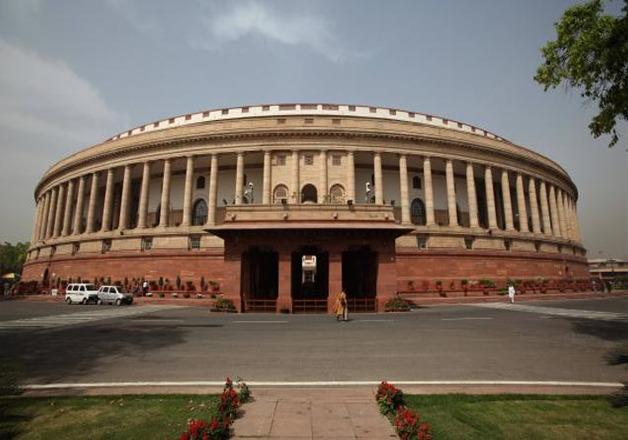







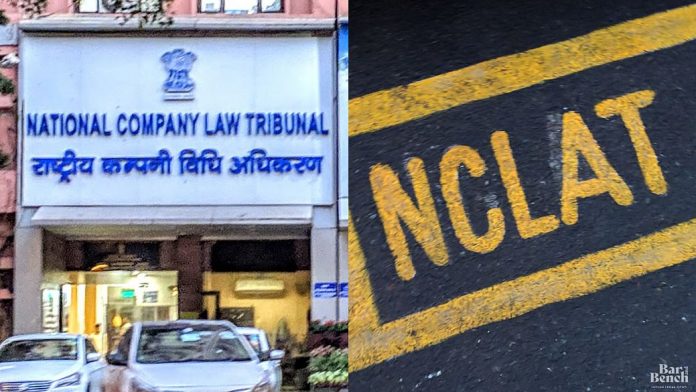









 Allow notifications





