Download Now
Home Blog Page 498

Right to life is the mother of all rights : a look into the case of Charles Khoviwa v. The Republic MSCA

0
Death penalty
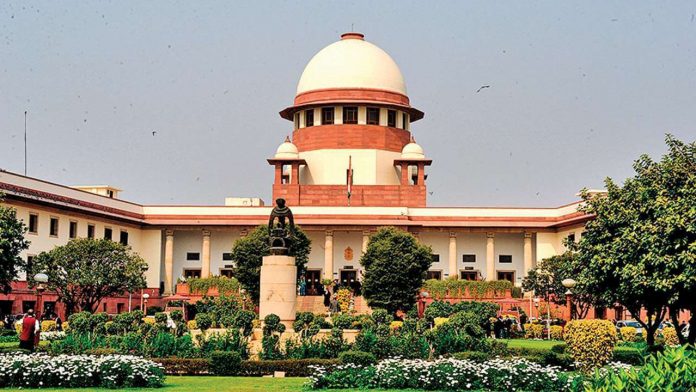
Image Source: https://rb.gy/9uoga8

This article is written by Shashwat Kaushik, from CCS University. This article gives an explanation of the Constitution of Malawi with reference to the case of Charles Khoviwa vs The Republic Of MSCA

Right to life is the mother of all rights – a discussion

Everyone in this world has the right to life, it is the basis of all other fundamental rights. Any person or citizen could claim it, even a foreigner, though it does not give him the right to settle in the respective country.

Death punishment has been declared illegal by Malawi’s Supreme Court of Appeals. The Court expressed in its decision that the right to life is defined by the sanctity of life itself. The right to life is the most significant of all, and without the right to life, no other rights exist. Death punishment not only ignores the effectiveness of the right to life but yet, in addition, eliminates it. The Court mentioned this observable fact while granting an appeal filed by a man named Khoviwa who had been condemned to death. The larger part of judgments created by Justice DF Mwaungulu noticed that the Malawian Constitution doesn’t accommodate capital punishment rather it is considered as disparaging to the right to life.

In this article, we will be discussing the case of Charles Khoviwa who was sentenced to death but later his death sentence was commuted to life imprisonment.    

The case of Charles Khoviwa v. The Republic MSCA 

Background

The case involves a man who was sentenced to death under Malawi’s Constitution’s Section 210, but his death sentence was commuted to life imprisonment by the President. In the concept of punishment, the most serious punishment is considered a death sentence. A lot of countries allow the death sentence in their jurisdiction. However, it is considered disparaging to the right to life. In some exceptional circumstances, India also considers the death penalty. However, various legal provisions provide life imprisonment as the maximum punishment. Recently, the Malawi Supreme Court held it disparaging to life to give a death sentence even in capital offenses. The legal functioning of the country has magistrates or lower Courts at the ground level followed by the High Court and the Supreme Court. The magistrate’s Court also heard capital cases like rape, etc. but could not give death sentences, for that cases needed to be taken to the higher courts.

Facts of the case 

This case dealt by Justice Chipeta concerns Charles Khoviwa, a Malawian resident who was held guilty of murder by the Malawian High Court in 2003 and was sitting on a delayed death sentence for many years in a row. At that time capital punishment was binding for capital offenses.

Soon he appealed in the Supreme Court against his conviction and death sentence. Nevertheless, he lost his appeal and has been sitting on a death sentence since then. Khoviwa again filed for a rehearing in the High Court but it was rejected, as the Supreme Court had already given the sentence for his trial. However, in the wake of that decision, and despite the fact that the Supreme Court of Appeal had in 2010, ruled that the sentence of all convicts on death row should be reconsidered, the High Court said his death sentence was unappealable”.

Although Malawian law has undergone certain changes which now: 

  • Considers the death penalty disparaging right to life. 
  • In the trial case of such an issue, appellants are given re-hearing in certain sentences.
  • The Court expanded the re-hearing to all the appellants who have been given death when it was considered as a mandatory punishment.

Khoviwa went back to the Supreme Court in February 2018, appealing against the high Court’s decision, but that appeal got delayed. This delay has always been a problem on the part of the government or the judges of the Court. In the meantime, he returned to the Supreme Court appealing to grant permission for bail on account of delayed judgment. The Supreme Court of Appeal Act states that the Court may “if it deems fit”, give bail to an appellant “pending the determination of his appeal”. This was quintessence for Khoviwa’s case and he could ask for bail on grounds of this provision.

His appeal was heard a few months back. Khoviwa showed a good mark that his punishment could be reduced to a fixed term. Now a single judge has decided to grant bail to him mentioning that this is not his fault that the judgment he stands by is being delayed. After Serving a long time of 18 years in prison he may now wait at home for further notice that the re-hearing will be considered in his case or not. His bail also came with certain conditions, like Khoviwa paying the bail bond and securities, surrendering his travel papers, reporting to the police on a daily basis, and not moving outside of the home area.

Judgment 

The essence of the right to life is life itself — the sanctity of life. The right to life is the mother of all rights”- The Court observed in its decision. 

The judgment reads that the Constitution considers the death penalty as a derogation from the right to life in a direct and undoubtful way. The essence of Section 25, 26, and different sections that endorse capital punishment for criminal offenses are disparaging to the right to life itself. Capital punishment is prohibited under Section 45(1) of the Constitution of Malawi’s supreme law because it is a criticism of the right to life. Surprisingly, after the legislature amended, Section 25 of the Penal Code in 2011, corporal punishment was abolished despite the provision in Section 19(2)(b) of the Constitution, and capital punishment was retained despite the fact that derogations from the right to life under Section 45(1) and (2)(B) of the Constitution could not be made.

Further, the Court held that Section 25(a) and Section 26 of the Penal Code pacifies death as one of the punishments. Section 38 (1) (for treason), Section 133(for rape), Section 217A (2) (a) (for genocide), Section 63 (1) (for piracy), Section 210 (for murder), Section 309 (1) and Section 309 (2) (for housekeeping and burglary) of the Penal Code must be interpreted as meaning the full prison term-life imprisonment. The Court said if life imprisonment becomes the maximum sentence where it isn’t required, it can’t be forced as it is reserved for the most serious crimes. Therefore they are probably going to pass a protracted jail sentence. The individuals who have served in a significant period or have carried out long punishments are bound to get more limited sentences or be released right away.

Constitutionality of death penalty

The death penalty is regarded as a way of punishing for decades for the expulsion of criminals and also for capital crimes. Crimes in which death punishment is sentenced can be constituted as capital offenses. However, a major factor affecting the delivery of a death sentence is the jurisdiction of the country. Some countries like Kazakhstan, Portugal, and Denmark have abolished it while some countries have reserved it for rare cases, as it is disparaging to the right to life which is the basic and most important right of all citizens. In the case of Machhi Singh And Others v. State Of Punjab, the Court set out specific standards for surveying when a case could fall under the ambit of most extraordinary or uncommon. These could be based on the manner of commission of murder, intentions of the murder, when having a totally cruel or inhuman motive behind the commencing of a murder, for instance, killing for a cash reward. Others may include the personality of the victim of murder and the magnitude of the crime. There have always been debates on whether the death penalty should be abolished or conferred as everyone have their sayings or thoughts on this matter.

Death penalty In India

Unlike various other countries death penalty is considered the most deliberate punishment in India. Nonetheless, it is against Article 21 of The Constitution of India. India is considered among 78 countries that have reserved the death penalty for the rarest cases. Though the Supreme Court or the Legislature have still not conferred the definition of the rarest cases. However, some exceptionals are there in Article 21.

There are 11 sections in the Indian Penal Code, which allows capital punishment  i.e.,

The need or urgency of the death penalty has always been challenged at various occurrences, but this challenge was always rejected by the Court. The first landmark case of aforesaid instance was Jagmohan v State of UP, in which the Court ruled that neither impeachment nor provision of the death penalty would be unjustifiable. Subsequently,  in  Bachan Singh v State of Punjab, the Court ruled that only in extraordinary cases capital punishment can be given. 

Death penalty against humanity

The death penalty should be reserved for ‘rarest of the rare’ cases. As it is considered against the Constitution. Do you think that the case could be re-opened even after the decision of the Apex Court, which is considered binding to the parties being the highest body of justice in Malawian Jurisdiction? Is the idea to scrap the death penalty is adopted as a guardian of human dignity? But, what if a person is related to several murders, rapes, etc, would it be justiciable to give that person the right to life who has put an end to the right to life of several individuals. Here we are talking about the liberty of a person and not any other commercialized matter. Khoviwa could have been out on bail and back to his home, but the question arises: Why did it take too long by the highest Court of justice in Malawi to decide a case which is of such importance. After all the aforesaid instances the President despite the decision in 2010 of death sentences commuted his punishment to life imprisonment.

Conclusion 

The Supreme Court not just clarified the instinctual human characteristics of the right to life yet in addition set up a certain system to carry out them. This makes the rule of law heavenly and significant. Every translation or strategy relating to the right to life is especially meant to accomplish equity referenced in the Preamble through the all-around advancement of the people. Every clarification gave endeavors to satisfy the fundamental necessities of the individual while shielding one’s poise. Along with these lines, it isn’t right to say that the penal code is an advanced code in every conceivable way. Laws are made for individuals and they ought to be changed to meet the points and desires of the evolving society. Finally, the goal should be to develop a consensual and reasonable strategy for dealing with impurity without jeopardizing core liberties.

References


LawSikho has created a telegram group for exchanging legal knowledge, referrals, and various opportunities. You can click on this link and join:

https://t.me/joinchat/J_0YrBa4IBSHdpuTfQO_sA

Follow us on Instagram and subscribe to our YouTube channel for more amazing legal content.
Download Now

Who has the locus standi to approach the Competition Commission of India

0
Image source: https://rb.gy/htd7vf

This article is written by Aditya pursuing Certificate Course in Competition Law from LawSikho. This article has been edited by Aatima (Associate, LawSikho) and Dipshi Swara (Senior Associate, LawSikho).

Introduction 

Cambridge Dictionary defines ‘locus standi’ as the right to bring legal action to a court of law or to appear in a court. The legal competence to sue or approach courts is known as locus standi. The parties who seek the courts in both the inquisitorial and adversarial systems must have been wronged or deprived of their rights. As a result, the existence of locus standi is required in any judicial proceeding.

Competition law in India is governed by Competition Act, 2002 (“Act”) and the Competition Commission of India (“CCI”) adjudicates over violations of the Act. CCI has regulatory as well as quasi-judicial powers. The issue of locus standi before CCI is an important discussion in competition law jurisprudence, especially in India, where the law is ever-evolving. This article explains the relevant provisions of the Act as well as landmark judgment by the Supreme Court of India on this issue. 

Relevant provisions 

Competition Act, 2002

Section 19 provides that the Commission may inquire into any alleged contravention of Section 3 and 4 of the Act either on its own motion or on receipt of information from any person, consumer, or their association or trade association as provided by Section 19(1)(a) or on a reference made to CCI by the Central Government or a State Government or statutory authority as per Section 19(1)(b) of the Act. Section 19(1) of the Act was amended in 2007 and the words “receipt of complaint” were replaced by “receipt of information”.

Reading between the lines of the Preamble of the Act, it is the duty of the Commission to prevent practices having adverse effects on competition, to promote and sustain competition in markets, to protect the interest of the consumers, and to ensure freedom of trade. After perusal of these objectives, the term ‘any person’ implies no strict rule of locus standi. 

Section 2 (l) provides that the definition of ‘person’ includes :

(i) an individual; 

(ii) a Hindu undivided family; 

(iii) a company; 

(iv) a firm; 

(v) an association of persons or a body of individuals, whether incorporated or not, in India or outside India; 

(vi) any corporation established by or under any Central, State or Provincial Act or a Government company as defined in Section 617 of the Companies Act, 1956 (1 of 1956); (vii) anybody corporate incorporated by or under the laws of a country outside India; 

(viii) a co-operative society registered under any law relating to co-operative societies; 

(ix) a local authority; 

(x) every artificial juridical person, not falling within any of the preceding sub-clauses. 

Competition Commission of India (General) Regulations, 2009 

The following provisions of CCI General Regulations are relevant to our understanding of locus standi before the Commission: 

Regulation 2(i) defines ‘party’ as: 

(i) “Party” includes a consumer or an enterprise or a person defined in clauses (f), (h) and (l) of Section 2 (20) of the Act respectively, or an information provider, or a consumer association or a trade association or the Director-General defined in clause (g) of Section 2 of the Act, or the Central Government or any State Government or any statutory authority, as the case may be, and shall include an enterprise against whom any inquiry or proceeding is instituted along with any person permitted to join the proceedings or an intervener.”

Regulation 10 provides for the contents of information or reference as provided in Section 19 of the Act – 

10. Contents of information or the reference. – 

(1) The information or reference (except a reference under sub-section (1) of Section 49 of the Act) shall, inter alia, separately and categorically state the following seriatim- 

(a) the legal name of the person or the enterprise giving the information or the reference; 

(b) complete postal address in India for delivery of summons or notice by the Commission, with Postal Index Number (PIN) code; 

(c) telephone number, fax number, and also electronic mail address, if available; 

(d) mode of service of notice or documents preferred;

 (e) legal name and address(es) of the enterprise(s) alleged to have contravened the provisions of the Act; and 

(f) legal name and address of the counsel or other authorized representative, if any;

 (2) The information or reference referred to in sub-regulation (1) shall contain – 

(a) a statement of facts; 

(b) details of the alleged contraventions of the Act together with a list enlisting all documents, affidavits, and evidence, as the case may be, in support of each of the alleged contraventions; 

(c) a succinct narrative in support of the alleged contraventions; 

(d) the relief sought if any; 

(da) details of litigation or dispute pending between the informant and parties before any court, tribunal, statutory authority, or arbitrator in respect of the subject matter of information; 21 

(e) Such other particulars as may be required by the Commission. 

(3) The contents of the information or the reference mentioned under sub- regulations (1) and (2), along with the appendices and attachments thereto, shall be complete and duly verified by the person submitting it.”

Regulation 25 provides for the power of Commission to permit a person or enterprise to take part in proceedings – 

25. Power of Commission to permit a person or enterprise to take part in proceedings. (1) While considering a matter in an ordinary meeting, the Commission, on an application made to it in writing, if satisfied, that a person or enterprise has a substantial interest in the outcome of proceedings and that it is necessary for the public interest to allow such person or enterprise to present his or its opinion on that matter, may permit that person or enterprise to present such opinion and to take part in further proceedings of the matter, as the Commission may specify….”

Case laws 

Samir Agarwal v. Competition Commission of India 

Supreme Court of India answered the following issues in this case – 

1. Whether a member of the public can file information with the CCI alleging a violation of the Act. 

2. Whether an aggrieved party can file an appeal to the NCLT and thereafter to the Supreme Court against the order of the CCI. 

National Company Law Appellate Tribunal (NCLAT) dismissed the petitioner’s appeal on the ground that he is not a consumer of either Ola or Uber, while the Supreme Court, on perusal of the provisions of the Act and Regulations, held that the definition of person in Section 2(l) of the Act is inclusive and extremely wide in nature. The Competition (Amendment) Act, 2007

substituted ‘receipt of complaint’ to ‘receipt of information’ under Section 19(1) of the Act. This substitution is significant as a complaint can be filed only by an aggrieved person while information may be received from any person. The Court also held that Section 45 of the Act acts as a deterrent against frivolous and vexatious litigation as it provides for a penalty up to Rs. 1 crore for false claims. With regard to Appeals, the Court held that Section 53B of the Act provides that any person aggrieved by any order, direction, or decision of the Commission can appeal to NCLAT. Section 53T of the Act provides for appeals to the Supreme Court by any person aggrieved by any order, decision, or direction of the Appellate Tribunal. 

Harshita Chawla v. WhatsApp Inc

In this case, the Opposite Parties (OP) challenged the locus standi of the informant relying on NCLAT’s decision in the Samir Agarwal case. Referring to the preamble and provisions of the Act, CCI observed that the Act had been conceived to follow an inquisitorial system wherein the Commission is expected to investigate cases involving competition issues in rem rather than acting as a mere arbiter to ascertain facts and determine rights in personam arising out of rival claims between parties.

Shri Surendra Prasad v. Competition Commission of India 

In this case, the Competition Appellate Tribunal (COMPAT), held that ‘Parliament has neither prescribed any qualification for the person who wants to file an information under Section 19(1)(a) nor prescribed any condition which must be fulfilled before information can be filed under that section.’ The erstwhile Tribunal observed that Sections 18 and 19 don’t give powers to the Commission to reject the prayer for investigation under Sections 3 and 4 on the grounds that the informant does not have a personal interest in the matter. 

Dr. L.H. Hiranandani Hospital v. Competition Commission 

COMPAT held that the Act does not prescribe any qualification to identify the locus of an informant.

Conclusion 

When NCLAT altered the position of locus standi on competition law cases, this was a trending debate in competition law jurisprudence. CCI used to rely on its earlier judgments cited above to contradict this viewpoint of NCLAT. This created confusion and uncertainty for the litigants. However, Supreme Court’s judgment in Samir Agarwal Case has been a landmark for this highly debatable issue. Both the Act as well as Regulations provide any person locus standi to file information before the Commission.


Students of LawSikho courses regularly produce writing assignments and work on practical exercises as a part of their coursework and develop themselves in real-life practical skills.

LawSikho has created a telegram group for exchanging legal knowledge, referrals, and various opportunities. You can click on this link and join:

https://t.me/joinchat/J_0YrBa4IBSHdpuTfQO_sA

Follow us on Instagram and subscribe to our YouTube channel for more amazing legal content.

 

Download Now

The idea of public laws : a comparative study of public laws in Canada and the US

0
Image source - https://politi.co/3u5rZ5a

This article is written by Astitva Kumar, a student at JIMS, School of Law (An Affiliate of Guru Gobind Singh Indraprastha University). This article deals with the basic principles of public law and how these are different, in a country like Canada which was at one time a part of the US. This article has been edited by Chandana and Manasvee.

Introduction

The Greek philosopher Aristotle, in the 4th century BCE described the organization of humans by reference to a progression from the individual to the collective. The communal element of our existing functions is in several tiers: the family or home, the neighbourhood, and the social or political organization; the nation-state; and, increasingly, the global level, both locally throughout all nation-states. At each of these tiers, norms are governing how we engage with one another and with those in positions of power. The more comprehensive and intricate the rule for operating within an organizational unit, the larger and more complex it is.

In general, modern states are bodies of governmental organizations with legal jurisdiction over a defined region and people. States are legal constructs, and therefore, the relationship between states and individuals cannot be one of the equals. In the modern world, a state’s public law refers to the set of institutions and norms that govern the relationship between the state and the people who live on its territory.

Although Aristotle proposed the function of the state as the primary political and legal entity, it did not become a global reality until the twentieth century. Since Aristotle’s time, various civilizations have been formed and demolished over the world under a single law and authority. In the 18th and 19th centuries, European colonial expansion introduced the concept of the state, as well as state law, to pre-existing civilizations around the world.

Meaning of Public Law

Public law is the branch of law that governs the connection between the State (government/government agencies) and its subjects, as well as the interaction between persons who have a direct impact on society. According to Loughlin, “Public law may be a sort of political jurisprudence which integrates no transcendental or metaphysical view of justice and goodness; it’s concerned solely with all of these precepts of conduct that have evolved through political practice to ensure the maintenance of the public sphere as an independent entity.”

The relationships governed by public law are ambiguous and unequal. Persons’ rights can be decided by government bodies (central or local). However, as a result of the rule-of-law idea, authorities may only operate within the bounds of the law (secundum et intra legem). The government is required to follow the law. For example, a citizen who is dissatisfied with an administrative authority’s decision may petition a court for judicial review. Immigration, health, the environment, and education are just a few examples of how public law affects our daily lives. The role of public law, in its most primitive form, is to control the interaction between the state and individuals.

Even though all countries’ public law is based on a concept of law as a restraint on the arbitrary exercise of power, but there is a distinction between public law in civil law nations, such as France and Germany, and public law in common law nations, such as the United Kingdom, the United States, and Australia.

History of Public Law

Ulpian, a Roman jurist, established the distinction between public and private law, arguing that “public law is that which regards the formation of the Roman commonwealth, private law is that, which respects individuals’ interests.” In addition, he defines public law as the legislation governing religious affairs, the priesthood, and State offices. The law was conceived of in Roman law as a set of interactions between people, between things, and between people and the state. The latter of these three ties was public law. However, Roman lawyers paid little attention to this field, preferring to concentrate on private law. It was, however, extremely important in Teutonic civilization, according to German legal historian Otto von Gierke, who referred to the Teutons as “the father of public law.”

Importance of Public Law in today’s society

As there exists an unequal relationship of power between the state and individuals, public law is especially important because it provides checks and balances. This means that this area of law ensures that the government does not abuse its power over individuals and that they use their power fairly and properly.

Public and private rights 

Rights can also be separated into private and public categories. Ulpian, a Roman jurist, was the first to distinguish between public and private law and the distinction between public and private law can be traced back to Roman times.

The line dividing public and private law is not always explicit. Law cannot be simply split into “law for the State” and “law for everyone else.” As a result, the divide between public and private law is primarily functional rather than factual, with laws classified according to which domain the actions, players, and primary interests concerned the best fit into. As a result, attempts have been made to develop a theoretical understanding of the foundations of public law.

The theoretical distinction between private and public law

The intellectual and historical difference between public and private law has arisen primarily in continental European legal systems. As an outcome, there has been a great deal of debate in German-language legal literature over the precise nature of the boundary between public and private law. Several theories have evolved, none of which are exhaustive, mutually exclusive, or independent.

  1. The Interest Theory: The phrase “publicum ius est, quod ad statum rei Romanae spectat, privatum quod ad singulorum utilitatem” comes from the work of Roman jurist Ulpian which means- (Public law is concerned with the interests of the Roman state, whereas private law is involved with the interests of citizens). In The Spirit of the Laws, published in the 18th century, Charles Louis Montesquieu elaborates on this notion, establishing a division between international (right of nations), public (political right), and private (civil right) law focusing on different interests and rights. 
  2. The Subjection Theory: It emphasizes the subordination of private individuals to the state to explain the distinction. This relationship is designed to be governed by public law, whereas private law is designed to govern situations in which the persons involved meet on a level playing field. Essentially, it is concerned with the subject of law’s place in the legal relationship to which rights and duties are allocated. Until it finds itself in a certain circumstance as a public person (such as a State or a Municipality), public law applies; otherwise, private law authorizes or obligates everyone. 
  3. The Subordinate Theory: The theory distinguishes between individuals based on their relationship. A superior-subordinate connection characterizes public law, whereas a coordination relationship characterizes private law. As a result, public law is important for unilaterally binding regulations such as statutes and administrative acts, but private law is important for contracts. This notion was created in the last century based on the concept that administration was limited to executory administration. It fails to describe the relationship in the field of public administration. 

Areas of Public Law 

Constitutional Law

Constitutional law establishes the foundation of modern states. Above all, it asserts the supremacy of the rule of law in the operation of the state. It defines the structure of government, how its various branches function, how they are elected or appointed, and how authorities and responsibilities are divided among them. The executive, legislature, and judiciary have traditionally been the three basic branches of government. It also outlines what are the basic human rights that must be preserved for all people, as well as what additional civil and political rights citizens have, and it establishes the fundamental boundaries for what any government must and must not do. Constitutional Law is a subfield of Public Law. It establishes the political organization of the State and its authorities, as well as substantive and procedural constraints on the exercise of governing power. The application of fundamental principles of law based on the document, as interpreted by the Supreme Court, is constitutional law.

According to Salmond, “Constitutional Law is the set of those legal ideas that identify a State’s Constitution—that is, the essential and fundamental components of the State’s organization.”

Administrative Law

Administrative law is the corpus of law that governs bureaucratic management practices and determines the authority of administrative authorities. The executive branch of a government, rather than the judicial or legislative branches, is in charge of enforcing these laws (if they are different in that particular jurisdiction). This branch of legislation governs foreign trade, manufacturing, pollution, taxation, and other similar activities. As it deals with the regulation and public institutions, this is sometimes considered a subclass of civil law and sometimes considered public law. The administration has been defined in this context as the use of political powers within the constraints of the Constitution as the complete tangible and ever-changing actions of the State in particular circumstances as the functions, or activity, of the Sovereign Power.’ 

According to Holland, Administrative Law governs the operations of the several organs of the Sovereign Power as defined by the Constitution. 

As per Vago Steven, “Administrative Legislation is a corpus of law generated by administrative agencies in the form of rules, directives, and decisions.”

Criminal Law

The much more important job of the State is that of a guardian of order, preventing and punishing all harm to itself and any disobedience to the rules that it has established for the general good. In outlining the scope of its rights in this regard, the State normally begins with an enumeration of the activities that infringe on them, followed by an indication of the penalty to which anybody who does such acts will be subject.

Tax law first emerged as a branch of public law in the 17th century as a result of new notions of sovereignty emerging. Taxes were once seen as gifts under the law, delivered to the state by a private contributor — the taxpayer. It is now considered a branch of public law because it involves a relationship between individuals and the state.

Public laws in the US and a call for betterment 

The United States Code is a compendium of all existing public laws, divided into 50 titles that deal with broad, logically ordered areas of legislation. The United States Code incorporates the original law as well as subsequent changes, and it deletes material that has since been repealed or superseded. The United States Code was created to make it easier to discover relevant and effective statutes by arranging them by topic matter and removing outdated and amended parts. The Code is administered by the US House of Representatives and the Office of the Law Revision Counsel (LRC). The LRC decides which statutes in the United States Acts at large should be codified and which existing statutes are affected by modifications or repeals, or have simply expired due to their terms. The LRC makes the necessary changes to the Code. 

The majority of laws made by Congress are public legislation. Slip laws are sometimes called public and private laws. A slip law is a formal publication of the law that is admitted as credible evidence in all state and federal courts and tribunals throughout the United States. The primary edition is released every six years by the House of Representatives Office of Law Revision Counsel, while cumulative supplements are released yearly.

Once the President signs a bill into law, it is forwarded to the office of National Archives and Records Administration’s (NARA) and the Office of the Federal Register (OFR), where it is given a law number, a legal statutory citation (for public laws only), and is readied for publishing as a slip law.

Comparison of laws of both the countries 

The Australian system is based on liberal democracy, which originated in the United States and the United Kingdom. Australia has mostly inherited these two countries’ primary state structures and public law concepts but has fashioned these institutions and concepts into distinctly Australian public law.

One striking similarity between Canadian and US laws is that each country has strayed from the Constitution’s basic idea of federal power distribution. In all cases, the departure was essentially achieved through judicial interpretation by the country’s highest court. But, the irony is that each system has evolved to look more like the other’s design. The purpose in Canada, as evidenced in the Constitution of 1867, was for the central government to take precedence, but the Privy Council’s Judicial Committee (This was the supreme legal authority until 1949 until it was taken over by the Supreme Court of Canada) construed provincial powers liberally and federal powers conservatively, providing provinces with a far larger share of the power balance than had been anticipated.’ But in the case of the United States, it has taken the other path; its constitutional structure was based on states’ rights, but the effect has been a powerful central government.

The extent of central government control isn’t the sole distinction between the two systems. A study of the allocation of legislative authority in the United States and Canada would shatter any assumption that there was a “natural” way for federalism to be constructed. On one level, there are discernible distinctions in where specific powers are vested. Marriage and divorce, as well as criminal law, are handled by the federal government in Canada, but by state governments in the United States.

Furthermore, Canadian provinces have far more exclusive control over local business than states in the United States. Without the cooperation and agreement of the provinces, the federal government in Canada lacks the practical capacity to enforce economic policies and solutions. In comparison, the United States Congress has the right to regulate virtually all economic activity.

In the United States, the Constitution does not define the regions in which state law may apply; rather, it delegated that option to Congress. While the states are weaker vis-à-vis the national legislature than the Canadian provinces (save for their representation), they are more protected from national control in other ways. In the United States, there is no set region in which state law can function, but when it does, it is more autonomous and has more independent force than provincial law does in Canada. 

National courts in the United States occasionally follow state law, but they never pretend to be their interpreter. State law is, by definition, whatever the state’s Supreme Court declares it to be. Regardless of how ridiculous a state’s interpretation of its law appears to the U.S. Supreme Court, that legislation nonetheless operates unless the U.S. Supreme Court rules that the law, as so interpreted, violates the U.S. Constitution. Canada has a system of provincial courts, which serve as the country’s major courts. However, when it comes to reviewing their rulings, the Canadian Supreme Court has the final say in settling common law matters as well as interpreting provincial enactments. Provincial law is not isolated from national law or by the involvement of national court decision-makers in the very same manner that state law is in the United States.

However, when it comes to reviewing their rulings, the Canadian Supreme Court has the final say in settling common law matters as well as interpreting provincial enactments. Provincial law is not isolated from national law or by the involvement of national court decision-makers in the very same manner that state law is in the United States.

Conclusion 

The juristic principles evolve in the context of rights and the law as command regulates the interaction between individuals as well as the connection between persons and the government in any legal system. The term “public law” refers to the state’s particular abilities to govern the country, which include the ability to enforce, apply, execute, make, repeal, and alter the law. This subject of law is also known as constitutional (the law that establishes the state’s key institutions and provides its framework) and administrative (the law that establishes the legal obligations and powers of particular public authorities and bodies) law.

Australian public law is more than just a set of rules. It is a conglomeration of governance systems, underpinning concepts and principles, fundamental procedures, fundamental institutions, and core values. The interaction of various systems, processes, concepts, principles, institutions, and values in the Australian state informs and determines how they grow in the pursuit of the common good. 

The court system in the United States is more intricate, reflecting the states’ higher historical and constitutional status. In essence, the United States has two sovereign judicial systems: federal and state. The regulations of fifty autonomous state court systems vary.

References 


LawSikho has created a telegram group for exchanging legal knowledge, referrals, and various opportunities. You can click on this link and join:

https://t.me/joinchat/J_0YrBa4IBSHdpuTfQO_sA

Follow us on Instagram and subscribe to our YouTube channel for more amazing legal content.

Download Now

KYC for foreign portfolio investors

0
Image source: https://rb.gy/oktt8n

This article is written by Shreya Kalantri pursuing a Diploma in M&A, Institutional Finance, and Investment Laws (PE and VC transactions) from LawSikho. This article has been edited by Dhruv Shah (Associate, LawSikho) and Dipshi Swara (Senior Associate, LawSikho).

Introduction

Foreign portfolio investment (FPI) comprises securities and other monetary resources held by investors in another country. Foreign portfolio investors are often exposed to increased share price volatility, which is riskier, and investors hope to receive compensation for the risk they take.

Know Your Customer (KYC) are a bunch of norms utilized inside the investment and monetary administrations industry to verify customers, their risk profiles, and monetary profile. The FPI regime, which was established in 2014, enabled the adoption of a risk-based KYC mechanism, in which the paperwork requirements change depending on the FPI category. KYC documentation prerequisite changes as per the various categories of the FPI

FPI is divided into 3 categories

Category I:  This kind of FPI includes government/government-related organisations such as central banks and international agencies among others. 

Category II:  This includes mutual funds, insurance companies, banks, and pension funds.

Category III:  This type of foreign portfolio investment includes all other FPIs that don’t fall into the first two categories. They may include charitable organisations such as trusts or societies.

KYC documents required for FPI

Category I (high-risk jurisdiction) 

At applicant level

  • Constitutive documents like MoA, COI, prospectus, etc are required.
  • Address proof like power of attorney (POA), mentioning the address is acceptable as address proof.
  • Name, mobile number, email id, PAN and income range are required.
  • FATCA(Foreign Account Tax Compliance Act) / CRS form is required.
  • KYC Form/CAF is required.

Senior management

  • A list of directors as part of the KYC form is required.

Authorised signatories

  • List & Signatures are required. A list of Global Custodian (GC) signatories can be provided in case of POA to GC. There is an  exemption provided if SWIFT (Society for Worldwide Interbank Financial Telecommunications) is utilized as a mode of guidance.

Category II (medium risk jurisdiction) 

At applicant level

  • Constitutive documents like MoA, COI, prospectus, etc are required.
  • Address proof like Power of Attorney (POA), mentioning the address is acceptable as address proof.
  • Name, mobile number, email id, PAN and income range are required.
  • Board resolution is required.
  • FATCA (Foreign Account Tax Compliance Act)/CRS form is required.
  • KYC Form/CAF is required.

Senior management

  • List of directors as part of the KYC form is required.

Authorised signatories

  • List and signatures are required. List of Global Custodian (GC) signatories can be provided in case of POA to GC. There is an exemption provided if SWIFT (Society for Worldwide Interbank Financial Telecommunications) is utilized as a mode of guidance.

Ultimate Beneficial Owner (UBO)

  • List of UBO along with the details of intermediate BO is required.
  • Proof of identity is required.

Category III (low risk jurisdiction) 

At applicant level

  • Constitutive documents like MoA, COI, prospectus, etc are required.
  • For FPIs from non-high risk jurisdictions, a POA with the address is accepted as address evidence. FPIs from high-risk jurisdictions must produce address proof other than a POA.
  • Name, mobile number, email id, PAN and income range are required.
  • Board resolution is required.
  • FATCA (Foreign Account Tax Compliance Act)/CRS form is required.
  • KYC Form/CAF is required.
  • Annual financial statement that has been audited or a certificate from an auditor certifying net worth is required.

Senior management

  • List of directors as part of the KYC form is required.
  • In the form, the entity must enter their full name, nationality, date of birth and address.

Authorised signatories

  • List and signatures are required. There is an exemption provided if SWIFT (Society for Worldwide Interbank Financial Telecommunications) is utilised as a mode of guidance.
  • Proof of identity with a photograph is required.
  • Proof of address details on letterhead is required.

Ultimate beneficial owner (UBO)

  • List of UBO along with the details of intermediate BO is required.
  • Proof of identity with a photograph is required.
  • Proof of address details on letterhead is required.

The above-mentioned KYC requirements are based on a SEBI notification.

Note:

  1. Other than the KYC criteria listed, each intermediary’s internal regulations may impose additional paperwork requirements for performing enhanced due diligence.
  2. FPIs must guarantee that exempted or relevant papers will be submitted to the intermediary if required by regulators.
  3. FPI Category I excluding those registered under Regulation 5(a)(i) and FPI Category II excluding those registered under Regulation 5(b)(i) must present KYC documents equivalent to each other.
  4. A local custodian can rely on KYC performed by another company of the same financial organization (such as a global custodian or investment manager) that is regulated and comes from a FATF member nation, where KYC is performed according to their home jurisdiction norms.
  5. In lieu of an official constitutional instrument, a prospectus and an information memo are permissible.
  6. The PAN of FPIs can be verified online at a website recognised by the Income-Tax Department.
  7. If there is no exchange of physically signed documents/ agreements between the local broker and the FPI or its relevant authority who is an investment manager regulated in a FATF member country, the board resolution and the authorised signatory list (ASL) are also not necessary.
  8. If the same entities are listed as FPIs, the existing risk-based KYC requirement that applies to FPIs should also apply to FDI securities accounts, FVCI/DR accounts, and FCCB accounts/entities.
  9. If all of the information requested in the KYC Form is submitted in the Form itself, no additional KYC Form will be required.

KYC paperwork is shared with banks in order for FPI’s to create a bank account

  • On the basis of sufficient authorisation, intermediaries are encouraged to share essential KYC papers with the banks concerned.
  • As a result, through their authorised representative, a set of hard copies of the appropriate KYC documents provided by FPIs to intermediaries may be forwarded to the concerned bank.
  • Intermediaries must declare that the documents have been properly confirmed with the originals or that notarised documents have been obtained, if necessary, when transferring such documents. A proper record of document transfer, both at the level of the intermediaries and at the bank, under the signatures of officials of the transferor and transferee entities, may be kept in this respect.

Ultimate  beneficial ownership 

  • Beneficial Owners (BOs) are natural individuals who eventually own or run an FPI and must be recognized in accordance with Rule 9 of the Prevention of Money-laundering Rules, 2005.
  • FPI Category I is exempted from providing BO details.
  • The materiality threshold for identification of BOs of FPIs on controlling ownership interest is :

1) 25% in case of company and

2) 15% in case of partnership firm, trust, an unincorporated association of individuals.

  • For FPIs from “high-risk jurisdictions,” a lower materiality criterion of 10% for identifying BO and ensuring KYC paperwork as applicable for Category II FPIs may be used.

Periodic KYC review 

KYC review refers to the procedures taken to guarantee that documentation, records, or information obtained as part of the due diligence process are kept up-to-date and accurate. When there is a variation in material information or disclosure, FPIs will be entitled to a KYC review. The KYC review should be based on FPI risk analysis. 

JurisdictionCategory ICategory IICategory III
High riskDuring the continuance of registration.Annually. Annually.
Low riskDuring the continuance of registration.During the continuance of registration.Regulated FPI’s: During the continuance of registration
Others: annually.

In case of non-submission of KYC documents, on the applicable due date for KYC review, DDP /custodian/intermediary may send a notice to FPI instructing speedy fulfillment concerning KYC prerequisite and under no circumstances permit further purchase transactions to such clients after 60 days of the KYC review date.

Data security

KYC Registration Agencies (KRAs) must secure personal information submitted by beneficial owners, including SMOs or FPIs. Such information shall be made available to intermediates only on a “need to know” basis, via an authentication approach in which an intermediary can get the information from the KRA via authentication (similar to OTP) after the KRA receives confirmation from the FPI or its global custodian. This provision will be optional, and it will be disabled only if the FPI instructs KRA to do so.

Key features

  • Up to 3 email ids of the FPI can be recorded with 1 obligatory id. 
  • Download Consent Flag – Yes (with consent) / No (without consent).
  • Where the Download Consent Flag is “Yes”, an email with the consent link with the decision tab “Approve” or “Reject”, will be sent to the Authorised Representative of FPI, requesting their consent to provide the KYC records to the requesting intermediary.
  • KRA will send an email to the requesting intermediary to empower them to follow up for the consent.
  • KRA will allow the download of KYC records and information once the consent is received from the approved delegate of the FPI. 
  • Whenever KYC details of the client are modified by intermediaries, the KRA system sends unsolicited downloads of KYC information to all intermediaries who have either uploaded/downloaded/modified KYC information of the FPI.
  • If an FPI closes an account with an intermediary, the FPI or the intermediary must notify KRA so that the FPI’s KYC may be delinked and unsolicited download requests can be stopped.
NOTE:
The custodian must keep the KYC records in their original form for a minimum of five years after the last transaction with the specified FPI. In the event that a lawsuit is pending, this data should be kept until the matter is resolved.

Guidelines for KYC

  • All copies of the applicant’s documents should be backed by originals for verification. If the original of a document is not available for verification, the copies should be properly verified by institutions that are authorised to do so.
  • If any proof of identity or address is written in a foreign language, it must be translated into English.
  • The applicant’s name and address on the form must match the documentation verification presented.
  • Proof should be enclosed if more than one address is specified.
  • If approved by the PoA, the global custodian or the local custodian may fill out the Form.
  • A non-individual Client is not eligible for in-person verification. Individual clients will be able to use IPV via a web camera.
  • While collecting documents/information for an FPI, intermediaries might depend on documents/information accessible from credible public sources in addition to information provided by the client. A fully authorized official of the Intermediary may certify these documents. Such documents do not require any additional authentication.
  • Notary publics, officials of multinational foreign banks, and any bank regulated by the Reserve Bank of India are among those authorised to certify documents.

Conclusion

FPI’s play a vital role in the Indian market. It is important to make the norms investor-friendly to protect their rights without compromising the integrity of cross-border capital inflows. KYC norms help in streamlining the whole process. An investor needs to keep in mind the category he falls in before registering and has to research the documents required in that category.

References

  1. https://corporates.db.com/files/documents/namaste-India/Namaste_India_2020.pdf
  2. https://www.sebi.gov.in/sebi_data/commondocs/may-2019/Annexure-II_p.pdf
  3. https://www.moneycontrol.com/news/business/markets/sebi-to-align-kyc-norms-for-local-investorsfpi-regime-1298077.html

Students of LawSikho courses regularly produce writing assignments and work on practical exercises as a part of their coursework and develop themselves in real-life practical skills.

LawSikho has created a telegram group for exchanging legal knowledge, referrals, and various opportunities. You can click on this link and join:

https://t.me/joinchat/J_0YrBa4IBSHdpuTfQO_sA

Follow us on Instagram and subscribe to our YouTube channel for more amazing legal content.

Download Now

What are the risks associated with starting a salon and what needs to be done to mitigate them : overview

0

This article has been written by Aditi Sahu pursuing the Diploma in Business Laws for In-House Counsels from LawSikho. This article has been edited by Zigishu Singh (Associate, Lawsikho) and Dipshi Swara (Senior Associate, Lawsikho).

Introduction

The core purpose of every beauty salon is to provide a haven for consumers to escape the stresses of everyday life. It is a place where beauty salon owners may treat their customers like royalty and let them relax.

While stylists, therapists, nail technicians, and other salon employees must keep informed about the latest treatments and trends, they must also ensure that their clients are in a safe atmosphere.

The risks associated with starting a salon

When you have an effective management organizational structure, owning and operating a salon may be a profitable business. If you’re considering starting a salon, it’s a wonderful business to start but there are several problems that salon owners may face while starting a business. After all, no business can exist without some element of risk. Some of the risk associated with starting a salon business is:

1. Hiring Staff:

Salon owners may find recruiting staff for a business to be a difficult operation. Yet, various circumstances have made this procedure rather unique when compared to other businesses. There are various types of services available in a salon; this implies you’ll need to hire professionals to provide many services to the customers. The owner has to analyze whether the staff he/ she recruits has potential or not, this is a very difficult part and risky as well, because improper recruitment may prove to be detrimental for your business.

2. Products used:

Many customers will come to your salon requesting specific products. You risk losing them as clients if the product is out of stock. Stocking up on a range of products to fulfill your consumers’ needs, on the other hand, will be costly.

3Customers Loyalty:

As running a salon is such a challenging business, it can be difficult to attract and retain loyal consumers. There’s a high possibility that there will be another salon down the road that provides identical services.

4. Price Distortion:

Newly opened salons may cut their rates to attract more customers, making it nearly impossible for you to make a profit. The price distortion will adversely affect the long-term goal of the business, because, if a business is not making any profit, then it will be difficult for them to expand their business in the future.

5Maintaining Consistent Income:

The erratic outcomes of endorsement (i.e. advertisement) are a cause for concern because it leads to inconsistent income levels. Depending on endorsement, salon owners record varying income amounts each month. Long-term planning might be challenging when income is inconsistent.

6. High Operating Costs:

Salons require a wide range of energy-intensive equipment. As a result, the energy cost will rise and diminish the estimated sales revenue.

7. Employee Resignation:

A high rate of Employee resignation could be a great concern for a salon owner. Some staff members quit their jobs after realizing that they don’t get paid according to their service. Due to a shortage of experienced employees, the delivery of service will suffer and customers have to wait for a longer duration and this could be a bad experience for them. Customers who have had a bad experience are also reluctant to come again.

What needs to be done to mitigate the risk of a salon business?

When you first decide to establish your own company, you must realize that risk management will be a constant companion on your journey to success. We all want to believe that everything will go smoothly. The plain truth is that your route to success is much more likely to be filled with peaks and troughs, and your ability to maximize the peaks while smoothing out the troughs will go a long way toward determining your company’s future success.

Consequently, the vast majority of small enterprises fail during the first few years of operation. However, you can take steps to guarantee that your company’s risks are minimized while its success is maximized, such as:

  • Better education, not only in your chosen aesthetics career but also in business principle;
  • Make use of the expertise of specialists in domains where you are lacking (eg. accountants, lawyers, business coaches, etc.);
  • Create and stick to a fully accountable business plan;
  • Create and keep a completely accountable risk management plan, and stick to it when it comes to managing risks.

The majority of business owners are aware of the first three points above, even if they have chosen not to act on them – but have you ever documented the risks you believe could affect your business and devised a plan to mitigate each of them?

We have complete control over our thoughts and performance, the risks associated with our actions are the easiest to handle. They could, however, be considered the most challenging because it can be tough to analyze one’s performance and to honestly accept change to improve. This is why the following advice, such as education and, most crucially, a business plan with accountability (ideally with the help of a business coach or another third party) are so crucial. The most difficult risks to handle are those that are beyond your control. Staff, customers, suppliers, and landlords can all have a significant impact on the success of your company. Thus, certain measures to be taken in respect of Staff, customers, suppliers, and landlords:

1. Staff

A chain is only as strong as its weakest link,” no matter how skilled or qualified you are. You must keep investing in your employees’ skills and education to build a stronger team that works for you and reduce the chances of things going wrong. To begin, make certain that you recruit the best individual available. This does not always imply the most experienced employee, but rather the one that is eager to learn and enjoys their work. Following that, you must create a career plan for each employee, which includes education and advancement. Your employees will feel valued, and as a result, they will arrive at work with a pleasant attitude.

Most essentially, you must adhere to processes so that every member of your team understands what is expected of them and is held accountable for it. The most successful businesses have these procedures properly documented and provided to every employee, allowing not only current employees to understand what is expected of them, but also new employees to seamlessly integrate into the company. This has the extra benefit of increasing the value of your business to potential buyers when you’re ready to sell!

2. Customers

When interacting with customers, there are several measures to take that skilled beauty therapists should consider such as:

  • Customer consultation in depth;
  • Transparency;
  • Client business cards;
  • Consent forms signed;
  • Disclaimer: Before and after photographs are for illustration purposes only;
  • Broad insurance coverage and understanding of what to do in the event of a claim;
  • If you don’t want to treat a customer for any reason, be prepared to say no.

3. Suppliers

The goods you utilize have a big impact on the level of your client satisfaction. While the beauty therapy industry is swamped with concepts and products, you must do your homework to ensure that you only use products  that you have faith and believe will deliver the best outcomes for your clients.

Use only reliable or well-recommended companies. Don’t be persuaded by salespeople to start doing something you’re not qualified to do, haven’t had much training in, or don’t feel comfortable doing. At the end of the day, the salesperson walks away with your money, but you’re left with the unknown product’s hazards.

When considering the risks that your organization may face, it can be exhausting to examine all of the numerous factors, especially when working with third-party vendors. Salon owners may frequently face dangers that are beyond their control, but it’s vital to realize that some areas can be addressed using the following tips: 

  • Every relationship you enter should be approached with prudence;
  • Investigate on your own;
  • When possible, seek the guidance of experts;
  • You’ll have a better chance of ensuring that your salon thrives today and in the future if you follow the following suggestions and incorporate the significant contributions of others.

4. Landlord or Location of the business premises

The location of your salon where the business is carried out is in many situations one of the most important factors in its success. While it is true that in real estate, location is everything, there are other factors to consider before signing a lease.

One of the biggest problems is that most business owners are so eager to move into their “perfect” site that they overlook the fact that a lease is a legal contract that can expose the business owner to significant responsibility. Tenant-landlord legal responsibilities are now commonly transferred to the tenant in lease agreements.

Apart from insurance obligations, landlords might impose stringent legal restrictions on other aspects of your tenancy, such as what type of furnishings you can install, how and when you can trade, and so on. Before signing a lease, keep in mind that it is a legal contract with significant implications for your business, so obtain legal counsel and suggestions before signing. Beyond the Lease, there are a few apparent factors to consider about the location of your business, such as:

  • Potential limitations and bye-laws applicable to the location;
  • Consider the nature of the leased location;
  • Parking and transportation are both simple and convenient;
  • Water supply and electricity backups;
  • Limitations on access

Suggestions: how to avoid risks while starting a salon business

Do you wish to get into the growing hair care industry and other services that go along with it? This sector of the economy is rapidly expanding. When opening your salon, don’t make some common blunders that will cause you to lose consumers to competition. For example, many entrepreneurs make the error of opening a new salon without first conducting market research. They have no clue who they want to target in terms of demographics. As a result, their marketing strategies, if any, lack direction.

To avoid risk, adopt some measures, such as:

1. Knowing your Business Plan:

A business plan is essential for staying on track as you begin the process of developing and promoting your salon. Make sure the current plan covers every element of the salon’s operations. Not only should the plan include how to cover the funds, but also plan how you intend to continue in the market.

2. Decide the Source of Funding:

It’s a significant mistake to open your salon without first figuring out how to fund it. You can get a loan from a regular bank. You can also form a partnership with investors. Get a good estimate of how much money you’ll need to get started.

3. Consult with a Mentor:

Business people with a lot of expertise can assist you, how to run a successful salon? Find a business mentor who works in the salon sector. When you’re in danger, you’ll obtain your answers to the queries.

4. Taking the help of an Accountant:

An accountant is a person who keeps track of the funds allocated to a project. Make sure your business hires a trained accountant to keep track of your income and expenses. The account will assist you in paying your taxes, which is critical to prevent legal complications.

5. Choose an appropriate location for a Salon Business:

The location of your Salon may make or ruin your business. People like to visit locations that provide basic amenities such as car parking and easy access from major highways.

Choose a location with a lot of foot traffic. In addition, the position must be extremely visible. Above all, the salon should be in a neighborhood where your target customers live. 

6. Research the Market:

It’s risky to start a salon in a hurry without first assessing the market and potential clients. As time goes on, you lose sight of many parts of the business and lose your sense of direction.

Solicit information on your local market, including your competitors and the services they provide, your target clients and their economic, educational, and other backgrounds, and so on.

7. Having a sufficient budget for marketing your business:

Without allocating a certain amount of money to marketing, no business can survive in a competitive market. Many new and established businesses in your niche compete directly with your salon. One goal of marketing is to make your services more visible in the market and among your target audience.

As a result, one of the most important suggestions for starting a salon business is to put aside a marketing budget. You have to use that money to start an advertising campaign in local newspapers, on television, on billboards, and for the distribution of promotional items, among other things.

8. Hiring Right Staff for the Salon:

Another big blunder made by salon owners is that they hardly care about recruiting their personnel based on certain criteria. Make sure that your personnel are smart, well-mannered, and have a pleasant demeanor. They should be eager to assist your clients. When hiring, pay attention to the personality of the employees.

Conclusion

When an individual wants to start a salon business, he or she may face these above challenges regarding proper staff, profit-making, allocation of funds, maintaining quality service, maintaining customer loyalty, etc. if these challenges are not solved appropriately then it will be risky for the business irrespective of new or existing business. The business owner cannot ignore the risk factor for the growth of the business. To avoid risk, measures should be taken in the early stages.

References

  1. https://www.thehartford.com/professional-liability-insurance/risk-management-hair-beauty/injury
  2.  https://www.ajg.com.au/news-and-insights/beauty-therapy-insurance
  3.  https://www.businessnewsdaily.com/8647-opening-salon-tips.html
  4.  https://queueme.io/resources/salon/top-15-challenges-faced-by-salon-owners.html
  5. https://www.designhill.com/design-blog/mistakes-to-avoid-when-starting-your-own-salon/

Students of Lawsikho courses regularly produce writing assignments and work on practical exercises as a part of their coursework and develop themselves in real-life practical skills.

LawSikho has created a telegram group for exchanging legal knowledge, referrals, and various opportunities. You can click on this link and join:

https://t.me/joinchat/J_0YrBa4IBSHdpuTfQO_sA

Follow us on Instagram and subscribe to our YouTube channel for more amazing legal content.

Download Now

What is a marketing partnership agreement : all one needs to know

0

This article has been written by Nikita Arora pursuing the Diploma in Advanced Contract Drafting, Negotiation and Dispute Resolution from LawSikho. This article has been edited by the Ruchika Mohapatra (Associate, Lawsikho) and Dipshi Swara (Senior Associate, Lawsikho).

Introduction 

Marketing in its original, fullest, purest, and best form is more crucial today than ever before. Today’s world is flooded with innovative products, services, technology, solutions, business models, and so on. To produce income and profit, these innovative offerings must be brought to the market and promoted. Innovation cannot sustain a business on its own; it must be combined with marketing. While there are many tools available to help you understand how to design a marketing plan for your business, sometimes it is best to leave it to the subject matter specialists. This entails hiring a marketing agency or consultant to handle your small business’s marketing on your behalf. While this can greatly free up your time, not to mention leaving it to the specialists to do what they do best, market your brand, working with an outsider on something so essential requires you to think through logistics. In this instance, you must create a marketing agreement. In this article, we will discuss how agreements between brands and marketing and advertising companies are created, as well as the important negotiation issues that you, as a lawyer, should keep in mind while drafting agreements.

Meaning of marketing partnership agreement

A marketing partnership agreement is:

  • A written document that is created by one side. 
  • All parties involved have agreed on it. 
  • All marketing efforts done by the outside company or consultant are  included and described. 
  • The scope is unambiguous.

A marketing partnership agreement, like any other business contract, explains what is anticipated of the hired marketing agency or consultant, as well as the scope of work for which they have been employed. It is a legal document that explains why a marketing agency or marketing consultant was recruited in the first place. It serves as a record of what all parties have agreed to, and it goes into detail on points such as payment, schedule, and deliverables.

It also serves as a written record that protects all parties by clarifying what is expected of whom and when. For example, because the marketing partnership agreement explicitly states the scope of the project, the company cannot fraudulently claim that the marketing agency did not keep its end of the bargain.

What should a marketing partnership contract incorporate?

A marketing partnership agreement, unlike other types of business contracts, does not have a clearly defined framework that must be followed. There will be some clauses featured in the majority of agreements, but there isn’t a specific format that all businesses utilize. 

As a result, all marketing partnership agreements will include a discussion of payment conditions, timelines, and some articulation of the marketing agency’s job. There may also include a part dealing with legal issues such as copyright protection, nondisclosure, or other provisions concerning a company’s proprietary information.

A marketing partnership contract will almost certainly include details on what parties will do if the agreement is terminated prematurely, as well as a clear outline of what success looks like so that the business can determine whether or not the marketer has accomplished what they were hired to do.

The elements of a comprehensive agreement

So, what exactly is a marketing partnership contract? An agreement must include the following elements to be used in business:

Discussion of exclusivity

A contract will typically grant the marketing agency or consultant exclusive rights to undertake marketing, public relations, and so on for the business or product for the period of the deal. 

That is, if a small business hires a marketing agency to promote a new product, the marketing partnership agreement will state that no other marketing agencies will be involved in marketing said product for the set period. 

This includes precisely identifying the client (the company) and the consultant (the agency or marketer), as well as outlining the duration or scope of the project and stating that no other agency will be employed during that period.

Timeline details

A  timeframe is an essential component of every marketing arrangement. For one thing, the agency or consultant will not have exclusive rights to perform the business’s marketing indefinitely; they are most usually employed for a set period (to promote a newly launched product, service, or business, for example), or to promote a specific product or service. 

As a result, a marketing partnership agreement must have a clear schedule that is agreed upon by both the client and the consultant. This is usually one to two years, however, the timetable is determined by the needs of the firm.

Payment and cost details

What is the entire cost of hiring the agency or consultant? This is where the nuts and bolts come into play. 

This portion of the marketing partnership agreement should specify the total amount of payment as well as any payment structure information. As a result, this could take the form of a discussion about monthly payments, a clarification of the total amount upfront, and so on. It is essential to obtain prior written approval for payment conditions.

Project-specific details

This is the most adaptable portion of the marketing agreement; after all, each agreement will be unique. 

Make a note of the facts of the project you hope to engage an outside marketing business agent to complete at the outset since you will incorporate those elements into the agreement. What kind of work are you looking for them to do? Are they creating a comprehensive advertising and marketing strategy for your entire company, or are they only marketing a single new product? What routes do you want to pursue? Do you want a well-structured social media campaign, PR outreach to local media, paid to advertise, and so on?

Remember that a marketing partnership agreement is a record of your expectations, so getting on the same page in terms of what you anticipate from your selected agency provides you the best opportunity of having a satisfying working relationship.

Timeline for completion

As mentioned earlier, you will need to explicitly outline when the various project components are due, how long you anticipate working with the agency or consultant, and any other date-specific information. So, if the project includes deliverables that must be finished by a given date, include them here, as well as the entire duration that the relationship spans (a one-year contract, two years, and so on).

Any legal disclaimers, insurance information, confidentiality, or similar points

Depending on your sector, various regulations may need to be addressed in your marketing agreement. There may even be a debate about taxes and who will pay what. In addition, if relevant, include any insurance details. 

If your company relies on sensitive intellectual property or proprietary information, you may need to give details on how this will be handled. This may include a discussion of property ownership—that is, you may need to go into depth about who owns existing pieces of your firm, as well as who will own everything created.

You will also need a section on confidentiality if you require your contracted marketer to sign a non-disclosure agreement. This normally looks like a statement that a signed non-disclosure agreement exists, rather than the actual agreement itself, which you will have to sort out at a later date and through a different arrangement.

The benefits of having an agreement 

  • Accountability: There is a clear illustration of all parties’ duties. 
  • Clarification of scope: Everyone will understand what the project’s scope is, promoting a positive working relationship. 
  • Reduced danger of miscommunication: If everything has been defined upfront, you are less likely to butt heads about when payments are due or the intended outcome of the project has not been obtained. 
  • A written consent: If the relationship fails in the worst-case scenario, you are safeguarded by the fact that you have a record of everything that was agreed upon by all parties involved. If there is a disagreement, you can always resort to the applicable law.

The drawbacks of having an agreement 

  • It takes more time to reach an agreement than it does to not reach an agreement at all: Clearly, creating a marketing partnership agreement takes more time and effort than skipping the process altogether. 
  • Things can still fall through the cracks: While you may try to cover all of your bases, indeed, it is not always possible to protect yourself from all potential undesirable outcomes. 
  • Some agencies or consultants may be hesitant to sign anything so official: There may be people who object to signing what appears to be a formal contract.

Some important clauses that should be included in the agreement

  1. Fees and Payment 

  Explanation: If you are new to contract drafting, you may believe that the payment and fees clause does not require much attention. However, it is crucial to note that not all agreements include a straightforward payment clause stating that the party receiving services will be paid monthly, on a set schedule, or after the completion of services.

The fee, manner of payment, period of payment, and inclusion of expenses must all be carefully adjusted in marketing service agreements. Because such agreements may deal with multiple fields at the same time, it is critical to include a phrase that covers the cost of taxes and other liabilities in this clause. Please read the sample clause supplied for clarification.

Sample Clause: 

Flat Fee:  As compensation for the Services rendered according to this Agreement, the Client agrees to pay Aquarius a flat monthly fee of $5,000.00.

Taxes:  Client shall pay, reimburse, and/or hold Aquarius harmless for all sales, use, transfer, privilege, tariffs, excise, and all other taxes and all duties, whether international, national, state, or local, however, designated except income taxes, which are levied or imposed because of the performance of the professional services under this Agreement, except income taxes.

Other Fees:  Unless otherwise provided in this Agreement, all other services, including Out-of-Scope Assignments, rendered by Aquarius shall be subject to additional compensation under a separate agreement between Aquarius and Client.

Payment Of Invoices:  All invoices shall be paid by the Client within fifteen (15) days of receipt. Payments not made within such period shall be subject to late charges equal to the lesser of (i) one and one-half percent (1.5%) per month of the overdue amount or (ii) the maximum amount permitted under applicable law. Aquarius may suspend all services on seven (7) days’ written notice until the amounts outstanding are paid in full.

  1. Third-party license 

Explanation: Third-party provisions are required, in which the parties anticipate that some items may be required from a third party for the agreement to be completed. between the two parties 

It comprises the following items: 

  1. Who must obtain liability licenses for such items;
  2. When and under what conditions does the Service Provider consider the client’s authorization to be granted 
  3. What types of preceding  items can be applied for, as well as their product. exceptions.

Sample clause: In addition to any other fees outlined in this Agreement, the Client shall be required to purchase any applicable third-party licenses for any third-party products that are necessary for Aquarius to design and develop Client marketing websites. Such third-party products may include but are not limited to server-side applications, clip art, “back-end” applications, music, stock images, or any other copyrighted work which Aquarius deems necessary to purchase on behalf of the Client. In the event any such third party product exceeds$50.00 per product, Aquarius shall obtain the Client’s prior written consent before incorporating such a third-party product.

  1. IPR rights 

Explanation: Both sides generate a lot of IPR in marketing partnership agreements. Aside from production, there is a lot of IP exchange between both sides for correct information. As a result, when developing such terms, it is critical to understand the industrial requirements and adjust the clauses to the client’s demands.

Sample Clause: Service Provider will own all right, title, and interest in and all Intellectual Property Rights in  the tools, all computer software of the implementing Tools, and all documentation for Tools (each of each which shall be deemed a “work made for hire” for purposes of the federal Copyright Act); provided that the Client shall be entitled to use of all the foregoing during the term of, in the manner, to the extent, and for the purposes required by this Agreement. Client hereby irrevocably transfers to the Service Provider Client’s entire right, title, and interest to all Intellectual Property Rights in such items.

Conclusion

While the drawbacks exist, they are minor when weighed against the advantages. Aside from a little amount of time spent upfront, having a marketing partnership agreement does not need significant time investment. And, while you cannot always protect yourself from every situation, having an agreement in place is still wonderful insurance against a falling out or unpleasant relationship, and will make it far more likely that everyone is on the same page and that the relationship runs smoothly. It is not structured in the same way as other types of commercial contracts. Terms and conditions vary from one company to the next, and no single format is used by all companies.

References 

  1. https://streamline-marketing.com/what-is-partnership-marketing/
  2. https://www.signwell.com/contracts/marketing-agreement/
  3. https://benbutler.me/12-elements-every-marketing-agency-contract-should-have/
  4. https://smallbusiness.chron.com/simple-marketing-agreement-47610.html

Students of Lawsikho courses regularly produce writing assignments and work on practical exercises as a part of their coursework and develop themselves in real-life practical skills.

LawSikho has created a telegram group for exchanging legal knowledge, referrals, and various opportunities. You can click on this link and join:

https://t.me/joinchat/J_0YrBa4IBSHdpuTfQO_sA

Follow us on Instagram and subscribe to our YouTube channel for more amazing legal content.

Download Now

Why “Gunjan Saxena – the Kargil girl” by Dharma Productions faced copyright infringement lawsuit

0
Gunjan Saxena: the Kargil girl

The article is written by Harmanpreet Kaur from Amity University, Kolkata. The article focuses on copyright infringement issues in respect of the movie “Gunjan Saxena – the Kargil girl”.

Introduction

In recent times, the copyrights related to music and their rights to producers, artists among other stakeholders have been under strong discussion around geographies. Copyright constitutes an essential element in the development process of a country. The enrichment of the national cultural heritage depends directly on the level of protection afforded to literary, dramatic, musical and artistic work and sound recordings. The higher the level, the greater the encouragement for authors to create; the greater the number of a country’s intellectual creation; the higher its own. 

Nowadays, there have been various claims against the companies and industries on copyright infringement, this can be due to advancements in technological innovations i.e, computer, audio recordings, video recordings, reprography which have posed great challenges to the copyright laws from time to time and forced the nations to amend their respective laws. The copyright law not only protects the rights of copyright owners and the neighbouring rights but also deals with the subject of public interest and tries to strike a balance between the two in this digital environment: copyright owners and the neighbouring rights. The rise in conflicts related to the issuance of copyrights in various films and music has made the copyrights extend their protection to a whole new world full of technological innovations. The grant of copyright has been an issue rising in the 21st century in the case of films, videos and on Youtube. Bollywood has faced a lot of controversies with respect to copyright infringement whether using the songs in the films from the previous already released movies to remix the songs and making them available in the public domain. 

The article will provide an insight into the concept of copyright infringement with reference to the claims against the movie “Gunjan Saxena – the Kargil girl”  by Dharma productions and the suitable remedies and compensation for the same.

Issuance of copyright infringement lawsuit against “Gunjan Saxena – the Kargil war” 

The movie “Gunjan Saxena – the Kargil war” has been in a prolonged public dispute since its release. Initially, the filmmakers were accused of misrepresenting the Indian Air Force, stating that the IAF was unequal and there was discrimination against the women, thereby infringing Article 14 of the Constitution of India.

Another challenge faced by the movie producers and directors was the claim of copyright infringement against the movie.

Works in which copyright subsists

According to Section 13 of the Copyright Act, 1957 the copyright shall subsist in the original, literary works, dramatic works, musical works, artistic works, cinematographic films, and sound recordings. The work will only be classified under the protection of copyright if it is original and is not copied or adapted from any other similar work.

Indian Association of Singer Rights (ISRA) and their claim for copyright infringement against Dharma Productions 

The Indian Association of Singer Right filed a suit in the Delhi High Court against Dharma productions private limited claiming that the production unit’s released cinematographic film ‘Gunjan Saxena- the Kargil girl’ had commercially utilized, exploited, and infringed the basic rights of the association by using three songs in the movie that were originally part of the earlier cinematographic films The  Indian Association of Singer Rights (ISRA) claimed that the association had copyright in respect of the performs’ rights under Section 2(q) and Section 2(qq) for the songs “Ae Ji o Ji” from the film ‘Ram Lakhan; “Choli ke peeche kya hai” from the movie ‘Khalnayak’ and “Saajanji Ghar aaye” from the movie ‘Kuch Kuch Hota hai’. The Indian Association of Singer right’s(ISRA) in its plea to the High court stated that the production unit had committed copyright infringement under Section 51 of the Copyright Act, 1971, and thereby the production unit should pay the royalty for the commercial exploitation of the performance of the Indian Association of Singer right’s (ISRA) members and had infringed the basic rights concerning The Copyright Act, 1957. 

ISRA’s claim on the performers’ rights

Claim by the Indian Association of singer right’s

The Indian Association Singer Right’s claimed that the production house of Dharma Productions has violated their performer’s right by illegally using the already used songs in the movie Gunjan Saxena – the Kargil girl.

Let’s take a look at the performer’s rights and their exception under the Copyright Act, 1957

Performer’s rights 

The rights of performers, record producers, and broadcasting organizations are referred to as the neighbouring rights because they have developed in parallel with copyright, the exercise of these rights is very often linked with the exercise of copyright. The performers, record producers, and broadcasting organizations work as intermediaries for disseminating and broadcasting the works of the authors to the public. The performer’s rights were not recognized until the 20th century even though sufficient skill and labour were done by them. 

The Copyright Act, 1994 was enacted by the parliament to protect the rights of the performers to become a member of the TRIPS agreement. One of the main objectives of the Amendment Act was to extend protection to all the performers through special rights, known as “performer’s rights”, in respect of the making of sound recordings or visual recordings of their live performances, and certain related acts.

Section 2(q) defines the term ‘performance’, which means that any visual or acoustic presentation is made live by one or more performers. 

Section 2(qq) of the Act defines the term ’performer’ to include an actor, singer, musician, dancer, acrobat, juggler, conjurer, snake-charmers, a person delivering a lecture, or any other person who makes a performance. A person shall not be treated as a performer, whose performance in a cinematograph film is casual or incidental and in the normal course of the industry is not acknowledged anywhere including in the credits of the film.

  1. Section 38A – exclusive rights of the performers

The Copyright Amendment Act of 2012 made drastic changes to the exclusive rights of the performers and Section 38A was inserted by the Act thereby describing the exclusive rights of the performer. The exclusive rights of the performers are without prejudice to the rights conferred on the author, and have the right to do or authorize the doing of any of the following acts in respect of the performance or any  substantial part thereof i.e,

  1. To make a sound recording or any visual recording of performance including the reproduction of it in any material form or storing it in electronic medium or other means, or issuance of the copies of it for communication of it to the public domain or selling or giving it for commercial rent.
  2. To broadcast or communicate the performance to the public except in cases where the performance is already broadcasted.
  3. Section 38B – moral rights of the performers

The Copyright Amendment Act of 2012 inserted a new Section 38B in the Copyright Act which, similar to Section 57, provided moral rights to the author. Section 38B deals with the moral rights of the performers. It provides moral rights to the performer of a performance. These rights are available to them independently of their rights after assignment either wholly or partially. These rights are:

  1. The right to be identified as the performer of his performance except where omission is made by the manner of the using of the performance. 
  2. The right to restrain or claim damages in respect of any distortion, mutilation, or other modification of his performance would be prejudicial to his reputation.

Violation of the performers’ rights

  • The performer once consented to the incorporation of his performance in a cinematographic film by a written agreement, he shall not in the absence of any contract, object to the enjoyment by the producer of the film of the performers’ rights in the same film.
  • The performer shall be entitled to the royalties if the other party makes commercial use of the performances of the performer thereby violating his performer’s rights.
  • Reproduction or communication of the exact sound recording or the visual recording without a license or permission being obtained from the owner of the visual or audio recording would amount to copyright infringement.

Hence, it can be stated that if Dharma productions used the sound without the permission of the real owners i.e., ISRA they are liable for copyright infringement and have to pay the royalties for the same.

Exceptions to the performer’s rights

Section 39 was introduced by the Copyright Amendment Act, 1994 which provided that no performer’s rights shall be deemed to be infringed if:

  1. The making of any sound recording or visual recording for the private use of the person making such recording only for bonafide teaching or research;
  2. The use that is consistent with the dealing of a performance or a broadcast in the reporting of current events or for any bonafide review or teaching or research; 

Contentions raised to the Indian Association of Singer Rights’ claim by the Dharma Productions Private Limited

The production unit of Karan Johar i.e, Dharma productions contended to the claims of the Indian Association of Singer Right’s (ISRA) and rejected the argument made by the plaintiff in respect of copyright infringement stating that the ‘studio performances, which do not go live, are not qualified for the grant of protection of copyright’, and so was the issues in the present case, wherein the defendants i.e, the Dharma Production unit claimed that the performance was in the studios and did not go live and so the performers’ rights cannot be claimed by the petitioners. The defendants even voiced their stand over the matter stating that the songs used in the movie were granted a license for its usage from the concerned labels, and therefore the production house was not liable for any kind of copyright infringement. 

Stand of Dharma Productions on the grant of licenses by the music labels 

It was claimed by the Dharma production unit that the songs used in the movie were granted a license by the music labels i.e., the owners for its use in the movie, and thereby, the unit had committed no acts of infringement.  

Licenses

The license is a personal right that cannot be transferred except in certain circumstances. It is a right to do some positive acts. It is a personal right and creates no more personal obligation between a licensor and a licensee, and the license is generally revocable at the will of the grantor. 

There can be two kinds of licenses namely exclusive license and non-exclusive license.  

  1. An exclusive license means a license that confers licensor or licensee and persons authorized by him to the exclusion of all other persons including the owner of the copyright or any right comprising the copyright in a work.
  2. A non-exclusive license means a license in which the owner of the copyright retains the right to grant licenses to more than one person or to exercise it himself.

Section 30 of the Act states that the owner of the copyright in a work may grant any interest in his copyright to any person by license in writing by him or by his duly authorized agent. The license can also be granted in a future work by the owner, but the license will only come into effect when such future work comes into existence in the public domain.

In the case of Leopold Cafe & stores v. Novex Communications Pvt. Ltd (2014), the court agreed with the contention of the defendant that while acting as an agent it would necessarily have to indicate on its licenses. The court stated that Novex had demanded from various hotels and restaurants etc that licenses be obtained from it directly and stated that if Novex is carrying on business and at the same time is issuing licenses, then the act would amount to contravention to Section 33 of the Act.

Verdict of the Delhi High Court

The Delhi High Court stated that it has the authority to deal with the issue, wherein the suit was filed by the plaintiffs for copyright infringement against the defendants. The court referred to the case of Neha Bhasin v. Anand Raj Anand & Another (2006), wherein the plaintiff, Neha Bhasin claimed that her voice has been stolen by the defendants and used by the defendants which lead to commercial exploitation of her songs and also breached her performer’s rights under Section 38A and Section 38B. The court opined that “‘Every performance has to be live in the first instance whether it is before an audience or in a studio. If this performance is recorded and thereafter exploited without the permission of the performer then the performer’s right is infringed. So, as regards the performers’ rights, the plaintiff has a serious triable case”. 

Therefore, the court had the authority to decide the matter in the case of the Indian Association of Singer right’s v Dharma productions. The court referred to the definition of the ‘Performer’ under Section 2(qq) of the Copyright Act stating that the Section includes in its ambit, a singer and the performer’s right means any visual or acoustic performance made live by one or more persons. The court considered the facts that the rival contentions will be considered by the court further in its next hearing and deferred from passing any order or judgment to the defendants to submit the amount till the next hearing of the case.

The Delhi High Court has not come to the conclusion, and has asked the respected parties to submit their petitions in the court and have also not asked the production house to pay any amount to royalty till the next hearing. The case has not yet been decided by the Delhi High Court.

Possible outcomes that can be drawn out from the case 

If the defendants had committed copyright infringement under Section 51, they will be asked to pay damages to the plaintiffs in the form of civil remedies or criminal remedies.

Section 51 – Copyright Infringement 

The Act provides copyright protection to the exclusive rights of the owner. Thus if a person uses any of the exclusive rights available to the owner of copyright without his prior permission or any license granted by the Registrar of the copyright, he shall be deemed to have infringed copyright.

Under Section 51, the copyright in a work is said to be infringed if:

  1. A person uses any of the works of the owner without his permission or the permission from the Registrar or any other competent authority,
  2. A person uses the work for profit-oriented purposes,
  3. A person makes the infringing copies of the work for sale or hire, or sells or lets for hire, or by way of trade displays or offers for sale those copies,
  4. A person distributes those infringing copies which affect prejudicially the owner of the copyright,
  5. A person exhibits those infringing copies in public by way of trade.

It was held in the case of V.Govindan v. Gopalakrishna (1955), wherein the plaintiff published an English Tamil dictionary. The defendant had subsequently published another English Tamil dictionary. The defendant was sued by the plaintiff alleging that the copyright in his work had been infringed by the defendant. The plaintiff was not held for copyright infringement.

In the case of S.K.Dutt v. Law Book Company (1954), the court stated that the infringement is said to be caused only when it can be shown that someone instead of utilizing the available sources to originate his works, appropriated the labours of another by resorting to a slavish copy of mere colourable imitation thereof. The ‘animus furandi’ is an intention to take from another for purposes of saving labour, is one of the important ingredients to be found against a defendant before he can in a suit under the Copyright Act, be damned.  

Violation of Performer’s Rights

‘There is no relief to the owner if his performer rights are violated. They should be given protection under Section 51 of the Copyright Act. The court, when it has to decide the case with relevance to the performer’s rights, refers to the international treaties, because there are no provisions related to it in the domestic laws for its violation.

It can be expected that if the courts decide the case in the future, there can be an amendment to the Copyright Act, 1957 expected regarding the Performer’s rights.

Conclusion 

There has not been a final decision made by the court concerning the dispute relating to the movie ‘Gunjan Saxena- the Kargil girl’. The disputes related to copyright infringement are increasing with time, it can be said that the creators have lost originality and authenticity which then results in infringing the basic rights of the authors and the owners. Before releasing the films and making them available to the public domain, should keep a check on the issues that would arise releasing the film, it is therefore suggested that the producers and the directors should use original content and be authentic enough to avoid any type of lawsuits against them. 

References


Students of Lawsikho courses regularly produce writing assignments and work on practical exercises as a part of their coursework and develop themselves in real-life practical skills.

LawSikho has created a telegram group for exchanging legal knowledge, referrals, and various opportunities. You can click on this link and join:

https://t.me/joinchat/J_0YrBa4IBSHdpuTfQO_sA

Follow us on Instagram and subscribe to our YouTube channel for more amazing legal content.

Download Now

Directors of companies under the Companies Act, 2013 : an overview

0
Companies-Act

This article is written by Amrit Kaur, a student of Dr. B.R. Ambedkar National Law University, RAI, Sonepat. The article gives an overview of the directors of companies under the Companies Act 2013.

Introduction

The well-being of a company lies in the hands of the directors, who are also accountable for the firm’s and the shareholders’ interests. Directors are fundamentally fiduciary agents who owe responsibilities to the company. Directors are hired by the company’s shareholders to administer the company’s operations in the best interests of the shareholders. Furthermore, no company can achieve success without having excellent and honest directors, therefore corporate success can only be reached if the company’s directors fulfill their obligations and completely enforce the director’s duties. As a result, directors play a critical role in every corporate governance mechanism. The general obligations of the director are founded on certain common law norms and equitable principles.

Modern shareholders are more conscious of their obligations than ever before and they wield more influence than anybody can imagine. With the arrival of the Shareholders Revolution, there has been a democracy in business matters in which the shareholders are the supreme power that selects its cabinet in the form of directors to run the show and create money for them. The directors are given the appropriate authority, but also additional responsibilities, during the process. The Companies Act of 2013 has guaranteed that this balance of power and duties is preserved to the greatest degree possible for the benefit of the shareholders and to ensure corporate governance. It employs both regulatory and punitive measures, including rigorous judicial measures, to guarantee that regulations are effectively obeyed and to avoid any mishaps in corporate governance, as well as to protect the organization’s legal integrity.

Corporate governance

Corporate governance refers to a collection of principles, ethics, values, morals, rules, laws, and processes, among other things. Corporate governance provides a structure in which directors of a company are charged with the tasks and responsibilities pertaining to the management of the company’s activities.

The term “governance” denotes “control,” as in “controlling a company, an institution, etc.,” or “corporate governance,” as in “governing or controlling corporate entities,” such as ethics, values, principles, and morals. To have excellent corporate governance, the director must satisfactorily perform his/her duties towards the company’s owners (shareholders), creditors, staff, clients, government, and society at large. Corporate governance aids in the establishment of a system in which a director is entrusted with the tasks and obligations of the company’s operations. For successful corporate governance, its rules must be such that the company’s directors do not abuse their authority, but rather understand their obligations and responsibilities towards the company and act in the best interests of the firm in the largest context.

The idea of ‘corporate governance’ is not a goal in itself; it is only the beginning of a company’s growth for long-term profitability.

Directors and the board of directors in a company

The term “director” is defined under Section 2 (34) of the Companies Act 2013 as “a director appointed to the Board of a company,” where “Board of Directors” or “Board” in relation to a Company refers to the collective body of the firm’s directors. According to Chapter XI, Section 149 of the Companies Act 2013, every company must have a Board of directors, the composition of which should be as follows:

  1. Public Company: A minimum of three and a maximum of fifteen directors should be appointed. Also, at least one-third of the directors must be independent.
  2. Private Company: Minimum of two and a maximum of fifteen directors are required for a private company.
  3. One Person Company (OPC): A minimum of one director must be appointed.

In every Company format, a maximum of 15 directors can be appointed (OPC, Public, Private). By passing a special resolution in the company, the number of directors can be increased above 15. Out of all the appointed directors, one must have resided for more than 182 days in India in the preceding calendar year. Also, at least one of the directors among all the directors should be a woman director.

The Companies Act of 2013 recognizes the concept of an independent director, which was previously solely part of the listing agreement. It refers to a director who is not a full-time director, the Managing director, or a nominee director and meets the qualifications outlined in Section 149 of the Act.

According to sections 266A and 266B of the Companies Act of 1956, a Director Identification Number (DIN) is a one-of-a-kind identification number assigned to existing and/or future directors of any incorporated company. According to the requirements of the Companies Act, every director shall be selected by the company in general meetings, provided they have been assigned the Director Identification Number (DIN) and have submitted a statement that he/she is not disqualified to become a director.

The Board of Directors appoints an additional director to serve until the next general meeting using the Board’s inherent power. The Board of Directors may designate an alternate director to function as a director in absence for a term of not less than three months and not more than the allowed period for the director who is being replaced.

The Board may appoint as a director any individual nominated by any institution in accordance with the terms of any extant legislation or other government regulation or shareholdings, such directors are known as nominated directors.

As per Principle of Proportional, representation the articles of a company may allow for the appointment of not less than two-thirds of the total number of directors of a company, and such appointments may be made once every three years and casual vacancies of such directors shall be addressed as specified in sub-section (4) of Section 161.

Responsibilities of the board of directors

A company’s board of directors is largely responsible for:

  • Formulating the company’s strategic goals and policies;
  • Tracking progress toward attaining goals and policies;
  • Designating the senior management; and
  • Accounting for the company’s actions to appropriate parties, such as shareholders.

Powers of the directors of a company

Most corporations have not included a separate article or passed a resolution stating that directors do not have the authority to conduct certain tasks. However, the Act requires a resolution at a general meeting to specify this sort of power. The following decisions should be taken by the directors, but generally also requires  shareholder approval through a resolution:

  • Loans to the directors
  • Fixed-term employment contracts of directors for more than two years.
  • Significant property transactions in which the directors have a personal stake.
  • The issuance of the shares.

The directors are granted the above-mentioned powers collectively. Actually, the board is to delegate authority to the concerned director in order to do this. This is permitted by both the Model Articles and Table A of the Act.

Types of directors

Residential director

According to Section 149(3) of the Companies Act of 2013, every company must have one director who has spent at least 182 days in India in the previous calendar year.

Independent director

According to Section 149(6), an independent director with reference to a company is one who is not a managing director, whole-time director, or nominee director. Companies that must appoint an independent director are mentioned in Rule 4 of the Companies (Appointment and Qualification of Directors) Rules, 2014. The following companies must nominate at least two independent directors:

  • Public Companies with Paid-up Share Capital of Rs.10 Crores or more;
  • Public Companies with a turnover of Rs.100 crores or more;
  • Public companies having total outstanding loans, debentures and deposits of Rs. 50 crores or more.

Individuals qualified for independent directorship:

  1. Who, in the board’s viewpoint, is a person of integrity and possesses appropriate expertise and experience;
  2. 1.  Who is or was a promoter of the Company or any of its Holding, Subsidiary, or Associate Companies (HSA Companies);

2.  Who is not connected to the company’s promoters or directors, or its HSA companies;

  1. Who has or has not had a Pecuniary (Money) relationship with the company and its HSA company, or their promoters or directors, during the two most immediately preceding fiscal years or the current fiscal year;
  2. None of whose relatives has or has had a financial relationship with the company, its HSA company, or their Promoters, directors, amounting to 2% or more of the firm’s gross turnover or total income, or fifty lakhs, or such greater amount as may be prescribed, whichever is less, during the two most recent preceding fiscal years or during the current fiscal year.
  3. Who, neither he nor any of his relatives-
  1. Holds or has held the post of Key Managerial Personnel (KMP) or has worked for the Company or its HSA companies in any of the three fiscal years;
  2. He or any of his relatives has an employee or owner or a partner in any of the three fiscal years immediately preceding the fiscal year in which he is suggested to be hired, as an auditor in the firm, Company Secretary in practice, Cost Auditor, Legal Consultant of the company or its HSA companies;
  3. Holds along with his relatives 2 per cent or more of the Company’s total voting power;
  4. He or she has not been the Chief Executive or director of any Non-Profit Organization that receives 25% of its revenue from the Company or HSA Companies or its Promoters or directors, or that NGO owns 2% or more of the Company’s total voting power.

      F.   Who holds any other qualifications that may be needed.

Some general points:

  • Tenure of an independent director

An independent director can serve for up to 5 consecutive years. He is also eligible for reappointment by passing a special resolution, and this requires his reappointment in the Board’s Report. However, he may not hold office for more than two consecutive terms, and he shall be ineligible to be appointed after three years after ceasing to be an independent director.

  • Independent director’s remuneration

According to Section 149(9) of the Act, an independent director is not eligible for stock options. They may, however, be remunerated in the form of a fee as per Section 197(5) of the Act. Sitting fees for Board of Directors and other committee meetings must not exceed Rs. 1,00,000 per meeting.

Small shareholders directors

A single director can be appointed by small shareholders in a listed company.  However, this action requires an appropriate procedure, such as issuing a notice to at least 1000 shareholders, or one-tenth of the total shareholders.

Women director

According to Section 149 (1) (a) second proviso, certain kinds of corporations must have at least one female director on their board. Such companies include any listed company and any public company, having:

  1. Paid-up capital of at least Rs. 100 crore, or more,
  2. Turnover of Rs. 300 crore or higher.

Additional directors

Section 161(1) of the 2013 Act allows a company to designate any individual as an additional director.

Alternate directors

According to Section 161(2), a company may appoint an alternate director if the Articles of Incorporation grant such authority to the company or if a resolution is approved. An alternate director is appointed if one of the company’s directors is abroad from India for at least three months and in his/her absence, the alternate director is appointed.

  • The tenure of an alternate director cannot be longer than the term of the director in whose place he has been appointed.
  • Furthermore, he will be required to vacate the post if and when the original director returns to India.
  • Any changes to the term of office made during the absence of the original director will only affect the original director and not the alternate director.

Shadow director 

A person who is not appointed to the Board but whose instructions the Board is accustomed to act is responsible as a director of the company unless he or she is offering advice in his or her professional role.

Nominee directors

They can be nominated by certain shareholders, third parties via contracts, lending public financial institutions or banks, or the Central Government in cases of tyranny or mismanagement.

Difference between the executive and non-executive director

An executive director of a company can be either a whole-time director (one who devotes his whole working hours to the company and has a significant personal interest in the company as his source of income) or a managing director (i.e., one who is employed by the company as such and has substantial powers of management over the affairs of the company subject to the superintendence, direction, and control of the Board). A non-executive director, on the other hand, is a director who is neither a whole-time director nor a managing director.

Duties of a company’s directors under the Companies Act, 2013

Section 166 of the Companies Act 2013 stipulates the following duties of the directors of a Company:

  1. A director must function in line with the company’s Articles of Association.
  2. A director must act in the best interests of the company’s stakeholders, in good faith and promote the company’s objectives. 
  3. A director shall use independent judgment in carrying out his responsibilities with due care, skill and diligence.
  4. A director should constantly be aware of potential conflicts of interest and endeavour to avoid them in the best interests of the firm.
  5. Before authorizing related party transactions, the director must verify that appropriate considerations have taken place and that the transactions are in the company’s best interests.
  6. To assure that the company’s vigilance mechanism and users are not prejudicially affected on such use.
  7. Confidentiality of sensitive proprietary information, trade secrets, technology, and undisclosed prices must be protected and should not be released unless the board has approved it or the law requires it.
  8. A company’s director may not assign his or her office, and any such assignment shall be invalid.
  9. If a corporate director violates the terms of this section, he or she will be fined not less than one lakh rupees but not more than five lakh rupees.

The Companies Act of 2013 additionally assigns specific obligations to independent directors in order to ensure the Board’s independence and fairness. An independent director is a member of the Board of Directors who does not own any shares in the company and has no financial ties to it other than receiving the sitting fees. According to the Companies Act of 2013, Schedule IV, an independent director should:

  1. Protect and support the interests of all stakeholders, particularly minority stakeholders.
  2. In the event of a conflict of interest among the stakeholders, then he/she should act as a mediator in that situation.
  3. Provide assistance in delivering an impartial and fair decision to the Board of Directors.
  4. Should pay adequate care to transactions involving related parties.
  5. To honestly and impartially report any unethical behaviour, violation of code of conduct or any suspected fraud in the company.

Liability of directors

For any and all acts harmful to the company’s interests, the directors might be held jointly or collectively liable. Despite the fact that the director and the Company are different entities, the director may be held responsible on behalf of the Company in the following situations:

  • Tax Liability: Unless a director or a past director can show that the non-recovery or non-payment of taxes is due to gross negligence or breach of duty, then any present or past director (during the defaulter’s time period) will be responsible to pay the tax deficit as well as any related penalties.
  • Refunding a share application or excess portion of a share application amount.
  • To pay the expenses of qualification shares.
  • In the event of a misrepresentation in the prospectus, there lies a  civil liability.
  • Fraudulent Business Conduct and all connected debts and contracts signed.
  • Failing in providing disclosures as stipulated under SEBI (Acquisition of Shares & Takeovers) Regulations, 1997 and SEBI (Prohibition of Insider Trading) Regulations, 1992 by the directors might lead to legal proceedings by the Securities and Exchange Board of India (SEBI).

Disqualification for appointment of the directors of a company

A person is ineligible to be appointed as a director of a corporation if:

  • He is mentally unstable and has been proclaimed such by a competent court.
  • He is insolvent without being discharged.
  • He has applied for his insolvency adjudication but his application is pending.
  • He was found guilty and imprisoned for at least six months in jail and five years from the expiry of his term are still remaining.
  • He was found guilty and sentenced to a minimum of seven years or more in prison.
  • A court or tribunal has issued an order disqualifying him from serving as a director and the order is still in effect.
  • He has not paid any calls in respect of any of the company’s shares that he owns and six months have passed from the last day fixed for payment of the call.
  • He has been convicted of the offence of related party transactions under Section 188 at any point in the previous five years.
  • He does not have a DIN number.
  • A person who is a director of a firm that has not submitted financial statements or annual returns for five years in a row, until the five-year period from the date of default expires.
  • A director of a business that has failed to repay deposits, debentures, or to distribute dividends for a period of one year, until the expiration of five years from the date of default
  • Additional disqualifications might be included in the Articles of  private companies.

Evolution of directors from Companies Act of 1956 to 2013

  • Under the Companies Act, 1956, the maximum number of directors in a company was 12 and appointing extra directors required the consent of the central government. Whereas the Companies Act, 2013 allows for a maximum of 15 directors and additional directors can be appointed by approving a special resolution in a meeting, as stipulated for in Section 149(1) of the Act. As a result, it is clear that the permission of the central government is not required under the current legislative framework.
  • There were no provisions in the 1956 Act mandating the appointment of a female director. Whereas Section 149(1) of the Companies Act, 2013 states that one woman director must be appointed in a prescribed class or classes of companies.
  • Under the Companies Act, 1956, there was no requirement for a Resident director, however, under Section 149(3) of the Companies Act, 2013, every company must have at least one director who has resided in India for a total of not less than 182 days in the preceding calendar year.
  • There was no provision in the Companies Act, 1956 that required independent directors, whereas under Section 149(4) of the Companies Act, 2013, every listed public company must have at least one-third of its total number of directors as independent directors, and the Central Government may recommend the minimum number of independent directors in the case of any class or classes of public companies.
  • The duties of a director were not stipulated in the 1956 Act, however, they are explicitly stated in Section 166 of the Companies Act, 2013.
  • The maximum number of directorships under the 1956 Act was 15, but under the Act of 2013, the maximum number of directorships is 20, of which 10 can be public companies. Furthermore, the new statute includes alternate directorship, which was not previously included in the 1956 Act.
  • The Companies Act, 1956 had no specific provision for a director’s resignation, but Section 168 of the Companies Act, 2013 allows a director to resign by presenting a resignation letter. He must also provide a copy of his resignation letter to the Registrar of Companies within 30 days to guarantee transparency.

Important judgments 

Re: City Equitable Fire Insurance Company Ltd (1925)

It is a case involving the responsibilities of directors of a company in which it was discovered that the directors of the insurance company had delegated almost entirely the administration of the company’s operations onto the chairman of the company, which was the primary cause for the commission of frauds. It was thus decided that in the course of their work, the directors of the firm must observe the duties of care and skill required.

Regal (Hastings) Ltd v. Gulliver (1942)

In this case, the Court held that directors are liable to the company if it can be proven:

  • That what the directors did was related to the company’s affairs to such an extent that it could be said to have been done in the course of their management and in the use of their opportunities and special knowledge obtained by them by virtue of being directors.
  • That they made a profit as a result of their actions.

Weeks v. Propet (1873)

The firm borrowed money in excess of its borrowing capacity, resulting in ultra vires debts. The directors were found to have breached their warranty. When the directors made an ultra vires contract with a connected person and the members failed to rectify the same, the directors were held responsible. Such a contract was not held to bind the company and such a connected individual was given the liberty to sue the directors for breach of warranty.

Bates v. Standard Land Co. (1911)

The main issue in this case, was, when presented before a court, was there a distinction between a person’s personality and that of a company. It was therefore held that the board of directors was the corporation’s only brain and that the company could only act via them. Nonetheless, the company could be a legal person like a natural person, in many instances. It has the ability to engage in contracts and sue or be sued in its name, either by its members or by outsiders. However, it is not a citizen who may enjoy the Fundamental Rights guaranteed by the Indian Constitution.

Conclusion

An analysis of the provisions of the 2013 Companies Act reveals that the 2013 law is effective in addressing the gaps left by the preceding legislation, the 1956 Act. Though the 2013 Act was implemented in a phase-wise manner, and it wasn’t until 2019 that the 1956 Act was entirely abolished. The 2013 Act has effectively modernized India’s corporate law framework, putting it on par with corporate regulation throughout the world. Moreover, the 2013 Act’s provisions relating to the directors of a company are more clear and evident when compared to those of the 1956 Act.

References


Students of Lawsikho courses regularly produce writing assignments and work on practical exercises as a part of their coursework and develop themselves in real-life practical skills.

LawSikho has created a telegram group for exchanging legal knowledge, referrals, and various opportunities. You can click on this link and join:

https://t.me/joinchat/J_0YrBa4IBSHdpuTfQO_sA

Follow us on Instagram and subscribe to our YouTube channel for more amazing legal content.

Download Now

Tenure of the Chief Justice of India : why does the Apex Court need a longer serving Chief Justice

0
Supreme court of India
Image Source: https://rb.gy/lzzqhq

This article has been written by Smaranika Sen from Kolkata Police Law Institute. This article exhaustively deals with the problems of the short tenure of the Chief Justice of the Apex Court.

Introduction

The head of the Indian judiciary is the Chief Justice of India. The Chief Justice of India presides over the Supreme Court of India. The Chief Justice plays a very important role in the judiciary system. The Chief Justice deals with both judicial functions and administrative functions of the Supreme Court. The Chief Justice of India usually holds the post till 65 years of age. A lot of times, it has been observed that the tenure of the Chief Justice is quite short. This has often led to many debates among the people of the country. Through this article, we will try to analyse why the apex court requires the Chief Justice of longer tenure.

Supreme Court and its importance in the judiciary

India has an essence of a federal system of government. The powers of the country are divided between the central and the state governments. This division of power is made by the Indian Constitution. It has been observed that the language of the Constitution is sometimes interpreted differently by different authorities at different times. This often leads to disputes between the centre and its constituent units regarding their respective powers. Therefore, to maintain the supremacy of the Constitution, independent and impartial authority was required which would decide the dispute between the centre and the states or the States inter se. It was believed that this power could only rest in a judicial body, and this led to the formation of the Supreme Court. The Supreme Court under our Constitution is an interpreter of various statutes. It is the final interpreter and the guardian of the Constitution. The Supreme Court also protects the civil and minority rights, and the fundamental rights of the people. It further creates a  distinction between individual liberty and social control. It is the final interpreter of the general law of the country, etc. It is also the highest court of appeal in civil and criminal matters. 

Composition of the Supreme Court

The Supreme Court is composed of the Chief Justice, and other judges. The Parliament has the power, by law, to increase the number of judges. Initially, the total number of judges was seven. In 1977, it was increased to seventeen excluding the Chief Justice. In 1986, the number of judges increased to twenty-five excluding the Chief Justice. In 2009, the number of judges was increased to thirty excluding the Chief Justice. Thus, the maximum number of judges at present in the Supreme Court can be thirty-one. The Constitution, however, is silent on the minimum number of judges for a bench for hearing cases. At present, there are twenty-six judges including the Chief Justice of India in the Supreme Court.

Appointment of the Chief Justice

The majority of the members of the National Law Commission decided that the appointment to the office of the Chief Justice of India should be made on the basis of seniority. In seniority, the senior-most judge is considered to hold the office of the Chief Justice of India. The Constitution, after the 99th Amendment Act, 2014, amended some articles regarding the appointment of judges in the Supreme Court. After the amendment, it was held that every judge of the Supreme Court shall be appointed by the President by warrant under his hand and seal on the recommendation of the national judicial appointments commission. The amendment also stated that no further consultation is required by the President regarding the appointment of Judges of the Supreme Court and high court. The National Judicial Appointment Commission as per Article 124B of the Constitution have certain functions. The functions are:

  • Recommendation for the appointment for Chief Justice of India, judges of the Supreme Court, Chief Justices of high courts, judges of the high courts.
  • Recommendation of the transfer of the Chief Justice and other judges of high courts from one high court to another.
  • Ensuring the person recommended is of integrity and ability.

However, under Article 124C, the Parliament has the power to regulate the procedure for the appointment of the Chief Justice of India and other judges of the Supreme Court, the Chief Justice and other judges of the high court. The parliament has also the power to empower the Commission by regulating the procedure for the discharge of its functions, the manner of selection of persons for the appointment, and any such matters which can be considered as necessary.

In the case of Supreme Court Advocates-on- Record Association v Union of India, (2015), the Supreme Court declared that the 99th Amendment of the Constitution and the National Judicial Appointments Commission Act, 2014 unconstitutional and void. It stated that the system of appointment of judges to the Supreme Court, Chief Justices, judges of the High Court, transfer of Chief Justices and judges of High Court from one High Court to another as existing prior to the 99th Amendment, which is also known as the collegium system will become operative. Honourable Justice Jagdish Singh Khekar stated that Section 5(1)  of the National Judicial Appointments Commission Act 2014, provided that the senior-most judge of the Supreme Court will be appointed as the Chief Justice of India subject to the condition of being considered ‘fit’ to hold the office. It was observed that the term ‘fit’ was unambiguous. The term did not define any definite meaning or characteristics. The parameters were not clear about the term  ‘fit’ and what it wanted to state about the senior-most judge of the Supreme Court under Section 5  of the Act. It can be tailor-made to choose a candidate from the seniority list. The Supreme Court also observed that it was not within the ambit of the Parliament to subject the process of selection of judges in the Supreme Court or to the position of Chief Justice of India in answer in ambiguous terms. 

As already stated above, this case revived the earlier collegium system. However, the earlier collegium system was criticized for opacity. Therefore, some changes were introduced in the collegium system. It was decided that the government of India will finalize the existing memorandum of procedure by supplementing it in consultation with the Chief Justice of India. The Chief Justice of India will take a decision based on the unanimous view of the collegium comprising the four senior-most judges of the Supreme Court. 

Appointment procedure

The Constitution does not provide any specific procedure or rule for the appointment of the Chief Justice of India. Some conventions and precedents are used for the appointment of the Chief Justice of India. The senior-most judge of the Supreme Court is considered to be the Chief Justice of India. The outgoing Chief Justice of India often recommends the Union minister of law for the appointment of the next Chief Justice of India. If it is observed that there is any ambiguity regarding the fitness of the senior-most judge, then, there can be a consultation with the senior judge of the same court for the appointment of a new judge in the post of the Chief Justice of India. The Union Minister of law recommends the post of the Chief Justice of India to the Prime Minister who eventually advises a President regarding the appointment of the post. Lastly, the President appoints the Chief Justice of India.

There is often a doubt whether the government has the power to interfere regarding the appointment of the Chief Justice of India. The government does not have any power regarding the appointment of the Chief Justice of India except the Law Minister.

Tenure of the Chief Justice of India and its effect

The Indian Constitution has not provided any specific period regarding the tenure of the Chief Justice of India. It is however believed that a judge of the Supreme Court may hold the office until the age of 65 years. A judge can also resign his office by writing to the President. Usually, a judge of the Supreme Court is not removed from his office. The judge can be only removed from the office by an order of the President passed after an address by both the houses of the Parliament supported by a majority of the total membership of that house and not by a majority of not less than two-thirds of the members of the house present and voting. The grounds of removal are usually misbehaviour or incapacity. 

Now, a person to be qualified for the appointment as a judge of the Supreme Court qualifies certain conditions. Out of many conditions, a person must be a judge of a High Court for at least 5 years or the person must be a practising advocate of a high court for at least 10 years. At times, a non-practising or academic lawyer may also be appointed as a judge of the Supreme Court if the President thinks so. A person to be qualified for the appointment as a judge of a high court has also certain conditions to fulfil. Out of many conditions, a person must hold a judicial office for at least 10 years in the territory of India or must have been an advocate of a high court for at least 10 years. This shows that a person to be qualified for the position of the Chief Justice of India needs a lot of years of experience. From the above, we also know that a person can hold his office in the Supreme Court as a judge till 65 years of age. Thus, it is often observed that the Chief Justice of India holds office for a shorter period.

Impact of short tenure

The tenure of Chief Justice of India, as already stated above, is usually observed to be short. This often raises several opinions and questions among the minds of eminent persons, common man, etc. Many believe that the inconsistent terms of the Chief Justice of India create a difficult situation towards the functioning of the collegium and the Supreme Court. It has also been observed that short tenure or irregular terms of the Chief Justices of India often creates a delay in the judicial reforms. However, it goes without saying that there have been several Chief Justice of India who had impactful tenures. Then, there might be a question as to why short tenure is not preferred among people. Among the various notable jurists, it is believed that the position of Chief Justice of India holds immense responsibility for the judicial system of India. Therefore, a larger tenure of the Chief Justice of India helps in improving the management system of the administration system of the judicial department of the country. On the other hand, in a shorter tenure, the Chief Justice of India usually does not get enough time to look upon the other matter after dealing with the emerging issues at hand. 

The Law Commission had also reported that there had been inconsistency in the tenure served by the Chief Justice of India. It further stated that the appointment of the Chief Justice of India should also need to be re-looked upon. The Chairperson of the Law Commission stated that the Chief Justice of India should get a fixed tenure of 2 years in case their tenure as CJI is less than 2 years. 

Scenario of the tenures of Chief Justice of India

It has been observed that since independence, the average tenure of Chief Justice of India is approximately 17 months. The shortest tenure was of former honourable Chief Justice K N Singh. The tenure was only for 17 days. The longest-serving Chief Justice of India was former honourable Chief Justice Yeshwant Vishnu Chandrachud. He had served for almost over 7 years. Data shows that 22 of the honourable Chief Justice of India have served longer tenures.

Why do we need a long tenure

The long-serving tenure of the Chief Justice of India is needed because the continuity of the serving period provides quality judicial administration throughout the country. In a long-serving tenure, the Chief Justice of India can make various reforms that are required in the judicial system. There might be a question that the other senior judges of the Supreme Court cannot make judicial reforms. The answer is that the Chief Justice of India holds immense power. The Chief Justice is known as the ‘master of the roster’. During the tenure of the former honourable Chief Justice of India Dipak Misra, he stated that the Chief Justice is the master of the roster and has the privilege to constitute the Benches of the Court and allocate cases to the benches so constituted. He also stated that no judge has the power to take up any case on his own until and unless it is allocated by the Chief Justice of India. The Chief Justice of India can also act as a President of the country in cases where both the office of the President and the Vice-President are vacant. The table of precedence shows the hierarchy of the important positions in the Indian subcontinent. In the table of precedence, the Chief Justice of India holds the sixth position. This clearly shows that the Chief Justice of India holds a vital role in the country. 

The Chief Justice of India due to lack of time cannot consult and meet various traditional personal and Bar members to discuss the problems or difficulties taking place in the Indian judicial system. The collegium system often creates a burden on the judiciary system because there are already many cases pending in court and the need of appointing the Chief Justice of India after one or two years at times creates a burden upon the Apex Court. It is often observed that the limited number of days of the Chief Justice of India makes it difficult to address the most significant issues in the legal system of India. At times, it has also been observed that by the time the Chief Justice of India recognises or understands the problem the tenure comes to an end. 

The former attorney general KK Venugopal at the occasion of farewell of former honourable Chief Justice of India SA Bobde stated that the Chief Justice of India should at least have a tenure of 3 years so that the reforms initiated by a particular Chief Justice of India can be taken into its logical conclusion. Former honourable Chief Justice of India Palanisamy Gounder Santhasivam stated before his retirement that he had a tenure of nine months and eight days as the Chief Justice of India. Further, he stated that he wanted to do various things during his tenure but was unable to do that. He also stated that the Chief Justice of India must have a fixed tenure like the government functionaries. Another honourable Chief Justice of India Tirath Singh Thakur has stated that even if there are reforms in various other sectors it would become meaningless without relieving the judges of the monstrous burden of pendency that forces a litigant to spend frustrating years in search of justice. The above statements and opinions of various eminent jurists and former Chief Justices prove that even they believe a longer tenure is more beneficial for the Chief Justice of India. 

Conclusion

The inconsistent tenure of the Chief Justice of India began after independence. It has been observed that we have seen 48 Chief Justice of India in the past 70 years. This is quite a huge number. This leads to various difficulties in reforming and solving the problems of the Indian legal system. Therefore, this issue of short tenure must be addressed by the competent authority. 

References


Students of Lawsikho courses regularly produce writing assignments and work on practical exercises as a part of their coursework and develop themselves in real-life practical skills.

LawSikho has created a telegram group for exchanging legal knowledge, referrals, and various opportunities. You can click on this link and join:

https://t.me/joinchat/J_0YrBa4IBSHdpuTfQO_sA

Follow us on Instagram and subscribe to our YouTube channel for more amazing legal content.

Download Now

Global minimum corporate tax

0

This article has been written by Raghav Mittal pursuing the Diploma in Law Firm Practice: Research, Drafting, Briefing and Client Management from LawSikho. This article has been edited by the Priyanka Mangaraj (Associate, Lawsikho) and Dipshi Swara (Senior Associate, Lawsikho).

Introduction

Every country in the world is now doing everything in its capacity to generate as high revenue as possible which in turn will help in boosting its economy and infrastructure, which is the most important factor for economic development. Every nation wants to improve its GDP or per capita income and ultimately remove the tag of “poor” or “developing country”. A large source of revenue for the countries is from the tax or the fee that is collected from their citizens, corporations, or entities, and among those, the highest collection is from the multinational corporations set up in their countries. The tax collected from these corporations is very high, therefore in order to increase revenue generation, governments prefer multinational corporations to be set up in their countries. And this has led to the introduction of a newly constituted tax structure by the Organization for Economic Cooperation and Development OECD along with the global countries which are seeking to collect tax from the big corporations present in their country on the profits that are generated overseas.

Global minimum corporate tax rate

As it is clear from the word itself that it is a tax that is to be levied globally on the corporations, that is to say, that this is a tax that will be levied on the companies having operations globally. This tax is levied on the corporate entities that are having their operations all around the globe. Since the London Summit in April 2009, the Organization for Economic Cooperation and Development (OECD) has been at the forefront of fighting against tax evasion, ending bank secrecy and tax havens, and addressing tax avoidance by multinational corporations. OECD contributions to the G20 on tax have helped to reform, reshape and modernize the international tax architecture.

The idea behind the application of this tax regime is to curb the practice of large MNCs to shift their headquarters in the jurisdictions of the low or negligible tax regime. Such jurisdictions are – Ireland, Bahamas, Bermuda, Singapore. And there has been a trend especially among the developing nations to lure these large multinational corporations to their territory for tax benefits and the corporations thus tend to shift their headquarters in such countries where they enjoy low tax implications and huge profits.

There is an estimation of loss of around $100-240B to the countries because of such shifting of companies to these tax havens and that is why OECD has been trying and it has succeeded recently to agree the world countries ratify the legislation on global corporate minimum tax so that the practice of large corporations shifting their bases just because the other countries are offering lower tax structure can be curbed, also the corporations should make decisions based on infrastructure that a particular country is providing for the setting up of their business or overall working of the business instead of lower tax.

Around 130+ countries have agreed to impose a global minimum tax rate on the large corporations having transferred their huge profits to the tax havens @15% to be paid to the country from where they have avoided the tax liability.

What was the need?

For development in any field, it requires funds for infrastructure, and labor to work efficiently. In the end, it is all about how capable a country is in respect of allocation of funds, and corporate tax for instance is considered a great source of revenue for any government. If such a source is getting affected because the corporations are shifting their base or transferring their profits, though legally, to some other jurisdictions that are offering lower tax implications, then it is a matter of concern for the countries, especially for the developing countries. If we take the example of India, earlier the corporate tax that was imposed was 30% but recently it got slashed and now it is at 22% of the corporate income. Also, if any new corporation wants to set up its business in India for the first time, the corporate tax that it has to pay is just 15% of its income. The intention behind such benefits can be perceived that the government wants the foreign companies to invest in India and boost the economy.

Also, during the regime of Donald Trump in the USA, he slashed the corporate tax heavily from 35% to 21% so that the companies stop changing their base from the country of their origin to the tax havens and also with the view that other establishments will now enter in the US. Even then, the reduced tax rates did not intimidate the companies to such an extent that they stop transferring their multi-million dollars of profits to the jurisdictions of lower tax as the tax havens are still offering them a much lower tax structure, which ultimately cannot be afforded by the already suffering countries.

How are the profits transferred?

The vital question is how can corporations transfer their profits without paying tax to the government so easily that no one can question it? Big multinational companies are following this practice out in the open and there is nothing that can be done unless and until they want to give a higher tax on purpose and hence avoiding payment of tax in the former country.

It is a simple rule in the world of accountancy that higher the expenses, lower the income. This is the strategy that is being followed by these corporations and the transactions are so legitimate that no one can question such transactions. Though legally, these strategies are considered unethical.

Some of the strategies used by these entities are as follow:

  • IP RESTRUCTURE

 Let’s suppose that there are 2 companies A & B, A being in the country of higher tax jurisdiction H1 and B being in a lower tax jurisdiction H2. Also, B is a company incorporated in H2 by A only.

Since A is the corporation that is doing all the business operations and therefore has various kinds of copyrights, trademarks, designs registered in its name.

Now what A does is, it sells all the copyrights to B, which is controlled by A, in H2 at huge prices first and then in return B lends all such intellectual property rights to A, again at exorbitant prices and this will reflect in the books of A as an expenditure to A, thus reducing the profit and tax liability. This is where the profits of A get transferred to a lower tax jurisdiction without infringing any laws. Pure legal but unethical.

  • THIN CAPITALISATION

Every company in order to start its business activities or to further expand its market area requires funds and there are numerous options available in the market to raise funds i.e loans, issue of shares, debentures, securities, etc. but there is no better option than self-financing. That is to say, using your funds is always a better option than taking from outside sources with an additional expense of interest.

Companies in a higher tax jurisdiction set up another company in a lower tax jurisdiction and raise a massive amount of loans from the latter and that too at a huge rate of interest and as a result the revenue generated by the former company comes down drastically, resulting in low tax liability and this is where the profits get shifted to the lower tax jurisdiction from higher tax jurisdiction but the profits are enjoyed fully by them.

Some other practices are also prevailing in the industry such as “green jersey”, “single malt” but as the name itself gets complex the working also gets a bit complicated.

How does this global corporate tax structure work?

Both G7 and G20 countries that represent the world’s largest economies have agreed on the tax reform plan of OECD that includes the global corporate minimum tax design, which brings in the overseas income of the multinational corporations in the purview of the domestic tax structure. Around 130 countries have agreed to the action plan of OECD for global taxation but it still needs the mechanism to make it applicable over the globe. Currently, it suggests implementing a top-up method that will be applied by and paid in the country from where the funds are being transferred. The top-up will be the difference between the tax structure where Global Minimum Corporate Tax (GMCT)is adopted and lower tax jurisdiction. As this is the difference which these multinationals were trying to avoid payment of and so the loss/deficit which the government was facing will now be back in the hands of the government.

EXAMPLE- suppose if a corporation has transferred its profits from country A to country B. corporate tax at A is 21% and that at B be 5%. As a result of the transfer of profits the tax on such profit paid to B is 5%. Now, with the implication of GCMT if the rate of taxation fixed is 21% then the difference between the tax structures i.e 21% – 5% = 16% will be taken, which means that a corporation has to pay 16% tax in the country A on the profits transferred from A to B.

The countries will now be bound to sync their corporate tax structure with the rules and regulations of the GMCT i.e if GMCT is made applicable in India then the corporate tax will have to be reduced to 15% from the current 22% and so will the other countries.

Critical analysis

If we analyze the trend of the countries from 2000-2020 almost 88 countries have reduced their corporate tax and just 8 countries have increased the corporate tax in their country. It seems like a race among the nations to reduce the tax rate in their jurisdictions to attract the multinational companies in their territory to improve their infrastructure, reduce unemployment, and improve the standard of living of their citizens.

There is nothing wrong with a reduction in the tax rate in their territory if it results in the improvement of a particular nation. As in today’s world, a nation has to become self-reliant and technologically advanced so that it does not depend on any other nation for essentials. This strategy of luring big companies to their soil by slashing the tax rate or providing subsidies is one of the most ordinary means especially for the poor countries and the developing countries, who are still lacking technology resources available with them, hence they need big corporations to set up businesses in their region even if they have to do away with the high revenue generation.

This concept of global taxation which proposes to tax the corporations at the same rate all over the world also takes away the power of a sovereign nation to tax their corporations at their own will.  This can be a serious issue as this affects the sovereignty of the nations as they will now have no control over the taxation on the corporations. Even if they want to change the tax rate they first have to agree with all the signatories of the international agreement as it would now have international implications on any derogation of the agreement.

Each country has its own needs and a common tax regime cannot benefit every state. It may be beneficial among the developed countries as they have various other factors that are contributing to their GDP but developing or poor countries who majorly depend on the revenue generated from the corporate tax, will be at a loss as they will be left with nothing to offer to these companies and the companies in such places may shift their businesses back to their home country as they ultimately had to pay tax to the government, as a result, the tax havens jurisdictions will not be able to survive in the long run and will remain underdeveloped and that is why Ireland is against GMCT and its implication.

There is no doubt that the profit shifting or base erosion or tax avoidance is now a big hurdle in front of the countries but it is also true that some of the countries are generating their revenue by residing such companies in their homeland and providing the ideal infrastructure and ease of doing and managing their business. Also, it is not sensible for the developed or nearly developed countries to be unable to control their corporations from moving out so they come together and put restrictions of such a nature that will impact the developing or poor countries. There is a reason why the big MNCs are shifting their base to some other countries and therefore the countries to boost up their revenue should try to provide the corporations in their territory such similar conditions instead of cutting out the benefit that the corporations are enjoying elsewhere.

Conclusion

The idea behind the implication of GMCT is not all bad because as per the current scenario, almost 130 countries are ready to implement the all-new tax regime even when the sovereignty of the nations will be affected. It is also to be noted that the power to amend such laws in the future will be in the hands of influential countries like the US, China, or Russia as the concept of GMCT has got in the news only when the US shows its interest in the same. Instead of deciding on such sensitive issues, the countries must provide their individuals with the working atmosphere that they are getting in another country. The government should work on providing the business entities with offers that they cannot refuse or the perks or incentives that can force them to think beyond the higher tax. The government should provide incentives to hold them from shifting their base to another jurisdiction, as tax has become such a major issue for entrepreneurs’ economic growth.       

References

  1. International taxation – Organisation for Economic Co-operation and Development (oecd.org)
  2. https://www.weforum.org/agenda/2021/07/oecd-global-minimum-corporate-tax/
  3. https://blogs.imf.org/2021/06/09/the-benefits-of-setting-a-lower-limit-on-corporate-taxation/

Students of Lawsikho courses regularly produce writing assignments and work on practical exercises as a part of their coursework and develop themselves in real-life practical skills.

LawSikho has created a telegram group for exchanging legal knowledge, referrals, and various opportunities. You can click on this link and join:

https://t.me/joinchat/J_0YrBa4IBSHdpuTfQO_sA

Follow us on Instagram and subscribe to our YouTube channel for more amazing legal content.

Download Now
logo
FREE & ONLINE 3-Day Bootcamp (LIVE only) on

How Can Experienced Professionals Become Independent Directors

calender
28th, 29th Mar, 2026, 2 - 5pm (IST) &
30th Mar, 2026, 7 - 10pm (IST).
Bootcamp starting in
Days
HRS
MIN
SEC
Abhyuday AgarwalCOO & CO-Founder, LawSikho

Register now

Abhyuday AgarwalCOO & CO-Founder, LawSikho