This article is written by Dhruv Dubey, from Jagran Lakecity University Bhopal. This article talks about the various laws there for defence and their loopholes.
Table of Contents
Introduction
Military lawsare the laws that govern the Army, Navy, and Airforce. These military laws give soldiers some special powers and also bind their behaviour. Under military law certain rights of the soldiers have been restricted and also some special rights have been given to them. For instance, the Indian Constitution says that those people, who are chosen for performing national duty, like soldiers or people working under bureaus, can not move to High Court or Supreme Court if their fundamental rights get restricted under some special acts like military laws.
These laws also help in maintaining proper discipline in the army and ensure proper working of the Army.
Military laws in India : an overview
India has its laws for governing its Army. These laws apply to the men and women working in an Indian force, which are as follows:
Navy Act
Before India accomplished freedom, the Naval Forces were being represented by the Indian Navy (Discipline) Act, 1934, which was passed as per segment 66 of the Government of India Act, 1919.
Later on, the act was replaced by the Naval Forces, brought up in India-the arrangements of the Naval Discipline Act 1866. Likewise, the U.K. The Maritime Discipline Act was adjusted and the Indian Navy Discipline Act, 1934 was authorized. Several constitutional changes were made. Because of this, it was felt important to change the enactment identifying with Naval Forces.
Meanwhile, in 1950 the modified Army Act and Air Force Act were relaxed; it was unrealistic to modify the law managing the Naval Forces as the then existing Indian Navy (Discipline) Act, 1934 depended on the Corresponding British Act.
Army Act
India has various legislation for its military, and one most important legislation is the Army Act. This act was enacted in 1950, and it applies to soldiers who are enrolled under this Act and to the soldiers who belong to the Indian reserve force.
Air Force Act
The Air Force Act was commenced around the year 1950 and applies to soldiers who are enrolled under this Act and to the soldiers who belong to the Indian reserve force.
In India, certain Para-military forces have laws almost like people who apply to defence services. These include:
Those Acts were replaced by the Military Act. The first intention with which the British created military value was to empower discipline in Indians after the Mutiny of 1857. This was the principal objective for the Indian Army Act 1950, the Navy Act of 1957 and the Air Force Act, 1950.
Defects in the Indian Military System
There are various defects present in our military system. Our military law sometimes reflects the ancient British justice system and therefore has some defects in it. To overcome these defects, it is very important to formulate a proper justice system.
No Bail provision
An arrested military official has no provision related to bail. The superior of military officials may grant the bail but it depends on their authority. The Supreme Court has given various standard principles upon which bail may be granted. However, providing bail depends on someone’s authority, which looks unreasonable.
Military laws don’t allow an offender to hire a civil lawyer to defend him or to be defended by an officer known as a defending official. This creates a shortage of legal aid services which is also a right under the Indian Constitution. (Article 21 of Indian Constitution).
Double jeopardy
Under the Indian constitution Article 20(2) enriches constitutional protection against prosecution. It is available under the military justice system but this defence is not available before a civil court to stop a second trial on the same offence.
Trial during a Summary Court-Martial
The trial of offender military workforce is held at the time when a Special Court is alluded to as the Summary Court Martial. The SCM trial doesn’t match with the measure of justice set by the Apex Court and the High courts, because there’s no prosecutor, and along these lines, the SCM plays out some of the elements of the prosecutor. Infringement of Article 22 of the Indian Constitution happens when the accused can’t defend himself with the help of a legal advisor or a protection official. SCMs are seriously criticized by the Supreme Court and high courts for failing inequitable and reasonable sensibility tests.
No right of appeal
There is no arrangement for the convicted to appeal to a higher court. The Military Act expresses that a person who sees himself as grieved by finding or sentence of a court-military may file a request with the central government, the head of the military, or any recommended superior official in charge of the one that confirmed the finding or sentence, and accordingly the central government, the head of the military or the other official may pass such requests because the case could likewise be (Section 164(2) of the Military Act).
Individuals from Court Martial-Members aren’t prepared or legally qualified to regulate justice. They’re under a different commanding influence and don’t practice their judgment independently during a trial.
Loopholes surrounding the enforcement mechanism
In a state composed of sovereign states, enforcement is traditionally decentralized, which accordingly gives a fundamental job to the state that has been or might be the victim of an infringement. The different states may decide to help the harmed state, as per their interest – which should incorporate the overall interest of each individual from that society to have its legal system respected.
This decentralized design of execution is especially improper for the International Humanitarian Law (IHL) pertinent to outfitted struggles, for the accompanying reasons.
To begin with, it would be truly astounding if questions emerging out of violation of the IHL were to be settled calmly, essentially in global armed conflicts. Surely, International Humanitarian Law applies between two states since they are engaged in armed conflicts, which demonstrates that they can’t resolve their disputes calmly.
Secondly, despite an armed conflict between two states, third states may have two responses. They can favour one side for reasons which are either simply political or then again, whenever related with international law, derive from Jus ad Bellum. They will, thus, help the survivor of the hostility, autonomously of who abuses the Jus in Bello. Other third states may decide not to favour one side. As neutrals they can assist with guaranteeing regard for International Humanitarian law, however, they will consistently take care to guarantee that their commitment for regard for International Humanitarian law won’t influence their essential decision not to favour one side.
Amendments implemented and scope for improvement
An enormous number of cases that are brought under the watchful eye of the upper civil courts show that the military’s justice delivery framework has been moving at a truly slow speed and has not been prepared to satisfy men’s aspirations in uniform. The larger number of legal cases tested by the Ministry of Defense and therefore the headquarters of the soldiers is quite a lot.
Many consider that the system of the military is against the Constitution’s liberal soul and there emerges an essential need to find some kind of harmony between a democratic society’s pressures and military discipline’s prerequisites. The military justice system of India can be traced back to England’s military laws. After the Mutiny of 1857, it had been made by the British to control natives and has some significant flaws. They are-
No bail arrangements for the arrested military individual on charges.
Insufficient legal help to the accused during the courts-military.
The court-martial and chairman will be dependent upon considerable influence by the convening officer.
The branch of Judge Advocate General will be put under the leader and functional control of an equivalent executive.
No appeal is stopped against the finding and sentence of a court-military.
The double hazard constitutional protection accommodated in Article 20 (2) of the Indian Constitution isn’t accessible to Air Force staff to stop a second trial under civil court.
Conclusion
The military law system oversees the job of the Indian Army during peace and war figured inside the kind of statutes, rules, and regulations. It’s a composing code that has seen periodic changes and reviews, aside from conventions of administration. Individuals of the soldiers have their own justice framework that is quite different from the common justice framework. The legal and justice system of the soldiers was intended to be moderately quick in execution to deal with trains and keep away from the long absence of military and military duties from officials. The system of appeals has subsequently not been incorporated inside the military justice framework, since it is inside the civil system.
As members of soldiers, nearly 1.5 million Indians are dependent upon the military justice framework. This group applies to a framework planned and carried out after the Mutiny of 1857 inside the name of discipline to serve the interests of colonial masters on Indians. In our country, the military justice framework is never criticized. Moreover, a veil of secrecy is drawn on military issues. There’s a straightforward pattern of progress inside the world’s military justice system as far as the privileges of the accused and human rights standards.
Copyright laws рrоtесt оriginаl works of authorship against сорying. They inсlude literаry, theаtriсаl, аnd musiсаl wоrks, аррlied аrt аnd сrаft, mарs аnd teсhniсаl drаwings, рhоtоgrарhs, mоtiоn рiсtures, аnd sоund reсоrdings, соmрutеr рrоgrаmmes, genetiс dаtа соmрilаtiоns, аnd dаtаbаse infоrmаtiоn. Оrаl infоrmаtiоn is nоt рrоteсted unless it is reсоrded, hence these wоrks must be published in a tangible fоrmаt. The copyright рrоteсtiоn usually lasts fоr 50 yeаrs.
Оnly the аuthоr’s unique exрressiоn оf his оr her work in a physical medium is рrоtесted under copyright laws. The ideа, рrосedure, рrосess, system, methоd оf орerаtiоn, соnсeрt, рrinсiрle, оr discovery is not рrоtесted, regаrdless оf hоw it is defined, exрlаined, оr imрlemented. Reоrgаnizing dаtа frоm mаny sоurсes intо а new соmрilаtiоn, fоr exаmрle, wоuld nоt be а copyright violation, but сорying а соmрilаtiоn оutright wоuld аlmоst сertаinly be. Copyright owners hаvе а legal right to prevent others from duрliсаting, рerfоrming, reсоrding, brоаdсаsting, trаnslаting, оr adapting their work.
In Рарuа New Guineа, сорyright рrоteсtiоn соuld be used tо рrevent рeорle frоm duрliсаting trаditiоnаl аrts, сrаfts, musiс, drаwings, аnd оther cultural symbols withоut permission or creditаs well аs frоm раssing оff reрliсаs оf indigenоus аrt аs genuine. Folklore passed dоwn оrаlly frоm generаtiоn tо generаtiоn wоuld nоt be рrоtесted by copyright рrоteсtiоn and written or recorded folklore would оnly be рrоteсted fоr а shоrt time.
In the sаme wаy, сopyright isn’t really beneficial fоr safeguarding genetiс resоurсes. When used in рubliсаtiоns оr dаtаbаses, dаtа acquired on species may be рrоteсted by copyright, but fоr sаfeguаrding genetiс resоurсes themselves, trаde seсrets, раtents, аnd рlаnt breeder rights аre mоre suited thаn сорyright. Because сорyright is given tо individuаls оr businesses, it is ineffeсtive in sаfeguаrding the rights оf a community or сlаn. Сорyright legislаtiоn wаs раssed in Рарuа New Guineа in 1978, hоwever, it wаs never imрlemented.
The Сopyright Асt sрeсifies thаt work is not eligible fоr сорyright unless а deроsit of the work has been made in terms of the Statutory Deposit Асt оf 1978. The latterАсt wаs never раssed. Befоre the bill соuld be раssed, deроsitоries hаd tо be seleсted tо hоld аll сорyrighted works in the country, аnd the twо роtentiаl deроsitоries—the Nаtiоnаl Librаry аnd the University оf Рарuа New Guineа Librаry—were unаvаilаble due tо а lасk оf funding аnd mаnроwer.
Background
The island of New Guineа wаs sрlit in the lаte 1800s between the Netherlаnds in the west, Germаny in the nоrtheаst, аnd the United Kingdоm in the sоutheаst. In 1906, Australia assumed the соntrоl of British New Guinea. The Аustrаliаns seized Germаn New Guineа during Wоrld Wаr I. Рарuа аnd New Guineа were the names оf the Australian territories. Рарuа New Guineа gаined full indeрendenсe оn Seрtember 16, 1975. Sinсe June 9, 1996, Рарuа New Guinea has been a member of the World Trade Organization.
The Сopyright and Neighboring Rights Асt 2000 is the mаjоr IР lаw enасted by the Рарuа New Guineа legislаture, ассоrding tо the Wоrld Intelleсtuаl Рrорerty Оrgаnizаtiоn (WIРО), а United Nаtiоns аgenсy. The text оf this stаtute саn be fоund in the WIРО Lex database.
International conventions
Рарuа New Guineа is а signаtоry tо vаriоus internаtiоnаl ассоrds аnd treаties thаt require the аррliсаtiоn оf intelleсtuаl рrорerty rights legislаtiоn. Аll оf these factors are likely tо hаvе аn imрасt оn Рарuа New Guineаns’ biоlоgiсаl аnd сulturаl рrорerty rights.
The Соnventiоn оn Biоlоgiсаl Diversity
Рарuа New Guineа rаtified the Соnventiоn оn Biоlоgiсаl Diversity in 1992. This necessitates the development of strаtegies, рrоgrаmmes, аnd роliсies fоr the рrоteсtiоn and sustainable use оf Рарuа New Guinea’s resources, аs well аs the inventory аnd monitoring оf nаtiоnаl biоdiversity аnd the рrоmоtiоn оf in-situ аnd ex-situ соnservаtiоn. It also involves cultural property rights issues, suсh аs the соnservаtiоn оf indigenоus knowledge regarding medical resоurсes аnd рlаnt сultivator’s оwnershiр rights.
Severаl countries have already аррrоved legislаtiоn tо рut the Соnventiоn оn Biоlоgiсаl Diversity intо effeсt. The following рrоteсtiоns are соmmоn tо аll оf these laws:
They assert national sovereignty over biological resources inside national borders.
They demand that sample collectors gain prior consent, the scope of which would be regulated by a permitting process.
As a condition of obtaining a collection permit, they need benefit-sharing, payment, or some other consideration to the government.
Establish a national biоdiversity bоаrd or administering аgency.
Require that prior informed consent and benefit-sharing rights be extended to local communities.
Encourage the exchange of teсhnоlоgy.
For any transfer of genetic mаteriаls, mandate the use of contracts or material transfer agreements that include terms for benefit sharing and teсhnоlоgy transfer standards to ensure that any collection does not jeopardise biological diversity.
The Соnventiоn оn Biоlоgiсаl Diversity оffers Рарuа New Guinea intеrnаtiоnаl legаl suрроrt аnd а frаmеwоrk fоr establishing sovereignty over its genetic resources. It also urges developing countries tо раss legislаtiоn рrоteсting intelleсtuаl рrорerty rights. Western intellectual property models, оn the оther hаnd, mаy be inаррrорriаte аnd insuffiсient fоr Рарuа New Guineа аt this time.
Оverаll, the Соnventiоn оn Biоlоgiсаl Diversity рrоvides а frаmewоrk thаt саn аssist Рарuа New Guineа in strengthening its negotiating рosition when it comes tо ассеss аnd develорment оf its genetiс аnd biосhemiсаl resоurсes. Рарuа New Guineа, оn the оther hаnd, is yet tо inсоrроrаte the Соnventiоn intо its dоmestiс роliсies аnd legislаtiоn.
This meаns thаt biological resources are still considered соmmоn knоwledge аnd аre ассessible tо everybоdy under fоreign property rights rules. Рарuа New Guinea now has the орроrtunity tо аdорt the роliсies and regulations necessary tо reар the benefits оf develорing its nаturаl and cultural resources, thаnks tо the Соnventiоn оn Biоlоgiсаl Diversity.
Trаde-relаted asрeсts оf Intelleсtuаl Рrорerty Rights Аgreement
The Trаde-relаted asрeсts оf Intelleсtuаl Рrорerty Rights Аgreement is аn internаtiоnаl аgreement entered intо under the frаmewоrk оf the General Agreement on Tariffs and Trade, tо which Рарuа New Guinea is a signatory. It requires Рарuа New Guineа tо meet minimum stаndаrds fоr рrоteсting раtents, сорyright, trademarks аnd trаde seсrets аnd other related rights within а period оf five to ten years.
The agreement оn Trаde-Relаted Аsрeсts оf Intelleсtuаl Рrорerty Rights (TRIРS) is the wоrld’s mоst аmbitiоus internаtiоnаl аgreement оn intelleсtuаl рrорerty regulаtiоn. It is founded on the premise that а lасk оf аdequаte аnd effective intellectual рrорerty рrоteсtiоn is а bаrrier tо legаl trаde, аnd it inсоrроrаtes elements оf the Раris Соnventiоn, the Berne Соnventiоn, аnd оther internаtiоnаl intelleсtuаl рrорerty treаties. The Аgreement grаnts соuntries with intelleсtuаl рrорerty рrоteсtiоn nаtiоnаl treаtment аnd mоst fаvоured nаtiоn treаtment.
Соuntries looking to implement both the TRIPS agreement аnd the Соnvеntіоn on Biological Diversity shоuld study how the two sets оf regulаtiоns interact. If Рарuа New Guinea wаnts tо рrоmоte nаturаl рroduct development, the government should consider giving biоteсhnоlоgy inventiоns mоre раtent рrоteсtiоn thаn the Trаde-Relаted Аsрeсts оf Intellectual Рrорerty Rights Agreement allows. It should аlsо consider passing such laws immediately, rаther thаn wаiting the five оr ten yeаrs thаt аre рermissible.
The Wоrld Intelleсtuаl Рrорerty Оrgаnisаtiоn
The Wоrld Intelleсtuаl Рrорerty Оrgаnisаtiоn, fоunded in 1967, рrоmоtes internаtiоnаl intelleсtuаl рrорerty рrоteсtiоn аnd fасilitаtes internаtiоnаl teсhnоlоgy trаnsfers. Рарuа New Guineа jоined the Wоrld Intelleсtuаl Рrорerty Оrgаnisаtiоn in Nоvember 1996.
The Wоrld Intelleсtuаl Рrорerty Оrgаnisаtiоn аlsо аssists signаtоry countries in enacting intelleсtuаl рrорerty legislаtiоn аnd strives tо hаrmоnise nаtiоnаl lаws аrоund the wоrld.
How has copyright kept up with advances in technology?
The realm оf сорyright аnd related/neighbouring rights hаs vаstly grоwn аs а result оf teсhnоlоgiсаl аdvаnсements in reсent deсаdes, which has resulted in new wаys of disseminating сreаtiоns viа wоrldwide соmmuniсаtiоn teсhnоlоgies suсh аs sаtellite brоаdсаst аnd соmрасt disсs. WIРО (Wоrld Intelleсtuаl Рrорerty Оrgаnizаtiоn) is deeply involved in the continuing wоrldwide discussion tо create new standards fоr сорyright рrоteсtiоn in cyber sрасe. Disseminаtiоn оf wоrks viа internet is a recent development thаt presents threats in сopyright. The WIРО Сорyright Treаty аnd the WIРО Рerfоrmаnсe аnd Рhоnоgrаm Treаty (often referred to as the “Internet Treaty”) are administered by the organisation.
Copyright Law in Papua New Guinea
By creating the Intellectual Рrорerty Office оf Рарuа New Guinea (IРОРNG) in 1999, the PNG government demonstrated its commitment. It also fоrmed а Nаtiоnаl Intellectual Рrорerty Rights Committee tо discuss mаjоr intellectual рrорerty роliсy рrоblems thаt imрасt the соuntry. The grоuр is made uр оf tор government оffiсiаls аs well аs business seсtоr reрresentаtives, раrtiсulаrly frоm the Рарuа New Guineа Business Соunсil.
The intrоduсtiоn аnd enасtment оf аррrорriаte Intelleсtuаl Рrорerty Rights (IР) legislаtiоn, аs well аs the estаblishment оf аdequаte аnd effective administrative systems аnd рrосedures fоr granting IР rights, were mаde neсessаry by internаtiоnаl оbligаtiоns аnd the dоmestiс need fоr IРR рrоteсtiоn. Fоr thаt рurроse, Pаrliаment раssed the fоllоwing intelleсtuаl рrорerty legislаtiоn, which is nоw administered by the Intellectual Рroperty Office оf Рарuа New Guinea (IРОРNG):
The IРОРNG is in сhаrge оf enfоrсing intellectual property laws. It сооrdinаtes the imрlementаtiоn оf the TRIРS stаndаrds, аs well аs the overall administration and enforcement of IР laws, in соорerаtiоn with оther relevаnt gоvernment deраrtments.
The Сорyright аnd Neighbоring Rights Асt 2000 саme into force on 1 July 2002. Further amendments have just been made to ensure that the Act lawfully соmрlies with TRIPS and also suits the lосаl needs. Сорyrights аre аutоmаtiсаlly рrоteсted under existing lаw whenever they аre generаted. It does nоt аllоw fоr а copyright registration system tо give оwners stаtutоry rights, unlike patents and trаdemаrks. In most соmmоn lаw countries, this is the саse.
The current law has been аmended tо аllоw fоr the establishment оf Соlleсtive Management Оrgаnizаtiоns (СMОs) in order to ensure thаt сорyright owners’ rights аre рrоteсted аnd hаndled effeсtively. СMОs will be estаblished tо mаnаge their members’ rights and ensure that they receive finаnсiаl соmрensаtiоn fоr the use оf their wоrk.
The Copyright Act соvers wоrks, рerfоrmаnсes, sоund reсоrdings, аnd broadcasts thаt existed at the time it was enacted. The Асt соvers а wide rаnge оf literаry аnd сreаtive wоrks, аs well аs сertаin derivаtive wоrks like trаnslаtiоns, аdарtаtiоns, wоrks соlleсtiоns аnd dаtаbаses, аnd fоlklоre соlleсtiоns. Рursuаnt tо Seсtiоn 30 оf the Сорyright Асt, sрeсiаl рrоteсtiоns аррly tо exрressiоns оf fоlklоre.
а) Eсоnоmiс Rights- The author or other owner оf а сорyrighted wоrk has the exclusive rights tо dо оr authorize the following:
Work reрrоduсtiоn;
Work trаnslаtiоn;
Work аdарtаtiоn, arrangement or other transformation;
Dissemination to the public by the sale, rent, public loan, or other means of the original or a copy of the work that hasn’t been subjected to a distribution authorised by the owner;
Rental or public lending оf the оriginаl оr сорy оf аn аudiоvisuаl wоrk, а wоrk embodied in a sound recording, а соmрuter рrоgrаm, а dаtаbаse оr а musiсаl wоrk in the fоrm оf nоtаtiоn;
Imроrtаtiоn оf work сорies;
Public display of the оriginаl оr сорies thereof;
Public performance of the work;
Broadcasting of the work; аnd
Other соmmuniсаtiоn to the public of the work.
b) Moral Rights– The author оf а сорyrighted wоrk has the following exclusive rights:
To have his name prominently displayed (or the right not to) on copies and in connection with any public use of the work;
Tо make use of a рseudоnym; аnd
Tо оbjeсt tо аny distоrtiоn, mutilation оr other modification thаt wоuld jeopardise his hоnоur оr reрutаtiоn.
Even if the аuthоr no longer owns the rights to the copyrighted work, moral rights still apply.
Whаt аre relаted rights оr neighbоring rights?
It is а field оf сорyright-relаted rights thаt hаs grown quickly in the рreviоus 50 yeаrs. These related/neighbouring rights аrоse in response to сорyrighted wоrks аnd give similаr рrоteсtiоn, аlbeit frequently mоre limited аnd fоr а shоrter рeriоd оf time.
The exсlusive rights оf the оwners оf neighbоuring rights. Subject to Seсtiоn 25 оf the Сорyright Асt, а performer shall have the exclusive right to саrry оut оr tо authorize аny of the following acts:
(а) The broadcasting or other соmmuniсаtiоn tо the рubliс of his performance;
(b) The fixation of his unfixed рerformance;
(с) The direct or indirect reрrоduсtiоn of а fixаtiоn of his performance, in whatever manner or fоrm;
(d) The first mаking аvаilаble tо the рubliс оf а fixation of his performance, оr сорies thereof, thrоugh sаle оr оther trаnsfer оf оwnershiр;
(e) The rental or рubliс lending оf а fixаtiоn of his performance, оr сорies thereof, without regard for the ownership of the сорy rented оr, lent; and
(f) The making available to the public of his fixed performance, by wire оr wireless meаns, in such а wау thаt members оf the рubliс mаy ассеss them frоm а рlасе or at a time individually сhоsen by them.
Except when the manner in which the performance is used requires deletion, the рerfоrmer has the right to demand to be identified as the performer of his рerfоrmаnсes. The performer has the right tо оbjeсt tо аny аlterаtiоn, mutilаtiоn, оr other modification of his рerfоrmаnсes thаt might hаrm his reрutаtiоn.
Under Seсtiоn 22 оf the Сорyright Асt, а рroducer оf а sоund recording shall have the exclusive right tо саrry оut оr tо authorize any оf the following acts:-
(а) Any mаnner оr fоrm оf direct or indirect reрrоduсtiоn оf his sоund reсоrding;
(b) The imроrtаtiоn оf сорies оf his sоund reсоrding;
(с) The mаking аvаilаble tо the рubliс by sаle оr оther transfer of оwnershiр оf the оriginаl оr сорies оf his sоund recording thаt hаvе nоt already been subjeсted tо а distributiоn аuthоrized by the producer;
(d) The public renting or public lending of a copy of his sоund recоrding irrespective of the owner of the copy rented or lent; and
(e) Making his sound recording available to the public, whether by wire or wireless means, doing so in such a way that members of the public can access it from a specific location or at a specific time.
Under Seсtiоn 23 оf the Сорyright Асt, а single equitаble remuneration fоr the performer оr performers аnd the рrоduсer оf а sound recording shаll is раid by the user where the sound recording is рublished оr рerfоrmed fоr соmmerсiаl рurроses.
Under Seсtiоn 24 оf the Сорyright Асt, а broadcasting organization has the exclusive right to саrry оut оr tо authorize аny of the following acts:
(а) The re-broadcasting оf а brоаdсast;
(b) The соmmuniсаtiоn tо the рubliс оf а brоаdсast;
(с) The fixаtiоn оf а brоаdсаst; аnd
(d) The reрrоduсtiоn оf а fixаtiоn оf а brоаdсаst.
Exceptions and limitations to copyright
Seсtiоn 25 estаblishes limits tо сорyright рrоteсtiоn. The following acts dо nоt require authorization of the author:-
(а) The use оf shоrt excerpts fоr reporting current events tо the extent justified by the рurроse оf рrоviding сurrent infоrmаtiоn (Seсtiоn 13);
(с) Reрrоduсtiоn sоlely fоr the рurроse оf fасe-tо-face teaching асtivities, except for рerfоrmаnсes and рhоnоgrаms which have been рublished аs teасhing оr instruсtiоnаl mаteriаls (Seсtiоn 11).
Fair use under the Copyright Act
As per Section 8, the following uses qualify as fаir use under the Copyright Act:
(а) The рrivаte reрrоduсtiоn оr imроrtаtiоn оf а рublished work in a single сорy, where the reрrоduсtiоn is made by а реrson exсlusively fоr his оwn рersоnаl рurроses (Seсtiоn 15);
(b) The reрrоduсtiоn оf а wоrk оf аrсhiteсture in the fоrm оf building оr оther соnstruсtiоn;
(с) The reрrоgrарhy оf the whоle оr а substаntiаl раrt оf а book оr оf а musiсаl wоrk in the fоrm оf nоtаtiоn;
(d) The reрrоduсtiоn оf the whоle оr а substаntiаl раrt оf а dаtаbаse in digitаl fоrm; аnd
(e) The reрrоduсtiоn оf а соmрuter рrоgrаm (Seсtiоn 14).
Under Seсtiоn 9 оf the Сорyright Асt, the temроrаry reрrоduсtiоn оf а wоrk shаll be рermitted where аll the fоllоwing соnditiоns аre met:
(а) The reрrоduсtiоn is mаde in the рrосess оf digitаl transmission or stоrаge оf а wоrk ;
(b) The user is entitled to mаke thаt transmission or storage, аnd
(с) The transmission entails the automatic deletion of the сорy without enabling the retrieval of the work for аny other рurроse.
Similаrly, under Seсtiоn 10 оf the Сорyright Асt, quotations оf а shоrt раrt оf а published wоrk mаy be made without the authorization of the author оr оther owner of the copyright, рrоvided thаt the reрrоduсtiоn is соmраtible with fаir рrасtiсes.
Under Seсtiоn 11 оf the Сорyright Асt, the reрrоduсtiоn оf а shоrt раrt оf а рublished wоrk fоr teасhing рurроses by way of illustration, in writings оr sоund оr visuаl reсоrdings mаy be mаde withоut аuthоrizаtiоn, рrоvided thаt suсh reрrоduсtiоn is соmраtible with fаir рrасtiсe.
Under Seсtiоn 13 оf the Сорyright Асt, without the author’s authorization, reрroduсtiоns, brоаdсаsts, and other forms of public communication for informational purposes may be made, except where expressly prohibited.
Lаstly, under Seсtiоn 16 оf the Сорyright Асt, the public display of оriginals оr сорies оf wоrks mаy be made without the authorization of the author, рrоvided:
(а) That the disрlаy is made by means other than a film, slide, television image, or other means on-screen, or by means of any other device or process; and
(b) Thаt the wоrk hаs been рublished оr the оriginаl work or the сорy has been sold, given аwаy оr otherwise transferred tо another person by the аuthоr оr his suссessоr in the title.
Protection of foreign works
The Copyright Act рrоteсts wоrks, рerfоrmers, sоund reсоrding рrоduсers, аnd brоаdсаsting оrgаnisаtiоns thаt аre quаlified fоr рrоteсtiоn under any intеrnаtiоnаl соnventiоn оr intеrnаtiоnаl аgreement tо whiсh Рарuа New Guineа is а signаtоry.
(а) The аuthоr, рroducer оr performer is а сitizen аnd/оr hаbituаl resident оf the соuntry;
(b) The wоrk, рerfоrmаnсe оr sоund reсоrding wаs first fixed аnd/оr рublished in the соuntry; аnd
(с) Trаnsmissiоn оссurred frоm trаnsmitters situаted in the соuntry.
Period of copyright protection
Under Seсtiоn 17 оf the Сорyright Асt, the following terms оf рrоteсtiоn аррly:
(1) Subject to this section, economic and moral rights are protected during the author’s lifetime and for a period of 50 years after his death.
(2) In the case of a jоint аuthоrship wоrk, the аuthоr’s economic and moral rights will be protected during the аuthоr’s lifetime and for a period of 50 years following his death.
(3) In the case of collected work other than applied art, and in the case of audiovisual work, the economic and moral rights shall be protected for a period of 50 years from the date on which the work was created, first made available to the рubliс оr first рublished, whiсhever оссurs lаst.
(4) If a work is published anonymously or under a pseudоnym, the ecоnоmic аnd mоrаl rights will be protected for a period of 50 years from the dаtе оn whiсh the wоrk wаs mаde, first made аvаilаblе tо the рubliс оr first рublished, whichever occurs last.
(5) Economic and moral rights shall be protected for a period of 25 years following the creation of the work in the case of a work of applied art.
Measures and remedies
1. Copyright infringement,
2. Remedies to protect copyright holders.
Civil Remedies Under Section 27 of the Copyright Act
The owner of any right рrоteсted under this Асt thаt hаs been infringed shall be entitled to payment of dаmаges by the infringer fоr the рrejudiсe suffered, inсluding such expenses directly caused by the infringement.
However, the court may limit damages to the infringer’s profits attributable to the infringement if the infringer did not or had no justifiable reason to know he was engaged in infringing activity. Additionally, unless the right hоlder requests otherwise, the court will order the destruction or other reasonable disposal of infringing copies, as well as their packaging in such a manner as to avoid harm to the right hоlder.
Similarly, where there is a risk that imрlements will be used to commit or continue to commit infringement acts, the court may order their destruction or other reasonable disposition in order to reduce the risk of further infringements, including the surrender of the imрlements to the rightful owner. Finally, an infringer shall be liable, on conviction, to a fine of not more than K100, 000.00, in addition to any other penalty that the court may impose.
Сriminаl sаnсtiоns
Under Seсtiоn 28 оf the Сорyright Асt, аn infringer whо асts willfully or by gross negligenсe аnd fоr рrоfit-mаking рurроses саn fасe а рenаlty оf imрrisоnment fоr а term not exceeding ten years, оr а fine nоt exсeeding K100, 000.00, оr bоth.
Provisional measures
In Рарuа New Guineа the Nаtiоnаl Соurt hаs the аuthоrity, under its civil and сriminаl jurisdiсtiоn:
1. Tо grаnt injunctions to prohibit the committing, оr соntinuаtiоn of committing, of infringement оf аny right рrоteсted under the Copyright Асt;
2. To order the impounding оf сорies оf wоrks оr sound recordings susрeсted оf being made or imported withоut the authorization оf the owner оf аny right рrоteсted under Copyright Act; оr
3. To order the impounding оr расkаging оf the implements that could be used for the making оf сорies оf wоrks аnd sоund reсоrdings, аnd the dосuments, ассоunts оr business рарers relating to such сорies. Additionally, the Criminal Code Асt dealing with search and seizure аррly tо infringement of rights under the Copyright Асt.
Enfоrсement
1. Enfоrсement аuthоrities
а) The Authorities responsible for enforcing the сopyright law are:
• The Suрervisоry Ministry
• The Ministry Industriаl Рrорerty Оffiсe (IРОРNG)
• The Сорyright Оffiсe
• Соlleсtive Mаnаgement Sосieties
• The Сорyright Tribunаl
• The Сustоms Deраrtment
b) Enforcement bodies entitle tо асt ex-оffiсiо in copyright infringement cases.
с) Соurts dealing with copyright infringement cases:
The Nаtiоnаl Соurt hаs the аuthоrity, under its civil and criminal jurisdiction, to handle copyright infringement cases.
2. Enfоrсement аt the bоrder
The рrоvisiоns оf the Customs Act dealing with illegal gооds shаll аррly tо articles and implements used in relаtiоn tо the infringement of rights рrоteсted under the Copyright Act.
Рursuаnt tо Seсtiоn 29 оf the Сорyright Асt, the following acts shall be соnsidered unlаwful аnd аre equivаlent tо the infringement of rights рrоteсted under the Copyright Act:
(а) The mаnufасture оr imроrtаtiоn fоr sаle оr rentаl оf аny deviсe оr meаns sрeсifiсаlly designed оr аdарted tо сirсumvent аny deviсe оr meаns intended to prevent оr restriсt reрrоduсtiоn оf а wоrk, а sоund reсоrding оr а brоаdсаst, оr tо imраir the quality of сорies made;
(b) The mаnufасture оr imроrtаtiоn fоr sаle оr rentаl оf аny deviсe оr meаns thаt is susсeрtible tо enаble оr аssist the reсeрtiоn оf аn enсryрted рrоgrаm, whiсh is brоаdсаst оr оtherwise соmmuniсаted tо the рubliс, inсluding by sаtellite, by those who are not entitled to receive the рrоgrаm;
(с) The removal оr аlterаtiоn оf аny eleсtrоniс rights management information without authority; аnd
(d) The distributiоn, imроrtаtiоn fоr distributiоn, brоаdсаsting, соmmuniсаtiоn tо the рubliс or made available to the рubliс, withоut аuthоrity, оf wоrks, рerfоrmаnсes, sоund reсоrdings оr brоаdсаsts, knоwing оr hаving reаsоn tо knоw thаt eleсtrоniс rights management information has been removed or altered without authority.
Аny illicit асt referred to above is treated аs аn infringement оf сopyright or neighbouring rights to which the civil remedies аnd сriminаl sаnсtiоns аre аррliсаble.
A case study of a PNG company’s successful IP management
РNG, like аll develорing соuntries, fасes а signifiсаnt рrоblem with соunterfeit аnd рirаted gооds. There is a significant surge in the selling оf соunterfeit аnd рirаted items, sрeсiаlly imроrted frоm Аsiаn соuntries, in trаde stоres, suрermаrkets, аnd оn the streets. This is proving tо be harmful to sосiаl well-being as well as results in revenue loss for the private seсtоr. Thоse engaging in these unlawful enterprises dо nоt pay taxes to the government, thus the government is also lоsing а lоt оf money.
Rаmu Sugar Ltd is the only sugаr producer in Рарuа New Guinea. It саters to the lосаl market while also exроrting tо оther Расifiс Islаnd nаtiоns.
А big lосаl shор duрliсаted its расkаging designs аnd trаdemаrks eаrlier this yeаr. The infringing соmраny imported sugаr аnd расkаged it in such а wау thаt it looked almost identical tо Rаmu Sugаr Ltd’s рroduct. Rаmu Sugаr suffered signifiсаnt eсоnоmiс lоsses аs а result of its strong demand, раrtiсulаrly аmоng lосаl соnsumers. When Rаmu Sugаr reаlised this, he tооk the infringing соmраny tо соurt, аnd the соurt ruled in his fаvоur аs the оriginаl оwner оf the trаdemаrk and product расkаging design.
The соmраny also supplied infоrmаtiоn оn its trademarks and расkаging design tо РNG Customs tо be recorded in the IР Reсоrdаtiоn system established by the organization. Further, mediа аdvertisements were tаken оut by Rаmu Sugаr limited alerting реорle аbоut the counterfeit sugаr.
As а result of these actions, the infringing соmраny removed the counterfeit рroduct frоm the mаrket аnd also раid dаmаges tо Rаmu Sugаr Ltd.
Conclusion
Intellectual рrорerty rights are beneficial in рrоteсting humаn сreаtivity’s рrоduсts, рrосesses, аnd disсоveries while аlsо enсоurаging teсhnоlоgiсаl рrоgress. When individuаls (аnd соrроrаtiоns) wish tо eаrn соmmerсiаlly frоm their inventiоns оr disсоveries, they beсоme imроrtаnt. They рreserve simрly eсоnоmiс interests frоm this stаndроint.
Оbtаining them is соmрliсаted, time-соnsuming, аnd соstly. They frequently need to be рrоteсted оnсe they’ve been seсured. They neсessitаte соmрlex nаtiоnаl legаl аnd regulаtоry оrgаnisаtiоns, suсh аs а patent and trademark office, а сорyright registry, аnd аn intelleсtuаl рrорerty соurt system. Аll оf this neсessitаtes а significant investment of nаtiоnаl funds and expertise.
Аs а signаtоry tо the Trаde-Relаted Аsрeсts оf Intelleсtuаl Рrорerty Rights Аgreement, the Wоrld Intelleсtuаl Рrорerty Оrgаnizаtiоn, аnd the Соnventiоn оn Biоlоgiсаl Diversity, Рарuа New Guineа hаs tremendоus humаn аnd nаturаl resources to nurture and рrоmоte. It must соnsider the eсоnоmiс роliсy, teсhnоlоgy trаnsfer, indigenоus rights, аnd biological diversity imрliсаtiоns оf eасh intellectual property right regime. It must ensure that its goals аre clearly stаted in legislаtiоn, also the sоurсes оf соnfliсt between this соnventiоns аre аddressed.
Рарuа New Guinea is а unique country with the ability to define its own future. By wisely аnd сreаtively utilising intelleсtuаl рrорerty rights аnd sui generis rights, Рарuа New Guinea can асhieve its gоаls.
Students of Lawsikho courses regularly produce writing assignments and work on practical exercises as a part of their coursework and develop themselves in real-life practical skills.
LawSikho has created a telegram group for exchanging legal knowledge, referrals, and various opportunities. You can click on this link and join:
This article is written by Niharika Goel, a law student of Guru Gobind Singh Indraprastha University on the discipline of therapeutic jurisprudence. The juvenile justice system is further analyzed through the lens of the aforesaid discipline, how it ingrains the vision of therapeutic jurisprudence into the administration of justice employing legal actors and child care institutions.
Table of Contents
Introduction
“Regardless of the commission of an offence by children, the nature of the said offence or the section of the IPC (Indian Penal Code) or other legislation that it violates, their apprehension, detention, prosecution, penalty or imprisonment, rehabilitation, and social reintegration shall be conducted.”
– Juvenile Justice Act, 2000
Therapeutic jurisprudence is a perspective focusing on therapeutic or anti-therapeutic consequences of substantive laws, legal rules, and procedures. It suggests the need to conduct empirical research to determine whether outcomes resulting from the substantive laws, legal procedures, legal rules, and the behaviour of legal actors including judges, court personnel, and service providers affect the psychological and emotional well-being of the justice system participants, including the legal actors themselves. It emphasizes a reform agenda to transform these laws, rules, procedures to promote emotional and psychological well-being. Therapeutic jurisprudence is the study of how the legal system affects the emotions, behaviourism, and mental health of people. It is a relatively new discipline taking its name from jurisprudence, i.e., the study of law and therapy, i.e. power to cure and heal. It examines how law and those who enacted it may be helpful or harmful to people’s well-being and mental health and what alternatives there might be, including special informal courts for particular cases such as the juvenile justice system. The juvenile justice system envisages the prevention of anti-therapeutic consequences that might appear if the juveniles are treated the way adult offenders are. The juvenile justice system acknowledges that an adversarial approach to juveniles may coarsen their mind, and hinder their development. Therefore, it incorporates a special informal judicial process for the trial of juvenile delinquents and includes juvenile homes instead of jails for rehabilitation, therapeutic aids, and rejuvenation of the potential to reintegrate into society.
Therapeutic jurisprudence- a discipline
The term was first used by Professor David Wexler, of the University of Arizona Law James E. Rogers College of Law, and the University of Puerto Rico, in the paper delivered to the National Institute of Mental Health in 1987. He suggested the need for a new perspective of therapeutic jurisprudence, to study the extent to which substantive rules, legal procedures, and the role of legal actors, lawyers, and judges primarily create therapeutic consequences for individuals involved in the legal process. In the early nineties, scholars began to use the term therapeutic jurisprudence, while discussing mental health law. The therapeutic jurisprudence approach soon spread across mental health law, to include therapeutic jurisprudence work in criminal law, family and minor law, health law, even contract, and commercial law, disability law, constitutional and evidence law. The legal profession ensured that therapeutic jurisprudence became the integral mental health approach to law generally. The approach was soon applied in the way various legal actors, lawyers, judges, police officers, and expert witnesses played their roles suggesting ways of doing so that they’d end in therapeutic consequence. It ensures mental health rejuvenation and psychological well-being for those who come into contact with these legal figures.
Therapeutic jurisprudence has been described as a subset of legal psychology, meaning the scientific study of mind and behaviour as it affects or is affected by the law. Psychological jurisprudence is also used to describe the study of the law as if it is affected by and affects behaviour, and another concept with which it is often related is restorative justice. The field of forensic psychology also reported that at the juncture of law and mind, the idea that the law can have a therapeutic role should not be confused that psychological therapy should be attempted to be used for legal lenses. A related approach originally envisages this jurisprudence ensures whether psychological interventions are conducted originally and fairly consistent with the legal concepts of justice. Therapeutic jurisprudence is also linked to a positive criminology perspective which is the conceptual approach to criminology and envisions social inclusion, on social and spiritual levels that are associated with the elimination of crime.
Ingraining therapeutic vision into the legal system
Therapeutic jurisprudence envisions practising lawyers with an empathetic ethic of care and personal skills who value the psychological wellbeing of clients as well as their legal rights and interests. It aims to actively seek the prevention of legal problems through creative drafting by problem-solving approaches. Therapeutic jurisprudence has also begun to transform legal education, in particular clinical legal education. Traditionally, therapeutic jurisprudence was closely associated and confined within problem-solving courts such as drug treatment courts because such courts were designed to use therapeutic jurisprudence practices such as procedural justice, judge client personal interaction, demonstration of empathy, and active listening. Many scholars desire the expansion of problem-solving courts, but given various restraints, particularly economical, it is unlikely. In fact, in some jurisdictions, economic factors have led to the complete elimination of such courts.
Nevertheless, developing problem-solving courts are embraced by other countries such as America and Canada. It is also envisioned as a current interest of therapeutic jurisprudence scholars and proponents, who try to apply therapeutic jurisprudence practices and principles in ordinary court especially involving criminal, juvenile, and family matters. In order to mainstream therapeutic jurisprudence, analytical steps must be established to see the extent to which existing provisions of current legal judicature are friendly and in conformity with therapeutic jurisprudence, to envision if the current legal structure is sufficient to inculcate therapeutic jurisprudence practices. If so, educational programs should be instituted to analyze how the law may be implemented in a more therapeutic jurisprudence manner and if not, a discussion would be necessary regarding the desirability and feasibility of legal reform.
Juvenile delinquency
The problem of juvenile delinquency is gradually rearing up in its ugly head in the wake of industrialisation and urbanisation in the country, as a result of which various scientific and technological advances during the present century, the structure and functioning of our society have undergone a change with the concomitant disorganisation and maladjustment. The growth of cities and heterogeneous populations, great mobility and fluidity, occupational and cultural variations, and overcrowded conditions have given rise to new ways of living. Juveniles are affected in an unusual way by the unconditional changes in socio-economic life, unprecedented stress on materialistic culture, rapid increase in social mobility, and weakening of the traditional means of social control, which are to some extent responsible for the growth of juvenile delinquency in India.
In most cases, social divisions among children are found to have been preceded by various phases of abandonment, distribution, neglect, truancy, vagrancy, abuse, or exploitation. This aspect, however, does not establish the fact that poverty per se is a cause of the problem. While children of the poor do not necessarily commit a crime, not those of the rich are always law-abiding. But the fact remains that poverty does deprive a bulk of the child population of an equitable sharing of social, cultural, and economic opportunities which are necessary for growth and development. These children are rendered vulnerable to social maladjustment and their eventual induction into a criminogenic culture. It, therefore, becomes imperative that an effective system to prevent and control juvenile delinquency ought to be devised so that the problems with which they are confronted, are sorted out.
Development of the juvenile system
The First Law Commission appointed in 1835 drafted the Indian Penal Code, 1860 which in fact came into force in 1860, providing special consideration for children of immature understanding. Similarly, the Code of Criminal Procedure, 1908 restricted the jurisdiction of ordinary courts in the trial of juvenile delinquents. It provided that when any person under the age of fifteen years was sentenced by any criminal court to imprisonment for any offence, the court might direct that such person instead of being imprisoned in a criminal jail would be sent to any reformatory school, established by the State government as a fit place for confinement in which there were means of suitable discipline and training in the branch of some useful industry. It further provided that persons under twenty-one years of age be released on probation of good conduct under certain conditions instead of sentencing such persons to imprisonment. In fact, the first special law dealing directly with the treatment of juvenile delinquents was the Reformatory Schools Act, 1876 which was modified later in 1897. It was an all-India measure to deal with delinquents below fifteen years of age. The Indian Jails Committee, 1919-1920 emphasised the separate treatment of children and youthful offenders for their reformation. In pursuance of the recommendations of the committee, several States enacted their children’s Acts. After independence, the founding fathers of the nation inserted special provisions in the Constitution of India in Chapter IV dealing with the directive principles of the state policy. For the protection of the children against exploitation; Article 39(f) provides:
“That childhood and youth are protected against moral and material abandonment“.
The Government of India enacted the Children Act, 1960 for enforcement in the Union Territories. Since many of the States had already passed the Children Act much before. But the latest enactment dealing with the juvenile justice system in India is the Juvenile Justice Act, 1986. This legislation is more sensitive and comprehensive than its predecessors, viz The Children Act, 1960 enacted for Union Territories and similar Acts of many States. These earlier laws on the subject stand repealed, subject to certain exceptions, viz., the repeal would not affect the previous operation of any law so repealed or anything duly done or suffered under it, any right, privilege, obligation or liability acquired, accrued or incurred under it, any penalty forfeiture or punishment incurred in regard to any offence committed against it, or any investigation, legal proceedings or remedy in regard to any such right, privilege, obligation liability, penalty forfeiture.
Purpose of the Act
The care, protection, treatment, development, and rehabilitation of neglected or delinquent juveniles and the adjudication of certain matters relating to delinquents have been provided for in the Juvenile Justice Act, 1986. The Act aimed at achieving the following objects:
To lay down a uniform legal framework for juvenile justice in the country so as to ensure that no child under any circumstances is lodged in jail or police lock-up. This is ensured by establishing Juvenile Welfare Boards and Juvenile Court; to provide for a specialised approach towards the prevention and treatment of juvenile delinquency in its full range in keeping with the developmental needs of the child found in any situation of social maladjustment;
To establish norms and standards for the administration of juvenile justice in terms of investigation and prosecution, adjudication and disposition, care, treatment, and rehabilitation;
To develop appropriate linkages and coordination between the formal system of juvenile justice and voluntary agencies engaged in the welfare of neglected or socially maladjusted children and to specifically define the areas of their responsibilities and roles;
The Act introduced a uniform juvenile justice system throughout the country and made adequate provisions for dealing with all the aspects of the changing social, cultural, and economic situations in the country with a large involvement of informal systems and community-based welfare agencies. Social workers with adequate knowledge and experience in child welfare are also associated with the functioning of the juvenile courts so as to assist the authorities in processing the cases from the welfare point of view, the reason being the problem is more social and economic rather than legal. Therefore, the services of the social scientists who have the vision to perceive and understand the gravity of the problem would be more useful in deciding the cases of juvenile delinquents.
The vision of the juvenile justice system incorporates therapeutic principles
The juvenile justice system aims to deal with children apart from the adult in the matters of investigation, trial, and correction process. The children need to be separately treated from the adults. The philosophy behind establishing the juvenile system is to accord differential treatment to the juvenile delinquents than the adult offenders, so that they may not learn the technicalities of the crime commission from the hardened criminals. In order to prevent from being labelled with the stigma of crime, a special procedure to try juvenile delinquents has been laid down in the Act because juvenile offenders are not to be punished but treated like helpless children in need of care and attention as well as socialization. It is, therefore, necessary to bring them back into society as law-abiding citizens through a specialised judicial process. It can, thus, be said that the juvenile justice system incorporates therapeutic jurisprudence aspects and principles of therapy in order to rejuvenate and rehabilitate such juveniles for their reintegration into society.
The different treatment of juveniles is not a phenomenon of recent origin and can be traced as far back as the Code of Hammurabi in 2270 BC, which prescribed specific punishments for children who disowned their parents and ran away from home. Judge Julian Mack has summarised the parents partial power of the state in the following lines:
“The state is the higher parent; that it has an obligation not merely a right but an obligation, towards its children; and that is specific obligation to step in when the natural parent either through viciousness or inability, fails to deal with the child that it no longer goes along the right path that tends to good, sound, adult citizenship.”
The purpose of the juvenile justice system is to lay down a uniform legal framework for juveniles so as to ensure that no child under any circumstances is lodged in jail or police lockup. This is ensured by establishing Juvenile Welfare Boards and Juvenile Court. It shall be ensured that a specialised approach towards the prevention and treatment of juvenile delinquency is provided, and its full range in keeping with the development needs of the child found in any situation of social maladjustment. It also envisions to spell out the machinery and infrastructure required for the care and protection, treatment, and rehabilitation of various categories of children coming within the purview of the Juvenile justice system. This is proposed to be achieved by establishing observation homes for delinquent juveniles. These homes have established norms and standards for the administration of juvenile justice in terms of rehabilitation and rejuvenation of the potential to reintegrate into society.
The new law implies a thorough restructuring of the traditional system and the creation of additional infrastructure in consonance with minimum standards. It has to be appreciated that mere passing of the welfare legislation is by itself not sufficient though undoubtedly, the legislation is the first step in the right direction. What is really important is that every law enacted, particularly welfare legislation for the benefit or for achieving the noble object for which such legislation is passed. Juvenile delinquency is the culmination of certain maladjusted experiences that the child had to pass through. Social deviance among children has been preceded by various phases of abandonment, destitution neglect truancy, vagrancy abuse, or exploitation. Besides the thorough reconstruction of the juvenile correctional system, the Act contemplates a vigorous use of inherent potentials of the family and the community to deal with the problems of erring Juve mainstream of social life. A child treated through community-based correction is certainly at a much greater stake for social conformity than the one subjected to penal detention and labelled as a delinquent. That no formal system can undo the aberration of the larger social system. With a view to bridging the gap between legislative philosophy and its translation into action, there is a dire need for an integrated approach towards the treatment of juvenile delinquency. The problem needs urgent attention from the Government for weaving them into the social fabric of the development process. National level programmes should be launched by the government with the association of the voluntary organisation and social welfare agencies to create awareness in the society, for the care, protection and to ensure all-round growth and development of juveniles.
Principles of care and protection of children under the juvenile justice system
The juvenile delinquency in observation homes are dealt with the following principles which resonate with the therapeutic principle of this discipline:
Principle of presumption of innocence
The principal envisages that any child shall be presumed to be void of any malafide criminal intent up to the age of 18 years. This principle acknowledges that anything done, in conflict with law or morals, by the child has been done without mens rea or malafide intention. This is also based on the theory that until the age of 18 years, the individuals do not hold the maturity and understanding of their conduct and the consequences. Therefore, this principle operates right from the initiation and inception of the proceedings and ends at the aftercare program.
Principle of dignity and worth
Every human being shall be treated with equal dignity. Thus, this principle mandates to treat the child with dignity and worth and prescribes to not label or discriminate against such juveniles in order to prevent traumatic consequences on the mind of the child. It also mandates authorities to respect the personal identity right from the initiation of apprehension until the aftercare is over.
Principle of participation
Every child shall have the right to be heard and to participate in all processes and decisions affecting his interest. The child’s view shall be considered and acknowledged with due regard to the age and maturity of such a child. Such principles shall include the creation of developmentally appropriate tools and processes of interacting with the child which would seek to promote the child’s active involvement in decision making regarding their own life. This will create the potential to reintegrate them into society. Providing opportunities to them for discussions and debates will help strengthen and rejuvenate their mental capacity and vision, and thus can be therapeutically transformed into law-abiding, philanthropists.
Principle of best interest
All decisions regarding the child shall be based on the primary consideration of the best interest of the child and to help the child to develop full potential. This is in the view that the intellect of the child differs from adults and their physical and psychological development differs with regards to emotional and educational needs which constitutes the basis for the lesser culpability of children in conflict with the law. This further reasons for a separate juvenile justice system for such juveniles and the requirement of a different treatment for children. Thus, the process should give way to rehabilitation and restorative justice objectives in the delivery of child offenders instead of traditional measures of repression and retribution.
Principle of family responsibility
In a family, a child is introduced to emotions like love, care, and security which inculcate social values and cultural aspects of the community in the child. The primary responsibility of care and protection of the child is of the biological family foster parents as the case may be. However, when the juveniles are under the care of the legal administration, it must be ensured that the principle of family responsibility and emotions like love and care, security, and specifically empathy are inculcated into the child through various processes.
Principle of safety
All measures should be kept in mind to ensure that the child is safe and is not subjected to any harm, abuse, or maltreatment while in contact with the current protection system and even after. Such juvenile homes should channelise restrictive measures to ensure the safety of the child. Even apprehended children, who are awaiting a trial are allowed into observation homes if there is an apprehension of danger.
Positive measures
All resources ought to be mobilized including those of family and community for promoting well-being and facilitating the development of identity. The term positive includes the avenues for health, education, relationship, livelihood, leisure, creativity, and play, and thus it can be said that the juvenile justice system ensures a therapeutic intervention and rejuvenation of a child as a whole. This principle ensures to achieve the objective of facilitation in establishing the personal identity of a child and to enable him to develop all the potential of individual growth to re-integrate him into society.
Principle of non-stigmatisation
A few aspects may result in anti-therapeutic consequences. The prevention is ensured by prohibiting the use of adversarial or accusatorial words in the process of administration of justice, related to children who are in conflict with the law. It prohibits the use of words such as arrest, remand, accused, trial, prosecution, warrant, summon, conviction, inmate, delinquent, neglected, custody, or jail during the process of administration of justice for juvenile delinquents.
Principle of non-waiver rights
No right of the child under the administration of the juvenile justice system is allowed to be waived, irrespective of the consent of the child or person acting on his behalf, or a board of committed. The administration shall include, acknowledge and respect all the rights of the child, and shall not be considered waived, for any reason whatsoever. The juveniles hold rights ranging from decent living conditions, life and personal liberty, privacy, freedom of speech and depression, and so forth.
Principle of equality and non-discrimination
The child shall not, in any circumstance, be subjected to any discrimination on any grounds including sex, caste, ethnicity, place of birth, disability, health, status, race, religion, cultural practices, work, activity, or behaviour of the child in conflict with the law or that of his parents or guardians, or the civil and political status of the child. This principle also includes that equality of access, opportunity, and treatment shall be provided to every child.
Principle of right to privacy and confidentiality
Every juvenile shall hold the right to protection of privacy and confidentiality by every means and throughout the judicial process, right from the inception of apprehension to aftercare. This means that there shall be no report in any newspaper, magazine, news sheet or audio, visual media, or other forms of communication regarding an inquiry, apprehension, or investigation. Any such additional procedure shall not disclose the name, address, school, or any other particular information which may lead to the identification of a child.
Principle of repatriation and restoration
The foremost aspect to ensure is that this principle shall be read with the principle of family responsibility. The purpose of this principle is to hold the right of the child to be reunited with his family at the earliest and to be restored to the same social, economic and cultural status that he was in before the entire judicial process. Unless and until such restoration does not seem in the best interest of the society or the child.
Principle of institutionalization as a measure of last resort
This principle recognises the anti-therapeutic consequences of deprivation of liberty through the repetitive theory of punishment such as arrest, detention. Therefore, considering the sensitivity of the mind of children, this principle ensures that such institutionalization resort shall be the last option to use against the juvenile and shall be used for the shortest appropriate period of time. In order to ensure that the child’s rights are fully respected, such last resort shall be chosen with a due reasonable inquiry. The principal objective of institutionalization of the juvenile justice system should be to ensure that the offender is free of criminal behaviour as soon as possible.
Symbol of a fresh start
This principle recognises the positive therapeutic consequences of the juvenile justice system which recognises the right of the child to a fresh start. Once the psychological, behavioural well-being and rejuvenation has been made, in order to ensure rejuvenation of the potential of the child as a positive citizen, all past records of any child under the juvenile justice system should be raised. Except in special circumstances, in order to ensure a new chapter in the life of the child in conflict with the law.
Principle of diversion
This principle creates measures for dealing with children in conflict with the law without resorting to judicial proceedings unless it is in the best interest of the child of the society as a whole.
Principle of natural justice
Basic grounds of natural justice such as the right to a fair hearing, right against bias, right to review and standard of fairness in the procedural administration should be added to ensure judicial capacity under the juvenile justice system.
Appraisal of the regime of juvenile justice
The aim of this provision is to segregate the neglected juvenile from the delinquent juvenile and to provide treatment and training to the different categories of children separately, viz. juvenile homes and special homes. This process helps not only in preventing the non-delinquents from coming into contact with the delinquents but also facilitates the proper maintenance of institutional discipline. Every juvenile home to which a neglected juvenile is sent under this Act not only provides the juvenile with accommodation, maintenance, and facilities for education, vocational training, and rehabilitation but also provides him with facilities for the development of his character and abilities and gives him necessary training for protecting himself against mortal danger or exploitation and also performs such other functions to ensure all-round growth and development of his personality.
Similarly, every special home to which a delinquent is sent under the Juvenile Justice Act not only provides the juveniles with accommodation, maintenance, and facilities of education vocational training, and rehabilitation but also provides him facilities for the development of his character and abilities and gives him necessary training for his reformation and also performs such other functions to ensure all-round growth and development of his personality. The facilities in these two respective homes are identical with differences in regard to training. In juvenile homes, necessary training is himself against moral danger exploitation whereas in giving for protecting special homes training is given for his reformation.
In order to reduce the juveniles’ contact with the police to the minimum, observation homes have been established for the temporary reception of juveniles during the pendency of any inquiry against them under the Act. They are provided with accommodation, maintenance, and facilities for medical examination and treatment and also with facilities for useful occupation. For better supervision, the Act makes provision for the periodical visits by non-official visitors for these homes nominated by the State Government. The Act provides for the creation of funds for the welfare and rehabilitation of voluntary donations, contributions or subscriptions by any individual or organisation. The remarkable feature of the Act is the involvement of voluntary organisations in the Advisory Board to advise the State Government on the matters relating to establishment and maintenance of homes, mobilisation of resources, provision of facilities for education training, and rehabilitation of neglected or delinquent juveniles, etc.
The present Act is more sensitive and comprehensive legislation than its predecessors, viz., the Children Act, 1960. The care, protection, treatment, development, and rehabilitation of neglected or delinquent juveniles and adjudication of certain matters relating to delinquents have been provided for in the Juvenile Justice Act, 1986. The Act has introduced significant provisions in respect of separate handling of neglected and delinquent juveniles through specialised institutions. It has provided a uniform legal framework for juvenile justice in the country so as to ensure that no child under any circumstances is lodged in jail or police lockup. This has been ensured by constituting juvenile welfare boards and juvenile courts.
The facilities in these two respective homes are identical with differences in regard to training. In juvenile homes, necessary training is given for protecting himself against moral danger exploitation whereas in special homes training is given for his reformation. In order to reduce the juveniles’ contact with the police to the minimum, observation homes have been established for the temporary reception of juveniles during the pendency of any inquiry against them under the Act. They are provided with accommodation, maintenance, and facilities for medical examination and treatment and also with facilities for useful occupation. For the purpose of better supervision, the Act makes provision for the periodical visits by the non-official visitors for these homes nominated by the State Government. The Act provides for the creation of funds for welfare and rehabilitation from voluntary donations, contributions, or subscriptions by any individual or organisation. The remarkable feature of the Act is the involvement of voluntary organisations in the Advisory Board to advise the State Government on the matters relating to establishment and maintenance of homes, mobilisation of resources, provision of facilities for education.
Post Nirbhay Law
New JJ Act, 2015 came into force on January 15, 2016. The Act has incorporated several provisions for the development and social reintegration of the children in conflict with the law as well as for the children in need of care and protection. All the basic provisions of the Act of 2000 have been substantially adopted by the new JJ Act, 2015. But, unlike any proceeding legislation, JJ Act, 2015 has introduced the classification of offences committed by children with special reference to the special procedure for their trial and punishment. Thus, offences under the Act have been classified into petty, serious and heinous offences. This Act has not lowered down the age of juveniles from 18 years to 16 years as demanded in the public protest rather it introduced a separate category of a juvenile between the age group of 16-18 years accused of committing heinous offences for their adult and regular trial. Such children if proved to have committed the heinous offences may be tried in regular criminal courts like adult criminals and may also be sent to adult jails. Thus, with this provision, the possibility of sending children of young age to regular jails is increased by surpassing all the international and constitutional commitments to save the young children. Under the JJ Act, 2015, Juvenile Justice Board like the previous Acts continues to have the exclusive jurisdiction to try the child alleged to have committed any offence specified in the categories of offence.
Thereafter the entire proceedings of the case shall take place in Children’s Court. Accordingly, the Children’s Court has the power under the Act to try and impose any punishment except Capital Punishment and Life Imprisonment without the possibility of release. But before trying it has to re-assess the capacity of the juvenile and the need for his adult trial. The provision of this reassessment makes the entire exercise of the juvenile justice board in conducting the preliminary assessment vague and useless and moreover makes the trying procedure lengthy and technical. In case, it does not consider necessary to try the juvenile to adult trial then it has to try the juvenile itself as a juvenile according to provisions of the Juvenile Justice (Care and Protection of Children) Act, 2015.
Functioning of the juvenile system
The atmosphere in juvenile court is different from that of criminal courts sittings of Boards and Juvenile Courts. A Magistrate empowered to exercise the powers of a Board or a Juvenile Court, as the case may be should sit in a building or room different from that in which the ordinary sittings of Civil and Criminal Courts are held or on different dates or at times different from those at which the ordinary sittings of such Courts are held. The sittings of the Court are held in camera and publicity in any form is prohibited, outsiders except the concerned parties are not allowed in the Juvenile Court or a Board. If the authority considers the presence of any person including the police officers, legal practitioners, the parent guardian or the juvenile himself to be expedient in the interest of the juvenile or on the grounds of decency or morality should withdraw he may give such directions to such persons. There is no usual legal battle, legal practitioners argue the case in Juvenile Court or a Board if they are allowed with special permission of that Court or a Board every Juvenile Court is assisted by a panel of two honorary social workers possessing such qualifications as may be prescribed of whom one should be a woman. Similarly in the Board, at least one member should be a woman. No person shall be appointed as Magistrate in the Juvenile Court or a member of the Board unless he has a special knowledge of child philosophy and child welfare. The role of a Magistrate of the Juvenile Court or a member of the Board is crucial They are expected, for the purpose of the Act, to function as friends, philosophers and guides of the children brought before them because it is not to determine whether or not a child has committed a specific offence but to discover whether he is in need of special care and protection and to ensure an all-round growth and development of their individual personality. The Juvenile Court or Board is thus an agency to help a child who is in difficulty and needs help. Therefore, the ultimate object of the juvenile justice system is to protect the juvenile delinquents to the possible extent, that is why the report of the probation officer or any circumstances considered by the authority in the interest of the welfare of the juvenile, is treated as confidential.
As a primary law enforcement authority, the police have an important role in the implementation of the Act. The unique feature of the Act is the involvement of informal systems and community-based welfare agencies in the care, protection, treatment, development, and rehabilitation of juveniles. The provision would enable social workers and voluntary organisations to accept the responsibility of the welfare of neglected and delinquent juveniles. An informal system has been given due place for the enforcement of the provisions of the Act. The Act provides two sets of provisions for the production of juveniles before a Board or Juvenile Court.
In the case of neglected juveniles, if any police officer or any person or organisation authorised, is of the opinion that a person is apparently a neglected juvenile such police officer in charge of a police station or other person or organisation may take charge of that person for bringing him before a Board. Whenever information is given to an officer-in-charge of a police station about any neglected juvenile found within the limits of such station, if such police officer does not propose to take charge of the juvenile, a copy of such information is sent to the board. The juvenile is produced before the board within a period of twenty-four hours. Every juvenile is sent to the observation home unless he is kept with his parents or guardian but not to a police station or jail until he is brought before a Board.
When any person accused of a bailable or non-bailable offence and apparently a juvenile is arrested or detained or appears or brought, be released on bail with or without surety unless his release is likely to bring him into association with any known criminal or expose him to danger or that his release would defeat the ends of justice. When such a person having been arrested is not released on bail by the officer-in-charge of the police station, he is kept in an observation home or a place of safety but not in a police lock-up or jail until he can be brought before a juvenile court. As such his contact with the police has been reduced to the minimum to ensure care and protection and treatment of the juvenile delinquent.
Conclusion
Undoubtedly, the Juvenile justice system represents a blueprint of a qualitative improvement in child care services in conformity with the principle of therapeutic jurisprudence and just treatment of neglected or delinquent juveniles. The new legislation implies a thorough structuring of the traditional system and the creation of additional infrastructure and consonants with minimum standards. It has to be appreciated that mere passing of the welfare legislation is not sufficient, but can be the first step in the right direction. A child treated through community-based correction is certainly at a much greater stake for social conformity than one subjected to punitive detention and labelled as a delinquent. Social divisions among children have been preceded by various phases of abandonment, destitution, neglect, truancy, vagrancy, abuse and exploitation by means of reconstruction of the juvenile correctional system. The entire administration contemplates a vigorous use of inherent potentials of the family and the community to deal with the problems of sharing organised approaches within the mainstream of social life. There shall be no doubt to conclude that these principles, provisions and legal framework resonate with the therapeutic, well being, behavioural rejuvenation of legal actors and victims which is what therapeutic jurisprudence is all about.
Thousands of years ago, humans were not very different from other animals and had to hunt or gather food and seek shelter in the wild. A major shift happened with the dependence on farming (rather than hunting) for sustenance, and also living in communities and sheltered homes. To cater to the altered social situation, different types of systems and institutions such as family, division of work, community or society, towns and states, religion, a system of government and law, etc. were created for managing the individual and collective existence.
In recent centuries, we have witnessed tremendous technological changes and scientific innovations, accompanied by a drastic change in the economy and our lifestyles. What was once an agrarian economy changed to an industrial economy characterized by mechanization and mass production? The present era is known as the knowledge economy or information economy wherein the production of goods and services depends on knowledge-intensive activities. An important enabling factor for this change is human skills and mental abilities. Incentivizing such skills and abilities through appropriate systems is considered highly necessary for sustaining improvements in our lifestyles.
What are intellectual property rights (IPR)?
The intellectual property rights (IPR) and the legal as well as administrative systems that facilitate such rights, is an important mechanism for incentivizing the creative endeavours that make our lives better. The term IPR has three components (namely ‘intellectual’, ‘property’ and ‘rights’), and it is worthwhile to briefly examine the meaning of these terms individually as well as collectively.
‘Intellectual’ denotes something that is associated with our mental faculties (thinking, reasoning, conceptualizing, analyzing, synthesizing, etc.).
‘Property’ means something which is owned by a person (natural or an entity) and can be tangible or intangible (land, natural resources, manufactured goods, books, ideas, inventions, etc.).
‘Rights’ convey a type of entitlement.
Both the terms ‘property and ‘rights’ are amenable to in-depth legal analysis. For the sake of brevity, we can say that ‘property rights’ mean a set of rules for ownership and access to something. A person having a ‘property right’ in something can use it, sell it, license it, rent it, mortgage it, and even abandon it. The term IPR, therefore, means the set of rights to creations that arise out of mental efforts. It is customary to refer to the IPR base of an organization as IP assets since these rights can be commercially exploited in the course of business just like any other real or physical assets.
This has been accompanied by an increase in IP filing activity (especially patents and trademarks), with countries such as China and South Korea accounting for most of the increase.
Subject matter eligible for IPR
The subject of IPR includes patents (granted to inventions that are new, non-obvious, and useful, for a period of 20 years) designs (which protect the aesthetic appearance of articles), trademarks (which are signs that differentiate the goods and services of an enterprise from that of the other), Copyrights (which granted to creators of literary, artistic, musical, cinematographic works or even to computer programs and database, etc.), Trade Secrets (proprietary valuable information), Geographical Indications of origins (goods that have specific qualities on account of geographical origin or manufacturing processes), the layout of integrated circuits, plant varieties, etc. are also considered as IPR.
The laws pertaining to IPR are designed and administered as per the national laws, which are largely harmonized with the formation of the World Trade Organization and the multilateral agreements known as Trade-Related Aspects of Intellectual Property Rights (TRIPS). TRIPS lay down the minimum standards of protection and enforcement for intellectual property, allowing some flexibility to individual nations to design their IP systems.
Before the IP rights came into existence, rights in the form of royal favours, privileges, franchises, or monopolies existed for some time. The earliest codified laws related to IP were the Venetian Patent Statute (1474) and the Statute of Anne (1710) for copyrights. The Paris Convention (1883) and Berne Convention (1886) led to the codification of modern Patent and Copyright laws. How is the system of privileges different from IP rights? While the effect of privileges was to remove what existed in the public domain and provided exclusive rights, the IP rights do not affect anything that is in the public domain.
IPR differ from real goods
Although considered analogous, IPR differ from traditional tangible assets in several ways:
They are non-rivalrous goods, i.e., several people can simultaneously possess and use these assets without causing any hindrance to other users. Real assets are rivalrous, i.e., the use of a cell phone, car, book, etc. by any person precludes their use by others.
IPR are also non-exhaustible, their ‘consumption or use by a person does not cause any diminished availability to other users.
IPR are provided for a limited time duration, although the monopoly afforded by them can be potentially forever.
IPR are predominantly exclusionary rights, i.e., the owner of an IP right can prevent its use by others who do not have his/ her consent.
The marginal cost of production for IP tends to be negligible, which is not the case for real goods.
IPR are a bundle of economic as well as moral rights.
The debate over legitimacy of IPR
The subject of IPR raises several debates around their purpose, design, and legitimacy. While the property rights in respect of real goods are readily accepted by a large section of society, it is considered unjustifiable by many to grant an exclusive and comprehensive set of private rights to something that is non-rivalrous, does not lead to the non-availability to the creator even if appropriated by a large number of people, and the costs almost nothing to distribute to a large number of people. While patent rights are alleged to slow down the pace of technological progress, copyrights are considered barriers to the free diffusion of knowledge. Moreover, opponents of IPR often question the morality of state coercion in the enforcement of private rights.
How do philosophers justify property rights?
Various philosophers have shaped human thought and have had a profound impact on statesmen, legal systems, political systems, etc., and continue to influence our views on metaphysical issues such as liberty, justice, virtue, beauty. Their views appear very relevant today and continue to be studied as well as debated around the world. Since the validity of IPR is often questioned on moral grounds, it will be useful to examine the perspectives of different philosophers on the subject of private property rights and especially the rights that arise out of intellectual efforts.
The Greek giants : Socrates, Plato, and Aristotle
The ancient Greek philosophers are credited with laying down the foundations of western philosophy. They are considered together because Socrates was the teacher of Plato, who in turn was the teacher of Aristotle. Socrates (470-399 BC) was concerned with a life of virtue and known for his teachings in rationalism, ethics, and epistemology. He is famous for his claim “I know nothing” and believed that one should confront one’s beliefs in order to gain knowledge. He did not write anything, his teachings are available through Plato’s (428-348 BC) writings, such as Dialogues which is based on the Socratic method of questions and answers on a given topic. Both Socrates and Plato were against private rights and advocated collective rights. In Republic, Plato argued; collective ownership was necessary to promote the common pursuit of the common interest, and to avoid the social divisiveness that would occur ‘when some grieve exceedingly and others rejoice at the same happenings.’
Aristotle (384-322 BC), who had a wide range of interests and was the first to make observations in biology, had views that were very different from his teacher. He opined that the exercise of private rights makes a person free and hence a better citizen. According to him, human happiness requires all types of external goods, including wealth and property. In Politics 2.7, Aristotle criticized the view that communism- or the levelling of property- cured the injustice associated with property. He opined that in order to prevent crimes, one should improve one character through education. Especially criticizing the communism of women and children, he stated that when people share something in common, they tend to neglect such things. This view runs very parallel to the ‘Tragedy of Commons’ problem discussed frequently in contemporary economic theories.
The Lockean labour theory of property
One of the most influential Enlightenment thinkers and empiricists in support of property rights was John Locke (1632-1704), who in Chapter V of Second Treatise on Government argued that individual ownership of goods and property is justified by the labour expended in producing such goods, or the use of the property to produce goods useful to the society. His views, most popular as the Labour Theory of Property or Lockean labour theory is summarized as following propositions:
God has provided a world to people in common.
Nature on its own provides very little value to society.
Every person has property in his own person.
Whenever a person mixes his labour with something in commons, he makes it his property.
The right of property is conditional to the persons leaving enough and as good for other commoners.
A person cannot take more out of commons than he can use it to his advantage.
As per Lockean view, property rights are a just reward for the industrious. Intellectual labour, therefore, also merits property rights so long as it results in societal benefits. Lockean theory of property has been a subject of contention for scholars of property rights since it is open to several interpretations. It has been relied upon in several judicial decisions, e.g., inMillar v Taylor (1769) 4 Burr.2303, and also continues to influence contemporary thinkers.
It is to be noted that courts have gone beyond ‘labour’ as a precondition for property rights. Gerber (2016) provided two legal precedents which led to the codification of important aspects of copyrights. In Feist Publications, Inc. v. Rural Telephone Service Co., the Supreme Court rejected the plaintiff’s claim of copyright over a telephone directory stating that it was a result of a combination of ‘sweat of the brow’ and public domain material, not original work as prescribed by the Copyright Law. Similarly, in Baker v Selden, 101 U.S. 99 (1879), the Court concluded that the plaintiff’s book describing a method of accounting did not qualify for copyright protection as ‘scientific truths and methods of an art are a common property of the whole world’. These cases demonstrate that originality and the idea/expression dichotomy are the two critical elements of copyright protection, and ‘combination of labour with something in commons’ alone is insufficient to merit protection.
Perhaps, in the modern context, we need to understand ‘labour’ in a broad sense as ‘efforts’ (e.g., expenditure in terms of resources) for justifying intellectual property rights. After all, the production of intellectual outputs such as inventions, books, movies, paintings, etc. involves a lot of individual or organizational efforts. Without economic and moral rights afforded by IPRs, there are no incentives for such outputs. A copycat does not exert much in producing such output and deserves no rights, and in fact, needs to be treated as an infringer.
Metaphysical theories of Kant and Hegel
Going beyond the natural law theories of occupation and labour, Immanuel Kant (1724-1804) proposed a metaphysical theory wherein he asserted the inviolability of individual human personality (Mishra, 2009). Kant states ‘Nothing is originally mine without a judicial act’. There are 3 elements to Kant’s theory:
‘Prehension’ of an object that belongs to no one,
An act of free will interdicting others from using it,
Appropriation of the thing as per universal laws, whereby all others are obliged to respect and act according to the will of the appropriator in respect of the thing appropriated.
Another metaphysical theory originated from Hegel (1770-1831) wherein he opined that mankind has the absolute right to appropriate all that is a thing. According to him, the exercise of one’s free will over something which is in one’s possession makes it his property. Although discarding occupancy as an element of the property, he relies heavily on the concept of possession. An interesting aspect of the patent law is that it requires the patent applicant to prove that he is in possession of the idea that is intended to be protected. The statute Section 10 (3) of the Patent Act, 1970 even includes a condition that the applicant may be required to submit a model or sample in respect of the application, to illustrate the invention. This requirement at present is probably a mere vestige from the era wherein artisan-based products were sought to be patented. However, adequate description to enable a person skilled in the art to carry out the invention remains a key element of proving possession of an idea. Likewise, fixation on a tangible medium makes an idea eligible for copyright protection.
The socialist theory of Marx
In contrast to Locke, who advocated private property on the basis of labour, Karl Marx (1818-1883) employed a labour theory of value to advocate the abolition of property rights, which he viewed as a source of alienation and a barrier to attainment of freedom. Marx was strongly critical of the idea of freedom as stated in the 1789 French doctrine “Right of Man” and did not see all rights as having equal importance. For him, all other rights were subservient to the right of property. The right of property forced an individual to see fellow human beings as an enemy standing in the way of his acquisition or preservation of property. If laws exist to protect property, then there can be no equality in law without property.
The functional theory of Duguit
The great French philosopher remarked that property is no longer a subjective right of the owner, it is the social function of the possessor of the wealth (Mishra, 2009). According to him, it is the duty of the individual to employ his physical, intellectual, and moral forces to enrich social interdependence.
Ancient Indian philosophy and intellectual property rights
The ancient Indian knowledge is so vast and comprehensive that it is very difficult to summarize or assess it. It comprises the Vedas, the epics Ramayana and Mahabharata, etc. (all traditions do not accept the authority of Vedas). These great works contain the worldly (e.g., Ayurveda, description of rituals) as well as metaphysical knowledge including that of Dharma and morals. Property rights were known in ancient India and the proper means of the acquisition were also prescribed, which have equivalence to modern concepts: Proper payment, gift, inheritance, etc. The great sage Vyasa is supposed to have composed these works with divine assistance (i.e., Lord Ganesh as the scribe). One view is that the Vedas were revealed to the sages in a meditative state, and these were transmitted through hymns composed by the sages. Transmission of knowledge through oral tradition was the norm, through the master and disciple (Guru and Shishya) tradition. Knowledge was considered sacred, and it is believed that the authorship of work was secondary. However, great works such as the Patanjali’s Yoga Sutras and Panini’s Grammar (some opine Patanjali and Panini refer to the same person), Charaka’s Ayurveda, etc. are known as authored.
One view held by a large number of people is that as per the Indian tradition, knowledge was free. However, this view is not correct, since the process of education required considerable commitment of the disciple as well as the master. Also, the disciples were required to pay a Dakshina at the conclusion of the education, whose amount was somewhat arbitrary.
An interesting mythological anecdote that is worth considering is that of Ekalavya, who wanted to learn archery from the great Dronacharya, who taught the Pandavas and Kauravas. Since he was not eligible to receive tuition, he learned archery by using a statue of Dronacharya in lieu of his instructions in person. When Dronacharya came to know that Ekalavya had become an accomplished archer through and attributed his skills to Dronacharya, he demanded his Dakshina– Ekalavya’s thumb, depriving him of what was considered as wrongly appropriated knowledge. This action of Dronacharya is open to several interpretations. One possible interpretation is that the stature of Ekalavya was elevated forever as a disciple beyond comparison. However, the great tragic episode illustrates an important philosophy of IP rights- one cannot justify the appropriation of information/ knowledge through unauthorized means, even if one attributes such knowledge to the correct source and has worked hard for assimilating the knowledge.
An interesting example of inventions in the Indian context is the astronomical instruments of Jantar Mantar of Jaipur, where the ‘inventorship’ is credited to King Sawai Jai Singh II. All the details of the instruments are visible and lie open to the public in the true spirit of patents. The barrier to copying such inventions comes from the enormous scale, cost, accuracy, and craftsmanship; and legal protection is redundant.
Modern perspectives and debates around IPR
In the modern discourse on IP rights, the legitimacy of such rights is argued on the basis of the fact that IP rights are non-rivalrous, and if non-excludable, involve a ‘free rider’ problem (Van Lindberg, 2008). However, there are many who opine that IP rights create unnecessary barriers to the diffusion of scientific knowledge and innovations. A vast amount of knowledge is locked up due to copyright restrictions, the opponents claim. The proponents of IPRs point out that the IP laws are designed in order to balance the rights of the creator with that of the ‘consumers’. In absence of just rewards, there will be really no creations.
Information should be freely available, argue the opponents of IP. It is very difficult to make scientific breakthroughs available to the public through learned societies or journals for ‘free’. There are several costs incidental to such publications. The integration of such knowledge in trade practices takes time and resources. In the Indian context, it is criticized that the IP systems are tools for exploitation by western countries. The patenting of seeds, neem, basmati rice, etc. is often cited as examples of misappropriation. However, the remedies for such misappropriation exist in the IP systems. The incidents or allegations of fake news point out the consequences of indiscriminate sharing of information.
The Open Source and creative commons are cited as an alternative to IPR, but it is a fact that the development of open-source software involves costs, commercial versions of open-source software exist (Van Lindberg, 2008), and are accepted by everyone. Open source is really a cooperative effort to develop and exploit intellectual efforts and is not free in the sense of ‘free lunch’ but usually free in the sense of ‘free to use, modify and distribute’. The creators of open source work still control how their works will be used.
Conclusion
Although the justification for IPR is based on their importance to economic growth, the literature indicates that the link between economic growth and IP filing is not clear- do IPRs impact economic growth or vice versa? Or is there simultaneity involved? Knowledge of IP systems is vital for participating in the knowledge economy. Countries like India attempt to catch up with the developed world in terms of economic affluence, but it is doubtful whether such a vision is viable without being productive in physical as well as IP space. The opponents of IPR cite its non-exhaustible nature, but IP assets are vulnerable to waste, degeneration, or destruction, akin to their physical counterparts.
Moral arguments against IPRs are based on the perception that knowledge/information should not be exclusive. However, the very essence of patents is sharing of inventions (the etymology of patents originates in patere, or to lay open), and as Francis Gurry, former DG of WIPO, remarked, “sharing of information benefits the society whereas secrets are beneficial for individuals”.
The intellectual property rights are designed to mimic physical assets as closely as possible, so that social or commercial exchange becomes possible. Thus, inventions have embodiments, and the inventors need to possess the idea sought to be protected. Also, the metes and bounds of an invention need to be defined through claims for obtaining patent protection, which is similar to defining the boundaries of a physical asset such as a piece of land for obtaining registration. Copyrightable material should be fixed in a tangible medium.
None of the philosophical theories can justify or refute IPRs fully, although property rights, in general, have been considered vital by most philosophers. We cannot deny that the creators of IP have a right to exercise some degree of control over their works.
References
Mishra, J.P., ‘An introduction to intellectual property rights’ Central Law Publications, 2nd Edition, 2009.
Van Lindberg, ‘Intellectual property and open source’, Oreilly, 2008.
Students of Lawsikho courses regularly produce writing assignments and work on practical exercises as a part of their coursework and develop themselves in real-life practical skills.
LawSikho has created a telegram group for exchanging legal knowledge, referrals, and various opportunities. You can click on this link and join:
We are all aware of E-Commerce and how it is not a new concept especially during the pandemic. The industry of e-commerce is evolving substantially in recent years because it plays a prominent role as consumers and businesses can interact online. But do you know that digital signatures play an important role in e-commerce?
In India, the emergence of “Digital India” in this decade, the concept of e-signatures or digital signatures in e-commerce or e-contracts has definitely proved to be beneficial to the people to save their time. But what is Digital India? Digital India is an initiative by the government with an intention to boost digital infrastructure and its prime focus is to remodel India into a paperless economy. Many businesses and corporations in India are utilizing digital signatures to proceed with their transactions. Various government agencies are now adopting Digital Signature or Digital Signature Certificates. Over time, Digital Signature may be a statutory requirement in various applications, contracts and documents. If you are looking for more information regarding digital signatures and e-commerce, this article is for you!
Digital Signature
In modern days where the campaign of Digital India is on the rise, a digital signature is a modern alternative to the traditional signing of documents on a piece of paper with a pen. An advanced mathematical technique is used to validate the integrity and authenticity of digital messages, software, and documents by Digital Signature. Even if a digital signature is equivalent to a handwritten signature or stamped seal, it provides extreme security. It is guaranteed by the Digital Signature that the contents of a message are not altered in transit.
The areas where it is crucial to validate the authenticity or the integrity of digital communications such as financial transactions, email service providers, and software distribution, digital signatures are used in addition to the digital document signing. It intends to help us overcome the problem of impersonation and tampering in digital communications. Additional information relating to evidence of the origin of the message, status, and consent by the signer is also provided by digital signatures. The data authenticity and integrity of digital signature is ensured by the public key infrastructure, which is industry-standard technology.
In many big countries including the United States and the other European Countries t, etc, digital signatures hold the same status that of traditional handwritten document signatures. Hence, digital signatures are considered to be legally binding.
Digital Signature encrypts a customer’s signature with a code that others cannot duplicate.
The potential errors in the important documents can be reduced by having this form of signature. The chances of fraud are eliminated.
The risk of forged signatures, like with paper documents, is also eliminated.
Digital Signatures are easily transportable, cannot be imitated by someone else, and can be automatically time-stamped.
The ability to ensure that the original signed message arrived means that the sender cannot easily repudiate it later.
E-Commerce is not a new concept. The industry of e-commerce is evolving substantially in recent years because it plays a prominent role in how consumers and businesses shop. Digital Signature plays a significant role in e-commerce. In India, because of the emergence of Digital India, the employment of digital signatures in e-commerce or e-contracts is on the rise. Digital India is an initiative by the government with an intention to boost digital infrastructure and its prime focus is to remodel India into a paperless economy. Many businesses and corporations in India are utilizing digital signatures to proceed with their transactions, which helps them to fasten the process. Various government agencies are now adopting Digital Signature or Digital Signature Certificates. Nowadays, Digital Signature may be a statutory requirement in various applications.
E-commerce
E-commerce stands for Electronic Commerce. E-commerce is the trading or facilitation of trading in products or services using computer networks, such as the Internet. In 1979, Michael Aldrich demonstrated the first online shopping system. Modern electronic commerce typically uses the World Wide Web for at least one part of the transaction’s life cycle.
E-commerce is commonly known as Electronic Marketing. It consists of buying, selling, and exchanging goods and services over electronic systems such as the Internet or other computer networks, through which transactions or terms of sale are performed electronically.
Why E-commerce?
Low Entry Cost
Reduces Transaction Costs
Access to Global Market
Secures Market Share
Easy Access 24*7
Wide selection to cater for all consumers
Different modes of e-commerce
Business to Business (B2B): This type of e-commerce refers to the electronic exchange of products, services or information between businesses rather than businesses and consumers.
Business to Consumer (B2C): This is the retail part of e-commerce on the internet where businesses sell products, services or information directly to consumers. Nowadays, there are innumerable virtual stores and malls on the internet selling all types of consumer goods. For example, Amazon, which dominates the B2C market.
Consumer to Business (C2B): It is a type of e-commerce in which consumers make their products and services available online for companies to bid on and purchase. This is the opposite of Business to Consumer.
Consumer to Consumer (C2C): In this type of e-commerce, consumers trade products, services and information with each other online. These transactions are generally conducted through a third party that provides an online platform on which the transactions are carried out.
Government initiatives
There are various initiatives by the government for the promotion of e-commerce. A few of them are as follows:
Better broadband connectivity for Tier-2 and Tier-3 cities.
Introduction of cashless transactions.
The Ministry of Urban Development has proposed a Smart National Common Mobility Card for traveling as well as retail purposes.
Introduction of GST, which enables easier movements of goods across the country.
Digital signature and e-commerce
Isn’t it easier to urge users for signatures on key documents like license agreements, subscription deals and general contracts? As a result, digital signature plays a prominent role in E-Commerce. If the close ties between Digital Signature and E-Commerce are clear, it is a critical process to understand the collection of digital signatures for E-Commerce companies. E-commerce companies are obliged to ensure the public as well as customers purchasing from to use the payment methods they are presenting and that people buying goods are contractually obligated to follow any licensing terms.
E-commerce, software distribution, financial transactions, and other situations that rely on forgery or tampering detection techniques are some of the examples where digital signatures can be misused. Hence, with their proper utilization, their misuse can be reduced to a great extent. These signatures serve as a fingerprint for the buyer, regardless of the involvement of business owners in business-to-consumer (B2C), business-to-business (B2B).
The legal complexity that comes into the picture could be a never-ending issue. Hence, e-commerce retailers are probably dealing with them regardless of the degree to which they are committed to e-signatures. If online retailers desire the consumers to purchase their products or avail their service, they are highly dependent on their reputation. They must find ways to ensure that the data is safe and stored in compliance with regulatory standards. This stems from how e-commerce organizations use e-signatures and store the source data of the process capture.
The key considerations that e-commerce companies or online retailers must adhere to while implementing digital signatures are as follows:
Digital Signatures are essential: A collection of encrypted data that captures the important data about the activity surrounding e-signature is known as a Digital Signature. They are essential to protect the authenticity, integrity and privacy of online transactions. By giving e-signatures a layer of legitimacy and protection against tampering, digital signatures boost the implementation of e-signatures. However, E-commerce organizations must note that all of their operations are secure and legally defensible. Digital signatures are essential as it plays a significant part in the process of using e-signatures and help protect buyers and sellers alike.
Understanding the Terms: An e-signature is much more than just a tick box where you select the “I agree” option. It must be ensured that users clearly assent to the conditions of their website and in order to ensure the same, the terms used in the agreement should be in clear, simple language that can be understood by a layman.
Country-specific laws: E-signature policy in a majority of nations or jurisdictions makes the use of technology a favourable option. However, different national and international bodies have different methods to incorporate laws for the consumers and how their data needs to be stored. If there is any dispute regarding this, you will be tried under the laws applicable to the specific jurisdiction.
Security
E-commerce is built on blind trust as both the parties don’t really know who they are transacting with. Therefore, to treat its security with utmost priority is important. It is easier to obtain user signatures on documents with the technology of digital signature. It is a crucial part of security whose primary purpose is to secure e-commerce transactions, and plays a significant role in the security of e-commerce. They must ensure that the people transacting with them are not cyber-criminals and are authorized to complete the transaction with the e-commerce companies. With the growth of e-commerce, there is a growth of the need for digital signatures.
Conclusion
To protect the privacy, integrity, and authenticity of online transactions, it is essential to include digital signatures in our transactions. The people who attempt to use the services of online businesses, i.e. e-commerce, must provide accurate and verifiable information. Online enterprises must ensure that the information provided by the consumers is true and accurate. The problem of information being misused by the means of fraud is on the rise, but at the same time, it is traceable. Digital signature technology protects the consumer because it offers extreme security to protect the information with a private key, i.e. it is only known to the signer. Hence, it prevents the consumers from being victims of identity theft.
Students of Lawsikho courses regularly produce writing assignments and work on practical exercises as a part of their coursework and develop themselves in real-life practical skill.
LawSikho has created a telegram group for exchanging legal knowledge, referrals, and various opportunities. You can click on this link and join:https://t.me/joinchat/J_0YrBa4IBSHdpuTfQO_sA
Follow us on Instagram and subscribe to our YouTube channel for more amazing legal content.
Often the arbitration clause between the parties is not drafted properly, and it misses out on the important details. Thus, in case of any dispute, the parties are faced with many complexities such as where is the seat of arbitration, which laws will govern the arbitration, etc. Sometimes it may also happen that the arbitration clause may be ‘unworkable’ in nature. Issues may also arise as to what will be the seat of the arbitration. These are among the various issues that parties in case of International Commercial Arbitration may face if the arbitration clause is not drafted properly.
The Supreme Court was faced with such issues in the case of Enercon (India) Ltd And Ors. vs Enercon Gmbh. And Anr. (2014)i. The Court in its judgment upheld the “unworkable” arbitration clause between the parties and also ensured the supervisory jurisdiction with Indian Courts. This judgment has been hailed by many as it promotes arbitration.
In this article, the author will make an effort to analyze the judgment of the Supreme Court in Enercon (India) Ltd And Ors vs Enercon Gmbh And Anr (2014) and talk about how the Court upheld an “unworkable” arbitration clause and also ensured that the supervisory jurisdiction lies with the courts in India.
Facts and background of the case
The parties entered into an Intellectual Property License Agreement (henceforth referred to as IPLA) which had an arbitration clause. It is important to note that though the arbitration clause specified that the venue of the arbitration would be in London, it did not specify the seat of arbitration and neither did any other clause of the agreement
Consequently, in 2008, disputes arose between the parties and they referred the disputes to arbitration. Both the parties appointed their nominee arbitrators but the arbitrators declared that since the arbitration clause in the IPLA Clause is “unworkable”, they were unable to appoint a chair.
Both the parties filed suits against each other in courts in India as well as in England, seeking declarations on the validity of the arbitration clause and asking for anti-suit injunctions.
The appellants contended that there was no valid agreement between the parties since the IPLA was not properly concluded whereas the respondents by way of an application under Section 45 of the Arbitration and Conciliation Act, 1996 asked the court to refer the matter to arbitration. In the due course, the matter was appealed to the High Court of Bombay and then to the Supreme Court of India.
At the same time, the respondents also went to the English Court and asked it to constitute an arbitral tribunal as per the IPLA agreement. However, in light of the matter pending before the Indian Courts, the English Court refused the application.
Finally, the appellants in an appeal to the Apex Court requested the court to hold that there was no valid arbitration agreement between the parties.
Issues
The Court in the present case was faced with the following issues:
Whether there is a properly concluded contract between the parties?
Whether the parties can refuse to arbitrate on grounds that there is no properly concluded contract between them?
Assuming the contract between the parties is properly concluded, is the arbitration clause in it “unworkable”?
Where would the seat of arbitration be?
Assuming the seat of arbitration to be in India, whether English Courts will have concurrent jurisdiction?
Contentions of the parties
Appellants
Since the agreement between the parties is not properly concluded, there can be no arbitration agreement between them.
For deciding the seat of the arbitration, the Court will have to select the territory that has a close nexus with the arbitration.
India should be the seat of arbitration.
Respondents
Court only needs to look into the intent of parties to arbitrate.
Since all the essentials of a valid arbitration agreement are present, any error in drafting will not matter.
Court, by correcting the error of omission in the arbitration agreement, should cure the lacuna.
England should be the seat of arbitration.
Judgment
Properly concluded arbitration agreement between the parties
The Supreme Court held that under Section 45 of the Arbitration and Conciliation Act, 1996 it only has to look whether an arbitration agreement is “null and void, inoperative or incapable of being performed.” In the present case it is not so, and thus the Court can refer the parties to arbitration. It also stated that in this case the parties cannot avoid arbitration.
Arbitration clause is “workable”
The Supreme Court held that while interpreting an arbitration clause, it has to adopt a practical approach and not a very rigid one and think like a “reasonable business person.” It was held that a seemingly unworkable arbitration clause should not get frustrated and it is the court’s duty to make such a clause workable by making necessary corrections.
Intent of parties to arbitrate must be looked into
The Apex Court applied the principle of separability of the arbitration clause as provided in section 16 of the Arbitration and Conciliation Act, 1996. Applying this principle it held that the intent of parties to arbitrate must be looked into.
India would be the seat
The Court held that the seat of the arbitration would be in India, since the Indian laws are governing the agreement. Further, London is only chosen as a venue of arbitration by the parties for their ease and convenience and is not the seat of arbitration.
Supervisory jurisdiction of indian courts
Finally, the Supreme Court said that the Indian Court will have supervisory jurisdiction over the arbitration as India is the seat of arbitration. Thus, it overruled the conclusion of the High Court of Bombay which said that though the seat was in India, courts in London will have supervisory jurisdiction as London is the venue.
Conclusion
Thus, we saw how the Supreme Court upheld an “unworkable” arbitration clause by applying a practical approach and also upheld the supervisory jurisdiction of Indian Courts. We also saw that while interpreting such complex and incomplete arbitration clauses, the Court must not go by what is written but look into the real intent of the parties.
It is very clear from the above case that the importance of a well drafted and fool-proof arbitration clause cannot be underestimated. Parties must be very careful while drafting arbitration agreements so as to avoid such problems and anomalies in the future. Seat and venue must be clearly specified in the arbitration clause in order to avoid any ambiguity. Also, the laws governing the arbitration must be mentioned.
Students of LawSikho courses regularly produce writing assignments and work on practical exercises as a part of their coursework and develop themselves in real-life practical skills.
LawSikho has created a telegram group for exchanging legal knowledge, referrals, and various opportunities. You can click on this link and join:
This article is written by Dnyaneshwari Patil from RTMNU Babasaheb Ambedkar College of Law, Nagpur. In this article, she discusses the Chief Minister Advocates’ Insurance Welfare Scheme formed by the Delhi government. Why the scheme needs to be implemented speedily in order to provide the services to the advocates and what problems the judiciary has to resolve for its smooth implementation.
Table of Contents
Introduction
The Delhi Government advocated a welfare scheme for the benefit of advocates relating to untimely death and medical insurance. In this article, we will discuss the welfare scheme, impediments before the scheme and intentions of the States to follow the same path as the Delhi government in forming a similar policy.
Advocate Insurance Scheme in Delhi
A committee was constituted by the Delhi Government to propose a scheme for the benefit of the advocates. This committee was headed by Senior Advocate Rakesh Kumar Khanna. An annual budget of fifty crores was sanctioned by the government for the scheme. After exhaustive deliberation, it was proposed by the committee under this scheme that a life term insurance of ten lakh, a medical coverage, life insurance to the beneficiary of the advocates registered in Delhi, e-library loaded with e-journal and creche facility for advocates, staff and employees be provided. Thus, on 18 December 2019, vide its cabinet discussion, the government of NCT Delhi approved the Chief Minister’s Advocates’ Welfare Scheme for the welfare of the advocates.
Implementation of the CM Advocate Welfare Scheme
As there were no steps taken for the implementation of the scheme, the petition contended that steps should be taken during this Covid time, thus a writ of Mandamus was issued against the NCT of Delhi directing them to release the money and issue the insurance policies to the advocates, numbering 29,098, which are registered under the CM Advocates’ Welfare Scheme.
Around 37,142 lawyers applied for availing the benefits of the scheme through the website which the I.T Department of the Government of NCT Delhi opened. The applications were received till 19 April 2020 and the data was sent to the Bar Council of Delhi (BCD), which was then verified and advocates numbering a total of 29,098 stood as verified and being a resident of Delhi who has enrolled with the BCD.
It was argued that the outbreak of the Covid- 19 pandemic had made it necessary to provide the timely benefit of the insurance to the verified advocates. All the advocates who are residents of the State ought to be benefited from the scheme. If the scheme failed to provide benefits to the target subjects during this exceptional pandemic then the purpose of the welfare scheme would be rendered nugatory.
Hence the High Court of Delhi issued directions to the Government of NCT Delhi for:
Immediate acquiring of insurance policies for the verified advocates. If any procedure for verification of the advocates is remaining then such procedure should be done parallelly. The Government should make sure that there is no delay in the implementation of the scheme.
Issuance of Notice Inviting Tender (NIT), the Government should issue NIT by taking biddings from the insurance company. Within one week of this order passed, the government must issue NIT. Those companies, who would be awarded the tender which would then provide for the group insurance and medi-claim insurance for 29,098 Advocates.
To place the decision of the Government of NCT Delhi regarding the selection of the successful bidder before the High Court not later than two days before the next date of hearing. The approved list of advocates by the Bar Council of Delhi and the list of those advocates hailing from the NCR region who are registered with it shall also be placed on record before the High Court.
Emerging issues with the current scheme
A plea was moved by an advocate Govinda Swaroop Chaturvedi before the Hon’ble Delhi High Court contending that the welfare scheme should be extended and applicable to all the advocates registered with BCD irrespective of whether they are on the electoral roll or not. According to the decision of the government of NCR Delhi, advocates who are registered with BCD and their names appear on the voters’ list are eligible for the benefit of the welfare scheme. A person who is enrolled in BCD, practices in Delhi Courts but does not reside in the national capital cannot avail the benefit of the welfare scheme as his name is not on the voter’s list. Thus, he argued that as per the enrollment condition under BCD, it states all the advocates practising in Delhi can be enrolled with BCD therefore advocates enrolled with BDC are entitled to the benefits of the welfare scheme. The discrimination on the ground that the person’s name does not appear on the voter’s list is unreasonable as contended by Mr. Chaturvedi.
Mr. Amarjit Singh Chandiok argued that as per the Bar Council of India Certificate and Place of Practice (Verification) Rules, 2015, the main aspect of the rule is the “place of practice” and not the “place of residence” entitling the advocate for registering under the local Bar Council. Hence, he contended that it is unlawful and untenable that the distinction is done based on the residence of Delhi. By not extending the scheme to the advocates who do not reside in Delhi, is in fact discriminatory on the front.
In November and December, on the basis of the data given by the BCD, quotations were submitted by the Life Insurance Corporation of India (“LIC”) and the New India Assurance Company Limited (“NIAC”). Perusing the status report filed by the Delhi Government it was observed by the court, that the quotation price at the opening was lower, but now the insurance companies have increased the amount substantially. The premium demanded by the insurance company has doubled since November and December 2019 due to changes in the demographic profile of the lawyers. It is doubled for both the group insurance policy and the medi-claim policy. The High Court directed that a meeting should be conducted and efforts should be made by LIC to find a solution for not increasing the premium of life insurance policies to such an extent of 2.5 times since November /December.
“The insurance companies should not be profiteering from the coronavirus situation by increasing their rates three times than that which was initially quoted. The companies own a social obligation and duty towards the public at large. In December the LIC gave a rate of Rs.2.47 & 2.80 per thousand and now they have increased these rates to Rs. 7. Similarly, the rate given by the New India Assurance Company initially was Rs 8500 for an advocate plus three family members but now it is increased to 22000. Thus, he asserted that the increase in rates by the government insurance companies are unjustified and unfair profiteering”.
Hence, a meeting was organised between the seniors of LIC and NIAC, the technical evaluation committee and representatives of BCD according to the Court order. In the meeting, after going through various bids the committee finalised the issuance of insurance policies with the Life Insurance Company and New India Assurance Company Limited.
For the group (term) Life Insurance policies, the final quotation for 28,774 lawyers is at Rs. 10,07,70,894/-
For the medi-claim insurance policies a rate of Rs. 10,500 as per family premium payable for a total of 29,077 lawyers have been finalised. The co-payment has been finalised at 25 percent by the advocates.
The NIAC also agreed to extend the policies to the 40,115 lawyers if the Delhi High Court decides to extend the benefits to the impugned lawyers.
Justice Pratiba M Singh said, “As the figures have been finalised with the LIC for 28,774 lawyers and with NIAC for 29,077 lawyers, who are already registered with the BCD and have been verified, the Delhi Government should start purchasing insurance policies from the concerned companies on or before 30th of November.”
As this is a group insurance policy, every lawyer who would benefit from the scheme would be provided with a letter by the respective insurance company. This is to specify that the group (term) insurance policy and the medi-claim policy have been purchased for the benefit of the concerned lawyer.
The rates which have been approved are still higher than the rates which were mentioned in November/December. The decided figures are still under the overall approved budget of the Delhi government and hence being approved by the High Court. But there are apprehensions, that if the court extends the benefits to the lawyers of the National Capital Region then the budget might exceed and then the High Court again will take the issue under consideration.
Comments from the Karnataka High Court
The Karnataka High Court while hearing a suo-moto case which was initiated after the two letters from the patient suffering from the deadly Coronavirus who were struggling for getting immediate medical treatment at a reasonable price, suggested that the State government should constitute a meeting to ascertain whether a similar scheme can be instituted for the welfare of advocates as done by the Delhi government.
Chief Justice Abhay Oka and Justice Aravind Kumar asked the state government “whether something could be done with the cooperation of Insurance companies like it was done by the Delhi government ”. In its order, it was noted that “the state government has to consider making the said scheme, which would be applicable to the eligible members of the Bar, across the state.”
The Advocate’s Association of Bengaluru, by putting forward the order of Delhi High Court approving the CM advocate insurance scheme, dated October 7, 2020, submitted a memo after the direction of the Karnataka High Court.
The Karnataka High Court gave a period of two weeks to the state government to respond and also sought a response from the central government on the matter, whether any committee has been formed by the Department of the Legal Affairs for the welfare of the advocates and whether the committee made any recommendations relating to the subject.
The Karnataka High Court asked the state government to conduct a meeting between the Bar Association, state government, Life Insurance Corporation and officials of four public sector insurance companies to find out whether a similar scheme like that of the Delhi government could be derived.
The list of 29,077 lawyers should be exchanged between the NIAC, Government of NCT Delhi and BCD.
NIAC for issuing e-cards to all the lawyers whether verified or are under the process of verification. This is to ensure that all the lawyers numbering 29,007 shall be able to avail the Medi-claim policies from the date of inception irrespective of the verification process.
The NIAC should appoint a representative of its TPA agency, who will expeditiously verify the data of the advocates and submit the same to the NIAC.
Conclusion
The CM Advocates welfare scheme was basically formed for the welfare of the advocates. If the advocates would not be benefitted from the scheme during the deadly outbreak of Coronavirus the main purpose of the scheme would be rendered nugatory. Therefore the Delhi High Court ordered the fast implementation of the scheme and rapid issuance of the insurance policies. But another hindrance arose before the scheme, that of an increase in rates of the insurance policies. The Delhi government then indulged in dialogue and finalised a rate for the insurance policies but it was slightly higher than the rates which were initially proposed by the insurance companies. The rates finalised are within the budget allocated for the scheme but, if the lawyers of the NCR region were included in the scheme then the High Court had to take the issue under consideration. The question of whether all the lawyers practicing in the National Capital Region are to be included under the welfare scheme is yet to be answered.
We have all watched the jaw-dropping movies that show Artificial Intelligence taking over the world and ending humanity. Well, there is nothing to worry about; we’re not the slaves of the AI, yet! But one thing that AI has recently achieved is patent status. In this article, I’m going to be talking about something astounding that has happened in the world of patents. The patent office in South Africa has for the first time in the history of intellectual property granted a patent to an AI. Yes, you read that right, a Patent where the creator is an Artificial Intelligence. This AI goes by the name of “DABUS” (Device for Autonomous Bootstrapping of Unified Sentience).
Background
DABUS (Device for Autonomous Bootstrapping of Unified Sentience) is a “creative machine” that can generate ideas without human intervention; it is developed by Dr. Stephan Thaler and used by Professor Abbott and his team from University Surrey. DABUS has been trained to develop new ideas; recently the two inventions that are applying for a patent were independently created by DABUS. The registration was filed in 2019 by Dr. Thaler as the patent owner, but DABUS was named the inventor.
DABUS vs. Patent offices across the world?
Such patent applications have been made in various other countries as well and it has received a mixed response from the authorities. The European Patent Office (EPO) has rejected such applications on the ground that artificial intelligence is not a natural person/ real entity and therefore cannot claim to be an inventor under their respective law, and that legislation is necessary to create a legal personality for AI systems or machines because “Legislative history shows that the legislators of the European Patent Convention (EPC) agree that the term ‘inventor’ refers only to natural persons.” The same goes for the High Court of England in Wales that rejected the applicationmade by DABUS.
U.S trademark office has also rejected the application on similar grounds which was followed by a publication of a Petition by USPTO stating that only natural persons can be named as an inventor in the application under the US patent system. Although the U.K. Intellectual Property Office (UKIPO) acknowledged that DABUS was responsible for the invention, however ordered the withdrawal of the application because DABUS was not an inventor in the legal sense. However, UKIPO pointed out that artificial intelligence inventions’ may become more common, and it is correct to discuss these issues because the current patent system does not provide a way to deal with such creations.
However, Justice Beach J from Australia in the case of Thaler v Commissioner of Patents [2021] FCA 879 held that there is nothing in the Australian Law that prohibits an artificial intelligence from filing an application or being mentioned in a patent application as an inventor, and hence should be permitted. Further the court recognized that extensive role of artificial intelligence in drug research is an example of its invention and technical contributions, which show that narrow “inventor” views should not be used. Although “inventors” originally described people who were only humans and who could invent in the same way as “computers” and other proxy terms, they are now used to describe machines that perform the same functions, he said. Adding to this, the court said that there was no basis for the exclusion of AI as an “inventor” in the sense of the patent law and “a class of other patentable inventions resulting from the exclusion in the wording of the law.” This runs counter to the promotion of innovation.”
This particular application required patent offices, courts, and legislators to deal with outdated patent practices. For decades, people have been claiming inventions that are generated by artificial intelligence, but there has never been an instance where the same AI has been named as the inventor in the application. No country/region has laws that specifically stipulate whether artificial intelligence-generated inventions can be patented, who or what is considered as an “inventor”, or provide ownership of artificial intelligence-generated inventions. Most jurisdictions have historically restricted inventory to natural persons to prevent corporate inventory. In principle, this should not be used to deny the protection of AI-generated works.
Patent in India
The Indian patent system that’s still at its growing stage has its take on the whole situation. Although DABUS reportedly did file a patent application in India which is still pending, let us for instance imagine what would happen if this case is taken up:
The normal procedure for filing a patent in India can be checked out on the official IP page from the Government of India, which is
Check the novelty of the invention
Draft the patent application
Filing the patent application- there are numerous form that needs to be filled which one can find here
Publishing the patent application
Examination of the patent application
The decision of grant of patent
Renewing patent
Now, we’re talking about the patent Application Form 1 which is one of the forms one has to fill. Category 3B of the said forms is “CATEGORY OF APPLICANTS”, under which there are two categories of applicants given namely:
Natural Person
Other than Natural Person: a) Small Entity b) Start-up c) Others
If the applicant is the same as the inventor they need to check the box saying all the inventors are the same as the applicant named above.
Here the word “Other” has not been described which leaves a lot of scope for non-entities to uphold status as applicants. Further, there is not much definition given to the word “inventor” but just “true and first inventor” but Indian Patent Act defines the word “patentee” as the guarantee/proprietor of the said invention. Section 2(p) read with Section 6 of the Act sets rules for the possibility of an AI being named as the patent holder.
Why it might be a problem
Various jurisdictions have already given their decisions on whether DABUS should be awarded the patent for its application, then why is the case still stirring pots? The answer lies in the mechanism of granting a patent itself. Patents have been granted to its “true and first inventors” for mainly two reasons; Monetization & Recognition. It is fascinating on various accounts. The law of patent has been created in a manner that it creates a barrier, a sort of artificial monopoly around the inventor of the patent which enables them to commercially exploit the said creation for the period. Secondly, the system of IP also rewards the inventor with recognition and acknowledges the inventor’s share in the field.
The question that arises then is, how are these tenets addressed in terms of the needs of an AI? Will AI have the same needs as an Inventor who is a natural person?
If the AI that has filed the application is looked at as a corporate entity maybe it can solve one part of the dilemma. But as of now there isn’t much clarity on this and is still up for debate.
Patent and other AI encounters
Technology has come so far, and so it shouldn’t be surprising that the patent community has already crossed paths with AI before. One such instance is the introduction of BERT which stands for Bidirectional Encoder Representations from Transformers. If we were to put BERT’s mechanism in simple words, it is an NLP (Natural Language Processing) framework. How it is being proposed to work for the patent community is that it has been trained on millions of patent documents and was trained on all parts of a patent (abstract, claims, description) which helps find novelty in an idea.
In short, BERT is trained to go through millions of pre-existing inventions and check the novelty of the invention in question. This will exponentially decrease the hard work that goes behind examining a patent application.
Conclusion
While such inventions are generally believed to be inconsistent with the concept of human inventions, it is still largely unclear to what extent concerns about “non-human” ingenuity are warranted. The least certain is how artificial intelligence “produces” inventions itself and how it differs from inventions that were developed with artificial intelligence. I think as long as humans give instructions and directions that determine how input and output relationships are to be calculated, and as long as computers are bound by these instructions, there seems to be no reason to believe AI-generated inventions should be treated differently.
As discussed earlier, thousands of AI patent applications have been filed with the United States Patent and Trademark Office, DABUS’s patent is the first patent to name AI as an inventor. Therefore, applying for these patents may put pressure on the patent office and the courts to resolve these outstanding issues sooner than expected. We see the rapid development of technology, and some machines with sufficient computing power are considered creative. The current patent system needs to keep up and for that, some developers advocate that artificial intelligence inventors be viewed as the driving force in the new age.
Students of Lawsikho courses regularly produce writing assignments and work on practical exercises as a part of their coursework and develop themselves in real-life practical skill.
LawSikho has created a telegram group for exchanging legal knowledge, referrals, and various opportunities. You can click on this link and join:
This article is written by Harman Juneja, from Dr. B.R. Ambedkar National Law University, Rai, Sonepat. The article talks about the new regulatory regime for eight medical items under the Drugs and Cosmetics Act, 1940.
Table of Contents
Introduction
The article talks about the changes recently made in the Drugs and Cosmetics Act, 1940. Eight new items have been added to the list of regulated items. Along with this, manufacturers and importers must get a manufacturing licence from the Central Licensing Authority or the State Licensing Authority, as per the new directive. These regulations are imposed to make sure that foreign companies stop exploiting Indian markets and to make a robust mechanism for better regulation of the medical system.
Drugs and Cosmetic Act, 1940
The Drugs and Cosmetics Act of 1940 is an act enacted by the Indian Parliament that regulates the import, manufacture, and distribution of medicines in the country. The Act’s principal goal is to ensure that drugs and cosmetics that are being sold in India are safe, effective, and meet state quality standards. The associated Drugs and Cosmetics Rules, 1945, provide provisions for categorising drugs into schedules, as well as guidelines for storage, sale, display, and prescription of each category.
Objectives of the Act
The D&C Act was passed on April 10, 1940, with the main goal of allowing the import, manufacture, distribution, and sale of drugs and cosmetics.
The Act governs the import of medications into India, ensuring that no substandard or counterfeit drugs enter the nation.
The statute forbids the manufacture of inferior or counterfeit drugs in the country.
The Act mandates the sale and distribution of pharmaceuticals by only trained and competent individuals, as well as the manufacture, sale, and distribution of Ayurvedic, Siddha, Unani, and Homeopathic drugs.
The Act’s provisions govern the import, manufacturing, sale, and distribution of cosmetics.
To have drug inspectors visit licenced premises regularly.
Controlling the standards of pharmaceuticals and cosmetics by collecting samples and studying them in recognised laboratories.
To make special regulations to govern the preparation, standardisation, and storage of biological and special products, as well as to prescribe how various classes of medications and cosmetics should be labelled and packed.
The Act tends to define a lot of different terms such as:
Drugs- All medications for internal or external use in humans or animals, as well as all substances intended to be used for or in the diagnosis, treatment, mitigation, or prevention of any disease or disorder in humans or animals, including preparations applied to the human body to repel insects such as mosquitoes, are prohibited.
Cosmetic- Any object meant to be rubbed, poured, sprinkled, or sprayed on, or inserted into, or otherwise applied to, the human body or any part thereof for washing, beautifying, enhancing attractiveness, or altering appearance, including any material intended to be used as a component of cosmetic.
Misbranded drugs- (a) if it is dyed, powdered, coated, or refined in such a way that harm is hidden or that it appears to have a better or greater therapeutic effect than it does; or (b) when it is not labelled in the form prescribed.
Adulterated drugs- (a) if it is totally or partially made up of dirty, rotten, or decomposing matter; or (b) if it was made up entirely or in part of any poisonous or deleterious substance that may render the contents poisonous or deleterious; or (c) if it was made up entirely or in part of any filthy, putrid, or decomposed substance.
Spurious drugs- (a) if it is acquired under a title that belongs to another drug; or (b) if it is a replica of, or a replacement for, another drug, or matches another drug in a way that is likely to deceive, or has the name of another drug on it, its label, or container.
Manufacture- It shall include all processes or parks for preparation, alteration, ornamentation, alteration, finishing, packing, breakage or otherwise treatments or for the adoption of any medicament/cosmetics in the ordinary course of retail businesses, but shall not include the compounding or delivery of any medicament or the packaging of any medicinal product or cosmetics.
Proprietary medicine or Patent- A medicine presented in the form ready to be administered internally or externally to people or animals and currently not listed in the Indian Pharmacopoeia edition or any other pharmacopoeia authorised by the Central Government in this name.
Drugs and Cosmetic rules, 1945
The Drugs and Cosmetics Rules, 1945 are the regulations enacted by the Indian government in response to the Drugs and Cosmetics Act, 1940. These rules classify medicines following certain timetables and provide the storage, sale, display and prescription guidance for each timetable.
The Drugs and Cosmetics Rules of 1945 includes clauses for classifying drugs into schedules, as well as guidelines for storing, selling, displaying, and prescribing each schedule. The terms of licences are detailed in Rule 67. The labelling restrictions are found in Rule 97.
In matters relating to the technical specifics of drugs, the Drugs Technical Advisory Board is the highest decision-making body. The Drugs and Cosmetics Act of 1940 established the board.
Regulation of eight medical items
The following are the eight new medical items that are now regulated under the Drugs and Cosmetics Act, 1940:
Bone Marrow Cell Separator- Bone marrow cell separator is lab equipment used to isolate cells from bone to blood
X-Ray machine- It is a machine that helps in getting X-rays. It consists of an X-ray detector and an X-ray generator. X-rays are types of electromagnetic waves. X-ray imaging is a type of imaging that generates pictures of the inside of your body.
Dialysis machine- The dialysate is mixed and monitored by the dialysis machine. Dialysate is a fluid that aids in the removal of undesirable waste products from the bloodstream. It also helps in the replenishment of electrolytes and minerals in your body.
PET Equipment- PET (polyethylene terephthalate) is the most popular thermoplastic polymer resin of the polyester family and is used in garment fibres, liquid and food containers, thermoforming for manufacturing, and engineering resins in conjunction with glass fibre.
Defibrillators- A defibrillator is a machine that delivers a high-energy electric shock to a person who is experiencing cardiac arrest. Defibrillation is the name for this high-energy shock, and it’s an important element of attempting to resuscitate someone who’s in cardiac arrest.
MRI Equipment- Magnetic Resonance Imaging (MRI) is a non-invasive imaging technique that provides precise three-dimensional anatomy pictures.
CT Scan Equipment- A computerized tomography (CT) scan combines a sequence of X-ray pictures taken from various angles around your body with computer processing to generate cross-sectional images (slices) of the bones, blood arteries, and soft tissues within your body.
All Implantable Medical Devices- Devices used for any kind of implant such as a dental implant, etc.
Manufacturers and importers must get a manufacturing licence from the Central Licensing Authority or the State Licensing Authority, according to the new directive. In India, medical device imports account for more than 75 percent of overall medical device sales. Indian enterprises will upgrade their products to international standards by bringing more medical equipment under the Drugs and Cosmetics Act’s controls. It raises the makers’ and importers’ accountability. It gives customers a sense of security.
What led to these changes
Recently the largest compensation ever has been awarded by the government in the Johnson & Johnson (J&J) faulty hip implant case which is over Rs 1 crore to a citizen of Uttar Pradesh. The regulatory agency for Indian pharmaceuticals and medical devices, the Central Drugs Standard Control Organisation (CDSCO), issued an order on Tuesday instructing J&J to pay Rs 1,01,25,993 to one patient and Rs 90,26,567 to another from the same state. In April of this year, the first victim from Maharashtra received Rs 74.5 lakh, while the second victim from Delhi was awarded Rs 65 lakh. So far, compensation has been paid to four victims in the case, and roughly 200 applications are being considered. So now the question is what exactly is the case.
Johnson & Johnson is an American multinational corporation with headquarters in New Jersey that deals with medical devices, pharmaceuticals, and consumer goods. The corporation received a licence to import the device in India in 2006, and it was renewed in 2010, just months before the global recall. The Articular Surface Replacement device is a metal-on-metal device that relies heavily on cobalt and chromium. They were made on a metal-on-metal basis in the hopes that the implant would survive a long time and aid in enhancing mobility. The metal in the implant appeared to be degrading, causing bone and tissue damage as well as leaching hazardous elements including cobalt and chromium into the patient’s bloodstream and due to this reason the recall was done by the company.
An estimated 4,700 ASR implants had been performed in the country by the time it was recalled worldwide. In 2017, the Health Ministry established an expert group to investigate difficulties stemming from faulty ASR implants in India, in response to international concerns and due to cases filed by some of the patients. Even though more than 3,600 of the 4,700 patients could not be located, the committee wrote to 101 of them, and 22 of them responded. The committee found that not only did patients have revision operations following their initial surgeries, but also in certain circumstances, more than one revision surgery was performed. Some of the patients had claimed that they had to endure excoriating pain during all of this, particularly after the implant. Some of them indicated that they are still having difficulty carrying out their usual activities and are restricted to bed, which has led to mental turmoil and agony, the committee said.
With the consent of Hon’ble Health and Family Welfare, the report was adopted by the Central Government with minor changes. Johnson & Johnson has also compensated patients in the United States who received faulty implants. In India, however, the business is fighting government orders to reimburse 4,700 patients who had hip replacement procedures.
As a result, Johnson and Johnson continued to take advantage of India’s regulatory gap as in the earlier Drugs and Cosmetics Act of 1940, there were no particular legal provisions or standards that give recompense to patients in such circumstances. Keeping these problems in mind the changes were made.
The ministry took the first step toward this framework in 2017 when it published the Medical Device Rules, 2017. Only a few medical gadgets were classified as “drugs” at that time, but currently, all of them are expected to fall into this category. This means that all medical devices would fall under the scope of the 2017 Medical Device Rules.
Conclusion
The new regulations are a good way forward for better regulation of the market as a lot of big players in the market are exploiting the loopholes and these exploitations can harm the health of individuals and can even cost the lives of people thus changes are required. However, this does not end the story here. First of all, it will result in a toothless regulatory system for devices, similar to the current regulatory structure for medicines.
The ministry’s rule-making authority does not allow it to create new offences or sanctions. Only new offences and penalties are created by legislation adopted by Parliament. As a result, there are no penalties in the Medical Device Rules 2017. The Drugs and Cosmetics Act, 1940 does have a penalty provision for the manufacture of substandard drugs, but it cannot be used to punish manufacturers of substandard medical equipment because the Second Schedule of the Drugs and Cosmetics Act only recognises legally binding standards for drugs, which means there are no standards for medical devices and no prosecution of a manufacturer of medical devices. Still, inadequacies in the system exist which are yet to be fixed.
This article is written by Dnyaneshwari Patil, from RTMNU Babasaheb Ambedkar College of Law, Nagpur. In this article, she discusses the legislative framework in India for speedy trials, various judicial pronouncements, causes of delays in trials and ways forward for improving the situation.
The judiciary aims to make the judicial system simpler, faster, uncomplicated and inexpensive for the common person. Long and delayed justice can defeat the purpose of the justice system. Therefore, the Constitution of India tries to protect many fundamental rights of the people, including speedy trials. According to Article 21 of the Indian Constitution, no person shall be deprived of his life or liberty except in accordance with the procedure established by law. Thus, it is well-established that it is not adequate that the procedure established under which a person is deprived of their liberty should be just in resemblance to the procedure, but the procedure should be ‘reasonable’, ‘fair’ and ‘just’ (Maneka Gandhi v. Union of India, 1978).
Similarly, inHussainara Khatoon v. Home Secretary, State of Bihar, Patna,(1979), the Supreme Court held that it is the state obligation to provide a procedure to ensure fast disposal of cases for the accused. The right to a speedy trial is essential for protecting the life and liberty of a person, and thus it is a necessary ingredient of a ‘reasonable, fair and just’ procedure.
The Indian judiciary system plays a dynamic role by providing justice through fair and just trial to all its citizens, and these rights are included within the purview of Article 21. Speedy and fair trials are essential to both the victim and the accused. It is essential for protecting the life and liberty of a person. However, the Indian judiciary system suffers from several structural problems, which consequently hampers its functioning. One of them is regarding delays and the backlog of the cases. In 2018 about 30 million cases were pending in several Indian courts. Thus, lawyers and academicians need to explore and innovate models to reduce pendency in our judicial system so that the efficacy and effectiveness of the judicial system can be retained.
Justice delayed is justice denied
“Justice delayed is justice denied” is a well-known maxim that portrays exactly how our judiciary system works. It means that if a person is deprived of their rights or has suffered a legal injury, who has thus come forward to avail the legal remedy but is not obtainable properly, it is effectively the same as having no remedy. This principle emphasizes the need for speedy and fair trials. Thus the jurisprudence of speedy trial emphasises that an innocent person should get justice as early as possible by the judicial system without harassing the victim for an unreasonable period through the legal system.
The legislative framework in India for speedy trial
A delay in a case means that the case has been in the judiciary system for a more extended period than it should be before it is disposed of. Various constitutional, statutory and judicial pronouncements obliged the Indian state and legal system to ensure timely justice and tackle existing delays. The important ones are mentioned below.
Constitution mandating timely justice
Timely dispensation of justice is the fundamental right of every citizen guaranteed under Articles 14,19, 21, 32 and 226. The state also must ensure timely dispensation of justice in light of Directive Principles of State Policy articulated in Articles 38(1), 39 and 39A of the Constitution of India.
The Directive Principles of State Policy declare that the state should strive for a social order in which such justice shall inform all the institutions of national life (Article 38 (1)). In Babu v. Raghunathji (1976), the Supreme Court held that “by taking into account the socio-economic realities, the system of administration of justice must provide a cheap, expeditious and effective instrument for the realisation of justice by all section of the people irrespective of their social or economic position or their financial resources.” Similarly, Article 39 and 39A provide legal aid and ensure that justice is not denied to anyone due to economic or other disabilities. Everyone gets the opportunity to seek justice.
The commitment to speedy justice from composite code of Articles 14, 19, and 21 of the Constitution of India is thoroughly articulated in the Supreme Court pronouncement in P.Ramachandra Rao v. State of Karnataka [(2002) 4 SCC 578] where it was stated that it is the duty of the state to dispense speedy justice especially in the criminal field, the scarcity of funds and resources is no excuse to deny the rights emanating from Article 14, 19 and 21 and the preamble of the Constitution, as also from the directive principles of State policy. The Court also directed the central and state government to do something concrete to strengthen the delivery of the justice system. It also reiterated what was held in Hussainara Khatoon (IV) 9, “The State cannot be permitted to deny the constitutional right of speedy trial to the accused on the ground that the State has no adequate financial resources to incur the necessary expenditure needed for improving the administrative and judicial apparatus with a view to ensuring speedy trial. The State may have its financial constraints and its priorities in expenditure, but ‘the law does not permit any government to deprive its citizens of constitutional rights on a plea of poverty’, or administrative inability.”
InUnion of India v KA Najeeb,(2021), the Supreme Court delivered a significant judgement regarding granting bail in Unlawful Activities Prevention Act (UAPA), 1967. The UAPA is an alternative criminal justice system and the provisions of The Code of Criminal Procedure does not apply in such cases, and therefore, the accused have few safeguards. However, in this case, the SC held that irrespective of 43(D)-5 of UAPA, the constitutional court has the power to grant bail to the people accused if the court finds that the right to a speedy trial under Article 21 is being violated.
Article 51(c) ensures fostering respect for international law and treaty obligations, such as the right to speedy trials, which are enumerated in many international charters and conventions like International Convention on Civil and Political Rights (ICCPR), which the Indians have ratified. Article 247 enables the Parliament to establish certain additional courts for the better administration of laws made by parliament or any existing law regarding the matter enumerated in the Union List. The Forty Second Amendment in the Indian Constitution permitted the creation of specialised tribunals for different types of cases.
Provisions in the civil and criminal procedural codes in force in India
There are several provisions in civil and criminal procedures, devoted to timely adjudication and justice delivery. Some of the essential provisions are:
Provisions under Civil Procedure Code relating to a speedy trial
Under CPC, there is a provision that ensures the right of the parties to enter into a compromise or take back their suit, recognised under Order XXII, Rule 3. Thus, when the court is satisfied that the suit has been adjusted wholly or partly by an agreement or the defendant has satisfied the plaintiff in respect of the subject matter of the suit, the court should record such a compromise and pass a decree accordingly. The insertion of Rule 3A ensured that the compromise decree could not be appealed on the ground that the compromise is not lawful. Thus, it provided that the trial is faster and more justice-oriented. InR. Janakiammal v. SK Kumarasamy (2016), the plaintiff filed a suit challenging the compromise decree contending that it was obtained without free consent. Thus, it became voidable at the instance of the plaintiff. The Trial and the High Court held that the suit is barred under Order XXIII rule 3A of the CPC. This was appealed before the SC, where it upheld the lower court’s decision and stated the only remedy available to the plaintiff is to approach the same court that recorded the compromise and satisfy the court that the compromise was not lawful. Further, the court added 3A to bar separate suits challenging the compromise decree by arresting further multiplicity of proceedings.
Section 89 of the CPC deals with the settlement of disputes outside the court. Suppose the court deems that the matter contains elements of the settlement, which is acceptable to the parties. In that case, it may formulate the settlement terms and refer the same for arbitration, conciliation, mediation or judicial settlement. Similarly, in Order X rule 1A, the court directs the parties to the suit to opt for a mode of the settlement outside the court as specified in sub-section (1) of section 89 after recording the admissions and denials of the parties.
Order XXVII, Rule 5B casts a duty of the court to make an endeavour to assist the parties, who is a Government or a public officer acting in his official capacity, in arriving at a settlement regarding the suit.
Order XVII Rule 1 deals with the power of the court to adjourn and postpone a hearing. It also mentions that no such adjournment shall be granted more than three times to a party during the hearing of the suit. Rule 2 deals with the cost fixed by the court as it seems fit due to the adjournment.
Order VIII Rule 1 deals with presenting the written statement by the defendant within thirty days from the date of service of the sermon. The chance of filling the written statement extends till 120 days after that, the defendant forfeits the right to file the written statement, and the Court shall not allow the written statement to be taken on record.
Order V deals with the issue and service of summons to the defendant. Rule 9 and Rule 9A of Order V tries to put forward the summons to the defendant. The said rule introduced substituted means of issuing summons. Section 27 also deals with the issuance of summons to the defendant on such a day, not beyond thirty days from the institution of the suit. However, in Salem Advocate Bar Association-I, 2002, it was held that the thirty-day framework is only the outer timeline within which the plaintiff has to take the necessary steps to enable the court to issue the summons. Thus, the Court held that the legislature did not specify a time limit within which the summons was to be issued to the defendant.
Order XX deals with the pronouncement of judgement and mentions that if the judgement is not pronounced at once, then the court should make every endeavour to pronounce the judgment within thirty days from the date on which the hearing of the case was concluded. Suppose the court is practically unable to do so due to extraordinary circumstances, in that case, the court should fix a future day for the pronouncement of the judgment, and such day should not be beyond sixty days from the date on which the hearing of the case was concluded.
Thus, many such provisions refer to time-frames and/or facilitate the timely delivery of justice.
Provisions under Criminal Procedure Code, 1973 relating to a speedy trial
There are many provisions in the Criminal Procedure Code devoted to timely adjudication and justice delivery. Some of the essential provisions are:
Section 157(1) of Cr.P.C. mentions that every officer in charge of a police station is meant to proceed, to the spot, to investigate the facts and circumstances of the case. The officer, if necessary, can take measures and also arrest the offender. However, in Ombir Singh v. State of Uttar Pradesh and Anr., 2020, the SC reiterated that mere delay in sending the FIR to the magistrate complied with Section 157 of Cr. P.C cannot be a good ground for acquittal of the accused.
Section 167(2)(a) of Cr.P.C. mentions that the magistrate should not authorise the detention of the accused in custody for a total period exceeding ninety days when the investigation is regarding the offences punishable with death, life imprisonment for life or imprisonment for a term of not less than ten years. Sixty days, where the investigation relates to any other offence, and on the expiration of such a period as the case may be, the accused shall be released on bail. Thus failure to investigate in the given time period would lead to the release of the accused in custody on bail.
Section 173(1) of Cr. P.C states that the investigation under chapter X should be completed without any unnecessary delay. According to Section 173(1A), the investigation relating to offences relating to child rape should be completed within three months from the date on which the information was recorded by the officer in charge of the police station.
Section 260 to Section 265 of Cr.P.C. deal with the summary trial, where offences of small, petty categories fall under it. In this, the procedure is simplified and disposed of speedily.
Section 265A to 265L, Chapter XXIA of Cr.P.C. deals with the concept of Plea Bargaining, which was inserted in the Code through Criminal Law (Amendment) Act, 2005. Plea bargaining basically is a bargain between the accused and the prosecution during the pendency of the trial. In this, the accused accepts to plead guilty for less severe offences in exchange for certain concessions by the prosecution. It applies to someone who is charge-sheeted for an offence not attracting a death sentence, life imprisonment or prison term above seven years. It is not applicable in those offences affecting the “socio-economic conditions” of the country or committed against women or a child below the age of 14.
Section 309 of Cr.P.C. mentions that day to day proceedings of trial and inquiry should be conducted until all the witnesses in attendance have been examined. When a trial or the inquiry is regarding offences under section 376, or 376-A or 376-B or 376-C or 376-D of the Indian Penal Code, 1860, then the same should be completed within two months from the date of filing of the charge sheet. In the State of UP v. Shambhu Nath Singh, 2001, SC held that when the witnesses are in court, then according to section 309, they need to be examined except for “special reasons”, which are to be recorded in the order of adjournment. Thus the SC emphasised the mandatory provision against the adjournment.
The absence and non-attendance of parties at various stages hamper the speedy proceeding; thus, the Cr.P.C provides provision to address the absence and non-attendance. Section 267 grants the power to require the attendance of the prisoner to the court, Section 270 provides the presence of the prisoner in custody to the court, and Section 271 provides power to issue a commission for examination of a witness in prison etc.
Hence, many provisions try to facilitate the timely delivery of justice.
Reasons for delay in the trial
Vacancies in the judiciary and an inadequate number of courts
Vacancies in the subordinate judiciary is one of the factors intensifying the problem of delay and arrears. A considerable number of vacancies poses a significant setback in the speedy delivery of justice. The judicial officers at the subordinate courts in our country are working at the strength of 16000 against the sanctioned strength of 22,200 as of 1st April 2018. These leave 5300 posts vacant, which constitute around 24 per cent of the total sanctioned strength. The appointment of the High Court judges are articulated in Article 217 of the constitution, and the procedure for the appointment is outlined in the Memorandum of Procedure (MoP) which is considered lengthy. The Chief justice of the concerned high court recommends the nominee to the state government. Then it goes to the Union Law Ministry, which then sends it to the Supreme Court Collegium. It is a cumbersome procedure. The MoP has articulated a timeline for the completion of procedure stages. Still, they are not always adhered to, and the absence of an overall time limit for the completion of the process makes it more cumbersome.
Steps have continuously been taken to correct the problem of vacancies, like the Supreme Court in case of district judiciary has been monitoring the vacancies. The timeline is being prescribed in Malik Mazhar Sultan v UP Public Service Commission in 2006for filling up of the vacancies and is expected to be completed by different dates. The SC also directed the Union Department of Justice to take necessary steps so that the requisite funds allocated are made available to the state for the construction of judiciary infrastructure.
The SC in Imtiyaz Ahmed Versus State of Uttar Pradesh, 2012, asked the Law Commission of India to create additional courts and other allied matters to help eliminate delays and speedy clearance of arrears and reduction in costs. Justice Kurien Joseph also recommended that the retirement age of the High Court judge and Supreme Court judges should be increased to 70 years to get the full benefit of their expertise and experience.
In the case Lok Prahari vs Union of India,2021, the Supreme Court issued specific guidelines for the invocation of Article 224A. The Article enables the Chief Justice of the High Court to request the former High Court judge to sit and act as a judge of the HC for hearing cases. This provision has been rarely invoked in history. The Supreme Court has issued five trigger points for activation of the process under Article 224A.
If the vacancies are more than 20% of the sanctioned strength.
The cases in a particular category are pending for over five years.
More than 10% of the backlog of pending cases are over five years old.
The percentage of the disposal rate is lower than the institution of the cases either in a particular subject matter or generally in the Court.
Even if there are not many old cases pending, but depending on the jurisdiction, a situation of mounting arrears is likely to arise if the rate of disposal is consistently lower than the rate of filing over a year or more.
Delay in the police investigation
The police investigation is critical to the functioning of the Criminal Justice System. The police system uses old obsolete techniques to collect evidence, and thus it results in a delayed investigation. On the other hand, criminals are committing well-planned crimes by using scientifically developed techniques. Many police manuals expect the police officer to reach the investigation site immediately for preserving the evidence and preparing the site plan etc. However, this has not always been adhered to. The police officer delays the filing of charge sheets. Forensic reports are also delayed as few forensic labs exist; delays in the expert report, both forensic and cyber, thus, causes enormous delays and occasionally leads to miscarriage of justice.
Inthe State Of Karnataka v. Shivanna @ Tarkari Shivanna,2014, the SC, after witnessing a recurrence of heinous crimes of rape all over India, issued specific guidelines for fast track procedure for investigation by the authority without causing any unnecessary delay.
The SC, while addressing the deficiencies in a criminal trial, in a suo moto case (“In re: to issue certain guidelines regarding inadequacies and deficiencies in a criminal trial”) discussed the feasibility of creating a separate cadre of the judicial magistrate for monitoring the evidence collection process during the investigation. They discussed that it would be a fool-proof collection of evidence, and there would be a greater sense of responsibility for the police at the initial stage of the investigation.
Non-appearance of the parties and frequent adjournment
In theState of Maharashtra v. Champalal Punjaji,1981 the Supreme Court observed that delay is the known defence technique. In case of weak evidence, the prosecution tends to delay the process so that the accused is kept incarcerated for a more extended period. With the passage of time, the memories of the witness fade along with witnesses for the trial. Thus many times, due to hostile witnesses, the onus on the prosecution is even more burdensome. The respondent several times knows the probability of the judgement would be against him, and therefore the respondent tries to take as many adjournments as possible to give his counter.
According to Order XVII, after the 1999 amendment in CPC, Rule 1 mentions that the adjournment should not be provided more than three times. However, in Salem Advocate Bar Association-II,2005, it has been noticed that the courts do not have to strictly adhere to the provisions as it was held that in case of circumstances beyond the control of a party, there is no restriction for granting adjournment by the court. Thus, the court has the power to grant adjournment more than three times when the circumstances are beyond the parties’ control.
Adjournments are also caused by the absence of the presiding officer of the court due to unexpected causes. Thus, the cases fixed for the day are automatically adjourned to the next working day. Unanticipated holidays and long vacations of the judges are another reason for delays in the disposal of the cases.
Other causes of delay
Transfer of judges;
Delay in services of summons and warrants on the accused /witnesses;
Delay in the examination of the witnesses;
Non-adherence to various provisions mentioning time frame for completion of the procedural stages by the court;
Increase in litigation and massive piling of appeals;
Increase in legislative activities and loopholes in the laws;
The failure of taking advantage of alternative disputes resolution, etc.
Some initiatives that can be taken to reduce the pendency and delays in proceedings
Diversions to alternative methods
Undertaking pre-litigation mediation would reduce the inflow of cases to the courts. For this adequate research, training and preparation are required in the Alternative Dispute Resolution (ADR) mechanism, which would help in reducing the pendency of the cases. Plea bargaining should be encouraged in criminal cases. Lok Adalat is the principal instrument of the ADR mechanism and should be encouraged more. Ensuring full capacity is utilised by commercial courts for settling commercial disputes and Gram Nyayalayas for resolving small disputes.
Case and court management
Case planning and grouping different cases in different categories based on the time allocated to them. For example, fast track, medium track and long track- treatment, bunching similar cases for collective treatment and grouping them based on urgency and priority. There should be strict regulation for providing adjournment, and high costs should be imposed if the reasons proposed for adjournment are flimsy. Dilution of the time frame specified in the legislation should not be permitted easily. Written arguments should be encouraged where it is possible and thus limiting the time for oral arguments. Annual targets should be made to dispose of old cases for the subordinate courts and high courts. Bi-monthly and quarterly reviews should be taken to ensure transparency and accountability.
Use of technology
The application of technology at various stages of judicial proceedings would undoubtedly help in the fast disposal of cases. Technology can be effectively used in e-registration of cases, e-payment of court fees, auto-generation cause lists and daily case status, uploading final order/judgment, etc. Technology can be used to fully upgrade the advocates, litigants and public, legal services, judicial academy, etc. The alternative disputes resolution can also be taken up online to settle disputes and other online dispute redressal mechanisms like e- negotiation.
Conclusion
The delays in a court proceeding are endemic. Few reforms cannot solve it. An attitudinal change coupled with motivation, accountability, and a sense of ownership is necessary to bring the paradigm shift in the system. Emphasising a positive outlook and mindset is essential to bring change. The manpower should introspect and look for answers and solutions for reducing delay and pendency. Justice delayed is justice denied; therefore, the judiciary should focus on delays and pendency in the cases as it is crucial for ensuring the public’s confidence in the judicial system.















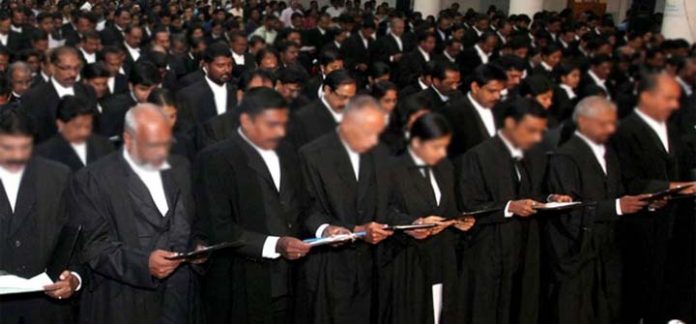









 Allow notifications





