Download Now
Home Blog Page 509

The legality of identical packaging in India

0
Image source: https://bit.ly/3tCzMam

This article is written by Aditya Anand, from Symbiosis Law School, Noida. In this article, the author has covered the concepts of packaging and identical packaging as well as discussed it with a case study for a comprehensive understanding.

Introduction

The packaging of the products has been playing an important role in consumer-oriented markets where customers are the leaders of the market. The business-to-customer process offers a wide variety of products that can be identical. Distinctive features and the established name provide a competitive edge over its competitors. There are hundreds of companies that provide products and they are kept side by side in the malls. Packaging plays an important role as they define the qualities and uniqueness of the products. The competitors try various methods nowadays to deceive the customers by creating somehow identical packages or little alteration of the names to gain the market shares. The identical packaging cases have been observed recently so a better understanding of the concept of packaging and its aspects has been analyzed. 

Packaging 

Packaging is defined as the set of activities in the planning of a product. The activities consist of formulating a design of the package and producing an attractive package for a product. The package can itself act as a registered brand. The ultimate goal of the packaging is to encourage, promote and satisfy their customers. It is the coordinated system of preparing goods from production to consumption. There is a process involved from transportation to end consumption and to preserve and protect the goods, packaging plays a very important role.

The goal of the packaging is to wrap goods to look attractive as well as to secure safety. It includes the implied work of holding together the contents and protecting the products when it passes through a series of distribution channels. According to Philip Kotler, the definition of packaging is the “protection, convenience and economy were the three traditional purposes attached to the package.” But in this modern era, we need to add all the modern functions of packaging.

The packaging can affect the decisive factor of the customer as well as provide a competitive edge over its competitors. Consumers get more encouraged to buy a particular product when they get attractive packaging, and thus, this has now been a marketing necessity as the public thoughts are not only confined to buy a product but also an explanation, assurance, and promotion for that product. The modern era of marketing has a consumer-oriented approach, as due to high competition, they are leaders in choosing the products. It also keeps the products safe and hygienic. Packaging is also one of the activities in marketing. 

The purpose of the packaging is to enable marketing, convey a message, enable product identification, promote brand image, and prevent any types of contamination as well as provide physical protection. 

Classification of packaging 

There are three types of packaging that can be classified into three parameters: value, physical composition, and durability. 

Family packaging 

A package of a particular manufacturer who identically packs its products is known as family packaging. The shape, colour, and materials used for packaging will be similar for all the products. The design would be the same for all the products. 

Reuse Packaging

Packages that can be used for other purposes after the goods have been consumed are called reusable packaging. For example, a jam bottle that is made up of glass can be used to store something after consumption. Reusable packaging encourages consumers to buy the product. 

Multiple Packaging 

The package can be used to pack varieties of goods and so it is called multiple packaging. The benefit of such types of packaging is that it helps in increasing the aggregate sales of goods. It is the practice of putting several units in one package such as the example of the liquor industry. 

Identical packaging

There are various competitors in the markets and due to stiff competition, most of the competitors try to deceive the customer by supplying the same type of label and packaging against the famous products. When a similar type of packaging or names stated on the label is used for marketing, it is called identical packaging. The purpose of such a type of packaging is to get a competitive edge over its customers. However, identical packaging is not legal in India as they are not acceptable as per the laws of the country. Although there are no codified laws regarding the punishment for identical packaging, the judicial system has restrained and passed orders as per the case may be to prohibit this kind of malpractice of identical packaging. 

Laws related to it

There are no specific laws or any such acts related to identical packaging. The chief regulating laws are mostly dealt with in some areas as follows.

Bureau of Indian Standards

The government-regulated organization called the Bureau of Indian Standards (BIS) is the National Standard Body of India that is responsible for the harmonious development of the activities of standardization, marking, and quality certification of goods and for matters connected therewith or incidental thereto. They innovate, promote and review the products.

The Legal Metrology Act, 2009 and Packaged Commodities Rules, 2011

The Act has been mandated to formulate the Rules regarding the pre-packaged commodities and their labelling requirements that is before the sale of the commodities to the ultimate consumers. The need for this law is for better regulation of packaging.

Food Safety and Standard Authority of Indian Act, 2006 and Rules, 2011

The FSSAI Act and Food Safety and Standards (Packaging and Labelling) Regulations, 2011. These Regulations provide for the manner of marking and labelling food. The Regulations provide for general packaging requirements including the materials or metals used and for packaging requirements for specific food products.

The Trade Marks Act, 1999

This Act provides unique identification of the goods and services which is capable of distinguishing it from other companies. 

The Copyright Act, 1957

The Act protects any kind of artistic works from unauthorized uses, for example, the label or the symbol used in the packaging that can be unique and has sole ownership of the author. 

These procedural laws are very specific and extensive to cover all kinds of identical packaging disputes. These laws are taken into consideration depending upon the nature of the case. 

Case study of identical packaging 

It was found in most of the cases that there are no penal penalties such as imprisonment and the remedies are convenient for the defendant as well. The case of Parle Products Pvt Ltd. And Anr vs Future Consumer Ltd. And 4 Ors, (12 January 2021) is going to be discussed thoroughly for better clarity and understanding of the laws related to identical packaging. It has been a few months since Parle Products Pvt. Ltd. filed a civil suit against Future Group Ltd., accusing them of identical packaging infringement. 

It was contended that the plaintiff has a copyright that is combined with a cause of action for passing off, wherein it was later found that the defendant’s products had identical or deceptive similar packaging to that of Parle’s products. Parle Products is a food item company that primarily sells various kinds of biscuits with their unique names and packing. The items such as CrackJack, Monaco, Hide and Seek, and other such various products have also been listed on the Parle official website. 

Now as per the present case, Bombay High Court restrained Future Consumer Ltd., the defendant company in this case, from infringing Parle’s trademark in terms of the packaging of its products by passing an ad-interim injunction order. The Court held that “There is no doubt that the rival labels are being used for identical products under nearly identical packaging and trade dresses. The similarity in the rival packaging/labels cannot be a matter of coincidence.”

 Facts of the case 

  • Parle Products Pvt. Ltd., the plaintiff in the case, is the most chosen Fast-Moving Consumer Goods (FMCG) brand since 2010. Plaintiff manufactures and sells a wide variety of biscuits, not limited to confectioneries, cakes, wafers, etc.
  • Plaintiff introduced the biscuits and started manufacturing in the years 1939, 1971, and 1996 where the popular biscuits are named as – “MONACO”, “KRACKJACK” and “HIDE&SEEK” respectively.
  • Plaintiff has also secured trademarks on the biscuits and to secure its statutory rights in the “MONACO”, “KRACKJACK” and “HIDE & SEEK” trademark, they had applied for and secured trademark registration in respect of the same under the Trade Marks Act, 1999 without any objections and it was duly registered. 
  • After a long time, the plaintiff, in July 2013, July 2014, and May 2017, redesigned and created the latest packaging for “MONACO”, “KRACKJACK” and “HIDE&SEEK”, respectively.
  • Further, it was disclosed that the plaintiff’s packaging was created by Mr. Mayank Shah, an employee of Plaintiff during his course of employment. Therefore, the plaintiff is the original owner of the copyright in the packaging.
  • Now last year in and around the second week of September 2020, the plaintiff came across the defendants’ biscuits bearing the mark “CRACKO”, “KRACKER KING” and “PEEKA-BOO” having trade dress or packaging or labels that were identical with and deceptively similar to the trademark registered products and substantial reproduction of Plaintiff’s packaging.

Issues Involved

When it came to the notice of the plaintiff, to further support their arguments, the Plaintiff produced photographs of the Defendant’s impugned products “CRACKO”, “KRACKER KING”, & “PEEK-A-BOO” which were identical or deceptively similar to plaintiff’s products “MONACO”, “KRACKJACK”, and “HIDE AND SEEK” and the authenticity of products was verified with a cash memo of sale of the impugned products in Big Bazaar outlet in Vile Parle, Mumbai. The plaintiff raised the issue of infringing on the rights by the defendant by selling identical packaging and so after the analysis two issues had been identified that were of concern to the plaintiff.

The aforementioned findings resulted in the formation of the following issues before the Bombay High Court:

  1. Who are the original owners of the copyright that is used by the Plaintiffs in the packaging of their products “MONACO”, “KRACKJACK” and “HIDE & SEEK”?
  2. Whether the Defendants have blatantly copied the plaintiff’s packaging and label concerning their aforementioned products?

Plaintiff’s Contentions

  • The plaintiff supported their arguments by presenting the renowned value of the brand. According to the Nielsen Report for the year, 2010, Plaintiff’s brand PARLE-G was certified as the world’s largest selling biscuit brand and this was contended by the plaintiff to let the court acknowledge the brand value and their importance. 
  • It was further supported that since the beginning of the established brand, the plaintiff has been honestly, publicly, continuously, and extensively using their packaging system regarding the manufacturing of goods to the ultimate consumption in respect of their goods in India.
  • The plaintiff has taken various efforts to popularize its products bearing its packaging and gaining the market share along with the trust and confidence of the customers. They have been spending a good sum of money and efforts on various advertisements and to popularize and promote their products and eventually to increase the sales of their goods in India.
  • The plaintiff has also provided substantial proof of the distinctive features of their products and it was stated that its packaging includes the features certain qualities that have become distinctive of its goods and differentiate and creates the uniqueness of the product in the common public and marketing of such goods is done solely by the plaintiff and no one else. 
  • It was further briefed about the incident that how the defendants have intentionally stocked their impugned products on the shelves alongside the plaintiffs’ products and it was argued by the plaintiff that how the common people would get deceived from such identical products. 
  • It was claimed that the Defendants had copied every element of Plaintiffs’ packaging including the layout, colour combination, placement, and all distinctive elements and features of Plaintiffs’ packaging to the last millimetre.
  • He further submitted that the defendant’s usage of the plaintiff’s trade dresses, labels, and packaging amounted to a strict violation of the trademark and copyrights norms as per the laws of the country and stringent actions should be taken against the accused of Plaintiff’s copyrights’ encroachment and passing off.

Judgment 

  • The facts and the arguments were presented before the court and it was noted by the Hon’ble Bombay High Court that a comparison of the rival products hardly leaves any doubt about how Defendants have completely copied the plaintiffs’ packaging or labels in an unashamed manner. The court provided further arguments.
  • Undoubtedly, the rival labels are being used for identical products under nearly identical packaging and trade dresses. The labels or artworks or packaging or trade dresses of defendants’ “CrackO”, “Kracker King” and “Peek-a-Boo” products are similar to the Plaintiffs’ Packaging that is used by them in the products such as “MONACO”, “KRACKJACK” and “HIDE & SEEK” products and further reproductions of substantial parts thereof.
  • It was suggested by the court that the defendants must have possessed the plaintiffs’ products with them while designing the impugned packaging. Any kind of similarity in the rival packaging cannot be a matter of coincidence.
  • The Court confirmed the original owner of the copyrights on the packaging of their products and supported the arguments with the relevant evidence and further stated that the plaintiffs were the original owners of copyrights on they have the original rights as per the rule mentioned in the packaging of their products through which their brand ‘Parle’ has gained substantial value in terms of reputation and goodwill.
  • As per the facts of the case, the Bombay High Court passed an ad-interim injunction order to restrain the defendants from reproducing, manufacturing, selling their products that are identical or deceptively similar to that of the plaintiff’s products’ packaging, labeling, trade dress, layout, or colour scheme to pass off their impugned products as the plaintiff’s products.

Conclusion

Identical packaging is not legal as per the laws of the country and it can be concluded as per the decision undertaken by the court. Although the court has justifiably dealt with the cases due to the absence of established norms related to identical packaging, there should be compliance of norms and it gets impliedly governed by the other laws existing in the country. Thus, the court takes these matters very seriously to protect the distinctive labels and packaging of the companies and to secure their essence from rival companies.   

References


LawSikho has created a telegram group for exchanging legal knowledge, referrals, and various opportunities. You can click on this link and join:
Follow us on Instagram and subscribe to our YouTube channel for more amazing legal content.

Download Now

Critical analysis on Sree Padmanabhaswamy temple case 

0
Place of Worship Act, 1991

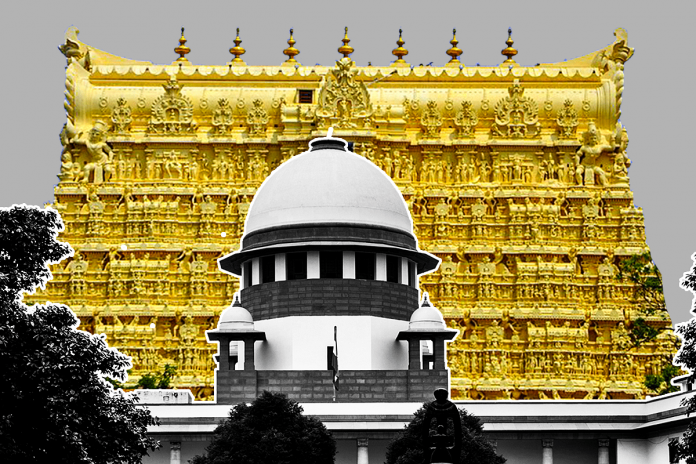
This article is penned down by Pranjali Aggarwal of the University Institute of Legal Studies, Panjab University, Chandigarh. This article deals with all aspects and critical analysis of the judgment of the honorable Supreme court in the Sree Padmanabhaswamy Temple case.

Introduction

The Sree Padmanabhaswamy temple is one of the 108 holy temples or ‘Divya Deshams’ dedicated to Vaishnavism in India and is situated in Thiruvananthapuram, Kerala. According to historians, there is no exact record of the origin of this temple but there are several versions about its origins with the date ranging from the 3rd century to the 9th century CE. The existing structure of the temple was built by the then Travancore Maharaja Marthanda Verma in the year 1739 (18th century). The temple has the idol of Lord Vishnu who is found in the Anantha Shayana pose on Adishesha (the king of all serpents). The temple has always been in the spotlight because it is believed to be one of the richest places of worship in the world. Abundant treasure in the vaults of the temple (estimated to be worth over Rs. 1 lakh crore) is the pivotal reason behind filing the cases as it prompted the debate as to who is responsible to manage and control the administration and finances of the temple.

Background of the dispute

  • The temples which were under the control of the then princely states of Travancore were to be governed by the Travancore and Cochin Devaswom Boards before 1947.
  • The Instrument of Accession was signed between the Government of India and the princely states in the year 1949 which vested the administration and control of the Padmanabhaswamy temple in the Ruler of Travancore.
  • Even after the formation of Kerala as a state in 1956, the royal family had complete rights over the management of the temple.
  • The 26th Amendment of the Constitution in the year 1971 deleted Articles 291 and 362 and inserted Article 363A and as a result privy purses (the sum given to the royals (king or queen) for personal expenses by the British as a token of gratitude) were abolished and thus all the privileges and entitlements enjoyed by them were withdrawn.
  • The last ruler of Travancore died in the year 1991 and the state government gave permission to Uthradam Thirunal Marthnada Varma (younger brother of the last ruler) to continue exerting control over the temple.
  • The Royal family continued to control and regulate all the matters of the temple until the decision of the Kerala High Court stripped them of their shebait rights.
  • And this matter relating to the administration and management of the temple was pending before the Apex Court for the last nine years and was decided on 13 July 2020 in the case of Sri Marthanda Varma (deceased) through Legal Representatives(LR’s) versus the State of Kerala. The whole case law is discussed below.

Facts of the case

  • In 2007, Advocate Ananda Padmanabhan, on the behalf of two devotees, filed a lawsuit claiming that there is mismanagement of the funds of the temple and new trustees should be appointed to manage the wealth of the deity. The lower court of Trivandrum ordered the government to take over control over the temple and its assets.
  • The royal family appealed the decision in the High Court and contended that they are entitled to the control of the temple as they have been managing the temple and its possession for centuries and as they are heirs of the last ruler of Travancore, they hold the right to preside over the temple.
  • The case was filed primarily to decide whether the shebait rights (right to manage the financial affairs of the deity) continue to exist even after the death of the last ruler of the family. The crucial legal question that was to be answered was whether the heirs of the last ruler (Utradam Thirunal Marthnada Varma, the younger brother of Chithira Thirunal Balarama Varma) of Travancore can claim to be the “Ruler of Travancore”, even after the death of the ruler in 1991?
  • The Honorable Kerala High Court in this case (Uthradam Thirunal Marthanda Varma and Sree Padmanabhaswamy Temple v. Union of India and others) ordered that the royal family is not entitled to any shebait rights as they were of the view that according to Section 18(2) of the Travancore-Cochin Hindu Religious Act, 1950, any successor of the ruler cannot claim same rights as that of the ruler after the death of the last ruler in 1991. The court asked the state government to establish a body or trust that will govern the temple and will exercise control over its assets and management but abiding by the traditions followed and with this judgment, all the properties and assets reverted to the state as per Article 295 and Article 296 of the Constitution.
  • The two Special Leave Petitions were filed in the Supreme Court were filed by the aggrieved party- Maharaja and the then-Executive Officer of the temple-Chithira Thirunal Balarama Varma and his younger brother Sri Uthradam Thirunal Marthannda Varma in May 2011 challenging the judgment of the High Court.
  •  The court in this case also tried the writ petitions that were filed earlier relating to this matter. The writs are as follows:
  1. Writ Petition (C) No.36487 of 2009 was filed by one T.P. Sundara Rajan, a practicing Advocate who was asked to vacate his place, which was located in the premises of the temple by the executive officer of the temple. The petition was filed as a reply to eviction proceedings, praying High Court to issue the writ of Quo Warranto that questions the authority of Sri Uthradam Varma holding the post of Executive Officer of the temple.
  2. The second petition was filed by Marthanda Varma in 2010 (Appellant no. 2) which challenged the maintainability of the suits that were filed against them between 2007 and 2009 by employees of the temple and others before courts in Thiruvananthapuram, questioning the authority of the royal family to administer and manage the temple affairs.
  • The Honorable Supreme Court, in this case, stayed the decision of the High Court and also ordered the opening of vaults (Kallaras in Malayalam) A to F in order to ascertain the inventory (articles, valuables, jewelry, diamonds, etc.) present in the temple and to decide the approximate wealth of the temple. 
  • On 8th July, the Supreme Court ordered that Vault B would not be opened for now as there were claims regarding the extraordinary treasure with ‘mystical energy’ present in vault B which was to be decided before ordering its opening.
  • On 23rd August 2013, Gopal Subramaniam was appointed as the amicus curiae by the court for the assessment of the activities at the temple and he suggested some measures for the temple i.e.strengthening of security of the vaults, restraining media coverage so that the image of the Expert Committee is not tainted, even suggested measures for efficient and effective management of the affairs of the temple on the daily basis, etc. 
  • He submitted his interim report in October 2012 and the final report in April 2014.
  • And based on his report, the power to manage the temple was withdrawn from the royal family and was provided to the committee formed by the court until the case is finally decided. 
  • The further case was deliberated by adhering to his reports and other relevant details.

Issues involved in the case

  1. Whether the heir (here, younger brother) of the last ruler of Travancore is entitled to claim the title of ‘Ruler of Travancore’ as per its meaning as elucidated in Section 18(2) of the Travancore-Cochin Hindu Religious Act, 1950?
  2. Whether the royal family or Sree Marthanda Varma can claim the ownership, control, and management of the temple, its assets, and the status of Shebaitship?
  3. What was the aftermath of the 26th Constitutional Amendment, 1971 over the powers related to the management of the temple that was vested in the Ruler of the Travancore? 
  4. Whether Sree Padmanabhaswamy Temple is public property or private property that belongs to the royal family?
  5. Article 363 and its relation to the particular case and does intervention in this matter fall within the jurisdiction of the court?
  6. Whether the principle of escheat would be applicable in the case of the right of shebaitship?

The findings and discussions of the Supreme Court 

For deciding the issues (1),(2), and (3), the Honorable Supreme Court first deliberated and delved over the five scenarios which were:

  • The position until the Covenant of Accession was not signed in 1949.
  • The position after the Covenant was signed.
  • The effect of the Constitution of India on the Travancore-Cochin Hindu Religious Act, 1950 before 26th Constitutional Amendment in the year 1971.
  • The impact over the Act after the enforcement of the 26th Constitutional Amendment Amendment Act, 1971.
  • The effect of the death of the signatory of the Covenant as the Ruler of Travancore.

The position until the Covenant of Accession was not signed in 1949

In order to decide the issue (1) and (2) of the case, the Hon’ble Supreme Court took the history of the temple into account. Thus, after ascertaining the whole historical records and reports of the temple, the court was of the opinion that though the origin and facts about the establishment of the temple are not clear and explicit but in every version explaining the same, accepts the role of the Ruler of Travancore as an administrator of the temple. The traces that the present-day structure was renovated by him after he took full control of the temple in 1686, were also found. 

The conclusion derived from the findings was that the ruler was holding the office of the Shebait of the temple when the covenant was signed. The Shebait is a person who is bestowed with the right of the management of the property (in this case the temple). There was a continuous and unbroken line of shebaits that existed thus it was finally concluded that the power to exercise control over the temple was vested with the Ruler of Travancore till the Instrument of Accession was not signed in 1949.

The position after the Covenant was signed

The Instrument of Accession was signed between the Ruler of Travancore and the Government of India in 1949 which paved the way towards the formation of the United State of Travancore and Cochin. The Supreme Court held that the Covenant itself conferred the powers of management of the temple in the hands of the Ruler of Travancore and the royal family. The two provisions of the Act that were taken into consideration are:

  • Firstly, Article VIII of the Covenant explicitly mentions that the control of the administration of the temple is in the hands of the Ruler of the Travancore and thus, the Covenant also did not affect the rights of the family to control the temple.
  • Secondly, Section 62 (2) of the Travancore-Cochin Hindu Religious Act, 1950, read with proviso to Sub-Article ‘d’ of Article VIII of the Covenant, states that even if the administration is in the hands of the Cochin Devaswom Board then also the performance and regulation of rituals and ceremonies should fall under the ambit of the Ruler of Travancore.

Thus, the Covenant did not alter the power of the Ruler of Travancore.

The effects of the Constitution of India on the Travancore-Cochin Hindu Religious Act, 1950 before the 26th Constitutional Amendment in the year 1971

There was no conflict between the Travancore-Cochin Act, 1950 and the Constitution of India before the 26th Amendment. The provisions of the Travancore-Cochin Act were not affected by the Constitution, even the status of Shebait was enjoyed by the Ruler of Travancore and he was the holder of power over the temple.

The impact over the Act after the enforcement of the 26th Constitutional Amendment Amendment Act, 1971

The 26th Constitutional Amendment Act, 1971 came into force during the reign of Prime Minister Indira Gandhi. Because of this Amendment, Articles 291 and 362 of the Constitution were deleted but the Supreme Court held that the deletion of these Articles does not mean that the ruler of Travancore is deprived of all the rights and privileges that he enjoyed earlier. The insertion of Article 363A only abolished the rights and liabilities relating to privy purses.

The effect of the death of the signatory of the Covenant as the Ruler of Travancore

The Supreme Court found that the status of Shebaitship was conferred over the ruler of Travancore not in his capacity as a ruler but as an individual. And the status cannot be revoked unless it is disposed of in the particular. This conclusion was derived because Shebaitship has the elements of office and property, of duties and personal interest amalgamated into one and they invest the office of the Shebait with the character of the proprietary right. Thus, the status of Shebaitship should be inheritable and will devolve by adhering to the principles of law and custom upon the successors of the Ruler. Thus, the death of the signatory of the Covenant (Sree Chithira Thirunal Balarama Varma) does not impact the right of the successors of the ruler in any way.

new legal draft

Held

The Hon’ble Supreme Court gave a decision on this long-running case on 13th July 2020. The following opinion and decision were laid down by the Honorable Supreme Court on each issue.

  • Issue 1- The Honorable Supreme Court relied on the case-law Mahavir Pravir Chandra Bhanj Deo Kakatiya versus the State of Madhya Pradesh (1960) to ascertain this issue, and held that the status of Shebaitship exists independently to the status of the Ruler of Travancore. Moreover, the term ‘Ruler’ is not explicitly defined under the Travancore-Cochin Act and the definition, as enumerated under Article 363 and 366(2) of the Constitution, is only applicable for the purpose of this Article as it is an inclusive definition. Thus, it cannot be said that this definition of Ruler applies to the TCHRI Act,1950 also. Thus, the younger brother can claim the title of the Ruler of Travancore as per the provisions of the TCHRI Act.
  • Issue 2- The status of Shebaitship, in this case, was decided by delving and taking into account numerous judgments. The role and position of a Shebait were considered as laid down by the Constitution Bench in the Ram Janmabhoomi Temple Case (M. Siddiq (deceased) through LR’s versus Mahant Suresh Das and others (2019). Another judicial pronouncement that played an important role in the judgment was Angurbala Mullick versus Debabrata Mullick (1951) in which it was held that even if there is no gratuity or emoluments linked to the Shebaitship then also the Right of Shebaitship is a Proprietary Right. In the judgment of Revathinnal Balagopala Varma versus His Highness Sree Oadmanabha Dasa Baka Rana Varna(since deceased) and others (1991), it was held that Shebaitship is the inheritable right and passes from one ruler to another subject to the principles of the succession as prevalent in the family. Based on the above judgments, the Supreme Court presented the divergent view as that was presented by the Kerala High Court earlier and held that the status of Shebaitship should be passed to the family of the Ruler as they are the custodian of the Ruler and have been taking care of the temple for such a long time.
  • Issue 3- As mentioned above, the 26th Amendment of the Constitution did not affect the personal assets of the Ruler and they would be inherited as per their custom of succession. In a similar way, though the aspects of ‘Rule’ or ‘Rulership’ are not recognized by law but still the ‘Right to succeed Gaddi’ can exist as the incident. Thus, the amendment does not in any way affect any right of the Ruler or royal family of Travancore concerning the administration and possession of the assets of the temple. This issue was decided by the Honorable Supreme Court by relying on the judgment of MadhavRao Jivaji Rao Scindia v Union of India (1971).
  • Issue 4- To decide this issue, the Supreme Court applied the test to determine whether the temple is public property or private property which was laid down in the case of Bala Shanker Maha Shaker Bhattjee and others versus Charity Commissioner of Gujarat (1994). By applying the parameters to decide, it was concluded that Sree Padmanabhaswamy temple is public property.
  • Issue 5- The bar as articulated under Article 363 can be applied in two cases:
  1. When the dispute emerges because of the provisions of the Covenant.
  2. Or if the dispute is related to the right arising out of the Constitution relating to Covenant.

And this case falls outside the purview of Article 363 as the matter to be decided in the present case was whether the Royal family has the authority to control the temple and if they are covered under the definition of ‘Ruler of Travancore’ as given under Chapter III of Part I of the TCHRI Act, 1950. Thus, the conditions to impose bar as per Article 363 of the Constitution are not fulfilled and therefore there will be no impact of Article 363. This opinion of the court was based on the observation of Justice Hidayatullah which was given in the case of Madhav Rao Jivaji Rao Scindia versus Union of India.

  • Issue 6- The court found that the death of the ruler who signed the covenant does not impact the status of Shebaitship because Chapter III of Part I of the TCHRI Act, 1950 uses the title of the Ruler of Travancore for the natural successors. Thus, the royal family shall be entitled to the status of Shebaitship by application of the principle of escheat because the status is being held by them for a long period.

Thus, the two-judge bench of Justice UU Lalit and Justice Indu Malhotra decided the case in the favour of the Royal family and overruled the judgment of the Kerala High Court. The right of the royal family to manage the property of the deity was recognized by the Supreme court by following the customary law. The royal family was provided with the Shebait rights to manage the financial affairs of the deity. In the judgment, the court ordered the formation of a two-tier administrative structure as suggested by the royal family. The main objectives behind the institution of the Committee were the management of the temple, preservation of the assets and treasure of the temple, and ensuring the performance of rituals and religious practices as per the customs.

The Committees are as follows-

  1. First (Administrative) Committee to take care of daily administration in the temple. It comprised of:
  • District Judge of Thiruvanthampuram as the Chairman.
  • One nominee of the Maharajah of the royal family. 
  • One nominee of the Kerala government.
  • One Chief Thanthri (priest) of the Temple.
  • A member to be nominated by the Union Ministry of Culture (Government of India).

2. The second (Advisory) Committee was formed to advise the Administrative Committee and is a three-member committee which would comprise of:

  • Retired judge of the High Court to be nominated by the Chief Justice of Kerala High Court as its Chairman.
  • An eminent person nominated by Maharaja.
  • A reputed Chartered Accountant nominated by the chairperson in consultation with the royal trustee.

All the members of the Committee must be Hindu and the Ruler is bound by the advice of the advisory committee. 

Critical Analysis

The judgment, no doubt, is seen as a victory by the devotees but it does not mean everything is hunky-dory with the decision of the Supreme Court. Some concerns arise from the decision:

Security expenses to be borne by the temple

Since the discovery of the wealth in the underground vaults of the temple, the temple has been in abuzz and this exposes the temple to greater security concerns. The annual income (from the offerings and donations) is not even enough for the maintenance and other expenditures of the temple and as after the judgment the security is to be maintained by the temple itself, it does not seem possible for the temple to make the security arrangements. Moreover, this COVID-19 pandemic added fuel to the fire as the offerings have significantly reduced and thus forcing the temple to approach the government with a begging bowl in order to manage the affairs of the temple effectively.

Long audits of the temple

The Supreme Court has ordered the 25 year-long audits for the temple as suggested by the amicus curiae appointed by the court. The audit has to be done by the reputed firm of the Chartered Accountants. This will prescribe a continuous burden on the temple that Chartered Accountants can surprise them now and then with their findings. No doubt, it will prevent financial irregularities but such long-term audits are not even ordered in the cases of the firms that are involved in scams or that have tarnished reputations. Thus, this decision seems superfluous in this case.

Excessive control of state and judiciary over the temple

The ruling by the Supreme Court has empowered the state with a significant role in the administration of the temple. Firstly, the administrative committee includes three government nominees out of five members (District judge, one nominated by the state government, and one by the Union Culture Ministry). Even in the advisory committee, the judiciary is controlling all the major aspects. Thus, both state and judiciary are indirectly involved in the administration of the temple.

Violation of Articles 25 and 26 of the Constitution

The judgment is violative of Articles 25 and 26 of the Constitution of India; Article 25 guarantees the freedom of profession, practice, and propagation of religion, and Article 26 guarantees freedom to manage religious orders to religious denominations. With the passing of the judgment, the role of the state as well as the judiciary has become crucial in the management and thus will hamper the rights of the state nominees to propagate their religion and their freedom to manage religious orders. This ground was raised before the Supreme Court but this was not dwelled upon and was dismissed as the issue was not presented before the High Court.

Arise of other similar matters

In this case, the Supreme Court recognized Article VIII of the Covenant and even gave it perpetual validity; this will lead to bearing on the cases which were earlier decided by the court on similar terms.

Conclusion

In this case, though the Supreme Court adopted the civilizational and sensitive approach while deciding the case, the addition of the government nominees as the members in the committee is against the spirit of secularism recognized by our Constitution and thus in the future, it may be questioned.

References


LawSikho has created a telegram group for exchanging legal knowledge, referrals, and various opportunities. You can click on this link and join:

https://t.me/joinchat/J_0YrBa4IBSHdpuTfQO_sA

Follow us on Instagram and subscribe to our YouTube channel for more amazing legal content.

Download Now

Legal procedure for the approval of Bharat Biotech’s Covaxin (without phase 3 data)

0

This article is written by Aditi Aggarwal, from Symbiosis Law School, Noida. The article discusses the legal procedure for approval of Bharat Biotech’s Covaxin along with the regulatory pitfalls in the same and the way ahead. 

Introduction

The COVID-19 pandemic has changed the global regulator into a fast-track procedure for pharmaceutical approval and has brought an involvement on a wider level in mutual agreement for providing a drug of critical value to the general public.

To combat this pandemic, many institutions have allied. The World Health Organisation (WHO) has long advocated for cooperative methods since they improve the efficiency of regulatory authorities while also avoiding duplication. During the current times, the actual provisions of the law are being modified or applied in such a way so that vaccines are approved at a faster rate.

An overview of Covaxin and its approval in India

Covaxin (a whole Virion inactivated Coronavirus Vaccine) is India’s first indigenous and highly purified and inactivated 2 dose SARS-CoV2 vaccine, developed by Bharat Biotech BSL-3 (Bio-Safety Level 3) bio-containment facility, one of its kind in the world, in cooperation with the National Institute of Virology (NIV), which is a branch of the Indian Council of Medical Research (ICMR). The Research Council is the official institution for medical research in India.

On January 3, 2021, the vaccine was approved for “restricted use in the public interest in an emergency, as a sufficient preventive measure, in clinical trial mode”. The partly studied vaccine was approved based on results from phase 1 and 2 clinical trials through an accelerated process. This move has been in controversy and questioned by domain experts.

Emergency use authorization can only be granted after the safety and effectiveness are confirmed in phase 3 clinical studies that are usually designed and implemented to meet the requirements of expert committees and regulatory agencies. But in exceptional circumstances, if ongoing trials are based on strong evidence of safety and effectiveness, approval may be considered.

The approval of the Covaxin was restricted and conditional when Union Health Minister Harsh Vardhan declared that the people who would receive the shots would be monitored in the same way as volunteers in clinical trials are being monitored. This led to many domain experts expressing their surprise over the decision as many of them pointed out that clinical trial-related data has not been made public.

How does India approve vaccines in normal circumstances

What laws/rules regulate the approval of new drugs and vaccines

The New Drugs and Clinical Trials Rules, 2019, enacted under the Drugs and Cosmetics Act of 1940, provides many rules that must be followed for new drug reviews, clinical trials, and vaccination approvals. The rules were notified in March 2019. The Rules provide for standards for ethical trial conduct and norms to follow for allowing vaccines and drugs in an emergency, in addition to defining processes for requesting permission for clinical trials and new drugs. 

A key aspect of the approval of vaccines or drugs in India is the requirement to conduct clinical trials in the country from phase I to phase III.

Steps that are required to be fulfilled for approval of a vaccine

The approval of a vaccine under normal circumstances can be explained in the following steps:

  1. Identifying and developing an appropriate strain of vaccine which is potentially safe and immunogenic.
  2. The vaccine strain’s full characterization by in-vitro experiments.
  3. Pre-clinical study in small animals for determining the dose and safety regime. The animals can be mice, guinea pigs, rabbits, etc. 
  4. Pre-clinical study in large animals for determining the potential dose and formulation, protective efficacy, and safety.
  5. Then, phase-I human clinical trials are carried out for establishing the safety of the vaccine on less than 100 individuals.
  6. After phase-I trials, Phase-II human clinical trials are usually carried out on less than 1000 individuals for determining the immune protection.
  7. Phase-III human clinical trials are then carried out to determine the efficacy. The numbers range in several thousand and regulatory approval is accorded after successful completion of phase III studies.
  8. Phase IV human clinical trials refer to post-marketing surveillance studies, the data of which is analyzed for long-term decision-making.

Who takes the approval decision

The ultimate authority to approve a vaccine or any other drug is the ‘Central Drugs Standard Control Organisation (CDSCO), which works under the Ministry of Health and Family Welfare. The authority is headed by the Drug Controller General of India (DCGI). CDSCO also gives permission to manufacturers to conduct clinical trials and to stock and manufacture the vaccines – before conducting the trials.

Data relating to the three phases of clinical trials along with pre-clinical studies

Before approval, it was brought to the notice of the CDSCO that M/s Bharat Biotech has generated safety and immunogenicity data in a variety of animal species, including rabbits, Syrian hamsters, mice, rats, and challenges tests on non-human primates (Rhesus macaques) and hamsters. 

On about 800 individuals, phase I and phase II clinical trials were conducted, and the findings indicated that the vaccine is safe and generates a significant immunological response. The Phase III effectiveness study began in India with 25,800 volunteers, and as of January 3, 22,500 people have been vaccinated across the country. The vaccine was deemed to be safe based on the data provided. 

The legal procedure for the approval of Covaxin 

Covaxin has been granted approval for ‘restricted use in an emergency situation in the public interest as an abundant precaution, in clinical trial mode’ according to the Subject Expert Committee (SEC) minutes of the CDSCO.

Government notification 

Section 26B of the 1940 D&C Act authorizes the central government to supervise or restrict the manufacture, sale, or distribution of drugs by notification, provided that the drugs are essential to meet the requirements of emergencies arising due to natural disasters or epidemics, and it is expedient or necessary to do so for the public interest.

In the case of Covaxin, this provision was used by the central government to issue a notification to manufacturers for obtaining permission to stock and manufacture the vaccine on completion of clinical trials successfully. The manufacturers were allowed to defer the requirements of Rule 81 and 83 of the NDCT 2019 Rules by the notification.

Emergency use authorization

Under the NDCT 2019 vaccine approval rules, the term ‘emergency use authorization’ has not been used. It was only after the usage of the term in the US., it became popular in India. 

But there is a provision called “accelerated approval” (mentioned under the second schedule) applicable in “special situations” under the rules and the Covid-19 pandemic is a special situation. According to the rules, if a new drug (vaccine) aims to treat a serious or life-threatening condition or disease that is particularly relevant to the country, and addresses unmet medical needs, approval may be accelerated. 

Another special provision mentioned in the rules under the second schedule stipulates that if Phase II provides that if significant efficacy is observed in phase II clinical trial of the new drug under the prescribed dose for the unmet medical needs of the country’s serious and life-threatening diseases, the central licensing agency may consider granting a marketing authorization based on clinical trial data of phase-II. 

However, as per the protocol approved by the central licensing authority, additional post-licensure studies might be conducted after the approval if required for generating the data on a larger population so that further verification can take place and clinical benefits may be described.

Issuance of the DCGI’s statement

The DCGI (Drugs Controller General of India) issued a statement on January 3, 2021. The statement stated that this particular vaccine has been developed on the Vero cell platform and has a well-established track record of efficacy and safety in and outside the country.

Further, the DCGI said that Bharat Biotech, the developer of Covaxin, from its trial on animals had submitted the ‘safety and immunogenicity data, which also includes challenge studies on hamsters and non-human primates (Rhesus macaques) with the drug regulator, the Central Drugs Standard Control Organisation (CSDSCO).

Further, according to the issued statement, the Subject Expert Committee (SEC) reviewed the data on the vaccine’s safety and immunogenicity and recommended that permission be granted for “restricted use in an emergency situation in the public interest as an abundant precaution, in clinical trial mode”, to have more options for vaccinations, particularly in the case of infection by mutant strains. It was also informed that the clinical trial ongoing within the country by Bharat Biotech will continue even after the approval.

Whether there was an application of ethical guidelines post-approval  

National Ethical Guidelines for Biomedical and Health Research lays down a mechanism for the monitored emergency use of unregistered and experimental interventions (‘MEURI’). Emergency monitoring is allowed only after getting approval from the National Ethics Committee. Further, it has to be undertaken under the local ethics committees’ oversight and after following the consent process. In the current circumstances, it can be assumed that the regulators might have relied on that research involving human participants.

However, since the CDSCO has already given approval to Covaxin, it is unclear whether the safeguards under MEURI would be applied or not, as such use only applies to unregistered interventions. In any event, judging from the SEC meeting, none of these safeguards appears to have been stipulated.

Regulatory pitfalls

Based on the material now accessible in the public domain, the current approval procedure appears to be plagued by two significant regulatory pitfalls: 

  • The use of ambiguous terminology.
  • A lack of regulatory advice on post-approval processes and vaccination use.

Further, though the provision under the NDCT rules 2019, allows for accelerated approvals, it does not shed any light on the nature of such permission and the criteria that would apply to the use of such drug permitted through an accelerated procedure. This creates a regulatory gap, leaving this aspect up to the DCGI’s judgment. This difficulty is exacerbated in the current scenario by the fact that the conditions (if any) laid forth by the DCGI are not yet available in the public domain.

Need for a clearer framework for emergency use authorization

  • After discussing the regulatory pitfalls in the current covid-19 regime, it is evident that India as a country needs regulatory clarity and specificity on vaccine approval. A better and unambiguous regulatory environment would make the vaccine administration process less susceptible to suspicion and controversy. 
  • It might also help in gaining the confidence of common citizens and might reduce vaccine hesitancy. In crux, it may help make the vaccination program more successful. 
  • The framers of the regulatory framework can take ideas from other countries’ frameworks on the approval of vaccines. For instance, where on one hand the Central Licensing Authority or the DCGI decides on the post-approval vaccine conditions in India, on the other hand, the United States has statutes like the Federal Food, Drug and Cosmetic Act 1938, the Pandemic and All-Hazards Preparedness Reauthorization Act of 2013, that grants authority to the Food and Drug Administration (FDA). During a declared state of emergency, FDA after authorization can then make the availability of an unapproved drug to the people. The law in the US, thus clearly highlights both pre and post aspects of an emergency approval.
  • Regulatory bodies must keep in mind that in an emergency scenario like this, an accelerated response is not adequate unless it is accompanied by correct rationale and restrictions on vaccine use until sufficient clinical evidence of vaccine safety and efficacy is obtained.

new legal draft

Public response

Plea seeking publication of safety and efficacy trial results

Saket S Gokhale, an activist urged the Bombay High Court to issue notice to the Drugs Controller General of India for making available the safety and efficacy results of the Covaxin’s trial to the general public, so that other scientists or external subject matter experts can review it.

Contentions of the petitioner

  • It was contended by the petitioner that due to the non-availability of data in the public domain and the vaccine being still in phase 3 of the clinical trial, there is a possibility of harm that can be caused to the general public that is taking the vaccine.
  • It was also submitted that the right to information (RTI) application that was submitted by the petitioner seeking relevant data relating to Covishield and Covaxin was given no response by the concerned information officer.
  • It was also stated that since the approval granted to Bharat Biotech’s Covaxin is for “restricted use in an emergency situation,” any person receiving Covaxin is first required to sign a mandatory consent form, which is impossible as it is connected with two risks: bearing the consequences by taking the vaccine or remaining unvaccinated and making oneself a suspect to a Covid-19 infection.

Notice issued to the state

The Bombay High Court has issued notice to the state for a reply regarding this plea.

Plea seeking booster dose to facilitate international travel

On August 10, the Kerala High Court issued a notice to the Centre and the state governments as to why the petitioner, who is a non-resident Indian (NRI) and had already taken two doses of Covaxin, cannot be granted a third dose because it is a matter of his livelihood.

The counsels for the two governments had previously notified the court that they needed to seek directions on the matter since providing a third vaccination shot or mixing and matching of vaccines was not yet clinically authorized.

Contentions of the petitioner

  • The petitioner informed the court that because Covaxin is not recognized globally, he would not be able to travel abroad. The petitioner further stated that he must return to Saudi Arabia by August 30 in order to fulfill his visa restrictions and that if he does not, he risks losing his job.
  • It was also submitted by the petitioner that he was ready to bear the risk of taking the third jab. He also brought to the notice of the court that the option of a third jab is available in many countries and some studies have been conducted, according to which it was effective.
  • He further stated that even if he is able to enter Saudi Arabia via connecting countries, he would be subjected to mandatory quarantine and a new set of vaccinations which are approved there and that the entire procedure, including the circuitous path, would cost him around three lakh rupees.

The affidavit filed by the Centre

Centre in reply to the notice of the court filed an affidavit stating that those who have already taken two doses of covid vaccine cannot be administered a third dose. It was also said that the covid vaccination guidelines do not allow for a third dose.

Report on Covaxin published by Anvisa, the Brazilian drug regulator 

The Brazilian Government ordered 20 million Covaxin doses from Bharat Biotech. At a time when 9 million doses of Covaxin were already administered in India, the Brazilian drug regulator ‘Anvisa’ published a report on 30th March 2021 on its website that pointed out flaws in the making of Covaxin by Bharat Biotech. As a result, Brazil cancelled its order.

As per the report:

  • Bharat Biotech had missed crucial stages in ensuring that the SARS-COV-2 virus in the vaccine was totally destroyed or unable to replicate in the human body.
  • As a result, there is a genuine possibility that some batches of Covaxin may infect patients with the disease they are supposed to protect them from.

The news created havoc among Indians as to how the Drug Controller General of India (DCGI), approved the vaccine if its manufacturing process had flaws. When asked by the firm’s founder and chairman, Krishna Ella, he claimed that it was Brazilian nationalism that led the regulators to publish the report, along with a desire to keep a vaccine made in India out of Brazil. 

Conclusion

The Covaxin’s emergency use approval was in many controversies when it was announced. While some expressed their disapproval of the same, others were happy that India’s indigenous vaccine was finally approved. Though there are many loopholes and strong opinions regarding the Covaxin approval, the fact that it has been legally approved cannot be forgotten and the common citizens can give a thought to trusting the vaccine approvers.

References


LawSikho has created a telegram group for exchanging legal knowledge, referrals, and various opportunities. You can click on this link and join:

Follow us on Instagram and subscribe to our YouTube channel for more amazing legal content.

Download Now

Silpi Industries v. KSRTC : registration conundrum under MSME Act continues

0

This article is written by Avik Sarkar, an enrolled student at LawSikho.

Introduction

Earlier the Interest on Delayed Payments to Small Scale and Ancillary Industrial Undertakings Act, 1993 was introduced in order to ensure timely payments of the services rendered by micro small and medium industries and thereby increasing the working capital of the industries as well. Later on, the Act was repealed by the Micro Small and Medium Industries Act, 2006 which was introduced in order to make the industry more competitive. However, it is pertinent to note that with changing times the industries also have to change strategies in order to cope up with the trends. And due to changing trends the law involved with the industries also undergoes a shift. Courts from time to time have stepped up and demystified every issue that has come their way. In the matter of Silpi Industries v Kerala State Road Transport Corporation, the court had delved into the matter relating to registration of industries and the applicability of the Limitation Act, 1963 under the MSME Act. This particular piece discusses the nook and corner of the judgement and critically analyses the same

Micro small and medium enterprise 

The micro small and medium enterprise (hereinafter referred to as MSME) sector has always been a significant contributor to the country’s GDP growth. Earlier the performance of the MSMEs used to be harrowingly low. The prime contributor for such crippling performance was speculated to be inadequate working capital, delayed payments by buyers. In order to deal with this conundrum, the Interest on Delayed Payments to Small Scale and Ancillary Industrial Undertakings Act, 1993 (hereinafter referred to as IDPASC Act) was formulated. Later on, the same was repealed by the MSME Act, 2006 and all the provisions of the earlier act were enshrined in Section 32 of the MSME Act, 2006. 

The MSME Act, 2006 was mainly formulated to bring in competitiveness amongst the micro, small and medium enterprises. Though it’s been quite a considerable amount of time since the MSME Act, 2006 has been formulated yet a plethora of conundrums are to be demystified. Similar conundrums were dealt with in the matter of Silpi Industries v. Kerala State Road Transport Corporation, where the court had crystallized the applicability of the Limitation Act,1963 to arbitrations proceedings initiated under the MSME Act, 2006 and also delved into the conundrum with regards to registration of industries under the same Act. This piece peruses the nuances of the judgement and critically analyses the same.

Factual matrix

In the present case, the Kerala State Road Transport Corporation (hereinafter referred to as KSRTC) had invited tenders for supply for thread rubber for tyre re-building. Following this, Silpi industries had submitted its tender and were awarded the same. Both the parties had agreed that 90 percent of the total price was payable on the supply of material. And the remainder 10 percent shall be paid subject to the final performance report. Later on, KSRTC defaulted in making payments of the remaining 10 percent. Therefore, to realize the remaining amount, Silpi industries moved the Industrial Facilitation Council under MSME Act. Further, if the Council failed in the conciliation procedure, then the dispute shall be referred for arbitration under the Arbitration and Conciliation, 1996 Act (hereinafter referred to as Arbitration Act).

In the arbitration proceeding, the award was passed in favour of Silpi industries. The KSRTC challenged the same at the High Court of Kerala under Section 37 of the Arbitration Act. The high court, while setting aside the arbitral award passed, upheld the applicability of the Limitation Act, 1963 and also held that the counterclaim is maintainable in the current proceeding. Aggrieved by the decision of the high court Silpi industries have further appealed to the apex court of the country.

Court’s observations

Limitation Act conundrum demystified

The apex court referred to Section 43 of the Arbitration Act where direct reference has been made with regards to the applicability of the Limitation Act, 1963 in arbitration proceedings. To substantiate further the court referred to the case of Andhra Pradesh Power Coordination Committee & Ors. v. Lanco Kondapalli Power Ltd. & Ors, where the applicability of the Limitation Act, 1963 in an arbitration proceeding has been upheld. Therefore, when conciliation procedure fails as contemplated under Section 18(2) of the MSME Act then the facilitation council has the leeway under Section 18(3) of the MSME Act, to itself take up the dispute for arbitration or refer the same to an institution or a centre for providing alternative dispute resolution.

Counterclaim demystification 

The court iterated that once the conciliation process fails and the dispute goes for arbitration under Section 18(3) of the MSME Act, it is contemplated that the parties had an arbitration agreement as per Section 7 of the Arbitration Act. Further, the court referred to Section 23(2A) of the Arbitration Act which gives the buyers the right to counterclaim, plead for set-off within the scope of the arbitration agreement. The court also noted that non-allowance to file a counterclaim would lead to a parallel proceeding before various fora.

Registration requirements

It was observed by the courts that Silpi industries had not submitted a memorandum under Section 8 of the MSME Act during the time when it had made supplies to KSRTC thereby making it an unregistered entity. And due to the same Silpi industries was denied any sort of relief under the act. It’s an incontrovertible fact that Silpi Industries had approached the District Industrial Centre for grant of entrepreneur memorandum in 2015. However, it is pertinent to note that Silpi industries had supplied goods to KSRTC back in between 2011 and 2014 while it was unregistered. A similar stance was taken in the matter of  Shanti Conductors Pvt. Ltd. v. Assam State Electricity Board. Here it was held that for a business to avail benefits under the MSME Act, the entity needs to be registered on the date the goods were supplied.

Analysis 

Is registration actually mandatory?

Though the court held that registration of an entity is mandatory under the MSME Act but in the present case, the author would humbly like to posit a different point of view of the same. 

  • Firstly, it is pertinent to note that Section 7 and Section 8 of the MSME Act doesn’t specify any particular way of filing a memorandum. 
  • Secondly, Section 8(1) of the MSME Act makes the filing of a memorandum absolutely discretionary.  A similar stance was taken in the matter of  Hameed Leather Finishers v. Associated Chemical Industries Pvt. Ltd. Here it was succinctly stated by the Allahabad High Court that an entity in order to avail benefits under Chapter V of the MSME Act doesn’t necessarily need to file a memorandum. 
  • Further, the court had held that the definition of “supplier” under Section 2(n) also includes entities that have not filed a memorandum. On another occasion in Indur District Cooperative Marketing Society Ltd. v. Microplex (India), Hyderabad and Ors it was held by the Andhra Pradesh High Court that making filing of memorandum mandatory to be a ‘supplier’ under the definition of the act would be abnormal. 
  • Further, the government of India through its notification had crystallised that filing of the memorandum is voluntary and shall not be bound by any time limit. 
  • It must be noted that encumbering entities with the mandatory filing of the memorandum will lead to deprivation of relief granted under the MSME Act and also considering that the majority number industries have yet not registered under the same Act.

The interplay between MSME Act and Arbitration Act 

The interplay between these two acts has always been a contentious one. However, it is pertinent to note that the position of the buyer under Section 18(2) of the MSME Act is subverted compared to its position under the Arbitration Act. On the contrary,  Section 18(2) of the MSME Act tends to ameliorate the position of the supplier by granting them special benefits. Therefore, whenever there is a dispute between an MSME and a non-MSME, the tussle lies in the fact of whether to arbitrate the matter under the MSME Act or the Arbitration Act. 

In the matter of  Principal Chief Engineer v. Manibhai And Bros (Sleeper), the apex court of the country had held that provisions of the MSME Act prevail over the Arbitration Act. Further, it held that MSME Act being a special provision shall prevail over the arbitration clause and parties are bound to abide by the rules enshrined under Section 18 of the MSME Act. 

A similar stance was taken by the Supreme Court in the present matter (Silpi Industries matter). In the above case, the apex court had wonderfully maintained an equipoise between the needs of the supplier, the buyer and at the same time maintaining the special stature of the MSME Act. Firstly, the supreme court prevented the buyer from inducing a parallel proceeding and to prevent the same upheld the right of the counterclaim. Secondly, it also upheld the special benefits that are granted under the MSME Act.

Conclusion

As has been discussed above, the dictum of the apex court has catered to the needs of both the buyers and the supplier. But it’s high time that the courts crystallise its standpoint with regards to registration and till then the micro, small and medium industries are advised to go for filing of memorandum in order to get registered under the act and keep themselves away from the future scuffle. 

This particular judgement does pave way for future legislation. The aim should be to provide relief to the majority of industries under the MSME Act as they play a very pivotal role in boosting the economy and thereby helping in carving the future of the nation.


Students of LawSikho courses regularly produce writing assignments and work on practical exercises as a part of their coursework and develop themselves in real-life practical skills.

LawSikho has created a telegram group for exchanging legal knowledge, referrals, and various opportunities. You can click on this link and join:

Follow us on Instagram and subscribe to our YouTube channel for more amazing legal content.

Download Now

Farmers’ bills passed in 2020

0
Image source - https://bit.ly/3nwqsna

This article is written by Anindita Deb, a student of Symbiosis Law School, NOIDA. This article is aimed at discussing the provisions of the bills passed in 2020 with the objective of farmers’ welfare. 

Introduction 

On September 17, 2020, the Lok Sabha enacted two laws aimed at improving agriculture in the country and increasing farmer income. Union Minister of Agriculture & Farmers’ Welfare, Rural Development & Panchayati Raj, Shri Narendra Singh Tomar, introduced the Farmers’ Produce Trade and Commerce (Promotion and Facilitation) Bill, 2020, and the Farmers (Empowerment and Protection) Agreement of Price Assurance and Farm Services Bill, 2020, in the Lok Sabha on September 14, 2020, to replace ordinances promulgated on June 5, 2020.

Shri Narendra Singh Tomar stated that Prime Minister Shri Narendra Modi’s government is entirely devoted to the welfare of the Gaon-Garib-Kisan. While farmers would no longer be restricted to selling their produce only at designated locations, he emphasised that the procurement at the Minimum Support Price will remain, as will the operation of mandis formed under state laws. These laws, according to the Union Agriculture Minister, will bring about revolutionary transformation and transparency in the agriculture sector, increase electronic trading, accelerate agricultural growth by attracting private investment in supply chains and agricultural infrastructure, create employment opportunities, and boost the rural economy. 

The Farmers’ Produce Trade and Commerce (Promotion and Facilitation) Bill, 2020

This Bill aims to create an ecosystem in which farmers and traders have a choice in the sale and purchase of their produce, allowing for remunerative prices to be achieved through competitive alternative trading channels, and promoting efficient, transparent, and barrier-free inter-State and intra-State trade and commerce of farmers’ produce outside of physical premises.

Background

State Agriculture Produce Marketing Committee (APMC) laws govern most agricultural markets in India. APMCs were established with the goal of promoting fair commerce between buyers and sellers in order to effectively price farmers’ produce. APMCs have the authority to: 

  1. Regulate the trading of farmers’ produce by issuing licences to buyers, commission agents, and private markets; 
  2. Impose market fees or other charges on such trade; and 
  3. Provide required infrastructure within their markets to support the trade.

Farmers in India were subjected to a variety of limitations when it came to marketing their products. Farmers were restricted from selling agri-produce outside of the APMC market yards that had been notified. Farmers were also forbidden from selling their produce to anyone other than state government licensees. Furthermore, due to the predominance of multiple APMC legislations adopted by state governments, there were hurdles to the free flow of agricultural produce across states. 

Key features of the Bill

Following are the key features of the provisions the Bill intends to introduce:

Trade of farmers’ produce

The Bill permits intra-state and inter-state trade of farmers’ produce outside of: 

  • The physical grounds of market yards administered by market committees established under state APMC Acts; and 
  • Other markets that are notified under state APMC Acts. 

Farm gates, factory premises, warehouses, silos, and cold storages are all examples of ‘outside trade areas,’ which include farm gates, factory premises, warehouses, silos, and cold storages. 

Electronic trading

In the specified trade area, the Ordinance allows for the electronic trading of scheduled farmers’ produce (agricultural produce controlled under any state APMC Act). An electronic trading and transaction platform might be established to enable direct and online buying and selling of such produce via electronic devices and the internet. Companies, partnership firms, or registered societies with a permanent account number under the Income Tax Act of 1961 or any other document authorised by the Central government, as well as a farmer producer organisation or agricultural cooperative society, may establish and operate such platforms. 

Market fee abolished

Farmers, merchants, and electronic trading platforms cannot be charged any market fee, cess, or levy by state governments for the trade of farmers’ produce done in an “outside trade area,” according to the Ordinance.

Benefits of the Bill

The implementation of the Bill will serve the following benefits:

  • The new legislation will create an environment in which farmers and dealers would have the flexibility to sell and buy agricultural products as they see fit. It will also encourage barrier-free inter-state and intra-state trade and commerce outside of the physical premises of markets registered under state agricultural produce marketing laws. This is a watershed moment in the country’s heavily regulated farm markets.
  • It will provide farmers with additional options, save marketing expenses, and assist them in obtaining higher pricing. It will also assist farmers in locations with excess produce in obtaining higher pricing, as well as customers in regions with shortages in obtaining lower costs. Electronic trading in transaction platforms is proposed in the Bill with the objective of providing a smooth electronic trade.
  • Under this Act, farmers will not be charged any cess or levy for the selling of their produce. There will also be a separate mechanism for farmers to resolve disputes.

One India, one agricultural market 

The Bill aims to provide new trading possibilities outside of the APMC market yards to assist farmers in obtaining remunerative prices as a result of increased competition. This will be in addition to the present MSP purchase system, which provides farmers with a steady income.

It will undoubtedly pave the way for the creation of a One India, One Agriculture Market, laying the groundwork for our hardworking farmers to reap golden harvests.

The Farmers (Empowerment and Protection) Agreement of Price Assurance and Farm Services Bill, 2020

This Bill aims to establish a national framework for farming agreements that protects and empowers farmers to engage with agribusiness firms, processors, wholesalers, exporters, or large retailers for farm services and the sale of future farming produce at a mutually agreed remunerative price framework in a fair and transparent manner. It also deals with matters related to or incidental to the sale of future farming produce.

Background

Due to small holding sizes, Indian agriculture is fragmented, and it suffers from inefficiencies such as weather dependence, output uncertainty, and market unpredictability. In terms of both input and output management, this makes agriculture dangerous and inefficient.

Key features of the Bill

Farming agreement

Prior to the production or rearing of any farm products, the Bill requires a farmer and a buyer to enter into a farming agreement. The agreement will be in place for at least one crop season or one livestock production cycle. Unless the production cycle is longer than five years, the maximum period is five years. 

Pricing of farming produce

The cost of farming produce should be included in the agreement. A guaranteed price for the produce, as well as a clear reference to any additional amount over the guaranteed price, must be included in the agreement for prices that are open to modification. In addition, the price-setting procedure must be mentioned in the agreement.

Dispute settlement 

A farming agreement must include a conciliation board and a conciliation process for resolving disputes. The board should include a fair and balanced representation of the agreement’s parties. All problems must first be brought to the attention of the board. After thirty days, if the board has not settled the dispute, the parties may seek resolution from the Subdivisional Magistrate. Parties have the opportunity to appeal judgments of the Magistrate to an Appellate Authority (presided over by a collector or additional collector). A dispute must be resolved within thirty days of the application being received by both the Magistrate and the Appellate Authority. The Magistrate or the Appellate Authority has the authority to impose sanctions on the party that has broken the agreement. However, no action can be taken against a farmer’s agricultural land to recover any outstanding debts. 

Benefits of the Bill

The Bill serves the following benefits post-implementation:

  • Farmers will be able to engage with processors, distributors, aggregators, wholesalers, large retailers, exporters, and others on a level playing field without fear of exploitation under the new legislation. It will shift the risk of market unpredictability from the farmer to the sponsor, while also allowing the farmer to benefit from modern technologies and improved inputs. It will lower marketing costs and increase farmer income.
  • This legislation will serve as a catalyst for private sector investment in agricultural infrastructure and supply chains for Indian farm produce to national and international markets. Farmers will have access to high-value agriculture technologies and assistance, as well as a ready market for their produce.
  • Farmers will engage in direct marketing, eliminating the need for intermediaries and enabling full price realisation. Farmers have been adequately safeguarded. Farmers’ land is completely prohibited from being sold, leased, or mortgaged, and it is also protected from any recovery. With explicit timelines for redress, an effective dispute resolution system has been provided.

Controversies surrounding the Bills

Why are farmers protesting the implementation of these Bills

These Acts, according to the government, will “transform Indian agriculture” and “attract private investment.” Farmers (Empowerment and Protection) Agreement on Price Assurance and Farm Services Act, 2020, provides for contract farming, in which farmers produce crops in exchange for a mutually agreed remuneration under contracts with corporate investors.

Protesting farmers are concerned that powerful investors will bind them to unfavourable contracts drafted by major corporate law firms, with liability clauses that, in most circumstances, are beyond the comprehension of poor farmers.

According to the opposition, this would result in the corporatization of agriculture, with the market, like the monsoon, becoming an unpredictable factor of farmers’ fate. Farmers can sell outside the APMC even now, they maintain, and most do, albeit after paying the necessary fees or cess.

The question over the constitutionality of these farm laws

Following are the issues raised on the constitutionalism of the farm laws:

  • The Farmers (Empowerment and Protection) Agreement on Price Assurance and Farm Services Act, 2020, and The Farmers’ Produce Trade and Commerce (Promotion and Facilitation) Act, 2020, do not mention the constitutional provisions under which Parliament has the power to legislate on the topics covered in their Statement of Objects and Reasons. 
  • Agriculture is excluded from Parliament’s jurisdiction by the Union List and Concurrent List, which give state legislatures exclusive power. No entry in the State List concerning agriculture is subject to any entry in the Union or Concurrent Lists. 
  • Farming, like education, is an occupation, not a trade or commerce. If foodstuffs are deemed synonymous with agriculture, then all of the states’ agricultural powers, which are detailed in the Constitution, will be rendered obsolete.

Conclusion 

The Indian economy is heavily reliant on the agriculture sector and provides the country’s huge population with grains and vegetables all year round. It also provides major import services. Hence, the agriculture legislation ought to be for the benefit of the people who provide all the farming produce, i.e, the farmers. These legislations are expected to ensure that the farmers are not exploited by trade merchants and other intermediaries while also adopting modern technologies in the farming sector and familiarising the farmers with online transaction platforms in order to ease electronic trading. These provisions are expected to boost the Indian agriculture sector. 

References


LawSikho has created a telegram group for exchanging legal knowledge, referrals, and various opportunities. You can click on this link and join:
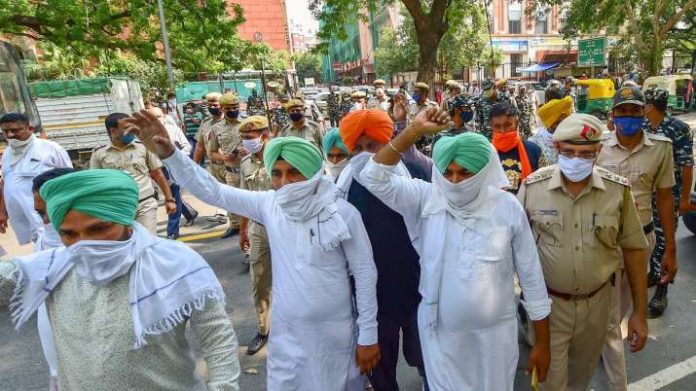
https://t.me/joinchat/J_0YrBa4IBSHdpuTfQO_sA

Follow us on Instagram and subscribe to our YouTube channel for more amazing legal content.

Download Now

Research and various methods of doing research

0

This article is written by Kedar Manoj Lakhe, pursuing Certificate Course in Introduction to Legal Drafting: Contracts, Petitions, Opinions & Articles from LawSikho.

Introduction


Since the arrival of the 20th century, the progress humans have made in the field of technology has enabled us to have a large amount of data and information available to us at our fingertips. We are currently in the year 2021, and the pace of our technological progress is not going to slow down in any way in the near future.  However, with this technological advancement and such vast availability of information and data there is a downside which is that such information and data cannot be taken as true and authentic at its face value which leads us to our main topic that is research. Research helps us to filter out the necessary information from the ocean of data and information. Research is a crucial factor in today’s world not just for people who work in the field of academics but also in other areas of employment. 

In this article, we will discuss various strategies of research which will help us on our quest to find the information and data which perfectly fits our needs. We will also look at various methods to do research and how to implement and use those methods. From Leonardo da Vinci to Darwin, research has helped mankind to progress, but the methods for research keep changing and keep evolving. This article will discuss the new and updated strategies which are useful in today’s modern world.

The basic understanding of research

The foremost and pivotal step is understanding the exact definition of research. If we put it for the layman, research is a process of finding new information or knowledge which can give birth to a completely new concept or help us understand any existing ideas. Even though research can be done by anyone belonging to any field of study, most of the research is done to gain knowledge about the physical, biological, and social worlds. The type of research in these areas can range from a variety of topics such as understanding certain materials or learning the different behaviors of people. Thus, research is a systematic analysis in which a conjecture is formed leading to the formation of apt research methods wherein the information is analyzed and results are summed up to reach one or more conclusions. 

Following are a few characteristics of good research

  1. Good research always follows a structured approach to gather the correct data. Researchers always have to follow a certain code of conduct and ethics while monitoring information and making appropriate conclusions. 
  2. The study of particular research is based on logical reasoning involving both inductive and deductive methods. 
  3. Real-time information is acquired from actual observation in natural settings. 
  4. There is a comprehensive analysis of all the information collected so that there are no abnormalities associated with it.
  5. Good research creates a way for creating new questions while the existing data helps to create more research opportunities. 

However, there are some well-approved research methods that have been proved to be effective in various types of research. There are two major types of research approaches that are most commonly used namely qualitative methods and quantitative methods. 

Let’s first understand the qualitative methods followed by quantitative methods. 

Qualitative methods

Qualitative research is an approach that involves the collection of data using interactive methods wherein the responses are non-numerical. This method helps the researcher to understand the behavior of the participants.

The types of qualitative methods

  1. Case study, 
  2. One-to-one interviews,
  3. Text analysis, 
  4. Focus groups, 
  5. Ethnographic studies.

Quantitative methods

The quantitative method uses a more methodical analysis of numerical data. This method involves getting answers to questions with measurable variables to predict, explain or control an event. 

The types of qualitative methods

  1. Correctional research, 
  2. Surveys, 
  3. Descriptive research. 

Correctional research method

There are three major types of correlational research methods as follows:

1. Positive correlation

Two variables are said to be in a positive relationship when an increase in one variable leads to an increase in another. Consequently, a decrease in one variable will lead to a reduction of the other. For instance, the amount of money a person might positively correlate with the number of houses a person owns. 

2. Negative correlation

Two variables are said to be in a negative relationship when an increase in one variable leads to a decrease in the other variable and vice versa.  For example, education and crime can be considered to be in a negative relationship since the improvement in the level of education can lead to a decrease in the crime rate in the country. 

3. No correlation

 In this third type, there is no correlation between the two variables. A change in one variable may not necessarily bring about a change in the other. For example, being financially secure and being happy are not correlated. An increase in money doesn’t necessarily lead to happiness. 

Surveys

Survey research methods are primarily based on two major factors: 

  • A survey research tool, and 
  • Time required to conduct particular research. 

There are three main survey research methods, differentiated on the basis of the medium of conducting surveys:

Face-to-face surveys

If there is a complicated problem to solve, research conducts thorough face-to-face interviews where the response rate is the highest. The downside of this method is its high cost. 

Telephonic surveys

This type of survey is conducted over the telephone and has proved to be useful in covering a large part of the target population. Two main disadvantages associated with this method are that the money invested in phone surveys is higher than the other methods and can be time-consuming. 

Online surveys 

Online or email surveys are one the most popular survey research methods in this era of the internet. Minimal cost and highly accurate responses are the two major benefits of this survey research method. 

Descriptive research methods

Following are the three distinctive methods to conduct descriptive research:

Observational method

This method is the most successful method to conduct descriptive research wherein the researchers make use of both quantitative and qualitative observations. A quantitative observation is meant by an unbiased collection of information, which primarily focuses on numbers and values. The results of quantitative observation are obtained using statistical and numerical analysis of the data. In other words, it can be inferred that the observation of any entity is associated with a numerical value such as age, shape, weight, etc. 

Qualitative observation doesn’t involve measurements but only involves monitoring the characteristics of the respondents from a distance. In this case, since the respondents are in their natural settings, the characteristics thus observed are natural and real-time data is acquired. For instance, in a supermarket, the researcher can observe the behavior and purchasing trends of the customers from a distance in order to gain insight into the purchasing 

Case study method

This method involved comprehensive research and analysis of the masses. A case study leads to postulation and broadens the scope of studying a particular phenomenon. However, the disadvantage associated with this method is that it cannot make accurate predictions as there is a possibility of the researcher’s bias being attached to it. Another disadvantage is that there could be an atypical respondent in the survey which can lead to weak generalisations and going away from external validity. 

Survey research

In this type of research method, participants answer through questionnaires or polls. This is one of the popular research tools to gather feedback from the participants. Thus, to gather the correct information the researcher should include the right survey questions which are a mix of open-ended and close-ended questions. The surveys can be conducted online, face-to-face, or over the telephone. 

Now, after understanding the types of research methods, let us shift our focus to the importance of research. As discussed earlier, the main purpose of research is to gather knowledge and information that act as evidence to specific theories which eventually help us in developing knowledge in a particular field of study.

Significance of research

Following are six major reasons why research is important:

  1. Research is a means to understand the underlying issues and increase public awareness.
  2. It is an effective method to gather knowledge and facilitate learning among the masses.
  3. Research is an important tool to succeed in any business.
  4. It helps to debunk the myths and lies and uncover the truth.
  5. Research promotes the confidence and liking for the art of reading, writing, studying, and sharing valuable information for the greater good.
  6. Last but not the least, research enables us to find, understand and seize opportunities.

Conclusion

Conclusively, we now understand the definition of research, the various types of research methods and their significance, and the importance of why we need to invest time in research. Thus, it is clear that research helps us to gain more knowledge and select only the necessary information from the vast amount of data available to us. 

References


Students of LawSikho courses regularly produce writing assignments and work on practical exercises as a part of their coursework and develop themselves in real-life practical skills.

LawSikho has created a telegram group for exchanging legal knowledge, referrals, and various opportunities. You can click on this link and join:

Follow us on Instagram and subscribe to our YouTube channel for more amazing legal content.


Download Now

Challenges in international commercial and investment arbitration

0

This article has been written by Akshay Shivshankar Petkar pursuing the Certificate Course in Arbitration: Strategy, Procedure and Drafting from LawSikho.

Introduction

The world is a huge marketplace and lots of companies and businesses in the world want to take advantage of this opportunity. But what happens when any disputes arise between the two international commercial businesses? Now here,  international commercial arbitration comes into the picture. It provides the opportunity for businesses of different countries to settle the dispute outside the court. The mechanism aims to reduce the time in settling disputes between the two commercial parties. Investment arbitration is very different from International Commercial arbitration. A procedural mechanism that allows an investor from one country to bring arbitral proceedings against the country in which it has invested. It is also known as Investor-State Dispute Settlement. The consent of host states to investment arbitration and the various international treaties like Bilateral Investment Treaties(BIT/s), as well as certain international trade treaties, play a very crucial role in arbitration.

International commercial arbitration

International commercial arbitration is the method that provides an alternate system of resolving disputes arising under international contracts. One of the best things in commercial arbitration is that it is more accessible and flexible for foreign investors. Generally, there are two type of arbitration: 

1) Institutional arbitration (governed by Institutional rule).

2) Ad-hoc arbitration (which is not governed by institutional rule and the parties have to set up their own rule). 

International commercial arbitration can be institutional or ad-hoc.  For international arbitration there are certain institutions that provide procedures: London Court of International Arbitration (LCIA), the International Chamber of Commerce (ICC), and the Singapore International Arbitration Centre (SIAC). It is very important for the parties that the disputes arising out of the legal relationship, and solution for the same must be included in the commercial contract and signed by the parties.

In India, the governing law in relation to the arbitration is Arbitration and Conciliation Act, 1996 and is based on UNCITRAL (The United Nations Commission on International Trade Law). The 1996 act is broadly divided into two-parts, Part I talks about Domestic Arbitration and applies to all arbitration that takes place in India, and Part II talks about International Commercial Arbitration. The definition for international commercial arbitration is given in Section 2(1)(f) of the act. 

The main objectives of international commercial arbitration are to provide an easy and accessible dispute resolution mechanism and to prevent them from the time-consuming court litigation procedure. 

International investment arbitration

In international investment arbitration, the role of a foreign state and the host state seems to be important and needs to be understood. The investor country (“home state”) invests in another country (“host state”) and is also known as the investor-state dispute settlement (ISDS) Investor court system. It is the system through which the investor can sue a host state for the protection of investment. ISDS is an instrument of Public International law and contains Bilateral Investment Treaty (BIT/s) under which the state has the right to protect investors from the contracting state. 

Bilateral Investment Treaties is the establishment of an agreement that includes the terms and conditions for private investment by nationals and for the companies of one state in another state. BIT/s also ensure certain rights and protection to investors from the other contracting state. The protection according to international law where both the contracting States agree upon also includes Fair and Equitable Treatment, National Treatment, Most Favoured Nation (MFN). So, any aspersion to the investor’s right in accordance with protection has a sufficient cause to initiate investment arbitration against the host state.  

Industrial arbitration

Industrial arbitration is the mechanism that provides for dispute resolution between the industrial employer and Union, union member, or union representative to prevent legal action from taking place and to cut off the cost arising out of it in the best possible way. Taking the issue to the court is often a time-consuming, lengthy, and costly process. Taking the issue to court and breaking down negotiations may cause harm to the management and labor in this case, industrial arbitration can play a certain key role and provide a better option in order to resolve the dispute. Industrial dispute mechanism has a capacity to reduce the chances of a strike and legal action for the benefit of both management and employee and it is often beneficial for the employee than the management because it allows them more bargaining power and prevents mass layoffs in a dispute.

“According to the Industrial Dispute Act,1947, Section 2(k), industrial disputes mean any dispute or difference between employers and employee or between workman or employer or between workman or workmen, which is connected with the employment or non-employment or with the condition of labor, or of any person”. 

Under the industrial dispute act there may two types of arbitration: 

  • Voluntary Arbitration

It is important that both the parties to the dispute mutually agree to refer the matter to a third party. According to Section 10-A of the Industrial Dispute Act,1947 if failure in the process of conciliation, then it is advised that parties opt for voluntary arbitration.

  • Compulsory Arbitration

If there is such a situation where a strike seriously affects the public interest between the parties to the dispute, then there are most probable chances to bring compulsory arbitration without the willingness of parties.

Difference between international commercial arbitration and investment arbitration;

Sr.

No.

Key points

International Commercial Arbitration

Investment Arbitration


Relevant Treaty 

New York convention: for recognition and enforcement of the foreign award.

The treaties provide a basic framework: Public International Law. 

2.

Role of National law

In ICA “Seat” governs the arbitration and supervisory jurisdiction stands with the National Courts of the seat.

National law is relevant only if the arbitration is not governed by the treaties such as ICSID, NAFTA, etc.

3. 

Jurisdiction

In ICA the disputes over jurisdiction are mostly related to the arbitration clause, consent, and signatories.

The jurisdictional disputes in investment arbitration are very vast. The consent in it arises under the treaty and the interpretation laid down for this is the Vienna convention.

4. 

Confidentiality

The principle of Confidentiality is the most important rule in the ICA.

In investment arbitration, the convention and BITs are silent about confidentiality.

5. 

Cooling off Period (see below the chart)

No such provisions are there in ICA.

It is provided in the agreement. (Mostly arbitration agreement provides 6 months)

6. 

Duration 

The award shall be made within the period of 12 months.

The average investment arbitration takes slightly over three years

7. 

Selection of arbitrators

In ICA parties may choose for the arbitral tribunal to be constituted of a sole arbitrator or three arbitrators

In investment arbitration, ICSID provides for a panel of arbitrators from which the parties may choose arbitrators of their choice.

8. 

Cost of arbitration

The cost for ICA depends upon the place of arbitration.

Investment arbitration has a very high cost as it includes individual cost, institutional cost, tribunal costs, and council cost.


  • Cooling off period: it is the period wherein the host state and investor-state are engaged in the negotiations to resolve the dispute. Generally, the cooling-off period starts from serving the notice of intent.

What are the different challenges faced by them?

Arbitration is one of the most suitable alternatives to court proceedings and that is why it is difficult to imagine a world without international arbitration. Every individual has the right to contract, the right to form a relationship with others, and recognition for the same has been considered as fundamental to a healthy society. The following are the challenges to the legitimacy of the arbitration:

  • Decision maker 

The one of main advantages and features/characteristics of international arbitration is that it provides rights to parties to choose the arbitrator of their choice but this feature is also criticized on the ground of the validity of an award issued by a privately appointed arbitrator. It is pertinent that whether the legitimacy of the arbitrator is in question but the parties appointed arbitrator has an important role to consider the evidence and arguments presented by the parties.

  • Conduct of council

In international arbitration, the representative councils are often from different countries and that varies from their diversity of background and legal culture and these cannot always guide by the same values and ethical principles. This lack of a binding uniform code and the global authority to enforce it make the regulation of council conduct raise challenges before the international arbitration. 

However, the guidelines invoked in 2013 by the international bar association and published on the party representation in international arbitration resulted in the LCIA making the relevant arbitration rules. This Included mandatory general guidelines for the party’s legal representative and gave a clear view of the ethical obligations of advocates in international arbitration.

  • The efficiency of proceedings

International arbitration is a very costly and slow process and this may be one of the backdrops of this mechanism, the survey in 2015 done by Queen Marry/white & case indicates the cost (68%), lack of insight into arbitrator’s efficiency (39%), and lack of speed (36%) were among the worst characteristics of international arbitration. However, one of the options suggested to increase the efficiency was the use of bifurcation and motion of summary judgment and to establish clear ground rules at the outset of the proceedings.

How do you think we can overcome the challenges?

  • It is necessary to adopt and enforce strong conflict rules, procedure control on the appointments of arbitrators so that the parties do not abuse the right to nominate arbitrators.
  • To increase the legitimacy and impartiality there must have been a rule of ethics to ensure that the act of arbitrators is diligent.
  • This can be also suggested that if the parties agreed to on the president of the tribunal first and then nominate the other two arbitrators this would be also helpful to increase the legitimacy of the decision-maker.
  • To avoid the unethical conduct of the council it is pertinent to introduce rules or guidelines to control the unethical conduct of the council.  

Conclusion

International arbitration is the ultimate option to resolve cross-border disputes speedily. However, there is also criticism faced by international arbitration from time to time, and this criticism is taken as a challenge to improve international arbitration potentially. And these changes make international arbitration successful in this particular area.

References

  1. https://www.international-arbitration-attorney.com/investment-arbitration/
  2. https://corporate.cyrilamarchandblogs.com/2019/05/international-investment-arbitrations-international-commercial-arbitrations-guide-differences/
  3. http://arbitrationblog.kluwerarbitration.com/2019/04/04/can-investment-arbitral-awards-be-enforced-in-india/
  4. https://viamediationcentre.org/readnews/NDQ5/Settlement-of-Industrial-dispute-through-Arbitration-and-Conciliation
  5. http://arbitrationblog.kluwerarbitration.com/2017/09/19/challenges-legitimacy-international-arbitration-report-29th-annual-ita-workshop/.

Students of Lawsikho courses regularly produce writing assignments and work on practical exercises as a part of their coursework and develop themselves in real-life practical skills.

LawSikho has created a telegram group for exchanging legal knowledge, referrals, and various opportunities. You can click on this link and join:

Follow us on Instagram and subscribe to our YouTube channel for more amazing legal content.

Download Now

Can recipes be copyrighted : all one needs to know

0

This article has been written by Vinit Bagdai pursuing the Diploma in Intellectual Property, Media, and Entertainment Laws from LawSikho.

Introduction 

First, let’s talk about the concept of copyright in general; copyright ownership gives the owner the exclusive right to use the work, with some exceptions. When a person creates an original work, fixed in a tangible medium, he or she automatically owns the copyright to the work. In India and everywhere in the world there is a lot of confusion out on the Internet about what one can take from someone’s recipe and what. This article will address different aspects of protecting your recipes, blog posts, and culinary discoveries. This article will address to you; whether your recipes are protected under copyright laws or not.

What copyright law protects?

Copyright law protects the original works of authorship that are fixed in a tangible medium of expression. Hence, the work made should be original, independently created by a human author, and it should hold at least some minimal degree of creativity involved and also be set in an adequately permanent form. Recipes generally meet most of these requirements. For example, they are usually “fixed in a tangible medium of expression” factored by being noted/documented in a cookbook or website or on a piece of paper. However, despite meeting the maximum requirements, recipes are frequently not protected by copyright.

Essential ingredients for copyright

Expression is a vital ingredient for copyright. The Supreme Court in the R G Anand case approved with the finding in an English case that:

“Copyright does not subsist in ideas or schemes or methods; it is restricted to their expression only…………”

There cannot be copyright in a recipe since it only lists ingredients and a method; similar to that of ideas, facts and history which cannot be copyrighted. Yes, if the recipe is summarized into writing, it may have a copyright as a literary work. But this copyright will encompass only so far as to protect the text of the written recipe and not the underlying dish itself or its method of preparation. So, if someone prepares a dish using the same cookbook’s recipe, the owner of the cookbook cannot claim copyright over a dish because copyright protects the cookbook not the dish itself. Literary, dramatic, musical and artistic works along with cinematography and sound recordings are the works in which copyright subsists and they are protected under Section 13 of the Copyright Act, 1957. While looking at the definitions of these works under section 2, it’s tough to imagine a work where a recipe i.e., method of preparation of food or drink, will be appropriate. So, keeping jurisprudence aside, our statute doesn’t have any room for entertaining the idea of a copyright in a food recipe. The same will apply in the case of a cocktail recipe.

Can you copyright your recipes?

Copyright does not protect the idea itself. So, the essence of a dish which is captured via a specific mixture of ingredients that creates the flavor, cannot be copyrighted under copyright laws. Any person is free to recreate the same flavor without any fear of infringing copyright. Just listing the ingredients or explaining the various phases of a recipe cannot be seen as adequate grounds for copyright, since they would simply be seen as facts. However, a unique expression of the recipe can be termed as a ‘literary work’ that falls within the scope of copyright protection. If you have a food recipe which is innovative and has a creative step in it and it is more than just a procedure of making a particular dish or product, then intellectual property will get protection under patents. Anyone can protect their recipe (or a book of recipes) to create ownership over it and have a date stamp on the same, then copyright is the way forward for the same. However, there are certain risks in filing a patent for a food recipe. If such a recipe is unique/creative, then you stand the danger of losing the same in mere 20 years, because once the patent expires, then the method will fall into public domain and anybody can use it without permission. That’s one of the reasons why some of the best know recipes for instance the recipe for Coca-Cola is not protected by a patent rather it is protected as a trade secret.

An interesting case with respect to the copyright in recipes

In recent time, a case was registered in the U.S., (Sugar Hero Vs. Food Network Copyright Infringement Case) in which Food Network was used for copyright infringement by an independent food blogger/entrepreneur. Upon examination of the IP Kat coverage of the issue including, the factual background supporting the claim becomes clear.

Facts of the case

Sugar Hero is a site run by blogger Elizabeth Labau. Through this site, she shares her creative, different, self-made recipes in different ways which includes videos, pictures, etc. This site is her key source of revenue, which is generated via advertisements and affiliate sales. It is also said to have gathered a lot of helpful attention for Ms. Labau – and making it a full-time pursuit. She regularly develops her site herself, so that she can contend with different competitors in the food-TV market. She created one recipe which was a snow globe cupcake recipe, which became super popular amongst everyone. Subsequently, she published a video on her Facebook page describing how to make them (For the uninitiated – a Facebook-style “how-to” video is somewhat similar to the snow-globe cupcake video and these over here. It comprises a quick overview of the ingredients to be used, and bit-by-bit demonstration of the recipe and the usage of the elements in the recipe – there was no verbal command in the video; only a tune was being played in the background. 

Later, a video was posted on the Food Network Facebook page which was similar; frame to frame copied from Elizabeth Labau’s Facebook page. When her appeals to be referenced in the video were overlooked, she brought the present suit. The plaintiff describes how the Food Network video had gained around 11,000,000 views – which could have gone instead to the plaintiff Facebook page, whose creative imprints were used in th

Law applied in the current case

Copyrights protect creative works of the author, and the two videos in this scenario would qualify as a creative work and they would be protected to a certain extent under copyright. Although, Section 102 of the Copyright Act (U.S. Law) mentions that copyrights do not safeguard “any idea, procedure, process, stem, method of operation, concept, principal, or discovery, regardless of the form in which it is described, explained, illustrated, or embodied such work.” Therefore, a ‘Snow Globe cupcake’ in this scenario will not get protection under copyright law.

Analysis

The inventions which are stated in Section 102 of the Copyright act mostly deal with subject matter for patents. In order to be qualified for a patent, the invention must be advantageous, innovative and non-obvious. Furthermore, in the U.S., an inventor has to file to patent within a period of 1 year from the date of first public disclosure or else the invention falls in public domain. In the snow globe cupcake scenario; most likely they were not patented. Thus, anyone could sell them, make or use them at their own discretion. Additionally, the copyright protection is going to be fairly very limited in Sugar Hero’s videos as the videos are generally completed in certain sequential steps and in a certain manner. Elizabeth Labau filed a copyright infringement lawsuit and seeks as much as $150,000 in damages. Food Network in this matter has not commented on the lawsuit, but the video is no longer available. Technically, one should avoid copying and pasting other’s videos on their social media platforms or at least give due credits to the original owner of the work.

Conclusion

So, to protect your recipe one can opt for a “Patent” to protect their recipe for a period of 20 years and then later the recipe will be in the public domain.  One can also go for “Copyright” protection for protecting the recipe (or a book of recipes) to establish ownership over it and have a date stamp on it. And lastly one can also opt for “Trade secret” to protect their recipes just like Coca- Cola, KFC and other big companies did. Also, if the Chefs choose to disclose these secrets, they ensure that they entered into confidential agreements and non – disclosure agreements with third parties. Also, for trade secret, one can include a non-compete clause in all your contractor or employment agreements, as well as asking them to sign a confidentiality agreement. With some prudence planning and by applying procedures before disclosing your valuable recipes, you can take important steps to evade the disaster of a lost or stolen recipe.

References 

  1. https://paleoflourish.com/recipe-copyright/
  2. https://copyrightalliance.org/are-recipes-cookbooks-protected-by-copyright/
  3. https://legalvision.com.au/i-run-a-recipe-blog-what-do-i-need-to-know-about-copyright-protection/
  4. https://www.quickcompany.in/articles/can-food-recipes-be-protected-under-the-indian-law
  5. https://spicyip.com/2017/06/sugar-hero-v-food-network-copyright-infringement-of-how-to-food-videos.html
  6. https://www.cobizmag.com/copyright-infringement-and-the-snow-globe-cupcake-wars/.

Students of Lawsikho courses regularly produce writing assignments and work on practical exercises as a part of their coursework and develop themselves in real-life practical skills.

LawSikho has created a telegram group for exchanging legal knowledge, referrals, and various opportunities. You can click on this link and join:

Follow us on Instagram and subscribe to our YouTube channel for more amazing legal content.

Download Now

Legal importance of a memorandum of understanding and its enforceability

0
Image source: https://rb.gy/iin8g1

This article is written by Daisy Jain, pursuing B.COM.LLB (Hons) from the Institute of Law, Nirma University. This is an exhaustive article which deals with the legal importance of the Memorandum of Understanding.

Introduction

A Memorandum of Understanding (MoU) is a consensus between two or more parties or it can be between two or more nations to enter into a contract. It is an agreement that is entered much before the parties enter into any future business agreement or arrangement. It is more of an understanding between the two parties wherein they have some mutual understanding points and they do not disclose or violate any of the terms mentioned in an MoU. It is a situation where nations arrive at a common parameter. When the parties arrive at a common consensus then they further indulge in negotiations and discussions and when these negotiations and discussions become successful then they finally enter into an agreement. An MoU is mostly found in international relations, but it is commonly used in business agreements.

Essentials of a valid Memorandum of Understanding

MoU is not legally enforceable in the court of law until the agreement is signed or ratified between the parties or two nations. In most scenarios, MoUs are legally not valid but in a situation where it fulfills all the three essentials of Section 10 of the Indian Contract Act, 1872, it is then said to be legally valid. As to determine the validity of a contract, we look at Section 10 of the Indian Contract Act, which determines the essentials of a valid contract, the same goes with an MoU. There are further some essentials that need to be complied with to make an MoU valid:

  • First and foremost, it is important to determine the intent of parties who need to enter into an agreement and there should be at least two parties to enter into an MoU. 
  • In an MoU, a specific date and time should be mentioned on which it is started and ended. 
  • There should be a clear understanding between the parties regarding the duties and responsibilities. All information regarding payment and finance should be defined clearly. 
  • It should be specified in the MoU about the clauses concerning the allocation of risks and dispute resolution as whenever a conflict of interest arises between parties or any legal injury happens to any one of the parties, it should be cleared in the MoU who will be liable for the loss. 
  • MoU should contain a clause which talks about the termination of an agreement wherein under certain circumstances, any of the parties’ courts terminate their agreement at a given point of time.

MoUs in Indian Law

As per Indian law, MoU is only enforceable in a court of law when it fulfills the provisions of the Indian Contract Act, 1872. To make it a valid agreement, the parties in an MoU should have a legally binding relationship to enter into an agreement. If all the conditions are fulfilled under Indian Contract Act then the parties have a right to make the other party specifically perform the contract under the Specific Relief Act, 1963, if the compensation is not quantifiable.

Are MoUs legally binding

In the case of Jyoti Brothers vs Shree Durga Mining Co., AIR 1956 Cal.280, the Calcutta High Court held that the Court will rely upon the degree to which such understanding is signed between the parties and whether any of them has acted in reliance on such understanding.

Additionally, the Supreme Court held in the well-known case of Jai Beverages Pvt. Ltd. v. State of Jammu and Kashmir and Ors, AIR 2006(4) SCJ 401, that an MoU can be regarded as a legally enforceable contract if it is in a formal way and the parties profit from functioning in compliance with the provision specified in the MoU.

We can determine the nature of an MoU through its clauses mentioned in the document whether it is legally valid or enforceable or not. If we want to make an MoU legally binding in the court of law, then the clauses such as Confidentiality and Dispute Resolution can be included to legally bind the parties in an agreement. These types of clauses create a legal obligation between the parties. If one of the parties breaches any of such clauses, then the suit can be filed against the defaulting parties in the court of law to make the agreement enforceable.

According to Indian law, a Memorandum of Understanding is not a legally binding agreement in a court of law, but to make it enforceable in a court of law, an agreement must consist of the elements of Section 10 of Indian Contract Act, 1872, which are – 

  • There should be an offer and acceptance in an MoU between the parties. 
  • Parties should have entered into an MoU with free consent. 
  • The parties need to be competent enough to enter into an MoU, that is, the parties should be above the age of 18 years, should be of sound mind, and should not be insolvent. 
  • MoU should include lawful consideration and lawful object, and lastly, in an MoU, the parties must have an intention to enter into a legally binding relationship.

Enforceability of MoUs

The ability to enforce a contract as opposed to a Memorandum of Understanding is the primary distinction between a contract and MoU. Contracts are formed when two or more parties consent to form a legally binding agreement that will be enforceable by law. Parties enter into an agreement after an offer has been accepted and consideration has been paid for the offer. Contracting parties are legally required to adhere to all of the terms and conditions of an agreement they enter into. If a contract’s term or condition is violated, the parties may face legal repercussions as a result of their actions.

Additionally, courts have the authority to rule that parties intended to make only certain parts of a Memorandum of Understanding legally enforceable. A recent decision by the Ontario Superior Court of Justice serves as an illustration of this concept. In Georgian Windpower Corporation et al v. Stelco Inc. (2013), the parties entered into a Memorandum of Understanding that was to last for two years. The agreement, on the other hand, was terminated by the defendant before the expiration of the two-year term. The plaintiff was awarded damages as a result of the wrongful termination of some, though not all, of the terms of the agreement by the defendant.

The structure or drafting of an MoU plays a crucial role. The use of such words would lead to the non-enforceability of a contract:

            Word

          Replacement

            Shall

            Maybe

            Would be

            Can be 

            Should be

            Might be

            Shall

            Can be

The inclusion of the clause of dispute resolution binds the parties in a contractual agreement to perform their legal obligations, and when a conflict of interest or dispute arises, this will lead to the resolution between the parties. It can be said that when the conditions of the Indian Contract Act are not fulfilled in the MoU then it cannot be made legally binding on the parties. But, through promissory estoppel and equity, an MoU can be made enforceable in the court of law and both parties will have a legal obligation to perform their part of the contract.

Important judgments related to MoUs

The enforceability depends upon both parties’ intention to enter into an agreement. The following cases are related to the enforceability of an MoU:

Jyoti Brothers v. Shree Durga Mining Co.

The High Court of Calcutta held in the case of Jyoti Brothers vs Shree Durga Mining Co., AIR 1956 Cal.280, that the Court will rely upon the degree to which such understanding is signed between the parties and whether any of them has acted in reliance on such understanding.

Jai Beverages Pvt. Ltd. v. State of Jammu and Kashmir and Ors. 

The Supreme Court of India held in Jai Beverages Pvt. Ltd. v. State of Jammu and Kashmir and Ors. [2006 (4) SCJ 401] that if the conditions of the Memorandum of Understanding are therefore complied with, the parties to the MoU will receive the profit resulting from the MoU. As stated above, it leads to the conclusion that the binding nature of a Memorandum of Understanding is dependent on the intention of the parties, the language used in the agreement, as well as the nature of the agreement. The conduct of the parties following the execution of the MoU is also a pertinent factor in determining the enforceability of the MoU.

M/s. Nanak Builders and Investors Pvt. Ltd. v Vinod Kumar Alag

The High Court of Delhi held in the case of M/s. Nanak Builders and Investors Pvt. Ltd. v Vinod Kumar Alag [AIR 1991 Del 315] that where the important significant conditions have been consented upon and reduced to written form, and the agreement so entered into does not cite that another legal agreement will be implemented, the agreement will not be considered an incomplete contract. The Court went on to say that the mere heading or title of a document would not be sufficient to determine its lawfulness. The validity of the agreement will be based on the nature and parts of the agreement.

Subimalchandra Chatterji vs. Radhanath Ray

According to the decision in the case of Subimalchandra Chatterji vs. Radhanath Ray [AIR 1934 Cal 235], a Memorandum of Understanding (MoU) can be enforced despite its deficiencies based on equity and promissory estoppel.

Brikram Kishore Parida v. Penudhar Jena

In the case of Brikram Kishore Parida v. Penudhar Jena (AIR 1976 Orissa 4), the court stated that the objective test for intent to establish legal relations is the most appropriate. If a prudent person would believe that the promisor intended to enter into a contract, then the promisor will be required to fulfill his or her obligations under the agreement. Consequently, caution must be exercised when drafting a Memorandum of Understanding, particularly when it comes to the language, titles, and clauses that are used. Clauses such as the indemnification clause, the relevant law clause, and the jurisdiction clause are legally enforceable on the parties to the agreement.

Conclusion

A Memorandum of Understanding (MoU) possesses unique authority based on the assertion that it serves as a substitute to a legally binding agreement to establish a legally binding relationship between the parties concerned. In the process of drafting the Memorandum of Understanding, it is essential to consider not only the parties’ communicated intentions, but also the clauses of the document, language, and title, as failure to do so would lead to a significant financial loss to the parties involved.

The intention and negotiations amongst the parties, as manifested in the terms of the MoU, are critical to the enforceability of the agreement. The validity and enforceability of a Memorandum of Understanding will differ depending on the components and purpose of the agreement entered into by the parties.

The question as to whether a Memorandum of Understanding is legally enforceable or not must be decided by the courts. As previously stated, an agreement will be binding if it satisfies the requirements of a valid contract, which include the existence of a valid offer, acceptance, the intention of the parties to be contractually obligated, and consideration, or if a party acts in reliance on an agreement. One of the most important aspects to take into account when determining the legality of a Memorandum of Understanding will be the intention of the parties at the time of its execution, which will be inferred from the terms and conditions of the Memorandum, as well as the parties’ conduct following the implementation of the Memorandum. Accordingly, the parties must act responsibly when drafting the clauses, titles, and language that will comprise the Memorandum of Understanding (MoU).

References


Students of Lawsikho courses regularly produce writing assignments and work on practical exercises as a part of their coursework and develop themselves in real-life practical skills.

LawSikho has created a telegram group for exchanging legal knowledge, referrals, and various opportunities. You can click on this link and join:

Follow us on Instagram and subscribe to our YouTube channel for more amazing legal content.

Download Now

Relation between bar and bench : a critique

0
Image Source: https://rb.gy/zbenzg

This article is written by Daisy Jain, pursuing B.COM.LLB (Hons) from the Institute of Law, Nirma University. This is an exhaustive article which deals with the relation between Bar and Bench: A Critique.

Introduction 

For the administration of Justice, the judicial system is composed of the judges and the advocates who assist the judiciary in dispensing justice through discharging their duties. The Bar and the Bench are two elements of the same system, and without them, justice cannot be efficiently administered in the courts. 

  1. Bar – Advocates are registered by the State Bar Council as such after receiving their degree of L.L.B from a university and receiving a specific amount of training under the supervision of an advocate as stipulated by the rules. The advocates are collectively referred to as the ‘Bar,’ and an advocate is designated as the representative of the Bar. For the most part, the term “Bar” refers to an association of attorneys who are licensed to practice in the courts, or a specific court, of any state.
  2. Bench – The term “bench” refers to all of the judges taken together, as opposed to the term “Bar,” which refers to all members of the legal profession. The term “bench” also refers to the key component of the court deemed in its official capacity while the judges are sitting. The term ‘Bar’ was originally used to refer to the part of the court that dealt with attorneys. However, the term is now used to refer to the part of the court that deals with judicial officers, which is known as the Bench.

The Bar and the Bench are considered as the two wheels of a chariot that play a role in administering the law. Both are subordinate to and interrelated to one another in their respective roles. In law, the term “Bar-Bench relationship” pertains to the friendly relationship that advocates have with judges. The Bar (advocates) and the Bench (judges) both play critical roles in the administration of justice. Maintaining cordial relations between the Bench and the Bar requires respect and understanding on both sides of the bench and bar.

Role of bar-bench in the administration of justice

The practice of law and the administration of justice is vitally important to each other. There is no other office in the state that possesses the same level of authority as that of the judge. Judges carry enormous power, far exceeding that of any other official in the government or military. The common people’s lives and liberty, individual domestic happiness, property, and public image are subordinate to the judges’ wisdom, and citizens are held accountable for their judgments. If judicial power is corrupted, there is no longer any assurance of life, liberty is forfeited, and there is no longer any guarantee of personal or domestic happiness. A strong judiciary that is active, unbiased, and competent is the most important thing a state can have. Judges must carry out their responsibilities due to the importance of judges in the maintenance of civil and orderly society. 

The administration of justice is not limited to the courtroom. It also has significance for the Bar. The preservation of cordial relations between the Bar and the Bench necessitates respect and understanding on both sides of the bar. The roles of attorneys and judges are supplementary to one another. The primary source of judges’ recruitment is the legal profession. As a result, they are both members of the same community. The Bar and bench need to sustain cordial relations with one another. However, because of the nature of the responsibilities that attorneys and judges must fulfill, they may engage in dialogues that are sometimes amusing, sometimes heated, and sometimes tough.

Bar-bench relations : an overview 

  • When it comes to democratic institutions, the independent judiciary is a pillar of stability, and the bar is the cornerstone of that stability. The Bench reflects the appearance, character, and behavior of the judges as the bench is considered to be a mother and a bright mirror for the judicial officers.
  • Those who practice law are just as much a part of the justice delivery system as the judges themselves, and it is the closest possible harmony between the Bar and the Bench that will produce the best results in accomplishing the targets embodied in our Constitution. The Bar and the Bench are two opposing sides of the same coin, as the saying goes. The administration of justice cannot be successful unless there is unity between the Bar and the Bench. Otherwise, the required outcomes to maintain the grandeur of the institution will not be achieved.
  • An advocate’s scandalizing of the court is truly despoiling the very foundations of justice, and such behavior by an advocate tends to bring dishonor to the entire administration of justice. The behavior of an advocate towards the court is always one of uniform reverence, regardless of the status of the court in which the case is being heard. The advocate’s personal view of the judge must not be shown in his conduct because he has a responsibility to maintain the respect of the judiciary as a professional organization. At the same time, it is the responsibility of the judiciary not only to be courteous to members of the Bar but also to do everything in their power to progress the high traditions of the profession.
  • Contempt of court can be imposed on a lawyer or a judge for their discourteous behavior or misbehavior. There are two types of contempt of court: civil contempt and criminal contempt. Consider the following examples: using derogatory language against an individual judge, harassing him with transfer or removal from office, casually addressing the judge, questioning his authority to ask questions, or making disgraceful accusations against an individual judge. It is considered to be contempt of court. He is responsible for his uncourteous behavior and may be prosecuted for contempt of court. 
  • The opinion about the Bar and Bench relationship has been laid down in the case of P.D. Gupta v. Ram Murthi and others(1997) in which the primary focus was on how the relationship between the Bar and the Bench affects the administration of justice.

Facts: Shri Kishan Dass passed away, leaving behind a large amount of immovable property. Several people made claims to the deceased’s property, including one Vidyawati, who claimed to be the deceased’s sister, one Ram Murti, and two other people who claimed to be the deceased’s heirs, among other things. Later, the advocate for Vidyawati bought the aforementioned properties, knowing full well that they were in dispute. In the following months, the attorney made a profit by selling the property to a third party. A grievance against the lawyer was filed with the Delhi Bar Council, which resulted in the attorney being suspended.

Held: Because the disciplinary committee of the Bar Council of Delhi was unable to resolve the complaint within a year, the hearings were relocated to the Bar Council of India under Section 36-B of the Advocates Act, which provides that the complaint must be resolved within one year. The Bar Council of India’s disciplinary committee put him on trial for professional misconduct and expelled him from practicing law for one year.

Role of the bar in strengthening the bar-bench relation

Advocates are court officers, and they are required to aid the court in the administration of justice on behalf of the court. Advocates gather resources relevant to the case to aid the court in reaching an (outcome) in the case. An advocate works in collaboration with the judiciary to ensure that justice is administered properly. Advocates, like judges, play a significant role in the administration of justice. An advocate has to practice the following steps to preserve and strengthen the relation between Bar and Bench:

  • They should show reverence to the judges and refrain from disparaging the judges or the judiciary in any way whatsoever.
  • They should assist the judges in the court hearing of the cases by conveying the relevant law accurately and understandably during the trial. They should never behave in a way that would displease the judges.
  • If the judges make a mistake in their decision, they should not be criticized. They should attempt to correct the error in the order by filing an appeal.
  • They should not exert stress or control on the judges to obtain a favorable order. An advocate should refrain from seeking to manipulate the verdict of the court through the use of illegal or inappropriate means.
  • If the judge’s conduct is annoying and disrespectful to the advocates, they should refrain from engaging in violent talks with the judge in question. The issue should be addressed with the judge in his chambers, and the Bar Association should make a formal request that such misbehavior not be repeated.
  • It is the responsibility of an advocate to make every effort to constrain and avert his or her client from engaging in unfair practices with the court.

Role of the bench in strengthening the bar-bench relation

A judge is a public official who hears and decides cases in the court of law, thereby resolving a legal dispute. Judges wield enormous power, far exceeding that of any other official in the government or military.  A judge has to practice the following steps to preserve and strengthen the relation between Bar and Bench:

  • In the same way that the advocates respect the judges, the judges should respect the advocates as well.
  • It is important for judges to approach the case with an open mind and to do so without bias or prejudice, as appropriate. They will act in a manner that is beneficial to the interests of justice. They will give the advocates sufficient time to present their case in its entirety.
  • Judges are expected to act in a fair and unbiased manner. They are not permitted to act in the interests of any prosecutor or party to the dispute.
  • When required, judges should refrain from interfering with the lawyer’s interviews of witnesses and presentation of the argument. A lawyer’s professional reputation may be harmed by undue intrusion and disparaging messages from the judges, and he may be unable to effectively present the case. In most cases, a judge’s intervention is confined to the following factors: avoiding reiteration and time-wasting, checking for pertinence, providing clarification, sharing an opinion of the courts on a particular point, and promoting the expeditious disposition of the case.
  • In the course of administering justice, the courts are frequently called upon to decipher the law’s rules, directives, regulations, codes, bylaws, circulars, notices, and other documents to determine the true significance of the statutes or to clear up confusion or incoherence in the legislation. In these instances, a proper explanation should be provided to provide full justice to the parties involved in the situation.
  • Adjournments are granted to allow the parties a reasonable amount of time to present their arguments. Cases will not be adjourned where possible unless there are reasonable and appropriate grounds to do so. Excessive postponement of cases, which causes the parties to suffer financial difficulties is the most common cause of mounting backlogs in the court system.
  • The case of ‘justice deferred is justice denied’ will also be resolved as soon as possible as well. When older cases are given priority over new cases, new cases should not fall behind in their disposition.
  • Judges should refrain from making unjustified public remarks about a lawyer’s lack of legal insight in open court. They should not ask any lawyer to leave the trial unless they have a compelling reason to do so. Likewise, they should not request that any advocate not appear in his or her court in the future.
  • Judges will have a thorough understanding of the law. They should be able to apply the appropriate legislation to the evidence available and come to the best possible conclusion on the matter.
  • The foremost duty of ensuring and preserving judicial independence relies upon the judges who preside over the courts.
  • A judge’s moral responsibility and honesty should be unquestionable. He should be treated with respect, both personally and intellectually. There should be something to commend about the character and the action.
  • This entails a lot of hard work and extensive research done on a regular and comprehensive basis. A judge’s knowledge should be kept up to date with the most recent advancements and transformations in legislation by continuously reviewing it.
  • Briefings of judges and advocates are scheduled at regular intervals to strengthen the relationship between the Bar and the Bench. During these sessions, the problems of the opposing sides can be discussed, and the differences can be resolved through discussion.

Suggestions on the relation between bar and bench

In the administration of justice, the Bar and the Bench play a vital role in being the two most important organs; they share a common duty in ensuring that justice is administered properly and effectively. Given the fact that both are national assets of our nation, they must therefore coordinate and work cooperatively with one another, as well as stay cautious together, in order to safeguard judicial independence. 

A reputed and unbiased judiciary, as well as a powerful bar, are required to maintain the system of democracy and independence under the rule of law in the country. Furthermore, the lawyers must have the impression that they were given a fair court hearing and that their issues would be addressed by an unbiased and credible attorney, among other things.

It is critical for the productive discharge of the court’s duties that the high level of optimism, prestige, and dignity that they have admired throughout their careers be sustained and not weakened in any manner. Whether it is judges or lawyers, they bear the main duty of administering and maintaining the public’s trust in the courts.

Conclusion 

An ordinary citizen has faith and confidence in the country’s judicial system. It is the responsibility of both the Bench and the Bar to uphold and strengthen the rule of law through their dedication and behavior. To ensure the independence of the bar, an independent judiciary must be in place, which can be used to defend that independence if required. One of the most effective methods of guaranteeing judges’ independence is to have a responsible, well-behaved, sophisticated, and learned Bar. In the end, the mutual adjustment of behavior by the Bench and the Bar is the cornerstone of the polished operation of courts in the overall interest of society.

References 


Students of Lawsikho courses regularly produce writing assignments and work on practical exercises as a part of their coursework and develop themselves in real-life practical skills.

LawSikho has created a telegram group for exchanging legal knowledge, referrals, and various opportunities. You can click on this link and join:

Follow us on Instagram and subscribe to our YouTube channel for more amazing legal content.

Download Now
logo
FREE & ONLINE 3-Day Bootcamp (LIVE only) on

How Can Experienced Professionals Become Independent Directors

calender
28th, 29th Mar, 2026, 2 - 5pm (IST) &
30th Mar, 2026, 7 - 10pm (IST).
Bootcamp starting in
Days
HRS
MIN
SEC
Abhyuday AgarwalCOO & CO-Founder, LawSikho

Register now

Abhyuday AgarwalCOO & CO-Founder, LawSikho