Download Now
Home Blog Page 517

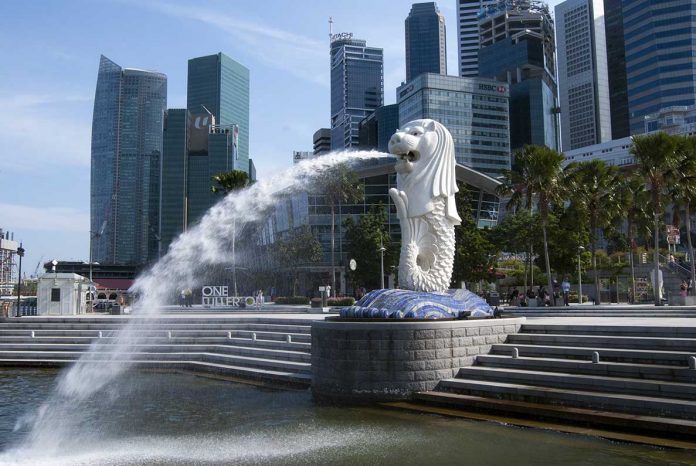
Competition Law regime in Singapore

0
Image Source: https://rb.gy/6fmcls

This article is written by Nikhil Shinde pursuing Certificate Course in Competition Law, Practice And Enforcement from LawSikho.

Introduction

For any company or person desiring to do business in Singapore, it is important to beware of the Competition Law that rules all non-states businesses and economic activities in the nation. The Competition Law in Singapore is known as Competition Act 2004, the law has been effective since 1st July 2007. It promotes efficient markets at home.

The main purpose of the Act

This Act prohibits anti-competitive agreements, abuses of a dominant position, and control mergers and acquisitions which create an appreciable adverse effect to the market.

Voluntary merger control regime where there is no strict legal obligation in Singapore for merging parties to notify their merger CCCS. It should be noted that it is not the lack of a notification, but rather the implementation of a merger that contravenes the Section 54 Prohibition, that CCCS is concerned with. On this, a contravention occurs if the merger leads to an SLC. An SLC is indicated when indicative thresholds are crossed.

Exemption of vertical agreements means any agreement entered into between 2 or more undertakings each of which operates, for the purposes of the agreement, at a different level of the production or distribution chain, and relating to the conditions under which the parties may purchase, sell or resell certain goods or services and includes provisions contained in such agreements which relate to the assignment to the buyer or use by the buyer of intellectual property rights, provided that those provisions do not constitute the primary object of the agreement and are directly related to the use, sale or resale of goods or services by the buyer or its customers.

Sector-Specific competition rules, i.e., sector working for specific activity e.g., the supply of rail services by any person licensed and regulated under the Rapid Transit Systems Act.

Competition and Consumer Commission of Singapore (CCCS) administers and enforces the competition law. It’s a statutory body that investigates and adjudicates instances of violations of the Act done by participants in the market. CCCS also has powers to impose sanctions that include;

  1. Pecuniary financial penalties,
  2. Enforcing misbehaving companies to make structural changes,
  3. Demanding the termination of any agreement or conduct that CCCS thinks will harm competition.

Applicability of the Act

The Competition Act 2004, is applicable to the;

  • Private businesses of the market,
  • Broadly identified as commencing that involves self-employed professionals,
  • Corporate bodies,
  • Unincorporated body of persons or
  • Any other entity capable of holding commercial or economic activities in any of the markets of the nation.

Key provisions of the Act

The Competition Act is the primary statute that governs competition law in Singapore and aims to protect consumers and businesses from anti-competitive practices in Singapore. It prohibits three types of anti-competitive conduct:

  1. Agreements, decisions, and practices which are anti-competitive.
  2. A dominant position that is abusive; and
  3. Mergers and acquisitions considerably reduce competition.

Schedule III (Exclusion from S. 34 Prohibition & S. 47 Prohibition) of the Act, does not apply to certain specific sectors, where the exercise of competition law is governed by sectoral regulations. These include areas such as;

  • Broadcasting and media,
  • The telecom sector,
  • Electricity and gas sectors,
  • The auxiliary police,
  • The supply of wastewater management services,
  • The provision of public transport,
  • The provision of cargo terminal operations,
  • The operation of clearinghouses and the postal service.

Section 34 Prohibition : anti-competitive agreements

The Competition Act, Section 34 forbids agreements between undertakings, decisions by associations of undertakings or concerted practices which have as their object or effect the prevention, restriction or distortion of competition within Singapore. Examples of such prohibited behaviour include but are not limited to;

  • Price fixing directly or indirectly,
  • Bid-rigging (collusive tendering),
  • Sharing markets,
  • Controlling or limiting production or investment,
  • Exchanging price information,
  • Advertisement restriction,
  • Design standards or setting technical, etc.

The Competition and Consumer Commission of Singapore (“CCCS”) in its guidance explains that the first four types of agreements are considered serious infringements of the Competition Act and are, by their very nature, regarded as restrictive of competition to an appreciable extent.

Other types of agreements will be examined on their facts and if found to be restrictive of competition by object, will similarly be regarded as restrictive of competition to an appreciable extent. However, vertical agreements, which are agreements between undertakings at different levels of the production or distribution chain, are excluded from the Section 34 prohibition.

Market share is a central factor in considering whether the Competition Act has been breached and the CCCS has issued guidance that an agreement is unlikely to have an appreciable adverse effect on competition if:

  • The comprehensive market share of the parties to the agreement does not surpass 20% in any of the markets affected (where the agreement is between competitors);
  • The market share of each of the parties does not surpass 25% in any of the markets affected (where the agreement is between non-competitors);
  • Or each undertaking is a small or medium-sized enterprise (“SME”).

Section 47 Prohibition : abuses of dominance

The Competition Act prohibits conduct that constitutes an abuse of a dominant position in a market, including conduct that protects, enhances, or perpetuates the dominant position of an undertaking in ways unrelated to competitive merit. Examples of such conduct include, but are not limited to;

  • Predatory pricing (such as selling below cost),
  • Limiting markets, production or technical development to the prejudice of consumers,
  • Vertical restraints between companies at different levels of the distribution or production chain,
  • Refusals to supply or make essential facilities available to competitors,
  • Price discrimination or applying unlike conditions to parallel to transactions with other trading parties,
  • Thereby placing them at a competitive disadvantage,
  • Making the wrap-up of contracts subject to acceptance by the other parties of ancillary obligations, which by their nature or according to commercial usage, have no connection with the subject of the contracts, etc.

Section 47 prohibition only prohibits abuses of a dominant position but does not prohibit dominance itself. Business undertakings will not be penalized solely because they have a dominant position or attempt to achieve it. A dominating position retained via conduct arising from efficiencies, such as through successful innovation or economies of scale, will not be regarded as an abuse of dominance. Note, however, that mergers or acquisitions that substantially reduce competition may be subject to Section 54 of the Competition Act.

This may in some circumstances prevent a merger which leads to the creation of a dominant undertaking. The CCCS applies a two-step test to levy whether the section 47 prohibition has been breached;

  1. Whether an undertaking is dominant and,
  2. Whether it is abusing its dominant position in the Singapore market.

Under the CCCS’s guidance, what amounts to a “dominant position” is determined by a number of factors, including;

  • Whether the entity can profitably sustain prices above competitive levels or,
  • Restrict output or,
  • Duality below competitive levels.

While market share is not a reliable guide, a market share greater than 60% will generally be considered dominant in that market. Section 47 prohibition also extends to the conduct of two or more undertakings, where there is an abuse of a joint dominant position.

A joint dominant position may arise when two or more legally free undertakings present themselves or act together on a particular market as a joint entity.

Section 54 Prohibition (Merger Control)

Section 54 prohibits mergers that would result, or are expected to result, in a substantial reduction of competition within any market in Singapore for goods and services.

In determining whether a merger is anti-competitive, the CCCS will assess whether the merger leads to a substantial lessening of competition. For example,

  • If the merger results in an increase in prices above the prevailing level,
  • Lower quality, and/or less choice of products and services for consumers – will be considered an anticompetitive merger and infringing upon the Competition Act.

While there are no mandatory merger control requirements in Singapore, it is advisable to notify the CCCS if either:

  • The merged entity will have a market share of 40% or more; or
  • The merged entity will have a market share of between 20% and 40% and the post-merger combined market share of the three largest firms is 70% or more.

The above thresholds are only indicators of potential competition concerns and do not automatically give rise to a presumption that such a merger will lessen competition substantially. Merger parties must conduct a self-assessment to establish if their merger may give rise to a substantial reduction of competition within any market affecting Singapore, in which case the CCCS should be notified of the merger.

A party to an anticipated merger can notify the CCCS of the merger and apply for the CCCS to make a decision as to whether the proposed merger would be in breach of the Competition Act.

Similarly, a party to a completed merger can also notify the CCCS of the merger and apply for a decision to be made as to whether any infringement under the Competition Act has occurred.

The above indicative thresholds do not differentiate between transactions with and without horizontal increments.

In addition, the CCCS is unlikely to investigate a merger involving small companies, i.e., where:

  • The turnover in Singapore of each of the parties is below S$5 million (approx. US$3.73 million); and
  • The combined worldwide turnover of the parties is less than S$50 million (approx. US$37.33 million).

Sanctions

The CCCS has the power to issue directions to bring infringements of the Competition Act to an end. It may also impose financial penalties on undertakings for infringing the Competition Act. CCCS may impose a penalty of up to 10% of the turnover of the business commencing in Singapore for each year of infringement, up to a maximum of 3 years.

Factors consider while imposing financial penalties are:

  • The nature, duration, and seriousness of the infringement,
  • The turnover of the business of the undertaking in Singapore for the relevant product and geographic markets affected by the infringement,
  • Condition of markets,
  • Aggravating factors including the existence of any prior anti-competitive practices and behaviour of the infringing party, and
  • Mitigating factors, which contain the existence of any compliance programme and the extent to which the infringing party has co-operated with CCCS.

Directions are issued in writing by the CCCS and will typically require the person concerned, individuals and undertakings, to modify or cease the agreement or conduct in question.

Extraterritorial effect

The Competition Act applies to anticompetitive conduct outside Singapore if they have the effect of restricting or eliminating competition in Singapore. Section 54 prohibition on merger control also applies to foreign mergers if such mergers result in a substantial lessening of competition in Singapore.

Enforcement regime

The Competition and Consumer Commission Singapore (“CCCS”) enforces the Competition Act. The parties may appeal to the Competition Appeal Board if the CCCS has made an infringement. This board is an independent body, where members are appointed by the Minister for Trade and Industry.

Competition Appeal Board, the decision may be appealed further to the High Court, and thereafter to the Court of Appeal, but only for the financial penalty and points of law.

In appropriate cases, parties under investigation for infringing the Competition Act may also offer commitments to reduce or eliminate competition concerns relating to their conduct. Where the CCCS accepts such commitments, it will cease its investigation on the condition that parties agree to abide by the commitments.

Leniency

The Competition Act does not cover express provisions in respect of a leniency policy. However, Section 61 of the Competition Act provides that the CCCS can publish guidelines indicating the manners in which the CCCS will give effect to the provisions of the Competition Act.

The CCCS leniency programme is only available for certain infringements of the section 34 prohibition, such as for hard-core cartels (i.e., cartels involving price-fixing, output limitation, bid-rigging, and market sharing) and the sharing of forward-looking price information.

As of January 2021, the leniency programme has led to the issuance of infringement decisions and the impositions of financial penalties in nine out of 16 of the CCCS’s cartel infringement decisions. This amounts to more than 50% of cartel infringement decisions.

Investigation powers

The CCCS has broad and extensive powers of investigation and enforcement. Powers include;

  • The power to enter into premises for inspection (with or without a warrant),
  • Undertake dawn raids,
  • Require to produce precise documents and information (including emails) and,
  • Demand explanations of documents from directors, employees, or parent company managers.

The CCCS can make copies and extracts from documents on-premises that are entered without a warrant. If the CCCS enters premises with a court warrant, they can also seize original documents. Failure to cooperate with a CCCS investigation is a Criminal Offence.

Recent enforcement trends

Cartels

Between January 1, 2006, when the Section 34 prohibition came into effect, and January 31, 2021, 16 cartel and bid-rigging infringement decisions have been issued by the CCCS. Of the 16 cartel and bid-rigging infringement decisions issued by the CCCS to date, three involved international cartels.

Penalties imposed by the CCCS, (from January 1, 2006 to January 2021);

Cartel & Bid-Rigging Case

        Fines ($ Million)

Cartel & Bid-Rigging Case

Fines($

Million)

Fresh Chicken Distributors Cartel

26.95

Bid-Rigging for Maintenance Service for Swimming Pools and Water Features

0.41

Capacitor Manufacturers Cartel

19.55

Modelling Agencies Cartel

0.36

Ball and Roller Bearings Cartel

9.31

Ferry Operators Cartel

0.29

Freight Forwarders Cartel

7.15

Pest Control Operators Cartel

0.26

Express Bus Operators Cartel

1.70

Electric Works Cartel

0.19

Hotel Operators Cartel

1.52

Motor Vehicle Traders Cartel

0.18

Financial Advisers Cartel

0.91

Employment Agencies Cartel

0.15

Electrical Services and Asset Tagging Services Cartel        

0.63

Bid-Rigging for Building, Construction, and maintenance services for Wildlife Reserves Singapore

0.03

Abuses of dominance

As of January 2021, abuse of a dominant position by SISTIC is the only case issued on infringement decision (in June 2010) in respect of a violation of the section 47 prohibition since the provision took effect on January 1, 2006. The SISTIC case related to explicit restrictions requiring two venues and 17 event promoters to use SISTIC, Singapore’s largest ticketing agency, as the sole ticketing service provider for all their events.

The financial penalty imposed was approximately S$1 million (approx. US$0.75 million). Following an appeal by SISTIC, the Competition Appeal Board upheld the CCCS’s decision on liability in 2012 but varied the quantum of SISTIC’s financial penalty to S$769,000 (approx. US$574,000).

The CCCS has also issued media releases on several investigations relating to abuses of dominance. Notably, the CCCS has closed its investigations in six cases following voluntary commitments to remove exclusive arrangements and/or commitments to supply, including by Cord Life Group, Asia Pacific Breweries, E M Services, BNF Engineering, C&W Services Operations, Coca-Cola Singapore Beverages, Chevalier Singapore Holdings, and Fujitec Singapore.

Mergers and acquisitions

Since the start of the merger control regime in 2007, the CCCS has received 83 merger notifications as of February 2021, of which six progressed to a Phase 2 review for complex mergers.

Four were granted conditional clearance subject to commitments while six were withdrawn by the merger parties, and the remainder were cleared in CCCS’s Phase 1 review.

The most notable merger decision issued by the CCCS is the infringement decision in relation to the sale of Uber’s Southeast Asian business to Grab, which was not notified to the CCCS and which resulted in remedies and fines of S$6.5 million (approx. US$4.85 million) imposed on Uber and of an equivalent amount imposed on Grab.  To date, this is the first and only CCCS decision relating to a failure to notify a merger.

  • Following the completion of the transaction, the CCCS commenced an investigation on the basis that the transaction may have infringed the Competition Act as an anticompetitive merger.
  • The CCCS found that Uber would not have left Singapore in absence of the transaction and observed that Grab increased its prices post-transaction.
  • Further, the CCCS found that potential competitors were hampered by strong network effects and exclusivities between Grab and taxi companies, car rental partners, and some of its drivers which prevented competitors from competing effectively against Grab.

In January 2021, the Competition Appeal Board upheld the CCCS decision, noting that the country’s voluntary merger control regime does not mean that there are no risks to proceeding with a merger without notifying the CCCS.

Conclusion

Competition policy of Singapore with its mix of the invisible hand of the markets and the visible hand of good governance which has served Singapore well in past decades of economic development and growth. It was possible due to careful management of government’s intervention in markets, the mixing of competition considerations in other public policies, and thoughtful recognition of the limits of competition.

The difficulties in many markets cannot be settled without government involvement or supervision, and government policies must take into account market principles and competition-changing aspects.

Non-legal consequences of unfavourable decisions of CCCS may have similarly damaging effects on a business, including negative publicity, change of management time in dealing with an investigation, costs of employing industry consultants, and an increased risk of ongoing observation by authorities. CCCS is progressively proactive, businesses should be aware of the Act’s provisions and take sufficient steps to safeguard compliance.


Students of Lawsikho courses regularly produce writing assignments and work on practical exercises as a part of their coursework and develop themselves in real-life practical skills.

LawSikho has created a telegram group for exchanging legal knowledge, referrals, and various opportunities. You can click on this link and join:

Follow us on Instagram and subscribe to our YouTube channel for more amazing legal content.

Download Now

How an SPAC pill boosted Talkspace Inc’s immunity to reach Nasdaq

0
Image source: https://rb.gy/pwao5j

This article is written by Krati Agarwal, pursuing a Diploma in M&A, Institutional Finance, and Investment Laws (PE and VC transactions) from Lawsikho.

Introduction

Singapore Stock Exchange is going through its worst dry spell, with only 3 IPOs listings made this year. It resolves to revive liquidity in the market by its recent unveiling of SPAC Rules. The promising Special Purpose Acquisition Companies (SPACs) are tried and tested portions around the world by small companies to go public. SPACs, whose only function is to acquire another private company for a particular purpose, i.e., listing them in the stock exchange and making them public, are shell companies in a real sense and essentially act as a vehicle for them. Recently, Talkspace Inc. made news for being the only virtual behavioural health company to be traded publicly. This was made possible with the help of the SPAC merger. This article intends to throw light on the deal, the merger agreement entered between the parties, the deal’s aftermaths, and takeaways. 

The companies and the deal

  • About Talkspace Inc

Talkspace Inc is a New York-based 2012 company intended to reduce hesitancy in seeking mental health therapies. It hosts multiple licensed therapists specialising in behavioural issues and is available virtually. This makes access to mental health care easy as people can send their therapists their problems, voice texts, and images anytime, sitting anywhere. This start-up boomed immediately and saw tremendous success during the pandemic, as mental health was severely affected during the harsh quarantine period. As of 2021, more than 22 million have used Talkspace to resolve their issues. 

  • About Hudson Executive Investment Corp. 

Hudson Executive Investment Corp is the SPAC which is formed by Hudson Executive Capital LP, a leading firm in investing in New York-based companies focussing majorly on real-estate, healthcare, industrial, retail, and media sectors. This company, being a SPAC, was exclusively formed to merge with an entity and to list on Nasdaq. It raised around $414 million by June 2020 IPO on Nasdaq. 

  • The deal

The information was made public in January 2021 by Hudson Executive Investment Corp. about the definitive merger agreement entered by them with Talkspace Inc. After taking shareholders’ approval, the deal with Talkspace Inc. was closed in June 2021. The value of the transaction is $414 million of cash and a $25 million forward purchase from Hudson Executive Capital. An additional $25 million is committed by Hudson Executive Capital to backstop redemptions. The transaction is further supported by an oversubscribed $300 million fully committed PIPE at $10.00 per share. The company started trading publicly on Nasdaq with the name “TALK” in June 2021. 

The definitive merger agreement

The definitive merger agreement was entered between the following parties:

  1. Hudson Executive Investment Corp.
  2. Tailwind Merger Sub I (a wholly-owned subsidiary of Hudson Executive Investment),
  3. Tailwind Merger Sub II (another wholly-owned subsidiary of Hudson Executive Investment),
  4. GROOP Internet Platforms Inc. (Talkspace).

As per the merger agreement, the parties entered into a business combination to close the deal. The business combination stipulated that Talkspace will enter into a merger with Tailwind Merger Sub I. Talkspace would be the surviving entity in the merger, and then this surviving entity will further merge with Tailwind Merger Sub II, thereby making Tailwind Merger Sub II  the surviving entity. After the merger, all the stocks, common and preferential along with vested rights in common stock existing in Talkspace, will be canceled in exchange for the stock of Hudson Executive Investment Corp., at par value, or a combination of shares and cash. 

The merger agreement also provided for customary representations and warranties and their termination upon closing. The transaction was contingent on the conditions such as approval by Hudson Executive Corp’s stockholders; termination of the waiting period under the amended Hart-Scott-Rodino Antitrust Improvements Act of 1976; no order, statute, rule, or regulation enjoining or prohibiting the consummation of the transactions being in force; Hudson Executive Corp. having at least $5,000,001 of net tangible assets as of the closing date; receipt of approval for listing on the Nasdaq Capital Market of the shares of HEC Common Stock; etc. This agreement could be terminated any time before the closing by mutual consent of both the parties or by either of them if the transaction was not consummated before 30 July 2021, or if the Government issued an order or taken any other action that is final that permanently enjoins or prohibits this merger or in the event of certain uncured breaches by the other party, and by Talkspace if, at the special meeting, the transactions and the other acquirer stockholder matters shall fail to be approved by requisite holders of Hudson Executive Corp’s outstanding shares.

Journey to Nasdaq

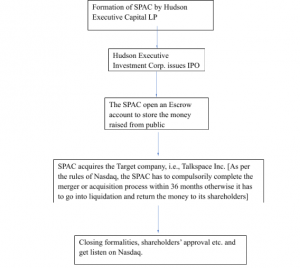
All the conditions as stipulated in the merger agreement were fulfilled, and upon closing, certain other contracts such as registration rights agreement, subscription agreement, etc. were entered. The journey to Nasdaq can be summarised as:

Aftermath and takeaway from the deal

If we assume a scenario where Talkspace decides to go public on its own through IPO, it will take at least two years for it to complete the whole process. Moreover, the business activity of Talkspace may not be attractive to the general public as there is still a lot of stigmas around mental health and behavioural issues. There may be a lack of popularity for this crucial innovation. Eventually, the company won’t be able to raise the desired sum of money. However, the path of SPAC has made Talkspace immune from all these difficulties. It has made the process easier as there are only a few regulations which the SPAC has to comply with to go public, the company can become public faster, it has been provided the appropriate recognition by experts of SPAC, which the public wouldn’t have. This merger offers Talkspace a better deal and gives it’s business better reach and popularity among the public. This is primarily because of the curiosity SPACs carry with them. The primary takeaways from this deal are the significant role SPAC plays in the current market. They can be summarised as:

 1. Higher price to the founders

When the company goes for the process of IPO, the unit is priced such that the share price jumps at a large value on the day of listing. This results in founders parting away with the share of the company at a lesser price than its worth. But in the case of SPAC, the founders have a more significant say at a price and can negotiate a fairer deal with the sponsors. 

2. Offers expert recognised innovation

Many start-ups today are technical and complicated. The founders might find it difficult to market their products/services to the general public because the public lacks awareness. However, when the deal is to be made with a SPAC, the panel of experts recognise and identify the technical innovation by the entrepreneurs. This offers them acceptance and helps raise public awareness, as the public is always attracted to a SPAC.

3. Time

This is a much faster process than a traditional IPO. It can be completed in 4-5 months, while an IPO takes at least two years.

4. Regulations

The regulations on a SPAC merger or acquisition are much lesser than the ones in an IPO.

5. Sense of security

 As per the regulations of the stock exchange, if the SPAC fails to acquire a company, they have to mandatorily go into liquidation. This offers a sense of security to the shareholders that their money is safe and secure.

6. Sponsor’s profit

Sponsors are always at the receiving end of money in these cases. They usually take up a minimal stake in the SPAC and earn a lot of money through IPO. Even if the deal turns out to be wrong and the SPAC has to go into liquidation, they have earned enough to stay on the safe side.

Conclusion

The successful deal between Talkspace and Hudson Executive Investment Inc reminds us of all of the new advancements made in the trading sector. And this is just the beginning of SPAC culture. As of 2021, Nasdaq has recorded 548 SPACs from the year 2010. This number will see a massive rise in the coming years. With the SPAC’s vehicle’s advantages, many innovative & out-of-the-box ideas will get better visibility and public support. Singapore Stock Exchange is the recent addition to the frenzy over SPACs and aims to increase liquidity in the market through this route. This does not mean that the traditional IPO will lose its significance in the market. It is and will remain the favourite choice among many companies. 

SPAC pills will not always make one immune. There are many risks attached to SPACs as well, one of such is that many celebrities act as sponsors to these companies and attract substantial public attention and money. These companies may not be a good investment but will still attract money because of the name attached to it. However, this is not a very good investment trend. SPAC serves as an efficient route for many young companies with limited credentials to launch themselves at a bigger stage; however, due diligence and caveats have to be maintained by the Buyer/public when following this trend.

References


Students of LawSikho courses regularly produce writing assignments and work on practical exercises as a part of their coursework and develop themselves in real-life practical skills.

LawSikho has created a telegram group for exchanging legal knowledge, referrals, and various opportunities. You can click on this link and join:

Follow us on Instagram and subscribe to our YouTube channel for more amazing legal content.

Download Now

Notifiable diseases related to global and Indian laws

0

This article is written by Swetalika Das from Amity University, Kolkata. This is an exhaustive article which talks about notifiable diseases and the laws related to them.

Introduction 

Have you ever noticed how the Government health authorities get information about the COVID-19 waves? How do we get such accurate information about the pandemic even before its commencement? Ever wondered about the reason behind this? As the heading already suggests, the article deals with notified diseases. The term ‘notified disease’ refers to a disease that is dangerous to the health of society and that requires an action by law by notifying about the disease to the Government health authorities, who further monitor the disease and provide warnings to the society before the pandemic. Any failure to report a notifiable disease would lead to a criminal offence and be liable for necessary actions.

If the law is playing a necessary role in notifying diseases to the Government authorities then it is important to know more about the exact laws that are related to notified diseases both globally and nationally. Therefore, the article provides a brief insight into the Indian and global laws related to notified diseases.

History of notifiable diseases

Historically, the world has experienced around 20 deleterious pandemics. Numerous pandemics have happened in history but there were no proper laws to protect the affected people. Back in the fourteenth century, the first law for quarantine was started but proper laws were only enacted in the year 1710 in Britain, due to the outbreak of the disease plague which affected millions of people. However, in the 19th century, broad quarantine laws were enacted. The outbreak of the second pandemic of cholera had made the British Government enforce a proper statute on the public health laws, that is, the Public Health Act 1848. This Act put an obligation upon the public health care authorities to examine infectious diseases like cholera and to observe the illness of their local community. 

After the enforcement of laws related to quarantine, the British government enacted the Infectious Diseases (Notification) Act 1889 to notify about the infectious diseases that can severely harm the health of the community. The provisions were made compulsory throughout the country by 1899. The provisions allowed members of the family or the head of the family or the medical staff or officers to notify the Government about the infectious diseases. 

Some examples of notifiable diseases:

  • Bacterial Diseases such as cholera.
  • Diseases spread by contact such as hepatitis. 
  • Diseases spread through the gastrointestinal route. 
  • Sexually transmitted diseases (STDs) such as HIV. 
  • Disease caused by Viruses such as COVID-19.

Global laws on notifiable diseases

The International Health Regulations, 2005 

Earlier, the International Health Regulations were confined only to the prevention of small diseases such as smallpox, cholera, etc. The provisions were re-examined after the continuous spread of the highly contagious Influenza virus; commonly known as “the flu” that attacks the respiratory system of a person. The new International Health Regulations were established that imposes obligations on all the countries. Countries have to provide a report of any infectious disease that can affect people globally to the World Health Organisation (WHO). They are required to perform a clear survey of every case that can affect public health. After a proper investigation and examination of the diseases, the countries would notify WHO. 

The International Health Regulations,2005 allows the Federal Governments such as Australia, India, Canada, and the US to make proper surveys and investigations at both the state and national levels. Earlier, the Federal Governments were self-governing states, which meant the responsibilities related to Public health matters were only upon the states and not upon the national government. However, the regulations in 2005 made a significant change after acknowledging the consequences faced by the world due to the influenza virus. 

Canada 

In case of any emergencies, the country has its statutes like Emergency Act, 2007 and Emergency Act, 1988 for security measures and management. As Canada is a Federal Government, most of the public health issues are managed within the state level. The states have their provisions to control and provide safety measures in case of an outbreak. Therefore, the state government mostly handles the public health issues with some coordination from the Central Governmentovernment. There are a few statutes are related to public health matters and notifiable diseases, which are as follows:

The Public Health Agency of Canada Act, 2006 

The Public health agency of Canada handles the matters related to the prevention and control of highly infectious and chronic diseases and plays an important role in providing support to public health emergencies. The provisions of the Act primarily deal with the general provisions, regulations, duties, functions, and obligations upon the public health officers. However, Section 12(1) states that the chief public health officer has to submit an annual report within six months after the end of each fiscal year to the state minister of public health in Canada. The report must explain the status of public health in Canada. Similarly, in sub-section (3), the Chief Public Health Officer may need to make a report on public health whenever any issue arises. 

The Quarantine Act, 2005

The purpose of this Act is to protect public health and to take preventive measures for the spreading of infectious diseases. The Act also mentions the facilities provided by the Government in quarantine situations. Furthermore, the Act imposes certain obligations upon the travellers during the Quarantine.

United States (US)

The Public Health Services Act 1944 primarily deals with and controls the public health issues in the United States. It creates an Administrative framework to regulate the public health issues and allow some supplemental public health personnel. Regarding the notifiable diseases, Section 312(244) allows the medical professionals along with the local emergency medical system to notify any case of dangerous disease. The Act was last amended in the year 2019.

Australia

The National health security Act, 2007 along with the National Security Health Regulations, 2008 provides a beneficial effect to the World Health Organisation (WHO). Section 11 of the Act has issued a list of notifiable diseases in Australia under the National health security Act (National Notifiable Disease List) Instrument 2018

Section 13 of the Act contains the provision for notifiable diseases. It states that the public health authorities must share information and notifications regarding the National health events and listed notifiable diseases. These regulations provide the best facilities in the public health department to regulate and manage the public healthcare sectors. It also ensures effective management and determines the capacity of the authorities to report or notify about the listed diseases quickly to the Central Government. 

Australia also has some other organizations and committees for this public health purpose, such as the National health protection committee, the Communicable diseases committee and the Public Health Laboratory Network. These committees help and manage during pandemics or epidemics. To manage the quarantine situations, the Quarantine Act 1908 lays down the meaning of quarantine and the responsibilities of the people during the quarantine, and the punishment if anyone fails to follow the law.

Indian statutes dealing with notifiable diseases

Generally speaking, various laws in India manage the public health dimensions. However, certain statutes are significant for infectious diseases that must be notified to the Government authority. The following statutes are:

Food Safety and Standards Act, 2006

The government has established the Food Safety and Standards Authority in India to allow the authorities to perform their duties as mentioned in the Act. The name of the Act already defines the purpose behind its establishment. When it comes to food safety, the most common and serious disease related to it is ‘Food Poisoning’ and hence, it is a notifiable disease. Section 35 of the Act allows all medical practitioners to notify the cases of food positioning to the food authority. Such food safety officers shall be appointed by the Commissioner of Food Safety after properly examining their qualifications and capabilities to perform their respective tasks. 

The Lepers Act, 1898

Section 2(1) of the Lepers Act,1989 defines the word “leper” as the person who is suffering from any kind of leprosy. Leprosy is a notifiable disease in India and for this purpose, the Government of India has enacted a separate statute to deal with leprosy. The provisions of the statute would be applicable after the Government receives the notification of the disease. The Government has also made several facilities and arrangements like leper asylums for the treatment of affected people. 

The Epidemic Diseases Act, 1897

As we have already seen the consequences of the COVID 19 pandemic we can easily assume the situation without any preventive safety measures and provisions to control a pandemic. Therefore, it’s necessary to have a specific statute for the notifiable diseases that can cause a pandemic or epidemic. For this reason, the Government of India has enacted a separate statute for the epidemic situations. The provisions of the Act are for the special occasions when the Government finds the other public health legislations insufficient to control or prevent the dangerous epidemic disease. If any person or authority is found to violate any provision of the Act then he would be punishable under section 188 of the Indian Penal Code, 1860 with an imprisonment of 3 months which can be extended up to five years, and a fine of Rs.50,000 which can be extended up to Rs.1,00,000.

National AIDS control and prevention policy, 2002

In India, AIDS disease is a notifiable disease as it is highly contagious and difficult to prevent. To prevent this disease, proper safety measures are required to follow. The Government had established the National AIDS control and prevention policy in the year 2002 for safety purposes and to control the spread of this infectious disease.

Epidemic Act in light of the COVID-19 situation

In the COVID-19 situation, the Indian Government observed the need for the Epidemic Act to control the spread of the disease. However, they further observed that the provisions of the Epidemic Act were outdated. Therefore, in solution to this, the Government implemented the Epidemic diseases (Amendment) Ordinance 2020 that will allow the provisions of the Epidemic Act to prevent the spread of the disease. The Ordinance amends the Epidemic Act to provide protection and powers to the Central Government to control from spreading of the COVID-19. Some of the important provisions of the Ordinance are:

  • The Ordinance defines health care personnel as a person who carries out their duties by putting themselves at risk of contracting a dangerous disease that resulted in the epidemic. The health care personnel includes doctors, nurses, any person who has power under the Act to control the epidemic diseases and other persons appointed by the state government. 

The Ordinance also defines “an act of violence” against health care personnel which means:

  1. any kind of harassment that impacts their life or work.
  2. Harm, injury, hurt to their life.
  3. Loss or damage to their property or documents. The properties in this Act include clinical establishment, mobile medical unit, quarantine facility and other properties related to the health care personnel and the epidemic.
  • The Ordinance further states the powers of the Central Government that includes regulation of activities by any person who is intending to travel by bus, train, ship, vehicle, aircraft, or port during the epidemic situation.
  • The Ordinance provided the required punishment for the above-mentioned acts caused by any person, which is imprisonment for a minimum term of three years and a maximum of five years, and a fine of minimum ranging between Rs 50,000 and Rs 2 lakhs. If any action has caused grievous hurt to the healthcare personnel, the term of imprisonment can be increased up to seven years and the fine can be increased up to Rs 5 lakhs.
  • In case of damage or loss to property, the person is liable under the Ordinance to provide compensation to the healthcare personnel. The compensation would be two times the market value of the property. In case the person cannot provide the compensation, it would be managed under the Revenue Recovery Act, 1980.
  • The Ordinance allows for investigation of such offences and the same should be completed within 30 days from the date of F.I.R.
  • The trial under the Ordinance has a very limited time. It should be completed within one year. If in case the trial gets delayed then the Judge must provide the relevant reasons for the delay to receive an extension for the trial. However, the extension of the time limit of the trial should not be more than six months

Conclusion

To sum up the above submissions we can say that the provision of noticeable diseases plays an important role in identifying the spread of dangerous diseases and the risk associated with public health. The early detection of notifiable diseases is what makes the Central Government take further preventive steps towards the control and spread of these diseases, and also to take safety measures in the form of providing medical facilities to the affected people and their families. Based on the statutes described above, it can reasonably be concluded that law has played an indispensable role in regulating the activities related to public health issues including notifiable diseases. The various laws of different countries state not only about notifiable diseases but also about the punishments for failing to follow the regulations. This shows that the provisions of notifiable diseases are being taken seriously by the government, both nationally and globally. 

References


LawSikho has created a telegram group for exchanging legal knowledge, referrals, and various opportunities. You can click on this link and join:
Follow us on Instagram and subscribe to our YouTube channel for more amazing legal content.

Download Now

What is the difference between insider trading and front running

0

This article is written by Varchaswa Dubey from the School of Law, JECRC University, Jaipur. This article distinguishes insider trading from front running. Furthermore, the article also reflects the effects of insider trading and front-running. 

Introduction 

Insider trading refers to the mala fide practice where the trade of a company’s securities is misused by the individuals who already have access to the company, and such access is not usually available to those who are not a part of the company.

Front-running on the other hand, which is sometimes also called tailgating, refers to the trade of stock or any other asset of the company by an individual who already has inside knowledge of the transactions of the company, which shall affect the price of the asset, and this knowledge being brought or sold to clients will affect the price of an asset. 

Understanding insider trading 

There is no established definition of insider trading however it is referred to as “any buying or selling of a security in breach of a fiduciary duty or other relationship of trust and confidence, based on material, nonpublic information about the security.” 

The offence of insider trading is also not reserved in the Indian Penal Code, 1860, but Securities and Exchange Board of India (Prohibition of Insider Trading) Regulations, 2015 defines an insider as any person who is connected, or possesses or have access to any unpublished price sensitive information, while trading refers to the subscribing, buying, selling, dealing, or agreeing to subscribe, to buy, sell, or deal in any securities of a company. 

The Securities and Exchange Board of India in its regulations states that no person who is an insider shall communicate, provide, or allow, or access to any unpublished price, or any sensitive information, concerning the company or securities listed to any person including the other insider of the company except when such communication is made in furtherance of legitimate purposes, the performance of duties or discharge of the legal obligation. 

Origins of insider trading 

The concept of insider trading is not new for the corporate sector however, in India, the practice of insider trading is relatively new compared to other nations. After recognizing insider trading as an unlawful act, the first attempt to eliminate insider trading was undertaken by the Company Law Committee, 1952. The recommendations of the 1952 committee can be reflected by Section 307 and Section 308 in the Companies Act, 1956. Later, the Sachar Committee, 1978, a high powered expert committee on Companies Act, and the Monopolies and restrictive Trade practices Act, 1969, which not only considered Section 307 and Section 308 of Companies Act, 1956 but also recommended that there shall be full disclosure of the transactions by persons who have made any price sensitive information and prohibition of transactions by any such individuals. The Patel Committee, 1984 highlighted the absence of legislation concerning insider trading in India and also recommended penalties for insider trading. 

Effects of insider trading 

  • Effects on the market: insider trading discourages the interest of the investors and the faith of individuals in the investment business as the investors face loss in the business due to the advantage being taken by inside traders, leading to market inefficiency. 
  • Effects on the company: the company where insider trading has been caught not only loses its reputation in the market based on which most of the investors invest their money in the company, but also insider trading leads to huge losses to the company.

Meaning of front running 

Front-running is the trade of stocks or any other financial asset by an employee who has the particular knowledge of any transaction which will take place in the future and such transaction affects the price. E.g. a broken being an insider of the company gets to know that an investor is about to buy 5000 shares of the company which will increase the price of the stocks of the company, and the broker himself buys 1000 shares in the company, then such events shall be referred to as front running. 

Front-running has been explicitly reflected in Regulation 4 (2)(q) of SEBI (Prohibition of Fraudulent and Unfair Trade Practices relating to Securities Market) Regulations, 2003, which states that “an intermediary buying or selling securities in advance of a substantial client order or whereby a future or option position is taken about an impending transaction in the same or related futures or options contract.”

The concept of front-running is very similar to insider trading as in both of them, an insider is involved, however, in front-running, the insider takes advantage of the information he/she has regarding any future transaction and such person uses such information for personal gains. 

The existence of front-running has always been suspected in the Indian markets, with rumours of front-running in the stock markets, by inside traders and brokers before the actual trade happens. However, there are no conclusive proofs of the origin of front running in India.

Types of front-running 

The Supreme Court of India, in the case of Shri Anandkumar Baldevbhai Patel v. Sebi (2019), highlighted three types of front-running present. 

  • Trading by third parties who gets a tip about any future transaction which is about to take place.
  • Owner or purchaser of trade himself engaged in the future trade in the offsetting of future transactions.
  • Transactions where an intermediary knows some trades ahead of that order for the intermediary’s gain. 

Effects of front running 

The practice of front running not only gives an extra profit to the insiders of the company but also affects the market price of the shares. 

  • Front running increases the chances of inter-dealer order. 
  • Dealers of stocks who practice front-running have chances of making a high profit. 
  • Front-running eventually slows down the process of the company, which later affects the decisions of investors and dealers of the company. 
  • Front-running also reduces the costs of the liquidity of the company.
  • Front-running also affects the welfare of the company, its dealers, and investors. The investors earn fewer profits because their profits are affected by front-running, and this eventually affects the company as its investors are reduced.  
  • Front-running reduces the risks dealers face when trading ahead of customers. 

Difference between insider trading and front running

There lies a thin line of difference between insider trading and front running, however, the abuse of market factor is common among both, which is usually done by a person who possesses the inside knowledge which is usually not available to a person who is not a member of the organization. 

In India, there are no such laws that differentiate insider trading from front running or vice versa, instead, the laws treat both types of offences as almost the same. The SEBI on the other hand has provided a little difference between insider trading and front running, however, SEBI also most of the time deals with the cases of front running according to the SEBI (Prohibition of Fraudulent and Unfair Trade Practices relating to Securities Market) Regulations, 2003.

The only major difference between insider trading and front running is that insider trading is construed to have taken place when a person trades in the securities of a listed company while in possession of unpublished price-sensitive information. 

In front running, the information possessed by an individual is misused for personal purposes and there exists a breach of duty on the part of the person who was responsible for keeping honest trade, however, in case of insider trading, the unpublished price sensitive information  (UPSI) is exploited for personal gains. 

Meaning of unpublished price sensitive information 

According to SEBI, unpublished price sensitive information means any information which is related to the following matters or is of concern, directly or indirectly, to a company, and is not generally known or published by such company” for general information, but which if published or known, is likely to materially affect the price of securities of that company in the market:

  • Financial results (both half-yearly and annual) of the company.
  • Intended declaration of dividend (both interim/final).
  • Issue of shares by way of public rights, bonuses, etc. 
  • Any major expansion plans or execution of new projects.
  • Amalgamations, mergers, and takeovers.
  • Disposal of the whole or substantially the whole of the undertaking.
  • Such other information which may affect the earnings of the company.

The HDFC AMC front running case 

The case was concerned with Sections 11(1), Section 11(4)(d), and Section 11B of the Securities and Exchange Board of India Act, 1992 in the matter of front-running of trades of HDFC Asset Management Company Limited by ‘Sanghvi group’ and ‘Kalpana group’.

In the year 2007, the SEBI unearthed numerous circumstances of front-running by a dealer of HDFC Asset Management Company (AMC). According to SEBI, in its order dated November 2019 and July 2020, the total unlawful gain achieved through front running was rupees 1.52 crore and rupees 2.86 crores respectively. 

new legal draft

Later, the SEBI imposed a penalty on the concerned entities associated with front-running and also enacted strict rules regarding the traders of mutual funds and other such institutes, to curb the flow of insider information regarding the upcoming trade of the company. The SEBI also made a settlement with the HDFC AMC and imposed a fine of Rs 2 crore on 4 entities in the HDFC AMC front-running case. 

Role of SEBI regarding insider trading and front running 

The SEBI in its Securities and Exchange Board of India Act, 1992 provides rules and regulations concerning the protection of interests of investors in securities and to promote the development, regulation, securities market, bestowed the 1992 Act which also established SEBI. The 1992 Act, under Section 12A, reserves the prohibition of insider trading and prohibits any sale or purchase regarding the sale or purchase of any securities, or defrauds any securities, or undertakes any practice, business which operates as fraud, or engages in insider trading, etc.

The SEBI is a statutory body that is also the primary authority concerned with insider trading as most of the events are related to insider trading. 

The powers of SEBI are reflected in the SEBI Act, 1992 in its Section 11, which includes the prohibition of insider trading in Section 11(2)(g) of the said Act. Section 15G of the SEBI Act also reserves the punishment for insider trading which shall not be less than ten lakh rupees but which may extend to twenty-five crore rupees or three times the amount of profits made out of insider trading, whichever is higher. 

SEBI can also initiate any criminal proceedings concerning front-running in any company under Section 11 of the SEBI Act.

Conclusion 

Insider trading and front-running, both have serious effects on the company, its investors, and the overall value of the company. Such malpractices shall be eliminated, protecting the interest of all the concerned persons in a company. With the increase in the use of technology, not only new laws concerning insider trading and front-running should be introduced, but also modern technology should be used. 

The use of technology will not only lead to a permanent record of shares and stock traders but also will prevent any trading which may otherwise affect the value of the company, however, to establish a system completely based on technology, it is also necessary to supervise those who are assigned with the task of recording the transactions. Therefore, SEBI must not only regularly cross-check the transactions of an institution but also the laws shall be enforced more stringently so that the interest of investors and faith of people in trading remains protected. 

References 


LawSikho has created a telegram group for exchanging legal knowledge, referrals, and various opportunities. You can click on this link and join:

Follow us on Instagram and subscribe to our YouTube channel for more amazing legal content.

Download Now

Legal inside the ring but not outside : can Sushil Kumar be tried under MCOCA

0

This article has been written by Prabal Srivastava, pursuing a Certificate Course in Advanced Criminal Litigation & Trial Advocacy from LawSikho

Introduction 

Recently, Sushil Kumar, the two-time Olympic medalist, was accused in a murder case by a Delhi sessions court. The wrestler, along with his associates, has been charged under various provisions of the Indian Penal Code, 1860, and the Arms Act, 1959. However, upon further investigation by the police, it was discovered that the Olympian had been involved in numerous criminal activities for the past several years. As per the records, he had been in constant touch with the gangsters from various parts of the country, including the Delhi NCR region. In light of such a discovery, whether or not the Maharashtra Control of Organised Crime Act, 1999 (hereinafter referred to as “MCOCA” or the “Act”) should be invoked, is a debatable question. However, the ongoing investigation and the accused’s antecedents have failed to prove him guilty under the said legislation. The aim of this research work is to analyse the factual circumstances of the present incident along with the essential ingredients required to prosecute a person under the MCOCA. Further, the author concludes by asserting the reasoning behind the less likely invocation of the legislation in the present facts and circumstances.

Factual background

As reported, Sagar Rana (hereinafter referred to as the “deceased”), a former Junior National Wrestling Champion, along with his few friends (including Sonu Mahal and Amit Kumar), was living in a rented house owned by the accused near Chhatrasal Stadium in Delhi. The accused instructed the tenants to vacate the residential area over non-payment of rent, the refusal of which led to a heated altercation between them. 

On the night of 4th May 2021, the accused, accompanied by a group of twenty men armed with hockey sticks, batons, and baseball bats, brutally attacked the trio, consisting of the deceased and his two above-mentioned friends. Soon after the incident, the victims were admitted to Babu Jagjivan Ram Memorial Hospital (BJRM), Delhi. Later, Sagar Rana succumbed to the grievous head injury which he received during the altercation. The other two victims underwent treatment and survived. One of the victims, Sonu Mahal, narrated the entire incident in an exclusive interview, and his statements were corroborated by CCTV footage, in which Sushil Kumar could be spotted as the perpetrator of the offences committed.

Consequently, the police lodged an FIR against the accused under Sections 302 (murder), 308 (culpable homicide not amounting to murder), 365 (kidnapping), 323 (voluntarily causing hurt), 325 (voluntarily causing grievous hurt), 341 (wrongful restraint), 506 (criminal intimidation), 188 (disobeying order of public servant), 269 (public negligence), 120B (criminal conspiracy), and 34 (common intention) of the Indian Penal Code, 1860 and under Section 25 (punishment for various offences) of the Arms Act, 1959. The accused kept moving across various States like Delhi, Punjab, Haryana, and Uttar Pradesh to evade arrest but was finally arrested in Mundka near the Delhi-Haryana border. Previously the accused had applied for an anticipatory bail application before the Rohini Court in Delhi but was rejected on the merits of the case.

While hearing the application for anticipatory bail, the Additional Sessions Judge, Jagdish Kumar observed, “the allegations against the accused are serious in nature. From the perusal of the record of investigation so far, it reveals that prima facie the accused is the main conspirator.”

The accused was initially remanded to judicial custody for a period of fourteen days, which was extended to another fourteen days. Currently, he has been detained at the Tihar jail in New Delhi however, there has been a substantial delay in filing of charge sheet against the accused and the police authorities are planning to invoke MCOCA against him.

Sushil Kumar likely to grapple MCOCA essentials

MCOCA, as the name suggests is a State law that was legislated to combat the growing menace of ‘organised crime’ and terrorist activities by organised crime syndicates within the State of Maharashtra. However, the rising threat of similar offences was also observed in the northern parts of the country. Hence, the Ministry of Home Affairs, using its power envisaged under Section 2 of Union Territories (Laws) Act, 1950, (extended the territorial jurisdiction of MCOCA to the National Capital Territory of Delhi vide notification dated 2nd January 2002, which received Presidential assent. The specialty of MCOCA is that in certain cases it is seen to have an overriding effect against the central legislation. On the perplexity of being a deterrent, certain prerequisites unlike the traditional law need to be fulfilled to prosecute any person under MCOCA. The following requirements have been mandated by the law as well as through judicial pronouncements over time:

1. Commission of an organised crime

The term ‘organised crime’ has been defined under the act as the commission of any unlawful activity that was premeditated, calculated, deliberate, and systematic either by any member of the organised crime syndicate or carried out on behalf of the syndicate by illegal means such as threat, violence, coercion, or any other unlawful means to gain money or any other benefits for himself or any other prompting insurgency. Essentially, the said term deals with illegal monetary gains from offences such as extortion, smuggling in contrabands, contract killings, illegal trade in narcotics, kidnapping for ransom, money laundering, etc. 

2. Continuing unlawful activity

For any offence to fall within the ambit of ‘continuing unlawful activity’, it must ensure that the offence committed is a cognizable offence whose punishment is not less than three years as per penal law. In 2016, Sushil Kumar was accused of spiking one of his fellow mates named Narsingh’s food for which the victim faced a suspension for four years. However, the investigation acquitted the accused from all the charges.

3. Member of an organised crime syndicate 

A group of people who indulge in the commission of similar nature to criminal activities can fall under the purview of the term ‘Syndicate’. Generally, the term is alternatively used with ‘gang’. The United Nations Convention Against Transnational Organized Crime defines it as a group of three or more persons who for pecuniary or monetary benefits have been committing serious offences. However, by virtue of section 2(1)(f) of MCOCA, a minimum of two or more persons acting individually or collectively, as a syndicate or a gang and indulging in activities that would lead to the commission of organised crime. In the said case, upon investigation, it was also discovered that the international wrestler shared a friendly relationship with some dreaded criminals like Neeraj Bawana and Kala Jathedi since 2018 whereby he used to enter into contractual deals for properties and shared the profits equally among all. It is also pertinent to note that these criminals have also been charged under MCOCA. However, all these antecedents have never been reported.

Analysis

The genesis and the development of the entire statute revolve around the above-mentioned prerequisites. If proven, the accused shall be sentenced to punishment beyond the traditional penal law provisions i.e. a death punishment or imprisonment for life. Depending upon the facts and circumstances of the case and investigation so far, Sushil Kumar may not be tried under the MCOCA. It is evident that the accused has fallen under the jurisdictional extent of the state legislation. Further, the sources claim that he has a criminal record, and has been involved with criminals like Neeraj Bawana and Kala Jathedi. 

This shows that he has been involved in frivolous activities in his past and used to work together for economic benefits. But all these factors do not necessarily constitute charges under the MCOCA as the filing of a charge sheet is both a mandate and a prerequisite. The judicial system has laid special attention on the filing of two charge sheets for which the cognizance should have been taken by the competent court is not met. The Honorable Supreme Court in Brijesh Kumar v State NCT of Delhi strictly emphasized that this legislation also mandates the filing of two charge sheets within ten years from the time of this legislation enforcement as a condition precedent. The mere filing of a charge sheet in itself is not sufficient to make any person liable under MCOCA. According to such filing of charge sheets, the cognizance must have been taken by the special court codified under the law. Further, either the offences committed should be ejusdem generis (of the same nature/kind) or there should be a direct nexus between the two offences committed.

To prosecute any person under MCOCA, by the virtue of provisions and case law repactuliated above, is mandatory compliance to fulfill the prerequisites. If this does not comply with it shall lead to vitiating the procedure established by law which further may lead to an acquittal. 

Similarly, in Chenna Boyanna Krishna Yadav v State of Maharashtra, The court focused upon the commission of the offences and the filing of the charge sheet. It was held that with no clear nexus between the accused and the MCOCA offences, he will not be held accountable for the offence he was charged under, and so the bail that was previously denied was granted.  

MCOCA is one of the most stringent laws in the country. Charging a person under it without fulfilling all the conditions precedent may violate his fundamental rights envisaged under the Indian Constitution. To date, there is not even an iota of evidence to prove Sushil Kumar’s guilt under MCOCA. There have been several cases in the past where the accused has been lucky to escape MCOCA due to lack of proof and fulfillment of essential ingredients as discussed above.

Conclusion

Without a doubt, offenders involved in organised crimes should be subjected to stringent provisions as per MCOCA. However, as explained above, the accused cannot be charged under the Act for the commission of organized crimes mainly on the ground that there was no charge sheet filed against the accused during the time period as prescribed by law, eventually, no cognizance was taken by the competent court thereafter. It is truly heartbreaking to see that a world-class wrestling champion and Rajiv Gandhi Khel Ratna’s legatee are now under police custody. For an athlete, factors such as wealth, fame, power, etc. all play a vital role in boosting his morale and his acceptance in society. It is a major setback not only for his fans across the world but for the sport too. 

Though MCOCA is less likely to be invoked against the accused, his future certainly is adversely affected as Indian Railways exercised its power under Rule 5(2) of Discipline and Appeal) Rules, 1968 and fired him from the post of a Serial Manager of Northern Indian Railways till further orders. Sushil Kumar’s troubles may not end there either. With the Wrestling Federation of India (WFI) set to drop off his annual contract and representing India in the Olympics again a far-fetched dream his fans can only sigh and wonder what could have been. 

Note: This article was written on 24th July 2021. However, the charge sheet has been filed against the accused under provisions of the Indian Penal Code, 1860 dated 3rd August, 2021.

References

  • Phitugxpkg, ‘THIS CAUSED SAGAR RANA’S DEATH, REVEALED IN POSTMORTEM REPORT’ (Sportsdailyindianet, 25 May 2021) <https://sports.dailyindia.net/sports-news-english/this-caused-sagar-ranas-death-revealed-in-postmortem-report/> accessed 16 July 2021 
  • Biji Ahuja, N. and Bhatia, N., 2021. Sushil Kumar’s road to perdition. [online] The Week. Available at: <https://www.theweek.in/theweek/sports/2021/06/03/sushil-kumars-road-to-perdition.html> [Accessed 24 July 2021].
  • A., 2021. Chhatrasal Stadium murder case: Wrestler Sushil Kumar suspended by Railways. [online] ANI News. Available at: <https://www.aninews.in/news/national/general-news/chhatrasal-stadium-murder-case-wrestler-sushil-kumar-suspended-by-railways20210525153131/> [Accessed 24 July 2021].
  • Release, P., 2021. Wrestlers Sushil Kumar, Pooja Dhanda set to be left out of WFI’s central contracts: Report. [online] Scroll.in. Available at: <https://scroll.in/field/995774/wrestlers-sushil-kumar-pooja-dhanda-set-to-be-left-out-of-wfis-central-contracts-report> [Accessed 24 July 2021].
  • Gokhale, N., 2021. Gokhale, Nishant — “Criminal Liability for Match-Fixing” [2009] NUJSLawRw 17; (2009) 2(2) NUJS Law Review 319. [online] Liiofindia.org. Available at: <http://www.liiofindia.org/cgi-bin/disp.pl/in/journals/NUJSLawRw/2009/17.html?
  • Biswas, S., 2021. Sushil Kumar: The Indian Olympic legend accused of murder. [online] BBC News. Available at: <https://www.bbc.com/news/world-asia-india-57340072> [Accessed 24 July 2021].

Students of LawSikho courses regularly produce writing assignments and work on practical exercises as a part of their coursework and develop themselves in real-life practical skills.

LawSikho has created a telegram group for exchanging legal knowledge, referrals, and various opportunities. You can click on this link and join:

Follow us on Instagram and subscribe to our YouTube channel for more amazing legal content.

Download Now

Consumer Protection Act, 2019 and the legal profession 

0
Image source - https://bit.ly/2X6qhVa

This article is written by Divyanshi Singh, a learner at Symbiosis Law School, Noida. This article analyses the Consumer Protection Act, 2019 and how the Act affects the legal profession. 

Introduction

The Digital Age has brought with it a new era of commerce and digital branding, as well as new customer expectations. Digitisation has enabled quick access, a wide range of options, convenient payment systems, improved services, and convenient purchasing. However, as India advanced in trade and commerce, it encountered consumer protection issues.

The Consumer Protection Act, 2019 replaced the older Consumer Protection Act, 1986 and came into force on 20th July 2020. It empowers the consumers to protect their rights through various rules and provisions. The new legislation is faster and less time consuming than the previous one. The previous one provided single-point access to justice, i.e., only one consumer redressal mechanism was available. Thus it made the process time-consuming. The previous Act established a three-tiered consumer dispute redressal mechanism at the national (National Consumer Disputes Redressal Commission), state, and district levels.

Key highlights of the new Act

E-filing of complaints

The new Act allows consumers to file complaints with the jurisdictional consumer forum closest to their place of residence or employment. This differs from the existing practice of submitting it at the point of purchase or the seller’s registered office address. The new Act also includes provisions that allow consumers to make complaints electronically and to hear and/or examine parties via video conferencing. This is intended to make the procedure easier for consumers while also reducing inconvenience and harassment.

Covers e-commerce transactions

The new Act broadens the concept of “consumer.” Any person who purchases things, whether through offline or online transactions, electronic means, teleshopping, direct selling, or multi-level marketing, is now included in the definition. The previous Act did not clearly encompass e-commerce transactions, and the new Act fills that void.

Enhancement of pecuniary jurisdiction

The new Act establishes revised pecuniary restrictions. As a result, where the amount of products or services paid does not exceed INR 10,000,000 (Indian Rupees Ten Million), the district forum can now hear consumer complaints. The State Commission can hear disputes where the value exceeds INR 10,000,000 (Indian Rupees Ten Million) but does not exceed INR 100,000,000 (Indian Rupees One Hundred Million), and the National Commission can hear disputes where the value exceeds INR 100,000,000 (Indian Rupees One Hundred Million).

Establishment of Central Consumer Protection Authority

The new Act proposes the creation of a regulatory body known as the Central Consumer Protection Authority (CCPA), with broad enforcement powers. The CCPA will have an investigation wing, led by a Director-General, that will conduct inquiries or investigations into infractions of consumer law.

If a consumer complaint affects more than one individual, the CCPA has been given broad authority to take suo-motu action, recall products, force repayment of the price of goods/services, cancel licences, and initiate class action litigation.

Unfair trade practices

The new Act has a broad definition of unfair trade practices that includes revealing personal information given in confidence by the consumer unless such disclosure is undertaken in conformity with the terms of any other legislation.

Provision for Alternate Dispute Resolution

The new Act includes mediation as an Alternate Conflict Resolution mechanism, which simplifies and streamlines the dispute resolution process. This will aid in the resolution of disputes more quickly and relieve pressure on consumer courts, which already have a large number of cases pending.

Penalties for misleading advertisement

The new Act imposes liability on endorsers in light of previous cases in which customers have been subjected to unfair commercial practices due to the influence of celebrities acting as brand ambassadors. In such instances, the endorser must assume responsibility and perform necessary diligence to evaluate the veracity of the statements stated in the advertisement to disprove liability claims.

Product liability & penal consequences

The new Act introduces the concept of product liability and makes the product manufacturer, product service provider, and product seller liable for any compensation claim. The phrase ‘product seller’ is defined to cover anyone participating in placing a product for a commercial purpose, which includes e-commerce platforms. The argument that e-commerce platforms just serve as “platforms” or “aggregators” will not be accepted. 

Manufacturers have more liability risks than product service providers and product sellers because, under the new Act, manufacturers will be liable in product liability actions even if he establishes that he was not negligent or fraudulent in establishing the express promise of a product. The new Act makes several exclusions to liability claims, such as not holding the goods seller accountable if the product has been mistreated, altered, or modified.

Legal Profession

Does the word ‘service’ include legal service in its scope as well?

Section 2(42) of the Consumer Protection Act, 2019 defines the “service” as, “any description which is made available to potential users and includes, but not limited to, the provision of facilities in connection with banking, financing, insurance, transport, processing, supply of electrical or other energy, telecom, boarding or lodging or both, housing construction, entertainment, amusement or the purveying of news or other information, but does not include the rendering of any service free of charge or under a contract of personal service;”

The definition can be interpreted in a variety of ways. The definition begins with the terms “service of any description” and “potential users,” both of which have a fairly broad meaning. Furthermore, the 2019 amendment adds the terms ‘but not limited to,’ which broadens the reach of the clause even further. The same was determined in the case of Lucknow Development Authority v M K Gupta (1993), which provides a detailed interpretation of the Section. The judge pointed out that the definition is divided into three sections. The main section, which is followed by an inclusive clause and concludes with an exclusionary clause. The primary clause is quite broad in its own right.

The third part of the definition, the exclusionary clause, excludes two categories of services from the scope of the Act: when the service is provided for free and when it is performed under a contract of personal service. The second portion of this clause can be expanded upon. It was examined to gain a better understanding of it. It is referred to as a “contract of personal service.” Is the relationship still active? That of personal service between an advocate and a client? Is it also a ‘service contract’?

It is an undeniable fact that an advocate and a client have a fiduciary relationship that is based on trust. The advocate has a moral obligation not to reveal any confidential information about the client.

Personal service is defined by Merriam-Webster as “a service based on an individual’s intellectual or manual efforts (as for income or wages) rather than a saleable result of his or her talents.” As a result, it can be argued that the legal profession is a service based on intellectual and manual effects, and so is exempt from the Act’s scope.

According to Section 2(1)(o) of the Consumer Protection Act, 1986, service under a contract of personal service is omitted from the meaning of the word service, and because the advocate-client relationship falls within this category, it is automatically excluded from the definition of service. 

Now, the next question is whether this falls under the definition of a “contract of service.” It is vital to distinguish between the terms ‘contract for service’ and ‘contract of service’ for this purpose. In the case Dharangadhara Chemical Works Ltd vs State of Saurashtra (1956), the Justice cited Hilbery, J. in Collins v. Hertfordshire County Council (1947), which is as follows: a distinction is also drawn between a contract for services and a contract of service, and that distinction is put in this way: “In the one case the master can order or require what is to be done while in the other case he can not only order or require what is to be done but how itself it, shall be done.” 

However, in the same case, he cited Cassidy v. Ministry of Health (1951), in which Lord Justice Somervell stated that the test is not universally correct. There are several service contracts where the master does not influence how the work is done, such as a captain of a ship. However, the Justice stated that “it is impossible to lay down any rule of law distinguishing one from the other. It is a question of fact to be decided by all the circumstances of the case.” As a result, there are no explicit conditions to distinguish between a ‘contract of service’ and a ‘contract for service.’

However, in Indian Medical Association v Shantha (1995), the Supreme Court enunciated and held that there is no doubt that Parliamentary draftsman was aware of this well-accepted distinction between “contract of service” and “contract for services” and has deliberately chosen the expression “contract of service” instead of “contract for services,” in Section 2(1)(o). The reason for this is that an employer cannot be considered a customer in respect of services given by his employee under a contract of employment. As a result of this decision, advocates cannot be included in this Act.

On the other hand, it should be noted that the services given by an advocate cannot be compared to other services such as banking, telecommunications, or entertainment because they are fundamentally different. According to the BCI, it is a judicially recognised reality that advocates are neither part of any trade, commerce, or industry, nor does their employment fall under the purview of the Service Tax Act, but rather an activity in aid and assistance of the justice administration.

advocate

Duties of an Advocate 

The duties of an advocate can be classified into three:

  1. Towards clients
  2. Towards court
  3. Towards opposite party

In Rondel v Worsley (1967), immunity for barristers was held on the argument that advocates do not owe a responsibility only to their client, but also to the court and must obey it, even if doing so appears to be detrimental to the client’s interest. In addition, it was declared in State of U.P v U.P State Law Officers(1993) that a lawyer must be fair to guarantee that justice is done. He degrades himself if he only serves as his client’s spokesperson. This relationship between the lawyer and the private client applies equally to him and the public bodies.

However, in K Vishnu v National Consumer Dispute Redressal Forum(2000), it was stated that even if the advocate is regarded as an officer of the court and is a part of the justice system, he cannot be released from his basic role of providing services to his client in exchange for the consolidation received. 

Conclusion

The legal profession has long been seen as honourable. Currently, legal professionals are not liable under the Consumer Protection Act. Legal professionals play an important role in sustaining societal order. People, in general, seek justice through a lawyer rather than taking the law into their own hands and fighting on their own. This is due to their trust in lawyers and the court system. As a result, nothing should stand in their way of receiving the justice they deserve. Making advocates responsible for negligence or wrongdoing is not a novel concept.

Lawyers could be charged with carelessness or misconduct under the Advocates Act, 1961 if they are sued. But the problem is that suing them in court is a time-consuming and expensive process, and the Advocates Act does not allow for compensation. As a result, there must be a remedy. One possibility is to include them in the Consumer Protection Act. However, given the nature of the profession and the fact that advocates are currently governed by a separate Act, it would be preferable to add a clause in the Advocates Act that provides compensation to the affected parties.

References


LawSikho has created a telegram group for exchanging legal knowledge, referrals, and various opportunities. You can click on this link and join:

https://t.me/joinchat/J_0YrBa4IBSHdpuTfQO_sA

Follow us on Instagram and subscribe to our YouTube channel for more amazing legal content.

Download Now

The problem of police inaction in India

0
Image source - https://bit.ly/3BX6uWG

This article is written by Bhavyika Jain, a learner at Symbiosis Law School, NOIDA. This article discusses the legal responsibilities of the Indian police towards its citizens, and also the inappropriate actions taken by them.

Introduction

The police are primarily concerned with the maintenance of peace and the enforcement of law and order. It is also responsible for the security of the persons as well as property. Being an integral element of our society, they play a critical role in the criminal justice system. Juvenile delinquency and atrocities against women and children must also be avoided by the police.

According to Article 246 of the Indian Constitution, the police forces are a state-subject, which means that state governments can set rules and regulations for the police forces within their control, which are detailed in their state manuals. The police force is primarily responsible for maintaining peace and order, as well as conducting legitimate investigations, crime prevention, and detection. Apart from civil police, states have their own intelligence and criminal justice agencies. The Indian Police Services (IPS) cadres, who are recruited from around the country, occupy all senior police positions in various states.

What is a complaint

‘Complaint’ has been defined under Section 2(d) of the Criminal Procedure Code, 1973, under which a Magistrate can take cognizance of a complaint under Section 190 of the CrPC. After taking cognizance of a complaint, the Magistrate examines it under Section 200 of the CrPC by questioning the facts and witnesses. If the Magistrate concludes that the complaint has validity, the case is declared committed for trial, and the Magistrate issues the process under Section 204 of the CrPC. If the offence may only be tried in a Session Court, the Magistrate must refer the matter to the Court of Session under Section 209 of the CrPC.

Police officers’ legal responsibilities

Police have legal responsibilities that include crime detection, investigation, arresting the offenders, gathering evidence, and so on. Police patrols and preventive action against suspected wrongdoers are part of their job. The most important responsibility entrusted to the police to prevent crime is to apprehend and detain lawbreakers and suspected criminals.

These police authorities are outlined in Chapter XI of the Code of Criminal Procedure, under sections 149 to 153. Police officers also have the authority to make arrests without a warrant under Sections 41, 42, and 151 of the CrPC, 1973, depending on the circumstances. Under Section 438 of CrPC, 1973, interrogation of criminals and suspects, and search and seizure are all legal activities of the police. The police may perform the search and seizure with or without a warrant, but it must not be unreasonable.

Under Section 174 of the CrPc, police officers are required to keep an inquest register and follow the law governing inquest registers. The police must record information in the inquest register if a person dies in unusual or suspicious circumstances. In addition to supporting the prosecutor, the police play a significant part in the prosecution. In fact, the success of prosecution is heavily reliant on the police’s capacity to undertake an investigation quickly and effectively.

Inaction by the police

The fundamental responsibility of police officers is to serve humanity by preventing crime, upholding and protecting human rights, investigating and detecting crimes, initiating criminal prosecutions, reducing public unrest, dealing with large and minor crises, and assisting people in need. But it is often observed that police officers do not carry out their official tasks properly and abuse their power for personal or official benefit while performing their jobs.

They violate their social contract by engaging in a variety of unethical acts. Police misconduct can be characterised as illegal or inappropriate behaviour. Miscarriage of justice, discrimination, and obstruction of justice are all consequences of police employees acting improperly or using more power than is objectively necessary. Though the goals and objectives of police are noble, they have been chastised and condemned for carrying out acts that are directly contrary to them. This is because the powers given to them to carry out their social responsibilities can be abused by them to trample on the community’s constitutional rights.

There is no internal structure in place to keep a check on police wrongdoing, providing the officers unrestrained licence to engage in such unethical behaviour. Not only does this abuse of power lead to obstruction of justice and corruption in the police department, but it also infringes on our constitutionally protected rights.

Preventive detention raises concerns about one’s fundamental rights. In Ahmed Noormohmad Bhatti v. State of Gujarat (2005), the constitutionality of preventative arrest was questioned. A three-judge Supreme Court panel ruled that a statute cannot be declared arbitrary solely because it may be misapplied by the relevant authorities. However, the Supreme Court has taken notice of the abuse and has questioned the police about their understanding of public order.

Types of misconduct by the police

Because of their professional duty, society expects the greatest standards of behaviour from the police. These include honesty, impartiality, and integrity. However, misuse of authority by police officers has become a common occurrence in Indian society. Misconduct includes the following:

  1. Unlawful or erroneous detention or incarceration.
  2. Forgery of evidence, forgery of a police report.
  3. Making a false statement on the witness stand or tampering with evidence.
  4. Brutality by police.
  5. Bribery and lobbying are two of the most common ways for people to get what they want.
  6. Unjustified monitoring, searches, and property seizures.

Punishment for misconduct by the police

False arrest

Arrest refers to the legal deprivation of a person’s liberty. Every arrest is intended to be made in compliance with legal procedures, such as Article 21 and Article 22 of the Indian Constitution. It is not defined under the Criminal Procedure Code.

In D.K. Basu v. State of West Bengal (1996) the Supreme Court established an eleven-point list of preventive steps that must be followed in every case of arrest and detention. Failure to comply with these conditions will result in the involved police officer being charged with contempt of court and being subject to disciplinary punishment.

It is an unlawful limitation of an individual’s liberty or freedom when an arrest is made without following the processes or regulations outlined in The Code of Criminal Procedure, 1973. This is known as a false or illegal arrest. Unlawful arrests and wrongful imprisonment are violations of the Indian Constitution’s fundamental rights. Arrests must be made regularly, to ensure the administration of justice and protect and upholding citizens’ human rights.

Tampering of evidence

Authorities occasionally tamper with actual evidence, resulting in innocent people being wrongfully convicted based on fake evidence. Police officers are frequently accused of corruption, such as fabricating records. Officers involved in the case have been caught tampering with confessions, witness statements, and testimonies to create a fake report, even though the police report is a document that the court significantly relies on when making a decision.

Evidence tampering is punishable under Section 193 of the Indian Penal Code, which stresses the severity of the penalty. Anyone who knowingly or willfully gives false evidence or swears by it at any stage of a judicial action, allowing the court to assume it is true and treat it as evidence, will be penalised with a maximum sentence of seven years in jail and a fine. The essential factor in this form of wrongdoing is malice.

Brutality by the police

Police brutality is a form of civil rights violation in which a police officer abuses his authority and tortures a person with far more force than is necessary. This has resulted in several in-custody deaths; the record of which has yet to be discovered and produced in court.

Police brutality must be thoroughly investigated and reviewed. Sec 197 of the CrPC, which exempts public workers from punishment for any misappropriate conduct committed while doing their duties, has to be modified, and tougher regulations need to be implemented to prevent future corruption. For a civilised society, the courts need to be given a little more judicial attention, giving them the authority to investigate every complaint and prosecute police brutality offenders. Police officers must be given strict instructions that indiscriminate use of force would not protect them from the eyes of the law.

The Supreme Court stated in Sakiri Vasu v. State of Uttar Pradesh (2007) that if a Magistrate believes that a proper investigation is not being conducted by the officer-in-charge of a police station, the Magistrate can certainly direct the officer to conduct a proper investigation and monitor the investigation. As a result, the complainant/victim of a crime can request the concerned Magistrate to have the police investigation monitored, and the Magistrate can then provide necessary directions for the inquiry to be completed as quickly as possible.

Bribing and lobbying

The most prevalent sort of corruption discussed in our society is getting things done by paying bribes to police officers, government employees, and authorities. Officials from the police department have been observed lobbying on occasion.

To avoid circumstances like this and to put an end to this type of frequently practised corruption known as bribery, the first and most important step is for citizens to become familiar with the Motor Vehicles Act, 1988 and the amount of fine that must be paid in the event of a violation. It is more or less consistent across the country, but it is still a good idea to keep track of the various state statutes.

Unjustified monitoring, searches, and property seizures

If a police officer believes that evidence of a crime can be located in a certain location, it is their responsibility to persuade a Magistrate or court to issue a search warrant order. By issuing such an order, the court authorises police officers to search a person, as well as their movable and immovable property, and to seize goods.

During a search or observation by the authorities, the occupant should be extremely vigilant and, at the very least, demand the presence of a police officer or a few reputable persons in the neighbourhood, as well as his lawyer. Having a lawyer present during a search, surveillance, or seizure is critical. The occupant should request that a seizure list be prepared and signed by the police officer present during the search.

Even technology can be used as a remedy because there is always the risk of planting evidence against a person during a search that might later be used against him in court. Videotaping or documenting the searches is the greatest method. Digital recording has become more common as technology has advanced, and it is helping to raise public awareness about police misbehaviour.

Participation of NGOs and the media

In India, non-governmental organisations (NGOs) must become more involved in offering support and aid to victims. Though many non-governmental organisations (NGOs) are striving to combat corruption these days, they are dealing with delicate themes such as crime against women, gender-based concerns, and so on. Independent media also plays a critical role in exposing corruption and raising public awareness about it.

Commission on Human Rights

For the prevention of human rights violations, the National Human Rights Commission (NHRC) and State Commissions were founded. An individual can approach or initiate an investigation into a violation of human rights at any level of the investigation. It has the authority to recommend monetary compensation to the victims as a kind of interim remedy. It may also provide recommendations for safeguarding the rights guaranteed by our Constitution or any current law.

Conclusion

The Supreme Court has taken notice of such abuses of power, as well as a rise in preventable arrests and fatalities in custody. It has taken steps to prevent such abuse. In the cases of Joginder Kumar v. State of U.P. (1994) and D.K. Basu v. State of Bengal, the Supreme Court outlined guidelines that every police officer must follow when conducting arrests. To summarise, arrest and preventative legislation are vital for society’s smooth functioning, but they must be subjected to rigorous judicial scrutiny to ensure their fair application.

Police corruption has become a major worldwide problem that will continue to affect us all. In truth, many citizens who are victims of police misbehaviour or abuse do not approach the police because of their fear and distrust of them, and as a result, many crimes go unreported, especially those that are less severe and involve victims from marginalised groups in our society.

It is unfortunate to report that police corruption is on the rise as a result of the continual meddling of powerful people such as politicians in police operations. Political pressure on police officers causes them to become corrupt, dishonest, and ineffective.

References


LawSikho has created a telegram group for exchanging legal knowledge, referrals, and various opportunities. You can click on this link and join:

https://t.me/joinchat/J_0YrBa4IBSHdpuTfQO_sA

Follow us on Instagram and subscribe to our YouTube channel for more amazing legal content.

Download Now

Zomato’s security breach and data leak : all one needs to know

0

This article has been written by Hema Modi pursuing the Diploma in Cyber Law, FinTech Regulations, and Technology Contracts from LawSikho.

Introduction

With the advent of the 21st century which is often called the “technological era” and the prevalence of the pandemic in the past two years, the world has witnessed the paradigm shift to the digital world. In this digitized world, every person has access to mobile phones and the internet which enable us to connect globally and stay updated with day-to-day events happening all around the world. However, as every coin has two sides, similarly, the use of the Internet has its cons too. We, as users, provide all our private information on the internet which is misused by hackers and they invade our right to privacy, thereby violating it. According to a recently released report, there were 5 billion data breaches that occurred in the initial 5 months of 2021. This report shows that every day there is an invasion of privacy by hackers in one or the other accounts, hence, this topic covers one of the largest security breaches which occurred on the platform of Zomato in 2017.

Zomato’s security breach 

Security Breach is an event or an incident that occurs when a person gets unauthorized access to an organization’s computer data and personal information. These usually happen whenever there is a human error i.e., if someone discloses their password, or when there are old vulnerabilities in the system or its software. Likewise, Zomato faced a similar issue and was a victim of one of the largest security breaches recently.

Zomato is an online platform for restaurant search and food delivery wherein lots of customers have their data stored. Unfortunately, about 17 million user records from their database were stolen which contained names, emails, numeric user IDs, usernames and password hashes. According to the sources, the data leak started in November 2015 wherein website’s data was leaked online. Unfortunately, the email id and password of one of the developers of Zomato were also leaked as he was using the same email and password combination on Github. 

The incident took place in 2015, when Zomato did not use the 2-factor authentication on Github and therefore, the hackers were able to access the login details of the developer. Furthermore, this resulted in exploiting the details of the 17 million users and selling them on the dark web as reported by a security blog known as Hackread. The report also said that the hacker named “nclay” proposed to sell the entire package of data at $1,001.43 and to prove its authenticity, it even published data and evidence on the website.

Implications of a Data Breach

The data breach led to grave implications on its users as well as on the entity i.e., Zomato. 

Implication on users

The Hackers gained access to the names, addresses, etc. of the users which is considered sensitive personal data. This sensitive data can be used to directly or indirectly identify a person and misuse them. 

Furthermore, they can easily access the credit and debit card details of the customers leading them to a greater risk. Pursuant to this, hackers may use this information to send spam emails, make spam phone calls, execute phishing attacks on bank accounts, coerce and blackmail users or simply withdraw money from their accounts. Moreover, with the basic personal information in the hands of the hackers, they can impersonate any individual without the knowledge of any person and deceive other people.

For instance, we usually receive calls from an unknown number congratulating us for winning Rs, 5 crores as a jackpot and in pursuant, they ask for credit card details. They even provide us all our relevant details to camouflage themselves as a real agent of a bank and we, as vulnerable people, usually provide for the same and those Hackers use our information to extract our money and abscond. 

Hence, the person whose data is leaked is the most vulnerable, being the main victim of such cyber crimes until and unless, proper action is taken to stop them from misusing or mishandling the information.

Implication on Zomato

The impacts which an organization has to witness are:

  • The potential threat to theft of data, results in loss of trust of consumers and various other stakeholders. This depicts that the company is vulnerable to protect the private information of its users, hence it devalues the brand which was made with so much difficulty.
  • The company/organization has to suffer the financial costs which had occurred from the breach including the compensation paid to the consumers, decrease in share value (if any), and removing the vulnerabilities to heighten the security of its platform.
  • Data Breach, often, leads to an impediment in the operations of the business. Since, a security breach led to loss of all the important data, therefore, it takes time to recover that data which, sometimes, may result in temporary closing of all the operations or activities of the company.

Laws regarding data breach 

Presently, there is no specific legislation in India but fortunately, a bill has been proposed known as “Protection of Data Privacy Bill, 2019 (“PDP Bill”)” which has been passed on to the Joint Parliamentary Committee. The PDP Bill aims to protect the privacy of individuals concerning personal data and its usage. It also provides for the framework for organizations to process data, lay down norms for social media intermediaries, accountability of entities who process personal data and provides for remedial measures for unauthorised and harmful processing of data. However, as of today (when PDP Bill is still not enforced), some of the Indian Laws provide for the protection of data privacy, although these laws are not as stringent as compared to GDPR and other regulations implemented in other countries.

  • Information Technology Act (“IT”), 2000

According to Section 65 of IT Act, 2000, there is a provision for preventing the unauthorised use of computers, computer systems and DATAs. This means that there is a law that prohibits security breaches and provides for punishment of the same. However, this section does not provide for the liability of the intermediaries such as Internet Service Providers (“ISPs”) (Airtel, Jio, etc.) or Network Service Providers (“NSPs”), as well as entities handling data as hackers can gain access to the information from these platforms as well. Additionally, Section 79 which provides for liabilities of entity keep them out of the purview of the Section as, if these ISPs and NSPs prove that offence or contravention was committed without their knowledge, or that they had exercised all due diligence to prevent the commission of such offence or contravention, then they are not made liable.

The Supreme Court in the case of Google India Pvt. Ltd. v. Vishakha Industries and Anr. Held that intermediaries are provided comprehensive protection to any liability under Section 79. Hence, if the intermediaries prove that it was out of their scope of knowledge, then they are exempted from liability.

  • Indian Penal Code, 1860

The criminal law, prima facie, does not provide for any law for the protection of the personal data of an individual. However, it can be inferred under Section 403 of the India Penal Code which imposes penalty for the dishonest misappropriation or conversion of “movable property”, here, movable property is also referred to the Data of an individual for one’s own use. For instance, a company collects the personal information of some individuals in good faith to use it to further enhance the features of a website to provide better use of services to the individuals. However, later on, the company sells that information to a third party. Then, in such a situation, the company will be culpable for dishonestly misappropriating data.

  • Indian Copyright Laws

Literary work has been defined under Section 2(o) of the Copyright Act, 1957 as “computer programs, tables and compilation including computer databases”. This means that compilation of a list of clients/customers, whether it be non-original work developed by a person by devoting time, money, labour and skill amounts to “literary work”. Hence, when a hacker gains access to the database of the company, then the organization can claim copyright infringement under the said Act.

Threats of the dark web

Dark Web is a subset of the deep web where only those sites that are accessible via specialized web browsers and which are not indexed are found. Using the dark web is not illegal, per se, but there are dangerous consequences of accessing it. The leaked data of Zomato was alleged to be sold on the dark web.

Some of the potential threats to the victim of leaked data on the dark web are:

  • Vulnerable to malicious software

The dark web is an area that is free from any scrutiny and inspection and hence, some websites on the dark web could easily release harmful software which might harm one’s computer system and the accused may remain untraced because of the non-identification policy. This may also lead to webcam hijacking wherein someone can see all the activities of other people through the device’s camera.

  • Constant monitoring from the government

As we know, there is no scope of police surveillance on the dark web, but unfortunately, there are government spies who keep a constant watch on any anti-political view and ideology from the ruling government. This may amount to the imposing of liabilities and imprisonment for enticing or attempting to wage war against the government and hence, a potential risk to the invasion of privacy.

  • Possibilities of financial frauds and scams

There have been cases where this platform provides for illegal activities such as trafficking for sex and weapons, phishing attacks, paid assassinations, and many more.

Conclusion

Thus, it is pertinent to note that because of a slight loophole or mistake on part of one of Zomato’s employees, the data and personal information of 17 million people was at risk. Although, Zomato claimed that it stored the passwords in Hash and Salted form, hence it cannot be converted back to the original. (Here, Hashing means a process of conversion of original password into specific random characters which makes it difficult for the hackers to convert them to plain text and Salting means after conversion to random texts, some incoherent characters were added in order to make the passwords unintelligible for the hackers to identify the exact password for an account). However, there are possibilities that the hackers may use the reverse engineering process and trace back the passwords as they did with LinkedIn users in 2012. With this, they could easily get access to various other information with the help of developed technology. Hence, Zomato cannot ignore the possibility of cracking passwords by hackers.

This poses potential threats to Zomato users as their data would be released on the dark web which will be more prone to more harmful risks. One of the reasons for such an act which is taking place on a regular basis is the lack of comprehensive legislation pertaining to privacy and data protection. It is a great step and effort taken by the legislature to bring in the Protection of Data Protection Bill, however, it is necessary to provide further impetus ineffective implementation of those laws once it gets enforced.   


Students of Lawsikho courses regularly produce writing assignments and work on practical exercises as a part of their coursework and develop themselves in real-life practical skills.

LawSikho has created a telegram group for exchanging legal knowledge, referrals, and various opportunities. You can click on this link and join:

Follow us on Instagram and subscribe to our YouTube channel for more amazing legal content.

Download Now

Insolvency and bankruptcy : a comparative analysis of Ghana and India

0
IBC
Image Source - https://rb.gy/kqmn4z

This article is written by Akshita Gupta, from Symbiosis Law School, Noida. This article analyses insolvency and bankruptcy in Ghana and India.

Introduction

In the age of globalization, countries compete with one another to expand their economies. Legislations protecting the interests of the parties are being drafted to encourage this expansion. The nation’s Insolvency and Bankruptcy Code, 2016 is one example of legislation that protects stakeholders’ rights while also encouraging corporate activity. The law not only protects the parties’ trust in a transaction but also helps the defaulter reconstruct its business in the event of insolvency or bankruptcy.

Insolvency laws are essential for safeguarding the economic interests of parties involved in financial or operational transactions since they protect debtors, creditors, and other stakeholders. These rules establish an institutional framework for regulation, an adjudicatory system, and the engagement of insolvency specialists who serve as a moderator, remain objective and fair to all parties involved, and take serious measures in the negotiation process.

Insolvency and bankruptcy: meaning, scope, and need

Meaning of insolvency

Insolvency occurs when a person, corporation, or other organization is unable to satisfy its financial obligations for paying debts as they become due.

Meaning of bankruptcy

Bankruptcy is a legal process that involves a person or company that is unable to pay its debts. The bankruptcy procedure starts with a petition being submitted by the debtor or on behalf of creditors, depending on the particular case. The debtor’s assets are all measured and analyzed, and the assets may be utilized to pay off some of the debt.

India’s perception towards insolvency and bankruptcy

Formation of the Insolvency and Bankruptcy Code, 2016

The Joint Committee was referred to the Insolvency and Bankruptcy Code, 2015 after it was introduced in the Lok Sabha on December 21, 2015. The Committee had given its recommendations and an amended bill based on its proposals in response to such a referral. The Insolvency and Bankruptcy Code, 2016, was passed by both Houses of Parliament in May 2016. The main goal of these economic reforms was to place a greater emphasis on creditor-driven insolvency settlement.

In India, the Insolvency and Bankruptcy Code, 2016, is a mature step toward resolving the legal situation around financial failures and insolvency. The Code has substantial value for all stakeholders, including various government regulators, because it provides an easy departure with a painless method in cases of insolvency of individuals and organizations. With the introduction of this Code, overlapping Sections in the following laws have been eliminated:

Before the introduction of this Code, many agencies were dealing with debt, defaults, and insolvency, resulting in delays, complications, and higher expenses in the insolvency resolution process. One of the insolvency regulators, the ‘Board for Industrial and Financial Reconstruction (BIFR),’ has been a phantom for ailing industrial enterprises. The Insolvency and Bankruptcy Code, 2016, is designed to speed up cases that have been pending for a long time and settle them within 180 days, with a 90-day extension.

The key objectives of the Act are:

  • To combine and revise the laws governing corporate reorganization and insolvency resolution, as well as the laws governing partnership firms and people. 
  • Fixing time intervals for the law’s execution in a time-bound insolvency settlement (i.e. 180 days).
  • To increase the value of the assets of those who are interested.
  • To encourage people to start businesses.
  • To boost credit availability. 
  • To strike a balance between the interests of all stakeholders (including alteration) to prioritize payment of government dues, the balance must be completed. 
  • To create an Insolvency and Bankruptcy Board of India to serve as a regulatory authority for insolvency and bankruptcy law in India.

Merits of IBC, 2016

Resolving the insolvency proceedings on time

The resolution process is time-bound, and the business is transferred to the resolution applicant as an ongoing concern, ensuring no economic loss due to production halts or under-utilization of resources, as well as minimal loss of employment, government revenues, local ecosystem, and ancillary industries.

Certainty and an unblemished title

There is clarity in the settlement of liabilities and ownership of assets when insolvency is addressed under the Code. The resolution applicant now has a clean and litigation-free business and assets, among other things, because all liabilities, including government dues, have been settled.

Prevents debtors from engaging in fraudulent behaviour

The debtor is prohibited from engaging in any action to cheat the creditors since ownership and control of the business entity, its assets, and business activities are transferred from the debtor to an insolvency professional as soon as an application is accepted by the adjudicating authority.

Compare this to the previous position, in which the debtor retained control over business activities and assets, allowing him to stall his feet, prolong the process by litigating indefinitely, and fraudulently dispose of assets to cheat creditors, employees, the government, and others.

Debtors who are in good standing are eligible for relief

Before the IBC, debtors were haunted for the rest of their lives by unpaid liabilities that remained unpaid following proceedings. Resolution through the Code, on the other hand, ensures the complete payment of all liabilities, freeing bona fide debtors from debt traps and government obligations.

Shortcomings of the IBC, 2016 in India

Failure to complete the process within the specified time frame

The Code’s raison d’être is a timely resolution of proceedings and delivery of a settlement. It is, nevertheless, a challenging task due to the lack of a supporting ecology. There are too many resistive forces to enumerate here, yet they cause significant delays in a time-bound execution.

There is a lack of coordination among the parties involved

A lack of coordination between the parties involved in the process (creditors, stakeholders) is frequently seen, causing bankruptcy proceedings to be delayed and stymied.

Insolvency specialists with little or no experience

Because the Code and its mandated procedures are new, insolvency practitioners, advocates, and adjudicators lack experience, causing severe delays in the resolution process. Due to this lack of experience, a company that may have been saved is sometimes forced to liquidate.

Courts are overburdened

Because the number of NCLTs and NCLATs is limited, they are burdened with a flood of applications, which naturally delays the completion of procedures. As a result, it is time to double the number of NCLT and NCLAT benches.

An increase in the threshold is unfavourable to operational creditors.

The Act’s application threshold was abruptly raised from Rs. 1 lakh to Rs. 1 crore during the Covid-19 period. Without a doubt, the Rs. 1 lakh threshold was too low, but the arbitrary hiked to Rs. 1 crore was excessive. It has left a huge number of operational creditors stranded. Instead, a gradual or progressive increase in threshold is recommended, as this may be damaging to the Code’s fundamental objective.

Insolvency and Bankruptcy in Ghana 

The new Corporate Restructuring and Insolvency Act, 2020 (Act 1015) creates a “rescue culture” by allowing enterprises to restructure and go into administration, which was previously only available to specialized institutions like banks and insurance companies. In other words, all companies registered in Ghana now have the choice to reorganize, go into receivership, or seek administration. The purpose of Act 1015 is:

new legal draft

  • To establish a legal framework for the administration and temporary management of a distressed company’s business, property, and affairs in such a way that the company can continue to operate as a going concern to the greatest extent possible,
  • The imposition of a temporary freeze on creditors’ and other claimants’ rights against a distressed company,
  • The development and implementation of a restructuring plan that provides a better return for creditors and shareholders than an immediate winding up of a distressed company,
  • The official liquidation of a corporation,
  • Cross-border insolvency,
  • The regulation of insolvency services and netting agreements.

The Act is divided into five sections- Administration, Official Liquidation, Insolvency Services, Cross Border Insolvency, and Agreements and Other Miscellaneous Matters are the categories. To appreciate the benefits of this legislation, it’s important to recall that for many companies, official liquidation was the only option on the books for decades.

Highlights of the new law

  1. Consensual liability restructuring including active engagement of creditors in administration (watershed meeting), receivership, or liquidation to protect their investment while also allowing enterprises to freely re-strategize and prepare their recovery from the consequences of COVID-19, for example.
  2. The law’s option of restructuring agreements frees the company from debt without impacting the responsibility of a guarantor of a loan.
  3. The statute provides for the protection of company property, virtually prohibiting creditors from enforcing charge orders once the administration process begins.
  4. Insolvency proceedings that cross national borders. Foreign insolvency proceedings, as well as cooperation with foreign insolvency courts and court recognition of foreign representatives to participate in bankruptcy proceedings in Ghana involving a foreign debtor, are all recognized under the legislation.
  5. The creation of an Insolvency Services Division inside the office of the registrar of companies, responsible for monitoring practitioners, evaluating the law and advising the minister on insolvency issues.
  6. Some businesses will be unable to pay off or settle creditors while continuing to trade. A Liquidation Fund is established into which money received by the liquidator is to be paid, and from which money may be disbursed by the liquidator for the beneficial administration or winding up of a company after the liquidation begins.
  7. The newly approved law repeals the Bodies Corporate (Official Liquidations) Act, 1963, which governs winding up and liquidation proceedings (Act 180). The Companies Act, 2019 (Act 992), in conjunction with the Corporate Restructuring and Insolvency Act 2020 (Act 1015), will usher in a new era in Ghanaian business, in which creditors, employees, and shareholders’ interests are adequately protected, and private enterprises are assured of a smooth transition.

Comparative analysis of IBC in Ghana and India 

In India, in 2016, the IBC was introduced by the Centre to resolve claims concerning insolvent companies. The bankruptcy code is the best solution for resolving insolvencies, which was formerly a time-consuming process with no economically acceptable remedy.

During the Covid time, IBC law had been suspended for a year because of the growing concern sales may not be practicable or desirable during the pandemic. It was possible that buyers were not available on the market. Alternatively, due to industry-wide causes, there could be an oversupply of identical assets in the market, driving down the price of such assets. 

After the suspension was over, India has brought a pre-pack scheme during the Covid time as a remedial action to combine different corporate restructuring methods such as the sale of the debtor’s assets to another company, refinancing and interim financing, change in management, and so on before the debtor enters bankruptcy proceedings under the IBC. A pre-pack is the resolution of a distressed company’s debt through an agreement between secured creditors and investors. The Central Government’s pre-pack provisions also included necessary safeguards to guarantee that the measures were not abused by malicious promoters. 

In Ghana, the Companies Act, 2019 (Act 992), in conjunction with the Corporate Restructuring and Insolvency Act 2020 (Act 1015), will usher in a new era in Ghanaian business, in which creditors, employees, and shareholders’ interests are adequately protected, and private enterprises are assured of a smooth transition. This Act has been established as the country considers methods and alternatives for restoring and recovering from the economic collapse caused by the COVID-19 pandemic. Enterprises will have a new tool in their armory as they rebuild their businesses in the wake of the ongoing pandemic’s damage. The passage of the Corporate Restructuring and Insolvency Act, 2020 (Act 1015)  is a step in the right direction in terms of enhancing the legal framework for corporate organizations and their administration in the event of insolvency and saving small and medium businesses. 

Conclusion

In India, the provisions of the personal insolvency legislation for declaring the insolvency of people and partnerships are contained in the IBC, although they have not yet been published in the official gazette by the Central Government. However, such a change is necessary for the institutional infrastructure to evolve.

In Ghana, although Act 1015 was not drafted to assist in the recovery and revitalization of individual businesses but the economy as a whole once the Covid-19 pandemic has passed, it will undoubtedly assist in the rescue and revitalization of individual businesses. The Act is useful in alleviating the stressful scenario in which most enterprises will find themselves. When the Covid-19 outbreak is ended, the new Act will provide businesses with a solid base on which to rebuild.

References


LawSikho has created a telegram group for exchanging legal knowledge, referrals, and various opportunities. You can click on this link and join:

Follow us on Instagram and subscribe to our YouTube channel for more amazing legal content.

Download Now

The extent and effectiveness of indigenous people’s intellectual rights protection in the US

0
Image source: https://rb.gy/yr6cgh

This article is written by Ronika Tater from the University of Petroleum and Energy Studies, School of Law. In this article, she discusses the need to safeguard the interest and protect the intellectual rights of the indigenous people in the US. It also provides the legislation of other countries with the support of case laws.

Introduction

With the increasingly globalised trading environment, businesses are seeking not only markets but also sources of innovation and technology in and from the world’s indigenous peoples. Over time, the protection of the rights of the indigenous people and their traditional knowledge, especially their intellectual property rights have made great economic progress. This progress is largely related to the indigenous names, images, symbols, patterns, and traditional backgrounds of these commercial products. The usage of these verbal and visual elements of indigenous people into the modern brands, designs, and models has an effective impact on the consumers thereby, providing a distinct and attractive economic value to the product. However, this leads to the misuse of the cultural property of the indigenous people without their consent and proper authorization for economic gain. It also leads to the violation of the rights of the indigenous people whose roots lie in their traditional knowledge and cultural value to certain images, symbols, and patterns. In the present day, there have been numerous examples of cultural appropriation which has led various international communities and nations to take effective measures to protect their economic and cultural rights.

Who are indigenous people

The definition of the term indigenous people has evolved, most international treaties and conventions follow the definition of indigenous people which refers to people living in local communities inherited with traditional lifestyles. The United Nations(UN) described indigenous peoples as inheritors and practitioners of their unique social, cultural, economic, political characteristics and the ways of connecting to people and the environment. They are different from the present dominant societies, however, indigenous people around the world share common problems concerning the protection of their rights as similar to that of distinct people. They are recognised by their culture, language, way of life, traditional lands, territories, and natural resources over the years. In the present day, they are among the most disadvantaged and vulnerable groups of people whose rights have been violated. Consequently, the international community provides special measures to safeguard and protect their rights and maintain their distinct culture and tradition.

Further, the UN Working Group on Indigenous Peoples initiated a Draft Declaration on the Rights of Indigenous people which provides a comprehensive statement of their claims. This resulted in the Mataatua Conference, 1993, which was constituted solely to discuss matters relating to the protection of indigenous property. It has been noted that over 150 delegates joined the conferences and the US was one of them. Various significant issues were considered during the conference such as indigenous knowledge, biotechnology, biodiversity, customary, environmental, arts, music, language, and other cultural forms.

The American declaration on the rights of the indigenous people

After several years of negotiation, the Organization of American States (OAS) instituted the American Declaration on the Rights of Indigenous People. The American Declaration provides specific protection for indigenous people in various countries of America, including the US. it states the right of self-discrimination, education, health, culture, lands, territories and others concerning the indigenous people in the Americas. Article VII of the American  Declaration on the Rights of Indigenous People provides every state to take effective measures to prevent and eradicate all forms of violence and discrimination against indigenous women and children. Through hosting meetings, declarations, proposals, and strategies, the Centre provides legal support to the indigenous peoples.

What do we understand by the term ‘intellectual rights’

Intellectual property (IP) is a legal right that protects the owner for their original works, brands, invention, design, or other kinds of creation. Intellectual property can be provided in various forms as below-mentioned:

  • Copyright- which protects written or published works such as books, songs, films, and other artistic works.
  • Patents- which protect the commercial inventions of the owner such as a new product or process of the business.
  • Trademarks- which protect signs, symbols, patterns, logos, words that distinguish one product or service from those of their competitors.
  • Design rights- which protect the design such as drawing or computer models.

Indigenous intellectual property comprises the information, practices, beliefs, ecological knowledge, and philosophy that are significant to each indigenous culture. Hence, if the traditional knowledge is taken away from the indigenous community, the community will lose its power and the way in which the knowledge is used. Moreover, indigenous people claim to protect their traditional knowledge and associated knowledge through IP laws. Indigenous IP generally consists of two types of indigenous knowledge as below-mentioned:

  • Knowledge of fauna and flora.
  • Knowledge of traditional cultural expression.

Case law on the protection of cultural appropriation

Indigenous people have made various claims for the protection of their intellectual property both in the international and domestic spheres. In the case of Navajo Nations v. Urban Outfitters, (2016), the Navajo Nations were the indigenous population living in North America. The Nation was known for its cultural prosperity and holds a high reputation for its quality and diversity in arts such as costume jewellery, ceramics, tapestry and painting. Knowing about this fact, the American multinational company, Urban Outfitters started to market its products with the “Navajo” and “Navaho” by reproducing traditional Navajo design without its consent or proper authorization. The act of the defendant leads to the violation of the trademark rights of the Navajo Nation as it is the owner of various trademarks registered at the United States Patent and Trademark Office (USPTO) with the name “Navajo” and also violated the federal Indian Arts and Crafts Act, (1990). Moreover, the use of the name was an act of unfair competition and disrespect towards the Navajo culture. Hence, the Navajo Nation instituted the case and the court, considering the market authenticity, reached a mutual agreement to use the “Navajo” product jointly.

Approaches to protecting indigenous intellectual rights of indigenous peoples

The present US patent law does not protect indigenous people’s traditional knowledge. The US patent law grants patents to the inventors with exclusive rights which fulfills the basic requirement as below-mentioned:

  • Eligibility subject matter
  • Novelty or newness
  • Utility
  • Non-obviousness

In the case of Funk Brothers Seed Co. v. Kalo Inoculant Co, (1948) the Supreme Court of the United States stated that the products and knowledge of nature are not patentable. According to the doctrine as mentioned in the case, genetic resources such as plants, seeds, flora, and fauna fall within the ambit of products of nature. Hence, indigenous people’s knowledge regarding these does not qualify the eligibility of subject matter for patenting. It is essential to note that it is difficult to satisfy the requirement of novelty for indigenous people as knowledge in the public domain is not novel. It means that the knowledge about flora and fauna cannot be novel within the US patent law.

Judicial approach

The judiciary has played an important role in recognising the traditional knowledge of the indigenous people through judicial precedents. As we know that the patent application and the investigation and the examination procedures are hurdles to protect the indigenous people’s IP rights. Once the person files an application for a patent of his innovation, the Patent and Trade Office (PTO) initiates the process for the examination of the patentability criteria. A patent will only be granted if all the requirements of the application are satisfied. One of the main requirements to grant a patent is to search prior art or if such information is already in the public domain. If an invention is disclosed within the prior art and already existing in the public domain then the patent application will be rejected. In order to resolve this issue of the validity of a patent using indigenous IP under the US patent law, the US judicial system referred to various cases where individuals can challenge a patent’s validity by proving the lack of novelty.

In the case of the turmeric patent, the Indian inventor filed a patent application claiming the novel usage of turmeric for the purpose of healing wounds by the US scientists. In 1995, the US granted turmeric patents to the University of Mississippi medical centre for healing wounds. The subject matter of the claim stated that the use of “turmeric powder and its administration” is both oral as well as topical for wound healing. Consequently, the Indian Council for Scientific and Industrial Research (CSIR) raised the issue of the evidence of prior art to the USPTO. The evidence depicts that turmeric is a tropical herb grown in East India and is widely used in India for its medicinal, food ingredients, etc. on a day-to-day basis. It was a well-known fact that turmeric is used in every household for ages in India. The USPTO, considering the facts, revoked the patent and stated that the subject matter of the claim in the patent was obvious and known and accepted that the use of turmeric was an old traditional knowledge and cultural art of healing wounds. Thus, the traditional knowledge that belonged to India was safeguarded in the turmeric case.

In another similar case, the patent for neem was first filed by the Department of Agriculture, USA in the European Patent Office (EPA). The subject matter of the patent claims that the method is used to control fungi on plants with a neem oil formulation. The patent was challenged by the New Delhi based Research Foundation for Science, Technology, and Ecology (RFSTE) and other members, so there is no novelty in the said claim. The evidence and documents depicted that neem is a tree legendary to India and it contains several potent compounds. Its bark, leaves, seeds, flowers are used for the treatment of a variety of diseases and the neem branches are used as an antiseptic for toothbrushes in India for time immemorial. Even the ancient Indian text described the extraction of needed seeds in curing dermatological diseases in humans and protecting agricultural plants from fungal infections. Thus, the court after considering the facts rejected the patent on the ground of the lack of novelty, inventive step, and prior art.

Further, the US judicial approach sometimes fails to protect the indigenous IP rights of peoples due to the limitation imposed by the patent law. The US protection of indigenous IP is associated with the voluntary cooperation of the inventor and not with the legislation. Hence, this is one of the challenges to protect the validity of the traditional knowledge of the indigenous people in the US. There is a need for modern patent law to recognise and accommodate indigenous knowledge in their legislation.

Approaches adopted by other countries

Various declarations of indigenous people have already adopted new laws that protect indigenous IP to rights protection as advocated by the UN Declaration on the rights of indigenous peoples. For instance, the Philippines have enacted the Indigenous People’s Rights Act, 1997 which states protection to indigenous communities’ human rights including their traditional knowledge. The Philippine IP laws also provide the right of indigenous people to self-determination which includes human and other genetic resources, traditional medicines, health practices, indigenous knowledge systems and practices, knowledge of the flora and fauna, literature, designs, arts, visual, etc.

Conclusion

Protection of intellectual property rights has been recognized for several years as an advent to innovation and a growing economy. The US must adopt indigenous IP laws for the protection of indigenous people’s rights and also for the advancement of science and technology. If the US patent law would have required the disclosure of the knowledge, the PTO in the turmeric case would have for instance rejected the patent claim rather than wasting its time and energy on the acquisition of the patent. Hence, for the overall development and consistent with the international laws, the US should develop laws for the protection of indigenous IP following the basic framework of the UN Declaration on the rights of indigenous peoples.

References


Students of Lawsikho courses regularly produce writing assignments and work on practical exercises as a part of their coursework and develop themselves in real-life practical skills.

LawSikho has created a telegram group for exchanging legal knowledge, referrals, and various opportunities. You can click on this link and join:

Follow us on Instagram and subscribe to our YouTube channel for more amazing legal content.

Download Now
logo
FREE & ONLINE 3-Day Bootcamp (LIVE only) on

How Can Experienced Professionals Become Independent Directors

calender
28th, 29th Mar, 2026, 2 - 5pm (IST) &
30th Mar, 2026, 7 - 10pm (IST).
Bootcamp starting in
Days
HRS
MIN
SEC
Abhyuday AgarwalCOO & CO-Founder, LawSikho

Register now

Abhyuday AgarwalCOO & CO-Founder, LawSikho