Download Now
Home Blog Page 531

Legal aspects surrounding the Olympics

0
Image Source: https://rb.gy/e2tk6d

This article is written by Anindita Deb, a student of Symbiosis Law School, Noida. This article aims to discuss the legal provisions that guide the glorious event of the Olympic Games that is organized every 4 years. 

Introduction

The closing ceremony of the Tokyo Olympics took place on 8th August, 2021, a year later than was originally planned. While athletes worldwide bagged medals and made their countrymen proud, it is important to acknowledge that an entire legal framework is at play behind this most awaited event. This article aims to describe the legal provisions that ensure the efficient functioning and success of the Olympic games. 

The Olympic Charter: law behind the Olympics

The Olympic Charter (OC) is a codification of fundamental principles of Olympism, as well as the regulations and bye-laws adopted by the International Olympic Committee (IOC). It establishes the conditions for the Olympic Games to be held and governs the Olympic movement’s organization, actions, and functioning. It establishes relations between the International Federations, National Olympic Committees, and the Olympic Movement, among other things.

Annuaire du Comité International Olympique was the title of the first edition of the Charter, which was issued in 1908. However, some of the rules of this initial Charter were created by Pierre de Coubertin in the year 1898. The Olympic Charter currently in force was approved on 8th July, 2011. 

The text of the OC contains a body of legislation made up of 61 rules, with 27 bye-laws that serve as glosses and annotations to those rules. The scope of the OC is further defined in the Introduction, by referring to the three main purposes that the OC strives to serve: 

A basic constitutional instrument that governs and recalls the Olympic Games’ Fundamental Principles and essential values

Because the OC is the Olympic Movement’s basic fundamental document, the main objective behind its formation is to act as a governing framework for the other rules which, in a sophisticated and complete form, assumes transcendent jurisdiction over in the universe of sport, we can compare it to a Constitution. We can also find other parallels with a Constitution: 

  1. The OC is fundamental or constitutive in nature.
  2. It establishes a set of essential ideals and principles that govern a specific type of organisation, in this case, the global organisation of sport; 
  3. The OC aims to provide a stable and long-lasting quality to the governing regime by making OC amendments an exceptional circumstance that mandates a two-thirds qualified majority; and
  4. The OC blends a programmatic discourse with obligatory regulations. 

The statutes for the IOC

The IOC statutes are comprised or encompassed by the OC, which is the document controlling the IOC’s internal organisation.

Defining the constituents’ reciprocal rights and obligations

The Olympic Charter defines the main reciprocal rights and obligations of the three main constituents of the Olympic Movement: the International Sports Federations (IFs), and the National Olympic Committees (NOCs), as well as the Organising Committees for Olympic Games (OCOGs). The OC resembles a contract in terms of establishing the rights and obligations of the OM’s main constituents.

Legal nature of the Charter’s contents and the powers it embraces 

The OC is a composite legal text in terms of content, with general principles sitting alongside more technical regulations, such as coercive rules and simple standards of behaviour. The OC also establishes the concept of “ownership” of the Olympic Games (OG) by mixing public law norms – such as those relating to a country’s sole competence to represent it – with private-party relationship rules.

The OC embraces executive, legislative and judicial powers. 

The procedure for selecting a city to host the Games is the most notable in terms of executive powers (see Bye-law to Rule 33(3) of the OC, – Election of the host cityExecution of Host City Contract).

In terms of legislative powers, we’re talking about the power to change the text of the OC itself, as defined in Rule 18(3), under the heading Session.

Finally, the OC is bestowed with judicial powers, as provided by Rule 59, under the heading Measures and Sanctions, which grants powers to IOC bodies – the Session and the Executive Board along with Disciplinary Commission, to which the Executive Board may delegate powers, to punish breaches of the OC, the World Anti-Doping Code, or any other guideline, as the case may be.

It can be stated that if the OC claims and obtains a universal legal character, it arises by virtue of moral authority, an extra-legal element, such as the OG’s social, economic, and sports magnitude, rather than its legal nature. The OC’s external authority is founded on affiliation or voluntary recognition by those who submit to it, i.e., a diverse community of individuals, groups, and organisations of all kinds, be they states, NOCs, International Federations (IFs), or others. 

The International Olympic Committee (IOC)

The International Olympic Committee as the most relevant constituent of the Olympic Movement

The Olympic Movement, according to the OC’s Third Fundamental Principle of Olympism, is the concerted, organised, global, and permanent action of all individuals and entities who are inspired by the values of Olympism carried out under the supreme authority of the IOC. It spans the globe’s five continents. It achieves its pinnacle with the uniting of the world’s athletes in the Olympic Games, the world’s greatest sports festival. Its symbol is five interlaced rings. 

The 7th Fundamental Principle expresses unequivocally that belonging to the Olympic Movement involves compliance to the Olympic Charter and IOC recognition.

The Olympic Movement covers organisations, athletes, and other persons who agree to be led by the Olympic Charter, according to Rule 1(1) of the OC. The Olympic Movement’s mission is to educate youth through sport in accordance with Olympism and its principles in order to contribute towards the building of a peaceful and better world.

The provisions of the OC give special and methodical consideration to the three most essential parts or pillars of the OM, including their mission, role, legal nature, and modes of cooperation between them. 

The legal nature of the IOC

For decades, there was ambiguity about the legal nature of the IOC, until the need to clarify the issue became essential. 

This wording raised the possibility of a misunderstanding that the IOC possessed international legal personality, which was bolstered by: 

  1. The OC’s authority over states; 
  2. The large number of contracts signed between the IOC, UN organisations, and even states; and 
  3. The IOC’s ability to file claims against international organisations.

As a result, the rule had to be revised to eliminate ambiguity. As a result, several years later, in 1991, the (the) Rule 19 of the OC attempted to clarify the IOC by defining it as an international non-governmental non-profit institution, organised as an organization with legal personality, sanctioned by a Swiss Federal Council order dated September 17, 1981. 

Rule 15(1), albeit updated, in the present version of the OC states something nearly similar: The International Olympic Committee (IOC) is an international non-governmental not-for-profit organisation with an indefinite existence, established as an organization with legal character, and recognised by the Swiss Federal Council in conformity with an agreement signed on November 1, 2000.

Above all, the IOC is an international organisation (not to be confused with an international organisation in the legal sense of the term) which can be explained not only by the diversity of nationalities among its members and the OM’s constituents, but also by its worldwide vocation, which might be regarded as a quasi-public service mission within the international legal system, through humanist and ethical missions, formed in collaboration with, or with the approval and recognition of, states and intergovernmental organisations. Indeed, the Swiss Federal Council gives recognition to the IOC’s operations having global scope and emphasises the IOC’s universal significance in international relations as well as its international fame. 

Second, the International Olympic Committee is a non-governmental organisation. It could not be described any other way because the Olympic Charter – adopted and changed by an IOC body – is the IOC’s founding document, which is not based on any international or intergovernmental treaty, convention, or agreement. Furthermore, the IOC’s logic is founded on its independence from government intervention, and it has never sought consultative status at the United Nations (UN), despite the fact that the possibility has been raised and the IOC meets the requirements for such status, precisely because it intends to retain complete autonomy vis-à-vis international governmental organisations. 

An additional feature of the IOC’s legal status is that it has legal personality under Swiss law, which is granted by Article 56 of the Swiss Federal Constitution, which guarantees freedom of association, and Articles 52 and 60 of the Swiss Civil Code, which deal with legal personality and associations, respectively. Since its registered office and principal place of business are in Lausanne, Switzerland, it is governed by Swiss domestic law and derives its rights and obligations from that law.

A reference to the accreditation of the IOC by the Swiss Federal Council is highlighted in Rule 15(1) of the OC.

For the facts stated with regard to concerning the IOC’s legal status, there appears to be no dispute that the IOC’s legal recognition and privileges were conferred unilaterally by the Swiss Federal Council, which further supports the interpretation of the IOC not being a subject of public international law.

Conclusion

To sum up, today’s Law and Olympic Games are both necessary and inextricably linked realities. In fact, the OG’s existence is predicated in large part on accepting and comprehending something that is already unavoidable or irrefutable: a strong body of Olympic rules that can be interpreted clearly and used freely but mandatorily. The Olympic Charter, which embodies executive, legislative, and judicial powers, assumes a supreme jurisdiction and centrality in a process of “destratification” of the Olympic legal framework in a legal pluralism in which various legal systems coexist and seek to coexist – bilateral and multilateral state legislation on the one hand, and the Lex Olympica on the other. 

A good set of Olympic regulations, of course, necessitates strong and powerful institutions. The IOC emerges as the most dominant institution of the OM, according to this report. The conservation of ethics, the environment, and equality, as well as involvement in humanitarian efforts, are among the IOC’s main concerns. 

In conclusion, the Olympic Charter’s legal and extra-legal authority, as well as the IOC’s inherent power, is evident.

References


LawSikho has created a telegram group for exchanging legal knowledge, referrals, and various opportunities. You can click on this link and join:

Follow us on Instagram and subscribe to our YouTube channel for more amazing legal content.

Download Now

Everything you need to know about Fast Track Mergers

0
Human Resource
Image Source: https://bit.ly/2PrIci0

This article is written by Nishish Mishra Rajnish pursuing Diploma in M&A, Institutional Finance and Investment Laws from LawSikho.

Introduction to Fast Track Mergers

Fast Track Merger (“FTM”) is a new concept that has been introduced in India to facilitate the ease of doing business. Through this, the time and cost required for the merger process have been significantly reduced by the elimination of any court intervention. 

Section 233 of the Companies Act, 2013 (“the Act”) read with Rule 25 of the Companies (Compromises, Arrangements and Amalgamations) Rules, 2016 (“Rules”) provides the concept of a simplified merger.

In this article, we will critically examine and study the applicability of Fast Track mergers, their process and the different steps involved and will also try to analyse the stamp duty implications in a Fast Track Merger.

Applicability of Fast Track Merger

It is applicable to the following companies:

  1. Small companies whose paid-up share capital does not exceed Rupees 50 Lakhs and the turnover as per the latest accounting books does not exceed Rupees 2 Crore;
  2. Holding and Wholly Owned Subsidiary Company, can be a public or private company. Further, if the holding company desires to merge with more than one of its wholly-owned subsidiaries, it has to make more than one application.
  3. Between two or more small companies (not applicable for listed companies).
  4. Such other classes of companies may be prescribed from time to time under the Companies (Compromises, Arrangements and Amalgamation) Rules, 2016.

The following types of companies are excluded:

  1. Public companies (except amalgamations involving holding and wholly-owned subsidiary companies);
  2. Section 8 companies; and 
  3. Companies or body corporates are governed by any special Act.

Process of Fast Track Mergers

In the merger process, there are two types of companies i.e. the transferor company and the transferee company.

  1. Transferor company: A transferor company is the one that is amalgamated into the other company.
  2. Transferee company: A transferee company, on the other hand, refers to the company into which a transferor company is amalgamated.

Steps involved in a Fast Track Merger

The following steps are involved in a Fast Track Merger process: 

  1. A Board meeting is convened for approving the draft scheme of the merger. Apart from approving the scheme of merger, the board also passes a resolution to schedule a shareholders’ meeting and a creditors’ meeting. 
  2. After the Board of Directors of each of the companies assent to the merger, the transferor and the transferee file the draft scheme proposing the merger, with the Registrar of Companies, the Official Liquidator, and the Persons affected by the scheme (along with a copy of the scheme). The filing must be done in Form CAA-9 by inviting any objections or suggestions from them.
  3. A declaration of solvency is filed by the company to the respective Registrar of Companies before a meeting of the creditors and shareholders is convened. This is done pursuant to Section 233(c) of the Act read with Rule 25(2) of the rules. This declaration is filed along with a fee, that is to be submitted to the registrar as per the Companies (Registration Offices and Fees) Rules, 2014.
  4. Further, a meeting of creditors is convened in order to obtain their approval in writing. It is necessary that a 21-day notice is given in advance and a copy of a list of documents (as provided in Rule 6(3)) should be provided to the creditors. Some of the important documents;
    • A copy of the draft scheme of merger;
    • The declaration of solvency;
    • Copy of the latest audited financial statement of each company;
    • Copy of valuation report, if any;
    • Any other relevant and material information.
  5. The scheme needs to be approved by the respective members or class of members at a general meeting holding at least 90% of the total number of shares;
  6. Within seven days of the conclusion of this meeting, a copy of the scheme as has been consented by the creditors along with the report of the result is filed with the Regional Director (Form No, CAA.11).
  7. If the Regional Director has no objections or recommendations it may issue a confirmation with respect to the merger. However, if there are any objections from the Registrar or the Official Liquidator, and the Regional Director finds that the scheme of the merger is contrary to the public interest, it may file an application before the tribunal within 60 days of the receipt of the scheme.
  8. On receipt of an application from the Regional Director or from any person, if the Tribunal, for reasons to be recorded in writing, is of the opinion that the scheme should be considered as per the procedure laid down in section 232, the Tribunal may direct accordingly or it may confirm the scheme by passing such order as it deems fit.
  9. The confirmation order of the scheme issued by the Regional Directors or Tribunal shall be filed, within 30 days of the receipt of the order of confirmation along with a fee, that is to be submitted to the registrar as per the Companies (Registration Offices and Fees Rules, 2014 with the Registrar of Companies having jurisdiction over the transferee and transferor company.

Stamp duty implications

Mergers attract stamp duties. There are two important points to be considered with regard to the stamp duty implications, these are:

  1. Stamp duty is a state subject and its applicability is determined on the following two grounds:
  • The state where the registered office of the company is situated:
  • The status of the properties being transferred under the scheme.

2. As per Schedule to the Indian Stamp Act, 1899, every instrument, whether movable or immovable attracts stamp duty. Thus, two requirements have to be fulfilled, these are:

  • There should be an instrument of transfer,
  • The immovable or movable property should be transferred inter vivos, between the parties.

Now, there is no specific mention pertaining to the order of the NCLT in relation to mergers/amalgamations in the Indian Stamp Act as an instrument.

Therefore, simply put, stamp duty is levied on a conveyance i.e., a transfer of property. The schedule to the respective State Stamp Acts will provide for the stamp duty on ‘conveyance as affected by the Tribunal order. The stamp duty implications have been explained in detail in the chapter on “How to draft a scheme of mergers/amalgamations.

Conclusion

Fast Track Mergers have been introduced under section 233 of the Companies Act, 2013 in order to simplify the merger process. It is applicable to a merger involving small companies, a merger of a holding company with its subsidiary company, and such other classes of companies as specified in the rules from time to time.

The Fast Track Merger regime is definitely a welcome move. By doing away with the requirement of approaching the Tribunal for a certain group of companies, the legislature has sought to remove administrative barriers faced in Tribunal proceedings, thereby resulting in faster disposal of Schemes, reduction in the burden on Tribunals and reduction in costs and resources of the companies involved. 

The process of Fast Track Merger excludes the intervention of the National Companies Law Tribunal. The scheme of such a merger is approved by the Regional Director. It should be ensured that a provision for the merger is provided in the AoA and preliminary due diligence should be conducted in order to ensure a risk-free transaction.


Students of Lawsikho courses regularly produce writing assignments and work on practical exercises as a part of their coursework and develop themselves in real-life practical skills.

LawSikho has created a telegram group for exchanging legal knowledge, referrals, and various opportunities. You can click on this link and join:

Follow us on Instagram and subscribe to our YouTube channel for more amazing legal content.

Download Now

Rights of animals on the streets : a synopsis

0
Image source - https://bit.ly/3itRhWx

This article is written by Rishika Rathore, from the School of Law, Jagran Lakecity University. This article discusses the rights that safeguard the animals on the streets along with relevant case laws that facilitated those rights. 

Introduction

We all are aware of Article 21 of the Indian Constitution, which says every human has the right to live with dignity. Have we ever wondered if this fundamental right shields non-humans too? Did we ponder on the thought that the fundamental right to live with dignity should be given to animals, especially those who live on the streets? Animal cruelty and harassment cases are frequent in everyday news headlines. In July 2018, a pregnant goat was gang-raped by 8 men in Haryana. On May 27, 2020, a pregnant elephant from Attappadi was brutally killed by locals by inserting fire-crackers inside the pineapples that she consumed. On July 2, 2020, twenty-two street dogs were cruelly transported to Nagaland in gunny bags to slaughter them and consume their meat. These heart-wrenching incidents are just a drop in the ocean of animal cruelty that is being performed all across the world. This article will discuss all the rights given implicitly in the Indian Constitution, the Indian Penal Code, and the legal framework established by the government to protect the homeless animals from any harassment, exploitation, and crime.  

Legal framework for street animals

Like humans, animals also have natural rights like the right to live, the right to respect, the right to safety, etc. Although less in number, certain provisions in the Indian legal system provide orphan animals with a protective shield from inhumanity. It includes the Prevention of Cruelty to Animals Act, 1960, the Wildlife (Protection) Act, 1972, and some other laws that are discussed below:

Article 51A(g) of the Constitution – a fundamental right

The most inclusive set of animal protection rights has been provided by the Indian Constitution under Article 51A(g), which states that it is the fundamental duty of every Indian citizen to protect and improve the natural environment which includes forests, lakes, rivers, and wildlife, as well as to have concern for living creatures. This Article is the reason behind the advent of the Prevention of Cruelty to Animals Act, 1960, and the Wildlife Protection Act, 1972. 

In the case of Animal Welfare Board of India v. A. Nagaraja & Ors. (2014), it was construed that compassion for all living creatures includes concern for their suffering and well-being. Also, the Supreme Court placed Article 51A(g) with Article 51A(h), which states the duty to make scientific temperament, like the ‘Magna Carta’ of animal rights jurisprudence in India. However, in the case of State of Gujarat v. Mirzapur Moti Kureshi Kassab Jamat & Ors (2005), the Supreme Court held that all provisions of Article 51A should go hand-in-hand with Article 48 and Article 48A as these were the intentions of the Parliament while enacting the said Article. This will ensure the honour of the spirit of all provisions under the Constitution.

The doctrine of ‘parens patriae’ to protect the rights of animals 

The Latin term ‘parens patriae’ literally means “parent of his or her country”. This doctrine states that it is the inherent power of the state to act as a guardian for those who are incapable or unable to take care of themselves. In the Indian Constitution, the Directive Principles and the Fundamental Rights have made it crucial for the State to protect all its citizens, following the provisions provided under Article 38, Article 39, and Article 39A of the Constitution.

If we look at the broader prospect of the doctrine of parens patriae, it should be applied to animals as well because animals are the most essential but underrated citizens of every country. In 2014, in the case of Animal Welfare Board of India v. A. Nagaraja & Ors (2014), the Uttarakhand High Court admitted that under the doctrine of parens patriae, it is a moral duty and legal obligation to safeguard the rights of animals.

Recently, Delhi High Court directed that every Resident Welfare Association (RWA) should make a “Guard and Dog partnership” with the advice of the Delhi Police Dog Squad. This direction was made to make society dogs friendly to residents and train them as guard dogs. Moreover, the court also directed that feeding of community dogs should be done in areas designated by the Animal Welfare Board of India.

Animal Welfare Board of India

In 1962, the Government of India established a statutory advisory body called the Animal Welfare Board of India, to ensure that the animal welfare laws are being actively followed in the country, along with providing grants to animal welfare organizations. It was established under Section 4 of the Prevention of Cruelty to Animals Act, 1960. This board also advises the government and ushers them on animal welfare issues. It consists of 28 members and provides advisory services to the Department of Animal Husbandry and Dairying. The motive behind the initiation of this board was to protect the animals while setting up a specific body that shall look after the protection of animals under the light of animal welfare laws. 

The rights of street animals 

One of the largest NGOs that work and fight against animal cruelty is the People for Ethical Treatment for Animals (PETA). It conducts cruelty investigations, public education, research, animal rescue, legislation, special events, celebrity involvement, protest campaigns, and opposing speciesism. As of India, PETA India was established in Mumbai, in 2000 that focuses principally on the sectors like laboratories, the food industry, leather trade, and entertainment business, where animals suffer in large numbers. 

It is notable that stray animals like cows and buffaloes need proper documentation when it comes to the matter of selling or claiming them. Moreover, people who want to feed stray animals like dogs, cats, cows, goats, etc. can get IDs issued by the Animal Welfare Board of India, to avoid any objection or harassment by their neighbour’s protest campaigns, and conduct of society members. These IDs will assist the bonafide feeders, providing food and protection to homeless animals from abusive and inhumane animal haters. The exclusive provisions against cruelty on stray animals are provided under Section 11 of the Prevention of Cruelty to Animals Act, 1960. 

Right against harm and mischief

As per the provisions under Section 428 and Section 429 of the Indian Penal Code, it is illegal to maim, kill, poison, or render useless any animal. It is also unlawful to throw acid or any chemical on cows. It makes it illegal for cars to intentionally injure or kill dogs, cats, and cows on the street. This offence amounts to a fine of Rs. 2000 or a jail term of up to five years, can be reported to the police station or local animal protection group.

However, the ongoing fights for the right against animal rape can be seen frequently on news headlines. As mentioned earlier, eight men got arrested for the brutal crime of gang-raping a pregnant goat that died due to unbearable pain and suffering. This inhumane offence gave rise to the thirst in animal activists to punish the rapists under Section 377 (unnatural offences) and Section 429 (commits mischief by killing) of IPC. The reason behind such acts was the lack of explicit and strict laws under the Prevention of Cruelty to Animals Act, 1960, and the only way to grab maximum punishment for those rapists was to punish them under Section 377 of IPC.

Right against poisoning and feeding drugs

It is not illegal to feed animals who live on the streets. In fact, it is a moral duty of every citizen to feed stray animals who are dependent on us for food. But, feeding poisonous food, drugs, or any injurious substance to stray animals doesn’t count as a moral duty but as an illegal act given under Section 11(1)(c) the Prevention of Cruelty to Animals Act, 1960. 

Right against relocation 

As per the provisions of Section 11(1)(a), if any person beats, kicks, or tortures any stray animal that causes them pain and suffering, it will amount to an offence of animal cruelty. It also includes over-riding, overloading, or over-driving of animals, especially cows, buffalos, horses, and donkeys. Moreover, no sterilized dogs can be relocated from their respective area, as provided under the Animal Birth Control Rules, 2001, laid down by the Government of India. Societies, where the dogs are not sterilized, are allowed to ask for sterilization and vaccination of these dogs to animal welfare organizations.

Right against confinement

It is illegal to confine or keep any animal (both pets and strays) in a cage or container that causes them unreasonable suffering and pain, given under Section 11(1)(e) of Prevention of Cruelty to Animals Act, 1960. In cases where it’s necessary to keep the animal in a receptacle, then the length, breadth, and height of that receptacle should be measured sufficiently in accordance with the measurements of the animal, to allow it comfortable movements.

Right against display for entertainment

Under Section 22 of the Prevention of Cruelty to Animals Act, 1960, it is provided that any exhibition or training of an animal is prohibited, if the person indulging in such activities does not have the proper documentation from the government. Moreover, the Central Government can declare that a particular animal is not subjected to display for entertainment purposes, by notifying it in its official gazette. However, the matter of exhibition and displaying of animals was discussed a lot by the courts of India due to the cruel and harassing nature of these activities.

Right against slaughter

Under Section 3 of the Prevention of Cruelty to Animals Act (Slaughterhouse) Rules, 2001 and Chapter 4 of the Food Safety and Standard Regulations, 2006, it is given that no animal (including chickens) shall be slaughtered in any place other than a slaughterhouse. Also, animals that are sick or pregnant shall not be slaughtered. However, due to the absence of awareness towards these legal obligations, many animals, including birds are being slaughtered for religious purposes, for smuggling motives, or certain inhumane acts. 

Significant cases that facilitated these rights 

N.R. Nair & Ors. v. Union Of India (2001)

In the case of N.R. Nair & Ors v. Union Of India (2001), a crucial notification made by the Ministry of Environment and Forests was upheld by the High Court of Kerala. The notification stated that bears, monkeys, tigers, panthers, and lions shall not be exhibited or trained as performing animals. This notification was challenged in the Supreme Court of India, and later, the Apex Court declared that animals that are displayed or used for entertainment purposes are subject to cruelty and suffering. They are abused and caged, and therefore, such acts violate provisions of the Prevention of Cruelty to Animals Act, 1960. The petitioner argued that such declaration by the Hon’ble Court is an infringement of his fundamental right to carry out any trade or business under Article 19(1)(g) of the Indian Constitution. The Court denied this argument as such activities that caused pain and suffering to any animal would not be allowed.

Narayan Dutt Bhatt v. Union of India and Ors. (2014)

In the case of Narayan Dutt Bhatt v. Union of India and others (2014), a matter of overloading of horses came at the doors of the Uttarakhand High Court. Following such a case, the Court declared that the entire animal kingdom (from avian to aquatic) of the state will be considered as ‘legal persons’ and the citizens of Uttarakhand will be considered as their in loco parentis who would be obliged to protect and safeguard the animals. 

Karnail Singh & Ors. v. State of Haryana (2019)

In the case of Karnail Singh & Ors. v. State of Haryana (2019), taking precedence from Narayan Dutt Bhatt v. Union of India and Ors., the Punjab and Haryana High Court declared a similar decision of considering the animal kingdom of Haryana as a legal entity and the people of Haryana, their in loco parentis. This order was made following the conviction made after the incident of the smuggling of cows. 

Mustakeem & Anr. v. State Of U.P. (2019)

In the case of Mustakeem & Anr v. State Of Uttar Pradesh (2019), an FIR was filed against a cattle owner for transporting goats for slaughter in a very cruel manner, in which they were tightly strapped to each other, contravening the provisions of the Prevention of Cruelty to Animals Act, 1960. Despite the matter being in litigation, the High Court of Uttar Pradesh returned the custody to the owner. Later, the Supreme Court declared that animals in the case matter should be confiscated from the owner and secured in a gaushala, under the care of the state government who was given their charge, until the case is resolved. 

People’s Charioteer Organization (PCO) & Anr v. Union of India & Ors. (2020)

Not long ago, in the case of the People’s Charioteer Organization (PCO) & Anr v. Union of India & Ors. (2020), a writ petition was filed by PCO in the Supreme Court, while urging it to declare the entire animal kingdom including avian and aquatic species as “legal entities” having a distinct persona with corresponding rights of a living person. It further demanded to frame and implement guidelines that can bridge the gap between the people and the legal rights of animals. The ultimate goal of such hankerings was to have a responsible, effective, and efficient legal framework for the protection and welfare of animals in India, and provide animal rights under Article 142 of the Constitution of India. 

Conclusion

By discussing and analyzing various rights and case laws related to homeless animals, it would be right to conclude that indeed, there is a strict need for a rigid and specific legal framework related to the rights of animals against cruelty and harassment. Organizations like the PCO have the right to file a PIL with the Supreme Court under Article 32 of the Constitution. The obligation and duty of protecting animals’ rights are not only in the hands of NGOs and governments but also in the hands of common people like us. If we see a person hit by a car, or a person dying on the streets, what we normally do is try to help that person. But if we change ‘person’ from the word ‘animal’, do we even consider it? The frequent news like a small street dog killed by a car, a cat gone flat on the road as a truck ignored her presence, and many such incidents shows that most of the people choose to turn their faces from animal cruelty. Taking it as a moral duty, we should feed, shelter, and protect the animals on the street, while not waiting for it to become a legal duty. 

References


LawSikho has created a telegram group for exchanging legal knowledge, referrals, and various opportunities. You can click on this link and join:

Follow us on Instagram and subscribe to our YouTube channel for more amazing legal content.

Download Now

What every henna artists need to know about copyright

0
Image Source: https://rb.gy/9z8qxf

This article is written by Tripti M Kumar, pursuing Diploma in Intellectual Property, Media and Entertainment Laws from LawSikho.

Introduction

One would think what has henna got to do anything with copyright? A lot of us are guilty of googling “henna designs” and cloning a design as is on our hands. Has legality ever crossed your mind? Is henna just like any other form of art copyrightable? The rise of intellectual property in India has opened a whole new spectrum of protecting one’s personal property, and to look at henna as intellectual property is possible. 

Through this article, we’re going to discuss the constitutionality of henna, especially from the perspective of a henna artist who is looking to get some information on how henna can be intellectual property. We will discuss various aspects of henna and how it fits in perfect boxes for intellectual property.

Henna and copyright

Henna, popularly known as mehndi, is a form of body art. A thick brown paste made up of herbs is filled in a cone which is then used to make temporary tattoo-like designs on the body, mainly the palm of our hands. India, as a community, has long seen the use of henna in its culture. The ritual of mehndi is an integral part of Hindu marriages and other functions. So just like any other art form shouldn’t henna also be included under the preview of copyrightable works?

The Indian copyright system has provided protection to a lot of works such as cinematography works, musical works, dramatic works and one such work that is protected by the Copyrights Act, 1957

Artistic work under the Act is defined in Section 2(c) as “artistic work” means; (i) a painting, a sculpture, a drawing (including a diagram, map, chart or plan), an engraving or a photograph, whether or not any such work possesses artistic quality; (ii) a 1 [work of architecture]; and (iii) any other work of artistic craftsmanship.

For something to be considered as artistic work, it need not be considered art to the naked eye, or even to the realm of artists. For a work to be considered as an artistic work, it has to be original, meaning it has come from the artist himself.

One can say that artistic work is a creation by a person or anything made by an artist, which is brought into existence using one’s artistic abilities and skill.

The Government of India through a Manual has attempted to protect these artistic works from being illegally exploited and from being infringed. It says defining artistic work “Copyright shall subsist in any original artistic work consisting of paintings, sculptures, graphics, cartoons, etchings, lithographs, photography, drawings, plans, maps, diagrams, charts, buildings, models of buildings, moulds and casts for sculptures.”

Henna as an artistic work

Henna can be segregated into types, some artists prefer making henna patterns that are famously used and some make designs that are unique and are a result of their creativity. Henna designs can be broken down into elements; some are timeless and generic, others are more unique. Some artists have unique styles, while others have relatively ordinary designs, with some unique elements they invented. What will be considered as an infringement is when a person has copied/ made a design similar to that of the original artist.

You automatically own the copyright to all original henna works, patterns, and photos. Your original work is your property and you do not need to officially register your work to own it. If it’s your work, the moment you “express” it, it’s copyright! If you have an idea, but don’t show it, you cannot simply claim copyright by having an “idea” first. You own the copyright only after the expression of your idea.

A manual describing the Practice And Procedure has been created by the government for ease of process and understanding.

Fundamentals of copyright and how it applies to henna

  • Copyright and copyright infringement

The copyright is created at the moment the work is created. However, from an application point of view, registration is usually the first choice. Without registration, a third party can claim that the specific work the company or individual is using was created by the third party earlier. If a person without the authorization of the author performs an act that only the author/owner has the right to perform, such as unauthorized copying, distribution of copies, public performances, broadcasting, adaptations, etc., is an infringement. 

In the case of henna, although there are not many known cases of henna designs being copyrighted, henna proprietors do register their IP in the form of the brand, logo, packaging etc.

  • Difference between public record and public domain

Contents of a public domain are in fact protected by copyright laws since it is a type of creative work. An example of public domain information can be a statement given by a celebrity over an interview or a podcast. Whereas the contents of public records cannot be copyrighted since it is verified and true information about such a person.

A lot of us often come by beautiful henna designs on social media, which is often shared by the artist to promote oneself. Social media is great cheap advertising. When it’s done right! A single share by a friend as a Facebook post will help gain more attention and attract users. But people have to remember that posting to Facebook is implied consent to share, NOT the surrender of rights. So even if the artist has shared pictures on their social media it still is the content of public domain and not public record and copying such work can attract an infringement suit.

  • Fair use

The use of copyrighted works for specific purposes is permitted by copyright law and will not cause infringement clauses. This is called fair use or fair dealing. Section 52 of the Copyright Law lists 31 exceptions. The following are factors to consider when determining fair use: purpose and characteristics of the use, including whether such use is commercial in nature or used for non-profit educational purposes; the nature of the copyrighted works; and all copyrights. Work the number and materiality of related wearing parts; and the impact of the use on the potential market or value of copyrighted works.

Henna and Design Act, 2000

The objective of the Design Act, 2000 is to protect designs so created to be applied to a particular article to be manufactured by Industrial Process or means. Sometimes purchased items are not only affected by their actual use efficiency, but also by their appearance. The important purpose of design Registration is to see that the artisans, creators, originators of a design having aesthetic look are not deprived of their bonafide reward by others applying it to their goods. Section 2(d) says ‘design’ means only the features of the shape, configuration, pattern or ornament or composition of lines or colour applied to any article whether in two dimensional or three dimensional or in both forms, by any industrial process or means, whether manual, mechanical or chemical, separate or combined, which in the finished article appeal to and are judged solely by the eye. One of the exceptions of this clause is that it shouldn’t be artistic work as defined under the Copyright Act, 1957.

So if talking in the context of henna, a proprietor who has a business of henna stencils or henna sticker tattoo can get it registered under the Designs Act as it involves an industrial process. A henna artist on the other hand probably does not have much scope to get their designs registered under the Act.

Other components of henna and intellectual property 

We have talked about henna as an artistic work and how the provisions for copyright work on it. But there are other aspects of henna that are considered intellectual property as well.

1. Henna ingredients

Henna ingredients that are the elements that ultimately make the dark brown paste that is used to stain the hands have been a part of South Asian countries and Arabic countries for centuries. The dark brown paste is not only a long used recipe, it is one that has been passed down from generations in some families. Although henna is widely used and known among cultures, it is one of the Trade secrets that can be registered. Trade secrets are enforced through Contract Law (principles of equity or by way of a common-law action for breach of confidence) since there is no statute or legislation for a trade secret to being enforced in India yet.

2. Henna cone and packaging

There are a lot of different types of henna cones out there like mehndi cones, organic henna cones, DIY cones, ayurvedic cones etc. These packaging techniques can be patented and be given out licenses for; 

Henna brand logo; any product in the market needs an identity, which is the logo on the package. The same goes for henna; it needs a logo representing a brand. Logos are protected under the Trade Marks Act, 1999.

Ways to protect henna art from being infringed or exploited 

1. Registering your henna design

This is the first step to protecting the henna design. Although it is not commonly heard about, the Indian Government has made provisions for artists who wish to protect their artwork. The registration can be through a form sent to the registrar of copyrights or an online application (here). Once you have registered your design under the copyright system, you have the power an artist needs to protect their work from being illegally exploited.

2. Watermarks

Adding watermarks to one’s work is another preventative method of protecting your art. A watermark is a logo or name that is placed on top of an image. Watermarks credit you as the artist of your image and it is very difficult for anyone to remove/change this. So if you as an Artist were to upload a photograph of your henna design, try adding a watermark to the same. You get various computer or mobile applications that do the job for you.

3. Keeping digital records

The digital library that owns your artwork will save you a lot of trouble in case of copyright infringement because you can show this record in court. Even without registration, there is an easy way to prove that you own the image. If your copy of the image was created before the stolen image, prove ownership. The digital camera adds data to your images to show their creation date. Another method is to mail the printed image to yourself and not open it when you arrive. The image sealed in the envelope with the postmark may indicate that you owned the image before anyone else.

4. Cease and desist

With reference to the infringing material on the internet, which is very common in the case of user-generated content on websites and social media, a person has an option to write “intermediary” requesting it to remove the infringing content from its website. The intermediary is required under Copyright Act and associated Rules to remove such content within 36 hours of receiving the request. So if you come by any work that you might think is the illegal exploitation of your work or of someone you know, take action against it. In the case of  MySpace Inc v Super Cassettes Industries, FAO(OS) 540/2011, C.M. APPL.20174/2011, 13919 & 17996/2015, after the plaintiff (“Super Cassettes” or “SCIL”) requested a temporary injunction, the appellant (“MySpace”) was prohibited from hosting all SCIL work on its website, including future work. SCIL’s lawsuit then required a permanent court order prohibiting Myspace from infringing and using its intellectual property rights, primarily its copyrights in films, sound recordings, literary and musical works, and causing harm to such use. After the court asked the plaintiff to provide “specific” work in which it holds copyright along with the location/ URL of such work on the appellant’s website, Myspace was ordered to remove/ block access to such content within 36hrs, in accordance with Rule 3 (4) of the Intermediary Guidelines Rules of 2011.

Conclusion

Even though copyrighting henna seems dispensable and uncommon, an artist should strive to own anything that has come out of his creativity, hard work and skill. As the western world is being swayed by South Asian Culture, it has become essential for individual artists to hold ground and protect what is rightfully and culturally theirs. It is true that a piece of art becomes protected under copyright from the time it is made, but that protection remains limited and can be questioned. To gain full immunity one should consider registering it as copyright as well, only then does the creator get the exclusive right to distribute, publish, perform or display their work etc. Henna, like any other art form, deserves recognition and protection from illegal exploitation so it can grow worldwide as an art form.

References


Students of Lawsikho courses regularly produce writing assignments and work on practical exercises as a part of their coursework and develop themselves in real-life practical skills.

LawSikho has created a telegram group for exchanging legal knowledge, referrals, and various opportunities. You can click on this link and join:

Follow us on Instagram and subscribe to our YouTube channel for more amazing legal content.

Download Now

Sedition Law and the attack on journalists

0
Sedition

This article is written by Dnyaneshwari Patil, from RTMNU Babasaheb Ambedkar College of Law, Nagpur. She discusses how sedition law has been used against journalists to suppress their voices since the colonial era and the problems regarding sedition law. 

Introduction

The law of sedition has always been a controversial topic in India. There have been calls for delimiting the sedition law from the statute, some others advocating for retaining the law but keeping its implementation within defined legal limits to strike a balance between fundamental rights and national security. Recently the debate regarding the sedition law has again reignited due to the recent order passed by the Supreme Court in M/s Aamoda Broadcasting Company Pvt. Ltd. & Anr. v. The State of Andhra Pradesh & Ors. (2021) and the judgement for quashing an FIR in Vinod Dua v. Union of India & Ors. (2020) The Supreme Court has made efforts to re-examine the validity of the colonial-era sedition law in the writ petition filed by journalists Kishorechandra Wangkhemcha and Kanhaiya Lal Shukla, challenging the validity of sedition law as violative of freedom of speech and expression.

The genesis and evolution of the use of Sedition Law against journalism

The sedition law prevailed in India from the colonial era and was used against the Indian freedom fighters to suppress their voices. The Indian Penal Code was created in 1860. Originally the sedition was not in the draft, but it was introduced in the year 1870. Section 124A mentions the offence of sedition and falls under chapter VI of the Code, providing ‘the Offences against the State’. The law was modified multiple times; in 1898, it was again modified through the IPC (Amendment Act), 1898. Since then, it has been the same.

The sedition law had been used multiple times in the past to subdue the voices of the journalists. 

Trials of sedition : pre-Independence

Queen-Empress v. Jogendra Chunder Bose & Ors. (1892)

In this case, Jogendra Chunder bose was an editor of Bangobasi, a Bengali magazine, and he was charged with sedition for voicing against the British Government’s policies, ie., the Age of Consent Bill, 1891. The publisher contended that the sedition law only penalised those who write the seditious article and not those who publish them. He also challenged the sedition law and held that it goes against the original intention of the law. The Calcutta High Court held the publisher liable because the magazine’s circulation was done with the intent to be read by the audience. The Court also distinguished between the word ‘disapprobation’ ( legitimate criticism) and ‘disaffection’ (which refers to ‘any feeling contrary to affection’) and concluded that an attempt of disaffection against the government is punishable. Thus the law of sedition does not take away the right of the people.

Queen-Empress v. Bal Gangadhar Tilak & Keshav Mahadev Bal (1897)

In this case, Tilak wrote two articles- ‘Shivaji’s Utterances’. Tilak and C.G. Bhanu, a notable Pune intellectual, spoke on this article at the Shivaji festival. The Bombay government claimed that through the speech, they incited disaffection that led to the killing of two British Officials. The Bombay High Court stated that it is the question of whether these articles can be considered as inciting disaffection against the government and has nothing to do with the case. Thus it merely reduced the interpretation of the legal text to ‘incitement of feelings of “disaffection”’. However, after the perusal of the article, it was observed that it illuminated the political ideology of Tilak as he stood at the radical side of liberalism. The High Court accepted the definition propounded in the Jogendra Chunder Bose about the word  “disaffection” and opined that bad feeling against the government is criminal. They also held that it is immaterial whether there were any consequences. The intention of the offender is the primacy for qualifying for the offence of sedition.  

Emperor v. Bal Gangadhar Tilak (1917)

In this case, Bal Gangadhar Tilak was again tried for sedition. It was contended that the speech given by Tilak was seditious. The speech was in Marathi, and according to the respondent, the intent of the speech was lost in translation. The advocated speech was peaceful and intended to bring about changes in government policies through lawful means. It was also contended that Tilak was not attacking the government but the civil services, which was distinct from the British government entity. The Bombay High Court rejected this contention and held that the civil services derived its authority from the state itself. However, the HC took a liberal stance regarding the word “disaffection” and held that it does not only refer to ‘absence of affection’ giving a narrower interpretation. 

Mrs Annie Besant v. the Advocate General Of Madras (1919)

The case dealt with Section 4(1) of the Indian Press Act, 1910, framed similarly to Section 124A. In this, numerous articles were published in New India, the printing press owned by Annie Beasant, criticising the government’s actions and policies. Taking exceptions to these articles, the Governor-in-Council of Bombay issued an order prohibiting Annie Besant from entering the Province of Bombay along with the order for forfeiture of all copies of New India and the deposit of Annie Besant relating to the printing press. Annie Besant challenged the order; however, the Madras High Court dismissed the petition, and the privy council upheld the same.  

Sedition Law in independent India

In 1948, KM Munshi moved an amendment to drop the word “sedition” from the Constitution draft and eventually, it was removed from the Constitution after discussions of the Constituent Assembly. After Independence, in Tara Singh Gopi Chand v. The State (1950), the Punjab High Court recognised that Section 124A undeniably restricts freedom of speech and expression under Article 19 of the Constitution. Thus, it invalidated the Section. However, the Constitution (First Amendment) Act, 1951, reimposed the controversial law. The law was not only reimposed but was strengthened by adding two words, “friendly relations with a foreign state”, “public order”, and incitement to an offence as grounds for imposing “reasonable restrictions” on freedom of speech. Initially, the Constitution only contained the State’s security, defamation, contempt of courts, and decency and morality as grounds for restricting speech. 

It was during the Indira Gandhi government, the offence of sedition under Section 124A was made a cognisable offence for the first time in India’s history. The new  Code of Criminal Procedure, 1973, replacing the old version, sedition can be considered as cognisable offence authorising the police to arrest the suspect without any warrant. Further in the landmark judgement, Kedar Nath Singh (1962), the Supreme Court upheld the validity of Section 124A of IPC. It held that the purpose of the sedition law is to prevent the government established by the law from being subverted. As for the stability of the government, its smooth continuous existence is an essential condition. It also defined the scope of Section 124A and held that to invoke the clause of sedition there needs to be a pernicious tendency to incite violence. Thus, only those words that intend to disturb law and order or incite violence are held as seditious.

Problems with Sedition Law

The law should be utilised when there is a severe threat to the security and sovereignty of the country. However, the law is used to suppress free speech and weaponised as a tool against political rivalry. It is a de-facto strategy for many ruling governments for years, whenever they encountered public criticism and protests. There has been an increase in sedition charges. Since 2010, 10,938 Indians have been accused of sedition in 816 cases reported by “Article 14”, a media and research group. One can witness that sedition charges come out clearly during significant events opposing the action of the government. Such as the street protests against the Kudankulam nuclear power project in the southern state of Tamil Nadu, when the Congress party was in the majority, and during the violent protests against the BJP’s Citizenship Amendment Act. According to the National Crime Records Bureau (NCRB), there has been an increase in sedition cases by 160%. However, the conviction rate dropped to 3.3% in 2019 from 33.3% in 2016. Thus this shows that the state authorities are misusing the sedition law, and they are trying to silence any criticism or dissent against the majority government. 

Feigned interpretation of the law

The definition of sedition law is ambiguous. The terms mentioned, such as “bring into hatred or contempt” or “attempt to excite disaffection”, have the potential to be interpreted in many different ways. Thus, it empowers the government authorities to harass innocent citizens who are trying to raise their voices. There is no specific definition, and what activities are regarded as seditious is not defined; thus, it provides a broad outline.

In  Superintendent Central Prison v. Dr Ram Manohar Lohia (1960), the appeal was regarding interpreting the word “in the interest of public order” under Article 19 of the Constitution. The Supreme Court held that the aggravated disturbance of public order could be used to restrict freedom of speech and expression instead of mere ‘law and order’, and there should be a proximate connection between the instigation and aggregate disturbance to the public order. However, the Kedar Nath judgement failed to take note of this judgement and, by casting the net too wide, held that the sedition is committed when the actions tending to create public disorder or disturbance of law and order or public peace is complete. Thus the definition of Section 124A is vague and fails to define the criminal offence with definiteness.

The issue was highlighted in  M/s Aamoda Broadcasting Company Pvt. Ltd. & Anr. v. The State of Andhra Pradesh & Ors (2021)., where Justice Chandrachud remarked, “Everything cannot be seditious. It is time we define what sedition is and what is not.” Justice Chandrachud tried to restrain the Andhra Pradesh government from taking action against Telugu news channels charged under Section 124 A Of IPC. 

Threat to freedom of speech and expression

The law is seen as a compromise to freedom of speech and expression. To put a check on government authorities, its policies and action, constructive and positive criticism is an indispensable tool. However, the sedition law has been used as a tool by the government to regulate citizens’ opinions and indiscriminately wield power. The government is using the sedition law to suppress the protesting views of the public. A petition is filed by the former minister Arun Shourie and NGO Common Cause challenging the validity of Section 124A of IPC,1860 as violative of Articles 14 and 19(1)(a) of the Indian Constitution.

Recent cases of sedition

  • In Sanskar Marathe v. The State of Maharashtra (2015), Amit Trivedi is a political cartoonist and social activist. Through his cartoon, it was argued that he defamed the parliament, the Constitution of India and the Ashok Emblem. Therefore an FIR was filed for sedition against him for trying to spread hatred and disrespect against the government by publishing the cartoon on the ‘India against corruption’ website. The Bombay High Court held that the citizens have the right to criticise and comment on the government policies and measures until and unless it does not incite people to violence against the Government established by law or create public disorder.  
  • Recently, in  Vinod Dua v. Union of India & Ors, an FIR  was lodged against senior journalist Vinod Dua for sedition, public nuisance, printing defamatory materials and public mischief by the BJP leader in Himachal Pradesh over a youtube video criticising the Prime Minister regarding the government’s response to COVID-19. The Supreme Court quashed the FIR. It was held that “Every Journalist will be entitled to protection in terms of Kedar Nath Singh, as every prosecution under Sections 124A and 505 of the IPC must be in strict conformity with the scope and ambit of said Sections as explained in, and completely in tune with the law laid down in Kedar Nath Singh”. The act intending to create disorder, or disturbance of law and order, or incitement to violence should be limited according to the provision’s application.

new legal draft

Are dissenting journalists safe despite Supreme Court’s judgements

Taking the recent example of Vinod Dua, Vinod is a Delhi based journalist. However, the case was filed in Himachal Pradesh. This is the primary feature of the case. Dua was luckier and had the adequate resources to file a plea at the Supreme Court to quash the case. However, this is not the same for everyone. The journalists from small towns don’t have adequate resources, and countering such a case is itself a punishment. So for the journalists to enforce the judgement in the first place, they have to rush to the court. Journalists who don’t have a large media house backup get caught in this process. Cases filed at, other than their operative area, then the independent journalists find it difficult to fight the case. The judicial process makes it arduous and expensive for journalists. This discourages them from opining their thoughts, eventually hampering the fundamental right of free speech and expression.

Similarly, in Siddique Kappan matter, he is a Kerala based journalist who was on his way to report the Hathras case. He and three other men were arrested, claiming that they were going to Hathras as a part of a conspiracy to create law and order trouble and cause a riot. He was booked under the sedition and unlawful activities prevention act. However, the local court of Mathura rejected the Uttarpradesh government application for further probe in this case and discharged the accused on the technical ground. 

  • Similarly, in the Disha Ravi case, regarding the Greta Thunberg toolkit, which was tweeted to provide guidelines, suggestions, plans to create a social media storm and plans for staging protests outside Indian embassies. After inquiry, it was seen that the Poetic Justice Foundation, which was involved in creating the toolkit, was associated with the pro-Khalistani organisation. However, all this was to help the farmer’s protest. The tweet regarding the toolkit was removed quickly, but it was met with lots of criticism. The charges of sedition were filed against Disha Ravi. The Court held that Disha Ravi has no connection with the Pro- Khalistan movement and can not be imprisoned solely based on opposing government policies.
  • Recently, a Manipur-based political activist, Leichombam Erendro, was arrested for sedition – for writing “cow dung and cow urine don’t work” on Facebook. When the government requested the Supreme Court for adjournment, the Supreme Court ordered the release of the journalist and observed that continued detention amounts to a violation of the right to life and personal liberty. The Supreme Court also questioned, “’Why are we using the sedition law, which was used by the British to arrest freedom fighters. Mahatma Gandhi himself was arrested under the sedition law?”

Conclusion

The sedition law and its growing misuse by the government ( both ruling and opposition party) is a severe concern. The police authorities, the ruling party and different government authorities are misusing the law, and the denial by the trial court to grant bail in the matter is another serious concern regarding the sedition charges. Personal liberties and free speech are some of the essential hallmarks of democracy and the system’s foundation. Expression of criticism should not be considered seditious. Criticism is an indispensable part of democracy that puts the government in check. The laws of sedition should be used cautiously, and it is high time that the judiciary reviews the law. If not abolishing it, one should consider toning it down and limit its ambit. 

Reference


LawSikho has created a telegram group for exchanging legal knowledge, referrals, and various opportunities. You can click on this link and join:

https://t.me/joinchat/J_0YrBa4IBSHdpuTfQO_sA

Follow us on Instagram and subscribe to our YouTube channel for more amazing legal content. 

Download Now

Pardoning criminals : how Presidents wield their power

0
Image source: https://bit.ly/2UPk8pG

This article is written by Prabha Dabral, from IMS Unison University, Dehradun. This article deals with the pardoning power of the President and its need in the present scenario.

Introduction 

The literal meaning of the term ‘pardon’ is to forgive someone for his or her fault. Pardoning or giving mercy can be seen as a constitutional scheme too. In the Indian Constitution, this power to grant mercy is enjoyed under Article 72 and Article 161 by the President and the Governor, respectively. It is an executive or the government’s decision to grant a pardon under which a convicted person is allowed to be freed of all the criminal charges they are accused of. It even removes all the police records against that person. This means that the power of pardoning brings a person back to their original position of innocence as if they had never committed the offence. It has now become an integral part of the executive function of every country because of its requirement in the system.

The concept of granting a pardon has proven to be effective as it allows the convicts to start afresh. The former Supreme Court judge, Markandey Katju has remarkably described how exercising the pardoning power benefits all. He said that the philosophy of punishment rests on four principles. Fistly, It can be a deterrent by creating fear in the minds of convicts. Secondly, it can be retributive by making the person pay for it. Thirdly, it can be preventive by stalling a crime, and lastly, it can be reformative by helping the person strengthen their human character. The theory of reformative punishment works inevitably behind clemency or mercy. In 2005, APJ Abdul Kalam wrote the same thing in the Govindasamy case: Law is also “a medium of reform.”

The power to pardon criminals – speaking from the statute 

Article 72 of the Indian Constitution talks about the pardoning powers of the President. The President has the power to pardon, respite any punishment, and remit or commute the sentence of any person convicted of an offence. All those persons can apply for pardon who are convicted of any offence-

  1. Where the punishment or sentence is given by a court-martial. A court-martial is a judicial court that adjudicates the offences committed by armed services’ members against the military law;
  2. Where the punishment or sentence is given for an offence related to a matter over which the union has the  power to make law;
  3. Where a death sentence is awarded to the convict for their offence.

Similarly, under Article 161, the Governor of a State enjoys the same power of pardoning, remissioning, and commuting the convicts except for the power of granting pardon to a person who is awarded a death sentence or who is awarded punishment by court-martial. 

Types of pardoning

There are five different types of pardoning-

Pardon

When the President grants pardon to a convict, the conviction, sentence and disqualifications of the convict get absolved. They live like a normal citizen without any criminal record.

Commutation

When the President uses their pardoning power of commuting they substitute one form of the punishment for a lighter one. For example, rigorous imprisonment may be commuted to simple imprisonment.

Reprieve 

The President chooses this type of pardoning power, especially in cases of death sentences. In this, they stay the execution of a sentence for a temporary period. This enables the convict to have time to apply for pardon or commutation from the President so that the convict can prove their innocence or successful rehabilitation.

Respite

Respite is a type of pardon in which the President chooses to reduce the degree of the punishment due to special circumstances. The special circumstances may include facts about the convict due to which they must not be awarded a harsh punishment. For example, circumstances like a physical disability or pregnancy of a woman convict.

Remission

In this type of pardon, the nature of the sentence remains the same but the period of the sentence is reduced. For example, rigorous imprisonment of ten years may be remitted to two or three years but the nature of the imprisonment remains rigorous.

The grounds on which pardoning power can be exercised 

Following are the grounds for exercising pardoning power-

  1. Sometimes, pardons are offered to those persons who are convicted wrongfully.
  2. It is granted to those individuals who have paid their debt to society or if they are considered to be deserving.
  3. It is granted to free someone in case of a flawed judicial process. For example, in cases where persons are given harsh punishments that appear to be disproportionate.

A look into different instances when the President has used their  power 

There are many instances in Indian history where the President has used their power. In the year 2005, a total of 1,241 death sentences were commuted into life imprisonment. In Indian history, Pratibha Patil (2007-2012) was the first President to use power to pardon death-row inmates. Her last pardon was given to Sushil Murmu. He was guilty of the crime of sacrificing a nine-year-old boy in a ritual sacrifice for prosperity to Goddess Kali in 1966. The Supreme Court, in this case, held that this is the most exemplary case and must be treated as the ‘rarest of the rare’ cases in which death should be the rule. Despite the remarks of the Supreme Court, the convict was granted a pardon.

In the year 2012, President Pratibha Patil had granted 30 pardons of which 22 of them were related to brutal crimes. Many criticized Patil’s act of putting mercy on trial. She had pardoned even those criminals who had shocked the conscience of the Supreme Court. But the court had no choice but to accept it. There have been cases too where Patil thought it fit to reject the petitions. One of them was the mercy petitions of 3 convicts who were involved in the killing of the former Prime Minister Rajiv Gandhi.

Other Presidents like President Abdul Kalam (2002-2007) disposed of two mercy pleas. President Pratibha Patil (2007-2012) rejected only five out of 34 mercy pleas. President Pranab Mukherjee (2012-2017) had granted the pardon in only four cases out of 34 mercy pleas. The 14th and the current President of India, Shri Ram Nath Kovind has been strict in using the power to pardon criminals. The first mercy petition that was to be decided by him was of a murder convict in Bihar. Moreover, he has rejected the plea of Tamil Nadu’s government to free the prisoners who are convicted for the assassination of Rajiv Gandhi, the former Prime Minister.

The need for the presence of the power 

The Supreme Court is the highest judicial court in the country. This is the Court of last resort for a person seeking justice and thus, people have high hopes from this court. But it is still a human system of judicial administration which can not be completely free from imperfections. Even after a case is decided by carefully examining all the evidence and taking so many precautions, there is still a possible chance of judicial error. In some cases, innocent persons are being punished due to miscarriage of justice. It can happen because of some false evidence or the carelessness of the prosecution. This situation can be rectified only by granting a pardon. So, pardoning gives them hope for justice. It was realized in some cases that human judgement is not free from personal prejudice and requires further revision. This is why the harsh punishments need a second consideration before it’s implementation. Even the administration of justice is not necessarily always wise, so pardon is a check entrusted for special cases. 

Not only this, but the hope of being pardoned itself serves as an opportunity for the convicts to behave themselves in the prison. This solves the issue of prison discipline too. This further leads to reformative and changed behaviour of the convicted person. Moreover, the concept of pardon yields positive results and has improved a man’s belief in society’s nobility and its laws. Thus, this concept is necessary.

Reasons to retain the power to pardon

There are plenty of good reasons for the Indian Constitution to retain this power. They are-

  1. Judiciary is a human system and is not infallible. Judges are human beings and can make mistakes. Hence, the Constitution needs a protective law that can protect in case of failure of the judicial system.
  2. There will always be cases when a person is rightly convicted but the punishment so awarded appears to be disproportionate. The punishment given may not look justifiable because of the extenuating circumstances and the lowering of the sentence may seem fit. For instance, the Chelsea Manning Case (2013) of the United States of America (USA). In this case, Manning had leaked secret government documents. As a punishment, the military court awarded a 35 years sentence to him. A few days before the end of his term, former President Barack Obama commuted the sentence and set him free. 
  3. The more compelling reason for its need is that in the life of every nation, there comes a time when the crimes and convictions have to be ignored so that the wounds of the society can be healed. For instance, In the 19th century after the American Civil War, President Abraham Lincoln pardoned most of the soldiers who fought for the confederate. The public and the administration were in disapproval of Lincoln’s decision to pardon and said he was lenient.

In the year 1974, when US President Richard Nixon had resigned in the aftermath of the Watergate scandal he was pardoned by his successor President Gerald Ford because, at the time when the country was facing too much economic and security crisis, a trial of the former President would cause too much political turmoil.

How Presidents use their power

There is no such statutory written procedure for writing mercy petitions in India. A convict or his/her relative, after extinguishing all the reliefs in the court of law, may submit a written petition to the President under Article 72 of the Indian Constitution. The President’s Secretariat receives the petition and then forwards it to the Ministry of Home Affairs. After the consultation and discussions upon the petition’s merit made by the Home Minister and the Council of Ministers, the petition is sent back to the President for his decision. Then as per the statute, the President of India can exercise his right of granting pardon. In a case, Maru Ram v. Union of India (1980), the Supreme Court made it clear that the pardoning power of the President must be exercised after taking advice from the Council of Ministers.

In case the President rejects the petition, he may need not give any reason for such rejection. This was observed in the Ranga Billa case, in which the nature and ambit of the pardoning power were to be decided. In this case, the accused was awarded the death sentence and his mercy petition was also rejected by the President. The appellant then filed a writ petition in the Supreme Court that no reasons were given for such rejection. The Court dismissed the petition and observed that pardon in itself is a discretionary remedy and whether it is granted or rejected it need not be reasoned. There is a condition that a President has to comply with while deciding to use this power. He has to examine the case before granting a pardon thoroughly. In the year 2005, the former President APJ Abdul Kalam started considering the mercy petition of Govindsamay in a positive light when he found out that there were no eyewitnesses to the murder that he had committed. In the case Kehar Singh v. State of UP (2009), it was held that the President, while using his power to pardon, must examine the merits of the case himself before granting pardon.

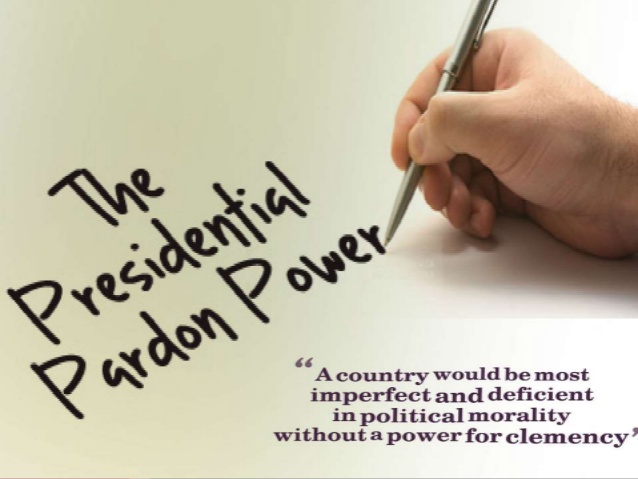
Just like India, the other countries also enjoy this power. They find the concept of pardoning criminals to be essential and the countries which do not have this power are considered imperfect and lack political morality. A criminal justice system is there in every country and the object behind punishing a criminal is to maintain public welfare, so is the object of the pardons, i.e., maintaining public good. Granting a pardon frees a convicted person and gives an opportunity to a person to start a fresh life. The person may improve their human character due to forgiveness.

In countries like the United States of America (USA), the President has the similar power of pardoning the criminals but only in case of violation of Federal law. In the case of violation of state law, the power to grant pardon is with the governor of the state concerned. Moreover, the US President is not given this power to grant reprieves and pardons in case of impeachment. In the US, neither Congress nor the courts can take away the President’s power to pardon. There is only one limitation i.e. in the case of impeachment.

In Canada, this power is given to the National Parole Board under the Criminal Records Act. In the United Kingdom (UK), the power is vested in the Constitutional monarch but on the advice of the council of ministers, i.e., the Secretary of State within England and Wales, the first minister of Scotland, or the Secretary of Northern Ireland. In the case of the convict of Armed Forces, the advice will be given by the Secretary of State for Defence. In England, legislative power can not control or limit the power to pardon. Though, there are certain limits on using the discretionary power to pardon.

The possible loopholes surrounding it and the solutions available for the same 

The power of pardoning is an extraordinary power given to the executives. So, there is a fair chance of exercising this power arbitrarily, or with mala fide intention. In a case, Swaran Singh v. State of UP (1998), the Minister of State Legislative Assembly was convicted for the offence of murder. After submitting the mercy petition, the Governor of UP granted remission of life sentence to him. Later, the Supreme Court interdicted the Governor’s order and held it to be arbitrary. Due to such cases, there is a need for the power of pardon to be subjected to judicial review.

In a landmark judgement, Epuru Sudhakar and Anr v. Government of AP and Ors (2006), the Supreme Court held that a limited judicial review of the exercise of clemency power is given to the courts. It even gave the grounds under which granting of clemency by the President or Governor can be challenged. Following are the grounds-

  1. The order is a malaise.
  2. The order has been passed on extraneous considerations.
  3. Relevant material has been kept out of consideration.
  4. The order suffers from arbitrariness.

However, with the passage of time, the power of pardon has become impure. There can be a huge abuse of power. For example, in cases where pardon is only granted to big politicians, businessmen, and powerful people. But if one looks at the benefits that this power provides. This power of the executive is significant as it corrects the errors of the judiciary. Moreover, this power is often criticized on the basis of the doctrine of separation of power. Some say that the pardoning power is a violation of this doctrine. The purpose of this doctrine is to prevent the abuse of power by a single person. It restricts any of the organs of the government to become all-powerful because absolute power tends to corrupt. Nonetheless, the power of pardoning criminals is not absolute because the President is allowed to use this power only on the advice of the Council of Ministers. Though under Article 72(1), he can return it for reconsideration just once.

Conclusion 

Our criminal justice administration system is based on a certain belief that ‘Let a hundred guilty be acquitted but one innocent should not be convicted’. Hence, chances must be given to the convicted person.

When a convict has extinguished all their reliefs in the court of law, does this means their life has ended, and so do their rights? The answer to this is ‘No’. When the highest court has convicted a person, that person still has the right to prove their innocence or their successful rehabilitation. They can take their last constitutional resort by filing a mercy petition to the President of India.

The process of granting a pardon is simple, but its disposal is delayed due to the lethargy of the government. In some cases, its power is being abused due to the involvement of politics. There is a need to have an amendment to the pardon law to make sure that mercy petitions are disposed of quickly. There is a need to bring changes in the method of exercising this power to prevent its abusive use.

References 


LawSikho has created a telegram group for exchanging legal knowledge, referrals, and various opportunities. You can click on this link and join:

https://t.me/joinchat/J_0YrBa4IBSHdpuTfQO_sA

Follow us on Instagram and subscribe to our YouTube channel for more amazing legal content. 

Download Now

Socio-economic offences in India

0

This article is written by Tarish Vats from O. P. Jindal University. This article focuses on socio-economic offences and the deep impact of the same on society as well as on the committees which had been formed by the Government of India to address the plight which had been faced by society. The article also emphasizes the possible solutions and the laws which are made to solve the issue of socio-economic offence.  

Introduction

Socio-economic offences are those that have an impact on the social and economic well-being of society. These are non-conventional crimes in the sense that they lack mens rea. These crimes have a societal impact. It does not target a single person, but rather a group of people who are likely to purchase such goods or services. Socio-economic crimes are a new type of criminality. In which persons from the upper and middle classes are involved and are committed in the course of their occupations.

Sutherland refers to it as white-collar crimes, while others refer to it as public welfare offences, statutory offences, strict liability offences, and so on. This type of crime has spread to varying degrees throughout the world. The gravity of such offences is quite severe. Though several lawmakers in India have been established who may be classified as socio-economic legislators.

Definition and nature of socio-economic offences in India

The idea of socio-economic offences in India outlined in India’s 47th Law Commission Report is critical. According to the study, socioeconomic crimes are social offences that have an impact on the health, morals, social, or overall well-being of the community as a whole, rather than just the individual victim. Economic offences are those that are harmful to society’s economy and endanger not only individual money but the entire economic structure of a country.

White-collar crimes are perpetrated by members of the affluent and well-to-do classes. A socioeconomic offence, on the other hand, maybe committed by anybody. Socio-economic offences not only broaden the scope of white-collar crime as understood by Sutherland and acknowledged by others, but also have broader implications.

Socio-economic crimes differ from traditional crimes because they do not, to a common mind, involve or carry with them any stigma, while traditional crimes, unlike the socio-economic crimes have a symbolic meaning for the public and carry stigma involving a disgrace, depravity, and immorality and are thought of as decidedly the behaviour of the lower class of people.

Usually, in these types of offences, the victim is mainly public at large, especially the consuming public, and even if there is no harm to any particular person, the harm is caused to the society which has a very large impact upon the society.

In the case of conventional offences, culpability is not absolute and is rather connected to the wrongdoer’s intent. However, in the case of socio-economic offences, the government has a propensity to reduce the need for mens rea for criminal responsibility.

The harm caused by these offences is higher than that caused by ordinary crimes. They harm the morals, health, and welfare of the population as a whole, and they have the potential to destroy the economic fabric. As a result, the legislature’s policy in such instances is not to be indulgent in terms of prevention, control, and punishment, and the perpetrator is not permitted to go unpunished.

Traditional crimes were thought to be the result of the wrongdoer’s physical, environmental, or sociological maladjustments. As a result, in such situations, reformative efforts must also be made; on the contrary, socioeconomic crime is the result of hunger for money rather than any maladjustment. As a result, in these situations, harsh and frightening punishment is seen as acceptable, and reformer initiatives are not implemented.

The Santhanam Committee Report, 1964

The Santhanam Committee on Corruption, established in 1964, merited recognition for its extensive investigation work and recommended report. The committee’s name, Ministers, members of Parliament, and state legislatures were expressly mentioned in his code of behaviour for anyone in positions of power, authority, or trust in our society. There should be no use of position for personal or family gain, no activities driven by party, religion, caste, or community concerns, and no unofficial dealings with businessmen or hospitality or gifts taken from them or other private individuals.

In India, the 29th Law Commission Report recommended that the Santhanam Committee Report of 1964 be considered. According to the committee report, the Penal Code does not deal satisfactorily with activities that may be regarded as social offences due to the particular conditions under which they are committed and which have now become a dominating characteristic of some strong parts of modern society. Two characteristics could be seen in the majority of the detected offences: pecuniary advantage and unjust enrichment. It proposed that a new chapter be added to the IPC to deal with socio-economic offences.

Later, in the 47th Law Commission Report, a new composite category of socio-economic offences was established. The three primary types are unlawful economic operations, illegal commercial and related transactions, and avoidance of public taxes or monetary responsibilities. The notion of socio-economic crimes is highly significant in the Report, and the prominent aspects of these violations are explored in detail.

Features of socio-economic offences

  • Motive: Unlike traditional crimes, the act of committing the crime is motivated by extreme greed or a desire for riches.
  • Emotion: Whereas typical crimes are committed for emotional reasons, these sorts of offences have no emotional basis or relationship between the victim and the perpetrator.
  • Target victim: In most cases, the victim is the state or a group of individuals, most notably those who are consumers of particular goods or services, shareholders or holders of other assets, and so on.
  • Mode of operation: The primary motivator for committing such a crime is deception, not coercion.
  • Mental element: Such offences are generally committed on purpose.
  • Protected interest:
    • The preservation of individual members’ property, money, or health, as well as national resources, as well as the broader economic system as a whole, from exploitation or waste by people or organizations, is a social interest.
    • Social interest in increasing the country’s wealth through implementing rules governing taxes and dues, foreign exchanges, international business, and the like.

Categories of socio-economic offences in India

  • Actions planned and carried out to impede or inhibit the country’s economic development and health,
  • Income tax evasion,
  • Misuse of position and authority by public officials, which is most likely to result in corruption,
  • All offences including breach of contract and delivery of goods that do not meet the requirements as promised,
  • All black marketing and hoarding-related actions,
  • Activities involving food and medication adulteration. Misappropriation and theft of government property and finances,
  • The activities associated with the trafficking of licenses, permits, and so forth.

Causes of socio-economic offences

  • Industrial revolution: The transition from an agricultural to an industrialised country brought about changes in the country, which resulted in offences shifting their pace from traditional to these new ones.
  • World War II: Post-war conditions in the countries were deplorable, resulting in alterations in the regular functioning of society. As a result, new practices gave rise to new offences.
  • Business: When new firms began to develop in the country, it generated a sense of intense competition among them. Everyone wanted to outdo each other in any way possible.
  • Technology: One of the factors that influenced our country’s preference for beer is also to blame for such offences. The rise of technology and scientific advancements has resulted in a decline in faith in the almighty.
  • Lack of morals: As people’s dread of the ultimate judgment or the world beyond all humanly things faded, so did their morals and ethics. As a result, there has been a rise in deception and greed and thirst for worldly satisfaction.
  • Laissez-faire: The state opted to leave things alone, and the absence of public discontent resulted in serious consequences that are now visible in our country. However, with appropriate research and attention, these crimes in the country may be controlled.
  • Absence of intense and coordinated public resentment.

Laws to combat socio-economic offences in India

Several Acts dealing with socio-economic offences were established to punish offenders. Furthermore, these Acts are formed to preserve the normal operations of commerce, contracts, and so on, and to allow them to take place without or with the least amount of malpractices. Among these Acts are:

  1. The Drugs and Cosmetic Act, 1940
  2. The Prevention of Food Adulteration Act, 1954
  3. The Foreign Exchange Regulation Act, 1947
  4. The Wealth Tax Act, 1957
  5. The Income- Tax Act, 1961
  6. The Essential Commodities Act, 1955
  7. The Customs Act, 1962 8. Dowry Prohibition Act, 1961
  8. The Prevention of Corruption Act, 1988, etc.

Mens rea in socio-economic offences

The Indian approach to the problem suffers from the same inconsistencies as the English technique, because our criminal code is based on common law and is constantly supplemented with common law principles. The Indian Penal Code includes offences for which no element of mens rea is required (waging war against the government is an example). Even in such cases, courts have adopted the mens rea doctrine. The majority of enactments focus their attention on the acts themselves, regardless of the mental goal. This is one of the reasons why some people refuse to call it a ‘crime,’ because it does not punish a guilty mentality. Many attempts have been made to distinguish this category of offences from those involving apparent criminality. Such efforts culminated in the categorization of these offences as “administrative penal law” and “public welfare offences.”

Economic resource restrictions in a growing country like India have required the imposition of some social regulations to achieve planned growth (licensing, regulation, distribution of scarce commodities, etc. To some extent, strict accountability for establishing norms of behaviour is required. This is due to the goal of public welfare. Is it, however, always justified? It should be remembered that we are talking about the criminalisation of productive social and economic behaviour.

The common law mens rea requirement is a remnant of common law. As a result of this, the concept is not often followed in common law (like public nuisance, contempt of court, and libel). Because of this, the decision was justifiable.

  • It was sometimes difficult to show mens rea,
  • It was necessary to give the conduct a purposeful interpretation since they were penalised under social assistance laws,
  • As a result of this, the punishment is typically low,
  • They are mala prohibita offences and not mala in se offences.

Difference between socio-economic offences and white-collar crime

White-collar crimes are those perpetrated by a person in the course of his or her employment who belongs to the top class of society. It is a narrower idea as compared to socio-economic offences. Examples of white-collar crimes include multinational corporation tax evasion, the selling of substandard medications by a well-known manufacturer, and so on. All of these offences are also classified as socio-economic crimes. False return by a retiree, on the other hand, cannot be deemed a white-collar crime unless done by a member of the upper-class society. As a result, all white-collar crimes can be socio-economic offences, but not all socio-economic offences can be classified as white-collar crimes.

Approaches to socio-economic offences in India

The link between the economy and crime is inverse, which means that while economic conditions are good, the frequency of crime is relatively low, but when economic situations are bad, criminality rises. The link between economic structure and crime is direct and positive; that is, criminality, as an extension of regular economic activity, rises or falls in tandem with economic success or failure. The co-relationship between crime rate and poverty implies that crime is connected with poor regions due to their poor living conditions, harsh situations, and lack of resources.

Even the basic notion of crime has been altered by industrialisation and excessive consumerism. This has led to an increase in socio-economic crime throughout this time period. Financial frauds, tax evasion, and hoarding are among them. As well as other types of adulteration, during the computer era of the 21st century, cybercrimes have brought new aspects to white-collar crime. Social law has not been able to prevent these crimes owing to the inadequate execution of social reformative measures. The shifting patterns of criminal activity make it necessary to implement stricter legislation to combat socio-economic crimes. COFEPOSA and FERA rules have been in place in India for several years, but the crime index about smuggling and foreign exchange breaches, which are negatively impacting the Indian economy, has not changed much. The criminal law enforcement agencies should, therefore, initiate drastic measures to curb this menace.

Conclusion

It is argued that the historical sequence of punishment and the social contexts in which it was used dictated the goals of punishment. The primitive society’s idea of private revenge was the basis for the retributive doctrine. The expiatory view appears to have emerged as society evolved and priests began to rule it. The notions of prevention and deterrence emerged as social organization and the state grew in strength.

Most economic offences are not reported to law enforcement. People are ignorant of the gravity of economic offences because of the widespread failure to report them. The researcher considers that under-reporting of crime applies to all forms of criminal activity. In light of the widespread agreement that economic offences in particular and crime, in general, are harmful, it is believed that serious measures must be implemented to ensure the free recording of crimes. 

References


LawSikho has created a telegram group for exchanging legal knowledge, referrals, and various opportunities. You can click on this link and join:

https://t.me/joinchat/J_0YrBa4IBSHdpuTfQO_sA

Follow us on Instagram and subscribe to our YouTube channel for more amazing legal content.

Download Now

Misapplications associated with strict liability In India and stance of the Indian judiciary

0

This article is written by Harman Juneja, from Dr B.R. Ambedkar National Law University, Rai, Sonepat. The article talks about the meaning and landmark judgements concerning strict liability along with the misapplications associated with the principle In India. 

Introduction

The article examines the evolution of the ‘strict liability’ principle established in Rylands v, Fletcher(1868), as well as how it has been implemented by the Indian courts. Various exceptions to the rule have been incorporated into the common law and Indian courts throughout the years.  Over time, Indian Courts have changed the original meaning of strict liability. As this article would prove, there are concerns about the conflation of the terms “strict liability” and “negligence,” as well as the patterns that have clouded the answer to important questions about strict liability’s application in India. 

Strict liability

The principle of strict liability was evolved in the case of Ryland V Fletcher in the year 1868. It  states that anyone who keeps any hazardous substances on his property will be held liable if those substances escape and cause damage. 

Ryland V Fletcher

Facts  

Independent contractors were hired by the defendant to build a reservoir on their property. While digging, the contractors discovered abandoned mines that were not sealed properly. Thus, they poured water into the reservoir. As a result, water rushed into the plaintiff’s mines on the neighbouring land through the mineshafts. At the Liverpool Assizes trial court, the verdict was in favour of the plaintiff.

Issue

This case raised two issues. These were-

  1. Whether the act of the defendant’s construction on his land was reasonable?
  2. Whether the defendant should be held accountable for damages incurred by the plaintiff?

Opinion of the Court 

The Court’s decision was upheld, stating that the defendant’s use of the land was unreasonable and he carried it out without due caution. This caused harm to the plaintiff.

According to Lord Cairns, LC, the defendant committed a non-natural use of his land. Blackburn J, who delivered the judgement of the Court of Exchequer Chamber and the House of Lords, said that the claimant must prove the following to succeed in this tort: 

  • The defendant trespassed on his property. 
  • It was likely that if the thing got free, it would cause trouble, and 
  • It did eventually get away and cause damage. 

Therefore, this also created essential elements that are to be taken into consideration in the case of strict liability. The three essentials are dangerous things, escape and non-natural use of land.

Judgement of the courts

The Trial Court’s decision was overturned and the defendant was found guilty by the appellate court, Court of Exchequer Chamber.  Its verdict was upheld by the House of Lords.

Essential elements of this rule

To determine whether liability is strict or not, certain criteria were established in the case. Only once these requirements have been met can liability be classified as strict liability. They are:

  • Dangerous thing- In simple terms, this means that the defendant will be held accountable if something dangerous escaped from his premises. The word dangerous here implies that, if the dangerous thing escapes it is likely to cause havoc. In the above-mentioned case, the large quantity of water to be stored in Fletcher’s reservoir was a potentially harmful factor.
  • Escape- The thing that is causing the harm must also escape from the defendant’s premises, and it must not be within the defendant’s reach once it has escaped.
  • Non-natural use of land- For usage to be considered non-natural, there must be a unique use that poses a greater risk to others. It cannot be normal use of land or use that is appropriate for the community’s overall benefit.

Impact of the case 

The concept of strict liability was born as a result of this judicial decision. Before this case, English courts had not relied on strict liability in similar circumstances, Instead they focused on the motivation behind the conduct rather than the nature of the actions themselves. The case, on the other hand, imposed a severe liability on unnatural use of land without requiring proof of a duty of care or negligence, signalling a fundamental doctrinal shift. The case has been used in various jurisdictions and has been acting as a strong and valid precedent.

Difference between strict liability and absolute liability

Absolute liability simply means strict liability but without any exceptions. In the case of M.C. Mehta v. Union of India (1987), the rule of absolute liability was developed. Here, it went one step further than strict liability, by stating that an enterprise engaged in a hazardous or inherently dangerous activity is liable for any harm resulting from the operation of such activity and must compensate all those who are harmed by the accident.

M.C. Mehta v. Union of India (1987)

Facts

On the 4th and 6th of December, 1985, a serious oleum gas leak occurred in one of the Shriram Foods and Fertilizers Industries units of the Delhi Cloth Mills Ltd. in Delhi. An advocate practising in the Tis Hazari Court died as a result of this, and many others were impacted. The court was served with a writ petition in the form of public interest litigation (PIL).

Arguments

It was argued that if all tragedies resulting from the actions of huge factories follow the strict liability rule, they will fall within the exceptions and be exempt from accountability for the harm they have inflicted in the course of their business.

Judgment

The Court held that if a company is permitted to engage in any hazardous or inherently dangerous activity for profit. However the law must assume that such permission is contingent on the enterprise bearing the cost of an accident resulting from such hazardous activity as a suitable item of its overhead costs. Therefore they held the defendant liable for the act and coined a new rule known as absolute liability.

The bench gave clear points of distinction between strict liability and absolute liability in this case. They are as follows:

  • Unlike strict liability, here, It is not required to get a dangerous substance out of one’s land. Those who are hurt both within and outside the premises are subject to absolute liability.
  • Unlike the rule of strict liability, the rule of absolute liability has no exceptions.
  • Ryland v. Fletcher clarified that the strict liability rule applies solely to non-natural uses of property, whereas absolute liability applies to all uses of land. If a person uses a dangerous substance and it escapes, he will be held accountable, regardless of whether they took all due precautions. 
  • The magnitude and financial capability of the institute determine the extent of the damages. The Supreme Court also stated that the company must ensure that the hazardous or inherently dangerous activities in which it is engaged are conducted with the highest standards of safety and security. If any harm results as a result of such negligent activity, the enterprise/institute must be held liable to compensate for any damage caused.

Indian judiciary on strict liability 

While courts in Australia and England have debated whether the notion of strict liability is still applicable or has been absorbed by the tort of negligence, courts in India have also debated whether the principle has now been integrated as part of absolute liability. The courts have frequently used the idea of strict and absolute liability combining the two types of obligations. This apparent conflation of the two ideas appears to be the result of a misreading of Indian and English case law on strict liability-related issues such as the Indian Council For Enviro-Legal vs Union Of India & Ors, (2011) etc. The Supreme Court went on to consider why “the rule of strict liability is inappropriate or unacceptable in India” in this case. 

Even though the theory of absolute liability has been recognised in India to meet the needs of the present-day economy and structure, the courts in India still take the case on Rylands v Fletcher as one of the important precedents for deciding liability of parties. This is because the applicability of the absolute liability rule is predicated on the company’s involvement in a hazardous or inherently dangerous business that constitutes potential harm to the health and safety of those working or living in the surrounding areas.

The idea of strict liability, on the other hand, applies when a person brings and holds anything likely to cause harm if it escapes. Furthermore, such an activity would have to be an unnatural use of the land. As a result, there may be instances where a person uses his land for a non-natural purpose that isn’t hazardous or inherently dangerous such as constructing a bund or small dam on the property. This has been recognised in many cases and one such case Jay Laxmi Salt Works vs. the State of Gujarat (1994).

Jay Laxmi Salt Works vs. the State of Gujarat

This case is a watershed moment in tort law by virtue of determining the government’s liability in negligence cases.

Facts

The Gujarat government has issued an order for the construction of a dam. In 1955, the dam was completed successfully. The appellant filed many applications with the relevant authorities, requesting either a change in the project’s location or the outright cancellation of the project, but to no avail. The concerned authorities did not take any suitable action in response to this issue, and construction work continued. The water level in the dam rose above the safe threshold one day after heavy rainfall in the area. As a result of the dam’s excess water, the appellant’s factory facilities were inundated, causing substantial property and material damage.

Judgment

While the High Court ruled in favour of the Respondent, the State of Gujarat.The reason provided was because the construction of the dam was not a non-natural act and that the main purpose of the construction was the public’s welfare.

The Supreme Court ruled that just because the dam was a non-natural act does not mean the government can abdicate its responsibility. They held that even though the dam was erected for the community’s benefit, it served an important purpose, and the use of land or water was not an act of non-natural use. However, this does not absolve the government of its responsibilities to its inhabitants in cases when infractions result in property damage or injury. The injury itself is the main source of concern, not how it occurred. Thus, the government was held liable.

Union of India v. Prabhakaran Vijaya Kumar

Further, in Union of India v Prabhakaran Vijaya Kumar (2008), the Supreme Court stated that the rule in Rylands v. Fletcher had been subsequently interpreted to cover a variety of things likely to cause damage if they escaped, regardless of whether they were dangerous per se. water, electricity, colliery spoils, and flagpoles were among the instances given by the Court.

MV Kew Bridge v Finolex Industries

In MV Kew Bridge v Finolex Industries (2014), the plaintiff claimed that it had incurred economic loss as a result of the defendant’s vessel carrying LPG becoming grounded near the plaintiff’s jetty although no physical damage had occurred because the LPG had not escaped. The plaintiff argued that the Supreme Court had disregarded the principle of Rylands v. Fletcher and that the defendant was liable based on absolute liability in response to a motion by the defendant challenging the maintainability of the action on the basis that liability for negligence based on only an economic loss is not allowed. The Bombay High Court correctly ignored the plaintiff’s arguments and held that the strict liability concept still applies in India. Further, n the defendant’s motion, it was also decided that because there was no “escape” of the LPG gas.

Despite certain conflicting judgements, Indian courts have continued to recognise and apply the strict liability rule in some circumstances. At the same time, it is argued that the rule has been misconstrued and misapplied in recent years. This caused inconsistency in the jurisprudence of the principle, leading to confusion about its applicability in various cases.

Misapplications of the principle of strict liability

In the MC Mehta case the Supreme Court established the law not just to determine the matter before it, the Shriram case, but also to apply it to the Bhopal gas tragedy case. Furthermore, because precedents are declarative, the principle would apply to the Union Carbide case too even if it wasn’t law at the time of the catastrophe. The Supreme Court’s constitution bench ruled that where an enterprise is engaged in a hazardous or inherently dangerous activity and harm is caused to anyone as a result of an accident in the operation of such hazardous or inherently dangerous activity, such as the escape of toxic gas, the enterprise is strictly. So it would be liable to compensate all those who are affected by the accident and such liability and is not subject to the exceptions mentioned in the rule of Rylands V Fletcher that is discussed before.

With the misapplications and misconceptions of the strict liability principle in India, it is necessary to reflect on and consider the application of the principle that exists in the country.

In Kaushnama Begum v New India Assurance (2001), a jeep’s front tyre ruptured, causing the vehicle to capsize and collide with a person who died as a result of the injuries. The claims before the Motor Accidents Claims Tribunal were dismissed because there was no rashness or recklessness. However, the appellant maintained that the respondent is strictly liable.

The Court said that the issue of liability rests on whether the Rylands v Fletcher rule may be applied to vehicle accident cases. It’s also worth noting that the appellant did not argue or demand compensation under Motor Vehicles Act 1988, § 140, which provided for “no-fault” liability and a fixed amount of compensation, but instead argued strict liability outside of the Act’s provisions. 

The Supreme Court held in the judgment of Gujarat SRTC v Ramanbhai Prabhatbhai(1987) that due to the ever-increasing volume of traffic, motor vehicles on the roads may be considered to some extent to fall under the liability principle defined in Rylands v. Fletcher. Unless the idea of social justice has any validity, a pedestrian who is injured or killed by a motorist without his fault, whether negligently or not, should be allowed to recover damages through his or her legal representation. The rule in Rylands v Fletcher, like any other common law concept acceptable to India’s jurisprudence, can be followed at least until a new principle emerges that outperforms the former.

However, this principle could not have been applied in the following case. This is because there was nothing placed onto a person’s land, no escape. Driving a jeep cannot be considered a non-natural use of the property. As a result, applying Rylands v Fletcher to car accident situations is incorrect. 

In the recent case of Vohra Sadik Bhai v State of Gujarat (2016), damage to the appellants’ property was caused by the respondent state releasing water from a dam, when the water level grew dangerously high due to heavy rains. According to the appellants, the harm was caused by the respondents’ gross negligence and lack of administration, given the respondents were aware that the monsoons were approaching. To satisfy the demands of the following monsoon, the dam’s water level should have been kept low. The respondent State claimed that the release was caused by severe rains, which it said was an act of God. Thus, it contended that it was not liable. With all due respect, the Supreme Court’s decision is very complicated. 

On the one hand, it recognises that the Rylands v. Fletcher principle of strict liability may not apply because the construction of a dam was for the benefit of the community and cannot be classified as a non-natural purpose. As a result, it looked into whether the respondent was careless and whether the damage might have been avoided physically.  On the other hand, the Court, although finding that the respondent was careless, stated in light of the principle established in Rylands v. Fletcher, the onus was on the respondents to discharge such a duty, which they have woefully failed to accomplish. On that basis, it concluded that the respondents were negligent in causing harm to the appellants’ fields.

The petitioner’s husband in the case of  Alamelu v State of Tamil Nadu (2012) died due to electrocution when a branch of a tree fell on the wire which in turn fell on him. The Court, in this case, held the state liable under the principle of strict liability. This was even though it was found that the branch of the tree fell due to heavy rainfall and not due to improper maintenance by the authorities.

The principle of strict liability was applied by the court to compensate people falling in the manholes as in the case of Delhi Jal Board v Raj Kumar (2005).

The plaintiffs in State of Punjab v Modern Cultivators (1965) were harmed by the overflowing of water produced by a breach in the defendant state government’s canal. While noting that this was one of the first cases of its kind in India, Justice Hidayatullah held that the strict liability rule in Rylands v. Fletcher was inapplicable because canal systems are essential to the life of the nation and land used as canals is subjected to ordinary use, not an unnatural use. However, the Court eventually decided that the defendant was liable since the government had been negligent in maintaining the canals. The Supreme Court in Modern Cultivators did not rule out the existence of strict liability under Indian law, but merely expanded the exceptions to the principal’s application.

However, the Supreme Court did not go so far as to overturn the principle of strict liability in Modern Cultivators. Until 1994, the courts considered that the Supreme Court had ‘modified’ the strict liability standard established in Rylands v Fletcher in Modern Cultivators. The High Court proceeded on a similar basis in Jay Laxmi Salt Works v State of Gujarat, and the Supreme Court ultimately decided that the ratio in Rylands v Fletcher had not been modified by the Indian Supreme Court in Modern Cultivators. Rather, the Court chose to rely on the American Courts’ introduction of the idea of “fault liability.” In essence, fault liability is liability stemming from negligence, as defined by the High Court of Australia.

The difference between strict and fault liability, however, stems ‘from the existence or absence of mental element,’ and a ‘breach of legal duty knowingly, deliberately, or even maliciously is carelessness arising from fault liability,’ according to the Supreme Court in Jay Laxmi Salt Works. However, this was a faulty interpretation. One may not have breached their obligation willfully, deliberately, or maliciously, but they have nonetheless failed to exercise the necessary care to prevent something from escaping or causing mischief. An intent to cause harm (by malice, deliberately or wilfully) has never been required to establish culpability for negligence. Thus, the court erred here.

Analysis of the Indian Court’s decisions

Despite the Supreme Court’s skewed understanding of fault liability, the Court’s rulings in Modern Cultivators and Jay Laxmi Salt Works are significant because they recognised liability for negligence while not ruling out the existence of the strict liability rule in Indian law.

The burden of proof or the discharge of any burden by the defendant is unrelated to the notion of strict responsibility established in Rylands v Fletcher. In that case, neither Lord Blackburn nor the House of Lords mentioned the requirement of a burden of proof or the defendant’s duty to discharge any burden. Surprisingly, the Indian Courts have declared it a legal concept without even considering the case. Recently in the judgement of Samir Mehta v Union of India (2017), awarding Rs 100 crore in environmental compensation the National Green Tribunal made numerous references to the principle of strict liability, stating that its goal is to ensure that what is proven by the Applicant concerning damage and degradation of the marine environment is restored and restituted.

Finally, the notion of strict liability is now recognised by several statutes. To this purpose, the usual rule is that where liability is governed by statute, the Rylands v Fletcher principle and the exceptions thereto will not apply. Situations arise when some statutes provide for strict liability while simultaneously establishing the amount of compensation.

Thus, even though the Motor Vehicles Act 1988, Section 140, provides for the idea of no-fault responsibility, the Supreme Court concluded in Kaushnama Begum, that a plaintiff may still seek compensation under the theory of strict liability established in Rylands v Fletcher.

Similarly, in situations involving the Railways Act 1989, Section 124A. The theory of strict liability in torts has been used. It is respectfully urged that just supplementing the compensation granted by legislation with strict responsibility rules existent in tort renders the statutory provisions useless. Even the contentious Civil Liability for Nuclear Damage Act of 2010, which limits compensation for absolute liability for nuclear damage, would be meaningless if this were the case. This proves that the previous decisions were inconsistent with the principle of strict liability.

Conclusion

As stated by the High Court of Australia in Burnie Port Authority (1994) held that strict responsibility no longer existed as a separate head of liability and should instead be considered absorbed by the rules of ordinary negligence. The logic is that when a defendant does a dangerous act or takes anything capable of causing harm to his property, all that is required is a heightened duty of care. In the case of Transco plc v Stockport MBC [2004], on the other hand, the House of Lords, while agreeing with the High Court of Australia on some points, ruled that abolishing the strict liability principle would be too drastic a step to take.

As the Hon’ble Supreme Court recognised in M C Mehta, the law must evolve to meet the requirements of society. The idea in Rylands v Fletcher was established in the late 1800s, and the law of negligence has come a long way in defining the defendant’s duty of care proportionate to the risk of the action. In Indian law, there is a lack of clarity on two parts of the principle: 

  1.  If the principle of strict liability should be applied at all? 
  2.  If so, under what conditions the concept must be applied. 

Recent Indian court rulings, as detailed in this study, have muddied the waters on both of these issues. To sum it up, that strict liability is no longer applicable in India in its existing form because of the tangle of jurisprudence.

References


LawSikho has created a telegram group for exchanging legal knowledge, referrals, and various opportunities. You can click on this link and join:

https://t.me/joinchat/J_0YrBa4IBSHdpuTfQO_sA

Follow us on Instagram and subscribe to our YouTube channel for more amazing legal content. 

Download Now

Case analysis of R G Anand v. Delux Films in consonance with substantial similarity and copyrightability of ideas

0

This article is written by Mahima Chanchalani, a student of Jamia Millia Islamia. In this article, the author discusses the case of R G Anand v. Delux Films in consonance with the concept of substantial similarity and copyrightability of ideas. 

Introduction

In the article, I will be dealing with the case of R. G. Anand v. Delux Films (1978) and link it with the concept of substantial similarity and copyrightability of ideas. Two important points that must be taken into consideration while evaluating copyright infringement- substantial similarity and copyrightability of ideas. In the article, I have also linked these concepts with comparative advertisement.  I have tried to analyze the concept of copyright infringement in the context of the comparative advertisement. These two concepts are still relevant in today’s world. The infringement of copyright is still decided based on the substantial similarity between the two works.

What can be copyrighted : expressions or ideas?

An idea is a thought that comes in the mind of a person specifying the probable course of action whereas an expression is a process that is adopted by the people in the application of an idea. The ideas are not copyrightable but expressions are copyrightable. Two different people may have the same idea but the way they implement the idea (i.e., expression) can be different.

It is not the ideas that are copyrighted but expressions, as it will eventually lead to the stoppage of inflow of ideas which is an important aspect of life. The inflow of ideas is necessary to protect the innovation and creativity of people  

Cases related to the copyrightability of ideas      

R. G. Anand v. Delux Films (1978) is a landmark judgment, where the SC held that ideas cannot be copyrighted but the expressions can be copyrighted. The Court pointed out that the origin of the work being common, similarities will be there but the way the ideas are expressed must be different to not constitute copyright infringement. The Court used the terms, “theme or idea or plot or storyline” to determine that mere ideas are not protectable.

The facts of the case of Mansoob Haider v. Yashraj Films (2014)  are similar to the one discussed above. Here, the plaintiff was the owner of the copyright of a script ‘Once’, which he claimed was infringed in the movie ‘Dhoom 3’. He contended that the defendant is liable for copyright infringement as there was substantial similarity between the two works.

The Bombay HC held that ideas cannot be copyrighted. The Court pointed out that whatever part of the work is left after sieving out the dissimilarities is an idea that cannot be copyrighted and similarity of ideas does not attract copyright infringement.

Concept of substantial similarity vis-a-vis copyright infringement

The concept of substantial similarity comes into play in the instance of copyright infringement. The plaintiff must prove that the work of the defendant is substantially similar to his work. This will eventually substantiate if the similarity is reasonable enough to bring action against. The principle of a reasonable man can be used over here. If he after seeing the work against which the action is brought believes that there is substantial similarity, then the copyright of the owner is infringed. A person may be affected by some work, but it must not be substantially similar to that work. It must be expressed in a different way to avoid infringement of the owner’s copyright.

Although the concept of substantial similarity is not defined anywhere in the Copyright act the case laws of copyright infringement have made its use manifest. How do we say that two things are substantially similar? For that, we see if the two things are similar in characteristics, colour, or their traits are similar to establish similarity.

Let us understand the concept of substantial similarity using a dispute that arose between Phone Pe and Bharat Pe. Phone Pe has its trademark registered and is indeed a well-known trademark. Here, we can see that the word Pe is similar in both their names. It is the suffix Pe which is similar in both the app names and so there can be a case of trademark infringement. Here, the concept of substantial similarity is used to establish trademark infringement.

Let us take another example, AMUL and ANUL. The two names are similar, the sound is the same, the spelling is almost similar. Here, we can say that two names are so similar that it is likely to deceive any reasonable man. So, there is an infringement of the trademark of AMUL.

The concept of substantial similarity is found in instances of comparative advertisement. It is a practice which is adopted where a company at the time of advertising its products compares it with the competitor’s product. There are instances when the reference is not directly made in the advertisement but is indirectly implied. So in that instance, we can see if a substantial similarity exists between the two advertisements. If there is considerable similarity, then there is copyright infringement.

Comparative advertisement and product disparagement are two important subjects. At the time of advertisement by a company, they tend to represent their product as better and compare it with some other product, which eventually spreads misconception about that product and lowers the value of that product, which can be termed as product disparagement. 

M/S Britannia Industries Ltd. v. Union of India & Another (2001), this case is related to product disparagement and comparative advertisement. In this case, Unibic India launched a biscuit named ‘Great Day’ and linked a tagline to it- ‘Why have a Good Day, when you have a great Day’. Britannia has the registered trademark ‘Good Day’.

In this case, Unibic India has directly compared their biscuits with Good Day, which is obvious from the tagline. The defendant has disparaged the product of Good Day by saying that Good Day biscuits must not be consumed until their biscuit i.e. Great Day is available in the market. We can see that there is substantial similarity in the name of the two products i.e. Good Day and Great Day.

In the case of Nestle v. Cadbury (2013), Nestle came up with the tagline “Khao bina tareekh dekhe” whereas Cadbury promotes its products with the tagline “Meetha hai khana aaj pehli tareekh hai”. The defendant, in this case, has not specifically mentioned the products of Cadbury but indirectly refers to them. The defendant, Nestle by the use of its tagline implies that one should never take note of what date it is at the time of eating sweets which disparages the products of Cadbury as it says one should eat sweets because it is 1st day of the month. Any reasonable man at the first look would say that there is substantial similarity between the two taglines where the 2 products are compared and hence there is infringement.

What is copyright infringement?

Copyright is that intellectual property that protects the original work of the author. The term copyright is defined under Section 14 of the Copyright Act, 1957 as the exclusive right which is given to a person to produce his work in any form he wants, grants copy of his work to the public, make any cinematographic film, make an adaptation of the work, etc

Copyright infringement is defined in Section 51 of the Copyright Act, 1956 which arises when:

    • A person does not take the permission of the owner of the copyright and does any act, the right of which rests with the owner.
    • A person copying the work can use the data for communication, selling, distribution, the exhibition of an infringing work unless he was not aware or has no reason to believe that such permission will result in the violation of copyright.
    • A person imports infringing copies of the original work and presents it as his own.
    • A person without taking permission from the owner of the copyright reproduces his work in any form as its replica.  

Copyright infringement arises when someone copies the original work of the author and presents it as his own. It is the use of any work which is copyrighted without taking authorization from the owner of the work. The case of R G Anand v. Delux Films(1978) is a landmark judgment related to copyright infringement and emphasizes the importance of copyright law in India.  

Case analysis

Facts

In this case, the plaintiff had written and produced a play called Hum Hindustani which became very popular. The defendant came to know that the plaintiff was thinking of filming the play so he contacted him. He went to the plaintiff who explained the script to him, but he did not respond. After a few days, the plaintiff got to know about a movie ‘New Delhi’ which was based on his play. So, he filed a case against the defendant. He contended that the movie was a replica of the play, and hence the defendant is liable for copyright infringement.

The Court had to decide whether the movie ‘New Delhi’ has infringed the copyright of the play ‘Hum Hindustani’ or not.     

The Courts in this case observed, “The same idea is developed differently, the source being common the similarities are bound to occur.” The Court in the case of R G Anand v. Delux films points out two important points of contentions i.e. copyrightability of the ideas and concept of substantial similarity.

Issues

  • Whether the film New Delhi is an infringement of the copyright of the play ‘Hum Hindustani’?
  • Whether the defendants have infringed the copyright of the plaintiff by the making of film New Delhi?

Arguments raised by the appellants

The appellant put forth their argument that the lower court was not successful in applying the law correctly. The plaintiffs also argued that the movie is so similar to the play, that it is obvious that it is a copy of the play. The appellant substantiated their claim by pointing out the similarities between the two like the same idea of provincialism, the location being Delhi, both are based on love stories between a Punjabi and Madrasi, and many more. They also contended that the defendant knew the script of the play and they had discussed it to make a film, but later he made it alone.

Arguments raised by the respondent

The respondents argued that lower courts have interpreted the law correctly. They denied the claim of similarity between play and movie and iterated that there are a lot of dissimilarities between the two. 

Guidelines issued by the Supreme Court in the context of substantial similarity and expression of ideas 

The Supreme Court issued some guidelines in this case which we will deal further in the article;

  • There can be no copyright infringement in an idea, only expressions are copyrightable.
  • The similarities are bound to occur when the origin of work is the same, but the main motive must be to see whether the similarity is substantial enough to constitute infringement.
  • The Court brought forward the principle of the reasonable man. If he finds the work to be a copy, it will constitute infringement.
  • The idea can be the same but it must be expressed differently to vitiate copyright infringement.

Throughout the article, we have tried to analyze the use of the concept of substantial similarity and copyrightability of ideas in the cases of copyright infringement. These are the most crucial aspects that need to be analyzed to find out if there is any infringement of copyright or not. We must find out if substantial similarity plays a role in how the ideas are expressed. After a detailed analysis, we can conclude that substantial similarity and expression or ideas play a crucial role in establishing copyright infringement.

Conclusion

After analyzing the whole case, we can finally conclude that substantial similarity and copyrightability of ideas are two concepts that are extremely important in the cases of copyright infringement. These concepts play a vital role in the deciding of a case of breach of copyright. Ideas can still not be copyrighted. The concept of substantial similarity is still in use and the test of a reasonable man in specifying if the two works are substantially similar or not still holds good. However, the Courts must define a reasonable man to avoid chaos.

 References


LawSikho has created a telegram group for exchanging legal knowledge, referrals and various opportunities. You can click on this link and join:

Follow us on Instagram and subscribe to our YouTube channel for more amazing legal content.

Download Now

Contracts in small business

0
Image source: https://blog.ipleaders.in/need-know-exclusive-agreement/

This article has been written by Kshitij Pandey pursuing the Diploma in Advanced Contract Drafting, Negotiation, and Dispute Resolution from LawSikho.

Introduction

A small business may be defined in general terms as a small-scale enterprise involving small capital investment, less labor force and a few pieces of machinery to function. The main characteristics of small businesses are owned by a single person or only very few persons closely related, limited area of operation, less use of technology, labor intensive, use of local resources etc.

Small businesses may deal with manufacturing /supply of goods or providing services e.g. grocery stores, medical stores, tradespeople, bakeries and small manufacturing units. These businesses basically operate on a small scale to serve a local community.

According to the Micro, Small and Medium Enterprises Development (MSMED) Act, 2006 the enterprises engaged in the manufacture or production, processing or preservation of goods is a small enterprise if the investment in plant and machinery is more than Rs. 25 lakh but does not exceed Rs. 5 crore. The investment in plant and machinery referred here is the original cost excluding land and building and the items specified by the Ministry of Small Scale Industries vide its notification No.S.O.1722(E) dated October 5, 2006. Further, the Enterprises providing or rendering services and whose investment in equipment (original cost excluding land and building and furniture, fittings and other items not directly related to the service rendered or as may be notified under the MSMED Act, 2006 are small enterprises if the investment in equipment is more than Rs.10 lakh but does not exceed Rs. 2 crore.

For a small business through the priority is to grow the business and maximize profits based on trust and good faith while conducting business with many stakeholders like suppliers, customers, employees etc. The legal aspect in the form of written contracts becomes important so save money and time in litigation. Any loose points or missed out clauses may be detrimental to the business and brand image in case of a legal dispute due to conflict of interest. Some of the important contracts that every small business must have are given below:

Shareholders Agreement 

In the case of multiple people ownership, a Shareholder Agreement is needed to define the relationship of different shareholders as it aids in defining and adopting a proper business structure. This contract is very helpful to avoid litigation and threats to the business due to differences which arise many times as and when the business expands and earnings increase along with the simultaneous increase of responsibilities. It is useful, even if the shareholders are close relatives in order to have a written document to delineate different roles and responsibilities as well as deal with issues of taxation and many commercial and legal issues during business operations. 

A detailed Shareholder Agreement is very vital for the smooth functioning of the company and to deal with the situation of conflict of interests among the shareholders.   This agreement should include:

  • The clauses related to initial and  future contributions by each shareholder;
  • Duties and obligations of each shareholder in establishment and operation of the business; 
  • Issuance of new shares to incoming shareholders and increase or decrease in the share of existing shareholders;
  • Dividend policy or sharing of profit policy;
  • Accounting policy;
  • Exit policy i.e. policy for leaving the business by any partner in case of death, retirement etc.;
  • Decision-making policy mentioning by whom & how the business decisions will be taken
  • Dispute resolution mechanism. 

Service Agreement

This is a contract signed between the parties wherein one party agrees to provide services to the other party for some fee or payment. In the case of businesses related to providing a service, a service agreement is required to be executed to delineate the terms and conditions of the relationship between the parties to define responsibilities as a service provider and limits of liability in the event of a third-party claim as well as obligations of the client to whom service is being provided. The service agreement with one client may be used as a model agreement for other clients for an efficient contract management process, at the time of expansion of business. A Service contract should include: 

  • Scope of the Agreement.
  • Obligations of the parties.
  • Limitation of liabilities to third parties.
  • Details of Fees and Payment Terms. 
  • Termination of the Agreement.
  • Dispute Resolution Mechanism.

Sales Contracts

In case of a business selling goods a Sales Contract is needed to define the terms and conditions, obligations and liabilities etc. for both parties. Though for very small businesses like grocery stores, a  sales contract is not required but in case of significant transactions in high value goods, a Sales Contract may be required. The Sales Contract in small businesses is customized to suit the particular business. The main clauses in Sales Contracts may comprise :

  • Specification of Goods, 
  • Quantum of goods, 
  • quality of goods, 
  • Price and price adjustment in certain cases of deficiency, 
  • Period of delivery,
  •  Place of delivery, 
  • Responsibility of taxes & duties, 
  • Payment terms & conditions.
  • Warranties & disclaimers of warranties
  • Liability limitations.

Employment Contract 

This contract is a legal agreement between the employer owning the business and the employees, delineating the terms and conditions of the employment. The employment contract should be executed for the benefit of both the employer and employee to ensure clear understanding of employment conditions as well as expectations and obligations of both parties from each other to avoid future disputes. Generally, employees have access to confidential information about businesses. Further, employees are expected to develop products, business strategies, policies and inventions etc. while working in an organization. There should be a clause in the employment agreement related to Confidentiality to ensure that the employees would not share confidential information to any third party. This may be a separate agreement which may include a clause that the ideas, business strategies, concept papers, documents and other work-related products developed by the employee during his stay with the employer shall be the property of the company, and not of the employee or as agreed between the parties.

Many investors in new ventures demand such types of agreement between employer and employee. Normally, the Employment Agreement should be sent along with an offer letter sent to the new employee. The employment agreement  may include:

  • Job description e.g. job position, department of work, work profile, responsibilities;
  • Type of employment e.g. permanent or contractual;
  • Salary and other benefits;
  • Working hours ;
  • Probation period;
  • Reporting details;
  • Leave Structure;
  • Non-Compete clause for restricting employee to work for other competitors in the same business;
  • Confidentiality provisions;
  • Termination clause including notice period; 
  • Dispute Resolution Mechanism.

Non-Disclosure Agreement/ Confidentiality Agreement 

The Non -Disclosure Agreement (NDA) is made to protect confidential information from disclosure to a third party in an unauthorized manner and to ensure that the disclosed information must be used by a third party for the specific purposes defined in the NDA. During business operations at different points of time various data, commercial information, technical information, business secrets, marketing strategies, investment information, profit information, customer details, sales details etc. are shared with other parties. This information may be sensitive and crucial for the operation and future growth of the business. To avoid indiscriminate disclosure of such information the NDA is required to be signed before sharing such confidential information. A signed NDA provides protection from the unintended dissemination of confidential information. An NDA contract may include:  

  • Details of Parties involved i.e. Disclosing and receiving parties.
  • Clearly defining and enumerating confidential information.
  • The conditions under which the confidential information can be disclosed to a third party.
  • The envisioned use of confidential information.
  • Treatment of confidential information after intended use e.g. to be returned or destroyed.
  • Confidentiality obligations of the parties.
  • Consequences of breach of the NDA and the remedies available.
  • Period of NDA.

Lease Agreement

A small business may sometimes need to rent commercial or retail space to run the business. For such cases, a lease agreement with the owner of the property is required. The lease agreement has clauses related to use of the rented property for commercial purposes. Generally, most of the lease agreements are one-sided and are often found to be favoring the owner. However, this may be negotiated for the benefit of the business. This agreement may include:

  • The details of the space and location;
  • The base rent and additional charges, if any, towards parking, Wi-fi, electricity, water, etc;
  • Security Deposit, if any;
  • Period of lease and extension; 
  • Obligations for maintenance of space in good condition;
  • The permission for modifications and improvements;
  •  Termination and notice period.

Privacy Policy Agreement

The privacy policy governs the collection, handling, and sharing of personal data of customers in business operations. This data may include name, age, contact number, address, e-mail that is used to identify a particular person.  In case such data are required for business then Privacy Policy should be an essential part of client agreements and it should be made public through all the possible means including web-portal. This will enable the business to collect and use personal data by using the best industry practices for protecting and handling personal data without any breach of personal data keeping within the limits of the privacy laws of the land.    A Privacy Policy should include:

  • Description of Personal Data required to be collected; 
  • Business Purpose of collecting Personal Data; 
  • The practice adopted for data storage and security of data;
  • Policies for deleting Personal Data after use;
  • Policy for Client’s access and request modification in his personal Data; 
  • Terms of disclosure of Personal Data to third parties;
  • Permission to collect information about customer’s IP addresses and Cookies etc.  

Loan Agreements

For financing,  business loans from banks or non-banking financial institutions are taken. For taking such loans normally, there is a standard Loan Agreement that the banks and financial institutions offer to sign. Many times these agreements are one-sided and favor the lender by including several clauses for restrictions on borrowers. However, negotiation may be done with the lender on such restrictive conditions. The loan agreements may include:

  • Amount of the loan;
  • Interest rate and period of loan;
  • The repayment plan and timelines;
  • Prepayment terms;
  • Term and  Conditions for using the loan amount;
  • Clauses related to breach of the agreement like delay in payment etc;
  • Remedy of default;
  • The warranties of the borrower.

Independent Contractor Agreement  

For running a small business with limited employees, there may be a need for outsourcing certain works to service providers or independent contractors. For such types of arrangements, there should be a written independent contractor agreement to delineate the business relationship between the business owner and the contractor. The objective of getting independent contractors may also be to avoid a direct legal relationship with the third party e.g. an employee of the contractor, who actually executes the work through the independent contractor. Independent contracting may be a suitable option for small businesses, as it is easier to get certain tasks done without any long-term obligations towards employees of the independent contractor. Many independent contractors have their own standard agreement formats. This needs to be modified according to specific needs of the business. An Independent Contractor Agreement should include: 

  • Scope of the task assigned;
  • Timeline for the assignment;
  • Cost to be paid and Payment Terms; 
  • Role and responsibilities of parties;
  • Other obligations like insurance etc;
  • Indemnity Clause to protect the business from obligations towards employees of the contractor;
  • Clause elaborating status of the contractor and its employees e.g. the contractor will not be considered as an employee or legal agent of the company at any point of time.

Website Term of Use Agreement

Many small businesses are nowadays based on e-commerce. They are selling goods or services on online platforms. Websites or portals are one of the most essential parts of today’s businesses for marketing products and business operations. Keeping in view the privacy and cyber security issues, a Term of use agreement for the website /web portal is essential.  This agreement is required to define the terms and conditions of the legal relationship between the owner of the websites and businesses and the users of the website as well as any customer buying goods or services using the website. The agreement is very important for facilitating online commercial transactions through websites, winning trust of the customers and saving the website from cyber threats and misuse by miscreants. This contract includes:

  • Limitations on using the website;
  • Disclaimers for certain contents;
  • Liability limitations;
  • Indemnity notice to protect from any harm of the third party by unintended use of content of the website;
  • Website’s privacy policy in dealing with customer’s personal information;
  • Copyright and Intellectual Property Right advices;
  • Jurisdiction for any disputes.

Conclusion

A small business must have legal contracts on various business aspects to protect the interests of the company. A general set of contracts have been discussed above in order to provide a roadmap as to what contracts are important for small business owners. The number of contracts entered into by small businesses is dependent on the type of business, location, size, etc. Though many times such legal documentation is neglected as opposed to the financial and technological aspect, for a sustainable and profitable business these agreements are essential to be kept in a written form. 


Students of Lawsikho courses regularly produce writing assignments and work on practical exercises as a part of their coursework and develop themselves in real-life practical skills.

LawSikho has created a telegram group for exchanging legal knowledge, referrals, and various opportunities. You can click on this link and join:

Follow us on Instagram and subscribe to our YouTube channel for more amazing legal content.

Download Now
logo
FREE & ONLINE 3-Day Bootcamp (LIVE only) on

How Can Experienced Professionals Become Independent Directors

calender
28th, 29th Mar, 2026, 2 - 5pm (IST) &
30th Mar, 2026, 7 - 10pm (IST).
Bootcamp starting in
Days
HRS
MIN
SEC
Abhyuday AgarwalCOO & CO-Founder, LawSikho

Register now

Abhyuday AgarwalCOO & CO-Founder, LawSikho