Download Now
Home Blog Page 543

The role of cultural norms and customs in the development of International Criminal Law

0
Image source - https://bit.ly/3CIXt4Z

This article is written by Somya Janki currently pursuing a BA LLB (Hons) from Kalinga Institute of Industrial Technology. This is an exhaustive article that discusses how the customs and cultural norms have shaped International Criminal Law.

Introduction- What is law

All of us are well-acquainted with Gulliver’s Travels. Now, our friend Gulliver supposedly committed the crime of perfidy by playing dead and has escaped from the island of Lilliput to the island of Blefuscu to save himself from the clutches of the Lilliputians. So, they send over a message to the residents of Blefuscu to hand over their prisoner. Tarry! But our friend insists upon the fact that he never did any wrong, so what should be the decision taken for this situation. At the very first place whose law would be applied here? Is it of the Lilliputians or Blefuscu? Or shall it not be of England from where Gulliver came all the way along? To decide if there needs to be a source that would prevail over all these laws or what we call International Laws or to be more specific for this case, International Criminal Law would come into play. So, what does this law state, and what is its source? So, let us delve deeper into our subject.

But halt, what is with these generic terms? What do we understand by international law and by law at the very first instance? So, if we ask any person generally, it would be different definitions based on its salient features. The prelude of the law is in the society itself. Why do we make laws? We make laws for stability, peaceful coexistence, to provide justice to all, and many more. But the primary reason behind creating these rules and regulations is for efficient governance and in fact, a state without law would be in a state of anarchy and citizens are more like a beast. So, in the words of Austin, “Law is the general command by the sovereign to his subjects which they are deemed to follow”. In simpler words, it is the command by the sovereign authority over his subjects. Law had been in existence since the time of early man in the form of cultural norms and customs. Thus, ‘Ubi societas, ibi jus’, where there is a society there is the law. The existence of law presupposes the existence of society and we have society all around us whether it is our nation-state or the group of countries or nations or the entire world. Thus, there is a certain set of laws defined for every society which brings us to the reason why we have different laws existing at both national and international levels.

International law-classification

The concept of national and municipal laws has existed for ages and was very much accepted to provide justice, peace, stability, and maintain the government’s efficiency, which was not in the case of international law. International law is of recent origin. There were many stumbling blocks for its development. It was not considered as a branch of law owing to the view of some scholars like Austin and his other stalwarts that it lacked some of the elements that law should have. According to him, if an individual commits a wrong, the applying power must have the most power on the sovereign to impose sanctions on him. So, nothing that was solely based on ethics, morality, or good conscience could be considered laws. While there were also scholars like Kelsen who were staunch supporters of it. He emphasized the fact that international law was superior to national law and it covered national law in a certain way in it and the laws are made to prevent dishevelled structure in the society. At present, there are no more controversies over international law being another branch of law and it gains recognition from all over the world. As is evident from the different statutes through which international law derives i.e. the United Nations Charter, International Court of Justice’s Statute, etc. International law is further divided into two types:

Public International law

Public international law, also known as ‘Jus Gentium’ is a code of conduct or the body of rules that runs either between two nation-states or among more than two nation-states to maintain their relations. Generally, they do not form part of legal statutes or treatises’. They are further divided into:

Administrative law

This branch deals with the structure and organs of the international organization. It provides and restricts the power which is available for the protection of the interests of the nations or states. 

Criminal Law

It is the branch of law that defines the offences and also lays down the procedure of punishment for the offenders for their acts of deviance. The main objectives of these laws are to maintain the peace and order of the world. In a civilized world, an act of sin committed against an individual is considered an act of wrong against society. This also brings us to the point of why civil law is not a part of public law. Criminal law is considered  ‘right in rem’ that is it is applied for the whole society since a crime committed disturbs the whole society by offending the state or doing the acts which are forbidden by the society. While Civil law is ‘right in personam’ and is committed against an individual and is generally to uphold the rights of a person residing in that very state.

Private International Law

Private International Law, also known as the ‘law of people,’ consists of laws applied to resolve disputes or for arbitration or conciliation between or among individuals with a foreign element. For instance, if an Indian and Chinese make a contract in Pakistan, their terms, contractual obligations, or anything for that matter would be decided by Private International Law. It consists of all laws about the law of contracts, the law of torts, etc.

Sources of International criminal law

International Criminal Law is quite different from domestic criminal law as for a matter of fact, its formulation is not as it is in the case of municipal ones. The foremost factor is that usually these laws are formulated by a single sovereign body in a nation-state while in the case of International laws there is no highest sovereign authority as such but an organization which is an embodiment of various nation-states who have come up with a common consensus to formulate these laws. So, International Criminal Law derives its sources primarily from two areas as mentioned according to their hierarchy:

Treaties

The peace treaties at war or multilateral treaties form the main source of formulating these laws. These treaties and conventions being persuasive enough and formal sources of law are also called ‘hard laws’. The centrally play the role of forming a conciliation/defence or extradition pact between or among the nations or countries. However, even if these treaties do not form part of the laws yet, they are binding on the players who have entered it has obligations to follow the terms and conditions or rules and regulations incorporated within it. According to Article 38 (1) (a) of the International Court of Justice’s Statute, the term ‘International convention’ concentrates upon the treaties as a source of creating laws and regulation and acknowledging rising among the parties who have entered into it.

International customs

The International Court of Justice’s Statute defines International custom as evidence of what is generally practiced by the law. It is the second source of laws about criminal justice at the international level. The practice of deriving custom as a source implies the decentralised nature of these bodies and it is quintessential for a custom to be accepted as a law that it is in practice in the nation-states and further it is also widely accepted by them, implying the idea of consensus-ad-idem. Along with that, there are also further requirements for a custom to be law.

However, there are some instances where international treaties also in a way act as a custom or truly become a custom. Usually, when a multilateral treaty does fall short of efficient provisions and is not agreeable to most nations, the customs come to the rescue by applying the general rule of the law. Even at times for crystallisation of international treaty, customs are required in case they are not easily identified or recognized. Further, there are also cases of what is also known as ‘instant custom’ when the provision of any treatise or convention has been recognized by the International Court of Justice itself at many instances as a general customary rule or practice then such provisions may be defined as customary law.

Custom and cultural norms as a source of International criminal law

According to Article 38 (1) (b) of the International Court of Justice’s Statute ‘international custom’ refers to the source through which international law derives which requires the fulfillment of two practices- one is that of opinio Juris sive necessitatis which is also known as opinio Juris and the feature of jus cogens. Although, treatises and conventions have replaced the customary law with the pacing time. Yet, customs do have a significant role to play in shaping the law. But as all treaties cannot become a part of the law, the same applies to the customs too, in fact, there are certain requisites for a custom to become law.

Pre-requisites for a custom to be a valid custom

For a custom or any cultural norm to become law it has to fulfill the following conditions:

Opinio Juris

Usually, for a custom to prevail as a law in nation-state practice the fulfillment of it is not required but it is not in the case of International Criminal Law where it is the fundamental requirement. According to this concept or principle, the nation-state should not only have the pretext that there is a certain notion to be followed but as a matter of fact, there should be an actual practice of such custom. But if the custom is practiced that does not create any obligatory role that it has to be accepted as a law like for instance during the time of world war nuclear weapons were much employed, now that does not give out the sound reason that it should be followed in present times too. Such practices could be given up which necessarily cause much more injury to humanity.

Jus cogens

According to the principle or concept of jus cogens, there should be the existence of such strong laws that it overrides all the other sources of law, maybe the existing ones which are recognised too at some instances. Generally, this principle includes doing some act or abstinence by the state or being enforced against its citizens. The act prohibited or abstained from doing may include war crimes such as perfidy, genocide, slavery, torture or any crime against humanity for that matter. It may also prohibit waging war or inciting hatred and violence against nation-states. Apart from these requirements, there are other requisites which include reasonability, antiquity, etc.

Reasonability

A custom should be sound and reasonable. Malus uses abolendus est as the basic principle behind it. According to this concept, the authority is not absolute; rather the customs should conform with the ideal justice and requirement of the public. If a custom disregards the welfare of the nation-states then it would be obsolete lacking the legal efficacy.

Conformance with the existing statutory laws

It should be in adherence with the existing laws, it can override the prevailing ones in the case if they turn out to eclipse the proper justice mechanism. This also adds up to the point that it should be consistent with moral rights?

Immemorial antiquity

It should have existed since time immemorial so that no evidence of its existence could be drawn up. But if any custom lags with the other requirements then solely existence of it beyond human memory cannot be the basis of its validity. Other than these it should also take note of other requirements like- continuity, certainty or consistency, feasibility and peacefulness.

Conclusion

Customs have been prevailing since ancient times. These cultural or moral norms, and maintaining the government’s efficiency practices have been the source of International Criminal Law and have played a role in shaping and developing these laws. There are various theories regarding at what instance can the custom be formulated into laws. Although their use has been quite reserved with the advent of time pacing, they aren’t the trivial part of the International Criminal Law since they primarily developed the laws when they were in their nascent stage. We should acknowledge such smooth laws in the international arena due to the international customs there, and maintain the government’s efficiency, maintain the government’s efficiency, maintain the government’s efficiency by revealing the latent importance of the customs. Their use would also be there in times ahead with the establishment of new practices and for flexibility of the justice system worldwide.

Reference


Students of Lawsikho courses regularly produce writing assignments and work on practical exercises as a part of their coursework and develop themselves in real-life practical skills.

LawSikho has created a telegram group for exchanging legal knowledge, referrals, and various opportunities. You can click on this link and join:

Follow us on Instagram and subscribe to our YouTube channel for more amazing legal content.

Download Now

Mismanagement of legal education in India

0
Legal education

This article is written by Vanya Verma from Alliance University, Bengaluru. This article covers the mismanagement of legal education in India by highlighting its weaknesses and challenges and brings forth suggestions to improve the structure of legal education in India.

Table of Contents

Introduction

Education is crucial in bringing social change. It allows the best in the body, mind, and spirit of child and man to be drawn forth as a potential instrument and a powerful medium for creating changes in society. It gives a person the ability to comprehend and reflect on knowledge and processes, as well as to behave appropriately. The goal of education is to eradicate ignorance by imparting knowledge. Ignorance is the root of all evil and unhappiness that we observe. Education is a powerful tool for overcoming such adversity. People’s misfortunes can be alleviated by proper education. Higher education serves a variety of goals. It helps in a student’s growth and development, knowledge, discovery, refinement, and community social impacts.

Without specialists, today’s complicated legal system would collapse. A lawyer is a person who has mastered the study of law and has practical experience with its application. Lawyers are Court officers who assist judges in the administration of justice in India. Effective and free legal assistance is not only a precondition for proper equity organisation, but it is also a key fixer and underwriter of the manager of law.

The rise of the new economy, globalisation, privatisation, and deregulation has posed new difficulties to legal education around the world. The legal system must evolve in response to the dramatic changes in information and communication technology. Globalization and the state’s retreat from its traditional role have produced new legal questions about how to safeguard the poor and marginalised from deeper poverty. The whole nature of law, as well as legal institutions, is undergoing a paradigm shift.

Objectives of legal education

Legal education may serve a variety of purposes in a growing democratic society like India. They have been listed as follows:

Socialization objectives

The use of education is to improve perceptions and awareness of the environment, both local and global; to grasp the challenges of one’s society; and to impact values and attitudes.

Manpower objectives

The utilisation of the entire educational system to develop the types of skills and knowledge required for societal duties.

Opportunity objectives

Education is used to widen opportunity and mobility in society, particularly among those who have been historically disadvantaged or oppressed.

Research objectives

The use of educational facilities to create research that is beneficial to education and society.

Administrative objectives

 These include the use of planning in institutional governance, as well as more sophisticated procedures for budgeting, managing, and assessing programmes.

Constitutional provisions

The Constitution of India essentially entrusted the responsibility of providing education to the states by placing education in List II of the Seventh Schedule. However, it is currently part of the process of giving the union and the states concurrent legislative authority. List III includes the legal profession, as well as the medical and other professions.

Even though there is no particular Article in Schedule VII of the Indian Constitution dealing with legal education. As a result, the more generic elements referring to higher education and eligibility to practise before courts are used to regulate legal education requirements.

Entry 66 of List I of the Seventh Schedule to the Constitution of India deals with the coordination and determination of standards in higher education institutions. List III entry 25 is likewise about education and reads as follows:

Subject to the rules of List I Entries 63, 64, 65, and 66, education, including technical education, medical education, and universities; vocational and technical training of labour.

List I entries 77 and 78 relate, among other things, the right of people to practise before the Supreme Court and the High Courts. The following are the entries:

  • Entry 77- The Supreme Court’s constitution, organisation, jurisdiction, and powers (including contempt of court) as well as the fees charged therein; people qualified to practise before the Supreme Court.
  • Entry 78- High Courts’ constitution, organisation (including vacations), and those entitled to practise before them, except for officers and servants of the High Courts.

Weakness of the Indian legal education

The universities determine the course content for these courses based on guidelines from the Bar Council of India. These courses, among other things, have the function of promoting legal education and laying down standards of such education in consultation with universities in India that provide such education. The Bar Council of India’s Rules specifies which subjects are compulsory and which are optional in the LL.B programme. Part 1 (obligatory) is divided into six subjects, as listed in Rule (9) (1), Part 11 has 21 subjects listed in Rule 9 (2) (compulsory). Rule 9(3) offers 15 (optional) subjects from which three must be chosen.

In 2000, the UGC formed a new Curriculum Development Committee, which created a new UGC Model Curriculum that was distributed to individual universities for revision of their law curricula. Despite steps and recommendations aimed at better equipping Indian law graduates with professional skills, the threat posed by foreign and cross-national institutions is impending. The following are some of the major flaws in our legal education system:

Outdated syllabus and curriculum

The necessity of changing the curriculum has arisen. The current law school curriculum has been chastised for failing to include issues that are critical in today’s legal environment. Law schools are dealing with a bewildering array of opposing requests for curriculum reform. The programme is still in its development stage, with students being taught an outdated syllabus. Many private law schools provide no or few alternatives or elective studies in addition to a core curriculum. Added to that, law schools still encounter the problem of introducing new and contemporary subjects at the cost of focusing on vital subjects.

Furthermore, the curriculum being followed incorporates a three-year course syllabus, even though most institutions and law schools have switched to a five-year degree. New and emerging law schools (particularly private institutions) limit their focus to teaching and research on issues relating to Indian law.

Given the huge frequency of participation in international moot court competitions, law student’s thirst for knowing international and comparative law has grown tremendously during the past years. Students must be trained with a balanced curriculum that shapes them into better lawyers by providing them with information and training in Indian law, while also preparing them to face difficulties in the outside world with both international and foreign legal systems.

A search for excellence

Another important issue that must be addressed is the quality of education provided by law schools. Admission to the college, the curriculum, the manner of examination, and the qualifications of the faculty members at the college all contribute to the quality of legal education. Quality is not a virtue in and of itself. The quality of education provided by National Law Universities and other law schools varies vastly. The majority of private law schools are average, and settling for a few outstanding colleges would be a grave error. Such law schools alone will not be able to transform educational standards.

Other legal schools are unable to provide additional optional subjects while still meeting the minimum requirements. It is past time for this issue to be taken into account and rectified as soon as possible. 

Assessment of examination

The true value of any curriculum can only be realised if the knowledge is put to the test in a controlled environment. Law school examinations must be rigorous to eliminate misconduct. The nature of the questions must be analytical, requiring students to develop the law in the form of application rather than the duplication of law and cases found in textbooks. This phase would ensure that students use their critical thinking skills to respond to the questions.

Research and learning

The law school for research and learning plays a critical role in the creation and dissemination of knowledge. Faculty members should encourage students to conduct research and write persuasive memos on projects allocated to them, and they should place an embargo on plagiarised projects. Plagiarism has an impact on academic writing quality. Due to the teacher’s lackadaisical approach toward reviewing the projects, the majority of the projects submitted by students are plagiarised. Professors frequently award top grades to all students, regardless of whether or not the student finished the project assigned to him. This has given the students who study hard and deliver their projects on time a negative perception.

No practical approach towards law 

The majority of the college curriculum is built on theory, which students find uninteresting. Most private universities teach primarily theoretical subjects including the Indian Penal Code, 1860 Code of Criminal Procedure, 1973, Code of Civil Procedure, 1908, Indian Evidence Act, 1872 and the Constitution of India, 1950. Students cannot be expected to excel in later stages if they have been taught in a way that only piques their curiosity. Furthermore, professors’ internal assessments (which account for a large portion of the overall percentage) are based on the theory supplied to the subject professor.

Medium of instruction 

Several private institutions govern education in regional languages. As a result, several candidates in particular states get admitted to universities despite their inability to communicate effectively in English. The majority of statutes, cases, law texts and other legal materials are written in English. To address these issues, there aren’t enough textbooks available in regional languages. Finally, the students not only lack adequate knowledge of the subject but also lack the requisite communication skills to adequately practise the job.

Exorbitant differences among law schools 

Even though India has several reputable National Law Universities, several private law colleges readily provide degrees to students without even having to provide sufficient education. This, in turn, has an impact on students graduating from various law schools, with the quality of students graduating from different institutions vastly different when compared to students graduating from other private institutions due to the vast differences in the scope and type of education they receive.

As variations across educational institutions have grown, a large divide has emerged between “elite” education groups and the rest of the institutions. In terms of student learning outcomes as well as behavioural growth of passed out candidates, the culture and teaching-learning process of various law schools varied greatly.

Degradation of the word ‘Hons.’ (Honors)

Many universities that provide a five-year legal curriculum with a ‘honours’ degree, such as B.B.A. LLB (Hons.), B.Com LLB (Hons.), and so on, do not allow students to take on a substantive subject of their choice or write a dissertation during their last year of study. This inhibits individuals from pursuing higher education since they are unable to identify their area of interest.

International programs and experience 

Indian law schools and universities must think outside the box and give students the best international programmes available. Most law schools do not send their students to summer or semester abroad programmes that might improve their skillset and assist them in the future. Law schools must provide the necessary facilities to enable students to participate in such international programmes as those offered by numerous foreign colleges.

Easy access to legal education

Legal education has recently developed as a potential business activity for law institutions, which are primarily owned and operated by builders and industrialists. The key issue is the inspection team of the Bar Council and the university, which is in charge of inspecting colleges that want to establish legal studies.

Teaching facilities and techniques

Law schools are still accustomed to the traditional style of lecturing in a classroom. These proposals and recommendations given by the committees tasked with improving education are ignored.

The faulty examination system

The classic examination pattern is used in law schools. Covering only a portion of the necessary syllabus and the illusion of memorising the selected questions reign supreme. Students’ grades are based on their ability to memorise a few topics rather than their analytical and practical abilities.

A syllabus that isn’t relevant

Even though the UGC Committee and the Bar Council of India requested that the syllabus of law courses be upgraded, there is still a lack of uniformity in the law curriculum among universities. Furthermore, the overabundance of disciplines in the curriculum has muddled the concept of teaching abilities and research direction. The law school must become more relevant to the professions and their concerns.

A scarcity of skilled teachers

In general, law schools struggle to attract talented law professionals to teach at their institutions. The obligation to requite NET qualified applicants as lecturers have usually decreased the number of good professors who can be appointed. Also, screening committees at various colleges are limited in their ability to make independent assessments of instructor quality.

Placement issues

Typically, students finish their placement with a lawyer, a non-profit organisation, or a corporation. Law students are supposed to learn how to read and maintain case files, conduct legal research, create legal documents, and conduct client interviews and counselling. Students must keep a diary of their visits to lawyer’s chambers and courts, detailing the tasks they completed and the proceedings they witnessed. Their learning from placement is reflected in their journals and preparation for mock trial and moot court. Legal and clinic training, class-based lectures and simulations, and external placement are some of the approaches used at law schools to provide practical training.

Challenges before legal education in India

The rise of the new economy, globalisation, privatisation, and deregulation has posed new difficulties to legal education around the world. The legal system must evolve in response to the dramatic changes in information and communication technology. Globalization and the state’s retreat from its traditional role have produced new legal questions about how to safeguard the poor and marginalised from deeper poverty. The whole nature of law, as well as legal institutions, is undergoing a paradigm shift.

To meet the country’s and people’s expectations from law and legal services in the next few years, the state must devise the best approach for strengthening professional legal education while also promoting law as a liberal academic discipline. This necessitates a suitable model for establishing a supervisory and control system to ensure that professional law schools maintain high standards of teaching, research, and extension activities. Unmet legal needs of various segments of society, delays and costs in obtaining justice, the impact of globalisation on equality and human rights, vast technological changes, particularly in information and communication, the state’s relative incapacity due to market dominance, and the role of professions in justice, peace, and development law and attorneys have a critical role in facilitating, moderating, and controlling all of these changes.

The nature of institutions and procedures, as well as access to them, make justice feasible. Lawyers will have to assist communities, interest groups, and governments in designing institutions and procedures, particularly during times of transition, while keeping equity, justice, and fairness in mind. The following are some of the issues that legal education faces:

Physical infrastructure and financial resources

India’s law schools must understand the importance of constructing strong physical infrastructure and research projects, as well as taking steps to encourage faculty members. Though the infrastructure of national law schools is superior to that of traditional university legal departments, improvements should be made across the board, including in universities. Law graduates should be motivated and educated so that they can engage in critical thinking about the issues that face society. Universities can only guarantee academic freedom to think and contribute if they have the requisite physical infrastructure and financial resources.

Promotion of philanthropic efforts in the field of legal education

Philanthropy in legal education is uncommon, and it is almost always a state-sponsored project or a mediocre commercial venture with low academic standards. To promote quality in legal education and research in the country, initiatives to stimulate philanthropy are essential. Philanthropic contributions as a percentage of total higher education spending have decreased in recent decades. All parties, including law schools, the bar, the bench, law firms, and companies, should make efforts to promote charitable projects in legal teaching and research.

Qualified professors and research aptitude 

To encourage students and impart better legal education, particularly clinical legal education, good teachers and researchers in law schools are also essential. However, due to insufficient incentives, fresh talent does not desire to pursue a career in teaching, and those who do are migrating to more profitable sectors.

Establishing a legal aid centre

The 2009 Bar Council resolution requires all law schools to establish a legal aid centre to give low-cost, high-quality legal help to needy sections of society has generally been ignored.

Commercialization of legal education

The privatisation of legal education has resulted in a proliferation of law colleges, tarnishing India’s international reputation for legal education. It hasn’t helped to raise academic standards, either in terms of staff and student quality or the encouragement of research within institutions that have devolved into subpar commercial endeavours.

The emergence of foreign universities and legal professionals in India

The emergence of foreign universities and legal professionals in India has posed a serious problem for legal education. The question arises as to why a student would study in Indian law schools when foreign degrees can be obtained for the same cost. Similarly, international experts would be able to access legal professionals in India. Our goal should be to generate lawyers who will be in high demand when they travel to other nations. When international corporations set up shop in India, they will need lawyers with the same level of expertise as the best in the world.

Furthermore, unique themes dealing with the corporate, taxation, and bankruptcy laws of other countries should be taught in law schools around the country. The curriculum should be designed to prepare students to deal with issues that span multiple legal systems. Language skills and cultural familiarity should be combined with intensive and direct legal training for the pupils. The advancement of internet technology, along with globalisation, poses a greater threat to territorial sovereignty than ever before. Even communicators, much alone the authorities of the countries from which and to which the communication is aimed, find it impossible to know whether their communications are genuinely crossing national borders in the world of cyberspace.

Cyber torts, cyber racism, and cybercrime not only jeopardise our understanding of the territorial state as the ultimate final authority within its borders, but they also create a slew of concerns relating to offender prevention, investigation, and trial. As a result, there is a need for reformulation in legal education in India in these conditions. Legal education in India was in poor shape before independence, and it continued to deteriorate after independence. However, changes have occurred as a result of the government’s and academicians’ ongoing and consistent efforts.

Quality legal education was aided by debates over teaching techniques, the introduction of clinical legal education, and a focus on ongoing education, as well as infrastructure improvements. However, removing a sense of comfort from society’s thought process regarding the law as a career rather than a last resort has aided in securing a high pedestal for legal education in India. Similar to the emergence of doors for legal experts in numerous fields, the demand for the subject has grown. Globalization and the shifting aspects of India’s economy and politics have posed new governance issues.

Ways to Improve the structure of legal education in India

Giving greater emphasis on practicality

The law is supreme, and it must be confronted with boldness, certainty, and no hesitation. It necessitates exceptional reading, thinking, and speaking abilities. These elements could be incorporated into the course through regular debates and discussions. Moot court (mock practice) develops competency and exhibits the manner of argumentation, which is an important quality for a lawyer to possess.

Increase professional exposure

The emphasis in legal classes should be on practical learning rather than on theoretical study. Professionalism is attained by increasing one’s knowledge of the law and legal processes. Knowing how much law one understands from books isn’t as important as knowing how that law is applied. It is critical to place a greater emphasis on professional experience through internships and engaging in the law student’s learning throughout his or her internships.

Collaboration with foreign law universities

Knowledge has no bounds. Law is a subject that necessitates an ever-increasing amount of learning. Collaboration with international law schools to gain access to their law reports, case laws, research papers, and other materials can help to improve this proficiency. Law schools such as NLSIU Bangalore, NALSAR Hyderabad, and NLU Delhi, among others, have collaborated on teaching, research, and offering world-class legal education, and the results have been positive.

Faculty and guest lecturers

Teachers are critical in developing the finest lawyers from good students. Teaching law is a difficult task that necessitates a broad understanding of the legal realm in the country and around the world, and every law school must supply well-qualified professors as an infrastructural facility. Guest lectures by famous persons in the legal and related sectors should be included in the course curriculum since they assist students to understand the harsh realities of law and increase their motivation.

There is a severe issue with law teachers, or a lack thereof. Only by closing the significant financial disparity between bar leaders and teachers can law teaching attract new brains. Those under special remuneration schemes, in turn, must be bound by appropriate legal instruments to teach for a minimum period. A pilot programme must develop a new remuneration structure that includes more public-private collaborations, greater autonomy, and favourable financial terms.

Scope for extracurricular activities

A legal student is distinguished from a typical student by his or her involvement in extracurricular activities. Professional courses sometimes make the error of limiting students to exclusively academic-related tasks. Law, as an academic course of study, must expose its students to activities outside of the classroom. Furthermore, universities should include “call for papers” in the curriculum, which promotes legal writing on a variety of current or debated subjects, so that a student’s awareness of how recent issues connect to legal procedures and processes may be assessed.

Diversification

Our legal education programmes must become more diverse, creative, and adaptable. Reforms in the judicial system, clinical legal education, practitioner workshops, legal writing, and alternative conflict resolution must all be included in a national course module.

Development of law libraries

Law libraries are under-resourced and under-resourced. Each law school must be connected to the best global sources of knowledge using the most up-to-date technology research tools. For maximal ground impact in urban and rural India, a library cess levied only on senior attorneys across the country must be operationalized for law libraries.

Connecting internships and post-degree placements

Internships and post-degree placements must be stitched together into a national scheme – now, placements are haphazard, with no structure in place to match applicants and hosts. Some students, especially those with connections, have it easy, while others, who are more gifted but less prominent, fall by the wayside.

Classes by senior practitioners

A national programme must require senior practitioners with experience in specific areas to take a minimum number of classes at law schools with fewer resources. When the demand is for tight, continuous, coordinated alignment with legal education, the legal educational sector, the Bar, the Bench, the corporate legal sector, and law firms continue to operate in silos of solitary magnificence.

Participation of seasoned lawyers, judges, and other legal professionals

Even seasoned lawyers, judges, and other legal professionals must participate in periodic and ongoing legal education programmes. Judges and lawyers should both be prepared for such brief, structured continuing legal education sessions.

Key innovations

Our National Legal Schools thrived because of three key innovations: academic autonomy by establishing each as a separate institution; admittance via a strictly merit-based written test; and an integrated, professional five-year law curriculum with curricula innovation. This isn’t available, even in part, in other Indian law schools.

The negative impact of stratification of colleges has to be remedied

The detrimental effects of college stratification must be addressed. The legal faculty of central universities established by Parliament serves as the university’s law school. The majority of state institutions are affiliating universities with private law schools. Most of these connected colleges have institutionalised mediocrity and lowered academic standards. Many lack appropriate and qualified faculty, as well as law libraries with e-resources and a consistent schedule of lectures and exams.

Phasing out colleges that provide fake law degree

The phasing out of many current colleges must be finished as soon as possible. The Madras High Court ruled in 2017 that 85 percent of law schools must close, even though the number of law schools has increased from 800 in 2000 to 1,500 in 2019. The sale of fake law degrees would be reduced if at least 500 mediocre profit shops were closed.

Replication of unique aspect of legal education in the United States 

The unique characteristic of legal education in the US with its collaboration between law firms, corporations, non-governmental organisations, legal assistance centres, think tanks, government agencies, and intergovernmental organisations must be replicated in India.

Conclusion

In a nutshell, legal schools in the modern period have deteriorated. Legal education should be able to satisfy society’s changing needs and be prepared to deal with the complexities of various scenarios. Before it goes beyond the grasp of competent people, the area of deficiency should be identified and corrected. Student’s growth and development are hampered by these concerns, thus law schools should respond with some self-evaluation to these challenges. The current legal education system needs immediate overhaul. Aside from moot courts, it is past time for a practical approach to be incorporated into the curriculum.

References


LawSikho has created a telegram group for exchanging legal knowledge, referrals, and various opportunities. You can click on this link and join:

Follow us on Instagram and subscribe to our YouTube channel for more amazing legal content.

Download Now

All one needs to know about child custody

0
Child custody
Image Source - https://rb.gy/dbsjns

This article is written by Anusha Misra, from NALSAR University of Law. This article looks into the change in custody cases resolution over the years.

Introduction

The legislation governing child custody and guardianship is inextricably interwoven. Guardianship is a broad term that relates to an adult’s rights and powers in respect to a minor’s person and property, whereas custody is a more specific term that refers to the minor’s upbringing and day-to-day care and control. In any Indian family law, secular or religious, the term “custody” is not defined.

Statutory law

(i) Guardians and Wards Act, 1890: This is secular legislation that governs guardianship and custody issues for all children inside India’s borders, regardless of religion.

(ii) Hindu Law: It should be emphasised that the two acts discussed under “Hindu Law” apply to anyone who professes to be a Hindu, Buddhist, Jaina, or Sikh.

  1. Classical Hindu law did not contain concepts dealing with guardianship and custody of children, hence the Hindu Minority and Guardianship Act of 1956 was enacted. The Hindu Minority and Guardianship Act, however, includes various regulations concerning guardianship and custody of young Hindu children in modern statutory Hindu law.
  2. Section 26 of the Hindu Marriage Act, 1955, allows courts to make interim orders in any process under the Act relating to the custody, maintenance, and education of minor children, in accordance with their wishes. The Section also allows courts to revoke, suspend, or vary interim orders that have already been issued.

(iii) Islamic Law: According to Islamic law, the father is the natural guardian, although custody remains with the mother until the son or daughter reaches puberty. The notion of Hizanat states that, of all people, the mother is best fitted to have custody of her children until they reach a specific age, both during and after the marriage. A mother’s right to custody cannot be taken away unless she is disqualified due to apostasy or wrongdoing, and her care is deemed to be detrimental to the child’s welfare.

(iv) In any process under these Acts, courts are authorised to issue interim orders for custody, maintenance, and education of minor children under Section 49 of the Parsi Marriage and Divorce Act, 1936, and Section 41 of the Divorce Act, 1869.

(v) Marriages registered under the Special Marriage Act of 1954: This Act establishes a special type of marriage that can be used by anybody in India, as well as all Indian nationals living abroad, regardless of the faith professed by either party to the marriage. Couples who register their marriage under the Special Marriage Act can use Section 38 of the Act to determine child custody. Section 38 enables the district court to issue interim orders and make such provisions in the decree as it deems just and proper with respect to the care, maintenance, and education of minor children, in accordance with their wishes whenever practicable, while the case is pending.

The paramount consideration

The “welfare of the child” is the most important factor to consider while making a judgment about custody or other matters involving a child. This was held in the case of Somnath Das v. Sheoli Hati (2019). The court’s primary priority is neither the father’s nor the mother’s wellbeing. This was held in the case of Saraswatibai Shripad Ved v. Shripad Vasanji Ved (1940).

Principles pertaining  to the custody of a child

The court must issue a custody order for minor children, either under the terms of the Guardians and Wards Act, 1890, or the Hindu Minority and Guardianship Act, 1956, with the minor’s best interests and welfare in mind. It is not the better right of either parent that would necessitate adjudication for determining custody eligibility. In the case of Gaytri Bajaj v. Jiten Bhalla, (2012) it was held that the child’s desire, as well as the availability of a conducive and appropriate environment for proper upbringing, as well as the ability and means of the parent in question to care for the child, are some of the relevant factors that the court must consider when deciding on custody of a minor. In the case of Gaytri Bajaj v. Jiten Bhalla, it was held that children are not mere chattels nor are they toys for their parents. 

In the case of Mausami Moitra Ganguli v. Jayanti Ganguli,(2008) it was held that better financial resources of either parent or their affection for the child may be crucial elements, but they cannot be the sole deciding factor in the child’s custody. It is in this context that the court is charged with exercising its judicial discretion prudently in light of all relevant facts and circumstances, with the child’s welfare as the priority. The term “welfare” in Section 13 of the Hindu Minority and Guardianship Act, 1956, must be used literally and in the broadest meaning possible. The child’s moral and ethical well-being, as well as its bodily well-being, must be considered by the court.

Even if the provisions of special statutes governing the rights of parents or guardians are taken into account, there is nothing that can prevent the court from using its parens patriae jurisdiction in cases like Gaurav Nagpal v. Sumedha Nagpal (2008). The father is the natural guardian of a minor son under Section 6 of the Hindu Minority and Guardianship Act, 1956. In the case of Surindar Kaur Sandhu v. Harbax Singh Sandhu,(1984) however, it was determined that the provision cannot take precedence over the paramount concern of what is best for the minor’s welfare.

In the case of Ruchi Majoo v. Sanjeev Majoo,(2011) the court concluded that even an interim custody order in favour of one parent should not protect the minor from the parental touch and influence of the other parent, which is critical for the minor’s healthy development and personality development.

The principles established in proceedings under the Guardians and Wards Act, 1890, are equally applicable in dealing with child custody under Section 26 of the Hindu Marriage Act, 1955, because two things are common in both situations: the first is orders relating to custody of a growing child, and the second is the paramount consideration of the child’s welfare. Such factors are never static, and they can’t be crammed into a box. As established in the case of Vikram Vir Vohra v. Shalini Bhalla (2010), each case must be handled on the basis of its unique facts. It is the “positive test” that such custody would be in the minor’s best interests that is relevant, not the “negative test” that the father is not “unfit” or disqualified to have custody of his son/daughter. It is on this basis that the court should exercise its power to grant or refuse custody of a minor to the father, mother, or any other guardian.This was held in the case of Nil Ratan Kundu v. Abhijit Kundu (2008).

Twin objectives of the “welfare principle”

The wellbeing principle is intended to achieve two goals. First and foremost, it is to ensure that the child develops and grows in the greatest possible setting. According to the child’s optimal growth and development, the best interest of the child has been placed at the forefront of family/custody disputes and takes precedence over other considerations. This right of the child is also based on individual dignity. 

The second argument for the welfare principle is in the public interest, which is served by children’s optimal growth. In the case of Vivek Singh v. Romani Singh (2017), it was decided that child-centric human rights law has evolved and is founded on the premise that the proper development of children, who are the nation’s future, is in the public interest.

Considerations governing grant of custody

When it comes to custody matters, a court is not bound by statutes, rigorous rules of evidence or procedure, or precedents. A child’s usual comfort, contentment, health, education, intellectual growth, and advantageous surroundings must all be considered by the court. Moral and ethical ideals, however, must take precedence over physical luxuries. They are just as vital, if not more so, as fundamental and indispensable considerations. If the minor is old enough to develop an intellectual choice or judgment, the court must take that into account, though the court should make the final decision as to what is best for the minor’s welfare, as decided in Nil Ratan Kundu v. Abhijit Kundu.

In the case of Tejaswini Gaud v. Shekhar Jagdish Prasad Tewari,(2019) it was laid down that, the welfare of the child shall include various factors like ethical upbringing, economic well being of the guardian, child’s ordinary comfort, contentment, health, education, etc. The court established several considerations in the case of Lahari Sakhamuri v. Sobhan Kodali (2019).

The courts must consider several important elements when determining the children’s and parents’ welfare, including – 

  1. Maturity and judgment,
  2. Mental stability,
  3. Ability to offer access to schools,
  4. Moral character, 
  5. Ability to give continued involvement in the community, and
  6. Financial sufficiency and last but not least the factors involving a relationship with the child, as opposed to characteristics of the parent as an individual.

Issues common to all child custody disputes 

Issues common to all child custody disputes are –

  • Attachment continuity and quality,
  • Preference,
  • Parental alienation,
  • Children’s special needs,
  • Education,
  • Gender issues,
  • Sibling relationships,
  • Parents’ physical and mental health,
  • Parents’ work schedules,
  • Parents’ finances,
  • Parenting and discipline styles, 
  • Dispute resolution,
  • Social support networks,
  • Ethnic and cultural difficulties, 
  • Ethics and values and religion.

Though the prevalent legal criteria are the “best interests of the child,” the Courts have also established the “least detrimental alternative” as an alternative judicial presumption in the case of J. Selvan v. N. Punidha (2009).

Nature of custody orders

Throughout examining the sort of care and compassion that a child requires in the growing stages of his or her life, the Court must keep in mind that it is dealing with a particularly sensitive topic when it comes to child custody. As a result, custody orders are always deemed interlocutory orders, and custody rulings cannot be declared inflexible and final due to the nature of such processes. They can be changed and molded to meet the needs of the youngster.

Guardianship or custody orders are never permanent or definitive, and they can be challenged at any moment by anybody who is genuinely concerned about the minor child’s welfare.

Estoppel is not applicable to custody orders

Even when based on consent, orders relating to wards’ custody are subject to change by the court if the wards’ welfare requires it. 

Where to file an application for custody of a child

The Guardians and Wards Act of 1890 has a specific clause about the court’s power to hear a claim for the custody of a minor. The “ordinary residence” of the juvenile is the sole criterion for determining the court’s jurisdiction under Section 9. Whether a minor is normally resident in a certain location is essentially a question of purpose, which is, therefore, a matter of fact. It may be a mixed matter of law and fact at best, but it can never be a pure question of law that can be decided without looking into the factual parts of the dispute until the jurisdictional facts are admitted.

Interim custody/ temporary custody

The Court can make orders for temporary custody and protection of the minor’s person or property under Section 12 of the Guardians and Wards Act, 1890. Because Section 12 permits the court to issue any order it considers necessary, the court must be led by the welfare of the children when deciding on interim custody. The same considerations that must be made while deciding on guardianship will also apply to temporary custody. In situations of custody, the rigorous rules controlling an interim injunction do not apply.

Examination of the child is important

It is vital and desirable for the court to examine the youngster in order to determine his wishes regarding who he wishes to remain with. Apart from the statutory provision in Section 17 of the Guardians and Wards Act, 1890, such examination also assists the court in fulfilling onerous duties, exercising discretionary authority, and settling the delicate question of custody.

Constructive custody

The term “custody” in Section 25 of the Guardians and Wards Act of 1890 should be interpreted to cover both actual and constructive custody. Although it was acknowledged that this interpretation could only be reached by stretching the language, it was thought to be justified because it would serve to carry out the Legislature’s goal in enacting the Act.

Hindu Minority and Guardianship Act is in addition to the Guardian and Wards Act

When the Hindu Minority and Guardianship Act, 1956, does not offer a specific remedy, Section 2 and Section 5(b) of the Act applies the provisions of the Guardians and Wards Act. The Hindu Minority and Guardianship Act, 1956, is separate from the Guardians and Wards Act, according to Section 2.

Natural guardian

In certain instances, Section 6 of the Hindu Minority and Guardianship Act, 1956, specifies who is the natural guardian of a minor’s person. It names the natural guardian as: 

  • The father in the event of a male or an unmarried girl, and after him, the mother:
  • Provided, however, that custody of a minor under the age of five years is generally with the mother.
  • The mother, and then the father, in the case of an illegitimate boy or illegitimate unmarried girl.
  • The husband in the case of a married woman.

It should be noted, however, that the terms “father” and “mother” in this Section do not include a stepfather or stepmother.

The Prohibition of Child Marriage Act, 2006, effectively repeals Section 6(c) of the Hindu Minority and Guardianship Act. As a result, as established in the case of V. Sivakumar v. the State of T.N. (2015), an adult male who marries a female child in violation of Section 3 of the Prohibition of Child Marriage Act does not become the natural guardian of the female child. Natural guardianship of an adopted son who is a juvenile passes to the adoptive father on adoption and thereafter to the adoptive mother, according to Section 7 of the Hindu Minority and Guardianship Act, 1956.

Custody of a Hindu child aged below 5 years

According to the Hindu Minority and Guardianship Act, custody of an infant or a young child should be given to the mother unless the father discloses compelling reasons that indicate and foreshadow the likelihood of the child’s welfare and interests being undermined or jeopardised if the mother retains custody.

However, it is immediately clarified that Section 6(a) or any other provision, including those in the Guardians and Wards Act, does not preclude the mother from having custody of the child when the latter has reached the age of five years.

Custody of children born outside wedlock (illegitimate child)

The general opinion is that the unwed mother has primary custody and guardianship rights over her children and that the father does not have an equal status just because he fathered the child.

The subtle difference between “custody” and “guardianship”

The appointment of a guardian and minors’ custody are two separate issues. The terms “custody” and “guardianship” have a small difference between them. The term “custody” refers to having physical control over someone or something. The idea of guardianship is similar to that of trusteeship. In relation to the individual to whom he has been appointed, a guardian is a trustee. A guardian’s job is more difficult than that of a custodian. Custody could be for a limited time and for a specific reason.

In the facts and circumstances of each case, the issue of guardianship can be separate and different from the issue of custody. 

Writ of habeas corpus for restoration of custody

The writ of habeas corpus can be used in child custody cases if it can be proven that the detention of a minor kid by a parent or others was illegal and without legal authorisation.

The Hindu Minority and Guardianship Act, or the Guardians and Wards Act, as the case may be, is the only common law remedy in child custody cases. It is only in exceptional cases, the rights of the parties to the custody of the minor will be determined in the exercise of extraordinary jurisdiction on a petition for habeas corpus.

Effect of remarriage on custody

While either parent’s second marriage is a factor to consider when assigning custodial rights, it does not disqualify them from having custody of their children.

Visitation rights

A visitation order is a court order that specifies when a non-custodial parent can see his or her children. Despite the fact that the non-custodial parent is accountable for the child’s care during visits, visitation differs from custody in that the non-custodial parent and child do not live together as a family unit. In a nutshell, visitation rights are not the same as custody or temporary custody orders. In essence, they allow the parent who does not have interim custody to meet the child without taking them from the other parent’s custody.

Parental Alienation Syndrome

As a result of the separation of parents, often the child falls in the middle of a contest of loyalty, which psychologists term as Parental Alienation Syndrome. It has at least two psychological destructive effects:

  1. For starters, it places the child squarely in the middle of a loyalty struggle that he or she cannot reasonably win. The youngster is invited to choose which parent he or she prefers. Whatever option the child chooses, he or she will almost certainly feel extremely guilty and confused. This is because, in the vast majority of instances, what the child wants and needs is to maintain a relationship with each parent that is as free of tension as possible.
  2. Second, the youngster must change his or her perspective on reality. One parent is portrayed as the sole source of all issues and as a person who possesses no redeeming qualities. Both of these claims are the result of one parent’s reality distortions. In the case of Vivek Singh v. Romani Singh, a negative attitude displayed by a parent is a substantial element weighing against him/her when the court considers granting custody of the kid.

Child abduction and repatriation of the parents’ separation

Inter-country dispute

If a significant amount of time has passed between the removal of a child from the native country by any parent and the actions taken by the writ petitioner parent to repatriate the child, the court would prefer an in-depth investigation into all relevant circumstances affecting the child. Only if there is a clear indication that the kid may suffer imminent and irreversible harm is quick and irreversible restoration required. Unless the continuation of the child in the nation to which it has been removed is damaging, it should not be dislocated and extricated from the environment and setting to which it has adapted for its well-being on the basis of general perspectives, perceptions, and practicalities.

Regardless of whether a High Court conducts a cursory or in-depth investigation, the child’s welfare must take precedence over all other considerations, and a pre-existing foreign court’s order must be considered as one of the criteria in determining custody. The applicability of doctrines/principles such as “comity of courts,” “intimate contact,” and “closest concern” would be determined by a variety of facts and circumstances, with the child’s welfare taking precedence. 

The Supreme Court has consistently held that if a kid is brought into India, the Indian courts may conduct either a brief inquiry or an in-depth investigation into the issue of custody. In the case of a summary inquiry, the court may deem it fit to order the return of the child to the country from where he/she was removed unless such return is shown to be harmful to the child. In other words, even in the matter of a summary inquiry, it is open to the court to decline the relief of return of the child to the country from where they were moved irrespective of a pre-existing order of return of the child by a foreign court.

Parens patriae jurisdiction of Indian courts

In instances involving custody of small children, the role of a court exercising its parens patriae jurisdiction is all the more onerous. The fact that a foreign court has taken a particular position on any aspect of the minor’s welfare is insufficient to prevent an independent assessment of the issue by the courts in this country. In such situations, objectivity, rather than complete surrender, is the motto. But, as the case of Ruchi Majoo v. Sanjeev Majoo, (2011) demonstrated, it’s one thing to treat a foreign ruling as conclusive and another to treat it as a factor or consideration in reaching a final verdict.

Forum convenience and comity of courts

The concept of forum convenience has no place in wardship jurisdiction, according to established legal precedent. The principle of judicial comity cannot take precedence or be given greater weight when deciding on custody or the return of a child to his or her native country.

Case of non-convention countries

The Hague Convention of 1980 has yet to be signed by India. The Indian courts, in whose jurisdiction the minor has been brought, must “ordinarily” assess the case on its merits, with the child’s welfare as a top priority, while taking the pre-existing order of the foreign court, if any, into account as one of the criteria and not becoming focused on it. While examining the issue, Indian courts have the discretion to deny the relief of return of a child brought within their jurisdiction if they believe the child is now settled in its new environment, if it would expose the child to physical or psychological harm, or otherwise place the child in an intolerable situation, or if the child is mature and objects to its return. 

Questions to be considered by the court

A habeas corpus petition requires the High Court to determine whether the child is in the lawful or unlawful custody of another person at the outset. The High Court will then evaluate whether an order issued by a foreign court instructing the person in charge of the minor to produce the child before it renders the custody of the minor unlawful. Without a doubt, simply because such an order is issued by a foreign court, the minor’s custody does not become illegal in and of itself.

Conclusion

Divorce and custody fights can quickly devolve, and it’s heartbreaking to see the innocent child become the ultimate victim of the parents’ legal and psychological war. The tumultuous custody agreement is frequently a reflection of the parents’ interests rather than the child’s. In a child custody battle, the question is what will happen to the child, yet the youngster is usually not a true participant in the process. While the best-interests principle demands that the primary focus is on the kid’s best interests, the youngster rarely defines those interests or has representation in the traditional sense. The psychological equilibrium of a child is profoundly affected by marital discord, and the way parents maintain strong ties with their children has an impact on their adjustment to change. Focusing on children’s rights in cases of parental dispute is a proactive step toward understanding this unique circumstance, which necessitates a unique articulation of children’s rights.

References 


LawSikho has created a telegram group for exchanging legal knowledge, referrals, and various opportunities. You can click on this link and join:

https://t.me/joinchat/J_0YrBa4IBSHdpuTfQO_sA

Follow us on Instagram and subscribe to our YouTube channel for more amazing legal content.


Download Now

Are the rights of slum dwellers still being neglected thirty years after a landmark Supreme Court decision

0
Supreme court of India

This article is written by Anusha Misra from NALSAR University of Law. This article looks into the rights of slum dwellers by analysing the case of Olga Tellis and Ors. v. Bombay Municipal Council. 

Introduction

It has been more than three decades since a Supreme Court Constitution Bench decided in favour of the pavement dwellers in India’s numerous metro cities (Olga Tellis & Ors v Bombay Municipal Council [1985]). The verdict required the authorities to offer slum inhabitants alternative housing if their shantytowns were razed. However, the inhumane destruction and eviction of almost 1,000 people in Delhi’s Shakur Basti slum revealed that the authorities are not implementing or considering the Supreme Court’s ruling. 

During the monsoon of August 1981, the then Maharashtra Chief Minister, the late AR Antulay, requested that the Bombay Municipal Corporation remove all the pavement dwellers in Mumbai. A human rights organisation (People’s Union for Civil Liberties) took up the cause before the Bombay High Court, claiming that demolishing the homes of destitute pavement dwellers was heartless. The Indian political establishment has focused solely on urban growth, giving little or no attention to the villages and small towns that have been left to fend for themselves.

Thousands of people seeking better economic possibilities have flocked to India’s urban areas due to a lack of employment options, as well as poor education and health services. Another reason for migration to the city and an increase in the ranks of the urban poor is land acquisition for big projects. The Mahatma Gandhi National Rural Employment Guarantee programme, which was designed to provide 100 days of work to the rural poor, is said to deliver an average of roughly 35 days of labour; the daily income guaranteed is low, typically less than the plan’s Rs 200. This is another example of various governments’ discrimination and neglect of the people of rural India.

Looking for a better life

People from rural areas all over the country flock to the “thriving” cities for a living and the very basic needs of three square meals and a roof over their heads because of such inhumane conditions. In an urban city where housing prices are soaring and even the wealthy are struggling to keep up, pavement dwellers are forced to live in deplorable conditions to make ends meet. They look for housing that is close to their place of employment; they are the city’s backbone, offering roadside eatables, housemaids and assistance, dhobis or drivers, and so on. They do not receive any subsidies and do not ask for any from the government. However, government officials across the country, including those in Mumbai, have continued to be ruthless in demolishing slums and homes in other areas without providing alternative housing, in contravention of the judgement. Medha Patkar, a well-known social activist, has been fighting an uphill battle for the urban poor who live on streets and other public spaces, but in vain. The authorities have fallen foul of the SC ruling on many occasions.

The government’s cold-blooded demolition of Delhi’s Shakur Basti is the latest in a long line of horrific deeds. Worse, Union Railway Minister Suresh Prabhu delivered a remark in Parliament. He is quoted as remarking that “such encroachments are the main cause of waste and open defecation, etc.” The 1,000 individuals who had their homes bulldozed so indiscriminately had lived in Shakur Basti for nearly 15 years and had all of the necessary identification certificates. The official (railway minister’s) argument was made worse when Prabhu stated that the railways lacked land to rehabilitate slum people.

Before swooping down on the slum inhabitants, Prabhu’s railway employees did not even bother to inform them of the destruction. The railways and the Aam Aadmi Party have both made accusations and counter-claims concerning the demolition. The truth remains, however, that the Shakur Basti households were not notified of the demolition. 

The destruction took place during the hard winter months in Delhi, and the Delhi High Court has already questioned the haste and logic of the demolition without providing alternative housing for the elderly, women, and children. They were literally left out in the open to succumb to the freezing temperatures. The Court declared the act “inhuman” and ordered the railways to devise a strategy to rehabilitate the Shakur Basti. These migrants came from Bihar’s economically depressed rural districts, where there were few or no job possibilities since many of the state’s chief ministers were preoccupied with other concerns, sometimes feathering their own nests while doing little or nothing to help the state’s rural people. All individuals who travel to Delhi and Mumbai to live in horrible conditions are economic migrants who have been victims of both corruption and non-development in their native states. They hope to seek justice in the courts for the harsh treatment they have received as a result of arbitrary evictions. They are awaiting alternative housing and appropriate rehabilitation, which is a logical demand deriving from their predicament.

Only when our courts develop a full comprehension of the general ground level reality affecting large segments of India’s urban poor will substantive justice in human terms be achieved.

The Pavement Case : importance and nature

The right to life includes the protection of one’s means of subsistence; obligations to provide natural justice prior to eviction, but no automatic right to resettlement under Indian law.

Summary

The Maharashtra government and the Bombay Municipal Council agreed in 1981 to expel all pavement and slum residents from the city of Bombay. Residents complained that evictions would be a violation of their right to life because a residence in the city allowed them to work, and requested that suitable resettlement be given if the evictions went forward. The Court did not grant the applicants’ desired remedies but did find that the applicants’ right to a hearing had been infringed at the time of the scheduled eviction. The Court held that Article 21 of the Constitution’s right to life included the right to work because “it would be sheer pedantry to exclude the right to livelihood from the content of the right to life” if ” the State has an obligation to secure to citizens an adequate means of livelihood and the right to work.” However, the right to a living was not absolute, and deprivation of the right to a livelihood might occur if a legal procedure was followed in a just and fair manner. 

The government’s action must be reasonable, and everybody who is affected must be given a chance to speak up about why such action should not be implemented. The people in this instance were given the opportunity to be heard as a result of the Supreme Court procedures, according to the Court. 

Despite the fact that the occupants had no intention of trespassing, they believed it was legitimate for the government to remove persons living on public sidewalks, footpaths, and roadways. The evictions were supposed to be postponed for a month after the rainy season ended (October 31, 1985). The Court, on the other hand, did not conclude that evicted residents had a right to a new home, instead of issuing orders that stated that:

  1. Sites should be provided to residents presented with census cards in 1976.
  2. Slums in existence for 20 years or more were not to be removed unless the land was required for public purposes and, in that case, alternative sites must be provided.
  3. High priority should be given to resettlement.

How has this path-breaking decision been enforced?

The pavement dwellers were evicted without resettlement. Many subsequent judgements have confirmed the grounds in this case since 1985, frequently leading to large-scale evictions without resettlement. In the Narmada Dam case (2000), for example, appropriate resettlement was ordered, but the majority of evictees were not effectively resettled, and the majority of the Court neglected to investigate the extent to which their ruling was enforced. 

Significance of the Case

The case sparked a lot of interest in the struggle for housing as a basic human right. This case is frequently cited as an example of how civil and political rights can be used to advance social rights, but it is also considered problematic because it does not include a right to relocation. It also contradicts recent developments in other jurisdictions, where courts have established stronger resettlement rights. This more humanitarian consideration affected the Supreme Court’s decision in the case of Olga Tellis. In 1985, a five-judge bench of the Supreme Court determined this case. Olga Tellis filed a writ petition on behalf of Bombay’s pavement dwellers, which was heard by the Supreme Court.

The city of Bombay’s pavement dwellers accounted for about half of the population. The decision of the respondents which meant that all slum dwellers and pavement dwellers in the city of Bombay would be evicted forcibly and deported to their respective areas of origin, prompted the filing of this writ suit. In reality, the Bombay Municipal Corporation demolished some of the petitioners’ pavement houses as a result of that ruling. The petitioners argued that the Bombay Municipal Corporation’s eviction decision was irrational and unjust because it did not provide for alternative housing arrangements. 

Furthermore, they asserted that their “right to livelihood” is a necessary component of their “right to life” as guaranteed by Article 21 of the Constitution. The petitioners further claimed that the Bombay Municipal Corporation Act, 1888 violated Articles 14, 19, and 21 of the Indian Constitution. As a result, the petitioners requested that the eviction order be overturned and that they be allowed to remain on the sidewalks. On behalf of the bench, Chief Justice Y.V Chandrachud delivered the majority judgement. 

Issues in the case

The main issues which were considered by the Court, in this case, are as follows:

  1. Whether the procedure prescribed by Section 314 of the Bombay Municipal Corporation Act, 1888 for the removal of encroachment from pavements is/was arbitrary and unreasonable?
  2. Whether the order of eviction is/was the infringement of the petitioners ‘right to livelihood’ and in turn ‘right to life’ guaranteed under Article 21 of the constitution?
  3. Whether the impugned action of the state government and the Bombay Municipal Corporation is/was violative of Article 19(1)(g) and 21 of the Constitution?

The Supreme Court’s decision, in this case, has had a significant impact in this field of law. The eviction orders were upheld under Articles 14 and 19 of the Constitution, but the right to life was expanded to include the right to livelihood under Article 21 of the Constitution. The defendants (Bombay Municipal Corporation) must provide alternative shelter to the petitioners before they are evicted from the pavements, according to the Court. The Court held that the respondents (Bombay Municipal Corporation) must provide alternative shelter to the petitioners before eviction from the pavements.

Conclusion 

The Court was forced to write out conditionalities and due process before eviction because of the enormous number of petitioners (slum dwellers and pavement dwellers) in this class action. This was despite the fact that there is a specific statute that allows for the expulsion of such slum and pavement residents (Bombay Municipal Corporation Act, 1888). The Bombay Municipal Corporation Act, 1888, deals with the prohibition on habitation and the disposal of various goods on the pavements by residents. 

Although the petitioners were trespassing on public property and pavements without permission, the Court held that they were not “criminal trespassers” under Section 441 of the Indian Penal Code, 1860 because their goal or reason for doing so was not to commit an offence or to intimidate, insult, or annoy anyone. Instead, they are/were forced to do so by unavoidable circumstances, and they are not guided by choice. Many of these results would be useful in determining whether or not proper procedures were followed prior to and during the demolitions of Shakur Basti and Balegaon in Delhi in October and December 2015.

References 


LawSikho has created a telegram group for exchanging legal knowledge, referrals, and various opportunities. You can click on this link and join:

Follow us on Instagram and subscribe to our YouTube channel for more amazing legal content.

Download Now

Legislative analysis of corporate social responsibility under Companies (Amendment) Act, 2019 and Companies (Amendment) Act, 2020

0
Image Source: https://rb.gy/b1zpbq

This article is written by Aabir Shoaib, pursuing a Diploma in General Corporate Practice: Transactions, Governance, and Disputes from Lawsikho.

Introduction

One of the most crucial decisions of the government was amending the Companies Act of 2013. The Companies Amendment Act was revised in 2015, 2017, 2019, and currently, as suggested, in 2020. Keeping in mind the dynamic evolution of the corporate sector, the intent of the amendment varies consequently to strike a balance in the ease of doing business to corporate development. On September 18, 2019, the government established a Company Law Committee with the aim of facilitating greater ease of living for law-abiding businesses. The government and the committee’s ultimate aim was to decriminalise several further clauses of the Act depending on their seriousness, as well as take other required steps to make it easier for the country’s companies. The Committee’s report was tabled in November 2019.

The Committee on Company Law (“CLC”) was created in the context of the government’s efforts to improve the comfort of corporate life in India and to implement certain intricate reforms such as decriminalising certain acts. Following the submission of the Company Law Committee’s opinion, the MCA introduced the Companies (Amendment) Bill, 2020 in Parliament, which was approved by the Lok Sabha on September 19, 2020, and by the Rajya Sabha on September 22, 2020. Following that, on September 28, 2020, the President of India gave his assent to the Companies (Amendment) Bill, 2020, and the Companies (Amendment) Act, 2020 (“2020 Act”) was passed. The 2020 Act is divided into sixty-six parts that aim to amend the various clauses of the 2013 Act. The 2020 Act’s goal is to decriminalise minor, technological, or procedural non-compliance depending on the extent and seriousness of those offences, thus facilitating and fostering ease of doing business, as well as other reforms to further promote ease of living for law-abiding corporates in the nation. The Companies (Corporate Social Responsibility Policy) Amendment Rules, 2020 released on March 13th, 2020 by the Ministry of Corporate Affairs (MCA). The regulations were written to implement the 2019 changes to the Companies Act. Certain amendments to corporate social responsibility (CSR) were made during the Finance Minister’s 2019 budget speech, and they were subsequently passed in July 2019. The new regulations have been drafted to enforce these reforms and are applicable to all CSR-compliant and non-profit organisations in India.

This article outlines and attempts to explain the following concepts:

  • Corporate social responsibility under the Companies (Amendment) Act, 2020.
  • Amendments and effects on CSR compliant companies.
  • Direct and indirect implications of the Companies (Amendment) Act, 2020 on CSR activities of non-profit organisations. 
  • Conclusion.
  • References.

The purpose of this article is to equip the reader with a clear understanding of the changes brought about by the new Companies (Amendment) Act, 2020 in contrast to the previous Companies Act 2013. It also outlines the specific changes which are now to be compiled by the existing companies which were incorporated previously and the new companies which will or are yet to be incorporated. The direct and indirect implications of the Companies (Amendment) Act, 2020 on the CSR activities of Section 8 companies, owing to their differentiated nature of operations and functioning have also been explained and elaborated to provide a clear grasp of understanding to the reader.

Corporate Social Responsibility under the Companies (Amendment) Act, 2020, Amendments and effect on CSR compliant companies

A corporation or a company is a legal body created by a group of people to participate in and conduct the commercial or industrial activity. Based on the corporation law of the state, an organisation may be structured in a variety of forms for tax and financial responsibility purposes. The type of corporate arrangement a company prefers, such as a partnership, sole proprietorship, or corporation, is usually determined by the line of business it operates in. These systems also reflect the company’s ownership structure. The Companies Act of 2013 requires any company that has a total value of Rs. 500 Crore or more, the revenue of Rs. 1000 Crore or more, or net profit of Rs. 5 Crore or more, to form CSR Committees during the immediately preceding fiscal year and to expend 2% of the company’s average net profit made in the three financial years immediately prior to its policy for CSR. The Companies Act 2020 waives the establishment of CSR committees for companies with a liability of up to Rs. 50 lakh each year. Moreover, businesses that in the financial year pay any amount above their CSR liability will deduct an excess amount for future CSR liabilities. 

In the case of a company that fails in compliance with Section 135, sub-section (5) or sub-section (6) [Companies Act, 2013 (mca.gov.in)] the company shall be liable for a penalty of twice the amount required to be transferred to the Fund as provided for in Schedule VII of the Companies Act, 2013 or the ‘Unspent Corporate Social Responsibility Account’, where this provision is not complied with as the case may be, or one crore rupees, whichever is less, and a penalty of one-tenth of the amount needed to be transferred by the corporation to any fund stated in Schedule VII of the Companies Act, 2013, or the unspent corporate social responsibility account, as the case may be, or two lakh rupees, whichever is less, shall be imposed on any officer of the company who is in default.

Consequently and put in simpler words, corporate social responsibility, on the other hand, shall not include: 

  1. Any activities that the company engages in as part of its business.
  2. A company’s operation that takes place outside of India.
  3. Contributions to a political party, either directly or indirectly.
  4. Activities that favour only the staff of the firm (if company employees are 25 percent or less of the people served by an activity, it can be counted as CSR).

Moreover, there are also some changes in the definitions of certain words and phrases and certain duties provided under the Act which will have to be taken under due consideration by the companies and the government operating from now on.

In addition, the following rules shall also apply:

  1. Change the concept of “CSR strategy” to “a paper outlining a company’s approach to choosing, enforcing, and tracking its CSR operations.”
  2.  Make arrangements for foreign organisations, such as the UN, to be protected by CSR. Create a category for ‘ongoing ventures,’ which are multi-year projects (not exceeding three years) that businesses perform to meet their CSR commitments, except the financial year in which the activity began. 
  3. Allow the government to create a “National Unspent Corporate Social Responsibility Fund” for any CSR funds that have not been invested.
  4. This fund would be used to carry out CSR projects as required by the Companies Act.

Direct and indirect implications of the Companies (Amendment) Act, 2020 on CSR activities of non-profit organisations

Section 8 Companies Act, also known as a non-profit organisations (NPO), are corporations formed for the purpose of supporting business, art, science, faith, welfare, or any other beneficial purpose, providing that all proceeds and other revenue are used to further the company’s objectives and no dividends are charged to its shareholders. Various provisions of the Companies Act, 2013 (“Companies Act”) will not apply or will apply with exceptions, modifications, and adaptations to a body to which a licence is granted under the provisions of section 8 of the Companies Act, i.e. companies with charitable items, etc., according to a notification issued by the (Indian) Ministry of Corporate Affairs on June 5, 2015. (“Non-Profit Companies”). 

Direct implications on CSR activities of non-profit organisations are as follows :

Not-for-profit entities founded by corporations (either alone or in collaboration with others) or independently established entities are required to register under Sections 12A and 80G of the Income Tax Act. Every five years, these would need to be renewed.

  • Compulsory registration with the Ministry of Corporate Affairs. 

Beginning April 1, 2021, every CSR implementing agency must register with the Ministry of Corporate Affairs (MCA) and get a unique CSR Registration Number.

  • Involvement of transnational organisations

UN entities, as defined by the UN (Privileges and Immunities) Act of 1947, are allowed to be designated for the design, monitoring, and assessment of CSR projects, as well as institutional strengthening for own CSR personnel (the latter is capped at 5% as an administrative expense).

Indirect implications on CSR activities of Non-Profit organisations are as follows :

  • Audited financial reports.

As a result of the revisions, the company’s CFO is now responsible for certifying the disbursement and use of CSR funds. This shift necessitates the use of certified financial usage reports at the project level by CSR implementing agencies.

  • Impact evaluation reports.

Under the new amendments, select enterprises with a minimum overall CSR budget and project budget must do an independent impact evaluation assessment. As a result, CSR implementing agencies must develop the necessary expertise and partnerships in order to drive external impact assessment for qualified initiatives.

  • Resilient systems and procedures.

CSR implementing agencies would need to have and establish strong systems and processes that enable documentation in order to provide the requisite evidence and information for financial reporting and other compliance.

Conclusion

Corporate laws are the foundation of business legislation, overseeing the admission of corporations into the market, controlling their operations, ensuring shareholder responsibility, and establishing corporate governance standards. India’s corporate governance system has changed dramatically over the past few decades. The Companies Act of 2013, which was enacted to put Indian company law in line with global norms, is widely regarded as one of India’s most important legal changes in recent history. The Companies Act of 2013 and subsequent regulatory amendments in the field of companies’ law were enacted with the aim of encouraging the establishment of organisational frameworks for conducting business and making such conduct simpler. 

To begin with, the Act’s relaxations will assist businesses in not only reducing enforcement expenses but also allowing them to concentrate on their core market practises. Companies would find it easy to correct their errors, pay the tax, and become legal, which aligns with the goal of encouraging ease of doing business. The Bill also aims to incorporate some planned relaxations that could further encourage industry and trade emphasis while still saving costs associated with regulatory criteria. The Bill reduces the pressure on start-ups and small companies by concentrating on relatively minor non-compliance by new enterprises due to a lack of expertise and/or capital (which may also be relevant for SMEs). 

Though companies in India are likely to support the decriminalisation of such offences, certain people on the other end of the continuum might believe that the Bill went too far because some of the non-compliance that was intended to be decriminalised may have harmed the public interest. Adding more NCLT benches and raising the judge ceiling to the maximum strength of the bench will serve to reduce the backlog and make it easier for litigants to enter the appellate body. It is critical to remember that the Bill seeks to allow the Central Government significant authority, exercisable if required after consultation with the authorities, to grant concessions and preferential care to classes of companies considered appropriate under the Act. It would be fascinating to see if the Indian Parliament adopts the Bill in its final form, as well as whether any further changes to the Act are proposed in light of the new pandemic.

References


Students of Lawsikho courses regularly produce writing assignments and work on practical exercises as a part of their coursework and develop themselves in real-life practical skills.

LawSikho has created a telegram group for exchanging legal knowledge, referrals, and various opportunities. You can click on this link and join:

Follow us on Instagram and subscribe to our YouTube channel for more amazing legal content.

Download Now

Status of contract farming in India and its impact on women

0
Image Source: https://rb.gy/e7anwz

This article is written by Saksham Suneja, pursuing a Diploma in Advanced Contract Drafting, Negotiation, and Dispute Resolution from LawSikho.

Introduction

Agriculture is an age-old tradition and the main source of livelihood for about 58% of India’s population. It holds a pivotal position and contributes almost 17-18% of India’s economy. Rapid development and globalization have paved the way for contract farming and it has now attained an important place in the agriculture industry. Though contract farming is not new to India, it was prevalent during British rule; cash crops such as indigo, cotton, opium, tobacco, tea were always grown through this system and it has also been in practice for at least 2 decades in many states of India but no absolute and nationwide Act was formed for it, until September 2020. 

The introduction of privatization in agriculture and the process of trading, export, and low-cost production for maximum profits gave a commercial outlook to farming. It has grown dramatically during the last few years but it has also given rise to the issues to focus on such as; impact on small farmers, women, labourers, soil fertility of agricultural land, local markets.

What is contract farming?

It’s a system of production in which the company/buyer/sponsor and a farmer, (producer or seller) enter into an agreement for the production of various products of fixed quantity and quality on the farmer’s land and he has a duty to harvest and deliver the same to the company. All the inputs required for farming like; land preparation, market facilities, and technical advice are supplied by the company and the land and labour for production are supplied by the farmer. The agreement can be oral but it is mostly a written and registered contract.

Contract farming agreement incorporates three basic elements:

  • Pre-agreed price,
  • Pre-agreed quantity,
  • Pre-agreed quality.

Objectives of contract farming

Contract farming that brought a revolutionary change in the agriculture industry has some important objectives:

  • To increase the private sector investment and the creation of new markets.
  • To generate a permanent source of income for the farmer.
  • To ensure quality standards of the product and achieve diversification in terms of size, shape, and colour. 
  • To allow entry of modern technology and regular supply.
  • To reduce migration from rural to urban areas and generate employment.
  • This brings price stability for the farmer, as the company cannot change the price of the product after harvesting.
  • It may also provide the security of sharing risk in case of any problem.

Who all can be a party to the contract?

In contract farming, many bodies like corporates, governmental agencies, entrepreneurs, and sometimes NGO’s and parties such as traders, retailers, and wholesalers can be a partner with the farmer.

Different types of models 

Depending upon the product, resources of the company, relationship, and the environment, contract farming follows one of the five models:

  • Centralized model

This is a vertically coordinating model, in which the sponsor’s or buyer’s involvement ranges from minimal input (for example ‘specific varieties’) to full control over all facets of output(for example land preparation, harvesting), and there is also the allocation of farmer’s quota, and the quality and quantity of the product is strictly controlled. The centralized processor is mainly used in growing and buying products like tobacco, cotton, tea, coffee, cocoa, rubber, sugar cane, bananas, vegetables, dairy and poultry from a large no. of small farmers in a single project. 

  • Nucleus estate model

This is a modified version of the centralized model where the buyer or company sources both from their own estate or plantation and from contracted farmers.

This model demands significant investment by the buyer into the land, machine, staff, and management. The nucleus estate model has the following characteristics:

  1. It allows cost-efficient utilization of the system installed and assure the regular supply and sale of the product.
  2. The nucleus estate land can be used as a mainland for production and may also be used for reach, breeding or for collection or storage point, or for trial and demonstrating purposes.
  3. It specializes the farmer with the new technology and management techniques for growing particular crop and is labelled as ‘Satellite Farmers’.

  • Multipartite model

This model developed/evolved from the centralized and/or nuclear estate mode and usually involves joint participation of the government or statutory bodies and private companies with the farmers.

This model incorporates some important features:

  1. It may have separate departments for credit creation, production, management, processing and marketing.
  2. It incorporates the number of bodies, institutions, including agencies of the government, private companies and other financial institutions.
  3. Producers or farmers can be provided with an Equity Share scheme under this model.

  • Informal model

This model is the vaguest, uncertain and speculative of all the contract farming models, where both the buyer or promoter and farmer can be at default. This is mostly adopted by individual entrepreneurs, or small companies who usually enter into simple, informal production contracts for growing crops such as vegetables, fruits and tropical fruits with the grower on a seasonal basis.

Crops usually don’t require much processing and inputs provided by the company are restricted to fertilizers, seeds, and technical advice. Purchasers usually resale to the general store, supermarket or sometimes these stores purchase directly from the farmers. There is always a contractual risk but understanding interdependence made it a better alternative for the corporate.

  • Intermediary model

In this model, the buyer subcontracts an intermediary that can be a collector, aggregator or any farmer organization, who will act as an employee of the buyer and does all the acts such as providing the inputs, advice and technology to the farmer, or collection of proceeds, or buying of crops on behalf of the buyer.

This is the combination of both central and informal models and can well function if the incentives and control mechanisms are adequate. Though, there can be a negative impact too, companies may lose control over the production process which may impact the regular supply and quality of the product and the chance of losing the advance made to the farmers. Also, the farmer may face harm from unsolicited intermediaries, or there is a risk of price distortion or loss of income.

Advantages for farmers

  • Access to technology

It allows the farmers to have access to the new technologies, strategies or techniques that are necessary to increase productivity, which they have remained unknown due to lack of credit, higher interest on the loan or the possible risk running with it. 

  • Input and production service

Contract farming provides farmers with access to different agricultural inputs such as seeds, fertilizers, expert’s advice, and different methods of production.

  • Capital advancement

It allows the small farmers to obtain capital for the production which otherwise would have remained dormant.

  • Reduce migration

It helps to strengthen the rural areas and thereby reduce the migration from rural to urban areas.

  • New markets

It gives assurance to the farmers to produce consistently as they can now have a reliable market and trustful buyers to sell their crops or products.

  • Risk decreased

Farmers get satisfaction from sharing risks in case of any problem.

  • Pre-decided crop and pre-fixed price

Farmers get to know the demand of the market before sowing of the seeds and also get the security in the advancement of the prefixed price agreed in the agreement.

Advantages for sponsors

  • Regular supply

This allows the regular supply of product and raw material, according to the size, type and quality as decided by the company.

  • Promotion of farm inputs

As most of the farmers remain unknown with the different inputs of agriculture like; fertilizers, seeds, modern technology, the company/buyer provides these to the farmers for better production.

  • Cost-efficient

The company/sponsor only has to provide the farmer with inputs and the rest of the work is done by the farmer, it will be cost-efficient as the sponsor doesn’t have to bear the labour and production cost and can have maximum profit after selling the produce.

  • Overcoming land constraints

It allows the company to use the large and costlier land, without owning it for the growing purpose on a contract, which otherwise was not possible.

  • Long term supplier base

This helps the cooperates to have diversification in the product growth and also allows to have a long-term and dedicated supplier base.

  • Promotion of the company

As companies support the farmers in their agriculture purpose, it helps them to promote their brand and name.

Disadvantage for farmers

  • Great risk

In contract farming, the higher return can also come with greater risks. There can be a sudden change in the terms of weather, or the effect of fertilization, pest, or lack of care can result in lower yield and the farmer will be unable to give the amount of crop as agreed in the agreement.

  • Loan repayment

Sometimes the farmer may take a loan, to meet the production and quality standard of the product and there can be a possibility that he will not be able to repay that loan and die with those debts.

  • Loss of employment

The production may be exclusively controlled by the buyer; the installation of newer technology for better production can result in loss of employment as they require less manpower to function.

  • No selling of crops

The farmer will not be able to sell the crop if it doesn’t match the particular quality and size which has been set during the time of entering into the agreement.

  • Over-dependence

The farmers after entering into the contract once may have to dependant on that company for many years for further production and selling of the crop

  • Corruption

The staff of sponsors responsible for issuing contracts, supply of inputs, and buying of crops may take advantage of their position and indulge in the corrupt activities that may exploit the farmers.

  • No strict rules

Sometimes, the law of the land for the farmers is not enough or properly implemented.

Disadvantages for sponsors

  • Farmers against contract

Farmers may sell the product outside the terms of the contract without letting the sponsor know about it, and it can reduce the quantity fixed for the processing.

  • Social and cultural constraints

Going against the conventional way of farming may create cultural and regional issues for the farmers that may affect their ability to produce the crop up to the standard quality or sometimes breach of the contract.

  • Farmer’s discontent

Poor technical advice, ill-mannered management, lack of proper consultation, incompetent extension services may lead to the disgruntlement of farmers and that can affect the relationship between sponsors and farmers.

  • Government reforms

Sometimes, because of the farmer’s favoured governmental reforms, Sponsors may have to bear the cost even in the case of the farmer’s default.

  • Limitation on land availability

The availability of fertile land sometimes becomes difficult. Later disputes can also arise or the true owner can also take back the leased land from the farmer. The sponsor, before signing the contract must ensure that the farmer has full access to land, for the term of the agreement.

Need for contract farming in India

As with the time, we upgraded our telephone to smartphones, we also need to upgrade our conventional way of farming to modern contract farming. Though contract farming is not new to India, it was prevalent during the British era but was very exploitative. India has also witnessed contract farming in many states during the last 3 decades but it was not legally implemented all over India.

As per the 2019 National Crime Records Bureau Report: 1, 39,516 people committed suicide in India, out of which 10,821 were farmers that constituted 7.4% of the total no. of suicides. India is a developing nation, it needs to address issues of farmers and change the Agriculture process, and therefore contract farming becomes the need of the hour.

The following reasons have been stated to emphasise the need for contract farming:

  • To have access to modern technology and management skills,
  • Adequate infrastructure and new markets,
  • Ample amount of capital for the production,
  • Assurance of the prefixed price can provide the defined income and safety that can control the suicides by farmers,
  • Increase in private sector investment,
  • Generate employment and double the earning source,
  • It will strengthen the rural areas and will reduce the migration of farmers from rural to urban.

In September 2020 President R.N. Kovind gave his assent to 3 Farm bills with the name: 

  • Farmers’ Produce Trade and Commerce (Promotion and Facilitation) Act, 2020,
  • Farmers (Empowerment and Protection) Agreement on Price Assurance,
  • Farm Services Act, 2020, and Essential Commodities (Amendment) Act, 2020. 

The First Act allows the farmer to sell their products anywhere in the country, outside the jurisdiction of the Agricultural Produce Market Committee (APMC) and the Third Act allows the hoarding of certain essential items which was earlier forbidden but restrictions can be imposed in the extraordinary conditions of war, famine, natural calamity, and the higher inflation.

The Second Act’ seeks to create the legal and national framework for Contract Farming wherein farmers and buyers can mutually enter into a written Agreement for a period of one to five (1-5) years before the sowing period at a predetermined price. The Act opens the door to sell the produce to the international companies, gives the assurance of the prefixed price, with the flexibility of changing the price after entering into the contract on some conditions.

These 3 farm bills faced great resentment and hatred by the farmers of India; the Supreme Court in January stayed the implementation of these controversial bills and also drafted the committee to review the same.

Case studies

1. Case study of Pepsi foods Ltd.

Pepsi Foods Ltd.(hereinafter referred to as PepsiCo) has been allowed to do business in India, in 1989 on a condition to bring the new technologies and uplift the position of farmers through contract farming. 

PepsiCo saw the need for tomatoes in the market and installed a 22 crore processing plant at Zahura in Hoshiarpur District of Punjab for the plantation of Tomato on the contract. It was difficult but still, they were able to increase the income of farmers at a lower price to the Consumer. By 2001, PepsiCo entered into the contract with the potato farmers of Punjab on a large basis and gradually took it to the State of Uttar Pradesh, Karnataka, Rajasthan, and West Bengal, and this doubled the income of the farmers, reduced their debts, and also gave them the safety of work for the next sowing season.

2. Case study of SAB Miller India

SAB Miller India is a subsidiary of the global beer group and in collaboration with other popular brands such as Haywards 500, Knock-Out, Miller High Life, and Peroni Nastro Azzurro, able to influence the Indian market and become the largest brewer in the country. 

Around 2007, they required 75,000 tons of barley a year for their brewing operations, but India was deficient in it and grew only to meet the requirement for animal feed. The local variety grown was not suitable for extracting malt, a key intermediate step in brewing beer. Although, SAB started procuring the same from different regions; Rajasthan, Uttrakhand, Uttar Pradesh, and Haryana. They found out that the lack of uniformity in grain size and mixing of different varieties of barley resulted in higher processing costs and low-quality beer.

In response, SAB Miller came with the solution of Contract Farming, in which they will supply the certified seeds, training, advice, regular inspection by the experts, and other extension services, and in return, the farmer will supply the exact quantity of the barley, as agreed in the contract.

Challenges faced by Indian women

Women who start work before sunrise, manage both field and household work, constitute 75% of the Agriculture population where 33% works as an agricultural labour force and hold 13% of the land, they shall be designated as ‘daughters of the soil’. Privatization, modern thinking and migration of males from rural to urban, transferred the major responsibility on the shoulders of females and tried to create their mark in agriculture.

Women from all over the world who have always lived behind the veils and blinds have got a chance to experience the new opportunities in agriculture from an open window: from a landowner to a party of the contract and also obtain the legal recognition and upliftment in the society.

This positive impact of the contract farming has a flip side too, as majorly the women of India have to face some serious challenges:

  1. In rural areas, illiteracy can create a big issue, as most of the females who can’t even write their names, may get entangled in the provisions of the contract.
  2. The major part of the women population don’t even possess the land and even if they do, some aren’t aware and only act as owners on the paper or are just made to enjoy the benefit meted out by some government policies.
  3. Women don’t get a chance to be an owner because of the system of inheritance in a patriarchal society.
  4. While entering into the legal contract with the sponsors, there may be a situation that because of less experience and less credit, women might not be able to repay the expenses on input and may become the victim of exploitation.
  5. Women may have to face social constraints, like; gender discrimination, humiliation and because of this big corporate companies might take advantage and pay a lesser price than as agreed in the contract.
  6. Women perform most of the un-mechanized agricultural and household work that adds a burden on them.
  7. As women in farming earn less than their male counterparts, they are excluded from the decision making process in total.

Comparative analysis with women of other countries

According to the 2017 report, females in the USA have started dominating the agriculture sector, the number of males in farming fell while the population of females rose significantly over the 5 years. They constituted 36% of the agricultural population in comparison to 27% in 2012, with 56% of the farm have at least one women producer and 38% have a female primary producer (take most of the decisions) but even after the growth females earn 40% less than the male farmers and is considered the most unequal profession in the US today, as per the report of Fremstad and Paul 2020.

In the USA, female farmers have been better recognised than female farmers of India but they have to face many barriers like; gender discrimination in taking inputs on credit, issuing of farm loans and also pressure from big male farmers to stick to the growth of single crop only. Several organizations like USDA and other social welfare programs took an initiative to solve the problems of women: imparting legal knowledge, use of new technology, and management skills.

In North Africa, the total agriculture involvement of women in the agriculture population has constantly increased from about 30%in 1980 to 43% in 2020.

Before the war situation in Syria, the percentage of women in agriculture increased from about 30% in 1980 to more than 60% in 2010.

Pakistan has an agro-based country that contributes a significant amount of money to the economy. The sector has enough strength to generate foreign investment and employment in the rural areas women play a vital role in the agriculture sector, and contribute around 67% of the agriculture population but own a diminutive amount of land. The literacy rate of women in Pakistan is similar to that of India but the actual condition is worse in Pakistan. Even though women have amicable knowledge, still 60% of the work went unpaid as per the Pakistan Status Report 2018, by United Nations (UN) Women Organisation.

Suggestions for contract farming

Following suggestions can be taken into consideration:

  1. If required, the contract should be translated into regional language for a better understanding of the terms and conditions.
  2. All the transactions should be recorded by a specific authority constituted by the state or the central government.
  3. Involvement of the judiciary should be increased so that farmers can have a body to address their grievances.
  4. The government shall talk to farmers before amending or creating any law. The wide protest against 3 farm bills of India can be avoided if the Government would have taken advice and suggestions from different farmer unions.
  5. In the Second Farm Act (Farmers (Empowerment and Protection) Agreement on Price Assurance), the government should replace/AMEND the word ‘may’ with shall in clause(4) of Section 3, so that there is only one single sample agreement and the sponsor cannot manipulate the farmers with their fancy contracts.
  6. Government should provide some incentives to corporations so that they can be encouraged to enter into more contracts.
  7. Farmer’s land shall not be used as a security or collateral in any case.
  8. Government shall arrange the transport facility for farmers so they can have easy access to different markets.
  9. Authorities should be formulated to control the suicide of the farmers and resolve their queries in a reasonable time.
  10. Programs should be conducted in every rural area, to impart the basic legal knowledge, technical skills, and benefits of contract farming.

Conclusion

Contract farming evolved the typical way of farming by introducing the farmers with modern technology, inputs, technical advice, management techniques and connectivity to the various markets. Contract farming got nationwide importance in September 2020. It will act as an elevator to tackle the problem faced in farming and move upwards to growth, development, and recognition.

As two-thirds of the farmer’s population doesn’t even know they receive subsidiaries on the fertilizers, the introduction of contract farming at a large scale can affect the small and marginal farmers.

The involvement of corporations should be regulated and supervised by the government so that the entire privatisation of agriculture can be controlled. The lacuna in the Farm Act can be removed by the interference of the authorities and understanding of interdependence, coordination and cooperation between both sponsor and farmer.

References


Students of Lawsikho courses regularly produce writing assignments and work on practical exercises as a part of their coursework and develop themselves in real-life practical skills.

LawSikho has created a telegram group for exchanging legal knowledge, referrals, and various opportunities. You can click on this link and join:

Follow us on Instagram and subscribe to our YouTube channel for more amazing legal content.

Download Now

Introspection of unjust enrichment in India

0
contract

This article is written by Shuvasmita Nanda, pursuing a Diploma in Advanced Contract Drafting, Negotiation, and Dispute Resolution from LawSikho.

Introduction

In a contract, if a party is not paying any restitution or consideration against the service received, he is liable, which we state as a breach of contract in layman terms. However, legally the beneficiary is liable for unjust enrichment mentioned in Sections 68-72 of the Indian Contract Act, 1872. Unjust enrichment can be defined as a benefit received at the expense of another, which is neither legal nor can be comprehended as a gift, against which the beneficiary has to pay reimbursement or restitution. It means that an individual should not unfairly gain profit through unjust means causing loss to another. 

In such a case, the beneficiary should provide restitution to the person suffering loss by paying a reasonable value against the benefit received. This article would analyze and understand the theory of unjust enrichment or unjust benefit and the importance of restitution in unjust enrichment. Furthermore, we would also define the concept and the point of the question analytically with proper case laws.

Evolution of the doctrine of unjust enrichment

The very first traces of the doctrine of unjust enrichment can be found in English Law in the rule of “assumpsit” or “had and received.” The doctrine’s idea could be tracked in the 18th-century judgment of Moses v. Archie McFarland, in which Judge Lord Mansfield held that the respondent should reimburse the money or benefit to the plaintiff being bounded by the ties of natural justice and equity. This principle was predominantly applied by the court of equity in all its future judgments being based on general conscience. Later in the twentieth century, the principle was defined by American lawyers considering the broad principles of Joseph Story’s equitable jurisprudence.

In India, the first steps of the doctrine of Unjust Enrichment can be observed in the 1860s in Rambux Chittangeo v. Modhoosoodun Paul Chowdhry. In this case, the judgment was provided based on the jurisprudence of Robert Joseph Pothier and John Austin. Following years, the principle was developed and later codified in the Indian Contract Act, 1872, and later in the Central Excise and Customs Law (Amendment) Act, 1991. In the recent past, the most remarkable development in the doctrine was brought by the landmark judgment of the Indian Council for Enviro-Legal Action vs. Union of India and others, where few environmentalists brought the matter into light how enterprises are polluting or harming the fertility of the soil and contaminating the water body by dropping hazardous waste into them and not disposing of them in an appropriate manner. The Hon’ble Court, in this case, defined unjust enrichment and its relation with restitution and benefited considering the enterprises guilty, which would be further elucidated in the article.

Fundamentals of the doctrine of unjust enrichment

The doctrine of unjust enrichment is based on three key ingredients;

  • The benefit of one person,
  • At the expense of another,
  • Making the person with benefits liable to compensate for the losses of another.

However, the doctrine has been named or defined by different courts in various forms prioritizing the idea of benefit and restitution. Nevertheless, the question always lies in its validity. The Hon’ble Supreme Court provided the answer to the same in the Indian Council for Enviro-Legal Action vs. Union of India and others.

Unjust enrichment or unjust benefit

In Indian Council for Enviro-Legal Action vs. Union of India and others, the Court referred to the case of Schock v. Nash that defined unjust enrichment as a benefit to the loss of another or the retention of money or property of another against the fundamental principles of justice or equity and good conscience.” The Court, by this statement, is précising on the idea of enrichment. It elucidates that when a person receives or gains a benefit; he is enriched; when the same benefit is gained or received by utilizing unjust or wrongful means, it is termed unjust enrichment. In simple terms, unjust enrichment is committed by the person whose act of enrichment is against the perennial fundamental principles of justice or equity.

Restitution and unjust enrichment

The doctrine of unjust enrichment is essential to the subject of restitution. The term ‘restitution’ is one of the fundamental bases of the doctrine. It has been stretched out to incorporate reinforcing or offering back something to its legitimate owner. However, it also includes payment, repayment, reimbursement, or reparation for benefits received from or for misfortune or injury caused. 

Unjust enrichment is regularly alluded to or viewed as a ground for restitution; it is maybe more precise to see it as an essential, as ordinarily, there can be no restitution without unjust enrichment. The Hon’ble Supreme Court explained ‘Unjust enrichment’ and ‘restitution’ as the two shades of green; one inclining towards yellow and the other towards blue. With restitution, until the misfortune of others has not been wholly reimbursed, injustice to that degree remains. The courts have broad powers to allow restitution, and that is only the tip of the iceberg where it identifies abuse or resistance with court orders.

The court also stated that restitution and unjust enrichment, alongside a cross-over, must be considered based on the two phases, i.e., pre-suit and post-suit. In the former case, it is a substantive law (or common law) right that the court will consider; however, in the latter case, when the parties are under the watchful eye of the court and any act/omission, or essentially lapse of time, brings about the hardship of one, or unjust enrichment of the other, the court’s jurisdiction to equalize and do equity is autonomous. It should be promptly used; else, it will permit the court’s process, alongside time delay, to do injustice. 

While managing the matter, the Hon’ble Court also alluded to cases where the Courts have practised their intrinsic powers and applied the principles of justice and equity in the issue of unjust enrichment. The court referred to the discoveries in Padmavati v. Harijan Sevak Sangh, wherein the Delhi High Court held that the litigation process had been extended to deny the privileges of an individual and to partake in the products of illicit acts. In such situations where the court finds that one of the parties is utilizing the court as a tool by propagating illicit acts or has sustained an illegal possession, the court should impose costs on such parties, which ought to be equivalent to the benefits inferred by the party and the hardship and trouble endured by the legitimate individual. 

In order to prevent these trivial suits and prevent individuals from procuring a rich collection of illicit demonstrations through the court, the objective of the judicial system must be to discourage unjust enrichment utilizing courts as a tool. The expenses forced by the Courts in all cases ought to be the actual costs equivalent to the loss endured by the legitimate individual.” While summarizing the judgment, the Hon’ble Court expressed that while adjudicating, the courts should keep in view that ‘it is the obligation and commitment of the court to offset any unjust enrichment and gratuitous increase made by any party by summoning the jurisdiction of the court.

Remedies for unjust enrichment

Various remedies have been provided for unjust enrichment under Sections 68 to 72 of the Indian Contract Act, 1872. These sections provide remedies considering the various circumstances. Section 68 of the Act provides remedies to the person who supports and provides life-saving necessities to another individual who is not capable of entering into a contract or to whom he is legally bound to support. In the case of Jai Indra Bahadur Singh v. Dilraj Kaur Money was advanced to a minor for his sister’s marriage, which under this section was found to be necessary and can be recovered from his property.

Section 69 provides remedies to the person who is interested in the payment of money that another is bound by law to pay and who therefore pays it is entitled to be reimbursed by the other. In Govindram Gordhandas Seksaria v. the State of Gondal, the party had consented to buy certain plants; he was permitted to recover from the dealer the measure of effectively overdue municipal taxes paid by him to save the property from being sold at the auction.

Section 70 provides a remedy to a person who does an act or delivers something, not gratuitously, causing benefit to another person, then the person who benefited is liable to provide compensation or affect the restoration of the thing delivered. In the case of Great Eastern Shipping Company Limited v. Union of India, the plaintiff, in this case, did not gratuitously deliver a coal carriage to a defendant’s union. The defendant being benefited by the service had to reimburse the plaintiff for the provided service.

Section 71 provides a remedy to the owner of a good or property from a person who finds the owner’s goods or belongings and takes them into his custody by providing him with the same responsibility as that of the bailee. In the case of Newman v. Bourne and Hollingsworth,  the plaintiff lost his ring in the defendant’s shop. One of the defendant’s servants found the ring in the shop and then kept it in a cupboard, Later when the plaintiff came back to the shop in search of his ring, it was stolen. Here the defendant was held liable for not taking care of the same.

Section 72 provides a remedy to the owner of goods whose belonging was delivered to another by mistake or under coercion. The person who receives it should return it as per this section. In the case of Associated Cement Company limited v. Union of India, the railway authorities were bound to reimburse the extra fare as they considered that the goods would need to be carried for a longer route.

Conclusion

Recently, the doctrine of unjust enrichment has received a broader implication; the courts have started considering it in wider meaning utilizing it in cases dealing with various subjects such as tax collected erroneously. However, the development is not enough, and there is still a long path to cover, such as the remedies provided by the Indian Contract Act are still constrained, not covering many other forms of illicit activities like fraud, undue influence, and many more. The doctrine is still evolving and will evolve more through the court’s interpretations serving the necessity of conventional statutory rules and regulations.


Students of Lawsikho courses regularly produce writing assignments and work on practical exercises as a part of their coursework and develop themselves in real-life practical skills.

LawSikho has created a telegram group for exchanging legal knowledge, referrals, and various opportunities. You can click on this link and join:

Follow us on Instagram and subscribe to our YouTube channel for more amazing legal content.

Download Now

Six most common types of phishing attacks and how to prevent them

0
Phishing scams
Image Source: https://bit.ly/34xv1El

This article is written by Shrikar Ventrapragada, pursuing Diploma in Cyber Law, FinTech Regulations, and Technology Contracts from LawSikho.

Introduction

Undeniably, the internet is becoming the worldwide information infrastructure. With the advancement in the security mechanisms and development in the legal provisions, that exist to protect the network of computers which store the valuable data of its users. 

Phishing attacks aim at the weakest links i.e., the users who freely provide their users with their data without proper vigilance and care. In layman’s terms, a phishing attack is an attempt to trick and fool users into leaking their private information. Every phishing attack includes some type of social engineering, the attackers’ disguises as a trusted entity such as an e-commerce website, the IRS, etc, but in reality, it is a phishing campaign, just to trick you in and to take the bait.

Once the user is duped into opening the phishing email or the email spoof, it leads them to another web link and eventually leads to installing malware which may cause leakage in the user’s sensitive information. Access to critical information at times leads to a ransomware attack, in which the attackers demand a ransom in exchange for a person’s critical information such as login IDs and passwords, bank details, Credit card info, PAN Number, etc. 

WannaCry is an example of a ransomware attack, it exploited the vulnerability in the Windows SMB protocol, it has a self-propagating mechanism that enables it to spread itself into other machines. In 2017, WannaCry spread rapidly and affected 150 countries, damaging 230,000 computers and causing damage of approximately $4 billion.  According to FBI reports, Phishing attacks were the most common type of Cybercrime in 2020.

The article talks about the types of phishing attacks and the legal implications of the same. The article also reflects on the defence mechanisms against such phishing attacks.

Types of phishing

  • Deceptive phishing

In this type of phishing, fraudsters create a fake domain that pretends to be the website of a genuine organization and send multiple requests with a sense of urgency to frighten the readers and lure them into the trap of the attackers. Here is how a malicious email may look like:

Source: https://www.phishing.org/phishing-examples

Deceptive phishing can be of various forms such as:

  1. Email spoof that contains legitimate links, only to disable the phishing protection filters. 
  2. Shortened URLs that contain malicious software and become a bridge to their phishing campaigns. 
  3. Altering the HTML attributes by changing the colour and other features to fool detection tools. Email filters recognize the identity of an organization by looking out for the HTML attributes. If the HTML attributes are modified, the whole email filters are disabled automatically. 
  4. Using images instead of text, to avoid getting detected in the anti-phishing filters. 

What can be the possible defence mechanism for such an attack?

The success of a deceptive phish hinges on how closely the attack email resembles a piece of official correspondence from the abused company. As a result, users should inspect all URLs carefully to see if they redirect to an unknown and/or suspicious website. They should also look out for generic salutations, grammar mistakes, and spelling errors scattered throughout the email.

  • Spear phishing

This is a type of phishing wherein the attackers aim at a particular target. Such a target can be a person or an organization as well. Fraudsters customize their phishing emails with the name of the target, their position, their place of work, phone number, and other details of the targeted person only to lure him into believing it to be true and that such a mail is in relevance to the target. 

This type of phishing can commonly be seen in social media sites such as LinkedIn, wherein the whole bio-data of an individual is accessible to multiple data sources, which craft a spear-phishing email.

Source: https://static.wixstatic.com/media/file.jpg

Examples of spear phishing are: 

  1. Hackers are increasingly using digital storage facilities such as DropBox, Google Drive, and other cloud services to house their malicious files and documents. 
  2. Session or Cookie Hijacking: this is an issue when the attacker has the access to a user’s accounts and their critical information is sacrificed.
  3. Optimum utilization of social media to identify target individuals who can be easily boxed out and lured into. 

What can be the possible defence mechanism for such an attack?

To protect against this type of scam, organizations should conduct ongoing employee security awareness training that, among other things, discourages users from publishing sensitive personal or corporate information on social media. Companies should also invest in solutions that analyze inbound emails for known malicious links/email attachments. This solution should be capable of picking up on indicators for both known malware and zero-day threats.

  • Executive phishing

There is a Nigerian criminal group known as the London Blue, which is known for gathering information on CFOs and other prominent employees of companies. Also known as Whaling, where attacks are directed specifically at prominent employees and senior executives, and other high-profile targets. 

The content may be in the form of a customer complaint or a notice of summons and it shall be crafted in the interest of the person.

CEO fraud is the opposite of Whaling, as it involves a spoofed email, which is supposed to be from a senior executive to get other employees in an organization to perform a specific task, and it usually consists of sending money to an offshore account. There have been multiple instances of organizations losing hundreds of millions of dollars to such an attack.

What can be the possible defence mechanism for such an attack?

Whaling attacks work because executives often don’t participate in security awareness training with their employees. To counter the threats of CEO fraud and W-2 phishing, organizations should mandate that all company personnel, including the executives, participate in security awareness training on an ongoing basis. Organizations should also consider injecting multi-factor authentication (MFA) channels into their financial authorization processes so that no one can authorize payments via email alone.

  • Vishing

Vishing is the use of the telephone to facilitate a phishing attack. The fraudsters use an automated voice recording that makes false claims of random fraudulent activities on the target’s bank accounts or credit cards. 

The fraudster portrays themselves as the real number of the bank or the institution they choose to showcase themselves as. From there, the victim is redirected to the call which is under the attackers, which asks them for their card numbers or account numbers to ‘resolve’ the claimed problem the target is facing (as claimed by the phishers). 

The phishers use VoIP which is Voice over Internet Protocol to conduct phishing attacks.

There is a city named Jamtara in the state of Jharkhand, located in the Eastern region of India. It is known as the phishing capital of India. Between the brief period of 2015-2017, there were 14000 fake numbers recovered in this region. This district is known for its phone-call-related scams. 

What can be the possible defence mechanism for such an attack?

To protect against vishing attacks, users should avoid answering calls from unknown phone numbers, never give out personal information over the phone and use a caller ID app.

  • Smishing

Smishing is the form of phishing wherein the fraudsters trick users by sending malicious text messages which contain websites links that are filled with malicious content. 

Source: https://www.kratikal.com/blog/smishing-attack-a-growing-cyber-threat/

Opening these links triggers an automatic download of a phishing app that automatically installs ransomware in the device white permits remote access of the device from a remote unknown region. These messages involve provocative information about the user winning a lottery ticket or a smartphone or any random unknown gain to the user, which usually costs them a fortune in purchasing. The messages are strategically planned to ensure that the user is convinced to open the campaign that redirects them to the phished website. 

There are also instances wherein the attacker pretends to be calling from customer service representatives and lures the users into handing them their data by helping them to contact the technical support team. 

What can be the possible defence mechanism for such an attack?

Users can help defend against smishing attacks by researching unknown phone numbers thoroughly and by calling the company named in the messages if they have any doubts.

  • Pharming

Phishing attacks are known and users expect it beforehand and are hence prepared for it, hence most fraudsters are now using modern techniques of phishing. 

Pharming attacks are the type of attack wherein cache poisoning is used as leverage against the domain name system (DNS). The internet can detect and thereby direct its users to a secured DNS server. 

Now what a DNS does is, converts the alphabetical link of a website to a numerically formed IP address. 

Example: www.google.com/ is formed into a numerical IP address.

Now in case of a pharming attack, the DNS server’s IP address is modified to that of the Phishing website, and the users have directed that website.

What can be the possible defence mechanism for such an attack?

To protect against pharming attacks, organizations should encourage employees to enter login credentials only on HTTPS-protected sites. Companies should also deploy anti-virus software on all corporate devices and implement virus database updates regularly. Finally, they should stay on top of security upgrades issued by a trusted Internet Service Provider (ISP).

How can phishing be prevented?

Phishing can be prevented by following the below mentioned simple techniques:

  1. Having a basic understanding of what phishing is, attackers often target the weakest links, not being the weak link is always an advantage to the user.
  2. Reading, before opening any links, apps, and emails, sometimes when the user reads a message, they can detect if it is a piece of genuine information or not. 
  3. Getting free anti-phishing notifications, most web-browsers provide the facility to add an anti-phishing extension to the browser, this extension detects in case of a phishing possibility. 
  4. Being sensible, with whom we provide our information. Being vigilant in providing information to unsecured sites is a very important step in being safe from a phishing scam. Looking out for the URL is also a small hack in identifying phishing, secured websites always have ‘https’ or a lock sign to the left of the URL. 
  5. Keeping a track of your passwords and modifying them regularly.
  6. Updating an app or a service regularly not only helps us keep our data safe, but also ensures that past phishing attempts are erased and eradicated. 
  7. Being aware of the pop-ups, pop-ups are the most common way for a phishing attack. When closing a pop-up, the users need to make sure that they close the whole tab and not select ‘close’ on the pop-up because at times the ‘close’ button has malicious content. 
  8. Critically analyzing before providing our personal information. Before giving any personal information, the user should ask himself three questions, who am I providing the information to, why am I giving it, where is it going. The user needs to check the authenticity of the information, they need to verify it before handing over any personal data.
  9. Last, but the most important, user training, above all the given measures, the user needs to be aware of what they are getting into. Users need to be aware of how phishing scams happen and how to be safe from them.

Provisions for phishing under the Indian laws

Phishing is a fraud that is recognized as cybercrime and attracts many penal provisions of the Information Technology Act, 2000 (hereinafter referred to as ‘IT Act’). This act was amended in the year 2008, which added a few new provisions and solutions that give a scope to deal with the Phishing activity. 

The sections which apply to phishing under the IT Act are: 

  1. Section 43: If any person without the permission of the owner of the computer, computer system, computer network; accesses, downloads, introduces, disrupts, denies, or provides any assistance to other people can be held liable under this section.   
  2. Section 66: If the accounts of a victim are compromised by the phisher, who does any act mentioned in section 43 of the IT act, shall be imprisoned for a term which may exceed up to three years or with a fine which may exceed up to five lakh rupees or both. 
  3. Section 66A: Any person who sends any information which he knows to be false, but is sending it with the intention to damage a victim shall be punishable with the punishment given under section 66 of the IT act. In the case of Shreya Singhal vs. Union of India, the court held that online intermediaries would only be obligated to take down content on receiving an order from the courts or government authority.  
  4. Section 66C: This provision prohibits the use of electronic signatures, passwords, and any other feature which is a unique identification of a person. Phishers disguise and portray themselves as the true owners of the accounts and perform fraudulent acts. 
  5. Section 66D: The provision provides punishment for cheating by personating using communication devices or computer sources. Fraudsters use URLs that contain the link for a fake website of banks and organizations and personate themselves as the bank or the financial institution.
  6. Section 81: This provision consists of a non-obstante clause i.e., the provisions under this act shall affect notwithstanding anything inconsistent, and also contained in any other act for the time being in force. 

The obstinate clause overrides the effect of the provisions of the IT Act over the other acts such as the Indian Penal Code. 

All the provisions of the IT Act, 2000 which are relevant to the phishing scams are however made bailable under Section 77B of the IT Act (Amendments 2008). This is obviously because of the uncertainty as to who the real criminal is. There is always a translucent screen in front of the phisher which hides their identity and there may be cases wherein the wrong person is convicted for a crime that they have never committed, hence the reason for the offense to be made bailable. 

Furthermore, as per the Indian Penal Code, Phishing can also be held liable under Cheating (Section 415), Mischief (Section 425), Forgery (Section 464), and Abetment (Section 107).

Conclusion

It is evident that cybercrimes are a major threat to the technology-growing world. As the technology intensifies so should the laws related to such cybercrimes, in this context phishing. There is no such overarching national law in India that oversees the collection and usage of personal data in India.

A few relevant laws which govern the protection of data in India include the Information technology act (amendment) 2008, Information Technology (Reasonable security practices and procedures and sensitive personal data or information) Rules, 2011.  i.e., the sensitive personal data or information) Rules 2011. On the other hand, the Reserve Bank of India has issued a directive on the storage of Payment System Data, the purpose of this directive is to ensure that the RBI can monitor payment by accessing all payments data. The RBI regulates the payment aggregators and payment gateways. 

The United Kingdom has a dedicated Fraud Act 2006 which handles the misuse of technology, other such provisions under the legislation of the UK are the computer Misuse Act 1990 and Network and information systems regulations 2018. The UK is also a member of the Convention on Cybercrime.

The first international treaty which highlighted cybercrime was the ‘convention on cybercrime’ also known as the ‘Budapest convention on cybercrime’. This treaty was drawn by the members of the Council of Europe. 

It can be concluded that the Indian laws which govern phishing are similar to that of the laws of the EU and UK. But unfortunately, there are major gaps in the Indian laws. The SPDI rules are restricted and only apply to the personal data of individuals. The government agencies and non-profit organizations are immune from the SPDI compliances. The regulations set up by RBI are only restricted to the financial sectors and are hence limited in application. There must be sufficient safeguards to ensure the anonymized data cannot be re-identified, and no harm can be caused to the original data principal. Therefore, a law to regulate non-personal data is important to disincentivize cybercrime and ensure that businesses safeguard their resources.

References 


Students of Lawsikho courses regularly produce writing assignments and work on practical exercises as a part of their coursework and develop themselves in real-life practical skills.

LawSikho has created a telegram group for exchanging legal knowledge, referrals, and various opportunities. You can click on this link and join:

Follow us on Instagram and subscribe to our YouTube channel for more amazing legal content.

Download Now

Importance of negotiations and commercial intent in mergers & acquisitions

0

This article is written by Sahaja, from NALSAR University of Law, Hyderabad. This article talks about the significance of the commercial intent of the parties in an M&A and the importance of negotiation in an M&A transaction.

Mergers and acquisitions

Mergers and acquisitions (M&A) are deals in which two or more companies merge in some way. Despite the fact that the terms mergers and acquisitions (M&A) are sometimes used interchangeably, they have distinct legal meanings. Two companies of similar size merge to establish a new single company in a merger. For example, the very recent merger that happened between Vodafone and Idea gave rise to ‘Vodafone Idea’(Vi)

An acquisition, on the other hand, occurs when a larger corporation buys a smaller company and absorbs the smaller company’s business. For example, Facebook’s acquisition of Whatsapp. M&A deals can be friendly or hostile, depending on the target company’s board of directors’ consent and the intentions of each party entering the M&A. The target company will be valued differently by both parties participating in an M&A transaction. The seller will certainly try to sell the company for the greatest possible price, while the buyer will try to buy it for the lowest possible price.

A horizontal merger occurs when two organisations in comparable industries join, whether they are direct competitors or not. Along the supply chain, a vertical merger occurs between a corporation and its supplier or client. The corporation wants to consolidate its position in the sector by moving up or down its supply chain. Conglomerate mergers are frequently done for the purpose of diversification and involve companies from different industries.

Reasons for mergers and acquisitions to take place

M&A take place for various reasons, some of which are mentioned below:

  • Mergers and acquisitions (M&A) are commonly used to produce synergies that make the merged firm worth more than the two enterprises separately. Synergies can occur as a result of cost savings or increased income.
  • When opposed to organic growth, inorganic growth through mergers and acquisitions (M&A) is usually a speedier technique for a firm to obtain bigger sales. A corporation can benefit from acquiring or merging with a company that has cutting-edge capabilities rather than risk developing those capabilities internally.
  • A horizontal merger will give a new organisation a larger market share and the ability to influence prices. Vertical mergers also provide a corporation with more market power since it has more control over its supply chain and can prevent external supply disruptions.
  • Companies in cyclical industries feel compelled to diversify their cash flows in order to avoid severe losses during a downturn. A corporation can diversify and reduce market risk by acquiring a target in a non-cyclical industry.

Documentation of an M&A

A letter of intent is frequently used to begin the documentation of an M&A deal. The letter of intent does not bind the parties to a deal, but it may bind them to secrecy and exclusivity commitments so that the transaction can be reviewed through a due diligence process involving lawyers, accountants, tax consultants, and other specialists from both sides. A letter of intent is a document that contains the commercial intent of the parties involved in the M&A transaction. 

Following the completion of due diligence, the parties may proceed to draught a definitive agreement, which may be referred to as a “merger agreement,” “share purchase agreement,” or “asset purchase agreement” depending on the transaction structure. Contracts of this type are typically 80 to 100 pages lengthy and focus on essential provisions. Some of these essential provisions are:

  • There are several conditions that must be met before the transaction can be completed. Regulatory authorization and the absence of any major adverse change in the target’s company are common conditions.
  • The seller’s representations and warranties about the company, which are claimed to be true at the time of signing and at the time of closing.
  • Covenants control the behaviour of the parties both before and after the closing.
  • Termination rights, which can be triggered by a breach of contract, failure to meet specific requirements, or the passage of time without the transaction being completed, as well as fees and damages due in the event of a termination for specific occurrences.

Certain aspects of the purchase agreement, including the purchase price, may still be adjusted after the closing. In some cases, the enforceability of these changes may be a problem.

Letter of intent

Before beginning the merger and acquisition process, both parties should agree on the basic conditions of the deal. These parameters (commercial intents of the parties) are outlined in a letter of intent, which the parties can review and negotiate to verify that they are in general agreement on the fundamental provisions of the eventual agreement before investing resources in the transaction. The usual contents of a letter of intent are:

  • Fundamental terms of the transaction.
  • The commercial intent of both (or more) the parties.
  • A statement that the parties are still negotiating the final terms of the deal.
  • A provision that provides one party with compensation if an adverse event occurs.

Though a letter of intent is not a legally enforceable commitment in an M&A transaction, it can help shield parties from losses if things go wrong throughout the process. A letter of intent can provide some of the following protections:

  • Regarding the proposed merger or acquisition, each party is expected to negotiate and behave in good faith. If it is revealed that one party behaved in bad faith in some way, the other party may be entitled to restitution, contract termination, or both.
  • M&A transactions necessitate the disclosure of a considerable quantity of information about the firm being bought, including the expected selling price and other financial facts. Non-disclosure agreements are prevalent in letters of intent, as are provisions for damages if material information is disclosed.
  • Breakup costs are fees given to one party if the other party makes a mistake or makes a decision that prohibits the contract from being completed.

Significance of letter of intent

The letter of intent is significant because it lays out the fundamentals of the eventual deal, including the purchase price and terms, closing date, exclusivity period, approvals, and commercial intents of both parties involved in the M&A. But the letter of intent is not always the final agreement. It’s more of a framework or road map for the final agreement. The transaction may vary depending on what each side discovers during due diligence and/or when the company’s profits drop. The letter of intent serves as a foundation for the transaction, but it also commits both parties to go forward with the transaction solely. As a result, the letter of intent gives the seller, the trust that the prospective buyer is serious, and it also gives the buyer, the confidence that the seller is dedicated to complete the sale.

Some important elements of a letter of intent:

  • It usually involves a lock-up period during which the seller is out of the market and unable to negotiate with other purchasers. Sellers should exercise extreme caution when granting exclusivity and should do everything necessary to limit the period of time they are unable to speak with other buyers. 
  • If the buyer discovers that the seller has signed a letter of intent (even if the terms are kept confidential), the notion may arise that the buyer discovered something incorrect and walked away.

By flagging areas that require more discussion, the letter of intent helps minimise misinterpretations, inhibits re-negotiation of crucial points, and aids in the negotiation of definitive agreements. During negotiations, the binding exclusivity assures a potential buyer that the seller will not use the offer as leverage to negotiate or sell the business to another buyer. The letter of intent frequently establishes clear deadlines for exclusivity, due diligence, and the signing of definitive agreements, which serve as a framework for the transaction and allow both parties to plan forward. Third parties, such as lenders and government authorities, can use the letter of intent to document the planned transaction.

A letter of intent must be entered into by both the buyer and the seller or the two parties, with due caution and care, and after thorough negotiations. This is because straying away from a letter of intent once signed or deciding not to continue can have legal and economic repercussions on the party that decides not to continue with the agreement. Observing this from the point of view of the buyer/ the other party, the letter of intent and its terms are equally important because the first party, which decides to quit the agreement, cannot do so without any repercussions or consequences following. Therefore, it is important that the loss suffered by both the parties in case there are differences of opinions in a later stage of documentation must be minimum and to some extent compensated by the other party. Such terms can be agreed upon and mentioned in the letter of intent.

Negotiations

Negotiation is the mutual debate and structuring of the conditions of a transaction in order to reach a settlement or agreement. Negotiation is the most critical step when it comes to mergers and acquisitions. It is the stage where the deal either comes together with the way the negotiators want it to or falls apart because their efforts have exhausted them. Negotiation is a lengthy process that begins with the signing of a letter of intent and typically extends all the way to the final stages of the transaction. Negotiations form the sole basis of a merger or acquisition. It is the most significant and the most important foundation that sets the background for a letter of intent to be formed. 

The ultimate goal of negotiating a merger or acquisition is to negotiate a deal in which two companies conclude a transaction that generates shareholder value for both the buyer and the seller. While there are some small disputes in the early phases of the M&A process, the most essential negotiations concern the proposed transaction’s value and terms.

Cooperation, transparency, and flexibility are the business characteristics that allow buyers and sellers to receive what they want, or can fairly expect to get, out of a negotiation. Each party comes to the table with a prioritised list of “musts” and “wants” that characterise their respective negotiating positions. Because instant agreement on all points is uncommon, most corporations or firms engaging in M&A negotiations focus first on areas of common ground and then move on to the issues that will be more difficult to resolve.

This step is very important because both the parties want to get the best for their individual companies or for themselves through such an agreement and this can be achieved only through open and honest discussions. The parties aim at a win-win situation and hope for both the parties to get the best out of the agreement as the parties will be merging or one party will be buying the other’s assets. To maintain the confidence and trust required to close the agreement, it is normally recommended that both sides display personal and business integrity at all times. A substantial degree of collaboration and negotiation between the buyer and seller is required to execute a successful transaction. 

One of the most important uses of negotiation concerning an M&A is the terms specified in the letter of intent. It is of utmost importance to discuss and agree upon the same terms before documenting them. Therefore, negotiations play an important role in making sure that the parties agree upon the same thing when they sign a letter of intent. Negotiating the letter of intent reveals that there are numerous issues to resolve beyond the price before granting a buyer access to the business’s inner workings and confidential information. 

A well-written letter of intent will speed up the negotiation and documentation process involved in a deal, increasing the likelihood of success. Therefore, negotiating terms and conditions in a letter of intent are important in order to make further negotiations easier and to ensure the process is streamlined, with the parties sailing on the same boat. It is also often advised to negotiate any kind of term or conditions with the help of a neutral third party/ negotiator. This neutral third party would make sure that both the parties would benefit equally from the transaction and that the terms are not biased. 

Conclusion

While a letter of intent can be very useful in facilitating a smooth negotiation, a poorly written LOI may not only fail to deliver the promised benefits, but it may also cause hatred or distrust between the parties. The commercial intent of parties and the negotiations in a merger or an acquisition transaction play a very important role. It would not be wrong to call them the heart and soul of an M&A agreement. It is the driving force behind the agreement and also the glue that sticks together both the parties involved, thus facilitating greater benefits and satisfying commercial intents, and fulfilling the dreams of both parties. 

References


LawSikho has created a telegram group for exchanging legal knowledge, referrals, and various opportunities. You can click on this link and join:

https://t.me/joinchat/J_0YrBa4IBSHdpuTfQO_sA

Follow us on Instagram and subscribe to our YouTube channel for more amazing legal content.
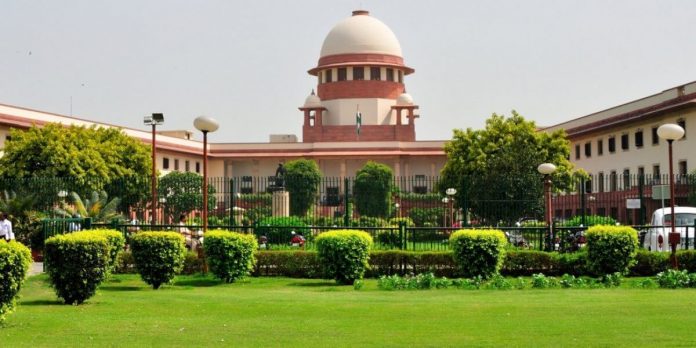
Download Now

Treatment of children as adults under India’s Juvenile Justice (Care and Protection of Children) Act, 2015 

0
Image source - https://bit.ly/3mqTwfE

This article is written by Kishita Gupta from Unitedworld School of Law, Karnavati University, Gandhinagar. This article deals with the circumstances under which the JJ Act 2015 treats a child as an adult.

Introduction

In terms of beliefs, viewpoints, and moral and ethical standards, society has changed dramatically. What was deemed immoral a decade ago is no longer thought so. The desire for a better life, more opportunities, and comfort has opened up new avenues for development. However, the same objectives have pushed us to a fast-paced lifestyle with less time for ourselves and personal reflection. Children have been affected by these societal and individual developments. They are now subjected to an ever-increasing racing, competitiveness, and stress in order to improve their performance in every field, which has added to the complexity. Since 2015, India has had a new law that allows the treatment of juveniles above 16 years of age to be treated as adults. This change brought about various objections as well. This article will be dealing with the provisions of Indian laws on the treatment of children as adults.

Introduction to the JJ Act, 2015

The Juvenile Justice (Care and Protection of Children) Act, 2015 (2015 Act) was passed by the Parliament on December 22, 2015, ushering in a whole new regime for minors over the age of sixteen who are accused of committing serious crimes. The horrible rape of a young student in 2012 provided the backdrop for its launch. The law was justified by the government as a deterrent to potential juvenile offenders. The gang rape and murder of a female physiotherapy intern in Delhi in December 2012 by six men, one of whom was a seventeen-year-old juvenile, reignited the debate over juvenile age limits. Under current legislation, the maximum sentence that could be imposed on minors was three years in a remand home, regardless of the seriousness of the offence. 

The Supreme Court supported the validity of the JJ Act, 2000, and the desirability of setting the age of juvenility at 18 years in the cases of Salil Bali v. Union of India (2013) and Dr Subramanian Swamy v. Raju (2014). The Committee on Criminal Law Amendments, chaired by Justice J.S. Verma, was established to look into the flaws in the current criminal law framework governing sexual assault against women. The Committee flatly refused to lower the age of minors to sixteen years old. Instead, it argued that there was an urgent need to reform and restructure the existing juvenile justice and welfare system and that the 2000 JJ Act should be enforced more strictly. It found no justification in lowering the age of criminal responsibility for juveniles for specific offences, citing, among other things, the fact that recidivism had decreased from 8.2% in 2010 to 6.9% in 2011.

The government, however, ignored these suggestions and responded to public demand by enacting the Juvenile Justice (Care and Protection of Children) Act, 2015, which aims to set deterrence requirements for juvenile offenders while also preserving victims’ rights. The 2015 Act distinguishes between minor, serious, and heinous offences, and proposes that juvenile offenders between the ages of sixteen and eighteen who commit “heinous offences” be tried as adults in the criminal justice system. The 2015 Act makes it legal for juveniles over the age of sixteen to be transferred to adult courts if the Juvenile Justice Board (‘JJB’) determines that the juvenile’s level of maturity shows that he committed the heinous crime as an adult rather than a child.

In 2016, the Juvenile Justice (Care and Protection of Children) Model Rules, 2016 (JJMR) were also amended and introduced according to the JJ Act 2015. Another important legislation in India in the protection of children is the Protection of Children from Sexual Offences Act 2012.

Conditions when a juvenile is shifted out of the juvenile justice system

According to Section 15(1) of the JJ Act, 2015, the procedure for determining whether a child in conflict with the law should be denied juvenile justice protection should begin only when the child is accused of committing a heinous offence and has finished or is beyond the age of sixteen.

Heinous offence meaning

The JJ Act of 2015 divides offences into three main categories: petty offences, serious offences, and heinous offences. Treatment of a child in conflict with the law is based on the offence the child is alleged to have committed, which was introduced for the first time in juvenile justice legislation under the JJ Act, 2015, wherein the treatment of a child in conflict with the law is based on the offence the child has allegedly committed. As a result, determining the type of offence is critical, particularly in the case of “heinous offences,” since children in conflict with the law may indeed be tried as adults under Section 18(3) of the JJ Act, 2015.

The term ‘heinous offences’ as per Section 2(33) of the JJ Act 2015 refers to crimes for which the Indian Penal Code, 1860 or any other law in force stipulates a minimum sentence of seven years in jail or more. A minimum duration of incarceration of seven years or more is required for an offence to be classified as a “heinous offence.” The crime of ‘rape’, which is punishable by imprisonment “for a duration of not less than seven years, but which may extend to life imprisonment,” would be considered a ‘heinous offence’ because the minimum sentence is seven years in jail.

When an alleged crime committed by a child cannot be rigorously understood within any of the categories set out in the JJ Act, 2015, it should be viewed as falling within a category that favours the child who is in confrontation with the law. 

The Supreme Court has held in a very recent case of Shilpa Mittal vs the State of NCT of Delhi (2020) that an offence that does not carry a minimum penalty of seven years cannot be considered terrible. However, in light of the foregoing, the Act does not address the 4th category of offences: the maximum sentence is more than 7 years in prison but no minimum sentence or a minimum sentence of less than 7 years is provided. These offences shall be treated as “serious offences” within the meaning of the Act and dealt with accordingly until Parliament takes the call.

Determination of age of a juvenile

For a child in conflict with the law to be moved out of the juvenile justice system, he or she must have completed or been above sixteen years old. As a result, in every case involving a juvenile accused of committing a “heinous crime,” the JJB must determine whether the child has reached the age of sixteen. In terms of a preliminary assessment, Rule 10A (1) of the JJ Model Rules, 2016, provides, “The Board shall determine whether the child is sixteen years of age or older in the first instance.” The determination of age at this period must be done carefully since the consequences are severe: a juvenile could be regarded as an adult if an error is made.

If a case is brought before the Magistrate and the accused looks to be under the age of 21, an inquiry into the accused’s age on the day of the occurrence should be conducted before proceeding with the trial or an inquiry. These remarks were made in relation to the West Bengal Children Act, 1959. The Supreme Court stated in a case involving the Bihar Children Act 1982, “Before parting with this judgment, we would like to re-emphasize that when a plea is raised on behalf of the accused that he was a ‘child’ within the meaning of the definition of the expression under the Act, it becomes mandatory for the Court, in case it entertains any doubt about the accused’s age, to hold a hearing.”

The Madhya Pradesh High Court in the most recent case of Budhiya vs the State of Madhya Pradesh (2021) has denied bail to a 15-year-old juvenile who is accused of raping a little girl aged 10-11 years old and leaving her bleeding for an extended period of time. The Bench stated that because rape is a carnal crime, it can only be done if the perpetrator has explicit knowledge of the crime, and declined to concur with the Probationary Officer’s view that rape can be committed due to ignorance. Importantly, the Court noted that because the age of a child in heinous crimes is still preserved below 16 years under Section 15 of the Juvenile Justice Act of 2015, it provides delinquents under the age of 16 years a free hand to perpetrate heinous crimes. In this case, the Court noted that, although committing a horrific crime, the petitioner would only be tried as a juvenile because he is under the age of 16, as required by Section 15 of the 2015, Act.

In the case of Master Bholu vs State of Haryana (2020), the determination of the age of the child, whether the child in conflict with the law is still left after 3 years of the happening of the offence. In this case, even the bail is denied to the juvenile by stating that right now the decision is left to be made about whether the treatment of the child in conflict with the law should be done as an adult under the JJ Act 2015.

In what could be the first case under the modified JJ Act 2015, a sessions court in Jhabua, Madhya Pradesh, sentenced two teens to life in jail for the murder of a 16-year-old. Radhu Nana Palia was allegedly stabbed by two kids for a pittance of Rupees 500 hundred. The two accused were sent to a correctional facility, where they were found to be “physically and mentally fit” and “aware of the consequences of their actions.” A charge sheet was filed against them after they were found to be “physically and mentally fit” and “aware of the consequences of their actions.” They were sentenced to life in prison.

Procedure to be followed by the Juvenile Justice Board

Standards applicable for preliminary assessment

To begin with, it is critical to state that any legislation restricting a person’s personal liberty must be ‘fair, just, and reasonable,’ and must be construed as such. The ‘waiver’ of a child who is in conflict with the law entails the denial of personal liberty since the juvenile is incarcerated in a ‘place of safety.’ 

The procedure to be followed by the JJB once the prerequisites of a “heinous offence” and age are met is laid out in Section 15(1) of the JJ Act, 2015. Only after a JJB’s “preliminary assessment” can a child be sent into the criminal court system for adult treatment. The purpose of the “preliminary assessment” is to determine the following:

  1. The child’s mental and physical capability to commit the alleged offence;
  2. The child’s ability to understand the offence’s consequences;
  3. The circumstances in which the child allegedly committed the offence.

The legislature has established that “the Board may take the aid of professional psychologists or psycho-social workers or other experts” because the JJB is not qualified to judge the child’s mental competence to conduct the offence.

Assessment of the capacity to commit an offence by the juvenile

The legislation recognizes that the JJB cannot assess whether a child in conflict with the law has the “mental and the physical capacity to commit such offence” and the “ability to understand the consequences of the offence,” so it “provided that the Board may take the assistance of experienced psychologists or psycho-social workers or other experts” for such an assessment.

The limitation is likewise reiterated in Rule 10A (2) of the JJ Model Rules 2016, with the caveat that such professionals must “have expertise working with children in difficult circumstances.” The presence of this certification indicates that the child’s offending is a result of his or her difficult circumstances and that such specialists are capable of identifying developmental needs gaps.

While considering the constitutionality of treating all children equally in the juvenile justice system, regardless of the severity of the offence, the Supreme Court in the case of Subramanian Swamy vs Raju (2014) cited brain science studies. It was noted that the legislature had placed all persons under the age of 18 in a separate category to be treated differently, with a separate process of inquiry, trial, and punishment, and that this was done to fulfil India’s international obligations. It concluded that, even if there are inequalities between people under the age of 18, such classification is not illegal because it is linked to the goal of juvenile justice legislation.

Orders to be passed after the preliminary assessment

JJB should issue a preliminary assessment order after weighing all three factors: the child’s mental and physical capacity to commit the alleged offence, the child’s ability to understand the consequences of the offence, and the circumstances in which the child allegedly committed the offence.

The JJB may transfer a child in conflict with the law into the criminal justice system after completing a preliminary assessment and giving the child a hearing under Section 18(3) of the JJ Act, 2015: “Where the Board after preliminary assessment under Section 15 passes an order that there is a need for the said child to be tried as an adult, then the Board may order the transfer of the case to the Children’ Court which have the jurisdiction to try these kinds of offences.”

When passing an order under Section 18 (3), all three members of the JJB must be present to ensure a majority ruling. If the Principal Magistrate and one social work member are present, the social work member who has a different perspective should record his or her dissent so that the differing viewpoints can be brought to the appellate court’s attention. Giving the reason for such an order is also mandatory by the JJB.

Transfer to the Children’s Court

The “trial” of the case is transferred “to the Children’s Court having the competence to try such offences” under Section 18(3) of the JJ Act, 2015. Children’s Court means a court established under the Commissions for the Protection of Child Rights Act, 2005 (4 of 2006) or a Special Court established under the Protection of Child Rights Act, 2012 (32 of 2012), wherever such courts exist and where such courts have not been designated, the Court of Sessions having jurisdiction to try offences under the Act.

When a child in conflict with law is transferred to the criminal court system, he or she loses access to social work intervention and rehabilitative programs that are provided under juvenile justice legislation.

The trial of a case lodged under the POCSO Act shall be dealt with by the Special Court formed under that Act, according to Section 20(2) of the JJ Act, 2015, and the same court is competent to conduct trials of an adult accused or a child in conflict with the law. It is anticipated that a court that hears cases involving both adults and children will find it difficult to go back and forth between punitive and rehabilitative approaches, putting the interests of children in conflict with the law at risk. 

Under the Commissions for Protection of Child Rights Act and the POCSO Act, a Sessions Court is classified as a Children’s Court and a Special Court; nevertheless, such courts are not permitted to provide rehabilitative services or social work involvement. When a child in trouble with the law is transferred to the criminal court system, he or she loses access to social work intervention and rehabilitative services that are available under juvenile justice legislation.

Role of the Children’s Court in dealing with a child in conflict with the law

It is important to underline at the outset that the General Principles to be observed in the administration of the JJ Act also apply in the Children’s Court. The Children’s Court is governed by the Juvenile Justice (Care and Protection of Children) Act of 2015. Simply because a child in conflict with the law has been sent to the criminal justice system does not indicate that he or she should be treated as an adult in every way.

When the case of a child in conflict with the law is transferred, the Children’s Court must decide whether “there is a need for the child to be tried as an adult” or whether “there is no need for the child to be tried as an adult and the Board may undertake an inquiry.”

  • If the Children’s Court makes an order under Section 19(1)(i) of the JJ Act, 2015, it must hold a trial and issue appropriate orders “while taking into account the child’s special needs, the principles of a fair trial, and preserving a child-friendly environment.” A juvenile who is found guilty by the Children’s Court will be transported to a “safe location.”
  • If the Children’s Court makes an order under Section 19(1)(ii), it must hold a JJB hearing and issue orders under Sections 18(1) and (2) of the JJ Act, 2015. Because the case of the child has not been referred to the JJB for inquiry under Section 8(2), the Children’s Court can employ the JJB’s powers “when the proceedings come before them under Section 19.”
  • The Children’s Court must guarantee that, in the case of a child in conflict with the law, the final order includes an individual care plan for the child’s rehabilitation, which includes follow-up by the probation officer, the District Child Protection Unit, or a social worker.
  • The Children’s Court shall ensure that the probation officer, the District Child Protection Unit, or a social worker, as required, submits a periodic follow-up report every year to evaluate the child’s progress in the place of safety and to ensure that the child is not subjected to any form of ill-treatment.

“No child in conflict with the law shall be sentenced to death or life imprisonment without the possibility of release,” according to Section 21 of the JJ Act, 2015. As a result, while punishment for an offence may be “death” (Section 302, IPC) or “imprisonment for life, which may mean imprisonment for the remainder of that person’s natural life” (Section 376-A, IPC), such a sentence cannot be imposed on a child.

Appeals against the orders of preliminary assessment

An appeal from a preliminary assessment order issued by the JJB may be preferred by a child in contradiction with the law. Section 101 of the JJ Act 2015 deals with the appeals. “Subject to the terms of the JJ Act, any person aggrieved by an order made by the Board under the JJ Act may, within thirty days of the date of such order, file an appeal to the Children’s Court,” according to Section 101(1). As a result, the child in conflict with the law, the State, and the victim has the right to appeal. The court has the authority to “consider the appeal beyond the expiration of the abovementioned thirty-day period if it is satisfied that the appellant was prevented from filing the appeal in time by sufficient cause.”

The Supreme Court has consistently held that courts should take a liberal approach to delay “refusing to tolerate delay can lead in a praiseworthy matter being tossed out at the very target level and end up causing of justice being defeated”; “when significant justice and technical requirements are pitted against one another, cause of substantial justice needs to be preserved”; “when the delay is excessive, cause of substantial justice deserves to be preserved”. Further, “when the delay is not attributable to the petitioner’s lack of bona fides, but rather to the party acting in a particular manner based on the improper advice supplied by his legal adviser, he cannot be considered guilty of carelessness, excluding him from pleading sufficient reason.”

The appeal “against the order of the Board passed after making the preliminary assessment into a heinous offence under Section 15 of the Act” is particularly addressed in Section 101(2). In addition to the provisions of sub-section (1) and its proviso, sub-section (2) states that “the Court may, in resolving the appeal, seek the aid of experienced psychologists and medical professionals other than those whose assistance has been acquired by the Board.” The Act stipulates that an appeal must be resolved within 30 days to ensure a timely conclusion.

General confusion regarding the forum of appeal

There is some ambiguity as to which forum an appeal will be heard in. 

  • The appellate court is referred to as the ‘Children’s Court’ in Section 101(1) of the JJ Act, 2015, while the proviso to Section 101(1) refers to the appellate court as the ‘Court of Sessions.’ The appellate court is referred to as the ‘Court of Sessions’ in Section 101(2). However, under sub-Sections (1) and (2) of Section 101, Rule 13 of the JJMR, 2016, refers to the appeal court as the “Children’s Court.” The terms “Children’s Court” and “Court of Session” appear to be interchangeable in the statutes dealing with appellate courts.

Important factors to enable a child to appeal an order

Two factors are required for a child in conflict with the law to appeal an order made under Section 18(3) of the JJ Act, 2015 – 

  • A copy of the order;
  • Legal representation in front of the appeals court. 

The child should be given a copy of the order issued under Section 18(3) as soon as possible, according to Rule 10A(4) of the JJMR 2016. Unfortunately, most children are unable to dispute the order transferring them to the criminal court system due to a lack of legal representation.

Is it possible for a child who is in trouble with the law to appeal an Appellate Court’s preliminary assessment order

“No second appeal shall lie from any order of the Court of Session, passed in appeal under this Section.” A child in conflict with the law is forbidden from appealing an order of the appellate court. However, under Section 102 of the JJ Act, 2015, such a child may submit a ‘revision’ with the High Court – “to satisfy itself as to the validity or propriety of any such decision and may pass such order in respect thereto as it sees fit.” The High Court should offer the child in conflict with the law “a reasonable opportunity to be heard” when an order on a preliminary assessment by the appellate court is challenged in Rules revision by the State or victim.

Because the appeals court (Children’s Court) and the revision court (High Court) have the same powers as the JJB97, they can issue suitable orders under the JJ Act, 2015. To ensure that the provisions relating to “appeal” and “revision” do not only exist on paper, but the child’s lawyer should also allow the juvenile in dispute with the law to benefit from them. The SLSA/DLSA should also play an enabling role by appointing lawyers to offer legal representation to the child at various levels.

International Law perspective on the adult treatment of juveniles

International treaties such as the United Nations Convention on the Rights of the Child (UNCRC) (1989), the Beijing Rules, and the Havana Rules, which India has signed and ratified, state that children under the age of 18 cannot be sentenced to death or life imprisonment under Rule 17.2 of the Beijing Rules and Article 37(3) of the Convention on the Rights of the Child, and the new JJ Act, 2015 provides the same under clause (21) of Section 2 of the Act. As a result, neither international treaties nor national law restricts less harsh punishments than the death penalty or life imprisonment.

Furthermore, under Point 71 of General Comment No. 10 on the UNCRC, the response to an offence should always be proportional not only to the circumstances and gravity of the offence, but also to the child’s age, lesser culpability, circumstances, and needs, as well as to the society’s various and particularly long-term needs.

The punishment that best serves the juvenile’s interests while simultaneously serving the interests of society should be awarded, taking into account his socio-cultural-economic condition and background. The goal of the punishment should be to reintegrate the youngster into society. During the child’s stay at the place of safety, the new JJ Act, 2015 under Section 19, provides for reformative services such as educational services, skill development, alternative therapy such as counselling, behaviour modification therapy, and psychiatric assistance.

The Constitution of India‘s Article 51-A distinguishes between international law and treaty commitments. If it is understood that international law is referred to as customary international law, which further stands for a law that is accepted as a standard law practice adopted by nations around the world, then the JJ Act, 2015 is in line with international practice in terms of punishment for heinous crimes committed by juveniles. When international customary law is considered, the position in the United States, the United Kingdom, and Canada conclude that minors can be tried under criminal law for committing grave and egregious crimes.

Though the concept of mens rea, or a guilty mind, is still difficult to prove. According to several researchers, the human brain continues to develop until the age of 18. But the key to grasping the gravity is that research shows that by the age of five, the human brain has acquired 85 percent of its personality, talent, and intellectual potential, the brain recognizes anti-social behaviour, and cognitive faculty has developed. As a result, the JJ Act 2015 is perfectly warranted. As a result, neither international law nor international agreements prevent India from treating minors as adults in specific circumstances.

Conclusion

The law defines the offences that it punishes in such a way that the offender’s state of mind or will is aware that such a course of conduct would result in an infringement of the law and punishment. A juvenile over the age of 16 has sufficient maturity to understand the nature of the act done to form mens rea and should not be assumed to be too innocent. A rehabilitative strategy that incorporates indeterminate punishment and restorative principles would strike the perfect balance between the juvenile offender’s welfare and public safety concerns. It would also accomplish the deterrence goals that the 2015 Act intends to express by adopting a restorative approach. As a result, principles of restorative justice should be added as an obligatory second limb to the creation of a complete juvenile justice strategy in India, while maintaining the emphasis on rehabilitation.

References


LawSikho has created a telegram group for exchanging legal knowledge, referrals, and various opportunities. You can click on this link and join:

https://t.me/joinchat/J_0YrBa4IBSHdpuTfQO_sA

Follow us on Instagram and subscribe to our YouTube channel for more amazing legal content.

Download Now
logo
FREE & ONLINE 3-Day Bootcamp (LIVE only) on

How Can Experienced Professionals Become Independent Directors

calender
28th, 29th Mar, 2026, 2 - 5pm (IST) &
30th Mar, 2026, 7 - 10pm (IST).
Bootcamp starting in
Days
HRS
MIN
SEC
Abhyuday AgarwalCOO & CO-Founder, LawSikho

Register now

Abhyuday AgarwalCOO & CO-Founder, LawSikho